AS I come to write this, my last comment as editor of Salvationist, I look back with thanksgiving on three years of privileged ministry that has given me a platform to enable others to engage in their own journey as disciples of Jesus.
The development of the Salvationist website, audio and social media platforms in that time has offered new spaces for engagement, and the evolution of the magazine to being thematic and intentionally involving younger writers has given frequent blessing and reminder that God has placed prophetic voices within our ranks as he continues to lead his Army into the future and use Salvationists as part of his mission.
One of the regular rhythms that we have established in that time is to reflect upon the territory’s values and mission priorities. It is fitting, therefore, that this issue looks at the mission priority of nurturing disciples of Jesus. As his disciples, we are each charged with seeking to go deeper in our knowledge of and response to Jesus’ call on our lives, praying that God would continue to reveal more and more of himself and his plans for us as his people.
May God continue to bless you in these days.
Visit salvationist.org.uk/ recommended-content
Devotions and podcasts to journey deeper in your faith.
EDITOR Major Julian Watchorn
MANAGING EDITOR Ivan Radford
ASSISTANT EDITOR Stevie Hope
EDITORIAL ASSISTANTS Major Margaret Bovey, Major Lynne Shaw, George Tanton, Lyn Woods
SENIOR DESIGNER Hannah Holden
GRAPHIC DESIGNERS
Joseph Halliday, Louise Phillips
PROOFREADER Chris Horne
CONTACT US 020 7367 4890 salvationist@salvationarmy.org.uk
The Salvation Army is a Christian church and registered charity. The charity number in England, Wales and Northern Ireland is 214779, in Scotland is SC009359 and in the Republic of Ireland is CHY6399.
Hopes and fears
As Dear England kicks off on BBC One, Ivan Radford reflects on the road to victory
‘ANEW story. A new England.’
That’s the goal of Gareth Southgate in Dear England, BBC One’s four-part series about his tenure managing the England men’s football team. The drama, adapted from James Graham’s play of the same name, concludes this Sunday and Monday evening. It arrives just before the football team once again faces the real challenge of the men’s World Cup – and all the expectations and fears that come with it.
Southgate’s approach to managing the team, as Graham has written it, is game-changing. He realises that he and the players are storytellers. A key psychological part of the problem, as he understands it, is that when it comes to
Reflect and respond
What goal are you running towards?
‘Perfect love expels all fear’ (1 John 4:18 New Living Translation). How does that reassure and guide you as you ask God to transform you?
Just as sport can unite people through a shared passion, our love for Christ is something that unites us – pray for your teammates also running the race.
telling England’s story, we are too eager to skip to the end – the bit where we win. We want to snap our fingers and get straight to the third act of Return of the Jedi, rather than journey through the whole trilogy before then. And when we try to jump to the end, without the patience to do the work first – understanding each other, building support and trust – we don’t succeed.
Why has success eluded the team for so many decades? To answer that requires confronting more than 30 years of hurt, mistakes and disappointment. That involves unpacking fears and all that pressure, and practising taking penalties –something Southgate, of course, is all too familiar with. In real life, after Southgate resigned in 2024, the men’s football team are still working towards that elusive third act of a victorious final. The story is still being told.
As Christians, we can be tempted to be impatient too. We can start with the end in mind, but not want to journey through the development required to get there. While Christlike perfection is the goal, it’s an ongoing process of transformation and renewal, because only God is truly perfect. While that transformation is worked out by God in us, we can easily fall into the trap of setting our own values and goals, which are easier to achieve. We can use Scripture to justify those, rather than start with God and be shaped by the values
of his Kingdom. That can include many different parts of our lives, from our career ambitions or views on politics to even our dreams for our football team or country.
In 1 Corinthians 9, Paul encourages the church in Corinth to ‘run in such a way as to get the prize’ (v24), but highlights the importance of self-discipline along the way. 1 Timothy 4:7 reminds us to ‘train yourself to be godly’, while Hebrews 12:1 calls us to have ‘perseverance’ as we run ‘the race marked out for us’ – not the race that we have marked out for ourselves.
If we try to skip to the end spiritually, we can accidentally attempt to fit God into the box of the world around us. We can be swept along by its currents, rather than listening to our unchanging God, who never contradicts his word, remains true to his loving character and existed long before penalty shootouts were invented. When we do that, we reduce the potential for other people to hear the good news of the gospel, but we also knock out the joy from our following Jesus. The story of our own relationship with God might be as bumpy as the World Cup group stages, but it’s a story that comes with the guarantee of God’s presence, love and hope.
IVAN RADFORD Managing Editor Salvationist
Quiz Sweet treats
by Garry D Reed
Delve into this pick-and-mix of questions!
1 Which sweet, renowned for strong throat relief and a powerful taste, might best describe Jesus’ group of first disciples?
‘In Christ Alone’
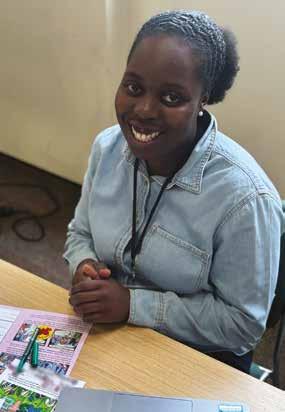
Kwase Ogungbure (Parkhead) testifies that there is nothing more important than her connection with Jesus
I2 A small boy gave up his lunch of five loaves and two fishes for Jesus – which chocolate bar could refer to this small meal?
GREW up in Nigeria, in a Christian home with my brother and sister, and lived there until 2023. I’ve always gone to church, but I didn’t have a personal relationship with God until later in life –we just did what every other member of the family was doing. There was really no deeper understanding and Sunday school was just a fun time.
home, until a friend of ours introduced us to Parkhead Salvation Army. We started to attend in June 2023 and it was welcoming; the people were really great. We’ve not looked back.
3 Which powdered dessert mix reminds us of what shepherds experienced on the first Christmas Eve?
4 The name of which round chocolate treats, with a crispy shell, might well describe the Wise Men?
5 One of the Wise Men’s gifts was similar to which assorted chocolate box made by Terry’s?
6 Name Charles Skinner’s tone poem about the bravery of the early Christians: ‘______ of the Faith’.
7 Noah might well have included these two animals in his floating menagerie.
8 Which fruits in the Bible symbolise divine blessing and abundance (see John 15:1; Numbers 13:23)?
9 ‘Keep the Old Flag Flying’ is a theme in which Leslie Condon march written for the 75th anniversary of the International Staff Band?
10 Which chocolate bar reminds us of Jesus’ example of making space for selfdiscovery and recharging?
I was in my mid-twenties – I never remember the year, but I remember the song. I was at a church programme and ‘In Christ Alone’ (SASB 861) was played. The wording of that song spoke to my heart. It was a life-changing moment for me. I had the realisation that it was me and God, and there was really nothing more important than having that connection with Jesus.
My husband and I have been here in the UK for three years now. Having come to the Glasgow area we visited a few churches, most of them Nigerian churches. But we didn’t feel quite at
All we’d known previously about The Salvation Army was that it was a charity that did humanitarian work – we didn’t know it was a church as well. Parkhead Corps is a church first, before every other thing they do. They care for the community, there’s that sense of connection with Jesus, and their doors are open to everyone with no judgement whatsoever. It’s inspiring!
I’m big on service: I feel God wants me to be a helper, someone who would render service and offer encouragement. I’m not sure how that will fully work out, but I talked with our corps leader, Captain Amy-Jo Battersby, about the process of becoming a soldier. I felt I was being led by God to do it. We also talked about the possible idea of going into officership.
I don’t have one special verse in the Bible, but just now I’m looking at Isaiah 41:10: ‘Fear not, for I am with you; be not dismayed, for I am your God. I will strengthen you, yes, I will help you, I will uphold you with my righteous right New King James Version). It’s so encouraging to know that, even before any form of anxiousness or anxiety starts, God is already saying, ‘Yes, I will
Have you got a testimony to share?
We’d love to hear your faith story! Get in touch at salvationist@ salvationarmy.org.uk
Watford Growing community
Connecting creatively
We’ve only been in Watford a short time, so it’s early days for us! As a couple engaged in a pioneering expression, we’re reimagining what it is to be The Salvation Army and working hard to reach out and meet people within the community.
Since arriving, we’ve undertaken a community audit. There are pockets of isolation, and we are mindful of creatively connecting people. Our vision is to be a space of community, wellbeing and connection, and an alternative way to experience faith for people who wouldn’t usually attend church. We hope to be an expression of church that honours God by working with people through our allotment and walking ministries.
Going for green
Eco Church has been a priority here for some time. The corps has a certified Level 5 RHS School Garden – which previous leadership worked hard to achieve – and won a Church Times Green Church award in 2024. We were the first Salvation Army expression to receive the Eco Church silver award.
Fast facts
DIVISION East of England
CORPS LEADERS Captains
Jonathan and Lee Raggett
FIND US ONLINE salvationarmy.org.uk/watford
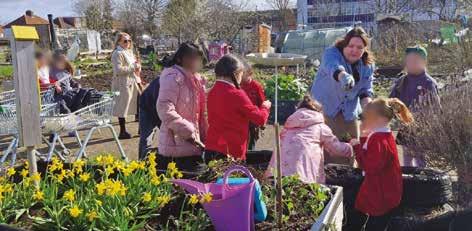
Currently, almost our entire ministry is built around the work we do in the allotment and with the local primary school. We are trying hard to show the 60 children we work with how important it is to care for our planet. The children love picking up litter on their short journeys from school to the allotment. They also enjoy bringing in items such as plastic bottles and egg cartons, which we recycle for watering plants, catching rainwater and planting seeds.
We love recycling other items too. We’re using an old polytunnel frame to grow broad beans and we’re renovating our potting shed, rather than buying a new one. Next we’ll be making a bug hotel and working to create an ornamental edible garden to attract biodiversity.
We recognise that starting small can feel like we’re doing very little. It is easy to be disheartened, but we encourage everyone to do what they can where they are. Our clothes and textiles recycling bank is well used and ensures we recycle or reuse everything we can.
Almost all the hall’s furniture is secondhand and came from a local café that closed. Within the allotment we have repurposed things such as old tyres and a bath. We also share seeds and seedlings with other allotment users.
Church outdoors
In the allotment sessions, the children are mindfully exploring what it feels like to be in a tactile open space. They
love holding worms and ladybirds and enjoy touching soil with their bare hands and connecting with nature. In a world full of short-form media, we love seeing the kids realise that food doesn’t grow instantly; they won’t see results in a week, but they can look forward to eating strawberries together in the summer! It’s such a gift to spend quality time with the children, actively encouraging and supporting them.
We could easily put things on at the hall, but we tend to be where people are. We’re at the allotment on weekends when others are there, connecting with people and offering chaplaincy. We hope to grow volunteers and a sense of community.
Powered by prayer
We regularly prayer-walk our community. We’re blessed to have a nature area and a bustling town, and it isn’t unusual for our walks to include litter-picking while chatting with people we meet. Before allotment sessions we pray into the conversations we’ll have with the children, staff and parents.
Please pray for connections to be made as we seek to network and for God to bring a sense of community together. For ears to hear God’s will for this community and for the provision that we need to grow.
• Find out more about becoming an Eco Church at salvationist.org.uk/ environment
Message of promise
Captain Alice Nunn reminds us that salvation comes through faith alone
ROMANS 4:13–25
PAUL writes the letter of Romans to a Church that feels like a real mixed bag of people trying to do life together. From new believers, trying to get their head around the gospel of Jesus, to Jews who have returned to a very different Rome from that they had been expelled from.
People are no longer bound by the old covenant but to a new covenant fulfilled by Christ. All are living together in one place, doing life together and trying to find a new way of being together. It is in this context that Christians encounter big problems and hostility from the Roman culture around them, especially where the worship of many gods is a major way of life.
Against this complex background, which seems like a melting pot, Paul writes the powerful words we read in our study passage. The message is simple, yet profound and life-transforming – the promise of salvation ‘comes by faith’ (v16).
PAUSE AND REFLECT
Consider this invitation to know Jesus through faith alone.
We do not earn God’s love – being beautifully created in his image is enough. There is nothing you can do to make God love you any more or any less than he already does.
Paul seeks to educate and encourage the Church to get their head around the good news that every person is invited into the Kingdom of God. The heritage of Abraham being a father of the faith
is not only for the Jews; the Gentiles are included too. Mixing groups of people together with different expectations and experiences is complicated, therefore Paul seeks to bring clarity of old laws being fulfilled in Jesus – what that means for them all now.
I cannot help but think that we are still having some of these same conversations among believers. I grew up where adults in church would be very judgemental about things such as tattoos, wearing the right clothes, knowing the songs, making noise in worship services – the list goes on! I have seen what an impact this sort of attitude has on people – it pushes people away. If that is their only place to hear about Jesus, it can push them away from learning more about Jesus too. We live with the consequences of many people leaving the Church because they feel like they don’t fit in or cannot live up to expectations that are usually people’s judgements, not God’s.
We are a real mixed bag of people in The Salvation Army, especially in our corps. I say that with real love for how wonderfully created each person is. From the guy who last week came out of prison, and now has a deep desire to turn his life around, to the older women who are physically unable to do what they used to but pray each day faithfully. I am struck by the deep joy that Jesus is for each one of them. Their experiences of life are completely different, yet each one is invited to know the love of God and the transforming power of Jesus.
With the Spirit’s help we may model this kind of Kingdom acceptance, so that more and more people can experience the love of God for themselves. I see
how messy it can be when we embrace all; however, I also see the deep joy of celebrating the diversity of God’s creation in us.
PAUSE AND REFLECT
What barriers might newcomers experience in your fellowship?
This week, how might you share the love of Jesus within your church fellowship and community outside?
I love that Paul uses the example of Abraham, the father of all Abrahamic faiths and the father of all nations, who was not perfect. This gives me hope and comfort. It is a beautiful reminder that God uses imperfect people in amazing ways to bring about God’s glory. I wonder if you might find it helpful too?
God promised Abraham that he would be the father of many nations even before Abraham had a single child. As time went on, there seemed little hope of this promise being fulfilled. Abraham became old and his wife seemed barren, so they even tried to take matters into their own hands through him taking another wife (see Genesis 16:1–4). Yet the promise of God remained (see Genesis 18:1–15).
Later, when Abraham allowed God to be glorified and put his faith in God alone, the promise that he would be a father of all nations was fulfilled (see Genesis 21:1–13).
God worked through a person who decided to put their faith fully in God, even though they were imperfect and got it wrong sometimes.
PAUSE AND REFLECT
Do we need to be reminded that God can use us too? Can we identify ways in which God has used us beyond our imagination?
I cannot help but be reminded of where we started in this passage – salvation comes through faith. It is the faithfulness of God that saves, redeems, restores and renews. It is ‘through faith alone’ – nothing we can earn or do. We have to accept God’s invitation to live by faith. When our faith is small, we are encouraged once again to consider God’s faithfulness, which we can look to and lean into.
The lyrics of a song by John Gowans mean so much to me. They have really helped me when I have needed to be reminded that I can always come back to God. Perhaps meditating on these might help you too.
Don’t assume that God will plan for you no more,
Don’t assume that there’s no future to explore;
For your life he’ll redesign, the pattern be divine;
Don’t think that your repentance he’ll ignore.
For his love remains the same, He knows you by your name…’ (SASB 490)
To read the full, unedited Prayer Matters booklet, visit salvationist.org.uk/discipleship
SATURDAY 30 MAY: CARING FOR CREATION – PRAYING WITH NATURE – RISING
Many garden birds lay eggs in April, so May is when fledglings appear, scruffy, unsteady and learning with persistent parental care. Pray: ‘God, shelter what is young and fragile in me.’ Ask for courage to trust that stumbling is part of growing. by
Major Gordon Cotterill
(Secretary for Spiritual Life Development)
SUNDAY 31 MAY: SABBATH PRAYER – WHAT IS THE SPIRIT SAYING TO THE CHURCH?
The early Church understood that the Kingdom of God was about more than just having meetings. It was about sharing their gifts to create a fairer, more generous community than the world was offering (see Acts 4:32–35). Take time to notice people’s gifts when you go to church today. Whose gift is a blessing to you? Who inspires or encourages you? Tell people what you appreciate about them. We know our gifts best when others help us see them. by Lyndall Bywater (UKI Boiler Room team)
MONDAY 1 JUNE: SHARING THE GOOD NEWS – COMPASS
The Salvation Army’s Global Strategic Framework, Compass, is designed to revitalise the Army’s spiritual and missional life through three core focus areas: Empowering People, Enhancing Mission Impact and Establishing an Enduring Legacy. Take time to think about where you see these three focus areas being lived out in your local area.
Lord, thank you that you have called each of these lieutenants by name, and that you continue to call them today. Strengthen them, help them and uphold them with your righteous hand. Shape them with wisdom and compassion, and let your presence give them confidence and peace.
by Major Donald Montgomery (Assistant Secretary for Personnel)
We lament over the ongoing conflicts in our world, often forgotten, that force people to leave their homes and find safety in another country. We hold before God Ukraine and Russia, Palestine and Israel, and Iran. We remember ongoing civil wars in Sudan, Myanmar and Syria. We recognise the violent insurgencies and conflicts within Somalia, gang violence in Haiti and Mexico, and conflict in the Congo region. And we lament over the growing impact of climate change that is increasingly making people’s homes uninhabitable. Lord, in your mercy, hear our prayer. by Ben Still (Refugee Response Manager, THQ)
THURSDAY 4 JUNE: INTERNATIONAL SALVATION ARMY – NORWAY, ICELAND AND THE FÆROES TERRITORY
We pray that the presence of God will be evident wherever people access the services the Army offers. We pray for the territorial leadership team, Commissioners Knud and Lisbeth Welander and Colonels Paul and Jane Brakstad Waters. by Lyndall Bywater (UKI Boiler Room team)
Lord God, as women of all ages gather at Riverbank to consider your peace in their minds and hearts this weekend, give them each an encounter with Jesus. Help them explore your gift of their potential, which will impact their ministry locally. by Liz Hall (Deputy Director of Family Ministries)
PRAYER REQUESTS
CAPTAIN ALICE NUNN Corps Leader Jersey
Do you have something or someone you’d like us to pray for? Email salvationist@salvationarmy.org.uk with ‘prayer request’ in the subject line.
WHAT’S the greatest thing in your life? Your work? Your home? Your friends? Your family? Where does knowing Jesus rank in all those?
Being a disciple is the most counterintuitive thing we can be – which is also why it’s the most important. We live in a world that is by default already shaping us. Jesus invites us to ‘not conform to the patterns of the world’ (Romans 12:2), but to choose the opposite: to be transformed by the Holy Spirit.
We all know making that daily choice requires picking up our cross. But how many of us fully sacrifice our little priorities and ambitions, and put God above them?
One of the great deceptions we can be lured into is thinking we have cracked our own discipleship, that we’ve put in enough work to earn it. But that leads us to fruitless self-glory, rather than putting God in his rightful place – because salvation and sanctification are only ours through God’s grace. Becoming more like Christ is only possible when we let him do the work in us.
Paradoxically, that doesn’t mean doing nothing. Discipleship requires commitment and effort. John Mark Comer sums up this mystery elegantly in Practicing the Way: ‘You will never
The greatest thing
Ivan Radford reminds us that becoming like Christ starts – and continues – with surrender
work harder for anything in your life than Christlike character, and nothing else will ever feel like such an unearned gift.’
Being transformed by God also doesn’t happen overnight: it’s a lifelong journey that involves starting over, and starting over. We stumble, we fall short, we hold on to things – but, as we return to God and surrender more, we gradually find ourselves becoming more like Jesus. Along the way, we can forget, as Henri Nouwen observes, that ‘being is more important than having’. We can define ourselves by our possessions – including our achievements, status and sense of control – and lose sight of the fact that our life and salvation are gifts from God to share.
AW Tozer in The Pursuit of God warns: ‘Self is the opaque veil that hides the face of God from us.’ That includes being selfsatisfied, not longing for more of Jesus. If we focus on comparing our lives and fulfilment with people around us, instead of looking to Jesus, we fall back into conforming to the patterns of the world – we forget to thirst, as the deer pants for water, for more of our infinite God. How, then, do we draw deeper? We might want some clever formula to solve it ourselves, but the answer is simpler than that: discipleship is nothing more, and nothing less, than living in relationship with God, the very Creator of the universe. Our heart’s desire to know Jesus more is something that God grows within us as we grow in him – but we have to long for it, to take us past theoretical knowledge and into wholehearted relationship. As Paul put it in just five words: ‘I want to know Christ’ (Philippians 3:10).
How you keep your relationship alive will be personal to you, but it won’t
surprise you that studying God’s word and praying – making space to speak and listen to God – will be central. You might begin and end each day with thanks, follow a Bible course, repeat a Scripture verse, subscribe to a podcast, share in a WhatsApp group, read daily devotions or use a Bible app’s notifications to draw your focus back to God.
We can be tempted to overcomplicate all this and distract ourselves, but Brother Lawrence discovered the beauty of simply being in relationship with God in each small gesture, writing: ‘We ought not to be weary of doing little things for the love of God.’ That’s not to distort discipleship into busyness, but to avoid separating God from daily life – to slow down and be aware of God’s presence. Because when you intentionally offer up to God all your thoughts, words and deeds – small, big, light, dark – you will start to see a change. You will, remarkably, start to see God in them.
But whatever rule of life you employ, you cannot become more Christlike without letting go of everything else. There are many songs that capture this challenge, but Mark Pendergrass’s 1977 hymn perhaps nails it best with its joyful declaration: ‘The greatest thing in all my life is knowing you.’ And its simple, powerful prayer of longing: ‘I want to know you more.’
What would happen if you prayed that every day?
IVAN RADFORD Managing Editor Salvationist
‘We
must press into God’
Assistant
Secretary for Spiritual Life Development Major Gary Lacey
talks to Lyn Woods about the Deeper Life Journal
What is the Deeper Life Journal?
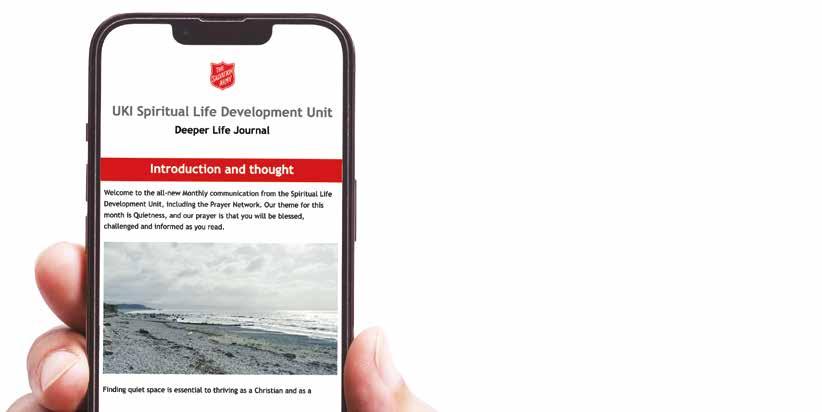
I inherited a fortnightly bulletin that went out to the territorial prayer network. I changed it to a blog-style communication, which was well received. When the prayer and spiritual life development team was reorganised, Secretary for Spiritual Life Development Major Gordon Cotterill, Lyndall Bywater (UKI Boiler Room team) and I looked at, discussed and prayed about this bulletin. We felt it needed a fresh approach and a method of circulating a more useful resource that could go much wider than the prayer network.
We have retained the blog-style format and added some new elements, letting everyone in the network know that changes were coming and advising them of the need to resubscribe to receive it. There are now approximately 300 people currently signed up to this new monthly journal, which launched in March.
Who is it for?
It’s for everybody associated with The Salvation Army!
How and why does it help us to go deeper?
The Deeper Life Journal is born out of the belief that as a territory, we’re at a point where we must press into God. It’s a tool that we believe will help people to delve further in prayer and reflection and encourage them to seek out other tools to
help them in their spiritual journeys. We’re hoping to be able to archive the monthly journals digitally, for ease of reference.
What values are behind the Deeper Life Journal?
The resource aims to encourage people to constantly seek to make our relationships with Jesus deeper, wider and therefore stronger by focusing on him. From our team discussions, we came up with three values: deeper listening, deeper thinking and deeper living. These are values that we want to live out daily in our journeys with God. Striving to listen more attentively, to think more deeply and take time to reflect on our relationships with God and what he means to us. Deeper living is about living a lifestyle of true discipleship and devotion, deepening our faith, our trust and our relationships with Jesus.
How might this impact our Movement in the UK and Ireland Territory?
As we go deeper with God and commit to God as part of the body of his Church and join him in his mission, I can only imagine the amazing victories that we will see! We are a Movement that has been raised up to reach people who desperately need the Saviour. Our prayer is that a passion will be stirred in people to get deeper in their spiritual life and their relationships with God.
How can corps and individuals contribute to the resource?
There’s scope for us to do so much more with the Deeper Life Journal. We’ve started out simply, hoping to shape it into something much better, and we want people to contribute to that as God directs them. We welcome any thoughts, feedback and contributions directly by emailing me at gary.lacey@ salvationarmy.org.uk
• To subscribe to the Deeper Life Journal each month, visit tsa. link/deeper-life-journal
LYN WOODS Editorial Assistant Salvationist
The with-God life
Major Gordon Cotterill unpacks the eight core ideas of the spiritual formation organisation Renovaré
COLOSSIANS 3 tells us that, as followers of Jesus, we have been raised with Christ, and our lives are now ‘hidden with Christ in God’ (Colossians 3:3). This reshapes how we live with hearts and minds set on ‘things above’ (v2), not as an escape from life, but as a new way of seeing and living it, shaped by Christ where the Word of Christ comes to dwell richly within us. This is the life we nurture as God’s presence takes root, shaping who we are as we grow in discipleship and maturity.
Renovaré’s eight core ideas offer a wise and balanced way to nurture this faith. They ground formation in the with-God life, not quick results, holding together grace and intentional practice and drawing on the fullness ofthe Christian tradition. Above all, they affirm that transformation is communal, holistic, and orientated towards God’s work in the world, not merely personal spiritual success.
The necessity of grace and the means of grace
In any garden, life depends on more than careful tending. If the soil cannot sustain growth, no amount of effort will help. In the same way, Christian discipleship rests on the necessity of grace, dependent entirely on God’s initiative and generosity. Without grace, discipleship becomes either exhausting striving or quiet despair.
Yet grace does not exclude our
participation. As Richard Foster suggests, we are like farmers who cannot make growth happen but can prepare the conditions for it. Spiritual practices as the means of grace simply place us where grace can be received. Our effort matters, but it does not earn God’s favour, as Dallas Willard reminds us: ‘Grace is not opposed to effort; it is opposed to earning.’
Held together, grace and spiritual practices nurture a discipleship that trusts God to bring growth in Christ.
Life with God and the availability of the Kingdom
Discipleship begins with a simple but profound truth: the with-God life is not just a future hope, but a present reality. God meets us now. Through Jesus, the Kingdom has drawn near, and our lives are already hidden with Christ in God. We are not reaching out to a distant God but learning to live from a relationship already given. In this light, prayer becomes conversation, obedience becomes participation and the everyday becomes the place where life with God is lived.
Nurturing discipleship, then, is about helping ourselves and others recognise and trust this nearness. The Kingdom is not something we build for God, but God’s active will at work among us. As we grow in awareness of life with God, we begin to notice his quiet work in ordinary places – in work and relationships, in joy and struggle.
Discipleship is not about making God act, but joining what he is already doing, as the with-God life becomes the everyday soil in which we grow.
A balanced vision of life in Christ and a practical strategy for formation
Healthy growth needs balance. A garden lacking water or light soon becomes affected, and the same is true when discipleship focuses too narrowly on one aspect of the Christian life. A balanced vision holds together prayer, character, openness to the Spirit, care for others, faithfulness to Scripture, and awareness of God in everyday life – forming disciples who are both grounded and outwardly engaged. Such balance is sustained through intentional practice. Discipleship does not happen by accident; it requires deliberate choice, and the wise use of the means God provides. Disciples grow best in community, where rhythms of prayer, honesty, and shared discernment take shape, supported by a simple rule of life that guides rather than burdens. Together, these form a practical strategy for formation, nurturing a steady and sustainable discipleship over time.
The centrality of Scripture and the value of the Christian tradition
Any kind of growth needs guidance. For us as Christians, that begins
with the centrality of Scripture. The Bible reveals who God is, shapes our imagination and habits, and draws us into faithful living. Read prayerfully, it becomes a living word through which the Spirit continues to form us into Christ’s likeness.
At the same time, Scripture is best held alongside the Christian tradition. We read not in isolation, but within a long history of faithful witness across cultures and generations. This shared inheritance grounds us in humility, reminding us that we are not inventing the Christian life, but joining God’s ongoing work of shaping lives.
Ultimately, Renovaré’s eight core ideas bring us back to seeking what God wants. It is not about quick results or flawless programmes, but about being ‘transformed by the renewing of your mind’ (Romans 12:2). Discipleship is not a short-term project but a lifelong journey, patiently lived as we trust God to bring growth in his time. As Andrew Murray writes, ‘the fruit of a life in Christ is a life like Christ’.
• For more information about Renovaré, visit renovare.org
MAJOR GORDON COTTERILL Secretary for Spiritual Life Development THQ
Core ideas of Renovaré
Life with God
The aim of God in history is the creation of an all-inclusive community of loving persons with God himself at the centre.
The availability of God’s Kingdom
We can experience genuine, substantive life in God’s Kingdom through Jesus Christ, beginning now and continuing through all eternity.
The necessity of grace
We are utterly dependent upon Jesus for genuine spiritual transformation.
The means of grace
The crucial importance of intentional spiritual practices.
A balanced vision of life in Christ
We seek to embrace the abundant life of Jesus in all its fullness: contemplative, holiness, charismatic, social justice, evangelical, and incarnational.
A practical strategy for spiritual formation
We encourage the creation of spiritual formation groups and other forms of spiritual friendship for mutual support and nurture.
The centrality of Scripture
The Bible is a sure guide for growth into Christlikeness.
The value of the Christian tradition
We are engaged in the historical ‘Great Conversation’ on spiritual formation developed from Scripture by the Church’s classical spiritual writings.
The big story
Andrew Ollerton talks to Major Lynne Shaw about Bible Society’s free new edition of The Bible Course
You introduce The Bible Course by talking about an ancient library forming one big story with a powerful message for today. What is that big story?
From Genesis to Revelation there are a lot of smaller details and the story is complicated. The visual experience of The Bible Course helps people have an overview and cuts through a lot of the complications. It leads to Jesus but starts with Creation, the fall of humanity and how God calls Abraham and makes a covenant for his people, the Israelites. Then Jesus brings the promises made to Israel to fulfilment, so that there’s hope for the whole world.
There’s a lovely symmetry to it – the tree of life at the beginning of the Bible, the world as it’s meant to be, and the tree of life at the end of the Bible, the world restored to the way it was meant to be.
How does the course work?
The course is free and the core experience is eight weekly sessions, with daily readings to do between them. In each session, after a welcome, you watch a 15-minute video and then have an open discussion where you can say what you think and bring different ideas to the table. The course is supported by an optional guidebook that’s available for £9.99. There is an online digital hub for people who want to explore further. Group chats over a message group can also help people talk about what made sense, what didn’t and encourage each other.
The course is not academic, although it’s underpinned by good scholarship. It is applied and continually refers to how the Bible relates to the lives we actually live.
Why does it run for eight weeks?
Some of that was practical – eight weeks fits within a school term. It’s also to do with how habits take at least six weeks to form. It’s a way of forming a new habit of reading the Bible personally and regularly.
We wanted it to be an accessible introduction. It’s not going to tell you everything you need to know. That’s your lifetime journey.
How did you choose what to focus on?
We decided to make it a story experience. Extra writings in the Bible, wisdom literature especially, only get a brief mention because they don’t explicitly contribute to the storyline of the Bible. The Old Testament gets a proportionate amount of attention; five sessions compared to three for the New Testament. We didn’t want to be light on the Old Testament, as if it’s something to be skipped over, but we also didn’t want to get bogged down in it. We wanted to help people make sense of it.
What was your thinking behind choosing how to illustrate the course?
I’m a visual learner. Many years ago, when I was leading a church, I was trying to help people understand the Bible. I realised increasingly that people didn’t always know how to make sense of the Bible. This is where The Bible Course came from.
The storyline was my attempt to visualise the library of books the Bible contains with the plot and narrative from
Genesis to Revelation. On screen you can see the books of the Bible fly on to the storyline, landing in the right place. When people see it in this way, something lands for them; it becomes clearer.
What’s the best group size for the course?
It’s highly flexible and can scale up or down. A church of 500 or 30 people could gather and watch the videos and then break into groups of six to ten people for open discussion. So it works for large and small groups.
Why should a corps or centre run the course?
There’s more interest in the Bible in our culture at the moment, more positive attention. It’s a great time to offer the course more widely, as part of your mission. It helps people visually experience how the Bible fits together and makes sense of our lives. Throw the front door wide open and be surprised who comes!
• For more information, visit biblesociety.org.uk/explore-the-bible/ the-bible-course
MAJOR LYNNE SHAW Editorial Assistant Publishing Department
‘It’s
exciting to see their faith growing’
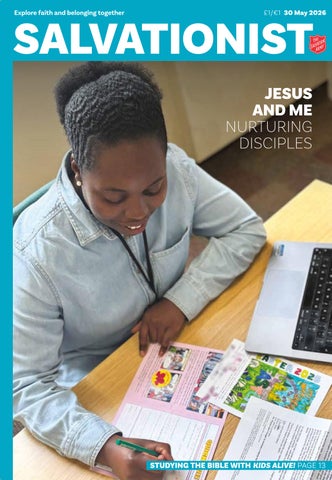
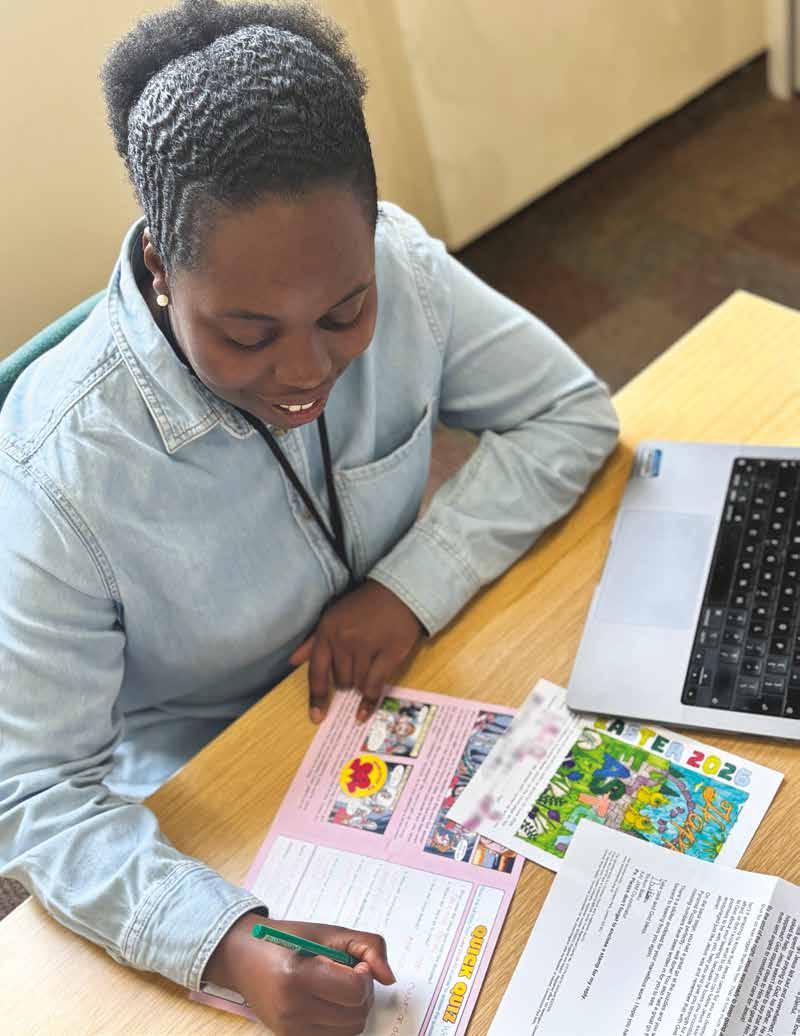
Kids Alive! Deputy Editor Ibukun Baku explains how KA! JAM is nurturing hundreds of young disciples
What is KA! JAM?
KA! JAM (Kids Alive! Jesus and Me) is a cool Bible study club that helps young people to get to know Jesus. Children from any denomination, between the ages of 7 and 17, can join, as well as adults with additional needs.
How does KA! JAM work?
It guides people through two courses: Mark’s Man, about the Book of Mark, and Action Men, about Acts. There’s a quarterly newsletter and magazine called Chatterbox, which includes a Bible story. When people sign up, they receive a welcome pack with the first activity sheet. When they complete it, they send it to me. I mark it and return it with the next sheet.
What activities are there?
There are puzzles, quizzes about what happens, word searches and opportunities to be creative. For the story of Levi, for example, who was a tax collector before Jesus called him to follow him and changed his life, people can draw a situation where someone has been left out but then been changed because they have been shown love.
What kind of marks do you give?
I put ticks and say well done for the right answers and help them with any wrong answers. I always want them to go away with a lesson from the Bible passage, so I summarise it with an action they can apply to their lives – this is what Jesus would say or do.
How long does it take to complete?
People can go at their pace, so that could be years! When they finish, they get a letter from the territorial leaders and a Bible. At that point, they can continue receiving Chatterbox or move
on. The last person who did that had just started university!
How has KA! JAM changed over the years?
It started as the postal Sunday school a long time ago, before becoming KA! JAM and part of Kids Alive!. I joined as KA! JAM coordinator in 2013. We’ve changed how we present things and started exploring ways to make it available online – you can download the sheets from salvationist.org.uk/kidsalive as editable PDFs.
How many people are in KA! JAM?
There are currently about 350 members! Every few years I send a letter to people I haven’t heard from recently but, even when I don’t hear from someone, that doesn’t mean God isn’t blessing them by receiving Chatterbox – it could be the thing that gives them a bit of encouragement or hope. 1 Corinthians 3:6 says: ‘I planted the seed, Apollos watered it, but God has been making it grow.’ Everything we do is a seed – we trust God to water it and make it grow as he knows best.
Why is KA! JAM important?
It’s being faithful to Jesus in making disciples. Children and young people are an important part of God’s family. We want to give them the best foundation possible in a world where there are so many messages – they need to have the truth that they are known, loved and seen by God.
Why do you do what you do?
Because I know who Jesus is, and what Jesus has done for me, and I know his heart for the world. This gives other people the opportunity to experience Jesus for themselves.
What have you learnt from KA! JAM?
More and more I’m understanding what a privilege it is to be in such a position. To have a child reach out to you to say they want to know about Jesus is amazing. Being a part of that journey is a privilege.
What’s the most exciting thing about KA! JAM?
Receiving people’s work, particularly when you form a good relationship with someone. They share things like ‘I was baptised!’ or ‘I played the organ at church!’ and it’s exciting to see their faith growing. I would love to hear one day of a former member who could look back and be helped by something that had gone into their heart through KA! JAM!
What can people pray for KA! JAM?
Pray for every member that the Holy Spirit will continue to be at work to bring about a personal encounter with Jesus. Pray for all children and young people, that their hearts will be open to the good news. And thank God for his faithfulness and for what he’s doing – that, even in a world where there’s so much going on, God is still drawing children to him.
• To sign up to KA! JAM, see page six of Kids Alive! each week, visit salvationist. org.uk/kidsalive or email kidsalive@ salvationarmy.org.uk
Where stories hold power
Godly Play Coordinator Captain Yvonne West introduces Stevie Hope to a different way to disciple
What is your role?
I am the Godly Play coordinator for The Salvation Army in the UK and Ireland Territory and a Godly Play UK advocate. Godly Play UK is a Christian movement centred on childhood spirituality and provides training and support for those using the Godly Play method.
What
is Godly
Play?
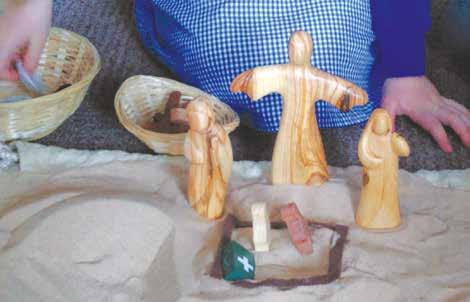
A Godly Play session is about 90 minutes long. A session starts with welcome and building the circle, and then we share the story. The stories include sacred stories, parables and liturgical stories that explore church practice. We then move to wondering about the story and a time of response. We gather back in the circle for a feast and end with a blessing. Because of the time, people might be tempted to just tell the story, but there’s a reason why we include all the elements in a full session.
Who
is Godly
Play for?
Initially, Godly Play was devised for children, although it is also used in other age groups. The Godly Play materials are expensive, but they last. This means people can actually play with the stories without breaking them.
What does discipleship look like through Godly Play?
Godly Play is centred on childhood spiritual formation. We believe that
children have an innate sense of God, so it offers sacred space for them to explore stories and develop language around Christian practice. The biggest chunk of time is given to response. In a Godly Play room, you have lots of materials – paints, pencils, books, things to listen to – and it’s about the children responding in their own way.
Godly Play also helps create community. The stories, wondering and feast happen in the circle, and a big part is building trust and creating community there. It allows them a sacred space to explore for themselves what that relationship means for them. One key feature of Godly Play is we don’t ask the children about how they responded – it’s between them and God. That can be difficult for teachers to get their heads around, because it’s not about what we want the child to learn. We hand that over to the Holy Spirit.
What kind of stories are there?
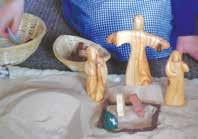
Godly Play is liturgical, it follows the Church calendar. Many of the stories – Pentecost, Easter, Advent, the Good Shepherd – are standalone. We also have stories around Salvation Army practice: the flag story looks at our ceremonies, another story is around the mercy seat, and there is a social action story.
Can anyone lead Godly Play?
You need training. It’s not just about telling the stories; there’s a whole theology around childhood spirituality – children are not empty vessels to be filled. I had to unlearn everything I’d learnt as a children’s leader, as I was used to preparing a session with outcomes and learning points!
What does the training involve?
Godly Play UK runs an online introduction course to help people decide if they want to invest in it. They also run a three-day core training course. If a division comes to me with a group who want to do Godly Play, I can request a course be run in their location. Officers and employees can access funding for it through the Learning and Development Unit at William Booth College. There’s also a budget for local leaders and volunteers, which I’d love to see more people access!
• To find out more, visit tsa.link/ godly-play-training or email godly.play@ salvationarmy.org.uk
STEVIE HOPE Assistant Editor Salvationist
Voya ge s of discovery
Major Paul Hilditch invites us to travel on a study tour
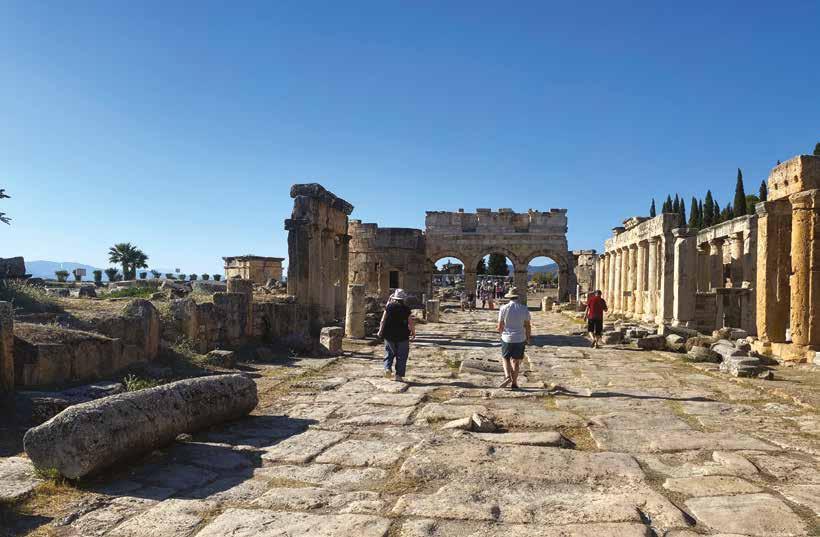
STEPPING outside familiar surroundings can bring a wealth of enrichment. Study tours offer a unique combination of learning, adventure and personal growth, distinct from traditional classroom or home settings. Whether wandering the ancient streets of Ephesus, standing atop the Acropolis or reflecting at biblical sites, these journeys provide enduring memories and invaluable insights. Unlike conventional travel, study tours are crafted with a deeper purpose: to foster understanding and spiritual development.
Pilgrimage tours through the land of the Bible offer travellers an opportunity to walk in the footsteps of biblical figures, from the ancient streets of Jerusalem to the peaceful shores of the Sea of Galilee. For many pilgrims, Jerusalem is the highlight. Its Old Town, surrounded by ancient walls, contains sites such as the Western Wall, the Church of the Holy Sepulchre and the Temple Mount. Guided tours add context to the city’s intricate history of faith and conflict, enabling visitors to appreciate both religious significance and cultural diversity.
Beyond Jerusalem, notable sites include Hebron and the burial places of Abraham and Sarah and Nazareth, as well as Capernaum and Mount of
Beatitudes, places where Jesus taught and performed miracles, Bethlehem, and the Dead Sea, where natural wonders enhance the spiritual journey.
Our territory currently offers a study tour focusing on the Seven Churches of Revelation in Türkiye, as well as Corinth and Athens in Greece. This relaxed study tour contrasts with the more intensive itinerary of the tour to Israel and Palestine, which is not currently available due to security concerns. The current journey invites participants to walk in the footsteps of the apostle John, visiting early Christian communities such as Ephesus, Smyrna, Pergamon, Thyatira, Sardis, Philadelphia, Laodicea and Colossae. Each location brings biblical narratives to life and offers a chance for reflection, worship and spiritual growth.
Since its introduction in 2025, this tour has enabled participants to form a faith community, with each traveller becoming a pilgrim exploring the life of the early Church. The seven letters from Revelation 2 and 3 are read at each relevant site, along with the entire letter to the Colossians in the place where it was originally delivered. Other locations include Miletus, where Paul bade farewell to the elders of the church at Ephesus, with the biblical account read at or near its historic setting. The journey continues with a short ferry crossing and flight to
Athens, allowing exploration of Athens and Corinth and highlighting their significance for Christian travellers. The support of a local guide and officer leadership help the group bond, find shared purpose and grow spiritually throughout the experience, with organised moments of reflection and worship. Notably, during the most recent tour, a couple became engaged and later married!
A study tour is more than a trip; it is a profound journey of reflection and discovery, which can bring a fresh perspective on history and faith. Although originally designed for officers, the tours are available to anyone who would like to attend.
• For further information, cost and brochure, visit wbclearningdevelopment. org/event/scri-study-tour or email paul. hilditch@salvationarmy.org.uk. A new tour based in Rome and the surrounding area is being developed and is expected to be available from 2027.
MAJOR PAUL HILDITCH
Higher Education Degree Course Leader William Booth College
You’re welcome
Niamh and Jess talk about being part of the Together 26 welcome team
TOGETHER 26 is a weekend to gather, celebrate and reflect on who God has called us to be – united in hope, faith and purpose. Taking place from Friday 3 July to Sunday 5 July at The ICC in Birmingham, the event will include a Friday evening concert featuring the International Staff Songsters and International Staff Band and, on Sunday morning, the ordination and commissioning of the cadets of the Keepers of the Covenant session.
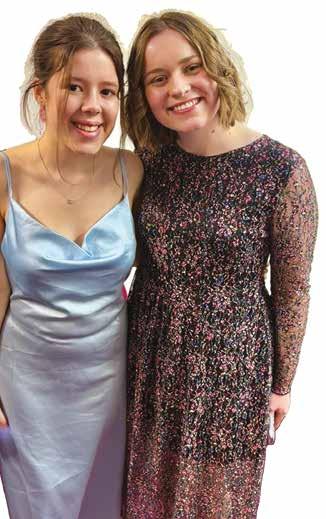
The weekend celebrates that we’re a Movement of people called by God, and ‘in him we live and move and have our being’ (Acts 17:28). There is a place for everyone to belong and play their part. This year, in addition to the Here to Help team, there will be more volunteers on hand across the Saturday and Sunday to help welcome everyone.
Led by Karen Hayward, the team includes Niamh and Jess, both from Birmingham Citadel. They talk about their roles:
What’s your favourite thing about Together?
Niamh Seeing other people! I really enjoy the Saturday evening when we all gather in the one hall for worship.
Jess I agree – I like being with people who share the same faith, and just enjoying that together.
What’s your role at Together 26?
Niamh It’s a bit like welcome duty at a hall: we’re there to greet people and to be a friendly face if people have any worries or questions.
Where will you be over the Saturday and Sunday?
Niamh We will be in different places across the whole site. There are at least four of us so far and we’ve been promised T-shirts to make us easy to spot!
Why are you part of the welcome team?
Jess It’s great to be a friendly face somebody can come up to if they’re lost, need to ask a question or just want somebody to talk to.
Niamh It’s important people feel safe and know there’s someone to go to if they’re unsure of anything. It’s also important that nobody feels lonely. It’s great there will be lots of people going, but we don’t want anyone to feel left out, especially someone coming on their own or for the first time. We can help people engage with the activities, show them around – and also help them find the quiet space if they need that, which will be available throughout the weekend.
What’s the best welcome you’ve ever had?
Niamh Brenda! When my family came to the corps, she came straight up to me and shook my hand. She gave me her number and said to call if I ever needed anything. That was really nice –and she sends me texts to see how I’m getting on. We love Brenda!
Jess When I first joined NeXus, the West Midlands divisional youth choir, it was a really friendly welcome. There were
messages in the group chat asking, ‘How you doing this week? How’s everybody?’
What’s your signature style of welcome?
Niamh I get excited around people, so I tend to say hi and go straight into telling people what I know!
Jess I’m the opposite – I’m quite quiet and then, as the conversation goes on, I get more confident!
Niamh If someone wants a handshake, I’ll shake their hand but, if not, I won’t force somebody to shake my hand. And I’ll do high fives with youngsters!
• Tickets for Together 26 are available for £11 for each session: Friday evening, Saturday, Sunday morning and Sunday afternoon. Tickets for under-18s cost £5 for the Friday evening and are free for the Saturday and Sunday. For more details and to book your place, visit salvationist.org.uk/together
Something for everyone
Daytime activities on Saturday will include:
• Bible study led by Captain Luke Cozens (North East DHQ)
• Panel discussion hosted by the Moral and Social Issues Council
• Art gallery featuring your creative works
• Outdoor sports!
• Live music from Music Man Project Lancashire
• MACA Dance workshop
• Come and Sing with the International Staff Songsters workshop
• Seminar led by the Candidates Unit
• Parkrun at Edgbaston Reservoir (no ticket required)
• Children’s venue
Exact timings for the weekend will be available from early June. For the latest information, visit salvationist.org.uk/together.
BELFAST TEMPLE The International Staff Band (ISB) helped celebrate 50 years of the corps being at its present location. Rehearsals were followed by band members delivering lessons to local musicians of all ages and experience. Local dignitaries attending the Saturday evening festival included deputy lieutenant of the county borough of Belfast Richard Yarr, Sammy Wilson MP and Divisional Commander Major Marion Rouffet. The band was outstanding and featured music from local composers, including Bandmaster David Catherwood. ISB Executive Officer Lieut-Colonel Paul Kingscott led the Sunday morning meeting – which included ‘He Sought Me’ from the community choir – followed by a united meal. The worship band participated in the afternoon’s programme with ‘In Christ Alone’. The corps is thankful for all the talents displayed during an amazing and memorable weekend. – NP
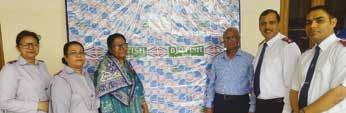
TENBY By collecting small jars of 20p coins, the corps raised £310 to buy 10 beds for the Pakistan Territory’s training college. – SH
RUTHERGLEN Harriet Gardens – a pioneering supported living community – is helping people break the cycle of homelessness. Launched by charity Social Bite in partnership with The Salvation Army and South Lanarkshire council, the village has 15 modular nest houses and a community hub with shared cooking facilities, spaces for group activities, therapeutic support and areas for social connection. Karen Good, contract manager for Homelessness Services, said: ‘Harriet Gardens is a brilliant opportunity to provide consistent, person-centred support that helps people feel valued and able to move forward at their own pace.’ – AR
GILLINGHAM Chatham Singing Company led the morning meeting on the theme Life with God. The congregation was blessed by their singing, beautiful prayers and encouraging testimonies and, in Irene Maycock’s message, challenged to live lives that are transformed in Christ. – JM
MUSIC
CIRENCESTER Songster Leader Helen Grace led a songs of praise meeting based on the theme Why Should the Devil Have All the Best Tunes. She put songs about praising, thanking and praying to God to well-known secular tunes. The congregation joined in discussion of the ideas, and a booklet summarised the thoughts considered. – MG
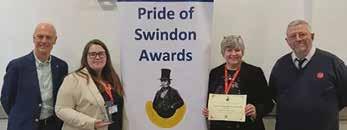
GLOUCESTER HOUSE The Lifehouse was recognised by the Pride of Swindon awards for 65 years of helping men overcome alcohol abuse, drug dependency and behavioural issues. Programme Manager Maz Hyde said: ‘There is still some cultural stigma towards addiction, and recognition like this goes towards changing that perception. The staff work hard every day trying to fulfil The Salvation Army’s mission to change lives.’ – AR
BELFAST SYDENHAM Fifteen corps members took part in the Belfast City Marathon, and a great day of fellowship and witness raised more than £2,000 for a Salvation Army International Development project in the Kenya East Territory. – KW
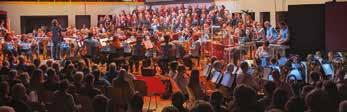
WARWICK More than 300 musicians from across Coventry and Warwickshire – including members of Coventry City Corps – performed at Warwick Arts Centre in a concert celebrating the life of Songster Leader Seb Farrall, who was promoted to Glory in March 2025. Performers united from the many musical groups Seb had been involved in, reflecting the wide impact of his work. The concert raised funds for the Music Man Project, supporting Seb’s commitment to making music accessible to all. – SW
Appointed
Effective 4 June
MAJOR PAULA HUBBARD, Associate Officer, Nunhead, and Chaplain to Glebe Court (3 days per week), Mission Service
Effective 16 July
LIEUTENANT OLIVER
DOBSON, additional appointment, Divisional Candidates Officer, East of England Division
Local officers appointed
CORPS TREASURER
ELIZABETH BALL , Oldbury
CORPS SERGEANT-MAJOR
DAWN BEVINGTON, Oldbury
CORPS TREASURER PAUL CONNOLLY, Snettisham
CORPS SERGEANT-MAJOR
ELIZABETH HAYWARD, St Albans
Wedding anniversaries
Diamond (60 years)
BANDSMAN BRIAN AND JANET MOGFORD, Bath Citadel, on 4 June
Promoted to Glory
MAJOR JOHN McCOMBE from Christchurch Hospital on 11 May
BARRIE WILLIS, Kettering Citadel, on 15 May
Bereaved
MAJOR JENNIE McCOMBE of her husband Major John McCombe, John McCombe, Rachael Dwight of their father, Major Mary Booth, LieutColonel Drew McCombe and David McCombe of their brother
JENNIE WILLIS, Kettering Citadel, of her husband Barrie Willis, Major Claire Hill, Winton, Darren Willis, Derby Central, Hannah Willis, Edinburgh Gorgie, and Garryl Willis of their father
Promotions
To captain
LIEUTENANT DAVID KARICKA , Gravesend
LIEUTENANT MARIE
KARICKOVA , Gravesend and Mission Service, THQ
LIEUTENANT PORTIA
STIRLING-MACK , Oxford
ENGAGEMENTS
Chief of the Staff Commissioner Edward Hill and World Secretary for Women’s Ministries Commissioner Shelley Hill
Fri 29 May – Mon 1 Jun Tenby (140th corps anniversary)
Fri 12 Jun – Mon 15 Jun Denmark and Greenland
Territorial Leaders Commissioners Jenine and Paul Main
Tue 9 Jun Sunbury Court (Brengle Institute)
Sat 13 Jun – Sun 14 Jun Connah’s Quay (135th corps anniversary)
NOTICES
Care for creation Bible study
An international, hour-long Bible study is led by different people on the first Tuesday of the month, alternating between 8am and 8pm. The next will take place on 2 June at 8pm, led by Violet Ruria (International Projects Office) on sustainability and resilience. For more, email environment@salvationarmy.org.uk
Territorial Prayer Furnace
Pray with people from across the territory and be part of the UKI Prayer Rhythm in this monthly online gathering. The next prayer meeting will take place on 1 June at 6pm via Zoom. Email saprayernetwork@salvationarmy.org.uk for meeting details.
Addictions training
Join specialists in a series of online training sessions for people in corps settings to increase their understanding of addiction and how to give effective support. The sessions will equip attendees with approaches and tools to work with people affected by addiction. The next session will take place from 1.30pm to 3.30pm on 9 June and focus on understanding addiction. For more information, email addictionservice@salvationarmy.org.uk
Storytelling competition
Salvationist is teaming up with Kids Alive! for our first ever joint writing competition! We want to hear your versions of Bible stories, retold however you want to retell them! That might be a favourite parable or a Bible story you think more people should know about – we only ask you keep it faithful to Scripture and that you avoid writing about Christmas or Easter. Entries will be printed in the 27 June issues of Salvationist and Kids Alive! to mark National Writing Day on 24 June. This competition is open to all ages – just email salvationist@salvationarmy.org.uk or kidsalive@salvationarmy.org.uk by 8 June. We can’t wait to read what you write!
Calling all artists! Together 26 exhibition
Music and Creative Arts are inviting artwork themed This Is Us from all UK and Ireland Salvation Army settings to be part of an exhibition at Together 26. Artists can submit up to three pieces, including work for the Art in Recovery section hosted by Core Recovery. Email music@ salvationarmy.org.uk by 1 June.
Apply for the Terrain discipleship programme
Young people aged 18 to 25 connected to The Salvation Army are encouraged to apply for the latest intake for the Terrain programme. Over the course of a year, Terrainees will explore the Gospels, gain an insight into Jesus’ life, and benefit from study, reflection and one-to-one spiritual mentoring. Find out more and apply via tsa.link/terrain
SOUNDS
Sunday Worship
Join Salvationists across the territory in worship, with music, prayer and a Bible message from a guest speaker. This week’s message is from Major Kingsley Layton (Risca). Can’t join us at 11am on Sundays? Catch up with the weekly podcast of highlights. Each week’s broadcast is repeated in full on Sundays at 6pm, Mondays at 12am and Thursdays at 9am.
• Listen online at salvationist.org.uk/radio
Me and My Playlist
This Salvationist Radio show sees a young person linked to The Salvation Army share five tracks they love. This month’s episode features Katie Pearson (Norwich Citadel).
• Listen online at salvationist.org.uk/podcasts
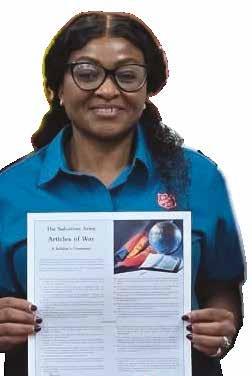
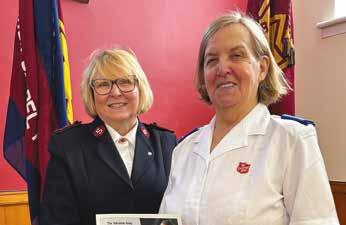
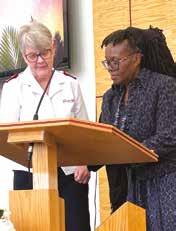
JANICE Cambridge was enrolled as a soldier by corps leader Captain Caroline Brophy-Parkin on Easter Day. Janice testified to always being aware of the presence of God in her life and spoke of finding a spiritual home at the Army. Janice fulfils her calling to be a follower of Jesus in many ways, including acting as assistant corps treasurer, accompanying and assisting with the songsters and volunteering at the corps charity shop. Janice chose the song ‘The Lord’s My Shepherd’ (SASB 62), which has sustained her through difficult circumstances. – CB-P
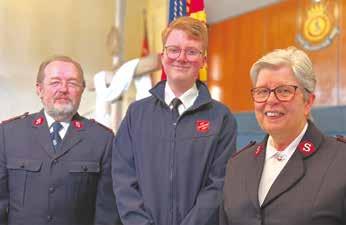
JACOB Beattie was enrolled as a soldier on Easter Day by Majors Martin and Michelle Wheeler. In his testimony, Jacob spoke of his faith journey and his appreciation of the part played by his family, friends and members of the corps. His commitment was summed up in the words of ‘Beautiful Lord, Wonderful Saviour’ (SASB 355): ‘Take me, mould me, use me, fill me./ I give my life to the Potter’s hand.’ – MW
ROMFORD
ON Palm Sunday, Patience Adoo was welcomed as an adherent by Major Lynda Levis. Patience has been attending the corps for several years and, since being involved in our parent-andtoddler group, decided to take a further commitment within the corps. On the day, she was supported by Phil and Sharon Goldsmith, Heather Sheldon and Stuart Pinborough. – JA
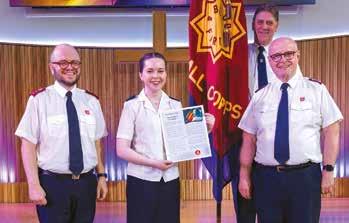
AMALIE Hooper was enrolled as a soldier by Captain Daniel Holland (THQ). Amalie grew up in the fellowship and decided it was time to declare publicly her commitment to covenant relationship, convinced that the love of Christ –who died and now lives to save her – requires from her the devotion of her life to his service for the salvation of the whole world. As Amalie signed the Soldier’s Covenant at the mercy seat, surrounded by a great cloud of witnesses, the songsters sang ‘Somebody Prayed for Me’. Amalie testified to a pragmatic approach to her faith and how gathering evidence for the existence of God has led her to realise the love of God and commit to serving him by living out that love. Her recent attendance at Territorial Youth Band played a big part in her journey. Those present celebrated and were challenged by Captain Dan to review their own faith journeys. Also pictured are Colour Sergeant Robin Moorwood and Recruiting Sergeant Lieut-Colonel David Jackson. – MR
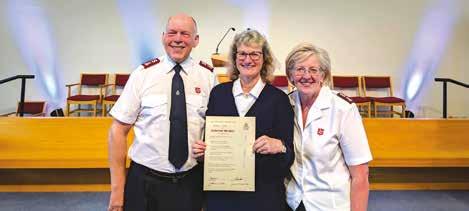
A HIGHLIGHT of worship at the corps was the welcome of Diane Leach as an adherent by corps leaders Majors Angela and Steve Noble. Diane was an active Salvationist in Torquay until her early twenties when she moved away from the town. She never lost her faith and, during the Covid-19 pandemic, found herself watching worship on livestream every week. When the corps reopened for in-person worship, she decided to come along and hasn’t looked back since. – RT