A bold spirit
WHAT do you think of when you hear ‘pioneer’? The astronauts in Artemis II? People voyaging to other countries to spread the gospel? Planting a church?
All these have in common a spirit that embraces change, a boldness to take a leap of faith. We can so often focus on what pioneering looks like instead of the spirit that drives it. It doesn’t start with doing something bold, but with a courage that comes from being rooted in God.
As The Salvation Army, pioneering is baked into our DNA: we began as a Movement deliberately different from what people thought of as ‘church’. Today, we are called to stay true to those roots, not in form but in essence – remaining open to listening to God, to trying something different, to reaching people on the fringe. That might simply be changing one thing in a meeting or intentionally making time for God’s presence during community work, turning something that could be transactional into something missional.
One definition of ‘pioneer’ is ‘a member of an infantry preparing roads for the main body’. How are you preparing the road for the Lord in your corps and all you’re doing? How are you preparing the road in your day-to-day and all you’re being? What can you change to go deeper?


Visit salvationist.org.uk/ recommended-content


EDITOR Major Julian Watchorn
MANAGING EDITOR Ivan Radford
ASSISTANT EDITOR Stevie Hope
EDITORIAL ASSISTANTS Major Margaret Bovey, Major Lynne Shaw, George Tanton, Lyn Woods
SENIOR DESIGNER Hannah Holden
GRAPHIC DESIGNERS
Joseph Halliday, Louise Phillips
PROOFREADER Chris Horne
CONTACT US 020 7367 4890
salvationist@salvationarmy.org.uk
ADVERTISING advertising@salvationarmy.org.uk
DISTRIBUTION AND SUBSCRIPTIONS
Salvationist Publishing and Supplies (Periodicals), 66–78 Denington Road, Wellingborough NN8 2QH 01933 445445 / subscriptions@satcol.org
FOUNDERS Catherine and William Booth
INTERNATIONAL LEADERS
General Lyndon Buckingham and Commissioner Bronwyn Buckingham
TERRITORIAL LEADERS
Commissioners Jenine and Paul Main
EDITOR-IN-CHIEF Major Julian Watchorn
TERRITORIAL HEADQUARTERS
1 Champion Park, London SE5 8FJ 0845 634 0101
The Salvation Army United Kingdom and Ireland Territory. ISSN 2516-5909. The Salvation Army is a Christian church and registered charity. The charity number in England, Wales and Northern Ireland is 214779, in Scotland is SC009359 and in the

FRINGE DWELLER
Spring is here!

As daffodils spring up around us, Jim Burns celebrates brightening days
WE’RE now in meteorological spring, with the prospect of lighter nights and warmer days. You will already have seen evidence of new life around you, as trees come into bud and snowdrops push themselves through the soil. How much better we begin to feel, knowing that winter has gone ... or so we hope! With winter behind us, we can confirm the truth of the words found in Genesis 8:22: ‘As long as the Earth endures,
Reflect and respond
Reflect on Genesis 8:22. Thank God for the beauty of his creation and the faithfulness of his provision.
Take a moment to notice what’s brought you hope or brightened your day this week. Give thanks for it.
Pray for God to prompt you when opportunities arise to bring hope to someone else.
seedtime and harvest, cold and heat, summer and winter, day and night will never cease.’
I am florally challenged, but I have been pleased to see miniature daffodils – or are they narcissi? – appearing in clumps along the grass verges near where I live. I wonder if these small flowers feel inferior to their larger brothers and sisters – although, if they are narcissi, perhaps they have enough narcissistic self-love to make up for any shortage of height!
Although these flowers emerge year after year, I am still surprised when they pop up. They remind me of the William Wordsworth poem ‘Daffodils’, although the flowers I see could not be described, as Wordsworth calls them, as a ‘crowd’ or ‘host’.
When you were at school, did you have to learn about the collective noun to describe a group of animals? A flock of sheep, a herd of cows or a school of fish? How strange that a group of crows is commonly called a murder. The flowers near my home could not be termed a meadow or a carpet, but that doesn’t stop them bringing pleasure to those who see them – confirmation that good things can come in small amounts!
No one knows who planted these daffodils, whether it was one person or a community group that wanted to brighten up otherwise bland-seeming grass. It would have been an investment of time and money on their part to buy and then plant the bulbs – perhaps they will never know the pleasure they have brought over the years since. And, of course, our thanks also belong to God, who continues to create and recreate life in nature each spring.
All this reminds me of the Bible verse that says: ‘Give your gifts in private, and your Father, who sees everything, will reward you’ (Matthew 6:4 New Living Translation). Although the verse refers to monetary giving, it applies equally to what we do for others; giving and expecting nothing in return. What can you do for others, however small, to brighten their day during this season?

Location, location, location
by Garry D Reed


Community Chaplain Major Nick Hanover (Elgin) testifies to finding purpose in following Jesus
N1 Boney M sang about the water courses of this place.
2 A former clay pit in Cornwall.


3 A character in Coronation Street who shares a name with the hometown of Lazarus, Martha and Mary.


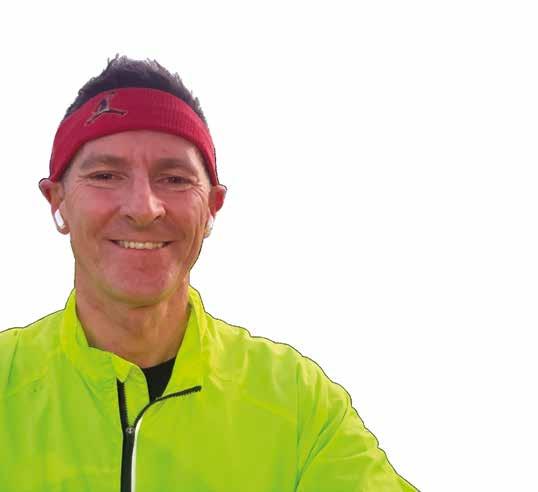
EXT week I’m due to run the London Marathon. It was one of those ‘turning 50’ kind of decisions! Will my body let me? Have I got what it takes? A mid-life challenge rather than a crisis, hopefully!

4 Elijah’s sacrifice on this mountain was consumed by fire from Heaven.
5 Paul was born in this city.

6 Jesus appeared to two disciples on the road to this town on the first Easter Day.
7 A prosperous settlement where Abram began his route to the Promised Land.
8 Paul and Silas were thrown into prison here.
9 Noah’s ark rested here.
10 Jesus called his first disciples by this sea.
11 A Welsh village with a speciality for Christmas postage stamps.
12 The 12-year-old Jesus amazed teachers in this city.
While I love running, it’s fair to say I don’t always enjoy the training. It’s hard! I don’t always feel like it; it takes commitment. Much of marathon preparation is about following a training schedule or at least trying to. Every day is a different run, different lengths and different types. Some days it’s an ‘easy’ long run, on others it means running up and down hills or sprints and repeated bursts of speed. Then there’s the need to eat properly, hydrate regularly and sleep well – there’s a lot to think about! But the idea is that, if I develop healthy habits and I do the training, I’ll be prepared to handle the challenge of running 26 miles. I might even enjoy it!
Of course, life gives a lot to think about too and life can be hard. Arguably, harder than running a marathon! Without a sense of purpose, without meaning or without a sense of belonging and
One of the things I appreciate and value when it comes to the life of faith is that it offers and provides a training schedule for life. As a community of people learning to live the way of Jesus together, Christians are learning to live more patiently and joyfully, with more self-control, kindness and generosity, and to love more deeply. In other words, to handle the challenge of life – and maybe even enjoy it along the way!
To be honest, following Jesus sometimes feels hard; it takes commitment. It’s not always easy, but it is always worth it. Because Jesus promises each and every one of us life in all its fullness. A life of fulfilment and flourishing. ‘Holding promise’, as the Bible says, ‘for both the present life and the life to come’ (1 Timothy 4:8). For some, it might sound too good to be true, but it isn’t!
On a recent training run I was listening to the Rocky soundtrack – great motivational music! As I listened to James Brown singing ‘Living in America’, he sang these words: ‘And somewhere on the way/ You might find out who you
Stepping out
George Tanton examines the Army’s pioneering spirit from the early days of the Movement

ON 28 November 1882, Catherine Booth gave the morning address at Exeter Hall to 101 newly commissioned officers preparing to set ‘off to the front’. These early pioneers, who were destined for missionary work in Britain, India, Sweden, the USA, New Zealand and South Africa, were accordingly prepared to ‘fight for Jesus till death.’ Reported upon in the War Cry on 7 December 1882, it was suggested that these officers, many of whom were only in their early twenties and recently married, were ‘ready to go far away, to fight, to suffer and to die, if needs be, to spread salvation’.
Indeed, the early pioneers of The Salvation Army faced considerable obstacles in their ministry across the globe, often facing violence, censorship and imprisonment. Throughout the 1880s and 1890s, other cohorts of Army pioneers set out to spread the gospel, traversing mighty distances, braving sickness and destitution, and presenting themselves to often unsympathetic and even hostile communities.
On 19 September 1882, four pioneers landed in Bombay. They were Major Frederick Tucker, Captain Henry Bullard and Lieutenants Norman and Mary Thompson. Upon their arrival, a large force of British colonial police was awaiting them, having misinterpreted the ‘attack’ by The Salvation Army. This fuelled suspicion between the authorities and the Army. Following a day of open-air witnessing through the streets of Bombay, the commissioner of police informed Major Tucker that their activities would no longer be tolerated as they were deemed provocative towards rabble-

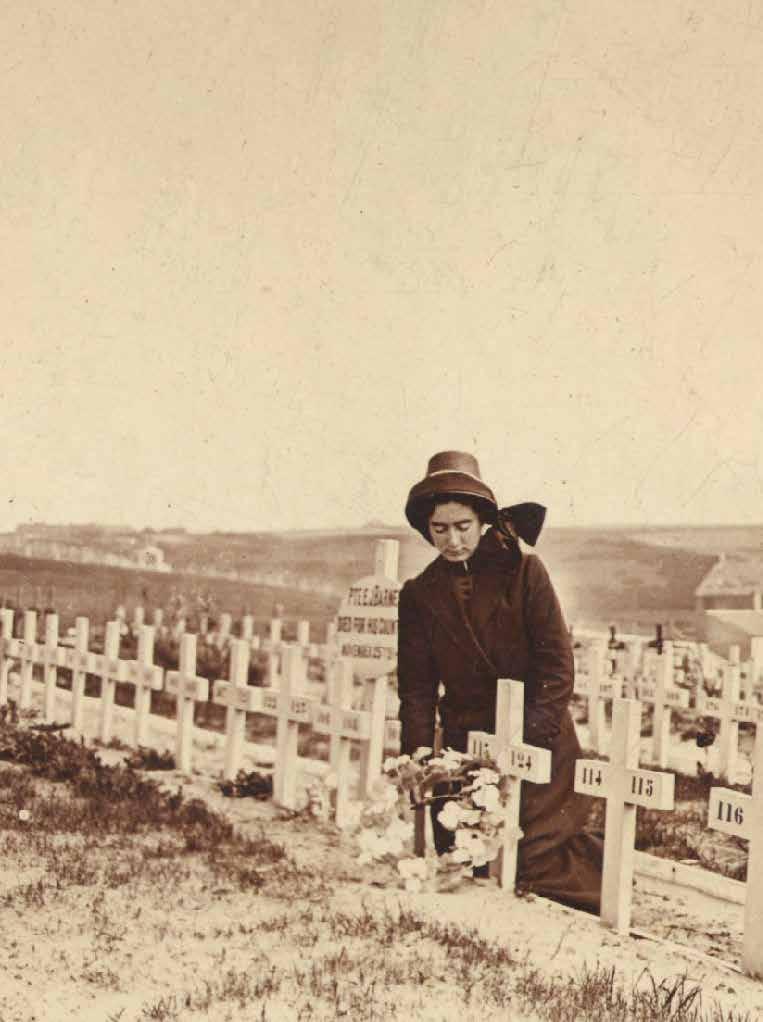
rousing and wider civil disturbance. A series of arrests, imprisonments and prosecutions were made. Major Tucker defended their actions along the grounds of their right to religious liberty, prompting other missionary organisations and religious groups in the country to come to their aid. Notably, Babu Keshab Chandra Sen, leader of the Brahmo Samaj – a monotheistic reformist movement within the Hindu faith – sent a letter of protest to Lord Ripon, the then Viceroy of India. The Indian Witness, a prominent missionary publication, expressed that ‘the cause of religious liberty in India owes much to Major Tucker’.
Major John Milsaps, the first Salvationist chaplain to be recognised by the US armed forces, arrived in Manila, capital of the Philippines, on 29 June 1898 at the height of the Spanish-American War. Several days after his arrival, the Spanish-held city fell to Filipino revolutionaries with the aid of American troops. Major Milsaps was granted permission to hold meetings on US navy ships, in a prison and in a leper colony. Amid the chaos and trauma of war, Major Milsaps managed to build a dedicated congregation out of the indigenous community and US servicemen stationed on the islands.
The conviction of pioneers such as Major Tucker and Major Milsaps helped lay the roots of a global Movement.
Speaking at the Welcome to the General on 3 September 2023, General Lyndon Buckingham reflected on the pioneering spirit of his ancestor, Sergeant-Major Daniel Buckingham, who gave up a lucrative career, joined The Salvation Army and was imprisoned in Timaru prison, New Zealand, several times for



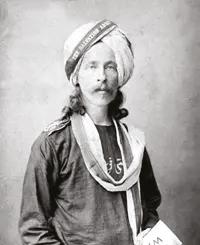
witnessing in the town of Waimate.
‘What motivates somebody to do that?’ asked the General. ‘What happens in somebody’s life that would cause them to give everything up and say yes to William Booth? What motivated thousands of people over the years to make themselves available to God and the Army?’
He answered: ‘They had this desire in their hearts not just to talk out the gospel but to demonstrate the values of the gospel… That’s beautiful. That’s The Salvation Army. That’s the DNA of our Movement.’
‘There was this deep desire to glorify God with their living, that somehow the very living of their lives would be salt and light,’ he said.
He added: ‘We have to get back to what drove a 19 and 20-year-old to get in a boat and go to the other side of the world… I rejoice in the fact that there are people like this all over the world today!’


GEORGE TANTON Editorial Assistant Salvationist
Major Frederick Tucker
Called to be purposeful
Major Tracey Palmer discovers a life-changing declaration

MATTHEW 16:13–20
NAMES are powerful. They can shape lives by building people up or destroying them. In our study passage, great names and titles are spoken, not in the abstract but in ways that recognise who Jesus is. Jesus renames Simon – Peter, the rock. We also recognise our calling to a purposeful life built on our faith in Jesus.
PAUSE AND REFLECT
Have you ever had a burning in your bones when it comes to answering a question, and you can’t help but answer it, even though that answer will turn your life upside down?
Simon, in answering Jesus’ question, became Peter, the rock – a disciple who, in his relationship to Jesus, would have new purpose in his life. To explore this, we consider: the significance of the location, Peter’s recognition of who Jesus is, and the ‘rock’ on which the Church is built. Why did Jesus bring his disciples to Caesarea Philippi? This city, a two-day walk north of Galilee, was formerly known as Paneas, named after Pan, the Greek god of nature. The name change to Caesarea Philippi was in honour of the Romans’ rule. These names speak of allegiances old and new. The disciples and Jesus are surrounded by temples of worship to pagan gods and to the cult of emperor. Here, Jesus asks: ‘Who do people say the Son of Man is?’ (v13). Maybe the disciples’ answers are easy because they are the names others give – Elijah, Jeremiah or one of the prophets (see v14).
The place is significant because it holds so much choice, but also danger. The answers the disciples give will determine their future; their purpose will be defined as they respond to Jesus’ call to ‘take up their cross and follow me’ (Matthew 16:24).
PAUSE AND REFLECT
In our lives, what is the significance of places?
What are you surrounded by?
Jesus poses a deeper question: ‘Who do you say I am?’ (v15). I imagine a silence as no one dares give an answer. Then, impulsive, passionate Simon speaks from his heart. Surrounded by edifices of other belief systems, he says the words that change his life: ‘You are the Messiah, the Son of the living God’ (v16).
To live a purposeful life means to be committed to following Jesus above all other calls. By faith, Simon sees the aweinspiring reality of Jesus, who is not like anyone else – he is ‘the Christ’ (v16 Revised Standard Version). Jesus is the prophet, priest and king who brings in the new age. Simon – now Peter – gets it right in naming Jesus, yet his journey of discipleship shows that recognition is not enough. Peter has to learn what Messiahship means according to Jesus’ definition of it, not his own interpretation. Naming Jesus ‘Messiah’ is a first step; following is another, much harder journey.
In the Gospels, we see Peter as a follower of Jesus. He is brave, impulsive, purposeful, frightened, confused and
wavering. Peter’s failure, however, is never the end of his purpose. Peter who denies Jesus in the courtyard (see Matthew 26:69–75) is the same Peter who meets Jesus on the beach and reaffirms his love (see John 21:4–17), and also preaches passionately at Pentecost (see Acts 2:14–40). Peter, the rock, is formed over time and only in proximity to Jesus and by the transforming power of the Holy Spirit.
PAUSE AND REFLECT
In what ways are you purposeful in living out your confession of faith?
Do you see failure as part of your discipleship journey?
‘You are Peter, and on this rock I will build my church’ (v18). There is controversy over what this means. Is the Church built on the man Peter and his successors? Or is the Church built on Peter’s confession of faith? Different parts of the Church give different answers. If we take confessional faith as a rock, then there is an invitation for all believers to be included as living stones in this Church, which is built on wholelife faith, naming Jesus as the Messiah, following him and living with his purposes foremost.
In Matthew for Everyone, Tom Wright describes it like this: ‘A new community through whom the living God will put the world to rights, bringing heaven and earth into their new states of justice and peace. Peter with his declaration of faith will be the starting point of this new community.’

PAUSE AND REFLECT
How are the foundations of your faith?
What is the link between being purposeful and speaking out?
Jesus calls us to unwavering faith in him and a resolute commitment to join him in putting the world to rights.
When others might have remained silent, words of faith burst from Simon Peter. His life’s course is set by recognising who Jesus is: the long-awaited Messiah, the Saviour. Sometimes, there are things that need to be said out loud – in saying them, faith is confirmed and action follows.
Peter is not alone in being renamed as a result of a deep spiritual encounter with God. In Genesis 17:3–5, Abram is renamed Abraham as God enters into a covenant with him and promises he will be the ‘father of many nations’ (v5). Jacob is renamed Israel, ‘because you have struggled with God and with humans and have overcome’ (Genesis 32:28).
Like Simon Peter, sometimes living out our calling to a purposeful life involves cost and sacrifice. We are called to the same path of discipleship with all its possibility and promise.
• This Bible study is part of a series building up to Candidates Sunday, looking at the story of Peter. For more information, visit tsa.link/candidates-sunday-2026


To read the full, unedited Prayer Matters booklet, visit salvationist.org.uk/discipleship.
SATURDAY 18 APRIL: CARE FOR CREATION – FOOD INSECURITY
An estimated 8.4 million people in the UK experience food insecurity, while edible food equivalent to tens of millions of meals is discarded each year. Bread of Life, open our eyes to opportunities to share meals with those who are hungry, and to waste less.
by
Major Heather Poxon (Territorial Environmental Officer)
SUNDAY 19 APRIL: SABBATH PRAYERS – INNER QUIET
1 Thessalonians 4:11 says: ‘Make it your ambition to lead a quiet life.’ In a noisy world, seeking quietness in the physical space is not always possible. But it is possible to find quiet within us. In times of noise, try intentionally practising keeping your mind stayed on Jesus – especially through prayer – and you will find perfect peace (see Isaiah 26:3).
by Major
Gary Lacey (Assistant Secretary for Spiritual Life Development)
MONDAY 20 APRIL: SHARING THE GOOD NEWS – PIONEER MINISTRY – OPPORTUNITIES
We pray for opportunities to break new ground, reach new people and work in pioneering ways with other departments to restart The Salvation Army in places that have fallen barren. Give us your vision, Lord, and show us where you are working and how we can reignite a passion for you.
by Major Sarah Butler (Territorial Pioneer Officer)
TUESDAY 21 APRIL: SERVING AND CARING – PRE-RETIREMENT SEMINAR (21–23 APRIL)
Let’s give thanks for those attending this event: for their years of faithful service, and for all that is yet to come. We thank you that the best is yet to come for those who gather to prepare for retirement. We pray that these days together will be like reaching the top of a hill and seeing a whole new vista of possibilities for the future. by Lyndall Bywater (UKI Boiler Room team)
WEDNESDAY 22 APRIL: JUSTICE AND RECONCILIATION – CORE RECOVERY – BELONGING
As Core Recovery groups celebrate joys and recognise setbacks, we pray trust will be nurtured through a sense of belonging. We thank you for the diversity within each group, and for the way group members grow and learn from each other. We give thanks that belonging brings courage to share experiences and receive understanding.
by Major Jill Miller
THURSDAY 23 APRIL: INTERNATIONAL SALVATION ARMY – USA EASTERN TERRITORY
We pray God’s blessing on the USA Eastern Territory, asking the Holy Spirit to restore, refresh and renew lives through their work and worship. We pray that God will bless Territorial Leaders Commissioners Ralph and Susan Bukiewicz. by Lyndall Bywater (UKI Boiler Room team)
FRIDAY 24 APRIL: GROWING IN FAITH – EXPLORING LEADERSHIP DAY (25 APRIL)
God, who empowers us, we pray for all those who will gather at William Booth College to explore your calling on their lives. May they find joy as they notice the seeds of vocation that you have already planted, and hear you clearly as they seek direction for the future. We pray for those who will lead sessions, worship and give talks; may they sense the nearness of your Spirit as they offer their gifts. by Lyndall Bywater (UKI Boiler Room team)
PRAYER REQUESTS
TRACEY PALMER Divisional Leader South East Division
Do you have something or someone you’d like us to pray for? Email salvationist@salvationarmy.org.uk with ‘prayer request’ in the subject line.

Growing bolder together
Territorial Pioneer Officer Major
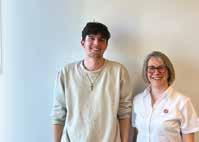
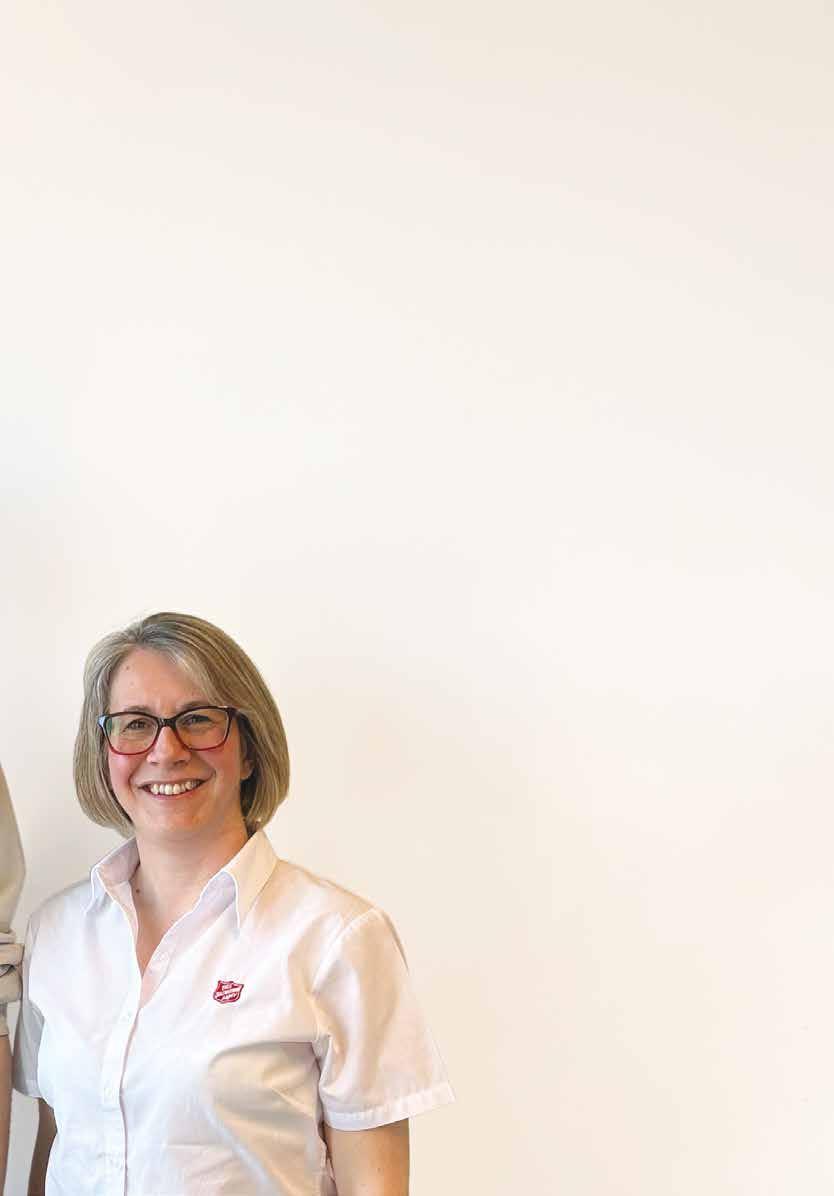
Sarah Butler and Sam Butler (Feltham) talk about pioneering, church and staying true to who we are
What’s your journey been like within the Army and pioneering as a family?
Sarah We have always just been doing what and going where we felt God wanted. The children accompanied us to each of our appointments – in Wales, in Glasgow, the south coast of England – and God has used the children as much as he has used us. I guess the pioneering aspect of that was to allow that to happen! When Sam was a baby, I was sat chatting to somebody who had just come out of prison. Sam was sat on my lap and, while I was praying, his hand reached out and touched the guy’s hand – and God broke through in that moment. It just shows that each of us have our part to play in different ways. Sam, your childhood was different from some of your friends, who grew up in one town or in one kind of Salvation Army setting. You hung out in Lifehouses in Glasgow!
Sam It’s been interesting seeing the variety within the Army! I found it interesting how different communities shaped the structure of services and what was going on. I remember when I was growing up and, while a building was being constructed, we were doing church in someone’s house. So church, for me, has always sort of been less about buildings and more about who’s there and having an alive feel to it. A lot of young people today have almost this idea of what ‘church’ is. Then when they come to experience church, they see the difference between those stereotypes of church and something that’s more relatable.
Sarah Growing up in the Army in the 1980s and 1990s, places would look quite similar. Today, each corps reflects its community more than perhaps before. That’s an exciting change. And I’ve always said that each new person or family who attends will change the worship, because they’re bringing themselves to it.

What does pioneering mean to you?
Sarah It’s that sense of going where no one’s been before. It’s not throwing everything away – we’re taking decades of experience with us. It’s asking: What does it mean to be and do church now, not being satisfied with ‘this is how we’ve always done it’? Could we change just one thing here? Could we adapt that?
Sam My background is acting and I see pioneering through that lens. For example, when doing improv, it’s very much a ‘yes and...’ environment. You take a foundation and build upon it with new ideas – you trust and you go for it. There’s a sensitivity too – you may think this is the greatest idea, but then you look
together
at an audience and everyone’s bored. So you change and build on what you know. Maybe you get a reaction, so you keep that going. In church, it’s the same idea of trying something out. It’s asking, ‘Can this lead to something more?’ It’s not being too firm in sticking with an idea.
How important is listening to being a pioneer?
Sarah Pioneering is about following God. God’s already in those spaces we haven’t yet occupied; our role is to follow what God’s already doing. Where does God need us to be? Where is God at work and how does God want us to be involved? We also need the wisdom
to recognise we don’t have a monopoly on social action or homelessness work, for example. A lot of pioneers are bringing a Salvation Army essence into a community or group rather than duplicating what’s already happening and dividing resources. There’s the saying ‘where there’s a need, there’s The Salvation Army’. Well, where there’s a need, there’s definitely God, but which of the needs is God calling the Army to meet just now? Does God want us to work with others or work in a silo? It’s not about spreading ourselves thinly but growing deeper roots.
Sam There’s the Bible story of the guy who built his house on a rock and the foolish man who built his house on the sand – it’s a question of where your foundation is. You can’t just go into a place and say, ‘This is what we’re doing.’ You need understanding and patience to be constantly re-evaluating. In different places, you might see the same need, but the way in which you need to bring God’s message might be different. In my life, too, I look at things and think, ‘Is what I’m doing beneficial to me in the long run?’ It’s about that ongoing discernment of understanding when things are from God.
What have you learnt from each other?
Sam I’ve learnt that safety net of trying things out. If it works, great. If it doesn’t, why? How can we use that experience in another situation? So it’s having that sensitivity, but also going for it and experimenting.
Sarah I’ve learnt that wherever we go, God is already there, and he’s really looked out for us as a family. Also, seeing how both Sam and his sister, Elise, have grown deeper roots in their faith with every move and change they have gone through has been a real learning experience for me – and being able to see their openness of faith in their everyday. When I was young, people knew I went to The Salvation Army, but it wasn’t something I always wanted to talk about. From Sam, I’ve learnt that your character as a Christian can shine out from you and not be something you hide. I’ve learnt the boldness of saying ‘this is who I am’.
So pioneering is also linked to identity?
Sarah You’re always having to come back to the question of why: What is it about The Salvation Army or who I am as a child of God that’s needed in this space? You have to dig deep into that DNA. It takes courage to be authentically yourself, corporately or individually.
Sam When you look at spiritual gifts, as I did recently with a group of young people, it’s interesting to discuss how obviously not everybody’s got the same gifts. For pioneering, people might think that you need to be an evangelist, but pioneering might need a gift like shepherding, with pastoral care in having those closer conversations. So it’s asking what gifts God has given you and how they can be used.
Sarah Yes, and there’s not one set of spiritual gifts that defines pioneering. However God has created you, the pioneering aspect is the courage to go out and try something different!
We are pioneers!
Territorial Envoy Cadet Martyn Jackson
Nottingham Aspley, East Midlands Division
Salvationist catches up part‑time pioneer officers
What does being a pioneering officer look like in your area?
I have one day per month set aside for this work, which can include training, conferences and visiting or speaking with people who are exploring pioneering in their setting.
Why do you do what you do?
I love to connect people to God and help them to follow him in their daily lives. The world is changing so fast now that what worked five years ago – think back to pre‑Covid‑19 days – doesn’t automatically work today. The gospel message remains the same, of course, but sometimes the vehicle we use to get there needs to change. Being a pioneer officer puts me in a place to encourage others to explore what that vehicle looks like where they are, so that God’s good news is heard and understood.
What’s the most exciting thing about pioneering?
Pioneering is what The Salvation Army has always done! We have always been pioneers, it’s in our DNA, it’s what gets me out of bed in the morning as a Salvationist! The early Church was called ‘the Way’ (Acts 9:2) because people were figuring out what life looked like when you follow Jesus. I believe that we are still called to work out the Way, to figure out what following Jesus looks like in our lives. As an organisation, The Salvation Army has a great heritage of doing just that and I want to be part of something that draws people to Jesus and transforms the world for God.
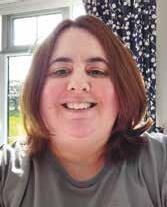
Captain Julia Mapstone Newry and Divisional Mission Officer, Ireland Division
What does being a pioneering officer look like in your area?
We are, in many ways, at the start of exploring what pioneering means in the Ireland Division. Many people within Northern Ireland will still identify as either Protestant or Catholic, which is not necessarily relating to a personal faith. This is different from the Republic of Ireland, where there has been a decline in church attendance. There can be a disconnect between people and the main churches or disillusionment with organised religion. This means pioneering today is about providing a different way of enabling people to connect with God.
Half my time in my role, I am at Newry, which had been unofficered since 2018. The previous divisional mission officer started a monthly café church here. When I took over last year, one of the corps members asked to start a midweek mental health support group. This grew to have more than 25 people attending. The two people who were still members of the Sunday congregation had a clear vision and, over time, the Sunday congregation has slowly increased and we have been able to start a small children’s church too. People from the mental health support group have started to attend Cameo and asked for simple Bible studies. Some of them have come to Sunday meetings. There have also been things that have not worked well, so these have been stopped and new things tried in their place.
Why do you do what you do?
I love working within the structures we already have, to see how we can use them in different ways that are relevant to communities. I want to see our corps members equipped to share the gospel, which happens as their own discipleship is given priority. I love the excitement that this brings to a corps, the way that programme can adjust and change to meet local needs.
What’s the most exciting thing about pioneering?
Re imagining and innovating within the rich and diverse gifts we have and seeing people experiencing faith in a different way and, of course, being saved. It is exciting to see people exercise their gifts within the corps and to let people lead in the way that God has called them.
with some of the officers across the territory

Territorial Envoy Sam Jones
Newtown, Wales Division
What does being a pioneering officer look like in your area?
Listening to God, asking him to nudge me about who needs encouragement about ideas they have, whether that’s something small like pencilling in an hour of prayer a week in their diary or a bigger project like working in partnership with SATCoL.
Why do you do what you do?
In the past, I’ve found that looking different as a worshipping community can be the greatest joy, but also on occasion a bit lonely, even when there have been good people around. My hope is that by being intentional about trying to be in contact with, and praying for, those who are pioneering they will feel more connected to the wider church.
What’s the most exciting thing about pioneering?
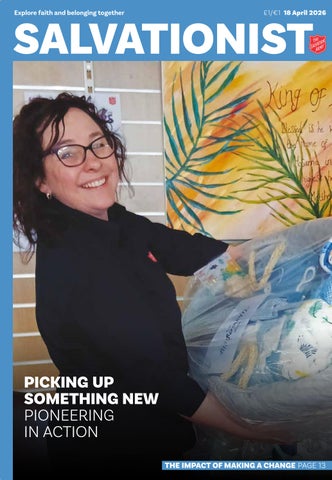
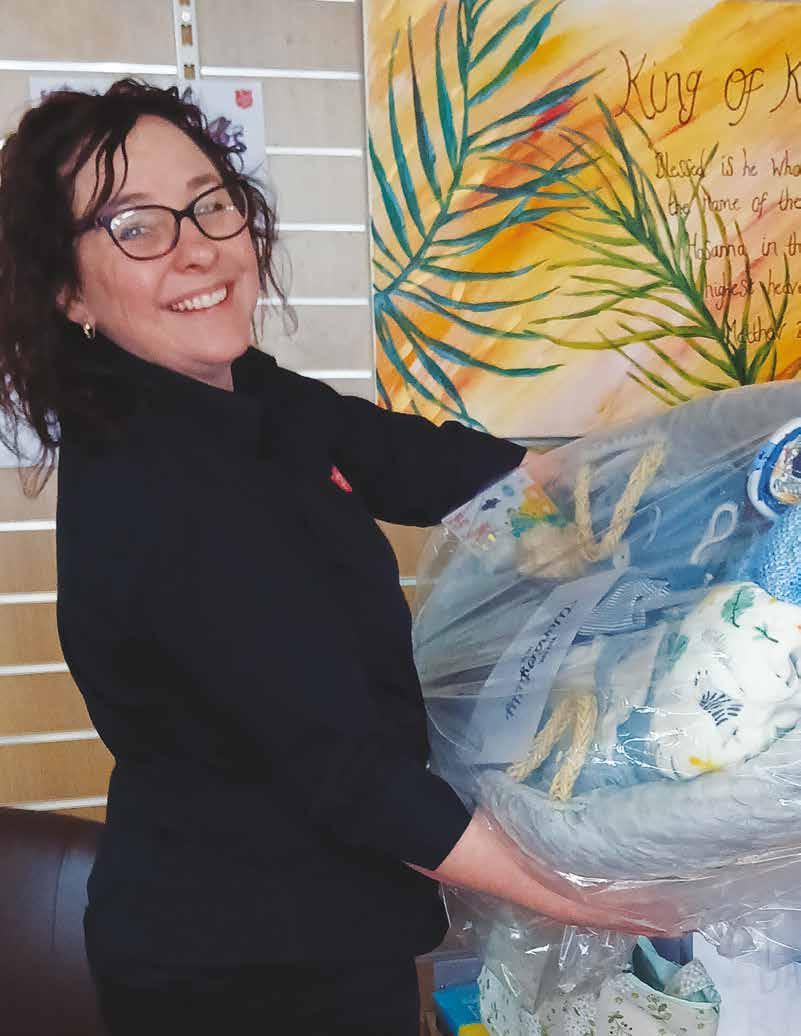
That period between listening to God and checking it out with others, when you’re watching and listening out for signs and they feel like they are everywhere. An example that comes to mind is that I love babies, and I had always wanted to do something to support parents in a tough situation financially, but it never felt right to start anything. Then one day, a lady from a partner organisation mentioned how many new families she was coming across who didn’t have all they needed. I felt a gentle nudge that now was the time. A church member rang me up to say she felt God had told her we needed money. I told her about the food bank, but that wasn’t it – and, as we carried on talking, I told her how I felt God was asking us to provide baby bundles, and she asked me incredulously, ‘Won’t you need money for that!?’ She began our start up fund! A local knit and natter group then rang to see if we had need for any woollens, and a lady from another town got in touch to say she felt she needed to support us monthly with running costs. I love that time before you start something new, and the initial period of trying it, especially when you see how it impacts the lives of others.
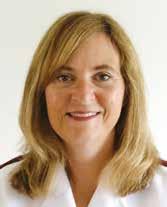
Major Paula Haylett Thirsk, Yorkshire and Humber Division
What does being a pioneering officer look like in your area?
Pioneering ministry reflects the context in which it is birthed. The rural market town of Thirsk is nestled between the Moors and the Dales, where outdoor life is important to many people, and so some of our pioneering ministry is based outdoors, whether in the wider rural landscape or the local green spaces. We live on a new housing development where we try to enable a sense of cohesion and belonging in an uprooted community, through initiating events and establishing groups. We don’t have a hall, so our worship events take place in our home, at the garden centre café, outdoors or in other spaces! Wherever it takes place, it always includes Scripture, prayer, conversation, reflection, food and laughter. Connection is everything in pioneering ministry. Spending time with people, establishing good relationships with other churches, volunteering with groups and living all of life in the local setting each bring opportunities for ministry and mission.
Why do you do what you do?
Because God has called me to, and made me for, this kind of ministry – a ministry that offers hope and the fullness of life that Jesus brings, through setting up and leading new initiatives.
What’s the most exciting thing about pioneering?
There is something about movement that I find both spiritual and exciting. I love to walk, to discover new places, to be challenged along the way and to see God throughout. Likewise I am excited by movement in pioneering: movement into new, unchartered ground for Christ, the movement of God in people and places, the movement of my own relationship with God as it changes and grows. Witnessing the extraordinary work of God in the ordinariness of everyday, community life is exciting!
Flip the script
In an excerpt from Fringe Dweller, Jonny Baker and Pioneer Leader David Cotterill reflect on Luke 13:10–17

IT’S the Sabbath, a busy day with people coming and going. A woman comes in who is bent double. She has been like this for 18 years. She looks at the ground and can’t physically look up. She is like a tree on a cliff top that has been blown so much that it now is permanently bent over in the direction of the wind. Only, in her case, the wind that has blown is described as an evil spirit. People are bent over for many reasons – physical, spiritual or through the body’s response to trauma. A body that is bent over suggests something internal that is also bent over and isn’t able to look up.
The one in the Bible who opposes God, known as Satan, is described as the accuser and the father of lies. It is reasonable to assume that an evil spirit follows this same line. When those lies are internalised they become toxic to body and soul. It is common to have that sort of internal script saying ‘you’re not good enough’ and so on. I should add
that I am not suggesting someone with a negative voice in their head is possessed by an evil spirit. I am simply choosing to stay with the language of the account.
When someone is bent over they look down. Very often they also look down on themselves. Over time it’s possible to lose yourself or at least your sense of self and worth this way. It can be hard for people to remember how to find their way back to who they are.
When Jesus looks up and sees the woman bent over, he calls her to him. Unlike some other instances, he doesn’t ask if she wants to be healed, doesn’t require faith or anything else on her part. I find this reassuring, that when we are in a place of being bent over in our spirit through lies and shame and have lost the strength or memory to seek a way out, Jesus doesn’t make demands. He sees us and calls.
She makes her way across the synagogue to him. He then heals her
through reaching out to touch her, and she is freed. She stands tall. I imagine it was dramatic for a body bent over for 18 years to straighten up; there must have been creaking and clicking of bones, a recalibration of muscles and tissue. No doubt there was a change in her face too, a look of amazement, relief, freedom, of being loved. Those eyes daring to look around, to look up, and settle on looking at Jesus. Spontaneous joy and clapping erupt from those listening to Jesus’ teaching. What a moment.
What did Jesus say to the woman at that moment? I imagine he encourages her to not listen to the words and inner scripts that would have her bend down again. Old patterns and habits die hard. In some ways there can be an odd comfort in being down on ourselves rather than taking the risk of believing we are loved, and that we are enough. It’s not a one-off healing that is required. It is ongoing, a courage, a determination to believe a different story, a different word about who we are, to keep learning to flip the script. What better word can there possibly be than one from the One Who Straightens Backs?!
When I read the story, I don’t want to look at the synagogue leader’s response. I find it too painful and too familiar. He is indignant that people are coming for healing on the Sabbath. He is concerned with what he perceives to be the right thing to do under the rubrics of the Law. It’s so petty, so pathetic.
When Jesus rips into the Pharisees and religious teachers in Matthew 23, I imagine all these experiences are what he is responding to and perhaps he has this woman in mind when he says: ‘They crush people with unbearable religious demands and never lift a finger to ease the burden’ (v4 New Living Translation). Religion gone awry puts burdens of guilt, shame and judgement on people who feel they can’t live up to expectations and that they are not good enough. Religious burdens still cause many people to look down and be bent double. This is so counter to the freedom and liberation found in Jesus.
• Fringe Dweller is a collection of 40 reflections based on encounters in the Gospels where Jesus dwells with those at the edges. It is available to purchase from getsidetracked.co
Stepping into something more
Stevie Hope discovers how two corps saw blessings grow from trying something new
IT has been said that necessity is the mother of invention. Or, as the 2005 film Robots puts it: ‘See a need, fill a need!’ Noticing a gap can often point towards doing something new. The exciting part is when something new becomes something more.
Back in 2024, Bridlington Corps found out they were going to become unofficered. Folk were unabashed and had no intention of letting Salvation Army ministry cease in the Yorkshire town, and they saw this as an opportunity. Particularly, they wanted to create a stronger sense of family.
In the past, the corps had tried café church, but that didn’t quite work.
‘The tables were a barrier,’ reflects Corps Sergeant-Major Val Lunn. ‘It wasn’t helpful.’
Instead, they developed a unique cycle that fits them. The first Sunday of the month is a half-hour prayer meeting followed by fellowship. The second is a more typical Army meeting led by Val, who shares a short thought. The third features a visiting officer or minister. The fourth is Songs of Praise, which the congregation create themselves by contributing items. The occasional fifth Sunday of the month takes the form of something out of the ordinary, such as journaling.
Sunday one is the linchpin of this rhythm; corps folk recognise the power of starting the month with prayer. And the blessings they have received are numerical – the congregation has doubled in size!
‘In the past 12 months, we’ve made five new adherents and two new soldiers,’ enthuses Corps Treasurer Max Lunn. ‘A couple of ladies we’d not met before just started coming. They seem to be happy and enjoying the meetings.’
Max is eager to point out that it’s not all about numbers: ‘We are growing in faith. People are more confident in their faith now.’
It’s faith-based blessings that are making themselves known over in Derbyshire through Ask the Pastor at Long Eaton Corps. The initiative is simple: it gives corps folk the opportunity to pose questions about faith and the Bible. This basic premise has had a powerful impact on the foundations of people’s faith.
Corps leaders Captains Anna Maslenikova and Konstantin Maslenikov introduced the idea in response to a need for more discipleship. People felt they didn’t have questions to bring, but they were encouraged to read their Bibles again. And then the questions came: Are the crown of thorns and the
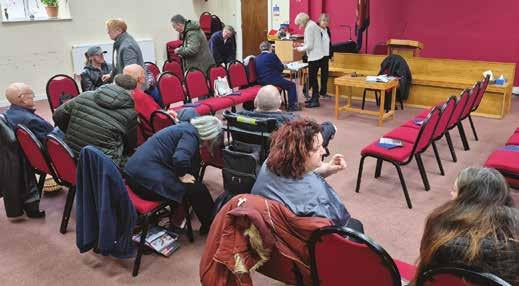
thorns that followed the fall in Genesis 3 linked? Why does the Bible mention the ‘queen of Heaven’ (Jeremiah 7:18)? If God is in control, why do people suffer?
Beyond just reading the Bible, the initiative encourages people to approach Scripture with critical and questioning minds. Through this, people have begun going deeper.
‘Pretty much everything we do as Christians comes back to the Bible,’ explains Konstantin. ‘But the Bible is a book full of questions and complexities, unresolved conflicts and strange stories.
‘It’s very interesting to see where people are. When the biblical story begins to make sense, you really see people’s eyes light up. And you see it in the follow-up questions they start to submit. We’ve seen people grow tremendously in their understanding of Scripture and their walks of faith.’
Konstantin compares pioneering to technology: the first smartphones were very different to the kind we have today, he points out, and things didn’t have to be perfect to start with.
‘Don’t be afraid of criticism; start where you are,’ he affirms.
Val adds an important reminder: ‘The thing I would say more than anything is pray and ask God what he wants you to do. We wouldn’t have done anything if it hadn’t been prayed about.’
Of course, it’s easy to celebrate pioneering successes – often, the challenge is to take a step in the first place.

STEVIE HOPE Assistant Editor Salvationist
Bridlington prayer meeting
United in understanding
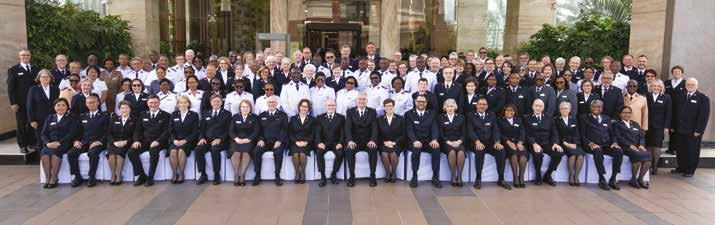
‘THIS is holy ground! Ours is a sacred task! The Lord is with us!’ declared General Lyndon Buckingham on 21 March 2026, the opening day of the International Conference of Leaders (ICL), after 120 senior Salvation Army leaders had arrived in Nairobi from all points of the globe.
He painted a picture of the current world environment in which Compass, The Salvation Army’s Global Strategic Framework, was designed to help the Movement reach for higher levels of impact and effectiveness. He said the Army was weathering global storms, including the lasting impact of a global pandemic, geopolitical uncertainty, a rise in nationalism, and wars and rumours of wars.
The feeling in the room went up a notch when General Lyndon said that, despite such volatility, The Salvation Army continued to be salt, light and a beacon of hope, healing and salvation:
‘I want to suggest to you this morning that the very existence of our movement is in and of itself a protest; we are a protest movement. We are a living, active, global demonstration. We are! That’s us! We are the placards, a visible resistance…
‘I mean this in the most positive of terms. We are a visible resistance that dares to declare, in both word and action and amid all of the uncertainty, that there is hope, that there is a way, that there is a Saviour, that there is salvation for the world. This is our work on the planet, to be a visible demonstration that God has not given up, that God has not abandoned us, that God has not turned his back on us. We stand as a testimony that his Kingdom is coming – has come and is coming. We are a visible testimony, a protest that says no
– greed, selfishness, arrogance, power do not have to win the day.
‘No! There’s a better way. It’s the way of love, it’s the way of grace, it’s the way of mercy, it’s the way of welcome, it’s the way of healing, it’s the way of holiness.’
Chief of the Staff Commissioner Edward Hill welcomed all, and brought devotions from Galatians 3:23–28 with the theme E Pluribus Unum (Out of Many, One), reflecting the profound diversity of origins among conference delegates yet their experience of being one in Christ.
Day three saw a deliberate transition from relational connection to intentional discernment and strategic reflection.
Commissioner Ted Horwood (International Secretary for Programme Resources) facilitated the morning sessions, offering an overview of how the Compass journey began. Compass emphasises intentional progress towards three overarching global goals: Empowering People, Enhancing Mission Impact, Establishing an Enduring Legacy.
The morning’s sessions included presentations from Commissioner Cheralynne Pethybridge (International Secretary for Administration and Personnel) on officer wellness and Commissioner Miriam Gluyas (Territorial Commander, Australia) on mission integration. Delegates participated in robust table discussions and provided feedback to the wider group.
The afternoon sessions shifted towards the theme of Legacy, with Commissioner Garth Niemand (International Secretary for Business Administration) and Commissioner Merle Heatwole (National Commander, USA) facilitating conversations
on global financial sustainability.
Day four began with quietness before God as Commissioner Jenine Main (Territorial Leader, UK and Ireland Territory) led a time of reflection, emphasising Ephesians 2:20 and 21 and the importance of delegates seeing they are together in Christ on the Compass journey. Throughout the day, delegates dug deep into the Compass theme through extended table conversations on the Compass priorities of Membership and Covenant. In their sessions on Membership, Colonel Diana MacDonald (Territorial Commander, Pakistan) and Commissioner Geoff Webb (Territorial Commander, Kenya West) brought a precis of the Membership workstream’s recommendations. The objective of the workstream was to establish clarity and accuracy in defining how people belong in the Salvation Army fellowship.
In the sessions on Covenant, Lieut‑Colonel Andrew Morgan (Territorial Commander, Italy and Greece) outlined the recommendations from the Covenant workstream and posed questions for table discussion. The recommendations were action orientated and included the need for deeper analysis of research findings, a more profound understanding of covenant and covenant life among Salvationists, and a review of existing covenants for possible future revisions.
There was an emphasis on living as a ‘sent people’ and the Junior Soldier’s Promise was also considered against the backdrop of Salvationists being a covenanted people. As with the Membership sessions, much time was given over to table discussions, and the Mentimeter response measuring tool was used to gauge collective feeling in the room.
KENYA
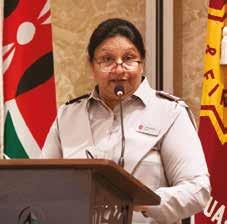
After a day spent in three groups visiting various locations, including The Salvation Army’s Joytown primary and secondary schools, Thursday began with prayer for the Army in Italy and Greece as part of the Worldwide Prayer Meeting held each week. Delegates then continued in a devotional way as they reflected on Psalm 130, led by Commissioner Evie Diaz (Territorial Commander, USA Central).
The day’s sessions included a focus on corps health and growth, facilitated by Commissioner Henrik Andersen (Territorial Commander, Switzerland, Austria and Hungary) and Colonel Dean Pallant (Territorial Commander, Germany, Lithuania and Poland).
Through Compass and fresh vision given to the revitalisation of corps globally to be fit for purpose in the 21st century, it was felt that healthy, growing corps would prove the answer for those places where mission drift and corporate unsureness from past years continued to hinder progress.
Pre-recorded interviews with corps officers from many different countries brought remarkable insights to what was happening on the front lines of ministry, helping the room understand both the challenges and the opportunities facing corps today. There was an expressed need to explore how we can do things differently for the transformation of people, families and communities through faith in Jesus Christ. Dynamic discipleship training was seen as critical. Through Compass, it was noted that both International Headquarters (IHQ) and territorial headquarters around the world are being encouraged to invest considerable resources into ensuring healthy, growing corps are the heartbeat of the Movement.
Another focus was challenges relating to changing laws in many countries and how they relate to the status of officers and their service, facilitated by Commissioners
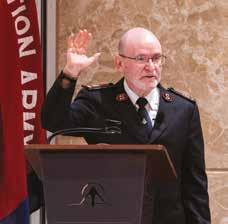
Cheralynne and Kelvin Pethybridge (International Secretaries for Administration and Personnel).
A major focus of day seven was a new IHQ strategy and an implementation plan for the strategy. Facilitated by Commissioner Edward and Commissioner Garth, it was recognised that IHQ had acted strategically and been guided by clear priorities in the past, but that the new strategy was perhaps the most comprehensive to date. The purpose of IHQ has not changed, it was noted. It is to support the General as they lead the Movement in accomplishing its worldwide mission.
The process for developing the strategy was undertaken by a specially appointed Strategy Development Group, chaired by Commissioner Garth under the oversight of the Salvation Army International Trustee Company (SAITCo).
Under the new strategy, IHQ will work towards four strategic priorities: enabling accountable and compassionate leadership, effectively stewarding resources, proactively setting standards, and modelling governance excellence.
Across two sessions facilitated by the Chief of the Staff, the General fielded questions from the floor. Subjects included: the contribution of children, youth and young adults; membership; officer compensation; corps health and growth; the new IHQ strategy; leadership development; the importance of relevant communications methodology; and financial sustainability.
The General thanked the delegates for their contributions throughout the day, which had begun with a devotional reflection from Commissioner John William Polimetla (Territorial Commander, India Western) on the example of Jesus in Matthew 9:35–38 – one of proclamation and compassion, not force and coercion.
The final day was marked by a palpable
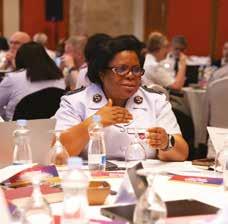
sense of shared purpose in mission, and a common desire to give God pre-eminence in their lives and leadership.
In a final worship service, Commissioner Bronwyn Buckingham (World President of Women’s Ministries) read from Hebrews 10 about being confident to enter into the presence of God and encouraging each other in the faith. Following the deeply personal song ‘Knowing You, Jesus’, Scripture verses were spoken out by delegates and a beautiful silence fell before Commissioner Bronwyn prayed, asking God to ‘fill us to overflowing’.
Ample time was given for delegates to move around sharing Scripture verses, praying for and encouraging each other personally, before the General brought a sensitive message on seeking wisdom.
The General read from James 3:17: ‘The wisdom that comes from Heaven is first of all pure; then peace-loving, considerate [and gentle], submissive, full of mercy and good fruit, impartial and sincere.’ He then unpacked each of these, noting that, undoubtedly, they should characterise the lives of leaders in Jesus Christ’s Church.
Earlier that morning, Commissioner Daniel Kasuso (Territorial Commander, Zimbabwe and Botswana) led devotions from Psalm 126:1–3, speaking about the importance of thanksgiving. ‘Gratitude keeps us humble,’ he said.
General Lyndon followed by thanking the delegates, the conference support teams and Commissioner Edward and World Secretary for Women’s Ministries Commissioner Shelley Hill for their unwavering support.
The General said: ‘This week has been evidence that, from talking with leaders from around the world, there is a worldwide understanding of who it is we are meant to be on the planet, and that unites us.’
• Read full reports from each day at salvationarmy.org/icl
Colonel Diana MacDonald
General Lyndon Buckingham
Delegates in conversation
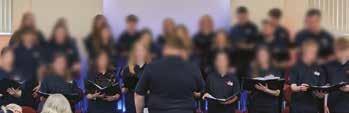
STOCKTON The North East Divisional Youth Chorus performed a concert with a mix of songs and congregational singing. There was also a band piece and Bible readings. The young members gave wonderful testimonies, a solo song and a solo dance piece. All at the corps felt very blessed to have them there. – TB
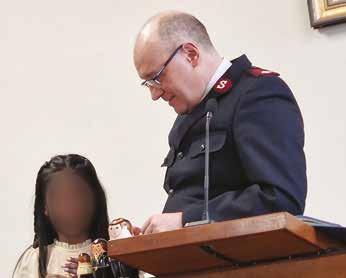
MEETING
During a meeting at Shrewsbury, Divisional Leader Major Adrian Allman shares the ‘secrets’ of a Russian doll with Janessa and her sister, Vanessa
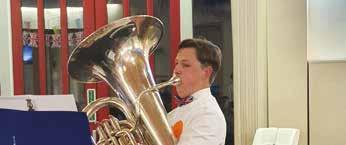
MAIDSTONE A Last Night of the Proms concert was a truly wonderful evening of music, faith and fellowship. Friends and family augmented the band, and charming singer Charlie Green (Droitwich Spa) presented a variety of songs, as well as sharing that faith is everything in his life. Seven trombonists played ‘I Will Follow Him’, Nathan Cripps (pictured) added his tuba solo ‘Tuba Smarties’ and drummer Matt enjoyed playing ‘Él Es el Señor’. The traditional music at the end stirred all to sing heartily, wave flags and go home with joy in their hearts, remembering that God’s love will always be with them. – GP
CHILDREN AND YOUTH
CLOWNE Thirty youth club attendees received Easter eggs and chocolate coins to mark the end of term. Each teenager also received a copy of the New Testament, remembering the life and influence of Retired Bandmaster Ken Rose, whose passion was telling the story of Jesus. – GH
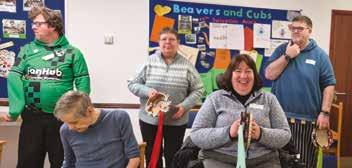
EVENT
CHELTENHAM The corps threw open its doors to host a vibrant and inclusive Enabled event, welcoming the Music Man Project for a day of music, fellowship and celebration. More than 50 people attended, including Enabled members who travelled from the Wales and the Central, Southern and Channel Islands Divisions, as well as from the South West. David Stanley and the Music Man Project ambassadors led musical workshops, Rachael Lawrence (Cheltenham) led a timbrel session and Chris led accessible worship. As confidence blossomed throughout the day, several participants bravely stepped forward to perform solo renditions of the much-loved anthem ‘Music Is Magic’. Disability Engagement Adviser Jo-Anne Graham (THQ) said: ‘The sessions were high energy, but more importantly, it was a safe space where people could truly be themselves and express themselves.’ – AR
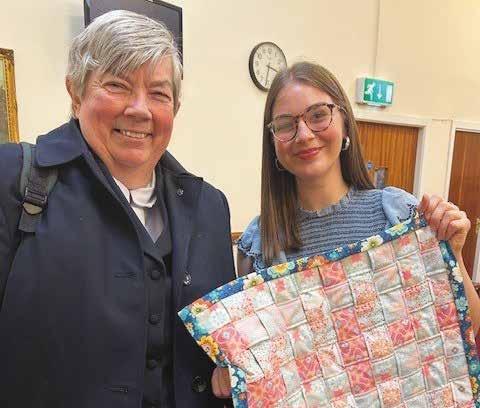
COMMUNITY
SHAW Donations of quilts, blankets and nappies were kindly provided by members of the corps and the community to the Baby Basics charity in Sheffield. Major Sue Tansley is pictured gifting the quilt she made to Lucy Taylor, granddaughter of Corps Treasurer Alan and Songster Dot Taylor, to be used in her work as a community midwife. – KH
HADLEIGH TEMPLE The corps celebrated the dedication of 35 faithful volunteers who serve across its community ministries. Representatives from the charity shop, Silver Service over-60 club, home league, Tea and Toast fellowship and the food bank gathered for an afternoon tea, enjoying music provided by the London North East Fellowship Band. Corps leader Major Mark Cozens expressed sincere gratitude for the volunteers’ commitment and service. He affirmed their vital place on the front line of the Army’s mission, sharing God’s love through practical action. – MC
MUSIC
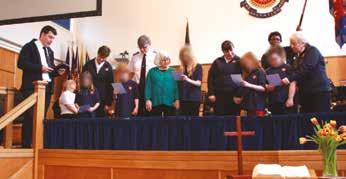
GLOUCESTER
THE corps was excited as Freya, Harry, Elsie Mae, Maddy and Olivia were enrolled as junior soldiers by corps leader Captain James Addis. They attended classes for six weeks, keenly learning all they needed to know to become junior soldiers. The five lively children are especially encouraged by their prayer partners, Jean, Andrew, Kathy, Jackie and Sue, pictured with their respective children. They read out the Junior Soldier’s Promise with the help of their prayer partners and Captain James, and all knelt at the mercy seat to sign their promises and pray. – AB
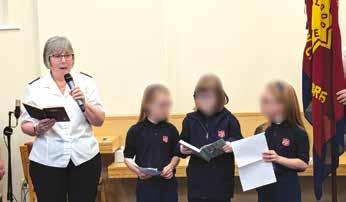
POLLYANNA, Isabella and Aurelia were enrolled as junior soldiers by corps leader Major Sandy Davis on Mothering Sunday. Each of them chose a song that echoes the vows of the Junior Soldier’s Promise. Pollyanna chose ‘Jesus Wants Me for a Sunbeam’, Isabella chose ‘Forever’ and Aurelia chose ‘Goodness of God’. They spoke about what becoming a junior soldier means to them and we are blessed to welcome them. – TB
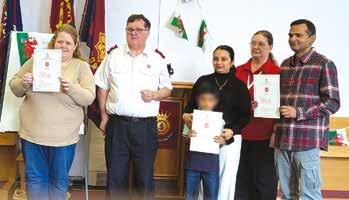
HANNAH Hargadon and Sofia and Aaron Emmanuel were welcomed as adherents by corps leaders Majors Julian and Val Short. Hannah has recently joined the corps and felt so welcome that she made it her spiritual home. Aaron and Sofia, pictured with their son, have joined to be with other family members. – JS
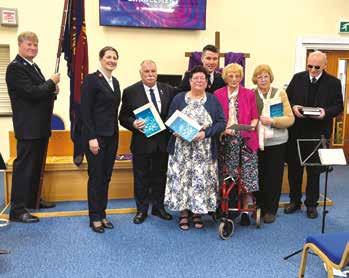
JEFF and Viv Ward, June Gregory and brother and sister Janina and Peter Brzozowski stood under the flag to be welcomed as adherents by corps leaders Captains Anna Maslenikova and Kostya Maslenikov. Viv and Jeff initially came to our Sycamore Tree coffee morning and said it felt like walking into home. They also joined the monthly walking group and shortly afterwards started attending Sunday worship, with a feeling of being a family. For Jeff, becoming an adherent ‘felt right’ and for Viv it felt ‘like coming home’. June came to the corps as a child, until she drifted away at about 15 years of age. In later years, June attended other churches and, during the Covid-19 lockdowns, she felt the desire to worship at the corps. Nina said that she loved the services and wanted to be part of the Army. Her brother, Peter, finds the services ‘interesting and fulfilling’, Collecting with the band at Christmas, Peter was approached by several people who expressed their appreciation of the Army, and he felt that he wanted to belong and make the Army his church. – CW-H
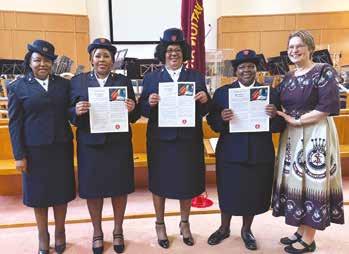
RACHEL Denhere, Charity Makamache and Tariro Mzondo were enrolled as soldiers and Dele Jacobson (not pictured) was welcomed as an adherent by corps leader Major Christa Beeldman. They all shared testimonies about God leading their lives through difficulties and the spiritual home they have found at the corps. The ceremony concluded with some uplifting worship in Shona and English, as we declared together ‘Mwari vakanaka kwandiri’ – God is so good to me. Also pictured is Assistant Corps Sergeant-Major Joyce Chimkupete. – CB
LONG EATON
CARDIFF ELY
STOCKTON
BRISTOL CITADEL
Local officers appointed
CHILDREN’S WORKER
DOROTHY AMOAKO, Coventry City
CHILDREN’S WORKER
SANDRA CHESNEY, Coventry City
CHILDREN’S WORKER
FREDA GRIGGS, Coventry City
CHILDREN’S WORKER
ANNEMARIE McDERMOTT, Coventry City
JUNIOR SOLDIERS
SERGEANT HELEN STREET, Coventry City
CORPS SERGEANT-
MAJOR PAUL DALE, Stoke-on-Trent
Wedding anniversaries
Golden (50 years)
LESLEY AND BANDSMAN
TERENCE POTTER , Stowmarket, on 27 March
Promoted to Glory
COLIN HOWELLS, Abertillery
Bereaved
MAJOR NANCY DRUMM of her daughter Heather Tracey
Retirements from active service
Effective 1 April
MAJOR MICHAEL
BARWISE out of Warrington in 1999 and last appointment associate officer, Dereham
MAJOR SANDRA FROST out of Northampton Central in 1984 and last appointment Chaplain, Davidson House, Older People’s Services
MAJOR VIVIENNE
PRESCOTT out of High Wycombe in 1984 and last appointment Forest of Dean
MAJOR HILARIE
WATCHORN out of Nottingham William Booth Memorial Halls in 1990 and last appointment Chief Secretary’s Office, THQ
ENGAGEMENTS
Chief of the Staff Commissioner Edward Hill and World Secretary for Women’s Ministries Commissioner Shelley Hill Fri 17 Apr – Tue 21 Apr Zambia (African Conference of Leaders) Wed 29 Apr – Tue 5 May Philippines (Commissioning and ordination)
Territorial Leaders Commissioners Jenine and Paul Main Sat 18 Apr – Sun 19 Apr Leicester South Mon 20 Apr William Booth College (Together in Worship) Fri 24 Apr – Mon 27 Apr Jersey
Chief Secretary Colonel Peter Forrest and Territorial Secretary for Leader Development Colonel Julie Forrest Sat 2 May Regent Hall (Musical Theatre Day)
NOTICES
Candidates Sunday 2026
In the build-up to Candidates Sunday on 10 May, follow the Called to Be… series. This five-week series looks at the story of Peter and how he was called to be Jesus’ disciple, trusting, purposeful, forgiven and a leader. Alongside the Bible studies published each week in Salvationist , access sermon starters, testimony videos, intergenerational worship ideas and graphics. For more information, visit tsa.link/candidates-sunday-2026
Homelessness Conference online
Employees, officers and members are invited to join the free livestream of the Homelessness Services Department’s conference from 27 to 29 April. Sessions will include insights on Housing First, homelessness trends and the future of the sector, plus an update on the department’s 10-year strategy and interactive discussions. To sign up, email hsconference2026@salvationarmy.org.uk
Calling all artists! Together 26 exhibition
Music and Creative Arts are inviting artwork themed This Is Us from all UK and Ireland Salvation Army settings to be part of an exhibition at Together 26. Artists can submit up to three pieces, including work for the Art in Recovery section hosted by Core Recovery. Email music@ salvationarmy.org.uk for a submission form and submit your artwork by 1 June.
Dementia-friendly singing group training
You’re invited to an interactive training session on 6 May at 7.30pm to equip you to run Singing by Heart in your local setting. The online session will be led by Music and Creative Arts Outreach Mission Partner Dan Elson and Dementia Engagement and Development Manager Ali Thornton-Dean (Older People’s Ministries). For more information and to register, email ali.thornton-dean@salvationarmy.org.uk
SOUNDS
Sunday Worship
Join Salvationists across the territory in worship, with music, prayer and a Bible message from a guest speaker. This week’s message is from Captain Callum McKenna (William Booth College). Can’t join us at 11am on Sundays? Catch up with the weekly podcast of highlights. Each week’s broadcast is repeated in full on Sundays at 6pm, Mondays at 12am and Thursdays at 9am.
• Listen online at salvationist.org.uk/radio
Sunday Wake-Up with Lyndall Bywater
Ease yourself into the day with a relaxed mix of music, chat and a few inspirational moments to stir your soul. Listen from 7am to 9am on Sundays.
• Listen online at salvationist.org.uk/radio
Morning Praise with Kids Alive!
Get your day started with half an hour of music, prayer, a thought and lots of giggles! Listen on Saturdays from 7.30am to 8am. Can’t tune in on Saturday morning? The broadcast is repeated in full on Sundays at 9am and Mondays at 7.30am. Can’t tune in then? A podcast is also available each week.
• Listen online at salvationist.org.uk/kidsalive
THE INTERNATIONAL STAFF BAND
SOPRANO CORNET AUDITIONS
The ISB seeks applications for Soprano Cornet. The applicant should be a Salvationist in good standing who is fully committed to the work of their corps. Applicants will be invited to audition subject to approval from their Divisional Commander, Corps Officer and Section Leader. All appointments to the band are subject to a trial period of four months.
Applications should be made in confidence to the Band Manager: kevin.coates@salvationarmy.org.uk

Closing date 30 April 2026
SOUTHSEA, 84 ALBERT ROAD PO5 2SN BAND SUNDAY
Colonels Chris and Neil Webb
Sunday 19 April
11am morning worship 4pm praise concert with Southampton Shirley Singing Group

ADVERTISING RATES
Classified listing Up to 25 words £9 £20
Classified listing Up to 50 words £18 £40
Small box (1/32nd page) 43mm x 30mm £15 £40
Medium box (1/16th page) 89mm x 30mm £35 £85
Large box (1/8th page) 89mm x 62mm £65 £170
Quarter page 89mm x 127mm £170 £440
Half page 181mm x 127mm £340 £850
Full back page 181mm x 258mm £675 £1,650
ADVERTS CANNOT BE TAKEN OVER THE PHONE. For further information email advertising@salvationarmy.org.uk.
EVENT
SLEAFORD CORPS
140th Anniversary Celebration
9th/10th May. Sat. 3.30pm social, Sun 10.30am. Conducted by Major Joy Caddy. FINAL MEETING IN OUR PRESENT HALL.
LEEDS CENTRAL, NILE STREET LS2 7QY 150TH ANNIVERSARY CELEBRATIONS with Colonels Dean and Eirwen Pallant
Saturday 30 May, 6.30pm Celebrating our history and mission Sunday 31 May, 10.30am Celebration in worship
For further information or details about other anniversary events or to send a message email leeds.central@salvationarmy.org.uk
THE INTERNATIONAL STAFF BAND
The ISB seeks applications for Vocalist and Worship Leader. The applicant should be a Salvationist in good standing who is fully committed to the work of their corps. Applicants will be invited to audition subject to approval from their Divisional Commander, Corps Officer and Section Leader. All appointments to the band are subject to a trial period of four months. Applications should be made in confidence to the Band Manager: kevin.coates@salvationarmy.org.uk
Closing date 30 April 2026