8 Mother’s Day: Becoming a Family, One Day at a Time
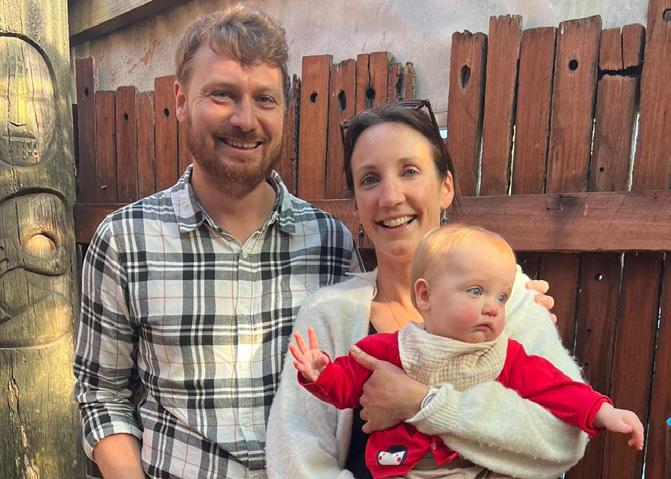
New father Kai Sanders reflects on motherhood’s strength, sacrifice and sacred beauty.
12 Learning to Live Together
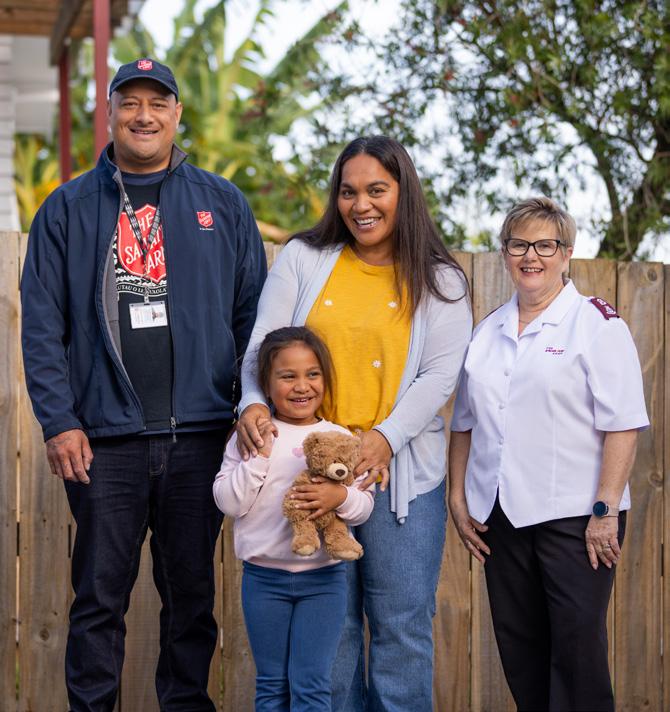
Te Kāpehu Whetū, a Salvation Army programme, supports rangatahi to move from care to independent living.
16 And So We Sing
Christian worship takes many forms—it’s not just about singing. But there is something special that happens to us when we sing.
18 Trusting the Author
Cheryl's faith carried her through loss, illness and raising children on her own. She reflects on trusting God when life unfolds very differently than expected.
26 Waiting with the Psalms
God is a patient God, and learning to wait is an invitation not only to trust God but to become more like Him.
28 Reintegration: Making Home Base
For people leaving prison, having somewhere safe to land can shape everything that comes next.
SALT Magazine
The Salvation Army New Zealand, Fiji, Tonga and Samoa Territory
Territorial Commander
Commissioner Janine Donaldson
General
Lyndon Buckingham
Founders
Catherine and William Booth
Editor Trina Saffioti
Graphic design
Sam Coates, Nicole Gesmundo, Lauren Millington, Nina Rajan
Staff writers
Kelly Cooper, Captain Rachel Montgomery
Proof reading Colleen Marshall, Major Glenys Fairhurst Connect with us saltmagazine.org.nz SaltMagazineNZ @SaltMagazineNZ salvationarmynzfts Territorial Headquarters, 204 Cuba Street, PO Box 6015, Marion Square, Wellington 6141 p: (04) 384 5649 e: salt@salvationarmy.org.nz Subscriptions mailorder@salvationarmy.org.nz
All Bible references from the Holy Bible, New International Version, unless otherwise stated.
Views and opinions expressed do not necessarily represent those of The Salvation Army.
Articles are copyrighted to The Salvation Army, except where indicated, and may be reprinted only with permission.
Praise His Name
Kia ora e te whānau,
It’s New Zealand Music Month and in this issue we look at the powerful role music plays in worship.
As young children, my sister and I sang along incessantly to the 1970s Christian children’s record, Bullfrogs and Butterflies, almost certainly driving my mother up the wall. I can still recall those songs, and our collection of Christian children’s albums as well as our much-loved children’s Bible, with its frankly gory illustrations, shaped our faith then and continues to.
When my daughter, Luciana, was born nine years ago, I played CDs of Christian children’s songs, with ‘Arky Arky’ and ‘Little Donkey’ becoming firm favourites. Luci would sing these songs as I pushed her buggy along Queen Street in Auckland twice a day. Although it may have sounded like childish prattle, a true believer knows that by singing, ‘So rise and shine and give God the glory,’ Luci was declaring God’s glory in the centre of Aotearoa New Zealand’s largest city—and there is power in the Word.
May is also Mother’s Day, and we mark it with two moving pieces; one on page 8 by Kai Sanders, on the lessons he has learned seeing his wife Mathilde embrace the role of mother.
And the other, a profile on Cheryl Limmer on page 18. After reading it, you would be forgiven for thinking that the theme for this issue is resilience. Cheryl’s story is an incredible one of parenting and trusting God even when He seems furthest away.
Finally, a shout-out to all the mothers, grandmothers, foster mothers, future mothers, spiritual mothers and those who stand in the role of mothers. As someone who experienced 16 years of infertility before the arrival of our daughter from a third and final round of IVF, I know that, for some, Mother’s Day can be challenging. Whatever your situation this Mother’s Day, I echo the prayer shared with me long ago, that this Mother’s Day, ‘May God be closer to you than breathing’.
You may have noticed a different face at the bottom of the page. I’m covering the SALT editor role as we explore moving Army stories and SALT fully online. You can read about and access our survey on page 31.
Trina Saffioti Editor
Enter his gates with thanksgiving and his courts with praise; give thanks to him and praise his name. For the Lord is good and his love endures forever; his faithfulness continues through all generations. PSALM 100:4–5
Under The Surface
‘Semi-rock’ | NO CIGAR | Listen wherever you stream or buy music
NO CIGAR’s Under the Surface is easy listening with depth—an album that slips on effortlessly but rewards closer attention. Describing themselves as ‘semi-rock’, the band’s warm lead vocals echo 90s Britpop like Oasis, Blur and The Verve, while still sounding distinctly their own. This Aotearoa New Zealand outfit has been steadily building a loyal following, and standout singles ‘Chantilly’ (written while touring France), ‘Clean’ and ‘Problem’ showcase their knack for blending melody with momentum. I caught NO CIGAR live in Wellington during their recent Aotearoa New Zealand and Australia tour. The atmosphere was electric and the sound massive, even if vocals were occasionally lost in the mix. With a UK and European tour ahead, Under the Surface feels like a confident step onto a much bigger stage. (Reviewed by Kai Sanders)
What’s On?
Red Shield
Street Appeal | New Zealand nationwide 04–10 May
salvationarmy.org.nz/RedShield
Mother’s Day | New Zealand, Fiji, Tonga and Samoa
Sunday 10 May
Project Hail Mary
Science fiction | Directed by Phil Lord and Christopher Miller | M (suitable for mature audiences)
Project Hail Mary follows molecular biologist turned science teacher Ryland Grace (Ryan Gosling) on a one-way mission to save Earth. Waking alone in space with no memory, Grace slowly pieces together his past and the immense responsibility he carries. Fans of the novel may find the adaptation softer on the dense scientific detail, but this allows Gosling to shine, portraying Grace as witty, prickly and deeply human. The heart of the film is Rocky, an alien on a parallel mission to save his own species. Rocky and Grace’s unlikely friendship delivers the film’s most joyful and moving moments, balancing humour with grief and wonder. When a rocklike puppet makes you cry, you know it’s working. One of the best films of the year so far. (Reviewed by Jenna Martin)
Candidates Sunday | Territory-wide Sunday 07 June salvationarmy.org. nz/SayYes
Check out our full event calendar at salvationarmy.org. nz/events
Paradise: Season 2
Following the strong, intriguing debut of Paradise, expectations were high for Season 2. While it doesn’t always hit the ground running, it ultimately delivers. The season opens with a surprising shift in perspective, introducing new characters whose relevance isn’t immediately clear. It takes a few episodes for the threads to align, but the payoff rewards early patience. Season 1 thrived on its inventive post-apocalyptic premise and claustrophobic, closed-world setting. Season 2 initially struggles to recapture that momentum, especially as it steps outside the ‘Paradise’ environment, where uneven performances and coincidence-heavy plotting become more noticeable. Still, the series finds its footing by the finale, restoring tension and leaving viewers confident the story is heading somewhere meaningful.
(Reviewed by Kai Sanders)
(English, noun) The ringing or sounding of bells.
Source: Dictionary.com
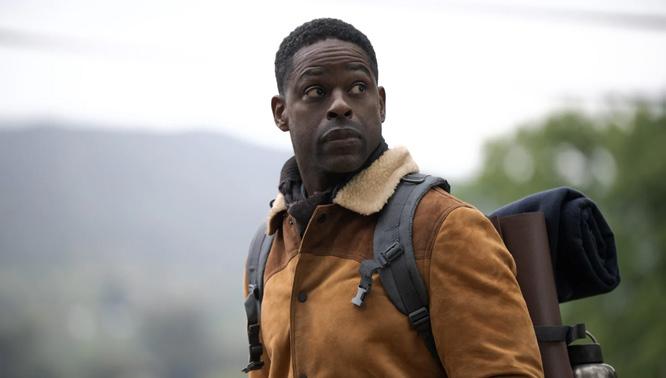
Thriller | Created by Dan Fogelman | Watch on Disney+ (Hulu)
SALVATION ARMY PRAYER
Retired Officers, Rolleston Corps Plant, Rotorua Corps, Salvation Army Social Housing, Salvationist Resources Department, Savusavu Corps, Saweni Corps, Service Development Team, Sigatoka Corps, Mozambique and Nigeria Territories and Rwanda and Burundi Territory.
QUICK QUIZ
1 Which New Zealand group achieved global success with the hit ‘How Bizarre’ in 1995?
2 Stan Walker first rose to fame after winning what TV talent show in 2009?
3 Where did SIX60 get their band name from?
4 Which music festival helped define the New Zealand Christian contemporary worship scene from 1992–2014?
5 Which 1984 hit by the Pātea Māori Club became the first No.1 single in Aotearoa New Zealand sung entirely in te reo Māori?
Answers page 32
INTRIGUING INDEX
Musical Moments
1 Ancient Acoustics
If God has saved you, He has called you .
The Hurrian Hymn No. 6, discovered on a clay tablet in the ancient city of Ugarit (modern Syria), dates back to around 1400 BC, making it the oldest substantially complete piece of notated music in history. The remarkably sophisticated tablet even includes instructions for playing the melody on a nine-string lyre.
2 Taonga Pūoro
Taonga pūoro (traditional Māori instruments) are deeply connected to the natural world. Many imitate sounds of wind, birds or insects and each instrument is considered to have its own ‘voice’. Taonga pūoro continue to shape contemporary New Zealand music and can be heard in the music of band IA and artist Kirsten Te Rito.
3 Botanical Beats
Research has shown that plants respond to vibrations, including those generated by music. Classical music and certain frequencies can stimulate growth, while harsher sounds may stress plants. Plants do not ‘hear’ as we do—mechanoreceptors in their cells detect vibration, triggering responses in metabolism and gene activity.
4 Classic Cover
The classic Beatles song ‘Yesterday’ is the most covered song in recorded music history, with more than 2200 known versions. Paul McCartney famously dreamt the melody and initially titled it ‘Scrambled Eggs’ while drafting the lyrics. The song has inspired a range of interpretations—performed by artists including Marvin Gaye and Aretha Franklin, and reimagined across genres including metal, jazz, classical and country.
5 Hands-free Harmonies
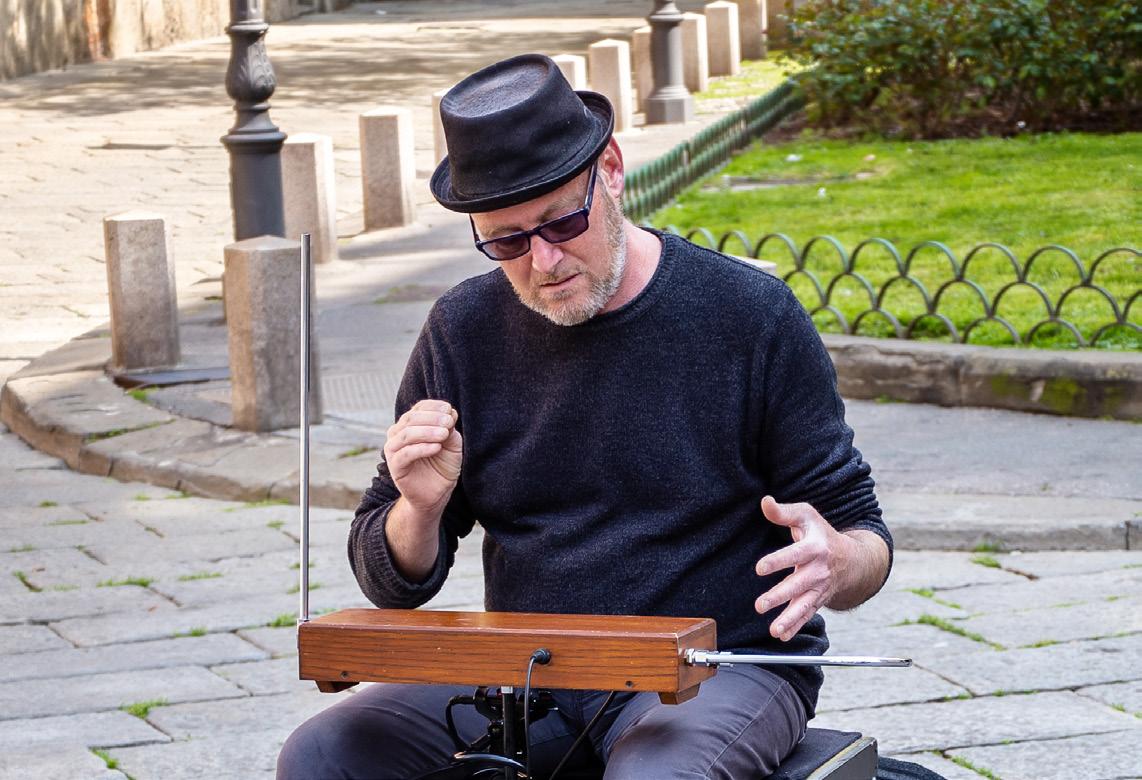
The theremin (pictured above) is one of the most unusual musical instruments ever invented as it is played entirely without physical contact. Created in 1920 by Russian engineer Leon Theremin, it works by generating sound through two antennas that create electromagnetic fields. This hands-off instrument produces an unmistakeable, eerie sound that has been used in sci-fi and horror films.
Te Marama Puoro o Aotearoa—New Zealand Music Month
Te Marama Puoro o Aotearoa— New Zealand Music Month began as a response to the limited exposure local artists were receiving on mainstream radio throughout the late 1990s. The first Music Month, held in May 2001, increased local airplay time and sparked a wave of gigs, events and nationwide promotions that brought Kiwi music into the public eye.
Since then, the month has grown into a well-established annual tradition—embraced by communities, schools, libraries and venues across Aotearoa New Zealand. It has played an important role in supporting emerging musicians, giving them platforms to share their work and highlighting the depth and diversity of musical talent.
This year marks the 25th anniversary of New Zealand Music Month. To find out more about
Te Marama Puoro o Aotearoa, visit nzmusicmonth.co.nz
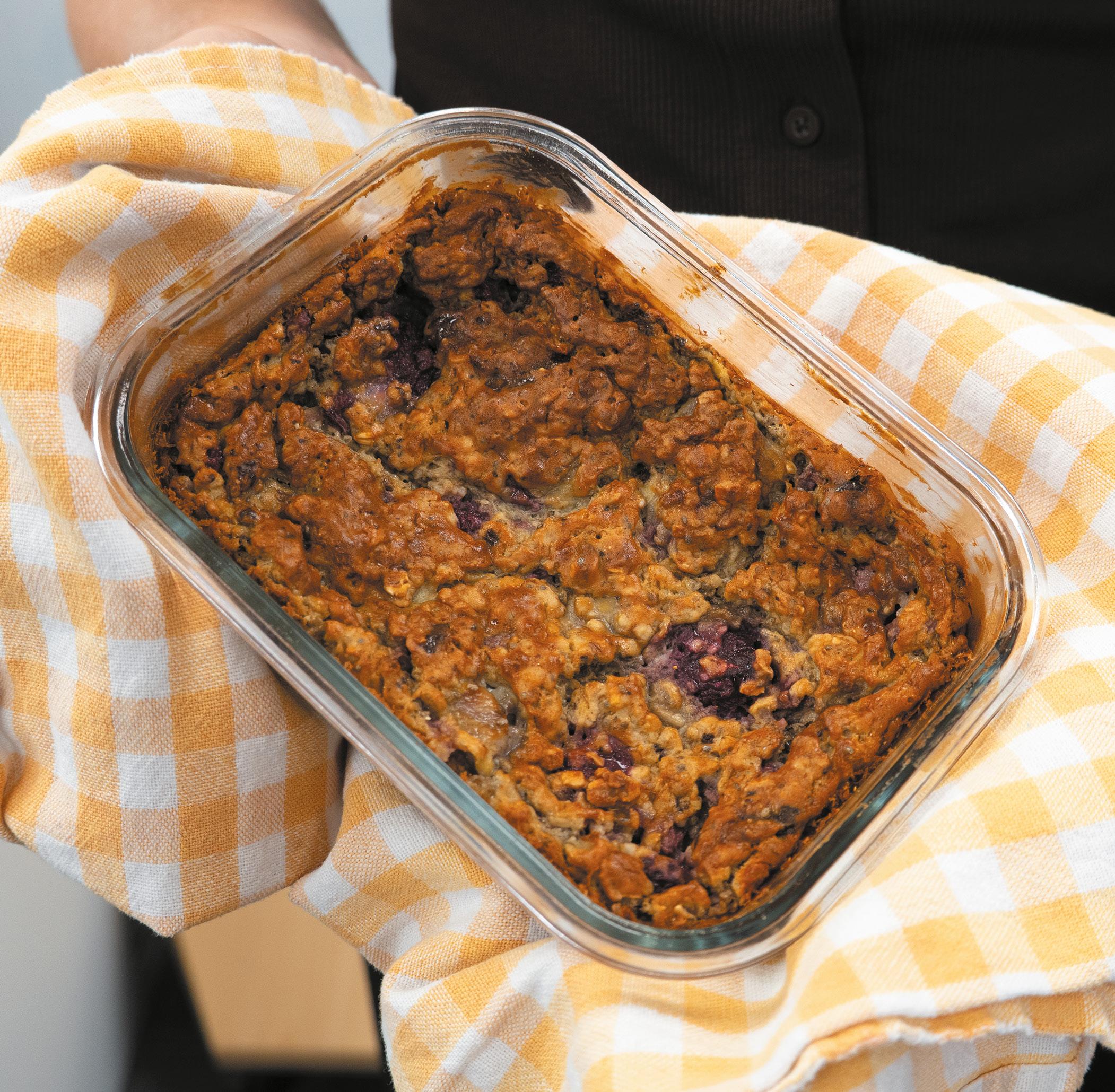
Jenna’s Baked Oats
Recipe by Jenna Martin, The Salvation Army Communications Team TE MARAMA
These baked oats feel like you’re eating cake for breakfast. Easy to customise based on what you like (or what you have on hand), I make this dairy free by using dairy-free milk and protein powder, then topping with coconut yoghurt. I use oven-safe glass containers that can go straight into the oven, but you can also bake this in a loaf pan by doubling the batch. They’re easy to make in bulk and will have everyone at the office asking what smells so good. | 35 mins | Serves 1
Ingredients
• 32g quick oats
• 8g chia seeds
• 80g banana, mashed
• 1 scoop protein powder of your choice (vanilla works well)
Method
Preheat the oven to 180°C.
• ⅔ cup milk, plus extra as needed
• 1 handful frozen berries (I use raspberries)
• 1 square dark chocolate, chopped
• 1 tsp baking powder
Mash the banana and add it to your baking dish.
Add the dry ingredients, then pour in the milk and stir to combine. If the mixture looks dry, add a splash more milk.
Stir through the chocolate and berries.
Bake for 30 minutes. Let cool slightly, then eat—or store in the fridge.
To eat later, reheat in the microwave for about three minutes and enjoy with yoghurt.
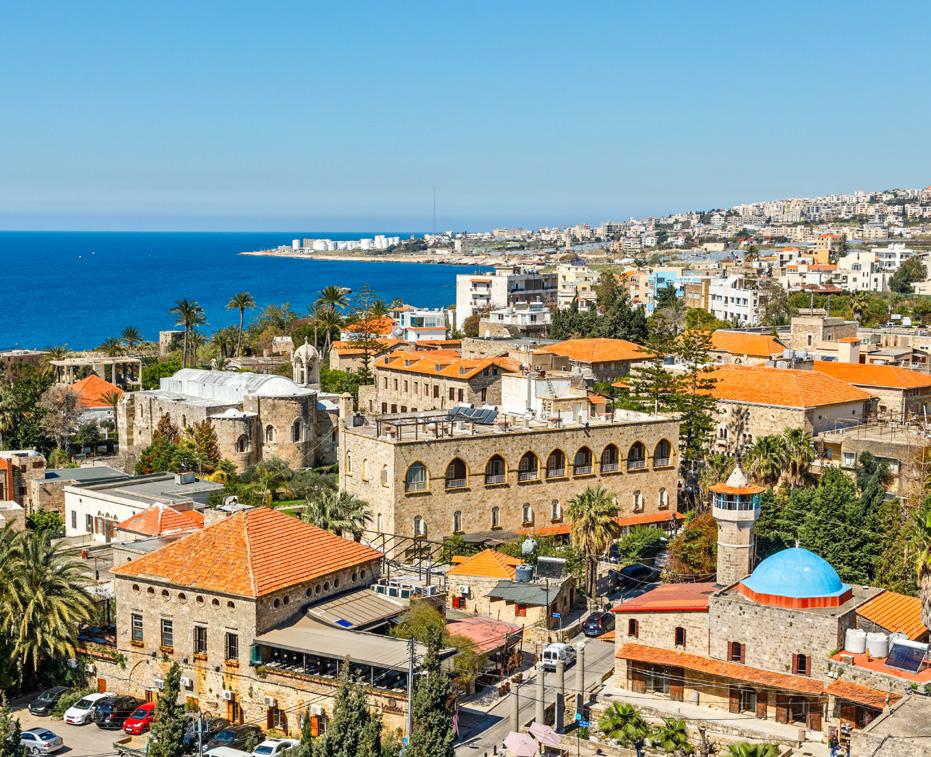
Prayer Focus: Lebanon
Lebanon has had Christian converts since the time of the apostles. It has the largest population of Christians of any nation in the Arab world, with a third of Lebanon’s 5.5 million population being Christian.
The villagers of Alma al-Shaab in southern Lebanon have remained, despite Israeli warplanes carrying out airstrikes in the latest war involving Iran, the United States and Israel.
For generations, this Christian village near the border has endured invasions, bombardments and economic collapse, yet its people continue to cling to their land and their faith. Their presence is itself a testimony—quiet but unyielding—to the endurance of the Church in the Middle East.
Lebanon’s Christians live under immense pressure: political instability, poverty, emigration and the constant reality of conflict. Many young people feel forced to leave in search of safety and work, hollowing out communities that once flourished. Yet those who stay do so out of conviction, believing God has placed them there for a purpose.
Let us pray for the believers in Alma al-Shaab and across Lebanon: for physical protection amid conflict, for resilience as livelihoods are disrupted and for courage when fear presses in. Pray for pastors and church leaders shepherding traumatised congregations and for families grieving loss while trying to hold daily life together.
Ask God to strengthen Christian unity across denominations and to use His people as peacemakers in a deeply divided land. Pray also for wisdom for Lebanon’s leaders, restraint among warring powers and a just peace that allows ordinary people to live without fear.
May the ancient Church in Lebanon continue to shine as a light in darkness, rooted in hope, faith and the promises of God.
INTERNATIONAL PRAYER
• Libya—Libya has remained unstable since the revolution and overthrow of its dictator in 2011. With no functioning central government, ongoing conflict has devastated infrastructure and made gospel ministry difficult. For Christians, Libya is one of the most dangerous places to live in the world. Missionaries and indigenous believers face intense persecution, and many have lost their lives in recent years. Converts are often rejected by their families and communities and face beatings and loss of employment. It is not known how many Christians are imprisoned for their faith. Access to Scripture is also extremely limited. Bibles are brought into the country with great difficulty and risk. Pray for stability, peace and leadership that protects human life, and for courage and protection for believers living in Libya.
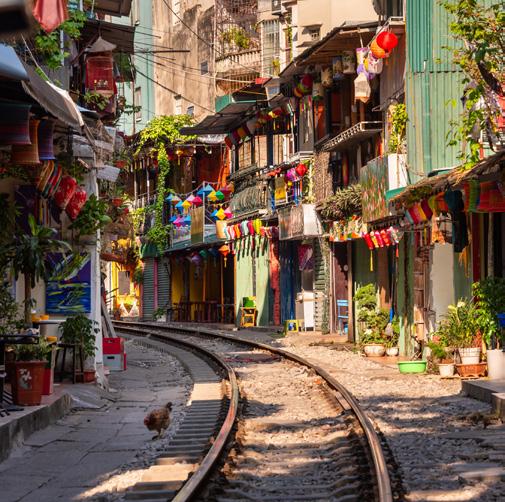
• Vietnam—Vietnam’s repressive Communist government actively restricts Christian worship and views churches as a threat to its power and control. Even officially recognised churches are monitored and expected to report gatherings, teaching content and leadership activity. Evangelism and community outreach often meet strong resistance, and many churches experience disruption and intimidation. In urban centres, Christians are denied social services, utilities and access to schools. In rural areas, believers can meet openly but face hostility from local authorities and community members. Despite these obstacles, the Church in Vietnam continues to grow as faithful believers share the gospel. Pray for God’s protection for believers and that churches in Vietnam would continue to grow in number.
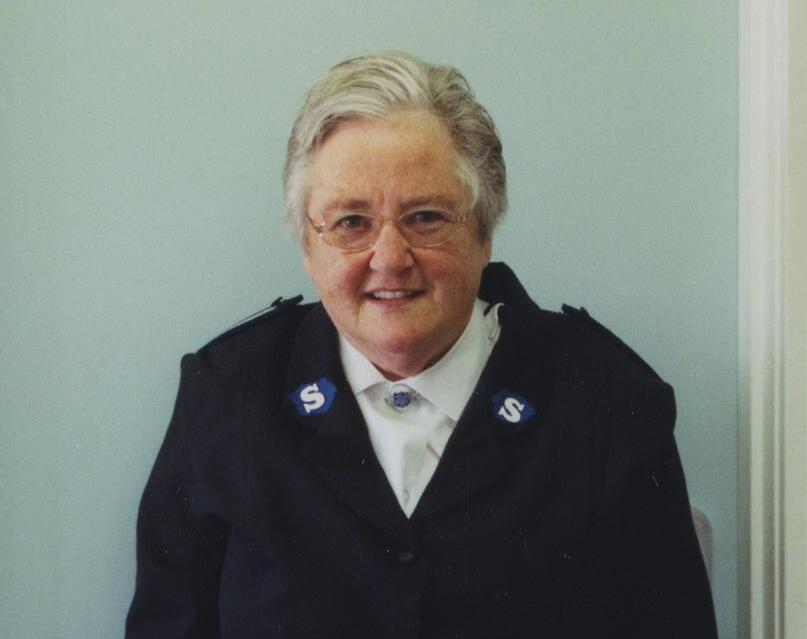
Do You Know This Person?
If you recognise the person in this photo, we’d love to hear from you. Email: archives@ salvationarmy.org.nz
Mother’s Day: Becoming a Family, One Day at a Time
Mother’s Day invites us to pause and honour the women who nurture, protect and love so fiercely; this article offers a tender reflection on motherhood at its very beginning. Writing as a new father, the author shares a deeply personal account of watching his young wife step into life as a mother.
WORDS Kai Sanders
efore our daughter Margot arrived nine months ago, I thought I understood what love looked like.
I knew the steady affection between my wife and me, the deep roots of our families and the friendships we had built over our years living in Aotearoa New Zealand. I knew the everyday rhythms of work, rest and hobbies. Life felt settled—almost familiar.
And then Margot came and everything was new again.
Becoming parents far from home
People told us that becoming a parent changes you in ways you can’t anticipate—and they were right. What they didn’t mention is how much harder that transition feels when you live on the opposite side of the world from your families. As a couple hailing from Europe (originally England and France), we have long joked that Aotearoa New Zealand is ‘home away from home’. Over the years, we’ve watched many close friends come and go—back to Europe, to Australia, to wherever the next chapter took them. It’s the rhythm of expat life here, one we’ve learned to accept, even if it sometimes leaves us feeling unanchored.
But that rhythm became sharper once Margot arrived. Suddenly, the absence of family wasn’t just something we noticed at Christmas, it was something we felt on quiet Wednesday afternoons, or during those bleary 3am feeds, or the first time Margot rolled over and there was no one to gush to in person except each other. Our parents watch from afar through flickering screens, trying their best to share in the milestones.
It’s the rhythm of expat life here, one we’ve learned to accept, even if it sometimes leaves us feeling unanchored.
And yet, as we slowly adjusted, we were surprised to discover just how strong a community can become when you’re forced to build it yourself. We found ourselves leaning on local groups, finding new friends in the same boat as us, and being surprised at the unexpected generosity of colleagues and acquaintances who have become something closer to
family. It’s not the same as having our own parents down the road—but it’s real and it has held us up.
Watching my wife become a mother
If this first nine months of fatherhood has taught me anything, it’s that motherhood—true, every day, living, breathing motherhood—is astonishing to witness.
I knew my wife was capable, caring and wise long before Margot was born. But seeing her step into motherhood has been something else entirely. There is a vigilance about her now, a quiet watchfulness I had never seen. She notices things about Margot before I do—tiny shifts in her expressions, changes in her breathing, the difference between a hungry cry and a tired cry and a bored cry. She moves through the day with Margot like it is a dance the two of them are learning together. When I’m at work, I sometimes picture them at home or in the park: Margot nestled against her mother’s chest, or gasping at the breeze, or practicing her wobbly sitting. My wife sends me photos, little glimpses of their world, soft light falling across Margot’s fair hair, small hands grasping colourful toys, or the two of them curled up reading a board book. I treasure every image.
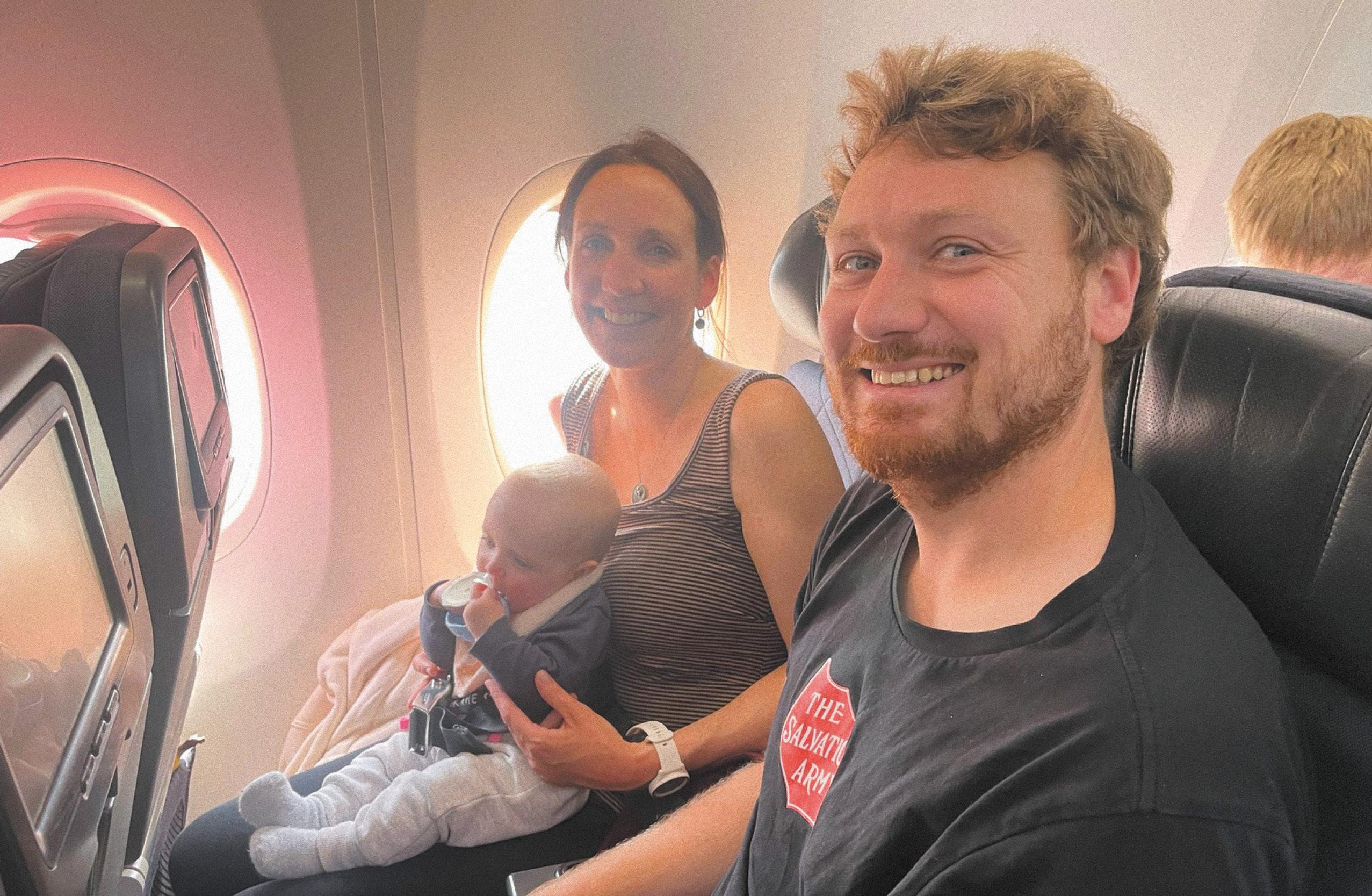
Mathilde (back) with Margot on her lap, and Kai (front) are a devoted family far from home.
Now that autumn has arrived, my wife will return to work, and this season of full-time motherhood will shift into something new. I can see her preparing for that, balancing excitement at re-entering her professional world with the inevitable tug of leaving Margot each morning. And I admire her for it deeply. Because motherhood, as I am beginning to understand, is not one fixed role. It is a calling that reshapes itself again and again.
If this first nine months of fatherhood has taught me anything, it’s that motherhood —true, every day, living, breathing motherhood— is astonishing to witness.
Above:
The biblical echo of a mother’s heart
As I reflect on this first Mother’s Day as a father, my thoughts turn to the long line of mothers in the Bible—women whose stories reveal something essential about God’s heart.
There is Hannah, who prayed through her tears and entrusted her long awaited son, Samuel, into God’s care. There is Mary, who quietly pondered extraordinary things in her heart while raising a child destined to transform the world. There is Jochebed, who placed her baby Moses into a basket on the Nile— an act of courage almost impossible to comprehend. There is Naomi, who walked through grief and still became a source of strength to Ruth.
And then there is God Himself, who uses maternal imagery to describe His care for us: ‘As a mother comforts her child, so will I comfort you’ (Isaiah 66:13). Then Jesus speaking of longing to gather His people ‘as a hen gathers her chicks under her wings’ (Matthew 23:37).
These images remind me that motherhood—its tenderness, its fierce protectiveness, its watchful love—is not secondary or sentimental. It reflects a part of God’s nature, one sometimes overlooked but profoundly important.
When I watch my wife hold Margot close—when I see her soothe her with a softness only she seems able to summon, or notice how she stands taller and stronger whenever she senses something is amiss— I see something holy in her. Not perfect, not idealised, but sacred.
Learning fatherhood by watching motherhood
Becoming a father has been its own journey, full of small victories and many, many learning curves. I’ve learned to bottle feed, becoming competent at assembling formula with one hand at 5am. I’ve become intimately familiar with the different types of nappy (and which are the best), which toys are too loud and the surprisingly complex choreography of getting a baby into a car seat.
But the deeper lessons, the ones that shape me, have come from watching my wife mother our daughter.
But the deeper lessons, the ones that shape me, have come from watching my wife mother our daughter. From her, I am learning patience. I am learning presence. I am learning to slow down, to pay attention, to delight in small things. I am learning that parenting is not about getting it right—it is about being willing, humble and open-hearted.
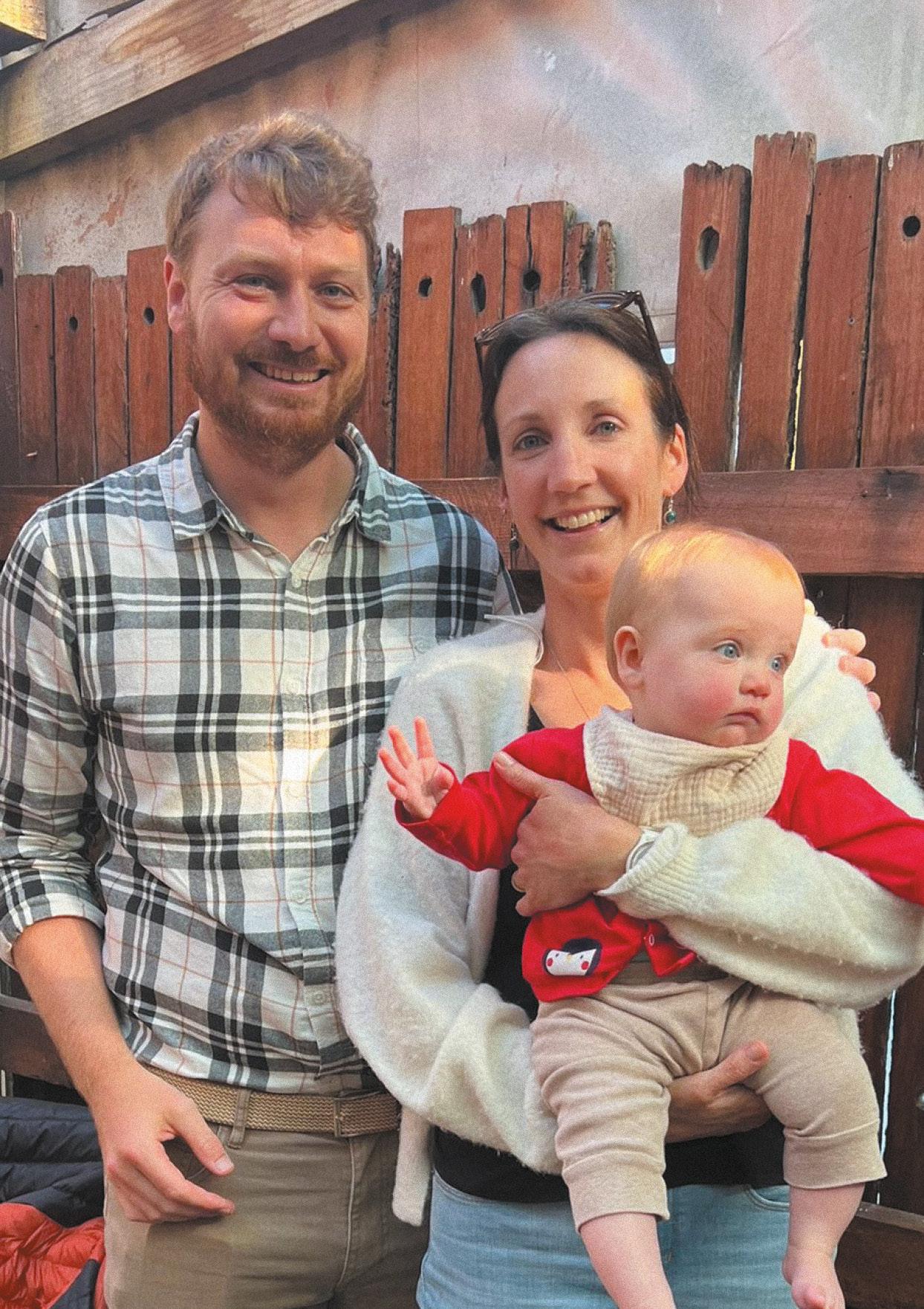
Above: Kai, Mathilde and Margot enjoying some family time.
And I am learning that love is not abstract. It is lived. It is hands-on. It wakes up in the middle of the night. It sacrifices. It forgives. It hopes. It keeps going.
Motherhood in modern times
We often talk about modern parenting as being harder than ever, and in some ways it is. Social media gives conflicting advice. There are infinite theories on sleep, feeding, developmental play and emotional regulation. You can Google the same question and get 10 opposing answers.
And yet, the access to resources—books from the library, online forums, video tutorials, community events—has been invaluable for us. In the absence of grandparents nearby, the digital and local community has stepped in. When we don’t know how to do something, we look it up. When the baby won’t nap, we read strategies. When we worry, we seek advice. It has kept us afloat.
Still, the heart of motherhood, and parenthood, remains timeless. It is the slow, steady act of showing up for a child, whenever they need you. Technology can support, but it cannot replace the fundamental things: warmth, safety, attention, love.
This Mother’s Day
This Mother’s Day will be quiet, I think. A slow morning. Strong coffee. Maybe a croissant to remind my wife of home. A walk if the weather holds. Time together, just us three.
But it will be significant, too. Because this year, Mother’s Day is not about abstract gratitude, it is about watching the woman I love become something new. It is about honouring the sheer strength, devotion and courage she has shown every day since Margot arrived. It is about acknowledging that motherhood is not a soft role, it is a powerful one.
I see my wife stepping into that power with grace. I see her shaping the early world my daughter knows, providing the first home Margot will remember not in images but in feelings. And I am grateful beyond words.
…her work—exhausting, ordinary, beautiful—is real, worthwhile and lasting
As a father, I want this day to be a reminder of how valued she is. I want it to be a reminder that her work—exhausting, ordinary, beautiful—is real, worthwhile and lasting.
The world has given us this child. God has given us each other. And He meets us in the midnight wakeups, the quiet whispers over the cot as she sleeps, the joy of new milestones, and the fragile, resilient hope that we are doing enough.
To my wife, this Mother’s Day
Thank you for every unseen moment.
For the evenings when you bathe her if I’m not around.
For the mornings when you hold her against your heart while the kettle boils.
For the tenderness that comes so naturally to you.
For the strength you don’t always see in yourself.
For guiding our daughter through her first months with such care.
For being her shelter, and mine.
Happy Mother’s Day. You are loved. You are a gift. You are God’s reflection to our daughter. And watching you become a mother has been one of the greatest privileges of my life.
Learning to Live Together
Te Kāpehu Whetū, located in Tāmaki Makaurau (Auckland), has a small team of Salvation Army staff working out of Royal Oak Centre to provide a pro-social flatting environment where rangatahi (young adults) can transition from care to independence.
This programme began in 2014 and has continued to develop with the changing needs of rangatahi. As of this year, Te Kāpehu Whetū has three houses across Auckland where rangatahi from the ages of 16–21 live in a flat with kaitiaki (volunteer supportive flatmates) and are assisted by kaiārahi (youth development workers). When rangatahi turn 18, they leave Oranga Tamariki (OT) care. But with breakdowns and trauma, more rangatahi leave earlier and self-place. This can leave young people couch-surfing or homeless as they navigate this on their own.
Te Kāpehu Whetū provides OT with a programme for rangatahi to experience what independence looks like with support.
Room to grow
Conor McGrath, team leader for the past two years, shares his insights.
‘We have the opportunity to help those who have come from a range of backgrounds, from caregivers to young ones sleeping in cars or parks. We also extend our net for rangatahi who seek refuge in Aotearoa New Zealand. All our rangatahi have in common that they have had no control over what has happened in their lives. Despite this, our rangatahi have the resilience to keep striving
‘We have the opportunity to help those who have come from a range of backgrounds, from caregivers to young ones sleeping in cars or parks.’
forwards and make something of their life, regardless of society’s judgments.
‘We endeavour to work alongside Transition to Adulthood workers (TTA), social workers and any other professionals, whānau, mentors or friends who may be important to, or working with our rangatahi. Te Kāpehu Whetū is not a placement, and for some of our rangatahi it is the first time they have had a say on where they choose to live since being uplifted.
‘Our focus is to provide rangatahi with tools to live independently. Unless we need to move people out, those that stay move on in their own time. These young people are some of the most resilient we have seen. We have had young ones move on to university, jobs and apprenticeships as they have discovered what they might want to do and have grabbed
opportunities with both hands through the support of this programme.
‘We ask everyone in our programme to be doing something during their time with us. That could be working or looking for work, study or volunteering. Rangatahi are also taught life skills during their time in the programme, including consideration for others living in the house, daily chores and how to cook meals. Rangatahi are supported by their kaiārahi to budget, buy groceries and prepare a weekly meal for their flatmates.’
‘Our focus is to provide rangatahi with tools to live independently.’
Pushing the boat out
Sam is a kaitiaki and says, ‘The programme is a great tool for teaching and helping young people develop and integrate into wider society. From a youth worker living in the house, it takes a lot of patience and grace, but the changes we see make it all worth it, especially around holidays like Christmas.
‘Our logo is a rangatahi leaving the safety of their motu (land) as a tautai (navigator) or kaihautu (leader) aboard their own va’a (canoe). They leave with humility and gratitude but also with a sound knowledge and whakapono (belief/ trust) in the use of Te Kāpehu Whetū. The whakatauki (proverb) that we use is: “Inā kei te mōhio koe ko wai koe, i anga mai koe i hea, kei to mohio koe, kei te anga atu ki hea.
If you know who you are and where you are from, then you will know where you are going.”
‘Te kāpehu is a compass; whakapono is listening to your environment and letting it guide you. From what rangatahi learn in the house and what their current environment looks like, to what they have experienced in their life, this is how they navigate what direction they want to take in life.’
Confident and capable
A former rangatahi says, ‘I’ve become more confident in my time here as a member of the programme, I feel more comfortable speaking up when faced with issues and feel ready for the next chapter.’
Conor says, ‘We are privileged to work with the rangatahi that come into our programme; we hold on to
‘Te kāpehu is a compass; whakapono is listening to your environment and letting it guide you.’
the hope of their future and potential until they are in a place to be aware of it and hold it themselves. To be able to care for those that society has forgotten or ignored is a privilege and an honour for everyone involved. These rangatahi are a blessing for us at Te Kāpehu Whetū, and we believe they are truly capable of greatness.’
Even Though
Last year, as I was saying my farewells to the team I had spent three years working with, I saw a bookmark on a pinboard:
Fear says ‘what if’ Faith says ‘even though’
I know that it has been particularly tough in recent years for all of us, and let’s be honest, it’s still tough. Covid-19 brought into our worlds a new level of fear and anxiety. We have seen significant wars raging on our TV screens: Ukraine, Palestine, Iran, not to mention the conflicts that we in our corner of the world are unaware of. Global and even local politics have had a real shake-up. It is becoming increasingly difficult to make our money stretch to cover the basics.
In this landscape of fear and difficulty, Scripture speaks a comforting and grounding truth.
A passage that is well known and often used as a psalm of comfort at funerals or similar events is Psalm 23. Verse 4 highlights for us this image of faith in the ‘even though’:
Even though I walk through the darkest valley, I will fear no evil, for You are with me; Your rod and Your staff, they comfort me.
Imagine the writer saying: ‘What if I walk through the darkest valley?’ Can you see the change? There is a confidence in the ‘even though’ and a timidity or uncertainty in the ‘what if’.
Even though things are tough, even though I feel alone, even though it feels dark, I won’t fear. Why? Because You are with me.
I need to hear and be reminded of that often, when things start to get bigger than they really are and I feel overwhelmed. Even though they feel overwhelming, I have faith enough to say, ‘But Lord, You are with me!’
May you live with the steady faith and confidence that God is with you in every ‘even though’.
Major Stuart Tong Territorial Secretary for Mission
Psalm 23:4
Even though I walk through the darkest valley, I will fear no evil, for You are with me; Your rod and Your staff, they comfort me. (NIV)
Āe, ahakoa haere ahau i te awaawa o te ātārangi o te mate, kāhore he kino e wehi ai ahau; nō te mea kei tōku taha koe; ko tāu rākau, ko tāu tokotoko, ko ēnā hei oranga ngākau mōku. (PT)
Ia, kevaka ka’u sa lako curuma na vanua butobuto sara, au na sega ga ni rere, ni o ni sa tiko vata kei au, i Jiova. Ena taqomaki au na nomuni titoko kei na nomuni matanakilagi. (FOV)
‘Io, neongo ‘ete ‘alu pe ‘I he tele‘a ‘oku malu‘aki ai ‘a Mate, ‘E ‘ikai te u manavahe ki ha kovi; He ko koe ‘oku ma feohi: Ko ‘si‘o tokotoko mo ‘akau, ‘Oku na fakafiemalie‘i au. (TWB)
E ui lava ‘ina ‘ou savali i le vanu o le ata o le oti, ‘ou te lē fefe lava i se mea leaga; auā o oe tā te fa‘atasi ma a‘u; o lau la‘au ma lou to‘oto‘o e fa‘amafanafanaina ai a‘u. (SOV)
And So We Sing
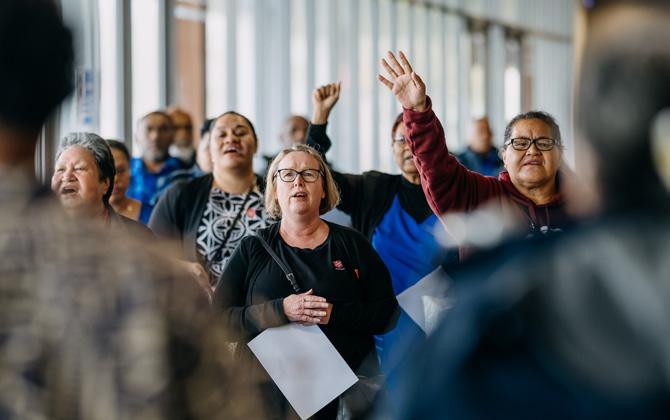
Christian worship takes many forms—it’s not just about singing. But there is something special that happens to us when we sing, and when that singing is offered as worship to God that ‘something special’ compounds.
Jules Badger explores the science of singing and the Creative Genius behind it.
Some of us love to sing, but others, not so much. Some of us have a natural talent for singing, while many of us can barely bring ourselves to sing aloud in the shower in case someone hears! There are also those of us who love going to church to worship God through singing, and then there are those of us who intentionally arrive a little late to reduce the wait until the sermon starts—you know who you are!
To be clear, listening attentively and with an open heart to the message is just as much worship as the singing, the prayers, the offering and the fellowship after the service. There is value and distinction in each of these components of corporate Christian worship. But when it comes to the very act of singing itself, science reveals some interesting surprises.
The science of singing
Singing aloud activates the limbic system—our brain’s emotional centre. Dopamine and serotonin are released when we sing, which gives our mood a natural lift. Singing also has physical benefits. When we sing, our breathing naturally deepens, which slows our heart rate and reduces the production of cortisol, the body’s stress hormone. Singing also stimulates the vagus nerve, which strengthens the body’s relaxation response, producing a feeling of calm. Many who sing in choirs testify to experiencing a sense of wellbeing and peace. But
when our singing becomes worship, something profoundly holistic takes place within us.
Worship shifts our focus from ourselves to God; from what we might be struggling with to who God is.
The
wonder of worship
When we sing worship to God, our brain and body engage in an integrated response that is also cognitive. Worship stimulates the prefrontal cortex of our brain, which is the part of us that blends meaning and intention. This is why what we sing also matters. Spiritual reflection is an important part of worship, helping ground us in the present moment. Worship shifts our focus from ourselves to God; from what we might be struggling with to who God is.
Corporate worship takes things to another level altogether. As our focus shifts from ourselves to God, corporate worship also invites us to become aware of those singing with us—there’s a social implication. Hearing others sing (however badly) makes us mindful that we are not alone but part of something. As we sing our shared beliefs together, a sense of belonging both to God and to a community of faith can create
a unity of spirit not experienced anywhere else.
All of this, of course, is both the work of the God who created us and the ministry of the Holy Spirit. Perhaps the true wonder of worship is that it’s both a response to who God is and what He’s done, and a choice on our part to bring our whole selves before God. And while worship is so often easier to embrace when all is well in our lives, let’s be brutally honest: there are times when worship is hard—near impossible even. Life’s challenges, agonies and sin can at times overwhelm even the most ardent worshipper. Surely the solution to our struggles can’t be as simple as just singing our way through. But what if it is that simple? What if this is where faith and science meet most profoundly and powerfully?
And so we sing
God knows the complexity and interconnectedness of our body, mind and spirit because He designed us! All this wonderful science is, of course, swallowed up within God’s creative genius. Let that sink in. God knows how all this works! Which is why we were created to worship. It’s not just something we do, but a
…worship songs can profoundly disarm us as new truths take root in our mind and spirit.
The repetition and memorisation of lyrics rewire our neural pathways toward God’s character and will.
space where our humanity and God’s divinity intermingle. It’s not just about worshipping Him, but what happens within us, by God’s loving design, as we do.
So the call to worship instead of worrying, to worship through seasons of waiting—and even to
allow our weeping and deepest sorrow to be an act of worship— these are all part of God’s loving design. Whether song lyrics are drawn from Scripture, church tradition and theology or the testimonies of experience from spiritual pilgrims, worship songs can profoundly disarm us as new truths take root in our mind and spirit.
The repetition and memorisation of lyrics rewire our neural pathways toward God’s character and will.
This kind of deep transformation takes time. Worship is not a quick fix for our problems, but rather
a process God invites us into that slowly bears fruit over time. Continuing to worship anyway when times are tough is a powerful way to build, renew and increase our faith in God. Sung worship is one way we can partner with God in our own discipleship, healing and spiritual formation. That God designed it this way on purpose speaks of His deep love for us, and His grace and mercy towards us.
And so we sing, as God’s people have always done, and as we will do forever when God’s kingdom comes in all its fullness.
Trusting the Author
Cheryl Limmer, who attends Hamilton City Corps (church), shares what motherhood looks like for her as a mum of four, and reflects on the kindness of God in the joys and hardships.
My parents were Salvation Army officers until I was two, and then we moved to Hastings, where I spent most of my childhood. My mum’s deep, anchored faith had a big impact on me.
When I was eight years old, I gave my life to the Lord at Congress in the Wellington Town Hall. At the time, I did not fully understand how significant that decision would be. As I grew older, life changed and circumstances shifted. I had a choice: stand firm in Christ or try to do life on my own. I chose to keep Christ at the centre of all I do, because I knew I could not do life without Him.
At 21, I moved to Auckland. In June 1994, I married my husband Murray, and together we had two amazing daughters, Steph and Olivia. Motherhood did not turn out how I imagined. God had other plans! Murray was unable to work full-time, so I became the main income earner while still trying to be fully present as a mum and run our home.
I had a choice: stand firm in Christ or try to do life on my own. I chose to keep Christ at the centre of all I do, because I knew I could not do life without Him.
When Steph was four and Olivia was two, my life changed in an instant when I was diagnosed with bowel cancer and went through six months of chemotherapy. My biggest fear was for my girls, constantly wondering what would happen to them if I did not make it. God carried us through that season, though it was one of many times life did not go the way I expected.
Many years later, when our girls were becoming independent, Murray and I thought we might finally have a bit of time to ourselves … but God clearly has a sense of humour because in 2018 we became parents overnight to Savannah (3) and Yasmine (6 months). Just like that, we became a family of six, not something I was planning at the age of 52!
We entered a completely different world, with agencies and systems guiding how we parented. We had to fight for these girls in ways we had not experienced before, while also helping them work through their challenges. At the heart of it, they just needed to be loved and protected.
I have learned that when God places something at your feet, there is a reason for it. He does not walk away and leave you to manage it on your own.
In January 2022, life changed again in an instant. God took my husband Murray home to Heaven. In the blink of an eye, I became a widow and a solo mum to four girls. I remember wondering what God was thinking.
I had to keep going and make life as normal as possible for the girls, even while grieving. My heart was breaking, not just for me, but for all of us. All four of our girls were grieving, each trying to make sense of what had happened and how this would affect their lives.
But just as God does not leave you when He calls you into something, He also does not leave you when something is taken away. In the middle of the chaos and confusion, God was right there, carrying each one of us.
As a mum, I was walking an unfamiliar road with my girls, but we made it through those first six months together. Then another wave came. Around
July and August, Steph and Olivia both moved out. Suddenly, I was facing a different kind of loss with my older girls leaving home.
It felt like everything that defined me was being stripped away. I was still a mum, but in such a different way. I did not know how I was going to do this, raising two young girls on my own while working full-time.
My faith was stretched to breaking point, but that is when God carried me.
Being a single mum is hard. It is lonely. There are no days off. When you are sick, you still have to get up, get the kids ready, take them to school and keep everything going, because there is no one else to do it.
Financially, it is a struggle. Practically, it is exhausting. Emotionally, it can feel overwhelming. But God has, and is, walking every step of the way with me, and He has never left me.
I am so blessed to be the mum of Steph and Olivia, and to see what God has called them into and the work He is doing in their lives. What God has done, and continues to do, in Savannah and Yasmine’s lives is nothing short of a miracle and reminds me again how faithful He is.
I do not have all the answers; I am just a mum who believes that every child is a gift from God and deserves the best start to life we can give them.
I am not a super mum. I do not have all the answers; I am just a mum who believes that every child is a gift from God and deserves the best start to life we can give them.
If I could encourage other single mums, or those caring for children who are not their own, I would say this: hang in there. The children you have been given need you. God has placed them in your care for
a reason. Value them, believe in them, be present for them and love them unconditionally.
Not every fight belongs to us. Not every burden was meant for us to carry alone. When it gets too heavy, hand it back to God. He sees your heart and He knows your intentions.
Life is hard. It is not what I expected. But I hold on to this truth, that all things are possible through Christ who strengthens us.
Always remember: ‘God is still writing your story. Quit trying to steal the pen. Trust the Author.’
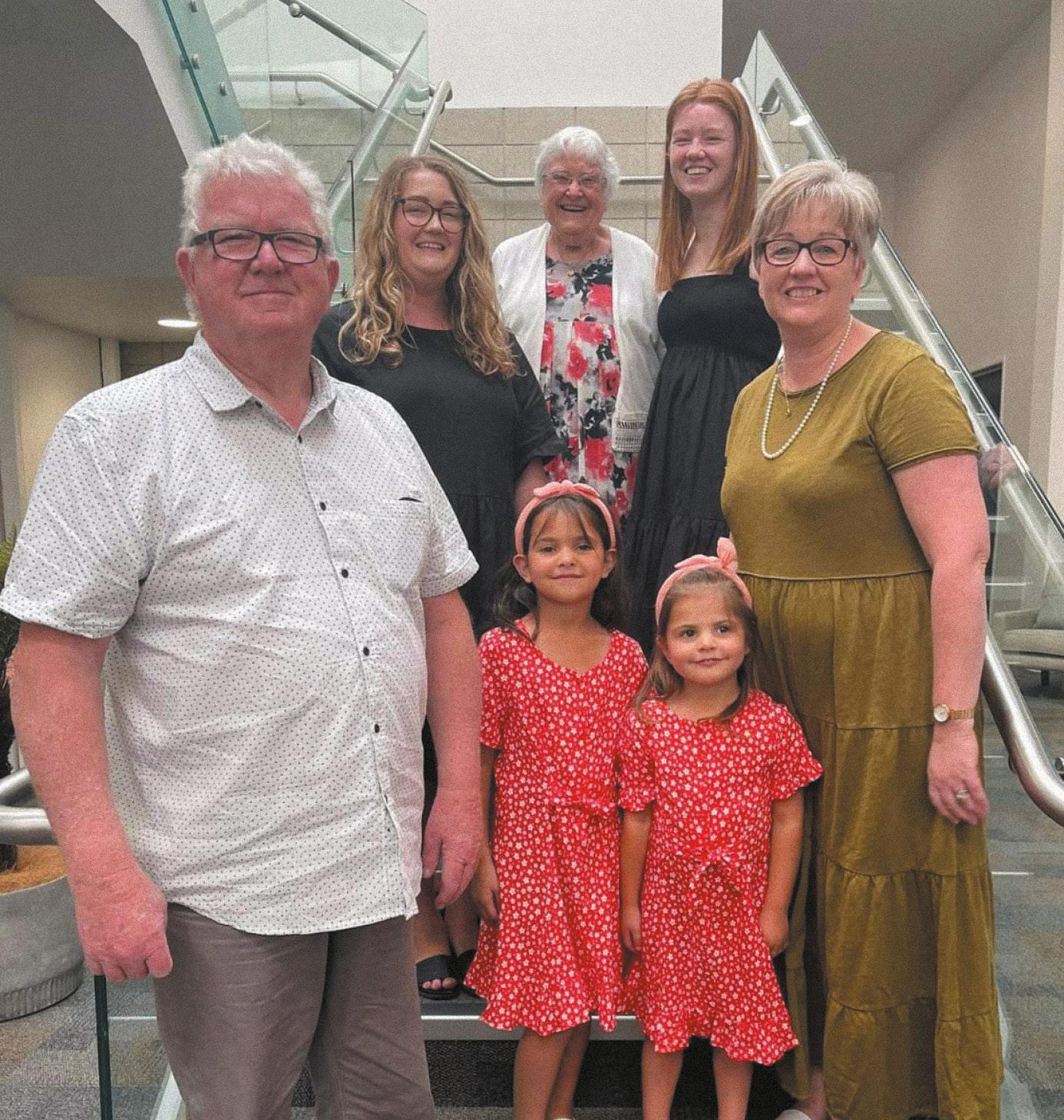
Back row (from left): Steph Limmer, Dorothy McEwen, Olivia Limmer; front row (from left): Murray Limmer, Savannah Allen-Borota, Yasmine Allen-Borota and Cheryl Limmer.
It Takes an Army
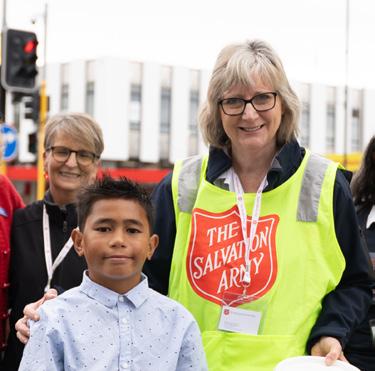
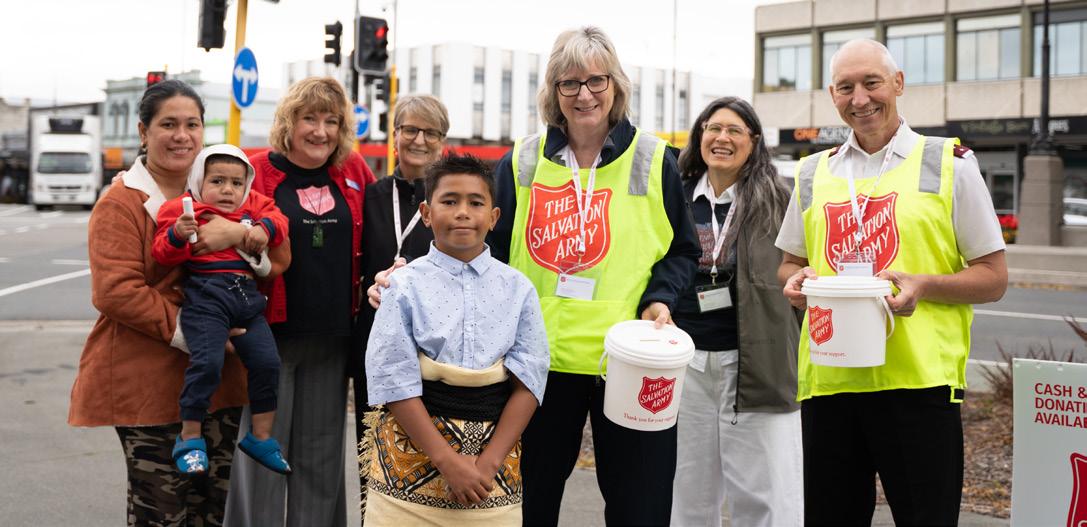
From 4–10 May, hundreds of volunteers across Aotearoa New Zealand will step up— collecting, connecting, supporting and serving for the annual Red Shield Appeal. This month we acknowledge the powerful impact of this appeal and remember that it takes an army to make it happen.
WORDS Kelly Cooper
was about eight years old when I first remember holding a collection box for the Red Shield Appeal,’ shares Territorial Commander, Commissioner Janine Donaldson. ‘At that age, I didn’t really grasp the scale of what The Salvation Army was doing, but I knew it mattered.
‘What began as a small gesture has become a calling. I’ve had the privilege of listening to people’s stories, sharing in their struggles and their hopes, and seeing firsthand how the Army’s work brings light to difficult places. The Red Shield Appeal is not just about collecting, it’s about connection.’
While the Red Shield Appeal, as we know it today, has evolved significantly over time, the commitment to authentic connection has remained the same.
In 1886, General William Booth first encouraged Salvationists to give up something of value and donate the proceeds to support the Army’s mission— a practice then known as the Self-Denial Appeal.
By the early 1900s, dedicated Salvationists extended their reach beyond their own sacrificial giving by engaging their communities to help raise funds. A formal distinction between personal giving and the public appeal was made in 1964, and the Red Shield Appeal was born.
Over the years, volunteers have embraced a wide range of innovative methods to collect funds and connect with their communities. These have included national household envelope drops, collectors visiting homes
and door knocking, selling War Cry for donations and local corps collecting coins at traffic lights.
In 2002, collections shifted to malls, town centres and supermarkets, with donations also accepted by post. ‘The appeal has continued to adapt,’ explains Campaigns Manager Diana Hill. ‘Covid-19 had a significant impact on our online giving, and our Red Shield campaign is becoming increasingly digital. Every year, you can also expect to see volunteers holding buckets with the trusted red shield logo, along with EFTPOS machines in your community during Red Shield Street Appeal.’
‘The Red Shield Appeal is not just about collecting, it’s about connection.’
Behind the scenes
To the public, this appeal may look like a simple week of bucket-collecting, but as National Red Shield Appeal Manager Peter Lobb knows all too well, this initiative is the result of months of behind-the-scenes work.
The organisation of this year’s appeal began in October last year. Peter, along with Assistant National Red Shield Appeal Manager Raewyn Butler, looks after over 450 Red Shield Street Appeal sites around the country. This includes supermarkets, petrol stations, malls and dairies. ‘An important part of our job is
maintaining and stewarding our relationships. We visit every single site to say ‘thank you’ and to secure our booking for the following May. We also catch up with all our corps and centres, listening to their feedback and making sure they feel supported as we head into our next appeal,’ says Peter.
‘Practically, we deal with all the background jobs like organising EFTPOS machines, liaising with Armourguard and making sure resources are delivered around the country, but our most important focus is maintaining strong relationships. These connections can bear fruit not just for the appeal, but for the whole year.
‘A conversation that started at a bucket during Red Shield Street Appeal ended up with a member of the public being enrolled as a soldier in a corps by the end of the year. It can be easy to underestimate the missional opportunities that exist when we take time to listen to people share their stories with us as volunteers,’ Peter explains.
Peter and Raewyn often hear stories from volunteers about the conversations they have had with the public. Some share how The Salvation Army changed—or even saved—their lives through the Bridge programme and addiction services; others reflect on the Army’s impact during their childhood, recall fond memories of listening to a brass band or express deep appreciation for practical support such as foodbanks and counselling. Last year, one volunteer even met the great-greatgranddaughter of William and Catherine Booth, who generously shared some of her family history.
This appeal also provides an opportunity for the Army to share its stories with the wider community. ‘We hear all the time, “I didn’t know that about The Salvation Army”,’ says Peter. ‘People often know us in just one capacity,
‘But when we are visible and present in our communities during appeal week, we get to share the fuller picture…’
Above: Red Shield Appeal Advert 1995.
‘Demand is increasing as the cost of living continues to climb—and now the fuel crisis is adding even more pressure.’
based on their experiences. But when we are visible and present in our communities during Red Shield Street Apeeal, we get to share the fuller picture—that yes, we provide a wide range of social services, and yes, we are also a church.’
Beyond Red Shield Street Appeal
While Peter and Raewyn focus on the public-facing Red Shield Street Appeal, Diana and her team ensure there are other avenues for donors to contribute. This includes multi-stream advertising and connecting with donors who have supported the Army in the past. ‘Most people think of the Red Shield Street Appeal as the only week of the campaign, but the overall campaign is much larger and longer,’ says Diana.
‘I’ve had a number of other charities approach me about our Red Shield Street Appeal, as The Salvation Army are seen as a leader in this space. We have been very successful in using the reach our corps and centres have in their communities. This is where the strength of this appeal still lies.’
Diana says one of the most common questions volunteers hear is, ‘What does my money go towards?’ In response—and based on feedback from last year’s appeal—collectors this year will have leaflets outlining the services The Salvation Army provides to hand out to donors. ‘This is another way we can tell our story, and it gives people something to take away from their interaction with a collector.’
‘The funds raised through the Red Shield Appeal are critical in supporting the Army’s frontline Community Ministries across Aotearoa New Zealand,’ explains Territorial Secretary for Community Ministries Major Christina Tyson. ‘In some locations, this is what keeps our doors open to the community.’
From top: One of the key story images from the 2026 Red Shield Appeal; Peter Lobb—national Red Shield Appeal manager.
‘Demand is increasing as the cost of living continues to climb—and now the fuel crisis is adding even more pressure. At some of our busier centres, people are literally lining up for food and support. Those of us who serve in the Community Ministries space are so grateful for every person who donates. The Red Shield Appeal is how we can show our solidarity with our communities as the hands and feet of Jesus.’
It all counts
With last year’s appeal amassing more than 10,500 hours of volunteer collecting, the 2026 campaign catchphrase—It Takes an Army—feels especially fitting.
Peter estimates that volunteers interact with close to a quarter of a million people in just one week. ‘When else do we get this opportunity?’ Peter asks. ‘Sometimes people think, “I’m only from a small town, what difference can I make?” But that’s not true at all. Every volunteer is a part of the story. Every conversation, every interaction, every dollar— it all counts.’
The contribution of Family Stores continues to be a standout. ‘The work our Family Stores do for this appeal is incredible,’ Peter shares. ‘Over recent years they have asked for donations at the till and made an enormous contribution to our fundraising. It’s an example of how we can move towards a wider Salvation Army Appeal.’
This shift is intentional. The dedication—and often long hours—of corps and centre staff make Red Shield Street Appeal possible, but the vision is broader.
‘Internally, the Appeal used to be known as Street Week,’ Peter explains. ‘This year, we’re moving to a more inclusive name: Salvation Army Week. This shift reflects our belief that the appeal is not only about fundraising but also embracing the missional opportunities it creates.
‘It’s a moment for us as an organisation to be present and engaged with our communities. This is a shared responsibility for all of us.’
It’s a moment for us as an organisation to be present and engaged with our communities. This is a shared responsibility for all of us.’
Commissioner Janine couldn’t agree more. ‘For me, the Red Shield Appeal is compassion in action. It’s about showing people they are seen, valued and cared for. It has shaped my sense of ministry and taught me that giving back isn’t just something we do; it’s who we become.
‘For The Salvation Army, this appeal is nothing less than a lifeline. It fuels our mission of providing food, shelter, counselling and emergency relief. Without it, so many doors would remain closed to those that need them most. The Red Shield Appeal enables us to reach out, build hope and remind people that they are not alone,’ says Janine.
It Takes an Army
To donate or find out more about the Red Shield Appeal, visit SalvationArmy.org.nz/ RedShield
The Modern Psalmist
WORDS Holly Morton-Chong
Throughout primary school, my favourite music artist was Brooke Fraser. I had all her albums and a cut-out newspaper interview she’d done Blu-Tacked to my wardrobe. She was the first artist I knew who wrote songs about her faith that weren’t just worship songs. Of course, she’s also written some huge hits in the worship space—‘Hosanna’, anyone? But I think songs like ‘CS Lewis Song’ and ‘Albertine’ had more of an impact on my faith as a pre-teen, because they encouraged me to think about my faith outside of Sunday mornings.
Even now, I find that these kinds of ‘nonworship’ worship songs are often the ones that draw me towards God. Artists like John Mark McMillan (of ‘How He Loves’ fame) and Semler have written powerful music about growing up in church and working out how faith can make sense of both the beauty and the pain of life. Their songs may not be played in a church service, but I think they feel deeply consistent with the heart of the psalms: things are terrible and sad and confusing, but You are still God and You are still here with me.
In recent years, when I’ve struggled to see God in my life or in the world around me, I have clung to one particular song, ‘Joy’ by Kings Kaleidoscope. I let the lyrics speak on my behalf when I haven’t been sure that they’re true—trusting that one day I will be sure again.
‘Every moment I play back, You live in it (joy) I can feel every way that You’ve been in it (joy)’
The psalms—both those written thousands of years ago and those written today—remind us that we aren’t alone in saying, ‘Lord, do not be far from me’, and they give us words of praise and thanksgiving to lean on until we can say them for ourselves.
Waiting with the Psalms
At one time or another, we all find ourselves waiting for something. In her brilliant book Invitations from God, Adele Ahlberg Calhoun writes, ‘Waiting is a central, unchangeable, universal fact of life.’ Jules Badger explores how waiting is part of our spiritual formation.
Late last year, I decided it was time a certain small tree that was refusing to produce fruit needed to go. I poured some water around the roots to soften the hard earth and began digging around with a spade. I gave the tree a few good yanks, but it wasn’t going anywhere in a hurry, so I called in the big guns. My adult son was happy to help but just needed to complete the task he was in the middle of. ‘I’ll be there soon, Mum,’ he said. No problem, I thought, I could wait a few minutes.
Except I didn’t wait. I kept yanking on that stubborn little tree, and in doing so sprained my forearm! My son soon came out and found me sitting on the
ground nursing my arm. And while he was attentive to my discomfort, his sympathy was not surprisingly limited. ‘Why didn’t you wait for me Mum?’ He then removed the tree with ease. If only I had waited for the help that I knew was coming, I might have saved myself months of pain and frustration.
‘Be still in the presence of the Lord and wait patiently for Him to act.’ (Psalm 37:7, NLT)
In her book Invitations from God, Adele Ahlberg Calhoun exposes our human aversion to waiting when she writes, ‘Many of us get so frustrated with waiting that we’d rather make a
quick decision and pick up the pieces than hang around in limbo and wait for clarity to come.’
‘…we’d rather make a quick decision and pick up the pieces than hang around in limbo…’
Point taken, says the impatient woman with the sprained arm! We’d rather do something, anything, than do nothing at all. But waiting is not doing nothing. The Hebrew word for wait is qavah, and it describes
alertness or watchfulness. Biblical waiting is not passive; it’s actively trusting God. While the temptation is to lose heart and wonder if God has forgotten us, waiting is about choosing faithfulness and surrendering to what God is forming in us. Adele writes: Waiting is one of God’s immensely sweeping invitations. Waiting unearths what’s in our hearts. It exposes what happens in us when our expectations go unmet. It exposes our doubts about God and what we think He should do. It exposes our natural tendency to be control freaks. To wait expectantly with open hands requires a relinquishment of control that gets at the roots of our motivations, fears and idolatries. It is when we learn that God isn’t a genie and that happiness is not a matter of God meeting our expectations. While we wait, we experience the naked vulnerability of trust.
‘Let all that I am wait quietly before God, for my hope is in Him.’ (Psalm 62:5, NLT)
I wonder what you’re waiting for. Friends? A relationship? A life partner? A job? Healing? For a calling to be confirmed? Justice? A baby? An adult child to return to Jesus? For your finances to turn around? A pay rise? A promotion? For a break? For a door to open? For rest? For retirement? To get back home? To leave home? Someone who’ll listen?
When we find ourselves in the middle of difficult and prolonged seasons of waiting, it’s often the songs and prayers found in the Psalms that offer us solace and solidarity. The length and breadth of human emotions echoes throughout the Psalms. Nowhere else in the Bible do we find such profound and raw honesty. Many of the Psalms were written by David who waited for 12 years—most of that time spent fearing for his life and running from Saul—to become king. The Psalms reveal David’s active trust in God as he wrestles and waits.
‘I wait quietly before God, for my victory comes from Him. He alone is my rock and my salvation, my fortress where I will never be shaken.’
(Psalm 62:1–2, NLT)
Waiting is the spiritual discipline of allowing things to unfold according to God’s timetable, not our own, and has far more to do with our spiritual formation than just the information or answers we are seeking. Waiting, of course, goes against everything the society we’re part of has conditioned us to expect: fast food, fast lanes, express delivery, instant service, coffee on the go. But waiting requires patience, which is a fruit of the Spirit.
God is a patient God, and learning to wait is an invitation not only to trust God but to become more like Him. God is the God of slow and deep and of a love that grows. He takes His time because patience is part of God’s character—he’s an expert waiter!
‘Scripture is a catalogue of the ways God waits for us,’ writes Adele.
God waited 400 years for the time to be right to lead Israel out of Egypt. God waited for Israel to grow in numbers and desperation. God waited for the arrogance of Pharoah to reach its height and for Moses to become the kind of man who could lead Israel out of Egypt. God waited for the fullness of time to send Jesus. And Jesus waits for us to respond to His invitation to come home to Him. Waiting is God’s crucible for transformation which is why He doesn’t hurry us along with force, coercion or control. God bides His time, waiting for us with open arms.
Throughout Scripture, all the great men and women of God waited. Noah waited 120 years for rain that no one believed would come. Abraham and Sarah waited 25 years for the son that God had promised. Joseph waited years for his dreams to make sense and come to pass. Year after year, Hannah waited for a child. Joshua waited 40 years to enter the promised land. Israel waited thousands of years for the Messiah. Mary waited 30 years for Jesus to become who she always knew He would. The woman who touched the hem of Jesus’ garment waited 12 years to be healed from bleeding. Today, we wait for the return of Christ, standing on the promises of the same God who formed these great saints through seasons of difficult and prolonged waiting.
Reintegration: Making Home Base
In The Salvation Army Social Policy and Parliamentary Unit’s (SPPU) annual State of the Nation report, prison reintegration continues to be an area of concern for the Unit. Lt-Colonel Ian Hutson , mission officer, considers the importance of securing housing for those reintegrating, and offers some practical solutions to make that transition easier.
In Aotearoa New Zealand, more than 43 percent of people released from prison return within two years, and almost two-thirds (59.2%) reoffend, highlighting the urgent need for effective reintegration strategies that support people to build stable, crime-free lives on release. Successful reintegration requires ensuring that people return to the community with the stability, support and resources necessary to move forward; without these foundations, individuals are far more likely to experience instability, crisis and ultimately, re-imprisonment. One of the key factors that research shows to influence a person’s likelihood of reoffending is secure housing—having a home base.
Without a secure home base, people cannot establish themselves back into the community and obtain the support needed to deal with issues that commonly contribute to reoffending. The research that exists points to significantly less reoffending occurring with people released into a secure housing situation in comparison to those who do not obtain suitable housing.
One University of Auckland study (‘Going Straight Home’) noted that ‘those living in unstable housing six months after prison were 4.6 times more likely to be re-imprisoned.’
If we in Aotearoa New Zealand want to be effective at reducing crime, we need to do more than merely locking people
…we need to do more than merely locking people up without addressing the factors that lead to offending and reoffending.
up without addressing the factors that lead to offending and reoffending. What has become apparent is that many people are released from prison without a reintegration plan, and many are unable to indicate where they will be living on release. Without some support, the obstacles that people encounter are significant and many. They can include:
• an inability to effectively arrange for accommodation from behind bars, due to having no contact with or ability to be interviewed by landlords. There are also reports that indicate a general reluctance by landlords to offer tenancy to people with any kind of criminal history;
• that people are not always aware of when they will be released until immediately or soon after their parole board hearing, or in the case of remand prisoners, until after the trial when they are given immediate release as part of a time-served sentence;
• financial obstacles, such as the general two-week ‘stand-down’ period for benefits, having no recognised form of identity (which is required by MSD to access any benefit), not having a bank account, and only having a very inadequate Steps to Freedom grant provided on release;
• a struggle to find safe accommodation for women, without returning to places where they have
experienced abuse in the past or may do so in the future—ie, a boarding house or insecure accommodation.
The cost of not supporting released prisoners into secure housing is immense for our country—high reoffending rates, more victims, the financial cost of incarceration, let alone the sheer associated human misery that individuals, their whā nau and the wider community experience.
The following are some key ways of addressing this concerning gap for many in the reintegration process:
• Accommodation coordinators are employed, and clear information about specialist housing provision is available to prisoners and their whānau well before release.
• All prisoners have a reintegration plan on release, with all the basic details in place—ID, Steps to Freedom grant and a bank account set up.
• Prisoners have sufficient financial support to transition from prison into suitable accommodation—
including a significantly increased Steps to Freedom grant.
• There are more funded supportive accommodation service alternatives to provide higher levels of wraparound reintegration support for those who need it in the shortto medium-term as they transition back into the community.
To read the report, go to salvationarmy.org.nz/6Pillars
This is the first in a series of six reports that will be published throughout 2026.
Brass Players Wanted for 40th Anniversary in Tonga
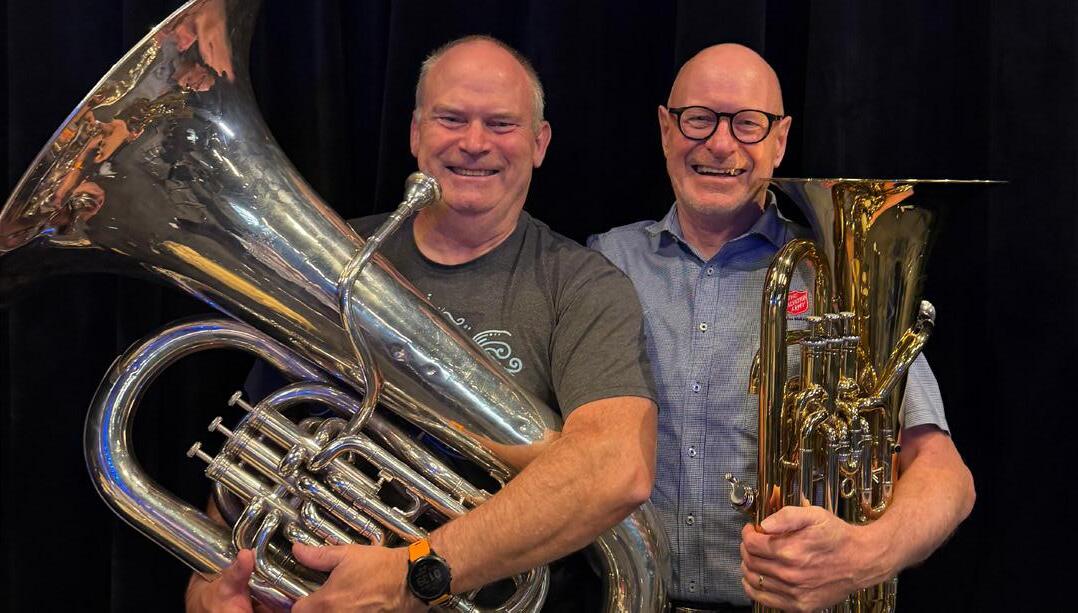
The Salvation Army is looking for brass players wanting to travel to Tonga to support the 40th anniversary celebrations of the Army’s work in Tonga on 3 – 4 October.
The goal is to have a group of brass players from Aotearoa New Zealand to support the local players and make it a weekend of celebration.
Musicians would travel and stay as a group, likely leaving Aotearoa New Zealand on Wednesday 30 September to get a few rehearsals in as preparation for the weekend. The group would return on Monday 5 October.
The cost of travel, accommodation and food is estimated at $2000 per person.
Can you donate a brass instrument?
Tonga is on the lookout for any spare brass instruments lying around in need of a new home. They are keen to receive any instruments in good working order that would be suitable for adults or young people.
Regional Leader for Tonga, Major Vakatoto Wawa, says the 40th anniversary will be a significant time of thanksgiving and praise, and all donations will be gratefully appreciated.
‘It will be a time of reflection, gratitude and giving back. By donating brass band equipment to Tonga, you’ll be helping to create a lasting impact on the lives of young musicians and the community at large.’
If you’re keen to participate in the 40th celebrations or can donate an instrument, please email cmd@salvationarmy.org.nz
A Special Few Days in Samoa
Recently, Chief Secretary Colonel Jennifer Groves spent time in Samoa connecting with local leaders, exploring opportunities for growth and sharing in fellowship with the corps.
A highlight of the visit was Sunday worship at Apia Corps, where Jennifer conducted the installation of Regional Leaders Majors Stu and Michelle Lee. It was a meaningful time of prayer and encouragement as they step into this leadership role together.
Across the visit, there were moments of connection and learning: time spent with soldiers, a meeting with the Alcohol and Drugs Awareness Centre (ADAC) team, conversations about future mission and even exploring new opportunities for expansion.
Jennifer said, ‘It was a blessing to share these days with our friends in Samoa. Their passion for mission, their diligence in prayer and their desire for others to discover Jesus is an inspiration.’
We are grateful for the continued work across Samoa as we seek to serve communities with care and hope. Please keep Samoa, its leaders and the mission ahead in your prayers.
For the full Q&A with Jennifer go to saltmagazine.org.nz
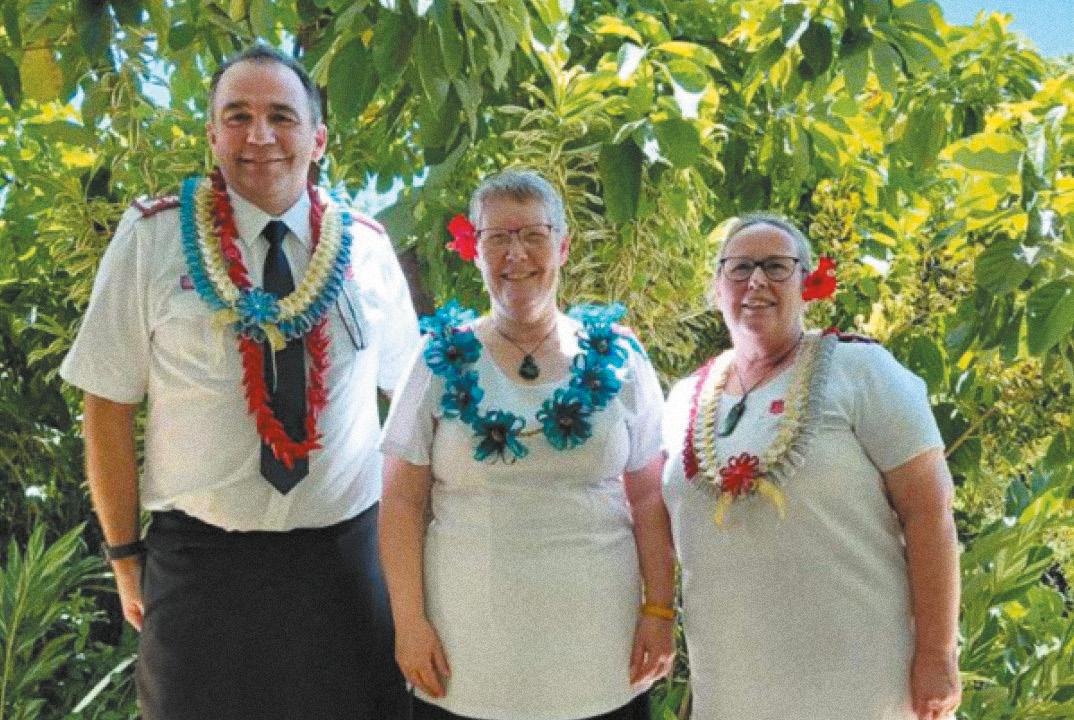
From left: Major Stu Lee, Colonel Jennifer Groves, Major Michelle Lee.
Moving SALT online
We’re developing a new Salvation Army website to better share information, news and stories about our faith and our work. This includes looking at how and where we share our content. We print 5100 copies of SALT each month which go to various Army sites, but we don’t know how useful SALT is. We’re looking at no longer printing SALT and instead moving relevant content online as more people prefer to find information this way.
To help guide our decision making, we would love to know what you like about SALT, how we can make it easier for people to access stories online, and what Salvation Army information, news and stories you would like to see in the future.
Please let us know what you think. There are different way to share your thoughts:
• Scan the QR code with a digital device and fill out an online survey.
• Email your thoughts directly to: communications@salvationarmy.org.nz
Please send all feedback by Friday 8 May 2026. Note: A hard-copy survey has been sent to all subscribers
Time with Petra Bagust
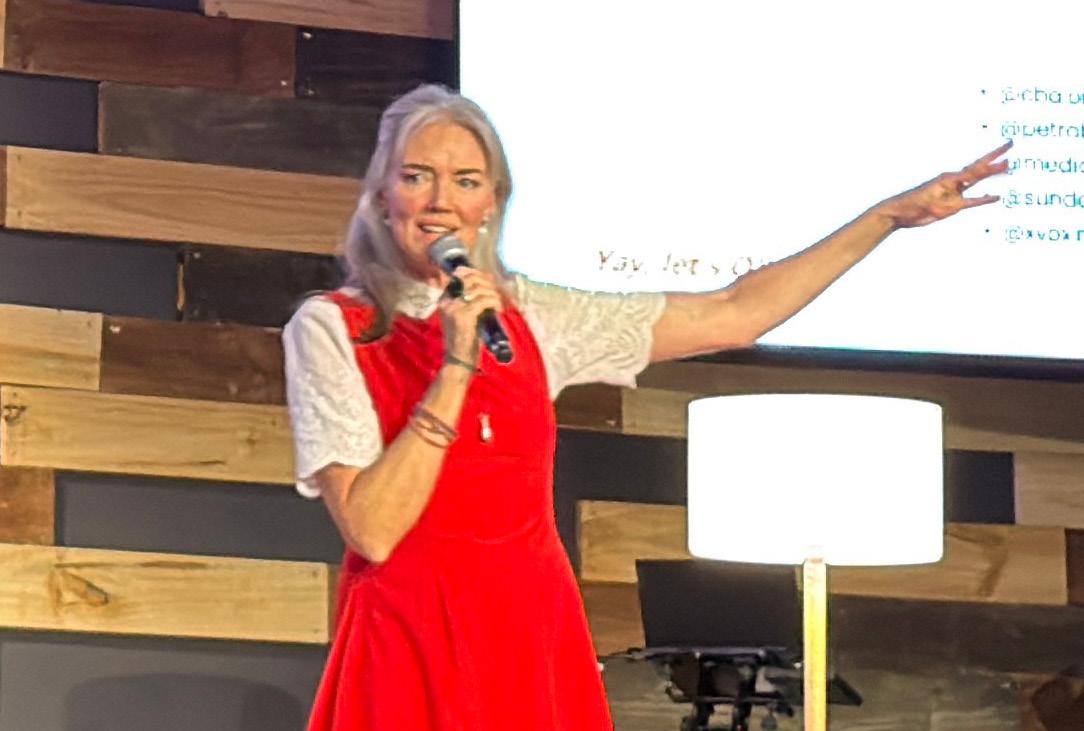
On 17 April, The Salvation Army Territorial Headquarters hosted a territory-wide women’s event with Petra Bagust.
Attendees were inspired by Petra’s raw and honest sharing of her personal life experiences alongside insights into her faith journey. Speaking on ‘The Road Home is Home’, Petra invited us to reflect on being present to where we are right now, recognising that while the current season may be challenging, it is not necessarily our final destination.
Knitted Together
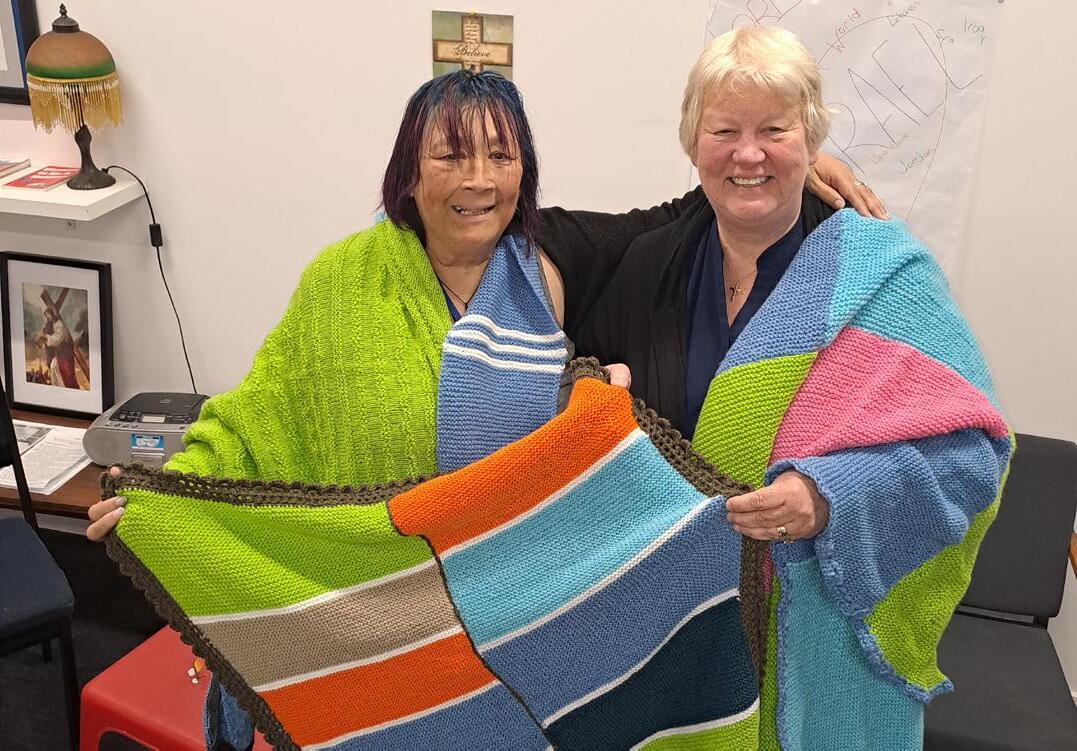
If you were wandering through the Together Congress marketplace on Saturday afternoon, you may have noticed people knitting. As hands moved and conversations flowed, square by square, something special was taking shape. But what happened to that knitting once the Congress ended? After Congress, women from Hamilton City, Tawa and New Lynn Corps kept the project going. They finished knitting the squares and sewed them together, turning many individual contributions into something whole and meaningful.
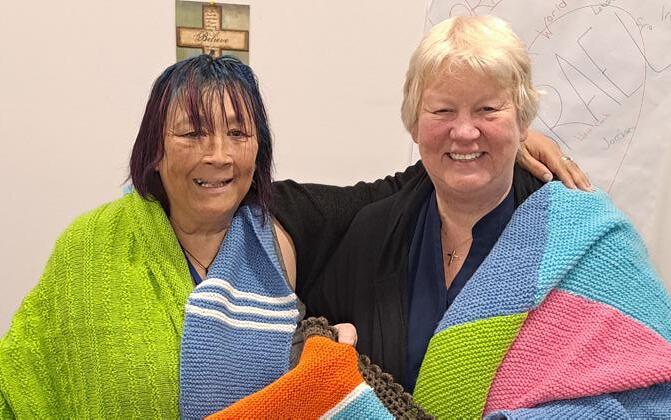
Now, that shared creation has travelled south to Invercargill. Major Wendy Sanson has passed the completed knitting on to Helen-Marie Harwood from the Supportive Housing team, who will ensure these special blankets reach people who truly need them this winter.
What began as a simple moment of creativity at Congress symbolises what Together Congress was all about. Made by many, shared with others, it reflects what can happen when we journey and serve together.
Above, from left: Helen-Marie Harwood and Major Wendy Sanson.
Looking for more news? Read the latest news online at saltmagazine.org.nz
30 April–3 May: SEF trip to Fiji supporting Highlanders vs Drua game
4–10 May: Red Shield Appeal Week, collecting at various locations
10 May: Mother’s Day, Hutt City Corps
12 May: Meeting delegates of the 12-Steps course, CLD
14 May: Meeting CEOs from Goodman Fielder, Port of Auckland, Auckland
19 May: Meeting delegates of the Big Picture Plus course, CLD
20–24 May: Selected members of the Territorial Governance Board visiting Fiji
26 May: Meeting delegates of the Strength-Based Practice and Motivational course, CLD
Colonel Jennifer Groves (Chief Secretary)
4–10 May: Red Shield Appeal Week, collecting at various locations
7 May: Territorial online Praying Together meeting (winter edition)
9–15 May: Furlough
17 May: Visit to Feilding Corps
19 May: Meeting delegates of the Big Picture Plus course, CLD
20–24 May: Selected members of the Territorial Governance Board visiting Fiji
Gazette Summary
To read the full version of Gazette notices, visit saltmagazine.org.nz/gazette
Retirement: Effective 21 March 2026, Lieutenant Colonel Roderick (Rod) Carey has retired. Lt-Colonel Rod has completed 42 years, 2 months and 11 days of active officer service. Rod, along with his wife Jenny, entered the Booth College of Mission from Dunedin Fortress Corps in 1982 as cadets of the Heralds of Hope session and following their commissioning on 21 January 1984 were appointed as corps officers, Taupo Corps. In January 1987, Rod and Jenny were appointed as corps officers, Waihi Corps, followed by further appointments as corps officers, Otahuhu Corps (January 1990); and corps officers, Palmerston North Corps (January 1996), with Rod receiving an additional appointment as director, Community and Family Services, Palmerston North. In January 2003, Rod and Jenny took up an appointment as corps officers, Sydney Congress Hall. Returning to New Zealand in January 2006, Rod was appointed as divisional secretary for programme, Central Division. In May 2006, Rod received two additional appointments as oversight of Hutt City Corps and executive officer, Spiritsong. In January 2007, Rod was appointed as divisional commander, Central Division. This was followed by an appointment as territorial secretary for programme, based at Territorial Headquarters, in January 2013. In November 2017, Rod and Jenny were appointed as regional leaders, Samoa Region, to commence The Salvation Army’s work in Samoa. After serving in Samoa as the pioneer officers for over 3 years, Rod and Jenny returned to New Zealand, where Rod was appointed as national director, Addictions, Supportive Housing and Rehabilitation Services in January 2021. In January 2025, Rod and
Jenny were appointed as corps officers, Albany Bays Corps. Rod will continue in this appointment in retirement alongside Jenny. We give thanks to God for Rod’s evangelical heart to share the Gospel of Jesus, wherever he goes. We honour Lt-Colonel Rod Carey for his dedicated, passionate service as an officer of The Salvation Army. We pray God’s continued blessing upon his ministry and service as he continues his current appointment in retirement.
Birth: Congratulations to Lieutenant Natalie Kirby who has given birth to a baby girl, Lydia Hope Kirby, at 4.52pm on Saturday 28 March 2026, weighing 8lb (3.63kg). May God bless Lieutenants Natalie and Barry Kirby, and children Daniel and Jemimah, as they welcome Lydia into their family.
Bereavement: Anthony Herring, the son of Majors Paul and Steph Herring, unexpectedly passed away on Monday 6 April 2026. We ask that you uphold Majors Paul and Steph Herring, Matt and Major Bekx Herring, Majors Anne and Alister Irwin and the wider family through this time of grief and loss.
Mavis McCormack, the mother of Major Julie Cope passed away on Thursday 9 April 2026, aged 91 years, from Vickery Court, Invercargill. We ask you to uphold Majors Julie and Robert Cope, along with other extended family members, in your prayers during this time of grief and loss.
Promotion: Effective 15 March 2026, Captain Sera Toloi has been promoted to Major. We congratulate Major Sera Toloi on her promotion and pray God’s blessing on her.
Quiz Answers: 1. OMC (Ōtara Millionaires Club), 2. Australian Idol, 3. The street number on their Dunedin flat, 4. The Parachute Music Festival, 5. ‘Poi E’.
SALVATIONISTS
IN HISTORY
When the Streets Became a Stage
Long before streaming platforms and stadium tours, William Booth understood something profoundly modern about music: if you want to reach people, you must sound like them.
In the smoke-filled streets of 1850s London, Booth stepped away from the safety of the pulpit and into open-air evangelism, convinced that the gospel belonged not just in churches but in the noise and grit of everyday life. Music, he discovered, was the medium that could cut through the chaos. The moment that arguably changed everything came almost by accident. A man and his three sons arrived at one of Booth’s street meetings offering to serve as bodyguards. They also happened to be carrying brass instruments and asked if they could play. Booth agreed, and as their music rang out, the crowd’s response was immediate and enthusiastic. What began as a practical add on quickly revealed itself as a revelation: music didn’t just support the message—it amplified it. These early brass ensembles became the seed of what would grow into a defining musical tradition.
Booth’s philosophy crystallised through a nowfamous observation. Hearing a lively bar tune, he declared that the devil shouldn’t have all the best music. Folk songs, ballads, tavern melodies—tunes the public already knew by heart—were repurposed with new lyrics that carried a message of hope and salvation. There was something disarming, even shocking, about this musical strategy. Imagine singing along to a familiar melody associated with drink and excess, only to encounter it the next day calling you to transformation and honesty. The tune hooked the ear; the words went to work on the heart. This approach was theology in action. Booth believed deeply in meeting people where they were, and music was the shortest path. His oft-quoted words captured
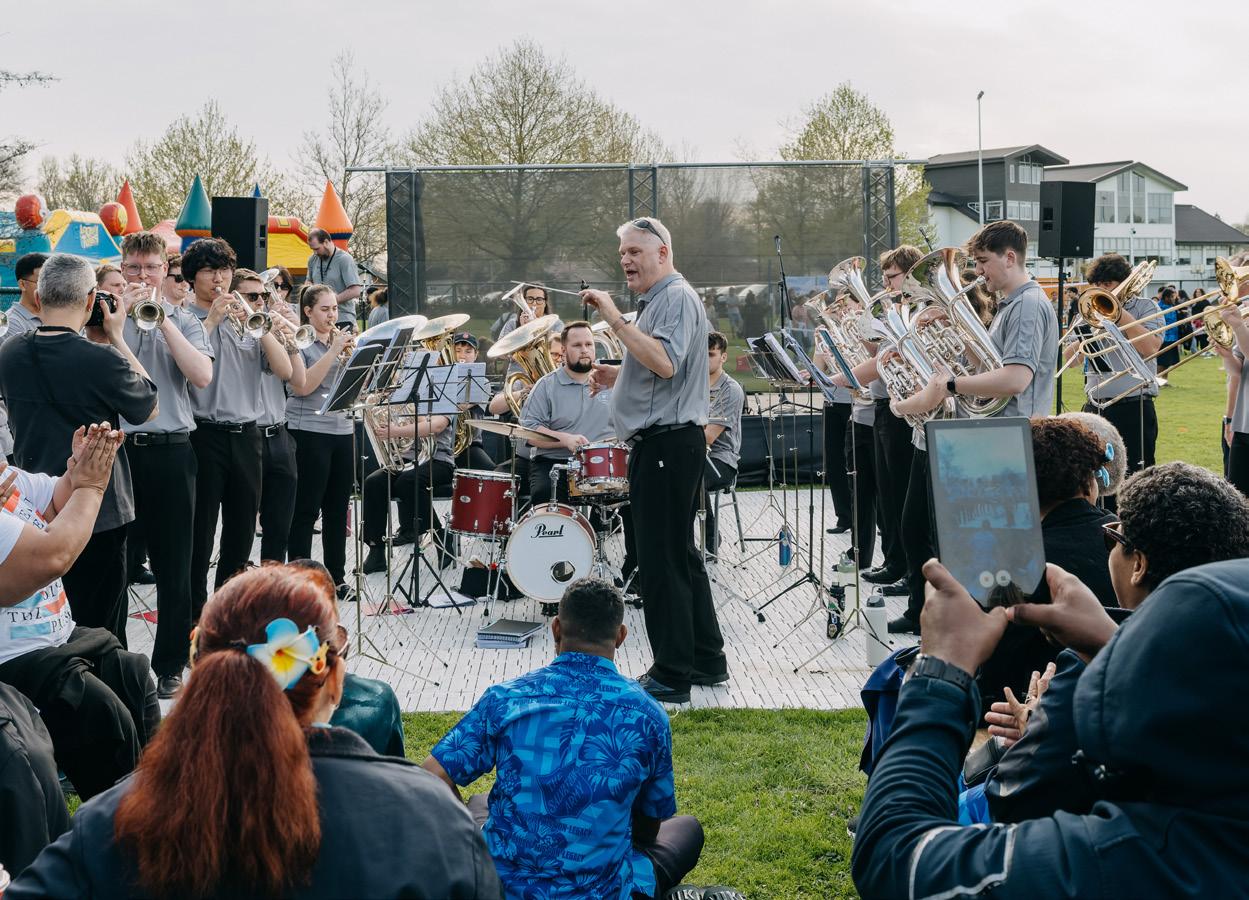
Above: A modern expression of an historic calling with the Territorial Youth Band at Together Congress, 2025.
the spirit perfectly: sing good tunes, whether secular or sacred. If the melody was strong and accessible, it could be redeemed. Booth likened it to taking the enemy’s guns and turning them around. Music, he believed, was one of the most powerful forces shaping human emotion and conviction.
As the movement grew, so did its musical output. By the early 1870s, William and Catherine Booth were compiling hymnbooks at a remarkable pace: The Christian Mission Hymnbook, Hymns for Special Services, The Penny Revival Hymn Book and The Children’s Mission Hymn Book. The 1876 edition alone contained over 500 hymns, spirituals and songs frequently set to popular and national tunes. By 1883, some 400 Salvation Army bands were active across Britain, brass-driven and unmissable.
So, did The Salvation Army really rewrite bar tunes for worship? Yes—sometimes. Many short choruses borrowed uplifting, rousing melodies commonly heard in public houses. One famous example is the tune ‘Champagne Charlie’, transformed from a celebratory drinking song into spiritual exhortation: ‘Bless His name, He sets me free’.
Ultimately, Booth recognised music’s power to move the soul—to convict, inspire and change. Style was secondary; purpose was everything. Salvation Army music was never meant to impress for its own sake. It was meant to save. And in that bold fusion of sacred message and secular sound, Booth created a musical legacy that still resonates—loud, brash and unapologetically tuned to the streets.
Note: AI was used to help develop this article.
Music to Our Ears
Music is a beautiful thing! We find music in so many places—in movies, on the radio, at the supermarket—and all over the pages of Scripture! The Bible teaches us that music is a regular part of interacting with God, which is why it’s important to find ways to enjoy Christian songs with our children.
Music is one way for children to grow their minds, memorise truths and have fun! It’s evident that people are born with a natural love for music when you watch a child dance to the beat, beg for one more lullaby at bedtime or even make up their own lyrics.
There is an enormous source of Christian music to suit all styles. Modern melodies and lyrics are entertaining for children to listen to and sing themselves. They are so catchy we end up singing them all day too.
Adding Christian songs into our daily routine is one way we can lighten the mood and encourage a joyful atmosphere in our home. Playing music on a speaker is a great way to start, and there are also ways to be even more intentional about focusing on this gift.
Here’s some suggestions:
• Most popular Christian songs can be found on YouTube and often have actions for children to follow along.
• Make it more meaningful for your children by letting them pick the songs or artists—you could have a playlist they choose from.
• Let your children sing or dance to the songs if they want to. Keep it fun!
A joyful noise
‘Make a joyful noise to the Lord, all the earth; burst into joyous song and sing praises!’ Psalm 98:4 (ESV)
Read: King David was well known as a musician and a songwriter. He wrote many of the psalms recorded in the Bible to share his thoughts, feelings and experiences of God. Many of his songs talk about singing or making music to the Lord. In Psalm 98, David wrote to encourage people everywhere to sing a song of praise and thanksgiving to God.
Think: I wonder what type of music you like to listen to? Perhaps it has a fun chorus, or a great rhythm that you can tap your foot along to. Maybe the words inspire you or remind you of an important truth. God loves to hear us make joyful sounds. Whether we play an instrument, sing or laugh, it’s all beautiful music to God’s ears.
Pray: Dear God, it’s wonderful that You made the world, and that all creation makes a joyful noise for You. As I join in with my own joyful noise, help me to show with my life and my voice that I love You, and want others to know You too. In Jesus’ name, Amen.
Do: There is a story that talks about how God, our Maker, sang the first song, and He wrote that song into everything. God’s song says ‘You’re good! You are wonderfully made, and I’ll never stop loving you all of your days. So I want you to sing with your life and your voice, for I created the earth to make a joyful noise!’* Be encouraged to make a joyful noise to God. Keep listening to songs about God. You could even try writing your own song like King David did.
* Who Sang the First Song? by Ellie Holcomb
Colour and sing to the Lord me in for joy
Come, let us sing to the Lord! Let us shout joyfully to the Rock of our salvation. Let us come to Him with thanksgiving. Let us sing psalms of praise to Him.