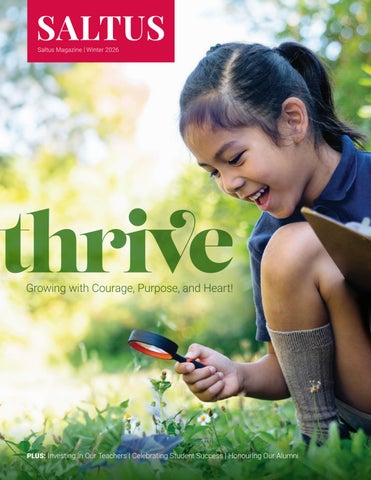
The Saltus Grove and Our Journey Toward Outdoor Learning
12 Celebrating Curiosity, Collaboration, and Creativity
The North American Reggio Emilia Alliance Conference 14 Mathematics in Motion
Saltus and the Dr. Marian Small Partnership
18 Growing a Culture of Sustainability
How Our Community Earned Eco Schools Status 26 Reimagining Our Commitment to Belonging at Saltus Introducing Our New Inclusion Statement 34 From Saltus to the World One Student’s Journey in Debate & Public Speaking
Saltus Magazine | Winter 2026
FEEDBACK
Please forward feedback on Saltus Magazine to: feedback@saltus.bm
APPLY TODAY
Director of Enrolment Management
SUPPORT SALTUS Director of Advancement
Katie Kostiuk advancement@saltus.bm
Make a gift online at saltus.bm/giving
MAGAZINE PRODUCTION
Editorial Team
Darcy Hausselman
Stay up to date on the latest happenings at Saltus. Connect, follow and have a conversation with us. 10 Growing Curiosity
Amanda Skinner admissions@saltus.bm
Marianna Russo
Katie Kostiuk
Katrina Lavender

Editorial Design
Randall Van Gerwen
Photography
Liz Dowdell
Darcy Hausselman
Alexander Masters
Marianna Russo
Faculty & Staff
Printing
Chameleon Print Solutions
MAILING ADDRESS
P.O. Box HM 2224
Hamilton, Bermuda HM JX www.saltus.bm
Saltus Grammar School
Welcome to the 2025–26 edition of Saltus Magazine. As we begin this new school year, our theme Thrive reflects both who we are and who we aspire to be; a vibrant learning community where students, staff, and families grow with courage, purpose, and heart.
To thrive is to go beyond achievement alone; it is about creating the conditions that allow every learner to flourish. Every day, in our classrooms and labs, on the stage, and on the field, we see the curiosity of our youngest learners, the bold ideas of our senior students, and the steadfast dedication of our teachers and staff who guide them. This year’s magazine captures these moments of thriving, stories of discovery, creativity, and resilience that show the heart of Saltus at its best.
The 2025–26 school year marks an exciting milestone in our educational journey. Having fully implemented the BC Curriculum from Kindergarten through Grade 10, our students are developing not only strong foundations in literacy and numeracy, but also the competencies that empower them to think critically, solve problems creatively, and communicate effectively.
These are the very same “future-ready” skills identified by the OECD (Organisation for Economic Co-operation and Development), a global organization that guides education systems worldwide. The OECD emphasizes that to succeed in an ever-changing world, students must build a balance of academic knowledge, social-emotional awareness, and employability skills such as adaptability, collaboration, ethical decision-making, and resilience. This alignment reinforces that our approach to learning at Saltus, rooted in the BC Curriculum, equips our students with the knowledge and skills to thrive in school, in work, and in life.
As this year unfolds, we are thrilled to launch the BC Graduation Program for our first cohort of Grade 10 students. This internationally recognized pathway leads to the Dogwood Diploma, a credential that provides our graduates with global university recognition and access to top postsecondary opportunities. More importantly, it represents a learning journey grounded in inquiry, agency, and real-world application, helping students build confidence, independence, and a strong sense of purpose.
At Saltus, thriving also means nurturing well-being, curiosity, and belonging. Our students inspire us every day with their empathy, courage, and determination, and our teachers and staff work tirelessly to create an environment where they can truly grow. Through award-winning spaces like The Saltus Grove and programs in arts, athletics, service, and leadership, students develop the confidence to take risks, the compassion to connect, and the integrity to lead with purpose.
As you read through the pages of this year’s magazine, I hope you feel the same pride I do in the remarkable accomplishments of our students and the dedication of our faculty and staff. Together, we are shaping a future where every member of our community has the opportunity to thrive and become the best version of themselves.
Warmly,
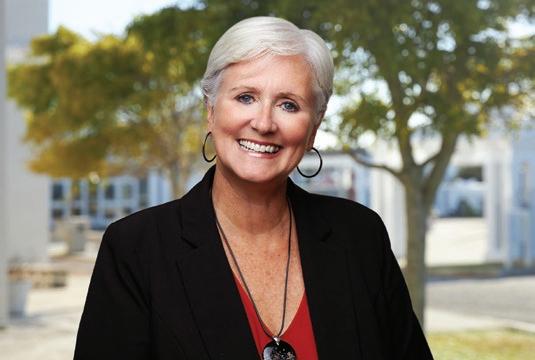
Julie Rousseau Head of School
At Saltus, thriving also means nurturing well-being, curiosity, and belonging.
Saltus thrives because of a powerful partnership between the school and home, governance and leadership, as well as the past and the future we are building.
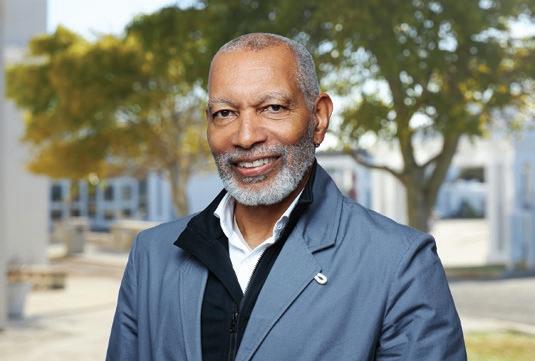
It is my honour to serve as Chair of the Board of Trustees. This year, our work is defined by one core commitment: ensuring every member of the Saltus community thrives.
The Board’s definition of success is simple: we focus on the long-term strength, financial sustainability, and strategic direction of the school. While our dedicated educators bring learning to life each day, the Board partners closely with the Leadership Team to steward the future, safeguarding the exceptional qualities of Saltus while boldly planning for what comes next.
We have committed our focus this year to crafting the next Strategic Plan, a vital roadmap designed to elevate the Saltus experience. This work began by listening: we hosted extensive, valuable sessions with students, staff, and families to understand what matters most. The Board is now reviewing this collective wisdom alongside the Leadership Team to determine the bold, actionable priorities that will ensure Saltus continues to lead in education. We are excited to present the emerging vision to the community this spring.
Saltus thrives because of a powerful partnership between school and home, governance and leadership, as well as the past that grounds us and the future we are building.
On behalf of the Board, thank you for your trust, your engagement, and your belief in our mission. It is through this strong partnership that we will ensure Saltus remains a school where students not only succeed today but one that continues to flourish for generations to come.

E. Michael Leverock Chair, Saltus Board of Trustees
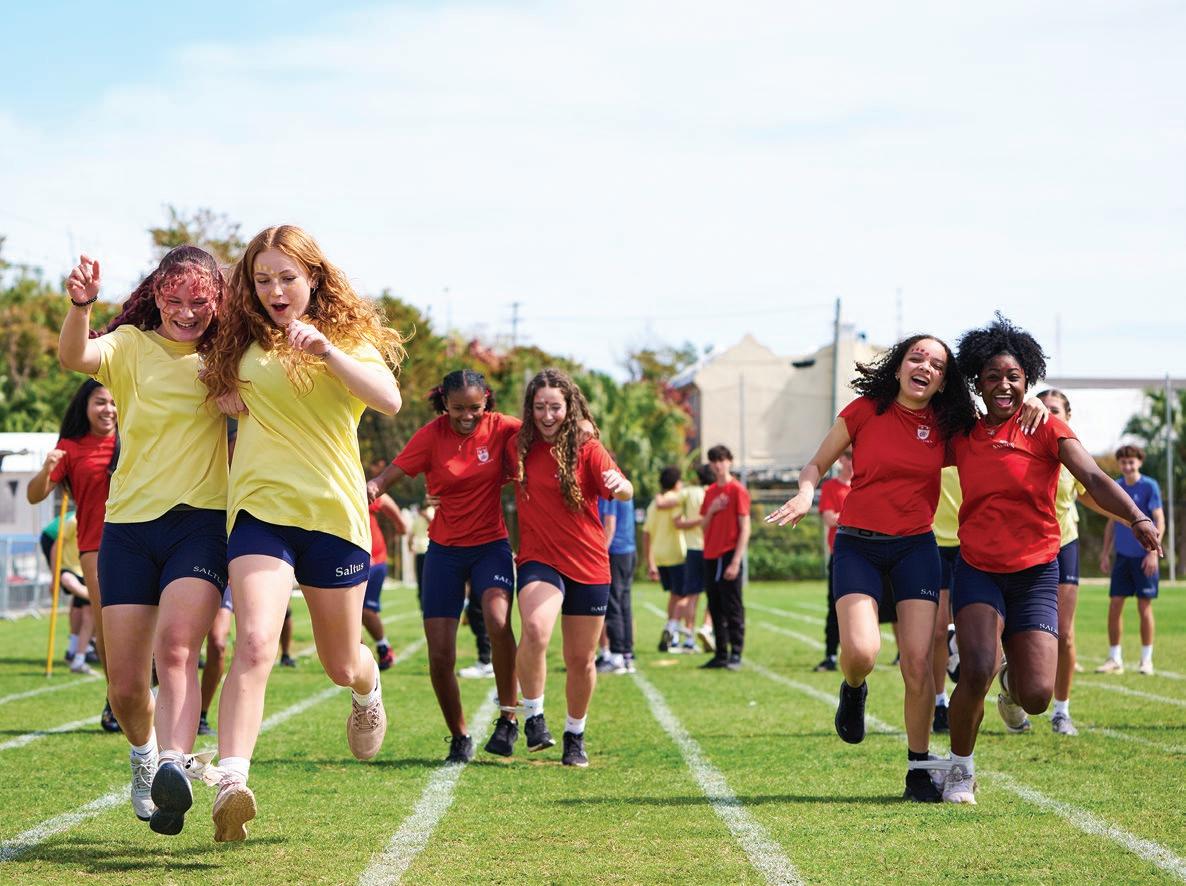
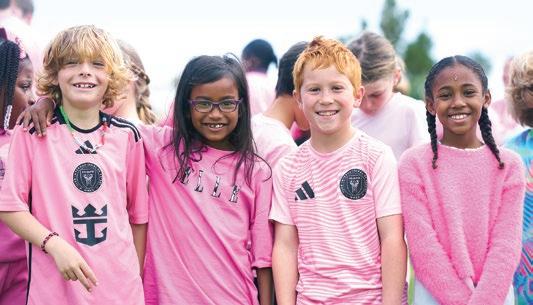
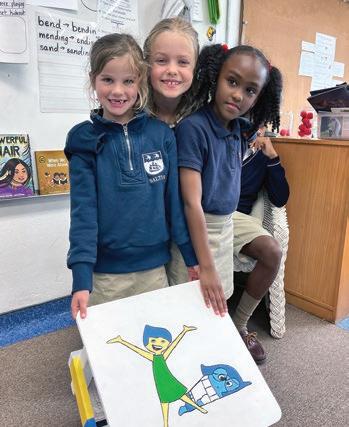
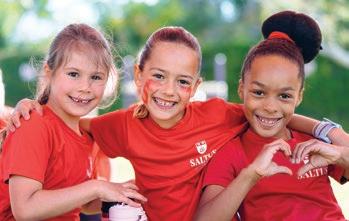
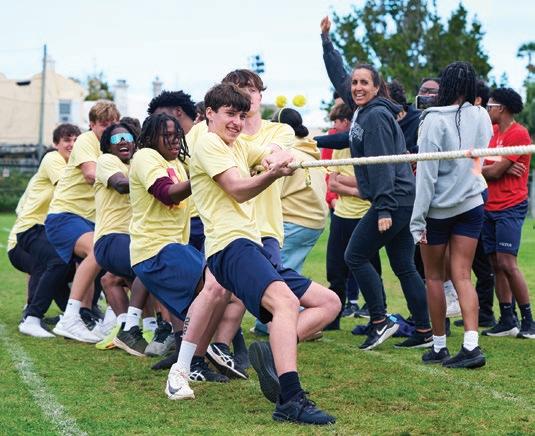
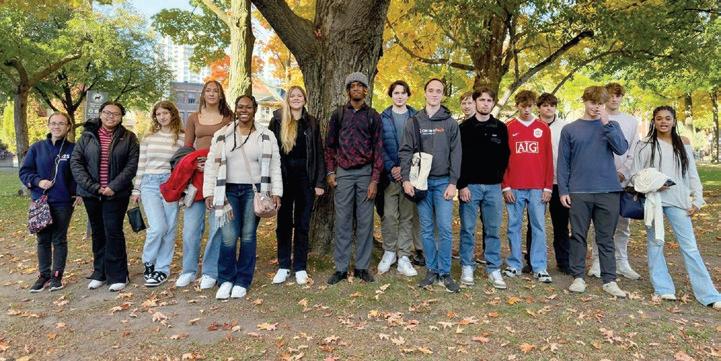
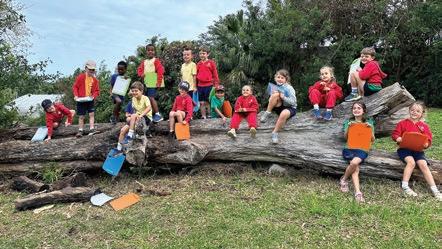
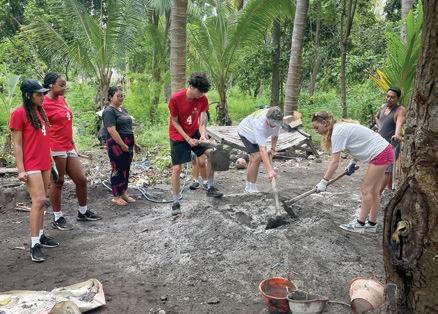
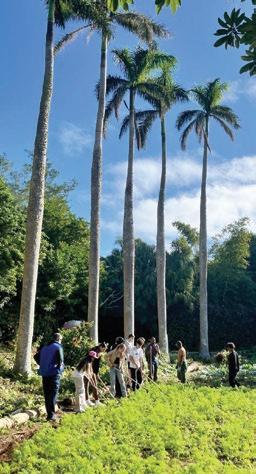
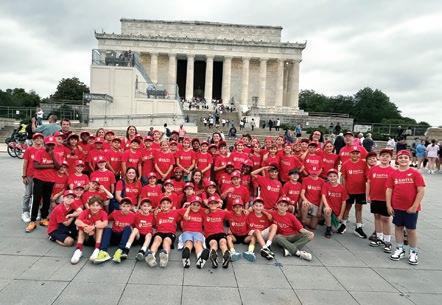
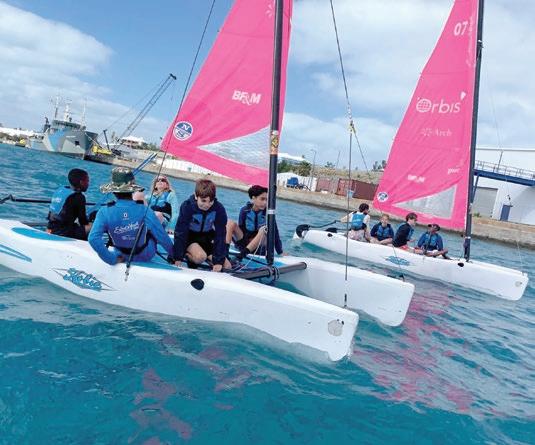
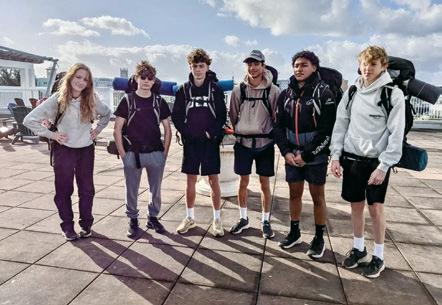
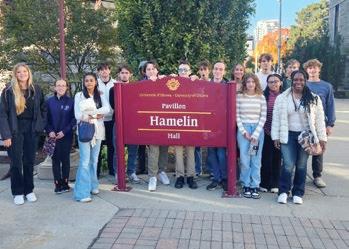
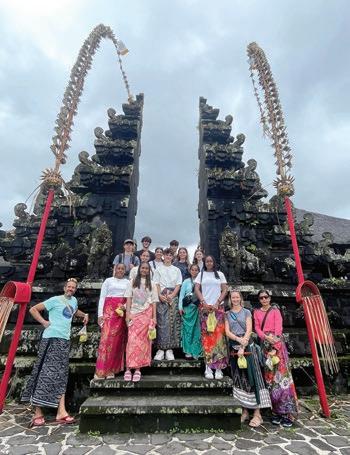
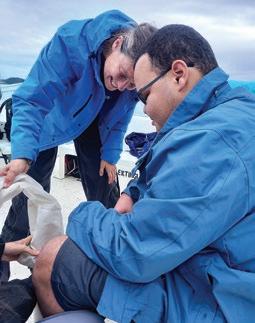
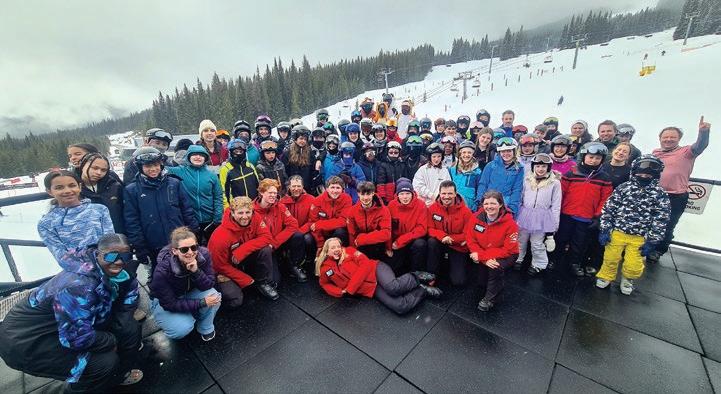
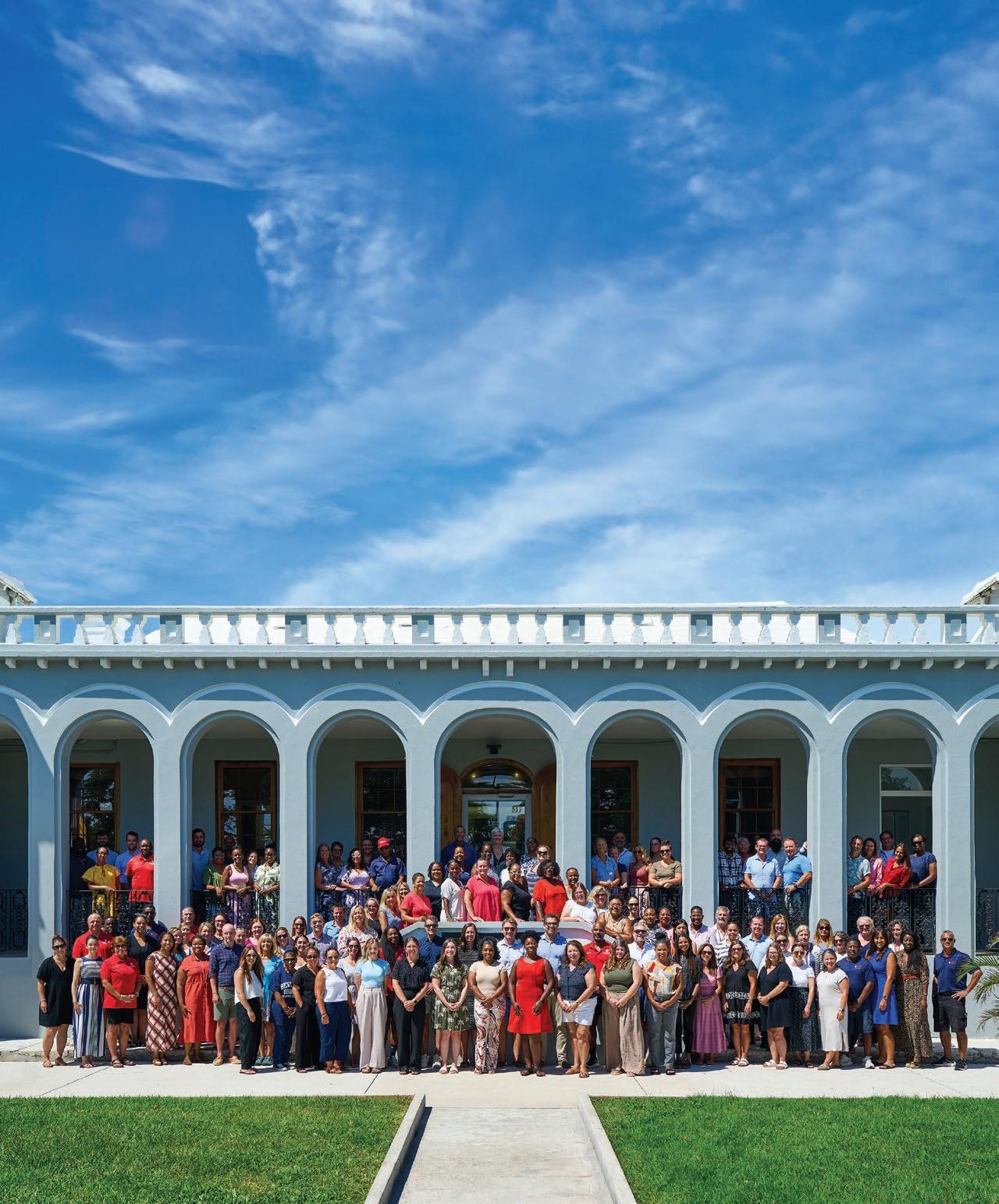
Saltus students choose from a diverse array of activities, sports, clubs, leadership opportunities and opportunities to give back to the community. We believe in the power of a fully-rounded life experience that’s as much about fun as it is about learning.
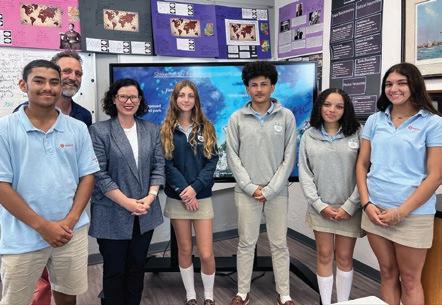
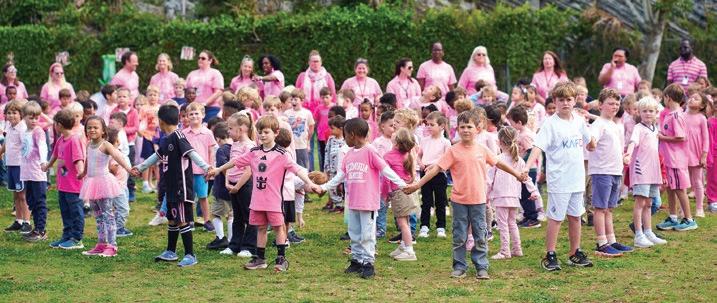
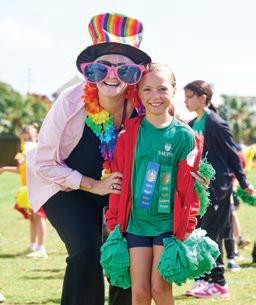
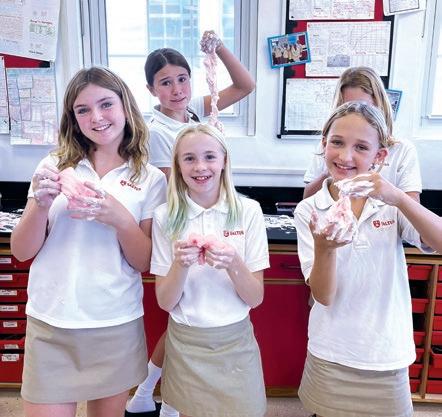
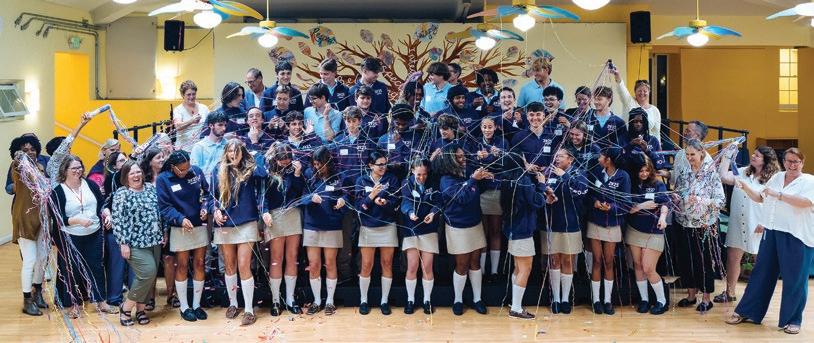
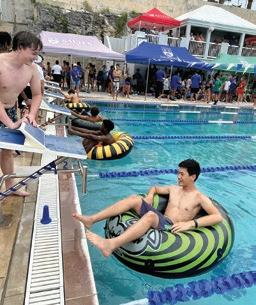
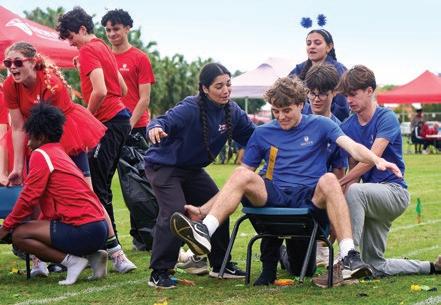
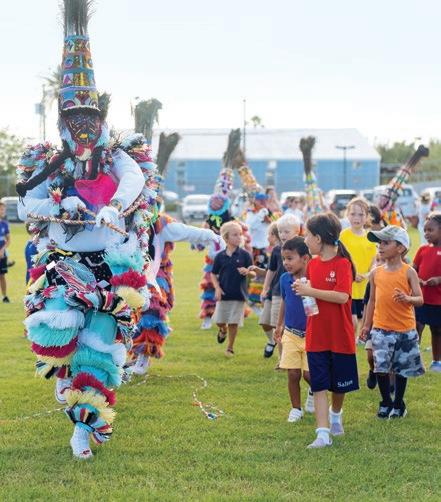
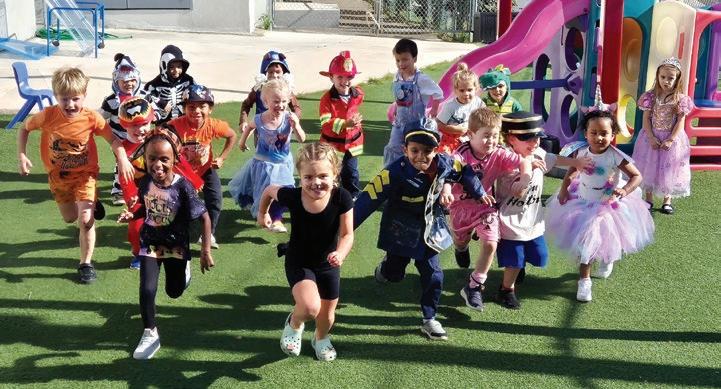
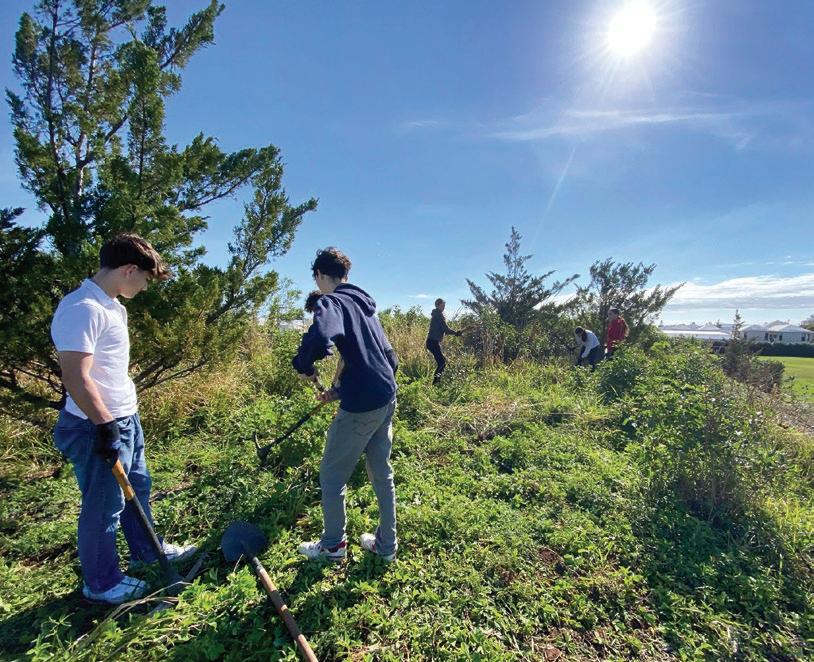
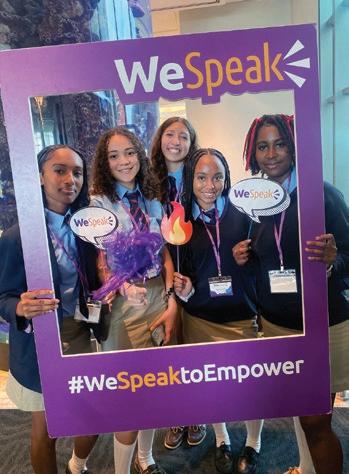
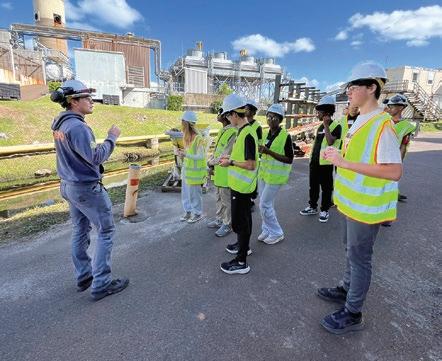
School trips and excursions are a valuable component of the education experience for students of all ages at Saltus. They offer tremendous educational, social, and developmental benefits including:
• Experiential learning
• Cultural exposure
• Social skills development
• Real-world application
• Personal growth
• Career exploration
• Community connections
• Memorable experiences
BY JESSE SHEPPARD, DIRECTOR OF CURRICULUM
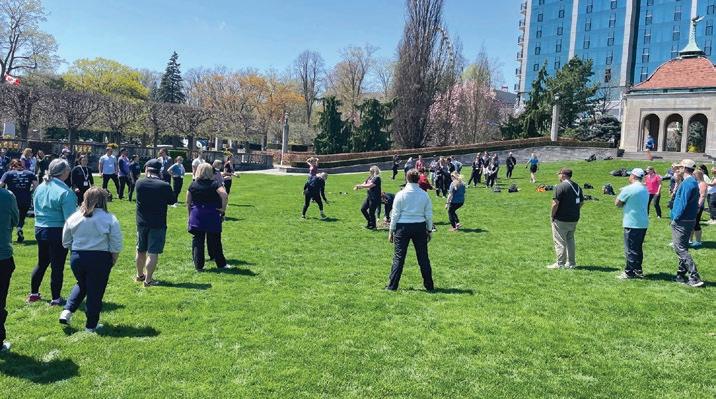
There’s something fitting about gathering physical and health educators at Niagara Falls – a place defined by motion, energy, and connection. This past May, that’s exactly where the 2025 Physical Health & Education (PHE) Canada National Conference took place, bringing together hundreds of educators, leaders, and advocates under the theme “Mighty Current.”
From Saltus, John Nusum (Head of Physical & Health Education), Zindzi Edmead, and Lorin Tannock ’08 (Teachers of Physical & Health Education), and I made the journey north to join the conversation. We arrived with a shared goal: to think deeply about what physical and health education means at Saltus, today, and in the years to come.
The conference’s theme captured the feeling in the room perfectly. The sessions reminded us that we are all navigating powerful currents; shifting technologies, changing social norms, and evolving understandings of what it means to live well. Workshops and keynote talks explored physical literacy, well-being, inclusion, and mental health, and we found ourselves inspired by the breadth of innovation happening across Canada. Whether discussing how to build
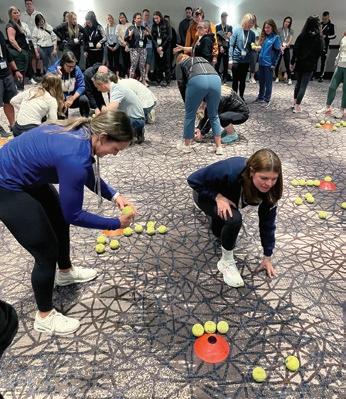
resilience through movement, how to embed well-being in every lesson, or how to make physical education a space where every student feels seen, the message was clear: quality PHE can change lives.
In between sessions, we found time to reflect together. Each conversation circled back to our students. How do we ensure that our approach to physical and health education at Saltus helps students not only move but also thrive? How do we give them the confidence, the curiosity, and the joy that comes from understanding their own health and well-being?
John, Zindzi, and Lorin each came away with ideas they’re eager to explore: integrating new teaching approaches that prioritize student voice, broadening opportunities for movement and activity, and strengthening the connection between physical literacy and lifelong wellness.
Returning to Bermuda, the sense of momentum was tangible. We’ve begun looking at how to weave these insights into our curriculum, ensuring that movement, health, and well-being are not isolated topics but central to the Saltus experience.
We’ve also committed to making space for our teachers to collaborate, to test new
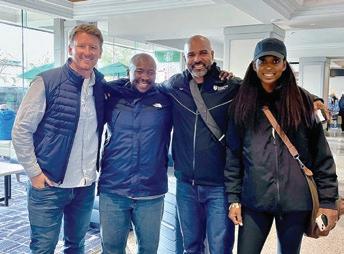
ideas, and to build on what we learned from colleagues in Canada. The “Mighty Current” is more than a conference theme, it’s a call to action.
As we continue to shape the future of physical and health education at Saltus, the Niagara Falls conference stands as a reminder of what’s possible when educators come together with a shared purpose. We returned home inspired, united, and ready to ride the current of change, ensuring that every Saltus student is not only active, but also confident, balanced, and equipped to lead a healthy life. l
BY JESSE SHEPPARD, DIRECTOR OF CURRICULUM
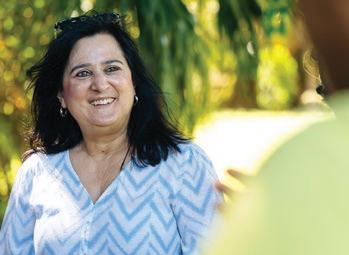
When educator and consultant
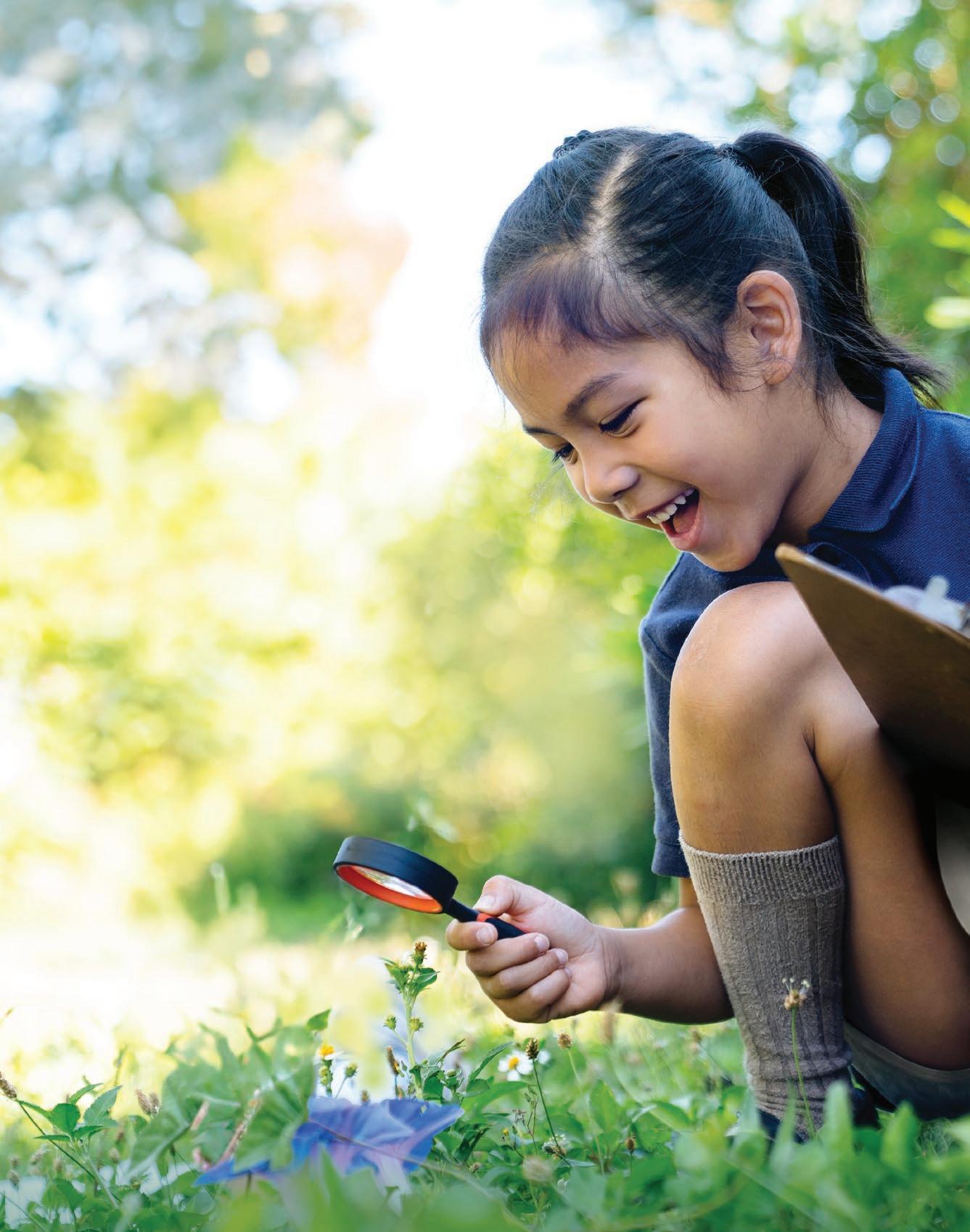
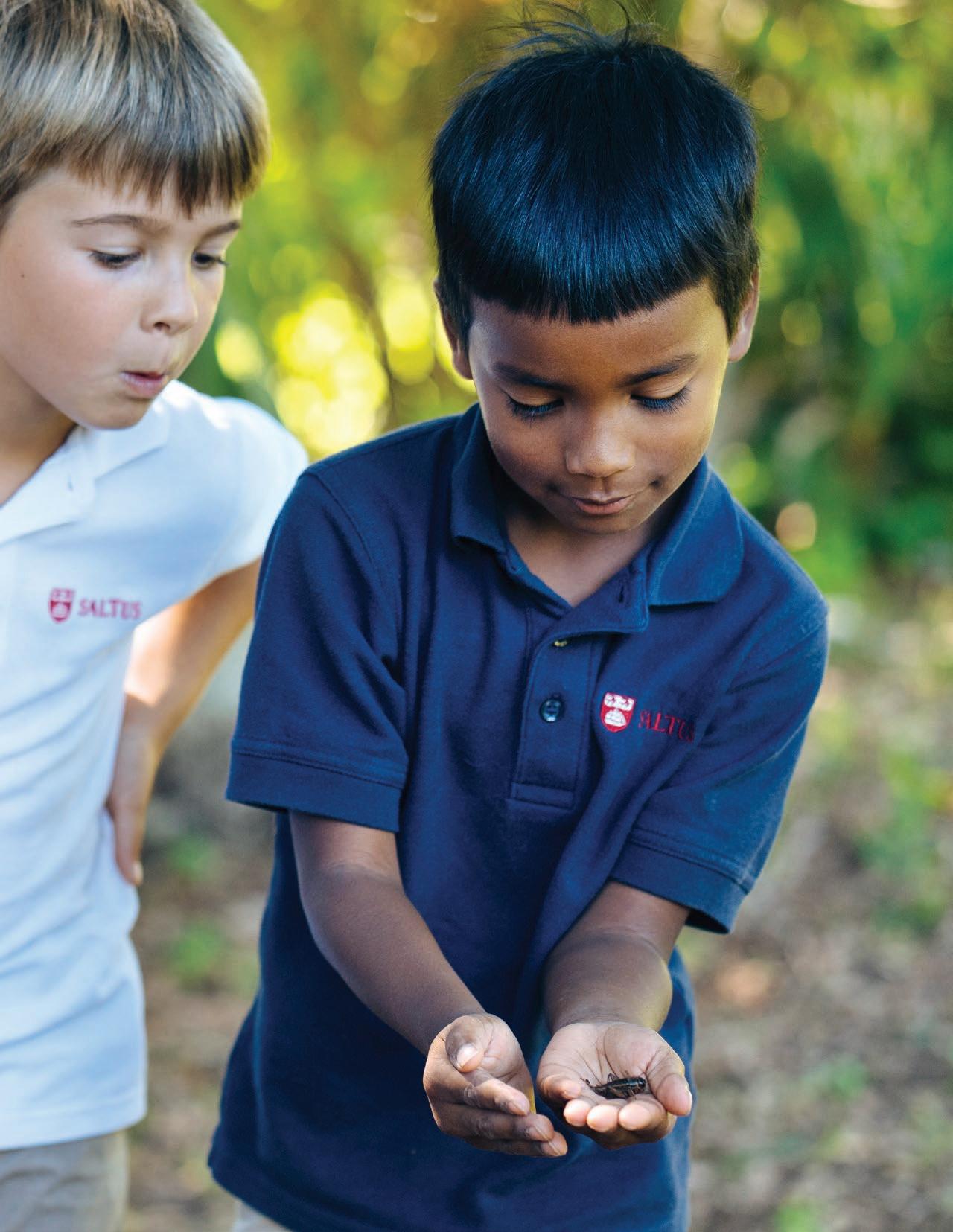
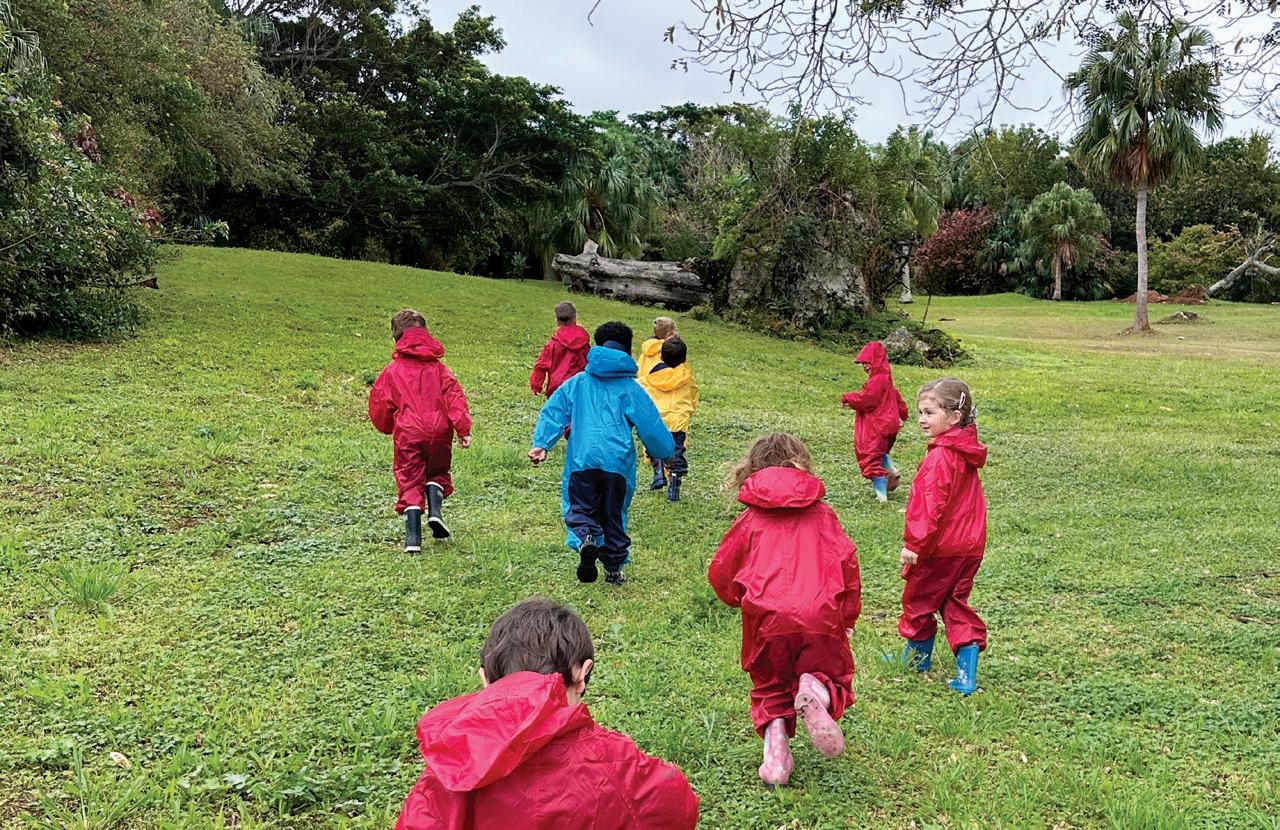
Maria Limpright arrived at Saltus last spring, she brought with her not only expertise, but a sense of wonder. Over several days, she walked with teachers through The Saltus Grove, our emerging nature-based learning centre, pausing often to notice small details: the curve of a branch, the way sunlight filters through the leaves, the quiet spaces where learning might naturally unfold.
Maria’s visit marked a pivotal moment in our plan to transform The Saltus Grove into a living classroom, one that reflects the principles of the British Columbia Early Learning Framework and Reggio Emilia-inspired practice. Her professional development sessions invited our teachers to see the outdoors not as an occasional extension of the classroom, but as an integral part of the learning experience, a place where curiosity, collaboration, and connection flourish.
Together, we explored key ideas: children as capable learners, the environment as the third teacher, and the
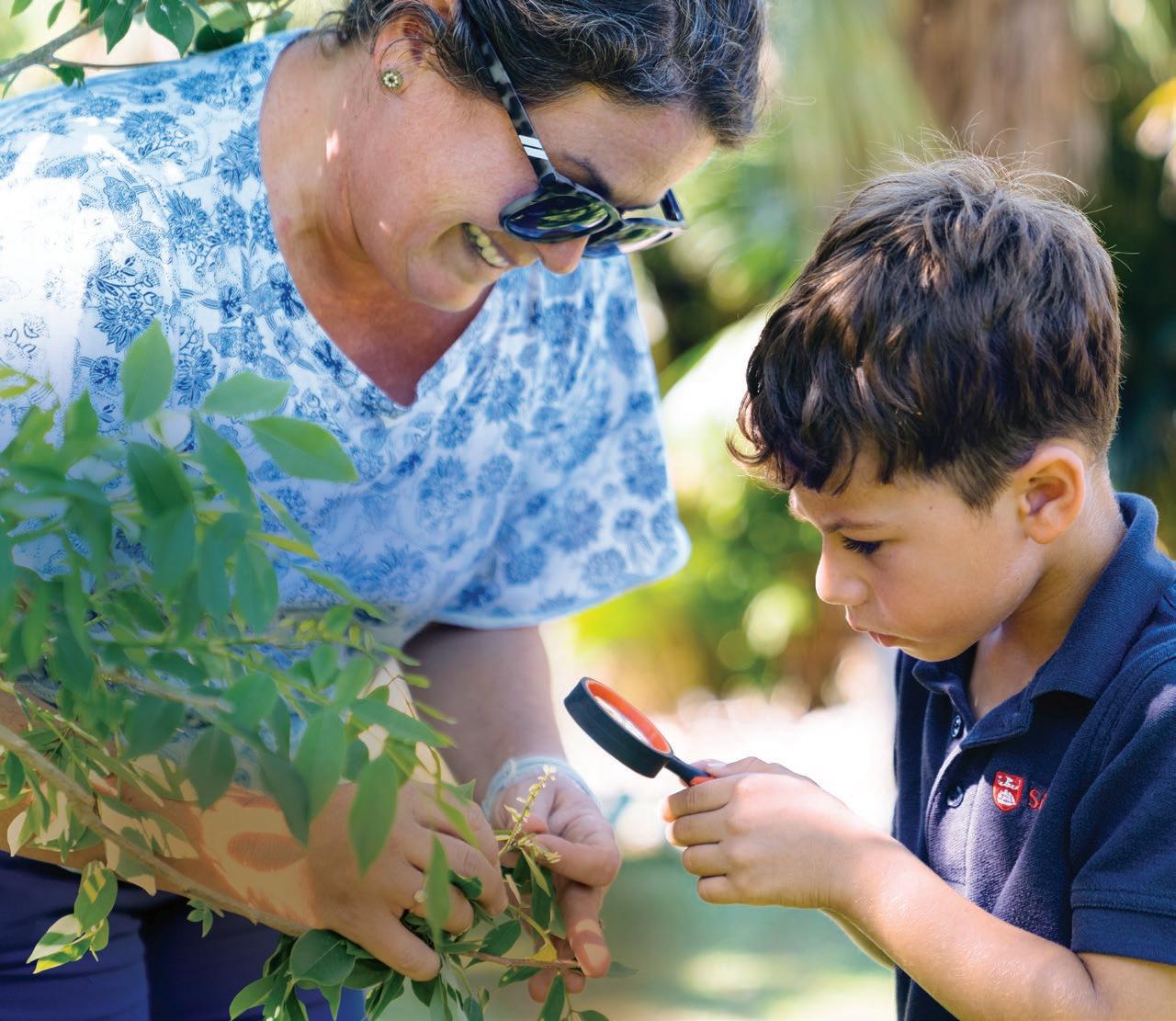
When children learn outside, they don’t just study nature, they become part of it.
importance of fostering a relationship with nature. Teachers participated in hands-on sessions, joined class visits to The Saltus Grove, and reflected on how outdoor learning can deepen understanding across subjects, from science and literacy to art and social studies.
By week’s end, The Saltus Grove was no longer just a physical space, it had become a shared vision. Educators
began designing lessons rooted in inquiry, exploration, and play, guided by the values of well-being, belonging, and place-based learning. Safety, sustainability, and respect for the environment were woven into every conversation, ensuring that our outdoor classroom grows with purpose and care.
The work doesn’t end here. In the months ahead, Saltus will continue to nurture The Saltus Grove through mentorship, reflective practice groups, and partnerships and with local experts. Our long-term goal is to cultivate a culture where learning outdoors is as natural as breathing, where children build confidence, resilience, and a lifelong love of the natural world.
As Maria reminded us, “When children learn outside, they don’t just study nature, they become part of it.”
At Saltus, The Saltus Grove is becoming more than a space. It’s a movement, one that grows, roots deep, and invites us all to learn alongside our students in the most inspiring classroom of all: the living world. l
BY JESSE SHEPPARD, DIRECTOR OF CURRICULUM
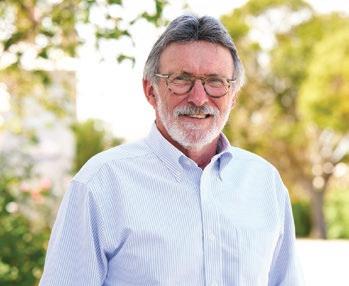
Every great school is built not only on what it teaches, but how it understands learning. At Saltus, our focus this year has been to deepen that understanding, to look closely at how we assess student growth, how we provide feedback, and how we ensure that assessment serves learning rather than simply measuring it.
To guide us on this journey, we have partnered with Canadian educator and author Damian Cooper, whose longstanding work through Plan Teach Assess aims to improve instructional and assessment practices for all students.
When Damian joined us in January 2025, his warmth and expertise immediately put everyone at ease. Over several days, he led a series of sessions that helped our faculty and leadership team reflect on one essential question: How can our assessment practices truly reflect what our students know, understand, and can do?
The January professionaldevelopment days were rich in conversation and collaboration. Damian began by framing assessment as a tool for growth, a process of gathering evidence, offering feedback, and inviting students into ownership of their learning. Drawing on his work at Plan Teach Assess, his philosophy rests on two core principles: that teaching and assessment must improve learning for all students, and that educators become more effective through collaborative inquiry.
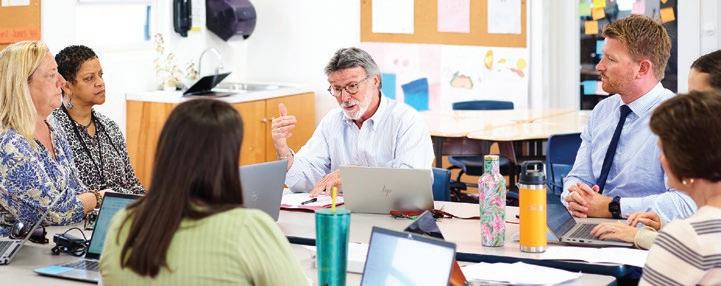
In the afternoon, teachers worked in teams to design unit plans through the lens of Backward Design, connecting big ideas, curricular competencies, and meaningful evidence of learning. The following day, Damian met with our Heads of Department, Year Coordinators, and Academic Directors, exploring strategies to ensure consistency and fairness across the school while honouring teacher professional judgement.
Between structured sessions, Damian spent time walking through classrooms, talking with teachers, and listening. Those informal moments often led to the most powerful insights, discussions about shifting from traditional grading to proficiency scales, using performance and conversational assessments, and involving students more directly in selfreflection and goal-setting. His emphasis on the triangulation of assessment – conversations, performances, and products – stemmed from his broader work and resonated deeply with our faculty.
Our partnership continued into April 2025, as Damian returned to collaborate with specific subject departments. Together, we explored rubric design, authentic performance tasks, and balanced assessment strategies that align with the British Columbia Curriculum. These sessions allowed teachers to refine their classroom practices and strengthen the link between assessment, instruction, and student agency.
Assessment, when done well, is the most powerful tool we have to improve learning.
The work is both practical and philosophical. It asks us to reconsider what success looks like and how we honour growth. It challenges us to view assessment not as the end of learning, but as part of the learning itself.
As our faculty continue this journey with Damian’s guidance, we are reminded that strong assessment practices are about more than marks, they are about meaning. They help us tell the story of each learner’s progress with accuracy, care, and humanity.
Our story with Damian Cooper doesn’t end here. Saltus will continue its partnership with Damian throughout the 2025-26 school year, deepening our exploration of backward design, performance assessment, and studentinvolved learning. His ongoing mentorship ensures that our commitment to meaningful, equitable, and reflective assessment remains at the heart of our teaching practice.
In the words of Damian Cooper, “Assessment, when done well, is the most powerful tool we have to improve learning.” At Saltus, that idea continues to take root, in every classroom, conversation, and piece of feedback, helping us ensure that what we measure truly matters. l
BY LIZ DOWDELL, ASSISTANT DIRECTOR OF LOWER PRIMARY
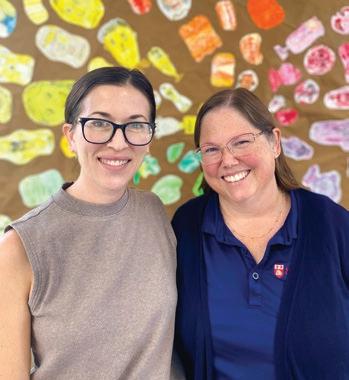
Last spring, I travelled to Hamilton, Ontario, to attend the North American Reggio Emilia Alliance (NAREA) Conference together with Grade 1 Teacher, Leslie Shrubb. The theme, “Children and Adults Researching in the Daily Life,” celebrated curiosity, collaboration, and creativity; values closely aligned with the values and beliefs at Saltus.
The conference brought together educators from across Canada, the United States, and Bermuda, along with a visiting team from Reggio Emilia, Italy. Among the presenters were Pedagogista Moira Nicolosi, Atelierista Marco
Spaggiari, and Interpreter Jane McCall, who moved seamlessly between Italian and English to make every idea accessible and engaging. The experience was both inspiring and affirming. We spent three days immersed in workshops, exhibits, and reflective dialogue, all centred around a powerful question: How can we nurture children’s natural wonder so that learning becomes a shared, living process between child and adult?
One of the most striking themes was the idea that learning is not linear. It is dynamic, interactive, and deeply relational. Teachers in Reggio Emilia describe their work as researching
alongside children. Instead of providing ready answers, they design contexts, provocations or experiences that invite discovery. In practice, this means teachers observe children closely (sometimes through photos or short video clips of their play) and then come together as a team to reflect.
They ask: What theories are the children forming? How might we extend this exploration? This kind of collaborative reflection helps teachers design the next step in learning, keeping curiosity alive. A beautiful reminder that children are competent from birth. Our role is to listen, to see the world through their eyes, and to create environments that invite them to keep wondering.
Another concept explored at the conference was the culture of the atelier. Far from being a traditional art room, the atelier is a place where children express their thinking through many “languages,” such as drawing, sculpture, photography, music, movement, and more. Atelierista Marco Spaggiari shared how creativity is not a subject, but a way of knowing. As he put it, “Language is more than a tool for communication; it’s how we discover the world around us.” Children might use wire and clay to explore balance, or digital cameras to capture different perspectives of a garden. These experiences help make their thinking visible. When they revisit their work, they often refine their ideas or connect new insights, demonstrating how learning spirals forward through reflection and experimentation.
Another highlight was the way digital tools are used in Reggio-inspired settings, not as distractions but as mirrors for learning. One powerful example shared was of a child taking a photograph of another child at play. Later, we looked at the image together and discussed what they had noticed. This small act opened a window into our thought processes, encouraging metacognition (children thinking about their thinking). We were
asked to consider the role of technology as a tool, not about using technology for its own sake, but about using it to tell the story of learning.
Leslie shared these thoughts, “This NAREA conference was my first opportunity to learn firsthand from such creative and inspirational speakers from Reggio Emilia. They brought to life in such poetic and moving ways the value of teaching within the inquiry framework. The examples of children’s work that were shared demonstrated how openended projects can be, and how adaptable they can be to my own context. I have been inspired to draw on the expertise of my colleagues and to work more collaboratively within my team to explore the deeper meanings of my students’ ideas and thinking.”
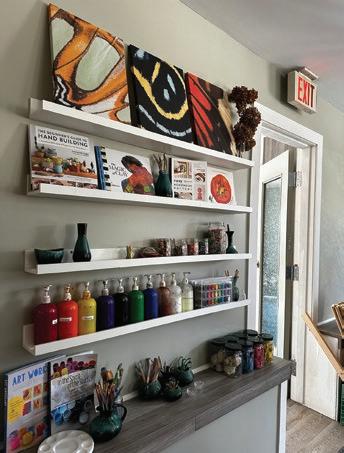
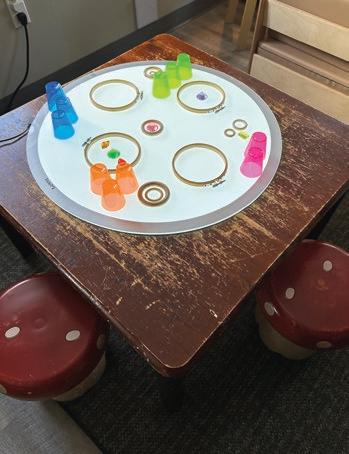
The ideas from the conference connect deeply with our own approach at Saltus. Like the educators in Reggio Emilia, we believe that children’s thinking matters, that learning happens through experience and dialogue, and that the classroom environment (the “third teacher”) plays a crucial role in shaping curiosity. Our faculty continue to explore ways to bring these insights into our daily practice: refreshing classroom spaces, reimagining displays of student work, and using documentation to make learning visible in our common areas. Projects like The Saltus Grove, where children observe and represent living things in nature through multiple forms of expression, echo the spirit of the Reggio approach.
As Marco Spaggiari reminded everyone, “Listening is an act of love towards others who are not ourselves.” This message reminds us that education begins with empathy, attention, and the courage to learn together. By engaging with these ideas, we are continuing to build a school culture where children’s thinking matters, creativity flourishes, and learning truly becomes a shared journey. l
Founded following World War II in the town of Reggio Emilia, Italy, the Reggio Emilia approach to learning is founded on the principle that children learn through making their own connections about the world around them and are not simply empty vessels to be filled with knowledge. They are active participants in their own learning and skills and knowledge are learned through authentic experiences.

We believe that children’s thinking matters, that learning happens through experience and dialogue, and that the classroom environment (the “third teacher”) plays a crucial role in shaping curiosity.
BY JESSE SHEPPARD, DIRECTOR OF CURRICULUM
At Saltus, we believe that mathematics is not just about answers; it’s about curiosity, reasoning, and the rich conversations that lead to deeper understanding. This year, we embarked on an exciting new chapter in our math program by partnering with Dr. Marian Small, an internationally renowned mathematics educator whose work has shaped K–12 practice across Canada and beyond.
When Marian Small arrived for her first in-person visit from 6th–10th October 2025, there was a palpable sense of anticipation across campus. Having implemented MathUP over the past year, our faculty were eager to build on their experience and deepen their understanding of the program’s philosophy. Guided by Marian, we explored the next layer of MathUP, how to use open tasks, meaningful questions, and formative assessment to nurture deeper mathematical thinking and dialogue in every classroom.
In workshops we explored what it means to offer students “open tasks”; questions that invite thinking, multiple strategies, and rich discussion. We asked ourselves: How can we embed these tasks into everyday instruction? How can we sustain the learning beyond the lesson?
Our professional development plan is both ambitious and purposeful:
• A virtual series from 27th October to 17th November 2025, focusing on embedding open questions into everyday instruction and using MathUP to guide differentiation and formative feedback.
• A second in-person visit, 5th–7th January 2026, diving deep into formative and summative assessment within the MathUP framework, including classroom observations, feedback and collaborative reflection.
• A third in-person visit, 19th–21st May 2026, designed to consolidate what we’ve learned, review student-work samples, evaluate understanding across strands, and plan strategically for sustainability into 2026–27.
Through Marian’s work and her many published resources, including “Good Questions,” “Open Questions,” and the MathUP ecosystem, we are reminded that mathematics becomes more meaningful when students are asked truly interesting questions and given opportunities to reason, discuss, and reflect.
Our faculty are already reflecting: what does assessment look like when it supports learning rather than simply measuring it? How can students engage in self-assessment, conversation, and meaningful reflection? With Marian’s guidance, we’re asking those questions in mathematics just as we have in other disciplines.
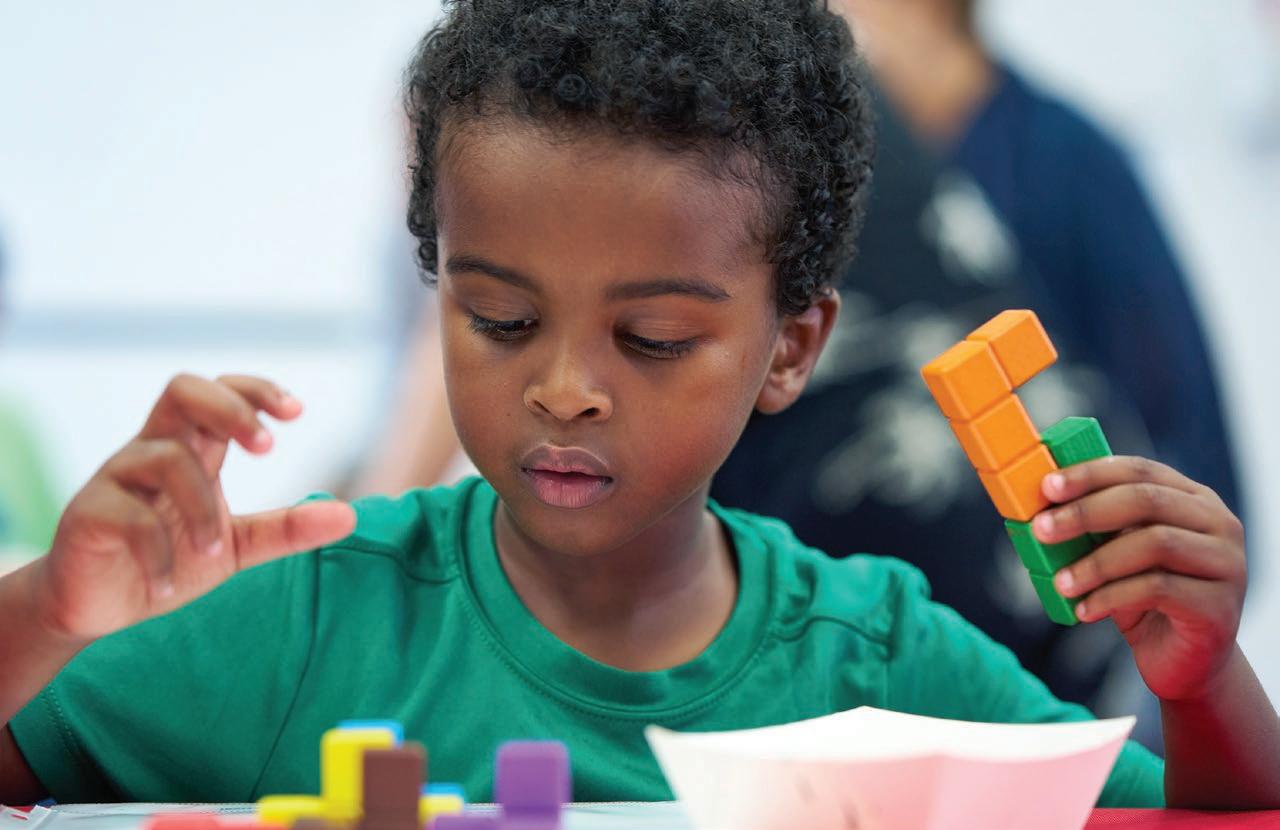
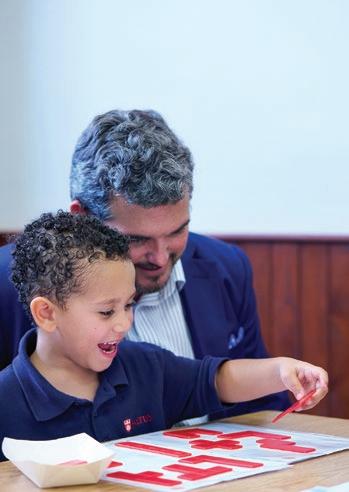
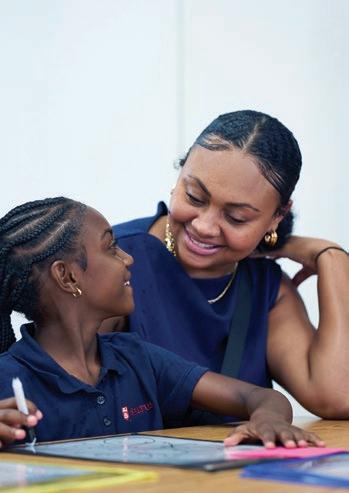
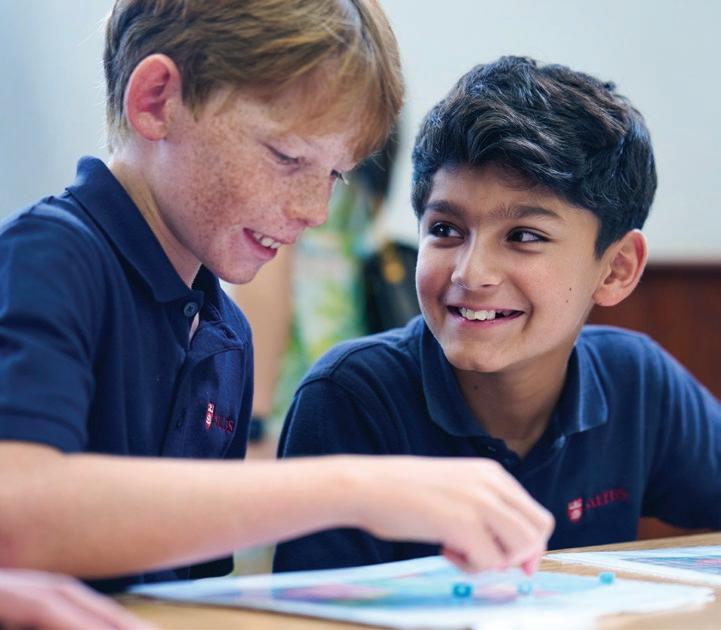
Students and families attended our firstever Math Festival this fall, where they were encouraged to find joy in math.
As we move through the 2025–26 school year, our momentum is clear: we are deepening our commitment to a culture of mathematics that values thinking, reasoning, growth and inclusivity. Marian’s partnership is not a one-off event; it is a sustained collaboration that will carry us forward.
In the words of Dr. Marian Small, assessment, tasks, and questions are not ends in themselves; they are vehicles for learning. At Saltus, we are turning those vehicles into journeys, through classrooms, conversations, and ideas, with Marian guiding our path forward. l
BY JULIE ROUSSEAU, HEAD OF SCHOOL
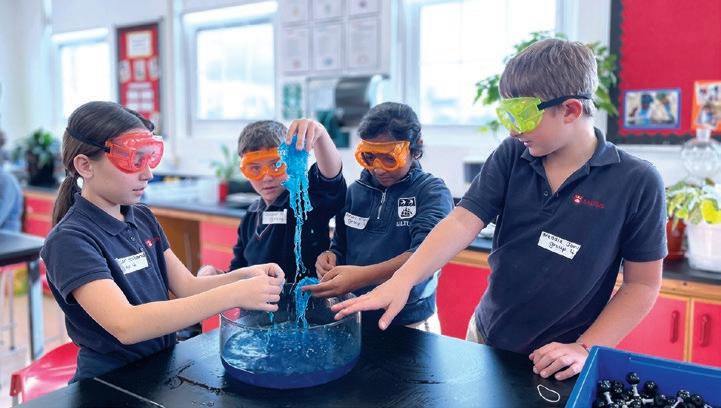
The world our students will shape is diverse. At Saltus, we believe that learning side by side helps students develop the confidence, empathy, and respect they need to thrive in life and in leadership.
In a co-educational setting, students learn from one another every day. They challenge ideas, share perspectives, and see that leadership, creativity, and collaboration know no gender. Research consistently shows that co-educational environments strengthen communication, adaptability, and emotional intelligence, skills that are essential for success in the classroom and in life beyond school.
“Attending
a co-ed school for my entire life has offered countless benefits. It’s taught me how to communicate with a diverse range of people and perspectives, encouraged healthy and respectful discussions, and helped prepare me to navigate the real world confidently.”
Tse Burgess, Head Prefect
Co-education also breaks down stereotypes and builds genuine respect. When students of different genders and identities work together, they learn to value one another’s voices, experiences, and strengths. Girls see boys demonstrate empathy and teamwork; boys see girls lead with confidence and innovation; and all students come to understand that great ideas and leadership are not defined by gender, but by character, effort, and collaboration.
At Saltus, this comes to life every day, in classrooms and labs, on fields and stages, and through initiatives like Service Learning, our Gold Key Student Ambassadors, and our new Student First Responders program. These experiences
“Going to a co-ed school helped me learn and collaborate with different people, which is exactly how the real world should and does work. It allows the school to do exactly what it’s supposed to do: prepare for the future.”
Steven Chu, Head Prefect
give students the opportunity to lead together, problem-solve together, and celebrate one another’s success.
Our students also learn from a diverse, co-educational faculty and staff, who model balance, collaboration, and inclusion in their teaching and leadership. Learning from and with both men and women helps students feel seen, supported, and prepared to work confidently in the world beyond Saltus.
At Saltus, co-education isn’t just about inclusion; it’s about preparation. In a co-educational community like Saltus, our students don’t just learn side by side; they thrive side by side, ready to lead in a world that needs every voice. l
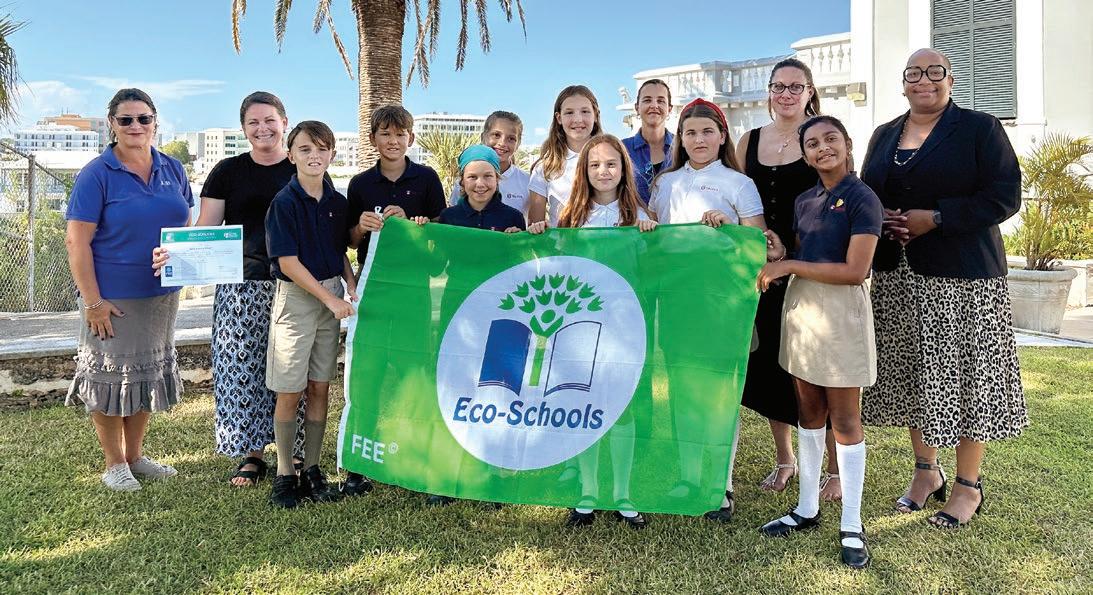
How Our Community Earned Eco Schools Status Through Action, Innovation, and Student Leadership
At Saltus, we are committed to fostering a sustainable future by integrating the United Nations Sustainable Development Goals (SDGs) into our daily practices and educational programs (inclusive of environmental literacy). Our dedication to sustainability is reflected in our efforts to provide inclusive and equitable quality education, ensure access to safe and clean drinking water, reduce our carbon footprint by using clean and affordable energy, encourage sustainable consumption and production patterns, take urgent action to combat climate change, protect terrestrial ecosystems, and ensure that all students can understand and commit to the global goals.
In the spring of 2025, we were able to achieve our Eco Schools status in Bermuda. As leading members of the school’s Eco Team, driving some of our key sustainability efforts, we were able to interview Emma Law, Grade 1 Teacher, and Andrea Lathwell, Grade 5 Teacher, about the significance of this achievement.
Why is the Eco School designation meaningful to Saltus, and what does it say about our commitment to sustainability?
Andrea: Being an Eco School is important and impactful in helping us as a school become responsible citizens of the world. Also, it enables us to educate the future generations to be responsible for their impact on their world and those around them.
Emma: The Eco School designation highlights that the work students and teachers are doing around sustainability issues happens across ages, departments, and is embedded in so many learning opportunities.
How do Eco School initiatives help students develop a sense of environmental responsibility both at school and beyond?
Andrea: Being an Eco School educates students about how their actions impact the environment and the citizens around them. Teaching them the Sustainable Development Goals allows them to understand how they can make a difference. Engaging the children in specific projects allows them to feel empowered that they can make a difference, whether at home, in the community, or at school. It also reinforces that even though the children are still young, they can make a difference and have an impact.
Emma: The Eco School initiatives bring a strong focus on sustainability issues in Bermuda and around the world. This spotlight highlights how our individual and collective efforts can make an impact and how our daily choices strongly affect the world we live in. The students are passionate about making the world a fairer, just, and sustainable world, and they demand that their families do so as well. The children start to educate their parents about why sustainability is so vitally important.
What are some of the key sustainability projects and goals the Eco School team is focusing on this year?
Emma:
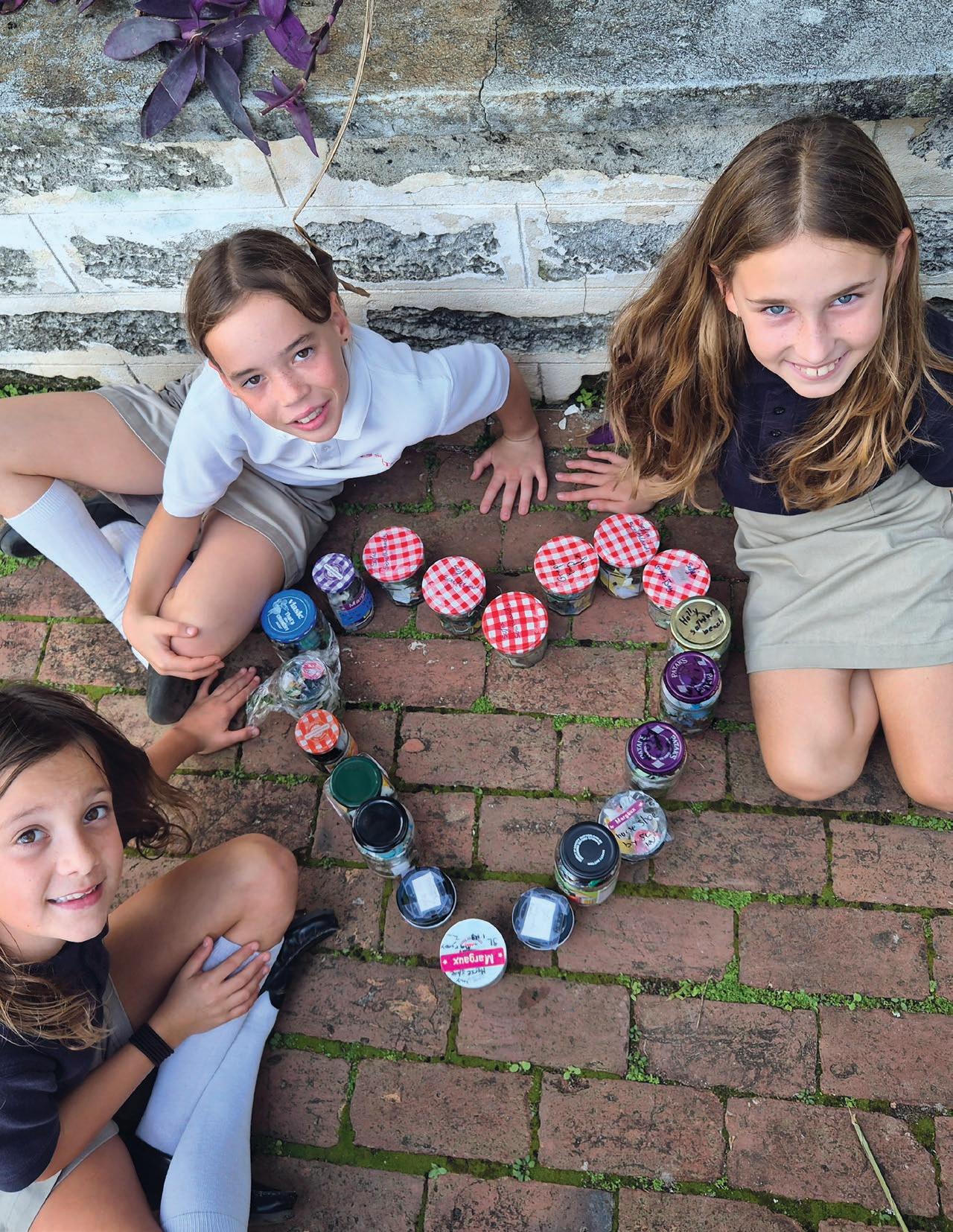
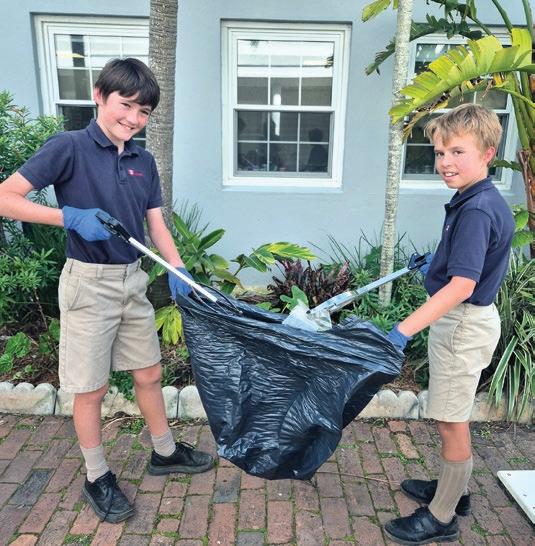
1. The Saltus Microplastics Challenge: held each fall, is an opportunity for the whole school, from ages 3 to 18, to focus on a hugely problematic issue for Bermuda. As an island nation, this issue affects us every day, and we are hopeful that by reaching out to our entire community, we will help to raise awareness on the issue of plastic. The Eco Team is continuing to work on bringing a variety of speakers to work with the students on issues around plastic.
2. Promoting student agency: Saltus now has in place a series of different student groups who are leading a variety of sustainability initiatives. Our Senior Sustainability Prefects –Asha Dunleavy and Emma Oury – are working with the Grade 5 Eco Ambassadors as well as an Eco Club in the Middle and Senior grades. The Eco Team encourages these groups to lead, develop ideas and set goals for the entire student body.
3. The Micro Forest Project (including support for Just One Tree Day): We are planning on planting over 200 plants on the school field to ensure that there is an endemic natural patch of land on Saltus grounds. This will involve the Eco Prefects, the Eco Ambassadors, and various classes across the school. We hope that we can involve parent volunteers as well.
4. Earth Day, Earth Hour: Asking everyone at school on 22nd April to switch off all tech and lights for one hour to reduce the impact of our school on the environment.
5. The Saltus Grove: We are rewilding the space by planting native and endemic plant species.
6. Endemics and Native Planting initiatives like the Pollinator Patch: Providing a holistic and natural work space.
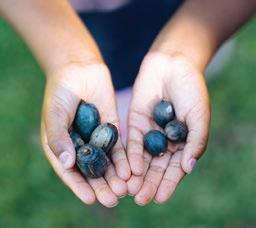
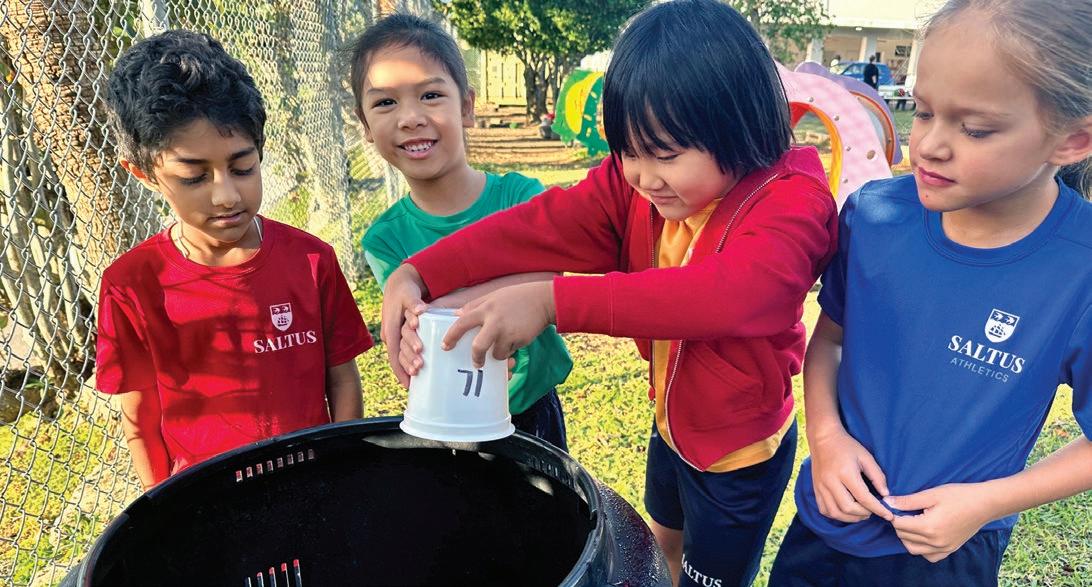
7. Composting: We are busy composting at Lower Primary, and the bin is filling up! Near the composter at Lower Primary is an area with wooden structures and kitchen items for roleplay for the students. It is also the spot where we are going to ‘rewild’ a section with native and endemic shrubs. We have endemic coastal sophora (necklacepod) as well as snowberry to plant near this area. The Lower Primary children started germinating these plants from seed and cuttings last year.
Our Vision at Saltus is to inspire students to lead us to a more just, fair, and sustainable world.
How do you hope Saltus will continue to grow as an Eco School in the future, and what lasting impact do you want these initiatives to have?
Emma: We want to help develop environmentally responsible adults who think carefully about the implications of their choices and actions. We hope Saltus will continue to model a position of social and environmental responsibility and that the students will demand change from the rest of their communities. Andrea: We hope that driving all of these eco initiatives within school will give children a sense of achievement, responsibility and hope for their future world. Thus enabling Saltus to model itself at the forefront of education as a responsible citizen of the world.
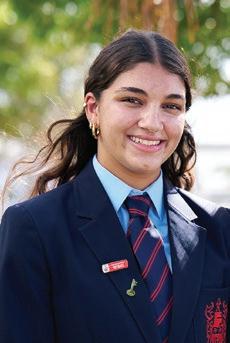
“Being the Sustainability Prefect with Emma is important to me because throughout my experience at Saltus and living in the unique environment of Bermuda, I have realized the impact that the environment has on our daily lives and well-being. We depend on a clean environment to be able to learn and grow as people. My goal is to inspire students to care about doing their part in keeping our school and island as eco-friendly as possible. Even though Emma and I only have a year as Sustainability Prefects, I hope that our positivity and influence can make a lasting effect on the school community years down the line, and we can all continue to enjoy this island we call home in all its beauty.”
Asha Dunleavy, Sustainability Prefect
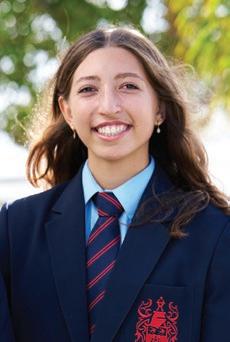
“It
is with pride, responsibility and ambition that, with Asha, I lead Saltus towards a more sustainable future. Having always loved scuba diving, I have learned to appreciate nature, especially marine life, since I was young. Therefore, I decided to help take care of the environment in my community and hope to inspire others to do the same. Saltus has already shown its dedication and support through beach clean-ups and many other projects. I cannot wait to see what the upcoming year will bring to Saltus!”
Emma Oury, Sustainability Prefect
Why is this initiative so important to you as educators?
Emma: My passion for Bermuda’s natural history started with my parents, my mother, a geography teacher, instilled a love for snorkelling, swimming, gardening and being outside. As I became a teacher and researched and learned more about the Reggio Emilia approach, I was able to connect this passion into my teaching, and I discovered the importance of sharing the beauty of the world around us with my students. My classroom terrarium is bursting with snails, and Lower Primary has been busy growing endemic snowberry bushes to plant. I am honoured to play a small role in helping students connect with nature and grow into environmentally conscious adults.
Andrea: My passion for the environment has shaped my work as an educator. When I realized students were not learning enough about climate change, I completed UN professional development courses focused on teaching climate education and created a Grade 5 climate club, while integrating more sustainability learning into science lessons.
Through the UN’s Sustainable Development Goals Book Club, I introduced children’s literature that sparked discussion around all 17 goals. At my previous school, I also partnered with the Government of Jersey, leading two whole-school projects: planting 500 trees along the railway walk and creating a nativeplant ecosystem designed and researched by Year 6 students. Both sites are now open to the public.
We later transformed our school orchard into a sustainable triangular ecosystem, further deepening hands-on learning. I’ve also shared our work through BBC Jersey radio and published an article on climate action.
I believe children must be empowered to take meaningful action because even small efforts can spark big change. Just as one person cleaned a beach in Mumbai and inspired others, change begins with a single step. Our students can, and do, make a difference. l
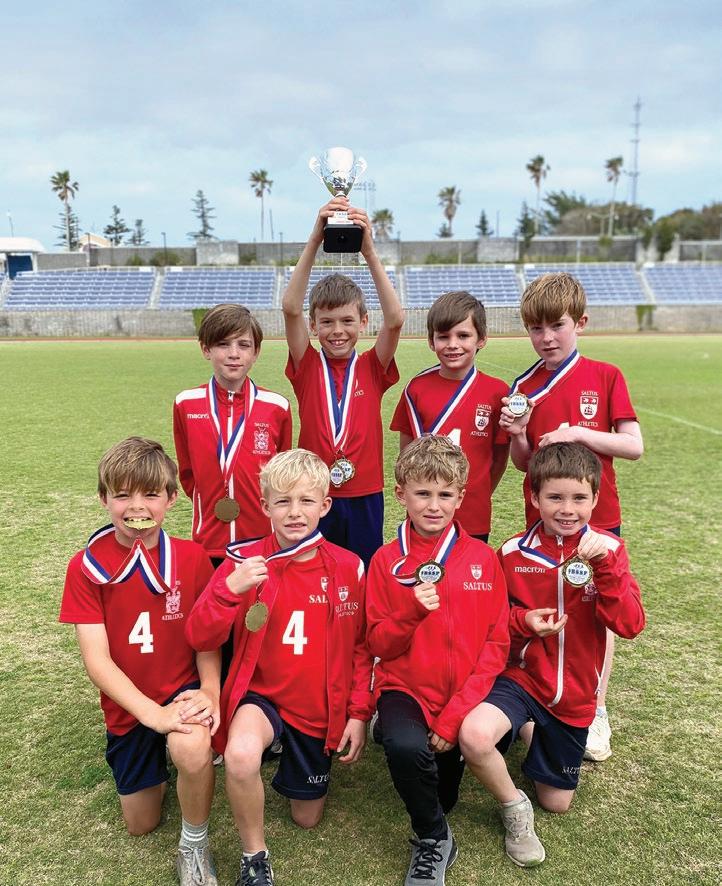
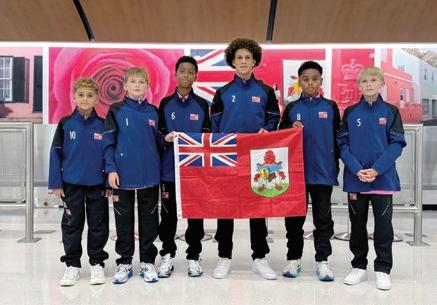
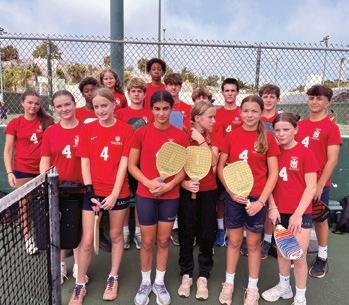
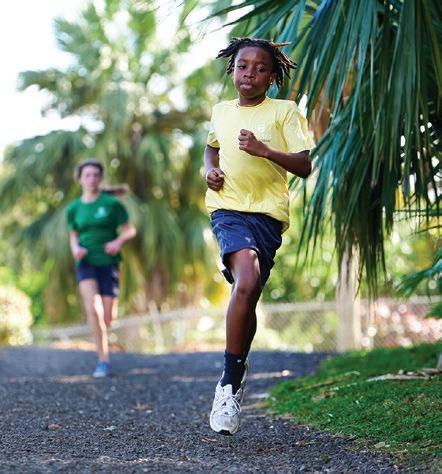
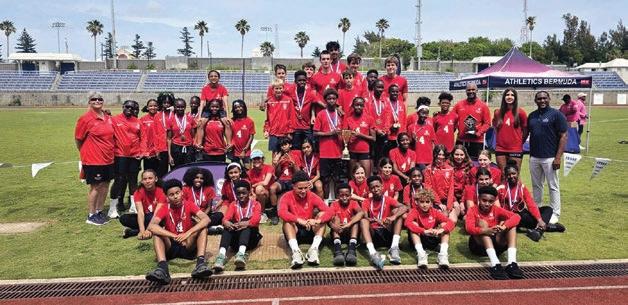
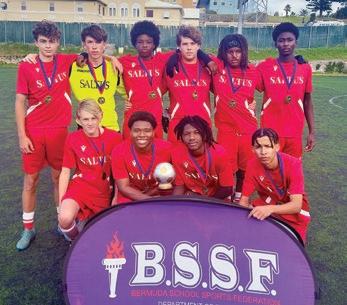
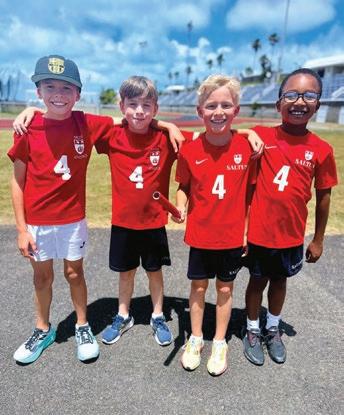
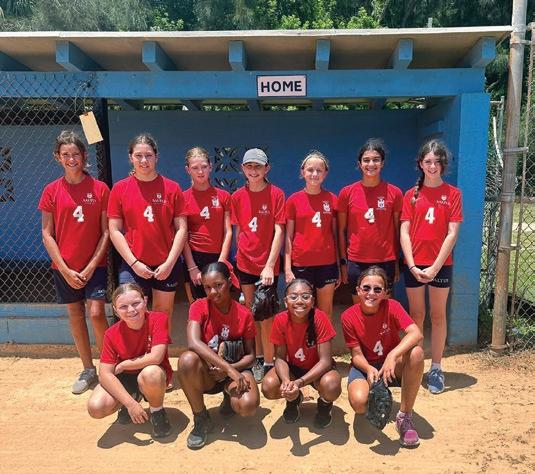
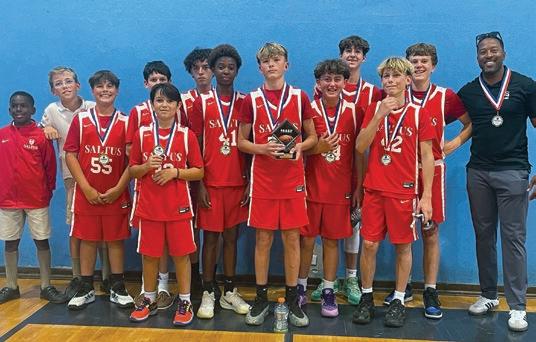
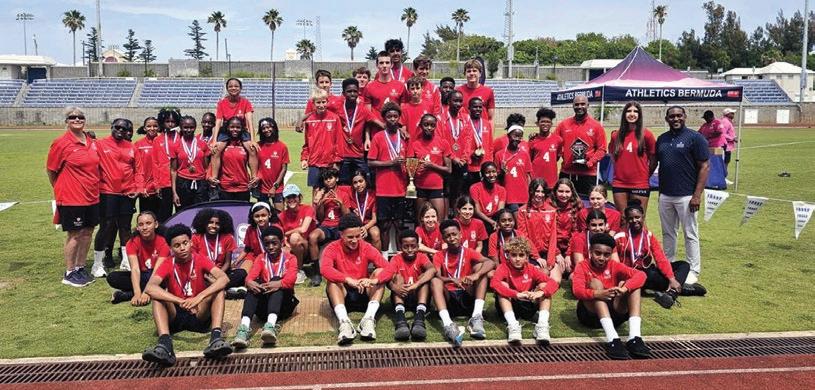
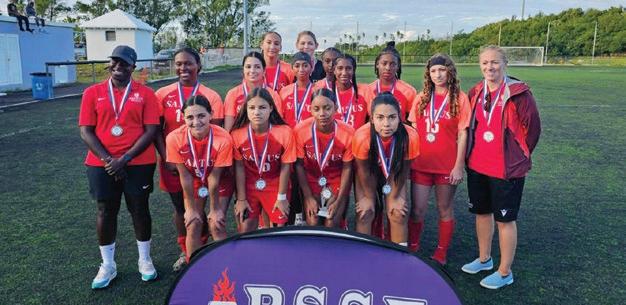
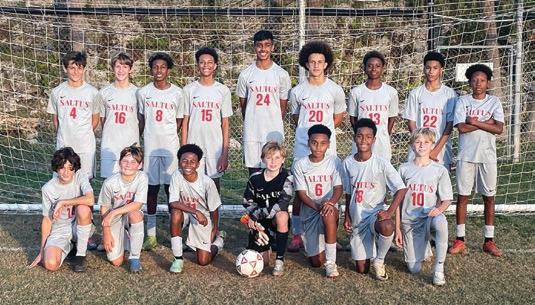
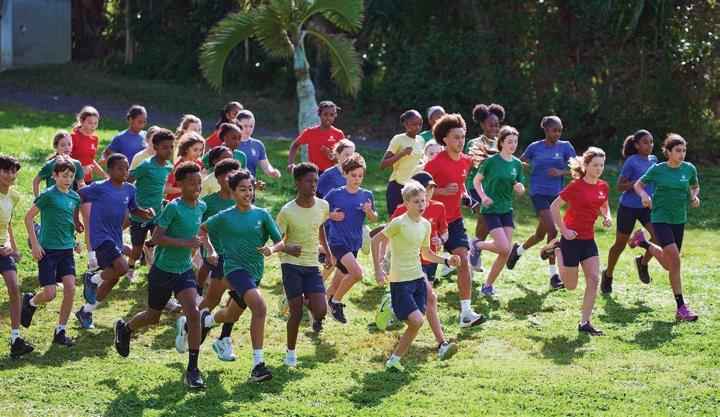
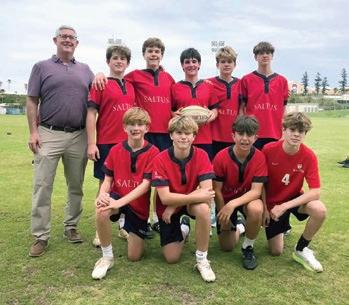
The Saltus Athletics Program strives to develop the whole student physically, intellectually, socially, and emotionally. Saltus Athletics offers numerous opportunities to participate in team activities from the Upper Primary through the Secondary levels each year.

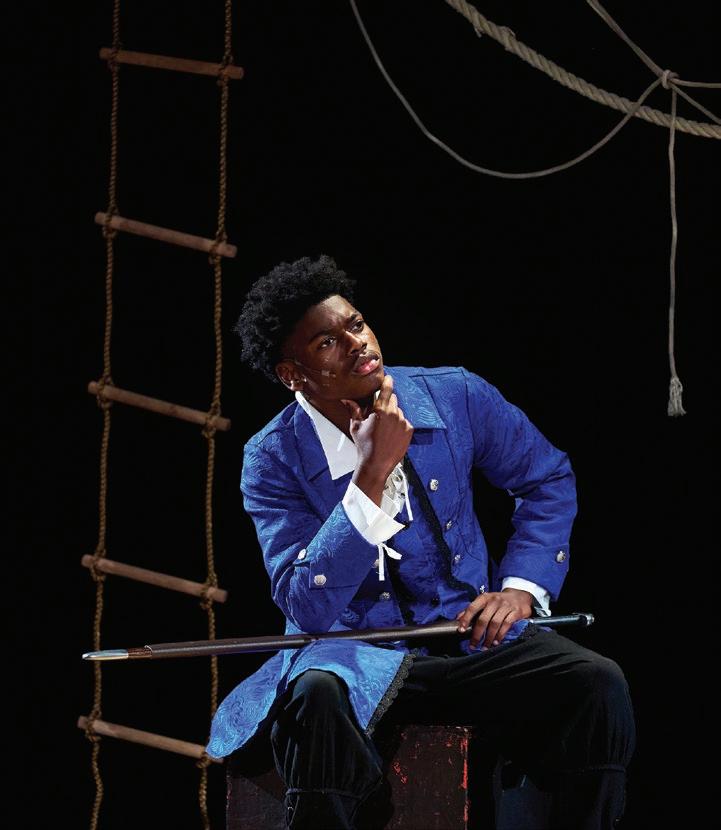
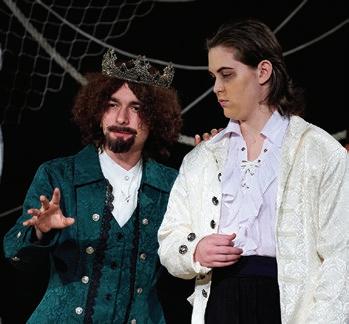
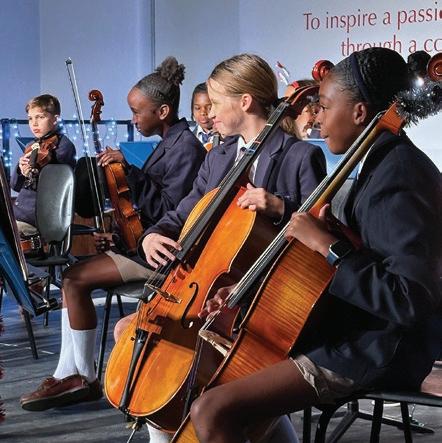
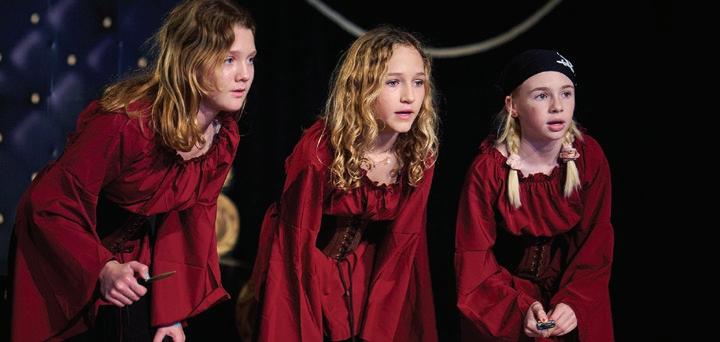
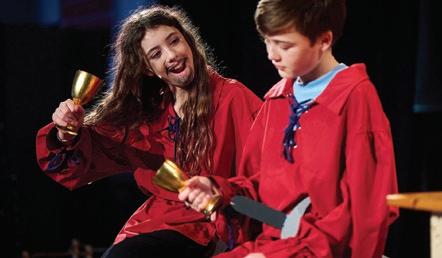
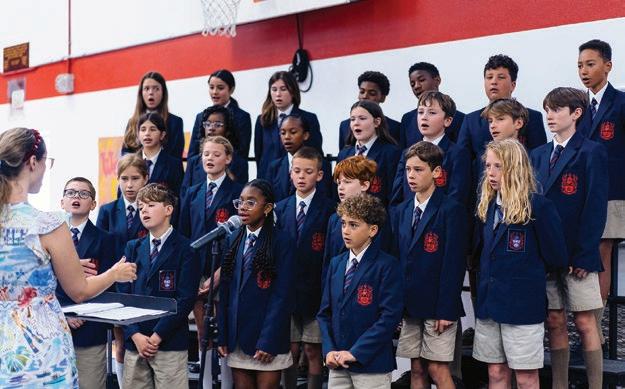
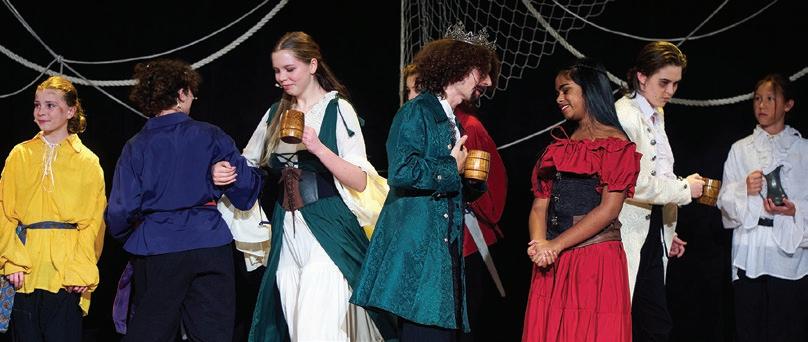
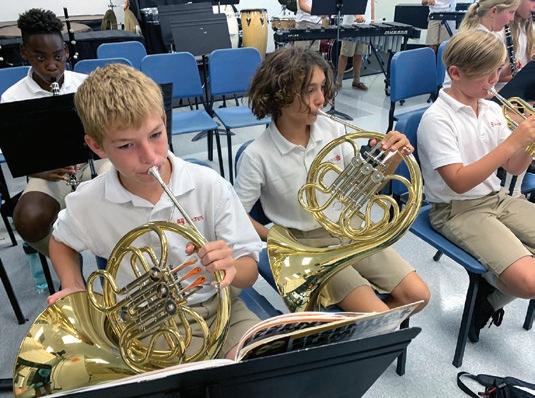
At any point on their Saltus journey, aspiring artists have a wealth of opportunities to explore their talents through music ensembles, drama, film and media arts, and visual arts.

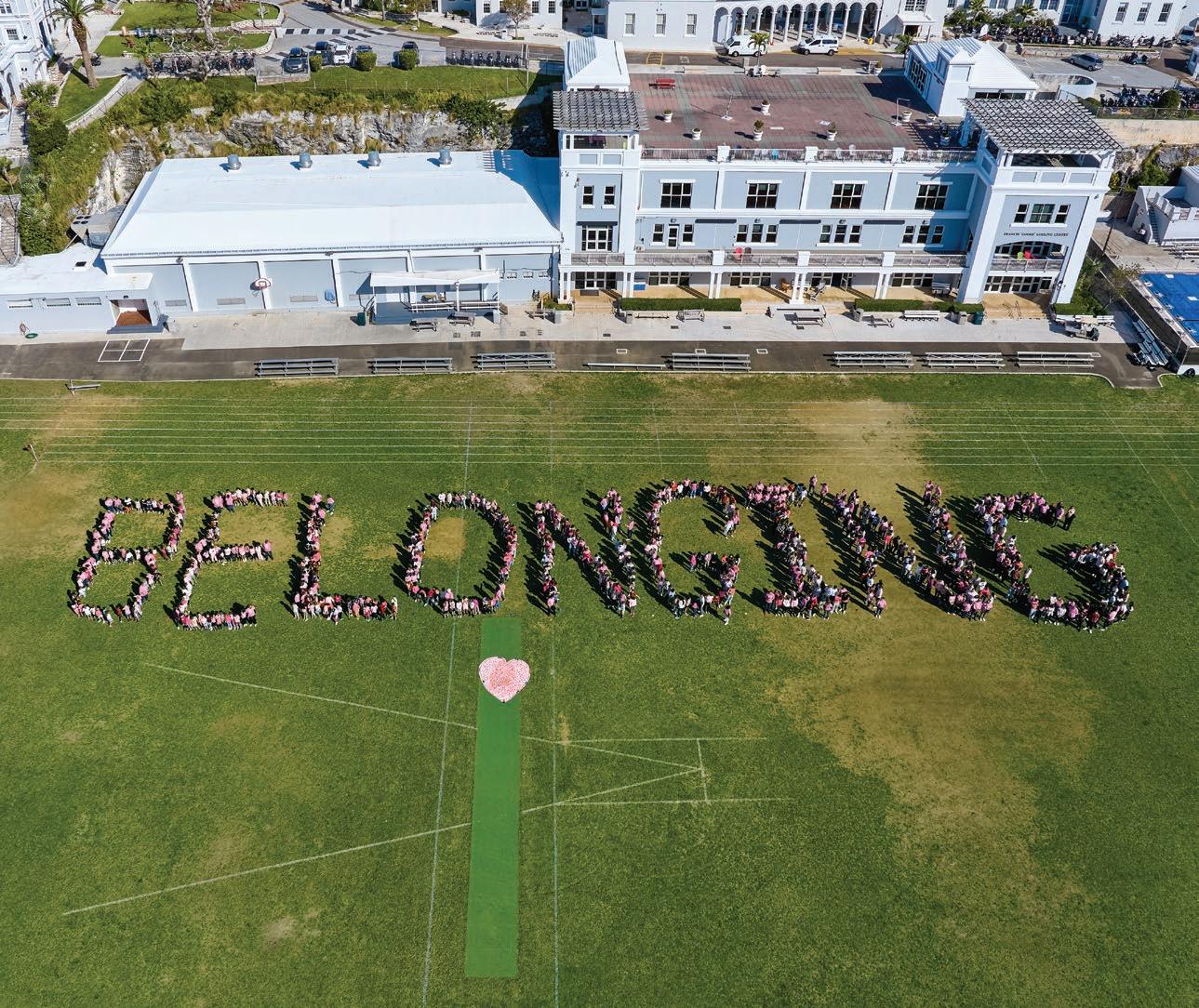
At Saltus, we believe that belonging grows from respect, connection, and shared purpose. This belief has long been at the heart of our work, but as our school evolves, so too must the words that represent our values. Over the past several months, I have had the privilege of working alongside staff, students, parents, and trustees to revisit and renew our Inclusion Statement, an essential declaration of who we are and who we aspire to be as a community.
BY NADIA ROBINSON, DEPUTY HEAD OF SCHOOL
At Saltus, we believe belonging grows from respect, connection, and shared purpose. We are dedicated to building an inclusive and equitable school community that embraces diverse identities and perspectives, where all individuals feel safe, supported, and empowered to thrive.
Our previous inclusion statement, developed in 2019, reflected a moment in time. It was a time before we had introduced our school values of Belonging, Respect, Integrity, Courage, and Empathy. Our goal was to ensure that the language of our statement truly reflected our values, our lived experiences as a community, and our commitment to equity and belonging. We needed to ensure that it reflected our current lived reality at Saltus.
As our understanding of diversity, equity, inclusion, and belonging (DEIB) has evolved, both within education and society at large, it has become clear that the language we use to describe our school culture must also evolve.
In parallel, our ongoing work to align school practices with our vision – to inspire students to lead us to a more just, fair, and sustainable world – highlighted the need for a foundational message that could guide decisions, inspire trust, and serve as a reference point for all DEIB efforts across the school.
Through an iterative, collaborative process, the statement has been carefully reimagined. The result is a clear, community-rooted expression of who we are and who we strive to be; one that centers belonging, affirms identity, and reflects our shared purpose moving forward.
Voices from key stakeholder groups were represented in focus groups and engaged in protocols to review the statement, including trustees, parents, staff (Saltus Leadership Team, Staff DEIB Committee, interested staff volunteers), students (Student DEIB Prefects, DEIB Committee Representatives, Middle Grade School Leaders, and Student Council Representatives). We also collaborated with colleagues from other CAIS schools.
These conversations enriched our understanding and helped us ensure that the final statement was both authentic to Saltus and aligned with broader best practices in education.
Each voice helped to shape the final statement, reinforcing that belonging is not defined by any single group; it is built collectively.
We were intentional in making a clear alignment with our values, with an emphasis on respect and belonging. Today, those values are a compass for everything we do. As we revised the statement, we were intentional in aligning it with those values, particularly respect and belonging, as well as with our Portrait of a Graduate.
The final statement reflects a balance of clarity and action. It centers on belonging as foundational, integrating the language of respect, connection, and shared purpose, and clearly affirms our dedication to equity, inclusion, and the celebration of diverse identities and perspectives, acknowledging that these differences strengthen us.
A GLOBAL CITIZEN who embraces the diversity of culture, language, and values within their local and wider community and whose curiosity empowers them to make a positive impact.
A SKILLFUL COMMUNICATOR who is empathetic, listens actively, speaks purposefully and creates meaningful connections.
PERSISTENT in the face of adversity, showing strength and perseverance to achieve their goals.
An ADAPTABLE AND FLEXIBLE LEARNER who thinks creatively, seeks and considers multiple viewpoints, and is equipped to approach complex problems confidently.
A CRITICAL THINKER whose intellectual curiosity prepares them to navigate a fast-paced, everchanging world.
This renewed statement is meant to be far more than words displayed on a wall or printed in a handbook. Our refreshed inclusion statement is intended to guide not only communications but also policy alignment, culture initiatives, and future DEIB strategy. It will be used as an anchor point for ongoing efforts across the school community.
It will be integrated into every aspect of school life, including our curriculum, daily interactions, conversations, and relationships with students, families, staff, and alumni. We strive to demonstrate that DEIB is a priority for us at Saltus and demonstrate our commitment to fostering an environment where every member of the community, students, staff, families, and alumni, feel seen, safe, and supported.
The new inclusion statement speaks to the Saltus of today: a school that understands inclusion as a daily practice, not a single initiative. It reflects thoughtful dialogue, collaboration, and a shared vision for the future.
Most importantly, it communicates not only what we believe but how we intend to live those beliefs. Whether in classrooms, co-curricular activities, or community events, this statement will guide our actions and remind us that belonging and diversity are not add-ons; they are essential to the learning environment and central to student success.
As we move forward, this renewed statement will continue to anchor our work. It is a promise: to our students, to our staff, to our families, and to one another. A promise we are committed to living fully, every day. l
“ The inclusion of DEIB not just within our school goals but as an active part of our school community is vital to student life. As one of the DEIB prefects this year I hope we can engage the student body in meaningful events that help highlight and celebrate the variety of student experiences and cultures at Saltus. Every student deserves to feel recognized and respected, so we hope that this year we can plan events for the wider Saltus community that help students identify with others in the student body and learn more about their peers.”
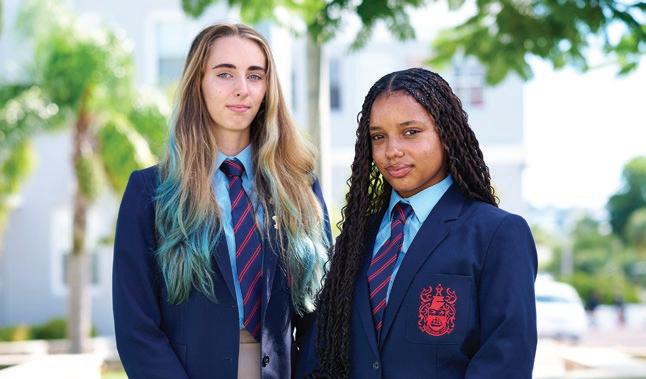
“I believe that DEIB is essential not only within our school community, but in our everyday lives. At Saltus, DEIB helps create an environment where everyone’s unique differences are valued, recognized, and heard, which is an environment that reflects our core values and our inclusion statement. Diversity, equity, inclusion, and belonging in school shapes how we show up in the wider world, helping us become more thoughtful, compassionate, and responsible global citizens. This year, as DEIB Prefect, I hope to help create experiences and events that bring us together, inspire change, and leave a meaningful impact on every student and teacher in our community.”
BERMUDA
Bermuda College
CANADA
Acadia University
Brock University
Cambrian College
Carleton University
Concordia University
Conestoga College
Dalhousie University
Humber College
Ivey Business School at Western University
King’s University College at Western University
McGill University
McMaster University
Niagara College
Northern College
Queen’s University
Saint Mary’s University
The University of British Columbia
Toronto Metropolitan University
University of Calgary
University of Guelph
University of Toronto
University of Victoria
University of Waterloo
Western University
Wilfrid Laurier University
HUNGARY
Semmelweis University
SPAIN
IE University
UNITED KINGDOM
BIMM University
Bristol, University of the West of England
Durham University
Kingston University
Lancaster University
Liverpool John Moore’s University
Loughborough University
Manchester Metropolitan University
Nottingham Trent University
Queen Mary Universtiy London
Queen’s University Belfast
Solent University (Southampton)
University College London (UCL)
University of Bath
University of Brighton
University of Central Lancashire
University of Exeter
University of Kent
University of Liverpool
University of Manchester
University of Plymouth
University of Southampton
University of Strathclyde
University of Surrey
University of Westminster, London
UNITED STATES
Andrews University
Arizona State University
Boston College
Boston Conservatory at Berklee
Clayton State University
Clemson University
Coker University
Columbia University
Emory & Henry College
Florida Atlantic University
Florida International University
Framingham State University
George Mason University
Georgia Institute of Technology
Kean University
Liberty University
Mansfield University of Pennsylvania
Monroe College
New England Institute of Technology
North Carolina State University
Nova Southeastern University
Parsons School of Design –The New School
Professional Yacht Training USA
Purdue University
Rochester Institute of Technology
Southern New Hampshire University
Southern University and A & M College
Thomas College
Tufts University
University of Central Florida
University of Connecticut
University of Delaware
University of Pennsylvania
University of San Diego
University of South Florida
University of Tampa
University of Vermont
West Chester University
Word of Life Bible Institute
The world meets here
Student Diversity
Australia
Barbados
Belgium
Bermuda
Brazil
Canada
Columbia
Czech
Republic
Denmark
France
Germany
India
Ireland
Italy
Jamaica
Kenya
Mexico
New Zealand
Philippines
Poland
Portugal
South Africa
Spain
Sweden
Switzerland
United Kingdom
United States
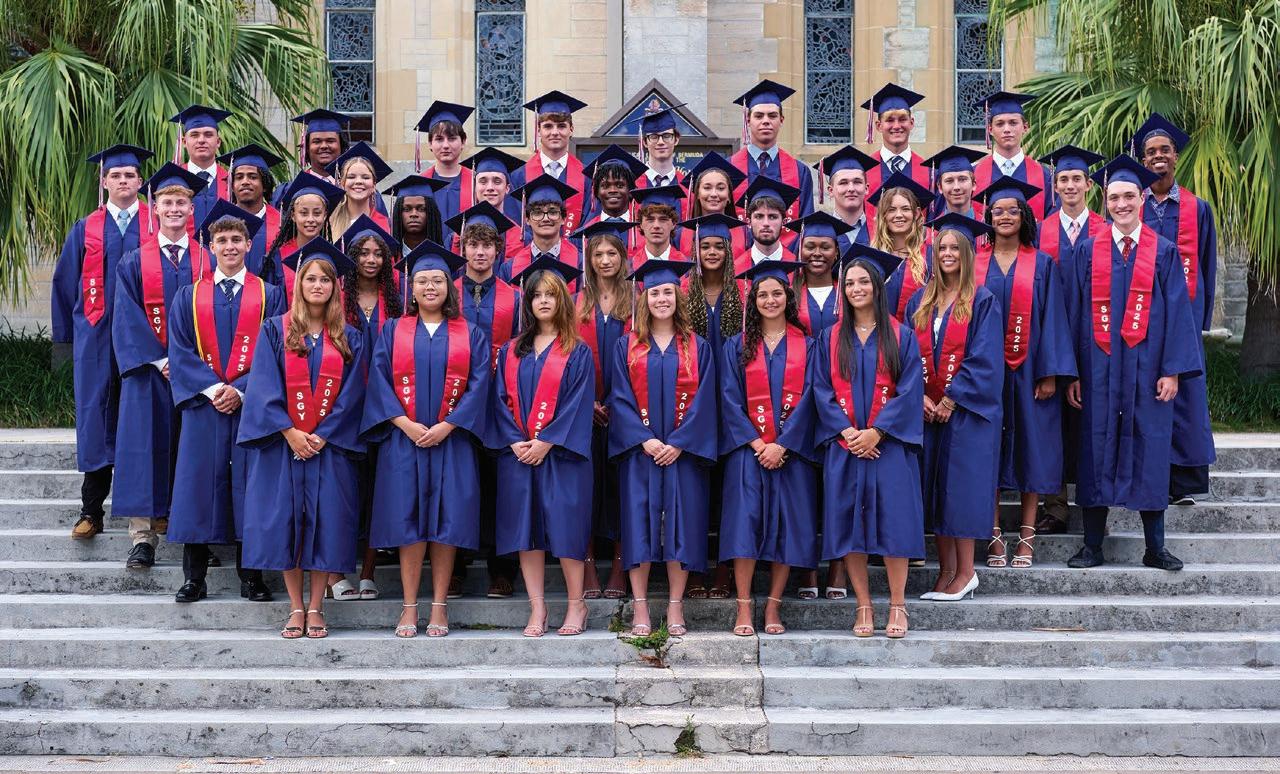
Class of 2025
Majors of Interest
n Business/Finance/Commerce 28.6%
n Science/Engineering/ Medicine/Computer Science 26.2%
n Architecture/Interior Design 4.8%
n Sports Science/Kinesiology 7.1%
n Social Sciences/Humanities (including Psychology) 16.7%
n Arts – Visual/Performing 4.8%
n Undeclared 2.4%
n Working/Gap Year 9.5%
SGY2 University
Destinations by Country 2024–25
n Canada 50%
n UK 15%
n US 22.5%
n Bermuda 5%
n Gap Year 7.5%
Saltus Students Excel in 2025 AP Exams
Saltus is proud to celebrate the outstanding accomplishments of our 2025 graduates in their Advanced Placement (AP) examination results. Offering AP courses since 1975, Saltus continues to uphold a tradition of academic excellence through this internationally recognized program, which provides students with the opportunity to earn college credit and demonstrate subject mastery before entering post-secondary education.
This past school year, 53 Saltus SGY1 and SGY2 students took 129 AP exams, with nearly three-quarters achieving a score of 3 or higher – the benchmark widely accepted by North American universities as demonstrating college-level proficiency.
We are pleased to share that the following students were recognized by the College Board for outstanding results and have been accepted to top-ranking North American and UK universities:
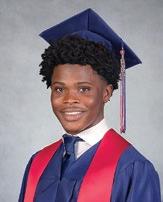
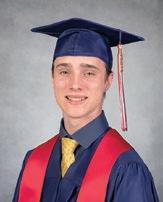
Seven (7) students earned the designation of AP Scholar. This is awarded to students who receive scores of 3 or higher on three or more AP exams. Congratulations to: Sawyer Adderley (GAP year), Brandin Bailey Jr. (Georgia Institute of Technology), Tristan Currelly (University of Exeter), Madison Ebbin (Western University), Magnus Marsh (University of San Diego), Ella Newton (University of Pennsylvania), and Benjamin Redburn (Arizona State University).
Three (3) students were awarded the AP Scholar with Honor designation. This is granted to students who receive an average score of at least 3.25 on all AP exams taken and scores of 3 or higher on 4 or more AP exams. Congratulations to: Abigail Autmezguine (McGill University), Danielle Barroso (University of Waterloo), and Robert Stevenson (Queen’s University).
Twelve (12) Saltus students earned the designation of AP Scholar with Distinction, which is granted to students who receive an average score of at least 3.5 on all exams taken and scores of 3 or higher on five or
more of these exams. Congratulations to: Carter Bernard (University of British Columbia), Zachary Bishop (Loughborough University), Brady Cabral (Queen’s University), Andrew Cox (Western University), Samuel Dallas (University of Exeter), Kijali JeanMarie (Queen’s University), Tristan Malott (University of Victoria), Felix Ringsted (Durham University), Ethan Rosorea (Western University), Felix Schmidt (University of Exeter), Joseph Wetmiller (Queen’s University) and Walker Woloshyn (University of Waterloo).
A special congratulations goes to Brady Cabral (Queen’s University) and Samuel Dallas (University of Exeter), who achieved a perfect score of 5 on six or more exams taken over the course of the two-year program.
These accomplishments reflect the dedication and hard work of both the students and the educators at Saltus in preparing students for success in their Advanced Placement exams.
Congratulations to all students on their achievements.
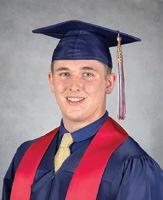
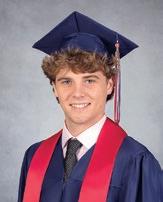
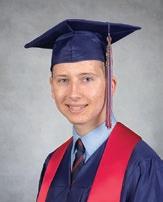
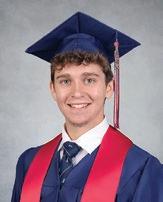
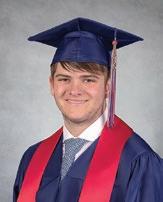
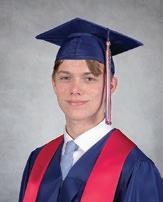
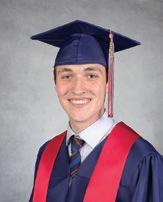
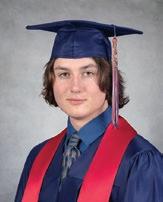
Tse Burgess and Steven Chu were voted Head Prefects for 2025–26. Together they shared their experiences at Saltus, their hopes for their roles, and what they look forward to once they graduate.
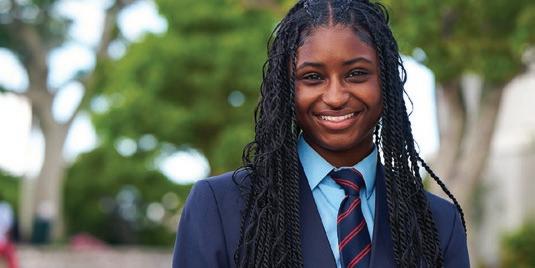
What has your Saltus journey looked like –from your first day to now?
My Saltus journey has been incredible to say the least. I don’t remember much from my first day other than my recess snack, popcorn, and playing with Legos. Despite me not remembering much from my first day, I look back on almost all my memories from Lower Primary fondly. I’ll especially never forget how kind and welcoming the teachers and the students were. My journey at Saltus has been filled with so much laughter, friendships and learning inside and outside the classroom. Even on days at school when everything felt like it was going wrong, Saltus never made me feel like I didn’t have someone to lean on or go to for help whenever I needed it.
What is your favourite Saltus memory so far?
My favourite Saltus memory so far is my Duke of Edinburgh practice walk, which I completed in Year 11. Helping out at Windreach was the purpose of our journey, and when we were there, we helped with the gardening, creating pathways and clearing out the animal stalls. What made the entire journey even better, though, was when our whole year met up in the evening to set up our tents, cook dinner and settle in for the night on the school field. The amount of bonding that occurred on those two nights spent at school was unforgettable and definitely created memories I’ll cherish forever. Even though at the time my group and I were definitely struggling and questioning why we even signed up to begin with, every time anyone brings up the journey, we’re bound to be laughing and sharing inside jokes for at least half an hour.
How do your different experiences help you bring different perspectives to your leadership roles?
e.g., A longtime student vs. a fairly new student
My experience as a lifelong Saltus student and Steven’s as a newer student definitely brings an interesting dynamic that I think is needed at the school. My 12 years at Saltus have allowed me to understand our community inside and out and connect with students of all ages through our shared experiences. Being a longtime student at Saltus has also provided me with the privilege of being able to see the school grow and change over time, helping me to understand ideas that worked in the past and ideas that didn’t. However, I feel that Steven’s perspective as a newer student who has gone to other schools provides him with the ability to see opportunities for improvement within the school that I may miss.
What can students look forward to with your leadership?
Definitely lots of communication and a lot of open-mindedness. I’m a very social person, and I love to have conversations with almost anyone. I’m really excited to be able to hear from my peers and be able to really try to implement a lot of their ideas for improvement within our school.
How do you think Saltus has prepared you for your next steps beyond Saltus?
Saltus has always provided me with so much guidance throughout my time in high school. Whether it was helping select courses, writing resumes or interview prep, Saltus has been there every step of the way to make me feel confident in my abilities and decisions. Informally, though, the emphasis on community at Saltus and making everyone feel like they belong has helped to develop my character outside of the classroom and improved my communication skills.
What are your next steps after graduation?
After graduation, I plan to continue my education at university and study something in the healthcare field. I still don’t know exactly where I want to do that, but I do know that in the future I hope to pursue a career in medicine. l
“Saltus has given me many opportunities to grow, including the privilege of running for Head Prefect, and I’ve tried to make the most of each one.”
Steven Chu, Head Prefect
Steven Chu
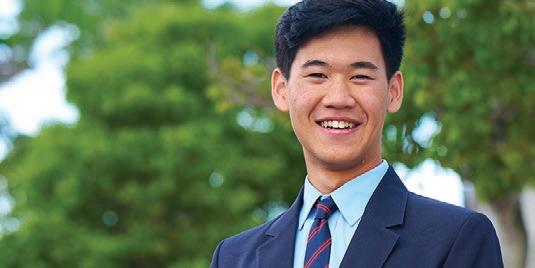
What has your Saltus journey looked like –from your first day to now?
Although my first day at Saltus wasn’t very long ago, my journey has been very eventful to say the least. Adjusting to a school very different from my old one was definitely a shocking experience, but I believe that those experiences are what help us grow. It’s still surprising to think about how I showed up one day and was suddenly surrounded by such a welcoming community. Saltus has given me many opportunities to grow, including the privilege of running for Head Prefect, and I’ve tried to make the most of each one.
What is your favourite Saltus memory so far?
Playing Mafia during advisory! They’re those little moments that don’t feel like they should be as special as a large event or a celebration, but still manage to stand out as super wholesome and fun experiences. I’m incredibly lucky to have such an amazing advisory, as they were my first impression of the school community. Hanging out and having fun with cheerful people is what creates the best memories.
How do your different experiences help you bring different perspectives to your leadership roles?
A longtime student vs. a fairly new student
I’ve attended five schools over my 11 years of education, including French and English schools, Catholic and secular schools. Each school had a unique student government system, with a different style of organization and leadership. These experiences have given me a broad perspective on how different approaches can support students. Tse, having spent far more years at Saltus than I, brings a deep understanding of our school’s traditions, values, and community. This allows us to express what makes our school special while also bringing fresh ideas for growth.
What advice would you give to future Head Prefects or student leaders?
You don’t get others to put in effort by telling them to do so. When others see your effort, they naturally start giving theirs too. It’s like the saying “lead by example, not by force.” When your friends see that you stay late after an event to clean up, they’ll notice, and next time they’ll feel more inclined to help. When everyone treats their responsibilities seriously, everyone will start matching that same energy, as it becomes the norm rather than “going the extra mile.”
What can students look forward to with your leadership?
Transparency, honesty, and collaboration. I personally find it frustrating when things aren’t going how I’m expecting them to be going, and even more so when I don’t know why. When there’s an issue, there’s almost always a way to fix it and an incentive to do something about it. However, when you don’t know the reason for the issue, there’s no problem-solving to be done. That’s why transparency is key, so that the entire community can work together to come up with solutions and collaborate rather than waiting on a single individual/organization.
How do you think Saltus has prepared you for your next steps beyond Saltus?
Besides academics, Saltus has prepared me for life beyond the classroom. The school goes above and beyond when it comes to preparing students for almost anything they can encounter, especially leading up to SGY. Things like first aid, life skills, and university preparation are huge benefits that have given me more practical knowledge and confidence that I know I wouldn’t have gotten at other schools.
What are your next steps after graduation?
I’ll be back in Canada for university, studying something related to medicine or biochemical engineering. I’m still unsure about what exactly I want to do in the future, but I’m confident that university will prepare me well for it.
What advice would you give to new students joining Saltus?
Go for it. Does something intrigue you? Ask about it. An action as simple as asking about it can lead you down a rabbit hole of dedication, hard work, and satisfaction that would not be possible without taking the first step. There will always be some club, sport, or organization that fits you and that you will thrive in. l
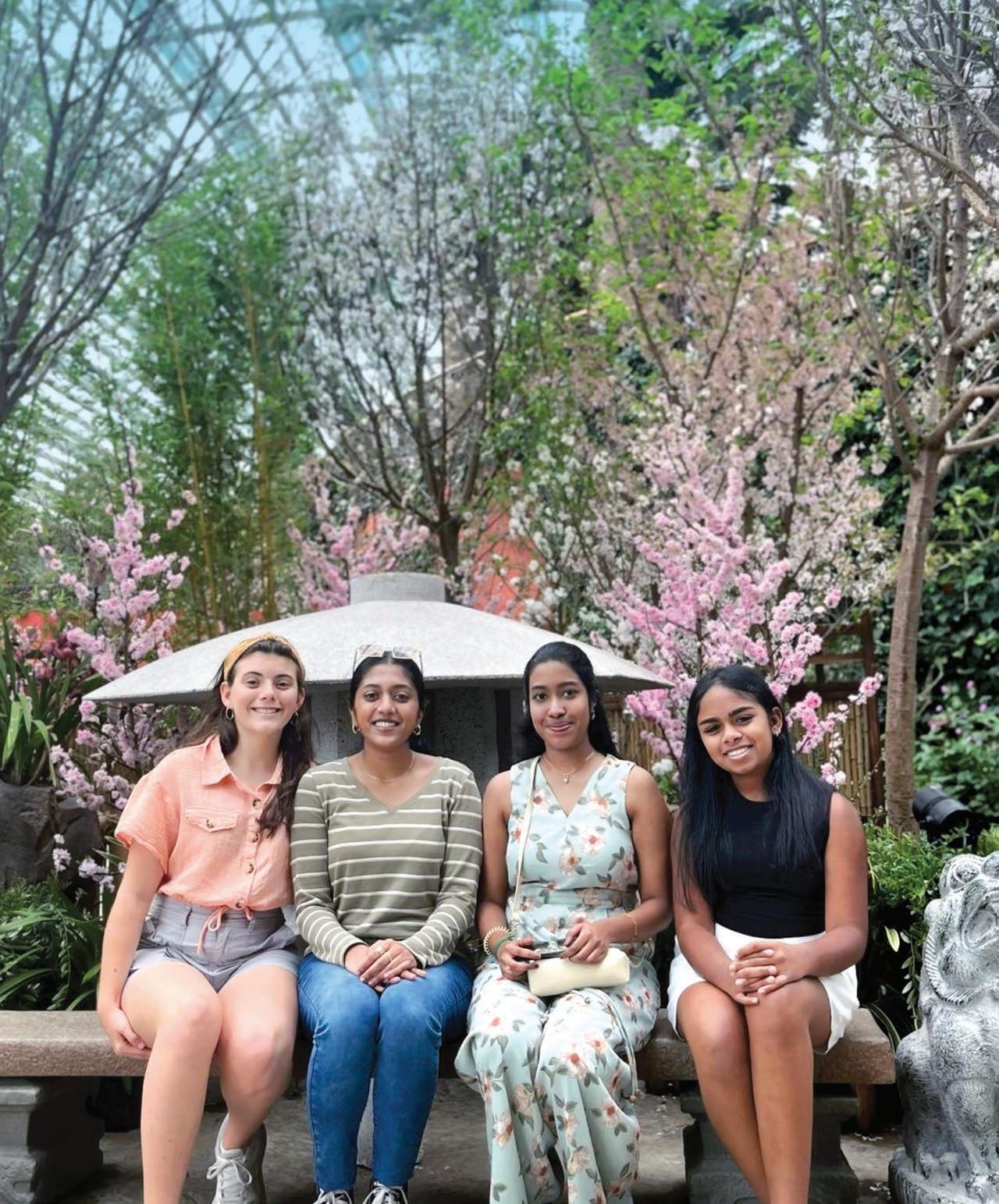
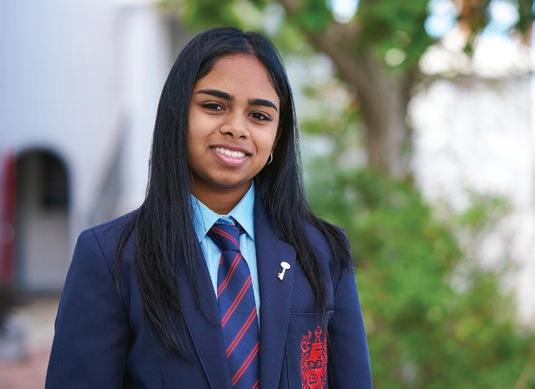
This past March, SGY1 student Tera Hassen (pictured far right) qualified and attended the World Debate and Public Speaking Competition held in Kuala Lumpur, Malaysia. We had the opportunity to speak about the opportunity and what it meant to her to be able to participate.
What inspired you to get involved in debate and public speaking, and how has your journey led you to this prestigious competition?
It all started in my English class, when my teacher, Ms. Foote, assigned a small two-minute presentation for us to complete individually. After hearing my take, she introduced me to Mrs. Dakin and the rest of the public speaking team, and the rest is history. Since then, I have competed in two past competitions, my first was a qualifier for Worlds, and my second being Nationals. From Ms. Foote’s initial push and support that introduced me to this world to Mrs. Dakin’s unwavering support, I was able to put my best foot forward when entering Worlds.
What topic or speech are you most excited to present at the competition, and why?
My persuasive speech, outlining the issues of the recruitment of child soldiers and posing a solution, was the highlight of my competition and certainly ignited the most excitement in me. For me, a persuasive speech is more than just a category; it’s an opportunity to speak on a topic I am passionate about.
How do you prepare for high-pressure debates and speeches? Do you have any pre-performance rituals or strategies?
I don’t necessarily have any rituals; however, I will say that the key is hard work and focus. By preparing ahead of time, memorizing my speeches and engaging in mock debates with my teammates, I can go into any category with the confidence that I have everything I need to succeed.
How has your experience at Saltus prepared you for this level of competition?
Both my teachers and teammates have helped me prepare for this competition in pretty much every way imaginable. Between Ms. Foote’s instructions on how to get my foot in the door and the countless times Mrs. Dakin critically reviewed my speeches, I was given all the tools I needed to compete on this level.
And that’s not even to mention the weekly Tuesday sessions I spent with my teammates, practicing Impromptu speeches and exchanging strategies. I may have been the one to compete, but it was a team effort right from the beginning.
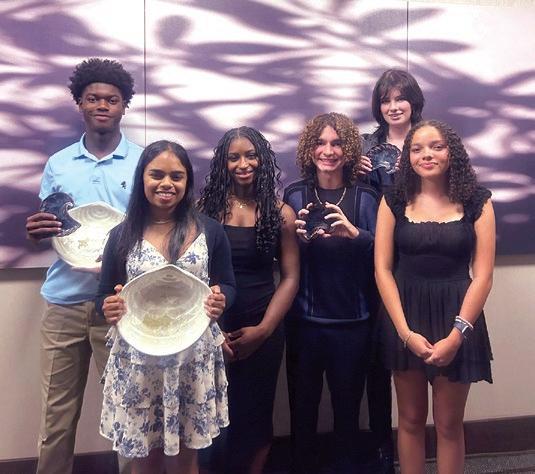
L–R: Jordan Williams (Grade 10), First Place, Persuasive Speaking + Phil Hasen Award for Friendship; Tera Hassen (SGY1), First Place Impromptu Speaking; Tse Burgess (SGY2); Christopher Madeiros (SGY1), Third Place, Extemporaneous Speaking; Callie Lucas (SGY1), Third Place, Dramatic Interpretation; and Marley Tear (SGY2).
What has been the most challenging aspect of competing at this level, and how have you overcome it?
Not only was this my first time competing at the Worlds level, but it was only my third time public speaking, and I was a younger competitor. Surrounded by different competitors from other countries, it was hard not to feel unprepared and an underdog in pretty much every sense of the word. But it was encouragement from the other girls on the team, watching both their successes and failures as older, more experienced students. That reminded me of the act of resilience when faced with adversity. And I’d like to think it was my own determination as well that got me to the semi-finals for my persuasive speech. It certainly was a challenging task, but in the act of watching others and trusting myself, I was able to overcome it.
What do you hope to take away from this experience, both in terms of personal growth and future aspirations?
More than anything else, I competed wanting to learn, and that’s exactly what I did. I had the rare opportunity to watch world champions articulately express their thoughts on renowned topics from all over the globe, and it’s a sight I am not likely to forget. I took away so much from the experience, and now have plenty of ways on how to improve myself as a public speaker. This competition enlightened me on the incredible talent that exists in the world of public speaking, and to be able to watch and compete on this level was a true honour in itself. l
Leadership at Saltus is grounded in collaboration, creativity, and service. These roles help students build confidence, develop resilience, and strengthen decision-making skills as key qualities for success in university and life beyond. In 2015, Saltus founded the student leadership group, Gold Key. Gold Key students have supported the school and the Enrolment Office by providing tours of the school to prospective families, current families, local dignitaries, and any other visitors.
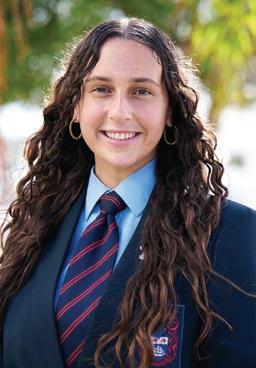
The proud face of Saltus, this student-led group meets twice a month and they hold annual elections to identify new members as well as meet future leaders. We asked Abby Sadeh (SGY1) who is Co-Head of Gold Key this year, to share her thoughts on the role.
Can you tell us about your journey at Saltus –how you’ve grown during your time here and what experiences have shaped you the most?
I have attended Saltus since Foundation (now Junior Kindergarten), so I have spent most of my life at this school. Having been fortunate enough to be at this school since I was four years old, I have had so many opportunities that have shaped me into the person I am today. When I was younger, I would never have thought that I would end up playing the trombone, netball, or becoming the Co-Head of Gold Key. The people around me, from teachers to students, have always been so encouraging and pushed me to try new things and be my best self.
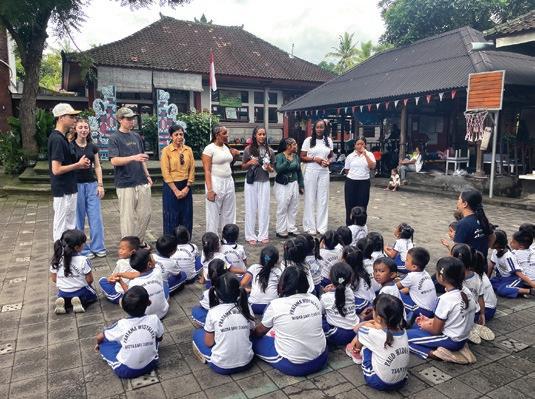
My friends that I have made during my time at Saltus have been a huge part in making school enjoyable, even at the lowest of times. I had the opportunity to go on the Bali trip last spring, which was beyond incredible. After seeing the culture, speaking with the locals, assisting with the school children, and building reef structures; I truly was amazed. That experience was something that changed my view on a lot of things as a young person from Bermuda. I hope to carry those memories with me forever.
What inspired you to become involved with the Gold Key program, and what does it mean to you to now lead the group?
Originally, I heard about Gold Key from one of my older sisters who was an ambassador of the program. They would always speak about how interesting some of the people they toured were, and always had some great stories to share. This definitely sparked my interest to take part in the future. I also have always been told I talk a lot, sometimes too much! I have always loved meeting new people and hearing about their interests and experiences, and connecting with them by sharing my personal experiences as well. To be able to co-lead Gold Key this year is something that I have strived for since I first joined. I have definitely had to prove myself as I am younger than all of the Gold Key heads in the past, but I have been supported throughout this whole journey; especially by my Co-Head, Marley Tear who is in SGY2.
As Co-Head of Gold Key, you represent Saltus to families, alumni, and special guests – how do you prepare for that responsibility, and what message do you hope visitors take away from their time on campus?
In my opinion, the best way to prepare to become a good Saltus representative is to communicate with other Gold Key members and teachers who have experience and knowledge that can help newer members feel more comfortable with this important task. When I first joined Gold Key, the rest of the ambassadors and heads took all of the new members through the route, important facts, and helpful conversation starters. But most of all, they stressed that we should be ourselves and do our best to connect with the family or guest by learning about them and adapting to their interests and needs. Our goal is for families to leave the tour seeing an authentic point of view of the school from someone other than an authoritative figure. Guests are able to ask questions to students and receive detailed answers that may help them feel more comfortable about sending their child here.
What has been one of your most memorable moments while giving a tour or representing the school, and why did it stand out to you?
My most memorable moment was when I was on a tour with a past Saltus student who attended the school 60 years ago.
He was sharing so many incredible experiences with me and watching him reminisce about his days at the school was really special for me. I almost felt like he was giving me a tour of the school! He was showing me how things have changed and what traditions have lived on. It really made me realize how much of a community Saltus is and how lucky I am to be a part of it.
How has this leadership role helped you grow personally and professionally, and how do you think it will influence your future goals beyond Saltus?
This role has helped me grow in so many ways, mainly it has helped me become confident in myself through my academics, co-curriculars and interview skills. Being able to gain knowledge from people I’m giving tours to is something that you can only get in something like this program. I have had many people give me advice on schooling, and career pathways during a tour; which truly stuck with me. I have realized that I have a passion for learning about people, and just talking to them about the simplest, or most complex things. This has made me really think about what I want to pursue beyond Saltus in the coming years. I definitely wish to be in a workplace where I get to connect with people, and do so in a way that will benefit others. l
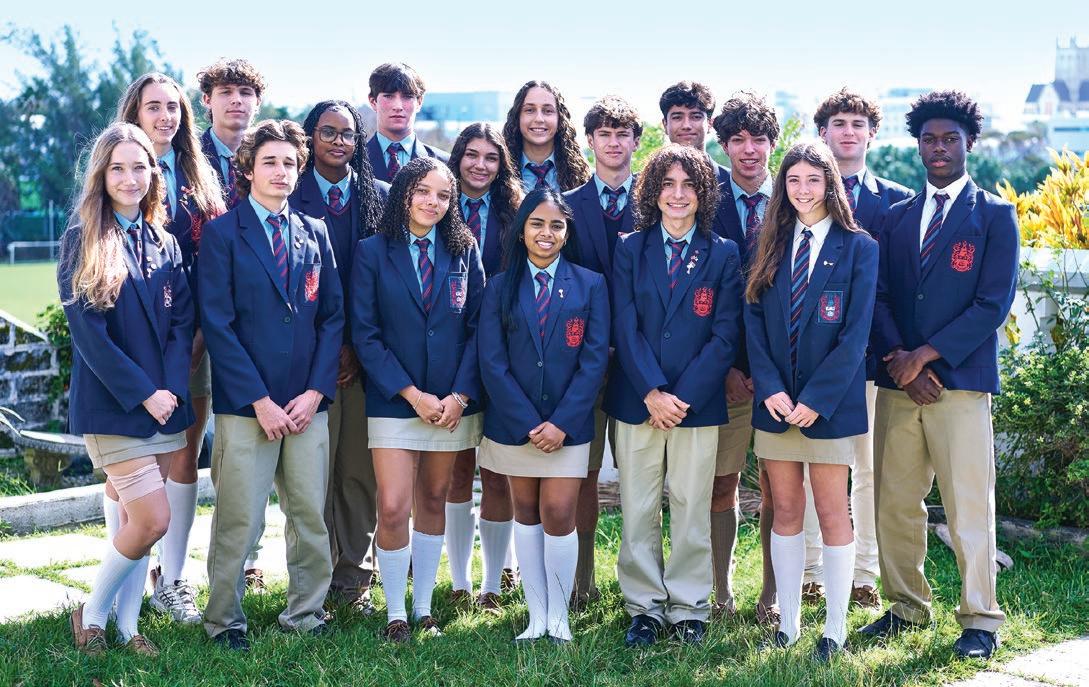
At Saltus, students are given meaningful opportunities at every stage to step outside their comfort zones and grow as leaders. Whether it's serving as a ‘line leader’ in Junior Kindergarten, an Upper Primary Prefect in Grade 5, a member of Student Council or a Gold Key Ambassador in Secondary School, or a Senior Prefect in their graduation year, each student has the chance to shine and discover what it means to lead with purpose.
Leadership at Saltus is grounded in collaboration and service. These roles help students build confidence, develop resilience, and strengthen decision-making skills as key qualities for success in university and life beyond. Students are encouraged to lead by example and meet the responsibilities associated with their roles.
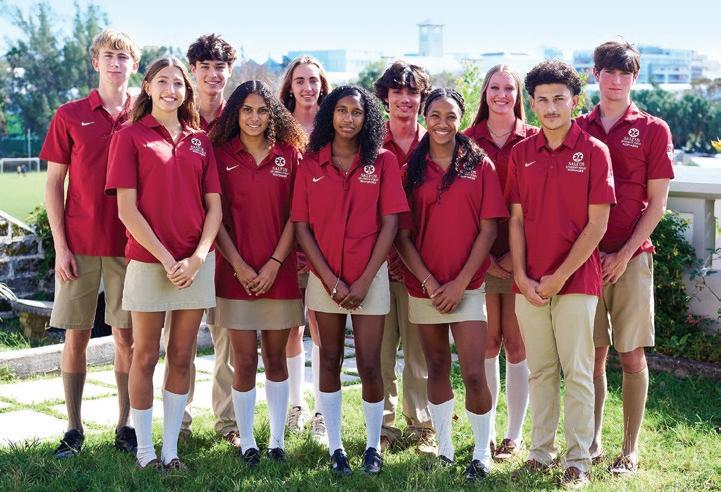
This year, we launched the Student First Responders Program, a new initiative that allows senior students to apply their CPR and First Aid training in support of campus safety and care.
Each day at recess and lunch, two trained Student First Responders are on duty to assist with minor injuries, modelling empathy, responsibility, and calm decision-making in real-time situations. Upon successful completion of the program, participants receive a certificate of recognition, an asset for university applications and future community service involvement.
If you visit our campus, keep an eye out for them in their bright red Student First Responder polo shirts, ready to serve, support, and lead by example.
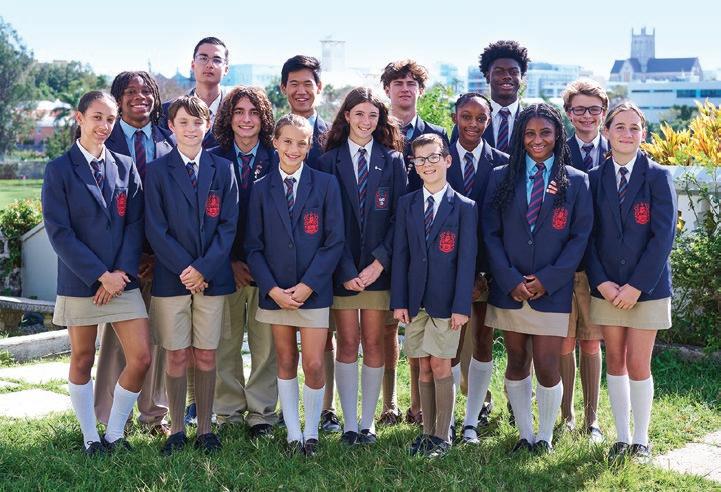
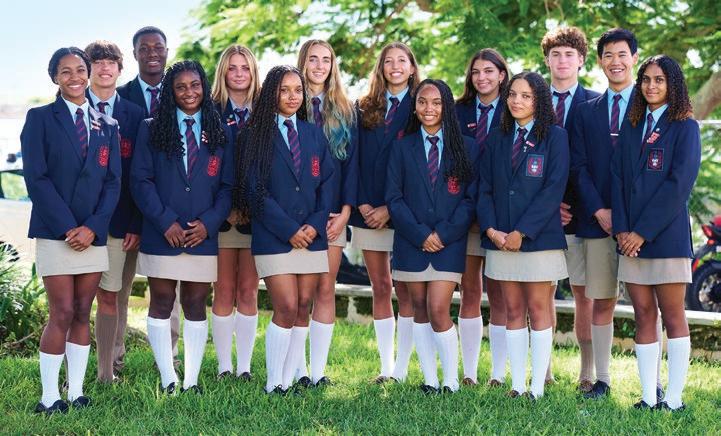
Front Row (L–R): Sean ‘Kenzie’ Lawrence (Grade 10), Luke Thompson (Grade 7), Nora Cenzer (Grade 6), Cameron Forster (Grade 6), Tse Burgess (SGY2), Hanora Kirwan (Grade 7)
Middle Row (L–R): Jordan Talbot (SGY2), Christopher Madeiros (SGY1), Brinkely Mello (Grade 9), Jasmine Reid-Rubaine (Grade 8), Nikolai Shaw (Grade 8)
Back Row (L–R): Bradley Lindsay (Grade 9), Steven Chu (SGY2), Evan Davis (SGY1), Jordan Williams (Grade 10)
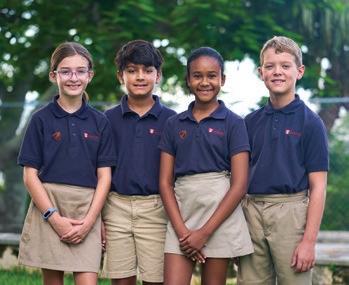
Representing grades across the Secondary school, our newly elected Student Council is ready to bring fresh ideas, strong leadership, and authentic student voice to the year ahead. Together, they’ll work to enhance school life, spark new initiatives, and strengthen our community. Their theme for this school year is "We see you. We hear you."
BY JESSE SHEPPARD, DIRECTOR OF CURRICULUM
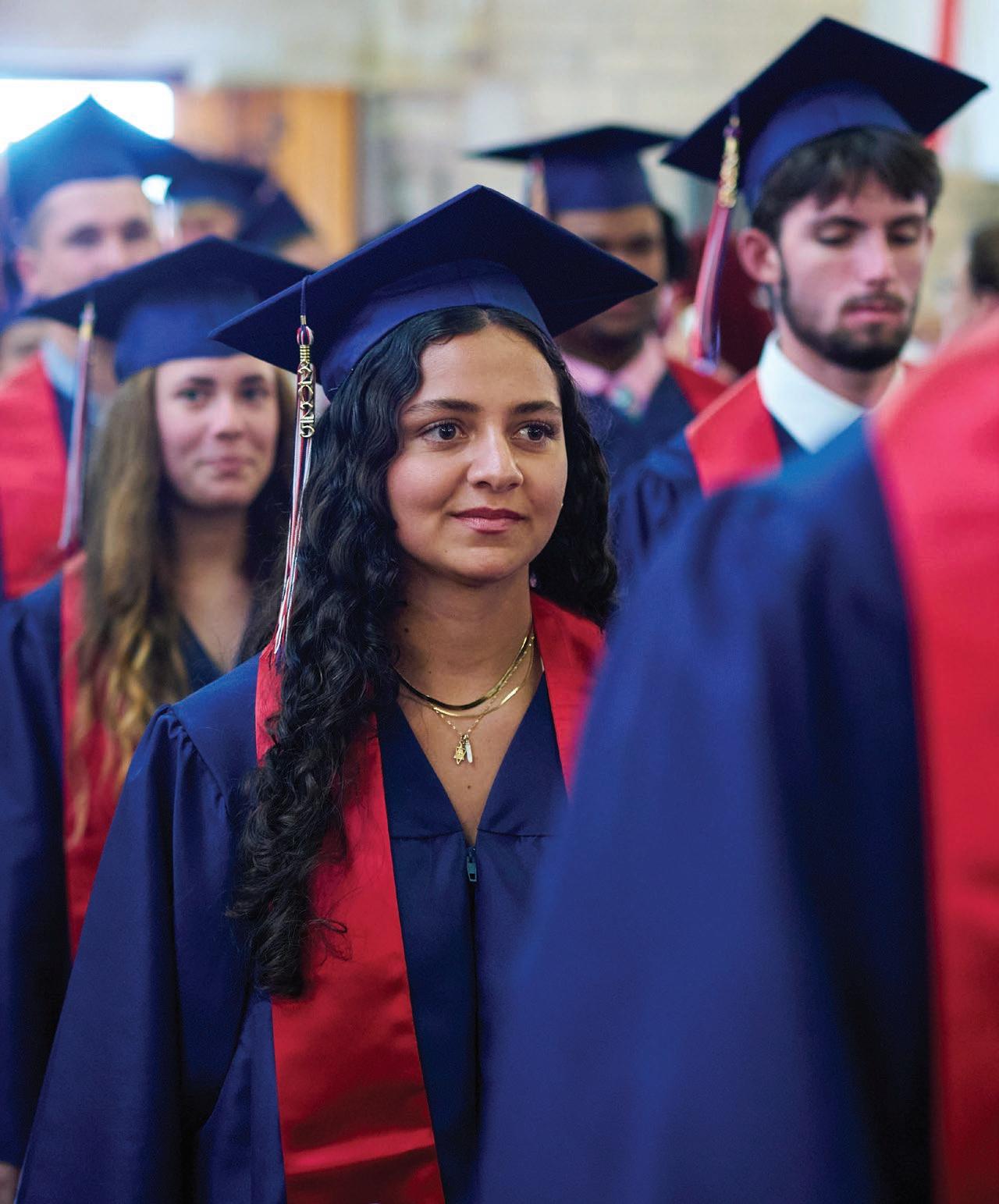
What does it mean to truly prepare a student for the future, one that’s changing faster than ever before?
At Saltus, our commitment goes beyond academic excellence. We aim to ensure every student graduates as confident, adaptive individuals ready for whatever comes next. The British Columbia Graduation Program, with its clear structure and flexible pathways, aligns powerfully with this vision. It requires a minimum of 80 credits, including 52 credits for required courses and 28 elective credits, alongside provincial assessments.
But beyond the numbers, it’s the way those credits can be earned with flexibility and purpose, which defines the Saltus experience. The choices students can make, and the pathways they chart, are what truly prepare them for their next chapter.
The required core courses, language arts, mathematics, science, social studies, physical & health education, arts or applied design and career education, create a strong foundation. At the same time, the 28 elective credits give students the freedom to explore, specialize, or pivot according to their interests, strengths and future goals. At Saltus, we ask every student: “What matters to you? Where are you heading?” Then, together, we help design a path that honours both their aspirations and the graduation requirements.
Because the BC Graduation Program allows for electives, post-secondary credits, external courses, and a focus on career exploration, we can offer students a rich and varied learning experience. Whether a student wants to deepen their STEAM focus, pursue an entrepreneurship project, or engage in service learning, flexibility is key. This structure allows Saltus to tailor the senior school experience so that students feel genuine agency, ownership, and possibility, essential ingredients for lifelong learning.
The Graduation Program emphasizes developing “educated citizens,” individuals equipped with the knowledge, competencies and skills to thrive in post-secondary education, training or the workforce. At Saltus, this approach guides us; we want each student’s pathway to be more than a checklist of credits. It’s about building capabilities in reasoning, communication, self-management, collaboration, and adaptability, the very skills that define success in an everchanging world.
• Individualized Planning: From Grade 10 onward, students work with counsellors and faculty to map their courses, balancing required credits
with electives that reflect their personal interests and ambitions.
• Responsive Curriculum Design: Teachers design modules and courses that integrate cross-disciplinary themes, applied projects and external credentials, transforming elective courses into inspiring learning opportunities, not obligations.
• Transparent Guidance & Communication: Students and families are kept informed about required credits, graduation assessment timelines, and pathway options, ensuring informed decision-making.
• Reflection & Growth-Mindset: Electives are not seen as “extras,” but as essential to developing the whole child, nurturing engagement, passion, and purpose.
In 2028, our first graduating class will cross the stage to receive their BC Dogwood diploma, a milestone that represents far more than the completion of credits. As we continue refining our pathways model, our goal remains clear: to create a high school experience where students don’t just graduate, but launch equipped, confident, and inspired.
At Saltus, every learner’s journey is unique. The credits earned are only part of the story. What truly matters is the path they choose, the skills they build, and the direction they carry forward. With flexibility, meaningful choice, and intentional guidance, we’re helping chart those routes and cheering our students every step of the way. l
Students must complete 80 credits from the Grade 10, 11 and 12 levels, where a full-year course is valued at 4 credits. Within those 80 credits, there must be a minimum of:
• A Language Arts 10, 11 and 12 (12 credits)
• Social Studies 10 (4 credits), and a Social Studies 11 or 12 (4 credits)
• A Math 10 (4 credits), and a Math 11 or 12 (4 credits)
• Science 10 (4 credits), and a Science 11 or 12 (4 credits)
• An Indigenous-focused course at the Grade 10 level or higher
• Career Life Education (4 credits)
• Career Life Connections (4 credits)
• Physical and Health Education 10 (4 credits)
• An Arts Education 10, 11, or 12 and/or an Applied Design, Skills, and Technologies 10, 11, or 12 (4 credits)
• Numeracy Assessment in Grade 10.
• Literacy Assessments in Grade 10 and in Grade 12
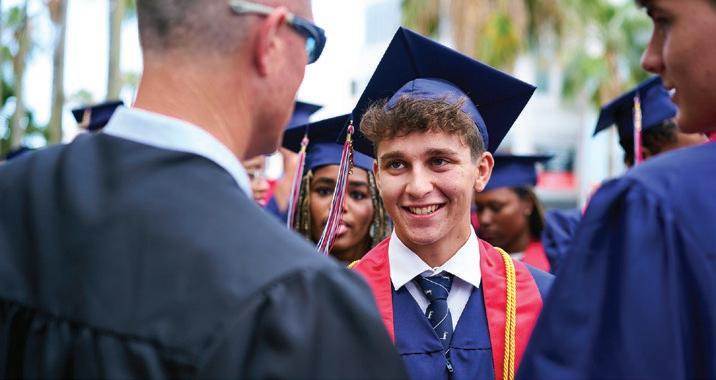
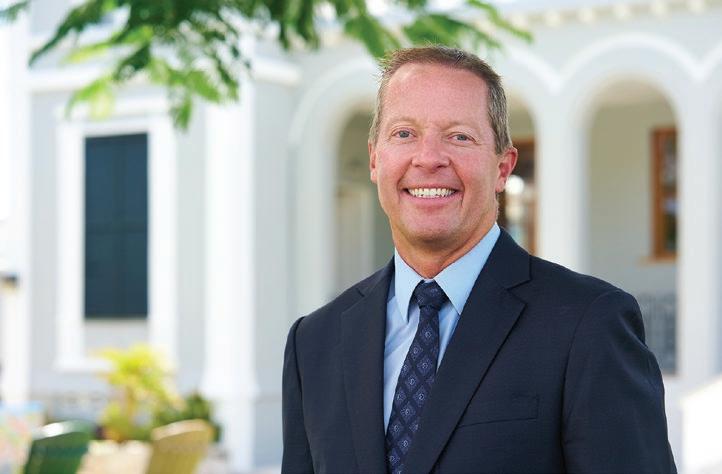
With a wealth of experience and a fresh perspective, Gary Godkin joined Saltus in August as our new Director of Secondary. We caught up with him to learn what he’s most excited about and how his educational journey has prepared him for this chapter.
What inspired you to pursue a career in education, and how has that inspiration evolved over your 25-year journey?
Growing up on a farm in rural Canada, before the internet, before satellite TV, I wasn’t exposed to many career paths. For a long time, I assumed that’s why I became a teacher: because I didn’t know what else was out there. But over time, I’ve come to see it differently. I’ve come to understand that teaching wasn’t something I fell into by default; it was what I was meant to do.
My path into education wasn’t linear. After earning my undergraduate degree in math and physics, I wasn’t accepted into a Bachelor of Education program, so I accepted a position as a programmer at a large insurance company. In hindsight, it was a gift. I gained valuable experience working on large, complex systems, and skills I would later bring into the classroom when teaching computer science.
After seven years of teaching, I left education temporarily to return to programming during the Y2K period. Strangely enough, it was during that time, speaking with colleagues who were frustrated by how their children were
struggling in school, that I truly began to understand the broader impact of education. Their stories highlighted both the strengths and the shortcomings of the system, and they reignited my drive to return, not just to teach, but to lead and help improve it.
When I returned to education, I moved quickly into leadership. But it wasn’t until I transitioned from public education to the independent school world that I felt I had the flexibility and support to truly innovate and make a lasting difference.
Over 25 years, my inspiration has shifted from personal passion to purposeful leadership. I still love the classroom, but I’m even more energized by the opportunity to shape learning environments where students thrive, teachers grow, and schools evolve to meet the future.
You’ve held senior leadership roles at two of Canada’s top independent boarding schools. What were some of the key lessons you’re bringing with you to Saltus?
In my time at leading independent schools, I’ve come to understand that excellence in education is not just about
what we teach, it’s about how we design the entire student experience.
One key lesson is the importance of space. The learning environment, both physical and emotional, matters deeply. At Saltus, there is a focus on creating flexible, inspiring spaces that encourage collaboration and creativity.
I’ve also seen the profound impact when students feel seen, heard, and known. Saltus’ commitment to wellbeing and inclusion aligns closely with this belief. When students feel known as individuals, they are more engaged, confident, and willing to take intellectual risks. One of my top priorities will be nurturing a culture where every student feels a strong sense of belonging and purpose.
Another vital lesson is the transformative role of co-curricular programming. Saltus understands that learning extends far beyond the classroom, through athletics, the arts, leadership, and service. These experiences shape character and spark passion. I’m excited to support and expand opportunities where students can explore their interests, grow as leaders, and develop the resilience that comes from being part of a team or performance.
Finally, I’ve learned that while today’s students are immersed in technology, they still need guidance to use it wisely and ethically. Saltus’ forward-thinking approach to digital citizenship and innovation gives us a powerful platform to help students become not just consumers of technology, but thoughtful, responsible contributors in a digital world.
I look forward to building on Saltus’ strong foundation and contributing to a future that balances academic excellence with personal growth, local roots with global outlook, and innovation with integrity.
What attracted you to the Saltus community and this role in particular?
My first Head of School at St. Andrew’s College (SAC) was Ted Staunton, who came to Saltus as the Head of School after SAC, and he often talked about how much he loved Saltus, especially the students. I have tremendous respect for Ted, and with Saltus having his highest praise, it has been on my short list of places I would like to work. When I read the job description, it aligned perfectly with what I see as my strengths and passions.
Saltus is entering a new phase of growth and excellence. How do you define excellence in a modern secondary school environment?
Excellence in a modern secondary school is no longer just about high test scores or university placements, though those are important. It’s about preparing students to thrive in a world that is complex, fastchanging, and deeply interconnected. For me, excellence means striking a balance between academic rigour, personal development, and real-world relevance. Excellence also means inclusion, ensuring that every student, regardless of background, learning style, or interest, feels valued, supported, and inspired to achieve their personal best. It’s about creating an environment where diverse voices are heard and where well-being is not just a support system but a foundation for learning.
As Saltus embraces this next phase, I’m excited to help define excellence not as a destination, but as a mindset, one that keeps us learning, questioning, and moving forward together.
What are your priorities as you step into your role at Saltus, and how do you plan to build strong connections with students, faculty, and families?
As I begin my role at Saltus, my priority is to listen, learn, and build trust. Every school has its own unique culture, traditions, and aspirations, and I want to take the time to truly understand what makes Saltus special from the perspective of students, faculty, and families.
One of my core beliefs is that leadership begins with relationships. I plan to be present and visible, whether that’s greeting students in the hallways, visiting classrooms, attending co-curricular events, or simply being available to talk. Building genuine connections starts with being approachable, consistent, and curious.
With students, I want them to feel known, heard, and supported, not just as learners, but as individuals. I’ll prioritize opportunities for student voice and agency, creating platforms for them to share their ideas, passions, and concerns.
With faculty, I want to build a culture of trust and shared purpose. That means creating spaces where collaboration and innovation are encouraged, and where teachers feel empowered to take risks, reflect, and grow. I also believe in recognizing and celebrating great teaching, not just outcomes, but the process of thoughtful, student-centred practice.
With families, communication and transparency are key. I want to create
open channels for dialogue, foster a sense of partnership, and ensure that families feel informed, respected, and confident in the direction of the school.
Finally, what are you and your wife most looking forward to about life in Bermuda and joining the Saltus family?
We’re genuinely excited about this next chapter, not just professionally, but personally. Bermuda offers a beautiful balance of natural beauty, rich culture, and a warm, welcoming community. We’re looking forward to embracing island life: the ocean views, the slower pace, and the opportunity to explore everything from local traditions to outdoor adventures.
But more than anything, we’re most excited about becoming part of the Saltus family. From everything we’ve seen and heard, Saltus is a place that values connection, community, and excellence. I’ve already been struck by the passion and professionalism of the staff, the warmth of the school culture, and the sense of pride that Saltus families feel.
For both of us, joining Saltus is more than just a move; it’s a chance to invest ourselves fully in a vibrant school community, contribute to something meaningful, and build relationships that we hope will last well beyond the school day. We’re deeply grateful for the opportunity and looking forward to a wonderful year. l
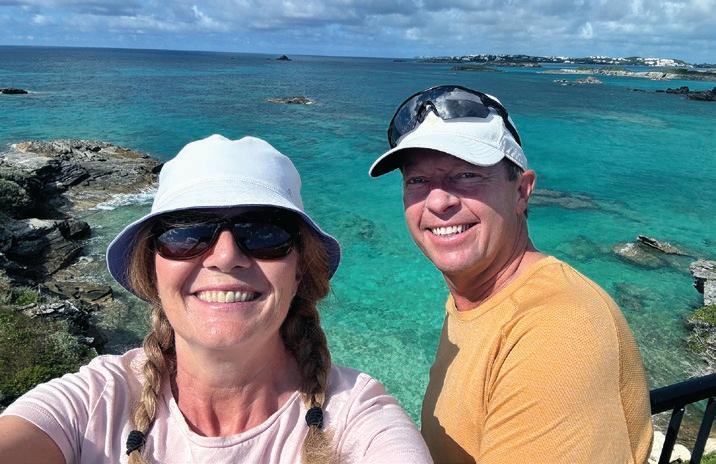
As Saltus embraces new possibilities for teaching and learning in a digital age, the arrival of Allwyn Bryner as Director of Technology & Innovation signals a bold step forward. With global experience and a deep commitment to purposeful innovation, Allwyn envisions technology as a tool to enrich learning, foster creativity, and strengthen the connections that define the Saltus community. In this interview, he shares his insights on how thoughtful use of technology can enhance both the student and teacher experience while shaping the future of education at Saltus.
What excites you most about stepping into this brand-new role at Saltus, and how do you envision technology shaping the future of teaching and learning here?
I’m truly excited by the opportunity to help shape the future of learning at Saltus. Technology, when used thoughtfully, is not just about devices or apps; it’s about unlocking new possibilities for how students engage with ideas, collaborate with one another, and bring their ideas to life. I envision technology as an enabler: something that allows our teachers to design richer learning experiences and our students to explore the world in more dynamic and personalized ways.
How do you see technology enhancing both the academic experience for students and the teaching experience for faculty?
For students, technology can make learning more engaging, interactive, and tailored to their needs. From immersive simulations in science to collaborative
digital platforms that bring voices together across classrooms, technology allows learning to feel relevant and connected.
For faculty, technology should reduce barriers and give them more time to focus on what matters most: teaching. The right tools can help teachers manage their workflow more efficiently, access data that informs instruction, and enable them to try new teaching approaches that meet the needs of each and every student in their classroom.
What are the biggest opportunities and challenges you anticipate as you introduce new technologies into the school environment?
The opportunities are infinite: pushing the boundaries of creativity, connecting students to global perspectives, and preparing them with the digital literacy skills they’ll need in university and beyond.
At the same time, the challenges are real. We need to strike a balance between screen time and authentic, face-to-face connections. We also need to ensure we’re supporting teachers in building confidence with new tools. Change can feel daunting, but with the right support and professional learning, it becomes exciting.
What role will the technology team at Saltus play in supporting your vision, and how do you plan to grow and collaborate with them?
The technology team is the backbone of everything we do. So much of their work happens quietly behind the scenes, keeping systems secure, reliable, and
ready, so that teachers and students can focus on learning. Most people never see the countless hours that go into managing networks, preparing devices, or ensuring data flows seamlessly across platforms, but that invisible work is what makes the visible magic of learning possible. Looking ahead, one of our key goals is to continue evolving Saltus into a cloud-first school. That means creating an ecosystem where resources, collaboration, and learning experiences are accessible anywhere, anytime, securely and efficiently. Moving more of our infrastructure and workflows to the cloud will simplify access, improve resilience, and allow for greater flexibility across the entire school community.
What experiences from your career so far have best prepared you for this role, and what motivates you to lead innovation in education?
Throughout my career at the intersection of technology and learning, from corporate IT to international schools across four continents, the constant has always been people. Each experience reinforced that meaningful innovation begins with listening, understanding real needs, and designing solutions that genuinely support students and teachers. What continues to drive me is the belief that every student deserves to feel empowered and excited about learning. When used with intention, technology can help make that possible, not by chasing trends, but by creating thoughtful opportunities that enable students to thrive today and step confidently into tomorrow. l
Pictured here is the Saltus Grammar School Leadership Team, whose collaborative approach supports students, staff, and families, nurturing an inclusive environment where everyone is encouraged to thrive.
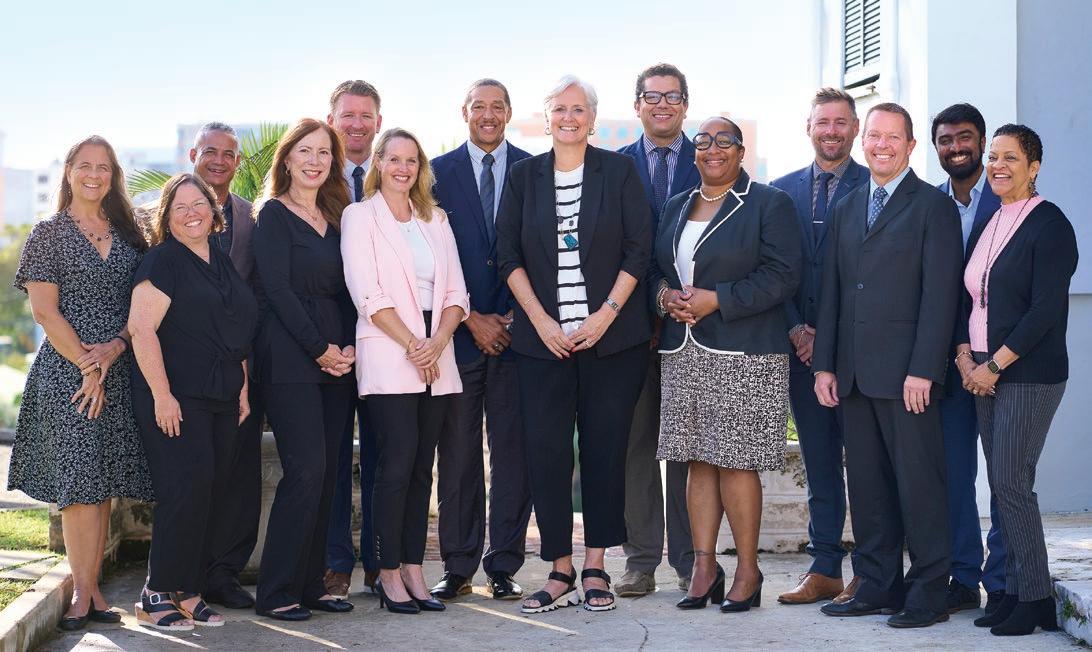
Front Row (L–R): Amanda Skinner, Director of Enrolment Management; Elizabeth ‘Liz’ Dowdell, Assistant Director of Lower Primary; Darcy Hausselman, Director of Communications & Marketing; Katie Kostiuk, Director of Advancement; Julie Rousseau, Head of School; Nadia Robinson, Deputy Head of School; Gary Godkin, Director of Secondary; Jeanne Bean, Director of Primary.
Back Row (L–R): Lionel Cann, Director of Facilities & Maintenance; Jesse Sheppard, Director of Curriculum; Shayne Scott, Assistant Director of Secondary (Grades 6–8); Lorne Nannini, Assistant Director of Secondary (Grades 9–SGY2); Paull Davis, Director of Facilities & Operations; Allwyn Bryner, Director of Technology & Innovation.
It takes a village! Thank you to our amazing operations teams whose hard work and expertise keep our school moving forward every day.
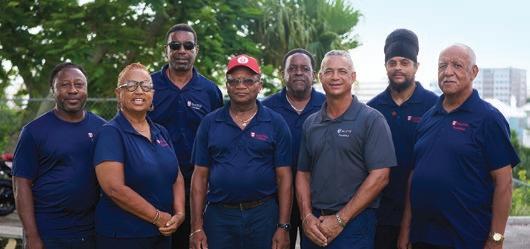
L–R: Sheridan Ming, Carpenter; Carol Parfitt, Security Guard; Calvin Fubler, Handyman & Maintenance Technician; Ricknel Rutherford, Custodian; Olin Jones, Landscaper; Lionel Cann, Director of Facilities & Maintenance; Brandon White, Custodian; and Ivor Minors, Security Guard (not pictured: Alroy Darrell, Custodian and Mario Foote, Custodial and Maintenance Manager).
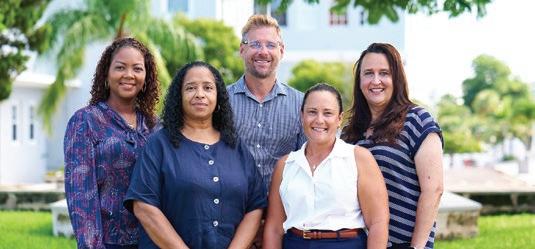
L–R: Karla Holder, Senior Accountant; Lisa Young, Payroll & Accounts Payable Administrator; Paull Davis, Director of Finance & Operations; Haley Trott, Saltus Shop Manager; and Kim Martins, Accounts Receivable Administrator.
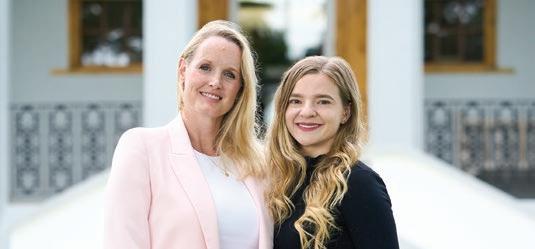
L–R: Katie Kostiuk, Director of Advancement and Katrina Lavender, Alumni Relations Coordinator.
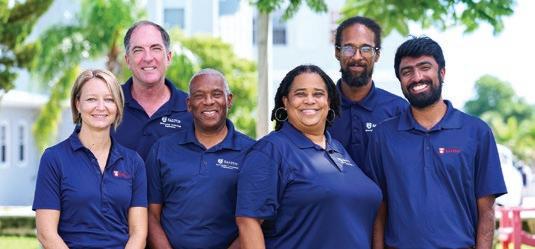
L–R: Elicia Bullock, Educational Technology & Innovation Coach; Larry Bucher, Information Management Systems Administrator; Jon Carey, Network Systems Administrator; Karen Dill, IT Administrator & Technician; Andre Shakir, Assistant IT Technician; Allwyn Bryner, Director of Technology and Innovation.
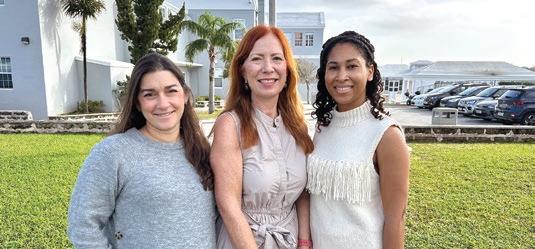
L–R: Marianna Russo, Communications Manager; Darcy Hausselman, Director of Communications & Marketing; and Samara Wilson, Human Resources Administrator.
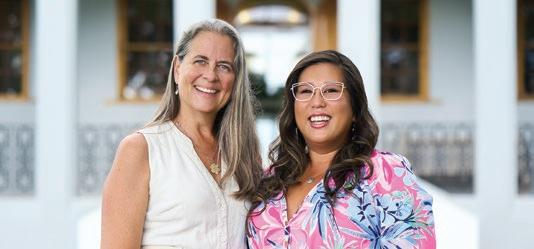
L–R: Amanda Skinner, Director of Enrolment Management and Vanessa Fine, Enrolment Officer.
This past June, Saltus bid a fond farewell to four longstanding members of our community: Deb McBeath, Junior Kindergarten Classroom Assistant; Jill Roberts, Grade 4 Teacher; Carol Jack, Upper Primary Learning Strategist; and Cathy Carreiro, Secondary School Receptionist.
Deb McBeath joined Saltus in 1999 and devoted 25 years to nurturing our youngest learners. Starting in a support role affectionately known as “matron,” she later became a full-time Classroom Assistant in Lower Primary. Known for her warmth, generosity, and devotion, Deb left a legacy of care that spanned generations of Saltus families.
Jill Roberts dedicated over 14 years to Saltus, serving as a Grade 4 Teacher, Key Stage Two Leader, and Assessment Coordinator. Her classroom was an engaging and supportive space where students thrived. Jill’s humour, dedication, and advocacy for her students made her a beloved colleague and educator.
Carol Jack joined Saltus in 2010 and brought compassion and consistency to every role, from Teaching Assistant to Learning Strategist Teacher. Her calm strength, reliability, and patient support helped countless students find confidence and success, especially in literacy.
Cathy Carreiro became the welcoming face and heart of the Secondary School. Her warmth, generosity, and genuine kindness touched everyone she met. Far more than a receptionist, Cathy
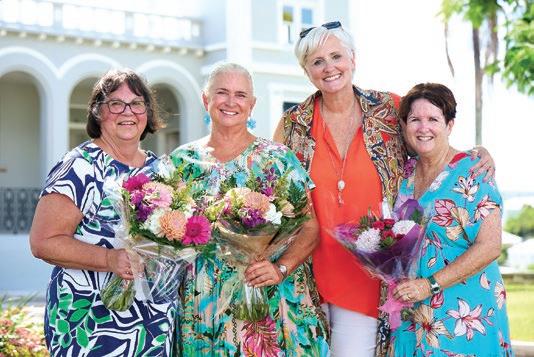
was a comforting presence, a trusted confidante, and a source of joy to colleagues and students alike. Her thoughtfulness, efficiency, and ever-cheerful attitude brightened every day and will be remembered with deep affection.
Their years of dedication, compassion, and excellence have enriched our community immeasurably. We wish them joy, rest, and many wonderful moments in the years ahead. l

In October 2024, Saltus announced that Gil Tucker ’71 retired from the Saltus Board after an impressive 13-year tenure as Board Chair and 27 years as a Board Trustee.
On Thursday, 8th May 2025, staff, current and past Board trustees, and alumni came together in recognition of Gil and his remarkable service and lasting impact on the school and the broader Bermuda community.
Rodwyn Gil Tucker’s association with Saltus spans decades, beginning as a student in 1966 and culminating in his graduation in 1971. As the first Black Bermudian Head Boy, his leadership left a lasting impact on both Saltus and Bermuda. Beyond the school, Gil served on numerous advisory boards and committees, including the Bermuda International Business Forum and the Chamber of Commerce, and co-chaired Bermuda First. He also led the Bermuda Hamilton Rotary Club and the Bermuda Career Centre.
Joining the Saltus Board of Trustees in 1997 and becoming Chair in 2011, Gil’s leadership was pivotal in completing the Francis “Goose” Gosling Centre, helping drive the school’s continued growth. Saltus remains deeply grateful for his vision, service, and enduring legacy. l
The Saltus Association is Saltus’ Parent/Teacher Association (PTA), which is an energetic parent volunteer group that welcomes all parents and staff. This energetic parent volunteer group has three main initiatives to enhance the educational experience of Saltus students and to promote the well-being of the school:
• Build a sense of community throughout Saltus by hosting events for our students, teachers and Saltus families and friends to enjoy together. Some of these include the Welcome Back BBQ, which is a collaboration with the Saltus Leadership Team to welcome families back to school, our New Family Coffee Social, Parent Wine Social, Quiz Nights and of course the Family Picnic, to name a few.
• Create forums where parents have an open platform to collaborate with school administrators and teachers to have an informed community about events and school initiatives. Through the Class Parent Program in the Primary Department and our PTA Parent Department Representatives across the school, the Saltus Association is committed to having open lines of communication both with families and with the Saltus Leadership Team to help foster a well-informed community.
• Help raise funds for the school that will ultimately enhance all students’ experience at Saltus. During the last school year, the Saltus Association expanded upon the Read-A-Thon at Upper Primary to include Lower Primary. The Saltus Association continues to have an overwhelmingly positive response to this event and, as such, will be expanding yet again to become a whole school event. Our Charleston Wrap fundraiser and the popular Saltus Run/Walk event continue to be our showstopper fundraisers that help us meet our annual fundraising goals and allow us to support all that we do across the school.
Every year, the Saltus Association works closely with the school administration to establish clear and achievable fundraising objectives that support the school’s needs and goals. This collaborative approach
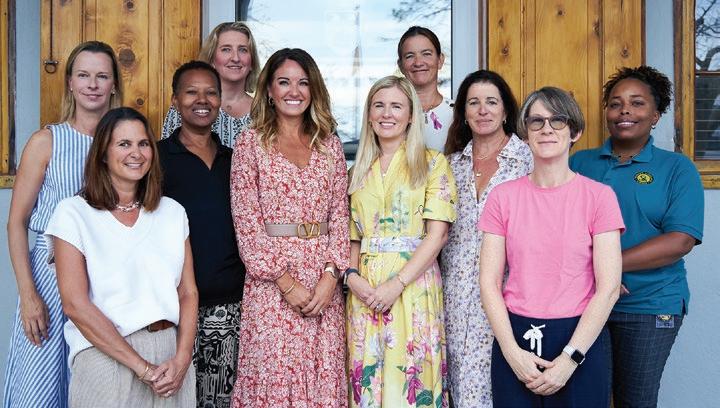
ensures that fundraising efforts align with the school’s priorities and effectively benefit the student community.
With the THANKS of our entire Saltus community, during the 2024–25 school year, we successfully fundraised for a new Saltus activity van.
We continue to plan a variety of community fundraising events throughout the year to ensure we have something for everyone. While participation in these fundraising events is 100% optional, we hope our Saltus community finds interest in joining in on an event or two.
Much of what we do depends on you and your support. There are many ways to be involved in the Saltus Association, whether it is as a part of the Class Parent Program, volunteering at an event, attending our monthly meetings, or bringing a new idea to life. We would love to hear from you and have you join us! If you are interested in getting involved in any way, big or small, please email pta@saltus.bm.
Please watch for our social media posts as to the many events we host and how you can get involved. l
@SaltusAssociation
@saltusassociation
saltus.bm/explore/ saltus-association-pta
Amy Jagoda
President
Louise Lister
Vice President
Liz Simmons
Secretary
Kathy Fear
Treasurer
Carole Collard
Compliance Officer
Latoya Simons,
Assistant Treasurer
Eva Wheeler
Communications Director
Keirsen Caines
Social Media Coordinator
Patrika Dill and Liz Simmons
Secondary School Representatives
Katie Troughton
Upper Primary Representative
Vicki Gold
Lower Primary Representative

What a year it has been – filled with learning, listening, and building meaningful connections.
As I reflect on my first year at Saltus, I am deeply grateful for the warm welcome and for all I’ve learned about this extraordinary school, its culture, and the people who make it so special. Every conversation and shared memory has deepened my understanding of Saltus and its lasting impact.
This year also brought exciting shifts in Advancement and Alumni Relations. We launched four new impact funds to give donors greater choice and connection to their impact. We reimagined events to meet people “where they are,” from welcoming grandparents back to campus, to launching the First One’s on Us alumni series, and hosting an intimate fireside chat with our Head of School. Every initiative carried the same message: Saltus values and cares about you, and wants to partner with you to shape the future.
We celebrated milestones together – our inaugural Day of Giving, I ‘heart’ Saltus, raised over $188,000, and our Golf Tournament brought in over $50,000 net proceeds, our most successful year yet. But what mattered most was the renewed energy and strengthened bonds in our community.
This year was about listening – to your stories, hopes, and ways to engage. Every conversation has inspired me and affirmed that we are building something extraordinary together.
As we look ahead, I do so with pride and optimism, ready to build on this momentum with intention, care, and partnership. Thank you for your time, commitment, and generosity. You are what makes Saltus strong.
With gratitude,

Katie Kostiuk, CFRE Director of Advancement
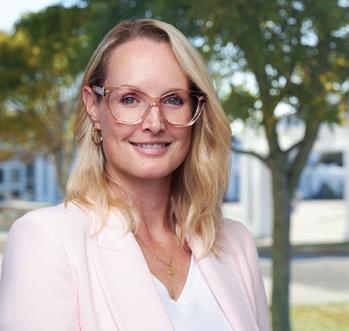
Every conversation has inspired me and affirmed that we are building something extraordinary together.
We’re thrilled to introduce Katrina Lavender, our new Alumni Relations Coordinator at Saltus. With her warm personality and deep appreciation for community, Katrina is already bringing great energy to our alumni relations program. We recently sat down with her for a quick Q&A to learn more about what brought her to Saltus, what she’s most excited about, and a few fun facts along the way.
What drew you to Saltus and this role in Alumni Relations?
I was drawn to Saltus by its outstanding reputation and accounts from multiple generations of my family members about their positive experiences here. Saltus’ mission to inspire lifelong learning and service to others reflects the kind of meaningful work I want to be part of. The school’s commitment to creating a genuine sense of belonging and community perfectly aligns with my passion for connecting people and building lasting relationships.
What are you most excited about as you step into this position?
I’m most excited about bridging the gap between Saltus’ rich history and its future success by connecting alumni across generations. Having worked extensively in stakeholder management and community engagement, I can’t wait to create meaningful opportunities that keep graduates connected to the school’s evolving story, enhancing alumni engagement while maintaining that personal, community feel.
Tell us a little about your background – what experiences have prepared you for this role?
My career has been built around relationship management, from overseeing complex client portfolios and managing stakeholder communications through CRM systems at the Big 4 marketing agencies. My experience in project management, particularly transforming processes for large, global teams, has taught me how to create
systems that enhance human connections rather than replace them. Additionally, my passion for genealogy and family history gives me a unique appreciation for the importance of preserving and celebrating institutional legacy.
Do you have a favourite memory from your own school days?
One cherished memory was representing Bermuda in the United Nations Youth Conference. It helped me discover my love for understanding different perspectives and bringing people together around common goals – skills that accumulated in undertaking a first degree in Anthropology and later, Public Policy. The experience taught me that the most meaningful learning happens when you’re part of a community working toward something bigger than yourself.
What do you hope alumni will feel when they connect (or reconnect!) with Saltus?
I want alumni to feel that same sense of belonging and pride they experienced as students while amplifying how their Saltus years helped shape who they have become. My overall goal is to showcase the achievements of graduates, helping them recognize their role as valued contributors to an ongoing story of excellence and community impact, whether they graduated decades ago or recently.
What’s one of your goals for the first year in your role?
My SMART goal for year one is to increase meaningful alumni engagement through aiding the transformation of
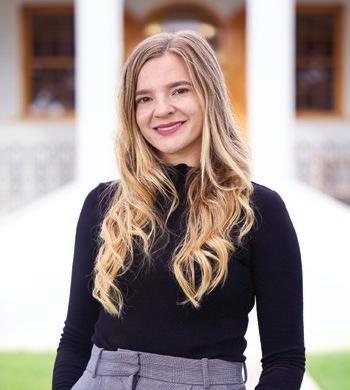
Saltus’ digital alumni platform. I intend to leverage my experience with CRM systems and data analytics to identify engagement patterns and create targeted outreach strategies in order to increase the number of reconnections with alumni, and continually re-evaluate strategies to ensure long-standing connections.
What’s something people might be surprised to learn about you?
People are often surprised to learn that I’m passionate about genealogy and have traced family histories back several centuries – it’s taught me that every individual story contributes to a larger narrative. I have helped a number of adopted individuals successfully trace their biological parents.
I type 80–90 words per minute, which comes in handy for detailed project documentation and rapid response communications!
If you could host any kind of alumni event, what would it be and why?
I would host a “Saltus Stories Through the Generations” event. I would invite alumni from different decades to share how their time at Saltus influenced their life paths. Current students would also be encouraged to showcase their own aspirations. This format of storytelling could be paired with interactive workshops where alumni could mentor students and collaborate on meaningful projects, creating intergenerational connections that strengthen the school community. l
For Emily Andrew ’09, the journey since graduation has been anything but linear and that’s exactly what makes it meaningful. After completing middle school in Bermuda and high school in the U.S., Emily earned her bachelor’s degree in psychology with a minor in marine biology and applied behavioural analysis at the University of North Carolina Wilmington. Returning home, she began working at the Bermuda Aquarium, Museum and Zoo, immersing herself in roles that deepened her connection to the ocean and strengthened her passion for environmental stewardship.
In 2023, Emily took a bold step to follow a new path. She launched her own business, creating ocean-inspired resin art, jewellery, and home décor crafted from reclaimed Bermuda cedar and acacia wood. What began as a creative outlet quickly became a purposeful venture – a way to blend her love for the ocean with sustainability and design, and to share Bermuda’s natural beauty in tangible form.
“Saltus prepared me for this journey,” Emily reflects. “It gave me confidence, strong communication skills, and the ability to think critically – tools I rely on every day.” These skills have proved essential, particularly communication and adaptability. Running her own business means collaborating with clients, suppliers, and fellow artisans, and meeting each challenge with flexibility. It’s this ability to adapt that allows Emily to keep growing while staying true to her vision.
Saltus’ influence extends beyond practical skills. Emily credits the school with instilling resilience and a mindset that looks past obstacles to pursue opportunities. “That mindset continues to shape how I run my business,” she says, “helping me build a culture of creativity and care that extends beyond Bermuda.”
Her connection to Saltus remains strong, tied not only to friendships and networks within the alumni community, but also to family ties – both her father and brothers attended Saltus. “It’s special to share that connection across generations,” she says.
“What began as a creative outlet quickly became a purposeful venture – a way to blend her love for the ocean with sustainability and design, and to share Bermuda’s natural beauty in tangible form.”
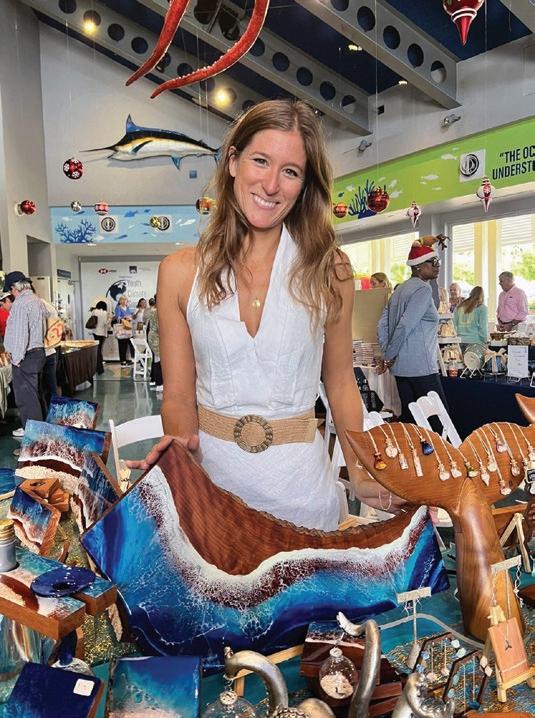
Emily’s career shift from marine biology to entrepreneurship reflects her desire to channel her passion in a creative way. “I wanted to express my love for the ocean through art and design, while also making sustainability part of my work,” she explains. The result is a career that is as deeply personal as it is impactful.
Her advice to today’s Saltus students? “Stay open to opportunities and don’t fear unexpected turns. The skills you gain at Saltus will take you in directions you might never imagine. Trust yourself, lean on your community, and remember that resilience, curiosity, and creativity can take you further than you think.”
Emily Andrew’s journey is a reminder that the path to success is rarely straight – but when guided by passion, adaptability, and purpose, it can lead to a truly extraordinary destination. l
When Saltus alumni Daniel Woods and Ezekiel “Ziggy” Stoneham, both Class of 2007, reflect on their journeys since graduation, one theme shines through: the entrepreneurial spark that was first lit during their school days continues to drive them today.
Both look back on their Saltus journey with gratitude for the structure, tools, and networks the school provided. “Saltus gave us the framework,” Ziggy remarks. “It wasn’t about handholding, but it put us in rooms with people who challenged us to think differently. That exposure really shifted our mindset.” For Daniel, one of the biggest takeaways was the friendships forged. “My closest friends from Saltus are still my closest friends today. We created a little crew that pushed each other – whether academically or athletically. That competitiveness has evolved into something deeper: we all want each other to win.”
That culture of support, combined with early opportunities like the school’s venture competitions, planted the seed for future initiatives. “We realized young that starting something isn’t as hard as it seems,” Daniel notes. From student initiatives and college events to their current wellness ventures, both have continuously embraced the role of creator rather than spectator.
Today, that entrepreneurial spirit lives in the ‘Grateful Miles Run Club,’ which has quickly grown into a thriving community. The idea took root after Ziggy survived a serious accident that left him with brain damage. His recovery was best supported by physical activity, and fortunately, his legs had escaped injury. “Running became my therapy,” he shares. “Daniel and I started signing up for races together as accountability partners. Then we realized – other people wanted to join, too.” What were once informal Sunday meetups has evolved into organized runs attracting hundreds, creating a community built on wellness, friendship and genuine community.
Running may be at the heart of Grateful Miles, but Ziggy emphasizes that the club has always been about something deeper: connection. “People come for different reasons,” he explains. “Some want to get faster, some want the social side, some come because it feels safe. That’s powerful.”
Their success traces back to the skills they began honing at Saltus: communication, resilience, adaptability, and critical thinking. “For us, communication is everything,” says Daniel. “Whether we’re organizing a 30-person run or a 170-person anniversary event, we need to make sure everyone is aligned and feels welcome.” Ziggy adds, “Critical thinking helps us problemsolve quickly – whether it’s figuring out safety on a route or responding when things don’t go as planned.”
Building Grateful Miles revealed something crucial to Daniel about entrepreneurship: “Not everyone wants to ‘create’ something themselves,” he says, “but they want to be part of something. That’s the key.” Success, he adds, comes from recognizing your network – understanding how to harness the unique talents, skills, and perspectives people offer- leveraging that collective energy is the key to success.
Their advice for Saltus students and young alumni? Don’t be afraid to ask questions and lean on your network. “Google and AI are great,” Ziggy laughs, “but nothing replaces face-toface conversations. Build relationships. People want to help –especially when they see someone with drive.”
What began as a few friends pushing each other to be better has become a movement inspiring hundreds of Bermudians to move, connect, and thrive. With courage, curiosity, and a commitment to community, Daniel Woods and Ziggy Stoneham are proving that the lessons learned at Saltus continue to shape lives far beyond the classroom. l
“With courage, curiosity, and a commitment to community, Daniel Woods and Ziggy Stoneham are proving that the lessons learned at Saltus continue to shape lives far beyond the classroom.”
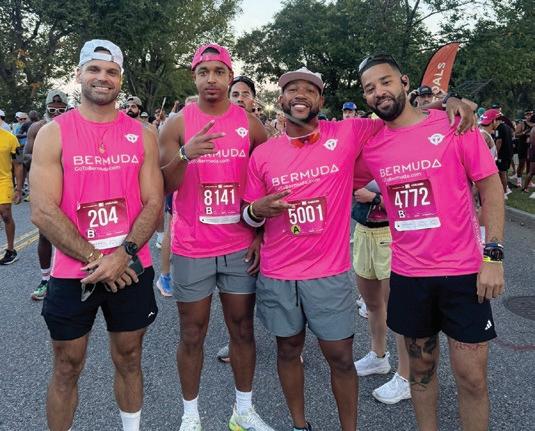
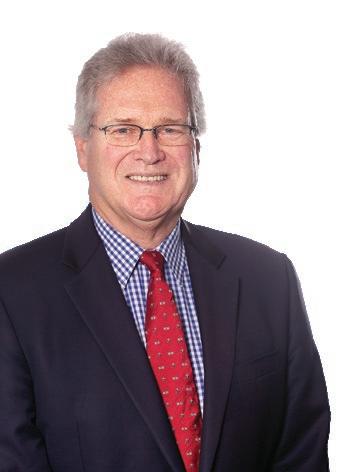
When Michael Freisenbruch ’69 looks back on his 45 years in business, what stands out isn’t the success of his insurance firm or the name on the building – it’s the values that got him there: discipline, humility, curiosity, and an enduring sense of gratitude.
“Being in business is a privilege, not a right,” he says, his words as steady as the principles that have guided him since his school days at Saltus Grammar School. It was there, he recalls, that discipline first took root. In those days, structure and expectation were part of everyday life. “Discipline was the bedrock,” he reflects. “It gave me the foundation to be resilient – to keep going when things got hard.”
That lesson began even earlier at home. His father, who left school at 13 to
sweep floors, eventually rose to become president of a major Bermudian company. Michael often thinks of him – a man of few words but strong conviction – as the model for hard work. “He started with a broom,” Michael says, “and he never forgot what it meant to do things the right way.”
Those same values carried Michael through his own entrepreneurial journey. Starting in the insurance industry at 23, he worked his way up, eventually founding Freisenbruch Insurance, now a respected name in Bermuda. Despite the company’s growth and longevity, Michael’s philosophy has never changed: focus on people. “It’s not about you,” he says simply. “It’s about the people you work with and the clients you serve.”
That client-first mindset, along with a willingness to adapt, has helped his business weather decades of change –from shifts in regulation to evolving technology and workplace culture. “You earn your income every day,” he says. “Nothing is owed.” Even the smallest changes – like relaxing the office dress code – reflect a leader willing to evolve while holding fast to core values.
“Being in business is a privilege, not a right.”
Asked what skills matter most in business and in life, Michael doesn’t hesitate: communication, resilience, adaptability, and critical thinking. Communication, he says, “can never be overdone.” Resilience is born from routine and self-care. Adaptability means staying open to change, while critical thinking – he admits with a laugh –
is something he’s always relied on his team to balance. “I’m instinctive,” he says. “Luckily, I’ve had great critical thinkers around me.”
Yet perhaps his most striking quality is humility. “Never take yourself too seriously. Have a sense of who you are to do the right thing. Never take anything for granted,” he adds. “Offer your opinion, but do it in a measured fashion – do it to be helpful. Ask people about themselves and be genuinely interested – there is a magic in finding out about others.”
When talk turns to legacy, Michael pauses. “I don’t think much about that,” he admits. “What matters is doing things with integrity and sustaining something meaningful.” His advice to young people is simple and timeless: Work hard. Be who you are. Treat others well. Stay humble, curious, and grateful – and never be afraid to care deeply. l
Tuesday 5th May 2026
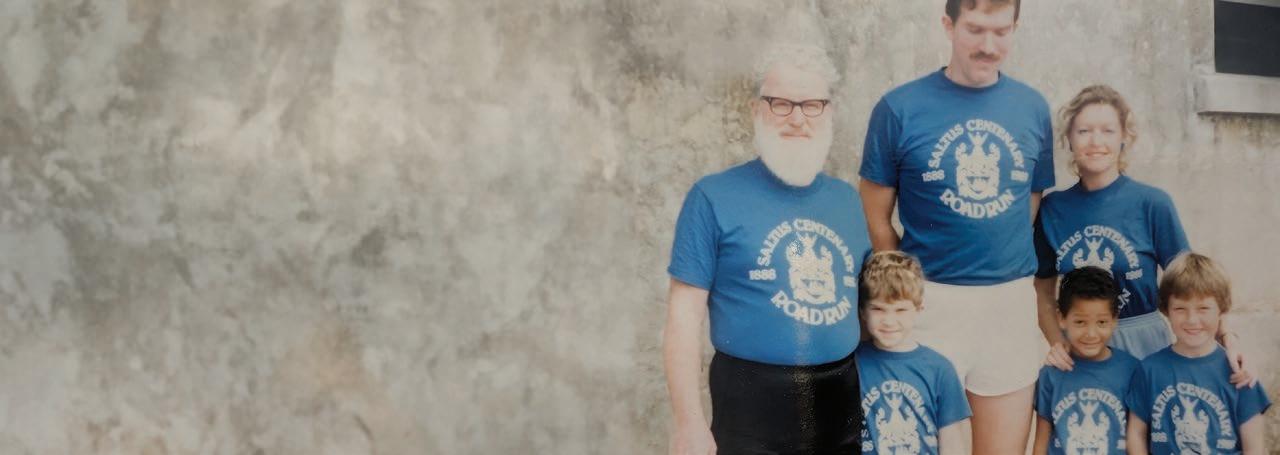
For Ryan Marshall ’00, walking his son Lucas ’32 through the Saltus gates felt like coming home. “Dropping Lucas at school was an immediate, almost instinctive return,” he says. “The hallways, the hills of Cavendish, it all came rushing back.”
Seeing former classmates now as fellow parents, Ryan reflects on the enduring sense of community Saltus fosters across generations.
Ryan’s recent return to Bermuda after several years in France has brought that connection full circle, grounded in a family legacy of leadership, innovation, and service. That legacy begins with his father, Charles “Charlie” Marshall, M.B.E., whose impact on Bermuda was
wide-ranging and deeply felt.
Charlie served as a senator, BFA president, UBP chairman, FIFA first-class referee, Saltus Trustee, and Association President. “He was deeply communityinvolved and became one of Bermuda’s first Human Rights Commissioners,” recalls his wife, Lesley. Inducted into the Sports Hall of Fame, Charlie was also honoured through a BFA tournament in his name. Together, Charles and Lesley established the Charles E. & Lesley Marshall Family Fund at the Bermuda Foundation to support youth football, one of his lifelong passions.
Professionally, Charlie’s story was one of resilience and foresight. After leaving MSA early due to dyslexia, he
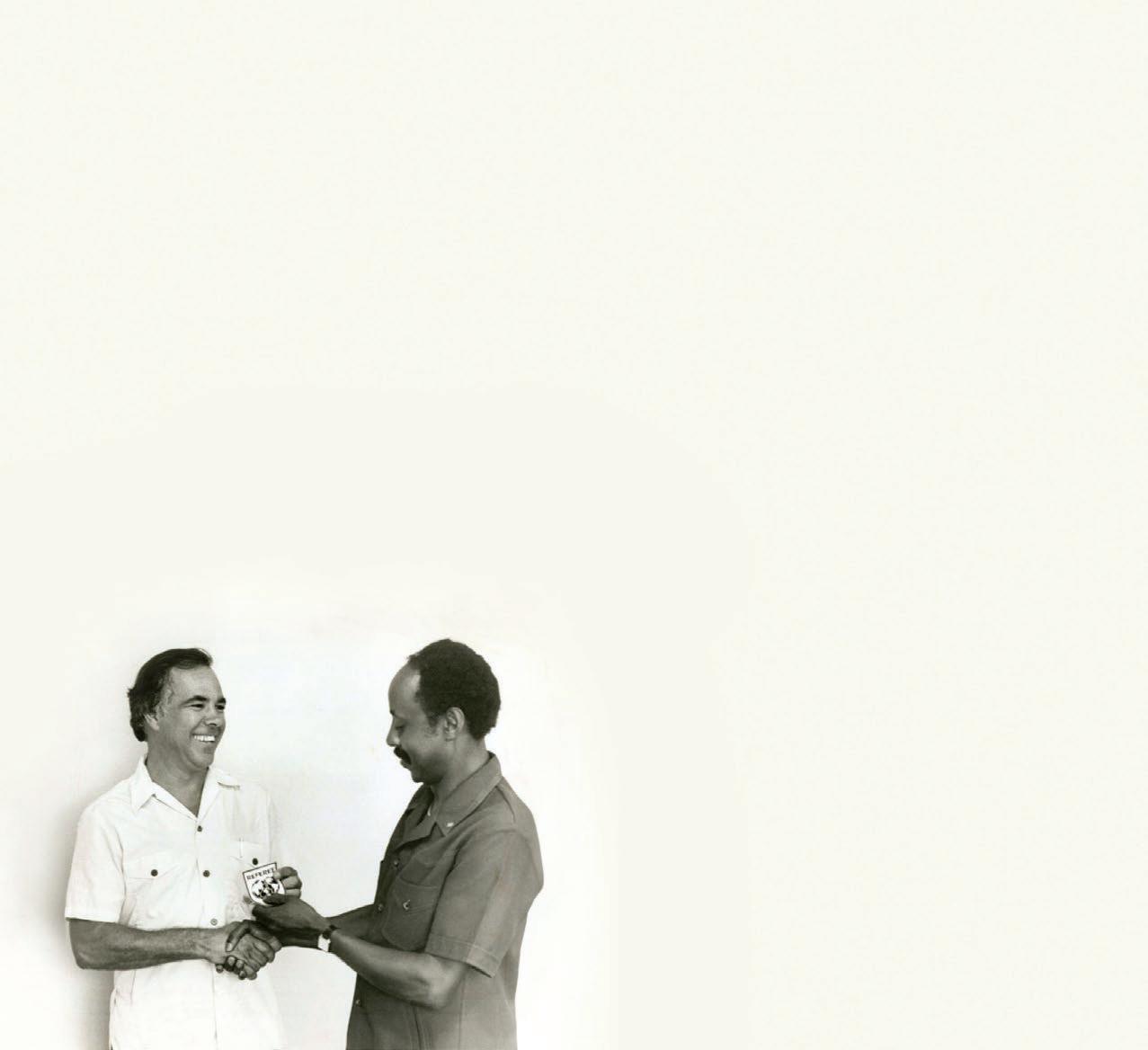
began as an apprentice at BELCO before founding Parker Marshall Ltd. and later Telecom, introducing Bermuda’s first pagers and cellphones. In his autobiography, he reflected, “It was people from all walks of life who were responsible for my success.”
Ryan carries that philosophy forward. His family was proud to support “The Charles and Lesley Marshall Technology Centre,” reflecting Charlie’s belief in pairing practical skills with strong academics. As Ryan settles back into island life, he looks ahead with gratitude, eager to remain connected to Saltus and to watch the next generation create their own memories. l
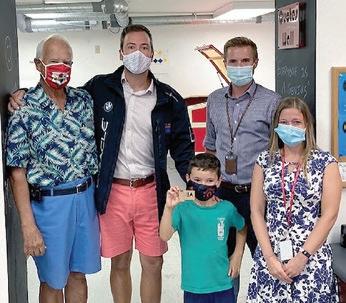
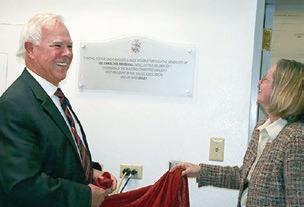
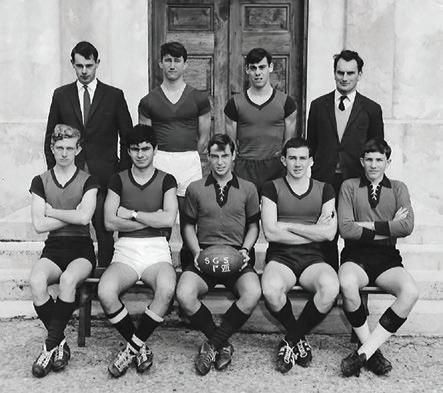
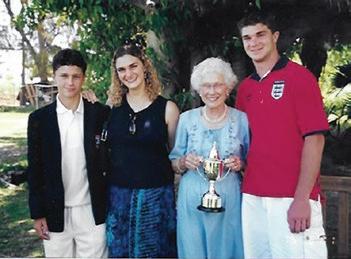
Whether on the sports field, the stage, or in the classroom, the Campbells have left an enduring mark on Saltus, beginning with Trustee Dr. Donald Campbell ’44. His son, Dr. Gordon Campbell ’69, was a familiar presence across campus, drawn to competition on the rugby pitch, cricket field, basketball court, and football field. Gordon’s wife, Liz, brought her own gifts to the school, dedicating eight years to Learning Support and Art.
The next generation carried that spirit forward in distinctive ways. Daughter Jennie ’96 found her voice through music and theatre as a drummer in the Wind Band and a violinist in the String Orchestra, later majoring in Vocal Performance. The confidence she gained through performance shaped her path as one of the first two women ordained
in the Anglican Church of Bermuda. Richard ’00 discovered his calling in understanding people, earning a Master’s in Counselling and serving as a teacher before becoming a counsellor and therapist in Bermuda.
David ’05 continued the family’s musical tradition through the Wind and Jazz Bands and emerged as a student leader, serving as Head Boy in both the Junior and Senior Schools and as Watlington House Captain. Now a PE teacher, he carries forward the mentorship he experienced at Saltus. His wife, Sara, teaches Voice and Choir in the Senior School, while their son Jack ’38 is just beginning his Saltus journey.
Arriving as students and returning as educators, counsellors, performers, and ministers, the Campbells embody a multigenerational Saltus story. l
For Caleb Crockwell ’09, his most treasured Saltus memories are rooted in school sports, especially representing Watlington House. “When I became Watlington Senior House Captain, we hadn’t won a Sports Day in about 20 years. Not only did we win that year, but we went on to win three in a row, 2007, 2008, and 2009.”
Now serving as General Counsel, Caleb jokes, “The role of Defence Against the Dark Arts at Hogwarts is already taken, so I have to toil in the Muggle world a bit longer, I’m a lawyer.” While his career followed a different path, his Saltus experience opened doors. He earned a full university scholarship and captained Bermuda’s Under-17 national football team.
Today, Caleb shares a meaningful connection with his son Theo ’38, both were taught by Lyn Pantry. “I feel immense pride seeing Theo climb the same stairs and walk the same halls,” he says. “When I graduated, I told Mr. Kermode, ‘Sir, it has been the honour of my life to attend Saltus.’ I left believing I could do anything.”
Caleb also remembers the teachers who shaped him. “I drove Mr. Figureido mad with my relentless drive to be the best in sports,” he laughs. Classmates still reminisce about maths with Mr. Boardman, whose sharp wit and quiet encouragement left a lasting impression.
“Being a Saltus parent now,” Caleb reflects, “is the greatest adventure of all.” l
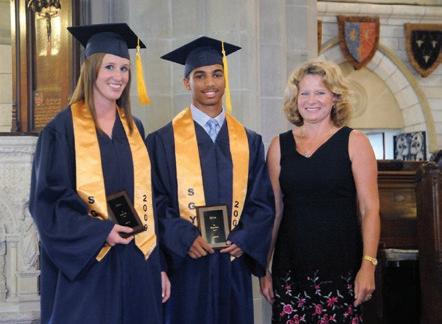

Got exciting updates to share? Whether you’ve tied the knot, welcomed a new family member, landed a dream job, travelled somewhere unforgettable, written a book, launched a business, or simply have a story to tell – we want to hear it! Send us your news so we can celebrate YOU in the next issue. Connect with us at advancement@saltus.bm
We caught up with the oldest Saltus alumni – Tony Correia ’47 and Ted Cassidy ’54 for lunch in June, and enjoyed their amazing stories about their time at Saltus!
Football manager Rick Wright ’76 lead team Greenville Triumph victory, beating the Chattanooga Red Wolves 3–1 at home in the USL League One.
The Bermuda National Trust elected Mark Orchard ’80 as president at their Annual General Meeting.
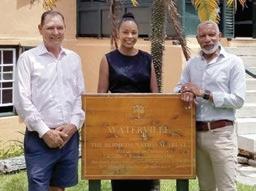
Author Jonathan Evans ’81 released his latest literary accomplishment Flies in Amber: Selected Stories featuring 33 stories.
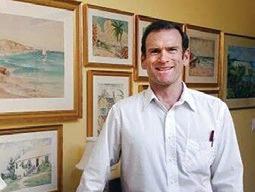
Sean Lee ’82 was appointed to a senior management position by The Bank of N.T. Butterfield and Son Limited. Sean will now be Group Head of Human Resources, joining the Executive Committee.
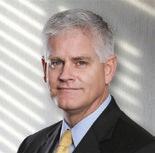
Son of Kirk Kitson ’58, Scott Kitson ’84 continues a proud Saltus legacy – not just in business, but in purpose. A leader in sustainability, philanthropy, and innovation, Scott is the past president of Keep Bermuda Beautiful and continues to champion clean energy and environmental stewardship through the Kitson Group, shaping a greener Bermuda for future generations.
Zach Moniz ’89 was appointed Chairman of the Board at Friends of Hospice.

Michael Branco J.P. ’94 secured a landslide victory with 68% of the vote to become City of Hamilton councillor.
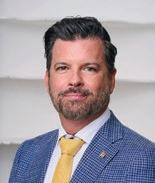
Golfer Michael Sims ’97 has been inducted into the University of Rhode Island Hall of Fame! A decorated athlete, Sims made history as the first amateur to win the New England Open in 2001. Sims was the first player on the eGolf Tour and just the sixth player in history at the time to shoot a 59 at the 2012 Southern Open. He has both played and caddied on the PGA Tour.

Shiona Turini ’99 won an Emmy Award in the category of Outstanding Costumes for Variety, Nonfiction or Reality Programming for her work on Beyonce Bowl, featured on Netflix.

Alumni Gillian Henderson ’01 and Katrina Kawaley-Lathan ’01 alongside former teachers Kathy Kawaley and Corrina Rego starred in the Gilbert & Sullivan production Charlie and the Chocolate Factory.

Football coach Vashun Blanchette ’03 guided Bermuda’s Under-14 boys’ team at the Caribbean Football Union Challenge Series in Trinidad and Tobago, placing an impressive second place in a stacked tournament.
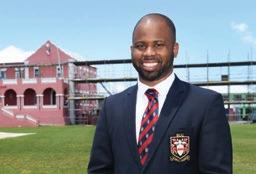
At the Valle d’Aosta Super Marathon, Mark Morrison ’03 placed 14th in the senior men’s division and placed fourth senior male master.
Andrew Cottingham ’03 and Henry Talbot ’03 secured a D Class title on winning the 2025 Round the Island Race.

We visited Cameron Madeiros ’06, co-owner of Bermuda Craft Brewing! We brought him back to Saltus for our June Alumni Cocktail evening, which was a huge hit.
Angela Dunstan ’07 proudly represented Bermuda as the only local umpire at the Women’s Pan Am Challenge, held on the island. Congratulations to Tristan Francis ’07 and his wife Liz on the birth of their daughter, Olivia, in February 2025.
The Grateful Miles Running Club, founded by Ezekiel Stoneham ’07 and Daniel Woods ’07, competed in the DC Half-Marathon race.
Film Editor Christopher Frith ’09 attended the prestigious Cannes film festival as Associate Editor for Tom Cruise’s The Final Reckoning.

Congratulations to Ellisse Johnston ’09 and Jonny Dean, who were married in Stroud, Gloucestershire.

Architect Piers Kermode ’09 was appointed Managing Director at architecture and landscape firm OBMI.

Terryn Fray ’10 was named Somerset Cup Match captain after years of serving as vicecaptain. Alongside Kamau Leverock, he put on a recordbreaking 169-run opening partnership that secured Somerset’s victory. He won the ICC Player of the Match Award against Panama.

As Bermuda defender and founder of DaRock Elite Academy, Dante Leverock ’10 led a group of young footballers on an enriching tour of Scotland, where they gained valuable experiences both on and off the pitch.
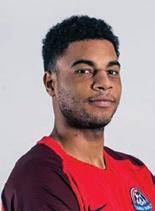
Wishing a lifetime of happiness to Hayley Evans ’10, who tied the knot with Jamie Baum. As the daughter of alum Richard Evans ’72 and sister to Liam Evans ’15 , Hayley continues the beautiful legacy of Saltus.
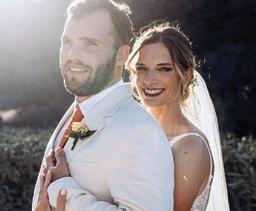
Arielle DeSilva ’11 was called to the Bermuda Bar in 2021. She has been promoted to Senior Associate (Corporate) at Appleby and is building an impressive career in law, having been recognised as a ‘Leading Associate’ by Legal 500.
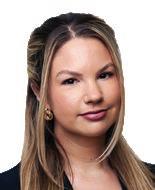
Four-time paralympian
Jessica Lewis ’11 proudly carried Bermuda’s flag during the opening ceremony of the Paralympics in Paris. She won a gold medal in the women’s 100m and finished second in the 400m final at the Canadian Track and Field Championships. Additionally, she received an Alumni Brilliance Award from Brock University.
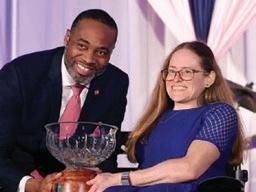
Julesa Robinson ’11 has been appointed physiotherapist of the Bermuda U20 Women’s Football team, travelling with them to Trinidad & Tobago for the World Cup Qualifiers.
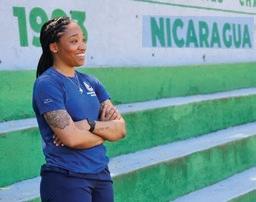
Jennifer Anstee ’11 married Toby Brees in the Cotswolds, England.

Congratulations to Rachel Doughty ’12 , who married Kyle Kalum!
Former professional footballer Jonte Smith ’12 was named Premier Division MVP at the BFA Awards. With a career spanning Sutton United, Crawley Town, Oxford United and Cheltenham Town in England, Kemi Kings in Finland and Ballymena United in Northern Ireland, plus a debut for Bermuda Cricket in 2024, his sporting journey has been remarkable.
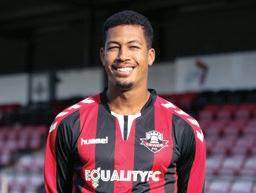
Footballer Zeiko Lewis ’12, who played for Union Omaha in USL League One, scored his first goal for the club in a a penalty shootout against Forward Madison. He recently rejoined the Young Men’s Social Club.

Dr. Leandra Stracquadanio ’13 has begun an exciting new role as Head of Biodiversity Research at the Lilongwe Wildlife Trust in Malawi, with her work conitrbuting to conservaiton and sustainability globally.
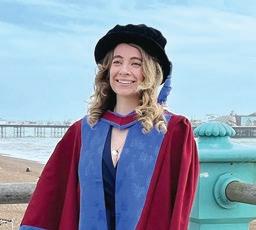
Following in the footsteps of their late father, Dr. Leonard Teye-Botchway of the Saltus Board, pioneers in opthalmology Addon Teye-Botchway ’14 and Addi Teye-Botchway ’14 are building their own legacies. Dr. Teye-Botchway pioneered opthalmology in Bermuda. Addon and Addi have earned degrees in Opthalmology from the Royal College of Surgeons in Ireland. Addon received the Queen Award for Opthalmology from the Royal College of Surgeons in Ireland, now undertaking a year’s residency in Kerry and Cork, while Addi continues his work in Derry, Northern Ireland, and Letterkenny, Ireland.
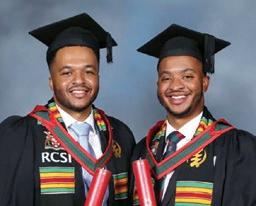
Artist Shanna Hollis ’14 designed the striking artwork now on display at King’s Square, St. George’s, commissioned by the Bermuda Tourism Authority and Norwegian Cruise Lines.

Tuesday, 20th January
First One’s On Us Alumni Gathering (Classes of 1990–2000)
1609 Restaurant & Bar
Wednesday, 18th February
First One’s On Us Alumni Gathering (Classes of 2001 onwards)
1609 Restaurant & Bar
Tuesday, 5th May
30th Annual Saltus Golf Tournament
Friday, 29th May
Summer Soiree
Hamilton Princess Beach Club
Friday, 5th June
Saltus Alumni
Athletics Afternoon & Cocktail Reunion
Saltus Field and Woodlands Lawn
Make sure you connect with us on our social media channels!
www.facebook.com/ SaltusAlumni
www.instagram.com/ saltusalumni/
Philosopher and writer Walker Zupp ’14’s essay on Wittgenstein and St. Augustine has been published in Time and Propinquity, an anthology of fiction and philosophy.

Goalkeeper Nathan Trott ’16 was named man of the match in Cardiff’s 1–0 win over Luton Town in League One. He is on a season-long loan from FC Copenhagen, who he helped advance in the UEFA Conference League.
Congratulations to Jamie Sayers ’16 and Katie Sayers on their marriage!

Bermuda women’s football captain and midfielder Eva Frazzoni ’16 is preparing for her comeback in English team AFC Sudbury following a hip injury. She was named the Player of the Season at the club’s awards.
Cyclist Conor White ’17 claimed his second National Road Race Championship title in the 60 mile event, an honour that qualifies him for international competition.
Tristan Narraway ’17 showcased her digital collage works in the Over & Over collaborative exhibition at Masterworks, an exciting milestone for her creative career.

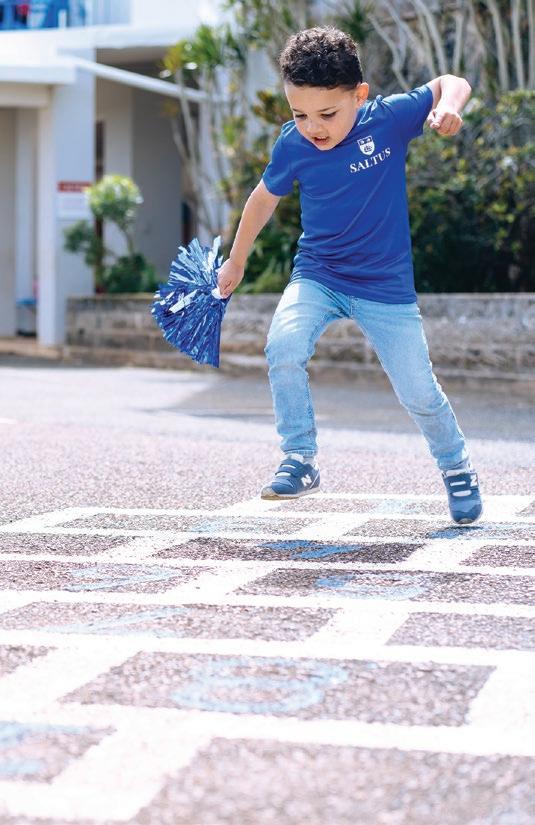
Every gift to the AESF opens doors for the next generation of Saltus students.
Since its founding in 2019, the Saltus Alumni Endowed Scholarship Fund (AESF) has grown thanks to the generosity of alumni like you, yet there is still more to do. Every gift brings us closer to making a Saltus education possible for deserving students and shaping the future of leaders, thinkers, and changemakers.
Giving isn’t just about today, it’s about tomorrow. Your support keeps the spirit of Saltus alive for generations to come.
Give today to the AESF –and change a life forever.
For more information on the Saltus Foundation’s endowed funds, please visit: saltus.bm/giving/ giving-with-purpose/endowment.
Sailor Benn Smith ’17, alongside cousin Christian Ebbin ’23 has claimed victory at the Edward Cross Long Distance Comet Race, leading vessel “Sommer” to victory. This marked their third win together, underscoring the duo’s continued dominance in the Comet Class and adding another prestigious title to their partnership.
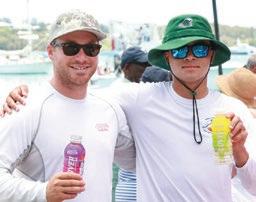
Cyclist Robin Horsfield ’17 represented Bermuda at the Caribbean Mountain Bike Championships in the Dominican Republic, while also securing second place at the Ontario Cup #5.
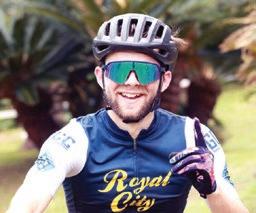
Baseball player Adam Hall ’17 of the Nashville Sounds secured a 7–2 win over the Norfolk Tides in Minor League Baseball.
Milaun Perott ’17 has been called to the Bermuda Bar! With multiple accreditations in Law and Business, she received the Appleby Legal Education Scholarship in 2021 and interned with them in 2021 and 2022.

Casey Thomas Truran ’18 received a Thesis Merit Award from the American Institute of Architects for excellence in architectural advancement through the project “Cross Point” at Savannah College of Art and Design.
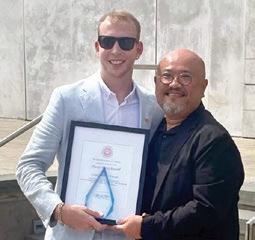
Cyclist Kaden Hopkins ’18 dominated international competitions, winning the Grand Prix Jack Auto in Guadalope, the opening stage of the Tour De La Guadeloupe and the Tour de Marie-Galante individual time trial.

Sailor Adrianna Penruddocke ’18 made her Olympic debut last year, and competed at the ILCA UK National Regatta, finishing 14th overall – a fantastic showing at this elite international competition. She also represented Bermuda at the ILCA World Championships in Qingdao, China. Penruddocke is 26th in the world sailing rankings – the highest-ranked Bermuda sailor in years.
Footballer Kenni Thompson ’18 of AFC Bournemouth Women celebrated success with her team when they captured the National League Division One South West title. She has competed in the FA Women’s National League.
We’re wishing a lifetime of love, happiness, and success to Cameron Jeffers ’18 and Kyanna, who were married in September.
Mosaic Insurance welcomed Olivia Washington ’19 into its Bermuda-based 2025 cohort after she graduated from Toronto Metropolitan University.

Adventurer Zoe Skinner ’19 spent nearly two years aboard the Picton Castle sail-training vessel, completing around 30,000 nautical miles and gaining unforgettable life experience.
A heartfelt congratulations to Charles Venton ’19 and Sydney Pereira ’19 who recently tied the knot! We wish them joy and happiness as they began the next chapter of their life together.
Cyclist Nicholas Narraway ’20 set a course record on the Banbury Star ten-mile time-trial in England. Narraway, who rides for Team California, completed the course in a time of 19 minutes and 49 seconds.
Ywione Darrell ’21 achieved a Merit in his MSc at the University of Oxford, with his dissertation receiving a Distinction. Darrell co-launched the Bermuda Journal of Academic Research, a new platform for elevating intellectual discourse within the community.

Conyers awarded scholarships to Lorenza Durrant-Lucarini ’21 (University of California) and Thomas Evans ’22 (University of Lancaster) in support of their legal studies – a celebration of their academic dedication.
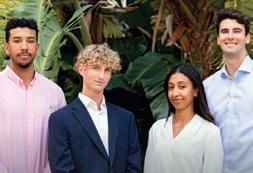
Island Games: Victoria Davies ’17, Julesa Robinson ’11, Emily Cabral ’22, Koa Goodchild ’21 (team captain), Danni Watson ’21, Marli Butterfield ’22. John Barry Nusum, current PE teacher, was head coach of the women’s team, former teacher Manny Faria was the manager of the women’s team.
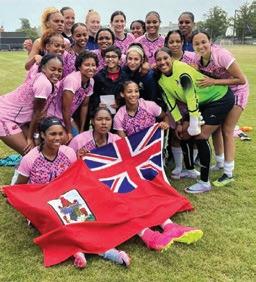
As the recipient of the 2025 Wakefield Quin Legal Scholarship, Jacob Matthews ’21 will soon begin an accelerated law degree at the University of Law in the UK.

Sprinter Za’Kayza Parsons ’21 clocked 11.58 seconds in the 100m Dash at the James Madison Invitational – the second-fastest time in UMBC program history. She earned sixth place overall.

Runner Nirobi Smith-Mills ’21 competed in the Podium Festival Leicester 5k Road Race in England, claiming 14th place.
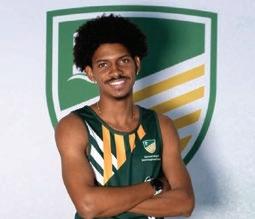
Selah Tuzo ’21 and Zakiyah Durham ’17 have been selected for the Bermuda Longtails Senior Women’s National Netball Team and will attend the Battle of the Isles tournament in St. Eustatius and St. Maarten.

As part of a trio, Cody Robinson ’22 has been named captain of the Thomas College Men’s Soccer Team in Maine.
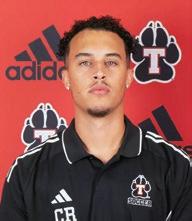
Former teacher of Physical Education Emmanuel “Manny” Faria (father of Jonah Faria ’23) of Tuff Dogs Football Club presided over the presentation of 215 pairs of football boots to youth teams playing in the Bermuda Football Association leagues.
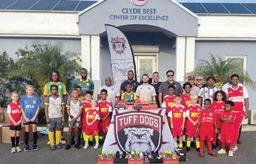
Equestrain Nicholas Lopes ’23 took home top honours at the Bluegrass Festival Horse Show in Kentucky, claiming both the 1.45M JR-AM Jumper Classic title and the overall Junior Jumper Champion award. He recorded two top-ten finishes at the Lake Placid Horse Show.

Sailor Sebastian Kempe ’23 won a silver medal at the Junior Pan American Games, secured 9th place at the North American Championships in Long Beach and placed fourth overall in the ILCA UK National Regatta.
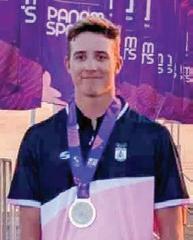
Runner Jake Brislane ’23 finished second in the men’s 5,000 metres at the Island Games in Orkney, and third at the Leicester Podium Festival 5k Road Race in England.

Aiden Kendall ’23 represented Bermuda in the Men’s Rugby 7’s as captain at the 2025 Junior Pan American Games, alongside alumni Brandon Sangster ’24, Dylan Sangster ’25 and Lucas Summers ’23.

Congratulations to Honor Minors ’23, who received a $7,500 scholarship from The Christian Humann Foundation in recognition of her outstanding potential.
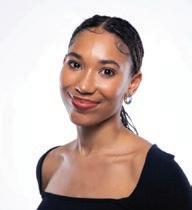
Jessica Bucher ’23 was one of two recipients of the 2025 RenRe Undergraduate scholarships. She is completing a double major in Strategic Communication and Graphic Design at Liberty University, with aspirations to work in global branding and give back to Bermuda.
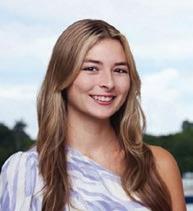
2024
Athlete Katherine BeanRosario ’24 made her mark in both cricket and soccer. From interning at the Bermuda Cricket Board to playing Division 1 soccer at Hampton University, she continues to make Saltus proud. She was honoured with a female junior achievement accolade at the 43rd Annual Government Sports Awards.
Golfer Sienna Mosquera ’24 become the first Bermuda female to win a medal at the Island Games, securing third place in the women’s individual golf tournament and assisting the Bermuda team to occupy fourth position. She set a new women’s course record and went on to claim victory at the Walt Disney Classic on the Hurricane Junior Golf Tour.

2025
Midfielder Camryn Lines ’25 was signed by FA Women’s National League Divison One team Bridgwater United in Somerset, England.
We are sorry if we have missed any of your news in this issue of Saltus Magazine. If you would like to share news, milestones, or photos, please email advancement@saltus.bm.
At Saltus, tuition sustains our operations, but philanthropy fuels what makes our school truly extraordinary. Tuition covers about 83% of annual costs, with the remaining gap supported through non-tuition revenue, including the vital role of fundraising.
Like most independent schools around the world, we choose this model intentionally, to keep Saltus accessible and affordable, and to be a school for all families. We value socio-economic diversity and inclusivity, and we believe in building a strong community through shared responsibility in this.
Fundraising is more than a practical necessity, it’s a noble act of stewardship and belief in what Saltus stands for. It brings together families, alumni, and supporters in shared purpose, ensuring our mission thrives without compromise. Together, we provide the programmes, spaces, and experiences that inspire confident, compassionate leaders.
Together, we turn potential into progress — and education into inspiration. To make your gift today: saltus.bm/giving
Gabriel ‘Gabe’ Mackertich and Isis Tucker are SGY2 student leaders, connectors, and changemakers who are working to build bridges between students, alumni, and the wider Saltus community.
“I applied for this prefect position because I want to help build strong connections between Saltus students and alumni, as I will soon become one I would like to help build a supportive and engaged community. I also hope to make a positive difference by creating meaningful opportunities for alumni involvement. Fun facts about me: I’ve been at Saltus since Grade 6, I have been a senior company dancer for four years at Jackson’s and also work as a gymnastics coach.”
– Isis Tucker
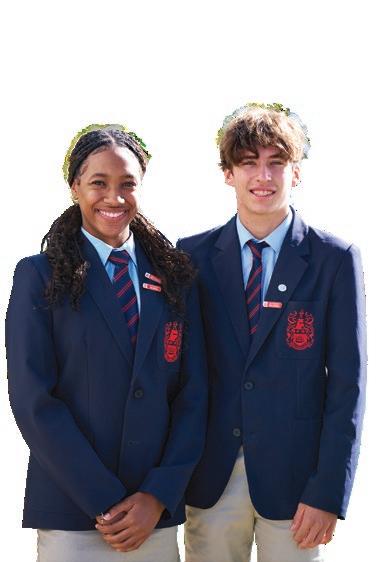
“I am excited to be one of the first Advancement and Alumni Relations prefects at Saltus and I am excited to work with alumni as I am soon going to become one. As a lifer at Saltus I feel connected to the school as it is like my ‘home away from home,’ and I want our alumni and soon-to-be-alumni to feel connected past graduation.”
– Gabe Mackertich
At Saltus, you can direct your gift to the area that resonates with you. Our Direct Funded Initiatives provide crucial support to meet the school’s most immediate needs and exciting new opportunities.
Ensure flexible support for urgent needs by contributing to the Head’s Discretionary Fund in order to offer immediate assistance where it’s needed most.
Provide access to educational opportunities and essential resources by contributing to our Financial Assistance Fund for scholarships and bursaries, regardless of financial circumstances.
Fuel innovation and extraordinary student opportunities at Saltus by supporting our Programme Innovations Fund.
Transform our learning environments by giving to the Campus Improvements Fund.
where it matters most to you.
We kicked off our new alumni gathering series, The First One’s On Us, bringing Saltus graduates together for great conversation, laughter, and connection!
Grandparents Day was filled with smiles as students proudly shared their school with loved ones and celebrated the special bonds that span generations.
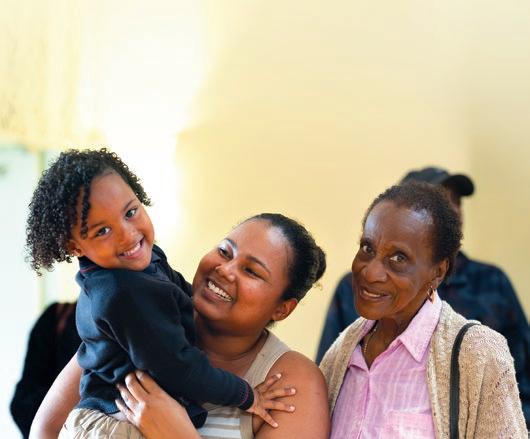
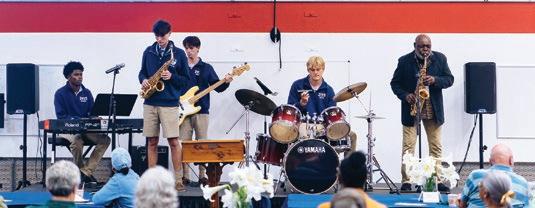
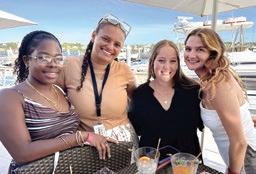
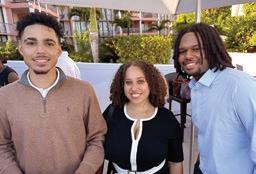
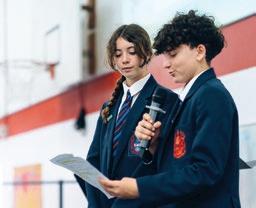
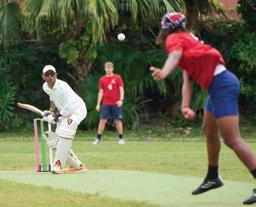
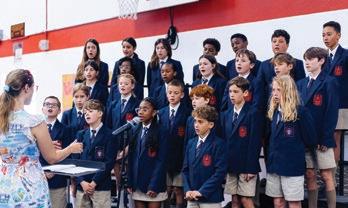
Our Alumni Athletics Afternoon brought graduates back to campus for spirited games of cricket, netball, and volleyball – reigniting team pride and camaraderie.
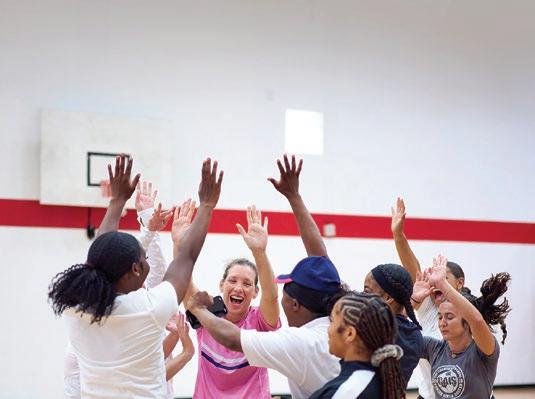
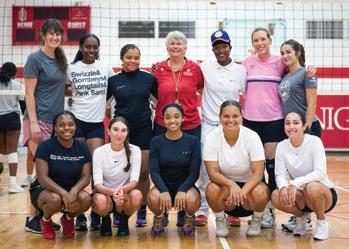
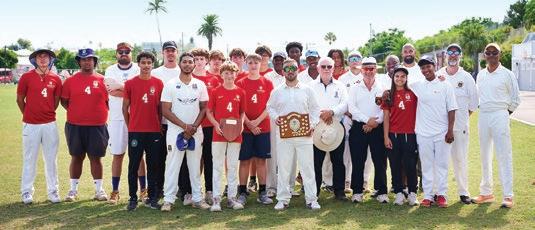
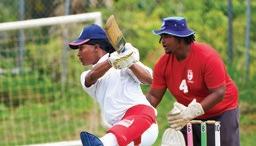
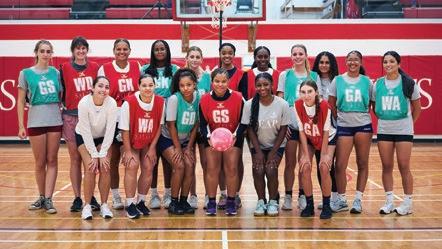
Reunions were in full swing this year – from celebrating the Class of 2000’s 25th milestone to gathering with alumni in Washington, DC, and welcoming nearly 100 graduates to our annual June cocktail event.
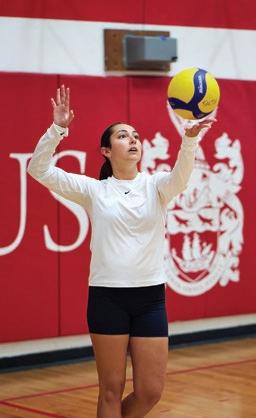
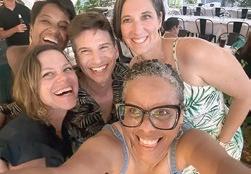
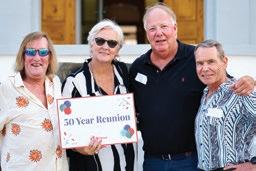
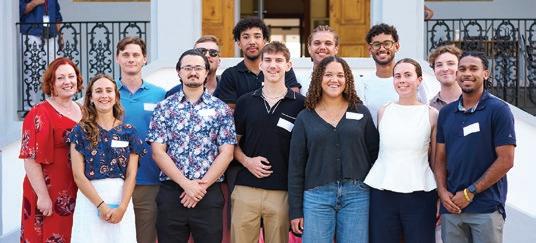
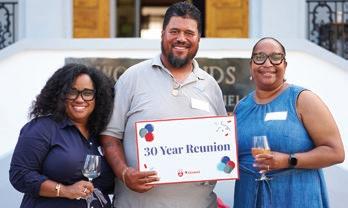
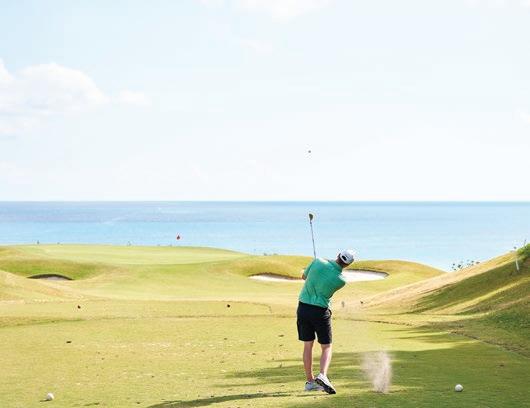
A wonderful day on the greens brought together alumni, parents, and friends for our annual Saltus Golf Tournament, which raised more than $50,000 for the Stephenson Scholarship. Join us for the 30th anniversary on 5th May 2026!
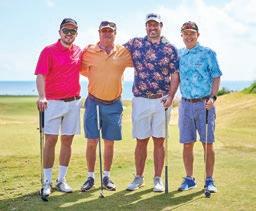
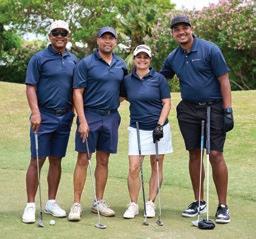
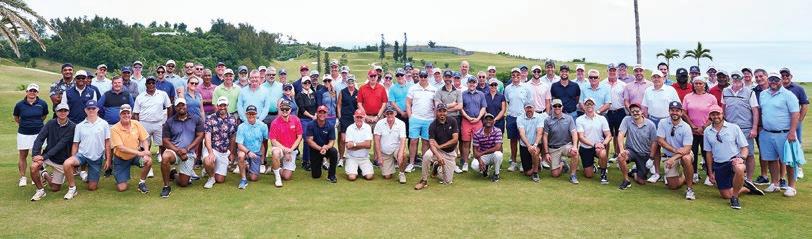
Our I ❤ Saltus Day of Giving brought out incredible school spirit, community pride, and friendly competition – all rallying together to make a big impact for Saltus!
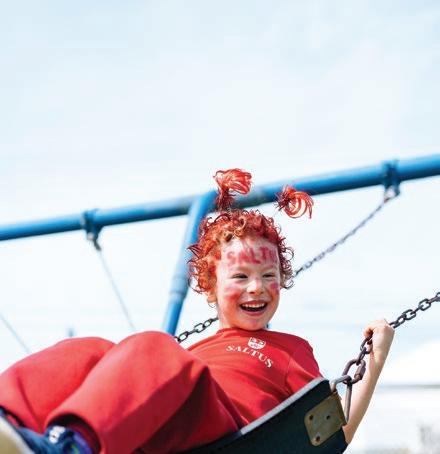
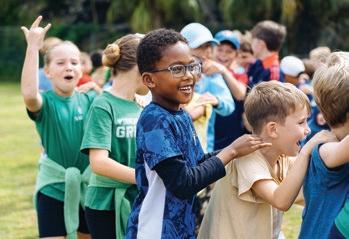
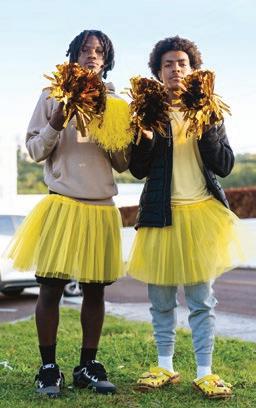
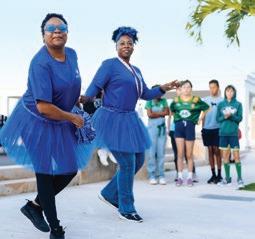
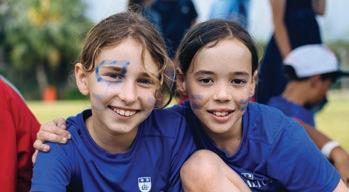
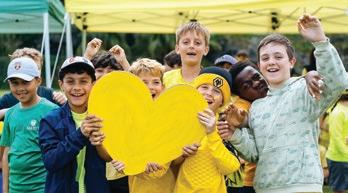
first steps to giant leaps: 2024–25 was a record-breaking philanthropic year driven by our vision and defined by your support. The numbers below represent the new heights we’ve reached together; they are a testament to how the strength of our community makes great things happen. Thank you for being the heart of our success.

We are delighted to celebrate the extraordinary generosity of our Saltus community. Every gift, whether large or small, shapes the Saltus experience, enriching classrooms, inspiring students, and opening doors to new opportunities. It is your belief in our mission and your commitment to our students that make all the difference. We are truly grateful for your support and proud to share the impact of your generosity in the pages that follow.
The following lists gratefully acknowledge donors to Saltus during the 2024–25 fiscal year (1st July 2024 to 30th June 2025).
Diana and Lars Bergquist
Ernest E. Stempel Foundation
The Green Family
Saltus Association
Carla and Neil Stempel ’80
Vallis Educational Testamentary Trust
FOUNDERS’ CLUB
Bermuda Community Foundation
Cary and Spencer Butterfield ’99
Judy and John Collis ’76
The Estate of Peter Green
Rebecca and Colm Singleton ’94
TRUSTEES’ CLUB
Roisin and Liam Moloney
HEAD OF SCHOOL’S CLUB
Arch Reinsurance Ltd.
Allied World Assurance Company Limited
Caroline and Graham Collis ’77
Linda and Will Cox ’80
Michele and Frank Fischer
Lindo’s Market and Lindo’s Family Foods
Janine Lines
Peter Cundill Foundation
Sacha and Penny ’54* Simmons
Yvonne and Stephen Velotti
Cherie-Lyn and Andre Zanol ’88
Marilyn Zanol and Giorgio Zanol, M.B.E.
Lauren Zanol ’19
Judith and Marco Zanol ’85
Olivia Zanol ’17
Anonymous (2)
* Remembered fondly and with appreciation
James F. Amos, M.B.E.*
Cortney and Andrew Bernstein
Butterfield Bermuda Championship
Kevin Dallas ’96 and Sean Masters
Pamela Ferreira
Amy and Nick Jagoda
Emily Ranson-Leverock and
E. Michael Leverock
Saskia and Scott Pearman ’90
Britt and Jonathan Reiss ’87
Gemma and Gregory Roberts
Robert Steinhoff ’65
Anonymous (2)
KNIGHTS CLUB
Rebecca and David Bart
Conyers
Cripps Foundation
Gail and Tom Horrell
Kristen and Brant Kizer
KPMG Bermuda Ltd.
Sarah and Robert Marcotte
Tina and Mike McGuire
Sophie Campeau and Nicholas Pettit ’92
Kathleen and Patrick Reardon
Renaissance Reinsurance Ltd.
Buchanan Programme & Price Smith
Val and Paul Stevenson
Anonymous (3)
Rebecca Adderley
Kelly-Ann Robinson and Nikai Albuoy
Danita and Denzel Allen
Gina and Chris Anderson
David Annan
Anna Boden Anthony ’97 and James Anthony
Payne Augustus
Waswate Ayana
Tammy and James Ayers
Jamie Ball
Rebeca and Paul Barker
Jude and Dave Barton
Mari Russo and Jonathan Bath ’06
Pamela and Dennis Baum
Lisa and Phill Beach
Jon Beard
Casper Bendtson
Bermuda National Gallery
Bermuda Pacers Track Club
Stephanie and Blaine Bernard
Jillian Brydon and Richard Biram
Marcia De Jesus P. Da Silva Blake and Nicholas Blake
Jihane Boussoufa
Bregitta and James Boyce ’99
Hilary and Steven Brown
Katie and Martin Brown
Nicola Bruce and Thomas Potts
Trudy and Larry Bucher
Elicia Bullock
Ronette Burchall-Nusum and Melvin Nusum
Carly Bush
Butterfield & Vallis
Deborah and James Butterfield
Latoya Simons and Javon Butterfield
We celebrate our Advancement Committee for their guidance, dedication, and the countless ways they champion Saltus and our students.
Kevin Dallas ’96
MEMBERS
Jon Beard
Juliette Oatley-Baia ’00 Colm Singleton ’94
E. Michael Leverock Board Chair
Julie Rousseau Head of School
Katie Kostiuk Director of Advancement
Katrina Lavender Alumni Relations Coordinator
Joseph Butterfield
Francesca Cacace ’08 and Jason Lawrence
Britt and Seaver Call
Kanika Cameron and Cavon Burchall
Shay-Coy and Audley Campbell
Sara Campbell
Gena and Lionel Cann
Jennifer and James Cappadona
Dwan Smith-Carey and Jon Carey
Maria Duarte Villa and Hector Carmona Rodriguez
Cathy and Tony Carreiro
Caroline and John Henry Carty
Nicole Chichon-De Silva and Keith De Silva ’91
CHUBB Bermuda Triangle Challenge
CHUBB Charitable
Foundation Bermuda
Luma Clarke ’37
Bronach and R. C. Clarke
Stormme Miller and Ross Clarke
Aaron Coates
Claudia and Scott Cobon
Yvonne and Paddy Cole
Zara Ward ’01 and Dave Collins
Linda and Ian Cook
James Cook
Rafferty Cook ’38
Sonny Cook ’38
Chris Cooper
Annabel and Guy Cooper ’95
Tanya and Kevin Copeland
Christine and James Cornes ’87
Carmen Patricia Zevallos and Rodrigo Cortez Olórtegui
Rebecca and Andrew Cottingham ’03
Debbie and Dudley Cottingham
Aisha and Janson Cross
Ashley Cruz-Singh
Fraser Cunningham
Kyle Dailey
Christianna and Kris Dakin ’02
Esme and Ryan Davidge ’99
Fiona Holmes ’95 and Adam Davis ’94
Janie-Elizabeth and Durnferd Davis
Alison and Paull Davis
Jennifer and Fritz de los Santos
Nikiesha Tucker and Derek deChabert ’99
Katie and Jesse DeCouto ’95
Laura Rego and Graham Dick
Patrika Dill
David Dodwell ’66
Anél and Steffin Du Preez
Janine and Tim Duffin
Soumya and Aditya Dutt
Safiya Dyer
Deneys Dyter
Crystal and Stanfield Edwards
Amy Ellison
Grant Emery
Lynn Emery
Tania Esdaille and Windol Thorpe
Lyndsay Faries
Jamie and Adam Farrell ’94
Marie Humphrey Fay ’00 and James Fay ’99
Kate Fay
Courtney and Jody Feldman ’97
Ieva and Craig Ferguson
Allison and Tim Figureido ’91
Vanessa Fine and Jason Boorman ’00
Annette Fitzmaurice
Laura and Allan Fitzsimmons
Donte Foley
Aisling Foote
Fiona and Graeme Forster
Pauletta Francis
Aine and David Frawley
Jen and Marc Fullerton ’98
Kalpana Gangwani and Nick Daswani
Katherine Garcia-Simpson and Matthew Simpson
Anthony Gates
Paige and Benjamin Gell
Renee and Ronald Gilchrist
Migle Girule and Thomas Girulis
Vicki and Damian Gold
Flora and Peter Goodall
Jennifer and Charl Goodey
Jennifer and Shannon Gosse
Kathryn Fear and Nicholas Grainger
Stacie Gregorius
Emilie Deschenes and Israel Guzman Thiboutot
Hannover Re
Cynthia and Jeremy Hassell
Darcy Hausselman
Alex and Brian Hayne
Clin Hayward
J. Henry Hayward, M.B.E., J.P. ’52 and Patricia Hayward
Mary and Edouard von Herberstein
Crystal and Ross Heyliger
Richard Hillen ’04
Carla and Richard Hinwood
Leigh-Ann Bezuidenhout and Richard Hobday
Rose-Anna and David Hoey
Karla Holder
Lauren and Ben Hollinger
Robyn Hooper ’04 and Alex Hooper
Gemma and Grant Hopkins
Stephanie Hughes and Kenan Robinson
Elizabeth and Thomas Hunter
Romana and Paul Ivey
Carol Jack ’77
Jennifer and Christopher James
Helen and Colin James
Kristine and Colin James ’05
Sylvia and Colin Jones ’97
Olga Jones
Melisa Judd
Matthew Katzsch
Jill and Brendan Kemp
Angela Knight
Michael and Tanja Korff
Christina Kyle
Katie Kostiuk and Dominic Lacasse
Penny Lambe
Roger Lambert ’75
Andrea Lathwell
Emma Holmes Law ’99 and Geoffrey Law ’99
Yuan Zhu and John Le
Lisa LeBlanc ’94 and Gary LeBlanc
Carina Lee
Gloria and James Legere ’92
Jennifer and Justin Levine
Helen and Andreas Lewin
Sara Lewter ’94 and Robert Lewter
Sophia Lewter ’30
Vicki and Brian Lightbourn ’86
Alice and Devin Lightbourne
Heather and Daniel Linden
Maria and Michael Lingham
Louise and Stephen Lister
Thembekani Gwegwana and Mesuli Lobese
Rebecca and Andrew Locke
Brian Lonergan
Clindel and McLaren Lowe III
Carol Lavin and Brian Lynch
Sarah and Graham MacDonald
Dominique Mackie
Rosa and Chris Madeiros
Patrick Mahon
Andre Manders
Karen and Simone Maranzana ’92
Lesley Marshall
Lisamarie and Joshua Masters ’02
Steven Masters ’70
Kristina Viera and Chris Maughan
Deb and Malcolm McBeath ’78
Tracy and David McComas
Erin and Chris McGregor
Joanne and Colin McQueen
Kerri and Desmond Mello ’95
Dana and John Melsom
Laura Fortunato and Stefan Metschnabel ’01
Kerry Liebenberg and Barry Meyers
Eureeka and Leron Minors, Sr.
Jignesh Mistry
Andrew Moore
Nea and Nathan Moore ’99
Lauren and Jeffrey Morash
Leah and Paul Mosquera
Marie Voysey-Moss and David Moss
Betsy and Louis Mowbray ’48
Alison and Michael Murdoch-Smith ’00
Derek Myers
Lorne Nannini
Alexis and John Nusum
Jules Oatley-Baia ’00
Joy and Alan Oatley
Yemi and Richard Oduntan, Ph.D.
Alexandria and Julius Ondoy
Brita and Johann Oosthuizen
Lindsey Pacheco ’20
Tracy and Raymond Packwood
Roy Palmer
Victoria Rodriguez and Stephen Palmer
Martina Minarik and Tom Parcell
Philip Pearson
Shahrzad Murray Pennyman
Samuel Perry
Jennifer and Drew Pettit ’88
Patra and Wesley Phillips
Crystal and Alan Pittendrigh
Katie Gaudet and Keenan Press
Karen Miller and Dean Pye
Samantha Willis and Spencer Quarterly
Daniel Rance
Alexis and Jordache Rawson
Jennifer and Neil Redburn
Cindy and Graham Redford ’80
Tara Sullivan and Paul Regier
Everard T. ‘Bob’ Richards and Pauline Richards
Katie and Adam Richards
Trista and Samuel Riihiluoma ’03
Anna and Charles Robinson
Carrie and Brian Rosorea ’84
Hannah and David Ross
Sarah and Adam Rossides
Melanie and Nicholas Scanlon
Daniel Schramm
N. Koshea Scott-Millett
Lorraine and Andrew Shailer ’96
Marina and Andrew Shaw ’00
Rebecca and Alec Shepherd
Danielle and Jesse Sheppard
Mee Kyung and Jae Hong Shin
Leslie and Jeremy Shrubb ’04
Elizabeth Simmons ’97 and Lars Simmons ’95
Chardala Simons
Tara Burgess and Derrick Simons
Lisa and Pete Simons
Stefanie and Bruce Sinclair
Amanda and JP Skinner ’84
Joanne and Scott Slater
Anastasia Smith
Sompo International Holdings Ltd.
Kevin Sousa
Sarinrat and Neil Speight
Cécile and Mario Spescha
Candiss Steede
Emily Steinhoff ’98 and Rob Steinhoff ’93
Susan and Dan Sullivan
Sarah Cooper Summersgill ’03 and John Summersgill
William Sura
Amanda and Adam Szakmary
Christopher Tannock
Christine Da Costa and Gareth Tavares
Kelley Taylor
The Estate of Leslie Outerbridge
David Thom
Sarah and John Thompson
Lauren Todd
Belinia Drogba and Issouf Traore
Haley and Martin Trott
Katie and James Troughton
Kavan Tucker
Wendy and Derek Tully
Lynsey Turner
Danielle Morin and Brent Twidale
UK Online Giving Foundation
Jessica and Tim Usher-Jones
Julia Mansfield and Adriaan van der Merwe
Boris Vestweber
Heather Gowing and Kenneth Vevers
Harry Vickers
Cindy and Michael Walsh
Tiffany Wardman
Aliki Watson-Jones
Christina Westholm-Schroeder and Henrik Schroeder
Eva and Mark Wheeler
Jinky and Alex Whittaker
Joel Williamson
Arthur Wilsen
Alexandra and Benjamin Wilson
Samara Wilson
Junita Woolridge ’98
Kate Kayaian and Paul Wright
Carole Collard and Marc Zinsmeister
Anonymous (21)
David Annan
Anna Boden Anthony ’97
James Anthony
Jeanne Bean
Jihane Boussoufa
Larry Bucher
Elicia Bullock
Sara M. Campbell
Lionel Cann
Jon Carey
Cathy Carreiro
Chris Cooper
Aisha Cross
Christianna Dakin
Paull Davis
Liz Dowdell
Safiya Dyer
Lynn Emery
Timothy Figureido ’91
Vanessa Fine
Aisling Foote
Margaret Fox
Pauletta Francis
Kalpana Gangwani
Renee Gilchrist
Stacie Gregorius
Cynthia Hassell
Darcy Hausselman
Crystal Heyliger
Karla Holder
Andrew T. Hook ’07
Robyn DeSilva Hooper ’04
Carol Jack ’77
Melisa Judd
Myles Koshman
Katie Kostiuk
Andrea M. Lathwell
Emma Holmes Law ’99
Sara Willis Lewter ’94
Vicki Lightbourn
Patrick Mahon
Steven Masters ’70
Deb McBeath
Nea Moore
Lorne Nannini
John Nusum
Joy Oatley
Lindsey A. Pacheco ’20
Lyn Pantry
Jennifer Pettit
Patra Phillips
Trista Riihiluoma
Sarah Rossides
Julie Rousseau
Mari Russo
Alisa Sadeh
Melanie E. Scanlon
Nic Scanlon
Jesse Sheppard
Leslie Shrubb
Chardala Simons
Lisa Simons
Bruce Sinclair
Amanda Skinner
Anastasia Smith
Candiss Steede
Emily Steinhoff ’98
Lauren Todd
Haley Jayne Trott
Nadia N. Tuckett
Robinson ’95
Lynsey Turner
Lisa Willis ’98
Sam Willis
Samara Wilson
Paul Wright
Anonymous (12)
Ian Cook
Kevin Dallas ’96
Alexander Green ’96
Amy Jagoda
E. Michael Leverock
Liam Moloney
Sacha Simmons
James F. Amos, M.B.E.*
Pamela and Dennis Baum
Deborah and James Butterfield
Judy and John Collis ’76
Debbie and Dudley Cottingham
David Dodwell ’66
Pamela Ferreira
The Estate of Peter Green
J. Henry Hayward, M.B.E., J.P. ’52 and Patricia Hayward
Helen and Colin James
Janine Lines
Lesley Marshall
Betsy and Louis Mowbray ’48
Sacha and Penny ’54* Simmons
Robert Steinhoff ’65
Wendy and Derek Tully
Marilyn Zanol and Giorgio Zanol, M.B.E.
Linda and Chris Swan ’85
The Hon. Anthony T. Correia, J.P. ’47
Arch Reinsurance Ltd.
Allied World Assurance Company Limited
CHUBB Charitable Foundation Bermuda Hannover Re
Renaissance Reinsurance Ltd.
Sompo International Holdings Ltd.
UK Online Giving Foundation
* Remembered fondly and with appreciation
LEAD SPONSOR
Freisenbruch Insurance Services Ltd.
CONTRIBUTING SPONSOR
Bank of N.T. Butterfield & Son Ltd.
CORPORATE SPONSORS
AON
D & J Construction Co. Ltd.
Bermuda Pest Control
GENERAL SPONSORS
Applied Computer Technologies
BAC Universal Electric Ltd.
Bermuda Cleaning
Butterfield & Vallis
TEE SPONSORS
CHUBB Bermuda MEF Limited
Roy Palmer In memory of Peter LePage
Arch Reinsurance Ltd.
Allied World Assurance Company Limited
Bermuda Community Foundation
Bermuda National Gallery
Bermuda Pacers Track Club
Buchanan Foundation
Butterfield & Vallis
Butterfield Bermuda Championship
CHUBB Bermuda Triangle Challenge
CHUBB Charitable
Foundation Bermuda Conyers
Cripps Foundation
Ernest E. Stempel Foundation
Hannover Re
KPMG Bermuda Ltd.
Lindo’s Market and Lindo’s Family Foods
Orbis Investment Management Ltd.
Peter Cundill Foundation
Renaissance Reinsurance Ltd.
Saltus Association
Sompo International Holdings Ltd.
UK Online Giving Foundation
Vallis Educational Testamentary Trust
James F. Amos, M.B.E.*
Jeanne and Anthony Bean
Diana and Lars Bergquist
Trudy and Larry Bucher
Deborah and James Butterfield
Nicole Chichon-De Silva and Keith De Silva ’91
Judy and John Collis ’76
Debbie and Dudley Cottingham
Linda and Will Cox ’80
David Dodwell ’66
Liz Dowdell and Wayne Washington
Safiya Dyer
Pamela Ferreira
Allison and Tim Figureido ’91
Margaret Fox
The Estate of Peter Green
J. Henry Hayward, M.B.E., J.P. ’52 and Patricia Hayward
Carol Jack ’77
Helen and Colin James
Vicki and Brian Lightbourn ’86
Janine Lines
Sarah and Robert Marcotte
Lesley Marshall
Dana and John Melsom
Betsy and Louis Mowbray ’48
Joy and Alan Oatley
Tracy and Raymond Packwood
Paula and Andy Pereira
Tara Sullivan and Paul Regier
Britt and Jonathan Reiss ’87
Everard T. ‘Bob’ Richards and Pauline Richards
Sacha and Penny ’54* Simmons
Amanda and JP Skinner ’84
Sarinrat and Neil Speight
Robert Steinhoff ’65
Carla and Neil Stempel ’80
Christopher Tannock
Christine Da Costa and Gareth Tavares
The Estate of Leslie Outerbridge
Wendy and Derek Tully
Christina Westholm-Schroeder and Henrik Schroeder
Lesley White
Cherie-Lyn and Andre Zanol ’88
Marilyn Zanol and Giorgio Zanol, M.B.E. Anonymous (1)
1948
Louis Mowbray ’48
1952
Mr. J. Henry Hayward, M.B.E., J.P. ’52
1954
Penny Simmons ’54*
1965
Robert Steinhoff ’65
1966
David Dodwell ’66
1970
Steven Masters ’70
1975
Roger Lambert ’75
1976
John Collis ’76
1977
Graham Collis ’77
Carol Jack ’77
1978
Malcolm McBeath ’78
1980
Will Cox ’80
Graham Redford ’80
Neil Stempel ’80
1984
Brian Rosorea ’84
JP Skinner ’84
1985
Marco Zanol ’85
1986
Brian Lightbourn ’86
1987
James Cornes ’87
Jonathan Reiss ’87
1988
Drew Pettit ’88
Andre Zanol ’88
1989
Ian Walker ’89
1990
Scott Pearman ’90
1991
Keith De Silva ’91
Tim Figureido ’91
1992
Jim Legere ’92
Simone Maranzana ’92
Nicholas Pettit ’92
1993
Andrew Riker ’93
Rob Steinhoff ’93
1994
Adam Davis ’94
Adam Farrell ’94
Lisa LeBlanc ’94
Sara Willis Lewter ’94
Colm Singleton ’94
1995
Guy Cooper ’95
Jesse DeCouto ’95
Fiona Holmes ’95
Desmond Mello ’95
Lars Simmons ’95
Nadia Tuckett Robinson ’95
1996
Kevin Dallas ’96
Alexander Green ’96
Andrew Shailer ’96
1997
Anna Boden Anthony ’97
Jody Feldman ’97
Colin Jones ’97
Elizabeth Adams Simmons ’97
1998
Marc Fullerton ’98
Andrew Green ’98
Emily Steinhoff ’98
Lisa Willis ’98
Junita Woolridge ’98
1999
James Boyce ’99
Spencer Butterfield ’99
Ryan Davidge ’99
Derek deChabert ’99
Alex Fay ’99
David Ferreira ’99
Emma Holmes Law ’99
Geoff Law ’99
Nathan Moore ’99
2000
Jason Boorman ’00
Marie Humphrey Fay ’00
Michael Murdoch-Smith ’00
Jules Oatley-Baia ’00
Andrew Shaw ’00
Price Smith ’00
2001
Stefan Metschnabel ’01
Zara Ward ’01
Peter D Kyle ’01
2002
Kris Dakin ’02
Josh Masters ’02
2003
Andrew Cottingham ’03
Sam Riihiluoma ’03
Sarah Cooper Summersgill ’03
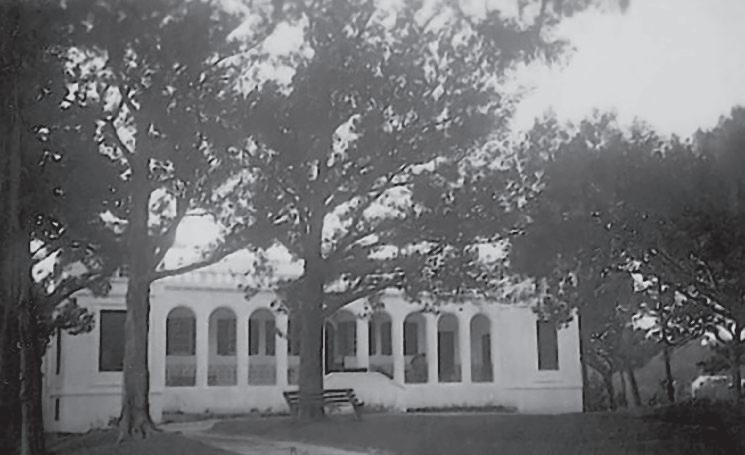
2004
Ryan Faries ’04
Richard Hillen, C.F.A. ’04
Robyn DeSilva Hooper ’04
Jeremy Shrubb ’04
2005
David Campbell ’05
Michael Fay ’05
Colin James ’05
2006
Jonathan Bath ’06
2007
Andrew Hook ’07
2008
Francesca Cacace ’08
Lorin Tannock ’08
Milan Wall-Burgess ’08
Britt Franklin Call ’08
2017
Olivia Zanol ’17
2019
Lauren Zanol ’19
2020
Lindsey Pacheco ’20
Since 1888, Saltus has been shaping future leaders, and now, through the 1888 Legacy Society, you can help secure that legacy for generations to come. By including Saltus in your estate plans, you ensure that future students will benefit from the exceptional education, opportunities, and experiences that set our school apart.
Join the 1888 Legacy Society and make a lasting difference in the lives of future Saltus students. Your gift today will shape tomorrow’s leaders.
Contact Katie Kostiuk, Director of Advancement at katie.kostiuk@saltus.bm for more information.

We are pleased to present the financial summary for Saltus Grammar School for the fiscal year ending 30th June 2025. This year’s results reflect our continued commitment to maintaining educational excellence while managing our resources responsibly and ensuring long-term financial sustainability.
Total revenue for the year reached $26.5 million, an increase from $24.3 million in 2024, primarily driven by a $2.3 million gain on the sale of investments in the current year. Tuition and fees remained our main source of income at $21.1 million, supplemented by additional revenue streams from donations, investments, rentals, and after-school and camp programs.
Expenditures increased by $1.5 million (6%) from $24.9 million to $26.4 million. Salaries and payroll benefits accounted for 66% of total expenditures, reflecting our investment in exceptional educators and staff. After considering a change in fair value of investments of ($725k), the school recorded a net operating deficit of $610k, resulting in year-end net assets of $28.5 million.
Despite economic pressures and inflationary costs, the School achieved stability through disciplined expense management, strong enrollment, and sustained community support. While overall expenses increased modestly, this rise was primarily due to inflationary increases in payroll, continued escalation in healthcare and insurance costs and the growing need for financial assistance. Even in this challenging economic environment, Saltus has remained steadfast in its investment in academic excellence – continuing to advance the BC Curriculum, support professional development for teachers, and invest in capital improvements to our state-of-the-art facilities across both campuses. These commitments reflect our determination to provide an inspiring, modern, and world-class learning environment for our students.
Saltus remains focused on carefully balancing financial stability and accessibility. This is demonstrated by our ongoing commitment to maintaining small class sizes throughout the school, ensuring every student benefits from individual attention, strong relationships with teachers, and a supportive learning environment. In addition, Saltus continues to invest in top-class facilities that enhance both teaching and learning. The introduction of The Saltus Grove nearby the Lower Primary campus has provided an inspiring outdoor learning and play space, fostering creativity, collaboration, and a
connection with nature. Across both campuses, modern classrooms, labs, performing arts areas, and athletic facilities further support our mission to provide an exceptional, wellrounded educational experience.
As tuition alone does not cover the full cost of operating the school, Saltus relies heavily on its annual fundraising campaigns and the generosity of its donors to bridge the gap. This continued philanthropic support allows the school to offer vital financial assistance to families, maintain and enhance programs, and invest in its people and infrastructure.
The school continues to prioritize financial accessibility through our Financial Assistance Program, ensuring that deserving students from diverse backgrounds have the opportunity to benefit from a Saltus education. We are equally committed to investing in curriculum development, teacher excellence, and innovative learning environments – initiatives that strengthen our academic standing and enrich the student experience.
Our focus on prudent financial stewardship allowed us to balance rising operational demands with the continued delivery of high-quality education. Our investment income performance, alongside responsible cost management, has helped offset external economic challenges.
We remain deeply grateful to our families, donors, and the wider Saltus community, whose generosity and trust continue to sustain our mission. Their support ensures that Saltus remains a leader in education in Bermuda – financially strong, forward-looking, and committed to excellence.
Sincerely,

Liam Mohoney Chair, Saltus Finance Committee
the year ended 30th June 2025
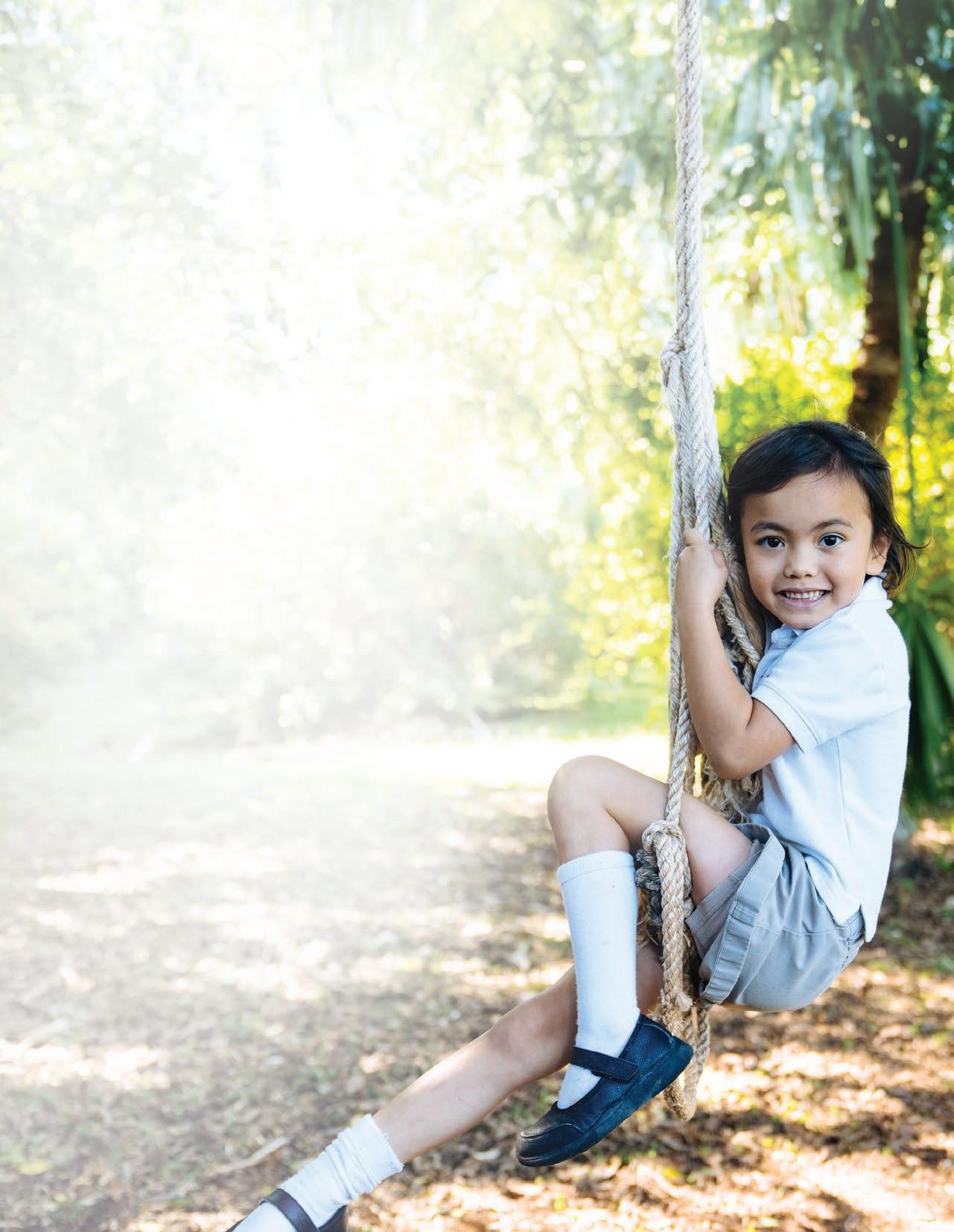
For the period 1st July 2024 to 30th June 2025
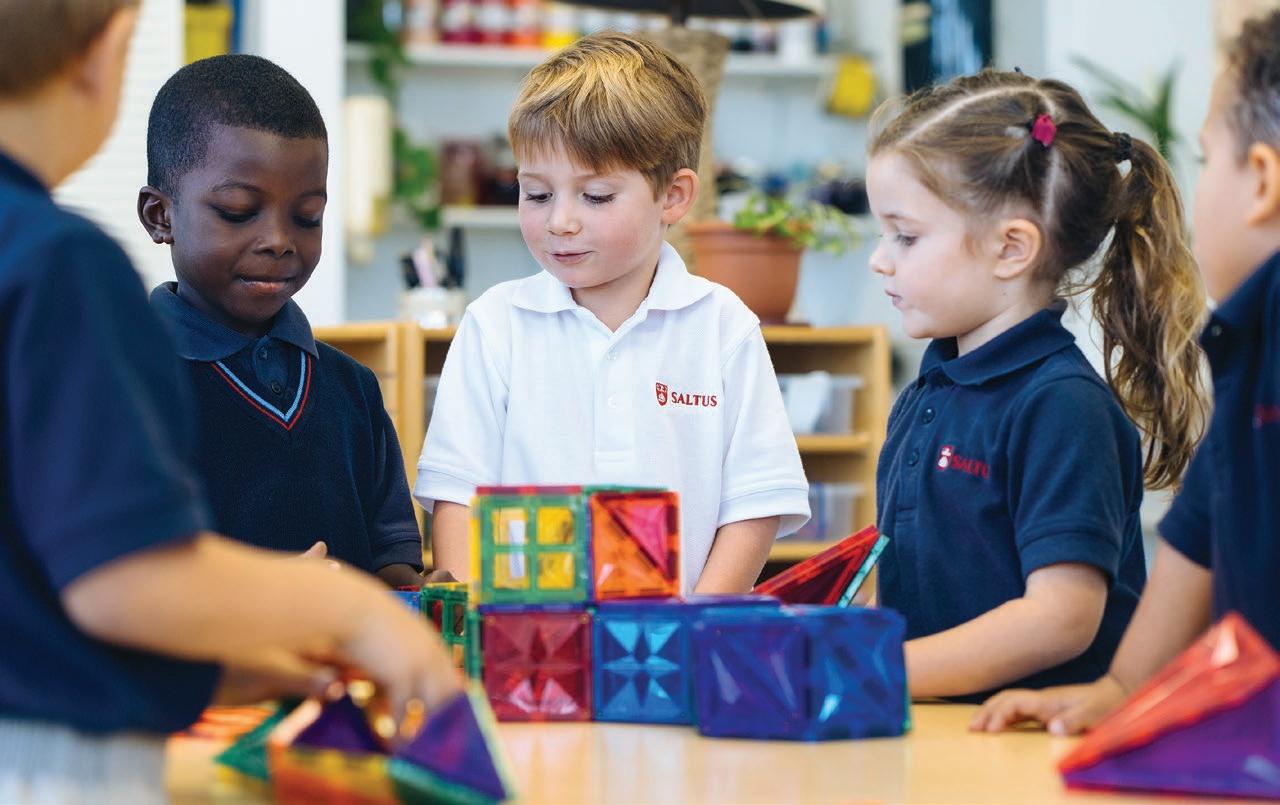
Since 1888, Saltus has delivered world-class education grounded in academic excellence, innovation, and a commitment to developing confident, capable learners. As a BC certified, CAIS and NEASC accredited school, we offer a seamless journey from age 4 to 18, where students are challenged, supported, and inspired every step of the way. With exceptional educators and school values that build character, our students gain the skills, confidence, and global mindset to succeed. Saltus graduates thrive and are prepared not just for their next step, but for a lifetime of achievement.