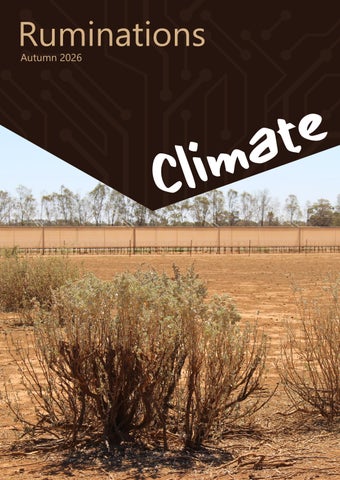
Autumn 2026 Ruminations
Rev. Dr. Wendi Sargeant is a sessional lecturer in Practical Theology at St Francis College, Brisbane. Wendi is a Uniting Church minister who has over twenty-five years’ experience innovating in congregational, educational and wider church life.
Rosaline Parker is a passionate individual committed to serving the community and making a positive impact. Actively involved in both the Western Sydney and Pacific communities, Rosaline works at local and global levels to connect and inspire change. Guided by the Pacific core values of love, respect, and service, she believes in the power of grassroots work to create meaningful change.
Nathan Tyson works with the Synod of NSW & ACT in the role of Director, First Peoples Strategy and Engagement. Nathan is an Aboriginal man who has spent most of his life in Sydney and is of Anaiwon/Gomeroi descent
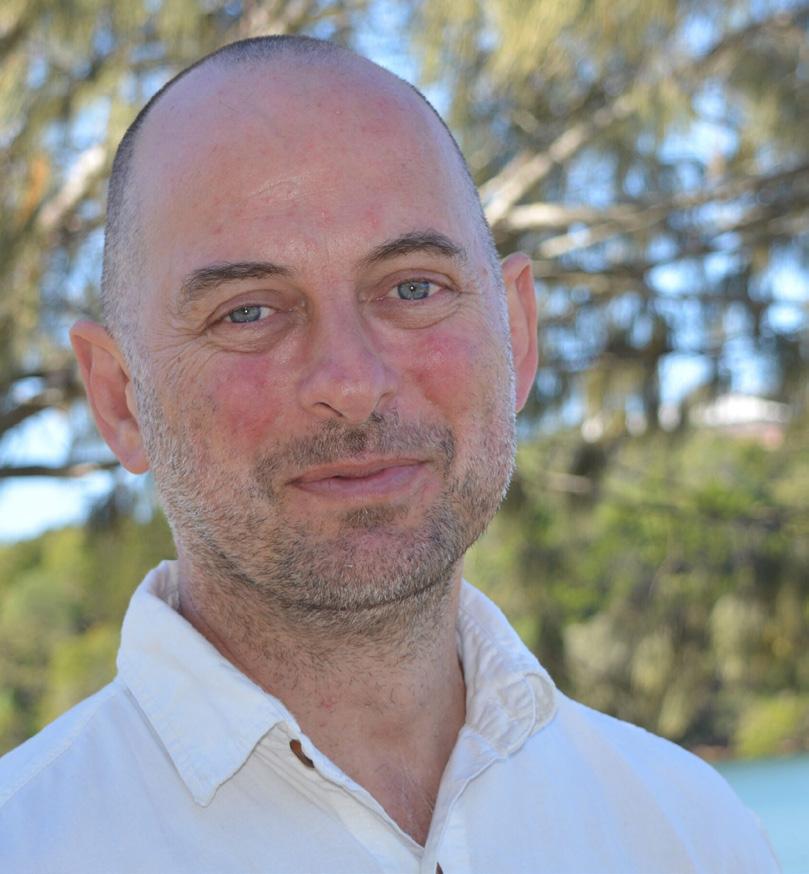
Rev. Dr Jason John - A Uniting Church minister, with a focus on improving the relationship between humans and the rest of the Earth family. At present Jason is the Forest Chaplain with Uniting as well as working with Landcare.
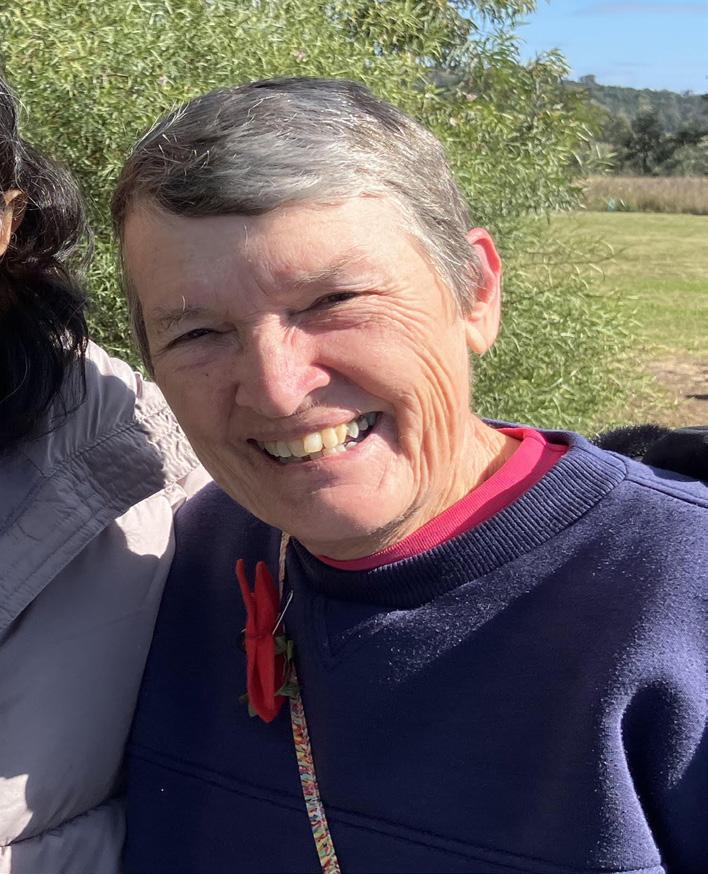
Faye Heywood lives with her husband Ian on their property outside of Manilla, north of Tamworth. Faye is very involved in her local church and community, entwining her faith, love of the land and compassion towards others
Wessley Manasa Tukana Samusamuvodre Vatanitawake worked in Communication & Media, Civil Society and Ecumenism since 2001. Currently working with women and youths in the village of Korovou in Tavua (North of Viti Levu, Fiji’s main island) as a volunteer and community worker. Passionate about women and youths and community empowerment in the area of leadership and accountability, communication (writing and story-telling)both in traditional and social media. Manasa currently worships with members of the Anand Methodist Church, an Indian speaking congregation in Tavua associated with the Ba Circuit (township in the North West of Viti Levu) under the Indian Division of the Methodist Church in Fiji.
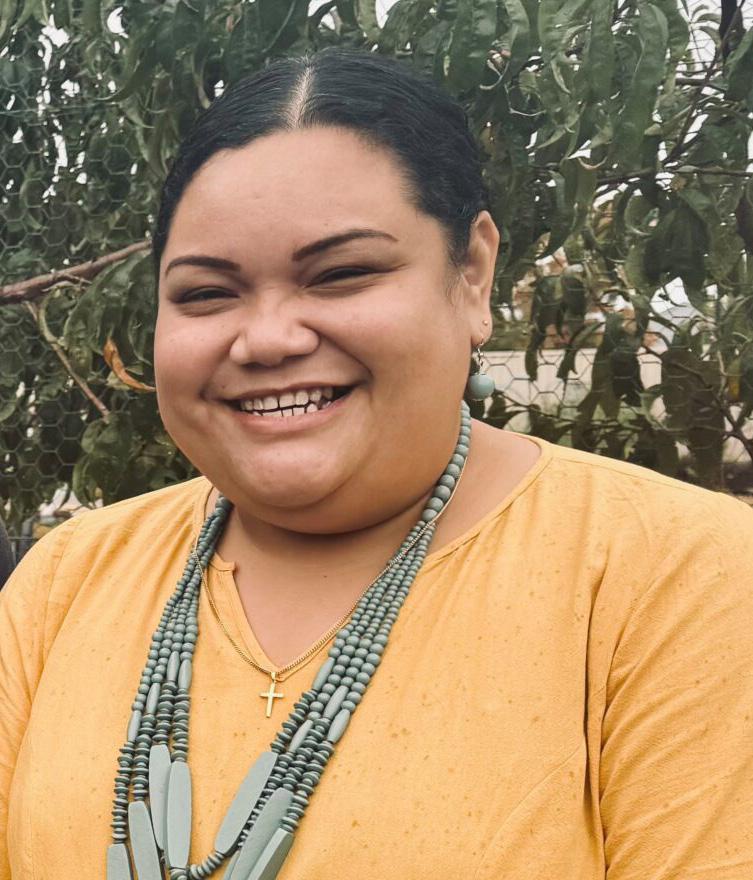
Rev. Natasha He | Scattered Community Minister
Malo e lelei and greetings.
We are well into 2026 and it’s already been a busy time for Saltbush.
Climate change is not a theory we can debate away; it is a reality we are living into. Whether we acknowledge it or not, God’s creation is groaning, as Romans 8:22 tells us: “The whole creation has been groaning as in the pains of childbirth”
So often I hear people defend their inaction by saying, “We don’t see it, so it must not be real.” But as people of faith, we are called not only to walk by sight, but by trust. Trust in the cries of our neighbours, trust in the witness of creation itself, and trust in the God who entrusts the earth into our care.
Last November, I travelled to Nuku’alofa, Tonga for the President’s Conference. As a second-generation Australian-born Tongan woman, this was not just another trip back home, it was a journey back to the land of my ancestors, my story, my people. And there, standing on Tongan soil that has carried my ancestors for generations, I saw climate change not as a headline, but as lived reality.
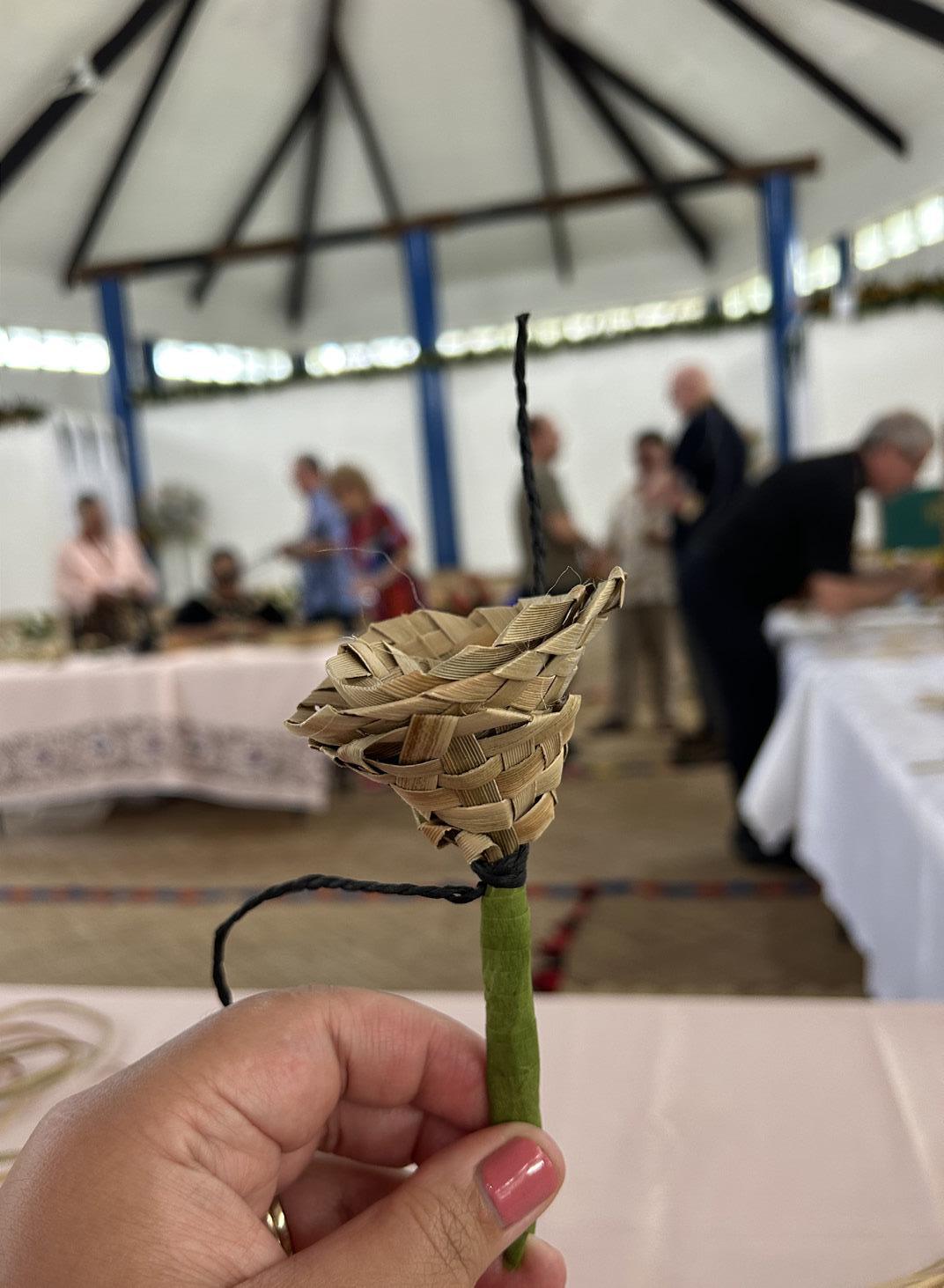
The ocean is a rising threat at the doorsteps of so many homes. There are increases in temperature and precipitation, more intense tropical cyclones, and rising sea levels. The people on the island are living with the quiet fear that the land that shaped their identity may not be there for their children.
Being there in person, I could not pretend that climate change was someone else’s problem. This is not just an environmental issue; it is a justice issue. It is about the vulnerable, the voiceless, and the low-lying nations who
contribute least but suffer most. It is about loving our neighbour, not only those next door, but those across the ocean whose futures are tied to our choices.
As people of the risen Christ, we believe in resurrection. In new life, in restoration, in hope that refuses to surrender to despair. But resurrection faith does not make us passive. It makes us participants in God’s renewing work.
In Genesis, where humanity is called to “tend and keep” the garden, to Revelation, where God promises to renew heaven and earth, Scripture is clear: the world belongs to God, and we are its stewards, not its owners.
My visit to Tonga made me think about being more intentional about how I live, consume, and advocate but not out of guilt, but out of love. Love for God’s creation. Love for our Pacific Nations. Love for Australia. Love for family. Love for future generations who deserve more than our silence.
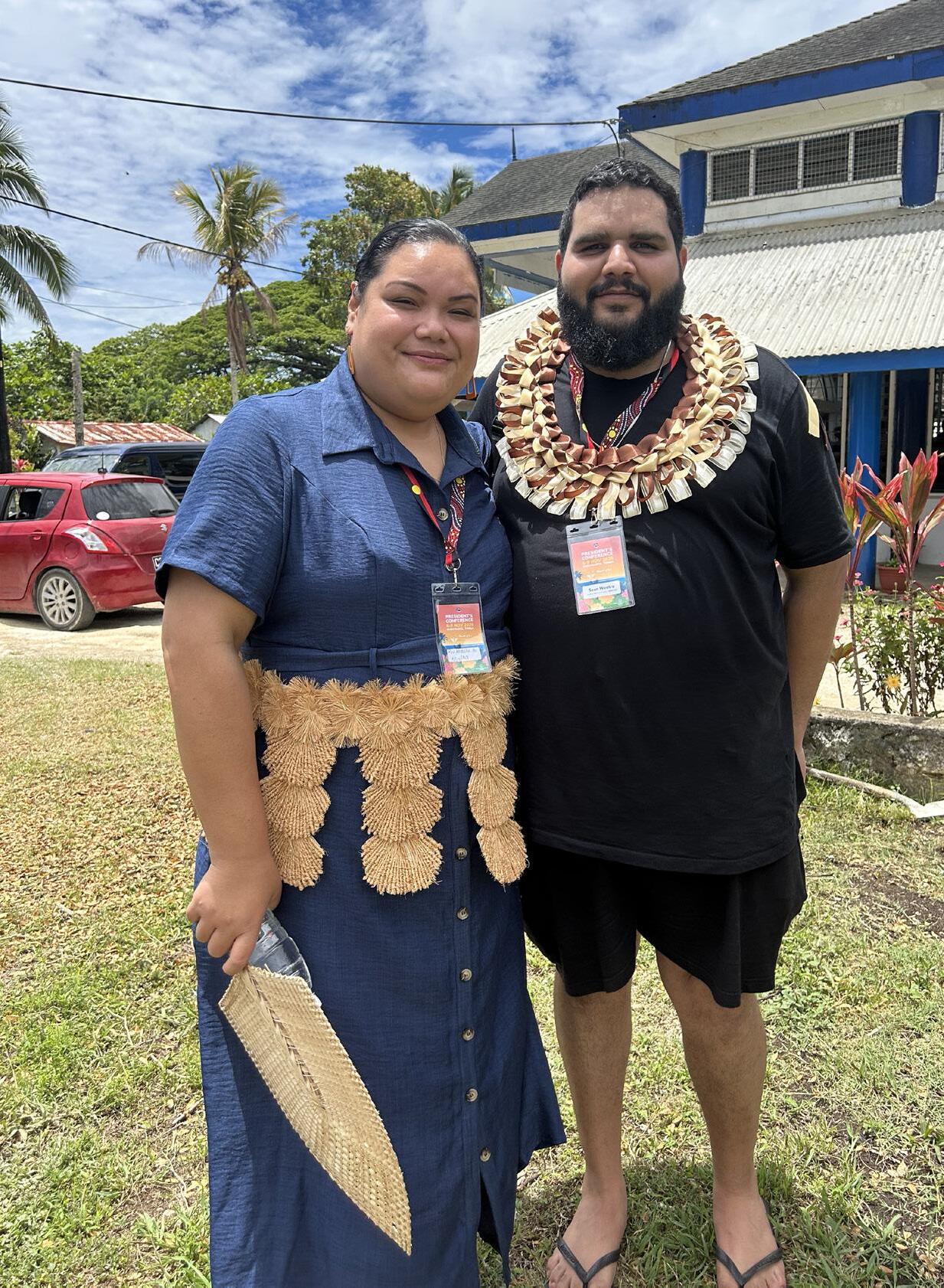
It has been a joy to read the stories of our contributors to this edition of Ruminations. Their struggles, their advocacy, their truth. Malo aupito (thank you)
For when creation suffers, God’s heart is moved. And when God’s heart is moved, the Church must not remain still.

Natasha

Nathan Tyson | Uniting Mission and Education
Acknowledgement of Country: The importance of country and connection to law and culture
As we gather, I acknowledge the custodians of the country we are on today
Of course, when I say “country” I’m talking about Aboriginal “country” not Australia.
For over 60,000 years this continent was cared for by Aboriginal peoples. Aboriginal peoples assumed the role and responsibilities of custodians, and took these responsibilities very seriously as part of long-established law and cultural protocols.
The continent was divided up into territories, which in the modern vernacular we describe as Nations – much like the European continent. The difference being it was many nations of dark skinned Aboriginal peoples, not many nations of white people – but otherwise a similar situation. There were borders, trade, gatherings for ceremonial purposes including weddings and funerals, and occasionally conflicts.
However contrary to popular myth, Aboriginal people didn’t spend all day everyday warring with other Aboriginal people. If we had, we wouldn’t have survived for so long with so many different groups or nations on the continent at the time of British colonisation. If Aboriginal peoples were about conquest and land acquisition for power and profit, history and logic suggest is likely there would have only been 4 or 5 large groups left, the more powerful groups having conquered/killed smaller groups that refused to cede their lands and join the larger group. But we know that is not the case.
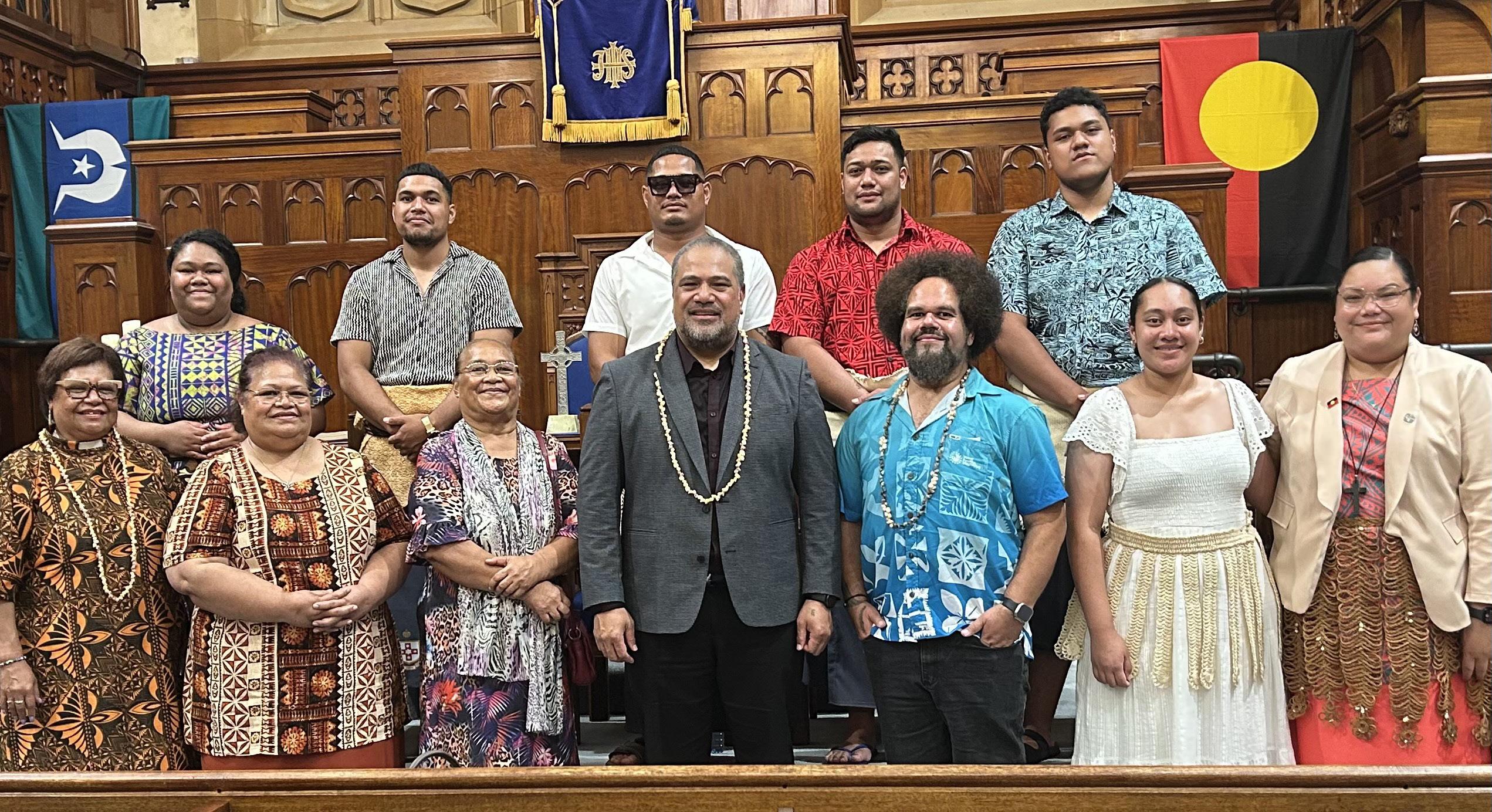
The First Nations Delegates of the REYC Conf Fiji 2025
Reality is that Aboriginal peoples knew their country. They knew their boundaries and their significant sites. People knew where to go, and where not to go. I have been reliably informed by a senior law person, that by the time an Aboriginal child was around 9 years old they were completely proficient at surviving in the bush – which would have included knowledge of the boundaries of their country, and who was on the other side.
As Aboriginal peoples had everything they needed within the bounds of their country – food, water, ceremonial and religious sites, and so on, there was usually no need to seek to invade or otherwise take somebody else’s country. Each mob had their special places of ceremony – men’s sites and women’s sites, and community spaces for corroboree and celebration. Each country was a selfcontained living environment.
Country held all that was needed to sustain life and community. Law maintained social relationships and guided behaviours. Law was about care and respect for the land and its creatures, and about care for each other. Interestingly, I’ve been told that no Aboriginal language had a word for “hate”. We know through various dreaming stories, like Tiddalick the Frog, that greed was frowned upon and there can be serious consequences for the greedy.
Aboriginal stories and oral traditions are deeply rooted in values of reciprocity, kinship, and looking after one another, often connecting these human actions to the care of the land (Caring for Country). These stories highlight the importance of sharing, cooperation, and the responsibilities family members have toward each other.
I will share some examples of Aboriginal stories and themes that focus on caring for each other:
• The Cockatoo Sisters and the Magic Digging Stick: Told by Nyikina Warrwa woman Dr. Anne Poelina, this story follows two sisters, Walibun and Yaranari, who have the responsibility of caring for their grandfather. It highlights the importance of responsibility and the consequences of selfish actions.
• The Koala Brothers (Dunggirr Gagu): A Gumbaynggirr story from the midNorth Coast of NSW, this narrative tells of brothers who used their long intestines to create a bridge, reuniting their people after rising seas separated them.
• How the Kangaroo Got its Pouch: When a dingo chased a baby joey, an Ancestor Being gifted the mother kangaroo a pouch to protect her young, demonstrating a theme of providing care and safety for family.
• The Seven Sisters: This Dreamtime story, while covering themes of pursuit, also emphasizes strong family bonds and the necessity of following traditional lore to maintain balance. (link to “3 Sisters” of the Blue Mountains – there are actually 7 sisters, with this story being told across the continent by many mobs.).
• The Emu and the Jabiru: A story that emphasizes the necessity of cooperation and the negative repercussions of selfishness, teaching the value of sharing.
• The Lyrebird and the Frog (Joolah and Googarty): A story about a creator who corrects a frog for inciting arguments among animals, teaching that caring for one another involves harmony and not spreading discord.
These stories contain the following themes:
• Sharing and Community: Stories often emphasize that taking only what you need and sharing resources—such as water, fire, and food—ensures that there is enough for everyone.
• Intergenerational Care: Stories often feature Elders passing down knowledge to children to ensure their safety and the continuation of culture.
• Kinship and Protection: The concept of “kinship” means looking after family and community, which is often depicted through stories of protecting one another, especially children.
• Caring for Country: The belief that all things are connected means that caring for the land is directly linked to caring for people and keeping everything in balance.
When I read or hear these stories, and wisdom from Elders, it strikes me that Aboriginal peoples lived in a manner that both honoured the Creator (through ceremony, and through honouring and caring for creation), and also ensured that the least were well cared for. Everybody was included, everyone had a meaningful role in community, and everyone was cared for.
Does that sound familiar? Yep, it sounds a lot like the way Jesus taught us we should live – in right relationship with the Creator, and right relationship with each other.
Yes, sometimes conflicts would arise, either within a mob, or between mobs. Humans are still humans, and poor decisions can sometimes be made. However conflicts were resolved according to law, usually through discussion and agreement on punishment and/or restitution. Discussions could take days, weeks or longer if necessary. Aboriginal peoples were perhaps the first to contemplate a formal process of alternative dispute resolution! In any event, physical conflict would usually only occur if discussions failed to resolve the disagreement. Fortunately, there was only infrequent physical conflict between groups due to the effectiveness of the law and recognised importance of relationships.
To be clear, Aboriginal communities were inclusive, and caring. Everyone was looked after. Everyone had a role and everyone had responsibilities. Our culture tends to be focussed on “obligations”, not “rights”. Because if everyone took care
of their obligations, everyone was cared for, safe and healthy… people didn’t need to demand their “rights” as they were already being cared for, included and loved.
When we look at the Western world, and the impact of capitalism and currency, and the lust for wealth and power they create, we can see that we are heading in a direction where humans will be lucky to exist on this planet in a few hundred years, let alone in 60,000 years time.
But rather than seek and value the wisdom of the oldest continuing culture on the planet, in the hope of caring for the planet and living sustainably, wealthy non-Indigenous people tend to focus on building spaceships on the assumption we will need to leave this planet at some point - I suspect to find a whole new planet to exploit for power and profit.
So when we acknowledge country, we are acknowledging both the people of that place, as well as the complex system of law and relationships that is intrinsically connected to the particular country we are on. Being on somebody else’s country is a privilege, and we should be respectful of the law and protocols of that place.
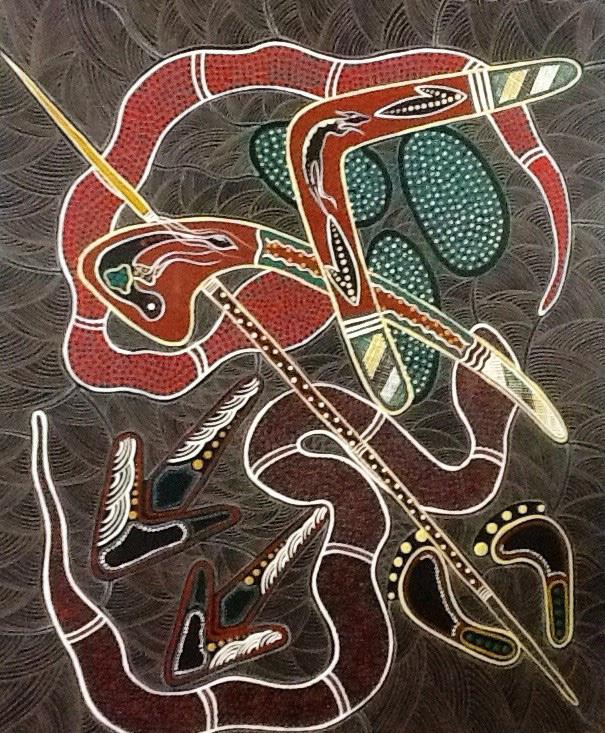
We’d like to hear from you!
Send in a story of up to 200 words, or photo with caption to: saltbush@nswact.uca.org.au*.
This can either be on the Rumination theme’s for 2026 which are Climate and Mystery or on the topic of your choice.
*We will endeavour to include as many stories as possible, but cannot guarantee all submissions will be published.
22nd - 25th June 2026
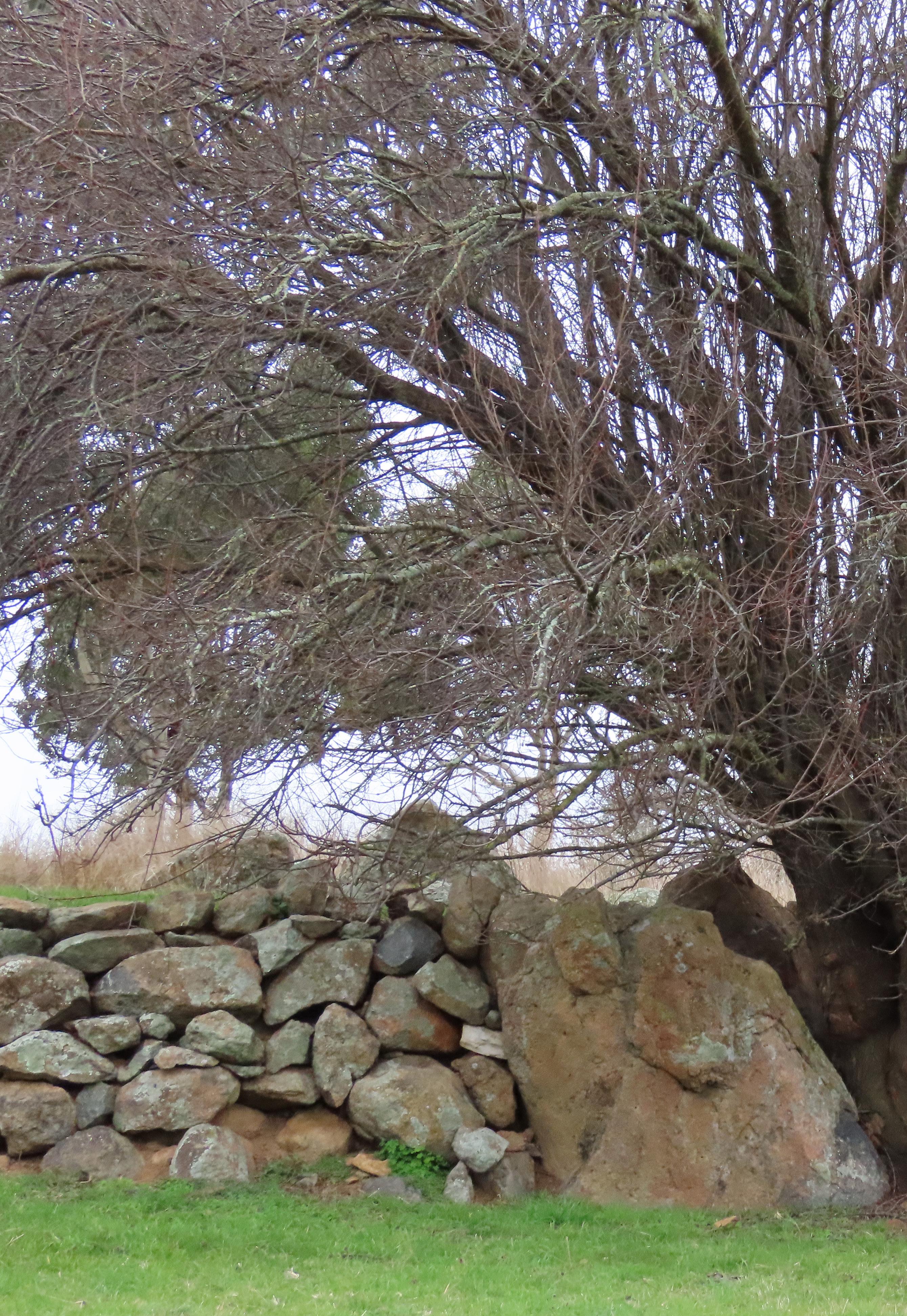
A time for Lay Leaders in any role from anywhere who seek a time of renewal, community and the opportunity to explore life and faith together.
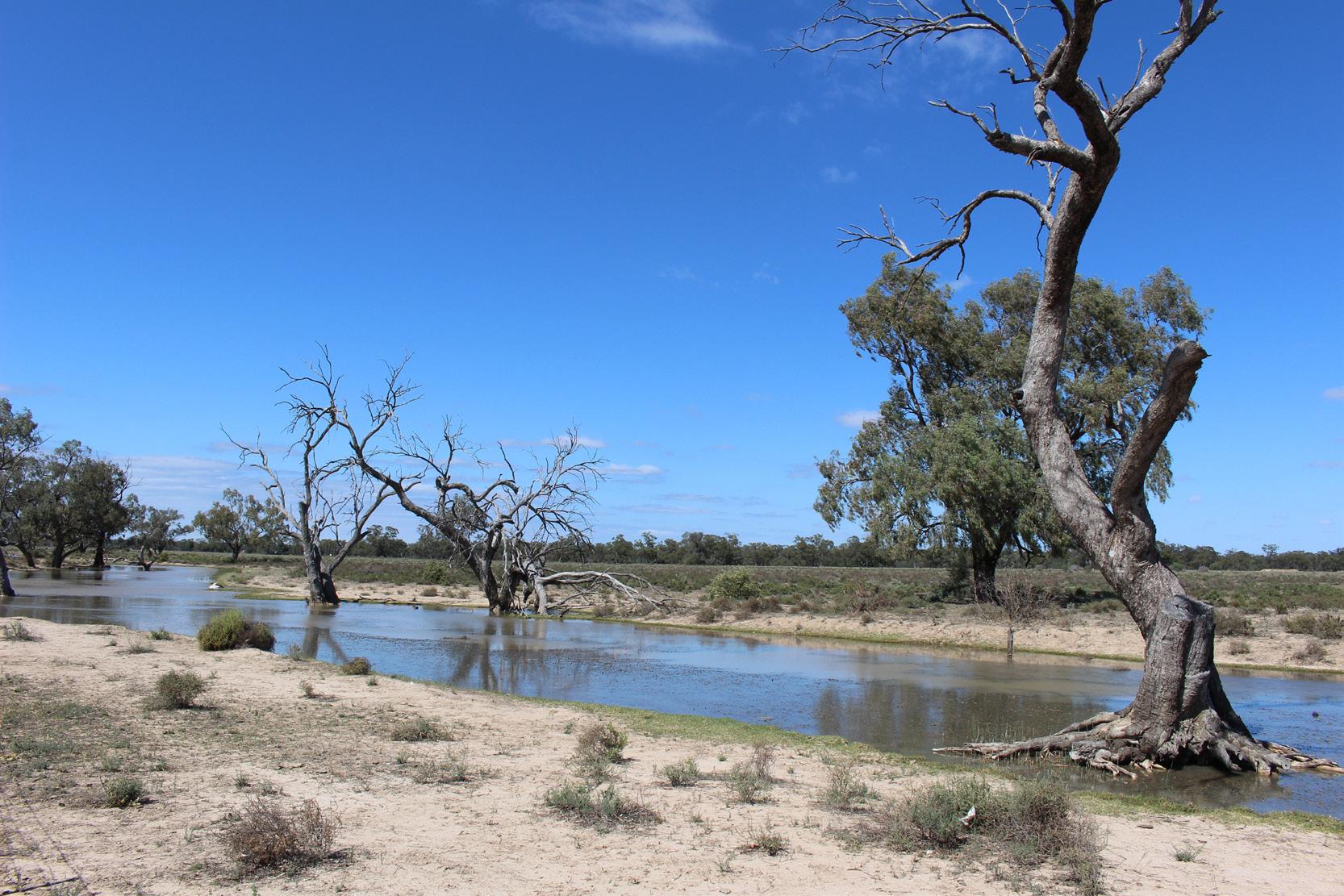
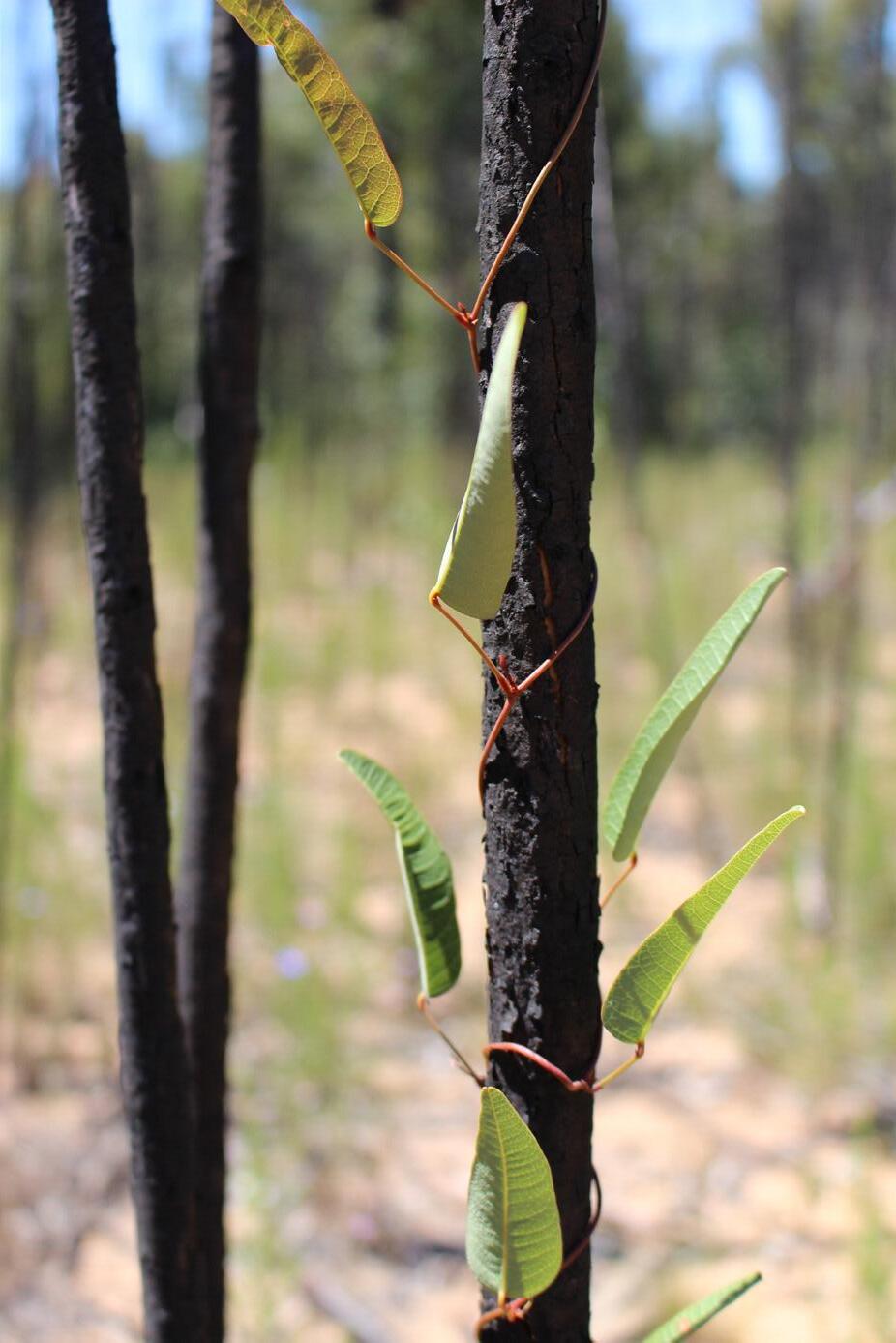
This year the Saltbush team are offering Lay leaders in the wider church a time to retreat. This time is for Lay Leaders (irrespective of your role) who want to draw aside for encouragement, listening and silence, conversation and hospitality. This will be a time of both group retreat and individual retreat. The retreat runs from 3pm Monday 22nd June until after lunch on Thursday 25th June at St. Clement’s Retreat Centre, Galong.
saltbushcommunity.uca.org.au


Manasa Vatanitawake | Community Story Teller & Writer
Experiencing changing weather pattern and its effect over the years is a constant challenge but our responsibility to family, VANUA (community) and the church provides the drive and the energy to do what we do on a daily basis “, says MAKELESI DRUA.
“I was born and have enjoyed the life here and probably will die and buried in the land of my forefathers – a similar story of many who lived in villages or communities like mine not only across the Pacific but around the world. Because we live and depend on the land and sea, it is our responsibility to care and be good stewards of the very source of our lives, she added.
DRUA as she is commonly known here in the village of KOROVOU, in the district of TAVUA within the BA province, the biggest province in Fiji both in land mass and population. At the age of 64 she continues to cater for the need of her family by collecting crabs, local sea-food delicacies, river-mouth fishing which she then sells to provide for her small family needs and communal obligations.
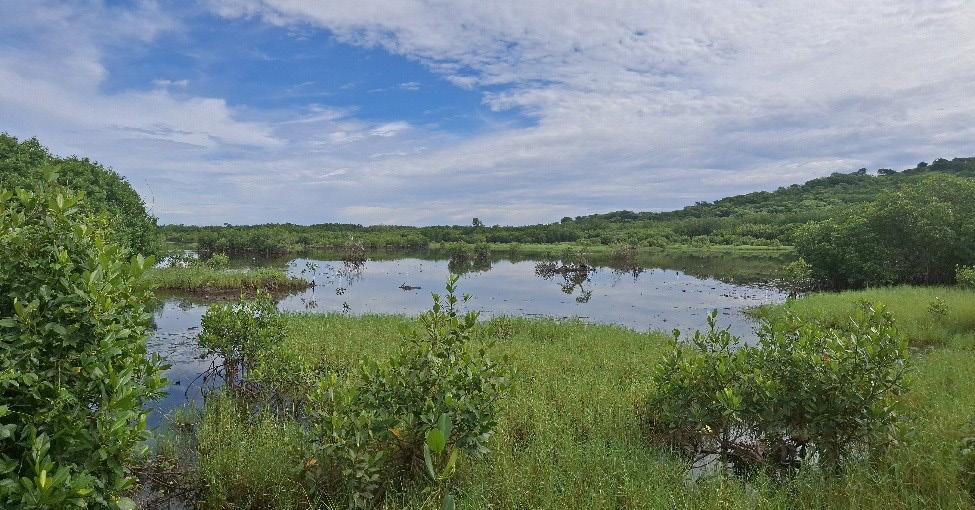
A mangrove swamp close by the village of Korovou, Tavua where Drua and other women gather crabs, fish and other delicacies from, either to sell or to provide meals for their family.
As a fisher-folk, DRUA was raised to depend on the gifts of the land and the ocean from a very young age. She has seen changes over the past 40 years including the effects of climate change. “This is something I do on a daily basis which I thoroughly enjoy but now-adays it is more difficult and can be a challenge to find crabs compared to years past”.
Over the years – DRUA attended village or community training or dialogue on climate change facilitated by civil societies and government ministries – to which a common question raised; What is Climate Change? What does Climate Change look like to a simple villager?
How is Climate Change affecting what DRUA and other women collects from these mangrove swamps? Do they collect enough to support them financially, at the same time provided enough for their sustenance (food on the table)?
Village like Korovou, over the years received training facilitated by organizations such as Worldwide Fund for Nature (WWF), Foundation for Rural Integrated Enterprises and Development (FRIEND), different government ministries and departments where participants are encouraged to read and see the signs of the changing environment and changing climate. Questions in these training such as:
“whatusetobefoundherethatarenolongeraround? Are there new things seen or experiences in your fishing ground? How is your body responding to the environment around you?
Through her faith community, villagers have been reminded of their responsibility as good stewards of the environment and caretaker of all God’s creation through homily from the local parish pulpit, bible studies through weekly cell group meetings or even leadership training provided by the Methodist Church or Inter-Denominational organization.
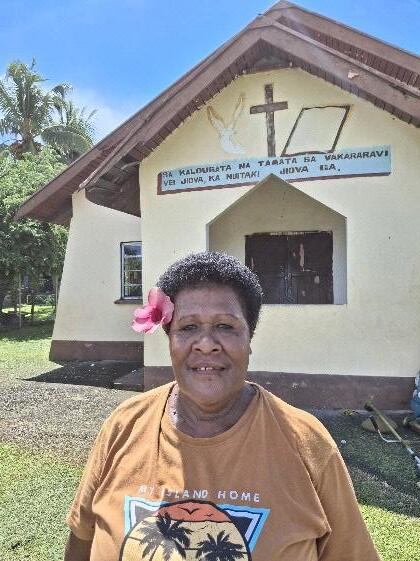
MAKELESI DRUA of Korovou, Tavua, Fiji Islands stands in front of the church she belongs – Korovou Methodist Church. DRUA as she is affectionately known as to many, is a name common for both male and female in communities within the Western division. This name means “the Fijian double hulled canoe used for long voyages which was used across the pacific that speaks to trade, transportation and even war. It symbolizes deep connection to the sea, ocean and can be referenced to as sacred ship”.
The Pacific region normally experience the “hurricane season” between November (2025) until next month (April) and this normally brings changes to weather patterns which can be similar or different across the islands.
From these changes or different weather patterns, in most cases DRUA believes that obligation to community and family remains the same, if not more. “We are obligated to send our children, grandchildren to school. Living in a village community, we are obligated and trusted to look out for each other. There are obligations to the church that must be met and at times these obligations or responsibilities can be overwhelming”.
“Growing up, my generations were taught and trusted to look out for others, their well-being is the priority of the younger one. It is always about others especially the elders and the vulnerable “says Drua. “Looking out for others meaning going out to fish, collect seafood and sharing it with elders and those who needed it most. This has been affected with the changing weather pattern and if we do not have enough catch to share or sell – it affects the way we function as a community “.
DRUA admits, she now walks longer distance and spend longer hours in the mangrove swamps looking for crabs. When the sun is too hot, waddling along the swamps can be dangerous. Heated swamps drive crabs away or contributing to dwindling numbers – as they find new homes which can be difficult for women. “On that note, I will not be able to help others if I am vulnerable. I am still capable at this age, but a time will come that I longer be able to fish or collect crabs from the swamps. At some point in my life, I will need the assistance of others, from my own children and grandchildren and prayerfully they will be able to return the favour as I have done over the years”.
DRUA and her friends – whom she partners with in collecting crabs are also learning new things and gathering new information as they study (they own way of observing) the changing pattern from the mangrove swamps. “Because of the changes that are happening, we have learnt that all living creatures are also learning new ways to adapt to their new environment– because of the changing weather, and so we are taking note of these changes. Compared to thirty, twenty, ten years ago, things are done differently today”.
In essence fisher-folks (men and women) continues to acknowledge that all living things and the whole universe is capable of re-generation, adapting to new environment, the ability to adapt very quickly to an ever-changing climate. Men now have the enormous task of caring for the environment because it is the very source that sustains us.
As a member of her local Methodist Church – apart from obligations, there are personal commitment to give to the work of the church. “We do this gladly and willingly supporting the work and mission of Christ in our village. GOD has blessed us throughout generations with the gifts from the land, the sea (mangrove swamps) – the best we can do is give back to the community of faith we belong to, which in turn is caring for those who are in need “, added DRUA.
At the age of 64 – she claims to be healthy and fit and is still able to do what she wishes. With that she is able to assist and help those who needed assistance. “I know a time will come when I will need assistance, but for now I will continue to do what I love, collect and sell crabs and assist those who needed help” says DRUA.
Changing weather patterns affects what women collect on a daily basis, but does not change the way they attend to their tasks, to the needs of family and community. There are challenges, but the wisdom of the VANUA (land) and the wisdom of the people (collectively) informed the wisdom of individual people in her village, and in other community.
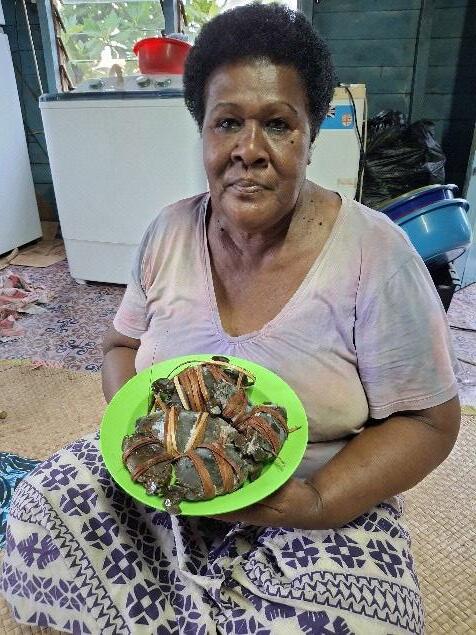
“Big size crabs (sanctioned by the Fijian Ministry of Fisheries) are sold in the local marker, and the smaller sizes are brough home which provide meals for my family”
At the beginning, DRUA shared how her forebearers lived, with the knowledge transferred to her and other women in the community to which they are now teaching their children, with faith and hope that they will live by and then pass it on to the next generayions.
Apart from traditional knowledge and wisdom passed down through over the centuries DRUA and other women of this particular community (as in other villages across Fiji) continue to acknowledge their total dependence on GOD in everything they do.

Rosaline Parker | Community Advocate
When Australians talk about climate change, we often talk about targets, emissions caps and net-zero deadlines.
When I think about climate change, I don’t first think about statistics. I think about the ocean.
I think about the way my elders speak about Samoa not as a place on a map, but as a living ancestor. I think about the salt on their skin after fishing, the weight of a coconut in their hands, the sound of waves folding onto the shore like breath.
For many Pacific people, the ocean is not a backdrop. It is genealogy. It is identity. It is provider and pathway. Long before borders were drawn, our ancestors navigated vast waters guided only by stars, currents and courage. We were never “small island developing states.” We were always Big Ocean States.
And now, the ocean is rising.
Across the Pacific, king tides creep further inland each year. Graves that once sat safely beneath breadfruit trees are swallowed by salt water. Crops fail when the rain comes too hard or not at all. The shoreline shifts quietly, almost politely until one day, it doesn’t.
Climate change is often discussed in the language of parts per million, carbon offsets and global frameworks. In rooms far away from our villages, decisions are made about “acceptable warming.”
But what is acceptable about losing the land that holds your grandparents’ bones? What is acceptable about relocating a community that has lived in relationship with that land for centuries?
The Pacific has contributed the least to global emissions, yet we carry some of the heaviest consequences. That injustice is not abstract. It is personal.
It is the aunty in a low-lying village moving her kitchen further inland.
It is the uncle who can no longer predict fishing seasons the way his father once could.
It is young people growing up with the quiet understanding that one day they may have to leave.
And yet, we are not simply victims of climate change. Pacific nations are leading the climate movement with clarity and moral authority.
In Fiji, communities have pioneered planned relocation frameworks rooted in dignity rather than displacement. In Tuvalu, leaders have taken the fight for survival to the global stage, demanding the world see them not as sinking islands, but as sovereign nations. Across the region, grassroots organisers, faith leaders and young advocates are weaving traditional knowledge with modern science.
Adaptation is not new to us. Our ancestors adapted to winds, tides and seasons. They built canoes strong enough to cross horizons. They read the sky like scripture.
Even in Western Sydney, where many Pacific families now live in diaspora, adaptation is visible in everyday ways — in high school graduations where lolly leis replace fresh floral garlands. Culture shifts, materials change, but identity remains.

Resilience is embedded in our stories. But resilience should not be exploited.
There is a dangerous narrative that Pacific peoples are “used to hardship,” that we will simply endure whatever comes. But endurance is not the same as consent. We should not have to be endlessly resilient to survive a crisis we did not create.
Climate change is not only an environmental issue. It is a moral and spiritual one. It asks: how do we treat creation? Whose lives are valued in global negotiations? What kind of ancestors do we want to be?
For those of us living in Australia, climate change carries a layered grief. We worry about lands we love from afar. We send money home after cyclones. We refresh news feeds during storms. We hold both privilege and responsibility; the privilege of relative safety, and the responsibility to use our voices where decisions are made.
When Pacific communities say, “We are not drowning,” It is a refusal to be reduced to a symbol of inevitable loss.
We come from the water. We know how to navigatechange .
But Australia and the world must learn to navigate justice.
Climate action is not charity for the Pacific. It is recognition that the ocean connecting our islands also connects us to this continent.
The tide does not stop at our shores.
And neither should solidarity.

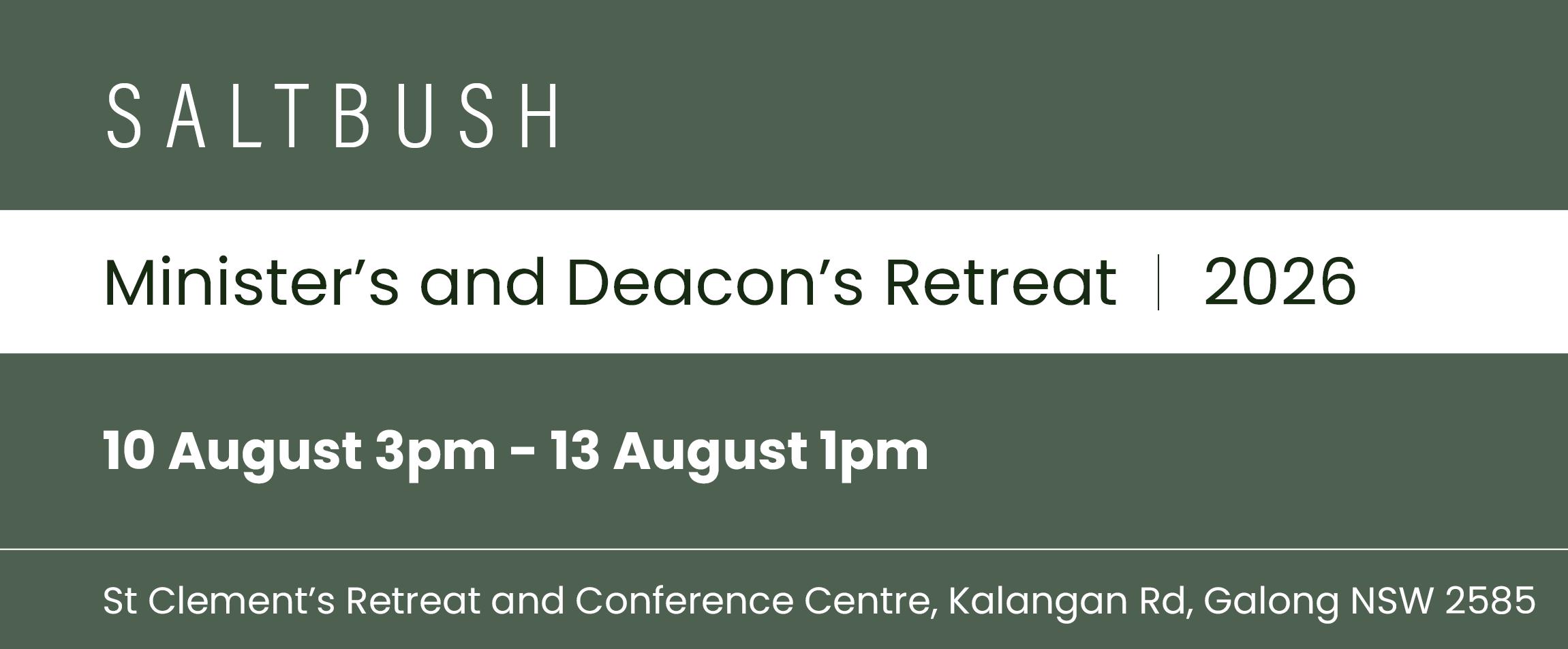
The Saltbush Team invite all in Ministers and Deacon’s to four days of contemplation, conversation and community from Monday 10th August (after lunch) to Thursday 13th (ending with lunch). Come dwell, discern, and discover together.
The time together has been subsides through generous donations to Saltbush; the cost of $280 covers all meals and accommodation.
If you have any questions or are concerned about the cost please get in touch with the Saltbush team - saltbush@nswact.uca.org.au

Rev. Dr Wendi Sargent | St Francis College, Brisbane
How do we know if we are on the right track when it comes to what God’s will is for us and our world in 2026? Clearly, we can pray and check what the Bible says. Those are great starts. But what if our situation is not something that the Bible gives us specific instructions for? The term, “climate change” is not mentioned in Scripture. So, how do we thoughtfully approach such concepts?
Theological reflection is a helpful tool. We can ask reflective questions like those of Practical Theologian, Richard Osmer1: What is going on? Why is this going on? What ought to be going on? What action can we take?
What is going on?
Climate is the average weather pattern in a place over at least 30 years. Australia’s weather and climate are changing as part of a warming global climate.2 Global climate records are continuing to be set with 2023 the warmest year on record and Antarctic sea ice reaching record lows in the same year – and humanly generated greenhouse gases are “unequivocally the culprit.”3
In Genesis, we read that God created the world and that God gave humans the role of looking after it (Genesis 1: 26-31). Humanity was to have dominion over the earth and the seas. “To have dominion” (in Hebrew - radah) means the God-given authority to guide, care for, and protect all living beings on Earth. It implies stewardship rather than ownership and exploitation. So, we are called to be stewards of the earth and all its creatures, which ultimately belong to God. As Psalm 24:1 asserts, “The earth is the Lord’s, and everything in it, the world, and all who live in it.”
1 We can heed what our church has already suggested. Read more on the UCA Assembly website.
2 Get more information: The Australian Government website includes a good article, Understanding Climate Change. https://www.dcceew.gov.au/climate-change/policy/climatescience/understanding-climate-change
3 Partner with others to act together for greater impact. Join in events like Clean Up Australia day.
Why is it going on?
Climate change is caused by more heat in the climate system because of the build-up of greenhouse gases in the atmosphere. The additional greenhouse gases are primarily due to human activities such as the burning of fossil fuels (coal, oil, and natural gas), agriculture, and land clearing.4 It has been the human desire for more and more, instead of being satisfied with what is enough.
Stewardship, in biblical terms, meant being a caretaker or a manager of a property, as Jesus suggests in Matthew 25:14-30, amongst other places. It seems that humankind has overstepped our purview when it comes to the stewardship of the creation. Essentially this becomes a spiritual problem about human greed and our desire to have power, control and ownership of the planet’s resources. Lockean theories of property ownership have become more important to us than God’s will.5 People have exploited the natural world to the extent that ecosystems have been altered and disrupted. Climate change is a contemporary product of the destruction human sin can cause.
What ought to be going on?
The Uniting Church has often spoken out on environmental matters, including climate change (See, for example UCA Assembly Documents such as The Rights of Nature and Future Generations, Tuvalu and the Impact of Global Warming, For the Sake of the Planet and all its People, and For the Whole of Creation).
Paragraph 3 of the Basis of Union notes that “God in Christ has given to all people in the Church the Holy Spirit as a pledge and foretaste of that coming reconciliation and renewal which is the end in view for the whole creation. The Church’s call is to serve that end.” So, God wants to resolve and restore God’s original intent for the whole of the cosmos. This is what we understand as Jesus’ role in coming into the world, and the Holy Spirit’s ongoing mission.
4 Support government (at all levels) and corporate policies and actions to reduce greenhouse gases.
5 Reduce pollution, materialism and consumerism in our own churches, homes and communities, living with self-restraint and simplicity.
Our 1977 Statement to the Nation states:
“We are concerned with the basic human rights of future generations and will urge the wise use of energy, the protection of the environment and the replenishment of the earth’s resources for their use and enjoyment.”6
Christians are to ensure that the mission of God is enhanced and not damaged by human action and inaction.
What action can we take?
This is a serious spiritual and physical issue, which needs to be a priority for all of us. Are we to continue in sin or can we ask forgiveness, and turn towards renewing and restoring creation with God’s help?
6 Most importantly, pray that God will help us all to live with integrity, without greed, and with true, loving stewardship of the earth.
Climate can be simply defined as “(Region with certain) conditions of temperature, dryness, wind, light, etc.; (fig.) trend or attitude of community or era, character of something”.1 These conditions have long been used to divide the year into seasons or periods having specific characteristics of weather.
The early colonists and most Australians today think of climate as comprising four seasons – summer, autumn, winter and spring. The culture of the Australian Aboriginal people described six seasons based on their observations, experience and knowledge shared through story and memory. Each season of the annual cycle of the D’harawal Community of the Sydney area 2 is described as “Time of….”, followed by a simple descriptive phrase (cool, getting warmer or hot and dry) followed by descriptions of animals, birds or fish and plants and trees for that particular time of year. The Gamilari (Gunn-e-darr) Fire and Seasons Calendar is headed WII (FIRE). It indicates the months of the Gregorian calendar which fit their experience. For example: June – July Dhandarraa (Winter - Time of Frost, Ice) – when cultural burns are done to regenerate country; yellowbelly fish are eaten; wilga and white box trees are flowering and fruiting. The Gomeroi (Tamworth) Fire and Seasons Calendar states that cold time is the best time to harvest grey kangaroo skins.
I mention these Aboriginal Seasonal calendars because they tell us much about our country that we do not always know, have not experienced and have not included as part of our best land management practices. A number of attitudes, I think, have driven this. An aversion to or inability to deal positively with difference, a negative attitude to Aboriginal Australians by many early colonisers, an unwillingness to deal with change and an ignorance about the early history of our country.
Given the disruption to their way of life by the colonising of Australia, it is remarkable that Aboriginal nations are able to collect their stories and knowledge and record them. Their sharing of them is to the advantage of all who learn
1 Fowler, H. W. and Fowler, F. G, Editors, 1964, The Concise Oxford Dictionary of Current English.
2 Bodkin, F., Robertson, L., 2006, D’harawal Seasons and Climatic Cycles.
from them with respect and put into practice where still possible their ways of managing country. Other beneficial information was shared too – namely, particular plants that helped with health issues (e.g. some wattle seeds with diabetes) or practical aids (e.g. black wattle tap roots, hardened with fire, make good walking sticks).
However, the immediate disruption to the Aboriginal ways of managing country, the introduction of hard-footed animals and farming practices that damaged environments vastly different to those of Europe and the lack of interest in Aboriginal management styles, rendered our country to a state where long term sustainability could be questionable.
The changes in the Australian landscape are reflective of changes across the world. David Attenborough, the British broadcaster and biologist, known for his love of nature, describes 3 a worldwide change from the Holocene time of history to the Anthropocene period. The Holocene was known as a long period of history marked by stable temperatures, healthy biodiversity and reliable seasons. The Anthropocene period began around the 1950’s and is marked by a massive reduction in biodiversity (such as numbers of trees, insects, animals, birds, corals, sea life, water in rivers) and a huge increase in waste materials (such as human waste materials on almost every beach, plastic debris throughout oceans, chemicals in farmland). Attenborough summarises by saying, “We regard the earth as our planet, run by humankind for humankind. There is little left for the rest of the living world. The truly wild world – that non-human world – has gone. We have overrun the Earth”.
3 Attenborough, D., 2020, A Life on Our Planet.
God’s instructions to humans in Genesis 1 were to rule over all living things, to fill the earth by increasing in number and to subdue it. In Genesis 2, the man, Adam, is to work the garden and take care of it, at the same time obeying God’s instruction not to eat the fruit of the tree of the knowledge of good and evil. Adam’s and Eve’s disobedience led to their being banished from the garden. Their consequent subduing and working of the earth was harder. God, however, still cared for them and succeeding descendants, forgiving them for flouting his authority and commands.
Since then and including today, humans have over-ruled the earth and its creatures but not in the caring way demonstrated by God to them. Earth is still very good, as created. Human use has become abusive, selfish and greedy – marks of the Anthropocene period which we are still in today. Nowhere in Biblical history is their justification for a minority to exploit earth’s resources for individual selfish gain.
In Micah 6:1-2, the earth’s mountains and hills are witnesses to human exploitation and disobedience to God. Jesus clearly states in John 3:17 that his coming to earth is to save the world, not just humans.
In the greater part of his teaching, Jesus uses example after example from nature to give clarity to those who are listening – our need to be like salt and light; using mud to heal blindness and give insight (John 9:13-23); God being the gardener who prunes the vine (Jesus) and believers being the branches; Jesus as the shepherd and people the sheep (John 10:1-18); the wind and the Spirit (John 3:1-15).
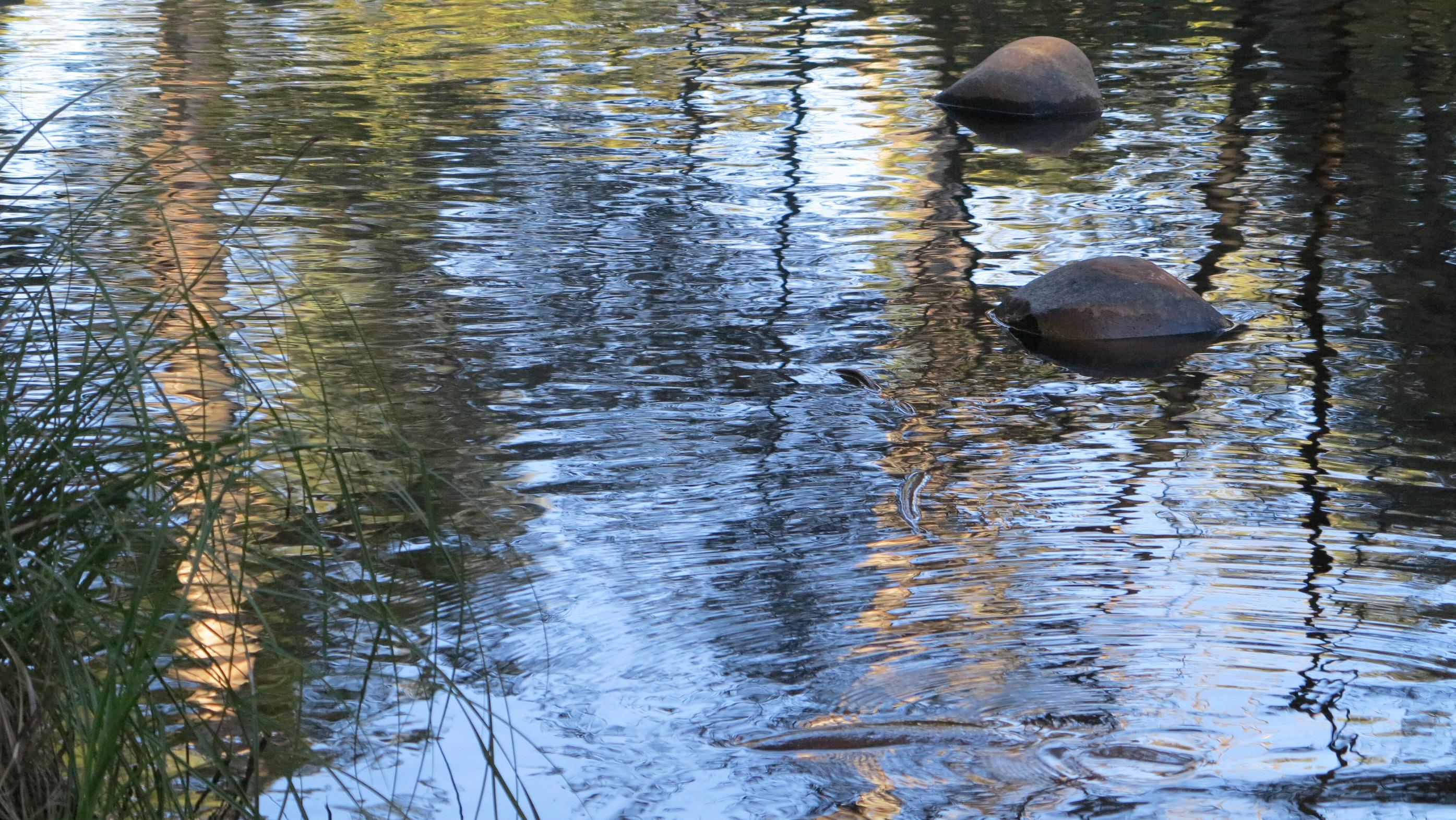
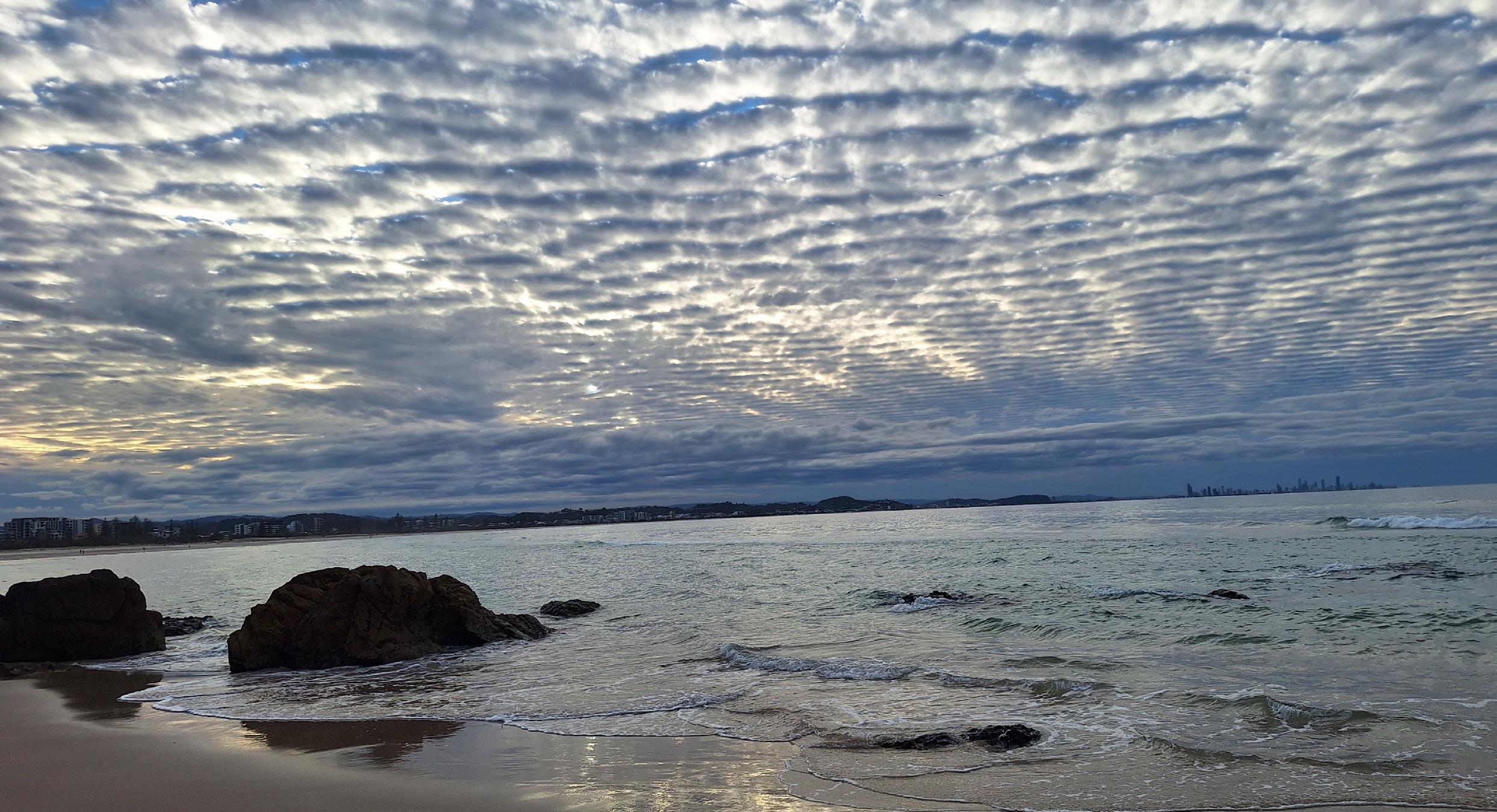
So too do we use forms of nature to enhance our spiritual life. Sunrises and sunsets lift us beyond ourselves and into the majesty of God. Clear, running water has a refreshing effect on mood and spirit, as does walking along a beach on sand or paddling in shallow waves. Contemplation of a peaceful scene in bushland or forest or across a valley or paddock aids contemplation and prayer. The unexpected find of orchids in a tree in bushland or the flowering of a bulb or shrub in the garden creates wonder.
The writer of Psalm 19:1-6 describes how the heavens, the skies, the sun speak to us of a God whose creations move us deeply and should inspire awe and reverence for the environment and the artist. Nature is a way for people to draw close to God, to step away from stress and busyness, to be reminded that our God is in control, is a healing and forgiving God, and is reaching out to us individually in a myriad of ways. My role is to look at what nature-based solutions there are that I can participate in to help resolve environmental issues and what social tasks I can be part of to help draw others’ attention to the God who is near and is providing for our wellbeing.
Rev. Dr Jason John | Forest Chaplain
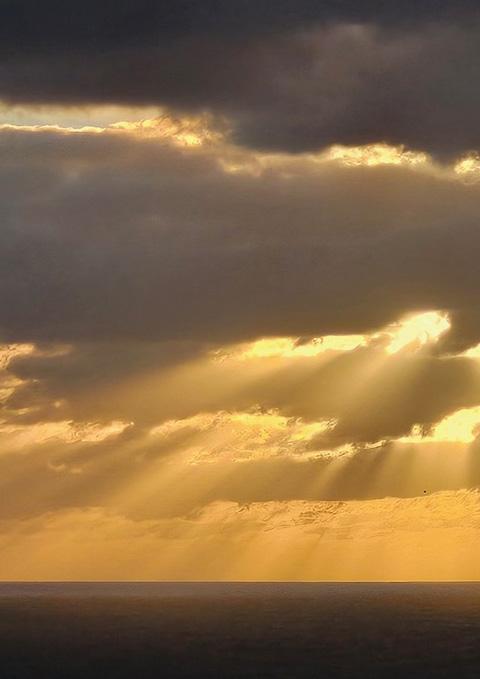
We just did Easter again Gathering for prayers and songs
Most of us were Christian Some got dragged along
There’s four versions of the story which might be a clue that we need to learn to live with difference.
‘cause they can’t all be ‘true’
Five versions if you count Paul, as Christians tend to do.
We wouldn’t be here without him, Christians would still be Jews
They differ on what happened But agree on what to do.
We can call Jesus “Lord, Lord!”
And he won’t be that pleased
Unless we’ve fed and clothed and protected all the “least of these”
Maybe the ones on Nauru Island
Maybe all the refugees
Maybe those who will be flooded out In a world of two degrees of global warming.
Because the scientists are warning that we’re not even 1/5 of the way to keeping the climate safe according to the global commitments made today.
No longer do we have a Prime Minister asking us to pray For rain
To Mr Fixit in the sky (I mean why?
After World War One and Two, and I could continue. Wouldn’t it have been strange if God intervened on climate change?)
His prayers for rain were vanity
But the new PM increased the fossil fuel subsidy
And allowed an extra 6.5 billion tonnes Of CO2.
What’s this got to do with Easter?
Well, that’s up to me and you
We can just “believe” in Resurrection or we can try to live it too.
Whether you believe a physical Jesus flew up into the clouds and is somewhere out in space, or instead in something spiritual inspiring those who took his place…
One thing is clear.
If we claim the Spirit is here and out there, and that God loves the world and that we should too, then Resurrection isn’t just what we believeIt’s what we do.
So, whether you think there were men or angels or both.
And Jesus is sitting on a cloud or still wrapped up in his shroud
And he was sent as the Son or adopted for his obedience
And he only spoke in parables or gave great Johannine speeches. If you think they shared a supper, or he washed their feet, or both
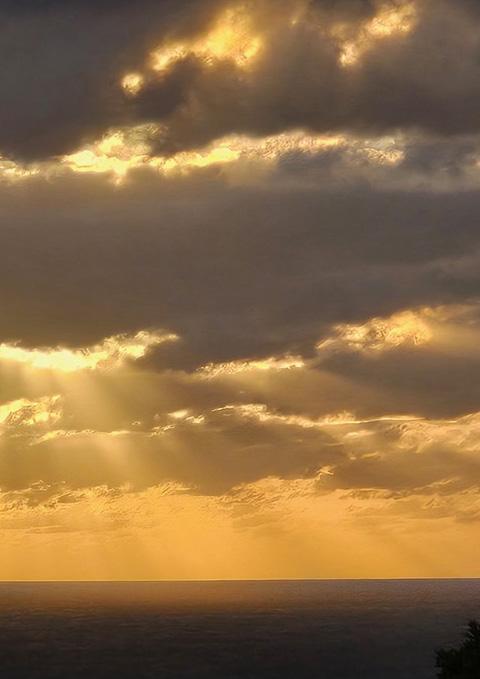
I don’t really care. I want to know if you think the Spirit is here
Here amongst us, as we gather in his name,
as we hear the call “go forth,” and together walk his Way of love for God, ourselves, and others. Not just sisters and brothers but enemies too
As servants and protectors of God’s Garden (That’s Genesis 2)
If you want to leave the world a better place
Then know that I do too. Let’s live Resurrection together Because there’s plenty left to do.
Rev. Natasha He | Scattered Community Minister
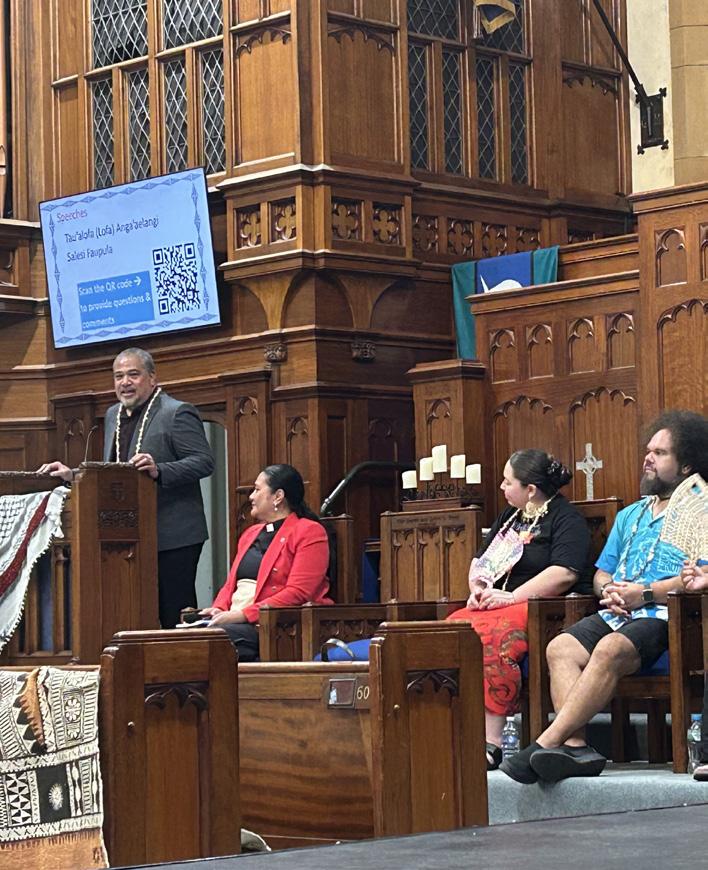
I recently had the privilege of attending the NSW/ACT Synod Lotu Festival at St. Stephen’s, facilitated by the Intercultural Ministry and Climate Action team. It was a deeply meaningful gathering, a space of worship (lotu), fellowship and learning.
Throughout the festival, we listened to powerful stories from across our communities.
One of the great joys was the presence of our young people. Over half a dozen youths attended and offered their praise to God through song and dance. Their energy were signs of hope.
I asked a few of them about their thoughts on climate and climate change. Their reflections were thoughtful and honest. They understand that faith must be lived, not just spoken. They are asking what it means to follow Christ in a warming world. Thank you for contributing so willingly.
The Lotu Festival was a reminder that we are one body in Christ (1 Corinthians 12:12). When one part of creation suffers, we all suffer. When one community is displaced, we all are called to respond.

Viliami Hikila from Menai Illawong Uniting Church: Climate change is helping to bring water levels up which really makes it difficult for small nations in the pacific.
Anita Harris from Tonga Parish: Climate isn’t a distant future issue especially for our Pasifika people. It is already affecting homes, culture and identity.


Anau Malafu from Auburn Parish: They call it climate change: the long-term shift in global temperatures driven by greenhouse gases trapping heat in the atmosphere.
But to me, it has a heartbeat.
It is my grandparents’ cries carried in the tide. It is greed rising like smoke and settling over God’s creation. It is pollution slowly swallowing life, inch by inch.
To some, it’s policy. To me, it’s legacy.
It’s fighting for the right to exist, to eat from our land, to bury our fathers in sacred soil, to dream without exile.
Climate change isn’t a headline in my community. It’s family. It’s faith. It’s rejecting the story the world has already written for us and reclaiming the pen. We are NOT drowning!! WE ARE FIGHTING.
Miriam Hikila from Menai Illawong Uniting Church: “Climate change means to me the earth getting warmer faster than it ever has due to things humans are doing”
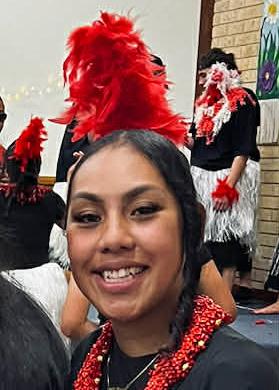
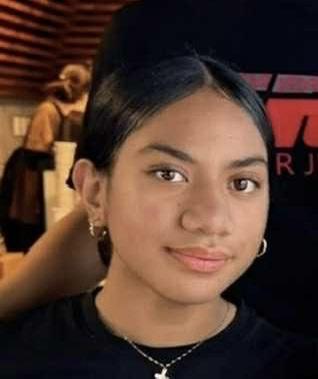
Amile from Auburn Parish: I already see the drastic impact climate change is taking on our world. The glaciers are melting, our islands are sinking, and temperatures are rising rapidly due to decisions we made, ones that were “temporary”. Being a young person of the Pacific, it’s difficult to imagine a future where our islands are no longer there for the next generation. Theres so much we can do as a collective but were not working towards it together. It’s our job as children of the Lord to look after his creation, not corrupt it.

Ovalau Tausisi from Dubbo Uniting Church: Climate Change has become a major issue in today’s society. The pacific has been significantly impacted by climate change due to rising sea levels, severe coral bleaching, intensified cyclones and saltwater intrusion into freshwater supplies. In order to protect the future of the pacific we must act now.
Grace Tautua from Auburn Parish: I strongly believe climate change is affecting our environment negatively, due to natural disasters, health issues, and impact on way of life. More educational resources such as workshops, and strategies, should be implemented to help prevent climate change issues.


Fepaki Funaki from Warnervale Uniting Church: I think climate change is a serious issue that is already affecting our world through extreme weather and rising temperatures. I believe we need to take responsibility for our actions and make changes now to protect the future for many generations and the ones after us.
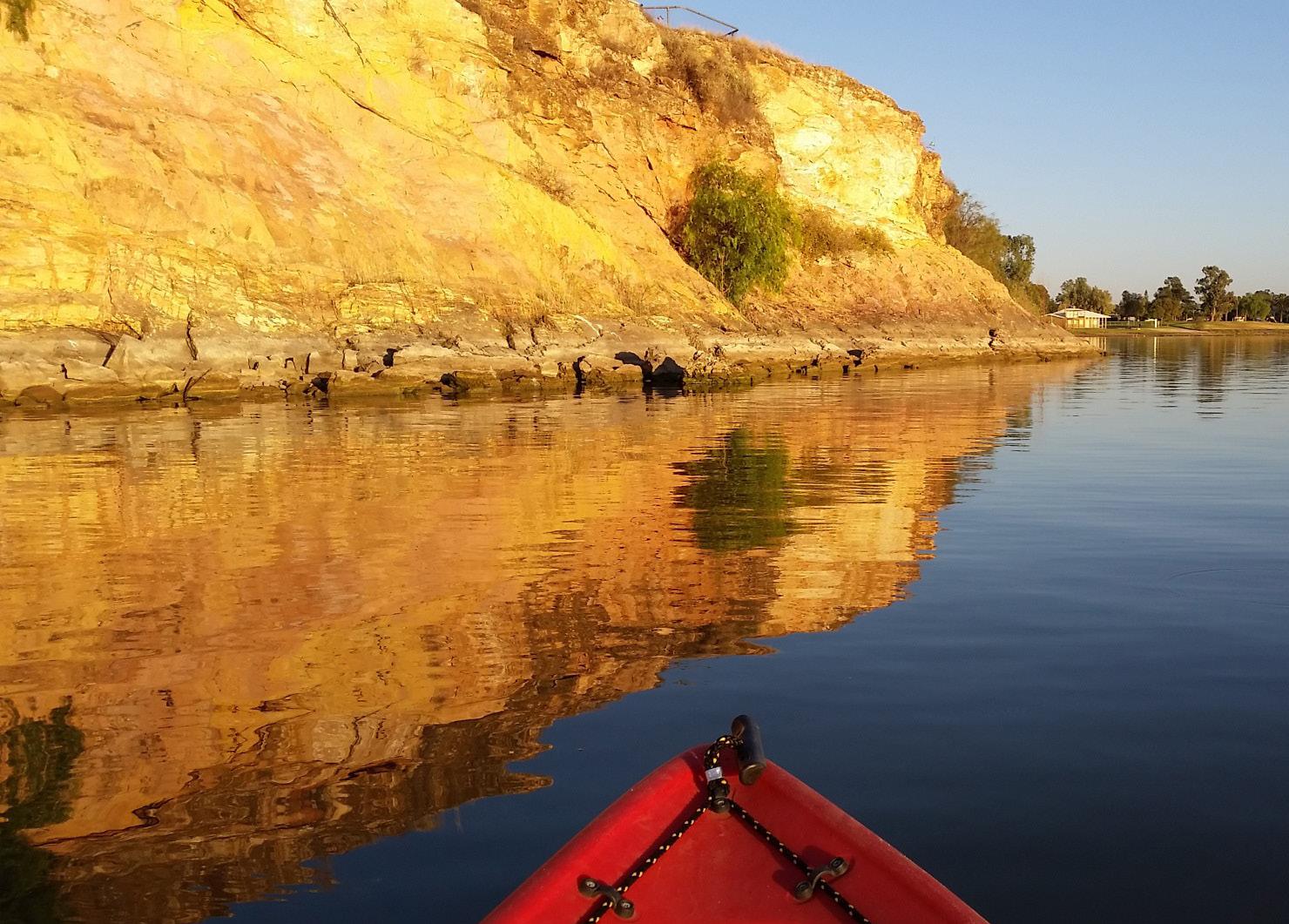

Each Monday morning at 9.30am meet with your Saltbush team for gentle conversation around the Gospel lectionary reading for the Sunday ahead. Open to all lay leaders and people from across the land. The Zoom ID is: 915 4290
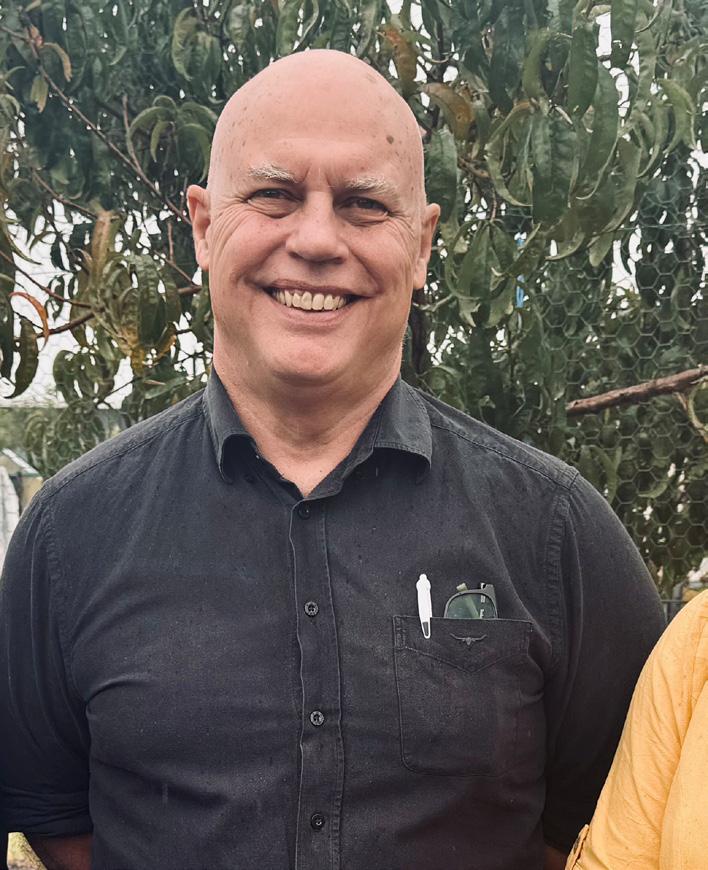
Rev. Tim Jensen | Scattered Community Minister
Since our last Spring/Summer Ruminations on Expectations, we have enjoyed connecting with people at our online café’s on Advent and just recently Lent. Every Monday we also have our Lectionary café. A time where we have a conversation about the following Sunday’s lectionary readings. We find exploring life and faith together with people across the land both enriching and encouraging.
In November of last year, we had our Gathering in Armidale. At our gatherings we worship, have conversation around one of our themes, have conversations over morning tea and lunch and generally have a time to catch up. It is not a meeting with agendas but a time to gather within a broader Christian community to hopefully engage more deeply in conversation/communion with God and about God.
In these coming months we will be having our Gatherings in Lake Cargelligo and Gloucester. As with our café’s, everyone is welcome at our Gatherings.
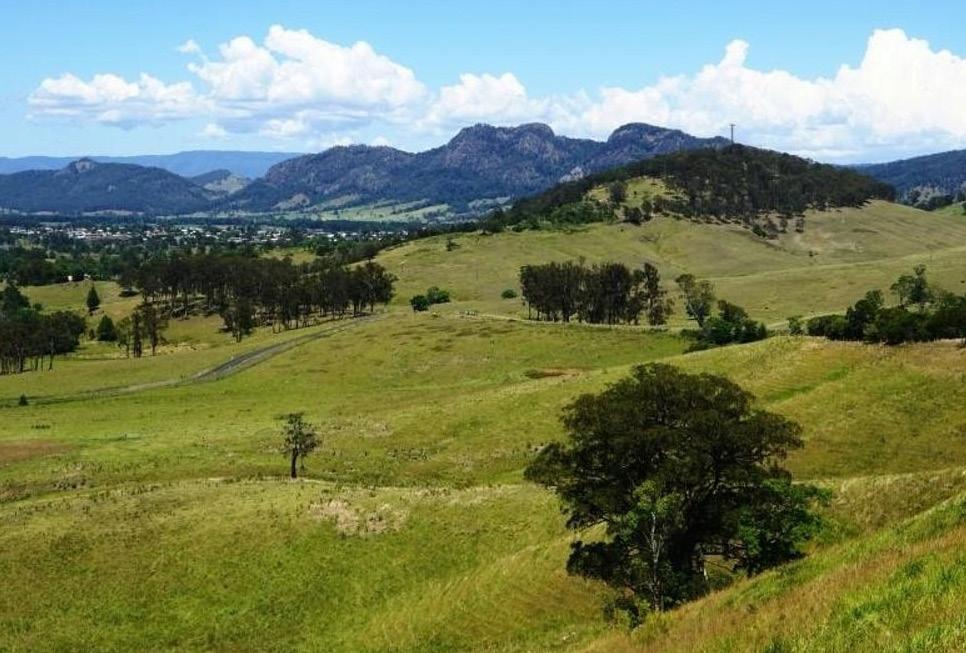
We continue to bring weekly messages and liturgy from our Word Around the Bush. This summer march flies have made their presence felt as we produce our videos in the bush. On one occasion I had three gang up on me as I tried to present my message, they must have known I was coming.
The beginning of every year we meet in Dubbo to plan and prepare. Organising dates for our gatherings, café’s, Ruminations contributors, retreats, visits to Christian communities and up-coming Christian conversation studies. Our conversation series this year is focusing on the Parables of Jesus. We also spent a few days in Sydney to meet with the rest of Uniting Mission and Education team to touch base and explore the way ahead for coming months.
As a Saltbush team we find connecting with people across the land whether on-line or in person, incredibly rewarding. We really find exploring life and faith together not just enriching but essential as we journey together with the Living God in and through Jesus Christ.
May you always encounter God’s presence in mercy, compassion, hope and love.

Saltbush Cafés
In regular series of three or four nights the Saltbush team hold online cafés centred around diverse themes or readings. Saltbush cafés are easy to attend, relaxed and an encouraging way to meet other and explore life and faith together.
Scattered Community Gatherings
Three to four times a year in different rural or coastal location the Saltbush team hold Scattered Community Gatherings. You can also attend these online from wherever you are to wherever we are. These gatherings are centred around worship, encouragement, education and the practice of discipleship.
Word around the Bush
Each week of the year the Saltbush team present a visual message based on the lectionary reading for that week. You are free to watch and use in your own congregation this message. You can also print off the Saltbush liturgy that is provided each week to accompany the visual message.
Talking about Salt
This is our publication available for any congregation or group who are willing to have some discussion around who you are, how you gather and how you live out your faith. Talking about Salt is five difficult conversations for congregations and can also be used to shape a life and witness discussion and consultation. Talking about Salt is available free to any congregation and is available both online and in post.
Intentional Christian Communities
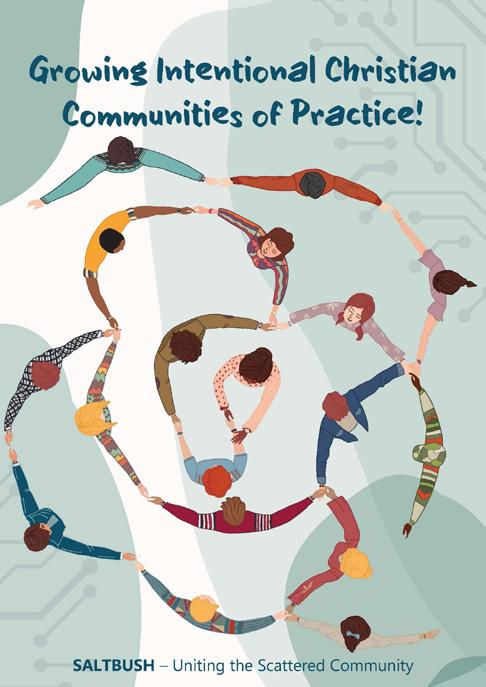
This is our publication available for any congregation or group who are willing to think about the challenge of being intentional in how we gather as the Christian community.
Dive into any part of the Gospels (Matthew, Mark, Luke & John) and you will find Jesus intentionally going about his ministry. At times it looks like chaos and no doubt it was, but at every step Jesus acts with intention. Growing Intentional Christian Communities of Practice is available free to any congregation and is available both online and in post.
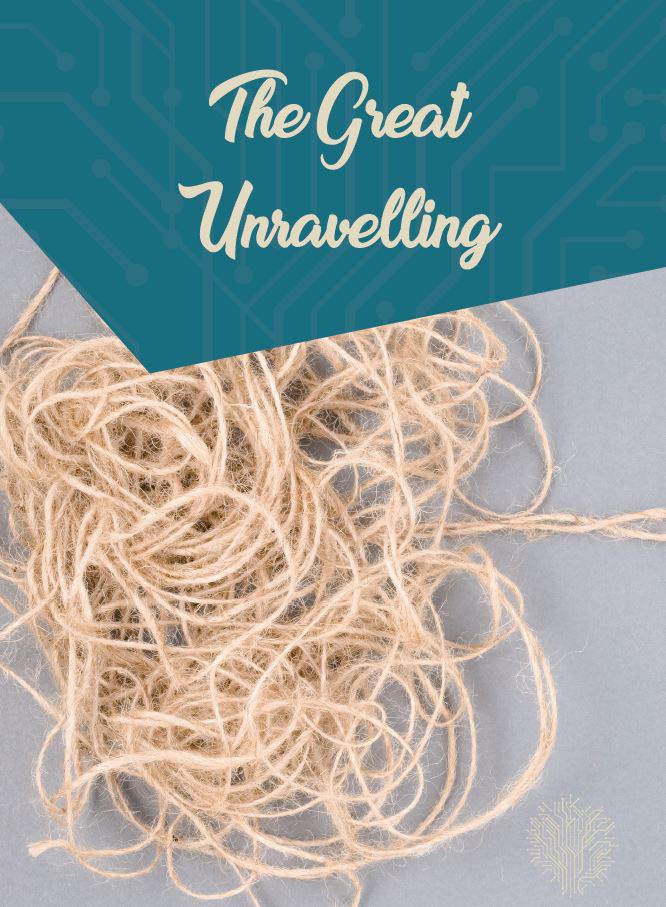
The Great Unravelling
The Saltbush team have prepared six conversations as part of our reading of the book:
Joining God in the Great Unravelling by Alan J. Roxburgh.
However, these conversations are not a study guide to the book, but an invitation to open ourselves to deeply consider who and how we, the church, our christian communities, are participating in the ways of God beyond ourselves.
Salt in the Wound
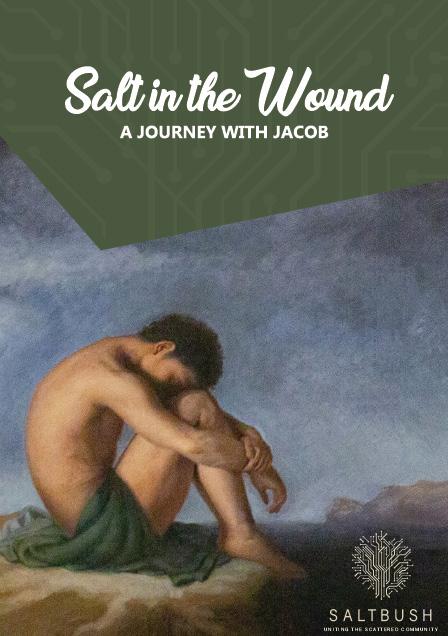
This is an uncomfortable set of conversations. Like salt in a wound, they sting and irritate before they can soothe and heal. We hope you will sit with them – on your own or, preferably, with a small group of people with whom you are willing to explore your life and faith. There are seven chapters, each representing a particular phase in Jacob’s life story and focusing on a specific theme. You can work through each in sequence or choose four significant to your current life phase or the life of your congregation for a month-long small group study.
Digital packages for congregations
If your congregation would like a Saltbush digital package so that you can use and connect with us and the wider church please simply get in touch. A digital package includes: smart tv, mobile stand for the tv, all connectors and cables, TV, camera and our support to set it all up.
Visits
The Saltbush team are always willing to visit your congregation or group to meet you, talk with you about how it is for you as a congregation or Christian community and how you seek to be part of the missional relationship with others. Simply get in touch and one of the Saltbush team will come to visit you.
Look on our website under Word, Ruminations, Talking about Salt or Contact Us.
Ruminations is brought to you as part of Saltbush – Uniting the Scattered Community. The Uniting Church Synod of NSW & ACT oversees this work as an encouragement to all rural Christian communities and their leaders, irrespective of size or location. You are invited to share this issue of Ruminations with others.
Editors: Mark Faulkner
Tim Jensen
Natasha He Monique Potter
Uniting the Scattered Community
PO Box 648 Canberra City, 2601
0477 720 151
saltbush@nswact.uca.org.au
https://saltbushcommunity.uca.org.au/

©Saltbush 2026. All articles and images in this publication have been used by permission or purchase. Please get permission before reprinting.