Discover the Army Cadets


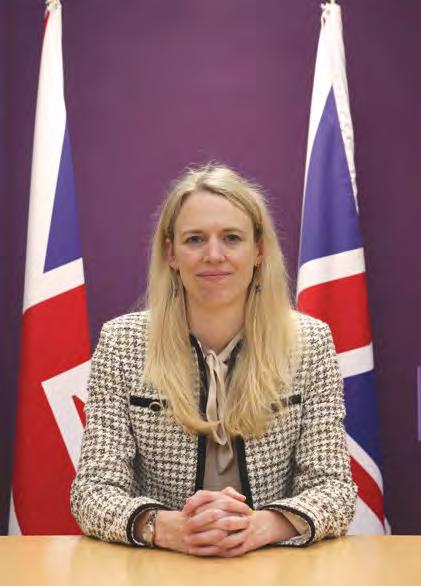
Welcome to Discover the Army Cadets. Every year, thousands of young people and adult volunteers join the Army Cadets to have fun, make friends, be more active and experience extraordinary adventures. What they may not realise is that, in the process, they're also learning valuable skills that will both enhance their lives in the present and support their future careers and job opportunities.
Young people who want to aim higher, be more confident and get a head start are in the right place, because the Army Cadets is life-changing. That's not just my opinion: it's what two independent academic reports from the University of Northampton have found. They reveal that being a member of the cadet forces not only improves wellbeing but also boosts career prospects and social mobility. Turn to page 46 to find out more.
In the following pages, you’ll read about young people who have propelled themselves out of their comfort zones to take on exciting challenges, whether that's in first aid, during DofE, on leadership courses or through fieldcraft, expeditions, orienteering, summer camps, music and sport. You'll also meet adult volunteers who are truly inspirational.
This publication captures the extraordinary diversity of the Army Cadets experience, from learning, laughter and discipline to challenge and achievement. If you’ve been thinking about giving it a go, what are you waiting for?
Louise Sandher-Jones MP Minister for Veterans and People
6
A bite-size overview of the Army Cadets.
16
Discover the values that run through everything we do.
20
Take on new challenges, explore amazing places and gain skills that will set you apart from the crowd.
Discover how being in the Army Cadets has provided members with new skills, confidence, friendships and opportunities.
40
Meet our exceptional national ambassadors, chosen because of their passion for supporting and inspiring young people.
Two university studies reveal the amazing impact on social mobility and career prospects for young people who belong to the cadet forces.
Cadets and adult volunteers have recently embarked on some life-changing trips, ranging from overnight camps to epic overseas adventures.
Discover how cadets support their local communities by raising funds for worthy causes and participating in events such as parades, ceremonies and celebrations.
Meet some Army Cadets alumni, discover how cadets have demonstrated first aid skills in real-life situations, find out how our syllabus hones leadership skills, and learn more about DofE.
Find out more about honours, awards and qualifications gained by our cadets and adult volunteers.
New to the Army Cadets and unsure what the organisation is all about? Here's your bite-size overview.

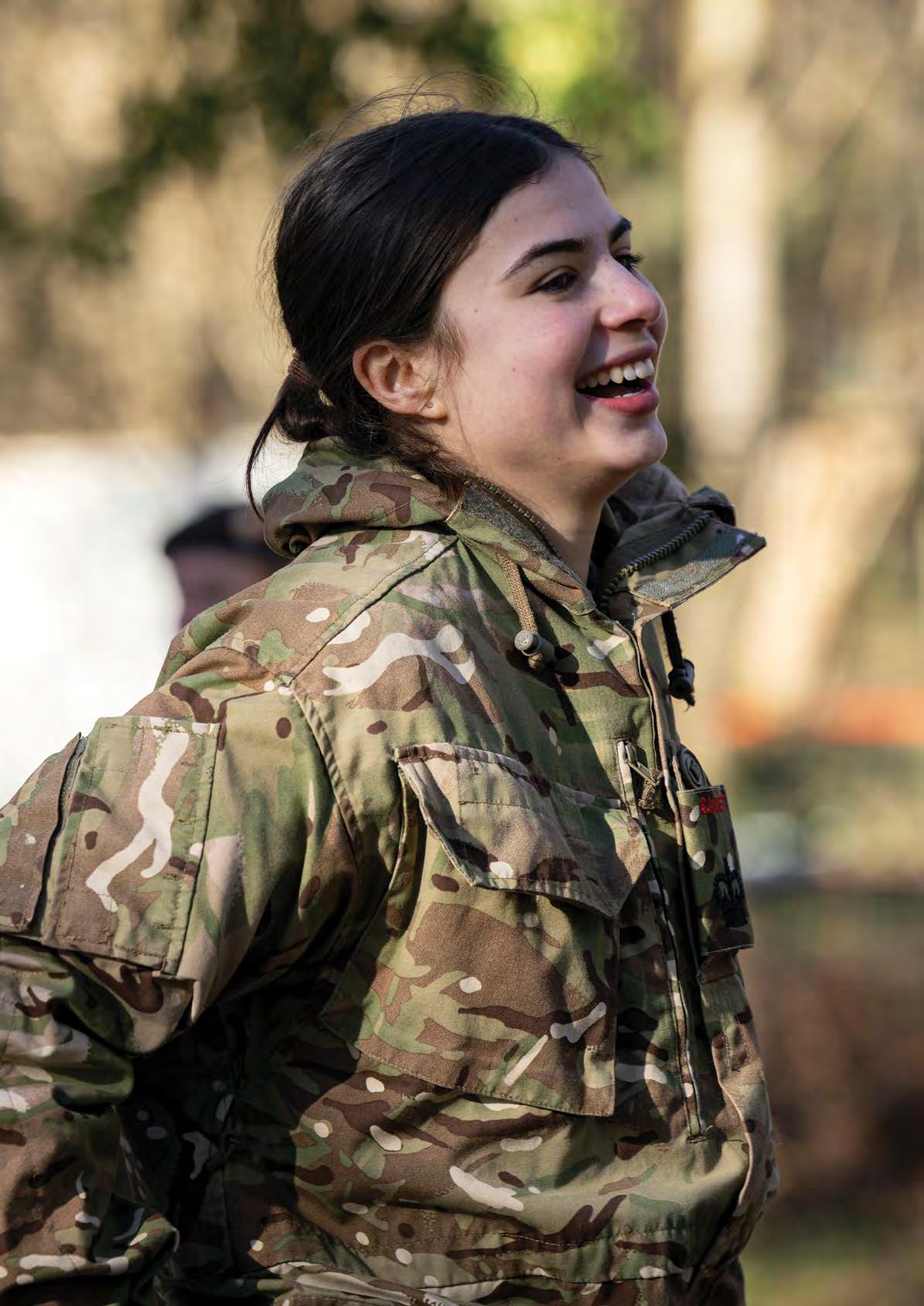
We're a youth organisation that helps young people grow through fun, friendship, action and adventure. We're successful in helping our cadets (young people aged 12–18) to unlock their talents and shape their futures.
One of the biggest youth organisations in the UK, we're also the largest of the MoD-sponsored youth cadet organisations.
We're run by a huge number of dedicated adult volunteers (we call them CFAVs – cadet force adult volunteers) who come from all walks of life.
Some have been cadets in the past, although many haven't. However, they all benefit from the opportunity to develop their own skills, experience and qualifications through their role in the Army Cadets. They also enjoy the feel-good factor of engaging with and supporting young people and helping them get off to a good start in life.
The organisation also has a permanent staff that runs strands like marketing and communications, financial management, training and operational support.
We are lucky enough to have a few inspiring ambassadors for our organisation. They were chosen because they represent our values and are role models for cadets and adult volunteers. Our national ambassadors are Jordan Wylie MBE and Sally Orange MBE. Read more about them on page 40.
We're called the Army Cadets, and this is a combination of the Army Cadet Force (ACF) and the Combined Cadet Force (CCF).
The ACF has over 1,590 units across the UK and Crown Dependencies, as well as two units in Cyprus, and is open to any young person aged 12–18. There are no specific school requirements to join.
The Combined Cadet Force (CCF) is found within schools and is for the pupils of that school. There are 376 CCF contingents in schools across the UK. There are more contingents in state schools than independent schools.
8,470
3,120
73,380
11,590
Forerunners of cadet forces in schools first appeared in 1859, when a number of schools formed units for the defence of the UK in response to the threat of invasion by France.
The organisation has taken various forms in the years that have followed, including a period of expansion during the First World War, the creation of cadet units in schools in 1948 and the launch of the Cadet Expansion Programme (CEP) in 2012. The latter was introduced to form new cadet units in state-funded secondary schools.
In 2025, as a result of two University of Northampton reports which revealed the increased social mobility experienced by cadets, the Government tasked the organisation with increasing its recruitment of cadets by 30 per cent.

We are supported by the Army Cadet Charitable Trust (ACCT) UK and the Combined Cadet Force Association (CCFA). They are funded by donations, bequests and fundraising activities by cadets and adult volunteers. They help cadets access specific life-changing development programmes offered by the Army Cadets, such as sailing, skiing and climbing trips overseas, as well as international cultural exchanges.


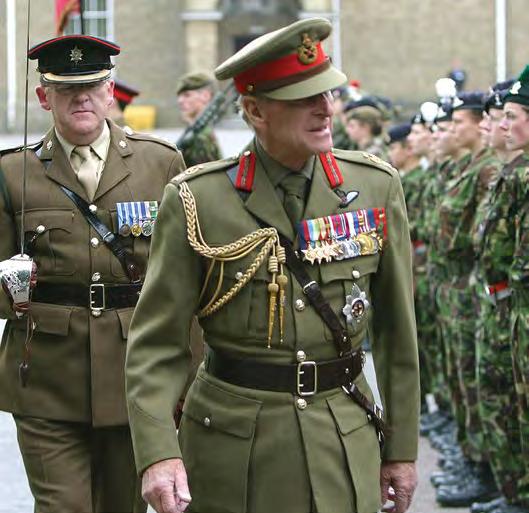
The national Cadet Training Centre at Frimley Park, Surrey, opened in 1959. This grand old building is where many courses and training events take place and provides learning and development opportunities for cadets and adult volunteers. We also have the Centre for Cadet Adventurous Training (CCAT) at Capel Curig Training Camp in Wales.
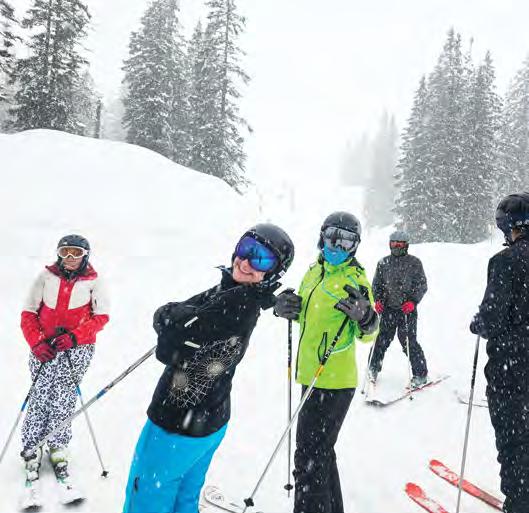
The list of activities in which cadets get to take part is long, but the following pages reveal a snapshot.
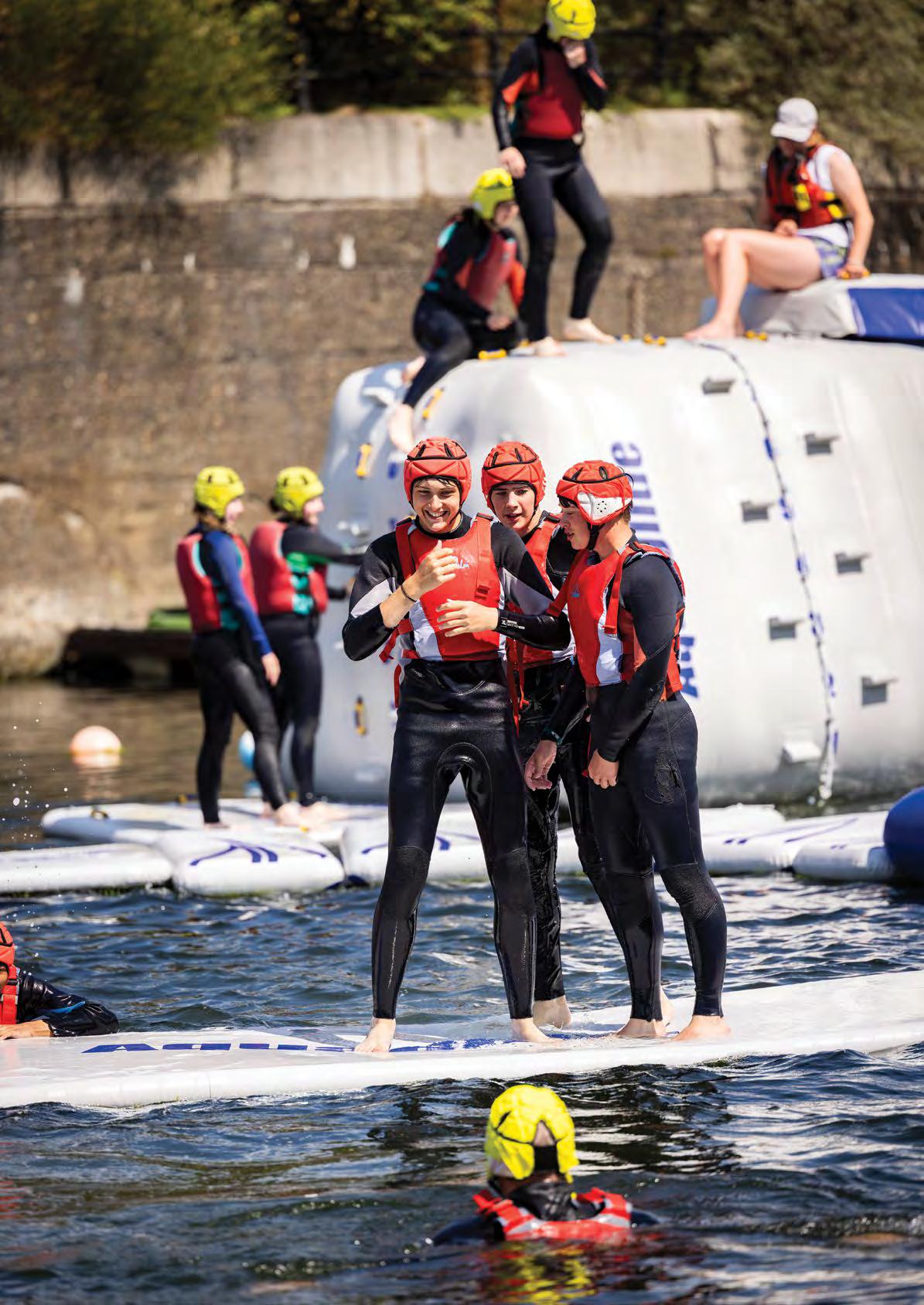
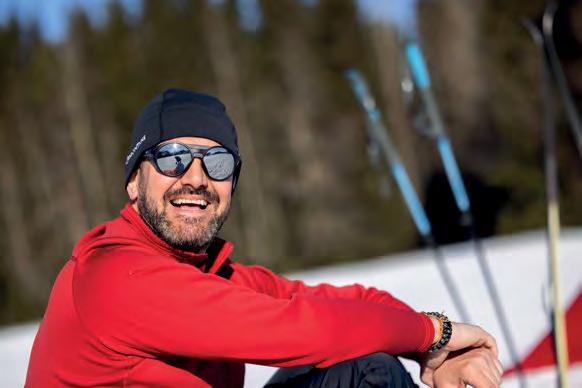
There are many adventurous training opportunities available for cadets and adult volunteers. Some provide the chance for international travel, such as ski trips in Norway and Bavaria.
We run two adventurous training centres in the UK: one in Capel Curig in Wales and another in Halton in Lancashire. Each offers training courses, including mountain leaders, hill and moorland leaders, paddle sports, sailing, kayaking, open-topped canoeing, rock climbing, sea kayaking, abseiling, caving and navigation.
Cadets also take part in adventurous training during summer camp.
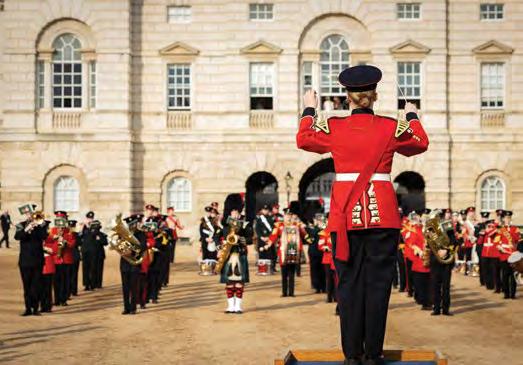
Free music tuition and a range of musical opportunities are offered to cadets, including the chance to take part in military bands, corps of drums and bugles, and pipes and drums.
Cadets and CFAVs sometimes get to play at prestigious locations such as Edinburgh Castle and Holyrood Palace.
Cadets can achieve recognised qualifications, including BTEC First Diploma in Music (equivalent to a GCSE), Associated Board of the Royal Schools of Music (ABRSM) qualifications and Scottish Qualifications Authority (SQA) piping and drumming awards.
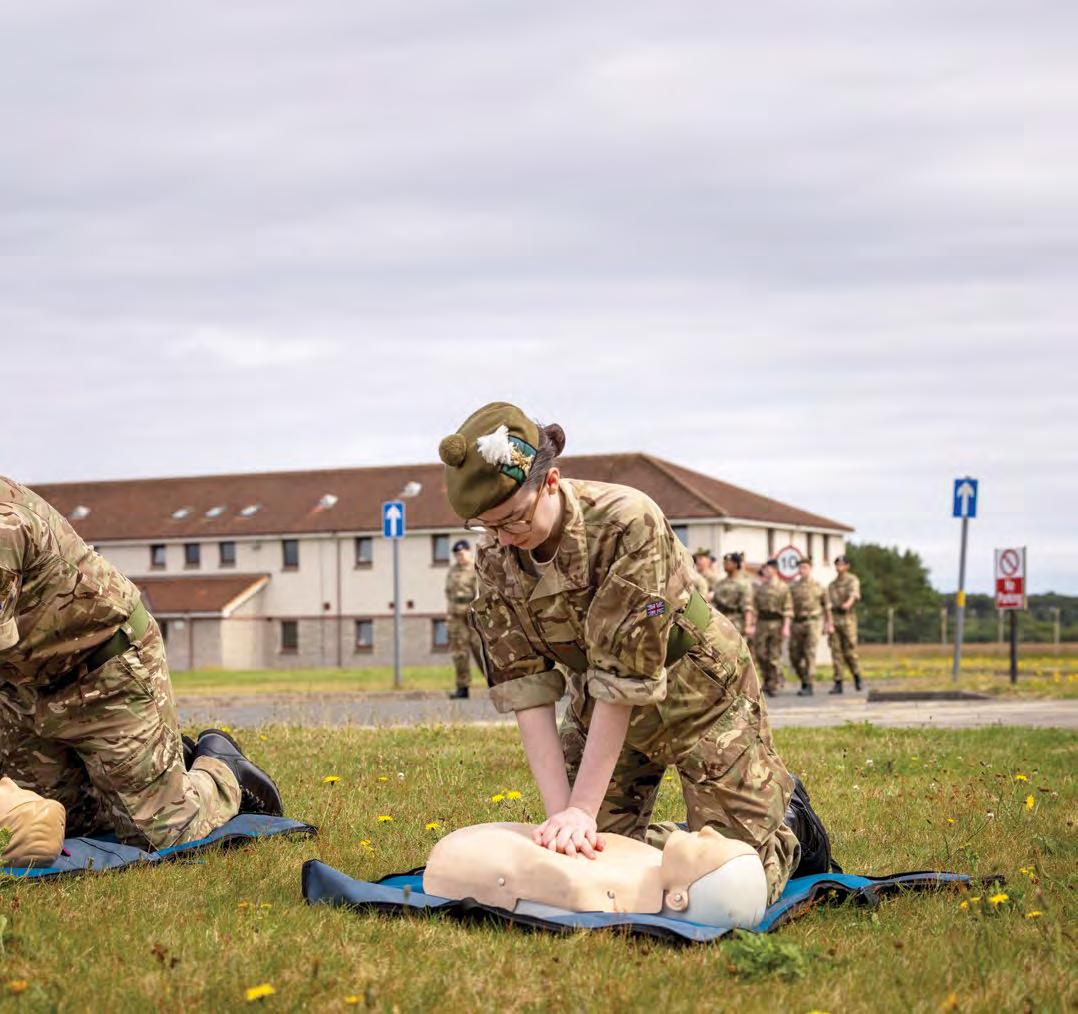
First aid training is a key part of the Army Cadets experience, and we have many examples of cadets and volunteers putting their skills to the test in real-life emergencies – and saving lives as a result (read more on page 74).
We run a range of courses and conferences to support cadets and volunteers in their first aid training. This culminates in the annual National First Aid Competition, where participants are tasked with responding to simulated scenarios.
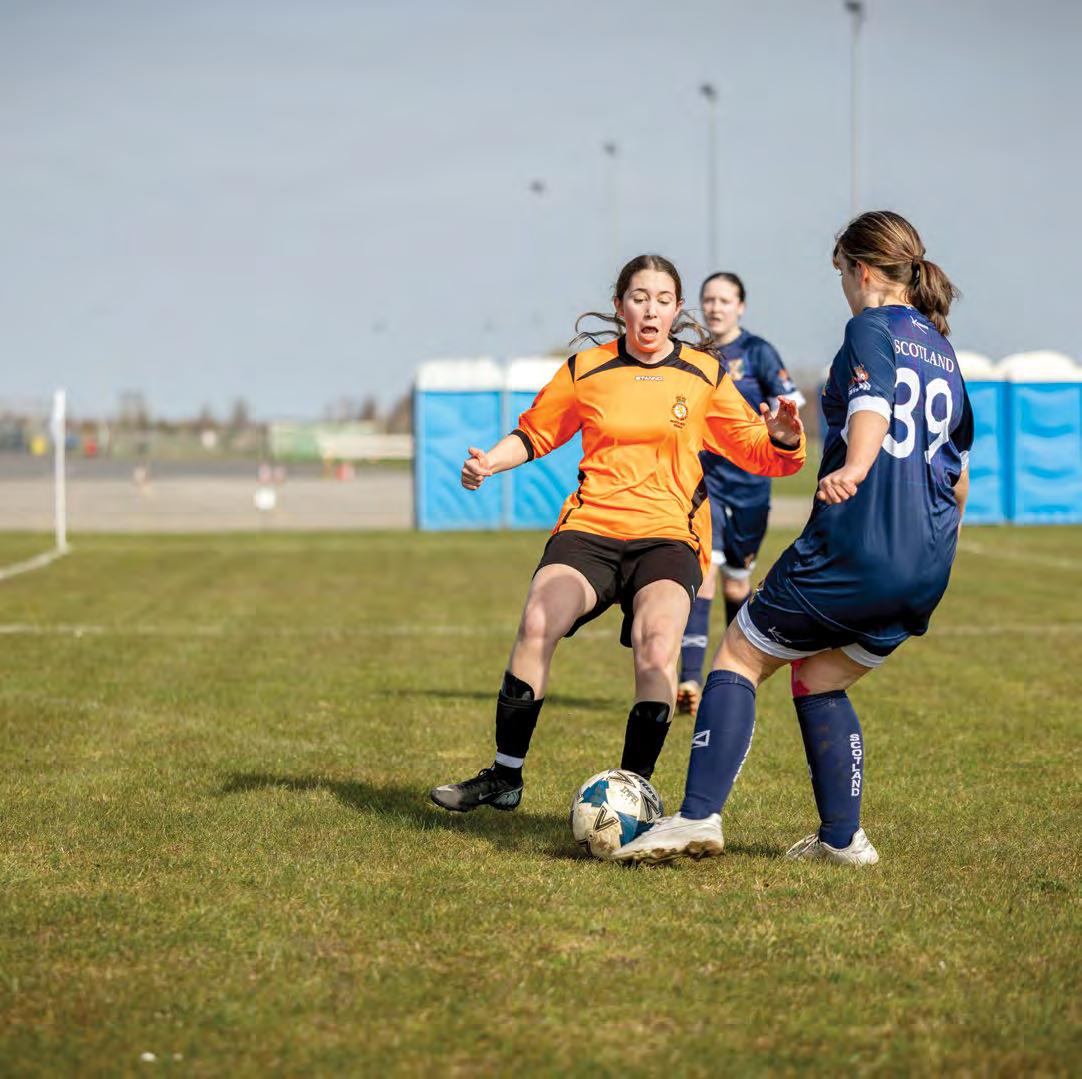
We provide opportunities to play sports against other nations while representing the UK's Army Cadets.
County, regional and national competitions are also held in a variety of sports including athletics, cross-country, archery, football, rugby, hockey and orienteering.
Drill and parades foster discipline, teamwork and precision through structured training and formal ceremonies. Cadets learn movements like marching, saluting and turning as a unified body. They perform at events like Remembrance parades, while weekly parade nights, held typically at detachment and contingent centres, include training on drill and turnout.
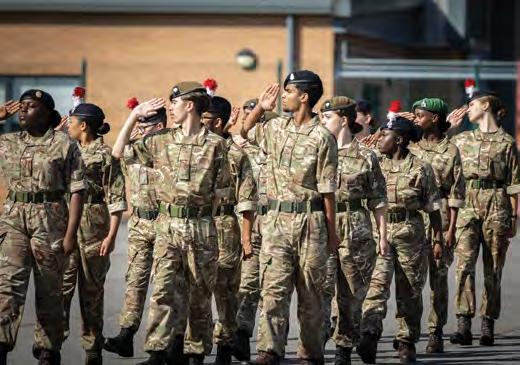
Being sponsored by the British Army gives us access to equipment, locations and training that enhance the Army Cadets experience.
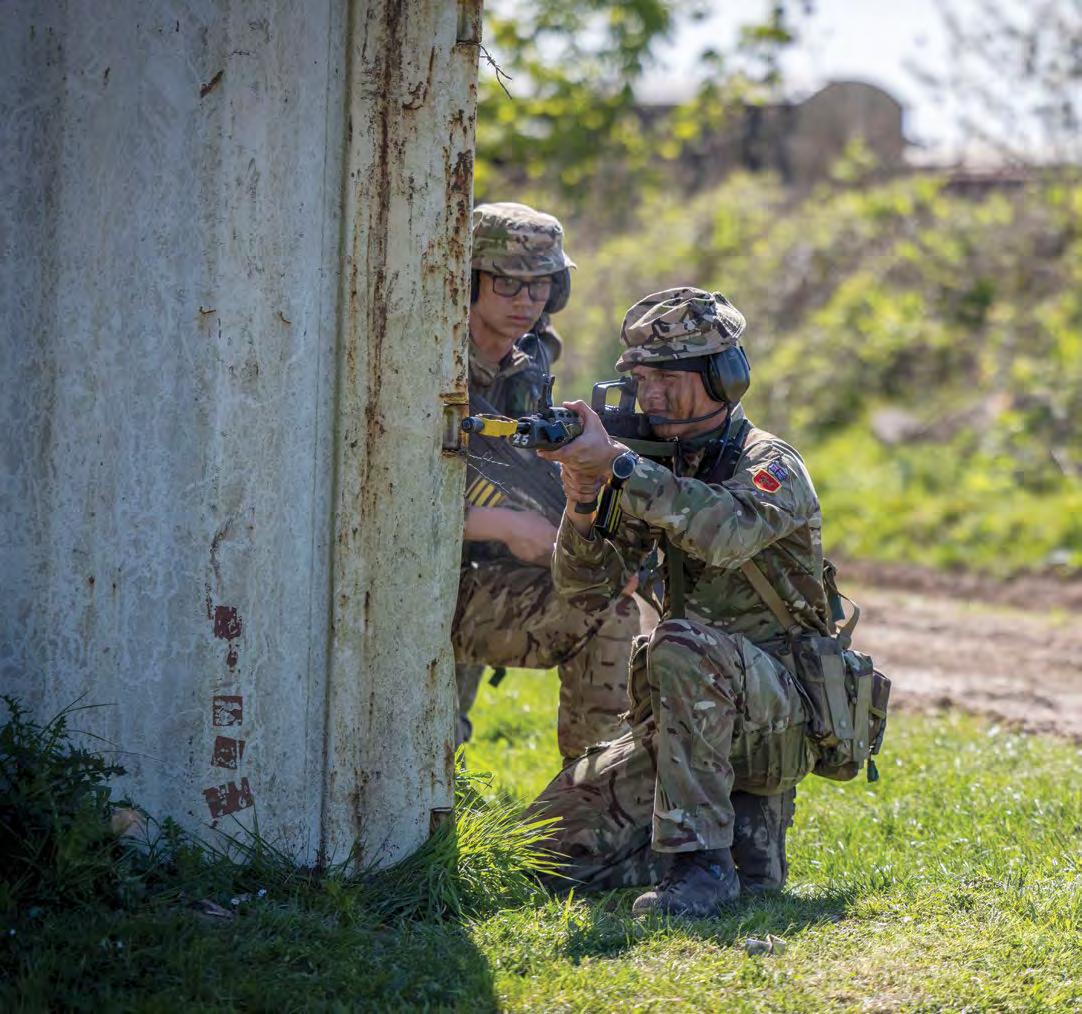
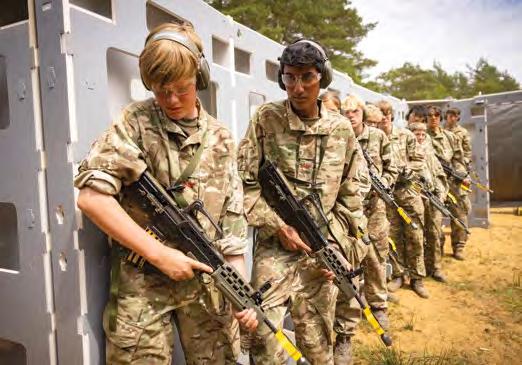
Through military-themed activities such as fieldcraft, military knowledge, shooting and weapon handling, we instil maturity, discipline and problem-solving, helping to shape future leaders.
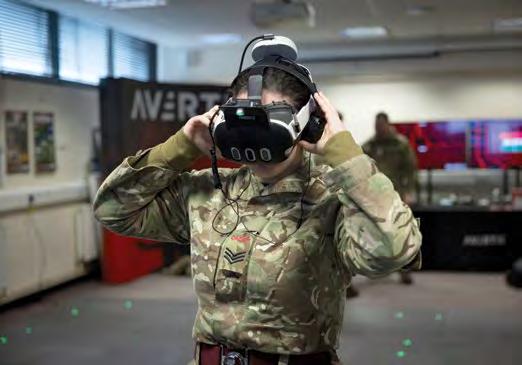
STEM (science, technology, engineering and maths) runs through the Army Cadets syllabus. Cadets get the opportunity to learn through hands-on military challenges like helicopter design, coding, robotics, cyber security and logistics. These initiatives bridge classroom learning with real-world applications, preparing some cadets for careers in technology and defence.
Cadets can take part in STEM camp and the major annual competition Ex STEM Challenge, which brings together 300 cadets from around the UK.
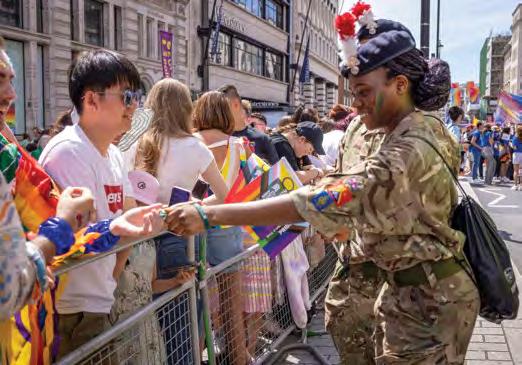
Being part of the wider community is hugely important to our organisation, which is why we engage in every way we can. This involves activities like parading on Remembrance Day, at Pride events, and at the Lord Mayor's Show in London.
It also involves local, practical activities like litter-picking, refreshing local play areas, tree planting and numerous other ways of supporting the local community. Read more about this on page 62.
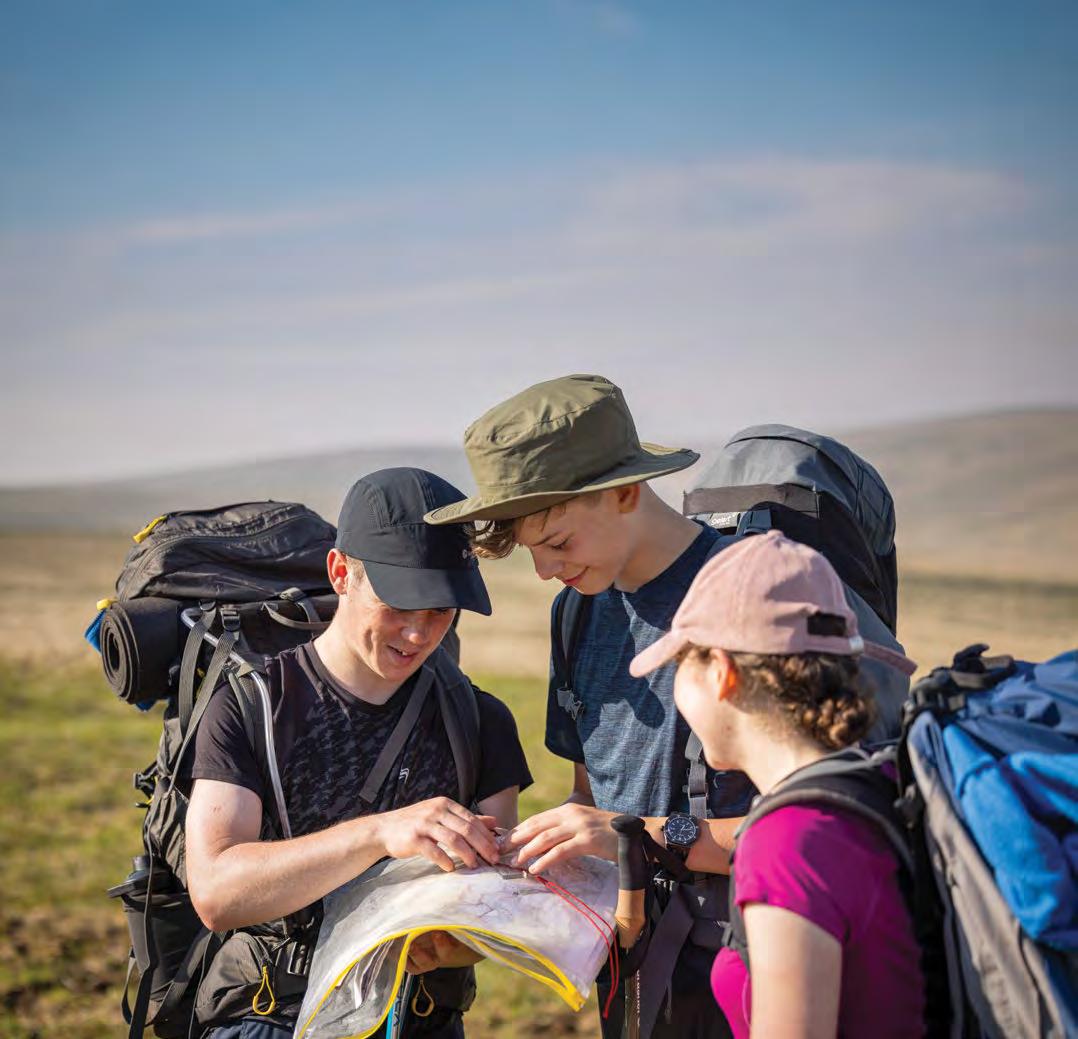
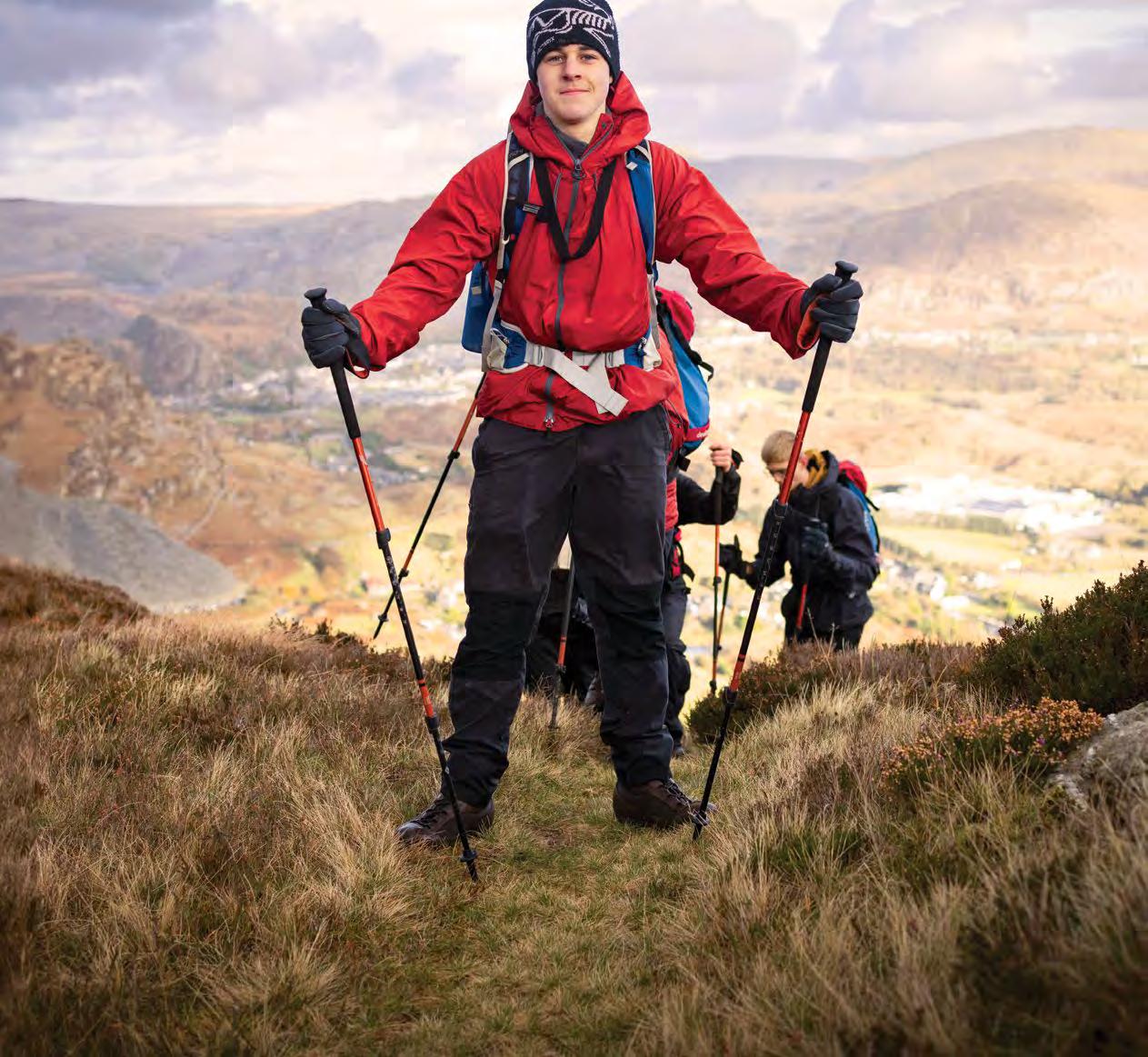
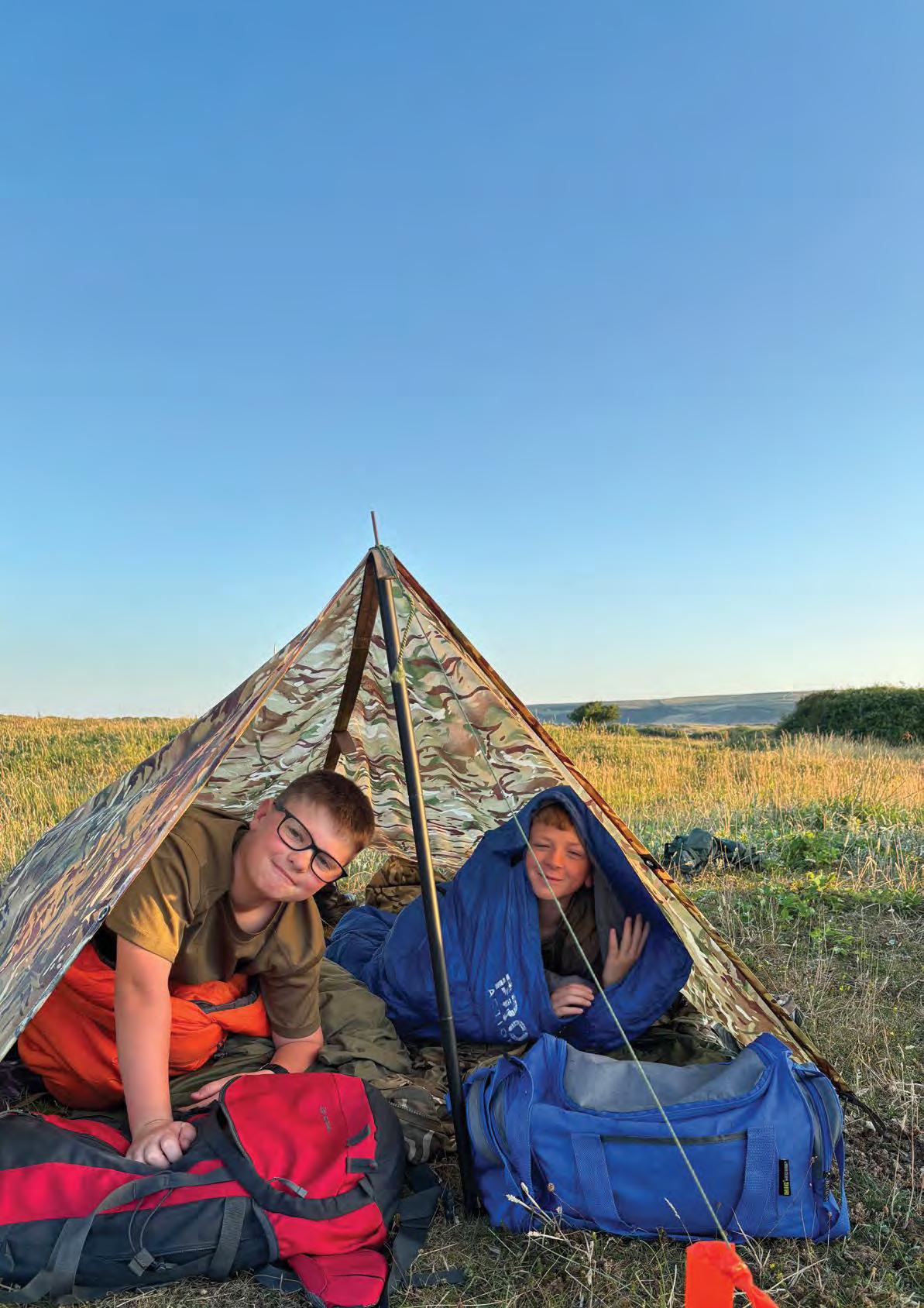
Going 'on exped' is one of the exciting ways that cadets get involved in real-life challenges. This can involve all manner of activities, such as taking part in hikes over remote countryside. Cadets navigate using their map-reading skills and camp out overnight.
These kinds of expeditions often tie in to the Duke of Edinburgh's Award, (DofE), in which approximately 6,000 cadets and adult volunteers take part each year. Of those, around 2,000 achieve Bronze, Silver, or Gold Awards. Read more on page 68.
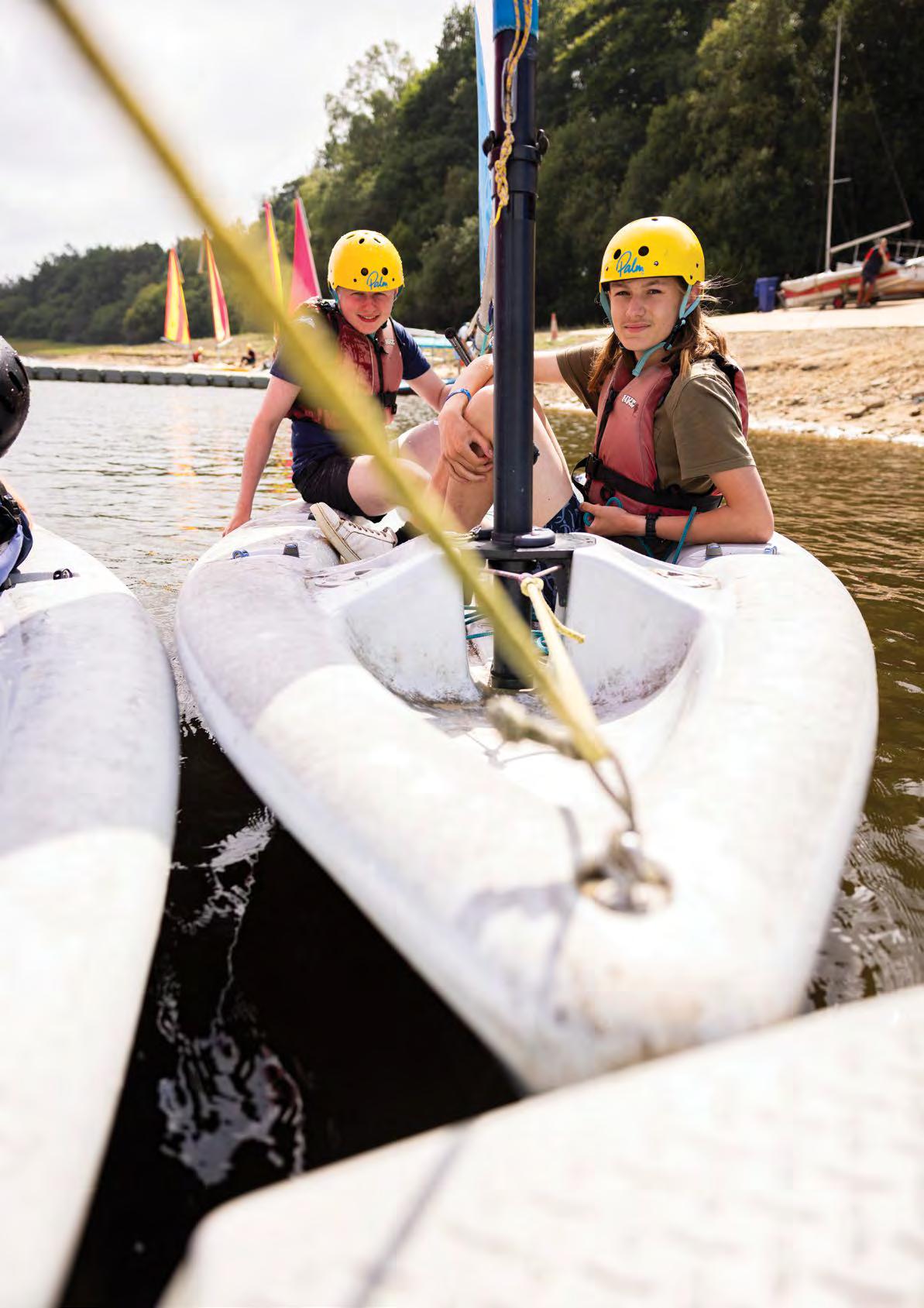
Summer camps are a big highlight for cadets and are when they and CFAVs congregate for week-long residentials in the summertime. The camps take place at specialised adventurous training centres or military training areas and bring together different detachments from across the UK.
In 2025, approximately 25,500 cadets took part in summer camp. For some, it was their first time away from home while for others it was their first time outside a city environment.
Summer camp is about making new friends, being challenged by trying new things and having fun while learning in the care of adult volunteers. Activities include fieldcraft, shooting and outdoor activities like kayaking and sailing. Camps are affordably priced for cadets, costing roughly £50–£100 for seven nights (with extra support for those receiving free school meals).
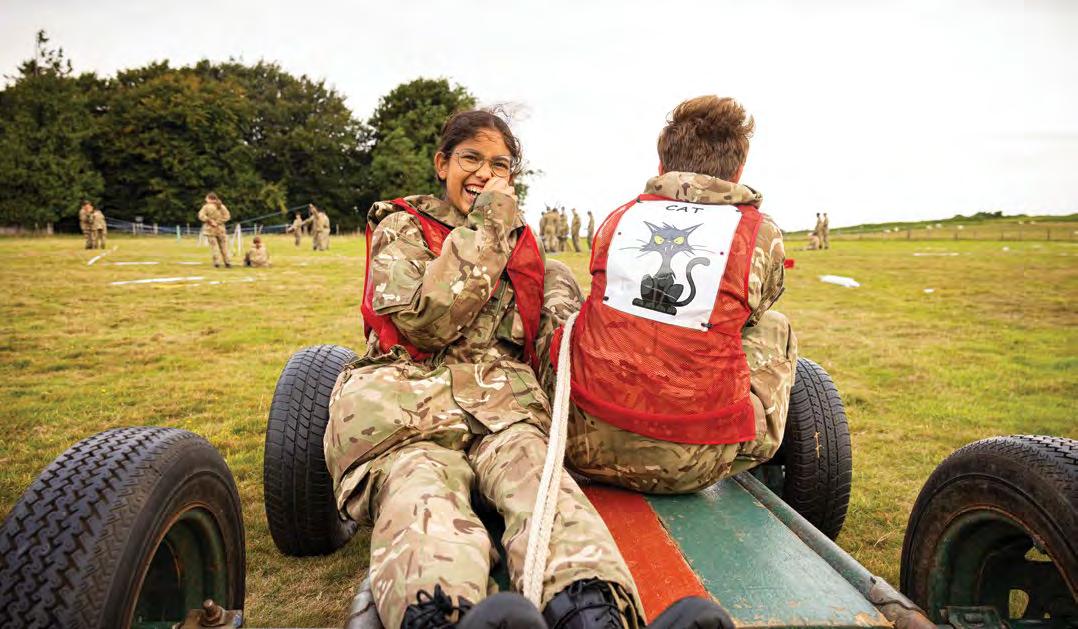
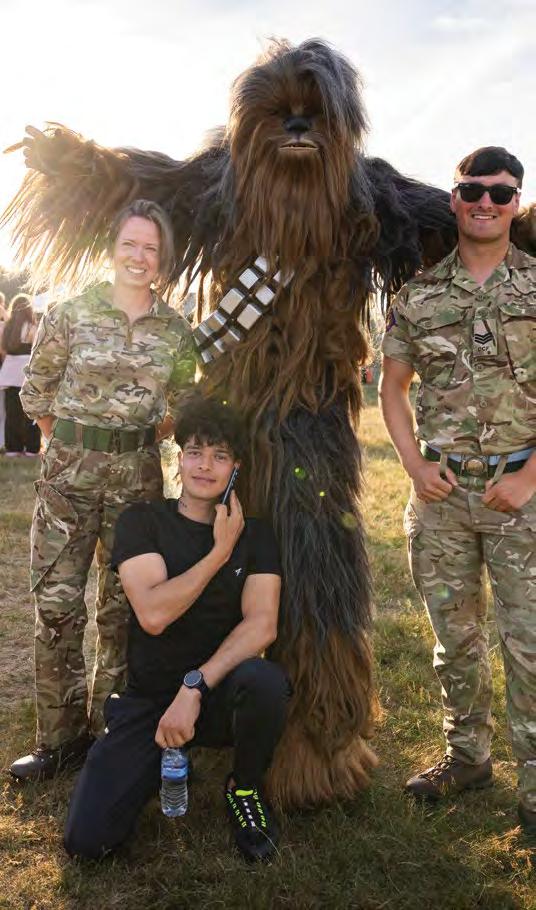
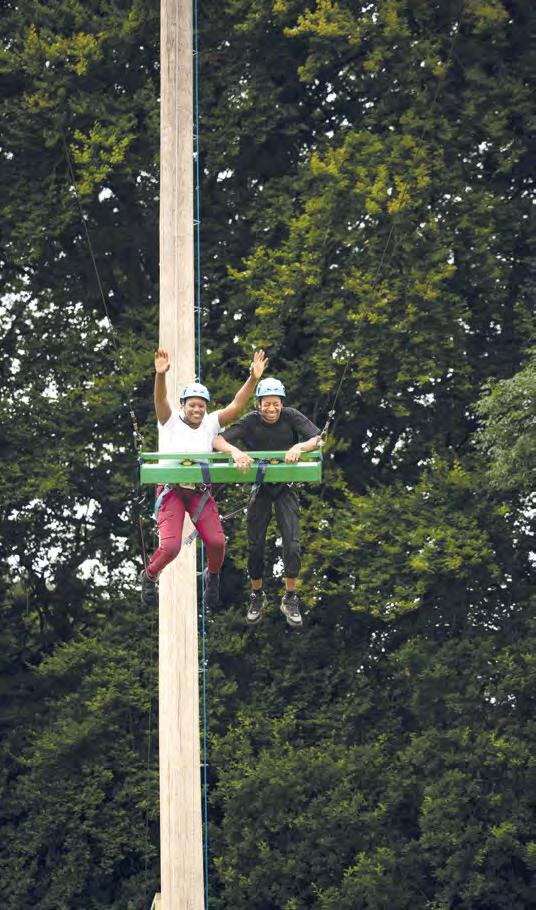
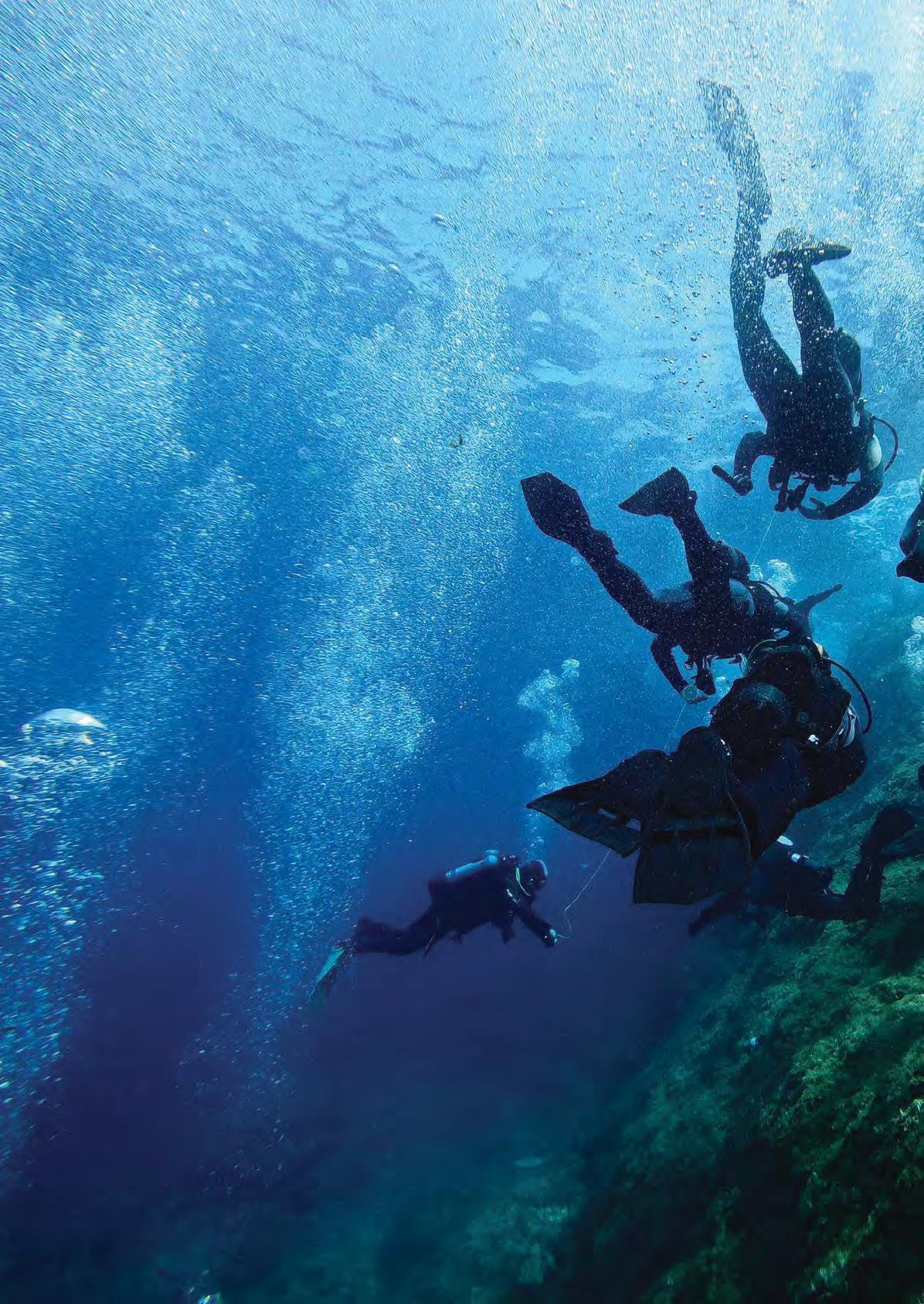
Our values run through everything we do. If they resonate with you, and if you could benefit from joining us as a cadet or an adult volunteer, we'd love to talk to you.
Courage is both physical and moral. Physical courage is what enables us to motivate ourselves and others when the activity or the environment is hard or demanding, such as on expedition.
Moral courage is having the strength and confidence to do what is right, even when that might make us unpopular, such as standing up to bullying. It is also the courage to insist on maintaining the highest standards of behaviour. Both physical and moral courage are equally important, and showing courage in all forms earns respect and fosters trust.
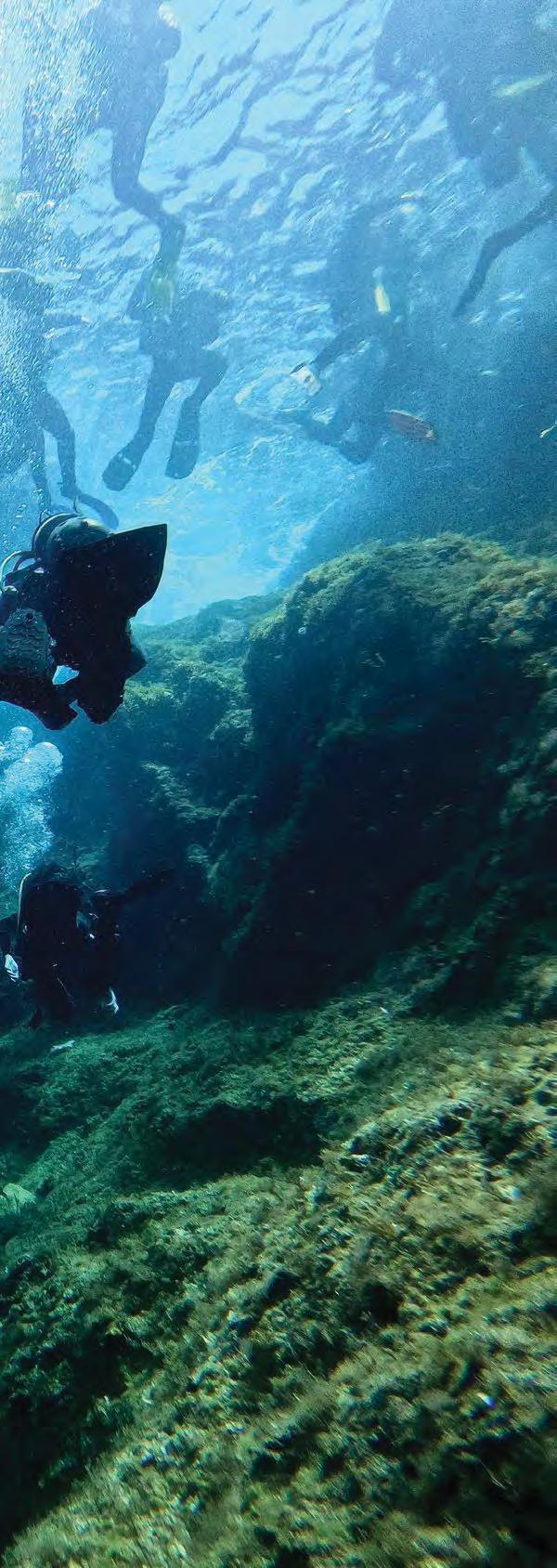
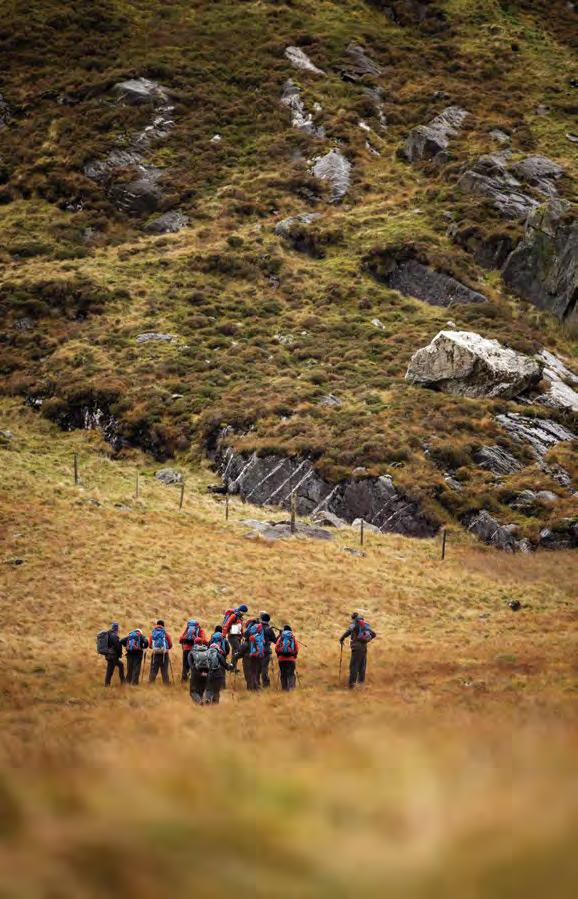
Selfless commitment is critical to good leadership and teamwork. It is about putting the needs of others ahead of our own, to help everyone succeed.
Cadets demonstrate this when they help someone with a lesson they are finding difficult rather than going off for a break, or when they hang back with someone who is struggling on expedition, rather than speeding ahead. Selfless commitment is essential if you want to be a good leader.
Discipline helps us all work effectively as part of a team. It isn’t just about being told off for doing something wrong; it’s about having the self-control to not do the wrong thing in the first place – and having the courage to stand up to those who do.
Self-discipline includes the ability to make time to polish our boots, iron our uniform and be smart on parade, no matter what other distractions are going on around us. Discipline helps build our team, so everyone is trusted to do the task well. Good discipline means doing the right thing, even when it's difficult.
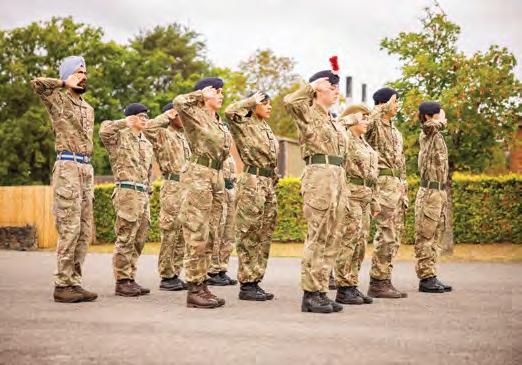
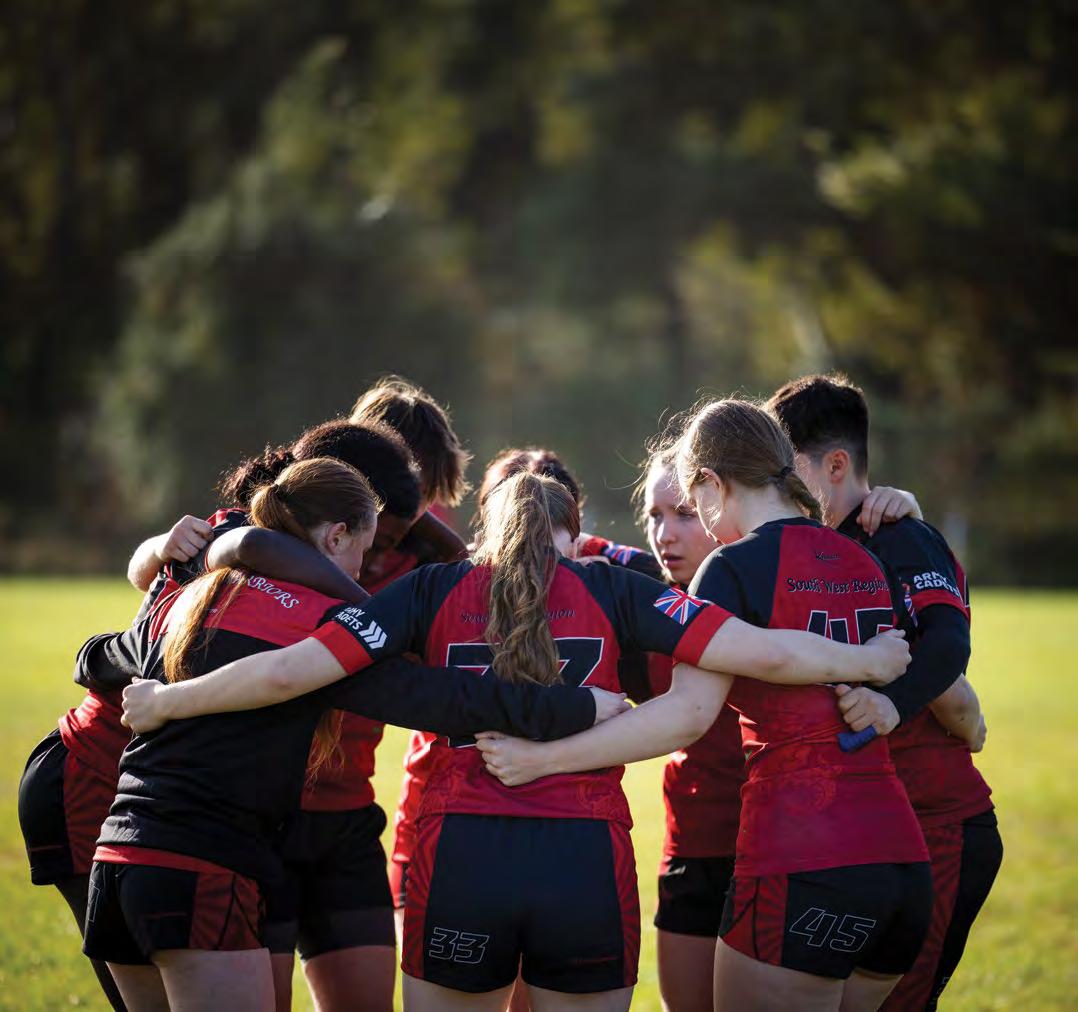
Loyalty is what keeps teams together. In the Army Cadets, that team could be our detachment, county, section, contingent or any other team we are part of, such as an expedition group, overseas exchange or sports team.
When we work together in a team we achieve so much more. However, loyalty must only support positive behaviours and actions. Loyalty to a team should never allow poor behaviours or the wrong thing to be done. Letting others stray from our values is not being loyal to the team.
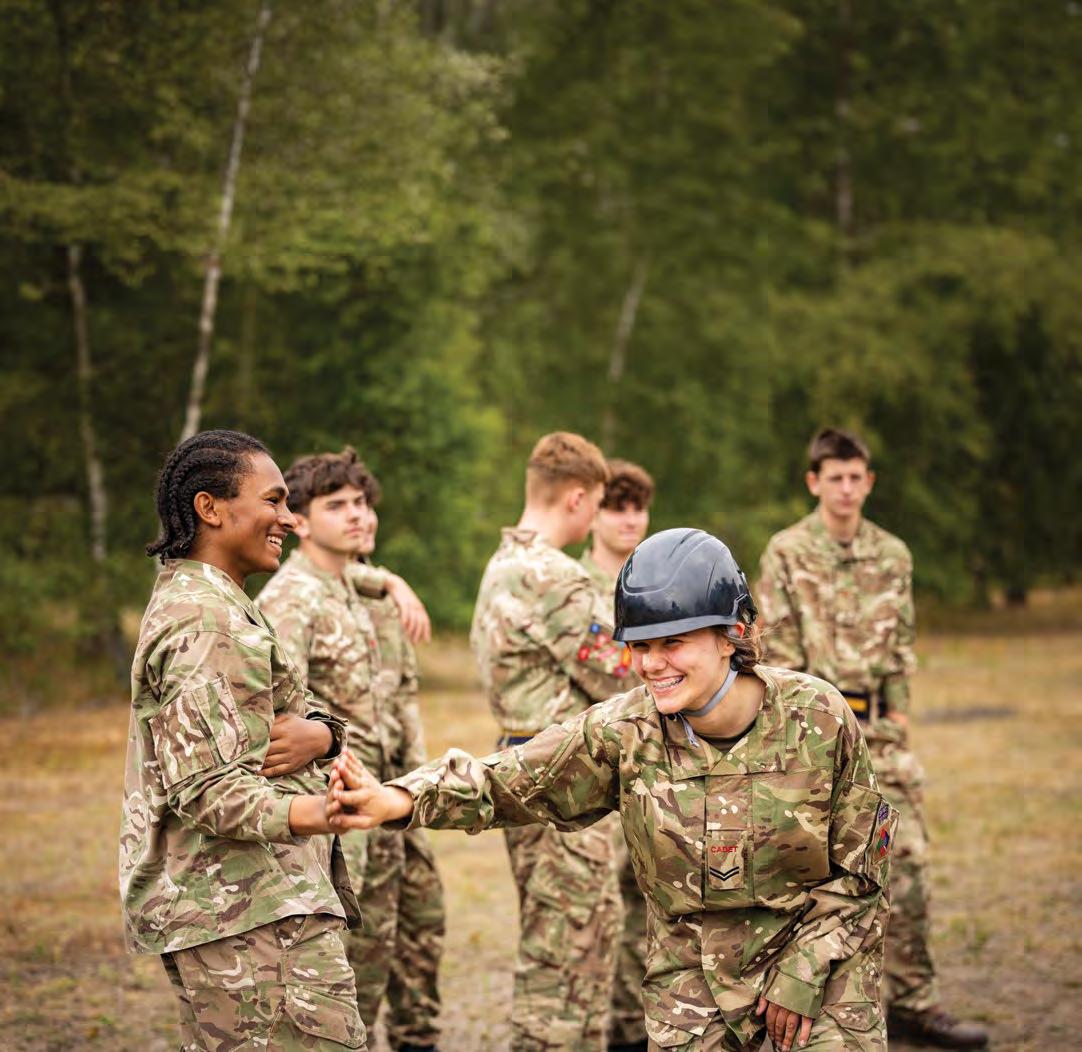
Respect for others means we treat people as we’d like to be treated. The Army Cadets is a very varied and mixed team. We don't discriminate against anyone because of their sex, gender, ethnic background, religion or sexual orientation.
We recognise the value everyone brings to the team and that they all have different viewpoints and ways of contributing. We're kind and we respect each other, as we know teams that embrace their members' unique qualities are stronger as a result.
Integrity refers to honesty and showing moral and ethical principles in line with the Army Cadets values and standards. When we show integrity, we build trust in ourselves and our team, which makes the team stronger and more able.
Showing integrity also helps us do more in our communities, enabling others outside the Army Cadets to trust us. It's important that everyone, from the newest cadet to senior officers, demonstrates integrity in everything they do, or trust is eroded.
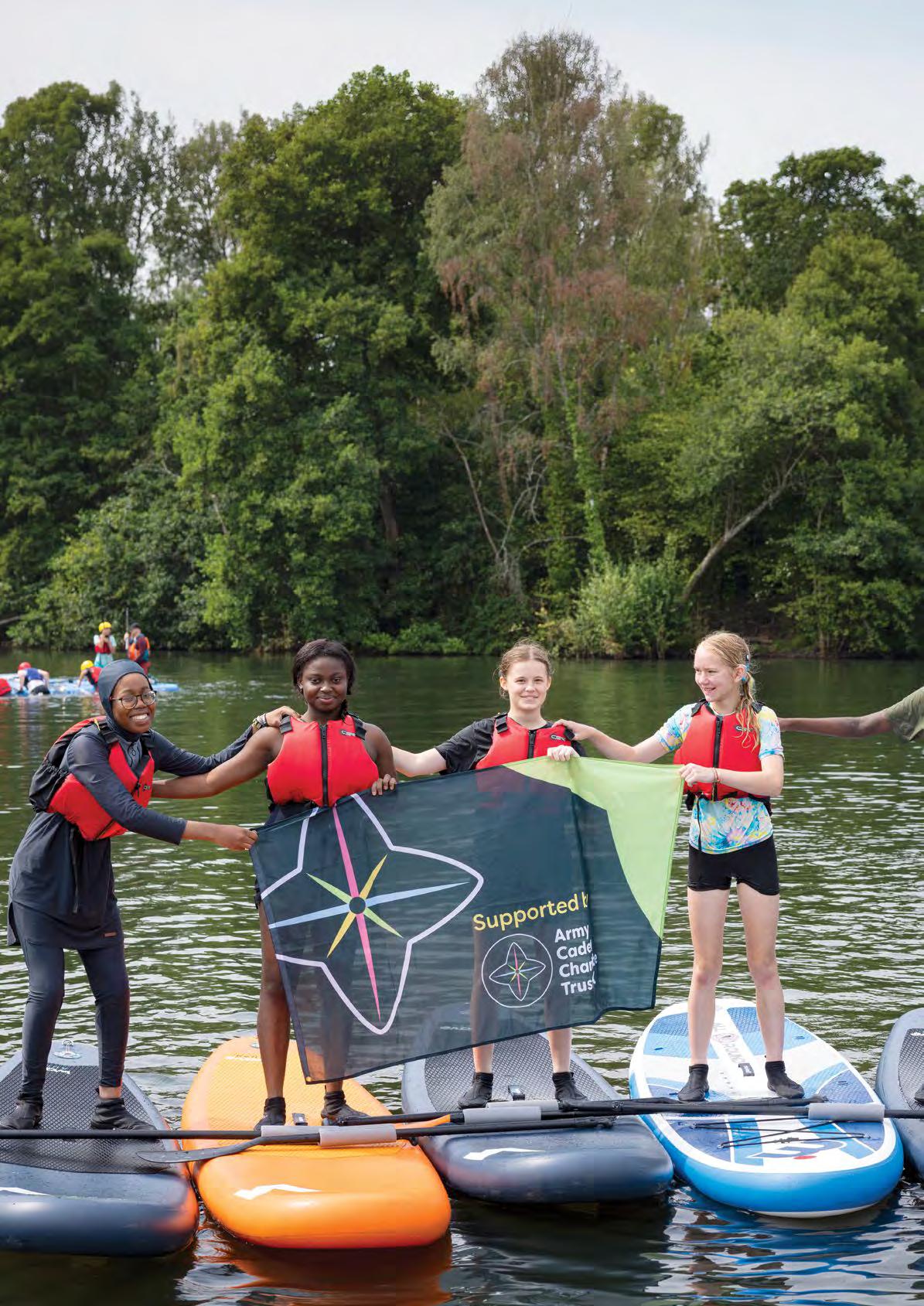
There are many reasons to join the Army Cadets family. Ready to take on new challenges, explore amazing places and gain skills that will set you apart from the crowd?
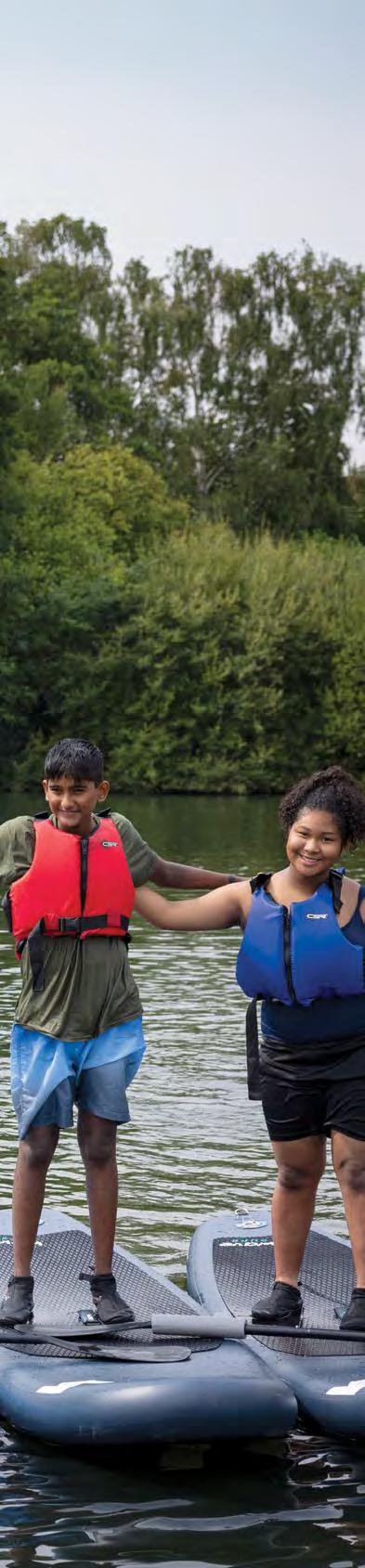

Becoming a cadet has heaps of benefits. Here are just a few.
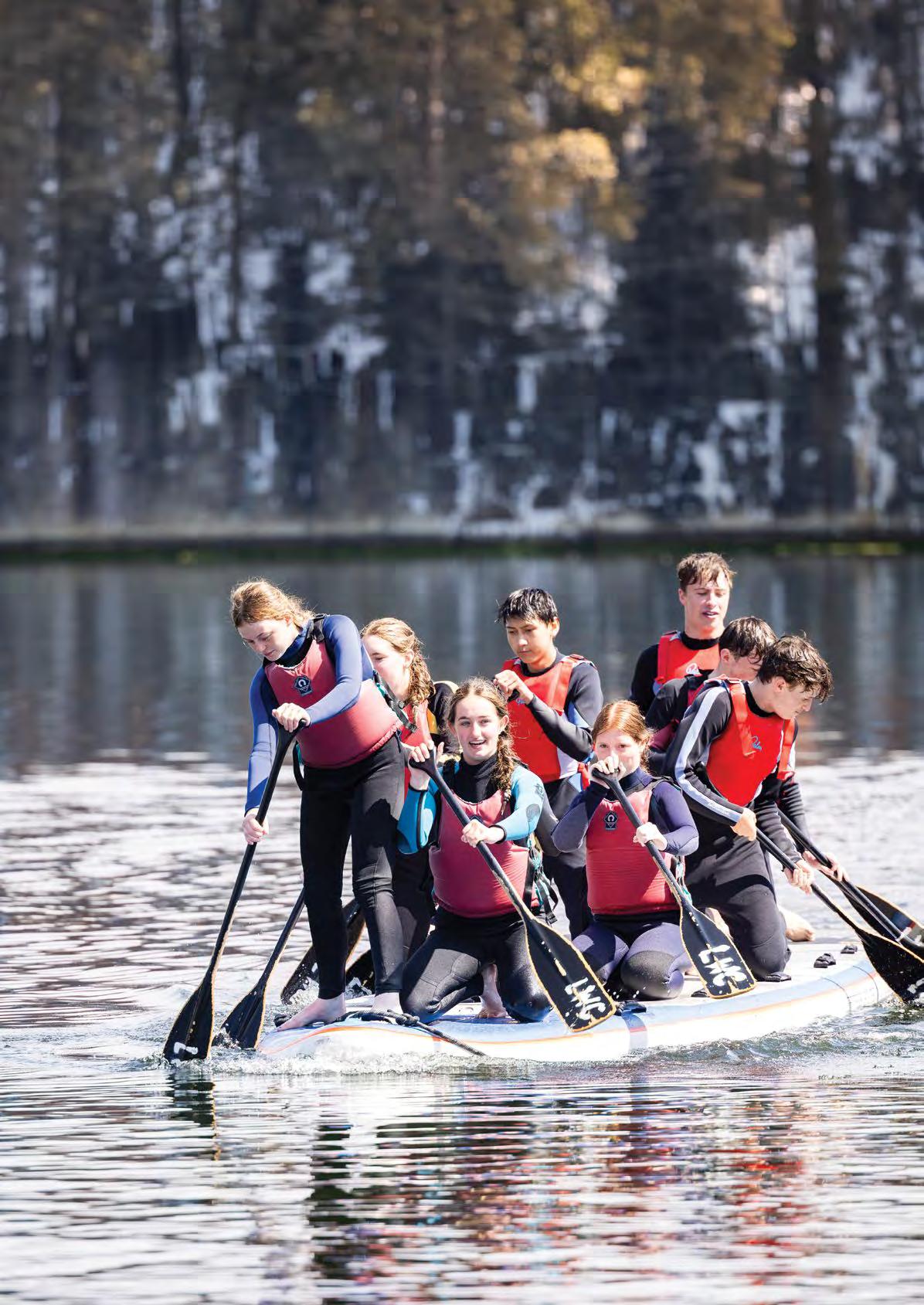
Beyond the weeknight meetings where you learn about things like drill, turnout and leadership skills, being a cadet also gives you access to outdoor adventurous training. This often takes place at summer camp and includes activities such as kayaking, mountaineering, rock climbing, sailing and paddleboarding (among many other things). Or you could take part in sporting activities and competitions like shooting, athletics, football and rugby.
'Make new friends and be part of something '
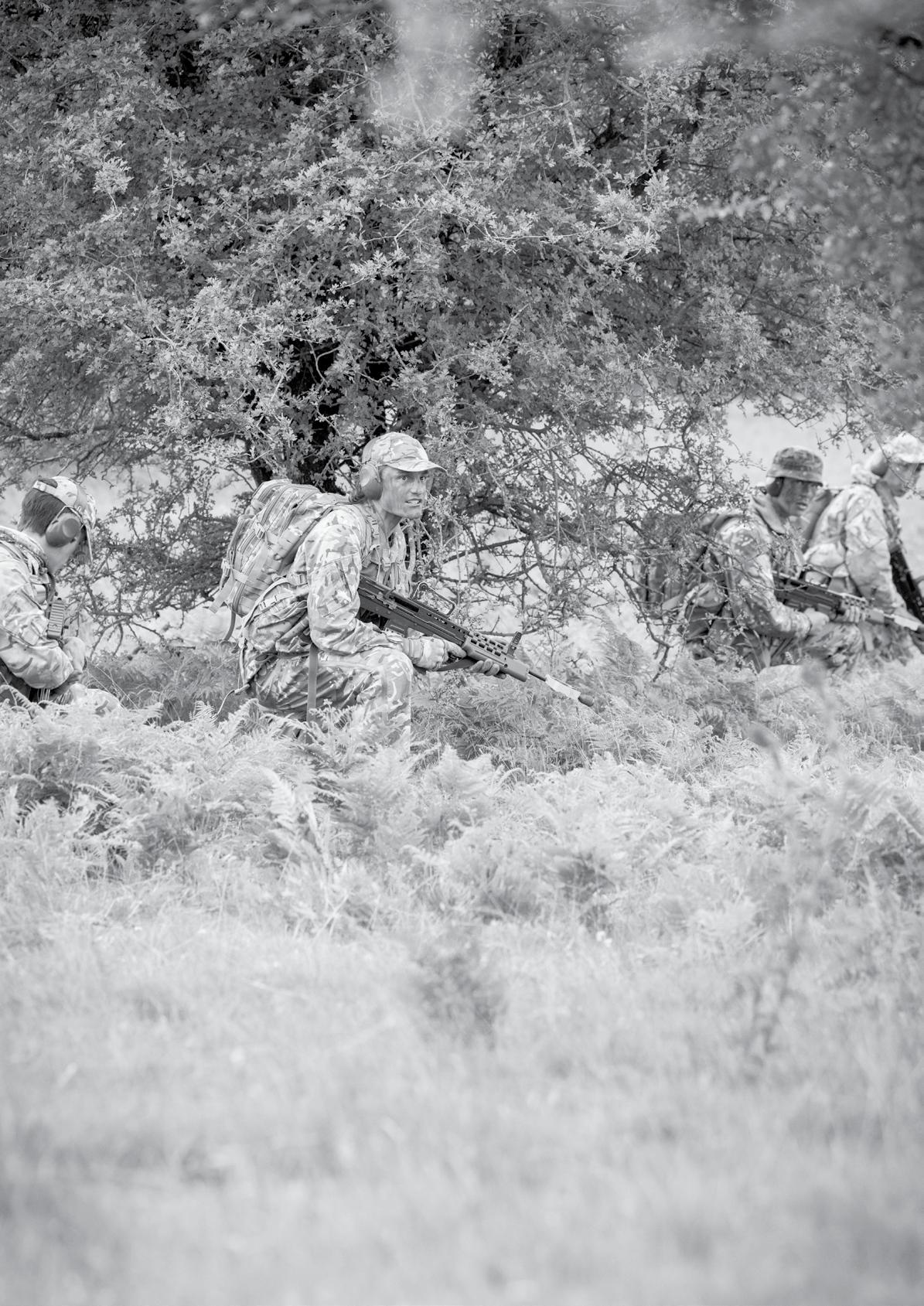
You'll also get to be challenged by fieldcraft activities. This involves learning military strategy, communications, planning, navigation and shooting skills and putting them into practice in exciting and creative battle simulations.
We also offer young people the opportunity to learn an instrument, join an Army Cadets band and take part in music camps, parades and competitions.
Some of these are specific, like first aid skills and recognised qualifications. Others are soft skills such as communication, confidence, teamwork, leadership and planning. They all set you up for life.
Many respected qualifications can be earned as you advance through the syllabus. These include certifications in first aid, amateur radio operation, music and navigation. We also offer courses that enable you to gain national governing body qualifications in outdoor activities such as sports leadership, canoeing, paddleboarding, rock climbing and the Duke of Edinburgh's Award.
When you become a cadet, you make new friends and get to be part of something big. Those new friends may not share your background, culture or heritage, but they'll share your aspirations and drive. We believe camaraderie is one of the most valuable aspects of being a cadet, so our activities are designed to help you form strong connections.
You’ll have the opportunity to attend weekend and summer camps where you'll meet cadets from other detachments in your county, region or beyond. You may get to go on expeditions to amazing places in the UK and abroad. Cadets have been all over the world, from Italy and Antigua to Belgium and Kenya.
Find your nearest detachment using the QR code, then follow the links.
The Army Cadets provides opportunities for adults to volunteer as instructors, mentors and helpers. Our volunteers (we call them CFAVs, which stands for cadet force adult volunteers) learn new skills and develop their existing talents.
No military background is required. In fact, we like to recruit volunteers from all walks of life with various skills as it makes our organisation richer and more varied. You don't need to have been a cadet yourself, and we provide all the training you need to take on the role.
A few of the many benefits for adult volunteers:
Our organisation is like a family. You'll meet new people, make friends and expand your network of contacts both locally and nationally.
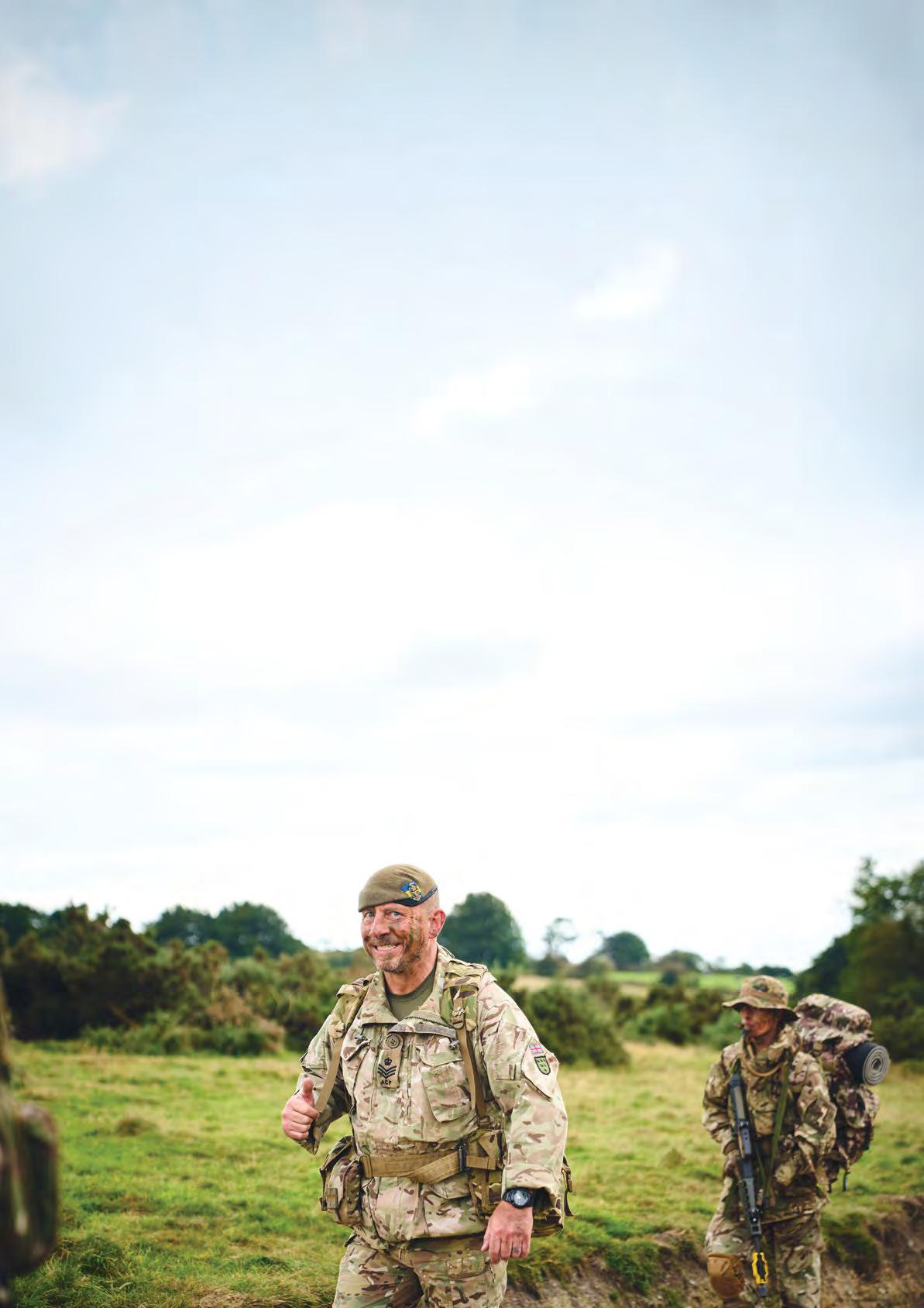
Being an adult volunteer is a fantastic opportunity to give back to your local community and make a difference to the lives of young people aged 12–18. Some cadets come from disadvantaged backgrounds, while all benefit from significantly improved social mobility as a result of being a cadet (see our feature on page 46).
You’ll gain transferable skills and qualifications (and also have the opportunity to achieve independent professional qualifications) to enhance your career in numerous ways.
Volunteering experience is highly valued by employers as it demonstrates teamwork, motivation, leadership skills, problem-solving abilities and social competence. In short, it makes your CV stand out.
Working alongside other adults at your detachment, you'll develop teamwork and leadership skills in a whole new environment. Sometimes this can lead to a career change or promotion. Simply by helping run cadet activities, you can earn yourself a range of respected vocational qualifications of real value in today’s workplace.
Volunteering also boosts your confidence by allowing you to try new things, achieve goals and feel a sense of accomplishment. It allows you to face challenges and push yourself to achieve more.
Volunteering can be immensely enjoyable and rewarding – whether you’re looking to unwind from a stressful job, find a new hobby or simply be part of something exciting.
'It makes your CV stand out '
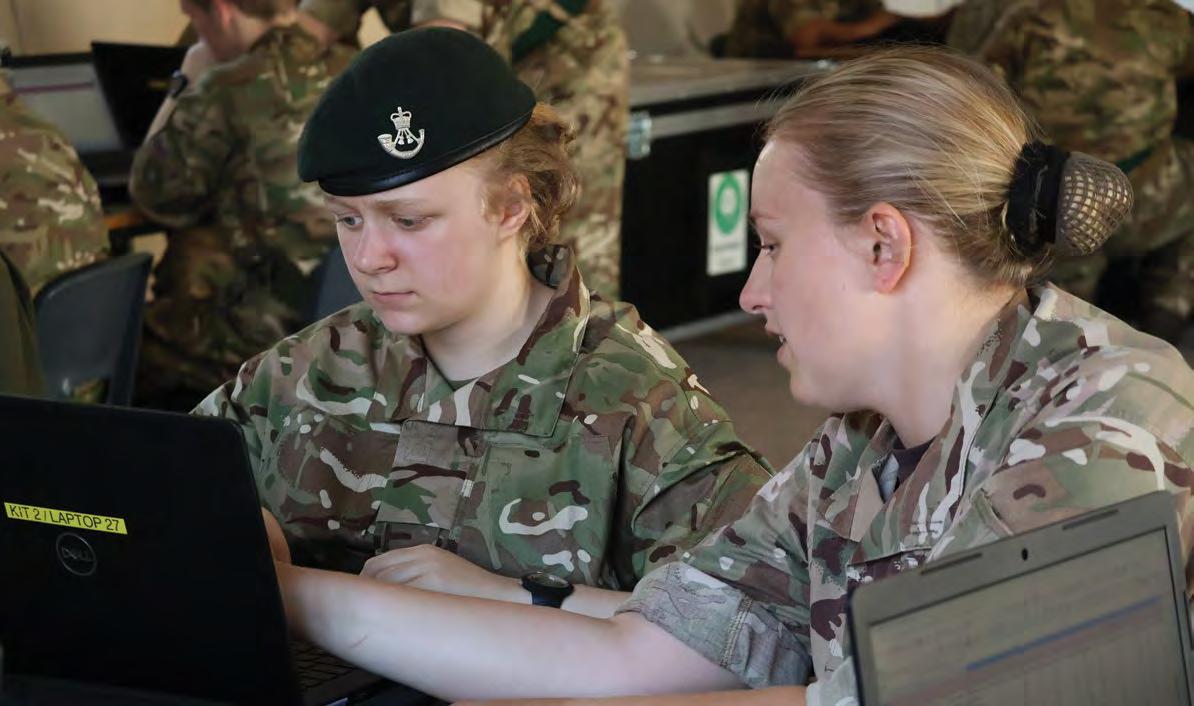
ARE ADULT VOLUNTEERS PART OF THE ARMY?
No, the Army Cadets is a youth organisation. We use a military rank and structure and are sponsored by the MoD but are not part of the military. Cadets and adult volunteers are not subject to military call-up.
Our volunteers need to be reasonably healthy to supervise physical activities, but other qualities are equally important. We need people who can deal with the pastoral care of cadets and other less physically demanding activities too. We support equal opportunities.
Adult volunteers don’t have to undergo medical examinations. You'll be asked to self-certify every six months and raise any changes to your health that may affect you in your role.
While previous experience of working with young people will help, it's by no means a prerequisite. Patience, tolerance and enthusiasm are just as important.
Typically one or two evenings a week at your local unit, plus occasional weekends. Beyond that, it's up to you how much time you volunteer.
You must be at least 18 years old to apply as an adult volunteer. There is no strict upper age limit, but you must be physically capable of performing the role. Volunteers typically range from 18–65. Older volunteers are welcome and subject to annual extensions beyond 65.
Reservists may volunteer with permission from their commanding officer, provided they hold the same status (commissioned or non-commissioned) in both roles. Regular service members cannot formally volunteer but may assist as service helpers (with their commanding officer’s approval).
CFAVs are not paid a salary as the role is voluntary. However, you may receive volunteer allowances and compensation for out-of-pocket expenses.
CCF: The first step is to arrange (through a school with a CCF) to meet the contingent commander.
ACF: Find a local detachment using the QR code below and complete an expression of interest form. You’ll be contacted and invited to a selection event.
Find your nearest detachment using the QR code below, then follow the links.
Three adult volunteers reveal what it's really like to be part of the Army Cadets family.
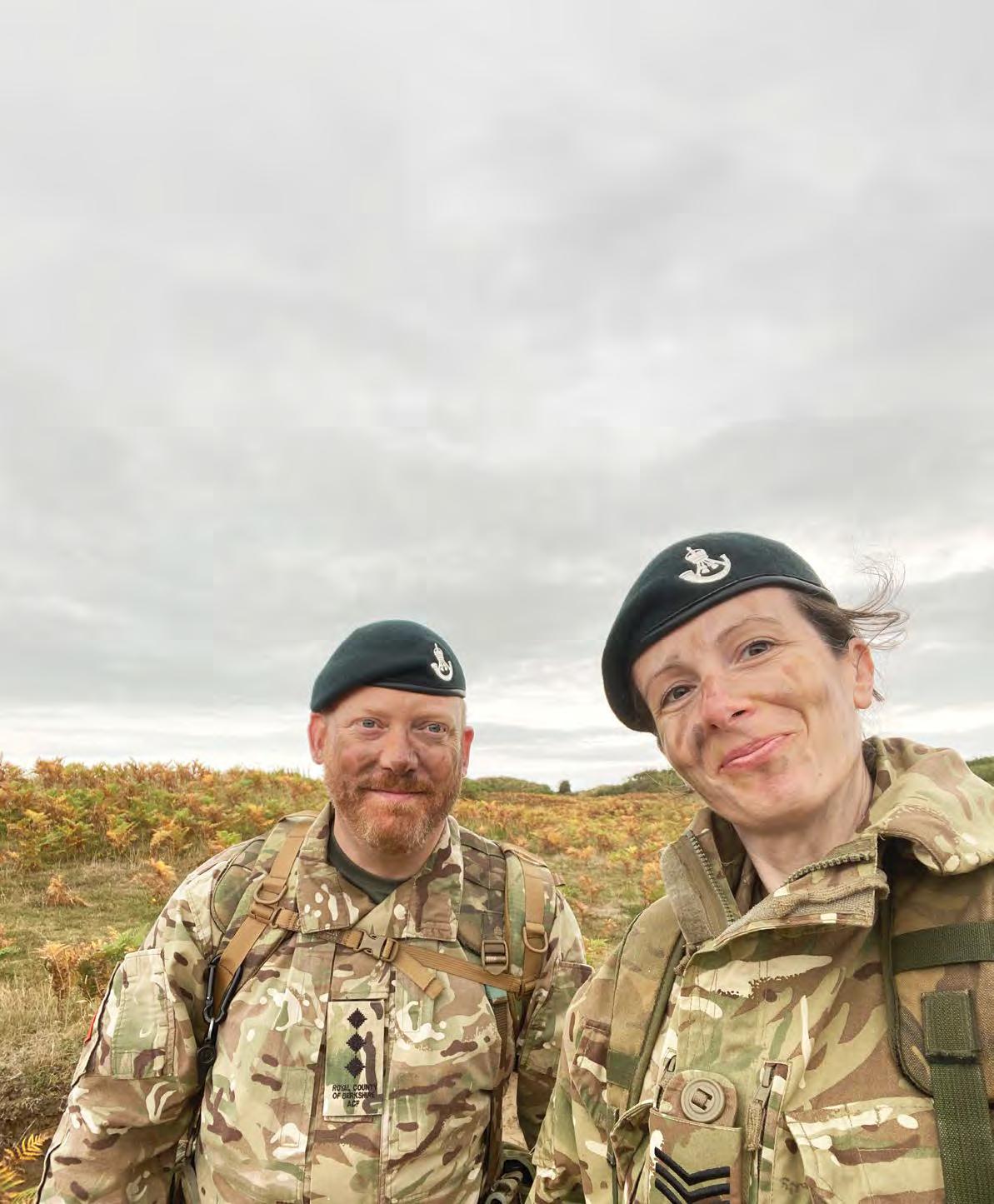
ROYAL COUNTY OF BERKSHIRE ACF
Why did you become a volunteer?
I was first given the option to join the CCF at Kingham Hill School back in 2019, when I was working as its head of estates. It was a very easy 'yes!'.
It meant I could get stuck into activities I already loved, like climbing and mountain biking, while also trying completely new things. But more than that, it gave me a way to connect with the pupils and be part of their journey. I got involved in everything: Easter and summer camps, adventure training weekends, running the climbing wall and assault course, plus things like paintballing and battle archery. It was busy but brilliant.
How did it fit into your life?
I joined at a point where life wasn’t particularly easy; Cadets gave me something to be part of. It gave me a community, a bit of direction, and reminded me that life is for getting out there and doing things. I threw myself into it – especially adventurous training – and I got a lot out in return. It was something positive to focus on and pushed me to agree to opportunities I probably would have avoided before.
I later moved from Lord Wandsworth CCF to Royal County of Berkshire ACF – partly to be able to spend more time with my partner (Maj Matthew Heaven, who is the county training officer), rather than us doing the same hobby in different parts of the county.
What's the best thing about being a volunteer?
Watching the cadets grow in confidence, especially when you see the change in them over time.
At work I help with prefect interviews, and you can almost always spot the cadets straight away: it’s how they carry themselves, their confidence and professionalism. It really stands out.
Have you taken on any extra responsibilities in the Army Cadets?
I’m the county media officer for Royal County of Berkshire ACF, which means I get to tell the story of what we do, showing off the cadets and CFAVs and making them look as epic as they deserve.
Have you learnt new skills?
Absolutely, although I may have agreed to slightly too much at times – always with a smile though. I didn’t have a cadet background, so it was all completely new to me. My previous contingent commander, Maj Simon Terry, was brilliant at pushing me out of my comfort zone. Apparently, my enthusiasm made up for my lack of skill when it came to mountain biking – which feels accurate.
I’ve had to learn how to instruct, how to work with young people and how to lead in a completely different environment, which has been a challenge in the best way.
I also recently completed and passed my Army Cadets Commissioning Board. What an experience: harder than expected, no guaranteed pass and very nerve-racking. But something I’m incredibly proud of.
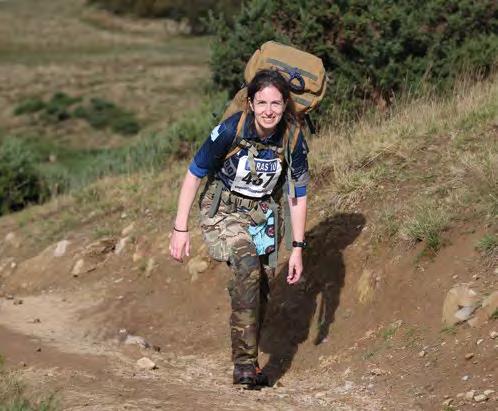
I’ve also discovered a love of tabbing, which I didn’t see coming. And in 2024 I completed the PARAS'10, which was a challenge!
What backgrounds do volunteers usually come from?
It’s a real mix. There’s no one type of volunteer. People bring all sorts of skills and experiences, and there’s a place for everyone. What matters is that we’re all there for the same reason: giving cadets the best experience we can.
There’s a lot of laughter, a lot of support and a strong sense of community, which for me makes the time away from home worth every minute.
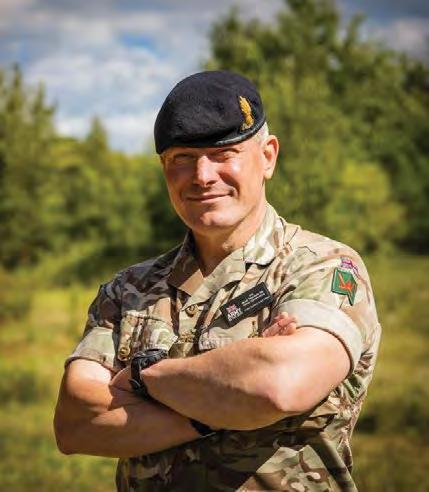
Lt Col Mark Teesdale is the training lead for the Army Cadets. He reveals how the training that adult volunteers receive not only builds a highly impressive CV but also develops confidence and first-class leadership skills. Volunteers have the opportunity to progress from basic induction right up to strategic leadership training.
Courses are broken down into three types. Induction courses are intended to get you operating as a CFAV and skills courses train you to deliver syllabus subjects such as skill at arms and shooting. The leadership courses, meanwhile, give you the expertise needed to fulfil a command appointment such as detachment commander, company commander or commandant.
‘The hidden benefit of these courses is that you get to interact with volunteers from different areas who may have found a solution to something you've been struggling with,’ he says. ‘Sharing ideas, frustrations and best practice are almost as valuable as what is being taught.’
None of the courses require any previous military experience and they provide a chance to learn valuable skills like first aid and navigation.
‘Being a volunteer in any youth organisation demonstrates selfless commitment, but the Army Cadets also puts a huge amount of trust in its CFAVs,’ he says. 'Most employers would be impressed if they fully understood the sheer breadth of what our volunteers do – from planning, delivering and teaching to supervising, leading, safeguarding and mentoring.
‘The Army Cadets trusts its adult volunteers to train cadets using live weapons and ammunition on some of the most austere training areas in the UK. That's a huge level of responsibility and impressive on a CV.’
Why do you volunteer?
I was a cadet myself in Merseyside ACF from the age of 13 and progressed through all the star levels. I eventually became a detachment commander as an adult instructor before joining the regular Army. Over that period, I experienced first-hand the positive impact the Army Cadets has on young people. The skills and confidence it builds stay with you into adulthood. I wanted to be part of helping the next generation achieve their full potential.
What are the best bits?
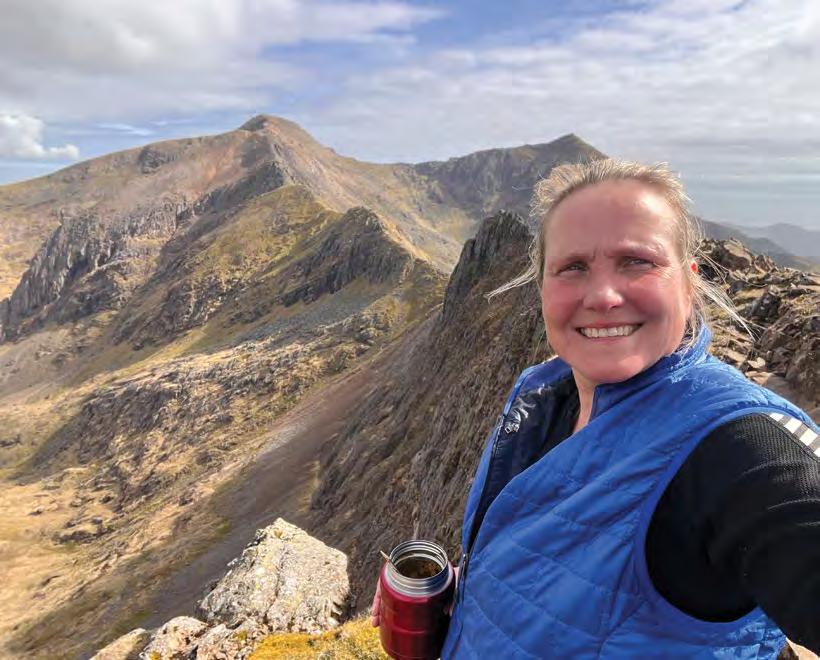
I have been a volunteer for 14 years and love all aspects of the Army Cadets, although my favourite subjects are fieldcraft and adventurous training. The most rewarding part is seeing cadets grow in confidence over time. Watching their progression is incredibly fulfilling.
What other benefits have you experienced?
Being part of the Army Cadets has given me a strong sense of community, similar to the camaraderie found in the military. It’s like having a close, trusted group of friends. On a personal level, I’ve also gained nationally recognised qualifications in adventurous training.
My experience in the cadets also inspired me to take another step so I could have a greater impact on training and policy: in 2017, I attended Westbury and Initial Officer Training, which finished in Sandhurst. It was a huge privilege and a proud moment.
How much time do you give to the Army Cadets?
In my current county role I parade once a week, but I'm often on call and involved in planning activities such as camps (as well as attending them). I’m also the national cadet representative on the committee for the MOD.
What would you say to others considering volunteering?
It’s an incredibly rewarding experience. You not only help shape young people’s futures but also continue to develop yourself. The sense of achievement, community and purpose you gain is unlike anything else.
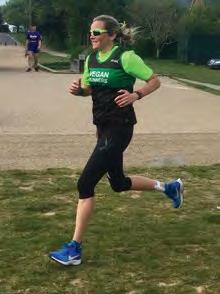
Gina recently completed an incredible fundraising challenge for the Army Cadet Charitable Trust (ACCT) UK and other charities. It saw her walk, cycle and kayak 5,200 miles in a single year.
‘The Army Cadets continually encourages cadets and adult volunteers to push themselves, take on challenges and strive for more,’ she says. ‘That culture of resilience and personal development inspired me to take on the 5,200-mile challenge.
‘Supporting ACCT UK was important to me because of the work they do in providing opportunities and life-changing experiences for young people. I’ve seen first-hand how impactful those opportunities can be.’
Gina is now extending the challenge to complete 16,400 miles over three years.
‘The Tri the World challenge is equivalent to circumnavigating the world via land over three years,’ she says. ‘I hope it shows great things can be achieved just by stepping outside your front door. To celebrate, I will finish the challenge with an ultra-marathon around my home county.’
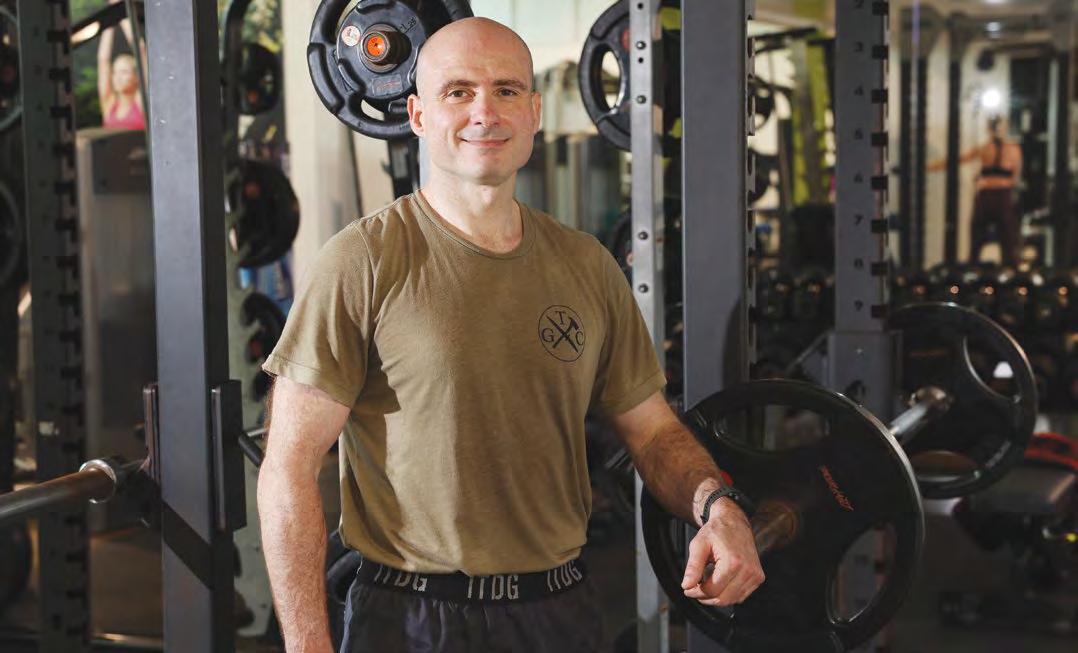
What's your role within the Army Cadets?
I support the delivery of training, particularly around fitness, resilience, and teamwork. As an Army Reservist and physical training instructor (PTI), I bring a practical, real-world approach to developing cadets' physical capability and mental resilience. I also mentor cadets, encouraging them to step outside their comfort zone, build confidence and develop leadership skills.
What made you want to become a volunteer?
I began volunteering in May 2025. It was about giving something back. Through my role as an Army Reservist with 131 Commando Engineers, I've benefitted from strong leadership, high standards and opportunities that have shaped me personally and professionally. I wanted to pass some of that on to young people.
What are the benefits to you?
Seeing the change in young people is the biggest reward. Cadets arrive unsure of themselves and over time grow in confidence, take on responsibilities and start leading others. Being part of that journey, even in a small way, is incredibly rewarding.
How has it changed you?
The volunteering reinforces the importance of patience, communication and leading by example. It also gives you perspective as working with cadets
reminds you why resilience, teamwork and attitude really matter.
How much time does volunteering take?
Typically, one evening a week on parade nights, along with occasional weekends for exercises, events and activities. There’s always a bit more behind the scenes that goes on too, like planning lessons, but it never feels like a burden.
What's the mix of other volunteers like?
People come from different backgrounds, experiences and professions and all bring something unique. That diversity gives cadets a broader perspective and exposes them to different ways of thinking and leading.
Has volunteering inspired you to take on other challenges?
Being around cadets and seeing their willingness to push themselves has pushed me to do the same. It's played a big part in me taking on my burpee challenges, which are all about testing resilience, discipline and mental strength while raising awareness of something bigger.
Would you recommend volunteering?
Without hesitation. You don't need to have all the answers – just the willingness to give your time and support others. The impact you can have on young people's lives is significant.
Mark has taken on multiple Guinness World Record attempts, including carrying out the most burpees in one minute, carrying out the most burpees in three minutes, and completing a mile of burpee broad jumps.
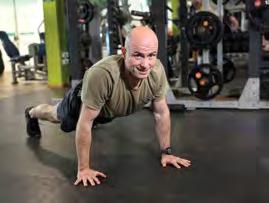
‘In both the one-minute and three-minute attempts, I unofficially exceeded the current records by five reps and one rep, respectively, but they weren't ratified,’ he says.
‘The mile challenge was one of the toughest things I've ever done. I was on pace early on, but the heat and conditions took over, and it became a real test of resilience. I finished it in an hour and 40 minutes. I didn't break the record, but I didn't stop, and that's what it was really about.’
For Mark, carrying out the burpee challenges wasn't just about the records. The real purpose was to raise awareness among cadets about the incredible work of the Combined Cadet Force Association (CCFA) and to support opportunities that change young people's lives.
Mark’s challenges have led to the Cadet Burpee Battle, which runs until the end of November 2026.
SCAN THE QR CODE
to find out more about Mark’s burpee challenges
Volunteering with the Army Cadets can be a hugely rewarding way for veterans to use their skills and experience. Three ex-servicemen share their stories.

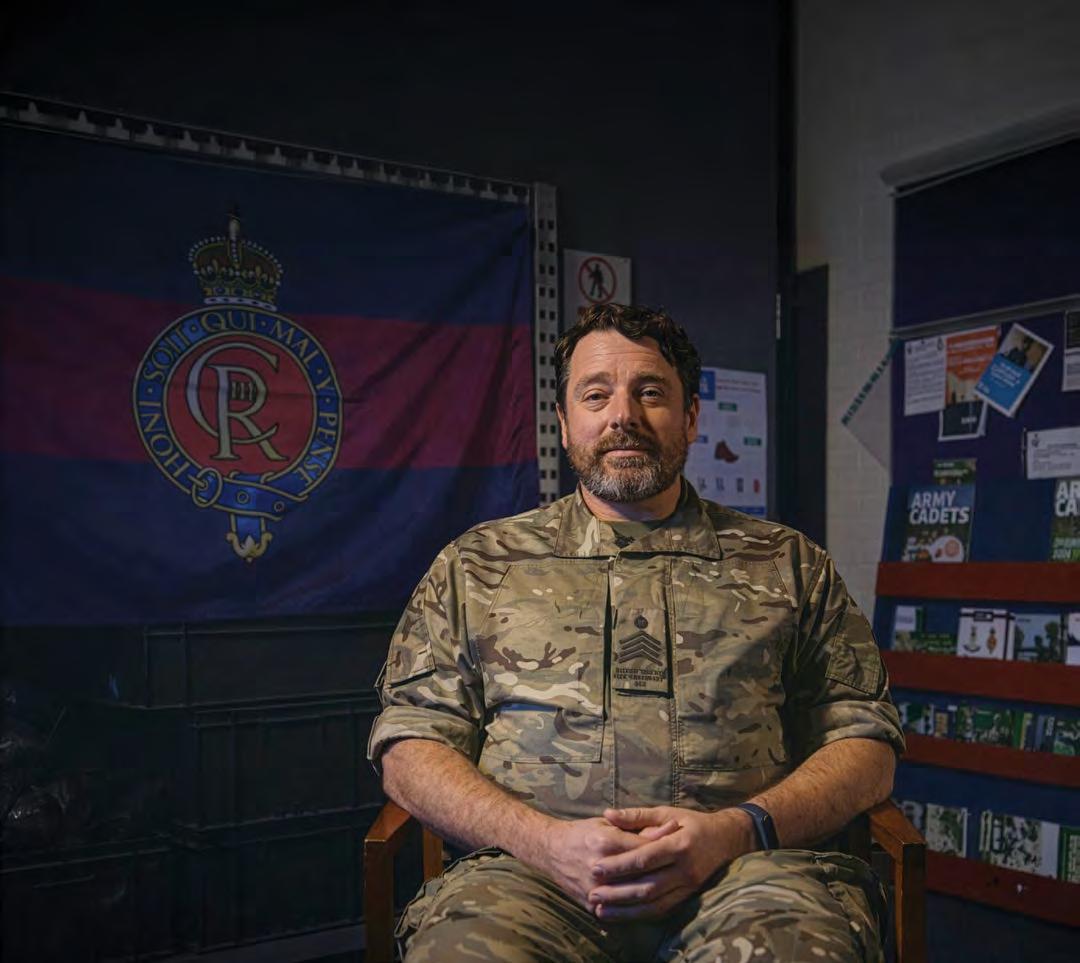
'Serving in a different way and applying core values to something I fully believe in'
SSgt Clifford O’Farrell of Royal County of Berkshire ACF served with the Household Cavalry for 12 years before being medically discharged in 2015, following serious injury while on operation in Afghanistan. After spending two years in a wheelchair and facing an uncertain future, Clifford found a new sense of direction in an unexpected place.
As he prepared to leave the Army, he began searching for something new to focus on. During that research, he came across the Army Cadets and its volunteering opportunities.
‘I left the military with an injury, losing sight of what I could accomplish,’ he says. ‘I went from being a fit soldier to someone stuck in a wheelchair for two years, trying to rebuild my life and not knowing what would happen in the big bad world.’
Civilian employment followed, but it never felt right. The Army Cadets, however, offered something different: a return to uniform, a familiar set of values and a genuine sense of purpose.
Rather than leaving his military experience at the door, Clifford found his background gave him a unique edge. He built upon his previous expertise to qualify as both a navigation and first aid instructor at the Cadet Training Centre in Frimley.
As an instructor, Clifford volunteers twice a week for two-hour sessions, delivering lessons and testing cadets on their star levels. As a detachment commander, his responsibilities extend further to include managing equipment, coordinating instructors and ensuring cadets are properly prepared for camps, training weekends and other activities. The role takes up around ten hours a week of his time.
Volunteering with the Army Cadets has not only allowed him to make a real difference to young people. It has also played a significant role in his own recovery and sense of identity.
‘The Army Cadets is something I know; it is being back in uniform. It’s serving in a different way and applying those core values and standards to something I fully believe in. Veterans have a lot to offer: they’ve got knowledge and experience.
‘The Army Cadets is military themed, but it is not the military. When you join, you make it your own experience. Whichever direction you want to go, everything is open to you. All you have to do is apply yourself and put your best foot forward.’
Sgt Richard Ward of Royal County of Berkshire ACF served as a trooper in the Household Cavalry, Blues and Royals for seven years (in both ceremonial and armoured roles). However, in 2009, while serving in Afghanistan, his military career came to an unexpected end. A serious injury from an IED resulted in him becoming a double below-knee amputee.
In 2010, he was medically discharged and, during the low period that followed, believed the military-related chapter of his life was over. He even got rid of all his kit. However, becoming a volunteer with the Army Cadets has given him a renewed sense of purpose. It’s a commitment he fits in around other obligations in his life and he attends parade each week.
‘Getting back in the green kit has given me a bit of a boost,’ he says. ‘I enjoy being with the cadets, passing knowledge on and seeing them strive.’
Richard finds that even young people with no intention of joining the armed forces gain a richer understanding of military life by working alongside veterans. His own situation as an amputee adds another dimension. When cadets first meet him, they are sometimes taken aback, but he soon turns that around.
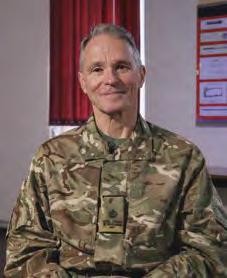
Maj Jim Chappell of Royal County of Berkshire ACF served as an officer in the Royal Logistics Corps for 20 years, taking on roles that included squadron command and staff work. Since leaving regular service, he's found new impetus as an adult volunteer with the Army Cadets.
One of Jim’s biggest questions before getting involved was a practical one: how would someone in their 50s cope with fieldcraft and outdoor activities? It turned out these fears were unfounded. The Army Cadets is a physically active organisation, but there was no requirement to do anything beyond his own fitness level.
As a company commander, Jim spends roughly an hour a day on admin, one or two evenings a week visiting detachments and working with adult volunteers, four or five weekends a year on activities, and a week at annual camp.
One of the things he's come to appreciate is the strong sense of community within the Army Cadets.
‘What has pleasantly surprised me is the rich mixture of other volunteers you become friends with,’ he says. ‘We all muck in together, and there’s no requirement to be a veteran.’
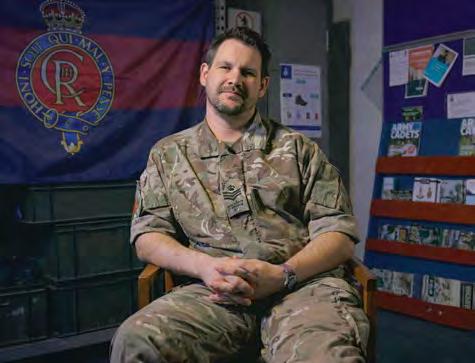
‘When cadets think that they can’t do something, to have someone around them who demonstrates that “nothing is really impossible if you want to push through” makes a real difference.’
Richard was a cadet himself before joining the Army, so the environment was already familiar. Another unexpected joy has been rediscovering a sense of belonging.
‘There’s that element of camaraderie and living the best life,’ he says.
In Jim’s view, this diversity is one of the biggest differences between the regular forces and the cadet forces, and one of its greatest strengths.
Jim discovered that skills he’d not used for 15–20 years came back quickly – particularly looking after the young people in his care during fieldwork. More broadly, his military background has given him the ability to assess situations calmly, consider options and not jump to the first conclusion.
The qualities that veterans model (self-discipline, knowing how to look after themselves and looking the part) resonate deeply with young people. ‘You'd be amazed at how many of the cadets aspire to be a little bit like you,’ he says.
Volunteering has not just benefitted the young people Jim works with. He reflects that being an adult volunteer has enriched his personal skills, helping him connect with people from different backgrounds and giving him a better understanding of what drives and motivates others. These lessons have been carried into his professional life too.
Jim’s advice to any veteran thinking about joining the Army Cadets as a volunteer is simple and heartfelt: ‘It’s an opportunity to give back what you have received from society and an opportunity to act as a role model for youngsters.’
He stresses veterans don’t need to throw themselves into every activity from day one: ‘Say what you can do and do that – and enjoy it!’
If you, as a parent or guardian, don't have any experience of the Army Cadets and your child wants to join, we understand that raises questions like: 'Are they signing up for a career in the military?'. Read on to find the answer to that and other frequently asked questions.
What's the aim of the organisation?
We aim to inspire young people to achieve success in life with a spirit of service to the King, their country and their local community, and to help them become good citizens.
How old does my child need to be to join?
Cadets are aged 12–18 and 'age out' on their 18th birthday. The average age of cadets is 14.
Are girls welcome?
Very welcome. Girls make up 36 per cent of cadets in the ACF and 39 per cent in the CCF. We are a very inclusive organisation and have well-developed diversity and inclusion policies. Our aim is to create an organisation where people can thrive as individuals, contribute and develop a true sense of belonging. We welcome young people of all ethnicities, faiths, sexual orientations, genders and abilities.
My child has additional needs. Can they join?
Having additional needs doesn't mean they can't join. However, we may need to jointly develop an additional support plan with them, and you, to help them take part. If your child has the kind of medical condition that would be difficult for our adult instructors to support, you are welcome to join us as a non-uniformed volunteer to help them when they need it.
Is my child signing up for a career in the military?
No. The Army Cadets is a youth organisation, and while it's supported by the Ministry of Defence, it's not a recruitment vehicle. Some cadets do choose a career in the armed forces once they are old enough, but it's not expected of them and the majority don't. However, some cadets enjoy the experience so much they stay on as an adult volunteer once they turn 18.
If my child wants to join the military when they are old enough, will having been a cadet give them an advantage?
Yes. Cadets gain an understanding of military structure, values and training. They take part in field exercises and leadership development, which gives them a head start.
'We do not tolerate any form of bullying or discrimination'
We keep costs very low, thanks to the support of the Army and the Army Cadet Charitable Trust (ACCT UK). Parade nights in detachments are free, although some detachments may request a small weekly subscription (£1 per week maximum) to help cover the costs of detachment events and visits.
While there are some expenses associated with weekend training camps, summer camps and other significant activities, we minimise costs as much as possible. Weekend training costs between £7–15 and summer camp (seven nights) costs £50–£100 on average, depending on the activities on offer.
Cadets who receive free school meals don't have to pay meal contributions at camp, and there are support systems in place to ensure no cadet misses out due to financial constraints.
What safeguarding policies do you have?
Safeguarding young people is a key priority and we have robust procedures in place. This includes mandatory enhanced security and background checks for all adults who work with children, rigorous disclosure procedures and regular safeguarding training.
We also have strict supervision rules, and every adult volunteer is trained in handling safeguarding incidents. We do not tolerate any form of bullying or discrimination and have easy, accessible methods for cadets to report any issues to our trained volunteers.
Will my child be kept safe using a gun?
The safety of cadets during events and activities is paramount and supported by national and regional training teams, as well as a full-time training safety adviser in every county. We put all these in place to ensure training is conducted safely while still remaining exciting and challenging.
Will my child be given a uniform?
Yes. Cadets are issued a uniform on loan from the Ministry of Defence at no cost to you. It must be returned when your child leaves. However, you will need to purchase a pair of sturdy leather boots in black or brown, which come up over the ankle.
Where can I buy boots and extra kit?
Your detachment or contingent commander can advise you on recommended suppliers. Popular options are the Cadet Kit Shop and Cadet Direct (both online), but local advice is best.
Does my child have to cut their hair short?
No, but their hair must be neat, tidy and kept away from their face and ears during activities. They must be able to wear their uniform headdress properly, with no hair visible below the brow band. Long hair should be tied in a bun, a single ponytail, braid or similar style, not extending below the top of the belt. Male cadets with long hair must secure it above the collar. Cadets with religious beliefs are issued alternative headdress where required or requested.
What days and times do cadets meet?
Detachments meet for two hours on one or two evenings a week. These are known as parade nights. The days and times vary, but most start around 7pm. Cadets also meet for weekend camps, competitions and other training activities. Your local detachment volunteer team can provide more information on available activities.
Three parents of cadets share their and their child's experience of the Army Cadets.


'Luke’s journey through the Army Cadets has shaped him into a confident, capable and deeply motivated young man. The regimentation, discipline, fun, friendships and challenges have all played their part in helping him mature and grow.
'His development hasn’t just been personal; it’s been recognised at the highest levels. With the support, guidance and encouragement of his ACF instructors, Luke has achieved things that many young people only dream of [read about Luke's journey on page 39].
'After just one year in the Army Cadets, Luke has been given the structure, opportunities and self-belief he needed to thrive. That includes giving him the confidence to speak with anyone; skills in first aid, navigation and safe target shooting; pride in presentation and discipline; a love of the outdoors and adventure; and the ability to instruct, lead and inspire others.
'It’s completely natural for parents to feel a little uncertain when their child shows an interest in joining the Army Cadets. But speaking as someone who has lived the experience from every angle – as a cadet for five years, and later as an instructor and officer for more than two decades – I can say with confidence that it’s one of the most positive environments a young person can step into.
'If you’re unsure, I’d say this: give them the chance. Let them explore, learn and have fun. The Army Cadets inspires young people to achieve more than they ever thought possible, and the memories, skills and friendships they gain will last a lifetime.'

'Harry has autism, SEMH needs and dyslexia, which meant he faced difficulties in the school environment. Living with hidden disabilities, he often found it difficult to explain himself and felt misunderstood, which made him withdraw.
'We were concerned about the gaps in his education at 13 years old but, inspired by his older brother’s experience in the Army Cadets (he's now in the police), we investigated Harry enrolling with his additional needs.
'Anxiety was the biggest barrier, but the seniors and fellow cadets at his ACF consistently find ways to support Harry. They provide tailored assistance, such as scribing and reading notes, as well as differentiated learning and instruction where possible.
'The Army Cadets has improved his life through camaraderie and understanding. It has supported Harry and helped rebuild his confidence in himself, his abilities and his learning. This has allowed him to form trusting and genuine friendships. Harry has been able to attend residential camps and take part in parades and community events. He's even been named 'cadet of the month', which shows just how much he's grown in 18 months.
'I am immensely proud of him and equally grateful for the volunteers' time and dedication. I highly recommend others try it if possible.'
Head of Wellbeing, Patrick O'Meara, explains the importance of creating an inclusive and supportive environment where cadets and CFAVs can thrive.
The Army Cadets is an inclusive organisation and places a lot of emphasis on wellbeing. This holistic concept encompasses the organisation's established pillars of diversity and inclusion (D&I), healthy minds, chaplaincy and medical support.


'Watching my son grow through the Army Cadets has been incredible. As a neurodivergent young person, new environments and social situations can sometimes feel overwhelming, but he felt comfortable [at the Army Cadets] to go at his own pace.
'He has made genuine friendships, built confidence and embraced opportunities that once would have felt far beyond his comfort zone.
'The structure, encouragement and sense of teamwork have helped him overcome a great deal of anxiety and discover strengths he didn’t always see in himself.
'The Army Cadets has given him experiences he simply wouldn’t have had otherwise – from new challenges and skills to moments where he has been able to shine and feel proud of what he can achieve.
'Seeing him stand a little taller, speak with more confidence and feel part of something meaningful has been wonderful as a parent. A huge thank you to the adult volunteers and leaders who create such an inclusive, supportive environment. What you do truly makes a difference to young people’s lives.'
‘We've always been good at looking after people but I think we're better now than ever,' says Head of Wellbeing Patrick O'Meara. 'It's part of our duty of care to look after and safeguard the wellbeing of our adults and cadets.’
Adult volunteers and cadets, who have existing medical conditions when they join the Army Cadets, can find the support they need to participate in activities. Patrick, who is a paramedic by day, explains: ‘We have medical support advisers (a mix of lay people, healthcare professionals, nurses, doctors and paramedics) volunteering within the organisation.’
He believes the organisation’s D&I policies are also helping recruit a more varied and representative body of cadets and volunteers.
‘Once, if somebody told us they were a wheelchair user, it would be thought they couldn’t join. Now we say: OK, can we talk about that? What can you do and what activities do you want to take part in? There's a far more grown-up conversation going on about diversity. And while we still need lots of people who can run through a field with a rifle, the door isn't closed to adults or cadets for whom that’s not possible.
‘We're also a lot more understanding about neurodiversity. At camp, for example, we now have quiet spaces where kids can decompress. There are adults in there whose only job is to look after the welfare of cadets.’
Chaplaincy also comes under Patrick’s remit, and he explains that chaplains are there to support cadets and volunteers of all faiths and of none.
‘They are the guardians of the values and standards of the organisation and they are the independent listeners who are there for everyone. Most of our chaplains are of the Christian faith, although we do have rabbis and, in the pipeline, Muslim chaplains and a humanist chaplain.
‘For me, wellbeing is about creating inclusive and supportive environments, where we help cadets build resilience and confidence. We work really hard on looking after each other and having safe and positive experiences: that's how we enable our cadets to thrive.’
Meet some of our fabulous young people and discover how being in the Army Cadets has provided them with new skills, confidence, friendships and opportunities.
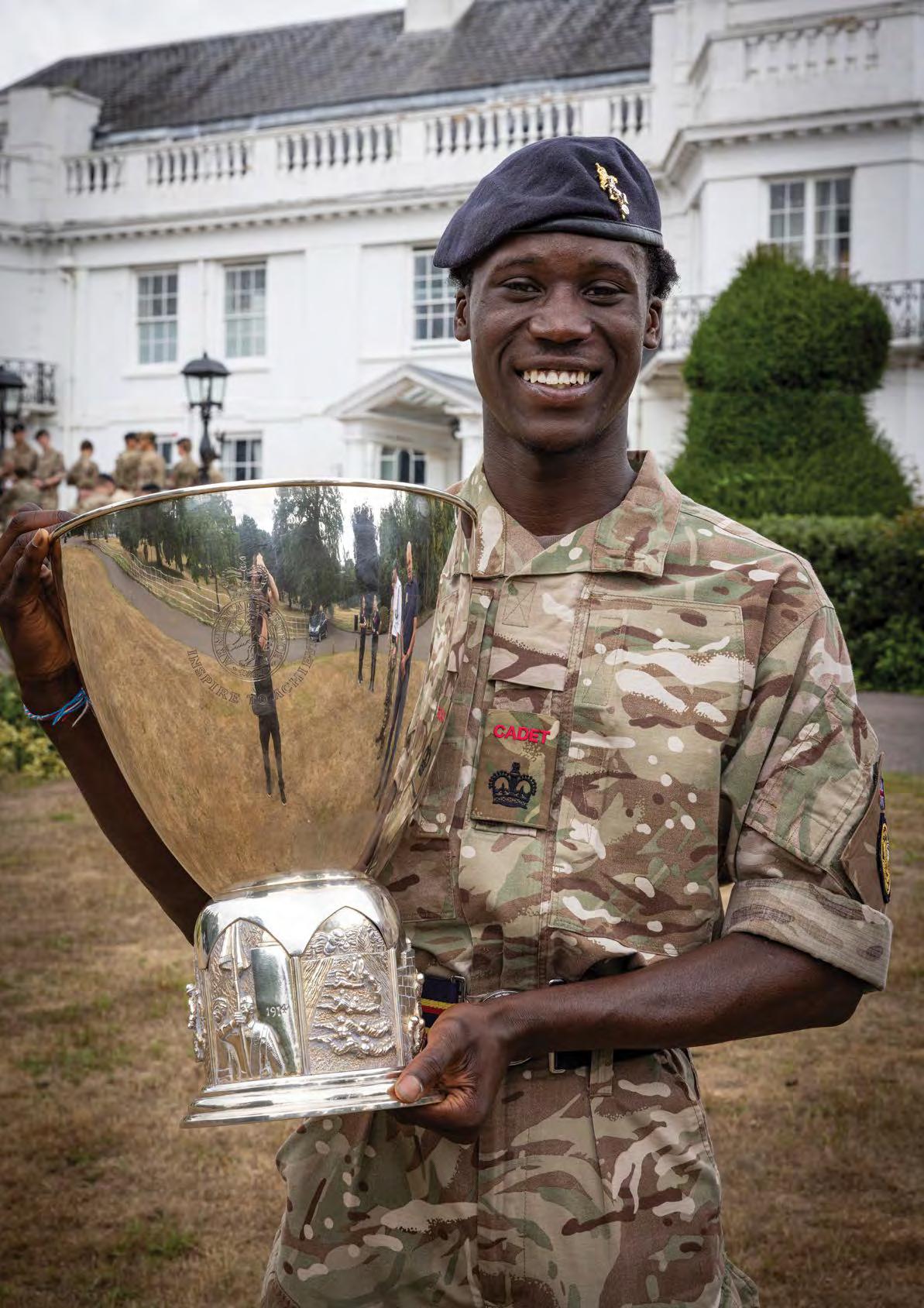
‘The uniform comes off but the discipline, lessons and standards stay with me’
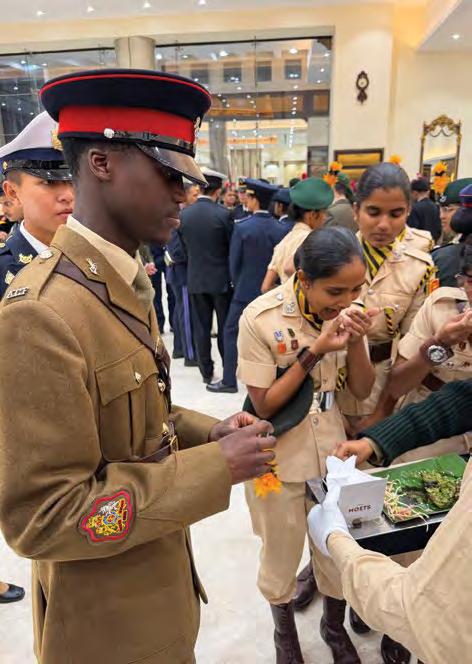
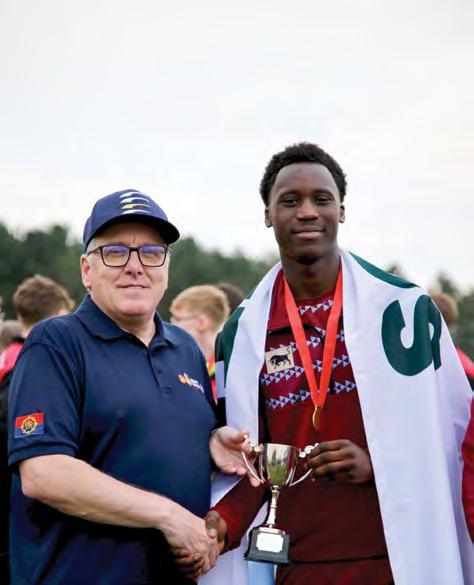
Cdt RSM Jonathan Opoku Anokye, 18, of Royal County of Berkshire ACF, aged out of the Army Cadets in March 2026 and has been reflecting on the many incredible experiences and achievements he’s enjoyed since he joined in 2021.
‘For years, the Army Cadets shaped my routine, mindset and the standards I hold myself to,’ he says. ‘It pushed me into leadership roles, tested me under pressure and taught me how to stay disciplined when it mattered most.’
The former cadet from 8 Platoon Reading, C Coy, has enjoyed life-changing trips abroad as well as the chance to take part in some physically demanding expeditions. In 2025, he joined Ex VENTURER STAG XXVI in Norway, where he learnt survival skills and practised navigation and cross-country skiing in sub-zero temperatures.
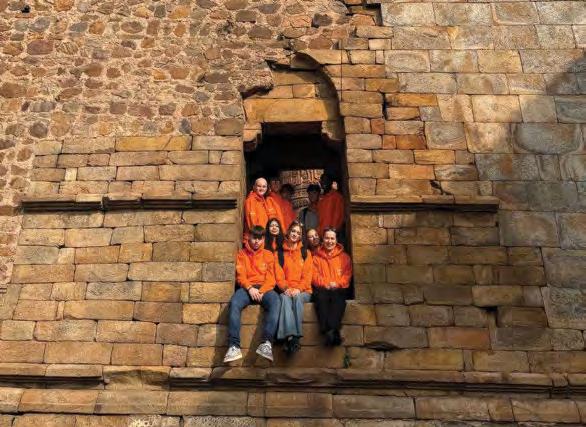
In 2026, he represented the Army Cadets on the India Youth Exchange programme, visiting iconic landmarks such as the Taj Mahal and marching in the Republic Day Parade.
‘I've been fortunate to achieve things I once didn’t think possible,’ he says. ‘Those experiences built my confidence, awareness and ability to adapt to unfamiliar surroundings.’
Jonathan’s achievements have been outstanding during his time as a cadet. In 2025, he was named Cadet Sportsperson of the Year at the Army Sports Awards for competing and medalling in football, rugby, athletics, orienteering and cross-country at county, regional and national levels.
He became a Master Cadet in 2024 and was named Champion Cadet in 2025, as well as serving as Lord-Lieutenant's Cadet from October 2024 to 2025.
‘Each of those milestones came with responsibility, challenge and growth,’ he says.
Jonathan is currently studying for his A-levels and hopes to gain a solicitor apprenticeship. However, he doesn’t feel that reaching the age limit for the Army Cadets means leaving behind the values he's learnt.
‘The uniform comes off, but the discipline, lessons and standards stay with me,’ he says.
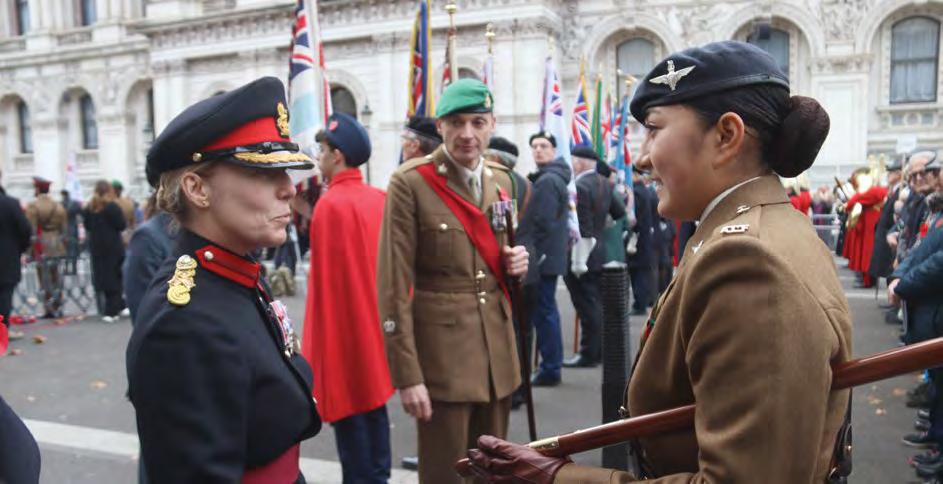
Cdt RSM Marina Erturk, 18, of Middlesex and North-West London ACF, aged out of the Army Cadets in March 2026, after an exciting four-and-a-half-year journey of self-discovery and personal growth.
‘I was quite nervous when I first joined,’ she says. ‘I overcame this by getting involved, stepping outside my comfort zone, and building friendships.'
Marina’s confidence and leadership skills improved so much during that time that she was recently asked to take part in a prestigious panel called From Cadet RSM to Brigadier: Leading Change. On the panel, Brigadier Karl Harris CBE from the British Army spoke about what defines great leadership and the Army’s leadership model. Marina and other Cdt RSMs then discussed how the experience of being in the Army Cadets had shaped them.
‘I highlighted the wide range of opportunities available, including camps, national courses like Master Cadet and CCAT, and competitions in first aid, sports and shooting,’ she says.
Marina credits the Army Cadets for helping her to develop public-speaking skills and to learn how to communicate effectively in different settings.
‘When I first joined the Army Cadets, I was quite shy and found it difficult to speak to new people, but through the opportunities I’ve been given, my confidence and communication skills have grown significantly,’ she says.
She hopes these skills will help her in the future, particularly when she goes on to study medicine next year.
‘Effective communication and confidence are essential in both healthcare and leadership roles. I hope to be sponsored by the Army, commission at Sandhurst, and join the RAMS as an Army doctor, where I can continue to develop those skills.’
Marina praises the Army Cadets for helping her develop strong organisational skills, as well as improving her problem-solving abilities and critical thinking.
‘Through various activities and challenges, including fieldcraft, first aid and teaching, I’ve learnt how to manage my time effectively, stay disciplined and adapt to different situations.
‘These experiences have helped me grow as a person, making me more independent, resilient and confident in my ability to overcome challenges.’
Marina felt hugely honoured to be awarded the Major Generals Cadet Award (London) and is grateful to the volunteers who supported her. This prestigious award recognises the highest standards of turnout, drill, and leadership across London.
‘It felt incredibly rewarding to be recognised for the time and effort I'd dedicated to the Army Cadets,' she said.
During her cadet career, Marina has achieved a string of accolades, including a Deputy Lieutenant Award, the Jack Petchey Achievement Award, Top Student (SCIC), an ACCT UK Award and The Worshipful Company of Insurers Cadet Excellence Award.
‘I like how the Army Cadets constantly pushed me to improve and try new things; it kept it both challenging and rewarding,’ she says.
However, it's the sense of belonging and friendships she built that form some of Marina's most lasting memories.
‘Being part of a team where everyone supported and motivated each other made every experience more enjoyable.'
She has this advice for new cadets: ‘Make the most of every opportunity, embrace challenges and enjoy the experience. It goes by quickly, and you gain so much from it.’
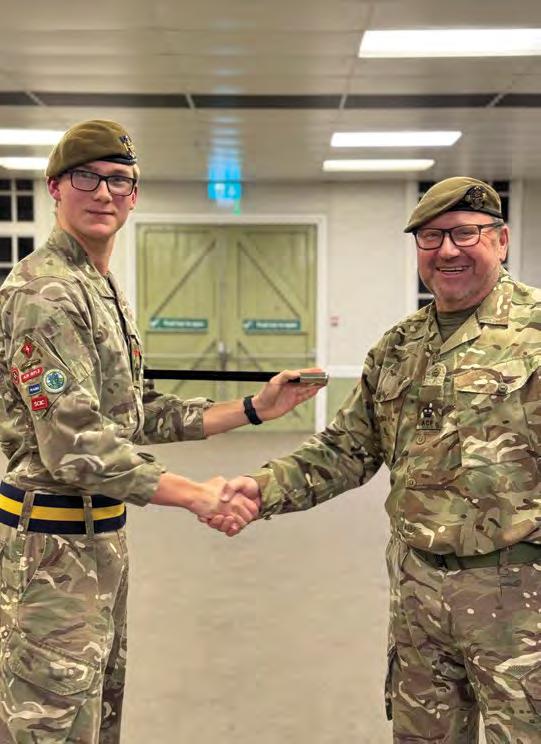
Cdt CSM Joe Rainger, 16, of Surrey ACF, recently achieved two remarkable firsts. He made history as the first cadet to conduct an Instagram Live Q&A on the Army Cadets UK national page. The cadet from Lingfield Detachment hosted an interview with adventurer and Army Cadets National Ambassador Jordan Wylie MBE (see page 40) who, at the time, was battling harsh conditions on his Antarctic Odyssey. Joe then got a huge surprise when he became the first cadet to be promoted by Jordan, while the adventurer was over 8,000 miles away.
Joe was asked to host the live interview with Jordan, who was at Union Glacier after having just ascended two of the three unexplored summits that were part of his Odyssey.
‘I think I was chosen because I enjoy new challenges and opportunities to get out of my comfort zone,’ says Joe. ‘I’d never done a Q&A before, and I found the new experience challenging and interesting.’
Joe was nervous before the interview. However, once it started, he got into his stride and felt more comfortable.
‘It was “type-two fun”: difficult in the moment but extremely rewarding afterwards,’ he says.
Once the Q&A was over, Jordan surprised Joe by promoting him from Cdt CSgt to Cdt CSM and commending him on his 'enthusiasm and commitment'.
‘It was definitely one of my most interesting promotions and caught me off guard – in a good way!’ laughs Joe.
Joe looks back on his younger self and is amazed at how far the Army Cadets has brought him in terms of confidence and communication skills.
‘Seeing my progress from a 12-year-old who was scared to join in with group conversations to a much more confident person who can deliver lectures to classrooms of cadets makes me super proud,’ he says.
Joe admits there have been times when he has been extremely nervous, most notably the first few times he went to weekend camp and annual camp.
‘Having strong and supportive role models within my detachment allowed me to overcome those fears,’ he explains.
‘Knowing that senior cadets had gone through the same things as me not long before was reassuring. Nowadays, I hope I'm a role model that junior cadets can speak to if they're struggling.’
The A-level student, who hopes to go on to study mechanical engineering, believes that being in the Army Cadets has made him more outgoing.
‘The thing I enjoy most is the variety of people you meet,’ he says. ‘I recently went from interacting with the same people every week at detachment to attending the Master Cadet course at the national Cadet Training Centre at Frimley Park, where I met people from across the UK. Everyone brought their own life experiences and perspectives, and it was a really diverse social environment unlike any I have found elsewhere.
‘When I reflect on the positive impact the Army Cadets has had on my life, I can only imagine the impact it has had on thousands of other people's lives too.’
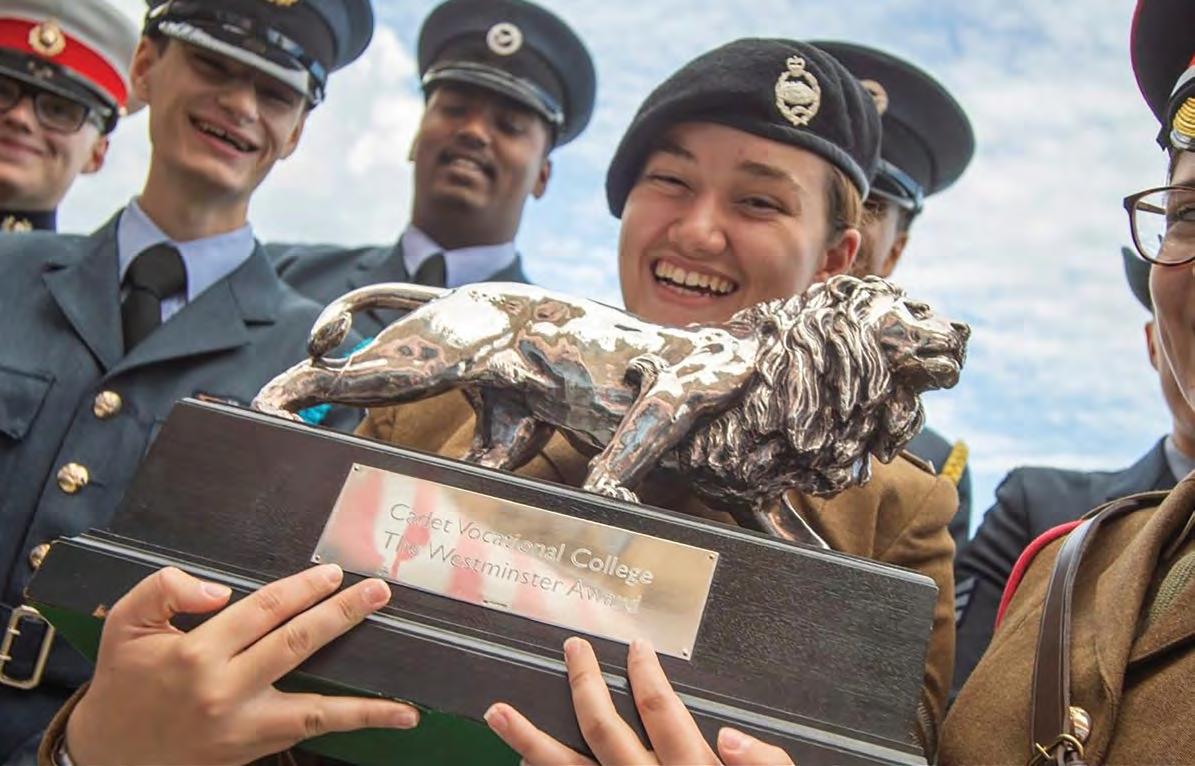
Cdt SSgt Charlotte Bedford, 18, of Dorset ACF beat thousands of nominees from across the UK to win the prestigious 2025 Westminster Award. The trophy from the Cadet Vocational College (CVC) recognised her outstanding dedication, leadership and service to others.
The Westminster Award celebrates exceptional young people and is the most prestigious accolade presented by the CVC. The competition saw finalists take part in a three-week programme of challenges and expeditions across Somerset, Hampshire, the Isle of Wight and the Brecon Beacons in Wales.
After being nominated for the award, Charlotte (who has been studying with CVC) threw herself into challenges that ranged from obstacle courses to bridge-building. They were tests of teamwork, resilience, communication and leadership under pressure.
‘Taking part has shown me how important it is to try new things and put everything into what you do – even when it gets tough,’ she says.
‘It has also made me realise that even when you think you have nothing left, you always do – and you should keep trying.’
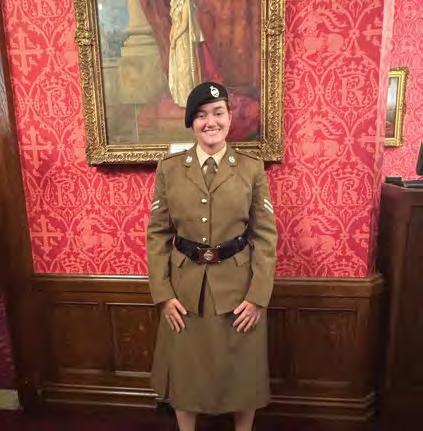
Charlotte has been a keen student with CVC and achieved her BTEC Level 2 Diploma in Teamworking and Personal Development in the Community, as well as an ILM Level 3 Award in Leadership and Management.
‘CVC is an amazing charity that helps so many cadets from different forces. They provide cadets with qualifications that help with job interviews, UCAS applications and promotion opportunities.
‘I'm very glad I was given the opportunities funded by CVC. Every single instructor was patient and there to help. I was also given assistance in my Wimborne Detachment: all my adult instructors were supportive of my special educational needs.’
Charlotte received the award during a ceremony and celebratory lunch on the private terrace of the House of Lords. It was hosted by Lord Lingfield, chairman of the CVC trustees.
‘I was extremely excited when I found out I had won the award. It was a huge honour, and I felt privileged to have been given the opportunity to take part.’

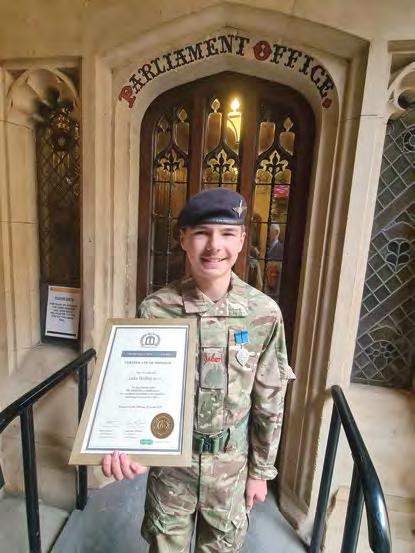
LCpl Luke Hedley BCyA, 14, of Durham ACF received a national award for coming up with the ingenious idea of making safety whistles to help stranded mountaineers in emergencies.
Luke not only created and sold the vital 3D-printed safety whistles, but he also ran half marathons to raise funds for the Northumberland and Lake District mountain rescue teams.
The cadet from Hebburn Detachment, A Company, was one of 22 young people bestowed with the British Citizen Youth Award (BCyA) at the Palace of Westminster in November 2025. It was given to him by BBC presenter Tim Vincent, who mentioned that Luke had previously won seven Blue Peter badges.
Luke was astonished by the amount of attention his invention garnered.
‘It was a bit strange seeing and hearing myself on TV and radio news features,’ he said. ‘I had media wanting to interview me from around the country. My whistles were even featured on Countryfile. It was such an honour.’
In January 2026, Luke was also awarded a Gold Blue Peter badge in recognition of his services to charity. It was presented at a Newcastle Eagles basketball team game by Eagles captain Darius Defoe in front of a crowd of 3,500 basketball fans.
Luke embodies the Army Cadets’ value of selfless commitment. He came up with the idea for his whistles after spending a lot of time walking in the hills and mountains with his dad, Sean, who is a volunteer ranger and Winter Mountain Leader. He was also inspired to make regimental-coloured whistles and soldier silhouettes for his local veterans’ club, to sell on Remembrance Day.
Luke has been a cadet for a year and a half and is progressing through his 2-Star Level. He loves shooting (he’s a qualified marksman) and has enjoyed first aid training.
‘It’s amazing,’ he says. ‘I have learnt so much in a short space of time, made new friends and attended lots of different camps. I’ve just completed my Bronze DofE and hope to pass my Expedition soon.’
He feels the Army Cadets is giving him a good grounding for the future. He is a qualified Advanced Open Water PADI diver and would one day like to become a marine biologist.
‘Belonging to the Army Cadets teaches you about confidence, friendship, courage, determination, teamwork and thinking of others,’ he says.
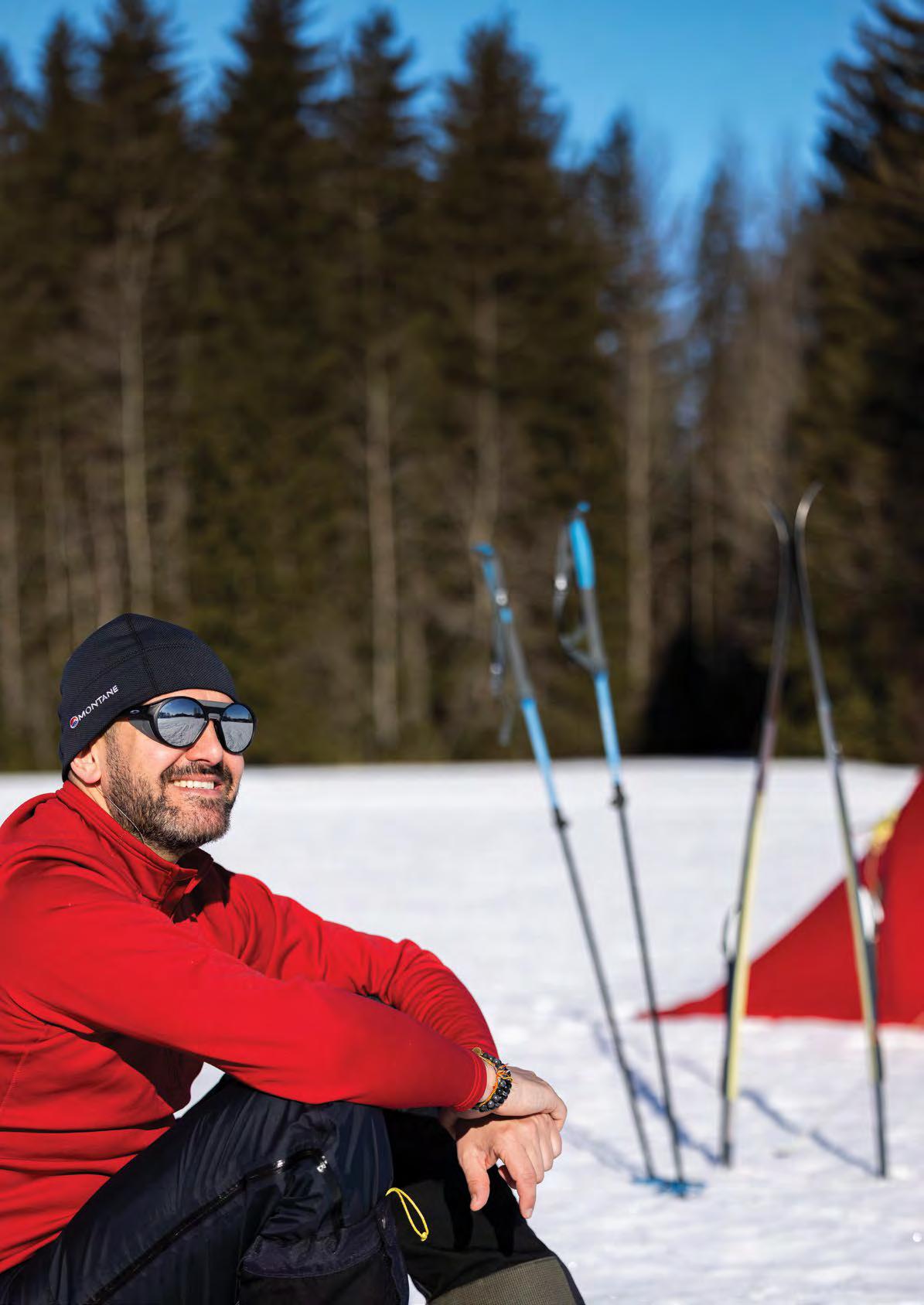
Our organisation is supported by two exceptional national ambassadors. We chose them because of their passion for supporting and inspiring young people. If you haven't yet met them, here's what you need to know.
AMBASSADOR SINCE 2018.
JOB TITLE Adventurer with Purpose.
ARMY CADETS ROLE National ambassador.
FORMER ROLES British Army frontline soldier specialising in close reconnaissance and intelligence within an armoured cavalry regiment. Maritime Security consultant and advisor.
BEST KNOWN FOR Sunday Times bestselling author, elite hunter on Channel 4’s Hunted and Celebrity Hunted, record- breaking explorer
NOTABLE FOR Raising hundreds of thousands of pounds for charity through epic expeditions including Antarctic Odyssey, Eco Triathlon across Europe and the first solo row across the Bab el-Mandeb Straits, a barefoot climb of Kilimanjaro. Jordan is a member of the 7 Continents Marathon Club (completing a marathon in every continent, including Antarctica).
ARMY CADETS ENGAGEMENT Beyond fundraising for ACCT UK, Jordan visits summer camps and detachments and contingents to meet cadets and CFAVs, and is a regular speaker on national TV championing young people across the UK.
What does being a national ambassador mean to you?
It’s a huge honour and something I take very seriously. The Army Cadets changes young people's lives: it gives them opportunities, confidence, leadership skills and a sense of belonging, while also teaching them core values to help them navigate through life. Having served in the Army and now spending much of my time volunteering with young people, I feel incredibly proud to support an organisation that provides such positive pathways.
What have you learnt about the Army Cadets since taking on the role?
How much dedication and passion there is across the entire community. The adult volunteers who give up their time to support young people are absolutely remarkable. Every time I visit a detachment or contingent, or attend a Cadets event, I’m reminded of how much effort goes into creating those opportunities for young people across the UK. CFAVs are the backbone of this movement.
How has the role affected you?
Spending time with cadets and adult volunteers constantly reminds me of the importance of service and community. It keeps me grounded and inspired. Seeing young people challenge themselves, develop confidence and support one another is incredibly motivating. The role keeps me accountable and ensures I try to practise what I preach.
Which element of the role do you enjoy most?
The cadets themselves are inspiring and full of enthusiasm, energy and potential. I also love meeting the CFAVs who work so tirelessly behind the scenes and learning about their different backgrounds. They bring so many unique experiences and skills that add value to the organisation.
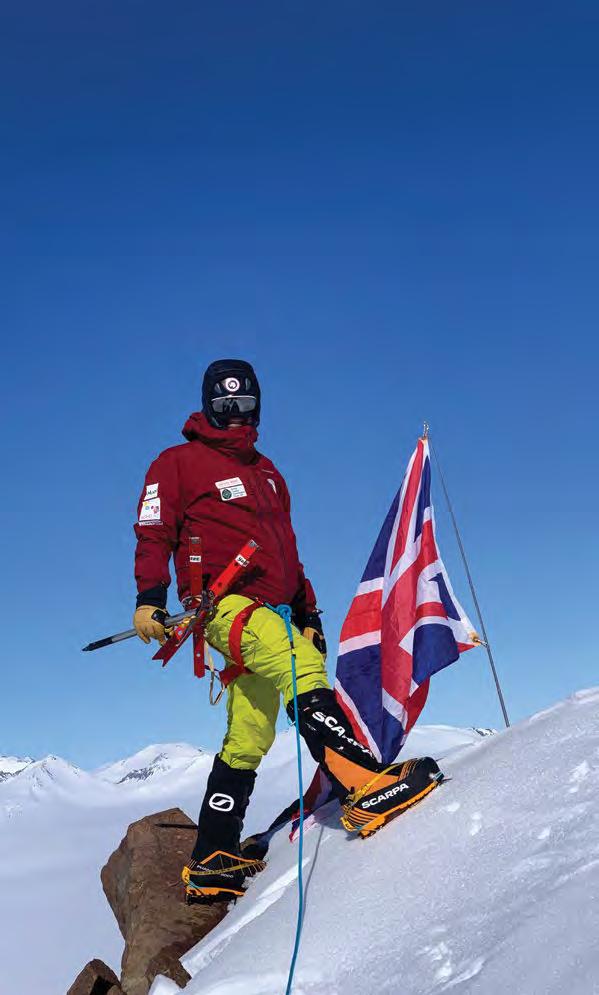
What was it like completing your recent Antarctic Odyssey expedition and then continuing on to reach the South Pole?
It was a moment of huge emotion and reflection. Antarctica is a brutally honest environment and it strips everything back to the basics of resilience, perseverance and purpose.
Carrying the flag, with logos for the Army Cadets and my headline sponsor Dyno-Rod, into one of the most remote places on Earth was very special. I felt proud to represent such an inspiring youth organisation and a business that goes above and beyond to help people.
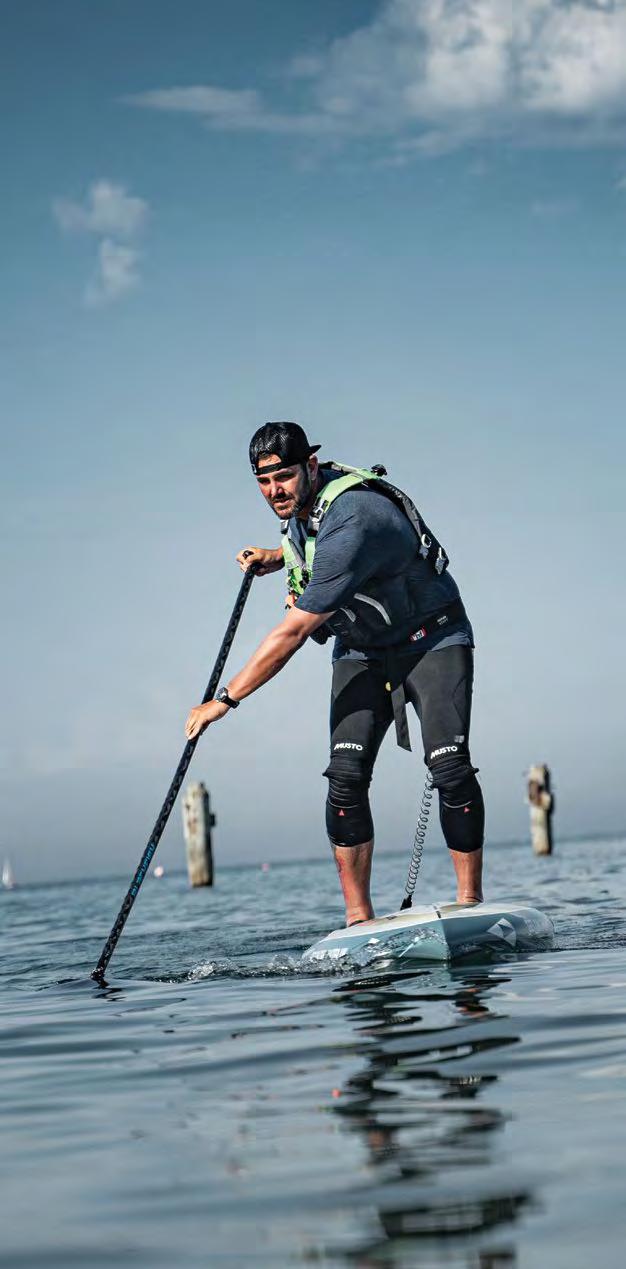
How did you hope your achievement would inspire cadets?
My aim was to demonstrate that ordinary people can achieve extraordinary things with the right mindset. Adventure and challenge aren't just about climbing mountains or crossing polar ice. They’re also about believing in yourself, working as a team and refusing to give up when things get difficult. If a single cadet felt inspired to step outside their comfort zone, try something new or chase a big dream, it served its purpose.
'Antarctica is a brutally honest environment'
How did planning and preparation contribute to the expedition's success?
The physical element is only one part of an expedition like this. The success of the journey was built on years of planning, preparation, discipline and teamwork – long before I set foot in Antarctica.
Logistics, route planning, training, resilience and mental strength are all essential. Those are exactly the kinds of life skills cadets develop through their training, and they are transferable to absolutely anything in life, whether that’s education, a career, leadership or personal goals.
What did you learn about yourself during the expedition?
It was a reminder of the power of purpose. When you have a clear 'why', you can push through extraordinary challenges. There were tough days in Antarctica, but knowing the journey was about inspiring young people and supporting the Army Cadets community kept me going. It reinforced my belief that when we dedicate our efforts to something bigger than ourselves, we find strength we didn’t know we had.
How do you interpret 'adventure'?
Adventure looks different for everyone. Not every challenge involves extreme environments or endurance. Some people’s adventures are in science, technology, leadership, music, education or helping their community. What matters is curiosity, courage and a willingness to try.
Do you have a message for cadets and adult volunteers?
For cadets: never underestimate what you're capable of. The skills, friendships, experiences and opportunities you gain through the Army Cadets can shape your entire future. Wherever your ambitions lead you, the lessons you learn as a cadet will stay with you for life.
I'd like to thank every single CFAV for their dedication and commitment. You are the difference that makes a difference.
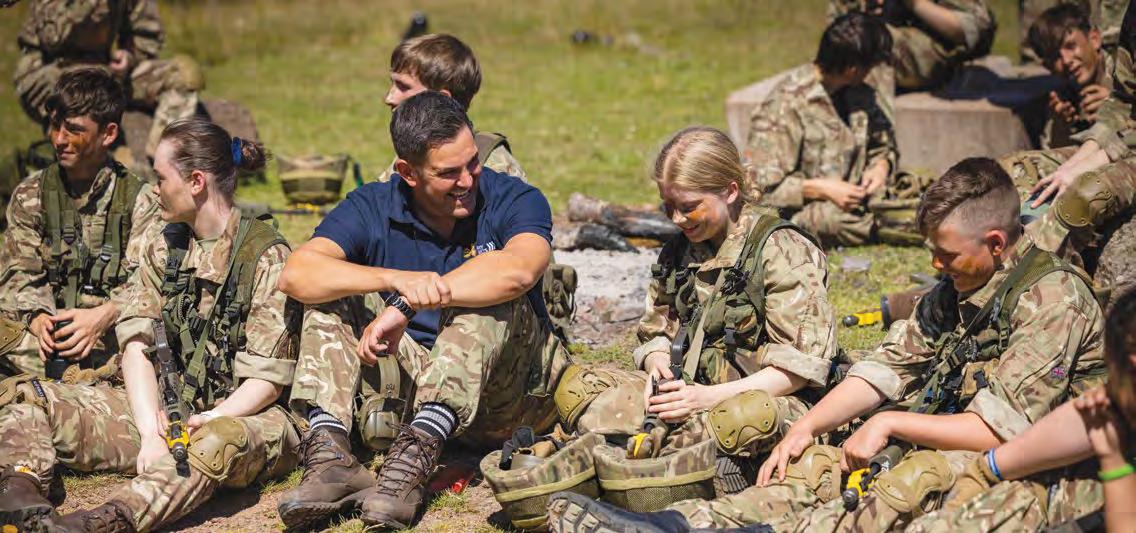
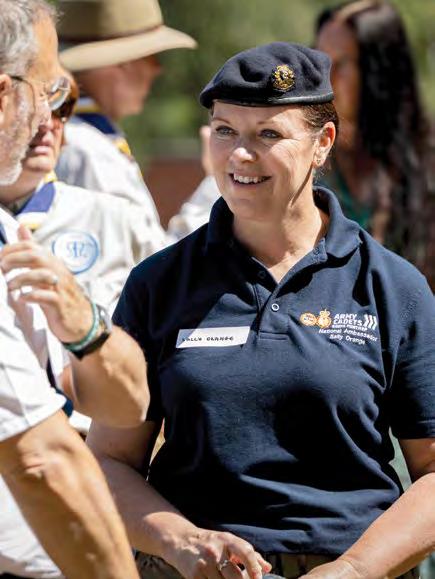
AMBASSADOR SINCE 2020.
JOB TITLE Professional speaker on overcoming adversity
ARMY CADETS ROLE National ambassador.
FORMER ROLE Physiotherapy officer in the British Army.
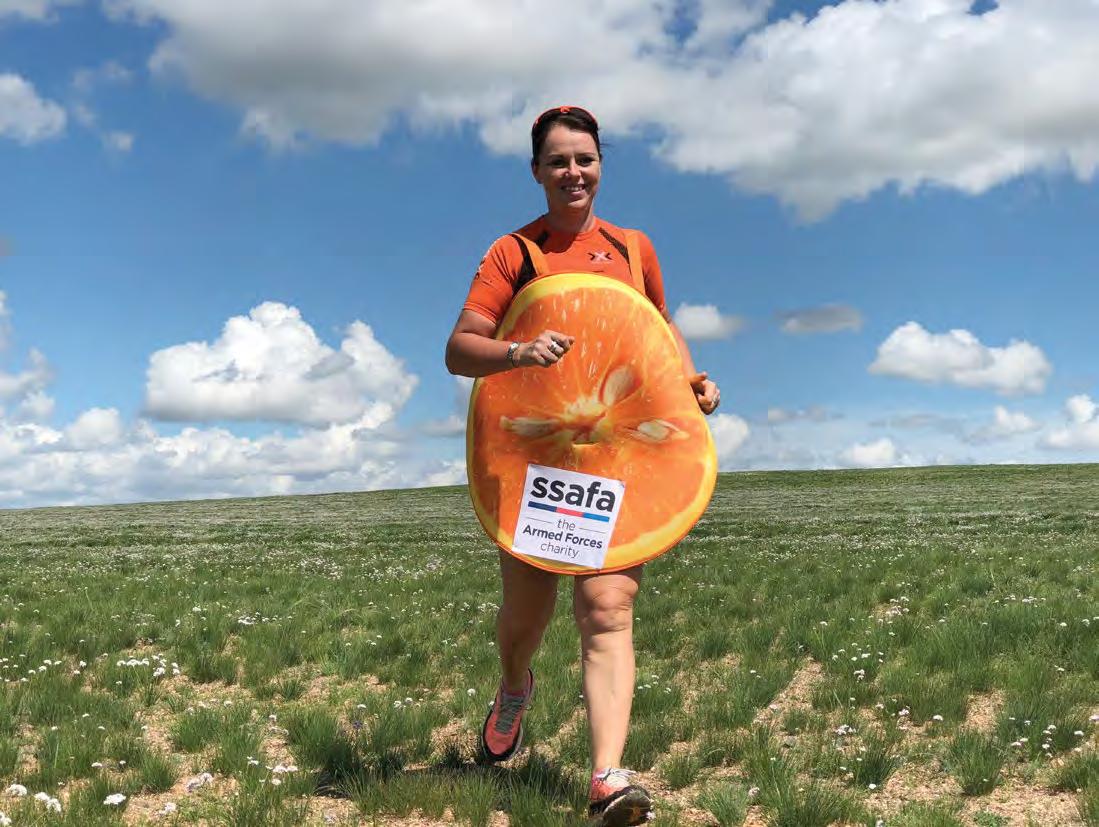
BEST KNOWN FOR Being the only person on the planet to complete a marathon on every continent in fruit fancy dress to raise awareness of mental health.
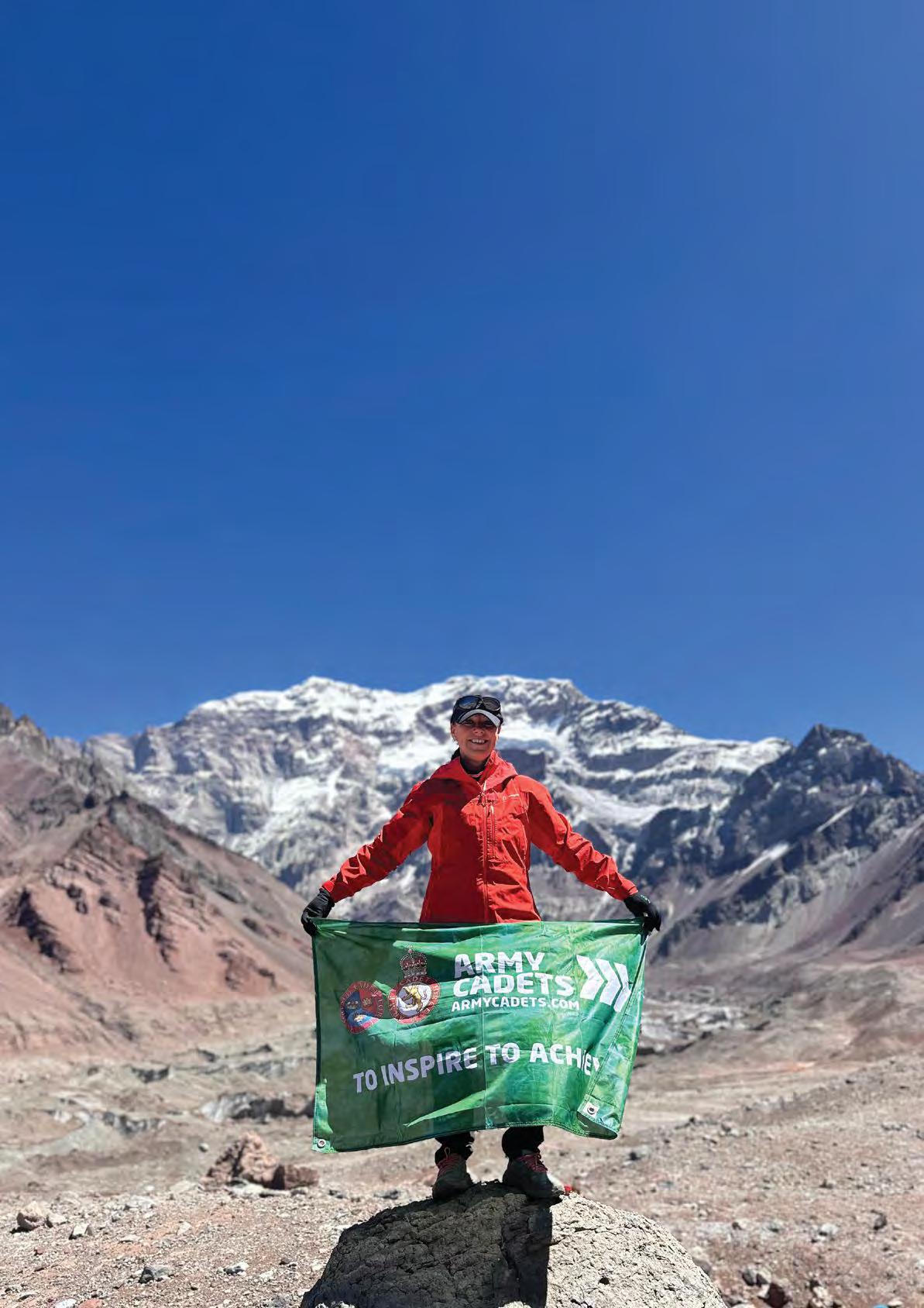
NOTABLE FOR Six Guinness World Records, four Invictus Games Medals, running 80 marathons, swimming the English Channel, cycling the length of New Zealand, skiing 250km across the largest plateau in the Arctic Circle, climbing numerous 6,000m+ mountains, completing eight full Ironman triathlons and running the length of Iceland.
ARMY CADETS ENGAGEMENT Sally attends local and national events as well as visiting summer camps to meet and support cadets and CFAVs.
Why did you agree to become a national ambassador?
The Army Cadets provides young people with incredible opportunities to challenge themselves, learn new skills and grow in confidence, while being supported by dedicated adult volunteers who genuinely care. When I was invited to become an ambassador, it felt like a wonderful opportunity to give something back and support an organisation that helps young people build resilience, self-belief and a sense of belonging.
Why do you focus on championing young women?
I want to demonstrate to young women that there are no limits to what they can achieve. The Army Cadets gives girls the opportunity to develop leadership skills, confidence and independence in an environment where they can thrive. If sharing my own journey helps inspire even one young woman to believe in herself and pursue opportunities she may not have thought possible, that means a great deal to me.
Why do you encourage young people to join the Army Cadets?
Through adventurous training, fieldcraft, sport, community engagement and leadership opportunities, cadets learn they are capable of more than they might initially believe. They're encouraged to step outside their comfort zone and try new experiences. The sense of achievement that comes from overcoming challenges, working as a team and supporting one another is something that stays with you for life.
How important is diversity and inclusion within the Army Cadets?
Cadets come from many different backgrounds, yet they quickly develop strong bonds built on trust, respect and shared experiences. They learn the importance of looking out for each other, supporting their communities and becoming positive role models. From leadership and teamwork to resilience and self-belief, the experiences they gain can open doors and help shape the direction of their future.
Why do you often dress as a fruit or vegetable on your challenges?
It certainly gets a few smiles, but behind the costume there's a serious message about resilience and mental health. I use humour and bright outfits as a way to start conversations and show it’s okay to be different and stand out.
Why do you focus on highlighting mental health?
I am very open about my own struggles because I want young people to know that anyone can be affected. For many years there was a stigma around talking about mental health, particularly in environments associated with strength and resilience. I hope to show cadets it's possible to be strong and capable while also being honest about when you are struggling.
What’s your advice to cadets struggling with mental ill health?
It’s okay not to be okay, but it’s not okay to suffer in silence. Talking to someone you trust (a friend, instructor, parent, teacher or another cadet) can make a huge difference. Often the hardest step is starting that conversation, but it can be incredibly powerful. Asking for help is not a sign of weakness; it takes real courage. If you would prefer to speak to someone you don't know contact the NSPCC Childline on 0800 1111.
What do you hope cadets gain from following your challenges?
I hope they see that setbacks, failures and struggles don’t define you. Life always presents challenges and things don’t always go to plan, but it’s how we respond to those moments that matters. Through my challenges, I try to demonstrate that determination, perseverance and a positive mindset can help you push through.
How important is teamwork?
My challenges are never completed entirely on my own. They're made possible through the support, encouragement and teamwork of others. If my adventures encourage even one cadet to believe in themselves and keep going when things feel tough, or to be able to talk openly about how they feel, then every mile and costume has been worthwhile.
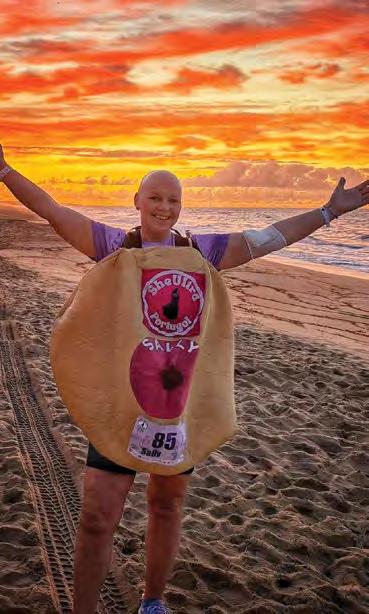
Last year you were diagnosed with breast cancer. Do you have a message for cadets affected by serious illness?
I want them to know that if they, a parent or someone close to them is affected by cancer or another health challenge, it’s really important to talk about it. Sharing worries or fears with someone they trust can make a huge difference.
'The Army Cadets gives girls the opportunity
leadership skills, confidence and independence'
Challenges don’t have to stop you from continuing to live with purpose, humour and determination. Throughout my treatment, I’ve been determined to keep moving and show the positive impact that exercise can have on both physical and mental wellbeing during cancer. For me, exercise has been a powerful way of maintaining a sense of control, boosting my mental health and reminding myself that cancer doesn’t define who I am.
It reminds me of the importance of giving back and supporting the next generation. Seeing the positive impact the Army Cadets has on young people makes me feel incredibly proud to be associated with such a fantastic organisation. It motivates me to do everything I can to support and promote the opportunities it provides.
The role has meant a great deal to me, particularly while navigating my own health challenges. During difficult moments, being connected to such a supportive and uplifting community has been incredibly encouraging. Seeing the positivity, resilience and teamwork within the Army Cadets is a powerful reminder of the strength that comes from supporting one another.
The cadets I meet are living proof that, with encouragement, opportunity and belief in themselves, young people can achieve extraordinary things. It's an honour to shine a light on that.
Two studies from the University of Northampton reveal the amazing impact on social mobility and career prospects for young people who belong to the cadet forces.
Being a member of the cadet forces has a significant positive impact on young people and improves their employability, career prospects and social mobility, according to independent research.
The first study, What is the social impact and return on investment resulting from expenditure on the Cadet Forces in the UK?, was carried out by the University of Northampton between 2016 and 2020.
The report, on behalf of the Ministry of Defence (MOD) and the Cadet Vocational College, was commissioned by the Combined Cadet Force Association (CCFA).
Professor Simon Denny, Institute for Social Innovation and Impact at the University of Northampton, who led the studies, said: ‘Our research has concluded that the cadet forces provide structured challenge, discipline, training, education and, importantly, fun.
'Cadets and their adult volunteer instructors gain new skills and qualifications which increase their education and employment opportunities.’
One key finding of the research was that participation in the cadet forces had significant positive impacts on young people, particularly those suffering economic and other disadvantages.
The findings related to the concept of self-efficacy, associated with improved motivation and performance at school. The report noted that even moderate improvements in GCSE attainment could lead to significant increases in economic benefits to society.
The research team commended the important work being carried out by adult volunteers to help children from economically disadvantaged backgrounds attain the same levels of self-efficacy as their more affluent peers – which also benefits the UK taxpayer.
The report also noted that being able to study for and gain vocational awards through the Cadet Vocational College (CVC) and the Scottish Qualifications Authority (SQA) was an integral part of the cadet-force experience. CVC and SQA provide vocational qualifications to members of uniformed UK youth groups and their adult-volunteer instructors.
The vocational qualifications offered provide formal and accredited recognition of skills such as teamwork, leadership, management and self-reliance – all competencies employers say they look for in staff.
As a result of developing and deploying key attributes, young people experience a number of positive outcomes, including:
• Improved social mobility
• More effective education (a direct consequence of improved attendance and behaviour)
• Improved mental and physical wellbeing
• Enhanced employability
• Reduced vulnerability/ increased resilience
Calculations using 2019 figures indicate that young people in cadet forces produce a return on investment of around £95m per annum (pa), comprising:
• Reduction in GP visits (approx. value £502,000 pa)
• Reduction in use of mental health services (approx. value £681,000 pa)
• Lifetime private benefits from their increased likelihood of attending further education (FE) or higher education (HE) of around £70,300,000
• Lifetime public benefits in increased tax receipts from their increased likelihood of attending FE/HE of around £23,400,000
In addition, the report mentioned the CyberFirst programme, which was launched in September 2018 by the Secretary of State for Defence. It aims to equip up to 2,000 cadets a year with the skills and expertise to help them become future leaders in the emerging cybersecurity sector.
The programme gives cadets the opportunity to learn how to protect systems connected to the internet from cyber attacks. The initiative, the first of its kind in a NATO state, recognises the role the cadet forces play in developing employable young people by equipping them with new and sought-after skills.
The report also found participation in the cadet forces improves the health and wellbeing of cadets which, alongside a higher probability of attending higher or further education, can result in an annual return on investment of around £95m.
It further found that expenditure on the cadet forces is an excellent way to support community cohesion and inclusion.
Overall, the report outlined a significant return on investment from the cadet forces, with the cadet experience offering potentially life-changing opportunities for career progression and vocational qualifications. It also increased career prospects for those who may not hold traditional educational qualifications.
'The positive impacts on social mobility are, frankly, amazing,' said Professor Denny. 'The cadet forces represent a very good use of taxpayers' money.'
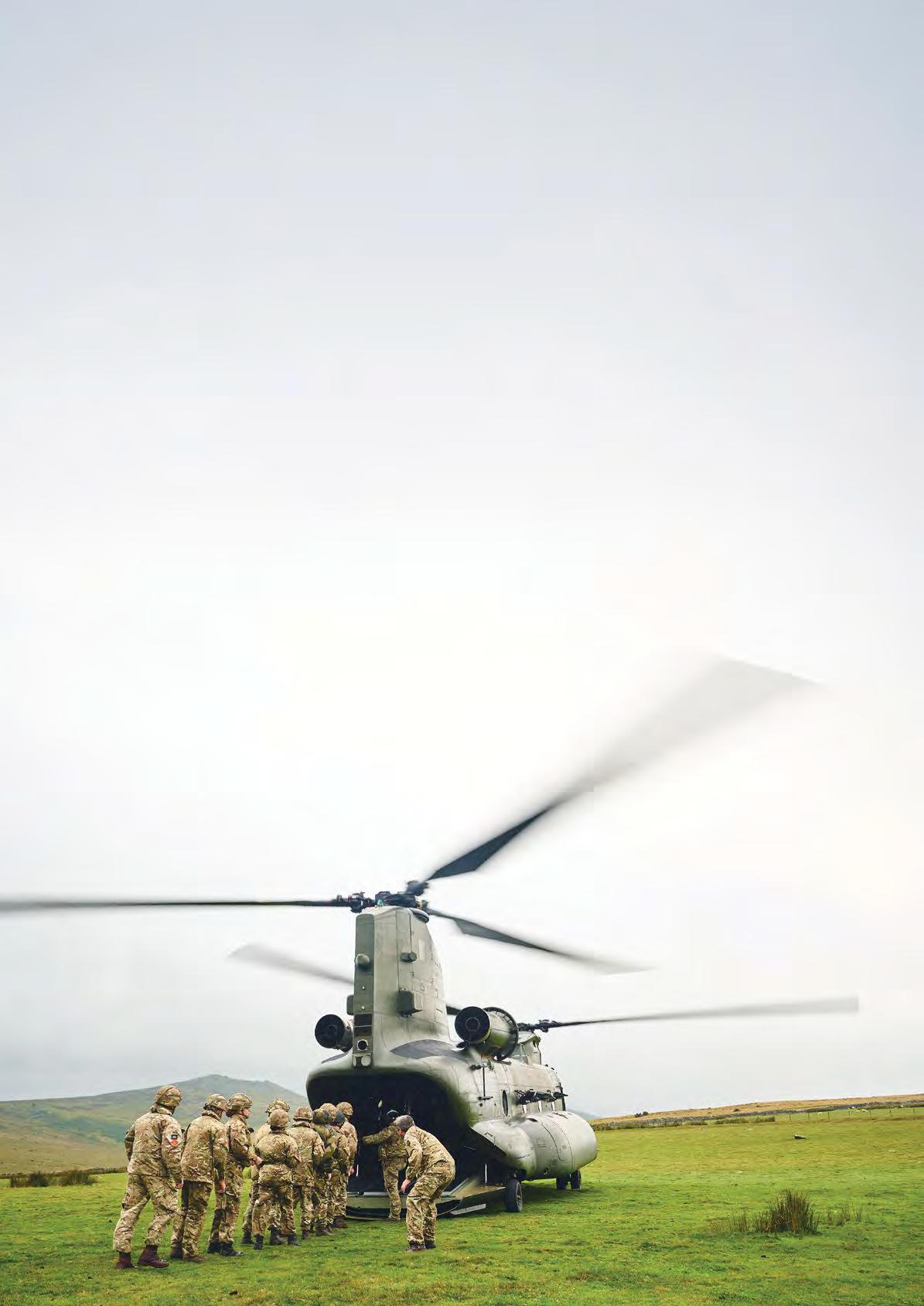
• Increased school attendance
• Reduction in number of GP visits
• Reduction in use of mental health services
• Increased likelihood of attending FE/HE
• Increased potential lifetime earnings
• Increased tax receipts
• Qualifications
• Teamwork, leadership, mentoring
• Increased opportunities at work
• Better mental wellbeing
• Enjoyment and fulfilment
• Support to the community
• Located in every UK constituency
• CFAVs/cadets are in education, employment or are employers
• CFAVs/cadets in the community in uniform
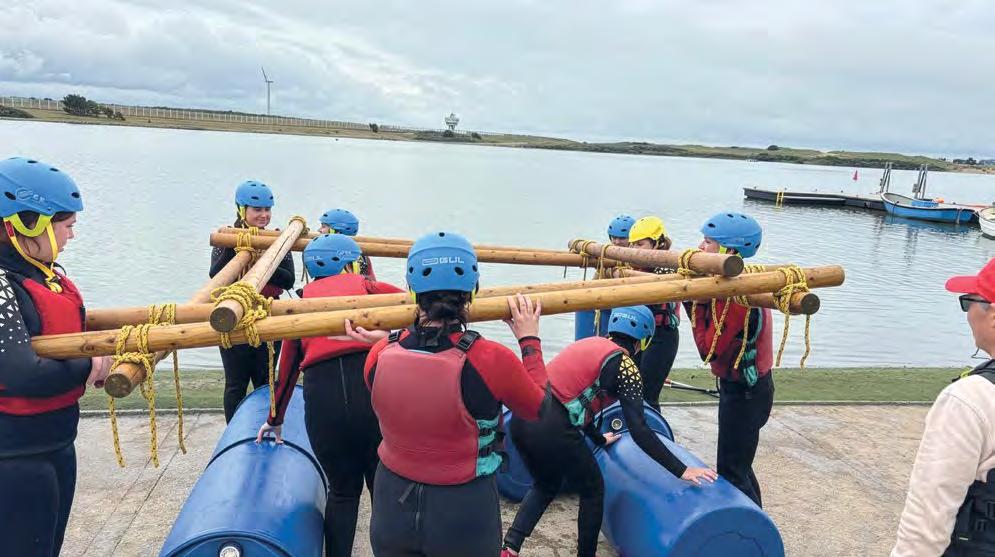
The second study, The Impact and Value of School-Based Cadet Forces in the UK, was commissioned by the Ministry of Defence and the Combined Cadet Force Association.
The study, also carried out by the University of Northampton, found that school pupils who join the Combined Cadet Force (CCF) experience a boost in academic achievement, confidence and behaviour, resilience and school attendance.
Professor Simon Denny said: ‘The findings of this report build on previous research done into the value that a school-based Cadets detachment provides to children, teachers and adult volunteers, and the outcomes of a school.
‘There is very clear evidence that the Cadets experience positively influences behaviour, attendance and attainment, and greatly increases access to further and higher education, as well as significantly improving employability.
'The Combined Cadet Force (CCF) provides children with a broad range of experiences which are not available through traditional education, and these experiences create a sound foundation for later life.’
The report found that supporting communities and social mobility was a cornerstone of the cadet forces' ethos. Today, around 60 per cent of cadet forces are based in state schools –historically, they were mainly in independent schools.
However, since 2012, the Cadet Expansion Programme (CEP) has prioritised schools in deprived areas, places likely to be affected by multi-generational unemployment, gang crime and knife crime. The programme has provided tangible benefits to pupils from varied ethnic and socio-economic backgrounds.
By belonging to school-based cadet forces, pupils from underprivileged backgrounds have been able to acquire more transferable skills and opportunities. This ‘levelling
up in action’ helps them compete with children from more affluent backgrounds.
In interviews, the research team heard numerous examples of how being a member of the CCF had transformed pupils' behaviour. These benefits were not just limited to cadets; headteachers reported that improved behaviour extended throughout the school.
Cadet forces in schools were praised for providing challenging and fun opportunities which develop self-confidence and leadership skills in young people. Taking part in these activities also improved the likelihood of pupils going on to attend higher or further education, and their employability prospects.
The report noted how CCF contingents provide cadets with a progressive syllabus that includes skill awards (such as badges for first aid or communication) and promotions alongside vocational qualifications from the Cadet Vocational College.
By using peer mentoring to achieve these qualifications, the CCF helps pupils develop the qualities required to navigate and build social relationships, develop problem-solving skills and engage in education.
With the cost of one persistently absent child being around £2,166 annually, the report also found school-based cadet forces have the potential to save over £1.1m of the education budget through just one cadet per school increasing their attendance. The CCF has such a positive impact, that it is being used in some schools as part of their strategy to tackle exclusion.
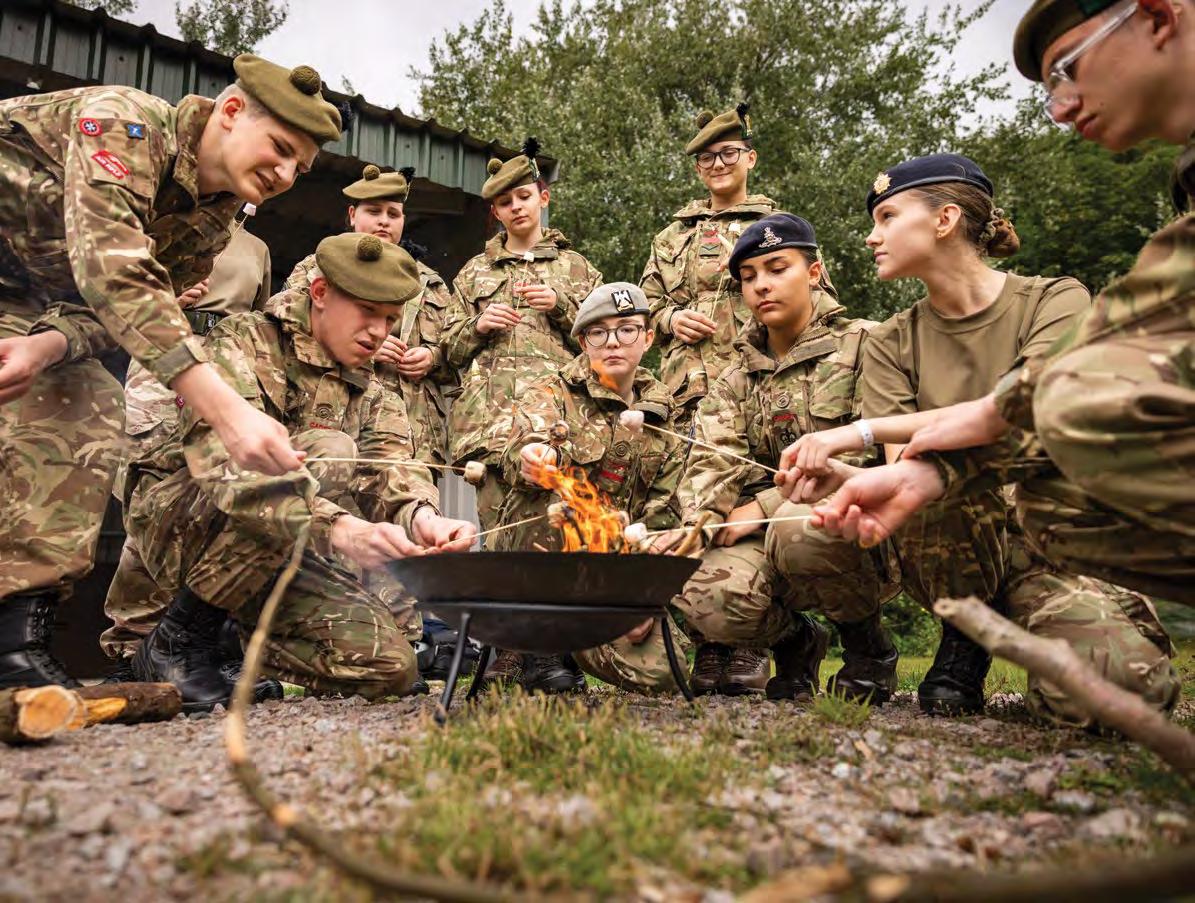
'The CCF adds enrichment, it helps build character, resilience, practical skills and camaraderie; it adds to the educational experience. Importantly, every member of school staff interviewed made the point that the CCF is accessible to all – the non-sporting, the non-musical – anyone can join, and it's all encompassing with intellectual, physical and social content.'
'Participation in camps, expeditions and adventure training that cadets in the CCF undertake have been found to produce physical, psychological and social benefits in young people, increasing their resilience, self-esteem and reducing incidence of depression (Warburton et al. 2006).'
'School-based staff were complimentary about the CCF’s ability to create opportunities for students to gain qualifications, with cadets provided with opportunities to engage in Duke of Edinburgh's Awards, BTECs, and first aid programmes, to cite just a few. These qualifications opportunities, with some accredited and others viewed favourably by universities and employers, place cadets in a good position when applying for employment or further education post-school.'
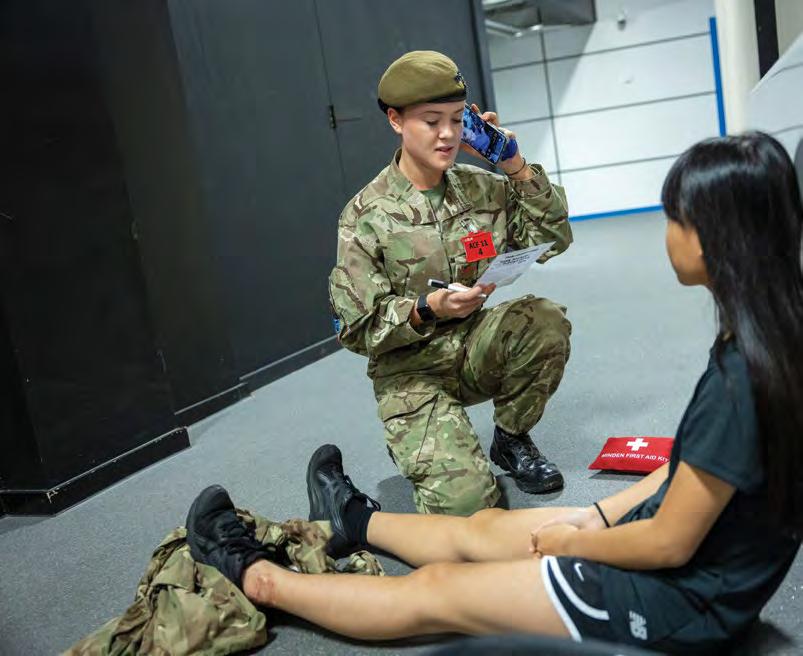
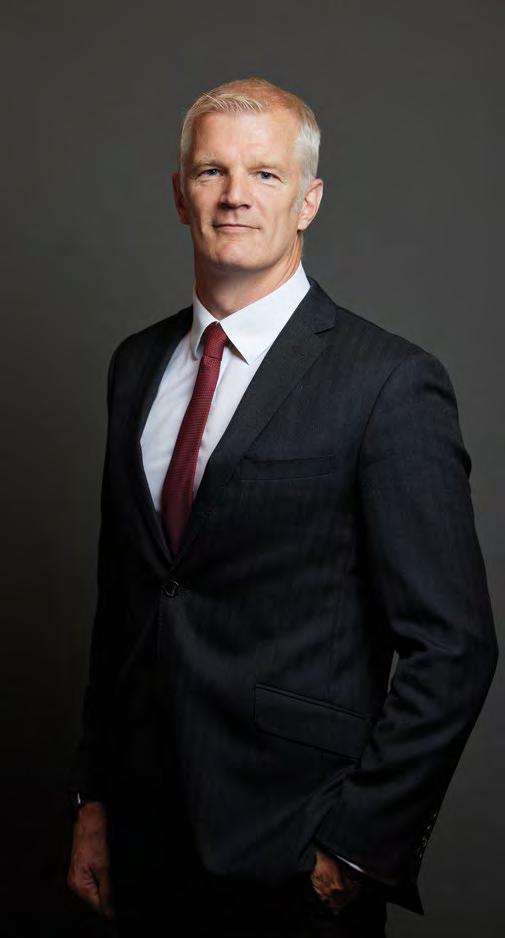
Minister for the Armed Forces Alistair Carns said: 'Not only does the cadet force impact those involved first-hand, but also the nation as a whole. If every year the Cadets experience helps just one per cent of cadets change their life outcomes so they are in employment, education or training, the annual cost of the cadet forces is covered.
'In terms of health and wellbeing alone, participation in the cadet forces produces an annual return on investment in the region of £120m each year. Additionally, each year it is estimated that the lifetime value of vocational qualifications gained by the most disadvantaged cadets is well over £130m.
'Adult volunteers, too, see significant benefits from supporting the cadet forces. They can gain qualifications that can generate a total increase in potential lifetime earnings of around £50m. These units could not run without the dedication of adult volunteers – including teachers and the wider school community – who deliver the Cadets experience. For that, we are all grateful.'
SCHOOLS REPORTED 74.9%
Improved attendance 77.7%
Improved behaviour 66.6%
Improved academic attainment
Proven to boost wellbeing, with 91.6% of headteachers reporting a positive impact
98.9% of headteachers found an improvement in cadet resilience
83.3% of headteachers stated that the Army Cadets positively impacts outcomes of the school
Since the Department for Education and the Ministry of Defence launched the CEP in 2012, there are now 376 schools across the UK with contingents.

Every year, cadets and adult volunteers embark on extraordinary life-changing trips, ranging from overnight camps to epic overseas adventures. Here are some of the awesome destinations cadets have visited.

'The temperature was well below freezing with a wind so strong it whipped your face. It was the hardest thing I have faced'
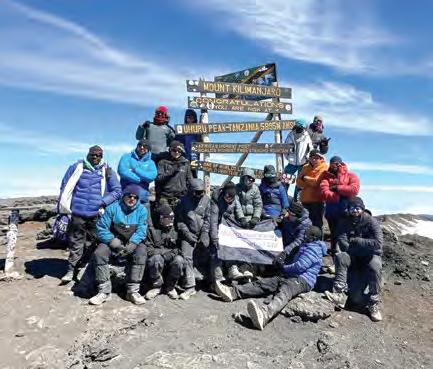
Conquering Mount Kilimanjaro was just one of the amazing highlights for eight cadets and nine CFAVs from Cambridgeshire ACF who travelled to Tanzania in August 2025. At 5,895m, the mountain is the highest freestanding mountain in the world.
'We approached the summit during the night,’ said Cdt Cpl Tristan Enderle. ‘The temperature was well below freezing with a wind so strong it whipped your face. It was the hardest thing I have faced. The view from the top was surreal and looking down over Africa was an unforgettable sight.’
During the nine-day trek, the group also spent two days at Kilimanjaro Orphanage Centre, a dedicated haven for vulnerable and orphaned children in Tanzania.
‘It made me realise we take a lot of things for granted in our country and other people don’t have what we do,’ said Cdt Cpl Jake Graham. ‘Local people were really happy to see us and very welcoming. It opened my eyes.’
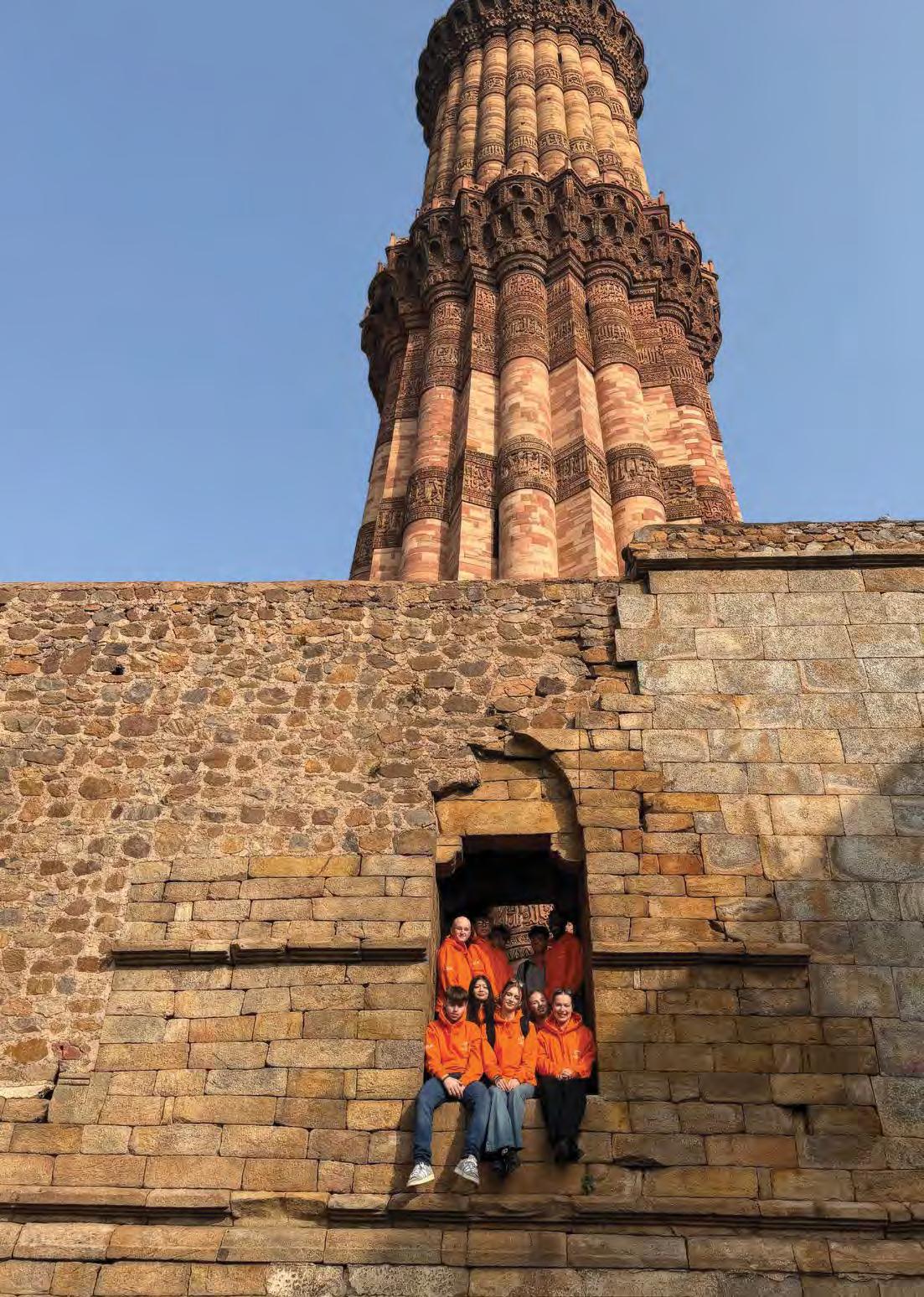
Cadets and CFAVs from across the UK embarked on an Indian adventure in January 2026 as part of the annual India Youth Exchange Programme.
During the two-week trip, they met cadets from around the world, explored historical sites, met senior dignitaries and embraced a new culture, all of which left a lasting impression.
Historical highlights included visits to the Taj Mahal and Agra Fort during an overnight trip to Agra, as well as the National War Memorial, India Gate and the Qutab Minar in Delhi.
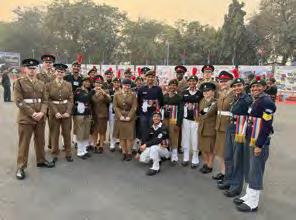
The cadets attended receptions hosted by India’s Prime Minister and President, enjoyed a dinner with the Defence Minister and witnessed a spectacular horse show and National Cadet Corps of India Band Display. They also marched alongside delegations from numerous other countries in the Prime Minister’s Rally and witnessed the Republic Day Parade practice – one of India’s most spectacular national celebrations. It provided an unforgettable glimpse into the pageantry and pride of the Indian armed forces.
An epic two-week adventure in Australia was undertaken by 20 cadets and five CFAVs from Middlesex and North West London Sector ACF in July 2025.
The UK cadets made friends with cadets from Australia and New Zealand as part of the ANZUK 25 cultural exchange and learnt about the deep connection forged between the three nations during the First and Second World Wars.
Trip highlights included a visit to the barracks of the 1st/15th Royal New South Wales Lancers and its on-site museum, plus a barbecue put on by the hosts (203 Army Cadet Unit), as well as trips to Sydney and the Blue Mountains at Katoomba. They participated in a Last Post service at the Australian War Memorial in Canberra and visited other historical sites and Australian cadet units.
Cdt LCpl Hagiu said: 'The trip provided me with unforgettable memories, a great amount of knowledge about Australia and lifelong friendships.'
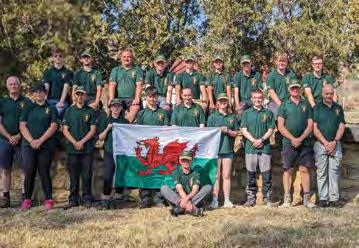
A mix of adventurous training, community engagement and conservation work made an expedition to South Africa in the summer of 2023 a memorable experience for 72 cadets and 15 volunteers from the three Welsh ACF detachments.
Ex KWAZULU NATAL Y DDRAIG packed in a giraffe field-study, a 20km rafting journey and an 80km trek through landscape marked by Anglo-Zulu and Boer War remnants.
The group also took a three-day battlefield tour at Elandsheim Retreat and finished their expedition at Somkhanda Game Reserve where they took part in safaris, foot treks, anti-poaching efforts and community engagement.
Cdt Ashley Turner of Clwyd and Gwynedd ACF said: ‘This adventure will forever hold a special place in my heart. I will carry the lessons and memories of that time as a source of inspiration and a reminder that, with the right mindset and supportive friends, any journey, no matter how challenging, can be a remarkable and rewarding experience.’
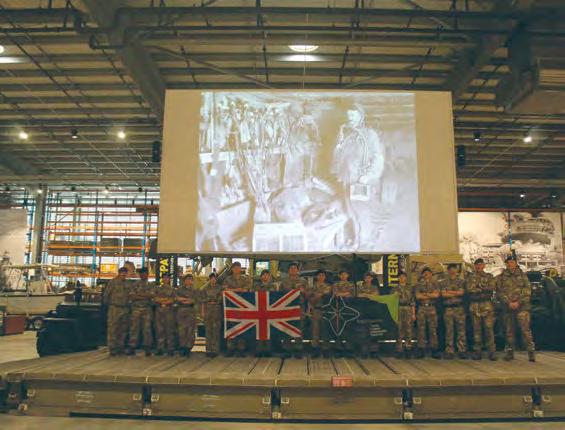
Global adventures don't come much more thrilling than travelling to Sagana in Kenya. In 2024, a team of 20 cadets worked at Thangathi Primary School where they carried out repairs and also taught maths, English and science.
They also helped set up a Kenyan Football Academy and managed a tournament. They beat the home players 5–5 (3–2 on penalties) but softened the blow by donating football kits, clothing, shoes and toys. The trip ended with an unforgettable two-day camping safari.
Cdt Logan Bailey of Clwyd and Gwynedd ACF described the trip as a ‘once-in-a-lifetime opportunity ’. He was struck by the resilience and happiness of the Kenyan children, despite having fewer material possessions.
‘It made me appreciate the privileges I enjoy back home and reminded me that I shouldn’t take them for granted,’ he said. ‘This journey opened my eyes to a world beyond my own, and I’m very grateful to everyone who made the experience possible.’
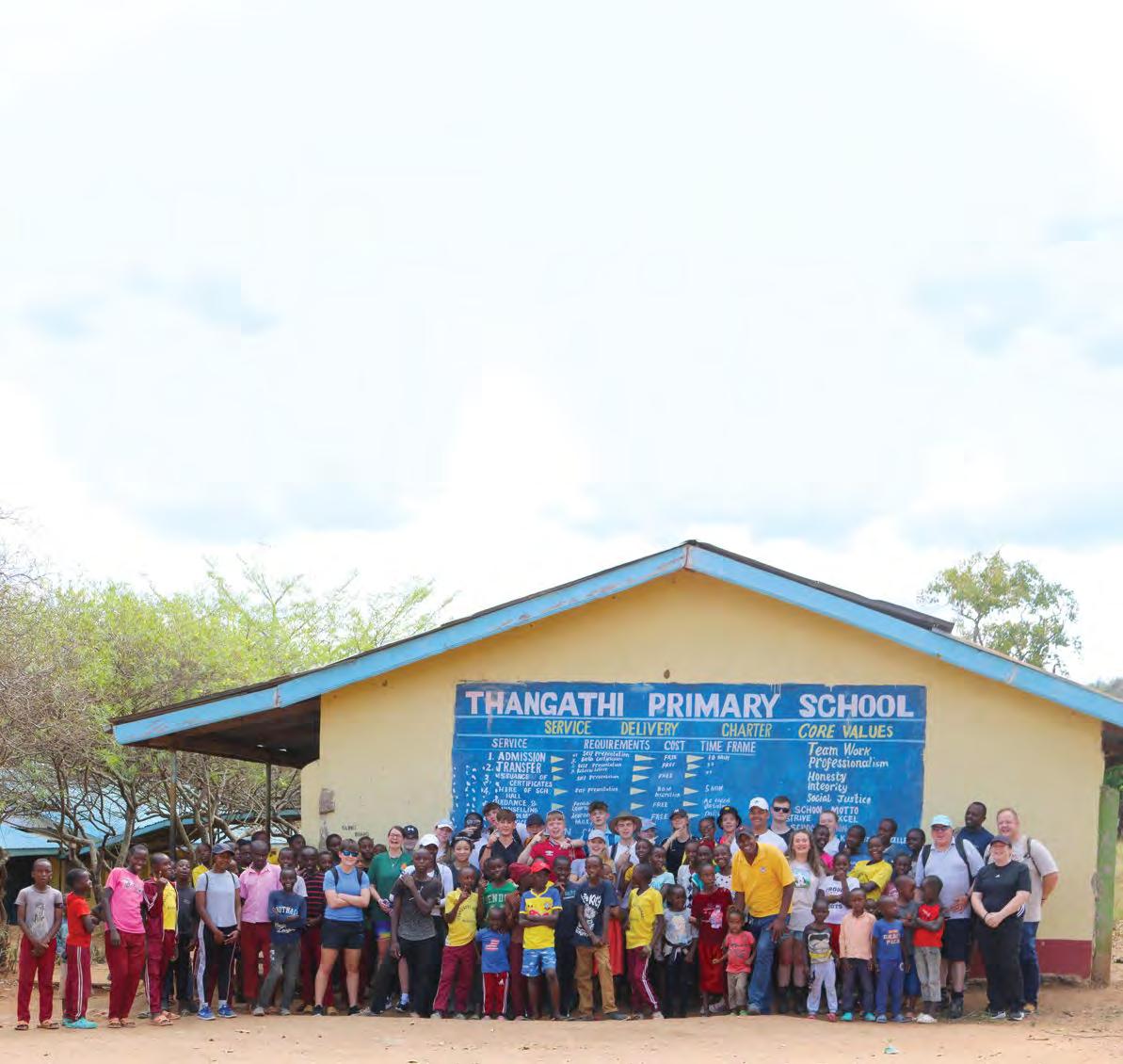
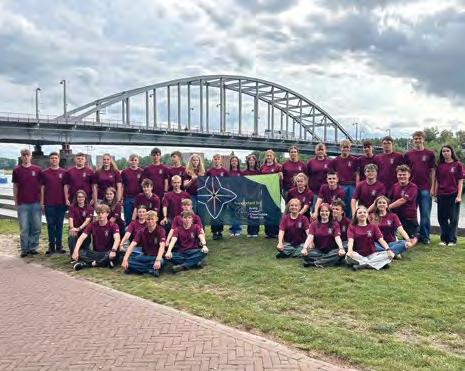
Taking part in the world’s largest one-day commemorative march was a privilege for cadets from Wiltshire ACF. In September 2025, they joined over 30,000 people on the 78th Airborne Wandeltocht in Arnhem. During the four-day trip, the cadets also visited locations throughout the Netherlands, alongside participants from across Europe.
The experience, which combined history, remembrance and challenge, left a lasting impact on everyone who walked to honour the sacrifice of those who fought there in 1944. The cadets saw, firsthand, the battlefields, memorials and bridges that defined a turning point in the Second World War.
‘Taking part in the march was an incredible challenge,’ said Cdt Sgt Maj Robson. 'Marching alongside other nations made me feel part of something much bigger.’
A group of 19 cadets from Glasgow and Lanarkshire ACF took part in an adventurous training trip to Malta in the summer of 2024.
They learnt how to scuba dive at beautiful locations across the island, gained their PADI qualifications and explored the culture and history of the island. The trip required cadets to work on communication skills and time management as they had to organise and prepare their kit themselves. It also enabled them to achieve various
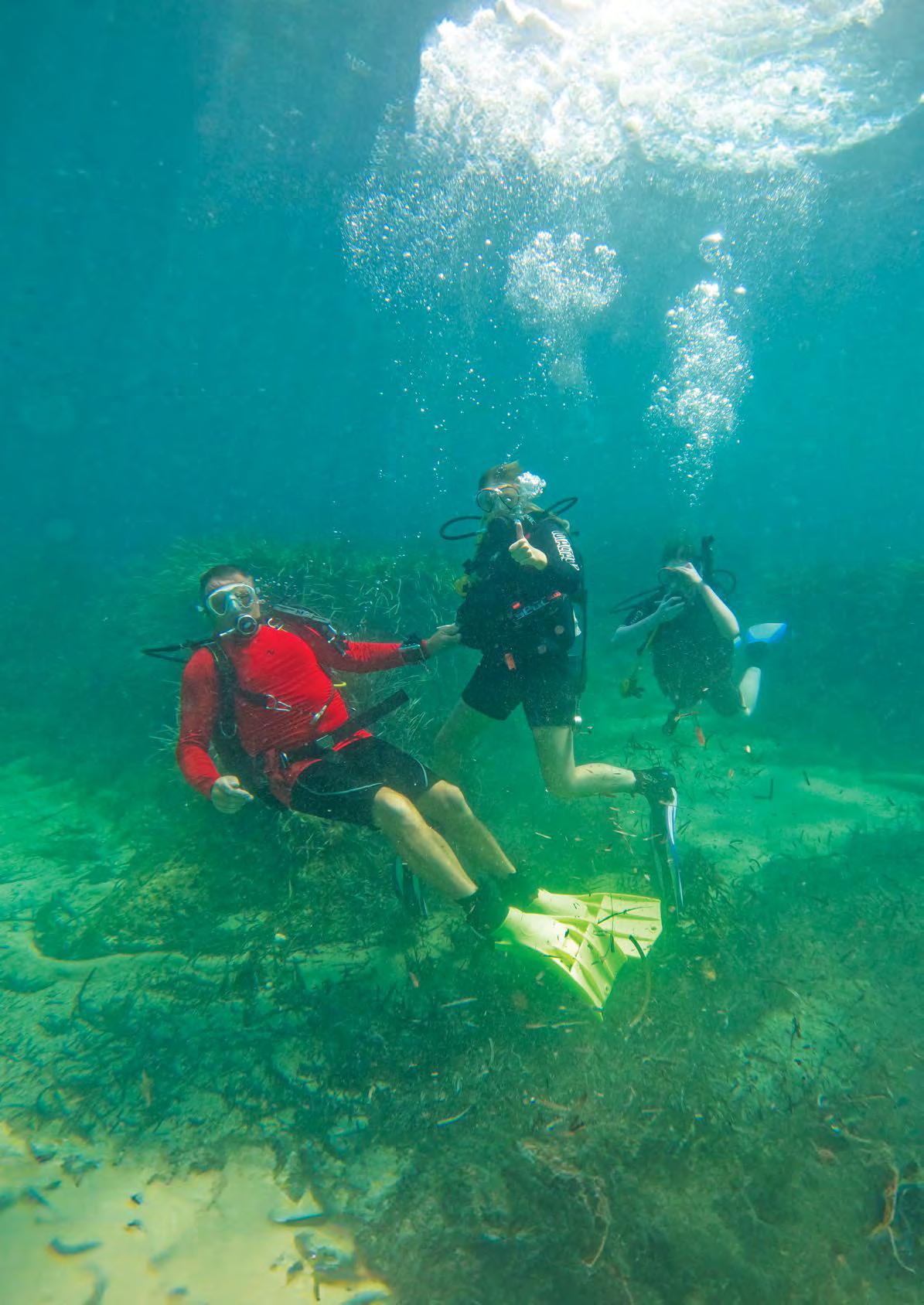
aspects of the Army Cadets syllabus in both 3-star and 4-star AT training. However, the biggest outcomes of the course were the friendships and memories made.
‘I overcame any nerves by putting myself out there and meeting and bonding with other cadets on the trip and having a laugh with everyone,’ said Cdt Joseph Baker. ‘The trip challenged me to make new friends and face my fears of the ocean. It turned me into a more confident person.’
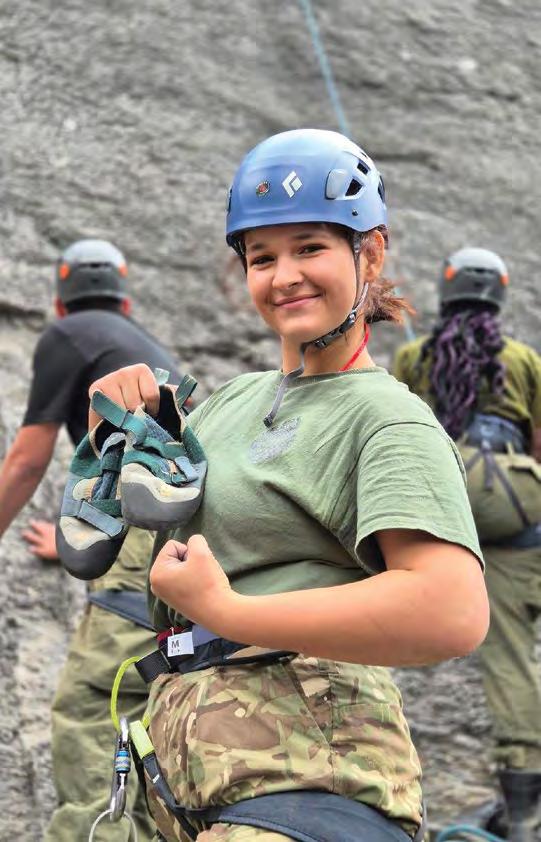
The month-long Ex OAKLEAF 2024 Canadian exchange programme took 20 cadets from across the UK to Calgary, where they engaged in the Expedition Team Leader course at the Rocky Mountain Cadet Training Centre in Alberta.
During their stay they embarked upon an extensive 12-day expedition designed to reinforce their physical and mental resilience, enhance problem-solving abilities and foster a strong sense of community and service. Activities included cable traversing, hiking, biking, rock climbing and camping.
Reflecting on the experience, the lead escort officer for the trip, Major Andy Emery of Wiltshire ACF, said: 'The cadets were put through their paces in some of the most remote wilderness. They encountered wildlife of vast proportions and witnessed weather extremes from scorching sun to hailstorms that white out the land. I'm extremely proud of each and every one of them.'
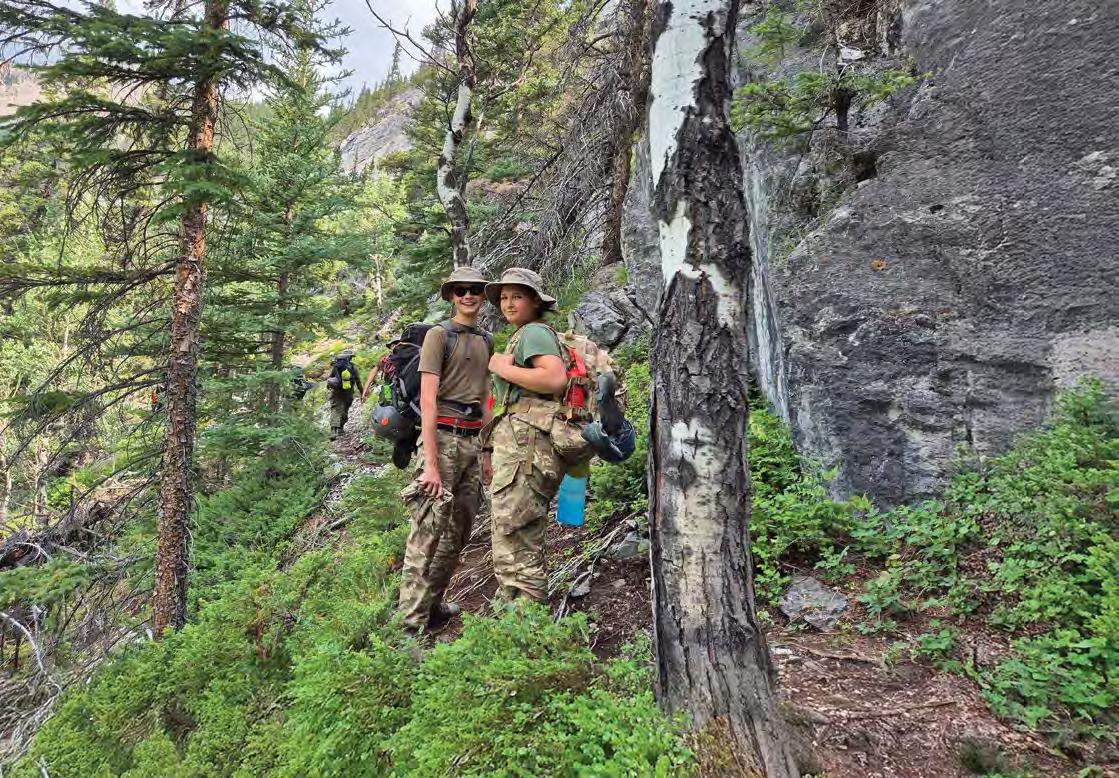
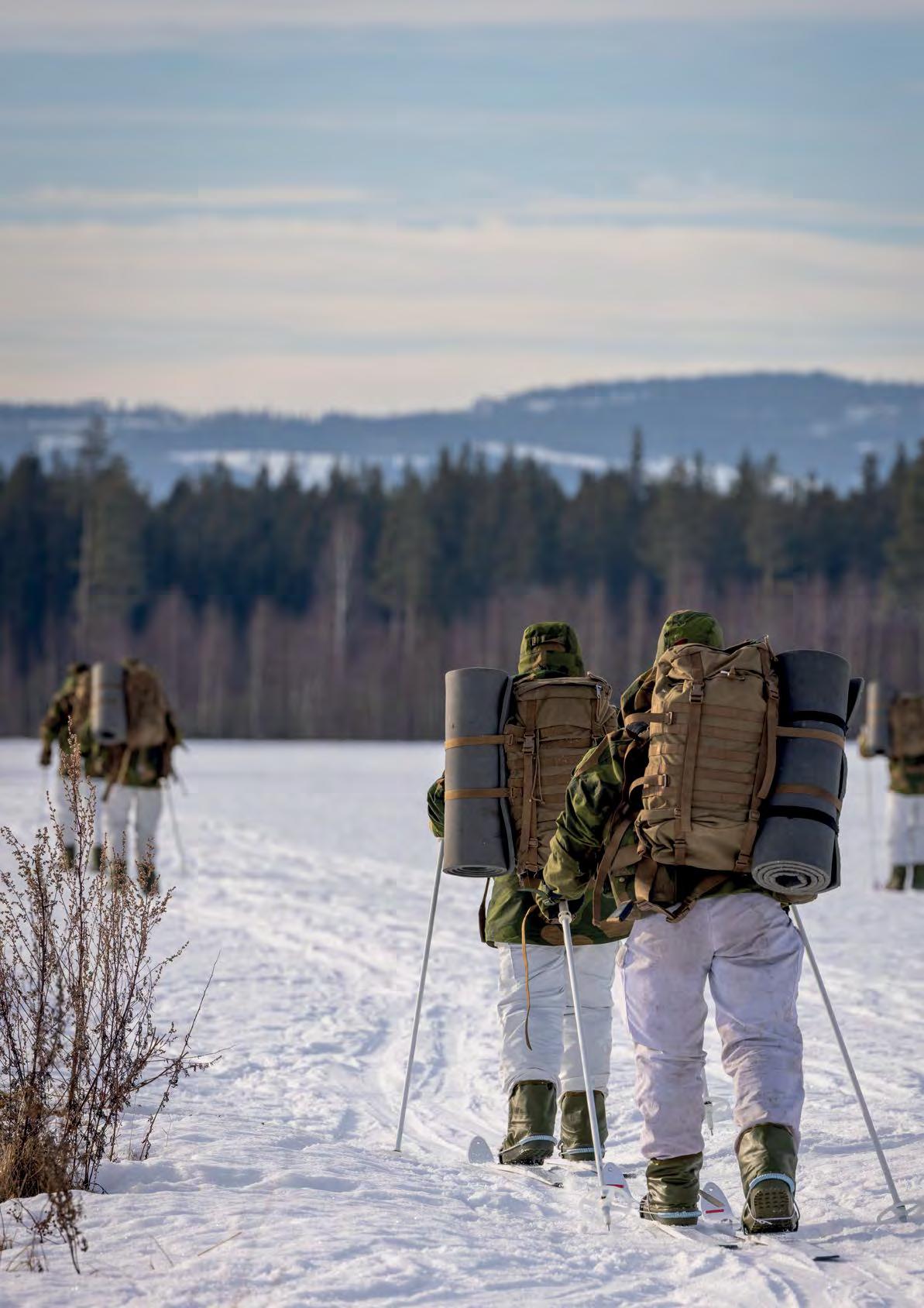
Learning survival skills in sub-zero temperatures, skiing across snow-covered landscapes and camping out in harsh environments were just a few of the challenges faced by cadets from Royal County of Berkshire ACF during Ex VENTURER STAG XXVI in Norway in 2024.
The biennial nine-day winter exchange programme between Berkshire cadets and cadets from the Norwegian Home Guard (HVO2) has been running for over 30 years.
Activities included skill-at-arms training (adapted for a cold-weather environment), hypothermia training and survival skills, camp craft, weapon handling, navigation and cross-country skiing. Throughout the exchange, cadets also took part in activities to test their skills, teamwork and endurance, including fire-building, rope-bridge crossings, casualty-evacuation drills, signals training and navigation exercises.
Many of the trips featured were funded or part funded by the Army Cadets' own charity, Army Cadet Charitable Trust UK (ACCT UK), and by financial contributions from the Combined Cadet Force Association (CCFA) or The Ulysses Trust.
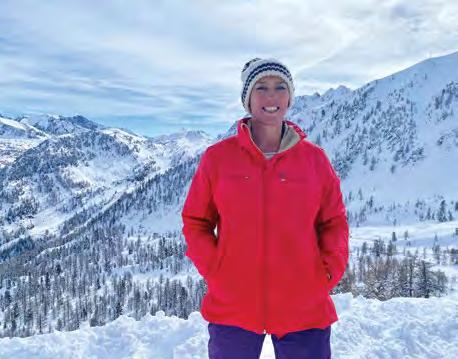
Why does The Ulysses Trust help cadets access trips abroad?
By providing grants, we ensure all cadets (and the adult volunteers who deliver the activities) can take part in life-changing expeditions – regardless of socio-economic circumstances.
Challenge and adventure are proven to be some of the most powerful ways to help young people grow in confidence, resilience and teamwork.
Experiences like these trips build self-awareness and values such as courage, respect and selflessness, as well as life skills like resourcefulness, risk-awareness and sound judgement under pressure. The experiences also support mental health and wellbeing, helping create valuable, employable young people.
To strive, to seek, to find, and not to yield is our motto, taken from Ulysses by Lord Tennyson. Expedition outcomes represent the very best of youth development, combining adventure, responsibility and teamwork in a way few other activities can. We are proud to be able to

'Build self-awareness and values such as courage, respect and selflessness '
support these activities as one of the most important, rewarding and impactful ways to develop resilience of individuals, units and the nation as a whole. They also broaden horizons by exposing young people to new cultures and experiences.
How do you feel when you hear testimonials from cadets who've been on a trip?
It's incredibly rewarding to hear directly from cadets about the difference these expeditions have made to their confidence and outlook. Their stories remind us that the impact goes far beyond the expedition itself to shaping how they see their future.
from
We provide grants to support all kinds of expeditions, from small groups on a hiking weekend in the UK to ambitious international expeditions for large numbers of cadets and CFAVs. What is considered challenging and adventurous, and the level of financial support required, varies, so each grant application is assessed on its own merit. There is a simple application form to complete on our website, along with criteria and guidance.

'ACCT UK exists to ensure that life-changing opportunities in the Army Cadets are open to every young person. Cost should not be a barrier. That’s why we invest in expeditions and overseas trips, making them more affordable for cadets. These include adventurous training, battlefield tours and journeys that build cultural understanding and a sense of service. In doing so we also broaden their knowledge of the wider world.
'Time and again, we see that when cadets visit new countries and face fresh challenges, they grow in confidence, resilience and leadership. They return home better prepared to succeed in education, work and their communities.
'Supporting these trips is one of the most powerful ways ACCT UK can fulfil its mission. It ensures that the opportunities offered by the Army Cadet Force reach the young people who need them most and helps them discover just how much they can achieve.'

'The CCFA helps cadets in schools access opportunities that extend far beyond the classroom. Our grants programmes are designed to remove practical and financial barriers so that more young people can take part in high-quality training, meaningful visits and ambitious expeditions.
'From funding kit and expedition equipment to supporting battlefield studies and other enrichment activities, we want every cadet to feel fully equipped to take part and to thrive.
'Teachers regularly tell us that these experiences transform how young people see themselves and their futures, building confidence, teamwork and a stronger sense of service to others. Supporting cadets in schools is a vital part of how we invest in the next generation of leaders and help them reach their true potential.'

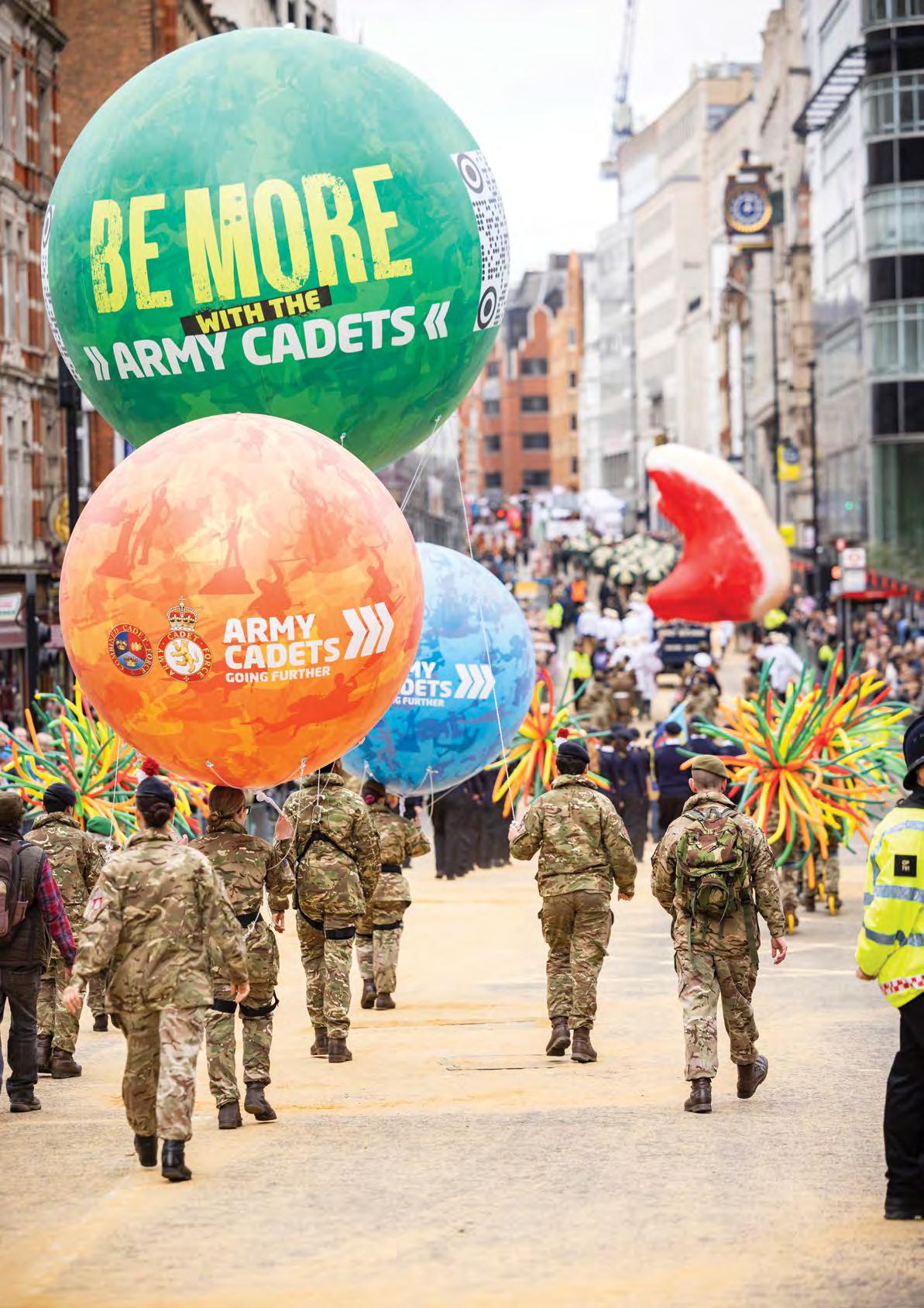
Cadets are integrated into their communities and support them in ways that range from fundraising for worthy causes to participating in events like parades, ceremonies and celebrations.
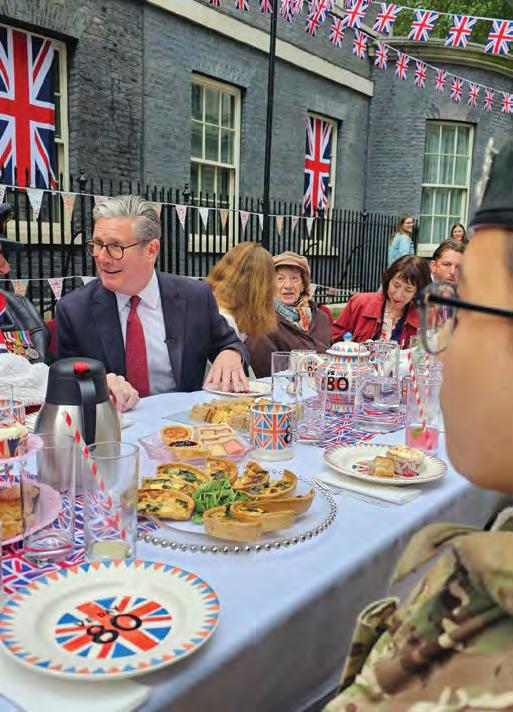
Throughout the year, cadets and CFAVs participate in events, parades, community ceremonies and celebrations across the UK. The Lord Mayor’s Show each November is a notable example and features a procession through London of around 7,000 people, 250 horses and 150 floats.
SSI Joe Cox, Detachment Commander, Greater London South West Sector ACF, participated in the Lord Mayor’s Show in 2024 and said: ‘It was a very exciting opportunity, which allowed us to interact with the community and represent the Army Cadets.' He described it as 'an incredibly fun and eventful day'.
Other examples include Trooping the Colour, national Pride celebrations, the Birmingham International Tattoo and special occasions such as the VE80 commemorations in 2025 – which saw cadets take tea with Prime Minister Sir Keir Starmer at 10 Downing Street. Cadets were also part of the coronation of King Charles III and Queen Camilla and participants were awarded the Coronation Medal.
Cdt Cpl Oliver Massey of Greater London South West Sector ACF took part in Trooping the Colour in 2025. He recalls: ‘The day was made extra special when the King passed us on his way to Horse Guards Parade. We saluted him, and he returned the salute – a moment I will never forget.’
Remembrance Day is a significant date in the Army Cadets calendar. Cadets and adult volunteers from every detachment across the UK join thousands at Remembrance events, services and parades each November. They represent the Army Cadets at events ranging from relatively small local parades and wreath-laying ceremonies to much more prominent events, such as supporting the Royal British Legion’s Festival of Remembrance at the Royal Albert Hall. Each year they also march, alongside several thousand personnel, past the Cenotaph.
Cdt Sgt Poppy Darling of Northumbria ACF recalled her experience in 2024: 'Attending the Festival of Remembrance was absolutely amazing. There were hundreds of veterans, and we got a chance to speak to several. Hearing about their experiences was the best part of the whole event.'
In 2025, Cdt CSM Tomos Jones, Clwyd and Gwynedd ACF, had the honour of serving as the national banner bearer for the Army Cadets at the Festival of Remembrance. Tomos said: ‘I was overwhelmed with pride when I was selected for this role, and my family was over the moon. Being at the Royal Albert Hall was an incredible and deeply moving experience.’
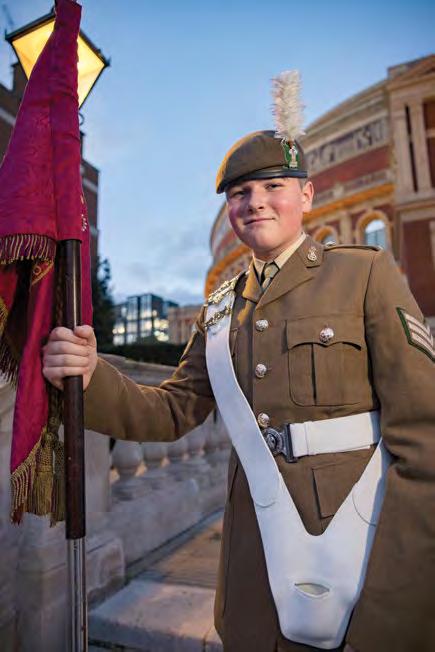
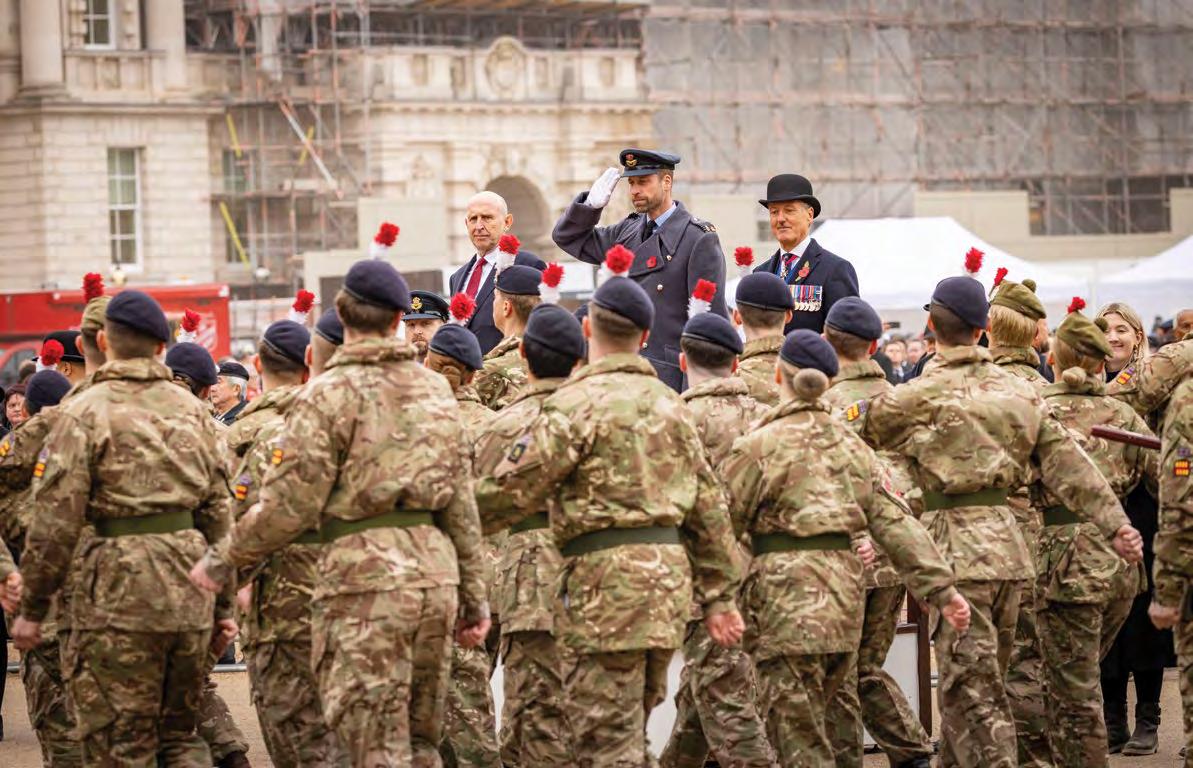
Cadets and adult volunteers raise huge amounts of money for charities each year, including ACCT UK, the Army Cadets' own charity, which supports cadets so they can take part in life-changing trips.
The Forest of Dean Youth Environmental Award encourages young people to expand their boundaries and consider their role in global citizenship, climate change, wildlife biodiversity and healthy living. In 2025, Coleford Platoon, Gloucestershire ACF, won the award, having taken part in activities that included creating a recycling station and bird feeders for their Cadet Garden, donating to the National Trust tree planting scheme, supporting an open day at a hedgehog sanctuary, engaging in a fungi identification project and planting a wildflower patch.
The annual March in March fundraising event sees participants walk, run or roll ten miles during the month of March to raise funds for Combat Stress. From 2021–2025, Ark Alexandra Academy CCF raised over £37,000 for the charity through the event. In February 2026, the efforts of the cadets and CFAVs were recognised in a prestigious award: Combat Stress’ Cadet Unit of the Year 2025.
Each December, teams of cadets and CFAVs step up for the Walking Home challenge, walking long distances in cold weather to raise funds for military veterans’ charity Walking With The Wounded (WWTW). In 2024, eight Army Cadets teams were among the 801 people who participated. They raised £3,000 of the £95,000 total.
Every year, cadets across the country join the Cadet Challenge to raise money for ACCT UK. The funds go to the charity's Grants programme to subsidise trips and activities, supply equipment and make sure opportunities are accessible for all cadets. Fundraising has included bake sales, supermarket collections, abseiling, mountain climbing, running, swimming and bike riding. Cadets and CFAVs who have raised funds for ACCT UK are honoured in the annual ACCT UK Excellence Awards. In 2025, the awards were presented by Dame Joanna Lumley.
Adult volunteers have been just as active in undertaking feats to raise funds. SI Carl Little, a CFAV at Wrexham ACF, completed an unsupported fundraising trek across the Sahara Desert in 2025. Carl carried all his equipment and water on the 30-mile journey, which he completed in two days. His efforts raised £2,500 for Wrexham ACF.
Padre Toby Jones of Clwyd and Gwynedd ACF raises funds for ACCT UK through running events, including the Burj2Burj half marathon in Dubai, which he ran in 2026.
Former cadet and now CFAV, 2LT McKenna of Lothian and Borders Bn ACF, took on a 26.4km leg of the 215km coast-to-coast John Muir Way in Scotland to raise funds for her company’s Christmas Camp.
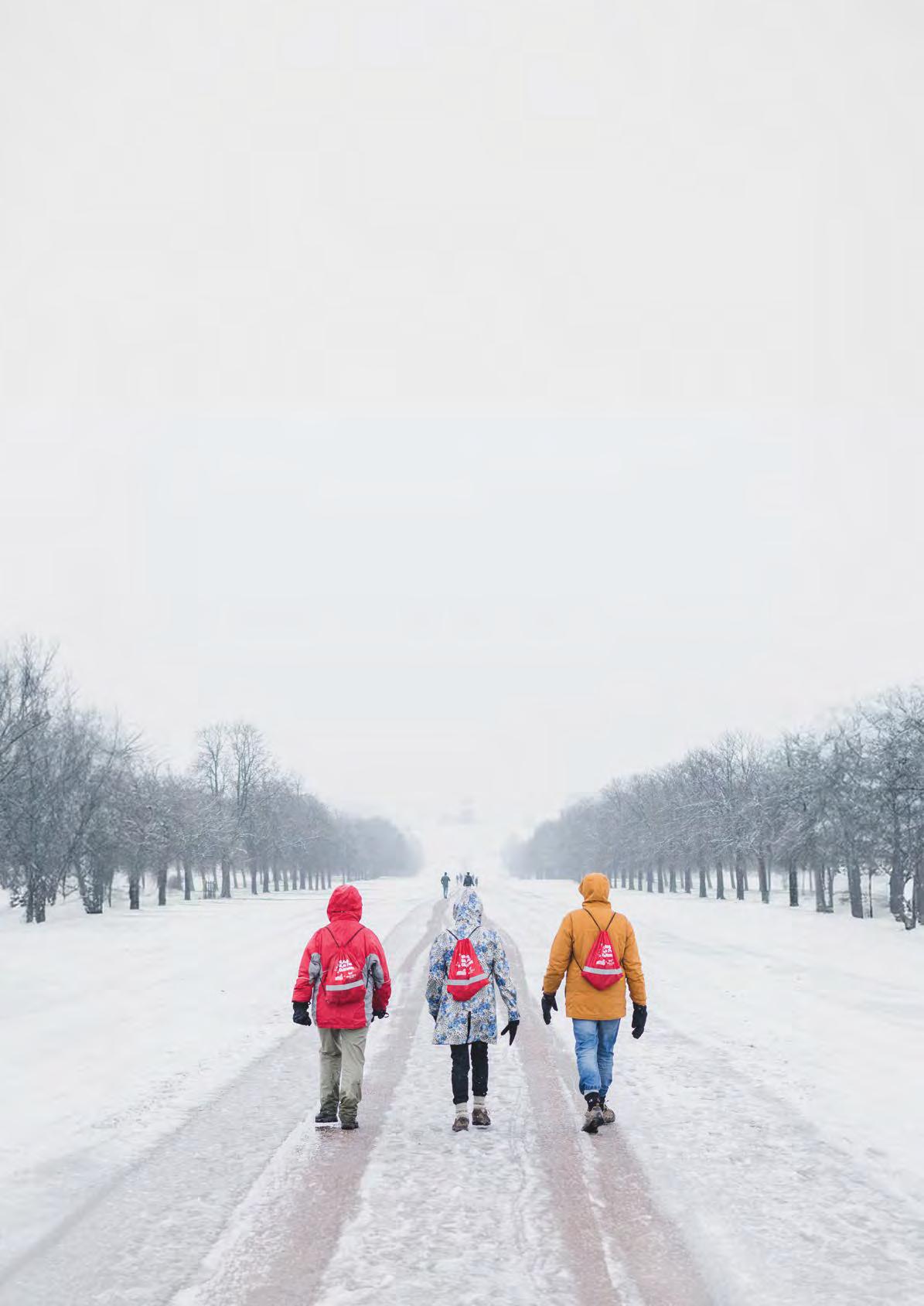
Cadets take part in the Walking Home challenge
Training lead Lt Col Mark Teesdale reveals how being a member of the Army Cadets hones leadership skills and empowers cadets to step up and take the initiative in a variety of situations.
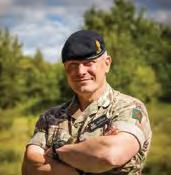
Despite having been in the Army for 35 years and having a Master's degree in leadership, Lt Col Mark Teesdale doesn’t believe he would have achieved all he has in his life and career if he hadn't, at age 12, joined Glamorgan Counties ACF.
‘At the time I thought I was just having fun with my mates, but it set me up on a lifelong journey,’ he says.
For Lt Col Teesdale, being in the Army Cadets taught him the kind of leadership skills and self-confidence that would eventually equip him to follow his chosen career path into the Army.
‘I can name at least five regular ex-RSMs from my old cadet unit in a small industrial town in South Wales – that can’t be a coincidence!’ he says.
Not everyone in his detachment had ambitions to join the Army, though. Other cadets were inspired and empowered to follow a whole variety of other career paths and interests.
As training lead, Lt Col Teesdale says the Army Cadets still does an excellent job of demonstrating to cadets what confidence and good leadership look like. It also gives them opportunities to hone their leadership skills and develop their potential in a safe and encouraging environment.
‘The Army Cadets syllabus does this in multiple ways, and each subject has a part to play,’ he says. ‘As cadets progress through the syllabus, they are given increased responsibility, sometimes through promotion but mostly by being a role model to their younger peers.
‘No matter which area of the syllabus a cadet excels at, or what rank they achieve, they have the opportunity to develop their own leadership style.’
According to Lt Col Teesdale, the entire syllabus is a vehicle for teaching the Army Cadets’ values, standards and leadership code.
‘For example, shooting is great fun, but it also teaches discipline,’ he says. ‘You must follow the words of command and the drills precisely, in order to be safe. If you’re not safe, you can’t shoot.’
The Army Cadets leadership code encourages young people to strive for team goals. Activities such as team sports, fieldcraft and navigation, in particular, offer opportunities for cadets to develop teamwork, cooperation and camaraderie.
‘None of the subjects in the syllabus are taught as solo activities, so teamwork is vital in everything the Army Cadets offers,’ he says.
The leadership code also requires that cadets demand a high standard from themselves. Activities such as music (where they may be invited to perform at high-profile concerts) and drill and turnout (where they are invited to parade at important events, including Remembrance) encourage cadets to give their best.
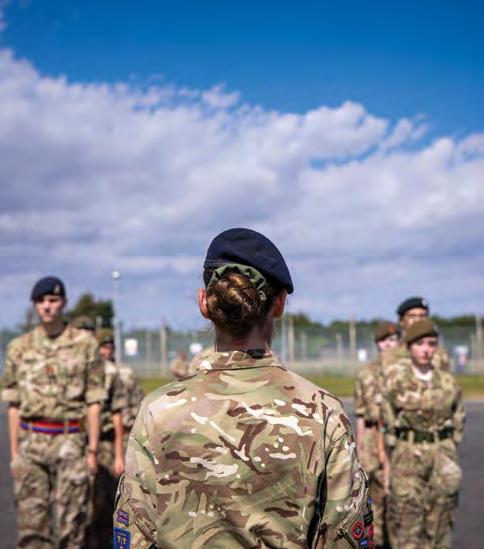
Lt Col Teesdale believes that, whatever a young person decides to do later in life, knowing how to assume responsibility and lead a team are vital to future success.
‘If there’s one skill that a young person will use throughout their life, no matter what they do, it’s leadership,’ he says.
‘Leadership is about people. At some point you're going to have to lead others. That may be in a long-term career or for something like captaining your village rugby team.
‘Leadership could also be thrust upon you in an instant, such as when at the scene of an accident – which is why first aid skills are so vital.’
People sometimes think of military-style leadership as hierarchical, with officers and non-commissioned officers having all the knowledge and power and everyone else following their instructions like robots. Lt Col Teesdale says nothing could be further from the truth.
‘Young people these days are the brightest and best educated in history,’ says Lt Col Teesdale. ‘When they are given a task, they want to know why. They also want to know what part the task plays in the bigger picture and why it should be done in a particular way. Sometimes, a young person comes up with an even better or faster way of carrying out the task.
‘If a leader wants to bring their team along with them, they need to be able to explain not just what needs to be done, but why it needs to be done and in that particular way.’
Lt Col Teesdale believes there is also a place for direct commands in leadership. The drill square, for instance, isn’t the place to start asking if there’s a better way of doing things.
‘What we aim to do is give our young people an understanding of which leadership style is appropriate in a given situation, and the opportunity to practise that in a safe environment,’ he explains.
Cadets with the ambition to lead have the opportunity to work towards their Junior Cadet Instructor Cadre (JCIC) and then progress to the Senior Cadet Instructor Cadre (SCIC).
‘Being an instructor of any kind gives you the confidence to stand up in front of a group of people and speak clearly and confidently,' he explains. 'That’s a life skill any young person would benefit from. I've seen grown men struggle to speak in front of an audience, and I’ve seen a young cadet stand up in front of a room of senior officers and absolutely smash it.’
As well as developing confidence, JCIC and SCIC equip cadets with the most effective ways to explain instructions to people with different learning styles.
‘Learning how to instruct develops a cadet's ability to employ analytical thinking, as well as a huge amount of patience,’ he says. ‘I would encourage every cadet to attend the JCIC and SCIC if possible.’
Opportunities to instruct others, though, often arise before then.
‘You can start to instruct by taking five minutes to explain or demonstrate something to a junior cadet who’s struggling.
‘They’ll be grateful for the extra explanation, and you get to practise breaking things down. Everybody wins,’ he says.
The Army Cadets leadership code consists of seven leadership behaviours:
• Lead by example
• Encourage thinking
• Apply reward and discipline
• Demand high performance
• Encourage confidence in the team
• Recognise individual strengths and weaknesses
• Strive for team goals
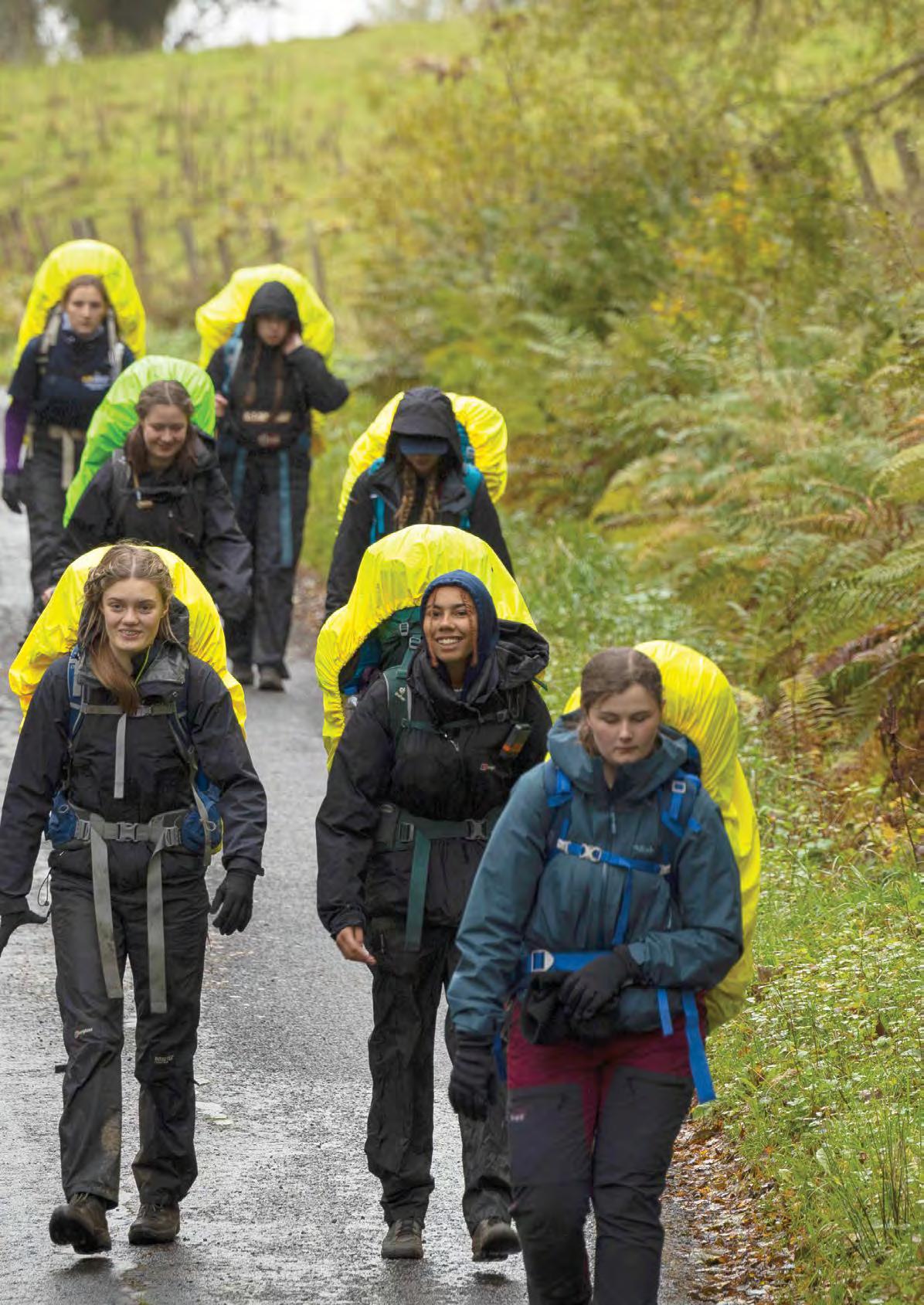
'Develop your teamwork and leadership skills '
Gaining your DofE Awards with the Army Cadets develops skills that'll give you a head start in life, says Liz Green, DofE Award Development Manager.
Almost all the activities in the Army Cadets syllabus can count towards a section of your Duke of Edinburgh's Award (DofE). The two dovetail perfectly, according to Liz Green, DofE Award Development Manager for the Army Cadets.
‘Achieving the Duke of Edinburgh’s Award in the Army Cadets enables you to translate all the fantastic things you do as a cadet into a language understood universally by employers and higher education institutions,’ she says.
For example, shooting and skill at arms count towards the Skill section of the DofE. Sports and keeping active count towards the Physical section, and community engagement activities count towards Volunteering.
‘Even our Army Cadets syllabus expeditions have been designed to align exactly with DofE Expeditions,’ says Liz. ‘Cadets really do get two for the price of one!’
DofE builds the kind of skills and attributes that will support you as you progress into further education and employment. These include communication, resilience, enterprise, drive and commitment.
‘DofE is held in high regard by employers because it shows your ability to dedicate yourself to an activity over an extended period of time,’ says Liz. ‘It also shows you are a balanced person with a range of interests.’
DofE activities are particularly pertinent for those keen to develop their leadership skills, especially the progression to the Silver and Gold Awards.
‘The Expedition section, in particular, enables you to develop your teamwork and leadership skills in a challenging outdoor environment,’ says Liz. ‘If you enjoy instructing others, you can use the teaching you carry out at your detachment towards your DofE Volunteering.
‘There is also a new DofE Young Leader programme, which is open to cadets over 15 who have completed a DofE Award. It gives a real-life opportunity to put leadership theory into practice in a structured and supported way.’
Soft skills (also known as transferable skills) are the kind of personal attributes that enable you to interact effectively and harmoniously with other people. These non-academic and non-technical skills can contribute greatly to your success in life. In both the Army Cadets and DofE you are continually developing soft skills through interaction with others.
‘Taking part in the DofE encourages you to think more broadly about your community, whether that’s within your detachment or in your local neighbourhood,’ says Liz. ‘You'll develop qualities of compassion, adaptability and determination as you strive to progress in various activities over a period of time.’
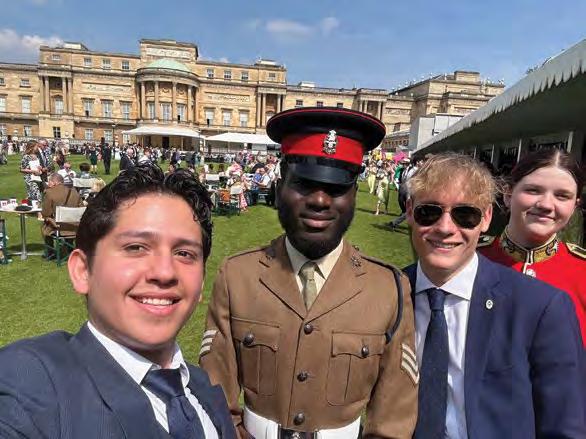
Teamwork is another core component of the DofE. The Expedition section, for instance, requires a group of participants to plan and complete a self-sufficient journey together.
‘Teamwork is hugely important on Expedition, where cadets are living and working together to achieve a shared goal,’ says Liz.
‘However, it is equally important across the other sections, where cadets can progress together through their Awards – hopefully culminating in a shared visit to the Palace when they complete their Gold Awards!’
It’s easy to assume that DofE is primarily about Expedition, but Liz is keen to stress that there are plenty of other activities which develop your communication skills. If you're nervous about signing up, you’ll be relieved to know that there is plenty of support, encouragement and mentoring along the way.
‘Leaders are there to support you, and the best bit is that lots of the activities can be done as a team – especially the Volunteering and Expedition sections – so you’re not on your own, and your team will help you through,’ says Liz.
Volunteering within the DofE is about making a meaningful contribution to your community and helping causes close to your heart. Liz stresses you should always look for an activity that's meaningful to you.
‘There are lots of opportunities for cadets to get involved in volunteering at their detachments, in activities such as teaching and instructing, fundraising for service charities, or supporting younger DofE participants as a Young Leader.
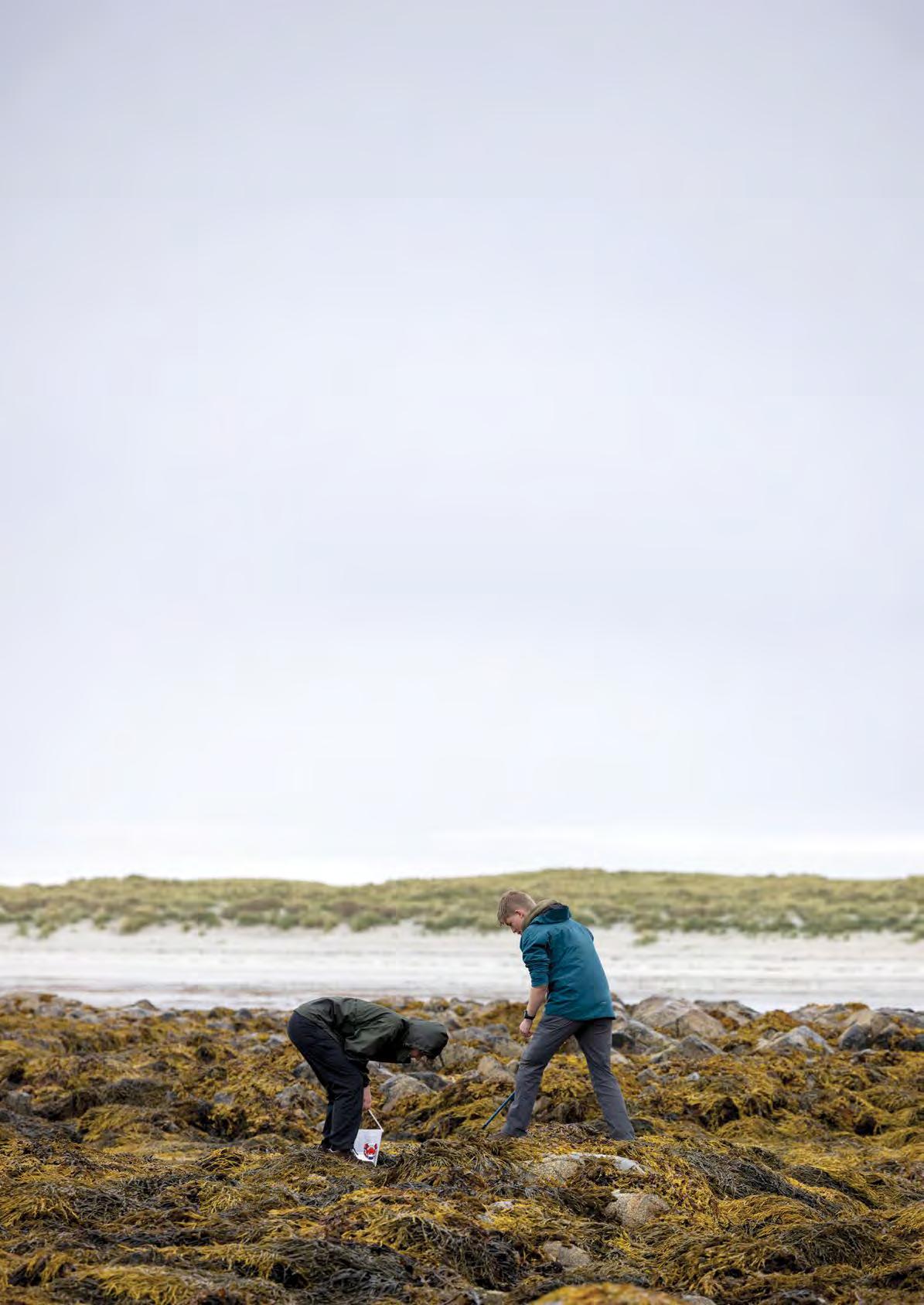
‘Equally, many cadets choose to volunteer outside of Cadets, and that could be anything from helping out at a local club to volunteering at parkrun or raising funds for a local charity.’
Hitting goals and accomplishing a big challenge can be hugely positive for your self-esteem, confidence and wellbeing. The three levels of DofE (Bronze, Silver and Gold) ensure you will always feel challenged and have new goals to strive for.
‘The Award is progressive, so the timescales increase at each level, and the goals you set yourself should get more challenging along the way,’ says Liz. ‘This is a great tool for self-development: when you see you are capable of achieving the first step, you'll be inspired to set yourself greater challenges as you work through the Awards.’
Challenges can also be personalised to your interests and the causes you care most about.
‘For some cadets, the Expedition is the highlight of their award, but others will get more out of the Volunteering or Skill sections,’ says Liz. ‘It’s a different experience for each young person.
'If you want to find out more about doing your DofE Award or supporting other cadets to do theirs, contact your local DofE officer.'
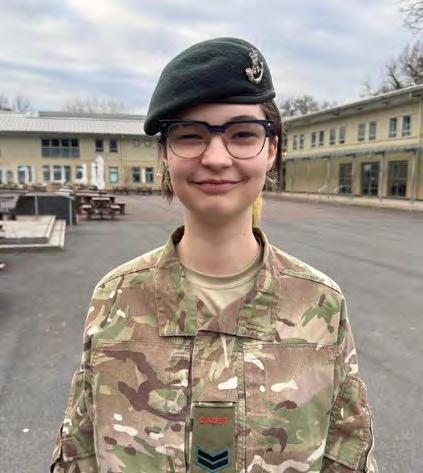
Cpl Harry Byrne, 16, from Gwent and Powys ACF, is working towards his Bronze DofE Award. He has been mentoring new members of his detachment and studying military knowledge for his Skill section. He's also been on expedition in the Crickhowell area of south-east Wales.
‘The expeditions have been a fun achievement, getting mildly lost and then finding the right path and managing to finish,’ he says.
‘Navigation duties are a great skill to learn: knowing you have responsibility to lead the group means you really can’t get it wrong.’
Alongside building his fitness, learning navigation skills and working as a team, Harry feels the long walks and activities have benefited him in other ways too. He now feels more able to focus and be resilient in the face of challenges.
‘I feel my mental health has improved too. Getting out walking has really helped me to be clear and focused. It’s also been great to share all the activities with others.’
Harry is currently working towards his JCIC and hopes one day to become a firefighter, like his dad.
‘I think the qualities I’ve gained by working towards the Award, such as resilience, physical ability, commitment and dedication, will help me achieve this.’
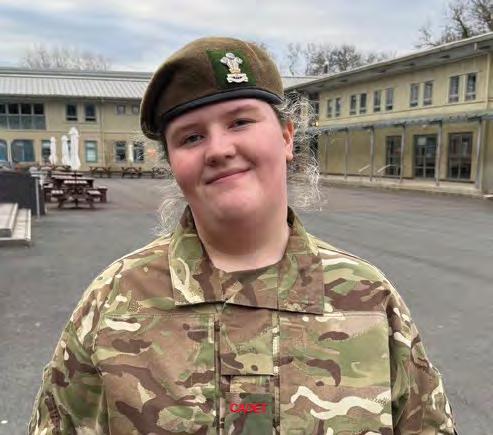
Cpl Haf Thomas, 17, from Gwent and Powys ACF (B Coy), has completed the Gold Award and will be heading to Buckingham Palace in May for a Gold Award celebration.
One of the highlights for Haf was joining 29 participants from across the ACF and CCF (Army) for a Gold DofE Residential on the Isle of Tiree. The tiny windswept island in Scotland’s Inner Hebrides was the setting for the team’s combined beach-cleaning effort of 726 hours.
‘It was a memorable experience to learn about the ocean and how rubbish affects sea life and beaches,’ said Haf. ‘It filled me with pride that we were able to raise money for a defibrillator that will benefit the local Tiree population.’
Working towards the Gold DofE Award helped Haf become more outgoing, develop leadership skills and build a varied CV.
‘I’ve become much more confident in my abilities,’ says Haf. ‘My self-esteem has grown, and I now take pride in everything I do.
‘It's also taught me about staying committed to doing something I’ve started. I’ve learnt how to have the resilience to carry on, even when my feelings were telling me not to.’
Haf is currently finishing off a JCIC course and working hard to complete the 3-Star before ageing out of the Army Cadets in August.
‘I’m really grateful to all the adults who helped me through the DofE. The little push they gave me while working towards my Bronze DofE Award got me focused. They then continued to support me all the way through to Gold.
‘I hope to be returning to the Army Cadets as a CFAV and would like to develop the skills to become a DofE leader so I can help others through their Award.'
The skills young people gain during their time in the Army Cadets are often the bedrock for their future success. Meet a few former cadets.
'It was the making of me ’
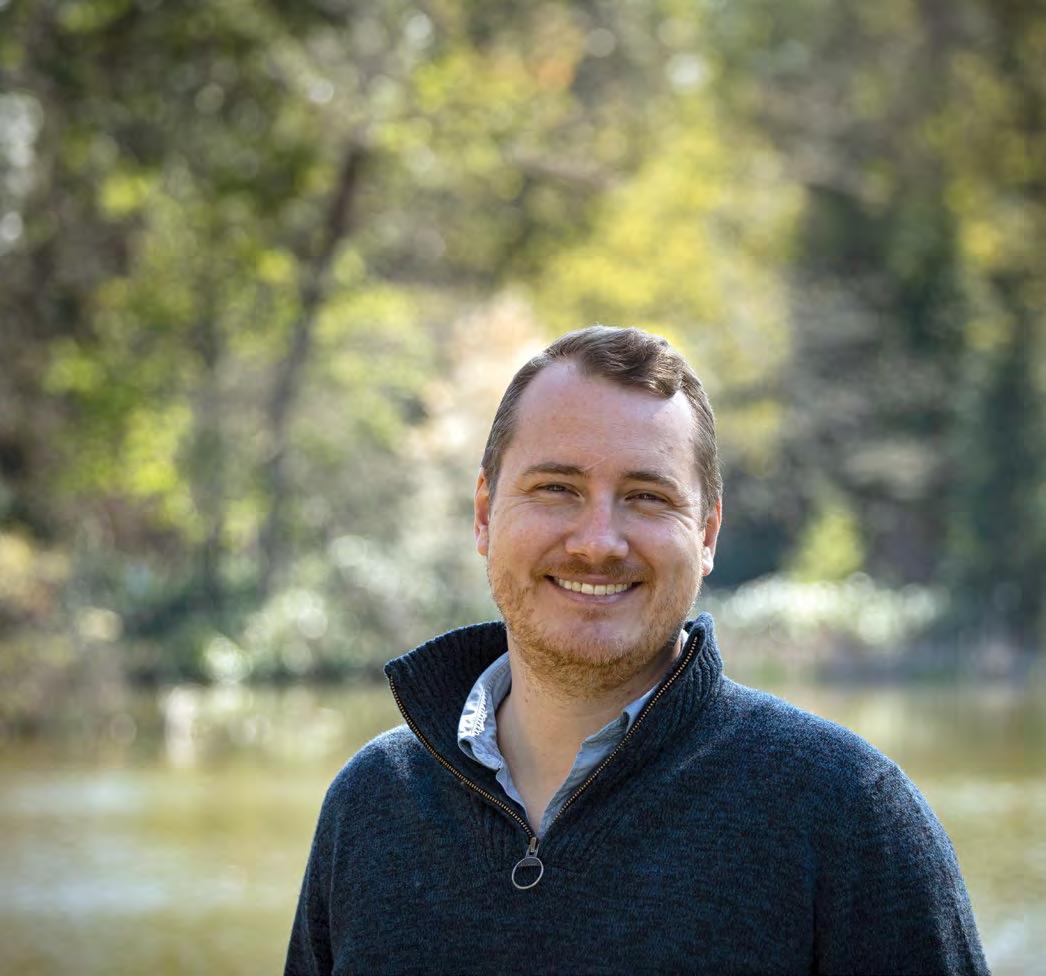
Cameron Prescott-Young is a former cadet whose journey has taken him from fieldcraft in the Army Cadets to cyber strategy at a major global tech company. Today, Cameron works as a cyber strategy and transformation director at Atos, a leading French technology firm.
In addition to his corporate role, he volunteers in the Army Cyber Reserve. It’s a great example of how the Army Cadets can serve as a launchpad for a life of service, leadership and innovation.
‘When I reflect on my career, I really see the Army Cadets as the beginning of everything,’ he says. ‘It was my first exposure to structured leadership, discipline and challenge.
‘From a skills perspective, it’s the determination, confidence and drive that the Army Cadets instilled in me at such a young age that I carried through to the Army and my professional career since.
'I can’t overstate how important that’s been: being able to look at any challenge, whether professional or personal, work out a plan of attack, and then have the self-belief to see it through. That foundation came from the Army Cadets.'
Much of Cameron’s early adult life was shaped by his time in the Army, but his journey into the military began with the Cadets.
‘It gave me so many transferable skills that have stayed with me throughout my career,’ he says.
One particular area of growth was learning about responsibility. Fieldcraft exercises, progressing through the star levels, being given cadet rank and leadership roles gave him a sense of accountability and purpose. His time as a cadet also developed his love of the great outdoors.
‘There’s something about being out in nature – even at 3am in a training area while it's freezing and you're bashing up a shelter – that's really stuck with me. Living in London, I don’t get to experience it as much now, but I still love it whenever I do.’
Cameron believes the Army Cadets provided a solid foundation for both his military and civilian careers.
‘I was quite a geeky teenager; my family used to call me "square eyes" because I played so much Xbox,’ he says. ‘I don’t come from a military family either, so it was quite a random step to join. But it was the making of me.’
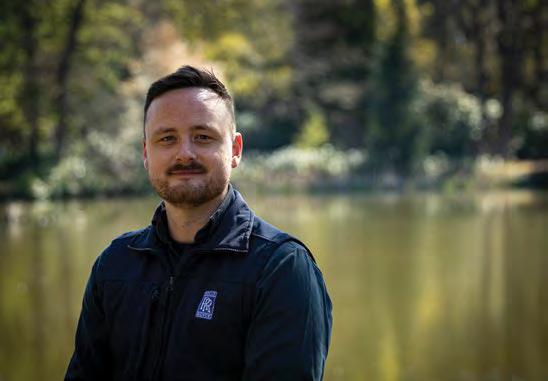
Liam Gray's career progression demonstrates how the Army Cadets shapes futures. The former cadet is now an area training officer for A Company of Nottinghamshire ACF. However, outside of volunteering, he's built a career as a nuclear facilities commissioning engineer for Rolls-Royce Submarines in Derby.
His time in the Army Cadets developed some of the skills he needed to succeed professionally, but it also gave him a lifelong connection to service and leadership.
‘The skills I gained as a cadet include leadership, communication and teamwork,’ he says. ‘I also learnt what not to do in certain situations: it was a time of trial and error during the early stages of my professional development!'
A standout memory was attending a course with the Royal Electrical and Mechanical Engineers (REME) at Arborfield.
‘We gained insight into the life of an apprentice artificer and worked with helicopters, tanks and simulators. It was a fantastic week and gave me direct experience I could use when applying for an apprenticeship with Rolls-Royce. I’ve now worked there for 13 years.’
Liam also credits the Army Cadets with teaching him soft skills that became useful in later life, including time management and relationship management.
‘The Army Cadets exposes you to a very diverse and open community; one of its greatest assets is the variety of people you meet. That continues when you become an instructor, as you interact with people from a wide range of careers, perspectives and backgrounds.’
During his time in the Army Cadets, Liam passed the Junior Cadet Instructors Cadre (JCIC). Getting to lead others through the syllabus helped him embrace continuous improvement. Learning to take feedback, apply it and use it to grow was valuable to him.
‘The ability to take criticism and detach from it emotionally – focusing instead on the message and how to improve – was something I developed as a cadet and refined as I took on more senior instructor roles.’
Liam also got to participate in adventurous training and experiences that took him out of his comfort zone, including activities at height, open-water challenges and frequent travel away from home.
‘I was fortunate to take full advantage of the opportunities available. and through that, developed one of the greatest skills a young person can gain: independence.’
To young people thinking of joining the Army Cadets, Liam says: ‘Do it. Have an open mind and enjoy the opportunity to meet people you may never cross paths with in everyday life.'
LCpl Rachel Kelly joined the Army Cadets as part of Kirton Detachment with Lincolnshire ACF. Today, she’s a Class 1 vehicle mechanic with REME in the British Army.
During her time with the Army Cadets, Rachel reached the rank of cadet sergeant and then set her sights on joining the British Army at the Army Foundation College in Harrogate.
The Army Cadets offered her the opportunity to gain practical experience, leadership development and insight into military values and standards, further confirming her ambition to serve. It also taught her how to move out of her comfort zone.
‘One moment that stands out for me was abseiling from a bridge into a river during adventurous training,’ she says. ‘I had always been afraid of heights and, at the time, the situation was quite intimidating. However, with the encouragement and guidance of an excellent instructor, I pushed myself beyond my comfort zone and completed the activity with a smile.’
What began as a nerve-racking moment quickly became an enjoyable and rewarding experience for Rachel.
‘It was important to me because it taught me the value of resilience and the confidence that comes from overcoming personal challenges. It showed me that, with the right mindset and determination, I can achieve more than I initially believe possible.‘
It’s a mindset that Rachel has taken into her career. She is always finding ways to develop confidence in her own abilities and has learnt the importance of trusting the team around her.
‘I'm motivated not only to perform to the best of my ability, but also to set a positive example and help inspire those who will follow,’ she says.
First aid training is a core part of the Cadets experience. Meet some cadets who have applied their first aid skills in real-life emergencies.
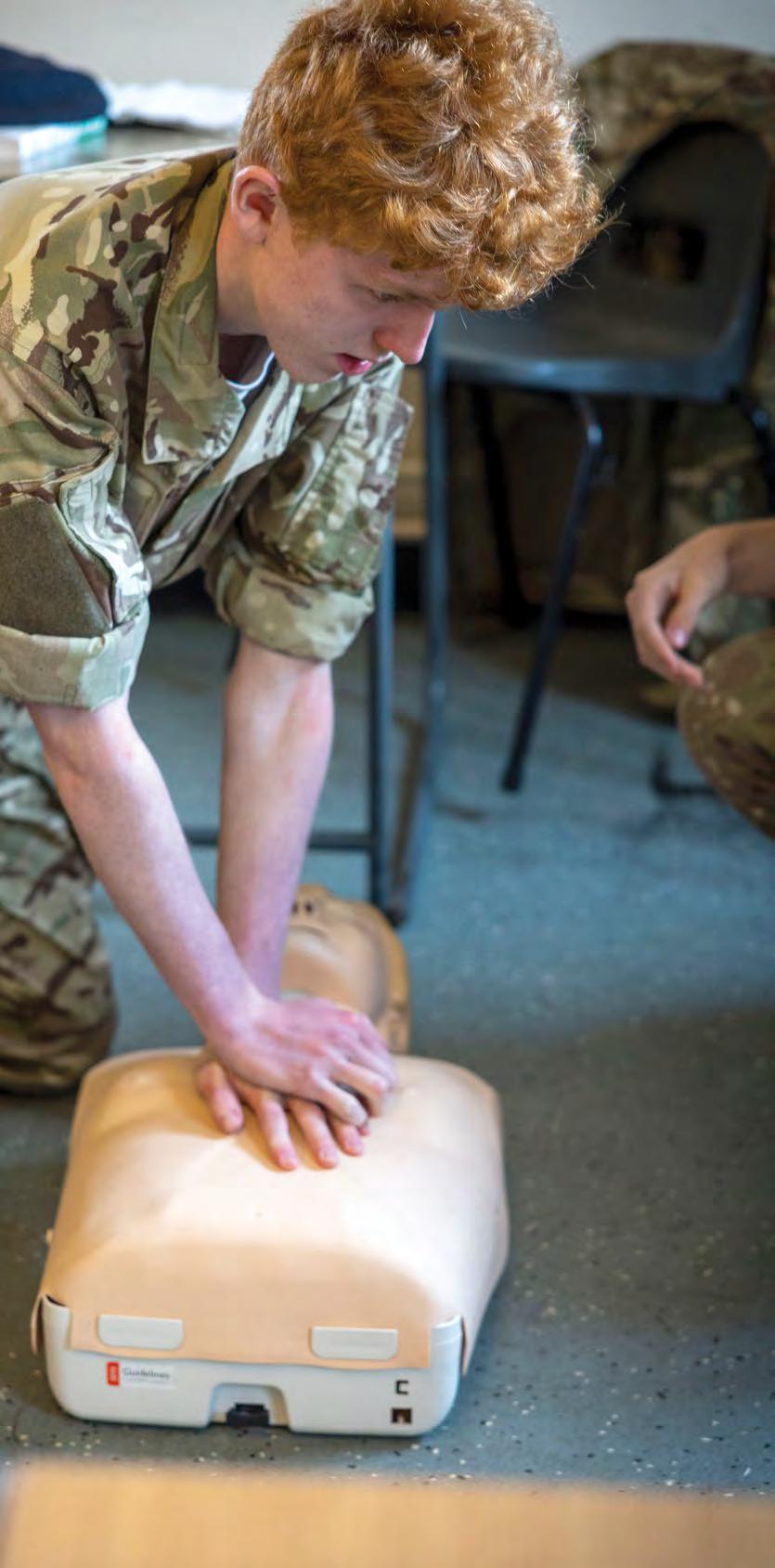
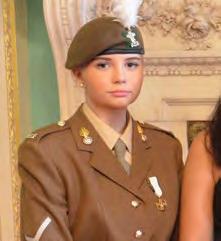
Cdt Aimee Williams of Dyfed and Glamorgan ACF showed extraordinary courage and life-saving actions during a family emergency abroad.
While on holiday in Alicante last summer, Aimee's mother collapsed with a seizure that was the result of a sudden brain aneurysm. Drawing on her Army Cadets first aid training, Aimee remained calm under immense pressure and administered first aid. She then ran down 16 flights of stairs to summon help and give directions to emergency services.
When she returned, she ensured her mother's airway was clear while monitoring her breathing and pulse. Along with her mother's partner, she was able to place her mother in the recovery position, which proved critical when she began vomiting. Aimee's quick thinking and composure ensured her mother's survival while waiting for the ambulance to arrive.
Her courage did not end there, however. Faced with her mother's immediate hospital bills and need for life-saving surgery, Aimee coordinated emergency funds from the UK. On returning home, she launched a fundraising campaign which raised over £22,900. Her efforts covered vital medical expenses, specialist equipment and ongoing support for her mother's recovery.
Despite challenges, Aimee has continued to attend her unit, participate in training weekends and support her peers, demonstrating resilience and determination. Her mother is now recovering at home thanks to Aimee's actions and the support she has rallied.
ACCT UK Chief Executive Murdo Urquhart said: 'Aimee's story is one of bravery, compassion, love and leadership in the face of adversity. She is a role model to her detachment, her family and the wider community. We are immensely proud of her and inspired by her example. Her actions have made a profound difference and exemplify the spirit of the Army Cadets.'
Award League of Mercy Distinguished Community Service Medal for Cadets
Award ACCT UK National Praiseworthy Action Certificate
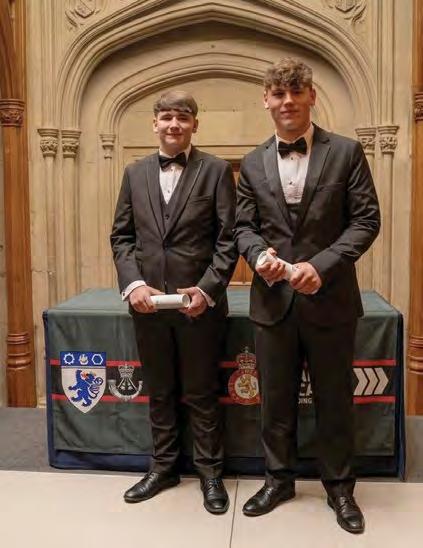
Lucas Peart (left), aged 13 and Cdt Elliot Briggs (right), aged 15, from Hartlepool Rifles Detachment, carried out life-saving actions at Hartlepool Headland beach when they spotted a man floating face down in the sea.
The cadets were fishing near Marine Drive when they noticed the man. After a member of the casualty’s family pulled him ashore, and following an unsuccessful attempt at CPR by distressed relatives, the cadets recognised the seriousness of the situation. Lucas immediately took charge of coordination, contacting the emergency services and running back and forth to direct police and ambulance crews to the exact location.
Elliot, drawing on first aid training gained through the Army Cadets, respectfully asked to take over CPR. He delivered ten minutes of chest compressions while a family member provided rescue breaths. The casualty expelled a large amount of seawater and there was a return of spontaneous circulation shortly before paramedics arrived. They said that the CPR that had been carried out was excellent.
Elliot and Lucas showed great bravery and readiness to act. Thanks to their life-saving response, the casualty was taken to intensive care and placed in an induced coma. After several days of treatment, he made a full recovery.
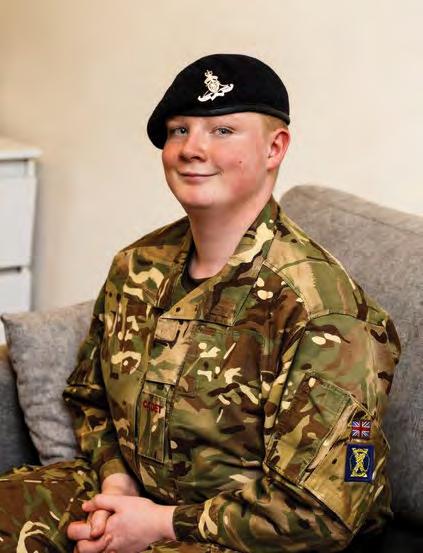
Jordan was on his way to his aunt’s house after training with the Glasgow and Lanarkshire Battalion ACF when he heard a scream at Drumchapel station. Following the call for help, he found a mother and her 10-year-old son. The boy had collapsed on the platform.
Despite it being his first time performing CPR outside of training, Jordan stepped in without hesitation. He carried out a primary survey, checking for a pulse. When he couldn't find one, he began CPR on the boy – a skill he'd learnt at Cadets the previous year.
Jordan continued CPR for over ten minutes –without access to a defibrillator at the station – before the boy’s pulse returned and paramedics arrived. He also calmly guided the boy’s mother to call 999 and provided the correct information to the operator.
Following the incident, Jordan recognised the importance of access to a defibrillator in emergencies. He has since launched a petition, which has gathered more than 1,000 signatures, calling for a defibrillator to be installed at the train station to help support future incidents.
Award Commendation from Her Majesty the Queen for calm, decisive, life-saving actions during a drowning incident
Award nomination (at time of print) ACCT UK National Meritorious Action Certificate
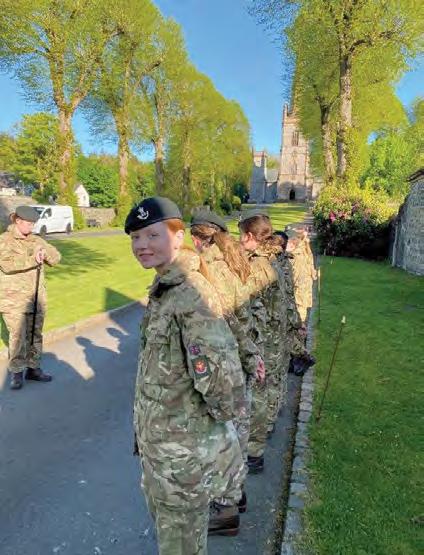
Cdt Cpl Maisie Crothers, 15, of Lisnagarvey High School CCF, acted quickly and professionally when she realised her mother was having a mild stroke.
Maisie discovered her mother was unwell one afternoon when she returned home from school. Her speech was slurred, her face had drooped slightly, and she had lost feeling and movement in her arms. Recognising the signs of a stroke, Maisie immediately took control of the situation, putting the skills she had learnt at Army Cadets just two weeks earlier into action.
She placed her mother in a comfortable and safe position and instructed her father to take her straight to A&E, knowing an ambulance would take too long. Maisie remained calm, monitoring her mum’s vital signs on the way to hospital and on arrival handed over to medical staff. Her mother was diagnosed with a transient ischaemic attack (TIA).
Later, Maisie’s mum was told by the consultants that her daughter’s professionally delivered first aid had prevented more serious effects of the stroke.
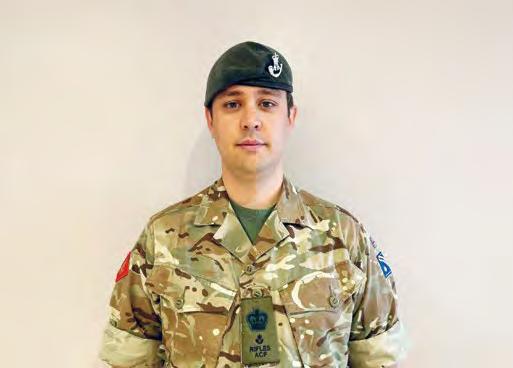
On the very day SMI Conor McLennan of Oxfordshire ACF completed his First Aid at Work course with the Army Cadets, he was faced with an emergency scenario in which he put his new skills into practice.
That evening, SMI McLennan was at a restaurant in Banbury when he noticed a commotion at another table. He went to offer assistance and found that an elderly woman had been choking for more than five minutes and that a member of staff was in the process of calling for an ambulance.
When the woman rapidly deteriorated and became unconscious, SMI McLennan established she was in cardiac arrest and commenced CPR. He also communicated the change in situation to the staff member calling for the ambulance. While performing CPR, he asked the staff if there was an AED (automated external defibrillator) nearby. Unfortunately, there wasn't.
When a paramedic arrived a couple of minutes later, he recognised that SMI McLennan was carrying out effective CPR and, without interrupting his rhythm, was able to attach a defibrillator to the woman and manage her airway obstruction. A police officer then arrived and was able to take over the CPR from SMI McLennan.
By that time, the restaurant had been cleared by staff but SMI McLennan noticed the casualty's partner sitting alone at a table. He reassured the man until a member of the emergency services took over.
After the incident, he reflected how the training he'd received prepared him to recognise a medical emergency and gave him the confidence to step in and deliver life-saving treatment.
'Her daughter’s professionally delivered first aid prevented more serious effects of the stroke'
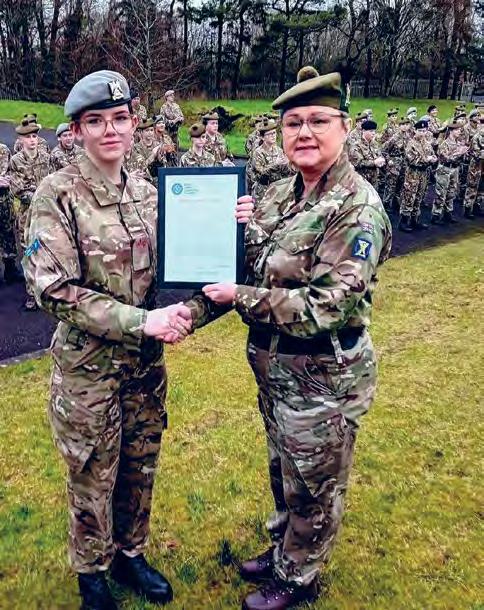
Cdt Charlotte Cameron-Hay, 16, of Glasgow and Lanarkshire Bn ACF, didn't hesitate to aid a woman she witnessed being hit by a motorbike as she crossed a road.
Charlotte and an off-duty paramedic ensured the casualty was comfortable, in a safe place and had a clear airway. The cadet remained calm while phoning for an ambulance and communicated clearly with the 999 operative. She then continued to assist at the scene by looking after the woman's daughter and granddaughter who had also witnessed the distressing event. The relatives communicated how grateful they were for her actions, care and support.
1,456
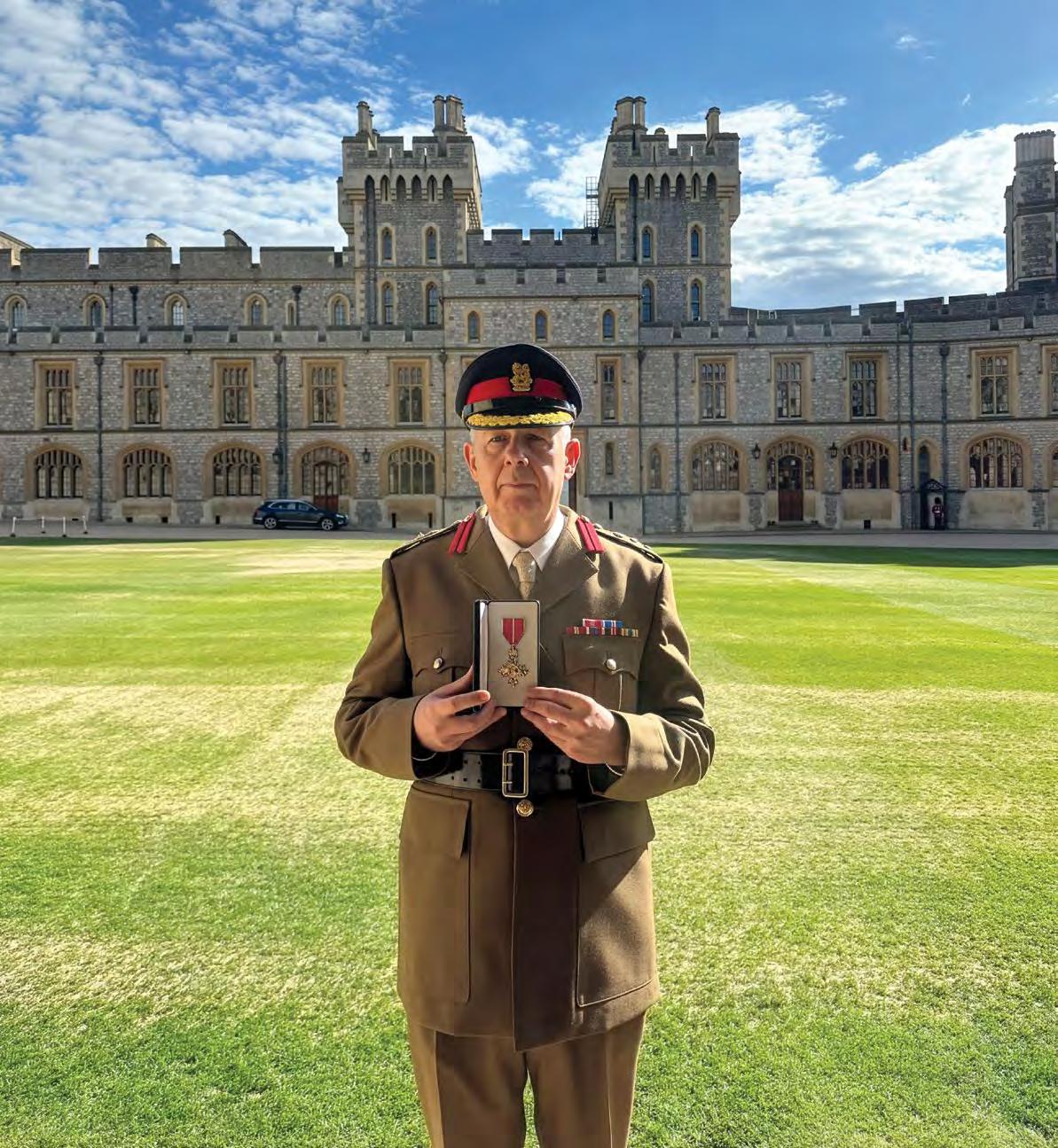
Meet three inspiring adult volunteers who have each been recognised for their outstanding contribution.
Dedication, leadership and a commitment to others are recognised in many ways within the Army Cadets, but at the heart of every story is the same purpose: helping people grow and succeed.
From national honours to Armed Forces Community Awards, these achievements highlight decades of service, leadership and innovation.
Whether they have sustained a commitment spanning more than 40 years, shaped the future of inclusive practice or led and
mentored cadets at county level, each person's story demonstrates the difference that passionate volunteers make to the Army Cadets community.
These are not just individual accomplishments, however. They represent the values that define the Army Cadet experience: supporting people to build confidence, develop resilience and reach their potential while creating opportunities for cadets and adult volunteers alike.
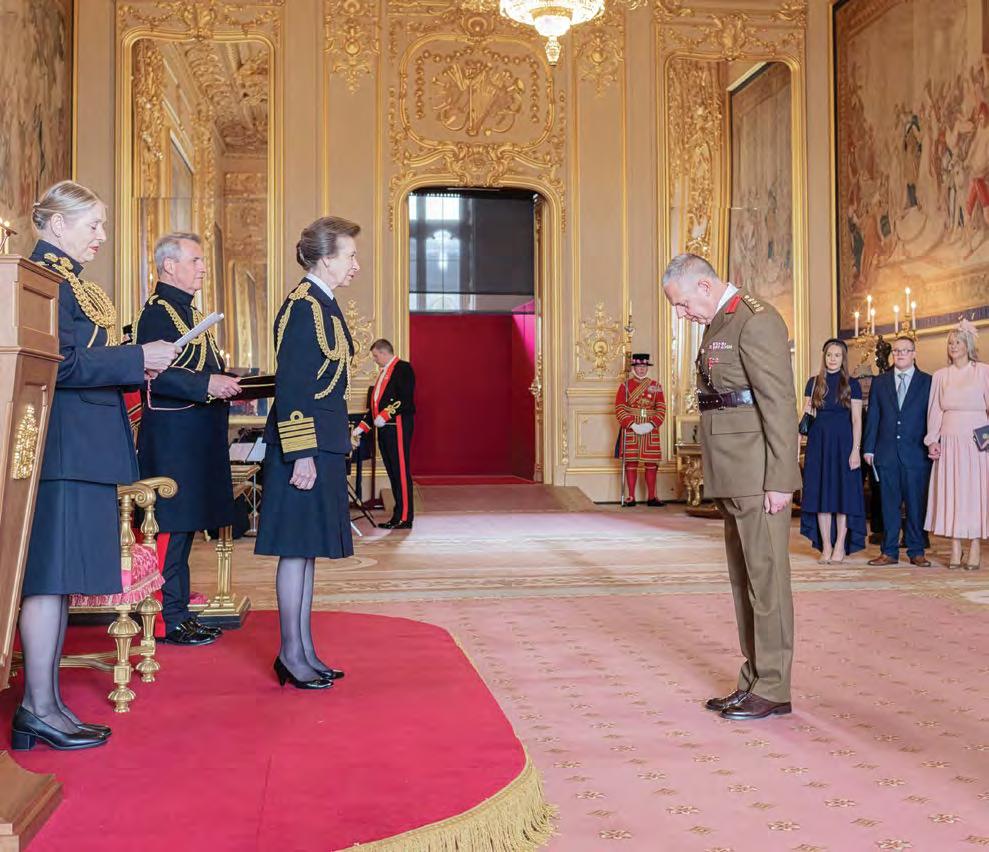
Being appointed an Officer of the Most Excellent Order of the British Empire (OBE) is a well-deserved recognition of Colonel James Morris’ dedication to the Army Cadets.
His investiture took place in March 2026 at Windsor Castle. Her Royal Highness The Princess Royal presented the award to James, which acknowledges decades of commitment – an impressive 42 years – to the Army Cadets, developing young people and strengthening the cadet experience at every level.
James has held every major leadership role within Sussex ACF, from Detachment Commander to his current appointment as Commandant. He concludes his tenure in September 2026, before taking up a new role as Colonel Cadets at Headquarters South East.
Over the years, James has also held numerous key appointments, including a 13-year stint as County Training Officer, during which time he delivered 13 consecutive annual camps. It represents a significant contribution of time, leadership and selfless service.
Looking back on his journey, James has been inspired to help others through the breadth of opportunities the Army Cadets provides. 'The Army Cadets has provided me with the opportunity to take
part in challenging activities that are not typically available, such as fieldcraft and adventurous training. It has also helped me develop when it comes to areas such as learning how to lead others, plan and organise tasks, and make decisions under pressure. Plus, I have led life-changing experiences through the medium of overseas training exercises, to St Vincent and the Grenadines, Barbados, Singapore, Cyprus (five times) and Kenya.'
His reward for such sterling service is witnessing the changes it makes to cadets. 'Army Cadets builds self-confidence and self-belief in young people. It makes them more rounded and robust individuals while also strengthening transferable skills such as resilience, confidence and communication.' He has also seen how it fosters camaraderie, bringing people together from different backgrounds and who often become lifelong friends.
Supporting cadets as they gain confidence, achieve qualifications and step into leadership roles has been and remains at the heart of James' service – helping them realise their potential and prepare for adult life. He says: 'Ultimately, the biggest reward is knowing you have helped a young person find their potential and prepare them for adult life, regardless of whether they choose a military or civilian career.'
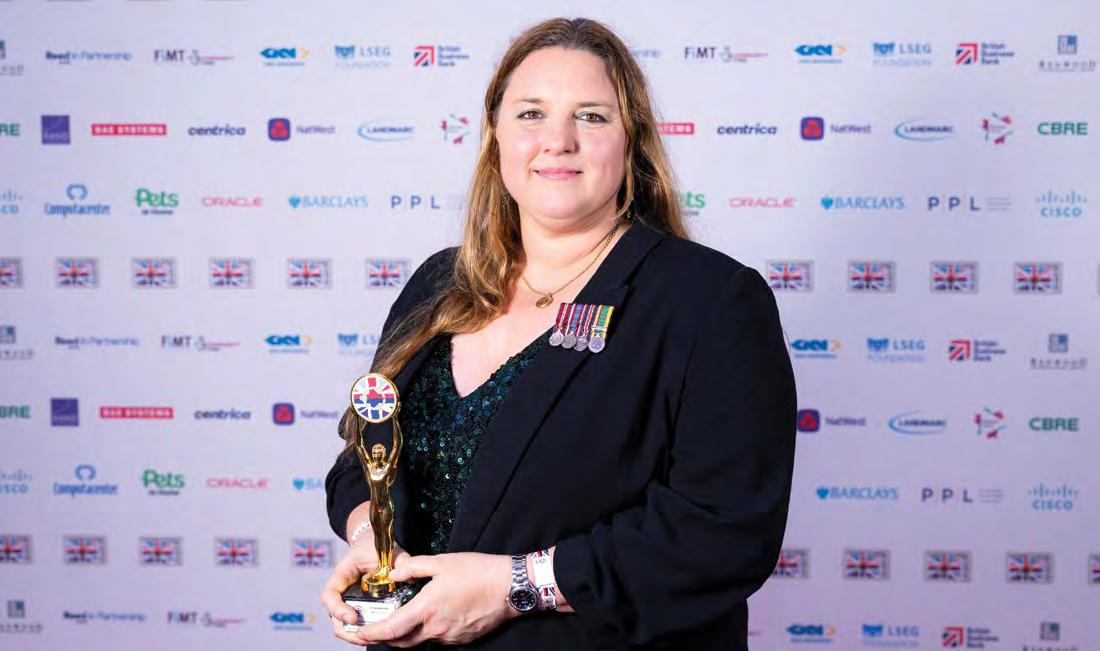
Receiving the Soldiering On Award for Defence Inclusivity is a powerful recognition of the impact Lt Col Rachel Diss has made in her role as National Diversity and Inclusion Advisor for Army Cadets Wellbeing. Presented at an Armed Forces Community Awards ceremony in London, which was hosted by broadcaster Jeremy Vine, Rachel's voluntary work champions inclusion across the organisation.
'The award was given specifically for the volunteering work I do within the Army Cadets as part of a growing team of CFAVs who support inclusion and share their knowledge and skills to improve our inclusive culture,' she says. Through targeted training and awareness raising, Rachel has helped leaders to better understand how to support individuals with additional needs, making inclusion a practical and achievable part of everyday cadet life.
A key part of this work has been establishing Diversity Networks (which is part of the Diversity and Inclusion Strategy) in four areas: LGBTQ+, Multicultural, Disability and Neurodiversity and Social Equity. These networks improve awareness and understanding of the people within the Army Cadets and run alongside a broader strategy to strengthen leadership and raise expectations around inclusive culture.
Her approach is clear: 'I have directly targeted development of leadership across the organisation to lift the expectation and experience of an inclusive culture where everyone feels welcome, is treated with respect and is able to reach their potential and thrive.'
Rachel's perspective has been shaped by more than 30 years in the Army Cadets alongside her professional experience.
'As humans, we are both simple and complex in our needs, and with greater emotional intelligence we can offer better support that's specific to individual needs. It does not have to be difficult to do this.'
That kind of understanding has helped translate inclusion policy into meaningful day-to-day action.
However, inclusion is not a standalone initiative. It's embedded in everything the Army Cadets does, from structured training and leadership opportunities to the shared values that underpin teamwork.
She says: 'Every cadet and adult who comes through our doors is valuable and able to contribute.'
What she finds most rewarding, though, is the impact on the cadet community. Whether it's a cadet gaining confidence, learning to lead or simply finding their place within a team, the outcomes are deeply meaningful. She adds: 'Through kindness and diversity of thinking, we can come up with solutions to bring everyone along on the Army Cadets journey.
'Our values and standards bring us together with a shared purpose which also follows through to good leadership, the actions that protect trust and the putting of others' needs before our own. That is what I find rewarding.'
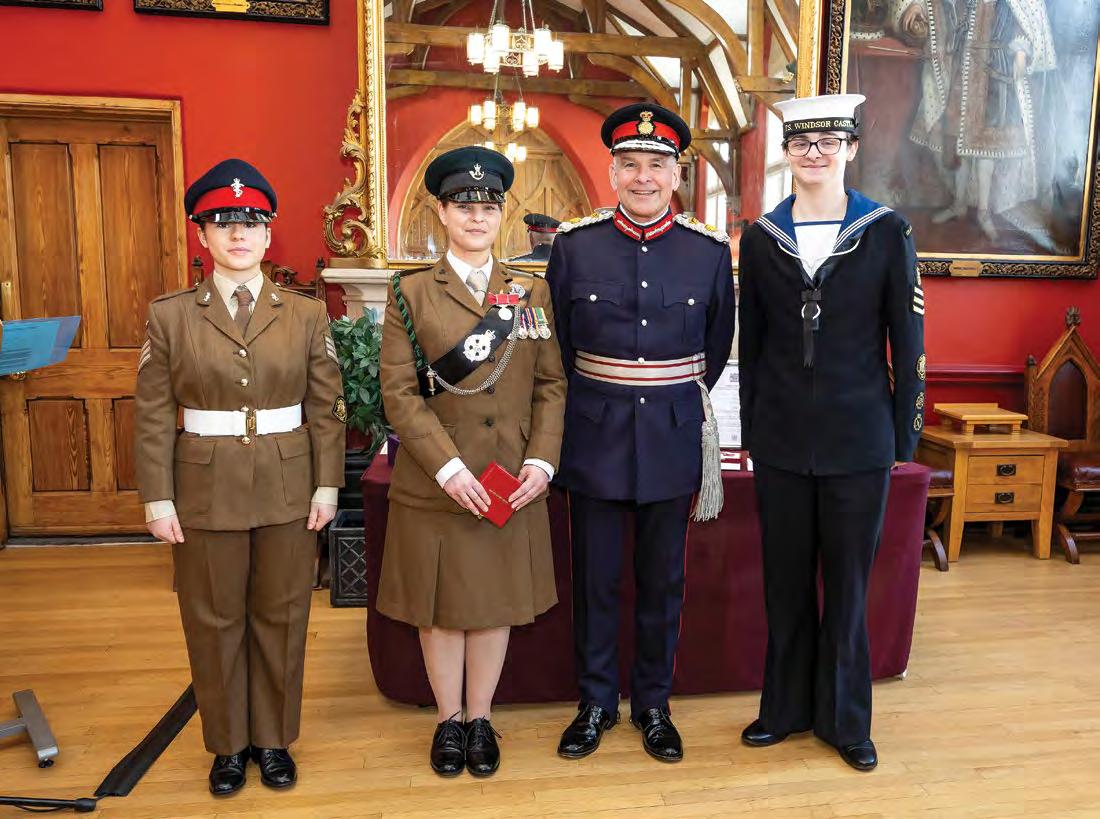
Being awarded the British Empire Medal (BEM) is a significant honour for 2Lt Annette Foale. Presented in Wokingham by Mr Andrew Try, Lord-Lieutenant of the Royal County of Berkshire, the award recognises her outstanding service to Berkshire ACF, particularly during her five years as Regimental Sergeant Major. Nominated by then County Commandant Colonel Anthony Shallow, the BEM reflects her sustained dedication as a volunteer supporting cadets and fellow CFAVs across the county.
Annette’s work has been defined by commitment, consistency and leading by example. She says: 'The award was specifically for my work with the Army Cadets, in particular for my voluntary service and dedication to providing and being a role model to the cadets and other CFAVs within the county.'
The Army Cadets has had a lasting impact on her from a personal point of view. 'It has given me experiences and challenges I don’t think I would have had anywhere else. It has taught me to be strong and never give up. It has also helped build my confidence and instil a strong sense of pride and service.'
For Annette, the most rewarding aspect of her role has been seeing young people grow. 'Helping young people grow, seeing their confidence boosted and their achievements develop is an amazing thing to see and be part of,' she adds. Supporting cadets on that journey remains at the heart of her commitment.
1,616 Vocational qualifications
1,499 cadets
adults
Cadet Centre for Adventurous Training (CCAT) has trained a total of 1,099 cadets and CFAVs between April 2025 and April 2026.
These include:
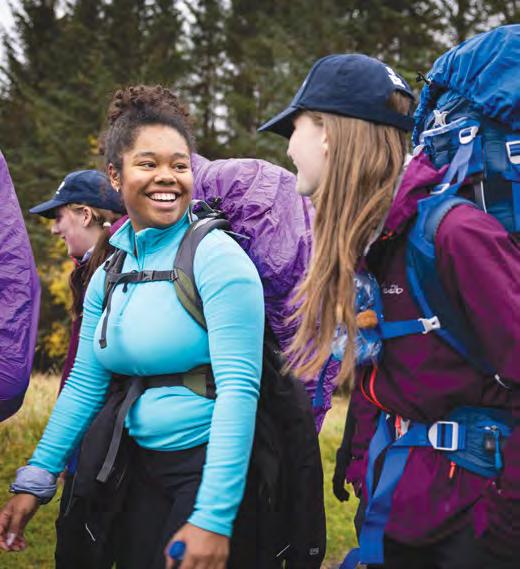
1,424 BRONZE
SILVER
The Cadet Forces Medal is awarded to commissioned officers and non-commissioned adult instructors in recognition of long and efficient service. Clasps are issued for every six additional years.
A total of 556 Cadet Forces Medals were awarded between April 2025 and April 2026, plus the following clasps.
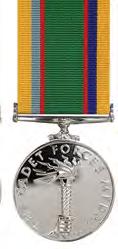

The Cadet Forces Warrant is an award given to adult volunteers who are promoted to the rank of Sergeant Major Instructor (SMI). It was introduced in August 2020 to recognise the value the Ministry of Defence places on senior non-commissioned CFAVs. The warrant also acknowledges the effort and achievement required to reach this rank. The warrant is intended to be a tangible recognition for CFAVs to keep during and after their time with the cadet forces.
* 102 individuals became eligible to receive Cadet Forces Warrants between April 2025 and April 2026