WINTER | 2025
THE FUTURE STARTS UPSTREAM
CONTENTS
12 FRONTIERS The future starts upstream— Foundational discoveries are the source of tomorrow’s breakthroughs, but what happens if we let the river run dry?
24 OBSERVATIONS Diana Hargreaves— Follow the science
28 INSIGHTS Ana Cabrera— Clearing the path to discovery
30 NEXT GEN Aksinya Derevyanko— Finding strength in science, stage, and synapses
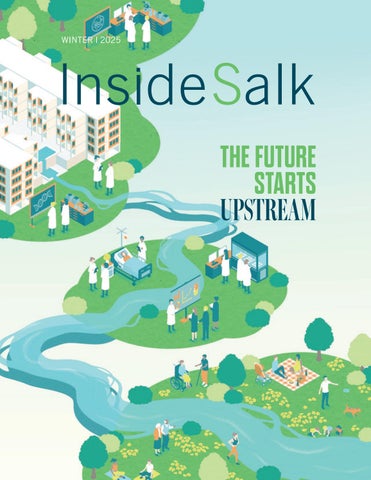
ON THE COVER: Salk’s River of Life represents the stream of discoveries that emerge from our labs and contribute to humanity’s growing body of knowledge. These foundational discoveries then fuel the translational, clinical, and pharmaceutical sectors, enabling new technologies and cures that drive science and society forward.
02 DISCOVERIES 20 COMMUNITY 36 SPOTLIGHT 40 EVENTS 44 RESOLUTION
PRESIDENT’S LETTER Dear Friends, At Salk, we believe that foundational science is the wellspring of discovery from which all innovation flows. This issue of Inside Salk highlights the vital importance of foundational research. Before there can be breakthroughs in medicine or technology, before treatments and cures reach patients, there must be new insights—hard-won knowledge about how life works at a fundamental level. That is Salk’s mission. You can see that philosophy reflected in our iconic River of Life, the water feature that runs through our majestic Courtyard. Designed by Luis Barragán in collaboration with architect Louis Kahn and our founder Jonas Salk, the water begins as a single stream, symbolizing the spark of discovery. It then flows west, drawing in knowledge and momentum as it tumbles into larger pools and finally meets the Pacific Ocean, a symbol of humanity’s expanding body of knowledge. As you will see in this issue, that metaphor continues to inspire us. Every cell we investigate and every gene we decode is a contribution to that river. It all starts in our labs here at Salk. Foundational research at Salk has always been possible thanks to a highly effective partnership between federal funding and private philanthropy. Especially this year, as federal support has become increasingly unreliable, private philanthropy has become essential to our continued success and ongoing discoveries. Visionary donors give our scientists the flexibility to pursue bold, early-stage ideas that may not yet qualify for government grants. And when public funding stalls, private giving keeps us moving forward. This is why we say science can’t wait. The world needs answers—to cancer, Alzheimer’s disease, metabolic diseases, and threats to agriculture. The gamechanging answers only come when we empower scientists to ask bold questions. The work you’ll read about in this magazine wouldn’t be possible without the people who make Salk what it is: our remarkable scientists, our dedicated staff, our visionary Board of Trustees, and our generous donors and supporters. Your belief in Salk’s mission ensures that the River of Life continues to flow strongly, pushing science forward, for the benefit of us all.
“Visionary donors give our scientists the flexibility to pursue bold, early-stage ideas that may not yet qualify for government grants. And when public funding stalls, private giving keeps us moving forward.”
With deep appreciation,
Gerald Joyce, MD, PhD Salk Institute President
WWW.SALK.EDU
INSIDE SALK WINTER 2025
1
DISCOVERIES
A look back at 25 years of discovery The clock strikes midnight, ushering in the year 2000. Salk researchers enter a new millennium of science. What questions will they ask? What answers will they find? On this night, they can only begin to imagine. With each paper our scientists publish, they keep a record of the edge of knowledge. What did humanity know on this day? What mysteries were still left to explain? What new discovery can we now articulate for the first time? In this special issue of our Discoveries column, we’re cracking open the time capsule and revisiting three Salk studies from the year 2000. Let’s see just how far we’ve come in 25 years and what our scientists are hoping to learn next.
2
INSIDE SALK WINTER 2025
WWW.SALK.EDU
SCIENCE
FEB
2000
Assessing the potential of mammalian neural stem cells
Salk neuroscientist Rusty Gage, PhD, PhD recently became the first to show that the human brain can produce new neurons well into adulthood, overturning a century of scientific dogma that viewed the adult brain as fully developed
and
incapable
of
regeneration.
However,
the exact location and function of these adult stem cells have yet to be identified, and the molecular mechanisms
that
understood.
Here,
regulate Gage
them
are
still
poorly
reviews
the
current
state
of the field and the possible future applications of neural stem cells in transplantation and regenerative medicine. Before the full potential of neural stem cells can be realized, he says, scientists need to learn what controls their development and what types of brain cells they can become.
TODAY’S REFLECTION Gage’s discovery of human adult neural stem cells was a landmark event in the history of neuroscience, forever changing how we think about the flexibility and regenerative power of the adult brain. We’ve now learned where these stem cells are and what cells they can turn into. We’re also getting a clearer sense of how diet, exercise, stress, and disease can influence adult neurogenesis, and how this affects our learning, memory, and mental health. As scientists gained a deeper understanding of how stem cells turn into brain cells, an exciting opportunity began to emerge in the lab. Using these new insights, Gage’s team developed methods to reprogram patient skin samples into various kinds of brain cells. Importantly, their methods were the first to produce neurons that maintain signs of a patient’s age. This allowed researchers to create and study cell models of the adult human brain, revealing tons of new information about the biology of brain health, aging, and disease.
WWW.SALK.EDU
These recent advances in stem cell biology are now enabling a new generation of neurotherapeutics, including improved strategies for stem cell transplantation and regeneration. Thanks to these decades of discovery, Gage’s lab developed a technique to directly convert skin cells from neural stem cells now hold older patients into aged brain cells, shown here. significant promise for addressing neurological and neuropsychiatric disorders, including Alzheimer’s disease, Parkinson’s disease, amyotrophic lateral sclerosis (ALS), spinal cord injury, schizophrenia, and bipolar disorder.
The emergence of stem cell biology—the ability to shift the fate of cells from one lineage to another—has had a profound effect on our understanding of neurobiology and the development of novel therapies to treat neurological diseases.” Rusty Gage INSIDE SALK WINTER 2025
3
DISCOVERIES NATURE STRUCTURAL BIOLOGY
JUN
2000
Cancer “survival” structure deciphered by Salk scientists
Cancer cells persevere against all odds, resisting death and continuing to grow, multiply, and invade the whole body. Salk scientists have now revealed the structure of a molecule responsible for cancer’s tenacity, appropriately named survivin. Using X-ray crystallography, Salk scientists Tony Hunter, PhD, PhD and Joseph Noel, PhD, PhD discovered the 3D structure of the survivin protein, pinpointing the critical regions on its surface that are hot spots for driving cell division. Their findings could now support the development of new drugs to block survivin’s cancer-promoting function.
TODAY’S REFLECTION In the decades since Hunter and Noel first described survivin’s structure, their discovery has been cited in hundreds of cancer biology studies, and interest in the molecule has grown tremendously. Survivin has now been implicated in nearly all forms of cancer and contributes to many patients’ resistance to chemotherapy and radiation. Several survivin inhibitors have shown promise over the years, especially when combined with other drugs or used to treat certain cancers like nonHodgkin’s lymphoma. But most drugs have struggled to directly block survivin’s function, largely due to the molecule’s unique structure. Knowing its detailed structure has helped explain these clinical results and guided scientists in more promising directions. The latest drugs use different strategies to target survivin and are making great headway in ongoing clinical trials.
The ribbon structure of the human survivin protein, first described in 2000.
2025 also marks Hunter’s 50th anniversary at Salk. His discoveries have inspired hundreds of lifesaving cancer drugs, and his lab continues to characterize key cancer molecules that could serve as the basis for more precise and effective treatments.
Methods for deciphering protein structures have advanced dramatically since the year 2000, with cryo-electron microscopy and predictive modeling programs largely replacing conventional crystallography. It’s now much easier to learn the structure of a large protein or protein complex, which greatly facilitates the development of small-molecule drugs. Computer programs can now dock candidate drugs onto these 3D models and quickly identify those with the tightest fit, speeding up the process of cancer drug discovery.” TONY HUNTER
4
INSIDE SALK WINTER 2025
WWW.SALK.EDU
NATURE
DEC
2000
Move over, Human Genome Project; plant biologists complete the first plant genome sequence
Arabidopsis thaliana, a small flowering mustard, has been the model research organism for plant biologists since the 1980s. Now, it’s become the first plant to have its entire genome sequenced. Salk scientist Joseph Ecker, PhD, PhD co-led the international Arabidopsis Genome Initiative and contributed the sequence for one of the plant’s five chromosomes, while Joanne Chory, PhD, PhD advised the national component of the project. The researchers are now part of a followup initiative aimed at deciphering the functions of the thousands of newly sequenced plant genes.
In just 25 years, we’ve gone from sequencing a single plant genome to thousands. This has provided incredible insights into plant development, growth, and immunity. And now, thanks to these foundational discoveries, we can develop plant-based technologies that will help stabilize our environment and support food security for generations to come.” JOSEPH ECKER
TODAY’S REFLECTION It’s been 25 years since the first plant genome was sequenced, and the landmark paper has now been cited in over 10,000 subsequent plant biology studies. After helping determine the DNA sequence of Arabidopsis, Ecker’s lab successfully mapped the locations of all the individual genes and created mutations in each one. Other plant biologists were then able to order these mutants over email and use them to decipher the function of each gene. The genetic tools and resources generated by the Arabidopsis Genome Initiative and the studies that followed it have completely transformed the field of plant biology. They also laid the groundwork for Salk’s Harnessing Plants Initiative, which has now sequenced more than 900 additional plant genomes. Salk scientists are currently using this information to develop new varieties of wheat, rice, corn, and other staple crops with enhanced abilities to capture carbon, absorb nutrients, tolerate drought, and resist disease.
Sprouting Arabidopsis thaliana.
WWW.SALK.EDU
INSIDE SALK WINTER 2025
5
DISCOVERIES C AN C E R
Antithrombin (red) in human pancreatic cells.
Could boosting this molecule slow pancreatic cancer progression? Pancreatic cancer has the highest mortality rate of all major cancers, and its incidence is climbing. Because JOURNAL OF CLINICAL it is typically asymptomatic at early stages, pancreatic INVESTIGATION 09/2025 cancer is especially difficult to catch and treat in time. This allows the cancer to spread or metastasize throughout the body, the ultimate cause of death for nearly all patients. Dannielle Engle, PhD, Salk colleagues, and collaborators at UC San Diego identified a unique sugar called HSAT (antithrombin-binding heparan sulfate) as a potential therapeutic target for slowing tumor progression and metastasis in pancreatic ductal adenocarcinoma, the most common pancreatic cancer. The researchers say boosting HSAT may therefore slow the formation and spread of pancreatic cancer. Indeed, patients with higher pancreatic HSAT levels were found to have better survival rates. The study also found that HSAT was detectable in cancer patients’ plasma, making it potentially useful as a biomarker to help catch and track pancreatic cancer.
Dannielle Engle.
“We need to improve our understanding of the basic biology of pancreatic cancer if we want to one day prevent or cure it, and that’s what we’ve done here.” DANNIELLE ENGLE
6
INSIDE SALK WINTER 2025
WWW.SALK.EDU
N EU ROSC I E N C E
How does an injury turn into agony? Pain isn’t just a physical sensation—it also carries emotional weight. That distress, anguish, and anxiety can turn a fleeting injury into long-term suffering. Salk neuroscientist Sung Han, PhD, senior research 07/2025 associate Sukjae Kang, PhD, and colleagues have now identified a brain circuit that gives physical pain its emotional tone, revealing a new potential target for treating chronic and affective pain conditions such as fibromyalgia, migraine, and post-traumatic stress disorder (PTSD). The study identifies a group of neurons in a central brain area called the thalamus that appears to mediate the emotional or affective side of pain in mice. This new pathway challenges the textbook understanding of how pain is processed in the brain and body. PROCEEDINGS OF THE NATIONAL ACADEMY OF SCIENCES
From left: Sukjae Kang and Sung Han.
When specific thalamic neurons (green) send signals to the amygdala, pain transforms from a sensory experience to an emotional one.
How does the brain differentiate painful from nonpainful touch?
Somatostatin neurons (magenta) and projection neurons to the thalamus (green).
From left: Tejapratap Bollu, Martyn Goulding, and Amandine Virlogeux.
WWW.SALK.EDU
After nine months in the womb, humans enter a world filled with new textures and shapes. We must CELL REPORTS then quickly learn to recognize the sensation of 09/2025 these objects and distinguish which are harmless from those that are painful to the touch. But 7 to 10 percent of the global population develops mechanical allodynia, a form of chronic pain in which innocuous light touch is perceived as painful. Salk neuroscientist Martyn Goulding, PhD, postdoctoral researchers Tejapratap Bollu, PhD, and Amandine Virlogeux, PhD, and colleagues have discovered that uncoordinated neuronal activity in the dorsal column nuclei drives mechanical allodynia, not a simple increase in activity as was previously assumed. When a brain area called the thalamus receives these altered signals, it no longer recognizes light touch as innocuous and instead interprets it as painful. In an act of self-preservation, the brain then initiates a pain-like response—better to be safe than sorry. This new understanding of how the brain processes and encodes pain is a crucial first step toward designing better therapeutics for acute and chronic pain.
INSIDE SALK WINTER 2025
7
DISCOVERIES P L ANT B IO LOGY
All DRII-ed up: How do plants recover from drought?
From left: Natanella Illouz-Eliaz and Joseph Ecker.
What can the plant life cycle teach us? Nearly everything you know about plants was first discovered NATURE PLANTS in a plant you’ve likely never heard 08/2025 of. Arabidopsis thaliana, also known as thale cress, is a small, flowering weed that has been used by researchers for the last half-century to study plant growth and behavior. Despite this, many aspects of the Arabidopsis life cycle still remain a mystery. Salk scientist Joseph Ecker, PhD, postdoctoral researchers Natanella Illouz-Eliaz, PhD, and Travis Lee, PhD, and colleagues have now established the first genetic atlas to span the entire Arabidopsis life cycle. The new resource, created using detailed single-cell and spatial transcriptomics, captures the gene expression patterns of 400,000 cells within multiple developmental stages as Arabidopsis grows from a single seed to a mature plant. The public atlas will be highly informative for future studies of plant cell types, developmental stages, and responses to environmental stress. Those findings will then help expand research and development in plant biotechnology, agriculture, and environmental sciences.
8
INSIDE SALK WINTER 2025
A plant’s number one priority is to grow—a feat that demands sunlight, NATURE COMMUNICATIONS nutrients, and water. If just one of 08/2025 these three inputs is missing, like water in a drought, growth halts. You might then think that at the end of that drought, the plant would jump right back into growing. Instead, its priorities shift. When Salk scientist Joseph Ecker, PhD, postdoctoral researcher Natanella Illouz-Eliaz, PhD, and colleagues examined the Arabidopsis plant in the moments after drought, they discovered that immunity became the plant’s top priority. Using single-cell and spatial transcriptomics, they observed immune-boosting genes rapidly light up throughout the plant’s leaves. They then found that this supercharged immune response, dubbed drought recovery-induced immunity (DRII), also occurs in wild and domesticated tomatoes, suggesting that this prioritization of immunity is likely common across many important crops. Their findings could help scientists develop new crop varieties that are more resilient to drought and disease.
Cross-section of Arabidopsis leaf under drought conditions (top) and after 15 minutes of rehydration (bottom). Each color (blue, pink, green) represents a different recovery-induced gene being expressed.
WWW.SALK.EDU
I M M U N O B IO LOGY
How does the immune system prepare for breastfeeding?
Can HIV’s shape-shifting protein reveal clues for smarter drug design?
Breastfeeding has known benefits for both mother and child, reducing NATURE IMMUNOLOGY maternal risk of breast and ovarian 07/2025 cancers, type 2 diabetes, and high blood pressure while simultaneously supporting the baby’s nutrition and immune system. But because pregnancy and lactation have been historically understudied, we still don’t understand the science behind many of these benefits.
Around 40 million people live with HIV-1, and the rate of infection continues to climb. NATURE COMMUNICATIONS While symptoms can now be better managed 10/2025 with lifelong treatment, there is no cure to fully eliminate the virus from the body, so patients still often struggle with related health issues, side effects, social stigma, and drug resistance. One of the most promising treatment avenues is disrupting HIV replication by impairing the function of integrase, a protein named for its role in integrating viral genetic material into the human host genome. However, scientists have recently noticed that integrase does more than just integration. Later in HIV’s replication cycle, integrase interacts with viral RNA to help the virus spread and infect new cells. Taking on these two distinct roles—first with DNA, then RNA—requires changes to integrase’s protein structure. Salk scientist Dmitry Lyumkis, PhD, postdoctoral researchers Tao Jing, PhD, and Zelin Shan, PhD, and colleagues have now captured these important structural changes for the first time, creating novel 3D models of integrase in both roles. Now, scientists can connect the dots between integrase’s form and function to begin developing compounds that impair its distinct functions and, in turn, better treat people living with HIV.
Salk immunologist Deepshika Ramanan, PhD, graduate student Abigail Jaquish, and colleagues are changing that. In their latest study, they mapped the migration of maternal immune cells before and during lactation. Using both animal research and human milk and tissue samples, the researchers discovered that immune cells called T cells become abundant in the mammary glands during pregnancy and breastfeeding, with some relocating from the gut. The scientists are now studying how this immune cell migration supports maternal and infant health. Their continued findings may help explain the benefits of breastfeeding, prompt new solutions for mothers unable to breastfeed, and inform dietary decisions that enhance breast milk production and quality.
Nonlactating (left) and lactating (right) mouse mammary gland imaging shows the dramatic structural changes that occur to facilitate milk production, including cell proliferation and the formation of milk ducts.
WWW.SALK.EDU
Left: Integrase’s 16-part “intasome” structure (pink) locks around viral DNA (blue). Right: Integrase’s four-part complex (pink) interacts with viral RNA (green) inside an HIV capsid.
INSIDE SALK WINTER 2025
9
DISCOVERIES CO M P U TATIO NAL B IO LOGY
Salk scientists used ShortStop to find a novel microprotein (green) that is expressed around the cell nucleus (blue). This location suggests the microprotein plays a role in endosomes, organelles responsible for sorting and transporting cellular cargo, or in lysosomes, organelles that collect and remove cellular waste.
Can an AI tool illuminate the “dark side” of the human genome?
Brendan Miller (left) and Alan Saghatelian (right) stand in their lab while ShortStop runs on the desktop beside them.
“This means we can now search for microproteins across healthy and diseased tissues at scale, which will reveal new insights into human biology and unlock new paths for diagnosing and treating diseases, such as cancer and Alzheimer’s.” BRENDAN MILLER
10
INSIDE SALK WINTER 2025
Proteins sustain life as we know it, serving many BMC METHODS important structural and functional roles throughout 07/2025 the body. However, these large molecules have cast a long shadow over a smaller subclass of proteins called microproteins. Lost in the 99 percent of our DNA that was previously disregarded as “noncoding,” microproteins have been hiding in these vast, dark stretches of unexplored genetic code. But despite being small and elusive, their impact may turn out to be just as big as that of larger proteins. Salk scientist Alan Saghatelian, PhD, postdoctoral researcher Brendan Miller, PhD, and colleagues are now exploring the mysterious dark side of the genome in search of microproteins. Using their new AI tool called ShortStop, researchers can probe genetic databases and identify stretches of DNA that likely code for microproteins. Importantly, ShortStop also predicts which microproteins are most likely to be biologically relevant, saving time and money in the search for their role in health and disease. The Salk team has already used the tool to analyze a lung cancer dataset and found 210 entirely new microprotein candidates—with one validated standout—that could make good therapeutic targets in the future.
WWW.SALK.EDU
M E TABO LI S M
Could microproteins be used to treat obesity? The obesity rate has more than doubled in the last 30 years, affecting more than one billion 08/2025 people worldwide. Current treatment options include lifestyle interventions, bariatric surgery, and GLP-1 drugs like Ozempic or Wegovy, but many patients struggle to access or complete these treatments or to maintain their weight loss afterward. PROCEEDINGS OF THE NATIONAL ACADEMY OF SCIENCES
Mature brown fat cells in mice show SLC34A4-MP (red), DNA (blue), and mitochondria (green).
Do microproteins play a role in metabolic health? Like bees breathing life into gardens, providing pollen and making flowers SCIENCE ADVANCES bloom, little cellular machines 08/2025 called mitochondria breathe life into our bodies, buzzing with energy as they produce the fuel that powers each of our cells. Maintaining mitochondrial metabolism requires input from many molecules and proteins, some of which have yet to be discovered. Salk scientist Alan Saghatelian, PhD, postdoctoral researcher Andréa Rocha, PhD, and colleagues are taking a closer look at whether mitochondria rely on microproteins—small proteins that have been difficult to find and, consequently, underestimated for their role in health and disease. In their new study, a microprotein discovered just last year at Salk, called SLC35A4-MP, was found to play a critical role in upholding mitochondrial structure and regulating metabolic stress in mouse fat cells. The findings plant the seed for future microprotein-based treatments for obesity, aging, and other mitochondrial disorders.
Salk scientist Alan Saghatelian, PhD, postdoctoral researcher Victor Pai, PhD, and colleagues are paving the way for new treatment strategies by exploring the link between obesity and microproteins, a mysterious class of molecules found throughout the body. In a new study, the researchers screened thousands of fat cell genes using CRISPR gene editing tools and found dozens of genes that likely code for microproteins involved in regulating fat cell development or lipid accumulation. The findings identify new microproteins that could serve as potential drug targets for treating obesity and other metabolic disorders. The study also showcases the value of CRISPR screening in future microprotein discovery.
Mouse fat cells filled with lipid droplets (green).
WWW.SALK.EDU
INSIDE SALK WINTER 2025
11
FRONTIERS
THE FUTURE STARTS UPSTREAM
Foundational discoveries are the source of tomorrow’s breakthroughs, but what happens if we let the river run dry?
12
INSIDE SALK WINTER 2025
WWW.SALK.EDU
WHEN JONAS SALK DEBUTED THE FIRST EFFECTIVE POLIO VACCINE IN 1955, MANY ASSUMED HIS NEXT ENDEAVOR— THE SALK INSTITUTE—WOULD FOCUS ON VACCINE DEVELOPMENT. Instead, he designed the coastal
campus to be a gathering place where the world’s top scientists could study the fundamental mysteries of life. He knew the biggest scientific breakthroughs happen when researchers have the opportunity to work together and ask foundational questions.
“We don’t do science to make money. We do it to make discoveries, which we give back to society.” GERALD JOYCE
This mission was embodied by one of the Institute’s landmark architectural features, which he dubbed the River of Life—a stream that flows through the central Courtyard toward the horizon, where it appears to merge with the distant sea. It symbolizes the constant stream of discoveries flowing out of the Institute’s labs and into humanity’s greater body of knowledge.
WWW.SALK.EDU
Today, the River of Life is more than an inspiring symbol of Salk science; It’s a powerful reminder of why foundational research deserves our support. Salk is now one of the few institutions that remain fully dedicated to “basic science”—research that asks fundamental questions and generates foundational knowledge. In a healthy science ecosystem, this knowledge naturally flows into translational, clinical, and pharmaceutical sectors, enabling new technologies and treatments that improve our quality of life. Innovations like cancer immunotherapy, CRISPR gene editing, and GLP-1 weight loss drugs are now household names, but they all got their start as basic discoveries in a lab. The issue is that science funding has increasingly prioritized the later stages of research and commercialization, leaving foundational science more vulnerable than ever. “We don’t do science to make money,” says Salk President Gerald Joyce, MD, PhD. “We do it to make discoveries, which we give back to society. The insights we generate are what ultimately fuel the biotech and pharmaceutical industries. We need to replenish this river of knowledge or the whole ecosystem will run dry.”
INSIDE SALK WINTER 2025
13
FOUR SECTORS OF SCIENCE
Each sector of science plays a unique and necessary role. Here’s how they differ and depend on each other.
01
Foundational Purpose: Investigate how biology works at the molecular, genetic, cellular, and systems levels Core incentive: Knowledge generation Funding source: Federal grants, philanthropy
02
Risk: High risk, high reward—not all discoveries can be immediately translated, but breakthroughs enable entirely new solutions
Translational Purpose: Identify promising targets and therapeutic strategies using lab models and high-throughput screens Core incentive: Early signs of clinical potential Funding source: Federal grants, private investors, philanthropy
03
Risk: Most therapeutic candidates fail to progress to effective therapies, but the few that do can change people’s lives
Clinical Purpose: Test therapies in humans to evaluate safety and efficacy Core incentive: Real-world validation Funding source: Biopharma, federal grants, philanthropy
04
Risk: Clinical trials are timeintensive and expensive, but necessary for making medical advances
Pharmaceutical Purpose: Optimize and commercialize therapies; manage FDA approvals Core incentive: Patient benefit and revenue Funding source: Commercial profits Risk: High financial risk, strict timelines, and regulatory hurdles, but huge potential for positive impact
14
INSIDE SALK WINTER 2025
THE COST OF SHORT-TERM THINKING AT A GLANCE, MODERN SCIENCE SEEMS TO BE THRIVING.
Pharmaceutical companies race to develop new drugs. AI-powered diagnostics promise earlier detection of disease. Biotech startups draw billions in investor funding. But underneath all that momentum lies a quieter crisis: The foundational science that enables all this innovation is losing critical support, with funders prioritizing projects that promise more immediate returns. Terry Rosen, PhD, a biotech entrepreneur and vice chair of Salk’s Board of Trustees, has seen firsthand how foundational science fuels the biomedical economy. As co-founder and CEO of Arcus Biosciences, he’s grown concerned about recent shifts in the scientific ecosystem. “All the best medicines we have right now are the result of earlier foundational discoveries that laid the groundwork for new clinical strategies. The Salk Institute has always been a key contributor to this body of foundational research,” Rosen says. “Translation of those discoveries has been the bedrock of modern medicine and recent therapeutic advances, but most of the low-hanging fruit has now been picked. If society stops investing in foundational science, the innovation pipeline will eventually collapse.” Rosen says new structural and financial stressors have pushed academia and industry away from deeper fundamental inquiry toward short-term, applied projects. With companies being pressured to show quarterly profits and universities competing for a shrinking pool of grants, both are encouraged to focus their resources on the fastest and most easily translatable science.
WWW.SALK.EDU
“The science that gives rise to real innovation and cures often takes decades of deep, risky, long-term work. And fewer and fewer people are doing it.” TERRY ROSEN
The urgency is understandable. Federal funders, investors, and philanthropists all want to be sure that their support will yield tangible results in the near future. Yet many of today’s top therapies trace their lineage back to discoveries made decades earlier by scientists who had the opportunity and support to ask big, open-ended questions. Rosen says the same opportunities are not being afforded to today’s scientists. “Everyone’s trying to plant tulips they can see bloom in three months,” Rosen says. “But the science that gives rise to real innovation and cures often takes decades of deep, risky, long-term work. And fewer and fewer people are doing it.” President Joyce also speaks from experience, having previously directed the Genomics Institute of the Novartis Research Foundation (GNF). “What pharmaceutical companies do is very important, but that applied research is very different from the foundational research being done at a place like Salk,” says Joyce. “A company’s experiments are designed to provide more immediate results, and projects that aren’t progressing fast enough will be shut down. This is a reasonable stance for a commercial organization that cannot undertake risky, early-stage projects that may only yield returns after a decade or more. These long-term opportunities are what nonprofit science is for.” Rosen says pharmaceutical companies are also increasingly relying on smaller biotech companies
WWW.SALK.EDU
and startups to do much of the initial research and development. These groups take on the risky business of early-stage drug discovery and development, with larger corporations often acquiring them once a promising product is in sight. These days, though, even nonindustry scientists are shifting toward safer, short-term bets. In the past, an academic researcher trying to understand which genes and molecules drive a biological process might not have known what the future impact of their findings would be. Today, the same scientist is expected to outline the clinical applications of their experiments before they can get the money to do them. With federal funding cuts making the grant process even more competitive, researchers have no choice but to tailor their experiments to funders’ preferences. “Academic scientists are being pushed to act like drug companies, but with a tiny fraction of the resources,” says Rosen. “How many institutions have set up high-throughput screening and drug discovery programs to attract translational funding? We shouldn’t expect academics to do the same work as industry scientists. The faculty at Salk are extremely brilliant and creative scientists, and when they’re given the opportunity and freedom to do what they do best, we all benefit.”
INSIDE SALK WINTER 2025
15
“Every advance in translational science begins with someone asking a fundamental question. We’re still the place that asks those questions first.” JAN K ARLSEDER
TODAY’S QUESTIONS, TOMORROW’S SOLUTIONS SINCE ITS FOUNDING, SALK HAS MAINTAINED A SPECIAL PLACE IN THE SCIENCE ECOSYSTEM. As an independent, nonprofit, basic research institute, it is uniquely designed to support the kind of foundational discoveries the other sectors rely on.
The Institute’s scale has been intentionally optimized: small enough to allow close collaborative relationships, but large enough to cover a breadth of research areas. Faculty are unified by big questions, not separated by departments. With fewer academic responsibilities and a dedicated administrative staff to support operational tasks, Salk scientists can focus more of their energy on their research, interacting with colleagues, and generating new ideas. “The collaborative culture and sheer diversity of science at Salk make a real difference,” says Chief Science Officer Jan Karlseder, PhD. “When people with completely different expertise work on the same problem, that’s when real breakthroughs happen.”
16
INSIDE SALK WINTER 2025
Karlseder says Salk is a leader in “use-inspired basic research”—foundational science that isn’t necessarily pursued for its immediate application but still has clear implications for health and disease. The Institute’s academic governance committees work to identify the most promising research areas and strategically recruit scientists who are at the forefront of those fields. “We think very hard about what the most important questions in biology are and what teams we can assemble to make the biggest impact,” Karlseder says. “The right people asking the right question is what unlocks entirely new fields.” Take Salk molecular biologist Tony Hunter, PhD. When he joined the Institute’s faculty in 1975, he set out to learn how viruses turn healthy cells into cancer cells. This research led to his discovery of tyrosine phosphorylation, a molecular switch that controls cell growth and division. Hunter’s later work also explained how the enzymes that drive this switch, called tyrosine kinases, become overactive in cancer and lead to tumor growth.
WWW.SALK.EDU
At the time, these were basic insights into cellular biology. But with the help of translational, clinical, and pharmaceutical partners, they led to the approval of over 80 different cancer-fighting drugs, including the 2001 debut of Novartis’ Gleevec, a groundbreaking medicine that targets tyrosine kinases. Hunter’s research didn’t start as a drug discovery project. He was asking a fundamental question about how biology works. But the answer completely changed the way we treat cancer and saved millions of lives. “We want the public to understand that foundational science isn’t separate from translation—it’s married to it,” says Karlseder. “Every advance in translational science begins with someone asking a fundamental question. We’re still the place that asks those questions first.”
WHAT FOUNDATIONAL QUESTIONS ARE SALK SCIENTISTS ASKING TODAY? Here’s how three Salk faculty are tackling today’s mysteries and shaping tomorrow’s breakthroughs.
LENA MUELLER, PHD Foundational question: How do plants communicate with beneficial fungi in the soil? Future impact: Unlocking new ways to reduce fertilizer use and strengthen crops in the face of environmental stress.
Salk scientists are now answering questions that are changing the way we think about cancer, aging, Alzheimer’s, allergies, agriculture, and more. When there’s a clear opportunity to translate these discoveries, the Institute doesn’t shy away from kick-starting that process. But its core mission is to push the boundaries of what is known and use those insights to move science and society forward. “Salk has always been what science needs most at each moment in history,” says Karlseder. “Biology used to be about taking things apart and figuring out what they’re made of. Now it’s about putting them back together and understanding how they make us who we are. The great questions ahead are integrative, and that’s exactly what Salk was built to do.”
ALAN SAGHATELIAN, PHD Foundational question: How do microproteins shape health and disease? Future impact: Revealing new biomarkers and drug targets for treating cancer, aging, and metabolic disorders.
JANELLE AYRES, PHD Foundational question: Why do some people stay healthy even when exposed to stress and pathogens? Future impact: Revolutionizing medicine by reframing “health” from a passive, default condition to an active biological process we can stimulate in patients.
WWW.SALK.EDU
INSIDE SALK WINTER 2025
17
“The world is overinvesting in immediate, incremental progress and underinvesting in the hard, early work that makes true innovation possible. Salk is one of the last places still focused on doing that work—and that’s what we should be funding.” TERRY ROSEN
KEEP THE RIVER FLOWING SCIENCE HAS ALWAYS DEPENDED ON THE PARTNERSHIP BETWEEN PUBLIC AND PRIVATE FUNDING. But philanthropy has
been especially crucial in enabling the most high-risk, highreward projects. For example, Salk’s Innovation and Collaboration Grants were launched with support from Joan and Irwin Jacobs. This internal funding source supports creative early-stage ideas that would be considered too risky or novel for traditional federal grant applications. Philanthropy also helps the Institute train the next generation of foundational scientists. With universities increasingly preparing graduate students to get jobs in industry, fewer trainees are being encouraged to pursue basic science. At Salk, summer training programs supported by the Prebys Foundation and postdoctoral research fellowships funded by the Brown Foundation and La Mer are among the many ways that private funding helps replenish the pool of foundational scientists. Now, as the cost of modern research continues to rise, Rosen says donors will need to step in where federal funders have retreated. “There are still many complex health issues that we all need solutions for, and everyone wants to see us get there as quickly as possible,” he says. “But throwing more money at the same science won’t lead to better outcomes. The world is overinvesting in immediate, incremental progress and underinvesting in the hard, early work that makes true innovation possible. Salk is one of the last places still focused on doing that work—and that’s what we should be funding.” What Rosen and other Salk supporters understand is that basic science is not a luxury; it’s the foundation on which every cure, innovation, and industry depends. Behind every history-changing achievement from scientists like Jonas Salk was the visionary support of their public and private funders. Donors and taxpayers have both played an essential role in this progress, strengthening the current of the river of life. At the end of the day, breakthroughs don’t really begin up the river or in the lab; they begin with you.
18
INSIDE SALK WINTER 2025
WWW.SALK.EDU
e n c e
n I
I n t e
a
h C
f
l
n o
r e
’
r
s
m i r
o
n
t
m m
A r t i f i c i a l
i
i e h z
c
l
r
A
e
y
u
c
g
s n
o
o a
l
e
r C
o
N
u
n g
u
n
m
m
i
s
s
m
g
i
c
y
I
A
l
i
r
y
o
t
t
h
b
e
s
t
n
i
l
a
e
a
e
m
a
G
e
t
h
e
c
M
o
l
N
e
i
P
H
B
Life-changing discoveries depend on both federal funding and private philanthropy. Across the political spectrum, there is strong support for life sciences research. Every family has been touched by cancer, Alzheimer’s disease, or other chronic illnesses. Yet important questions remain unresolved: Who will shoulder the cost of sustaining breakthrough research? How will limited federal dollars be allocated? For independent research institutes like Salk, where half of our funding comes from federal grants, these uncertainties delay decisions and stall planning. Science can’t wait. Future generations are counting on us— and on you. Now more than ever, we need partners who believe in the lifechanging force of foundational science.
YOU CAN SHOW YOUR SUPPORT FOR SCIENCE BY: • Joining Salk’s Discovery Society • Making a direct donation • Including Salk in your estate plans • Sharing with friends and family why research is important to you
Visit www.salk.edu/cant-wait I n f e c t i o u s to learn more and watch a C a r d i o v a s c u l a special video episode of our P a r k i n s o n ’ podcast in which Salk leaders M u l t i p l e discuss foundational research S t r o and how it’s funded. O b e s i A l l e r g i
0
1
0
0 0
1 1
1 0
1 1
A n x i e
0 0
0
B r e a s t
C a n c
BUILDING COMMUNITY
SYMPOSIUM 2025
Salk is more than a research institute—it’s a training ground for the next generation of foundational scientists. The 14th annual Science at the Seaside Symposium was a celebration and showcase of their hard work and new discoveries.
20
INSIDE SALK WINTER 2025
The Society of Research Fellows (SRF) is a group of graduate and postdoctoral researchers dedicated to fostering a sense of community among trainees at the Salk Institute. Each fall, SRF brings together the Salk community for a day that mixes science with camaraderie, creating a space for connection, mentorship, and strengthening the bonds that make Salk a thriving intellectual community. Whether sharing their latest data, meeting collaborators over coffee, or enjoying science-themed humor, participants nurtured the relationships that drive Salk’s collaborative spirit. WWW.SALK.EDU
Our trainees are an essential and deeply valued part of our research operations. Events such as Science at the Seaside are just wonderful, as they emphasize achievements, exciting science, and our community. JAN KARLSEDER
Celebrating Salk’s culture of curiosity Science at the Seaside spotlighted the breadth of research at the Institute, featuring presentations by Salk postdoctoral researchers, graduate students, and faculty. “Our trainees are an essential and deeply valued part of our research operations,” says Chief Science Officer Jan Karlseder, PhD. “Events such as Science at the Seaside are just wonderful, as they emphasize achievements, exciting science, and our community.”
Featured talks The program packed a punch, featuring presentations by Salk researchers, a keynote address by Nobel laureate and Salk Nonresident Fellow David Julius, PhD, and a closing keynote from UC San Diego microbiome trailblazer Rob Knight, PhD.
Top: Nobel laureate and Salk Nonresident Fellow David Julius. Bottom: Salk employees enjoy coffee during the program’s intermission.
Salk postdoctoral researchers Tessa Popay, PhD, and Amanda Wacker, PhD, showcased their innovative approaches to studying genome organization and protein-DNA interactions in engaging oral presentations. Postdoctoral researcher Adam Farsheed, PhD, and graduate student researchers Abigail Jaquish and Delisa Ramos received Poster Awards for their exceptional research on 3D-printed brain models, immune cell dynamics in lactation, and molecular mechanisms of aging.
WWW.SALK.EDU
INSIDE SALK WINTER 2025
21
Blending enthusiasm, laughter, and science The day blended rigorous science with playful engagement, including POP Talks—short, creative video spotlights on Salk science, Institute resources, and community events—and the ever-popular Faculty Fun Science Improv, where faculty are surprised with a parody slide and tasked with presenting it as their own research.
A tradition of togetherness While the program emphasized science, Science at the Seaside also embodied Salk’s core value of community. Poster sessions, meals, and the closing reception provided informal opportunities for attendees to share insights, spark new collaborations, and get to know colleagues from different corners of the Institute. The symposium was not just a showcase of research excellence—it was also a celebration of the people who make discovery possible. This tradition is able to continue because of the funds committed from the Institute, the dedicated support of the Pre & Postdoctoral Office staff, and the many volunteers who help deliver this annual symposium.
22
INSIDE SALK WINTER 2025
WWW.SALK.EDU
D I A N A
H A R G R E A V E S
F O L L OW T H E
24
INSIDE SALK WINTER 2025
WWW.SALK.EDU
OBSERVATIONS Every cell in your body was built using the same genetic code, and yet you contain hundreds of different types of cells. How? Epigenetic regulation. Tiny molecules decorate your genetic code, signaling which genes should be expressed, and which genes should stay quiet. And unlike the genetic code it controls, epigenetic regulation is dynamic, enabling cells to change in response to their environment. This intricate process is performed by proteins aptly named epigenetic regulators. One example is the BAF complex, a cluster of proteins that changes the shape of your DNA so that certain parts of your genetic code are easier to access and express. The BAF complex is near and dear to Diana Hargreaves, PhD, a scientist, professor, and the J.W. Kieckhefer Foundation Chair at Salk. Hargreaves was born in Atlanta, Georgia, to a physician-scientist mother, so science had a hold on her from the very beginning. Today, Hargreaves’ trademark is her interdisciplinarity. By studying something as fundamental as the BAF complex, her research touches every disease and disorder imaginable. Most notably, the complex is frequently mutated in cancer and has been the target of many anti-cancer therapeutics. While she didn’t start as a cancer biologist, Hargreaves has taken advantage of the Salk environment to collaborate with her cancer expert colleagues. Her latest project applies her findings to pancreatic cancer and earned her the All-Star Translational Award from the V Foundation for Cancer Research. She was also recently promoted to full professor at Salk, where she is now a member of the new NOMIS-funded Neuroimmunology Initiative.
Inside Salk sat down with Hargreaves to learn how her niche interest in BAF exploded into an interdisciplinary kaleidoscope of questions.
WWW.SALK.EDU
INSIDE SALK WINTER 2025
25
How did you first become interested in science? DH: I was very fortunate to be raised in a family that values education. I had a great foundation in science because my mom was a physician-scientist, having done cancer research as a graduate student in Boston. After receiving her PhD, she earned an MD through an accelerated MD/PhD program—one of the first of its kind. Despite that science foundation, I went to a very small college focused on undergraduate education. It was enough to get me excited about science, but I felt I needed to do research at a topflight research institution to understand if being a scientist was for me. After college, I did a stint as a research technician at UC San Francisco in an immunology lab, and that was where I really became passionate about scientific research.
Did working in a smaller environment inform your later interest in Salk? DH: Absolutely. I don’t know that it was conscious, but that smaller, liberal arts experience really shaped my idea of the ideal intellectual environment. Even for graduate school, I could have joined a large program, but instead I chose the Yale Immunobiology program, which had a small but stellar group of faculty. Salk has that same intimate environment, where strong collegial relationships facilitate collaboration. But here, your colleagues aren’t just other immunologists; they’re from all different fields.
What is it like being such a prolific collaborator at Salk? DH: I enjoy collaborating, and epigenetics is something that touches every aspect of biology, every disease. Even within my lab, each trainee is working in their own system, using epigenetics as a lens to understand biology. That makes lab meetings really fun, because we begin to see similarities and common connections across very diverse systems.
What do you consider your current specialty? DH: Molecular biologist is probably the best way to describe me. But I’ve taken a circuitous training path— immunology, then developmental biology, then cancer. I’ve worked in many different systems, but the thread that ties them all together is molecular biology.
Did being a developmental biologist influence your experience of having kids? DH: Definitely. I marveled at the fact that the nine months of my pregnancy were a mere fraction of the time it took me to publish my postdoctoral work. Development is so efficient, and there are so many interesting changes happening to the body. Like, at some point during pregnancy, there’s this enzyme called relaxin that causes hip ligaments to loosen in preparation for birth. I remember trying to run one day, and I was like, “I don’t think my legs are connected!” It gave me a new appreciation for physiology.
How did you start studying epigenetics?
“I enjoy collaborating, and epigenetics is something that touches every aspect of biology, every disease. Even within my lab, each trainee is working in their own system, using epigenetics as a lens to understand biology. That makes lab meetings really fun, because we begin to see similarities and common connections across very diverse systems.”
DH: My undergraduate mentor was trained as an immunologist, so she connected me to the immunology lab at UCSF. I learned a lot of interesting things in that lab, but I was especially drawn to epigenetics, which was a new area that was just taking off. Epigenetics is looking at the language or code that lies on top of your DNA sequence. Unlike your DNA sequence, epigenetics can be modulated in each individual cell in response to stimuli, environment, aging—all sorts of things. We like to think about it as the control system that determines which parts of your DNA sequence are actually being used in any given cell. I went to graduate school with the intention of studying epigenetics. That’s when I joined the lab of Ruslan Medzhitov, PhD, at Yale. He was studying molecular signaling in immune cells, which, as sentinels of the body, have to be able to respond quickly and appropriately to pathogens. It turns out that the expression of immune mediators is tightly controlled by epigenetics, which became the basis for my thesis work.
DIANA HARGREAVES
How did you become an expert on the BAF complex? DH: In graduate school, I was studying how cytokine genes are turned on in response to pathogens. Toward the end of my time there, I uncovered one layer of this epigenetic regulation, which is the BAF complex. It was sort of tangential to what I was investigating, but it was really interesting and understudied, so I decided to take a deep dive. 26
INSIDE SALK WINTER 2025
WWW.SALK.EDU
the most creative and rigorous ways. I’ve been enabled to take risks and explore new connections to BAF in that way. With our recent V Foundation project looking at pancreatic cancer, I’ve been able to lean on Reuben Shaw, PhD, Tony Hunter, PhD, Dannielle Engle, PhD, and Christina Towers, PhD. They have provided advice, training, and reagents for me and my team. It’s really an incredible environment, and it allows us to ask the most important questions that will open opportunities to create new treatments for pancreatic cancer.
What are you working on now? DH: A major focus of my lab is how cancers caused by BAF mutations respond to immunotherapy. On the flip side, we are examining the epigenetics of immune cells in the cancer microenvironment and how they change their function in response to tumor signals.
“Some things are too incredible to ignore, so you go where the science and data lead you.” DIANA HARGREAVES
I started my postdoctoral research with Gerald Crabtree, MD, at Stanford University. He was one of the first to identify BAF complex components and delete these genes in mice. He was taking a developmental biology approach to show that the BAF complex is required for lineage specification—how a stem cell figures out what kind of cell it’s going to become. Meanwhile, others had discovered how to culture embryonic stem cells in a dish to study the determinants of pluripotency—the ability for one cell to have many possible identities and functional fates. Our question then became, if epigenetics is what determines cell type-specific gene expression, how does a cell that can give rise to any cell type behave on the epigenetic level? But during this time, the advent of next-generation sequencing allowed cancer researchers to identify mutations in cancer genes in patients. And this realization fell into our laps: The BAF complex is mutated in cancer. And not just a little bit, but a lot. Suddenly, what was once a niche interest of mine became very exciting to many, many cancer biologists. That discovery has inspired me to do a lot of work in cancer since.
So, really, cancer biology came to you.
Clinical trials of BAF mutant cancers are ramping up, and we’ve been fortunate to work with Gregory Botta, MD, PhD, at UC San Diego on the V Foundation project, who has found that patients with BAF mutant pancreatic cancer are more responsive to immunotherapy. Pancreatic cancer has extremely high mortality rates, so it’s important to explore why this might be happening and how to optimize treatment for these patients. Meanwhile, BAF inhibitors are entering early clinical trials and could be efficacious as targeted therapies for cancer. But we know BAF inhibitors aren’t going to act just on the cancer cells—they’re also going to affect immune cells within the tumor microenvironment. If we want to develop the safest and most effective cancer drugs, we need to understand how blocking BAF epigenetic regulation will affect the immune system. That’s where our V Foundation project comes in—we’re pairing human clinical trials with our studies of BAF complex inhibitors in mouse models of cancer. It seems like these drugs will be beneficial for both targeting the tumor and igniting immune cell function, and that’s been exciting and unexpected.
What is your life like outside of the lab? DH: I spend a lot of time being active with my kids, which is great in San Diego; there’s a wonderful outdoor culture here. I do a lot of gardening. I was laughing with my husband because, if you go on Google Maps and look at our house, the picture has the garage door open. That’s the way we live, with our kids constantly running around outside.
Did you think you’d end up switching coasts? DH: My parents always encouraged us to leave the nest and follow our passions. My career in science has taken me all over the United States—Philadelphia, San Francisco, New Haven, Baltimore, and now, San Diego. Thankfully, I landed in a pretty awesome spot, both for work and family. I’m tremendously grateful for the community at Salk and around San Diego.
DH: Yes, exactly. I was not a cancer biologist. But some things are too incredible to ignore, so you go where the science and data lead you. And being at Salk has really helped me do this work. I have support from my colleagues to make sure we are studying BAF mutations in cancer in
WWW.SALK.EDU
INSIDE SALK WINTER 2025
27
INSIGHTS
ANA CABRERA
CLEARING THE PATH TO DISCOVERY 28
INSIDE SALK WINTER 2025
WWW.SALK.EDU
Your entire career has been leading up to this moment. You’ve been offered a faculty position at one of the world’s top research institutes, and you are about to embark on a lifelong journey of discovery. The studies you’ve been envisioning for years are finally yours to pursue. But before you begin your experiments, there are a few things you need to figure out first: how to build a lab, what equipment to order, how to pay for it, which grants to apply for, how to manage a budget, how to hire staff, how to find collaborators, how to file a patent, how to pass inspections, where to store your data, where to get more coffee… Just as the path to discovery is beginning to feel a bit perilous, Ana Cabrera steps in to clear the way. Cabrera is the senior director of strategic operations at Salk, a right-hand role to Chief Science Officer (CSO) Jan Karlseder, PhD. Cabrera and her colleagues in the CSO’s Office support Salk scientists through all of the logistical challenges that stand between them and their potential. By assuming these responsibilities, they allow the faculty to focus their time and energy on what matters most: the science.
“There is nothing more rewarding than seeing an amazing new scientist accept their offer letter and then later getting together to celebrate their most recent publication or award.” ANA CABRERA
“Every lab is like its own small business,” says Cabrera, ”and every faculty member needs a business partner.” With an MBA and over 25 years of experience in academic and research administration, she’s a great partner to have. For Salk scientists, the support begins long before they arrive on campus. Cabrera’s team is involved in every step of the hiring process, helping the search committee identify and recruit the most innovative leaders in each field. In the months leading up to a new faculty member’s arrival,
WWW.SALK.EDU
Cabrera coordinates efforts across Facilities, Finance, Human Resources, Environmental Health and Safety, Information Technology, Grants Development, and Advancement teams to ensure the new lab is ready to launch. “We want our faculty to hit the ground running,” she says. “That means thinking ahead on everything from purchase orders and space design to making sure the right computational infrastructure is in place.” Cabrera continues to support and guide the faculty in the years that follow, always looking for ways to bring their latest ideas to life. In a world of rising costs and rapid technological advances, she’s particularly keen on helping scientists find funding opportunities and cost-effective solutions to keep their research at the cutting edge. “It’s important to us to be smart and lean when it comes to funds,” she says. “That’s why we invest in advanced core facilities that all the labs can use, and always encourage resource sharing and recycling. When we can save a lab money, that’s money that will directly enable new experiments, tools, and discoveries.” Over the years, Cabrera has found deep satisfaction in watching her colleagues grow and thrive. “There is nothing more rewarding than seeing an amazing new scientist accept their offer letter and then later getting together to celebrate their most recent publication or award,” she says. Immunologist Deepshika Ramanan, PhD, was a new assistant professor when she started her lab at Salk in 2023. After just two years, she’s already mentoring trainees, publishing papers, earning grants, and winning prestigious awards. “From day one, Ana and the CSO’s Office have helped me in numerous ways, from assisting with equipment transfers and space allocation to helping me establish my adjunct appointment at UC San Diego to simply guiding me to the point person for various things I needed at the Institute,” says Ramanan. “That kind of steady, responsive support from the moment I started until now has made such a difference and allowed me to focus on the research I’m here to do.” At the heart of Cabrera’s work is her commitment to Salk’s mission. “We want our scientists to feel like they can do their most daring, inspired, impactful work,” she says. “Everything we do is to minimize their operational duties and free them to think big. When we do our job well, you don’t see us—you just see the discoveries.”
INSIDE SALK WINTER 2025
29
Finding strength in science, stage, and synapses Aksinya Derevyanko, PhD, was only 13 years old when she started working long shifts at a gas station. Already a passionate academic and dancer, the teen quickly found herself searching for a more fulfilling career. “It was a great experience and helped me understand the job market,” Derevyanko says. “I knew if I wanted to do something more creative, I had to prioritize my education.” Today, Derevyanko is a postdoctoral researcher training under Nicola Allen, PhD, a professor and neuroscientist at Salk. Surrounded by a stimulating mix of neurobiologists, biochemists, and electrophysiologists, Derevyanko now spends her days studying synapses—the tiny junctions between neurons where messages travel from one cell to the next. Education was always important in Derevyanko’s house and also in Russia at large, where it was both widely accessible and considered essential for one’s future. “When the USSR collapsed, many institutions had to downsize,” Derevyanko explains. Many highly trained scientists turned to teaching. “Most of my teachers in high school were nuclear or plasma physicists.”
30
INSIDE SALK WINTER 2025
Derevyanko’s parents were also well educated. Her mother was a mathematician by training, and her father’s talents ranged from art to chemical engineering. When it came time for their daughter to go to university, both parents also went back to school for master’s degrees. Derevyanko attended Novosibirsk State University, known for its strong science curriculum. While attending biology lectures and studying mushrooms in a lab, she slowly realized molecular biology was what excited her most. She decided to switch labs to join a group specializing in molecular biology and biochemistry, and it was during this time that she was first introduced to neuronal synapses. Through education and science, new experiences and adventures were suddenly possible. “I was given the opportunity to work in a lab near Paris in France, where I could see how a different, international institute works,” says Derevyanko. “I quickly realized that, for me, it is very important to have a variety of experiences in science and in life in general. So, I started to apply for fellowships abroad and ended up in Spain.” In Spain, Derevyanko studied the molecular biology of telomeres. “Telomeres are these repetitive sequences that form caps on the end of your chromosomes,” she explains, “and I was mostly looking at telomeres in the context of aging, cancer, and neurodegeneration.”
WWW.SALK.EDU
Our findings will be very important for translational research. Other neurodegenerative diseases also experience synapse loss, so our results can be applied to many conditions.” AKSINYA DEREVYANKO
WWW.SALK.EDU
INSIDE SALK WINTER 2025
31
Telomeres shorten or become damaged as we age, leaving the ends of our DNA exposed. When cells sense this, they sound their alarms and either enter apoptosis, a form of programmed cell death, or senescence, a harmful low-functional state. This loss of healthy cells and accumulation of senescent cells is a key research topic in the field of aging. Derevyanko’s interest in how this process affects the brain led her to Allen’s lab at Salk. Allen is an expert on star-shaped brain cells called astrocytes. Among their many roles in brain health, astrocytes are crucial for regulating the stability and strength of synapses. Derevyanko studies a molecule that astrocytes release to help strengthen certain synapses. These synapses are weakened in Alzheimer’s disease, contributing to the memory loss and cognitive decline in Alzheimer’s patients. Derevyanko is investigating whether boosting this molecule could help rescue synaptic strength in the Alzheimer’s brain.
Derevyanko is investigating the overexpression of a synapse-regulating protein (magenta) in astrocytes.
“Our findings will be very important for translational research,” says Derevyanko. “Other neurodegenerative diseases also experience synapse loss, so our results can be applied to many conditions.” When she’s not at the lab bench, Derevyanko finds joy and expression through dance. Over the years, she’s extended her training beyond ballet into hip-hop, funk, breakdance, salsa, and bachata. Derevyanko is now living as a scientist and semiprofessional dancer, and learning never stops. “I think dance helps me be a better scientist because both fields are very creative but also require a lot of mind work,” she says. “And when a hard experiment doesn’t work out or I can’t perfect a step in a dance routine, I can always just turn to the other to make me happy.”
32
INSIDE SALK WINTER 2025
WWW.SALK.EDU
Listen to all-new episodes of Salk’s podcast,
Beyond Lab Walls
In Salk’s Year of Alzheimer’s Disease Research, we’re sitting down with the experts behind bold new approaches to studying the condition. Hear from Aksinya Derevyanko, PhD, as she explains how the connections between our brain cells—called synapses—form, mature, and fail throughout our lifetimes and in diseases like Alzheimer’s. Subscribe and stay tuned to hear what makes Alzheimer’s research at Salk so special.
Beyond Lab Walls is a production of the Salk Office of Communications and can be heard on Apple and Google podcasts, Stitcher, Spotify, or anywhere you listen to podcasts.
Scan the QR code to visit www.salk.edu/podcast
Salk Institute
Discovery Society LAUREATES CIRCLE
Introducing the Discovery Society— Salk’s premier loyalty program for visionary supporters of science At the Salk Institute, bold science meets boundless possibility. Through the Discovery Society, you can become part of an exclusive community that champions pioneering research and helps shape the future of human health, agriculture, and technology. As a member, you enjoy unique opportunities to experience Salk up close through exclusive events, early access to major discoveries, personalized tours, and special recognition for your support. Each year, we recognize Discovery Society members in the year-end issue of Inside Salk. We are deeply grateful to all members of the Discovery Society, whose generosity fuels discovery across every area of research at Salk.
Cumulative Lifetime Giving Anonymous (7) Adler Foundation, Inc. American Cancer Society Bezos Earth Fund Christopher & Dana Reeve Foundation Clara Wu and Joseph Tsai Clayton Medical Research Foundation, Inc. Conrad T. Prebys* and Debra Turner Daniel and Martina Lewis Darrell J. and Hildegard L. Hickman* Don and Lorraine Freeberg Foundation Dr. Armand Hammer* Dr. Frederik Paulsen/Ferring Pharmaceuticals Freedom Together Foundation Glenn Foundation for Medical Research, Inc. H.A. & Mary K. Chapman Charitable Foundations H.N. and Frances C. Berger Foundation Henry L. Guenther Foundation Hess Corporation Howard H. and Maryam R. Newman Howard Hughes Medical Institute Human Frontier Science Program Ipsen/Biomeasure Incorporated Irwin Zahn* James S. McDonnell Foundation, Inc. Joan* and Irwin Jacobs Kavli Institute for Brain and Mind Larry L. Hillblom Foundation, Inc. March of Dimes Marna and Thomas Whittington Mr.* and Mrs. Edward H. Streim Mrs. Annette Merle-Smith* Mrs. Helen M. McLoraine* Ms. Audrey S. Geisel*/Dr. Seuss Fund/ San Diego Foundation Ms. Elizabeth Keadle QUALCOMM Incorporated Richard Heyman and Anne Daigle Robert* and Mary Jane Engman Sam and Freda Davis Charitable Trust sanofi-aventis Sharon Angell and Paul M. Angell Family Foundation Skirball Foundation
Laureates Circle continued...
The Dolby Family The G. Harold and Leila Y. Mathers Charitable Foundation The Larry Ellison Foundation The Leona M. and Harry B. Helmsley Charitable Trust The Lustgarten Foundation The Mark Foundation for Cancer Research The NOMIS Foundation The Paul G. Allen Frontiers Group/American Heart Association The Samuel Roberts Noble Foundation, Inc. Theodore and Michele Waitt Voluntary Health Associations W.M. Keck Foundation
JONAS SALK CIRCLE
Cumulative Unrestricted Lifetime Giving Anonymous BioMed Realty Capt. and Mrs. Richard M. Sewall* Charles and Renée Brandes Christoph and Cynthia Tribull Claiborne and Ned Foulds Foundation Trust Conrad T. Prebys* and Debra Turner Corinne Mentzelopoulos and Hubert Leven Daniel and Martina Lewis Darrell J. and Hildegard L. Hickman* Donald* and Darlene Shiley Dr. Frederik Paulsen/Ferring Pharmaceuticals Dr. Lucy Miller * Dr. William E. Trotti* Evelyn and Ernest Rady Frederick and Cassandra Dotzler Gilbert J. Martin Foundation Henry A. and Lottie Mae Brown O’Neal* Howard H. and Maryam R. Newman Joan* and Irwin Jacobs Karen and Donald* Cohn Loren and Esther Haugen* March of Dimes Marna and Thomas Whittington Mary Jane Salk Mary Joy and Jerre Stead Mr. George H. Kent* Mr. Herbert Sandler* Mr. Matt M. Axelrood* Mrs. Gertrude Seargeant* Mrs. Helen V. Rowley* Mrs. Patricia de Hoffmann* Mrs. Ralph O’Connor (Becky) Ms. Audrey S. Geisel*/Dr. Seuss Fund/ San Diego Foundation Ms. Elizabeth Keadle Ms. Harriet Martin Pope* Paul D. and Odette V. Wurzburger* Russell Grubb* Sam and Freda Davis Charitable Trust T. Denny Sanford Terry Rosen The Anderson Foundation The Firefly Trust The NOMIS Foundation Tish and Phil* Messinger
CHAIRMAN’S CIRCLE
Annual Giving Anonymous (4) Angie You Bruce Ford and Anne Smith Bundy Foundation Carol and John Gallagher Chris Damoose Christoph and Cynthia Tribull Delbert and Marianne Glanz Edward and Irene Kaplan Elliot and Diane Feuerstein Eric and Jane Sagerman Frances Kraljic Curran & Michael Vincent Curran Frederick and Cassandra Dotzler George W. and Carol Ann Lattimer Hess Corporation Howard H. and Maryam R. Newman In Memory of Linda Chester Karen Lane Lily Lai Foundation Lyn Hutton and Bill Zimmerman Maria and Jim Cockrum Marna and Thomas Whittington Maureen Dulbecco Mr. Alan D. Gold Mr. David Salomon Ms. Patricia Tassone/David F. and Margaret T. Grohne Family Foundation Patricia Price Peter and Patricia Nadosy Peter Wise Sarah and Jay Flatley Sharon Angell and Paul M. Angell Family Foundation Steven B. Crystal and Family/ The Crystal Family Foundation Terry Rosen The Bachrach Family Foundation The Dolby Family The Tamkin Foundation Tish and Phil* Messinger Tom Morrow and Audry Ai-Morrow Wendy Nacht and John Motulsky
PIONEER’S CIRCLE
Annual Giving Anonymous (6) Alan and Louarn Sorkin Beth and Norman Saks Brian and Laura Tauber Carl and Alice Trygstad Carol and Dennis Wilson Catherine Rivier, PhD, GG Charina Foundation, Inc. Cheryl and Johnny Osborne Clark Hunter Foundation David and Cheryl Lawrence Debra Hill Diana Kalman Dianne Frost Dr. Diane Kane and Mr. John Kane Dr. Judy Price Lewis and Mr. Marshall A. Lewis Enberg Family Charitable Foundation Eric Ross and Nicole MacNeel Ivan Cruz
Pioneer’s Circle continued...
Jeff and Nancy Levinson Jesse H. and Susan R. Oppenheimer Foundation Jim Woods Jocelyn and Dick Vortmann John G. Pitcairn John Hartness Joseph and Barbara Giammona Judy L. Miller Julia Miller and Sven Haynie Kymberly Wilson Laing and John Rikkers Larry and Kathryn Berkbigler Lawrence E. Irell & Elaine Smith Irell Foundation Luc Jansen Michael and Brigitta Best Mike and Margaret Reese Mr. and Mrs. Edward L. Zorn Mr. and Mrs. Leonard and Eileen Herman Mr. and Mrs. Michael Nissenson Mr. and Mrs. Norman R. Dull Mr. David Suggs Mr. David T. Clapp and Ms. Gayle A. Barsamian Mr. George Trikas and Ms. Kristin Gibson Mr. Gerald Schwartz and Ms. Karen Hainer Mr. Lawrence L. Witzer Mr. Stan Lucas Mrs. Beverly Gepfer and Mr. Kirk Martens Mrs. Toby Wolf Ms. Gail Werner Ms. Janie DeCelles Ms. Marilyn Hacker Ms. Valerie Cumming Neal and Christine Wichard Robert and Allison Price Roberta Edge and Melvin Schwarz Rosalind and Eugene Glaser Rusty and Mary Lynn Gage Sam Brown Shirli Weiss and George Pache Shu Chi Hsu and Bill Gay Susan and Douglas Goodell Susanna and Michael Flaster The Charles Spear Charitable Foundation The Honorable Suzanne Conlon Tim and Monica Agnew Willis & Jane Fletcher Foundation, Mary Harker *In memorium.
Members available at time of print.
We also thank our 139 Ambassador’s Circle members who have given $1,000 or more. To learn more, visit www.salk.edu/discovery-society or contact Lucia Burrafato at lburrafato@salk.edu or (858) 453-4100 x1467.
SPOTLIGHT
New leaders and faculty New CFO, Marie Carter-Dubois Marie Carter-Dubois serves as vice president and chief financial officer (CFO) as of September 1, 2025. As Salk’s CFO, Carter-Dubois leads all aspects of the Institute’s financial operations, including accounting, grants administration, procurement, budgeting, financial planning and analysis, and investment management. Coming from UC San Diego, where she served as associate vice chancellor for finance and administration and CFO for Academic Affairs, Carter-Dubois will serve as a key member of Salk’s Executive Leadership Team, advising them and the Board of Trustees on longrange financial strategy and ensuring the fiscal sustainability of the Institute’s scientific mission.
MARIE CARTER-DUBOIS
New faculty, Lucia Strader and Jamie Blum
LUCIA STRADER
World-renowned plant biologist Lucia Strader, PhD, joined Salk as a professor and holder of the Howard H. and Maryam R. Newman Chair in Plant Biology in October 2025. Strader studied agronomy at Louisiana State University before earning her PhD in molecular plant sciences at Washington State University and completing her postdoctoral training in biochemistry and cell biology at Rice University. Strader is an internationally recognized leader in plant hormone biology and was previously based at Duke University. Her work will help Salk’s Harnessing Plants Initiative design more resilient crops that can thrive in changing environments. Immunologist Jamie Blum, PhD, joined Salk’s NOMIS Center for Immunobiology and Microbial Pathogenesis as an assistant professor in September 2025. Blum earned her PhD in molecular nutrition from Cornell University and completed her postdoctoral training at Stanford University, where she combined immunology, plant biology, and chemical engineering to study the immune system’s interaction with food at the single-cell level. Her lab will investigate why certain foods trigger allergic reactions while others are more readily tolerated by our immune systems.
JAMIE BLUM
36
INSIDE SALK WINTER 2025
WWW.SALK.EDU
Terrence Sejnowski receives National Institutes of Health Director’s Pioneer Award The National Institutes of Health (NIH) has selected Salk neuroscientist Terrence Sejnowski, PhD, professor and holder of the Francis Crick Chair at Salk, to receive a 2025 NIH Director’s Pioneer Award. The prestigious award is given to scientists proposing exceptionally creative, high-risk, high-reward research. The NIH award will provide $3.5 million over the next five years to support his lab’s latest project, which will use advanced computational techniques to help neuroscientists better understand and treat memory issues in mental disorders such as schizophrenia, traumatic brain injury (TBI), and post-traumatic stress disorder (PTSD).
TERRENCE SEJNOWSKI
Tony Hunter honored with Szent-Györgyi Prize for Progress in Cancer Research
TONY HUNTER
Cancer biologist Tony Hunter, PhD, American Cancer Society Professor and holder of the Renato Dulbecco Chair at Salk, was recognized by the National Foundation for Cancer Research for his discovery of a molecular switch that controls cells’ growth and division, known as tyrosine phosphorylation, which led to the development of more than 80 FDA-approved cancer drugs. The prize celebrates scientists whose “work has contributed to cancer prevention, diagnosis, or treatment and has had a lasting impact on understanding cancer, holding the promise of improving or saving the lives of cancer patients.” He will receive $30,000 and attend a gala held in his honor.
Salk scientist Emily Manoogian named 2025 STAT Wunderkind Each year, STAT News recognizes inspiring scientists who are blazing new trails and answering some of the biggest questions in science and medicine. Emily Manoogian, PhD, is a staff scientist in the lab of Satchidananda Panda, PhD, where she studies time-restricted eating, circadian rhythms, metabolic diseases, and cancer. The questions Manoogian works to answer should help increase the human healthspan, the period of our lifetimes during which we remain in good health. EMILY MANOOGIAN
WWW.SALK.EDU
INSIDE SALK WINTER 2025
37
SPOTLIGHT
Diana Hargreaves granted V Foundation All-Star Translational Award
DIANA HARGREAVES
Molecular biologist Diana Hargreaves, PhD, professor and holder of the J.W. Kieckhefer Foundation Chair at Salk, was named a 2025 All-Star Translational Award Program grantee in recognition of the exceptional success of her previous V Foundation grant in 2016. She and her clinical collaborator, Gregory Botta, MD, PhD, an associate professor at UC San Diego Moores Cancer Center, will receive $1 million to advance a new project to improve immunotherapy—a treatment that utilizes the body’s own immune cells to fight cancer—in patients with pancreatic cancer.
Deepshika Ramanan named Rita Allen Foundation Scholar Immunologist and microbiologist Deepshika Ramanan, PhD, received this distinction, given to early-career leaders in the biomedical sciences whose research holds exceptional promise for revealing new pathways to advance human health. Ramanan is one of seven scientists the Rita Allen Foundation named to its 2025 class of Scholars, who will each receive grants of up to $110,000 annually for up to five years. Ramanan will use the funds to propel her research on the communication between the gut and mammary glands to understand how maternal immunity is transferred through milk.
DEEPSHIKA RAMANAN
“Shika’s exceptional talent, determination, collaborative spirit, and mentorship skills make her a very deserving recipient of this award. Her bold approach to important but underappreciated topics in immunology is likely to have a lasting impact on public health.” GERALD JOYCE
38
INSIDE SALK WINTER 2025
WWW.SALK.EDU
Wolfgang Busch receives NOMIS Distinguished Scientist and Scholar Award Plant biologist Wolfgang Busch, PhD, professor and holder of the Hess Chair in Plant Science at Salk, was honored as an “exceptional scientist whose innovative ideas and approaches involve interdisciplinary collaboration and apply a broad range of methods, building bridges across the boundaries of the sciences and humanities.” With support from the NOMIS Award, Busch will now lead a five-year research project called Mapping the Root Perceptome, which aims to explore all the chemical surroundings that roots can perceive. The goal is to help scientists develop plants with enhanced resilience to changing conditions, improved nutrient uptake, increased carbon storage in the soil, and perhaps even engineered root systems tailored for specific environments. WOLFGANG BUSCH
Joseph Ecker receives McClintock Prize for Plant Genetics and Genome Studies Molecular biologist Joseph Ecker, PhD, a Howard Hughes Medical Institute Investigator, professor, and holder of the International Council Chair in Genetics at Salk, was awarded the 2026 Barbara McClintock Prize for Plant Genetics and Genome Studies from the Maize Genetics Cooperation, a global organization of maize geneticists and breeders. The prize honors “the most outstanding plant scientists working on both genetics and genomics in the present era.” JOSEPH ECKER
In memoriam: David Baltimore The Salk Institute mourns the loss of molecular biologist and Nobel laureate David Baltimore, PhD, a former research associate and longtime Nonresident Fellow at the Institute. “David was a major force in uniting the disciplines of virology and molecular biology, always working at the cutting edge and leading both fields in new and important directions,” says Salk President Gerald Joyce, MD, PhD. “His insights have deeply informed modern immunology and cancer biology, and we are grateful for his lasting impact on the Salk Institute and broader scientific community.” DAVID BALTIMORE
WWW.SALK.EDU
INSIDE SALK WINTER 2025
39
EVENTS
A sold-out Symphony at Salk On August 16, 2025, Salk welcomed donors and friends to campus for the 29th annual Symphony at Salk. More than 500 guests and 43 Salk scientists gathered under the stars in the Institute’s Courtyard for an unforgettable evening of music and camaraderie in support of Salk’s scientific mission. 40
INSIDE SALK WINTER 2025
The concert featured Emmy and Grammy Award– winning star Kristin Chenoweth, whose dazzling vocals and stage presence captivated the audience, alongside the San Diego Symphony. Chenoweth delivered a vibrant program, including the song “Popular” to commemorate her time as Glinda in the original cast of Wicked on Broadway. A dynamic light and video display showered Salk’s famous architecture. Projected on our concrete towers were photos of what’s found only under a microscope through Salk’s groundbreaking research. Before intermission, a video shared the story of honored guest Annie Alessio, whose mother, Carol, was diagnosed with early-onset Alzheimer’s disease when Alessio was about to start her junior year of college. The sadness of her story was accompanied by a sense of hope, as President Gerald Joyce, MD, PhD, and Salk scientists Rusty Gage, PhD, and Nicola Allen, PhD, spoke about Salk’s unique approach to Alzheimer’s disease research.
WWW.SALK.EDU
SAVE THE DATE
30th annual Symphony at Salk August 15, 2026
SPONSOR S A N D SU PPORT This year’s Symphony at Salk was made possible through the generosity of many sponsors and advertisers. We are especially grateful to our presenting sponsors, Brian and Rita Kaspar, and Zenith sponsors, Ann Tsukamoto-Weissman and Irv Weissman. IMPACT FOR SCIENCE Event proceeds will go directly to Salk’s unrestricted fund, which provides flexibility to support pioneering research, advance emerging technologies, and recruit top scientific talent. Through this event, donors and partners demonstrated their commitment to fueling the discoveries that will shape the future of human health and the planet.
WWW.SALK.EDU
S Y M P H O N Y
AT
S A L K
BY THE NUMBERS 501 guests 57 sponsors 50 musicians 43 scientists days to transform the 6 Salk campus
1 mission: high-impact science INSIDE SALK WINTER 2025
41
EVENTS
Pre & Postdoc Appreciation Week During National Postdoc Appreciation Week, Salk’s Pre & Postdoctoral Office and Society of Research Fellows hosted a series of events highlighting both trainee-focused and community-wide opportunities. The week included the Society of Research Fellows Breakfast Connect, an alumni panel, and a Postdoc Pitch Contest. At Salk, our graduate students and postdoctoral researchers are at the heart of discovery— driving experiments, mentoring peers, and turning bold ideas into breakthroughs.
42
INSIDE SALK WINTER 2025
WWW.SALK.EDU
MAKE A LEGACY GIFT TO SALK Together, we can build a healthier, brighter tomorrow—one discovery at a time. By including the Salk Institute in your estate plans, you empower long-term, risk-taking research and innovation that may not be eligible for current funding and will drive breakthroughs to improve human health and wellbeing for decades to come. Many gifts have financial and tax benefits, and all allow for naming opportunities to honor your family or a loved one. We invite you to become the newest member of Partners in Research, Salk’s legacy society, and enjoy exclusive invitations to events, early access to major discoveries, VIP tours of Salk’s iconic architecture and labs, and so much more!
Partners in Research To learn more about including Salk in your estate plans, please visit www.salk.edu/plannedgiving or contact: Cheryl Dean (858) 543-1228 cdean@salk.edu.
RESOLUTION Salk scientist Julie Law, PhD, studies the epigenetic regulation of plant development. At 14 days old, this plant root shows strong cell walls (blue), a protective barrier molecule called suberin (red), and transcription factors that regulate suberin production (green).
44
INSIDE SALK WINTER 2025
WWW.SALK.EDU
Gerald Joyce, MD, PhD President Michelle Chamberlain Vice President, Advancement Heather Buschman, PhD Head of Communications Amy Cao Science Illustrator Isabella Davis Science Writer Alex Endsley Graphic Designer Stephanie Harada Manager, Digital Communications Kathleen Hart Communications Manager Aaron Howard Manager, AV and Video Communications Rod Huerto Web Developer Mike Jeffs Multimedia Producer Victoria Johnson Media Relations Manager Nicole Mlynaryk Manager, Scientific Communications Kent Schnoeker Senior AV Technician Elizabeth Shepkin Marketing Communications Manager Kara Sjoblom-Bay Communications Administrator Oliver Yambao Senior Graphic Designer
Visit the Salk Institute at www.salk.edu.
Inside Salk is published by the Salk Institute for Biological Studies. Please send comments to communications@salk.edu or contact the Communications Department at (858) 453-4100 x1371. Inside Salk is printed on recycled paper.
NONPROFIT ORG. U.S. POSTAGE PAID PERMIT NO. 611 SAN DIEGO, CA
Salk Institute for Biological Studies 10010 N Torrey Pines Rd La Jolla, California 92037-1002 Telephone: (858) 453-4100 www.salk.edu
THERE ARE MANY WAYS TO SUPPORT SALK
For detailed information on opportunities, please email giving@salk.edu, call (858) 453-4100 x2068, or visit www.salk.edu/donate. VISIT US ONLINE AT inside.salk.edu Follow us on: @salkinstitute