
i 'm feeling a bit...



i 'm feeling a bit...
Editor
Phoebe Robertson
Designer & Cartoonist
Jim Higgs
Sub-Editor
Holly Rowsell
News Writers
Dan Moskovitz
Martha Schenk
Ryan Cleland
Otis Whinney
Ali Cook
Columnist
Guy van Egmond
Critic-at-large
Jackson McCarthy
Comic Artists
Grace Elzenheimer
Jack Graham
Contributing Writers
Tamanna Amin
Zia Ravenscroft
Christopher Curtis
Social Media Manager
Will Tickner
Photographer
Sophie Spencer
Centrefold Artist
Molly Donoghue
Advertising advertising@vuwsa.org.nz
Read Online salient.org.nz
issuu.com/salientmagazine
Follow Us @salientgram
Want to get published?
To contribute to Salient, you can submit poetry, creative writing, artwork, comics, puzzles, features, and other ideas. Feature articles must be pitched to the Editor before writing; send pitches to editor@salient.org.nz. Artwork should be sent to designer@salient.org.nz. Creative writing submissions are accepted through the form on our website. All other contributions, including puzzles and general ideas, should be emailed to the Editor. Submissions are welcome from first-time and returning contributors.

What a student magazine should be is a bit like asking how long a piece of string is. Should it be controversial or conservative? News-heavy or centred on student politics? Should we include puzzles, recipes, reviews, global news—or strong opinions on bacon butties? There’s no single right answer, just a long history of editors doing their best to bring their own vision to life.
This issue, though, comes pretty close to what I think a student magazine can be. Kaleb Evans-Lao explores the Socratic method in law school (yes—more lawyers writing for Salient; you might not pick up our issues, but we’ve managed to steal a few of you), while Achim Hanne digs into whether freelance delivery gigs are actually worth it (spoiler: not if you have other options). These stories stand out because they’re grounded in student life and are—potentially—genuinely useful.
That’s not to say every issue should look like this one, or that it’s somehow better than what we’ve published earlier this year. If there’s one thing editors can agree on, it’s that variety is what makes studaent magazines distinctive. If every issue followed the same formula or covered the same ground, things would get dull very quickly.
“Shard-lottes ducktape web,” “Alexander Shardsguard,” “Nic Smith n’ Smith,” “Undercooked chicken core,” “Shardmeister 3000,” “Pain in the glass,” “Oopsie I just sharded,” “Shardi XCX,” and “Lord Shrapnel the 3rd.”
A fun fact to close: the window has been broken for over four years, and the university has yet to fix it—despite repeated BEIMS requests from CEO Matthew Tucker and even a request from a university staff member in 2024. We also contacted WorkSafe, who responded: “Based on the information received, we confirm our decision is not to intervene, and our file will be closed.”
So, just remember: if Shardonnay ever Final Destinations you, we at Salient have been trying to get it fixed for years. The university, on the other hand, has done nothing.

Anyway—before this editorial drifts too far into sentimentality—there’s also an announcement. Around a hundred of you voted, suggested, and participated in a proud piece of Salient democracy: naming the glass shard precariously hanging from our window above the Mt Street pathway (pictured below).
With over 50% of the vote, the winning name is Shardonnay—a variation suggested by several people, but first submitted by @oliv1acox. Honourable mentions go to:



Dear editor,
There is a severe lack of diet Coca Cola on kelburn campus. I spent an hour and half visiting every single vending machine and food store on kelburn campus and can't find diet coke anywhere. To some this may seem trivial, but to a gay person like me this is the end of the world. If I have had a hard day, all I want is a cold, crisp diet coke.
Alas! There are none to be found! I would have to walk down to the salamanca street dairy! And by the time I got back up mount street I would need a second!
-concerned person with a diet coke addiction.

Dear Editor,
Would Salient have it in the budget to consider buying my hall a new coffee machine. Ours is broken and hall morale is decreasing each meal time
Yours sincerely, A thirsty Vic Home resident

Dear salient the worst part of the storm was not being able to get salient on monday @tasman_may
I have been really enjoying the statistics
The testicular cancer article got me to ask my bf if he checks his balls
- Anon concerned gf
Can someone please remind the @vuwsagram mod that students are supposed to want to go to class and do their readings? I'd comment on their page but I don't want to get shoved in a locker. I can't believe VUWSA of all fucking groups is making me feel like a loser nerd for actually caring about the studies I volunteered to pay >$8,000 a year for.
Thanks a million Dorkface
Update: Well editor, I have been informed the coffee machine is now back up and running. Woopty doo!
Thank you so much for fixing our coffee machine, it truly means the world to us here at Vic Home.
I will endorse Salient for years to come, and if I unexpectedly come into a large sum of money, I will be sure to donate so new coffee machines can litter the streets of Wellington. Thank you!
Yours sincerely, A less-thirsty Vic Home resident
Hi Marke Dickson ! Cam Dickson has informed us that you read the mag every week to see if he’s mentioned… sorry about the investigation into his portfolio last week. But here’s a very cute picture he’s provided of the both of you. Love your work. Thanks for being the only person in
I always start salient from the back, so I can look at the puzzle page and not do any of them @whoah_freeman
Why is gemini’s horoscope always so sexual? Don’t get me wrong i’m fully aware of who we ae but if the stars can remind us to fuck well, maybe they can also remind me to treat myself once in a while.


Submit to the Letters page by emailing editor@salient.org.nz
Best letter each week will win a FREE PIZZA from the Hunter Lounge!

by VUWSA through the Student Services Levy. Student Press Association (ASPA) and the New Zealand Media Council. Complaints regarding the material published in Salient should first be brought to the VUWSA CEO in writing (ceo@vuwsa. org.nz). If not satisfied by the response, complaints should be directed to the Media Council (info@mediacouncil.org.nz).



Week of May 4 - May 10, 2026

MONDAY TUESDAY
Raw Meat Monday
Venue: The Fringe Bar
Time: 8:00pm Cost: $8.71
Wellington's longest running open mic comedy night!

THURSDAY
Funky Mama
Venue: Rogue and Vagabond
Time: 8:00pm Cost: Free
Last gig for a while from a Wellington staple ! Head along, drink some beer, enjoy the vibes.
FRIDAY
Laundry Comeback Weekend
Venue: Afters.
Time: 8:00pm Cost: $35.00
The Laundry crew returns for one weekend only!
Two separate, distinct nights. Go see what you’ve been missing out on, freshers.
Moon Jam Nite
Venue: Moon
Time: 7:30pm Cost: Free
Every Tuesday at 7:30pm Moon hosts an open mic night with a fully equipped stage.

WEDNESDAY
Eyegum Wednesday
Venue: San Fran
Time: 8:00pm
Cost: Free
SATURDAY FRIDAY SATURDAY SATURDAY
Cuba Street Tavern's First Birthday Bash
Venue: Cuba St Tavern
Time: 5:00pm Cost: $25
Full night of music, courtyard open all night and many guests. It’ll be a fun one.
Wellington Is Dead!
Venue: Welsh Dragon
Time: 7:30pm Cost: $10
An anti-gloom celebration of Wellington and the people who call the city home.
Laundry Comeback Weekend Venue: Afters.
Time: 8:00pm Cost: $35.00
The Laundry crew returns for one weekend only!
Two separate, distinct nights. Go see what you’ve been missing out on, freshers.
Hi I’m Molly! I am originally from Nelson, and moved to Wellington this year to study a Bachelor of Arts majoring in English Literature and International Relations. Alongside my studies I love to draw portraits, I enjoy capturing people’s expressions on paper, and preserving feeling through art. This piece was created using pinpricks of ink to create an effect of disconnect, with each dot becoming a separate entity, emphasising the subject concealing his face from observation, separate from those who view him.
Go to page 20 to see the centrefold, then rip it out and put it on your wall !
RRLIVE Pōneke
Venue: Moon
Time: 8:00pm Cost: $15
Real Rungle Records comes to Pōneke. Featuring SHOWPONI, IMPRESS, CRADLE and J4KI.

Are you a Te Herenga Waka student with an upcoming gig or event? Scan the QR code to submit your details for potential inclusion on our gigs page. SHARE YOUR GIG!



Dan Moskovitz
The first action of Mayor Andrew Little was to put a pause on the Golden Mile, given the project’s $80 million cost blowout. Six months on, whether the progressive policy will ever materialize is anyone’s guess.
The Golden Mile is a proposed refurbishment of the corridor connecting Courtney Place and Lambton Quay. Despite initially being proposed in 2016, it has spent pretty much all that time in development hell, with constant delays preventing anything from happening. The project seeks to refresh the corridor with new greenery, improved lighting, cycle lanes, anti-slip tiles, and widened footpaths. This would come at the expense of cars, which would not be allowed in the area for most of the day. Ergo, in 2024, an estimated 90% of Courtney Place businesses signed a petition against the project.
Development on Courtney Place was slated to begin last year, but an $80 million cost blowout was discovered before shovels hit the ground. So, in his first council meeting as mayor, Little halted the project while the costs were reviewed.
“Even though the project has central government funding, any cost increase falls on the council,” explains Little.
“The question is whether we can vary the Golden Mile in a way which keeps the ticket price within what we had planned, but still achieves something of value to Wellington.”
Asked how much extra cost Wellington City Council can absorb, Little responds with “none, really.”
“We've had some big cost blowouts on other big projects like Town Hall and the sludge minimisation plant. We have huge pressure on existing capital projects before we even embark on new ones. So we're just not in a position to absorb a lot of additional cost.”


Some suspect that as the Golden Mile was largely a project of the last Labour government, Little pausing for a review is a way to soften its eventual cancellation, though this suspicion is not universal.
Pausing work on the Golden Mile passed unanimously by council in November. However, all four Green councilors were against the review.
Laurie Foon—a Green councillor who was Tory Whanau’s deputy mayor—said her preferred option would be to put the contract for the Golden Mile out to tender. In other words, see if another company could do it for cheaper.
Foon said council had only worked with one contractor, and putting it to market may have allowed council to find a cheaper competitor, especially as what exactly has caused the cost blowouts is unclear.
Foon’s preferred option was not one presented to councillors.
Right-leaning councillor Karl Tiefenbacher took the opposite approach, saying he was looking forward to the whole project being scrapped.
“I can't see how it can be rejigged or anything. We don't have the money to do anything really, and I don't think it was a good design anyway,” said Tiefenbacher.
“I’m quite positive for the area, but I’m quite positive because I believe the Golden Mile will fall over.”
For what is the umpteenth time since 2016, the axe looms large over the Golden Mile, with the final review due back to Council next month.




A look at four key commitments from the VUWSA President. This is part two of a three-part series examining VUWSA, with this instalment focusing on presidential promises.
Phoebe Robertson
In his 2025 interview with Salient ahead of the VUWSA presidential election, Aidan Donoghue campaigned on a platform of expanded services and increased student support, promising that higher upfront costs would deliver long-term benefits. Now in the second half of Trimester One, this piece examines the progress of several flagship commitments.
Donoghue framed his campaign around “students coming together to lower the costs we all face,” alongside a broader pledge for VUWSA to “do more, much more,” funded through university support or the VUWSA Trust.
Four specific initiatives formed the core of that platform. Their current status is outlined below.
Donoghue proposed dedicated Flamingo e-scooter parking to ensure students “still have a way home” when buses stop running at night.
In an interview with Salient, Donoghue initially described VUWSA as actively involved in the project.
“We're working with Flamingo and the Property Services. At the moment, it's been worked out internally … it's just kind of trucking along, meeting after meeting, talking to other people,” he said.
However, he later indicated that VUWSA is not leading the work, instead attributing responsibility to another group.
“One of the groups already has [contacted the university], and we've jumped on to that … we've been monitoring them … watching how they're going and seeing if there's anything else we can provide,” he said, identifying the group as the Postgraduate Students’ Association (PGSA).
When asked directly about VUWSA’s role, Donoghue said, “We’re more of watching what … is already happening.”
This account is contradicted by PGSA President Andrew Tipton, who told Salient that the association is not working on e-scooter parking and had attempted to contact VUWSA without response.
“We were asked by Flamingo to help them get in touch with VUWSA as it seems that their messages were not being responded to. We reached out to VUWSA but there was no reply,” Tipton said.
Tipton added that the PGSA is “not actively pursuing e-scooter parking as a postgraduate issue.”
Donoghue’s description of VUWSA’s involvement—ranging from “working with Flamingo and the Property Services” to “monitoring” another group’s efforts—is not reflected by PGSA’s account, which indicates no ongoing collaboration and no response from VUWSA.
When Salient approached Te Herenga Waka for clarity as to who had contacted the university regarding e-scooter parking,
a spokesperson said the only confirmed contact came from a VUWSA representative—specifically former President Liban Ali— who got in touch last year, a detail not mentioned by Donoghue.
No timeline or evidence of active progress in 2026 on dedicated e-scooter parking has been made public.
Donoghue campaigned on “getting back Clubs and Societies,” alongside a plan to turn the games room into an opportunity shop that would create a new long-term revenue stream.
The state of VUWSA taking over clubs was summarised last week, with clubs remaining firmly under university administration for now. However, questions remain about where the proposed opportunity shop fits within this broader plan.
In an interview, Donoghue confirmed that the proposed opportunity shop is dependent on VUWSA regaining control of club space, as the shop is intended to be located in the Club House Games Room on Level 4 of the Student Union building.
“If we want to get that space, we need to take over clubs,” he said.
When asked whether the opportunity shop could proceed independently in a different location, Donoghue said this was unlikely under current conditions.
“It’s more so I would consider it if there was another available space that we can use … at this current point of time, I'm unsure where that would be, other than pop ups,” he said.
“We want a consistent space … something that is lockable, has storage space … there is very few spaces that VUWSA actually has themselves to do so. So that's why it is kind of tied.”
When Salient approached Te Herenga Waka for clarification, a spokesperson said that VUWSA had not contacted the university or Property Services about potential spaces for an opportunity shop.
Donoghue added that the clubs proposal was designed to combine multiple functions within a single space.
“We're really trying to kill two birds with one stone with the proposal,” he said, noting that staff already employed by VUWSA could be used to support both club administration and the shop.
However, he confirmed that no detailed planning for the opportunity shop has been completed, and that it remains contingent on first securing control of clubs.
“Get clubs first,” he said. “We know the rough sort of idea … it’s more of a case of how much would we budget … which would follow, assuming, if we can get that space first.”
The proposal, as outlined, places both the return of clubs and the establishment of an opportunity shop on the same unresolved condition: access to space currently managed by UniRec.

Donoghue campaigned on delivering “a massive one-day festival/carnival in Tri 2 2026 aimed at returning students.”
At the start of April, he said the proposal remained uncertain and would likely be scaled back significantly.
“So Re-O Week is on the cards … if it is approved by the exec, it would be possible, however, not to the scale I might have promised,” he said.
Donoghue cited financial concerns and wider trends in the events sector. “We've seen quite an over saturation in the market of festivals, and especially a lot of them going out of business. So whether or not that's a fiscally prudent choice is probably … leaning to more no.”
However, many of those closures predate his campaign. By mid-September 2025—when Donoghue made the promise— festivals including WOMAD, Bay Dreams, Juicy Fest, Timeless Summer Tour, and Listen In had already cancelled editions, ceased operations, or signalled uncertainty. Earlier that year, Jim Beam Homegrown also announced it would be leaving Wellington.
Donoghue is now citing those same industry conditions as a reason to scale back the proposal in 2026, despite committing to a large-scale event after they had already emerged.
Instead of a large-scale festival, Donoghue said current discussions centre on a reduced programme delivered through an external promoter.
“We're in conversations with him to see if he can do like a half O Week aimed at returning students,” he said.
“Broad strokes, [it] would roughly be … two to three nights with a comedy and a regular sort of music night event plus day events.”
Donoghue confirmed that no aspect of the proposal has been finalised.
“Essentially, nothing's been confirmed. It all needs to be approved,” he said.
He estimated a reduced budget of “roughly about $10,000” for a half-week programme, contingent on funding approval, adding that support from the VUWSA Trust “may or may not be able to [be] achieve[d].”
This proposed $10,000 budget is contingent on funding from the VUWSA Trust. When asked whether she supported drawing from the trust, VUWSA Treasurer/Secretary Sanjukta Dey said her position would depend on several factors.
“Drawing that amount from the trust isn’t something I automatically support or oppose,” she said.
“My position would depend on a few considerations, whether this is an appropriate use of a finite and often long-term fund, what the expected return on that investment is in terms of student engagement and wellbeing (and if students appreciate the idea/cause), and importantly whether the exec comes to an agreement or disagreement as a whole (after I have explained the pros and cons of the decision).”
When asked about timelines, Donoghue said feasibility was still being determined.
“My goal would be to find out whether or not it's possible from the promoter within the month [of April],” he said.
When Salient approached Te Herenga Waka for comment, a spokesperson said that VUWSA had not submitted any proposal or request to the university for a Re-O Week or similar returning-students event.
Update: At an executive meeting on 29 April—one day before this piece went to print—a revised proposal for Re-O Week was presented. The proposal, brought forward by Aidan Donoghue, outlined a lower-cost, week-long programme of daytime acoustic performances, enrolment initiatives, and themed portfolio events, scheduled initially for Week 2 of Trimester 2.
According to the proposal obtained by Salient, the programme would centre on daily acoustic sets from local bands held between 1–3 p.m. in The Hub, alongside enrolment drives tied to VUWSA’s “show up or shut up” campaign. Each day would be assigned to a different executive portfolio, with indicative plans including partnerships with university services, external organisations such as the Electoral Commission, and events such as a “Know Your Rights” workshop and a concluding pub quiz.
At the meeting, Donoghue emphasised that this proposal was provisional and open to change depending on the preferences of the executive.
The proposed timing was raised as a point of concern during the meeting, as it coincides with Pride. In response, Donoghue suggested shifting the event to “Week 4 or 5,” though no alternative date was confirmed.
When Salient checked Te Herenga Waka’s staff intranet booking portal, The Hub had already been booked for other events in Week 2 and Week 4 of Trimester Two, with only the mezzanine floor still available. Week 5 is currently available to book, meaning the earliest Re-O Week could happen would be Week 5.
The proposal estimates total costs at approximately $6000–$7000, primarily for performer fees and engagement expenses, with funding to be sought from the VUWSA Trust. It notes minimal financial risk on the basis that events would be free and not reliant on ticket revenue, while acknowledging potential reputational risk if attendance is low. In other words, that the $6000–$7000 is sunk cost.
The proposal marks another shift from earlier characterisations of Re-O Week. In an email to Salient on April 14, when the plan was in “preliminary stages,” Donoghue described it as a “personal project.”
The current proposal distributes delivery across executive portfolios, with each assigned responsibility for a day’s programming, raising some ambiguity as to whether the initiative remains a personal project or has evolved into a broader executive-led programme.
When asked who would manage the administrative workload, Donoghue said he would “take the lead on this myself for the overall administration, while also supporting each of the teams to run their day.”
During the same discussion, Equity Officer Pyper Adams said Re-O Week had been a key feature of Donoghue’s presidential campaign, adding that “we have seen significant evidence that it is already something that students want.” However, campaign materials characterised the event as a large, single-day festival, contrasting with the multi-day format now proposed.
The executive approved the revised proposal in a 10–2 vote, with Aspen Jackman (Welfare Vice President) and Sanjukta Day (Treasurer/Secretary) voting against the motion, and agreed to approach the VUWSA Trust for funding of up to $7000.
Donoghue’s campaign was anchored in what he described as the “mantra of my campaign,” stating: “students coming together to lower the costs we all face.”
When asked to provide examples of how he had directly lowered costs for students, Donoghue initially pointed to the continuation and expansion of existing services.
“So by providing our services and ensuring that there is budget … being the key thing for me,” he said, referencing the VUWSA community pantry, period products, and bus passes.
He highlighted the increase in available bus passes—stating students could go from 10 to 20—as a cost-saving measure, saying this would allow students to “hopefully [save] themselves some transport costs.” However, he later acknowledged that this change had occurred during 2025 VUWSA President Liban Ali’s term.
“That was towards the end of Liban,” he said.
Similarly, he acknowledged that other initiatives he referenced—such as discounted rubbish bags for students— predated his presidency.
When pressed again on whether he had personally implemented any measures that directly reduced costs for students, Donoghue said:
“There's nothing I can say no at the moment, no, I'll be honest.”
He attributed this to the scale and complexity of his proposals.
“Everything I've done, there's been massive projects that require so much pre-work … they will not be done by halfway through Tri One,” he said.
Despite acknowledging that no direct cost reductions have been achieved, Donoghue continued to frame the continuation of existing services as fulfilling his campaign goal.
“It is the continuation of these services following that,” he said.
He further argued that lowering costs operates through a collective model, even where total expenditure increases.
“Everything, no matter what we provide … if we want to do more of something, it will cost more,” he said.
“The idea is that all students, collectively, are paying a fraction so that individual students might get something that might face a genuine lower cost.”
When asked whether any current campaigns would directly reduce costs for students, Donoghue pointed to the proposed opportunity shop—an initiative he had earlier confirmed is dependent on regaining control of club spaces.
The exchange reflects a shift from an initial campaign promise to “lower the costs we all face” to an acknowledgement that no direct reductions have yet been delivered, with that promise instead framed as the continuation of existing services and longer-term, costly proposals.
Donoghue campaigned on introducing “hot drinks stations on campus 24/7 for when the cafes are closed at night or on the weekends.”
He said the proposal has been costed but is no longer being actively pursued.
“It would be roughly 10s of 1000s of dollars, and whether or not students would accept that, versus something else we'd have to give up … [is] a game of trade offs,” he said.
When pressed on a more specific figure, Donoghue revised this estimate.
“Specifically, I believe it would have been roughly about $16,000 … but I'm not super confident,” he said.
He added that the initiative is not currently financially viable and has been deprioritised.
“It’s really not as financially viable as we might have liked … there’s a lot of infrastructure that needs to be built up first,” he said.
“It is on the back burner … it is on freeze.”
Donoghue said the proposal depends on VUWSA first establishing a stronger physical presence across campuses, including staffing and space at Pipitea and Te Aro.
“We need to ensure that we have a presence on campus … [and] the funding for a staff member,” he said.
When Salient asked Te Herenga Waka whether VUWSA had contacted the university or Property Services about introducing 24/7 hot drinks stations at Pipitea, Te Aro, or Kelburn, a spokesperson said no.
In an interview, Donoghue also indicated that VUWSA may not deliver the service at all.
“In my view, it doesn't matter if VUWSA is doing it or not, as long as the service has been provided,” he said.
Donoghue repeatedly returned to this issue of expanding VUWSA’s presence across multiple campuses throughout the interview, positioning it as a prerequisite for this proposal.
While not part of Donoghue’s original platform, the proposal to expand VUWSA reception services to other campuses became a recurring focus during the interview. This shift occurred as Donoghue repeatedly moved discussion away from the stalled hot drinks initiative, instead returning to the idea of expanding VUWSA’s physical presence across campuses.
The proposal would establish VUWSA reception services at Pipitea and Te Aro campuses, operating for limited weekly hours. Donoghue described the model as a trial, with “four hours” at each campus, calling the figure “arbitrary” and “the lowest cost I could justify it being still having some effect.”
He framed the initiative as a way to improve access to existing services, particularly for students based away from Kelburn.
“VUWSA is intended to represent the views of all 20,000 of our students … we just want to provide those services as easy as possible,” he said.
While Donoghue provided limited figures during the interview, Salient obtained a copy of the “VUWSA Pipitea and Te Aro Reception Proposal” dated 2 March 2026 and addressed to Members of ACSSF (the Advisory Committee on the Student Services Fee).
The document outlines a 12-month trial beginning in Trimester One, with reception desks operating one day per week at each campus during peak hours (10am–2pm), supported by additional time for setup and administration.
According to the proposal, the service would provide: access to intercampus (Snapper) bus passes, subsidised Wellington City Council rubbish bags, and general information and referral services.
The total projected cost is approximately $32,000 for the first year, including staffing, infrastructure, and inventory. This includes around $25,820 for reception operations and $7016 for expanded rubbish bag provision.
Donoghue indicated that funding would be drawn from the existing student services fee, arguing that not all allocated funds are currently being spent.
“At the current moment … not all of the money is being spent out of that current pie,” he said.
He also confirmed that the VUWSA Trust could be used if necessary, stating this was “not off the table.”
VUWSA Treasurer/Secretary Sanjukta Dey urged caution around the use of the Trust for proposals of this scale, including both the reception expansion and the 24/7 hot drinks station.
“I would encourage the exec to approach these proposals cautiously and prioritise funding through ACSSF, or operational budgets before considering the trust. If the trust were to be used, it would need strong evidence of student demand, clear impact, and assurance that the spending aligns with the trust’s long-term purpose. Ultimately, we want to ensure we’re funding high-impact needs.”
Despite the scale of the proposal and its reliance on student funding, Donoghue confirmed that no formal consultation with students has been undertaken.
“I can only talk through anecdotally during my campaign … we haven't done some further consultation,” he said.
While Donoghue indicated limited engagement with students on the proposal, he pointed to discussions with the university staff, stating: “We have taken a proposal to the director of Kirsty,” referring to senior university staff member Kirsty McClure.
Te Herenga Waka confirmed to Salient that the proposal had been submitted to the Director of Te Pūrengi and acting Director of Tītoko, and is currently awaiting a follow-up meeting with Donoghue after consultation with the VUWSA Executive and Student Assembly. It has not yet been discussed by ACSSF.
The VUWSA Pipitea and Te Aro Reception Proposal states explicitly that “this proposal has been endorsed by Robyn Phipps the Dean of FADI and Jane Bryson the Dean of WSBG.”
However, when Salient approached Te Herenga Waka for clarification, a spokesperson said that while both Deans had “brief conversations” with VUWSA representatives and
were supportive of the general idea of increased presence on these campuses, they had not been asked to provide formal endorsement for the proposal.
While Donoghue suggested that funding could be drawn from unspent student services levy funds, the university confirmed that a current surplus does exist due to recent changes in cost allocation. However, it emphasised that any expenditure is subject to student consultation processes, which are scheduled to take place at the beginning of Trimester Two for initiatives in the following year.
The university further stated that no discussion has taken place at ACSSF regarding allocating approximately $32,000 to the proposal, and no decisions have been made. It also noted that alternative approaches—such as expanding existing student services receptions—may be considered, and that further planning is required to determine whether this proposal represents the best use of student services funding.
Now midway through Trimester One, none of Donoghue’s four core campaign commitments have been delivered. Instead, they fall into three categories: scaled back, stalled, or unclear.
Re-O Week, one of the most prominent campaign proposals, has undergone multiple revisions. Initially framed as a largescale, single-day festival, it is now approved in principle as a lower-cost, week-long programme of daytime events, with funding of up to $7000 to be sought from the VUWSA Trust. However, key details—including its final timing—remain unresolved following concerns raised at the executive level.
Other initiatives have seen less progress. The proposed 24/7 hot drinks stations have been placed “on freeze” due to cost considerations. Both the opportunity shop and dedicated e-scooter parking remain stalled, with progress contingent on external approvals or unclear next steps.
In several cases, it is also uncertain how far proposals have advanced beyond internal discussion. The university has stated it has not been formally approached regarding the opportunity shop, Re-O Week, or hot drinks stations, raising questions about the extent of engagement to date.
The only initiative showing more concrete development is a proposal to expand VUWSA reception services across multiple campuses. This initiative, however, was not part of Donoghue’s original campaign platform. While it has been described as having institutional support, the university clarified that staff referenced had expressed general support for increased student presence, rather than formal endorsement of the proposal itself.
Donoghue has characterised many of these initiatives as longterm projects. While there is still time within the term for further progress, the current status of his key commitments indicates a gap between initial campaign framing and implementation to date.
Martha Schenk
Hosting a good party in Wellington has become synonymous with a visit from noise control, and a noise direction notice pressed into the hands of the residence's most sober soldier. Particularly tasteful flats might hang these trophies on the wall as certificates of merit, the controversial décor perhaps even autographed by an aspirational DJ or two.
The enforcement officers usually move in pairs for increased authority, often materialising in your living room or marching into your backyard as uninvited guests (sorry, but we said message for plus ones). While some students I interviewed described these interactions as “pretty chill,” others told me that officers had behaved “pushy,” “incredibly rude,” and been “getting really shitty,” when responding to noise complaints.
Alarmingly, a poll by Salient revealed that 89% of readers felt unconfident in their knowledge about what noise control officers are and aren’t allowed to do. Are they allowed to enter your home? Seize your property? Move you out of the way? Do they have to provide you with a decibel reading? Issue you a warning? The answers might surprise you.
Noise enforcement officers are contracted by the council to investigate excessive noise complaints and are currently provided by Allied Security. The Resource Management Act of 1991 defines excessive noise as “noise that is under human control and of such a nature as to unreasonably interfere with the peace, comfort, and convenience of any person.” The Act goes on to state that if an officer has received a complaint and upon investigation “is of the opinion that the noise is excessive,” may direct the occupier or person responsible for the excessive noise to “immediately reduce the noise to a reasonable level.” The key words here are opinion and reasonable. Noise officers are not required to take decibel readings that prove your party noise is excessive and haven’t done so since 2012. Legally, what is ‘reasonable’ refers to what a hypothetical prudent person under similar circumstances might see as appropriate, meaning that the assessment of excessive noise relies on the subjective judgement of the officers. Receiving a noise direction notice based on opinion alone can be frustrating, but there are ways to appeal if you believe it was unfairly issued.
This notice will usually prohibit the receiver, and every other person bound by the direction, from causing or contributing to excessive noise from the same location for 72 hours—but this can be extended for up to eight days as the enforcement officer sees fit.
If you do not comply with the issued direction immediately and decrease the excessive noise to a satisfactory level, noise officers (accompanied by a police constable) may enter your home without further notice to seize, remove parts from, lock, or seal any instrument, appliance, or machine that is producing or contributing to the excessive noise. Noise enforcement officers can come onto your property, but they can’t enter your home or
seize equipment without a police constable present. This generally affords you a bit of time, as noise officers don’t usually show up to house parties with police immediately present. They usually have to be called, and depending on how busy their night is, might take a while to make an appearance. In the case of several students that I spoke with, noise control threatened to call police, but they never actually arrived.
This doesn’t mean you should proceed without caution. Wellington Council has the power to issue an infringement fine of up to $1000 if you don’t curb the noise (though in 2025, none were issued). Furthermore, reclaiming seized equipment will cost you a guaranteed $100 administration fee, and in repetitive cases the return of your equipment is not guaranteed. If police are called, they are permitted to “use such force as is reasonable in the circumstances,” so take this into account if a situation is escalating. Noise control officers are not permitted to touch you or use force.
I spoke with a student from Newtown, who had an unpleasant experience with noise control at a flat-warming party. She turned the music off for them immediately, but they told her that they “need(ed) to come inside to make sure.” After she denied them entry because there were no police present, and the music was off, they argued back for several minutes before finally leaving. Because she knew her rights, she was able to stand her ground—not that she should have to.
If you have an interaction with noise control officers that doesn’t feel right, you can make an official complaint online to the Wellington City Council (https://forms. wellington.govt.nz/s3/official-complaint-form), or phone 04 499 4444.
To dispute a noise direction notice, you can email NoiseTeam@wcc.govt.nz with details of why you believe the notice was unfairly issued, and any supporting evidence.
Additionally, if you believe the Police have done something wrong, like using unreasonable force, you can phone or write the Independent Police Conduct Authority (PO Box 25221, Wellington 6146, Ph 0800 503 728), or go to any police station and tell them you would like to make a complaint against the police.

Finleigh Frost
The Government’s decision to lift the cap on course fee increases from 2.85% to a hefty 6% has left many students stunned. At a time when young people face high unemployment, a shrinking pool of part-time jobs, and bleak post-graduation prospects, doubling the allowable fee hike feels not just out of touch but fundamentally unfair. Yet beyond the immediate financial hit, there’s a deeper structural problem that feels increasingly difficult to ignore for those attending university. Universities are becoming top-heavy bureaucracies where non-academic roles outnumber teaching staff.
For many students, these issues aren’t simply abstract. They are the deciding factor in whether to skip a meal, pick up another shift that doesn’t exist, or take on more debt just to stay enrolled. While a 6% increase might look small on paper, for someone who is already stretched, it is the difference between coping and falling behind.
In some New Zealand universities, up to 60% of staff are in non-academic positions. That means the majority of employees aren’t teaching, researching, supervising, or directly supporting student learning. Instead, they’re working in management, marketing, HR, strategy, communications, compliance, and an ever-expanding constellation of administrative functions. Compared with 2009, when non-academic staff made up less than 30%, the shift is dramatic. While some level of administration is necessary, the scale of growth in these roles raises serious questions about priorities.
Because here’s the uncomfortable truth: students are being asked to pay 6% more for institutions that appear to be investing less in teaching and more in internal bureaucracy.
And bureaucracies don’t simply shrink on their own. Once these roles are created, they tend to become permanent, often justifying themselves or even leading to the creation of new ones. A change in strategy requires new managers; new reporting requires new staff; and suddenly, the system has grown, regardless of whether teaching output improves. Meanwhile, the people students actually interact with—lecturers, tutors, and supervisors—are stretched thinner each year in favour of these bureaucratic roles.
As universities balloon administratively, their core functions—lecturing, tutoring, research, and academic mentoring—are being squeezed. Departments are downsizing or closing. Class sizes are growing. Students often struggle to access specialist lecturers, and more teaching is shifted to casual or fixed-term staff who are stretched to breaking point. The quality of learning appears to be declining—not because academics have lost their passion, but because the system around them does not support them.
This bureaucratic expansion coincides with a job market that is already hostile to students. Unemployment among
young people remains high at around 15%, and even basic part-time work is hard to secure. Even the old fallback options are disappearing.
Retail and hospitality jobs that once sustained students are now more competitive, casualised, or gone altogether. Students are increasingly competing with more experienced workers for hospitality and retail roles that once reliably supported their studies. Students aren’t just working less; many are finding it significantly harder to access work at all. The expectation that students can simply “pick up a job” to offset rising costs feels increasingly detached from reality. Many struggle to find enough work to cover groceries, let alone tuition.
After graduation, the picture is often just as difficult. Entry-level roles are scarce, employers demand years of experience for “junior” positions, and industries across the board are tightening their hiring. Students are being asked to take on more debt for a degree that increasingly doesn’t guarantee a job, or even a fair shot at one.
It also raises the broader question of whom the system serves and who is meant to benefit. If students are paying more for less, academics are being stretched thinner, and outcomes are declining, then the benefits of this expansion are not immediately obvious to those at the centre of the university experience. Students are not seeing an improved experience or a higher standard of education, just higher costs.
Given all of this, it’s fair to ask: where is the money actually going?
If universities are cutting academics, reducing course offerings, and scaling back student services, why does the non-teaching workforce keep growing? Why are managerial layers expanding while front-line educators disappear? Allowing universities to raise fees by 6% only papers over the cracks. It doesn’t solve the structural inefficiencies draining the sector from within.
Students don’t see value for money. They’re seeing declining teaching quality, fewer opportunities, and institutions investing more in offices than in classrooms.
The Government’s fee decision sends a clear message: students must pay more to keep an increasingly bloated system functioning. But if over half the staff aren’t teaching, and students are graduating into a stagnant job market, then the problem isn’t funding. It’s priorities.
New Zealand’s young people deserve a tertiary system built around education, not administration. Until that changes, higher fees will only deepen the crisis—not fix it.
Otis Whinney
Content Warning: Police Violence
It’s no secret that being a small island nation can bring its own challenges. Unhelpful geography, isolation, and a lack of certain resources are just some of the problems that the many different states in our region have to deal with. The solutions often come through connections with larger countries, who assist in exchange for things such as access to resources these islands may hold. If you’ve been paying attention, this game has been raging on in the Pacific as the quest for our allyship and sweet minerals is being pursued by many of the most influential global powers on the planet. And New Zealand.
But it’s more than just politicians and mining companies who are interested now; the Pacific has also become the newest, hottest market for the illegal drug trade. Alongside the inescapable energy crisis, there seems to be plenty of reasons for the nations within the Pacific to be rethinking how they function on the global stage. As our list of clientele grows, let's examine how some of our neighbors are reacting to all of this.
The ongoing energy crisis caused by the Iran War is, unfortunately, not showing any signs of magically resolving itself, and our sea of islands continues to feel the impacts. An admittedly strange announcement came on April 17, where Solomon Islands Prime Minister Jermiah Manele announced that the Pacific Islands Forum Troika (which is made up of the three past, present, and future chairs of the Pacific Islands Forum) had invoked the Biketawa declaration, which signals a major regional crisis and allows for co-operation by Pacific states in dealing with said crisis. The Biketawa declaration has been used for things like COVID and military operations in the Solomon Islands, but this specific case is interesting as it does not seem like the entire Pacific was briefed on this announcement. The Solomon Islands have been hit particularly hard by both the energy crisis and several major weather events, and Manele himself is currently facing a challenge against his leadership, so these events may have played a part in his decision to make this premature announcement.
The Pacific Islands Forum (PIF) secretariat released a statement after the announcement, which acknowledged the crisis and the need for cooperation without cosigning the invoking of Biketawa. While not all memberstates of the PIF were consulted, it’s not unlikely that this was in the pipeline already, with Manele and the PIF Troika jumping the gun possibly for their own sakes as the stakes rise in their home islands.
Solutions for the Pacific’s crisis are being floated around as we speak—further assistance from Australia and the USA is apparently still on the table and a Pacific “buying block” is also in the cards—but every solution
has its caveats. Places like the Cook Islands are currently debating the solutions for their economic woes, with Prime Minister Mark Brown eyeing up the mining of the seabed as a big part of their way out. The Cook Islands’ economy relies on a select few industries, tourism being one of the biggest contributors. Now that the Cook Islands have mostly healed their shaky relationship with New Zealand, Mark Brown and his government are moving to build a new source of revenue for the nation via opening their seabed for mineral extraction.
Moving in this direction has not come without its controversies, with some saying the wheels have been put in motion without proper communication from the government. American Ocean Minerals Corporation (AOMC) has recently announced a merger with Odyssey Marine Exploration, which has raised alarm bells due to Odyssey’s links to Cook Islands Cobalt (CIC) Limited. According to CIC, “AOMC seeks to develop high-value critical minerals from polymetallic nodules throughout the world, including in the deep waters of the Cook Islands,” while Ocean Advocate's Louisa Castledine has argued that this push to mine “ultimately serves external security agendas while placing the environmental and political risks squarely on our country and wider region.”
Dr. Paul Raui Pokoati Allsworth, former director of the Cook Islands audit office, penned an article for Cook Islands News, where he took a deep dive into how investing in seabed mining could turn out for the Cook Islands. I’d recommend seeking the article out yourself for a fuller picture, but here is an interesting excerpt:
“The question asked was; “how much will our people get from seabed mining?”. The reply from CEO Hans Smit [of Moana Minerals] was, “there isn’t any infrastructure on Penrhyn to process the nodules, so this will need to be shipped to either Asia or USA for processing. At present, we are looking at $200 per tonne and $700 per tonne after processing”. Now, carefully dissect this, $200 per tonne to extract our manganese nodules from the seafloor of our sacred Marae Moana. Now, a ton is a thousand kilograms, therefore this equates to approximately 20 cents per kilo. Yes, only 20 cents a kilo!”
He then compares this to fishing, where Ocean Fresh is able to sell for $40 a kilo. Dr. Allsworth is simply not convinced that Seabed mining is worth the massive investment it would entail, and it's hard to argue with him. Unfortunately, it’s also probably very hard to argue with the USA, who are hellbent on finding new avenues to obtain critical minerals to combat China’s dominance in the sector, with the Pacific being one of many options. As Mark Brown has been pushed against a move closer to China, opening the country up as the USA signals its interests in the Cook Islands does make logical sense. But the environmental consequences could be severe, and the
return for the average Cook Island citizen is not defined— according to Dr. Allsworth it's more likely the priority will be the investors and keeping the demand for supply up. We can’t forget that just because a country is a part of the Pacific—the region fronting climate change the hardest—it does not mean their government has the best interests of their environment at the forefront. Anyone can be convinced by a fat-enough wad of Benjamins (or Rutherfords, in our case).
But what about drugs? As appetites for meth, cocaine, and other substances grow among the nations of the Pacific, smaller island nations are being seen not just as stops on the way to Australia, but as new markets to sell to. Now massive shipments of drugs are being found just before they can be distributed through the ocean more frequently than ever, and Narco submarines are washing up on the shores of the Solomon Islands.
This is hitting every corner of the moana, but it’s hitting Fiji particularly hard. In January, Fiji saw the largest cocaine seizure in the nation's history, with 2.6 tonnes transported via Narco sub and then by boat. Minister for Defence Pio Tikoduadua announced an escalation into their anti-drug efforts, coordinating the police and military to work together to tackle the crisis. With this escalation, however, has come further controversy. Jone Vakarisi, a man who has been in conflict with law enforcement for years through his connections to the drug trade, recently died in custody, with the blame being put on a pre-existing condition Vakarisi was afflicted with. However, a death certificate for Vakarisi was leaked to the public, and later confirmed as legitimate by Fiji Police commissioner Rusiate Tudravu. The certificate listed his cause of death as asphyxia, aspiration of gastric contents, and severe traumatic head injuries, among other similar issues. To put it simply—the injuries have indicated to many that he was beaten to death by Fiji law enforcement while in custody.
An investigation into Vakarisi’s death is underway, but an event like this underscores how the drug trade can affect us in ways other than just increasing the number of addicts. It can place added pressure on nations already struggling, pushing them towards more extreme tactics to deal with the crisis, and Fiji is not the only place that will be succumbing to these pressures. Aotearoa is in a drug crisis of its own, and while we may never have had multiple military coups like Fiji, there is no reason to believe further instability can’t reach our shores if we don't address the domestic and regional issues worsening this crisis every day. I'm not saying a Pasifika Tony Montana is going to wash up on our shores, but between the United States government and Columbian cartels, it seems like everyone wants to either buy our rocks or sell us theirs. I mean, at least we’re popular.













When you order that kebab from Abrakebabra, or a late-night McDonald’s, it’s unlikely that you spare more than a passing thought for the person dropping it at your door. The fleet of cars, motorcycles, and electric scooters moving through New Zealand’s cities may not seem very sexy, but in just a few short years they’ve become a key part of the growing “gig economy”: a sector defined by contract work, without guaranteed hours, holidays, or job security—offering instead pay per job, flexible schedules, and—at least in theory—limitless earning potential.
Let’s be real. The job market today sucks. AI is not just taking jobs; it’s screening candidates before we even reach an interview. Part-time or casual roles attract dozens—even hundreds—of applicants, while the jobs that do exist come with inconsistent hours, inconvenient shifts, and managers who remind you just how “lucky” you are to be employed at all.
Since Uber arrived in New Zealand in 2014, rideshare companies have pitched themselves as a new way to earn. But if you’ve ever taken a rideshare home on the verge of throwing up in the back seat, you can probably understand why many potential drivers are looking for an alternative. For many of us, that alternative is food delivery. But is food delivery really all that great? Or is the hype simply the beleaguered spluttering of a dying job market?
I'm no stranger to the gig economy. Since starting university, I’ve been a mystery shopper, cycle marshal, exam supervisor, student ambassador, and security officer. These roles were typically short-term or time-bond. And while I have worked alongside many great people, people don’t pay my rent—money does. So when it was time to look for a summer job last year, the adverts offering easy sign-ups and uncapped earnings were, for a student in a rural town with limited opportunities, impossible to ignore.
I didn’t ignore them. In mid-November I grabbed a few insulated bags, threw on a high-vis vest, and got in my car—ready for my first round of food delivery orders.
up from about 5500 in 2018, and roughly half the size of the New Zealand Defence Force. In Stratford, a small rural town in Taranaki, I could encounter as many as four other drivers on a busy night, spread across multiple platforms.
It is easy to see why. Doordash, Delivereasy, UberEats and others market themselves as a way to “be your own boss.” Delivereasy suggests drivers can earn upwards of $30 an hour, and every platform emphasises flexible hours. Unlike rideshare, you don’t have to let strangers into your car or make awkward small talk on the way to the airport. In fact, you might not even need a car at all—bikes and scooters will do, as long as you can deliver the goods safely and on time.
So, how much did I actually earn?
Let’s take one shift in the middle of the holiday period—December 8. I logged in at 2 p.m., but didn’t receive my first order until 3 p.m. This is perfectly typical. Most days, there was only a trickle of deliveries until around 4:30 p.m. when people started thinking about dinner. From just after 5 to 7:45 p.m. I had a steady flow of orders, with a few more trickling in later in the evening.
By 10 p.m. I’d completed 14 deliveries over eight hours, earning $110.24—about $7.87 per order, or $13.78 per hour.
Bonuses improve things slightly. Between December 1 and 14, I earned $852.92 (including a $300 bonus) for 68 orders across 38 hours. That works out to $12.54 per order, or $22.45 per hour.
Not great. Not even minimum wage at times. But still more than I would have earned sitting at home.


I’m not alone. According to the 2023 census, there were over 7000 delivery drivers in New Zealand—

I should stress that everyone’s experience of food delivery will vary based on where they are and who they work for. My experience delivering food in a town without even a McDonald’s will be very different to someone working in the centre of Wellington, which will be different again to someone in a non-university town like Napier or Invercargill. Likewise, a driver for Doordash will have a very different experience compared to someone driving for Delivereasy or UberEats. These numbers should, however, serve as an insight into the realities of the industry.
Story continues on next page.

And it's not just about pay.
As a contractor, you’re responsible for all your own expenses—including fuel and mobile data, both of which you’ll use far more than in most conventional jobs. On an average delivery day, I would make sure to put $20 in the tank as I made my first deliveries. On particularly busy days, I’d have to do this again later in the night. That’s about $30 in fuel on a regular shift.
In December, I was paying about $2.60-2.75 cents per litre at my local petrol station. Today, with the world apparently set on ending before we all graduate, the same amount of fuel would cost me over $38, at $3.44 cents a litre. Add to that the price of mobile data—whether through data hours or monthly plans—and very soon that $850 paycheck starts to lose its lustre.
As a contractor, you’re also responsible for your own taxes. While services such as Hnry market themselves as easy—even cheap—ways to navigate the system, it is still one more thing to think and pay for when you’re juggling those 9 p.m. kebab orders.
That brings us back to the core question: is it worth it being a delivery driver?
If you can find a normal job, then frankly, the answer is no.
While you can certainly earn more than minimum wage in food delivery (my best two-week period saw me earn $1223 for 37 hours work—averaging $33 an hour), this was offset by fuel and data costs and largely depended on working peak hours or covering busy periods. Working eight hours a day, five days a week will not guarantee a stable hourly rate. It’s about demand, not your availability—and often means long stretches sitting in your car or at home, waiting for the chime of an order notification with nothing to show for it.
However, if you can’t find a job—or need something to help cover the bills alongside one—then food delivery may be your best option.
In theory, gig work is a great way to earn extra cash or supplement an income. Its flexibility should incentivise platforms to attract drivers and to treat them fairly to maintain market share. But for far too many people, gig work—whether rideshare, food delivery, or something else—is the first, last, and only option available to them. Food delivery
(like rideshare) is an inherently unethical business model: it charges users as much as it reasonably can while paying drivers as little as possible.
While some companies try to make it more attractive, the reality is that most people simply cannot engage with gig work the way it was supposedly designed. The “gig economy” has ballooned from a sideshow into a way of life for many—and not because everyone is just really keen to drive a car around town or or spend their days on campus selling mattresses.
It's not like the government is listening to the contractors’ concerns either. According to RNZ, Uber representatives met with Workplace Relations Minister Brooke Van Velden in May 2024, proposing changes to the Employment Relations Act very similar to the amendments announced by her office later in the year and passed into law this February. The changes effectively overturned a Supreme Court decision recognising four Uber drivers as employees, which had found that the idea of drivers operating independent businesses was unrealistic. Rather than address these concerns or protect workers with few alternatives, the government has sided with business interests.
Yet despite all this—despite the long periods of nothing, the unpredictability, the mess—I have enjoyed my foray into delivery driving. Cruising down back-country roads with Chappell Roan at full blast, the quiet of evenings with no other cars in sight. I’ve delivered all sorts of weird and wonderful orders across town—from a single tub of ice-cream at 7 p.m, to a pair of mango lassis barely contained within an almost-lidless container. I don’t think I’ve ever driven more carefully in my life.
But perhaps I’m lucky. The Manners-Willis intersection now features a DeliverEasy ad celebrating its partnership with Adulttoymegastore. Stratford is a small town, and while I’m more than happy to drop off my neighbour’s spicy butter chicken, there are some spicy things I simply never want to know about them.
Deliveries + Bonuses - Fuel - Data - Taxes = Profit?



The Socratic method is a form of teaching that fascinated me long before I ever went to university. I pictured a lecture theatre full of lively debate over ethics, with each mind pouring its intellectual capacity and opinions to create a truly thoughtful experience.
This delusion is what led me to want to go to study law at Victoria, because (to my knowledge at the time) it was the only school in Aotearoa that taught law in a Socratic manner.
So, as law students before me have argued for the virtues of Socratic teaching, let me provide the rebuttal based on my current experiences with 100 and 200 level law courses.
To begin, let’s explain what is meant by “Socratic teaching.” It takes many forms, as I will explain shortly, but in the university context it is a method of teaching that primarily uses questions to go through course content. A lecturer calls upon

someone to answer, and an answer is given. The difference between Socratic teaching and usual lecture questioning is that questions are the primary activity and often have little to no accompanying slides.
Paul Scott was my first true introduction to Socratic teaching. He delegates questions to someone at random, and they have to answer in some capacity. He makes it clear (at least in his 100 and 200 level courses) that he is fine with “I don’t know” and takes care not to belittle answers, though he might make the occasional quip. Despite this, it's often a task of herding cats when it comes to getting an answer out of people. Sometimes we get a long chain of “I don't know” before finally arriving at something useful.
If you have done your readings and thus know the answer, you're left stewing in your own twitchy rage as someone clearly behind gives a flowery answer without substance to cover their lack of Story continues on next page.


effort. All of this leads to lengthy lectures that drag on just to get to a simple, near-binary answer.
A benefit to Paul's system is that, because you can be picked at random, it strongly encourages you to do your readings and know your stuff, lest you look like a fool in front of the lecture theatre. It certainly worked for me; my contract notes during that course are probably the best I’ve produced. Whether this is an intended or effective motivator for the rest of the cohort is debatable. I’ve met people who regard Paul with infamy—they talk of him more like a bad period in their life than a learning experience. Paul himself seems aware of this; he occasionally mentions the feedback he receives, none of which is particularly kind. Poor fellow.
LAWS213 (Public Law) has an interesting system. The Socratic method is delegated to a group of different students each week, and they are expected to answer during that time. While this lets everyone have a go, it loses the pressure to keep up with readings—if it isn't your week, you hardly need to care (beyond your own success in the course). It also doesn't solve the problem of how long it takes to extract answers.
I can't imagine this is particularly enjoyable for the lecturers either—probing for a simple answer only to get blank stares from a packed lecture theater. So what is keeping people quiet, and should we continue to use the Socratic method? Ultimately, I'm not going to transcribe a student's answer unless I know it's correct—usually when the lecturer confirms it—so I still just end up writing what the lecturer says at the end of the day. Not unlike a standard, Powerpoint-assisted lecture.
These uses of the Socratic method are very different from what was recorded in Plato’s dialogues. Notably, they are far more restrained. In Euthyphro, Socraties engages a single person, challenging their beliefs about piety—one party questioning, the other justifying. In contrast, most Socratic law questions boil down to “what do the readings say?” This is not to say law courses are devoid of thoughtprovoking questions, but they aren’t common—even among lecturers who teach Socratically.
Perhaps it is the nature of students. I am no paragon of principle—I get a healthy mix of B’s and C’s (LAWSwise), I show up to most lectures, and I certainly haven't always done the readings beforehand. But there are plenty of A students—enough, at a glance, to populate most lecture streams. Surely these people
would come in as our saviours, and answer every question perfectly? Unfortunately not—and arguably that isn’t the point.
I remember being told by my LAWS123 lecturer to stop answering questions so others could have a go. That's fair, but without me, on this particular day, the answers took much longer to surface. It was like I was the only one who had done the readings that week. Or maybe it was just firstyear social anxiety. Regardless, it's clear lecturers want everyone to participate, but it’s equally clear that most students don’t want to. This creates a problem: either the same few students always speak on behalf of the group, or you get softly spoken, tentative answers that circle the question without landing. The lecturer then either teases the answer out themselves or moves on. This charade takes up valuable lecture time for something that ultimately isn't that enlightening.
Perhaps there are simply too many law students for the Socratic method to work effectively. In Plato's dialogues, Socrates speaks with one or a few people—nothing like the large lecture theatres of 100 and 200 level law. Another difference is that these courses are mandatory, meaning lectures are fighting an uphill battle to engage students, some of whom might not even like the subject. That would certainly explain why questions rarely go beyond “where in the readings does it support your answer?.”
Perhaps it is the nature of the subject itself. Law is sometimes rather empirical: this happened in X case, thus on these facts Y would occur. Socrates grappled with questions of philosophy—questions that invite bias and opinion more readily than case outcomes. While we are sometimes encouraged to agree or disagree with rulings, this is usually grounded in other empirical observations, such as dissenting judgments. There may be no single right answer in law, but acceptable answers require knowledge of cases and principles. That constraint limits how far ideas can stretch in discussion.
And, unlike in Plato's dialogues, disagreement isn't really the point.
Perhaps it is the university environment. As much as lecturers try, lectures are not truly safe spaces for

might struggle with articulation due to disability, proficiency, or fluency. You might simply not perform well under pressure. The Socratic method takes little account of these factors. Assurances like “you won’t be judged” rarely eliminate that anxiety.
A more recent concern is how Socratic teaching interacts with the introduction of tikanga Māori into law courses. To be clear, to my knowledge, tikanga is not taught in depth in 100 and 200 law courses; it is usually discussed in relation to its interaction with English imperial law— or comparing the two systems based on historical records of interaction. But I worry that assessing students on tikanga when institutional understanding of it is incomplete risks creating a situation where there is no clear authority to correct misunderstandings.
For example, a student might say: “English common law is more individualist, while tikanga Māori is more collectivist.” Are they right? Perhaps—but who determines that? Certainly not lecturers who do not claim expertise in tikanga. Assertions like this could gradually reshape understanding in unintended ways. These issues must be handled carefully. To conclude, I would be curious to know what a pūkenga would think about the Socratic method being used to teach tikanga Māori.
So, what is the point of a lecture? If it is to learn, then non-Socratic teaching seems more effective: it is faster, covers more content, and is less dependent on student participation, meaning both advanced and struggling students can still benefit.
But if the point of a lecture is to test knowledge, then the appeal of the Socratic method becomes clearer. Like a piano performance, it does little to improve the skill in the moment but is required to affirm to others that the pianist has skill at all.
A Socratic class is less about teaching students and more about making sure the students know what they need to. By requiring students to generate answers themselves, the onus of knowledge shifts onto them rather than the lecturer. In that sense, you are effectively required to perform what you know as part of the lecture, rather than learn independently with the lecturer acting as a supplementary guide.
So if this is the point of a Socratic lecture, is it useful? I would argue not really. Once again, there is the issue of the sheer number of students being “tested” under this method. Even with the Public Law system, you are only accessed Socratically a handful of times, after which you can avoid further participation.
There has been a broader shift in legal education toward more frequent assessments, intended to ensure students stay on top of their workload, and Socratic teaching falls in line with this. However, what we know about frequent assessment is that it requires significant manpower to be effective. Much like Socratic teaching, it runs into the same problems: if you are already studious, it often amounts to little more than busywork. The usual justification is that it provides opportunities for feedback—particularly on writing—but if your writing is already competent, tutors often lack the time to offer anything substantial and will (rightfully) prioritise those who need more help.
Conversely, if you are behind, these assessments place considerable pressure on you to catch up within a shorter timeframe. This effect mirrors the Socratic method itself—banal for those who are on track, and stressful for those who are not.
To conclude, the Socratic method as used in modern legal education differs significantly from how Socrates himself employed it. It is a far more diluted version, shaped by the realities of en masse education. It is slower than conventional lecturering, and even if you are capable of answering the questions posed, whether you want to—and whether doing so meaningfully advances your learning—are both dubious prospects.
Finally, I note that I didn’t write this to be definitively correct, but to stir discussion. I could hardly call myself a law student if I aired these concerns and expected them to go unchallenged. Please do contest my points—nothing would make me happier than to be proven wrong, right, or somewhere in between. I’d also note that many of my concerns are likely addressed in 300–400 level courses. However, since most law students primarily take 100–200 level courses, those remain important to critique.





Dalas
Kruger
The tūī call at dawn each morning, weaving honeyed hymns through the pale light. Their song spills over our sleepless joy, over hours spent stitching dreams to words— the sun always seemed to rise too soon.
By dusk, your bags lined the door. You said goodbye like a stranger would— a soft, obligatory kindness. That night, I lay awake counting heartbeats, each one thudding where your voice had been.
The tūī still call at dawn, relentless. Their songs now sound like mourning rites, each note a wound that whistles your name.
The same light spills, unsoftened by you— the sun still rises, but slower somehow.


Dalas Kruger
He only came when the night was soft. A shadow with hunger for a heartbeat, black fur swallowing the light by the stairwell. I kept a bowl waiting, always full. He never looked at me when he ate.

I told myself he was mine— that the sound of my voice was something he remembered. But some nights I’d see him on other balconies, head bent to other hands.
Still, I opened the door when I heard the soft scrape of claws, pretending it was affection, not routine. He never lingered past the last bite. He never stayed to purr.
You were like that. All lean grace and wandering need. You came for the warmth, for what could fill you, and I gave it gladly.
Now the bowl rusts on the step, rain collecting where the milk once was. I still leave it out every night, just in case he remembers my kindness wasn’t fickle, my love was never rationed.



Man, am i Hungry!!!
we do things a little differntly around here!

wHat's witH tHe knife? Right...
just scan to access our menu! man, i love the lumineers!
keen to try any of ouripa's?
wHat does tHis even mean?!
and here's your food!
yOu've got to be kidding me...

Taine Knox
Award-winning South Korean DJ Peggy Gou stands at the forefront of pop-house evolution. Her debut album, I Hear You, is another showcase of her retroinspired euro-house style and its way of invoking her signature blend of energy, psychedelia, and nostalgia into the ears of listeners. After a decade of crafting her sound and style through multiple singles on multiple different record labels, she looked to firmly establish her place in the modern House circuit in June 2024, releasing the flashy and flavourful I Hear You.
On the surface, Peggy Gou seems like the embodiment of what a modern artist is—both through the art she produces and the carefully curated image of the person behind it. Instagram stories show luxury private jets, exuberant outfits, and raving crowds of hundreds of thousands. Following her shows you the life most believe a modern celebrity to live. But it isn’t the bougie, materialistic glamour of her lifestyle where she gets her inspiration.
Born and partially raised in South Korea; her teenage years spent in London; now based in Germany as a pro DJ, touring from Stockholm to São Paulo, and Texas to Tokyo. Peggy Gou has seen a lot of the world—and kept her ears open along the way; absorbing the many people, places and cultures she has seen and heard and embodying them in her music.
“Every weekend, I feel like I’ve learned a lot from not only the tours, [but also] by meeting people, by going to the countries … [and the] cities.”
- Peggy Gou
She reportedly spent her youth rebelling, raving, and partying, and at 18 was accepted into the London College of Fashion. Her career in fashion
has additionally shaped her image and style as an artist, drawing scrutiny from critics who use it to subvert her ability as a musician, with the criticism made louder and much harder to avoid in the modern age of social media. So how does a modern artist deal with a barrage of online hate?
In Gou’s case, the importance is having “thick skin”:
“Of course I read comments… …life is too short. I choose who I take the advice and criticism from.”
- Peggy Gou
This attitude of rising above hate, her experiences living across the globe, and the motivation for consistent hard work have all shaped Gou’s music. The result? A bright, eclectic, multicultural blend of language and genre. Gou describes I Hear You as the culmination of years of travel, hard work, and her many influences in one succinct package. And it makes for very fun listening.
One of the project’s main themes is togetherness— most of the songs have an intoxicating feel-good vibe, perfect for large festival crowds. The lead single “(It Goes Like) Nanana” is Gou’s most popular track, becoming a viral hit upon its 2023 release.
I Hear You features two collaboration tracks, one with Puerto Rican artist Villano Antillano and the other with American R&B legend Lenny Kravitz. The album features songs in English, Spanish, Korean, and some that are completely instrumental. It feels like a randomly put-together compilation of her work, and the lack of coherence can sometimes be a little off-putting. But then again, for a house album, it does its job perfectly.
The standout track for me is her duet with Lenny Kravitz “I Believe In Love Again.” Kravitz fits in perfectly on one of Peggy’s best beats, creating a melodic house experience that can be either haunting, upbeat, or relaxing, depending on what you prefer. The track however, like almost every other one of her efforts, failed to chart on anything other than the US Dance chart, where it reached 50.
The album really is just a fun time. It’s a nice break from more serious or hardcore (or emocore, whatever you’re into) music and I’d thoroughly recommend using this album to spice up your usual rotation. It’s great for getting people together and I’ve found that her music speaks to a wide range of people—from my Grandma in her 70s to my 3-year-old nephew, it seems anyone can get down to Peggy Gou.
Almost two years after the project, she continues to release new music, even featuring on the soundtrack for F1: The Movie with her song “D.A.N.C.E”—her standout release of 2025. Despite her limited success on the charts, Peggy Gou still boasts 6 million monthly listeners on Spotify, over a billion total streams, and is on her 9th year of touring across the world. DJ magazine now rightly ranks her at #12 in their Top 100 DJs Ranking, a testament to her years of hard work.
“Your Art” - 6
A psychedelic intro with some spoken-word messaging. A good album intro but a bad song.
“Back to One” - 8.5
Groove. Drums. Vocals. Melodies. All the ingredients for a great upbeat house track done well, with the signature Peggy Gou twist.
“I Believe in Love Again” (With Lenny Kravitz) - 9
My personal favourite on the album. A genretranscending track that fits perfectly with Kravitz’s vocals.
“All That (Featuring Villano Antillano)” - 7.5
A decent beat. Antillano’s style fits snugly with Gou’s, and their vocal harmonies on the chorus are brilliant.
“(It Goes Like) Nanana” - Edit - 9
The viral lead single. Catchy and atmospheric, it’s a modern house classic.
“Lobster Telephone” - 7
An upbeat mix of ethereal and robotic.
“Seoulsi Peggygou” (서울시페기구) - 7
A fast breakbeat instrumental. Cool if you’re into old-school D’n’B.
“I Go” - 7
A song about perseverance, drawing from her own experiences. A tribute to UK rave culture in her style.
“Purple Horizon” - 6.5
Fairly standard. Not bad but not the same quality as the rest of the project.
“1+1=11” - 7
Standard. The album’s third single—an instrumental song about perception, reflected in the music video’s extensive featuring of lights, mirrors, and visual illusions.
OVERALL RATING - 8.5/10
An exciting showcase of the up-and-coming artist’s talents that leaves you eagerly awaiting the next.
Read more at themindstate.substack.com



This week's game:

There were a lot of games I could have chosen to represent my favourite genre, the Strategy Role Playing Game (SRPG for short)—epic war stories told through characters clashing on grid-based battlefields, each character or class fulfilling unique roles. There’s often a steep learning curve to truly grasp their mechanics, and as a role-playing-game where story and character progression take centre stage, they naturally move at a snail’s pace compared to more popular genres. So, instead of gushing about Fire Emblem, Langrisser, or other favourites, I’ve gone with one that I believe to be… okay. Maybe accessible is still too strong a word, but as approachable, rich, and rewarding as any intro to this genre could be.
Welcome to Wargroove! Follow Queen Mercia of the Cherrystone kingdom and her allies as they seek to reclaim their kingdom from the undead legions of Felheim. The continent of Aurania features many distinct nations, cultures, and races, and Mercia’s own understanding of her continent and kingdom will change as she uncovers the truth of her kingdom’s history.
Wargroove feels like the fundamental SRPG to me, but that’s not to say it’s lacking in flavour or depth. At the genre’s core is resource management, how to utilise the tools you are given to their fullest. The single player campaign subtly teaches you what these different resources are and how best to use them in a way that you often won’t even notice. Managing money, saving up to purchase the units you want to form your strategy; what units work well in formations together; when to move, how to move, and even who to move. Chief among these is your commander, the most destructive and often most durable unit at your disposal, yet also your game over condition; think of them like chess’ king and queen rolled into one. Many SRPG’s feature what is called permadeath where, when a character falls in battle, they are gone for the rest of the campaign. There is no permadeath in Wargroove, but even though you
lose if your commander falls, the sheer utility that commanders bring encourages you to stow your fears and use such a powerful resource to bring victory. It’s a subtle, yet so well-executed teaching moment.
The campaign is a great way to get acquainted with the game and its mechanics, but truthfully, it’s only the beginning. A bevy of modes exist for one to four players to engage with. Challenge the computer to battles in arcade or local play, engage in specially designed puzzles to further your prowess, or battle with your friends in premade or custom maps! In every mode you can choose between six factions, possessing radically distinct aesthetics and a suite of commanders with their own powers. While Wargroove subtly teaches you SRPG fundamentals, it blatantly shows you the often severely hidden ways in which player expression runs rampant throughout the genre (including a frankly awesome dog commander). Again, fantastic design through and through.
AND YET IT’S STILL NOT DONE! For you creatives, Wargroove features both a map creator and full-blown campaign editor. Create your own, or download some of the frankly incredible works done by others in the community—and I don’t use the term ‘incredible’ lightly.
Some may still bounce away from SRPG’s after trying this. It’s a niche game in a niche genre released 7 years ago that is mechanically and aesthetically a far cry from mainstream. But it is my hope that at least some of you reading this will try Wargroove, and enjoy it enough to dive further into SRPG’s to learn why it’s my—and many others’—favourite genre.
Wargroove is Available on PC, Xbox One and Series X/S, Playstation 4 and 5, and Nintendo Switch and Switch 2.
Gameplay: 8/10
Writing: 7/10
Aesthetic: 8/10










Kia ora, Salient reader! Welcome to our fortnightly column on the environment, sustainable living, and the small, stubborn act of hope amongst a world on fire! Check in every second week for waste-free recipes, genuinely good news, and practical ways to lend a hand—nudging a happier, healthier earth a little closer into view.
Very Basic and Very Blissful Balls ~ the perfect sneaky snack for studying
• 2 cups pitted dates (or whatever other dried fruit is hiding in your pantry)
• 1 cup of almonds (peanuts also work and are less expenny)
• ½ cup pumpkin seeds
• 2 tbsp cocoa powder
• 1 cup shredded coconut
• 2 tbsp oil
• 1 tsp vanilla essence
Soak the dates in water for a few minutes and then drain. Place all the ingredients together, and blitz until well combined. Form into small, teaspoon sized balls. You can roll them in shredded coconut too if you want to make them look pretty. Keep in an airtight container in the fridge. Enjoy!
It's no secret that tech oligarchies are running rampant over our precious planet, leaving a trail of pollution and highly questionable ethics. However, as students (and citizens of a 21st century world), we find ourselves forced to depend on the internet and its associates for almost every aspect of our life.

What wonderful campus we get to study on! It is so cool that we are on a forest-y hill rather than a concrete garden. Whenever the stressor of uni is looming large, take a breath or 3 and seek out some of the wonderful green spaces we have no matter rain or shine.
1) The Graveyard
I know, I know some people may say that graveyards are creepy, but I have it on the best authority that it is a lovely escape from the concrete of uni. There are nearly always wild flowers blooming and, so long as you are respectful, the graves wont hurt ya.
2) The Hunter Lawn
My goodness, on a perfect sunny day in Wellington the hunter lawn is the place to be. Take your readings on an expedition to the rolling grass hill, have lunch with some friends, and frolic if you dare. I can also say that braving the weather any day is quite rewarding.
3) Kiwifoot Reserve
It's just a little walk up Kelburn Parade, with a 500m walking track maintained by the wonderful Kelburn Conservation Network. Take a brisk walk and soak in the tall majestic pines. Hear birds chirping and feel like you are far, far away from all study responsibilities. Dont worry though, unis just ½ a km away if need be.
There is no perfect web browser, but perhaps there are some who stand above the pack—for our planet and our conscience. When browsing the internet this week for study, perhaps you could try saying farewell to Google and hello to Ecosia. Ecosia is a browser created originally in 2009 which has gained traction in recent years. Committed to being non-for-profit and donating 80%
have flipped the tech-giant’s model on its head. The user interface is nearly identical to the all-familiar Google, however that pesky AI overview is gone and we welcome instead a little tally of trees planted from your direct revenue.
Access to the internet is a powerful privilege, so why not plant a couple of trees at the same time?
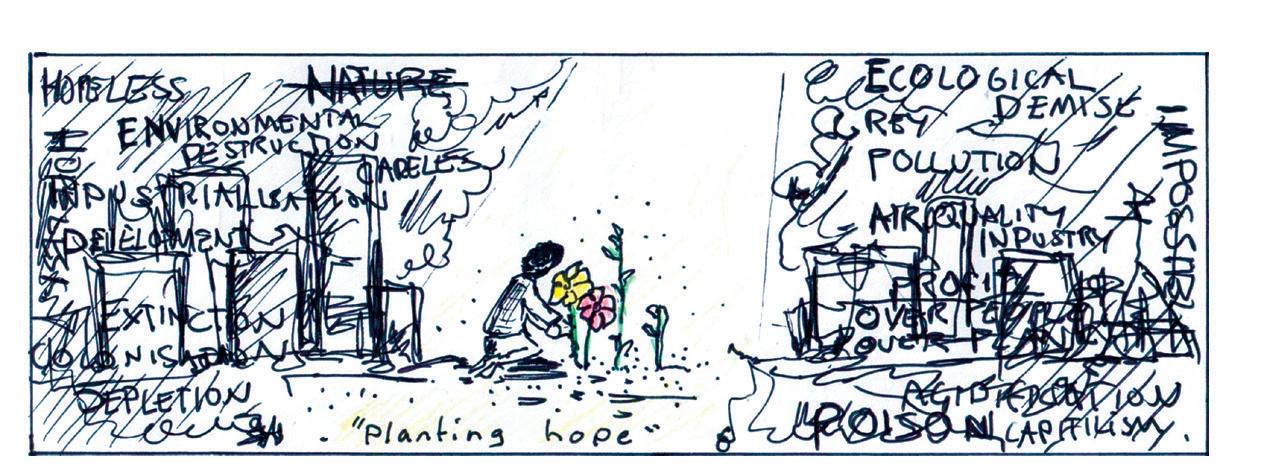




What: Northern Chinese & buffet-style Price: $15.50
When: pretty much always (10:00am— 1:00am on Sunday–Thursday, & till 5:00am on Friday & Saturday)
It’s definitely got heft, but hard to enjoy.
As another Red Rain Warning rolled over the city and I finished packing another load of nonsense into a cardboard box, it was clear that tonight was going to call for a bowl of easy and plenty. Enter stage left, FJ Noodles and Dumplings. A dip into Reddit and Google Reviews suggests that this is a place most frequented in the early hours of the morning, after a long pilgrimage through a series of licensed establishments (I’d only ever passed by FJ before today, which shows how much I get out).
FJ Noodles’ buffet menu is their obvious claim to fame—number one rated on their Uber Eats menu, with twice as many reviews as anything else, and a perfect deal for me to check out. They offer three different-sized containers: a small or medium rectangular container for $13.50 or $15.50, or a deep bowl for $17.50. These will get you a base of either egg fried rice or noodles, with the option of one, two, or three toppings, respectively. It’s a bit of a game—Papa’s Chinese Takeaway—as the lady behind the counter carries your container across and ladles on the toppings that you pick out, but it’s much harder to put together a harmonious bowl of food.
Ordering for myself and my partner, I ended up getting one bowl of Vegetable [&] Tofu, Egg Foo Young, and Sweet Sour Pork on rice, and a medium container of Curry Chicken and Spicy Pork on noodles. Worse results could have been possible from my panicked pointing at the cabinet, but anything with a sauce like the Curry Chicken should really go over rice to be soaked up, and the sweet-sour pork would have melded better with the Spicy Pork than the sweet-sour-egg-and-tofu amalgam that I ended up with. Props to the woman serving for not skimping; you walk away with a plastic brick of sustenance that all blends into one discordant takeaway symphony; an oil slick of flavours on rice.
Of course, a buffet comes with inevitable food safety suspicions, which the average person’s immune system will chew up and spit out—but if you’re immunocompromised or someone who should be wary of allergen crosscontamination, you’d be forgiven for giving this a miss. I’m loath to dwell too long on the subject of food hygiene just because it’s front-of-house here and not a knife used for chicken and beef in a kitchen out back, but I bring it up because it is tied to my first impressions of the food.
The Spicy Pork, for start, was tough and dried-out from the hot lamps. Kind of fun to eat, I must admit—like a jerky with a dusty fried batter, but tired and bland. On the other hand, the chicken in the curry sauce had been slow-cooking for hours and was very tender. Off-puttingly so. Some pieces were skin-on and slippery, halfway to a gelatin state, which, on undercooked noodles, was not appealing. The gravy itself did this dish no favours either, missing any

The vegetarian options were by far my favourites. The Vegetable and Tofu was a lot of broccoli, but this had held its crunch instead of going limp, and the florets had soaked up lots of soy and oil. The Foo Young and the Fried Rice ended up blended into a great savoury mix, with plenty of shrimp paste, sweet cubes of pea and carrot, and chunks of fluffy omelette. Quite an oily fried rice, but very scoffable.
This is a meal I would recommend only on the basis of value, and even then with hesitancy. The medium container is a good meal for $15.50, while the bowl for $17.50 will leave you full. Definitely undercutting any other meal of that mass in town, but pick wisely. However, I don’t think this review is an indictment on FJ as a whole.
It might just be that the buffet by the door is what keeps the place in business, while a whole other calibre of cooking happens in the back kitchen. Nick Iles of The Spinoff published a profusely apologetic ode to FJ Noodles after sitting down and trying their hand-pulled lāmiàn noodles. Made to order and served with bright and dynamic sauces, they sound like works of art. Pushing $20 or more, they are a touch outside of Munch’s budget, but I’m looking forward to walking past the buffet cabinet to try them—off-the-clock—sometime.











Jackson McCarthy is Salient's Critic-at-Large. His first book of poetry, Portrait, is forthcoming from Auckland University Press later this year.
Honey Dijon is an extraordinary and extraordinarily respected DJ known for her Chicago-style deep house music; largely the domain of black queer innovators in the early 80's, Dijon continues in the tradition of the likes of Frankie Knuckles and Marshall Jefferson. Her gifts are best exemplified in her tour-de-force Boiler Room set at Sugar Mountain in 2018, a set which has something of a cult following in itself. In a recent interview, Dijon revealed that she was flustered, running late thanks to a promoter mismanaging a car booking, and really needed to pee during that set—she wasn’t particularly proud of some of the mixing as a result. And yet, what unfolds is absorbingly authoritative, as Dijon takes the unexpecting daytime Aussie crowd on a romp through house music history, including even a sample of MLK’s “I Have a Dream” speech, just in case you ket-addled rave kids forgot where these beats came from. Her gifts, albeit that of a different kind, are also exemplified on her new record, The Nightlife. Here, it’s Dijon-as-producer, coordinating a number of collaborators and session musicians. “Just Friends” cools things off; “Satisfied” demands better, as much for an interpersonal relationship as for black pride in general; “Welcome to the Moon” images the dancefloor as extraterrestrial, a place where you move different than everywhere and everyone else (read: the straight world); “Okay Daddy” goes silly and bratty (and doesn’t its bassline have something of Mr Fingers’ classic track “Mystery of Love” about it?)—but the “story” this album tells is not one of linear narrative cohesion, it’s one of sheer formal efficiency. With most clocking in under four minutes, these tight and well-managed tracks don’t hypnotise in their length and sustain, as Dijon does in her DJ sets. Rather, they’re poised to arm DJs of her ilk with fresh and lively new material out of which to cut mixes of their own. We can only hope, Wellington, that people take up her challenge. I, for one, largely raised on this sound, am a little sick of the high-tempo techno reign in this city. Let’s party Chicago style, baby. Or, as guest vocalist Mahalia has it on one seriously flirty track: “Don’t rush me / Take your time, we’re not in love” (“Rush Me”).
Aw, Jessie Ware! Gardens and sexuality have been weirdly linked for as long as, like, the Book of Genesis, I guess? Or at least since it’s Troye Sivan’s 2018 bottoming anthem “Bloom.” Ware’s engagement with this trope on Superbloom is to turn it into pure bodily agitation, a command or excuse to dance. For me, “Sauna” is the zany highlight, highly sexed and furnished with a nonsense hook: “If you wanna last longer / I don’t need faster, I need stronger / Take it to the sauna.” You get the sense that she led herself there with the rhyme, which has its own logic or way of making things seem logical; and there’s that really lovely synth work, trembling and semiquavering all over the track, grounded by a digital piano whose chord progression endlessly encircles completion. By comparison, I find and have always found Ware’s ballads pretty weak in their posture—and here, “16 Summers” is no exception. But “Ride”, the lead single... it’s just signature Ware. It’s campy, vampy, disco-y, and—what’s that?—it’s got an Ennio Morricone sample. Of course it does. And who’s that on the keyboards? Stuart Price. Of course it is. Bravo tutti.
Before dance music dishevelled my beautiful mind, I was a connoisseur of that particular kind of folksy singer-songwriter who came after Leonard Cohen and Joni Mitchell: poetic, subtle, intelligent, led by the voice and persona of the singer. And I do have a real soft spot for Noah Kahan, who came to prominence a few years ago with 2022’s Stick Season. Kahan’s latest, The Great Divide, is in the same style and thematically encircles the same concerns, which would be concerning for an artist working in any other genre. But, like the poets, the singer-songwriters have discovered the basic truth that some things, like “I love you,” are worth repeating. For Kahan, that’s true, but it’s also true that some things merely repeat, as in the demeaning cycles of paycheck-to-paycheck labour—and he’s a faithful scribe of that kind of suffering capital wants to make invisible. “American Cars” almost evokes for me the Springsteen of “Racing in the Street” whose narrator’s got nothing but the race—but Kahan’s song is bogged down by 21st-century malaise, its depressed narrator “gaslighting [his] friends” and sick of false promises of escape

(“You’ve been driving all day / But you’re home and I’m so grateful you are”). Meanwhile, continuing our automobile theme, “Headed North” channels road rage against a Tesla Cybertruck. Fuck yeah! “But at least I got a soul still,” Kahan sings on the bittersweet “Haircut,” a song which tries hard to balance resentment with sympathy for an old friend. Kahan was there for them when they were down—but now they’ve left their hometown and write for the New York Times! Resentment seems to be winning out, which is always the threat in Kahan’s world of small-town couchsurfing left-behinds. But when he hits the applied chord ([V/iii] for those of you following along at home) on the chorus’ phrases “fast food” and “bad news”—driving harmonically onwards at the moments in the lyric when defeat seems most available—some stodgy part of me delights in an old cliche so simply and coherently indulged. You could almost call it idiomatic.
Beethoven/5, Vol. 5
Well, well, well. Before the po-faced singersongwriters bludgeoned me into acceptance of mediocrity, I was a classically-trained flautist. True story! Beethoven/5 is the brainchild of the American pianist Jonathan Biss, known for his interest in the composer, and Volume 5 completes the project, which was to commission and record live five new piano concertos, each responding to one of Beethoven’s. I’ll confess I’m largely here for Caroline Shaw, one of my favourite living composers, whose commissioned response, Watermark, is very cool. In Watermark, she’s unafraid to quote quite extensively from Beethoven, and ornaments his figures with orchestration techniques and progish harmonies that will hopefully feel familiar to fans of Johann Johannssohn and Radiohead alike. The second movement in particular is quite stunning: Shaw’s taste for pizzicato textures and stutteringly swelling string figures is on display, as well as her strong command of voice leading. In the album’s main dish, Beethoven’s third concerto, the Swedish Radio Symphony plays well under their concertmaster Malin Broman, though the winds are a touch “vertical” in their phrasing—not bad, necessarily, for Beethoven, I suppose, but neglecting the fury, the rushes of thought and expression, that are a hallmark of the composer’s style. While Biss takes quite a refreshing, literal approach, I do wonder if he or his audio engineer could have coaxed out a little more variety in the colour of his playing, especially in the third movement. Nonetheless, it’s hard to be disappointed at the completion and release of this lovely project, which reminds us that Beethoven at his best is not to be treated as a monument but a friend, someone whom we are still in dialogue with centuries after his death.
Hunk Unc may have hit the gym, but he’s still here for the people. If uni life has you stressed about flatmate drama, lecturer issues, or whatever is going on in your dating life, Hunk Unc has advice your parents definitely want to hear. Equal parts wisdom and gains.
To submit a question, scan the QR code on the page. If your problem needs a spotter, Hunk Unc might just get back to you.

hey hunk unc,
What's your opinion: Can friends of the opposite sex still talk/hang out When one of them gets a partner (of the opposite sex)?
Now hear Unc out for a second.
You ever watched Too Hot to Handle? Whole show is basically people acting like they physically cannot interact without it turning sexual. Entertaining, sure. But also… bleak.
Because if you genuinely think you can’t be friends with someone just because you be attracted to them, that’s a you thing. Not everyone you get along with needs to be put in that category.
If it’s just a normal friendship and one of you gets a partner, nothing should really change. You carry on, be respectful, and just… act like a decent person. It’s not complicated unless someone makes it complicated.
Where it can get a bit tricky is if there’s been history. Flirting, a situationship, whatever it was. Then yeah—you probably need to have a slightly uncomfortable chat. Clear up what’s appropriate now, what’s not, and just make sure everyone’s on the same page. Bit awkward, but far better than pretending it’s fine and letting it get weird.
And be honest with yourself as well—if you’re only keeping certain “friends” around because you think there might be a chance
one day… that’s something to look at. Unc’s not even judging, just saying it might be worth unpacking.
Because walking around viewing all your friends as potential hookups is a bit cooked, let’s be real.



Oh Yes, Oh No is where sex stories go to be judged. Was it hot? Was it a disaster? You decide. All stories are submitted by readers, published anonymously, and guaranteed to make you say 'oh yes' or 'oh no'. Scan the QR code to submit your own and see if it makes the cut.

Middle of the night hookup, bussed to his flat in the middle of a storm, arrived completely drenched. Awkward sex while he struggled to get hard, he made me close my eyes for ages because he felt selfconscious. We had to whisper cause his flatmates were home, but unfortunately we also struggled to understand each others accents. Then I thought he said "your thighs are so fat" and I was lightly confused, and asked "you think I'm fat?" Then he quickly said, "No no, your p*ssy!! It's wet!!" Incredibly awkward night overall, rate 2/10. submitted by anonmous
my buddy and i were rough housing (many beers deep) and somehow ended up making out and then tried to F*CK but niether of us could get it up and we kinda just sat there limply, not great submitted by anonmous


i tried to leave after a failed sneaky link and got caught on a ring camera failing to hop the fence outside her house, and getting locked in her garden patio. she sent me the footage in the moring x submitted by anonmous
Bro I’ve already committed hallcest with 3 different people in my hall submitted by anonmous
There were no "Oh Yes" stories submitted this week. Hope everyone's doing OK.

1 Someone who levels creatures in a monsterraising game
6 Quick strike animation used by many melee
10 Mushroom-capped ally in the Mario series
14 Health pickup found in countless games
19 Practice piece like the warm-up tracks in Rocksmith
20 Org. whose mail crates appear as props in Fallout 3
21 First name of the protagonist in the shooter Wet
22 Opening cutscene or tutorial segment
23 Type of exaggerated movement seen in older sprite animation
24 Wookiee featured in multiple Star Wars games
26 Two-tailed fox sidekick of Sonic
27 A character named in Granblue Fantasy, voiced by Yui Horie
28 Group behind E3, for short
29 High-res bitmap image, briefly
31 Like a character stuck in a bind-escape QTE
35 Parasitic enemy faction in the Halo series
36 “Senior,” as seen in dev-credit lists in AAA studios
37 Wears away, like durability on weapons
39 Style of belt used on certain fighting-game characters
40 Warm drink served at many cozy sim in-game cafés
43 First name of ____ Chomsky, referenced in Disco Elysium’s dialogue trees
47 Reaction to an unexpected difficulty spike
49 “Lakers” shorthand seen on team select in ESPN NBA Basketball
51 Noses of stylized creatures in indie games
53 Stat that determines perception or insight in RPGs
55 What a damaged fuel tank might be in a sci-fi shooter
57 Planet shown in Knights of the Old Republic II
58 Non-interactive story moment
59 “In the style of,” as in Souls-ala-Metroidvania
60 Short refreshment, often used to restore stamina in sims
62 Short for re-load, as a shooter command
63 What NPC companions rarely do in Skyrim
64 Shape of a projectile’s flight path
65 _____ Nil, videogame focusing on ecosystem restoration
67 Post-launch content bundle
68 Publisher of Zelda and Mario Kart
70 Frozen treat found in some Halo-themed Easter eggs
72 Team that appears on rosters in college-sports games
74 Checklist items for completionists
75 German “the,” seen in UI language options
76 Older villagers category in Animal Crossing: New Horizons demographics
79 Spanish “waves,” as seen on coastal maps
81 Common low-level enemy in RPGs
82 Network term used in some modding tools
83 Critical hit to the skull
84 Ethnic group controlling Kazan in Europa Universalis IV
86 Attempts at a tricky jump or move
88 Like RNG inheritance in monster-breeding games
89 “Hold up,” in chat shorthand
91 Medieval-flavored dialogue used by NPCs in Skyrim
92 Map extremes you can fully explore in Civilization VI
93 Time spans that pass during a full Spore evolution cycle
94 Older Samsung handheld screens used for early Android gaming
95 Local multiplayer setup
97 Fuel canister resembling those used to heat food in
The Sims 4: Outdoor Retreat
99 Hospital scene type used in Trauma Center: Under the Knife
101 Command center featured in multiple Call of Duty campaigns
103 Like the logic-based dialogue checks in Disco Elysium
109 Setting inspiration for jungle zones in Uncharted: Drake’s Fortune
113 What a gambler in Red Dead Redemption 2 might place at the poker table
114 River referenced in the France map overlays of Hearts of Iron IV
115 Material used to craft wind instruments in Zelda: Ocarina of Time
116 What a “Now Playing” overlay shows on the Xbox dashboard
119 Paola ____, a Mexican actress who played Evelyn Marcus in the 2022 Netflix series Resident Evil.
120 An archaic term for a dark, grayish-blue colour used in video game armour, originally from the Persian word for "Persian".
121 Abyssal region explored in Subnautica
122 The first thing you do in Minecraft is chop one of these down
123 Tamagotchi need tracked on its hunger menu
124 Abbrev. appearing on “assorted supply” crates in Fallout 76
125 Minor quest-stopper, you hit a ____
126 Typing of the hiss used for Creepers in Minecraft chat RP
127 Ringing effects used in cathedral zones of Bloodborne
DOWN
1 What cows must be milked in Stardew Valley
2 Old AT&T network tag seen in PS2 online setup
menus
3 Player who silences toxic teammates in Overwatch
4 Minnesota suburb featured on location lists in Microsoft Flight Simulator
5 Story summaries shown before chapters
6 Archaic “loot” term used in Baldur’s Gate dialogue
7 Name of the Pokémon protagonist in multiple licensed games
8 The main event category at GDQ marathons
9 Question players ask when waiting for a GTA Online session to load
10 Start of many
transport terms
11 Pain sound effect used by Sims in The Sims 4
12 Report-card range referenced in Bully: Scholarship Edition
13 Demon lord title character of Blizzard’s ARPG series
14 Unit of health in RPGs
15 Frustrated gamer’s key smash
16 Where a series sits after one sequel, in shorthand
17 Right Right, Left Left
18 A Japanese video game developer based in Kyoto
25 Innkeeper role sometimes used for comic NPCs in fantasy RPGs
30 Common enemies spawned in Minecraft
32 Protective gear type in Monster Hunter World
33 Surname of actor Willem, who played Ryuk in the Death Note game adaptations
34 Title character from the ____ the Princess Knight mobile games
38 Oil can letters
40 City visited in the Crew open-world driving map
41 Digital fee type shown on roads in American Truck Simulator
42 Rank just below
“senior” in many AAA dev studio credits
43 Hospital ward mirrored in Two Point Hospital neonatal DLC
44 Burden placed on the player in moral-choice games like Mass Effect
45 What suppressors do to gunfire in Call of Duty
46 "Is this really necessary?"
48 What early posters for Elden Ring famously did for years before release
50 What indie devs pitch to publishers like Devolver Digital
52 Text style shown in old-English items in Elder Scrolls Online
54 Defeatist's words
55 Short label for drink items in multiple crafting games
56 Fuel used for Molotov crafting in The Last of Us
59 Name on a 1996 PC platformer credited to D’India Software
61 Required equipment for Half-Life: Alyx
64 Aggressive enemies in MMO raids that must be cleared mid-boss fight
65 Tool-assisted speedrun, abbreviated
66 Network behind the
Duck Dynasty mobile game
69 Annotation shortcut used for Beat Saber mapping
70 Auxiliary verb used in autosave messages (“___ saved”) in many games
71 Fabric used for wealthy NPC outfits in Assassin’s Creed Syndicate
72 Spanish “photos,” as labeled in Resident Evil 4’s European files
73 Gaming lingo like “aggro,” “nerfed,” or “gank”
75 the walled capital of lower Hell in the 2010 video game Dante's Inferno
77 Horse coat pattern available in Red Dead Redemption 2
78 Abbrv. for stat stones in Pokémon training guides
80 Special forces unit appearing in several Call of Duty missions
82 a narrow curved wicker basket used to catch and propel the ball in jai alai
83 Slave caste referenced in Spartan lore across the Assassin’s Creed: Odyssey
85 Subtitle of the Enter the Matrix companion game
87 Short kiss sound used in dating-sim cutscenes
88 "You may not rest sleep now, there are ______ nearby."
90 Last name of a minor NPC family in Fallout 3
92 NPC class that casts buffs and heals in many MMORPGs
>
96 Water spirits appearing as summonable entities in Final Fantasy games
98 A major Spanish video game publisher and distributor, particularly prominent during the "golden age of Spanish software."
100 Action to retake a Pokémon photo in New Pokémon Snap
101 What devs pass before a Switch game can release
Jet similar to a 747 104 Hall & _____ songs used in ’80s rhythm-game playlists
105 Academic honor joked about in Bully: Scholarship Edition
106 Region of Runeterra home to Yasuo in League of Legends
107 Slippery as _____, misspelling of group led by Eredin in multiple Witcher titles
108 A location where chocobo eggs are hatched in Final Fantasy games
109 His photograph of a Spanish Loyalist soldier falling to the ground after being shot became one of the most famous images of the Spanish Civil War
110 Mining drops collected in Terraria and Minecraft
111 Server abbreviations on MMO login screens
112 What Peashooter fires in Plants vs. Zombies
117 Genre of Elden Ring and Final Fantasy
118 Console that launched Metroid and The Legend of Zelda

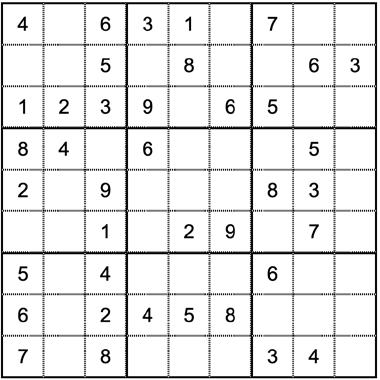
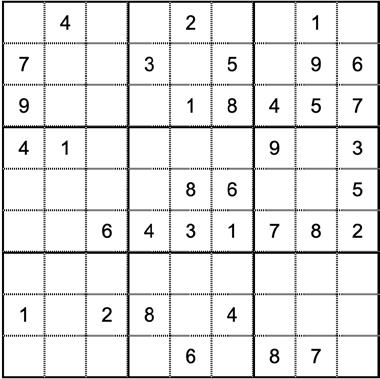
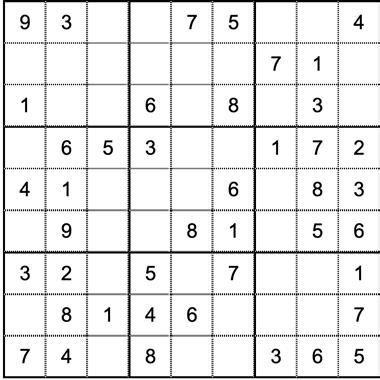
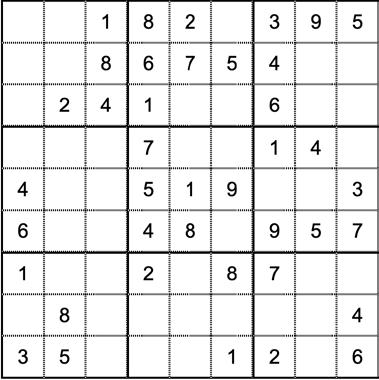
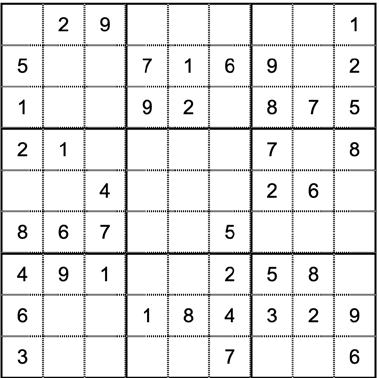

CRAFTINGTABLE CHESTMINECART POTIONBREWING DAYNIGHTCYCLE BREWINGSTAND NETHERPORTAL ENCHANTMENT MOBSPAWNER
&5$)7,1*7$%/( &+(670,1(&$5 7 327,21%5(:,1 * 67521*+2/' (1'(5&+(67 1(7+(5,7( :25.%(1&+ '5$*21(**
STRONGHOLD ENDERCHEST NETHERITE WORKBENCH DRAGONEGG HUNGERBAR SKELETON ENDERMAN
VILLAGER REDSTONE OBSIDIAN FARMLAND CREEPER DIAMOND BEDROCK PICKAXE
9,//$*(5 5('6721( 2%6,',$1 )$50/$1' &5((3(5 ',$021' %('52&. 3,&.$;( )851$&( 9,//$*( =20%,( 63,'(5 :,7+(5 3257$/ 6+,(/' *2/(0
FURNACE VILLAGE ZOMBIE SPIDER WITHER PORTAL SHIELD GOLEM



STEVE SWORD ARMOR TORCH BIOME ALEX
67(9( 6:25' $5025 725&+ %,20( $/(;
If you have a story, confession, or experience you’d like to share—whether it’s an anonymous crush, workplace drama, or something else entirely—you may submit it using the QR code below.

I am in love with my flatmate but she has a boyfriend and its horrible. Oh my heart
- anonymous

Welcome to the puzzle page from Puzzhead, your
These puzzles are provided to be fun and challenging. The Salient team and our contributors aim for accuracy, but occasional errors may occur. If you notice an error, you may write to editor@salient.org.nz. Please note that our puzzlers and contributors are doing their best, and none are professionals or working on these puzzles full time. For the word find, words may appear diagonally and backwards. To access solutions for the crosswords and connections puzzles, scan the QR code next to Puzzhead.

To solve a Set Square, use arithmetic and logical reasoning. You are given a grid containing six sums: three reading across and three reading down. The arithmetic operations (division, multiplication, addition, and subtraction) are shown between the grid spaces. Place each of the numbers 1 to 9 exactly once into the grid so that all six sums are correct. Note that calculations are carried out in left-to-right order, not according to BEDMAS.
To solve connections, group the sixteen words into four sets of four based on a shared connection. Each word belongs in only one group. Continue until all four groups are identified. On our website, the groupings are uploaded one at a time, so if you get stuck, you can view the answer for a single connection without revealing the full solution.


To solve Word Wheels, form words of four letters or more using the letters in the nine-letter wheel. Every word must include the central letter. Each letter may be used only as many times as it appears in the wheel. The aim is to find as many valid words as possible from the target word list, including the nineletter word that uses all the letters.



To be: Lionfish (Pterois).
Attributes: dramatic, striking, confident.
Trait: shine without stinging.
To be: Swordfish (Xiphias gladius).
Attributes: bold, fast, relentless.
Trait: charge forward with purpose.





be:
Attributes: steady, gentle, immense.
Trait: move calmly, leave a big impression.
To be: Cleaner Wrasse (Labroides dimidiatus).
Attributes: precise, helpful, attentive.
Trait: bring order through care.
To be: Marlin (Istiophoridae).
Attributes: adventurous, hard working, driven.
Trait: chase the horizon endlessly.



To be:
(Carcharodon carcharias).
Attributes: disciplined, strategic, formidable.

Trait: rise with quiet authority.


Strange travellers from distant constellations have beamed you up to the Mothership to deliver some good news and hard truths. Consider the gravity of their words (or don't).


To be: Clownfish (Amphiprioninae).
Attributes: curious, social, adaptable.
Trait: thrive in connection and change.


To be: Angelfish (Pomacanthidae).
Attributes: graceful, balanced, charming.
Trait: create harmony wherever you glide.




To be: Moray Eel (Muraenidae).
Attributes: intense, mysterious, powerful.
Trait: strike only when it matters.
To be: Sea Turtle (Cheloniidae).
Attributes: nurturing, intuitive, protective.
Trait: carry home wherever you go.


To be: Manta Ray (Mobula birostris).
Attributes: visionary, free-flowing, unique.
Trait: move with the currents of change.


To be: Jellyfish (Scyphozoa).
Attributes: dreamy, fluid, sensitive.
Trait: drift, but never lose your essence.
Current constellation TAURUS
April 20May 20