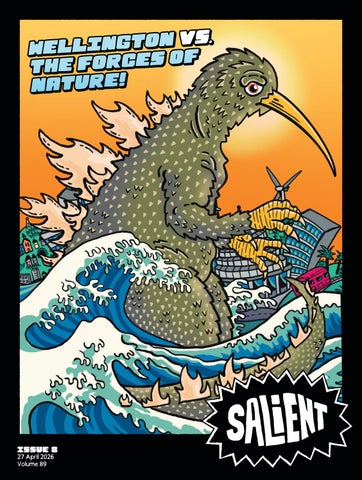
WELLINGTON VS. THE FORCES OF NATURE!



Editor
Phoebe Robertson
Designer & Cartoonist
Jim Higgs
Sub-Editor
Holly Rowsell
News Writers
Dan Moskovitz
Martha Schenk
Ryan Cleland
Otis Whinney
Ali Cook
Columnist
Guy van Egmond
Critic-at-large
Jackson McCarthy
Comic Artists
Grace Elzenheimer
Jack Graham
Contributing Writers
Tamanna Amin
Zia Ravenscroft
Christopher Curtis
Social Media Manager
Will Tickner
Photographer
Sophie Spencer
Centrefold Artist
Tama Greenbank
Advertising advertising@vuwsa.org.nz
Read Online salient.org.nz
issuu.com/salientmagazine
Follow Us @salientgram
Want to get published?
To contribute to Salient, you can submit poetry, creative writing, artwork, comics, puzzles, features, and other ideas. Feature articles must be pitched to the Editor before writing; send pitches to editor@salient.org.nz. Artwork should be sent to designer@salient.org.nz. Creative writing submissions are accepted through the form on our website. All other contributions, including puzzles and general ideas, should be emailed to the Editor. Submissions are welcome from first-time and returning contributors.

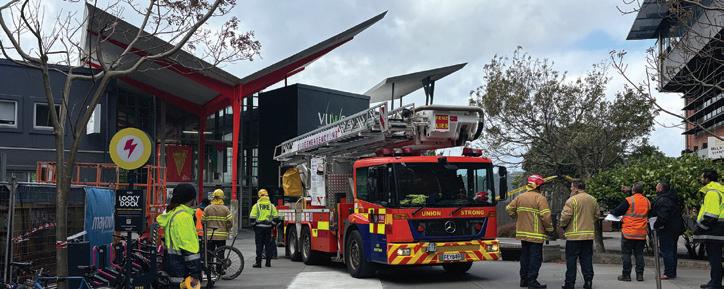
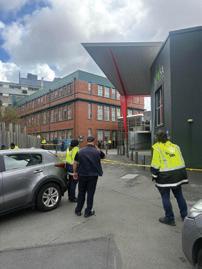
Well, once again I am writing to you, Salient readers, from home. This time, it’s because of storm damage. If you haven’t heard, the awning on the Student Union Building seems to be losing its zest for life, and we made a mad dash to grab the designer’s iMac from the office (and get it into an Uber) before we feared we might be kicked out for good.
As it turns out, only VUWSA is closed—so we panicked over nothing. But personally, I’d rather be overprepared than iMac-less on a print day, so here we are.
This is a good reminder that, as we head into winter and the weather becomes more extreme, it’s a good time to start stocking up on essentials. At my flat, I’ve got a large pack of bottled water, protein bars, candles and matches, and extra blankets in case the power goes out. The VUWSA pantry has great staples like tinned meat, and you can pick up camping cookers for around $30 from Bunnings (though I haven’t quite reached that level of preparedness yet).
We’ve heard from a number of you who have lost flats or vehicles in the floods, so I also want to remind you to reach out for support. You can contact the VUWSA Advocates via the VUWSA website, Student Hardship through the Student Finance Team, or—if you’re unsure where to start—email info@vuw.ac.nz or call 0800 04 04 04. They’ll be able to point you toward the most appropriate and up-to-date support.
Enjoy this photo from the Student Union Building, and stay safe, everyone. Enjoy Luka Vita’s history of the nuclear-free movement in Aotearoa New Zealand, Eleanor Thorpe’s piece on the Kumutoto Restoration Project, and Zara Boon’s beautiful essay. I’m not even going to try to describe it—doing so wouldn’t do it justice—but I will say that I cried a little the first time I read it.


I think as a criminologist I should be allowed to test every drug. Thoughts? @goblinking.png

My first time trying weed i thought it didn’t work so I took 2 times more…
@chloeee079
Not like you can crack open the window to smoke a bit during this drug week @r4tsrc00l
salient should do a kayak giveaway for the eventual flooding edition @ijnero


The primal battle between the spark at the end of my blunt and the bucketing rain rages on
I was gonna go to class, but then I got high. My room is now bone dry, I know why, because I got high @thisisnotafakename
Submit to the Letters page by emailing editor@salient.org.nz
I think there is a bucket shortage. My hall has 15 buckets in one room to catch leaks.
VicAnonymous House resident.


Best letter each week will win a FREE PIZZA from the Hunter Lounge!
This inspired me to take more drugs.

Salient is published by, but remains editorially independent from, the Victoria University of Wellington Students Association (VUWSA). Salient is funded in part by VUWSA through the Student Services Levy. Salient is a member of the Aotearoa
Student Press Association (ASPA) and the New Zealand Media Council. directed to the Media Council (info@mediacouncil.org.nz).



Week of April 27 - May 3, 2026

MONDAY TUESDAY
Raw Meat Monday
Venue: The Fringe Bar
Time: 8:00pm Cost: $8.71
Wellington's longest running open mic comedy night!

FRIDAY
Efan (uk)
Venue: Meow
Time: 10:30pm Cost: $20
Known for high-energy DJ sets and a style that draws from UK Garage, Bassline, Dubstep, and Jungle influences.

WEDNESDAY
Zoe Scott
Venue: Moon
Time: 4:00pm Cost: Free
Free live music Wednesday at Moon Bar!
SATURDAY
DNG #008
Venue: Moon Time: 8:00pm Cost: $10
SOKA, VESIKA, BLOQ, EERIE, PLISSKIN
Moon Jam Nite
Venue: Moon Time: 7:30pm Cost: Free
Every Tuesday at 7:30pm Moon hosts an open mic night with a fully equipped stage.
Eyegum Wednesday
Venue: San Fran
Time: 8:00pm
Cost: Free
Sig Wilder & Friends &, Eigenface, Garden Faerie.
WEDNESDAY WEDNESDAY
Say The ThingMonthly Open Mic
Venue: Meow Time: 7:00pm Cost: Koha (donated to charity)
Open Mic last Wednesday of every month. Poems, short fiction, personal essays and more!

About the centrefold artist - Tama Greenbank
My inspiration came from mugshots of people who had huffed paint. I used silver cupcake spray to mimic the look of spray paint, then took the image through Lightroom and Photoshop multiple times adjusting the colouring and noise until I got something that I thought was similar to what you'd find from a VICE magazine cover or from an early 2000s promo.
Go to page 20 to see the centrefold, then rip it out and put it on your wall !
THURSDAY
Music for Mutual Aid
Venue: Meow
Time: 7:00pm Cost: $20
The event is raising funds for Mutual Aid for Lana's Family. Lana is a Mother of five Children in Gaza. She is raising funds to get them out when the Rafah border opens.

Are you a Te Herenga Waka student with an upcoming gig or event? Scan the QR code to submit your details for potential inclusion on our gigs page. SHARE YOUR GIG!



Dan Moskovitz
Reading cinemas have been closed for seven years. Two generations of Vic students have started and finished undergrad only knowing a dead building in the heart of Courtney Place. At long last, that’s about to change.
Reading requires earthquake strengthening, and doesn’t have the money for it. After dragging their feet for a laughably long time, they’ve finally sold it to developers PrimeProperty, who will lease it back to Reading under the moniker of “The Court.” Reading Cinemas will still be the venue’s star attraction, but it will no longer be the only thing the building is designed around.
That said, PrimeProperty Development Manager Guy Aharoni is happy to admit the name change is partially because “The Court” sounds better than “Reading Cinemas 2.0.” It’s a refurbishment and a refreshment, but not a rethink.
There will be some tweaks, though. One is to let more natural light into the building. There will be a large new entrance on the Wakefield Street side of The Court, allowing light to filter through.
This is because Prime’s goal is to make The Court an all-day destination, rather than something more evening-focused. PrimeProperty is negotiating with potential tenants with an eye for establishments open at most hours.
Aharoni says the aim is to get some bigger ticket tenants first, then work around them.
“You build around the bigger tenancies because there are more constraints with them, and the smaller operators get what's left over,” said Aharoni.
“Because if someone's got an idea which takes up a quarter of the floor, then presumably they'll be paying a lot more to take up said space. The more you take, the less there is available for somewhere else.”
“So we're trying to have the right tenant mix to both complement the cinema and have a venue which people go to throughout the day and evening.”

Given the sheer number of hospitality and retail outlets which have closed in Wellington over the past few years, one could be forgiven for expecting tepid interest. While admitting how interest could be better, Aharoni says they are still fielding plenty of inquiries.
“My ideal scenario is to draw in some brands and operators that we don't have in Wellington. But it's a little bit more challenging in this current economic climate. We'll see how it all pans out.”
A big part of the anguish over the loss of Reading was how it was a third space. You could go there and exist in the bottom-floor communal area without spending any money. The only other major third space in Wellington was the city library, which closed at 7p.m.
Aharoni says that aspect will be coming back, though its size may be reduced.
“We do have a communal space in the centre in the current plans. It's not so much a food court because that’s a bit of a dated concept, but we do have a similar sort of communal area in the middle.
“We're hoping the ground floor becomes a lot more of a destination in itself than purely a support for the cinemas.” There’s plenty of work still to do as the building is brought


Holly Rowsell
GenZ Aotearoa (GZA) recently hosted its inaugural National Youth Organisation Hui in Pōneke, bringing together youth leaders from across the motu to strengthen connections and reimagine the future of advocacy.
Founded in January 2024 following the election of the current government, GZA emerged to help mitigate resultant feelings of disillusionment and voicelessness among Aotearoa’s rangatahi.
Since then, GZA’s focus has evolved from resistance to regeneration. Their mahi falls under three main goals; rebuilding cross-sector relationships, amplifying rangatahi voices, and building long-term infrastructure.
The National Youth Organisation Hui set out to lay the groundwork for the development of this infrastructure. Lola Fisher, co-founder of GenZ Aotearoa, described the motivation behind the event:
“The NYOH came from a gap that kept showing up to us in many different ways.
“We saw that so many young people and their youth organisations across Aotearoa are doing powerful and necessary work, but often in isolation, without shared infrastructure or connection.
“Over time that same isolation becomes a missed opportunity to build a way forward that is stronger together.
“Our hui was about responding to that, trying to create space to start designing a more sustainable way of working across the sector.”
As the first event of its kind in Aotearoa, the hui brought together 50 attendees representing a diverse range of youth-led organizations. It aimed to equip young advocates with practical skills, facilitate the development of a framework for the future, and—above all—foster community.
Over the three days, participants heard from 16 speakers with lived-experience in youth advocacy. Discussions spanned governance essentials, effective allyship, and navigating funding.
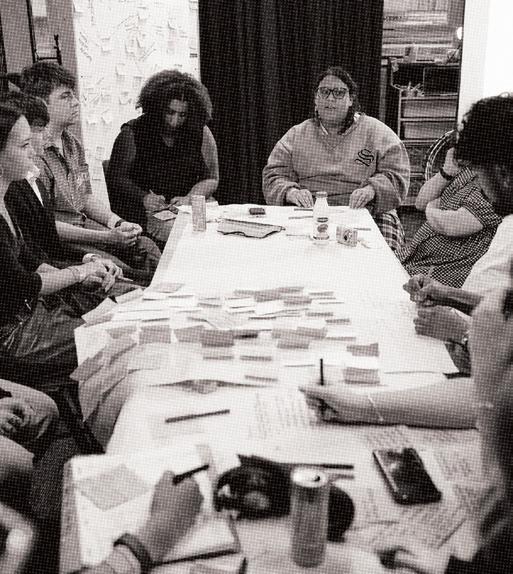
Emcees Leila Foster and Daniel Kumar also facilitated seven hours of collaborative workshops, focusing on identifying key problems in the sector and ideating a collaborative, resourced future for youth organisations in Aoteatora. In these sessions, attendees recorded their ideas and first-hand experiences across metres of butcher's paper.
GZA will use these contributions to develop a four-year strategic roadmap. Plans are also underway to establish a digital collaborative network to share knowledge and strengthen connections between organizations.
NYOH attendee Mia Maria, a Youth Decision Maker at Zeal Wellington, reflected on the impact of the workshops, noting her excitement to shift away from a scarcity mindset:
“Regardless of a constant lack of funding, or other external support, real community looks like choosing now to focus on what we do have, and how we can share that—whether it be skills, knowledge or tangible resources—with each other to make ends meet in times of need. This is how we as a collective can succeed despite the odds.”
Fisher is equally hopeful for Aotearoa’s youth advocacy sector, envisioning “a future where this work doesn’t have to start from scratch every time. I want to see knowledge carried forward and see a shift from isolation to interdependence on one another."
Maria echoes this sentiment: “It’s exciting to think these are structures that future generations will inherit, rather than the unsustainable structures that consistently lead to burn out…”
You can keep updated with GenZ Aotearoa’s mahi at @genzaotearoa on Instagram, or learn more about their kaupapa at genzaotearoa.org

Ryan Cleland
A blunt new campaign is telling Kiwi men something we’ve long avoided hearing: check your balls. Launched during Testicular Cancer awareness month, the “Lump Lottery” campaign is pushing young men to take their health seriously…with the unusual incentive of winning a brand new ute.
Despite being one of the most treatable cancers, with a survival rate of 95-96% when caught early, Testicular cancer remains the most common cancer in men under 40 in Aotearoa. And many young men—especially students— don’t know how or why to check themselves.
The campaign, created by Testicular Cancer NZ in partnership with JAC, attempts to normalise monthly self-checks in the same way breast checks have become routine for women. According to urologist Dr Jim Duthie, Men's health is often sidelined and more overlooked in their lives.
“Men don't tend to be that good at talking about their health, but women seem to be better at it. Whereas with men, it seems like, this is a sign of weakness, it's like a badge of honor to say, "I haven't been to my GP in 10 years.”” Duthie tells me that the campaign, which leans heavily on humour and blunt messaging, will be able to break through the discomfort often stops men from engaging in their own health.
The process is simple: watch a short instructional video online, perform a self-check, and answer whether you found a lump. Participants then go in the draw to win a JAC ute.
The key risk group includes young men aged 14 to 30, making university students a primary audience. “From puberty onwards, it’s important to get familiar with your own anatomy and check monthly,” Duthie said.
While cure rates are high, early detection significantly reduces the need for intensive treatment. In many cases, catching cancer early means a straightforward procedure and monitoring, rather than chemotherapy and in rarer cases, radiation therapy.
Duthie says fear and stigma are major barriers. Many men avoid seeking help, sometimes ignoring symptoms until tumours become severe.
I spoke with testicular cancer survivor Harrison Stott about his experience. He explained that while training for a marathon in Oslo, he initially thought he was dealing with chafing that persisted for weeks. It wasn’t until later that he discovered a small lump on his left testicle.
A few weeks after noticing the lump, he decided to get it checked. As he described it, “there was a bit of a whirlwind” from that point on. Doctors found four cysts, and within a month, his testicle was removed. Stott emphasised how fortunate he feels that the cancer was caught early, and he strongly urges others to act quickly: “You can move fast—go to the doctor and get it checked out.”
He tells me the best case scenario is there is nothing there and the doctor tells you you are fine, worst case is there is something there but at least you got it early.
Now 5 years on, Stott has continued to work with other Testicular cancer survivors. As he puts it, “getting young males talking about cancer, that just doesn't happen to us, so I want to be that sort of support network and help someone out.”
Among students, the issue is compounded by a “she’ll be right” culture that often downplays health concerns. Conversations between mates about medical issues, especially something as personal as testicular heath, is rare.
The campaign’s humour is designed to counter that, making self-checks something that can be joked about and, more importantly, talked about.
Stott was diagnosed with cancer at 28 and believes the light-hearted tone of the Lump Lottery campaign is effective. “They’ve added a joke spin on it, and I think it’s great. That’s what guys need,” he said.
Beyond survival, late detection can have lasting consequences, particularly for fertility. In more advanced cases, the disease can affect sperm production and longterm reproductive health.
There are also clear disparities in risk, with Māori men experiencing significantly higher rates of testicular cancer than other groups.
When asked what he would say to those most at risk,
This is part one of a three-part series examining the VUWSA executive, with this instalment focusing on student clubs.
Phoebe Robertson
A proposal to shift control of student clubs from Te Herenga Waka to the Victoria University of Wellington Students’ Association (VUWSA) has sparked confusion and concern among club members, following a series of emails sent in late March.
University management confirmed that “high-level conversations” have taken place with VUWSA about the future of club administration, but said no decision has been made. However, the proposal—details of which had not been publicly announced—prompted the rapid emergence of organised opposition from students.
Student clubs are independent, student-led organisations spanning cultural, academic, political, and recreational interests. Te Herenga Waka’s Have Your Say survey data shows steady growth in club numbers, increasing from around 90 in 2017 to nearly 200 today. Clubs are currently administered by UniRec, which provides funding, oversight, and logistical support.
On 24 March 2026, a student group launched the “Save Our Clubs” campaign, beginning with an email sent to clubs warning that “[Clubs Name] is about to lose its University backing.” The message raised concerns about a proposal to transfer club administration from UniRec to VUWSA and urged recipients to oppose the change.
The email appeared to catch many clubs off guard. VUWSA had not publicly announced the proposal, and many club members were unaware that discussions had taken place.
The following day, VUWSA Clubs and Activities Officer Cam Dickson emailed all registered clubs under the subject line “Clarity and Kōrero – VUWSA Clubs Proposal.” He wrote that “a few of the points made [by Save Our Clubs] don’t line up with the current proposal,” but did not directly address several of the campaign’s key criticisms. Instead, the email outlined VUWSA’s general approach, which is detailed later in this article.
On 27 March, the University also contacted clubs. Director of Campus Operations Simon Johnson wrote that UniRec “continues to administer club support as usual,” and confirmed that no decision had been made about transferring responsibility. He added that “some high-level conversations have been held” between the University and VUWSA, and that any proposal would require further development and consultation.
Save Our Clubs spokesperson Arie Joe told Salient that the lack of consultation was a key concern.
“This proposal was negotiated behind closed doors,” he said. “Not a single club was asked [if they wanted club ownership to transfer to VUWSA].”
The sequence of emails has raised broader questions about transparency and the extent to which clubs have been included in discussions about their future.
This proposal has been a long time coming. To understand how VUWSA arrived at this point, it’s necessary to look back at a series of changes to how student clubs have been funded and managed.
Before 2012, VUWSA administered student clubs under a system of compulsory student union membership. All students were automatically enrolled and required to pay membership fees, providing student associations with a stable and guaranteed source of funding.
That changed on 1 January 2012, when Voluntary Student Membership (VSM) came into effect. Introduced as a member’s bill by ACT MP Heather Roy, the legislation made student union membership optional rather than automatic.
The impact was immediate. Students no longer had to join or financially support their student association, cutting off a major source of guaranteed income. At the time, Salient reporter Stella Black-Kelly wrote “…student associations could previously charge students a compulsory membership fee, but voluntary student membership means they no longer have that guaranteed revenue stream…”
Following the introduction of VSM, an independent review recommended that the University take over administration of student clubs, citing inconsistent support, poor communication, slow funding processes, and a lack of clear systems under VUWSA.
Since then, VUWSA has repeatedly pushed to take back control of clubs—in 2018, 2023, 2025, and again in 2026—keeping the question of who should run them firmly in play.
Author’s note: feel free to skip this if you just want to know what’s happening in 2026, but it outlines why clubs were given up and earlier versions of the proposal.
At the start of 2012, VUWSA was still reported to have control of clubs. However, by mid-year this had changed. In the 4 June 2012 issue of Salient, Black-Kelly wrote: “On a brighter note, VUWSA no longer has control of clubs, societies and rep groups following the independent review recommending that the University would do a better job.” The review in question—the Review of Club Support and Structure (April 2012)—was a joint report commissioned during this transition period and was obtained by Salient for this article in 2026.
The review found that clubs required consistent, professional support, rather than fragmented or student-led administration. It emphasised the importance of dedicated staff, integrated services, and centralised systems—areas where the University was better positioned to deliver long-term stability.
It also identified structural issues in the existing system, including poor communication, inconsistent service delivery, and unclear
access to resources. Clubs reported confusion around processes, gaps in support, and a lack of coordinated oversight.
Financial and administrative processes were another concern. The report highlighted inefficient and slow grant systems, limited transparency, and the need for more streamlined, jointly managed funding structures involving both staff and students.
Finally, the review stressed the importance of sustainability and continuity. With high turnover in student leadership, clubs needed ongoing training, institutional memory, and structured support—something a student association alone struggled to provide consistently.
It’s important to note this is an older report, produced in a specific post-VSM context, and does not necessarily reflect VUWSA’s current capacity or how it might operate clubs today. However, that context continues to shape the current debate.
In the 2017 VUWSA executive nominations piece published in Salient, Marlon Drake—who was a presidential candidate that year—did not mention a club's takeover in his campaign platform. However, he became involved with clubs early in his term.
In 2018, reporting in Salient indicated early interest from VUWSA in regaining responsibility for student clubs. In an article titled Eye on Exec, writer Louise Lin reported that “Marlon (VUWSA President) and Connor (Clubs and Activities Officer) went on a trip down to Otago and Canterbury, to look at how the unis there run their clubs. VUWSA is thinking of changing up how we run ours.”
Later that year, Lin reported growing support among clubs. “In a recent survey to university clubs, 62% of respondents believed that the administration of clubs on campus should go to VUWSA. Currently, the university manages clubs through Victoria Recreation.”
Clubs and Activities Officer Connor MacLeoud said that the proposal originated at a club level. “A lot of clubs share my view, that Victoria Recreation weren't properly managing clubs.”
Lin reported that “Overall, 39% of Vic's 174 clubs responded to the survey.”
Furthermore, at the 2018 VUWSA Annual General Meeting, Drake responded to questions about the survey, saying most respondents supported returning control to VUWSA. He said the issue had also been discussed at the Joint Student Union Board (JSUB), and emphasised the move was not a “power grab,” but an attempt to begin a conversation about how clubs could best serve students. He added that this approach would be communicated to clubs in the near future.
However, Salient was unable to access JSUB documents or any communications sent to clubs to verify how this was presented in practice.
In the 2022 VUWSA executive nominations piece published in Salient, Jessica Ye—who would go on to become VUWSA president in 2023—did not mention the transfer of club administration among her stated priorities or campaign promises. No contemporaneous reporting or publicly available documentation from 2023 appears to record any shift toward this policy.
However, the proposal was already on the table in 2023, as indicated by a document titled VUWSA Clubs & Societies Proposal outlining
VUWSA’s intention to take over clubs and societies, obtained by Salient in 2026. The proposal framed the change as an improvement to the existing system rather than a response to any identified issues, emphasising a more “student-centric” model and increased community engagement. It outlined a range of initiatives—including a digital clubs portal, centralised support services, and a proposed $50,000 annual grant—but provided limited detail on how these would operate in practice.
The most detailed aspect of the document was its financial outline. VUWSA described the proposal as cost-neutral, relying on the transfer of existing University funding for clubs rather than new investment.
University figures included in the proposal show total annual spending on clubs and societies sitting at approximately $250,000–$337,000, with the 2023 budget at $336,949. This funding was broadly allocated across:
• Staffing: ~$150,000 (2 full-time staff and 1 casual role)
• Sponsorship funding: ~$160,000
• Operations and IT: ~$18,000
• Events: ~$7,000
• Security and cleaning: ~$1,000
The proposal suggested that costs could be reduced by removing or restructuring the Clubs Manager role, potentially lowering staffing requirements to around one full-time equivalent, alongside efficiencies from consolidating reception services and introducing a digital system. These savings were intended to be reinvested into clubs through increased funding and resources.
An additional $50,000 VicBooks Grant, funded separately through the VUWSA Trust, was proposed as a new funding stream for clubs.
However, while the proposal included high-level figures, it did not provide detailed financial modelling or breakdowns to support claims of sustainability or savings.
As the proposal was not adopted, and predates current discussions, it provides historical context rather than a definitive reflection of VUWSA’s present plans.
In the 2025 VUWSA executive nominations piece published in Salient, Liban Ali—who would go on to become VUWSA president in 2025—did not mention clubs as a campaign promise. However, this position emerged in practice during his presidency.
In 2025, VUWSA renewed its push to regain responsibility for student clubs. In a Salient article by Darcy Lawrey titled VUWSA Wants Clubs and Societies to Come Back Home, Ali said the association was planning to take back management of clubs, describing it as a commitment during his term.
Ali said, “if we want a strong, fun space for clubs and societies, it should be done by students, for students.” The proposal outlined a partial transfer of responsibilities, with UniRec continuing to manage sports clubs, while VUWSA would take over non-sports clubs and societies.
The article echoed the 2023 Clubs Proposal that planned additional funding, a proposed $50,000 grant pool, and shared promotional platforms for clubs.
In the 2025 VUWSA executive nominations piece published in Salient, Aidan Donoghue—who stood as a presidential candidate that year—stated in his candidate bio a campaign promise to “return to VUWSA clubs and societies.”
In the same issue, in an interview titled Meet the Candidates: Prez, Donoghue reiterated this position, identifying “getting back Clubs and Societies” as one of his key campaign priorities, alongside proposals such as “turning the games room into an Opportunity shop bringing in a new revenue stream in the long run.”
As reported in Salient by Ryan Cleland, VUWSA President Aidan Donoghue reiterated his campaign promise to return clubs from UniRec to student association management.
Donoghue said returning non-sporting clubs to VUWSA remains a “massive priority,” with discussions ongoing between VUWSA and the University. He said the proposal would see sporting clubs remain under UniRec, while non-sporting clubs shift to VUWSA oversight.
Donoghue also said VUWSA aims to strengthen the role of clubs on campus by building greater collaboration and community among club executives.
Simon Johnson, Director of Campus Operations, said in the earlier 27 March email to clubs that they “acknowledge that VUWSA would like to play a greater role in club support however there has been no decision to transfer clubs support and administration to VUWSA.”
Full details of the proposed transfer of club administration in 2026 have not been publicly released.
VUWSA President Aidan Donoghue and Clubs and Activities Officer Cam Dickson said the proposal is not intended to address a specific failure in the current system, but to build on it.
“Fundamentally this proposal is not about addressing an existing fault/ issue but rather improving upon the existing model,” Donoghue said.
“VUWSA wants what University Recreation wants: For students to have the best possible time at university and participation in your chosen club is critical to that experience.
“VUWSA believes we offer a unique ‘for students by students’ approach which differentiates us from other service providers.
“Ultimately, clubs got their start under VUWSA and we believe with concentrated effort we can give students a sense of ownership over the administration of the clubs they love.”
The most detailed outline available to clubs was provided in an email sent by Dickson, responding to Save Our Clubs on 25 March. In it, he outlined a proposed structure in which social and cultural clubs would affiliate with VUWSA as their primary administrative body.
According to Dickson’s email, clubs would receive:
• Administrative support from full-time VUWSA operational staff, including room bookings and general admin services (available 9am–4pm)
• Continued University backing, including use of the University’s name, logo, facilities, and services
• Access to funding primarily from the Student Services Levy, with additional supplementary funding from VUWSA
• Potential additional funding for “aspirational projects” benefiting the clubs community
• Greater input into funding decisions and strategy through a proposed clubs council
It remains unclear whether elements of earlier proposals under former VUWSA presidents Liban Ali and Jessica Ye are still part of the current plan. These previously included:
• The creation of centralised social media platforms to promote clubs and events
• An additional $50,000 funding pool for “aspirational kaupapa,” proposed through a Vic Books Grant
Donoghue said discussions with the University are ongoing, with the possibility of a phased implementation and a timeline that could extend to 2027.
When asked about this proposed timeline and the current status of discussions, the University provided a broader response. In a statement attributed to Chief Operating Officer Tina Wakefield, the University said that while VUWSA had presented a proposal in 2023 and discussions have continued since, “there is no firm proposal to transfer responsibility,” and that “nothing has changed since the email update provided to clubs on 27 March 2026.”
Asked whether the 2026 proposal could be made public, Donoghue said: “At this stage, no. Our proposal is a living document that will [undergo] many changes before finalizing…” He said it would be inappropriate to release draft material while discussions and internal approvals were ongoing, but that it would be shared once it is “much more concrete.”
Dickson said VUWSA’s continued work on the proposal had enabled it to reach its current stage. “We’ve shown immense commitment to this project … we’re now at a point where we can concretely negotiate,” he said. He added that the proposal aligns with VUWSA’s “core kaupapa” of improving the student experience, and would provide a “clear and tangible improvement,” though no specific or measurable outcomes were detailed.
Simon Johnson said in his 2026 email to clubs that “any future proposal would require further development and consultation with relevant stakeholders, including clubs and student leaders, before any decisions are made.”
The proposal remains in development, with key elements—including its full scope, operational structure, and intended outcomes—not yet publicly available.
In its Te Aka Tauira Victoria University of Wellington Students’ Association Budget 2026, VUWSA describes itself as “the least funded Student Association in New Zealand.” They state that “this is unlikely to change if the University continues to control the allocation of the Student Services Fee.”
This raises questions about why the association is seeking to take on greater responsibility for clubs while continuing to highlight significant financial constraints.
However, in response to these concerns, VUWSA leadership has emphasised that any transfer of clubs would need to be financially sustainable.
Donoghue said the proposal is intended to be financially neutral, with funding transferred from the University alongside responsibility.
“We’re not saying out of the current pool anything would change … we need enough to be given to us to run them as well,” he said.
He added that the proposal would not proceed without sufficient resourcing, particularly for staffing. “[We] would need a sustainable model for staffing … what we don't want to do is take clubs and then break them and then give them back to the university,” he said.
Dickson said the proposal would rely on the existing Student Services Levy (SSL), which is currently allocated to University Recreation, alongside continued access to University facilities, branding, and services.
“Currently, this portion of the SSL is provided to University Recreation … so, should VUWSA administer clubs, we expect to utilise the existing funding pool, with intention to supplement this pool from our own funds,” he said.
Dickson added that additional resourcing could come from VUWSA reserves and Trust funds, provided it is used in a way that is “deeply impactful and financially sustainable.”
Salient contacted VUWSA Treasurer/Secretary Sanjukta Dey, who confirmed she had been consulted by Dickson about the potential use of Trust or reserve funds to support the proposal.
She noted that, once further developed, the initiative could form a strong proposal not only for approval but also for input from more experienced Trust members. However, she emphasised that any approach to the Trust must reflect VUWSA’s highest priorities and would require prior approval from the executive.
No detailed financial modelling, budget breakdown, or cost projections for the proposal have been made public.
Save Our Clubs has launched a petition opposing the proposal. As of 22 April, the campaign reported 69 verified individual signatures and endorsements from seven clubs: Victoria University of Wellington Wargaming Society, Te Aro Pasifika Students' Association, VUW Games Club (Board Games and Roleplaying Club), Beta Alpha Psi, Victoria Lacrosse Club, Victoria Pakistan Student Association (VPSA), and Cosplay Club.
Donoghue questioned the reliability of the petition data, citing examples of invalid names appearing in submissions.
However, Save Our Clubs spokesperson Arie Joe defended the petition’s legitimacy, stating that each submission is tied to a name and email address and manually verified, with invalid entries removed. “What we do have is a public petition with real names attached to it,” he said.
Donoghue went on in his interview with Salient to describe the campaign as representing a “vocal portion” of students. He said those views were being taken seriously.
Despite this exchange, Donoghue confirmed it is not currently undertaking formal consultation with clubs on the proposed change in administration.
In Dickson’s previously mentioned 25 March email, VUWSA said it had been in discussions with the University “for some time,” raising concerns among some students that clubs are being approached only after key elements of the proposal have already been developed.
There is no publicly available evidence—such as surveys or broader engagement—indicating the overall level of student or club support.
This has led to wider concerns about consultation. While VUWSA leadership has emphasised that student feedback is important, no clear timeline or process for consultation has been provided. Clubs have not been publicly consulted on a potential transfer of administration since 2018.
In comments to Salient, Dickson said VUWSA had previously been in contact with one of the campaign’s organisers prior to its
launch, but that “this dialogue wasn’t continued after the launch of the campaign, and no other students expressed direct support or involvement in ‘Save Our Clubs’, so no further conversations were pursued.”
He added that the proposal remains “very much a work in progress,” and could not yet be shared publicly to ensure negotiations and consultation are “fair and follow best practices,” stating that “this may become appropriate sometime in the future” and that students would be kept informed. However, no timeline, process, or prior examples of such information being publicly shared were provided to substantiate this reassurance.
Responses directly from clubs have varied. In a public statement, the Victoria University of Wellington Tramping Club said it was “not in support of this campaign,” and that the proposal would have limited impact on incorporated societies like theirs. The club also raised concerns about the campaign’s credibility and methods, including the use of contact information and the absence of named organisers.
By contrast, members of the Victoria University Musical Society executive described to Salient initial concern following the campaign email, saying it focused on negative outcomes and created uncertainty for newer clubs. They said they sought further information but remained unsure about the proposal and its implications, adding that despite the flurry of emails, they “still have no idea what’s going on” and, as a newly established club, “don’t know what to think.”
It is difficult to summarise a proposal that remains largely unpublished—particularly when much of what is known comes from partial outlines, emails, and statements about a plan still in development. However, from what can be pieced together, the proposal would see non-sporting clubs move from UniRec to VUWSA administration, with clubs affiliating under VUWSA, supported by at least one full-time staff member, and potentially represented through a clubs council influencing funding decisions.
Members of the VUWSA executive have framed the change as an opportunity to enhance the current system through a “for students, by students” model, rather than as a response to any specific shortcomings. At the same time, no clear issues with the existing UniRec structure have been publicly identified, and the practical differences for clubs—beyond a shift in oversight—remain unclear.
Key details are still missing. The full proposal has not been released, financial modelling and cost breakdowns are not public, and earlier ideas such as additional funding pools or shared promotional platforms remain unconfirmed. While the proposal is described as financially neutral and reliant on existing funding streams like the Student Services Levy, this has not been substantiated with detailed figures.
Consultation is also unresolved. Although both VUWSA and the University state that consultation would be required before any decision, there is little evidence of broad engagement with clubs prior to the proposal reaching this stage, and no clear indication of what future consultation will involve. It also remains unclear when, or if, students would have been formally notified about the proposal had the Save Our Clubs campaign not brought it into wider attention.
For now, clubs remain under UniRec administration, and it has not been clearly established—at least publicly—why that arrangement should change.

Otis Whinney
As Ardie Savea tackles folk in Japan, and Tana Umaga prepares to help coach the All Blacks, the plug has been pulled on Moana Pasifika. An admittedly shaky experiment in Pacific-lead rugby union has come into financial troubles to the tune of $10,000,000, leaving it unable to compete in the Super Rugby Pacific competition after this year. As a fan, it was not hard to see something like this coming—disappointing results, talent moving elsewhere, and competition in the Auckland Sporting world made the team a tough sell, and the money drying up seems to be the final blow. They have said they’re looking for investors, but who has $10,000,000 just secretly lying around? I don’t. That would be ridiculous.
Obviously, our beautiful national sport is not the only important thing happening in our sea of islands, so let's journey further out and track some interesting happenings on the island of Papua.
The government of Papua New Guinea and the Papua New Guinea Defence Force (PNGDF) have had an interesting relationship over the decades. The largest war in the Pacific since World War II was fought between the PNGDF and the people of Bougainville, who began a struggle against foreign mining companies that transformed into a brutal war where Bougainville sought independence from PNG. In the midst of this war, PNG Prime Minister Julius Chan attempted to use foreign mercenaries to secure a quicker victory in the hopes that it would help him in election season. $36,000,000 was needed to pay for this, with cutbacks from several ministries having to be actioned without a full-cabinet vote in order to meet that number. A blockade around Bougainville and increasingly violent tactics by the PNGDF brought the war to a crisis moment, with the Australian government’s steady stream of military support (short of boots-on-theground) also bringing public condemnation from internal anti-war groups. This came to head with the ‘Sandline Affair’, named after the company who supplied Julius Chan with the mercenaries. After the failure of these mercenaries to change the outcome of the war, head of the PNGDF Brigadier General Jerry Singirok publicly denounced the mercenaries' involvement. A military revolt began on March 16, 1997 that saw the mercenaries disarmed and arrested. This marked a low-point for PNG, with their war on Bougainville now also tied to a huge corruption scandal and a loss of trust from the PNGDF.
While the Bougainville war has ended, the independence struggle continues, with the island of Bougainville still in talks with PNG to this day. This left the relationship between the PNG government and the PNGDF fundamentally changed, even almost thirty years after the Sandline Affair. The current Prime Minister of PNG James Marape has assumed the portfolio for defence after its previous holder, Dr Billy Joseph, has been accused of interfering with recruitment and misusing his authority over military personnel. Opposition MPs accused him of
using soldiers as his own personal security and hiring several nepo-soldiers from his home district. Since then, an investigation has been launched into the allegations. Several soldiers left their post in protest after four were accused of breaking their code of conduct by releasing footage of over-aged men being recruited, and a protest by military personnel took place in Port Moresby on April 14 that involved blocking roads near the Murray Barracks. Marape has done his best to assure that those who blew the whistle on this will be protected until the investigation is complete, and it's unlikely this event could get anywhere close to the Sandline Affair. But as Bougainville independence moves forward, Australia prepares to further integrate with the PNGDF, and PNG deals with outbreaks of violence both internally and across the western border, the memories of those fateful events in the 90s are most likely at the forefront of James Marape’s mind.
The other half of the island, occupied West Papua, has seen a further escalation in violence since the last issue covered the attacks in Dogiyai. According to the United Liberation Movement for West Papua (ULMWP), a refugee camp in Kembru, Puncak Regency, was attacked by the Indonesian military, starting with a bombing campaign from 4 attack helicopters at 5 a.m. on April 14. As of writing this, the ULMWP claims 9 have died, and that military actions continue to be carried out in Puncak. The Indonesian government has also deployed more security forces to Dogiyai after the civilian road-blockages were cleared, and according to Antara, “the National Police headquarters has deployed 148 personnel to Central Papua Police, including 100 paramilitary officers, 10 intelligence officers, 20 criminal investigators, 14 internal affairs officers, and four inspectors.” Indonesian Human Rights Minister Natalius Pigai has urged an investigation into the violence in Kembru, but this is not the first time these kinds of bombing campaigns have taken place in this region. As more civilians are displaced and more Indonesian soldiers are sent to these areas, it seems like there is no plan for actual peace between the indigenous peoples of West Papua and the Indonesian government.

Luca Vita

It is late evening on 10 July 1985. The Green Peace ship Rainbow Warrior sits docked in Auckland Harbour. On board, the crew celebrate ahead of their upcoming voyage to protest atomic weapons testing in the Pacific Islands. Unbeknownst to the crew, two navy divers from the French DGSE secret service are silently fixing explosives to the hull. Shortly before midnight, two explosions tore through the ship, sinking it and killing crew member Fernando Pereira.
The attack marked a violent climax in Aotearoa New Zealand’s nuclear-free movement. While the story of the Rainbow Warrior still occupies a place in our collective memory, what is less talked about is the wider movement surrounding it. The anti-nuclear movement is one of New Zealand’s most significant involvements on the world stage. In the late twentieth century, New Zealanders pushed back against some of the world’s most powerful nations, determined to keep nuclear weapons out of their region. At the time when it mattered most, Aotearoa stood up for itself and its Pacific neighbours.
Today, as the world becomes increasingly uncertain, it is worth reflecting on what it took to achieve freedom from nuclear weapons in the South Pacific.
New Zealand’s pushback against weapons of mass destruction began in 1955. That year, the United Kingdom requested to move its nuclear testing programme to the Rangitāhua Kermadec Islands. At the time, Britain was searching for a new test site, having previously used locations in the Australian outback. Prime Minister Sir Sidney Holland refused the request, fearing strong public backlash. However, it would not be until the 1970s when Aotearoa’s staunchly anti-nuclear stance would take hold.
During the mid-1960s, France had begun conducting above-ground atomic trials in French Polynesia. Specifically, the Moruroa and Fangataufa atolls near Tahiti were selected. France shifted their weapons program to the Pacific after Algeria—its former
colony—gained independence and barred further use of North African sites. By the early 1970s, nuclear testing in the South Pacific had become frequent. Despite growing opposition and repeated requests from neighbouring countries, the detonations continued.
In response, New Zealand, Australia, and Fiji took legal action. By mid-1973, all three had brought cases against France before the United Nations International Court of Justice. These efforts eventually proved successful. In a precedent-setting decision, the International Court of Justice arbitrated against the French nuclear tests.
Opposition to nuclear testing was not limited to legal appeals. By the early 1970s, there was significant public outrage. Green Peace, along with other groups, began organizing protest voyages to the South Pacific. In 1972, the first flotilla of anti-nuclear vessels set sail for Moruroa atoll, led by the Rainbow Warrior. Only the Rainbow Warrior ultimately reached the atoll. Even so, this marked the beginning of many such missions, with ships from Aotearoa repeatedly entering the exclusion zone.
As the protests continued, the French military response became increasingly hostile. Vessels entering the zone were met with attempted boardings, harassment, and even ramming by the French Navy. Despite the risks, activists persisted, determined to disrupt scheduled nuclear tests.
Protest efforts were not limited to civilians. After France failed to comply with the International Court of Justice’s ruling, the New Zealand government stepped up its efforts. In 1972, Prime Minister Sir Norman Kirk authorised navy frigate HMNZS Otago, followed by HMNZS Canterbury, to set sail for Moruroa to oppose the French tests. To further emphasise the weight of the protest, cabinet minister Fraser Coleman was sent aboard to accompany the two frigates on their journey. The selection of the accompanying minister was decided by drawing names from a hat.
Story continues on next page.

It has been suggested that Coleman—then Minister of Mines and Immigration—had his name written on every slip.
Mounting international pressure finally achieved success. In 1975, France accepted the International Court of Justice’s ruling, bringing an end to aboveground nuclear testing. However, this was only a partial victory. Testing did not stop entirely—rather, it shifted underground at Moruroa and Fangataufa, where detonations continued for decades.
The next major focus of Aotearoa’s nuclear-free movement was the presence of American naval vessels in New Zealand ports. As a long-standing ally of the United States, New Zealand would frequently see US naval vessels dock in its ports. However, growing concern surrounded their nuclear propulsion systems and the possibility of onboard weapons.
Many Kiwis feared the risk of an accident involving one of these boats. As Prime Minister Sir David Lange later put it, “there is only one thing I suppose worse than being killed by the nuclear weapon of your enemy, and that is being killed by the nuclear weapon of your friend.”
From the mid-1970s, protests intensified. American ships entering New Zealand harbours were met by flotillas of fishing boats and other small vessels attempting to disrupt their arrival. The USS Truxtun, Long Beach, Haddo and Pintado all received the same treatment, swarms of small boats flooding the harbour upon their entry.
At the time, the United States maintained a policy “to neither confirm, nor deny” whether their ships carried nuclear weapons. The ambiguity only deepened public concern. While not all visiting vessels were capable of carrying nuclear arms—and many that were did not necessarily have them onboard—the uncertainty remained a central issue. This concern was reinforced when the US Secretary of State confirmed that, at times, naval ships would indeed be armed with nuclear weapons.
Despite growing opposition, Prime Minister Sir Robert Muldoon allowed US naval visits to continue. Muldoon saw these port calls as part of New Zealand honouring its commitments as a United States ally and a member of ANZUS—the security alliance between Australia, New Zealand, and the United States.
At the time, ANZUS was a cornerstone of Aotearoa’s defence policy.
However, by 1984, this was all about to change. It was an election year, and Muldoon’s government held only a slim majority. Public opposition to atomic weapons had reached Parliament, and Labour had introduced an anti-nuclear bill. National MP Marylin Waring broke ranks, and told Muldoon she would not be voting against the bill. Soon after—having spent the evening drinking—a visibly drunk Muldoon staggered out to the press gallery and called a snap election. The result was decisive. Labour, led by David Lange, came to power with a clear promise to end American port visits.
The United States government did not expect the new government to follow through with its promise, and continued to plan ship visits. This came to a head in 1985, when the US requested access for the USS Buchanan, a vessel capable of carrying nuclear weapons. American officials had hoped that, by sending an older ship unlikely to be unarmed, they could avoid the new policy. However, this plan failed due to their “neither confirm nor deny” policy. Unable to verify the ship’s status, the New Zealand Government refused entry.
The decision strained relations between the two countries. The United States declared that New Zealand’s stance would “not be without cost,” downgraded its status from “ally” to “friend,” and reduced defence cooperation.
The collapse of ANZUS did not mark the end of international pressure on Aotearoa.
While tensions with the United States continued, France persisted with nuclear testing in the South Pacific. These detonations remained a central focus for protest groups within New Zealand. The Rainbow Warrior had only recently returned from the Pacific when it was preparing for another voyage in July 1985. This mission was intended to interrupt an upcoming test at Moruroa atoll.
In response, the French government authorised a covert operation to prevent the ship from sailing. A team of eight DGSE agents was deployed to New Zealand, all travelling under forged passports. Two navy divers were tasked with planting explosives, while the remaining agents supported the operation.

After the bombing, the divers and four other agents escaped, with some being extracted by a French nuclear submarine before authorities could formally link them to the incident. Two agents were less fortunate. Captain Dominique Prieur and Commander Alain Mafart were arrested while returning a rented camper van used in the operation. They were charged with document fraud and subsequently sentenced to ten years’ imprisonment for their involvement.
France responded with diplomatic pressure, threatening to sanction Aotearoa by blocking future trade deals with the European Economic Community (the precursor to the European Union).
A compromise was eventually reached. The agents’ sentences were reduced and transferred to a French military base in Polynesia. France agreed to pay reparations to New Zealand, Green Peace, and the family of Fernando Pereira. However, Prieur and Mafart did not remain there for long. Within two years, both were returned to France, where they resumed their careers as DGSE officers.
France would not end its nuclear testing programme until 1996. This marked the first time since the end of World War II without testing in the South Pacific. Despite an end to the explosions, the radioactive scars left behind can still be seen today on islands across the Pacific.
According to Green Peace, a total of 325 nuclear devices were detonated in the Pacific by France, the United Kingdom and the United States. Combined, these explosions had a force roughly equivalent to 11,600 Hiroshima bombs. All three nations individually contaminated thousands of square kilometres of land and ocean. More disturbingly however, multiple communities were knowingly and repeatedly subjected to dangerous levels of radioactive fallout.
A recent report estimated the impacts of France’s nuclear testing. It is predicted that in one test alone, as many as 110,000 people across French Polynesia could have been contaminated. This represented nearly 90% of the French Polynesian population at the time. In other instances, only small isolated communities were impacted. However, the consequences in these cases were much more serious. Radioactive rainwater caused heightened rates of cancer. One island was subjected to the effects of nuclear testing 31 times.
While it is difficult to determine the exact number of cases, the stories of those living on the islands paint a grim picture. The X-rays of one cancer victim depicted him as a ‘heavy smoker’ despite him never having smoked a cigarette.
French nuclear weapons testing certainly had the largest impacts, though Britain and America committed similarly harmful acts. Aboriginal communities suffered at the hands of British testing and the inhabitants of the Marshall Islands were victims of American fallout. These communities were plagued by increased cancer rates, in particular thyroid cancers. The thyroid being the part of the body most susceptible to radiation poisoning leaves little doubt as to what the cause might be.
And yet, the rhetoric—and behaviour—of these states has hardly changed. Only recently, French President Emmanuel Macron signalled his nation's intent to increase its nuclear arsenal, stating “To be free, one must be feared. To be feared, one must be powerful.” Even after decades of struggle, countries continue to maintain and modernise their stockpiles.
The destruction of the Rainbow Warrior was nothing short of an act of state terrorism. The sinking was a tragic example of the lengths New Zealand’s supposed allies would be willing to go to in order to protect their nuclear interests.
The path to a world without atomic arms remains long. In the words of David Lange, “New Zealand’s policy … has not caused the arsenal of weapons with nuclear ability to be reduced by one.”
Still, what Aotearoa and the Pacific have achieved is significant. Nuclear testing in the South Pacific has ended. Communities no longer live under the immediate threat of fallout. New Zealand remains nuclear-free and an advocate against the proliferation of weapons of mass destruction.
Today, that role is as important as ever. Aotearoa must continue to lead in opposing the development of atomic weapons and in holding nuclear-armed states to account.



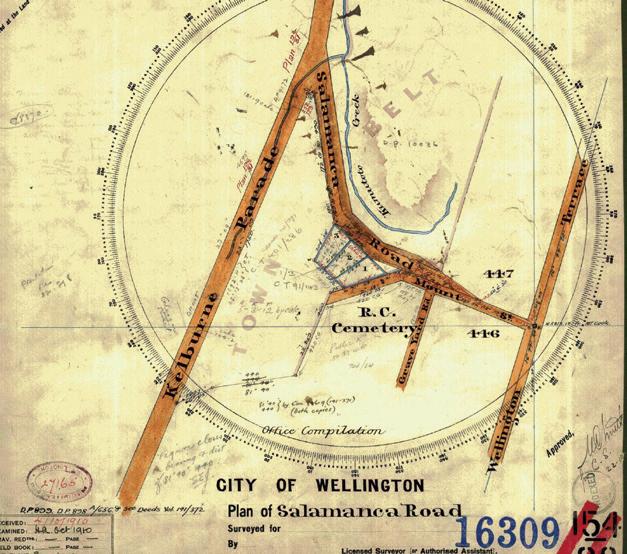
I sit in a wooded glen tucked beneath Salamanca Terrace. Tall karaka trees surround me; kawakawa and other shrubs strain for light in the undergrowth. Tradescantia—an invasive weed and conservationist’s never-ending foe—sprawls across the forest floor. Before me, emerging from three unceremonious storm water pipes, flows Te Awa o Kumutoto.
Her bank offers a kind of sanctuary, a whakatā (break) from the hectic bustle of my university day. I am only a hundred meters below campus. Above me, I hear the raucous laughter of some students heading to class. Soon I will go too. For now, I sit and recharge while Kumutoto steadily flows on.
It would be obvious to say that wai māori (freshwater) is vital for life. It underpins everything: food, energy, waste, survival itself. We rely on it constantly. And yet, in Pōneke, awa are strangely absent. Where are they? And who is looking after them?
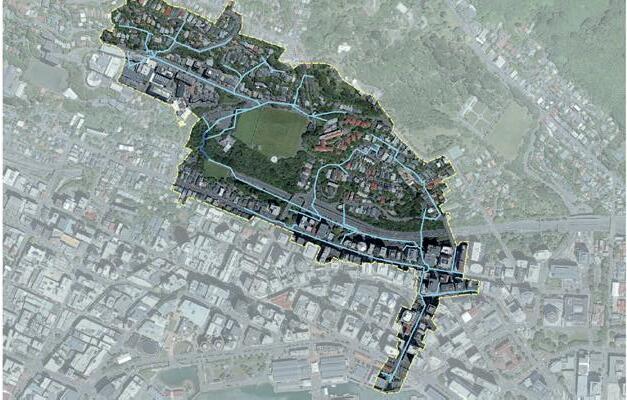
The city is, in fact, threaded with some seven hundred kilometres of awa. Only about sixty kilometers remain visible in daylight. The rest— ninety-seven per cent—have been diverted, buried, or culverted.
We still use them—they are exploited for drainage— but we have hidden them from view. We rely on awa to faithfully carry on flowing, yet to most of us they areforgotten.
In te ao Māori, wai māori is not a “resource.” Awa are tūpuna to be respected and cared for. Awa are integral to whakapapa, to identity. Their significance is demonstrated in the whakataukī “Ko au te awa, ko te awa ko au. I am the river, the river is me.”
The colonial imposition of pākehā systems bulldozed through this understanding.
Te Awa o Kumutoto is one of the many awa in Pōneke. Her story is one of resilience in the face of change and damage. Once a long-flowing, lifesustaining awa, she now lies mostly buried.
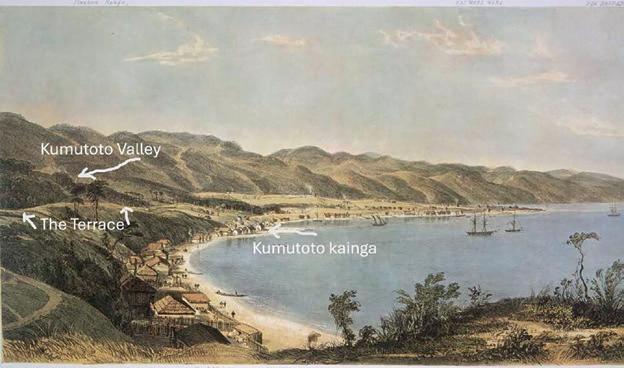
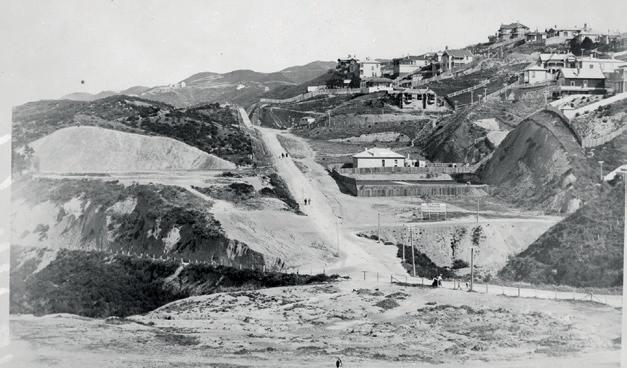
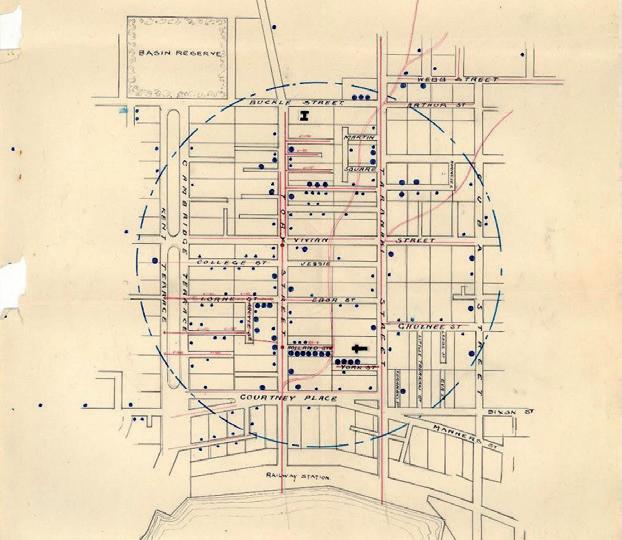




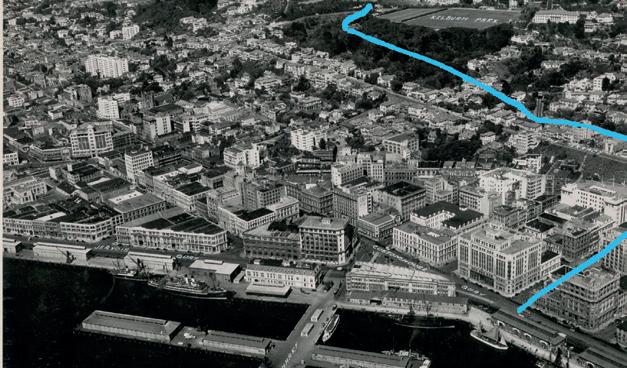
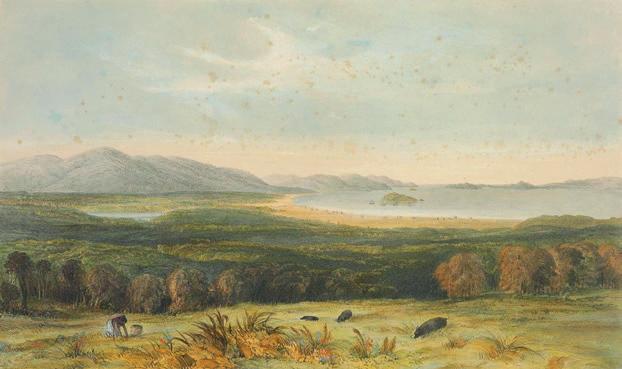
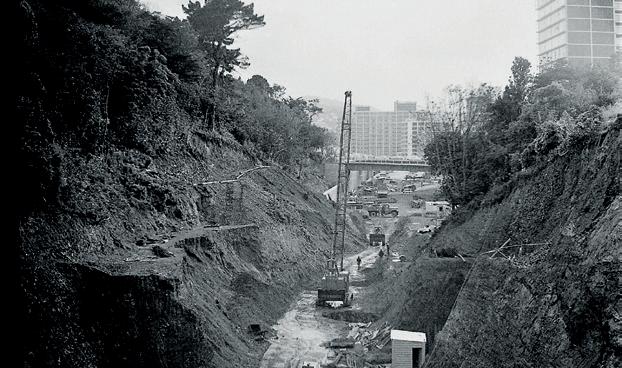
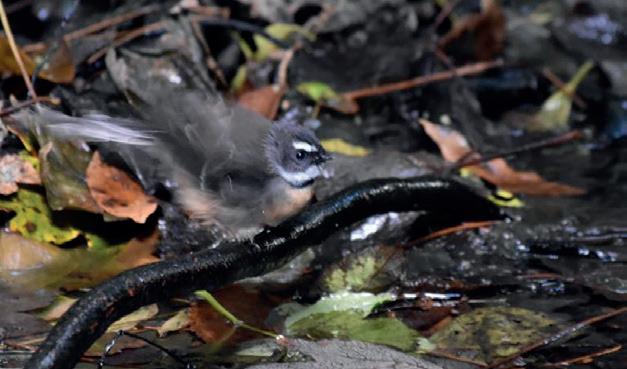
Sitting here, I try to imagine what Kumutoto was like two hundred years ago. Her course is shaped by the Wellington fault. She ran for two kilometers—from Pukehinau Ridge (just above what is now Victoria University), down through the valley (where cars now zoom through the Terrace Tunnel), before turning right and emptying into the harbour. Rimu, tōtara and hīnau rose high along her banks. The forests would’ve housed an orchestra of birds: the screeches of kākā, peeps of pīwakawaka, laughter of tīeke. Tuna, kōura and other ika would have glided in her clear waters, slipping between stones and roots, the nooks and crannies of the forest stream bed.
To understand what changed, you have to understand the settlement of Pōneke.
In the 1820s, following conflict from the Musket Wars, Ngāti Mutunga, Ngāti Tama, and Te Ātiawa migrated south from Taranaki, settling across the Kāpiti coast and into Pōneke. By the late 1820s, Ngāti Ira had relinquished ahi kā in the area, seeking refuge with Ngāti Kahungunu to the east. In the following years, flourishing pā and kāinga (fortified and unfortified villages) were established around the harbour. Wiremu Piti Pōmare of Ngāti Mutunga established Kumutoto Pā in 1824. Māra kai (gardens) grew along her stream banks.
The harbour became a hub of trade. From 1831 to 1835, Kumutoto sat at the center of a prosperous flax trade. In 1835, Ngāti Mutunga migrated to the Chatham Islands, passing ahi kā to Te Ātiawa.
Kumutoto also held a birthing stone in her waters—a place of deep cultural significance. Her name reflects this: Kumu, ‘from behind’, toto, ‘to bleed’. Women and children would come from Te Aro and Pipitea Pā to bathe in her waters.
Then, abruptly, everything changed.
In 1839, the New Zealand Company ship Tory docked in the harbour. Shortly after, the Port Nicholson Deed of Purchase was signed—a document riddled with mistranslations and misunderstandings, facilitated in part by the trader Dicky Barrett.
Settlers began to arrive. A town—Britannia—was established at Pito-one, only to be abandoned after flooding forced relocation across the harbour in the Lambton area. This land, already occupied and cultivated by Māori, was taken. Those living there were displaced by the settlers.
Early Pākehā settlements mirrored cramped British industrial cities—dense, disease ridden, and unplanned. Waste systems were rudimentary or nonexistent. Awa became drains, absorbing sewage, dead animals, and waste. Unsurprisingly, disease spread quickly. By 1870, no urban stream
Story continues on next page.



in Pōneke was considered safe to drink from. In 1879 alone, seventy-five deaths were attributed to sewage contamination.
In less than a generation, Te Awa o Kumutoto had been transformed from a source of life into a carrier of disease.
In 1866, Kumutoto became the first awa in Pōneke to be culverted. Slowly, section by section, she was buried beneath the growing city. Today, of her original two-kilometre journey, less than a hundred metres remains above ground.
And so we return to the present.
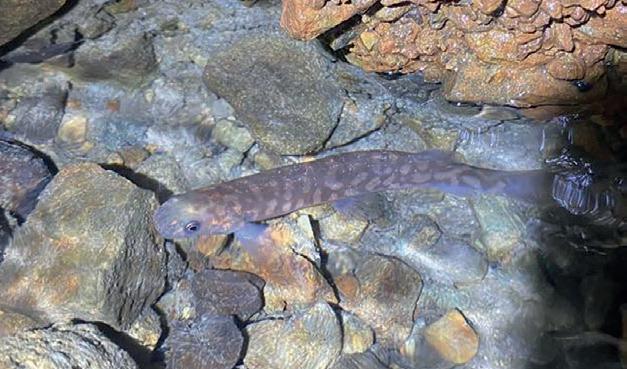
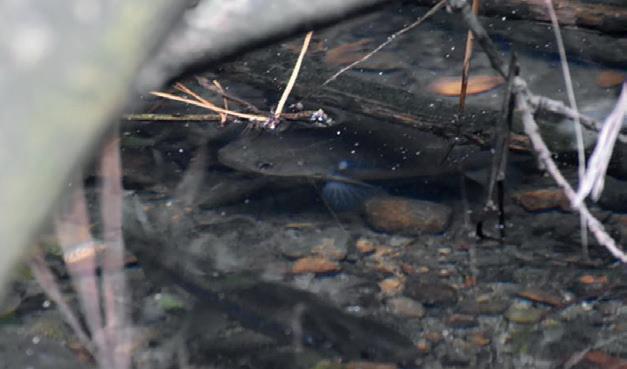
It is now 2026. Nearly two centuries later, I sit at her bank. Sunlight scatters across her surface. Three juvenile kōkopu dart between the stones, flashing silver as they move. Despite everything she has endured, Kumutoto still flows. That is her story, so why am I here? What connection do I have with Kumutoto?
I am Pākehā, I don’t whakapapa to Kumutoto. My ancestors were part of the colonial system that reshaped this land. And yet, sitting here, I find connection. Peace.
I have been coming here for a year and a half. Like many, I moved to Pōneke to study. At first, I knew nothing about Kumutoto, the story of our city’s water, or colonial settlement.
In those early months, I felt uprooted. Uncertain. About university, about belonging, about whether I could do this at all.
But I was here, and I had to step into the current.
Six months into my time at Te Herenga Waka, I found the Kumutoto Restoration Project.
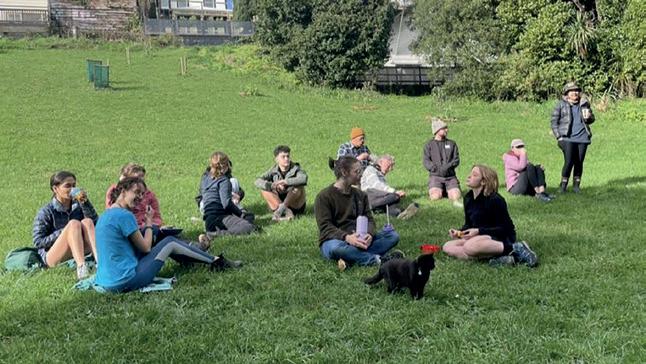
I still remember my first working bee. I arrived late. Having run the whole way, I was flustered and nervous. But from the beginning, I was welcomed. We gathered, as we always do, in whakawhanaungatanga—introducing ourselves, sharing where we are from and why we are here. Slowly, connections form: to each other, to the place, to Kumutoto herself.
Over time, something shifts in that circle. We are not just restoring a stream. We are reconnecting—to place, to time, to one another.
When I left that first day, I carried something new: the beginnings of a seed of community.
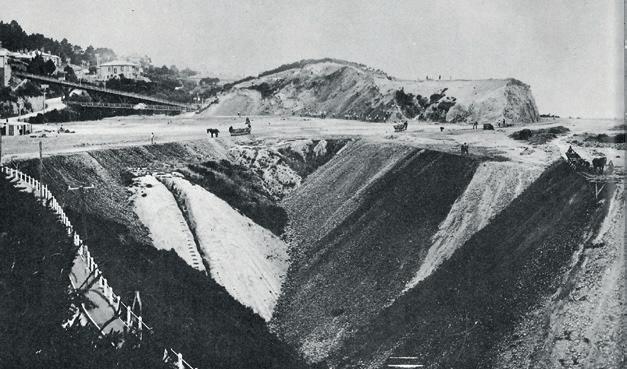
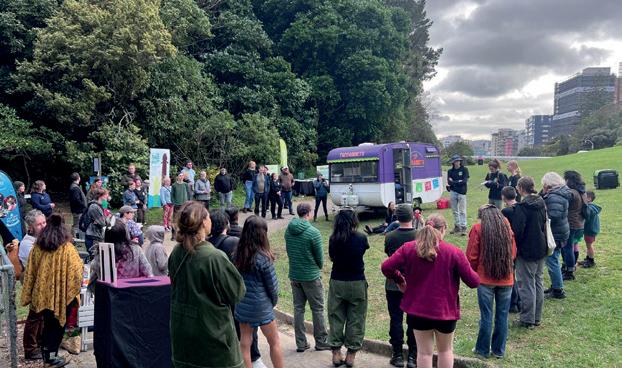

Since then, both the project and the people within it have grown. Together, we work to restore the mana and mauri of Te Awa o Kumutoto. In doing so, we are weaving community, resilience, and care for both the whenua and each other.
Over the past eighteen months, we have successfully pushed back tones of tradescantia and other invasive weeds, planted several hundred trees, and established regular traplines and bird-count stations. In the coming year, we plan to plant more than 2,500 natives, and host many more working bees and community events. Thanks to the amazing work of Dr Dennis Ngawhare, Kumutoto was recognised as a ‘wahi tūpuna’ by the Heritage Foundation last year.
As our project continues to grow, we meet new people, new opportunities. What grounds me in the kaupapa and brings me back every week is our growing community of awesome people. These people show me what caring looks like, how to build community. They show me what it means to stand up and take action, turn up and be the change you want to see in your community.
So as I sit along her banks today, amidst the turmoil of the world—violence, awful wars, greed, destruction of life—I look to Kumutoto for grounding. I remember the whakatauākī written for us by project lead Martin Andrew: “Mā te awa e ārahi. Let the awa lead the way.”
I don’t know what the future holds for us, for her, for anyone—but I can see the resilience Kumutoto has shown. In the face of profound harm, she keeps flowing—quietly, relentlessly. Through her persistence, she teaches us how to keep going, too.
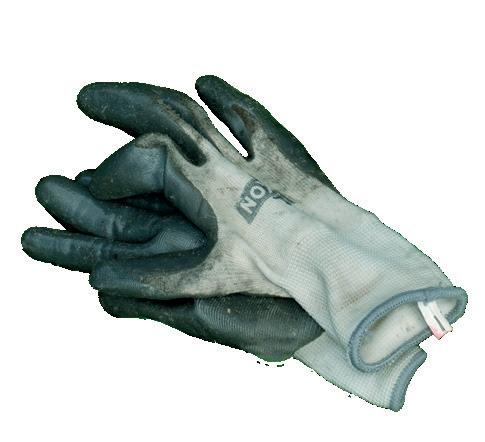
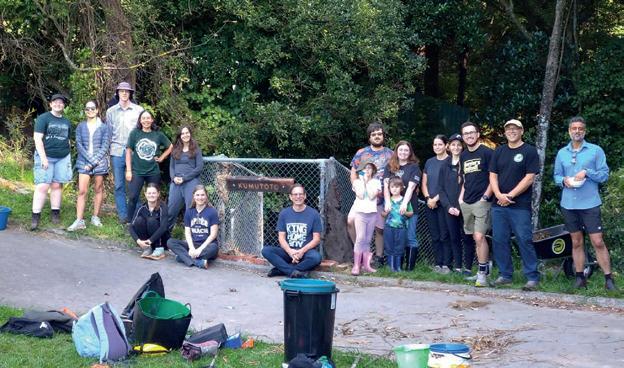
The Kumutoto Restoration Project meets on the second and fourth Saturdays of each month. From 10 a.m. to noon, we work to restore the biodiversity of the awa. Afterwards, we share homemade soup made from donated Kaibosh vegetables. Come along and get involved in the kaupapa.







Penelope Scarborough
it watches girls pop the nights like pills new world wine oh so cheap & delicious hates the way kids drop night ‘n day vapes down the back of the benches like their disposability might make the cancer less permanent feel the way the trees here are hungry for wind skeletal veins always scratching the night but it’s late now – the roads are empty the kind of night that sits rotting on your skin when you’re wide awake and your lover is not the dark swallows each unnamed body & for a moment, you forget where you are – but it knows you’re there by the bus shelter bathroom passed out, eyes rolling up to the dopamine of moon & stars hollow heads lolling unbalanced against bus poles, and all the dead mosquitos floating around you don’t say a word don’t try to wake you so it doesn’t either the walk home through cuba will be lonely the moon presses its fingers into your cheeks and tells you to stay cold you take your sweater off to feel the night on your back and wonder if the others will still be here in the morning





Penelope Scarborough
I had a dream about you smoking in the supermarket you threw an apple at my chest and it split down the middle before hitting the tiles looked like my heart fell out my rib cage and rolled toward your feet you laughed then stubbed your cigarette into it
The bottles in aisle nine were singing out but you reminded me, you don’t drink so we stole paper cups and let muddy water leak from the ceiling pretend-pouring wine for a forgotten anniversary
You set fire to a checkout before dark stolen nicotine-patches melting from your skin then threw me the matches told me to light a candle so you could watch it all burn down beside me
I woke up wondering why we call this love but I’ll fall asleep in your arms again you’ll take the batteries from the smoke alarm and I will dream of you and I in another supermarket warmer and greyer, older and sober






surely that's dominos...

Being mixed race is a strange experience. Not being one culture or another, being both, being neither, swinging between feeling like you belong everywhere and then that you belong nowhere. The micro aggressive comments, the racial ambiguity, the ability to blend your cultures—I could (and have) gone on for ages about it. Here's what I've settled on: there is no way to separate the two sides of my identity. I am both of them, not a cake to be split evenly. And, being a mix between white and non-white, my nationalities occasionally fight over me like a pack of feral cats.
For context, I am half Pākehā and half Lebanese. (Whether or not I am white passing is up for debate. Airport security says no.) I have been given the unique experience of being both colonised and coloniser, but those two sides come from opposite parts of the world. Being a person who qualifies as brown, white, both, neither, I've seen a large range of attitudes towards different ethnicities. One that I have noticed since moving to Aotearoa is a certain grudge against whiteness, one often originating from white people. I don't think it's unfounded, but I do think that it is misdirected.
Let me be perfectly clear: in no way am I trying to erase or downplay the harm that European colonisers and settlers have done to this country, nor the privilege that comes with it. My ancestors helped to settle this land, and I have benefitted from the privilege that was given to my family through a racist government and system. I do think, however, that stewing in shame for it does not help anyone.
I saw a similar sentiment arise in 2020, during the global Black Lives Matter movement. In an effort to uplift people of color, white people began to put down their culture or race. It became a common joke to insult oneself for being white. I did this to myself. I ignored
the white part of my heritage for years, trying to distance myself from it out of a sense of shame. I felt that it had less to offer, that it couldn't possibly measure up to my other half that simply seemed more vibrant, better in every way. It hurt, even if I denied it. It felt as though I was saying my Kiwi family, memories, and experiences were simply lesser because they were associated with my white side. I don't know about you, but to me, deeming something worse because of race seems like the exact thing anti-racism tries to avoid.
I now know that insulting yourself for something you can't control, even if that something gives you privilege, only causes more damage. Activism has never been about putting someone else down—it's always been about lifting people up.
"The sins of the father are to be passed down upon the child."
A lot of people interpret that saying to mean "Children will suffer on behalf of their parents, regardless of their own actions." I take it to mean "If you do not right your wrongs, future generations will have to fix the damage." It's a decently accurate way of portraying my feelings on this matter; I do not believe that I, or other white people, should have to repent for sins we did not commit. I do believe that we have a responsibility to fix what our ancestors did. Rather than dwelling on the past and constantly apologizing for something we did not do and had no control over, we must look towards the future. Do not deny the past; remember and learn from it, but don't let it be all you know.
I'll put this in a hypothetical situation and engage my other side. Let's say an Israeli approached me and told me that they're against what their government is doing. I would not hate them for their nationality, nor turn my rage and hurt

against them. Some part of me may want to—to find a way to expel the decades of oppression and displaced and murdered family members— but it won't do anything. If we had common interests, I'd like to speak with them about those, perhaps, rather than the atrocities being committed in my homeland.
Honestly, it's not my job to keep them in check, or to make sure they're doing their job at fighting for what's right. I might call them out on their bullshit if I notice any, but I'm not here to police them. I don't mind answering questions (though that varies for each person), but I might if that's all they came to me for. It can get incredibly nuanced, but here's the base line: I don't want their constant apologies. I want action.
I don't think I, or other Pākehā, should feel shame for our heritage. What we should feel is responsibility. Trying to shun or hide that facet of ethnicity gives an opportunity to shirk the responsibility.
I am so incredibly proud to be Kiwi. To be a part of a country that is so beautiful and whose community looks towards a unified, better future? There's a reason I have this nationality inked into my skin. It is, once again, joined by my other side.
I have a frankly endless supply of Lebanese patriotism. The flag hangs on my wall, I will talk about it at any given moment, and my camera roll is probably 70% Lebanese scenery—my friends can attest. (To anyone who's sat through a debrief of my vacations, thank you. It will happen again.)
That all being said, I am well aware of its shortcomings. Lebanon is a country in which homosexuality is a crime punishable with up to six years in prison (the actual arrest rate of that is another matter). Racial inequality is
rampant, with immigrants and refugees often being denied their rights. It is by no means perfect - but that is not all that it is. I am proud of Lebanon despite its shortcomings, because I know there is so much more to it than that.
As is a near constant truth, the system does not represent the people. My Lebanese family are some of the most accepting people I know and have the privilege of being related to. Beirut is known for its queer community, and people of all races and cultures are welcomed into our country. Part of loving your country is wanting it to improve. Why shouldn't the same apply to New Zealand?

I'm not entirely sure who this is for. My younger self, maybe, or other mixed people, or people who aren't mixed. I've spent a lot of time with these ideas rattling around in my head, and I get tired of seeing the hate and shame that saturates this world. If I could help alleviate even a tiny piece of it, I'd be more than ecstatic.
This isn't a resource, this isn't a how-todecolonise-your-mindset guide, it's just an affectionate slap upside the head to those who can get caught in their own mind. Hell, I know I do. If you've felt guilt for something out of your control before, here's me telling you to not let it eat you. I still feel some of that guilt, and it could take a long time to go away. What's important is that I don't let it control my thinking or actions. Twist that remorse and use it to do something, and that guilt will begin to fade.
Shame does not spur progress. It only divides us.


Nouvelle Vague (2025) - $8 dir. Richard Linklater, USA
“avengers: endgame for people subscribed to mubi notebook” — garbaggio, Letterboxd
This is a based-on-a-true-story film that dramatises the production of Jean-Luc Godard’s movie Breathless, one of the most influential proponents of the French New Wave (hence the title… which is just “new wave” in French).
For those who don’t GAF about film history—this movement embodied a DIY ethos, setting out to subvert the norms of filmmaking at the time (high budgets and soundstage sets). Think of it as the indie filmmaking of 60s France.
Nouvelle Vague exhibits some of the defining features of Breathless; handheld cameras, choppy editing, and the same 1:37 aspect ratio. Not only does Linkelater show you how the sausage got made, he evokes the feeling of eating it, too. This movie will remind you of the innate creativity baked into all of us.
You don’t have to be well versed in the New Wave—or even know what it is—to enjoy Nouvelle Vague. Outside of its context, it’s still very funny, very fresh, and very French. But don’t worry, cinephiles! There’s plenty of fun easter eggs for you to feel proud about noticing.
Breathless (1960) - $6 dir. Jean-Luc Godard, France
“I'd be pretty damn Breathless too if I smoked that many cigarettes.” — leviyoung572, Letterboxd
This movie is more about form than content, so I’ll let you go in blind. Mandatory precursor to Nouvelle Vague.
Holly Rowsell


What to watch on Welly’s local streaming service
2025 was the first year I properly attended the New Zealand International Film Festivall—and I didn’t hold back. Volunteering as an usher meant I could catch films on shift and score a handful of comped tickets. Across two weeks, I watched 17 films… a respectable effort.
While some of my favorites haven't hit streaming yet (I cannot WAIT to recommend Ratchapoom Boonbunchachoke’s A Useful Ghost), here are a few standout NZIFF 2025 titles that you can scream right now on Arovision. Go to ondemand.arovideo.co.nz and get watching!
Sorry, Baby (2025) - $8 dir. Eva Victor, USA
“They’re calling Eva Victor “America’s answer to Phoebe Waller-Bridge”” — _hawz, Letterboxd
I haven’t laughed this much in a long time—which is mind-blowing from a film exploring the aftermath of sexual assault. Eva Victor is a powerhouse: writing, directing, and starring in this deliciously well balanced dramedy that manages to maintain its softness while ripping your heart out.
Victor plays Agnes, a literature professor dealing with the fallout of a bad thing that happened. The plot is non linear, jumping back and forth between the current day to her postgraduate days, around the time of the bad thing. Her close (and at times sapphic) friendship with Naomi Ackie’s Lydia, who lived with her through postgrad and visits in the present day, really grounds viewers through the switching timeline.
The exploration of trauma in this film is unlike anything else I’ve seen. There are moments of tenderness so rich I felt my heart would pop. The mood is quietly devastating, though I’ll reiterate that this was also the funniest movie I watched last year. Beyond its content, Sorry Baby is also just gorgeous to look at (though I am a sucker for anything New England).
This is one to watch with friends; you’ll want people to laugh with, and need shoulders to cry on. The biggest Oscar snub of 2025. I don’t really know how else to sell this movie to you… it's just so itself. Go on! Go watch it!
Mistress Dispeller (2025) - $8
dir. Elizabeth Lo, Hong Kong
“babe wake up new dream job just dropped” — aarnwlsn, Letterboxd
This documentary explores the Chinese profession of “mistress dispelling.” If a wife suspects infidelity, she can hire a specialist to befriend the mistress and persuade her to end the affair—often under a fabricated identity.
The film follows a dispeller as she works with one particular couple. It's honestly shocking how much access director Elizabeth Lo had to the process; we get to see every part of this dispelling—from private discussions between the married couple, to the first meeting of husband and dispeller, to the final interactions with the mistress.
Beyond the hooky premise, the film approaches relationships and infidelity with such overwhelming sensitivity. Mistress Dispeller is one of the better documentaries I’ve seen. I watched it at the Roxy after a Tinder hookup, who tagged along to kill some time before their flight… WILD experience to say the least. Would not recommend.
I reckon much more fun to rent this on Aro and live-commentate with your flatties.
Honorable mentions
The President's Cake and Exit 8 are two more NZIFF films that aren’t yet on Arovision but are currently screening at Lighthouse Cinema on Cuba Street. The first is an intimate Iraqi drama (my third fav film of the fest!), the second a Japanese horror videogame-adaptation. Each film excels in its genre and either one would be worth a trip to the movies!
Dear dating diary,
I recently became single for the first time since entering my 20’s and it has truly been an eye-opening experience. I’ve had to flirt with people at the club, reject people simply because I’m not interested, and learn to be truly comfortable on my own. The life of a single woman in her early 20’s is foreign territory to me, but I’m loving it and learning how to navigate the treacherous waters of dating.
Breaking up with someone is not an easy thing to do—it takes a lot of courage to figure out if it’s the right decision. However, as someone who recently ended a four-year relationship, I’m here to tell you that if you’re considering breaking up you should 100% just do it! It’s horrible in the moment, but God does it change you for the better! Instead of spending all your time stressing about your relationship and how to fix it, you get to focus on yourself, your friends, and your own life.
Once you go single you genuinely start to glow. My friends and I joke that a siren went off the moment I became single. I never got hit on when in a relationship, but in the first week of being single I got hit on 3 separate times. All those fears I had about ending the relationship and never being able to love again disappeared instantly. They were instead replaced by overwhelming love and care from those around me, alongside this feeling of excitement for what was to come.
A common thing people do after becoming single is download a dating app. There’s no shame in this, it’s very normal to crave something to fill the space that your newly-founded singleness has granted you. However, I urge you to reconsider this reactionary response. Once becoming single, one of my very dear friends declared that the theme of this year is #NoBoyfriend2026. After careful deliberation I have decided that she is right—let’s spend a year without a boyfriend! The rules are simple: you can flirt with, kiss, or hook up with whoever you want. We’ll even allow you to get a girlfriend/ partner. Just no boyfriend, and certainly no situationship that is essentially a boyfriend that won’t commit!


The mentality of #NoBoyfriend2026 is honestly genius. I don’t know about you, but sometimes it feels like I’m so obsessed with the idea of getting into a relationship that it takes over my life. #NoBoyfriend2026 means that, when you walk into a room, you’re no longer immediately looking around to check out all the eligible bachelors. You’re free from the pressure of impressing in conversation and can truly let go and be yourself. When you go out, you instinctively prioritise having fun with your friends rather than trying to meet someone. It is completely and utterly freeing.
The best part of #NoBoyfriend2026 is that you can’t lose. For example, the other day I got rejected by a guy who was in the middle of asking for my Instagram because I told him to “shut up” after he quoted Austin Butler at me. It was most certainly a humbling experience that once would’ve left me feeling embarrassed, but I left that interaction with a smile on my face. Firstly, it’s frankly hilarious that someone got so hurt by being told to shut up that they rejected me. Secondly, I didn’t even want a boyfriend anyway and clearly it wouldn’t have worked out! Rejection is no longer terrifying, as it feeds into my goal of not wanting a boyfriend.
The only real way you can lose #NoBoyfriend2026 if you end up getting a shitter of a boyfriend. Therefore, it is necessary that you set your standards so ridiculously high (as you deserve) that only the best can slip through the cracks. All this to say, if you do end up getting a boyfriend in #NoBoyfriend2026, it isn’t the end of the world. As long as he’s worthy of you, here's to your budding new relationship! If you do end the year single, then you’ve achieved your goal. It’s a win-win situation!
If I’m being completely honest, despite the clear logic of #NoBoyfriend2026, I deep-down still want a boyfriend. Isn’t that a horrible mentality!?! Am I not comfortable enough in my own company to accept the challenge of remaining single for the whole year? I have an incredibly fulfilling life surrounded by wonderful people PLUS I’m far too busy for a boyfriend. But I still want one and even #NoBoyfriend2026 can’t change that. I’m going to try my best to adhere to the mindset of #NoBoyfriend2026… but perhaps not the reality.
lesson: Being single is awesome so stop oBsessing over relationships. it’s cringe and you are so much more than your romantic life.




What: Pasta
Price: $10
When: Mondays; noon - 8:00pm
A decent portion of sub-par food, if you happen to be around on a Monday.
Opposite Defence House, in the newly-built Bowen Campus behind the Beehive, is an unlikely location for a cheap meal. It’s in the heart of our bureaucracy, a land of meetings and KPI’s and networking events. Once a week at Little Astoria there’s what looks like a sliver of opportunity. This little Mediterranean-fusion wine bar does a $10 deal on their full pasta menu, from midday till 8:00 p.m.
I’d caught them at a bad time, walking into the empty restaurant after the lunch rush while the waitress was taking her break. The menus were tossed across the table to me, and my cutlery was placed down crookedly without a word. I can understand, to a degree, her dismissive attitude towards me. However, anyone walking into a restaurant during advertised opening hours is entitled to a sense of hospitality. Not that I blame her for this; anyone working at a restaurant is entitled to their full and uninterrupted break. She shouldn’t have been the only one on shift, or should've at least
been able to close the place for her break. Little Astoria was not off to a good managerial start.
Anyway, the food.
Feeling guilty and spotlighted as the only patron there, I did order more than just the $10 pasta. I chose the fusilli with pesto, ricotta, and tomato, alongside three arancini with pumpkin, gorgonzola and ‘nduja. The arancini looked pretty—a pastel-orange colour and covered with snowy parmesan. The pumpkin flavor of the risotto was fine, but the ‘nduja was nonexistent. Certainly existent and unfortunately so was the sharp gorgonzola centre, overpowering any flavour from the risotto. I also like my arancini strung together with webs of mozzarella; this molten blue core did nothing in terms of texture. The arancini were passable as a crispy starter, but you’ve gotta like blue cheese to get along with them.
Also underwhelming was the pesto fusilli. Little Astoria’s website touts their ‘honest food’... which is a lie The ‘pesto’ in question was nothing more than blended spinach and cheap oil. No basil, no parmesan, no pine nuts. At the risk of sounding like Mr. Incredible, pesto is pesto. By their logic, tomato paste is a jam and cocaine is icing sugar. This wasn’t pesto and it wasn’t tasty; I quickly stopped looking forward to the next

mouthful of spinach paste. The pasta had no flavour itself either—more a vessel for oil and flecks of green to cling to. The ricotta on top did add some creaminess and the cherry tomatoes were good, but having to ration them across a full plate of bland was not worth it.
For the price though, this was a reasonable bowl of food. Not a hearty meal, but decently-sized as lunch or dinner. And Little Astoria is swanky: very modern, fusion-cuisine-chic; the kind of place where people with appointments and briefcases go for a wine. It’s not somewhere you’d expect to serve a solid portion at a good price (which they otherwise don’t: on any other day, their pasta is pushing $20). If it’s been takeaway shops or plastic sandwich containers for a while, going out somewhere is nice. However, while it’s filling and feels a little fancy, it's not a very accessible deal and— crucially—it was just not very good.











Jackson McCarthy is Salient's Critic-at-Large. His first book of poetry, Portrait, is forthcoming from Auckland University Press later this year.
Ben Lerner’s Transcription
Lest I sound like just another gay guy who heard of Ben Lerner via Lorde’s Instagram story last week (“No living writer has affected me more”, the singer wrote on April 14th), let me set the record straight by saying that actually I’ve been reading him since I was sixteen, thank you very much. Lerner was the writer that first introduced me to literary criticism (in his extraordinary monograph The Hatred of Poetry); who first made experimental fiction real to me (in his hilarious and incisive Leaving the Atocha Station); and who first introduced me to—would you believe it?—the sonnet sequence (in his ruthless, lyrical, and abstract The Lichtenberg Figures; sorry, Shakespeare!).
Lerner found some real crossover success with 2019’s The Topeka School, a novel that concerns itself with 90s teenhood in the wake of Columbine, and the empty rhetoric of high school debate as it seeds, in the life and mind of its narrator, the Trump-era breakdown of public speech. The poet-turned-novelist returned to his roots with a stellar poetry collection in 2024, The Lights, which to my mind made much less of a splash, critically speaking, than it should’ve. Transcription follows The Lights quite nicely in the sense that it continues Lerner’s career-long fascination with disembodied voices, recording technology, storytelling and narrating, social histories, and aesthetic experiences. It was, however, sharpened by The Lights’ formal gesture: an alternating between prose poems fractured by the associative leaps of the lyric and lyrics overwhelmed by the discourses of reportage and scholarship native to prose.
Transcription also continues Lerner’s work in a genre that’s been called by some critics “autofiction,” a portmanteau of “autobiography” and “fiction.” The narrators of Lerner’s novels tend to have quite a bit in common with their author, and they tend to comment either directly or obliquely on the artifice of fiction itself—when at one point Transcription’s unnamed narrator is asked what his daughter’s name is, you can hear Lerner shadow his reply: “I call her Eva in this book.” Pushing closer together genres which, at their surface, seem to exist far apart (prose and poetry; autobiography and fiction) is a hallmark of Lerner’s work. As his career enters its middle period its new thrill is in the intensifying of this process.
“Pressure creates diamonds” is the common idiom here—but anyone who has worked a minimum-wage job can tell you that pressure also creates fractures, confusions, lies, elisions, and frustrations. Transcription puts the novel itself under pressure. Our unnamed narrator has travelled back to Providence, his uni town, to conduct the final interview with his nowninety-year-old teacher, Thomas—a kindly avant-guardist, a beloved professor, somewhat of a child of the Frankfurt style of critical theory. But as he leaves his hotel for Thomas’, he drops his phone—inexplicably his only recording device—in the sink. The first of the novel’s three parts we read, therefore, as a reconstruction of the interview that was never recorded. The narrator walks as much into Thomas’ house as his own past, armed with only his memory. Then the novel breaks, and we resume a year or so later, at a conference, before it breaks again, and we hear from a conversation with a new interlocutor whose daughter struggles with eating. Here I wish I could tell you more about these latter parts of the triptych, but a large part of the pleasure of reading the novel is in seeing them unfold in all their resolute unexpectedness.
Nonetheless my point is that, where Lerner’s earlier novels were about fractures, confusions, lies, elisions, and frustrations—but largely subsumed these to the higher ordering structures of plot, character, and narration— Transcription is more overtly experimental. And it is, in this, his least successful novel. This is primarily in the sense that it aspires beyond novelistic convention and therefore thwarts our expectations of what novels ought to be. Secondarily, while it has that aspiration, it also has extraordinarily convincing description, dramatic character work, and startling moments of syllogism. This is exemplified in this passage, where Lerner, his narrator having gone to see the hyper-realistic glass flower sculptures on display at Harvard, draws a paragraph to its conclusion in a supremely beautiful flourish:
“I joked with Anisa that these must be actual plants that some conceptual artists was claiming were glass — they probably replaced them each night — but the joke masked the flowering of a new sense: I kept seeing the flowers as organic one instant and as artificial the next, a kind of duck-rabbit effect, not between things the object might represent, but between language and culture, the given and the constructed. And I carried this new way of looking, or this new hinge in my looking, outside the museum: when my
sister dragged me camping, for instance, I was typically unmoved by “unspoiled” mountain views; after the glass flowers, I would see cracks in the rock face as penciled, as a history of small decisions, and then experience the view as beautiful. I could will myself to see the rose and pink of a sunset as applied in touches or stains and then revert to seeing it as natural; and so on. It was with Anisa that I first became conscious of this quiet but crucial technique, somewhere between a child’s game, a CBT exercise, and a religion. Eventually I’d call this “fiction”.”
Though Transcription aspires beyond novelistic convention, there is still so much novelistic liveliness in its pages. Lerner captures so much of contemporary life in all its dissonance; our devices—phones, language, memories—that alternately connect and disconnect, locate and dislocate us. Though his purpose is not Mozart’s, which was to situate dissonances within a larger consonant scheme; to sing us back home. Transcription resembles less a contemporary novel like, for example, Sally Rooney’s Normal People, and more a contemporary novel like, for example, Sally Rooney’s Beautiful World, Where Are You?
Or, to put it much more simply, I finished Transcription wanting more, feeling it partial or incomplete. Or, if I’m being kinder, feeling as though it retained that glimmer of the virtual; to paraphrase Simon Frith, those traces found in the difficult of another world in which the difficult runs clear and easy. I was still keen to hear more of the novel’s ideas, or to try and thread together more of the frayed fabric-ends that constitute what we might tentatively call its plot. It also feels—in the more literal sense of the word, holding it in my hands—wanting as an object, too. My advance copy runs only to a light 131 pages. Always leave them wanting more—I suppose that’s what they tell touring musicians, isn’t it?
Still, it takes a performer of serious ability to manifest such a feeling—a feeling of evocative incompleteness—and Lerner is certainly up to the task. This new Ben Lerner book probably sucks but it’s still the best thing you’ll read until, you know, the next Ben Lerner book.
want to get in touch, tip me off, or rage at me electronically?
jackson@salient.org.nz
Hunk Unc may have hit the gym, but he’s still here for the people. If uni life has you stressed about flatmate drama, lecturer issues, or whatever is going on in your dating life, Hunk Unc has advice your parents definitely want to hear. Equal parts wisdom and gains.
To submit a question, scan the QR code on the page. If your problem needs a spotter, Hunk Unc might just get back to you.
my dearest hunk unc,
i’ve got quite a situation on my hands. i want to get together with someone, But they are a self proclaimed “slut“. and it’s likely they only want to sleep with me. not to mention there is a seven-ish year age gap that has all my friends telling me not to engage in further conversation with them. is it wrong to want to have a little fun?
Right. Tone shift. None of that soft, therapy-talk nonsense you’ve been getting lately—this is straight off a Speight’s cap. Your Unc is back.
You’ve got a situation on your hands.
You’re keen to get with someone who’s already told you exactly who they are. They’re here for a good time, not building anything serious. On top of that, there’s a 7-ish year age gap, and your mates are all saying “don’t go there.”
So before you do anything, cut the crap and be honest with yourself:
Are you actually after a bit of fun? Or are you dressing it up as “just fun” when deep down you’re hoping it turns into something more?
Because those are two very different games, and only one of them ends well.
Unc’s been in the trenches. Freshly 18, thought he knew everything, got involved with someone older—looked great on paper. But here’s what you don’t clock at the time: there’s a power dynamic.
They’ve done more, seen more, know how this goes. Meanwhile you’re still figuring out how to set boundaries without folding. Saying “nah” doesn’t come as easy as you think—especially when you’re a bit dazzled.

So yeah—have a proper think.
If you’re genuinely just after a bit of fun:
No judgement. Go in with your eyes open. Keep it clean, ask when they were last tested, use protection, and—this is the big one—set your boundaries early and stick to them. Don’t get talked into anything you’re
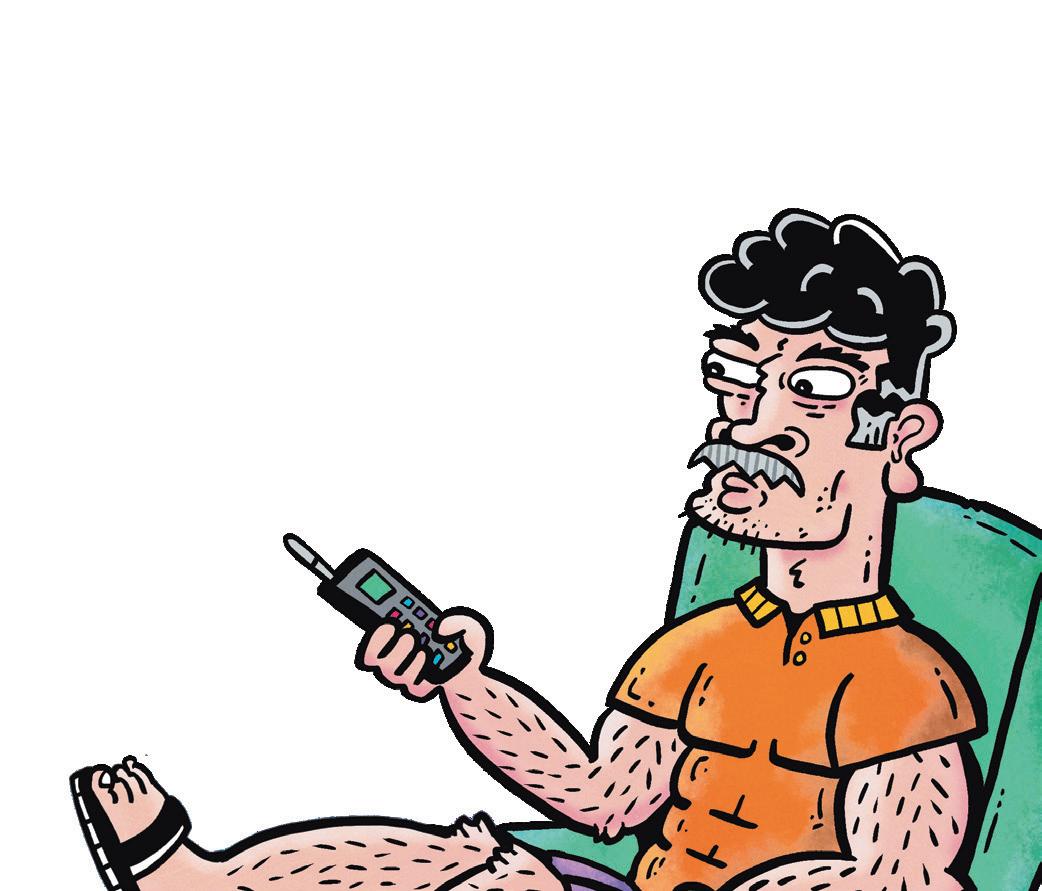


My problem isn’t that I get no b*tches but rather that I pull too much :O submitted by anonmous
Oh Yes, Oh No is where sex stories go to be judged. Was it hot? Was it a disaster? You decide. All stories are submitted by readers, published anonymously, and guaranteed to make you say 'oh yes' or 'oh no'. Scan the QR code to submit your own and see if it makes the cut.


One time he meowed in the middle of it and highkey I found it hot. I stopped breathing but in a beautiful way. Try it submitted by anonmous

I came to Wellington for a Vic open day with my high school friends in year 13. I was freshly 18, freshly on the apps, and ready to have some wild lesbian sex. I matched with a masters student who invited me to her 22nd birthday party. My cocky 18-year-old self responded with “birthday sex?”.
I pull up to her flat, with two friends in tow because I was nervous, and we found her friends were all leaving just as we were arriving. While the four of us sat awkwardly and drank in her living room, she asked if I’d like to watch her fat fetish masturbation videos that she posted on OF. We spent at least 10 minutes watching these and getting progressively more drunk. Someone was throwing up in her room so we went upstairs and fucked on her fkatmate’s bed (terrible sex btw). I had forgotten to cut my nails beforehand and at one point she told me my nails were hurting her so I switched up what I was doing. After an hour of terrible sex (while my friends had to listen from downstairs) I came downstairs and drunkenly washed my hands. Clearly not well enough though because my friends immediately noticed the blood in my nail beds because I had unknowingly torn her vulva to shreds. Oh no. submitted by anonmous
European travel shows
73 Plea often delivered in dramatic scenes
74 Poetic word heard in classic theatre
75 Straightforward style praised in design reviews
78 Quality an actor brings to an energetic performance
80 Phrase used about actors with no lines
81 Notes seen in rehearsal scripts
82 Time zone used in Hollywood scheduling
83 People named Matt, plural
87 Dog in The Wizard of Oz
88 “Remains,” as a stage direction in French plays
91 Style of branding seen in commercial jingles
92 Join a class, often shown in teen dramas
93 Drinks heavily, as depicted in gritty dramas
96 Surname of voice actor Maurice ___
97 Casual farewell heard in sitcom dialogue (“see ya”)
98 Suffix seen in fantasy names in games and films
99 Fish often featured in culinary travel shows
101 New York museum frequently shown in films
102 Choose between options, as contestants do on reality TV
103 Loses intensity, as colours do in old movie posters
105 Prefix in sci-fi names involving air or atmosphere
106 Spanish “you are,” heard in bilingual movies
108 Lookout posts common in pirate films
111 Abbreviation seen in tech reviews and startup news
113 Avant-garde artists referenced in art documentaries
117 Add air to something, as chefs do in cooking segments
118 Dramatic command used to stop action in action scenes
120 Licensing group listed in Christian music credits
122 Short for melodrama, used in film commentary
123 Servant role often played in period dramas
124 Indigenous group mentioned in historic documentaries
125 Film critic Pauline ___, quoted in movie reviews
126 Move across the sea as shown in adventure films
127 Follow instructions strictly, as actors do with scripts
128 Hammer end used in propmaking behind the scenes
129 Luxury destinations featured in lifestyle TV
130 Utah ski resort shown in winter sports coverage

38 Network identification signals used in broadcasting
39 Character storyline in
1 High rating sometimes used in entertainment reviews
2 Basics taught in educational children’s shows
3 Surname in many TV and film credits
4 Plural of “S,” used in wordplay segments on game shows
5 Abbrev. for “James,” a name common in film and TV credits
6 Family members who show up in many sitcom storylines
7 U.S. agency often cited in weather reports on news broadcasts
8 Escaped or roaming free, as described in action-movie plots
9 Online Q&A session popularized by celebrities on Reddit
10 Nutrient frequently discussed in fitness and wellness shows
11 Exercise machines shown in gym scenes on TV
12 Fade away slowly, as special effects often do on screen
13 Internet reply often seen in memes or comment threads
14 Media mogul Huffington, founder of The Huffington Post
15 Plural of Dam
16 Tennis player and former Member of the Senate of Romania
17 Hold back or delay, as often dramatized in crime series
18 Assistants listed in production credits (Abbr.)
28 French dessert featured in cooking shows
30 Short video clips posted on social media platforms
32 “One who aims,” as used in descriptions of action-film characters
34 Notes used in singing exercises in musical productions
36 U.S. agency often referenced in crime dramas and procedural shows
39 Greek god frequently portrayed in superhero movies and games
40 Part an actor plays in a film or series
41 Surname of writer James ___ of Miami Vice fame
43 Performer who delivers energetic talk, as in comedy routines
46 Quantity often joked about in slapstick scenes
starring Elliot Page
9 French word for “act,” as in stage productions
13 Pretentiousness often mocked in movies
19 People named Abe, plural
20 Word used in onscreen chat or internet usernames
21 Thief character in Home Alone
22 Cheerful Spanish exclamation heard in films and music
23 High cards often flashed in casino scenes
24 Jazz vocal style heard in classic music performances
25 Setting or location mentioned in film scenes
26 Boundaries often pushed in reality shows
27 Strength highlighted in contestant profiles
29 Actor who played the Cowardly Lion in The Wizard of Oz
31 Retro bicycle style seen in nostalgic TV shows
33 Sign often shown in sitcom storefronts
35 Plural letter used in wordplay segments on kids’ shows
37 Athlete and commentator Sanders
(“a pail of water”)
48 Celebrity featured prominently in entertainment news
50 Surname of footballer Sergio ___, often in sports media
51 Musician Ry ___, known for film soundtracks
53 Sweet bread shown in memorable Seinfeld episodes
56 Spoken phrase “on or…?” often heard in improv or game shows
57 Gender category frequently used in casting calls
60 Quick looks at scripts, headlines, or storyboards
62 Strictly ordered, as many training montages are in films
64 Tomatoes referenced in Southern cooking shows
66 Person giving inside info in sports or gossip media
67 Small portion mentioned in food vlogs (“want a bite?”)
68 The smallest animal in a litter, often used in character backstories
69 Surname of football star Samuel ___, seen in sports broadcasts
70 Passed responsibility, as in dramatic storyline transitions
72 Fully satisfies, as food
42 Roughhouses comically in slapstick scenes
44 Mainstream media, referenced in news satire
45 Bread frequently shown in cooking shows
47 Comedy events mocking celebrities
49 Natural features in many documentaries
52 Top-tier group in competition shows
53 Short celebrity profiles commonly found on fan sites
54 Oldsmobile model often seen in 90s films
55 Basic unit explained in science documentaries
58 French upper house mentioned in world-news broadcasts
59 Verses from Aesop’s fables adapted in animations
60 T-shirt sizes, for short
61 Woman’s name appearing in novels and miniseries
63 Long unscripted talk in podcasts or vlogs
65 Spanish region featured in travel specials
68 Relationship status tag used in social media bios
71 Director’s recorded attempt at a scene
72 Airline appearing in
does in restaurant review shows
76 Informal military rank used in war films
77 Highway frequently used in road-trip movies
78 Kitchen feature often shown in cooking competitions
79 Skin shades often shown in beach scenes in movies
84 Streetcar frequently seen in European travel shows
85 Quality of sound or dialogue in film editing
86 Wooden panel often used as a prop in set design
89 Online tool for digital imagery used in graphic production
90 Storefront backdrop common in rom-com
street scenes
91 Instruments played in historical dramas
94 Bartender role seen in tavern scenes
95 Actor Butterfield’s initials, seen in movie credits
96 Ending seen in music genres like “Sk8er Boi” lyrics and stylings
97 Feature story layout in magazines contines on next page...
>
100

Protagonist Gregor ___ from The Metamorphosis, referenced in
After-party or gathering often shown in
Berry used in drinks frequently ordered in
112 Vocal performance style used in music competitions 114 Agreement struck in talent or reality shows
115 Descended, as dramatic characters often do from trains or buses
116 Alone,” as sometimes sung in musical pieces
119 Perfect rating sometimes given in dance competitions
121 French for “they,” used in subtitled films
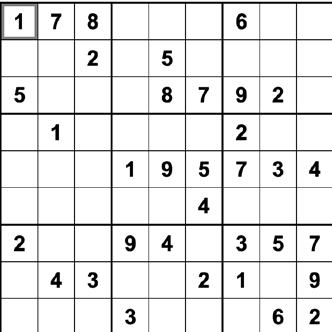
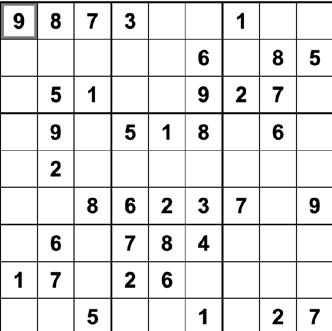
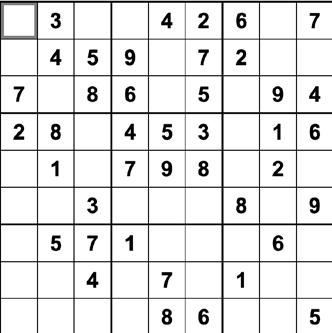
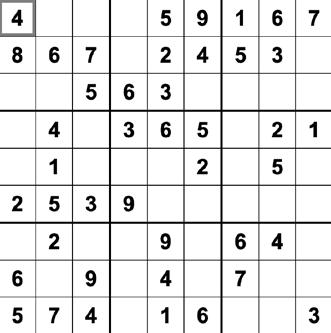
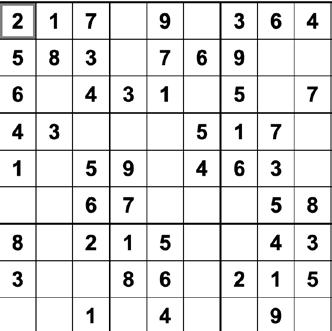

&,1(0$72*5$ 3+< 63(&,$/())(&76 %/2&.%867(5 )($785(),/0
CINEMATOGRAPHY SPECIALEFFECTS BLOCKBUSTER FEATUREFILM GREENSCREEN DOCUMENTARY SCREENPLAY SOUNDTRACK STORYBOARD
6725<%2$5' )5$1&+,6( %2;2)),&( ,1',(),/0 6+257),/0
FRANCHISE BOXOFFICE INDIEFILM SHORTFILM CHARACTER ANIMATION DIRECTOR PRODUCER PREMIERE
352'8&(5
35(0,(5( 3/27/,1( &26780(6 7+5,//(5 75$,/(5



PLOTLINE COSTUMES THRILLER TRAILER PREQUEL POPCORN ACTRESS ACTOR EDITING
35(48(/ 323&251
$&75(66 &5(',76 (',7,1* )$17$6< 6(48(/ &,1(0$ (;75$6 6&5,37
FANTASY SEQUEL CINEMA EXTRAS SCRIPT MAKEUP STUNTS COMEDY DRAMA
0$.(83 678176 &20('< $&725 '5$0$
If you have a story, confession, or experience you’d like to share—whether it’s an anonymous crush, workplace drama, or something else entirely—you may submit it using the QR code below.

I left my underwear with shit stains in the drier and someone saw them and sent a pic to our floor gc
- anonymous

These puzzles are provided to be fun and challenging. The Salient team and our contributors aim for accuracy, but occasional errors may occur. If you notice an error, you may write to editor@salient.org.nz. Please note that our puzzlers and contributors are doing their best, and none are professionals or working on these puzzles full time. For the word find, words may appear diagonally and backwards. To access solutions for the crosswords and connections puzzles, scan the QR code next to Puzzhead.

To solve a Set Square, use arithmetic and logical reasoning. You are given a grid containing six sums: three reading across and three reading down. The arithmetic operations (division, multiplication, addition, and subtraction) are shown between the grid spaces. Place each of the numbers 1 to 9 exactly once into the grid so that all six sums are correct. Note that calculations are carried out in left-to-right order, not according to BEDMAS.
To solve connections, group the sixteen words into four sets of four based on a shared connection. Each word belongs in only one group. Continue until all four groups are identified. On our website, the groupings are uploaded one at a time, so if you get stuck, you can view the answer for a single connection without revealing the full solution.


To solve Word Wheels, form words of four letters or more using the letters in the nine-letter wheel. Every word must include the central letter. Each letter may be used only as many times as it appears in the wheel. The aim is to find as many valid words as possible from the target word list, including the nineletter word that uses all the letters.



» post cryptic shade about your ex
» hook up with a Taurus
» demand attention
» get ignored
» take it personally
» come back louder and @ them
» pick a fight for no reason
» hook up with a Virgo
» ignore every warning sign
» make everything worse
» blame the rain
» stand there soaked acting confused





» disappear for a bit
» hook up with a Capricorn
» avoid responsibility
» laugh it off
» stay inside instead of going to lecturers
» hook up with a Leo
» open a credit card
» ignore problems
» complain loudly » refuse to change



» refuse to apologise » work too much

» hook up with a Sagittarius
» act above it
» secretly care
» get annoyed » act like nothing happened


Strange travellers from distant constellations have beamed you up to the Mothership to deliver some good news and hard truths. Consider the gravity of their words.


» avoid making any decisions
» hook up with a Scorpio
» flirt with a Cancer
» avoid keeping the peace
» lie a little
» act surprised when it
all blows up
» yap yap yap
» hook up with a Pisces
» send nudes to a Virgo
» keep beating that dead horse
» act shocked people are over your dead horse






» hook up with a Libra
» get weirdly intense
» test people
» hold grudges
» pretend you don’t care at all
» check your phone obsessively (people are talking about you)
» hook up with a Sagittarius
» reread everything
» cry a bit
» blame the weather


» be emotionally unavailable
» start a situationship with a Pisces
» overthink everything
» detach mid conversation
» say something odd
» act like you’re the only sane one


» romanticise the new season of Euphoria
» hook up with a Gemini
» ignore reality
» get your feelings hurt
» drift off mentally
» this is all fine


KIA ORA! I‘M MANALI THE HUMAN BEHIND HIPPIEHYPE.
I MAKE HANDMADE CERAMIC ART, PERFECTLY IMPERFECT, JUST LIKE LIFE. I LOVE WORKING WITH MY HANDS BECAUSE EVERY PIECE CARRIES A LITTLE BIT OF ME , THE PERSONAL TOUCH, THE TINY IMPERFECTION, THE STORY OF CREATION. THAT HUMAN ELEMENT IS WHAT MAKES EACH PIECE FEEL ALIVE AND UNIQUE.
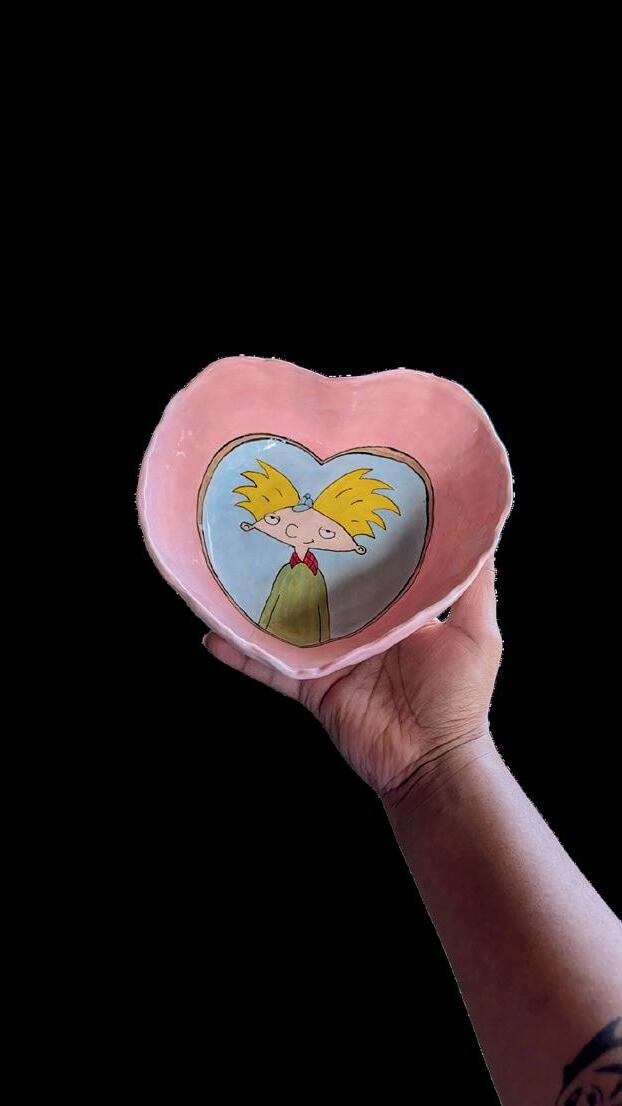




To contribute to Salient, you can submit poetry, creative writing, artwork, puzzles, features, and other ideas. Submissions are welcome from first-time and returning contributors.
Scan the QR code to find out more.