The Ultimate Guide to PDF Drive Alternatives: Top Platforms for Free E-Books,
Academic Papers, and Documents
Executive Summary
For years, PDF Drive served as one of the most widely visited online search engines for downloadable PDF documents, academic textbooks, fiction, and technical manuals However, due to persistent server downtime, domain shifts, copyright compliance challenges, and intrusive advertising redirects, millions of students, researchers, and book enthusiasts have actively sought reliable, legal, and secure PDF Drive alternatives
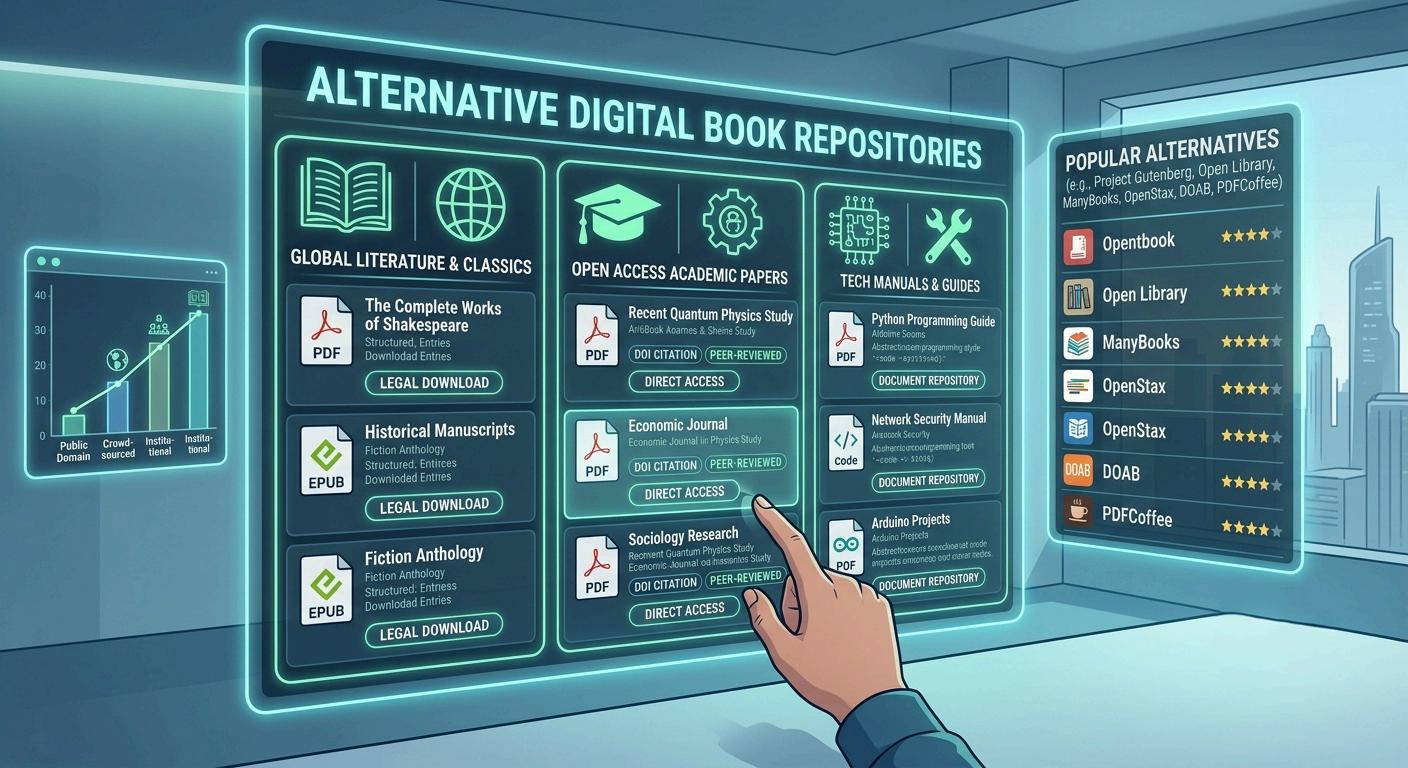
Whether you are looking for open-access academic literature, public domain classics, technical software documentation, or contemporary titles, finding a secure platform with a clean user experience is essential This guide explores the best PDF Drive alternative platforms available today, categorizing them by use case, database depth, and copyright compliance
Look for a PDF Drive Alternative?
While PDF Drive was celebrated for its minimal interface and large repository, several growing issues have prompted users to migrate toward alternative digital libraries:
1. Service Reliability & Domain Downtime: Frequent offline periods and mirror domain changes make consistent access unpredictable
2 Security & Ad Risks: Increasing prevalence of third-party ad networks, pop-under redirects, and potentially malicious download links on unverified mirrors.
3 Outdated Repositories: Many non-academic PDFs on unmoderated platforms suffer from broken links, incomplete page scans, or poor OCR (Optical Character Recognition) quality.
4 Legal & Ethical Concerns: Increasing demand for platforms that operate transparently within public domain frameworks, Creative Commons licensing, or open-access institutional repositories
| KEY CRITERIA FOR EVALUATING ALTERNATIVES
| 1. Content Catalog --> Public Domain, Academic, Fiction, Tech | | 2 File Formats --> PDF, EPUB, MOBI, AZW3, TXT | | 3 Interface & Ads --> Clean layout, zero malware/pop-under ads | | 4. Search & Filters --> By Author, ISBN, Publication Year, Topic | | 5 Cost & Access --> Free Open Access vs Free Membership |
Top General & Public Domain E-Book Platforms
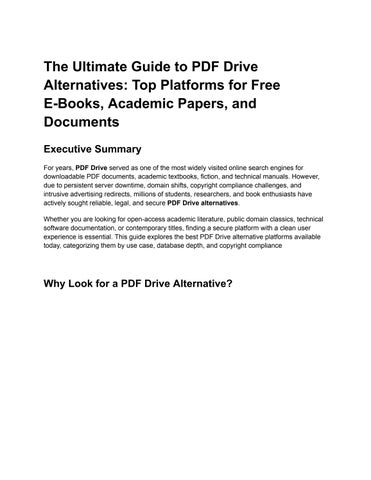
If you are looking for general literature, classic novels, non-fiction, and historical manuscripts, public domain repositories offer legal, high-quality downloads
1. Project Gutenberg
● Best For: Classic literature, historical texts, and public domain books
● Database Size: Over 70,000 free e-books.
● Supported Formats: PDF, EPUB, Kindle (MOBI/AZW3), Plain Text
Project Gutenberg is the original digital library pioneer Founded by Michael S Hart in 1971, it digitizes cultural works whose copyright has expired under U.S. law.
● Pros: 100% legal, clean interface without intrusive advertising, meticulously proofread texts.
● Cons: Focuses almost entirely on older classics (published prior to 1928/1929 in the U S ); modern commercial titles are not available
2. Internet Archive & Open Library
● Best For: Out-of-print books, historical documents, media archives, and modern digital lending.
● Database Size: Millions of free digital books, movies, and audio files
● Supported Formats: Web Reader, PDF, EPUB, DAISY
The Internet Archive is a massive non-profit digital library dedicated to universal access to knowledge Its companion project, Open Library, aims to create a web page for every book ever published. Users can borrow digital copies of modern books via Controlled Digital Lending (CDL) or download millions of public domain titles directly in PDF format
● Pros: Vast repository of rare, out-of-print, and historical materials; integrated in-browser reader
● Cons: Modern copyrighted books require a free account to borrow for limited timeframes (1 to 14 days).
3. ManyBooks
● Best For: Indie authors, classic fiction, romance, sci-fi, and self-published literature.
● Database Size: 50,000+ free e-books
● Supported Formats: PDF, EPUB, MOBI, AZW3
ManyBooks offers a modern, polished user interface that categorizes free public domain books alongside titles from independent authors looking to reach new readers
● Pros: Excellent curation, user reviews, author interviews, and clean category filtering
● Cons: Requires a free account creation for full library access.
Top Academic & Research-Focused PDF Alternatives
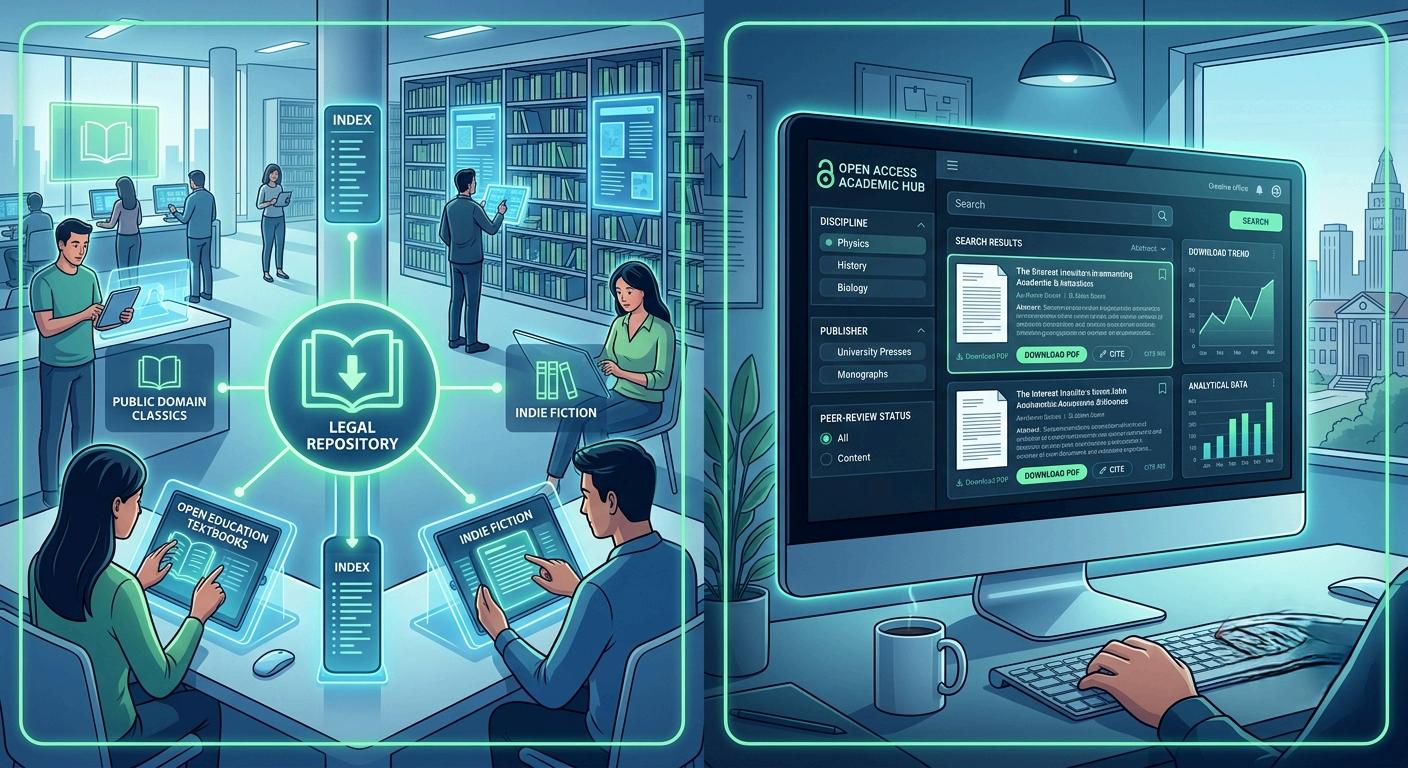
For university students, researchers, data scientists, and academics requiring scholarly papers, research studies, and educational textbooks, general e-book sites often fall short. The following platforms specialize in academic resources
4. OpenStax (by Rice University)
● Best For: Free, peer-reviewed college and high school textbooks
● Supported Formats: PDF, Web View, Mobile App
Supported by philanthropic foundations and Rice University, OpenStax produces high-quality, open-license college textbooks covering Mathematics, Physics, Chemistry, Biology, Business, and Social Sciences.
● Pros: Peer-reviewed by subject matter experts, 100% free, updated regularly, includes instructor solution guides.
● Cons: Catalog limited to core introductory college curriculum courses
5. Directory of Open Access Books (DOAB)
● Best For: Peer-reviewed academic monographs, research books, and university press publications
● Database Size: Over 80,000 academic books from hundreds of publishers.
● Supported Formats: PDF
DOAB provides a searchable directory of peer-reviewed, open-access academic books published under Creative Commons licenses. It connects scholars with published research across humanities, technology, and social sciences
● Pros: Rigorous academic standards, direct PDF links, verified publishing origins.
● Cons: Highly technical material; not designed for casual entertainment reading
6. PDF Coffee
● Best For: User-uploaded documents, student lecture notes, presentations, and technical manuals
● Supported Formats: PDF, DOCX, PPTX.
PDF Coffee operates on a crowd-sourced model where users upload research notes, guides, and manuals. It offers a lightweight, fast search engine that mirrors the user-driven upload dynamic previously found on PDF Drive
● Pros: Fast search speeds, broad range of niche technical documentation and study notes.
● Cons: Content quality varies depending on individual user uploads; ad-supported model
Comparison Matrix: Finding the Right PDF Drive
Alternative
Platform Primary Focus Licensing / Legal Status Direct PDF Downloads? Ad Intrusion
Project Gutenberg Classic Literature 100% Public Domain
Internet Archive General Media & Books Non-Profit / Public / CDL
OpenStax College Textbooks Open Access / CC Licensed
DOAB Academic Research Open Access
ManyBooks Public Domain & Indie Public / Author Granted
PDF Coffee User Documents & Notes User-Uploaded Repository
(Public domain & borrowed) None
(Requires Free Account)
Key Features to Look For in a PDF Alternative
When evaluating new digital libraries, keep these criteria in mind to avoid low-quality or unsafe sites:
│ redirects & fake │ │ PDF, EPUB, and │ │ PDFs feature │ │ "Download" buttons│ │ reflowable text │ │ searchable text │
1 No Executable Redirects: Legitimate platforms provide direct .pdf or .epub files Avoid sites that require you to download .exe, .apk, or password-protected zip archives to view a document.
2 OCR (Optical Character Recognition): High-quality academic PDFs should feature selectable text rather than raw image scans This allows you to search keywords within documents and copy citations accurately.
3 Reflowable Format Options: While PDFs maintain exact page layouts (ideal for formulas, tables, and print formatting), platforms offering EPUB options allow better readability on mobile screens and e-readers.
Best Practices for Safe and Efficient Downloading
To maintain online safety and keep your personal device secure while exploring alternative repositories:
● Verify File Extensions: Ensure the downloaded file ends strictly in .pdf or .epub Never execute files with dual extensions (e g , textbook.pdf.exe)
● Use Dedicated E-Reader Apps: Use dedicated tools like Adobe Acrobat Reader, Sumatra PDF, or Calibre to organize and read your digital library offline across devices
● Support Open Access Initiatives: Whenever possible, prioritize open-access platforms like OpenStax, DOAB, and Project Gutenberg, which support authors, universities, and creators transparently
Finding a trustworthy PDF Drive alternative depends largely on your reading goals. For literary classics, Project Gutenberg and Internet Archive lead the way For university textbooks and scholarly research, OpenStax and DOAB provide verified open-access materials Choosing reliable, security-vetted platforms ensures continuous, safe access to essential knowledge and research documents