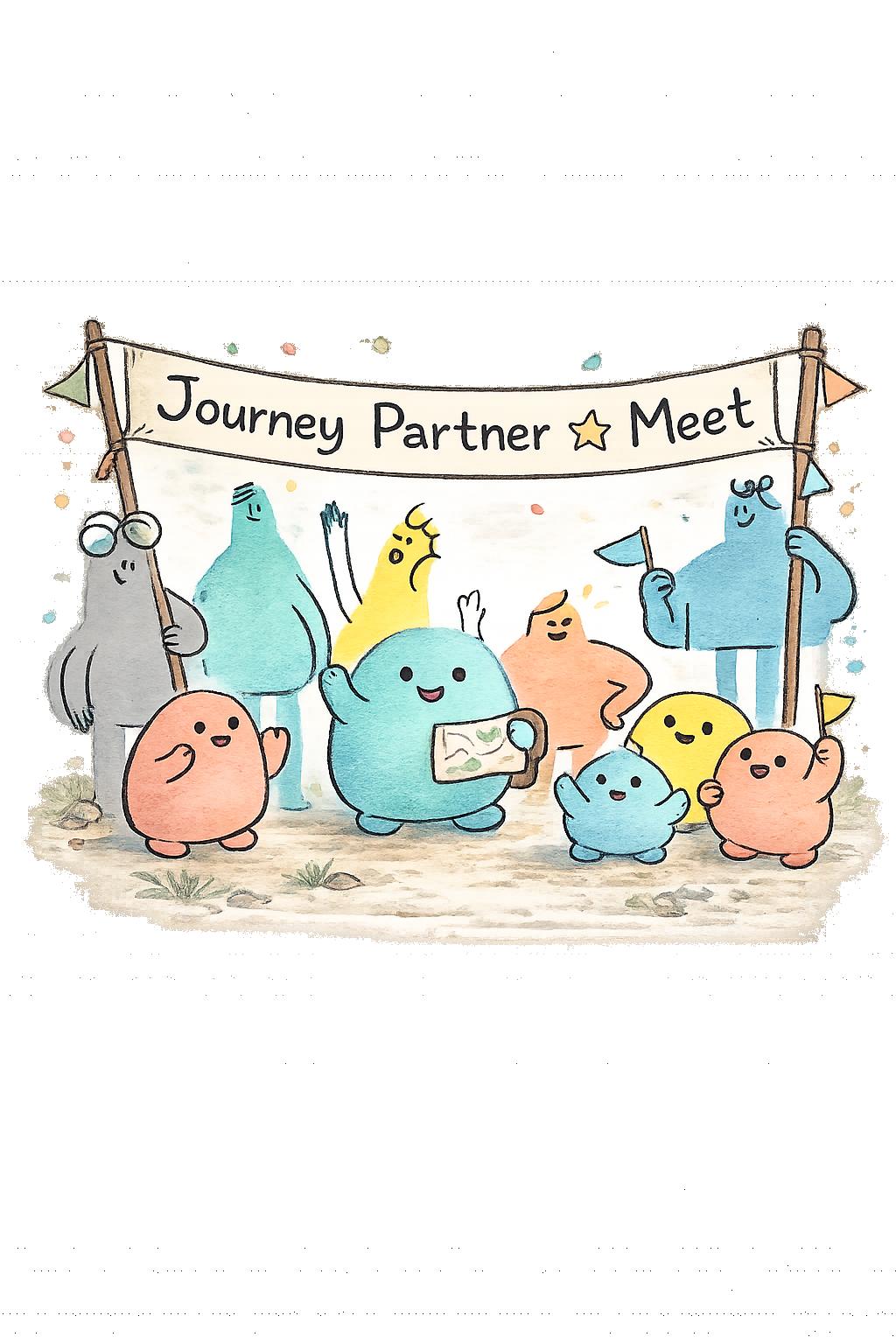
Journey Partner Meet, 29 - 31 July

Week 0: A journey of discovery

Journey Partner Meet, 29 - 31 July
Week 0: A journey of discovery


Week 1: Choose an Opportunity
Identifying what to build, Key Stakeholders & Empathise
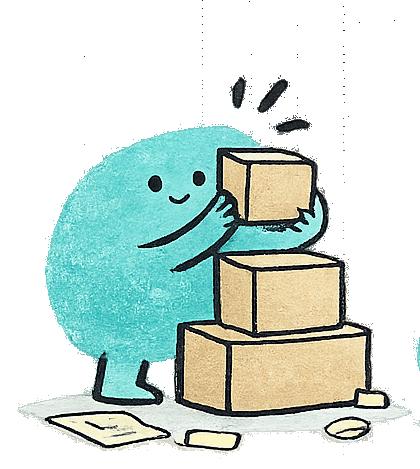
Week 3: Make the idea tangible
Build a low delity Prototype

Week 2: Step into their world
Current & Future State Day In the Life Of the Stakeholders
Week 4: Touch Grass Gather feedback from the Community
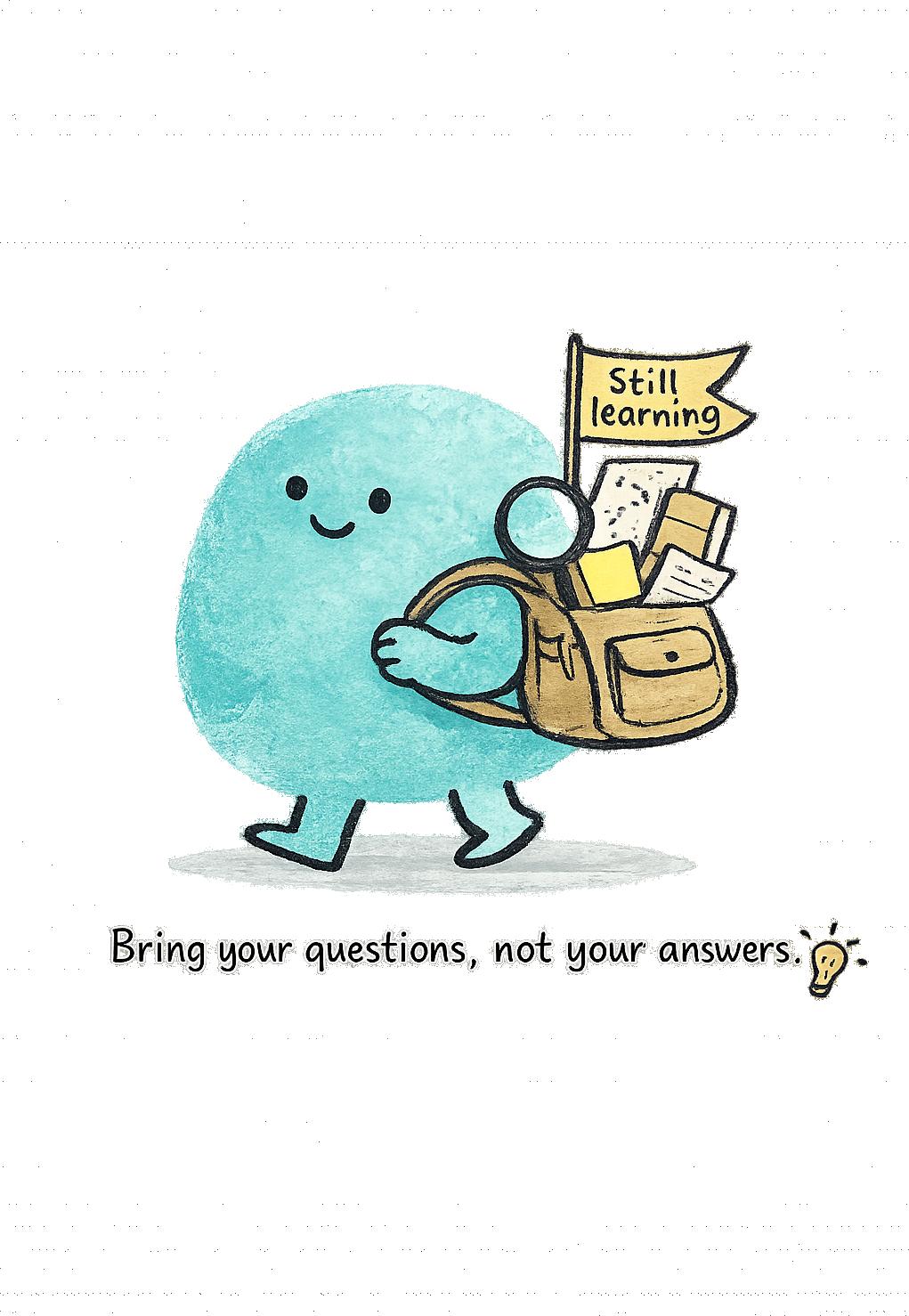
I'm Curio!
Over the next four weeks, I'll help you think with your hands, learn by doing, and arrive at the Journey Partner Meet ready to build something meaningful with your collaborators.
Don't worry about getting it right. And remember, we're here to learn.
little about
as a process of learning by doing
When people hear the word prototype, they often think of a product mock-up or a technology demo.
For this Meet, we invite you to think of prototyping much more broadly.
It might be:
A storyboard, a new workflow, a partnership model, a service experience, a governance mechanism, a digital tool, a policy concept, a network interaction, scenario building, narrative experiment, storytelling intervention or a community mobilisation activity.
A prototype is simply a way of making an idea tangible enough to learn from.

Gather your resources: Before you dive into the prework, take a moment to set up your prototyping workspace.
Why this matters: You aren't starting from scratch, you are building on a rich foundation of existing research. These materials are the bridge between your current data and your future prototype
Innovation thrives on diverse perspectives, so we encourage you to include your team members in this process whenever it feels natural and valuable, as your collective wisdom will only deepen the impact of the outcomes for the communities you serve.
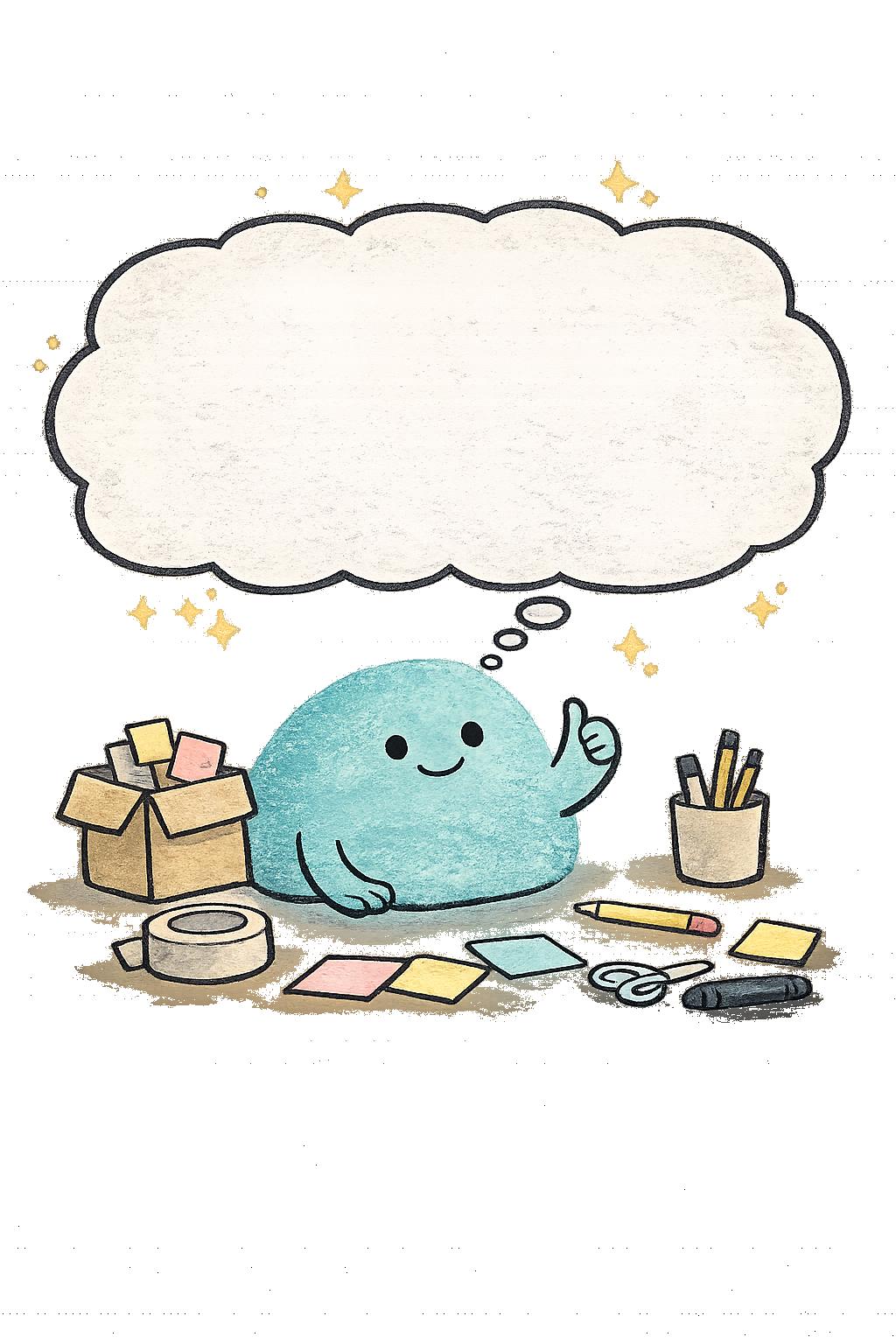
Good news: you won't need anything fancy. Most of this journey can be completed with the resources you already have, a few simple materials, and a willingness to learn by doing.
Keep these close by:
• Your organisation's strategy documents, blueprint, or sprint outputs
• Your Big Question, Problem statement
• Any existing research, interviews, insights, or community feedback you've already gathered
Useful to have nearby:
• Sticky notes
• Markers, pens, or pencils
• A4 paper or a notebook
• Scrap paper/ newspaper
• Cardboard, tape, scissors, or any household materials you can quickly assemble into rough prototypes
If you prefer working online, these tools can help:
• Google Slides or Google Drawings, Miro, Mural, FigJam, Canva Whiteboard
These are especially useful for ecosystem maps, journey maps, storyboards, and collaborative prototyping.
We'll provide editable templates and worksheets for each week's activities, which can be:
• Completed digitally
• Printed and lled in by hand
• Used collaboratively with your team
Before Week 4, identify up to 3 people for a quick pulse check.
These could be community champions, partners, or ecosystem actors whose perspectives can help you validate your idea.
Come with a polished prototype or all the answers.
By the time we meet you’ll have rst-hand learnings from this process.
Along the way, you'll also have:
• An early prototype or idea
• A deeper understanding of the people you're building for
• Some evidence and feedback from your ecosystem
So, let’s get to thinking with our hands and get ready to co-create our prototypes!