
THE ACADEMIC JOURNAL 2026

Edited by Eashan Rautaray
FOREWORD –
EASHAN RAUTARAY
AI IN ECONOMICS –
AYAAN SAGAR
CLIMATE AND GENDER –
MAYA GURENKO
THE JUSTICE SYSTEM –
REBECCA WELLS
CHING SHIH –
ISABELLA FRENCH-COMPAGNONI
THE MULTIVERSE –
SANVI DHARAN
CONSCIOUSNESS –
SHRESHTH MISHRA
PI/4 –
AARYA THANAPPAN
COLLATZ CONJECTURE –
NATHAN MAGBILANG
FILM PHOTOGRAPHY –
PRIYA SELVA-RADOV
NEUROPLASTICITY –
ANANYA SHETTY
NEUROSYMBOLIC AI –
SAHISHNU JADHAV
QUANTUM NNs –
FIFI SIDDIQUI
HONG-KONG’S STATUS –
MARCUS LEUNG
INEQUALITY IN THE UK –
PAGE 01
EASHAN RAUTARAY PAGE 02
AYAAN SAGAR PAGE 04
MAYA GURENKO PAGE 06
REBECCA WELLS PAGE 08
ISABELLA FRENCH-COMPAGNONI PAGE 10
SHRESHTH MISHRA PAGE 11
AARYA THANAPPAN PAGE 12
NATHAN MAGBILANG PAGE 16
PRIYA SELVA-RADOV PAGE 19
ANANYA SHETTY PAGE 21
SAHISHNU JADHAV PAGE 25
FIFI SIDDIQUI PAGE 27
MARCUS LEUNG PAGE 30
ADELAIDE LEE-TSANG-TAN & ERIN KURAL PAGE 31
ADELAIDE LEE-TSANG-TAN & ERIN KURAL
NOETHER’S THEOREM –
SOFIA DALLMAN
THERMAL NOISE –
CASSIE D’SOUZA
WHITE HOLES –
ALEX CHUANG
MALARIA VACCINES –
DAVID WADE
VENOM TO VITALITY –
HESHMA NIYAZ
MIGHT AND RIGHT –
AOIFE WEST
A HISTORY OF POWER –
VICTOR TEODORU
SOFIA DALLMAN PAGE 33
CASSIE D’SOUZA PAGE 35
ALEX CHUANG PAGE 37
DAVID WADE PAGE 39
HESHMA NIYAZ PAGE 42
AOIFE WEST PAGE 46
VICTOR TEODORU PAGE 47
FOREWORD
“Learning is the only thing the mind never exhausts, never fears and never forgets” – Da Vinci.
Whilst many of you may not realise this, you are all living embodiments of Da Vinci’s remarks. For almost seven years, I have witnessed the curiosity, the passion and the pursuit of knowledge from students of all ages in a wide breadth of topics, subjects and environments. Shakespeare said “If the world is a stage, then a classroom is a microcosm of that world” – and if you approach the world with the same fervour for mastery, I can only foresee a bright future ahead of each and every Olavian, as pioneers of your unique interests and well-rounded people.
My task of assembling these academic entries was a challenge in the best possible way – I do not believe any collection can truly encapsulate the thoughtfulness put behind every word of all academic work. However, it has truly been a privilege to witness firsthand how intriguing and eyeopening each article was.
At St Olaves, academic excellence is the standard (and often taken for granted), so I would like to take this opportunity to thank the subject teachers, society presidents and journal editors, to help create and sustain a culture of learning. The diverse range of topics is a real credit to the selfsustaining, student-run and extremely broad society system, with constantly high attendance and several running each lunchtime.
To those who have contributed with any written work within the school, whether that be extended projects, essay competitions or society journals, your efforts during such an academically challenging period do not go unnoticed and your work may inspire people long after you have left. “If I have seen further than others, it is by standing on the shoulder of giants”. I hope with every passing year, students can explore further – and that would not be possible without the hard work of students, who constantly push boundaries, and staff, for fostering our growth.
As I reflect on my own journey in the school, it is marked by a culture of supportiveness and collective growth. With my final few weeks fast approaching, I’d like to remind you to take the most of this environment and to grab every opportunity and to explore every curiosity – not because it’s part of your exams, not to appear intelligent, but simply because you enjoy it. Do not let your subject boundaries and future aspirations narrow down your academic interests. A politician who dabbles in linguistics, the medic who reads classics or the computer scientist interested in history are all far more interesting and well-spoken than those who limit themselves to the subjects they choose.
Before you delve into these articles, I will leave you with a quote. “The most beautiful thing we can experience is the mysterious. It is the source of all true art and science”. It is my reminder that the unknown is the start of all great journeys, and to be confused places you in the footsteps of the greatest minds. It is how you approach the unknown that matters. I hope the wide variety of topics, ranging from law to consciousness and from vaccines to inequality, will not only foster your interest, but inspire you to create works of your own.
Stay curious, Olavians.
Eashan Rautaray – Academic Journal Editor
AI IN ECONOMICS
Prometheus defied Zeus and gave divine fire to humans. Empowered by the divine spark; human civilisation rose and became powerful enough to make Gods themselves irrelevant. “Fire” in this story represents the potential for creation and destruction that lies within us all [1].
Today, creation of AI may appear to be a God-like feat, but within it lies immense capacity to both elevate the human experience or cause great turmoil. This essay will argue that AI will upend socioeconomic structures, established over centuries, unless conscious effort is made to reinvigorate and expand economic activities to hitherto unexplored areas. Central theme being that, creation of economic value depends on balance of human effort and technology (assuming adequate capital availability).
With advent of AI, this balance will tilt heavily in favour of technology making human effort redundant leading to deep adverse societal impact.
To remedy this, the proverbial pie of economic activity must expand to make productive use of the superfluous human capital and redirect it away from causing untold destruction.
We will analyse socio-economic challenge of AI through below lenses:
Productivity gains
Impact on labour markets
Impact on wealth and income gap
Political, demographical and other challenges
We will use healthcare of aging population in UK as a specific case study to illustrate and exemplify the general observations across different sectors and countries. To set the context - Proportion of people over the age of 65 has risen from one in six in 1999 to one in five in 2019 and may shoot up to one in four by 2039 [2]. This imposes an immense financial burden on the government and raises an important question: how will the NHS and government support nearly double the number of pensioners?
Productivity Gains
Research indicates that AI could help UK double its growth rate by 2038 [3]. Other research indicates that global GDP could be up to 14% higher in 2030 as a result of AI [4]. There is no denying that AI offers tremendous opportunities to boost economic growth and improve lives.
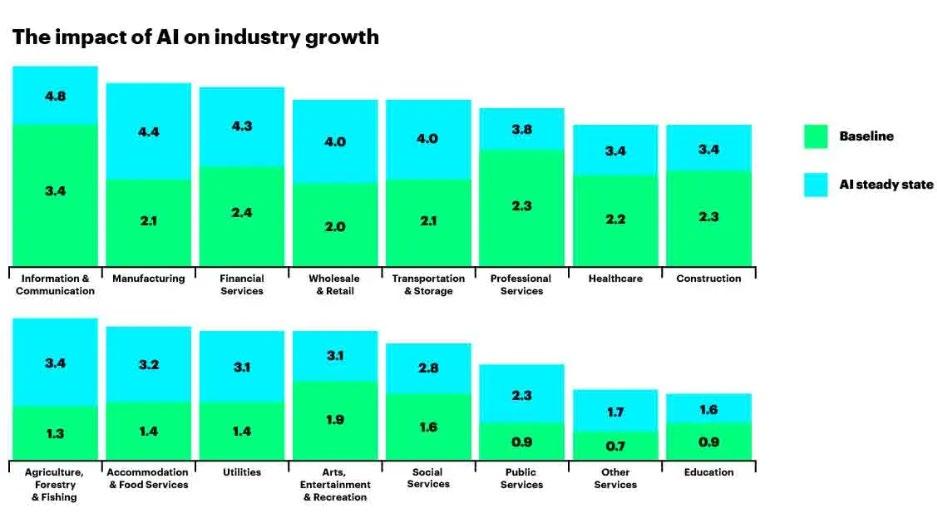
Use of AI in healthcare industry, for example, will lead to faster and more accurate diagnosis, cost savings due to automation and even reduced mortality rates [5]. The net positive economic value generation from productivity improvement due to AI is now universally agreed. However, the social impact of AI will manifest in a myriad of ways.
Using example of elderly care to illustrate the point: considerable price inelasticity exists in demand for care home due to the lack of substitutes – the only other option being provision of care within own homes. On one hand families may be hesitant to put elders in care homes due to financial constraints but at the same time may find themselves unable to provide care at home due to time limitation. Rapid advancement in AI enabled robots, however, may alleviate the price inelasticity of care homes while also improving quality of care.
Examples include Paro [6], HSR (Toyota) [7], and Robear [8]. These robots provide companionship, as well as ability to retrieve items and delivers them to patients, and assist with mobility, lifting, and transferring patients. AI integration in elderly healthcare has shown clear benefits. For instance, Paro provides companionship, addressing mental health challenges in old age. HSR and Robear alleviate physical caregiving demands partially replace traditional nursing roles.
Similar examples where AI is expected to improve overall human condition is easy to find across a range of different industries and applications e.g. In agriculture, AI could be leveraged to optimise irrigation and identify pests leading to improved food security and production [9]. Importance of positive societal impact due improved food security for emerging markets and LIDC countries is hard to overstate.
This indicates that the social impact of AI will manifest in a variety of ways, some of which may be difficult to predict. The social benefit of AI in such scenarios will improve price elasticity in favour of consumers by providing substitutes for “expertise” or “skills” which may not be otherwise available due to geographic or other barriers. These substitutes will be viable not only due to costs but also because of their alignment with personal fulfilment of individuals or strategic goals of countries.
Impact on labour markets
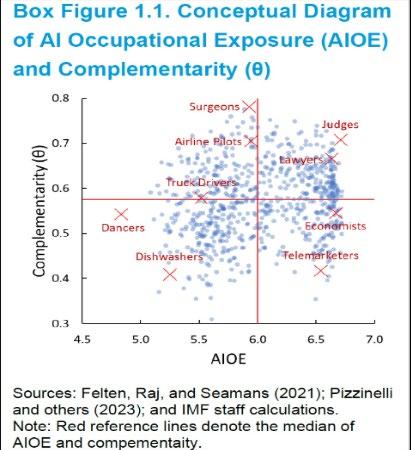
Forecast by think-tank Bruegel warns that as many as 54% of jobs in EU face the probability or risk of computerisation within 20 years. Needless to say, this will be a seismic shift in labour market which will fundamentally alter the financial outcomes for individuals and deeply impact labour dynamics. IMF proposes a conceptual framework to assess impact of AI on jobs and suggests that the jobs with “high exposure” and “low complementarity” are most at risk of replacement by AI [10].
AI challenges the notion that technology affects middle or low skilled jobs. Advanced algorithms can now augment or replace high-skill roles previously thought as immune [11]. This includes jobs such as software developers, technical writing, content creation and advertising.

As is evident from above graph, a larger proportion of jobs are at risk in advanced economies (AE – 33%) compared to emerging markets (Ems – 24%) or lowincome countries (LICs – 18%).
Some argue that AI will lead to long term job growth [12], however, the labour relations may alter permanently. The companies with lower need for permanent workers, will demand more short-term, self-employment and contract work from labour market to meet seasonal fluctuations, all of which weakens workers’ rights as well as role of trade unions.
Moreover, the lack of job security leads to weaker consumer confidence and marginal propensity to consume [13]. The uncertainty and downward pressure on wages also manifests itself in lower access to credit, reducing a worker’s ability to obtain mortgage, for example. This produces a net negative effect on long term economic growth. Lastly, loss of job and lower wages will lead to lower tax collection. Nearly, 51.7% of tax revenue of the European Union was obtained from tax on labour [14], which will trend downwards. This problem will be further compounded by need to incentivise AI innovation via tax breaks.
AI has the power to drive syntactic change within the labour market. As mentioned earlier, the measure of complementarity, while useful, does not encompass why there may be a dilation of the wealth gap. The polarisation of labour is a palpable risk which may be exacerbated by AI in occupations.
Complementarity in AI favours high-skilled jobs, polarizing workers based on their ability to collaborate with AI. This increases wages for those retaining jobs while others face wage stagnation, redundancy, or are forced into lower-paying roles, widening income inequality.
Displaced workers often struggle to reskill for AI-driven jobs, leading to structural unemployment, strained welfare systems, reduced macroeconomic productivity and accelerated divergence of wealth and income.
AI also contributes to the decline of mid-sized firms, leaving markets dominated by super firms and small firms. Small firms thrive by leveraging AI to produce niche, bespoke products, while super firms use scale and resources to dominate industries. Mid-sized firms, caught between these extremes, struggle to compete, resulting in wealth concentration and job displacement, as most workers are employed in these vulnerable middle-sized firms.
The implementation of AI on an international scale is driven by disparities in technology access. The lack of AI use for less potent countries will lead to other countries establishing monopolies or advantages as path of careers shift towards digitizing, creating prospects for higher profits. China has invested heavily in AI technology, companies such as Tencent AI lab [15] who will drive an advantage in ecommerce and logistics – increasing productivity and leading to higher GDP growth. Much unlike Eastern European countries, where the implementation of AI is so minimal and over time will lead to wealth gaps being created in AI specialist and technologically scarce countries.
Political, demographic and other issues
AI's impact on the job market will vary by country, and it is up to governments to mitigate the negative effects. Developed nations with stagnating populations, such as those facing an aging workforce, may use AI to fill gaps as workers retire. In contrast, rapidly growing countries like Brazil, India, and China will face mass unemployment due to automation, while their young populations increase the demand for jobs. This imbalance can slow economic growth due to underemployment.
Governments may also be constrained by domestic job losses, potentially leading to stricter antiimmigration policies, which could spark social unrest. Addressing this issue will require careful planning to manage both labour shortages and immigration concerns. Social safety nets, such as Finland’s Universal Basic Income experiment, could help cushion workers displaced by AI, though implementing such programs may be difficult in the short term due to the budget deficits caused by increased unemployment.
References:
[1] https://www.liverpoolmuseums.org.uk/world-museum/greek-myths-and-legends/prometheus-stealing-firegods
[2] https://post.parliament.uk/healthy-ageing-and-care-for-older-populations/
[3] https://www.accenture.com/content/dam/accenture/final/accenture-com/document-3/AccentureAccelerating-The-UKs-Generative-AI-Reinvention.pdf#zoom=40
[4] https://www.pwc.co.uk/economic-services/assets/macroeconomic-impact-of-ai-technical-report-feb-18.pdf
[5] https://mededu.jmir.org/2019/2/e16048/
[6] https://bmcgeriatr.biomedcentral.com/articles/10.1186/s12877-019-1244-6
[7] https://mag.toyota.co.uk/toyota-human-support-robot/
[8] https://www.theguardian.com/technology/2015/feb/27/robear-bear-shaped-nursing-care-robot#
[9] https://www.ifc.org/content/dam/ifc/doc/mgrt/emcompass-note-82-for-web.pdf
[10] https://www.imf.org/en/Publications/Staff-Discussion-Notes/Issues/2024/01/14/Gen-AI-ArtificialIntelligence-and-the-Future-of-Work-542379
[11] https://www.forbes.com/sites/sylvainduranton/2024/04/15/are-coders-jobs-at-risk-ais-impact-on-the-futureof-programming/
[12] https://www.weforum.org/stories/2020/10/dont-fear-ai-it-will-lead-to-long-term-job-growth/ [13] https://journals.sagepub.com/doi/full/10.1177/0001839218759646
[14] https://www.ibfd.org/sites/default/files/2021-09/International%20%20Taxing%20Artificial%20Intelligence%20and%20Robots%20Critical%20Assessment%20of%20Potential%20Po licy%20Solutions%20and%20Recommendation%20for%20Alternative%20Approaches%20-%20IBFD.pdf [15]https://ailab.tencent.com/ailab/en/recruit/#:~:text=Established%20in%20April%2C%202016%2C%20Tencent, vision%20of%20Make%20AI%20Everywhere.
CLIMATE AND GENDER
How are climate change and gender inequality connected?
When considering climate change and gender, many people I’ve spoken to were surprised or unaware that there is a connection between these two factors. Indeed, for many people within the UK, apart from the increasing frequency of heatwaves in the summer and news stories online, the consequences of climate change (not only on gender) are still largely intangible and distant. However, climate change not only threatens to reverse progress on sustainable development and human rights, but it also worsens gender inequality – posing specific risks to the ways of life, livelihoods, health, safety and security for women and girls around the world.
To explore the impacts, it is important to view arguments with nuance and look through the lens of ‘intersectional feminism’ (this term was coined by Kimberlé Crenshaw in 1989). She described intersectionality as: “A prism for seeing the way in which various forms of inequality often operate together and exacerbate each other.” Indeed, as she says, “All inequality is not created equal, we tend to talk about race inequality as separate from inequality based on gender, class, sexuality or immigrant status. What’s often missing is how some people are subject to all of these, and the experience is not just the sum of its parts.” (UN Women, 2025). By taking this into account, not only will various inequalities compound and interact with each other, but everyone's experiences of climate change will vastly differ based on their individual circumstances and identity, suggesting that the discussion below, whilst valuable for general purposes, may fail to realise the extent of the true consequences for a specific individual.
Climate change exacerbates crises, amplifies existing inequalities and poses the greatest risks to those who are already the most marginalized. By 2050, under a worst-case climate scenario, up to 158.3 million more women and girls globally may live in extreme poverty (under $2.15 per day) due to climate change with nearly half residing in sub-Saharan Africa. A much larger number of women and girls could be impacted if higher international poverty thresholds were considered: the total number of additional women and girls expected to be impacted as a result of climate change reaches 309.7 million at $3.65 per day and 422.0 million at $6.85 per day, up to 16.1 million more than the total number of men and boys, (UN Women, 2025). This alarming rise in poverty due to climate change for all genders, butparticularly for women, has many causes. In many regions, women bear a disproportionate responsibility for securing food, water and fuel for their families. When these resources become scarce due to the changing climate, women must work harder and travel farther.
This also puts added pressure on girls, who sometimes have to leave school to help their mothers manage the increased burden, thus threatening their education. In Kenya, fetching water may use up to 85% of a woman’s daily energy intake and in times of drought a greater workload is placed on women’s shoulders, (Duncan, 2007). Food insecurity may also rise significantly, affecting up to 236 million more women and girls than currently - thus worsening poverty. Even today, 47.8 million more women face food insecurity and hunger than men, (UN women, 2025).
Further, climate change is fueling more extreme weather events. When disasters strike, women are disproportionately impacted and more likely to be injured due to long-standing gender inequalities that have created disparities in information, mobility, decision-making and access to resources and training. One example is from Sri Lanka, where it was easier for men to survive during the 2004 tsunami because knowing how to swim and climb trees was mainly taught to boys. This social prejudice means that girls and women in Sri Lanka may have lower chances of surviving other future disasters, (Oxfam, 2005). Indeed, one study suggests that women and children are 14 times more likely than men to die during a disaster than men, (Peterson, 2007). Moreover, in the aftermath of extreme weather events, women and girls are less able to access relief and assistance, further threatening their livelihoods, well-being and recovery, and creating a vicious cycle of vulnerability to future disasters.
Climate change also impacts maternal and neonatal health. Research indicates that extreme heat increases incidence of stillbirth, and warming global temperatures are helping to spread vector-borne illnesses such as malaria, dengue fever, and Zika virus. Since 2009, Africa alone has seen significant increases in heat-related child mortality while a study of 29 lower-and middle-income countries attributes nearly one in three heat-related neonatal deaths to climate change, (London School of Hygiene and Tropical Medicine, 2025).
Pregnant women are also vulnerable to the health impacts of climate change because they may require rapid access to healthcare facilities during labor complications - a challenge when services are disrupted by heatwaves, flooding, or hurricanes. Moreover, physiological changes during pregnancy make them less able to tolerate heat, leaving them prone to dehydration and illnesses that only occur during pregnancy, such as preeclampsia and gestational diabetes. Indeed, exposure to high temperatures during pregnancy contributes to heart attacks and strokes and is associated with hypertensive disorders,
all of which are leading causes of maternal death. Women who conceive during the hottest months face a higher risk of preeclampsia, which untreated can lead to seizures, liver damage, kidney failure, and stroke, (London School of Hygiene and Tropical Medicine, 2025). Although there are many other ways climate change may worsen progress on reaching gender equality, the last one discussed here will be the potential rise in genderbased violence. While climate change does not directly cause gender-based violence, global warming, changing weather patterns and extreme weather events can lead to economic instability, damaged infrastructure, ruptured social ties, deepening fragility and conflict, food insecurity and water scarcity. These impacts do not occur in a societal vacuum but intersect with existing systems of power and inequality (the underlying factors that cause people, communities and states to be violent). Climate change may thus reinforce or lead to a fallback on uneven power dynamics, discrimination and harmful gender norms, exacerbating gender-based violence. Indeed, one study found that intimate partner femicide has risen by as much as 28 per cent during heatwaves (Sanz-Barbero et al., 2018). Also, increases in human trafficking, sexual exploitation and abuse have been documented in the wake of displacement from disasters and slow onset events like desertification. Natural resource stress may lead to violent conflict and displacement in which rape and sexual violence are used as a strategy to intimidate and exert control, (UN women, 2025).
Despite these major concerns, women’s issues and voices are often missing from the climate agenda. One study established that only 39 per cent of countries (25 out of 64) have established national coordination mechanisms – such as task forces or working groups – to integrate gender equality into climate policymaking across sectors. Female leadership is also lacking - as of 1 January 2025, women held 27.2% of seats in national parliaments, up only 4.9 percentage points from 2015, and representation in local governments stagnated at 35.5% in 2023 and 2024, (United Nations, 2025). Governments must act on climate justice, including by accelerating women’s participation at all levels of decision-making and securing equal rights to land, resources and tenure security. Promoting and amplifying the voices of grass-roots and Indigenous communities and including women environmental human rights defenders is crucial.
In conclusion, achieving a just and sustainable future requires shifting away from profit-driven, extractive systems that perpetuate crises and threats, and towards economies rooted in care, equity and ecological balance. As Zainab Salbi (founder of charity Women for Women) stated in her talk ‘Women, Nature and 2030’ we should stray away from the phase ‘divide and conquer’ and instead use ‘love and unite’. In this way, feminist climate justice offers a powerful alternative marked by human rights, fair resource distribution, inclusive decision-making, and accountability for past and future harms. It responds to the serious threats that climate change poses in terms of diminished livelihoods and greater poverty, hunger, conflict and gender inequality and aims to reduce the harms of climate change to everyone, and particularly the most marginalized in society.
THE JUSTICE SYSTEM
How are women treated by the justice system?
To be involved in the justice system is not simply to survive a stressful case: it can affect the rest of your life. Because of involvement in the justice system, one can be affected in employment, mental health, financial stability and even simple everyday occurrences such as social interactions. Therefore, the criminal justice system has the responsibility to deal with each case fairly and as effectively as they can. By this, it should mean that every arrestee is rightful arrested, they are treated justly as they navigate the system, and are provided with both the appropriate sentence for their actions and the necessary support to re-enter society (in cases of low criminal offences) in such a way that they are given the best possible chance at a successful life. Despite this, institutional flaws have made women subject to unjust treatment within this system throughout history and indeed within society as a whole. It is important to consider such treatment of these women and how, guilty or not of the crime they were charged with, that crime is never and should never be the fact that they are female, nor should their gender affect their experience of the justice system.
For instance, when strip searching, police must follow a compulsory procedure, which include specifying to the arrestee the illegal item(s) they are searching for. The results of Dame Vera Baird KC’s report calling for “more humane and dignified treatment of all detainees” demonstrate that this procedure has not been implemented in some cases involving women. The report reveals strip searches where women were not informed about what was being searched for and were touched inappropriately where one of the victims claims it would not have happened “if I was a man”. This not only demonstrates blatant disregard for the law and women’s rights by workers in the justice system, but that the abandonment of basic human decency and reinforcement of misogynistic ideas are concepts that must be eradicated if our generation remains determined to achieve equality across genders.
Furthermore, we must recognise that incarcerated women also experience several issues. There have been repeated reports of inadequate welfare services including lack of sanitary products where women have, as a result, bled through their clothes. Gaps in specialist mental health and trauma services are also worrying especially since the proportion of female prisoners who self-harmed compared to male prisoners was over 130% last year. In a society as supposedly progressive as we, access to these services should not even be in question. No matter the crime committed, a woman retains her right to dignity under the Human Rights Act 1998 and therefore it is by no means justifiable that she should
be forced to endure an experience such as this because she is a woman whose body is subject to certain natural functions. To retain dignity is to call forthe most basic form of respect of other human beings and by extension, any woman who is denied access to this is automatically degraded to a level where they supposedly do not deserve that respect. This is discrimination at its core. It is concerning to see that several survivors of coercive control are being criminalised. Fiona Broadfoot is a teen sextrafficking survivor whose criminalisation, she said, affected her further education and employment opportunities, in addition to the entire process being extremely ”humiliating” and “degrading”. The fact that the justice system seems incapable of defining a victim and a perpetrator is not only detrimental to the integrity of the justice system, but on a broader scale impacts the entirety of the feminist movement: if we cannot achieve gender equality within a system whose sole purpose is to provide fairness to all, it is a ridiculous notion to expect to achieve equality elsewhere.
We can see further examples of this in abortion laws. Despite the Abortion Act 1967 and the approval of the New Clause 1 which has yet to be put into action, abortion remains a criminal offence under the Offences Against the Person Act 1861. The fact that women can be criminalised for something that should be a healthcare right is completely unjustified. Even the law itself remains discriminatory against a woman’s right to her own body and her own autonomy. Not only is this damaging and wrong in itself, but in a society where polarised views are the norm that spread through social media and trends, abortion has been shaped into much more than a moral issue. It has become a weapon for people who wish to control the body and reproductive rights of women, fighting against the feminist movement. Hopefully, with the enactment of New Clause 1, we will see a substantial improvement in how women are treated by the law, because it aims to decriminalise women from this supposed ‘offence’, however it does not take away from the fact that there will still remain a stigma around abortion as a whole. Creating a society in which women are safe to make decisions about their body is not achieved simply because a law was amended; because of its original criminalisation, people will continue to attempt to control women and their right to choice and it is the responsibility of everyone, citizens and the justice system, to ensure that instead of the choice of a woman, it is the view of a misogynist that we forbid, it is actions against a woman’s basic human rights that we forbid.
To conclude, there is still much to do for justiceinvolved women. It is clear that the law still has a lot that should be amended if we are to ensure women can live in a safe and protected environment, and environment where they can freely make the best decisions for themselves. As we await for the enactment of certain amendments, now is the time to advocate now more than ever for the rights of women, to strike while the iron is hot. We will never reach the overarching goal of feminism if we stop and become content with individual victories. Of course, they should be celebrated and acknowledged, but we must recognise there is still work to be done. When considering certain factors regarding biological differences between men and women, for example menstruation, perhaps the question is not simply to achieve equality, but equity. This means recognition of differing needs and providing what is necessary to achieve the same outcome for everyone. These issues must be rectified for the greater benefit of society: we cannot trust an institution where justice is not considered from all angles and therefore it cannot have united support from the people it has vowed to serve.
CHING SHIH
Ching Shih – China’s Pirate Queen
During the Qing dynasty in China, 1644-1911, gender roles were defined by the patriarchal system and the Neo Confucian ideology. This was the emphasis of human reason to understand reality and a unified vision of human flourishing and became the dominant ideology in East Asia for centuries. This affected gender roles by promoting a patriarchal social structure which was rooted in the emphasis on what was known as the “three obediences”, this dictated that a woman must obey her father as a daughter, her husband as a wife and her son as a widow.
Someone who can be seen to transgress these boundaries was Ching Shih, who was a fearsome female pirate and is considered to have been the most successful pirate in history. This demonstrates her transgressing gender stereotypes as within pirating gender roles were rigidly defined due to the high seas being a predominantly male dominated sphere with women being specifically excluded from pirate crews due to superstitions at the time. Ching Shih was one of the more notable exceptions that defied these gender norms.
Ching Shih was born during the Qing dynasty in 1775, with her name being Shih Yang when she was born. She was born into the poverty-stricken society of the Guangdong province in southeast China. This area was close to the coast meaning it was heavily involved in piracy since the South China Sea at the time was notorious for pirates, with powerful fleets operating, disrupting trade, and clashing with the Qing navy and European powers. Later, this area became well known due to the fact that Ching Shih was born there.
When Ching Shih reached puberty, she was forced into sex work to supplement the family income. She worked in what was known as a floating brothel, also known as a flower boat, in the Cantonese port city. These “flower boats” were elaborately decorated vessels that served as major social hubs and entertainment venues, functions in as a legal, tax-paying business. It was on one of these in which Ching Shih quickly became famous within the area. This was due to her beauty, poise, wit, and hospitality. This then attracted many high-profile customers such as royal courtiers, military commanders, and rich merchants.
In 1801, a notorious pirate commander called Zheng Yi met 26-year-old Ching Shih. He was enraptured by her beauty as well as her ability to wield power over her well-connected clients by trading secrets. He then decided to propose to her but whether she accepted the proposal willingly or if she was forcibly abducted by Zheng Yi’s men is unknown. What is known is that she asserted that the only way she would marry him was if he granted her 50% of his earnings and gave her partial control over his pirate fleet. He agreed to this and later, the pair had two sons.
Ching Shih fully took part within her husband’s piracy and the underworld dealings of the Red Flag Fleet. Within her participation, she implemented several rules. Such as execution for those who refused to follow orders, execution for the rape of any female captives, execution for marital infidelity and execution for extramarital sex. This led to female captives being treated more respectfully and the weak, unattractive or pregnant ones were freed as soon as possible. However, the attractive ones were sold or permitted to marry a pirate if it was mutually consensual. On the other hand, loyalty and honesty were greatly rewarded within the fleet and the fleet were encouraged to work as a cohesive whole.
Under the joint command of the married couple, the Red Flag Fleet dramatically grew in size and prosperity. Even though the new rules that were being implemented were harsh, the reward system resulted in many pirate groups within the region merging themselves with the Red Flag Fleet. At their wedding they had 200 ships and after the first few months of being married, this grew 1800 ships. The Red Flag Fleet was now the largest pirate fleet on Earth. The couple then adopted a young fisherman in his mid 20s named Cheung Po from a nearby coastal region. Due to his adoption, he then became second in command to Zheng Yi. Zheng Yi then died in 1807age 42, either because of a tsunami or because he was murdered in Vietnam. This then left Ching Shih’s leadership over the fleet in a vulnerable position. Using her business savvy attitude and Zheng Yi’s connections she managed to install her adopted son as leader of the fleet and temper the powerhungry captains from other ships. Less than two weeks after Zheng Yi died, Ching Shih married her adopted son and they became lovers, this meant Cheung Po’s loyalty was great and allowed her to effectively rule the Red Flag Fleet.
Under her control, the Red Flag Fleet captured new coastal villages and had total control over the South China Sea. Villages now worked with the fleet giving them supplies such as food and any ship that wanted to cross the South China Sea was taxed. They also frequently plundered British and French coloniser ships. They even captured an employee of the East India Company called Richard Glasspoole for four months in 1809. He later reported that there was an estimate of 80,000 pirates under Ching Shih’s command.
As mentioned earlier, pirate ships often interfered with the Qing Dynasty navy, which is why it is understandable that the Qing Dynasty wanted to put an end to the Red Flag Fleet. In just a few hours, the Mandarin Navy was decimated by the Red Flag Fleet and Ching Shih decided to take the opportunity and declare that the Mandarin Crew would not be punished if they joined the Red Flag Fleet. This resulted in the Red Flag Fleet growing in size and the Qing Dynasty losing a huge proportion of its navy.
Later gender roles within the Chinese society came into play, this was because the Emperor of China was humiliated that a woman was controlling such an enormous part of land, sea, people and resources which he viewed as belonging to him. Therefore, he attempted to make peace by offering amnesty to all pirates of the Red Flag Fleet. However, at the same time as this, the fleet had come under attack by the Portuguese navy. Despite the Portuguese being defeated twice before, they came prepared with a superior supply of ships and weapons. As a result, the Red Flag Fleet was defeated in a devastating way. This led to Ching Shih going into retirement in 1810 by accepting amnesty from the government after three years of notoriety.
Despite the Red Flag Fleet having to surrender, the terms of the surrender were good. The terms allowed the pirates to keep all of their loot and several of the pirates were granted jobs within the military and Chinese government. This included Cheung Po who later became the captain of the Qing Dynasty’s Guangdong.
In 1813 Ching Shih had a son and later she had a daughter. In 1822, she lost her husband, and he lost if life at sea. Since she was a wealthy woman, she decided to relocate to Macau with her children and then decided to open a gambling house due to her business mindset. She was also involved within the salt trade. Near the end of her life, she opened up a brothel in Macau. She passed away peacefully around the age of 69 surrounded by her family.
Her legacy remains as her descendants are said to run similar gambling and brothel enterprises in the same area.
Ching Shih is a woman who both transgressed the gender roles of her country’s society and transgressed the gender roles imposed within her profession.
THE MULTIVERSE
Does the multiverse really exist?
According to the multiverse theory, our universe is not the only one to exist, there are many other universes with their own galaxies, stars and intelligent life forms. The multiverse relates to two theoretical concepts in physics, one based on notions of the very early cosmos, while the other derived from quantum physics and efforts to comprehend subatomic studies.
According to definition, the universe translates to "all the things" meaning the entirety of physical reality. The concept of the multiverse arises in a few branches of physics, the most prominent being inflation theory. The hypothetical event that occurred when our universe was less than a second old is described by the inflation theory. The universe had a period of rapid expansion, or inflation, to become several orders of magnitude larger than it was before, all in a very short period of time. All of the evidence points to the universe's fast expansion to vast proportions, increasing by at least a factor of 1060, when it was just a fraction of a second old.
According to Heling Deng, a cosmologist at Arizona State University, the inflation of our universe is believed to have stopped about 14 billion years ago. He did, however, note that, “inflation may not stop at the same time and that and it may be possible that as inflation ends in some region, it continues in others."
According to this theory of inflation, the universe as a whole is constantly expanding, and continues to grow in size at an accelerating rate faster than the speed of light. For example, the analogy of foam on a bubble bath. Our universe is not the first bubble to form, but rather one of an infinite chain of universes (or many other bubbles in the foam). The multiverse is the foam itself, constantly expanding and producing new bubbles (universes), each functioning as its own independent cosmos. Only a random quantum fluctuation causes a patch to slow down and pinch off, like what happened to our universe. The rest of the universe keeps on inflating, and still does today, forming an endless sea of eternal inflation that is home to countless separate universes. Our patch of the universe just happened to stop inflating at random (in comparison to the larger universes). Each universe would arise, in this scenario, of everlasting inflation with its own set of fundamental constants, arrangement of forces, and essentially its own set of ‘rules’ of physics. This could help to explain the characteristics of our universe, especially those that are difficult explain, such as dark matter.
The existence of life, especially intelligent life that can make cosmic observations, is the strongest argument in favour of the multiverse. The stability of nuclei, the lifetime of stars, the amount of carbon, and the availability of light for photosynthesis are some of the features of our universe that appear unique and crucial for the support of life. According to McCullen Sandora, a research scientist at the Blue Marble Space Institute of Science, the multiverse provides one explanation for why all these characteristics
are advantageous in our universe: other universes exist, but we observe this one because it can support complex life.
In other words, many things had to line up just right in our universe that the existence of life seems improbable. If there were only one universe, life probably wouldn't exist in it. However, in a multiverse, there are sufficient ‘chances’ for at least one world to support life. However, most scientists remain sceptical as the multiverse idea is not that compelling.
The theory that mathematically explains the behaviour of matter, known as the many-worlds interpretation of quantum mechanics, is another fascinating theory of multiverse. According to the many-worlds interpretation, which was first forth by physicist Hugh Everett in 1957, there will be branching timelines alternative realities where our choices would occasionally have very different consequences.
According to James Kakalios, there are an infinite number of parallel Earths. For example, if you do an experiment and obtain the probability, it essentially just confirms that you exist on the Earth where that is the result of the experiment; on other Earths, however, the results are different. Versions of you might be out living the various lives you could have lived if you had made different choices, according to this theory. But the only reality you can perceive is the one you live in. Since light can only travel at a finite speed, there is a limit to what we can observe in the universe (about 45 billion light years away), and even though some aspects of the universe seem to necessitate the existence of a multiverse, nothing has been directly observed to support this theory., so the evidence supporting the existence of multiverse is purely theoretical at this time.
Fiction Books:
“Parallel” by Lauren Miller “A thousand pieces of you” by Claudia Gray Non-fiction Books: “The hidden reality: Parallel universes and the deep lore of the cosmos” by Brian Greene “Multiverse theories” by Simon Friederich


CONSCIOUSNESS
The Hard Problem of Consciousness and Physics
The field of physics “is concerned with the study of the universe from the smallest to the largest scale: it is about unravelling its complexities to discover the way it is and how it works” [1] , and has historically been our best way of doing just that. From fire to transistors, millennia of iterative science have put us in a position where a theory of everything seems within reach.
Which is why it is surprising that arguably the biggest mystery of all has sat beneath our own noses for all that time. For regardless of our explorations of the subatomic or chartings of the stars, barely a step has been made into the doorway behind our eyes and into the inner workings of our minds.
Why? Is it that “our [western] science has cut itself off from an adequate understanding of the Subject of Cognizance, of the mind” [2] , be it because of religion or reigning scientific dogma? Gaps in our ability to communicate precisely what we experience? Or the simple presence of more pressing concerns? Most certainly a mix of all the above, but beneath could be one more fundamental: Had such a mystery lay anywhere but our own skulls, in the blind spot between and behind science’s eyes, it would not go a second unseen.
Fundamentally, pure sciences aim for objectivity, with “the scientist only [imposing] two things, namely truth and sincerity, [imposing] them upon himself and upon other scientists.” [3] To achieve this, the scientist’s own mind has been on track for extinction in the empirical process, with standardised units, electronic measurements and computerised data analysis all making an individual’s thoughts (prone to subjective error) redundant. Yet the nature of the hard problem requires a contamination of this principle by insisting/depending on its presence.
All that is not to say no work has been done: a foot is still in the door. Firstly, defining the hard problem of consciousness as “the challenge of explaining why and how physical processes in the brain give rise to subjective, qualitative experiences, or qualia”[4] . Secondly and tangentially, by solving “easy” problems of consciousness, namely the physical properties that give rise to specific subjective experiences, e.g. isolating areas of the brain responsible for various sensations. Solving these easy problems helps close the explanatory gap between the unfeeling flesh and the acutely “feeling” mind it produces. Materialists believe that given enough advancement, like all things before it, science will work to fill in that gap and explain conscious, subjective experiences with its usual laws and equations5 .
Importantly, that remains but a belief. Currently, there is no conceivable physical mechanism for how the carbon and nitrogen and oxygen atoms in you differ from those in the air to produce unique subjective experience. The debate comes down to if there ever will be. When the question of “is this possible to describe scientifically” is asked, the question of “is science really how we answer it” appears naturally.
Is this a problem better left to philosophy than physics? Historically, science has encroached on matters previously deemed philosophical: disease, forces, matter; but have we now reached a turning point where the method that has taken us so far has nothing left to give? Again, history has not been kind to those that believed science would go no further, but any physicist is familiar with the risks of unperturbed extrapolation.
Is this even a problem we want answering? If the determinists come out correct – what implications does that have for free will? What about animals, or other things we assumed lacked feeling? And if consciousness is truly inexplicable, does that imply the existence of a higher power? Of souls that exist in some plane beyond the physical? Recent developments in AI have reinvigorated discussion around the problem (how will we know we have created true artificial intelligence if we can’t describe “normal” “intelligence” first?), but there still exists a stigma against the topic in the wider scientific community [6] , that because of its inherent animosity to the reigning paradigm of apparent objectivity, and a general lack of respect for social and behavioural sciences, studying into it is somehow beneath searching for black holes or bosons.
To take that next step into the seemingly endless dark those beliefs must be left at the door in favour for multidisciplinary cooperation and research. And if we do find an answer, when we allow our telescopes to come down from the sky and instead point them into and behind the eyes they once served, it will be a discovery like no other.
Newton, Leibniz and Pi/4
The feud between Isaac Newton and Gottfried Leibniz over the invention of calculus was one of the bitterest rivalries in the history of mathematics. However, despite all their differences, there is a beautiful connection between them involving the number ���� 4 Each of them discovered1 one of the below infinite series, which may at first look completely different but are in fact (almost) exactly the same series…
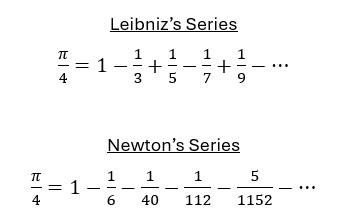
The best way to see the connection between the two series is to derive them.
Derivation of Leibniz’s Series
I’m going to be honest: I don’t completely understand Leibniz’s original proof of his series, so I’m going to use a more modern (but maybe less interesting) proof. (Of course, many of you reading this will be able to understand his proof, so if you want to check it out, I’ve left a link to a very good article about it in the sources section at the end). However, I’m still going to go through a quick summary of Leibniz’s proof because I think it’s still worthwhile thinking about some of the ideas behind it.
Leibniz’s proof was based on the concept of transmutation, which he learned from Pascal. This is when two different regions are divided into infinitely thin strips (infinitesimals), and if there is a one to one correspondence between the infinitesimals of each region then they have the same overall area. Using this concept, Leibniz was able to derive an interesting transmutation formula, which he then applied to finding the area under a circle.
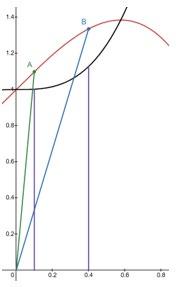
To understand his formula, first consider a function f(x), shown below in red:
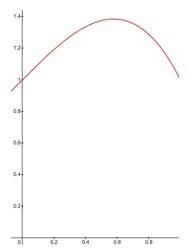
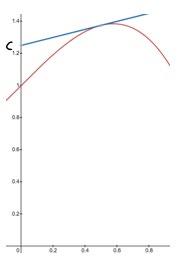
When you draw a tangent at some point (x,y) then it intercepts the y axis at a specific height c: You can plot a point with coordinates (x,c), so it has the same x coordinate as the original point but the y coordinate is the y intercept of the tangent lines and then do this for every point on y = f(x), you get a new function y = g(x), shown below in black:
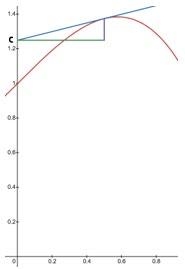
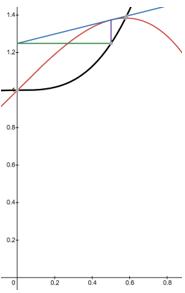
Leibniz’s transmutation formula is that if you have two points A (p,q) and B (r,s), then the area of sector OAB (the area bounded by the green line, the blue line and the red curve in the diagram below) is equal to half the area under g(x) between x = p and x = r (the area bounded by the two purple lines, the black curve and the x axis):
I’m going to leave it as a fun exercise for the reader to prove this formula :) (Hint: use integration by parts. If you want to see Leibniz’s proof involving infinitesimals, then check the article in the sources section.)
Leibniz then applied his formula to a circle with radius 1 (a unit circle) centred at (1,0):
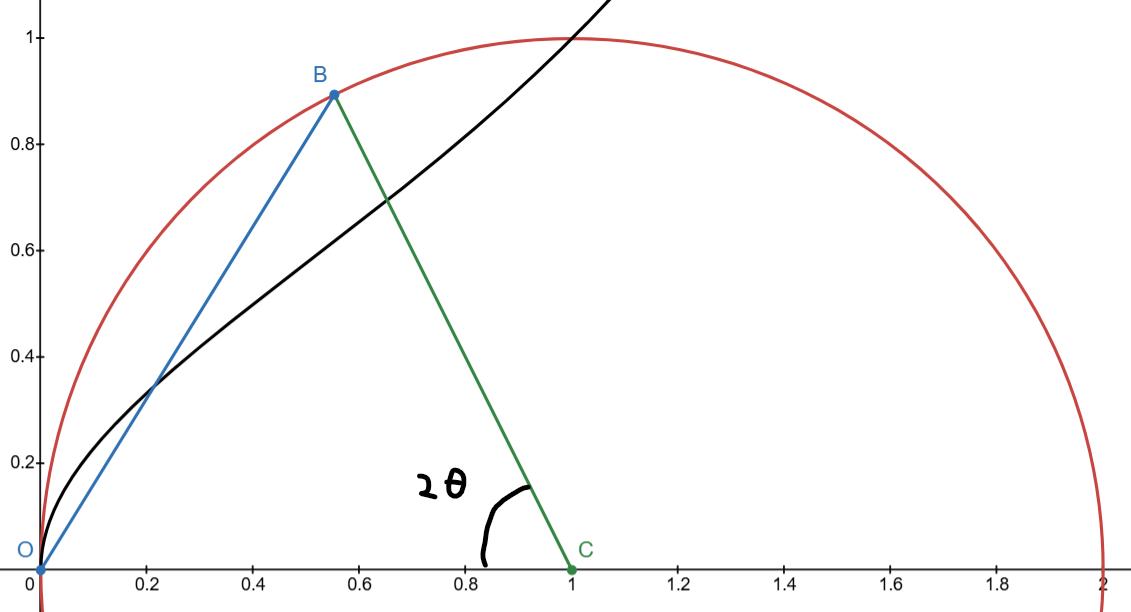
Here, f(x) and g(x) are again shown in red and black respectively). The area of sector CBO is 2���� 2���� ∗ ���� ���� 2. As the radius is 1, this is equal to ���� . However, this is also equal to the area of the triangle CBO plus the area of the minor segment OB, which Leibniz was able to rewrite using his transmutation formula.
(This is because the minor segment OB is exactly like the sector OAB in the diagram at the top of the last page, except that A is now at the origin). Leibniz let the point B have coordinates (r,s), and defined z to be g(r). Leibniz was then able to derive an expression for the area of sector CBO, and therefore ���� , in terms of z:
He then let 2���� be 900 or ���� 2 radians:
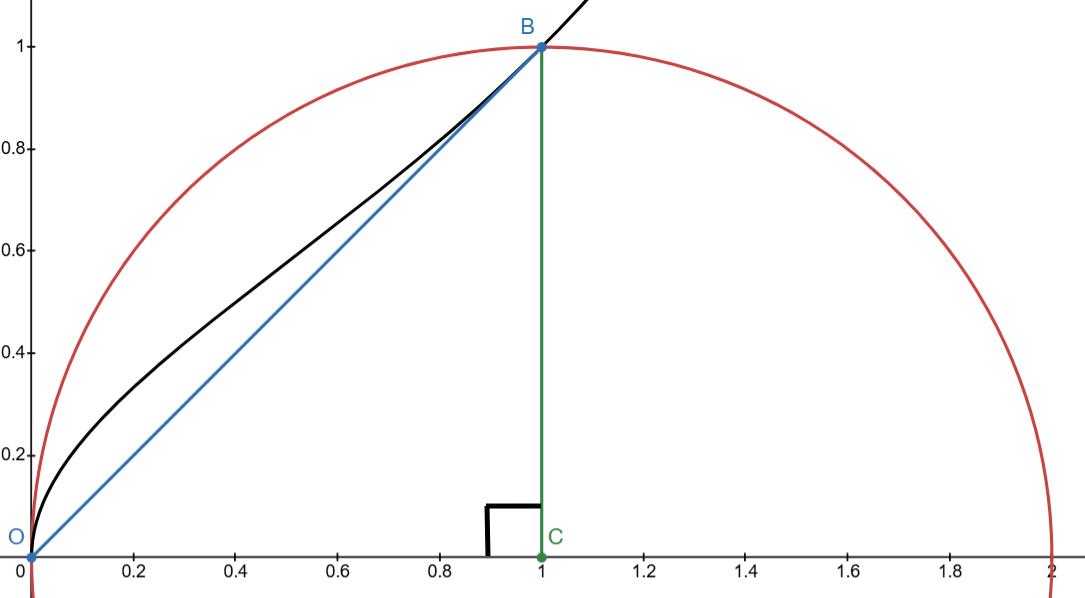
From the diagram, you can see that z = 1. Furthermore, 2���� = ���� 2 , so ���� = ���� 4 . Substituting these values into the series for ���� , we get: ���� 4 = 1 1 3 + 1 5 1 7 + 1 9 ⋯
(For the derivation of the series for ���� , check the link in the sources section).
Although this proof is definitely fun, it is also quite complicated and difficult to follow, so I’m going to go through a simpler proof now.
First, note that tan(���� 4 ) = 1. This means that ���� 4 = tan 1(1) Therefore, if we can find a series for tan 1(����), then we just need to substitute ���� = 1 to find a series for ���� 4 One of the most commonly used tools to express a function as an infinite series is the Maclaurin expansion:
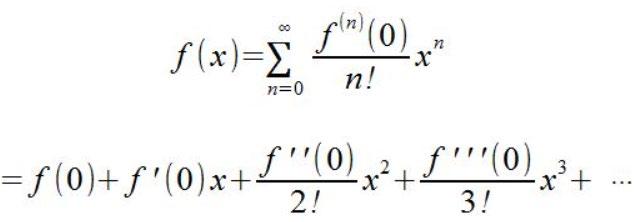
This works by first writing f(x) as a polynomial of infinite degree (i.e. there is no largest power of x), then working out the coefficients of the polynomial by letting the values of the polynomial, its first derivative, its second derivative and so on ad infinitum be equal to the corresponding values for f(x) at x = 0. Therefore, to find the coefficients of the polynomial, we have to be able to find the nth derivative of f(x).
The derivative of tan 1(����) is 1 1+����2 . However, trying to find the nth derivative is actually very difficult. (In case you were wondering, it is equal to the expression below):
However, there is a trick we can use to find the Maclaurin expansion using only the first derivative. Since ���� �������� tan 1(����) = 1 1+����2 , we can integrate both sides to get:
tan 1(����) = �0���� 1 1 + ����2 �������� 1 1+����2 is the same as 1 1 ( ����2). Hopefully, this expression should look familiar. If it doesn’t, then think about what happens if we make a substitution, letting ���� = ����2.
The expression then becomes 1 1 ���� . However, this is also the sum of an infinite geometric series with first term 1 and common ratio r:
Substituting ���� = ����2 , we get: 1 1 ( ����) = 1 ���� 2 + ���� 4 ���� 6 +
Therefore: tan 1(����) = �0����(1 ����2 + ����4 ����6 + ) ��������
Since the integral of a sum of functions is the same as the sum of the integrals of each function, the integral on the right-hand side can be distributed over the series2:
You may have noticed that this is the same as Leibniz’s series for ���� in terms of z. It turns out that ���� = tan(���� ), so ���� = tan 1(����), which is why the two series are identical.
There is one final step: substitute in x = 1. Doing this, we find: ���� 4 = 1 1 3 + 1 5 1 7 + 1 9
Before moving on to Newton’s series, I think it’s a good idea to reflect on the significance of this discovery: we have established a connection between ����, which is all about the geometry of circles, and the odd numbers; these are two areas of mathematics which are at first sight completely unrelated.
Of course, everyone is entitled to their own opinion, but for me personally it is the unexpected connections of this sort that give maths its beauty and appeal.
Derivation of Newton’s series
As a maths and physics student, Newton has not been good for my self-esteem. During the covid-19 lockdown, I spent most of my time playing video games or engaged in other equally mindless and unproductive activities. In 1666, during a quarantine caused by an outbreak of bubonic plague, Newton: invented calculus discovered the general binomial theorem revolutionised optics by proving white light is a mixture of many colours conceived his ideas of gravity
The second bullet point, despite not being as famous as his other achievements, was a very significant discovery, and the basis of the proof for his series for ���� 4 .
At the time, the normal binomial theorem was well known. This theorem gives a simple way to expand expressions of the form 1 + ���� ���� , where ���� is a positive integer. The theorem is:
This theorem can be used for any positive integer ���� What Newton did, which nobody else before him had thought of, was to try and apply it to any number, not just positive integers.
The terms on the right follow a simple pattern: for each new term, the power of x increases by one, the numerator is multiplied by a number which starts as n then keeps decreasing by one, and the factorial in the denominator increases by one. To express this in symbols, the ���� th term (where the first term is when ���� = 0) is:
The simple pattern described above can be used to keep generating new terms, so it feels like the sum should go on forever. But it doesn’t: if you look at the equation, there are ���� + 1 terms on the right-hand side of the equation. Why is this?
It turns out that you can keep generating more terms after the ���� + 1th term. However, they will all equal 0. This is because when ���� = ���� + 1 (which corresponds to the ���� + 2th term), you can see from the formula for the ���� th term that the numerator will contain a factor of (���� ���� + 1 + 1), which is just 0. This should make sense; if you start with a positive integer and keep decreasing by 1 each time, eventually you will get to 0. This means that all the terms after the ���� + 1th term will contain a factor of (���� ���� + 1 + 1) in their numerator, so are equal to 0.
However, this is only true if ���� is a positive integer. If ���� isn’t a positive integer, then no matter how many times you subtract 1 from ����, you will never get 0, so the sum goes on forever, becoming an infinite series (below, ���� is used instead of ���� to emphasise that the exponent can be any real number):
While this made intuitive sense to Newton, he needed more proof. After all, you can’t apply a formula about positive integers to any number and just expect it to work. To test his theory, Newton considered what happens when ���� = 1. According to his generalised theorem,
1 + ���� 1 = 1 + ( 1)���� 1! + ( 1) 2 ���� 2 2!
This simplifies to:
The right-hand side is a geometric series with first term 1 and common ratio ����. Therefore, the sum is equal to 1 1 ( ����) , or to 1 1+���� . However, this is the same as 1 + ���� 1 . This means that Newton’s theorem is correct when ���� = 1, so the binomial theorem can be extended beyond the positive integers! Now confident that his theorem was true for all values of ����, Newton then tried ���� = 1 2. According to the theorem: 1
For conciseness, I will rewrite the coefficients by defining a function “r choose k” or ���� ���� , such that ����
. (In case you were wondering, it is called r choose k as it gives the number of ways to choose k objects from a set of r objects). The series therefore becomes:
By now, you are probably getting bored and wondering what all this has to do with ���� 4 . Don’t worry, because you are (finally) about to find out.
Like Leibniz, Newton derived his series by considering the area under a unit circle.
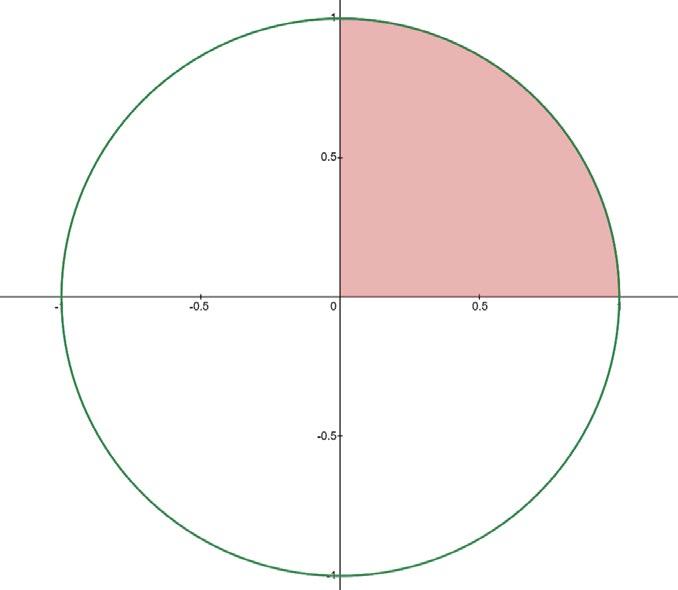
If the circle is centred on the origin, then its equation is: ���� 2 + ���� 2 = 1
This can be rearranged to give ���� = ± 1 ���� 2 . Having just invented calculus, Newton knew that integrating this expression between 0 and 1 would give the shaded area in the diagram. As this is the area under the upper part of the circle, y is positive, so ���� = 1 ���� 2 Therefore, the shaded area is: ∫01 1 ���� 2 �������� . However, this is just the area of a quarter circle, and since the area of the whole circle is ����, the shaded area is just ���� 4 This means that:
Newton rewrote this as:
Since the integrand is an expression of the form 1 + ���� 1 2 , it can be expanded using Newton’s binomial theorem. Substituting 1 ���� 2 into the series we derived earlier for ���� = 1 2 , we get:
Integrating both sides with respect to ����, we get:
Newton knew that the integral of a sum of functions is equal to the sum of the integrals of the individual functions. Therefore, the integral on the right-hand side can be distributed over the infinite series2:
Notes
1) While it is true that Leibniz independently rediscovered his series for ���� 4 (in 1673), this series, along with the Maclaurin expansions of tan 1(����) , sin(����) , and cos(����) , were all discovered over 250 years earlier by the mathematician Mādhava of Sangamagrāma, who founded the Keralan school of mathematics.
Simplifying the right-hand side:
To get the shaded area in the diagram, we take the definite integral between 0 and 1:
We already know that the left hand side is equal to
4 . Therefore, Newton’s series for ���� 4 is:
2) Technically, this isn’t true; although integration can be distributed over a finite sum of functions, this can’t be generalised to an infinite sum (and in general, you should take care when applying any result about a finite series to an infinite series. For example, if I have a finite sum and I rearrange the terms, then the value of the sum will not change. However, if I take Leibniz’s series and rearrange the terms, then I can make the series converge to any real number! If you want to find out more about this, then google the Riemann rearrangement theorem). However, the series that we are dealing with are “nicely behaved” in that you can, to some extent, treat them like finite series without making any serious mathematical errors.
Sources
However, this is just Leibniz’s series with the kth term multiplied by ½ choose k!
If your mind hasn’t just been blown, let me reiterate what just happened. First, we found an unexpectedand honestly, beautiful - connection between ���� 4 and the odd numbers. While this is a profound result by itself, something even more surprising happens when you multiply the kth term in this series by the function ½ choose k. Normally, when you multiply all the terms in a series by some random function, you would expect it to be completely changed. In fact, this is exactly what has happened; the series has changed from this:
to this:
The series has changed from an oscillating sequence to a strictly decreasing sequence; the absolute value of all the terms has decreased; and the terms have changed from simple fractions to more complicated fractions which don’t just have 1 as the numerator. The really surprising fact about all of this is that despite the series being changed in so many different ways, all of these changes have exactly cancelled each other out so that the overall sum of the series is still ���� 4
This is probably my favourite theorem involving ����, and hopefully it is now one of yours as well. If you’re still here, then thank you for having the patience to read such a long article, and I hope you enjoyed it :)
The Discovery of the Series Formula for π by Leibniz, Gregory and Nilakantha on JSTOR
The Discovery That Transformed Pi Sources in the Development of Mathematics: Infinite Series and Products from the Fifteenth to the Twenty-first Century
COLLATZ CONJECTURE
The easiest hard problem:
”if you want to have a career, do not spend time writing about this or publishing any papers about this”
One of the most famous unsolved problems in the world. Why does it look so … easy? Elementary even. How can a problem that looks so simple stump some of the best mathematicians of the last decade? And why does it feel like I could do it?
What is the problem
Pick a number. Is it odd? Multiply by 3 then add 1. Is it even? Halve it. Now use your new number and do this again. And again. And again. You should have a sequence of numbers (known as a hailstone sequence) until you reach 1 where you reach an infinite of loop of 1, 4, 2, 1, 4, 2 etc. Now, does every number end up here aswell? Collatz Conjecture is simply that n will always equal 1 and the problem is we don’t know if he is right…
Starting out
Now that we know what the problem is, what is the best way to even start to figure out whether Collatz Conjecture is true? There is no best way but definitely a good way is creating a fairly straightforward equation.
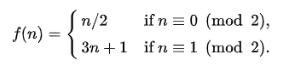
This simply displays what happens to our current number, n. Mod 2 finds the remainder when divided by 2 so the remainder is 0 if it is even and 1 if odd. But we are not done with just this…
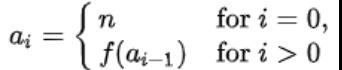
This is a bit more complicated. ‘n’ remains the same but a i can be seen as more confusing. Firstly, i is just the number of loops that will be run, the amount of recursions. This means that it stops looping when i = 0 and hopefully n will equal 1 all the time as long as the conjecture is true. ai is f i(n). This means that the function repeats itself i times and uses the value of n as an input. In this case our function is the simpler piecewise function we used at first and i is the amount of cycles we have do until we reach one. Collatz conjecture is true when ai = 1 for all values of n.
If this is still unclear we can use an example: If our starting number is 5:
f(5) = 3x5 + 1 = 16
f(16) = 16/2 = 8
f(8) = 8/2 = 4
f(4) = 4/2 = 2
f(2) = 2/2 = 1
This helps prove that Collatz Conjecture is true. i in this case equal to 5 as i = 5 satisfies ai = 1. Another way of writing a5 = 1 when n = 5 is f(f(f(f(f(n))))). Hopefully that made sense to you. We can now use ai as if we find a number where it never equals 1 then we can prove that the conjecture is in fact false.
Furthermore, we can find that the stopping time is also useful in investigating Collatz Conjecture. The stopping time is the smallest value of i such that ai < n. This is because if it is never true and there is no stopping time then the sequence will diverge to infinity and disprove Collatz Conjecture. Similarly, the smallest value of k when ak = 1 is the total stopping time. If i or k does not exist then the stopping time/total stopping time will be infinite while the Conjecture affirms it is finite. Finally, something easier to understand is that we can simplify our initial piecewise function as:
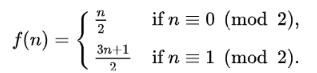
3n + 1 will always yield an even number as two odd numbers multiplied is odd and one more than any odd number is even. We get smaller stopping times, but the answers will always remain the same.
Looks doable but why so hard
It is unpredictable. There is nothing regular about these sequences as some numbers reach 1 in very few steps and others take their time. One example is 8 and 9 where 8 takes only 3 steps while 9 takes a massive 19. This is also one of the things that make prime numbers so tricky to deal with as there appears to be no set pattern.
It looks random. It is not random. Sequences are chaotic and hard to predict and bounce everywhere. This is a nightmare for mathematical tools to deal with making progress much harder than it should be. Wait, but if the process is not random then what is it? It is deterministic… It has no constants. Lots of proofs rely on things remaining constant and having patterns. Due to the random and unpredictable nature we have found none, and this makes finding a proof much harder.
What has been done so far
Most mathematicians that have worked on this problem believes it is true as evidence points to it being true despite having no definite proof. What evidence?
1) Experimental Evidence
First piece of evidence are experiments used in computers. We have tested all numbers up to 2^68 using computers and every single number had led back to 1. While this may seem like good evidence to suggest that every number will lead back to 1, this is not enough evident by other conjectures being proven to be false via extremely large numbers like the Polya Conjecture which was initially disproven after 39 years with the number 1.845 x 10^361!
2)Probability Heuristics
Another argument supporting this are probabilistic heuristics. This is based on the idea that every odd number is on average equivalent to 0.75 of the previous odd number. Why? The most
straightforward way of understanding why this is is that realising after you do 3n +1 you halve your new number at least once. Normally, you will not only halve it once but maybe twice or even hundreds of times with extraordinarily big numbers. When you average all of these out, you are on average left with a number ~0.75 the other one.
So why is this important? Well, if every odd number is around 0.75 the previous odd number, there should be a consistent trend downwards to 1 because the numbers are on average getting smaller. Although this sounds plausible, there is a flaw – it assumes the sequence is made of uncorrelated probabilistic events…
The sequence is made of deterministic events, not probabilistic. This is because there are no odds or probabilities in the sequence but instead follows a predetermined rule of either x3+1 or /2 every time. Furthermore, the sequence is correlated as every number is reliant on the number before and there will therefore be correlation. These patterns and structures will change the sequence over a long period of time while something more random will not. Quite simply what I am saying is that each step is determined by the step before. So, what does this mean overall? The argument is invalid and despite probabilistic heuristics appearing to be useful it does not provide a solid proof to Collatz Conjecture.
3) Lower Bounds
Some evidence that is much easier to digest than the previous one, two mathematicians called Krasikov and Lagarias had proved that at least x^0.84 in [1, x] follow Collatz Conjecture. To make this more clear, let us say x = 10^10. [1, 10^10] is a set of every single number between these two values (and is inclusive). (10^10)^0.84 = 10^8.4 as we just sub x in. 10^8.4 guaranteed amount of numbers between 1 and 10^10 that will work.
4) Stopping Time
The most intricate of the 4 strong pieces of evidence I will give, Riho Terras and Terence Tao had both used stopping times 43 years apart from each other to help provide more partial evidence that the conjecture is true.
Riho Terras in 1976 showed that almost every positive integer has a finite stopping time and indicates that most numbers reach a number lower than the starting number. This suggests that sequences will normally not tend to infinity. He used parity vectors and the Central Limit Theorem (CLT). But what are these things?
Parity vectors describe the steps of odd and even numbers in the Collatz sequence and by studying how often numbers encounter odd and even transformations, we can estimate the likelihood of a sequence decreasing.
The Central Limit Theorem states that if you sum a lot of independent variables, you get a bell curve.
Does this not work because is this not probabilistic when we said that the sequence is deterministic I hear you ask? Well, you are right, but Terras still pretended that if they random and found that there is a high probability that the sequence drops below the
starting value. This invalidates what he did as true proof to the conjecture but still suggests that most numbers do not increase indefinitely.
Terence Tao in 2019 had made one of the most significant progresses in the past decades. He added on to Riho Terras’ evidence almost all Collatz orbits dip below any function that diverges to infinity and used logarithmic density to prove this. Again, what does this mean?
Terence Tao in 2019 had made one of the most significant progresses in the past decades. He added on to Riho Terras’ evidence almost all Collatz orbits dip below any function that diverges to infinity and used logarithmic density to prove this. Again, what does this mean?
A Collatz orbit is just the sequence a number takes in the conjecture. An orbit for 10 would be: 10, 5, 16, 8, 4, 2, 1, 4, 2, 1, etc.
The best way to describe logarithmic density is by first explaining normal density. Imagine you are counting how many of a certain number like a prime or a square number up to a certain point. The density would be the number of numbers compared to the total numbers in the range. Logarithmic density does the same thing but scales them in a way that focuses on how slowly they increase as they get larger. This can be good for numbers that are less common the bigger the range is like prime numbers which are relatively common between 1 and 1000 but much less common after that. Tao used this.
Think of a function that diverges to infinity like f(n) = log(n) which does it really slowly. Tao proved that nearly all Collatz sequences will drop below this point meaning they will not grow indefinitely and instead trend downwards. This reinforces Terras’ results but goes even further as Terras showed that sequences drop below the starting point while Tao showed that sequences drop below any increasing sequence aswell Again, this does not prove that all sequences reach one but it provides good evidence (like the rest of the evidences I had displayed).
What’s the point?
This simple problem is so complex so why even bother when time can be invested elsewhere? Because this is where the time should be invested in the first place. Problems like these push the boundaries of maths and surely if a question that looks easy is this difficult for everyone then maybe we are not ready for deeper maths than this. Do we truly understand numbers as well as we think we do or are there still glaring issues and flaws in our ways of thinking (there are definitely flaws).
Number theory, dynamical systems, probability and statistics, computational complexity, this was the list I got when trying to figure out why prove it. Solving this problem could cause breakthroughs in any of these areas and it is not only beneficial for maths. Understanding Collatz Conjecture can also be good for how we think about algorithms as although someone with a basic understanding could code it but it still remains unpredictable.
However, the clear and probably the most influential thing in solving this problem is the curiosity of the human mind. We will always remain curious by nature and when given a problem that we are truly invested in we will want to solve it because imagine how cool it would be to solve a really hard problem. It would be really cool! Although the other reasons for solving it are good, in my opinion this has to be the main driving force for why it is being solved in the first place. This question in particular will always be one of the best while it remains unsolved solely because you will look at it and think, “this looks really easy, I am gonna go try it” then yield no result. Now, can you answer the question – should you solve Collatz Conjecture?
FILM PHOTOGRAPHY
Zooming in on the chemistry of film photography
Today we take instant access to high quality colour images for granted, but until just thirty years ago, viewing a photograph required a long and complex chemical process. From clicking the shutter release button to creating an image from film, there are three main steps: exposing, developing, and printing. This article will focus on the first two.
Black and white film photography
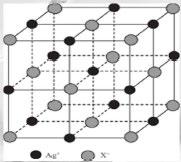
Film for black and white photography is made up of a plastic film coated with a suspension formed from gelatine and silver halide crystals (Ag+X), which is known as a photographic emulsion. Gelatine is used because it is transparent (allowing light to pass through), it holds the silver halide crystals in their suspension, and does not react with any of the chemicals used. Silver halide crystals are light-sensitive, which makes them ideal to use. Silver bromide (AgBr) is the most commonly used, but it is often combined with small amounts of silver iodide (AgI).

Creating the latent image
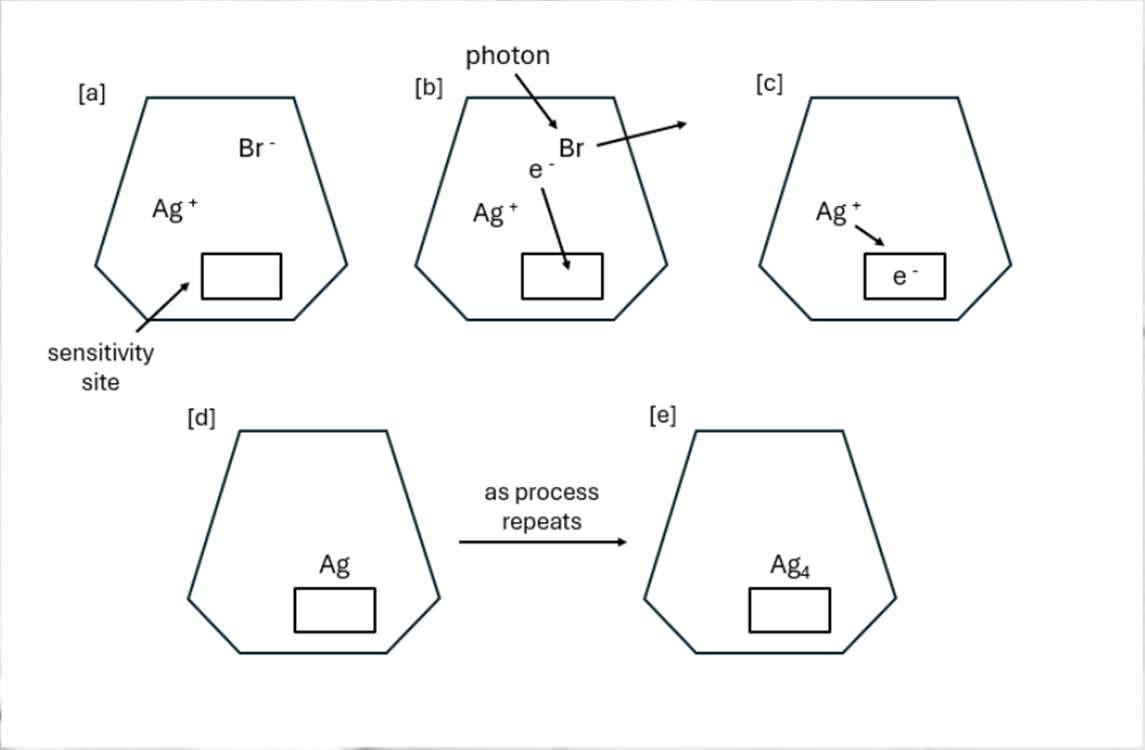
As the camera shutter opens to capture an image, the film is exposed to light. This causes some of the silver ions in the crystals where light has hit to gain one electron, forming silver atoms. This change cannot be seen, but if it were visible, you would notice an image where silver atoms have been formed in brighter areas. This is known as a latent image, and after the developing process, it will be revealed. There is still ongoing research for how exactly the latent image forms, but the almost century-old Gurney-Mott theory (illustrated in the diagram below) is still considered an accurate basic description for what is happening. It states that silver halide crystals contain “sensitivity centres” which act as electron traps [a]. When struck by light, some negative halide ions in the crystals each release one electron, which are then attracted to the electron traps [b]. Some interstitial positive silver ions (ions which exist outside of the crystal lattice) are then attracted to the electrons in the trap [c], and each capture an electron, forming silver atoms [d]. As light continues to hit the film, more silver ions move to those areas. In less than a few seconds a small cluster of silver atoms will have formed around the electron traps in each crystal struck by light [e], producing the latent image.
Not only is the latent image invisible, but it is also extremely delicate, as it still contains light-sensitive silver halide crystals, which, if exposed to light, will cause silver atoms to form all over the film.
Developing the image
Since the film must stay away from light, the development stage – where silver ions in light-exposed silver halide crystals are converted into metallic silver –must take place in a dark room. This conversion requires photographic developer, a solution made up of four key components: a developer agent, an activator, a estrainer, and a preservative.
The developer agent takes part in the reaction which forms the metallic silver by donating an electron to the silver ions. This reaction is catalysed by silver atoms, and since there are clusters of these on the exposed crystals, silver atoms will be formed much more quickly where the latent image is. This is what converts the latent image to a visible negative (an image where light areas appear dark, and dark areas appear light). However, this process must be carefully controlled, because if the film is left in developer for too long, all the silver ions will be reduced to solid silver, creating an entirely black image.
The activator / accelerator is an alkali (often sodium carbonate), which, as suggested by its name, speeds up the rate of the reaction, as developer agents work best in a higher pH. The restrainer (typically potassium bromide) is used to stop “fog” from unexposed crystals reacting with the developer agent appearing on the image. It does this by adsorbing onto (attaching to the surface of) the silver halide crystals, and therefore making it more difficult for the developer agent to react, unless there are silver atoms to act as a catalyst. Unfortunately, this leads to the overall development process being slowed down. The preservative (almost always sodium sulphite) stops the developer agent from becoming oxidised by oxygen in the air, which would use up the developer agent before it can react with the silver ions. The temperature of the developer can be increased to speed up the rate of the reaction, but this will also affect the contrast of the image.
Now that the negative image is visible, the chemicals from the developer need to be removed, so that no more silver ions are converted to metallic silver. The negative is added to a “stop bath”, which contains an acid, normally acetic acid, which rapidly reduces the pH so much that the developer is effectively disactivated. After the stop bath, the negative still contains light sensitive silver halides, which need to be removed. This is done by adding the negative to a “fixing bath”, which contains sodium thiosulfate (Na2S2O3). This dissolves the silver halide crystals into soluble substances, which can be washed away. After this, the image can be seen and will no longer be affected by light.
The negative is transparent in areas where there was no light, and dark in areas of bright light. This means a print can be made by shining a light through it onto photographic paper, Colour photography inverting the colours
Colour photography
Colour photography works in a similar way to black and white photography, however there are usually three separate layers of emulsion, each containing a sensitizing dye for either blue, green, or red light. These sensitizing dyes are adsorbed onto the silver halide crystal surface, and cause the silver halide to only absorb, and therefore be exposed by, the colour of light associated with that layer. For example, if red light hits the film, the blue and green sensitive layers will not absorb any of that light, so will not become exposed, but the red sensitive layer will. This exposure creates a latent image from the silver halide crystals on that layer only, in the same way as in black and white photography.
In the development process, the developer reduces the silver ions from the red sensitive layer to metallic silver. The difference in colour photography is that each layer also contains a “colour coupler”, which will react with the oxidised developer to release a dye. Each layer releases a dye complementary to the colour that it absorbs. The redsensitive layer releases cyan dye, the green layer, magenta, and the blue layer, yellow. The dyes cannot be seen yet though, as the silver halide crystals which have been reduced to metallic silver are dark, and therefore block them. To reveal the image, the metallic silver needs to be converted back into silver halide crystals. This is done by submerging the film in a bleach solution, which oxidises the silver atoms, and leads to the re-formation of silver halide crystals. These can then be removed in the fixing bath, revealing a colour negative. As with the black and white negative, this will need to be printed to reverse the colours.


NEUROPLASTICITY
Neuroplasticity: can the brain rewire itself to heal mental health conditions?
Neuroplasticity is the brain’s ability to rewire itself by forming new neural connections (the pathways that the brain uses to communicate/process information) in response to experience, learning, or injury (1).
If the term is unfamiliar to you, imagine walking through a forest. The first time you cross an area of untouched grass, you leave almost no trace. But if you walk the same route day after day, a visible path begins to form; the grass flattens, the route becomes clearer, and it’s easier to follow. In the same way, when certain thoughts or actions are repeated, the brain strengthens the neural pathways involved, making that ‘mental path’ easier to travel each time. What is exciting is that you are not ‘stuck’ with these pathways. Neuroplasticity means that you can always create new paths- this is not just important for the recovery of brain injuries; it can also build mental resilience and promote personal growth.
The theory of neuroplasticity has existed for centuries; however, it was not until the 1960s that neuroscientists really began to explore neuroplasticity in the human brain (2).
As early as 1783, scientists found evidence that neural pathways are adaptable through the observation that birds and dogs forced to exercise, developed larger, thicker brains than their inactive counterparts.
Linking to modern day, in 2025 neuroscientists at the University of Cambridge identified five ‘major epochs’ (eras) of brain structure over the course of a human life, as our brains rewire to support different ways of thinking while we grow, mature, and ultimately decline (4). This directly challenges the belief that many scientists used to have - that brain development ends at age 30 and illustrates the principle of neuroplasticity that the brain remains dynamic and adaptable throughout life.
With the mental health charity ‘Mind’ reporting in 2024 that one in four people in England will experience a mental health problem each year, understanding how to harness this biological flexibility could transform treatment (5).
Could neuroplasticity hold the key to helping the brain heal itself?
How neurons communicate
To answer this question, it's important to understand how neuroplasticity works in more detail. Neuroplasticity mainly focuses on how the brain communicates and processes information. This communication occurs between neurons, also known as nerve cells, at specialised junctions called ‘synapses’ (10).
A synapse is the area where two neurons come close enough to one another that they are able to pass chemical signals from one cell to another. Within the synapse, these neurons always have a small physical space separating them from each other known as the ‘synaptic cleft.’
In the presynaptic neuron, there are chemical signals called neurotransmitters that are packaged into small sacs called vesicles which can contain thousands of neurotransmitter molecules.
When the presynaptic neuron is excited by an actional potential (electrical signal), it causes these vesicles to fuse with the presynaptic membrane and release their contents into the synaptic cleft.
Once they are in the synaptic cleft, neurotransmitters interact with receptors on the postsynaptic membrane. They bind to these receptors and can cause an action to occur in the postsynaptic cell as a result.
A typical neuron can have thousands of synapses with other neurons. Together, they form extremely complex networks that are responsible for all of the brain’s functions.
Synaptic connections, as well as neurons themselves, can change over time – this change is what makes up neuroplasticity.
Now, you may be wondering – what actually leads to this change - what leads to neuroplasticity.
What changes lead to neuroplasticity
Well, neuroplasticity is activity-driven and follows the ‘use it or lose it’ rule: frequently used synapses are strengthened, while rarely used connections are weakened or eliminated; new activities generate new connections (11). Linking to the research question of mental health, we can relate this rule to emotional experiences. Each time we react to a situation, whether it’s stress, fear, or confidence, the brain strengthens the neural pathways linked to that response. For instance, if someone repeatedly experiences not being listened to, the brain may automatically associate similar moments with past feelings of rejection or anxiety. Over time, that pathway becomes the brain’s ‘default trail.’
You may have a situation like this in your own life, but positively, the reverse can also be true: with supportive experiences, new, healthier connections can form. Repeatedly practising calm or assertive responses can gradually reshape those circuits, allowing a person to
feel more secure and resilient in the same kinds of situations.
Changes in synaptic strength can be temporary or long-lasting depending on the intensity and reoccurrence of the signal the synapse receives. Neurons can temporarily enhance their connections by:
releasing more neurotransmitters activating a new receptor modifying an existing receptor. This is the basis of short-term memory.
Long-term memory retention requires strong or sustained activities that produce structural changes, such as:
growth of new dendritic spines*, growth of new synaptic connections Formation of new neurons.
All this information can be used to an individual’s advantage or disadvantage- the more you repeat a thought – the stronger the synaptic strength.
Dendritic spines*: dendrites are the branched extensions of neurons that are able to receive and process signals from other neurons, ‘dendritic spines’ are the protrusions on the dendrites. (Dendrites –branches of a tree, dendritic spines – leaves on the individual branches.)
To see how scientists came to understanding that the brain can rewire itself, we can look at one of the most fascinating discoveries in neuroscience, the ‘phantom limb phenomenon.’
The phantom limb phenomenon
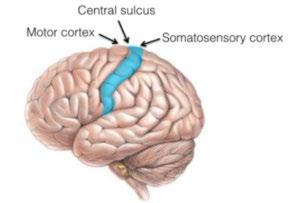
In the diagram above, you can see that the brain has tiny grooves (sulci) and bumps which point slightly outwards called (gyruses.)In the middle of the brain there is a sulcus that separates the front part of the brain from the back part, and this is known as the ‘central sulcus.’ The front of the central sulcus is how the brain controls motor movement (the motor cortex), and behind is where we feel sensations (the somatosensory cortex.)
If we were to cut the brain to just focus on the cross section of the somatosensory cortex it would look like the diagram above, on the right.
Imagine someone touching your index finger- have you ever wondered how your brain recognises that sensation?
Well:
A signal travels from your finger
Down your arm
Into the spinal cord
Up to the brainstem
Crosses the different structures of the brain to project the signal to the somatosensory cortex – specifically at the area of the cortex that deals with finger sensations
The diagram on the right shows how different parts of the somatosensory cortex relate to different body parts – which leads me to explain the phantom limb sensation.
When someone loses a limb, such as a hand, all the sensory neurons that once carried information from that hand are no longer active. As a result, the region of the somatosensory cortex that previously processed sensations from the hand stops receiving input.
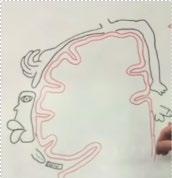
However, the brain constantly seeks stimulation, so the neurons left without signals begin to communicate with nearby regions, in this case, the area responsible for sensations from the face. This reorganisation reflects the brain’s remarkable adaptability. Scientists believe this explains why some people who have lost a hand report a phantom-limb sensation (12). If such a person closes their eyes and the side of their face is gently touched, they may feel that touch not only on their cheek, but also on their missing fingers. The sensory map of the face has effectively expanded into the hand’s inactive region, causing the brain to misinterpret the source of the signal.
The brain has simply rewired its neural connections –neuroplasticity has occurred.
Now that you can see how this helps individuals recover from injuries, how can we relate this to mental health?
The biology behind mental illness
As you can see, neuroplasticity is a powerful tool that can have a huge impact on our daily lives – but it may be hard to see how this can improve mental health treatment when you don’t know what causes it. Due to the multitude of mental health conditions, I think it is best to focus on the common brain mechanisms that acts as the underlying cause for many, from chronic stress to PTSD, this is known as ‘Maladaptive Neuroplasticity.’ (13)
Maladaptive neuroplasticity (13) is a process whereby the brain changes in response to repeated exposure to an experience that is either stressful or traumatic. This can lead to changes in the way the brain functions, which can in turn impact a person’s ability to cope with stress and psychological trauma - repeated negative thought patterns strengthen unhelpful neural pathways, making them easier for the brain to activate.
To understand this further, I want to delve into how this relates to chronic stress.
Chronic stress, biologically, comes down to HPA axis (see diagram above) being overactive for a long period of time leading to extremely high levels of cortisol (the main stress hormone).
The brain is heavily involved in the functioning of the HPA axis. When you sense a threat:
The amygdala (a structure in the brain that is responsible for fear and threat detection) sends a distress signal to the hypothalamus
The HPA axis feedback loop begins
Cortisol is released
The pre-frontal cortex (PFC) acts as the ‘brakes’ by evaluating the severity of the situation. If there is no real threat, it sends inhibitory signals to the amygdala,
which then dampens the HPA response.
High levels of cortisol have been shown to have negative effects on the three main brain structures responsible for emotional regulation – the prefrontal cortex, the amygdala and the hippocampus (14). Please consult source for further details.
In terms of neuroplasticity (15), there is evidence that chronic stress leads to: a loss of synapses (connections between neurons) dendritic retraction (shrinking of branches that receive information) weakened long-term potentiation (LTP) - the process that strengthens neural communication. As a result, the PFC’s ability to regulate emotions and decision-making declines, while the amygdala’s fear circuits grow stronger.
Essentially the brain ‘learns’ to stay in a state of stress- its plasticity works against the individual. Therefore, it seems vitaly important that treatment prevents maladaptive neuroplasticity.
Another example of maladaptive neuroplasticity can be seen in depression; numerous studies have found that reduced levels of BDNF* are associated with an increased frequency of depressive symptoms (16.) *BDNF is a protein that supports the growth of neurons and allows the brain to adjust and reorganize itself – it promotes neuroplasticity. This is why many forms of antidepressants such as SSRIs increase the levels of BDNF.
But what if there were other ways of promoting neuroplasticity – without the need for medication?
Ways of promoting neuroplasticity that don’t rely on medication
Before exploring non-pharmacological approaches, it’s important to recognise the limitations of medication and the need for alternative options. Many antidepressants, particularly SSRIs (selective serotonin reuptake inhibitors), promote neuroplasticity by supporting the growth of new neural connections. However, despite SSRIs being favoured for their relatively shorter list of side effects, they can still have serious effects: neuroleptic malignant syndrome (a disorder affecting the nervous system)
Diabetes decreased alertness
In rare cases, serotonin syndrome, which can be fatal
Just to list a few. (18)
Because of these risks, and the fact that relapse after treatment and resistance to standard treatment options are common (16) there is a clear need for an alternative approach.
Meditation
An article written in the ‘National Library of Medicine’ synthesized research on neurobiological changes associated with meditation practices which includes evidence that meditation induces neuroplasticity, increases cortical thickness, reduces amygdala reactivity, and improves brain connectivity. (19)
After the comprehensive review, they found that there was strong evidence that the practice enhances the functioning of the brain through improvement in connectivity and increasing neurotransmitter systems,
hence improving mood and reducing anxiety. However, they also pointed out that further research should focus on ‘diverse populations and naturalistic settings to better understand and optimize these benefits.’
The focus on scientific evidence behind meditation is still in its early stages; however, it is clear that this ancient practice shows compelling potential for supporting neuroplasticity, even if the research is only just beginning to catch up.
Breath work
Breath is the only autonomic function* we can consciously control. When harnessed intentionally, it becomes a powerful tool to calm the nervous system. Studies from Stanford University’s Huberman Lab demonstrate how specific breathing patterns (cyclic sighing, box breathing and cyclic hyperventilation) modulate brain arousal levels and cognitive states by activating the prefrontal cortex and dampening amygdala hyperactivity. (20)
The autonomic nervous system has two main divisors: the sympathetic nervous system (fight or flight) and the parasympathetic nervous system (rest and digest). When you perform deep breathing you activate the parasympathetic nervous system allowing for better management of stress.
Breath directly engages the vagus nerve – a major communication line between the brain and body. Stimulation of this nerve through slow, rhythmic breathing enhances parasympathetic activity and reduces sympathetic arousal. This shift is critical for neuroplastic change, as the brain is most receptive to new information and rewiring in states of calm alertness.
Sleep, nutrition and exercise
During deep sleep, especially during the stages with slow-wave activity (SWA), the brain renormalises its synapses, meaning it weakens unnecessary connections and strengthens important ones (22.) This process helps maintain synaptic plasticity, the ability of neurons to keep forming and modifying connections.
Without enough sleep, the brain’s ability to strengthen useful pathways (through long-term potentiation, or LTP) declines, which harms learning, memory, and mood regulation.
Regular exercise increases blood flow to the brain and also increases the levels of BDNF in the body –both promote the growth of new neurons Dr. Budson, in a Harvard Health Publishing article highlights that aerobic exercise plays a critical role in promoting neuroplasticity, as it triggers the release of brain growth factors(23).
There are also key nutrients which help promote healthy neuroplasticity:
Omega-3 fatty acids are vital for brain health and help support new neuron growth and promote synaptic plasticity, which strengthens connections between brain cells.
Antioxidants- protect the brain from oxidative stress and inflammation, both of which can harm neuroplasticity.
B vitamins, especially B6, B12, and folate, are crucial for brain function. They assist in synthesizing neurotransmitters, which regulate mood and cognition
Conclusion
Neuroplasticity is the brain’s ability to rewire itself by forming new neural connections which underpins both recovery and dysfunction in mental health. Conditions such as PTSD and chronic stress often have the underlying cause of ‘maladaptive neuroplasticity’, where repeated negative patterns reinforce unhelpful neural pathways. Many medications, including SSRIs, aim to restore healthy plasticity by increasing levels of BDNF, a molecule that supports neuron growth. While these treatments are beneficial for many, their potential side effects highlight the importance of exploring safer, non-pharmacological ways to enhance neuroplasticity.
Promoting change through experience, learning, and lifestyle may offer a more sustainable path to improving mental well-being.
I hope understanding the biology behind neuroplasticity encourages you to adopt healthy coping habits, from meditation to getting a full eight hours of sleep, as small, consistent actions are what help the brain stay adaptable and resilient
References
[1] Neuroplasticity Explained: Unlocking Brain Rewiring for Better Mental Health Science
[2] A History of Brain Plasticity Research | Psychology Today United Kingdom
[3] When Was Neuroplasticity Accepted?
[4] Scientists identify five ages of the human brain over a lifetime
[5]Big Mental Health Report 2024
[6] Exploring the Role of Neuroplasticity in Development, Aging, and Neurodegeneration - PMC
[7].Chen X., Zhou X., Yang L., Miao X., Lu D.-H., Yang X.-Y., Zhou Z.-B., Kang W.-B., Chen K.-Y., Zhou L.-H., et al. Neonatal Exposure to LowDose (1.2%) Sevoflurane Increases Rats’ Hippocampal Neurogenesis and Synaptic Plasticity in Later Life. Neurotox. Res. 2018;34:188–197. doi: 10.1007/s12640-018-9877-3. [DOI] [PubMed] [Google Scholar]
[8] Garthe A., Roeder I., Kempermann G. Mice in an Enriched Environment Learn More Flexibly Because of Adult Hippocampal Neurogenesis. Hippocampus. 2016;26:261–271. doi: 10.1002/hipo.22520.
[DOI] [PMC free article] [PubMed] [Google Scholar]
[9] Kempermann G., Song H., Gage F.H. Neurogenesis in the Adult Hippocampus. Cold Spring Harb. Perspect. Biol. 2015;7:a018812. doi: 10.1101/cshperspect.a018812. [DOI] [PMC free article] [PubMed] [Google Scholar]
[10]2-Minute Neuroscience: Synaptic Transmission
[11] Giving Type | TV Advert | NHS
[12] Neuroplasticity - YouTube
[13] What Is Maladaptive Neuroplasticity?
[14] What Are the Effects of Cortisol in the Brain? - Biology Insights
[15] Maladaptive Neuroplasticity Under Stress: Insights into Neuronal and Synaptic Changes in the Prefrontal Cortex | Molecular Neurobiology | Springer Nature Link
[1[6 BDNF Unveiled: Exploring Its Role in Major Depression Disorder
Serotonergic Imbalance and Associated Stress Conditions - PMC
[17] First league table of antidepressant side effects - BBC News
[18] Side effects of antidepressants
[19] Neurobiological Changes Induced by Mindfulness and Meditation: A Systematic Review - PMC
[20] Brief structured respiration practices enhance mood and reduce physiological arousal | Huberman Lab
[21] The Power of Breath in Neuroplasticity - npnHub
[22] Is Sleep Essential for Neural Plasticity in Humans, and How Does It Affect Motor and Cognitive Recovery? - PMC
[23] Tips to leverage neuroplasticity to maintain cognitive fitness as you age - Harvard Health
NEUROSYMBOLIC AI
Neurosymbolic artificial intelligence: a crash course
Introduction
Artificial Intelligence (AI) has come a long way, evolving from a theoretical concept in computer science to a driving force that shapes modern technologies. From personalized movie recommendations to self-driving cars, AI algorithms have managed to revolutionize the way we live, work, and communicate. However, traditional approaches to AI often fall into two distinct camps: symbolic (logic-driven) and subsymbolic (data-driven). Each side carries its own strengths and weaknesses. Symbolic systems offer interpretability and logical reasoning, while subsymbolic systems represented largely by neural networks excel in pattern recognition and handling large amounts of unstructured data.
Yet as new, more complex problems arise ranging from natural language understanding to large-scale decision-making AI researchers are seeking ways to combine the interpretability of symbolic logic with the flexibility of neural architectures. This emerging field is known as Neuro-Symbolic AI. The aim is straightforward but ambitious: bring together the best of both worlds to create more intelligent, explainable, and robust systems. This article explores the fundamental concepts, historical motivations, current developments, and future potential of Neuro-Symbolic AI in an attempt to show why it might be a cornerstone of the next generation of intelligent systems.
A brief history of AI
To understand why Neuro-Symbolic AI is generating excitement, it helps to see how AI has matured over time. In the early days around the mid-20th century researchers were primarily focused on using logical rules to mimic human reasoning. This approach, which we now call symbolic AI, dominated the AI field in its infancy. Early successes included systems that could solve mathematical theorems, play checkers, and even handle some natural language queries using rule-based methods.
However, the limits of purely symbolic systems soon became evident. Real-world data can be messy, incomplete, or ambiguous, and building comprehensive rule sets to address all possible situations proved impractical. Additionally, these symbolic systems lacked the ability to automatically learn new rules from raw data. Instead, they heavily relied on expert knowledge encoded as symbolic logic or rules a process that was time-consuming and error-prone.
Parallel to this, a different line of research, inspired more by the workings of the human brain, gave birth to neural networks. In their early forms, neural networks were relatively simple and faced many computational challenges, leading to a temporary decline of interest known as the
“AI Winter.” By the 2010s, however, neural networks made a dramatic comeback this time with improved algorithms (like backpropagation), powerful hardware (GPUs), and massive datasets. These factors propelled neural networks, and more broadly deep learning, to the forefront of AI, achieving remarkable successes in image recognition, speech processing, and complex strategy games. Nevertheless, these neural models often act as “black boxes,” offering high performance at the expense of explainability.
Symbolic AI in a nutshell
Symbolic AI refers to the branch of artificial intelligence that relies on high-level symbolic representations of problems, logic-based reasoning, and rule-based mechanisms to make decisions or draw conclusions. Think of symbolic AI as building a computer system that reasons the way a mathematician might: using definable concepts, clear rules, and step-by-step logic. It structures knowledge in a way that is (mostly) understandable to humans. For instance, an expert system for medical diagnosis might have hundreds of ifthen rules that explicitly encode medical knowledge from human specialists.
Symbolic AI is deeply rooted in formal logic and knowledge representation. Systems like Prolog or knowledge graphs embody the symbolic spirit by explicitly representing entities, relationships, and logical constraints. The advantage of symbolic systems is that they are explainable: one can trace how the AI arrived at a certain conclusion by following its chain of rules. This interpretability is increasingly valuable in applications like legal reasoning, healthcare, and finance, where decision-making transparency is crucial. Yet, symbolic systems aren’t perfect. They can struggle with unstructured data, learning new representations automatically, or adapting to exceptions that were not encoded beforehand. When a new context emerges like a new disease variant in medical diagnostics the entire set of rules often needs updating. This rigidness highlights the need for a more flexible approach that can incorporate learning directly from data.
Neural networks
Neural networks, on the other hand, derive inspiration from how neurons in the human brain might process information though admittedly in a highly simplified manner. These networks consist of layers of interconnected “artificial neurons,” each performing a mathematical transformation. During training, the network’s weights get iteratively adjusted to minimize a specific loss function, allowing the model to learn patterns from massive datasets. Deep learning, a specific subfield, uses many layers sometimes dozens or even hundreds to learn increasingly abstract representations of input data.
The main strength of neural networks is their ability to automatically extract patterns from raw data. They excel at tasks like image classification, speech recognition, machine translation, and game-playing because they can learn complex, non-linear relationships that would be almost impossible to manually encode using symbolic rules. Additionally, with techniques like transfer learning, neural networks can adapt to new tasks with
relatively small modifications, broadening their applicability. However, neural networks have a wellknown downside: low interpretability. Often described as “black boxes,” these models don’t naturally provide an easy explanation for how they arrive at a given output. For fields that demand transparency or require strict logical consistency, such opacity can be problematic. Furthermore, neural networks can sometimes fail in surprising or counterintuitive ways, such as being fooled by adversarial inputs. This underscores the desire for a hybrid approach that combines the pattern-recognition prowess of neural networks with the interpretability and logical reasoning of symbolic methods
What is Neuro-Symbolic AI
At its core, Neuro-Symbolic AI is about bringing together symbolic reasoning and neural networks in a unified framework. The broad objective is to get the best of both worlds: powerful data-driven feature learning and rich, interpretable reasoning over those learned features. Imagine an AI system that learns to understand scenes in images through deep learning but also uses logical structures to derive high-level, human-like conclusions about what it sees. The motivation isn’t purely academic; it arises from real-world challenges. For instance, consider a legal assistant AI that must process thousands of pages of legal documents and then reason about the implications of certain clauses. A purely neural approach might excel at extracting text features but struggle to provide coherent, rule-based justifications for its conclusions. A purely symbolic approach might handle logic elegantly but might not be able to parse the diverse language of legal documents efficiently. A Neuro-Symbolic system could leverage a neural component to “read” the documents, then pass structured information to a symbolic engine that applies formal rules to deliver transparent, legally sound outcomes.
Methodologies and use cases
Research in Neuro-Symbolic AI has yielded multiple strategies for fusing machine learning with logicbased reasoning. Some systems train neural networks to generate symbolic representations of data, such as parse trees or logical forms, which are then used by a reasoner to answer queries or draw inferences. Others embed symbolic knowledge directly into the neural architecture or incorporate logical constraints into the training objectives, thereby guiding the network to respect certain rules. Yet another route involves hybrid models that parse raw data through a neural module but pass higher-level representations to a symbolic engine for more interpretable processing. Although still maturing, these integrated approaches are already making their mark in numerous applications. In natural language processing, for example, chatbots and question-answering systems now draw on symbolic reasoning to provide step-by-step justifications instead of purely data-driven outputs. Industrial and office automation frameworks likewise exploit Neuro-Symbolic pipelines by using deep networks to extract structured information from documents, which is then passed to symbolic controllers that handle compliance and workflow rules. In specialized domains such as healthcare, legal analysis, and educational technology, the advantage of interpretability becomes particularly compelling.
Medical diagnosis can merge the pattern recognition capabilities of neural networks with the transparent logic of symbolic systems, ensuring both accurate predictions and explicit rationales that clinicians can trust. Legal AI, similarly, can wade through voluminous case files, extracting meaningful clusters of information, and subsequently apply formal logic to support well-founded conclusions or arguments. By weaving together these different strategies, NeuroSymbolic AI aims to produce tools that are not only powerful in pattern matching and prediction but also equipped with robust, logical underpinnings that improve clarity, reduce error, and facilitate human oversight.
Challenges and Future outlook
Although promising, Neuro-Symbolic AI is not without challenges. Integrating symbolic logic with datadriven models can become extremely complicated, especially when balancing the flexibility of learning with the rigidity of logical constraints. Many systems also require extensive domain knowledge in the form of rules, ontologies, or structured knowledge graphs, and building or maintaining these resources can be costly. Performance trade-offs sometimes emerge: a system might become more interpretable by adhering to symbolic rules but could see a slight reduction in raw accuracy. Nonetheless, there is growing optimism that Neuro-Symbolic AI represents a more human-like trajectory for computational intelligence, one that aligns well with the global emphasis on explainable and trustworthy technology. Regulatory guidelines and ethics boards are increasingly mandating transparency in AIdriven systems, and neuro-symbolic methods offer a natural pathway for achieving it. Research hubs at universities and industry labs are further pushing the boundaries by devising new ways to automatically acquire, update, and refine symbolic knowledge, ensuring that these hybrid models can adapt to unfamiliar situations without losing their logical coherence. In the long run, this fusion of reasoning and learning might be pivotal for tackling complex problems that involve heterogeneous data from visual scenes to textual documents to structured databases while preserving the clarity that comes from logical structures. If successful, Neuro-Symbolic AI could mark an important leap forward: one that transforms opaque “black boxes” into interpretable allies, capable of both deep pattern recognition and rational, step-by-step explanation.
Neuro-Symbolic AI stands at the intersection of two historically separate paradigms symbolic reasoning and neural networks but offers a unified vision for more powerful and transparent machine intelligence. By weaving symbolic logic into deep learning models, we gain systems that can parse complex inputs while providing reasoned justifications for their conclusions. Although the road ahead involves technical hurdles and ongoing research, the potential applications are as wide-ranging as they are impactful. As industries demand both the sophistication of pattern-recognition models and the clarity of interpretable systems, this approach might well guide the next major developments in AI, turning once-black-box solutions into cooperative, logical, and ultimately more trustworthy decision-makers.
QUANTUM NNs
Hybrid Quantum Machine Learning as Representation Learning in Execution Modelling
Abstract
In modern electronic markets, a large proportion of trading activity occurs through algorithmic systems whose core task is to estimate probabilities of execution, price impact and risk under uncertainty. In 2025, HSBC and IBM reported up to a 34% relative improvement in predicting fill probability in European corporate bond markets using a hybrid quantumclassical machine learning pipeline. This article explains the mathematical structure behind that result and proposes a simple but powerful mental model: today’s quantum machine learning behaves like a neural network in which the hidden layer is implemented by a parameterised quantum circuit. This framing aims to demystify quantum ML and places it naturally within the standard statistical learning theory that many are more comfortable/familiar with.
Market Context: RFQs and Execution Modelling
In over-the-counter (OTC) fixed income markets, liquidity is fragmented and trading is not fully centralised on an exchange. Instead, institutional clients submit requests-for-quote (RFQs) to multiple dealers. Each dealer responds with a price and the client decides whether and where to trade.
From the dealer’s perspective, the problem is inherently probabilistic. Given the current market state and the characteristics of an RFQ, the dealer must estimate the probability that quoting a certain price will result in the trade being executed. This is known as fill probability modelling and it is one of the core problems in electronic fixed income trading. Better calibrated fill probabilities allow dealers to quote more aggressively when they have an informational edge and more conservatively when they face adverse selection, directly impacting execution quality and expected PnL
Considering this, we can now formalise the problem mathematically.
Mathematical Formulation of Fill Probability
We firstly define a binary outcome variable: where:

● y = 1 if the RFQ is filled, meaning that the client accepts the dealer’s quote and the trade is executed.
● y = 0 otherwise, meaning that the client either rejects the quote or executes the trade with a different dealer.
Let x be a vector of observable features describing the RFQ and market context at decision time:

Practically, the feature vector may include features ranging from those pertaining to:
- Client behaviour, such as historical acceptance rates, typical trade sizes etc
- Temporal context, such as time of day or proximity to market open/close
- Market state e.g short term volatility, liquidity measures, bid-ask spreads etc
The modelling objective is to estimate the conditional probability, which can be modelled as:
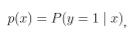
Where p(x) represents the probability that a given RFQ will result in a filled trade, given the observable information available to the dealer at the time of quoting i.e. the model’s estimate of the likelihood that the dealer’s quote is sufficiently market competitive.
Classical Baseline: Logistic Regression
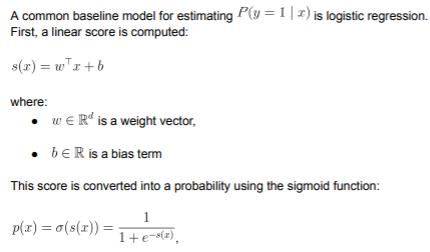
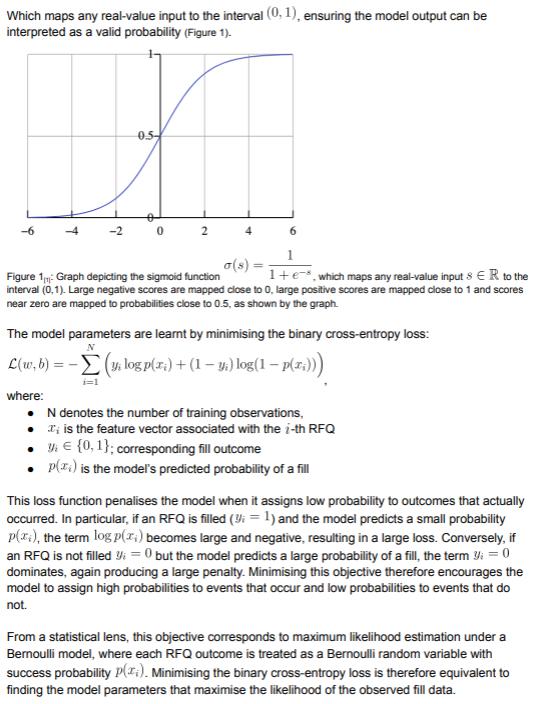
Neural Networks as Representation Learning
Before introducing the quantum model, it is useful to recall how classical neural networks are typically interpreted in modern ML. In particular, NNs can be viewed not primarily as complex classifiers, but as representation learning systems, whose main purpose is to transform raw input features into a more informative latent space before applying a simple probabilistic decision rule. Neural networks generalise logistic regression by introducing a learned non-linear representation. A single hidden-layer neural network computes:
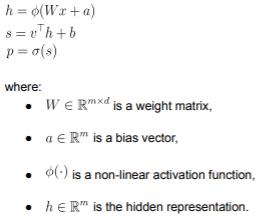
In this framework, the role of the classifier is secondary. Once a suitable representation $$h$$ has been learnt, the final prediction can be made using a simple probabilistic decision rule. The main modelling challenge is therefore learning a representation in which the prediction problem becomes easy.
Neural Networks as Representation Learning
High dimensionality: Feature interactions grow combinatorically. For example, the number of pariwise interaction terms is:
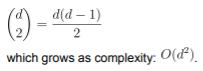
Not to mention that many such interaction terms are also very difficult to specify a priori and hard to measure reliably, such as the interaction between a client’s historical price sensitivity and current market depth or the interaction between a dealer’s inventory position and intraday volatility conditions, for example.
Class imbalance: Most RFQs don’t fill, meaning:

This makes naive accuracy metrics misleading, since a trivial model that always predicts ‘no fill’ can achieve high accuracy without understanding or learning any meaningful information pertaining to the conditions under which trades are actually executed.
Sparse signal: each bond trades infrequently, so data per instrument is limited. These effects make it difficult to learn stable decision boundaries using classical feature engineering alone.
Quantum Basics
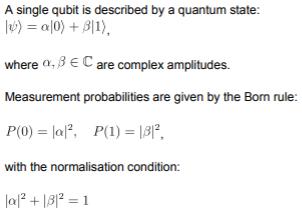
These are fundamental postulates of quantum mechanics and are crucial for understanding how information is encoded into quantum states and subsequently extracted via measurement in QML models.
Quantum Neural Networks
A quantum neural network (QNN) replaces the classical hidden layer with a parameterised quantum circuit.
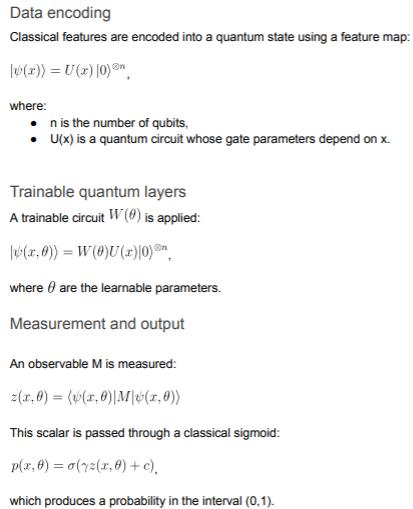
This structure is mathematically equivalent to a neural network whose hidden representation is encoded in quantum state space
Training via the parameter-shift rule
Gradients of expectation values can be computed exactly using the parameter-shift rule for quantum gradients
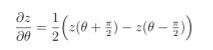
This allows hybrid quantum-classical optimisation using standard gradient descent, re-framing towards a more familiar (classical) knowledge space.
Kernel Interpretation
Quantum models can also be viewed as kernel machines by defining the kernel:

This is a valid positive-definite kernel corresponding to an implicit feature map into a high-dimensional, quantum mechanical Hilbert space.
This allows RFQs to be compared via their in the induced feature space without explicitly constructing the feature map. In this sense, quantum machine learning can be viewed as kernel learning where the kernel itself is induced by quantum dynamics rather than handcrafted functional forms.
Interpreting the HSBC Result
HSBC and IBM used a hybrid quantum-classical pipeline to predict fill probability in European corporate bond trading, reporting up to a 34% improvement over classical benchmarks[2]. The quantum computer was not used to place trades directly. Instead, it acted as a feature transformer, generating a richer representation of RFQ data for a classical probabilistic model.
Why This Actually Makes Sense
The most realistic interpretation of quantum ML in finance is not computational speedup, but representation learning. A QNN is simply a neural network whose hidden layer is implemented by quantum physics. This makes it naturally suited to execution and microstructure problems, where the signal is often embedded in complex, high-order feature interactions. In this framing, quantum ML is not mystical. It is a new hypothesis class for conditional probability estimation and therefore a new modelling tool in the quant toolbox.
Conclusion
This article has shown that the hybrid quantumclassical approach demonstrated by HSBC and IBM can be most naturally interpreted as a direct extension of classical machine learning through the lens of representation learning. By reframing the quantum model as a quantum neural network (QNN), we see that the core execution problem remains unchanged: estimating a conditional probability of fill given observable market features. The only substantive difference lies in how the intermediate representation of the data is constructed.
In this interpretation, quantum circuits simply replace the classical hidden layers of a neural network, acting as physically distinct but mathematically analogous representation mappings. The implication of the HSBC result is therefore not that quantum computers introduce a fundamentally new paradigm for trading, but that they provide a new class of representation functions within standard statistical learning theory. Quantum ML can thus be understood as a formal generalisation of classical neural networks, offering an alternative hypothesis space for modelling complex feature interactions in execution and market microstructure problems.
References
[1] Qef, “Logistic curve,” Wikimedia Commons, 2008. [Online]. Available: https://commons.wikimedia.org/wiki/File:Logistic-curve.svg [2] HSBC, “HSBC demonstrates world’s first known quantum-enabled algorithmic trading with IBM”, 2025. Available: https://www.hsbc.com/news-and-views/news/mediareleases/2025/hsbc-demonstrates-worlds-fir st-known-quantum-enabled-algorithmic-trading-with-ib
HONK KONG’S STATUS
Has Hong Kong lost its status as China’s Primary Economic Gateway
Hong Kong has historically held a distinctive political and economic status within East Asia. Hong Kong developed as a capitalist economy under British rule, while China has been communist under the rule of the Chinese Communist Party (CCP) since 1949. This distinction remained after the 1997 handover under the concept of “one country, two systems,” as stated in Article 5 of the Basic Law, which promises that the capitalist system should “remain unchanged for 50 years.” This placed Hong Kong in an ideal position as an “economic gateway” to China. While Beijing has long maintained control over capital inflows to ensure economic stability, Hong Kong’s free market and unrestricted flow of capital allowed it to function as a bridge for foreign investment into China, particularly since China’s economic reforms in the 1980s. Over time, Hong Kong has established itself as a major international financial centre, consistently ranked among the world’s top three, and has also become the largest global offshore renminbi (RMB) business hub. However, recent political changes in Hong Kong and China’s booming economy have raised questions about this role whether foreign firms still trust Hong Kong’s system, and whether they even need Hong Kong as a bridge in the first place.
The tightening of political control, regardless of its political justification, has unquestionably reduced confidence among transnational firms. Under the 2020 National Security Law following the social unrest in 2019, Hong Kong authorities can freeze assets without court approval and are also given power to prosecute overseas individuals. Transnational companies are concerned that they may be affected under the ongoing Sino-American rivalry, as this new legislation did not align with Western values such as transparency and freedom. With the ‘checks and balances’ within the government system effectively eradicated, many view Hong Kong as no different or unique from mainland China, integrating into the ‘one country, one system’ framework. This drives Western countries away from Hong Kong, relocating to financial hubs such as London and Singapore evidenced by the fact that 77 British and 46 American companies have abandoned Hong Kong within a year after the National Security Law was established. Whilst capital inflow in 2021 in Hong Kong saw a 40% decrease compared to 2015, transaction value in the Shanghai–London Stock Connect quadrupled over two years, reaching HKD 46.5 billion. This indicates that Hong Kong is no longer the sole or most trusted conduit for investment into mainland China.
More importantly, as China continues its economic reforms, some firms are increasingly questioning whether they still need to rely on Hong Kong as a bridge to invest in mainland China. Under the leadership of Deng Xiaoping, six Special Economic Zones were established in mainland China, including 5 cities and 1 province, and they began to grow rapidly in the 2000s. These zones operate under independent economic policies that lean more toward free trade and capitalism, for example, they offer lower tax regimes, and some cities also impose less foreign exchange restrictions. To illustrate, Hainan province offers a reduced corporate income tax rate of 15% for companies in “encouraged
industries” such as high-tech and tourism, which is lower compared to Hong Kong's rate (a two tier system, 16.5% after reaching 2 million hkd profit). This has attracted an increasing number of firms to invest directly in mainland China, making the market less unfamiliar to foreign investors, thus forming a cycle where fewer firms need to rely on Hong Kong as a conduit to enter the Chinese market. Furthermore, these cities have changed greatly under huge amounts of foreign direct investment (FDI), with Shenzhen being the most prominent example as its GDP grew from 270 million yuan in 1980 to over 3 trillion yuan in 2022. This fostered developments in infrastructure, education and redevelopment of urban areas, making the city more accessible and attractive to foreign investors. Shenzhen’s close proximity to Hong Kong further increases Hong Kong’s replaceability, as firms can access similar economic advantages directly from mainland China without relying on Hong Kong.
However, Hong Kong still retains certain advantages that have not yet been fully replaced by mainland China, like its independent judiciary system, based upon common law, establishing Hong Kong as a trusted centre for global investors to resolve trade disputes. Mainland China has long been criticized for its poor protection of intellectual property, with court rulings favouring Chinese companies which registered famous brands' trademarks in China under the country's "first-to-file" system in numerous cases involving global brands such as Pepsi and Nike. This gives Hong Kong a comparative advantage, as Hong Kong’s legal system has a positive reputation of its legal impartiality, giving confidence to global investors. This also supports the argument that Hong Kong’s colonial history not only laid the foundations of its common law system, but also shaped a distinct culture, with a significant proportion of foreign residents living in the city, particularly in areas such as Discovery Bay and Stanley Bay. There are still visible signs of Hong Kong’s colonial history, including its style of architecture, culinary influences, and English being a common language, all of which contribute to making the city an attractive location for global investors.
Yet these arguments only demonstrate that Hong Kong remains as a secure place for investment, but they do not prove that it is a necessary bridge for foreign investors looking to invest in mainland China. Firms seeking to invest in mainland China would have weighed and accepted the risks under a relatively imperfect legal system, given the potential profits of accessing such a large market with a huge population. The main obstacle, trade barriers, has been gradually reduced under China’s economic reforms, guided by the concept of “Socialism with Chinese Characteristics,” which encourages more foreign direct investment (FDI) and the growth of private ownership to reach modernization. As illustrated by local political commentator Owen Au, Hong Kong is trapped in a vacuum where neither democratic nor authoritarian mechanisms function effectively following the implementation of the National Security Law. Those valuing transparency and individual freedoms have lost confidence in Hong Kong, while those who trust the Chinese system are more likely to invest directly in the mainland market. In the short term, Hong Kong might continue to benefit from the investments accumulated over past years. However, in the long term, it has lost its unique status as China’s primary economic gateway.
INEQUALITY
What are the drivers of wealth inequality in the UK and how can they be addressed?
The UK is home to over 3 million millionaires (Adam Smith institute, 2023), whilst over 4 million children live in poverty (UK Parliment, 2025) . Property in Kensington averages £2 million (Rightmove, 2025), yet some areas in Sunderland fetch less than 1% of this (SunderlandEcho, 2025). The UK’s wealth disparities are irrefutable and have enduring impacts on opportunities, living standards and wellbeing. This essay argues that the circumstances of youth, alongside the historical contexts which have created structural disparities are the main drivers of the UK’s wealth inequality. To address these inequalities, we suggest stricter enforcement of fiscal policy – with the increased revenue to be targeted towards welfare and investment into disadvantaged regions.
Socioeconomic circumstances in youth are among the strongest predictors of future wealth. Education correlates with income; those with undergraduate degrees earn 33% more on average than those possessing only A-levels (GOV.UK, 2023). Wealthier families can afford private schooling, contributing to structural inequalities – some Russell Group university student bodies are up to 40% privately educated (The Tab, 2025), despite only 6% attending such schools nationally (BBC, 2025). Though grammar schools can offer social mobility, four of the top five are all in London (Myedspace, 2025), disproportionately aiding those already benefitting from living in the capital. Moreover, access to competitive grammar school students often requires costly tutoring or prior private schooling, leaving the poorest further behind. Generation Z is forecasted to face record wealth inequality, largely due to inheritance. Up to £7 trillion is expected to be passed down from the Baby Boomer generation (Unbiased, 2025), with some inheriting millions, whilst others are burdened with debts, further widening disparities. Baby Boomers hold 78% of the housing stock (The Independant, 2023), benefitting from past property market booms and stable jobs. Eliza Filby describes this as an “Inheritocracy”, as parents have become top lenders (The Guardian, 2024), with 57% of first time UK buyers receiving parental support in 2023 (Savills, 2024). This significantly places those with lower income families at a disadvantage, especially as average deposits demand double many people’s yearly salaries (Unbiased, 2025) (Forbes, 2025). Beyond inheritance, affluent families provide social capital. Half of London workers gain jobs through connections (The Standard, 2023) and over 90% of senior staff in financial services come from higher socio-economic backgrounds (Bridge Group, 2020). Having a wealthy family prepares children for higher education and later their occupations through exposure to cultural capital, connections which provide job opportunities, and by encouraging grand aspirations for their future.
Historical context is also a key driver of the wealth inequality we see in the UK today. Industrialisation concentrated wealth in urban manufacturing cities, while traditional areas lagged behind. Later, deindustrialisation devastated many citiesemployment in the coal industry has fallen by 1.2 million since its peak (Our World In Data, n.d.), having major impacts on areas such as Northumberland which now lag behind the nation.
Some industrial cities adapted, like Manchester, which shifted into more productive sectors such as financial services, and boosted investment into education and innovation. Comparatively, areas such as Liverpool struggled to diversify economically and attract private investment, widening the spatial inequality of wealth. Thatcher-era policies of privatisation, regressive taxation and the weakening of unions exacerbated these effects. Many towns which suffered under Thatcher’s deindustrialisation, such as Hull – one of the most deprived areas in the UK – are yet to recover, demonstrating the lasting impacts of historic structural economic change onto wealth inequality in the UK.
Overall, the key drivers of the UK’s wealth inequality are situations during youth – including family and socioeconomic circumstances - and structural inequalities caused by historical contexts. Although there are several measures in place to facilitate wealth redistribution, including inheritance tax, capital gains tax and universal credit, their effectiveness in reducing wealth inequality is insufficient. Only 4% of people pay inheritance tax due to loopholes such as trusts (IFS, 2023), and capital gains tax offers lower rates than that on income, possibly even reducing the effective tax rate on the richest.
Recent discussions surrounding UK wealth inequality have proposed wealth taxes such as those reaching up to 1% on the net assets of Swiss citizens - exempting lower-income individuals. However, we do not support such a tax, as measuring wealth is extremely difficult due to its fluctuating, liquid nature – complicating administration and policymaking, potentially creating more loopholes prone to exploitation, and harming those who are asset rich but cash poor. Such taxes also risk capital flight and lower investment, as seen in France after their 1982 ISF wealth tax saw an estimated net annual loss of €2 billion (France Strategie, 2023).
Therefore, we propose no increase or creation of taxes, rather, improved implementation of existing taxes. In 2023-24, the tax gap was £46.8 billion (GOV.UK, 2025). Reducing this even by half, could raise enough money to provide an extra £30pw to the 7.5 million UK citizens receiving universal credit (GOV.UK, 2025). Through harsher penalties on households and firms found guilty of tax evasion, more thorough inspection of the financial records of big corporations, and increased auditing of high-value properties; underreporting of incomes and of the value of assets would be minimised. If these stricter practices were implemented, we believe the tax gap would significantly reduce, providing greater tax revenue which could be hypothecated to increase welfare payments. Furthermore, this revenue could be used to redirect investment away from London, and into the UK’s poorest regions, improving access to opportunities such as education which directly correlate to future wages, effectively reducing the unequal balance of wealth in the UK. Although such changes may raise the risk of capital flight, any impacts may only be slight, as those exiting the UK due to stricter tax enforcement were likely not paying the full rate of tax, meaning decreases in tax revenue will be limited. Furthermore, losses resulting from capital flight may be made up for in the long run if inequality is reduced, as productivity and the long run society.
potential of the economy would expand, leading to economic growth. Although our suggested policy could be costly, gains in revenue from reductions in the tax gap would far exceed those losses, and are a trade-off necessary to create a fairer society.
References
Adam Smith institute, 2023. [Online]
Available at: https://www.adamsmith.org/millionaire-tracker2024 BBC, 2025. [Online]
Available at: https://www.bbc.co.uk/news/articles/c2lk2p7wpr4o Bridge Group, 2020. [Online]
Available at: https://www.thebridgegroup.org.uk/news/seb-infinance Forbes, 2025. [Online]
Available at: https://www.forbes.com/uk/advisor/business/averageuk-salary-by-age/ France Strategie, 2023. [Online]
Available at: chromeextension://efaidnbmnnnibpcajpcglclefindmkaj/https://www.strategi eplan.gouv.fr/files/files/Publications/English%20Articles/Committee%20 for%20the%20evaluation%20of%20capital%20tax%20reforms%20%20Final%20report/fs-2023-isf-final_report-committees_o GOV.UK, 2023. [Online]
Available at: https://socialmobility.data.gov.uk/intermediate_outcomes/work_in_early_adulth ood_(25_to_29_years)/income_returns_to_education/1.0#:~:text=Y oung%20people%20with%20an%20undergraduate%20degree%20earn ed%2054%25,between%202014%20to%202016%2C%20and%202019%20t o GOV.UK, 2025. [Online]
Available at: https://www.gov.uk/government/statistics/measuringtax-gaps/1-tax-gaps-summary GOV.UK, 2025. [Online]
Available at: https://www.gov.uk/government/statistics/universalcredit-statistics-29-april-2013-to-9-january-2025/universal-creditstatistics-29-april-2013-to-9-january-2025
IFS, 2023. [Online]
Available at: https://ifs.org.uk/news/wealthiest-1-would-get-halfbenefit-scrapping-inheritance-tax-average-tax-cut-ps1-million Myedspace, 2025. [Online]
Available at: https://myedspace.co.uk/blog/post/best-state-andgrammar-schools-in-the-uk-2025
Our World In Data, n.d. [Online]
Available at: https://ourworldindata.org/grapher/employment-inthe-coal-industry-in-the-united-kingdom Rightmove, 2025. [Online]
Available at: https://www.rightmove.co.uk/houseprices/kensington.html
Savills, 2024. [Online]
Available at: https://www.savills.co.uk/insight-and-opinion/savillsnews/376516/bank-of-mum-and-dad-paid-out-%C2%A39.6-billionin-gifts-and-loans-in-2024 SunderlandEcho, 2025. [Online]
Available at: https://www.sunderlandecho.com/money/property/the10-sunderland-streets-with-the-cheapest-house-prices-5193947
The Guardian, 2024. [Online]
Available at: https://www.theguardian.com/lifeandstyle/2024/nov/17/bank-ofmum-and-dad-why-we-all-now-live-in-an-inheritocracy
The Independant, 2023. [Online]
Available at: https://www.standard.co.uk/homesandproperty/propertynews/baby-boomers-property-wealth-uk-london-generationproperty-gap-b1077686.html
The Standard, 2023. [Online]
Available at: https://www.standard.co.uk/business/london-nepotismnepo-workers-jobs-employees-connections-b1073941.html
The Tab, 2025. [Online]
Available at: https://thetab.com/2025/01/17/the-russell-group-uniswhere-the-most-private-school-students-are-lurking-in2025#:~:text=Surprise%2C%20surprise%2C%20Russell%20Group%20uni s,private%20school%20students%20in%202025.
UK Parliment, 2025. [Online]
Available at: https://lordslibrary.parliament.uk/child-povertystatistics-causes-and-the-uks-policy-response/ Unbiased, 2025. [Online]
Available at: https://www.unbiased.co.uk/discover/mortgagesproperty/buying-a-home/average-first-time-buyer-deposit
NOETHER’S THEOREM
Noether’s Theorem: The Essential Symmetry of the Universe
Symmetry occupies a foundational role in the mathematical and conceptual framework of modern physics. From the invariance of inertial frames in Newtonian mechanics to the local gauge symmetries underlying quantum field theory, symmetry principles determine both the form and content of physical laws. This unifying perspective was formalised in 1918 by Emmy Noether, whose theorem established a precise correspondence between continuous symmetries of the action and conserved quantities (Noether, 1918). In doing so, Noether elevated symmetry from a descriptive feature of physical systems to a generative principle governing the structure of dynamical laws.
Historically, conservation principles such as those of energy, momentum, and angular momentum were regarded as empirical regularities, inferred from observation and codified within classical mechanics (Goldstein, Poole and Safko, 2002). While the development of analytical mechanics by Lagrange and Hamilton introduced increasingly sophisticated mathematical formulations, the underlying origin of conservation laws remained unclear. It was not until Noether’s work that these laws were shown to arise necessarily from invariance properties of the action, thereby elevating symmetry from a descriptive attribute to a generative principle of physical theory (Landau and Lifshitz, 1976).
At the core of Noether’s theorem lies the principle of stationary action. The evolution of a dynamical system is determined by extremising the action functional
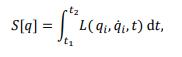
where ����is the Lagrangian of the system (Goldstein, Poole and Safko, 2002). A continuous symmetry is defined as a differentiable transformation of the coordinates and time variables that leaves the action invariant. By considering an infinitesimal transformation and invoking the Euler–Lagrange equations,
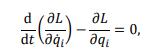
Noether demonstrated that such invariance implies the existence of a conserved current (Noether, 1918). This formal result yields, as direct corollaries, the conservation of energy from timetranslation invariance, conservation of linear momentum from spatial translational invariance, and conservation of angular momentum from rotational invariance. Crucially, these quantities emerge as mathematical necessities rather than independent physical postulates (Landau and Lifshitz, 1976).
The conceptual significance of this result extends beyond its formal derivation. Symmetry, in the physical sense, represents the invariance of the laws of nature under transformations that alter the system’s description without changing its observable behaviour. Timetranslation symmetry reflects the homogeneity of time, implying that physical processes unfold identically regardless of temporal origin. Similarly, spatial translational and rotational symmetries reflect the uniformity and isotropy of space. These empirically supported properties impose stringent constraints on the permissible form of physical laws. As emphasised by Hermann Weyl, symmetry thus acts not merely as a classificatory tool, but as a principle of law construction, dictating the mathematical structure of physical theories (Weyl, 1952).
In quantum mechanics, symmetry assumes a particularly fundamental role. Continuous symmetries correspond to unitary transformations generated by Hermitian operators, whose eigenvalues represent conserved observables. This connection, formalised in Wigner’s theorem, ensures that invariance under time translation leads to conservation of energy via the Hamiltonian operator, while spatial symmetries generate momentum and angular momentum operators (Wigner, 1931; Griffiths and Schroeter, 2018). The algebraic structure of these operators encodes the symmetry properties of the underlying physical system, enabling systematic classification of quantum states and transitions.
The influence of Noether’s theorem reaches its fullest expression in quantum field theory, where local gauge symmetries govern the fundamental interactions. The requirement of invariance under local phase transformations of the wavefunction leads directly to the introduction of gauge fields, as demonstrated in the formulation of quantum electrodynamics (Peskin and Schroeder, 1995). More generally, the gauge symmetries underlying the Standard Model based on the Lie group

where ��������(����)denotes the group of special unitary ���� × ����matrices and ����(1) represents continuous complex phase rotations determine both the particle content and the interaction structure of the theory (Weinberg, 1995). In this context, conservation of electric charge, weak isospin, and colour charge arise as necessary consequences of local symmetry invariance. As emphasised by Yang and Mills, gauge symmetry thereby functions as the organising principle of fundamental physics (Yang and Mills, 1954).
The broader philosophical implications of Noether’s theorem are also noteworthy. That conservation laws arise from invariance principles suggests that physical reality is governed not by isolated empirical rules, but by deep structural constraints. This perspective aligns closely with the geometric interpretation of gravitation developed by Einstein, in which the equivalence principle and general covariance dictate the form of the gravitational field equations (Einstein, 1916).
More generally, modern theoretical physics increasingly regards symmetry as the primary guide in the formulation of fundamental laws, with Noether’s theorem providing the formal mechanism through which these principles exert physical consequence (Weinberg, 1995). In unifying symmetry and conservation within a single mathematical framework, Noether’s theorem provides a profound insight into the underlying structure of physical law. Its influence extends across classical mechanics, quantum theory, and modern field theory, shaping both the methodology and philosophy of contemporary physics. As such, it remains not merely a technical result, but a central pillar of theoretical understanding.
References
Einstein, A. (1916) The Foundation of the General Theory of Relativity. Annalen der Physik, 49, pp. 769–822. Goldstein, H., Poole, C. and Safko, J. (2002) Classical Mechanics. 3rd edn. San Francisco: AddisonWesley Griffiths, D.J. and Schroeter, D.F. (2018) Introduction to Quantum Mechanics. 3rd edn. Cambridge: Cambridge University Press. Landau, L.D. and Lifshitz, E.M. (1976) Mechanics. 3rd edn. Oxford: Butterworth-Heinemann. Noether, E. (1918) ‘Invariante Variationsprobleme’, Nachrichten von der Gesellschaft der Wissenschaften zu Göttingen, pp. 235–257. Peskin, M.E. and Schroeder, D.V. (1995) An Introduction to Quantum Field Theory. Reading, MA: Addison-Wesley. Weinberg, S. (1995) The Quantum Theory of Fields, Volume I: Foundations. Cambridge: Cambridge University Press. Weyl, H. (1952) Symmetry. Princeton, NJ: Princeton University Press. Wigner, E.P. (1931) Group Theory and its Application to the Quantum Mechanics of Atomic Spectra. New York: Academic Press. Yang, C.N. and Mills, R.L. (1954) ‘Conservation of Isotopic Spin and Isotopic Gauge Invariance’, Physical Review, 96(1), pp. 191–195.
THERMAL NOISE
Thermal noise and the John-Nyquist theory
In the pursuit of precise measurements and faster electronic systems, engineers and physicists continually confront an unavoidable issue: noise. Even in a perfectly constructed circuit, isolated from external interference, you will still find random fluctuations of voltage and current. This phenomenon, is known as thermal noise or the “Johnson–Nyquist noise”, and is a fundamental consequence of thermodynamics and statistical physics.[1]
Thermal noise arises from the random motion or the random thermal agitation of charge carriers within a conductor at any temperature above absolute zero, even when there is no current flowing in a circuit. Its existence places a hard limit on the sensitivity of amplifiers, communication systems, sensors, measurement apparatus, etc... This was first observed experimentally by John B. Johnson in 1928 and theoretically explained by Harry Nyquist shortly thereafter. The Johnson-Nyquist theory lays out how noise power links up with temperature, resistance, and bandwidth, providing engineers a way to predict and handle it.
At the microscopic level, electric current in a conductor arises from the drift motion of charge carriers under an applied electric field. However, even in the absence of an external voltage, these charge carriers possess thermal energy. Due to this energy, they move randomly, constantly colliding with the lattice ions of the conductor, and each other. As the temperature increases, this thermal agitation becomes more intense. These random motions don’t produce a net current, but they do lead to fluctuations in charge density. When a conductor is connected across a circuit element, such as a resistor, these fluctuations cause small and rapid variations in voltages across terminals. This is why cooling down sensitive devices, such as radio telescope receivers can cut down thermal noise and improve measurement accuracy.
Key properties of thermal noise include: It exists in all resistive components It occurs even with no applied voltage or current It increases with temperature It is completely random and unavoidable
In contrasts to noise caused by component defects within a circuit, thermal noise is intrinsic to matter itself. Eliminating it entirely would require cooling a system to absolute zero, which is physically impossible. Minimizing the effects of this noise is a key challenge in many applications, from radio astronomy to precision instrumentation.
The theoretical foundation for thermal agitation noise was laid by John Bertrand Johnson in 1928 and independently verified by Harry Nyquist in the same year. Their work demonstrated a direct relationship between the noise power and the temperature and resistance of the component.
The underlying physics is rooted in the equipartition theorem of statistical mechanics. This theorem states that, at thermal equilibrium, each degree of freedom of a system contributes 1/2kBT of energy, where kB is the Boltzmann constant (1.38 × 10⁻²³ J/K) and T is the absolute temperature in Kelvin. In a resistor, charge carriers are constantly moving due to thermal energy. This motion can be thought of as many tiny, independent vibrations happening at the same time, and each of these contributes a small amount of electrical noise, and together they produce fluctuations across a wide range of frequencies. Because the noise power is spread evenly over this range, it is described as “broadband” or “white noise”. The term comes from an analogy with white light, which contains all visible colours in roughly equal amounts, all mixed together.
The noise power spectral density, Sv(f) is calculated by the formula:
Sv(f) = 4kBTR
Where: Sv(f) is the noise power spectral density (V2/Hz), kB is the Boltzmann constant, T is the absolute temperature (Kelvin) and R is the resistance (Ohms).
The voltage noise produced by a resistor can be modelled using a Thévenin equivalent circuit. In this model, the resistor is treated as ideal and noiseless, with the thermal noise represented by a voltage source in series. This noise voltage follows a Gaussian distribution. Over a bandwidth ����, the root mean square (RMS) value of the noise voltage is given by: �������� = 4����������������This value provides insight to the typical sizes of fluctuations. [6]
Nyquist’s theorem
Nyquist’s theorem says a resistor at temperature T puts out noise power that’s proportional to kT for every unit of bandwidth, with k as the Boltzmann constant (1.380649×10 ²³ J/K).
If you model a resistor as part of a matched load, Nyquist showed that the resistor and the circuit share the noise power evenly. This idea works for both voltage and current noise, and it holds for ideal resistors over a wide frequency range, however this effect can’t be seen at extremely high frequencies due to the quantum effect.[2] According to this theory, we should observe a perfect, rectangular bandwidth, where all frequencies inside the band pass equally and all frequencies outside are completely rejected.
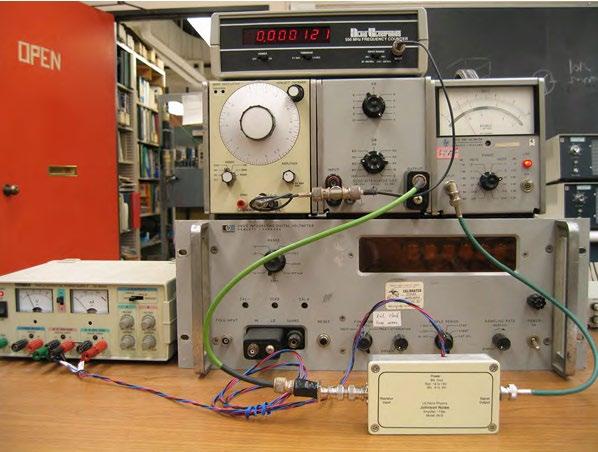
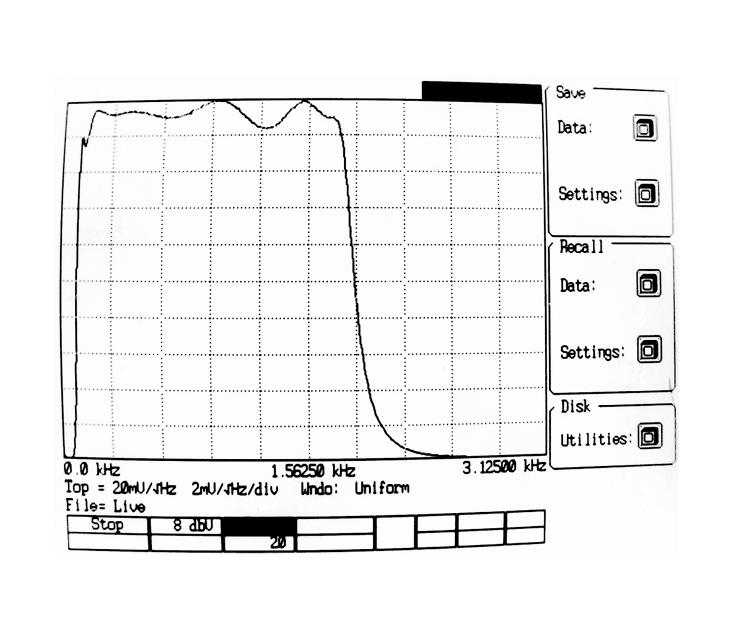
However, when observing the frequency response of a real amplifier and filter [3], it is clearly not perfectly rectangular. The gain rises at low frequencies, it’s roughly flat in the middle and it rolls off smoothly at high frequencies. So different frequencies contribute different amounts of noise, depending on how much gain the amplifier has at that frequency. And due to this, thermal noise calculations must use an effective noise bandwidth, which is the width of an ideal flat filter that would pass the same total noise power as a real system.
The Nyquist formula also only applies to linear resistors. In non-linear resistors, the noise characteristics can be significantly more complex and may not follow the simple linear relationship between noise power and resistance. [4]
Also, at extremely low temperatures, quantum mechanical effects can influence the noise characteristics. These effects become important when the thermal energy is comparable to the energy level spacing in the system, causing even greater discrepancies.
Thermal, shot and flicker noise
Flicker noise is a low-frequency noise that becomes stronger as frequency decreases. It’s often called 1/f noise because its power is roughly proportional to 1/����. Shot noise comes from the idea that electrical charge is discrete. As the current is not perfectly steady, the random timing of charge carriers crossing a junction causes other random fluctuations which then cause shot noise.
Shot noise gets bigger as average current goes up. Thermal noise only depends on temperature and resistance, not currents. Burst noise is caused by material defects.
Unlike these, thermal noise: Requires no current flow Is present in all resistive elements Is fully described by temperature and bandwidth
Electronic circuits deal with a mix of noise sources, such as thermal noise, shot noise, flicker noise and burst noise and this can cause multiple issues in industry. Engineers have found many ways to minimise this noise, by keeping the resistance and temperature low. Shielding and solid grounding also help eliminate any external noise. Limiting the bandwidth also helps, as well as choosing low-noise components in the circuit design.
Limitations in signal processing and communications
Thermal noise provides a baseline for the smallest signal you can send or detect. It massively decreases the Signal-to-Noise ratio (SNR), within digital communication. This means data rates cannot exceed a certain point, due to the Shannon, Hartley theorem which states that there is a fundamental upper bound on the information rate of a communication channel in the presence of noise. Even with perfect encoding and error correction, thermal noise imposes a hard ceiling on performance.
For a receiver with a fixed bandwidth, increasing the bandwidth increases the total noise power, even if the signal power stays the same. This reduces the signalto-noise ratio and can worsen the bit error rate unless the signal power is increased.
As well as this, in analogue systems, such as audio or radio receivers, thermal noise appears as a constant background hiss. This noise is independent of the signal and cannot be removed by filtering without also removing part of the desired signal.
Factors such as these pose major inconveniences in many fields. In radio astronomy, signals from distant celestial bodies are often masked by thermal agitation noise. Similarly, thermal noise affects highprecision instrumentation, reducing the precision and accuracy.
This noise also hinders the optimization and performance of different modern integrated circuits, as the feature sizes of these circuits continue to shrink. With these smaller circuits, thermal noise becomes increasingly significant and can limit the ADC resolution, oscillator phase noise, and timing jitter [5].
To mitigate the effects of thermal agitation noise, several techniques are employed. These include:
Reducing resistance values: Lower resistance values directly reduce the noise power, as indicated by the Nyquist formula.
Lowering operating temperature: Cooling the circuit can decrease the kinetic energy of the charge carriers and therefore the thermal agitation and hence lower noise levels. This method is commonly used in cryogenic applications.
Using low-noise amplifiers: Employing amplifiers with low intrinsic noise levels minimizes the amplification of the thermal noise generated by resistors, however this doesn’t really reduce the thermal noise but rather minimises its effect.
Noise filtering: Applying filters can alter specific frequency components of the noise, improving the signal to noise ratio in the desired frequency band. Signal averaging: Repeating measurements and averaging the results can reduce the impact of random noise, including thermal agitation noise.
References:
1. FlyRiver. (n.d.). Thermal agitation noise. Retrieved from https://www.flyriver.com/g/thermal-agitation-noise
2. ICO-Optics. (n.d.). Thermal noise and the Johnson–Nyquist theory Retrieved from https://www.ico-optics.org/thermal-noise-andjohnson-nyquist-theory/
3. Johnson, J. B. (1928). Thermal agitation of electricity in conductors (MIT PDF). Retrieved from https://web.mit.edu/8.13/8.13c/referencesfall/noise/johnson-thermal-agitation-of-electricity-inconductors.pdf
4. UC Davis Physics Department. (2017). Johnson noise (Lecture notes). Retrieved from https://122.physics.ucdavis.edu/sites/default/files/files/Jonhnson%20 Noise/JN%202017.pdf
5. Horowitz, P., & Hill, W. (2015). The Art of Electronics (3rd ed.). Cambridge University Press.
6. Van Der Ziel, A. (1986). Noise in Solid State Devices and Circuits Wiley.
7. Motchenbacher, C. D., & Fitchen, J. A. (1993). Low-Noise Electronic Design. Wiley.
8. Razavi, B. (2012). Design of Analog CMOS Integrated Circuits (1st ed.). McGraw-Hill.
9.IEEE Standard Definitions of Physical Quantities for Fundamental Frequency and Time-Domain Measurements (ANSI/IEEE Std 11392008).
10. Goodnick, S., & Ferry, D. (1998). Elementary Introduction to Noise in Electronic Devices. University lecture notes.
WHITE HOLES
Thermal noise and the John-Nyquist theory
Black holes are often described as cosmic endpointsmysterious regions whose gravitational pull is strong enough that not even light can escape its grasp. But what happens after the formation of a black hole? Does time stop? Does space tear itself apart? Carlo Rovelli and his collaborators have proposed something much stranger; the mirror image of a black hole, a hypothetical region of spacetime that cannot be entered, only exited. A white hole.
Before introducing the concept of a white hole, it’s important to clarify what a black hole is and address some common misconceptions. A black hole is formed when a massive star collapses under its own gravity, leading to a point of near infinite density [1]. In order to enter a black hole, you must past through its horizon, beyond which the velocity needed to escape exceeds the speed of light, making it impossible to leave. An important consequence of this extreme gravity is its effect on time. According to Einstein’s theory of General Relativity, the stronger the gravitational field, the slower time passes due to the curvature of spacetime [2]. Therefore, from the perspective of a distant observer, an object approaching a black hole appears to get ever closer but never breaches the horizon. From the perspective of the object itself, however, it accelerates toward the horizon and eventually crosses it. To help visualise this abstract concept I will borrow an analogy used by Carlo Rovelli in his book White Holes, which inspired me to write this article. Imagine that you are travelling through countries where the mobile signal and internet connectivity becomes gradually slower, and you send a message to your parents every day. Your parents receive the messages at increasingly long intervals, because you are moving through places where it takes longer and longer for your messages to be delivered. From their perspective, it appears as though your life is slowing down. If you eventually reach a desert where there is no signal at all, your parents will receive only the final message you sent before entering the desert. For them, the edge of the desert marks the point where your time appears to stop.
This example highlights a deeper idea that is key to the understanding of white holes: time is not absolute. There is no single, universal clock and there is no one true ‘correct’ time. Instead, time depends on the effects of gravity and motion, leading to the same events unfolding differently for different observers. As a result, perspective must always be considered when making broad claims such as ‘time stops inside a black hole’.
Once you’ve gone past the horizon and entered the black hole, your journey continues towards its centre with the gravity of the black hole continually pulling you inward. The geometry of space inside the black hole can be thought of as a long funnel with the star (now a dense ball of matter) that formed the black hole at the bottom. However, as you fall down the funnel it lengthens and narrows around you with the passage of time. This is because the funnel is not a physical tunnel but a way of visualizing the extreme curvature of spacetime.
Alex Chuang
As you fall inward, space is increasingly stretched along your direction of movement and compressed sideways, causing distances along your path to grow even as the surrounding geometry tightens around you. It is important at this stage to acknowledge that the events theorised to take place inside a black hole as well as the existence of a white hole, although supported by the equations of Albert Einstein and Karl Schwarzschild, remain entirely hypothetical and have no observable evidence.
It is deep inside the black hole where Einstein’s equations, the very equations on which our understanding of space and time is built, begin to break down. They predict that the geometry of spacetime reaches infinite distortion and so no longer provide meaningful answers, much like trying to divide by 0. The regions where this occur are extreme distortions of spacetime called ‘singularities’. It is here where a common misunderstanding occurs. It may seem natural to assume that the singularity can be found at the bottom of the funnel, in the centre of the black hole. But this is not the case. Although a long time might have passed for the outside observer since the start of the collapse of the star, from the perspective of the star itself only a few fractions of a second have passed, which means that the star is still in the process of falling and so Einstein’s equations still work. The singularity is therefore not a place you reach by falling far enough in space, but an event that lies in the future of everything inside the horizon. It is at this point where we leave the world described by Einstein and enter the realm of quantum physics.
In Rovelli’s book, this jump is described as a leap into the unknown, like being robbed of your guiding force (Einstein and his equations in this case), which he compares to Virgil abandoning Dante in the Inferno. This underpins the key conceptual step that led to the development of the theory of white holes. The main questions at this point are: how do you reach the singularity without Einstein’s equations, and what lies beyond it? Rovelli and his collaborators came to a possible answer to both these questions in a single stroke, proposing that the singularity could be crossed via a quantum tunnel and the reversal of time. In order to cross the singularity where Einstein’s equations are no longer helpful, we must look elsewhere to quantum physics. One of the main features of quantum phenomena is that the properties of things are often not definite, with particles not having a set position and being able to disappear before reappearing somewhere entirely different. As a result, it is possible for things to cross barriers that seem impossible to cross; this is known as the tunnel effect. However, instead of a particle hopping from one place to another, it is spacetime itself that jumps [3]. This leap takes place outside of space and time, being an instantaneous transition from one state to another. Although this concept seems farfetched, it is theoretically possible and has allowed physicists to make progress. Events beyond the singularity can be most easily visualised using another analogy. Imagine the collapsing star as a ball and the formation of the black hole as a fall (everything falls towards the centre)
Once the ball reaches the floor, in this case the bottom of the funnel, you would expect it to bounce back. Yet when a ball bounces, its journey upwards can be viewed as a reversal of its fall. If you filmed the ball as it was dropped and then bounced back up and then reversed the video, it would look the same. As a result, a white hole, the point beyond the singularity, would be the exact reversal of the black hole that produced it [4]. You would probably expect the white hole not to be compatible with the equations of Einstein; however, the white hole is simply the same solution that describes a black hole with the sign on the time variable flipped. This means that, the concept of a white hole would still obey the key fundamentals of physics. A white holes, as the time opposite of a black hole, has time-reversed properties. For instance, objects can leave but not enter, the exact opposite of a black hole. It is vital to note here that time itself doesn’t reverse backwards in a white hole, but the change in spacetime orientation means that there is a sign change in the time variable.
You might wonder how the exterior of a white hole differs from that of a black hole. There is no visible difference between the two meaning that you can’t distinguish between the two from the outside. This is because the aspects of the two which differentiate them are hidden beyond their horizons making them unviewable. From the outside, they have the same properties: the same gravitational pull, the same momentum, the same charge etc. As a result, detecting a white hole would be as difficult as detecting a black hole.
Despite everything discussed so far, some Physicists believe that there are strong reasons to doubt the physical existence of white holes. The strongest argument against their existence comes from thermodynamics and the behaviour of entropy. Entropy is a measure of the number of possible microstates of individual atoms inside a system [5]. Black holes are associated with increased entropy due to the randomness associated with gravitational collapse [6]. Since white holes are the exact timereverse of black holes, this means that white holes would have decreased entropy, going directly against the second law of thermodynamics that states that entropy always increases with time [7]. Unlike black holes, there is also no known natural astrophysical process that will cause their formation apart from the theory presented by Rovelli. As a result, although white holes are mathematically allowed by Einstein’s equations, nature appears to strongly disfavour their formation. However, Rovelli counters these arguments, claiming that his proposal for how black holes evolve into white holes is consistent with the second law of thermodynamics. This explanation is included in Rovelli’s book White Holes, and I would highly recommend reading it if you found the article interesting.
Whether or not they exist, the process that Physicists went through stretched general relativity to its limits and exposed where gaps in its application lie, providing a clear foundation for further discoveries and advancement. Just like black holes, the real value of the existence of white holes would be conceptual rather than practical use. For example, it would force us to reconsider how we view time and cosmic history. What we once viewed as cosmic endpoints such as black holes and the end of the universe may instead be transitional.
References:
[Used throughout] Revolli, C. (2023) White Holes. New York: Penguin [1] Reddy, F. (2020). What Are Black Holes?. Available at: https://www.nasa.gov/universe/what-are-black-holes/
[2] Hirvonen, V. (2020). Why Time Slows Down Near a Black Hole: The Physics Explained. Available at: https://profoundphysics.com/whytime-slows-down-near-a-black-hole/
[3] Haggard, H.M. and Rovelli, C. (2015) ‘Quantum-gravity effects outside the horizon spark black to white hole tunneling’, Physical Review D, 92(10), 104020. doi: 10.1103/PhysRevD.92.104020.
[4] Rovelli, C. and Vidotto, F. (2014) ‘Planck stars’, Physical Review D, 90(8), 084020.
doi: 10.1103/PhysRevD.90.084020.
[5]Helmenstine, A. (2024). Entropy Definition in Science. Available at: https://www.thoughtco.com/definition-of-entropy-604458
[6] Bekenstein, J.D. (1973) ‘Black holes and entropy’, Physical Review D, 7(8), pp. 2333–2346. doi: 10.1103/PhysRevD.7.2333.
[7] Tuhin, M. (2025). The Basics of Thermodynamics: Laws and Applications. Available at: https://www.sciencenewstoday.org/thebasics-of-thermodynamics-laws-and-applications
MALARIA VACCINES
How crucial could the malaria vaccine be?
Malaria and its impact on humanity
Malaria is a disease that has been a scourge for approximately six-thousand years. As one of the world’s oldest diseases, its effects have been chronicled by many, and millions have died or fallen seriously ill, from the ages of the Egyptians and Greeks, through the Dark and Middle Ages, and into the modern era. It is an enigma of a disease, with symptoms that seem to contradict each other, and can vary from person to person. Until a century and half ago, the pathogen that caused it went unknown. Malaria, unlike many other diseases, is caused not by a bacterium or virus, but by single-celled parasites, called plasmodium, of which there are five varieties, each varying in their severity (1). These plasmodium parasites are carried by their vectors, Anopheles mosquitoes, which, when they bite humans, inject the Plasmodium parasite directly into the bloodstream.

Figure 1 – an Anopheles mosquito, the species which often carries the parasite which causes malaria.
Once in the bloodstream, the plasmodium parasites infect and reproduce inside red blood cells and liver cells, causing them to become damaged and nonfunctional. The damage to liver cells, however, does not cause symptoms: instead, the damage to vital blood vessels and red blood cells cause symptoms that can lead to death (2), if particularly serious and left untreated. One variety of the malaria parasite, P. Falciparum, binds to blood vessel walls, causing damage to the associated tissue. This is particularly serious when the parasite binds to the vessels in the lungs, causing respiratory failure, and in the brain, often causing comas. Anaemia can also occur due to the severe damage caused to red blood cells, affecting the ability of the blood to carry oxygen to tissues. All these problems can lead to complications and secondary symptoms, such as kidney failure, low blood glucose and convulsions.
Particularly for young children, pregnant women and people who have not been exposed to malaria previously, such as travellers, malaria can be fatal. Estimates suggest that some 500 million people are affected by malaria every year, with 1 to 2 million of those dying, 90% of those in Africa. Due to the prevalence of malaria in tropical countries around the equator with year-round high temperatures, and thus the limited number of cases of malaria amongst developed countries in Europe and North America, it is often overlooked as a major public health issue by governments of more wealthy countries, who instead focus on diseases that arise closer to home.
However, it has often gone unnoticed that malaria, in the not-too-distant past, affected people from all corners of the globe, from the Arctic tundra down to sub-Saharan Africa, as well as in South America and Asia. Up until the mid-twentieth century in many areas, people, in places as north as France and even the UK were suffering from malaria, particularly in areas close to marshland and swamps (3). For many in southern England, in Norfolk, Kent and Essex, malaria was ever-present, contributing to the extremely high infant mortality rates, in combination with terrible living conditions and other common diseases. In fact, the term malaria stems from the Italian phrase ‘mala aria’, signifying the belief that polluted air caused disease, but also highlighting the immense role hygiene, poverty and living standards play on not just malaria, but all widespread diseases for millennia.
Treating and preventing malaria
In the past, one of the only available treatments to tackle the effect of malaria was the chemical quinine, which was derived from the cinchona tree, native to South America. To produce the amino acids needed to grow, the Plasmodium parasite digests haemoglobin, and in doing so produces a toxic by-product, heme, which could damage the parasite. Quinine inhibits the parasite’s ability to detoxify heme, meaning that the parasite count in the bloodstream decreases, and as a result, the effects of malaria are lessened (4). However, quinine has a limited efficacy against P. Falciparum, the most dangerous version of malaria, and comes with significant side effects, such as hypoglycaemia (dangerously low blood sugar levels), arrythmia (irregular heartbeat), nausea and headaches. Newer medicines have also been developed to combat malaria, although drug-resistant strains of malaria, especially of P. Falciparum, have meant that even these newer treatments are ineffective. In addition, the higher cost of these drugs, their limited availability, and significant side effects caused by these treatments, mean that malaria remains an ever-present danger for many across less-developed nations.

Another tactic to curb the spread of malaria among the most vulnerable involves preventative measures, and the recently developed malaria vaccine falls under this bracket.
Figure 2 – the cinchona tree, which is a major source of quinine, one of the original anti-malarial drugs
However, a common and cheap method to prevent infection is to use mosquito nets (5), especially when sleeping during the night, which is when mosquitoes are most active. Mosquito nets have played an integral role in reducing infant mortality rates in connection with malaria, saving lives and preventing malaria cases in impoverished communities, particularly for those in remote and low-technology regions. Despite a widespread international effort to reduce the occurrence of malaria infections, the fact remains that malaria continues to spread, and so the development of the second malaria vaccine, which targets the most prolific and dangerous strain, could be gamechanging in the battle to eradicate malaria from the developing world.
The context of the vaccines
In 2021, the WHO approved the use of the first vaccine targeting the malaria parasite, the RTS,S vaccine, which can reduce severe malaria cases in children by 30-40%, causing a tangible decrease in the infant mortality rate. Two years later, the WHO approved the use of the R21 vaccine, which is more effective, showing 6575% efficacy in clinical trials. In addition, the R21 vaccine is cheaper, making it more accessible for developing governments to purchase and for it to be given as part of aid programmes. The vaccines have been described as ‘world-changing’ by prominent public health experts (6).

Figure 3 - the recently developed R21 vaccine, which has 6575% efficacy against malaria.
Both recent malaria vaccines work by making the immune system target the Plasmodium parasite as soon as it enters the bloodstream, thus preventing it from reproducing in the liver. By doing so, the immune system deals with the parasite before symptoms occur, significantly reducing the chances of complications from a malaria infection. The vaccines contain a surface protein found on the parasite. In one of the vaccines, RTS,S, this surface protein is fused with a Hepatitis B antigen (7), to increase its immunogenic properties, making the vaccine more effective at inducing an immune response.
Despite both vaccines representing an enormous breakthrough in science, being the first vaccines developed to combat a parasitic disease, they are by no means a silver bullet in targeting a disease that is multifaceted, with so many possible symptoms and complications. It is easy to forget that the vaccines do not guarantee immunity for children and are just another method of reducing malaria infections. Moreover, like the COVID vaccine, the malaria vaccines require booster shots to maintain optimum efficacy; without booster shots, immunity wanes after a couple of years. A nationwide vaccination programme also comes with significant logistical issues, especially for remote areas where organising vaccinations with planned booster doses would be near-on impossible.
Progress so far
A pilot study conducted by the WHO found that, among 2 million children in Ghana, Kenya and Malawi, there was a ‘vaccine attributable 13% drop in mortality’, and a substantial reduction in hospitalisations for severe malaria (8). More than 10 million children are now targeted annually through immunisation programmes across 24 countries, including 5 that have now introduced them on a national scale. Estimates suggest that so far, tens of thousands of children’s lives have been saved thanks to the vaccine rollout, but progress is far from straightforward. To enable tangible long-term protection, 4 doses of the vaccine should be given. Additionally, recent studies have shown that in areas of high malaria incidence, the efficacy of the vaccine is significantly reduced, because of the high rate of mosquito bites, resulting in the constant influx of new sporozoites (the primitive initial stage of the malaria parasite).
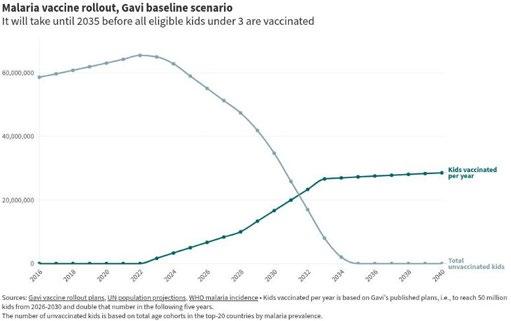
Figure 4 – this graph, published by the Gavi foundation, offers an overview on the projected progress of the malaria vaccine.
Conclusion
Malaria remains one of the world’s most persistent and deadly diseases, disproportionately affecting vulnerable populations in tropical and subtropical regions. Despite centuries of scientific observation and the development of treatments such as quinine and newer antimalarial drugs, the disease continues to claim hundreds of thousands of lives each year, as it has for millennia. Preventative measures, including mosquito nets and public health interventions, have played a crucial role in reducing transmission and saving lives, yet they alone are not sufficient to eradicate the disease. The recent development of malaria vaccines, notably RTS,S and R21, represents a historic milestone in the fight against this parasitic disease. By priming the immune system to target the Plasmodium parasite before it reproduces in the liver, these vaccines offer a means to significantly reduce severe malaria cases and related mortality. However, while highly promising, the vaccines are not a standalone solution; they seem to provide some immunity, but with some huge asterisks, with questions arising over their efficacy and practicality. In a world when aid budgets are slashed, conflicts build up, governments crumble and the threat of climate change looms, is tackling a disease that could be eradicated by other means the direction we should take?
References
My sources:

Oxford R21/Matrix-M malaria vaccine receives WHO recommendation for use paving the way for global roll-out | University of Oxford
New malaria vaccine is world-changing, say scientists - BBC News Murderous Contagion – A Human History of Disease – Mary Dobson Malaria - NHS https://www.who.int/news-room/fact-sheets/detail/malaria
Malaria: Causes, Symptoms, Diagnosis, Treatment & Prevention Malaria vaccine | Vaccine Knowledge Project Quinine - Wikipedia
Gin and Tonic: The fascinating story behind the invention of the classic English cocktail | India.com Bibliography
1) World Health Organization. “Malaria.” World Health Organization, 11 Dec. 2024, www.who.int/news-room/fact-sheets/detail/malaria.
2) Biology Ease. “Plasmodium Falciparum: Causes, Symptoms, Treatment, and Prevention of the Deadliest Malaria - Biology Ease.” Biology Ease, 4 Feb. 2025, biologyease.com/plasmodium-falciparum/. 3) Dobson, Mary. Murderous Contagion. Quercus Publishing, 5 Mar. 2015.
4) Achan, Jane, et al. “Quinine, an Old Anti-Malarial Drug in a Modern World: Role in the Treatment of Malaria.” Malaria Journal, vol. 10, no. 1, 24 May 2011, www.ncbi.nlm.nih.gov/pmc/articles/PMC3121651/, https://doi.org/10.1186/1475-2875-10-144.
5) UNICEF. “Actions for a Malaria-Free World | UNICEF.” Www.unicef.org, 27 June 2024, www.unicef.org/stories/5-actions-malaria-free-world.
6) Gallagher, James. “New Malaria Vaccine Is World-Changing, Say Scientists.” BBC News, 8 Sept. 2022, bbc.co.uk/news/health-62797776. Accessed 03 Dec. 2025.
7) “The Malaria Shot: How It Works and Who It’s For.” Biology Insights, 23 July 2025, biologyinsights.com/the-malaria-shot-how-it-worksand-who-its-for/. Accessed 05 Dec. 2025.
8) WHO. “Malaria Vaccines (RTS,S and R21).” Www.who.int, 19 July 2024, www.who.int/news-room/questions-and-answers/item/q-a-on-rtss-malariavaccine.
Other sources
Oxford R21/Matrix-M malaria vaccine receives WHO recommendation for use paving the way for global roll-out | University of Oxford Malaria - NHS Malaria: Causes, Symptoms, Diagnosis, Treatment & Prevention Malaria vaccine | Vaccine Knowledge Project Quinine - Wikipedia Gin and Tonic: The fascinating story behind the invention of the classic English cocktail | India.com https://my.clevelandclinic.org/health/diseases/15014-malaria
VENOM TO VITALITY
The past, current and potential uses of venom in medicine
What if some of the most effective medicines of the future originate from substances designed to kill?
Ironic as it sounds, venom might just be one of the most valuable and underexplored resources in modern pharmacology. A precious material produced by animals for predation via envenomation, venoms are incredibly complex mixtures that have evolved to target certain physiological systems with unbelievable precision, By having high specificity for receptors and ion channels, venom has great potential to be used in medicine, in areas where venom has not already been implemented as well as potential for further development of current venombased treatments. .
A history of humans and venom
Research into venom initially began with the enthusiasm to investigate animal envenomation and its threat to humans, with scientists seeking to understand the basic chemical concepts behind venom and its associated medical treatment. Most of the components within venom were found to be peptides that affect high affinity and specificity of many targets within the human biological system such as ion channels, membrane receptors, and enzymes; this gives venom a unique richness, specialisation, and efficiency to it.
Early investigation of venom dates to the early 17th century, when the Italian naturalist Felice Fontana conducted experiments to research the effects of snake venom on blood coagulation with the technical confinements that limited scientists of the mid to late eighteenth century. In Fontana’s published Traité sur le Venin de la Vipère,’ he demonstrated that viper venom could be precipitated by alcohol and had myotoxic effects (myotoxic- having or being a toxic effect on muscle tissue (Merriam-Webster,2025)).
Venom paradoxically had caused both blood coagulation(clotting) and blood fluidity, which forms the basis of some of the most important venombased anticoagulants in modern medicine such as Eptifibatide derived from the southeastern pygmy rattlesnake.
The use of venom as a healing agent goes as far back as the ancient Roman and Greek empires. Animal venoms were used to treat conditions such as smallpox, leprosy fever, and wound healing. Snake venom was also used in Ayurvedic medicine from as early as the 7th century BC. Albert Calmette’s works in the late 19th century marked a turning point in the research of venom and its healing properties, when he demonstrated antivenom production which sparked a renewed scientific interest. Today, this interest has reemerged with scientists hoping to introduce more next-generation venom-based therapies.
What makes venom pharmacologically valuable
Venoms are pharmacologically valuable due to their:
1. High specificity
2. Structural stability
First to understand how venoms may be beneficial in their applications in medicine, the basic concepts behind how venom works during envenomation needs to be understood.
Venoms can be described as “biochemical arsenals” that contain toxins, including salts, small molecules, and proteins; these are essential components for disrupting signalling processes and other physiological processes with great potency.
Together, both enzymatic and non-enzymatic toxins make venom a biochemically rich mixture that benefits scientific understanding. Enzymatic toxins such as phospholipases, metalloproteinases, serine proteases, and hyaluronidases are common in venoms and contribute to inflammation, haemorrhage, tissue damage, and disruption of the normal bodily physiological processes. Although these enzymatic toxins seem harmful, they are extremely useful for scientists investigating venom-based medications. This is as for example, metalloproteinases and serine proteases can be investigated for their effects on blood pressure regulation and coagulation, potentially providing novel templates for anticoagulant or antihypertensive medications.
Non-enzymatic toxins, also present in various venoms, include:
• Neurotoxins-a substance that alters the structure or function of the nervous system (Britannica, 2025)
• Cytotoxins –substance such as a toxin or antibody having a toxic effect on cells (Merriam-Webster, 2025)
• Cardiotoxins – a substance that causes damage to the heart muscle and its function (Collins)
• Ion channel modulators- interact with membrane proteins with exceptional specificity
These toxins benefit researchers by revealing how high affinity binding to ion channels and receptors alters cellular signalling processes such as nerve conduction and heartbeat.
How venom toxins, like non-enzymatic toxins, act on molecular targets
A primary group of targets for toxins in venom are voltage-gated ion channels, including Sodium, Potassium and Calcium channels which regulate ion movement across cell membranes. This in normal circumstances, allows nerves and muscles to function. These ions move into the nerve axon via facilitated diffusion via the voltage-gated channels and at the rest potential (-70mV), there is an electrochemical gradient set up such that there is a higher concentration of sodium and calcium ions outside the nerve cell than inside. They require these channel proteins because their charged nature means they are repelled by the nonpolar fatty acid tails of phospholipids so they can’t pass through the bilayers via its gaps. Venom toxins disrupt this process by binding to specific sites on channel proteins, either blocking the pore or altering voltage sensing.
Image description: A visual representation of venom toxins at their molecular targets at the neuromuscular junction
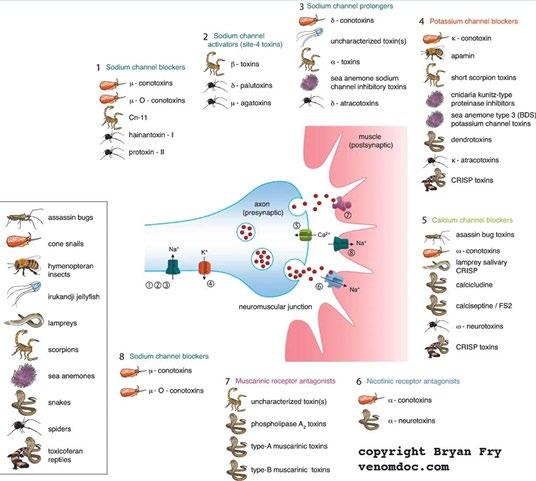
The mechanisms by which toxins disrupt physiological systems
1. Blockage of the channel pore is essentially when toxins physically plug the channel, blocking the movement of ions such as Na+ or Ca2+. This stops electrical signals from propagating which can suppress nerve firing or muscle contraction.
2. Modulation of channel gating is when toxins can bind to regions that control the opening and closing of ion channels. For example, it can keep it open or closed for longer than needed.
3. Selective targeting by venom toxins means that the toxins only bind to specific types of ion channels and do not affect other systems or cells. This is what allows some toxins to target pain-sensing neurons without affecting other cells.
An example of a venom that uses these mechanisms to form the basis of some medication is Protoxin-II from tarantula venom. This selectively inhibits Nav1.7 channels involved in pain signalling. By selectively inhibiting this channel, the overactive signalling in the nervous or cardiovascular system can be reduced, which is the basis for developing medications such as painkillers. Other similar examples can form the basis of antiarrhythmics (medication that treats or prevents irregular heartbeats to reduce the risk of heart failure) and muscle relaxants.
Structural features supporting pharmacological use
One of the key reasons as to why venom peptides are so effective lies in their structure. Many are disulfiderich peptides meaning that their 3D shape is stabilised by several disulfide bridges between cysteine amino acids, which are among the strongest interactions within a protein. This structural rigidity enhances resistance to degradation and preserves target specificity, ensuring that toxins bind to their unique channel ions etcetera. The ability of venom toxins to distinguish between closely related molecular targets makes them valuable research tools and strong templates for the development of selective drugs.
A schematic representation of how snake venom can be made into an antihypertensive drug, Captopril:
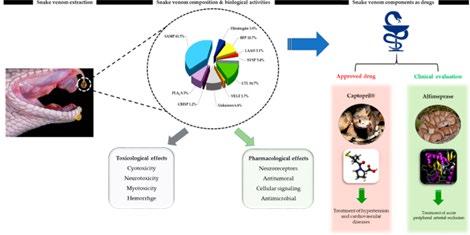
Where are venom-based therapies already approved and what are some examples?
Venoms are not just experimental tools; several venom-derived molecules have already been developed into clinically approved therapies. This demonstrates how toxins found in nature’s organisms can be transformed into safe and usable medications. As of present, seven venom-derived drugs have been commercialised. This includes Prialt ® (AstraZeneca) also known as Ziconotide, which has been derived from a cone snail toxin and is used as a painkiller to treat chronic pain. This is used in a scenario where a patient may be unresponsive to opioids and demonstrates how venom derived molecules can provide potent analgesia while avoiding the addictive side effects. This conceptually helps solve the issue of addiction to pain killers such as opioids which is a contemporary problem. Painkillers are only one of the many classes of drugs that venom can be used for. Some antihypertensives and anticoagulants in modern medicine that are derived from venom initially stem from Felice Fontana’s remarkable discoveries that shaped the present and future of venom-based therapies.
Antihypertensives
High blood pressure is a major risk factor for various diseases such as cardiovascular disease, stroke, and kidney failure. This is as high blood pressure can increase the risk of damage to endothelium walls of arteries, the risk of inflammatory response, atherosclerosis and plaque formation and eventually cardiovascular disease and stroke due to ischaemia. Certain snake venoms contain peptides that inhibit ACE (angiotensinogen converting enzyme) that regulates the blood pressure by converting angiotensin I to angiotensin II. Through the inspiration of the peptides from the Brazilian pit viper (Bothrops jararaca) captopril was developed, the first orally active ACE inhibitor. ACE inhibitors remain among the most prescribed medications worldwide, showing just how large the impact of venom-based antihypertensives have in modern-day healthcare.
Anticoagulants
This type of medication prevents unwanted blood clot formation (thrombosis) and hence reduces the risk or manages cardiovascular disease by maintaining the wide lumen in arteries which reduces blood pressure. An example of a venom-based anticoagulant is the Leech-derived hirudin that inhibits thrombin directly, which prevents clots and used in deep vein thrombosis, myocardial infarction, and surgeries.
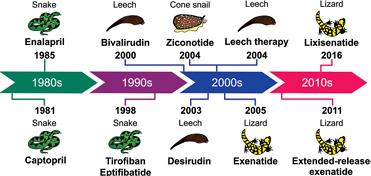
Image above description: A timeline showing the animal toxin-based drugs and hirudotherapy approved by the FDA
Cancer treatment
Venom peptides selectively target receptors, ion channels, or signalling pathways overexpressed in tumour cells. Linking back to the idea of toxins having high specificity and stable structures, cancer cell membranes can be disrupted by peptides in the venom, causing cell lysis (the breakdown of a cell caused by damage to its plasma outer membrane caused by chemical or physical means (National Cancer Institute). Other venoms can inhibit angiogenesis, which is the formation of a new blood vessel that a tumour needs to grow, or others can trigger apoptosis (the programmed cell death pathway)
Melittin is a peptide from bee venom, has been shown to cause damage or death to living cells (selective cytotoxicity) and therefore has the potential to be applied in a drug for cancer treatment. It can potentially cause damage to the cells within cancer tumours and hence destroy them.
Chlorotoxin is derived from scorpion venom and binds to glioma cells. This makes it useful as a therapeutic agent as well as a targeting molecule during imaging, which can help identify tumour boundaries during surgery. This is where radioactive substances is already used in modern medicine; however, this venombased marker can help reduce the risk of secondary tumour formation which might occur by radioactive substance use.
Antimicrobial properties
The rise of antibiotic resistance is a massive issue as of current with “Median reported rates in 76 countries of 42% for third generation cephalosporin-resistant E. coli and 35% for methicillin-resistant Staphylococcus aureus” being a major concern (World Health Organisation, 2023). This trend has risen because of factors such as overprescription, people not finishing their course and overuse in the agricultural industry. Antibiotic resistance is the ability of bacteria to survive and multiply creating new strains, which reduces the effectiveness of standard treatments; hence, this leads to people staying ill for longer periods, higher mortality rates, and higher costs for the NHS. A need for alternatives may soon be required, which might drive the search for alternative antimicrobial agents.
Venom peptides could be an alternative candidate in the future, as they possess cationic (positively charged) and amphipathic (having both hydrophobic and hydrophilic regions). These properties allow them to bind to and disrupt bacterial cell membranes,
allowing lysis of bacterial cells and makes it difficult to develop resistance compared with antibiotics of current use. Snake, bee and scorpion venoms have showed to scientists' activity against both Grampositive (thick peptidoglycan wall lacking an outer membrane) and Gram-negative bacteria (thin peptidoglycan layer but additional outer membrane, both Gram groups are two major groups of bacteria classified by their cell wall structure), including multidrug-resistant strains
The next chapter for venom-based therapies and conclusion
Venoms have evolved as highly precise biological weapons, yet humans can use these deadly substances to our own advantage by transforming them into powerful therapeutic tools. Despite challenges such as ethical sourcing, safety, stability and large-scale production, advances in synthetic venom peptides and bioengineering allow for venomous substances to be replicated, modified and used without relying on extraction from animals. Not only does this significantly improve safety, but it also improves sustainability while enhancing clinical potential. Overall, venom-based therapies and drugs for conditions such as hypertension, pain and clotting disorders demonstrates that venoms are already a valuable medical resource. However, there is an even immensely larger promise for future venom-based drug discovery and precision, that can be found using continued research, perseverance, and technological innovation.
References
• Mohamed Abd El-Aziz, T., Garcia Soares, A. and Stockand, J.D. (2019) Snake venoms in drug discovery: Valuable therapeutic tools for life saving, Toxins. Available at: https://pmc.ncbi.nlm.nih.gov/articles/PMC6832721/ (Accessed: 07 December 2025). • Ai detevtorHawgood, B.J. (no date) Abbé Felice Fontana (1730–1805): Founder of modern toxinology - ScienceDirect, Abbé felice fontana (1730–1805): Founder of modern toxinology. Available at: https://www.sciencedirect.com/science/article/abs/pii/0041 010195000068 (Accessed: 07 December 2025). • Utkin, Y.N. (2015) Animal Venom Studies: Current benefits and future developments, World journal of biological chemistry. Available at: https://pmc.ncbi.nlm.nih.gov/articles/PMC4436903/ (Accessed: 07 December 2025). • Azam, L. and McIntosh, J.M. (2009) Alpha-conotoxins as pharmacological probes of nicotinic acetylcholine receptors, Nature News. Available at: https://www.nature.com/articles/aps200947? (Accessed: 17 December 2025). • Baron A;Diochot S;Salinas M;Deval E;Noël J;Lingueglia E; (2013) Venom toxins in the exploration of molecular, physiological and pathophysiological functions of acid-sensing ion channels, Toxicon : official journal of the International Society on Toxinology. Available at: https://pubmed.ncbi.nlm.nih.gov/23624383/ (Accessed: 17 December 2025). • Daniel, J.T. and Clark, R.J. (2017) G-protein coupled receptors targeted by analgesic venom peptides, Toxins. Available at: https://pmc.ncbi.nlm.nih.gov/articles/PMC5705987/ (Accessed: 17 December 2025). • Dutertre, S. and Lewis, R.J. (2010) Use of Venom peptides to probe ion channel structure and function, The Journal of biological chemistry. Available at: https://pmc.ncbi.nlm.nih.gov/articles/PMC2859489/?(Access ed: 16 December 2025). • FC;, C. (2020) Multi-targeting sodium and calcium channels using venom peptides for the treatment of complex ion channels-related diseases, Biochemical pharmacology. Available at: https://pubmed.ncbi.nlm.nih.gov/32579958/ (Accessed: 16 December 2025). • KG;, N.R. (no date) Venom-derived peptide inhibitors of voltage-gated potassium channels,
References (continued)
Neuropharmacology. Available at: https://pubmed.ncbi.nlm.nih.gov/28689025/ (Accessed: 17 December 2025). • Quintero-Hernández V;Jiménez-Vargas JM;Gurrola GB;Valdivia HH;Possani LD; (2013) Scorpion venom components that affect ion-channels function, Toxicon : official journal of the International Society on Toxinology. Available at: https://pubmed.ncbi.nlm.nih.gov/23891887/ (Accessed: 16 December 2025). • Schendel, V. et al. (2019) The diversity of Venom: The importance of behaviour and Venom System Morphology in understanding its ecology and evolution, MDPI. Available at: https://www.mdpi.com/20726651/11/11/666 (Accessed: 16 December 2025). • Venom peptides and their mimetics as potential drugs (2022) Alomone Labs. Available at: https://www.alomone.com/article/venom-peptides-mimeticspotential-drugs? (Accessed: 17 December 2025). • CL6A (2025) Wikipedia. Available at: https://en.wikipedia.org/wiki/Cl6a (Accessed: 17 December 2025). • Limbatustoxin (2021) Wikipedia. Available at: https://en.wikipedia.org/wiki/Limbatustoxin (Accessed: 17 December 2025). • Roth, E. (2025) Blood thinners: Uses, side effects, and drug interactions, Healthline. Available at: https://www.healthline.com/health/heart-disease/bloodthinners#side-effects (Accessed: 17 December 2025). • V;, T. (no date) Snake venom alpha-neurotoxins and other ‘three-finger’ proteins, European journal of biochemistry. Available at: https://pubmed.ncbi.nlm.nih.gov/10491072/ (Accessed: 17 December 2025). • A;, M.B. (2025) Snake venom compounds: A new frontier in the battle against antibiotic-resistant infections, Toxins. Available at: https://pubmed.ncbi.nlm.nih.gov/40423304/ (Accessed: 19 December 2025). • Ageitos, L., Torres, M.D.T. and Fuente-Nunez, C. de la (2022) Biologically active peptides from venoms: Applications in antibiotic resistance, cancer, and beyond, MDPI. Available at: https://www.mdpi.com/14220067/23/23/15437? Accessed: 19 December 2025). • Antimicrobial resistance (no date) World Health Organization. Available at: https://www.who.int/newsroom/factsheets/detail/antimicrobialresistance#:~:text=The%20global%20r ise%20in%20antibiotic,infections%20that%20cannot%20be%20tre ate d. (Accessed: 19 December 2025). • Auld, D.S. (2013) Metalloproteinase - an overview | ScienceDirect topics, ScienceDirect. Available at: https://www.sciencedirect.com/topics/nursing-and-healthprofessions/metalloproteinase (Accessed: 17 December 2025). • An HJ;Kim JY;Kim WH;Gwon MG;Gu HM;Jeon MJ;Han SM;Pak SC;Lee CK;Park IS;Park KK; (no date) Therapeutic effects of bee venom and its major component, Melittin, on atopic dermatitis in vivo and in vitro, British journal of pharmacology. Available at: https://pubmed.ncbi.nlm.nih.gov/30187459/ (Accessed: 18 December 2025). • Lau, C.H.Y., King, G.F. and Mobli, M. (2016) Molecular basis of the interaction between gating modifier spider toxins and the voltage sensor of voltage-gated ion channels, Nature News. Available at: https://www.nature.com/articles/srep34333 (Accessed: 17 December 2025). • Tender T;Rahangdale RR;Balireddy S;Nampoothiri M;Sharma KK;Raghu Chandrashekar H; (no date) Melittin, a honeybee venom derived peptide for the treatment of chemotherapy-induced peripheral neuropathy, Medical oncology (Northwood, London, England). Available at: https://pubmed.ncbi.nlm.nih.gov/33796975/ (Accessed: 18 December 2025). Image references: • A schematic representation of snake venoms, aiming to assess the significance of snake venoms as a resource of novel drugs. Snake Venom Metalloproteinase (SVMP), Phospholipase A2 (PLA2), Cysteine-rich secretory protein (CRISP), Vascular Endothelial Growth Factor (VEGF), C-type lectin-like toxin (CTL), Serine proteinase (SVSP), L-amino acid oxidase (LAAO), Bradykinin Potentiating Peptide (BPP). (2019, August 21). Snake Venoms in Drug Discovery: Valuable Therapeutic Tools for Life Saving MDPI. https://www.mdpi.com/2072-6651/11/10/564 Accessed: 19/12/2025 • Timeline showing the animal toxin-based drugs and hirudotherapy approved by the FDA. (2020, July 24). Frontiers. https://www.frontiersin.org/files/Articles/553397/fphar-1101132HTML/image_m/fphar-11-01132-g001.jpg Accessed: 19/12/2025 • A visual representation of venom toxins at their molecular targets at the neuromuscular junction. (n.d.). Venom Doc. https://images.squarespacecdn.com/content/v1/55a239e2e4b0 b3a7ae106f25/14638726740713J2WEAIXT35OWGWELSXZ/imageasset.jpeg?format=2500w
MIGHT AND RIGHT
Does Ancient Literature Equate Right with Might?
If history is written by the victors and ancient literature is shaped by their voices, then how can we know if strength truly equates to righteousness or if there is in fact a much more complex relationship between might and right. Many sources suggest that power and strength validate actions as justice and ‘right’. Nevertheless, it can still be questioned whether ancient literature instead critiques this concept and accounts for times when untamed power leads to moral dilemmas.
For this essay ‘might’ can be defined as power, strength and force whereas ‘right’ will be explored as justice, selflessness, morals, and a characters actions. Following Aristotle’s claim [1] that the right course of action depends upon the details of a particular situation instead of applying a rigid law, various sources shall be analysed in context of the situation to acknowledge the evolving nature of morality across different times and traditions.
Those who provide key examples for understanding might and right in ancient literature are the heroes in which sources of ancient literature are based upon. To start with one type of hero is the Homeric hero, one specific to the writings of Homer in The Iliad and The Odyssey Both Achilles and Odysseus embody arete, a Greek concept of excellence, Achilles displays this with his superior combat skills whereas Odysseus’ excellence comes from his wits and ingenuity which save him and his crew numerous times on his journey home post the Trojan War. It is notable that when Odysseus meets the Phaeacians he meets Queen Arete who seems to hold power – a reversal of Greek tradition [2] and it is the Phaeacians responsible for Odysseus getting back to Ithaca. It is an important text to analyse as it is one of the oldest works of literature that is still widely read by modern audiences. Achilles is the half-god son of Thetis a sea nymph and presented as invincible. However, even the greatest warriors such as one of divine heritage like Achilles, are subject to the whims of gods as Achilles was always fated to die at Troy. Both the gods and heroes' actions are not necessarily tied to what humans, particularly modern ones view as ‘right’. Differntiating between personal strength or might and the divine sense of justice is crucial to the narrative in Homeric poems. Instead of personal gain, both Odysseus and Achilles must align their plans with that of the divine otherwise they face the consequences.
Odysseus and Achilles can also be compared to reflect how Greek values changed. Unlike in the Iliad where Achilles uses his physical strength and combat skills to win victories and takes advantage of his strength by refusing to fight when Agamemnon takes Briseis a young woman who was Achilles’ prize for an achievement in battle. Whereas Odysseus uses his wits for example to get the Cyclops drunk and tricks him cunningly. A direct comparison can be made when Achilles and Odysseus meet in the Odyssey [3] . Odysseus praises Achilles for having a glorious death that matches his might during his life but Achilles replies and essentially says he would rather have been a slave to a slave than to be noble in the underworld warns Odysseus not to die for
glory. This reflects a change in values from the Iliad to the Odyssey from pride and menis being core values of a hero to the new idea of prioritizing life over glory and might which reflects the new Odyssean world.
Another notable example of ancient literature in which themes of might and right are explored is The Aeneid by Virgil written between 30-19 BC under the reign of Augustus, the first Roman emperor. This epic poem tells the story of Aeneas, a Trojan prince who escaped Troy’s fall and sailed across the Mediterranean to found a new city in Italy, his journey is similar to Odysseus’ in many ways and Virgil took much influence from Homer however the work is from a Romano-centric perspective. In the first book of the poem [4], it reveals through a conversation between Jupiter and Venus, the city’ Lavinium’ which Aeneas founds and that his son, Iulus, founds the city of Alba Longa and becomes the forefather of the Julian Clan whilst his ancestors Romulus and Remus go on to found Rome. Julius Caesar who is famous member of this clan is also referenced in lines 290-92 stating “a Trojan Caesar whose fame and boundless empire will reach the stars”. The idea of a “boundless empire” implies the endless power of the founders and leaders of Rome, and therefore Romans themselves. Therefore, when right is equated to destiny and what is fated, strength and superiority come with this. A key reason as to the idea that it was fated for Aeneas to found Lavinium and for Rome’s existence is the presence of divine heritage. Aeneas is the son of Venus, providing him with divine protection. Aeneas’ might is linked to a sense of divine favour meaning his strength must be used for a higher purpose. The founder of Rome himself is the son of Mars. So, Rome had links to two significant gods and therefore the favour of the gods making it destined for great things. Although, Romulus is famous for killing his brother Remus to found Rome giving it a backstory of fratricide so a pride for Rome’s history may seem questionable from a modern perspective however perhaps in the late 3rd century BC this murder reflected the strength Romulus had to kill his own twin, for the sake of the city that would lead into a great empire.
Another aspect in The Aeneid which can be correlated to might and right is the sacrifice of Turnus.[5] Turnus was the prince of the Rutulian tribe and the leader of the Latin forces who oppose the settlement of the Trojans making him the chief antagonist of Aeneas. He is killed by Aeneas in a surge of rage after Turnus killed Pallas whow as entrusted under Aeneas’ care by Pallas’ father, Evander. “. and his life, having despised, flees with a grown beneath the shadows”. Once Turnus is killed he resentfully leaves to the underworld, the finality and harsh tone is highlighted by sibilance in the translation. The choice Aeneas makes to avenge Pallas is a morally difficult one which emphasizes that there is an intricate and complex relationship between might and righteousness, Aeneas succumbed to furor yet also honoured Evander arguably displaying piety
In conclusion in ancient literature while might may be used to enforce power, dominance, and tyranny, it is contrasted with morality, divine law and natural justice which does not always align with brute strength. The only power that is infallible is that of the divine. Therefore, human might alone is never enough to guarantee righteousness and justice or even a 'good’ fate.
A HISTORY OF POWER
Democracy as we know it can only survive by dividing the power in a society. Every democratic system nowadays operates on the belief that the law should be impossible to abuse or exploit, and that the power of the law must therefore be separated into three distinct branches: The legislature, the executive, and the judiciary. These very ideas protect our own democracy in the United Kingdom, and countless others across the world. But it was also the rejection of these ideas that enabled some of the most infamous tyrants to gain power, and led to the suffering of an innumerable amount of people under figures like Mao Zedong, Hitler, and Joseph Stalin. But the problem of a lack of democracy still exists today in some countries, where dictators have undermined democracy and have overcome the separation of power, in places like Russia, Hungary and Turkey. This problem of tyranny didn’t only appear in the last hundred years, and it can be traced back to the earliest democracies and the earliest attempts at separating power. For the sake of obtaining a holistic understanding of why dividing power is important in preventing tyranny and upholding the law, we will look at the earliest concepts of the separation of power, how it was abused in multiple eras in history, but also how all of this impacts us today, how we can effectively divide power, and what it can tell us about the future.
But first, the division of power as we know it today must be defined, and the basic theory outlined. Power is traditionally divided into three branches: Legislative, judiciary, and executive. The role of the legislative branch is to pass laws, in the UK this is parliament, and in the USA this is Congress. Any branch of any government that passes laws is the legislative branch. These laws must then be enforced, and the power is given to the executive branch, which is generally the government and civil servants. And say a part of the executive branch, such as a police officer, thinks you are guilty of breaking a law, then a court case will be opened, which will be decided by the judiciary branch; the courts, whose role is to apply the law and settle disputes. In separating these three powers, potential tyranny is prevented by preventing one entity from having too much power. One enlightenment thinker, Montesquieu, wrote that “when the legislative and executive powers are united in the same person, or in the same body of magistrates, there can be no liberty,” for example a president (executive), if he also held supreme legislative power, could pass a law in his own self interest and enforce it with his executive powers. Montesquieu also warned that if the judiciary is not separate, liberty is lost, otherwise the same police officer that arrested you could use his power as the judiciary to sentence you, thus proving the arrest to be "just” but in turn revoking your right to a fair, unbiased defence, on a national scale this would undermine the aspect of justice associated with the law. James Madison argued, “Ambition must be made to counteract ambition,”, the idea that the self-interest of one branch would counteract the others to prevent them from getting too much power. As we will see, any manipulation to these principles can lead to a dangerous concentration of power, paving the way for tyranny.
But where did we get these ideas from in the first place?
Early Sumerian states relied on informal checks. Kings were absolute monarchs and often consulted councils composed of local aristocrats and the city’s young men, but these bodies had no legal authority and could be ignored when rulers chose to centralise power. This shows the earliest version of the separation of powers: a system based on custom rather than enforceable rules, and therefore easily overridden. In wartime, these councils were more often than not ignored in order to provide quicker, more efficient responses. Sumer, as a result, frequently had rulers who seized power autocratically, acting as the sole executive, legislative and judiciary.
Athens expanded the concept of dividing powers, and deliberately fragmented political authority: lawmaking, executive, and judicial decisions were dispersed across large citizen bodies chosen by lot. For example, the Assembly (legislative) was open to all male adult citizens, meeting 40 times per year to discuss laws which were proposed by a council of 500 citizens. This prevented power concentrating in any individual, but it also made decision-making slow and contributed to Athens’ vulnerability during prolonged conflict, as Athens rejected the idea of concentrating power in any one entity even during times of crisis. This separation of power prevented Athens from ever having a dictator, however it also contributed to their losses in the Peloponnesian War and Lamian War, which destabilised the state and ultimately caused the end of the Athenian democracy. Athens proves that separating power too widely can weaken a state’s ability to act efficiently. In their overexaggerated effort to prevent tyranny or dictatorship, the state lost its sovereignty. It was under the rule of Alexander the Great after the Lamian War that Aristotle noted the importance of separating powers effectively in his Politics.
Ironically, Athens lost its independence at the hands of Sulla, a Roman who became a tyrant in the Roman Republic a few years later due to a poor separation of power. Rome attempted to divide power through multiple assemblies and annually elected magistrates, but these checks relied almost entirely on tradition rather than enforceable law. The Roman legislative branch had three assemblies, but it was the Senate that had the most influence on legislature despite technically having no legislative power. Term limits and temporary dictatorship worked only as long as politicians respected unwritten norms, and as soon as they ignored these customs, the system had no legal separation to stop power concentrating. There was also the role of dictator. “Dictator” as a concept was viewed differently from a Roman legal and social perspective. Dictators were seen as necessary in emergencies to provide quick, efficient responses. They had a maximum term of six months, had absolute authority, overrode all magistrates, and were appointed by consuls with the approval of the Senate during times of emergencies. Compared to Athens, Rome had much fewer barriers to absolute power, as giving up the role of dictator after six months was a custom expected of a dictator, not a law, and dictators sometimes gave up their power after weeks. Just as the extreme separation of power in Athens was overdone to the point that it played a role in Athens’ downfall, the Roman Republic’s extreme leniency towards separating power contributed to its own downfall.
The Republic ran on customs and expectations, it was expected that people would give up certain positions and not abuse their power. When this stopped happening, the downfall of the Republic began, with Gaius Marius securing consecutive consulships, breaking long-standing norms. Marius demonstrated how easily Rome’s system could be overridden. By cooperating with the Assemblies to push controversial laws, he effectively merged executive power with legislative power. His career revealed the weaknesses in Rome’s checks being conventional and not constitutional, which would go on to leave many Roman citizen’s rights vulnerable under the tyrants that ruled Rome after Marius.
Over the next 60 years, Rome would encounter several tyrants or figures with concentrated power, the last one being Julius Caesar. As mentioned, Rome’s system of dictatorship relied on the dictator giving up power after his term expired, and Romans did not connote “dictator” to “tyrant”. It was widely accepted that a dictator was at times necessary, as Cicero put it “In times of war, laws fall silent.”. This principle had previously guided Rome through countless crises, but as mentioned before, there was a great risk of tyranny or absolute power, and centuries of this would ensue following the reign of Julius Caesar. Completely disregarding the division of power by becoming consul in four consecutive years, Caesar secures an unusual 10 year dictatorship, before making himself dictator for life, concentrating the power of all three branches of power into himself. Caesar’s rise exposed the fatal weakness of Rome’s reliance on custom. Nothing legally prevented him from accumulating offices, extending his dictatorship, or weakening the power of other magistrates. Ultimately, these changes highlighted Rome’s weak separation of powers, and paved the way for centuries of political instability and tyranny with relatively brief periods of prosperity in the Empire.
These periods of relative stability, despite not having a good separation of powers, are often used to “disprove” the necessity of dividing power. However, despite the Republic being run much more efficiently under Julius Caesar than it had ever been, or under Augustus or later under the Five Good Emperors, these periods were often followed by decades of tyranny, under Tiberius, Nero, Domitian, Caligula, and so on. It would be unwise to have a legal system with a lacking separation of powers like the Roman Empire had, and hope that the supreme power uses it for the good of the people, or for justice. The separation of powers must be enforced, and should not be expected to produce itself by customs, as customs change quickly, making injustice much more likely.
The action of centralising the branches of power is ubiquitous in more modern dictatorships too. Adolf Hitler overrode the division of powers, merging the power of the Chancellor and the President to become the supreme executive, signing the Enabling Act to override the legislative branch by giving him the power to pass laws without the support of the Parliament, and succeeding in merging the executive and legislative branches. As per Montesquieu’s quote at the beginning of this essay, over three centuries before Hitler‘s time, liberties cannot be protected if the legislative and executive are merged, and under Hitler, they were not. Nor were they under any modern
dictatorship, just as Montquieu observed. Every single modern dictator has merged or undermined the branches of power in one way or another, and it is arguably the most revealing sign of impending tyranny.
Why does this matter today? Firstly, it proves that the division of power is necessary. The Sumerians began to realise this, and then the Athenians became conscious of this after years of tyranny. Secondly, it proves that dividing power perfectly is impossible, since the Athenians divided it to the extent that ruling was difficult and inefficient, and the Romans avoided it, constantly slipping in and out of tyranny. Some modern day countries have also failed in separating power properly, or have had their separations undermined, for example in Hungary, where the same prime minister has been in place for almost 15 years, and has been accused of trying to concentrate power after abusing his parliamentary majority, by passing constitutional amendments which allowed the government to dominate the judiciary through politically influenced judicial appointments, reducing the courts’ ability to check the executive. In Turkey, the same president has been in place for over two decades, abolishing the role of the prime minister and taking charge of the legislative branch by giving himself veto powers on laws, as well as influencing the judiciary by removing judges who check his power. In Russia, the same man has been in power for almost three decades. He has overcome the separation of power by allowing himself to rerun for power in fraudulent elections more than would otherwise have been allowed, influencing the judiciary by making important appointments require the President’s approval and thus centralising power. There are many examples today, and even more so throughout modern history, of the risk of having a weak separation of powers or of overcoming this separation.
Unsurprisingly, this can all allow us to be more accurate in our understanding of the future. In the USA, President Donald Trump has become the “unitary executive” holding all of the executive power, as well as resisting the powers of the judiciary and trying to undermine the legislative branch using executive orders. Across Europe, politicians and parties with similar ideas are likely hoping to follow in these footsteps. For example, Reform UK under Nigel Farage are pushing to undermine international power checks by rejecting international institutions.
But if a perfect separation of powers is impossible, what can be done?
Firstly, Montesquieu notes that the legislative, executive and judiciary must be separate and independent of each other. Mutual restraint must be created, with one branch naturally checking the power of another by necessity not by custom, for example in the US system, both Congress (legislative) and the President (executive) have constitutional veto powers to prevent laws they see as harmful from being passed. The legislative must remain uninfluenced by any one person, the executive must have limited power on the legislative and must only enforce the laws that the legislative passes, and the judiciary must only make decisions within the confines of the law in an unbiased, equal manner unaffected
by external circumstances. Of course, being unbiased all the time is difficult and unrealistic due to human nature. Such cracks in the system must then be filled in by customs and tradition with social consequences for not upholding them, for example, following a scandal within the legislative, ministers generally resign to prevent a destabilisation of the system.
Sumer illustrates that custom alone is too weak to restrain authority, Athens demonstrates that excessive fragmentation can paralyse a state, and Rome proves that a system of separating powers built on tradition rather than enforceable limits will collapse the moment traditions are subverted. Modern authoritarian regimes follow the same pattern, weakening judicial independence, weakening legislatures, and concentrating power in executives. These examples reveal that the separation of powers is not a theory, but a necessity: it protects individual rights and ensures that no branch of government can dominate the others. A perfect separation may be impossible, but a constitutional structure that embeds mutual checks and legally enforced independence are the strongest defences against tyranny.
The system of separating powers is the backbone of democracy and has been so since democracy was invented, it was designed to protect the liberties of people, prevent tyranny, uphold justice, and ensure that a state can be well run in every way at any time, and as Cicero noted over two millennia ago "There is no greater blessing than a well-ordered state”.