YEAR IN REVIEW | 2025-26
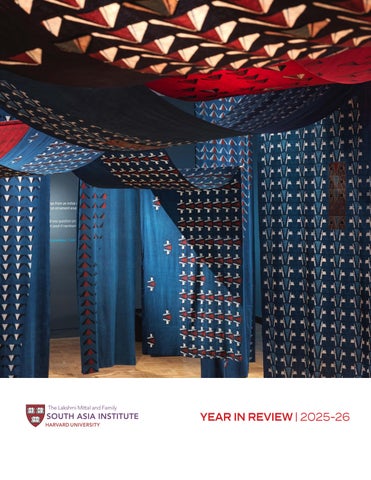
Cover Photo: Swapnaa Tamhane Mobile Palace, 2019-2021 mill-made cotton, appliqué, beading, natural dyes made with Salemamad Khatri, Mukesh Prajapati Installation "Swapnaa Tamhane: Mobile Palace", curated by Dr. Deepali Dewan Royal Ontario Museum, Toronto, 2022 Photo by Paul Eekhoff/ROM
Year in Review July 1, 2025 – June 30, 2026
Countries we work with: Afghanistan, Bangladesh, Bhutan, India, Maldives, Myanmar, Nepal, Pakistan, Sri Lanka, and diaspora populations from these countries
•
Offices: Cambridge (USA) and New Delhi (India) Presence in Kathmandu (Nepal) and Lahore (Pakistan)
Our Mission The Mittal Institute connects Harvard and South Asia. With over two billion people facing shared challenges and opportunities, South Asia offers unique opportunities for interdisciplinary research, capacity building, and informing policy across a wide range of fields. The Institute works with faculty members, students, and in-region institutions and experts to advance and deepen the understanding of critical issues shaping South Asia and its global impact. In 2013, Harvard University formally recognized the South Asia Institute—now known as the Mittal Institute—as an academic institute, signaling the University’s longstanding commitment to the region and the beginning of an exciting new era for South Asian studies at Harvard. The Mittal Institute now serves as the premier center on regional studies, cross-disciplinary research, and innovative programming pertaining to South Asia.
Contents
07 10 12
A Message from Our Faculty Director HIGHLIGHTS 2025–26 Highlights 10 FACULTY Climate A Year of Strengthening Research and Impact for the Climate Platform 14 Health Strengthening India’s Health System 20 Education Expanding Educational Opportunities Across India 26 Incubating Impact Mittal Institute Initiative to a Global Nonprofit 29 Arts Advancing South Asian Arts and Cultural Research 30 Faculty Grants 34 Faculty Grant Spotlight: Climate, Debt, and Reproductive Health in India’s Sugarcane Belt 36
38
STUDENTS
48
SCHOLARS
58
EVENTS
72
GOVERNANCE
Research, Language, and Internship Grants 40 Student Spotlight: Sarthak Agarwal and Kazal Barua 42 Seed for Change Competition 46
Fellows, Visiting Scholars, and Associates 50 Fellow Spotlight: Robert Lunkhopao Haokip 56
Overview 60 Event Highlights 2025–26 61
A Message from Our Faculty Director Reflections on a First Year
T
his has been my first year as Faculty Director of the Mittal Institute and it has brought many challenges and rewards. Learning the ropes has certainly been a challenge, especially with Harvard’s budgetary cutbacks and restrictions on hiring. Our Executive Director, Hitesh Hathi, has been adept at looking ahead, trimming the budget when necessary, and planning for a robust program. We were gradually able to replace critical staff and the whole team has been resilient and flexible as we adjust to new conditions at Harvard. I feel a sense of gratitude for all of them! The Living With Rivers Project was just an idea on the horizon a year ago, but this past year we have convened lunchtime gatherings of interested faculty to think together about next steps. These
have been stimulating and productive discussions leading to an April symposium focusing on rivers and the many ways in which river-issues are critical in South Asia. I was able to open the symposium with my point of view as a humanities scholar, seeing the intense religious use of increasingly polluted rivers, day after day, throughout the life cycle. I have described the rivers as India’s most important cathedrals. The symposium panels were not simply reports on issues but were focused on active responses. Nagaraja Rao Harshadeep from the World Bank reflected on critical issues in the Narmada damming controversy. Harvard Graduate School of Design professor Rahul Mehrotra lamented the creation of solid concrete embankments to control the river interface with the urban landscape. Emerson College professor Tulasi Srinivas spoke of the attenuation
The Lakshmi Mittal and Family South Asia Institute, Harvard University
FACULTY | 7
of the lakes of her native Bangalore to make room for development, and the resulting pollution so severe that the surface of the water foams and catches fire. Another panel explored the development of “river rights,” part of a wider movement to make rivers juridical entities with their own rights. It was clear that the Rivers project has captured the thinking of people from across the University and across disciplines. It made all of us eager to further develop this work. Each of our visiting scholars presented work in a series of extraordinary seminars. One of the personal rewards of the year has been being the faculty mentor to Fatima Fayyaz, our Syed Babar Ali Fellow. Her work explores the genre of elegy (marsiyah) in the Persian court culture of Iran and its extension and development in Mughal
Year in Review 2025-26
India, especially in the Shi’i court of Lucknow. The émigré poets from Persia to Lucknow were responsible for the flourishing of the marsiyah and its vernacularization in Urdu. Working with Fatima enabled me to understand the various genres of Persian elegies and panegyrics firsthand. To a great extent, Fatima was my mentor, and for this I am very grateful. On her return to Pakistan, she will remain a remote associate of the Mittal Institute.
Endgame of Empire: Sultan Khan, Asia’s First Grandmaster.
Our Graduate Student Associates presented their work in a fascinating afternoon showcase. Most unique was Atiyab Sultan, a graduate student from Oxford and a Pakistani civil servant who has now written a study and biography of her grandfather, Sultan Khan, a champion chess player. It has been especially gratifying to see her work published just this month: The
Diana L. Eck Faculty Director, The Mittal Institute
Please stay in touch with the Mittal Institute as you continue to support our work, both here in Cambridge and in the region.
With gratitude,
Professor of Comparative Religion and Indian Studies, Emerita Frederic Wertham Research Professor of Law and Psychiatry in Society
The Lakshmi Mittal and Family South Asia Institute, Harvard University
FACULTY | 9
By the Numbers Events
100+
200+
3 Exhibitions 2 Conference 50+ Talks and seminars
720
Speakers
$161,111
in Faculty Research Grants other research support, including $37,000 in
NEW FELLOWS
climate grants.
$115,000+
Student and Seed for Change Grants
GRADUATE STUDENT ASSOCIATES
35
student grants
COMMUNICATIONS AND ENGAGEMENT NEWSLETTER
13,000+
newsletter readers Open rate: Up+43%
Year in Review 2025-26
31,000+
SOCIAL MEDIA SUBSCRIBERS
(across LinkedIn, Instragram and Youtube)
2025-26
Highlights JULY 2025-JUNE 2026 SEPTEMBER
JULY The “One Harvard, Young Harvard”
mixer
brings
together incoming students, alumni,
and
University
The Mittal Institute celebrates the start of the academic year with its annual Welcome Back Mixer, bringing together students, faculty, and affiliates to strengthen connections across Harvard’s South Asian
The Mittal Institute convenes its New
community. Read more on page 58
through cultural programming, includ-
NOVEMBER York Community Weekend, bringing together
supporters
and
affiliates
ing a special performance by Professor
affiliates for an evening of
During Harvard Climate Action Week, a
dialogue and camaraderie,
panel on India’s green energy transition
strengthening the intergen-
explores
erational ties at the heart
development through renewable energy and
of the Harvard community.
climate innovation. Read more on page 59
showcasing the work of three former
More than 25 artists, researchers, and
practices rooted in questions of
Read more on page 58
pathways
toward
sustainable
cultural leaders gather across Harvard and MIT campuses for Intersections Conference 2025, examining traditions and innovations in Indian classical dance. Read more on page 59
Vijay Iyer and remarks by Faculty Director Diana Eck. Read more on page 62 A Space Between Selves, an exhibition Visiting Artist Fellows, highlights identity, transformation, and cultural hybridity. The exhibition marks the start of the 10th anniversary celebrations of the Mittal Institute’s Visiting
Artist
Fellowship
(VAF).
Read more on page 62 A webinar on digital health and AI in Indian healthcare explores the integration of artificial intelligence into public health systems and data infrastructure in India. Read more on page 61
AUGUST A webinar on workplace mental health examines the challenges facing formal and informal workers, bringing together scholars, practitioners, and public health experts to discuss psychological wellbeing and labor conditions. Read more on page 58
OCTOBER Professor Karthik Muralidharan presents his award-winning book Accelerating India’s Development, offering evidence-based strategies for strengthening governance and public service delivery in India. Read more on page 59 The Visiting Artist Fellows Art Exhibition launches at CGIS South, highlighting the work of Nepalese visual artist and educator Hitesh Vaidya and his research on urban memory and community-rooted art spaces. Read more on page 60
The Lakshmi Mittal and Family South Asia Institute, Harvard University
HIGHLIGHTS | 11 DECEMBER An interdisciplinary panel, Beyond the Haze, examines South Asia’s growing air pollution crisis through the lenses of environmental history,
MARCH
medicine, and public policy. Read more on page 63
Renowned Indian artist Seema Kohli visits Harvard for a special conversation on art, the feminine divine, and creative practice, moderated by Faculty Director Diana Eck. Read more on page 64
JANUARY The Lancet Commission on a CitizenCentred
Health
System
for
India
officially launches its landmark report in New Delhi, outlining pathways toward
The Mittal Institute launches a new South Asian Arts Fellow exhibition featuring textile artist Swapnaa Tamhane, whose work explores material histories and the intersections of craft and contemporary art. Read more on page 64
universal health coverage for the people of India. Read more on page 63
APRIL
FEBRUARY
The Annual Symposium 2026, Living with
An online panel, Rethinking Nutri-
Rivers, convenes leading scholars and practi-
tion and Food Systems for Planetary
tioners across disciplines to examine climate
Health in South Asia, addressed
resilience, water systems, and ecological futures
the dual burdens of regional
in South Asia. Read more on page 66
undernutrition and rising diet-related diseases, while evaluating the health, equity, and economic feasibility of integrating global planetary health diets into South Asian agricultural policies. Read more on page 64
The seminar Artificial Intelligence for Climate Action Accountability explores how machine learning and data science can help track emissions
commitments
and
strengthen
climate governance in the Global South. Read more on page 66
At Harvard Law School, Dr. Shashi Tharoor joins Professors Sugata Bose and Diana Eck for a major discussion on secularism, pluralism, and constitutional democracy in India. Read more on page 64
MAY A panel discussion, Heart of a Nation, examines the rise of cardiovascular disease in India and the evolving relationship between medicine, public health, and healthcare infrastructure. Read more on page 67 The Graduate Student Associate Showcase highlights emerging interdisciplinary scholarship on South Asia, featuring research spanning imperial history, public health systems, and democratic governance. Read more on page 67
Year in Review 2025-26
Faculty The Mittal Institute supports faculty-led, multidisciplinary research that advances knowledge, informs policy, and addresses some of South Asia's most pressing challenges. Spanning the arts and humanities, social sciences, and sciences, these collaborations foster innovative scholarship and connect research with real-world impact.
The Lakshmi Mittal and Family South Asia Institute, Harvard University
FACULTY | 13
Year in Review 2025-26
CLIMATE
A Year of Strengthening Research and Impact for the Climate Platform With a major white paper on extreme heat, new peerreviewed publications, an active field study, and a public data platform reaching new audiences globally, the Mittal Institute Climate Platform continued to build on its research and deepen its reach this year.
S
ince 2023, the Mittal Institute has hosted a major climate change initiative focused on climate adaptation in South Asia. The Climate Platform brings together researchers at Harvard and in-region from different disciplines—including medicine, public health, urban planning, climate science, and economics—with policymakers and other end-users of such research. In the academic year 2025–26, the Platform continued to build its programs and partnerships. Below are key highlights:
Rethinking How India Adapts to Extreme Heat Launched by Satchit Balsari, Associate Professor of Emergency Medicine at Harvard Medical School, the Mittal Climate Platform released its white paper, Critical Perspectives on Extreme Heat in India, at NRDC India’s Global Heat and Cooling Forum in New Delhi. The paper's 17 authors are scholars from
five Harvard schools—Medicine, Public Health, Law, Business, and the Faculty of Arts and Sciences—together with the University of Oxford, CEPT University, the Atlantic Council, and the All India Disaster Mitigation Institute (AIDMI).
also published “Who Pays When Temperatures Soar" in Health Affairs, examining how the costs of extreme heat are ultimately shifted onto workers and households through lower wages, higher prices, and strained finances.
The paper critically examines how extreme heat in India is currently governed, arguing that prevailing approaches—including heat action plans and adaptation tools—have been calibrated around narrow definitions that systematically underestimate exposure and harm. Drawing on evidence across climate science, physiology, built environment research, labor economics, and public finance, it shows that the burden of heat is distributed across multiple systems and timescales. The paper makes the case for integrated, systems-level strategies that treat heat as a standing macroeconomic and fiscal risk rather than an episodic emergency.
Community HATS: Understanding and Addressing Heat Impacts on Informal Workers
Led by Kartikeya Bhatotia, the Mittal Institute Climate Fellow, the Platform
Community HATS (Heat Adaptation and Treatment Strategies in South Asia) is a community-based longitudinal research study examining how extreme heat affects the health, livelihoods, and wellbeing of informal workers across South Asia while evaluating practical adaptation strategies. Following a successful pilot study among homebased garment stitchers and kite makers in Ahmedabad, the Community HATS study expanded to include new cohorts and trades: 100 bangle-factory workers in Firozabad, Uttar Pradesh, and 100 farmers in Anand, Gujarat.
The Lakshmi Mittal and Family South Asia Institute, Harvard University
FACULTY | 15
Community HATS scholars Robert Meade (left) and Felipe Gonzalez Casabianca (right) with SEWA members.. Year in Review 2025-26
Preliminary findings indicate substantial downstream effects: across the temperatures studied, wages among dayrate workers dropped by approximately 40%, while declines in sleep quality and increased cardiovascular strain were observed across seasons. By combining physiological measurements with realworld field research, Community HATS is helping researchers better understand how prolonged heat exposure affects health, productivity, and livelihoods under everyday conditions, while creating a platform to evaluate practical adaptation strategies. The project also secured a Wellcome Trust grant awarded to Self Employed
Women's Association (SEWA), CEPT University, AIDMI, and Harvard, building on earlier support from the Minderoo Foundation. Findings from Community HATS informed a feature in The New York Times and a companion vision article in The BMJ, helping bring global attention to the health and economic impacts of extreme heat on informal workers.
Community HATS team Faculty Leads Satchit Balsari, Associate Professor in Emergency Medicine, Harvard Medical School Caroline Buckee, Professor of Epidemiology, Harvard T.H. Chan School of Public Health
Gary Adamkeiwiciz, Associate Professor of Environmental Health and Exposure Disparities, Harvard T.H. Chan School of Public Health
Fellows and Scholars: Felipe González Casabianca, Research Affiliate Robert Meade, Postdoctoral Research Fellow, Harvard T.H. Chan School of Public Health Ahmed Shaikh, Assistant Professor, Icahn School of Medicine at Mount Sinai Tess Wiskel, Assistant Professor of Emergency Medicine, Harvard Medical School
Showcase of Climateverse at the Delhi Climate Innovation Week.
The Lakshmi Mittal and Family South Asia Institute, Harvard University
FACULTY | 17
SEWA ground team teaching other members how to use the platform.
Showcase of Climateverse at the Delhi Climate Innovation Week.
Year in Review 2025-26
Climateverse: Connecting Climate Data to Action Climateverse is an open-access digital platform that helps researchers, policymakers, and practitioners discover, explore, and apply climate and disaster data for evidence-based decisionmaking. The Platform was launched publicly with support from Agile Money, a software and AI engineering studio; the Office of the Vice Provost for Climate and Sustainability; and an AWS grant from the Harvard Data Science Initiative. It hosts more than 100 climate and disaster datasets across themes including weather, health, energy, and infrastructure, each with detailed metadata on access, resolution, provenance, and uncertainty. An AIpowered chatbot enables tailored, evidence-based dataset discovery and guided analysis. This year, the platform continued to develop through community-based validation of chatbot response quality, as well as stakeholder-facing training
and outreach to support climaterisk analysis. A major milestone was the Mexico Climateverse simulation workshop, where participants from universities, emergency management institutions, nonprofits, and technology partners used real and simulated datasets in a hurricane scenario to inform preparedness, response, and recovery planning. Climateverse was also showcased at the Delhi Climate Innovation Week, extending the platform’s reach among researchers, practitioners and policymakers.
Climateverse team Faculty Leads Satchit Balsari, Associate Professor in Emergency Medicine, Harvard Medical School and Beth Israel Deaconess Medical Center Fellows and Scholars Andrew Schroeder, Co-Director, CrisisReady
Akash Yadav, Research Affiliate Tiger Krittaphas Chaisutyakorn, Research Affiliate
Launch of a Public Worker Safety Tool The Harvard Global Health Institute Scholarly Working Group on Heat and Worker Protections—co-led by Sharon Block, Professor of Practice and Executive Director of the Center for Labor and a Just Economy at Harvard Law School, and Professor Satchit Balsari—launched a public, bilingual (English and Spanish) interactive tool that tests 12 common myths about heat and worker safety against the published evidence. The tool draws on work from Harvard's Medical, Law, Public Health, and Design schools and research partners including SEWA, International Labor Organization, WIEGO, WRI India, and BRAC University.
Natalie Ayers, Research Affiliate Shubhangi Bhadada, Research Fellow, Mittal Institute
Screenshot of the Heat and Worker Safety tool on the Center for Labor and a Just Economy website. The Lakshmi Mittal and Family South Asia Institute, Harvard University
FACULTY | 19
Media Features and Coverage for the White Paper and Community HATS
Climate Platform Team Faculty Leads
Faculty Affiliates
The following faculty members have been leading the Climate Platform since its onset in 2023: Satchit Balsari, Harvard Medical School;
In the academic year 2024-25, the Mittal Institute started a new program aimed at creating a cross-disciplinary cohort of key faculty and researchers whose work on climate change can be connected to South Asia.
Caroline Buckee, Harvard T.H. Chan School of Public Health;
Martha Chen, Harvard Kennedy School;
Peter Huybers, Department of Earth and Planetary Sciences, Harvard University; Tarun Khanna, Harvard Business School; Jennifer Leaning, Harvard T.H. Chan School of Public Health; Daniel P. Schrag, Department of Earth and Planetary Sciences, Harvard University Gary Adamkiewicz, Harvard T.H. Chan School of Public Health;
Year in Review 2025-26
Francesca Dominici, Harvard T.H. Chan School of Public Health; Sheila Jasanoff, Harvard Kennedy School; David Jones, Harvard Medical School; Megan Murray, Harvard Medical School; Vikram Patel, Harvard Medical School; Doris Sommer, Department of Romance Languages and Literatures, Harvard University;
Dustin Tingley, Harvard Kennedy School; S.V. Subramanian, Harvard T.H. Chan School of Public Health;
HEALTH
Strengthening India’s Health System The Mittal Institute supports two interdisciplinary initiatives that are helping shape the future of healthcare in India: one advancing digital health innovation and the other developing a roadmap for Universal Health Coverage (UHC), ensuring that everyone can access quality healthcare without financial hardship.
H
ealthcare remains one of the Mittal Institute’s long-standing research priorities. By convening Harvard faculty with policymakers, healthcare practitioners, researchers, and civil society leaders across India, the Institute supports collaborative research that informs policy and strengthens health systems. Together, these initiatives seek to improve access to high-quality, equitable healthcare for India’s 1.4 billion people.
Advancing Universal Health Coverage in India A major milestone this year was the publication of The Lancet Commission on a Citizen-Centered Health System for India, the culmination of five years of collaborative research led by Harvard faculty and supported by the Mittal Institute. The Commission presents a comprehensive roadmap for strengthening India’s health system and advancing Universal Health Coverage (UHC), bringing together expertise from academia, government, civil soci-
ety, and the private sector. The report was officially launched in New Delhi in January 2026, followed by regional dissemination events in Ahmedabad, Goa, and Bengaluru. The Commission identifies six priority reforms needed to achieve Universal Health Coverage. The Commission's recommendations are grounded in one of the largest evidence-gathering efforts of its kind, including a nationally representative survey of 50,000 households and mixed-methods stud-
ies conducted across India. Drawing on extensive primary and secondary research, the Commission reframes the conventional understanding of what stands in the way of achieving Universal Health Coverage (UHC) in India. It argues that the principal challenges are no longer primarily a lack of political will, underfunding, limited human resources and infrastructure, or low health-seeking behavior. Instead, the analysis identifies uneven quality of care, inefficient health spending, fragmented service delivery, weaknesses
"The Commission's clarion call is for a publicly financed and publicly-provided integrated citizen-centered healthcare delivery system as the primary vehicle for Universal Health Coverage, with a focus on comprehensive primary healthcare, quality of care across the health system, and equity." — VIKRAM PATEL, CO-CHAIR, THE LANCET COMMISSION
ON A CITIZEN-CENTERED HEALTH SYSTEM FOR INDIA
The Lakshmi Mittal and Family South Asia Institute, Harvard University
FACULTY | 21
"India stands at a pivotal moment. With rising public confidence and a national ambition for Viksit Bharat, we have a historic opportunity to transform the health system so that it truly works for every citizen. Our Commission lays out how bold ideas, wise investments, and multi-stakeholder collaborations can come together to build a health system that is inclusive, innovative, and future-ready."
— ANUSKA KALITA, CO-LEAD AUTHOR, THE LANCET
COMMISSION ON A CITIZEN-CENTERED HEALTH SYSTEM FOR INDIA
in the design and implementation of financial protection schemes, and poor governance as the key barriers that must be addressed. The report's central recommendation is the creation of a publicly financed and publicly provided, integrated, citizen-centered healthcare delivery system as the primary vehicle for achiev-
ing UHC, while shaping the private sector to leverage its strengths in support of this goal. Following the report's launch, the Lancet Standing Commission on a Citizen-Centered Health System for India was established to advance the implementation of its recommendations. The Standing Commission's
Media Features and Coverage for the Report Launch
Year in Review 2025-26
mission is to promote, support, evaluate, and publish evidence on the implementation of these reforms, ensuring that the Commission's work continues to inform health policy and practice. Authors included Vikram Patel, Harvard Medical School; Tarun Khanna, Harvard Business School; Anuska Kalita, Harvard School of Public Health; Kheya Melo Furtado, Goa Institute of Management & Author, Lancet Commission; Shubhangi Bhadada, Lakshmi Mittal and Family South Asia Institute; Satchit Balsari, Harvard Medical School; SV Subramanian, Harvard T.H. Chan School of Public Health. To learn more about the Commission and explore the full report, scan the QR code to visit the Commission's website.
The Lancet Citizens’ Commission: Report Launch In January, 2026 the Lancet Citizens’ Commission publicly launched its final report in New Delhi, marking the culmination of a multi-year effort to develop a roadmap for a more equitable, citizen-centered health system in India. Supported by the Mittal Institute, the Commission brought together researchers, policymakers, practitioners, and civil society leaders to translate evidence into actionable health-system reforms.
The program featured opening remarks from Pamela Das, Senior Executive Editor of The Lancet, and Vikram Patel, Commission Co-Chair, followed by discussions on public-sector health financing and service delivery, digital health, private-sector engagement, governance, and citizen participation. Hitesh Hathi, Executive Director of the Mittal Institute, served as Master of Ceremonies. The launch marked an important moment for the Commission’s work, bringing its research and recommen-
dations directly into dialogue with policymakers and practitioners in India. The conversation continued at the Jaipur Literature Festival in March, where Vikram Patel, Tarun Khanna, Richard Horton, and Poonam Muttreja joined Hitesh Hathi for a discussion on reimagining healthcare in India. Panelists emphasized the need for a more coordinated, accountable, and citizen-centered health system and underscored the importance of continued engagement among policymakers, practitioners, civil society, and citizens.
Panel discussion on implementing a citizen-centered health system through financing, purchasing, and public-sector service delivery. L-R Ajay Tandon, Lead Economist, The World Bank; Indu Bhushan, Chairperson, Partnership for Impact (P4i), Former CEO of National Health Authority & Commissioner and Author, Lancet Commission; Anuska Kalita Director, India Health Systems, Harvard University & Co-lead Author, Lancet Commission; Karthik Muralidharan, Professor, University of California, San Diego; Shamika Ravi, Economic Advisor to the Prime Minister, Government of India. The Lakshmi Mittal and Family South Asia Institute, Harvard University
FACULTY | 23
L-R Hitesh Hathi; Poonam Muttreja, Executive Director of the Population Foundation of India; Vikram Patel ; Tarun Khanna, Former Director of the Mittal Institute and Co-Chair of the Commission and Jorge Paulo Lemann Professor at the Harvard Business School; Richard Horton, Editor-in-Chief of The Lancet at the Jaipur Literature Festival.
Panel discussion on engaging the private sector to align with Universal Health Coverage goals. L-R: Nachiket Mor; Viren Shetty, Vice Chairman, Narayana Health; Bindu Ananth, Chairperson, Dvara Holdings; Sanjay Nagral, Director of the Department of Surgical Gastroenterology, Jaslok Hospital; Alok Bansal, Co-founder, Policy Bazaar. Year in Review 2025-26
Advancing Digital Health Innovation in India The India Digital Health Net (IDHN) is an interdisciplinary collaboration of experts in medicine, computer science, data science, public health, and law working to strengthen India's rapidly evolving digital health ecosystem. Since 2017, the network has helped shape the country's digital health policy landscape and technical framework. In 2024, IDHN completed the India Digital Health Needs Finding Study (NFS), a landmark participatory research project that engaged patients, healthcare providers, and health system administrators to better under-
stand the opportunities and challenges of digital health in India. The study identified ways digital technologies can improve care coordination, enhance user experience, and address system-wide inefficiencies, while also highlighting differing priorities among stakeholders. Preliminary findings informed The Lancet Commission on a Citizen-Centered Health System for India, contributing evidence to support recommendations on digital health and health system reform. During the year, findings were presented at the fifth Bringing Evidence to Public Health Policy conference at the Indian Institute of Management Bangalore, and man-
uscripts describing both the study's findings and methodology are being submitted for peer review.
Team Members Satchit Balsari, Harvard Medical School; Shoba Ramanadhan, Harvard T.H. Chan School of Public Health; Shubhangi Bhadada, The Lakshmi Mittal and Family South Asia Institute; Devadass Dhinagaran, St. John’s Research Institute; Bharat Kalidindi, St. John’s Research Institute; Verghese Thomas, St. John’s Research Institute; Tony Raj, St. John’s Research Institute
Lancet Citizens’ Commission project team members. The Lakshmi Mittal and Family South Asia Institute, Harvard University
FACULTY | 25
Commission members gather with a hard copy of the report. L to R: Vikram Patel, Commission Co-Chair, Paul Farmer Professor and Chair of Global Health and Social Medicine, Harvard Medical School; Tarun Khanna, Former Director of the Mittal Institute and Co-Chair of the Commission and Jorge Paulo Lemann Professor at the Harvard Business School; Anuska Kalita, Director, India Health Systems, Harvard University & Co-lead Author, Lancet Commission; Kheya Melo Furtado, Associate Professor, Goa Institute of Management & Author, Lancet Commission; Shubhangi Bhadada, Mittal Institute Fellow and Project Director and Author, Lancet Commission on a Citizen-Centered Health System for India; Nachiket Mor, Visiting Scientist, Banyan Academy of Leadership in Mental Health & Commissioner and Author, Lancet Commission.
Pamela Das, Senior Executive Editor, The Lancet, gives an opening address from the Lancet. Year in Review 2025-26
Vikram Patel gives an opening talk on India’s health system achievements in recent decades and key messages of the Lancet Commission.
EDUCATION
Expanding Educational Opportunities Across India With support from the Mittal Institute, two faculty-led initiatives expand access to free, high-quality educational opportunities for students across India.
T
he Mittal Institute supports faculty-led educational initiatives that expand access to high-quality learning opportunities for students across India. By bringing together Harvard faculty, students, and local educators, these programs strengthen STEM education, foster cross-cultural exchange, and equip students with the knowledge and leadership skills to pursue future academic and professional success.
Expanding Access to Advanced Life Sciences Education through Scienspur
Participants attend one of Scienspur's virtual life sciences courses.
Scienspur provides free, high-quality life sciences courses to underprivileged students attending public colleges and universities in India and beyond, expanding access to advanced life sciences education for talented students who may not otherwise have access to these opportunities. Students are selected through a competitive application process designed to identify academic potential while promoting geographic and socioeconomic diversity.
Since its launch in 2021, Scienspur has continued to expand its educational offerings and global reach. During the 2025-26 academic year, Scienspur offered four courses: Basics of Molecular Genetics, Advanced Molecular Genetics, Cell Biology, and Neurobiology. More than 750 applicants applied for the Fall Cell Biology and Neurobiology cohorts, with selected students representing more than 25 Indian states and union territories and 13 countries. This year,
the program also introduced a more equitable, multi-stage admissions process designed to promote geographic and socioeconomic diversity. The program was supported by 32 volunteer instructors from Harvard Medical School, Princeton University, Brown University, Weill Cornell Medicine, and other leading institutions, who delivered approximately 72 hours of live instruction. They were joined by 26 teaching
The Lakshmi Mittal and Family South Asia Institute, Harvard University
FACULTY | 27
assistants, who contributed more than 100 hours of mentorship through journal clubs, research paper discussions, and individualized academic support. The impact of Scienspur extends well beyond the classroom. Alumni continue to earn competitive research fellowships, pursue graduate study at leading international universities, and secure positions at premier research and medical institutions, including the Indian Academy of Sciences, AIIMS, CSIR–Centre for Cellular and Molecular Biology, and the University of Nottingham. Looking ahead, the program plans to expand student enrollment, introduce new courses, and strengthen partnerships with academic institutions and industry to create internship opportunities for participants. The program, funded by the Mittal
Institute, is led by Nagaraju "Nag" Dhanyasi, a postdoctoral researcher in Harvard's Department of Molecular and Cellular Biology, and Vinay Vikas, a biotech professional, under the leadership of Venkatesh Murthy, Raymond Leo Erikson Life Sciences Professor of Molecular and Cellular Biology at Harvard.
Cultivating Scientific Leadership Through PSIL The Program for ScientificallyInspired Leadership (PSIL) brings together Harvard undergraduates, local college students, and high school students in India for an immersive educational experience that combines science, leadership, and cross-cultural learning. Through hands-on teaching and mentorship, the program equips
Participants in the 2026 Program for Scientifically-Inspired Leadership (PSIL) in Goa, India. Year in Review 2025-26
young students with the confidence and critical thinking skills to pursue higher education while giving Harvard students the opportunity to develop as educators and global leaders. PSIL marked its second year in Goa in 2026, building on the program's successful expansion to the state in 2025. Previously, PSIL was held for two years each in Manipur and Telangana. This year’s program brought together five Harvard undergraduates and five college students from Goa to teach interdisciplinary courses to 100 local high school students. Selected through a competitive application process, the student instructors worked collaboratively to create an engaging learning environment that encouraged scientific inquiry while strengthening leadership and communication skills.
Beyond the classroom, PSIL continued its commitment to improving education more broadly by offering pedagogy workshops for government school teachers, equipping educators with student-centered teaching approaches that foster creativity, collaboration, and active learning. This year's program also marked an important step toward longterm sustainability, with Instructor Fellows from previous cohorts taking on teaching roles and helping strengthen local leadership within the program. The impact of PSIL extends beyond the week-long program. Participants build lasting relationships across cultures, while Harvard students return with a deeper appreciation for teaching, leadership, and community engagement. Reflecting on her experience, graduating Harvard senior Liz Zheng described how
Students work on a collaborative project.
the program reshaped her understanding of education: The program, supported by the Mittal Institute, is led by Dominic Mao, Assistant Director of Undergraduate Studies in Harvard's Department of Molecular and Cellular Biology, and Andrea Wright, Lecturer in Anthropology and Assistant Dean of Harvard College. Students participate in team-based projects.
"PSIL changed the way I understand what education is actually for. Teaching is less about delivering information and more about making room for possibility." — LIZ ZHENG '26, PSIL PARTICIPANT AND AN APPLIED MATHEMATICS CONCENTRATOR
Harvard undergraduate Liz Zheng leads a classroom session during PSIL in Goa. The Lakshmi Mittal and Family South Asia Institute, Harvard University
FACULTY | 29
INCUBATING IMPACT
From a Mittal Institute Initiative to a Global Nonprofit The Crossroads Emerging Leaders Program, incubated at
the Mittal Institute, has grown into the Aspire Institute, an independent nonprofit empowering first-generation and limited-income university students to reach their full potential. Today, Aspire reaches hundreds of thousands of learners around the world, extending the impact of an initiative that began at the Mittal Institute. Institute as the independent Aspire Institute, a global nonprofit whose Aspire Leaders Program connects first-generation and limited-income learners with education, mentorship, and opportunities around the world. Meena Sonea Hewett, the Mittal Institute’s first director, helped build support for the initiative within and beyond Harvard.
T
he Crossroads Emerging Leaders Program was launched in 2017 by Harvard Business School Professors Tarun Khanna, former director of the Mittal Institute, and Karim Lakhani, in partnership with the Harvard Business School Club of the Gulf Cooperation Council and the Mittal Institute. The initiative later spun out of the Mittal
Year in Review 2025-26
Global Recognition: The Bellagio Center Residency Since its launch, Aspire has evolved from an in-person program into a scalable online learning platform serving first-generation and limited-income learners around the world. Its work connects young people around the world with opportunities to learn, build networks, and develop the skills and confidence to pursue their goals. Aspire has also developed a network of
Global Foundries - locally led, in-country teams that extend its presence into communities around the world, recruiting and supporting students, building relationships with universities and local partners, and engaging alumni - with Foundries in Mexico City, La Paz, São Paulo, Johannesburg, Istanbul, Lahore, and Bangalore. In 2026, Tarun Khanna was selected for the Rockefeller Foundation’s prestigious Bellagio Center Residency Program. The Program brings together leaders from around the world for focused work, collaboration, and interdisciplinary exchange. Aspire's evolution demonstrates how initiatives incubated at the Mittal Institute can grow beyond Harvard, creating opportunities and generating impact on a global scale.
ARTS
Advancing South Asian Arts and Cultural Research The Mittal Institute’s Arts Program bridges South Asia’s artistic world with the intellectual and creative resources of Harvard University.
T
he Mittal Institute's Arts Program connects artists, scholars, and cultural practitioners with Harvard's academic and curatorial resources, fostering new research, creative practice, and cross-cultural dialogue. Through fellowships, exhibitions, collaborative research, and public programs, the Institute advances the study and preservation of South Asia's rich artistic and architectural traditions while creating
opportunities for artists and researchers to engage with global audiences.
Hitesh Vaidya, Visting Artist Fellow
Hitesh Vaidya | Narrating the City | Thalachen | 2024
Celebrating a Decade of Artistic Exchange The Mittal Institute's Visiting Artist Fellowship (VAF) celebrated its 10th anniversary this year, marking a decade of supporting South Asia's leading visual artists through research-based residencies at Harvard University. Since
its launch, the fellowship has welcomed more than two dozen artists from Bangladesh, India, Nepal, Pakistan, Sri Lanka, and beyond, creating a vibrant community of artists whose work bridges scholarship, creative practice, and public engagement. The 2025–26 Visiting Artist Fellow, Hitesh Vaidya, a visual artist and educator from Nepal, explored community-rooted contemporary art spaces
The Lakshmi Mittal and Family South Asia Institute, Harvard University
FACULTY | 31
(left to right) Hitesh Hathi, Tariq Allana, Cop Shiva, Pattabi Raman, and Trisha Gupta on the opening day of the exhibition.
Tariq Allana shares curatorial insights about the exhibition.
initiated at Harvard continues to evolve across South Asia.
Expanding Opportunities for South Asian Artists
(left to right), Prof. Vishal Khandelwal, Parul Gupta (VAF Spring 2025), Sneha Shrestha, Masuma Halai Khwaja (VAF Spring 2025), and Abir Abdullah (VAF Spring 2025) at the VAF Art Exhibition in spring 2025.
in Bhaktapur, examining how participatory artistic practice can strengthen connections between galleries, public spaces, and local communities. His residency built upon the fellowship's unique model of pairing artists with Harvard faculty mentors while providing access to the University's museums, libraries, and collections. Year in Review 2025-26
The anniversary year also featured A Space Between Selves, an exhibition presented in partnership with Art Heritage in New Delhi that showcased the work of former Visiting Artist Fellows Cop Shiva, Pattabi Raman, and Sunanda Khajuria. The exhibition celebrated the lasting impact of the fellowship while demonstrating how artistic dialogue
This year, the Mittal Institute launched the South Asian Arts Fellowship (SAAF), expanding its commitment to supporting artistic research and creative practice. Unlike the Visiting Artist Fellowship, which welcomes artists from South Asia, SAAF supports artists, curators, and scholars based in North America whose work critically engages with the visual and material cultures of South Asia. The inaugural fellow, Swapnaa Tamhane, is an artist, curator, and writer whose interdisciplinary practice explores the histories of cotton and jute while challenging colonial distinctions between art, craft, and design. During her four-week residency, she drew on Harvard's museums, archives,
that combines art history with scientific analysis to study the materials and techniques used in South Asian painting. By deploying the MCH Mobile Heritage Lab to museums and archives across India, the project enables site-specific scientific analysis without requiring artworks to leave their collections. Initially established through a Tata-Mittal Institute grant in 2019, the project has continued to grow with support from the Mittal Institute's Faculty Grant program.
Swapnaa Tamhane, Mittal Institute South Asian Arts Fellow
Swapnaa speaks to an audience about her work.
and faculty expertise to advance her research on the impact of colonialism on South Asia's textile industry. She also shared her work with the Harvard community through a public exhibition and conversation with Prof. Jinah Kim, Faculty Director of the Mittal Institute's Arts Program, highlighting the fellowship's commitment to fostering dialogue between artists, scholars, and the broader public.
Advancing the Study and Preservation of South Asian Art Mapping Color in History™ (MCH), led by Jinah Kim, Faculty Director of the Mittal Institute's Arts Program and George P. Bickford Professor of Indian and South Asian Art and Professor of South Asian Studies at Harvard University, is a digital research platform
Mobile Palace, Surrey Art Gallery, Photo by Dennis Ha
During the past year, the MCH Mobile Heritage Lab conducted research at the Jaipur City Palace Museum, the Himachal State Museum in Shimla, and the Baroda Museum and Picture Gallery, analysing rare paintings, manuscripts, and an eighteenth-century cloth map of Gujarat. The project also expanded collaborations with the Walters Art Museum and the Metropolitan Museum of Art, while Dr. Celia Chari, MCH-Dogra Art Foundation Conservation Scientist and Research Associate at the Mittal Institute, presented new research on South Asian mineral pigments at the Mineralogical Society of America's inaugural annual meeting. MCH's growing impact was further
Prof. Jinah Kim shares insights on Buddhist manuscripts at the walkthrough of the exhibition “Light and the Lotus: Relics of the Awakened One,” led by art historian Prof. Naman P. Ahuja at the Rai Pithora Cultural Complex.
The Lakshmi Mittal and Family South Asia Institute, Harvard University
FACULTY | 33
the region. Curated by Devashree Shah (M.Arch. '23), Pranav Thole (MAUD '23), and Rahul Mehrotra, the exhibition highlighted how architects are responding to climate change, adaptive reuse, public infrastructure, and community-centered design. Together, the featured projects demonstrate architecture's growing role in addressing the complex challenges facing South Asia while fostering dialogue around the future of the built environment. MCH India team with Mittal Institute staff members at the New Delhi office. L-R: Angarika Datta, Shreya Majumdar, Prof. Jinah Kim, Anjali Jain, Sushma Mehta, Gunjan Thapar.
MCH India Research Manager Anjali Jain annotates a digital print of the map to be analyzed at the Baroda Museum and Picture Gallery, pictured above alongside Sindhu Nagaraj, conservator at National Centre for Biological Sciences.
recognized through features in Scroll.in, Mint, and the ICOM-CC Paintings Group Newsletter.
Reimagining Architecture in the Public Realm The State of Architecture in South Asia, led by Rahul Mehrotra, John T. Dunlop Professor in Housing and Urbanization at the Harvard Graduate School of Design, is a multi-year research initiative anchored by the Mittal Institute and
Year in Review 2025-26
Harvard Graduate School of Design. The project explores how architecture is responding to South Asia's rapidly changing social, environmental, and economic landscape, while examining the evolving role of design in shaping more inclusive and resilient communities. Building on several years of research, the project's traveling exhibition, Emergent Practices in South Asia, culminated in an expanded exhibition in Mumbai in 2026, featuring 78 architectural practices and 128 projects from across
Photos from Emergent Practices in South Asia, the culminating exhibition of the State of Architecture in South Asia initiative, presented in Mumbai in March 2026.
Faculty Grants The Mittal Institute supports interdisciplinary faculty research across South Asia.
The Mittal Institute supports faculty research through competitive grants that advance interdisciplinary scholarship on South Asia. By bringing together scholars from diverse disciplines and fostering collaborations between Harvard faculty and partners across the region, the Institute helps generate new knowledge that addresses critical challenges, while also strengthening long-term academic partnerships.
Faculty Research Grants The Mittal Institute's annual Faculty Research Grants support innovative, faculty-led research spanning the arts and humanities, architecture, public health, education, technology, climate, and the social sciences. Priority is given to interdisciplinary projects that foster collaboration between Harvard faculty and academic partners across South Asia, creating opportunities for research with real-world impact. In April 2026, the Mittal Institute awarded 11 Faculty Research Grants. This year's funded projects examine a diverse range of topics, including climate resilience, public health, education, urbanization, cultural heritage, artificial intelligence, environmental sustain-
ability, and architecture, reflecting the breadth of Harvard's engagement with South Asia. Responding to Impacts of Climate -Driven Extreme Weather Events on Mental Health in Coastal West Bengal Gaurab Basu, Assistant Professor of Medicine, Brigham and Women's Hospital; Assistant Professor of Environmental Health, Harvard T.H. Chan School of Public Health; Assistant Professor of Global Health and Social Medicine, Harvard Medical School National Workshop in India on Informal Livelihoods and Climate Impacts: Toward Inclusive Urban Climate Policies and Informal Worker-Centered Resilience Martha Chen, Lecturer in Public Policy, Harvard Kennedy School; Affiliated Professor, Harvard Graduate School of Design Technical Lives: Artisanal and Architectural Cultures in Early Modern South Asia Eric Moses Gurevitch, Assistant Professor of the History of Science, Department of the History of Science Can the World Be Your Oyster? Parenting Adolescents for Adulthood in a Globalizing Sri Lankan Economy Nancy E. Hill, Charles Bigelow Professor
of Education, Harvard Graduate School of Education Textiles and Architectural Design in Postcolonial India Vishal Khandelwal, Assistant Professor of History of Art and Architecture, Department of History of Art and Architecture Architectures of Transition: Emergent Practices in South Asia Rahul Mehrotra, John T. Dunlop Professor in Housing and Urbanization, Harvard Graduate School of Design Machine Learning Approaches to Understand and Mitigate Human-Elephant Interactions Venkatesh N. Murthy, Raymond Leo Erikson Life Sciences Professor of Molecular and Cellular Biology, Department of Molecular and Cellular Biology Islamic Environments and Environmentalisms: Lessons on Multispeciesism from South Asia in Times of Climate Crisis Teren Sevea, Prince Alwaleed bin Talal Associate Professor of Islamic Studies, Harvard Divinity School Creating CHIRON: Children's Rapid Omnibus Health Screener Pawan Sinha, Professor of Brain and Cognitive Sciences, Massachusetts Institute of Technology
The Lakshmi Mittal and Family South Asia Institute, Harvard University
FACULTY | 35
Granular Estimates of the Health Impacts of Environmental Risks in India S.V. Subramanian, Professor of Population Health and Geography, Harvard T.H. Chan School of Public Health Youth for Emotional and Social Support (YESS) Peer Intervention Model: Dissemination of Findings from the Pilot Feasibility Study in India David R. Williams, Florence Sprague Norman and Laura Smart Norman Professor of Public Health, Harvard T.H. Chan School of Public Health
Faculty Climate Research Grants The Mittal Institute's Faculty Climate Research Grants support interdisciplinary research that advances understanding of climate change and contributes to practical solutions across South Asia. Supported by the Mittal Family Fund, the program encourages research that informs policy, strengthens resilience, and addresses the region's most pressing environmental challenges. In January 2026, the Mittal Institute awarded three Faculty Climate Research Grants. This year's projects focus on climate-induced displacement, agricultural resilience, and community-led adapta-
Year in Review 2025-26
tion, advancing research that helps communities across South Asia prepare for and respond to a changing climate. Understanding and Planning for Climate Displacement in Pakistan Mashail Malik, Assistant Professor of Government, Harvard University Flood Exposure and Dynamics of Crop Insurance Demand in Pakistan Guglielmo Zappalà, Harvard University Environmental Fellow From Evidence to Action: Co-creating Gender-Inclusive Resilience Strategies with Women's Groups in Koshi Province, Nepal Vincenzo Bollettino, Director, Program on Resilient Communities, Harvard Humanitarian Initiative; Director, National NGO Program on Humanitarian Leadership
Faculty Climate Grant Spotlight: Eliana La Ferrara
Climate, Debt, and Reproductive Health in India’s Sugarcane Belt With support from a Mittal Institute Faculty Climate Grant, Eliana La Ferrara, Professor of Public Policy at Harvard Kennedy School, is coleading research with Aditi Bhowmick, PhD student in Public Policy, that examines how climate change is reshaping women's work, health, and economic security in Maharashtra's sugarcane belt. By exploring the links between climate stress, debt, migration, and gender inequality, the project aims to generate evidence that can inform more equitable labor and social policies.
Eliana La Ferrara, Professor of Public Policy, Harvard Kennedy School
Aditi Bhowmick, CID PhD Affiliate, Concentrations in Development Economics & Labor Economics
In the drought-prone Marathwada belt in Maharashtra, India, a new study funded by the Mittal Institute faculty climate grant program is taking a closer look at how climate change is reshaping women’s work in one of the region’s most demanding labor systems: seasonal sugarcane cutting. The project is led by Eliana La Ferrara, Professor of Public Policy at the Harvard Kennedy School, and Aditi Bhowmick, a fourthyear PhD student in Public Policy and Economics, and a Stone Fellow. It explores how climate stress, debt, and gender norms come together in the lives of migrant workers.
The Lakshmi Mittal and Family South Asia Institute, Harvard University
FACULTY | 37
Climate Change Is Driving Seasonal Migration La Ferrara has spent much of her career studying development, political economy, and the role of social norms in shaping inequality. While her earlier work focused on Africa and Brazil, she said India became increasingly compelling as a research context because of its sharp contrasts — rapid economic change alongside sticky social norms. “If I want to study questions that materially affect women in poor communities, this is a place where my work can matter,” she said. In a recent essay, Bhowmick and La Ferrara outline a broader agenda for social norm-aware development and research policy. The Maharashtra paper puts that framework to work, showing how couple-based hiring norms, historical caste composition and exploitative labor institutions, translate, through labor-tying contracts, into extreme health consequences for women. At the center of the study context is a system of couple-based seasonal migration that has become even more widespread as climate change reduces work opportunities in rural villages. In Maharashtra, couples take advance payments from labor contractors during the lean season and then migrate for six to eight months to cut sugarcane. As La Ferrara explained, “outside of the sugarcane season, they get at most 10–15 days of work in a year.” For many families, migration isn’t really a choice anymore; it’s the only way to earn a steady income.
output,” and that “everyone feels responsible for maintaining the pace.” Because pay depends on group performance, “if one person falls behind, the whole team feels it,” leaving little room for rest or flexibility. For women, the conditions are especially difficult. La Ferrara describes “very long days with little rest or sanitation” and “no private space or water,” making even basic needs hard to manage. Bhowmick notes that women “cannot afford to take a day off, even when in severe pain,” and some continue working through menstruation or rely on painkiller injections just to keep up. Over time, she says, “a hysterectomy can appear to be an attractive solution” in order to “work without interruption,” particularly in a context where many women have already had several children by their mid-twenties.
Generating Evidence to Inform Policy
The Hidden Costs of Climate and Migration
The project, co-sponsored by the Women and Public Policy Program at Harvard Kennedy School, is trying to connect all of these pieces: climate stress, debt-based labor arrangements, and gender inequality. The team says they all seem to reinforce each other in a cycle that’s hard to break. Some of the policy ideas they’re exploring are fairly straightforward in concept: reducing risk in villages through things like insurance or more reliable alternative work, and finding better ways for families to track and manage debt during migration seasons.
Life in the fields is tightly organized and unrelenting. La Ferrara explains that workers are “paid based on total
Bhowmick said the next step is to work more directly with workers and a long-standing collective of female ag-
Year in Review 2025-26
ricultural laborers in Maharashtra. The focus, she explained, isn’t about dropping in a new solution from the outside. It’s more about building on what’s already there, to strengthen existing practices by generating evidence on what works and what does not, refine what has worked in the past using said evidence, and slowly trying to shift bargaining power in a system where workers currently have very little of it.
A sugarcane worker starts her day at 4:30 am, seen here starting a fire outside her temporary dwelling (tent) for the season.
A sugarcane cutter in Maharashtra, India.
Students The Mittal Institute supports Harvard undergraduate, graduate, and doctoral students through research grants, internships, entrepreneurial initiatives, and student-led programming that deepen their engagement with South Asia. By creating opportunities for students to conduct field research, collaborate with partners across the region, and share their work with the Harvard community, the Institute helps cultivate the next generation of scholars, practitioners, and leaders committed to advancing knowledge and addressing critical challenges across South Asia.
The Lakshmi Mittal and Family South Asia Institute, Harvard University
STUDENTS | 39
Year in Review 2025-26
Research, Language, and Internship Grants The Mittal Institute provides student grants to support undergraduate and graduate students working on issues relating to South Asia.
D
uring the 2025–26 academic year, the Mittal Institute awarded grants to 32 undergraduate and graduate students pursuing research, language study, and internships across South Asia. Projects examined topics ranging from public health, education, and climate resilience to religion, architecture, urban planning, history, and public policy, reflecting the breadth of student scholarship supported by the Institute.
Winter 2025-2026 Grants Research Grants Sarthak Agarwal PhD candidate in Population Health Sciences, Harvard Griffin GSAS, 2028 Nourishing a Nation: A Critical Evaluation of India's Mid-Day Meal Program (India) Muhammad Adil Ahsan PhD candidate in Public Policy, Harvard Griffin GSAS, 2027 Understanding Choice and Increasing Information in the Market for Religious Content (Pakistan)
Raghunath Akarsh PhD candidate in History of Art & Architecture, Harvard Griffin GSAS, 2026 In Search of Tamil Buddhism in Sri Lanka (From Early Period to 13th Century CE) (Sri Lanka)
Ananya Ganesh History concentrator, Harvard College, 2026 Researching the History of Public Transit Infrastructure in PostIndependence Bengaluru (India)
Motoko Akiyama PhD candidate in Economics, Harvard Griffin GSAS, 2028 Partnering for Resilience: Explaining the India–Japan Cooperation on Economic Security (India/Japan)
Nigel Gray PhD candidate in Education, Harvard Griffin GSAS, 2029 Longitudinal Insights of Parental Expectations and Adolescent Mental Health in a Globalized Sri Lanka (Sri Lanka)
Kazal Barua PhD candidate, Harvard Divinity School, 2027 A Buddhist Monk as a Banker: Socially Engaged Buddhism of Shasana Rakkhit Bhikkhu (Bangladesh)
Deexa Kachhia Study of Religion concentrator, Harvard College, 2027 Everyday Eating as Ethics: Food Choices in Hindu Narratives (India)
Mahia Bashir PhD candidate in History, Harvard Griffin GSAS, 2028 Incarceration and Empire: An Indian Ocean Perspective (India)
Manan Kapoor PhD candidate in English, Harvard Griffin GSAS, 2028 The Sound of Separation: The Ghazal as a Performance Tradition in Delhi (India)
Anwesha Bhattacharya PhD candidate in Public Policy, Harvard Griffin GSAS, 2027 Care on Campus: Understanding and Responding to Student Wellbeing in India (India)
Kavi Kapoor Music concentrator, Harvard College, 2027 Tone, Time and Tradition: A Comparative Analysis of Tonal Expression and Mathematical Structure in Carnatic Music (India)
The Lakshmi Mittal and Family South Asia Institute, Harvard University
STUDENTS | 41
Sana Naeem PhD candidate in Anthropology, Harvard Griffin GSAS, 2026 Continuing Fieldwork on Gendered Citizenship in Peshawar's Family Courts (Pakistan) Jennifer Nilsen PhD candidate in Education, Harvard Griffin GSAS, 2029 Youth, Climate, and Hope in South Asia: Exploring Adolescent Environmental Narratives in Lahore (Pakistan) Arundhati Prasad PhD candidate, Harvard Graduate School of Design, 2026 Zero-Waste Carnic (India) Shweta Ranpura PhD candidate, Harvard Graduate School of Design, 2027 Framing the Profession: The Making of Divergent Architectural Practices in India (India) Ramin Raza PhD candidate, Harvard Divinity School, 2026 "River Roads": A Short Documentary on the Riverine and Faith-Based Communities of the Indus (Pakistan)
Language Study Rohan Chopra PhD candidate in History, Harvard Griffin GSAS, 2031 Minorities against the Nation: Global Radicalism in the Indo-Palestinian Print Sphere (1885–1918) (Language Study)
Internship Grants Neil Arora JD candidate, Harvard Law School, 2027 Supreme Court of India Winter Term Clerkship (India)
Year in Review 2025-26
Dua Zahra PhD candidate, Harvard Divinity School, 2027 Internship with Lahore Ka Ravi: Reimagining the Spatial Politics of Interfaith Harmony in Lahore (Pakistan)
Summer 2026 Grants Research Grants Robin Singh Arya PhD candidate in English, Harvard Griffin GSAS, 2029 Laughing in the Dark: Humor in Dalit Literature, Culture and Media (India) Divya Bhandari PhD candidate in Population Health Sciences, Harvard Griffin GSAS, 2028 Food Fortification and Life-Course Maternal and Chronic Disease Risk in Nepal (Nepal) Anwesha Bhattacharya PhD candidate in Public Policy, Harvard Griffin GSAS, 2027 Care on Campus: Understanding and Responding to Student Wellbeing in India (India) Tara Hein PhD candidate in Government, Harvard Griffin GSAS, 2031 Seeing Like a Citizen: Fragmented Citizenship in Santiago, Chile and Kerala, India (India) Deexa T. Kachhia Comparative Study of Religion and Philosophy concentrator, Harvard College, 2027 A Model of the Fasting Body (United States) Neena Kapoor PhD candidate in Population Health Sciences, Harvard Griffin GSAS, 2029 Measuring Provider Quality in Postnatal Care in India: A Standardized Patient Study (India)
Nikhil Kumar PhD candidate in Public Policy, Harvard Griffin GSAS, 2028 The Role of Informal Intermediaries in Urban Job Search and Rural–Urban Migration in India (India) Saanvi Malkani Social Studies and Economics concentrator, Harvard College, 2027 Conditional Consent and Postcolonial Sovereignty: India's Central Recovery Operation, 1947–1955 (India) Rita Maria da Piedade Palácio Government and Philosophy concentrator, Harvard College, 2027 A Universal and Equal Right to Fun: How Bhutan and India Promote Well-Being Through Fun (India/Bhutan) Poorna Swami PhD candidate in South Asian Studies, Harvard Griffin GSAS, 2028 They Crossed a Line: Aesthetics of Feminist Thought Across the India–Pakistan Border, 1958–2001 (Sri Lanka)
Language Grants Saskia Behrens PhD candidate in Celtic Languages and Literature, Harvard Griffin GSAS, 2031 American Institute of Indian Studies Summer Program in Sanskrit (India) Madeline Elizabeth Tevonian Master of Theological Studies candidate, Harvard Divinity School, 2027 Summer Intensive in Intermediate Colloquial Tibetan at Rangjung Yeshe Institute (Nepal)
Student Spotlights
Improving School Meals and Educational Equity in India Sarthak Agarwal, PhD Candidate in Population Health Sciences, Harvard Kenneth C. Griffin Graduate School of Arts and Sciences
Sarthak Agarwal, PhD candidate in Population Health Sciences, Harvard Griffin GSAS, 2028
With support from a Mittal Institute Winter Student Grant, Sarthak Agarwal traveled to Bengaluru, India, to examine how school meal programs can improve nutrition, educational access, and equity for children from underserved communities. His fieldwork explored how investments in school meals can strengthen not only children's health,
but also their educational opportunities and long-term well-being. Working with schools operated by the Ved Vignan Maha Vidya Peeth (VVMVP), Sarthak observed how nutritious meals are combined with free uniforms, textbooks, and transportation to reduce barriers to education. Through
Sarthak visits a VVMVP school in Bengaluru. The Lakshmi Mittal and Family South Asia Institute, Harvard University
STUDENTS | 43
conversations with teachers, school leaders, and program staff, he gained firsthand insight into how integrated support systems can improve school attendance and create more equitable learning environments.
gle lunchbox, exchanging not simply food, but also care, companionship, and a sense of community. He was equally struck by the children's awareness of food waste, with many asking servers not to give them more than they could eat.
One moment from the visit left a lasting impression. During lunch, Sarthak watched groups of children share a sin-
The experience reinforced his view that school meals are about far more than nutrition. They can promote dignity,
strengthen educational access, and create opportunities for children who might otherwise be excluded from school. The insights gained through the Mittal Institute grant will directly inform his doctoral research and future engagement with policymakers working to improve child nutrition and educational equity in India.
"School meals are not only a nutrition intervention, but also a policy mechanism that can support dignity, social connection, and children's agency."
Sarthak serves lunch to students. Year in Review 2025-26
— SARTHAK AGARWAL
Student Spotlights
Reimagining Buddhist Leadership Through Community Development in Bangladesh Kazal Barua, Master of Theological Studies Candidate, Harvard Divinity School
Kazal Barua ’27, Master of Theological Studies, Harvard Divinity School
Supported by a Mittal Institute Winter Student Grant, Kazal Barua traveled to Bangladesh to examine how Buddhist monastic leadership can contribute to community development, economic empowerment, and interfaith harmony. His research explored how religious institutions can address contemporary social challenges while fostering stronger, more inclusive communities.
Kazal's research focused on Shasana Rakkhit Bhikkhu, founder of the Buddhist Co-operative Credit Union Limited (BCCUL), whose work integrates Buddhist ethical principles with initiatives in financial services, healthcare, environmental sustainability, and vocational training. During his fieldwork, Kazal visited BCCUL's hospital, credit union, environmental initiatives, and
Kazal (far left) in the laboratory with a staff member. The Lakshmi Mittal and Family South Asia Institute, Harvard University
STUDENTS | 45
women's vocational training center, observing how these institutions provide essential services to people from Buddhist, Hindu, and Muslim communities alike. The project also held deep personal significance. As a child, Kazal lived in the orphanage established by the same organization and later trained there as a
Buddhist novice. Returning years later as a Harvard researcher to conduct fieldwork at the institution marked a full-circle moment, reaffirming his commitment to scholarship that serves communities. His research demonstrates how religious leadership can extend beyond spiritual practice to improve health-
care, expand educational opportunities, promote environmental sustainability, and strengthen social cohesion. Supported by the Mittal Institute, Kazal's work highlights the important role scholarship can play in understanding and advancing community-led development across South Asia.
"That moment reminded me not only of where I came from, but also why I cHose to pursue Buddhist Studies. It strengthened my commitment to scholarship that serves communities." — KAZAL BARUA
Kazal visits the hollow block factory with Shasana Rakkhit Bhikkhu. Year in Review 2025-26
Seed for Change Competition Seed for Change is the Mittal Institute's annual entrepreneurship competition that supports Harvard students in developing innovative solutions to social, economic, and environmental challenges in India.
Supporting the Next Generation of Social Entrepreneurs
Made possible through the generous support of KP Balaraj MBA '97 and Sumir Chadha MBA '97, the competition provides early-stage funding to interdisciplinary student ideas that have the potential to create meaningful, lasting impact. The grand prize awards up to $30,000 to support a 12-month project, while up to two runner-up prizes of $5,000 provide exploratory funding to help promising ideas move from concept to implementation. By investing in projects at their earliest stages, Seed for Change enables students to test, refine, and scale innovative solutions before they seek larger sources of funding.
2026 Seed for Change Grand Prize Winner Seed to Scale: Decentralized Agroforestry Processing to Unlock Himalayan Smallholder Value Chains Reyan Eda Upadhyaya Master of Business Administration '26, Harvard Business School Reyan Eda Upadhyaya received the 2026 Seed for Change Grand Prize for an innovative project that seeks to strengthen rural livelihoods while promoting climate resilience across India's Eastern Himalayan region. His venture addresses a critical challenge faced by smallholder farmers: although the region produces abundant tree-based fruits, much of the harvest is lost because
The Lakshmi Mittal and Family South Asia Institute, Harvard University
STUDENTS | 47
farmers lack access to local processing infrastructure and formal markets. The project proposes a decentralized network of modular fruit-processing units that would allow farmers to stabilize highly perishable produce close to where it is grown. By reducing post-harvest losses and meeting international food safety standards, the model has the potential to connect Himalayan smallholder farmers to higher-value markets by reducing postharvest losses through decentralized fruit-processing infrastructure. Beyond increasing farmers' incomes, the initiative aims to create rural employment, strengthen regional value chains, and demonstrate how sustainable agriculture can support both economic development and environmental stewardship.
2026 Seed for Change Runners-Up Turning Risk Hours into Growth Hours Through Safe After-School Spaces for Migrant Children Piyush Borse Master of Education '26, Harvard Graduate School of Education Piyush Borse's project addresses an often-overlooked challenge facing children in India's rapidly growing industrial cities: the hours after school when many migrant children lack safe, structured environments. Working in Vapi, Gujarat, the initiative proposes a community-based, sports-led afterschool program that promotes physical
health, emotional well-being, and academic success while providing children with a safe space to learn and grow. By partnering with local schools, the project seeks to transform vulnerable after-school hours into opportunities for learning, mentorship, and community building.
ExploreYou Vinay Shukla Master of Public Administration '26, Harvard Kennedy School Vinay Shukla's ExploreYou project aims to help young people make more informed educational and career choices through immersive, interactive career simulations. Designed for students across India—including those in underserved communities with limited access to career guidance—the platform allows users to experience a realistic "day in the life" of different professions before making important academic decisions. By combining experiential learning with personalized guidance, ExploreYou seeks to equip students with the
Year in Review 2025-26
knowledge and confidence to navigate an increasingly complex educational and employment landscape.
Scholars The Mittal Institute cultivates a vibrant community of fellows, visiting scholars, and associates whose research advances new knowledge on South Asia. By bringing together scholars from Harvard, institutions across the United States, and across South Asia, the Institute fosters interdisciplinary collaboration, mentorship, and intellectual exchange to address issues of regional and global importance.
The Lakshmi Mittal and Family South Asia Institute, Harvard University
SCHOLARS | 49
Year in Review 2025-26
Fellows, Visiting Scholars, and Associates The Mittal Institute offers fellowships and associate opportunities to students, scholars, artists, and practitioners pursuing independent research on South Asia across a broad range of disciplines.
T
he Mittal Institute offers a range of fellowship and scholar programs that support independent research and creative practice across disciplines. By connecting fellows, visiting scholars, artists, and graduate student associates with Harvard's faculty, collections, and intellectual resources, the Institute fosters new ideas, interdisciplinary collaboration, and lasting partnerships between Harvard and South Asia.
Fellowships Each year, the Mittal Institute’s fellowship program brings together scholars, artists, and practitioners whose work deepens understanding of South Asia. These fellowships support independent research while creating opportunities for scholars based both at Harvard and in South Asia to engage with Harvard’s faculty and academic resources. The Jamnalal Kaniram Bajaj Fellowship (Cambridge) is a semester-long appointment that supports postdoctoral researchers with a research focus on India, with priority given to scholars primarily educated in South Asia.
The Mittal Institute India Fellowship (New Delhi) is a year-long appointment based at the Institute's India office. It supports outstanding postdoctoral researchers focused on India or connected to India, enabling them to collaborate remotely with Harvard faculty while remaining based in the region. The Mittal Family Climate Fellowship (Cambridge) is an academic year-long residency for postdoctoral scholars whose research examines the impacts of climate change on South Asia. Fellows pursue independent research under the mentorship of Harvard faculty while participating in the intellectual life of the Mittal Institute and Harvard University. The Pakistan In-Region Research Fellowship (Pakistan) supports outstanding junior faculty from universities across Pakistan. Fellows are mentored remotely by a Harvard faculty member in their area of scholarship. The Raghunathan Family Fellowship (Cambridge) is an academic year-long residency that supports recent PhD recipients in the humanities and social
sciences whose research focuses on historical or contemporary South Asia. The Syed Babar Ali Fellowship (Cambridge) is a semester-long appointment that supports postdoctoral researchers advancing scholarship related to Pakistan. The Visiting Artist Fellowship (Cambridge) is an eight-week residency for mid-career visual artists from South Asia. The fellowship provides dedicated time for research and creative practice while connecting artists with Harvard's faculty, collections, and broader intellectual community. South Asian Arts Fellowship (Cambridge), launched in 2026, supports artists, curators, and scholars based in North America whose work engages with the visual and material cultures of South Asia. The four-week residency provides dedicated time for research while fostering connections with Harvard's academic, curatorial, and artistic communities.
Visiting Scholars The Mittal Institute supports a small number of fully funded visiting scholars
The Lakshmi Mittal and Family South Asia Institute, Harvard University
SCHOLARS | 51
each year. Scholars are funded through external fellowship programs (such as the Fulbright Program or the Marie Skłodowska-Curie Fellowship), are on leave from an academic faculty position, or are privately funded. Each visiting scholar is mentored by a Harvard faculty member and participates actively in the intellectual life of the Mittal Institute during their time at Harvard.
and faculty with expertise in South Asia. Associates enrich Harvard’s scholarship on South Asia through their expertise across a wide range of disciplines, from political economy to public health. Associate appointments are unpaid, and associates are not housed in the Mittal Institute’s offices.
Associates
The Mittal Institute supports graduate students from across Harvard whose research focuses on South Asia. Graduate Student Associates (GSAs) ben-
The Mittal Institute associates program appoints a limited number of researchers
Graduate Student Associates
efit from interdisciplinary exchange, professional networking opportunities, and access to the Institute's programs and resources. Graduate Student Associates (GSAs) benefit from the interdisciplinary exchange of ideas, network opportunities, and other resources.
Postdoctoral Fellows, Artist Fellows, and Visiting Scholars 2025-2026
ADITYA KUMAR ANAND Mittal Institute India Fellow, 2025-26 Geologist, India
ROBERT LUNKHOPAO HAOKIP Mittal Institute India Fellow, 2025-26 Historian, India
–––––––––––
–––––––––––
FATIMA FAYYAZ Syed Babar Ali Fellow, Spring 2026 Scholar, Pakistan
ROSE SEBASTIAN Jamnalal Kaniram Bajaj Fellow, Fall 2025 Researcher, India
–––––––––––
–––––––––––
HITESH VAIDYA Visiting Artist Fellow, Fall 2025 Artist, Nepal
SACHIN KUMAR Mittal Family Climate Fellow, 2025-26 Computer Scientist, India
–––––––––––
Year in Review 2025-26
–––––––––––
SWAPNAA TAMHANE South Asian Arts Fellow, 2026 Artist, Canada –––––––––––
TRESA ABRAHAM Raghunathan Family Fellow, 2025-26 Historian, India –––––––––––
Associates 2025-26
AJMAL KHAN AREETHALA Mittal Institute Raghunathan Fellow, 2022-2023 Assistant Professor of Rural Management, Shiv Nadar University (India)
ARPIT SHAH Raghunathan Fellow, 2024-25 Assistant Professor, Public Policy, Indian Institute of Management Bangalore (India)
–––––––––––
–––––––––––
ANKUR TAMULI PHUKAN Mittal Institute India Fellow, 2021-2022 Historian (India)
ASHUTOSH VARSHNEY Sol Goldman Professor of International Studies and the Social Sciences Brown University (USA)
–––––––––––
––––––––––– ANU K ANTONY Mittal Institute Raghunathan Fellow, 2023-2024 Assistant Professor BITS Pilani K K Birla (India) ––––––––––– ARAVIND RADHAKRISHNAN Doctoral Student Charite University (Germany) –––––––––––
CHANDRA BHAN PRASAD Affiliated Scholar Mercatus Center, George Mason University (USA) ––––––––––– DINYAR PATEL Associate Professor of History S.P. Jain Institute of Management and Research (India) –––––––––––
The Lakshmi Mittal and Family South Asia Institute, Harvard University
SCHOLARS | 53
FATIMA ZAHRA Assistant Professor of Evaluation, Statistics and Methodology University of Tennessee (USA)
MASUMA HALAI KHWAJA Visiting Artist Fellow, Spring 2025 Karachi (Pakistan) –––––––––––
––––––––––– HANSONG LI Assistant Professor, SIS | Global Inquiry American University (USA)
MUHAMMAD AYAZ Syed Babar Ali Fellow, Spring 2025 Institute of Business Administration (Pakistan)
–––––––––––
–––––––––––
HARDEEP DHILLON Assistant Professor of History University of Pennsylvania (USA)
MUHAMMAD IMRAN MEHSUD Mittal Institute Syed Babar Ali Fellow, Spring 2024 Waziristan / Islamabad (Pakistan )
–––––––––––
HASNA SAL Lecturer School of Architecture, University of Miami (USA)
––––––––––– NASIR UDDIN Visiting Scholar Jagannath University (Bangladesh) –––––––––––
––––––––––– HITESHREE DAS Co-Curator Hum Sab Ek (We Are One) Traveling Exhibition (India) –––––––––––
SARAVANAN THANGARAJAN Visiting Scientist (Academic Appointment) Harvard T.H. Chan School of Public Health and Ariadne Labs, Brigham and Women’s Hospital (USA) –––––––––––
KHEYA MELO FURTADO Mittal Institute Bajaj Visiting Research Fellowship, Spring 2023 Ph.D. Health Sciences Goa Institute of Management (India)
SHAILENDRA RAJ MEHTA O.P. Jindal Distinguished University Professor Mica / Asia School of Business (India / Malaysia)
–––––––––––
–––––––––––
MARIAM ZIA Assistant Professor and Coordinator Lahore School of Economics (Pakistan) –––––––––––
TODD LEWIS Distinguished Professor of Arts and Humanities College of the Holy Cross (USA) –––––––––––
Year in Review 2025-26
VIDYA SUBRAMANIAN Former Mittal Institute Raghunathan Fellow Indian Institute of Technology Bombay (India) –––––––––––
Graduate Student Associates 2025-2026
AMEENA QURESHI MDE Candidate Harvard Graduate School of Design / Harvard John A. Paulson School of Engineering and Applied Sciences ––––––––––– ANANDITA AYESHA RANGARAJAN MAUD Candidate Harvard Graduate School of Design ––––––––––– ATIYAB SULTAN MPP Candidate / Civil Servant Researcher Harvard Kennedy School ––––––––––– JASMIN HIGO PhD Candidate, Global Health and Population Harvard Kenneth C. Griffin Graduate School of Arts and Sciences / Harvard T.H. Chan School of Public Health –––––––––––
KARTIK SRIVASTAVA PhD Candidate, Public Policy (Development Economics/Labor Economics) Harvard Kennedy School / Harvard Kenneth C. Griffin Graduate School of Arts and Sciences ––––––––––– LAUREN RICE PhD Candidate, Business Economics Harvard Business School / Harvard Kenneth C. Griffin Graduate School of Arts and Sciences ––––––––––– MADHAVI JHA PhD Candidate, Department of Economics Harvard Kenneth C. Griffin Graduate School of Arts and Sciences ––––––––––– MALVIKA DWIVEDI MDes Candidate (Publics Domain) Harvard Graduate School of Design –––––––––––
The Lakshmi Mittal and Family South Asia Institute, Harvard University
SCHOLARS | 55
MITUL IYENGAR MDE Candidate Harvard Graduate School of Design / Harvard John A. Paulson School of Engineering and Applied Sciences ––––––––––– NIGEL GRAY PhD Candidate, Education (Human Development) Harvard Graduate School of Education –––––––––––
SAVALEE TIKLE MAUD Candidate Harvard Graduate School of Design –––––––––––
NIKHIL KUMAR PhD Candidate, Public Policy (Economics Track) Harvard Kennedy School / Harvard Kenneth C. Griffin Graduate School of Arts and Sciences –––––––––––
SETON UHLHORN PhD Candidate, South Asian Studies, Department of South Asian Studies Harvard Kenneth C. Griffin Graduate School of Arts and Sciences
NITIN RANJAN MPP Candidate Harvard Kennedy School
SRI SATHVIK RAYALA Master of Theological Studies Candidate Harvard Divinity School
–––––––––––
–––––––––––
PHUSATHI LIYANARACHCHI Master of Theological Studies Candidate (Gender, Sexuality, and Religion) Harvard Divinity School
SURBHI BHARADWAJ MBA and MPA in International Development (MPA/ID) Candidate Harvard Business School / Harvard Kennedy School
––––––––––– PRIYANKA CHAHAL Master of Medical Sciences in Global Health Delivery Candidate Harvard Medical School ––––––––––– RIMSHI AGRAWAL MAUD Candidate Harvard Graduate School of Design –––––––––––
Year in Review 2025-26
SARTHAK AGARWAL PhD Candidate, Population Health Sciences (Public Health Nutrition) Harvard Kenneth C. Griffin Graduate School of Arts and Sciences / Harvard T.H. Chan School of Public Health –––––––––––
–––––––––––
–––––––––––
Fellow Spotlight: Robert Lunkhopao Haokip
At the Edge of Empire: Stories That Shape History Growing up in Wayang, a village in Manipur near the India/Myanmar border, Robert Lunkhopao Haokip spent winters listening to his grandparents and other elders recount stories of World War II. They described the arrival of Japanese troops, the Indian National Army led by Subhas Chandra Bose, and the profound ways the war shaped life in their community. Those childhood memories would later inspire Robert's academic research.
Robert Lunkhopao Haokip, Mittal Institute India Fellow, 2025-26
Now, as a 2025–26 Mittal Institute India Fellow, Robert is examining how World War II was experienced in the British Assam/Burma borderlands. Under the mentorship of Sugata Bose, Gardiner Professor of Oceanic History and Affairs at Harvard University, his research explores the relationships, negotiations, and everyday experiences of communities living along the imperial frontier. By drawing on archival sources alongside oral histories, songs, memoirs, and other local forms of memory, Robert's work seeks to understand the war from the perspective of the people who lived through it.
our understanding of World War II in Northeast India and South Asia. The Mittal Institute India Fellowship has enabled Robert to advance this work while remaining based in India. Through the fellowship, he is collaborating with Professor Bose, accessing Harvard's academic resources, and developing research that bridges local histories with broader historical questions. Reflecting on the fellowship, Robert hopes his research will contribute to a deeper understanding of how frontier societies experienced World War II, while bringing new perspectives to the study of South Asian history. His work exemplifies the Mittal Institute's commitment to supporting scholars whose research expands knowledge of the region through collaboration between Harvard and South Asia. Read the full Q&A here:
"Memory is the bridge that I intend to build on to create this history," Robert explains. Rather than relying solely on official archives, his research examines how memories preserved within families and communities can deepen
The Lakshmi Mittal and Family South Asia Institute, Harvard University
SCHOLARS | 57
A bridge constructed during World War II on the Twikuodung river along the India/Buma borderlands.
Robert Haokip (third from left) at the Mittal Institute India office.
Year in Review 2025-26
Events Each academic year, the Mittal Institute hosts a multitude of events covering topics in the arts, humanities, sciences, education, business, and more.
The Lakshmi Mittal and Family South Asia Institute, Harvard University
EVENTS | 59
Year in Review 2025-26
Events The Mittal Institute advances South Asia-related research across a wide range of disciplines by convening symposia, conferences, workshops, exhibitions, and seminars that bring together scholars, practitioners, policymakers, artists, and students.
3
exhibitions
2
conferences
50+
talks and seminars
200+ speakers
W
orking in partnership with academic institutions, student organizations, and other collaborators, the Institute's events foster interdisciplinary dialogue, showcase new research, and deepen public understanding of the opportunities and challenges shaping South Asia today. During the 2025–26 academic year, the Institute welcomed distinguished speakers including Dr. Shashi Tharoor, Member of the Indian Parliament; Financial Times Senior Editor Victor Mallet; and renowned Indian visual artist Seema Kohli. Events were co-sponsored by a wide range of Harvard schools, centers, and programs, including the Ash Center for Democratic Governance and Innovation, Center for African Studies, Center for International Development, Center for Labor and a Just Economy, Committee on the Arts, Department of South Asian Studies, Harvard Graduate School of Design, Harvard T.H. Chan School of Public Health, Harvard Law School, Harvard-Yenching Institute, the Salata Insti-
tute for Climate and Sustainability, the Harvard-China Project on Energy, Economy, and Environment, and the Weatherhead Center for International Affairs. The Mittal Institute also partnered with universities and organizations beyond Harvard, including the Saxena Center for Contemporary South Asia at Brown University, Columbia University, the University of Michigan, the Council on Foreign Relations, and the Lancet Citizens' Commission. In India, the Mittal Institute collaborated with organizations including the Harvard Business School Club of India, the Harvard T.H. Chan School of Public Health India Research Center, Bharti Enterprises, Art Heritage Gallery, New Delhi, and the Max Weber Forum for South Asian Studies (MWF Delhi).
The Lakshmi Mittal and Family South Asia Institute, Harvard University
EVENTS |
61
ANNUAL SYMPOSIUM 2026 Living With Rivers APRIL 17, 2026 Mittal Institute Annual Symposium: Living With Rivers
The Mittal Institute hosted its flagship Annual Symposium, Living With Rivers, bringing together leading scholars and practitioners from across disciplines to examine the relationships between rivers, communities, and climate resilience in South Asia. Opening remarks by Professor Diana Eck, Harvard University and Faculty Director, Mittal Institute, and Executive Director Hitesh Hathi set the stage for a day of interdisciplinary dialogue. Panels explored topics ranging from climate adaptation and public health to history, design, and law, while Financial Times Senior Editor Victor Mallet delivered the keynote address on the future of the Ganges. The symposium launched the Institute's new Living With Rivers initiative, establishing a foundation for future research and collaboration across Harvard and South Asia.
Year in Review 2025-26
Event Highlights 2025–26 JULY 11, 2025 One Harvard Young Harvard Mixer The Mittal Institute India Office, in collaboration with several Harvard centers and alumni clubs, hosted the annual "One Harvard, Young Harvard" mixer, bringing together incoming and current students, alumni, and Harvard affiliates for an evening of networking and conversation. The event fostered connections across generations of the Harvard community, providing incoming students with opportunities to engage with alumni and peers while strengthening the Institute's network in India.
the structural factors shaping psychological well-being, including workplace conditions, power dynamics, and access to support, while highlighting practical strategies to promote worker health. Bringing together researchers and practitioners, the webinar fostered dialogue across research, policy, and practice to advance more holistic approaches to workplace mental health.
SEPTEMBER 9, 2025 Welcome Back Mixer 2025
AUGUST 25, 2025 Reflections on Workplace Mental Health: A Formal and Informal Workforce Perspective The Mittal Institute India Office, in collaboration with several Harvard centers and the Lancet Citizens' Commission, hosted a webinar examining workplace mental health across formal and informal employment settings. Panelists explored
The Mittal Institute hosted its annual Welcome Back Mixer to mark the start of the academic year, bringing together more than 300 students, faculty, and affiliates from across Harvard. The University's largest annual gathering focused on South Asia, the event welcomed new members of the community while reconnecting returning students, faculty, and affiliates. Participants had the opportunity to meet Institute leadership, connect with South Asian student organizations, and learn about the Institute's research, programs, and opportunities for engagement throughout the year.
SEPTEMBER 16, 2025 Protecting Workers in Heat Action Plans The Mittal Institute, in collaboration with the Center for Labor and a Just Economy at Harvard Law School and the Center for African Studies, hosted a virtual panel bringing together experts from Ahmedabad, Boston, and Cape Town to examine how heat action plans can better protect indoor and outdoor workers. Panelists emphasized the importance of incorporating workers' perspectives into heat
The Lakshmi Mittal and Family South Asia Institute, Harvard University
EVENTS | 63
planning and highlighted practical strategies for strengthening heat action plans and reducing the health risks posed by rising temperatures and increasingly frequent extreme heat events.
SEPTEMBER 18, 2025 Sun, Wind, and Biomass: India’s Path to a Sustainable Future As part of Harvard Climate Action Week, the Mittal Institute and the Harvard-China Project on Energy, Economy, and Environment co-hosted a discussion featuring the late Professor Michael B. McElroy, Harvard University, and journalist Prem Shankar Jha on their newly published book, Sun, Wind, and Biomass: India's Path to a Sustainable Future. The speakers explored how India's transition from fossil fuels to renewable energy could improve air quality, strengthen public health, and create new economic opportunities, particularly in rural communities. The discussion highlighted India's potential to play a leading role in advancing sustainable development while contributing to global efforts to address climate change.
SEPTEMBER 25, 2025 Monetizing Air: The Cost of ‘Free Housing’ in Mumbai – The State of Architecture in South Asia Associate Professor Sai Balakrishnan, University of California, Berkeley, presented a lecture examining the sociolegal dimensions of Mumbai's redevelopment policies through the lens of the Dharavi redevelopment project. As part of the State of Architecture in South Asia series, the talk explored how Transfer of Development Rights (TDR) have shaped urban redevelopment and financed high-rise resettlement housing. The discussion examined the material and social costs of "free housing" and considered the broader implications of redevelopment for public space, housing policy, and urban equity.
OCTOBER 9, 2025 Book Talk: Accelerating India’s Development: A State-Led Roadmap for Effective Governance
SEPTEMBER 27, 2025 – SEPTEMBER 28, 2025 Intersections Conference 2025: Traditions and Innovations in Indian Classical Dance Hosted jointly by MIT Heritage Arts of South Asia (MITHAS) and the Mittal Institute, the Intersections Conference brought together more than 25 artists, scholars, performers, and cultural leaders from across Harvard and MIT to explore the evolving practice of Indian classical dance
Year in Review 2025-26
in North America. Through performances, lecture-demonstrations, workshops, and panel discussions, participants examined questions of artistic innovation, pedagogy, career development, and the future of the field. The conference fostered interdisciplinary dialogue and strengthened connections among artists, researchers, and cultural institutions committed to advancing South Asian performing arts.
Professor Karthik Muralidharan, University of California San Diego, discussed his award-winning book, Accelerating India's Development: A State-Led Roadmap for Effective Governance, in a conversation co-sponsored by the Center for International Development. Moderated by Professor Tarun Khanna, Harvard Business School, the discussion examined the governance challenges affecting public service delivery in India and explored evidence-based reforms to strengthen state capacity. The event highlighted how rigorous research can inform more effective public policy and improve development outcomes.
OCTOBER 10, 2025 Brokering Rebellion: Identity, Organization and Social Expansion of Insurgency – Joint Seminar on South Asian Politics Assistant Professor Apekshya Prasai, Boston University, presented research examining how insurgent movements in South Asia expand and build organizational support as part of the Joint Seminar on South Asian Politics. Co-sponsored by the Saxena Center for Contemporary South Asia at Brown University and Harvard's Weatherhead Center for International Affairs, the seminar examined how identity, organization, and local political contexts shape insurgencies. Zoe Marks, Lecturer in Public Policy, Harvard Kennedy School, served as discussant, leading a conversation on the broader implications of the research for understanding conflict and political mobilization.
OCTOBER 15, 2025 Moral Vaccination: Ideas and Institutions in the Control of Contagion in China and India The Mittal Institute and the Ash Center for Democratic Governance and Innovation hosted a seminar featuring Associate Professor Prerna Singh, Brown University, on the institutions and ideas that have shaped public health responses in China and India. Drawing on his-
torical and contemporary examples, Professor Singh examined how governments have built public trust and mobilized support for disease control efforts. The discussion explored how political institutions, state capacity, and public engagement continue to influence health policy and epidemic preparedness in both countries.
OCTOBER 21, 2025
OCTOBER 28, 2025 Treating Violence Against Children as a Disease The Mittal Institute co-hosted a multidisciplinary panel marking the publication of a new volume on violence against children, co-edited by Susan Bissell, Senior Fellow at the FXB Center for Health & Human Rights at Harvard T.H. Chan School of Public Health, and development economist A.K. Shiva Kumar. Bringing together experts in public health, child protection, and policy, the discussion examined violence against children through a public health lens, emphasizing the importance of prevention, early intervention, and evidence-based policy. The event highlighted the value of cross-sector collaboration in advancing child health and well-being.
Visiting Artist Fellows Art Exhibition Launch The Mittal Institute celebrated the opening of Visiting Artist Fellow Hitesh Vaidya's exhibition, showcasing work developed during his residency. Professor Jinah Kim, Harvard University and Arts Faculty Director, Mittal Institute, led a conversation with Vaidya about his artistic practice and research on community-based art spaces and the preservation of Bhaktapur's urban heritage. The exhibition remained on view through late November, inviting the Harvard community to engage with his work and the Visiting Artist Fellows program.
NOVEMBER 3, 2025 Development While Decarbonizing: India’s Path to Net Zero The Mittal Institute India Office hosted a discussion with Vikram Gandhi, Senior Lecturer, Harvard Business School, on India's path toward achieving net-zero emissions while sustaining economic growth. Moderated by Executive Director Hitesh Hathi, the conversation examined the financial, policy, and institutional challenges of advancing the country's clean energy transition. The discussion highlighted practical strategies for supporting equitable and sustainable development in emerging economies.
The Lakshmi Mittal and Family South Asia Institute, Harvard University
EVENTS | 65
NOVEMBER 5, 2025 Climate Change and Counteradaptation in Asia and Africa Assistant Professor Eugene Richardson, Harvard Medical School, presented his Mittal Institute Faculty Climate Grant project, Climate Change, Loss and Damage, and Habitability, drawing on research from Africa and South America while highlighting its relevance to planned research in post-flood Nepal. Moderated by Professor Maxine Burkett, Stanford University, the discussion explored both the economic and non-economic impacts of climate change, including losses to livelihoods, cultural heritage, and biodiversity. The seminar also examined how socio-historical and geopolitical factors shape climate vulnerability and how this research can inform international approaches to climate-related loss and damage.
on South Asian Politics, co-sponsored by the Saxena Center for Contemporary South Asia at Brown University and Harvard's Weatherhead Center for International Affairs, the seminar examined how internal dynamics of the bureaucracy contribute to regional disparities in state capacity. Pia Raffler, Assistant Professor, Harvard Kennedy School, served as discussant, leading a conversation on the implications of the research for governance and democratic institutions. NOVEMBER 13, 2025 Digital Health and AI in Indian Healthcare Dr. Harpreet Singh, Indian Council of Medical Research, delivered a seminar on the role of digital health and artificial intelligence in addressing key challenges in India's healthcare system. Moderated by Associate Professor Satchit Balsari, Harvard Medical School, the discussion highlighted India's rapidly expanding digital health infrastructure and explored how high-quality health data can support the responsible use of artificial intelligence in healthcare. Dr. Singh also discussed opportunities for collaboration with Harvard researchers and outlined a vision for AI-enabled primary healthcare that could strengthen healthcare delivery while reducing pressure on tertiary hospitals.
NOVEMBER 11, 2025 Centricity of Operative Care to Health Systems
NOVEMBER 7, 2025 The Uneven State: Bureaucratic Preferences and State Capacity in India – Joint Seminar on South Asian Politics Assistant Professor Anustubh Agnihotri, Ashoka University, presented research on how the transfer and posting preferences of mid-level bureaucrats shape governance and public service delivery across India. As part of the Joint Seminar
Year in Review 2025-26
The Lancet Citizens' Commission and the Mittal Institute India Office co-hosted a webinar examining the critical role of emergency surgical, obstetric, and anesthesia care in strengthening health systems. An international panel of experts examined the financial, workforce, and infrastructure challenges that leave billions of people without access to safe and affordable surgical care. The event highlighted the importance of expanding surgical capacity as a critical component of achieving universal health coverage.
The Lakshmi Mittal and Family South Asia Institute, Harvard University
NOVEMBER 14, 2025
NOVEMBER 21, 2025 – JANUARY 14, 2026
Rethinking Water Crisis, Narrative Designs, and Strategies of Resilience Mittal Institute India Fellow Nobonita Rakshit presented a hybrid seminar exploring the social, political, and environmental dimensions of India's growing water crisis. Moderated by Professor Doris Sommer, Harvard University, the discussion examined how resilience and climate justice can be reimagined through community-centered approaches, drawing on perspectives from environmental economics, sociology, and graphic narratives. The seminar highlighted the importance of working with affected communities to develop more inclusive and equitable responses to water insecurity.
NOVEMBER 14-16, 2025 Mittal Institute New York Community Weekend The Mittal Institute convened its New York community for a weekend of cultural and academic engagement, strengthening connections among alumni, supporters, and friends of the Institute. The weekend featured a special gathering centered on a performance by Professor Vijay Iyer, Harvard University and MacArthur Fellow, followed by a reception with the artist. It concluded with a community brunch hosted by supporters Chandni and Mukesh Prasad, where Professor Diana Eck, Harvard University and Faculty Director, Mittal Institute, shared the Institute's vision for the future and highlighted upcoming initiatives, including new research on health and the launch of the Living With Rivers initiative.
A Space Between Selves | VAF Alumni Exhibition
NOVEMBER 20, 2025 The Discourse of Modernity in India: Ethnography with Children & Policy Analysis Professor Nita Kumar, Claremont McKenna College, presented a seminar examining the gap between the aspirations of India's National Education Policy 2020 and the everyday educational experiences of marginalized children. Moderated by Professor Doris Sommer, Harvard University, the discussion drew on ethnographic research to explore how historical, cultural, and social inequalities continue to shape educational opportunity. The seminar highlighted the importance of understanding lived experiences alongside policy in advancing more equitable education systems.
The Mittal Institute India Office partnered with Art Heritage Gallery, New Delhi, to present A Space Between Selves, an exhibition featuring the work of Visiting Artist Fellows alumni Cop Shiva, Pattabi Raman, and Sunanda Khajuria. Featuring diverse artistic practices, the exhibition explored themes of identity, transformation, and cross-cultural exchange. The opening celebrated the enduring impact of the Visiting Artist Fellows program in supporting artistic research and fostering lasting connections between South Asian artists and Harvard.
DECEMBER 2, 2025 Postcolonial Science on Display: Science, Technology, and Nation State in Indian Science Museums Mittal Institute Bajaj Family Fellow Rose Sebastian presented a seminar examining how India's national science museums have shaped public understandings of science, technology, and nation-building since independence. Moderated by Professor Sheila Jasanoff, Harvard Kennedy School, the discussion explored how museum exhibitions have reflected the intersection of scientific knowledge, political identity, and postcolonial state-building. The seminar highlighted the role of public institutions in shaping scientific culture and national identity.
The Lakshmi Mittal and Family South Asia Institute, Harvard University
EVENTS | 67
plored how imperial systems of intelligence, biometric identification, and policing shaped governance in colonial India and beyond. The seminar also examined how these historical practices continue to shape state institutions, policing, and labor governance in the postcolonial era.
DECEMBER 3, 2025 Beyond the Haze: Interdisciplinary Perspectives on Air Pollution Professor David Shumway Jones, Harvard T.H. Chan School of Public Health, moderated a panel exploring South Asia's escalating air pollution crisis through the lenses of history, public policy, and public health. Featuring Professor Sunil Amrith, Yale University, and Bhargav Krishna, Convenor, Sustainable Futures Collaborative, the discussion examined the far-reaching impacts of air pollution across communities and sectors.
DECEMBER 19, 2025 Colonial Surveillance in Asia Mittal Institute India Fellow P. Arun presented a hybrid seminar examining the enduring legacies of colonial surveillance and policing across Asia. Moderated by Professor Sugata Bose, Harvard University, the discussion ex-
Year in Review 2025-26
JANUARY 21, 2026 The Lancet Commission on a Citizen-Centred Health System for India: Report Launch The Mittal Institute India Office, in collaboration with The Lancet, the Population Foundation of India, Lok Swasthya SEWA Cooperative, and Friends of Mewar, hosted the launch of The Lancet Commission on a Citizen-Centred Health System for India report. Bringing together policymakers, researchers, healthcare practitioners, and civil society leaders, the event highlighted the Commission's recommendations for building a more equitable, accountable, and citizen-centred health system in India. The discussion focused on translating the report's recommendations into policy and practice to strengthen health outcomes across India.
FEBRUARY 3, 2026 Between Comfort and Heat Stress: The Hidden Burden of Everyday Heat Professor Rajan Rawal, CEPT University, and Professor Gary Adamkiewicz, Harvard T.H. Chan School of Public Health, led a cross-disciplinary discussion on how the built environment shapes everyday experiences of heat exposure. Moderated by Professor Rahul Mehrotra, Harvard Graduate School of Design, the conversation examined the gap between conventional measures of thermal comfort and the lived realities of heat stress in homes and workplaces. The speakers highlighted the importance of integrating design, public health, and climate research to develop more effective strategies for protecting vulnerable populations from extreme heat.
FEBRUARY 5, 2026 Bangladesh’s Pivot Point: Democracy, Geopolitics, and the 2026 Parliamentary Election As part of the Asia Beyond the Headlines series, Geoffrey Macdonald, Fellow, Council on Foreign Relations, examined Bangladesh's evolving political landscape ahead of the country's 2026 parliamentary elections. Moderated by Professor James Robson, Harvard University, the discussion explored the challenges facing Bangladesh's interim government following the 2024 student-led protests and the country's evolving geopolitical relationships with India, China, and the United States. The event highlighted the regional and international implications of Bangladesh's democratic transition.
FEBRUARY 11, 2026 Rethinking Nutrition and Food Systems for Planetary Health in South Asia The Mittal Institute India Office and Harvard T.H. Chan School of Public Health co-hosted a webinar exploring the links between nutrition, food systems, and planetary health in South Asia. Moderated by Professor S.V. Subramanian, Harvard T.H. Chan School of Public Health, the discussion examined the dual challenges of undernutrition and rising diet-related diseases, while exploring how sustainable food systems can improve health outcomes and environmental resilience. Panelists discussed opportunities to better align agricultural, nutrition, and public health policies to support healthier, more sustainable communities across the region.
FEBRUARY 13, 2026 Whither Secularism and Pluralism? A Discussion with Shashi Tharoor, Sugata Bose and Diana Eck Dr. Shashi Tharoor, Member of the Indian Parliament, joined Professor
Sugata Bose, Harvard University, and Professor Diana Eck, Harvard University and Faculty Director, Mittal Institute, for a discussion on the future of secularism and pluralism in India. Drawing on themes from Dr. Tharoor's recent book, the conversation examined the constitutional foundations of India's democracy and the contemporary challenges facing its pluralistic traditions. Moderated by S.J.D. Candidate Arvind Abraham, Harvard Law School, the event brought together a large audience for a thoughtful conversation on constitutional values, democratic institutions, and the future of India's diverse society.
MARCH 10, 2026 A Circle Of Our Own – A Talk with Seema Kohli, Moderated by Diana Eck FEBRUARY 27, 2026 Flipping the Script: Restructuring Deliberation in Patriarchal Political Institutions – Joint Seminar on South Asian Politics Associate Professor Rachel Brulé, Boston University, presented research on how political institutions can reshape gender dynamics and women's participation in decision-making. Co-sponsored by the Saxena Center for Contemporary South Asia at Brown University and Harvard's Weatherhead Center for International Affairs as part of the Joint Seminar on South Asian Politics, the seminar examined the conditions under which institutional reforms can advance—or hinder— gender equity. Drawing on extensive field research, the discussion highlighted the relationship between political institutions, community engagement, and inclusive governance.
Seema Kohli, renowned India visual artist, joined Professor Diana Eck, Harvard University, for a conversation exploring the inspirations and themes that have shaped her artistic practice. Drawing on her work in painting, sculpture, and mixed media, Kohli reflected on the symbolism of the circle as a motif of creation, continuity, and transformation. The discussion offered audiences insight into the ways Indian philosophical traditions continue to inform contemporary artistic expression.
The Lakshmi Mittal and Family South Asia Institute, Harvard University
EVENTS | 69
MARCH 24, 2026 South Asian Arts Fellow Art Exhibit Opening and Reception The Mittal Institute celebrated the opening of South Asian Arts Fellow Swapnaa Tamhane's campus exhibition with an artist talk and reception. Joined by Professor Jinah Kim, Harvard University, Tamhane discussed her research-driven artistic practice, exploring how her large-scale textile installations challenge conventional distinctions between fine art and craft while reflecting on the histories of cotton and jute production in South Asia. The exhibition invited the Harvard community to engage with contemporary artistic perspectives on material culture, labor, and design.
British Ceylon (present-day Sri Lanka) during the late colonial period. As part of the Joint Seminar on South Asian Politics, co-sponsored by the Saxena Center for Contemporary South Asia at Brown University and Harvard's Weatherhead Center for International Affairs, the seminar explored why voting rights were extended despite limited pressure from political elites or mass movements. The discussion offered new perspectives on colonial governance, democratic development, and the historical foundations of electoral politics in South Asia.
MARCH 30, 2026 International Students and Scholars – Chai and Book Swap
MARCH 27, 2026 Mischief of the Franchise: The Grant of Universal Suffrage in British Ceylon (Sri Lanka), 1927-28 - Joint Seminar on South Asian Politics Professor Dan Slater, University of Michigan, presented research examining the origins of universal suffrage in
Year in Review 2025-26
The Mittal Institute, in partnership with the Griffin GSAS Office of Culture, Community, and Engagement, hosted an International Students and Scholars Chai and Book Swap, bringing together students and postdoctoral fellows from across Harvard. Over chai and South Asian snacks, participants exchanged favorite books, shared perspectives from their home countries, and built new connections across disciplines and cultures. The gathering fostered community and created a welcoming space for conversation, cultural exchange, and engagement with the Institute.
APRIL 1, 2026 Afterlives of an Indian Elephant: Race, Science, and Taxidermy at Harvard’s Museum of Comparative Zoology Mittal Institute Raghunathan Family Fellow Tresa Abraham presented a seminar examining the cultural and scientific history of taxidermy in colonial and postcolonial India through the story of an Indian elephant housed at Harvard's Museum of Comparative Zoology. Moderated by Professor Ian J. Miller, Harvard University, the discussion explored how scientific collections can reveal histories of empire, race, caste, and labor that are often overlooked. The seminar offered new perspectives on the intersection of museums, colonialism, and the production of scientific knowledge. APRIL 3, 2026 Citizen Reactions to Religious Nationalist Rhetoric George Washington University Assistant Professor Rajeshwari Majumdar, presented research examining how citizens respond to religious nationalist rhetoric in India. As part of the Joint Seminar on South Asian Politics, co-sponsored by the Saxena Center for Contemporary South Asia at Brown University and Harvard's Weatherhead Center for International Affairs, the seminar explored how experimental research can deepen understanding of
public opinion, political communication, and intergroup relations. Moderated by Assistant Professor Mashail Malik, Harvard University, the discussion also examined the role of digital platforms, including WhatsApp, in shaping contemporary political discourse.
APRIL 27, 2026 From Safavid Courts to Awadhi Imāmbāṡās: Rethinking the Persianate Foundations of Urdu Marṡiyah in 18th and 19th-Century Lucknow Mittal Institute Syed Babar Ali Fellow Fatima Fayyaz presented a seminar exploring the evolution of the Urdu marṡ iyah (elegy) tradition from Safavid Iran to the Shiʿi courts of Lucknow. Moderated by Professor Diana Eck, Harvard University and Faculty Director, Mittal Institute, the discussion examined how Persian literary traditions shaped the development of Urdu poetry in South Asia during the eighteenth and nineteenth centuries. Through the work of the poet Mullah Khatā Shūshtarī, the seminar highlighted the cultural exchange and literary innovation that laid the foundation for one of South Asia's most enduring poetic traditions.
APRIL 8, 2026 Trajectories of Development Professor Rahul Mehrotra, Harvard Graduate School of Design, and Sarah Page, Lecturer in Urban Planning and Design, Harvard Graduate School of Design, led a discussion challenging conventional distinctions between "urban" and "rural" in contemporary India. Drawing on research in Gujarat, the speakers examined how seasonal labor migration shapes patterns of settlement, land use, and infrastructure. The conversation highlighted the need for more dynamic approaches to planning and design that reflect the realities of increasingly mobile communities.
APRIL 29, 2026
tools to support evidence-based climate policy and advance climate action in the Global South.
MAY 13, 2026 Heart of a Nation: Disease and Medicine in Modern Indiap Professor David Shumway Jones, Harvard T.H. Chan School of Public Health, and Associate Professor Kavita Sivaramakrishnan, Columbia University, discussed their co-authored book, Heart of a Nation: Disease and Medicine in Modern India. The conversation traced the evolution of cardiovascular disease in post-independence India, examining how changing patterns of disease, medical practice, and public policy have shaped the country's healthcare system. The discussion also explored the continuing challenges of balancing specialized medical care with investments in prevention and public health.
Artificial Intelligence for Climate Action Accountability Mittal Institute Climate Fellow Sachin Kumar presented a seminar exploring how artificial intelligence can strengthen accountability for global climate commitments. Moderated by Professor Patrick Vinck, Harvard T.H. Chan School of Public Health, the discussion examined how machine learning, urban computing, and data science can be used to monitor progress toward Nationally Determined Contributions (NDCs) under the Paris Agreement. The seminar highlighted the potential of AI-driven
MAY 14, 2026 Spring 2026 Graduate Student Associate Showcase The Mittal Institute hosted its Spring 2026 Graduate Student Associate Showcase, highlighting the diverse re-
The Lakshmi Mittal and Family South Asia Institute, Harvard University
EVENTS |
search of its interdisciplinary cohort of Graduate Student Associates. The event featured presentations by Atiyab Sultan on imperial history, Mitul Iyengar on community health worker systems in India, and Nitin Ranjan on the implications of India's caste census and electoral delimitation. The showcase provided students with an opportunity to share their research, receive feedback, and engage with faculty and peers across disciplines.
MAY 15, 2026 Language, Culture, and Media: South Asian Perspectives The Mittal Institute India Office hosted a webinar exploring how film, literature, and digital media can support the teaching and learning of South Asian languages. Moderated by Richard Delacy, Preceptor in Hindi and Urdu, Harvard University, the panel featured Professor Aparna Dharwadker, Professor Madhava Prasad, Professor Priya Joshi, and archivist Ravikant. The discussion examined how South Asia's rich linguistic and cultural traditions can be integrated into language education through literature, cinema, and digital media, offering more engaging and culturally grounded approaches to learning.
Year in Review 2025-26
71
Governance
The Lakshmi Mittal and Family South Asia Institute, Harvard University
GOVERNANCE | 73
Year in Review 2025-26 2021-22
Governance EXECUTIVE COUNCIL Aditya and Megha Mittal (UK) Lakshmi and Usha Mittal (UK) KP Balaraj, MBA ’97 (India), Chair, Advisory Council Sumir Chadha, MBA ’97 (USA), Chair, Advisory Council Dipti Mathur (USA), Chair, Arts Council Diana Eck (USA), Faculty Director, The Lakshmi Mittal and Family South Asia Institute;, Professor of Comparative Religion and Indian Studies, Emerita; Frederic Wertham Research Professor of Law and Psychiatry in Society Tarun Khanna (USA), Jorge Paulo Lemann Professor, Harvard Business School
ADVISORY COUNCIL Chairs: KP Balaraj, MBA ’97 (India) Sumir Chadha, MBA ’97 (USA) Aditya and Megha Mittal (UK) Lakshmi and Usha Mittal (UK) Syed Babar Ali, AMP ’73 (Pakistan) Kushagra Nayan Bajaj (India) Lucinda Bhavsar, MBA ’97 (USA) Kuntala Das and Bharat Das ’08, s/o late Purandar Das (USA) Mark Fuller ’75, MBA ’78, JD ’79, and Jo Froman (USA) Meera Gandhi (USA) Vikram Gandhi, MBA ’89, ExEd ’00 (USA/India) Nandita Prakash Glazer (USA) Mala Haarmann ’91, MBA ’96 (UK) Rajiv Kothari, OPM '14 (USA) Anuradha and Anand Mahindra ’77, MBA ’81 (India) Dipti Mathur (USA) Karen ’82 and Sanjeev Mehra ’82, MBA ’86 (USA) Chandrika and Dalip Pathak (UK) Chandni and Mukesh Prasad ’93 (USA) Sribala Subramanian and Arvind Raghunathan (USA) Rajiv and Anupa Sahney (India) Gaurav ’96 and Falguni Shah (USA) Vimal, MBA ’02 and Punyashree Shah (USA) Parul and Gaurav Swarup, MBA ’80 (India) Tom Varkey, MBA ’97 (USA) Jasvinder Khaira and Monica Vaughan-Khaira (USA) Osman Khalid Waheed ’93 (Pakistan) Arshad Zakaria ’85, MBA ’87 (USA)
Regional Advisory Council Gobind Akoi Rajan Anandan, Managing Director, PeakXV Partners and Surge K P Balaraj, Founder, KPB Family Trust Priya Balaraj, Trustee, KPB Family Trust Atanu Chakraborty, Former Secretary to Government of India, Ministry of Finance Sonjoy Chatterjee, Chairman and CEO, Goldman Sachs India Securities Private Limited Binod Chaudhary, Chairman of CG Corp Global, Chairman of the Chaudhary Group, and Member of the House of Representatives of Nepal Radhika Chopra, Founder of No. 3 Clive Road, and Member of the Mittal Institute Arts Advisory Council Amitabh Kant, Former G20 Sherpa for India, and former CEO of NITI Aayog Dinesh Khara, Former Chairman State Bank of India Manoj Kohli, Chairman MK Knowledge LLP Pankaj Saran, Convenor, NatStrat and Former Deputy National Security Adviser and Ambassador V K Saraswat, Member, NITI Aayog, and Secretary, Defence Research and Development Organization
ARTS COUNCIL Faculty Director: Jinah Kim, George P. Bickford Professor of Indian and South Asian Art and Professor of South Asian Studies, Harvard University (USA); Chair: Dipti Mathur (USA) Arts Program Advisors: Shanay Jhaveri (USA) Meena Sonea Hewett (USA) Archan Basu ’93 and Madeline Jie Wang ’97 (USA) continues The Lakshmi Mittal and Family South Asia Institute, Harvard University
GOVERNANCE | 75
Poonam Bhagat (India) Radhika Chopra, MPP ’96 (India) Bharti Malkani (USA) Chandrika Pathak (UK/India) Pinky and Sanjay Reddy (India) Omar Saeed (Pakistan) Sana Rezwan Sait (USA) Nadia and Rajeeb Samdani (Bangladesh) Shilpa Sanger (USA) Gaurav ’96 and Falguni Shah (USA) Osman Khalid Waheed ’93 (Pakistan)
FRIENDS OF THE INSTITUTE Nadeem Elahi, MBA ’01 (Pakistan) Namita Luthra and Anil Shrivastava, AB '90, MBA '96 (USA) Usha and Diaz Neesamoney (USA) Anwarul Quadir Foundation (USA)
INDIA ADVISORY BOARD Aditya and Megha Mittal (UK) Lakshmi and Usha Mittal (UK) Gobind Akoi, GMP ’10 (India) KP Balaraj, MBA ’97 (India) Sumir Chadha, MBA ’97 (USA) Radhika Chopra, MPP ’96 and Rajan Anandan (India)
STEERING COMMITTEE CABINET Chair: Diana Eck, Faculty Director, The Lakshmi Mittal and Family South Asia Institute; Professor of Comparative Religion and Indian Studies, Emerita; Frederic Wertham Research Professor of Law and Psychiatry in Society Tarun Khanna, Jorge Paulo Lemann Professor, Harvard Business School Homi Bhabha, Anne F. Rothenberg Professor of the Humanities, Harvard University Department of English
Asim Khwaja, Sumitomo-FASID Professor of International Finance and Development, Harvard Kennedy School Jinah Kim, George P. Bickford Professor of Indian and South Asian Art, Harvard University Department of History of Art and Architecture Jennifer Leaning, Senior Research Fellow at the FXB Center for Health and Human Rights; Professor of the Practice at Harvard T.H. Chan School of Public Health Rahul Mehrotra, John T. Dunlop Professor in Housing and Urbanization, Harvard Graduate School of Design Venkatesh Murthy, Raymond Leo Erikson Life Sciences Professor of Molecular and Cellular Biology, Harvard University Department of Molecular & Cellular Biology Vikram Patel, The Pershing Square Professor of Global Health, Harvard Medical School Parimal G. Patil, Professor of Religion and Indian Philosophy, Committee on the Study of Religion; Chair of the Department of South Asian Studies, Harvard University
STEERING COMMITTEE MEMBERS Ajay Singh, Senior Associate Dean for Postgraduate Medical Education, Harvard Medical School; Director, Master in Medical Sciences in Clinical Investigation (MMSCI) Program; Senior Associate Dean for Master's Academic Affairs, Office of Graduate Education, Harvard Medical School; Renal Physician, Brigham and Women’s Hospital and the Dana-Farber Cancer Institute Ashutosh Varshney, Sol Goldman Professor of International Studies and the Social Sciences and Professor of Political Science, Brown University; Director, Center for Contemporary South Asia, Brown University Caroline Buckee, Professor of Epidemiology, Harvard T.H. Chan School of Public Health
Jacqueline Bhabha, Professor of the Practice of Health and Human Rights, Harvard T.H. Chan School of Public Health; Jeremiah Smith, Jr. Lecturer in Law, Harvard Law School; Adjunct Lecturer, Harvard Kennedy School
Conor Walsh, Paul A. Maeder Professor of Engineering and Applied Sciences, Harvard John A. Paulson Harvard School of Engineering and Applied Sciences
Martha Chen, Mittal Institute Associate
Daniel Schrag, Sturgis Hooper Professor of Geology, Harvard University Department of Earth and Planetary Sciences
Sheila Jasanoff, Pforzheimer Professor of Science and Technology Studies, Harvard Kennedy School
David Jones, A. Bernard Ackerman Professor of the Culture of Medicine, Harvard Medical School continues
Year in Review 2025-26 2021-22
Doris Sommer, Ira Jewell Williams, Jr., Professor of Romance Languages and Literatures and in African and African American Studies, Harvard University Department of Romance Languages and Literatures Durba Mitra, Richard B. Wolf Associate Professor of Women, Gender, and Sexuality, Harvard University Committee on Degrees in Studies of Women, Gender, and Sexuality; Carol K. Pforzheimer Assistant Professor, Radcliffe Institute Feyaad Ali, Assistant Professor of Government, Harvard University Department of Government Gautam Nair, Assistant Professor of Public Policy, Harvard University John F. Kennedy School of Government Jukka-Pekka Onnela, Assistant Professor of Biostatistics, Harvard T.H. Chan School of Public Health Kristen A. Stilt, Professor of Law, Harvard Law School Martha Ann Selby, Sangam Professor of South Asian Studies and Comparative Literature and Chair, Harvard University Department of South Asian Studies Mashail Malik, Assistant Professor, Harvard University Department of Government Muhammad H. Zaman, Howard Hughes Medical Institute Professor of Biomedical Engineering and International Health, Boston University Pawan Sinha, Professor of Vision and Computational Neuroscience, Massachusetts Institute of Technology Sanjay Saini, Professor of Radiology, Harvard Medical School Satchit Balsari, Associate Professor in Emergency Medicine, Harvard Medical School and Beth Israel Deaconess Medical Center
MITTAL INSTITUTE ADMINISTRATION Diana Eck, Faculty Director, The Lakshmi Mittal and Family South Asia Institute;, Professor of Comparative Religion and Indian Studies, Emerita; Frederic Wertham Research Professor of Law and Psychiatry in Society Hitesh M. Hathi, Executive Director Mirela Vaso, Director of Business Operations and Finance
CAMBRIDGE Ahva Davis-Shiva, Senior Financial Associate *Aparna Krishnamurthy, Communications Manager Danielle Wallner, Administrative Coordinator *Hannah Taylor, Scholars Engagement and Administrative Coordinator Kartikeya Bhatotia, Climate Fellow Kellie Nault, Writer/Editor Sneha Shrestha, Arts Program Manager Shubhangi Bhadada, Research Fellow
IN-REGION India Amit Chaudhary, Administrative & HR Coordinator, Harvard Global Research Support Centre India Angarika Datta, Communications and Outreach Manager, Harvard Global Research Support Centre India Anjali Jain, Research Manager, Mapping Color in History Garima Gupta, Program Manager, Scienspur Shreya Majumdar, Program Manager, Harvard Global Research Support Centre India
Subir Sachdev, Herchel Smith Professor of Physics, Harvard University
Sushma Mehta, Grant and Finance Manager, Harvard Global Research Support Centre India
Swayam Bagaria, Assistant Professor of Hindu Studies, Harvard Divinity School
Yuvika Pharaswal, Program Coordinator, Harvard Global Research Support Centre India Pakistan Mariam Chughtai, Head of Pakistan Programs Nepal Pukar Malla, Liaison, Nepal
*New in FY 2025/26 The Lakshmi Mittal and Family South Asia Institute, Harvard University
CGIS South, 4th Floor, 1730 Cambridge Street, Cambridge, MA 02138, USA B- 43, Middle Circle, Connaught Place, New Delhi - 110001, India www.mittalsouthasiainstitute.harvard.edu