

PSYCHOSOCIAL DISABILITY AWARENESS MONTH
CAMPAIGN SUMMARY
“From institution to inclusion: The importance of community-based mental health care”
Introduction
Psychosocial Disability Awareness Month (PDAM) is celebrated annually in July. For 2026, the SA Federation for Mental Health (SAFMH) will be focusing on the theme “From institution to inclusion: The importance of community-based mental health care”, with the aim of emphasising the need to prioritise and increase investment in community-based mental health care, and to highlight how it fosters meaningful inclusion and integration for persons with psychosocial disabilities.
We hope that this year ’ s PDAM campaign will show that now is the time to recognise that community-based mental health care fosters inclusion, expands access to care, and supports every person ’ s right to belong and thrive. It can no longer be an optional, “nice to have” alternative to institutionalised care.
Community-based mental health care should be THE model that all stakeholders and role-players jointly work towards establishing far and wide across South Africa, thus moving away from the more traditional, medical model of care, towards a more human rights and person-centred approach to mental health care.

Psychosocial Disability, Mental Health, and Mental Health Conditions
The terms "mental health", "mental health conditions", and "psychosocial disability" are often used interchangeably, but they are different. The diagram below shows the relationship between these three concepts.
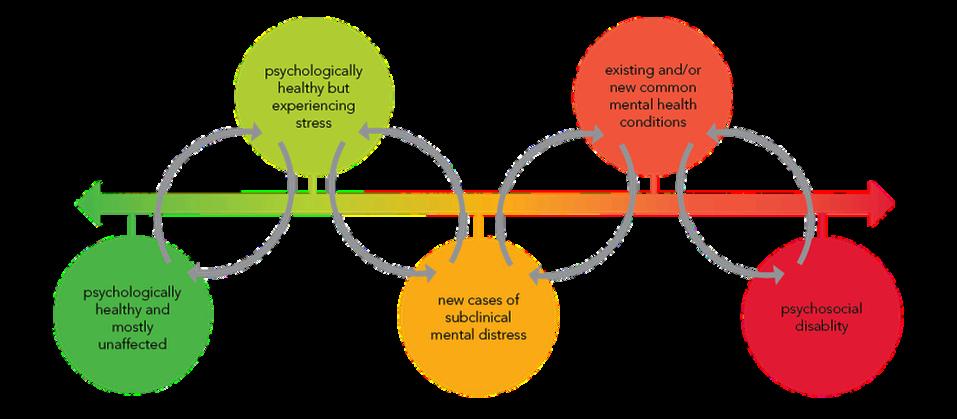
The diagram above represents how mental health is a spectrum that a person moves through their lifetime. The far left of the spectrum is when we feel mentally healthy, and the far right is when we have a psychosocial disability.
Circle 1: A state of ‘thriving’ and coping well with life. We feel good about ourselves and our relationships.
Circle 2: A state of ‘surviving’ and coping just okay with life. We feel well but are experiencing stress in one or more areas of our life.
Circle 3: A state of ‘struggling’ , while coping with daily life is difficult. We regularly feel anxious or have low mood and may turn to maladaptive behaviours to cope.
Circle 4: The onset of a mental health condition and an inability to cope with daily tasks. Timely interventions and comprehensive support are critical. With these, people with mental health conditions can experience wellbeing, thrive, and lead a satisfying life.
Circle 5: The development of a psychosocial disability. This happens if we do not receive timely interventions and our enduring mental and emotional distress, compounded by societal barriers, hinder our full participation in life and society.
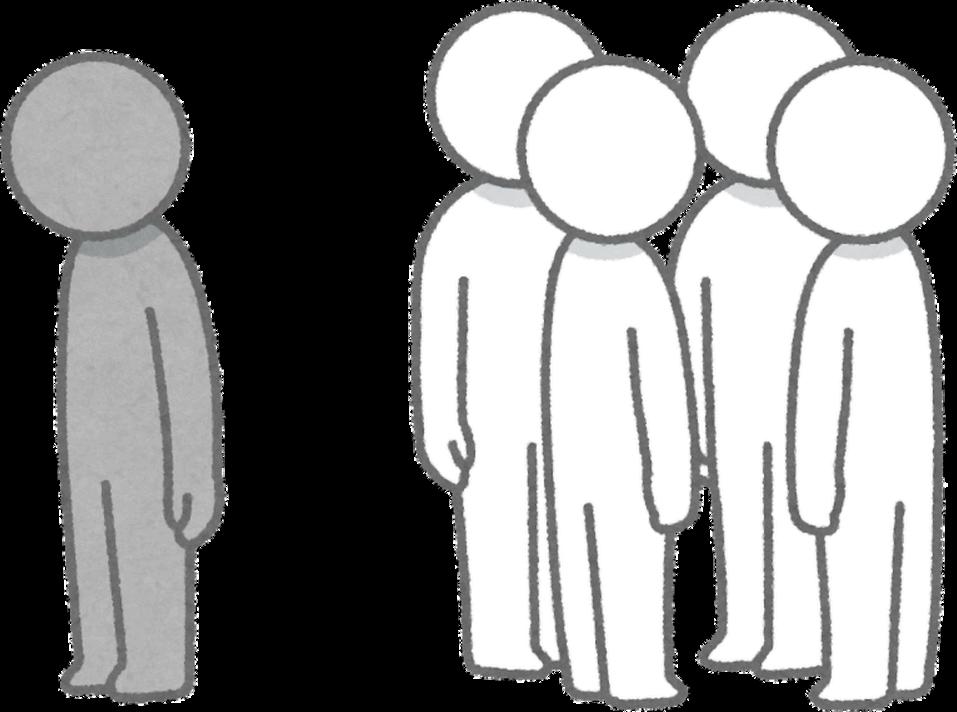
Persons with psychosocial disabilities (PD) can face many barriers to community inclusion because of their disability. Barriers may include stigma, discrimination, access to education, employment, and social benefits. These barriers can disrupt their relationships and their ability to socialise and partake in everyday community life.
How Communitybased Mental Health Care Fosters Inclusion for Persons with PD
Tailored interventions
Offering interventions designed specifically to allow individuals with PD to create links and positive relationships within the community. This can, for example, include helping to set up working arrangements with reasonable accommodations within workplaces [‘reasonable accommodation’ refers to adjustments made to a job position or work environment designed to reduce barriers that may affect an employee’s ability to work productively].
Facilitating Reconnection
Facilitating family reunification for persons with PD to be reconnected to their families.
Promoting Participation
Promoting the involvement of persons with PD to participate in decision-making. This relates to their own health and life choices, and to society as a whole
Central Gauteng Mental Health’s Mental Health Outreach Programme
The aim of the programme is to address the needs of communities living in informal settlements and hostels This project was started after reports from Central Gauteng social workers noted that there was a need for mental health care services to be made directly available to communities in informal settlements, who were facing increasing challenges related to their environments.
The programme empowers the community with information and resources, and normalises talking about mental health Social workers have seen persons with PD facing stigma within the community, and the hope is that this outreach programme will continue to promote inclusion. The programme also provides psychosocial support through counselling and support groups, and awareness through the sharing of information and mental health educational resources.
“Community-based mental health care is far more than an alternative to institutionalisation—it is a model of dignity, inclusion, and empowerment.”
– Indlela Mental Health (SAFMH Member Organisation in
the Eastern Cape)
What is Community-based Mental Health Care?
Community-based mental health organisations are non-governmental organisations that provide services outside of institutional settings, as near as possible to the places where people live and work or study
These services are informed by a person-centred recovery model, an approach that empowers individuals to direct their own care, with an emphasis on psychosocial rehabilitation and the promotion of overall well-being.
Examples of services offered by community-based mental health organisations include community residential care (including assisted living and group homes), day care services, family interventions, outpatient services, mental health services (such as counselling), and programmes aimed at economic empowerment or assisting people to access employment opportunities within the open labour market
1
PROVIDES ACCESSIBLE CARE
The provision of mental health services at community levels means people can access the care they need, including out-patient care and therapy where they live, work and study.
2
UPHOLDS HUMAN RIGHTS
Community-based mental health care aims to provide more human-rightsinformed care compared to institutional care, where persons can face social isolation, inadequate living conditions, resource shortages, and overcrowding.
3
HOLISTIC RECOVERY
Community-based mental health care links people to necessary social services and structures (e.g. housing and employment) to promote holistic recovery.

4 COST EFFECTIVE
Community-based mental health care provides care at a lower cost and is often a more cost-effective and efficient way of making use of limited resources.
What do persons with PD say
about communitybased mental health care and inclusion?
John:
“I've been at Talisman for about 18 and a half years […] And for me, Talisman is heaven on earth. It is a top-tier psychosocial rehabilitation centre. You will not get better than this. You might get equal. It's just like a private institution, even though it's partially government-funded. And they have a fantastic facilitation system where you see your facilitator every month, so you can discuss your situation and what you need from your facilitator. They're always there for you.
Also, they have an unrivalled vocational skills training programme. They call it the ‘VST programme ’ . And that's where you can really come into your own here. When I came here in 2007, I was in group therapy. They have marvellous occupational therapy groups throughout the week, and they nurture you, and once they feel that you ' re ready, they give you an opportunity to earn a stipend and to help with the running of the facility. I work in the kitchen. I've worked there since 2008, so that would be going on 18 years in August. […]. I'm second in command after the main staff member, David*. So even in December, I help run the kitchen.
And they make you feel like you ' re worth something. Imagine allowing, for some people, imagine allowing a psychiatric patient to run a kitchen. Well, I've run it since 2014, and there's been no problems, nothing's burning down […] They make you, like, I feel like I'm just living in a flat, honestly, after a while. […] I help David with ordering, we bounce ideas off each other. The humanity here, it's just, it's unrivalled."
What do persons with PD say about communitybased
mental health care and inclusion?

When asked if living at Talisman had made them feel more included in and part of their community, residents said:
Chavonne:
“Definitely. I think the one thing that stands out is that we were allowed to vote. So […] the management organised them to come to Talisman and do the voting right here on the property. So your rights aren't being violated. […] We do all these things outside of Talisman. I think that especially the five and 10K runs, there's such camaraderie when you get there. […] Yeah, and it's exuberating, you know."
John:
“Talisman endorses our reintegration back into the community. That's one of their goals. When I came here, that's what they told me. So, they have a gating system, but it's reasonable; they only have the gates closed when it's group time, and based on your capability and level of functioning, a lot of people are ungated, like myself. So even on weekends, the gates are open from 8am to 6pm. So you can basically live your life, like the [Talisman] motto says. You are part of society. You can go to church, you can go to mosque, you can go to synagogue. You can do your shopping.
They are so reasonable and open-minded. […] A lot of people do online shopping. And the fact that they allow us to use technology is amazing because that opens so many doors in today's world. I can't understand how other institutions are so sticky on that point, where you can job hunt on the internet and be part of social media and speak to your family even overseas. […] It's an outstanding way to reintegrate into the community… […] like I said […], it's like heaven, this place, because of the humanity, of the way that they uplift you. In the beginning, they're quite strict, but it's for a reason. But you are lifted up, gradually, and in a very structured way”.
What do persons with PD say about communitybased mental
health care and inclusion?
Linda:
“ ... when you speak about community, I think that includes our families.”
Chris:
[responding to Linda’s comment about the effect of the facility and its services on residents’ families]: many of us go home for holidays and weekends or whatever. So when you get there, they can actually see how stable you are and how you ' re improving, which is also part of your well-being [..]
When asked if living at Talisman had made them feel more included in and part of their community, residents said:
But I reinforce what John has said. I've spoken to other people who lived at other facilities, and you can't compare. There's no comparison. This is the premier mental health care facility, I believe in the country, and it's the benchmark, like John said as well. But I think for me […] and I've noticed it with my family and with my friends, living at Talisman, because of the good reputation it has, your family and your friends from outside actually want to interact with you more because they see that you ' re getting the best care. So that has been a huge bonus for me.
It's just [like] the interaction with family and friends has gone up a level because they respect the care and the service that you ' re getting at this premier facility. So that has been huge”.
Our Call to Action:
SAFMH believes that now is the time to recognise that mental health care belongs in communities, where people can find a sense of community, build resilience, and gain hope. Yes, there is a place and a time for hospital care, but this should only be an option when it is truly needed, in the best interest of the person. It should never be an unnecessary, long-term residential facility for people who don’t need to be there.
SAFMH recognises that South Africa has a good mental health policy and a good Mental Health Care Act. However, for these to be truly effective, implementation must be prioritised. Action needs to extend beyond promises, commitments, and talks of there being “political will”. Finances and resources need to start flowing into community-based mental health care as a matter of extreme urgency, in-line with global recommendations.
Community mental health should be at the heart of the mental health landscape in South Africa, and as such, this PDAM, we call on:
The media
To highlight the work of at least one community-based mental health organisation working to foster inclusion in their community. We also ask that when they produce stories about mental health and persons with PD, they make use of our Positive Mental Health Photo Library, which captures the heart of community-based mental health care, instead of using generic stock images. The photo library can be found here, and the photographs are free to download.
The public
To find out more about their nearest community-based mental health care organisation and see how they can support the organisations’ work.
The South African Government
To ensure they carry out the objectives set out in the Mental Health Policy Framework and Action Plan 2023-2030, with a specific focus on helping to cultivate more community-based mental health care across South Africa through increased investment and more effective partnerships with NGOs that provide such services We also challenge entire government departments (including senior officials) to visit community-based mental health organisations and to see firsthand the need for greater support
For help connecting with such an organisation, SAFMH can assist. Please contact us via info@safmh.org
References:
Lawyers for Justice (2025) Reasonable accommodation for mental health at work. Available at: https://lawyersforjustice.com/reasonable-accommodation-formental-health-at-work/ (Accessed: 4 June 2026).
National Department of Health. (2023). National Mental Health Policy Framework and Strategic Plan 2023–2030. National Department of Health, South Africa. Available at: https://www.health.gov.za/wp-content/uploads/2024/02/NationalMental-Health-Policy-framework-and-strategic-Plan-20232030.pdf.
Tomlinson, M., Kleintjes, S. & Lake, L. (eds.) (2022) South African Child Gauge 2021/2022: Child and adolescent mental health. Cape Town: Children’s Institute, University of Cape Town World Health Organisation. (2020). Social stigma associated with COVID-19. [online] Available at: https://www.who.int/publications/i/item/social-stigma-associatedwith-covid-19
World Health Organisation (2021) Guidance on community mental health services: promoting person-centred and rights-based approaches. Geneva: World Health Organisation. Available at: https://www.who.int/publications/i/item/9789240025707.
THANK YOU
The information in this concept summary can be shared and adapted by stakeholders as part of press statements, infographics, and awareness and/or programmatic interventions that are devised as part of their contributions towards the July 2026 PDAM campaign.