REPORT
2023
INTRODUCTION
Learn more about the vision and motivation behind Safe Harbor Sustainability and what to expect in our 2023 report.
Chapter
1 | SAFE HARBOR SUSTAINABILITY
Read about our 2023 performance highlights and the way we integrate sustainability into Safe Harbor's business strategy.
Chapter 2 | ENVIRONMENTAL IMPACT
Learn about our efforts to reduce our emissions footprint over time, understand and manage climate-related risk, care for coastal and marine habitats at or near our operations, and more.
4
10
28 SAFE HARBOR SUSTAINABILITY | 2023 2 1 | SAFE HARBOR SUSTAINABILITY 2 | ENVIRONMENTAL IMPACT TABLE OF CONTENTS & INTRODUCTION


Chapter 3 | SOCIAL IMPACT
Learn about our approach to caring for and cultivating our outstanding team as well as our approach to integrating sustainability into the way we serve our Members across the network.
74 FRAMEWORKS
78
Chapter 4 | WHAT'S NEXT
& ALIGNMENT
52 3 3 | SOCIAL IMPACT 4 | WHAT'S NEXT 5 | FRAMEWORKS & ALIGNMENT
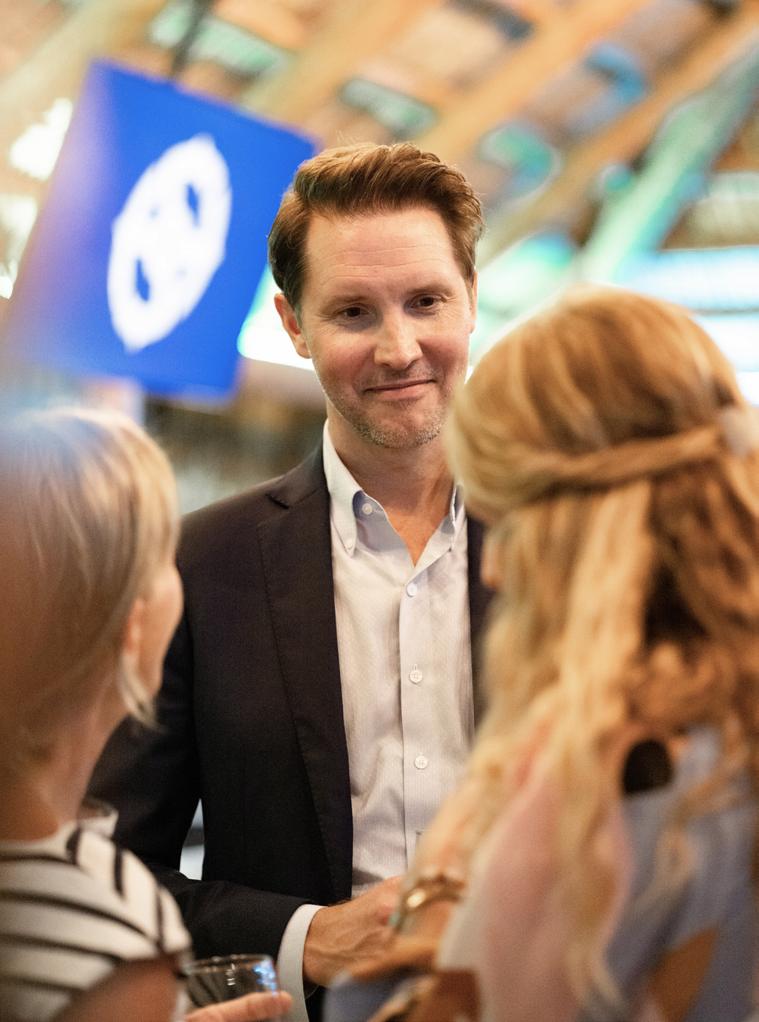 BAXTER UNDERWOOD CHIEF EXECUTIVE OFFICER
a letter from our CEO
SAFE HARBOR SUSTAINABILITY | 2023 4 1 | SAFE HARBOR SUSTAINABILITY 2 | ENVIRONMENTAL IMPACT TABLE OF CONTENTS & INTRODUCTION
"We seek to innovate in favor of the health of these precious resources. It is not a burden put on us by any outside force but is an intrinsic enterprise within us."
The pages you are about to read describe some of the intentions and ambitions that flow through Safe Harbor. We are in the process of building something beautiful, and we desire for future generations to be proud of both our efforts and our impact. We pursue this outcome through an unwavering commitment to, and rigorous service of, two key constituents: people and places.
First, a word about our people. Safe Harbor is made up of around 3,100 Teammates who serve over 48,000 boating families. This is how we think about our Teammates: they both earn and retain the right to lead in our organization through service of each other and service of our Members. Our work environment is characterized by an open diversity of experience, opinions, thoughts and ideas. This diversity is undergirded and unified by a common character trait of our Teammates; they persevere with excellence in the face of difficult obstacles. The
collective impact of this is outstanding service of our Members. Our responsibility, and our great joy, is to foster and enkindle both our Teammates and Members toward their long-term flourishing.
Similarly, we delight in stewardship of our places. At the time of publishing this report, Safe Harbor is the happy custodian of 139 waterfront properties throughout North America and the Caribbean. We seek to innovate in favor of the health of these precious resources. It is not a burden put on us by any outside force but is an intrinsic enterprise within us.
In your review of this report, you will learn some of the ways that we are caring for our people and places. We believe that doing so will yield the best possible results for our shareholders over time. We will never be satisfied or finished with this worthy endeavor, and we invite you to join us on the journey. •
5 3 | SOCIAL IMPACT 4 | WHAT'S NEXT 5 | FRAMEWORKS & ALIGNMENT
6 1 | SAFE HARBOR SUSTAINABILITY 2 | ENVIRONMENTAL IMPACT TABLE OF CONTENTS & INTRODUCTION SAFE HARBOR SUSTAINABILITY | 2023
About Our Company
Welcome to Safe Harbor’s 2023 Sustainability report.
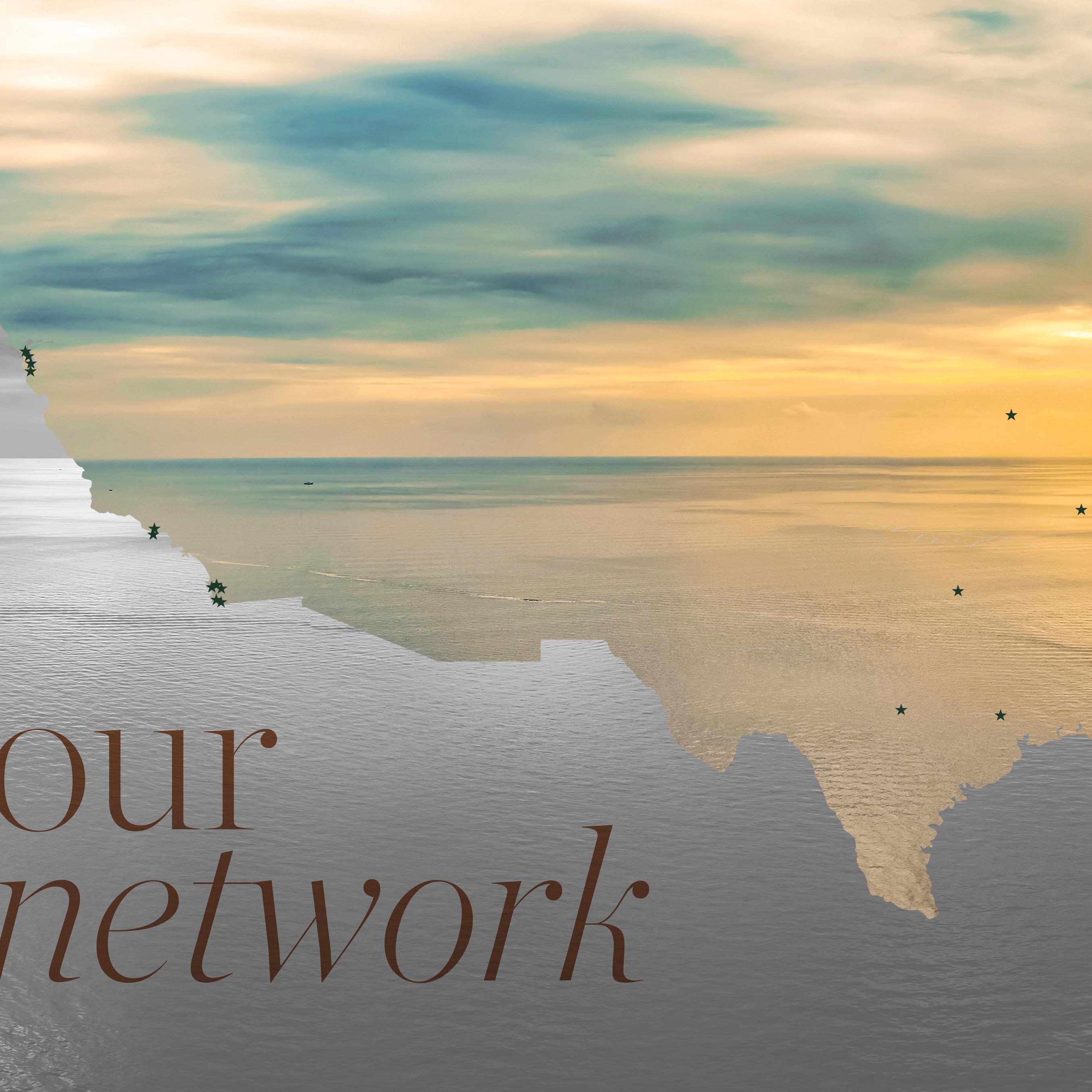
Safe Harbor Marinas, LLC (“Safe Harbor”) is the country’s largest and most diversified owner and operator of recreational marinas. We provide top-quality nautical destinations, services and hospitality at 139 locations across the United States and Puerto Rico.
Through our services, hospitality and amenities, we aim to facilitate boating experiences that connect people to each other and to the inspiring coastal, estuarine and marine habitats in which we operate.
Safe Harbor is a subsidiary of Sun Communities, Inc. (“Sun”), a publicly traded real estate investment trust (“REIT”) listed on the New York Stock Exchange with ticker symbol SUI.
About This Report
This report details progress within the Safe Harbor Sustainability program from January 1 through December 31, 2023, except where otherwise noted. In these pages, you will find updates on key programs and initiatives, as well as environmental and social Key Performance Indicators ("KPIs") specific to Safe Harbor for 2023.
Safe Harbor’s ESG data and annual highlights may also be found in Sun’s annual ESG report. The information described in this report is specific to Safe Harbor Sustainability and does not include Sun Communities. To review Sun's ESG report, which includes performance and metrics across all Sun’s consolidated subsidiary companies, please visit suninc.com/esg.
Safe Harbor reports may include restatements of information as set forth in the Global Reporting Initiative’s Universal Standards (“Standards”). This report was produced with reference to the Standards.
7 3 | SOCIAL IMPACT 4 | WHAT'S NEXT 5 | FRAMEWORKS & ALIGNMENT
SAFE HARBOR SUSTAINABILITY | 2023 8 1 | SAFE HARBOR SUSTAINABILITY 2 | ENVIRONMENTAL IMPACT TABLE OF CONTENTS & INTRODUCTION
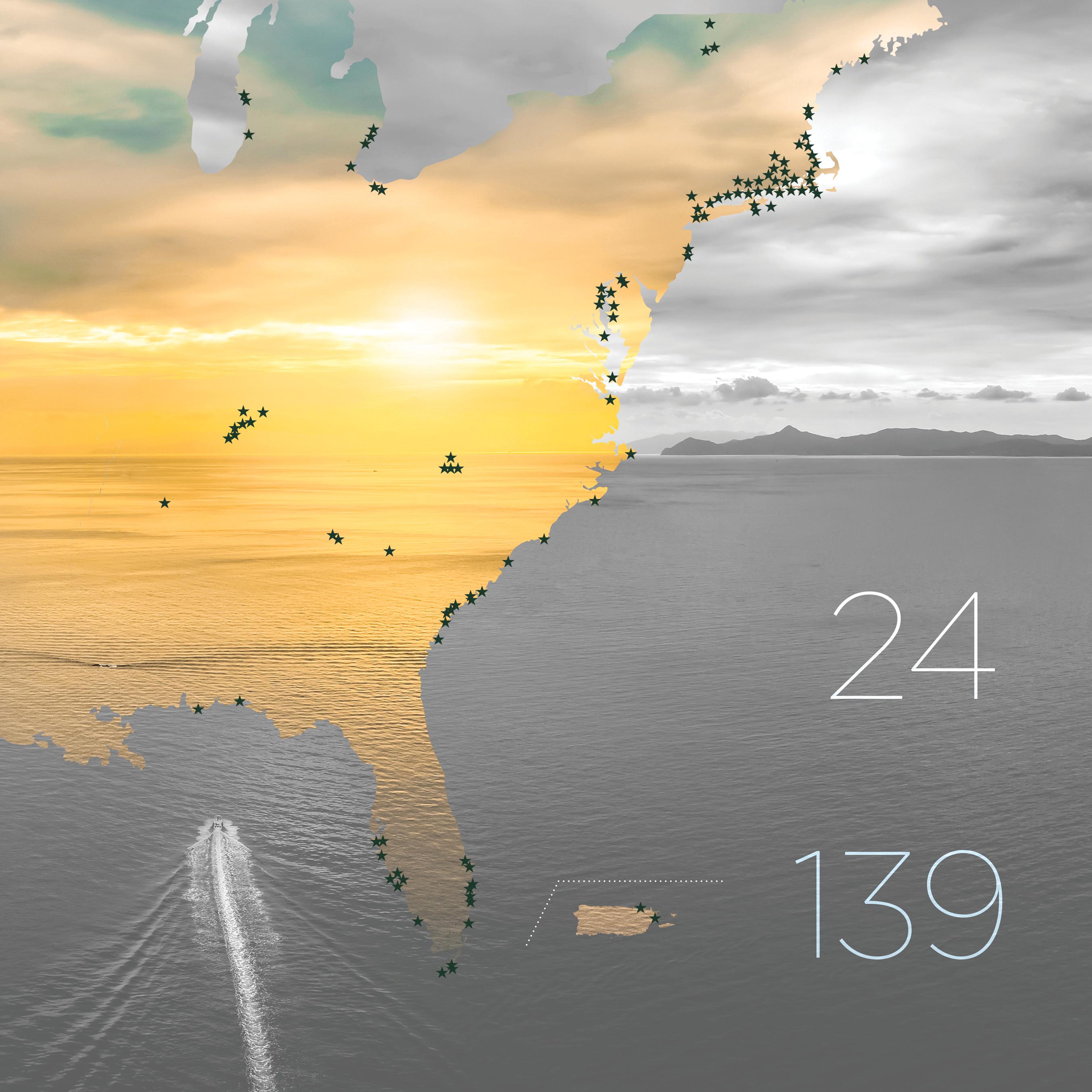
PROPERTIES
9 3 | SOCIAL IMPACT 4 | WHAT'S NEXT 5 | FRAMEWORKS & ALIGNMENT
STATES + PUERTO RICO
1 | SAFE HARBOR SUSTAINABILITY 2 | ENVIRONMENTAL IMPACT SAFE HARBOR SUSTAINABILITY | 2023 10 TABLE OF CONTENTS & INTRODUCTION
3 | SOCIAL IMPACT 4 | WHAT'S NEXT 11 5 | FRAMEWORKS & ALIGNMENT
2023 sustainability highlights
55%
Of Safe Harbor marinas are Clean Marina-certified through the Association of Marina Industries ("AMI") Clean and Resilient Marina program or state Clean Marina program equivalent

SAFE HARBOR SUSTAINABILITY | 2023 12 1 | SAFE HARBOR SUSTAINABILITY 2 | ENVIRONMENTAL IMPACT TABLE OF CONTENTS & INTRODUCTION
824
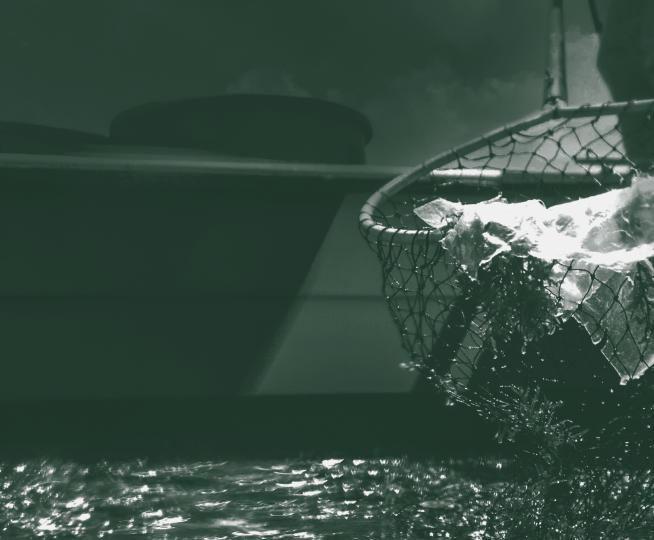
Pounds of landfill-bound waste audited at two properties as a first step in understanding our general waste streams, improving property-level waste management practices and assessing diversion opportunities
2
North Carolina properties selected by leadership for potential stewardship initiatives as part of the Coastal Habitat Enhancement Program ("CHEP")
6

Rooftop solar installations under development as of December 31, 2023


2
Properties under evaluation by an engineering and scientific consulting firm as part of our climate risk mapping and resilience planning project
3 | SOCIAL IMPACT 4 | WHAT'S NEXT 13 5 | FRAMEWORKS & ALIGNMENT
1
Management-level Teammates trained on sustainability1

6
Environmental NGO and industry stakeholders involved in development of our Coastal Habitat Enhancement Program ("CHEP")

3
Meetings of Safe Harbor's highest sustainability governance body, the Safe Harbor ESG Council
Response rate for our annual Teammate Engagement survey

2
Industry presentations on the Safe Harbor Sustainability program
197
45%
1 | SAFE HARBOR SUSTAINABILITY 2 | ENVIRONMENTAL IMPACT TABLE OF CONTENTS & INTRODUCTION SAFE HARBOR SUSTAINABILITY | 2023 14
These trainings took place virtually and in person during our operational leadership meetings for the coastal, inland lakes and West Coast regions.
Internal operational sustainability survey to assess the range of property-level sustainability measures being implemented
1
3 | SOCIAL IMPACT 4 | WHAT'S NEXT 15 5 | FRAMEWORKS & ALIGNMENT
BUILDING A SUSTAINABLE SAFE HARBOR
Who is Responsible for Safe Harbor Sustainability
Safe Harbor’s Chief Executive Officer (“CEO”) serves alongside Sun's Chairman, CEO and President and one member of Sun’s Board of Directors on Safe Harbor's Executive Committee. The Executive Committee is Safe Harbor's highest governing body. This governance structure between both companies provides opportunities for collaboration and promotes alignment between Safe Harbor’s sustainability efforts and Sun’s ESG strategy.
Safe Harbor’s Vice President (“VP”) of ESG serves on Sun’s ESG Steering Committee, which consists of representatives from all Sun subsidiaries and promotes alignment and collaboration on ESG priorities.
Additionally, Safe Harbor’s VP of ESG meets regularly with Sun’s Senior Vice President (“SVP”) of Capital Markets and Sun's VP of Sustainability. Sun's SVP of Capital Markets and VP of Sustainability provide ESG performance updates to the Sun Board of Directors.
Several executive-level Safe Harbor Teammates, including our CEO, serve on Safe Harbor’s ESG Council (“Council”).
Through the Council, our CEO provides direct oversight and input on how sustainability fits into our business strategy. We depend on close relationships and resource sharing among key departments within our company to prioritize our commitments and move proactively toward a more sustainable future.
To that end, the Council includes representatives from Safe Harbor’s Capital Expenditures, Accounting, Finance, Risk, Human Resources, Environment, Health and Safety (“EHS”), Legal and Training teams.
Our VP of ESG collaborates with the leaders across these departments, as well as personnel at Sun, with the aim of firmly integrating sustainability into business strategy. The Council convenes regularly for reports on Safe Harbor’s progress in priority areas and to approve proposals for new initiatives.
SAFE HARBOR SUSTAINABILITY | 2023 16 1 | SAFE HARBOR SUSTAINABILITY 2 | ENVIRONMENTAL IMPACT TABLE OF CONTENTS & INTRODUCTION
Since the inception of our program, Safe Harbor's CEO, Baxter Underwood, has provided direct oversight of Safe Harbor Sustainability and its integration into Safe Harbor's business strategy.
17 3 | SOCIAL IMPACT 4 | WHAT'S NEXT 5 | FRAMEWORKS & ALIGNMENT
SAFE HARBOR ESG COUNCIL EXECUTIVE COMMITTEE
 VICE PRESIDENT OF ESG
Safe Harbor Governance Structure
Highest governance body at Safe Harbor, consisting of Safe Harbor’s CEO as well as the Chairman, President and CEO of Sun, and one Sun board member.
Responsible for all sustainability-related oversight at Safe Harbor and consists of executive and management-level Teammates representing multiple company departments. The Vice President ("VP") of Environmental, Social, and Governance ("ESG") is responsible for overseeing and advancing all Safe Harbor Sustainability initiatives and annual reporting as well as providing business unit-specific data to Sun for annual portfoliowide ESG reporting.
Safe Harbor’s VP of ESG participates in regular meetings with Sun's VP of Sustainability and SVP of Capital Markets to ensure alignment on strategy and
A B C
A B C 1 | SAFE HARBOR SUSTAINABILITY 2 | ENVIRONMENTAL IMPACT SAFE HARBOR SUSTAINABILITY | 2023 18 TABLE OF CONTENTS & INTRODUCTION
ERM COMMITTEE D EHS COMMITTEE E COASTAL & MARINE STEWARDSHIP WORKING GROUP F TEAMMATE WELL-BEING WORKING GROUP
reporting. Safe Harbor's VP of ESG also supports Sun’s Investor Relations Department on marinaspecific ESG content for investor property tours and question & answer sessions on an as-needed basis.
The Enterprise Risk Management ("ERM") Committee, which focuses on Safe Harbor-specific risks, is responsible for evaluating the results of annual Safe Harbor's ERM survey, identifying the biggest business risks and developing action plans for risk mitigation each year. These include ESG risks posed by climate change and potential business impacts from climate disclosure regulations.
Results of risk assessments are regularly shared between individual Safe Harbor and Sun departments and at the executive level.
Provides oversight on all EHS programs and helps to advance improvements to our program and protocols.
Reviews and provides input on developmental milestones and strategy for Safe Harbor’s Coastal Habitat Enhancement Program.
Provides oversight and input on the Teammate engagement process and includes central services and operations representatives.
E F G D
3 | SOCIAL IMPACT 4 | WHAT'S NEXT 19 5 | FRAMEWORKS & ALIGNMENT
G
Safe Harbor's 2023
Sustainability
framework is intended to complement Sun's portfolio-wide strategy.
Sun Communities Business Impact
Executive Leadership
Stakeholders
Climate Change
Resource Use
Talent Management
Customers
Safe Harbor's Current Priorities & Alignment
Risk management
Industry leadership & innovation
Climate risk management (physical and transitional)
Resilience and hazardous weather planning
Habitat enhancement and conservation
Clean energy and electrification
Certifications
Compliance
Culture
Recruitment and retention
Training and development
Health and safety
Member service
SAFE HARBOR SUSTAINABILITY | 2023 20 1 | SAFE HARBOR SUSTAINABILITY 2 | ENVIRONMENTAL IMPACT TABLE OF CONTENTS & INTRODUCTION
HOW WE PRIORITIZE
We believe that the long-term success of our business depends in part on how carefully we prioritize and address Safe Harbor's ESGrelated risks and opportunities. We re-evaluate periodically what is material for Safe Harbor in light of changes to the business, regulation, capital markets and stakeholder expectations.
Safe Harbor’s approach was formulated through a formal materiality assessment using input from Teammates, Members, and business leadership, as well as consideration of our parent company Sun’s ESG priorities. Sun references widely used ESG protocols to help define the scope of its initiatives and to provide a current framework for identifying and prioritizing disclosures, a process that Safe Harbor supports and adds to by developing programs consistent with sustainability priorities and providing data to meet disclosure requirements.
21 3 | SOCIAL IMPACT 4 | WHAT'S NEXT 5 | FRAMEWORKS & ALIGNMENT
OUR APPROACH TO RISK MANAGEMENT
Operating a large portfolio of waterfront marina properties throughout the United States presents unique risks— environmental and otherwise—as well as opportunities.
We engage in an ERM process that involves four meetings total, a comprehensive business risk survey circulated to managementlevel Teammates and one in-person management-level meeting to review survey results, discuss outcomes and assign action plans to relevant departments and Teammates. Safe Harbor also participates in Sun's ERM process.
SAFE HARBOR SUSTAINABILITY | 2023 22 1 | SAFE HARBOR SUSTAINABILITY 2 | ENVIRONMENTAL IMPACT TABLE OF CONTENTS & INTRODUCTION
Climate
Executive and management-level leadership is regularly informed about physical climate-related risks to our business, which include risks from severe storms. For example, in the days and hours leading up to a storm making landfall, leadership tracks real-time storm activity and maintains close, regular communication with Regional Vice Presidents ("RVPs") in affected regions.
Our RVPs are responsible for taking care to execute all steps in our Hazardous Weather Plan – for example, vessel removal, sealing Hazardous Materials Management (“HAZMAT”) containers, shutting off electricity and water and draining fuel lines – and for apprising leadership of preparations. For more information on our approach to managing climaterelated risks and opportunities, please see page 34 of this report.
Our Expectations
We expect the highest degree of professionalism from all Teammates, contractors, third parties and joint venture partners at Safe Harbor. To that end, all Teammates, contractors, third parties and joint venture partners are expected to abide by our Code of Ethics and Business Conduct (“Code”),2 which includes policies and guidelines for ethical business operations.
2Our Code includes policies and procedures pertaining to the following: ethics reporting, non-retaliation, diversity and non-discrimination, anti-harassment, workplace health and safety, honest and fair dealing, due diligence, conflicts of interest, gifts and entertainment, parameters for working with government, information and asset protection, anticorruption and bribery, and anti-money laundering.
23 3 | SOCIAL IMPACT 4 | WHAT'S NEXT 5 | FRAMEWORKS & ALIGNMENT
LEADING AN INDUSTRY
We believe that our growth and scale come with great responsibility toward our Teammates, Members, communities, the natural environment and other stakeholders. Our Teammates, including our VP of ESG, regularly contribute to the evolving conversation on sustainability in the marine services, recreational boating and superyacht industries in both national and international forums.
SAFE HARBOR SUSTAINABILITY | 2023 24 1 | SAFE HARBOR SUSTAINABILITY 2 | ENVIRONMENTAL IMPACT TABLE OF CONTENTS & INTRODUCTION
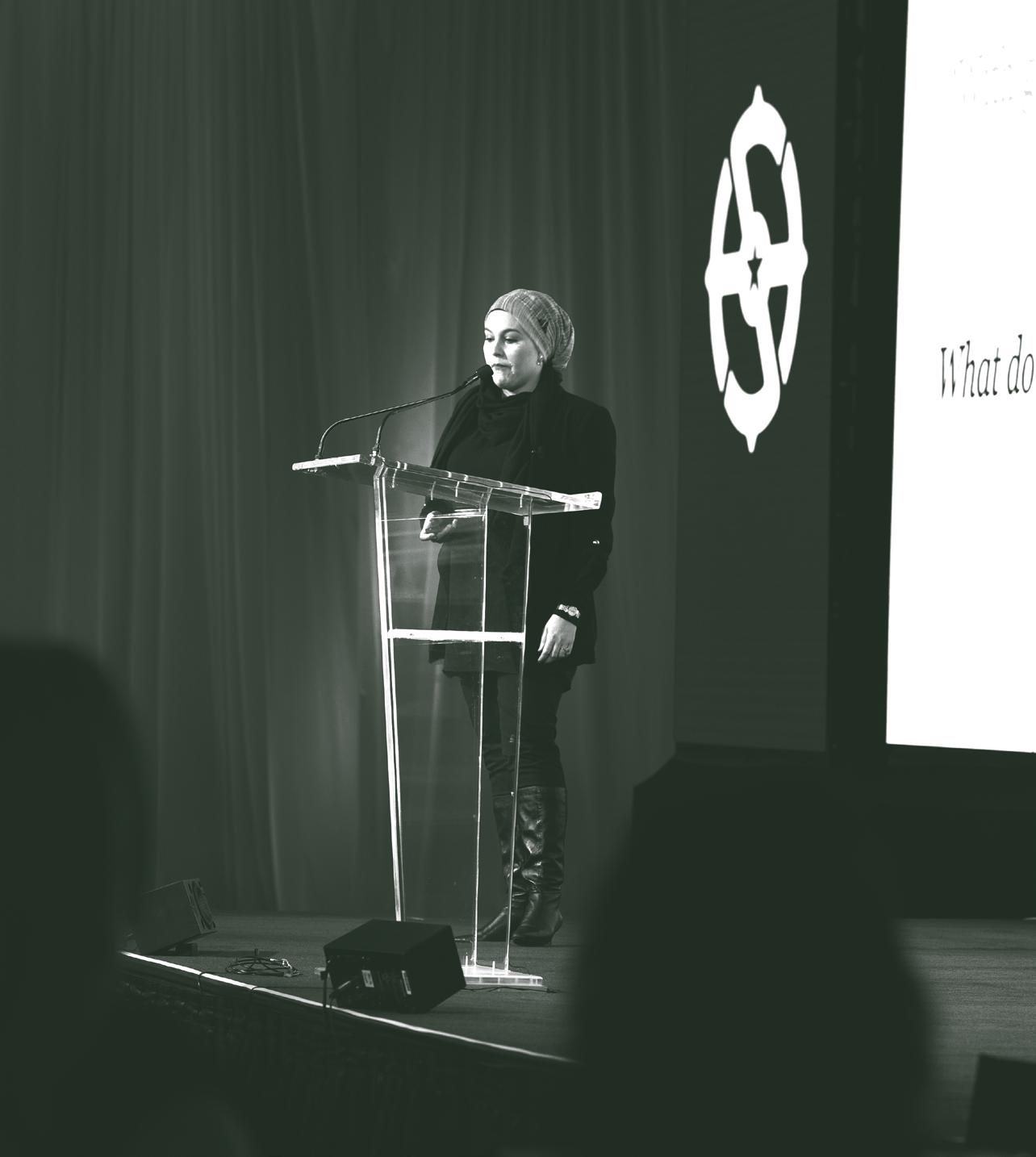
Our VP of ESG presented on the Safe Harbor Sustainability program to members of the Association of Marina Industries twice in 2023.
25 3 | SOCIAL IMPACT 4 | WHAT'S NEXT 5 | FRAMEWORKS & ALIGNMENT
Working Toward Clean Marina Standards
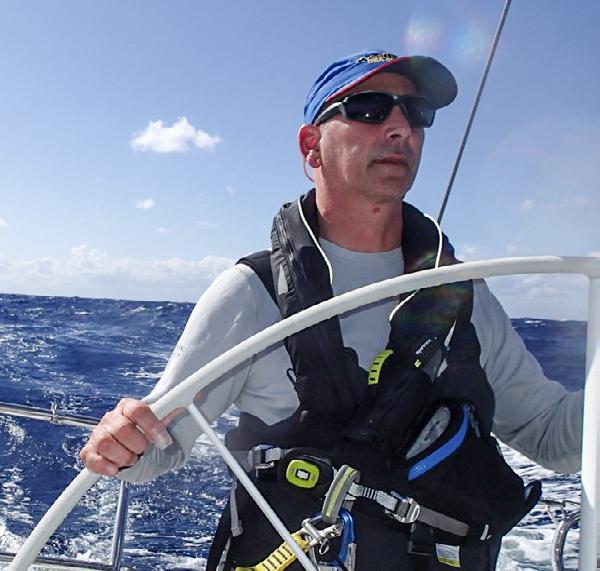
MARK AMARAL
EXECUTIVE MEMBER OF THE ASSOCIATION OF MARINA INDUSTRIES & MEMBER OF SAFE HARBOR'S EXTERNAL COASTAL CONSERVATION ADVISORY BOARD
While the environment has always been important to recreational boaters, corporate sustainability is new to our industry.
Mark Amaral, who currently serves on the executive team of the Association of Marina Industries (“AMI”), has dedicated most of his career to guiding the marina business toward alignment with Clean Marina standards. Mark is also involved in Safe Harbor’s Coastal Conservation Advisory Board (“CCAB”), our expert advisory group consisting of representatives from three environmental nonprofits in addition to AMI.
Q: A:
How has sustainability thinking evolved in the industry over time?
"Conversations on sustainability in the marina industry have been around for a long time. I think we all know that the ability to enjoy recreational boating depends on clean water. After all, we are part of an industry driven by consumers and demand for nice boating experiences.
1 | SAFE HARBOR SUSTAINABILITY 2 | ENVIRONMENTAL IMPACT SAFE HARBOR SUSTAINABILITY | 2023 26 TABLE OF CONTENTS & INTRODUCTION
The early conversations were really limited to how to handle boat sewage though. Now I think the industry is growing and becoming more sophisticated on this, and the learning is happening more rapidly as the definition of sustainability expands. Water quality issues are important of course, but there is now more interest in taking on issues like renewable energy and climate change too.”

What are the biggest challenges for our industry in working toward a more sustainable future?
“To me, clean water is a somewhat more straightforward thing to work on. The next big challenge is going to be how to make marinas more resilient because stronger storms are coming and will come more frequently.
Resilience at marinas is now part of the everyday conversation, but it is a lot more complicated to address than earlier environmental compliance problems. For example, The AMI Clean and Resilient Marina program has resilience best management practices in its certification checklist alongside compliance items. But the list of measures required to improve resilience can be expensive.
That said, I think the cost of property insurance is going to drive a lot of this work. Larger portfolios like Safe Harbor that are early adopters of sustainability programs and are well-positioned to lead the industry in terms of thinking on resilience best practices and other sustainability issues.”
What are the unique opportunities?
“This work is becoming much more attainable with the changing structure of our industry. There are more companies like Safe Harbor with larger marina portfolios now, and it will take their leadership to raise the profile for the broader industry. That means more monetary resources being dedicated and an investment in the human resources, expertise and knowledge necessary to bring about positive changes.
I particularly love the idea of programs that connect the marina business with local ecosystems and communities. I think it will be very exciting to see what lessons are learned and where this kind of programming can take the industry as a whole.”
One aim of Safe Harbor's Coastal Habitat Enhancement Program ("CHEP") in particular is to develop stewardship approaches at or near our properties that benefit local habitats and communities. We welcome industry collaboration as part of our sustainability efforts. Over the long term, we hope to engage others within the marina business, as well as sailing and boating communities, to tackle some of the biggest environmental challenges that lie ahead. •
Q:
27 3 | SOCIAL IMPACT 4 | WHAT'S NEXT 5 | FRAMEWORKS & ALIGNMENT
Q: A: A:
1 | SAFE HARBOR SUSTAINABILITY 2 | ENVIRONMENTAL IMPACT SAFE HARBOR SUSTAINABILITY | 2023 28 TABLE OF CONTENTS & INTRODUCTION
3 | SOCIAL IMPACT 4 | WHAT'S NEXT 29 5 | FRAMEWORKS & ALIGNMENT
Improving Local Habitats
We operate in the unique natural spaces where land meets water. We aim to continually refine our approach to stewarding these precious coastal, shoreline and estuarine environments.
Our commitment to stewardship began with a desire to improve habitats at or near marinas themselves. Our Coastal Habitat Enhancement Program (“CHEP,” formerly “Coastal Habitat Restoration Program”) launched with the goal of developing a method of assessing both the potential environmental and operational benefits of various projects.
This culminated in the selection of four Rhode Island pilot marinas for the CHEP. Rhode Island was selected due to the diversity of marina types in the state, as well as the relative proximity of key Teammates involved in management of the program.
Specific stewardship opportunities identified at those properties include habitat “give-backs” through removal of old infrastructure, shoreline stabilization, stormwater drainage improvements, invasive species removal and marine debris cleanup. Selection of pilot properties and prioritization of opportunities required expertise from within our team, as well as our Coastal Conservation Advisory Board, which includes representatives from three local and national nonprofit stakeholders and one industry association.
The Rhode Island projects are currently in the assessment and planning phase and are expected to be included in larger property improvement projects that are planned to commence in 2024.
1 | SAFE HARBOR SUSTAINABILITY 2 | ENVIRONMENTAL IMPACT SAFE HARBOR SUSTAINABILITY | 2023 30 TABLE OF CONTENTS & INTRODUCTION
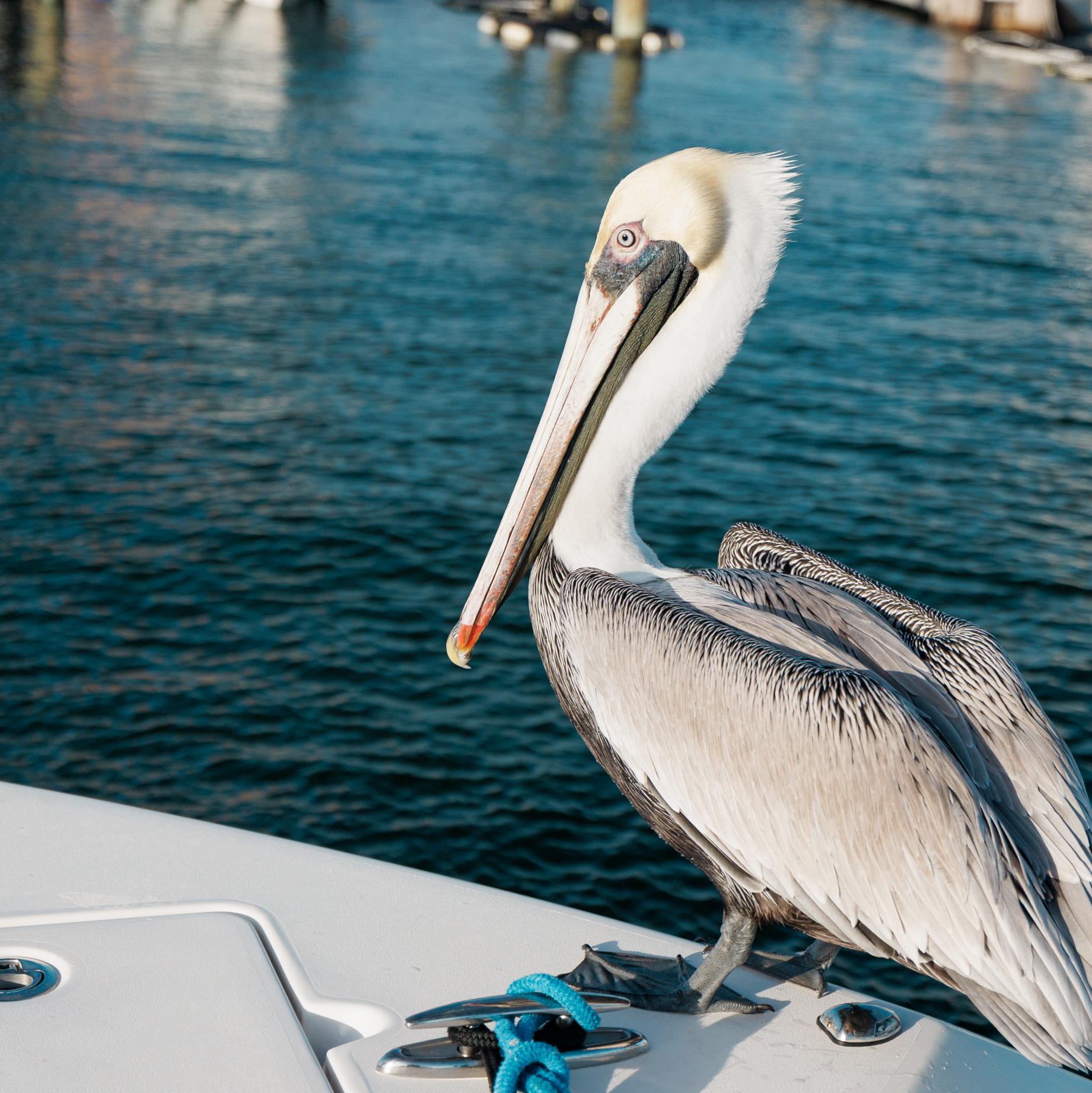
We operate in the unique natural spaces where land meets water. We aim to continually refine our approach to stewarding these precious coastal, shoreline and estuarine environments.
3 | SOCIAL IMPACT 4 | WHAT'S NEXT 31 5 | FRAMEWORKS & ALIGNMENT
SAFE HARBOR SUSTAINABILITY | 2023 32 1 | SAFE HARBOR SUSTAINABILITY 2 | ENVIRONMENTAL IMPACT TABLE OF CONTENTS & INTRODUCTION
Expanding our Stewardship
In 2023, our team explored strategic partnerships that would help us identify stewardship opportunities at or near our properties outside of Rhode Island. In late 2023, we engaged two prominent environmental nonprofit organizations with expertise in coastal and estuarine environments to begin scaling the CHEP. In 2024, we aim to expand our efforts in conservation and in-kind support initiatives at or near two North Carolina marinas.
ENVIRONMENTAL NGO & INDUSTRY STAKEHOLDERS ENGAGED AS PART OF CHEP DEVELOPMENT
RHODE ISLAND 2023
NORTH CAROLINA 2024
Mapping Biodiversity & Water Scarcity Risk
This year, we evaluated Safe Harbor properties for water and biodiversity risk. The results of this analysis will be used to develop property-specific strategies, such as infrastructure upgrades and measures to reduce water consumption, for mitigating those risks.
6 33 3 | SOCIAL IMPACT 4 | WHAT'S NEXT 5 | FRAMEWORKS & ALIGNMENT
2023 Marina Resilience Improvements
43,082
FIXED DOCKS REPLACED WITH FLOATING DOCKS to better withstand wave action and water level fluctuations
Managing Climate-Related Risk
We continue to work toward alignment with the Recommendations of the Task Force on Climate-related Financial Disclosures ("TCFD") as a means of improving our risk management controls to better account for the many impacts of climate change on our business.
As a portfolio of coastal and waterfront properties, we are uniquely exposed to physical risks from climate change, including, but not limited to, hurricanes, tropical storms, flooding and sea level rise. As a result, we regularly invest in measures to increase property-level resilience and reduce
impacts from flooding and stormwater runoff. We also maintain a Hazardous Weather Plan that provides propertylevel step-by-step guidance on how to prepare for and mitigate losses from major weather events. Overall, referencing the TCFD as a guide helps us identify areas of risk management that we want to improve and prioritize.
linear ft. SAFE HARBOR SUSTAINABILITY | 2023 34 1 | SAFE HARBOR SUSTAINABILITY 2 | ENVIRONMENTAL IMPACT TABLE OF CONTENTS & INTRODUCTION
4,517
26
STORMWATER IMPROVEMENT PROJECTS
3,505
WAVE ATTENUATION STRUCTURES UPGRADED OR INSTALLED to minimize wave energy and height
BULKHEAD AND/OR SEAWALL UPGRADED OR REPLACED to protect against erosion and wave action
10
UNDERGROUND STORAGE TANKS REPLACED WITH ABOVE-GROUND STORAGE TANKS
linear ft. linear ft. 35 3 | SOCIAL IMPACT 4 | WHAT'S NEXT 5 | FRAMEWORKS & ALIGNMENT
Managing Climate-Related Risk
continued
Understanding risk across an expansive and unique portfolio presents challenges. In 2023, we engaged an engineering and scientific consulting firm to assist with a marina-specific physical climate risk assessment. The long-term aim of this program is to holistically assess property-level risk exposure and to further refine our approach to resilience, capital improvements, acquisitions and emergency response.
We also work to manage risks stemming from the anticipated transition to a low-carbon economy. For example, in an effort to prepare for a future with what we expect will be more stringent legislative and regulatory climate disclosure requirements, we aim to improve data collection and disclosure strategies. In particular, we work with our parent company Sun to provide annual emissions data and address gaps in Safe Harbor’s greenhouse gas ("GHG") inventory each year to improve data accuracy and integrity.
To view the portfolio’s overall progress in tracking and reducing emissions, please refer to the "Measurements" section in Sun's 2023 ESG Report at suninc.com/esg
SAFE HARBOR SUSTAINABILITY | 2023 36 1 | SAFE HARBOR SUSTAINABILITY 2 | ENVIRONMENTAL IMPACT TABLE OF CONTENTS & INTRODUCTION
Our business presents unique opportunities to focus on issues related to a more sustainable future.
Realizing Opportunities
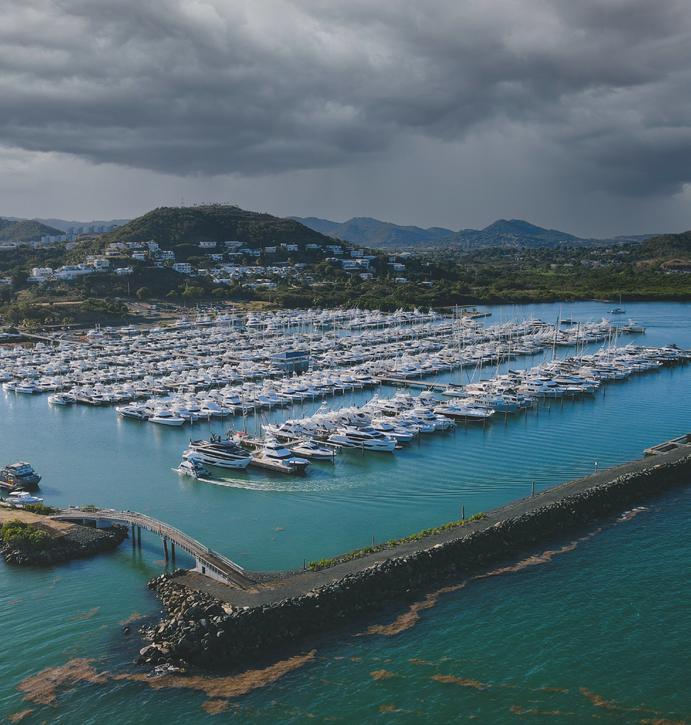
Our business presents unique opportunities to focus on issues related to a more sustainable future. For example, our vast waterfront footprint provides opportunities to explore resilience solutions particular to waterfront infrastructure such as nature-based stormwater management controls and floating docks. Also, we provide service and storage opportunities for vessels engaged in marine research and post-storm marine debris cleanup efforts.
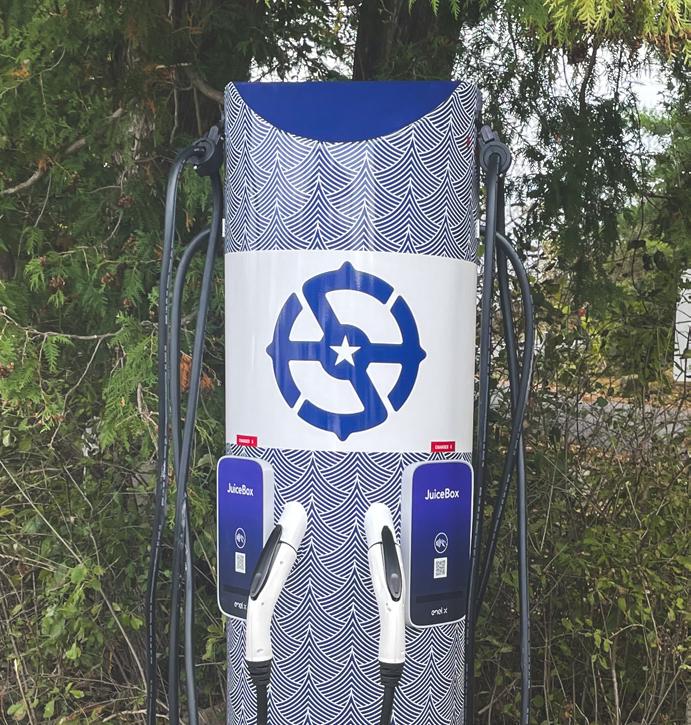
Additionally, Safe Harbor’s efforts to reduce emissions and leverage new opportunities include installation of rooftop solar and electric vehicle ("EV") charging infrastructure at select properties, investments in all-electric heavy equipment and all-electric courtesy vessels and golf carts. We are also actively exploring opportunities to improve energy efficiency at our marinas.
37 3 | SOCIAL IMPACT 4 | WHAT'S NEXT 5 | FRAMEWORKS & ALIGNMENT
Renewable Energy
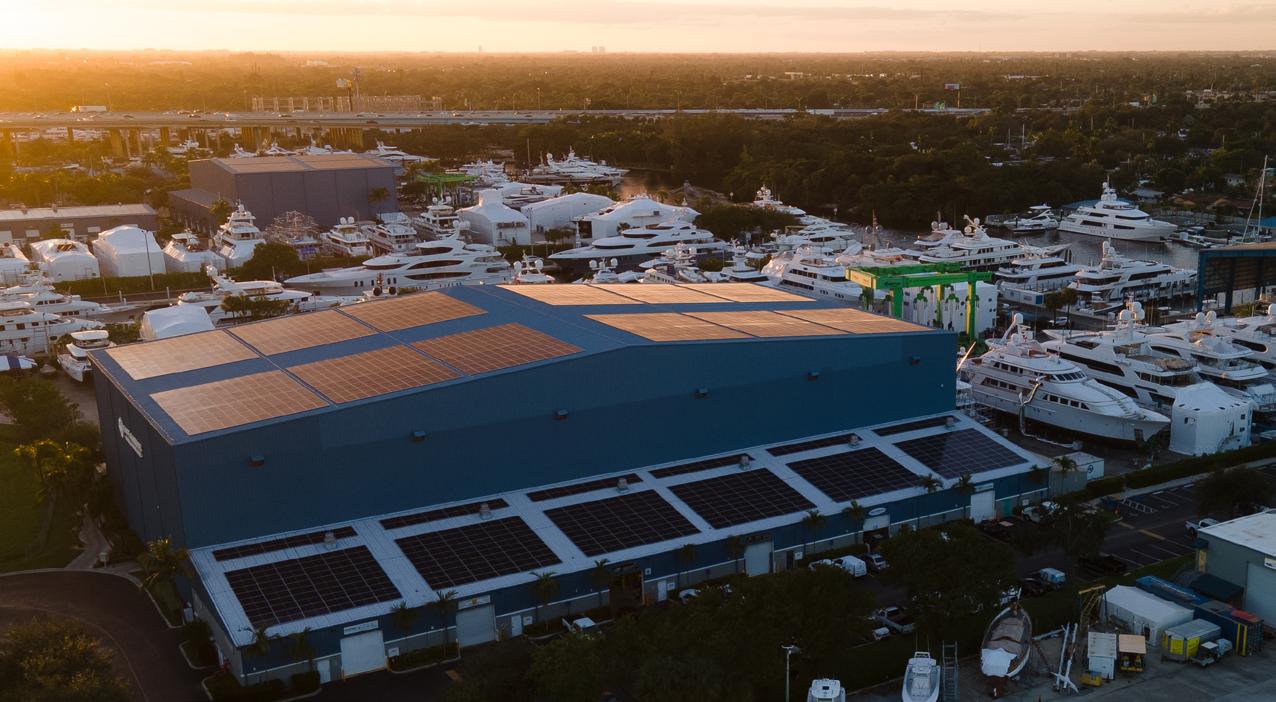
Safe Harbor continued to expand its evaluation of rooftop solar opportunities in 2023 in addition to generating 576 MWh of solar power at three properties: Safe Harbor Vineyard Haven, Pilot's Point and Puerto Del Ray.
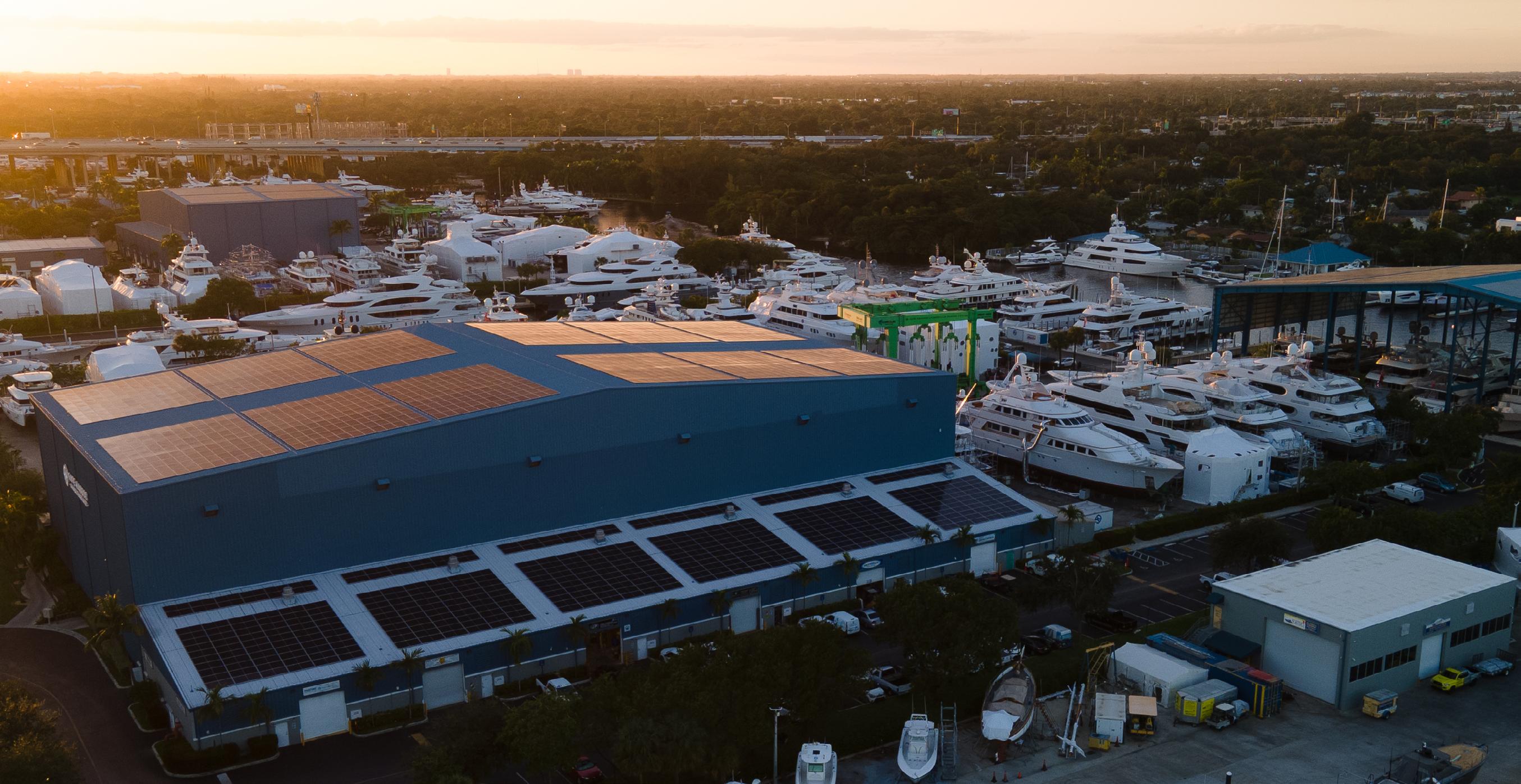
We expect our 2.67 MW, 200,000 square foot rooftop solar installation at Safe Harbor Lauderdale Marine Center to be operational in 2024. An additional five new rooftop solar projects were approved at properties in Maine, Massachusetts, and Rhode Island, with a combined 1.85 MW generating capacity. Each of these projects will include EV chargers and are expected to be completed in 2024 and 2025.
We continue to identify and evaluate rooftop solar options across our network based in part on property-level energy needs, utility costs, available incentives and existing rooftop conditions on upland storage buildings.
6 ROOFTOP SOLAR PROJECTS UNDER DEVELOPMENT
576 MW h OF SOLAR ENERGY GENERATED as of December 31, 2023 in 2023

SAFE HAR BOR SUSTAINABILITY | 2023 38 1 | SAFE HARBOR SUSTAINABILITY 2 | ENVIRONMENTAL IMPACT TABLE OF CONTENTS & INTRODUCTION
39 3 | SOCIAL IMPACT 4 | WHAT'S NEXT 5 | FRAMEWORKS & ALIGNMENT
Sustainability in Project Planning
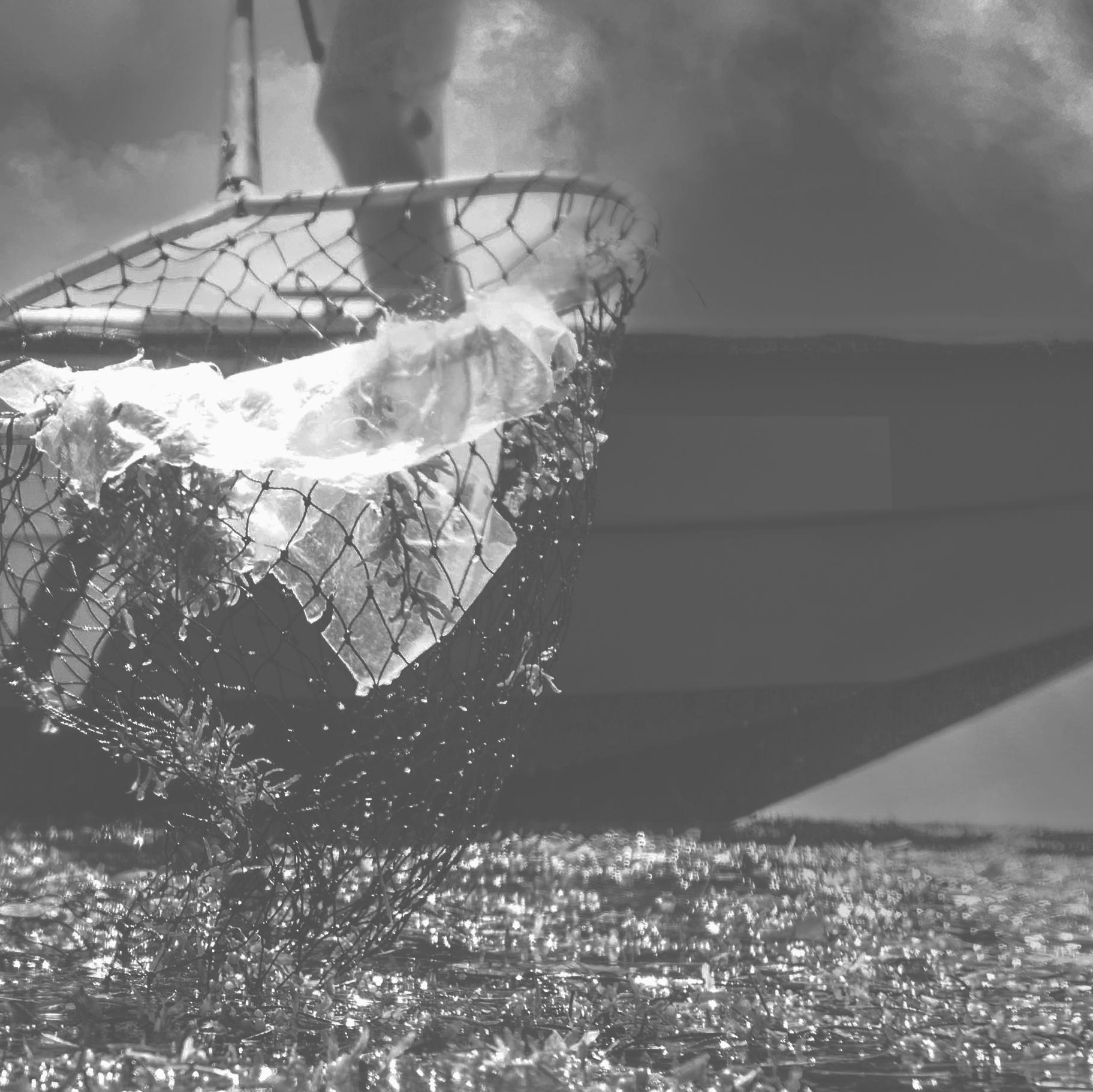
In late 2023, we introduced sustainability criteria into our growth capital expenditure approval system. These criteria include measures like solar-ready roofing, smart metering, efficient appliances and fixtures, as well as nature-based stormwater options for large projects. This is a positive step that will require Safe Harbor project managers, contractors and operations teams to proactively incorporate measures into new projects that align with our sustainability goals where feasible and applicable.
SAFE HARBOR SUSTAINABILITY | 2023 40 1 | SAFE HARBOR SUSTAINABILITY 2 | ENVIRONMENTAL IMPACT TABLE OF CONTENTS & INTRODUCTION

As of December 31, 2023 of Safe Harbor Properties are fully Clean Marina-certified3 of Safe Harbor properties have certifications in process
toward the goal of 100% certification for all Safe Harbor properties
Toward 100% Clean Marina Certification
Achieving Clean Marina certification for Safe Harbor properties was a key priority for 2023.
As of December 31, 2023, 55% of our marinas were Clean Marina-certified through the Association for Marina Industries’ (“AMI”) Clean and Resilient Marina program or the state program equivalent. The AMI certification checklist requirements are rigorous, incorporating concepts like water conservation, resilience, and drought-resistant landscaping. In 2024, we intend to continue to work toward our goal of 100% certification for all marinas in our portfolio.
3In 2022, we erroneously reported that 60% of our properties were certified. Our process for tracking and verifying complete certifications was revised to prevent future tracking and reporting errors.
55% 74%
19%
41 3 | SOCIAL IMPACT 4 | WHAT'S NEXT 5 | FRAMEWORKS & ALIGNMENT
Audits conducted in 2023 revealed initial insights into marina waste streams, highlighting opportunities for improved material diversion and waste management practices.
Developments in Waste Management
We believe one of our industry’s biggest opportunities for managing environmental impact relates to pollution runoff – particularly stormwater and used oil.
Our business is subject to a variety of environmental laws and regulations to help mitigate these impacts, including, among others, the Clean Water Act and associated stormwater regulations. To address this opportunity and to help our business comply with such laws and regulations, for example, we seek to ensure that each marina has a proper Stormwater Pollution Prevention Plan (“SWPPP”) and Spill Prevention Control and Countermeasure Plan (“SPCC” Plan) in place, where applicable.
Our business also includes handling and disposal of various waste types, including contaminated gasoline and diesel fuel, used oil, black water and hazardous waste. We have internal policies and procedures that guide proper management of these wastes.
Also, in an effort to lower costs and streamline our approach to waste management, we engaged a third party to provide logistical support for on-site waste management, a waste data baseline, and waste-tolandfill audits along with recommendations for improvement.
In 2023, we completed audits at properties in Rhode Island and California, which were chosen because of the differences in marina type and state waste regulatory program. Both audits provided initial insights into marina waste streams and highlighted multiple site-level opportunities for improved bin placement, signage, and education on recyclable and non-recyclable materials to improve diversion. We intend to engage our operations teams on next steps for implementing some or all of the recommendations more broadly across the network.
SAFE HARBOR SUSTAINABILITY | 2023 42 1 | SAFE HARBOR SUSTAINABILITY 2 | ENVIRONMENTAL IMPACT TABLE OF CONTENTS & INTRODUCTION

10LBS
OF LANDFILL-BOUND WASTE AUDITED at two properties as a first step in understanding our general waste streams, improving property-level waste management practices, and assessing diversion opportunities.
824 LBS
3 | SOCIAL IMPACT 4 | WHAT'S NEXT 43 5 | FRAMEWORKS & ALIGNMENT
Electrification of Equipment & Transportation
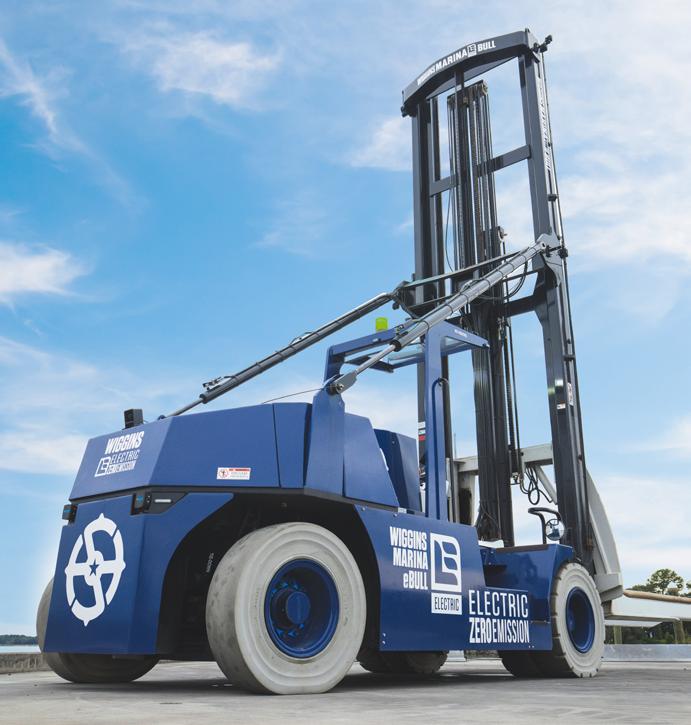
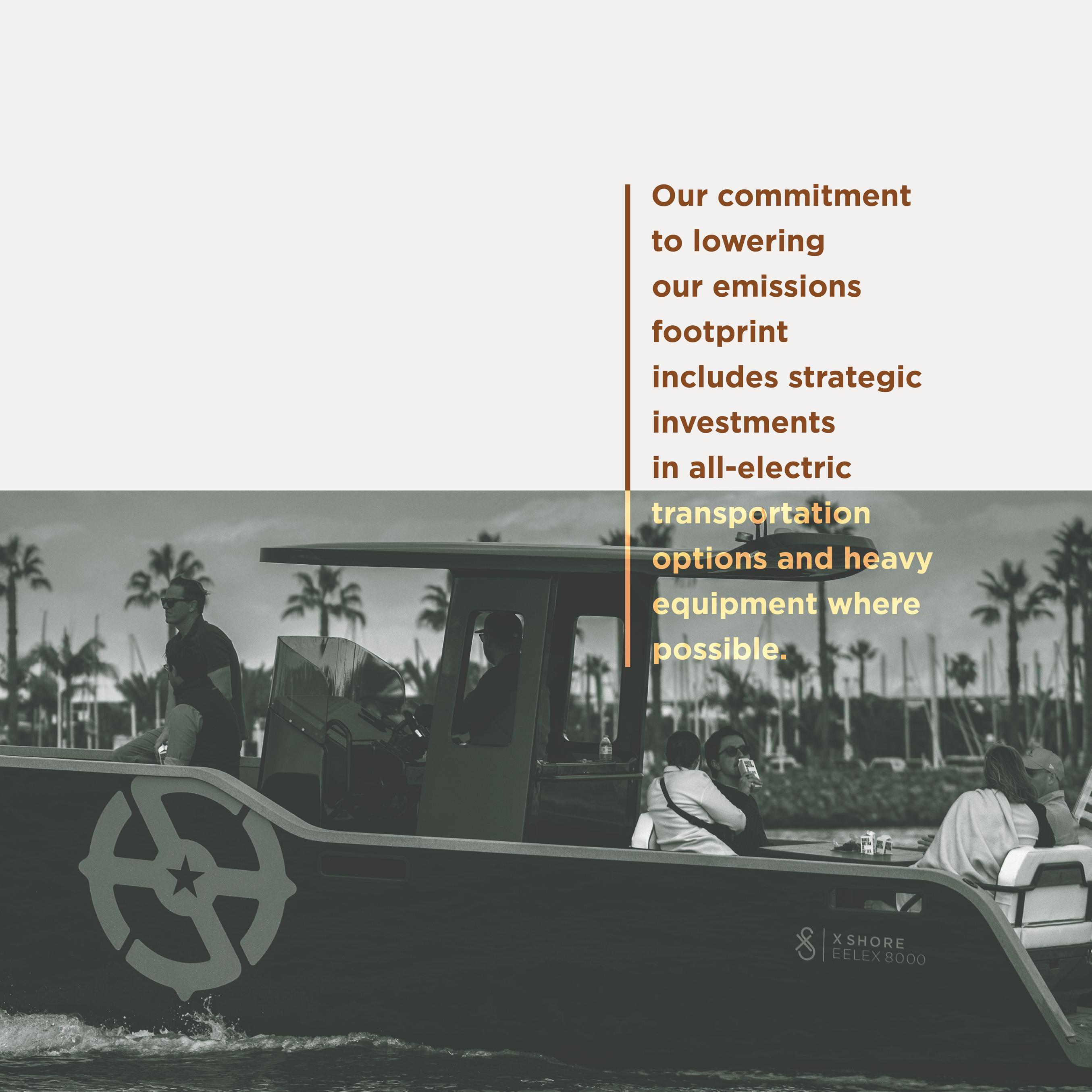
As part of our broader commitment to lowering our emissions footprint, we continue to make strategic investments in all-electric transportation options and heavy equipment where possible.
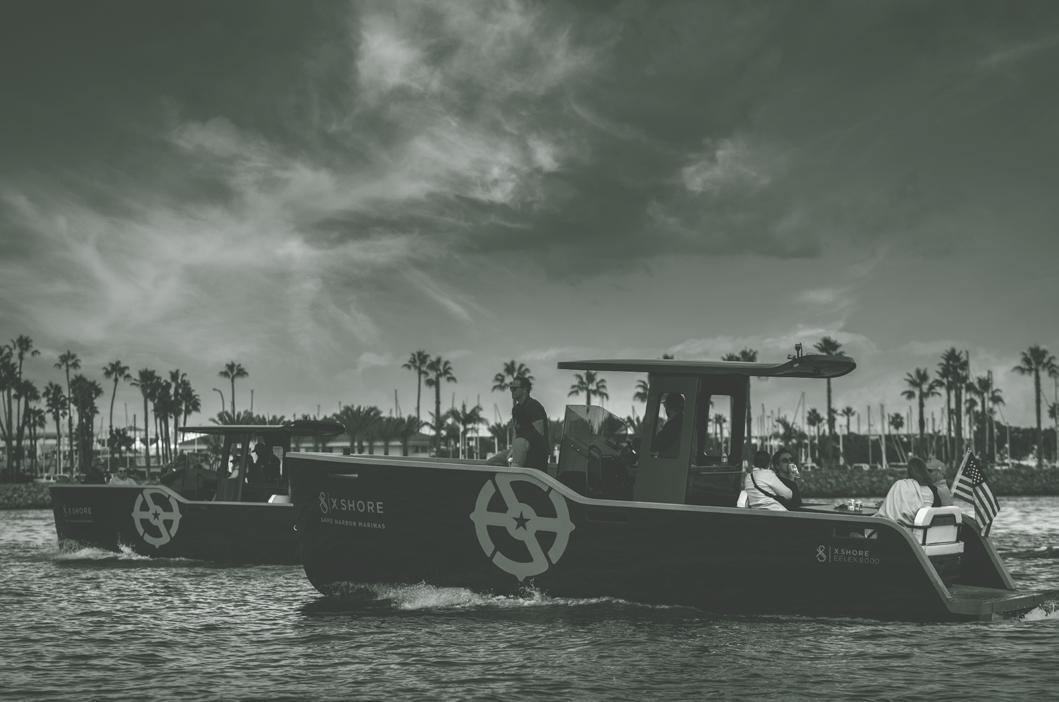
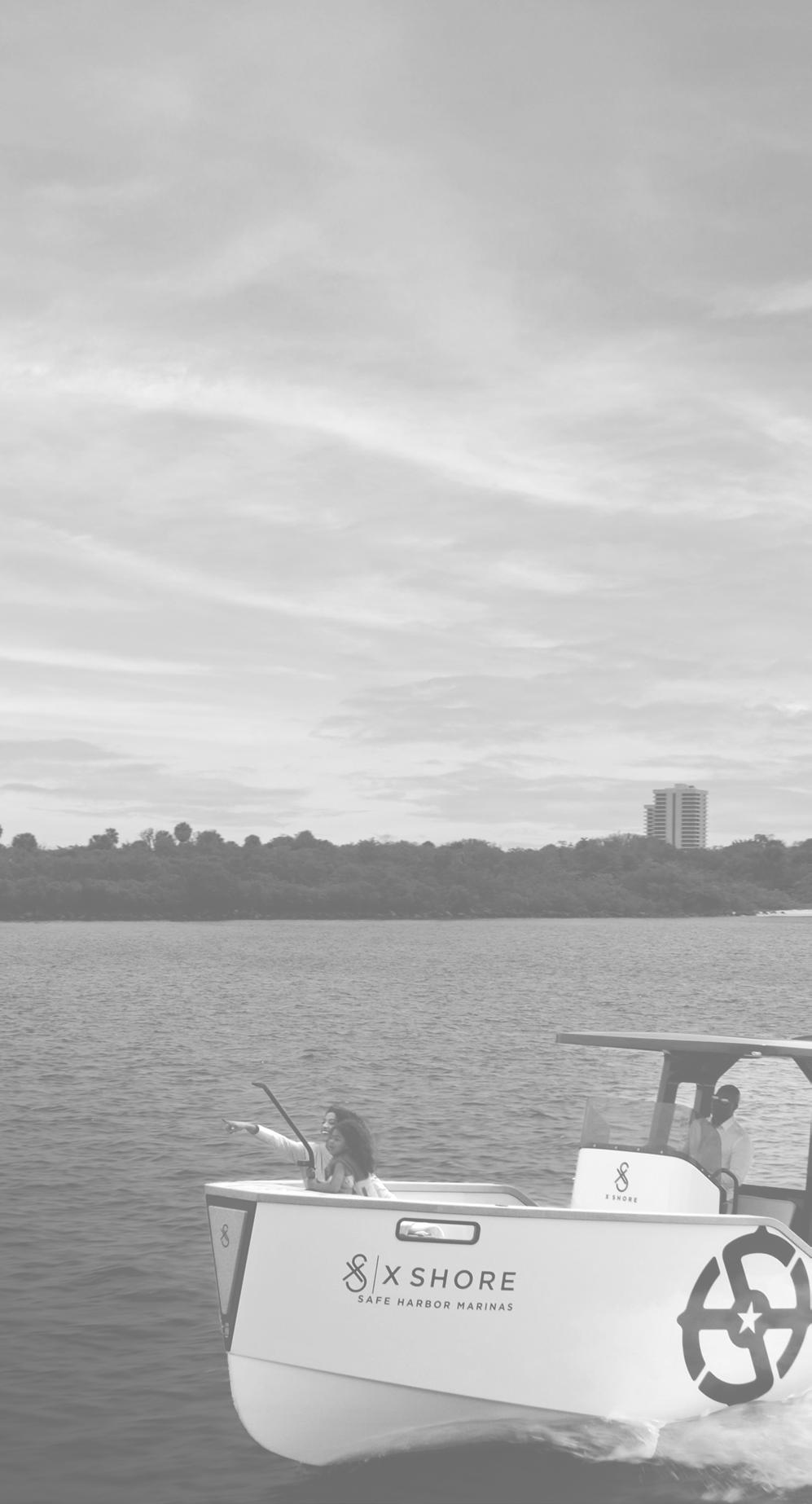
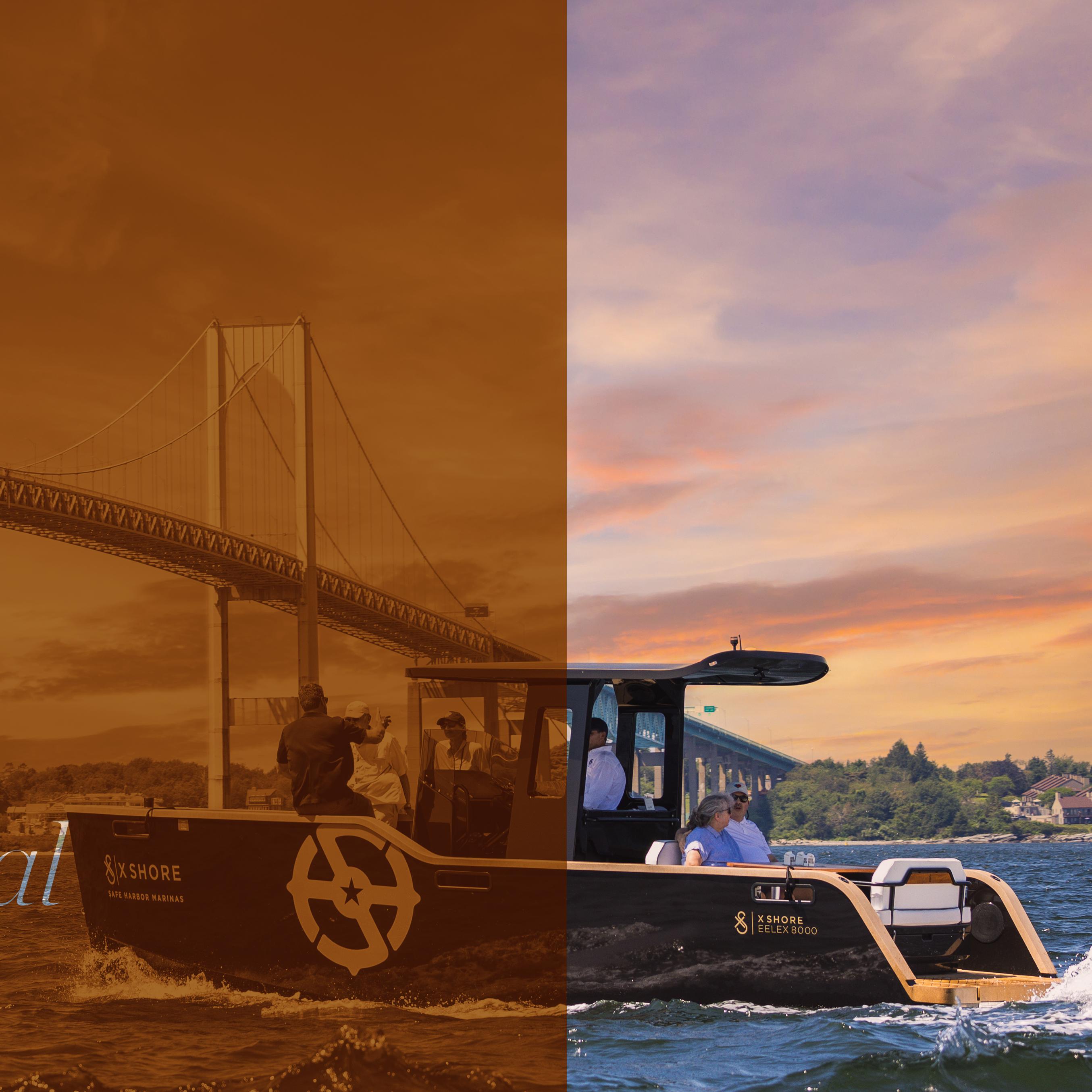
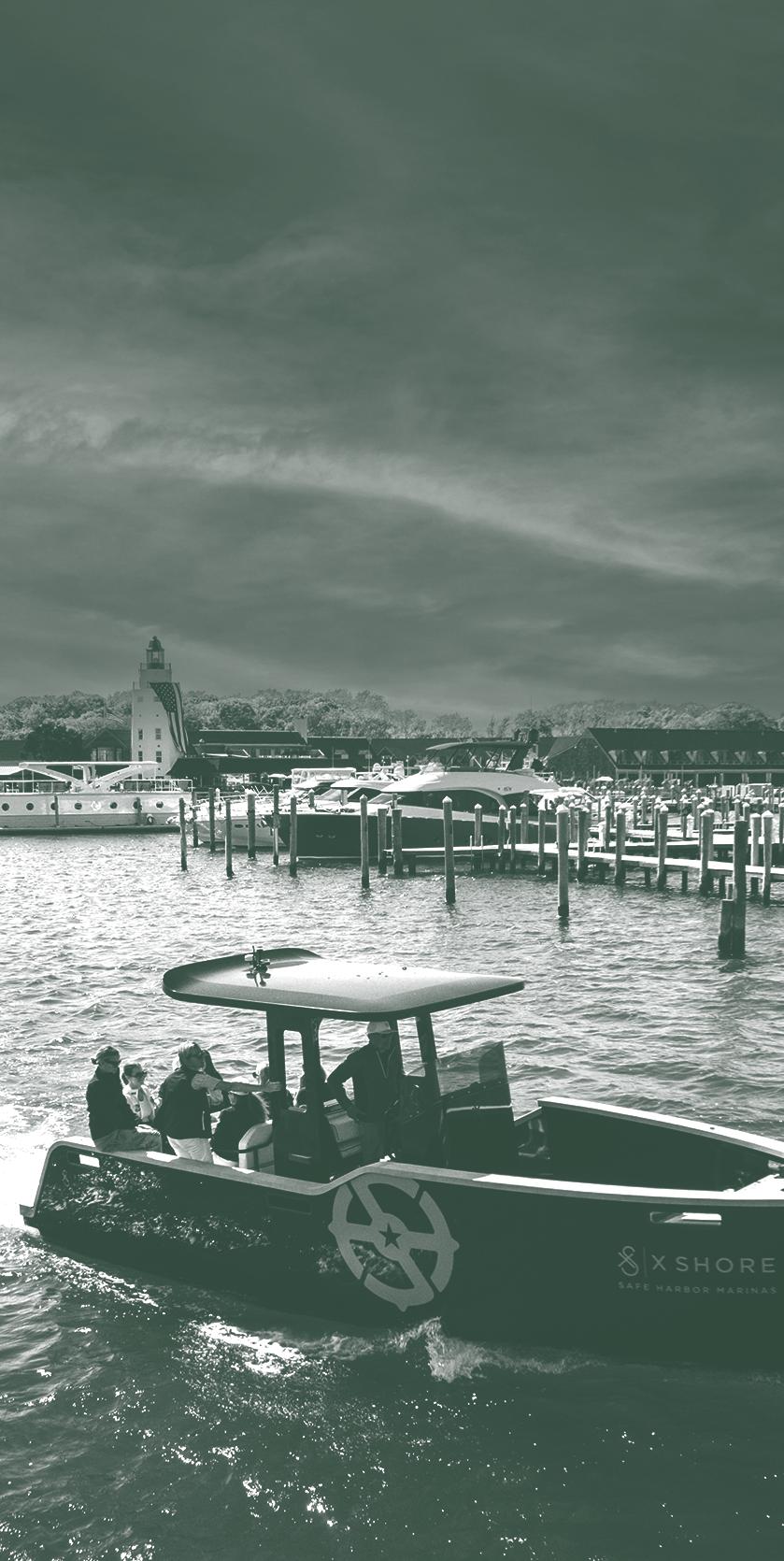
In 2023, we announced a partnership with Swedish electric boat manufacturer X Shore to provide all-electric Eelex 8000 vessels for excursions in San Diego, Charleston, Montauk, Newport, West Palm Beach and other locations across our network. The X Shore vessels help facilitate quiet Member
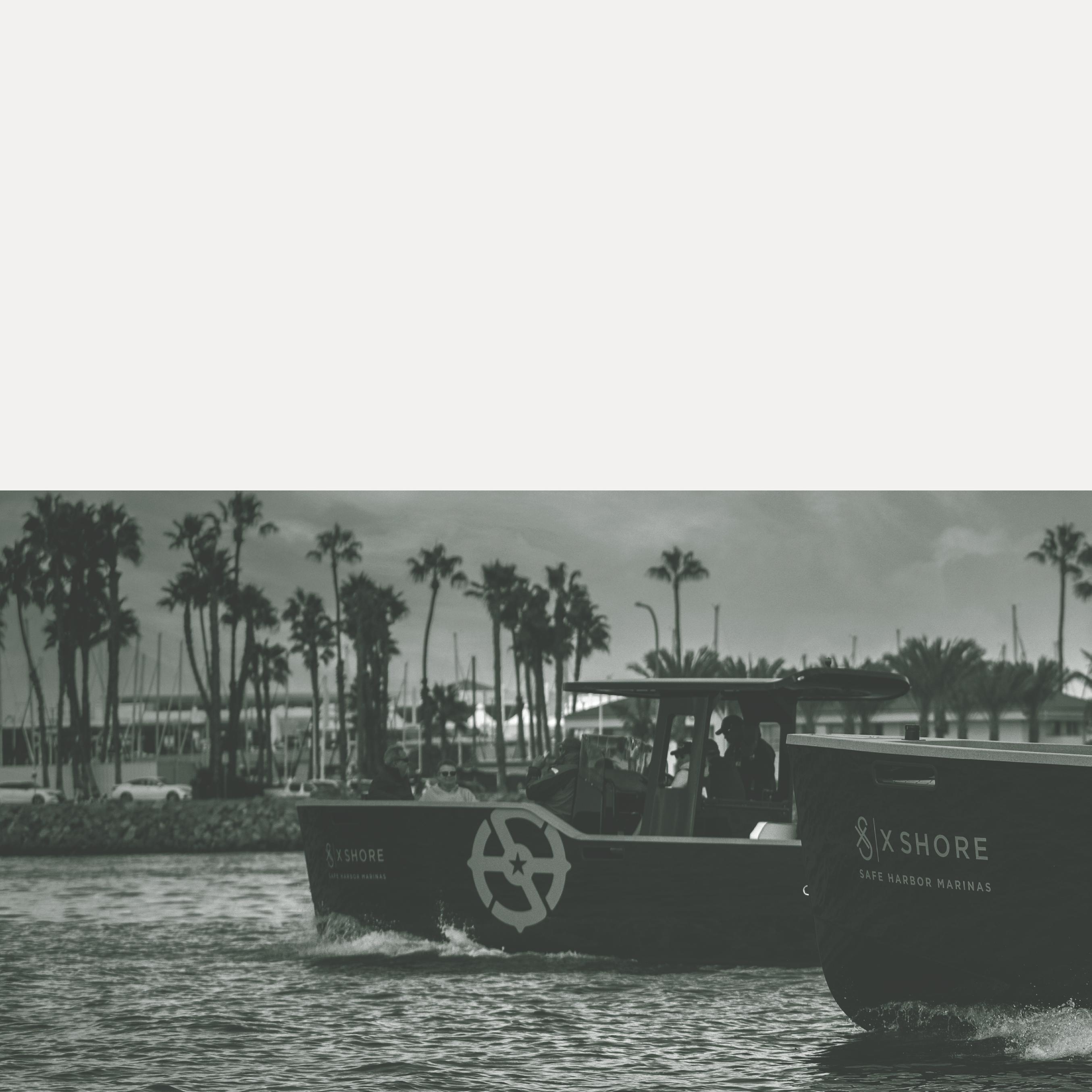
excursions and seek to reduce emissions from recreational boating activity.
We are installing EV chargers at select marinas. Our first EV charging installation in upstate New York is now complete. As of late 2023, EV chargers were planned for four more properties, and we expect chargers at three of those properties to be operational by the end of 2024. We anticipate these first installations will provide usage data to help guide future decision-making about EV chargers at our marinas.
SAFE HARBOR SUSTAINABILITY | 2023 44 1 | SAFE HARBOR SUSTAINABILITY 2 | ENVIRONMENTAL IMPACT TABLE OF CONTENTS & INTRODUCTION
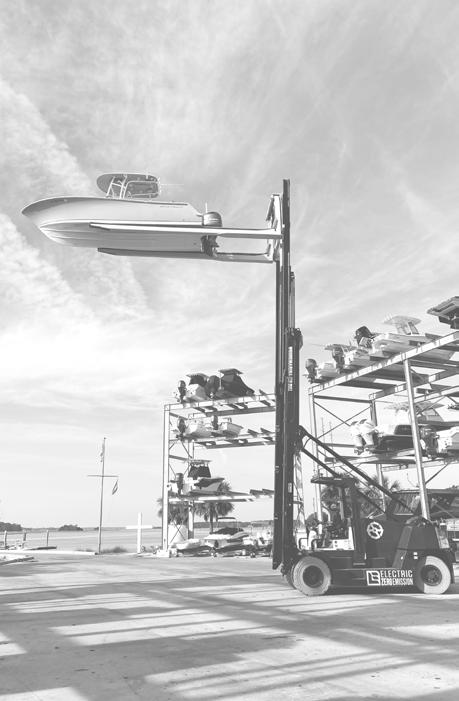
In addition to our efforts with respect to our vessels and vehicles, we utilize the all-electric Wiggins Marina eBull (fork truck) at Safe Harbor City Boatyard in Charleston and all-electric Moke vehicles at multiple properties across the network for Member use.
We regularly evaluate opportunities for strategic partnerships that enhance our hospitality, special event and service offerings, while also improving our environmental impact.
45 3 | SOCIAL IMPACT 4 | WHAT'S NEXT 5 | FRAMEWORKS & ALIGNMENT
our places
Engaging Communities for Healthier Habitats
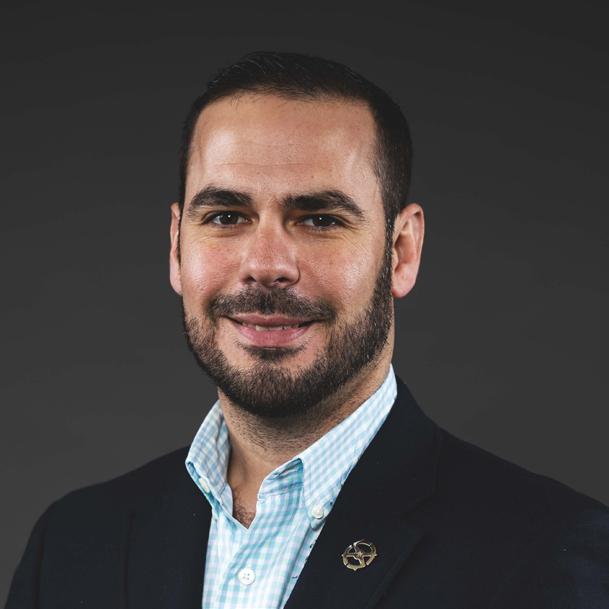 CHRIS SCOTT
GM OF SAFE HARBOR VINEYARD HAVEN
CHRIS SCOTT
GM OF SAFE HARBOR VINEYARD HAVEN
SAFE HARBOR SUSTAINABILITY | 2023 46 1 | SAFE HARBOR SUSTAINABILITY 2 | ENVIRONMENTAL IMPACT TABLE OF CONTENTS & INTRODUCTION
"In small communities like ours, it's all about trust."
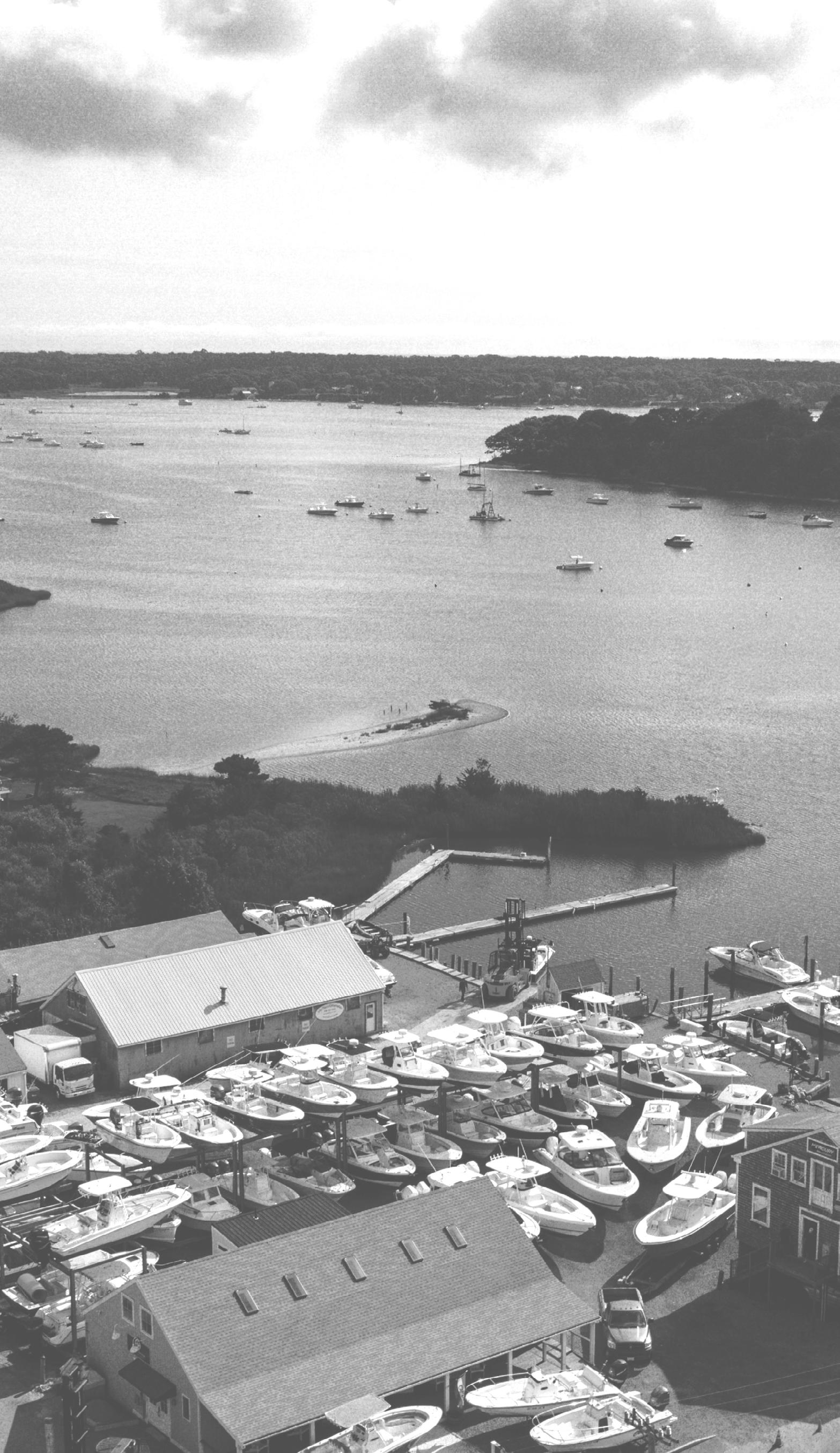
Chris Scott, General Manager of Safe Harbor Vineyard Haven, knows firsthand how important local community engagement is in all aspects of the marina business, especially on environmental issues.
“As an industry, I think we need to do a better job of communicating and educating community members about how we deal with our environmental impacts. Instead of waiting to address people’s concerns when we have a project to do, we should be in a constant state of conversation with our neighbors.”
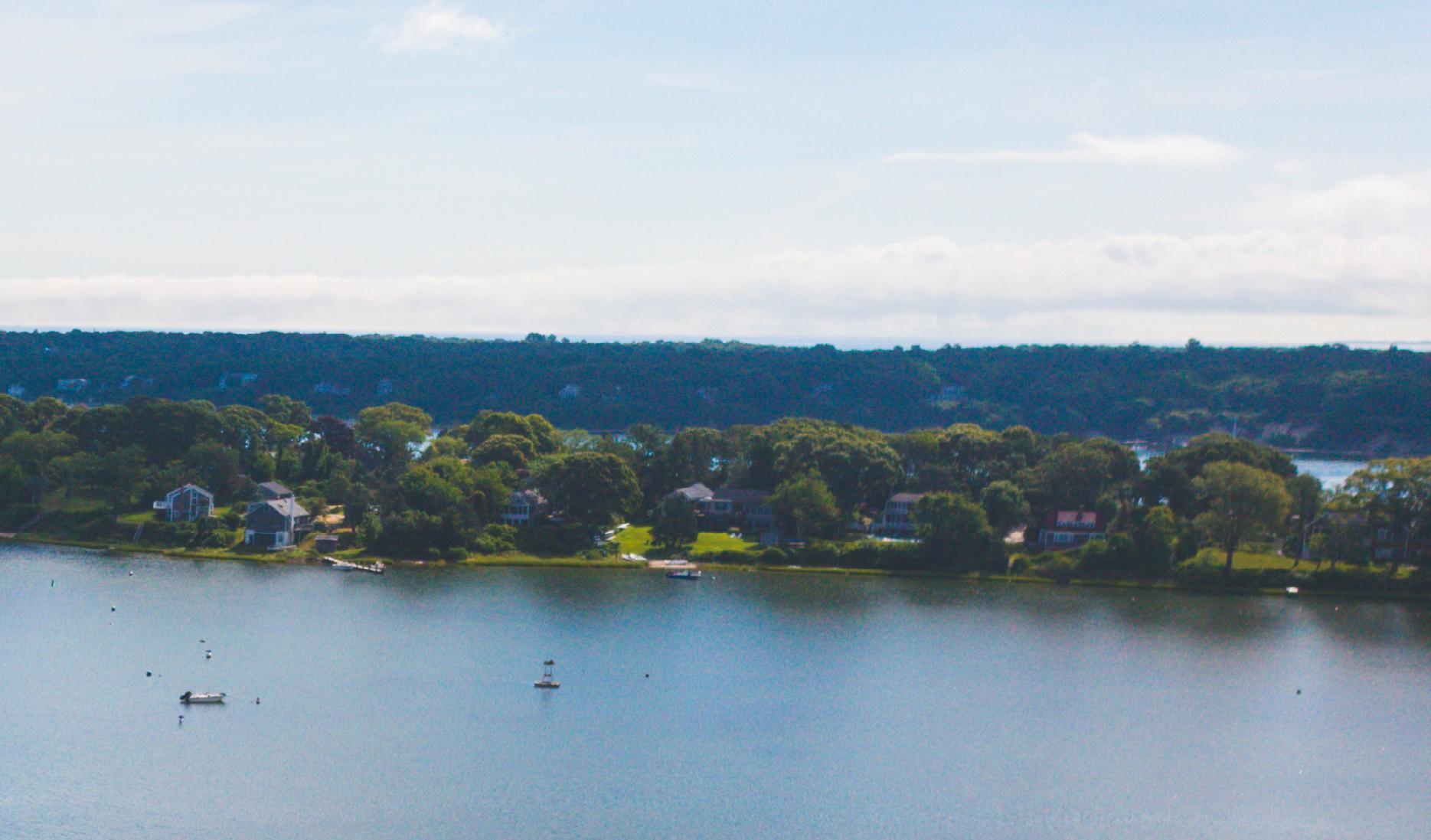
In early 2022, Chris’s team sought a permit for an expansion project at Safe Harbor Vineyard Haven. The project involves removal of four existing structures, relocation of a fuel tank and existing boat racks and a wash shed, as well as the addition of two new boat racks and a boardwalk. The project required approval from the Martha’s Vineyard Commission (“MVC”) before it could move forward.

47 3 | SOCIAL IMPACT 4 | WHAT'S NEXT 5 | FRAMEWORKS & ALIGNMENT
Over the course of several public hearings, however, some residents and community groups expressed concern about the project’s impacts on water quality, among other things.
“We brought as much research as we could on the specifics of the project and related impacts,” Chris said. “At one point, I sat down with the local shellfish warden and community representatives. We provided data on marina-specific water quality impacts versus those in the pond generally and discussed who was responsible for mitigating the issues, like excess nitrogen, that were from non-marina sources.”
Eventually, the local shellfish warden suggested that a feasibility study for a marsh restoration project might be a good option for proactively improving the area adjacent to Safe Harbor Vineyard Haven and easing concerns.
“I had already learned about marsh restoration work through Safe Harbor’s Coastal Habitat Enhancement Program,” said Chris. “A proactive restoration project seemed like a constructive way to generate good will to the community.”
Chris partnered with a scientific and environmental consulting firm to assess the marsh’s health and develop an appropriate strategy for rehabilitation.
Chris and team are not new to thinking about environmental best practices, though. The team at Safe Harbor Vineyard Haven had already installed vegetated bioswales to help control pollutant runoff. A 12.8 KW solar system was recently installed on the office building roof. Additionally, the marina has shifted away from copper-based bottom paint, and shrink wrap plastic is recycled through a program run by a local nonprofit organization.
SAFE HARBOR SUSTAINABILITY | 2023 48 1 | SAFE HARBOR SUSTAINABILITY 2 | ENVIRONMENTAL IMPACT TABLE OF CONTENTS & INTRODUCTION
Later, Chris was introduced to Clean Marina certification programs and the importance of educating oneself not just about the status quo at your marina, but what “better” could look like. Safe Harbor Vineyard Haven recently achieved Clean and Resilient Marina status through the AMI certification program.
“I really tried to focus on the future early,” said Chris, “I fish here, I eat shellfish from here. My uncle is a fisherman and my grandfather was a fisherman before him. I share many of the same feelings as the concerned community members.”
Chris received final approval from the MVC for the marina expansion in August 2023 with the marsh feasibility study and restoration project as two conditions of the project. Chris’s biggest takeaway from this project, though, is about the value of local relationships and dialogue.
“Open dialogue with local communities goes a long way,” Chris said. “The same stakeholders that thought we were just ‘dumping oil into the water’ are now inviting me to speak at their meetings. I am a boater, but they now know that I also care deeply about the natural environment, especially in our area.” •
49 3 | SOCIAL IMPACT 4 | WHAT'S NEXT 5 | FRAMEWORKS & ALIGNMENT
975 tonnes CO2 e
3,466 tonnes CO2 e
9,575 tonnes CO2 e
48,728 tonnes CO2 e
PURCHASED & USED ELECTRICITY EMISSIONS WASTE DISPOSAL EMISSIONS WATER USE EMISSIONS
GHG INVENTORY
2023
SAFE HARBOR SUSTAINABILITY | 2023 50 1 | SAFE HARBOR SUSTAINABILITY 2 | ENVIRONMENTAL IMPACT TABLE OF CONTENTS & INTRODUCTION
HEATING EMISSIONS (NATURAL GAS)
Environmental KPIs
RENEWABLE ENERGY
6
ROOFTOP SOLAR PROJECTS (APPROXIMATELY 4.5 MW) UNDER DEVELOPMENT (as of December 31, 2023)
536 1 icon = 67 megawatt-hours
MW h OF ROOFTOP SOLAR ENERGY GENERATED
134,530 MWh
TOTAL ELECTRICITY USED


TOTAL WATER CONSUMED
1,114,463 m3
54,991 mmbtu NATURAL GAS USED FOR HEATING

TOTAL WASTE GENERATED

21,316 tonnes
51 3 | SOCIAL IMPACT 4 | WHAT'S NEXT 5 | FRAMEWORKS & ALIGNMENT
1 | SAFE HARBOR SUSTAINABILITY 2 | ENVIRONMENTAL IMPACT SAFE HARBOR SUSTAINABILITY | 2023 52 TABLE OF CONTENTS & INTRODUCTION
3 | SOCIAL IMPACT 4 | WHAT'S NEXT 53 5 | FRAMEWORKS & ALIGNMENT
Caring for Our People
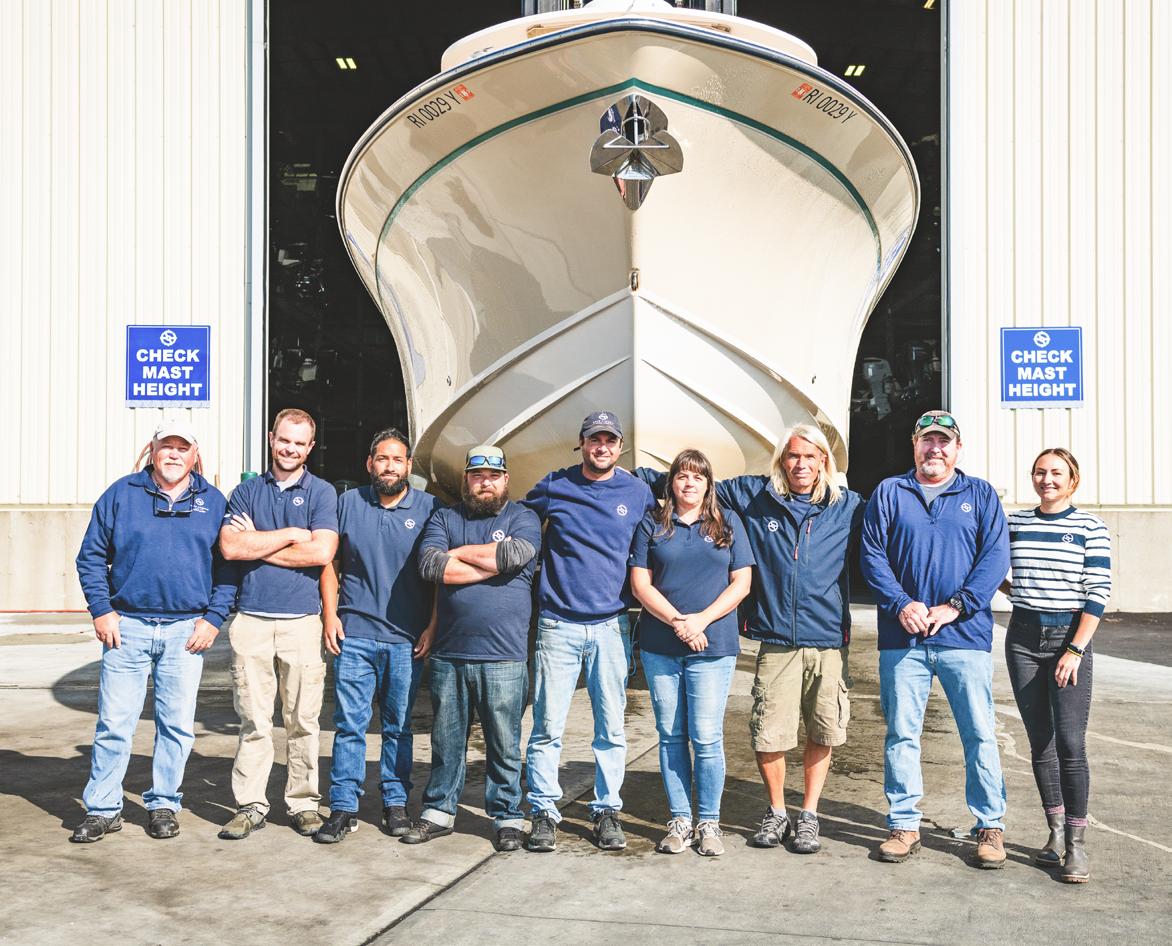
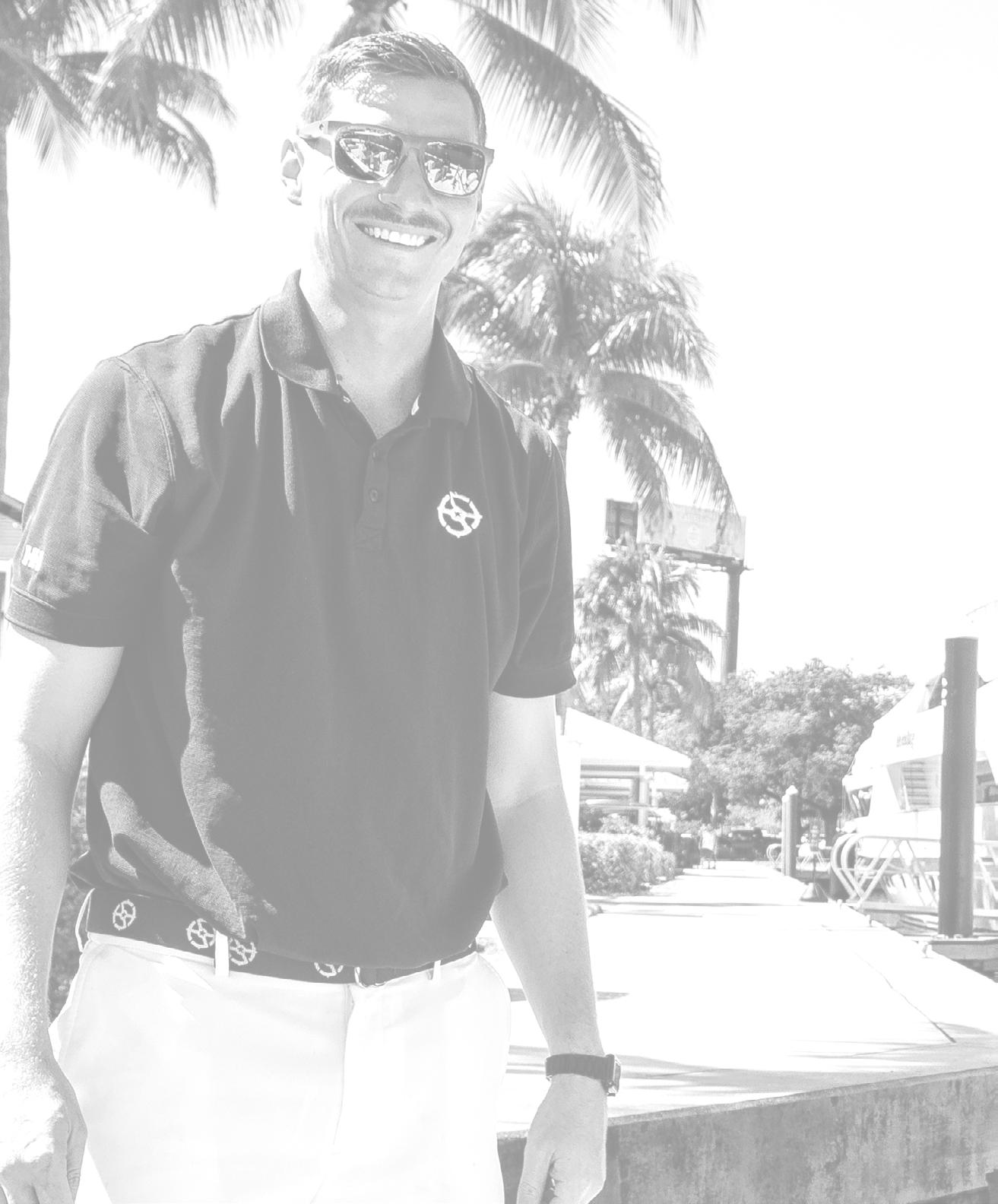
We strive to make Safe Harbor a place of opportunity, service, and respect for all. Moreover, we value our relationships with each and every Member as well as the local communities in which we operate across the United States and Puerto Rico.
This section discusses our approach to intentionally hiring, training and investing in Teammates whose values and character align with and add to our culture of growth, inclusivity and care for others.
We believe the diversity of our team is one of our greatest strengths. Safe Harbor is able to adapt to business challenges because of the innovation that stems from constructive dialogue between people of varied backgrounds, experiences and perspectives. We share a common goal to build and maintain something special for current and future generations.
We believe each Teammate should have the opportunity to thrive, vocationally and personally, in their role in order for our business to succeed. To that end we provide a comprehensive benefits package to full-time Teammates that includes a 401(k) plan and match program, eight-week paid parental leave, medical, dental, and vision insurance, as well as generous paid time off allowances for eligible Teammates.
This year, Safe Harbor also launched a Tuition Reimbursement Program to facilitate further continuing educational opportunities for full-time Teammates.
SAFE HARBOR SUSTAINABILITY | 2023 54 1 | SAFE HARBOR SUSTAINA BILITY 2 | ENVIRONMENTAL IMPACT TABLE OF CONTENTS & INTRODUCTION
NEW FULL-TIME HIRES
INTERNAL HIRES & PROMOTIONS
STUDENTS HIRED FROM MARINE TRADE PROGRAMS
We believe each Teammate should have the opportunity to thrive, vocationally and personally, in their role in order for our business to succeed.
163
17
657 55 3 | SOCIAL IMPACT 4 | WHAT'S NEXT 5 | FRAMEWORKS & ALIGNMENT

SAFE HARBOR SUSTAINABILITY | 2023 56 1 | SAFE HARBOR SUSTAINABILITY 2 | ENVIRONMENTAL IMPACT TABLE OF CONTENTS & INTRODUCTION
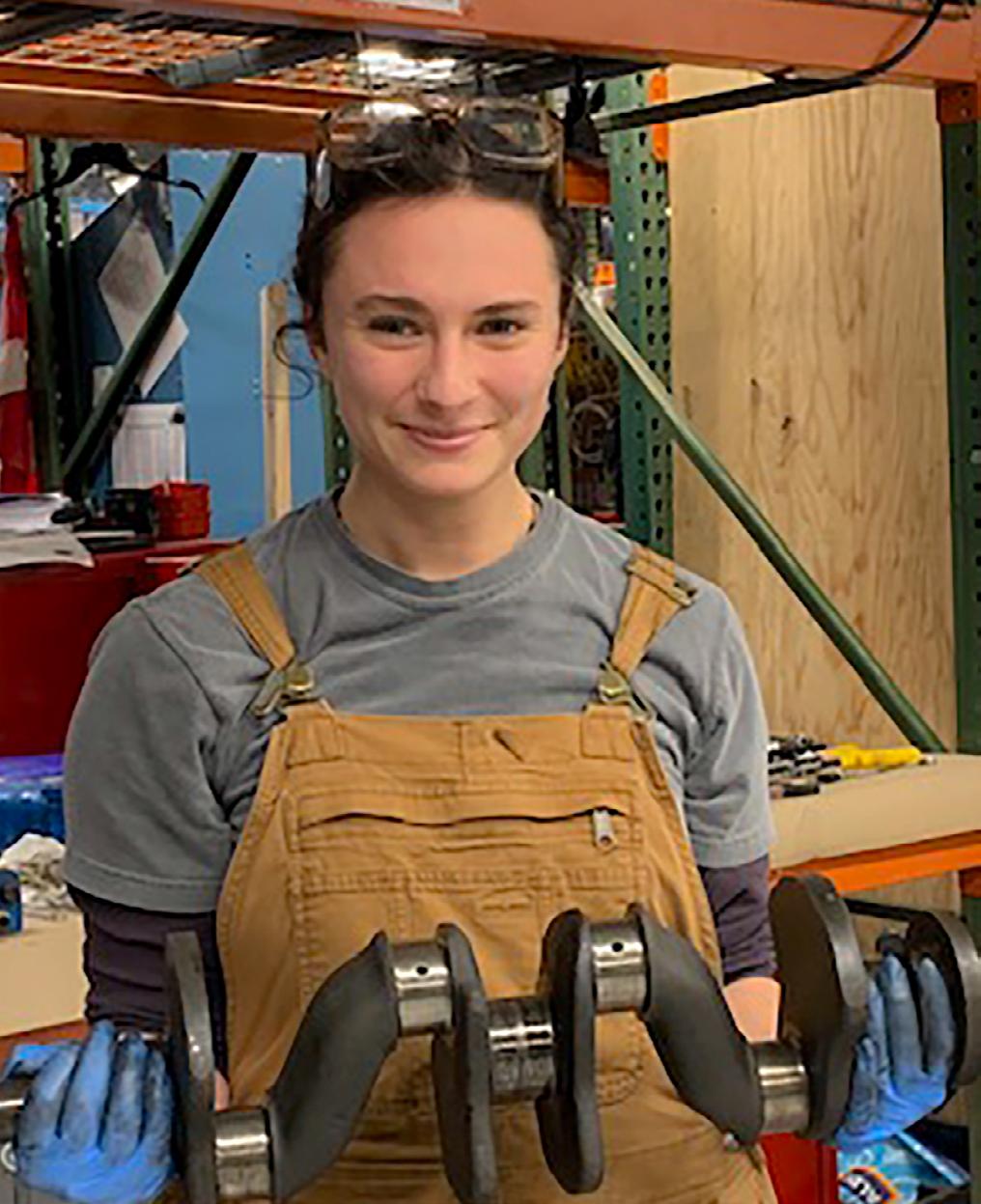
2023 IYRS Scholarship recipient, Athena Vieira
Recruiting & Investing in the Future
In 2023, we added personnel to our recruiting team focused on specialized recruiting and retention efforts. We continue to utilize third-party recruiting platforms to advertise various operational and central services positions, ranging from marine technician, facilities maintenance and site security, to finance and marketing roles.
A major focus has been building relationships with the nation’s largest marine trade schools. We seek to reduce barriers to entry into our business by, among other things, providing financial support and mentorship opportunities to students interested in pursuing a career in the marine trades. Students at these schools learn skills such as advanced composite manufacturing, digital modeling, and marine systems, all of which are applicable at Safe Harbor and in the industry as a whole.
Members of our recruiting team conduct regular in-person visits to select schools to participate in career fairs and connect with scholarship recipients. We offer experiential learning opportunities at our properties for marine trade schools that allow externships. We also facilitate field trips to properties and connect scholarship recipients to our General Managers and Regional Vice Presidents for mentoring support. Similarly, we facilitate high school field trips and externships for high school students interested in exploring trade school.
These relationships not only provide opportunities for students to discover and pursue career paths in the marine trades, they also help generate goodwill throughout the industry.
1 icon = 1 recipient
$20K
IYRS SCHOOL OF TECHNOLOGY & TRADES 4
Newport, Rhode Island
2023 Safe Harbor Scholarship Contributions 4IYRS hosts two student cohorts per year and Safe Harbor contributes $10K per cohort.
THE LANDING SCHOOL OF BOATBUILDING & DESIGN
$10K Arundel, Maine
GREAT LAKES BOATBUILDING SCHOOL $10K Cedarville, Michigan
57 3 | SOCIAL IMPACT 4 | WHAT'S NEXT 5 | FRAMEWORKS & ALIGNMENT
We bring Teammates to Safe Harbor with the intent of developing them and watching them succeed over the long-term.

44
TOTAL DISTINCT LEARNING COURSES OFFERED IN 2023
7,818
TOTAL TEAMMATE LEARNING HOURS IN 2023
1 | SAFE HARBOR SUSTAINABILITY 2 | ENVIRONMENTAL IMPACT SAFE HARBOR SUSTAINABILITY | 2023 58 TABLE OF CONTENTS & INTRODUCTION

Our Approach to Training & Development
We bring Teammates to Safe Harbor with the intent of developing them and watching them succeed over the long-term. To enhance our Teammates’ professional growth, for example, we provide in-person and virtual training opportunities as well as 30-, 60-, and 90- day performance reviews to new Teammates and annual performance reviews to all.
In 2023 our team continued to refine its holistic General Manager training course that standardizes core training material for all General Managers across our network. Components include familiarizing General Managers with Safe Harbor’s culture and organizational structure, business operations systems, as well as internal networking and resource-sharing.
3 | SOCIAL IMPACT 4 | WHAT'S NEXT 59 5 | FRAMEWORKS & ALIGNMENT
Focus on Retention
We recognize that retaining talent involves more than training alone.
In 2023, we conducted a Teammate Engagement survey, as well as a Net Promoter Score ("NPS") survey focused on marine technicians specifically. Topics covered in both surveys included training, benefits, and culture, though the latter survey focused on issues specific to marine technicians, such as whether our company provides enough opportunities for challenging projects. These surveys help us assess the state of Teammate satisfaction at Safe Harbor and identify key areas for improvement.
Marine technicians possess specialized skills critical for our operations. Technician retention presents a significant business risk because these skills are highly sought after, and the market is competitive. To mitigate this risk, and in addition to this year’s marine technician NPS survey, we began producing reports on marine technician retention to better understand turnover patterns and develop processes for identifying and remedying issues that might lead to turnover.
Additionally, we launched a tuition reimbursement benefit with the aim of helping qualified Teammates finance their continued education. This program has been well-received and will be especially helpful for our marine technicians who, provided they join Safe Harbor within 60 days of graduation, may apply the benefit retroactively. Safe Harbor Teammates may use the benefit to help finance continuing education.

45%
OVERALL RESPONSE RATE FOR OUR ANNUAL TEAMMATE ENGAGEMENT SURVEY
In an effort to promote retention and business continuity, our team developed a formal process for GM succession planning to ensure institutional knowledge is retained and shared. This process involves consistent engagement between the central services training team and Regional Vice Presidents (“RVPs”), regular reviews of performance metrics and identification of succession pathways at individual properties.
We continue to explore ways to differentiate ourselves as a preferred employer in order to attract and hold on to the best talent in our industry.
SAFE HARBOR SUSTAINABILITY | 2023 60 1 | SAFE HARBOR SUSTAINABILITY 2 | ENVIRONMENTAL IMPACT TABLE OF CONTENTS & INTRODUCTION

Maintaining Local Connections
The strength of our network is built upon the relationships, expertise and skills of Teammates across our network. The often deep-rooted local connections of our Operations team ensure Safe Harbor remains integrated in the cities and regions in which our properties are located. In 2023, 61 of our management hires were from the local communities adjacent to or near our marinas. When we acquire new marinas, we make every effort to integrate existing marina management and service teams into Safe Harbor, which helps us retain institutional knowledge and maintain strong connections to the cities, towns and regions in which we operate.
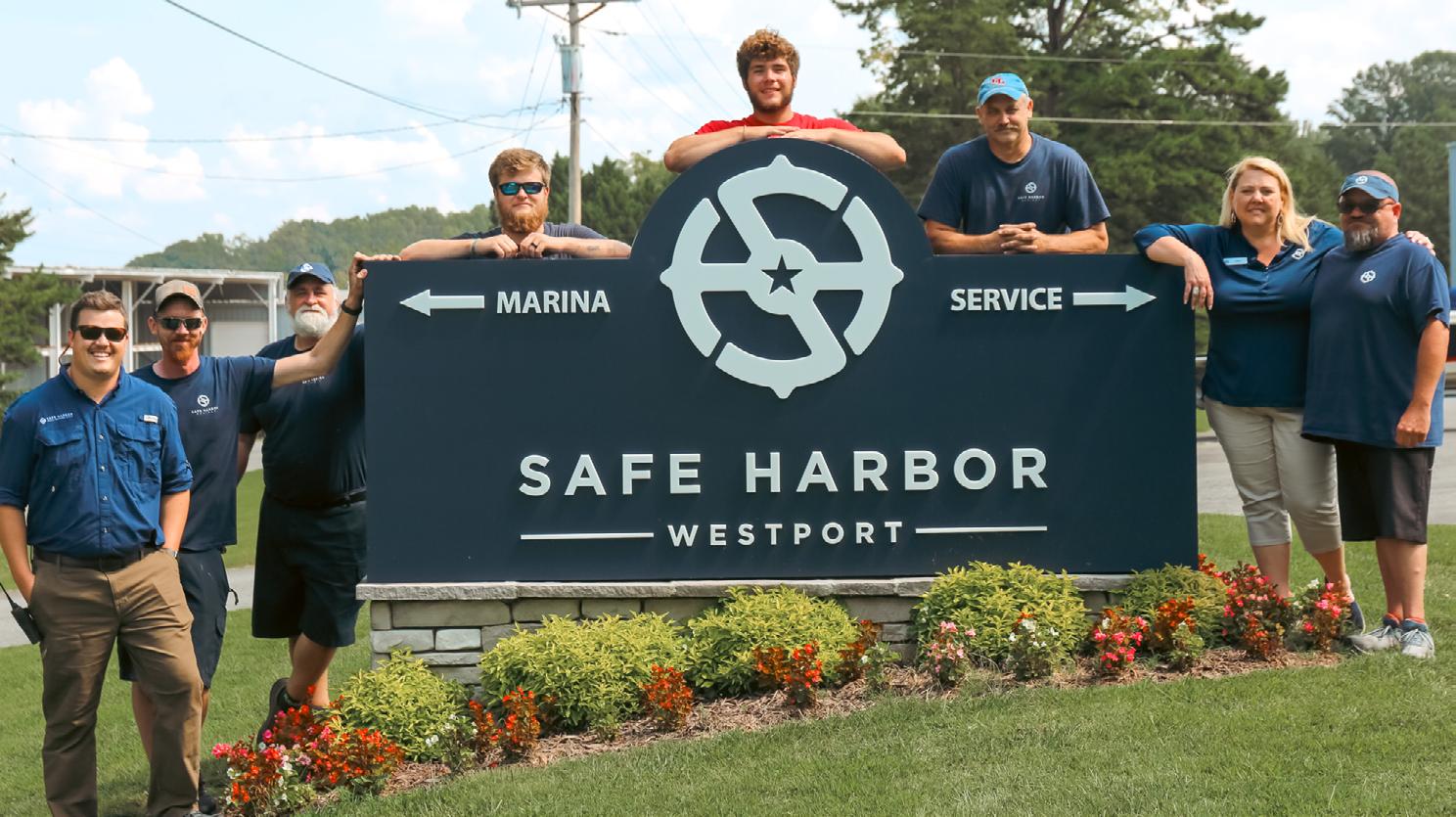
PROPERTY-LEVEL MANAGEMENT HIRES FROM LOCAL COMMUNITIES IN 2023
61
61 3 | SOCIAL IMPACT 4 | WHAT'S NEXT 5 | FRAMEWORKS & ALIGNMENT
HEALTH & SAFETY
The health and safety of our Members, Teammates and third-party contractors is of utmost importance. Our Environmental, Health and Safety ("EHS") team works diligently to increase engagement and awareness around all health and safety issues pertinent to our industry.
Improvements
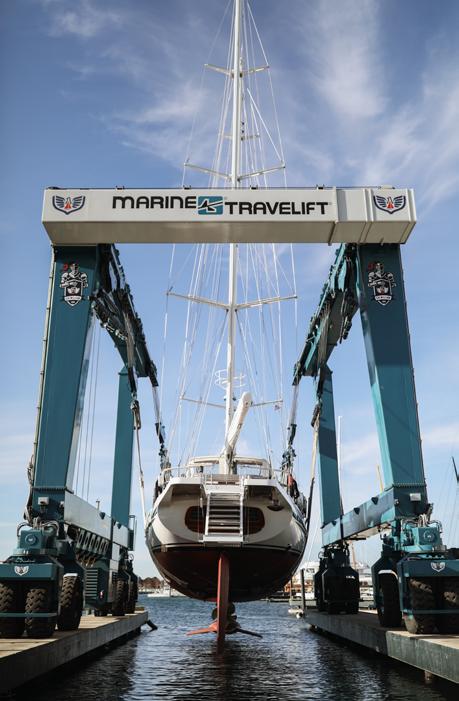
In 2023, our EHS team began development of a digital safety manual that will cover all properties and include sitespecific safety plans where needed. This will help eliminate redundancies in safety information, improve accessibility, and promote compliance with federal and state laws and regulations. We also made strides in our EHS training offerings by expanding the range of industry-specific, inperson and virtual training offerings in both English and Spanish. We continue to offer monthly safety presentations for both General Managers and EHS Coordinators, as well as annual inspections for all properties.
TRAININGS OFFERED IN 2023
REGULAR EHS COORDINATOR & GENERAL MANAGER TRAININGS

SHIPYARD COMPETENT PERSON TRAINING
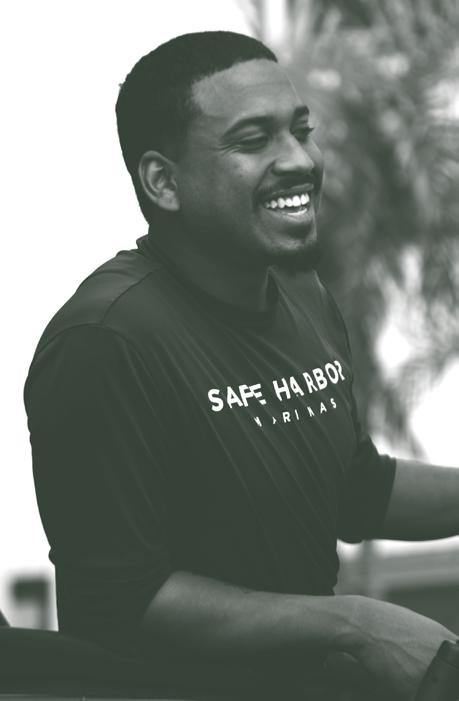
OSHA 10 CERTIFICATION TRAININGS MARINE
FORKLIFT “TRAIN THE TRAINER” PROGRAM
TRAVEL LIFT OPERATOR TRAINING
SAFE HARBOR SUSTAINABILITY | 2023 62 1 | SAFE HARBOR SUSTAINABILITY 2 | ENVIRONMENTAL IMPACT TABLE OF CONTENTS & INTRODUCTION
OSHA INCIDENT RATES
Managing Incidents & Promoting a Safety Mindset
Our incident reporting process provides that marina or regional management be the first contact point for incident reports, followed by Human Resources. Incident reports are then forwarded to our Risk Department through our online risk management and reporting platform and shared promptly with Safe Harbor leadership.
In order to raise awareness on safety and increase prevention, incidents are shared with all General Managers through “Safety Bulletins." We conduct a root cause analysis for highconsequence workplace incidents, the results of which are shared with leadership.
Lastly, while Safe Harbor Teammates are responsible for most service activities, Members and third-party
contractors also engage in vessel maintenance and repairs on-site. Our policy is to have agreements in place with every contractor, which sets forth responsibilities and compliance expectations.
General Managers are responsible for addressing safety concerns with Teammates, Members and/or contractors promptly as they arise. Additionally, our properties are equipped with signage, illumination and demarcation for vessel maintenance and repair to communicate safety expectations.
2021 2022 2023
PER 100
1 2 3 4 5 6 7 8 9 10 Total Recordable Incident Rate DART Rate 63 3 | SOCIAL IMPACT 4 | WHAT'S NEXT 5 | FRAMEWORKS & ALIGNMENT
EMPLOYEES

SAFE HARBOR SUSTAINABILITY | 2023 64 1 | SAFE HARBOR SUSTAINABILITY 2 | ENVIRONMENTAL IMPACT TABLE OF CONTENTS & INTRODUCTION
BUILDING SUSTAINABLE MEASURES INTO
MEMBER SERVICE
Our company aims to build and maintain a one-of-a-kind recreational boating network that serves current Members and future generations of boaters eager to connect with the water. A mindset of constant improvement with respect to the environment and communities in which we operate, therefore, is part of the promise we make to our Members.
We strive to be responsive to Member needs and concerns. We conduct a Member NPS survey each year and use these survey results to identify opportunities for improvement across our network in the areas of customer service and facilities satisfaction, among other things. Our marinas have an opportunity to learn and build on the feedback provided to marinas with high NPS scores, and we also use feedback to inform Safe Harbor's long-term growth and improvement strategies.
A mindset of constant improvement with respect to the environment and communities in which we operate is part of the promise we make to our Members.
65 3 | SOCIAL IMPACT 4 | WHAT'S NEXT 5 | FRAMEWORKS & ALIGNMENT
Cleaner Member Experiences
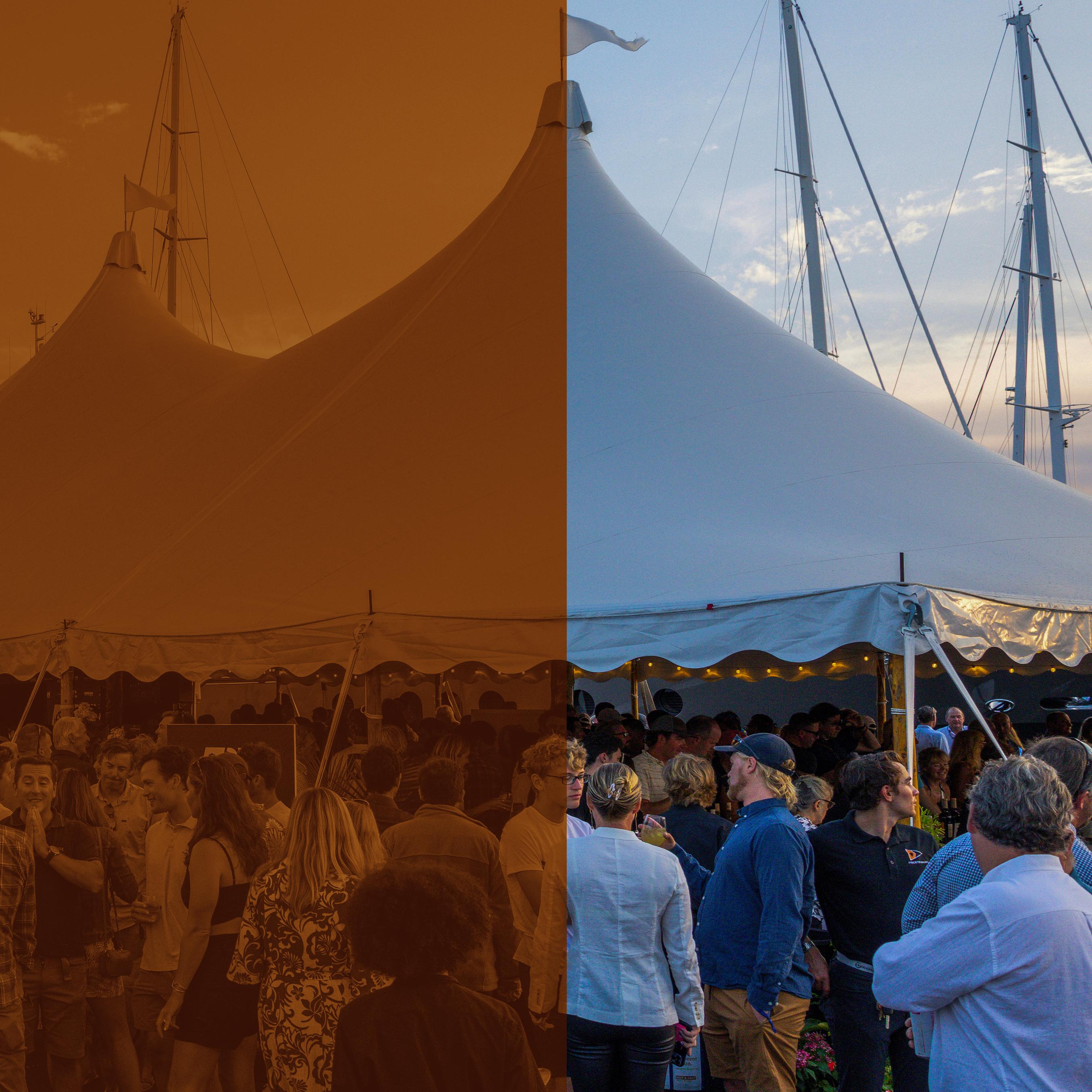
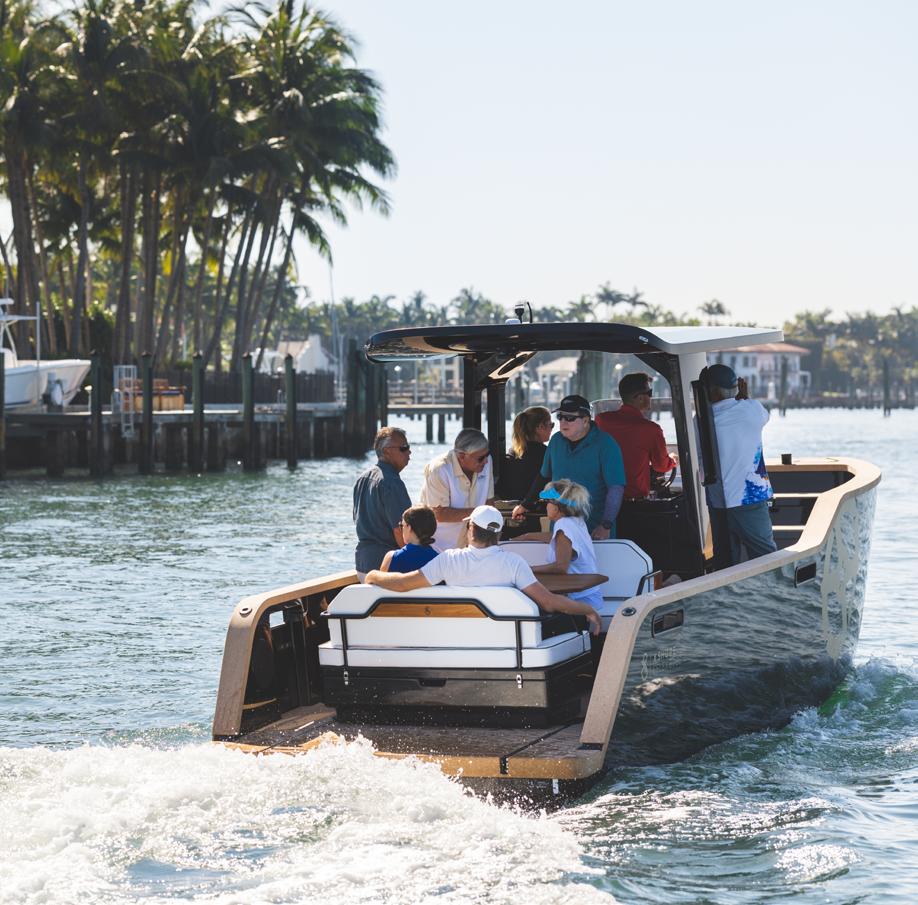
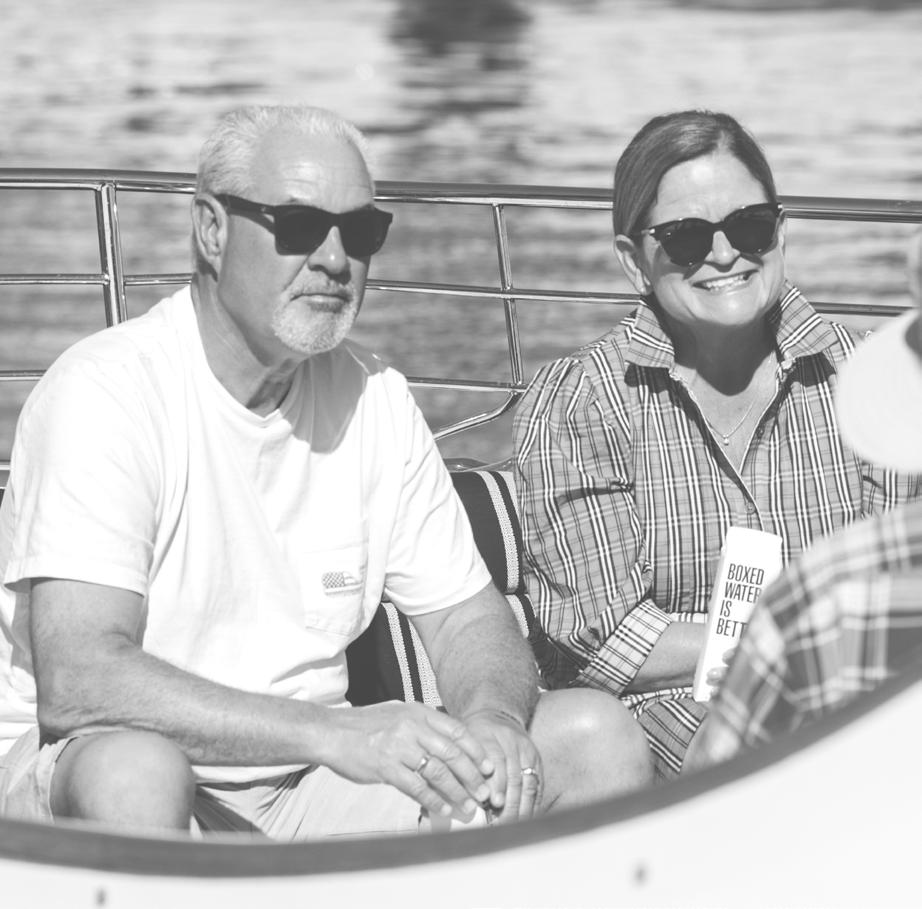
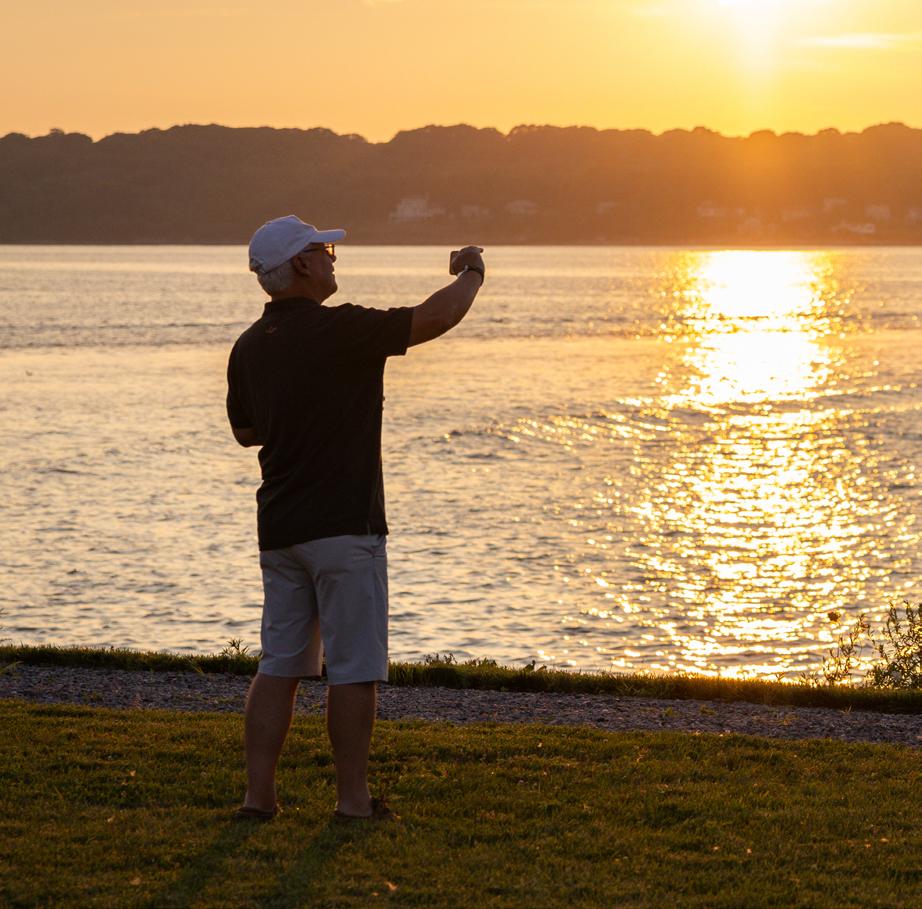
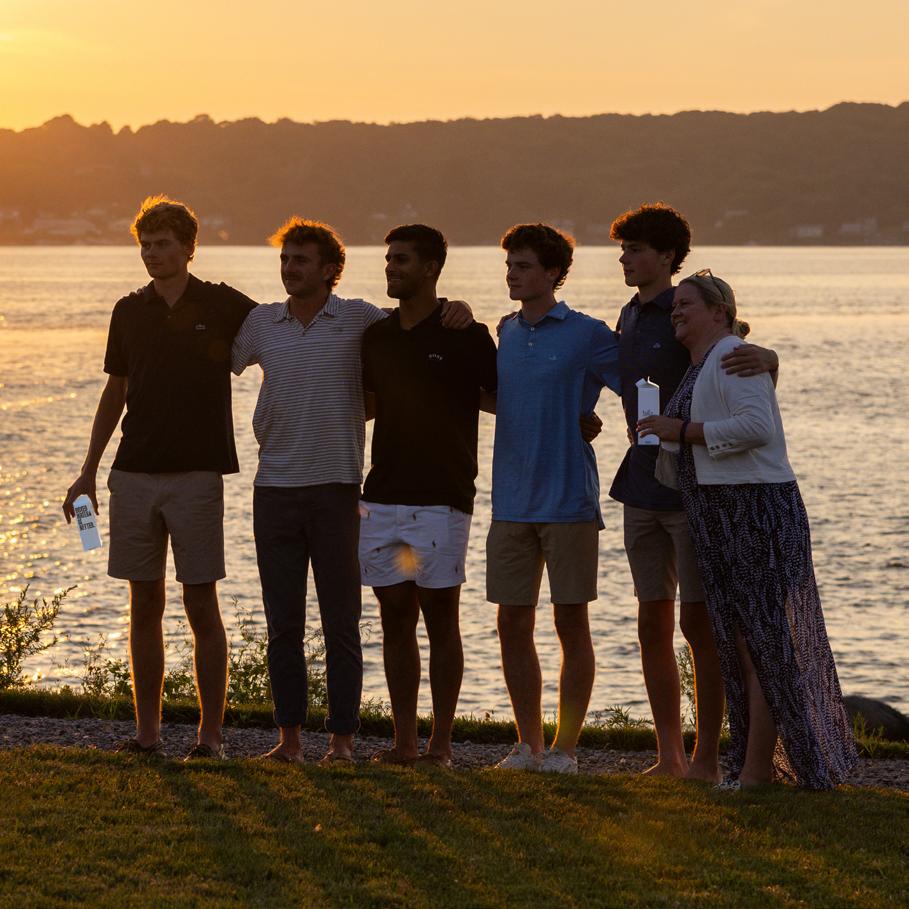
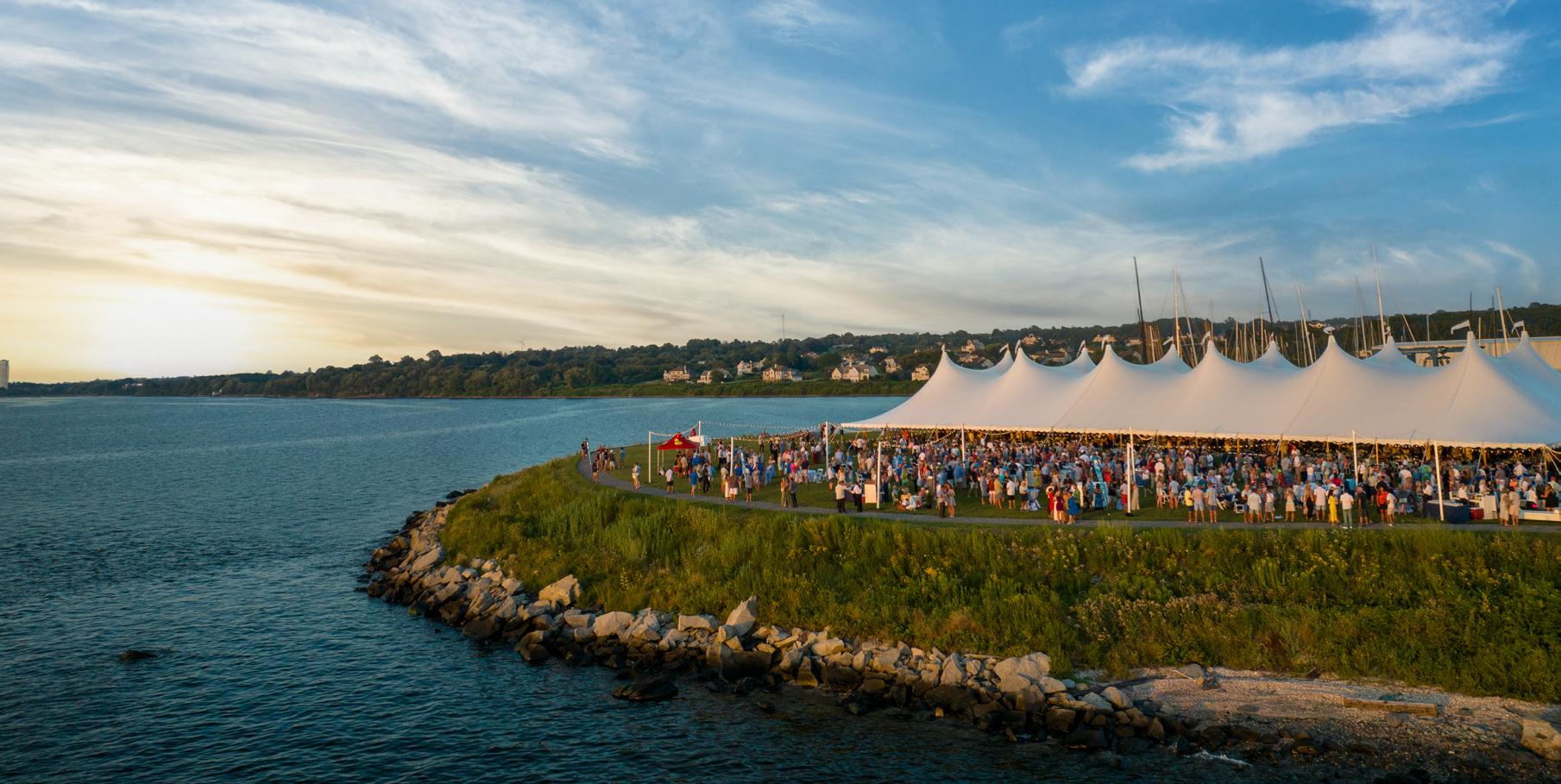
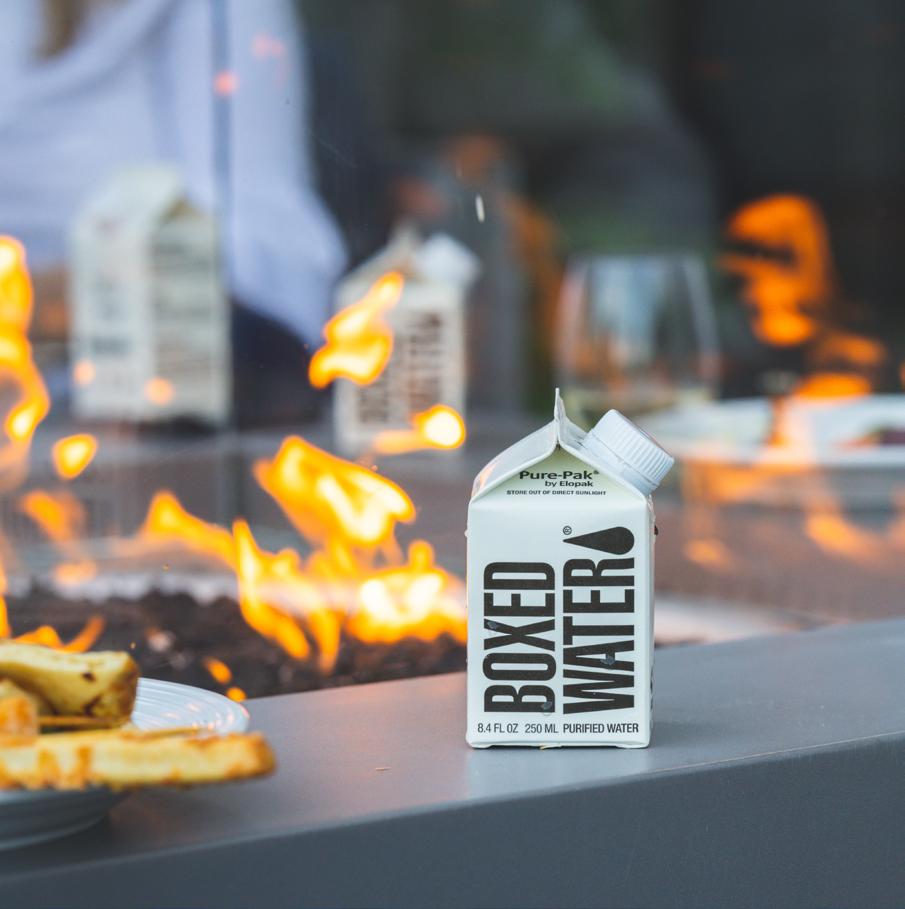
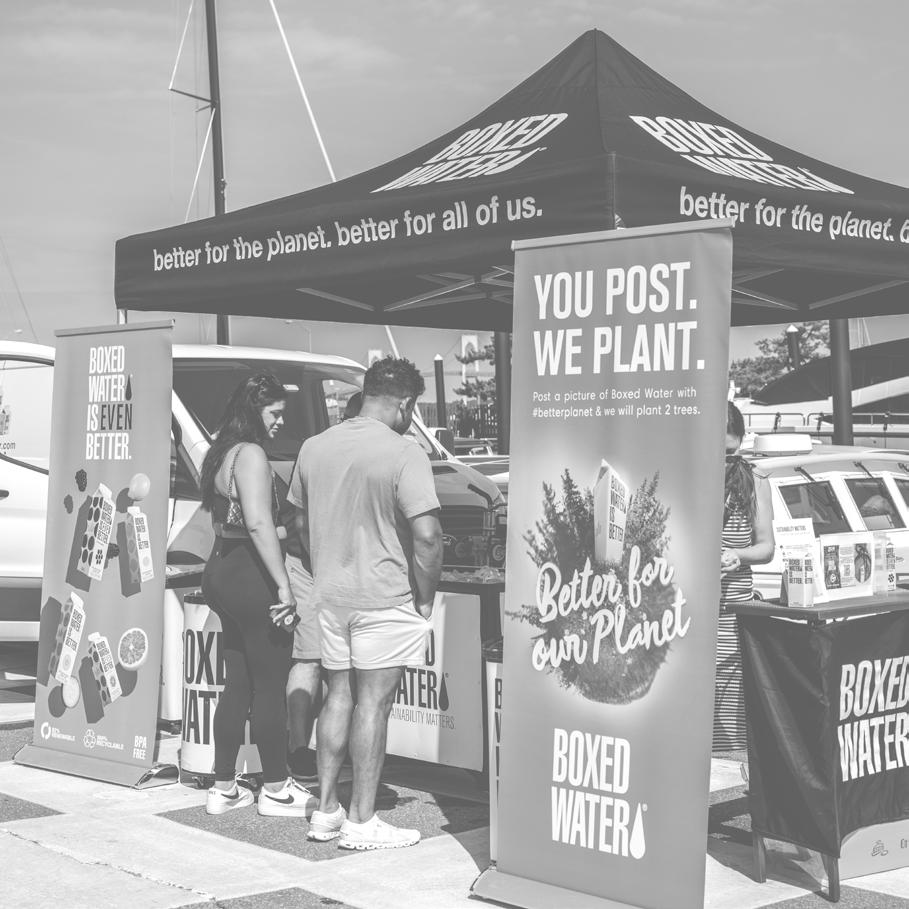
We seek to prioritize sustainability practices in planning and executing our Safe Harbor Experiences, boat shows, and all other Member events. Our Members often share a profound connection with our waterways. Through these events, we can showcase our sustainability efforts in an authentic and impactful way.
For example, at our Safe Harbor Experiences, we partnered with Boxed Water to offer recyclable, reusable bottles as an alternative to single-use plastic, and with X Shore, to offer Members lower emission opportunities to explore the water. These efforts demonstrate our commitment to innovation for a recreational boating future with reduced environmental impact.
Sailing Responsibly
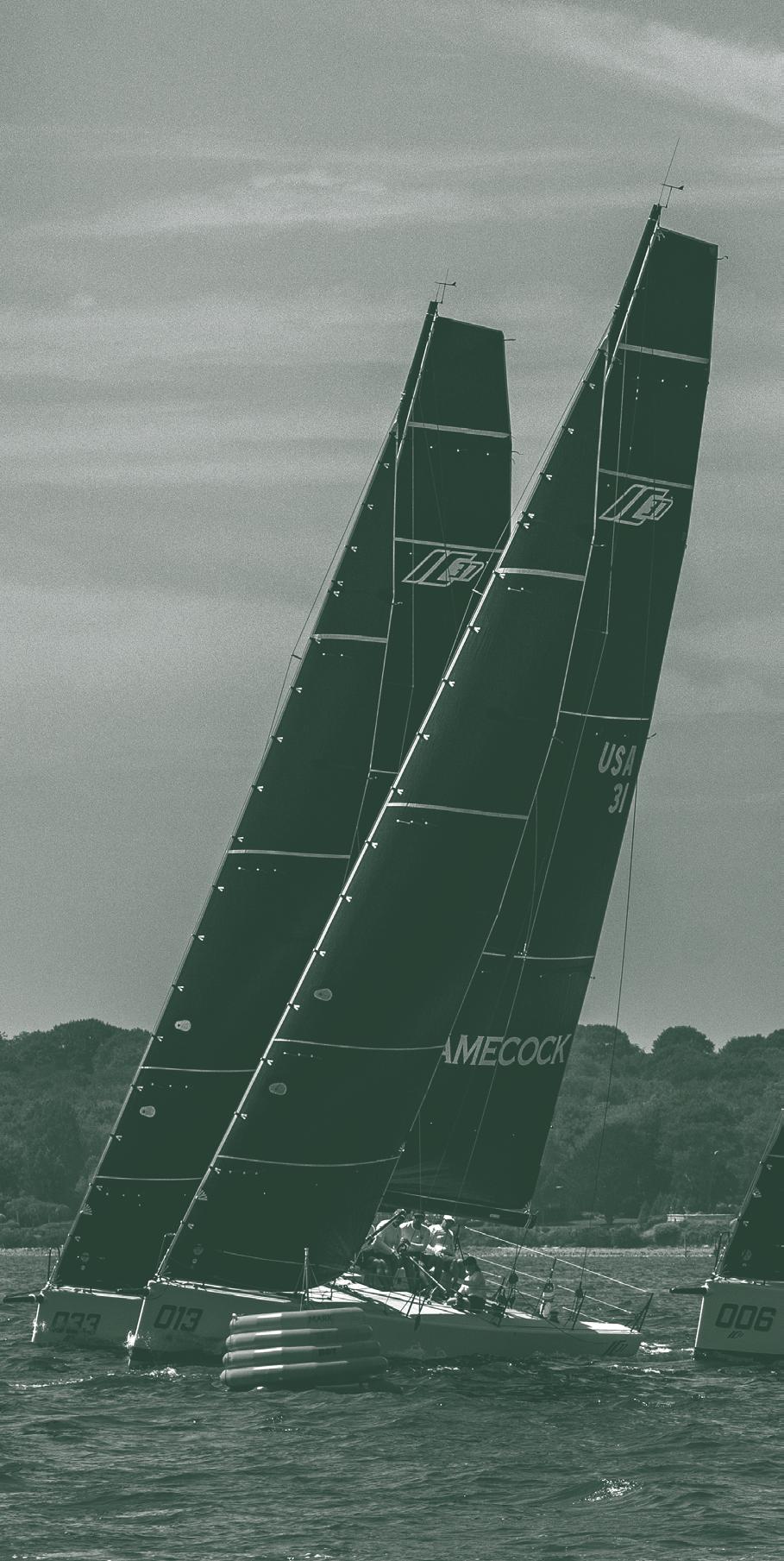
We also seek to embrace responsible practices within the sailing and racing industries in which we operate.
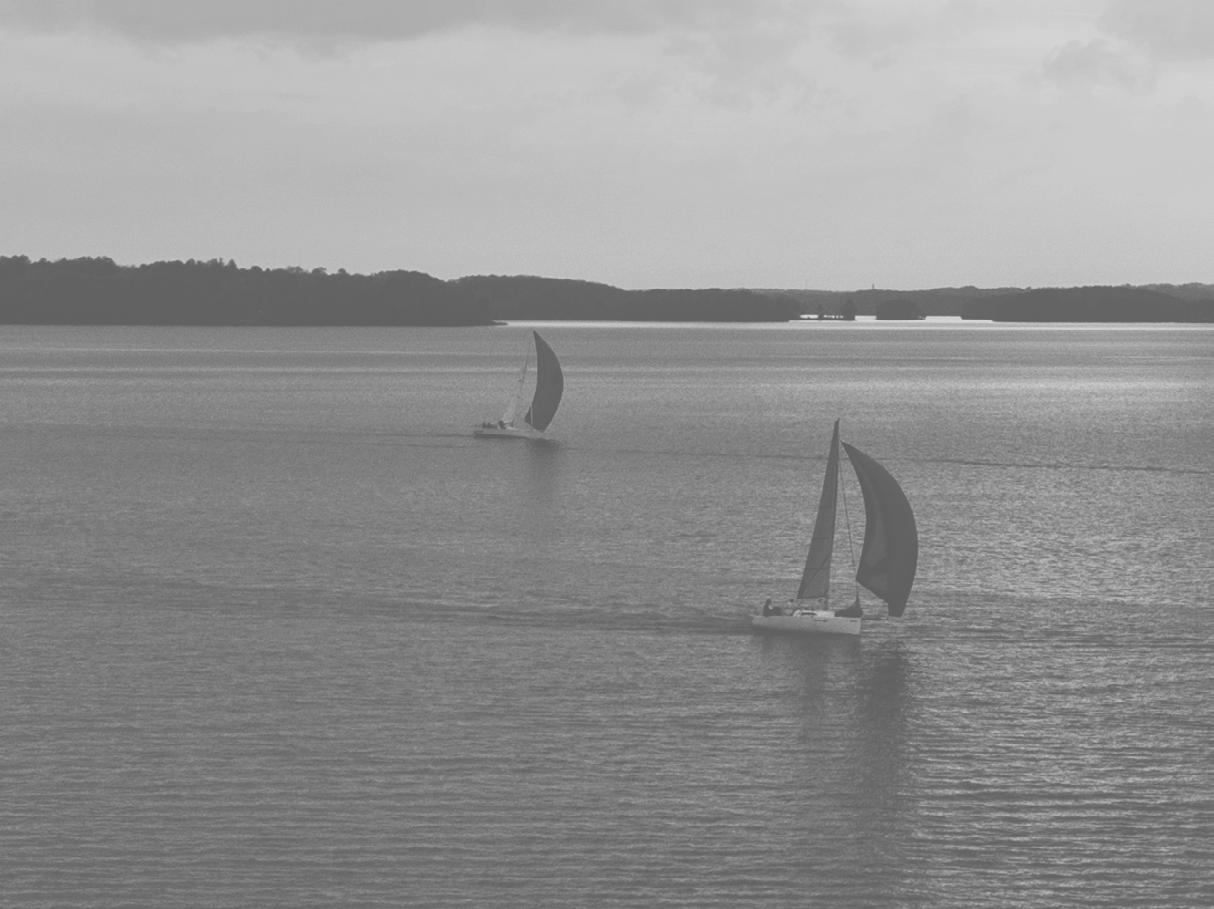
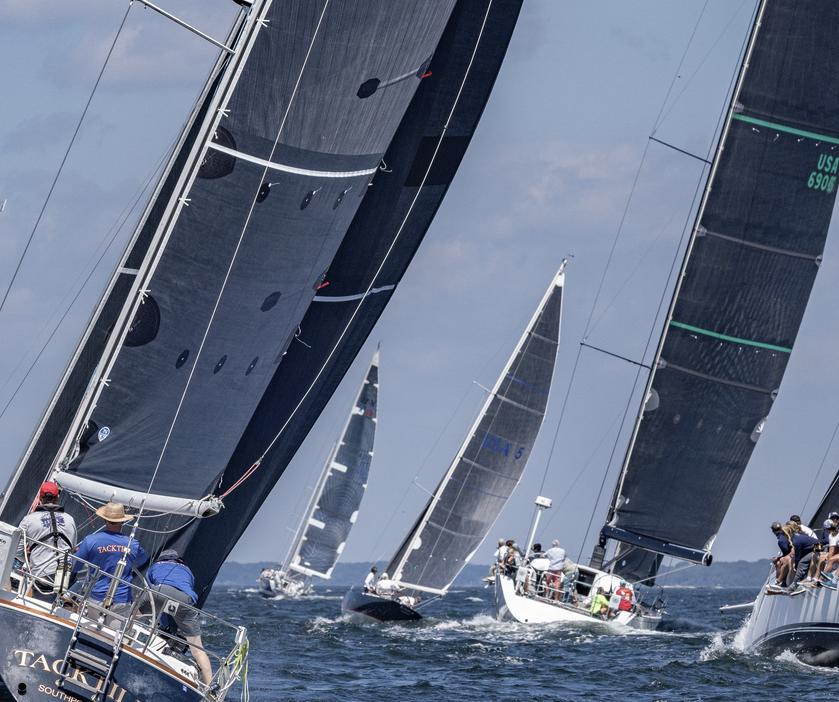
For the third year in a row, Safe Harbor Race Weekend – one of our biggest events of the year – received Platinum certification as a “Clean Regatta” from Sailors for the Sea, an organization dedicated to promoting ocean conservation within the sailing and boating communities. This certification is awarded to regatta hosts that implement the best practices from the organization’s “Clean Regattas” toolkit, a resource aimed at mitigating environmental impacts from competitive sailing events specifically. We hope that our continued participation in this program will set an example for others in the industry.
SAFE HARBOR SUSTAINABILITY | 2023 66 1 | SAFE HARBOR SUSTAINABILITY 2 | ENVIRONMEN TAL IMPACT TABLE OF CONTENTS & INTRODUCTION
67 3 | SOCIAL IMPACT 4 | WHAT'S NEXT 5 | FRAMEWORKS & ALIGNMENT
Elevating the Member Experience
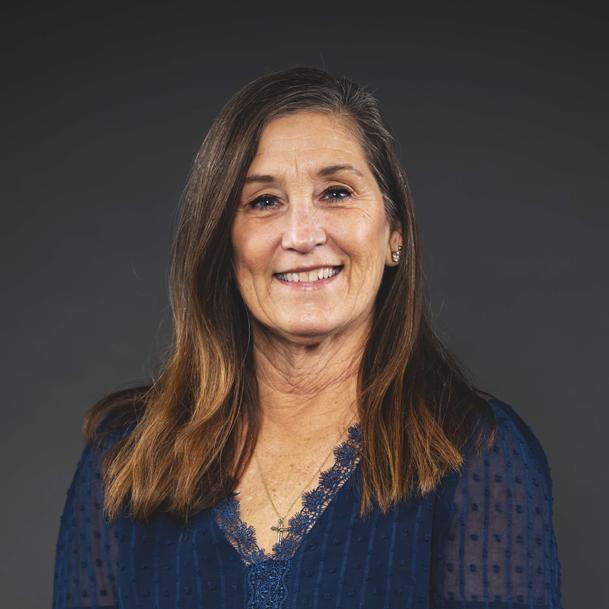
KATHEE DISHNER
GM OF SAFE HARBOR
PENINSULA YACHT CLUB
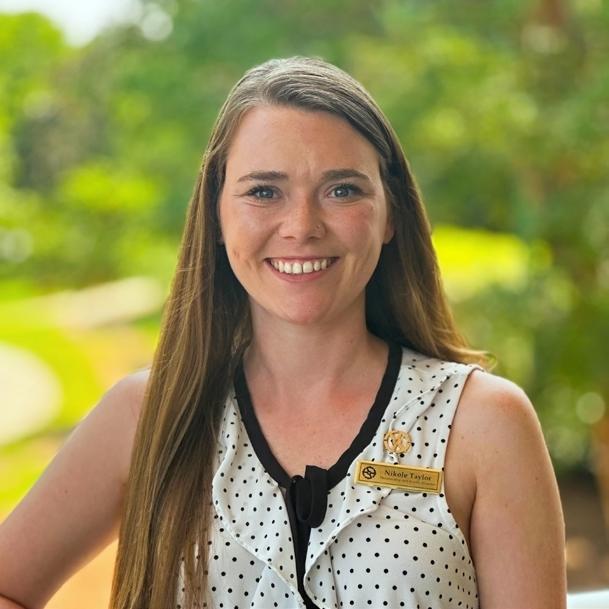
NIKOLE MAUST
ASSISTANT GM OF SAFE HARBOR PENINSULA YACHT CLUB
1 | SAFE HARBOR SUSTAINABILITY 2 | ENVIRONMENTAL IMPACT SAFE HARBOR SUSTAINABILITY | 2023 68 TABLE OF CONTENTS & INTRODUCTION
We believe that sustainability is quickly gaining traction in the world of hospitality.
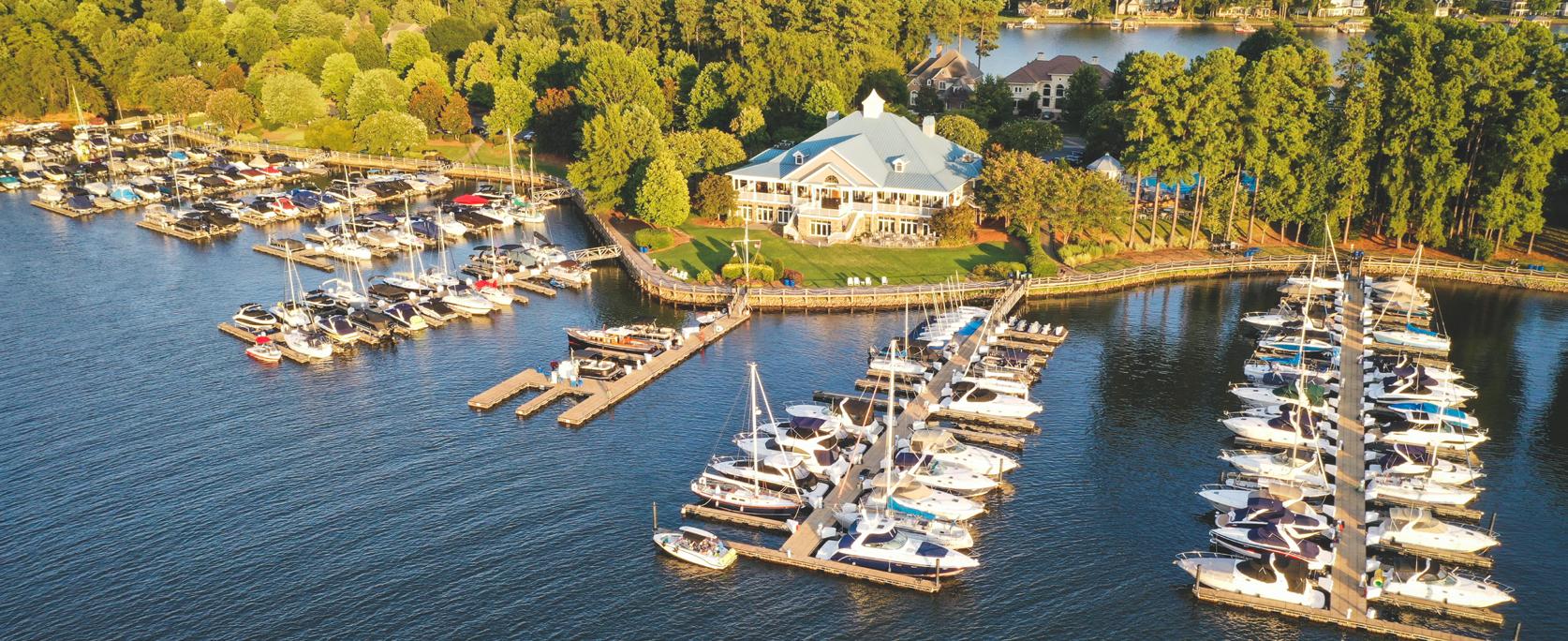
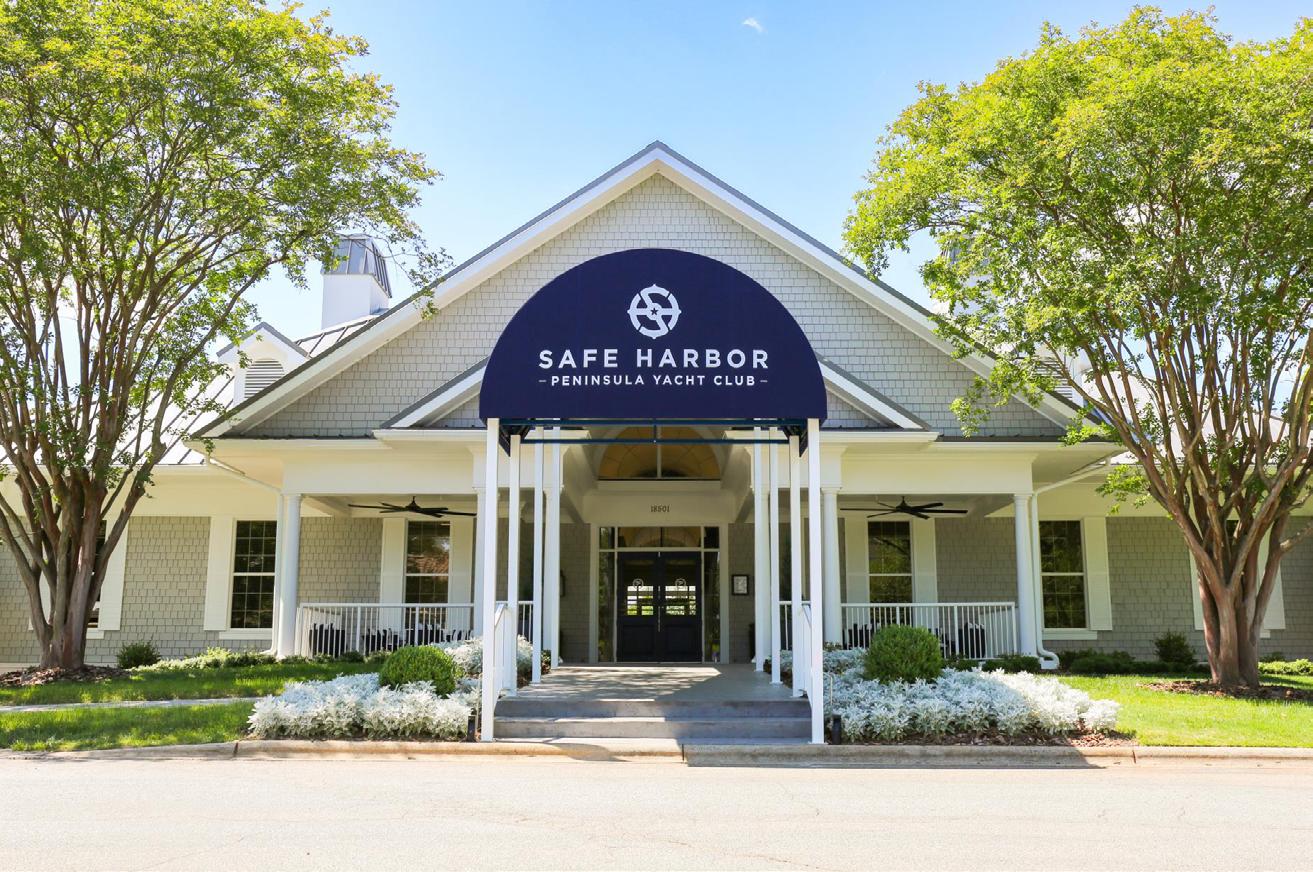
Safe Harbor Teammates, including General Manager Kathee Dishner and her team at Safe Harbor Peninsula Yacht Club, located in Cornelius, North Carolina, are finding creative ways to offer exceptional Member service and work to reduce environmental impact.
Safe Harbor Peninsula Yacht Club hosts around 1,100 Members and their families, which means the property provides services to an aggregate of 3,000-4,000 people during peak season. Like any service business, this volume creates unique sustainability challenges.
“Before we had our new bar and grill facility, people would typically order to-go food and drink from the dining room,” said Kathee. “We were going through so much plastic that was just ending up in the garbage can… cups, plates and cutlery.”
The acquisition of Peninsula Yacht Club by Safe Harbor opened up new opportunities to improve. The team
immediately turned their sights on the one thing Members had long been asking for: a pool bar and grill.
But Kathee’s team wanted to ensure their new facility, “The Outrigger,” stood out for the right reasons. Sustainability, they decided, would be part of that vision.
“We needed to make a difference in the waste footprint in our surroundings and the nearby lake from our services …basically we wanted to move away from single-use everything,” Kathee said.
“We’re right on the lake, so we think more about our impact on the environment of the lake… we do not want garbage ending up in Lake Norman, so we really try to monitor trash around the clubhouse, parking lots, and docks,” added Assistant General Manager Nikole Maust.
3 | SOCIAL IMPACT 4 | WHAT'S NEXT 69 5 | FRAMEWORKS & ALIGNMENT
"Doing our part to improve our local environment and the waste footprint of our business is on the forefront of our minds."
Kathee’s team purchased melamine plates and cups, bamboo cutlery and reusable plastic drink glasses to replace plates, cutlery and take-away containers made from single-use plastic and Styrofoam. The goals of the changes were twofold: eliminate single-use items at Safe Harbor Peninsula Yacht Club while also providing an upscale experience for Members visiting The Outrigger.
“Chef Andreas Saborido (a.k.a. ‘Chef’) was super passionate about the project and wanted to figure out what would be creative, reduce our waste, and really make his dishes ‘pop.’ So, Chef took us to a store in downtown Charlotte that carried reusable options, chose some beautiful melamine plates and said, ‘this is what I want.’” The best part? Safe Harbor Peninsula Yacht Club Members have taken notice.
“People love it! Many commented on the bamboo cutlery, plates and drinkware. Many have told us they feel like it’s an upgrade in the level of service they receive,” Kathee said.
She also feels strongly that additional upfront costs were justified.
“The change was more expensive up front, but we believe these purchases will save us money in the long run because we won’t be purchasing bulk volumes of single-use supplies.”
The team at Safe Harbor Peninsula Yacht Club, which is a certified Clean Marina, has integrated other changes with the goal of being environmentally responsible, including providing reusable tablecloths and napkins for special events, and using plant-based cleaning products. The team
1 | SAFE HARBOR SUSTAINABILITY 2 | ENVIRONMENTAL IMPACT SAFE HARBOR SUSTAINABILITY | 2023 70 TABLE OF CONTENTS & INTRODUCTION
also reduced the number of printed copies of the marina’s newsletter, “The Watch,” and digitized Safe Harbor Peninsula Yacht Club’s annual holiday cards. While Members have expressed enthusiasm and appreciation about the upgrades, Kathee emphasized the importance of resource-sharing internally at Safe Harbor too.
“I think it is really important to learn from other properties across the network because someone else might be doing something with a positive sustainability impact that can be borrowed,” Kathee said. “The Safe Harbor properties on Lake Norman do this regularly… we get together and toss around ideas. This is so important.” Nikole agreed and added,
“ We think the key is that there are a lot of small changes that can actually make a difference.”
But Kathee reiterated that her team’s decision was not only about Member satisfaction or cutting long-term costs.
“Doing our part to improve our local environment and the waste footprint of our business is on the forefront of our minds… I hope everyone on my team thinks about these things,” Kathee said.
“I have five grandchildren. I want to make the world a better place for them.” •
3 | SOCIAL IMPACT 4 | WHAT'S NEXT 71 5 | FRAMEWORKS & ALIGNMENT
93 VETERAN TEAMMATES
(as of December 31, 2023)
657
NEW FULL-TIME HIRES IN 2023
2,803
TOTAL TEAMMATES
(Full-time and part-time only as of December 31, 2023)
about our team
1 | SAFE HARBOR SUSTAINABILITY 2 | ENVIRONMENTAL IMPACT SAFE HARBOR SUSTAINABILITY | 2023 72 TABLE OF CONTENTS & INTRODUCTION
TEAMMATE DEMOGRAPHICS
TEAMMATE GENDER





TEAMMATE AGE UNDER 30 22% 30 - 39 40 - 49 50 - 59 60 & ABOVE 22% 20% 18% 18%
SENIOR LEADERSHIP MANAGERS & ABOVE IN CENTRAL SERVICES MANAGERS & ABOVE AT PROPERTY LEVEL TEAMMATES Male Female 100% 80% 60% 40% 20% 76% WHITE 24% NON-WHITE 73 3 | SOCIAL IMPACT 4 | WHAT'S NEXT 5 | FRAMEWORKS & ALIGNMENT
1 | SAFE HARBOR SUSTAINABILITY 2 | ENVIRONMENTAL IMPACT SAFE HARBOR SUSTAINABILITY | 2023 74 TABLE OF CONTENTS & INTRODUCTION
3 | SOCIAL IMPACT 4 | WHAT'S NEXT 75 5 | FRAMEWORKS & ALIGNMENT
SAFE HARBOR SUSTAINABILITY | 2023 76 1 | SAFE HARBOR SUSTAINABILITY 2 | ENVIRONMENTAL IMPACT TABLE OF CONTENTS & INTRODUCTION
With each passing year, the Safe Harbor Sustainability program evolves to align with the strategic vision our team developed in 2021. This year, we are especially proud of our path forward on goals to improve our impact on natural habitats in and around our marinas, refine our approach to climate risk management and resilience planning, and further develop our exceptional team. More detail on our progress toward these goals can be found in the pages of this report.
As always, we look forward to the voyage ahead.
Thank you for embarking on this journey with us.
77 3 | SOCIAL IMPACT 4 | WHAT'S NEXT 5 | FRAMEWORKS & ALIGNMENT

1 | SAFE HARBOR SUSTAINABILITY 2 | ENVIRONMENTAL IMPACT SAFE HARBOR SUSTAINABILITY | 2023 78 TABLE OF CONTENTS & INTRODUCTION
3 | SOCIAL IMPACT 4 | WHAT'S NEXT 79 5 | FRAMEWORKS & ALIGNMENT
1 | SAFE HARBOR SUSTAINABILITY 2 | ENVIRONMENTAL IMPACT SAFE HARBOR SUSTAINABILITY | 2023 80 TABLE OF CONTENTS & INTRODUCTION
Forward-Looking Statements
This document contains various “forward-looking statements” within the meaning of the Securities Act of 1933, as amended, and the Securities Exchange Act of 1934, as amended. We intend that such forward-looking statements will be subject to the safe harbors created thereby. It is for this purpose that any statements contained in this document that relate to expectations, beliefs, projections, future plans, and strategies, trends or prospective events or developments and similar expressions concerning matters that are not historical facts are deemed to be forwardlooking statements. Words such as “forecasts,” “intends,” “intend,” “intended,” “goal,” “estimate,” “estimates,” “expects,” “expect,” “expected,” “project,” “projected,” “projections,” “plans,” “predicts,” “potential,” “seeks,” “anticipates,” “anticipated,” “should,” “could,” “may,” “will,” “designed to,” “foreseeable future,” “believe,” “believes,” “scheduled,” “guidance,” “target” and similar expressions are intended to identify forwardlooking statements, although not all forward-looking statements contain these words.
These forward-looking statements reflect our current views with respect to future events and financial performance, but involve known and unknown risks and uncertainties, both general and specific to the matters discussed in this document, some of which are beyond our control. These risks and uncertainties may
cause our actual results to be materially different from any future results expressed or implied by such forward-looking statements. Statistics and metrics included in this report are in part dependent on the use of estimates and assumptions based on historical levels and projections and are therefore subject to change. This report has not been externally assured or verified by an independent third party. This report is not comprehensive and, for that reason, should be read in conjunction with Sun Communities’ filings with the Securities and Exchange Commission, including the Annual Reports on Form 10-K and Quarterly Reports on Form 10-Q, particularly the “Forward-Looking Statements” and “Risk Factors” sections of these filings, all of which are available on the Sun Communities website.
Readers are cautioned not to place undue reliance on these forward-looking statements, which speak only as of the date the statement was made. We undertake no obligation to publicly update or revise any forward-looking statements included or incorporated by reference into this document, whether as a result of new information, future events, changes in our expectations or otherwise. Although we believe that the expectations reflected in the forward-looking statements are reasonable, we cannot guarantee future results, levels of activity, performance, or achievements. All written and oral forward-looking statements attributable to Sun Communities, Inc. or persons acting on its behalf are qualified in their entirety by these cautionary statements.
3 | SOCIAL IMPACT 4 | WHAT'S NEXT 81 5 | FRAMEWORKS & ALIGNMENT
1 | SAFE HARBOR SUSTAINABILITY 2 | ENVIRONMENTAL IMPACT SAFE HARBOR SUSTAINABILITY | 2023 82 TABLE OF CONTENTS & INTRODUCTION
Company Name
Headquarters
Description
Safe Harbor Marinas, LLC
Dallas, Texas, United States
Main Products & Services
Financial Reports Reporting Contacts
Safe Harbor Marinas, LLC is a wholly-owned subsidiary of Sun Communities, Inc. (NYSE: SUI) (“Sun”). At the time of this report's publication, our network consists of 139 marinas across the United States and Puerto Rico, where we serve over 48,000 boating families.
Our marinas offer wet slip and dry storage space leases, end-to-end service (such as routine maintenance, repair and winterization), fuel sales and other high-end amenities. These services and amenities offer convenience and resortquality experiences to our Members and guests.
Safe Harbor’s financial reports are consolidated with Sun’s financial filings, which are publicly available at suninc.com/sec-filings
Sun Communities: sustainability@suncommunities.com
Safe Harbor Marinas: sustainability@shmarinas.com
our company
3 | SOCIAL IMPACT 4 | WHAT'S NEXT 83 5 | FRAMEWORKS & ALIGNMENT
Safe Harbor’s Alignment to the UN Sustainable Development Goals ("SDGs")
HOW WE CONTRIBUTE
Our forthcoming climate risk assessment and resilience strategy will help Safe Harbor identify properties that are highly exposed to extreme weather and prioritize actions to increase infrastructure resilience and reduce potential economic loss, which indirectly contributes to broader community resilience (Target 1.5).
We offer comprehensive health insurance for all full-time employees, including coverage for In Vitro Fertilization ("IVF") in our health insurance offerings (Target 3.7).
We promote the safe handling, use and disposal of hazardous wastes as part of our Environment, Health and Safety ("EHS") policies and procedures and in compliance with state and federal laws and regulations (Target 3.9).
We promote stormwater best management practices and pollution control through Clean Marina certification and our EHS programs, which directly and indirectly contribute to improved water quality. We also continue to work toward achieving Clean Marina certification for all Safe Harbor properties (Target 6.3).
We identified properties at high risk of water scarcity using a risk filter tool. Safe Harbor and Sun will work to identify strategies for improved water efficiency at those properties (Target 6.4).
Our Coastal Habitat Enhancement Program ("CHEP") aims to improve coastal, marine and estuary ecosystems at or near our properties across the network. Specific projects are expected to be initiated at properties in Rhode Island and North Carolina, which we expect will directly and indirectly improve natural habitat at or near those properties (Target 6.6).
Safe Harbor currently has three operational rooftop solar installations, one completed but non-operational installation, and five more that were approved in 2023. Construction on three new projects is expected to start in 2024, which directly contributes to the goal of expanding renewable energy use generally (Target 7.2).
SDG
1 | SAFE HARBOR SUSTAINABILITY 2 | ENVIRONMENTAL IMPACT SAFE HARBOR SUSTAINABILITY | 2023 84 TABLE OF CONTENTS & INTRODUCTION
HOW WE CONTRIBUTE
We provide donations, scholarships, externships and on-site mentoring opportunities in an effort to reduce barriers to entry to marine trades and to promote the career development of talented young individuals seeking to build a career in the industry. We also provide a tuition reimbursement benefit to Teammates for continuing education. Marine technicians may apply this benefit retroactively to cover the costs of training (Target 8.6).
Through our required and voluntary EHS and training programs, we promote a safety mindset at our properties in an effort to ensure a safe and secure workplace for all Teammates (Target 8.8).
We aim to ensure sustainable measures are included in construction and retrofit projects where feasible and applicable by integrating sustainability criteria into the approval process for growth CapEx projects. This includes measures that support solar and EV charger deployment, smart metering, and nature-based stormwater solutions, where applicable (Target 9.4).
Using data from our climate risk assessment, our plan is to develop an improved approach to marina resilience, disaster planning and loss mitigation at our marinas which contributes to the overall aim of strengthening resilience and adaptive capacity to climaterelated hazards and natural disasters in all countries (Target 13.1).
The aim of our Coastal Habitat Enhancement Program ("CHEP") is to improve habitats and resilience at or near our properties where opportunities exist and are feasible (Targets 14.1, 14.2 and 14.5).
SDG
3 | SOCIAL IMPACT 4 | WHAT'S NEXT 85 5 | FRAMEWORKS & ALIGNMENT
GRI CONTENT INDEX
STATEMENT OF USE
Safe Harbor Marinas, LLC has reported the information cited in this GRI content index for the reporting period starting January 1, 2023, to December 31, 2023. This report was produced with reference to the GRI Standards.
GRI USED: GRI 1: FOUNDATION 2021
GRI TOPIC-SPECIFIC STANDARD
GRI 2: General Disclosures 2021
1 | SAFE HARBOR SUSTAINABILITY 2 | ENVIRONMENTAL IMPACT SAFE HARBOR SUSTAINABILITY | 2023 86 TABLE OF CONTENTS & INTRODUCTION
2-1 Organizational details This report 83 2-2 Entities included in the organization’s sustainability reporting This report 7 2-3 Reporting period, frequency and contact point This report 7, 83 2-4 Restatements of information This report 7 2-5 External assurance Sun Communities ESG report suninc.com/esg 2-6 Activities, value chain and other business relationships This report 7 2-7 Employees This report 72-73 2-9 Governance structure and composition This report 18 2-11 Chair of the highest governance body This report 18 2-12 Role of the highest governance body in overseeing the management of impacts This report 16 2-13 Delegation of responsibility for managing impacts This report 16, 18-19 2-14 Role of the highest governance body in sustainability reporting This report 16 2-15 Conflicts of interest This report 23 LOCATION & PAGE GRI ID & DESCRIPTION 3 | SOCIAL IMPACT 4 | WHAT'S NEXT 87 5 | FRAMEWORKS & ALIGNMENT
GRI TOPIC-SPECIFIC STANDARD
GRI 2: General Disclosures 2021
GRI 3: Material Topics 2021
GRI 201: Economic Performance 2016
GRI 202: Market Presence 2016
GRI 205: Anti-corruption 2016
GRI 207: Tax 2019
1 | SAFE HARBOR SUSTAINABILITY 2 | ENVIRONMENTAL IMPACT SAFE HARBOR SUSTAINABILITY | 2023 88 TABLE OF CONTENTS & INTRODUCTION
2-17 Collective knowledge of the highest governance body This report 16 2-22 Statement on sustainable development strategy This report 20-21 2-23 Policy commitments This report 23 2-24 Embedding policy commitments This report 23 2-25 Processes to remediate negative impacts This report 23 2-26 Mechanisms for seeking advice and raising concerns This report 23 2-27 Compliance with laws and regulations This report 23 2-29 Approach to stakeholder engagement This report 14-15, 65 3-1 Process to determine material topics This report 21 3-2 List of material topics This report 20 3-3 Management of material topics This report 21 201-1 Direct economic value generated and distributed Sun Communities 10-K suninc.com/sec-filings 201-2 Financial implications and other risks and opportunities due to climate change This report 34-37 201-3 Defined benefit plan obligations and other retirement plans This report 54 202-2 Proportion of senior management hired from the local community This report 61 205-1 Operations assessed for risks related to corruption This report 23 205-2 Communication and training about anti-corruption policies and procedures This report 23 207-1 Approach to tax Sun Communities 10-K suninc.com/sec-filings 207-2 Tax governance, control & risk management Sun Communities 10-K suninc.com/sec-filings 207-3 Stakeholder engagement and management of concerns related to tax Sun Communities 10-K suninc.com/sec-filings 207-4 Country-by-country reporting Sun Communities 10-K suninc.com/sec-filings LOCATION & PAGE GRI ID & DESCRIPTION 3 | SOCIAL IMPACT 4 | WHAT'S NEXT 89 5 | FRAMEWORKS & ALIGNMENT
GRI TOPIC-SPECIFIC STANDARD
GRI 302: Energy 2016
GRI 303: Water and Effluents 2018
GRI 304: Biodiversity 2016
GRI 305: Emissions 2016
GRI 306: Waste 2020
1 | SAFE HARBOR SUSTAINABILITY 2 | ENVIRONMENTAL IMPACT SAFE HARBOR SUSTAINABILITY | 2023 90 TABLE OF CONTENTS & INTRODUCTION
302-1 Energy consumption within the organization This report 50-51 302-5 Reductions in energy requirements of products and services This report 38-39, 44-45 303-1 Interactions with water as a shared resource This report 30, 33 303-2 Management of water discharge-related impacts This report 42 303-5 Water consumption This report 50-51 304-2 Significant impacts of activities, products and services on biodiversity This report 30 304-3 Habitats protected or restored This report 30 305-1 Direct (Scope 1) GHG emissions This report 50-51 305-2 Energy indirect (Scope 2) GHG emissions This report 50-51 305-3 Other indirect (Scope 3) GHG emissions This report 50-51 305-4 GHG emissions intensity Sun Communities ESG Report suninc.com/esg 305-5 Reduction of GHG emissions Sun Communities ESG Report suninc.com/esg 306-1 Waste generation and significant waste-related impacts This report 42 306-2 Management of significant waste-related impacts This report 42 306-3 Waste generated This report 51 LOCATION & PAGE GRI ID & DESCRIPTION 3 | SOCIAL IMPACT 4 | WHAT'S NEXT 91 5 | FRAMEWORKS & ALIGNMENT
GRI TOPIC-SPECIFIC STANDARD
GRI 401: Employment 2016
GRI 403: Occupational Health and Safety 2018
GRI 404: Training and Education 2016
GRI 405: Diversity and Equal Opportunity 2016
GRI 413: Local Communities 2016
GRI 415: Public Policy 2016
GRI 416: Customer Health and Safety 2016
GRI 417: Marketing and Labeling 2016
1 | SAFE HARBOR SUSTAINABILITY 2 | ENVIRONMENTAL IMPACT SAFE HARBOR SUSTAINABILITY | 2023 92 TABLE OF CONTENTS & INTRODUCTION
401-1 New employee hires and employee turnover This report 72 401-2 Benefits provided to full-time employees that are not provided to temporary or part-time employees This report 54 401-3 Parental leave This report 54 403-1 Occupational health and safety management system This report 62-63 403-2 Hazard identification, risk assessment, and incident investigation This report 63 403-4 Worker participation, consultation, and communication on occupational health and safety This report 62-63 403-5 Worker training on occupational health and safety This report 62 403-6 Promotion of worker health This report 62 403-7 Prevention and mitigation of occupational health and safety impacts directly linked by business relationships This report 63 403-8 Workers covered by an occupational health and safety management system This report 63 403-9 Work-related injuries This report 63 404-2 Programs for upgrading employee skills and transition assistance programs This report 60 404-3 Percentage of employees receiving regular performance and career development reviews This report 59 405-1 Diversity of governance bodies and employees This report 72-73 413-1 Operations with local community engagement, impact assessments, and development programs This report 61 415-1 Political contributions This report 23 416-1 Assessment of the health and safety impacts of product and service categories This report 63 417-1 Requirements for product and service information and labeling This report 63 LOCATION & PAGE GRI ID & DESCRIPTION 3 | SOCIAL IMPACT 4 | WHAT'S NEXT 93 5 | FRAMEWORKS & ALIGNMENT