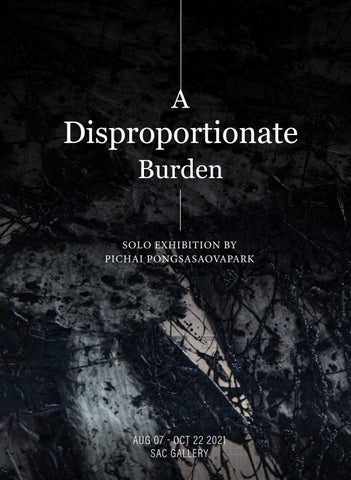
A
Disproportionate Burden
Support by
The exhibition “A Disproportionate Burden” on display between 7 Aug – 22 Oct 2021 at SAC Gallery www.sac.gallery https://www.facebook.com/sacbangkok E-mail : Manager@sac.gallery Tel: +66 2 2585580 Ext. 401 #sacpichai #sacbangkok
Managing Director Sales and Program Director Curator Graphic Designer Coordinator
Production
Sithikaj Angsuvarnsiri Jongsuwat Angsuvarnsiri Miranda Metcalf Linjie Zhou Saruda Suansa-ard Chol Janepraphaphan Chuthamat Suwannasri Methinee Boonyuen Krittathat Taveetanathada Charun Lunsucheep Pinyaphat Satchukorn Phansak Kaeosalapnil Panupong Prasetthassut
A
Disproportionate Burden
With more than 30% of the workers in Thailand involved in agriculture, the Thai economy depends greatly on farming. Due to modernization, farms have undergone structural changes adding more mechanization, technology, and globalization, as they try to meet the demands of the global market. The number of pesticides that have been imported and used in Thailand has increased with each passing decade. Thai farmers have had to respond to the market demands for increasing crop yields and the need for greater productivity by not only expanding their tillable land but also using more and more chemicals in farming. As a developing nation, using pesticides is imperative in Thailand, however, the overuse and poor regulation of these chemicals pose health risks to farmers, their families, and the general population.
Bangkok-based artist Pichai Pongsasaovapark explores the health impact this has had on the people of Thailand. His artwork is known for addressing concerns around air pollution and contamination issues in society. This practice brought him to explore the health of the land and interview farmers firsthand, with special focus on the local people in the northern areas of Chiang Rai and Mae Hongson provinces.
He was moved by witnessing the pressure farmers are under to grow and produce the best and most beautiful product and to have shorter times between growing and selling, which is supposedly what the consumer wants. The widespread use of agri-chemicals, such as herbicides and pesticides, as well as the burning of their fields for faster turnover of the soil, are seen by farmers as necessary evils to be able to compete in the current market.
For this exhibition, A Disproportionate Burden, presented by SAC gallery, Pichai continues his approach of manipulating surface texture through using nontraditional artistic tools. His works capture in a tangible way the real and present danger that goes unseen by the naked eye, in effect, saying: “What you can't see, can hurt you.” While previously he used exhaust pipes for his series, Poison Flower and Deluge, for this series he used steamroller, to crush flowers, vegetables, coffee beans, and sugar canes. Steamrolling to flatten the beautiful and healthy produce grown by farmers for our benefit is an effort to give form to the dangers of the chemicals used in modern agricultural production. Pichai’s work captures visually the pressures
that farmers feel to increase agricultural production. The steamrolling act of printing also is symbolic of the destruction of illegal and counterfeit goods, a way to demonstrate a resolve to protect imported foreign products. Additional works in this series utilize newspapers, another printing approach, through which Pichai highlights the stock pages of the newspaper, reflecting how the economy drives the overuse of these agri-chemicals.
Over his career, Pichai’s work has used acrylics, mixed media, and photography to create abstract and conceptual work. For this series, he also introduces the use of argi-chemicals into his process. The textures in these works convey the deepness of the pain inflicted on humans when they are exposed to the toxic chemicals. In order to draw attention to this point, Pichai exposed himself to the chemicals as he created the textures in his work. He desired to know the feeling and to understand the pain of those who are forced to use these things for the betterment of our society. Falling ill during the process, he realized that no one is safe and that the best of intentions can have unforeseen and harmful consequences. The dangers to both farmers and consumers lurk in the surface of the resulting artwork, and the usage of the 10-ton steel wheel of the steamroller evokes the pressure that farmers face to use agrichemicals to stay competitive and meet global market demands.
No part of society is completely safe from pesticides and their health effects, though a disproportionate burden is shouldered by the people of developing countries such as Thailand.
จากการทีค่ นทำงานจำนวนมากกวา 30% อยูใ นภาคเกษตรกรรม ทำใหเศรษฐกิจของประเทศไทย ขึน้ อยูก บั การเกษตร การเขาสูย คุ โลกาภิวฒ ั น ทำใหเรือกสวนไรนาตองผานการปรับปรุงโครงสราง เพื่อการพัฒนาใหทันสมัย มีการนำเครื่องจักรและเทคโนโลยีเขามาใชงาน เพื่อตอบสนองตอ ความตองการผลผลิตของตลาดโลก เกษตรกรในประเทศไทยจำเปนตองปรับตัวตามความตองการ ของตลาด ทีต่ อ งการปริมาณผลผลิตทีม่ ากขึน้ ทำใหเกษตรกรตองเพิม่ ปริมาณการผลิต โดยไมใช แคขยายพื้นที่เพาะปลูกเพียงเทานั้น ยังมีการนำสารเคมีในการเกษตรมาใชในปริมาณที่มากขึ้น ในแตละทศวรรษทีผ่ า นมาประเทศไทยมีปริมาณการนำเขาและใชงานยาฆาแมลงเพิม่ ขึน้ อยางตอ เนื่อง ในฐานะที่ประเทศไทยเปนประเทศกำลังพัฒนาทำใหการใชยาฆาแมลงเปนสิ่งจำเปนและ หลีกเลี่ยงไมได แตการใชสารเคมีเหลานี้ในปริมาณมากเกินไปและรวมไปถึงกฎเกณฑขอบังคับ ในการใชงานที่ไมเหมาะสม กอใหเกิดความเสี่ยงตอสุขภาพของเกษตรกร ครอบครัวของพวก เขา และยังรวมไปถึงประชาชนคนทั่วไปที่เปนผูบริโภค พิชัย พงศาเสาวภาคย ศิลปนซึ่งพำนักอยูในกรุงเทพฯ เปนที่รูจักในการพูดถึงประเด็นปญหา มลพิษทางอากาศและการปนเปอนของสารพิษในสังคมผานผลงานชิ้นที่ผานมา เขาไดทำการ ศึกษาเกี่ยวกับผลกระทบที่เกิดขึ้นจากการใชยาฆาแมลงและสารเคมีตอสุขภาพของคนไทย ดวยการลงพืน้ ทีส่ ำรวจสภาพแวดลอมและสัมภาษณเกษตรกรโดยตรง โดยเนนไปทีช่ าวบานและ คนในทองถิ่นพื้นที่ตอนบนของจังหวัดเชียงรายและแมฮองสอนเปนพิเศษ เขาไดรับแรงบันดาลใจจากการสังเกตเห็นความกดดันที่เกษตรกรตองแบกรับ เพื่อตอบสนอง ความตองการของผูบ ริโภค พวกเขาไมเพียงตองเพาะปลูกผลผลิตทีด่ ที ส่ี ดุ เทานัน้ แตยงั ตองสวย ที่สุดอีกดวย นอกจากนี้ยังตองเรงระยะเวลาใหผลผลิตสามารถเขาสูตลาดไดไวขึ้น ทำใหมีการ ใชสารเคมีทางการเกษตรอยางแพรหลายเชนสารกำจัดศัตรูพืชและยาฆาแมลง รวมไปถึงความ จำเปนที่จะใชวิธีผิด ๆ อยางการเผาไรนาเพื่อใหสามารถใชพื้นที่ในการเพาะปลูกครั้งถัดไปได เร็วขึ้น จะไดสามารถแขงขันในตลาดได ในนิทรรศการ "A Disproportionate Burden" ซึ่งนำเสนอโดย SAC Gallery ครั้งนี้นั้น พิชัย ยังคงนำสิ่งตาง ๆ ที่ไมใชอุปกรณสำหรับงานศิลปะมาใชในการสรางสรรครูปแบบพื้นผิวของ ผลงาน ผลงานของเขารวบรวมและบีบอัดภาวะความอันตรายทีแ่ ทจริงซึง่ ไมสามารถมองเห็นได ดวยตาเปลาใหปรากฏและสัมผัสไดผานชิ้นงานบนแนวคิดที่วา "สิ่งที่มองไมเห็น สามารถทำราย
คุณได" หากเรายอนไปดูผลงานกอนหนานี้ เขาไดใชทอไอเสียในการสรางสรรคผลงานชุด ดอกไมพษิ (Poison Flower) และ น้ำทวม (Deluge) จนมาถึงผลงานชุดปจจุบนั นีเ้ ขาไดหนั มา ใชรถบดถนนในการบดขยีด้ อกไมนานาพันธุ พืชผักชนิดตางๆ เมล็ดกาแฟและออย เขาเจตนาใช การบดขยี้ผลผลิตที่สดใหมและสวยงามเหลานี้ที่เปนผลงานการผลิตจากน้ำพักน้ำแรงเกษตรกร และตัง้ ใจปลูกโดยคำนึงถึงความตองการของผูบ ริโภค เพือ่ พิมพภาพอันตรายของการใชสารเคมี ในการผลิตสินคาทางการเกษตรสมัยใหมปรากฏเปนรูปใหผชู มไดเห็น ผลงานของพิชยั แสดงออก ถึงความกดดันทีเ่ กษตรกรตองเผชิญเพือ่ เพิม่ ผลิตผลทางการเกษตรใหเพียงพอกับความตองการ ของตลาด การบดดวยรถบดยังเปน เครือ่ งหมายสือ่ ถึงการทำลายสินคาปลอมและ ผิดกฏหมาย ทีใ่ ชสาธิตใหเห็นการแกปญ หาเพือ่ คุม ครองสินคานำเขาจากตางประเทศ ผลงานบางสวนในชุดนี้ ใชหนังสือพิมพเปนอีกหนึง่ เครือ่ งมือในการนำเสนอผลงาน โดยพิชยั ไดทำการขับเนนหนาเศรษฐกิจ ของหนังสือพิมพเพือ่ แสดงใหเห็นวาภาคเศรษฐกิจเปนสวนสำคัญในการผลักดันใหเกิดการใชสาร เคมีทางการเกษตรเกินขนาด ในชีวิตการเปนศิลปนของเขา พิชัยไดใชสีอะคริลิก สื่อผสมและภาพถายในการสรางผลงาน นามธรรมและนำเสนองานเชิงแนวความคิด และสำหรับผลงานชุดนี้เขายังไดใชสารเคมีทางการ เกษตรมาเปนสวนหนึ่งในการสรางชิ้นงาน โดยพื้นผิวของชิ้นงานเหลานี้แสดงออก ถึงบาดแผล ที่มองไมเห็น ความเจ็บปวดที่ฝงซึมลึกอยูภายในรางกายของมนุษยเมื่อเผชิญกับพิษของสาร เคมี และเพือ่ ทีจ่ ะเรียกรองใหเห็นถึงประเด็นดังกลาว พิชยั จึงไดนำตัวเองเขาไปสัมผัสกับสารเคมี ในขณะทีเ่ ขาสรางสรรคชน้ิ งานดวยความตัง้ ใจทีจ่ ะรับรูถ งึ ความรูส กึ และตองการจะเขาใจความเจ็บ ปวดของผูคนที่ถูกบังคับใหใชสารเคมีเหลานี้เพื่อสนองความตองการของสังคม การลมปวย ลงระหวางการทำงานทำใหเขาตระหนักไดวาไมมีใครปลอดภัยจากการใชสารเคมี และเจตนา ทีต่ อ งการจะพัฒนาสามารถนำไปสูผ ลลัพธทเ่ี ลวรายโดยไมสามารถคาดการณไดลว งหนา อันตราย ตอทัง้ เกษตรกรและผูบ ริโภคถูกแสดงใหเห็นบนพืน้ ผิวของผลงานทีเ่ สร็จสมบูรณ การใชลอ เหล็ก หนัก 10 ตันของรถบดถนนกระตุนใหเรารูสึกถึงความกดดันที่เกษตรกรถูกบีบใหใชสารเคมีเพื่อ ใหสามารถอยูรอดและผลิตผลผลิตไดเพียงพอกับความตองการของตลาดโลก ไมมีสวนใดของสังคมเราที่ปลอดภัยจากยาฆาแมลงและอันตรายของมันตอสุขภาพ ผลงานชุด "A Disproportionate Burden" นีแ้ ฝงไปดวยอันตราย ในชีวติ ของผูค นจากประเทศกำลังพัฒนา อยางเชน ประเทศไทย
(2021), Charcoal, Acrylic and Oil on Canvas, 110 x 150 cm
(2021), Botanicals and Acrylic on Mulberry Paper, 60 x 80 cm
(2021), Mix Media on Mulberry Paper, 60 x 80 cm
(2021), Botanicals and Acrylic on Mulberry Paper, 60 x 80 cm
(2021), Botanicals and Acrylic on Mulberry Paper, 60 x 80 cm
(2021), Botanicals and Oil on Mulberry Paper, 26.5 x 40 cm
(2021), Botanicals and Oil on Mulberry Paper, 26.5 x 40 cm
(2021), Botanicals and Oil on Mulberry Paper, 30.5 x 40 cm
(2021), Botanicals and Oil on Mulberry Paper, 26.5 x 40 cm
(2021), Installation with Cement Rod, Printing Ink on Canvas, 200 x 1000 cm / each
(2021), Installation with Cement Rod, Printing Ink on Canvas, 200 x 1000 cm / each
2021, Mix Media Collage with Printing Ink on Newspaper, 60 x 80 cm
2021, Botanicals and Acrylic on Canvas, 103 x 195 cm 2021, Botanicals and Acrylic on Canvas, 108 x 195 cm 2021, Botanicals and Acrylic on Canvas, 108 x 195 cm
พิชยั :
สวัสดีครับ ผม พิชัย พงศาเสาวภาคย วันนี้ผมก็รูสึกเปนเกียรติเปนอยางมากนะครับที่ไดมีโอกาสพูดคุยกับ อ. ชล บุนนาค ผูช ว ยศาสตราจารย คณะเศรษฐศาสตร มหาวิทยาลัยธรรมศาสตร ปจจุบนั อาจารยทำหนาทีเ่ ปนผูอ ำนวยการศูนย วิจยั และสนับสนุนเปาหมายการพัฒนาทีย่ ง่ั ยืน (SDG Move) จึงอยากชวนอาจารยมาพูดคุยในประเด็นเกีย่ วเนื่องกับ งานนิทรรศการที่กำลังจัดอยูในขณะนี้ ซึ่งเปนนิทรรศการเดี่ยวครั้งที่ 3 ที่ผมแสดงรวมกับ SAC Gallery ชื่อวา A Disproportionate Burden จัดแสดงระหวางวันที่ 7 สิงหาคม ถึง 22 ตุลาคม พ.ศ. 2564 นิทรรศการในครั้งนี้ผมตั้งใจที่จะสื่อถึงภาระตางๆ ที่เกษตรกรในบานเราที่ตองแบกรับเรื่องตาง ๆ ไวมากมาย อยางเชนการตองอยูก บั สารเคมีทม่ี ผี ลตอสุขภาพของพวกเขา ตองอยูก บั เรือ่ งของระบบทุน ระบบเศรษฐกิจ ระบบนิเวศ ปญหาของความเปลีย่ นแปลงสภาพภูมอิ ากาศ โดยทัง้ หมดนีเ้ ปนภาระทีห่ นักอึง้ คนทำอาชีพนีต้ อ งแบกรับไว คืออยูร อด ไมรอด ก็อยูที่ 4-5 ปจจัยนี้ ผมเริม่ ทำโปรเจ็คนีจ้ ากขอมูลพืน้ ฐาน จากเรือ่ งเลาทีพ่ อ เลาใหผมฟงตอนเด็ก ๆ วา ครอบครัวทางฝง คุณพอ เขาทำอาชีพ ทำนาเปนหลัก ซึ่งตอนนั้นเปนที่นาที่ตองเชา แกเลาวาอาชีพชาวนาเปนอาชีพที่ลำบาก ยากจน มีไมพอกิน ตอนนั้น ผมฟงก็ยังไมเขาใจอะไรมากมาย ซึ่งตอมาขอมูลตรงนี้กลายเปนขอมูลสำคัญที่ผมสนใจมาก ๆ จริง ๆ ภาระความกดดันเมื่อสมัยเกือบ 100 กวาปที่แลว ที่คุณพอเคยเลาใหฟง เขาตองหนีความยากจนนั้น มา ประเทศไทย คือคนจีนสมัยนั้นเขาอพยพหนีตายกันเยอะ มันไมมีอะไรกิน ก็ตองหนีมาประเทศที่พอจะมีชีวิตรอด ได โดยพีน่ อ งของคุณพอหนีมากอน เขามาอยูแ ถว อ. สะเดา จ. สงขลา พอเริม่ ตัง้ รกรากได เขาก็มกี ารสือ่ สารกัน แลว พอก็เลยติดตามมาโดยเดินทางดวยเรือสำเภาที่ทาเรือปนัง ประเทศมาเลเซีย จากนั้นจึงขามพรมแดนมาตั้งรกรากอยู ในประเทศไทย ซึง่ เรือ่ งราวเหลานีท้ ด่ี เู หมือนจะเล็ก ๆ แตวา มันมีความรูส กึ สะเทือนใจในความเปนคนทำอาชีพเกษตรกร ผมก็เลยนำมาผูกเรื่องนี้กับเกษตรกรบานเรา ลงพื้นที่หาขอมูลจริง ๆ วา เกษตรกรบานเราในปจจุบัน มีความเปนอยู ที่ดีขึ้นกวาเมื่อกอนใน สมัยที่คุณพอเคยเลาใหฟงหรือไมอยางไร ที่แรกที่ผมไปสำรวจคือ จ.พิษณุโลก เรียกวาเปนจังหวัดที่มีการปลูกผักกันเยอะ เทาที่ผมเห็นนะเปนผักกาดขาว ผักกะหล่ำปลี ทีส่ ง ตอมายังกรุงเทพฯ ซึง่ ผมก็ไดพดู คุยถามชีวติ ความเปนอยู การทำนา การทำสวนของเขา ก็ไดความ วา มันมีปจ จัยหลาย ๆ อยาง ทีเ่ ขาตองแบกรับภาระนัน้ ไว เชน ตองทำใหผกั สวยเพือ่ ทีจ่ ะสงตลาดใหได การจะทำผัก ใหสวยก็ตอ งใชสารเคมีชว ยใหใบไมถกู แมลงกิน ไมมโี รคแมลง ตองฉีดสารเคมีทกุ วัน พอคาคนกลางก็เปนอีกปจจัยหนึง่ คือบางทีสารเคมีทเ่ี ขาฉีดลงไปมันยังไมถงึ กำหนดทีต่ อ งตัด เขาก็ตอ งรีบตัดเพือ่ ทีจ่ ะสงขายตลาด ตามทีพ่ อ คาคนกลาง กำหนด จากนัน้ ก็ไดไปพูดคุยกับอาจารยสองทานจากมหาวิทยาลัยนเรศวร ทีท่ ำวิจยั เรือ่ งเกีย่ วกับสารเคมีพาราควอตทีต่ กคาง อยูใ นพืชผัก โดย อ. ไดออกแบบชุด paraquat test kit เบือ้ งตนเพือ่ ใหเกษตรกรไดใชตรวจสอบสารเคมีตกคางกอน จะนำสงตลาดหรือรับประทาน ซึ่งก็ไดความรูเกี่ยวกับสารเคมีอันตรายเหลานี้มา จากนั้นผมก็เดินทางไปจังหวัดเชียงราย ผมมีพี่สาวคนหนึ่งที่ทำนาเกษตรอินทรียไมใชสารเคมี เขาทำกินเอง ปลูก ประมาณ 10 ไร แลวกิน 1 ป แกก็พาไปทีน่ าอีกสองแปลงเปนของเพือ่ นชาวนาซึง่ อีกสองแปลงนัน้ ใชสารเคมี เพราะวา เขาตองสงขายตลาด เทาทีฟ่ ง มานะครับ เขาอธิบายวามันมีความจำเปนทีจ่ ะตองใชสารเคมีมาก ๆ ถาไมใชพชื ผลผลิตก็จะออกมาไมสวย สง ตลาดไมได พอคาคนกลางไมรบั ซือ้ แลวผลผลิตก็ออกมาไมทนั ตามฤดูกาลดวย อยางยาฆาหญาเขาจำเปนตองใชตอน ที่จะเริ่มทำนาฉีดเพื่อที่จะใหหญามันตาย ไมไปแยงอาหารของขาว และเก็บเกี่ยวงาย อยางในชวงที่เขาจางคนมา
ตัดหญา มันตองเสียคาแรงเยอะมากวันหนึ่งก็ตอง 300 บาทเปนอยางต่ำของคาแรง เขาก็ไมมีเงินพอที่จะไปจาง แรงงาน มาตัด เขาก็ตองพึ่งพาสารเคมีนี้ตอไป จากนัน้ ผมก็ขน้ึ เหนือไปอีกถึง ต.หวยหอม จ. แมฮอ งสอน ซึง่ เปนถิน่ ของกะเหรีย่ งอยูใ นพืน้ ทีห่ บุ เขา ตอนขึน้ ไปก็ตกใจ มาก เพราะวาระหวางทางจะมีทั้งสวนผักและก็นาขาว ที่เห็นมากที่สุดคือเขาปลูกกะหล่ำปลีกันเยอะ ที่นั้นภูเขาเปน ลูก ๆ จะมีแตกะหล่ำทัง้ นัน้ เลย มันใหความรูส กึ วาพืน้ ทีเ่ กษตรของเรามันรุกล้ำเขาไปในพืน้ ทีป่ า มากขึน้ เรือ่ ย ๆ ซึง่ ก็ได พูดคุยถามเขาวาไดใชสารเคมีไหม เขาก็บอกวาตองใช เขาจะแยกกันวาถาเปนพืชผักทีท่ านกันเองในหมูบ า นจะปลูกไว แปลงหนึ่ง สวนที่จะขายก็จะปลูกไวอีกแปลงหนึ่ง แปลงที่เขาปลูกกินเองจะไมใชสารเคมี สวนแปลงที่ขายตองใชสาร เคมี ผมไดยินเขาเลามาวา เขาเคยเอาผักที่ใชสารเคมีไปเลี้ยงหมู ปรากฏวาสองสามวันหมูของเขาก็ตาย เขาก็เลยกลัว เรื่องของการใชสารเคมีมาก คนที่นั้นเขาจะรูกันวาเขาจะไมกินผักที่สงขายตลาด อันนี้ก็เปนภาพใหญ ๆ ที่ผมไดลงพื้นที่ ผมก็เลยมีคำถามขึ้นมา วาทำไมอาชีพเกษตรกรถึงเปนอาชีพที่ไมมีใครใฝฝน ที่จะเปน คือถาเราถามเด็กยุคใหมสมัยนี้วาอยากเปนอะไร จะไมมีใครตอบวาอยากเปนเกษตรกร เขาจะอยากเปน หมอ วิศวะ หรือแอรโฮสเตส เปนอะไรทีด่ แู ลวนาภาคภูมใิ จ แลวทำไมอาชีพเกษตรกรถึงเปนอาชีพทีเ่ หมือนกับจะถูก ดอยคาขนาดนั้น ทั้ง ๆ ที่พวกเขาก็ทำผลผลิตขึ้นมาเพื่อเลี้ยงคนทั้งประเทศ ทำไมอาชีพนี้ถึงเปนอาชีพที่ยังอยู เหมือนเดิม ไมร่ำรวยขึ้นมา ไมมีความเปนอยูที่ดีขึ้น มันเกี่ยวของกับระบบเศรษฐกิจของประเทศหรือของโลกยังไง บางครับ ชล:
จริง ๆ แลวที่บอกวาอาชีพเกษตกรถูกดอยคาเนี่ย ผมวามันก็จริงอยูนะ ถาเปนเกษตรแบบเดิมที่เหมือนทำแลวจน อันนี้ก็จริง เพราะสุดทายแลวมองในมุมเศรษฐศาสตรก็คือ เหมือนคนมีทางเลือกหลายทาง ถาเขามีโอกาสที่จะเลือก ทางที่จะไดคาตอบแทนสูงกวา เขาก็ไปทางนั้น ยิ่งเด็กสมัยใหม อยางเด็กในชุมชนเกษตรเองก็ไดรับการศึกษาสำหรับเตรียมเขาตลาดแรงงานที่ก็ไมไดเปนภาค การเกษตรดวยซ้ำ เขาพรอมที่จะมีอาชีพอื่นที่รายไดสูงกวาเกษตรกร ฉะนั้นจริง ๆ มันไปพันเขากับระบบการศึกษา ไปพันเขากับเรือ่ งของระบบเศรษฐกิจ การศึกษาเปนตัวหนึง่ ทีช่ ใ้ี หเห็นวาคาเสียโอกาสในการเปนเกษตรกรมันสูงเหลือ เกิน ไปทำอยางอื่นดีกวา อีกอยางหนึ่งคือระบบเศรษฐกิจเอง เรียกวาสุดทายมันใหคุณคากับสินคาทางการเกษตรใน ระดับที่ต่ำ เพราะวาสินคาเกษตรมันไปมีผลตอตนทุนแรงงาน แลวก็มีผลตอตนทุนในการผลิตสินคาอื่น ๆ อยางในสมัยแรกเลยที่เราอยากเปนอุตสาหกรรม เขาก็ตองกดคาแรงใหต่ำ ถาอาหารแพง คาแรงมันต่ำไมไดใชไหม ครับ พอราคาอาหารมันต่ำมันก็ไปกดที่ตัวราคาของสินคาเกษตรดวย อยางในตางประเทศเวลาราคาอาหารสูงขึ้น เกษตรกรเขาก็ไดราคาสูงขึ้นมาดวย ภาวะที่ตองเผชิญในภาคเกษตรมันเปนผลที่มาจากนโยบายเศรษฐกิจในภาพ ใหญดวย พัฒนาการที่เราพยายามจะผลักดันประเทศใหเปนอุตสาหกรรม มันก็แลกมาดวยการที่ตองทำใหเกษตรกร ลำบากเพราะเราอยากไดคาจางแรงงานที่ราคาถูก เพื่อจะไดไปแขงกับชาวโลกได อันนี้ก็เปนเหตุผลหนึ่งนะผมวา ที่ ทำใหชาวนาไมรวยดวย แตวาในปจจุบัน ผมเห็นเทรนดเรื่องของ young smart farmer ที่คนรุนใหมเริ่มยอนกลับเขามาในภาคการเกษตร เขาจะไมไดมองวาตัวเองเปนคนทีต่ อ งผลิตสินคาจำนวนมากใหกบั พอคาคนกลาง แตตวั เขาเปนผูป ระกอบการคนหนึง่ ที่จะตองทำเกษตรกรรมใหรอดและดีกับตัวเขาเองดวย ฉะนั้นเขาก็จะมีการใชเทคโนโลยีใหม ๆ เขามาในการทำงาน เยอะขึ้น ภาครัฐเองก็มีนโยบายสงเสริม young smart farmer เหมือนกัน แตถามวามันจะกลับมาชดเชยเกษตรกร ทีม่ อี ยูเ ดิมไหมมันก็ไม แตถา ถามวาเกษตรกรรุน ใหมน้ี เขาจะสามารถผลิตอาหารมาไดอยางนอยเทาเดิม หรือมากกวา เดิมมั๊ย ผมคิดวาอันนี้เปนไปได ฉะนั้นเทรนดในอนาคต มันจะเปนวา ภาคเกษตรจะมีขนาดเล็กลง อยางเชน แรงงาน
ก็จะนอยลง สัดสวนในจีดีพีของประเทศก็จะเล็กลง การทำเกษตรสมัยใหมมันอาจจะเปลี่ยนรูปแบบไป เกษตรกร เองผมวาก็นาจะมีอำนาจตอรองมากขึ้น เพราะวาเขามีความรู แลวเขาก็ใชความรูมากขึ้น มีความรูดานการตลาด เผลอ ๆ ดีพอ ๆ กับพอคาคนกลางดวยซ้ำ ตอรองได อะไรแบบนี้ แตในอีกกลุมหนึ่งคือเกษตรกรที่พี่พิชัยไดไปสัมภาษณอันนี้คือเกษตรกรกลุมที่เรานาจะเปนหวงมากที่สุด ก็คือ เกษตรกรที่เปนเหมือนระบบการผลิตอันหนึ่งในระบบอุตสาหกรรมอาหาร ซึ่งในกลุมนี้ก็แบงออกไดเปน 2 กลุมอีก เปนอยางนอย คือกลุมที่มีที่ดินเปนของตัวเอง กับกลุมที่ไมมีที่ดิน ผมวาเปนหนึ่งในการแบงที่ชัดเจนที่สุดอันหนึ่ง เพราะวาถาเปนกลุมที่ไมมีที่ดินเนี่ย ชีวิตเขาจะตกอยูภายใตความเสี่ยงอยางยิ่ง กลุมที่มีที่ดินก็มีความเสี่ยงแตนอย กวากลุมที่ไมมีที่ดินนิดนึง ฉะนั้น โดยรวมในธีมของเกษตรกร ‘ความเสี่ยง’ เหมือนเปนคียเวิรดสำคัญ แลวเหตุผล ที่ เขาตองทำอยางที่เขาทำเพราะวาเขาไมมีทางเลือก อยางที่พี่พิชัยวาจริง ๆ เขาตองทำอะไรก็ไดเพื่อทำใหความเสี่ยง ของเขาลดลงใหไดมากที่สุด การใชสารเคมีเกินขนาด การใชปุยเคมีเกินขนาด เปนสวนหนึ่งของพฤติกรรมเพื่อลด ความเสี่ยงจากการที่ผลผลิตของเขาจะไมไดถูกรับซื้อไป ความเสี่ยงจากโรคแมลง จากการที่ที่ดินอาจจะไมดี crop ตรงนั้นลมทั้งหมด ซึ่งในชีวิตเขาหาก crop เหลานี้มันลมไป ชีวิตเขาคือเรียกวาชิบหายแนนอน ฉะนั้นผมคิดวาในดานหนึ่งที่เรากำลังเผชิญตอนนี้ คือเกษตรกรพยายามที่จะหลีกเลี่ยงความเสี่ยง แลวในพฤติกรรม ที่เขาทำ เขาทำเต็มที่แลว ผมวาพี่พิชัยก็นาจะเห็นตรงกันวา การที่เขาตัดสินใจแบบนั้นไมใชเปนการตัดสินใจเพราะ วาเขาไมฉลาด แตเปนการที่เขาไดมีการทบทวนแลววาสิ่งนี้แหละดีที่สุดสำหรับเขาแลวในระยะสั้น อันนี้ผมคิดวา นาจะเปนตัวเงื่อนไขหลัก ๆ ที่ทำใหเกษตรกรปจจุบันยังมีความยากจนอยู และก็ตองทนใชสารเคมีเหลานี้ พิชยั :
ถาเกษตรกรจำเปนแหละทีจ่ ะตองใชสารเคมีตอ ไป ถาอยางนัน้ ระบบเกษตรกรรมบานเราจะแขงกับตลาดโลกไดยงั ไง ครับ หรือวาตลาดโลกก็ใชสารเคมีเหมือนกัน
ชล:
ถามวาเขาจำเปนตองใชสารเคมีไหม ผมวา ภายใตเงื่อนไขนี้เขาจำเปน แตประเด็นคือเราไมจำเปนจะตองทำใหเขา อยูภ ายใตเงือ่ นไขนีก้ ไ็ ด สมมุตวิ า ถาเกิด (อันนีผ้ มโยงไปในภาพใหญของภาครัฐดวย) บานเรามีระบบสวัสดิการเกษตรกร ก็ไมตองกังวลวาถาเกิดนาเขาลม เขาจะไมมีจะกินแลวเขาจะแย ถาภาครัฐมี social safety net ให ผมวาเขาก็จะ กังวลนอยลง ฉะนั้นผมไมไดพยายามจะบอกวา มันเปลี่ยนไมได แตเราตองพยายามสรางเงื่อนไขใหเขาเปลี่ยนได ทีนี้คือถาเกิดเราไมใชสารเคมีเราแขงกับโลกไดไหม ในตลาดโลกมันก็มีหลายตลาด ถาเรากำลังพูดถึงการแขงเพื่อ ผลิตใหมากผลิตใหถูก สารเคมีจะจำเปนเพราะมันเปนทางที่ถูกที่งาย คนที่ตองการซื้อของถูกเขาคงไมมานั่งกังวล เรือ่ งความปลอดภัยในชีวติ ของเขามากนัก แตวา ในระดับโลกเองมันก็มที ต่ี อ งการอาหารทีค่ ณ ุ ภาพดี ทีป่ ลอดภัย และ ก็ในอนาคตตลาดใหญ ๆ อยาง EU หรือในอเมริกา เขาก็สนใจตลาดอาหารประเภทนี้เพิ่มมากขึ้น ผมคิดวาประเด็นสำคัญคือเรากำลังแขงตลาดไหนมากกวา แลวเกษตรกรของเราไดถกู เชือ่ มโยงกับตลาดทีเ่ ขาตองการ สินคาที่มีคุณภาพสูง ปลอดภัยตอชีวิตหรือยัง คือถาเรากำลังแขงตลาดที่เขาตองการขาวถูก เกษตรกรก็ถูกเหนี่ยวนำ ใหทำแบบนี้ไปโดยปริยาย
พิชยั :
อยางงี้ อาจารยคิดวาแลวรัฐจะสรางแรงจูงใจใหกับเกษตรกรไทยที่จะทำการเกษตรที่เปนมิตรกับสิ่งแวดลอมและยัง มีชีวิตที่ดีไดอยางไร
อยางแรกเลยผมวาภาครัฐตองเขาใจหัวอกเกษตรกรมากกวานี้ครับ อยางที่พี่พิชัยเขาไปเห็นในพื้นที่วาเขาความเปน อยูไมดี ตองเผชิญความเสี่ยงมากมายเหลือเกิน อยางน้ำทวมลาสุดผมคิดวาเกษตรกรหลายคนก็คือน้ำตาตก แลวการ ชดเชยจากการที่น้ำทวมก็ใชวาจะเพียงพอเทาเทียมกับที่เขาควรจะไดรับถาเขาไมโดนน้ำทวม คำถามคือภาครัฐใหความสำคัญกับการจัดการความเสี่ยงที่เกษตรกรตองเจอมากนอยแคไหน ถาเราอยากจะให เกษตรกรหันออกจากตัวสารเคมี เราตองสามารถทำใหเขามีความเสี่ยงนอยลงไดดวย อันนี้คือโจทยที่หนึ่งที่รัฐบาล ตองคิด ซึ่งก็อาจจะมีไดหลายวิธี เชน การประกันราคา การอุดหนุนในเบื้องตนเมื่อเขาเปลี่ยนไปทำเกษตรอินทรีย ก็ วาไป อันทีส่ องก็คอื เกษตรกรตองสามารถทีจ่ ะวางแผนระยะยาวในชีวติ ได ซึง่ ตรงนีม้ นั ไปพันกับเรือ่ งของกรรมสิทธิใ์ นทีด่ นิ มาก ๆ ถาเกิดเกษตรกรไมมีกรรมสิทธิ์ในที่ดิน เขาก็ไมสามารถที่จะวางแผนระยะยาวในการทำงานได เชน เขาอยาก จะทำเกษตรกรรมยั่งยืน ทำวนเกษตรก็ตองมีการลงทุนมีการปลูกพืชรอใหโต แตถาเขาตองเชาที่นาทำปตอป เขาก็ ตองทำยังไงก็ไดใหผลผลิตออก ไดเงินมาจายคาเชาเอาเงินไปกิน เริ่มรอบใหม แลวก็จะไดตอสัญญากับที่ดิน ฉะนั้น เรื่องกรรมสิทธิ์ที่ดินก็จะเปนประเด็นที่สองที่จูงใจเกษตรกร อันทีส่ าม เรือ่ งของภาระหนี้ ผมไดคยุ กับนักวิจยั มหาวิทยาลัยศิลปากร เขาไดไปทำงานกับเกษตรกร จ. เลย ทีพ่ ยายาม จะชวนใหเกษตรกรทีป่ ลูกขาวโพดและบุกรุกพืน้ ทีป่ า หันกลับมาทำเกษตรอินทรียท ด่ี ตี อ สุขภาพไมทำสารเคมี สิง่ ทีน่ า สนใจที่ เขาพบวารายไดที่ไดจากการทำเกษตรอินทรียเทียบกับการทำขาวโพด จริง ๆ ไมตางกันเลย เผลอ ๆ ไดมากกวา ดวย แตประเด็นสำคัญคือการไดรายได มันไมเหมือนกันในเชิงของชวงเวลาที่เขาจะไดเงิน ถาทำเกษตรอินทรียเขา เก็บไขขายไดทกุ วัน ผักตาง ๆ ขายไดทกุ ๆ สัปดาห แตขา วโพดเขาจะไดเงินกอนใหญ ซึง่ มันจำเปนตอการทีเ่ ขาจะไปใชหนี้ ประเด็นคือถาจัดการเรือ่ งหนีไ้ มไดเนีย่ เกษตรกรจะออกจากวงจรนีไ้ มได เพราะวาเขาก็ยงั จำเปนทีจ่ ะไดเงินกอนใหญ และอันสุดทายคือ รัฐบาลตองพยายามลงทุนในการพัฒนาเทคโนโลยีที่ถูกและดีในฐานะตนทุนทางการผลิตและเปน มิตรกับสิ่งแวดลอมใหได อยางชุดสูทสำหรับการปองกันสารเคมีมันใชไมไดในสภาพอาการบานเรา แลวโจทยคือเรา สามารถที่จะทำใหชีวิตเขาดีขึ้นอีกสักนิดนึง โดยการพัฒนาชุดสูทที่เขาสามารถใสไดในสภาพอากาศแบบไทยได แคนี้ ก็จะเปนจุดเปลี่ยนสำคัญในเชิงสุขภาพของเขา แตปจจัยสำคัญสุดทายเลยที่ผมจะพูดถึง คือตลาด การที่เกษตรกรทำแบบที่เขาทำ แลวเขาไมมีทางเลือกเพราะนั้น คือตลาดเดียวที่เขาขายของได ฉะนั้นถาเกิดเราใหเขาทำอยางอื่นแตเราไมมีตลาดใหเขาขายของ เขาก็ไมทำอยูดี ถา เราตองการโปรโมทการเกษตรอินทรีย มันตองโปรโมทดานการตลาดดวย แลวถาเราอยากใหเขาทำจริง ๆ เราก็ตอง ทำตลาดใหเขา มันถึงจะเวิรค ณ จุดนี้ การโปรโมทเรื่องเกษตรอินทรียของไทยมันแคในฝงของกระบวนการผลิต แลว มันจะไมมีทางเวิรคเลยถาเขาไมทำในฝงของการตลาด ทีนี้ยอนกลับมาที่งานของพี่พิชัยในนิทรรศการครั้งนี้บาง ผมมีคำถามวาคนสวนใหญเวลาเห็นงาน abstract เขาจะ สนใจสิ่งที่ศิลปนตองการที่จะสื่อสาร จากที่พี่พิชัยเลาถึงที่มาที่ไปของการทำงานแลว สิ่งแรกเลยที่ผมสงสัยก็คือวา ทำไมพี่พิชัยถึงเลือกที่จะใชวิธีในการผลิตงานแบบนี้ อะไรทำใหเราเลือกเทคนิคที่จะใชในการนำเสนอภาพความทุกข ยากของเกษตรกรในงานของพี่พิชัยครับ พิชยั :
คือถาพูดถึงงาน abstract ในบานเรา มันก็จะมีคำถามตามมาเสมอวา ฉันดูไมรูเรื่องมันดูยาก มันไมมีรูปมีราง มัน ไมมีความจริงอยูในนั้น แตถาพูดถึงงาน abstract จริง ๆ มันมีนานแลว เริ่มตนจากศิลปนในยุค expressionist ที่ แสดงอารมณความรูสึก หรือกอนหนานั้นก็มีแหละ cubism ก็เริ่มที่จะมีการแสดงออกของรูปทรงใหเราเห็น พอ
expressionist เขามามันก็ไดสลายรูปทรงนั้นหายไปกลายเปนเรื่องของอารมณความรูสึกของศิลปนที่แสดงออกผาน ทัศนะธาตุทั้ง 5 ทั้งเรื่องสี เรื่องเสน รูปทรง เรื่องจุด เรื่องฟอรม ตัวผมเองในระยะแรกของการทำงานศิลปะ ผมก็เริ่มตนมาจากจุดนั้นเหมือนกันคือเขียนงาน abstract ที่แสดงออก ถึงความรูสึกของตัวเองออกมา ผานอารมณในตอนนั้น ในขณะนั้น วินาทีนั้น ซึ่งแนนอนก็เปนคำถามมาตลอด สำหรับคนไทยที่ดูงานศิลปะวามันไมเขาใจ ทำไมมันไมมีรูปทรงใหเขาเห็นเลย เราไมถนัดเราไมชินกับการมองงาน ศิลปะประเภทนี้ ในระยะหลังผมจะเริ่มจากการรีเสิรชขอมูลขึ้นมากอนเปนอยางแรก วาสิ่งที่เรานำมาเปลี่ยนจากขอมูลนั้นเปนตัวงาน ศิลปะ คือมีฐานที่แข็งแรงพอที่จะเลาเรื่องราวที่เกิดขึ้นมาทั้งหมดหรือไม เวลาที่ผูชมมาดูงานเขาจะรูสึกถึงความจริง ทีอ่ ยูใ นงานศิลปะนัน้ ฉะนัน้ ความจริงก็จะมาจากขอมูลทีม่ าจากการลงพืน้ ทีค่ ยุ ลงพืน้ ทีห่ าขอมูล อันนีก้ เ็ ปนแนวของ ศิลปะรวมสมัยอีกแบบหนึ่งที่ผมนำเสนอในการทำงานศิลปะชวงหลังมานี้ อยางเชนงานในชุด Poison Flower (2018) ผมก็ใชกระบวนการนำเสนอเรื่องของมลพิษที่อยูในอากาศที่มาจากทอ ไอเสียของรถยนต โดยนำเอาผาใบไปหุมทอรถชนิดตาง ๆ แลวก็ออกมาเปนรูปทรงของทุงดอกไม คือเวลาเราเอา ผาใบไปหุมทอแลวก็บีบรัดใหแนนแลวก็ใหคนเรงคันเรง ควันจากทอมันก็จะกลายมาเปนรูปดอกไม อันนี้ก็เปนงาน ชุดแรกที่สื่อถึงนัยยะของการเผชิญหนากับเรื่องของมลพิษในอากาศที่ทุกคนไดรับสารพิษในอากาศทุกวัน จากนั้นก็ทำเรื่องเกี่ยวกับ น้ำทวม ผมก็นำเศษซากที่อยูในคูคลอง ชวงที่มีน้ำทวมที่กรุงเทพฯ มาสรางเปนงานศิลปะ เพื่อสะทอนปญหาของสภาวะน้ำทวมซึ่งเกิดขึ้นเกือบจะทุกป มันก็มาเรื่อย ๆ จนไมสามารถที่จะทำใหมันหายไป ได แนนอนมันก็เกี่ยวของกับเรื่องความเปลี่ยนแปลงของสภาพภูมิอากาศโลกดวย จนมาถึงชุดนี้ เปนเรื่องของภาระที่เกษตรกรไดรับจากการทำเกษตร ไมวาจะเปนเรื่องของสภาพอากาศเรื่องสารเคมี ที่เขาตองเผชิญ หรือเรื่องของระบบเศรษฐกิจที่มาบีบรัดใหเขาตองเรงสรางผลผลิตขึ้นมาใหทันกับความตองการของ ตลาด ฉะนั้นกระบวนการในการสรางงานครั้งนี้ ผมก็โฟกัสไปที่ภาระและแรงกดดันที่เกษตรกรไดรับ จากหลาย ๆ มิติที่เกิด ขึ้น กับอยางที่บอกไปแลว แรงกดดันเหลานี้ เวลาผมคุยกับชาวไรชาวสวน เราจะรูสึกไดนะ คือเวลาเราคุยตัวตอ หรือตอหนากัน เราจะรูสึกวาเขาทำอาชีพนี้อยางไมมีความสุขเลย ผมก็เลยเอาพอยนี้มาเปนประเด็นในการนำเสนอ ในการทำงานชุดนี้ ใชการบดทับ บดอัด เหมือนกับเราแบกภูเขาไวทั้งลูก ก็เลยเริ่มตนจากการสรางกระบวนการบด ทับ บดอัดดวยฆอนกอน เปนการทุบตีลงไปบนชิ้นงานบนพืชผักที่เราไดนำมาจากสวนจากไร ไดทุบตีลงไปบนชิ้นงาน เพื่อใหมันติดลงไปบนเนื้องาน จากนั้นก็สรางกระบวนการที่เก็บแรงกดดันที่หนักขึ้นเรื่อย ๆ ผมก็นำรถบดขนาดใหญ ลูกลอประมาณ 10 ตันมา บด ทับพวกพืชผักผลไมลงไปบนชิ้นงาน เพื่อสื่อถึงนัยยะของการรีดสารเคมีออกมา คือคนที่ทานพืชผักผลไมไมมีโอกาส ที่จะรูไดเลยวาในพืชผักของเขาจะมีสารเคมีตกคางอยูหรือเปลา เวลาเราไปซื้อผักตามตลาดเราจะเลือกเฉพาะผักใบ ผลไมที่สวย แตวาในสิ่งที่สวยงามเหลานั้นมันมีสารเคมีที่เปนสิ่งอันตรายอยู เพราะฉะนั้นนัยยะในการใชเครื่องมือก็ เปนสื่อหนึ่งที่ เรียกวาเปนสื่อทางดานศิลปะในการแสดงความรูสึกออกมา จริง ๆ รถบดนี่มีอีกนัยยะหนึ่ง ที่ในยุคหนึ่งรัฐแกปญหาสินคานำเขาที่ถูกละเมิดลิขสิทธิ์จำพวกเทปผีซีดีเถื่อน โดยใช รถบดนีบ้ ดทับทำลายใหประชาชนไดเห็นวาเขาไดแกปญ หาแลว แตตอนนัน้ สินคาทีล่ ะเมิดลิขสิทธิเ์ ชน สารเคมีการเกษตร ก็ยังอยูวางขายในตลาด ซึ่งก็เปนการตั้งคำถามกลับไปวา รัฐเองก็ยังไมสามารถแกปญหาเรื่องสารเคมีไดทั้งหมด
มีอีกชุดหนึ่งที่ผมทำงานเปนงาน installation ซึ่งผม performance โดยขึ้นไปขับรถบดเอง ผมนำเอาออยมา ทำการบดทับดวยรถบดลงบนผาใบ เหมือนการสรางงานภาพพิมพขนาดใหญ ผมมีผาแคนวาส 10 เมตรแลวก็วาง ออยลงไป แลวก็ทาสีภาพพิมพลงไปที่ออย แลวก็ขับรถบดทับลงไป ออยนี้ก็เปนผลผลิตที่นำมาจากออยในภาคเหนือ ที่เรียกกันวา ‘ออยไฟไหม’ ออยที่ตองเผากอนตัด เพราะวาถาเขาตัดตอนที่ออยสด ๆ เขาจะตองจายคาแรงราคาสูง จนทำใหเกิดมลพิษขึ้นมา ออยนี้เปนออยสำหรับไปทำน้ำตาล ที่นครสวรรคจะมีโรงงานน้ำตาลอยู ที่นั้นเขาก็จะปลูก ออยกันเยอะมาก เพราะฉะนั้นอุตสาหกรรมออยก็จะเปนอุตสาหกรรมใหญ เกษตรกรที่นี่ก็จะเผาออยกันทุกป สภาพอากาศที่เราเห็นที่ภาคเหนือก็เปนผลผลิตหนึ่งของการเผาออยดวย นี่ก็เปนสัญญะของการสื่อสารทางดานสุนทรียศาสตรของการทำงานศิลปะ ซึ่งถาคนที่ไมไดดูเบื้องหลังของการ ทำงานหรือแนวคิดเนี่ยบางทีเขาอาจจะดูแลวไมเขาใจ แตถามันรูที่มาก็จะเขาใจ ชล:
ผมวามันเปนเรือ่ งทีค่ นไทยไมถกู ฝกใหดงู านทีใ่ ชใจดูงานศิลปะบางแหละนะ ออกแนวเปนพยายามจะหาขอความหรือ อะไรบางอยาง แตวา จริง ๆ งานศิลปะมันสะทอนความรูส กึ ของคนทีผ่ ลิตงานมาสูค วามรูส กึ ของคนทีด่ งู าน ครัง้ หนึง่ อ.ชวลิต เสริมปรุงสุขแกเคยบอกผมวา เวลามาดูงานแบบ งาน abstract ใหดูเหมือนเขาวัด เหมือนพอดูงานแลวให ยอนกลับมาดูใจตัวเองวารูสึกยังไง ผมวามันเปนสิ่งที่เราไมเคยไดยินไดฟงจากการเรียนศิลปะในโรงเรียนมากอนเลย ที่นี่ผมเลยมีอีกคำถามหนึ่งที่อาจจะเชื่อมโยงกับประเด็นสุดทายของเราดวย ก็คือ ผมมักจะนึกถึงศิลปนในฐานะที่ เปนคนนำเสนองานผานความรูสึกของตัวเอง คลาย ๆ กับงานชวงแรกของพี่พิชัย แตวาอยางงานชวงหลัง ๆ มัน สะทอนวาพี่พิชัยพยายามจะจับประเด็นสังคมมาสื่อสารในงาน ผมเลยอยากจะถามพี่พิชัยวาในฐานะศิลปนพี่พิชัย วางบทบาทตัวเองอยางไรกับสถานการณสังคมและปญหาความยั่งยืนแบบนี้
พิชยั :
จริง ๆ ศิลปนเอง ก็เหมือนเปนตัวกลางที่จะเขาไปเชื่อมโยงกับทุกศาสตรไดหมด อยูที่วาตัวเขาจะนำเสนอในมุมมอง ไหนของสังคม สวนตัวผมเองเปนคนชอบดานสิ่งแวดลอม ผมก็คิดวาการทำงานศิลปะที่สะทอนปญหาสังคมสิ่ง แวดลอมมันก็เหมือนกับศิลปนเปนเครื่องมือหนึ่งในการจุดไฟใหคนไดกลับมาหวนคิดคำนึงถึงสิ่งที่เกิดขึ้นจริงใน สังคมที่เปนอยู ณ ปจจุบันนี้ คือถาไมมีใครจุดไฟ สิ่งที่เกิดขึ้นมันก็เหมือนกับเปนเรื่องปกติไป ทีนี้ภาระหนาที่ของเรา อาจจะเปนกระบอกเสียงเล็ก ๆ กระบอกหนึง่ แตวา ก็เปนกระบอกเสียงทีไ่ มควรละเลย และก็ในฐานะทีเ่ ราทำงานใน เรื่องของสิ่งที่มีความเชื่อมโยงกับสังคมแลว เราตองยึดมั่นในอุดมการณที่เราทำ ทำใหเรามีกำลังใจเดินไป ถึงแมวาจะ ยังไมมีคนติดตามก็ตาม แตวาสิ่งที่เราพยายามทำแนนอนวันหนึ่งสังคมตองกลับมามอง และเห็นถึงปญหาที่เกิดขึ้น จริง ๆ ในประเทศ ในสังคม หรือในโลกใบนี้
ชล:
ผมก็รูสึกวาศิลปะมันมีพลังที่จะมูฟคน คือพฤติกรรมมันจะไมเปลี่ยนถาไมเกิดความรูสึกภายใน แลวผมคิดวาอันนี้ เปนบทบาทของงานศิลปะมาก ๆ เลย ถาเราจะสื่อสารประเด็นทางสังคมดวยงานศิลปะในหลากหลายรูปแบบ มัน ก็จะทำใหคนเกิดความรูสึก พอใจเปดมันก็พรอมที่จะรับขอมูล รับความรู รับแนวปฏิบัติอะไรไปทำตอ แตถาใจไม เปดตอนตนเนี่ย นักเศรษฐศาสตรพูดอะไรไปก็จะผานหูไปหมด หรือไมวาใครจะพูดอะไรจะเสนออะไร เขาก็จะไม ทำอยูดีเพราะวา มันไมอิน ผมวาศิลปะมันจะทำใหคนมีความอินกับเรื่องความยั่งยืนได
พิชยั :
ผมเองก็ไดยินมาวาเมื่อป ค.ศ. 2015 สหประชาชาติไดประกาศใชเปาหมายการพัฒนาที่ยั่งยืน (Sustainable Development Goals; SDGs) ซึง่ มีชาติสมาชิกทีใ่ หการรับรอง 193 ประเทศ รวมถึงประเทศไทย วางเปาหมายการ พัฒนา 15 ป ที่จะทำใหเกิดการพัฒนาทางดานเศรษฐกิจ สังคม สิ่งแวดลอมอยางสมดุล เพื่อขจัดความยากจน ลด ความเหลื่อมล้ำ โดยไมทิ้งใครไวขางหลัง ศิลปะเองซึ่งเปนสวนหนึ่งของวัฒนธรรม ถาเรามองยอนกลับไปแคปถึงสอง ปที่ผานมา เราจะเห็นวาศิลปะเริ่มมีบทบาทเกี่ยวของกับการสื่อสารเรื่องความยั่งยืนมากขึ้น ในฐานะของ soft power อยางไมวาจะเปนวง BTS วงดนตรี K-pop จากประเทศเกาหลีที่ปนี้ (2021) ไดเปนตัวแทนประเทศเกาหลี ในการพูดถึงเรื่องความยั่งยืน และถายทำเอ็มวีในที่ประชุมสหประชาชาติ UN หรือไมวาจะเปนภาพยนตร หรืออะไร ก็ตามเหลานี้ ซึ่งศิลปะในตัวมันเองก็เปนหนึ่งใน soft power ที่สำคัญมากที่สามารถสรางพลังขับเคลื่อนการ
พัฒนาที่ยั่งยืน ทำใหคนเกิดความรวมมือ มีความคิด ใหการสนับสนุนไปในทิศทางเดียวกัน แนนอนผมก็อยากจะ มองไปถึงเรือ่ งของเศรษฐศาสตรดว ย อาจารย คิดวามันมีความสำคัญในการทำใหเกิดการพัฒนาทีย่ ง่ั ยืนไดอยางไรบางครับ ชล:
คือเศรษฐศาสตรมันเปนศาสตรที่ในดานหนึ่งมันพูดถึงเรื่องการหาคำอธิบาย พฤติกรรมของคนที่ตองการหา ประโยชนใหตวั เองภายใตเงือ่ นไขแบบไหนทำใหเขามีพฤติกรรมแบบไหน โดยเฉพาะในชวงหลังมันมีเทรนดเรือ่ งของ เศรษฐศาสตรพฤติกรรม ซึ่งจะชวยไดเยอะในการทำความเขาใจพฤติกรรมของคน แรงจูงใจที่เขากำลังเผชิญ แลว เราก็จะสามารถออกมาตรการเพื่อปรับแรงจูงใจเหลานั้นได คลาย ๆ กับที่เราพูดคุยกันวันนี้วา ถาเราเขาใจวาทำไม เกษตรกรถึงทำแบบนั้น แลวเราจะปรับเงื่อนไขเหลานั้นไดยังไง เมื่อไมนานมานี้ผมไดอานหนังสือเรื่อง “Donut Economic” เขียนโดยนักเศรษฐศาสตร Kate Raworth หนังสือ เศรษฐศาสตรที่จะตอบสนองเรื่องการพัฒนาที่ยั่งยืน ประเด็นที่นาสนใจคือ เขาบอกวา ภาพมีความสำคัญตอการ เอาไปคิดตอมาก ๆ อยางเชน ถาเศรษฐศาสตรเห็นตลาดเปน demand กับ supply ตัดกันเราก็จะคิดแบบหนึง่ พอ เราเห็นภาพวามันมีการไหลเวียนของเงินจากผูผลิตไปสูผูบริโภค มีรัฐ มีตลาดการเงิน มีการคา เราก็จะคิดแตเรื่อง แคนี้ ทั้งที่จริง ๆ แลวระบบเศรษฐกิจมันกวางใหญกวานั้นมาก มันเชื่อมโยงกับเรื่องสิ่งแวดลอม เรื่องพลังงาน ผม ก็เลยคิดวานักเศรษฐศาสตรเองก็ใชแผนภาพเหลานั้น ในการที่จะสื่อสารดานนโยบาย แลวจึงไป sharp ความคิด ของคนในระดับนโยบาย ทำใหสุดทายเขาก็ลืมเรื่องสังคม เรื่องสิ่งแวดลอมไปโดยปริยาย ผมวาจุดนี้เศรษฐศาสตรกับศิลปะมันสามารถเชื่อมโยงกันตรงที่วา ในแงหนึ่งศิลปะมันชวยมูฟคนทำใหคนมีความ รูสึก แตในอีกแงหนึ่ง ศิลปะในแงของวิชวลมันก็อาจจะชวยในการ sharp ความคิดของคนใหเปนไปในอีกทางหนึ่ง ก็ได ผมวาศิลปะมีบทบาทในการที่จะทำใหคนเปลี่ยนวิธีมอง เรื่องรอบตัว เปลี่ยนวิธีมองผลกระทบที่เขามีตอคน อื่น หรือวาสิ่งที่มันกำลังเกิดขึ้นกับคนอื่น ใหเกิด empathy ระหวางกันและกัน อยางผมก็รสู กึ วา จริง ๆ เราก็มองเศรษฐศาสตรในเชิงทฤษฎี เห็นแตกราฟ แตพอไดเห็นงานของพีพ่ ชิ ยั ก็รสู กึ ไดถงึ ความ บีบคัน้ ทีม่ นั สือ่ มาจากตัวผลงาน ซึง่ ผมคิดวานาจะเปนจุดทีถ่ า นักเศรษฐศาสตรไดมปี ฏิสมั พันธกบั งานศิลปะมากกวา นี้ เราจะไดมีความเปนมนุษยมากขึ้น มีความรูสึกรูสาเห็นอกเห็นใจผูคนมากขึ้น
พิชยั :
ผมคิดวา ศิลปะมันเปนภาษาหนึ่งที่จะทำใหคน ไมวาจะเปนคนในฐานะใด อยูในที่ใดก็ตามสามารถเขาถึงความจริง ของโลก มันไมมีกลเม็ดที่ซับซอนเกินไปที่คนจะเขาถึงงานศิลปะได ผมเชื่อวาศิลปะนั้นมีอยูในชีวิตของทุกคน อยู ที่วาเราจะสงเสริมศิลปะที่มีในตัวเราออกมาไดอยางไร ภาษาของศิลปะเปนภาษาที่สวยงาม เปนภาษาที่ใชความ งามดึงคนเขามาใหเห็นภาพของสังคม ภาพของตัวเขาเอง เห็นภาพของโลกนี้ ซึ่งมันเปนภาษาอันหนึ่งที่สำคัญ มาก ๆ ของคนทำงานศิลปะ ตัวผมเองก็อยากจะใหศลิ ปะไมวา ของผมหรือคนอืน่ ๆ ทำหนาทีใ่ นการสือ่ สารสิง่ เหลา นี้ใหเขาถึงผูคน ใหเขาสามารถเขาใจบริบทของตัวเขาเองและก็สังคมได ทำใหชีวิตเขามีความสุขไดในการดูงาน ศิลปะ แลวก็เห็นภาพกวาง ๆ จากตัวเขาออกไปเรื่อย ๆ แลวตัวผมเองก็เชื่อวาตัวศาสตรดานศิลปะเองก็จะเปน soft power ตัวนึงที่จะสามารถสรางพลังแหงความยั่งยืนใหเกิดขึ้นบนโลกนี้ได ถาศิลปนคนนั้นยังมีจุดยืนที่สำคัญ ในการที่จะเลาเรื่องสิ่งที่เขามีความมุงหวังตั้งใจที่จะทำใหเรื่องที่เขาเลามันไดรับยอมรับ ถูกตีความ ถูกขยายความ ใหกวางออกไปเรื่อย ๆ ซึ่งตรงนี้คือหนาที่หลักของศิลปนที่ตองมีความอดทน อดกลั้นที่จะใหคนยอมรับในเรื่องนี้
ชล:
ในฝงของผมคือ เอาจริง ๆ ตอนแรกที่ไดรับโจทยกอนที่จะมาคุยกับพี่พิชัย ตอนแรกผมก็ยังนึกภาพไมออก แต ณ ตอนนี้ ณ จุดนี้ ผมนึกถึงคำพูดของ อ.ปวยที่พูดวา ความดี ความงาม และความจริง เหมือนในชีวิตคนเรามันตอง มีทั้งสามเรื่องนี้ ในแงของความดีที่เปน normative ผมวาเราเห็นตรงกันที่วาเราอยากเห็นโลกที่มันยั่งยืน คน มีคณ ุ ภาพชีวติ ทีด่ ี และในฝง ของความงามก็คอื ฝง ของศิลปะทีพ่ พ่ี ชิ ยั ไดนำเสนอ ในฝง ของความจริง จริง ๆ ก็อาจจะ เคลมเกินไปแหละ แตก็อาจจะเปนในฝงของนักเศรษฐศาสตรที่พยายามหาคำอธิบายเกี่ยวกับโลก
พี่พิชัยอาจจะไมเชื่อแตนักเศรษฐศาสตรไมเชื่อวาตัวเองมี value นะ เหมือนเราอธิบายโลกอยางเดียวแตเราไมมี คุณคา จริง ๆ เราอาจจะตองการคุณคาในสาขาวิชาของเรา ในขณะเดียวกันเราก็ตองการความงามในสาขาวิชาของ เราเพื่อใหเรามีความเปนมนุษยมากขึ้นเพื่อใหเรามีความเขาอกเขาใจคนอื่น เพื่อใหเรามีกำลังใจที่จะผลักดันอะไรที่ มันดีตอโลกมากขึ้น สำหรับผมสุดทายวันนีก้ ค็ อื เราไดเห็นองคประกอบสามอยางนีอ้ ยูด ว ยกัน เราก็คดิ วาถาในอนาคตมันจะมีโอกาสทีจ่ ะ เกิดความรวมมือระหวางศิลปะ เศรษฐศาสตร สังคมศาสตร เพื่อบรรลุเปาอะไรบางอยางที่มันมีคุณคา มันนาจะ เปนอะไรที่นาตื่นเตนมาก การที่เราไดเห็นกลไกที่มันเกิดขึ้นบนโลกในขณะเดียวกันเขาใจความคิดความรูสึกของคน ที่เกี่ยวของกัน เพื่อที่สุดทายจะพาเราไปสูภาพอนาคตที่เราอยากเห็นรวมกัน
Pichai:
Hello, I am Pichai Pongsasaovapark. Today, it’s an honor for me to have an opportunity to discuss with Chol Bunnag, assistant professor at Faculty of Economics, Thammasat University, who is also currently Director of Centre for SDG Research and Support (SDG Move). In this opportunity, I want to invite him to discuss the topic related to this exhibition which is my 3rd solo exhibition with SAC Gallery under the name “A Disproportionate Burden” displaying from August 7th - October 22nd 2021. I want to use this exhibition to communicate the burdens which weigh down farmers in Thailand in many ways, such as suffering health problems from chemical usage, living under capital mismanagement, and economic system which doesn’t support their life, the ecosystem, the environment and also climate change problems. All these 4 factors are the burdens, which farmers have to fight against to make a living. I started this project based on the story my father told me in my childhood, my father’s family lived as a farmer and in those times, they must lease land for farming. He said farmer is a poor and tough job which couldn’t earn enough to live. I couldn’t understand what he means at the moment but later on, it developed to become the topic of my interest and what I focus on. The burdens can be traced back to 100 years earlier when my father’s family refuged to Thailand together with millions of Chinese immigrants who fled from starving and poverty in China for a better life. At first, his siblings fled from China and after they successfully settled in Sadao district in Songkhla province, they called my father to follow up. My father embarked on the ship and debarked at Penang Pier, Malaysia and then crossed the border to settle down in Thailand. These stories seem to be nothing but there is something in it, which stirs up and rouse the intense feeling of hardship. I using them to tie up and connect with farmer’s life in Thailand. To conduct fieldwork and research under the question that How farmer’s in Thailand currently live? Is there any development? Are their living condition better than my father’s story? The first place I visited is Phitsanulok Province, one of the province with plenty of farmlands. They planted cabbage and lettuce which will later transport to Bangkok. I started conversations with the farmers on how they live, farming, and gardening, and found out that there are many factors and burdens, they have bearing on their shoulders. To meet the market standard, their products must be fresh and to achieve that, lead them to use chemical and insecticides. To prevent insect from engaging in undesirable and destructive behavior, they need to spray the chemical every day. There is also another factor which is merchant intermediaries who rush the production process and caused farmers to harvest their products when they aren’t ready. After visiting the farmers in Phitsanulok, I went to meet two professors from Naresuan University who research on the residues of Paraquat in plants. They have designed and prototyped the
Paraquat test kit for farmers to test the remaining chemical before they’re sold to markets or put on the plates. I gain some knowledge related to Paraquat and other chemicals use in agriculture. Later on, I traveled to Chiang Rai to visit my sister who run chemical-free organic farm in order to grow food for her family, 10 Rai (16,000 sq.m.) of farmland for 1 year of consumption. My sister brings me to another 2 conventional farms nearby which using chemical to make their products fresh to reach market standard quality, they told the reason behind high amount of chemical usage are because markets and intermediaries won’t purchase the low-quality products and make the products ready to sell in time. They prepare the farmyard using herbicides to kill grass before the farming season starts, to prevent nutrition absorb by weed from the soil and convenient to harvest their products. If not, they going to lose all their profits by paying at least 300 Baht to hire lawnmower for only one day. They must rely on chemical usage because they did not have enough money to pay for lawnmower. After that I went further north to Tumbon Huai Hom in Mae Hong Son Province, where Karen lives in the Valley, I was shocked by the increasing number of farmland along the way. There are vegetable plantations and rice paddies, which I found most of them are cabbages. They have turned the mountain into Cabbage Mountain, it showing the destruction of forest encroachment and deforestation from conventional agriculture. When I asked them did they use any chemicals on their farm? They said Yes, they did. They even separated their farm into 2 plots, chemical-free organic one for their family and chemical usage one for sell and they will never ever consume from the latter. They told me that they once feed their pigs with the products from chemical usage one, after 2-3 days, the pigs were gone. Freaking out from that event, they’re frightened by chemical usage products, avoided eating any of them. These are the big picture from my fieldwork and research. In conclusion, I have finally reached this one question “Why children don’t want to be farmers?” Why farmers will never be a job children want to be or dream of? If we ask kids nowadays, no one will answer they want to be a farmer, instead, they want to be a doctor, an engineer or a flight attendant. Occupations that they can be proud of. So why farmer turn out to be low-class job no one want to be and got devalue by the society while they’re feeding the whole country with their products? How come they could not reach better situation in society, grow richer or have better life? How does our economic system or global economic system relate to these problems? Chol:
When you say Farmer got devalue by society, I totally agree with that point and it seem to be true. In fact, conventional agriculture in Thailand turned out to be the job that makes people poorer.
If we look at it from economist perspective, when people have an opportunity for better job, better choices with higher income. Why not? Kids nowadays, even those who grow from the agricultural community, are educated and prepared for better jobs, instead of agriculture sector. They are ready for another job with better income instead of farmer. So now, it’s also related to the Education system and Economic system. Education pointed out to them the cost of opportunity lost they have to pay to be a farmer. They better choose another job. In addition, the current economic system tried to maintain agricultural products at low cost because the increase in agricultural products cost will be effecting the cost of labor and then other products At the time, when Thailand first want to be an industrial country, they tried to limit the minimum wage to be in demand of the global labor market. The higher food prices could break the minimum wage limit so they manage to lower the food productions price because the higher food price will relatively increase other production’s prices. In other countries, where food price is high, the farmers also earn higher incomes. The situation in agriculture sector was the outcome of the bigger system from Thailand’s economic development plan. An effort to turns Thailand into an Industrial country disadvantage fell under farmers and agricultural sector. The need to limit the cost of minimum wage at low price to meet global labor market demand, also limit the income of farmers and their development. On the other hand, the current trend of Young Smart Farmer from younger generation started to turn the tide in the agriculture sector. They turn away from the conventional agriculture system which needs to produce a quantity of products on contract with merchant intermediaries and transform agriculture with better knowledge and technology instead. They created a better way to be farmers and found their places in the market which is better for them. There is also a Government policy to promote Young Smart Farmer come up together with the question “Could this policy going to compensate the burdens which current farmers bear on their shoulders? Can they replace the current agriculture sector?” They won’t. On the opposite, if we asked “Will these Young Smart Farmer going to produce the products to match or overcome the current production?” I think it’s possible. In the future, the agricultural sector will be smaller, for example, there will be less labor in it. The proportion it takes part in the country's GDP will be smaller. The way of agriculture will be changing into alternative one, farmers will have more bargaining power from their knowledge. They have developed their knowledge in marketing to match with merchant intermediaries and use it to increase their bargaining power. In conclusion, if we compare the younger generation with the old one, I think there are many
differences. To point them out, there are many components and reasons behind for someone to become a farmer. From people who become farmer to inherit farming as a culture, just like your sister who run organic farm for their family consumption. And another group of farmers you’ve interviewed and mention before which is the most worrisome to us, the farmer who’s acting as another cog in the machine and be part of the food industry. This group can be separated into at least 2 different groups, the ones who have ownership over their property and tenant farmer. This is one of the easiest way to separate them from each other. Those tenant farmers living in risky conditions. The other group is also living in risk conditions but the risk is a bit lower than tenant farmers. Finally, we figured out the keyword to the reason behind the problems and farmer life condition which is ‘Risk’ They have no choice just like you said they need to do whatever they can to minimize the risk as much as possible. Overuse of chemicals and chemical fertilizers is part of their behavior to reduce the risk that the market going to reject their productions. The risk from insects and pests, the risk from bad soil with low nutrient which could destroy the whole crop. The crop destruction could turn their life upside down and destroy their life. In my opinion, one side of the story we currently faced is farmers try to make a living by avoiding risk and in doing so, they did what is best for them. I think you might agree to this point that their reason behind those decisions is reasonable. They did not do it because they are dumb but they’ve reviewed their limit condition and came to the conclusion that this is the best for them in the short term. I think this is the main condition which why conventional farmers stay in poverty and risk their health while suffer to maintain chemical usage. Pichai:
So if Thai farmers need to maintain chemical usage then, how will our country’s agricultural system remain in the global market? Or Agriculture products in the global market were also using chemicals too.
Chol:
If you asked if they need to use chemicals? I think yes, under these limit conditions but the point is we don’t have to put them under these conditions. For example, (I also linked this point to the big picture of government mechanism) if we are a welfare state, the farmers do not have to worry that when crop destruction occurred, they will lose everything and could not put food on their dining table. If the government launch Social Safety Net policy, they will have less thing to worry about. What I try to communicate here is we must try to create better conditions for them to make a change, instead of thinking it’s impossible. The next question is “Can we remain in the global market if we don’t use any chemical?” to state this clearly, there are many markets inside the global market that we talk about. If we’re trying to remain in a quantity market in which everyone trying to maximize their production and lower the price for cheaper products, chemical usage is the easiest way. People who want to buy cheap products, careless about their life and health condition. On the other hand, there
are markets which interest in better quality and safe products. These markets also continuing to grow in the EU and America in the future. I think the most important thing we should focus on is which market are we positioning in? and Have our farmers, our agricultural products already link to the high quality and safe product markets? If we compete in the cheap market, the farmers have been left no choice but to do it this way. Pichai:
So then, how do you think the Thai government could encourage its farmers to practice more environmental friendly way and live a better life?
Chol:
Firstly, I advise the Thai Government to have empathy for their farmers and try to understand them more. As you’ve seen it for yourself when you do fieldwork, they lived in bad conditions and faced many risks which they could not control. Many farmers must have lost their productions to the recent flood. The disaster relief payment could not replace what they’ve lost from the disaster, it isn’t even enough. The question raise to this point is does the government give enough attention to managing the risk farmers have to take? If we want those farmers to turn away from chemical usage, we must manage to lower the burdens on their shoulders and lower their risks. This is one of the main factor the government should have focus on and think about the solution. There might be many ways to solve this problem, for example, price insurance for agricultural commodities or initial subsidies when they switched to organic farming. Second, the farmers must be able to make a long-term plan for their life which is deeply connected to the ownership in their properties. If they don’t have ownership over their properties, they cannot make a long-term career plan. Let me show you how they connect, for example, if the farmers want to do sustain farming or agroforestry, they require investment and time waiting for plants to grow enough. On the other hand, if they leasing farmland annually, they must do whatever they can to successfully raise the crop for sell in order to pay for their contract and make a living, then repeat the cycle and start a new contract with their landlord. In conclusion, land ownership is the second factor we could use to encourage those farmers. The third one is debt, I had a conversation with a researcher from Silpakorn University who worked with farmers in Loei Province. He tried to persuade conventional farmers who grow corn and cause forest destruction to practice chemical-free organic farming which is better for health. What I found interesting in his research is that the income earns from organic farming could match up with conventional corn farming, the profit may be even higher than the income of conventional farming. The key point of this factor lying in the differences in how they earn money. In organic farming, they could earn little amount of money from collect and sell eggs every day and harvest their crop every week. On the other hand, they could earn big money at once from the corn farming method, suitable for their principal to pay the debt. If we cannot eradicate debt, it won’t be able to get them out of this vicious cycle because they need to earn big money to pay the debt.
Finally, the government must invest in the research and development of good and cheap technology for better production and also for the environment. To give an instance, the chemical protective suit is not suitable to use in tropical weather conditions of Thailand, the problem is can we make their life a little easier by developing the suitable protective suit which they can wear in Thailand. This could be the tipping point for their health condition. The last important factor I would like to state here is marketing. The reason farmers have no choice but to remain in conventional farming is because it’s the only market for them to sell their products. If we want them to do it the other way but there is no market for them to sell. They won’t do it. If we want to promote organic farming, we must create a market for them to make it work. In the meantime, the promotion of organic farming operates only on the production side. If we forget about marketing, it would never work. Let’s get back to talk about your current exhibition, I know that many people who interesting in Abstract art always focus on the deeper meaning artist tried to communicate through their works. After I learnt about the origin of the work from your story, the first question popped up in my head is Why did you choose this method to create your works? What is the reason behind those technique used to convey the hardship of farmers in your work? Pichai:
If we talk about Abstract art in our country, many people would say I don’t understand, it’s hard for me to understand, they don’t have any shape and even someone would say they are no truth in it. As a matter of fact, we can trace back to its origin in the past, started in the Expressionism era where artists use it to express their feeling, or even tracked down to their older origin in the Cubism era which artists use shape and form to make their works. Expressionist dissolved the shape and form of Cubism into thought and feeling which artists expressed them through 5 elements which are color, line, shape, dot, and form. When I first started my career as an artist, I start from that point by expressed my inner feeling, the emotion from that exact moment through Abstract art. Thai people always find it difficult to understand that kind of works, without shape and form, they never really get used to it. Recently, I’ve used a different methods to create my works. First, I start from conduct research and then I turn those research into artworks. I use this method as a backbone to create the story behind my works. When people look at these works, they will see the reality in it and understand it from my research and fieldwork which make them tangible. This is one of the form of contemporary art, I used to create my works in recent years. To illustrate this, in my series Poison Flower (2018), I used this method to convey the story of air pollution from the car’s exhaust pipe. By sheathe up the various type of car’s exhausted pipe with canvas, to create flower field. When we cover and tighten the exhaust pipe with canvas and push the accelerator, the smoke from it will create the flower shape on the canvas. This is the first series to convey the implication of facing the issue of air pollution where everyone is exposed to toxins in the air every day.
After that, my next series is about flooding, I collected the debris from the canal during the flooding in Bangkok to create my artworks. I used this method to reflect the flooding problem which keeps coming and occurs every year, it’s never fade from people life. The problem also connect to global climate change. Finally, we have reached the current series which is about the burdens of farmers in the agricultural sector. Whether it’s the weather, chemical usage they faced during production and the economic system that has forced them to accelerate production to keep up with market demand. In the procedure to create this series, I’ve focused on the pressure and burdens farmers have to bear in various dimensions. As I have stated earlier, when we talked with the farmer in person, I can feel the unhappy feeling of being a farmer. So I transformed those feeling and expressed them in this series. The pressure of burdens on their shoulders as if they’ve carried the weight of the world over their shoulders transformed into artworks by the process of crushing, starting from using the hammer to crush the crop from the farm and pressed it into the canvas. Then I keep increasing the pressure and weight of the crushing process, to express the growing pressure farmers have to face. Finally, I used the huge steamroller with 10 ton steel wheel to crush vegetables and fruit into the artworks to visualize the feeling of chemical wringing. People who eat those vegetables and fruit will never know if the products they consume were intoxicate with chemicals or not. When we go to the market, we tend to pick up fresh vegetable and fruit. What we haven’t noticed is that there’re dangerous chemicals behind those fresh products. In conclusion, the tool selections can also be one of the method we use to convey and express the feeling in an artwork. Actually, I have another reason behind using steamroller, back in those days when the government tried to resolve illegal and counterfeit goods by using the steamroller to destroy them and publicize it as if they’ve successfully eradicated the problem. But in the mean times, one of the counterfeit chemical product is still in the market, so I used steamroller to questioning the work of the government and portrayed the failing attempt to eliminate the chemical from the market. In addition, there is another series I have created. I performed this one by driving the steamroller and crush over the canes into canvas, to recreate and enlarge the process of printing. I spread out the 10 meters canvas, placed the sugarcanes over the canvas and painted the sugarcanes with printing color then pressed them with steamroller. Those sugarcanes came from the Northern Part of Thailand which is called ‘Burnt sugarcane’. The reason behind the name is the process of sugarcane harvesting which the farmers burn them before harvest to avoid paying the higher harvest price and causes air pollution. These sugarcanes are used for making sugar. There is a sugar factory in Nakhon Sawan Province, where there are many sugarcane plantations. Sugarcane is one of the big industry there. The
farmers used this harvest method every year which is one of the reason behind Northern Thailand’s air pollution problems. This performance had become a sign to communicate the aesthetic of creating an artwork. If the audiences haven’t seen the background behind the performance, they wouldn’t catch the meaning. On the other hand, if they know the concept behind it, they will understand the meaning of the artwork. Chol:
I think it was because Thai audiences have never been practice the way to admire the artwork and feel it with their heart, they trying to find the message or meaning instead. To tell the truth, any artwork can convey the feeling of the creator to the audience. Chavalit Soemprungsuk once told me that when looking at Abstract art, you should do it in the same way as to visit the Buddhist temple. Witness the artwork then witness the feeling within. I think it was something we’ve never learned from study art in school. From what I said, I’m curious about one thing which could lead to our last subject. When I think of an artist, I always pictured them as the one who represents their work through their emotion and feeling, just like what you did at the beginning of your career. But from your recent series, it seems like you try to communicate the social issues through your artworks. I would like to ask “how do you see yourself as an artist and what role you’re playing in social issues and sustainability problems?”
Pichai:
Actually, the artist is someone who plays the role of intermediary which can combine and integrate any subjects or sciences and connect them. It depends on how they represent which part of the society. Personally, I am an environmental enthusiast. I think that making art to reflects the social and environment problems allow the artist to inspire and encourage people to rethink about what actually happens in the society. To tell the truth, if there’s no one talking about these subjects, they seem to be common things. It’s our role to be the one who tries to communicate even if it going to be one insignificant opinion in the world full of opinions. It’s the opinion we should not ignore. Because we working on the topic related to social issues, we must believe in our passion if we truly want to succeed. To encourage us to walk toward the end of the tunnel. Even there is no one follow you or interest in your work, one day the hard work will pay off and society will accept what you did and see the problems you try to communicate, the real issues which occur in this country, the society or this world.
Chol:
I also believe that art has the power to influence people. People won’t change their behavior if it didn’t trigger their feeling. I think it’s the role of art. When we try to communicate social issues through different kinds of artworks, they can trigger those feelings. When people feel something, they will be open to change, ready to learn new knowledge and try to practice what they’ve learned. If they aren’t feel anything from the start, no matter what the economist said or how you say it, they won’t even listen. No matter what you have told them, they won’t do it because it doesn’t trigger their feeling. I feel like art could be the help to trigger people to become environment and sustainability enthusiast.
Pichai:
In 2015, United Nation has announced the Sustainable Development Goals (SDG) which was adopted by 193 UN member countries including Thailand. A 15-year plan to achieve the Goals which lead to the balanced development between economic, social and environment, to end poverty, reduce inequality, protect the planet and improve the lives and prospects of everyone, everywhere. Art is also a part of the culture. If we look back into these past 2 years, we can see that art has developed its role in communicating sustainability in the form of soft power. For instance, the BTS, a K-pop musician band from Korea has become Korea’s representative in sustainability this year. They’ve also produced their music video at the United Nations General Assembly (UNGA). Whether it’s a movie, art or anything else, it can be soft power to draw their audience’s attention to the importance of the Sustainable Development Goals, to inspire action and lead the people in one same direction. I am certainly willing to know what is your opinion about the importance of economic in Sustainable development?
Chol:
Economic, in one definition, is the science to explain the reason behind human behavior to fulfill their need, to meet their advantage. Under what circumstances lead to which behavior. In this recent years, there is a trend of behavioral economics which help us understand human behavior and the motivation behind it, so we can structural regulation adjustment for those motivations. To give an example, it’s exactly what we have discussed earlier. If we understand why farmers continue to live in that way, then we will figure out how to regulate the factor. Recently, I have read a book called ‘Donut Economic’ written by economist name Kate Raworth. The economic book wrote in respond to sustainable development. The interesting message I’ve got from reading it is that the big picture is very important for further development, to give an example, if the economist seen the market as nothing but demand and supply. They will keep thinking about the market only in that way. If we see the cash flow from the producer, the consumer, the government, the financial market and trading, we will limit our focus only to these subjects. I think economists use those concepts to understand and create the structure of our economy and forget about social issues and environment problems. In reality, inside the economic system contains a variety of things that connect the economy with various subjects including environment or energy in particular. In my opinion, economics is similar to art, in the way that both can influence people. Art can trigger people feeling about something and it could shape the way we see the world. I think art has a role in transforming people’s perspective, the way they understand their surroundings, how they affect other people or how they understand what happens to other people and make people learn to have empathy to each other. I have a feeling that I was also understanding economy in theory, looking at in graph and chart but after I have seen your artworks, I feel the pressure from it which lead me to the point that if economists have more opportunity to interact with art. We could have a better understanding of humanity and have empathy for other humans.
Pichai:
Art is the universal language for everyone, no matter who they are or wherever they are, they can understand the truth and reality of our world through art. It isn’t too complicated for people to understand art. I believe there is art in every people’s life. It depends on how we will dignify and express art inside of us. The language of art is marvelous, attracted people with its charisma, provide us with the acquisition of deeper knowledge on society, our self, and of the world. It’s an essential language for every artist. Personally, I want not only my artworks but the artworks of every artist to pass on these messages to their audiences, to people, to get to know their own interior, and external circumstances of the society, make them happy while they see artworks and expand their understanding further beyond themselves. I also believe in art as a soft power to create sustainability in this world. If an artist has fate in his work, passionate about the story he wants to put out in the world, with the intention to make people accept it, interpret it and board it to wider audiences. He must remain patient, persistent and perseverant.
Chol:
At first when I have appointed to have a conversation with you, I don’t have a clue but for now I remembered the quote by Puey Ungphakorn which is about Truth, Beauty and Goodness are 3 universal values in human’s life. In terms of Goodness, it is normative, we could have agreed to the fact that we want to see a sustainable world and better life quality for people. Your artworks and the art represents the Beauty and in term of Truth, it’s maybe the economist who trying to provide explanations on how the world works. You wouldn’t believe this but economists did not see themselves as valuable units, it’s like we explaining how the world works but we don’t have value in ourselves. In fact, we might want our field of study to be worthy. Meanwhile, we also want Beauty in our disciplines to make us more human so that we can have empathy for others, to encourage us to make a better world. In conclusion, today, I have seen these 3 values coming together and it makes me think about the cooperation between 3 sectors which is Art, Economics, and Social science to achieve something valuable. It would be very exciting to see the process of creating something into this world while understanding the thoughts and emotions of people who are involved in order to eventually lead us to the future which we want to create together.