Rutgers University Press
Bucknell University Press
University of Delaware Press
Templeton Press
Autumn & Winter 2026-27
Templeton Press
Autumn & Winter 2026-27
“Shines a new light on America’s funniest moments.”
—Carol Burnett
“Approach[es] comedy’s history with the same rigor and reverence we bring to it as artists.”
A Junior Library Guild Gold Standard Selection
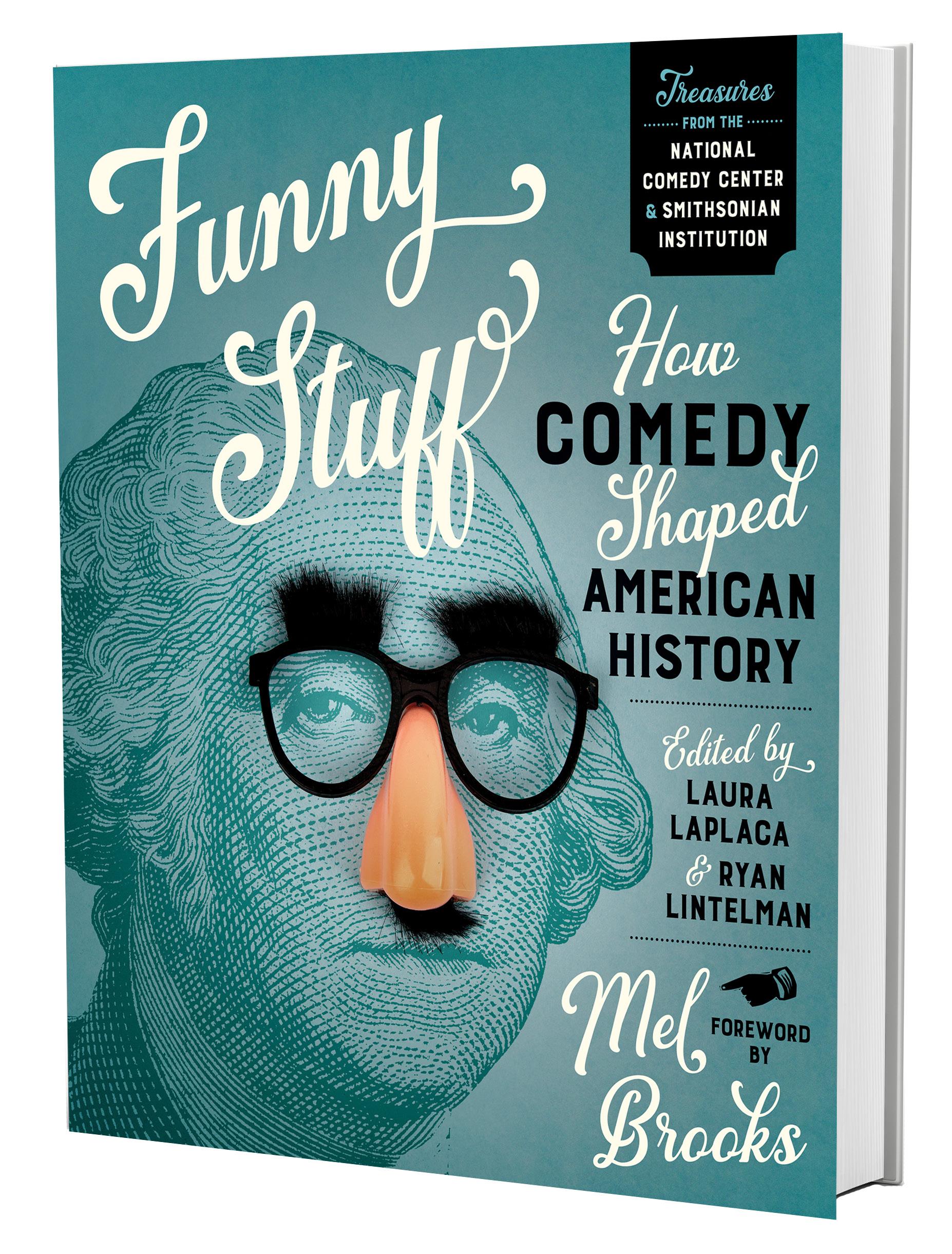
The National Comedy Center and Smithsonian Institution hold unparalleled collections of artifacts that illustrate the vitality and importance of comedy in American life, from vaudeville, silent films, and TV sitcoms to stand-up, sketch, and cartoons. Now, for the first time, these collections are brought together in vibrant photographs and illuminating essays that tell the story of how comedy shaped American history.
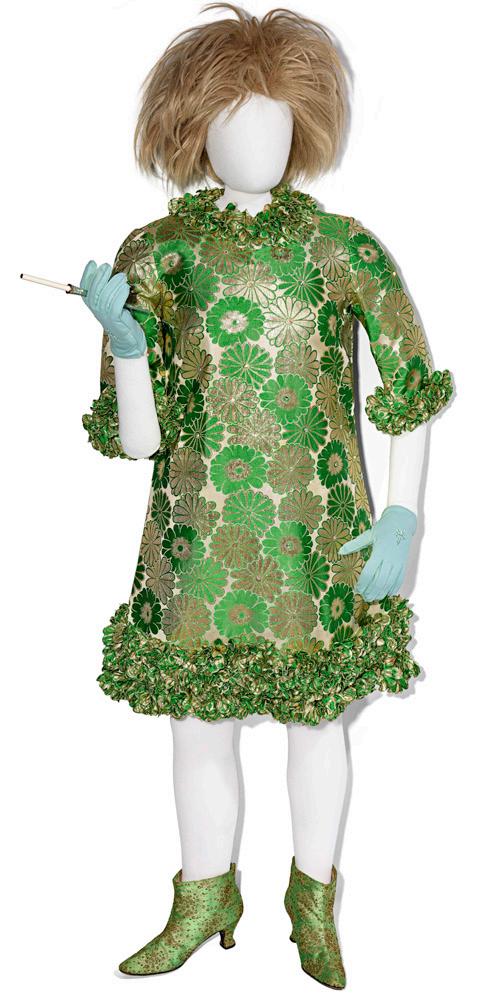
Written by historians responsible for safeguarding these cultural treasures, the book takes readers behind the scenes to uncover the stories behind American heirlooms like Groucho Marx’s tailcoat, George Carlin’s joke files, Carol Burnett’s “Went with the Wind” dress, Johnny Carson’s monologues, and the very first Saturday Night Live script, alongside materials from cultural touchstones like The Simpsons, The Muppet Show, In Living Color, All In the Family, and I Love Lucy
With a foreword by comedy legend Mel Brooks, this dynamic work offers pop culture aficionados, history lovers, and comedy nerds alike a new perspective on America’s past and who we are as a nation through our comedy.



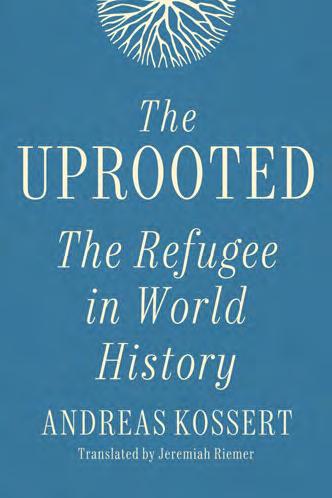
Andreas Kossert
Translated by Jeremiah Riemer
“Overwhelming. . . . This historian has made use of sources that are normally not taken into account. As a result, the text evokes an unsettling vividness.”
Augsburger Allgemeine (on the German edition)
“One cannot praise Kossert's book enough. It is empathetic and intelligent, with a clearly visible viewpoint.”
Süddeutsche Zeitung (on the German edition)
“Displacement and pursuit of refuge are issues as old as human civilization. Both are also defining and disruptive for contemporary politics. And the best place to start grasping the connections between age-old problems and present predicaments is Andreas Kossert’s The Uprooted. Kossert weaves together moving narratives, conceptual clarifications, and deeper analyses, though the last are always worn lightly and human experience foregrounded. Germany is at the center of his story, as both a country of uprooting and a host to many more recently uprooted. More examples come from the rest of Europe and the Near East. What it means to belong is addressed as well as what it means to flee. But in the end the main point of this compelling book is the historical ubiquity of refugees and, sadly, of limits on sympathy and hospitality. Wellwritten, well-translated, and very well-worth reading.”
—Craig Calhoun, professor of social sciences at Arizona State University
"The plight of the refugee is timeless, even if it always confronts us in new historical permutations. In this brilliantly written and important book about displacement and flight, Andreas Kossert captures both dimensions. The result is a compelling portrait of a raw human drama that is as old as history itself and yet always contemporary. Kossert charts the contours of a mass phenomenon, but at the center of his pioneering study are individual refugees, their voices and destinies. This is a book for our times."
—Christopher Clark, author of Iron Kingdom: The Rise and Downfall of Prussia, 1600–1947
In his new book, Andreas Kossert—the renowned expert on emigration and expulsion in the twentieth century and author of the bestselling Cold Home—places the early twentyfirst-century refugee movement in a wider historical context. Movingly told and interwoven with personal accounts, The Uprooted: The Refugee in World History reveals the existential experiences of uprootedness and hostility that go hand in hand with losing one's homeland and explains why refugees and displaced persons have always found it so difficult to settle into a new country. Whether they have come from East Prussia, Syria, or India, refugees are agents of world history—and with this book Kossert gives them a voice.
ANDREAS KOSSERT is a historian and author who has lived in Berlin since 2010. He is the recipient of the Georg Dehio Book Prize in 2008, the NDR Culture Non-Fiction Prize in 2020, and the Friedrich Ebert Foundation's "The Political Book" Prize in 2021 for his work. Most recently, he published the bestseller Cold Home: The Story of German Expellees After 1945 and Eastern Prussia: The Story of a Historical Landscape.
JEREMIAH RIEMER is the translator of more than fifteen books and numerous articles by German-speaking scholars and journalists. Most recently, he has published Jewish Cattle Traders in the German Countryside, 1919–1939: Economic Trust and Antisemitic Violence by Stefanie Fischer and In Hitler's Munich: Jews, the Revolution, and the Rise of Nazism by Michael Brenner.
October 13, 2026
360 Pages • 6¼ x 9¼ • 52 B-W images
9781978838529 • Hardcover with printed dust jacket • $45.00
Rutgers Trade World History
Table of Contents
Part I: Anyone Can Be a Refugee Tomorrow Refuge, Emigrant, Displaced Person, Expellee, Exile—Some Definitions
The Endless Story of Flight
Part II: Homeland: Concerning the Ambivalence of a Feeling Leaving Arriving
Living On Remembering When Have You Arrived?
What Does Not End
Appendix
Acknowledgments
Notes
Index of Names
Image Credits

September 8, 2026
164 Pages • 6 x 7 • 11 color and 46 B-W images
9781978844797 • Paperback • $19.95
Rutgers Trade Phtotography • Music • Popular Culture
Roger Farrington and Kenneth Womack
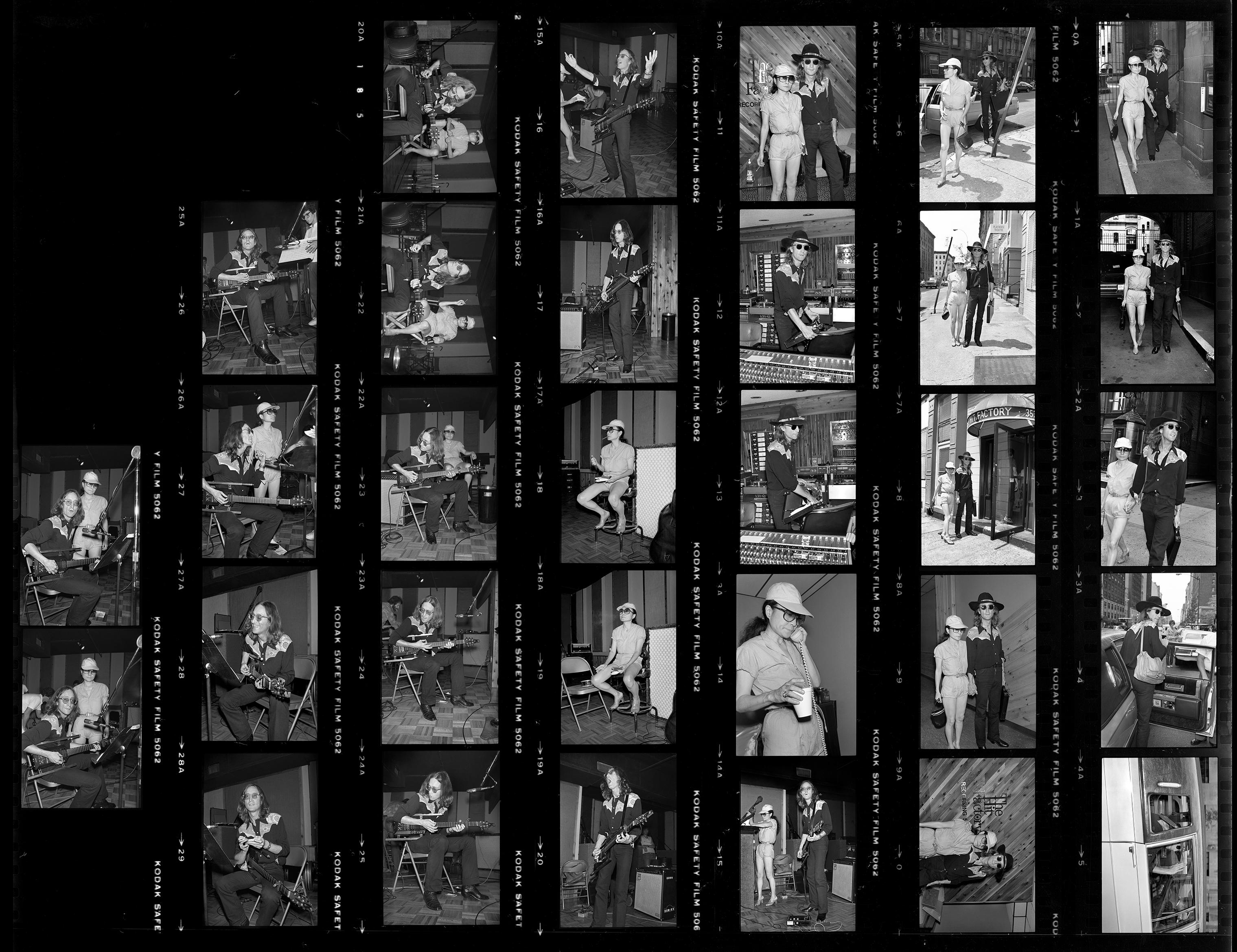
"Photographer Roger Farrington, who took some of the last pictures of John Lennon and Yoko Ono, has collaborated with Beatles historian Kenneth Womack to produce a compelling account of the final recording session of this remarkable creative partnership, enriched by a striking collection of photographs from the period. The book offers much more, including insights into Lennon’s songwriting process at this late stage of his life. Readers gain an intimate view of the couple’s relationship and a revealing portrait of Lennon’s final days before his tragic death."
—Kenneth L. Campbell, author of The Beatles and the 1960s: Reception, Revolution, and Social Change
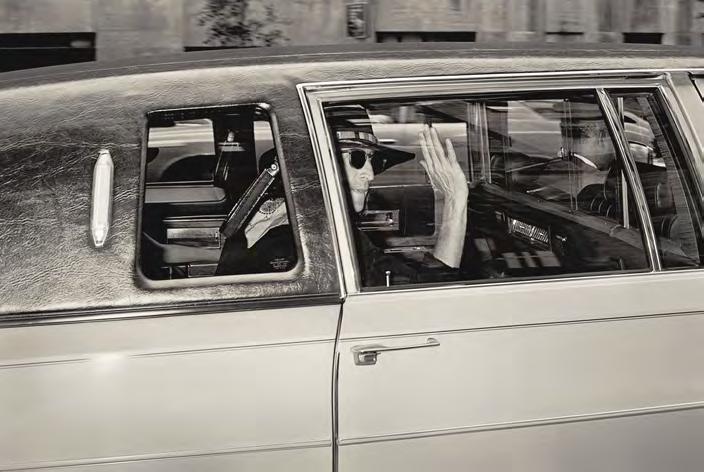
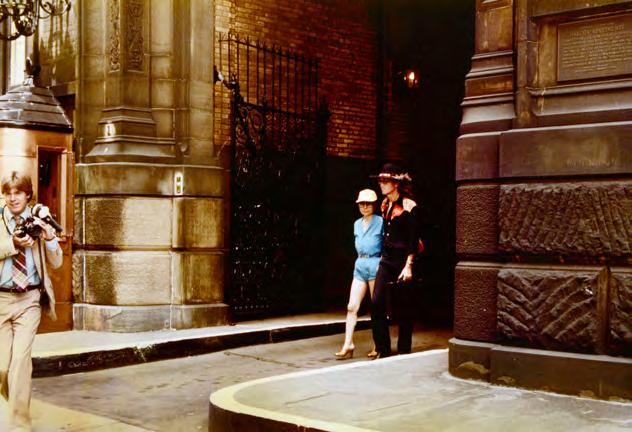
Starting Over with John & Yoko traces the dramatic story of John Lennon and Yoko Ono’s triumphant return to the recording studio after a self-imposed five-year absence. For photographer Roger Farrington, the opportunity to get “the shot” was the assignment of a lifetime.
KENNETH WOMACK is a professor of English and popular music at Monmouth University in West Long Branch, New Jersey. Over the years, he has authored numerous books, including Solid State: The Story of Abbey Road and the End of the Beatles, John Lennon 1980: The Last Days in the Life, and Living the Beatles Legend: The Untold Story of Mal Evans
9781978849211 • Hardcover • $49.95
Rutgers Super Short
ROGER FARRINGTON is a Boston-based publicity photographer. His images have appeared in publications worldwide. Besides his iconic 1980 images of John Lennon and Yoko Ono, other celebrities Roger Farrington has photographed include Andy Warhol, HRH Prince Charles, Cher, Richard Pryor, Elton John, Dionne Warwick, Cyndi Lauper, Luciano Pavarotti, Frank Sinatra, Michael Douglas, Danny DeVito, Charlton Heston, Liza Minnelli, and many others. His work has been exhibited in Boston, New York City, Liverpool, and Tokyo and is held in private and public collections.


September 8, 2026
236 Pages • 5½ x 8½ • 3 color and 3 B-W images 9781978845404 • Hardcover • $29.95 Rutgers Trade History • Genocide • Human Rights
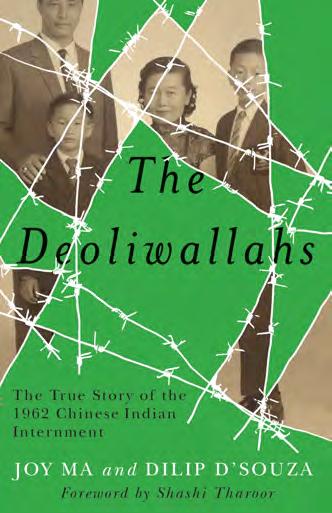
The True Story of the 1962 Chinese Indian Internment
Joy Ma and Dilip D'Souza
Foreword by Shashi Tharoor
“The Deoliwallahs collects the stories and reveals the practical and ethical facets of internment, which could not be more relevant to us today.”
—Raghu Karnad, author of Farthest Field: An Indian Story of the Second World War
"The Deoliwallahs pierces the orbit of well-known geopolitical exemplifications with a long overdue chronicle of the persecution of India’s Chinese community. In this book, we not only encounter the power of firsthand narratives of those interned, scaffolded by meticulous research and documentation, but also witness for ourselves the unfolding of how arbitrary, but still concrete forces shape fundamental questions about nation, identity, and belonging."
—Payal Banerjee, coauthor of India and China: Rethinking Borders and Security
The Deoliwallahs sheds light on a lesser-known chapter of Indian history—the internment of Chinese Indians following the 1962 Sino-Indian War. During the war, around three thousand Indians of Chinese descent were detained in a camp in Deoli, Rajasthan, under suspicion of espionage. Many of these individuals had deep roots in India, with families that had lived there for generations. The book recounts their harrowing experiences, including abrupt arrests, harsh conditions in the camp, and the emotional toll of being ostracized by their own country.
Alternating between historical context and the personal stories of survivors, authors Joy Ma and Dilip D'Souza weave together a compelling and emotional account of a nearly forgotten community of people interned against their will. The book draws parallels with other instances of internment, such as the Japanese American experience during World War II, highlighting the universal themes of identity, citizenship, and the consequences of fear-driven policies.
A documentary, Voices of Deoli (2025), directed by Lulu Men with author Joy Ma serving as executive producer, along with Michael Cheng and Neela D’Souza, also shares the stories of survivors and, like the book, serves as a powerful reminder of the fragility of rights and the impact of prejudice.
1. Origins 2. Ying Sheng Wong: Within Barbed Wires 3. A Contested Line
4. Andy Hsieh: “To Be Imprisoned like This”
5. War
6. Steven Wan: A Cold First Night in Deoli
7. Foreigners in Our Land
8. Michael Cheng: A Single, Defining Act
9. Yeeva Cheng: The Dark Cloud of Memories
10. Deoli
11. Effa and Jack Ma: This Side or the Other
12. Victim of Circumstance
13. Parallel
14. Kwei Pow Chen: A Year of My Childhood 15. Yin Marsh: A Great Darkness
16. Scars
JOY MA was born in Deoli Camp, where more than three thousand people of Chinese origin were interned in Rajasthan. She is the producer of the associated film Voices of Deoli. She lives in the San Francisco Bay Area.
DILIP D'SOUZA is a Mumbai-based writer and journalist. He is the author of seven books, including Roadrunner: An Indian Quest in America and Branded by Law: Looking at India's Denotified Tribes.
A Palestinian Bedouin Feminist in Israel
Lihi Ben Shitrit and Mona Al-Habanin
"From its very first sentence, this book compels and sustains total immersion. Centering Mona Al-Habanin’s extraordinary life, it reveals how Israeli colonial power intersects with patriarchal structures, tracing the emergence of Bedouin feminism and its role in shaping social and political change. A pathbreaking, beautifully written work."
—Katharina Galor, author of Out of Gaza: A Tale of Love, Exile, and Friendship
“Unrecognized is a vital work of Palestinian Bedouin feminist testimony. Centering Mona Al-Habanin’s extraordinary life, it exposes the gendered violence of Zionist settler colonialism in al-Naqab while honoring the political courage and liberatory vision of Bedouin women.”
—Rebecca Ruth Gould, author of Erasing Palestine: Free Speech and Palestinian Freedom
In 1998, when Mona Al-Habanin was twenty-eight years old and pregnant with her sixth child, she stood before a council of al-Naqab Bedouin shaykhs and faced the most difficult decision of her life: give up her children or be responsible for more killings in her tribe.
This book tells the extraordinary story of Mona Al-Habanin (b. 1970), the first Bedouin woman to run for elected office in Israel's Negev Desert. Through Mona's life, it illuminates Indigenous Bedouin women's traumas and resilience while documenting a genealogy of contemporary Palestinian Bedouin feminism. It traces her journey from desert tent dwelling through forced dislocation, her community's struggles with violence against women, and her battle for her children—against state-sanctioned tribal justice rooted in British colonial paradigms and Zionist settler-native relations—and to her turn to fierce and irreverent activism, taboo-breaking, and political trailblazing. This book tells the story of an unrecognized community under siege and of a new form of Indigenous feminism that bravely defies the violence of silencing.
LIHI BEN SHITRIT is the Henry and Marilyn Taub Associate Professor of Israel Studies and Director of the Taub Center for Israel Studies at New York University. She is the author of Righteous Transgressions: Women’s Activism on the Israeli and Palestinian Religious Right and Women and the Holy City: The Struggle over Jerusalem’s Sacred Space and editor of The Gates of Gaza: Critical Voices from Israel on October 7 and the War with Hamas
MONA AL-HABANIN is a Palestinian Bedouin women’s rights activist, politician, and writer based in the township of Rahat in Israel’s Negev/al-Naqab Desert. She is the founding director of Amerat Al-Sahra, a women’s rights organization in Rahat, and is the recipient of the prestigious Rappaport Prize for Pathbreaking Women (2013).

December 8, 2026
276 Pages • 5½ x 8½ • 14 color images, 5 tables 9781978848924 • Hardcover • $29.95
Rutgers Trade Biography • Middle Eastern Studies • Women's Studies
Table of Contents
Introduction
Chapter 1: Childhood
Chapter 2: Dispossession
Chapter 3: Honor
Chapter 4: (In)Justice
Chapter 5: Activism
Chapter 6: Polygamy
Chapter 7: Feminism
Chapter 8: Un/Recognized
Epilogue
Acknowledgments
Glossary
Notes Bibliography
February 9, 2027
206 Pages • 5 x 8 • 48 B-W images, 78 tables
Suzanne Manizza Roszak
“Thoughtfully organized and navigable, with examples that are clear and to the point, and with self-reflection exercises faculty will actually assign and students will actually learn from, The Imposter’s Guide to Writing About Literature is a must-have for graduate students and advanced undergraduates, as well as new PhDs in tenure-track jobs or navigating the lonely world of adjunct teaching. Manizza Roszak engages honestly and compassionately with her readers about the invisible roadblocks imposter syndrome puts up for junior (and senior) scholars in literary studies, making it an inspiring read and an invaluable resource.”
—Kristin F. Samuelian, professor of literature, George Mason University
“Here is the handbook we’ve been waiting for. Rather than urge us to combat imposter’s syndrome, this terrific book works with anxiety as part of the academic experience, giving us new tools for thinking, writing, and publishing about literature. Grounded in Manizza Roszak's own journey, but also drawing on the experiences of others, this book covers topics from foundational practices of discovery to working in diverse genres to the connections between writing and teaching and the importance of self care. An indispensable resource for students, early career researchers, and seasoned scholars alike.”
—Kenneth Kidd, professor and chair of English, University of Florida
Additional print format:
Conclusion – Scholarship and Self-Care: Making and Taking Up
The Imposter’s Guide to Writing About Literature works from the premise that most of us have at some point been made to feel like imposters or outsiders by institutional inequities. Intended as a demystifying weapon against academia’s tendency to demand and reward inaccessible forms of insider knowledge, The Imposter’s Guide aims to make this information available to all lovers of literature. Covering genres ranging from the senior essay to the first book proposal, this handbook offers discipline-specific support for emerging literary scholars seeking to compose and publish journal articles, book chapters in edited collections, and pedagogy articles. The Imposter’s Guide to Writing About Literature democratizes access to the knowledge necessary for successful professionalization—and especially publication—within literary studies.
SUZANNE MANIZZA ROSZAK is an associate professor of literature and creative writing at NYU Abu Dhabi. She is the author of Uncanny Youth: Childhood, the Gothic, and the Literary Americas and They Also Write for Kids: Cross-Writing, Activism, and Children’s Literature.
Also of Interest
English Majors at Work Career and Life Pathways
Helene Meyers
See page 24.
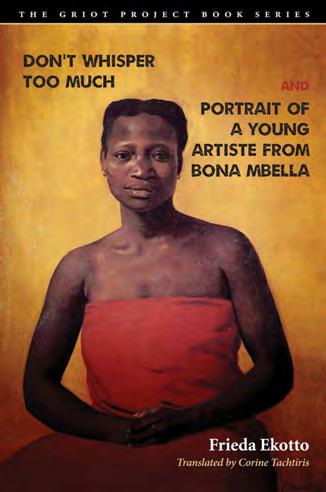
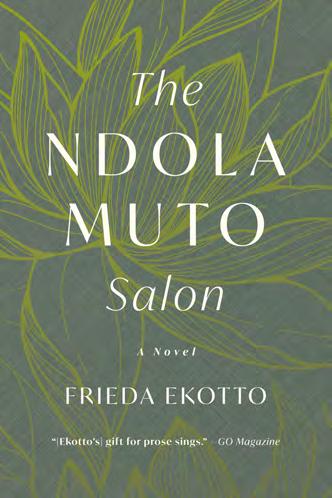
Frieda Ekotto
“Frieda Ekotto has done it again, taking queer imaginations to unprecedented heights and unfathomable depths. In The Ndola Muto Salon, readers are invited into a rich tapestry of queer pleasure, freedom dreams, and captivating family intrigue.”
—Naminata Diabate, author of Naked Agency: Genital Cursing and Biopolitics in Africa
“Frieda Ekotto does not soften what is at stake. The Ndola Muto Salon is a precise, unsentimental novel about desire, constraint, and the cost of living against the grain of one’s world. Ekotto writes with clarity and control, attentive to what cannot be spoken as much as to what is.”
—Jude Dibia, author of The Quiet That Remains
In this evocative novel, a young Cameroonian woman enters a secret salon where women seek pleasure and refuge—and discovers how forbidden love, quiet defiance, and tenderness between women can become a path toward freedom.
See excerpt on page 41.
FRIEDA EKOTTO is the Lorna Goodison Collegiate Professor of Afroamerican and African Studies, Comparative Literature, and Francophone Studies at the University of Michigan in Ann Arbor. She is the author of Don't Whisper Too Much and Portrait of a Young Artiste from Bona Mbella (Bucknell University Press).
The Griot Project Book Series
Previously Published by Frieda Ekotto
"Ekotto masterfully illustrates the complex layers of African women-loving-women, which include patriarchy, violence, agency and colonialism."
Ms. Magazine
January 12, 2027
3, 2019
September 8, 2026
244 Pages • 5 x 8 • 1
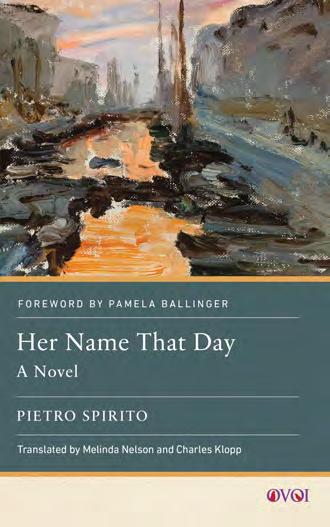
Pietro Spirito
Translated by Melinda Nelson and Charles Klopp
Foreword by Pamela Ballinger
"Pietro Spirito's beautiful novel spans continents and historical moments, shedding light on the instability of national and personal identities in modern Italian history and on the precariousness of historical memory. Smoothly translated by Charles Klopp and Melinda Nelson, this novel offers a compassionate exploration of a painful chapter in the history of the Italian Northeast and its people, caught in the tides of History."
—Giovanna Faleschini Lerner, author of Women and Migration in Contemporary Italian Cinema: Screening Hospitality
"The plight of Istrian refugees in 1950s Italy casts a long shadow on this spellbinding story of a daughter searching for her birth mother and a mother determined to forget."
—Konrad Eisenbichler, editor of Forgotten Italians: Julian-Dalmatian Writers and Artists in Canada
Giuliana Striano is forty years old and lives in Cape Town, South Africa. She is the daughter of Italian emigrants with a daughter of her own, Renata, now five years old. Upon the death of her mother, Giuliana learns that she had been adopted and given a new identity with a different name and a different date and place of birth. So Giuliana determines to find out who she really is, what is hidden in her past, and who her birth parents were.
Her Name That Day is the story of “another” Italy set in a region that only recently became Italian and whose characters are Croatian, Slovenian, Australian, and South African, as well as Italians, precariously perched in a border community filled with secrets and scores to settle with History. Against this backdrop, the narrator endeavors to save a woman encountered by chance on the internet from becoming still another name without a history, another deracinated and disenchanted individual. In prose that is precise and engaging, as though shot through by a sense of pain both silent and inescapable, Pietro Spirito gives shape to an existential thriller in which there are neither guilty parties nor heroes, only victims and survivors.
PIETRO SPIRITO is a journalist based in Trieste, Italy, where he is cultural editor for the city’s leading newspaper, Il Piccolo. He is the author of twenty-two novels, short story collections, and other book-length volumes and of five film scripts. Her Name That Day is the first of his works to be published in English.
MELINDA NELSON is an assistant vice provost at The Ohio State University, Columbus. She, with Charles Klopp, has translated three Italian novels.
CHARLES KLOPP is an emeritus professor of Italian at The Ohio State University, Columbus. He has authored, edited, or translated eight books in English and Italian as well as many articles, encyclopedia entries, and reviews.
PAMELA BALLINGER holds the Fred Cuny Chair in the History of Human Rights at the University of Michigan, Ann Arbor. She is the award-winning author of History in Exile and The World Refugees Made: Decolonization and the Foundation of Postwar Italy. Other Voices of Italy
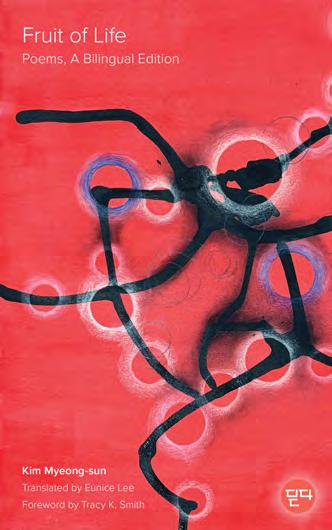
Kim Myeong-sun
Translated by Eunice Lee
Foreword by Tracy K. Smith
“Kim Myeong-sun is the first modern woman writer to publish a collection of creative works in Korea, and her poems are lyrical, intimate, and laden with evocative imagery. Her work is absolutely deserving of a global readership, and the publication of Fruit of Life, in Eunice Lee’s faithful and graceful translations, will provide the vital step in that direction. This volume is a gift to any reader searching for a truly remarkable Korean woman writer.”
—J.J. Choi, author of The Life and Works of Korean Poet Kim Myong-sun
"This poetry anthology in English translation provides its readers with a long-awaited, insightful window into the inner and literary world of Kim Myeong-sun—one of the iconic figures of the first generation of modern Korean women writers, who led a much maligned and tragically storied life and career."
—Yung-Hee Kim, translator of Gendered Landscapes: Short Fiction by Modern and Contemporary Korean Women Novelists
"In Fruit of Life, Kim Myeong-sun’s groundbreaking poetry recuperates women’s interiority under colonial and misogynist conditions. Poet and scholar Eunice Lee’s longawaited translation illuminates a hidden feminist and anti-colonialist voice, carrying Korean women’s poetry across a century of the lyric, the page, and gendered history."
—Margaret Rhee, author of Love, Robot
Kim Myeong-sun is Korea's first published woman writer. Fruit of Life: Poems (생명의 과 실: 김명순 시선) is the first book-length, Korean-to-English translation of her poetry. Kim’s poems offer a raw portrait of 1920s–1930s Korea, driven by her personal experiences of sexual assault, misogynistic journalism and criticism, displacement, and poverty during the Japanese colonial occupation (1910–1945). Alongside feminist and anticolonial critique, Kim also writes about sapphic desire, familial affection, and nature, in styles that range from the traditional to the experimental. While Kim’s work was erased from the canon by Korea’s misogynistic literary establishment, Fruit of Life celebrates the legacy of Kim’s radical, versatile poetry, which paved the way for contemporary Korean women writers like Kim Hyesoon and Han Kang
English-Korean Bilingual Edition
영-한 이중언어판
This book is published with the support of the Literature Translation Institute of Korea (LTI Korea).
KIM MYEONG-SUN (1896–ca.1954) is Korea’s first published woman writer. Her collection Fruit of Life (1925) is the first published volume of Korean poetry by a woman. She also authored the collection Lover's Gift (ca.1929), the award-winning short story “Girl of Mystery” (1917), and countless other works of feminist literature.
EUNICE LEE is a poet, researcher, and translator of Korean literature. She is the translator of the poetry collection Syncopation by Kim Sono (2024), and her work has appeared in The Margins, Asymptote, Azalea: Journal of Korean Literature & Culture, and more.
DITTA: Korean Humanities in Translation
September 8, 2026
282 Pages • 5 x 8
9781978846517 • Paperback • $24.95
Rutgers Trade Poetry
Additional print format:
9781978846524 • Hardcover • $120.00
Rutgers Super Short
Partial Table of Contents
Foreword by Tracy K. Smith
Preface
Translator’s Note Fruit of Life (1925)
Road In My Chest
Fight
Curse
Cleft
The Name of a Loved One
The South
Old Song
Visitations of Loneliness
Consolation
Sweet Nothings
Chatter
My Darling Eaglet
Sigh
Prayer
Dream
Will Will (1924 Edition) In This Glass Coffin
Enough
Wind and Song
Rising and Smiling
[On Evenings as Calm as Silk]
T’an-sil’s First Dream
Voices I Hear Lover’s Gift (ca. 1929)
Proem
Greetings to Spring
Autumn Landscapes
Sadness
Cursed Song
Constancy
Flame
January 12, 2027
184 Pages • 9¾ x 12 • 150 color illustrations 9781978848573 • Hardcover • $39.95
Rutgers Trade
Art • African American Studies
Table of Contents
Director’s Foreword
Catherine Evans
Preface
Tricia Laughlin Bloom, PhD, Senior Curator, American Art, The Newark Museum of Art
Essay
Alliyah Allen, independent curator and art historian Essay
Salamishah Tillet, Henry Rutgers Professor of Africana Studies and Creative Writing
Alternates: Salamishah Tillet; Deborah Willis; Seph Rodney Short Reflections:
1. Leadership: Cicely Cottingham, artist and Co-Founder, The Aljira Archive Project
2. Newark Artist/Community: fayemi shakur, Arts and Cultural Affairs Director, City of Newark
3. Emerge Fellow: Nell Painter, American historian and artist
4. Living Archive: Mark Krasovic, PhD Associate Professor of History, Rutgers University, Newark
5. Artist: Dawoud Bey
6. Curatorial/NMOA collaboration: Carmen Ramos, Chief Curatorial and Conservation Officer, The National Gallery of Art
7. Peer Reflection: Monisha Bernard, Curatorial Assistant, The Newark Museum of Art
Aljira and the Making of Global Contemporary Art
Edited by Alliyah Allen
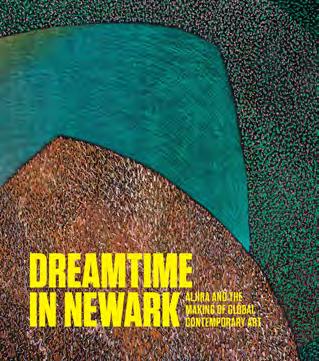
Dreamtime in Newark surveys the transition of Aljira from an artist-led studio space to a major arts institution in Newark, New Jersey, that abruptly closed in 2018 due to gentrification and financial pressure. Exploring the origins and milestones of the gallery, the book examines how Aljira became a space for the marginalized artist and curator and aligned with the trend of artists-led “alternative-art-spaces”—contributing to the rise of diverse art markets and breakthroughs in representation throughout museum collections, exhibitions, and the broader art world. This volume offers a historical analysis of the relationship between Aljira and the Newark Museum of Art, given the many collaborations on exhibitions, residencies, and shared curatorial strategies. Along with providing a wider historicity, the book amplifies the museum’s role in preserving Aljira’s legacy—especially as the city’s arts ecosystem evolves. The book underscores the museum’s role in preserving Aljira’s history and legacy. Bringing together contributions from the extended community of artists, curators, critics, and art historians, the project works against the erasure of a vital part of contemporary art and cultural history. Before conversations of decolonizing the art world were commonplace, Aljira forged a free and open vision for the art world that cross-pollinated with the Newark Museum of Art’s egalitarian and populist roots and global collections.
The book, which accompanies an exhibition, October 15, 2026–February 28, 2027, also considers the impact of Aljira, founded in the aftermath of the 1967 Newark Rebellion, on the city of Newark and how its thirty-five-year tenure driven by social engagement and community practice helped to crystallize Newark’s visual arts scene.
Artists included: Nyugen Smith, Joe Overstreet, Hew Locke, Adama Delphine Fawundu, Dauwood Bey, El Anatsui, Firelei Baez, Dahlia Elsayed, Chitra Ganesh, Robert Pruitt, Nell Painter, Dread Scott, Jaune Quick-to-See-Smith, Philemona Williamson, Jeffrey Gibson, David C. Driskell, Frank Bowling, Franco Mondini-Ruiz, Luis Cruz Azaceta, Wangechi Mutu, Nanette Carter, Faith Ringgold, Manuel Acavedo, Willie Cole, Camille Billops, and Freddie Rodriguez.
Co-published with the Newark Museum
ALLIYA ALLEN is an independent curator and art historian dedicated to collaborating with artists, activists, and communities to foster transformative art experiences that drive social change. As associate curator and senior program coordinator at Express Newark, Rutgers University, Newark Allen curated the exhibition Blues People (2024). She holds an M.A. modern art: critical and curatorial studies from Columbia University and a B.A. in Rreligion and Africana studies, from Haverford College.
TRICIA LAUGHLIN BLOOM is deputy director, collections and curatorial strategies, and senior curator of American art at the Newark Museum of Art. A specialist in modern and contemporary art, Bloom has initiated exhibitions, publications, and acquisitions that foster global perspectives and expand the way the museum defines American art.
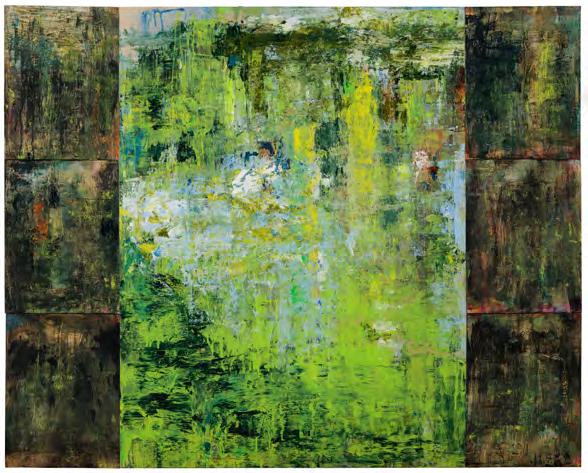
Top left: Cicely Cottingham, Tomorrow will come on its green footsteps (First Mountain), 2020. Acrylic on panel, 48 × 60 in. (121.9 × 152.4 cm). Collection of Victor Davson and Cicely Cottingham. Photo by Richard Goodbody.
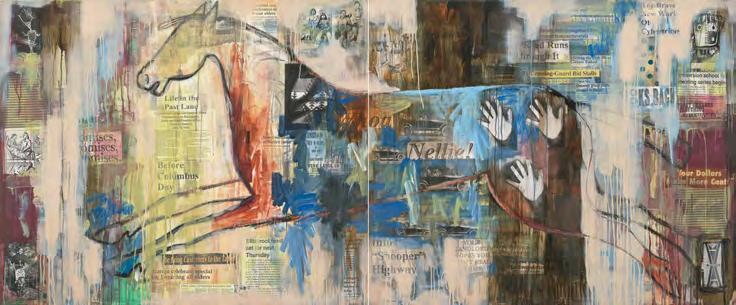
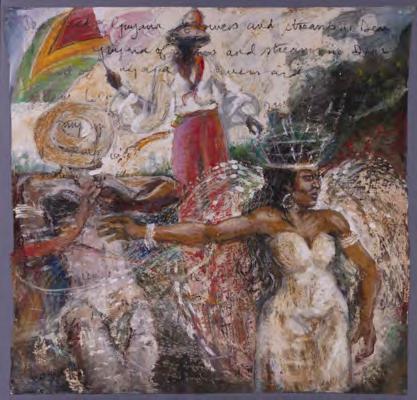
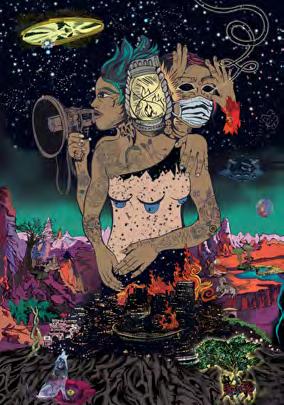
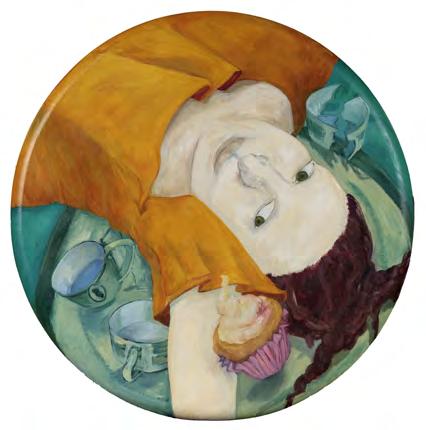
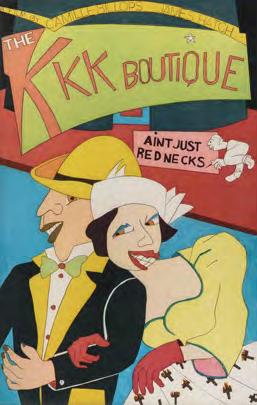
Top right: Philemona Williamson, Sugar Splattered Curls, 2010. Oil on canvas, 30 in. (76.2 cm) diam. Collection of the artist. Photo by Richard Goodbody. Middle row: Jaune Quick-to-See Smith, Going Forward, Looking Back, 1996. Oil, acrylic, paper, newspaper, and fabric on canvas, two panels, 50 × 120 in. (127 × 304.8 cm) overall. Private collection. Copyright by Estate of Jaune Quick-to-See Smith, courtesy of the estate of the artist and Garth Greenan Gallery, New York. Bottom left: Victor Davson, Bad Cow Comin’ (Dear Guyana), 1998. Oil on canvas, 51 × 54 in. (129.5 × 137.2 cm). Collection of Victor Davson and Cicely Cottingham. Photo by Richard Goodbody. Bottom center: Chitra Ganesh, MultiverseDreaming: Urgency, 2020. Archival digital print, edition of 3 plus 2 artist’s proofs, 65 × 44.5 in. (165.1 × 113 cm). The Newark Museum of Art, Purchase 2025 Charles W. Engelhard Bequest Fund 2025.10.1. Courtesy of the artist and Gallery Wendi Norris, San Francisco. Bottom right: Camille Billops, Untitled (KKK Boutique), 1993. Etching/aquatint print, 17 × 11 in. (43.2 × 27.9 cm). The Newark Museum of Art, Purchase 2025 Membership Endowment Fund 2025.14. Photo by Richard Goodbody. Copyright by Estate of Camille Billops.
November 10, 2026
358 Pages • 6 x
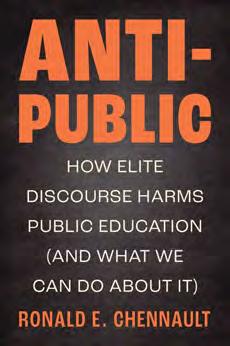
Ronald E. Chennault
“Chennault offers a comprehensive account of the evolving claims of public education’s purported failures. His indispensable critique of elite discourse on public schools should be required reading for anyone who claims to be an education 'reformer.'”
—Christopher Lubienski, coauthor of The Public School Advantage: Why Public Schools Outperform Private Schools
Consider this: Restrictions placed by state legislatures on what schools can teach about America's history of conquest and enslavement. Broad bans enacted by local school boards that remove meaningful books from school curricula and the shelves of libraries. Court rulings that muddy the distinction between what counts as private versus public expressions of religion in public school settings and that open the door to publicly funded religious education. All of these recent actions chip away at the foundation of public education in America. But how did we get here? Decades of elite public discourse (talk and text) about public education helped to bring us to this point. Much of this conversation is anti-public. It includes statements by major elected officials, education advocacy organizations, journalists in mainstream press outlets, and other influential actors. Chennault casts light on the cultural and political processes at work and challenges the unquestioned assumptions beneath the surface of this discourse, with the hope that we can transform and strengthen public education.
RONALD E. CHENNAULT is an associate professor and former associate dean of the College of Education of DePaul University, Chicago. He is the author of Hollywood Films About Schools: Where Race, Politics, and Education Intersect (2006) and a coeditor of White Reign: Deploying Whiteness in America (1998) and Liberation and Education: Perspectives on Black Educational Thought (Rutgers University Press, 2026).
December 8, 2026
238 Pages • 5½ x 8½ • 6 B-W images
9781978841291 • Paperback • $24.95
Rutgers Academic Trade History of Medicine • Sociology • Women's Studies
Additional print format
9781978841307 • Hardcover • $125.00
Rutgers Super Short
Joan H. Robinson
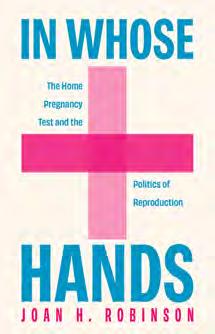
The home pregnancy test is a technology that can be purchased in drug stores, gas stations, and online, and the results are often casually posted to social media. But, as sociologist and attorney Joan Robinson argues, no technology is as simple as it appears. In Whose Hands traces this test from its origin story in a lab to its day-to-day existence in the hands of users, showing that mundane technologies matter, especially when they are used as tools of surveillance and selfsurveillance. The book is the result of Robinson's fourteen-year exploration of the social life of the home pregnancy test, and it describes the breadth and beauty of people's messy reproductive lives today. Based on archival and legal research as well as interviews with home pregnancy test users, it shows how even those technologies that we use because they're convenient can be tools of shame, surveillance, and control.
JOAN H. ROBINSON is an assistant professor of social science and law at City College, CUNY, in the Division of Interdisciplinary Studies. She received her PhD in 2018 from the Department of Sociology at Columbia University, where her dissertation, In Whose Hands: The Pregnancy Test in American Life, received the Robert Merton Award for Best Dissertation.
Critical Issues in Health and Medicine
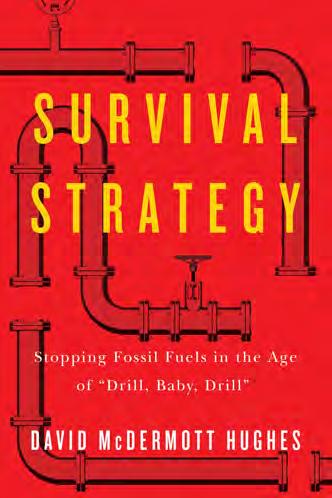
David McDermott Hughes
This book is a plea and a plan for a more daring form of climate politics. In the United States, the climate movement has failed in the all-important task of shutting down fossil fuels. Elected politicians—even those who support renewable energy—remain committed to the extraction of petroleum and methane. Those industries have effectively captured the federal government, converting it into a petrostate. What is to be done? Hughes proposes a widespread and sustained campaign of sabotage against fossil fuels. His strategy is risky and unlawful—but not entirely unpopular. Libertarians and other lovers of private property object to the construction of pipelines across farms and ranches. In trials of saboteurs, they could exercise the little-known power of jury nullification to make pipelines unprotectable. With trepidation, Hughes offers this last resort against the approaching climate catastrophe. Time is short, unfortunately, and we are running out of better options.
Imagine this scenario: In 2037, climate activists begin a sustained and systematic campaign of sabotage against fossil fuels in the United States. Although nonviolent with respect to people, that campaign violates laws. It destroys property, obliterates the profits of fossil fuel companies, and possibly causes outages of electricity. The government will use its means of violence to try to stop it. Any president likely to be nominated from the Democratic or Republican Party will call it ecoterrorism—or simply terrorism. That charge, of course, is absurd for a crime that causes no bodily harm. But I am not going to argue over labels. Juries—and this is much more important—will not convict the activists unlucky enough to get caught. The accused will avoid prison through a little-known power called jury nullification. One or more jurors will disregard the law—as they may—and acquit or cause mistrials of suspects otherwise proven to be guilty. With this level of impunity, saboteurs will sabotage again and again until fossil fuels become unprotectable, uninsurable, and unprofitable. Bleeding from a thousand cuts, the industry will die. This scenario may seem far-fetched and dangerous. The far graver danger—and a genuine source of terror when hurricanes strike—is the continued extraction and burning of oil, gas, and coal. We stand on a precipice: where tremendous risk invites, provokes, or compels extraordinary forms of risk-taking.
DAVID MCDERMOTT HUGHES is a professor of anthropology at Rutgers University and the author of Energy Without Conscience: Oil, Climate Change, and Complicity and Whiteness in Zimbabwe: Race, Landscape, and the Problem of Belonging
March 9, 2027
216 Pages • 5½ x 8½ • 1 color and 1 B-W image 9781978845350 • Hardcover • $24.95 Rutgers Trade Current Affairs • Politics
February 9, 2027
304 Pages • 6¼ x 9¼ • 16 B-W images
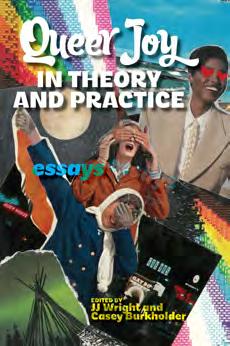
Edited by JJ Wright and Casey Burkholder
Queer Joy in Theory and Practice: Essays centers queer joy as a radical method of resistance and world-building in the face of rising homophobia, transphobia, and systemic violence. Rather than framing queer and trans lives solely through trauma, this groundbreaking collection explores how joy functions as a site of possibility, solidarity, and social change. This book bridges theory, research, and practice to examine queer joy across classrooms, communities, art, public spaces, and activism. With chapters on education, abolitionist politics, drag, parenting, street art, and festivals, this timely and interdisciplinary volume illuminates joy as a transformative force—one that refuses despair and instead imagines liberatory, life-affirming futures for queer and trans communities worldwide.
JJ WRIGHT is an assistant professor of sociology and gender studies at MacEwan University and the coeditor of COVID and Campus Sexual and Gendered Violence (forthcoming).
CASEY BURKHOLDER is Tier II Canada Research Chair and an associate professor at Concordia University and the coeditor of Facilitating Visual Socialities: Enacting Ethical Practices in Visual Research Facilitation (2023).
Additional print format
November 10, 2026
212 Pages • 6¼ x 9¼ • 39 color images
9781978842120 • Paperback • $38.95
Rutgers Short Art • Women's Studies
Additional print format
9781978842137 • Hardcover • $125.00
Rutgers Super Short
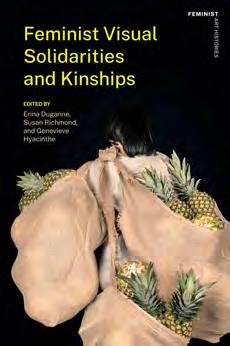
Edited
by Erina Duganne, Susan Richmond, and Genevieve Hyacinthe
“After decades of neoliberalism, and in the wake of more recent and more brutal forms of division, this book is a treasure trove of the resistant practices contained in art and visual culture. Comprised of wide-ranging case studies and developing key concepts of solidarity and kinship for feminist art studies, it makes a crucial, expansive contribution to the field.”
—Amy Tobin, author of Women Artists Together: Art in the Age of Women’s Liberation
“Reaching beyond the 1970s as the foundational moment for feminist art and activism, Feminist Visual Solidarities and Kinships offers a wide-ranging examination of the social worlds built by artists, curators, and art historians across national and disciplinary borders, providing insights into the ways feminist solidarity is founded on the generative potential of differences. Moving, both in its call to attend to understudied artistic movements and in its quick, clear, and multivocal prose, this compendium of essays demonstrates that networks, archives, and care are the central infrastructures for a feminist art history."
—Gabrielle Moser, author of Projecting Citizenship: Photography and Belonging in the British Empire
Feminist Visual Solidarities and Kinships considers global feminist coalitional practices in the contemporary visual arts through three key frameworks: transnational solidarity, archives, and kinships and care. The edited volume features emerging and established scholars and artists whose diverse perspectives inspire connections as well as critical points of divergence over the meanings of “feminism,” “transnationalism,” and “art.” Representing grassroots activism, artistic practice, and scholarly and curatorial inquiry, the diversity of approaches, writing styles, and chapter lengths depart from conventional modes of academic writing and provide pedagogical opportunities for students and scholars to use these contributions in a variety of learning environments not limited to the traditional classroom.
ERINA DUGANNE is a professor of art history at Texas State University and the author of The Self in Black and White: Race and Subjectivity in Postwar American Photography (2010), coauthor of Global Photography: A Critical History (2020), and coeditor of Cold War Camera (2023) and Art for the Future: Artists Call and Central American Solidarities (2022).
SUSAN RICHMOND is the director of the Ernest G. Welch School of Art & Design at Georgia State University and the author of Lynda Benglis: Beyond Process (2013).
GENEVIEVE HYACINTHE is an associate professor of history of art and visual culture at the California College of the Arts, San Francisco, and the author of Radical Virtuosity: Ana Mendieta and the Black Atlantic (2019).
Feminist Art Histories
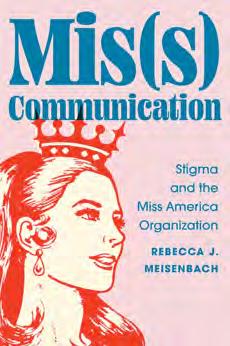
Stigma and the Miss America Organization
Rebecca J. Meisenbach
“Framed by an intersectional stigma communicology, Mis(s) Communication takes readers along an exciting and wellresearched ride of beauty pageantry, from small towns in the U.S. to airport and participant conversations, archival treasures, and ethnographic sojourns offering behind-the-scenes glimpses of sociomaterial stigma construction and stigma management.”
—Patrice M. Buzzanell, professor of communication at the University of South Florida
Mis(s) Communication: Stigma and the Miss America Organization explores the one-hundred-year history of the Miss America Organization (MAO) as a site of stigma management. Through five years of ethnographic, archival, and interviewbased research, Rebecca J. Meisenbach shows how pageant participation is both valorized and stigmatized—making MAO a key lens for studying stigma as a dynamic, power-laden communication process. The book examines stigma across individual, organizational, and societal levels, focusing on moments like Rule Seven, which once barred nonwhite participants, and the 1968 protest by the New York Radical Women alongside the first Miss Black America pageant. Meisenbach also investigates how contestants navigate stigma tied to intelligence, body image, and the sexualization of women. She analyzes MAO’s 2018 elimination of the swimsuit competition as a stigma management move and its recent shift to a for-profit model under Miss America Opportunity. The book ultimately argues for understanding stigma as communicative and deeply intersectional.
REBECCA J. MEISENBACH is an associate professor and director of undergraduate studies in the Department of Communication at the University of Missouri in Columbia.
Renée Laurel Pastel
“Intriguing and insightful analysis of the conversation and myth-making that take place across media artifacts during moments of crisis. War in Pieces is a welcome addition to the body of scholarship determined to excavate the large and small ways media processed the War on Terror in real time.”
—Deborah L. Jaramillo, author of Ugly War Pretty Package: How CNN and Fox News Made the Invasion of Iraq High Concept
“We commonly hear that the U.S. is a fractured nation, but Pastel clocks the moment when our most sacred myths splintered and went to battle with themselves. Theoretically deft and ambitious in scope, War in Pieces maps the persistent new tensions that now animate public life.”
—Roger Stahl, author of Through the Crosshairs: War, Visual Culture, and the Weaponized Gaze
War in Pieces considers media representations of the first phase of the “War on Terror,” set between 2001 and 2013. The book argues that the central figures around which narratives of the conflicts cohered—the war journalist, the active-duty service member, the veteran, and the military family—served to mask the loss of the myth of a unified American national identity and embodied the negotiation of cultural anxieties. Offering a theory of narrative figuration that draws into conversation repetitions and differences across media forms (fiction and nonfiction films, television shows, and online videos), this book breaks down how these figures contributed to a continued sense of unified national identity even as different audiences came away with divergent understandings. This book frames these questions in terms of how US media packaged the “War on Terror” for future cultural memory even as the conflicts continued.
RENÉE LAUREL PASTEL is an assistant professor of screen studies in the Communication Department at Boston College.
October 13, 2026
218 Pages • 6¼ x 9¼ • 10 B-W images
9781978848542 • Paperback • $34.95
Rutgers Short Media Studies • War and Culture • American Studies
Additional print format
9781978848559 • Hardcover • $120.00
Rutgers Super Short
September 8, 2026
Yuval Katz
“A timely reminder that if we are serious about wanting to use our work to enact social change, we should examine discourses that encourage us to imagine a better future. Media encounters in Israel/Palestine serve as models for such inspiring research, enabling us to envision the possibility of peace.”
—Zohar Kampf, associate professor of language and communication at the Hebrew University of Jerusalem
“This book argues that peace concepts are unevenly integrated into communication and media studies due to limited institutional support. Extending efforts to bridge the two, it suggests that unstructured intergroup communication among media practitioners may foster productive conversations, organically working to bring about everyday peace.”
—Yael Warshel, author of Experiencing the Israeli-Palestinian Conflict: Children, Peace Communication and Socialization
The horrific events of October 7 and the devastating war in Gaza have brought Israel/Palestine to the headlines once again. We have seen this all play out before: another ambitious peace plan, which secured a ceasefire, is imagined as the dawn of a new era of peace in the Middle East. But is it? Critiquing traditional state-centered approaches to peace, which usually highlight the work of diplomats and politicians, and which historically failed miserably in Israel/Palestine, Media Making as Peacemaking shifts our attention to the experiences of ordinary people. Investigating the idea of media encounters, this book shows how the collaboration of Palestinian and Jewish media practitioners and the popular texts they create together in television dramas, digital activism, and mainstream journalism offer a new and exciting way to think about peace—a peace that does not maintain a repressive status quo, but seeks to deliver equality and justice to all people, Palestinians and Jews, living between the Jordan River and the Mediterranean Sea.
YUVAL KATZ is a lecturer in the Department of Communication and Media at Loughborough University in the United Kingdom.
Rutgers Super Short
November 10, 2026
208 Pages • 6¼ x 9¼ • 28 color and 2 B-W images
9781978847156 • Paperback • $34.95
Rutgers Short
Media Studies • South Asian Studies
Additional print format
9781978847163 • Hardcover • $120.00
Rutgers Super Short
“This is an extraordinarily original contribution to media and cultural theory. With great lucidity, Anriban Baishya expertly moves between debates in digital philosophy, interface design, media aesthetics, and material research from India. As Baishya so well argues, the selfie does not represent a singular moment; it multiplies, crafts, interconnects, and animates the social worlds of the contemporary.”
—Ravi Sundaram, author of Pirate Modernity: Delhi’s Media Urbanism
"The Selfie Machine dives into the intricate world of selfie culture in India and comes up with a compelling, must-read analysis of how the seemingly mundane act of turning the camera inward opens one up to a networked world pulsating with stories, politics, culture, and most importantly resistance that is global but also uniquely Indian."
—Sangeet Kumar, author of The Digital Frontier: Infrastructures of Control on the Global Web
The Selfie Machine offers novel insight into personalized communication practices in the digital age through the medium of the selfie. While the selfie has achieved notoriety due to pop-psychology accounts of Narcissism-related selfie "disorders," this book examines the selfie as a mode of meaning making and self-presentation that includes not just still images but also short videos, hashtag practices, and economies of liking and following. In taking India as the starting point of its investigation, The Selfie Machine inverts the "West-then-the-rest" model of understanding global digital media practices. The book considers selfie culture’s impact on personal and public digital practices and trends—ranging from cellphone markets to influencer entrepreneurship and microcelebrity, to the conduct of politics and protest. In doing so, it not only offers an expanded definition of selfies in digital media culture but also demonstrates how “global” digital media (including selfies) cannot be understood as a monolith.
ANIRBAN K. BAISHYA is an assistant professor at the Department of Communication Arts at the University of Wisconsin–Madison and coeditor of South Asian Pornographies: Vernacular Formations of the Permissible and the Obscene
Ediz Ozelkan
“Ozelkan shows the contradictions record labels perpetuate about digital technology using economists’ and technological utopians’ terms of debates. By using economics, Ozelkan speaks the language of the technological utopians in a way that contradicts what economists, reporters, and elected officials believe about the benefits of technology.”
—David Arditi, coeditor of The Palgrave Handbook of Critical Music Industry Studies
Justin Bieber launched his music career on YouTube in 2007, Lil Nas X’s “Old Town Road” exploded on TikTok in 2019, and Oliver Anthony’s “Rich Men North of Richmond” soared to the top of the Billboard charts just two weeks after its YouTube debut in 2023. These viral successes inspire countless artists to upload music online, fueled by the promise that technology can democratize opportunity, but does this promise hold true? Manufacturing Hope: Music, Labor, and Platforms, and the Promise of Opportunity critically examines the myth of technology as a great equalizer in the music industry. While platforms like Spotify claim to empower artists, the reality is that rewards remain highly unequal. Through macroeconomic analysis and time series methodology, this book investigates how streaming services have reshaped opportunity from a labor perspective across professions, industries, and regions, offering a comprehensive, empirical view on the true impact of digital platforms on cultural production with a focus on music.
EDIZ OZELKAN is a lecturer in the Department of Media Studies at the University of Colorado Boulder.
Edited by Cortland Rankin and Brady Fletcher
“
Warscapes deploys multiple insightful lenses through which to analyze and reframe the range of meanings embedded in and surrounding war environments. This fascinating set of essays provides a timely approach to the legacy of war making and slow violence, revealing new understudied ecocritical territories.”
—Anna Froula, professor of English at East Carolina University
“The injunction ‘Shoot!’ commands both cinema and warfare, each framing ecologies to intervene in them via complex and sometimes contradictory intents. This far-reaching, far-ranging volume teases out the interweavings of bellicosity and visual representation in compelling, consequential fashion. A rich volume with telling insights at every turn."
—Dana Polan, Martin Scorsese Professor of Cinema at New York University
What do we see when we look at a battlefield? How do we come to understand environments as battlefields in the first place? What happens to our perception of war when we focus on the physical spaces of conflict? Warscapes is the first collection to pursue answers to such questions by considering the relationship between war, environment, and media along three lines: imagined geographies of control that prefigure environments as spaces of war; representations of resistance to occupation and ecocidal violence; and elemental reframings of archives and cultural memories of war. This book offers novel perspectives on historical conflict environments while also examining how hypothetical spaces of conflict are imagined. Deploying theoretical perspectives gleaned from film and media studies, ecocriticism, environmental history, urban studies, and postcolonial/decolonial studies, among others, authors highlight an international spectrum of twentyfirst century fiction films and television series, documentaries, and video installations that challenge how we look at war.
CORTLAND RANKIN is an assistant professor of film studies at Bowling Green State University in Ohio. He is the author of Decline and Reimagination in Cinematic New York
BRADY FLETCHER is an assistant professor in the Department of English at the University of Rochester in New York. War Culture

September 8, 2026
222 Pages • 6¼ x 9¼ • 18 B-W images
9781978845749 • Paperback • $34.95
Rutgers Short
Media Studies • War and Culture • Environmental Studies
Additional print format
9781978845756 • Hardcover • $130.00
Rutgers Super Short
September 8, 2026
246 Pages
6¼ x 9¼
9781978847767
Rutgers Short Media Studies • Latin American Studies
Additional print format
9781978847774 • Hardcover • $120.00
Rutgers Super Short
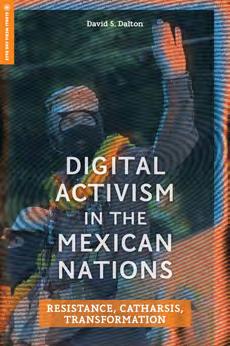
David S. Dalton
“A comprehensive exploration of how digital activists within and outside of Mexico build community, influence state policy, and effect change, David S. Dalton’s innovative approach illuminates the intersections of performance, activism, and politics in the digital age. This is a timely must-read for those interested in the potential and limits of digital activism.”
—Brian T. Chandler, professor of Spanish at the University of North Carolina Wilmington
“A fascinating study that is bound to become a major point of reference in Latin American digital culture studies. Bringing together case studies ranging from early pioneers such as the Digital Zapatistas through to #NiUnaMás and beyond, the book marries perceptive analysis with theoretical robustness and delivers new insights into the complex negotiations at the heart of digital activism today.”
—Claire Taylor, Gilmour Chair of Spanish and professor of Hispanic studies
Digital Activism in the Mexican Nations analyzes Mexico’s rich history of digital activism, which is among the most vibrant of any country in the Hispanic world. The book begins with a discussion of the Zapatista uprising of 1994—which is widely understood as the first digital social movement in the history of the world—and ends with a discussion of the digital strategies of migrant communities trekking through Mexico into the present.
Conceptualizing (digital) activism as a type of performance, the book opens a dialogue with Brecht’s binary of cathartic and transformative performance. As such, it suggests that activist movements centered on expressive manifestations of emotion tend to stifle their revolutionary potential by stifling their ability to resonate with potential allies outside their community. At the same time, it argues that the most successful digital social movements seek strategies to build connections with allies who can help them to shift state policy.
DAVID S. DALTON is the Ruth G. Shaw Humanities Fellow, professor of Spanish, and director of Latin American Studies at the University of North Carolina at Charlotte. He is the author of Robo Sacer: Necroliberalism and Cyborg Resistance in Mexican and Chicanx Dystopias and Mestizo Modernity: Race, Technology, and the Body in Postrevolutionary Mexico Global Media and Race
October 13, 2026
208 Pages • 6 x 9
9781978848047 • Paperback • $32.95
Rutgers Short
Latinx Studies • Women's Studies
Additional print format
9781978848054 • Hardcover • $120.00
Rutgers Super Short
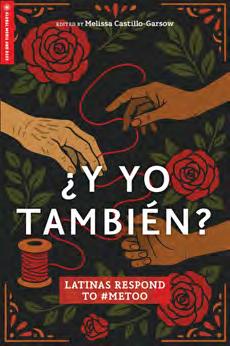
Latinas Respond to #MeToo
Edited by Melissa Castillo-Garsow
“In this editorial achievement, Melissa Castillo-Garsow has compiled a brilliant array of writers and performers to insist on the necessity of Latina voices to the #MeToo movement. ¿Y Yo También? is a powerful contribution to the ongoing struggle to bring justice to sexual abuse survivors.”
—Cristina Herrera, author of Welcome to Oxnard: Race, Place, and Chicana Adolescence in Michele Serros's Writings
¿Y Yo También? brings together a diverse range of Latina voices to address the underrepresentation of Latinx voices in the #MeToo movement and discussions of sexual violence. Through scholarly analysis of literature, media, podcasting, film, art, and testimonio alongside memoir, poetry, a short play, and personal essays, the authors address varied Latina experiences of sexual assault and harassment. These authors grapple with these traumas alongside their intersectional contexts, including U.S. imperialism in Puerto Rico, race, sexuality, indigeneity, religion, the publication landscape, and more. Ultimately, each contribution sheds light on the lack of scholarly and media attention to the realities of Latinas and sexual assault but also charts pathways toward individual and community healing. This is a volume that is intellectually rigorous yet deeply accessible—suited for academics, college-level students, creatives, performers, practitioners, activists, and general readers alike.
MELISSA CASTILLO-GARSOW is an associate professor of English at Lehman College in the Bronx and at the CUNY Graduate Center in Manhattan. She is the author and editor of seven volumes, including A Mexican State of Mind: New York City and the New Borderlands of Culture (2020), the poetry collection Coatlicue Eats the Apple, and ¡Manteca! An Anthology of Afro-Latin@ Poets.
Global Media and Race
"Expansive and engaging, Friedman and Lofthouse's book offers a carefully curated tour through movie scoring history— guided by a strong set of central questions and pursued through a succession of richly contextualized and probing close readings."—Frank Lehman, author of Hollywood Harmony: Musical Wonder and the Sound of Cinema
“Film music lovers will relish this book! Since one author is from cinema studies and the other from music, their full breadth of expertise shines through. With beautifully described scenes along with bios, contexts, and collaborative descriptions, the authors provide a peek behind the curtain for well-loved films and the music that score them.”
—Janet Bourne, associate professor of music theory at the University of California, Santa Barbara
“Friedman and Lofthouse’s exploration of fifteen classic films—some oft-dissected scores, others previously unexamined —will shed new light on the collaborative nature of film scoring for students, scholars, and enthusiasts alike.”
—William O’Hara, associate professor of music theory at Gettysburg College
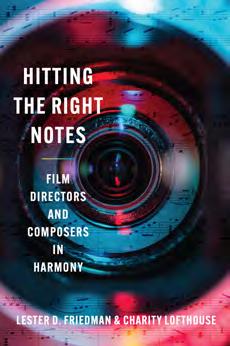
Hitting the Right Notes: Film Directors and Composers in Harmony is a unique, multidisciplinary volume co-authored by scholars from both media studies and music theory. The book features a chronological and systematic approach that concentrates on analyzing representative scenes from a broad spectrum of mainstream movies as exemplars. With a distinctive focus on versatile analytical tools from film studies, music cognition, and music theory, each chapter supplies background on the time period, director, composer, and their working relationship, then a close reading incorporates both visual analysis and musical elements beyond pitch and harmony. Robust yet accessible, Hitting the Right Notes highlights up-to-date ways of understanding film music, directly demonstrates their application across eras and genres, and displays the artistic magic directors and composers create together. It is essential reading for those interested in film and music.
LESTER D. FRIEDMAN is an emeritus professor and former chair of the Media and Society Program at Hobart and William Smith Colleges. He is the author, coauthor, or editor of over twenty books on film genres, American cinema of the 1970s, American Jewish cinema, British film of the 1980s, and health and humanities, including most recently Citizen Spielberg, 2nd edition.
CHARITY LOFTHOUSE is an associate professor of music at Hobart and William Smith Colleges.
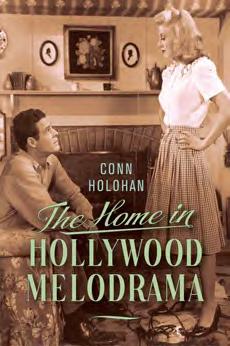
Conn Holohan
The Home in Hollywood Melodrama considers the home’s narrative, thematic, and visual construction within domestic melodramas of the 1930s and 1940s, exploring the assumptions of gender, class, and race through which the home is visualized onscreen. Informed by approaches from genre studies, architectural and urban studies, feminist film theory, critical race theory, and phenomenology, among others, the book traces how routine domestic activities and unremarkable stylistic gestures become charged with meaning via melodrama’s emphasis on recurrence and return and its moral elevation of victimhood. Drawing on original archival research and detailed textual analysis, The Home in Hollywood Melodrama offers a series of detailed case studies that explore the onscreen home as a product of both Hollywood production norms and wider cultural conceptions of belonging. Addressing questions of female movement and labor, property relations and class, race, and national identity, the book argues that the generic structures of domestic melodrama are fundamental to understanding how the home within these films takes shape onscreen.
CONN HOLOHAN is the director of the Centre for Creative Technologies and a lecturer in film and media studies at the University of Galway. His previous publications include Cinema on the Periphery: Contemporary Irish and Spanish Cinema and Masculinity and Irish Popular Culture: Tiger's Tales.
January 12, 2027
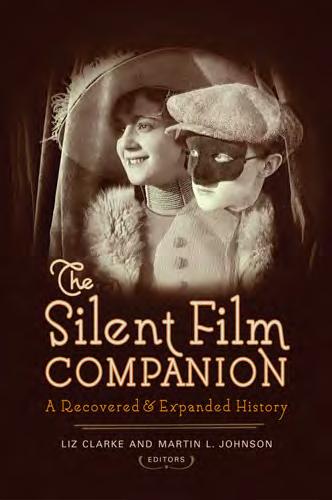
January 12, 2027
324 Pages • 6¼ x 9¼ • 19 B-W images 9781978840201 • Paperback • $39.95 Rutgers Short Film Studies
Additional print format:
9781978840218 • Hardcover • $140.00 Rutgers Super Short
Liz Clarke and Martin L. Johnson
1 “Dickson Greeting,” early Edison camera test (1891); Brian R. Jacobson
2 Serpentine Dance (1892); Roxanne Hearn
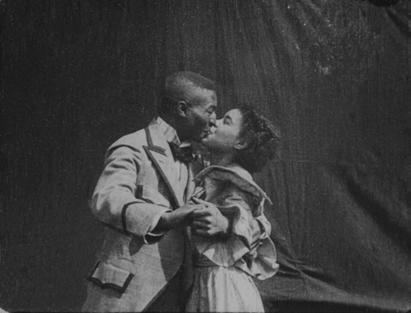
3 Something Good—Negro Kiss (1898); Allyson Nadia Field
4 Uncle Josh in a Spooky Hotel (1900); W.D. Phillips
5 Kansas Saloon Smashers (1901); Leslie H. Abramson
6 What Is Seen Through a Keyhole (1901); Amanda Shubert
7 Charleston Chain Gang (1902); Joshua A. Mitchell
8 Consequences of Feminism (1906); Benjamín Schultz-Figueroa
9 Madam’s Cravings/Madame a des envies (1906); Coraline Refort
10 The Colonel’s Account (1907); Grant Wiedenfeld
11 Frankenstein (1910); Shane Denson
12 Marriage in the Moon/Un matrimonio interplanetario (1910); Sabrina Negri
13 The Sergeant (1910); Richard Abel
14 Terror Stricken (1911); Victoria Duckett
15 Children Who Labor (1912); Constance Balides
16 Onésime, Clockmaker/Onésime horloger (1912); Shawn Shimpach
17 Suspense (1913); Pamela Hutchinson
18 Death Mask (1914)/Redskin Duel (1919); Yiman Wang
19 Filibus (1915); Susan Potter
20 The Woman of Tomorrow (1915); Anna Kovalova
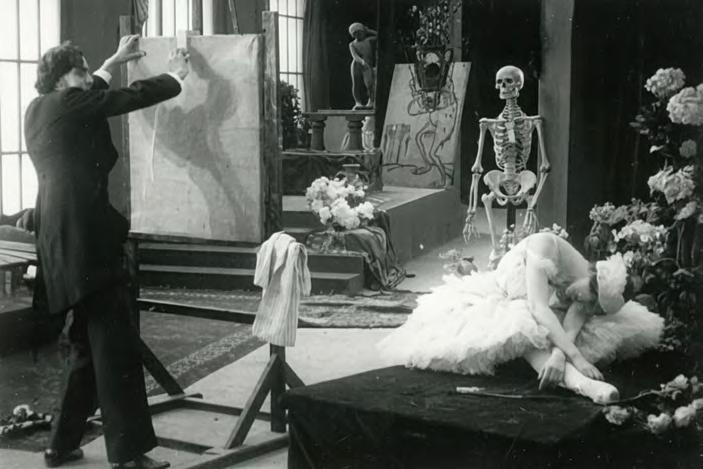
21 The Dying Swan (1916); Oksana Chefranova
22 Eleanor’s Catch (1916); Shelley Stamp
23 Sinn Féin Rebels (1916) and Ulster’s Parliament Assembles (1922); Jerry White
24 When Little Lindy Sang (1916); Randolph Jordan
25 Tepeyac (1917); Tanner Benson
26 Terje Vigen (1917); Jonah Horwitz and Andrea Comiskey
27 Unmasked (1917); Dan Streible
28 Knocknagow (1918); Veronica Johnson
Edited by Liz Clarke and Martin L. Johnson
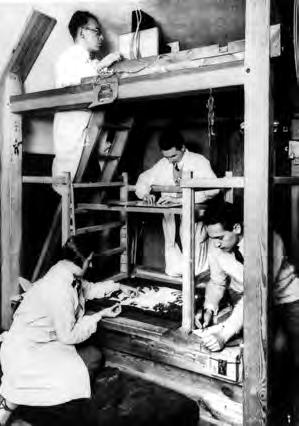
Silent film is more than just a cinema of firsts, greats, or classics. It is a cinema of experimentation, ambition, and connection. To watch a silent film is to be transported into another world. A Silent Film Companion seeks to broaden the silent film canon by focusing on compelling noncanonical films from around the globe to provide a fresh perspective and new view of silent cinema. With over fifty films discussed, this volume captures just a sliver of the many delights silent cinema has to offer. The book encourages discovery, and rediscovery, of the world of silent cinema: one where the movies were still young, full of possibility, eager to entice others to take part in a wonderful adventure. Films covered are from fourteen countries, including Brazil, Mexico, China, Cuba, India, Italy, and Russia, and representing a diversity of subjects. Chapters provide historical and cultural context to each film, the filmmakers, and a concise analysis of each film. A Silent Film Companion is a guidebook to the many pleasures of silent cinema, allowing you to see and understand diverse perspectives. It is a must-read for students and fans of silent cinema interested in seeing a side of silent cinema that is rarely explored.
LIZ CLARKE is an associate professor in the Department of Communication, Popular Culture, and Film at Brock University in Canada. She is the author of The American Girl Goes to War: Women and National Identity in US Film, 1908–1918 (Rutgers University Press, 2022).
MARTIN L. JOHNSON is an associate professor of English and comparative literature at the University of North Carolina at Chapel Hill. He is the author of Main Street Movies: The History of Local Film in the United States.

December 8, 2026
300 Pages • 6¼ x 9¼ • 26 color and 43 B-W images
9781978841376 • Paperback • $32.95
Rutgers Short Film Studies • Cultural Studies
Additional print format
9781978841383 • Hardcover • $120.00
Rutgers Super Short
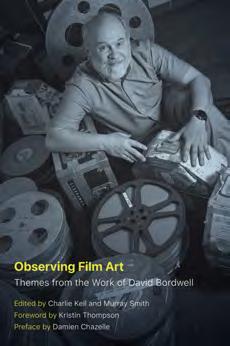
Themes from the Work of David Bordwell
Edited by Charlie Keil and Murray Smith
Preface by Damien Chazelle
Foreword by Kristin Thompson
“This volume captures facets of the thought, discipline, and far-reaching influence of Bordwell. An independent, profoundly self-confident intellectual, he was consistently methodical in his projects but always acknowledged the giants that inspired him in the sciences and humanities. Beneath the profound writing lurked a biting, often scatological, sense of humor.”
—Donald Crafton, author of Shadow of a Mouse: Performance, Belief, and World-Making in Animation
“How to pin down the legacy of David Bordwell: film theorist, film historian, film critic, video essayist, film blogger, and with Kristen Thompson, foundational textbook author? Here is one way: a collection of work inspired by his groundbreaking work as all of the above. An inspired tribute to a brilliant man.”
—Kathryn Kalinak, author of Film Music: A Very Short Introduction
When David Bordwell died in 2024, he left behind a legacy of film scholarship and criticism whose influence is unmatched. Coauthor of a pair of textbooks adopted across the globe and the main force behind a blog read by thousands, Bordwell has influenced generations of film students, filmmakers, and film critics. Observing Film Art examines the breadth of Bordwell’s work through the perspectives of those who knew him best. This is the first collection devoted to the work of Bordwell, and it gives equal attention to each facet of his prodigious scholarship, structured to highlight his interest in theory, history, and analysis and criticism. The cornerstones of his approach to film study, including formalism, cognitivism, and historical poetics, are all examined in detail, as are key works, including The Classical Hollywood Cinema (coauthored with Kristin Thompson and Janet Staiger) and Narration in the Fiction Film
CHARLIE KEIL is a professor in the Cinema Studies Institute and the Department of History at the University of Toronto in Canada, where he also serves as principal of Innis College. He has published eight books, the most recent being The Oxford Handbook of Silent Cinema, coedited with Rob King.
MURRAY SMITH is a professor of philosophy, art, and film and director of the Aesthetics Research Centre at the University of Kent in the UK. He has published widely on film, art, and aesthetics, including most recently Film, Art, and the Third Culture: A Naturalized Aesthetics of Film, Trainspotting, and Engaging Characters: Fiction, Emotion, and the Cinema.
January 12, 2027
164 Pages • 6 x 9 • 18 color images
9781978849297 • Paperback • $29.95
Rutgers Short Media Studies • Sports • Business
Additional print format
9781978849303
• Hardcover • $120.00
Rutgers Super Short
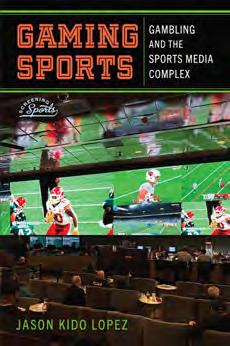
Gambling and the Sports Media Complex
Jason Kido Lopez
Gaming Sports: Gambling and the Sports Media Complex examines games that are based on sports—like horse race and sports betting, fantasy sports, and March Madness brackets—and explores their relationship to sports and sports media. It seeks to improve common ways of understanding these games and to correct prevalent misconceptions. For example, gaming is often seen to be a supplementary add-on that is essentially corruptive to sports and sports fandom. Gaming Sports challenges this view and explores how gaming and gambling have always been part of commercialized sports leagues, sports media, and sports cultures. Indeed, gaming has an underexplored role in explaining why certain sports rose to popularity, how sports leagues are organized, the way sports media covers sports, and how fans engage with sports. Gaming Sports tracks the development of American sports-based games from colonization to the present to argue that gaming and sports have always influenced and been built upon each other.
JASON KIDO LOPEZ is an assistant professor in the Department of Communication Arts at the University of Wisconsin–Madison. He is the author of Redefining Sports Media and Self-Deception's Puzzles and Processes: A Return to a Sartrean View.
Screening Sports
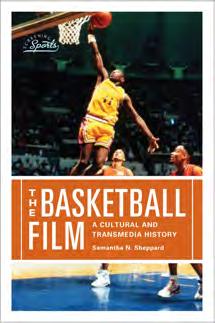
Samantha
“Rigorous and readable, The Basketball Film is a superb contribution to the burgeoning scholarship on sport cinema. Samanatha Sheppard incisively examines scores of basketball feature films and documentaries, and the book is chockfull with useful analytical insights. Moreover, Sheppard convincingly argues that ‘basketball cinema is not only about the sport itself but also about everything that surrounds, structures, falls between, and just outside of the court’s storied lines.’ The same goes for first-rate critiques of basketball cinema, like this one, which is trenchant cultural criticism, a way to better understand American culture and its transnational impact.”
—Daniel A. Nathan, author of Saying It's So: A Cultural History of the Black Sox Scandal
“The Basketball Film is so much more than an overview of basketball in cinema. It offers a generative and illuminating analysis of sports films by connecting cinematic depictions to broader cultural struggles and showing how the economics of Hollywood film have become increasingly intertwined with other forms of sports media. This carefully researched book is insightful at every turn and a model for scholars of sport and media to follow.”
—Thomas P. Oates, author of Football and Manliness: An Unauthorized Feminist Account of the NFL
The Basketball Film: A Cultural and Transmedia History reveals how stories about the game extend far beyond the court From classic Hollywood dramas to independent documentaries, basketball films capture the rhythms of play while reflecting deeper struggles over race, identity, community, and aspiration. This groundbreaking study examines the basketball court as both a stage and a mirror for American life—where questions of belonging, opportunity, and cultural power are played out on and off the court. Moving across film, television, and video games, the book traces how basketball’s visual culture has evolved alongside the sport’s rise to global prominence. Through close readings of both celebrated and overlooked works, The Basketball Film offers an expansive and engaging portrait of how basketball has been imagined, represented, and mythologized across popular culture.
SAMANTHA N. SHEPPARD is an associate professor in the Department of Performing and Media Arts at Cornell University. She is the author of Sporting Blackness: Race, Embodiment, and Critical Muscle Memory on Screen and coeditor of the collections Sporting Realities: Critical Readings on the Sports Documentary and From Madea to Media Mogul: Theorizing Tyler Perry Screening Sports
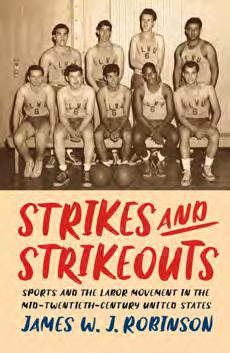
Sports and the Labor Movement in the Mid-Twentieth-Century United States
James W. J. Robinson
"A groundbreaking and excellent project by someone who has obviously put his heart and soul into it and possesses the scholarly and literary skills to produce this very fine result. Accessible, unique scholarship at its best."
—Gabriel Kuhn, coeditor of From Hash Rebels to Urban Guerrillas: A Documentary History of the 2nd of June Movement
During the first half of the twentieth century, the introduction of cheap or free recreation to the workplace provided a metaphorical place where ordinary working-class people of all races and genders gained access to physical leisure and developed bonds of camaraderie in the antifascist labor movement. Strikes and Strikeouts: Sports and the Labor Movement in the United States illustrates how this largely forgotten labor sports movement was critical in helping unions become forces for larger cultural change and essential to understanding the potency of the 1930–1940s labor movement. Drawing from ten different labor and leftist social movement archives, Robinson strives to reconstruct the “people’s history." At its height, from the late 1930s to the early 1950s, the labor sports movement presented a real alternative to both apolitical and conservative sports and involved millions of working-class people. It was a key part of improving the lives of average Americans and helped build an antiracist, antifascist, working-class counterculture that helped change the United States through a strong labor movement. This movement brought higher living standards for working-class people and the end of racial segregation in sports, which in turn aided the civil rights movement.
JAMES W. J. ROBINSON received his PhD in History from Northeastern University in 2020. He teaches American history in the Labor Studies Department at Rutgers University, and is a tour guide in Philadelphia, where he resides. This is his first book.
Critical Issues in Sport and Society
December 8, 2026
220 Pages • 6¼ x 9¼ • 23 B-W images
9781978834637 • Paperback • $34.95
Rutgers Short Sports • US History • Labor Studies
Additional print format
9781978834644 • Hardcover • $120.00
Rutgers Super Short
October 13, 2026
114 Pages
9781978847989
“Inspiring, timely, and immensely practical. Meyers shows a new generation of English majors how to open door after door in the modern-day career world.”
—George Anders, author of You Can Do Anything: The Surprising Power of a "Useless" Liberal Arts Education
English Majors at Work: Career and Life Pathways details the professional superpowers—the many marketable skills— gained from studying literature, creative writing, film, and popular culture. It prepares English majors to know themselves and their worth so that they can feed their bodies and souls in rapidly changing twenty-first-century economies. Written for prospective and current English majors as well as recent grads, the book shows that skills associated with the major— innovative thinking, excellent written communication, and the ability to read people, rooms, and data—can sustain lifelong successful careers. It also provides real talk about internships, networking, and graduate school. In keeping with a major that focuses on storytelling and analysis, each chapter concludes with a lively discussion of a relevant literary or media text. English Majors at Work is an essential guide for literature students as well as the professors, career services professionals, and parents who advise them.
HELENE MEYERS is Professor Emerita of English at Southwestern University, where she held the McManis University Chair and designed Novel English Majors, a nationally recognized career pathways course. She is the author of MovieMade Jews: An American Tradition (Rutgers University Press, 2021).
See page 6.
October 13, 2026
266 Pages • 6¼ x 9¼
9781978843707 • Paperback • $39.95
Rutgers Short
Education • US History • Social Movements
Additional print format
9781978843714 • Hardcover • $150.00
Rutgers Super Short
High School Student Activism in Twentieth-Century America
Edited by Dara Walker, Alexander Hyres, and Jon Hale
“
Youth in the Movements masterfully extends our understanding of high school student activism by expanding traditional regional, racial, and ethnic silos. It offers an unparalleled look into the diverse political aims and motivations that have long shaped our democracy.”
—Dionne Danns, author of Crossing Segregated Boundaries: Remembering Chicago School Desegregation
Youth in the Movements documents the history of the rise of American high school and youth activism in the United States since the Second World War. Spaces within high schools and the adults at them provided support or inspiration—both negative and positive—for youth engaged in protest, organizing, and activism. Through rich research of archival sources and oral histories, contributors reveal new perspectives on American high school and youth activism. Viewed through the eyes of high-school-aged youth around the United States—in familiar locations such as Boston, New York City, and Detroit, as well as less familiar locales in the historiography, such as Salt Lake City and the Navajo Reservation—we extend our understanding of high school and how it has been experienced by youth activists in the post–World War II period.
DARA WALKER is an assistant professor of African American studies, history, and women's, gender, and sexuality studies at the Pennsylvania State University.
ALEXANDER HYRES is an assistant professor in the history of United States education at the University of Utah. He is the author of Protest and Pedagogy: Charlottesville's Black Freedom Struggle and the Making of the American High School, and his writing has appeared in the Journal of African American History, Journal of the History of Child and Youth, Teachers College Record, and The Washington Post
JON HALE is a professor of education and educational history at the University of Illinois Urbana-Champaign. He has published serval books, including the award-winning book, The Freedom Schools. Hale’s research is featured in outlets including Time, The Atlantic, and The Washington Post.
New Directions in the History of Education
Amato Nocera
“By expanding curriculum beyond the classroom into a broader social process, Nocera traces the debates and tensions that shaped what he calls ‘a Black curriculum for Black consciousness.’ A must-read for historians of education, ethnic studies scholars, and critical-race-conscious educators.”
—Laura Chávez-Moreno, author of How Schools Make Race: Teaching Latinx Racialization in America
Constructing a Black Curriculum reframes how we understand Black Americans’ intellectual and political engagement with education during the first half of the twentieth century. It traces the powerful, diffuse movement created by Black Americans to build what Nocera calls a “Black Curriculum": a communal effort to represent Black identity, guide racial consciousness, and rebut claims of inferiority. This curriculum first developed as a public educational project in Black learned societies and during the Harlem Renaissance before making its way into schools. The struggle for a Black curriculum was not only a fight against white supremacy but also an internal debate among Black advocates over the very nature of how race should be represented and taught. This book illuminates this struggle through the work of Black intellectuals (Alexander Crummell, Carter G. Woodson, Hubert Harrison, and Alain Locke) and the intellectual contributions of African American educators (Nannie Burroughs, Jane Dabney Shackelford, and Julia Davis). This essential history provides vital context for contemporary debates over curriculum reform, racial knowledge, and the enduring quest for educational equity.
AMATO NOCERA is an assistant professor of educational equity in the Department of Teacher Education and Learning Sciences at North Carolina State University. This is his first book.
New Directions in the History of Education
Edited by Matthew DelSesto, Daniela Jauk-Ajamie, Elizabeth Lara, and Shea Zwerver
"Ecologies of Justice is a compelling exploration of the intersection between environmental justice and the carceral system. The voices of incarcerated individuals, survivors of crime, and institutional stakeholders highlight the transformative potential of ecological practices, from prison gardens to community-based environmental education. Poetry and reflections enhance the book's emotional resonance, illustrating justice and healing through connection to nature. More than academic discourse, it is a testament to resilience and innovation in creating a more just, sustainable world."
—Christine Lynn Norton, professor of social work at Texas State University
"An imaginative montage of cutting-edge research, poetry, history, social criticism, and timely storytelling, this inspiring text puts the voices of incarcerated people, survivors of crime, horticultural educators, correctional reformers, and prison abolitionists in conversation with each other and with the wider ecology of nature to which we belong."
—Stephen Pfohl, professor of sociology at Boston College
This book explores how social-ecological interventions can counteract violence in carceral systems and environmental destruction. It combines contributions on prisons, reentry programs, environmental justice, and sustainability, offering practical and imaginative theory and practice. It highlights voices from within and beyond prison walls, focusing on transformative environmental education and eco-social healing.
MATTHEW DELSESTO is the coordinator for the Initiative for Community Justice and Engaged Pedagogy at Boston College, where he also teaches in the Sociology Department.
DANIELA JAUK-AJAMIE is an assistant professor of sociology and criminal justice studies at the University of Akron, Ohio. She is a certified clinical sociologist and serves on the board of the American Association of Applied and Clinical Sociology (AACS).
ELIZABETH LARA currently works as a garden educator, Dodger Stadium tour guide (with a specialization on the botanic garden tour), a facilitator for a domestic violence intervention program, and a freelance gardener.
SHEA ZWERVER works to bring nature to carceral settings, increase access to nature to promote prosocial behavior, and improve quality of life through equity-driven practices. From 2016 to 2022, she served in multiple roles with Pennsylvania’s Department of Conservation and Natural Resources.
Nature, Society, and Culture
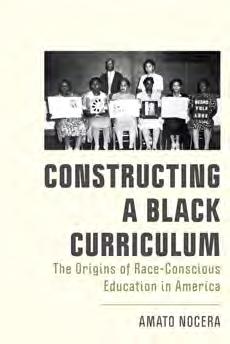
November 10, 2026
334 Pages • 6¼ x 9¼ • 20 color images
9781978840324 • Paperback • $44.95
Rutgers Short
Criminal Justice • Environmental Studies • Agriculture
Additional print format
9781978840331 • Hardcover • $140.00
Rutgers Super Short
September 8, 2026
216 Pages • 6 x 9 • 14 color and 1 B-W images
9781978846579
Additional print format
9781978846586 • Hardcover • $120.00 Rutgers Super Short
Kajsa Lundberg
“Lundberg’s book begins with a bike ride—a tour de force, not a pootle,...with stunning insights and exhilarating theoretical switchbacks that leave us with a better appreciation of the harms of rapid urbanization. Her exquisite detail and effortless writing render us breathless.”
—Avi Brisman, author of Climate Change as a Crisis of Imagination
"So many of the harms of city life have become so completely normalized that they fall under our radar. Lundberg rattles us out of our slumber by providing a blistering critique of the structural forces that bake in urban inequality. A clarion call for new urban imaginaries needed right now.”
—David Bissell, author of Transit Life: How Commuting Is Transforming Our Cities
This book, based on original research in Melbourne, Australia, explores the spatial politics of urban expansion both upward and outward as the city continues to colonize nonurban areas around its fringes. The everyday decisions and tools bound up in urban growth accelerate a malign colonization of land, resources, air, and water, thereby exacerbating a broad variety of social and environmental harms. In addition to the quotidian nature of urban growth, this book also explores the "crisis" in the form of extreme fire events in urban areas. Moving between local planning and national and international climate change mitigation policies and approaches, this book highlights various "necropolicies"–policies causing harm and death to more-than-human populations. Such death-bound policies are the result of neoliberal urban development, fueled by state-corporate relations and prosperity concerns. In sum, this book connects green and urban criminology, urban studies, and planning to reveal how ordinary and extraordinary challenges are entangled in urban design, harm, and, most importantly, imagining alternative futures and cities.
KAJSA LUNDBERG is a research fellow at the Centre for Urban Research in the School of Global, Urban and Social Studies at RMIT University in Melbourne, Australia.
Critical Issues in Crime and Society
October 13, 2026
216 Pages • 6¼ x 9¼ • 7 color and 2 B-
W figures
9781978846883 • Paperback • $34.95
Rutgers Short
U.S. History • New Jersey
Additional print format
9781978846890 • Hardcover • $130.00
Rutgers Super Short
New Englanders in a New Land
Newark in the Proprietary Period, 1666–1702
"This history of Newark in the proprietary period, based on impressive, pioneering research, portrays encounters and tensions that tell us important things about the development and fate of Britain’s North American empire. Like the New Englanders of the title, I felt I had been transported to not only a new, but a very strange land. The author has created for readers a sense of place in this somewhat far-flung colonial outpost and offers a multidimensional view of it."
—Mark Krasovic, author of The Newark Frontier: Community Action in the Great Society
New England Puritans from the former New Haven Colony settled Newark in 1666. Their fierce determination to establish scripture-based government in a close-knit township, with community control over admitting new inhabitants, often put them in direct conflict with New Jersey's proprietary government. Newark's egalitarian system for allocating land diverged sharply from the proprietors' headright approach, adapted from the West Indies and Carolina, that rewarded settler use of indentured servants and enslaved labor with larger distributions of land.
This study provides a fresh interpretation of the founding and settlement of Newark as a self-contained New England community, including the settlers' negotiations with Native Americans, formation of godly self-government, gradual allocation of township land, and introduction of slavery. To implement their New England way, Newarkers resisted the proprietary government to the point of rebellion, bringing into stark relief the inherent conflict between two sources of authority, one scriptural and community-based and the other royal and proprietary, and two systems of land distribution.
TIMOTHY J. CRIST is a co-founder and president of the Newark History Society. After earning his PhD in history from Cambridge University, he headed a bibliographical research project at Yale and then held executive positions at Prudential Financial. He has also served as chair of the New Jersey Council for the Humanities and the Newark Public Library.
CERES: Rutgers Studies in History
Christina Jackson
No More Dual City: The Fate of Atlantic City examines Atlantic City as a vivid case study of how Black communities endure and resist the forces of economic redevelopment, racialized planning, and environmental vulnerability. Drawing on five years of ethnographic research, Jackson reveals how the city’s famed tourism and casino economy depends upon, yet marginalizes, the historically Black Northside neighborhood. Through the concept of dualness, Jackson explores how racial capitalism produces both material and emotional divides, between growth and decay, visibility and exclusion, and belonging and dispossession. Combining first-person narrative, theory, and community storytelling, the book illuminates the “slow violence” of urban inequality and the creativity of residents who build rooted futures amid instability. No More Dual City reframes Atlantic City not as an anomaly but as a microcosm of racialized urban America, offering a compelling new way to think about sustainability, justice, and the right to stay in place.
CHRISTINA JACKSON is an associate professor of sociology at Rutgers University, Camden. She is the coauthor of Black in America: The Paradox of the Color Line CERES: Rutgers Studies in History
January 12, 2027 182 Pages • 5½ x 8½ • 12 B-W images,
Tracing Continuities of Resistance and Archipelagic Geographies
Christina García, Mrinalini Tankha, and Yairamaren Maldonado
Foreword by Raul Fernández
Undisciplined Cuba brings scholars of diverse disciplines and moves through multiple temporalities and geographies, allowing Cuba to emerge as a negotiated reality. Rather than rehearse narratives of exceptionalism and Cold War relationships that have detached the nation from its Antillean neighbors, this edited volume understands Cuba as deeply embedded in the Caribbean archipelago. Its chapters encompass feminist activism, public health, cinema for social justice, marine geopoetics, racial geographies, and literary corporealities. Drawing from an archipelagic framework and a decolonial practice of undisciplining, the anthology counters the tendency to treat landscapes and cultural and political manifestations as artifacts of a national identity or evidence of a discrete geopolitical entity. Instead, Undisciplined Cuba attends to processes, to dynamic relations and continuities of resistance that defy periodization and institutional representation. The book offers a granular view of Cuba and an approach to Caribbean studies that imagines networks in excess of traditional categories of thought.
CHRISTINA GARCÍA is an associate professor in the Department of Hispanic Studies at the College of Charleston. She is the author of Corporeal Readings of Cuban Literature and Art: The Body, the Inhuman and Ecological Thinking (2024).
MRINALINI TANKHA is an assistant professor of anthropology at Portland State University. Her publications include “Detained Settlements: The Infrastructures and Temporalities of Digital fFnancial Transactions Between the United States and Cuba” in Economic Anthropology (2021) and “Chiastic Currency Spheres: Postsocialist Conversions in Cuba’s Dual Economy” in Money at the Margins: Global Perspectives on Technology, Financial Inclusion, and Design (2018).
YAIRAMAREN MALDONADO completed her doctoral degree at UC-Berkeley. She is the author of Ciencia ficción en el mirador (2022), Interfaces (2016), and “Cuban New Media Literature, Database Aesthetics and Portable Memories in Jorge E. Lage’s Archivo” in Revista de Estudios Hispánicos (2022).
Critical Caribbean Studies
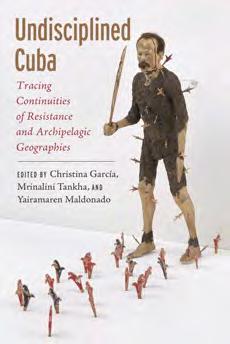
February 9, 2027
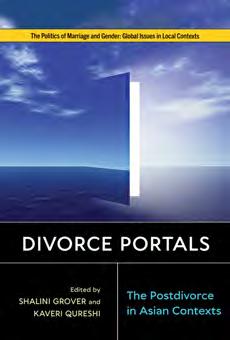
November 10, 2026
198 Pages
The Postdivorce in Asian Contexts
Shalini Grover and Kaveri Qureshi
Afterword by Janet Carsten
Foreword by Péter Berta
"This is a groundbreaking and timely volume that reframes the study of divorce and its aftermath in Asia. The collection brings together chapters focusing across different regions of Asia and the diasporas. With remarkable depth, the book conceptualises divorce as a portal, through which individuals and families navigate hopes, constraints, and new possibilities. This is an essential contribution to feminist scholarship. By weaving together questions of temporality and intersectionality this volume opens new pathways for understanding intimacy, kinship, and social change in Asia and beyond."
—Rohit K Dasgupta, associate professor of gender and sexuality, London School of Economics and Political Science
"This compelling collection takes the reader into uncharted worlds in the shadow of divorce. As the authors engage with how marriage patterns of the past unfold in the present, they consider colonial legacies and contested claims about moral decline and renewal. This book offers fresh insights for social scientists and lay readers alike, of Asian heritage or not, ever partnered or not, gay or straight."
—Lynn Jamieson, professor of sociology, University of Edinburgh
Drawing from sensitive and compelling ethnographic portrayals drawn from diverse geographic contexts, Divorce Portals reveals divorce to be generative of transformations in individual intimate lives and wider societies.
SHALINI GROVER is an assistant professorial research fellow at the International Inequalities Institute at London School of Economics and Political Science. She is the author of Marriage, Love, Caste, and Kinship Support: Lived Experiences of the Urban Poor in India (2018).
KAVERI QURESHI is a senior lecturer at the School of Social and Political Science and co-director of the Centre for Research on Families and Relationships at the University of Edinburgh. She is the author of two monographs: Marital Breakdown among British Asians: Conjugality, Legal Pluralism and New Kinship (2016) and Chronic Illness in a Pakistani Labour Diaspora (2019).
Politics of Marriage and Gender: Global Issues in Local Contexts

December 8, 2026
Eugenics and Other Anglican Efforts to Control Fertility in Interwar England
Andrew Moeller
"Moeller’s examination of the theologically driven interests of Anglican leaders in birth rates and reproduction is an original and persuasive analysis of the moral backdrop that fueled the varied positions adopted by Church leaders in the midtwentieth century. It’s an intriguing and thoughtful contribution that deserves a wide audience."
—Philippa Levine, Walter Prescott Webb Chair in History and Ideas, University of Texas at Austin
"This is the authoritative treatment of how the leaders of the Anglican Church in England expressed concerns about fertility, reproduction, family size, and demographic decline during the interwar period. Many of them also entertained eugenic and racial ideas. With the current resurgence of pronatalist eugenics across the Western world, understanding these interwar debates on population and their legacy is more relevant today than ever before."
—Marius Turda, professor and director of the Centre for Medical Humanities at Oxford Brookes University, Oxford, UK
Be Fruitful and Multiply examines the moral justification offered by Anglican leaders for their support for eugenic, pronatalist, and neo-Malthusian schemes in the United Kingdom during the interwar period. These religious leaders often comprehended their efforts to control fertility within the context of a broader struggle over competing conceptions of human purpose in English society and regularly justified their efforts on the grounds that fertility-manipulation schemes served to align procreative behaviors with “Christian” conceptions of human purpose. The shared moral logic of Anglican leaders helps to explain the pervasive interest in birthrate patterns, along with the enduring appeal of fertility-manipulation schemes, among middle and upper-classes during the first half of the twentieth century. This book also sheds light on how population concerns led to the liberalization of church positions on marriage and sexuality and illuminates how Anglican leaders sought to maintain moral influence in the face of the perceived large-scale rejection of Christian moral teachings.
ANDREW MOELLER is a hosted research fellow at the Uehiro Oxford Institute and an associate member of the History Faculty at the University of Oxford, England. He is also the leader of a research project entitled “Biotechnology and the Humanities,” based within the Medical Humanities Research Hub at Oxford.
Abandonment, Care, Death, Intimacy, and Possibility in Lima, Peru
Magdalena Zegarra Chiappori
Growing Old on the Margins is a moving portrait of aging at the edge of social life. Set in a state-run shelter for older adults in urban Lima, Peru, the book traces the everyday lives of men and women who have been left behind by family, institutions, and the promises of care. Based on more than two years of close ethnographic engagement, it follows residents as they navigate loneliness, illness, intimacy, and the quiet anticipation of death. Through small gestures— shared silences, requests for affection, moments of tenderness and conflict—the book reveals how people strive to remain present in a world that offers them little reason to hope. Care appears here not as a simple act of kindness but as a fragile and uneven practice, shaped by scarcity, power, and moral ambiguity. Attentive to suffering without romanticizing it, Growing Old on the Margins reflects on what it means to age, endure, and remain human when one’s life is no longer considered worthy of attention.
MAGDALENA ZEGARRA CHIAPPORI is a British Academy International Fellow in the Department of Social Anthropology at the University of Cambridge, UK. Her published articles include “Physical Restraint in Long-Term Care Facilities for Older Adults in Lima, Peru” in Anthropology News (2025), ”Caring for Our Interlocutors on the Threshold of Life and Death" in The Lancet Respiratory Magazine (2024), and “Vulnerable lives, Irrelevant Deaths: Dying Alone and Receiving Flawed Care While Growing Old Institutionalized in Lima, Peru” in Medical Anthropology: Cross Cultural Studies in Health and Illness (2023).
Global Perspectives on Aging

Pascha Bueno-Hansen
“This book fills a gaping hole in transitional justice theory and practice, addressing the harms and transformation possible in postconflict society by looking to dissident gender and sexualities as a source of inspiration, inclusion, and explanation. This book turns traditional transitional justice thinking on its head by exposing its heteronormative fault lines. It provides a radical rethink of harm and its necessary counterpart: radical presence in transitional justice process.” —Fionnuala Ní Aoláin, Regents Professor and Robina Chair in Law, Public Policy, and Society at the University of Minnesota
Dissident Genders and Sexualities in the Andes: Truth, Justice, and Reparations reveals how people of non-normative genders and sexualities fight for truth, justice, and reparations in the aftermath of armed conflict and authoritarian regimes in Peru, Ecuador, and Colombia. A focus on body politics flips the transitional justice model that focuses on nation-states to investigate massive human rights violations. How and why are harms against people of nonnormative genders and sexualities included or excluded in Peruvian, Ecuadorian, and Colombian transitional justice efforts? What strategies do activists use in the ongoing struggle for the recognition of their humanity through truth, justice, and reparations? To answer these questions, Dissident Genders and Sexualities in the Andes focuses on activists and their embodied knowledge.
PASCHA BUENO-HANSEN is an activist scholar/educator and a professor of women's studies, gender studies, political science, and international relations at the University of Delaware. She is the author of Feminist and Human Rights Struggles in Peru: Decolonizing Transitional Justice
Genocide, Political Violence, Human Rights
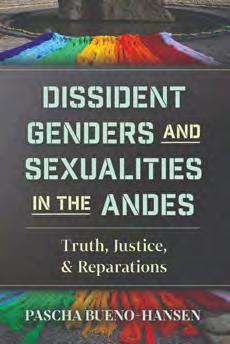
January 12, 2027
222 Pages • 6 x 9 • 11 B-W figures
9781978850118 • Paperback • $46.95
Rutgers Short Latin American Studies • LGBTQ+ Studies
Additional print format
9781978850125 • Hardcover • $150.00
Rutgers Super Short

October 13, 2026
252 Pages
6¼ x 9¼
3 color images
9780813584577
Rutgers Short Genocide • Human Rights • Asian Studies
Additional print format
9780813584584 • Hardcover • $130.00
Rutgers Super Short
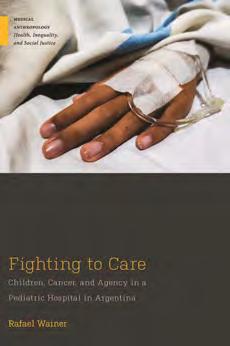
February 9, 2027
220 Pages • 6 x 9 • 2 tables
9781978842885 • Paperback • $39.95
Rutgers Short
Latin American Studies • Anthropology
Additional print format
9781978842892 • Hardcover • $120.00
Rutgers Super Short
Chronicle of a Genocide Foretold Myanmar and the Rohingya Penny Green and Thomas MacManus
Chronicle of a Genocide Foretold is a powerful account of one of the most devastating human crises of the twenty-first century. Drawing on firsthand research conducted in Burma (Myanmar) and neighboring countries, the book uncovers how the Rohingya Muslims have been systematically isolated, impoverished, and targeted in a state-led genocidal campaign. Through more than 150 interviews with survivors, local officials, religious leaders, and international actors, the authors reveal how discrimination, mass displacement, and organized brutality have created conditions that meet the legal, criminological, and moral definition of genocide. The book also challenges the silence and complicity of the international community. Accessible and grounded in rigorous research, this book speaks to scholars, activists, policymakers, and anyone concerned with justice, human rights, and the global failure to prevent genocide.
PENNY GREEN is a professor of law and globalization at Queen Mary University of London, founder of the International State Crime Initiative, and editor in chief of State Crime. She is the author of State Crime and Civil Activism: On the Dialectics of Repression and Resistance (2019), Countdown to Annihilation: Genocide in Myanmar (2015), and State Crime: Governments, Violence and Corruption (2004).
THOMAS MACMANUS is a senior lecturer in state crime and acting director of the International State Crime Initiative (ISCI) at the school of law at Queen Mary University of London. He is the author of Countdown to Annihilation: Genocide in Myanmar (2015) and State Corporate Crime and the Commodification of Victimhood (2018).
Genocide, Political Violence, Human Rights
Children, Cancer, and Agency in a Pediatric Hospital in Argentina
Rafael Wainer
Foreword by Lenore Manderson
Fighting to Care explores the lived experiences of children with pediatric blood cancer in Argentina, centering the struggles to care from the moment a child is labeled as experiencing "strangeness in the blood.” The book focuses on the notion of "permeable bodies" to understand children’s corporeal and subjective dynamic experience of cancer treatment and interpersonal care. Despite their vulnerability, throughout the course of demanding treatment, children display significant agency, actively navigating their medical journeys through various forms of communication and action. Fighting to Care also highlights the collective forms of care and the personal and interpersonal pain experienced by children, their families, and healthcare professionals in contexts of urgency and against health bureaucracies. In Argentina, caregiving, that is, fighting to care, is deeply intertwined with fighting for health rights within a public healthcare system that, while historically universal and free, is complex and impacted by recurring economic crises and social inequalities.
RAFAEL WAINER is a medical anthropologist, sessional lecturer at the University of British Columbia, and health researcher specialized in pediatric care based in Vancouver, Canada. He has published single and coauthored articles in English and Spanish in Bereavement (2024), Children and Society (2022), and Medicine Anthropology Theory (2019), among other journals.
Medical Anthropology
Founded in 1922, the University of Delaware Press supports the mission of the University of Delaware through the worldwide dissemination of outstanding, peer-reviewed scholarship in a wide range of disciplines in the humanities, including literary studies, art history, French studies, and material culture, with a particular focus on the early modern period. The Press also publishes works on the history, culture, and environment of Delaware and the Eastern Shore of interest to the general public, enhancing the university’s community outreach. Our prestigious series invite works that are interdisciplinary, transnational, and/or temporal in nature, supporting the Press’s commitment to publishing innovative and inclusive scholarship.
As of March 2021, all University of Delaware Press titles published in 2019 and thereafter, including a select number of backlist titles, are distributed worldwide by Rutgers University Press. These books bear an ISBN prefix of 978-1-64453 and can be ordered in combination with any Rutgers titles.
University of Delaware Press titles published before 2019 are distributed by Rowman and Littlefield (now part of Bloomsbury). In the US, order by phone at 1-888-330-8477, ext. 7527, email weborders@mpsvirginia.com, or visit https://www.bloomsbury.com. See the full list at udpress.udel.edu.
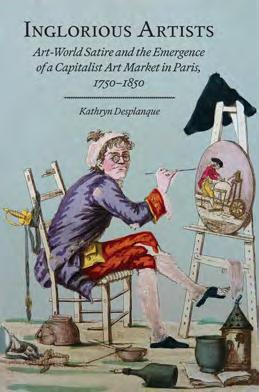
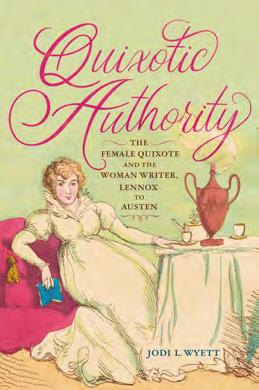

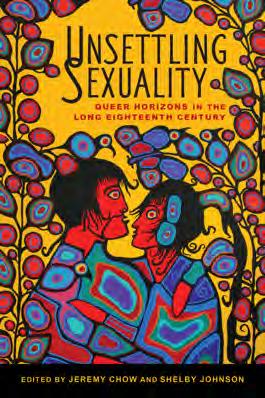
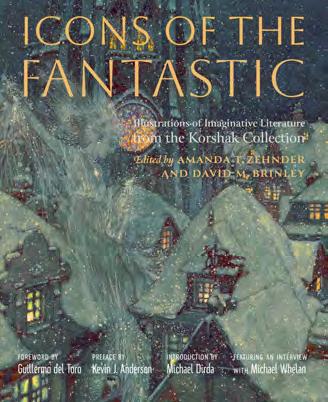
October 30, 2025
172 Pages • 9 x 11 • 197 4-color images (including 53 full page plates)
9781644534052 • Hardcover • $44.95
Previously announced
Illustrations of Imaginative Literature from the Korshak Collection
Edited by Amanda T. Zehnder and David M. Brinley
Foreword by Guillermo del Toro
Preface by Kevin J. Anderson
Introduction by Michael Dirda
Afterword by Gary K. Wolfe
"Superlative. . . . The compilation accords dignity to the field and underscores the porous boundary between commercial and fine art. Through informed essays, it also traces how the field was transformed once again over the last half of the 20th century, going from critical neglect to cultural ubiquity. . . . The catalog’s full-page reproductions, in spectacular colors or crepuscular monochromes, are frequently transporting.”
—Michael Saler, The Wall Street Journal
“The Korshak Collection is a legacy to mankind.”
—Guillermo del Toro
"One can again daydream over the Frank M. Schoonover painting used for the dust jacket of that 1917 planetary romance."
The Washington Post
"Some of the greatest fantasy masterpieces of our time."
—Society of Illustrators
Table of Contents
Guillermo del Toro, Foreword: A Cabinet That Holds the World
Kevin J. Anderson, Preface
Michael Dirda, Introduction to the Korshak Collection
Stephen D. Korshak, The Korshak Collection of Illustrations of Imaginative Literature: A Collector’s Journey
Stephen D. Korshak, Shasta Publishers
David M. Brinley, The Korshaks: A Legacy of Influence
Margaret D. Stetz, Aubrey Beardsley: The Illustrator Who Would Not “Illustrate”
Ashley Rye-Kopec, “A Hint and an Opportunity”: Goblins, Fairies, and Mysterious Creatures in Arthur Rackham’s The Sleep of Rip Van Winkle
Amanda T. Zehnder, The Blue of Deep Water and the Blue of a Winter Night’s Sky: The Poetry of Word and Image in the Art of Edmund Dulac
Rachael Kane, Knights of Old: Władysław Benda's Skeletal Hussars
Lauren Stump, José Segrelles: The Spanish Master of Mystical and Fantastical Illustration
Lisa Yaszek, Margaret (Johnson) Brundage: First Woman of Fantasy Art
David M. Brinley, Unveiling the Enigmatic Genius of Hannes Bok
David M. Brinley, Interview with Michael R. Whelan
Gary K. Wolfe, Afterword: A Dialogue of Things Unseen
Illustrated Checklist of the Full Korshak Collection
Contributors
Icons of the Fantastic: Illustrations of Imaginative Literature from the Korshak Collection features artwork by pioneering artists from over 160 years of published works of science fiction and fantasy. The illustrations in the collection appeared on the covers of timeless novels such as the Tarzan series by Edgar Rice Burroughs and classic pulp magazines from the 1930s through 1960s, such as Amazing Stories and Weird Tales. They accompany images of mischievous satyrs, ethereal mermaids, and spell-casting witches for texts ranging from The Tempest, Don Quixote, and Alice's Adventures in Wonderland to works by Edgar Allan Poe and H. G. Wells. Alongside essays about famous illustrators such as Arthur Rackham and Aubrey Beardsley, contributors engage in a critical reassessment of understudied artists such as José Segrelles, Władysław Brenda, Margaret Brundage, and Hannes Bok. The book includes a foreword by Guillermo del Toro, a preface by Kevin J. Anderson, an introduction by Michael Dirda, and an interview with renowned contemporary illustration artist Michael Whelan.
AMANDA T. ZEHNDER is chief curator and department head of museums at the University of Delaware.
DAVID M. BRINLEY is an industry award-winning painter and illustrator. An artist member of the Society of Illustrators, he is a professor of art & design at the University of Delaware.
GUILLERMO DEL TORO is renowned filmmaker, writer, and artist, who has directed over a dozen films and created numerous television shows, including The Strain (2014–2017) and Guillermo del Toro’s Cabinet of Curiosities (2022).
KEVIN J. ANDERSON has published more than 190 books, fifty-eight of which have been national or international bestsellers. Anderson is the director of the graduate program in publishing at Western Colorado University, and he and his wife, Rebecca Moesta, are the publishers of WordFire Press.
MICHAEL DIRDA is a Pulitzer Prize–winning journalist, a longtime book columnist for The Washington Post, and the author of the memoir An Open Book (2003), five collections of essays, and the critical appreciation On Conan Doyle (2012).



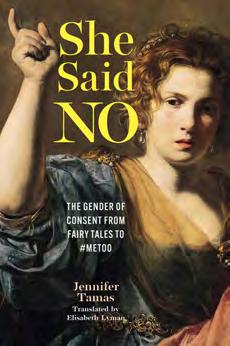
February 9, 2027
206 Pages • 6¼ x 9¼ • 2 color images
9781644534342 • Paperback • $42.95 Rutgers Academic Trade Literary Studies • Women's Studies
Additional print format
9781644534359 • Hardcover • $150.00 Rutgers Super Short
The Gender of Consent from Fairy Tales to #MeToo Jennifer Tamas
Translated by Elisabeth Lyman
She Said No investigates the gender inequality in the authority to speak—and therefore to refuse—that prevailed in the establishment and interpretation of the French classics. By selecting authors deemed essential to French cultural heritage and erasing the works of women writers, this biased canon has systematically undervalued female agency—even in wellknown works by both men and women, such as Beauty and the Beast, The Princess of Clèves, and "Little Red Riding Hood." With this book, Jennifer Tamas fills a striking gap in literary and cultural studies by conceptualizing consent in a society where being a woman made it structurally difficult to say "no." Yet, women did refuse. The history Tamas explores is one of forgotten, erased, misunderstood, or inadmissible refusals and how they have been obscured. The #MeToo movement has brought questions of female agency and consent to the fore, and this book retraces an "archive of refusal" to serve as a source of inspiration for contemporary feminist discourse and to change our reception of the French canon.
JENNIFER TAMAS is a professor of French literature at Rutgers University in New Brunswick, NJ. She has published numerous books, including Le Silence trahi. Racine ou la Déclaration Tragique (2018) on Racine’s dramaturgy and the eloquence of silence, Peut-on encore être galant? (2024) on the notion of gallantry, and Faut-il en finir avec les contes de fées? (2024) on how traditional fairy tales are misunderstood today.
ELISABETH LYMAN is a freelance French-to-English translator in Paris, France.
Early Modern Feminisms
October 13, 2026
234 Pages • 6¼ x 9¼
9781644534373 • Paperback • $39.95
Rutgers Short Literary Studies • Theater Studies
Additional print format
9781644534380 • Hardcover • $130.00
Rutgers Super Short
"A path-breaking investigation of how women’s wit was represented onstage by actresses and female dramatists. [. . .] Beth Cortese’s analysis is invaluable for both scholars and practitioners."
—Marion Wynne-Davies, author of Women Writers and Familial Discourse in the English Renaissance: Relative Values (2007)
Women's Wit on the Early Modern Stage explores the overlooked, gendered challenge posed by heroines and villainesses in comedies, tragedies, and tragicomedies who displayed their wit through repartee, plotting, and disguise, combining verbal skill with physical action to produce a feminized perspective. The chapters showcase the portrayal of women’s wit in the works of Frances Boothby, Aphra Behn, Elizabeth Polwhele, Mary Pix, Catharine Trotter, Delarivier Manley, and Susanna Centlivre, in which female characters criticize authority and address female spectators in the theater, including them as part of an emerging critical discourse on the public stage. As the first-ever scholarly monograph about women’s wit in drama before the twentieth century, this book draws attention to the cultural and social role that wit played in the public sphere as a mode of critique, empowerment, and play for women both on- and offstage.
BETH REBECCA CORTESE is an associate professor in English literature at the University of Iceland, focusing on the Restoration and eighteenth century. She has been published in Restoration and Eighteenth Century Theatre Research journal, Law and Literature, and in the Nordic Journal of Renaissance Studies and is preparing a new edition of William Wycherley’s The Country Wife
Early Modern Feminisms
Shaping the Early Modern Christian Liturgy
Edited by Micheline White and Jaime Goodrich
Women and Communal Worship advances our understanding of early modern women by uncovering and analyzing Christian women’s engagement with liturgical and communal worship between 1500 and 1750. The Protestant attack on the medieval liturgy was at the heart of the Reformation and Counter-Reformation, but women’s contributions to those momentous changes have been largely overlooked as scholars have focused on women’s private devotional practices and texts. This collection of essays demonstrates that communal worship was vital to women of all confessional stripes. Although they could not generally lead the liturgy, women shaped public devotion in important ways, whether at the level of the local congregation, the household chapel, the convent, the court, or the national church. Communal worship is thus a key site for examining women’s textual, literary, social, and political agency.
MICHELINE WHITE is a professor in the College of the Humanities and the Departments of English and History at Carleton University in Ottawa, Canada. She is the editor of English Women, Religion, and Textual Production, 1500–1625 (2011) and Ashgate Critical Essays on Women Writers in England: Anne Lock, Isabella Whitney, and Aemilia Lanyer (2009), and coeditor of Women’s Bookscapes in Early Modern Britain: Reading, Ownership, Circulation (2018).
JAMIE GOODRICH is chair and professor of English at Wayne State University in Detroit, Michigan. She has previously published two monographs, Faithful Translators: Authorship, Gender, and Religion in Early Modern England (2014) and Writing Habits: Historicism, Philosophy, and English Benedictine Convents, 1600–1800 (2021), and is finishing a coedited edition of documents related to spiritual controversies among seventeenth-century English Benedictine nuns. Early Modern Feminisms February 9, 2027
Needlework, Gender, and Politics in the United States, 1810–1920 Mariah Kupfner
Decorative needlework was a key medium through which American women constructed femininity and its relationship to public and political concerns in the nineteenth and early twentieth centuries. Through samplers, needlecases, lace coats, silk sofas, cotton scraps, banners, and other textile things, scholars can see the ways in which women and girls related to education, property-holding, slavery and freedom, labor, and women’s right to vote. Needlework’s durable association with “traditional” notions about womanhood made it a potent resource through which to make gender in expansive and meaningful ways that had profound public, political implications as educational opportunities for girls and women were expanding and the antislavery and women's suffrage movements were growing. Indeed, needlework's very conventionality and relationship to the past made it a useful tool for crafting womanhood anew.
MARIAH KUPFNER is an assistant professor of American studies and public heritage at Penn State Harrisburg and the cochair of the Material Culture Caucus of the American Studies Association.
Material Culture Perspectives
November 10, 2026
375 Pages • 7 x 10 • 61 color and 26 B-W images
9781644534465 • Paperback • $69.95
Rutgers Academic Trade Art History • Design History • Women's History
Additional print format
9781644534472 • Hardcover • $150.00
Rutgers Super Short
February 9, 2027
250 Pages • 6¼ x 9¼ • 57 color and 28 BW images
9781644534434 • Paperback • $79.95
Rutgers Short Art History • French Studies
Additional print format
9781644534441 • Hardcover • $130.00
Rutgers Super Short
Clodion and the Aesthetics of Terracotta
Elizabeth Saari Browne
“Within recent decades scholarly examination […] has led to a reappraisal of the taste for small-scale sculpture in this material as well as to a reassessment of Clodion’s achievements and career. Elizabeth Saari Browne’s welcome study now complements this earlier work by offering a wider interpretative framework for understanding these sculptures (too often thought of as simply decorative) and their reception by drawing on the rich and complex contemporary literature of aesthetic theory. This well-researched and ambitious book is a significant addition to the literature on eighteenth-century French sculpture as well as to thinking about how terracotta as a sculptural material was apprehended.”
—Malcolm Baker, author of Figured in Marble: The Making and Viewing of Eighteenth-Century Sculpture
In eighteenth-century Europe, connoisseurs, financiers, artists, and aristocrats alike all avidly collected the terracotta vases and statues made by Claude Michel, called Clodion. Yet, despite the widespread enthusiasm for his work, Clodion’s terracottas have since been largely dismissed as decorative, feminine, or mere luxury. Modeling Sculpture, the first English-language monograph dedicated to Clodion’s terracotta oeuvre, counters such conventional narratives. Against the understanding of “serious” sculpture as works that publicly perpetuate the heroic actions and virtues of great men, author Elizabeth Saari Browne argues instead that philosophically engaged sculpture might be found in materials, forms, and places where one least expects it. Across this richly illustrated, multidisciplinary study, earthen clay emerges as a medium suited to the flexible modes of thought advocated by some of the period’s most renowned philosophers, naturalists, and even arts reformers. This book therefore foregrounds clay’s potential to challenge the perceived primacy of white figurative statuary in art historiography, emblematic of hierarchical notions of class, power, learning, and prestige.
ELIZABETH SAARI BROWNE is an assistant professor of art history and women’s and gender studies at the University of Georgia in Athens.
Studies in Seventeenth- and Eighteenth-Century Art and Culture
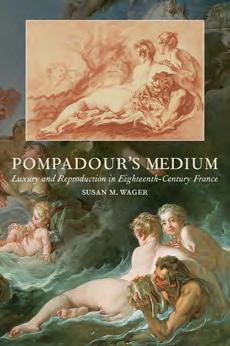
December 8, 2026
352 Pages • 6¼ x 9¼ • 65 color and 48 BW images
9781644534496 • Paperback • $79.95
Rutgers Short Art History • Decorative Arts • French
Additional print format
9781644534502 • Hardcover • $130.00
Rutgers Super Short
Luxury and Reproduction in Eighteenth-Century France
Susan M. Wager
Pompadour's Medium reveals the depth of patron, amateur artist, and royal mistress Madame de Pompadour's contributions to the visual arts, long dismissed as superficial and trivial. Her artistic activities centered on an innovative exploration of the relationships between painting, sculpture, and the decorative arts at a moment when advances in reproductive printmaking threatened to flatten the differences between individual media. Eighteenth-century France experienced an unprecedented surge in the circulation of images. Increasingly faithful and affordable reproductive prints introduced works of art to ever-widening audiences, while a culture of reproduction was simultaneously thriving at the highest end of the artistic and economic spectrum—in luxury media, such as ceramics, textiles, and metalwork. This book recovers the pivotal role of luxury reproduction in Pompadour’s artistic endeavors and her essential role in cultivating the intermedial approach of her frequent collaborator, painter François Boucher, who tended to think between media. It is only by restoring the centrality of reproductive media in this artist–patron relationship that we can understand the magnitude of Pompadour’s and Boucher’s contributions to the history of modern art.
SUSAN WAGER is an associate professor of art and art history at the University of New Hampshire in Dunham. Her writing on Madame de Pompadour’s prints and patronage, François Boucher, and porcelain sculpture has been published in The Art Bulletin, The Burlington Magazine, and Journal18
Studies in Seventeenth- and Eighteenth-Century Art and Culture
A Transnational Feminist Life Reconstructed, Volume II: 1822–1840 Eliza Fenwick
Edited
by Lissa Paul, with the assistance of Jennifer Slagus, Adrienne Kitchin, and Murray Wilcox
"The eloquent letters of Eliza Fenwick, a talented author and teacher in the circle of Godwin, voice her struggle to secure independence for herself and her two children from her indebted alcoholic husband. [. . .] Here, Paul’s extensive introductory comments and notes make allusions in the Fenwick family letters accessible to the general reader, while highlighting passages of special interest to students of Romantic literature and politics."
—Margaret Higonnet, author of Nineteenth-Century British Women Poets (1996)
The second of this two-volume edition of The Fenwick Letters covers the North American phase of Eliza Fenwick’s transformative, transnational odyssey, from 1822 to 1840. Although no longer the radical author she was in the 1790s, advocating for the rights of women to be educated, or the innovative author of children’s books that she was in the early 1800s, she was still very much a writer. In her North American incarnation, however, she was primarily an educator, a businesswoman running her own schools, and a single, working grandmother attempting to find safety as well as economic and domestic stability for herself and her remaining family. Eliza’s letters are consistently riveting, filled with sharply drawn portraits of the people, places, environment, politics, and culture of each community in which she lived. The letters also reveal Eliza’s genius for developing networks of social, political, and cultural connections as she established and sought to support herself and her family.
ELIZA FENWICK (1767–1840) was a writer in 1790s London, a member of Mary Wollstonecraft’s circle. When her marriage crumbled, she became a prolific author of children’s literature to support her family, and after moving to Barbados, she established a school for girls and went on to open and teach at similar schools as she moved to various cities across the Northeastern United States and Canada
LISSA PAUL, Fellow of the Royal Society of Canada, is a professor in the Department of English at Brock University in St. Catharines, Ontario. She has previously authored The Children's Book Business (2011) and the biography Eliza Fenwick: Early Modern Feminist (University of Delaware Press, 2019). Paul was also an associate general editor of The Norton Anthology of Children’s Literature (2005) and a coeditor of Keywords for Children’s Literature (2011, 2021).
Early Modern Feminisms

December 8, 2026
332 Pages • 6¼ x 9¼
9781644534403 • Paperback • $72.95
Rutgers Short
Literary Studies • Women's Studies
Additional print format
9781644534410 • Hardcover • $150.00
Rutgers Super Short
Table of Contents
Acknowledgments
Editorial Principles
Abbreviations
Introduction
1822–1828: New Haven and New York 1829–1833: A New Start in Niagara 1834–1837: Toronto Life 1838–1840: The Last Chapter
Bibliography Bibliographic Index
Provenance
General Index
Chronological Index
The Four Point Plan (F.R.E.E.) for ALL Children to Overcome the Victimhood Narrative and Discover Their Pathway to Power
Ian V. Rowe
"Agency is a book that people on both the left and the right should read. It is a guidebook for those who want to help lift up lower-income communities and struggling individuals. It is common sense reimagined."
—Ayaan Hirsi Ali, research fellow at the Hoover Institution and founder of the AHA Foundation
"This book is a gift to all those in the rising generation who are baffled by the ominous pessimism that our culture now projects at them from every direction and find themselves unable to envision a future that speaks to their highs longings. They deserve better from us. And Rowe offers them better by helping them see where a morally meaningful sense of direction might be found."
—Yuval Levin, director of social, cultural, and constitutional studies at the American Enterprise Institute and editor in chief of National Affairs
"This hope-filled, wise and spiritually enlightening book should be read—must be read— by every parent, teacher, legislator and community activist in America. With passion, clarity of thought and an abiding faith in the unlimited possibilities of this great nation, accomplished educator and entrepreneur Ian Rowe provides a road map for all of our children to realize their full human potential."
—Glenn Loury, Merton P. Stoltz Professor of the Social Sciences and professor of economics, Brown University
"What a strange world we live in, where the party of libertarians declares we are radically free, and the party of fate—the party that preaches the dogma of 'systemic racism'—declares that only the state can save us. Ian Rowe tells us there is a third, realistic alternative: we flourish and discover true liberty only in and through our mediating institutions, most notably, our families. In this fine-grained and deeply personal account, we discover a way forward for our entire country."
—Joshua Mitchell, professor of government and political theory, Georgetown University
This book describes the FREE framework, four pillars that can uplift every young person as they make the passage into adulthood: Family, Religion, Education, and Entrepreneurship. Revised and expanded, this updated edition includes a new introduction and backmatter, including a study guide for educators, sample lesson plans, and a student self-assessment.
Revised and expanded, this updated edition includes a new introduction and backmatter including a study guide for educators, sample lesson plans, and a student self-assessment.
IAN V. ROWE is a senior fellow at the American Enterprise Institute, where he focuses on education and upward mobility, family formation, and adoption. He is the cofounder and CEO of Vertex Partnership Academies.
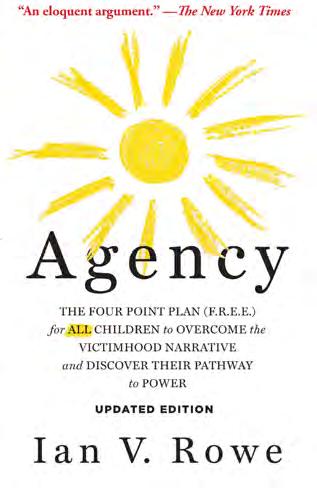
October 13, 2026
352 Pages • 5½ x 8½ • 57 color images 9781978850200 • Paperback • $24.95
Rutgers Trade Education
Partial Table of Contents
New Introduction Foreword Introduction
PART 1 What Is Agency and Why Do We Need It Today?
1 What Is Agency and Why Is It So Crucial to Human Flourishing?
2 Two Competing Visions of What Impedes the American Dream and the Effort to Build Agency
3 The Third Way: Revitalizing Mediating Institutions to Strengthen Civil Society and Spark Individual Agency
4 How Believing You Live in a Good, If Not Great, Country Helps Build Agency
5 How the Hard Bigotry of “Antiracist” Expectations and the Pursuit of “Equity” Erode Agency for All
PART 2 How My Story of Discovering the Importance of Family Structure Opened the Door for Me to View Agency as the Path Forward for Young Americans
6 Who’s Your Daddy? The Moment I Realized Schools Were Not Enough to Build Agency
7 Robbing Our Young People of Agency: Silence or Denial about the Importance of Family Structure
8 How America Has Changed Young Hearts and Minds in the Past: Teen Pregnancy
9 Dan Quayle Was Right, But His Strategy Was Wrong
10 The Success Sequence: The Empowering Alternative and the Other Building Blocks of Agency
11 The Bill & Melinda Gates Foundation and the Foundation of Family
PART 3 How FREE Can Usher in a New “Age of Agency” for Young Americans
12 The FREE Framework to Build Agency
13 Family 14 Religion 15 Education
16 Entrepreneurship
17 A New Age of Agency Afterword
Bucknell University Press has been publishing books in the arts, humanities, and humanistic social sciences since 1968 and today curates internationally distinguished lists in Iberian studies, Latin American studies, and interdisciplinary eighteenthcentury studies. Our subject areas extend to philosophy, French theater, Africana studies, and cultural and intellectual history. With authors from around the globe, Bucknell University Press extends the reach and influence of its home institution nationally and internationally and is a member of the Association of University Presses.
Sadly, Bucknell University Press ceases business as of June 30, 2026, and this catalogue represents its last list. However Rutgers University Press will continue to distribute all its titles published since July 2018. The ISBN prefix for Bucknell University Press titles is 978-1-68448. All books bearing this prefix are available from Rutgers. Orders may be combined with any Rutgers titles. See the full list at: www.bucknelluniversitypress.org.
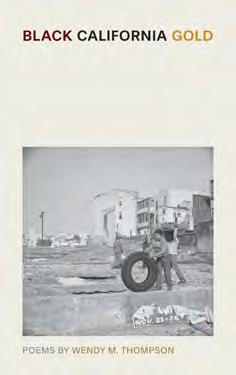
Please note that titles published by Bucknell University Press before July 2018 are still available from Rowman and Littlefield (now part of Bloomsbury). In the US, order by phone at 1-888-330-8477, ext. 7527, email weborders@mpsvirginia.com, or visit https://www.bloomsbury.com. This applies to thirteen-digit ISBNs bearing the prefixes 978-0-83875 and 978-1-61148. 9781684486052
I observe Lady Budu from the passenger seat of her car. She is elegant like so many middle-aged, bourgeois women of Douala. Every day, they don their uniform: the navy suit, its skirt falling just above the knee, and a pair of black high heels. Lady Budu looks professional in the outfit, but there is something youthful in the scent of fresh roses that surrounds her and the natural way she wears her hair— short and nappy. And then there are her lips, red and glossed like the hard shell of a candy.
Lady Budu asks question after question. From her accent, I guess that she’s from overseas. The Cameroonian accent is raw, each word clipped and sharp, but when she speaks, the words lean into each other, blending. She wants to know who my people are, where I come from, what I’m studying, but she doesn’t pause long enough for me to answer. She insists we stop for gas and food, and I sense that she’s trying to distract me.
“Where are we going?” I ask, the car filling with the smell of fried plantains and tilapia, but she tells me to wait, that we’ll be there soon, and it isn’t until we reach the end of a series of humid alleyways that a hilltop villa appears before us. The gabled roof and tall chimneys remind me of a French chateau, but the baobab trees that wind along the fence are of here, of Africa.
“This,” Lady Budu says, “is the Ndola Muto Salon.” As we approach the entrance, a guard waves us through to the parking lot. Lady Budu turns off the car and speaks in a hushed voice, as though confiding a secret: “I run it, this house on the hill. I’ve named it after my favorite song, one that celebrates love between women, between
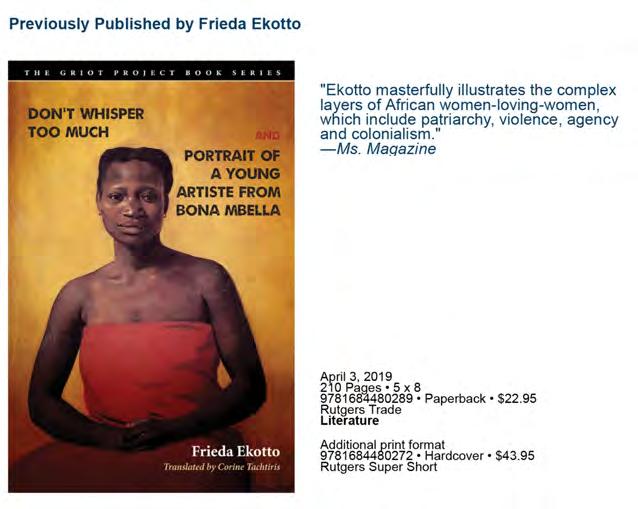
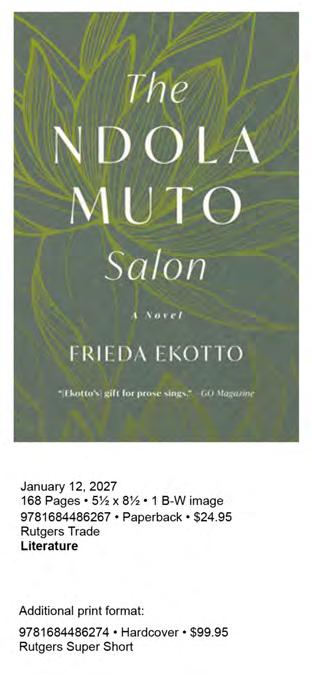
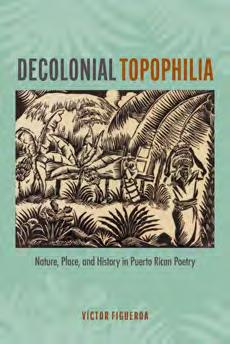
September 8, 2026
254 Pages • 6 x 9
9781684486083
Additional print format
9781684486090 • Hardcover • $150.00 Rutgers Super Short
Nature, Place, and History in Puerto Rican Poetry
Víctor Figueroa
“In this consistently insightful, well-researched, and well-written study of four major Puerto Rican poets of the early twentieth century, Víctor Figueroa convincingly demonstrates in his words, ‘how a single island’s history and ultimate destiny is inextricably entangled with global histories and planetary hopes for liberation—a liberation that must . . . [include] the well-being of both human beings and their other-than-human places and companions.’ Such a study of Puerto Rico is long overdue for the insights the island’s literature can offer to the environmental humanities. Decolonial Topophilia is smart, clear, and important scholarship that advances our understanding of the complexities and risks of what it means to love a place even as it rightly insists on its indispensability for the future.”
—George B. Handley, coeditor of Postcolonial Ecologies: Literatures of the Environment
Decolonial Topophilia: Nature, Place, and History in Puerto Rican Poetry examines how four major poets—Luis Lloréns Torres, Luis Palés Matos, Juan Antonio Corretjer, and Julia de Burgos—address the ecological and human consequences of colonial domination in early twentieth-century Puerto Rico. Their poetry raises questions about the capitalist transformation of land through monocultures like sugarcane, the reduction of nature to exploitable resources, and the ties between attachment to place and nationalism. In tracing these connections, this pathbreaking book reveals how poetic visions of place can challenge colonial histories and imagine more reciprocal ways of inhabiting the world.
VÍCTOR FIGUEROA is a professor of Spanish at Wayne State University in Detroit, Michigan. His publications include Not at Home in One’s Home: Caribbean Self-Fashioning in the Poetry of Luis Palés Matos, Aimé Césaire, and Derek Walcott and Prophetic Visions of the Past: Pan-Caribbean Representations of the Haitian Revolution, as well as three poetry collections and articles in scholarly journals.
Bucknell Studies in Latin American Literature and Theory
October 13, 2026
248 Pages • 6¼ x 9¼ • 6 color and 11 B-
W images
9781684486113 • Paperback • $49.95
Rutgers Short
Literature • History of Science and Technology • 18th-Century Studies
Additional print format
9781684486120 • Hardcover • $150.00
Rutgers Super Short
“Emily West’s Rewriting the Mechanic is an exhilaratingly interdisciplinary deep dive into four pivotal eighteenth-century technologies of science, violence, and production (the microscope, the telescope, the gun, and the spinning jenny) that embodied futurities both artificial and real, and bodies both natural and crafted. Rewriting the Mechanic is required reading for scholars and students of body and disability studies, material culture, gender studies, and early modern literature alike.”
—Deborah Needleman Armintor, author of The Little Everyman: Stature and Masculinity in Eighteenth-Century English Literature
“Rewriting the Mechanic shows how ‘technological capacity’—the great sinew of modernity—only emerges in the eighteenth century from literary forms of speculation, and only as those mechanisms innovated new forms of embodied subjectivity that reconceptualized systems of (dis)ability and authority. West brings eighteenth-century science and technology studies into dialogue with sexuality and gender studies, trans studies, and disability studies to produce an original and generative account of how the mechanical arts became central to how the modern state imagined its imperial future.”
—Al Coppola, author of The Theater of Experiment: Staging Natural Philosophy in Eighteenth-Century Britain
In the eighteenth century, “technology” didn’t name a particular device or a process. It referred instead to written accounts of the mechanical arts, a now-obsolete category encompassing the wide range of work done by hand, from baking bread to building ships. Rewriting the Mechanic examines how these written descriptions, circulating across genres in eighteenth-century Britain, transformed certain mechanical arts by imagining them as newly innovative, authoritative, and able to make speculative possibilities real—as what we now call technological. Reversing the familiar story in which literature simply reflects technological change, West draws on the work of Robert Hooke, Aphra Behn, Daniel Defoe, Maria Edgeworth, and Jane Austen to demonstrate the influence of literary techniques on ideas about masculinity, power, and the body and how these texts helped to bring the very idea of technological modernity into being.
EMILY M. WEST is an assistant professor in the Department of English at the University of Hawai‘i at Mānoa.
Transits: Literature, Thought & Culture, 1650–1850
Edited by Leith Davis, Michelle Levy, and Diana Solomon
“This smartly edited and curated collection prompts new conversations on gender, materiality, and media history. Arguments covering sermon events, annotated catalogues, and manuscript verse miscellanies challenge binaries like print and manuscript, moving the critical conversation forward while also deftly contextualizing foundational narratives. This volume shows how far we have come in gender and media studies and provides new scaffolding for the decades ahead.”
—Kate Ozment, author of The Hroswitha Club and the Impact of Women Book Collectors
This pathbreaking collection features original essays by leading scholars working at the intersections of women’s literary history, book history, and media cultures. Drawing on underexplored archives and innovative methodologies—from feminist bibliography to digital humanities—the contributors generate new narratives about the long eighteenth century and the centrality of gender to its literary production. Moving beyond a narrow focus on authorship, the chapters recover women as writers and readers, editors and curators, printers and book owners, scholars, preachers, and political actors. Across print, manuscript, and oral cultures, they illuminate the collaborative networks and material conditions shaping cultural production and circulation. Organized into sections on print histories, manuscript cultures, and new methodological approaches, this collection reshapes eighteenth-century studies while modeling ethically engaged archival research. Accessible and wide-ranging, it will appeal to scholars and students in literary studies, women’s and gender studies, and book history alike.
LEITH DAVIS is a professor of English and director of the Research Centre for Scottish Studies at Simon Fraser University in Burnaby, British Columbia, Canada. She is the author of Mediating Cultural Memory in Britain and Ireland: From the 1688 Revolution to the 1745 Jacobite Rising and the author or coeditor of seven other books.
MICHELLE LEVY is a professor of English at Simon Fraser University in Burnaby, British Columbia, Canada. Her most recent books are Literary Manuscript Culture in Romantic Britain and, with Betty Schellenberg, How and Why to Do Things with Eighteenth-Century Manuscripts
DIANA SOLOMON is an associate professor of English at Simon Fraser University in Burnaby, British Columbia, Canada. She is the author of Prologues and Epilogues of Restoration Theater: Gender and Comedy, Performance and Print and coeditor of The Broadview Anthology of Restoration and Eighteenth-Century Drama. Transits: Literature, Thought & Culture, 1650–1850
“From one of the most important political thinkers in Latin America, Palti’s Dystopias in Nineteenth-Century Latin American Literature offers both conceptual and historical illuminations, adding to his lifelong critical project to redefine the terms through which we consider the century that formed the region.”
—Ignacio M. Sánchez Prado, author of Strategic Occidentalism: On Mexican Fiction, the Neoliberal Book Market, and the Question
“To say that this is a timely book would be an understatement. Far from a mere catalogue of nineteenth-century Latin American novels about social failure or catastrophe, Elías Palti’s work offers an encyclopedic theoretical rethinking of dystopia (and, by extension, utopia), and uncovers the myriad ways in which societal crisis can be portrayed in narrative.”
—Aníbal González-Pérez, author of In Search of the Sacred Book: Religion and the Contemporary Latin American Novel
How did nineteenth-century Latin American novelists respond to moments when history itself seemed to come undone? Rather than treating dystopia as a futuristic genre, Palti traces its emergence from concrete political crises in Mexico, Argentina, and Brazil, as writers confronted national defeat, dictatorship, and revolutionary uncertainty. Reading Mexican fiction written after the US occupation; Argentine texts produced under Juan Manuel de Rosas, including works by Esteban Echeverría, Domingo F. Sarmiento, and José Mármol; and Brazilian novels from the transition from Empire to Republic, with particular attention to Machado de Assis, the book shows how narrative form begins to falter. Plots stall, identities fragment, and stories resist closure. These breakdowns constitute early dystopian modes—atopiaatropia, heterotopia, and transtopia—through which literature registers the collapse of historical intelligibility. By locating dystopia in narrative form rather than theme, Palti offers a rich new account of literature under political catastrophe. ELÍAS J. PALTI is a consulting professor at the University of Buenos Aires in Argentina, and formerly a full professor there and at the National University of Quilmes in Buenos Aires. He is the author of more than two hundred publications, including An Archaeology of the Political: Regimes of Power from the Seventeenth Century to the Present, Misplaced Ideas? Political-Intellectual History in Latin America, and Intellectual History and the Problem of Conceptual Change. Bucknell Studies in Latin American Literature and Theory
November 10, 2026
232 Pages • 6 x 9
9781684486175 • Paperback • $49.95
Rutgers Short
Latin American Studies • Literary Studies • Cultural Studies
Additional print format
9781684486182 • Hardcover • $160.00
Rutgers Super Short
November 10, 2026
Additional print format
9781684486151
Hardcover • $150.00 Rutgers Super Short
Gombrowicz, Borges, and the Fictional Cosmos
Max Ubelaker Andrade
“Gombrowicz and Borges come alive for a new generation of readers in Ubelaker Andrade’s learned and astute book. A true delight!”
—Alicia Borinsky, author of One-Way Tickets: Writers and the Culture of Exile
“Borges and Gombrowicz famously did not get along during the latter’s quarter-century in Buenos Aires, but in this book Ubelaker Andrade shows that there is a secret dialogue with Borges in Gombrowicz’s Cosmos, written near the end of the Polish writer’s long sojourn in the Argentine capital. He argues that in 1960, when Gombrowicz finally read Ficciones, he then wrote the last of his novels in which he provides a belated response to Borges, one that is quite different from the caricature of him in the earlier Trans-Atlantyk. With attention to Gombrowicz’s Argentine diaries and the works he wrote there, Ubelaker Andrade argues that the two writers shared concerns and played with similar topoi (maps, libraries, relationships, rumor). Their ideas and strategies were very different or, as Gombrowicz says late in his life, ‘at opposite poles,’ but there was a common ground between them. A rich and fascinating book.”
—Daniel Balderston, author of How Borges Wrote
Polish author Witold Gombrowicz’s famously chaotic masterpiece, Cosmos, was profoundly influenced by Jorge Luis Borges—particularly by three key stories from Ficciones. Drawing on evidence that Gombrowicz read Ficciones in 1960, as well as handwritten marginalia in Gombrowicz’s copy of Adolfo Bioy Casares’s La invención de Morel, this groundbreaking study argues that Cosmos responded to Borges’s literary transformations of cartography, mathematical combinatorics, and Miguel de Cervantes’s Don Quijote. Along the way, it introduces the concept of “immaterial bibliography” to analyze imaginary texts appearing in literary works. Finally, it examines the tension between Borges’s explicit racism and the ethical and aesthetic vision suggested by his fiction, revealing how rumor, rebellion, and literary inheritance shaped Gombrowicz’s reading of Borges, which in turn influenced the composition of his prize-winning last novel.
MAX UBELAKER ANDRADE is an associate teaching professor in Latin American studies at the University of Massachusetts Lowell. He is the author of Borges Beyond the Visible and the translator of two books by Néstor Ponce: Desapariencia no engaña (Disappearance Without Absence) and Vos es (boy says).
Bucknell Studies in Latin American Literature and Theory
December 8, 2026
278 Pages • 6 x 9
9781684486236 • Paperback • $49.95
Rutgers Short
Philosophy • German Studies • History of Science
Additional print format
9781684486243 • Hardcover • $160.00
Rutgers Super Short
“Klemm presents Herder, Schiller, and Goethe’s vitalist philosophy of life in an exciting light. Klemm’s weaving of literary criticism and philosophy unsettles the Kantian framework guiding our understanding of nature and life. This outstanding volume is indispensable for all scholars working on nature during the Age of Goethe.”
—Elizabeth Millán Brusslan, coeditor of The Palgrave Handbook of German Romantic Philosophy
“Klemm’s book is an intellectual tour de force that lends clarity to the discussions on which the intellectual terms of our current modernity were forged. Bringing the disparate fields of (natural) science, philosophy, literature, and even morals into conversation, Klemm illuminates a vitally important moment in the history of human endeavor at the end of the eighteenth century. Beyond this exemplary service, Klemm’s book is also, at its heart, a manual for a radiant and purposeful philosophy of life we never knew we had been neglecting.”
—Tim Mehigan, coeditor of The Palgrave Handbook on the Philosophy of Friedrich Schiller
This book offers a new account of how modern conceptions of life, nature, and subjectivity emerged in German thought around 1800. Through Herder, Schiller, and Goethe, it traces a philosophy of life that challenged mechanistic science and reconceived the human as historically formed, embodied, and irreducibly open.
STEPHEN KLEMM is an assistant professor of German in the Department of Comparative Studies in Literature and Culture at Occidental College in Los Angeles, California. His research focuses on German philosophy and literature from the eighteenth to the twentieth century with a focus on the intersections of epistemology, ethics, aesthetics, and science.
New Studies in the Age of Goethe
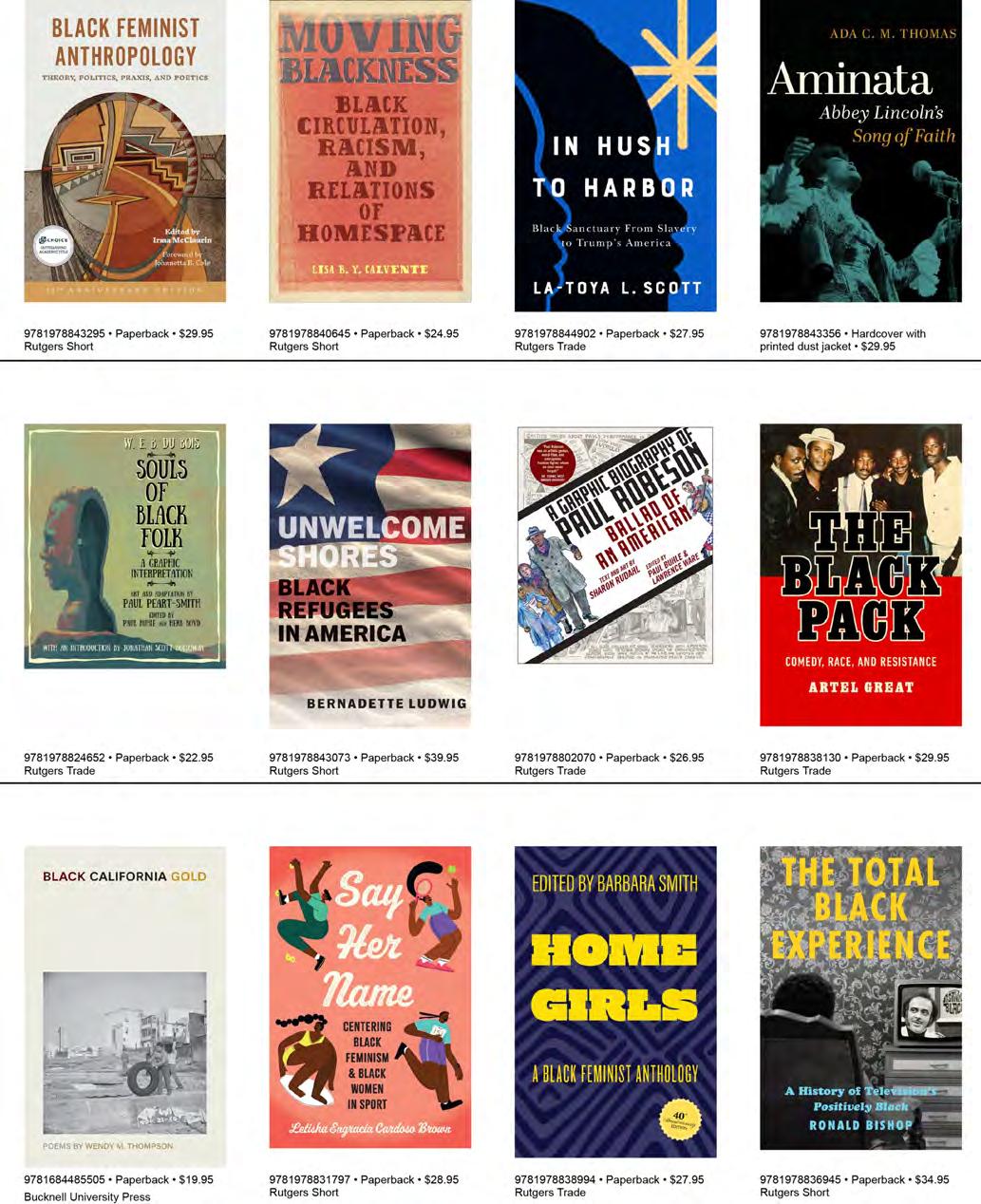
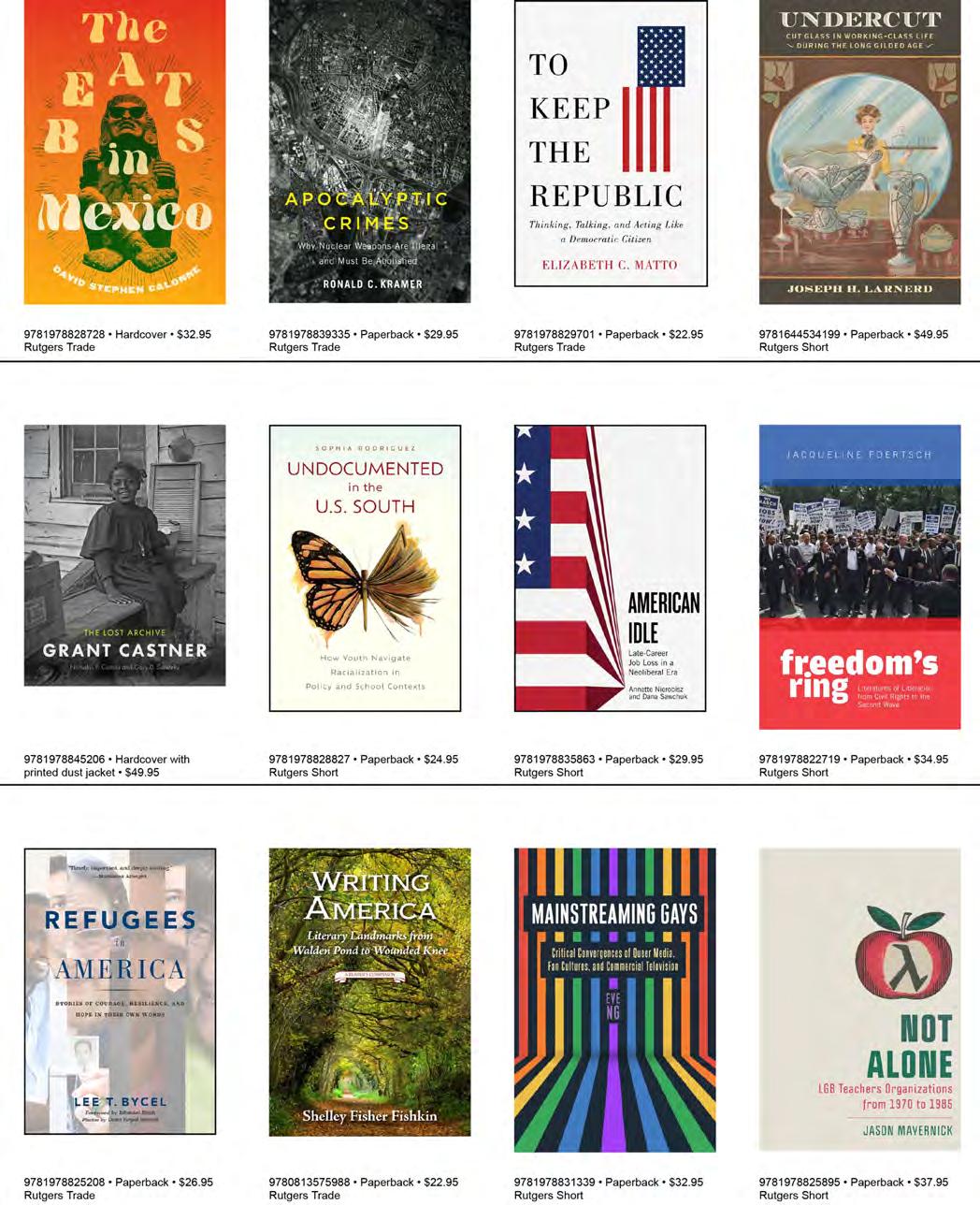
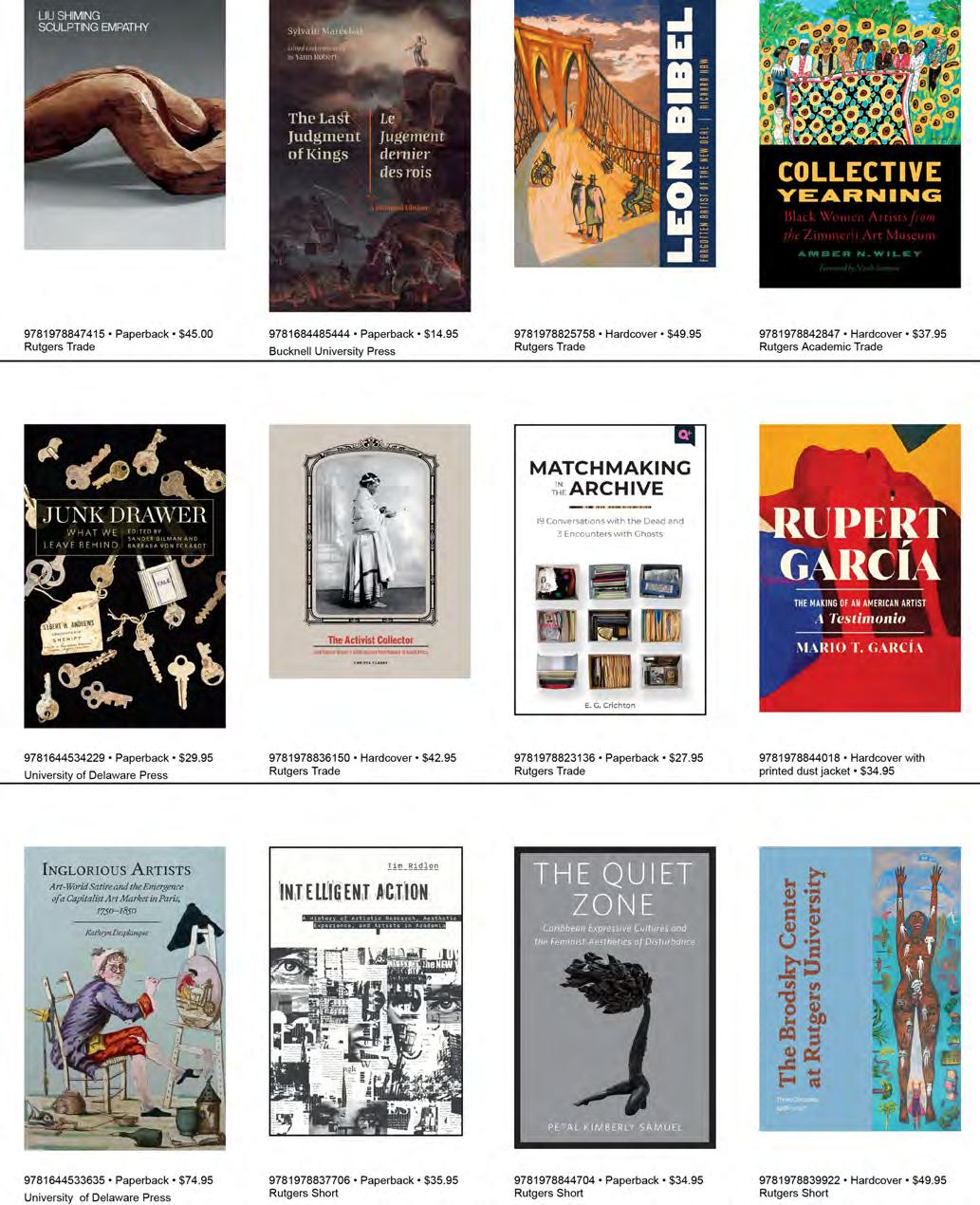
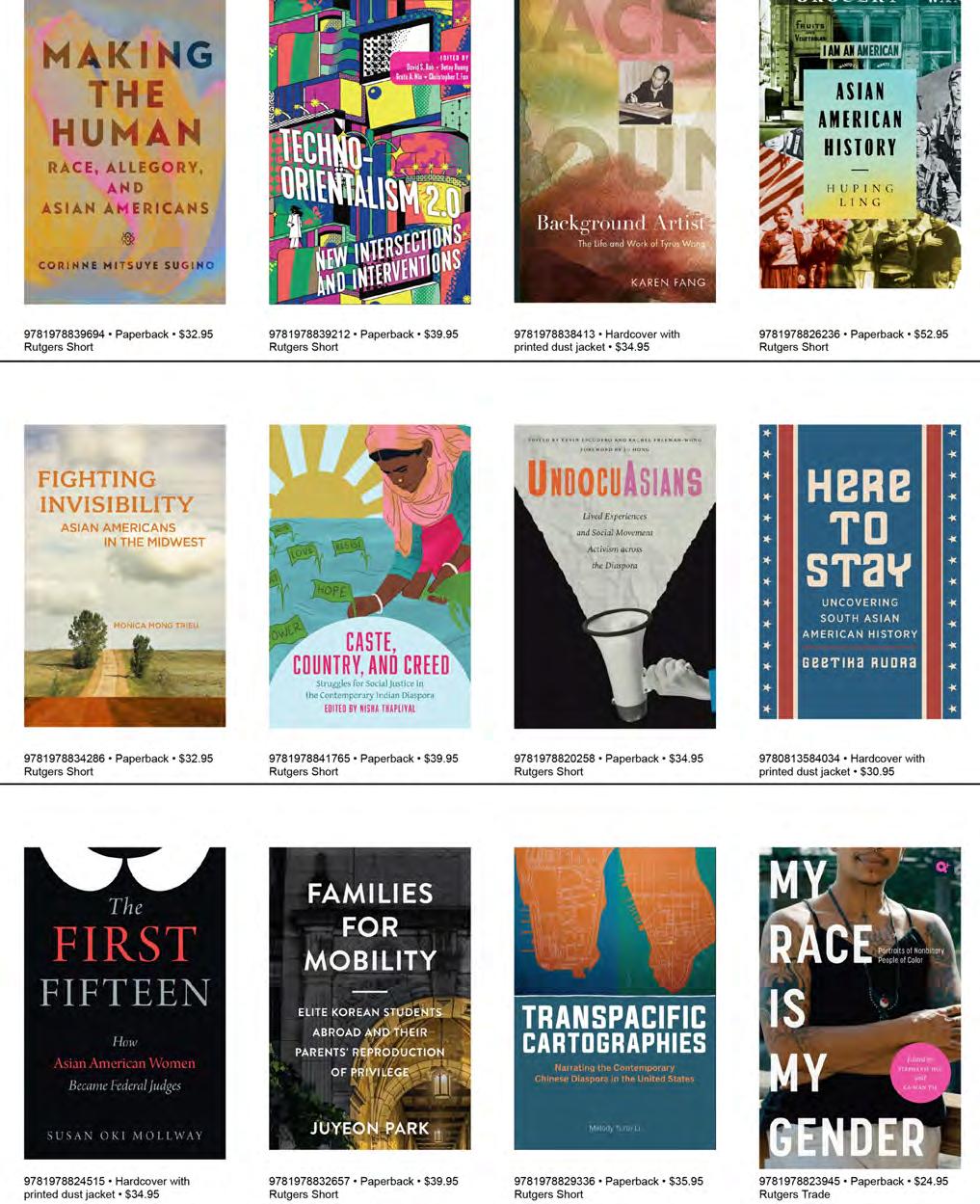
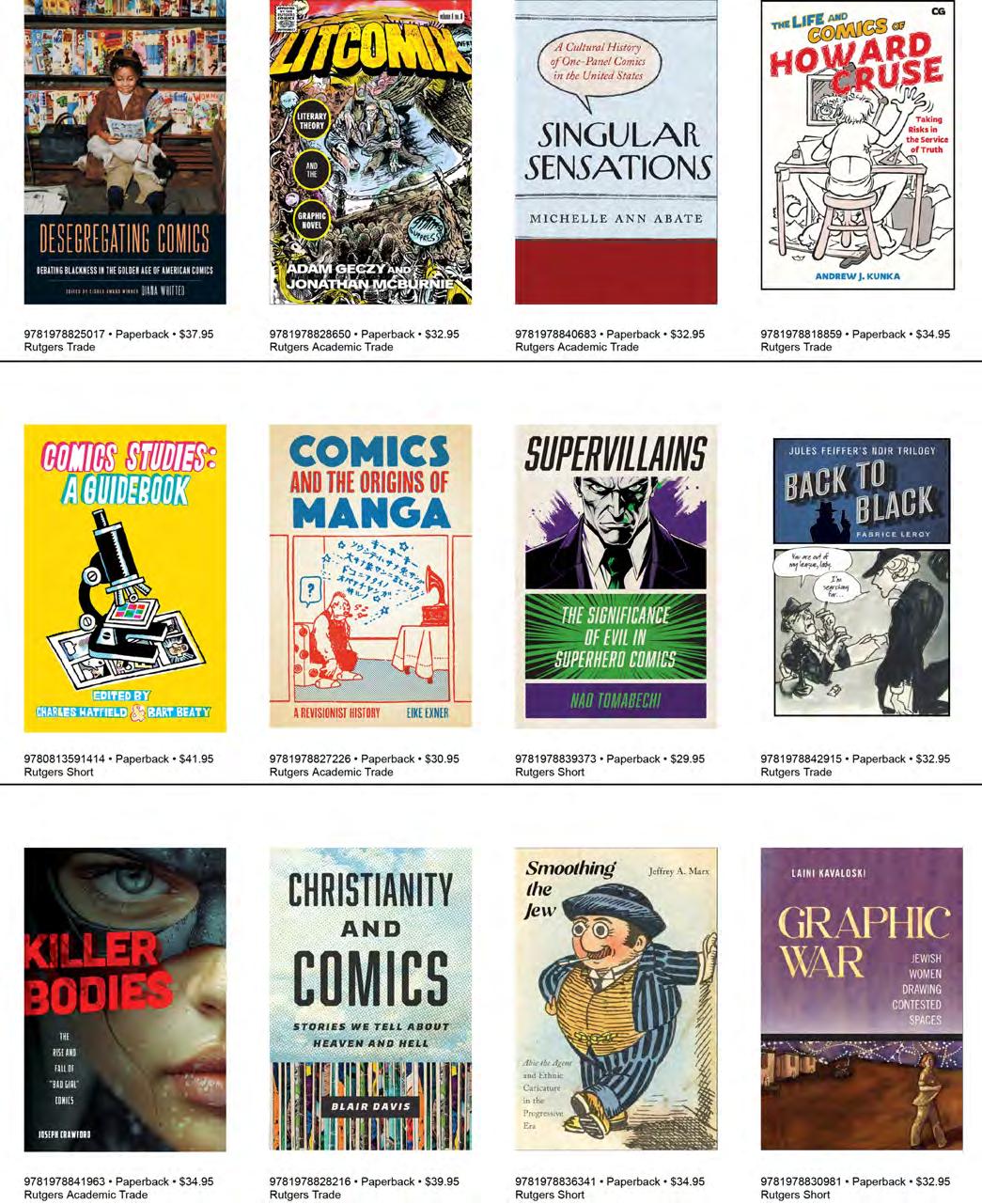
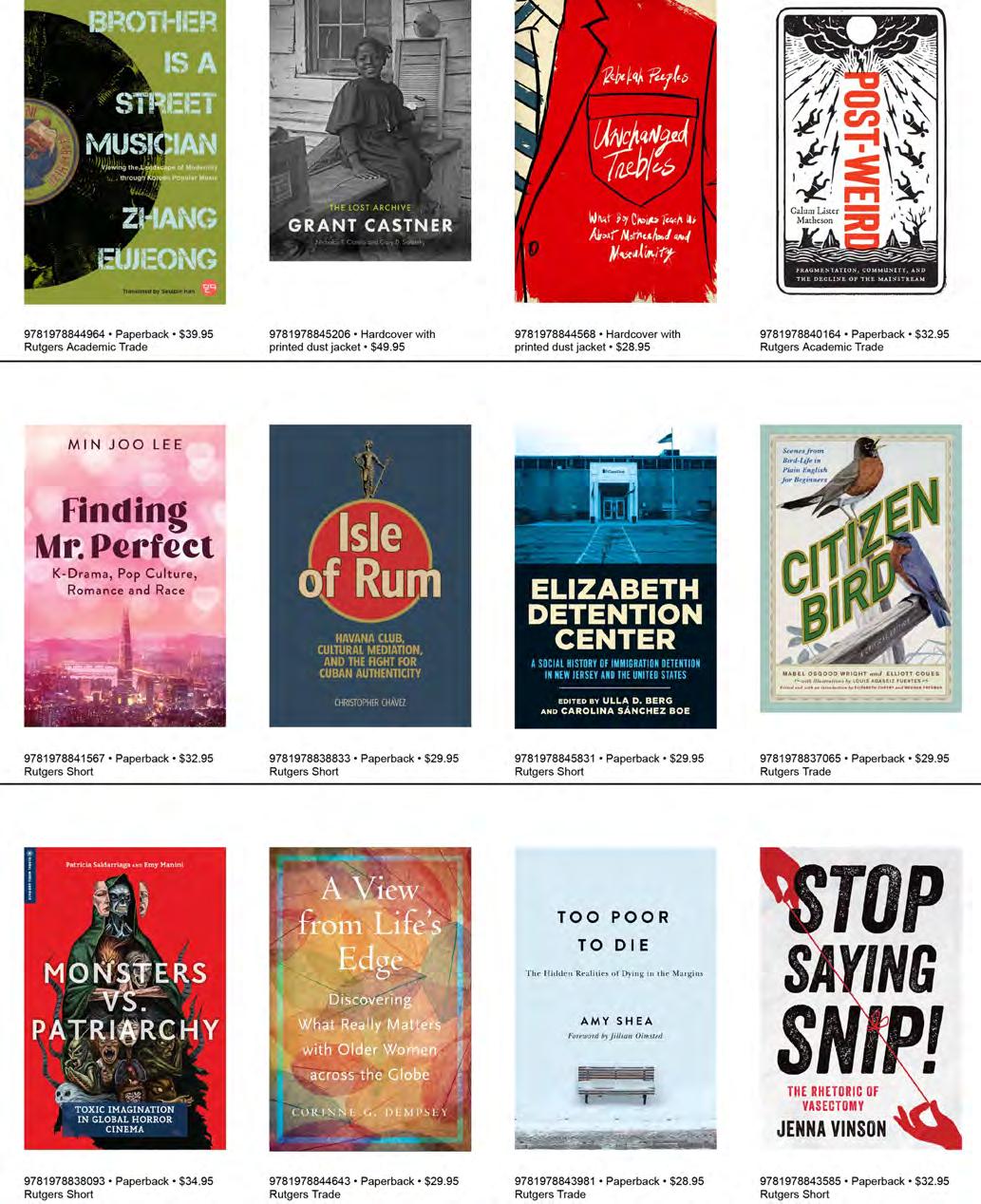
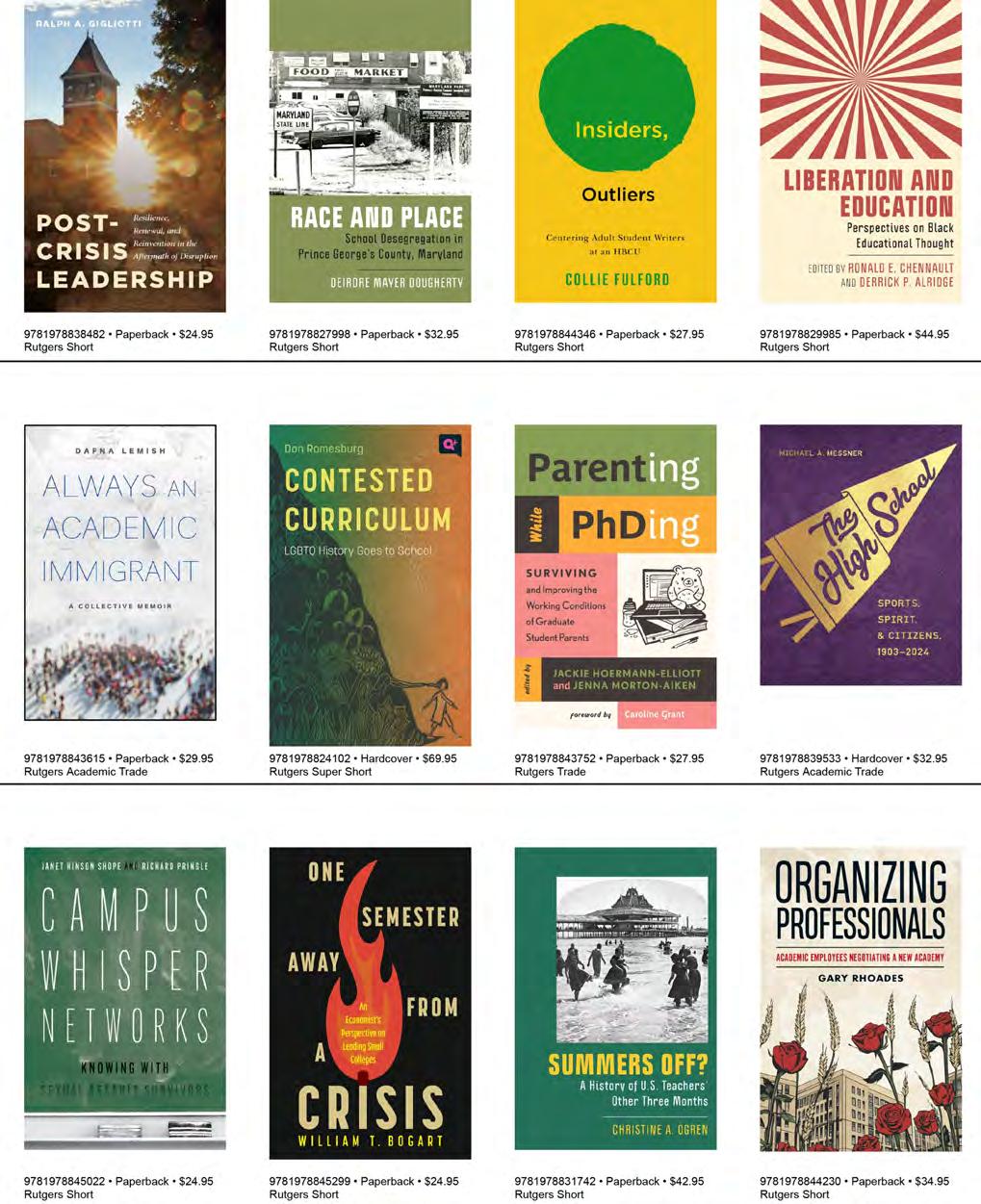
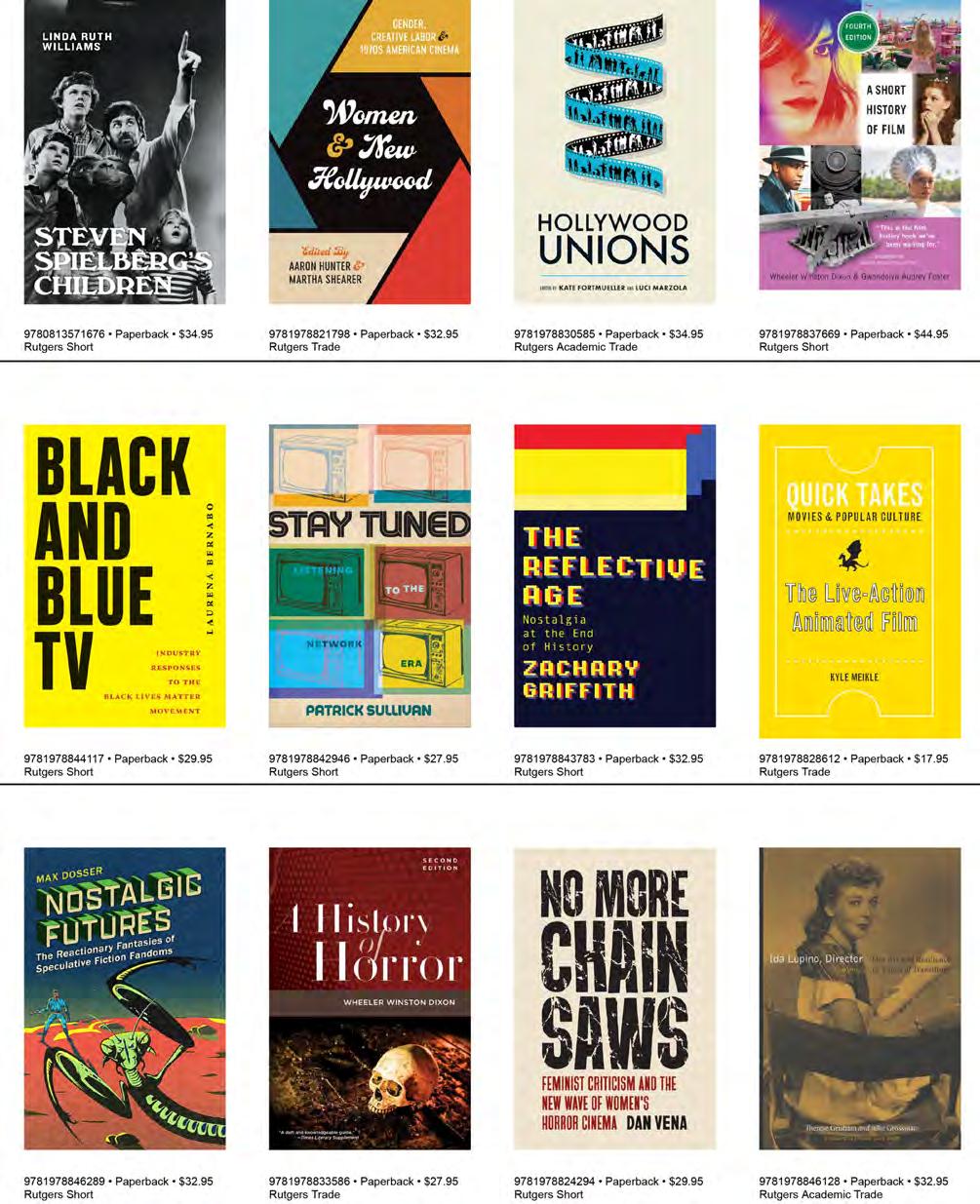
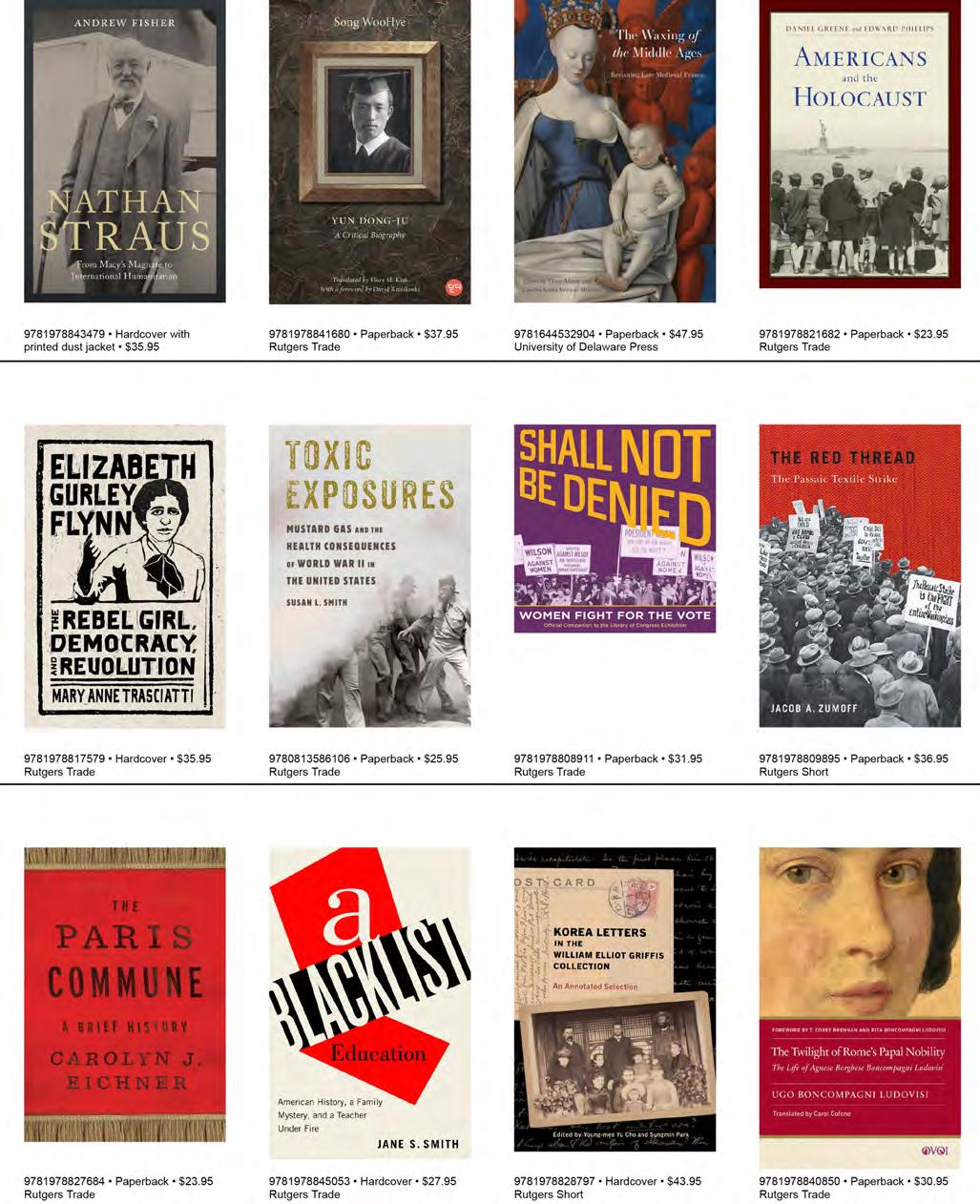
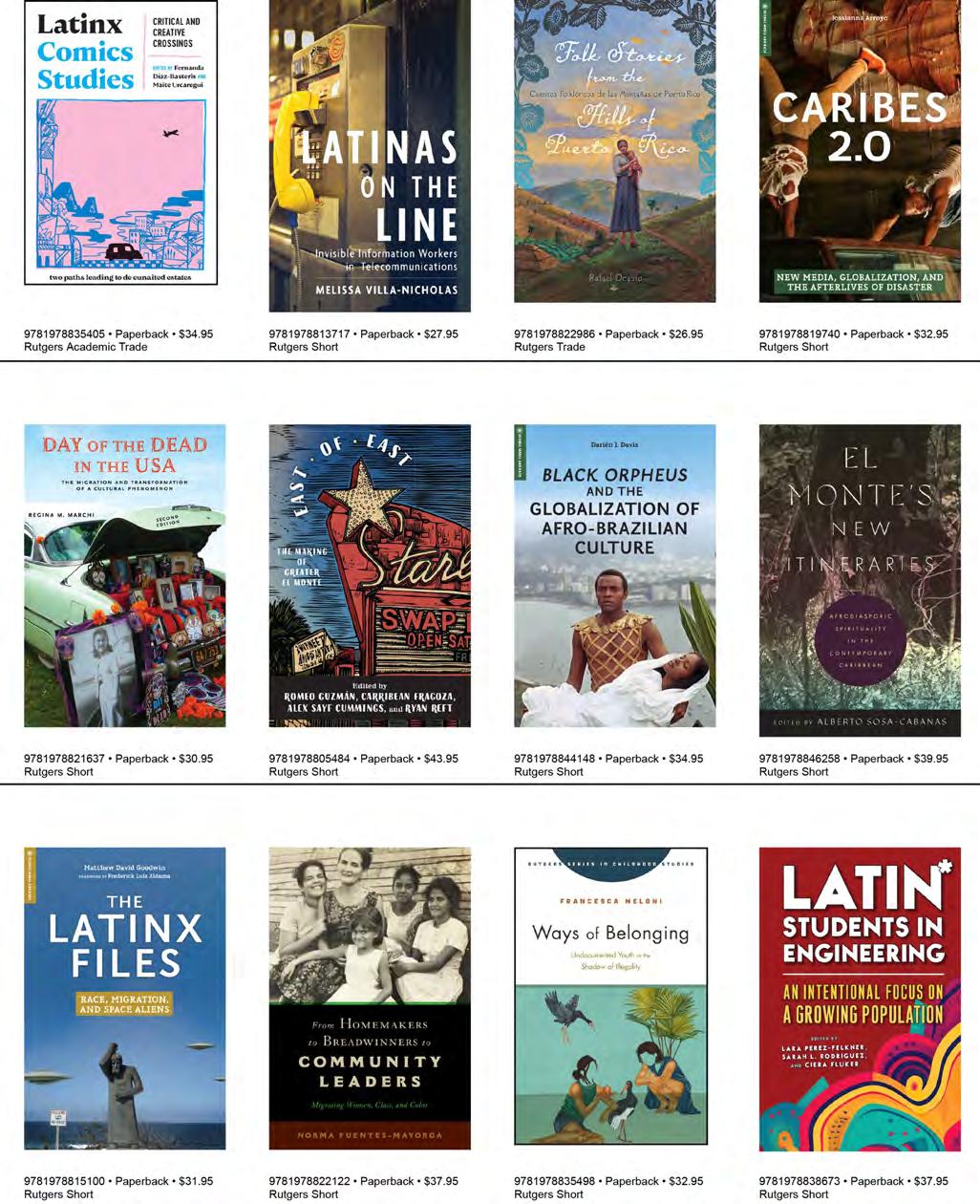
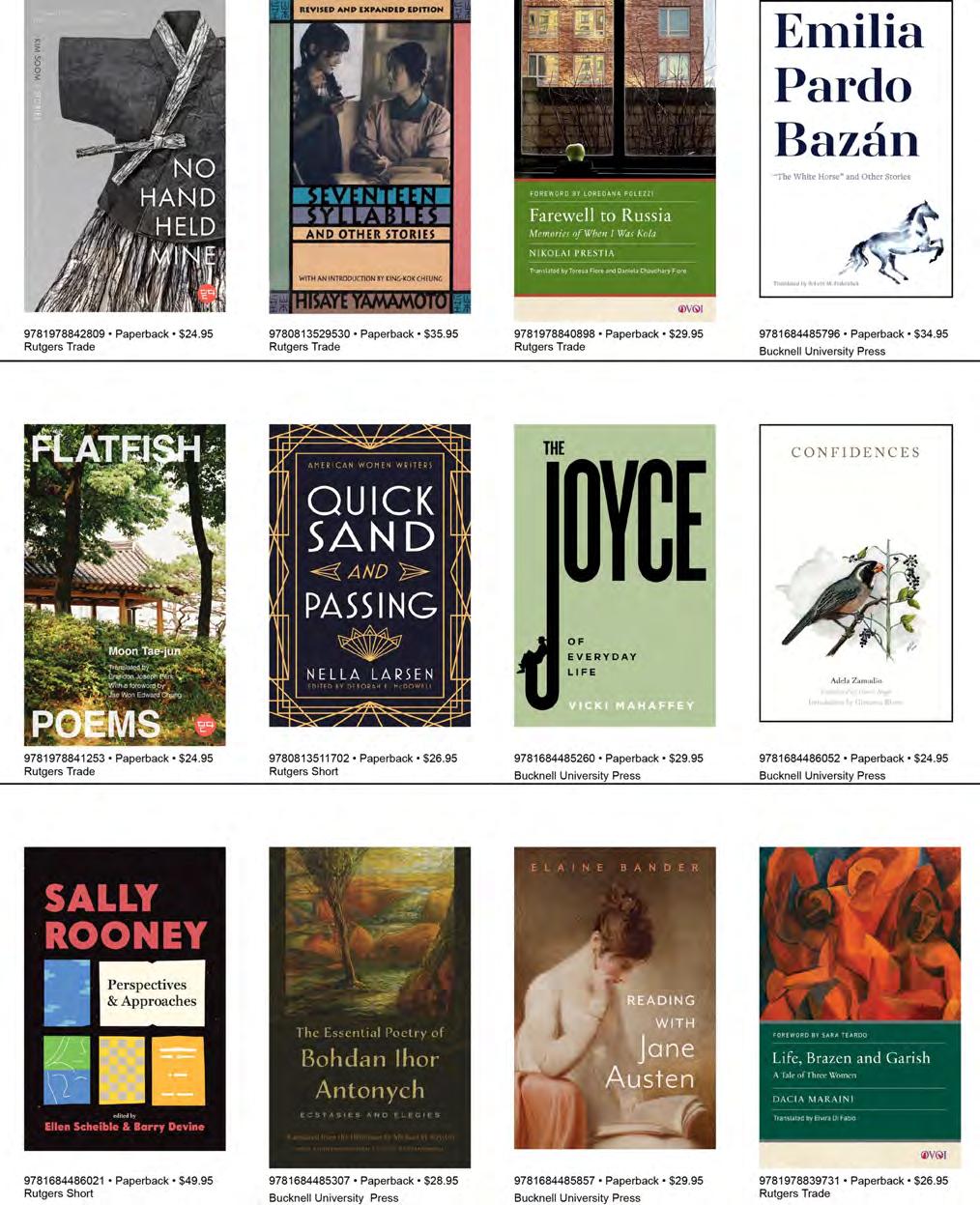
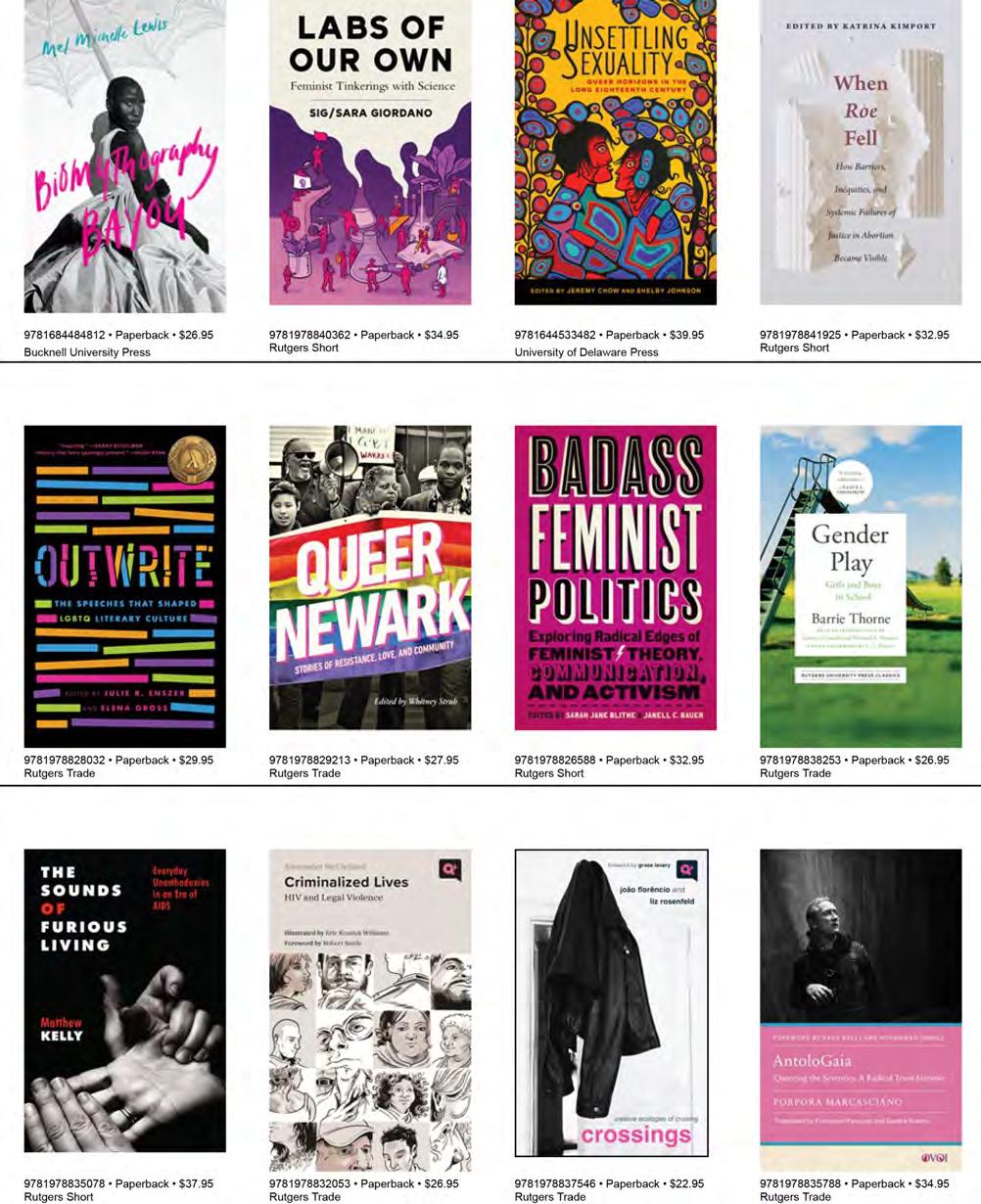
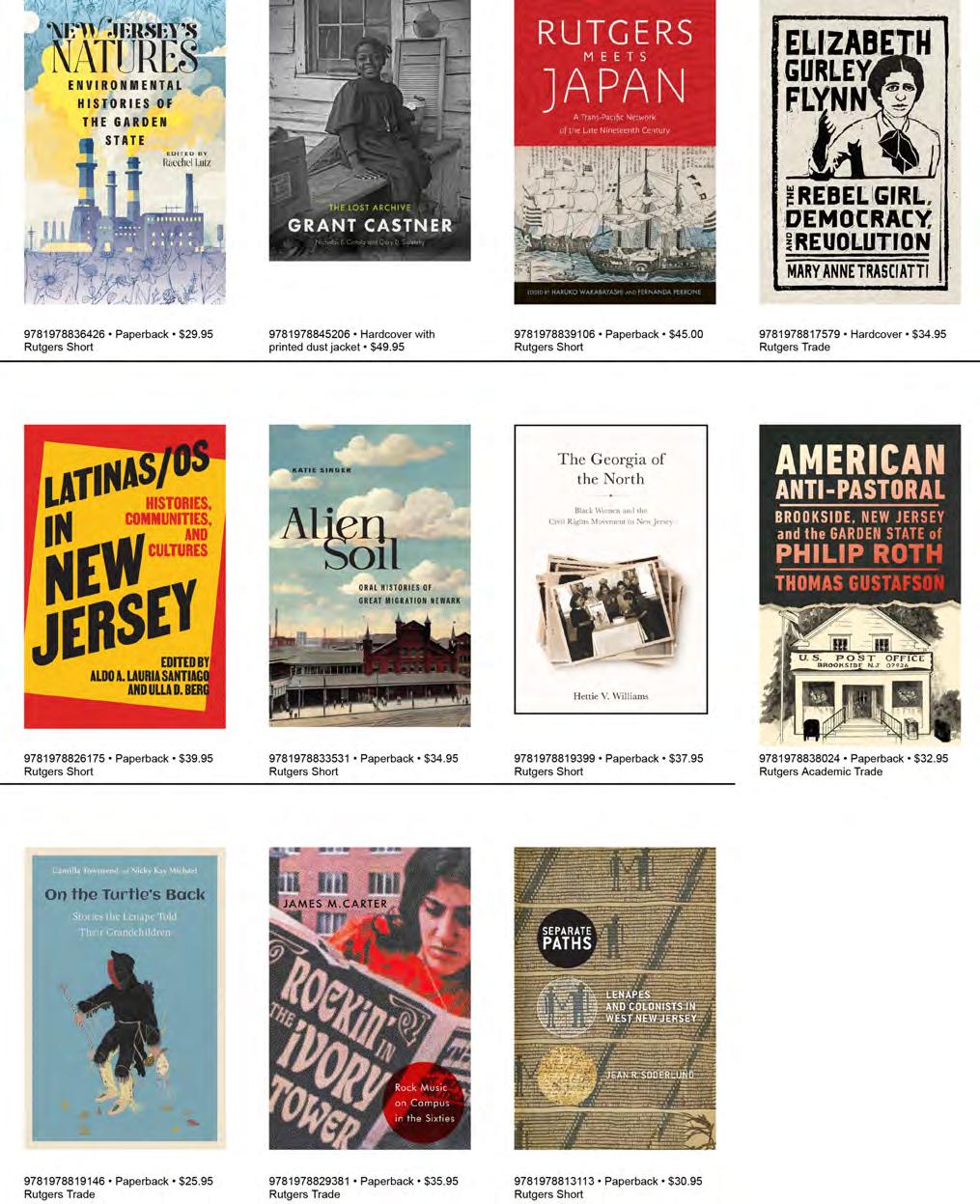
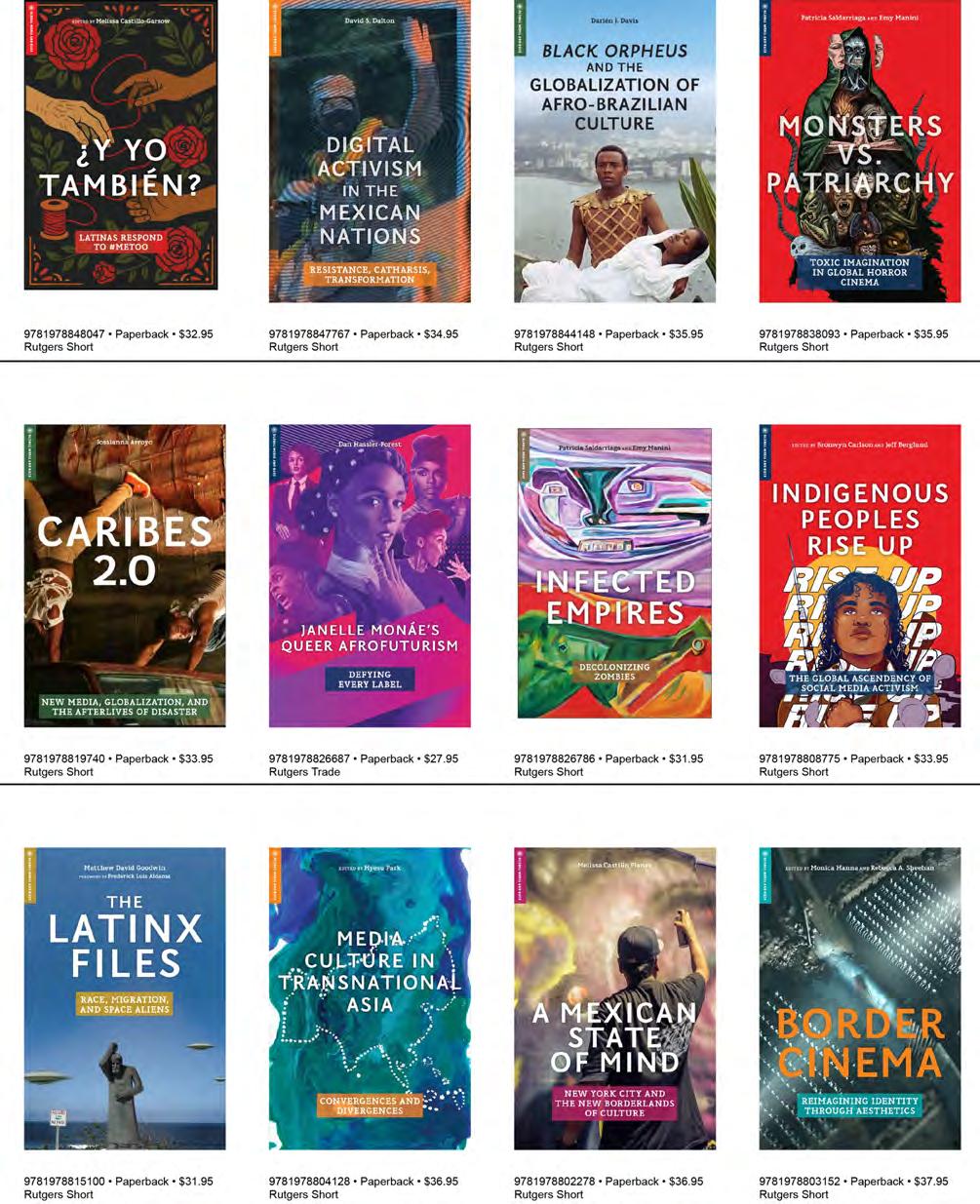
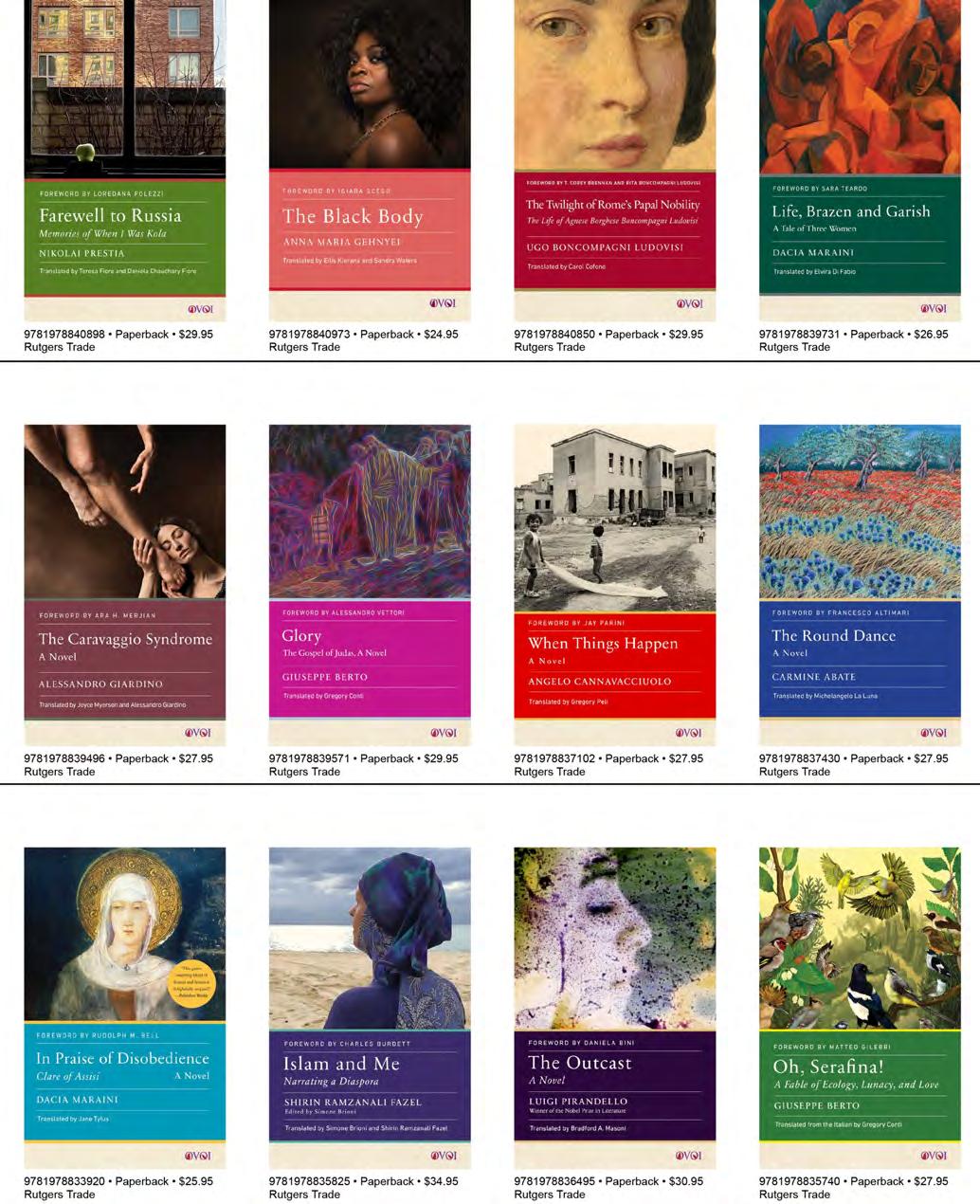
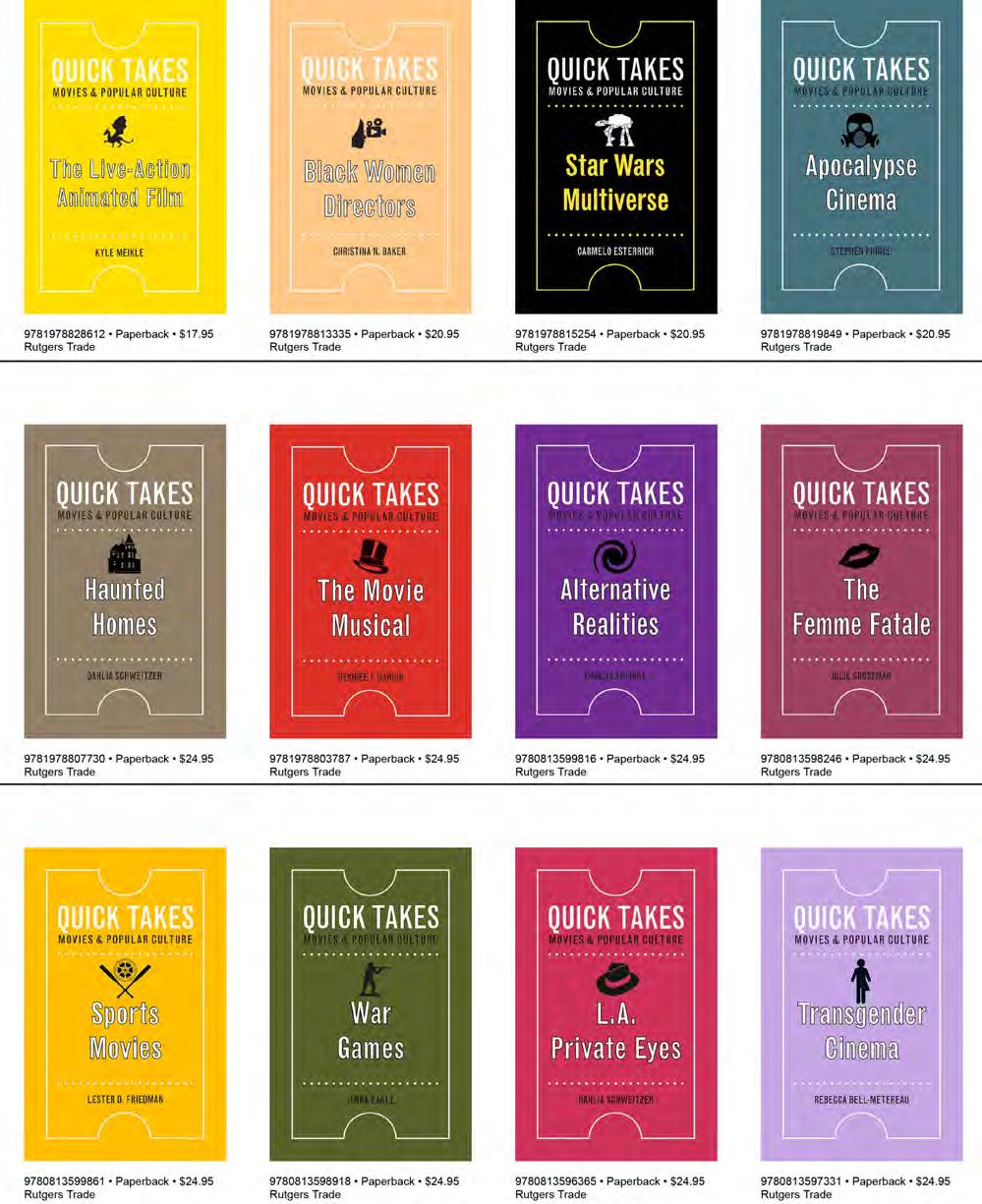
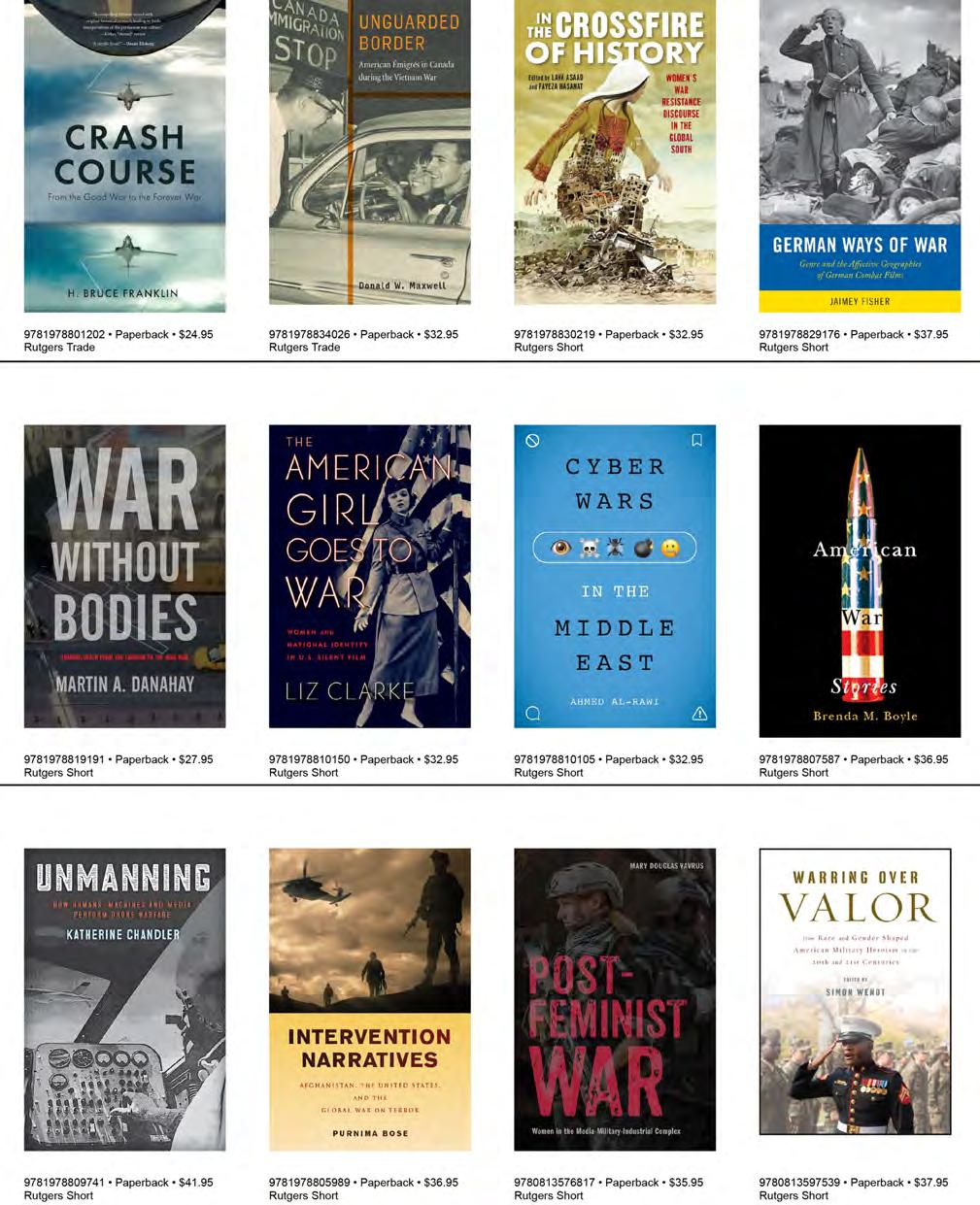
To request a review copy contact: publicity@rutgersuniversitypress.org. Advance readers copies are available for all trade titles on Edelweiss and for select titles on NetGalley.
Orders
Rutgers University Press encourages you to support your local bookseller. To locate an independent bookstore in the U.S. visit: www.indiebound.org
Orders from individuals may be placed directly online or by calling our distributors.
Distribution
Distribution Rutgers University Press
c/o Chicago Distribution Center 11030 South Langley Ave. Chicago, IL 60628
U.S. orders Toll Free Phone: 800 621 2736
Toll Free Fax: 800 621 8476 (24 hours) Phone: 773 702 7000
Fax: 773 702 7212
Hours: M-F 8-5 PM U.S. Central Time (GMT -6)
E-mail: orders@press.uchicago.edu Web: press.uchicago.edu/cdc/policies
SAN: 2025280
PUBNET: 2025280
FOB: Chicago, IL Returns
Returns
Returns—Rutgers University Press
c/o Chicago Distribution Center 11030 South Langley Ave. Chicago, IL 60628
Claims for damaged books or short shipments must be made within 30 days of invoice date. Resellers: Overstock returns are accepted up to 18 months after purchase.
Credit Allowed: 100% with invoice information. Returns without invoice information will be checked against most recent purchases and credited at those discounts. Books must be in clean, saleable condition. Shelf-worn and stickered books will be returned to customer, along with a charge for return postage. Out of Print titles: May be returned for six months after the OP date.
See website for full policies. press.uchicago.edu/cdc.html
Catalogs
We issue seasonal catalogs twice a year, a regular catalog of regional titles, and catalogs or brochures for the subject areas in which we publish. For printed copies, see your sales representative or email: sales@rutgersuniversitypress.org
Catalogs may also be downloaded in PDF format from our website or from Edelweiss. edelweiss.plus/#publisher=RUTG
Publication Information
13 digit ISBN prefixes:
Rutgers: 978-0-8135 and 978-1-9788
Bucknell: 978-1-68448
Delaware: 978-1-64453
Templeton: 978-1-59947
Prices, discounts, and publication dates are subject to change without notice. Books are shipped approximately four weeks ahead of the publication month listed in the catalog. Many of our books are published simultaneously in paperback and clothbound library editions; some such hardcovers do not have a dust jacket or cover image.
Discount Codes
T: Trade
AT: Academic Trade
S: Short
SU: Super Short
For U.S. resale only. Consult with international distributors for their applicable discounts. Discount schedules are available from your sales representative or the publisher.
Copyright Clearance Center (U.S.) copyright.com
Publishers Licensing Society (U.K.) pls.org.uk rutgersuniversitypress.org/rightspermissions
Accessibility
Accessibility requests: accessibility@press.rutgers.edu
Serial, translation, audio, media rights: rights@press.rutgers.edu
Examination and Desk Copies are available for instructors in print and electronic editions. Visit our website. rutgersuniversitypress.org/exam-copies rutgersuniversitypress.org/desk-copies
Sales and Marketing
sales@rutgersuniversitypress.org
848 445 7755
Full contacts on our website.
Gift and Bulk
For premium, gift, corporate, institutional, and special sales, contact Jeremy Grainger, Sales and Marketing Director, jeremy.grainger@rutgers.edu
Consumer ebooks are now available from us directly at www.rutgersuniversitypress.org And internationally from CAP combinedacademic.co.uk
National Accounts / Special Markets
Jeremy Grainger, Sales and Marketing Director jeremy.grainger@rutgers.edu
New York / New Jersey Mid-Atlantic / New England
Parson Weems Publisher Services parsonweems.com
Eileen Bertelli ( Albany Metro, Upstate NY, NJ, MD, DE, Eastern PA, and Philadelphia Metro)
P: 845 492 7309 M: 845 492 7309 F: 866 761 7112 eileenbertelli@parsonweems.com
Christopher R. Kerr (Key National Accounts, MA, CT, RI, ME, VT, NH) P: 914 329 4961 F: 866 861 0337 chriskerr@parsonweems.com
Jason Kincade (NYC Metro, Hudson Valley, and Washington, DC) P: 347 244 2165 F: 866 861 0337 jasonkincade@parsonweems.com
Brendan Coyne (National Accounts, Western NY and Western PA) P: 443 854 5504 F: 866 861 0337 brendancoyne@parsonweems.com
Causten Stehle (Manager) P: 914 948 4259 F: 866 861 0337 office@parsonweems.com
Faherty and Associates, Inc. P 503 639 3113 F 503 213 6168 fahertybooks.com faherty@fahertybooks.com
Shea Petty, sales coordinator shea@fahertybooks.com
Richard McNeace richard@fahertybooks.com (CA)
Trevin Matlock trevin@fahertybooks.com (NV, Select CA)
Ryan O'Connor ryan@fahertybooks.com (WA, OR, AK, HI)
David Quinn david@fahertybooks.com ( AZ, CO, ID, ND, NE, NM, SD, UT, MT, SD, WY)
Midwest
University of Chicago Press
Travis Hale travishale@uchicago.edu
P: 773-702-0127
(IA, IL, IN, KS, KY, MI, MN, MO, OH, SD, WI, WV) South, TX, OK, AR Southern Territory Associates www.southernterritory.com
Geoff Rizzo, partner P: 772 708 5788 rizzosta@gmail.com (FL [excluding panhandle], GA [coast])
Angie Smits, partner P: 336 574 1879 hasmits@aol.com (TN [eastern], NC, VA, SC)
Rayner Krause P: 972 618 1149 knrkrause@aol.com (AR, OK, TX)
Tom Caldwell P: 773 450 2695 tomcaldwell79@gmail.com (AL, LA, MS, TN [middle and west], GA [excluding coast], FL [panhandle])
International Sales and Distribution
Canada
University of British Columbia Press c/o UTP Distribution 5201 Dufferin St. Toronto, Ontario M3H 5T8, Canada utpbooks@utpress.utoronto.ca P: 800 565 9523 F: 800 2219985 ubcpress.ca/rutgers
Latin America, Brazil, and the Caribbean
Catamount International LLC Montpelier, VT 05602 USA
Tel: +1 917 512 1962 Fax: +1 917 477 6392
Voice & WhatsApp: +1 802 552 8146 info@catamountinternational.com www.catamountinternational.com
Rutgers University Press is dedicated to the advancement and dissemination of knowledge to scholars, students, and the general reading public. The Press reflects and extends the University’s core mission of research, instruction, and service.
Go green and save paper. Seasonal and subject catalogs may be downloaded from our website, or from Edelweiss. Advance readers’ copies (or e-Galleys) of many of our books are available on Edelweiss for booksellers, librarians, reviewers, faculty, et. al. If you don’t see an e-Galley, request one from the appropriate contact listed on the inside back page.

https://www.edelweiss.plus/#publisher=RUTG
www.booksellingwithoutborders.com
UK, Europe, Middle East, Africa, Asia, Oceania
MNG – University Presses
Part of the Mare Nostrum Group 39 East Parade
Harrogate, North Yorkshire, UK
HG1 5LQ
Tel: +44 (0)1423 526350 enquiries@mare-nostrum.co.uk https://mngbookshop.co.uk
trade customer contact: sales@mare-nostrum.co.uk
Professional Associations
Association of University Presses
American Booksellers Association
American Booksellers Foundation for Free Expression
New England Independent Booksellers Association
New Atlantic Independent Booksellers Association
Sponsor: Bookselling Without Borders booksellingwithoutborders.com
We periodically send out email notifications about new books and special discount offers. You can sign up to receive email featuring books of general and regional interest, and books in our key subject areas at: rutgersuniversitypress.org. ebooks
All new books and most of our backlist are available as ebooks, often in a variety of formats from most major resellers and library suppliers. And ebooks may be purchased directly from us on our website.


Ask your sales representative for details or email: sales@rutgersuniversitypress.org rutgersuniversitypress.org

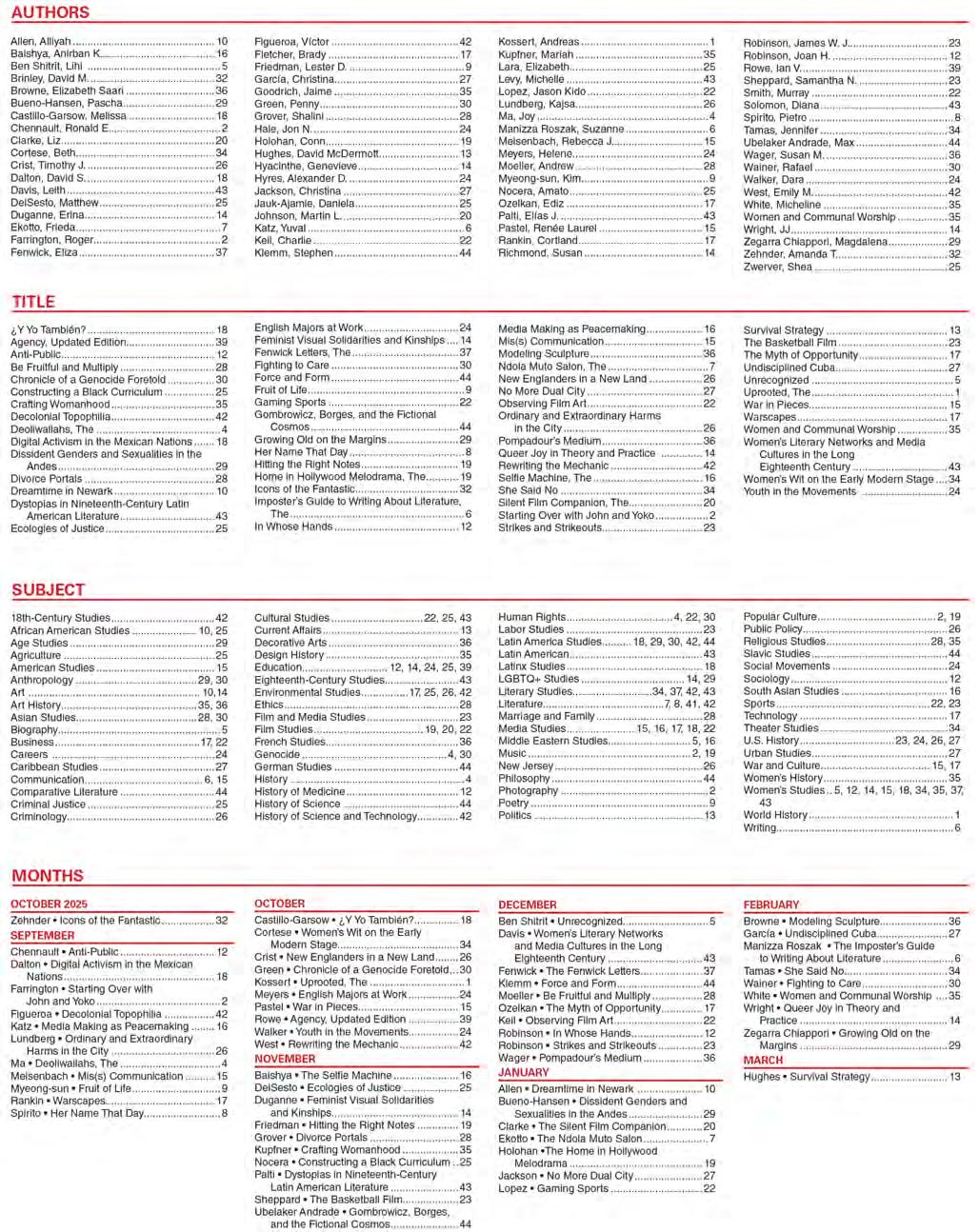
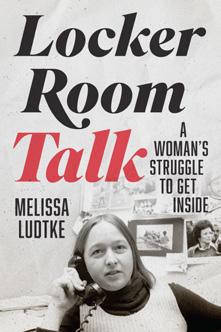
Locker Room Talk: A Woman’s Struggle to Get Inside by
Melissa Ludtke
• The San Francisco Chronicle:
“A meticulous recounting of not only the lawsuit but the era of change in which it took place. . . . Ludtke’s story [is] particularly salient today. . . . Settled law is not necessarily settled. Equal rights need continued vigilance. And Ludtke played a part in causing change in one corner of the world.”
• Booklist:
“A good reminder for younger generations of the legal battles that helped women get the rights we have today.”
• Electric Literature:
“The gripping first-hand report of how [Ludtke] took on Major League Baseball and with a ruling by Judge Constance Baker Motley, the nation’s first Black woman on the federal bench, changed the future of sports journalism for women.”
• The Boston Globe: “Ludtke takes readers inside her fight for equal access in Major League Baseball. . . . [Ludtke’s] cinematic style . . . relie[s] on flashbacks and vignettes to explain the events of the hearing. Such an approach lends itself to a more complex story, bringing to life characters that may once have been what Ludtke called ‘hidden figures.’”
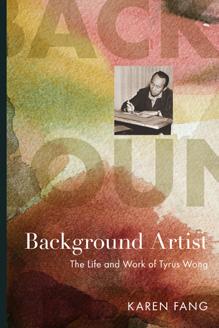
Background Artist: The Life and Work of Tyrus Wong by Karen Fang
• Smithsonian Magazine:
“The definitive new biography.”
• Publishers Weekly: “Fang reveals how Wong’s career . . . reflected the tension between visibility and invisibility experienced by many of the era’s Asian immigrants, who shaped American culture in ways that were often overlooked or unseen. . . . The result is a worthy tribute to a groundbreaking artist.”
• Booklist: “Though a creative legend is the heart of Fang’s wellresearched and affecting book, it also explores L.A.’s Chinese American culture and the powerful potential of art.”
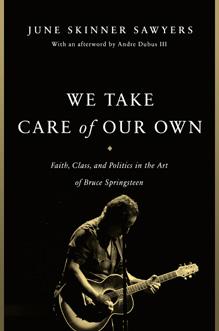
We Take Care of Our Own: Faith, Class, and Politics in the Art of Bruce Springsteen by June Skinner Sawyers
• Publishers Weekly:
“Insightful. . . . Going beyond the stereotype of Springsteen as chronicler of the white everyman, Sawyers examines his focus on social issues like AIDS and the Iraq War and provides an intriguing analysis of how his Catholic roots intersect with his political consciousness. . . . It’s a dynamic portrait of the complicated political and social influences of a rock legend.”
• Booklist: “Springsteen authority Sawyers explores how Catholicism and an evolving political philosophy informed the art of this central figure in American popular culture. . . . Sawyers defines Springsteen’s body of work as one that celebrates humanity.”
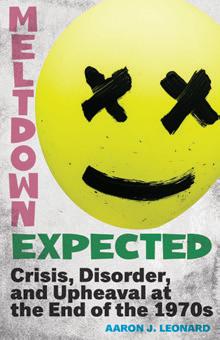
Meltdown Expected: Crisis, Disorder, and Upheaval at the end of the 1970s by Aaron J. Leonard
• CounterPunch:
“[An] exquisite and unique history of the late 1970s. Drawing from government files, personal memories, conversations and multiple newspapers and texts, Leonard has composed a concise, thoughtful and important addition to the history of the decades after the 1960s. . . . The history put down in Meltdown Expected goes a long way towards explaining how we arrived at the current debacle we call the present.”
Queer Newark: Stories of Resistance, Love, and Community by Whitney Strub
• n+1:
“The book snuffs out the dominant view of the city, one ethnography and endnote at a time. . . The whole book is a marvel. . . . Books on queer life outside the largest US cities remain rare, and for Newark and New Jersey they are almost nonexistent. . . . Queer Newark is the first but, one hopes, not the last of its kind. . . . As well as preserving queer stories and scenes that might have gone undocumented, Queer Newark seeks to reeroticize the hood. While academic queer theory too often neglects the classed dimensions of sexuality, most of the book’s chapters explicitly center working-class and queer people of color struggling with the material effects of ghettoization.”
• The Gay & Lesbian Review: “A rich and varied history. . . . The essays come alive with deeply personal accounts of individual lives across three-quarters of a century. . . . By the time I’d finished reading Queer Newark, I felt that I had not only absorbed some fascinating history but also had formed relationships with many of its key characters.”
Criminalized Lives: HIV and Legal Violence by Alexander McClelland
• Literary Review of Canada:
“Eye-opening. . . . An unforgettable chronicle.”
• POZ :
“Weaving firsthand accounts and meaningful research, McClelland goes beyond state laws and clickbait headlines to underscore the human impact of criminalization.”
• HIV Justice Network: “Powerful and important. . . . The book’s moving interviews illustrate that criminal legal systems are unprepared to handle the nuances and ethical dilemmas faced everyday by people living with HIV.”
• Finalist for POZ Awards Best in Literature

Funny Boy: The Richard Hunt Biography by Jessica Max Stein
• Publishers Weekly:
“Stein perceptively captures how the puppeteer’s edgy energy and unique, irreverent humor proved instrumental to the show’s success, particularly as The Muppets transitioned toward more adult-centered programming in the 1970s. The result is a nuanced and meticulously detailed tribute to the artist.”
• Library Journal:
“Exemplary research, culled from a plenitude of interviews with Hunt’s family, friends, and coworkers, reveals a talented artist with tireless energy, enthusiasm, wit, and personality.”
• POZ:
“If you were wondering when Miss Piggy and the AIDS epidemic might finally meet in the pages of a book, then you’re sure to love Funny Boy. . . . Stein’s biography recounts Hunt’s life as full of joy and community, even in the midst of an ongoing AIDS crisis that would claim many of his friends and loved ones.”


The United States and the Armenian Genocide: History, Memory, Politics by Julien Zarifian
• Peace & Change:
“The seminal text on the US relationship with the Armenian Genocide. Through a meticulous historical analysis of events and primary and secondary resources, combined with semistructured interviews with decision makers and lobbyists, Zarifian walks readers through more than a century of history. . . . A must-read book.”
106 Somerset Street, 3rd Floor
New Brunswick, NJ 08901
rutgersuniversitypress.org
Phone: 848-621-2736
Celebrating Ninety Years 1936-2026
#ReadUP
#IndiesFIRST
197 4-color images (including 53 full page plates)
“The Korshak Collection is a portrait and biography of a man and his family, who once looked upon the dark skies and saw Immortals, gods hunting in the storm clouds. Stephen Korshak decided to dedicate his life to tell us all how the thunder sounded and preserve the outlines of the cosmos for the awe of us all. Enjoy, believe—be amazed.”
eNewsletter Sign Up
—Guillermo del Toro, from the Foreword
Receive free email alerts

In 2017, Trump made “Drill, Baby, Drill” the enduring energy policy of the United States. This book is a plea and plan for a climate strategy appropriate to that adversity. We have to hope and act differently, Hughes says, through sabotage, ideological flexibility, and the littleknown power of jury nullification.
eNewsletter Sign Up
Receive free email alerts
“Overwhelming. . . . This historian has made use of sources that are normally not taken into account. As a result, the text evokes an unsettling vividness.”
—Augsburger Allgemeine (on the German edition)
eNewsletter Sign Up
Receive free email alerts
rutgersuniversitypress.org bucknelluniversitypress.org udpress.udel.edu templetonpress.org
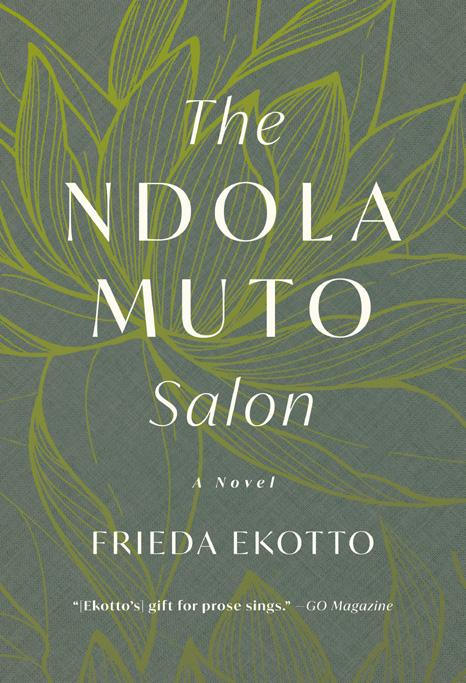
In this evocative novel, a young Cameroonian woman enters a secret salon where women seek pleasure and refuge—and discovers how forbidden love, quiet defiance, and tenderness between women can become a path toward freedom.

