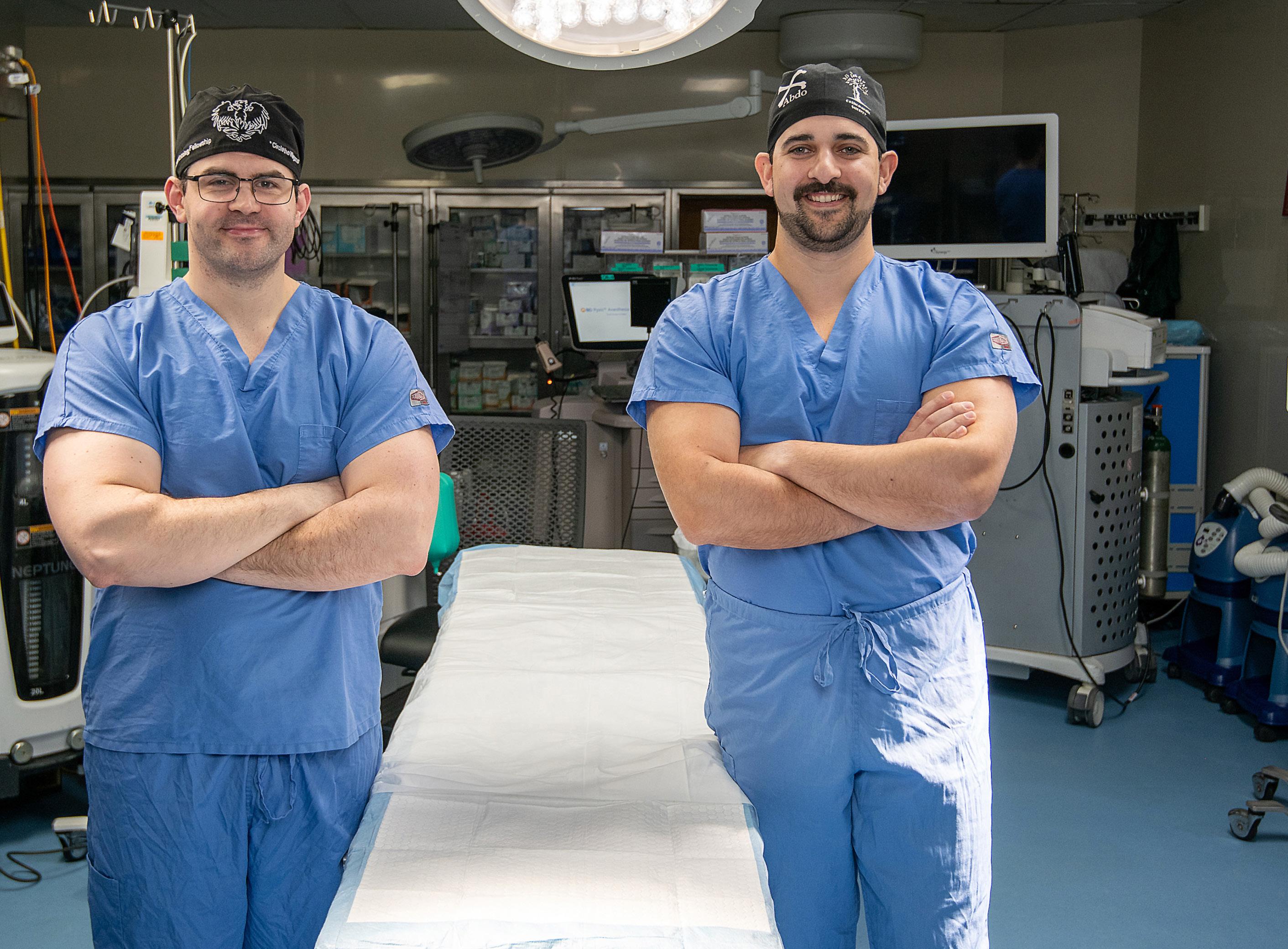
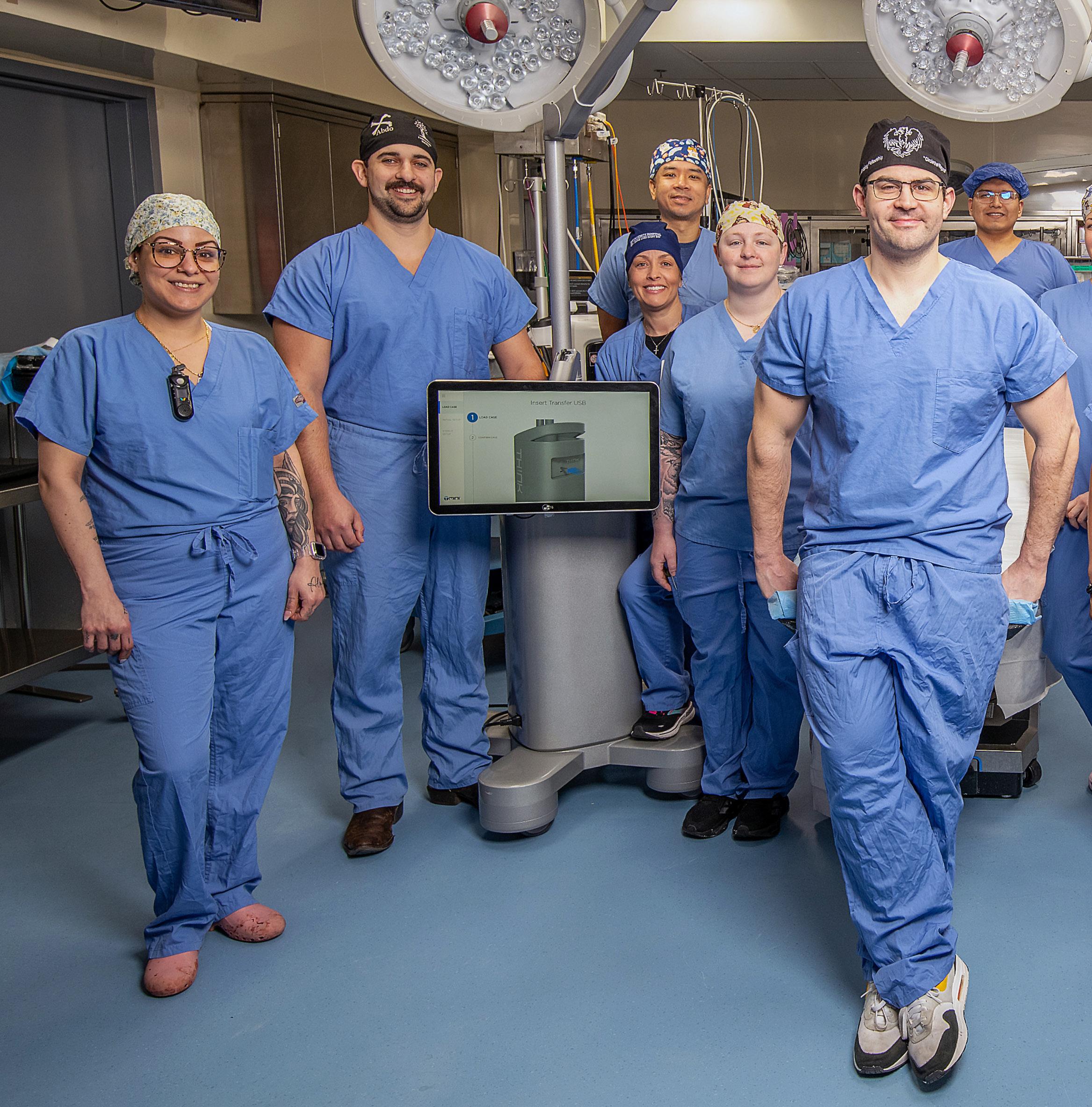
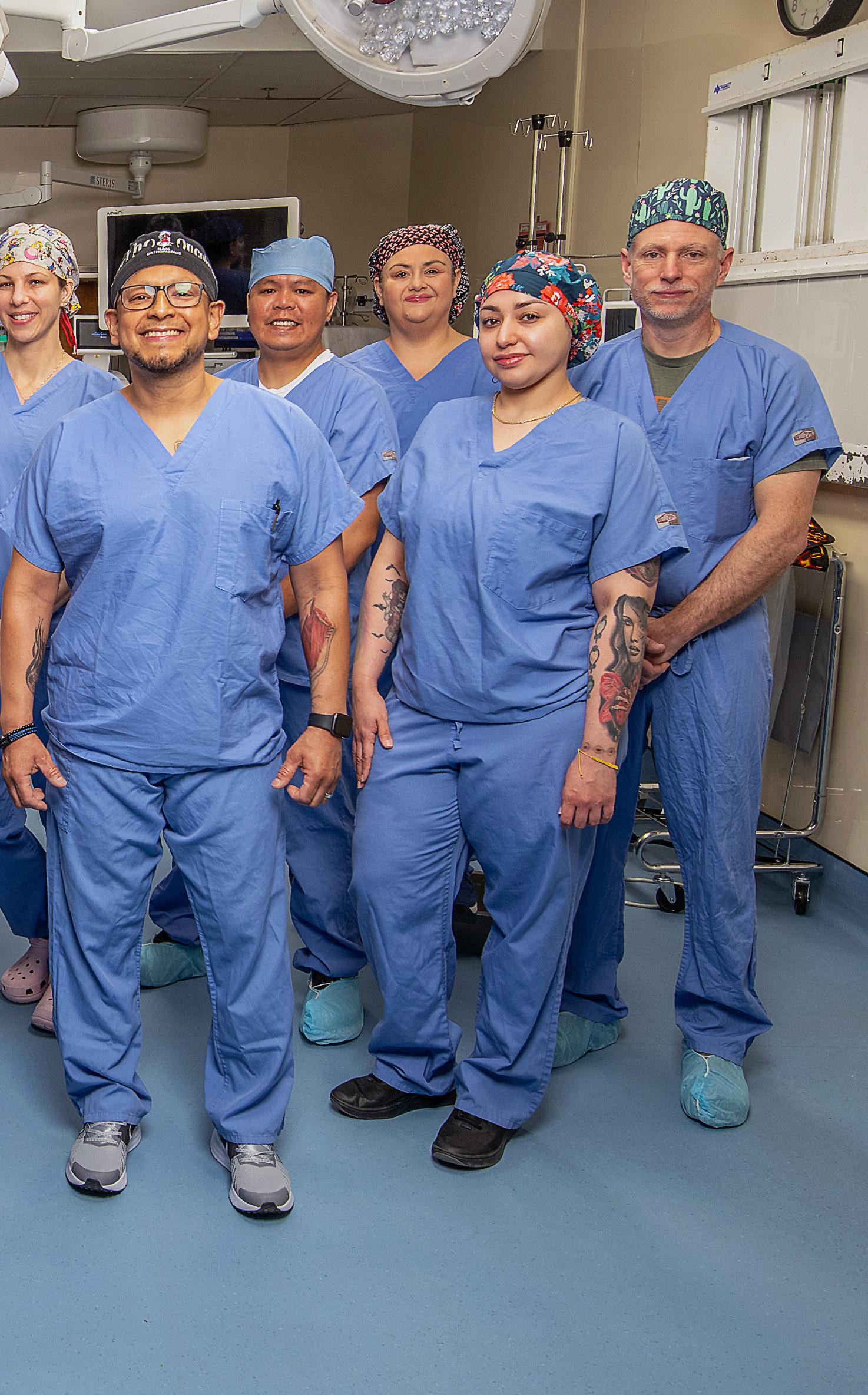
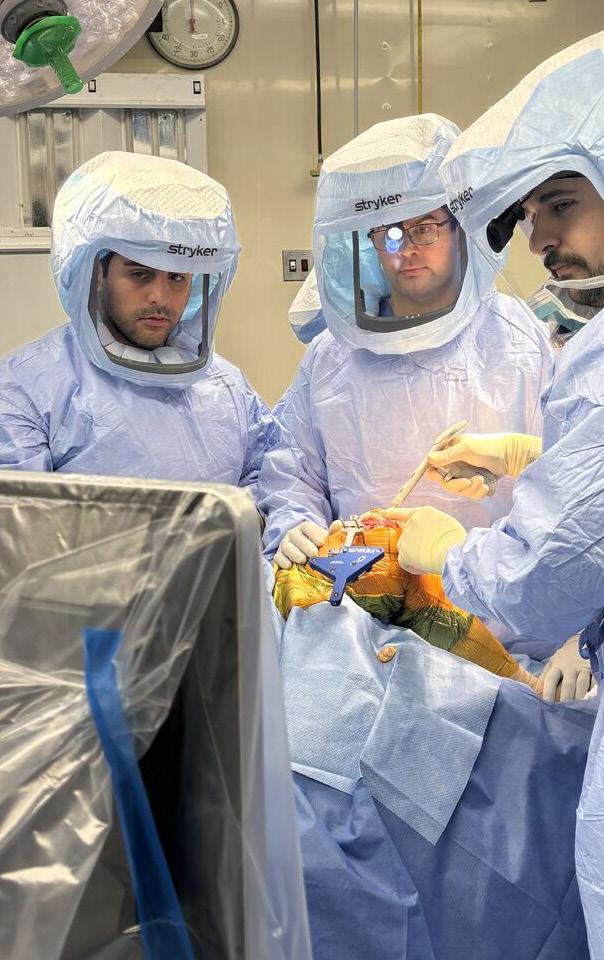
A team from the Department of Orthopaedics performed the first robotic-assisted total knee replacement at University Hospital.
The Surgeon-Scientist
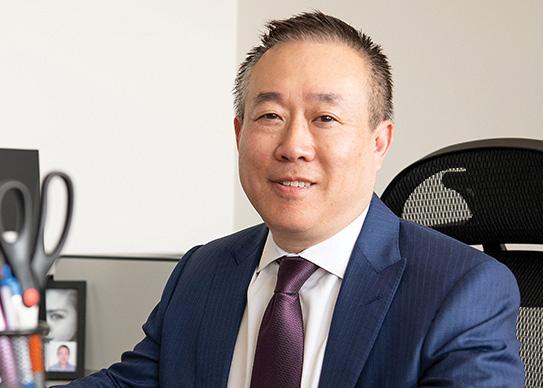
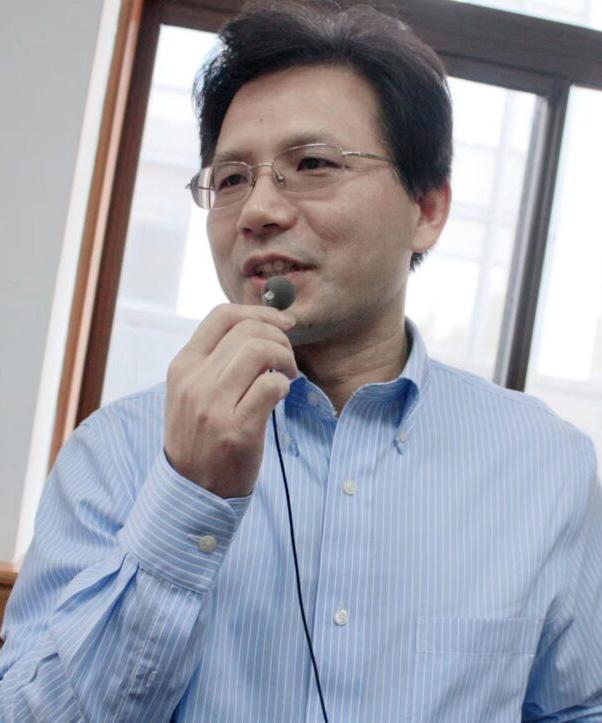
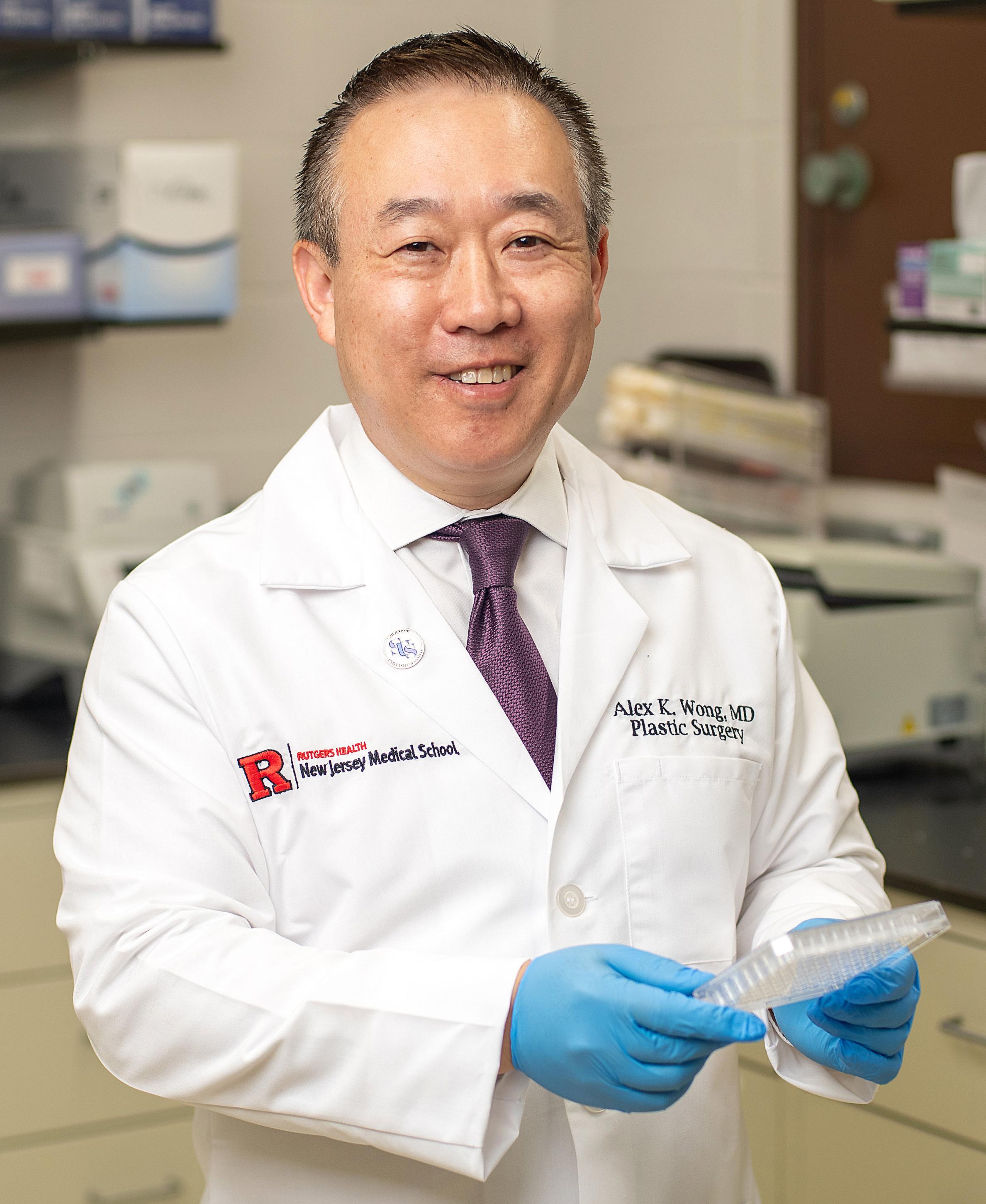
Professor of surgery Alex Wong, MD, plans to spin off a company conducting clinical trials to combat lymphedema.
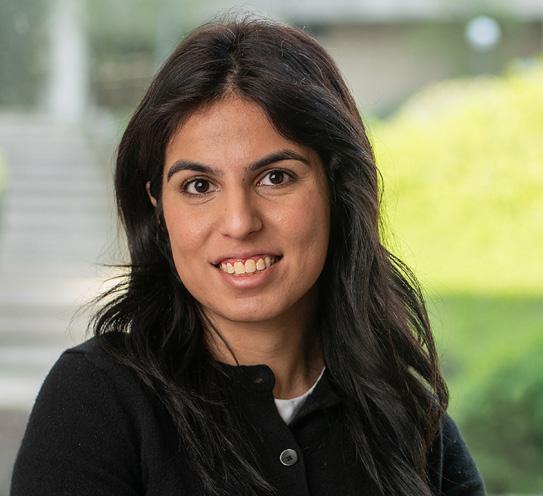
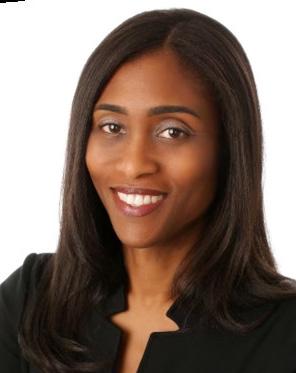
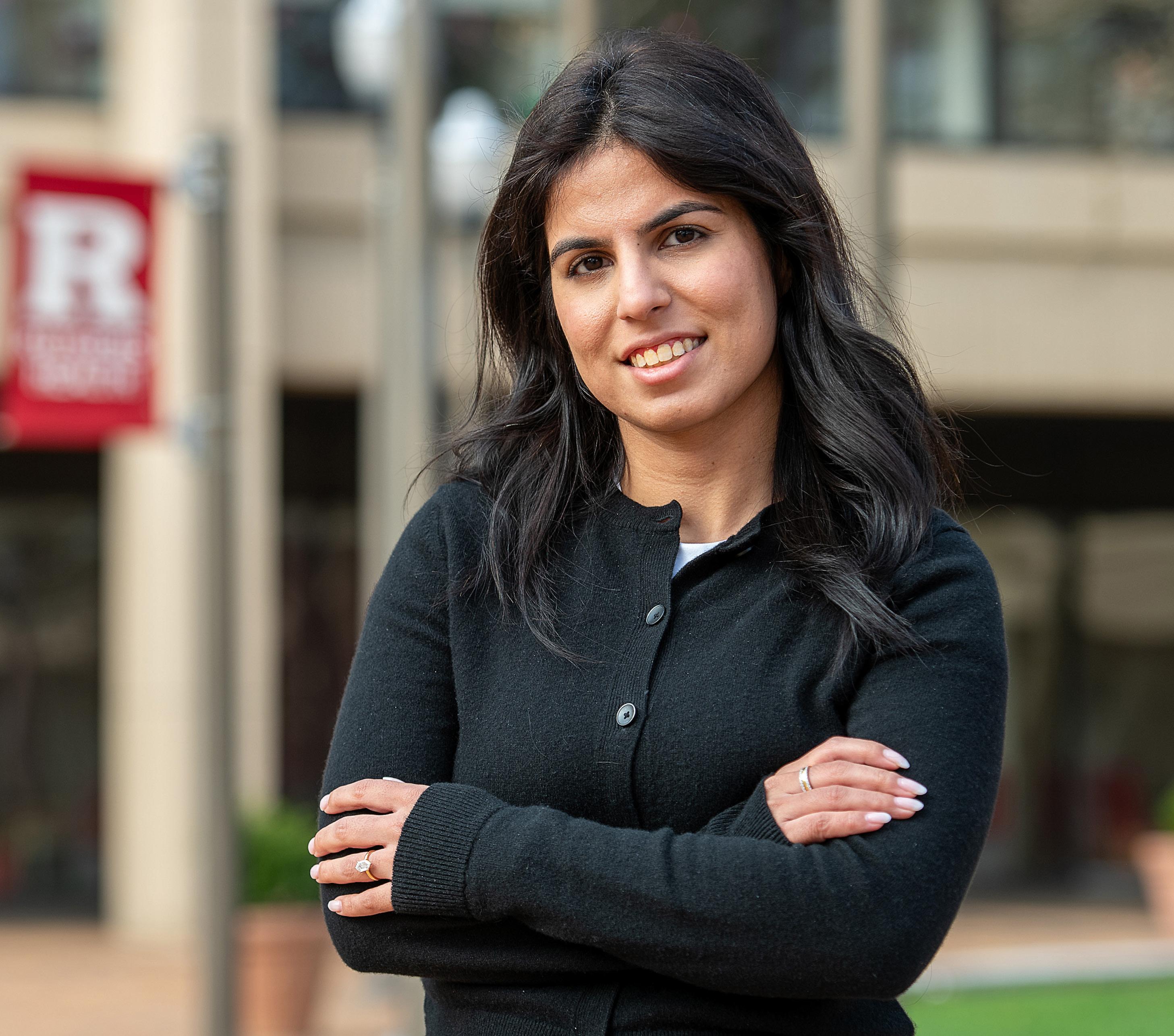
Resident Radhika Malhotra, MD’22, learns the ins and outs of medical communication working as an intern at “ABC News.”
KEITH B. BRATCHER, JR.
As spring settles in and the campus begins to bloom, it’s a time to reflect on growth and new beginnings. As I read this issue of Pulse, I couldn’t help but think that NJMS is a place of new beginnings as well. Our physicians, medical professionals, scientists, and students work tirelessly to advance the art and science of medicine by transforming ideas into innovations that improve lives.
That spirit is evident in the Department of Orthopaedics, where our team performed the first successful robotic total joint replacement surgery. As of this writing, all of the patients are doing quite well.
The Department of Otolaryngology-Head and Neck Surgery participated in an international Phase III clinical trial using a promising new immunotherapy treatment for head and neck cancer. The trial proved to be highly effective in improving and/or possibly saving the lives of patients with this oftendeadly disease. An NJMS professor coauthored the paper, which appeared last December in the New England Journal of Medicine.
Innovation at NJMS also thrives through collaboration. An internal medicine resident and a cardiology resident, longtime friends, teamed up to launch the school’s first screening for elevated lipoprotein(a), an often-overlooked cardiovascular risk factor. What began at the East Orange Veterans Affairs Medical Center has already expanded across the statewide VA Healthcare System.
Our students, too, have put their ideas into practice. A group of students volunteer to bring art and music therapy to the bedside of pediatric patients, making their hospital stays just a little easier. And a
A Message from the Dean
second-year student began an initiative to teach CPR in Mandarin to members of the community, an idea that is sure to save lives.
Perhaps the most exciting new beginning, however, is the upcoming integration of NJMS and Robert Wood Johnson Medical School. Together, we are working toward establishing a future Rutgers School of Medicine, pending LCME accreditation, which will expand academic programs, enhance our learning environment, strengthen our infrastructure, and enrich our research opportunities, creating a hub of biomedical and health sciences education, research, and clinical care that will enable us to better serve our communities.
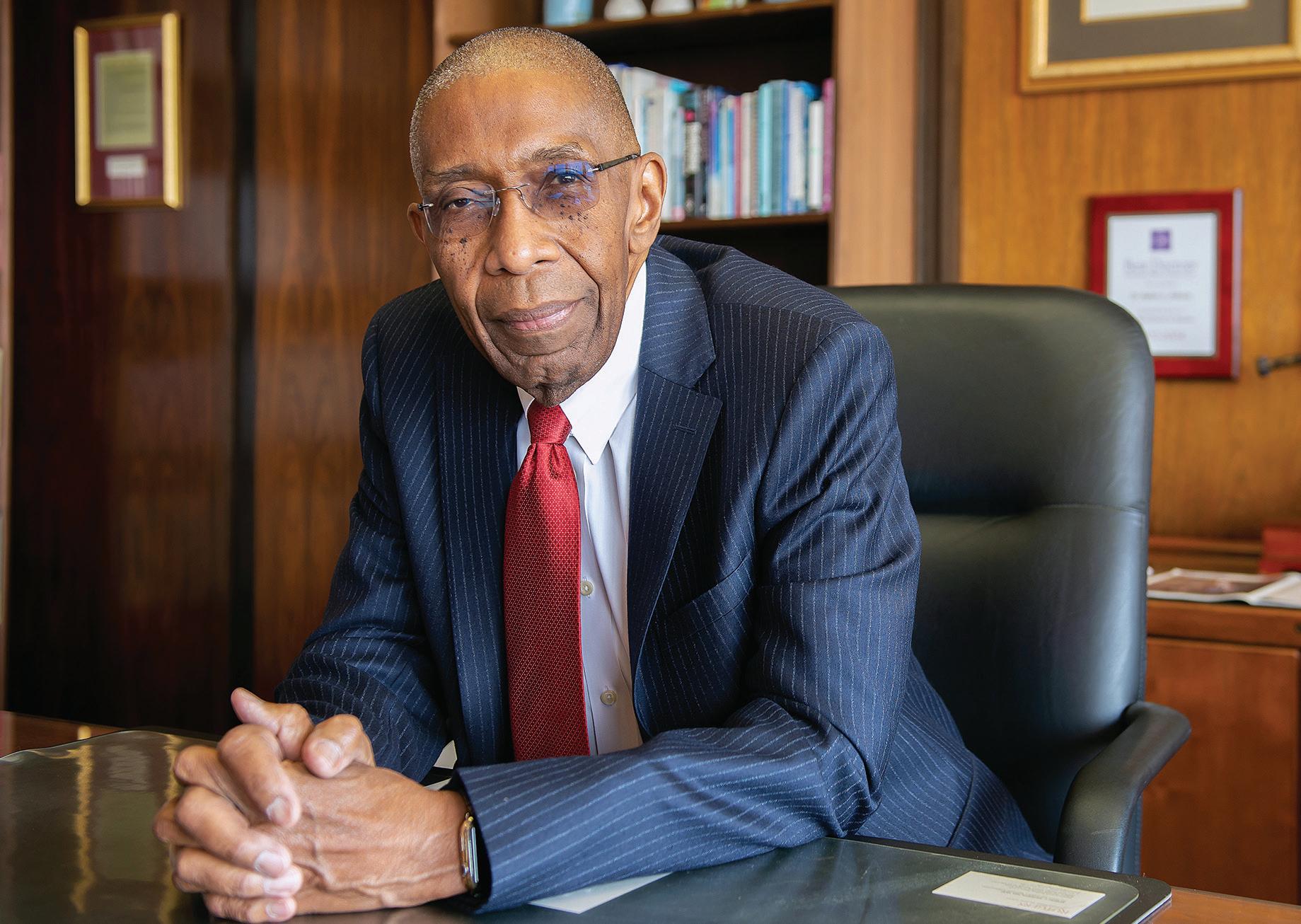
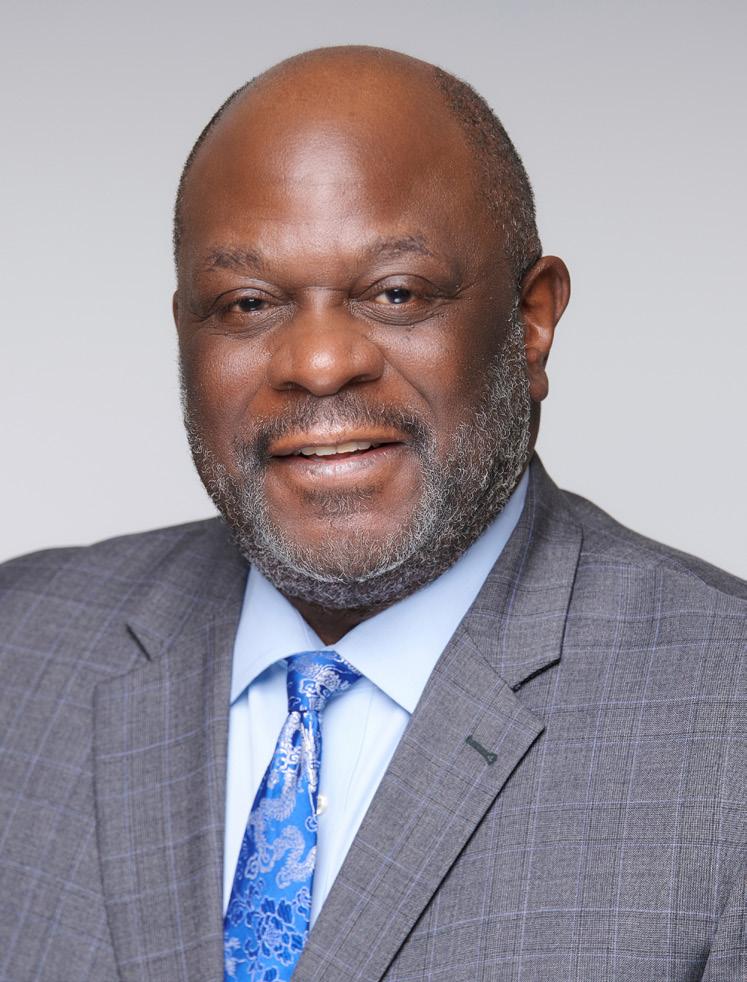
I am deeply honored to serve as dean of Rutgers New Jersey Medical School and as interim chancellor of Rutgers Health during this pivotal moment for our institution. These roles carry both responsibility and opportunity, and I am grateful for the privilege of working alongside our extraordinary faculty, staff, students, and alumni as we shape the future of academic medicine at Rutgers. Together, we will continue to strengthen our unwavering commitment to excellence in education, research, patient care, and community service, guided by a shared vision of innovation, compassion, and impact for the communities we serve.
Robert L. Johnson, MD, FAAP’72
The Sharon and Joseph L. Muscarelle Endowed Dean Rutgers New Jersey Medical School Interim Chancellor, Rutgers Health
DEAN
Robert L. Johnson, MD, FAAP’72
The Sharon and Joseph L. Muscarelle Endowed Dean, Rutgers New Jersey Medical School
Interim Chancellor, Rutgers Health
ASSOCIATE EDITOR
LaCarla Donaldson
Manager, Marketing and Communications
SENIOR EDITOR
Mary Ann Littell
CONTRIBUTING WRITERS
Ty Baldwin
Merry Sue Baum
Amanda Castleman
Nancy A. Ruhling
DESIGN
Sherer Graphic Design
PRINCIPAL PHOTOGRAPHERS
Keith B. Bratcher, Jr
KEEP IN TOUCH
Pulse is published twice a year by Rutgers New Jersey Medical School. We welcome letters and suggestions for future articles.
Send all correspondence to: Marketing and Communications
Stanley S. Bergen Building 12th Floor, Rm 1234 65 Bergen Street Newark, NJ 07107 or via email to: njmsmarketing@njms.rutgers.edu
ON THE COVER
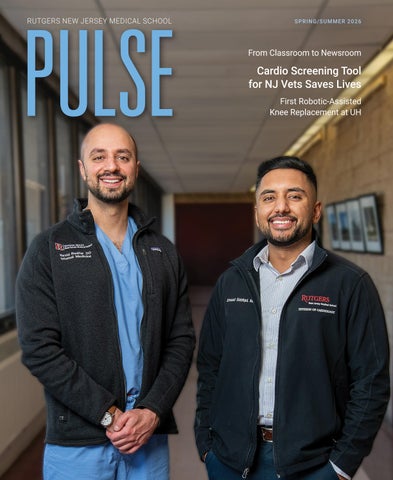
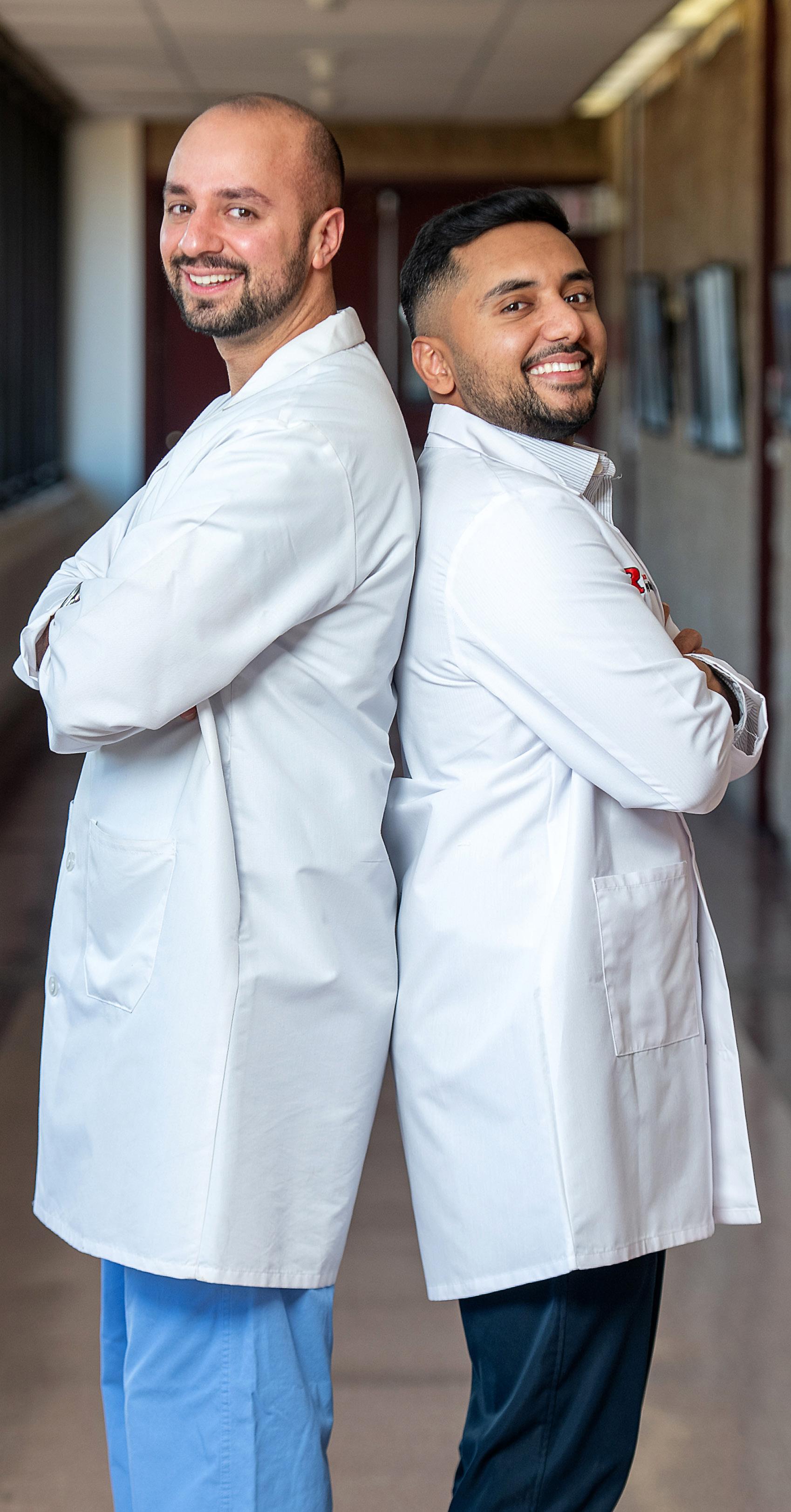
Emaad Siddiqui, MD’20, and resident Navid Radfar, DO, created the school’s first screening initiative to detect elevated lipoprotein(a), a variant of “bad” cholesterol.
PHOTO BY KEITH B. BRATCHER, JR.
KEITH B. BRATCHER, JR.
FY i
Healing Hues and Harmony
Drawing, painting, singing songs and making collages are fun activities that can also aid a child’s recovery from surgery or illness, according to numerous studies.
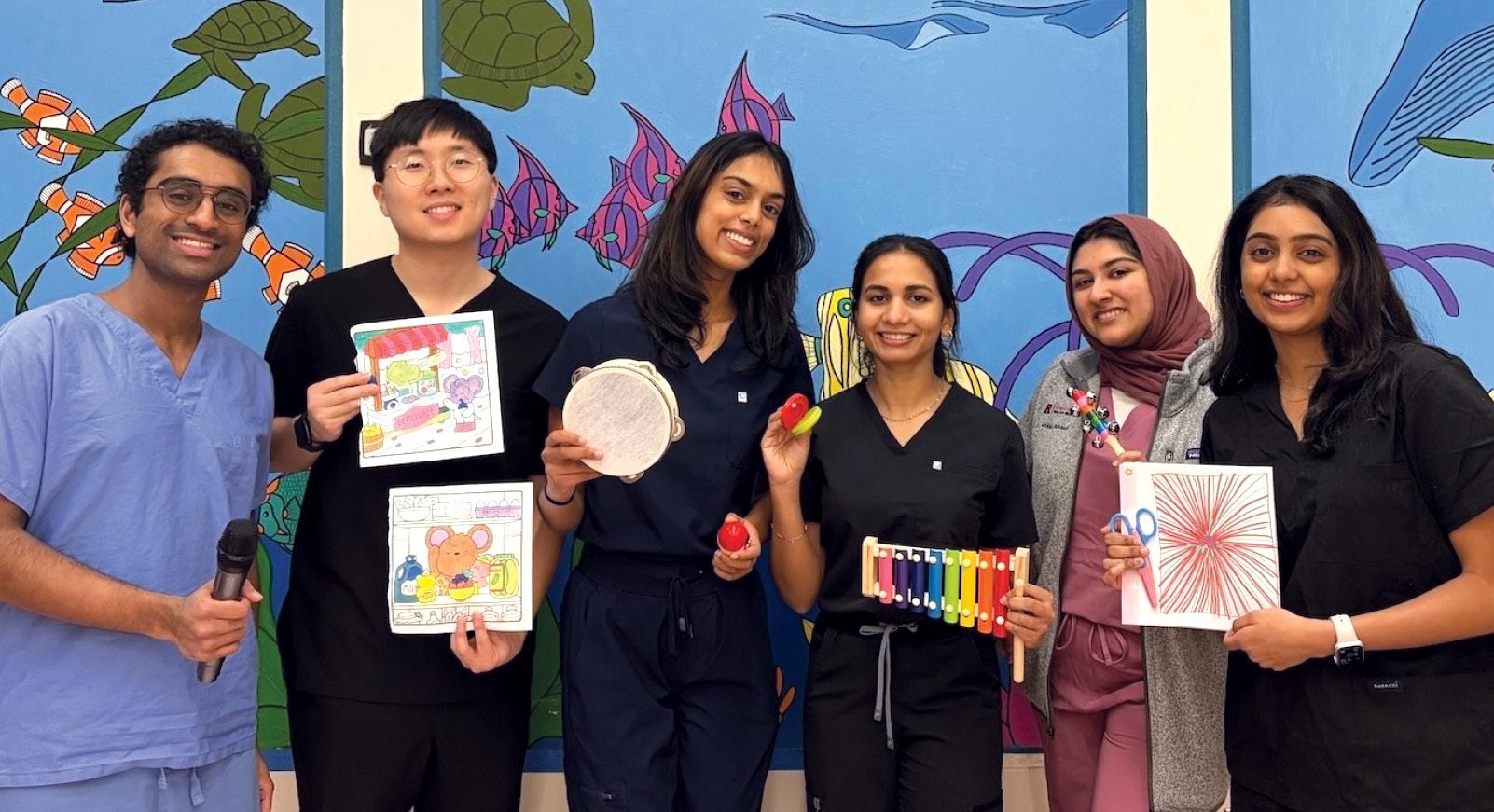
With that knowledge in mind, third-year NJMS students Sneha Gandhi and Shivani Srivastava launched a creative arts and enrichment initiative to benefit pediatric patients at Newark’s University Hospital. The
program engages NJMS student volunteers who visit pediatric inpatients to offer bedside arts-andcrafts activities and live music experiences.
“Hospitalization often strips children of their sense of control, routine and identity,” says Gandhi. “Art and music help restore some of that. Since starting this program, we’ve seen a clear emotional impact on patients and families. Children who initially appear withdrawn or distressed often become engaged once an activity
for Global Surgery Outreach
begins. Many patients hospitalized for weeks or months share how much they appreciate the company and the chance to do something enjoyable.”
Srivastava notes that during one visit, a pediatric patient on a nebulizer was inconsolable, until she began coloring pictures with crayons brought to her by the NJMS volunteers. Another 8-yearold, who initially would not speak, began opening up after drawing her favorite cartoon characters and displaying her artwork.
The program also benefits medical students, allowing them to connect with patients beyond traditional clinical roles. “By spending time with children outside of exams and procedures, we learn how powerful small, nonmedical interventions can be,” notes Srivastava. “These experiences also reinforce the importance of seeing patients as whole individuals—not just diagnoses.” — Lavene Gass
Read the full Rutgers Today Q&A story here: go.rutgers.edu/tqwy2ck6
“Super Star” Recognized for Research Excellence
Yuan-Xiang Tao, PhD, professor and vice chair of research, Department of Anesthesiology, is the recipient of the Senior Faculty “Super Star” Research Excellence Award, given by the Brain Research Institute, the university’s umbrella neuroscience organization. An internationally recognized leader in pain neuroscience, his NIH-funded research, high-impact publications, and exceptional mentorship have advanced the understanding and treatment of chronic and neuropathic pain.
Ziad C. Sifri, MD, professor of surgery and division chief of trauma and surgical critical care at NJMS, has been honored with the American College of Surgeons (ACS)/Pfizer International Surgical Volunteerism Award for his delivery of free, high-quality surgical care to underserved areas globally through the International Surgical Health Initiative (ISHI), a nonprofit he co-founded. Under Sifri’s leadership, ISHI has conducted 37 surgical missions across countries in need— including Bangladesh, Ghana, Peru, the Philippines, and Sierra Leone—mobilizing more than 700 volunteers and performing nearly 3,000 surgeries. These efforts are transforming lives and advancing humanitarian surgery.
These achievements reflect sustained scientific excellence and leadership. The Rutgers NJMS Department of Anesthesiology is ranked #24 nationally in the latest NIH funding rankings, placing it among the most competitive and academically productive anesthesiology programs in the country.
“This milestone highlights the strength and ongoing growth of our research efforts and supports NJMS’s broader strategic goal of increasing its national academic presence,” says chair of anesthesiology Alex Bekker, MD. “This achievement demonstrates what can be accomplished through strong institutional teamwork, strategic hiring, and ongoing investment in research excellence.”
Ziad Sifri Honored
Research Sheds Light On Potential Causes of Infertility
NJMS researchers have helped to identify 556 genes that ready the uterus for pregnancy, a finding that could improve diagnosis and treatment for women who struggle to conceive.
Even in the best-case scenario, when fertility clinics transfer chromosomally normal embryos into a would-be mother’s uterus, the procedure only leads to a live birth half the time. Some embryo transfers result in a pregnancy, and then miscarriage; but in 30 to 35 percent of cases, the embryo doesn’t even implant in the uterus.
For decades, fertility research has focused on embryo quality, but some scientists have begun to suspect that the overlooked problem lies in the uterus itself. New research from NJMS and Michigan State University supports that view.
The study, published in JCI Insight, identified 556 genes, concentrated in gland cells in the uterine lining (endometrium), that are increased in fertile women — but not in those who have struggled with infertility — when the uterus enters its brief window of receptivity.
“This was one of the first
attempts to really look at the menstrual cycle in women who are fertile and try and understand how the endometrium is changing, how it becomes briefly receptive to embryo attachment at the most fundamental level,” said Nataki Douglas, MD, an NJMS associate professor of obstetrics, gynecology and reproductive health and senior author of the study.
The researchers couldn’t sample endometrial tissue just before the embryo transfer after in vitro fertilization and compare samples from patients whose treatments did and didn’t succeed, as such procedures could disrupt early pregnancy and create failures.
Instead, the team enrolled 30 patients from University Hospital in Newark, women with regular menstrual cycles and proven fertility. Participants used ovulation predictor kits and coordinated with the research team to ensure endometrial biopsies occurred precisely at different phases of the menstrual cycle. To read the endometrium’s shifting biology, the researchers used two sequencing approaches: one that measures gene activity in the tissue as a whole and another that measures it cell by cell.
Both approaches told the same story: The largest molecular transi-
Epithelium Receptivity Module (GERM). When they applied a GERM score to published datasets, it was consistently lower in women with recurrent implantation failure or pregnancy loss than in fertile controls.
The work remains far from clinical application. The next steps include shrinking the gene list to something practical and prospectively recruiting patients with implantation failure to test whether the signature predicts outcomes.
tion occurred as the menstrual cycle entered the mid-secretory phase, which is usually the window for embryo implantation.
The most striking changes were in specialized cells in uterine glands that produce molecules thought to nourish an embryo and help orchestrate implantation.
From those patterns, the researchers defined a 556-gene signature they called the Glandular
DAYAM Celebrates its 50th Anniversary
The broader hope is that understanding uterine readiness could let clinicians identify when a patient’s endometrium is malfunctioning and fix any problems they find.
“Once we can identify those who are at risk and the genes that are the most important in this 556, ones that we know code for particular proteins we might be able to add synthetically, then we may be able to work on therapeutic approaches,” says Douglas. — Andrew Smith
In 1976, recent NJMS graduate Dean Robert Johnson, MD, was recruited back to his alma mater to establish a practice devoted to youth and adolescent health care: the Division of Youth and Adolescent Medicine (DAYAM). This year, DAYAM will celebrate its fiftieth year of providing much-needed care to pre-teens and teens. DAYAM aims to improve the quality of life for adolescents and young adults through the delivery of a broad range of health and psychosocial services and interventions, including birth control, emergency contraception, sexually transmitted infection, and pregnancy testing.
The NJMS community salutes DAYAM, still going strong after fifty years. Thousands of young people have benefitted from the programs and services provided by dedicated and caring faculty and staff members, and thousands more will benefit in the future.
a closer look
New Hope and Healing Are Here
BY MERRY SUE BAUM
For the first time in 20 years, patients with locally advanced head and neck cancer have reason to be hopeful. A promising new treatment has greatly improved the battle against this debilitating and often deadly disease. NJMS participated in a worldwide Phase III clinical trial that added an immunotherapy drug to the existing standard of care for head and neck squamous cell cancer (HNSCC). The results went beyond all hopes. Dylan Roden, MD, MPH, associate professor in the Department of Otolaryngology-Head and Neck Surgery, explains that for more than 20 years patients with advanced HNSCC all received the same treatment: surgery to remove the tumor, followed by radiation and
sometimes chemotherapy to destroy any remaining malignant cells. Some lives were saved. However, many patients experienced lifelong side effects, such as severe dry mouth, altered taste, swallowing difficulties, skin irritation, and fatigue. And even after the long, intense treatment, the odds of survival were only 50/50.
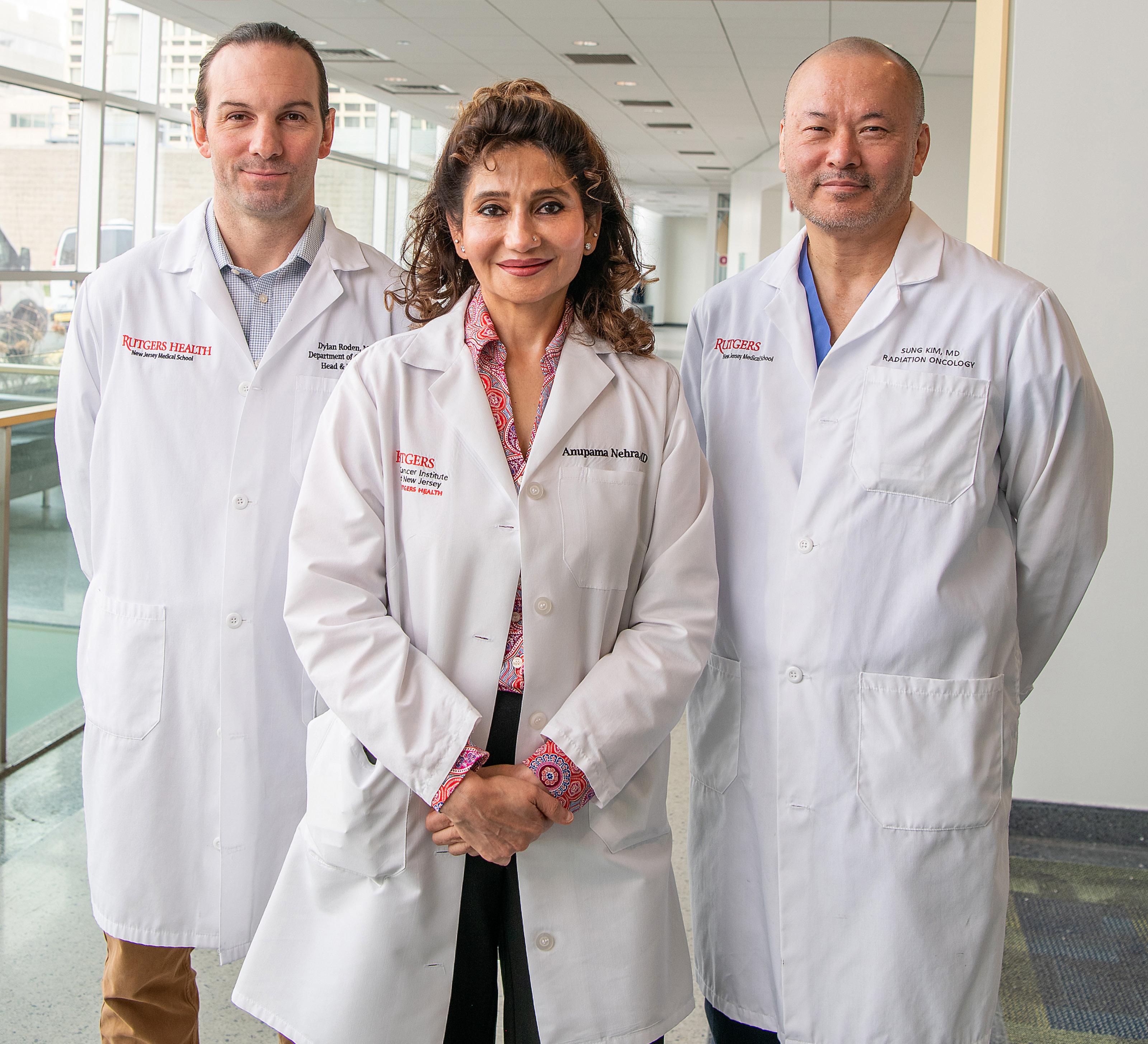
When Merck & Co. launched its Keynote #689 Phase III clinical trial, which used a new immunotherapy drug, Roden thought it sounded promising. He approached two of his colleagues, oncologist Anupama Nehra, MD, assistant professor of medicine; and radiation oncologist Sung Kim, MD, professor of radiation oncology. The three teamed up to
Left to right: Dylan Roden, MD, MPH; Anupama Nehra, MD; and Sung Kim, MD.
KEITH B. BRATCHER, JR.
“This new class of medications works by unveiling the tumor, so the patient’s immune system recognizes and kills it. The drug is not harsh and has very few side effects.”
DYLAN RODEN, MD, MPH
complete the rigorous approval process, and the first patient was enrolled in December 2018. Eight of the 714 patients worldwide were enrolled at NJMS.
The study used the drug pembrolizumab, known commercially as Keytruda, a medication that unleashes a person’s own immune system to kill malignant cells. “Cancer continually develops ways to survive by becoming unrecognizable and then sneaking past the immune system,” Roden explains. “This new class of medications works by unveiling the tumor, so the patient’s immune system recognizes and kills it. The drug is not harsh and has very few side effects.”
Patients enrolled in the study had resectable, previously untreated Stage III or IV HNSCC, including in the larynx, hypopharynx and oral cavity. Participants were randomly assigned to receive either the current standard of care (surgery, radiation and possibly chemotherapy) or immunotherapy before and after the standard of care. Each patient assigned to the experimental arm received two doses of Keytruda before surgery and an additional 15 doses of the drug after surgery, along with the standard of care. The results were quite impressive. Disease-free survival improved 14 percent, and many participants who took Keytruda have so far lived cancer free for three years. The trial lasted about five years, so all the data have not yet been finalized. However, the new protocol was approved by the FDA in June 2025.
Everyone involved in the trial was thrilled
with the outcomes. Kim was the primary radiation oncologist, who gave radiation therapy to patients after their surgeries. “It was very gratifying to be able to participate in a clinical trial that actually changed the way we treat advanced oral cancers,” he says. “I think all of us have seen too many of our patients recur, either at the primary site and neck or distantly. Giving immunotherapy prior to surgery greatly reduces this risk.”
Nehra says finding strategies to improve outcomes for patients with advanced head and neck cancers has long been discussed at Tumor Board meetings. “Given the strong evidence for immunotherapy in the pre-surgical setting across other cancers, our team was eager to participate in the Keynote #689 trial,” she says. “It was deeply gratifying to serve as principal investigator for this trial and to offer this practice-changing therapy to our diverse Newark patient population, which is often underrepresented in clinical research.” Nehra was an author on the trial results, which were published in The New England Journal of Medicine in June 2025.
Roden has always had an interest in using science to improve patient care and outcomes. “This new standard of care is a major breakthrough,” he says. “The entire head and neck community is excited. Besides being a great accomplishment for our program, we did something that is much bigger than Rutgers. People across the world with this challenging disease will have access to a new therapeutic approach.” ●
A Lifetime Spent Combatting TB
BY NANCY A. RUHLING
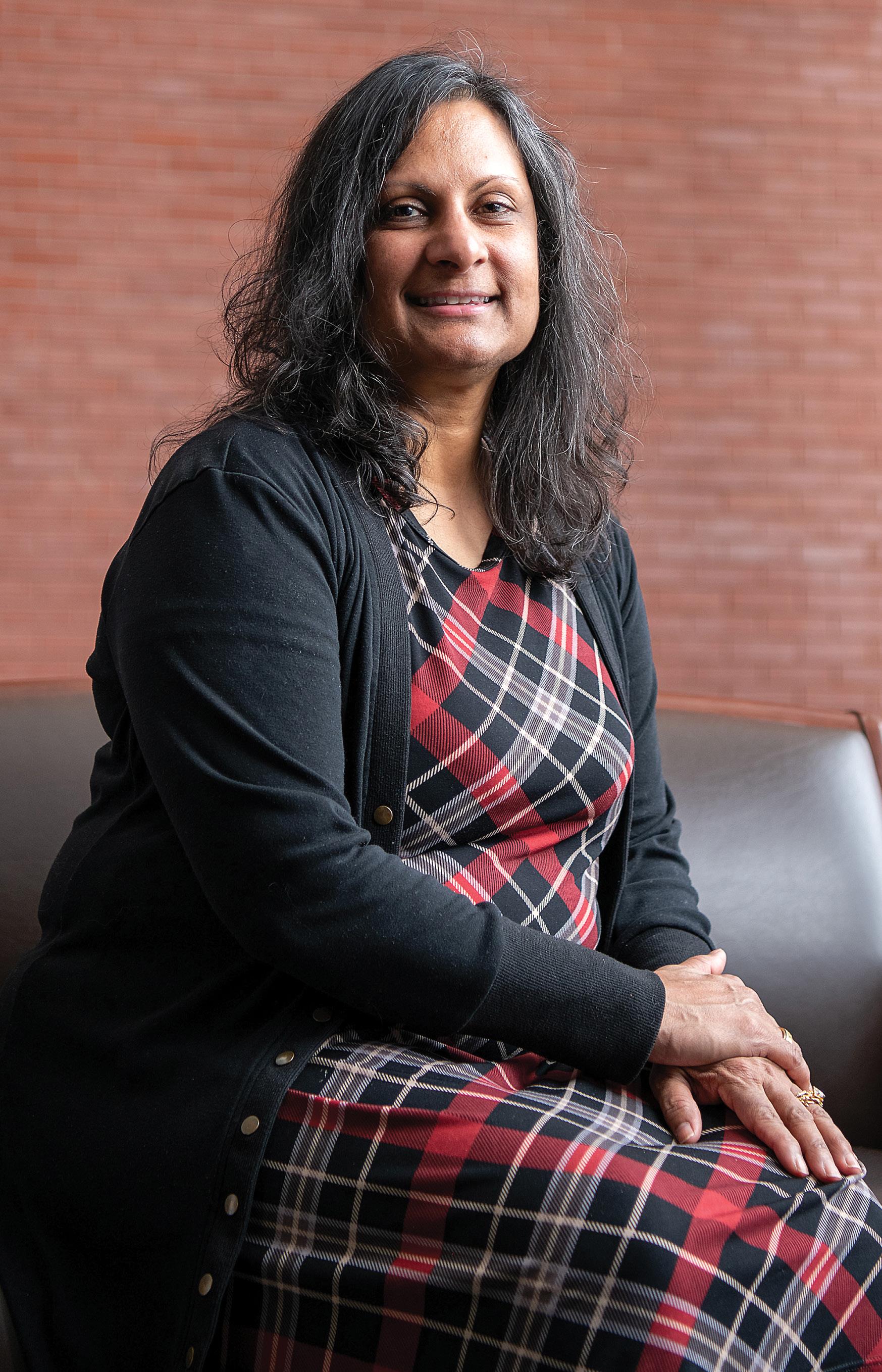
Aone hour-long lecture. That’s all it took to change the course of Rajita Bhavaraju’s studies—and her career.
She was working on her master’s degree in public health in a joint program between the then-University of Medicine and Dentistry of New Jersey and Rutgers when she elected to take an infectious diseases epidemiology course that included a section on tuberculosis (TB).
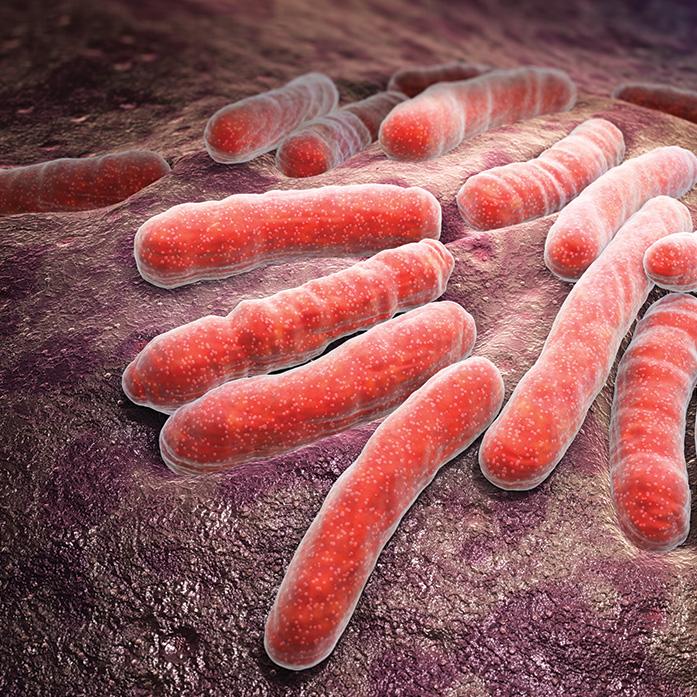
“I suddenly became fascinated with TB because it’s so old, and we know so much about it but haven’t been able to eliminate it,” says Bhavaraju. “And we still don’t have an effective vaccine.”
That fact that the majority of people who contract TB are impoverished and live in developing countries dovetailed with Bhavaraju’s passion for public health, making it easy for her to devote her life’s work to it.
It seemed only fitting that she, a Rutgers student, write her thesis on TB, because, as she notes, it was at the univer sity that the first effective medicine to combat it was discovered.
After completing her degree, Bhavaraju began working at the National TB Center in Newark, which became the Rutgers Global Tuberculosis Institute.
In recognition of her work, she recently received the Lifetime Service Award from the North America Region of the International Union Against Tuberculosis and Lung Disease (The Union), where she has worked in various capacities.
It’s her second one from The Union, which provides health solutions to the poor. In 2021, she was named Honorary Member of The Union.
In the nomination, her then-boss, Alfred Lardizabal, MPH, MD, executive director of the Rutgers Global Tuberculosis Institute, noted her 25 years of dedicated service to the practice of TB prevention and care at every step of her career and across her various leadership roles, which include her work as director of curriculum and assessment for vital strategies at The Union.
Through her “tireless work,” he wrote, she has “demonstrated a profound commitment and service toward the goal of TB elimination, including improving outcomes for patients and communities” domestically and globally. “I’ve had people say to me, ‘Oh, you do a really, really good job,’ but I never expected someone to take the time to write a nomination,” she says. “It was very touching; I teared up when I found out.”
While working full-time, she earned her doctorate in social and behavioral sciences in public health. She eventually became the deputy director of the Global Tuberculosis Institute, and then in 2023 became the director of the Regional Prospective Observational Research for Tuberculosis (RePORT) International, a collaborative TB research hub based at Rutgers that brings together data and specimens in seven countries to aid research around the world.
“I became fascinated with TB because it’s so old, and we know so much about it but haven’t been able to eliminate it.”
RAJITA BHAVARAJU
“I’ve known him for over 30 years,” she adds. “He’s like my big brother.”
Brown University Professor Emerita of Medicine E. Jane Carter, MD, who worked with Bhavaraju at the Global Tuberculosis Institute and The Union, says, “To all her roles, she brings her ‘can-do’ attitude, intellectual curiosity, organization skills and humility always channeled through the lens of the patient’s experience.”
Bhavaraju, who attributes her success to a series of mentors, says the nomination reflects the collaborative spirit at NJMS.
“It’s very egalitarian in many ways,” she says. “I’m not a doctor. I’m not an academic. I’m staff. The ability to sit at a table with people I respect in the field and then having them ask my opinion has been super helpful,” she says.
Bhavaraju, who was born and raised in New Jersey with large extended family all over the world, became interested in science at a young age, something her parents, immigrants from India, encouraged.
One of her first influences was her grandfather, an economist who started a sociology department at a university in his native India. “He was into community health, and the summer after I graduated from college, I went to India and worked with him doing a community survey,” she says.
With Bhavaraju’s son and daughter grown and out of the house, she’s taking some wellearned time to focus on herself. One of her new goals is to become an EMT, following in the footsteps of her son, who is considering going to medical school.
Bhavaraju’s latest award may have “lifetime” in its title, but she knows that her work is far from over. TB, which experts had hoped to eradicate by 2035, is on the rise in the U.S., with the recent decline in research funding.
“There are a lot of roadblocks,” she says. “But I have hope that at some point down the road, we’ll get a good vaccine for TB, more accessible diagnostic tests, and shorter, less toxic treatments. But whether we can do that all by 2035, that’s the question mark.” ●
Keep Going Towards Success
BY TY BALDWIN
Cherisse Berry learned at an early age that she could accomplish her goal of becoming a physician through perseverance, resilience, and grit— and never giving up on her dreams.
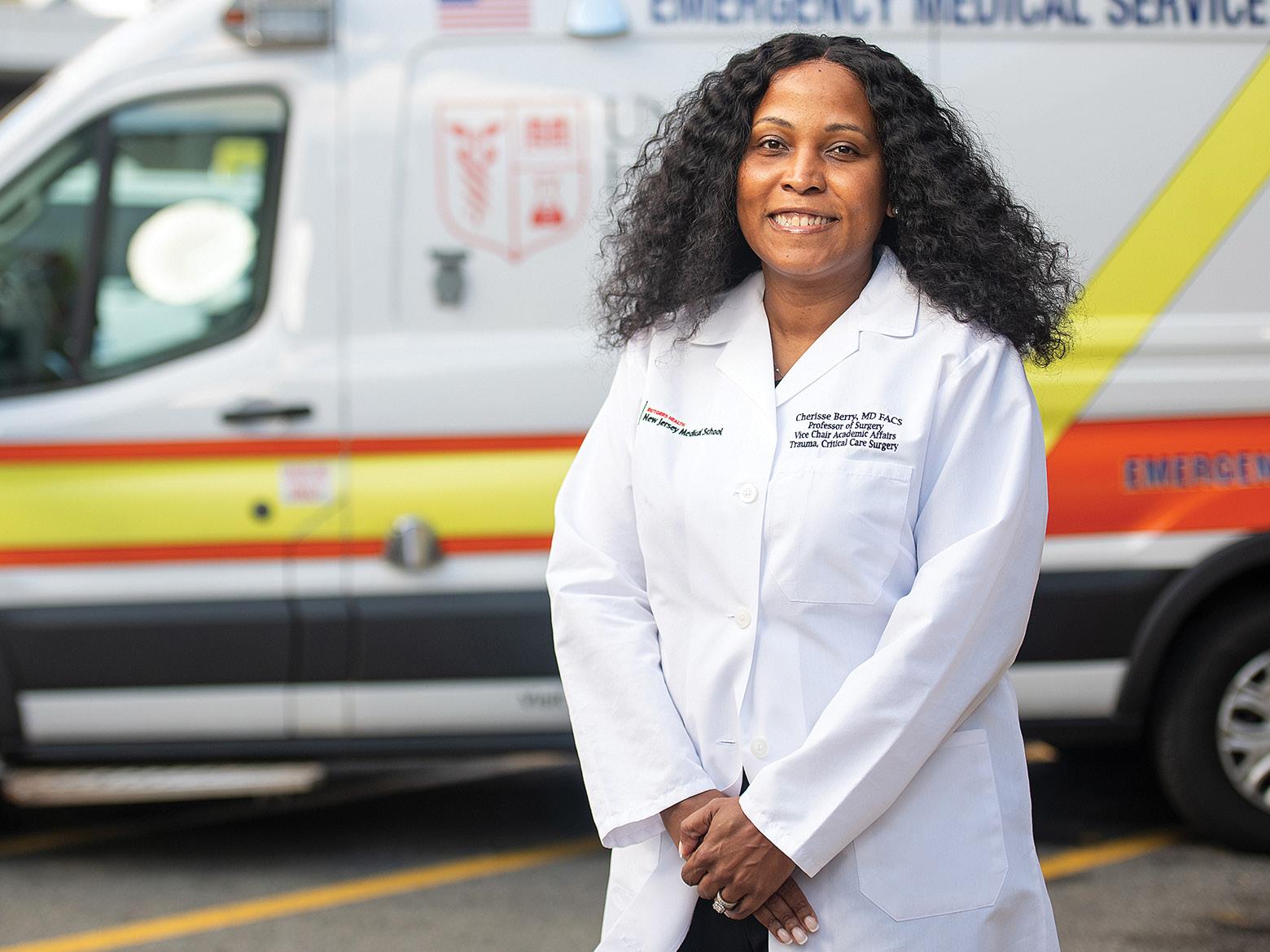
Cherisse Berry, MD, set her sights on a career in medicine when she was in kindergarten. (Yes, kindergarten.) “I’ve known I wanted to be a doctor since I was five years old,” says Berry, who joined NJMS last November as surgery vice chair of academic affairs and professor of surgery in the Division of Trauma and Surgical Critical Care. “They asked us to draw what we wanted to be when we grew up, and I drew a doctor. I don’t know why. It’s just something that’s always been with me.”
Berry, who hails from Kansas City, MO, is the first in her family to go into medicine. In high school, her mother purchased a motivational framed poster with the words “Don’t Quit” written large above the poem “Keep Going,” by Edgar A. Guest. The first stanza:
When things go wrong, as they sometimes will, And the road you’re trudging seems all uphill, When the funds are low and the debts are high, And you want to smile, but you have to sigh, When care is pressing you down a bit, Rest if you must, but don’t you quit.
“I learned early on about perseverance, resilience, and grit and never giving up on your dreams,” Berry says. She hung the poster on her bedroom wall, and then took it with her to college, grad school, and medical school for encouragement when things got tough.
Berry did her undergraduate work at Johns Hopkins, where she majored in neuroscience
with a minor in French. For three years, she did a research summer program at the National Institutes of Health with her physicianscientist mentor, a neurologist. Her interest in neurology continued as she pursued her master’s degree at Harvard. “As part of my thesis, I had the opportunity to work with a pediatric neurologist at Boston Children’s Hospital and thought that perhaps neurology would be a specialty that I would pursue,” she says.
After getting a master’s in biology at Harvard, Berry went to medical school at the University of Southern California in Los Angeles. There, she was “introduced to a pediatric neurosurgeon and was able to get in the operating room. That’s how I discovered surgery.” After medical school, and a research fellowship in pediatric neurosurgery at Children’s Hospital in Los Angeles, Berry began her residency at Cedars-Sinai with the intention of pursuing neurosurgery. “As an intern, I was introduced to the world of general surgery,” she says. “I loved the ICU and I loved trauma surgery. I was very, very happy. I had discovered my passion. When I was offered a second-year categorical residency position in general surgery, I had to decide: Do I continue
down the neurosurgical path or do I look at this offer as an opportunity to do something different?” Berry did a pivot and started as a general-surgery second year resident at Cedars-Sinai.
After a two-year acute care surgery fellowship and an additional trauma research fellowship year, having received grant funding at the Shock Trauma Center at the University of Maryland, Berry took her first job as an assistant professor of surgery at NYU Grossman School of Medicine and NYC Health & Hospitals/Bellevue. During her seven-year tenure, she held several leadership positions, including associate trauma medical director, medical director of the inpatient surgery unit, and division chief of acute care surgery, and was awarded an RO1 grant from the NIH “to evaluate health inequities within the prehospital phase of care among the critically injured.”
When NJMS recruited Berry, she eagerly embraced the opportunity, noting, “I’m very passionate about health equity. My research interests and the way I practice and deliver medicine are perfectly aligned with the institution’s mission and values.”
In August 2025, Berry published a paper in “JAMA Network Open” examining EMS response times in historically redlined areas. “I’m proud of that paper because it highlights the inequities in access to emergency care,” she says. “If you are critically injured, the guideline is that EMS should reach you in five minutes. But in communities where response times are double or even triple that, patients begin at a disadvantage that can profoundly affect their outcomes. That disparity reflects a structural determinant of health rooted in historical policy—and we have an obligation to fix that.”
Berry is a proud member of Alpha Kappa Alpha Sorority, Inc., an international service organization founded by African American women at Howard University in 1908. “I pledged as an undergraduate,” she says, “so the connection to community and service to all mankind is ingrained in me.” That commitment to service also shapes the way she mentors, reminding her mentees of the importance of determination, perseverance, and the words of Dr. Charles Drew: “Excellence in performance transcends artificial barriers created by man.” She emphasizes that success is not only personal but also collective, embracing the principle of “lift as you climb.” “As you advance, doors open for you—and you have an obligation to keep those doors open for those coming after you.”
In March 2026 Berry was honored by the Society of American Gastrointestinal and Endoscopic Surgeons (SAGES) with the Social Justice and Health Equity Award. The award is given for advancing health equity in the surgical suite.
Beyond her professional role, Berry makes it a priority to nurture life outside of medicine. She finds balance in time with her husband and their two young sons. “My life is kind of low-key,” she says. “Dinner with the family. Swimming in the pool. I’m a Chiefs fan, so I watch a lot of football.” Recently, she passed on one of her early sources of inspiration, giving her nine-year-old a copy of the “Don’t Quit” poster. He proudly hung it on his bedroom wall, continuing a family tradition of resilience and encouragement. ●
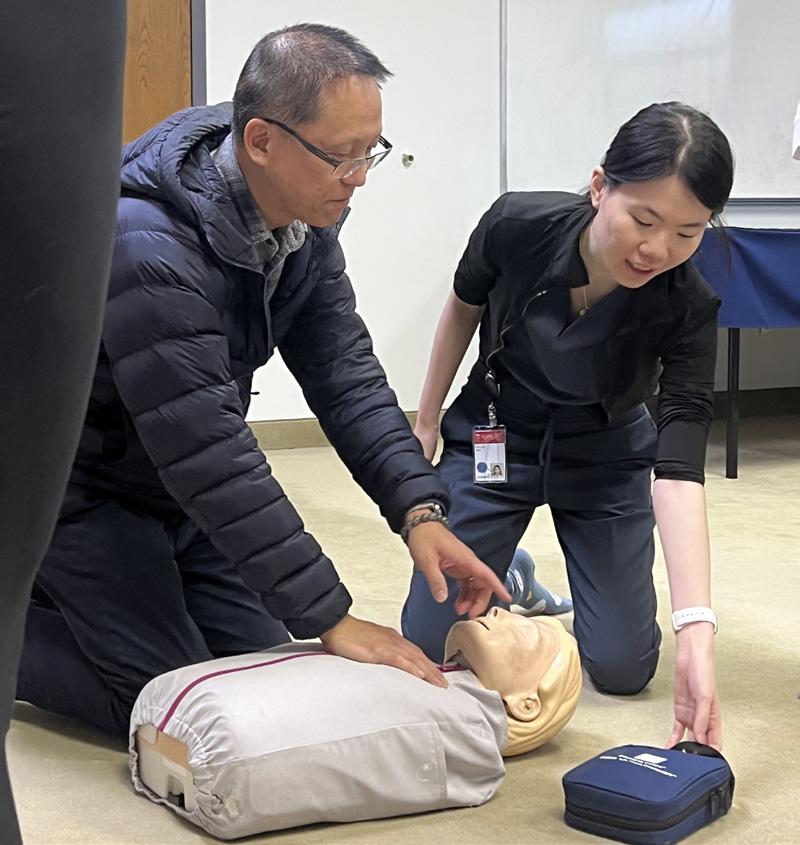
A New Initiative: Mandarin CPR for the Taiwanese Community
This year, the Rutgers Medical Mandarin Club, in collaboration with the NJMS Asian Pacific American Medical Student Association (APAMSA), hosted its first-ever Mandarin CPR class. Collaborating in this effort was Bystander CPR, an NJMS Community Engaged Service Learning (CESL) project that teaches CPR to the Newark community. The course was given at the Tzu Chi Academy, a Chinese language school in Cedar Grove, NJ. Participants learned basic lifesaving CPR skills and how to use an automated external defibrillator (AED).
NJMS student Darin Mak initiated the project after attending the Northeastern APAMSA conference in the fall of 2024. During the poster presentations, he saw a poster showcasing a medical Mandarin CPR workshop started at Yale School of Medicine (YSM) by students under the mentorship of YSM faculty member David Yang, MD, MHS. Mak met with Yang to discuss the logistics of starting a similar project at NJMS.
Back in Newark, Mak reached out to fellow student Ashley Yang, co-founder of the Rutgers Medical Mandarin Club and its partner, the Tzu Chi Foundation, to confirm their
interest. The groups partnered with Bystander CPR to train students for the session and use their CPR materials.
“It has been surreal to see the Mandarin CPR project come to life,” says Mak. “This has been a passion project since I first learned about it, and it means a lot that we get to teach members of the Asian-American community this lifesaving intervention.”
Unique to the session was its bilingual format. The Bystander CPR Club provided teaching materials, with Mak and fellow instructors Crist Chee, Chun Chen, and Lindsey Huang providing translation. The materials were then used to teach the course in both English and Chinese. The session began with a one-hour lecture, followed by a workshop with adult and infant manikins. Participants gained hands-on experience practicing on manikins.
Joy Zhao, a community leader who was involved with the effort, commented, “Our parents and grandparents really appreciated how practical and engaging the CPR workshop was, and the bilingual format made it even better.”
Instructor Lindsey Huang commented on the impact of offering health-related workshops in different languages: “Hosting a bilingual CPR session was meaningful for all of us because it let participants focus on learning a lifesaving skill without the added barrier of language.” The event allowed the students to connect with the Asian-American community and establish a working collaboration for future outreach programs.
The groups hope to continue the CPR course next year, offering additional training in choking and drowning scenarios. They also plan on expanding and collaborating with other cultural clubs to offer CPR and basic life training in any language, not just Chinese or English. To learn more or join, please follow: @njmsapamsa on Instagram. — Darin Mak
An
Orthopaedic Marking
aedic Milestone
BY MERRY SUE BAUM
Celebrating a “first” at NJMS is not new, yet each time it happens it is as exciting as the last. This time a team from the Department of Orthopaedics came together to successfully perform the first robotic-assisted total knee replacement at University Hospital. Orthopaedic surgeons Joseph Ippolito, MD’17, and Zuhdi Abdo, MD, both NJMS assistant professors, performed the surgery together, with a host of other health care professionals doing their part.
“This surgery was truly a team effort,” says Ippolito. “Everyone from administration to nurses and physical therapists played a significant role. Dr. Abdo and I held training sessions with the staff to be sure everyone was ready. This is one more example of how committed we are to providing the best care for our patients, using the latest technology.”
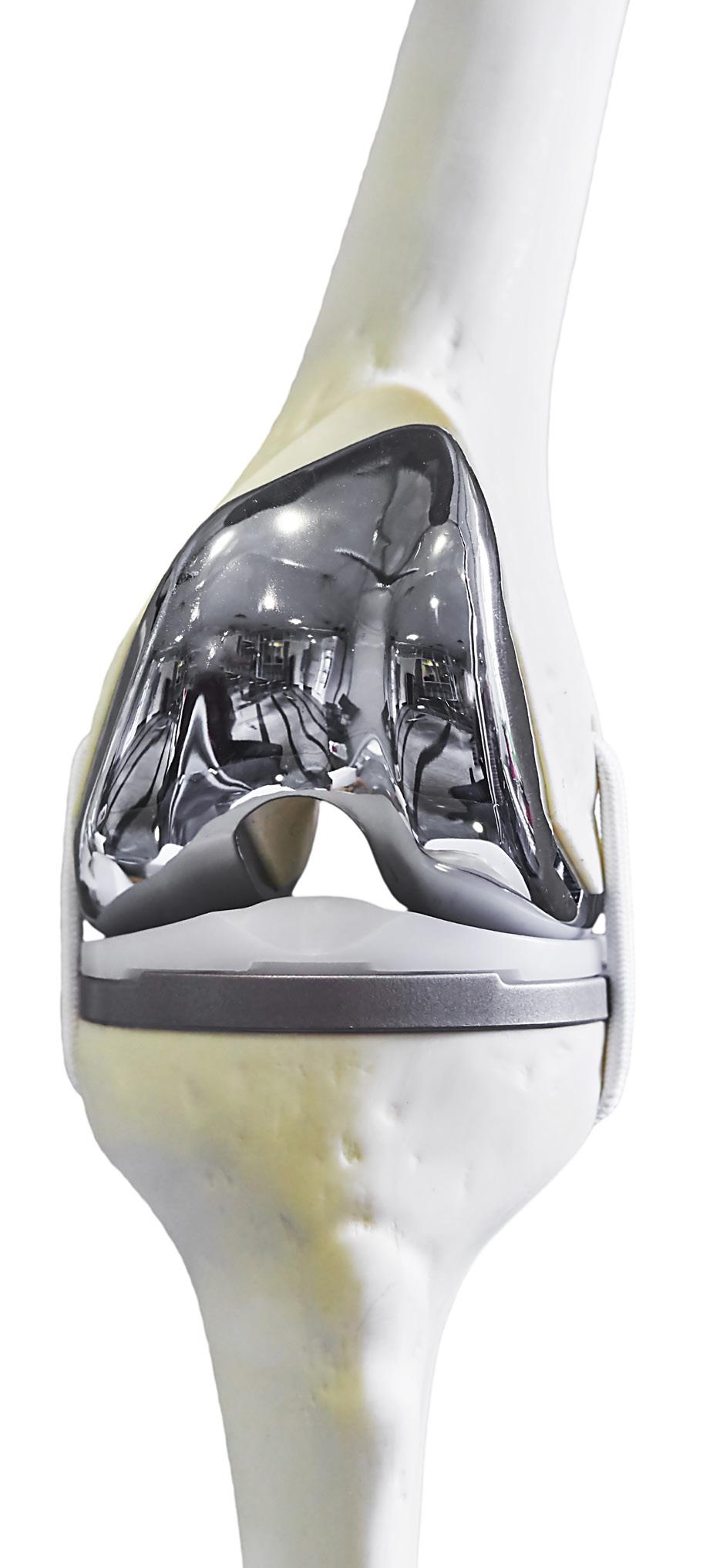
Ippolito explains that knee replacement surgery, or knee arthroplasty, involves replacing damaged or worn knee joints with artificial implants. The procedure is typically performed when treatments such as physical therapy, medications or injections no longer ease the patient’s pain or improve mobility.
During the surgery the damaged, diseased or arthritic ends of the femur and tibia are cut away to create a flat surface for the implants. The underside of the kneecap is shaved or resurfaced, and the anterior cruciate ligament, commonly known as the ACL, is almost always removed. The incision to expose the knee cuts through muscles and tendons and can include cutting the quadriceps, a group of four large muscles located on the front of the thigh.
KEITH B. BRATCHER, JR.
In robotic-assisted surgery, the patient’s pre-surgical CT scans are used to map out all the joint surfaces. The scans are then uploaded into the robot. When the surgeon is ready to remove the bone, the robot shows precisely where the surgeon should make the cuts. The robot ensures the bony resections are confined to within 0.5 mm to 1 mm of the original surgical plan. That is the equivalent to the thickness of a credit card. “The robot helps us make cuts that are as close to perfection as possible,” Ippolito says. “It also helps us correctly place the implant, so the knee is properly balanced.” He adds that this technique allows for less trauma to the soft tissue, so patients may have less pain, recover faster and walk sooner after surgery.
Abdo explains that there are several types of robots used in joint replacements on the market, each with unique features. NJMS uses a T-MINI, which is much smaller in size than most others. It is wireless and handheld, and uses an overhead camera, which means more space in the OR and better access to the patient. And, unlike many other systems, T-MINI is not tied to a single implant manufacturer, so surgeons can choose the best implant for each patient’s anatomy.
After completing his residency training in orthopaedic surgery at NJMS, Abdo completed a fellowship in adult reconstruction at Lenox Hill Hospital in Manhattan. He is fellowship- trained in robotic total joint arthroplasty and believes it is a valuable tool. He is also dedicated to ensuring that NJMS residents are well-trained in both robotic and non-robotic total knee arthroplasty. “All our residents leave NJMS knowing how to do the surgery with and without the robot,” he says. “That’s very important to me.”
Abdo says the average age for knee replacements is mid-sixties, and most are due to osteoarthritis. This type of surgery gives people their lives back. “Many people have severe pain that prevents them from carrying on with their activities of daily living,” he says. “They’re very willing to substitute surgical pain, which they know will eventually go away, for the constant pain they’ve been experiencing.” He says the number of replacement
“Many people have severe pain that prevents them from carrying on with their activities of daily living. They’re very willing to substitute surgical pain, which they know will eventually go away, for the constant pain they’ve been experiencing.”
ZUHDI ABDO, MD
surgeries continues to rise at NJMS and is expected to increase 400 percent by 2030.
“Dr. Abdo has played a leading role in bringing his fellowship training experience to our institution,” says Ippolito. “He has also helped lead numerous total joint initiatives that our patients have benefitted from. Thanks to this work and the collaboration of the OR team, physical therapists and orthopaedic floor nursing team, I am proud to report that one of our first total robotic joint patients was able to go home the same day and sleep in his own bed that night.”
Ippolito says most patients are excited about the prospect of having robotic surgery. In fact, some even seek out the two doctors and do research on robot-assisted surgery before they see them. The one question that
almost always comes up, Ippolito says, is to what extent the doctor will be performing the surgery. They also ask what the difference is between surgery with or without robots. “We educate them on everything that is going to happen,” he says. “We explain that the robot is a tool that helps us but doesn’t actually do the surgery. And I explain that I aim to create a balanced, well-functioning knee with minimal trauma.”
Patients are generally apprehensive about having knee replacement surgery, Ippolito explains, as it has long been known as a difficult and painful recovery. Most are pleasantly surprised at how fast they heal and can get back to their everyday lives. “I feel so fortunate to be able to restore people’s independence and improve their quality of life,” says Ippolito. ●
SurgeonThe Scientist
An NJMS surgery professor has researched how to potentially regrow lymphatics, and plans to spin off a company soon to conduct clinical trials. Alex K. Wong, MD, will balance this endeavor with his other roles: NIH-funded investigator, NJMS’s department of surgery’s vice chair of research, and the new chief of surgery at the VA New Jersey Healthcare System.
He’s basically been training for this all his life. “My mother was a pediatrician, my dad was an anesthesiologist and my brother is a dermatologist. Medicine is kind of the family business,” he jokes. Initially, Wong studied biology and hoped to be a cancer researcher. “While I was fascinated by how cells and small pieces of machinery in the body work, I fit better where I could apply science to helping people directly, one-on-one.”
Wong initially focused on the potentially fatal skin cancer melanoma and angiogenesis, the study of blood vessels. This led him to lymphedema, a condition that strikes a third of cancer patients who require surgery. It can lead to swollen, painful, numb and tingling body parts. “White cells need a way to go kill infections and return to the bloodstream,” he says. “The lymphatics act as a sump pump cleaning up garbage.” When those “sewer lines” get congested, back pressure causes the system to dilate and eventually break. The body looks for alternative channels, and the fluid or waste ends up leaking into the skin, fat and interstitium, the space between cells and organs that transports nutrients. This can provoke the immune system into attacking itself.
Compression can reverse early-stage lymphedema, but if chronic inflammation occurs, it’s irreversible. “All you can do is keep it at bay or prevent it from getting worse,” he says.
Microsurgeons like Wong can perform lymphovenous bypasses, shunting congested lymphatic channels to nearby veins. But this technique only benefits early-stage inflammation. More advanced cases may require transplanting unused lymph nodes to the site where they’re needed. He prefers to harvest from the omentum, the apron-like fat sheath protecting the intestines. “Before we used lymph nodes around the groin. But a misstep could give patients leg lymphedema while trying to fix their arm lymphedema.”
In 2011, a mentor tasked him to study retinoic acids, small molecules that make new lymph vessels. Most widely known for controlling acne, these FDA-approved topical drugs can treat chronic eczema and the soft tissue cancer Kaposi’s sarcoma. “We discovered that if we inject retinoids when an animal has a lymphatic injury, it helps them make new lymphatics exactly where they need it,” Wong explains. “We found the right dose and right
BY AMANDA CASTLEMAN
timing, which led to a use patent for 9-cisretinoic acid to help prevent lymphedema after surgery.”
The National Institutes of Health provided more than $4 million in RO1 funding to understand why this worked. “The grant allowed me to train many undergraduates and medical students, teaching people to do science,” he says. “We understand 9-cis-retinoic acid down to the receptor now. But we need to determine whether repurposing this compound will help humans.”
Now Wong’s lab is spinning out a company, Lymphagen, and raising venture capital to conduct a $25,000,000 Phase II clinical trial. NJMS alerted him to I-Corps, National Science Foundation training to help innovators execute ideas in the real world. “It and the Rutgers Technology Transfer Team pushed me to find a team and define how my technology will help,” he notes.
The team had tried to launch five years ago, but the project fizzled out. This time, medical student Justin Park connected him with a family friend, a semi-retired pharmaceutical executive who had already helped a Rutgers startup called PTC Therapeutics, now a billion-dollar global company. “I know the technical part and Greg Park is the industry mentor,” Wong says. “He was the missing piece to make this happen.”
Wong says it’s rare for one investigator to focus on the mechanism side down to one molecule and try to help people instead of a clinician and a PhD with extreme expertise. “My only novelty is that I can do both reasonably well,” he says. “Call me a surgeonscientist.” ●
Learning Medical Journalism at “ABC News”
BY TY BALDWIN
“We think we’re keeping things simple with our
patients,” says Radhika Malhotra, MD’22, a resident in internal and preventive medicine at NJMS who recently spent two months working with the “ABC News” medical unit. “But this rotation really helped me see how important it is to be clear and explain things responsibly. You don’t get a second chance once something has aired on TV.”
The Media and Medicine residency rotation, she explains, allows doctors to rotate into the medical unit at “ABC News,” where they can learn more about medical journalism, and also hone their own communication skills. For Malhotra, who recently completed her master’s in public health as part of her four-year residency in public health and preventive medicine, it was a natural fit.
“Health-care communication is an important part of public health,” she says. “This rotation gave me a chance to understand how medical journalism actually works. I think a lot of people see a story on the news and then go to see a doctor, so patients are already coming in with some background information and some understanding. Being on the other side of that was very interesting.”
Malhotra’s duties at ABC included look-
ing at medical studies that were soon to be released (“helping break down the language so that it was more understandable to the general public”), and consulting on healthrelated breaking news and, sometimes, celebrity health conditions.
During the recent measles outbreak, for example, she helped translate statistics from different health departments across the country so that the news program could give people a clearer picture of what was going on. “When Senator John Fetterman was in the hospital, there were reports that he’d been shocked,” she adds. “We helped to explain that he wore a device that would deliver a shock in case of an abnormal heart rhythm.”
Malhotra also consulted on scripts— “anything with a scientific or medical lens is reviewed by somebody from the medical unit
“Healthcare communication is an important part of public health.”
RADHIKA MALHOTRA, MD’22
who is trained in both medicine and public health”—and wrote articles for the program’s website.
Initially, Malhotra would write sample work and “send it to the medical unit for review. Then they would edit it and send it back. They really spent a lot of time teaching us to simplify.” By the end of the first month, she had a better understanding of what the editors were looking for and was able to work more independently.
For one story, about a major update from the Health Resources and Services Administration (HRSA) that approved at-home screening tests for cervical cancer, Malhotra
interviewed both the chief medical officer of HRSA and the agency’s administrator so that she could put the new guidance into perspective. The goal, she wrote, was to “expand testing options, not replace the Pap test. Selfcollection is intended to remove barriers for women who find in-office screening difficult to schedule, uncomfortable, or hard to access.”
Another story concerned a “systematic review and meta-analysis of perinatal or prenatal use of Tylenol and autism rates,” Malhotra says. “That story appeared on ‘World News Tonight’ and ‘Good Morning America.’”
The review, she wrote, found that “using acetaminophen as directed during pregnancy
does not increase a child’s risk of autism, attention-deficit/hyperactivity disorder (ADHD) or intellectual disability.”
“Learning how to communicate health information to a television audience was extremely helpful,” Malhotra says. “You’re constantly thinking about how to say things with more clarity because you want to be precise— concise but also understandable. You realize that people are getting a lot of their information from what you’re writing or saying, and you want to make sure they understand when they should see a doctor. Even if you’re not seeing patients in a clinic, there’s still that responsibility, you’re still advising someone
on health care, and you want to make sure they know the warning signs of when to seek emergency care, and when they should be asking questions about their health.”
When a story is on TV, “you don’t get to see the audience’s facial expressions,” she adds, so you can’t gauge if they’ve understood. “You realize that the information needs to be clear for different groups of people with different levels of education or health literacy. You want them to walk away from the story with an understanding of the most important points–that kind of becomes your job.” ●
Champions of a Little-Known Lifesaving Test
BY AMANDA CASTLEMAN
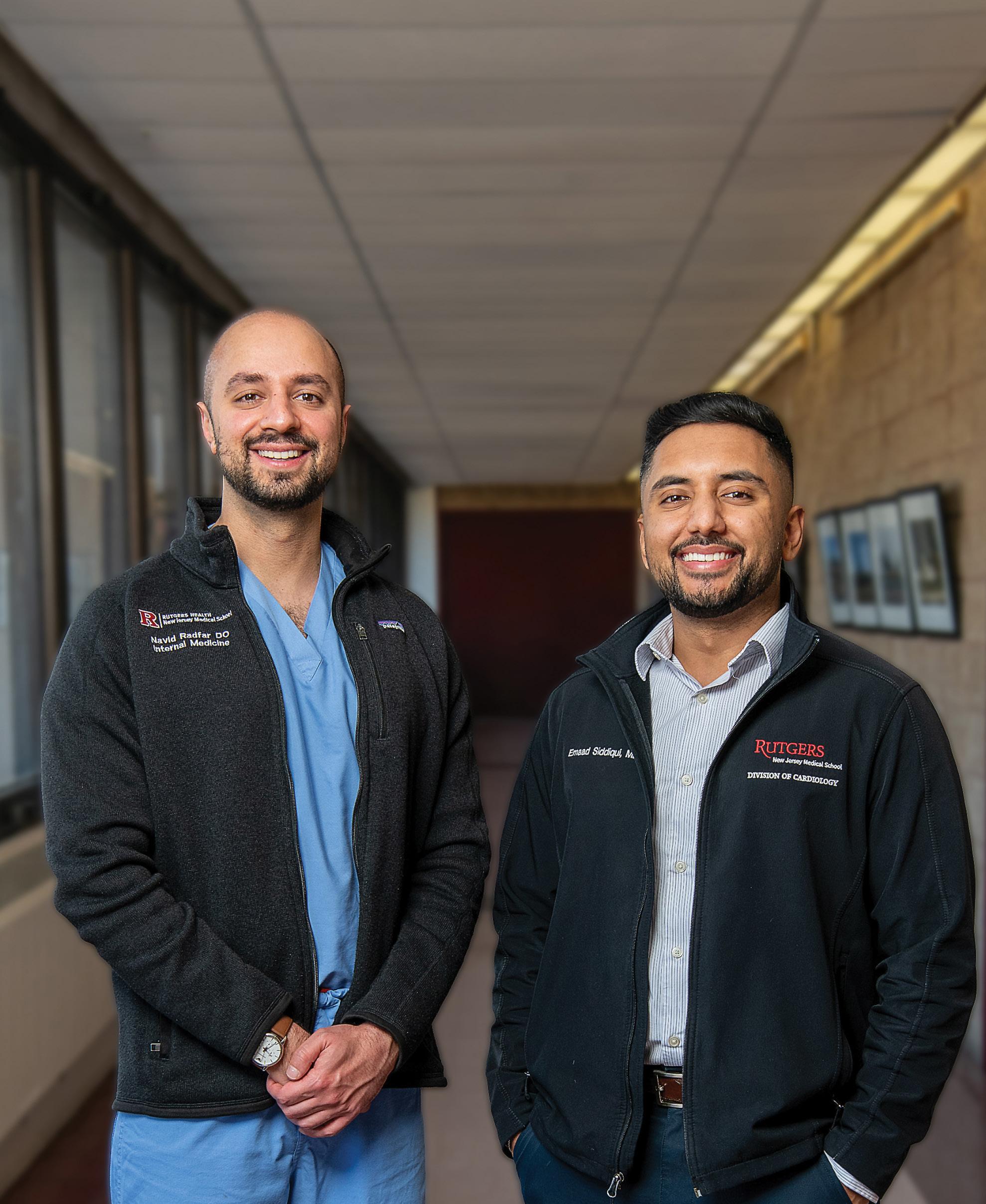
Heart disease has been the United States’ leading cause of death since 1950. Lifestyle modifications could prevent over 80% of these cases now, except around 75% of patients don’t comply. Enter NJMS’s Emaad Siddiqui, MD, and Navid Radfar, DO, who created the school’s first screening initiative to help people understand the risks and take action earlier.
A blood test can reveal elevated lipoprotein(a), a variant of “bad” cholesterol. That’s important since Lp(a) is a triple threat, Radfar explains. “It’s pro-atherosclerotic, pro-thrombotic and pro-inflammatory.” High levels signal a genetic predisposition towards cardiac issues, a trait shared by one in five people worldwide, which can double or even triple the chance of a heart attack. However, out-of-range results don’t automatically spell doom. They just let providers and patients know to more intensively manage the overall risk of heart disease. Steps often include statins, exercise, heart-healthy foods, and controlling other factors like diabetes and high blood pressure.
In March 2026, the American Heart Association and the American College of Cardiology began recommending a one-time test for every adult, since Lp(a) levels remain relatively stable after age five. But they’re playing catchup to Siddiqui and Radfar, who have promoted this standard of care since 2024.
The pair first met in a College of New Jersey organic chemistry course as undergraduates aiming for medical school. Siddiqui did a seven-year NJMS program (‘20), a New York University residency and then matched back to Rutgers, where he is now the chief cardiology fellow. Radfar earned a master’s in biomedical sciences at NJMS (‘17), then worked various jobs—including vaccine and development scientist at Pfizer— before attending Rowan University School of Osteopathic Medicine. The Dr. Pepper Tuition Giveaway helped with this: Radfar won $100,000 by tossing footballs into giant soda cans on ESPN’s broadcast of the Atlantic Coast Conference. He triumphed using chest passes instead of the overhead technique favored by quarterbacks. “I got some heat and some love for it, but it worked out,” he says. “And a few months later, Dr. Pepper asked to feature me on cans, bottles and ads.” Despite all that exposure, patients have never recognized him. “I was a Z-list celebrity at best,” he laughs.
The friends reunited when Radfar started his Rutgers residency three years ago, and reconnected over their shared passion for prevention. Siddiqui says: “Critical care and lifesaving medicine are great, but Navid [Radfar] and I agree cardiology’s main goal is to find and help patients before they end up in a hospital. We want to help them live longer or feel better.
Lp(a) caught their attention as an emerging biomarker with a lot of literature and new treatments in trials, explains Radfar, a resident on the clinician education track and incoming NJMS cardiology fellow. “But we realized no one was really screening for it then, despite the National Lipid Association saying ‘just order it for everyone!’ since 2024.”
The collaborators decided to spread the word and make the process easier. First, they
worked with the lab to get the Lp(a) assay ready and available on the Epic medical records system, which took about 14 months. Then they educated providers about the test’s benefits and refined the user interface to make results more accessible. It gives doctors and patients a hard value to work off, Siddiqui explains. This qualitative measure offers an extra level of risk stratification, signaling when an issue needs to be taken seriously and addressed sooner rather than later.
The team began screening at East Orange VA Medical Center, where their research revealed 42% of patients had elevated Lp(a), more than twice the national average, underscoring the burden of hidden cardiovascular risk in historically under-tested populations. This work led to numerous awards, a feature in “Precision Medicine” and the initiative’s expansion to University Hospital, Cooperman Barnabas Medical Center and the state’s entire healthcare system for veterans.
“Around 40–45% of tested patients started a new therapy such as medication or intensifying lifestyle interventions,” Siddiqui says. “It’s a win that’s easy, affordable and noninvasive, and one that changed the paradigm of how we handle patients with increased risks.” ●
KEITH B. BRATCHER, JR.
Left to right: Cardiologists Navid Radfar, DO, and Emaad Siddiqui, MD
Tailoring Emergency Care for Children
BY TY BALDWIN
“Children are not just small adults,” says Joseph L. Wright, MD’83. “They’re developmental, dynamic beings. There’s always something going on that is unique to their age.” Wright, the senior vice president and chief health equity officer at the American Academy of Pediatrics, was recently awarded the C. Everett Koop Medal of Distinction by Safe Kids Worldwide in recognition of his “outstanding work on children’s health advocacy and injury prevention.” He knows a thing or two about kids.
The Medal of Distinction, which is issued only every other year, is something of “a lifetime achievement award,” Wright says, “in that
it represents a cumulative set of experiences and accomplishments. There have been just a handful of recipients, and I feel honored to be in the rare company of the other awardees, in terms of being recognized for our dedication to injury prevention.”
It was C. Everett Koop, Wright explains, who, as surgeon general during the Reagan administration, “got folks to realize that injury prevention is a necessary science, even though it’s not top-of-mind until it happens to you. He had this famous quote: ‘If a disease was killing our children at the rate unintentional injuries are, the public would be outraged and demand that this killer be stopped.’ I hope that I’ve been able to replicate his leadership in some small way across the arc of my career.”
Wright didn’t always have his sights set on medicine. Growing up in Brooklyn, the son of a social worker and a police officer, he thought he might pursue architecture. Once he matriculated at Wesleyan University, however, Wright discovered the premed curriculum and focused on it with a characteristic passion that led him to spend three consecutive summers in the Students for Medicine (SMP) program at NJMS. Med school in Newark was the natural choice.
“I met Dr. Robert Johnson early on, when I was a medical student,” Wright recalls. “Of course, he wasn’t the dean yet, but he was obviously a very busy doctor. I would accompany him to his volunteer work at a place called The Door in lower Manhattan. His example was very influential. I realized the scope of possibility, that no matter what I would do in medicine, it would go beyond whatever my day job was.”
Wright completed his pediatrics residency at Children’s National Medical
Center, in Washington, D.C., and then joined the Public Health Service. “I worked at a community health center in Brooklyn. I was taking care of the children of kids I grew up with.” After four years, he returned to Children’s National for a fellowship in pediatric emergency medicine and was in the first cohort of fellowship-trained pediatricians to train and become certified in emergency medicine.
Before the advent of pediatric emergency medicine, Wright explains, “so much of the emergency care for children was extrapolated from what we do for adults, which in many cases is abjectly wrong.” Treating children requires “taking into account their unique anatomy, their unique physiology. The majority of treatment, not just medication, must be based on a child’s weight and stage of development.” Another often overlooked challenge of pediatric emergency medicine is interacting with families. “You’re dealing with at least two patients at every encounter because the child is going to have a parent or two, or in some cases several caretakers present. That’s why we are trained to engage with families in their worst moment.”
After completing his fellowship, Wright stayed on at Children’s National, where he was exposed to the importance of child
Continued on page 23
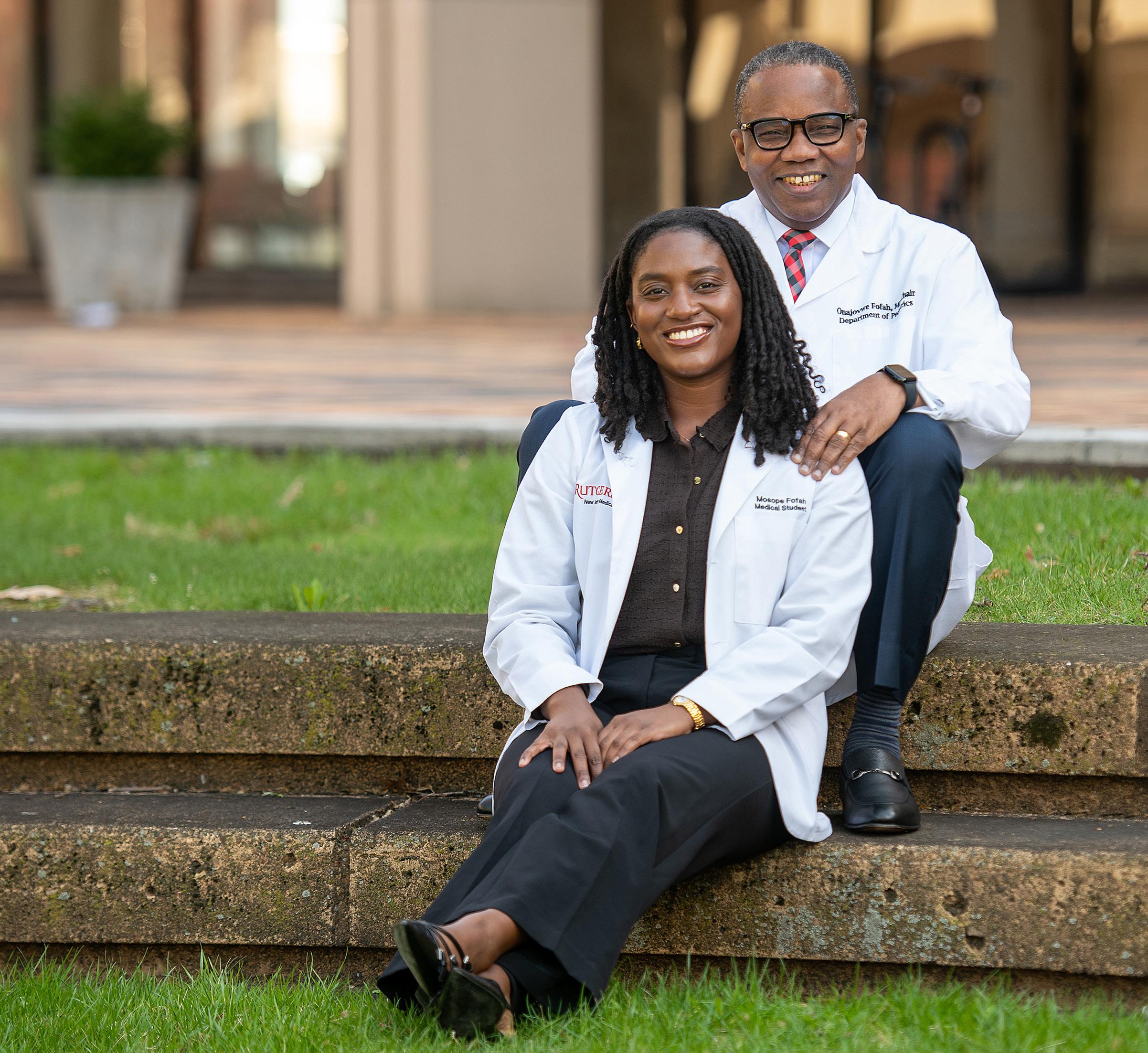
Following in Her Father’s Footsteps
BY NANCY A. RUHLING
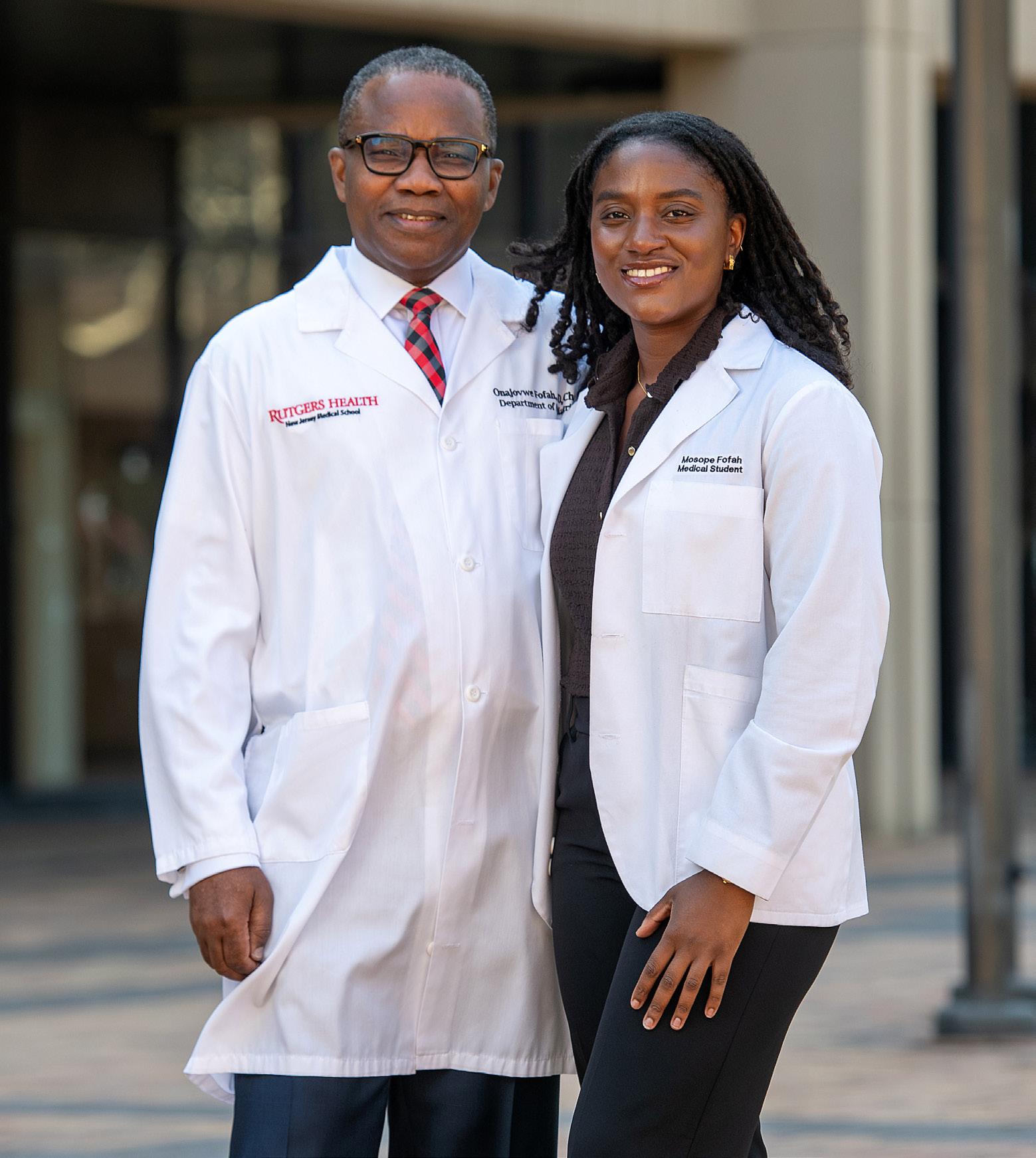
There are two dates that remain forever etched in Onajovwe Fofah’s mind: Oct. 28, 2000 and May 18, 2026.
The first is when his only daughter, Mosope, was born. The second is when he watched as she received her diploma from New Jersey Medical School.
Fofah, a professor and chair of pediatrics, is, of course, thrilled that she’s following in his footsteps, but there’s a bigger back story behind the milestone.
Mosope, you see, almost didn’t make it into this world: She was born 13 weeks premature and spent the first 46 days of her fragile life in the neonatal intensive care unit of a Chicago hospital, where her mother, Nikki, was on bedrest for two months and where Onajovwe was an attending physician.
“She was born at 5:30 AM. I remember that so clearly,” he says. “The day we took her home, there was a foot of snow on the ground.”
Although Mosope didn’t become interested in medicine until she was studying psychology at Rutgers University-New Brunswick, she was no stranger to the field: her father and mother, a respiratory therapist, brought the profession home on a daily basis.
She had heard all about how her father, a native of Nigeria, decided to dedicate his life to medicine after he was tutored in the sciences by American college students at a time when his country was in turmoil.
She knew of his work in an orthopaedic hospital, his stint as a private practitioner, his residency at NJMS, his work in the hospital where she was born, and his becoming a Rutgers medical school faculty member in 2005.
“To me, the essence of being a physician is having these lifelong relationships with people and seeing them at their most vulnerable,” she
says, a sentiment echoed by her father.
Once Mosope announced her intention to become a physician, her parents offered their full support. So did older brothers Tosin, a pharmacist, and Ayo, a forensic CPA. “My dad and I were like each other’s rock these four years of medical school,” she says. “We were teaching each other different things.”
Onajovwe learned about the stresses of being a medical student in the U.S., and Mosope got the benefits of his insights about the profession he loves.
She chose Rutgers because she had enjoyed her experience as an undergraduate in New Brunswick and had been introduced to some of the Newark faculty members through summer programs.
“Everyone was super friendly and familylike,” she says. “And I was looking to feel something similar in med school. NJMS was the only place where I felt that. I knew that the people I met were going to be lifelong friends.”
Mosope, who will do her residency at the Boston Medical Center, sees her field, family medicine, as the foundation of the health care system. While a medical student, she gained new insights about her father.
“I was able to see how everyone sees him and how he functions and see firsthand his impact,” she says, adding that people would come up to her and say, “‘I know your dad; he’s so sweet.’ It’s been a nice little extra thing that my siblings didn’t get, so it’s been one of the best parts of the journey.” ●
Fusion Power
BY AMANDA CASTLEMAN
Rutgers oncologists have put a new twist on the precision treatment of localized prostate cancer, combining radiation therapy and real-time 3D ultrasound. When external beam radiation therapy fails, patients’ options narrow. Treatments like cryotherapy and high-intensity frequency ultrasound do not have long-term track records of success, which encourages radical
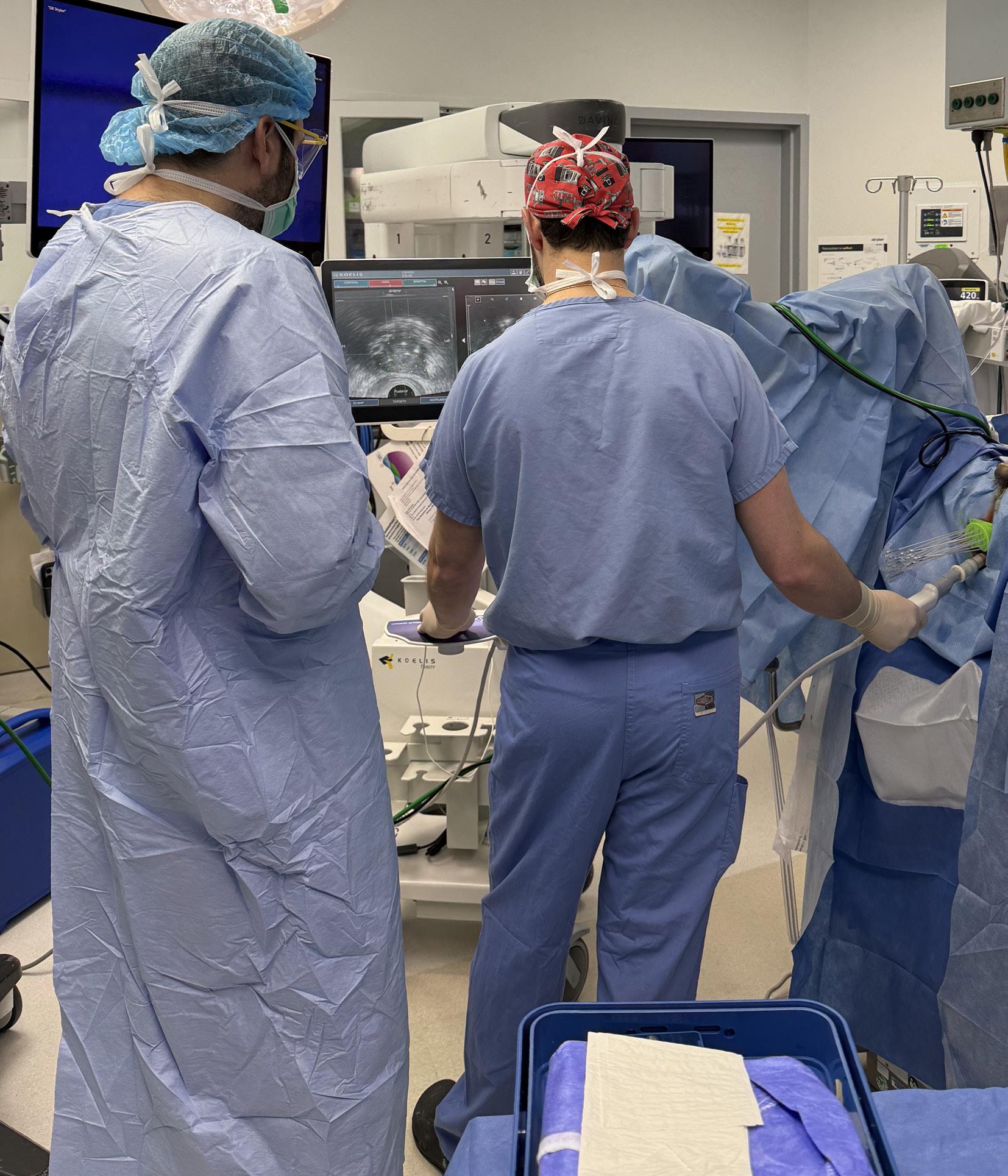
prostatectomies. “It’s a difficult surgery,” says Evan Kovac, MD, associate professor of surgery and director of urologic oncology. “You’re dealing with an area that’s already inflamed and scarred by radiation.” So, he prefers a procedure with comparable side effects, but less risk of complications: high dose rate (HDR) brachytherapy, a form of internally delivered radiation suited to patients with recurrent disease that’s still confined to their prostates. In this procedure, a plastic template is placed over a patient’s perineum. Ultrasound then helps surgeons guide small tubes into the prostate. Surgeons use this rigging to in-
sert highly radioactive iridium pellets on wires, controlling the depth and duration of exposure across several 10-to-20-minute sessions.
The treatment requires a day or two of hospitalization and CT scans to ensure correct catheter placement. Oncologists deliver the radiation in gradated doses—a little more here, a little less there. “It’s a good way to spare the rectum and the bladder some side effects and direct more radiation to where the cancer is,” Kovac says. “It’s quite effective.” But patients are bedbound throughout the process because they can’t walk with the catheters between their legs.
He’s done several of these procedures, collaborating with Malcolm Mattes, MD, a radiation oncologist at Rutgers Cancer Institute of New Jersey, the state’s only NCI-designated Comprehensive Cancer Center. “I guide the ultrasound and he places the catheters,” explains Kovac. “But it’s an imperfect way to see, because 2D ultrasound is grainy and lacks precise measurement capability, making it difficult to evenly space the catheters.
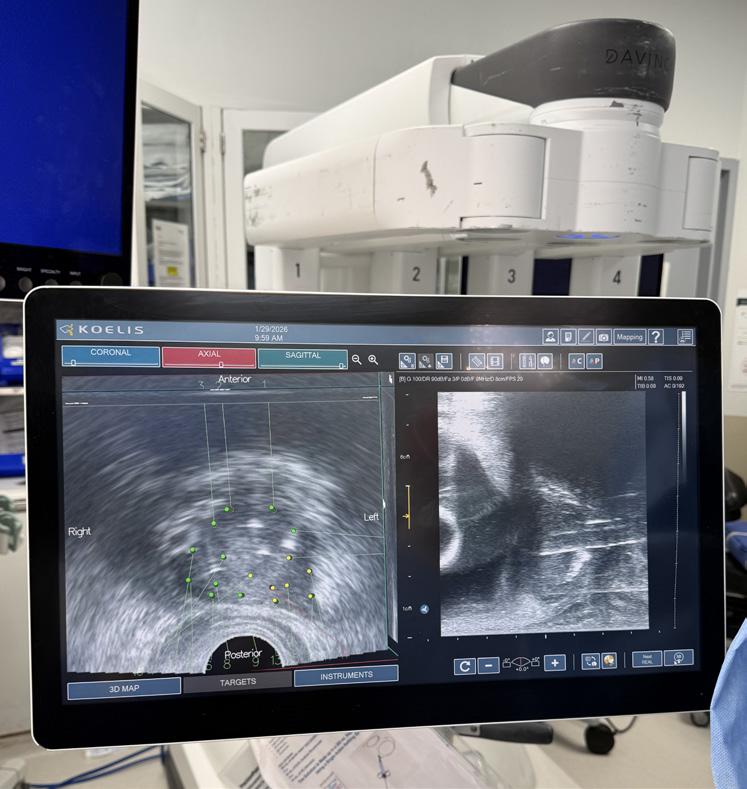
“So, I thought, ‘Instead, why don’t we use the 3D ultrasound technology that we use for biopsies?’” Kovac recalls. This spring, the team found an appropriate case and did the procedure using the Koelis Trinity imaging system, which combines MRI with real-time ultrasounds to create 3D prostate maps.
NJMS’s prostate biopsy program debuted this diagnostic tool in New Jersey four years ago, Kovac explains. “But this technology had never been applied to HDR brachytherapy before. It shows how innovative we are at Rutgers, always trying to improve current practices.”
Their first patient underwent two treatments spaced a week apart, though treatments can also be done over 48 consecutive hours. The patient tolerated the procedure extremely well and Kovac found the process more accurate. The operation took about an hour, a little longer than traditional brachytherapy, since he and Mattes needed to scan the prostate after each catheter and update the 3D map.
The NJMS team in the OR, delivering high dose rate brachytherapy to the prostate.
Wright
Continued from page 20
advocacy. There is no state government in Washington, D.C., he explains, “so we had to deal directly with Congress to secure funding for social services programs and other kinds of support.” To facilitate such efforts, Wright founded the Child Health Advocacy Institute in 2006.
“I distinctly remember our first big legislative advocacy victory,” Wright says. “We had noticed that a disproportionate number of children with lap-belt injuries presenting to our pediatric trauma center came from Maryland, and we knew that Maryland was the only state in our regional catchment area”–Virginia, Delaware, Pennsylvania, and the District of Columbia–“that had not passed booster seat legislation.” The upshot was an increased number of these serious, but preventable injuries.
“When a car crashes, and a child who has been prematurely advanced into an adult restraint system flexes over the horizontal part of the seatbelt, it can cause all kinds of internal injuries because the belt isn’t secured over the hips, where it would be for an adult, but over a child’s abdomen. We were seeing these injuries, and thinking, this is preventable, we’ve got to do something.”
University of Maryland Medical System recruited him to become a chief medical officer. In 2023, the American Academy of Pediatrics recruited Wright to become senior vice president and chief health equity officer.
“My big picture job is to ensure equity, fix inequities, and to close outcome disparities,” Wright says. “We’re working to close those gaps. A lot of my work has been focused on establishing equity in clinical practice. We need to ensure that all children, regardless of where they live, what community they’re from, have access to safe, high-quality care.”
Outside of work, Wright has dedicated much of the past few years to investigating his roots. “I’m a direct descendant of the Gullah community in the sea islands of South Carolina,” he says. “They were the first selfgoverning community of liberated Africans, in 1861.” Wright’s family “migrated to New York in the early twentieth century to escape the Jim Crow South, so I’m only discovering this history in retrospect.” As a family, Wright, his wife, Frances (they’ve been together since his days at NJMS), their two sons and, now, grandsons, have spent a fair amount of time on Hilton Head, the island of Wright’s ancestors. “There’s a whole lived experience that we’re still learning about,” he says. “It’s interesting to delve into a history that’s not widely known.”
Koelis is considering a software iteration to allow other oncologists to use the techniques the Rutgers team pioneered. “I’m excited,” Kovac says. “Creatively utilizing existing technology for novel purposes is one of the more enjoyable parts of my job.”
The dynamic physician views this brachytherapy refinement as an advancement of NJMS’s state-of-the-art prostate cancer service line. “Sometimes we invest in new technologies and sometimes we find new ways to utilize existing ones: both are fantastic, innovative methods of treating patients,” he says. ●
Even so, getting booster-seat legislation passed proved more difficult than Wright had anticipated. “After several legislative sessions of failure, we changed our tactics and simply went down to the state house with a map of the region,” he says. The map showed that Maryland was surrounded by neighbors who had adopted booster seat legislation. “I called it the hole-in-the-doughnut strategy. It was the fact that they were out of step with the rest of the region that actually pushed us over the edge to victory.”
All told, including his residency and fellowship, Wright spent twenty-seven years at Children’s National. Then in 2014, he was recruited to become chair of pediatrics at Howard University, and, four years later, the
After a long career, Wright is happy to have reached the point of “turning my passion into purpose. To have that passion be my job is certainly satisfying.” He continues, “You get to forty years out from graduating from medical school and you reflect back–well, I remember when I first got to Children’s National Hospital and wondered, ‘Am I gonna be ready for this?’ I was stepping out of comfortable environs to a big, brand-new high-falutin’ place. But I was an SMP participant and medical student in the final days of the old Martland Medical Center, and I’d had exposure to what it was to have to do things on your own, figure things out, and work in a big, urban, old-school city hospital. Certainly as an intern, a first-year resident, I felt extremely well-prepared and technically proficient. I’ll just say that NJMS has served me well.” ●
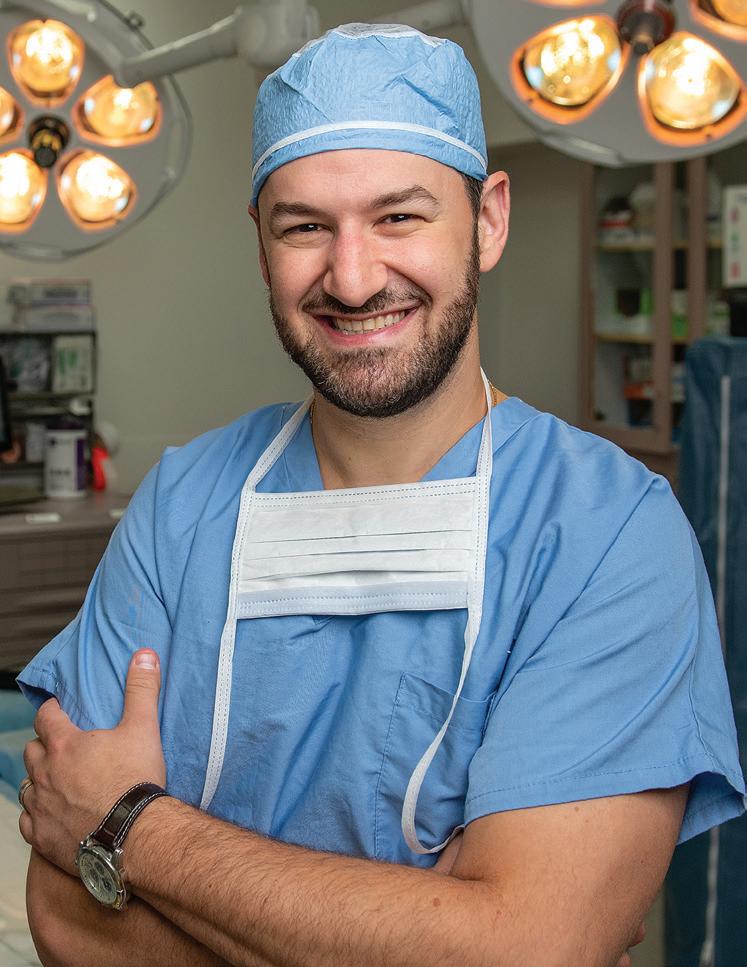
Top: Evan Kovac, MD
Bottom: New technology helps the physicians create 3D prostate maps to deliver cancer-fighting therapy.
Pottery With a Purpose
BY MARY ANN LITTELL
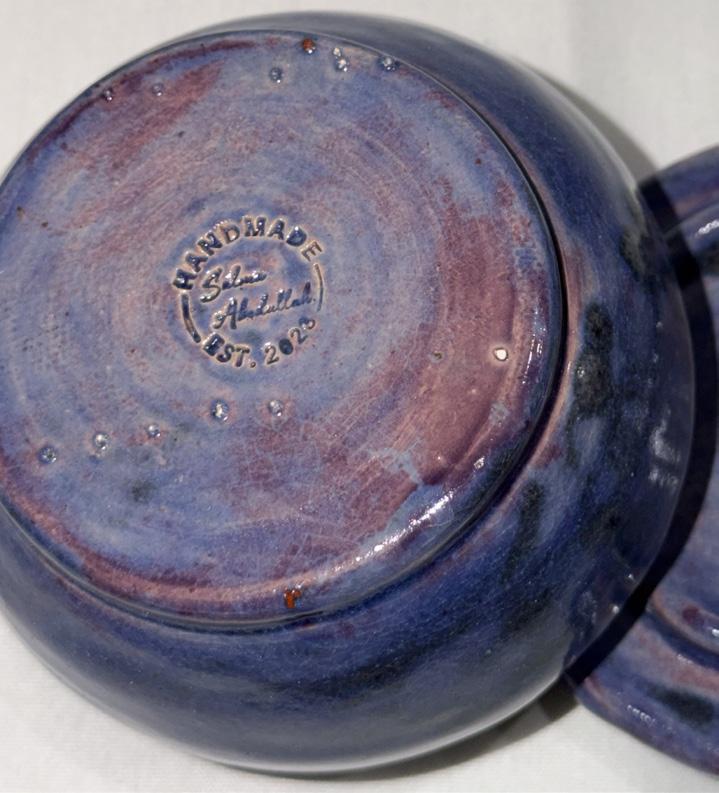
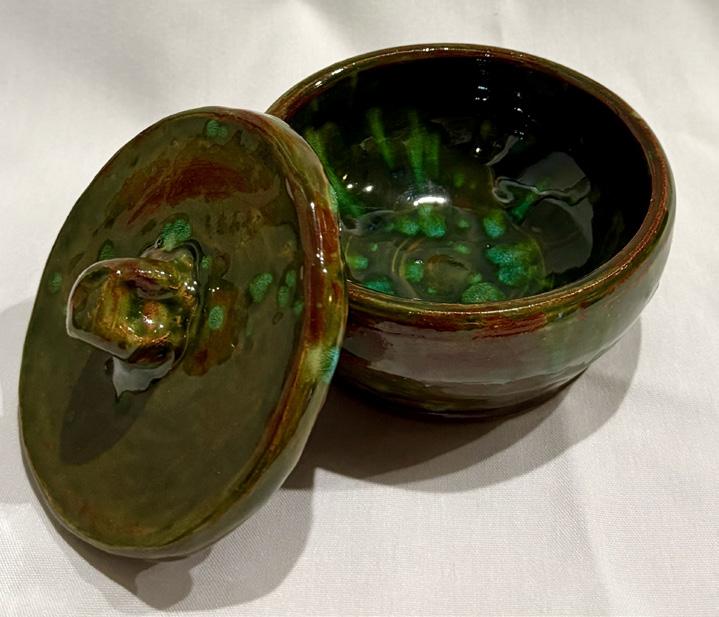
Pottery is the ultimate stress-buster, says NJMS student Salma Abedullah. Few things make her happier than hanging out in the ceramics studio, creating a beautiful object from a lump of clay. “Working with ceramics as a creative outlet helps me stay grounded and balanced during my training,” she says.
She started making pottery in her last year of undergraduate work at Rutgers-Newark. “I saw an ad for a new class being offered in a local adult school,” she says. “Once I started it, I was hooked.” Most of her classmates were retired people, and she became friends with many of them.
Abedullah, who grew up in Jersey City, has always loved science and art. As a child she carried a notebook with her everywhere, filling it with drawings. “I told my family I’d be an artist when I grew up,” she says. “And that dream has come true.”
Growing up in Egyptian community, Abedullah says young people are encouraged to pursue three career choices: lawyer, engineer, doctor. “I rebelled against that for many years,” she says. “I went to a vocationallyoriented school and studied medical science. I really liked it and considered nursing and pharmacy before deciding that what I really wanted was to go to medical school.”
Taking a gap year between college and medical school, she says, “Working my way through the application process was stressful. I had a lot of time on my hands too. I found myself going to ceramics more and more. It relaxed me, almost like meditation. As I centered a piece on the potter’s wheel, I felt I was
centering myself emotionally. I realized how important ceramics is to my life and mental health.”
She’s drawn to all aspects of ceramics: from the potter’s wheel, to hand building — creating free-form objects. “I’ve created so many things that my dad said you’re creating a museum in the house,” she says, adding that she’s gone to a few craft fairs and sold some of her creations.
“My goal has always been to continue doing ceramics outside of med school,” she says. “I feel it’s important to have an interest outside of medicine that fuels your passion for medicine.”
She adds: “Through this process I’ve learned something about myself too. I need to use my hands in my practice — whatever specialty I decide to pursue.” ●
Above are some examples of Salma’s beautiful work. Follow her at @artsyysalma.
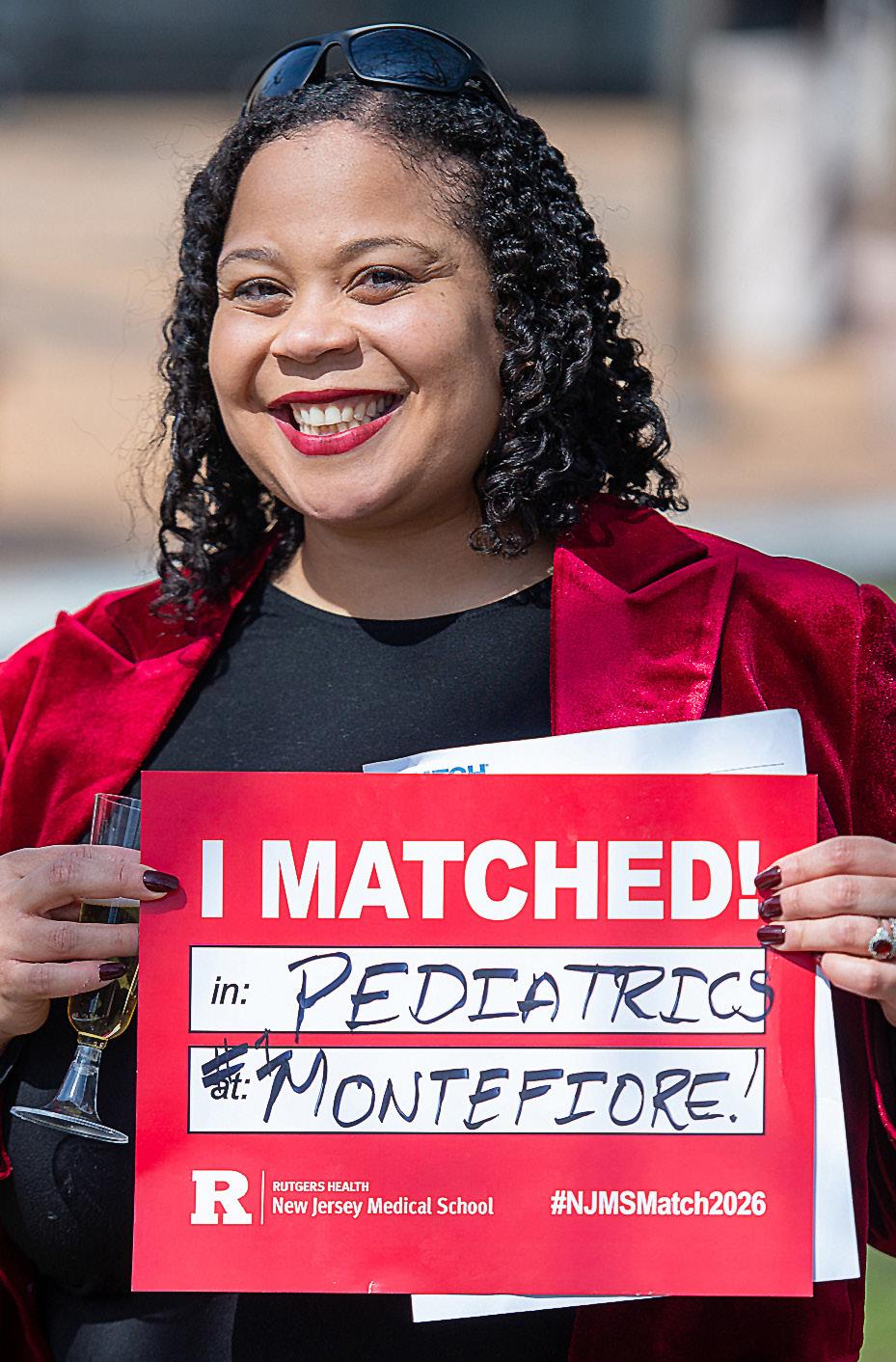
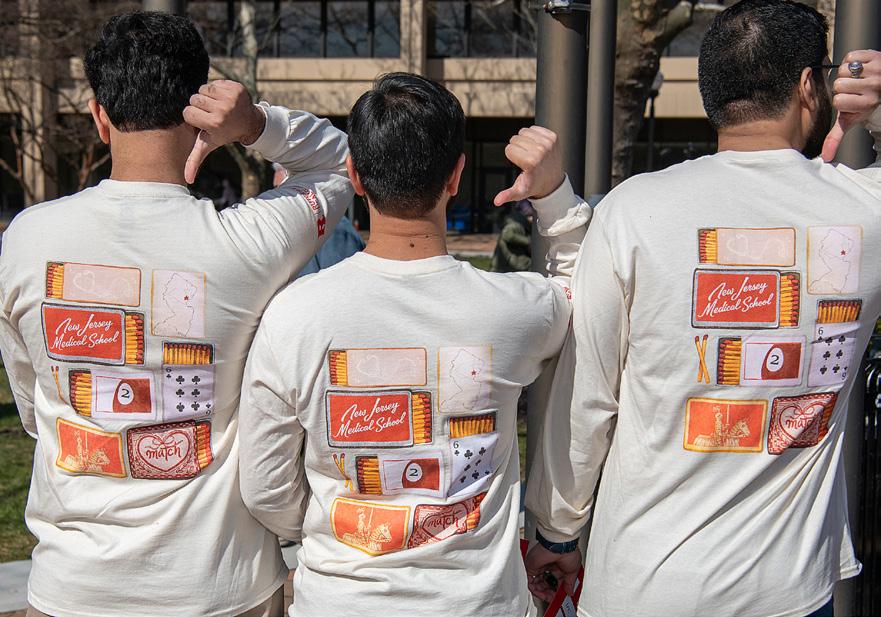
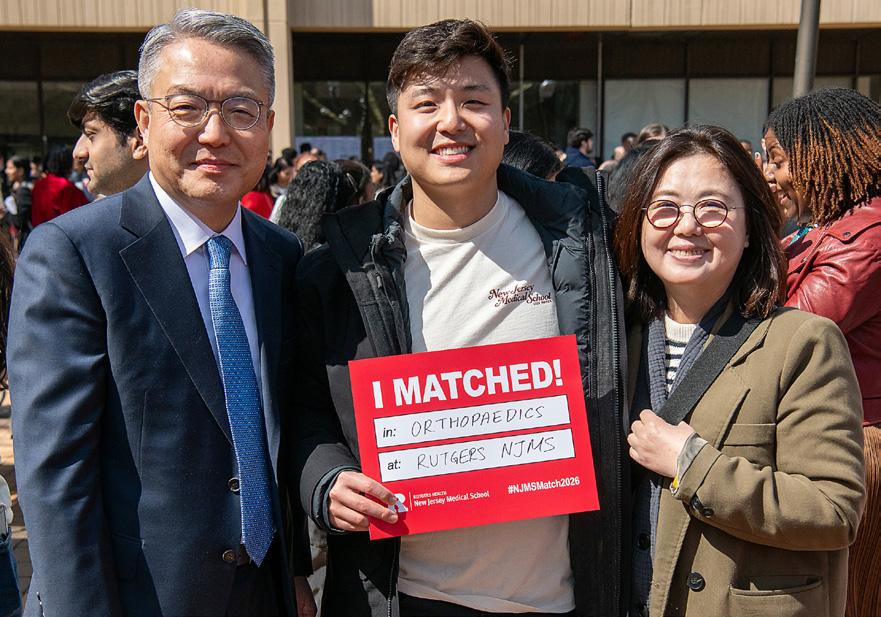
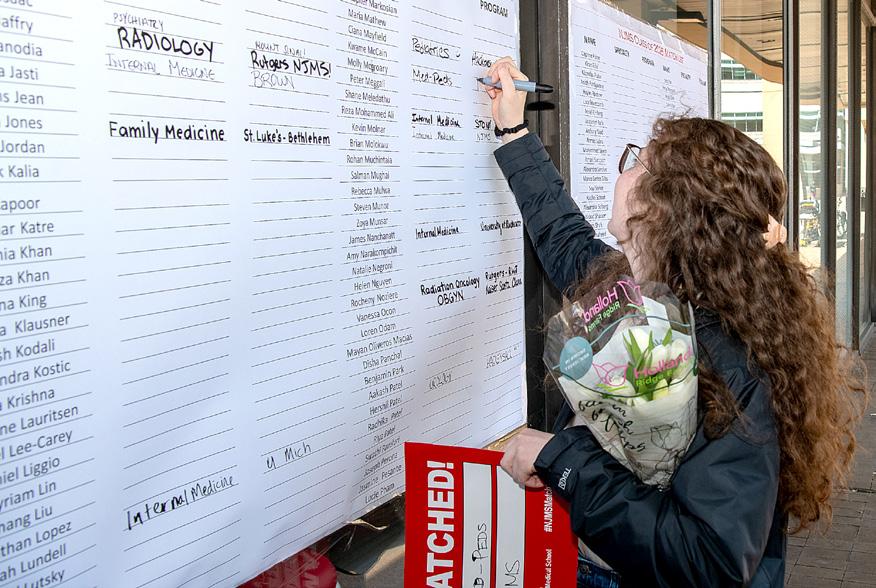
It’s A Match!
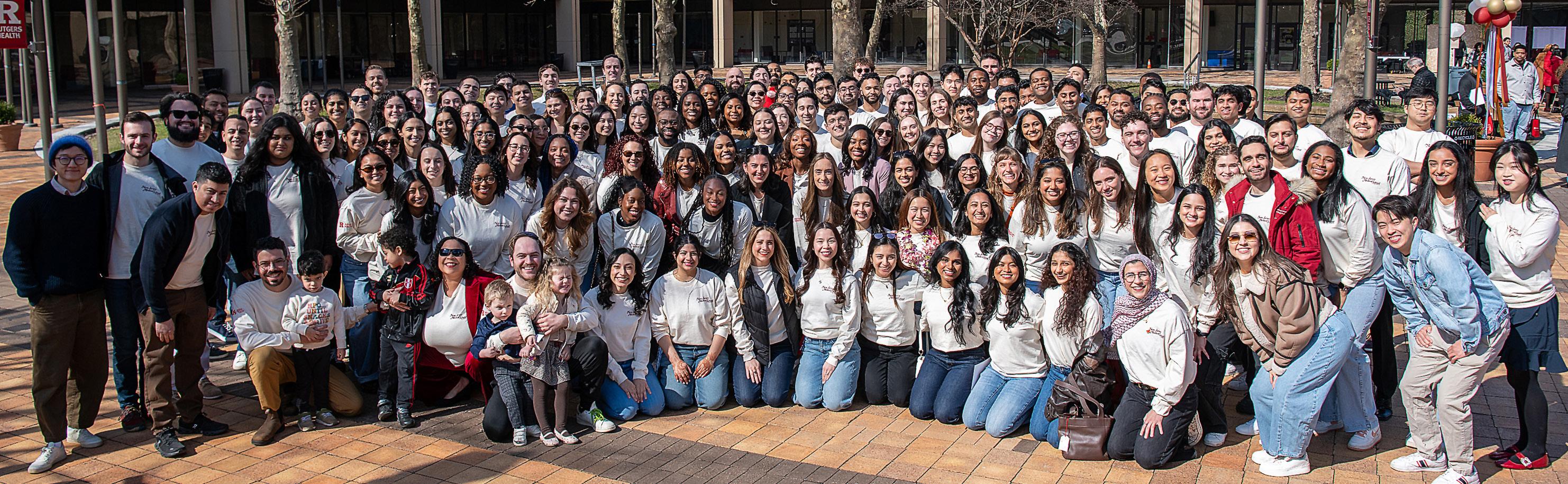
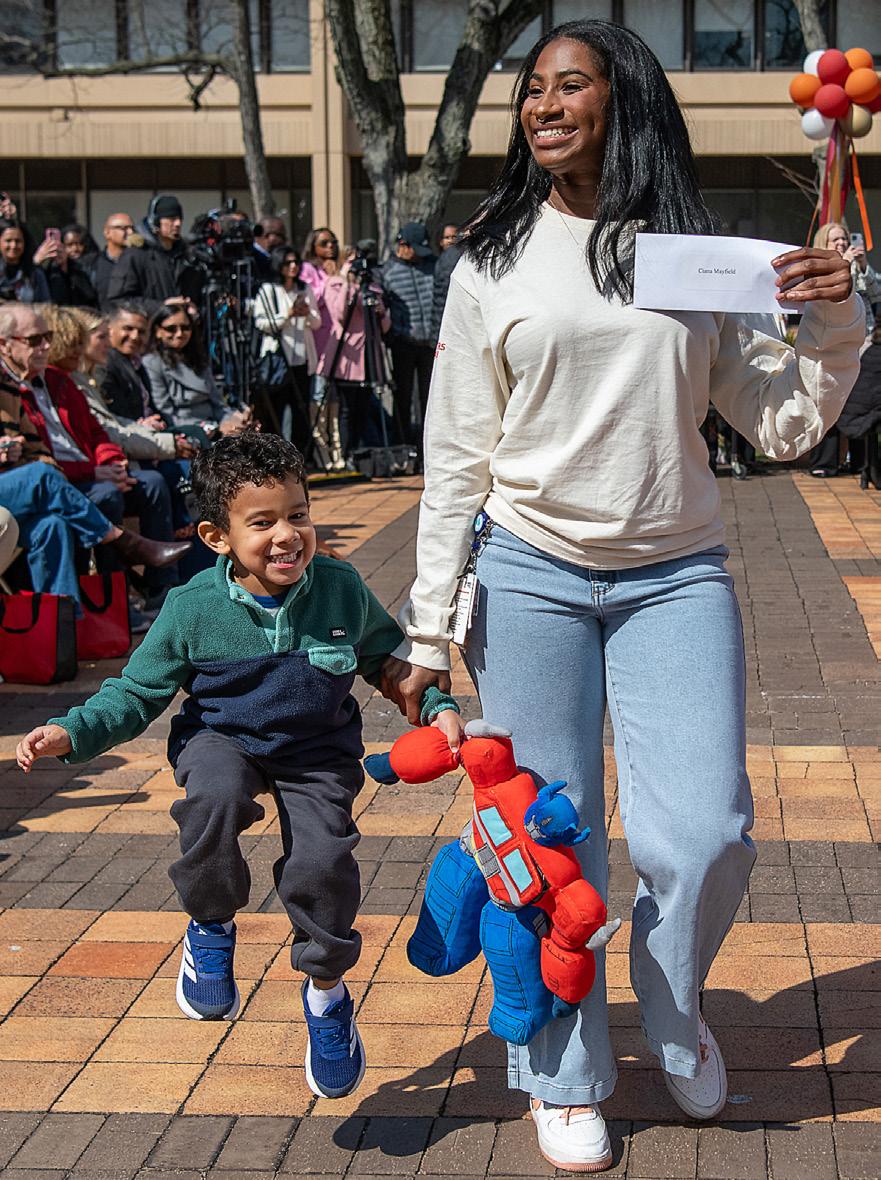
“Match Day is a proud and defining moment not only for our students, but for the entire community of mentors, faculty, family and friends who helped make this achievement possible,” said Robert L. Johnson, MD, dean of NJMS and interim chancellor for Rutgers Health.
At NJMS, 187 graduating students participated in Match Day, with 93% matching to a program of their choice. Among those students, 78 (41%) matched to a New Jersey program, and 37 (20%) matched to a program at NJMS. Other NJMS students matched at top institutions including Johns Hopkins, UCLA Medical Center, Memorial Sloan-Kettering, Duke, Emory and the NYU Grossman School of Medicine.
185
njms.rutgers.edu
Mosope Fofah, MD’26, follows in the footsteps of her father, pediatrics chair Onajovwe Fofah, MD. Read about their journey on page 21.