
the DOCKET
NEW: HeinOnline Scholarly Impact Rankings
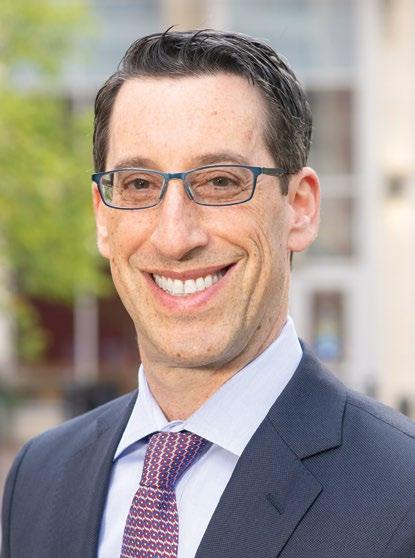
#3 MOST CITED SCHOLAR IN FOOD & DRUG LAW*
Michael Carrier
Rutgers Institute for Information Policy and Law Co-Director
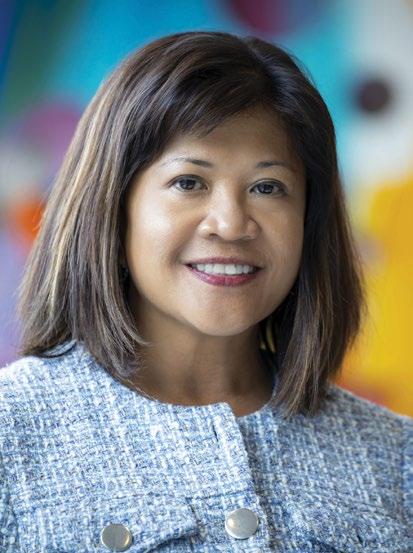
#10 MOST CITED SCHOLAR IN IMMIGRATION LAW* Rose Cuison-Villazor
Rutgers Center for Immigrant Justice Director
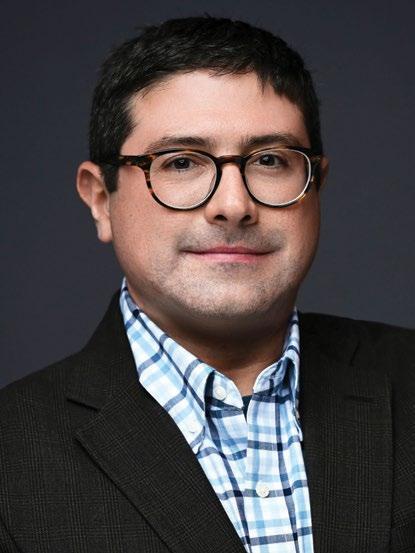
#13 MOST CITED SCHOLAR IN ESTATES & TRUSTS* Reid Kress Weisbord
Rutgers Center for Corporate Law and Governance Affiliate Faculty
Rutgers Law faculty are among the most cited authors across multiple legal disciplines in the new HeinOnline Scholarly Impact Rankings.
Rutgers Law ranks #22 among the most cited ABA-accredited institutions nationwide by author affiliation as of January 2026.
HeinOnline tracks citation influence across its entire law journal database archiving over 244 million pages of research. Nine additional professors and professor emeriti are ranked in the Top 100 spanning 15 legal areas.
Message from Rutgers Law Dean Johanna Bond
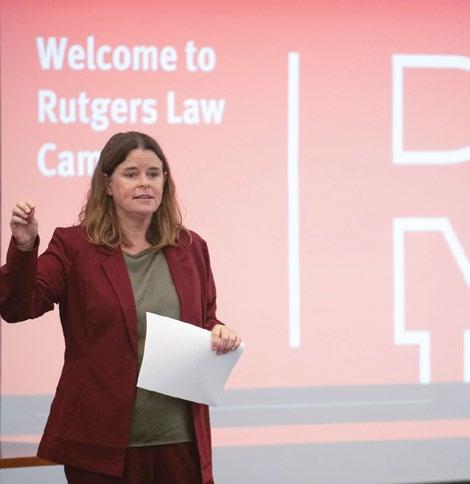
DEPARTMENT OF JUSTICE TESTIMONY ON SKYROCKETING DRUG COSTS.
A comprehensive report about rising rent in urban cities. A book about the increasing presence of corporations shaping public debate. These are just a few examples of the extraordinary work happening out of Rutgers Law School’s centers and institutes in Camden and Newark. I am thrilled that you are able to read in this newsletter how our centers remain vital engines of intellectual inquiry, public engagement, and innovative problem-solving. They embody our commitment to scholarship connected to the pressing challenges facing our profession and our world.
This year’s collection reflects the remarkable breadth of our faculty’s expertise from corporate law to gender justice to legislative advocacy. You will also find highlights of major awards and recognitions earned by our center directors and faculty affiliates. These achievements speak not only to individual excellence but also to the collective environment of scholarship that our centers help cultivate.
Many of these efforts align with our school’s mission to expand access to legal education, foster academic excellence, and empower students to practice with integrity, lead with purpose, and champion justice. Rutgers Law School, New Jersey’s flagship public law school, is dedicated to providing educational experiences of exceptional quality and value to a diverse student population. Our centers are just one of many ways we are fulfilling that commitment. I invite you to explore this newsletter and find opportunities to connect with our faculty, collaborate across institutions, and engage with the vibrant research emerging from our centers.
Message from Rutgers Law Associate Dean Thea Johnson
As in past years, RUTGERS LAW SCHOOL’S RESEARCH CENTERS have continued to produce ground-breaking scholarship and meaningful leadership in a time of constant change. Our research centers continue to innovate to tackle on-the-ground issues for the people of New Jersey, the U.S., and beyond. The Rutgers Center on Law, Inequality and Metropolitan Equity (CLiME) published a report, Why is the Rent So Damned High?, about the dramatic rise in housing costs in New Jersey and the country, identifying causes and suggesting solutions to this nationwide crisis. This year, the Center for Corporate Law and Governance celebrated the publication of Professor Matteo Gatti’s book, Corporate Power and the Politics of Change, which examines how corporations are taking over tasks traditionally reserved for governments. These are just some of the many ways in which Rutgers is leading the nation in thinking big about the issues of the day. Congratulations to our centers, affiliated faculty, staff, and students on another year of terrific work.
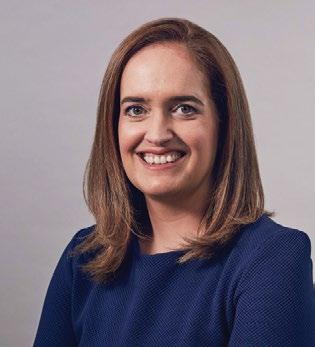
Dean for Faculty Research and Development
The Rutgers Center for State Constitutional Studies at Rutgers Law School is an interdisciplinary institute dedicated to promoting public understanding of American state constitutions and of sub-national constitutions in other federal systems through research and publications; lectures and conferences; and educational initiatives.
North Carolina Supreme Court Justice Delivers Annual Williams Lecture
THE 2025 ROBERT F. WILLIAMS LECTURE ON STATE CONSTITUTIONAL LAW
FEATURED JUSTICE ANITA EARLS OF THE SUPREME COURT OF NORTH CAROLINA AS THE KEYNOTE SPEAKER. In her October address, Justice Earls explored how state constitutions serve as vital instruments in protecting individual rights and ensuring proportional justice within criminal systems. Drawing from her experience on the bench and her background in civil rights and voting rights advocacy, she highlighted the evolving role of state courts in shaping criminal justice reform. The Rutgers Center for Constitutional Studies holds the annual event in honor of Professor Emeritus Robert F. Williams. His legacy as a pioneer in the field of state constitutional law underscores Rutgers Law’s commitment to fostering critical dialogue on the balance between state and federal constitutional protections.
Justice Anita Earls of the Supreme Court of North Carolina delivering the 2025 Robert F. Williams Lecture
Rutgers Law Dean Johanna Bond
Associate
Thea Johnson
Amanda Cilone
The Rutgers Center for Corporate Law and Governance objectives are to identify and promote best corporate law and governance practices and law reform, and to build bridges between Rutgers Law School, the business and nonprofit communities, government officials, and other Rutgers University units. The Center offers a number of programs, including a Certificate in Corporate and Business Law for interested students, an Entrepreneurship Clinic in Camden and Newark to provide hands-on transactional law experience assisting entrepreneurs, a Blockchain and Fintech Program, a Business and Human Rights Law Program, and a series of conferences, roundtables, and discussions on a variety of topics of interest to students, faculty, and those outside of the Law School.
CCLG Celebrates 10 Years with Distinguished Lecture
LAUNCHED IN 2015 on the Camden and Newark campuses of Rutgers Law School—before their official merger—CCLG was established to serve as a bridge between the two locations and connect the law school more closely with the broader business community.
Under the leadership of Alan V. Lowenstein Professor of Corporate and Business Law
Douglas S. Eakeley in Newark and Vice Dean and Professor of Law Arthur B. Laby in Camden, CCLG quickly initiated an extensive review of the law school’s curriculum to evaluate existing course offerings and identify new academic opportunities in corporate law, governance, and business law. “This process directly led to new faculty hires, the creation of new courses, and ultimately the launch of our Certificate in Corporate and Business Law,” says Eakeley.
In the years that followed, CCLG continued to expand. Notably, its Entrepreneurship Clinic on both campuses provides Rutgers Law students with valuable hands-on experience representing nonprofit and for-profit start-ups on a pro bono basis. CCLG is also home to the highly regarded Blockchain and Fintech Program, which fosters cutting-edge academic research and dialogue among students and faculty alike. Central to this initiative is the Collaboratory— a dynamic series of events bringing together prominent attorneys, academics, industry experts, and former regulators to discuss emerging regulatory issues and business innovations in fintech, decentralized finance (DeFi), cryptocurrency, and blockchain technology. Through this innovative program, Rutgers Law students also gain access to specialized coursework in financial regulation, fintech innovation, and cryptoasset regulation.
“While many of CCLG’s accomplishments and milestones take the shape of programming and collaborations, some of our most significant accomplishments over the past decade are actually intangible,” says Laby. “We’re proud that the center has put Rutgers Law School on the map nationally and internationally in terms of corporate law and corporate governance.”
Each academic year, CCLG hosts two joint meetings of its Advisory Board (comprised of leading corporate lawyers) and its Alumni Steering Committee (made up of alumni
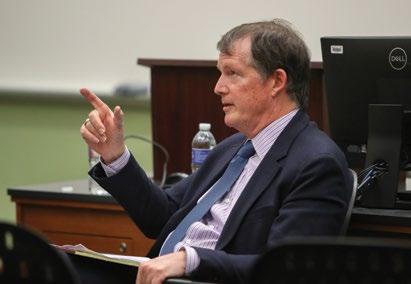
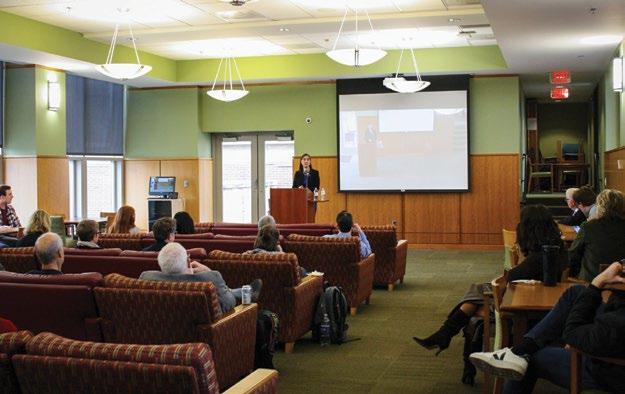
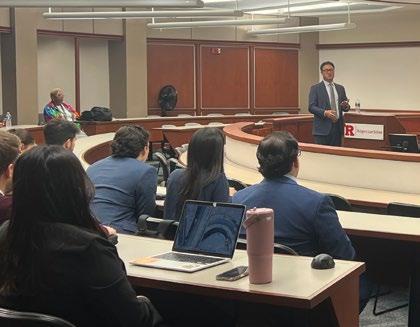
Paul Washington, president and CEO of the Society for Corporate Governance, delivering CCLG’s Distinguished Lecture on April 2, 2025
practicing in business law). Following each meeting, the center welcomes a guest speaker, concluding with a networking reception that offers students and faculty the opportunity to mingle with board members and attendees from the broader business and legal community.
Past speakers have included Securities and Exchange Commission (SEC) Commissioner Hester Peirce, former Consumer Financial Protection Bureau (CFPB) Director Rohit Chopra, Delaware Vice Chancellor Travis Laster, and the US Attorney for the District of New Jersey Philip Sellinger.
“Paul Washington is following in that tradition as this year’s speaker,” says Laby. “We are thrilled and delighted that he’s taking the time to share his views with our center and the broader audience.” Washington has had a distinguished career in corporate governance, having previously served as executive director of the Environmental, Social and Governance Center at The Conference Board—a nonprofit think tank addressing critical governance issues—and as senior vice president, deputy general counsel, and corporate secretary at Time Warner.
Looking ahead to the next decade, CCLG aims to extend the reach of the Entrepreneurship Clinic, strengthen its Advisory Board and Alumni Steering Committee, expand its programming, and support its affiliated faculty.
Bruce Ortwine Named Chair of the Rutgers Center for Corporate Law and Governance Advisory Board
BRUCE ORTWINE has succeeded Stuart Alderoty as Chair of the Advisory Board of the Rutgers Center for Corporate Law and Governance—an interdisciplinary forum for research, analysis and discussion of current issues in corporate law and governance. He also teaches corporate finance to students at both law school locations simultaneously in the Holodeck.

Mr. Ortwine is currently a senior external advisor to The Sumitomo Mitsui Trust Group, Inc., a global, Japanese financial conglomerate, and an external director to its U.S. subsidiary bank. He previously served as General Counsel, Americas and Advisor, Global Legal and Compliance, to the SuMi Trust Group. Mr. Ortwine is a 1981 graduate of Rutgers Law School, where he served as an Editor of the Rutgers Law Review He said, “As a member of the Advisory Board of the Center since its inception, I am honored to assume the position of Chair of the Advisory Board. I look forward to continuing the efforts of my predecessors in working with you all to ensure the continued growth and success of the Center, and its positive impact on the Rutgers law students who seek to pursue careers in corporate law.”
“We greatly appreciate Stu Alderoty’s dedicated leadership during his seven-year tenure as Advisory Board Chair and his continued service on the Advisory Board. And we look forward to working with Bruce Ortwine as he takes over the helm,” said Doug Eakeley, Founder and Co-Director of the Center for Corporate Law and Governance.
HSBC GENERAL COUNSEL EXPLORES AI AND LEGAL INDUSTRY UNCERTAINTY
“The 10-year anniversary of the Rutgers Center for Corporate Law and Governance marks a decade of significant impact at the intersection of legal scholarship, policymaking, and practical business issues,” says Stuart Alderoty, chief legal officer at Ripple Labs and then- CCLG Advisory Board chair. “In the coming decade, we aim for the center to become a nationally recognized leader, bridging academia, the legal profession, and industry on critical issues in traditional finance and emerging financial technology.”
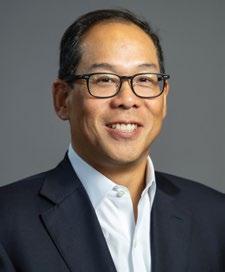
The Rutgers Center for Corporate Law and Governance hosted Curtis Tao as distinguished speaker in October 2025. The U.S. General Counsel for HSBC discussed several topics including AI usage in the legal field, how to use AI to its full potential, and uncertainty within big law firms toward adapting or creating AI models. Tao has more than 20 years of legal experience in the banking and financial services industry, including positions at Citigroup and Goldman Sachs.
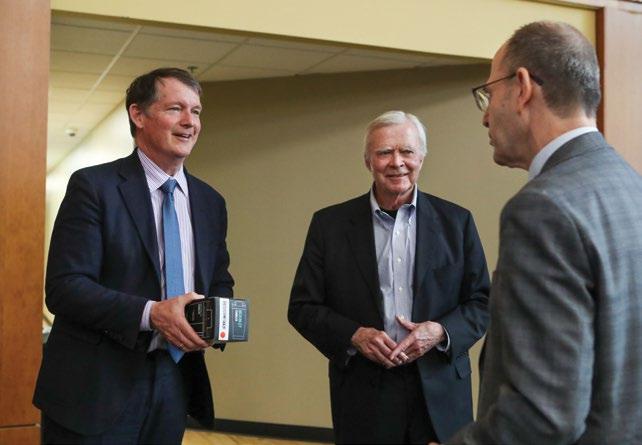
Left to right, Washington; Alan V. Lowenstein Professor of Corporate and Business Law Douglas S. Eakeley, CCLG co-director in Newark; and Vice Dean and Professor of Law Arthur Laby, CCLG co-director in Camden
Bruce Ortwine ’81
Sophie Lin
CENTER FOR CORPORATE LAW AND GOVERNANCE (continued)

Use this QR code to access the podcast.
DOUGLAS K. CHIA, Senior Fellow at the Rutgers Center for Corporate Law and Governance is the host of a new weekly podcast, The Public Company Series. Based on the book, Board Structure and Composition, published by the New York Stock Exchange and JP Morgan, each episode features contributors who shaped the book—prominent senior professionals representing diverse sectors such as law, accounting, management consulting, insurance, executive recruiting, technology, business and legal academia, and others. The podcast is designed to share practical insights to help corporate directors, executives, and governance professionals build boards that are agile, resilient, and prepared for the future. Professor Chia co-teaches “Current Issues in Corporate Governance” with Professor Douglas S. Eakeley, the Alan V. Lowenstein Chair in Corporate and Business Law, at Rutgers Law School in Newark, New Jersey.
New Book: Corporate Power and the Politics of Change
IN AN ERA WHEN CORPORATIONS are increasingly shaping public debate and stepping into roles once associated with government, Rutgers Law Professor Matteo Gatti offers a timely and comprehensive examination of this shift in his new book, Corporate Power and the Politics of Change (Cambridge University Press, 2026).
Corporations have become far more visible over the past decade during major political and historic events, from public statements about the January 6 insurrection in Washington to reactions on the United States’ withdrawal from the Paris Agreement. The once-clear line between economic activity and political authority has become far more complex as companies began weighing in on social issues and filling gaps left by public institutions.
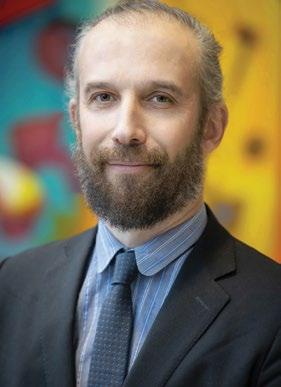
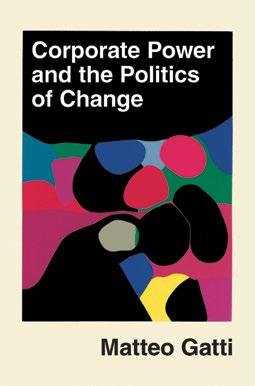
In the book, Professor Gatti analyzes how corporations now engage in what he calls corporate governing. This phenomenon takes two forms: socioeconomic advocacy, when companies take public stances, and government substitution, when they deliver services or protections the state does not provide.
Drawing on legal doctrine and insights from the social sciences, Professor Gatti shows how this shift reflects broader pressures within firms and deep dysfunction outside them. He also explores the political, legal, and cultural backlash that has emerged in response, challenging both the legitimacy and scope of this expanded corporate role. The book offers a framework for understanding how corporate power reshapes policymaking and what that means for business and democracy. Notably, it clarifies both what to expect—and what not to expect—from corporate activism in the current political climate.
Professor Gatti said, “Over the last decade, corporate involvement moved well beyond traditional lobbying. Firms engaged contested issues directly, embedded social commitments into internal policies with external consequences, and, at times, performed functions typically associated with public authority. This was not episodic or symbolic. It became a recurring feature of how policy outcomes were shaped across a range of socioeconomic domains, contributing to the expectation that corporations might function as public-facing actors in moments of political dysfunction.”
The Rutgers Center for Gender Justice and Law (CGJL) facilitates interdisciplinary and publicly-engaged research, curricular, and programming initiatives in furtherance of intersections of gender, race, sexuality, and economic-based equity in law and policy. The Center’s reach is both domestic and international. CGLJ welcomes Professor Marcy Karin, director of the new Ruth Bader Ginsburg Women’s Rights and Gender Justice Clinic.
Associate Professor Aníbal Rosario Lebrón Receives ALWD Diversity Award
ASSOCIATE PROFESSOR ANÍBAL ROSARIO LEBRÓN received a 2025 Association of Legal Writing Directors (ALWD) Diversity Award in recognition of ALWD’s shared commitment to justice, inclusion, and transformative legal education. The Diversity Award honors individuals who have made significant accomplishments in the area of Diversity, Equity, and Inclusion (DEI) or have demonstrated a strong commitment to promoting DEI, including efforts to improve the status of historically underrepresented groups. ALWD created this award in furtherance of its continued commitment to contributing to a legal writing discipline that is equitable and inclusive. The ALWD Diversity, Equity, and Inclusion Committee presented the award to Professor Lebrón at its Biennial Conference in July 2025 in Phoenix, Arizona. He is the former associate director of the Rutgers Center for Gender Justice and Law at Rutgers Law School.
He adds that the book separates questions that are often conflated. Is corporate governing consistent with corporate law and fiduciary duties? Is it strategically rational for firms? Does it benefit society? Does it pose risks to democratic institutions? By diving into these questions, the book moves the debate beyond slogans and toward institutional analysis.
In addition to teaching at Rutgers Law, Professor Gatti is a research member of the European Corporate Governance Institute. His work sits at the intersection of corporate law, financial regulation, and political economy, with a focus on corporate power, governance structures, and the interaction between firms, markets, and public institutions. He has worked in private legal practice and in-house counsel roles in multiple jurisdictions on corporate and M&A matters.
His scholarly work has been published or accepted for publication in leading journals, including the Stanford Law Review, Journal of Corporation Law, BYU Law Review, North Carolina Law Review, Columbia Law Review Forum, Journal of Corporate Law Studies, and the European Business Organization Law Review. His research has been cited in major treatises and regulatory reviews, including by the European Commission.
Professor Gatti has also held visiting appointments and fellowships at institutions including Goethe University Frankfurt and Harvard Law School, and lectures and presents regularly around the world. His work and commentary regularly appear in academic and policy forums such as the Harvard Law School Forum on Corporate Governance, the CLS Blue Sky Blog, the Oxford Business Law Blog, and Jotwell, as well as in mainstream outlets including the Financial Times, CNN Business, Forbes, and Law360
Professor Matteo Gatti and his new book
CENTER FOR IMMIGRANT JUSTICE
The Rutgers Center for Immigrant Justice (CIJ) at Rutgers University explores contemporary and historical immigration and citizenship laws to better understand the complex ways that law and society determine who belongs in the United States. Through interdisciplinary scholarship, legal, policy and advocacy-based initiatives and public engagement, CIJ explores and supports the adoption of equitable and more inclusive laws, regulations, policies, and practices for all people – citizens and non-citizens alike.
Center for Immigrant Justice Director Receives Lifetime Achievement Award
CENTER FOR IMMIGRANT JUSTICE (CIJ)
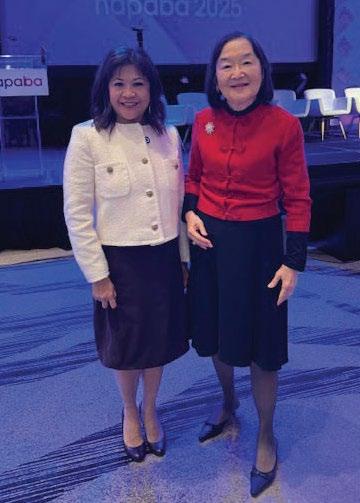
Director Rose Cuison-Villazor received a Daniel K. Inouye Trailblazer Award at the National Asian Pacific American Bar Association’s (NAPABA) 2025 Convention in Denver in November 2025. NAPABA’s lifetime achievement award and highest honor recognizes the outstanding achievements, commitment, and leadership of lawyers who have paved the way for the advancement of Asian American, Native Hawaiian, and Pacific Islander (AANHPI) attorneys. Trailblazers are leaders who have not only excelled in their legal practice but have also made enduring contributions to advancing equity, opportunity, and justice within the legal community and beyond.
Professor Cuison-Villazor is a Chancellor’s Social Justice Scholar at Rutgers Law School where she previously served as Interim Co-Dean (20212023) and Vice Dean (2019-2021). She is also an elected member of the American Law Institute. Her overall research agenda examines the extent to which laws, policies, and norms include and exclude individuals and groups from membership. She teaches and writes in the areas of immigration and citizenship law, property law, and race and the law.
Professor Cuison-Villazor’s scholarship has appeared in top law journals in the country,
including California Law Review, Columbia Law Review, Harvard Law Review Forum, Michigan Law Review, and New York University Law Review She is working on a monograph, Forbidden Love: Race, Citizenship, and the American Family (NYU Press, forthcoming 2027), and a co-authored book, AsianCrit at the Intersection (University of California Press, forthcoming 2027) (with Bob Chang).
She is also co-author and co-editor of two edited volumes, Legislating a New America: The Immigration and Nationality Act of 1965 and Its Contributions to Law and Society (with Gabriel “Jack” Chin) (Cambridge University Press 2015), and Loving v. Virginia in a “PostRacial” World: Rethinking Race, Sex and Marriage (with Kevin Maillard) (Cambridge University Press 2012). In addition, she is co-author of three casebooks, including Immigration and Citizenship, Process and Policy (10th Ed.) (with T. Alexander Aleinikoff, David A. Martin, Hiroshi Motomura, Maryellen Fullerton, Juliet Stumpf, and Pratheepan Gulasekaram) (forthcoming 2026); Integrating Spaces: Property, Race, and Identity (with Al Brophy and Kali Murray) (2023); and Race and Races, Cases and Resources for a Diverse America (4th Ed.) (with Juan Perea, Richard Delgado, and Osamudia James) (2022).
Center for Immigrant Justice Honors Korematsu Day With Historic Case Re-Enactment
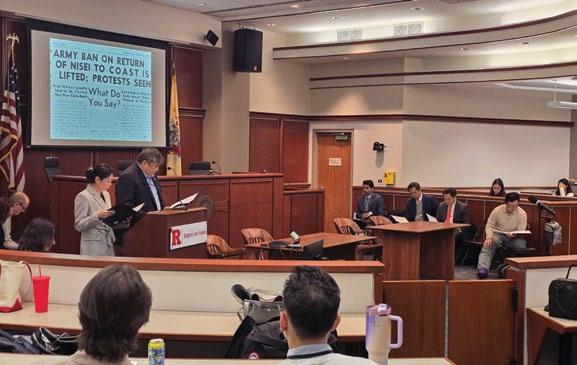
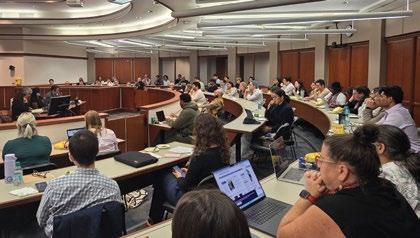
IN HONOR OF FRED KOREMATSU DAY of Civil Liberties and the Constitution in New Jersey, the Rutgers Center for Immigrant Justice (CIJ) staged a re-enactment of Oyama v. California in January 2026. The reenactment, presented to a packed Baker Courtroom at Rutgers Law, highlights the extent to which the California Alien Land Law of the 1920s targeted mainly Japanese nationals and Japanese Americans before and during their incarceration. The law prevented “aliens ineligible from citizenship” from owning land.
Oyama explored the ways in which denial of property rights also served to promote racial discrimination against the Japanese in California. In the case, Kajiro Oyama, a Japanese immigrant who was ineligible for United States citizenship at the time, bought a parcel of farmland which he deeded to his minor son, Fred, who was born in the United States and was thus a citizen. Under California’s
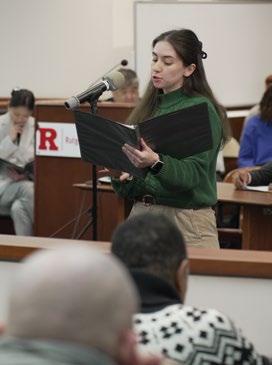
Alien Land Laws, this transaction was deemed a fraud. The State of California brought suit against Fred Oyama to escheat the property.
The case went to the United States Supreme Court, where the statute’s constitutionality was placed before the Court for its review. The re-enactment explored the connections between the early 20th century alien land laws and contemporary ones. CIJ Co-Director Rose Cuison-Villazor co-wrote the script.
The case has relevance today as a number of states have passed new alien land laws that restrict property ownership by nationals of “countries of concern”, including those from China, Russia, and Iran. CIJ submitted an amicus brief in September 2025 on behalf of racial justice centers and bar associations to support a constitutional challenge to an alien land law passed in Arkansas that barred certain individuals from China the ability to purchase land.
AUTHOR MEETS READERS
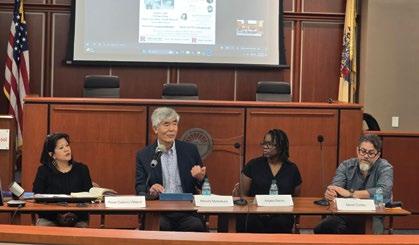
The Center for Immigrant Justice (CIJ) hosted an “Author Meets Reader” event in October 2025 to discuss the book, Borders and Belonging: Towards a Fair Immigration Policy. Author and Professor Hiroshi Motomura, Susan Westerberg Prager Distinguished Professor of Law, UCLA School of Law, discussed his book with CIJ Director Rose Cuison-Villazor; Professor Angela Banks, Vice Dean and Charles J. Merriam Distinguished Professor of Law, Arizona State University, School of Law; and Jason Cortés Associate Professor in Spanish and Portuguese Studies, and American Studies at at Rutgers School of Arts & Sciences-Newark. In the book, Professor Motomura provides a blueprint for reframing the immigration conversation by broadening the focus to recognize the role of climate change, the economy, race, and human rights, and how these and other factors interact with each other.
CIJ Director Rose Cuison-Villazor and Hon. Sue Pai Yang ’84, JWC (ret.) received Daniel K. Inouye Trailblazer Awards from the National Asian Pacific American Bar Association
Top photo, left to right: CIJ Director Rose CuisonVillazor; Hiroshi Motomura, UCLA Distinguished Professor of Law, Angela Banks, ASU Sandra Day O’Connor College of Law Vice Dean; and Jason Cortés, Rutgers School of Arts & Sciences-Newark Associate Professor
Re-enactment of Oyama v. California at Rutgers Law
The Rutgers Center for Security, Race and Rights (CSRR) works across racial and religious lines to address the underlying structural and systemic causes of Islamophobia and xenophobia against people of Arab, African, and South Asian descent. CSRR’s work is organized around three themes:
• The contemporary and historical intersection of race and religion in the United States
• Criminalization of Muslim identity through United States and global national security laws and policies
• Transnational rights and security arising from relations between the United States and Muslim majority countries Through academic research, public education, and advocacy, the Center for Security, Race and Rights supports pluralism, religious freedom, and racial equality.
The Race & Rights Podcast
THE RACE AND RIGHTS PODCAST explores the myriad of issues that adversely impact the civil and human rights of America’s diverse Muslim, Arab, and South Asian communities in the United States as well as abroad. Host Sahar Aziz engages with academics and experts that provide critical analysis of law, policy, and politics that center the experiences of underrepresented communities in the United States and the Global South.

Threats to Free Speech and Palestinian Civil Rights
THE RUTGERS CENTER FOR SECURITY, RACE AND RIGHTS contends that the International Holocaust Remembrance Alliance’s working definition of antisemitism aims not to protect Jewish individuals, but to shield the state of Israel from criticism and accountability under international law by suppressing free speech and academic freedom. The past two years have exposed the dangerous outcome of such content and viewpoint-based suppression of speech, activism, and academic work. The Center offers two policy recommendations in a recent issue brief.
Use this QR code to access the Issue Brief: Threats to Free Speech and Palestinian Civil Rights—The IHRA Definition of Antisemitism.
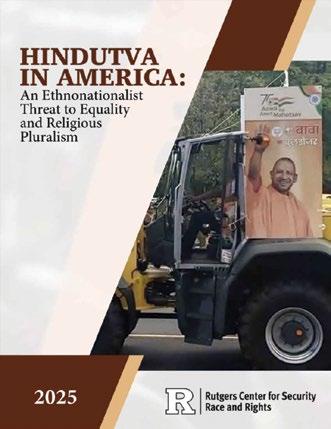
The Center for Security, Race and Rights report, Hindutva in America: A Threat to Equality and Religious Pluralism, examines how Hindu nationalists have capitalized on the anti-Muslim public discourse arising from the Global War on Terror to obtain greater acceptance of their ethnonationalist agenda. According to the report, Hindutva organizations join the chorus of other anti-Muslim right-wing groups by couching their rhetoric within the mainstream narrative that Muslims worldwide are presumptively terrorists and violent.
access launch video.
report.
The Rutgers Center for Risk and Responsibility (RCRR) explores the ways in which society makes choices about risk, its proper allocation, and compensation for the harm caused when risks materialize, with a special focus on insurance and insurance law. The recognition of risk and attempts to manage it are defining features of modern society, and the law responds in a number of ways. Tort law allocates the burden of harm that results from risk, compensates victims of risk-producing harm, and provides disincentives for risky behavior. Insurance law enables and constrains risk allocation by private parties. Administrative regulation attempts to directly control risk-creating activity. RCRR provides a forum for scholarly discourse on these topics.
Are There Racial Limits to Free Speech?
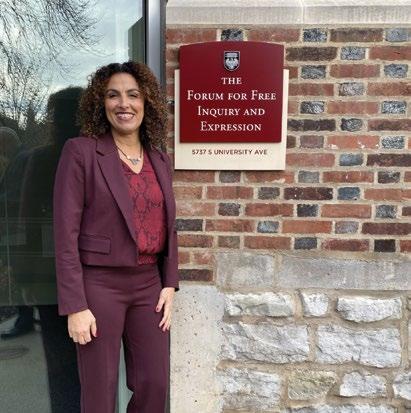
RUTGERS CENTER FOR SECURITY, RACE AND RIGHTS Director Sahar Aziz discussed ongoing battles over free speech, academic freedom, and informed debates on Palestine in a conversation at The Chicago Forum in November 2025. Moderated by Tom Ginsburg, Chicago Forum Faculty Director, Professor Aziz examined the parallels and distinctions between contemporary censorship, defamation, and economic retaliation faced by persons whose speech and political activism center the experiences of Palestinians and past eras of political repression targeting racial minorities fighting for equal rights. Professor Aziz is a Distinguished Professor of Law, Middle East Legal Studies Scholar, and Chancellor’s Social Justice Scholar. Her scholarship examines the intersection of national security, race, religion, and civil rights with a focus on the adverse impact of national security laws and policies on racial, religious, and ethnic minorities. She is the author of The Racial Muslim: When Racism Quashes Religious Freedom (University of California Press)
The European Union’s ‘New’ Migration Policy: Between Containment and Crisis Event
THE RUTGERS CENTER FOR SECURITY, RACE AND RIGHTS hosted international legal scholar and Professor Juan Ruiz Ramos from the University of Granada in September 2025 to deliver a lecture titled, “The European Union’s ‘New’ Migration Policy: Between Containment and Crisis.” In light of the EU’s adopted Migration and Asylum Pact, the lecture unpacked controversial measures such as border detention, the externalization of asylum, and voluntary resettlement, while also comparing them with similar policies in the U.S. system to highlight broader trends in international refugee protection.
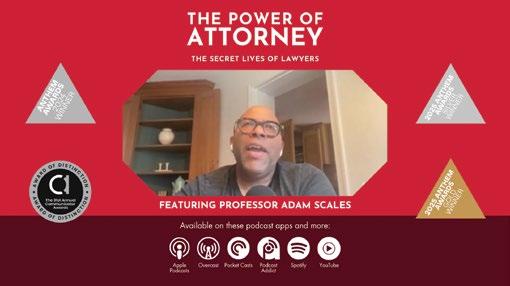
Use this QR code to access the podcast: S7E1: The Secret Lives of Lawyers-Invisible Lenses with RCRR Co-Director Adam Scales.
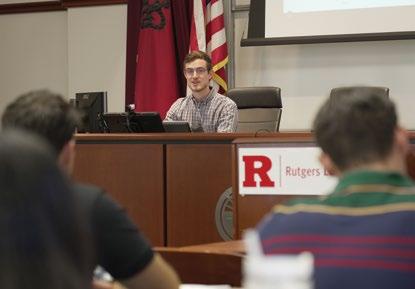
CSRR Director Sahar Aziz
University of Granada Professor Juan Ruiz Ramos delivering lecture at Rutgers Law
A+ International Law National Jurist’s preLaw Magazine
Understanding the implications of national and domestic events is at the core of the Rutgers Center for Transnational Law’s (CTL) work. The Center provides a platform for the study and practice of international and comparative law. It is an academic hub for scholars, practitioners, advocates and students who have a shared interest in a wide variety of international and transnational legal issues to discuss and disseminate their work. CTL offers a space for academic reflection and practical engagement with international, comparative and domestic law. The interactions between these areas of law create both conceptual and practical opportunities and challenges which the Center seeks to address. Through a series of talks, panels and academic events, international internships and study abroad opportunities, CTL engages with the events and processes that shape and impact the law both within and beyond our borders.
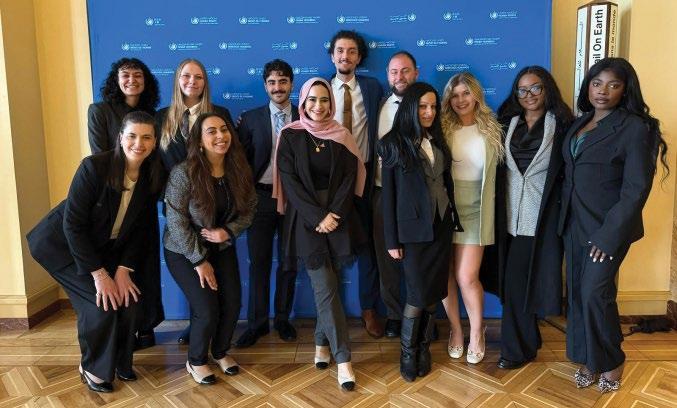
Rutgers Law Students Help Shape Global Human Rights Dialogue in Geneva
AS PART OF A PRACTICUM COURSE offered through Rutgers Law School’s Center for Transnational Law, a group of students will travel to Geneva, Switzerland in April 2026 for a firsthand look at international human rights in action. Over the course of five days, they will attend sessions of the UN Committee Against Torture, a panel of ten independent experts responsible for monitoring global compliance with the UN Convention Against Torture—the core international treaty designed to prevent torture and inhumane treatment around the world. “I offered this course because I want my students to gain as much real-world experience as possible,” says Professor of Law and Founding Director of the Center for Transnational Law Jorge Contesse, who not only teaches the course but also serves on the Committee.
In preparation for the trip, students immersed themselves in the work of the Committee, studying its core responsibilities and drafting memos on the four countries under review: Italy, Gabon, Pakistan, and Tajikistan.
For Lougayen Souryal ’26, who participated in the April 2025 trip, that hands-on element was a major draw. “It was gratifying to recognize the very questions my classmates and I had written throughout the semester being used in those sessions,” she says. “Seeing
our work directly support the Committee Against Torture’s mission was a powerful and validating experience.”
In addition to attending both public and private sessions of the Committee, students have the opportunity to engage with a wide range of international experts. They meet with Committee members from around the world, diplomats involved in treaty negotiations, representatives from international NGOs, and UN officials from the Office of the High Commissioner for Human Rights.
For Elaine Robbins ’26, who as this year’s Teaching Assistant will be in Geneva again, working with the Committee was an eyeopening experience. “I was astounded by all the possible different career paths that led people to working in international law,” she says. “The course also feels especially relevant in a time where we are seeing the global landscape continuing to change and evolve. It gives students the opportunity to see the frameworks that support the rule of law and international legal principles in action, which is a one-of-a-kind experience.”
For Professor Contesse, “Seeing students put into practice in a multicultural lawyering space what they learned during the semester is uniquely rewarding. This is global legal education at its best.”
CTL Obtains a Multi-Year Grant
THE CENTER FOR TRANSNATIONAL LAW has received a multi-year grant from Jeffrey F. Lawrence ’77 to support the Center’s work and provide more opportunities to Rutgers Law students. “The Lawrence Fund for the Rutgers Center for Transnational Law will have an
impact on the Center’s work and will open new opportunities for our students,” says CTL Director Jorge Contesse. “I am incredibly grateful to Jeff Lawrence and his vision of the relevance of international and comparative law,” he adds.
New Book: The Law and Politics of International Legitimacy
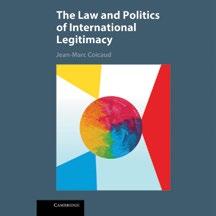
THE CONCEPT OF LEGITIMACY in international politics and global governance is a lightning rod in an era of complex geopolitical dynamics and evolving and contested international norms. Rutgers Law Distinguished Professor Jean-Marc Coicaud tackles this issue in his new book, The Law and Politics of International Legitimacy, published by Cambridge University Press. The book assesses what political legitimacy is and how international law constructs a sense of legitimacy at the international level and seeks to regulate the current international order. It also highlights the limitations of legitimacy within international law and identifies conditions under which international law and order could overcome legitimacy challenges to become more just and effective. To do so, Professor Coicaud uses a descriptive, critical and reconstructive approach. This exploration is particularly timely, given the increasing scrutiny of international institutions and legal frameworks as well as growing fragmentation of international order. By addressing the foundational aspects of legitimacy, the book offers valuable insights for policymakers, scholars, and practitioners engaged in international law and global governance. Professor Coicaud says, “Legitimacy, like justice, is central to the pursuit of a healthy and stable political, legal and economic order at the domestic level as at the international level.”
An expert in international law and global affairs, Professor Coicaud offers courses on international law, human rights, international organizations, the United Nations, comparative law, comparative jurisprudence, and comparative international legal regimes. He has published 16 other books (single-authored, co-authored and co-edited) and more than 100 chapters and articles in the fields of legal and political theory, international law, international relations, and comparative politics. His books are available in English, French, Japanese, Chinese, Spanish, and Arabic.
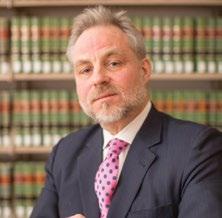
In 2015, Professor Coicaud was elected a member to the European Academy of Sciences (Academia Europaea). Since 2018, he has served as Distinguished Visiting Chair Professor at Fudan Institute for Advanced Study in Social Sciences at Fudan University in Shanghai, China. In addition, he is a Nonresident Senior Fellow with the Centro Internacional de Globalización y Desarrollo in Santiago, Chile. Professor Coicaud also serves on the advisory board of the Global Policy Journal based in London.
Prior to joining Rutgers, Professor Coicaud served as Director at the United Nations University (UNU) in New York City, Director of Studies at UNU in Tokyo, a speechwriter in the Executive Office of the United Nations Secretary-General, and a Global Ethics Fellow with the Carnegie Council for Ethics in International Affairs. He studied at the University of Paris 1 PanthéonSorbonne, the Institut d’Études Politiques de Paris, and Harvard University. He holds a Doctorat d’État in Legal and Political Theory, a Ph.D. in Political Science, and other graduate degrees in law, philosophy, literature, and linguistics.
Rutgers Law students at the United Nations Office in Geneva, Switzerland, in April 2025
Professor Jean-Marc Coicaud and his new book
THE RUTGERS CENTER FOR CRIMINAL JUSTICE, YOUTH RIGHTS, AND RACE
The Rutgers Center for Criminal Justice, Youth Rights, and Race was created in 2019 to support and facilitate applied research, public policy advocacy, and community education initiatives aimed at interrogating and dismantling the carceral state. Founded by Professor Laura Cohen, the Center hosts numerous interdisciplinary programs each year for scholars, advocates, systemimpacted people, and the wider University and Newark communities. Law student fellows, who are selected by a competitive process, help organize these events and provide research support.
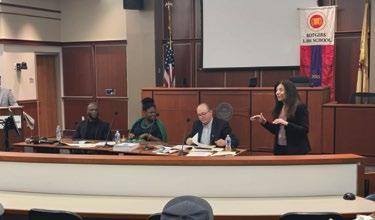
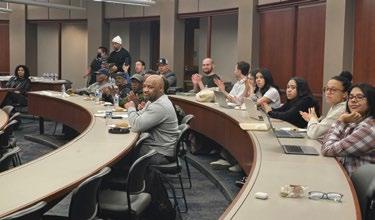
NEW JERSEY’S PAROLE PROBLEM PANEL
The Rutgers Center for Criminal Justice, Youth Rights, and Race presented New Jersey’s Parole Problem panel in April 2025. The discussion focused on the state’s fatally flawed parole system. Panelists included two thought leaders from the Office of the Public Defender, Joe Russo and Alicia Hubbard, and writer, activist, and longtime Criminal and Youth Justice Clinic client Dexter Tyson.
ADVOCACY
Wrongful Conviction Month
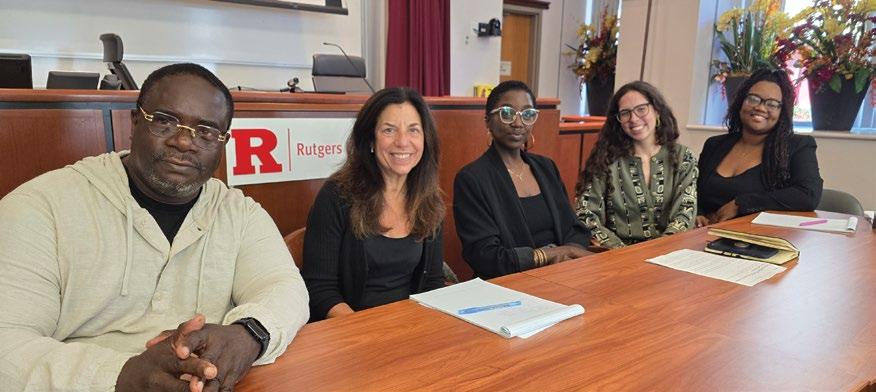
THE RUTGERS CENTER ON CRIMINAL JUSTICE, YOUTH RIGHTS, AND RACE welcomed Rodney Roberts and Keli Young to Rutgers Law to mark Wrongful Conviction Month in October and discuss the realities behind wrongful convictions. Roberts is an exoneree and re-entry coach for the National Innocence Project. The Newark native was wrongfully imprisoned for eight years after being coerced into pleading guilty to a crime he didn’t commit. He was exonerated through DNA evidence in 2014 with help from the Innocence Project. Since then,
The Rutgers Advocacy Center seeks to promote and support the growth of written and oral advocacy in every aspect of the practice of law through several distinct programs: Trial Advocacy Training, Writing Workshops, Appellate Advocacy, Negotiation Training, Deposition Training, and Mediation Training. The Center brings together academics and litigation experts to expand our understanding of the changing litigation landscape. This understanding includes exchange across disciplines such as forensic science and criminal justice.
Rutgers Advocacy Center Leads Legal Training in Ethiopia, India, and Local Community
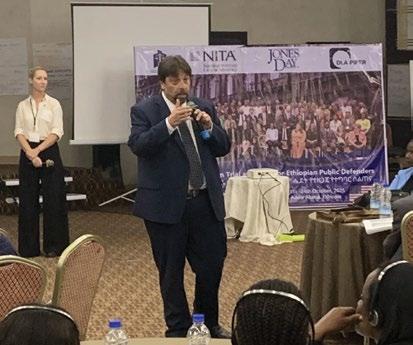
BY INVITATION OF THE SUPREME COURT OF ETHIOPIA, Rutgers Advocacy Center (RAC)
Director JC Lore III and RAC student Dawson Bailey Kipphut ’25 spent a week in Ethiopia training public defenders and building relationships and the foundation for future collaborations. They also spent the day speaking with members of the Supreme Court and High Court, including Tewodros Mihret Kebede, Chief Justice of the Supreme Court, during their October 2025 visit.
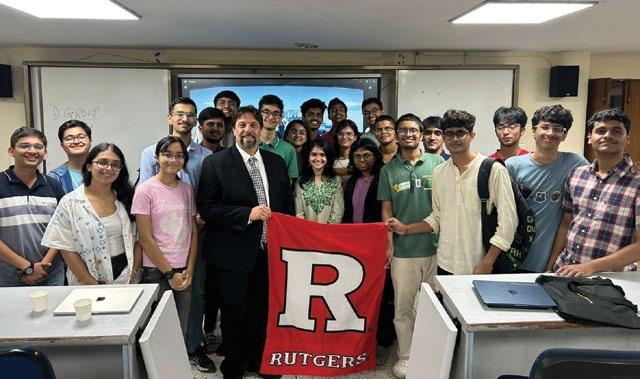
Director Lore also spent three weeks in New Delhi, India, at National Law University Delhi in July and August 2025 as a Fulbright Scholar. He worked with faculty, students, and clinical programs to enhance practicebased learning and deepen the impact of clinical legal education. In addition to his work on legal education reform, Professor Lore spoke about the high rate of long-term pre-trial incarceration and the impact that plea bargaining can have on reducing the 35.7 million criminal cases currently backlogged in India. He says plea bargaining is likely the only way to reset the docket, dramatically reduce prisoner population, and get justice for defendants and victims. He also visited the
Institute of International Education, a 100-yearold non-profit leading the engagement of Rutgers University with institutions throughout India.
Professor Lore and the Rutgers Advocacy Center continued to play an important role in training public interest lawyers in our local community. In May and in conjunction with the National Institute for Trial Advocacy (NITA), Professor Lore participated in a public interest advocacy training for the NAACP Legal Defense Fund, the Asian American Legal Defense Fund, and Latino Justice. In December, Professor Lore and the RAC trained more than 32 Philadelphiaarea public interest lawyers at the R. Nicholas Gimbel Advocacy Training Program. Professor Lore and RAC created this program more than 13 years ago with support from the
he has advocated for criminal justice reform, supported fellow exonerees, and helped pass legislation addressing wrongful convictions. Young is a state policy advocate for the Innocence Project, pushing for state level policy change to prevent and correct wrongful convictions. She joined the Innocence Project in 2024 as a state policy advocate, working with exonerees and organizations to lobby for policy changes that prevent and correct wrongful convictions.
Philadelphia Bar Foundation, NITA, and the Troutman, Pepper, Locke law firm. RAC has also provided critical training to hundreds of local public interest lawyers.
From left to right: Rodney Roberts, National Innocence Project re-entry coach; CJYRR Director Laura Cohen; and Keli Young, state policy advocate for the Innocence Project with CJYRR students
RAC Director JC Lore in Ethiopia (top photo) and India (above)
The Rutgers Center on Law, Inequality, and Metropolitan Equity (CLiME) is a multidisciplinary research and advocacy center committed to public scholarship on issues of structural inequality through public engagement with the aim of public impact. CLiME is committed to studying the role of law and policy in encouraging or inhibiting opportunity based on place. Our non-partisan efforts are designed to promote more equitable approaches to public law and policy amid rapid demographic change, shrinking government resources and enduring racial and economic divides. Where possible, CLiME’s efforts recognize the interdependent relationship among places in a given region and the most inclusive conceptions of sustainability. Through CLiME’s research, archives, public forums and collaboration with others, our fellows and faculty staff are committed to promoting both statewide and national discourse on the many subjects we collectively refer to as “metropolitan equity.”
‘Why Is The Rent So Damned
RESEARCHERS AT THE RUTGERS CENTER ON LAW, INEQUALITY AND METROPOLITAN EQUITY (CLIME) have answered a question asked by many in New Jersey and nationwide: Why is the rent so damned high?
That’s the title of a report that explores the sharp rise of housing costs in recent years, increasing 30 percent between 2021 and 2023, according to Katharine Nelson, associate director of CLiME.
Although pundits have focused on demand outstripping the stock of available housing, Nelson’s team discovered that’s only part of the problem.
The report found that four forces have converged to make housing unaffordable: stagnant wages, widening income inequality, consolidation among developers and landlords, and a severe shortage of homes affordable to low-income renters and first-time buyers.
Corporate Investors in Single Family Homes in Philadelphia
High?’ Researchers Find Answers in New Report
“What we kept bumping up against is what you see in the news and experts focusing on the supply-side,’’ she said. “Yes, it’s a problem. But there is no single individual solution to the rental affordability crisis. We need to attack this on many fronts at once. That means building more homes, certainly. But the homes we are producing must be homes we need—very low rent units and starter homes,’’ said Nelson.
“At the same time, we need to address the consolidation of landlords and homebuilders which are driving up prices and find creative ways to assist very low income households as federal subsidies disappear. And, we need to do all that while also preserving the affordable housing we still have,’’ she added.
The report, which is based on an extensive academic literature review across urban planning, economics, sociology, and public policy, reveals the crisis has been decades in the making. But things have grown worse since the
Affordability Under Strain in Newark’s Evolving Housing Market

pandemic because inflation has also been on the rise.
One cost-driver is the fact that the government defines affordable housing prices as 50 percent or 60 percent of occupant income, which is a bigger strain on those who earn less. “Units that
continued on page 12
Rewriting Racial Equality
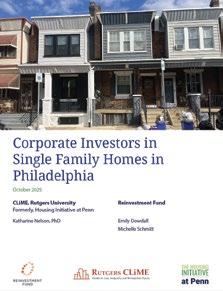
Philadelphia is a city with a proud legacy of affordable homeownership opportunities and an expanding set of tenant protections. In recent years, concerns about the impact of corporate investors purchasing single family homes in the city have grown, even as there is an evident need for capital investment in its aging housing stock. CLiME teamed up with the Reinvestment Fund and Housing Initiative at Penn, based in Philadelphia, to explore investor activity in Philadelphia. Corporate buyers there are most active in the parts of the city which are predominantly home to Black and Hispanic residents—in West, North and Northeast Philadelphia. The report identifies the largest investors buying up the most single family homes, who operate primarily as largescale corporate landlords. The companies purchasing these homes changed during the pandemic, shifting from more local investors to entities new to Philadelphia but already active in other places. CLiME analyzed purchases of residential buildings before and during the pandemic, looking at sheriff sales, rental licensing, renovation permits, evictions, and code violations to determine the impact of these purchases on Philadelphia housing markets. The report aims to inform policy interventions to promote stable neighborhoods, affordability, and high-quality housing options for all Philadelphians.
Diverging Dynamics: The 2023 Displacement Risk Indicators Matrix (D.R.I.M.) Update for Newark explores how the risk of displacement in Newark has changed since 2010. (Newark is New Jersey’s largest city.) Newark is experiencing the steady erosion of affordability as rents rise faster than incomes. In this installment of CLiME’s displacement analysis, diverging patterns of urban change are becoming clearer across wards with uneven but unmistakable signs of gentrification.
Use this
to
Diverging Dynamics: The 2023 Displacement Risk Indicators Matrix (D.R.I.M.) Update for Newark. Use
Rewriting Racial Equality: The State of Civil Rights Law under Trump documents the second Trump administration’s blueprint for radically transforming how the federal government views and enforces civil rights. The new legal order taking shape upends Reconstruction-era understandings of equal protection and related federal statutes while recasting the modern Civil Rights Movement as a defense against anti-white race discrimination.
Rewriting Racial Equality offers a rare focus on issues of racial equality as a fundamental interest, anti-Black racism and the Trump administration’s civil rights playbook at the crossroads of antidiscrimination law.
Use this QR code to access Rewriting Racial Equality: The State of Civil Rights Law under Trump.
REPORTS, BRIEFS, AND MEMOS FROM CLiME
n DEI and Public Universities: Guideposts for a New Era
David D. Troutt, Director, and Anna Griffith, Senior Research Fellow
n The ‘Other’ Cities: Migration and Gentrification in Jersey City, Newark and Paterson, New Jersey
David D. Troutt, Director; Mussab Ali (former) Fellow; and Dr. Katharine Nelson, Assistant Director
n The Great Household Deficit: Rising Costs of Homeownership in New Jersey
Dr. Katharine Nelson, Assistant Director
n Examining the Land-Grant University’s Distinct Interest in Diversity, post-SFFA Kwang Woo ‘Andy’ Kim, Student Research Fellow
n Legal Strategies & a Metropolitan Equity Approach to Lowering Building Emissions in New Jersey
Jake Newcomb, Student Research Fellow
n New Apartment Buildings in New Jersey are Exempt from Rent Control for 30 Years. Why?
Kerry Robinson, Student Research Fellow
FOR INFORMATION POLICY & LAW
The Rutgers Institute for Information Policy and Law (RIIPL) faculty and fellows are engaged in a wide array of research and policy work concerning the regulation of information flows and their effect on societal flourishing. RIIPL also collaborates with others in computer science, business, media studies, economics, and other disciplines. Activities include academic research and thought leadership, public events and conferences, student and faculty blogging, independent testimony and consultations to policymakers and foundations, media interviews and appearances, special projects, an Intellectual Property Law Certificate, and curriculum development and teaching.
FCC Commissioner Discusses Threats to Free Speech
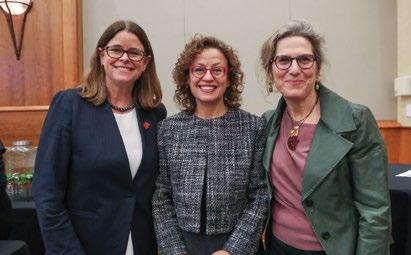
THE RUTGERS INSTITUTE FOR INFORMATION POLICY AND LAW (RIIPL) and Free Press hosted a panel with Federal Communications Commission (FCC) Commissioner Anna Gomez about threats to free speech in the U.S. and New Jersey. Gomez is on a First Amendment Tour challenging government censorship and control. She joined several New Jersey community leaders for this special forum in November 2025 at the Rutgers-Camden Campus Center.
The panel began with welcome remarks from Rutgers Law Dean Johanna Bond who emphasized the timeliness of the event taking
place at a time when “free press and responsible journalism are under threat.”
Introduced by RIIPL Co-Director and Distinguished Professor Ellen Goodman as the lone Democrat on the FCC, Gomez spoke about her background in the Clinton and Biden administrations where she worked on media mergers and licensing decisions that shape who gets access to public platforms. She then explained why she’s on tour.
“I embarked on my First Amendment tour earlier this year because I became alarmed by the campaign of control and censorship that I saw this administration embarking on,” Gomez said. “This administration is using the weight of government to suppress lawful expression because it challenges those in power and reflects views that they oppose. And it is an administration-wide campaign.”
She also pointed to efforts to rewrite history, pressure universities to drop diversity policies, arrest peaceful protesters, threaten law firms, and remove dissenting voices from the media. Her point was blunt: staying quiet only hands power to those eager to control the narrative.
The panel also featured those doing on-theground work in New Jersey. Kenneth Miles,
continued on page 11
The Rutgers Institute for Law and Philosophy is a joint venture between Rutgers Law School and the Rutgers-New Brunswick Department of Philosophy that is designed to draw together and extend the acknowledged excellence in philosophical inquiry at Rutgers University. The mission of the Institute is to advance and disseminate knowledge and understanding of the widest range of topics at the intersection of philosophy and law. The Institute accomplishes this goal through hosting conferences and roundtables on the many facets of philosophy of law, presenting the annual Bloustein Lecture in Law and Ethics, and by sponsoring visiting fellows.
Institute Welcomes Scholar from Spain Advancing Research in Contract Law and Legal Philosophy
THE RUTGERS INSTITUTE FOR LAW AND PHILOSOPHY (ILP) welcomed a visiting fellow from Spain in the fall semester who is researching contract law and the philosophy of private law as well as related topics in legal philosophy and legal interpretation.
Rodrigo Parra Salamanca is a Ph.D. student and researcher at the Chair in Legal Culture at the Faculty of Law, University of Girona. He holds a law degree from the University of Chile, with the highest honors, and a master’s degree in legal argumentation from the University of Alicante in Spain. His dissertation focuses on the various legal doctrines that lead to the loss of contractual effects. It aims to offer a systematic and explanatory account of these doctrines by drawing on concepts and distinctions developed in legal theory—such as constitutive rules, legal powers, and the different deontic positions generated by contracts.
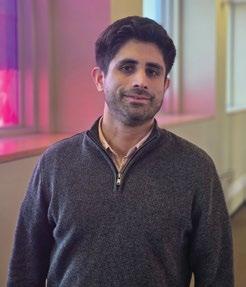
“My time at Rutgers Law School, working with members of the Institute for Law and Philosophy, has been an incredible experience,” Parra said. “I had the opportunity to actively participate in the Institute’s seminars, attend contract law classes, and present and discuss my ideas. The facilities and the support at the Law School have also been excellent.”
“It was a true pleasure to work with and spend time with Rodrigo,” said ILP faculty member Crescente Molina. “His work on contract theory is interesting, novel, and important, and our weekly discussions about his research were always stimulating. We will miss him, and I’m confident he has gained as much from his time at Rutgers as we have gained from having him here.”
ILP sponsors visiting fellows who wish to take up residence at the Law School in Camden or Department of Philosophy in New Brunswick for a semester or a full academic
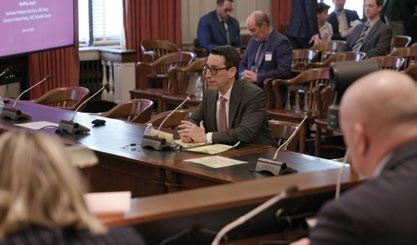
LISTENING SESSION ON DRUG PRICING
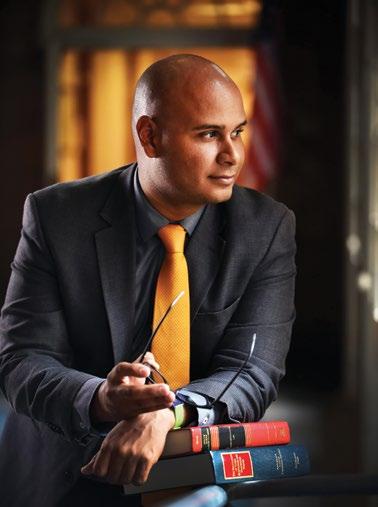
RIIPL Co-Director Michael Carrier participated in a Department of Justice/Federal Trade Commission listening session in Washington on “Lowering Americans’ Drug Prices Through Competition” in July 2025.
REAL WORLD IMPACT
RIIPL Co-Director Michael Carrier testified in front of the New Jersey Assembly Financial Institutions and Insurance Committee on pharmacy benefit managers (PBMs) in April 2025.
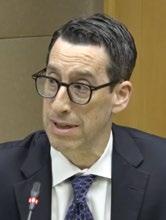
Use this QR code to access the video.
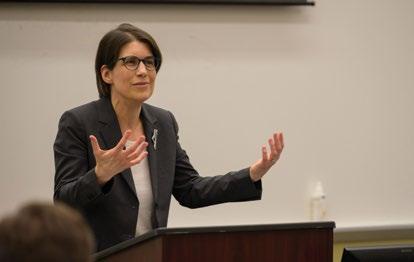
2025 BLOUSTEIN LECTURE
The Rutgers Institute for Law and Philosophy hosted its annual Bloustein Lecture in Law and Ethics in April 2025. Sophie Moreau, Samuel Tilden Professor of Law at New York University, delivered the lecture titled, “Systemic Discrimination and Structural Injustice.”
year. Visiting fellows have full access to all of Rutgers University’s academic resources and participate in the activities of the Institute. Past fellows hailed from Amsterdam, Australia, and Princeton University.
Founded in 2004, ILP is a joint venture between Rutgers Law School and the RutgersNew Brunswick Department of Philosophy designed to draw together and extend the acknowledged excellence at Rutgers University in philosophical inquiry at the intersection of philosophy and law. The Institute hosts conferences, including the annual Bloustein Lecture, and roundtables on the many facets of philosophy of law.
Rodrigo Parra Salamanca
Franck Zhou
Left to right: Rutgers Law Dean Johanna Bond, FCC Commissioner Anna Gomez, and RIIPL Co-Director Ellen Goodman
RIIPL Lastowka Lecture Highlights
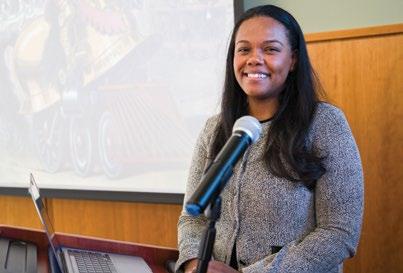
2025: Doha Mekki, former head of the Antitrust Division in the Biden administration, delivered the 2025 Lastowka Lecture. “Fidelity to Antitrust Law: Returning to First Principles to Win Key Precedents” recounted how antitrust officials in recent years won key precedents by restoring antitrust as law enforcement rather than a type of exceptionalism.
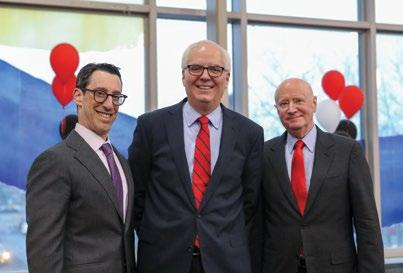
2026: Joseph Matal, former acting director and acting solicitor of the U.S. Patent and Trademark Office, delivered this year’s Lastowka Lecture. His presentation was titled, “A Guide to Modern Patent Eligibility Jurisprudence”. The lecture is held every year in honor of the late Professor Greg Lastowka, an internationally recognized scholar in cyberlaw and intellectual property.
FCC COMMISSIONER
continued from page 10
founder of the Trenton Journal, described building trust through community-centered reporting to counter years of distorted coverage of Black and brown neighborhoods. Vanessa Maria Graber of Free Press highlighted Camden’s severe lack of local news and the broader collapse of public media, noting how disinformation and political pressure make accountability reporting increasingly difficult. Graber said, “Our safety is at risk, and the beauty is we do it anyway, and we’re willing to take the risk, and we think it’s important to report on all these things, but it’s unclear what the future is. I’m glad to work at Free Press where we’re a part of the solution, and we’re trying to put our brains together to figure out how to keep everyone safe and informed.”
Ayinde Merrill of the New Jersey Civic Information Consortium discussed the struggle to sustain new local newsrooms, stressing that building an audience is far harder than launching a publication. Cristian MorenoRodriguez of El Pueblo Unido AC added a different angle. His organization is not a news outlet, but it stepped in to share vital information on ICE activity, detention centers, and shifting policies because no one else was doing it. Service organizations often become reporters by necessity in communities ignored by traditional media. The panel then took questions from the audience which included censorship, hostile reporting environments, student vulnerability, and the wide gap in media literacy.
Faculty Publications
CENTER FOR CORPORATE LAW AND GOVERNANCE
Sarah Dadush
n What Does the EU Corporate Sustainability Due Diligence Directive (CSDDD) Say About Contracts? (with Daniel Schönfelder & Michaela Streibelt) 21 N.Y.U. J. L. & Bus. 245 (2025).

Omar Vasquez Duque
n Unbundling ESG for Fiduciary Integrity: An Empirical Analysis on the Representativeness of ESG Pension Investment Legislation, 2 J. L. & Empirical Analysis, 60 (2025).
Matteo Gatti

n Collusion and Inequitable Price in the EU Mandatory Bid Regime (with Federica Cadorin), 6 Milan L. Rev. (2025).
Jonathan Gingerich
n Aesthetic Harmony and Aesthetic Agonism, 83 Journal of Aesthetics and Art Criticism (2025).
Tal Kastner
n Contract and Boilerplate, in Elgar Concise Encyclopedia of Law & Literature (Robert Spoo & Simon Stern eds., 2025)
Arthur Laby
n ESG Investing and Asset Managers, 20 Capital Markets Law Journal (forthcoming 2026).
n Advisors as Agents, in Deborah A. DeMott & Tan Cheng Han, eds., Agency and Intermediation, Northampton, MA: Edward Elgar Publishing (forthcoming 2026).
n Prospectus Liability in the United States, in Danny Busch & Matthias Lehmann, eds., Towards Uniform Prospectus Liability Rules in Europe and Beyond, Oxford, UK: Oxford University Press (2025).

Reid Kress Weisbord
n Essay Series on Estate Law and Celebrity Legacies in The Conversation (with co-author Naomi Kahn)
Hulk Hogan’s daughter can’t write herself out of the wrestler’s will—but she can refuse to take his money (August 2025).
How the ‘slayer rule’ might play a role in determining who will inherit wealth from Rob Reiner and his wife (December 2025).
How the Seattle Seahawks’ sale will score a touchdown for charity 8 years after Paul Allen’s death (February 2026).
CENTER FOR GENDER JUSTICE AND LAW

Carlos A. Ball
n “Harmful to Children” Claims and the Targeting of LGBTQ Speech After Free Speech Coalition v. Paxton, 135 Yale L. J. Online (2026).
Suzanne Kim
n Nonmarriage and Choice in South Africa and Beyond (with Holning Lau and Bradley Smith), in Avant-Garde Family Law: New Frontiers in
Global Family Law (Melissa Breger ed., Bloomsbury Press, forthcoming 2026).
n The “Self” Care Economy and the Workplace, in Care and Capitalism in the Twentieth Century (Kirsten Swinth & Sarah Knott eds., Duke University Press, forthcoming 2026).
CENTER FOR IMMIGRANT JUSTICE

Rose Cuison-Villazor
n ICE has broad power to detain and arrest noncitizens—but is still bound by constitutional limits, The Conversation (2025).
n Brief of Amici Curiae Members of Congress in Support of Plaintiffs-Respondents Challenging the Vacatur of Temporary Protected Status by Secretary Kristi Noem, Kristi Noem v. National TPS Alliance, filed in the United States Supreme Court (September 29, 2025) and U.S. Court of Appeals for the Ninth Circuit (July 16, 2025).
CENTER FOR SECURITY, RACE, AND RIGHTS
Sahar Aziz
n Presumptively Antisemitic: Islamophobic Tropes in the Palestine-Israel Discourse, in Words To Weapons: The Crisis Of Hate Speech In The Algorithmic Era (co-authored with Mitchell Plitnick) (Oneworld 2026).
CENTER FOR TRANSNATIONAL LAW

Jorge Contesse
n President Trump Targets Latin American Countries and Nationals as He Begins His Second Term, 119 American Journal of International Law (2025).
INSTITUTE FOR INFORMATION POLICY & LAW
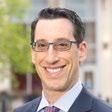
Michael Carrier
n “FTC v. Qualcomm: The Difficult Path for Antitrust FRAND Challenges in the U.S.” chapter, FRAND Cases in Context (Edward Elgar, 2026).
n IP and Antitrust Law: An Analysis of Antitrust Principles Applied to Intellectual Property Law (with Hovenkamp, Janis, Lemley, and Leslie) (Third Edition, 2025 update).
n Of Labor, Antitrust, and Why The Proposed House Settlement Will Not Solve the NCAA’s Problem (with Marc Edelman), 93 Fordham L. Rev. 1573 (2025).
*Awarded Outstanding Sports And Entertainment Paper By The Academy Of Legal Studies In Business

Ellen P. Goodman n Symposium Preview: Defending Tomorrow’s Democracy—Synthetic Content: Default to Distrust, 75 Case W. Rsrv. L. Rev. 961 (2025)
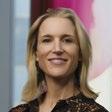
Camilla Hrdy
n Trade Secrets and Artificial Intelligence, Elgar Concise Encyclopedia of Artificial Intelligence and the Law (Edward Elgar, eds. Ryan Abbott, Elizabeth Rothman, forthcoming, 2026).
n Testing the Gernsback Hypothesis: Science Fiction’s Influence on Patents and Innovation, (with Camilla Alexandra and Brean, Daniel Harris) Forthcoming in Houston Law Review, 2025 Symposium Issue, National IP Conference.
Lori Nichols Franck Zhou
the DOCKET
Center for Corporate Law and Governance
Douglas S. Eakeley, Co-Director
Vice Dean Arthur B. Laby, Co-Director cclg.rutgers.edu
Center for Criminal Justice, Youth Rights, and Race
Laura Cohen, Director go.rutgers.edu/CJYRR
Center for Gender Justice and Law
Suzanne A. Kim, Director cgslp.rutgers.edu
Center for Immigrant Justice
Rose Cuison-Villazor, Director cij.rutgers.edu
Center for Risk and Responsibility
Jay Feinman, Co-Director Emeritus
Rick Swedloff, Co-Director
Adam Scales, Co-Director crr.rutgers.edu
are affordable to very low-income renters— viable at 30 percent of their median income or below—are what’s missing,” Nelson said.
The report also details how the consolidation of real estate ownership has reshaped the rental market. Studies show that corporate owners— groups of investors who are enriched by returns from rent collection—set higher rents than individual landlords.
The report also found that housing shortages are especially severe in suburban areas, driven by decades of underbuilding smaller, entrylevel homes. “It’s a huge part of the crisis,’’ said Nelson.
Why is the Rent So Damned High? proposes measures to make housing more affordable, including subsidizing low-income renters and the construction of starter homes.
With federal policy changes underway, she stressed the urgency of state and local action.
“Changes are happening at a federal level, and it’s incumbent upon the state and local levels to figure out how to respond in ways that will address the affordability crisis,” Nelson said.
Here are some of the report’s findings: Rents Rising Faster Than Incomes
Over the past 40 years rents have risen three times faster than incomes, and are now four times higher than in 1984, after adjusting for inflation.
From 1980 through 2018, the lowest-wage workers experienced a 5 percent decline in real wages.
RUTGERS LAW SCHOOL ACADEMIC CENTERS
Center for Security, Race and Rights
Sahar Aziz, Director csrr.rutgers.edu
Center for Transnational Law
Jorge Contesse, Director ctl.rutgers.edu
Center on Law, Inequality and Metropolitan Equity
David D. Troutt, Director clime.rutgers.edu
Institute for Information Policy & Law
Michael A. Carrier, Co-Director
Ellen P. Goodman, Co-Director
Camilla Hrdy, Co-Director riipl.rutgers.edu
Institute for Law and Philosophy
Alex Guerrero, Co-Director
Adil Haque, Co-Director
Doug Husak, Co-Director
John Oberdiek, Co-Director
Dennis Patterson, Co-Director
Matthew Shapiro, Co-Director
Alec Walen, Co-Director lawandphil.rutgers.edu
Center for State Constitutional Studies
Robert F. Williams, Director Emeritus statecon.camden.rutgers.edu
Rutgers Advocacy Center
JC Lore III, Director go.rutgers.edu/rutgers-advocacy-center
Staff
Habibah Johnson, Newark Program Coordinator
Katie Sferra, Newark Program Coordinator
Carol Shaner, Camden Program Coordinator
The Disappearing Supply of Affordable Rentals
Nationwide, there are only 35 affordable and available rental homes for every 100 extremely low-income renter households.
Federal affordability standards typically target households earning 50 to 60 percent of area median income, leaving renters with much lower incomes unserved unless states provide additional funding.
Shortage of Starter Homes in the Suburbs In the 1970s and 1980s, more than a third of new homes built were starter homes, at rates exceeding 400,000 per year.
Since the Great Recession from 2007 to 2009, the U.S. has produced fewer than 100,000 starter homes annually.
Suburbs account for roughly half of the national housing undersupply, in part due to restrictive zoning and the dominance of singlefamily detached housing.
Corporate Ownership and Consolidation of the Housing Industry
Individual landlords who own less than five units–as opposed to professional or corporate landlords who own many units—often set rents below market value by an average of $200 a month. Contributing factors include personal relationships with tenants that discourage them from raising rents.
Today, non-individual investors own more than half of all rental units nationwide. In 2000, non-individual investors owned one-third of 5–24 unit apartment buildings. By 2020, they owned two-thirds of those properties. Exclusionary single-family zoning and the costs of materials and labor are widely understood to be driving up development costs. The role of homebuilder consolidation is less widely discussed, but also critical to understanding why housing prices are so high. WHY IS THE RENT SO DAMNED... continued from page 9
As of 2023, nearly half of all U.S. renter households—about 22 million—were housingcost burdened, paying more than 30 percent of their income on rent, while over 12 million spent more than 50 percent.