The Undergraduate Review
Spring 2020
Volume 1 Issue 1
Shreyas Rane, Editor-in-Chief
Kaitlin McGee, Assistant Editor
Honors College Advisory Board
Lee Ann Westman, Director, Honors College
Brian Everett, Assistant Dean, Honors College
Faculty Advisory Board
Ross Allen
Saladin Malik Ambar
Aaron Hostetter
Laura Napolitano
Carol Singley
Matthew Sorrento
J.W.(Bill) Whitlow
Woj Wolfe
Copyright © 2020, The Undergraduate Review Rutgers University-Camden. All rights revert to authors.
The Undergraduate Review is a publication of the Honors College at the Rutgers University-Camden. The views expressed in The Undergraduate Review are solely those of the contributors and should not be attributed to the editorial staff, the Honors College, or to Rutgers University.
Spring 2020
Dear Friends:
It is with great pride that I welcome you to the inaugural edition of The Undergraduate Review, a journal that showcases some of the finest original research and creative activity generated by students at Rutgers University–Camden.
The opportunity for undergraduate students to engage in the creation of new knowledge and best practices, and their delivery, is relatively unique. Here at Rutgers University–Camden, our world-class research faculty embrace the opportunity to serve as mentors of students, who often work alongside their professors in laboratories and in many other settings, to develop breakthrough ideas that will elevate our society.
The pursuit of path-defining knowledge is essential to research universities, and never has this core endeavor been needed more than now. The rise of the COVID-19 pandemic has illustrated the need for visionary thinkers who can apply their creativity and critical analysis to address challenges that are both global and local in scope. Our world needs individuals who refuse to accept the status quo and instead focus upon solutions that improve the quality of life for all of us.
Within the premiere edition of this journal are examples of how Rutgers University–Camden students already are working to transform our world. Their experiences, and those of their classmates, offer a compelling look at how our university is providing our next generation of innovators skills they need to succeed and to lead – right now, and into the future.
I applaud the Honors College students who have launched this journal, the student-researchers represented in this edition, and their faculty mentors. Undergraduate research is one of the experiences that define Rutgers University–Camden as a special place where students are encouraged to realize their leadership potential. I am happy to be part of this celebration of their work.
Cordially,
Phoebe A. Haddon, J.D., LL.M. Chancellor
Editors’ Introduction
Shreyas Rane, Editor-in-Chief
Kaitlin McGee, Assistant Editor
The Honors College at Rutgers University-Camden is delighted to introduce its inaugural edition of The Undergraduate Review, an academic journal by the students, for the students. The Undergraduate Review provides an exciting platform for the students to publish their academic and creative work and to get noticed by thousands of their fellow campus members and the staff and faculty at Rutgers University-Camden.
For a journal to be truly “interdisciplinary,” it is important that it represents every shade of scholarship which the university offers. The Undergraduate Review’s editorial team and its faculty advisors have worked for several months to achieve this goal and to include the best possible student submissions which are not only highly regarded by the respective faculty, but also represent the diversity of student research and creative work at Rutgers University-Camden.
The first edition of the journal includes work across all disciplines. Among the cohort are four fiction pieces: “The Line Between Boys and Men” by Marcel Martinez, “FORCED” by Shannon Moran, “A sea is not a sea” by Emily Winters and Jennifer Le’s “Long Division.” Martinez’s poem explores the generational quality of toxic masculinity. Moran’s poem is a powerful critique of society’s expectations for women, from the pressure to look a certain way to how women are expected to act. Winters’ poem is a vividlydescribed, articulate expression of the uncertainty of love. Le’s short story “Long Division,” describes the muted frustration of a man meeting his half-sister the product of his father’s affair.
There are five research papers included among the work. Caitlyn Kliniewski, Angela Jonasz, and Brianna Magana
provide a compelling survey study entitled, “Why Play College Athletics? The Motivations Behind Male vs Female RutgersCamden Student Athletics.” Using athletes at Rutgers University-Camden as a sample size, they examine the motivations behind Division III athletes’ decision to play collegiate sports. Tyler Burgese’s cross-sectional study, “#Instagay: The Uses and Gratifications of Photo-Based Social Networking for Gay Men,” identifies patterns in photos posted by members of the gay community on social media platforms like Instagram.
Nitan Shanas’s “Photogenic Power: A Brief Analysis of Iconic Depictions of Political Power” analyzes two contemporary and iconic photos in terms of Steven Luke’s three-dimensional model of power and explains how the photos’ subjects represent the model. Victoria Wroblewski’s “Agency and the Successful Fabliau” examines the role of women in Chaucer’s The Canterbury Tales and their ability to exert power over their own lives. Julia Defeo, Michael R. Gallagher, and Katie Malcolm were able to delve into the direct effects of fire burns on the New Jersey’s fauna in their paper “Effects of prescribed burns on litter decomposition and microarthropod communities in New Jersey pinelands.”
Among the articles are three persuasive pieces and one film analysis. Beyoncé Carty’s literature review entitled “Is Solitary Confinement Useful?” explores the effects of shortand long-term effects of solitary confinement on prisoners and argues for prisons to revise their use of the practice. William Huang’s “Opinion Piece on China’s Belt Road Initiative” examines the influence China has on the international community through its Belt Road Initiative and argues that it is merely a prelude to rising global power. Molly Rollins delves deep into the problems with the horse racing industry and creates a compelling argument for making the industry safer for horses in her essay “A Battle to the Wire: The controversary over horse racing and how the industry
can move forward into the future.” Natalie DiSandro’s film analysis “Aronofsky’s Take on Horror” discusses the use of surrealism, paranoia, and an unreliable narrator in Darren Aronofsky’s work to create psychological horror films.
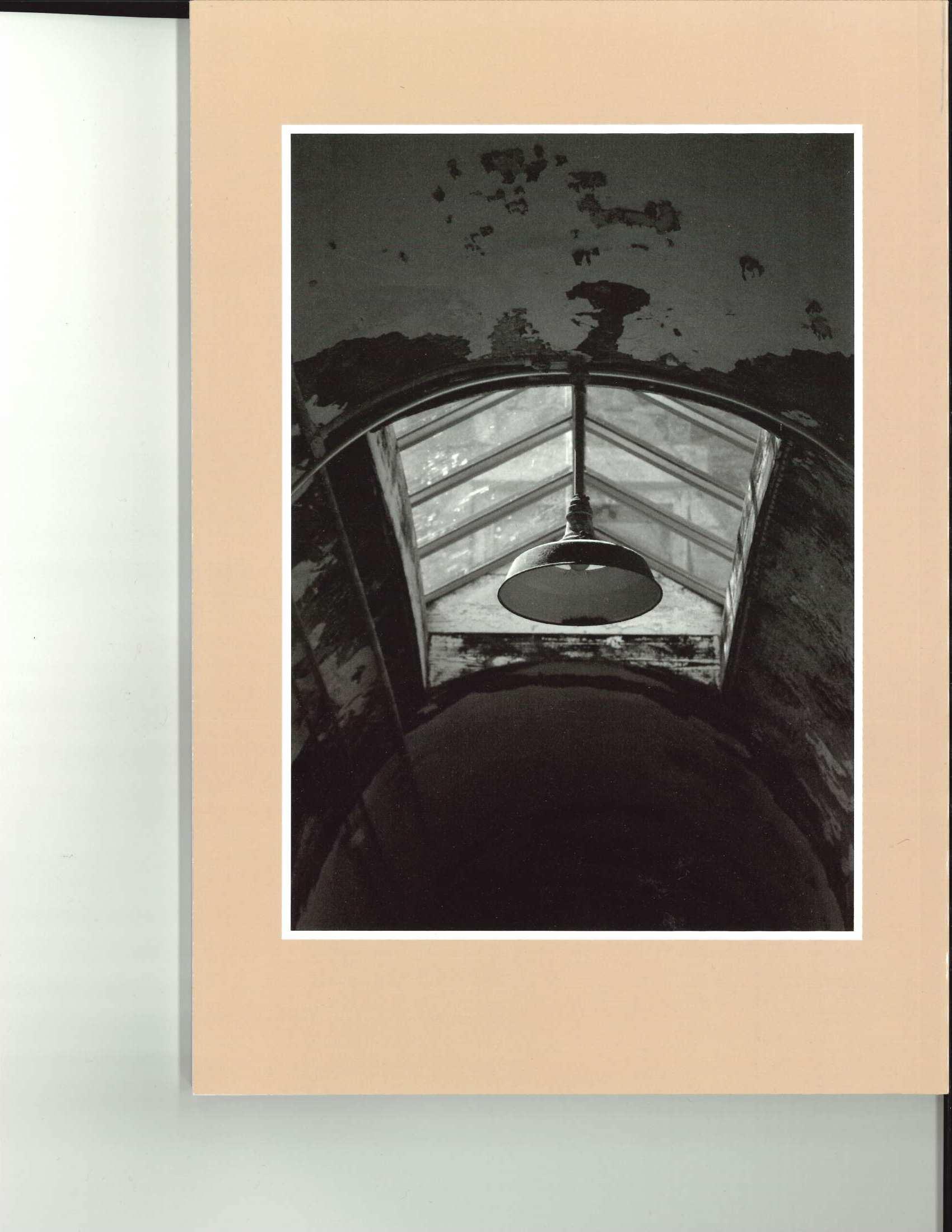
On the front cover of the journal is the photograph “Lights in the Park, 2020” by Jagjit Chauhan. The photograph captures lights wrapped around the branches of a tree in Rittenhouse Square in Philadelphia. On the back cover is Elis Moustafa’s photograph “Light at the End of the Tunnel” which focuses on a hanging light with light coming in through the ceiling window behind it in the Eastern State Penitentiary in Philadelphia. Explanations of the photos and biographies of the photographers can be found at the end of the journal.
Rutgers University–Camden is home to award-winning, innovative, creative, and distinguished undergraduate students. Needless to say, we thank all the students who have taken the time to submit their work and have revised them upon our request. We would like to give special appreciation to our faculty advisors who have made the first edition of this journal possible: Dr. Lee Ann Westman, Director of the Honors College and Brian Everett, Assistant Dean of the Honors College. As a reader, we hope that you enjoy every article and gain a little insight in our small yet inspiring world of Rutgers University-Camden. This journal is a testament to the ambition of our students and will hopefully continue to recognize their hard work for years to come. Get noticed; be remembered.
The Line Between Boys and Men
Marcel Martinez
What differentiates boys from men? My old man always said the hair on your upper lip makes you a man. But i thought that it was the will to be mature and wise rather than getting caught up in ego.
But is it ego
That makes one turn into a man? Grandpa told me the one who chooses to go without their hair is the one who will always prosper; you
should always follow your dreams and fulfill the dreams of others, not your ego. But who actually, willingly, goes for their dreams? Not a man in my house it was more so the facial hair that held the line between the boys and the ones
Who weren’t so. But that one thing is that enough even after you, yourself grow facial hair and choose the path of dreams after being blinded by ego. But i still felt i was not a man. But will that make me a man will it! Even though i still felt i was the one who was sitting upon the line between boys and men. Even after I’ve
graduated from the school of egoism and shaved every last strand of hair
On my head. Only the hair On my upper lip remains. Do i have the will to actually bare my face without hair for the one life that will truly make me a man?
8 The Undergraduate Review
FORCED
Shannon Moran
Forced to be pretty
Forced to be skinny
Wear make-up and be a good fuck
They’ll force you to give up
Forced into submission
Forced into perdition
They’ll make you see what you're missing And show you that you're not worth fixing
Forced to have sex
Forced to be the best
Don't say anything you will regret
They’ll force you to be their little pet
Forced to be perfect
Is it even worth it?
Forced to be a whore
Forced to say nothing more
Forced to be happy
When all I feel is crappy
Forced not to cry
Forced to live a lie
Put on a fake smile
Pretend you’re alright
Forced not to love as I'm forced into another meaningless fuck
Forced to be better
Forced not to matter
I'm tired of being forced And no one has remorse
Try to force me
Try to haze me
But you won’t faze me
Never again you’re not my friend I swear this time is the end I will not be forced ever again.
A sea that is not a sea Emily Winters
Dare I tie my boat to Yours? Tethered, We could weather the typhoon, Grin and bear the weight of a Sea that is not a sea.
But the part of my brain That’s always on the Edge of her seat –Precise, the precipice of an Artlessly honed blade –Wonders whether you’re good for me: Whether your kind of madness Won’t wear the rope thin. Whether by setting me alight I’d Suffocate with my head in your sweater, Burn burn to death a carelessly Careful hand on the Back of my neck. Whether by killing me you Set me free.
Death can be an art, like theft. A steady leaking through a window left Open to the night – faucet drip, Slow melt of an invisible tangible thing, alive but Too dead to remember the feeling of a Patch of skin, exposed between jean and Jacket, your hand a lily pad on My pond, a Stray thought pristine penny Deposited into my ocean,
Plopped cross-legged on my Bedroom floor like
Tell me a story.
Tell me the story of the time You were stolen away at Virgin dawn, a hairsbreadth away from First light.
Tell me again how it felt so Cold when It
Leeched in through the sweetly ignorant, barely-open Window and held your hand and held Your pulse in Its fist.
Remember when you held my Breath in your mouth until lungs Burned, until you could taste the Things I feared saying aloud on your Tongue, your parched mind and I fed you with my silence and you Stripped me bare, knowing now what I Never dared to glance in the Mirror, your face reflected back and even the Sky was an open-armed basin then, a Reflection that broke apart Easily, flower petals or Ashes to ashes snagged on a Rotor, just another loose end Tied up neatly and jettisoned behind us as We ride waves, and hope to Meet a storm to test our Mettle. As We ride waves, and we Burn Burn Burn.
Long Division
Jennifer Le
Polaris is given a picture, a time, and an order to find and pick her up from the train station. He stares at the woman in the picture, who stares back at him wearing the pained, melancholic expression he always wears. His fingers fidget at its corners, bending them and creasing the edges.
We share many of the same features, he thinks bitterly. Yesterday’s memory burns, corroding his will; the cold, impassive atmosphere of the previous night failed to quench his frustrations, but he could only blame himself. Cowardice runs deep and he wonders if this woman shares that characteristic too. He wishes that she does. He doesn’t want to suffer alone. All those nights he spent bent over his desk, drowning the horrible screeching downstairs with pages of scrawling letters and numbers, hoping that somewhere in those pages he would find an answer had been spent in vain. He wishes that he had enough gall back then to press his ear against the wall and listen for the cause of the maelstrom.
Now, he knows, and he must meet her in five minutes.
He’s dressed in a button-down and khakis, the default outfit for every vaguely important occasion. The belt cinching his waist aggravates his suffocation. He feels his lungs snatching every molecule of oxygen they can, but he is granted some relief when an announcement comes on stating that the 4:15 train has been delayed by ten minutes. Still, once again he is reminded why he’s here, and the suffocation returns at double the force, as if he has sunk another mile under the waves. He bides his time by staring at the remarkably shining marble floors of the station.
The PA system crackles to life. “The 4:15 PM train has arrived at Platform 4. Everyone, please allow room for the departing passengers.”
He gazes at the accumulating throng of people. Men and women carry bags of brown luggage in their hands, while struggling to don their coats and scarves to prepare for the onslaught of cold outside. He doesn’t bother to refer the picture again; they are both their father’s children.
He hopes she never comes, for his sake, but his mother is eagerly awaiting her arrival. Her enthusiasm is not only unwarranted, but also unknown. Her mother is offering this visitor as an olive branch, despite her being the daughter of the woman who ruined her marriage. Though, considering the circumstances of her arrival, he supposes it can’t be helped.
Polaris rests his chin on the palm of his hand. He doesn’t raise it when he spots a face with eyes the color of winter soil; they are trained on him. She clutches her bag like a sword, swinging it around to dissuade anyone from approaching too close. He imagines crescents imprinted on the leather handle by her nails.
This is the first time he’s ever seen her, and he only heard of her existence several weeks ago. He resents the fact that they are the same age, but he knows nothing else about her besides her last name – Cavendish. It leaves a bitter taste in his mouth, bitter enough to overpower the acrid feeling he has when he says his own last name. If her mother didn’t intervene in his family’s affairs, he would’ve had a quieter childhood and there would’ve been nothing to write choirs about.
When the crowd clears and he can see her entirely, he stands up and stuffs his hands in his pockets. She stands a few feet away from him, her face holding an unfathomable emotion. Neither of them speaks for a few seconds as they gauge each other for the first time. Polaris’s mood sours even more as he realizes that they are even the same height. Overseers might mistake them for being full siblings.
She breaks the silence first by extending her hand. The corners of her mouth quirk up in a semblance of a smile. “My name’s Cassiopeia, but just call me Cassia.”
When he tentatively reaches to accept her hand, he resists the urge to say I know who you are. He feels calluses besides her fingernails and along the lines of her palms. “It’s nice to meet you, Cassia.”
“You as well.” He licks his lips, dreading the incoming small talk. Polaris lightens his voice, to disguise the strain of this situation. “How was the journey here?”
“It was fine.” She shrugs. The scarf around her neck loosens slightly, revealing the silver chain of a necklace. “There’s nothing really to talk about.”
Besides what brought you here, he thinks.
“Well, we don’t really know each other,” he says, vaguely. He gestures at her bags. “Are you ready to go?”
Cassia nods, but her arms tighten around themselves. “Before we go, we should take a picture together. I think your mom wanted one.”
His smile is painful, consisting of jagged knives forced through his lips. His fingers twitch in his pocket and they threaten to close around his own throat so that it can vomit the rotten words it wants to say – but he swallows it all down like sickly-sweet cough syrup. He widens his smile until it strains his cheeks.
“Of course.”
The affair is nothing special. An awkward distance stands between them. Cassia moves closer to him to be fully in frame, and he suppresses a disgusted shiver when her arm brushes against his. In seconds, it’s all over but they now have a permanent record of each other’s existence.
Polaris sends it to his mother before he drives them to his childhood home. He helps her unpack her bags in tense silence before he returns to his room while she stays downstairs.
He hasn’t had an extended stay here for a couple of years, but his mother always welcomed him home with open arms. She’s not going to be here today, unfortunately, but her presence saturates the area. Dust doesn’t exist under her meticulous eye.
He sits in the chair near his desk and finds that his fingers still gravitate towards his pencil. Long nights were spent on this desk; he remembers the dark half-moons thumbed underneath his eyes and the piles of eraser shavings around his homework. In the end, he supposes it’s all worth it. He’s an aerospace engineer and he comes home smelling like petroleum and nitrile but this career of his never sat right in his stomach. Dread accompanies him when he leaves for work, suppressing a flinch every time someone calls for him. It’s a visceral reaction; he wants to tear his name apart and slip his face into the folds of his sleeve. His father still haunts him. He walks in the same halls as he does and even when Polaris is alone, he can never escape from that infernal surname, “Wiles.”
It’s unnerving how much of their father he sees in Cassia. Beneath her strained politeness lies simmering acrimony. He could tell that she hates him.
And he hates her too.
He goes downstairs and finds the living room empty. The television softly plays the nighttime news. The coffee table has the familiar assortment of outdated magazines and a halffilled glass of wine sitting idlily on worn coasters. Cassia’s voice lilts overhead. She’s in the kitchen, leaning on the counter, and her figure bends like the fraught branches of a weeping willow.
Polaris can’t hear what she’s saying, but he knows that she’s calling the hospital based on her starched expression. She holds her phone close to her ear and, after a few minutes, he hears an audible sigh and approaching footsteps.
When she sits in the chair across from him, she shakes her head.
“Is your mother okay?” he said, coolly.
“Yeah, she’s fine.” Cassia’s voice is tight, a taut string between two poles over a chasm. “Thanks for asking.” She stares at him with pursed lips as a precaution against saying anything more.
He could imagine what she wanted to say. They are two parallel trains crossing in opposite directions, their thoughts a blur to each other through the light-streaked windows. Where are they going? What are they carrying? He only has a vague idea of what she’s thinking, and so, they’ll never be on the same level.
Polaris meets her with equal intensity, challenging her to say whatever lays in her mind. He could handle her words, or maybe she thought he couldn’t.
Maybe that’s why she wordlessly trudges outside, bringing a glass of wine with her and leaving him flustered.
He considers leaving for his own sanity, but reconsiders for the sake of his mother. She wants him to, at the very least, talk to Cassia and he can’t lie about that. She would know, but he can’t think of anything else to say to Cassia. He’s driven her to the place she wanted to see and answered her questions and treated her accordingly. His knuckles are white and a desperate sweat coats his skin, but he’s not quite sure what he’s desperate for.
Polaris pretends to read one of the magazines to ease his boredom, but his mind isn’t processing anything. He wants to find something that would draw her back into the house: an interesting article, a fire on the stove, anything that isn’t their families. His eyes flicker to the television and now, he finds its flashing colors and jarring noises too much to him.
Then, Cassia screams.
He’s called to the porch and he sees her kneeling, her hands covering her face, and her body shuddering with sobs.
She’s surrounded by islands of shattered glass amidst a sea of deep red wine. She lifts her head upon hearing his footsteps and she delivers to him a withering glare, its intensity unwavering as she rises to her feet.
“I don’t understand how a person as smart as you can be so unrepentantly dumb. You’re blind and deaf to the needs of everyone around you. Don’t you understand that I don’t need your charity, I don’t need your pity, but you’re so selfish that you can’t even see past the crest of your ego!”
Now, he flies. He’s spitting caustic ammunition and circling around her in a furious dance. He doesn’t understand why she is so angry with him. Did he not express his condolences about her comatose mother? Did he not arrive in a timely manner here at her request? He finds her accusations baseless and ridiculous and what exactly did he do wrong?
Cassia says nothing but glances down at her fingernails. He wonders if he should apologize for his outburst, but he doesn’t know how or where to begin, or whether she deserves one since she had instigated the argument. Still, he forces one out, the apology falling clumsily on his tongue as it was derelict to saying such words pertaining to remorse. If only she was a stranger who he accidentally bumped into, so he wouldn’t have to see her again. He could just mutter an “I’m sorry” and move on with his life.
She might as well be a stranger, but the blood that ties them together forced them to be in Perdition, neither friends nor enemies.
At last, she spoke in a tone that resembled normalcy, “I’m going to the hospital. Do you want to come?”
“I’m fine.” He paused, and then, like he was offering her a consolation prize, “I hope your mother wakes up soon.”
He already apologized. Wasn’t that enough?
Why Play College Athletics? The Motivations Behind Male vs. Female
Rutgers-Camden Student Athletes
Caitlyn Kliniewski
Angela Jonasz
Brianna Magana
Abstract
This study was conducted to reveal the motivations behind Division III student-athletes to participate in collegiate sports. A survey was sent out to all the studentathletes at Rutgers University-Camden. Eighty responses were recorded from both males and females. Descriptive statistics showed that, of the possible motivations the survey provided, playing collegiate sports because they genuinely enjoyed it was the greatest overall motivation. Descriptive statistics also showed a significant difference between males and females in the category of wanting to become a professional athlete. This information could be useful to coaches and athletic departments of Division III schools.
Why Play College Athletics? – The Motivations Behind Male vs. Female Rutgers-Camden
Student Athletes
Numerous students across the country are involved with youth and high school sports and choose to continue their involvement by participating in collegiate sports. There are several reasons why students choose to become collegiate athletes and, depending on which division their schools play in, these reasons can include pure enjoyment of the sport, financial gain, pressure from parents/guardians, campus involvement, a desire to continue a routine, the hope to become a professional, and more. Potential commercial benefits exist to Division I athletes, which could largely be the reason why they choose to play, whereas Division III athletes
are unable to be compensated in any way. The NCAA does not allow Division III schools to give athletically-based financial aid to prospective students (Robst & Keil 2000).
Pauline (2010) researched the differences among Division I, II, and III student athletes with respect to their decision in choosing a school and found that student-athletes from Division II and III schools were more likely to consider academics when making their choice than Division I athletes. This implies that more Division II and III student athletes’ value their education and are not solely focused on the athletics. Conversely, this study also finds a significant difference between male and female student-athletes with respect to the importance of athletics at their college of choice. Males in all three divisions rated athletics as more important than females did. If Division III student athletes are not being compensated and do not consider athletics to be the most important factor in choosing a college, what is their motivation to play? If males value athletics more than females, will we see a difference in their motivation to play? This study aims to analyze the motivations behind Division III student-athletes and determine any discrepancies between the findings of males versus females. We hypothesize that, of the 5 motivations we selected, the top motivation for both males and females would be pure enjoyment of the sport. The reason that we predict this is because the sample is solely comprised of Division III athletes who are not compensated in any way to play nor do they believe athletics are the most important factor in choosing a school. This leads us to believe that Division III student-athletes participate in sports at the collegiate level because it brings them pleasure. We also predict that more males participate in sports at Rutgers-Camden because they want to make a career out of athletics than females. Making a career out of athletics could be anything from being a coach or a professional player to being involved in the sports
management world. We made this prediction based on the findings of Pauline that indicated males rated athletics with more significance than females.
Methods and Materials
A survey was created using Qualtrics and sent out via email from the Rutgers-Camden athletic director to each of the university’s student athletes. Fourteen days after the survey was sent out, 80 responses were recorded. Of these responses, 28 were from males (35%) and 52 were from females (65%). There were 12 responses omitted from the final data set because they ended the survey before finishing and did not return to complete it. The age range of participants was 18-22.
This study’s primary focus was to look at the differences in motivations behind male and female student athletes at Rutgers-Camden. As a Division III school, there are no athletic scholarships holding athletes down; they choose to play with no restraints. The data collected was all through self-report. In order to attain the most honest reports possible, participants were notified that all results would be anonymous and only Dr. Whitlow’s Experimental Psychology class would be notified of the results. Within the survey there were 29 multiple choice questions, 2 open-ended questions, as well as a single question using a 10-point Likert scale. The survey questions were grouped together into 6 different categories that were unknown to each participant, which is important so that they could not skew their answers to lean toward one motivation instead of another. The survey began with demographics. The next 5 categories were composed of questions to help determine which “motivation” each athlete fit into. The possible motivations were as follows: future career, genuine enjoyment/fun, gain a social group/campus involvement, out of comfort/desire to keep a routine going,
and following a role model or influenced/pressured. Each motivation contained 4-7 possible questions that the participant would answer. Commonly, if a participant were to answer a specific way to one question that codes for a certain motivation, skip logic was used to move them along to the next motivation. The survey took roughly 5-10 minutes to complete.
Results
After we sent out our survey questions to 92 student athletes at Rutgers University, we received 80 responses that were included in the data analysis. We omitted 12 of those responses because the athletes did not finish all of the questions. Of those 80, 52 were female and 28 were male. We had five categories for reasons behind student athlete motivations for playing sports at Rutgers-Camden. The five categories were: career, fun/passion, modeling/pressured, social group, and routine. Each motivation included a set of questions. Within each question, each answer that was selected represented a score. For example, the question, “Do you wish to have a career related to sports once you complete college (such as coach, professional athlete, sports management, etc.),” had 3 answer choices: yes, unsure, and no. If the participant answered “yes,” then they were given a 1. If the answer was “unsure,” they were given 0. Finally, if they answered “no,” they were given -1. For a question such as the 10-point Likert Scale, every participant was given the same number of points for how they ranked their happiness while playing their selected sport on a scale of 1-10. After every questions’ tallies were added up, we were able to find the final score for each motivation. This process was repeated for all 5 motivations.
After all of the scores were calculated for each motivation, the average was then found between all the males in each
category and an average was found for all of the females in each category. After attaining these 10 averages, a 2-tailed TTest was performed to reveal whether or not there was a statistically significant difference between males and females in each motivation.
In the career category, an average of 35.2% of males said they were playing their sport to have a career in their future. The average female who was playing a sport for future career goals was 5.49%. In the fun/passion category, an average of 67.86% of males were playing their sport because they genuinely enjoyed it. The females in the fun category were not far behind with an average of 61.43%. In the modeling category, females outweighed the males for playing because of someone they look up to, with 21.8%. The males only had an average of 13.1% in the modeling category. Males said they were playing their sport for a social aspect with an average of 48.85%, whereas females were 38.83%. The average number of females who said she played her sport because it was part of her everyday routine was 55.13%. We found an average of 47.62% of males we played their sport due to their routine. The figures below show the data mentioned above.
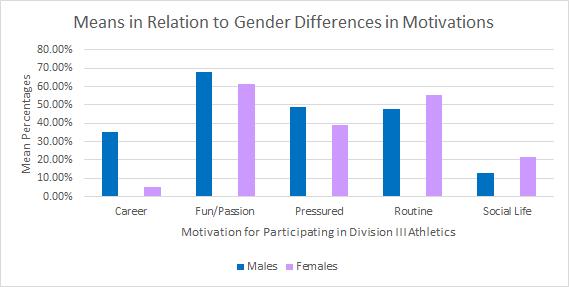
Figure 1.1 Means in Relation to Gender Differences in Motivations
After attaining all of the means for each gender and motivation, in order to identify which results indicated a significant difference in gender, we ran 5 T-Tests. The TTests show that 2 motivations have significant differences between genders. The T-Test value for having a future career is .000000473. This proves one of our hypotheses to be correct. We hypothesized that the motivation to participate in Division III athletics for the purpose of attaining an athleticrelated career would be significantly higher in males than in females. The second motivation that was a significant difference between males and females was being pressured into playing Division III athletics. The T-Test value is .04, in favor of more males being pressured/influenced into participating in athletics than females. Below is a table that represents all of the data discussed in this section.
Discussion
After evaluating our results, it has been proven that our hypothesis was correct. We predicted that the top motivation would be that Division III student-athletes participate in college athletics because they genuinely enjoy their sport. We also predicted that there would not be a significant difference between males and females with respect to the overall motivation. As previously mentioned, the T-Test result was
greater than .05, therefore proving that there is not a significant difference between males and females. However, we did predict that there would be a gender difference in the career category. Indeed, our results did find the biggest gender difference in the career category with a significance of .000000473. More males said they were playing their sport because they wanted to have a future career in it than females. This supports the research by Pauline (2010) that indicates males regard athletics as more important in choosing a college than females.
The findings indicated in this research can be limited for the sheer fact that the population of the participants were only student-athletes of Rutgers University-Camden. Future research may want to poll participants from multiple Division III schools. Another limitation was that we provided only five possible motivations for students. There could very well be motivations existing outside of the five motivations we provided. Lastly, the results were based off of self-report. There is always a level of bias associated with survey responses because we have no way of telling whether or not the survey responses are accurate and truthful. These findings could lead to more research that may potentially be able to eliminate the limitations this research generated. Research into this topic could be useful to college coaches and athletic staff at universities, especially at the Division III level. Having a sense of what motivates student-athletes to participate in sports can help the staff make sure each player on their respective teams remains focused and content with their experience. Also, having players with different motivations may cause an issue with finding unity on a team. It may be beneficial to attaining a winning record by having athletes on a team that all share the same motivations. Future research may want to look at how teams that have athletes who play for different reasons affect their win/lose record and evaluate
Works Cited
Pauline, J. (2010). Factors Influencing College Selection by NCAA Division I, II, and III Lacrosse Players. Journal of Research,5(2).
Robst, J., & Keil, J. (2000). The Relationship Between Athletic Participation and Academic Performance: Evidence from NCAA Division III. Applied Economics,32(5), 547-558. doi:10.1080/000368400322453
The Undergraduate Review what kinds of conflicts arise between relationships of teammates.
#Instagay: The Uses and Gratifications of Photo-Based Social Networking for Gay Men
Tyler Burgese
Through an inductive content analysis of 300 top photos posted to Instagram using the popular hashtag “Instagay,” this research uncovers patterns about what type of content prevails in this online community. Findings indicate strong preferences toward covert communications of desire and men with lighter skin tones. Men with darker skin tones were found to have severely limited potential for appearances and expressions of sexuality. By establishing set norms of gay male representation online, this community achieves gratification through collective definition and validation. These findings build on a growing body of literature on Instagram studies and the “queer publics” found within by characterizing the exchanges and values found on the publicly available interface (Duguay, 2016). This study provides a framework that can be used to analyze other hashtag-based online communities and proves valuable in exploring the visual measures that Instagram users find worthy of interaction and approval.
Introduction
There is no doubt that social life has been irreversibly altered by the Internet. So much of our daily routines and transactions have been digitized and made public with the help of social networking sites (SNSs) like Facebook, Twitter, and Instagram. The myriad new possibilities for online social relationships and behavior warrant ongoing analysis and interpretation as they continually present new definitions of human connection. This research will qualitatively examine the visual representations and interactions that take place in one particular community surrounding a topical hashtag on
Instagram that has dubbed itself “Instagay.” This is a virtual place where gay-identified men share photos of themselves in order to gain visibility and build community. By studying the photos that gain the highest levels of user engagement, I will reveal some emergent patterns in gay men’s’ online popular culture.
Literature Review
While SNSs were originally centered solely around the individual and what they chose to share, the companies behind them have since capitalized on opportunities to distort users’ senses of time and scale with augmented timelines controlled by what is mysteriously referred to as “the algorithm” (Baker & Walsh, 2018; Barbour, Lee, & Moore, 2017). Therefore, what was once straightforward and chronological in social feeds is now highly calculated and curated. With this development comes a host of new sites for study as the content on SNSs adopts a competitive quality in order to maintain visibility. In particular, Instagram’s photofocused nature provides an edge when it comes to the visual perception of the lives of others and how users are able to connect and understand one another. By presenting oneself in a certain way in a photo, volumes are communicated, both intended by the user and presumed by the audience.
Uses & Gratifications Research
Uses & gratifications research is a body of work that has long sought to understand the ways in which people engage with various types of media. Early inquiries focused on daytime radio serials, genres of music, comic books, and newspapers (Ruggiero, 2018). This research developed a concept of the individual’s social position and identity within the context of their media diets and found gratifying sources
of advice, stability, and reassurance about “the dignity and usefulness of one’s role” in society (Blumler, 1985; Katz, Blumler, & Gurevitch, 1974). Put more simply, people are most likely to consume and interact with media that comforts them and reinforces what they already know and believe.
More recently, Erz, Marder, & Osadchaya (2018) conducted the first investigation of the uses and gratifications associated with online hashtags, of which findings were sixfold; hashtags served purposes of self-presentation, inventiveness, chronicling, information-seeking, venting, and etiquette. A hashtag, notated with a “#” preceding a string of words without spaces between them, is a unit for organizing and making accessible the seemingly endless avenues of content that are represented online. Most prominent social networks utilize user-generated hashtags for this purpose. The hashtag relevant to this research is #Instagay, typically indicating that a photo posted to Instagram either features or was taken by a person who identifies as gay, or is attracted to members of their own sex. (“#Instagay” would be read aloud as “hashtag Instagay.”)
While hashtags accomplish the task of describing the contents of a post, they are also a “crucial currency” that has the potential to increase a user’s visibility (Page, 2012). Hashtags are searchable and therefore can be used to access content without a pre-established digital acquaintance between users. A registered Instagram account is not even required to view posts that contain a certain hashtag in their captions or comments (Bruns & Burgess, 2015a). There are also some inferences that can be made from certain styles of hashtag use. An extensive list of hashtags that painstakingly describe every aspect of the photo and its subjects indicates an intention to move into the public eye and garner more likes and attention than are typically received from one’s own following (Abidin, 2016b; Barbour, Lee, & Moore, 2017). In this research, I will build on Erz, Marder, & Osadchaya’s
(2018) finding that hashtags provide a path toward gratification by way of controlling one’s self-presentation online.
Identity and Impressions
The high potential for interaction on Instagram and the opportunity to see and be seen on a grand scale creates what Internet scholars call “an ultimate stage for the empowerment of individualism and self-expression” (Blight, Ruppel, & Shoenbauer, 2017; Ruggiero, 2018).
Alves de Assis (2017) puts succinctly:
These digital new media allow anyone to become an author, narrator, and creator of their own character . . . One of the typical strategies to achieve a popular and highly followed persona is to make one’s intimate life a spectacle. This performance is simultaneously real, private, and life-like: these images and reports eagerly offer themselves to an audience of hungry, voyeuristic eyes that is potentially infinite.
The “performance” that Alves de Assis references is one that Erving Goffman theorized about heavily through his metaphor of dramaturgical sociology. He proposed that the “performance” of everyday life is used to influence others (the “audience”) to think and feel a particular way and form their opinions thusly (Goffman, 1959). Expanding on this notion with a focus on photography, Boerdam and Matinius (1980) asserted that the act of being photographed is the perfect example of such a performance because one is aware of the public that will eventually see the photo that is being posed for. Therefore, sharing photos of oneself or others on
Instagram is a method of creating and experimenting with identities, also called “self-representation gratification” (Lee et al., 2015).
There is extensive scholarship stating that SNS users strive to present their best selves at all times and conceal any features or tendencies that would be considered unbecoming; the self that is presented online is idealized rather than authentic (Manago, Graham, Greenfield et al., 2008; Rui & Stefanone, 2013; Senft, 2012; Mendelson & Papacharissi, 2011; Hogan, 2010; de Vries, Möller, Wieringa et al., 2018). Some scholars chalk these behaviors up to narcissism (Moon, Lee, Lee et al., 2016; Dumas, Maxwell-Smith, Davis et al., 2017; Sheldon & Bryant, 2016) while another points out that this presentational mode is, instead, simply a manifestation of current societal norms (Marshall, 2014).
As with all social behavior, these presentations of self in photos on Instagram do not occur in a vacuum. Instead of the traditional “life is a stage” metaphor favored by Goffman’s dramaturgy and William Shakespeare’s comedies, Hogan (2010) argues that SNSs are more of a “participatory exhibit.” Identity is not simply the property of the performer; the perceiver, or audience, also gets an opinion in the matter (Senft, 2012). The approval of one’s followers is of utmost importance to many Instagram users and is measured in the form of likes and comments. In order to “like” a photo on Instagram, one can either double-tap on the image itself on their smartphone screen or tap the heart-shaped icon below the photo. The number of likes carries a value for some Instagram users that is far more than numerical. Likes can also be used as a yardstick against which to measure the “success” of a post, a symbol of social approval and validation (Dumas, Maxwell-Smith, Davis et al., 2017). In the Subconscious Films documentary Social Animals, teen Instagram users admit to the habit of deleting a photo if it does not receive a certain amount of likes within the first
hour of being posted in fear of public embarrassment, which is not an uncommon practice (Green, Garriott, & Martori, 2018).
Instagram likes have their own set of social codes. For example, to not like every photo posted by a close friend in a timely manner can be considered rude or unsupportive. Some users engage in “deceptive like-seeking” strategies such as “like for like.” This is commonly demarcated by the presence of #like4like or #l4l in the caption of the photo and implies that if any user likes the photo in question, the favor will be returned by the poster (Dumas, Maxwell-Smith, Davis et al., 2017). The “likeability” of an Instagram post is also crucial for the ability of users to monetize their profiles through brand endorsements and sponsorships, among other opportunities (Abidin, 2016a).
Online Public
In addition to facilitating identity creation and providing personal gratification, SNSs are also, by nature, a public experience (Moore, Barbour, & Lee, 2017). Specifically, hashtags form virtual public spaces around the topics that they represent. Much scholarship has been devoted to this phenomenon, called “imagined data communities” by Hochman (2014) and “ad hoc publics” or “topical hashtag communities” by Bruns & Burgess (2015b). The latter group of researchers observed the online interactions surrounding an Australian election, the 2011 London Riots, and WikiLeaks, all bound by the use of common hashtags on Twitter. Duguay (2016) expanded on this theory of the ad hoc public with what she called the “queer public” created within LGBTQ spaces online, specifically by analyzing actress Ruby Rose’s Instagram presence and its ability to “produce and circulate forms of LGBTQ visibility.”
Many Instagram users seek to curate a similar presence and participate in these communities. As does any public space or gathering, the queer public creates a loose network of “poorly defined strangers” who may become familiar with one another through peripheral interactions on various SNSs (Miles, 2018). This is a common method of acquaintance as social life continues migrating into the digital realm. Specific to Instagram, this theory of queer publics is relevant because they are the site of a substantial amount of interactions. The digital community surrounding photos with #Instagay has implications for the future of these queer publics because it dictates what kinds of photos are being shared, seen, and liked, and speaks on the values of and discourses within reallife queer communities.
Microcelebrity and Influencer Culture
The Internet, and SNSs, more specifically, have made accessible levels of status and notoriety that were formerly reserved for stars of film, television, print, and radio (Moore, Barbour, & Lee, 2017). “Microcelebrity” is a term coined by Theresa Senft (2012) who originally used it to describe “camgirls” who broadcast their lives over the Internet, though it has taken on an entirely new meaning with the rise in popularity of SNSs. A new breed of microcelebrity has risen; the Instagram-famous “influencers” boast large followings and celebrity status beyond the mobile phone screen. As Marwick (2015) notes, they “tend to be conventionally goodlooking, work in ‘cool’ industries such as modeling or tattoo artistry, and emulate the tropes and symbols of traditional celebrity culture, such as glamorous self-portraits, designer goods, or luxury cars.” These influencers have achieved this status in ways too varied to name, but the basic infrastructure of their fame is the result of adopting Instagram’s intended uses for their own purposes. What started as a smartphone
app meant to share the nostalgia and networked intimacy of spontaneous images has been appropriated as a stream to circulate information and content that is often staged, shot, and edited using professional equipment and resources (Abidin, 2016a). Gay men have not been excluded from the opportunity to achieve influencer or microcelebrity status, and the “Instagays” often share the qualities described above.
Personal Photography
At its core, Instagram promotes the taking and sharing of personal photos. While its capabilities and societal significance have evolved and adapted greatly since its inception in 2010, photography remains at the foundation (Highfield & Leaver, 2016). From the beginning of photography studies, scholars have argued that photos are highly ritualized by nature of the necessity to step out of the moment in order to document it (Musello, 1980). While there is a seemingly unlimited number of things to photograph, a rather limited range of subjects and events are recorded (Chalfen, 1987). Consider the amount of times a sunset or a delicious meal have been photographed and shared and compare that to the number of photographs of less popular subjects such as a garbage can or a stained, wrinkled shirt. Personal photographs often present ideals, emphasizing how one wishes their life to be remembered (Holland, 1997).
On the Internet, photos and videos are important “social currencies,” and those posted to Instagram are held to a particularly high standard due to the visual nature of the platform (Abidin, 2016a). One genre of personal photography that comprises a substantial percentage of content on Instagram is the “selfie,” a photo taken of oneself, by oneself. This brand of “personal reflexivity” can be understood in several ways:
[A] form of self-expression, a type of positive image construction, a tool for self-promotion, a means to express belonging in a certain community, and/or an outcome of the desire for attention. (Abidin, 2016a; Alves de Assis, 2017).
Instagram is a breeding ground for the proliferation of selfies and thus has the potential to create communities, foster embellished identities, and reinforce standards of appearance.
#Instagay
Figure 1 presents a crowdsourced definition of the term “Instagay” from the popular website, Urban Dictionary (Invidiosa, 2019). While not an academic source by any stretch of the imagination, this description succinctly captures an accurate, albeit exaggerated, snapshot of the topic of this research. The Instagay is a stereotypically gorgeous and vain gay man with his best foot forward at all times. He documents his adventurous life through the lens of his smartphone camera and shares it with the world on Instagram. A life-size Ken doll, it would not be difficult to pick him out of a lineup. While the moniker comes from the hashtag commonly added to the captions of gay men’s’ Instagram posts, it has become synonymous with this breed of user, regardless of their actual hashtag use. This research tests the accuracy of this colloquialism to gain insights about the demographic who use and interact with it.
The cultural phenomenon of the Instagay has even permeated other areas of media beyond the threshold of a mobile phone app. A parodied representation on the Comedy Central television show The Other Two helps to contextualize this concept. In one episode, a millennial actor named Cary Dubeck intentionally befriends a group of 4 Instagramfamous gay men in hopes that the association will increase his
number of followers, which he needs in order to be considered for a role. Upon meeting the group’s leader, Cary’s sister Brooke explains, “He’s one of those ‘Instagays,’ you know, that runs around with no shirt on posting song lyrics that have nothing to do with the pic he’s put up” [emphasis in original] (Escola & Valia, 2019).
These men share more than just large online followings. Their names are Cameron Colby, Colby Dallas, Dallas Drake, and Drake Cameron, which is likely a comment on the lack of diversity found among the men who occupy the top tiers of the Internet. The Instagays of writer Cole Escola’s creation are endearingly aloof and somehow convincingly genuine as they flex their muscles for the camera and laugh robotically at even the most trivial remarks. They spend their time throwing pool parties, hiking in animal onesies, and referring to their SNS profiles as their “work” and themselves as “creators,” all while making sure to snap enough photos to strategically satiate their followers. Notably, they visit a church during offhours for a staged photoshoot in red Speedos (with some of them wearing nothing at all) to capture some Christmas content well in advance because “we look way too fat after Thanksgiving,” as told by a deadpan Dallas Drake. Afterward, they brainstorm surface-level, agreeable captions such as “Christmas is a time for all people to be thankful and to give back” and “#Christmasgoals.” The latter is met with unanimous approval and enthusiasm, as if to say, “Why didn’t I think of that?” (Escola & Valia, 2019).
This farcical depiction of the Instagay trope cuts close to the bone of the public’s perception of what the reality behind the screen must be like. In many ways, this idea of a hypersexual, braindead model-type has become synonymous with the word Instagay, and is a running joke within the gay community often used ironically to describe a man with some of the aforementioned traits. (Recall the remark “Textbook
Instagay” from Figure 1 and refer to the political cartoon [Theguyliner, 2018] in Figure 2.)
Racial Identification
Another aspect of identity that heavily influenced this research is the perception of race. In the words of Sieder (2002), identity involves “a complex dynamic of selfidentification and ascription;” we can identify ourselves as we like, but there will always be the uncontrollable outside variable of how others perceive and identify us. Telles (2017) refers to this as “the gaze of the other.” Specific to appearance, race is a classification that can foster a meaningful divide between self-identification and ascription, one that social research should aim to capture when it affects the subjects of study and the findings that surround them. When solely observing appearance as in content analysis, race and ethnicity are not aspects of identity that can be defined by the researcher. However, skin color is a factor that can be separated from these two classifications as it often is in everyday observations between strangers. Other scholars have taken this approach in order to account for the biases of outside observers who have no knowledge of how others identify racially or ethnically by categorizing research subjects by defined skin tones (Keith & Herring, 1991; Gullickson, 2005). Both of these studies used a simple scale to measure skin tones, ranging from 1 (darkest) to 5 (lightest). These definitions suffer from issues of ambiguity and subjectivity, to which Edward Telles and the Project on Ethnicity and Race in Latin America (PERLA) responded with a more comprehensive skin tone scale with defined colors, numbered from 1-11 (Figure 3). In their book, Pigmentocracies: Ethnicity, Race, and Color in Latin America, Telles and PERLA set out to broaden conceptions of appearance and identity through a comprehensive, multidimensional approach to the ethnoracial
stratification in Latin America. “Pigmentocracy” is a term coined by Chilean anthropologist Alejandro Lipschuts in 1944 to refer to inequalities or hierarchies based on the categories of race and ethnicity, as well as a skin color continuum that will be utilized in this research (Telles & PERLA, 2014).
Patricia Hill Collins writes in Black Sexual Politics (2004) about the distorting effect of skin color on LGBTQ people and their potential for sexual expression. Her work focuses specifically on the experiences of Black people in America, and though this research is unable to make racial classifications, this will still help to inform findings dependent on skin tone. Collins asserts that homosexuality is seen primarily as a “white sexual practice,” and therefore people of color who identify as homosexual come to be seen as less “authentic” (Collins, 2004). The American concept of normalcy is defined by hegemonic white masculinity, which increases the difficulty of expressing oneself sexually outside of those boundaries. This emphasizes the impact of racism in homosexual spaces, discounting the experiences and expressions of people with darker skin tones.
I aim for this research to be a case study at the intersection of the aforementioned existing literature in order to push forward the knowledge surrounding online communities’ potential for meaning-making. By posting and interacting with #Instagay photos, users are continually defining and reinforcing what it means to be a gay man online and in the world.
Sample and Methods
Much previously conducted research exists that is similar in design and scope to the present study, which establishes that Instagram is a powerful tool that can be used to gain insights into the everyday lives of its users. Namely, many scholars have used hashtags to retrieve content surrounding a
particular subject or subculture for closer examination (Barbour, Lee, & Moore, 2017; Leaver & Highfield, 2018; Gibbs, Meese, Arnold et al., 2015; Pila, Mond, Griffiths et al., 2017; Tiggemann & Zaccardo, 2018; Santarossa, Coyne, Lisinski et al., 2019). The far-reaching topics of study explored by these scholars reinforce the idea that the content shared by Instagram users can be utilized in a wide range of fields and hold valuable implications regarding social behavior. By applying this approach to the gay community through the widely used #Instagay, I aim to elevate Instagram content’s academic relevance and societal significance.
Because sexual orientation is not something that can be confirmed by appearance, using a hashtag in which users selfidentify is gay is one way to study their behavior online. In this case, #Instagay was chosen because it is the most popular hashtag among this community and is culturally synonymous with gay Instagram use. There are other common hashtags used by gay men such as #gay, #gayboy, and geographicallyspecific hashtags like #gaychicago or #gayla, though #Instagay is used most widely. However, it should be noted that #Instagay is not the standard of gay male Instagram use. The majority of well-known Instagays and “influencers” do not regularly use this hashtag on their posts out of fear of damaging their “brands.” It should also be noted that the engagement surrounding photos with #Instagay does not come exclusively from other gay men. Engagement can come from any person who views the photos, regardless of their identity.
The photos in this sample were all found on Instagram’s “top posts” page for posts containing #Instagay, which prominently displays the nine most popular posts on any given day (https://www.instagram.com/explore/tags/instagay/). All photos were publicly available at the time of capture, and an Instagram account was not necessary in order to view them.
This part of the site was chosen as a data source because these photos are determined by Instagram’s algorithm to be the most successful, influential photos of the moment. While the intricacies of this algorithm are not public knowledge, it is widely understood that determining factors include the quantity and quality of Instagram users’ engagement with the photos (Baker & Walsh, 2018). All Instagram users and visitors see the same top nine photos, as this part of the website is untouched by individualized algorithms. Though the top posts are reflective of popularity, influence, and social validation, they by no means represent the entire community that uses a certain hashtag. Instead, they indicate “popular forms of identity presentation and display” (Baker & Walsh, 2018).
For two months during the summer of 2019 (June 24August 23), I screenshotted the top nine photos with #Instagay each day to form a final sample of 586 photos. Data were collected at varying times throughout the day in order to capture a diverse sample of post times and time zones, though the majority of the photos were captured in the afternoon and evening hours on the East Coast of the United States (Ging & Garvey, 2018). I then named each photo according to date and order among the top nine, and uploaded them to ATLAS.ti, a qualitative data analysis software.
In order to make meaning of this data set, both quantitative and qualitative methods were employed. The photos were coded using an inductive approach (Elo & Kyngäs, 2008) and the initial phase examined the objective elements of the photos, loosely inspired by Chalfen’s (1987) Event-Component Framework. In addition, any notable aspects of the photos were also coded such as any props used by the subjects, physical contact between subjects, and sexually suggestive elements. I reached a significant point of
saturation after coding the first 300 photos, so the final time span of the data set is June 24-July 24.
Though self-identification has become the standard method for collecting racial and ethnic data around the world following from a rights perspective (the belief that people have a right to self-identify these traits), this was not possible through unobtrusive content analysis alone (Morning, 2009). To code for skin tone, the pigment scale developed by Telles and PERLA (2014) was used to perform a side-by-side comparison of the scale and the human subject(s) of each Instagram photo. This is to assume nothing of the subjects’ racial or ethnic backgrounds, but rather to provide an objective measure of their skin color as it was perceived by the viewing audience on Instagram. On the recommendation of other scholars, I focused the comparison on the facial skin tone of the subjects in order to maintain consistency and objectivity (Telles, 2017; Dixon & Telles, 2017). This pigment scale was used because it reflects the classifications made by Instagram users who choose whether or not to engage with these photos based solely on appearance.
Findings
As the coding of these photos progressed, certain patterns and styles of photos prevailed as more common than others within Instagram’s top nine #Instagay photos. This is important because it demonstrates that the phrase “Instagay” has a consistent meaning for those who use it and is reinforced by those who view posts containing it. In this way, the users continually define the genre of “Instagay” for themselves over time. Codes were grouped into the following categories: setting, orientation, subject. clothing, pigment scale and N/A. All relevant photos were assigned at least one code from each of the first five categories; photos outside of the scope of this research were coded with one “N/A” code:
advertisement, female, meme, or inanimate object. Only 5% of photos were coded as “N/A” which shows that the majority of photos using this hashtag are homogeneous. A list of the core codes used in this content analysis and the frequency of their appearances throughout the data can be found in Figure 4.
33% of the photos were taken indoors and 62% were taken outdoors. The composition of the photos was 20% portrait, 30% selfie, and 44% standard (a photo of a person or people from a close distance). Slightly over three-quarters (77%) of the photos were of just one man while 14% were of a group of men and 3% were of a group with mixed sexes. Additionally, there was a relatively even split between photo subjects who were fully clothed (51%) and those who were partially clothed (40%), defined as wearing clothing that is modified in some way to show more skin than intended by the garment, with only 5% wearing no shirt at all.
When coded using Telles and PERLA’s (2014) pigment scale to account for skin tone, all photos scored a 6 or less on a scale of 1-11, with 1 being the lightest and 11 being the darkest. There was one outlier in the data, coded as skin tone 9, that was removed due to distorted color in the image.
Figure 5 shows the distribution of skin tones in this sample, with the majority concentrated between 2 and 4. Skin tone 3 matched over half of the men pictured. These patterns within the data express strong preferences around the setting, subject, and skin tone of the men in these photos, and weaker preferences toward photo composition and clothing of the subject.
Photos that appeared sexual or erotic were characterized less so by the amount of skin shown or the absence of clothing, but more by qualities of the subject’s facial expression and posture, as well as the composition of the photo. Photos were coded as “suggestive” if they alluded to sex, which could be achieved in several ways: men positioned
in a way that accentuates their groin, the wearing or use of sexual paraphernalia such as harnesses or whips, as well as touching oneself or another in a way that implies that there is sexual chemistry, either present or desired. Within the photos of this sample that satisfy any of these “suggestive” requirements, none of them featured men who were completely shirtless or coded as anything less than “partially clothed.” Thus, the conversation around sexual capital pivoted from solely body objectification to more subtle methods of communicating lust and desire. Further, all 119 photos featuring partially clothed men displayed them in neutral settings and postures; the fact that they were displaying certain parts of their bodies was more of a circumstance than a reason for posting the photo. This also speaks to altered norms among gay men that make it more commonplace to feel comfortable showing skin and putting one’s body on display without it necessitating sexual undertones.
Some miscellaneous codes were employed throughout this content analysis that did not fit neatly into the core 6 categories but were still of interest. Trends that were noted but relatively uncommon were men holding and/or drinking beverages, highlighted presence of muscles, symbolism of rainbows and pride parades, visible tattoos, and travel photos taken in front of famous world monuments. Of the 300 photos analyzed, only one of them contained a man with a visual disability in a wheelchair. Further exploration of the overlaps between core and miscellaneous codes as well as a closer, qualitative look at the photos within reveal deeper insights about the most successful Instagay photos.
Discussion
According to Miles (2018), gay and bisexual men in particular have historically been early adopters of new
technologies. From the inception of the World Wide Web to contemporary dating applications on mobile phones, gay men are eager to find new ways to connect with their community. Senft’s (2012) research on the concept of “microcelebrity” views the Internet as a marketplace for a variety of purposes, with users able to posture as sellers, buyers, and even as the goods themselves. In the same vein, gay men have appropriated several online spaces, including Instagram, to “market” themselves for romantic, sexual, and approvalseeking purposes. In his search for a definition of the gay “aesthetic” within gay and bisexual selfies on Instagram, Alves de Assis (2017) acknowledged the reputation of these men to be particularly savvy about self-presentation, personal creativity, and expression on SNSs:
Due to the sexualized atmosphere, gay selfies… serve as an instrument of flirtation. The images, full of seductive symbols, attract the attention of other gay Instagrammers who, consequently, post their own provocative photos, receive likes, and so on. This reciprocal and networked communication eventually brings the seductiveness found [in] selfies to a more overt sexual representation, transforming the search for love and partners into a primary reason to take a selfie.
This observation that gay self-presentation may have romantic motivations is crucial to understanding the patterns found within gay Instagram content. Alves de Assis (2017) goes further to say that the representations of gay bodies found in his research were reminiscent of many styles of pornography and erotic art which reinforces the notion that for gay men, sexual capital is closely aligned with social capital (Gudelunas, 2012).
The most significant finding of this content analysis was a wide disparity along the lines of skin color. It became clear that the photos that “do well” on Instagram, that is, make it to the top nine due to positive reception and high engagement, largely contain subjects with lighter skin: skin tones 1-4 on the scale developed by Telles & PERLA (2014) represented 90% of the sample. This does not come as a surprise due to the prevalence of the same issue across all forms of media, but the ways in which men with darker skin were present in these photos revealed some interesting and complicated dynamics.
While darker skin tone clearly acts as a barrier to entry in Instagram’s top nine, featuring any type of affection in the photo further stratified one’s chances. Photos were coded as “affectionate” if they featured 2 or more men physically touching one another in any way. This could include a platonic arm around the shoulder or a more sexually charged hand on the inner thigh. Photos of 2 men kissing were coded separately, because the act of kissing implies a certain (higher) level of affection than a physical touch. My findings at the intersection of skin color and affection further emphasize the limitations placed around the expression of darker-skinned men in this sample. Any man with skin tone 5 or above kissing or showing affection to another man was doing so with someone of a lighter skin tone. The absence of darkerskinned men showing any kind of affection toward one another is telling of the expressions of love or affinity that earn approval among the audiences of these photos. The user activity that produces these top nine photos seemingly only allows darker-skinned men to occupy certain spaces and engage in certain activities. Not only is their appearance limited, but their ability to be portrayed showing or receiving affection is stifled as well. Further, no men above skin tone 4 were featured in photos coded as “suggestive,” reserving such sex appeal for the majority. This confirms Collins’s (2004)
analysis of the intersection between racism and heterosexism with a practical erasure of darker-skinned gay men as sexual beings and creates a disconnect for a community that commonly advertises itself as diverse and inclusive.
Gay men are conditioned to overcompensate for their minority sexuality by presenting idealized, aspirational selves that others can strive for, which is a dominant strategy on Instagram (Alves de Assis, 2017). The moments captured in these photographs are made to seem spontaneous and candid, when in reality, there is always an awareness that the camera is facing them and that they will be sharing these glimpses into their personal lives with a wide audience. To share such photos is to construct a reality of gay life that is aesthetically pleasing: men who are traditionally attractive, joyful, adventurous, wealthy, and sexually viable. Such representations paint with a wide brush and minimizes that complications and intricacies of a homosexual identity: discrimination, isolation, and longing for mainstream approval. This creates the need for external gratifications. By following the pattern set forth within the micropublic of gay Instagram, these men have a road map toward validation by way of conformity. The men posting these photos experience gratification in the form of likes and comments that equate to social approval in the digital sphere. The audience that interacts with these photos are also gratified by their role in reinforcing a common conception of what it is to be a gay man, as well as the comfort of seeing a public face of free expression for this community.
Ethics and Limitations
This research was approved by the Rutgers University IRB in May of 2019. As with any study of SNSs, there are several ethical dimensions to consider. It should be noted that all photos captured for this research were publicly available.
They were stored securely in a hard drive and deleted upon the completion of coding and analysis. Highfield & Leaver (2016) emphasize the danger of scholars “surfacing and amplifying” online content that was intended for a specific audience (especially without knowledge of the openness of one’s sexuality), thus no photos from the sample are shared in this paper or any of the resulting presentations.
The skin tone scale utilized from Telles & PERLA’s (2014) Pigmentocracies created ethical considerations and limitations that need to be addressed as well. Each photo was coded with a skin tone 1-11 based on the color of the subject’s face, the accurate appearance of which is dependent upon adequate lighting. One photo was identified as an outlier and removed from the sample because the subject was coded at pigment level 9, though the setting was heavily shaded. Additionally, some men appeared several times throughout the sample and may have been coded with different skin tones across those appearances due to differences in lighting. Another important consideration to mention along the lines of skin tone stratification is that there are other common hashtags on Instagram that are used specifically by different racial and ethnic groups, including #blackgaymen, #blackgayslay, #asiangay, #asiangayboy, #gaynative, etc. Findings of a similar study among these hashtag communities would produce a vastly different distribution of skin tones.
Photos featuring only female-presenting subjects were excluded from the coding process because of this research’s focus on men. Subjects were coded based solely on appearance of biological sex, so there is a degree of assumption and bias present in the coding process. In an attempt to avoid mislabeling, a separate code was used for those whose sexes were not easily discerned and these photos were eliminated from the sample. 12 of the 300 photos were excluded on the basis of sex.
As mentioned, photos were screenshotted at different times throughout the day to account for as many different time zones and posting patterns as possible, but it should be noted that the majority of the photos were screenshotted between the hours of 1:00 p.m. and 10:59 p.m. on the East Coast of the United States. This limits the geographic reach of this study, though many different countries are represented as evidenced by the language spoken in captions and comments of photos.
Future research is encouraged to take a participant observation approach and interact with some of the Instagay personalities being studied in order to gain a deeper understanding of the motivations and intentions of their online activity. Other scholars could adopt this content analysis framework to analyze any subset of online life on Instagram or elsewhere on the Internet. For example, researchers could take a comparative approach by examining other popular gay hashtags such as the location-based and racially organized hashtag communities mentioned earlier. Comments could also be taken into account during content analysis in order to measure the reception of a post with more nuance. Due to the many different languages in which comments were left, translation was beyond the scope of this research. Additionally, instead of looking at the top nine #Instagay posts as this research did, a similar approach could be applied to a random sample of the “most recent” posts displayed below the top nine, in order to study photos that may never reach “top nine” success.
Conclusion
This research makes meaning of some of the interactions that produce the top nine daily photos within the topical #Instagay community on Instagram. At the time of this writing, Instagram has announced, but not yet implemented, a
plan to eliminate the number of likes that posts receive from public view, meaning that this research was conducted using valuable metrics that may not be publicly available for much longer. Using this information, I found that the collective action surrounding these photos has produced patterns that value discreet self-objectification as a form of sexual capital with a favorable bias toward men with lighter skin tones. This knowledge pushes forward the literature surrounding Instagram and gay public spaces by illustrating some of the many dynamics that govern online discourse. This is a valuable sociological contribution that brings to light some common biases in a tangible, measurable way and also reveals methods of communicating sexual desire in the public eye. The uses of SNSs evolves alongside the platforms themselves and this is just one small subset of the gratifications that can be found within.
Funding
This research was supported by the Dean’s Undergraduate Research Fund of the College of Arts & Sciences at Rutgers University–Camden.
Acknowledgements
Special thanks to Dr. Laura Napolitano for serving as the faculty advisor of this paper and to Dr. Chinyere Osuji for the guidance regarding pigmentocracies and coding on a pigment scale.
Declaration of Conflicting Interests
The author declares that there is no conflict of interest.
References
Abidin, C. (2016a). “Aren’t these just young, rich women doing vain things online?: Influencer selfies as subversive frivolity.” Social Media + Society, 2 (2), 205630511664134. https://doi.org/10.1177/2056305116641342
Abidin, C. (2016b). “Visibility labour: Engaging with influencers’ fashion brands and #OOTD advertorial campaigns on Instagram.” MediaInternationalAustralia,161 (1), 86-100.
Alves de Assis, H. (2017). Be your SELFIE: The meanings of gay bodies on Instagram (Master’s thesis). Retrieved from OCAD University Open Research Repository.
Baker, S. A., & Walsh, M. J. (2018). “‘Good Morning Fitfam’: Top posts, hashtags and gender display on Instagram.” NewMedia and Society, 20 (12), 4553–4570. https://doi.org/10.1177/1461444818777514
Barbour, K., Lee, K., & Moore, C. (2017). “Online persona research: An Instagram case study.” PersonaStudies, 3 (2), 1. https://doi.org/10.21153/ps2017vol3no2art710
Blight, M. G., Ruppel, E. K., & Schoenbauer, K. V. (2017). “Sense of community on Twitter and Instagram: Exploring the roles of motives and parasocial relationships.” Cyberpsychology, Behavior, and Social Networking, 20 (5), 314–319. https://doi.org/10.1089/cyber.2016.0505
Blumler, J. G. (1985). “The social character of media gratifications.” In K. E. Rosengren, L. A. Wenner, & P. Palmgreen (Eds.), Media gratificationsresearch (pp. 41-60). Beverly Hills, CA: Sage.
Boerdam, J. & Martinius, W. D. (1980). Family photographs–A sociological approach. TheNetherlandsJournalofSociology,16, 95-119.
Bruns, A., & Burgess, J. (2015a). “Twitter hashtags from ad hoc to calculated publics.” In N. Rambukkana (Ed.), Hashtag Publics: The Power andPoliticsofDiscursiveNetworks. New York: Peter Lang, 13–27.
Bruns, A., & Burgess, J. (2015b). “The use of Twitter hashtags in the formation of ad hoc publics.” Hashtag Publics: The Power and Politics of DiscursiveNetworks New York: Peter Lang, 13–28.
Chalfen, R. (1987). Snapshot versions of life. Bowling Green, OH: Bowling Green State University Popular Press.
Collins, P. H. (2004). “Prisons for our bodies, closets for our minds: Racism, heterosexism, and black sexuality.” In Blacksexualpolitics:African Americans,gender,andthenewracism. New York: Routledge.
de Vries, D. A., Möller, A. M., Wieringa, M. S., Eigenraam, A. W., & Hamelink, K. (2018). “Social comparison as the thief of joy: Emotional consequences of viewing strangers’ Instagram posts. ” Media Psychology, 21(2), 222–245.
https://doi.org/10.1080/15213269.2016.1267647
Dixon, A. R., & Telles, E. E. (2017). “Skin color and colorism: Global research, concepts, and measurement.” Annual Review of Sociology, 43(1), 405–424.
https://doi.org/10.1146/annurev-soc-060116-053315
Duguay, S. (2016). “Lesbian, gay, bisexual, trans, and queer visibility through selfies: Comparing platform mediators across Ruby Rose’s Instagram and Vine presence.” Social Media + Society, 2(2), 205630511664197.
https://doi.org/10.1177/2056305116641975
Dumas, T. M., Maxwell-Smith, M., Davis, J. P., & Giulietti, P. A. (2017). “Lying or longing for likes? Narcissism, peer belonging, loneliness and normative versus deceptive like-seeking on Instagram in emerging adulthood.” ComputersinHumanBehavior, 71, 1–10. https://doi.org/10.1016/j.chb.2017.01.037
Elo, S., & Kyngäs, H. (2008). “The qualitative content analysis process.” Journal of Advanced Nursing, 62(1), 107–115.
https://doi.org/10.1111/j.1365-2648.2007.04569.x
Erz, A., Marder, B., & Osadchaya, E. (2018). “Hashtags: Motivational drivers, their use, and differences between influencers and followers.”
Computers in Human Behavior, 89(May), 48–60. https://doi.org/10.1016/j.chb.2018.07.030
Escola, C. (Writer) & Valia, A. (Director). (2019, March 7). “Chase gets a nosebleed.” [Television series episode] In Hank, D. (Producer), The OtherTwo. New York: Comedy Central.
Gibbs, M., Meese, J., Arnold, M., Nansen, B., & Carter, M. (2015). “#Funeral and Instagram: death, social media, and platform vernacular.” InformationCommunicationandSociety, 18(3), 255–268. https://doi.org/10.1080/1369118X.2014.987152
Ging, D., & Garvey, S. (2018). “‘Written in these scars are the stories I can’t explain’: A content analysis of pro-ana and thinspiration image sharing on Instagram.” NewMediaand Society, 20(3), 1181–1200. https://doi.org/10.1177/1461444816687288
Goffman, E. (1959). The Presentation of Self in Everyday Life. New York, NY: Anchor Books.
Green, J. I., Garriott, P., & Martori, C. (2018). Social Animals. Pasadena: Subconscious Films.
Gudelunas, D. (2012). “There’s an app for that: The uses and gratifications of online social networks for gay men. ” Sexuality&Culture, 16(4), 347–365. https://doi.org/10.1007/s12119-012-9127-4
Gullickson, A. (2005). “The significance of color declines: A re-analysis of skin tone differentials in post-civil rights America.” Social Forces, 84 (1), 157–180. https://doi.org/10.1353/sof.2005.0099
Highfield, T., & Leaver, T. (2016). “Instagrammatics and digital methods: studying visual social media, from selfies and GIFs to memes and emoji.” Communication Research and Practice, 2(1), 47–62. https://doi.org/10.1080/22041451.2016.1155332
The Undergraduate Review
Hochman, N. (2014). “Imagined data communities.” Selfiecity, (February), 1–3. Retrieved from http://d25rsf93iwlmgu.cloudfront.net/downloads/Nadav_Hochman_s elfiecity.pdf
Hogan, B. (2010). “The presentation of self in the age of social media: Distinguishing performances and exhibitions online.” Bulletin of Science, Technology & Society, 30 (6), 377–386.
https://doi.org/10.1177/0270467610385893
Holland, P. (1997). “‘Sweet it is to scan…’: Personal photographs and popular photography.” In L. Wells (Ed.), Photography: A Critical Introduction (pp. 103-150). London: Routledge. Invidiosa (2019).
Instagay: top definition. Retrieved from https://www.urbandictionary.com/define.php?term=Instagay.
Katz, E., Blumler, J., & Gurevitch, M. (1974). “Utilization of mass communication by the individual.” In J. Blumler & E. Katz (Eds.), The uses of mass communication: Current Perspectives on Gratifications Research (pp. 19-34). Beverly Hills, CA: Sage.
Keith, V. M., & Herring, C. (1991). “Skin Tone and Stratification in the Black Community ” AmericanJournalofSociology, 97(3), 760. https://doi-org.proxy.libraries.rutgers.edu/10.1086/229819
Leaver, T., & Highfield, T. (2018). “Visualising the ends of identity: prebirth and post-death on Instagram.” Information Communication and Society, 21 (1), 30–45.
https://doi.org/10.1080/1369118X.2016.1259343
Lee, C. S., Nur Alifah Binte Abu Bakar., Raudhah Binti Muhammad Dahri, & Sin, J. S.-C. (2015). “Instagram this! Sharing photos on Instagram.” LectureNotesinComputerScience, 9469, 132-141.
Manago, A. M., Graham, M. B., Greenfield, P. M., & Salimkhan, G. (2008). “Self-presentation and gender on MySpace.” Journal of Applied Developmental Psychology, 29(6), 446–458. https://doi.org/10.1016/j.appdev.2008.07.001
Marshall, P. D. (2014). “Persona studies: Mapping the proliferation of the public self.” Journalism, 15(2), 153–170.
https://doi.org/10.1177/1464884913488720
Marwick, A. E. (2015). “Instafame: Luxury selfies in the attention economy. ” PublicCulture, 27(175), 137–160. https://doi.org/10.1215/08992363-2798379
Mendelson, A. L., & Papacharissi, Z. (2011). “Look at us: Collective narcissism in college student Facebook photo galleries.” In Z. Papacharissi (Ed.), A Networked Self: Identity, Community, and Culture on SocialNetworkSites (pp. 251–273). New York: Taylor & Francis.
Miles, S. (2018). “Still getting it on online: Thirty years of queer male spaces brokered through digital technologies.” Geography Compass, 12 (11), e12407.
https://doi.org/10.1111/gec3.12407
Moon, J. H., Lee, E., Lee, J. A., Choi, T. R., & Sung, Y. (2016). “The role of narcissism in self-promotion on Instagram.” Personality and IndividualDifferences, 101, 22–25. https://doi.org/10.1016/j.paid.2016.05.042
Moore, C., Barbour, K., & Lee, K. (2017) Five Dimensions of Online Persona 3 (June), 1–11.
Morning, A. (2009). “Toward a sociology of racial conceptualization for the 21st Century.” SocialForces 87:1167-92.
Musello, C. (1980). “Studying the home mode: An exploration of family photographs & visual communication.” Studies in Visual Communication, 6 (1), 23-42.
Page, R. (2012). “The linguistics of self-branding and micro-celebrity in Twitter: The role of hashtags.” Discourse&Communication,6(2), 181-201.
Pila, E., Mond, J. M., Griffiths, S., Mitchison, D., & Murray, S. B. (2017). “A thematic content analysis of #cheatmeal images on social media: Characterizing an emerging dietary trend.” InternationalJournalofEatingDisorders, 50(6), 698–706. https://doi.org/10.1002/eat.22671
Ruggiero, T. E. (2018). “Uses and gratifications theory in the 21st century.” RefiningMilestone MassCommunicationsTheoriesforthe21stCentury, 3(1), 36–70.
https://doi.org/10.4324/9781315679402-4
Rui, J., & Stefanone, M. A. (2013). “Strategic self-presentation online: A cross-cultural study.” ComputersinHumanBehavior, 29(1), 110–118. https://doi.org/10.1016/j.chb.2012.07.022
Santarossa, S., Coyne, P., Lisinski, C., & Woodruff, S. J. (2019). “#fitspo on Instagram: A mixed-methods approach using Netlytic and photo analysis, uncovering the online discussion and author/image characteristics.” Journal of Health Psychology, 24(3), 376–385. https://doi.org/10.1177/1359105316676334
Senft, T. M. (2012). “Microcelebrity and the branded self.” In J. Burgess & A. Bruns (Eds.), BlackwellCompaniontoNewMediaDynamics (pp. 1–9).
Sheldon, P., & Bryant, K. (2016). “Instagram: Motives for its use and relationship to narcissism and contextual age.” Computers in Human Behavior, 58, 89–97. https://doi.org/10.1016/j.chb.2015.12.059
Sieder, R. (2002). Multiculturalism in Latin America: Indigenous rights, diversity,anddemocracy. Houndmills: Palgrave Macmillan.
Telles, E. E. (2017). “Multiple measures of ethnoracial classification in Latin America.” Ethnic and Racial Studies, 40(13), 2340–2346. https://doi.org/10.1080/01419870.2017.1344275
Telles, E. and the Project on Ethnicity and Race in Latin America (PERLA) (2014). Pigmentocracies: Ethnicity, race, and color in Latin America. Chapel Hill: UNC Press.
“21st century boys: The #instagay.” The Guyliner (2018). Retrieved from https://theguyliner.com/21st-century-boys/the-instagay/.
Tiggemann, M., & Zaccardo, M. (2018). “‘Strong is the new skinny’: A content analysis of #fitspiration images on Instagram.” Journal of Health Psychology, 23(8), 1003–1011. https://doi.org/10.1177/1359105316639436
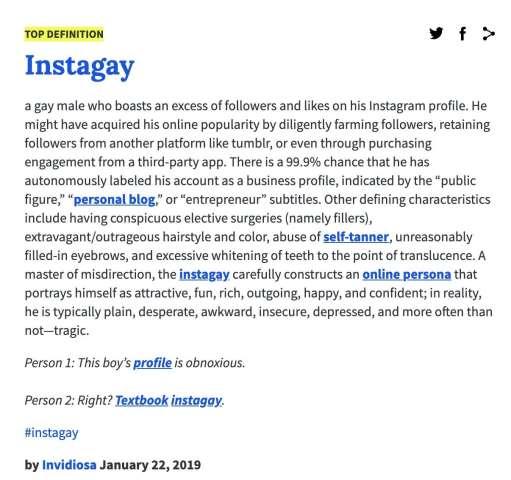
Figure 1. UrbanDictionary.com, screenshot from June 2019.
56 The Undergraduate Review
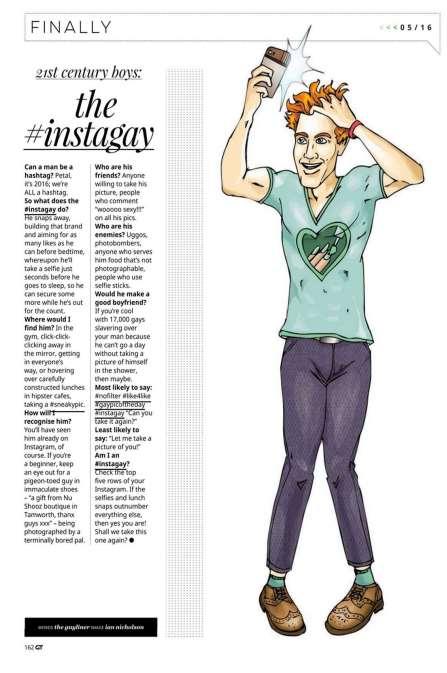
Figure 2. https://theguyliner.com/21st-century-boys/the-instagay/, screenshotted June 2019.
The Undergraduate Review 57

Figure 3. Skin tone color palette developed by Telles and PERLA (2014)https://perla.princeton.edu/perla-color-palette/, retrieved October 2019.
58 The Undergraduate Review
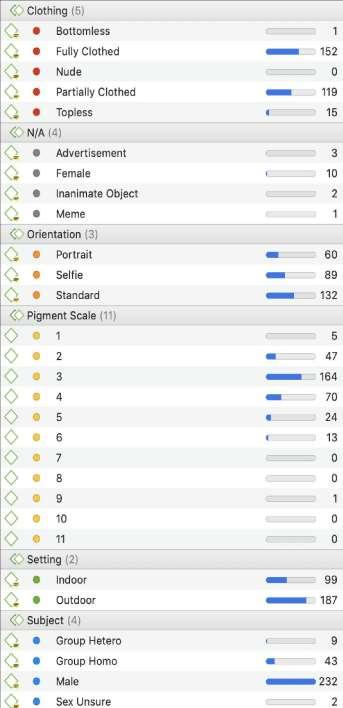
Figure 4. All codes from content analysis.
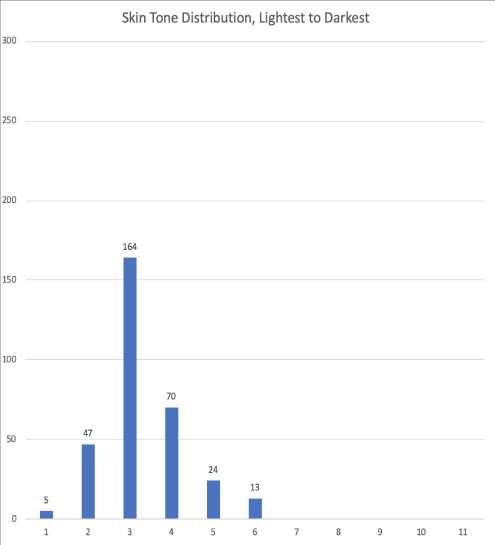
60 The Undergraduate Review
Figure 5. Skin tone distribution among sample, based on Telles and PERLA’s (2014) color palette scale.
Photogenic Power: A Brief Analysis of Iconic Depictions of Political Power
Nitan Shanas
In his much acclaimed-yet-controversial text, political theorist Steven Lukes introduces a three-dimensional model of power. The first part of the model, hypothesized by Robert Dahl and monikered “decision-making power,” emphasizes direct and public exertion of power whereby one pressures another to engage in an act they would not have done otherwise. Baratz and Bachrach supplemented Dahl’s early theory with the second dimension “non-decision-making power” which constitutes the ability to redirect the agenda or conversation of public discourse; this dimension of power often takes place behind closed doors. The third face of Lukes’s model, that of “ideological power,” encompasses the ability to alter societal thoughts and desires, in some cases, even convincing people to yearn for things that may be against their own personal interests. Below and throughout the remainder of this paper, I will analyze two preeminent photographs in recent political history using Lukes’s threedimensional model of power and other related theories. Discontent and determination roamed through the air of the U.S. Capitol basement. Her face, marked by stern fortitude, pointed directly towards her “esteemed colleague,” a phrase often used by American politicians to address their political foes. Her arm, located on the wall above her legislative counterpart, was strategically placed so as to assert domination. Her unrelaxed body echoed a sense of austerity reverberating every which way. Meanwhile, distress emanated from the other senator as the two women stood at most six inches apart. The year was 2018 and the two women involved were Dianne Feinstein (D-CA), a ranking member of the Senate Judiciary Committee, and Lisa Murkowski (R-AK), one of a short list of undecided Republican senators tasked
with confirming or opposing Judge Kavanaugh as the next Supreme Court Justice. Kavanaugh, President Trump’s appointee, was facing public criticism over mounting evidence of potential sexual assault misconduct dating back to his collegiate life. Kavanaugh’s senate confirmation hearings took place amid the #MeToo movement zenith. Women were emboldened to make a difference and to stand up against patriarchal toxicity; this was a time when Senator Murkowski as a woman could champion the wave of female empowerment that flowed across America.

The above picture clearly illustrates Feinstein’s attempt to coerce Murkowski to oppose Kavanaugh’s confirmation. Her efforts were futile retrospectively, but the attempt to exert power was nonetheless present. More importantly, this contentious exchange transpired publicly. Feinstein is a seasoned politician; she is expertly attuned to her surroundings and to the ubiquity of the press. She knows that her interaction will be filmed and soon thereafter circulated through the media. Feinstein’s actions most resemble the first face of power, “decision-making,” which comprises outward exposure. However, Robert Dahl’s theory, as in the other two theories subsumed under Lukes’s dimensions of power, assumes that one party successfully pressures another into behaving in a manner that is incongruent with its real
interests. Since Feinstein fails at persuading Murkowski to change her vote, I posit that the Democrat from California perhaps never had tangible power to fulfil her motive.
The real and symbolic importance of the FeinsteinMurkowski exchange unsurprisingly gained mass notoriety. Senatorial arguments are always spectacles for political nerds, like myself, but Murkowski’s cognitive dissonance between her two identities (one as a woman and the other as an elected official representing her party) was especially captivating for the public eye. Contrary to popular beliefs, it was in fact Senator Murkowski who possessed more political power. Mathematically, each senator has an equal voice in the legislative process (one out of a hundred). Realistically, however, the tight majority-minority ratio and party polarization grant the most power to the fewest number of senators: those who are willing to vote against party lines. Lisa Murkowski’s authority may not have fallen under Lukes’s guidelines, but she most certainly edged Feinstein in terms of political clout.

The second photograph features the senate floor engulfed by a mob of photographers. The scene resembled a Black Friday store opening, except the customers had already
obtained cameras and the prized possession was capturing one of the most influential individuals of the tech era. Ironically, the focal point was the very same person credited with establishing a platform that made intently observing civilians more feasible. In April 2018, Mark Zuckerberg begrudgingly testified before the U.S. senate about his corporate ties with Cambridge Analytica, a now-defunct British political consulting firm which immorally mined and shared personal Facebook user data. News of Cambridge Analytica’s involvement during the 2016 presidential elections engendered widespread fear and distrust in the U.S. The federal government had simply not done enough to prevent misinformation campaigns and 1984 George Orwell-esque civil surveillance. Legislative ethics once again lagged behind technological innovation as elected officials chose to rely on tech giants and corporate social responsibility to secure our democracy.
The Zuckerberg picture captivates us twofold: first in the strict optic sense and a second time in its political implications. A trove of cameras signifies that a prominent figure is in sight. Whereas famous persons are at times able to avoid paparazzi, Zuckerberg cannot in this circumstance evade being filmed. He is bound to his seat regardless of his massive fiscal power or social capital. The testimony took place publicly and mass media’s first amendment rights ensured that a multitude of agencies could report on the event. Zuckerberg could not circumvent facing public ire and potentially bearing the blame for our national security limitations. In the process, the Facebook CEO was impelled to testify on Capitol Hill only to be grilled vehemently with myriad inquiries. Zuckerberg’s displeasure in speaking in front of the senate coupled with the senate’s capacity to shift personal culpability superbly exemplifies decision-making power as hypothesized by Dahl.
The Zuckerberg imagery evinces significant symbolism about our current political climate. Still, it conceals several underlying themes pertinent to the broader discussion of political power in present-day America. Excluding Cambridge Analytica, the real threat to our democracy stemmed from the Russian government which had spread misinformation and damaging details about Hilary Clinton in order to interfere with the 2016 U.S. presidential election. The Kremlin’s capacity to alter civilian perceptions and desires in favor of Donald Trump’s candidacy precisely meets the criteria for Lukes’s “ideological power.” A second theory of power not explicitly shown in the Zuckerberg photograph is that of panopticism. Michel Foucault’s panopticism invokes a sense of ubiquitous power which Lukes characterizes as very radical; it refers to perpetual internal surveillance caused by the fear of being watched by an external body. We know that our google search history, our social media posts, and our private mobile content all move into the hands of entities such as Cambridge Analytica. While some have readily ignored this issue, others have changed their cellular and internet usage to avert being watched. The power of Facebook and other enterprises engaging in data mining is pervasive not only in as much as widespread presence of internet, but in the sort of panoptical surveillance experienced by those fearful of technological scrutiny.
The foregoing analysis of the pair of photographs highlights two separate storylines portraying parts of Lukes’s theory. Each paints a different picture of political power yet simultaneously maintains similar features. Most noticeably, the two examples both took place in the senate chamber. Modern-day senators have immense influence upon the state and welfare of our country. They have the capacity to thwart or to support executive actions such as judicial appointees. They also have the power to influence public opinion on a number of issues and the capability to stall efforts put forth
by the House of Representatives. If these photos are to shape our understanding of the U.S. political system, one might conclude that the upper house has the upper hand in political decisions above and beyond any other facet of our government. Surely our constitutional construct is far more complex than that. Nonetheless and given this immense power, it is perhaps unsurprising that both photos which involved senatorial plots have permeated through channels of mass media.
Works Cited
Bachrach, Peter, and Morton S. Baratz. “Two Faces of Power.” The American Political Science Review, vol. 56, no. 4, 1962, pp. 947–952. JSTOR, www.jstor.org/stable/1952796. Accessed 13 Oct. 2020
Lukes, Steven. Power: A Radical View. Red Globe Press, 2004.
Orwell, George. 1984. Signet Classic, 1961.
Effects of Prescribed Burns on Litter Decomposition and Microarthropod Communities in New Jersey
Pinelands
Julia Defeo
Michael R. Gallagher
Katie Malcolm
Introduction
In the Northeastern United States, climate change, shifts in forest disturbance regimes, and associated shifts in forest processes are expected to continue to impact forest structure, composition, and diversity (Clark, Skowronski, and Gallagher 2015); however, changes in soil community dynamics and processes, especially those in the soil are not yet fully understood. Restoration of fire dependent ecosystems has been proposed as one solution for mitigating the negative impacts of these changes while reducing the wildfire risk, particularly in Northeastern forests where fire has been largely excluded for much of the past century (Forman and Boerner 1981, Fahey and Reiners 1981, Marschall et al. 2016). However, there is limited information on how such efforts may impact soils and their communities. In pine ecosystems, prescribed burning and wildfire management has provided strong evidence for restoring structure following long-term fire suppression that reduces forest health and resilience (Forman and Boerner 1981, Lee et al. 2019, Van Lear et al. 2005). Yet there is a lack of fundamental research to understand how fire may impact communities of microorganisms, such as microarthropods, in forest soil and detritus layers that are critical for the forest nutrient cycles.
Climate change and forest management activities intended to mitigate climate change impacts or maintain healthy forests can have direct and indirect impacts on forest communities and their functions. For example, in forests from the
Appalachians to New England, landscape scale forest defoliation due to gypsy moth infestation caused a 20-40% increase in oak mortality (Clark, Skowronski, and Gallagher 2015). Subsequent shifts in ecosystem fluxes result from shifts in living forest structure, increased woody material at the forest floor, and increased ecosystem respiration which is attributed, at least in part, to increased microbial activity (Clark et al. 2018, Renninger et al. 2014, Lovett and Ruesink 1995). Likewise, the desiccation-resistant lone star tick, Amblyomma americanum, is undergoing a rapid northward and westward expansion of its range that corresponds to changing temperatures of the Eastern United States. Although, not considered a micro-arthropod, A. americanum occupies similar parts of the forest environment and may be an indicator of changes in other communities. Most importantly, broad-scale environmental shifts, related to climate change, likely have large impacts on micro-organisms.
Although shifts in forest structure are evident, some evidence exists for restoration of forest ecosystems in the New Jersey Pinelands using prescribed fire. The history of wildfire in this area of New Jersey predates its earliest settlers, and early fires were likely low in intensity (Forman 2012). As forests were thinned by settlers, however, fuel loads increased, and wildfires subsequently become more severe. These fires created space for dense oak understories to develop, thus crowding out pine seedlings. Prescribed burning in the upland forests of the NJ Pinelands has been found to prevent the successional effects that would favor certain oak species over the predominant pine species, pitch pine (Pinus rigida Mill.), which is known to be fire-resistant (Little 1946). In areas left unburned for several decades, dense understories of young oaks can be found. Low-intensity prescribed burns are used to reduce fuel loads in order to decrease the probability of large and destructive wildfires and modify
forest biomass pools and their structure (Skowronski et al. 2011, Clark et al. 2009).
Little research has been performed in Northeastern forests on the effects of prescribed burning on the communities of soil microarthropods which inhabit the leaf litter, although evidence exists for the reduction of larger related arthropods, such as A. americanum, in burned habitat (Gleim et al. 2019, Gleim et al. 2014). Previous research has shown that understanding fire severity is key to predicting recovery of microarthropod communities. Generally, fire can be expected to reduce microarthropod abundances, and higher fire severities have been found to correlate with higher population recovery times (Malmstrom 2010). Mites and collembolan, as key examples of soil microarthropods, serve as necessary linkages in the soil ecosystem, and their ecological functions are imperative to soil health. After fungi decompose dead organic material, these organisms consume the fungal hyphae. Because microarthropods serve as the link between fungal detritovores that they eat and the predators that consume them, they are imperative in the cycling of nutrients found in decaying plant material (Coleman et al. 2007). In addition to being fungivores, oribatid mites are also known to be detritivores themselves; therefore, they also contribute to nutrient cycling directly by breaking down the leaf litter in which they reside. Interrupting this cycle by decreasing microarthropod populations could, in turn, slow or halt plant growth by decreasing nutrient availability (Coleman et al. 2007).
In order to contrast the potential effects of a low-intensity, dormant and growing season prescribed fire on soil microarthropods, this study has inventoried mite and collembolan populations at a series of prescribed fires in the New Jersey Pinelands. We compared morphospecies abundance pre- and post-burn, and evaluate richness and diversity of oribatid mites. This work is ongoing and this
report serves as an intermediate step to document our approach and preliminary results from the dormant season portion of the study.
Methods
SiteDescription
This study took place within Franklin Parker Preserve, located within the 440,000 ha New Jersey Pinelands National Reserve (PNR). The PNR is comprised primarily of upland forest ecosystems, which are dominated by pine and oak species in the overstory and scrub oak (Quercus marlandica Münchh and Q. ilicifolia Wangenh) in the understory. Depending on succession and fire regime, PNR forests can be a) dominated by a mixture of oak species, b) dominated by Pitch Pine (Pinus rigida) forests or c) comprised of mixed oak and pine stands. Pinus rigida can be found throughout, even in oak-dominated ecosystems. Furthermore, soils in the New Jersey Pinelands are generally sandy, acidic, and nutrient-poor. Soils in the PNR are derived from the Kirkwood and Cohansey formations, and they can be characterized by dry oak leaves and pine needles within the upper two centimeters, followed by approximately twenty centimeters of loose gray sand, with an approximate pH of 4.7 (Forman 1979). Lower horizons are also sandy, with pH varying between 4.6 and 5.0 in the first 100 centimeters. These soils generally are welldrained with rapid permeability (Forman 1979). Fires are not expected to significantly decrease soil nutrients due to rapid vegetative regrowth, which prevents leaching of nutrients to groundwater or streams (Forman 1979). The Franklin Parker Preserve is a representative example of these characteristics and was largely sculpted by a destructive fire in 1954 and subsequent pitch pine forest community regeneration.
Experimentaldesign
Nine 100m2 plots were set up in a pine-dominated forest that had not burned since a wildfire in 1954. Three plots were burned during the dormant season, in April 2018, and three were burned during the growing season, in July 2018. Each burned plot was sampled for microarthropods one to two days prior to the burn, and one day after. To evaluate day-today variation, three control plots were also sampled before and after each burn. During each sampling event, three 20x20 cm 1mm mesh litter bags with approximately 5 grams of pine needle litter were collected from each plot and weighed. Microarthropods were extracted from each sample for one week in a modified Tullgren funnel, with gradually increasing heat, into an alcohol and glycerol mixture (Coleman et al. 2007, Akoijam et al. 2013). Larger arthropods, such as ticks and spiders, were discarded before extraction. The organisms collected were then identified to morpho-groups based on physical characteristics with a stereomicroscope. When possible, collembola were identified to family and mites to order.
In order to characterize productivity of soil organisms, soil respiration was measured in the field using a modified infrared gas analyzer (IRGA; PP Systems Model EGM-3, V. 3.3), three times immediately before the fire and three times immediately after the fire. Soil respiration measurements were also taken monthly after each fire (n=3). A square attachment to the instrument was held over each litterbag in the field for 120 seconds. In order to quantify the effect of fire on soil habitat conditions, soil moisture and temperature were also measured fifteen times per sampling event using a Delta-T HHS Moisture Meter. Three 15cm soil cores were taken per plot before and after each fire to determine bulk density and loss-on-ignition.
Analysis
Simpson’s biodiversity was calculated once per litterbag for each of the following microarthropod categories: all mites and collembolan, all collembolan, all mites, and all oribatid mites. Simpson’s D values and morpho-group richness values were analyzed using two-way ANOVA. Tukey’s Honest Significance Difference Test was performed on ANOVA results.
Results
Soil respiration (measured in grams CO2 emitted per hour) was not found to be affected by the dormant season burn when compared to control plots (Table 1); treatment litterbags respired similarly to control litterbags immediately before the burn, immediately after the burn, and in May and July 2018. Furthermore, loss-on-ignition, soil moisture, and soil temperature were not affected by the dormant season burn.
Table 1. Partial data set of soil respiration (gCO2 per m2 per hour) immediately before (- days) and after prescribed burns in April 2018. Soil respiration was not affected by the prescribed burns in April.
Approximately 3,960 mites and collembolan were counted from litterbags collected in April 2018. Mites totaled 1,654,
comprising 41.8% of total mites and collembolan observed. 1,420 mites were part of the order Oribatida, representing 35.8% of total mites and collembolan, and 85.9% of all mites collected. Although collembolan were greater in number, comprising 58.23% of all mites and collembolan sampled, oribatid mites represent the single largest order observed. Approxiamtely 0.04% of organisms observed were neither mites, nor collembolan. These were identified when possible, and most often were found to be nematodes, insect larvae, or small spiders.
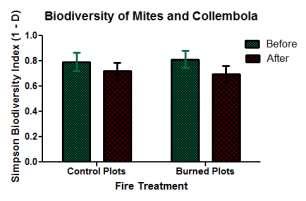
Figure 1: Simpson biodiversity of microarthropod communities before and after a low intensity prescribed burn in April 2018 (n=3). No significant difference.
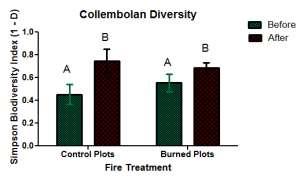
Figure 2: Simpson biodiversity of collembolan communities before and after a low intensity prescribed burn in April 2018 (n=3). Letters denote main effect results of two-way ANOVA (p<.05).
In burned plots, average oribatid richness dropped from 11 species before the burn to 4.11 species after the burn. Richness in control plots experienced a smaller decline that can be attributed to day-to-day variation, dropping from an average of 10.33 species before the burn to 7.22 species after. Average Simpson’s diversity increased in control plots by 0.018; in burned plots, Simpson’s diversity also increased, but by 0.206. When considering all mites and collembola, average species richness decreased from 23.44 species to 7.78 species in burned plots and from 20.89 species to 17.22 species in control plots. In control plots, average Simpson’s diversity decreased by 0.038, while it increased in burned plots by 0.005.
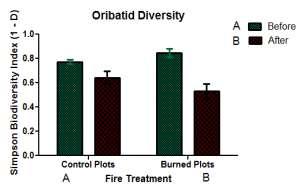
3: Oribatid diversity before and after a low intensity prescribed burn in April 2018 (n=3). Letters denote main effect results of two-way ANOVA (p<.05).
74 The Undergraduate Review
Figure
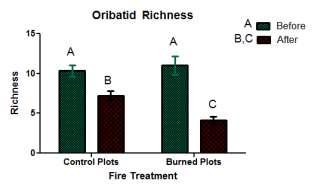
Figure 4: Oribatid richness before and after a low intensity prescribed burn in April 2018 (n=3). Letters denote main effect results of two-way ANOVA (p<.05). Similar patterns were observed with oribatid abundance.
No significant difference was observed in Simpson biodiversity across all mites and collembola before and after the April 2018 low intensity prescribed burn (Fig. 1) based on results of two-way ANOVA (p<0.05). Simpson diversity was found to increase in collembolan communities in both burned and control plots (Fig. 2), also based off of results of two-way ANOVA (p<0.05); however, richness and abundance of oribatid mites decreased after the burn both in control plots and in burned plots; the decrease was significantly larger in burned plots (Fig. 4) based of main effect results of two-way ANOVA (p<0.05). This trend is further reflected in oribatid diversity which decreased significantly in burned plots compared to control plots (Fig. 3), according to main effect results of two-way ANOVA (p<0.05).
Discussion
This study found nuanced changes in microarthropod diversity following a low-intensity, dormant season prescribed burn in the NJ Pinelands (Fig. 1). We found that oribatid mite communities decreased in diversity which was attributable to
the burn (Figs. 5-6); while increased diversity of collembolan communities was attributable to normal day-to-day variation in collembolan movement (Fig. 2). A possible explanation for absence of fire effects in collembolan communities may lie in their morphology; their furcula or “springtail” means these organisms may have increased capacity to leave a disturbed habitat that is lacking in mite communities. Burn effects on oribatid communities are reflected in the overall diversity of all microarthropods. Furthermore, moisture and temperature varied by day, and there was no significant difference in losson-ignition (data not shown).
Because microarthropod communities play a critical role in soil nutrient cycling, any decrease in mite diversity, and especially in oribatid diversity, could have effects on nutrient availability through durations extending through the post-fire forest recovery phase or longer. Microarthropods are just one type of soil-inhabiting organism that may be impacted by fire, and the results shown here may indicate that similar patterns could occur with other soil organisms involved in nutrient cycling, such as fungi and larger arthropods. Alternatively, our results suggest that other arthropods that share habitat space with the microarthropods in our study and vector diseases that increasingly pose health risks to humans and wildlife (e.g. ticks), could also be impacted by prescribed burns. Additional research focused on impacts and recovery of various arthropod communities following fire could be helpful in guiding the use of fire to promote resilience of forest soil organisms as well as potentially mitigate the growing health risks of parasitic arthropods to humans and animals.
As climate change increases the expected frequency of wildfire and the prescribed burns used to manage these events, understanding the effect of fire on soil organisms will become key to preserving their community structure and function. Historically, prescribed burns in the New Jersey Pinelands have been performed during dormant seasons.
New legislation, the New Jersey Prescribed Burn Act of 2018, allows for multi-seasonal prescribed fire, including the growing season. Burns performed during growing seasons may impact soil communities differently than dormant season burns. Considering fire is a natural and critical disturbance that has shaped and maintained the Pinelands, it is also important to consider that there is a strong likelihood of mechanisms that function at the scales of individuals, populations, or communities that enable resilience of these organisms in the long run. However, these mechanisms have yet to be explored and may depend on complex spatial, temporal, and qualitative characteristics of fire occurrence on this landscape.
This study examined the effects of fire under a very limited set of conditions that only represent the low range of fire characteristics or effects that are present on the landscape, and support the potential for future studies to investigate effects more broadly. For instance, our study explored the effect of only low-intensity prescribed fire, but additional research is required to characterize the effects of moderate and high severity fire on microarthropod communities in the New Jersey Pinelands, which are likely to be impacted given our results. Likewise, the impacts of fire under different seasonal conditions and across more replicates of fires would be beneficial in understanding how fire may impact the dynamics of microorganism communities and function on this landscape. Further, our study was only focused on documenting fire effects for a short period following fire, and did not examine potential ecological mechanisms of community resilience or recovery, as the forest environment itself recovered to pre-fire conditions. A better mechanistic understanding in the Pinelands, however, would be beneficial to making broader inferences of how diversity may be conserved through repeated disturbances in other systems beyond the Pinelands. Further, additional
research should investigate how fire may impact ticks and other forest parasites that negatively impact humans and wildlife and vector deadly and debilitating diseases.
Acknowledgements
The authors thank New Jersey Forest Fire Service Division Firewarden Michael Achey and Section Firewardens Benjamin Brick and Tom Gerber for their assistance in implementing the fire treatments, as well as Dylan Bell, Nicholas Soriano, Megan Rhone, Gary Coyler Jr. and Jannat Fareen for their help in their field, and John Dighton, Alexis Everland and Steve Schulze for their suggestions during the development of this report. We also thank the New Jersey Conservation Foundation for allowing this research at the Franklin Parker Preserve and Dr. Nicholas Skowronski of the USFS Northern Research Station for supporting this work through Joint Venture Agreement 18-JV-11242306.
Works Cited
Akoijam, R., B. Bhattacharyya, and L. Marangmei. 2014. “Tullgren Funnel - an Efficient Device for Extracting Soil Microarthropods.” Environment and Ecology 32 (2): 474–76.
Clark, K., H. Renninger, N. Skowronski, M. Gallagher, and K. Schäfer. 2018. "Decadal-scale reduction in forest net ecosystem production following insect defoliation contrasts with short-term impacts of prescribed fires." Forests 9 (3):145.
Clark, K.L, N. Skowronski, J. Hom, M. Duveneck, Y. Pan, S. Van Tuyl, J. Cole, M. Patterson, and S. Maurer. 2009. "Decision support tools to improve the effectiveness of hazardous fuel reduction treatments in the New Jersey Pine Barrens." International journal of wildland fire 18 (3):268277.
Clark, K.L., N. Skowronski, and M. Gallagher. 2015. "Fire Management and Carbon Sequestration in Pine Barren Forests." Journal of Sustainable Forestry 34 (1-2):125-146.
78 The Undergraduate Review
Coleman, D.C., D. A. Crossley, and P.F. Hendrix. Fundamentals of Soil Ecology. 2nd ed. Amsterdam: Elsevier/Academic Press, 2007.
Fahey, T.J., and W.A Reiners. 1981. "Fire in the forests of Maine and New Hampshire." Bulletin of the Torrey Botanical Club:362-373.
Forman, R.T.T. 2012. Pine Barrens: Ecosystem and Landscape: Elsevier.
Forman, R.T.T., and R.E. Boerner. 1981. "Fire frequency and the pine barrens of New Jersey." Bulletin of the Torrey Botanical Club:34-50.
Forman, R.T.T., ed. Pine Barrens: Ecosystem and Landscape. New York, NY: Academic Press, 1979.
Gleim, E.R., L.M. Conner, R.D. Berghaus, M.L Levin, G.E. Zemtsova, and M.J. Yabsley. 2014. "The phenology of ticks and the effects of longterm prescribed burning on tick population dynamics in southwestern Georgia and northwestern Florida." PloS one 9 (11):e112174.
Gleim, E.R., G.E. Zemtsova, R.D. Berghaus, M.L. Levin, M. Conner, and M.J. Yabsley. 2019. "Frequent Prescribed Fires Can Reduce Risk of Tick-borne Diseases." Scientific reports 9 (1):1-10.
Lee, C., G.R. Robinson, I.P. Robinson, and H. Lee. 2019. "Regeneration of pitch pine (Pinus rigida) stands inhibited by fire suppression in Albany Pine Bush Preserve, New York." Journal of forestry research 30 (1):233-242.
Little, S. 1946. The effects of forest fires on the stand history of New Jersey's pine region: US Department of Agriculture, Forest Service, Northeastern Forest Experiment Station.
Lovett, G.M., and A.E. Ruesink. 1995. "Carbon and nitrogen mineralization from decomposing gypsy moth frass." Oecologia 104 (2):133-138.
Malmstrom, A. 2010. “The Importance of Measuring Fire Severity Evidence from Microarthropod Studies.” Forest Ecology and Management 260 (1): 62–70.
Marschall, J.M., M.C. Stambaugh, B.C. Jones, R.P. Guyette, P.H. Brose, and D.C. Dey. 2016. "Fire regimes of remnant pitch pine communities in the Ridge and Valley region of central Pennsylvania, USA." Forests 7 (10):224.
Renninger, H.J., N. Carlo, K.L. Clark, and K.V.R. Schäfer. 2014. "Modeling respiration from snags and coarse woody debris before and after an invasive gypsy moth disturbance." Journal of Geophysical Research: Biogeosciences 119 (4):630-644.
Skowronski, N.S., K.L. Clark, M. Duveneck, and J. Hom. 2011. "Threedimensional canopy fuel loading predicted using upward and downward sensing LiDAR systems." Remote Sensing of Environment 115 (2):703-714. doi: 10.1016/j.rse.2010.10.012.
Van Lear, D.H., W.D. Carroll, P.R. Kapeluck, and R. Johnson. 2005. "History and restoration of the longleaf pine-grassland ecosystem: implications for species at risk." Forest ecology and Management 211 (12):150-165.
80 The Undergraduate Review
Agency and the Successful Fabliau
Victoria Wroblewski
The order of the stories in The Canterbury Tales can seem arbitrary at first glance. The tales appear together in only two manuscripts, while the rest of the extant texts appear in fragments of two or three tales grouped together. Even Chaucer's manner of writing seems to offer no clue as to the “intended” order of the tales, since the initial order of telling laid out by the Host is overturned after only one story. However, the fragments are quite consistent in the tales that they group together. This, in combination with the structure of the tales themselves, as opposed to the frame narrative, allows us to be fairly sure that certain tales belong together. With this accepted, it becomes clear that Chaucer has a mischievous love of the incongruous and the ridiculous. Satire is the bedrock of the Tales.
The Knight's long-winded tale of honor, chivalry, and love divorced from sex is immediately followed by a near perfect riposte in the ribald and dishonorable Miller's Tale. There is a clear dualism between these two tales, but there is more to it than mere humorous juxtaposition; there is a narrative thread which runs beyond the Knight and the Miller to include the Reeve. In fact, this thread runs throughout the entire first fragment, barring the General Prologue, and it is this: the agency of women. Even when taken as a standalone tale, it is strikingly clear that Alison, the central female character of the Miller’s Tale, has an extraordinary degree of freedom to choose her own fate. However, it is only when the tale is placed in the context of both the Knight’s Tale and the Reeve’s that her agency, and its ramifications, can be truly appreciated. Her freedom is highlighted by the helplessness of Emelye in the Knight’s Tale. It is also the key difference between the hilarious Miller’s Tale and the frankly disturbing Reeve’s Tale.
The agency of Alison is, in fact, what makes the Miller’s Tale a successful story.
If one is going to talk about agency in the context of the Miller’s Tale, then the Knight’s Tale is an obvious place to start. Given the prohibitive length of the story, it is mildly surprising how little the Knight has to say about women in general, and Emelye in particular. The story opens with Theseus conquering the land of the Amazons, a place where women ruled. That’s already a subjugation and humiliation of women, but the female society of the Amazons is further degraded because Theseus:
wedded the queene Ypolita and broghte hire hoom with hym in his contree with muchel glorie and greet solempnytee and eek hir faire suster Emelye. (868-71)
Neither Ypolita, nor Emelye have any say in this, and the Knight’s treatment of Emelye is especially strange, because she is the key to his tale. She is the catalyst for all the noble conflict between Arcite and Palamon and without her there is no tale. Yet, he includes her almost as an afterthought, a trifling piece of booty for Theseus tacked on to the real treasure of Ypolita. From the start, Emelye is not treated with any importance, either in the tale itself or in the telling of it. The turning point of the story, in which both knights see Emelye for the first time, comes early on in the gargantuan text, and Emelye is again conspicuous in her absence from the proceedings. Arcite, upon seeing her declares:
The fresshe beautee sleeth me sodeynly of hire that rometh in the yonder place, and but I have hir mercy and hir grace, that I may seen hire atte leeste weye,
I nam but deed! Ther is namoore to seye. (111822)
This could be dismissed as a simple love declaration for which consent is not needed, but after this statement, Arcite and Palamon fall to squabbling over her. Palamon says “I loved hire first and tolde thee my wo” (1146), while Arcite argues that:
What wiltow seyn, thou wisest nat yet now wheither she be a womman or goddesse. Thyn is affeccioun of hoolynesse, and myn is love, as to a creature. (1156-59)
Neither of them ever pauses to ask which of them Emelye might prefer, or if she would want either of them. She doesn’t even know they exist, yet they have already become rivals for her. What she may think of a liaison is not considered, either by the men in the story, or by the Knight telling the tale. This lack of regard for her opinion continues when Theseus arranges the tournament in which Arcite and Palamon are to fight for her.
Emelye does not speak nor come into prominence as anything other than a plot device and a trophy until section three when she makes a heartfelt appeal to the goddess Diana:
Chaste goddesse, wel wostow that I desire to ben a mayden al my lyf.
Ne nevere wol I be no love ne wyf! (2304-06)
…
Bihoold, goddesse of the clene chastitee, the bittre teeris that on my chekes falle! Syn thou art mayde and kepere of us alle, my maydenhede thou kepe and wel conserve.
And whil I lyve, a mayde I wol thee serve. (2326-30)
When at last she is given a voice, it is clear that Emelye is unhappy. She wants nothing to do with Arcite, Palamon, or any other man. She wants to serve Diana as a virgin, and she pleads with that goddess to allow her to continue in this way. The reply is crushing:
Doghter, stynt thyn hevynesse!
Among the goddes hye, it is affermed and by eterne word writen and confermed: thou shalt ben wedded unto oon of tho that han for thee so muchel care and wo. (234852)
Emelye is allowed no agency in the tale, no choice nor option, not even that of suicide. Her one vocal complaint is instantly quashed by the gods as something not to be bourn.
With the helplessness of Emelye as a backdrop, we may now turn to the Miller’s Tale itself. The difference begins right at the start of the tale. Where Emelye was barely described at all, Alison is given seventy odd lines of detailed description, both of her appearance and demeanor. This depiction establishes her as being flirtatious (line 3244), and she is compared to colt (3263), or an unbroken horse, indicating that she is hard to control. From the moment of her introduction, we are shown a woman of spirit, capable of taking an active role in her own destiny.
Alison displays her agency most clearly in her dealings with Nicholas and her husband. Nicholas does pursue her so it can be debated as to how consensual the groping and kissing is. We do have a record of Alison’s objection:
She seyde, ‘I wol nat kisse thee, by my fey!
Why, lat be, quod ich, lat be Nicholas, or I wol crie ‘out, harrow and allas!’ do wey youre handes, for youre curteisye!’ (3284-87)
and Nicholas ignores this plea, which could be seen as a taking away of Alison’s agency; however, she does not call for help, as she threatens to, which seems to indicate that her “no” is not truly meant.
Whatever one may think of the exchange, there is no denying that Alison gives her explicit consent to the affair in the following lines:
she hir love hym graunted atte last and swoor hir ooth, ‘By Seint Thomas of Kent’ that she wol been at his comandement whan that she may hir leyser wel espie.” (329094)
The words in which she chooses to frame her consent are particularly interesting. She not only gives in to Nicholas’ pleas, but does so with a religious oath. She uses sacred language to bind herself to the unholy act of adultery, which shows a break, not only from the authority of her husband, but also from that of heaven. It transforms an already bold show of agency into something bordering an act of rebellion against heaven.
Alison’s agency continues to be shown in smaller ways as the story progresses. When Absolon becomes infatuated with her, she regards him with disdain, thus proving that she is not merely available to be taken by any man bold enough to try. Nicholas prevails because she likes him, while the luckless Absolon is refused. Alison follows Nicholas’ instructions to trick her husband, playing her part to the hilt:
And to his wyf he tolde his pryvetee.
And she was war and knew it bet than he what al this queynte cast was for to seye. But nathelees she ferde as she wolde deye and seyde, ‘Allas! Go forth thy wey anon. Help us to scape or we been lost echon! I am thy trewe, verray wedded wyf. God deere spouse, and help to save oure lyf!’ (3603-10)
Later, when Nicholas is sneaking down from his water butte, she creeps down from hers, and goes willingly with him to bed. There is no element of compulsion in the deed, and Alison is free to halt matters whenever she wishes. The lack of such a halt acts to reaffirm her agency. Her prank on Absolon shows yet another degree of freedom, since she can not only lie to her husband and control who comes unto her bed but can also play tricks upon men alien to her household.
The contrast with the Knight’s Tale makes Alison’s freedom and agency in the Miller’s Tale more obvious, but why is that important? The answer lies in an examination of the genre of this and the following Reeve’s Tale. Both fall into a genre of narrative poetry called Fabliau. This humorous genre is characterized by themes of sex, power, and money, and usually has to do with the middle or lower classes. One of the key elements of the fabliau is the use of satire. That is a word that is used and misused quite a lot, so it is useful to define it. Satire is the opposite of didactic. It is not meant to show correct behavior, but rather to display completely incorrect behavior. It shows the world as it should never be. This means that satire typically involves a breakdown of the natural or social order.
This is where Alison’s freedom comes in. She has far more freedom than one might expect. She has an affair, making her a thoroughly reprehensible character, and she is never punished. That is a clear inversion of the typical patriarchal
and moral order, and it stems directly form the degree of freedom that she is allowed. However, this inversion is what makes the tale funny and unexpected, as can be seen when one compares it with the Reeve’s Tale.
The tale told by the Reeve is even worse than the Knight’s Tale in terms of female agency. The miller’s daughter is presented, not so much as a person, but as property or livestock. She gets a brief description, but unlike Alison’s, it says nothing about her character; it reads almost like a prospectus:
This wenche thikke and wel ygrowen was, with kamuse nose and eyen greye as glas, buttokes brode and brestes rounde and hye. But right fair was hire heer, I wol nat lye. (397376)
Furthermore, sale seems to be what the miller has in mind for her; he maintains iron control over her marriage prospects, because “his purpos was for to bistowe hire hye / into som worthy blood of auncetrye” (3981-82). He wants to use her as a lever for social advantage, and seems not to care what she may think of this.
Later on in the tale, the daughter is again treated like property by the clerk Aleyn. He declares to his friend John that “yon wenche wil I swyve” (4178) without once thinking of her consent. This becomes even more disturbing and objectifying when he says, a few lines later:
Oure corn is stoln. Shortly is ne nay, and we han had an il fit al this day. And syn I sal have neen amendement agayn my los, I wil have esement. (4283-86)
He means to take the daughter as a recompense for his stolen goods and the unpleasantness of his day, which he does, creeping up on her until “that it had been to late for to crie. / And shortly for to seyn, they were aton” (4196-97).
The daughter doesn’t even have time to cry out before Aleyn has conjoined himself with her. This is a clear rape and the tale delves further into rape culture when the time comes for Aleyn to leave her. A popular trope of old romance and spy movies, most especially early Bond movies, is that of kissing the girl until she likes it. This is what happens in the Reeve’s Tale. The daughter has been raped all night until she has come to like it. So much so that she tells Aleyn where to find his stolen corn, and her goodbye is bizarrely affectionate: “‘And, goode lemman, God thee save and kepe!’ / And with that word almoost she gan to wepe” (4247-48). The miller’s daughter is so robbed of her agency that she cannot even object to what has been done to her, but rather treats it as the fruit of real love.
This utter lack of freedom on the part of the daughter is what sinks the Reeve’s Tale as a fabliau. It is not funny, but distasteful and distressing. There is no real breakdown of the social order, no satire, which makes it a failure. The miller steals corn, the clerks steals it back, and rapes his wife and daughter into the bargain. It’s horrible, but not a breakdown of order. The middle-class miller is punished for his theft by the intelligent clerks; the women are raped and enjoy it. This is not an inversion, but rather a magnification of the patriarchal and judicial order, with the women being completely dominated and the thief being stolen from. In comparing these three tales, Alison shines as the mistress of her own fate. Where the miller’s daughter has no voice save to thank her rapist and Emelye speaks only to be corrected, Alison is able to twist and pervert sacred language to serve unhallowed actions. Emelye is forced to marry against her will; Alison is able not only to trick her husband,
but also to have him shut up as a madman. The miller’s daughter has no say in her assault, while Alison freely chooses her lover. She manages to work a complete inversion of patriarchy, justice, morals, and logic. Of the four characters in the Miller’s Tale, she is the only one to come out of the tale unscathed, the punishments for her iniquitous actions falling upon the men surrounding her. The unwanted suitor, Absolon, is humiliated through her cleverness. The lover, Nicholas, is burned for her trick upon Absolon. Finally, her husband, arguably the only innocent in the tale whose only fault is foolishness in taking so young a wife, is physically injured and condemned as a lunatic. She is mistress, not only of her own life and fate, but of all three men, husband, lover, and suitor, in a display of female agency and control made all the more striking for its absence in the surrounding stories. Alison is the queen of agency in these three tales, which is what makes the Miller’s Tale a successful fabliau, while the Reeve’s Tale flounders.
Works Cited
Chaucer, Geoffrey. The Canterbury Tales. Edited by Robert Boenig & Andrew Taylor, Broadview Press, 2008.
Is Solitary Confinement Useful?
Beyoncé Carty
Imagine being placed in a small, narrow cell for long periods of time without any human interaction, just you and your thoughts. Segregated from prisoners, your mind starts to think of ways to escape this sufferable empty atmosphere. Is this form of punishment morally right? Are prisons promoting recidivism and death rather than rehabilitation by segregating individual’s? More importantly, do they expect inmates to be able to reintegrate into society easily knowing their mental state is fragile?
“In Europe and North America between the 18th and 19th centuries, the approach to criminal punishment shifted significantly” (Smith, 2009, p. 3). From Beccaria's philosophy that individual’s express free and rational will to positivist’ views, new practices of imprisonment were coming about. Utilizing these practices of imprisonment came from the principle that criminals should be rehabilitated through the use of isolation and moral reform (Smith, 2009). The formal term for this kind of rehabilitation was named solitary confinement, a form of imprisonment where individuals live in a single cell isolated from the rest of the general population. Inmates are usually segregated from the general population because they have either been posed as a risk to other inmates and/or for protective reasons. “The principle of rehabilitating prisoners through a system of isolation and moral reform was associated with some of these experiments in, for example, England and Pennsylvania in the U.S” (Smith, 2009, p. 3).
In Pennsylvania, the Eastern State Penitentiary was the first to implement this ideology of solitary confinement to benefit the prisoners. This was utilized as a tool to help inmates find their self-identity so they can reintegrate into society as a fresh and purified individual. The more it was
used, the more prevalent the system became in more prisons in the U.S. One might think that since the institutions were under strict rules, the inmates would look forward to seeking to find their inner self in the cells. But as solitary confinement became more common, it was no longer a beneficial experience for inmates. What started out as a way for individuals to find inner peace within themselves has turned into a harmful and overused form of imprisonment. Furthermore, data collected from several prisons in the U.S indicate that solitary confinement brings negative psychological and physiological effects on individuals with and without mental illnesses. Researchers have made many efforts to figure out how often solitary is used, how it affects prisoners’ behaviors, and how it affects their life after their sentence is served.
Studies
One study of prisoners in solitary confinement came about from mental health and psychiatric facilities when the form of imprisonment was first introduced. The Vridsløselille Penitentiary in Denmark acted as a strict model for the Eastern State Penitentiary in the 1800s. By observing several inmates’ prison medical records, researchers argued that concerning symptoms of mental illness and disruption of selfidentity were arising amongst them due to solitary confinement. Some of the mental illness symptoms included lethargy, apathy, headaches, anxiety, paranoia, hallucinations, and mental illness in general (Smith, 2008, p. 1050). Since it was the 1800s, new health problems were being discovered by the psychiatric wards as more prisoners suffered in isolation. Wards treating individuals with these symptoms were deeming them as “mad” and very troubling. Prisoners that first arrived at the prison were allegedly behaving normally with officers until they were placed in isolation.
Researchers in Denmark also discussed how people were losing their inner self and turning against themselves. The main point of isolation was for inmates to find peace with themselves, but the opposite tends to occur. “Stripping away the possibility of primary intersubjectivity leading to the experience of depersonalization goes to the very basic level of the minimal embodied self” (Gallagher, 2018). Since that first study, more research and empirical studies have been conducted to determine more, if any, underlying causes of troubled individuals in isolation.
Another study indicated that social exclusion from the general population could be a main cause for some prisoners to suffer from psychological consequences. This study focused on how social withdrawal affected inmates in California’s Pelican Bay State Supermax prison. A basic function of humans is social interaction, but segregation prevents this and results in individuals turning to themselves for a sense of interaction. According to social psychologist Haney (2018, p. 291), social withdrawal is connected to another set of social pathologies that prisoners face when attempting to adjust to the long periods of time without social contact. Researchers took a sample of inmates from the prison and documented how many suffered from psychological stress and/or trauma from being isolated from others. Without the basic function of socially interacting with other humans, prisoners may resort to destructive options such as self-injury, recidivism, and sadly suicide.
Two studies at Washington State and Maine State Prison found that those held in super-maximum units are more likely to reoffend and resort to inflicting pain on themselves. A sample of participants from Washington State prison proved the hypothesis that offenders who have spent a portion of their sentence in supermax were likely to commit new felonies (Lovell, Johnson, & Cain, 2007). A three-year documentation of Maine State prisoners in solitary was taken
to display live footage of the hardships inmates face when locked down in a cell for over 23 hours a day.
Methods
Participants for the first study done at The Vridsløselille Penitentiary in Denmark included prisoners in solitary confinement and prisoners in general population. Specifically, about 1,904 prisoners that were cleared as healthy were observed. Over a 5-year period, both variables were observed and documented to see if isolation actually caused health problems. In the second study at Pelican Bay State Supermax prison, a random sample of 100 isolated and general population inmates were utilized to test their hypothesis. Lastly, for the recidivism study in Washington State a control sample of about 6,453 men, both in supermax and nonsupermax, participated.
Data
“In the official reports of the Danish prison service it was acknowledged that from 1878 to 1883 more than 13% of inmates who had arrived in the prison in a healthy condition suffered from health problems directly related to the regime of solitary confinement “(Smith, 2008, p. 1052). 13% may not seem like a large number to many, but back then this was very significant. From 1883 to 1891, the more inmates placed in isolation, the higher the percentages got. Between individuals in solitary confinement and those in the general population there was a 14.15% difference in those that experienced health problems (Smith, 2008, p. 1053). This percentage sparked a red flag for scientists because health problems could potentially turn into mental health problems. Mental health and psychiatric scientists found that symptoms like lethargy, insanity, and issues related to the brain were
prevalent amongst members in solitary. The most common cases in Vridsløselille were hysteria and lethargy, which rose up to 27 and 40 cases (Smith, 2008, 1055). Being that this was a new form of imprisonment, new disorders were being discovered and researched in-depth by psychiatrists. As a result of these unusual findings, more cases and studies have been conducted on these new diseases. In the same way, these surprising statistics motivated others to do research of their own on other prisoners in solitary confinement. Another reason why solitary may not be useful is due to the lack of environmental stimulation and its damage to human psychological functioning (Hany, 2018, p. 289). Over a span of time, Haney found that between the general population and isolated prisoners, more isolated prisoners experienced emotional withdrawal symptoms due to no social interaction. A mean number of 6.88 stress-related symptoms among solitary inmates versus 3.58 among general population was reported (Haney, 2018, p. 292). In addition, a mean of 8.44 isolation-related symptoms was experienced by those in isolation versus 4.24 for those in the general population (Haney, 2018, p. 292). “Haney found that the extremely longterm isolated SHU prisoners reported nearly twice the mean number of symptoms of both stress-related trauma” (Haney, 2018, p. 292). When humans are deprived of interpersonal contact, due to trauma and stress symptoms, their awareness of certain things diminishes. For example, in solitary a prisoner’s sensory awareness, capacities to see and hear clearly, and to make sense of their own perceptions plummets (Gallagher, 2014).
These specific long-term issues, more than likely, can lead inmates to resort to reoffending once they’re released. Individuals released directly from supermax were reported to commit felonies at a quicker rate than those who were not in supermax. At Washington State Prison, there were 53% of felony recidivism cases of directly released supermax
participants versus 46% for non-supermax mates (Lovell et al., 2007, p. 644). Additionally, even on a later release there was still 46% of cases for supermax mates and 44% for nonsupermax mates (Lovell et al., 2007, p. 644). This small 2% difference may make many believe there’s no relationship between recidivism and supermax mates, but that’s due to lack of significance of later released mates. Not to mention, researchers took past misdemeanors and age of first offense into account and still found that 69% of direct-release supermax participants committed new felonies versus 53% of later-release mates (Lovell et al., 2007, p. 644). Even though there is a sufficient amount of data, other studies have tried to counter-argue these hypotheses.
Outsiders may view solitary confinement as beneficial because they’re being kept far away from producing any more trouble in a society. On the other hand, they also don’t realize the hidden damage it projects on a person’s mental state because it’s not affecting them personally. The mean number of inmates that experienced symptoms of psychological damage at Pelican Bay State Prison due to isolation made me wonder if prisons are working towards reform. I would assume if they see that segregating individuals is only causing them more harm, then they would do something about it. However, that may not be the case for every prison, but why not? A study at the Colorado Prison system tested the psychological effects of solitary confinement and it indicated that mental health of inmates did not decline (Bulman, Garcia, Hernon, 2012). Researchers for this study took participants that were older than 17, younger than 59, and were of different ethnicities. “Overall, the researchers found that 20 percent of the study sample improved and 7 percent worsened during the study period” (Bulman et al., 2012). Statistics like these may “prove” a prison’s point that adjusting the solitary system will be unnecessary. Contrarily, this study doesn’t justify anything because numbers like this
may not apply to other prison systems and negative effects that prisoners actually endured were left out the study (Bulman et al., 2012). Despite there being different studies that determine solitary has no inimical impact on individuals, current events show that it’s still a common issue.
Several unsettling stories regarding individuals facing hardships from previously and currently being in solitary have always been discussed, but never on the news. The most repeated story regarding isolation was the tragic incident of Kalief Browder from New York City. Browder had never been convicted of a crime before, but once he was accused of robbing someone, he was sentenced to three years at Rikers Island in New York (Berman, 2016). He served two out three years of his sentence in solitary confinement without being convicted of a crime. What makes this story so heart wrenching to me is that he was only 16-years-old and was isolated from the general population over a misdemeanor he didn’t even commit. “In 2015, at age 22, he hanged himself at his parents’ home in the Bronx” (Weiser, 2019). Six years after he was released, the psychological damage and trauma from solitary had stuck with him. How is segregating youth and adults helpful to prisoners’ overall well-being if the outcome is this? In light of his tragic death, former President Obama moved to ban the use of solitary confinement in the United States.
While Obama’s effort may help reform multiple criminal justice systems, prisons should look into offering mental health services and other boosting opportunities such as encouraging inmates to get their GED. In a documentary on inmates in solitary at Maine State Prison, officials record and document how the unit deteriorates them and ways they can make it useful or reduce the use of isolation. The warden of Maine State Prison even stated that “my belief is the use of segregation has its place when you have real dangerous prisoners, but from my perspective it is overused in the
United States” (Edge & Mucciolo, 17:17, 2017). To reduce segregation, the prison tested out incorporating boosting opportunities as mentioned before. This then flowed into displaying how the inmates behaved in the isolated units, which they noted was like wild animals. The main point of isolation is to keep them away from the general population due to certain circumstances, but this only irritates them more to act out of character. In the film, an inmate named Todd Michael Fickett was seen as always at risk because he resorted to self-injury a lot. Fickett stated that being in solitary only made his mental state go downhill and drove him to wanting to cut himself (Edge & Mucciolo, 7:45, 2017). Obviously, if inmates are constantly hurting themselves because they’re mentally hurting, there’s an issue. Furthermore, if custodians are stating that they clean self-injury incidents about 20 times a month, then something needs to change (Edge & Mucciolo, 15:20, 2017). Dr. Stuart Grassian, a psychiatrist, viewed solitary confinement as a neuro-psychiatric, almost a medical or neurological disease (Edge & Mucciolo, 2017). Current incidents regarding solitary confinement are still prevalent, but not discussed as much.
In conclusion, solitary confinement is not a useful form of imprisonment. The destructive psychological effects and trauma it brings upon inmates destroys their overall state. Mentally their brain doesn’t function properly anymore, they experience symptoms of mental diseases, they often reoffend, and/or commit suicide. If long-term issues like these are frequent amongst prisoners, isolation should be a last resort. Researchers will try to counter argue that solitary has no effect on prisoners, but current events indicate it still does. Several studies still can’t accurately prove anything, but prisons can still move towards revising the use of this form of imprisonment.
References
Berman, M. (2016, January 26). Kalief Browder and what we do and don't know about solitary confinement in the U.S. Retrieved from https://www.washingtonpost.com/news/postnation/wp/2016/01/25/ kalief-browder-and-what-we-do-and-dont-know-about-solitaryconfinement-in-the-u-s-2/?utm_term=.e780eeb47bba
Bulman, P., Garcia, M., & Hernon, J. (2012, March 26). Study Raises Questions About Psychological Effects of Solitary Confinement. Retrieved from https://www.nij.gov/journals/269/pages/solitaryconfinement.aspx
Edge, D., & Mucciolo, L. (2017, April 18). Last Days of Solitary. Retrieved from https://www.pbs.org/wgbh/frontline/film/last-daysof-solitary/
Gallagher, S. (2014). The cruel and unusual phenomenology of solitary confinement. Frontiers in Psychology, 5. doi:10.3389/fpsyg.2014.00585
Haney, C. (2018). Restricting the Use of Solitary Confinement. Annual Review of Criminology, 1(1), 285-310. doi:10.1146/annurevcriminol-032317-092326
Lovell, D., Johnson, L. C., & Cain, K. C. (2007). Recidivism of Supermax Prisoners in Washington State. Crime & Delinquency, 53(4), 633-656. doi:10.1177/0011128706296466
Smith, P. S. (2008). “Degenerate Criminals”. Criminal Justice and Behavior, 35(8), 1048-1064. doi:10.1177/0093854808318782
Smith, P. S. (2009). Solitary Confinement – History, Practice, and Human Rights Standards. Human Rights Documents Online, 3-11. doi:10.1163/2210-7975_hrd-9962-3006
Weiser, Benjamin. “Kalief Browder's Suicide Brought Changes to Rikers. Now It Has Led to a $3 Million Settlement.” The New York Times, The New York Times, 24 Jan. 2019, www.nytimes.com/2019/01/24/nyregion/kalief-browder-settlementlawsuit.html
Opinion Piece on China’s Belt Road Initiative
William Huang
“What the Chinese Communist Party has been doing to undermine democracy and intervene in foreign states is simply the party's way of interacting with the world,”1 said Peter Mattis, a research fellow in China Studies at the Victims of Communism Memorial Foundation in the United States. Since the era of Mao, Mainland China has sought to challenge what it believed to be the illegitimate international order led by the West. But during the 1950s, China was still an infant marxist-leninist state that lacked the resources to do so. It was not until China experienced tenfold GDP growth from 1978 as a result of trillion-dollar injections from foreign investment, that it began its campaign to compete against the liberal democracies around the world. In the efforts of establishing prominent influence by undermining the state of democracy, China pushed for the One Belt, One Road, or Belt Road Initiative (BRI) as a neo-colonialistic model that grants monetary support to economically deprived nations for political influence in return.
Indeed, China’s relationship with foreign nations today shows great resemblance to that of European powers to its colonies in the 19th and 20th centuries. But unlike the takeovers by force, the Chinese leadership prefers a gradual “weakening of democratic norms [to establish a permanent] international legitimacy of China’s Leninist-capitalist brand of governance.”2 It is, nevertheless, just another means of exploitation through the same notion of unequal exchange and overbearing political influence. And the Belt Road Initiative is China’s way of establishing such relationship.
Formally launched in 2013, the Belt Road Initiative was intended to be a “cooperative” ambition to establish a line of terrestrial and maritime infrastructure connecting the flow of goods and services from all Eurasian states to the People’s
Republic of China, according the President Xi at the October press conference in Jakarta. In 2015, two additional agencies under China’s National Development and Reform Commission (CNDRC), the Asian Infrastructure Investment Bank (AIIB), and the Silk Road Fund (SRF), were created to allow the Belt Road Initiative to essentially gain unlimited access to Chinese state funds. As the prominent economic powerhouse with a rapidly expanding 11 trillion-dollar GDP since 2015, the BRI has dangerously lured LEDCs throughout the Eurasian Continent to be entrapped in a slavish dependency that participating nations would be upon ratifying the BRI as a participating member.
In the East African nation of Djibouti, the economically fragile dictatorship took a debt worth of 88 percent of the overall 1.72 billion in GDP for 2018 from China, according to a report by the Center for Global Development.3 Such vulnerability compelled Djibouti President, Ismail Omar Guelleh, to sign Djibouti up for the BRI that would have Djibouti leased sovereign rights of key territorial assets to China. As a result, Beijing built its first overseas military base in Goubet.4 Such move allows China to gain control of the vital maritime petroleum trade route through the Red Sea and the Indian Ocean, which directly challenges Washington’s long monopoly on control over that key trade route.
In the Central Asian nation of Tajikistan, the economy had been labelled as having the highest risk of debt distress by the IMF and the World Bank. Despite that, Dushanbe took a 72 million dollar project loan from the Export-Import Bank of China (China Exim Bank) with an interest way below market rate.5 Unsurprisingly, in great debt to China, Tajikistan's single largest creditor, Tajikistan in turn serves as China’s “first leg” to the BRI having a 3 billion dollar portion of the Central Asia-China gas Pipeline passing through Tajikistan that harvests its rich natural resource natural gas and transports the vital natural resource into Mainland
100 The Undergraduate Review
China. Such circumstance grants Beijing great powers in the natural gas market that is imperative to the economic, and to a further extent, political survival of Continental Europe at Tajikistan's expense.6
Pakistan, the peripheral state in South Asia, is also in the region and is another LEDC that fell into China’s debt trap diplomacy. Being heavily in debt to its biggest creditor, China, through the China-Pakistan Economic Corridor (CPEC) projects in conjunction with the BRI, Pakistan was wrestling an estimated 62 billion dollars7 worth of debt. With very little chance of being able to fulfill its debt payments, Pakistan could either request debt treatment from the Paris Club for the seventh time and to be, very likely, rejected; or, it could follow Tajikistan and Djibouti’s footsteps and “kowtow” to Beijing and submit its sovereignty in exchange for debt forgiveness. Unsurprisingly, few months after the release of the economic assessment by the IMF and the World Bank, Pakistan ratified the BRI and the CPEC, where Pakistan was to lease China the port city of Gwadar. This lease, condemned by many, enabled Beijing to not only tighten its grasp on the maritime trade route in the Indian Ocean, but it also empowers Beijing to dominate the flow of capital and goods to the landlocked Central Asian Nations through the Karakoram Highway. This highway provides direct access from the Indian Ocean to Mainland China from the handful of port cities with the sufficient degree of infrastructure established.
Further emboldening Beijing to pursue its expansionist agenda, Sri Lanka is yet another nation to fall into the debt trap. Whenever the President Mahinda Rajapaksa has no choice but to ask for the most merciful creditor in the world, the Chinese Exim Bank, or more specifically, Beijing, for more loans, the answer is most frequently, yes. As a result, according to estimations done by the Sri Lankan Finance Ministry, amongst the estimated 14.8 billion dollars in
revenue, 12.3 billion are scheduled for debt payments, and mostly to China.8 Accordingly, the newly built Hambantota Port located on the southern tip of Sri Lanka was given to China on a 99-year lease. Despite how Indian and other stakeholders allied to the West stressed the importance of a ban of militarized usage of the port, China has now established a de facto naval base in Hambantota that empowers China’s military presence in the Indian Ocean and further support its operations in the South China Sea.
After the devastating effects of European Union-imposed austerity on Greece and receiving little-to-no assistance in economic aid by the EU or the United States, Greece became yet another victim to the collection of states entrapped by China’s plan to global dominance masqueraded with its supposedly “peaceful nature.”9 With Greece participating in the BRI in the form of a Memorandum of Understanding (MOU) to jointly advance construction of the BRI in 2018,9 the political narrative of China in Europe changed drastically thanks to its newly-bought voice. In 2018, as the EU Commission was voting on a resolution to condemn China’s human right practices (a resolution supported by both the United Nations Human Rights Council and Amnesty International) to condemn Beijing’s handling of minorities in the Xinjiang Province, Greece abruptly invoked its veto power and tabled the resolutory effort.
And when the first G7 nation, Italy, formally joined the BRI in early 2019, the G7 summit that was convened in Dinard was relatively silent in raising concerns to the world’s most ambitious infrastructure initiative. The ministers of the “Proposed joint communique that included veiled criticisms of China over issues such as intellectual property theft, market access, its military ambitions and human rights abuses,”10 at the post summit press release made no mention of the BRI or China’s alleged wrongdoings in the international community.
102 The Undergraduate Review
All in all, the growing influence that China has in the international community through its neocolonialistic BRI plan had allowed Beijing to spend its riches and procure power of a scale like the United States did under the Marshall plan in 1948. Taking advantage of the economic fragility of underdeveloped, or financially challenged nations around the globe, Beijing has disguised its expansionist vision with the notion of infrastructural development and incitement of local economies. At this rate of growth, the BRI is only a prelude to a rising global power.
Notes
1 https://www.foreignaffairs.com/articles/asia/2018-04-16/autocracychinese-characteristics.
2 Andrea Kendell from the Majalla news outlet describing the interaction that China is having with the world.
3 “Examining the Debt Implications of the Belt and Road Initiative from a Policy Perspective” by John Hurley, Scott Morris, and Gailyn Portelance, March of 2018. https://www.cgdev.org/sites/default/files/examining-debtimplications-belt-and-road-initiative-policy-perspective.pdf
4 Ibid., Ft 3.
5 Ibid., Ft 3.
6 Ibid., Ft 3.
7 “The BRI in Pakistan: China’s flagship economic corridor” by the Merics Mercrator Institute for China Studies. https://merics.org/en/analysis/bri-pakistan-chinas-flagship-economiccorridor
8https://www.nytimes.com/2018/06/25 /world/asia/china-sri-lanka-port.html
9 Ibid., Ft 3.
9 “China, Greece ink BRI Memorandum” by the State Council of the People’s Republic of China
10 “G7 stays silent over China's Belt and Road Initiative after failing to reach consensus” by Kinling Lo, South China Morning Post.
https://www.scmp.com/news/china/diplomacy/article/3005023/g7stays-silent-over-chinas-belt-and-road-initiative-after
104 The Undergraduate Review
A Battle to the Wire: The Controversary Over Horse Racing and How the Industry Can Move Forward into the Future
Molly Rollins
The final race of the 2019 Breeder’s Cup was about to begin at Santa Anita Park in Arcadia, California. Under the glow of the looming sunset, horsemen, veterinarians, track management and fans alike held their breaths as the horses rocketed from the gate in a display of raw power and beauty. Under intense scrutiny from the California state government, Santa Anita had taken every precautionary measure possible to ensure that the biggest two-day event in racing would go off without incident. Thirty vets were assembled to observe horses during and after training in the week leading up to the Breeder’s Cup, and the race contenders were subjected to a vigorous pre-race veterinary examination before receiving the final “OK” to compete. A close friend of mine was forced to scratch his horse from competition after one such pre-race exam. Luis trained a horse named Imperial Hint, a five-yearold horse that had captured his last two races and was one of the race favorites in the $2,000,000 Breeder’s Cup Sprint Stakes. In the days leading up to the race, veterinarians discovered a slight tenderness in the horse’s coronet band, the junction between the hoof and hairline on the horse’s ankle, and forbade the horse from competing in that weekend’s event. Luis protested that he knew his horse better than anyone and that even the vets could see for themselves every morning that Imperial Hint was training soundly up to the race. However, the vet’s decision was irrefutable. In an instant, Luis and the horse’s eighty-year-old owner hung their heads in disappointment, their year-long dream of championship glory buried in the California sands. Furthermore, despite all of Santa Anita’s efforts, and despite the fact that every horse had come back safely in all
14 Breeder’s Cup races between the two-day event, the one thing that everyone had been dreading happened in the final race of the day: a mere sixteenth of mile from the finish line, Mongolian Groom’s hind leg shattered. As animal rights advocates around the nation roared in fury, the sport that had played such an important part of my life was suddenly in jeopardy.
Who was to take the blame for the tragic death of Mongolian Groom? The horsemen? The racetracks? The fact is, there isn’t one simple response to this crisis. A lack of a national organization to implement the rules and regulations, in addition to several other factors including track surface, decades of questionable breeding practices, as well as an overwhelming appetite for greed that consumes the sport are all to be blamed for the current state of turmoil facing the horse racing industry.
Horse racing is no stranger to controversy, and the industry that employs 1.7 million people and generates $122 billion in revenue every year began its downward spiral in the winter of 2018-2019 (Bhattacharji). While there are deaths recorded at every track around the country, Santa Anita suddenly became the target of national criticism after 25 horses were euthanized at the Southern California racetrack over a six-month period. The owners of the racetrack, the Stronach Group, responded by instituting a policy of zerotolerance on race day medication. They announced:
The Stronach Group has long been a strong advocate for the abolishment of race-day medication, but we will wait no longer for the industry to come together as one to institute these changes. Nor will we wait for the legislation required to undertake this paradigm shift. We are taking a stand and fully recognize
just how disruptive this might be (Stronach Group).
In addition to the new race-day medication regulations, the Stronach Group also brought in Mick Peterson, director of the University of Kentucky’s Agricultural Equine Programs, and Racing Services Testing Lab (RSTL), to evaluate the Santa Anita track surface. “Peterson noted that heavy winter rains had led to track ‘segregation,’ a process in which fine material in the top surface cushion moves to the inside rail as water washes across the track surface” (Kane). It’s no surprise the track was producing an inconsistent, and inevitably unsafe surface. The Los Angeles Times reported in February 2019 that Southern California hadn’t experienced such high levels of precipitation since 1948 (Fry, Robbins). Track managers employ an array of techniques for managing moisture in the track surface, such as sealing water out during wet weather by “harrowing” or smoothing over the surface. However,
The issue is that moisture levels in the track surface can still change dramatically throughout a race day, especially when heavy rainfall alternates with bright sun and desert winds. The top layer, called the cushion, is soft and granular, to dampen the impact on the horse's foot; the one below, called the pad, is harder and more compact, allowing for more "push-off " of the hoof (Leste-Lasserre).
Horses are able adjust to different track surfaces as long as they’re consistent, but the risk for injuries increases if track characteristics change from stride to stride. Since Santa Anita has implemented these new changes in drug policy and assessed the surface, there has been a slight improvement in the figures from last winter’s disastrous meet.
As of April 2020, Santa Anita has counted 11 deaths from their 2019-2020 winter race meet, all of which occurred during morning training hours and none during the afternoon races. The Stronach group reported in a press release that “there has been a 64 percent reduction in catastrophic injuries at Santa Anita Park this year, and we have not had a single fatality during racing on our main track for the entirety of this season.”
Decades of unscrupulous breeding practices have also led to the degeneration of the Thoroughbred horse. First, there are many more horses racing in the early 21st century: 21,500 Thoroughbred foals were born in 2018 compared to 10,000 foals born in 1950. There is also an enormous emphasis on breeding for speed. Whereas, 50 years ago people were breeding horses for stamina and durability, now the goal is to seemingly create a faster animal, no matter how unsound the horse may be. Dan Rosenberg, the President of Three Chimneys, a prestigious horse-breeding farm in Midway, Kentucky, stated: "The market wants a faster, earlier-maturing horse, but there is an incompatibility between speed and durability” (Kluger). There are horses being bred that might have shown brilliant speed on the track, but were born with confirmation flaws that caused these individuals and their future offspring to become more pre-disposed to injury. Thoroughbreds are also being heavily inbred in order to keep the most desirable and profitable genetics in the bloodline. In a study conducted in 2011 by Dr. Binns of the Horse Genome Project, results “showed that there had been a small but significant (i.e. real) increase in inbreeding over the past 40 years, and that most of the increase was from the mid1990s to present” (Walker). Stallions, or studs, used for breeding, that were being bred to 40-50 mares per season in the 1960s are now being bred to 100-150 per breeding season. Walker explains:
Nowadays, high quality stallions are also “shuttled” around the world to cover mares, for example, being sent to the southern hemisphere to breed with mares during the quiet season for breeding in the northern hemisphere. This in part is to meet the modern demand for producing yearlings that sell for high prices at auction rather than the previous breeding goal of producing superior racehorses. Overall that means fewer stallions are siring a greater proportion of offspring (Walker).
Unfortunately, the breeding industry and the subject of greed are inextricably linked. Even though the purse for the Kentucky Derby is $2,000,000, the real profits for horse owners start churning in after the Derby winner is retired and sent to the breeding shed. Once standing at stud, the Derby victor can command a fee as high as $50,000 per horse bred. Tapit, the leading stallion of 2014, 2015, and 2016, has produced over 28 horses to sell for at least $1,00,000 in the sales ring. He stands for a stud fee of a whopping $200,000. A beautiful and precocious but unsound runner, Tapit was retired after making only six starts on the track due to recurring injury. Moreover, the profits breeders can make from the horse auctions alone are astronomical. A top seller of 2019 was a yearling, or a one-year-old horse, sired by the 2015 Triple Crown winner American Pharoah (listed for a $200,000 stud fee). The young horse sold for $8.2 million at the boutique Keeneland September Yearling Sale without ever setting a foot on the racetrack. The exorbitant price of horses in the sales ring, therefore, takes the focus away from breeding durable and hearty athletes and instead on producing flashy horses with commercial pedigrees.
A possible solution to horse racing’s current crisis could come in the form of the National Horse Racing Reform Act.
As of October 2019, one third of the House of Representatives have signed the bill, sponsored by New York Congressman Paul Tonko and Kentucky Congressman Andy Barr. Additionally, 135 of the industry's leading trainers have pledged their support for the revolutionary form of legislation. The Horse Racing Integrity Act would create a unified body that would uphold consistent drug rules and testing. As of this year, the horse racing industry is currently regulated by 38 different racing jurisdictions across the U.S, which limits regulators’ effective management of the many issues involved in the health and safety of racehorses (Smeallie). The statutes of what drugs are permitted and the withdrawal times for certain drugs differ on a state by state basis. The popular anti-inflammatory Phenylbutazone (Bute), is allowed to be administered within 24 hours of a race in Maryland, 48-hours before competition in New York, and most recently, seven days before race in California.
An issue with the Horse Racing Reform Act, however, is that it will prohibit all race-day medications, including the commonly-used diuretic, Lasix, or Furosemide. Lasix is a medication which has been at the heart of the horse racing controversy since its inception in the late 1960s. The media has long harped on the tune that horse trainers are “drugging their horses” with Lasix, despite the fact that the medication is legally sanctioned by every racing jurisdiction in the country. Lasix is administered to Thoroughbreds in racing to help prevent them from bleeding through their nose as a result of exercise-induced pulmonary hemorrhage (EIPH), a syndrome caused by the rupture of capillaries in their lungs due to high-stress athletic competition. It's estimated that 5595% of Thoroughbreds experience some level of EIPH, but only 4% are considered "serious bleeders," where the blood can visibly be seen coming out of the nostrils following exercise (Fernando). Lasix is used to lower stress on the organs by decreasing the amount of water retained in the
body before a horse competes and this decrease in stress allows most horses to run without any bleeding (Bright). The drug first gained national prominence after veterinarian Alex Harthill gave it to 1964 Kentucky Derby winner Northern Dancer and was seen as the miracle remedy for EIPH. Jeff Blea, a Southern California-based veterinarian and chairman of the American Association of Equine Practitioners’ racing committee, told USA Today in an April 2019 article that Lasix is “the only medication we know of that scientifically reduces or mitigates EIPH in Thoroughbred racehorses… It’s so prevalent in American racing partially because it works” (Wolken). One of the most reliable studies on Lasix was conducted by Dr. Ken Hinchcliff of the University of Melbourne in South Africa. Hinchcliff’s results were published in the Journal of the American Veterinary Medical Association in July of 2009. The study proved that Lasix was highly effective in alleviating the condition of EIPH in racehorses. There were two races conducted, and horses were randomly selected to receive either Lasix of a placebo saline solution. Those horses receiving Lasix in the first race would then receive the saline in the second and vice versa. “
The study found that horses given the saline solution were far more likely to develop EIPH, and almost 68% of the horses that bled when given the saline had a reduction in the EIPH severity when given Lasix” (Bright).
To a person unfamiliar with horse-racing or Lasix, the idea of racing horses may appear cruel and unnecessary if there’s a feasibility of internal hemorrhaging occurring in its athletes. The history of this ailment in Thoroughbred horses hails back hundreds of years to the original foundation of the breed in the 18th century. One of the breed’s founding stallions, the Darley Arabian, was the father of Bartlett's Childers, who became one of the great racehorse-producing stallions of the 1700s and was notorious for being terrible bleeder
(Fernando). Bartlett's Childers suffered so terribly from EIPH that he never raced, however, he was bred and continued to pass on his genetic predisposition to bleeding to his offspring.
Racehorses from Europe, which banned race-day Lasix, are frequently sent to American horse trainers because the United States is the only nation in the world to allow the treatment of Lasix and the horses can perform to the best of their abilities without suffering. Perhaps a compromise can be formed between horsemen and state to allow the treatment of Lasix to horses that have been verified by a veterinarian to bleed or fall into the category of a “serious bleeder.” Otherwise, it would appear to be inhumane to willingly allow an animal to damage the capillaries in its lungs and return from a race gushing blood out of its nostrils. Kentucky Derby-winning trainer Barclay Tagg summed up the Lasix debate best:
Sure, I’d be for getting rid of Lasix, if they found another way to treat bleeders that works. Lasix, if used properly, is not as debilitating as people think, either. If they are treated right the next few days after a race and get plenty of fresh water, an electrolyte jug the day after, and get some grazing, they rebound quickly. (Fernando)
Following the death of Mongolian Groom on horseracing’s biggest stage, anyone involved in the horse racing industry, from trainers to breeders to owners, were suddenly overwhelmed with dread. I encourage all those in the industry to acknowledge and hold ourselves accountable for the grieve mistakes we’ve made and to amend our ways moving forward into the future. Racing should strain to provide the safest and most consistent surfaces for its’ animals to run on, take cues from the past in breeding a stronger and more durable breed of horse, as well as work
with politicians to construct the most efficient and uniformed racing jurisdiction to set the standard in our sport for the years to come. These magnificent animals, which were truly born to run and compete, deserve the safest platform we can provide for them so that every young child can experience the thrill of seeing these great athletes surge down the homestretch. Before the glory and before the money, the horses come first. Seven-time leading trainer Todd Pletcher, who conditioned the winner of Mongolian Groom’s race, Vino Rosso, implored the industry on a recent Thoroughbred Daily News’ podcast to do whatever it takes to save the lives of our athletes:
We all know that there’s nothing we can do that is absolutely going to prevent breakdowns from happening, but I do think we can dramatically reduce it and every effort has to be made to do that…It’s a crisis. We have to get this thing sorted out and do a lot better than we’re doing now.
Works Cited
Bhattacharji, Alex. “Racing and horse deaths: the conversation has changed.” Town and Country, 27, Oct. 2019. https://www.townandcountrymag.com/society/money-andpower/a29477565/horse-deaths-santa-anita-racetrack-stronach-family/. Accessed 19 November 2019.
Bright, Wes. "Lasix and Horseracing: Till Death Do Them Part." Kentucky Journal of Equine, Agriculture, & Natural Resources Law, vol. 6, no. 1, 2013-2014, p. 101-120. HeinOnline: https://heinonlineorg.proxy.libraries.rutgers.edu/HOL/P?h=hein.journ als/kjequinan6&i=113.
Fernando, Sid. “Taking Stock: Beneath Lasix, EIPH is Real.” Thoroughbred Daily News, 30 May 2019.
https://www.thoroughbreddailynews.com/taking-stock-beneath-lasixeiph-is-real/. Accessed 10 December 2019.
Fry, Hannah and Robbins, Gary. “Parts of Southern Haven’t Seen This Much Rain Decades. And More is on the Way.” LA Times, 15, February, 2019
https://www.latimes.com/local/lanow/la-me-rain-explainer-californiastorms- 20190215-story.html. Accessed 9 December 2019.
H.R. 2651, the Horseracing Integrity Act of 2017: Hearing before the Subcommittee on Digital Commerce and Consumer Protection of the Committee on Energy and Commerce, House of Representatives, One Hundred Fifteenth Congress, Second Session, June 22, 2018. Washington: U.S. Government Publishing Office; 2019.
Kane, Ed. “Racing Surface at Santa Anita likely contributed to 25 equine deaths.” DVM Veterinary News Magazine, 17 May 2019. http://veterinarynews.dvm360.com/racing-surface-santa-anita-likelycontributed-25-equine-deaths?pageID=1. Accessed 17 November 2019.
TIME Magazine, vol. 167, no. 23, June 2006, pp. 54–56. EBSCOhost, search.ebscohost.com/login.aspx?direct=true&db=aph&AN=20969020 &site=ehost-live.
Koenig, Melissa. “More than 30 Horses Died at Belmont in 2019.” Long Island Herald, 21 Nov. 2019. http://www.liherald.com/stories/more-than-30-horses-died-atbelmont-in-2019,120026. Accessed 8 December 2019.
Laste-Lasserre, Christa. “Wave of Horse Deaths on Famed Racetrack Poses Puzzle: Scientists Suspect Track Surface at Santa Anita May Be to Blame, but Tests Have Come up Empty so far. (VETERINARY SCIENCE).” Science, vol. 363, no. 6434, American Association for the Advancement of Science, Mar. 2019, pp. 1372–73, doi: 10.1126/science.363.6434.1372.
Short, C., Sams, R., Soma, L. and Tobin, T., “The regulation of drugs and medicines in horseracing in the United States.” The Association of Racing Commissioners International Uniform Classification of Foreign
Substances Guidelines. Journal of Veterinary Pharmacology and Therapeutics, 5 January 2002, pp. 144-153
Smeallie, Shawn. “Horse Racing Reform Bill Gains Momentum.” Jockey Club, 8 Oct. 2019
http://www.jockeyclub.com/Default.asp?section=Resources&area=10 &story=1153. Accessed 17 November 2019.
Walker, Matt. “Are racehorses being bred to destruction?” BBC, 18 November 2011.
https://www.bbc.co.uk/blogs/wondermonkey/2011/11/bred-todestruction.shtml. Accessed 11 December 2019.
Wolken, Dan. “Opinion: As Kentucky Derby week starts, here’s what the Lasix drug does, and why it’s controversial.” USA Today, 29 April 2019.
https://www.usatoday.com/story/sports/horses/triple/derby/2019/04 /29/kentucky-derby-laxix-horses/3610686002/. Accessed 8 December 2019.
Aronofsky’s Take on Horror
Natalie DiSandro
Darren Aronofsky’s filmmaking career is filled with disturbing, impactful, and oftentimes horrific movies. Although his films are more often labeled as mystery or drama, there are plenty of horror elements infused into his works. The particular subgenre of horror that fits his movies best is referred to as psychological horror. Psychological horror films most notably focus on the human characters as monsters rather than as something supernatural or an alien invader. This subgenre typically includes main characters with trauma, difficult situations for them, and extremely visceral emotional reactions used to instill fear and unease in the viewer. The three Aronofsky films this paper will focus on have each of these three commonplace occurrences for psychological horror movies, with additional shared qualities that help to solidify the works into the genre. Aronofsky has spent his career perfecting the craft, using his Harvard education to create movies that will not only scare viewers but also leave a lasting impact. Specifically, his films mother!, Black Swan, and Requiem for a Dream use techniques like surrealism, paranoia, and downfall of narrator(s) to create unsettling and terrifying psychological horror films.
Each film has a very specific and at times unreliable because of their situations/trauma narrator. In mother! our narrator is She, Nina in Black Swan, and a choice of one of the four characters for Requiem for a Dream. These four characters are Harry, his girlfriend Marion, his best friend Tyrone, and his mother Sara. Since we have these often-personal points of view, we are able to see the narrator in whatever light Aronofsky wants us to. We bear witness to the unraveling of the situation through the eyes of the narrator themselves. The fact that each character, no matter the film, is experiencing traumatic and/or psychological breakdowns points heavily to
psychological horror techniques. As the characters' lives and situations collapse and the viewers are witnessing their demise from the characters’ perspective, it’s as if the viewers themselves are experiencing these collapses also.
Psychological horror films make it a priority to give the audience an intimate view of the character(s) the film centers around. By using this personal perspective, we, as viewers, get to see the world through the eyes of the narrator. It doesn’t matter that this narrator is often unreliable, what matters is that we get the close experience with their position in the situation of the film. The intimate view that psychological horror films employ also allows the audience to sympathize with the characters. We are often empathetic towards them, hoping against fate that they will begin making the right choices and end up prospering. A classic example is seen in Alfred Hitchcock’s Psycho, where viewers are under the impression that Norman is a sweet and kind, even if a somewhat troubled, soul. Finally, using psychological horror makes the film as a whole seem more realistic and grounded in everyday life despite any surrealist imagery.
These three Aronofsky films have many common elements that assist in tying them together within the psychological horror genre. The first of these common elements is the utter destruction and downfall of the narrator. In both mother! and Black Swan, our narrators perish during the final scenes of their movies. No one dies in Requiem for a Dream, but each of the four main narrators loses important parts of themselves by the end. The somewhat-cliché phrase applies well to these characters: a part of them has died. It is also typical that the main character experiences this downfall due to their own actions. We see this in mother! when She isn’t vocal to Him about all the guests in the house and doesn’t let go of the perfectionist view of the house she’s created. In Black Swan this element expresses itself through Nina becoming utterly obsessed with her role to the point that it
takes over her entire life. She wants control so badly that she loses control. In Requiem for a Dream, each character becomes consumed with their respective addictions until they lose the people they used to be and the relationships they used to have.
The destruction of these characters in all three movies comes from their own personal obsessions and their own drive to complete their goals. The narrators are so attached to their pursuits that they are willing to do whatever it takes to achieve these aims, which leads them to some dark and frightening places, seen in Requiem for a Dream in particular. These are characters who are blind to the consequences of whatever damage they create while they pursue their objectives especially when the consequences directly affect themselves.
The second component shared by the three films is elements of surrealism. Surrealism, in its most basic definition, is art that reflects the logic of dreams. Everything involved in surrealism is representative and symbolic. Given that the plots are wildly different in context, the situations of surrealism will differ as well. The one similarity in each case of surrealism has to do with what triggers it to arise. Surrealism only becomes present when the character begins to lose their grip on reality. Surrealism pairs nicely with the first common element since the characters’ pursuit of their individual goals gets so extreme that they lose sense of what’s real and what’s not. The idea of surrealism is especially anxiety-provoking when placed in a psychological horror film because everything else in the film seems so normal. The blending of what’s real and what’s a hallucination are where a lot of the horror in Aronofsky films comes into play. It’s jarring and seems out-of-place, creating fear and unease in the viewers.
In mother! a particularly surrealistic scene plays out towards the end of the movie. In this drawn-out scene, She is walking
118 The Undergraduate Review
through her house (which seems to have grown larger than one could conceive), surrounded by absolute anarchy. There are wars, riots, bombs almost every destructive force you could imagine. It seems as if it couldn’t possibly be real, introducing some serious surrealism elements into a film that seemed relatively normal beforehand. Black Swan has more surrealism than either of our other films. It’s more sprinkled throughout the film and arguably more frightening. The most notable element present in Black Swan comes from Nina constantly seeing her “dark” double everywhere she goes, whether it be on the street, in the subway, or in the bathtub. All the trouble with her dark double comes to a violent climax during the most surreal scene in the movie, where Nina assaults and kills this “double” of hers. Interestingly, during this scene, her double keeps switching faces with her perceived competition at the ballet company. Is one of these situations real? Does Nina actually murder someone? The blend between reality and the imaginary is very evident in this scene. Lastly, Requiem for a Dream gives us the most surrealism through the character of Harry’s mother Sarah. Sarah has become obsessed with a television show and feels she needs to be thin in order to be a contestant on the show. She goes to the doctor and he passively prescribes her speed to help her lose weight. She, like many others who use methamphetamines, becomes addicted to the drug and begins hallucinating frequently and severely: food falls from the sky, the refrigerator tries to eat her, she imagines herself as a contestant on the show with more nightmarish qualities. The surrealism in Requiem for a Dream is absolutely the material of dreams.
The final common element between these three Aronofsky films is the use of paranoia that starts small and builds up throughout the movie, leading to a huge climactic ending. Paranoia is a huge factor in each of these movies. Fear and paranoia are in intimate conversation with one
another. These two sensations often play off each other, with fear increasing paranoia and paranoia increasing fear. Having a sense of fear or dread will never decrease feelings of paranoia, it will only make them worse. Since we have such a personal view of our characters in psychological horror films, seeing them be paranoid about situations will often lead to viewers having similar reactions themselves. These images and situations produce suspense. As mentioned about each movie, things start off rather normally until characters are driven to near insanity. Their paranoia about their various situations is often a driving factor for the increase of intensity as the stories progress. For our characters in particular, paranoia can come from not being able to achieve your goal or having someone else take your goal away from you. The climax of each movie either results in achievement or loss of desired goal, yet paranoia always assists in whichever outcome.
In mother!, She is extremely paranoid throughout the film about the condition of the home she’s worked so hard to create. She goes above and beyond typical cleanliness and planning, spending a painstaking amount of time choosing the perfect paint and eliminating any bits of dirt or imperfection. The paranoia becomes increasingly obvious when the unwelcome guests begin to infiltrate her perfect home. Starting with the first guest, She is unable to be relaxed in any context and seems to constantly feel “off ” A viewer at this point may see her unease as overkill, but it’s crucial to keep in mind that She takes extreme pride in her home and standing by as a witness to its destruction is a heartbreaking experience.
Similar to the surrealistic elements, Black Swan has the most present paranoia with Nina’s paranoia built directly into the plotline with her growing delusions. She’s worked so hard to achieve the goal of becoming Swan Queen. When her topmost goal becomes threatened in her eyes by a newcomer
into the company, it seems normal to feel a bit competitive. Nina may start off this way, yet it escalates throughout the film until she becomes convinced that this other dancer is out to steal her role. She says things to the director like “It can’t be her, she’s after me!” She is so terrified of losing her part that she becomes deluded into thinking it will be “stolen” from her, has a complete psychotic breakdown, and ends up stabbing herself. Nina dies on stage right after her performance.
In Requiem for a Dream, it’s the loss of addictive drugs that brings on the paranoia. Each character becomes increasingly obsessed with their respective drugs and consumed with the fear that they won’t be able to attain them any longer. Addiction completely takes hold of these people, to the point where it’s all they can think about. The paranoia is the most present during a withdrawal scene where Harry and Marion are trying to find substances wherever they can. Both characters are seemingly manic and completely panicky about where they will get their next fix. An argument ensues. Harry provides Marion with the number of a shady, pimp-like dealer and heads out on a road trip to hopefully score drugs elsewhere. He leaves Marion to contact the dealer, leading to another of the most horrifying scenes from the entire film.
Darren Aronofksy has clearly proven himself to be not only a masterful storyteller, but also a masterful horror movie maker. He does this by using various elements such as the psychological horror genre, intimate views through the eyes of the character, and common elements like surrealism, paranoia, and tragedy spanning the films. His films are not typically seen as horror movies, but it is now clear that by using these different elements together in one movie they easily fall into the category. Even if these movies don’t make you jump out of your seat, they will deeply disturb and leave a lasting impact. There are no monsters here and that’s the scariest part.
Notes on Cover Artists
Jagjit Chauhan, “Lights in the Park, 2020”
Jagjit Chauhan is a Business Management major at Rutgers University-Camden due to graduate in 2023. Jagjit began taking photos around the age of 13 when he found his father’s old camera. Jagjit grew up watching his father’s passion for photography before he became too busy to do it anymore. As time moved forward, Jagjit cultivated his own style which is constantly changing as he improves and learns new techniques in the field and in Photoshop/Lightroom. During his freshman year at Rutgers-Camden, Jagjit joined the Photography Club. His favorite things to take photos of are his friends, but he also finds taking photos of still objects and rich landscapes as a rewarding aspect of photography.
“Lights in the Park, 2020” came to fruition during a Photography Club trip to Philadelphia. They headed to Rittenhouse Square where the branches of the trees created a canopy over the entire space and the dim lights seen in the photo were hung from the branches. They were given the challenge to explore the park for five minutes and take as many photos as they could. Jagjit walked around the park shooting for about three minutes and felt himself run out of inspiration. Then, he saw the lights. He stood at the bottom of the tree with the base of the camera on the tree trunk. From there, the photo made its way to the club’s Engage page where it was selected to be in The Undergraduate Review. “I never really thought that photo would be where it is now,” said Jagjit. “But I am extremely grateful to be given the opportunity to showcase my work.”
Elis Moustafa, “Light at the End of the Tunnel”
Elis Moustafa is an Honors College student and Biology major at Rutgers University-Camden, with a minor in Childhood Studies. Elis has always had a love for the arts, but it wasn’t until her freshman year of high school that she was first exposed to photography classes and began her journey in the digital arts. She excelled to the point where she was inducted into the Technology Honors Society at her high school for outstanding academic performance in three photography courses and she won an award for one of her photos. At Rutgers-Camden, Elis helped found the Photography Club and had been the Vice President since the end of her freshman year. She loves architecture photography, but also loves taking candid photos of people because every expression tells a different story.
“Light at the End of the Tunnel” was taken in the medical wing of the Eastern State Penitentiary in Philadelphia. Elis was there with fellow Photography Club members during Collegefest. She was inspired by the quote “there’s always a light at the tunnel.” While they were waiting in the infirmary for the rest of the club’s members, Elis noticed the sun starting to peek through the clouds from the ceiling window and it brightened up the hallway so, without a thought, she captured the phenomena. The photo is of a hanging lamp at the edge of the ceiling window surrounded by walls of chipping paint.
Notes on Contributors
Tyler Burgese is a Sociology major. He graduated with a B.A. in January 2020. He currently is a part-time research assistant at Penn School of Nursing's Program on Sexuality, Technology, & Action Research (PSTAR) researching the next generation of HIV prevention technologies. He will be beginning a Ph D program in Sociology at Temple University this fall. He hopes his paper will contribute to new media and sexuality studies by shining light on the new ways that selfpresentation, approval-seeking, and bias can materialize in the context of social networking sites.
Beyoncé Carty is currently a junior undergraduate student. She is the newly-elected president of the Black Students' Union and a new member of Zeta Phi Beta Sorority, Incorporated Theta Omicron chapter. Her goal for graduate school is to attend Rutgers’ advanced standing Master’ s program in Social Work and eventually become a Probation Officer. By submitting this work, she hopes to shed light and awareness on the issue of utilizing solitary confinement and the detrimental effects it has on inmates' physical, emotional, and mental health. Despite being incarcerated, they're still human beings.
Julia DeFeo is a third-year Biology major at Rutgers University-Camden. She works part-time as a research assistant at the Rutgers Pinelands Field Station, and she hopes to pursue a graduate degree in ecology after receiving her bachelor’s degree. Julia hopes that this work will further the understanding of the effects of prescribed fire on soil communities.
Natalie DiSandro is currently a senior majoring in Social Work and minoring in English. She works as a Community
Support Counselor at JEVS Human Services, a writing tutor at the Rutgers Writing and Design Lab, and a Corps Member at Jumpstart. Natalie hopes to complete her B.A. in Social Work at Rutgers-Camden, and continue with the Masters of Social Work program at Rutgers as well and pursue a career in Public Policy. Natalie's submission is about the various techniques director Darren Aronofsky uses to scare audiences in smart and subtle ways.
Dr. Michael R. Gallagher is a Rutgers alum with a B.S. in Ecology and Natural Resource Management and a Ph.D. in Ecology and Evolution from the School of Environmental and Biological Sciences. He is a research ecologist at the USDA Forest Service Northern Research Station’s Silas Little Experimental Forest in the New Jersey Pinelands where he conducts research focused on wildland fire and forest disturbance topics. His current projects are heavily field-based on topics physics-based fire behavior models for prescribed burning, remote sensing of forest fuels and fire effects, effects of prescribe burning on tick abundance and their disease burden, and firebrand hazard.
William Huang is completing his second year achieving senior class standing in the pursuit of a triple major in Finance, Marketing, Management, and a minor in Political Science in the Honors College at Rutgers University-Camden. With work experiences in East Asia, Europe, and North America, William aims to forge a global career path that reflects a combination of interests in finance and international affairs. At his university, William served as the President of the Political Science Society, the Secretary of the Economics Society, the General Assemblies Officer of the Student Finance Association, and the Rutgers Ambassador of the Office of International Students and Global Programs. At the University of Pennsylvania, William is a research intern doing
policy research for the coordination and report organizations for scholarly summits on international and domestic affairs. In this opinion piece on the Belt and Road Initiative, William hopes to promote awareness and encourage discourse on international issues of significant impact.
Angela Jonasz graduated with honors from Rutgers with a degree in Psychology. She plans on pursuing her career as a school counselor, working with elementary and middle school aged children. Her passion is to make a difference in the lives of all children and to be part of the support system they need. Eventually she wants to continue her schooling by getting her Master’s degree in child psychology. Currently, she is a stayat-home mother to her two daughters and she recently married her best friend.
Caitlyn Kliniewski is a May 2020 graduate from the Camden College of Arts & Sciences where she was a double major in Psychology and Health Sciences. During her 4 years at Rutgers Camden, she was a member of the softball team as well as the track team, and she was a representative for the Student Athlete Advisory Committee. Besides athletics, Caitlyn was also a 4-year member of the Honors College, a 2year member of the Arts and Sciences Athenaeum, and was a research assistant for Dr. Jamie Dunaev for 2 years. Currently she is a graduate student at Barry University pursuing a Masters in Sport, Exercise, and Performance Psychology where she hopes to become a certified Mental Performance Consultant for college & professional athletes. In the meantime, she is an assistant softball coach at Barry University and holds an internship at Bommarito Performance Systems where she trains professional athletes.
Jennifer Le is a Biology major, with a minor in Chemistry. She is a 3rd year undergraduate student, who serves as a part-
time math and science tutor for the KIPP Charter School, and also as a part-time Undergraduate Research Assistant for Dr. Xingyun Qi. Jen looks to pursue a Masters and Ph.D. in Biology. She hopes that this work makes the reader feel something.
Brianna Magana is a graduate of Rutgers-Camden. She majored in Psychology and Health Sciences and she was a member of the women ’s soccer team at Rider University before transferring to Rutgers-Camden.
Dr. Katie Malcolm is a high school teacher at the Episcopal Academy in Newtown Square, PA, where she teaches Biology and advises an after-school science research club (part of the Pennsylvania Junior Academy of Sciences). Prior to this role, Katie (CCAS '11) served as the Manager of the Rutgers Pinelands Field Station and was involved in a number of ecology-based research projects.
Marcel Martinez is a Criminal Justice Senior. He hopes to enter the field of Criminology as a goal for graduate school. He hopes that the submission will be read and, hopefully, enjoyed.
Shannon E. Moran is entering her senior year at Rutgers University-Camden, majoring in Social Work with a minor in Psychology. She serves as the Vice President of the Undergraduate Social Work Organization. After she graduates with her Bachelor’s degree, she plans to continue her education by entering the Master’s program for Social Work offered at Rutgers University. She hopes that her poem will help readers to understand that we can all be forced to do things in life and feel pressure from society or even lovers but there comes a time to stand up, find inner strength and say enough is enough.
Molly Rollins is an English major and Journalism/Communications minor. Following the winter Santa Anita race meet of 2018-2019, Rollins’ heart broke as the media, and even some of her own family members, began calling for the destruction of an industry that is so special to her. Rollins has been working with racehorses the last nine years and has been fortunate enough to travel the country in the company of some of the best trainers the sport has to offer. When she realized the state of turmoil suddenly facing horse-racing, she felt compelled more than ever to educate people on the horse-racing industry as well as to criticize the sport in a way that can propel horse-racing into a long and secure future. Rollins hopes that after reading her essay, people can see horse-racing through a fresh pair of eyes and understand that this is not a sport where everyone is constantly abusing and harming their horses, as not every breakdown that occurs is entirely the fault of those behind the horses, but that horse-racing is an industry that, like all things in the 21st century, is one that needs to adapt to modern times. Graduating in June 2020, Rollins hopes to pursue a career as a journalist, and for now she’s continuing to exercise racehorses every morning, each day at dawn.
Nitan Shanas is a Junior and majors in Psychology, Urban Studies and Economics. He serves as a Service Navigator at Joseph's House of Camden where he provides support to homeless clients in obtaining identification, finding employment, securing housing, and connecting them with other social service agencies. He plans to pursue either a Master's of Economics or Public Administration. Before graduate school, he hopes to spend a year of service through a fellowship. He hopes that this piece will serve a dual purpose of entertainment and enabling the reader to rethink or think differently about past and present political affairs.
Emily Winters is a History major, currently in her third year of undergraduate study. She works part-time at the National Constitution Center in Philadelphia. She hopes to continue her schooling into graduate studies, hopefully one day earning a doctorate in history. She hopes that this poem will provide a brief escape, a “mental sky” which the reader can visit now and again to clear their headspace in such turbulent times.
Victoria Wroblewski is an English major with Writing and Film minors, and is a graduating senior. She is a part-time Guest Services worker at Adventure Aquarium, and a parttime copy editor to author CW Browning. She is waiting to hear back from the Rutgers-Camden English M.A. program. Any graduate study she does will be centered on literature and writing. She also plans to take a copy-editing certification course. Victoria hopes that this paper will highlight the importance of character agency to literary analysis, and demonstrate the interesting things that come to light when that agency is examined.