Sign up for the Terrebonne Parish O ce of Homeland Security and Emergency Preparedness Emergency Noti cation System.
TERREBONNE
ALERT
Stay safe during all types of emergency events by opting into the Terrebonne Alert emergency noti cation system, you will be informed before, during, and after incidents that could impact your safety. You can also select to opt in for non-emergency noti cations such as community and recreational events, school closures, power outages, and boil water advisories.
and click
3 4 5 6
Letter from the Parish President
Terrebonne Alert
Emergency Phone Numbers
State Map
Hurricane
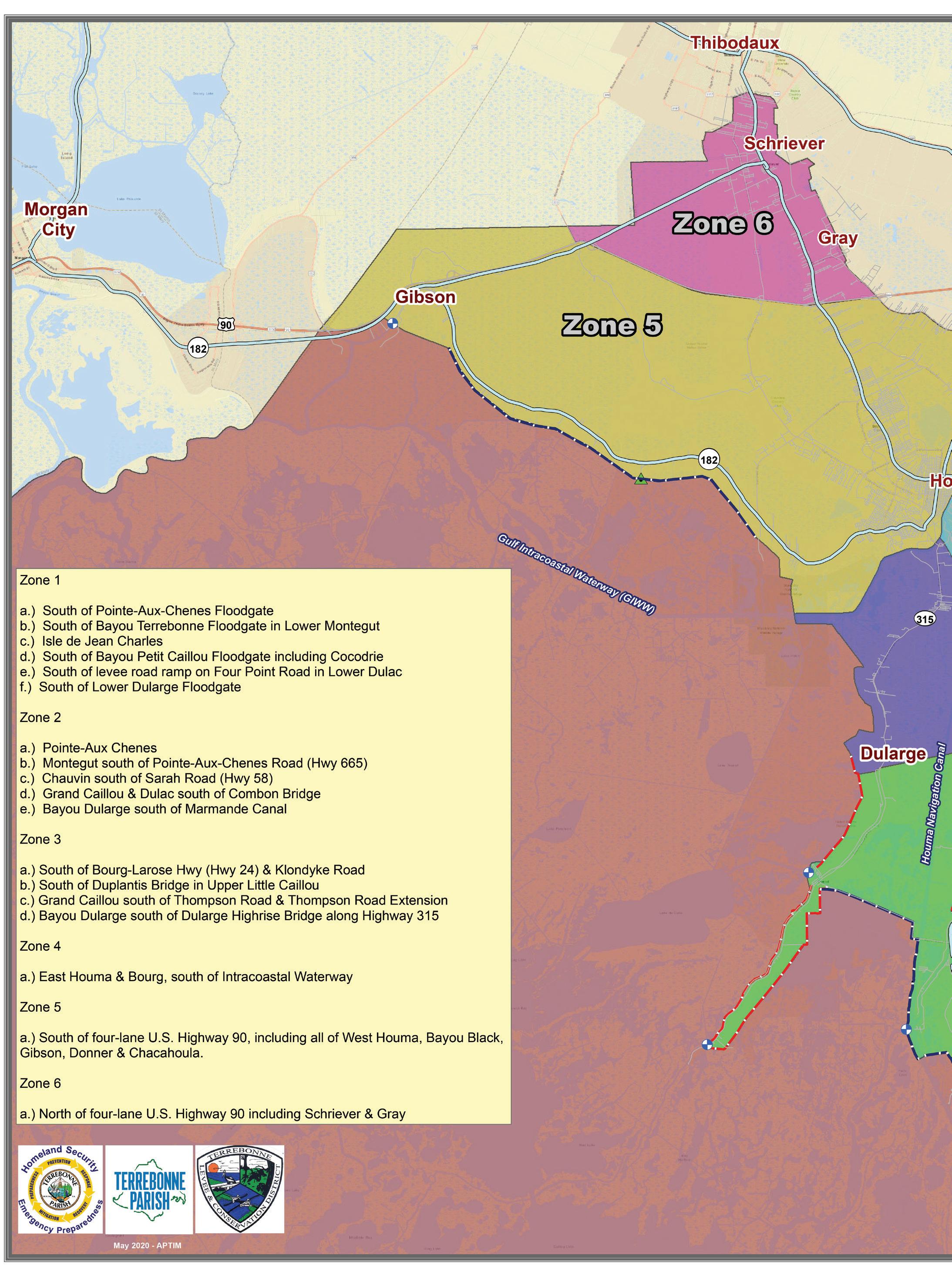
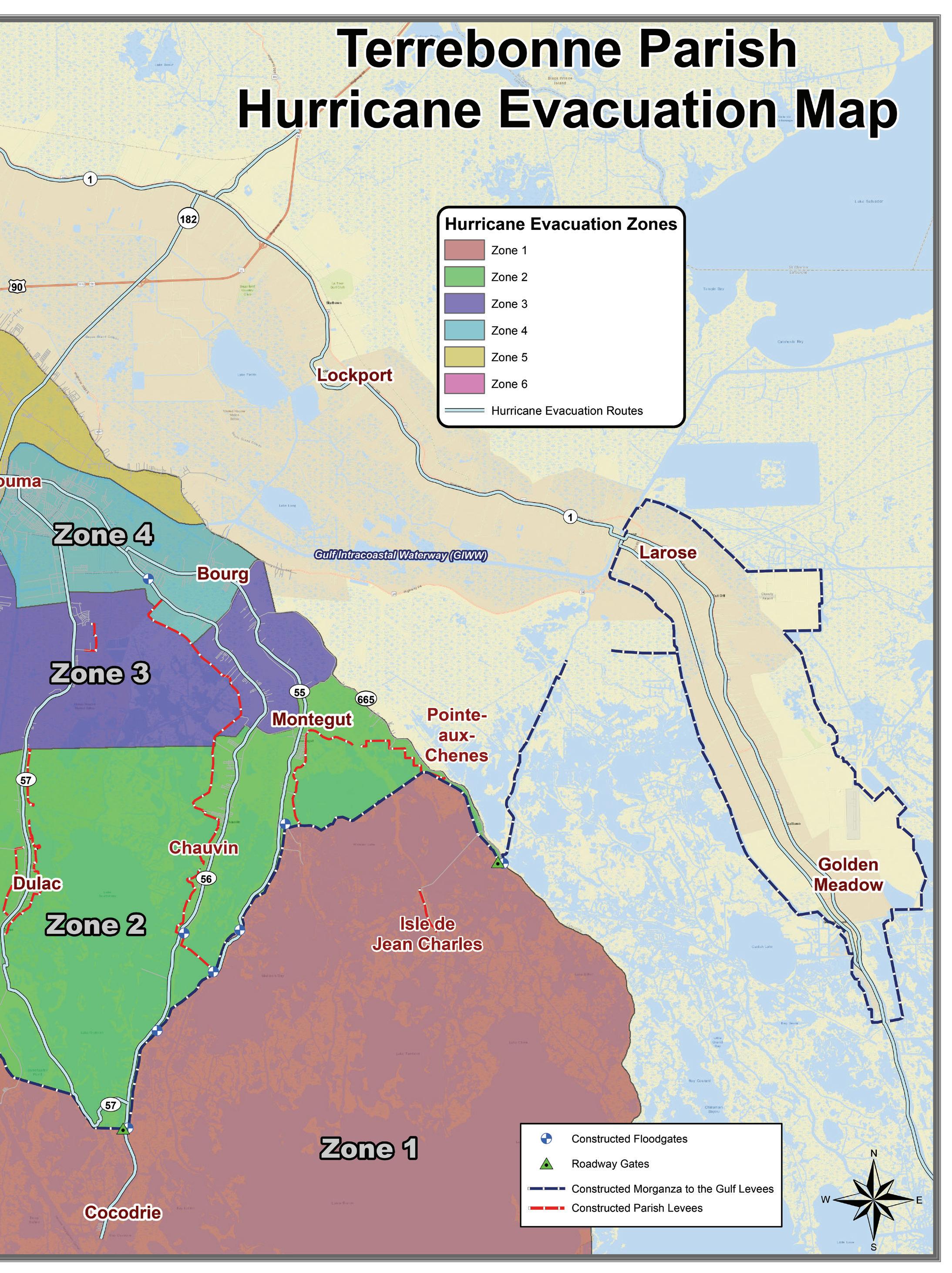
Terrebonne Parish Hurricane Evacuation Map Are You Ready?
and Water Safety
Safety
Preparedness Guide
LETTER FROM THE PARISH PRESIDENT
JASON BERGERON
TERREBONNE PARISH PRESIDENT
Terrebonne Parish Consolidated Government stands prepared to meet and respond to any crisis that may threaten our residents, visitors, and businesses.
In recent years, drastic changes have been made to improve our ability to disseminate information quickly and accurately during natural disasters and other crisis situations. In addition to traditional media outlets (radio, newspaper, and television), we have expanded our reach online via social media, the Parish website (tpcg.org), our reverse 911 system, and mass text messaging systems.
Evacuation and sheltering plans have also been improved significantly. For category 1 and 2 storms, in-parish shelters are made available to residents. For major storms, a point-to-point sheltering agreement is in place with the City of Monroe.
We have also focused on promoting education and providing resources to residents on establishing their own disaster plans. These plans should include evacuation plans, communication plans, and necessities, such as food, water, medications, personal items, pet items, etc. We also strongly encourage assisting your neighbors, especially the elderly and those with special needs in times of crisis.
Residents that are interested in assisting during crisis events can join our CERT Team (Community Emergency Response Team). Contact the Terrebonne Office of Homeland Security and Emergency Preparedness at 985-873-6357 or oep@tpcg.org for more information on this program.
While crisis events may be unexpected and unpredictable, we are equipped with tools and resources to respond swiftly and appropriately to ensure our residents and economy can recover with minimal disruptions.
TERREBONNE ALERT EMERGENCY NOTIFICATION
Emergency notifications are available from the Terrebonne Parish Consolidated Government by phone or email in the event of a major disaster or evacuation notice in your area. Visit WWW.TOHSEP.COM/TERREBONNEALERT and click sign up to begin your registration.
For residents who have medical special needs, or will need transportation during an evacuation of Terrebonne Parish, please contact the Terrebonne Council on Aging at (985) 868-8411. To pre-register for Disaster Food Stamp assistance, please call 1-888-LA-HELP-U (1-888-524-3578)
EVACUATION ROUTES CONTRAFLOW
Contraflow Crossovers
Directional Indicators
HURRICANE
HURRICANE SEASON
JUNE 1 – NOVEMBER 30
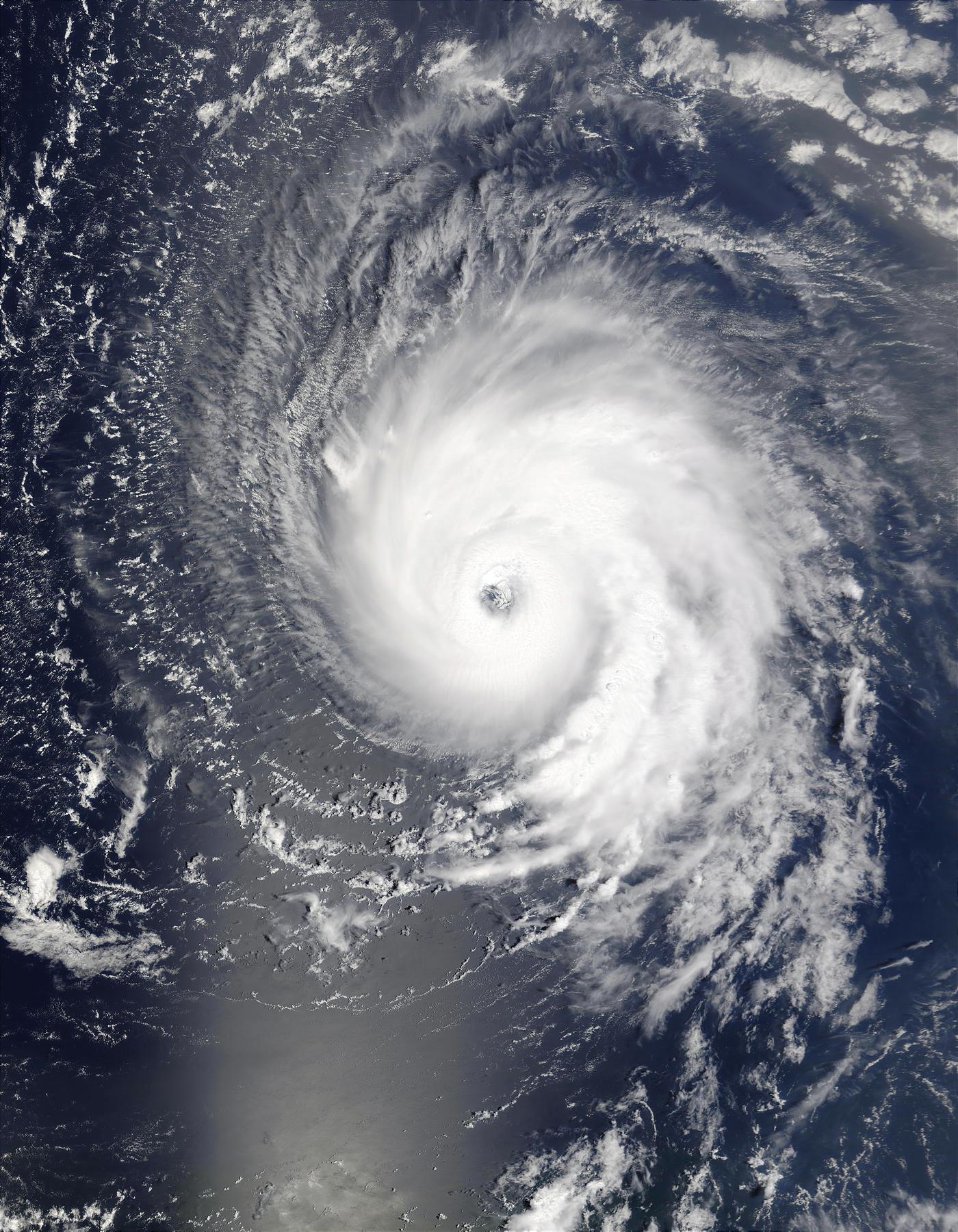
Hurricanes are the only natural disasters with their own names. Audrey, Betsy, Camille, Hazel, Gilbert, Andrew, Katrina and Gustav–each evokes its particular image of disaster. Hurricanes are the same in vital ways; like people, each has its own personality.
Names seem appropriate because we come to know hurricanes before they strike, unlike earthquakes, which hit without warning. Tornadoes come quickly and go with, at best, a few minutes warning. Hurricanes are special. A good argument can be made that
they are Earth’s most awesome storms.
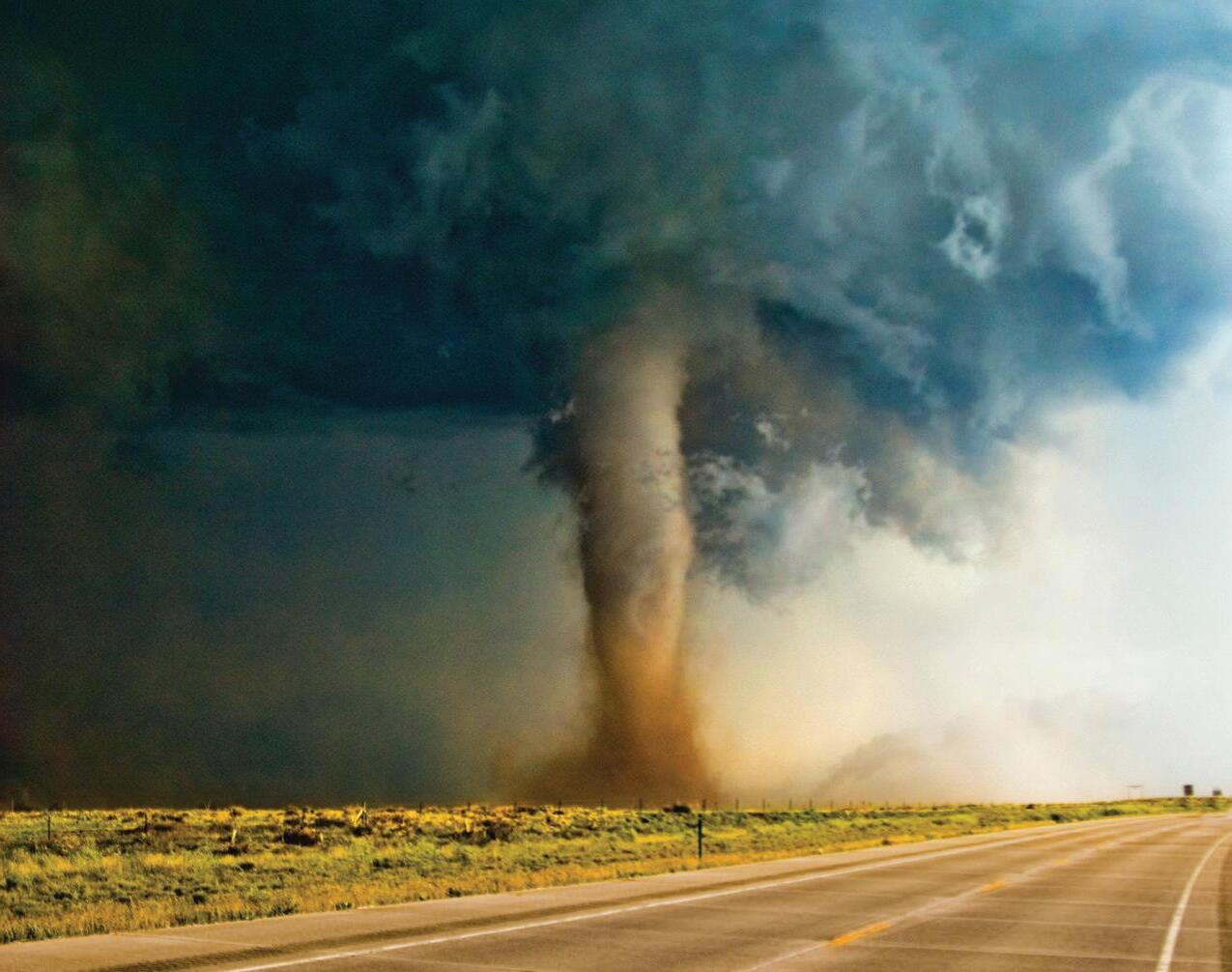
Winds in the strongest tornadoes can top 300 mph, while hurricane winds above 150 mph are rare. But a tornado is much more concentrated than even the smallest hurricane; a mile-wide tornado is huge, while a 100-mile wide hurricane is small. Few tornadoes last even an hour, and a damage path of 100 miles goes into the record books.
Hurricanes easily can last more than a week and can devastate islands around the Caribbean days before slamming into the United
States. A large hurricane stirs up more than a million cubic miles of the atmosphere every second. Hurricane winds can kick up 50-foot or higher waves in the open ocean. When a storm hits land, it brings a mound of water. A typical hurricane dumps 6 to 12 inches of rain when it comes ashore. Some hurricanes bring much more water that can rise to a peak height of more than 20 feet near the eye and flood 100 miles of coast with a 10-foot storm surge. These have caused some of our worst floods.
HURRICANE
CONCEPT OF OPERATIONS
FOR EVACUATION PHASES
PRECAUTIONARY
This phase will concentrate on people who are vulnerable to the effects of hurricane winds and water. It is directed at offshore workers, persons on coastal islands and persons living in low-lying areas.
RECOMMENDED
This phase will concentrate on all people who are at risk.
YOU ARE AT RISK IF YOU LIVE:
• Outside of levee protection
• In a manufactured home (e.g.. mobile home, recreational vehicle, etc.)
• In a low-lying or flood-prone area
• The hurricane is a Category 3 (slow) or any Category 4 or 5
MANDATORY
This is the final and most serious phase of evacuation. Authorities will put maximum emphasis on encouraging evacuation and limiting entry into the risk area. Designated State Evacuation Routes will be enhanced, thereby instituting contraflow on major interstates and highways.
STATE EMERGENCY ALERT SYSTEM (EAS)
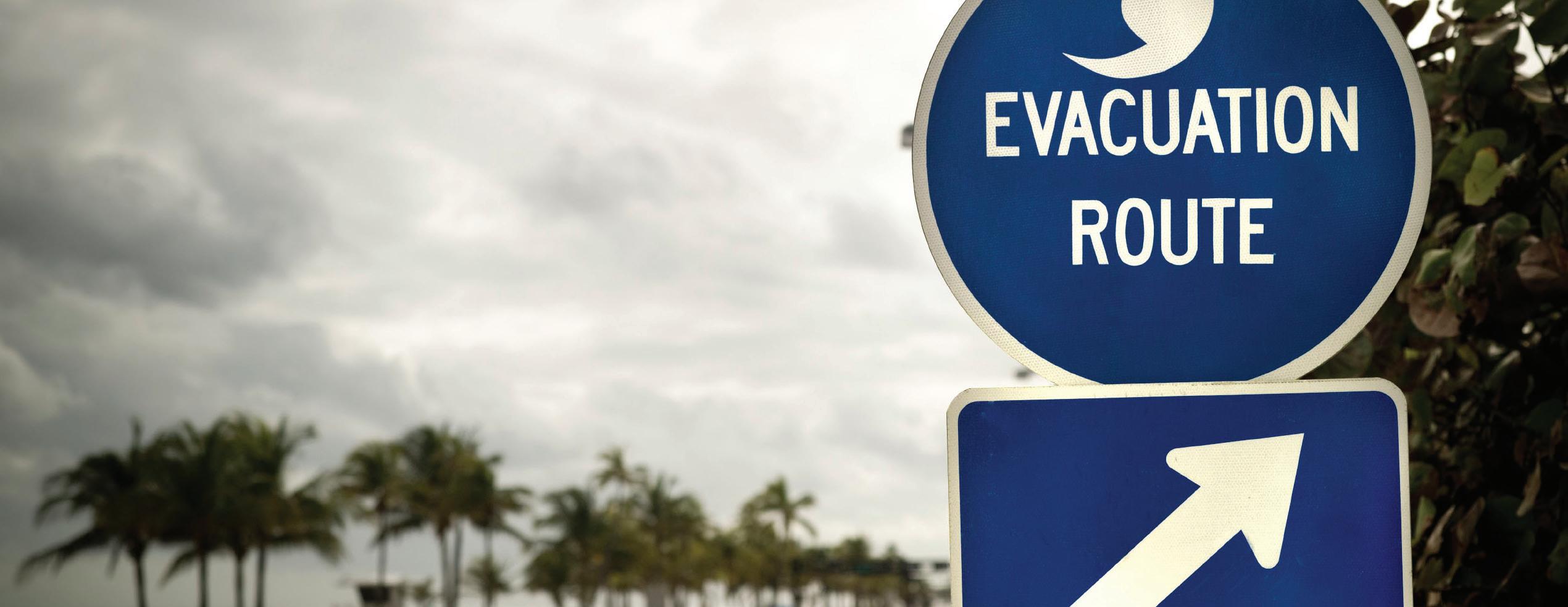
All residents should monitor their local EAS station for authoritative evacuation and shelter information. Evacuation route signs (shown below) are located on all parish and state roads that have been designated as major evacuation routes. The smaller sign indicates the (EAS) radio station to monitor for the particular area of the state through which you are traveling. The EAS radio station will broadcast the latest weather reports, road conditions and shelter location. In addition, information (date, time and locations) will be announced. As the storm gets closer to the risk area, information will be issued every two hours. State Emergency Broadcasting System information is broadcast on the following stations:
RADIO
WWL 870 AM
KBZE 105.9 FM
WLMG 101.9 FM
WEB
tpcg.org houmatimes.com houmatoday.com
TELEVISION
WAFB CH 9 Baton Rouge
WBRZ CH 2 Baton Rouge
WWL CH 4 New Orleans
WVUE CH 8 New Orleans
WDSU CH 6 New Orleans
WGNO CH 26 New Orleans
HTV CH 10 Houma
HURRICANE HURRICANE EVACUATION GUIDELINES
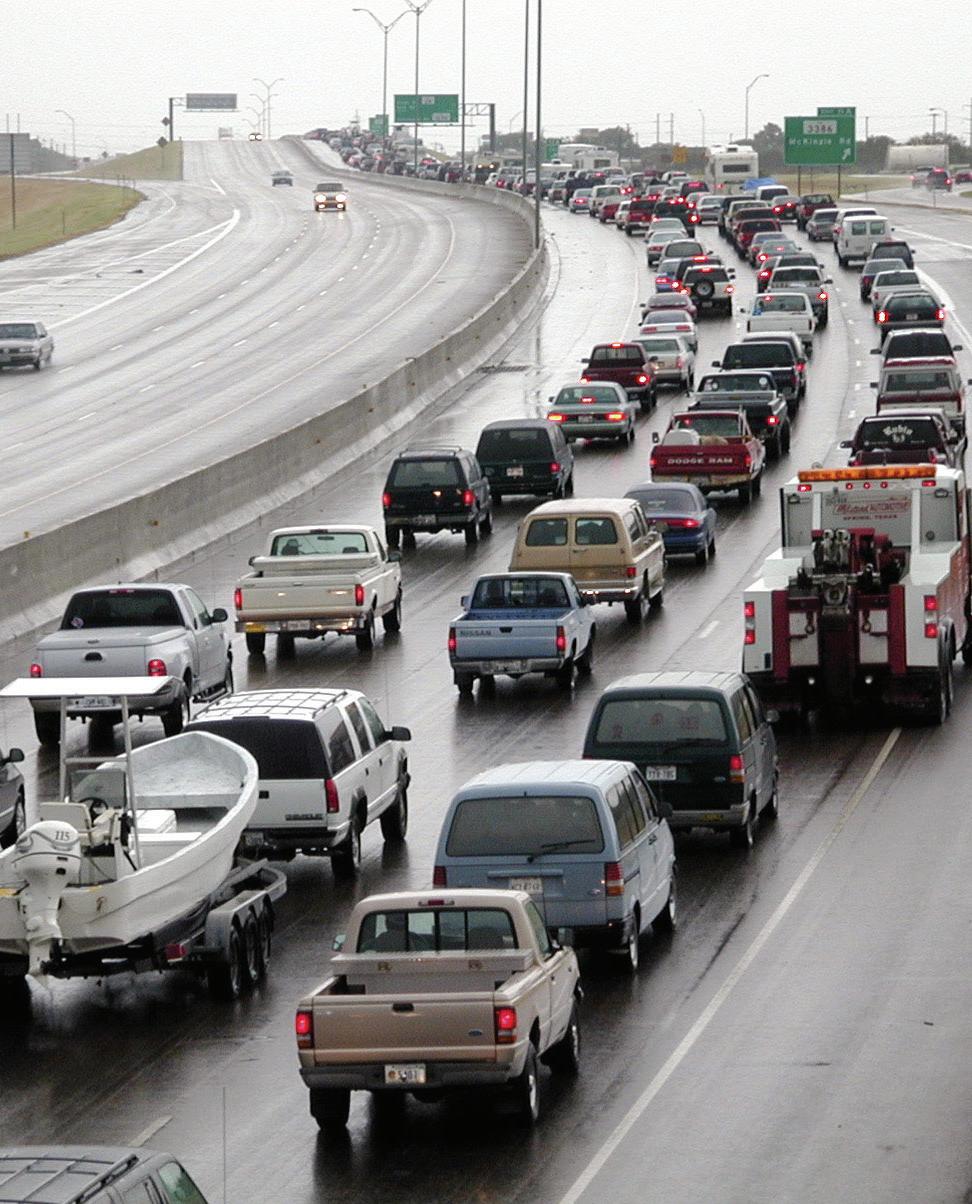
Prepare to evacuate if advised to do so by the governor or elected officials through radio or television announcements. Plan to evacuate as early as possible before hurricane gale-force winds and storm surges force road closings. Leaving early may also help you to avoid massive traffic jams encountered during late evacuation efforts. Listen to the radio and/or television for evacuation and sheltering information.
STORM ADVISORIES ARE ISSUED AS FOLLOWS:
TROPICAL STORM WATCH
Tropical storm conditions are possible in the specified area of the watch, usually within 48 hours.
TROPICAL STORM WARNING
Tropical storm conditions are expected in the specified area of the warning, usually within 36 hours.
HURRICANE WATCH
Hurricane conditions are expected in the specified area of the watch, usually within 48 hours.
HURRICANE WARNING
Hurricane conditions are expected in the specified area of the warning, usually within 36 hours.
It is important to know which hurricane evacuation zone you reside in. Terrebonne Parish residents can enter their address on the following web page to determine which hurricane evacuation zone they reside in: WWW.TOHSEP.COM/EVACUATION
HURRICANE HURRICANE EVACUATION TIPS
LIVING IN A SHELTER
Residents should develop a “game plan” in order to assist them and their families to be prepared for any disaster. Assistance on developing a game plan can be found online at WWW.GETAGAMEPLAN.ORG. Residents should have enough supplies to last each family member at least 72 hours (3 days). When state and local officials issue an evacuation order, residents should heed those orders to protect themselves and their families. Residents should be aware that when an evacuation order is issued, there may not be any emergency services such as fire, police, EMS or even hospital services to assist them during hurricanes.
Families and individuals need to be aware that the “FIRST 72 HOURS ARE ON YOU.” You should have food, water and necessary supplies to last you and each member of your family for 72 hours. Relief supplies may not be available to the parish before 72 hours.
People gathered in public and private shelters to escape hurricanes and other disasters might have to stay there—at least part of the time—for up to two weeks.
RE-ENTRY INFO
The parish reentry program enables the parish to safely allow businesses the minimum number of employees needed to do an assessment of their facility following an emergency evacuation. Those assessors will be able to make necessary arrangements if any are needed to bring the business back online once it is deemed safe to do so. If you have any questions about
the parish reentry program contact us at (985) 873-6357, or email oep@tpcg.org. If your company wishes to participate in the prescreening process, please submit an application online at http:// www.parishreentry.com. You will be notified once your application is approved.
TO AUGMENT THE SUPPLIES OF WATER AND FOOD WHERE SHELTERS ARE USUALLY LOCATED, YOU SHOULD PLAN TO TAKE THE FOLLOWING WITH YOU:
• As much drinkable liquids (water, fruit and vegetable juices, soft drinks, etc.) and ready-to-eat food as you can carry to the shelter.
• Special medicines or foods required by members of your family, such as insulin, heart medicines and dietetic food.
• A blanket for each family member.
• A battery-powered radio, flash light, extra batteries for each and writing materials for taking notes of information given over the radio.
• Baby needs (formula, medicine, diapers and baby wipes).
• Personal toiletries (toothpaste, toothbrush, soap or baby wipes, deodorant, shampoo, shaving cream and razor, feminine hygiene items).
IF YOU LIVE IN AN UNSAFE STRUCTURE, MANUFACTURED HOME OR RESIDENCE
SUBJECT TO FLOODING, BE PREPARED TO EVACUATE WHEN RECOMMENDED BY STATE AND LOCAL OFFICIALS.
• Before hurricane season, check with local emergency preparedness officials for evacuation plans in your area and obtain a copy.
• Select your evacuation route as identified in the plan and your destination: Friends and relatives well outside the flood risk area, Hotel or motel, Public shelters, Keep your car fueled
• Carry along survival supplies: Family medication, First aid kit, Bottled water and canned or dried provisions, Infant provisions and games, etc., for children
• Keep important papers with you in a waterproof container or zippertop bag at all times: Insurance policies, Household contents inventory, Mortgage papers
• Shut off water, electricity and gas when told to do so.
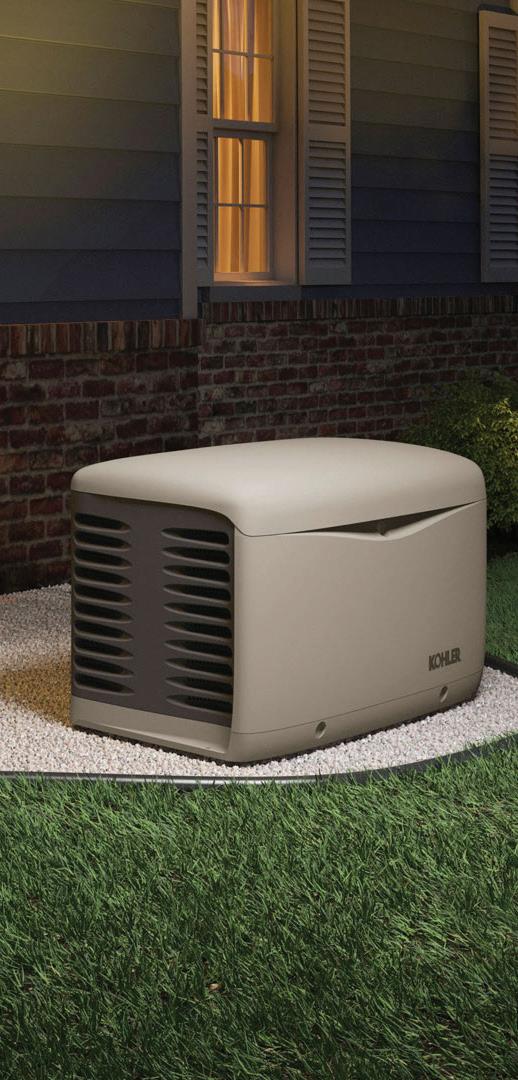
Return home when authorities tell you it is safe. DO NOT turn gas or electricity on at your home without contacting the utility company that supplies your residence. You should NEVER connect a generator directly to your house without a transfer switch. A transfer switch will prevent the back-feed of electricity back to the main utility lines.
HURRICANE NATIONAL HURRICANE CENTER
TERMS TO KNOW
ADVISORY
Official information issued by tropical cyclone warning centers describing all tropical cyclone watches and warnings in effect, along with details concerning tropical cyclone locations, intensity and movement, and precautions that should be taken. Advisories are also issued to describe: (a) tropical cyclones prior to issuance of watches and warnings and (b) subtropical cyclones.
BEST TRACK
A subjectively-smoothed representation of a tropical cyclone’s location and intensity over its lifetime. The best track contains the cyclone’s latitude, longitude, maximum sustained surface winds, and minimum sea-level pressure at six hourly intervals. Best track positions and intensities, which are based on a post-storm assessment of all available data, may differ from values contained in storm advisories. They also generally will not reflect the erratic motion implied by connecting individual center-fix positions.
CENTER
Generally speaking, the vertical axis of a tropical cyclone, usually defined by the location of minimum wind or minimum pressure. The cyclone center position can vary with altitude. In advisory products, refers to the center position at the surface.
CENTER / VORTEX FIX
The location of the center of a tropical or subtropical cyclone obtained by reconnaissance aircraft penetration, satellite, radar or synoptic data.
CYCLONE
An atmospheric closed circulation rotating counterclockwise in the Northern Hemisphere and clockwise in the Southern Hemisphere.
DIRECT HIT
A close approach of a tropical cyclone to a particular location. For locations on the left-hand side of a tropical cyclone’s track (looking in the direction of motion), a direct hit occurs when the cyclone passes to within a distance equal to the cyclone’s radius of maximum wind. For locations on the right-hand side of the track, a direct hit occurs when the cyclone passes to within a distance equal to twice the radius of maximum wind. Compare indirect hit, strike.
EYE
The roughly circular area of comparatively light winds that encompasses the center of a severe tropical cyclone. The eye is either completely or partially surrounded by the eyewall cloud.
EYEWALL / WALL CLOUD
An organized band or ring of cumulonimbus clouds that surround the eye, or light-wind center of a tropical cyclone. Eyewall and wall cloud are used synonymously.
EXTRATROPICAL
A term used in advisories and tropical summaries to indicate that a cyclone has lost its “tropical” characteristics. The term implies both poleward displacement of the cyclone and the conversion of the cyclone’s primary energy source from the release of latent heat of condensation to baroclinic (the temperature contrast between warm
and cold air masses) processes. It is important to note that cyclones can become extratropical and still retain winds of hurricane or tropical storm force.
EXTRATROPICAL CYCLONE
A cyclone of any intensity for which the primary energy source is baroclinic, resulting from the temperature contrast between warm and cold air masses.
FUJIWHARA EFFECT
The tendency of two nearby tropical cyclones to rotate cyclonically about each other.
GALE WARNING
A warning of 1-minute sustained surface winds in the range of 34 kt (39 mph or 63 km/hr) to 47 kt (54 mph or 87 km/hr), either predicted or occurring and not directly associated with tropical cyclones.
HIGH WIND WARNING
A high wind warning is defined as 1-minute average surface winds of 35 kt (40 mph or 64 km/hr) or greater lasting for 1 hour or longer, or winds gusting to 50 kt (58 mph or 93 km/hr) or greater regardless of duration that are either expected or observed over land.
HURRICANE / TYPHOON
A tropical cyclone in which the maximum sustained surface wind (using the U.S. 1-minute average) is 64 kt (74 mph or 119 km/hr) or more. The term hurricane is used for Northern Hemisphere tropical cyclones east of the international date line to the Greenwich Meridian. The term typhoon is used for Pacific tropical cyclones north of the equator west of the international date line.
HURRICANE
HURRICANE LOCAL STATEMENT
A public release prepared by local National Weather Service offices in or near a threatened area giving specific details for its county/ parish warning area on (1) weather conditions, (2) evacuation decisions made by local officials, and (3) other precautions necessary to protect life and property.
HURRICANE SEASON
The portion of the year having a relatively high incidence of hurricanes. The hurricane season in the Atlantic, Caribbean and Gulf of Mexico runs from June 1 to Nov. 30. The hurricane season in the Eastern Pacific basin runs from May 15 to Nov. 30. The hurricane season in the Central Pacific Basin runs from June 1 to Nov. 30.
HURRICANE WARNING
An announcement that hurricane conditions (sustained winds of 74 mph or higher) are expected somewhere within the specified area. Because hurricane preparedness activities become difficult once winds reach tropical storm force, the hurricane warning is issued 36 hours in advance of the anticipated onset of tropical-stormforce winds.
HURRICANE WATCH
An announcement that hurricane conditions (sustained winds of 74 mph or higher) are possible within the specified area. Because hurricane preparedness activities become difficult once winds reach tropical storm force, the hurricane watch is issued 48 hours in advance of the anticipated onset of tropicalstorm-force winds.
INDIRECT HIT
Generally refers to locations that do not experience a direct hit from a tropical cyclone, but do experience
hurricane-force winds (either sustained or gusts) or tides of at least 4 feet above normal.
INVEST
A weather system for which a tropical cyclone forecast center (NHC, CPHC or JTWC) is interested in collecting specialized data sets (e.g., microwave imagery) and/ or running model guidance. Once a system has been designated as an invest, data collection and processing is initiated on a number of government and academic websites, including the Naval Research Laboratory (NRL) and the University of Wisconsin Cooperative Institute for Meteorological Satellite Studies (UW-CIMSS). The designation of a system as an invest does not correspond to any particular likelihood of development of the system into a tropical cyclone; operational products such as the Tropical Weather Outlook or the JTWC/TCFA should be consulted for this purpose.
LANDFALL
The intersection of the surface center of a tropical cyclone with a coastline. Because the strongest winds in a tropical cyclone are not located precisely at the center, it is possible for a cyclone’s strongest winds to be experienced over land even if landfall does not occur. Similarly, it is possible for a tropical cyclone to make landfall and have its strongest winds remain over the water. Compare direct hit, indirect hit and strike.
MAJOR HURRICANE
A hurricane that is classified as Category 3 or higher.
POST-STORM REPORT
A report issued by a local National Weather Service office summarizing the impact of a tropical cyclone
on its forecast area. These reports include information on observed winds, pressures, storm surges, rainfall, tornadoes, damage and casualties.
POST-TROPICAL CYCLONE
A former tropical cyclone. This generic term describes a cyclone that no longer possesses sufficient tropical characteristics to be considered a tropical cyclone. Post-tropical cyclones can continue carrying heavy rains and high winds. Note that former tropical cyclones that have become fully extratropical … as well as remnant lows … are two classes of post-tropical cyclones.
PRELIMINARY REPORT
Now known as the “Tropical Cyclone Report.” A report summarizing the life history and effects of an Atlantic or Eastern Pacific tropical cyclone. It contains a summary of the cyclone life cycle and pertinent meteorological data, including the post-analysis best track (six hourly positions and intensities) and other meteorological statistics. It also contains a description of damage and casualties the system produced, as well as information on forecasts and warnings associated with the cyclone. NHC writes a report on every tropical cyclone in its area of responsibility.
PRESENT MOVEMENT
The best estimate of the movement of the center of a tropical cyclone at a given time and given position. This estimate does not reflect the shortperiod, small-scale oscillations of the cyclone center.
RADIUS OF MAXIMUM WINDS
The distance from the center of a tropical cyclone to the location of the cyclone’s maximum winds. In well-developed hurricanes, the radius of maximum winds is
HURRICANE
generally found at the inner edge of the eyewall.
RAPID INTENSIFICATION
An increase in the maximum sustained winds of a tropical cyclone of at least 30 kt in a 24-hour period.
RELOCATED
A term used in an advisory to indicate that a vector drawn from the preceding advisory position to the latest known position is not necessarily a reasonable representation of the cyclone’s movement.
REMNANT LOW
A post-tropical cyclone that no longer possesses the convective organization required of a tropical cyclone and has maximum sustained winds of less than 34 knots. The term is most commonly applied to the nearly deep-convection-free swirls of stratocumulus in the Eastern North Pacific.
SAFFIR-SIMPSON HURRICANE WIND SCALE
The Saffir-Simpson Hurricane Wind Scale is a 1 to 5 categorization based on the hurricane’s intensity at the indicated time. The scale provides examples of the type of damage and impacts in the United States associated with winds of the indicated intensity. The following table shows the scale broken down by winds:
STORM SURGE WARNING
There is a danger of life-threatening inundation from rising water moving inland from the shoreline somewhere within the specified area, generally within 36 hours. If you are under a storm surge warning, check for evacuation orders from your local officials.
STORM SURGE WATCH
There is a possibility of life-threatening inundation from rising water moving inland from the shoreline somewhere within the specified area, generally within 48 hours.
STORM TIDE
The actual level of sea water resulting from the astronomic tide combined with the storm surge.
STORM WARNING
A warning of 1-minute sustained surface winds of 48 kt (55 mph or 88 km/hr) or greater, either predicted or occurring, not directly associated with tropical cyclones.
STRIKE
For any particular location, a hurricane strike occurs if that location passes within the hurricane’s strike circle, a circle of 125 n mi diameter, centered 12.5 n mi to the right of the hurricane center (looking in the direction of motion). This circle is meant to depict the typical extent of hurricane-force winds, which are approximately 75 n mi to the right of the center and 50 n mi to the left.
SUBTROPICAL CYCLONE
Devastating damage will occur
Catastrophic damage will occur
Catastrophic damage will occur
A detailed description of the Saffir-Simpson Hurricane Wind Scale is available at http://www.nhc.noaa.gov/aboutsshws.php.
STORM SURGE
An abnormal rise in sea level accompanying a hurricane or other intense storm, and whose height is the difference between the observed level of the sea surface and the level that would have occurred in the absence of the cyclone. Storm surge is usually estimated by subtracting the normal or astronomic high tide from the observed storm tide.
A non-frontal low pressure system that has characteristics of both tropical and extratropical cyclones. This system is typically an upper-level cold low with circulation extending to the surface layer and maximum sustained winds generally occurring at a radius of about 100 miles or more from the center. In comparison to tropical cyclones, such systems have a relatively broad zone of maximum winds that is located farther from the center, and typically have a less symmetric wind field and distribution of convection.
SUBTROPICAL DEPRESSION
A subtropical cyclone in which the maximum sustained surface wind speed (using the U.S. 1-minute average) is 33 kt (38 mph or 62 km/hr) or less.
SUBTROPICAL STORM
A subtropical cyclone in which the maximum sustained surface wind speed (using the U.S. 1-minute average) is 34 kt (39 mph or 63 km/hr) or more.
HURRICANE
TROPICAL CYCLONE
A warm-core non-frontal synoptic-scale cyclone, originating over tropical or subtropical waters, with organized deep convection and a closed surface wind circulation about a well-defined center. Once formed, a tropical cyclone is maintained by the extraction of heat energy from the ocean at high temperature and heat export at the low temperatures of the upper troposphere. In this, they differ from extratropical cyclones, which derive their energy from horizontal temperature contrasts in the atmosphere (baroclinic effects).
TROPICAL DEPRESSION
A tropical cyclone in which the maximum sustained surface wind speed (using the U.S. 1-minute average) is 33 kt (38 mph or 62 km/hr) or less.
TROPICAL DISTURBANCE
A discrete tropical weather system of apparently organized convection-generally 100 to 300 n mi in diameter-originating in the tropics or subtropics, having a nonfrontal migratory character, and maintaining its identity for 24 hours or more. It may or may not be associated with a detectable perturbation of the wind field.
TROPICAL STORM
A tropical cyclone in which the maximum sustained surface wind speed (using the U.S. 1-minute average) ranges from 34 kt (39 mph or 63 km/hr) to 63 kt (73 mph or 118 km/hr).
TROPICAL STORM WARNING
An announcement that tropical storm conditions (sustained winds of 39 to 73 mph) are expected somewhere within the specified area within 36 hours.
TROPICAL STORM WATCH
An announcement that tropical storm conditions (sustained winds of 39 to 73 mph) are possible within the specified area within 48 hours.
TROPICAL WAVE
A trough or cyclonic curvature maximum in the tradewind easterlies. The wave may reach maximum amplitude in the lower middle troposphere.
5 things to know about:
HURRICANE HAZARD RISKS
ONE
Storm surge is water pushed onshore by the tropical system. It causes the most damage of any of the hurricane hazards.
TWO
Wind from a hurricane can top 200 mph and cause massive damage to buildings in its path.
THREE
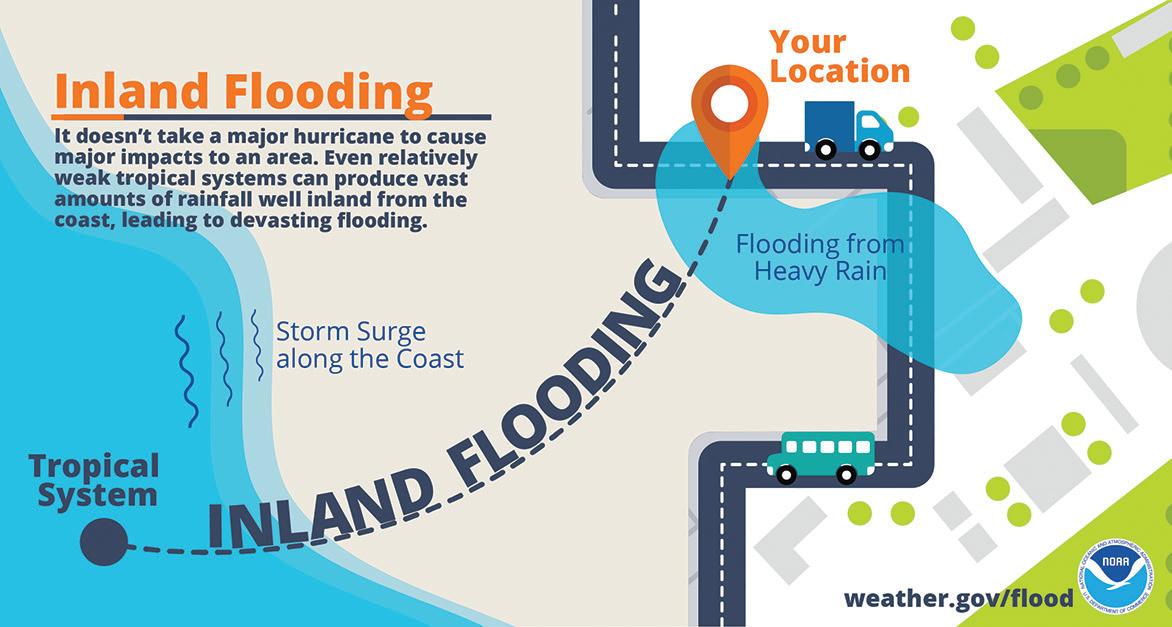
Inland flooding caused by heavy rain damages homes and can wash out roadways well away from the coast.
FOUR
Tornadoes are common as a hurricane moves ashore. They are not typically long lived, but they can cause plenty of damage.
FIVE
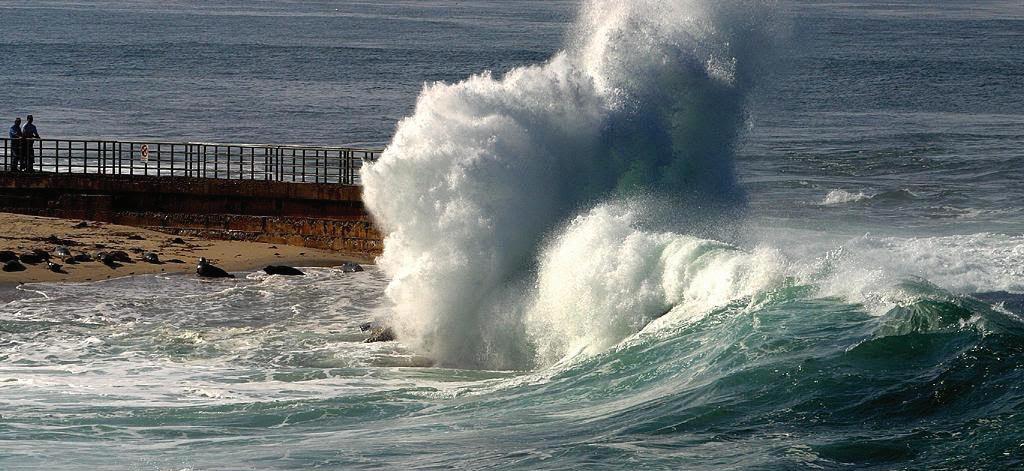
Rip currents and rough seas are common both before and after a hurricane, making swimming or surfing very dangerous.
STRENGTHENING YOUR HOME UPDATING YOUR INSURANCE
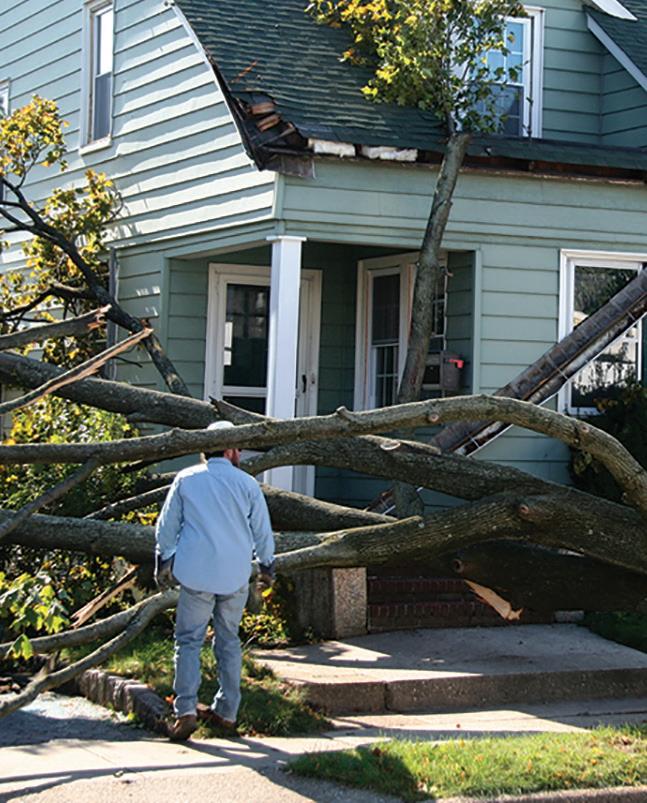
1. Keep trees around your home trimmed well before a storm to prevent damage from broken branches.
2. Have the proper materials in advance to board up your windows to protect them from flying debris.
3. Bring loose outdoor items such as patio furniture inside. They can blow around and cause damage to homes.
4. Secure all doors on your property. Remember that the garage door is usually the most vulnerable.
5. Move your car inside a garage or to another secure location.
1. Check your insurance policies well ahead of the storm to see what is covered.
2. Make sure you have flood insurance. Flooding is the leading cause of damage from tropical systems.
3. Visit floodsmart.gov to learn about your flood risk and flood insurance options for your area.
4. Prepare your home and vehicles according to your specific insurance policies to ensure damages are covered.
5. Know where your insurance documents and contact information are located. Take them with you if you evacuate.
5 things to know about: AN EVACUATION PLAN
ONE
Find out if you would need to evacuate. Don't travel hundreds of miles, only far enough away from the evacuation area.
TWO Plan your evacuation route. Have an alternative route.
THREE
Leave when ordered to do so. Do not wait.
FOUR
Communicate your plan with someone not in the storm's path.
FIVE
Plan for your pets. Most local shelters do not permit them.
WHERE TO GET HURRICANE INFO
ONE Television - Tune into your trusted local news source.
TWO
Phone - Access mobile.weather.gov on your mobile phone and get Wireless Emergency Alerts.
THREE
Radio - Receive forecast information and news on your NOAA Weather Radio.
FOUR
Social Media - Stay in touch with friends and family and receive updates from your trusted sources of information.
FIVE
Computer - Access information from weather.gov, ready.gov and flash.org.
HURRICANE HURRICANE WARNING PREPARATIONS
WHEN YOUR AREA RECEIVES A HURRICANE WARNING:
1. Keep your radio, television or NOAA weather radio on and listen for the latest Weather Service advisories, as well as special instructions from your local government. Also listen for tornado watches and warnings. Tornadoes spawned by a hurricane are among the storm’s worst killers.
2. Plan your time before the storm arrives and avoid the last-minute hurry that might leave you marooned or unprepared.
3. Leave low-lying areas that might be swept by high tides, storm waves or storm surge.
4. Leave manufactured homes for more substantial shelter. Unless properly anchored, manufactured homes are particularly vulnerable to overturning during strong winds.
5. Moor your boat securely before the storm arrives or move it to a designated safe area. When your boat is moored, leave it and don’t return until the storm has passed your area.
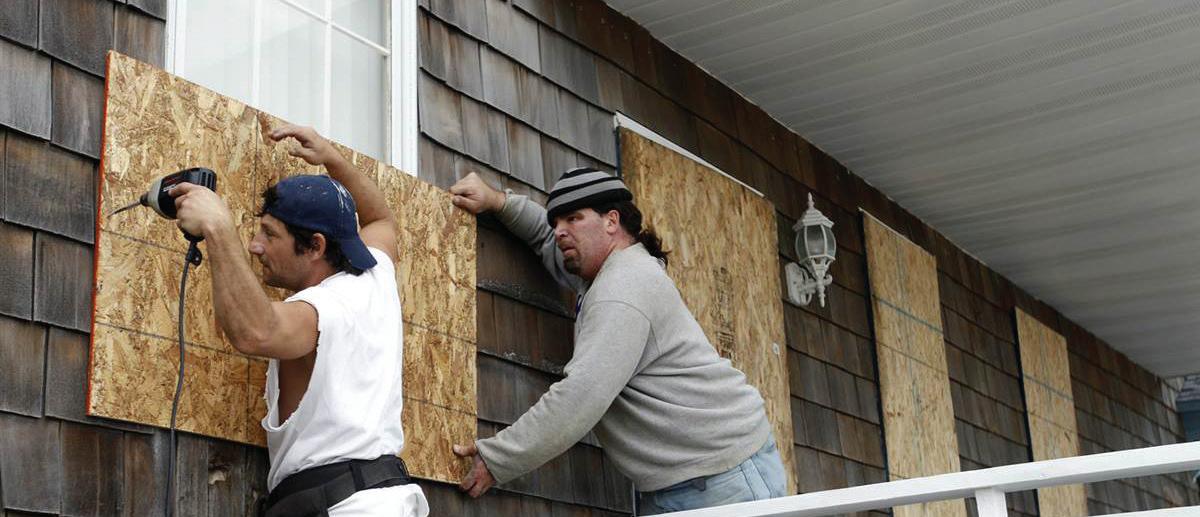
6. Board up windows or protect them with storm shutters or tape. Danger to small windows is mainly from wind-driven debris. Large windows may be broken by wind pressure.
7. Secure outdoor objects that might be blown away. Garbage cans, garden tools, toys, signs, porch furniture and a number of other harmless items become missiles of destruction in hurricane winds. Anchor them or store them inside before the storm strikes.
8. Store drinking water in clean bathtubs, jugs, bottles and cooking utensils. The parish’s water system may
be contaminated or damaged by the storm. Stay tuned to area newscast, to see if you may need to boil water before use.
9. Check your battery-powered equipment. Your radio may be your only link with the world outside of the hurricane. Emergency cooking facilities and flashlights will be essential if utility services are interrupted.
10. Keep your car fueled. Service stations may be inoperable for several days after the storm strikes because of flooding or interrupted electrical power.
11. Stay at home if it is sturdy and on high ground. If not–and especially if local authorities order an evacuation of your area–move to a designated shelter and stay there until the storm is over.
12. Remain indoors during the hurricane. Travel is extremely dangerous when winds and tides are whipping through your area. Don’t be fooled by the “eye” of the hurricane. If the storm center passes directly overhead, there will be a lull in the wind lasting from a few minutes to half an hour or more. Stay in a safe place unless emergency repairs are absolutely necessary. Remember that at the other side of the “eye” the winds will increase rapidly to hurricane force and will come from the opposite direction.
HURRICANE STORM SURGE
HURRICANES’ BIG KILLER
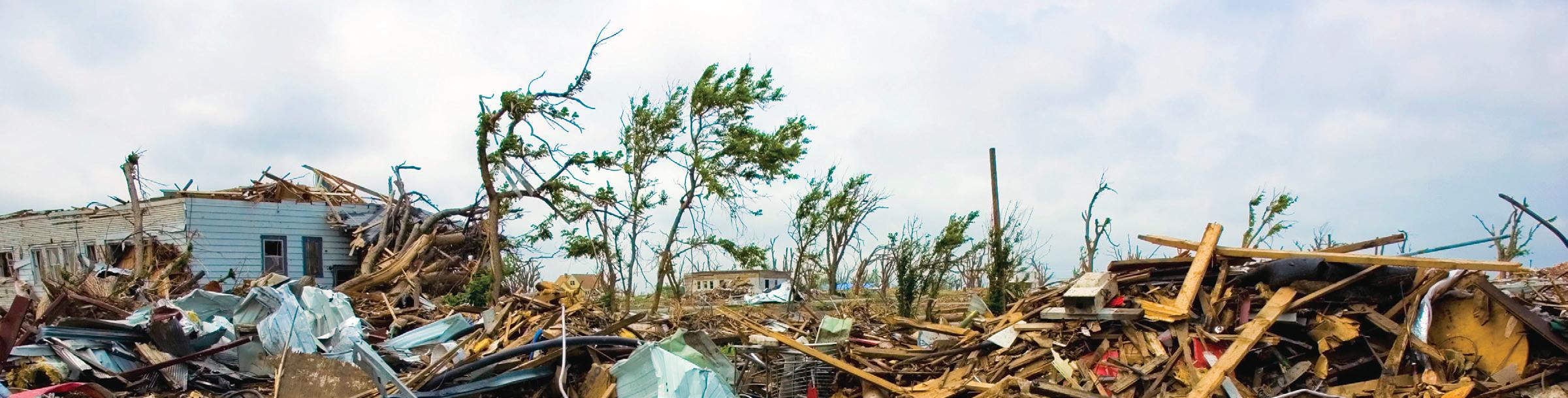
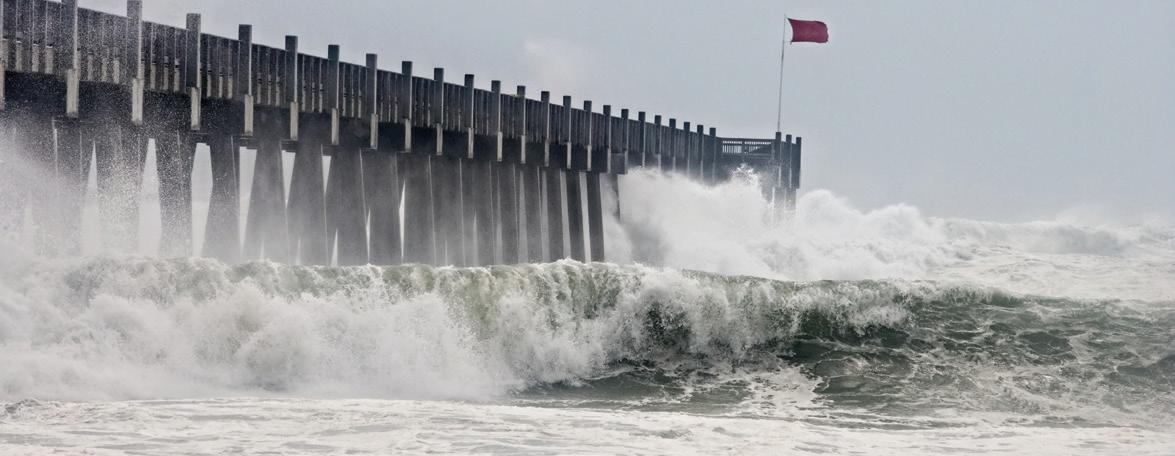
Hurricanes are usually described in terms of their wind speeds, but flooding caused by high water and storm surge kills many more people than wind. Flooding is also responsible for much of the damage, especially within a few hundred yards of the shoreline. Boats ripped from their moorings, utility poles, parts of destroyed buildings and other debris crashing in the waves atop hurricane surge often destroy buildings that stood up to the wind.
Even without the weight of debris, water is a powerfully destructive force. A cubic foot of sea water weighs 64 pounds.
Water does more than batter; it scours away the sand of beaches and dunes. High water and pounding waves carry away the sand under the sea walls, buildings and roads. As the water begins rising in advance of the storm–sometimes hours in advance–it erodes the beach and then the dunes or undercuts buildings behind the beach.
Storm surge isn’t a killer only along beaches facing the ocean; water is also pushed into bays and rivers. As the surge of water squeezes up a narrowing bay or river, it rises even higher.
BOATS
HOW TO PREPARE YOUR BOAT FOR A HURRICANE:
The Boat Owners Association of the United States has produced a free “Hurricane Warning Guide” to help owners properly secure their boats before a storm hits.
TO RECEIVE A FREE COPY OF THE GUIDE, WRITE: BOAT/U.S.
Dept. G, 880 S. Pickett St. Alexandria, Va. 22304 OR VISIT WWW.BOATUS.COM/HURRICANES
HERE ARE SOME TIPS FROM THE GUIDE:
1 Storage ashore is a must for small outboards, trailer boats and performance boats with low freeboard. Sailboats–even some up to 30 feet in length–can be hauled out of the water and laid on their side.
2. If you plan to leave your boat afloat, the best place to take it during a hurricane is a small protected body of water called a “hurricane hole.” Ask the Louisiana Marine Patrol, Coast Guard or harbormaster about the availability of hurricane holes in your area.
3. Be sure you have adequate anchors, fenders and extra long lines to secure your boat for a storm. At a dock, make all lines as long as possible and add a second set of oversized lines.
4. Attach chafing gear to each mooring line. Lines tend to break when they rub against the boat or dock. Old canvas or garden hoses can be used by tying and taping it in place around the line.
5. Use duct tape to seal around the hatches, ports, windows, doors and vents.
6. Take home all electronics and valuable equipment. Electronics can be damaged by high water and they’re the first things taken if vandals come aboard after a storm.
7. Remove all boat documents and take them home for safekeeping. Remember to put them back on the boat after the storm.
8. Last, but not least, GO HOME. No one should stay aboard a boat during a hurricane. When winds are blowing 100 miles per hour or more, tides are surging and visibility is limited to two or three feet, there is little you can do to save a boat in trouble.
HURRICANE DURING THE HURRICANE
Do not stay in manufactured homes during a hurricane. Even if a manufactured home is anchored, there is no guarantee it will withstand the strong winds of a hurricane. If you are unable to evacuate before the hurricane hits, stay inside. Do not be fooled by the eye of the hurricane and its temporary period of peaceful weather conditions. The length of time within the eye varies from several minutes to a couple of hours, depending on the size of the storm. The larger and more intense the hurricane, the larger the eye. Stay away from windows and glass doors. You could be struck by flying debris. Continue to listen to your radio or television for hurricane updates and emergency information.
AFTER THE HURRICANE
1. Remain in shelter until informed by local authorities that it is safe to leave.
2. Keep tuned to your local radio or television station or the Terrebonne Parish Consolidated Government website at WWW.TPCG.ORG for advice and instructions from your local government on:
• Where to go to obtain necessary medical care in your area.
• Where to go for necessary emergency assistance for housing, clothing and food.
• Ways to help yourself and your community recover from the emergency.
3. Stay out of disaster areas. Sightseeing interferes with essential rescue and recovery work and may be dangerous as well.
4. Drive carefully along debris-filled streets. Roads may be undermined and may collapse under the weight of an automobile.
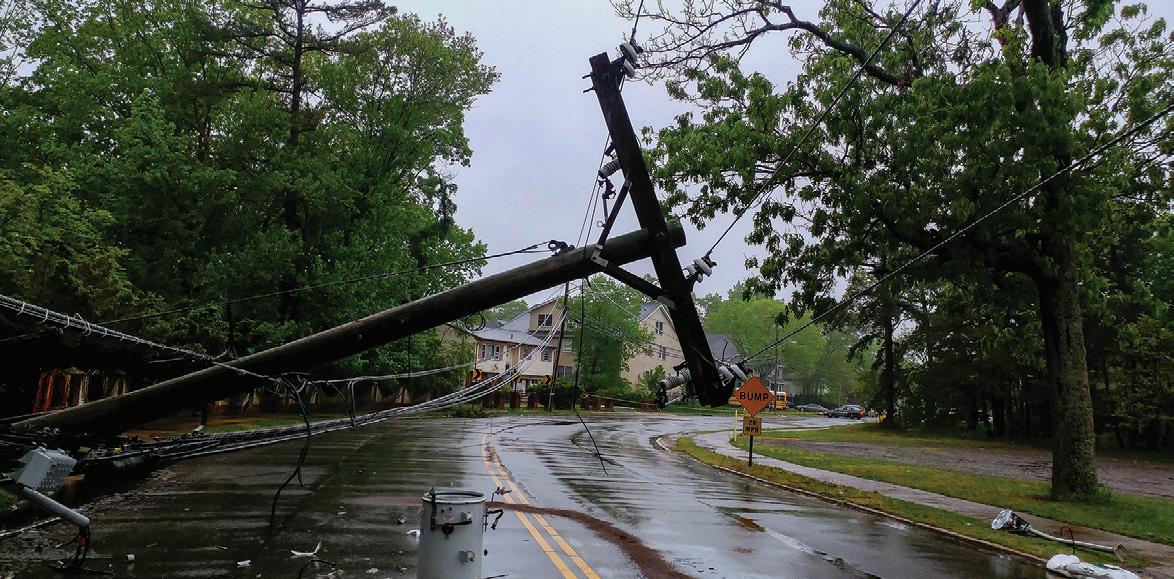
5. Avoid loose or dangling wires and report them immediately to your power company, the Terrebonne Parish Office of Homeland Security and Emergency Preparedness at (985) 873-6357, or the local police or fire department.
6. Report broken sewer or water mains to the Terrebonne Parish Office of Homeland Security and Emergency Preparedness at (985) 8736357.
7. Prevent fires. Lowered water pressure may make fire fighting difficult.
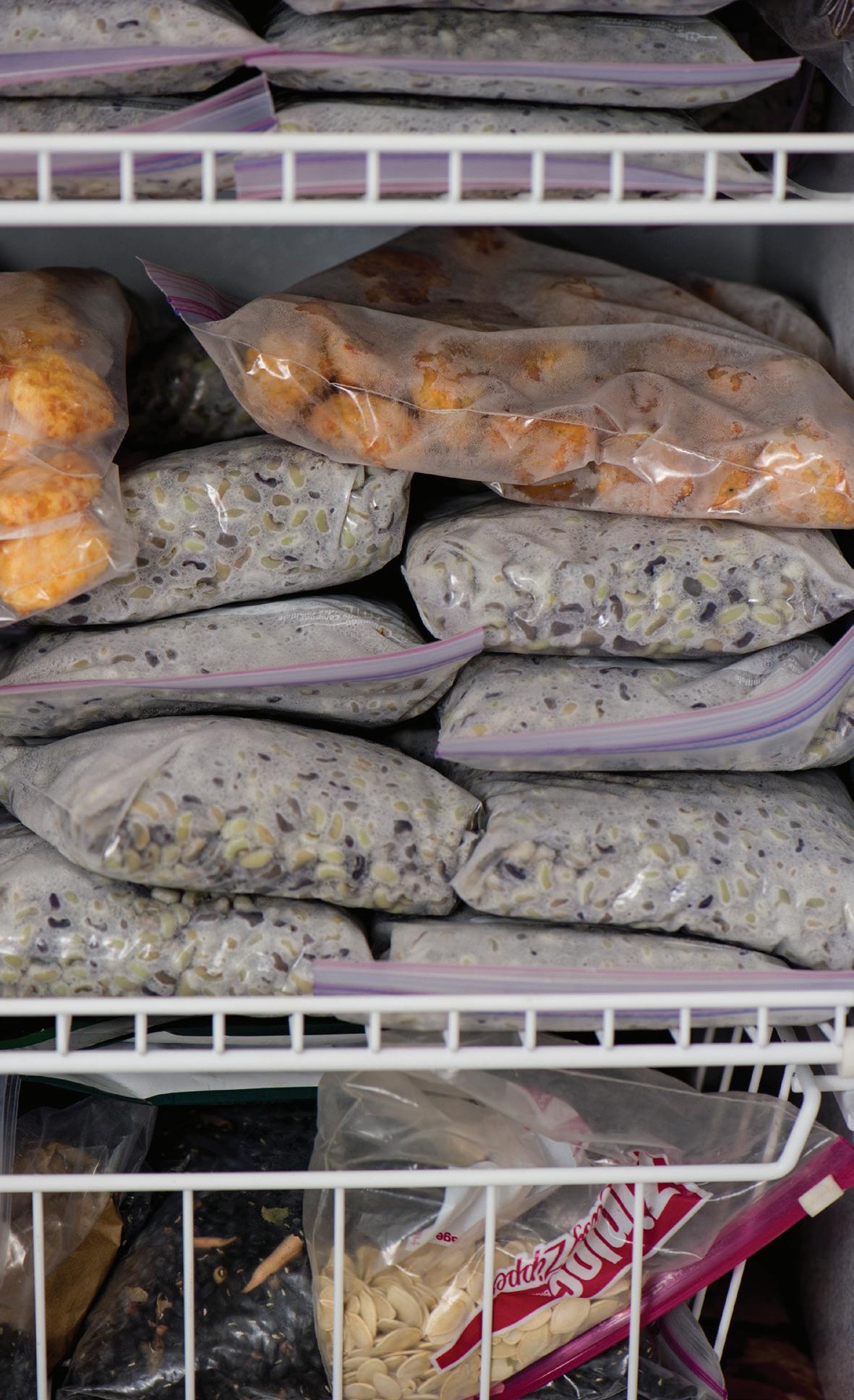
8. Check refrigerated food for spoilage if power has been off during the storm. TIP: Before evacuating, place all freezer and refrigerator items in plastic bags and place back into freezer or refrigerator. If the food spoils, just throw away the plastic bags.
9. Businesses seeking reentry should register at: http://www.parishreentry.com prior to the hurricane.
WHEN YOU GET HOME
Look for visible structure damage before you go inside. Watch for loose or dangling electrical power lines and broken sewer or water mains. DO NOT connect portable generators directly to your electrical panel to prevent electrical back-feed to the main utility lines.
REMEMBER
Hurricanes moving inland can cause severe flooding. Stay away from river banks and streams until all potential flooding has passed.
Local authorities will announce when it is safe to return to your home. Stay tuned to local radio or television stations or the Terrebonne Parish Consolidated Government website (WWW.TPCG. ORG) for current information.
HURRICANE hazards
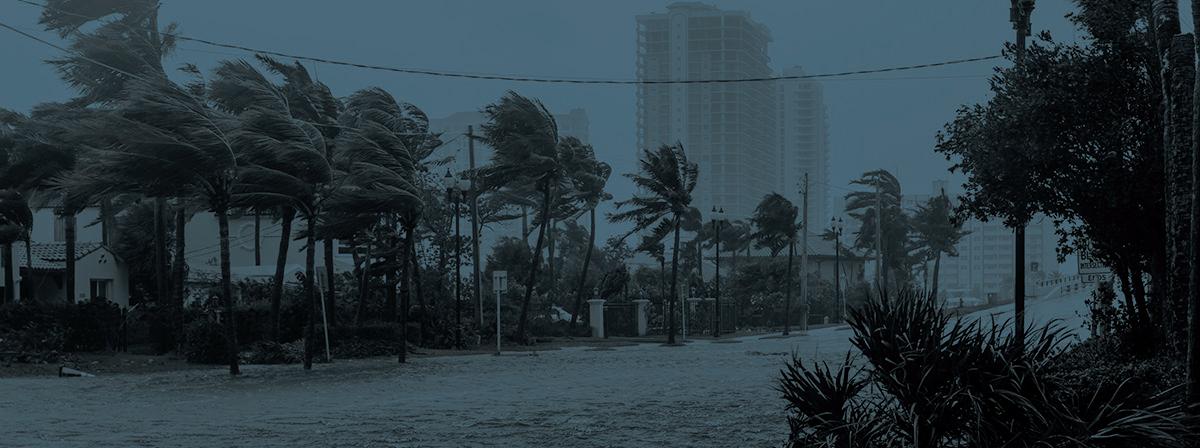
While hurricanes pose the greatest threat to life and property, tropical storms and depression also can be devastating. Hazards from tropical cyclones (which include tropical depressions, tropical storms, and hurricanes) include storm surge flooding, inland flooding from heavy rains, destructive winds, tornadoes, and high surf and rip currents.
EXTREME WINDS INLAND FLOODING
Winds from a hurricane can destroy buildings and manufactured homes. Signs, roofing material, and other items left outside can become flying missiles during hurricanes.
STORM SURGE
Storm surge is the abnormal rise of water generated by a storm’s winds. This hazard is historically the leading cause of hurricane related deaths in the United States. Storm surge and large battering waves can result in large loss of life and cause massive destruction along the coast.
WHAT ARE THE IMPACTS OF STORM SURGE?
• Large areas covered with deep water due to storm surge flooding.
• Structural damage to buildings, with some washing away.
• Locations may be uninhabitable for an extended period.
• Large sections of roads washed out or severely flooded.
• Major damage to marinas, docks, boardwalks, & piers.
Flooding from heavy rains is the second leading cause of fatalities from landfalling tropical cyclones. Widespread torrential rains associated with these storms often cause flooding hundreds of miles inland. This flooding can persist for several days after a storm has dissipated.
Food & Water Safety
WHAT CONSUMERS NEED TO KNOW
Emergencies can happen. When they do, the best strategy is to already have a plan in place. This includes knowing the proper food and water safety precautions to take if hurricanes — or other flooding/power outages — do occur.
BE PREPARED FOR EMERGENCIES
1 Make sure you have appliance thermometers in your refrigerator and freezer.
• Check to ensure that the freezer temperature is at or below 0 °F, and the refrigerator is at or below 40 °F.
• In case of a power outage, the appliance thermometers will indicate the temperatures in the refrigerator and freezer to help you determine if the food is safe.
2. Freeze containers of water for ice to help keep food cold in the freezer, refrigerator, or coolers in case the power goes out. If your normal water supply is contaminated or unavailable, the melting ice will also supply drinking water.
3. Freeze refrigerated items such as leftovers, milk, and fresh meat and poultry that you may not need immediately. This helps keep them at a safe temperature longer.
4. Group food together in the freezer. This helps the food stay cold longer.
5. Have coolers on hand to keep refrigerated food cold if the power will be out for more than 4 hours.
6. Purchase or make ice cubes in advance and store in the freezer for use in the refrigerator or in a cooler. Freeze gel packs ahead of time for use in coolers.
7. Check out local sources to know where dry ice and block ice can be purchased, just in case.
8. Store food on shelves that will be safely out of the way of contaminated water in case of flooding.
9. Make sure to have a supply of bottled water stored where it will be as safe as possible from flooding.
POWER OUTAGES: DURING AND AFTER
WHEN THE POWER GOES OUT . . .
Here are basic tips for keeping food safe:
• Keep the refrigerator and freezer doors closed as much as possible to maintain the cold temperature.
- The refrigerator will keep food cold for about 4 hours if it is unopened.
- A full freezer will keep the temperature for approximately 48 hours (24 hours if it is half full) if the door remains closed.
- Buy dry or block ice to keep the refrigerator as cold as possible if the power is going to be out for a prolonged period of time. Fifty pounds of dry ice should hold an 18 cubic foot, fully-stocked freezer cold for two days.
• If you plan to eat refrigerated or frozen meat, poultry, fish or eggs while it is still at safe temperatures, it’s important that each item is thoroughly cooked to its proper temperature to assure that any food borne bacteria that may be present are destroyed. However, if at any point the food was above 40 oF for 2 hours or more — discard it.
• Wash fruits and vegetables with water from a safe source before eating.
• For infants, try to use prepared, canned baby formula that requires no added water. When using concentrated or powdered formulas, prepare with bottled water if the local water source is potentially contaminated.
ONCE POWER IS RESTORED .
. .
You’ll need to determine the safety of your food. Here’s how:
• If an appliance thermometer was kept in the freezer, check the temperature when the power comes back on. If the freezer thermometer reads 40 °F or below, the food is safe and may be refrozen.
• If a thermometer has not been kept in the freezer, check each package of food to determine its safety. You can’t rely on appearance or odor. If the food still contains ice crystals or is 40 °F or below, it is safe to refreeze or cook.
• Refrigerated food should be safe as long as the power was out for no more than 4 hours and the refrigerator door was kept shut. Discard any perishable food (such as meat, poultry, fish, eggs or leftovers) that has been above
• 40 °F for two hours or more.
Keep in mind that perishable food such as meat, poultry, seafood, milk, and eggs that are not kept adequately refrigerated or frozen may cause illness if consumed, even when they are thoroughly cooked.
Food & Water Safety
WHEN FLOODING OCCURS
KEEP WATER SAFE
Follow these steps to keep your WATER SAFE during – and after – flood conditions.
1 Use bottled water that has not been exposed to flood waters if it is available.
2 If you don’t have bottled water, you should boil water to make it safe. Boiling water will kill most types of disease-causing organisms that may be present.
• If the water is cloudy, filter it through clean cloths, or allow it to settle and then draw off the clear water for boiling.
• Boil the water for one minute, let it cool, and store it in clean containers with covers.
3 If you can’t boil water, you can disinfect it using household bleach. Bleach will kill some, but not all, types of disease-causing organisms that may be in the water.
• If the water is cloudy, filter it through clean cloths, or allow it to settle and then draw off the clear water for disinfection.
• Add 1/8 teaspoon (or 8 drops) of regular, unscented, liquid household bleach per each gallon of water. Stir it well and let it stand for at least 30 minutes before you use it.
• Store disinfected water in clean containers with covers.
4 If you have a well that has been flooded, the water should be tested and disinfected after flood waters recede. If you suspect that your well may be contaminated, contact your local or state health department or agricultural extension agent for specific advice.
KEEP FOOD SAFE
Follow these steps to keep your FOOD SAFE during — and after — flood conditions.
1 Do not eat any food that may have come into contact with flood water.
2. Discard any food that is not in a waterproof container if there is any chance that it has come into contact with flood water.
• Food containers that are not waterproof include those with screw-caps, snap lids, pull tops, andcrimped caps.
• Also discard cardboard juice/milk/baby formula boxes and home canned foods if they have come in contact with flood water, because they cannot be effectively cleaned and sanitized.
3. Inspect canned foods and discard any food in damaged cans. Can damage is shown by swelling, leakage, punctures, holes, fractures, extensive deep rusting, or
crushing/denting severe enough to prevent normal stacking or opening with a manual, wheel-type can opener.
4 Undamaged, commercially prepared foods in all-metal cans and “retort pouches” (like flexible, shelf-stable juice or seafood pouches) can be saved if you follow this procedure:
• Remove the labels, if they are the removable kind, since they can harbor dirt and bacteria.
• Brush or wipe away any dirt or silt.
• Thoroughly wash the cans or retort pouches with soap and water, using hot water if it is available. Rinse the cans or retort pouches with water that is safe for drinking, if available, since dirt or residual soap will reduce the effectiveness of chlorine sanitation.
• Sanitize cans and retort pouches by immersion in one of the two following ways:
- Place in water and allow the water to come to a boil and continue boiling for 2 minutes, or
- Place in a freshly-made solution consisting of 1 tablespoon of unscented liquid chlorine bleach per gallon of drinking water (or the cleanest, clearest water available) for 15 minutes.
• Air dry cans or retort pouches for a minimum of 1 hour before opening or storing.
• If the labels were removable, then re-label your cans or retort pouches, including the expiration date (if available), with a marking pen.
• Food in reconditioned cans or retort pouches should be used as soon as possible thereafter.
• Any concentrated baby formula in reconditioned, allmetal containers must be diluted with clean drinking water.
5. Thoroughly wash metal pans, ceramic dishes, and utensils (including can openers) with soap and water, using hot water if available. Rinse, and then sanitize them by boiling in clean water or immersing them for 15 minutes in a solution of 1 tablespoon of unscented, liquid chlorine bleach per gallon of drinking water (or the cleanest, clearest water available).
6 Thoroughly wash countertops with soap and water, using hot water if available. Rinse, and then sanitize by applying a solution of 1 tablespoon of unscented, liquid chlorine bleach per gallon of drinking water (or the cleanest, clearest water available). Allow to air dry.
For more information, contact: The U.S. Food and Drug Administration Center for Food Safety and Applied Nutrition Food Information Line at 1-888-SAFEFOOD (toll free). Or visit the FDA Web site at www.cfsan. fda.gov.
Food & Water Safety
FOOD & WATER STORAGE TIPS
Even though it is unlikely that an emergency would cut off your food supply for two weeks, you should prepare a supply that will last that long. A two-week supply can relieve a great deal of inconvenience and uncertainty until services are restored. The easiest way to develop a two-week stockpile is to increase the basic foods you normally keep on your shelves. Remember to compensate for the amount you eat from other sources (such as restaurants) during an average two-week period. You may already have a two-week supply of food on hand. Keeping it fresh is simple. Just rotate your supply once or twice a year.
As you stock food, take into account your family’s unique needs and tastes. Try to include foods that they will enjoy and that are also high in calories and nutrition. Foods that require no refrigeration, preparation or cooking are best. Individuals with special diets and allergies will need particular attention, as will babies, toddlers and the elderly. Nursing mothers may need liquid formula in case they are unable to nurse. Canned dietetic foods, juices and soups may be helpful for the ill or elderly. If activity is reduced, healthy people can survive on half their usual food intake for an extended period and without food for many days. Food, unlike water, may be rationed safely, except for children and pregnant women.
You don’t need to go out and buy unfamiliar foods to prepare an emergency food supply. You can use the canned foods, dry mixes and other staples on your cupboard shelves. In fact, familiar foods are important. They can lift morale and give a feeling of security in time of stress. Also, canned foods won’t require cooking. Food supplies should include enough nonperishable, high-energy foods to feed you and your family for up to three days. You may be stranded in your home for several days or local stores may run low on supplies. And don’t forget nonperishable foods for your pets. Also, if you go to a public shelter, it is helpful to take as much nonperishable food as you can carry. Make sure you have a can opener and disposable utensils.
• Keep food in the driest and coolest spot in the house—a dark area if possible.
• Keep food covered at all times.
• Open food boxes or cans carefully so that you can close them tightly after each use.
• Wrap cookies and crackers in plastic bags and keep them in tight containers.
• Empty opened packages of sugar, dried fruits and nuts into screw-top jars or airtight cans to protect them from pests.
• Inspect all food containers for signs of spoilage before use.
• Store wheat, corn and beans in sealed cans or plastic buckets.
• Buy powdered milk in nitrogen-packed cans and leave salt and vitamin C in their original packages.
• Bulk quantities of wheat, corn, beans and salt are inexpensive and have nearly unlimited shelf life.
Food & Water Safety
SHORT-TERM FOOD SUPPLIES
USE WITHIN SIX MONTHS:
• Powdered milk (boxed)
• Dried fruit (in metal container)
• Dry, crisp crackers (in metal container)
• Potatoes or whole, dry milk
• Canned fruit juices
• Canned meats and fish, like Vienna sausage, meat spread or tuna
• Stress foods–sugar cookies, hard candy, sweetened cereals
• Vitamins
• Ready-to-eat canned meats, fruits and vegetables
• Smoked or dried meats such as beef jerky
• Juices–canned, powdered or crystallized
• Soups-bouillon cubes or dried
LONG-TERM FOOD SUPPLIES
MAY BE STORED INDEFINITELY (IN PROPER CONTAINERS AND CONDITIONS):
• Wheat
• Corn
• Soybeans
• Vitamin C
• Salt
• White rice
• Powdered milk (in nitrogen-packed cans)
• Vegetable oils
• Dry pasta
• Instant coffee, tea and cocoa
• Non-carbonated soft drinks
• Bouillon products
• Baking powder–Use within one year
• Canned condensed meat and vegetable soups
• Canned fruits, fruit juices and vegetables
• Ready-to-eat cereals and uncooked instant cereals (in metal containers)
• Peanut butter
• Jelly
• Hard candy, chocolate bars and canned nuts
• Soups-bouillon cubes or dried
Food & Water Safety NUTRITION TIPS
In a crisis, it will be vital that you maintain your strength. So remember:
• Eat at least one well-balanced meal every day.
• Drink enough liquid to enable your body to function properly (two quarts a day).
• Take in enough calories to enable you to do any necessary work.
• Include vitamin, mineral and protein supplements in your stockpile to assure adequate nutrition.
For emergency cooking you can use a fireplace, a charcoal grill or camp stove outdoors only. You can also heat food with candle warmers, chafing dishes and fondue pots. Canned food can be eaten right out of the can. If you heat it in the can, be sure to open the can; remove the label first. Rotate your food supply. Use foods before they go bad and replace them with fresh supplies, dated with ink or marker. Place new items at the back of the storage area and older ones in front. Your emergency food supply should be of the highest quality possible. Inspect your reserves periodically to make sure there are no broken seals or dented containers. Place paper or waxed packages in a watertight container, such as a larger plastic bag. This will keep them dry and make them easier to carry.
WATER
THE ABSOLUTE NECESSITY
Stocking water reserves and learning how to purify contaminated water should be among your top priorities in preparing for an emergency. You should store at least a two-week supply of water for each member of your family. Everyone’s needs will differ, depending on age, physical condition, activity, diet and climate. A normally active person needs to drink at least two quarts of water each day. Hot environments can double that amount. Children, nursing mothers and ill people will need more. You will need additional water for food preparation and hygiene. Store at least one gallon per person, per day. If your supplies begin to run low, remember to never ration water. Drink the amount you need today and try to
find more for tomorrow. You can minimize the amount of water your body needs by reducing activity and staying cool.
THREE EASY WAYS TO PURIFY WATER
• Purification Tablets release chlorine or iodine. They are inexpensive and available at most sporting goods stores and some drugstores. Follow the package directions. Usually one tablet is enough for one quart of water. Double the dose for cloudy water.
• Boiling is the safest method of purifying water. Bring water to a rolling boil for 10 minutes, keeping in mind that some water will evaporate. Let the water cool before drinking. Boiled water will taste better if you put oxygen back into it by pouring it back and forth between two containers. This will improve the taste of stored water.
• Chlorination uses liquid chlorine bleach to kill microorganisms. Add two drops of bleach per quart of water (four drops if the water is cloudy), stir and let stand for 30 minutes. If the water does not taste and smell of chlorine at that point, add another dose and let stand another 15 minutes. If your water supply is limited, try to avoid foods that are high in fat and protein and don’t stock salty foods, that will make you thirsty. Try to eat salt-free crackers, whole-grain cereals and canned foods with high liquid content.
HOW TO STORE EMERGENCY WATER SUPPLIES
Store one gallon of water per person per day (two quarts for drinking, two quarts for food preparation/sanitation.) You can store your water in thoroughly washed plastic containers, glass, fiberglass or enamel-lined metal containers. Never use a container that has held toxic substances because tiny amounts may remain in the container’s pores. Sound plastic containers, such as soft drink bottles, are best. You can also purchase foodgrade plastic buckets or drums. Before storing your water, treat it with a preservative; like chlorine bleach to prevent the growth of microorganisms. Use liquid bleach that contains 5.25 percent sodium hypochlorite and no soap. Some containers warn “Not for Personal Use.” You can disregard these warnings if the label states sodium hypochlorite is the only active ingredient and if you use only the small quantities in these instructions.
FLOOD SAFETY
The most common of all natural hazards is flooding. Being prepared is a vital step toward protecting both lives and personal property.
WHAT TO DO BEFORE A FLOOD:
• Understand “Watch” and “Warning” terms.
• Determine if you are in a floodprone area.
• Purchase NOAA Weather Radio.
• Know how to shut off utilities.
• Purchase flood insurance.
• Keep your car filled with gas.
• Make plans to care for your pets in case you must evacuate.
WHAT TO DO DURING HEAVY RAINS:
• Know what low-lying areas near your home are subject to flooding, such as creeks, drainage channels, streams and bayous.
• Do not try to walk or drive through flooded areas.
• Stay away from moving water. Moving water 6 inches deep can sweep you off your feet.
• Evacuate if advised or if you feel threatened.
• If you have time, turn off all utilities at the main switch and move all valuables to a higher floor if possible, but only if you have time.
• If you’re caught in the house by suddenly rising waters, move to the second floor and/or the roof. Take warm clothing, a flashlight and a radio with you. Do not try to swim to safety. Wait for help. Rescue teams will be looking for you.
• Monitor radio and TV for current information.
• Keep a disaster kit handy.
WHAT TO DO AFTER A FLOOD:
• Stay away from flooded areas.
• When flood waters recede, watch out for weakened surfaces.
• Keep away from downed power lines, especially near water.
• Monitor radio and TV for current information.
• If you evacuate, return home only when authorities advise that it is safe.
• Call your insurance agent. Have your policy and list of possessions handy to simplify the adjuster’s work.
• When it is safe to return home, be sure your house is not in danger of collapsing before entering.
• Open windows and doors to let air circulate.
• Take photos to record the damage.
• Throw out perishable foods. Hose down appliances and furniture, even if they have been destroyed. You need to keep these for the adjuster’s inspection.
• Shovel out mud while it is still wet.
• Have your water tested before using.
• Wear gloves and boots when cleaning.
• Make any temporary repairs necessary to stop further losses from the elements and to prevent looting.
FLOODING Q&A
Our local flood hazard comes from various sources. When you mention flood zones, naturally most people associate that with the Gulf of Mexico. This is not the only source of flooding-there are numerous marshes, swamps and bayous. Knowing if your property is within a special flood hazard area is important. This knowledge will help you to make decisions about your structure, elevation of the structure and insurance. The National Flood Insurance Program makes federally backed flood insurance available to residents and business owners. Even if you do not live near water, your home still has a chance of being flooded. In fact, 25 to 30 percent of flood insurance claims are paid in low riskareas.
Flood losses aren’t covered by your homeowners’ insurance policy. Floodwaters have the power to damage not only your home and sense of security, but also your financial future. For more information about the National Flood Insurance Program, call TDD 1-800-427-4661, OR VISIT WWW.FLOODSMART.GOV.
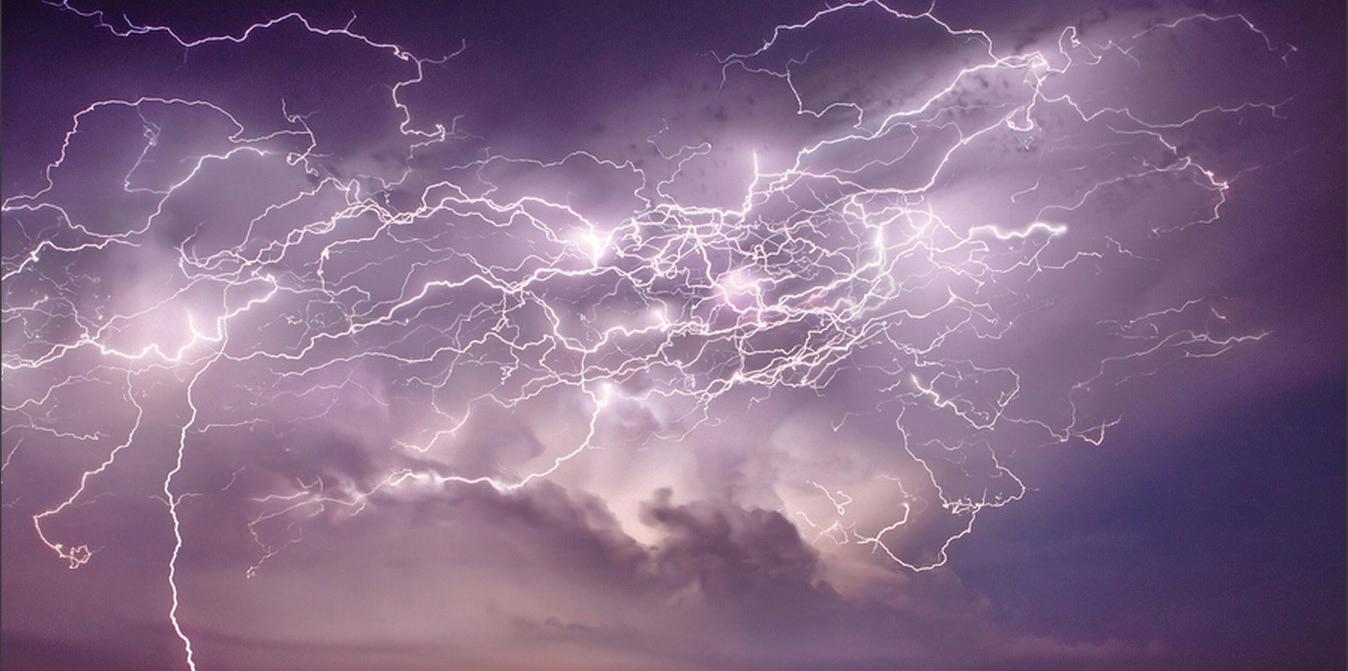
THUNDERSTORMS THE UNDERRATED KILLERS
More people die each year from lightning strikes than from tornadoes and hurricanes.
Start counting when you see a lightning flash. If you hear thunder 5 seconds later, the lightning is a mile away—10 seconds later, it’s 2 miles away.
On average, around 40 million lightning strikes hit the ground each year in the United States. All thunderstorms generate lightning, the country's second-biggest weather killer.
WAYS TO AVOID BECOMING A VICTIM OF LIGHTNING
In the United States, lightning is the second-biggest weather killer, next to floods. Most victims are struck in the open, such as on beaches or golf courses, or when they take shelter from the rain under a tree. But lightning can be dangerous in your home as well.
1 If you are outdoors, you should rush to safety at the first flash of lightning, crack of thunder or even a darkening of the sky.
2. Hazy skies, especially in the east can often hide thunderstorms.
3. All thunderstorms are dangerous. Forecasters can’t tell, even with sophisticated instruments, whether a storm will produce hundreds of lightning flashes or only a few.
4. Never take shelter under a tree.
WWW.NWS.NOAA.GOV/NWR/
AUTOMOBILES OFFER LIGHTNING SHELTER
1 Lightning hits the vehicle.
2 Current flows through metal toward the ground.
3. Lightning jumps from the wheels to the ground and can blow out tires.
LIGHTNING CAN REACH INSIDE AND KILL
1 If lightning hits a house or other building, it can flow through plumbing, electrical, telephone wires or television cables.
2 Lightning has killed people talking on phones.
THUNDERSTORMS
BEFORE THE STORM …
• Know the parish in which you live and the names of nearby cities. Severe weather warnings are issued on a parish by parish basis.
• Check the weather forecast before leaving for extended periods outdoors.
• Watch for signs of approaching storms. If a storm is approaching, keep a NOAA Weather Radio or AM/FM radio with you.
• Postpone outdoor activities if thunderstorms are imminent. This is your best way to avoid being caught in a dangerous situation.
• Check on those who have trouble taking shelter if severe weather threatens.
WHEN THUNDERSTORMS APPROACH …
• Remember: If you can hear thunder, you are close enough to the storm to be struck by lightning. Go to safe shelter immediately.
• Move to a sturdy building or car. Do not take shelter in small sheds, under isolated trees or in convertible auto mobiles.
• If lightning is occurring and a sturdy shelter is not available, get inside a hard-top automobile and keep the windows up.
• Telephone lines and metal pipes can conduct electricity. Unplug appliances not necessary for
obtaining weather information. Avoid using the telephone or any electrical appliances. Use phones ONLY in an emergency.
• Do not take a bath or shower.
• Turn off air conditioners. Power surges from lightning can overload the compressors.
• Get to higher ground if flash flooding or flooding is possible. Once flooding begins, abandon a car and climb to higher ground. Do not attempt to drive to safety. Note: Most flash flood deaths occur in automobiles.
IF CAUGHT OUTDOORS AND NO SHELTER IS NEARBY…
• Find a low spot away from trees, fences and poles. Make sure the place you pick is not subject of flooding.
• If you are in the woods, take shelter under the shorter trees.
• If you feel your skin tingle or your hair stand on end, squat low to the ground on the balls of your feet. Place your hands on your knees with your head between them. Make yourself the smallest target possible and minimize your contact with the ground.
• If you are boating or swimming, get to land and find shelter immediately.
HURRICANE PREPAREDNESS GUIDE
PUBLIC SHELTER INFORMATION
Shelters are operated by trained individuals and ensure that the safety, security, and basic needs of its residents are met. What to bring to a shelter?
• Change of clothing, blanket, and pillow for each family member.
• Your disaster supply kit, including food, medications, comfort items, and special items for infant or elderly family members.
WHAT NOT TO BRING?
• There are no weapons, drugs or alcohol allowed.
INSTRUCTIONS FOR SPECIAL NEEDS PATIENTS
For residents who have medical special needs, or will need transportation during an evacuation of Terrebonne Parish, please contact the Terrebonne Council on Aging at (985) 868-8411
To pre-register for Disaster Food Stamp assistance, please call 1-888-LA-HELP-U (1-888-524-3578)
SEVERE WEATHER TERMS TO KNOW…
A DISASTER SUPPLY KIT IS ONE OF THE MOST IMPORTANT ASSETS THAT YOU AND YOUR FAMILY CAN HAVE PREPARED. AN EXAMPLE OF A FULLY STOCKED DISASTER SUPPLY KIT SHOULD INCLUDE THE FOLLOWING:
(AT MINIMUM, A THREE DAY SUPPLY)
Water, non-perishable food, formula, and diapers for infants, first aid kit, clothing and bedding, tools and emergency supplies, cash or travelers checks, flashlight and extra batteries, non-electric can opener, utility knife; fire extinguisher (ABC-type), shut-off wrench to turn off household gas and water, sanitation supplies, Official DOTD Highway Map, entertainment, important family documents, inventory of valuable household goods and important telephone numbers, and family records (birth, marriage, death certificates).
FOR HELP BUILDING YOUR DISASTER SUPPLY KIT, GO TO WWW.GETAGAMEPLAN.COM
Store your kit in a convenient place known to all family members. Keep a smaller version of the supply kit in the trunk of your car. Change your stored water supply every six months so it stays fresh. Replace your stored food every six months.
Re-think your kit and family needs at least once a year. Replace batteries, update clothes, etc.
Keep these items in a waterproof container that can be easily transported from your home to your car and your safe place. Assemble your kit now to allow for immediate action during an emergency.
BE SURE TO PICK UP OUR EMERGENCY PREPAREDNESS GUIDE FOR MORE DETAILS. AVAILABLE AT LOCAL BUSINESSES IN TERREBONNE PARISH.
Get EMERGENCY NOTIFICATIONS by text and email. Visit tohsep.com/terrebonnealert and click sign up to begin your registration.
Natural disasters most likely to occur in Louisiana, particularly in low-lying areas bordering the Gulf of Mexico, include hurricanes and flooding due to heavy rains. Residents should be familiar with several terms that describe severe weather conditions:
STORM SURGE An abnormal rise of the sea along a shore as the result, primarily, of the winds from a storm.
TROPICAL STORM/HURRICANE WATCH Adverse conditions are possible in the specified areas of the WATCH, usually within 48 hours. May be applied to thunderstorms, tornadoes, floods, or hurricanes.
TROPICAL STORM/HURRICANE WARNING Adverse conditions are expected in the specified area of the WARNING, usually within 36 hours. May be applied to thunderstorms, tornadoes, floods, or hurricanes.
PREPARING YOUR ANIMALS
Making plans for your family is extremely important. Don’t forget to plan for the animals in your life, too!
• The location of your evacuation destination may or may not accept pets, so call ahead and check. Animal shelters will be set up in various parts of the state on an “as-needed” basis. The Louisiana Department of Agriculture & Forestry works year round with the Louisiana State Animal Response Team (LSART) to provide sheltering opportunities. Species-specific disaster preparedness advice is available at www.lsart.org.
• Create a disaster readiness kit for your animal that includes food, water, first aid supplies, feeding supplies and other items that are necessary to keep your animal comfortable for at least 3 - 5 days.
• Remember, animal ownership is a responsibility! Be ready to take care of your whole family.
City of Thibodaux Gas.......................................................................................................985-446-5021
South Coast Gas...............................................................................................................985-537-5281
IF PARISH OR STATE OFFICIALS
TELL YOU TO EVACUATE
• Leave as soon as possible.
• Make a Family Communication Plan. Tell someone outside of the storm area where you are going.
• Take emergency supplies, clothing, and blankets/sleeping bags to shelter.
• Protect your home by unplugging appliances and turning off electricity and water.
• Turn off the main electrical power switch.
• Turn off the main water valve and disconnect the hose.
• Turn propane tanks off.
AFTER A STORM
• Stay tuned to local radio or television for information from your local or state officials.
- X: x.com/TPCGov
- Facebook: facebook.com/tpcg.org
- Instagram: TPCGov
- Website: www.tohsep.com or www.tpcg.org
• Return home only after state or local officials advise that it is safe to do so.
DURING A HURRICANE OR TROPICAL STORM WATCH
OR WARNING
• Listen to radio/television for storm progress reports.
• Check emergency supplies.
• Fuel your car.
• Board up windows and check tie-downs on your travel trailer or mobile home.
• Turn refrigerator and freezer to coldest settings.
• Store drinking water.
• Review evacuation plan
RADIO FREQUENCY SYSTEM
Evacuation Zones
Zone 1
a.) All areas south of the Pointe-aux-Chenes Floodgate
b.) All areas south of the Bayou Terrebonne Floodgate in Lower Montegut
c.) All of Isle de Jean Charles
d.) All areas south of the Bayou Petit Caillou Floodgate including Cocodrie
e.) All areas south of the Morganza to the Gulf levee road ramp on Four Point Road in Lower Dulac
f.) All areas south of the Lower Dularge Floodgate
Zone 2
a.) All of Pointe-aux Chenes
b.) All of Montegut south of Pointe-aux Chenes Road (Hwy 665)
c.) All of Chauvin south of Sarah Road (Hwy 58)
d.) All of Grand Caillou and Dulac south of the Combon Bridge
e.) All of Bayou Dularge south of Marmande Canal
Zone 3
a.) All areas south of the Bourg-Larose Hwy (Hwy 24) and Klondyke Road
b.) All areas south of the Duplantis Bridge in Upper Little Caillou
c.) All areas of Grand Caillou south of Thompson Road and Thompson Road Extension
d.) All areas of Bayou Dularge south of the Dularge Highrise Bridge along Highway 315
Zone
4
a.) All areas of East Houma and Bourg, south of the Intracoastal Waterway
Zone
5
a.) All areas south of four-lane U.S. Highway 90, including all of West Houma, Bayou Black, Gibson, Donner and Chacahoula.
Zone 6
a.) All areas north of four-lane U.S. Highway 90 including Schriever and Gray
LOUISIANA EMERGENCY ALERT SYSTEM
The following radio stations are key participants in the Louisiana Emergency Alert System. In the Event of an emergency, these stations will broadcast emergency information.
ALEXANDRIA
AM 970 (KSYL)
AM 580/FM 96.9 (KZMZ)
FM 93.1 (KQID)
BATON ROUGE
AM 1150 (WJBO)
FM 102.5 (WFMF)
CROWLEY
FM 102.9 (KAJN)
HOUMA
FM 106.3 (KXOR)
FM 96.7 (KCIL)
AM 1490 (ESPN)
LAFAYETTE
FM 99.9 (KTDY)
NOAA WEATHER RADIO (NWR)
LAKE
CHARLES
AM 1470 (KLCL)
FM 99.5 (KHLA)
NEW
ORLEANS
AM 870 (WWL)
FM 101.9 (WLMG)
NORTHEAST
AM 540 / FM 101.9 (KNOE)
RUSTON
AM 1490 (KRUS)
FM 107.5 (KXKZ)
SHREVEPORT
AM 1130 / FM 94.5
NOAA Weather Radio is a nationwide network of radio stations broadcasting continuous weather information direct from a nearby National Weather Service Office. NWR broadcasts National Weather Service warnings, watches, forecasts and other hazardous information 24 hours a day.
TORNADOES
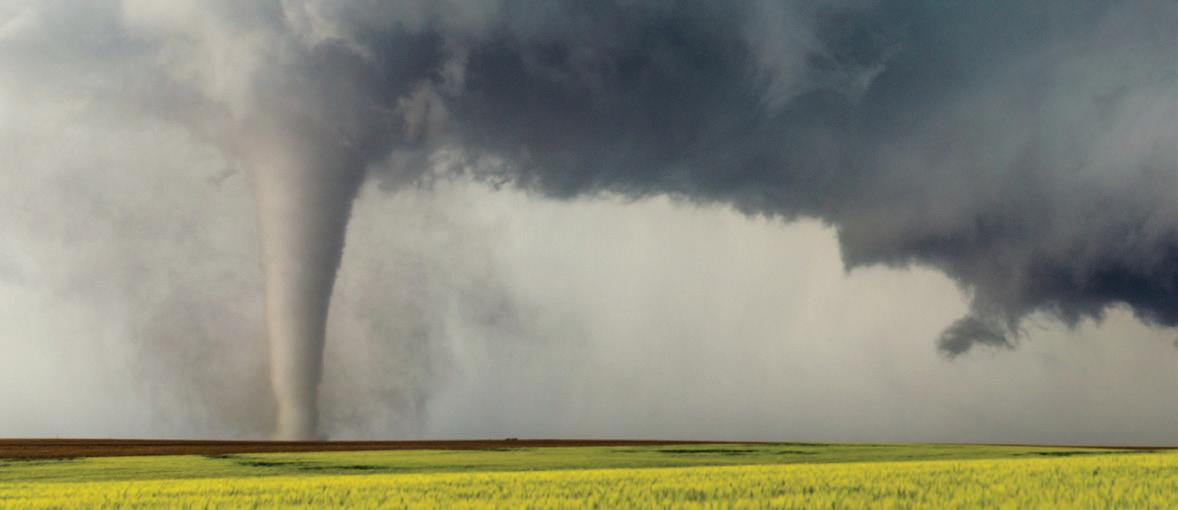
NATURE’S MOST VIOLENT STORMS
TERMS USED TO DESCRIBE TORNADO THREATS:
A tornado watch means tornadoes, severe thunderstorms, or both, are possible. Stay tuned to radio and television reports in your area.
A tornado warning means you should take shelter immediately; a tornado has been sighted.
Tornado: A strong, rotating column of air extending from the base of a cumulonimbus cloud to the ground.
Funnel Cloud: A rotating column of air extending from a cloud, but not reaching the ground.
Severe Thunderstorm: A thunderstorm with winds 58 mph or faster or hailstones three quarters of an inch or larger in diameter.
WHAT TO DO DURING A TORNADO WATCH:
1 Whenever severe thunderstorms are in your area, listen to radio and television newscasts for the latest information and instructions.
2 Watch the horizon. If you see any revolving, funnel-shaped clouds, report them immediately by telephone to your local police department or sheriff’s office, or dial 911. Remember that tornadoes can develop rapidly.
WHAT TO DO BEFORE A TORNADO STRIKES:
1. Know the locations of designated shelter areas in public facilities, such as schools, public buildings and shopping centers.
2 Have emergency supplies on hand.
3 Be sure everyone in your household knows in advance where to go and what to do in case of a tornado warning.
4 If you live in a single-family house in a tornado-prone area, reinforce an interior room to use as a shelter–the basement, storm cellar or a closet on the lower level of your house.
5 Make an inventory of your household furnishings and other possessions. Supplement the written inventory with photographs. Keep inventories and photos in a safe place away from the premises.
WHAT TO DO DURING A TORNADO:
When a tornado has been sighted, stay away from windows, doors and outside walls. Protect your head from falling objects of flying debris. Take cover immediately, wherever you are:
In a house or small building, go to the basement or storm cellar. If there is no basement, go to an interior part of the structure on the lowest level (closets, interior hallways). In either case, get under something sturdy (such as a heavy table) and stay there until the danger has passed.
The most dangerous place to be when a tornado hits is in a mobile home.
SAFETY RULES FOR YOU AND YOUR FAMILY
Tornadoes are nature’s most violent–and erratic–storms. A tornado can travel for miles along the ground, lift and suddenly change direction and strike again. There is little you can do to protect your home or workplace from the strength of tornado winds, but there are actions you can take to better protect yourself and your family.
One basic rule to follow wherever you are is AVOID WINDOWS. An exploding window can injure or kill. Don’t take the time to open windows; get to shelter immediately. Open windows are not needed to keep unequal air pressure from making the house explode as once thought. Tornado winds, not unequal pressure, destroy buildings.
1 Air pressure inside can be 10 percent lower than outside …
2 … but houses have openings other than windows that will relieve pressure differences.
3 Winds as low as 60 mph can lift roofs that aren’t well attached.
4. Flying debris often breaks windows, allowing wind inside to push up on the roof and out on the walls.
5. If wind rips off the roof, the walls often fall outward, leading to the mistaken impression that air pressure had “exploded” the building.
TORNADOES
AT HOME
The safest place in the home is the interior, preferably under something sturdy like the table. Stay out from under heavy objects like pianos or refrigerators located on the floor above. If you have no basement, or cannot get there, go to an interior room on the lowest floor of the house, like a closet, hallway or bathroom with no windows. For added protection, get under something like a workbench or heavy table. If possible, cover your body with a blanket or sleeping bag and protect your head with anything available, even your hands.
MOBILE HOMES
Do not stay in a mobile home during a tornado. Even homes with a secure tie-down system cannot withstand the force of tornado winds. Plan ahead. Make arrangements to stay with friends or neighbors who have basements. Go there if a tornado watch is issued. If a tornado warning is given, leave your mobile home and seek shelter nearby. Lie flat in a ditch or ravine and put your arms over your head. Don’t take shelter under your home. Encourage your mobile home community to build a tornado shelter if you live in a tornado-prone area.
LONG-SPAN BUILDINGS
Long-span buildings are especially dangerous because the entire roof structure is usually supported solely by the outside walls. Inside walls are usually false or nonload bearing walls. If you are caught in an open building like a shopping mall, civic center, indoor pool, theater or gymnasium during a tornado, stay away from windows. Get into the restroom, if possible. In larger buildings, the restrooms are usually made from concrete blocks. Besides having the four walls and plumbing holding things together, the metal partitions help to support any falling debris. If there is not enough time to go anywhere, seek shelter right where you are. Try to get up against something that will support you or deflect falling debris; for instance, in a department store, get up against heavy shelving or counters. In a theater, get under the seats. Remember to protect your head.
FUJITA SCALE LEVEL OF DAMAGE
F-0 (65-85 MPH) LIGHT
F-1 (86-110 MPH) MODERATE
F-2 (111-135 MPH) CONSIDERABLE
F-3 (136-165 MPH) SEVERE
F-4 (166-200 MPH) DEVASTATING
F-5 (200 MPH+) INCREDIBLE
ON THE ROAD
The least-desirable place to be during a tornado is in a motor vehicle. Cars, buses and trucks are tossed easily by tornado winds. Do not try to outrun a tornado in your car. If you see a tornado, stop your vehicle and get out. Seek shelter away from the car in a nearby ditch or ravine; do not get under your vehicle. Lie flat and put your arms over your head.
IN THE OPEN
If you are caught outside during a tornado and there is no underground shelter immediately available, lie in a gully, ditch or low spot in the ground.
SCHOOLS, HOSPITALS, NURSING HOMES AND OFFICE BUILDINGS
Extra precautions are needed in these structures. Not only is there a large concentration of people in a small area, but these buildings usually have large amounts of glass on the outside walls. Get into the innermost portions on the lowest floor possible. Avoid windows and glass doorways. Do not use elevators; the power may go off and you could become trapped. Protect your head and make yourself as small a target as possible by crouching down.
TORNADO terminology
TORNADO WATCH:
Weather conditions could lead to the formation of severe storms and tornadoes. BE PREPARED: Know your safe location. Be ready to act quickly if a Warning is issued or you suspect a tornado is approaching.
TORNADO WATCH:
A tornado has been spotted or indicated by weather radar, meaning a tornado is occurring or expected soon. TAKE ACTION: There is imminent danger to the life and property. Immediately seek refuge in the safest location possible.
TORNADO EMERGENCY:
An exceedingly rare situation with a severe threat to human life and catastrophic damage due to a confirmed violent tornado. TAKE ACTION: There is imminent danger to life and property. Immediately seek refuge in the safest location possible.
TORNADOES
MYTH:
Windows should always be opened to equalize pressure.
FACT:
Opening windows to equalize pressure during a tornado is ineffective in reducing damage. Don’t worry about the windows; worry about protecting yourself. Also, flying glass is a real hazard.
MYTH:
Mobile homes are safe if they are tied down.
FACT:
A mobile home is never safe in a violent windstorm like a tornado. If you’re in a mobile home when a tornado watch is announced, leave and go immediately to a safe structure, or be prepared to take cover in a low area, covering your head and the back of your neck. Remember: If you are in a ditch or ravine, be alert for flash floods that often accompany tornadoes.
You can outrun a tornado in a car.
FACT:
Don’t bet your life on it. A tornado is unpredictable; you can’t know which way it’s going to go, or how fast. If you’re in a car and a tornado is near, get away from the car and lie in a ditch or low area, protecting your head with your hands.
MYTH: MYTH:
The best place to be during a tornado is in the southwest corner of a building.
FACT:
The southwest corner is no safer than any other part of the building. The safest place is to be in a basement under something sturdy like a workbench. If there is no basement, seek shelter in a small interior room in the middle of the building, such as a closet or a bathroom. Always stay away from outside walls and windows.
TSUNAMIS
Tsunamis are among Earth's most infrequent hazards. But even though tsunamis do not occur very often, and most are small and nondestructive, they pose a major threat to coastal communities, particularly in the Pacific. A tsunami can strike any ocean coast at any time. There is no season for tsunamis. We cannot predict where, when or how destructive the next tsunami will be. However, while tsunamis cannot be prevented, there are things you can do before, during and after a tsunami that could save your life and the lives of your family and friends. Read these pages to learn about tsunamis and what you can do to keep yourself and your loved ones safe in the event of a tsunami.
Even though tsunamis happen infrequently, it is still important to prepare for one if you live, work or play on the coast. Many of the things you need to do to prepare for a tsunami are the same as those you need to do to prepare for the other hazards that may impact your community. But some actions are unique to tsunamis since response time may be limited. It is not hard, and it is not expensive. Here are some things you can do now to help protect yourself and your loved ones in case a tsunami ever strikes your community.
KNOW YOUR RISK
• Find out if your home, school, workplace or other frequently visited places are in tsunami hazard or evacuation zones and if your community has had tsunamis in the past. Your local emergency management office, your state's geologic or tsunami hazard website and
your local National Weather Service Weather Forecast Office are good resources for information about your risk.
• Find out if your community is Tsunami Ready. Communities recognized by the National Weather Service as Tsunami Ready are better prepared for tsunamis.
UNDERSTAND THE WARNINGS
There are two ways that you may be warned that a tsunami is coming: an official tsunami warning and a natural tsunami warning. Both are equally important. You may not get both. Be prepared to respond immediately to whatever you hear or see first.
• An official tsunami warning will be broadcast through local radio and television, wireless emergency alerts, NOAA Weather Radio and NOAA websites (like Tsunami. gov). It may also come through outdoor sirens, local officials, text message alerts and telephone notifications.
• There may not always be time to wait for an official tsunami warning. A natural tsunami warning may be your first, best
or only warning that a tsunami is on its way. Natural tsunami warnings include strong or long earthquakes, a loud roar (like a train or an airplane) from the ocean, and unusual ocean behavior. The ocean could look like a fast-rising flood or a wall of water. Or, it could drain away suddenly, showing the ocean floor, reefs and fish like a very low tide. If you experience any of these warnings, even just one, a tsunami could be coming.
PRACTICE ALL-HAZARDS PREPAREDNESS
• Get a battery-operated NOAA Weather Radio to receive official alerts and other hazard information 24 hours a day, 7 days a week.
• Sign up for email and text message alerts from your local emergency management office and make sure your mobile devices are set to receive wireless emergency alerts.
• Make an emergency plan and a family communication plan and put together a portable disaster supplies kit that is
easily accessible and contains basic items you and your family may need in any emergency. Include your pets in all your preparedness efforts. Since you do not know where you will be when disaster strikes, prepare kits for work and your car, too.
• Meet with your family to discuss the plan and why you need to prepare for a disaster.
• Practice your plan and keep it up-to-date.
• Be a role model. Share your knowledge and plans with friends and neighbors so they can prepare themselves and their loved ones.
PLAN FOR EVACUATION
If your home, school, workplace or other frequently visited places are in tsunami hazard or evacuation zones, your emergency plan should include evacuation plans.
• Find out from your local emergency management office if there are evacuation routes and assembly areas identified for your community and if a map is available.
• If assembly areas are not identified, plan to evacuate to a safe place that is on high ground or inland (away from the coast) and outside the tsunami hazard or evacuation zone. You may need to identify more than one safe place, depending on where you may be when you get a tsunami warning (e.g., home, work, etc.). You should plan to be able to reach your safe place on foot if you can because of possible road damage, closed roads and traffic jams. If you are concerned that you will not be able to reach a safe place in time, ask your local emergency management office about vertical evacuation. Some strong (e.g., reinforced concrete) and tall buildings may be able to provide protection if no other options are available.
• Map out evacuation routes to your safe place(s) from your home, workplace or any other place you visit often that is in a tsunami hazard or evacuation zone.
• Practice walking your evacuation routes, including at night and in bad weather. Familiarity with the routes will make evacuation quicker and easier if you ever need to evacuate for real.
• If you have children that go to school in a tsunami hazard or evacuation zone, find out about the school's plans for evacuating and keeping the children safe. Find out where the assembly area is
and where you should pick up your children after the danger has passed.
• If you are visiting an area at risk for a tsunami, find out about local tsunami safety. Your hotel or campground may be able to provide you with tsunami warning and evacuation information. It is important to know this information before a warning is issued. You may not have a lot of time after a warning. You do not want to waste it figuring out what to do.
PLAN FOR SAFE BOATING
If you are on a boat and you get a tsunami warning, your response will depend on the size of the tsunami, the currents it produces, where you are, how much time you have before the first wave arrives and the weather at sea. If you are a boat owner or captain:
• Make sure you have a way to receive tsunami warnings when you are on the water. The U.S. Coast Guard will issue urgent marine information broadcasts on your marine VHF radio's channel 16. Additional information will be available from NOAA Weather Radio.
• Find out how to respond to a tsunami warning and what to do if you are at sea when a damaging tsunami strikes your coast. Your harbor master, port captain, the U.S. Coast Guard and local and state emergency management offices are the best sources for tsunami safety information and regulations for boaters in your area.
• Make a plan and put together a disaster supplies kit to keep on board your boat. Be aware that shore facilities may be damaged, so if you are at sea during a tsunami, you may not be able to return to the harbor you left. Be prepared to remain at sea for a day or more.
During a tsunami, dangerous coastal flooding and powerful currents are possible and may continue for several hours or days after initial arrival. The first wave may not be the last or the largest.
RESPOND TO A TSUNAMI WARNING
How you respond to a tsunami warning depends on where you are and how you receive the warning. As described in Understand the Warnings, there are two types of tsunami warnings, official and natural. Both are equally important and suggest the potential for a tsunami that may cause widespread flooding. You may not get both types of warnings. Be prepared to respond to whatever you hear or see first. For your safety and others, always follow instructions from local officials. If you are outside of the tsunami hazard or evacuation zone and you receive an official or natural tsunami warning, a tsunami is possible or likely, but you are in a safe place. Stay where you are unless local officials tell you otherwise
OFFICIAL TSUNAMI WARNING
If you are anywhere in a tsunami hazard or evacuation zone or a low-lying coastal area and you receive an official tsunami warning, a tsunami is likely. The warning will estimate the tsunami's arrival time, describe potential impacts and recommend actions to take.
• Stay out of the water and away from beaches and waterways.
• Get more information about the threat and what to do from NOAA Weather Radio, local radio or television or your mobile device (text or data). Limit nonemergency phone calls to keep the lines open for emergency communications.
• If local officials ask you to evacuate, implement your emergency plan and move quickly to your safe place outside the hazard or evacuation zone unless officials tell you to go somewhere else. If you do not have a safe place or cannot reach it, follow evacuation signs to safety or go as high or as far inland (away from the water) as possible.
NATURAL TSUNAMI WARNING
If you are in a tsunami hazard or evacuation zone or a low-lying coastal area and you feel a strong or long earthquake, the ocean acts strange (e.g., it looks like a fastrising flood or a wall of water or it drains away suddenly, showing the ocean floor like a very low tide) OR there is a loud roar coming from the ocean, a tsunami is possible and could arrive within minutes.
• In case of an earthquake, protect yourself. Drop, cover and hold on. Be prepared for aftershocks, which happen frequently after earthquakes. Each time the earth shakes, drop, cover and hold on.
• Do not wait for an official tsunami warning or for instructions from local officials.
• As soon as you can move safely, implement your emergency plan and move quickly to your safe place outside the hazard or evacuation zone. If you do not have a safe place or cannot reach it, follow evacuation signs to safety or go as high or as far inland (away from the water) as possible.
• When you are in a safe place, get more information about the threat and what to do from NOAA Weather Radio, local radio or television or your mobile device (text or data). Limit nonemergency phone calls to keep the lines open for emergency communications.
• If there is earthquake damage, avoid fallen power lines and stay away from buildings, bridges and piers because heavy objects may fall from them during an aftershock.
• Follow instructions from local
officials. It is their job to keep you safe.
• Stay out of the tsunami hazard or evacuation zone until local officials tell you it is safe. The first wave may not be the last or the largest and the danger may last for hours or days.
Note: If you are on the beach or near the water and feel an earthquake— no matter how big or how long it lasts—move quickly off the beach to high ground or inland (away from the water) as soon as you can do so safely. Get more information from the sources noted above.
STAY SAFE
• If there is earthquake damage, avoid fallen power lines and stay away from buildings, bridges and piers because heavy objects may fall from them during an aftershock.
• Follow instructions from local officials. It is their job to keep you safe.
• Stay out of the tsunami hazard or evacuation zone until local officials tell you it is safe. The first wave may not be the last or the largest and the danger may last for hours or days.
STAY INFORMED
Keep listening to NOAA Weather Radio or local radio or television or using your mobile device (text or data) to get the latest updates. Limit nonemergency phone calls to keep the lines open for emergency communications.
OBSERVE OTHER TSUNAMI ALERTS
DURING A TSUNAMI ADVISORY:
• Stay out of the water and away from beaches and waterways. A tsunami with potential for strong currents or waves dangerous to people in or very near the water is expected or occurring.
• Get updates about the tsunami from NOAA Weather Radio, local radio or television or your mobile device.
• Follow instructions from local officials.
DURING A TSUNAMI WATCH:
• Get updates about the potential threat from NOAA Weather Radio, local radio or television or your mobile device.
• Follow instructions from local officials.
• Prepare to take action if necessary. After a tsunami, local officials will assess the damage and tell you when it is safe to return. Even though the danger of the tsunami has passed, other dangers may remain. If there is a lot of damage, it may be days before it is safe to return (or before you are allowed to return) to impacted areas.
STAY SAFE
• Stay out of the tsunami hazard or evacuation zone until local officials tell you it is safe. The cancellation of a tsunami warning does not mean the danger has passed.
• Follow instructions from local officials. It is their job to keep you safe.
• Stay away from areas that have been damaged for your own safety and so emergency responders can have full access.
• Stay out of any building that has earthquake or tsunami damage or has water around it until a professional or local official tells you it is safe to enter.
• Avoid fallen power lines or broken utility lines and report those that you see.
More safety information about returning home after a disaster is available from the Federal Emergency Management Agency.
STAY INFORMED
Keep listening to NOAA Weather Radio or local radio or television or using your mobile device (text or data) to get the latest updates about when it is safe to return, areas to avoid, the location of shelters (if available) and important safety instructions. Limit nonemergency phone calls to keep the lines open for emergency communications.
CONTACT YOUR CLOSE FRIENDS AND LOVED ONES
Let your close friends and loved ones know that you are okay. The American Red Cross' Safe and Well website can help you do this. You can also use the website to find out if others have registered themselves as safe and well.
WHEN PREPARING FOR A HURRICANE,
MAKE SAFETY YOUR FIRST PRIORITY
UTILITY COMPANIES HAVE HURRICANE PLANS IN PLACE.
ELECTRIC SAFETY TIPS
Utility company tips and guidelines will help you remain safe and steer clear of danger.
AS THE STORM APPROACHES:
• Turn your refrigerator and freezer to their coldest settings. This will keep your food fresh longer if you lose power during the storm.
• Unplug other appliances and electronic equipment.
• If it looks as though water may enter your home, it’s a good idea to open the main breaker in your electrical breaker box in order to cut off power.
• If you own a swimming pool, turn off all pumps and filters. If not, water from the approaching storm could damage them.
AFTER THE STORM:
• Please use common sense—electricity and water do not mix.
• Never attempt to plug in or use an electrical appliance or device while in standing water or on a damp surface.
• If water was in your home, for safety reasons, you should have your electrical wiring inspected by a qualified electrician as quickly as possible.
• Electric motors that get wet should be thoroughly checked by an electrician or certified repairman before being reconnected to a power source.
• Keep freezer and refrigerator doors closed while you are without power. Food should stay good in a full freezer for about two days and for about six hours in your refrigerator.
• Once power is restored, check frozen food immediately. If the food is still firm in the center and contains ice crystals, it can be safely refrozen. If it has thawed, but is still cold to the touch, you should cook it before refreezing it. Foods that have reached room temperature should be discarded.
• Once you have reported your outage, there is no reason to report it again unless your neighbors’ power comes back on and yours does not.
• Please be patient. Utility crews will be working as quickly as possible to restore power to all customers.
UTILITY SAFETY SAFETY FIRST
WHEN THE STORM IS OVER, THE DANGER IS NOT
The winds may have subsided, but energized lines can still be hazards. Please:
• Report downed lines or poles.
• Use caution in removing debris. Tree limbs and damp wood can conduct electricity.
• Watch children closely to make sure they stay away from all electrical devices and wall outlets when water is present.
• If lines are dangling or have fallen–stay away from them. A downed power line can be energized and deadly. Call your utility company immediately.
GAS SAFETY
Only turn off your gas service if you feel comfortable doing so and can do it safely.
• If you have a severed line or blowing gas, crews will respond as quickly as possible.
• If you have lost gas service and your home has not been flooded, call the gas company that supplies your gas.
IF THE ODOR IS STRONG:
• Do not light matches.
• Do not turn lights on or off.
• Do not use the telephone.
• If possible, notify everyone in the building to leave immediately.
• Do not reenter your home until it’s safe to do so.
AFTER THE STORM:
• If your gas appliances have been under water, you should call a licensed gas fitter/ plumber to inspect and repair them.
• If high water has extinguished the gas pilot, the gas supply should be cut off as quickly as possible.
• To relight, call a licensed plumber or your utility company.
POWER IS RESTORED FROM THE SOURCE OUT
Following a storm, restoration efforts proceed in an orderly manner, beginning at the source and working outward.
1. Large transmission lines are restored first, followed by substations. These two facilities must be in working order to deliver power to local areas.
2 Next, emergency services, life support facilities and communications networks are restored.
3 Then, the restoration of feeder lines that serve larger numbers of customers is completed, followed by lines serving neighborhoods.
4. Individual services, often the most time-consuming repairs, are restored last.
GENERATOR SAFETY
Never use a generator indoors–carbon monoxide from the exhaust is deadly.
• Do not plug the generator into a wall outlet.
• Use a licensed electrician to hook up standby electrical systems.
• Main breakers should be opened to avoid feeding power back into utility lines and creating a hazard for the public and power line.
You should NEVER connect a generator directly to your house without a transfer switch. A transfer switch will prevent the back-feed of electricity back to the main utility lines.
UTILITY SAFETY
GENERATOR SAFETY
To prevent overloading your generator, add up the total wattage of all loads to be connected to the unit at one time. This total should not be greater than that unit’s rated wattage capacity. Allow 2.5 times the listed wattage for starting the indicated equipment.
GENERATOR SAFETY TIPS
CARBON MONOXIDE KILLS!
Portable generators produce carbon monoxide, a colorless, odorless, and tasteless gas.
DO NOT USE YOUR GENERATOR:
• Inside an enclosed structure like a garage.
• Within 20 feet of your home.
COOL BEFORE REFUEL!
Turn off the generator and wait 15 minutes before refueling to reduce risk of accidental fire.
STAY ALERT!
Place at least one battery-operated carbon monoxide detector on each level of your home near bedrooms. Call 911 if the alarm goes off.
PROTECT YOUR HOUSEHOLD.
If you or someone else experiences headaches, dizziness, or confusion, immediately vacate your home and go to your nearest healthcare provider.
GENERATOR SAFETY
SET UP YOUR GENERATOR THE RIGHT WAY
Where and how you place your generator can make the difference between safety and serious danger.
PLACEMENT MATTERS
• Keep generator at least 20 feet from your home
• Position exhaust away from doors, windows and vents
• Place on a dry, level surface
• Keep area clear of debris and obstructions
KEEP IT DRY
• Never operate in rain or wet conditions
• Use a canopy or cover designed for generators
• Do not place directly in puddles or wet grass
USE THE RIGHT EQUIPMENT
• Use heavy-duty, outdoor-rated extension cords
• Check cords for damage before use
• Plug appliances directly into the generator
ELECTRICAL SAFETY WARNING
• Never plug a generator into a wall outlet
• This can cause backfeeding, which:
• Can electrocute utility workers
• Can damage your home’s wiring
• Use a transfer switch installed by a professional
STARTING & SHUTTING DOWN
• Start generator before connecting devices
• Add appliances one at a time
• Turn off and cool down before shutting off
FUEL SAFETY
• Store fuel in approved containers only
• Keep fuel away from living areas
• Never refuel while generator is running or hot
CHECKLIST VISUAL
20 feet away
Outdoors only
Dry surface
Proper cords No backfeeding
CO detectors installed
Have a plan for what you’ll power ahead of time. Don’t figure it out during an outage.
UTILITY SAFETY
CARBON MONOXIDE SAFETY
CARBON MONOXIDE: THE INVISIBLE DANGER
Carbon monoxide (CO) is a colorless, odorless gas that can build up quickly and become deadly in minutes. You cannot see or smell it—only proper precautions can keep you safe.
WHY IT’S SO DANGEROUS
• CO poisoning can happen slowly over time or very quickly
• Exposure can lead to unconsciousness or death in minutes
• Opening windows or doors does NOT prevent buildup
COMMON SOURCES DURING POWER OUTAGES
• Portable generators
• Gas stoves or ovens
• Charcoal grills
• Camp stoves
• Vehicles left running
WARNING SIGNS OF CO POISONING
• Headache
• Dizziness
• Nausea
• Confusion
• Weakness or fatigue
If multiple people feel sick at the same time, get out immediately.
WHAT TO DO IF YOU SUSPECT CO
• Get to fresh air immediately
• Move outside or near an open door/window
• Call 911 from a safe location
• Do not re-enter the home
PROTECT YOUR HOME
• Install CO detectors on every level of your home
• Place detectors near bedrooms
• Test alarms regularly
• Replace batteries as needed
You can’t smell carbon monoxide. If you feel symptoms, get out fast.
NEVER operate a gas or diesel generator in a garage, even with the garage door open, a carport, inside your house, a shed , or any structure attached to your house.
UTILITY SAFETY
UTILITY ELECTRIC CUSTOMERS
Wind, rain and flood damage to homes and businesses from a major hurricane could prohibit customers from receiving power from their utility company despite their success in restoring the electric distribution system.
ELECTRIC CUSTOMERS WITH PROPERTY DAMAGE
- YOU MAY NEED A LICENSED ELECTRICIAN
If your property has any water damage, please turn off the electricity at either the main fuse box or circuit breaker. Call a licensed electrician for advice when necessary. Do not step in water to get to the fuse box or circuit breaker.
A licensed electrician may need to inspect your property’s electric wiring before the utility company can restore power to a home or business that has water damage from rain or floodwaters.
PLEASE DO THE FOLLOWING:
1. Have repairs made by a licensed electrician.
2. Have repairs certified by a city or parish inspector.
3. Call your utility company when repairs have been certified by a city or parish inspector.
ELECTRIC CUSTOMERS WITHOUT PROPERTY DAMAGE
Property owners without hurricane damage should still be cautious. Look for electrical system damage once power is restored. If you see sparks, broken or frayed wires, or the smell of hot insulation is noticeable, turn off the electricity at either the main fuse box or circuit breaker. Call a licensed electrician for advice when necessary. Do not step in water to get to the fuse box or circuit breaker.
IF YOUR NATURAL GAS IS TURNED OFF, FOR SAFETY’S SAKE, LEAVE IT OFF.
If you have pipe damage, you will need a licensed plumber.
To help ensure your personal safety and the safety of your property, your natural gas service may have been turned off. Please do not attempt to turn it on yourself. This could cause a safety hazard for you and your property.
If your home was flooded or sustained structural damage, you should contact a licensed plumber to inspect gas piping and make repairs.
PLEASE DO THE FOLLOWING:
A utility company will arrange to have gas service turned
certified plumber and inspector confirm that gas service
SAFETY REMINDER
If you smell gas at your home or in any other building, you should leave the area immediately and go to a safe area.
HEAT WAVE SAFETY TIPS
SLOW DOWN. Strenuous activities should be reduced, eliminated or rescheduled to the coolest time of the day; individuals at risk should stay in the coolest available place, not necessarily indoors.
DRESS FOR SUMMER. Lightweight, light-colored clothing reflects heat and sunlight and helps your body maintain normal temperatures.
PUT LESS FUEL ON YOUR INNER FIRES. Foods (like proteins) that increase metabolic heat production also increase water loss.
DRINK PLENTY OF WATER OR OTHER NON-ALCOHOLIC FLUIDS. Your body needs water to keep cool. Drink plenty of fluids even if you don’t feel thirsty. Persons who (1) have epilepsy or heart, kidney or liver disease, (2) are on fluid-restrictive diets or (3) have a problem with fluid retention should consult a physician before increasing their consumption of fluids.
DO NOT DRINK ALCOHOLIC BEVERAGES.
DO NOT TAKE SALT TABLETS UNLESS SPECIFIED BY A PHYSICIAN. Persons on salt-restrictive diets should consult a physician before increasing their salt intake.
SPEND MORE TIME IN AIR-CONDITIONED PLACES. Airconditioning in homes and other buildings markedly reduces danger from the heat. If you cannot afford an air conditioner, spending some time each day (during hot weather) in an air-conditioned environment affords some protection.
DON’T GET TOO MUCH SUN. Sunburn makes the job of heat dissipation more difficult.
HEAT DISORDERS:
SYMPTOMS AND FIRST AID
SUNBURN
• Redness and pain.
• In severe cases, swelling of skin and/or blisters.
• Fever and/or headaches.
FIRST AID:
• Ointments for mild cases if blisters appear and do not break.
• If breaking occurs, apply dry sterile dressing.
• Serious, extensive cases should be seen by a physician.
HEAT CRAMPS
• Painful spasms usually in muscles of legs and abdomen are possible.
• Heavy sweating.
FIRST AID:
• Firm pressure on cramping muscles or gentle massage to relieve spasm.
• Give sips of water.
• If nausea occurs, stop.
HEAT EXHAUSTION
• Heavy sweating, weakness, skin cold, pale and clammy.
• Pulse thready.
• Normal temperature possible.
• Fainting and vomiting.
FIRST AID:
• Get victim out of sun.
• Lie down and loosen clothing.
• Apply cool, wet cloths.
• Fan or move victim to air-conditioned room.
• Sips of water.
• If nausea occurs, stop.
• If vomiting continues, seek immediate medical attention.
HEAT STROKE (OR SUNSTROKE)
• High body temperature (106 F or higher).
• Hot, dry skin.
• Rapid, strong pulse.
• Possible unconsciousness.
FIRST AID:
• HEAT STROKE IS A SEVERE MEDICAL EMERGENCY.
• SUMMON EMERGENCY MEDICAL ASSISTANCE OR GET THE VICTIM TO THE HOSPITAL IMMEDIATELY.
• DELAY CAN BE FATAL.
• Move the victim to a cooler environment.
• Reduce the body temperature with cold bath, or sponging.
• Use extreme caution.
• Remove clothing, use fans and air conditioners.
• If temperature rises again, repeat process.
• Do not give fluids.
EXPECT FIRE FIRE
By taking the attitude that “It can happen here,” you and your family will be more prepared to face a fire when it occurs. It may be difficult to overcome the natural reluctance to consider that a fire could happen to you.
KNOW YOUR ENEMY
Any soldier will tell you that your best defense is to understand your enemy. In your war against fire, this understanding begins with the knowledge of these three things:
• How fires start in the home.
• How fires and the dangerous products of combustion spread through the house.
• The speed with which this happens. Fire safety rules are of special importance in an emergency, but also should be observed every day to prevent disaster. More fire deaths occur in the home. There is one-low cost, easily obtainable device that has proven itself in saving lives-a smoke detector. Deaths from fires in the home have been substantially reduced when present.
A smoke detector should be placed as close as possible to the bedrooms. It is also a good idea to install a smoke detector on each level near stairways to the rest of the house. Smoke detectors should be checked and maintained regularly. Each member of your family should know what to do if the smoke detector goes off. A little time spent selecting escape routes and practicing what to do may save lives if a fire occurs in your home. Agree on a place to meet outside so you can be sure everyone gets out of the house safely. Common sense fire prevention rules are of special importance in an emergency.
YOUR HOME SAFETY PROGRAM
• Expect a fire.
• Know your enemy.
• Minimize fire hazards.
• Sleep with the bedroom door closed.
• Develop and practice an emergency escape plan.
• Install an early fire/smoke detection system.
MAKE YOUR HOME SAFER BEFORE FIRE STARTS
• Clean out attics, basements, closets and garages frequently. Don’t let the trash and “junk” accumulate.
• Extension cords should not be overloaded. Check cords often for fraying and avoid running them under rugs. An extension cord used to connect an appliance should always be the proper size and
capacity for the appliance.
• Check your home’s heating sources. Many home fires are started by faulty furnaces and stoves, cracked or rusted furnace parts, and chimneys with creosote buildup. Be sure whatever heating source you use is clean and in good working order.
• Store flammable liquids in approved containers, outside the home if possible. Never use gasoline, benzene, naphtha and similar liquids indoors–their fumes will readily ignite from any kind of spark. Rags soaked with cleaning fluids or turpentine sometimes catch fire by themselves (this is called spontaneous combustion) and they should be safely discarded after use. Also, never smoke while handling flammable liquids.
• When stoves or heaters have an open flame, keep the unit away from walls, furniture, draperies and other flammable items. Place a screen in front of the flame.
• Energy shortages and high costs have made alternative heating sources, such as wood, coal and kerosene-burning stoves, very popular. There are some basic safety tips to remember when using any type of room or area heating device. Be sure there is proper ventilation to the outside. Also, make sure there is adequate space around the heater and that the floor and nearby walls are properly insulated. Use only the fuel designated for your unit-don’t substitute. Properly store ashes in a metal container outside and away from the building.
• Have an escape plan, which gives everyone two ways out of the house-a normal exit and an alternate one.
• Close the doors to all bedrooms when you go to bed at night. This can keep fire out long enough to allow escape through windows.
• Agree on a way that everyone can sound the alarm–shout, blow a whistle, pound on the wall, etc.
• Holding a family fire drill is a must. Try your escape plan with the entire family–try it again and again until it works well. Practice it frequently.
• Don’t smoke when you are lying down or when your judgment is impaired by fatigue, medicine or alcohol. Don’t leave young children alone.
• Get an approved home fire detection and alarm system. It will stand watch while you sleep, the time when most fatal residential fires occur.
• Inspect appliances, stoves and heaters for wear and unsafe or erratic operation. If you find any defects, shut the unit off.
PREVENTING HOME FIRES...
SMOKE DETECTORS
• Install at least one smoke detector outside every bedroom and on every level of your home.
• Check the batteries monthly and replace them at least once a year.
PORTABLE HEATERS
• Keep blankets, clothing, curtains, furniture and any thing that could get hot and catch fire away from portable heaters.
• Plug heaters directly into the wall socket and unplug them when they are not in use.
SAFE COOKING PRACTICES
• Keep items away from the stove that could catch fire, such as towels, clothing and curtains.
• Keep a fire extinguisher in the kitchen and get training from the fire department on how to properly use it.
ELECTRICITY
• Use safety plugs in electrical outlets, especially if you have small children.
• Avoid overloading electrical outlets and running cords under carpet and furniture.
GENERAL SAFETY HABITS
• Never smoke in bed.
• Keep matches and lighters away from children.
FIRE ESCAPE DRILLS
• Plan and practice fire escape routes and make sure everyone knows two ways out of every room.
• Have a plan to escape if bars cover windows.
• Use a chain ladder to escape from upper levels and practice escaping with it.
• Teach children that firefighters are their friends and they will help in case of a fire.
• Identify a place outside to meet in case of a fire.
• Know how to call for emergency assistance.
IN CASE OF FIRE...
USING YOUR ESCAPE PLAN
• Crawl low, under the smoke.
• Feel closed doors with the back of your hand. If hot, use another exit.
• If not hot, open the door slowly and check for smoke and fire.
• Meet at the designated meeting place outside, then call for help.
• Never return to a burning building.
11 VITAL STEPS WHEN FIRE STRIKES YOU MUST PLAN 2 EXITS FROM EVERY BEDROOM
1. Alert others by shouting “Fire.”
2. Walk in a crouched position.
3. Escape through nearest exit.
4. Don’t waste time dressing.
5. Don’t try to gather valuables.
6. Never open a hot door.
7. If possible, place a wet cloth over nose and mouth.
8. Close all doors behind you.
9. Meet at a pre-established location outside your home.
10. Call fire department from a neighbor’s phone.
11 Never go back into a burning house.
ALMOST EVERY HOME IS A FIRE TRAP
Most homes have only one route of escape–the one hallway or stairway to the front door. If this passage is blocked by flame or smoke, you are in a trap. Don’t let your past luck of not having had a fire make you overconfident.
HEAT RISES!
1,000-degree temperatures can travel far ahead of the actual flames. Your normal escape path can become a DEATH TRAP when you open your bedroom door to escape. Your hallway or stairway can become filled with long-scorching heat, poisonous fumes and blinding, choking smoke. “In a fire, HEAT hits you like a slap in the face, SMOKE blinds your eyes, and HEATED GASES choke your breath away. No wonder people PANIC-do senseless, fatal things!”
WHERE DO MOST HOME FIRES START?
… IN THIS ORDER:
a. Living Room 37%
b. Kitchen 22%
c. Basement 14%
d. Bedrooms 13%
e. Others 14%
Most fires start where they are likely to block your usual hall-stairway escape (from bedrooms).
AFTER A FIRE STARTS:
• Rouse all occupants immediately.
• Get out of the building immediately, using your escape plan.
• Get the entire family together and keep them together—don’t let anyone back in the building, even to attempt a rescue.
• Call the fire department. If you call by telephone, stay on the line until you’re sure the dispatcher has the location of your house. If you use a fire alarm box, stay at the box so you can show the fire department where the fire is when they arrive.
CHOKING First aid
OBSTRUCTED
AIRWAY TECHNIQUES FOR ADULTS (AGES 9 AND OVER)
The Emergency Preparedness Department encourages you to take a first aid class to learn the proper techniques for assisting choking victims. Contact your local hospital for course offerings. These first aid instructions are intended only as a refresher to a course you have already taken.
CONSCIOUS VICTIM STANDING
1. RECOGNIZE CHOKING SIGNS
Choking victims will have severe difficulty speaking, breathing, coughing and may be wheezing with a high-pitched noise. Ask if he or she is choking. If able to speak or cough effectively, do not interfere.
2. IF CHOKING—ADMINISTER THE HEIMLICH MANEUVER
Stand or kneel behind victim and wrap arms around child’s waist. Make a fist with one hand. Place thumb side of fist into abdomen above navel and below rib cage. Grasp fist with other hand and press backward with 6-10 quick thrusts until the object becomes dislodged or the victim becomes unconscious.
3. IF PREGNANT OR OBESE—ADMINISTER THE HEIMLICH MANEUVER
Stand behind victim, placing arms under victim’s armpits and encircle chests. Place thumb side of fist on the middle of the breastbone. Grasp fist with other hand and press backward with 6-10 quick
thrusts until the object becomes dislodged or the victim becomes unconscious.
VICTIM LYING CONSCIOUS OR UNCONSCIOUS
1. CHECK IF CONSCIOUS OR UNCONSCIOUS
Gently tap and shake shoulders to determine if the child is OK. If unresponsive, call out for “Help!” Tell someone to call 911.
2. POSITION VICTIM CAREFULLY ON BACK
If victim is lying face down, roll child flat onto back. Supporting the head, neck and torso, carefully turn the child as a unit without twisting.
3. OPEN AIRWAY. CHECK FOR BREATHING
Apply downward pressure with hand on forehead and gently lift with other hand, just under the chin. Place ear close to child’s mouth and nose. LOOK for rise and fall of chest. LISTEN and FEEL for breathing.
4. ATTEMPT TO VENTILATE
Keeping head tilted and airway open, pinch the child’s nose with thumb and index finger. Cover child’s mouth and attempt to get air into the lungs.
CHILDREN UNDER 9
FINGER SWEEP FOR FOREIGN OBJECT
Open the child’s mouth by grasping tongue and lower jaw, then lift. If foreign object can be seen, insert index finger of other hand along cheek deep in mouth. Using a hooked finger, try to dislodge object. If unsuccessful, reattempt to ventilate.
BREATHING
Q. I don’t think he’s breathing. What do I do?
A. 1. See if the victim is conscious. Tap him on the shoulder and ask loudly, “Are you OK?”
2. Open the airway. Make sure it’s clear. If a person’s mouth is injured, his own blood can choke him. When a victim is unconscious, the tongue can fall back and block the airway. Get the tongue out of the way by tilting the head. Place the heel of one hand on the victim’s forehead and tilt the head back. Place the other hand beneath the victim’s neck and gently lift.
3. Find out for sure if the victim is breathing or not. Place you ear to the victim’s mouth and nose. Listen and feel for breath. Look at the chest to see if it’s rising and falling. If he’s not breathing, you should now be ready to perform mouth-to-mouth artificial respiration. Someone who has stopped breathing can die in minutes. Serious brain damage can occur even sooner. Start mouth-to-mouth breathing right away. Don’t wait.
Q. An accident. Somebody’s hurt! Where do I begin?
A. Remember the “first five rules of first aid.”
1. Get the victim out of danger. If he’s safe where he is, try to keep him still.
2. Check for breathing. If the victim is not breathing, tilt the head back and give artificial respiration.
3. Check for bleeding. If you find it, stop it.
4. Check for shock. If you see signs, take steps to fight it.
5. Have someone call an ambulance (DIAL 911).
If you tend to these five tasks, quickly and carefully, you stand a good chance of saving someone from a life-threatening injury.
BLEEDING
Q. How can I stop that bleeding?
A. Direct pressure is best. Press the entire area of the open wound with the palm of your hand on some kind of a clean dressing like a thick pad of cloth. The cloth between the hand and the wound will help to control the bleeding by absorbing blood and allowing it to clot. Continue direct pressure until the bleeding completely stops or until the ambulance attendants take over.
Don’t remove the pad if blood soaks throughthat would interfere with clotting. Instead, add more thick layers of cloth and continue the direct hand pressure even more firmly. Unless there is evidence of a broken bone, try to position the victim so the wound is elevated higher than the heart. This uses gravity to reduce blood pressure at the wound and to slow the blood loss, but keep the hand pressure on.
If direct pressure and elevation won’t stop severe bleeding of an arm or leg wound, try the pressure point technique. Keep the direct pressure on, too. Don’t use a tourniquet unless the bleeding can’t be controlled by any other means. A tourniquet cuts off all the blood flow and can mean the loss of a limb. If you must use a tourniquet (maybe a limb was severed), use a strip of material at least 2 inches wide and place it close to the edge of the wound. Don’t use anything narrow that could cut the skin. Make note of the time you apply the tourniquet and tell the ambulance attendants or doctor.
SHOCK
Q. How do I check for shock?
A. Any serious injury can throw somebody into shock. Shock can kill even when the injury itself isn’t all that severe. When somebody goes into shock, several critical body functions, including blood circulation, slow down.
LOOK FOR THESE SIGNS:
• Skin may be pale or bluish, or it might be blotchy. On dark-skinned victims, check the fingernails and inside the mouth.
• Pulse will usually be quite rapid, but weak.
• Skin may feel cold and clammy.
• Breathing is fast. Breaths may be shallow, labored or irregular.
• Victim may be restless, anxious or thrashing about, complaining of severe thirst or nausea.
• Victim might have a vacant expression and an offhand, “so what” attitude.
• Pupils of the eyes may be open wide (dilated).
All signs may not be present and the victim may still be in shock.
Place an unconscious victim on his side to prevent choking, allowing fluids to drain from the mouth.
Q. Is this all I need to know?
A. Not by a long shot. If you really want to properly handle an emergency, get training. To find out about courses in your area, contact your local Red Cross chapter.
SHOCK
Q. How do I fight shock?
A. Take these steps to improve circulation and oxygen supply:
• Get the victim to lie down, which is good for circulation. Don’t move him if you suspect a neck or spine injury.
• Wrap him up enough to conserve body heat. You don’t want to warm him up-just keep him from cooling off. Don’t forget blankets underneath, too. If the victim is unconscious and there are no serious injuries, put him on his side so any blood or fluids can drain from the mouth. Take extreme care to keep the airway open.
• DON’T GIVE FLUIDS.
• If the person is conscious and there are no serious leg, abdominal or chest injuries, put him on his back with his feet slightly raised. If you’re in doubt about the injuries, keep him flat.
CARDIOPULMONARY RESUSCITATION
The American Heart Association and American Red Cross encourages everyone to enroll in the CPR and Emergency Cardiac Care course. Become familiar with the proper lifesaving techniques and become certified. It is important to take a CPR class and renew it annually so that in the case of an emergency in which CPR Is required, you are knowledgeable and feel comfortable with the process.
Note that different CPR methods are used for infants, small children and adults. Each of these methods are taught and practiced during certification classes.
You may enroll in a CPR class by contacting your local Red Cross, the American Heart Association or your local hospital. Make the call today so you can save a life tomorrow!
Poison control
POISON & DRUGS
In order to save valuable time and provide lifesaving information, contact the Louisiana Poison Control Center located at the University of Louisiana-Monroe for information on poisons and drugs. The center’s toll-free number is 1-800-2569822.
POISON PREVENTION: THE OVERDOSE EPIDEMIC
Poisoning–particular from overdoses of over-the-counter, prescription and illicit drugs–has become the nation’s secondleading cause of unintentional death, after motor-vehicle collisions. With an 80 percent increase from 2001 to 2006, poisoning is the fastest-rising cause of accidental death in the United States.
ABOUT 50,000 CHILDREN UNDER THE AGE OF 4 ARE INJURED BY UNINTENTIONAL POISONINGS EVER YEAR.
UNINTENTIONAL POISONING FROM OVERDOSES
While most people think of poisoning as a childhood issue, adults are overwhelmingly to blame for the steep recent increase in unintentional poisoning deaths.
Between 1993 and 2003, there was a 107 percent increase in the unintentional poisoning death rate from overdoses among Americans ages 20 to 64. In Washington state and the District of Columbia, overdoses have surpassed motor vehicle crashes to become the leading cause of unintentional death.
Drug-related poisonings are often due to overdose or misuse of opioid analgesics initially prescribed to treat chronic pain, such as oxycodone, methadone, hydrocodone, fentanyl and buprenorphine. While the greatest number of these deaths is occurring among white men ages 45 to 54–up nearly 6,000 in a decade–poisoning death rates are increasing fastest among white women–up more than 300 percent.
The National Safety Council has issued a report on “Trends in Unintentional Poisoning Deaths and Death Rates” that details the steep increase in these deaths.
POISONING AND CHILDREN
While children rarely die today from unintentional poisoning, non-fatal poisonings remain a childhood concern. About 50,000 children under the age of 4 are injured by unintentional poisonings every year.
Poison control
PREVENTIONS FOR PEDIATRIC POISONING
A. STORE PRODUCTS SAFELY
• Keep all products locked up. Non-food products should be out of sight and reach of children and pets.
• Follow the directions for storage on the label. In general, storage areas should be cool, dry and away from living areas.
• Never store food and non-food items together.
• Keep products in their original containers. If the label is gone–dispose of it properly.
• Never use milk, soft drink or other food containers for storage.
• Store medicine properly–keep them locked up and use childresistant containers. Always replace caps tightly. Store alcoholic beverages safely–liquor cabinets should be
locked or have safety latches.
• Return products to safe storage as soon as you finish using them.
• Clean out storage areas regularly.
• Check expiration dates and get rid of outdated products, especially medicines.
• Keep your purse out of reach of children and pets. Avoid storing medicine, vitamins, cigarettes and perfume in your purse.
• Dispose of products safely. Read directions for disposal on the label or contact the Board of Health. Keep trash in covered receptacles,out of reach of children and pets. Ask your pharmacist how to properly dispose of unused or outdated medicines.
B. MEDICINE TIPS
• Never tell children that medicine is candy or that it tastes good.
• Don’t take medicine in front of children (they like to imitate adults).
• Teach children never to take medicine unless it is given to them.
• Always keep medicine locked up.
C. WARNING SIGNS OF POISONING
• An open container nearby
• Strange odor on breath
• Sweating
• Dizziness or unconsciousness
• Pills, berries, etc. in the mouth
• Burns around the mouth
• Upset stomach or nausea
• Convulsions
CHEMICAL SPILLS / HAZARDS HAZMAT INCIDENTS AND YOU
Chemicals are found everywhere. They purify drinking water, increase crop production, and simplify household chores. But chemicals also can be hazardous to humans or the environment if used or released improperly. Hazards can occur during production, storage, transportation, use or disposal. Whether it is an accidental chemical release or an intentional attack, be prepared by knowing what to do before, during and after a chemical/hazardous materials incident that affects your area. Your local emergency management office is equipped with an automated phone system that will be used to notify you and provide instructions for these types of incidents. If you witness a chemical/hazardous incident, call 911 as soon as possible.
SHELTER-IN-PLACE
Seek shelter inside if you are outside.
Heating, cooling and ventilations system should be turned off.
Emergency kit should be handy.
Locate all members of your family.
Tape or seal windows.
Exits should be sealed at bottom of doors.
Radio, television or emergency notification network will provide further information.
WHAT TO DO BEFORE CHEMICAL DISASTERS:
• Know what your threats are in the community.
- Contact your local Emergency Planning Committee.
- Contact your local Emergency Management Office.
• Add these items to your “all-hazards disaster kit.”
- Plastic Sheeting (you can precut these to fit the safe room of your home)
- Duct tape
- Scissors
WHAT TO DO DURING CHEMICAL DISASTERS:
• Know your evacuation routes and evacuate if told to do so.
• Shelter in place if told to do so.
• Keep your disaster kit with you in your safe room.
• Listen to local radio or television stations for detailed information and instructions.
• Remember that some toxic chemicals are odorless.
WHAT TO DO AFTER CHEMICAL DISASTERS:
• Return home or go outside only when told it is safe to do so by local authorities.
• Open windows and vents and turn on fans to provide ventilation.
• Follow decontamination instructions from local authorities.
• Seek medical treatment for symptoms related to hazardous materials.
• If medical assistance is not immediately available and you are contaminated, remove your clothes and place in a plastic bag or sealed container and dispose of as instructed by local authorities; take a shower and put on clean clothes.
• Remember that eyeglasses, contacts and hearing aids may be contaminated and must be cleaned properly or disposed of.
• Seek information from local authorities on how to clean your property.
• Continue to monitor your television and radio for current information.
TERRORISM
The Federal Emergency Management Agency defines terrorism as “… the use of force or violence against persons or property in violation of the criminal laws of the United States for purposes of intimidation, coercion or ransom.” Terrorists often use threats to create fear among the public, to try to convince citizens that their government is powerless to prevent terrorism and to get immediate publicity for their causes.
The Federal Bureau of Investigation (FBI) categorizes terrorism in the United States as either domestic terrorism or international terrorism.
SEE IT, SUSPECT IT, REPORT IT
If you have information on a suspicious activity, call the LSP Homeland Defense hotline number: 1-800434-8007, or file an online complaint of suspicious or criminal activity at www.lsp.org.
EMERGENCY INFORMATION
1. Most terrorist incidents in the United States have been bombing attacks involving detonated and undetonated explosive devices, tear gas and pipe/ fire bombs.
2. The effects of terrorism can vary significantly from loss of life and injuries to property damage and disruptions in services such as electricity, water supply, public transportation and communications.
3. One way governments attempt to reduce vulnerability to terrorist incidents is by increasing security at airports and other public facilities.
FACTS ABOUT TERRORISM
1. The Central Intelligence Agency (CIA) reports that there are countries that are believed to possess or to be conducting research on biological agents for weaponization.
2. The Department of Defense estimates that as many as 26 nations possess chemical agents and/ or weapons. In the United States, most terrorist incidents have involved small extremist groups that use terrorism to achieve a designated objective. Prepare to deal with a terrorist incident by adapting many of the same techniques used to prepare for other crises.
• Be alert and aware of the surrounding area. The nature of terrorism suggests there will be little or no warning.
• Take precautions when traveling. Be aware of conspicuous or unusual behavior. Do not accept packages from strangers. Do not leave luggage unattended.
• Learn where emergency exits are located. Think ahead about how to evacuate a building, subway or congested public area in a hurry. Learn where staircases are located.
PREPARE FOR A BUILDING EXPLOSION
The use of explosives by terrorists can result in collapsed buildings and fires. People who live or work in a multilevel building can do the following:
• Review emergency evacuation procedures.
• Know where fire exits are located.
• Keep fire extinguishers in working order.
• Learn first aid.
Keep a portable, battery-operated radio, several flashlights, several hard hats, first aid kit and extra batteries in a designated place on each floor.
If you receive a bomb threat, get as much information from the caller as possible. Keep the caller on the line and record everything that is said. Contact the police and the building management.
After receipt of the bomb threat, do not touch any suspicious package.
When evacuating a building, avoid standing in front of windows or other potentially hazardous areas.
DURING A BUILDING EXPLOSION, get out of the building as quickly and calmly as possible. If items are falling from above, get under a sturdy table or desk.
If there is a fire, stay low to the floor and exit the building as quickly as possible. Cover your nose and mouth with a wet cloth. When approaching a closed door, use the palm of your hand to feel the lower, middle and upper parts of the door. If it is hot to the touch, do not open the door–seek another escape route. Stay below the smoke at all times.
If you are trapped in debris, use a flashlight. Tap on a pipe or wall so rescuers can hear where you are. Use a whistle if available. Shout only as a last resort–shouting can cause a person to inhale dangerous amounts of dust.
Untrained persons should not attempt to rescue people who are inside a collapsed building. Wait for emergency personnel to arrive.
CHEMICAL AGENTS are poisonous gases, liquids or solids that have toxic effects on people, animals or plants. Most chemical agents can cause serious injuries or death.
BIOLOGICAL AGENTS are organisms or toxins that have illness-producing effects on people, livestock and crops. A person affected by a biological agent requires the immediate attention of professional medical personnel. Some agents are contagious, and victims may need to be quarantined.
Get out of town quickly
THINGS TO BRING WITH YOU
YOU WILL NEED THE FOLLOWING SUPPLIES
WHEN YOU LEAVE YOUR HOME; PUT THEM ALL TOGETHER IN A DUFFEL BAG OR OTHER LARGE CONTAINER IN ADVANCE:
Flashlight with plenty of extra batteries
Battery-powered radio with extra batteries
First aid kit
Prescription medications in their original bottles, plus copies of the prescriptions
Eyeglasses (with a copy of the prescription)
Water (at least one gallon per person is recommended; more is better)
Foods that do not require refrigeration or cooking
Items that infants and elderly household members may require
Pet food and supplies
Medical equipment and devices, such as dentures, crutches, prostheses, etc.
Change of clothes for each household member
Sleeping bag or bedroll and pillow for each household member
Backup of computer on some type of external hardrive
Houma Police Department .............. 985-873-6371
Terrebonne Council on Aging .......... 985-868-8411
TOHSEP 985-873-6357
Terrebonne Community Hotline 1-844-916-4737
HOME PREP CHECKLIST
Pick up anything that can be moved by the wind (bicycles, lawn furniture).
Close windows, doors and hurricane shutters. If you do not have hurricane shutters, close and board up all windows and doors with plywood. Sandbag around your home in low-lying areas.
Turn the refrigerator and freezer to the coldest setting and keep them closed as much as possible so that food will last longer if the power goes out.
Turn off propane tanks and unplug small appliances.
Stock up on gas for vehicles and generator. When leaving pets behind, make sure there is an adequate supply of food and water. Take photos of interior and exterior of home.