NEW ZEALAND WINEGROWER THE OFFICIAL MAGAZINE OF THE NEW ZEALAND WINE INDUSTRY
Wine Business Forum
Growing opportunities
Circular Wine
A lees solution
Regenerative Certification Tiki Wines
OCTOBER/NOVEMBER 2026 ISSUE 160
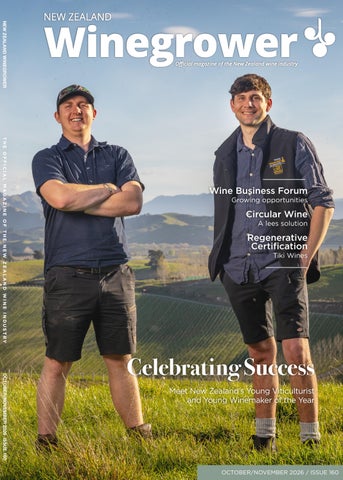
Celebrating Success Meet New Zealand’s Young Viticulturist and Young Winemaker of the Year
OCTOBER/NOVEMBER 2026 / ISSUE 160
Formulated to (out)perform.
Optimised two-way systemic activity, delivered by a class leading formulation. • Optimised formulation gives unparalleled penetration • Unrivalled and proven efficacy • Proven crop safety • Soft on key beneficials Movento 100SC - for results you can trust.
We’re with you in the field
BAC 3685
cropscience.bayer.co.nz
FOLLOW US ON FACEBOOK:
Bayer New Zealand Crop Science
Movento 100SC is registered pursuant to the ACVM Act 1997, No. P8434 and approved pursuant to the HSNO Act 1996, No. HSR100545. Movento® is a registered trademark of the Bayer Group. © Bayer Crop Science 2026.
ISSUE 160 – OCTOBER/NOVEMBER 2026
Regulars 4 Editorial Sophie Preece the CEO 6 From Anishka Jelicich Profile 31 The Tim Bourne Legacy 36 Growing Holly Girven Russell Musings 40 MW Emma Jenkins MW
14
Weather 42 Wine James Morrison Advocacy Matters 44 Sarah Wilson
Features
Zealand Wine 2026 14 New It’s time to throw out the
14
22
“old playbook” in the US, explore emerging markets in South Korea and India, and lean into links between wine sales and tourism, said speakers at the Wine Business Forum, followed by the Celebration Dinner.
Circular Wine 22 Marlborough Thousands of tonnes of lees waste could be transformed into a valuable resource for vineyards through a new regional programme led by Bragato Research Institute.
Greener World 34 Tiki’s Tiki is the first vineyard
31
34
COVER PHOTO Ormond Nurseries Young Viticulturist of the Year Kris Godsall, left, and Tonnellerie de Mercurey Young Winemaker of the Year Nick Lamain. The two Marlborough champions were awarded their national titles at the New Zealand Wine 2026 Celebration Dinner in late August, following national finals in Wairarapa. Photo Jim Tannock. Go to page 20
and winery in Aotearoa certified regenerative by A Greener World – the largest, independent, regenerative certifier on the planet.
NEW ZEALAND WINEGROWER I OCTOBER/NOVEMBER 2026 I
3
EDITOR Sophie Preece sophie@sophiepreece.co.nz CORRESPONDENTS North Island Joelle Thomson Emma Jenkins MW South Island Claire Finlayson ADVERTISING Upper North Island: Stephen Pollard stephenp@ruralnews.co.nz Ph: 021 963 166 Central & Lower North Island: Lisa Wise lisaw@ruralnews.co.nz Ph: 027 369 9218 South Island: Kaye Sutherland kayes@ruralnews.co.nz Ph: 021 221 1994 CIRCULATION & SUBSCRIPTIONS Sarah Adams saraha@nzwine.com 09 306 5644 New Zealand Winegrowers PO Box 90 276, Auckland Mail Centre, New Zealand PUBLISHING & PRE-PRESS Rural News Group PO Box 331100, Takapuna, Auckland 0740 Ph: 09 307 0399 Location: Bottom Floor, 29 Northcroft Street, Takapuna, Auckland 0622 Publisher: Brian Hight Managing Editor: Adam Fricker Production: Rebecca Williams Published by Rural News Group Ltd under authority of New Zealand Winegrowers Inc. Unless directly attributed, opinions expressed in the magazine are not necessarily those of Rural News Group and/or its directors or management, New Zealand Winegrowers Inc. or its constituent organisations. Published every second month. One free copy is mailed to every member of New Zealand Winegrowers Inc, New Zealand Society of Viticulture & Oenology and the New Zealand Vine Improvement Group, and to such other persons or organisations as directed by the owners, with provision for additional copies and other recipients to be on a subscription.
From the Editor
The United States wine market has changed forever, and companies cannot use same old playbook, said Erin Kirschenmann at the New Zealand Wine 2026 Wine Business Forum in August. BUT New Zealand is the only country that has seen growth in wine value, and those who “stay the course” will see the highest rewards, she said in a presentation that veered from pessimism to potential. It was a theme echoed throughout the day, with Sonal C Holland MW emphasising that the New Zealand–India Free Trade Agreement won’t yield results overnight, in what is a highly complex market. BUT those who act early, commit fully and practise patience could find success in the world’s “next big alcohol market”. In South Korea there is relatively low awareness of New Zealand wine, said You Jin Lee. BUT “once they get to know New Zealand wine, Koreans fall in love”. The forum was a day packed with advice and insights, including an engaging session with Tim Lightbourne and Rachael Everitt from Invivo, and excellent artificial intelligence guidance from Justin Noland, which we will cover in the next edition. There was also an extended focus on wine tourism, including the links between wine visitors and growth in wine exports. Global wine commentators are increasingly describing wine tourism as a “strategic growth engine” to help address the challenges facing the global wine sector, says Charlotte Read on page 19. Beyond the speaker programme, the day was a valuable opportunity for industry members to connect, which continued at the Celebration Dinner, held hard on the heels of the forum. Five New Zealand Winegrowers Fellows were recognised during the evening, along with the Young Viticulturist and Young Winemaker of the Year, Kris Godsall and Nick Lamain, who grace this month’s cover. Times might be challenging right now. BUT this collegial industry knows the power of celebrating success. Sophie Preece EDITOR
Contributors
ISSN 1174-5223
Sarah Rowley Adams As Communications Manager at Bragato Research Institute, Sarah has her finger on the pulse of wine science in New Zealand. In this edition she introduces a circular wine programme, as well as new BRI Research Winemaker Francesca Cavasin. Go to page 26
Joelle Thomson Joelle Thomson, Wine Editor for the NZ Herald Canvas, first visited Martinborough in 1995 and has spent 31 years exploring its vines, wines and people. She speaks to Tim Bourne about Te Muna Valley, “an underrecognised gem”. Go to page 30
Claire Finlayson Writer Claire Finlayson, owner of “a decidedly daft, caramel-coloured, peanut-butter-devoted doodle”, kicks off our new series – The Whine Files – on page 41. Claire also talks regenerative viticulture with Sue and Royce McKean. Go to page 34
Power, cooling and heating specialists for wineries With over 20 years’ experience working with the wine industry throughout the New Zealand Pacific region, we understand what it takes to enhance productivity and decrease costs for your winery. We can help you make your vintage a success by: • • •
Controlling fermentation Providing temporary cooling for cellars or other critical functions Providing additional power when needed
We are on call 24 hours a day, seven days a week to serve you.
Warehouse cooling
Extra chilled water for tank cooling
Call us to learn more 0800 003 921
Hot water for seasonal peak loads
From the CEO First drops in the glass ANISHKA JELICICH As I approach three months in my role as New Zealand Winegrowers Chief Executive, one message has come through consistently in conversations across the country: many members, particularly growers, are facing a challenging period.
I have consistently heard recognition of the contribution wine makes to New Zealand’s economy, regional communities and international reputation. Conversations across vineyards, wineries and regional forums have been frank. Members have spoken about cost pressures, competitive markets and difficult decisions. Our recently released Annual Report and State of the Industry Report confirm these challenges are real and are being experienced unevenly across the sector. At the same time, another theme has emerged. During visits to Nelson and Marlborough, I met several second-generation winemakers. While acknowledging today’s challenges, they reflected on cycles they had experienced before. Markets fluctuate and conditions change. Yet they had also seen the industry adapt, innovate and recover. Those conversations stayed with me because they captured two co-existing realities: many members are facing genuine hardship today, yet there are still good reasons to remain confident about tomorrow. From Marlborough to Nelson, Wellington to Hawke’s Bay, each
6
discussion has added another drop to the glass. No single conversation tells the whole story, but together they reveal the character of an industry with deep expertise, strong values and enormous potential. Throughout those conversations, three themes have stood out. The first is the depth of commitment people have to each other and to the future of New Zealand wine. The second is the pride people have in what New Zealand wine represents, and rightly so. At tastings and events, such as Winetopia, the Aoteoroa Chardonnay Symposium, and Down to Earth, I have seen that pride firsthand. Whether enjoying an elegant Pinot Noir, a distinctive Sauvignon Blanc or a more experimental expression, what stands out is not just the quality of the wine, but the enthusiasm behind it. I have also been struck by how forward looking so many of our conversations are. While members are dealing with today’s realities, they are also focused on tomorrow’s opportunities. Whether discussing India, Korea, continued growth in the United States, artificial intelligence or stronger links between wine and tourism, there is a clear determination to keep innovating and looking ahead. Importantly, our members are pursuing these opportunities from a position of strength. While global wine consumption is under pressure, New Zealand wine continues to perform strongly. Our exports continue to grow in most key markets, and our premium positioning and international reputation remain significant competitive advantages. I have also seen the regard in which New Zealand wine is held beyond our industry. In meetings with government and policymakers, I have consistently heard recognition of the contribution wine makes to New Zealand’s economy,
I NEW ZEALAND WINEGROWER I OCTOBER/NOVEMBER 2026
regional communities and international reputation. New Zealand wine is widely regarded as one of our country’s flagship industries. Periods like this also reinforce why a strong industry organisation matters. While NZW cannot determine market conditions, we can advocate on behalf of members, provide trusted insights, invest in building the New Zealand wine category, and continue to strengthen industry capability through research and innovation. Supporting members and bringing the industry together around shared priorities must remain at the heart of everything we do. By the time this edition reaches members, a new Board will have taken office. I would like to acknowledge the contribution of those directors whose terms are ending and thank them for their service to both NZW and the wider industry. The new Board also provides an opportunity to look ahead. Together, the Board and management team will continue to focus on how NZW can deliver value for members and support the industry through both its challenges and opportunities. As the industry evolves, so too must we. These first months have confirmed something that has come through in almost every conversation I have had: New Zealand wine’s greatest strength is its people. The conversations I have had so far are only the first drops in the glass. There are many more regions to visit, events to attend and members to meet. The picture is far from complete, but what I have seen so far reveals much about the character of our industry: resilience, cooperation, ambition and a commitment to excellence. Those are qualities worth being confident about. Anishka is profiled on page 33.
CONQUER ROWS WITH COMPACT POWER
Slim bodied, light and agile. The Fendt 200 V/F/P Vario Series is a specialist tractor made for viticulturists and orchardists. • Highly manoeuvrable due to its slender design, it delivers agile gliding, with a low centre of gravity that makes it extremely safe on slopes.
• The cab delivers excellent comfort, with practical features like 8 adjustable A/C nozzles, tiltable steering, no cockpit glare and much more.
• The cleverly designed sloped bonnet gives you premium visibility, and the low weight-power ratio reduces soil compaction for a healthier yield.
• It also comes standard with FendtONE Onboarding Technology, which can be uniquely tailored to your needs.
Contact your local dealer to find out more.
Leaders drive Fendt. fendt.com/au fendt.com | Fendt Fendt ist is eine a worldwide weltweite brand Marke von of AGCO. AGCO.
NEWS BRIEFS
French-Kiwi awarded
Photo Florence Charvin
Wine Auction sets new record
The 2026 Hawke’s Bay Wine Auction raised $454,182 for Cranford Hospice, beating last year’s previous record by more than $84,000. “This result came from an extraordinary combination of generosity,” says Hawke’s Bay Wine Auction General Manager Sam Kershaw. “Our winemakers put forward an exceptional line-up of wines, many created specifically for the auction, and our bidders responded in an incredible way.” Among the results was $21,000 bid for 288 bottles of de la terre’s 2026 Chablis-style Chardonnay, created as part of the auction’s Chardonnay Collaboration, which began with No.287 Vineyard donating more than three tonnes of premium Chardonnay fruit. More than 180 hours of volunteer handpicking were coordinated by Greatvine Services before the fruit was shared between de la terre, Radburnd Cellars and Chris Scott Wines, raising almost $50,000 for Cranford Hospice.
Anne Escalle, the head of Edmond de Rothschild Heritage’s New Zealand operations, has been made a Knight of the French National Order of Agricultural Merit. At an awards ceremony in Blenheim, French ambassador Laurence Beau said the French-born viticulturist had combined the best of French tradition with the dynamism and innovation of New Zealand viticulture, with influence that stretched beyond Marlborough’s Rimapere and Central Otago’s Akarua vineyards, “all the way to France and Paris”.
Anne Escalle and Laurence Beau
Hot stuff The launch of Invivo X, SJP Spicy Jalapeño Sauvignon Blanc in New Zealand is the latest innovation in the Kiwi wine company’s partnership with Sarah Jessica Parker. Inspired by the social media trend of dropping fresh jalapeño slices into a glass of wine, the idea was to build on the familiar flavour cues in Sauvignon Blanc “and introduce a gentle, complementary heat on the palate”, says Rob Cameron, Invivo cofounder and winemaker. The wine was one of the bold innovations discussed by Invivo co-founder Tim Lightbourne and Chief Marketing & Communications Officer Rachael Everitt at the New Zealand Wine 2026 Wine Business Forum in Wellington in August.
Anika Willner
Winemaker and GM at Coal Pit Sue and Royce McKean
Regenerative certification Tiki Wine & Vineyards has become the first vineyard and winery business in New Zealand to achieve regenerative certification status by A Greener World. “This certification is the culmination of many years of commitment from our vineyard and winery teams across numerous growing seasons,” says Royce McKean, Tiki founder and Managing Director. “We are grateful to the growers, researchers and organisations around the world who openly share their experience and expertise, and help others make the transition to regenerative farming.” Read more on page 34
8
I NEW ZEALAND WINEGROWER I OCTOBER/NOVEMBER 2026
After nearly a decade as Coal Pit Winemaker, Anika Willner has been appointed as General Manager of the family-owned Gibbston estate, while retaining her winemaking role. Estate owner Rosie Dunphy said the appointment formally recognises the role Anika has naturally grown into since joining the company in 2018, including its commitment to organic farming. “Anika knows every aspect of Coal Pit from the ground up. She has cared for this vineyard and the creation of its wines with extraordinary energy and vision.” Originally from Ohio in the United States, Anika says Coal Pit has been “home” for much of her winemaking life. “I have grown alongside this vineyard, and I feel a real responsibility to care for what has been built here while continuing to ask what it can become.”
NEWS BRIEFS
Putting down roots Radburnd Cellars has put down permanent roots at an historic Hawke’s Bay site, with the purchase of Stonecroft Winery on the Gimblett Gravels. Kate Radburnd has spent nearly 45 years making wine in Hawke’s Bay, much of that time working with fruit grown on the Gimblett Gravels. “To have our permanent home here feels incredibly special,” she says. “I have known Dr Alan Limmer for over 40 years, the founder of Stonecroft winery. This winery is rich in history; Radburnd Cellars will be proud to carry that legacy forward, based on common founding principles, small batches of exceptional wine, based on what we believe Hawke’s Bay grows best.” The purchase from Fistonich Family
From left, Penelope Radburnd, Sara Macdonald and Kate Radburnd at the 2026 Hawke’s Bay Wine Auction.
Vineyards marks the fourth site from which the winery has operated since it began in 2017, including Radburnd Cellars’ original
winery, which was lost during Cyclone Gabrielle. Stonecroft Wines remains owned by Fistonich Family Vineyards.
Iconic wine festival pauses Putting the Marlborough Wine & Food Festival on hold was a tough decision, given the festival’s long history in the region, says Wine Marlborough General Manager Marcus Pickens. “We are proud of the successful event we have built and grateful to the people, businesses and community groups who have helped make it possible.” A challenging events climate and the substantial investment required to deliver the event in its current format meant it was “no longer the best fit with the organisation’s wider responsibilities”, Marcus said in an announcement in August. “As a small member-focused organisation working in the best interests of Marlborough’s wine companies and grape growers, we have a responsibility to
consider how we best use our time, energy and investment.” The Marlborough Wine & Food Festival was launched by pioneering winegrowers in 1985, when Marlborough had just four wine companies. Wine Marlborough Board Chair Tracy Johnston says the decision was not taken lightly. “We recognise the
important role the Marlborough Wine & Food Festival has played in bringing people together and its legacy is important to our industry. However, it is our responsibility to act in the best interests of our members and ensure Marlborough continues to be recognised as the home of the world’s most distinctive and valued Sauvignon Blanc.”
model, highlighting the benefits of the scheme for employers, Pacific workers and communities, and New Zealand’s economy. Richard says the award was a great surprise, “and the research would not have been possible without the support of growers and contractors in the wine and horticulture industries”. Hortus won Recognised Seasonal Employer (RSE) Employer of the Year for 2026 at the event, where it was congratulated for “consistently demonstrating excellence in worker
wellbeing, pastoral care, cultural inclusion, leadership, and community impact through the RSE scheme.” Judges said that since joining the RSE scheme in 2008, Hortus had built an environment where workers from across the Pacific were not only employed, but valued and supported. “Through employment opportunities, workers have been able to support their families, strengthen their villages, contribute to schools and community projects, and invest in the future of their communities across the Pacific.”
RSE Awards Dr Richard Bedford’s “exceptional and sustained contribution to the Recognised Seasonal Employer scheme” was celebrated at the 2026 Horticulture Industry Awards in late July. In being awarded the Manaaki Award, sponsored by Mr Apple, the social scientist was recognised for playing a “pivotal” role in the RSE scheme for nearly 20 years, providing independent, objective and data-driven insights that have helped shape the scheme’s direction and success. His work has articulated the “triple win”
NEW ZEALAND WINEGROWER I OCTOBER/NOVEMBER 2026 I
9
Upcoming events
XXXXXXXXX
To have events added to our calendar contact sophie@sophiepreece.co.nz
Waiheke Island Wine Month
NZW & EECA Solar Webinar
One island and 30 days of wine, food and culture. Across the month vineyards, restaurants and local businesses will host winemaker dinners, masterclasses, cellar door exclusives, curated tastings, wine and wellness events, wine talks and larger scale hospitality experiences.
New Zealand Winegrowers and EECA (Energy Efficiency and Conservation Authority) will present ideas on the transition to solar, solar system sizing and design, vineyard and winery electrification, and potential for batteries to maximise energy efficiency. See more on page 24.
All of October waihekewine.co.nz
21 October nzwine.com/EECA-Webinar
New Zealand International Wine Show
2 December nzwine.com/uk-webinar
Explore the latest UK brand health tracking results and off-trade scan-based market insights, highlighting consumer trends and opportunities for New Zealand wine.
The Southern Pinot Workshop 20–22 January 2027 pinotworkshop.com
16 October nziws.co.nz
Entries have been positive for the 2026 New Zealand International Wine Show, says convenor Kingsley Wood in the lead up to the 22nd awards event. Judging was undertaken in late September, and a public gold-medal tasting will be held in Auckland on Wednesday 7 October, followed by the trophy awards presentation at the Crowne Plaza Hotel, Auckland, on Friday 16 October. Kingsley says a gold medal or trophy awarded in a nationally recognised competition signifies to the purchasing public that the wine is top quality. “A gold is so easy to market and is there for the life of the wine.”
United Kingdom Market Webinar
Marlborough Wine Show 21-23 October marlboroughwineshow.com
Hong Kong-based Master of Wine Jennifer Docherty will be guest judge at this year’s Marlborough Wine Show, sponsored by QuayConnect. An Industry Tasting will be held Saturday 24 October at the Marlborough Wine + Food Experience, and the Celebration will be held at the Queen Charlotte Yacht Club on Friday 13 November.
This annual event brings together winegrowers and viticulturists from New Zealand and the rest of the world for an in-depth look at Pinot Noir. It includes presentations, along with unfinished barrel samples tasted in a closed forum, with the aim of developing better viticultural and winemaking practices. This year’s guest speaker is Dr Thomas Lines, Co-founder of AgMap and Research Fellow at the University of Adelaide’s School of Agriculture, Food and Wine. He will discuss his research on the effects of cover crops on vine physiology, soil health, microbiomes and wine quality. The workshop also hosts and showcases a Burgundian producer, and this year Michelin two-star winemaker David Croix of Domaine des Croix in Beaune will discuss his wines. An influential wine marketing expert will also present on current trends in wine sales.
Wine & Food Gisborne Great Wine Capitals International Conference 18–22 October gwchawkesbay26.com
More than 80 delegates from the world’s best wine regions, from Bordeaux to Napa Valley, will attend this five-day conference in Hawke’s Bay, with the theme “A World of New.” The programme includes keynote presentations, roundtable discussions and curated regional experiences, as well as technical visits, business meetings and tastings. The Knowledge Day on Thursday 22 October will see experts sharing their expertise on wine tourism, including a state-of-the-industry keynote address by Paris-based Dr John Barker, Director General of the International Organisation of Vine and Wine.
10
25 October gisbornewineandfood.co.nz
An iconic Labour Weekend tradition, with exceptional wine, delicious food producers, great company and an array of live music.
United States Market Webinar 4 November nzwine.com/usa-webinar
A first look at the latest US brand health tracking results and off- and on-premise scan-based market insights, with key takeaways for New Zealand wine exporters.
Harvest Hawke’s Bay Festival 21 November harvesthawkesbay.com
Sample exceptional wines from Hawke’s Bay’s best wineries, paired with dishes from award-winning local chefs and a backdrop of live entertainment.
I NEW ZEALAND WINEGROWER I OCTOBER/NOVEMBER 2026
Professor Rangi Matamua
Sauvignon Blanc New Zealand 2027
2–4 February 2027 sauvignonnz.com
A ground-breaking expert in Māori astronomy will present at Sauvignon Blanc New Zealand 2027, as part of a fascinating speaker programme. Pioneering Māori scholar Professor Rangi Matamua (Tūhoe) won the 2019 Prime Minister’s Science Communication Prize, the 2020 Callaghan Medal for science communication from
UPCOMING EVENTS
Royal Society Te Apārangi, the 2020 Te Ururangi Award for Education at the Matariki Awards, and the 2023 Kiwibank New Zealander of the Year. The Professor of Mātauranga Māori at Massey University has enlightened national and international populations with his research and is helping to reconnect people with maramataka – the Māori lunar calendar – and the environment. He will join speakers including Jermaine Stone (@realwolfofwine), a New York wine communicator known for blending wine and hip-hop culture, and London-based Felicity Carter, founder of Drinks Insider and Editorial Director at Areni Global. Charlotte Dagueneau, daughter of the late Didier Dagueneau, will also speak of her connection to the Loire Valley. The SBNZ27 programme, to be held in Wairau, Marlborough, is designed to celebrate New Zealand Sauvignon Blanc and broaden global perceptions of the category, exploring diverse regional expressions, age-worthy styles and emerging innovations. Committee member Ben Tombs, Winemaker at Craggy Range, says the event is “an extraordinary opportunity to demonstrate just how diverse our styles can be.” Read more on page 13.
The North Canterbury Wine & Food Festival 13 March 2027 ncwineandfood.co.nz
Enjoy an excellent Saturday spent tasting wine and devouring gourmet food with the passionate growers, makers and chefs of North Canterbury.
Undercurrent 2027 1–3 June 2027 undercurrentnz.com
Organic Winegrowers New Zealand’s flagship event will be held in Queenstown from 1–3 June 2027. Previously known as the Organic & Biodynamic Winegrowing
Conference, the three-day Undercurrent 2027 will explore organic, regenerative and biodynamic winegrowing with leading thinkers, passionate practitioners and cutting-edge scientific insights from Aotearoa and abroad. Undercurrent is designed for experienced practitioners and new adopters alike, say organisers. “Undercurrent is the quiet force beneath a changing landscape.” Undercurrent 2027 Chair Anika Willner says Central Otago is a fitting place for the conference’s “next chapter”, with the highest proportion of organic vineyards in New Zealand. “This conference also has always been about the wider community of growers, thinkers and practitioners working across the country.” Among the stellar speaker lineup is winemaker and educator Adam Huss, from New York, and regenerative organic vigneron Alice Anderson of Âmevive Wine in Santa Barbara County in the US. Alongside the conference programme, there will be an organic wine party at Sherwood and a twilight scenic cruise across Lake Wakatipu to Walter Peak High Country Farm.
Tradition in Every Detail At Poppies Martinborough, authenticity never goes out of style. Each wine reflects the vineyard, the vintage, and the family philosophy that has defined the brand for generations. MCC partnered with Poppies to create a label that mirrors this timeless approach. Printed on matt white synthetic stock, with crisp black detail, gloss high-build embellishments, and a tactile snakeskin varnish, the label combines understated elegance with premium shelf presence, creating a lasting impression before the first glass is poured. Talk to MCC New Zealand where every product is labelled with care.
Producer: Poppies Martinborough Designer: Simon Diplock (Creative)
MCC Label Asia Pacific
Albany 09 414 1700 | Auckland 09 273 7800 | Christchurch 03 349 5299
MCC.Australia | MCCNewZealand
www.mcclabel.com
NEW ZEALAND WINEGROWER I OCTOBER/NOVEMBER 2026 I
11
Altogether Unique Growing the reputation of New Zealand Wine Charlotte Read NZW General Manager, Brand
Amplifying our diverse wine story
You Jin Lee, from NZTE South Korea, left, with Charlotte Read
Read On… What a day at the 2026 New Zealand Wine Business Forum, Winning in Changing Markets. It’s been gratifying to see this event, now in its fourth year, continue to grow, with resounding feedback that ‘this is our best yet’. While there was no sugar coating the challenges facing our industry, there was also a strong sense that New Zealand wine has the capability, creativity and collaborative spirit to adapt and thrive. Across every session, we heard a consistent message: success won’t come from waiting for markets to return to how they once were. It will come from understanding changing consumers, embracing innovation, investing in the right opportunities and continuing to work together as an industry. Opening the Forum, New Zealand Winegrowers’ new Chief Executive Anishka Jelicich reflected on the opportunities ahead for New Zealand wine, while Hon Todd McClay reinforced the importance of trade, market access and maintaining New Zealand’s position as a premium global exporter. Our first international speaker, Erin Kirschenmann from the United States’ Wine Business Monthly, challenged us to rethink assumptions about future wine drinkers and the occasions in which wine competes for attention. Also from the US, wine industry artificial intelligence expert Justin Noland demonstrated how AI is quickly becoming a practical tool that can help wine businesses work smarter, improve productivity and make better use of limited resources. The programme then looked at growth opportunities beyond our traditional markets. You Jin Lee, from New Zealand Trade and Enterprise South Korea, shared insights into that market, emphasising that New Zealand wine has strong credentials, but significant opportunities still exist to build awareness and trial. In the year of signing a Free Trade Agreement with India, the session with India’s only Master of Wine, Sonal C Holland, was hotly anticipated. Her presentation highlighted both the scale of the opportunity and the patience, commitment and local understanding required to succeed. There was also a focus on wine tourism, including how it creates direct consumer relationships, builds trust and strengthens brand loyalty. Read more about that on page 19. Audiences also heard from Tim Lightbourne and Rachael Everitt of Invivo, who shared an honest account of how staying relentlessly focused on consumers, embracing innovative partnerships and moving quickly on opportunities has helped build their brand. Our member speakers’ willingness to openly share lessons learned reflects one of the New Zealand wine industry’s greatest strengths. If you’d like to contribute to next year’s Wine Business Forum programme, we’d love to hear from you.
12
I NEW ZEALAND WINEGROWER I OCTOBER/NOVEMBER 2026
NZW is excited about the role we play in ensuring Sauvignon Blanc New Zealand 2027 delivers optimal value, through the selection of some of the most influential voices in the global wine community. The international programme has been carefully curated to bring together a diverse mix of wine journalists, sommeliers, educators, content creators, lifestyle media and trade specialists from key export markets including the US, United Kingdom, Australia, Canada, China and across Asia. Selection is based not only on audience reach, but also on credibility, influence and the ability to tell compelling stories about New Zealand wine to trade and consumer audiences. While traditional wine media and sommeliers remain critically important for their expertise and authority, the programme also reflects the growing influence of digital creators and lifestyle media in shaping how consumers discover, engage with and purchase wine. As these wine minds come together for a shared experience, New Zealand wine stories will be amplified with audiences around the world. Before and after SBNZ27, guests will split into smaller groups for tailored regional itineraries, providing opportunities to experience the country’s wine regions, landscapes and people. Keep an eye on the ‘Who’s Coming’ tab on sauvignonnz.com in the coming months.
New data for members The forum provided an opportunity to announce a new data-sharing partnership between NZW and NZTE in North America. The initiative will provide members with enhanced access to US market intelligence, including quarterly reporting and expert analysis to help inform business decisions and identify market opportunities. A member webinar will be held on 4 November to share the first read of this data, and will incorporate the 2026 US market IWSR Brand Health Tracking. nzwine.com/members/brand/webinars/
Sommit 2027 – Waitaki Valley
Planning is well underway for Sommit 2027, with more than half our international sommeliers now confirmed for the event in Waitaki Valley before SBNZ27. Hosted by Cameron Douglas MS and Stephen Wong MW, Sommit is NZW’s flagship on-premise programme, immersing influential wine professionals in the regions, varieties, styles, landscapes and environments that make New Zealand wine so distinctive. Sommit provides valuable, candid feedback from sommeliers working at the forefront of global hospitality, offering insight into how New Zealand wine is understood, presented and positioned internationally. nzwine.com/sommit2027
ALTOGETHER UNIQUE
Disc Filtration Technology Ben Tombs
For a wide range of flow rates and water qualities
Sauvignon Blanc NZ27 Sauvignon Blanc New Zealand 2027, to be held in Wairau Marlborough from 2-4 February 2027, is “an extraordinary opportunity to demonstrate just how diverse our styles can be”, says committee member and Craggy Range Winemaker Ben Tombs. “More than the established reputation suggests.” New Zealand Sauvignon Blanc is... one of our nation’s greatest modern signatures. Having captured the world’s attention, it is now enjoyed in more than 100 countries around the globe; what an incredible reach of audience. The potential conversations and discovery that can happen over a glass of New Zealand Sauvignon Blanc, and the increasing influence of our consumers wanting to know more of its provenance, is very exciting. It can provide… a lens into so many of New Zealand’s products, places and people. Sauvignon Blanc draws the consumer into that experience, and the response is overwhelmingly positive; it consistently overdelivers. But it is more than simply a gateway to greater New Zealand. It has earned its place as a benchmark within the global Sauvignon Blanc category and gives us a powerful platform to continue to link the reasons why, then communicate them. I’d like to see… the conversation around New Zealand Sauvignon Blanc continue to evolve. The diversity of our regions and sites, along with more nuanced expressions and considered winegrowing will lead to this. I’d like to see consumers discover the depth, texture and sense of place that New Zealand Sauvignon Blanc can offer, while retaining the freshness and vibrancy that made it famous in the first place. When I make Sauvignon… I think a lot about the interplay of phenolics, acidity and texture. I think aromatics are wonderful, but easy to find in our New Zealand sites. Depth, tactility and palate drive can be more difficult, so this commands more focus. I think our best Sauvignon Blancs are immediately enjoyable but also equally moreish. They command that second glass then ideally a little curiosity about where it came from.
Spin Klin Nova Modular
Spin Klin Nova Plus Modular
Flow rates 10m3/hr - 60m3/h
Flow rates 20m3/hr - 192m3/hr
Spin Klin 80mm Nova Plus Manifold
Spin Klin 100mm Nova Plus Manifold
Flow rates 10m3/hr - 180m3/hr
Flow rates 50m3/hr - 880m3/hr
A favourite Sauvignon-food match is… heavy on the seafood side for me: first glass, two naked oysters; second glass, kingfish crudo; third glass, blackened snapper. I’m passing the Q&A baton to… Ben Leen from Central Otago, who’ll no doubt provide some great insight into Sauvignon Blanc from the bottom of the world.
To find your local dealer contact Water Supply Products: Auckland: 09-916 0094 Christchurch: 03-348 1293 wsp@watersupply.co.nz www.watersupply.co.nz
NEW ZEALAND WINEGROWER I OCTOBER/NOVEMBER 2026 I
13
XXXXXXXXX
New Zealand Wine 2026 offered wine business insights, along with the chance for connection and collective celebration.
NEW ZEALAND WINE 2026
Wine Business Forum The New Zealand–India Free Trade Agreement won’t yield results overnight, Sonal C Holland MW told attendees at the New Zealand Wine 2026 Wine Business Forum in Wellington in August. But those who act early, commit fully and practise patience could find success in the world’s “next big alcohol market”, she said. “If you really want to build something of sustainable value in India, my advice to you would be, do not wait until the effects of the FTA play out.” Sonal’s scintillating session wrapped up a packed programme, including Justin Noland’s practical guide to using artificial intelligence, the new playbook required to sell wine in the United States, a view of South Korea’s market opportunities, the long sales tail of wine tourism, and Invivo’s bold branding manoeuvres. Charlotte Read, New Zealand Winegrowers General Manager Brand, said the theme - Winning in Changing Markets – reflected the challenges being faced by the industry, as well as the opportunities. “Wine is competing for consumer attention in an increasingly complex environment,” she said in opening the programme. “Both economic pressures and changing consumption habits continue to shape demand.” Despite those headwinds, New Zealand wine continued to demonstrate resilience, underpinned by decades of international success. “Our wines are sought after around the world – outperforming the broader category, supported by a reputation for quality, sustainability and premium positioning. As an industry, we have navigated periods of change before, and our ability to adapt, to innovate and to work together, remains one of our greatest strengths.” India: Committing long term With its population of 1.4 billion, India is one of the largest drinks markets in the world, worth over $US55 billion, although that is heavily dominated by spirits. Wine makes up a little more than $US300 million, with New Zealand’s $NZ438,000 portion a pretty minuscule speck of the pie. But with a surging economy and growing per-capita income, there’s a drive towards premium products, said Sonal, a leading voice on wine in India. “Indians are not just drinking more. We are also drinking better,” with consumers trading up from Indian whisky to premium Scotch, from canned to craft beers, “and from barely drinking wine to adopting it as part of their everyday lifestyle.”
Nearly 60% of the population is under 35. “Compare that to your traditional export markets – in the US, in the UK, Western Europe, the wine drinker is ageing, and is not being replaced,” she said. “You are fighting for a shrinking pool.” Meanwhile, the perception of wine in India is as healthy and moderate, rather than indulgent. “Basically, wine is healthy, wine is socially acceptable, and wine is usually aspirational.” Women are a key demographic driving growth, Sonal said, with research showing they are embracing wine faster than any other group, finding it sophisticated, appealing and “less socially inhibiting” than other alcohol. There’s also a growing desire to know more about wine, with masterclasses, luxury dinners and “our latest fascination with wine tourism”. Well-travelled Indians who experience wine abroad return wanting to know more, fuelling domestic wine tourism growth – Sula Vineyards in Nashik, for example, has seen 21% growth year on year. But while these people may be drinking Sula today, “they won’t be drinking Sula tomorrow”, Sonal said. “These are people who will seek other exciting wines as they go up the learning curve.” That curve points both ways, she said, predicting New Zealand’s next “great opportunity” lies in attracting Indian consumers to its vineyards, then benefiting when those visitors seek out the same wines when they return home. The FTA signed this year will see tariffs on New Zealand wine reduce by half in year one, from 150% to 75%, and will further continue to reduce over the next 10 years to 25-50%, depending on value of the wine (read more on page 44). “Wines that felt expensive in India will start to feel more accessible to consumers… that is a complete repositioning of your premium wines in the Indian market.” But there are reality checks too: import duty is only one part of the cost associated with selling in India, with state-level taxes, logistics, warehousing, distribution and marketing all adding to the final price, she said. Meanwhile, India’s 28 states each have independent excise laws, complicating matters for importers. Her tips for approaching the market begin with getting to know it – spend the next 12 months visiting and understanding the market firsthand. “Nothing replaces being on the ground.” Then choose your importer wisely, she said, comparing that decision to choosing a life partner. “Don’t say yes on the first date,” but once you have chosen, commit to building the relationship. Her third suggestion is to invest in trade
and consumer education, because wine knowledge in India remains limited despite growing interest. And understand the import process, including India’s complex regulatory landscape, she said, offering her white paper, the India Wine Insider, as a comprehensive resource. With India now a fixture of boardroom conversations worldwide, producers who wait risk losing importer options and shelf space to those who move first, she said. Australia is already a strong and growing force, and the EU concluded its own FTA with India last year. “The FTA, in my honest and humble opinion, does not give New Zealand an advantage. It simply removes a disadvantage. The real advantage is the global admiration that you enjoy.” Sonal predicted that within a decade, as tariffs fall and India’s middle class passes 700 million, “I’ll probably be back in New Zealand giving a speech about how the Indian wine market was built by people like you.” From K-pop to Sauvignon Blanc South Korea was another exciting market discussed on the day, with continued growth opportunities along with caveats. Having caught their attention with some Gangnam Style, New Zealand Trade and Enterprise’s (NZTE) South Korea Head of Business Development, You Jin Lee, told attendees that New Zealand holds the position of number one white wine in Korea, with a 32% share. There has been “amazing growth” for New Zealand wine exports in the market, moving from $10 million in 2020 to a little over $50 million in 2025, with significant growth between 2024 and 2025. Those figures have softened in 2026, You Jin said, urging companies to work to maintain the momentum, including in premiumisation. “Consumers are ready and sommeliers are really hungry for it.” You Jin touched on outcomes of recent NZTE research, supported by New Zealand Winegrowers, which shows that awareness of New Zealand wine remains relatively low, but that Korean consumers respond exceptionally well once they discover it. Koreans “love to drink”, with the highest per-capita volume consumption in the world, she said, noting that alcohol – mostly beer and soju – is an integral part of social gatherings. Red wine has typically been dominant, but white has been growing significantly, driven in part by the growing segment of female wine drinkers who like fruit-forward and fresh white wines, she said. Photo to left, Sonal C Holland MW at the New Zealand Wine 2026 Wine Business Forum
NEW ZEALAND WINEGROWER I OCTOBER/NOVEMBER 2026 I
15
NEW ZEALAND WINE 2026
While there is relatively low awareness of New Zealand wine, “the good news is that once they consider us, the figure increases significantly,” You Jin said, noting that every percentage increase in the awareness and consideration categories directly translates into purchase and sales. “More than half the potential consumers have not met us yet. That is not a weakness. Actually, it is an opportunity,” she said. “Once they get to know New Zealand wine, Koreans fall in love.”
“You guys are bucking the trend here. Please stay the course.” Erin Kirschenmann Winning tomorrow in the US The “old playbook” no longer works in the US market, Erin Kirschenmann told delegates at the Business Forum. In her session – ‘Wine: Winning Tomorrow Will Not Be the Same as Yesterday’ – the Managing Editor of Wine Business Monthly warned against companies doing the same thing they’ve done in the past. “Wine has fundamentally changed. The consumer has fundamentally changed.” The US market enjoyed a long run of growth and premiumisation, before slowing down in 2017 and 2018, enjoying a few years as a “mature market”, then moving into decline, she said emphasising that this is not a phase, but a “structural reset”. Erin flagged three converging pressures, starting with distribution, following the bankruptcy of Republic National Distribution Company, the second-largest distributor in the United States. “The big are eating the big,” she said, warning of further shakeout and cautioning wineries not to expect remaining distributors to sell their wine for them. The second was the Trump administration, including tariffs, which she described as “chaos”. But those who continue investing in the US market through the disruption will be “primed
Erin Kirschenmann
for growth” on the other side. The third pressure is the changing consumer, with America’s demographic profile shifting rapidly to a more multicultural base. She said the industry had been slow to show these consumers that wine can be part of their culture, pointing to a lack of pairing guidance for Indian, Thai, Vietnamese or Korean food, and the absence of wine at occasions other than classic dining traditions. Younger consumers add further complexity. When asked, they say they want sweet wine, then reject the style when given it. “What they really mean is that they want a fruity wine – something that tastes like a fruit they recognise.” They also want sparkling and fun formats, she said. “They want wine to fit into their life.” Turning to where the category is winning, Erin singled out aromatic whites as a bright spot: “Thank you to your Sauvignon Blanc – it is saving the wine industry in the United States.” New Zealand is the only country that has seen growth in value in the US, “so you guys are bucking the trend here,” she said. “Please stay the course.” Wine cocktails, flavoured wines and high-alcohol styles are also gaining ground, she said, giving examples of younger
consumers adding jalapeños or Gatorade to their wine. “They are drinking it. They are buying it. They’re making it their own.” Alternative packaging formats, including the Bagnum, are resonating with younger drinkers for the same reasons. “They love the fact that they can have a glass of wine at night, and it’s not going to impact their health, and they can come back a couple days later and have another glass and it still tastes just as fresh. They love cans they can take hiking. They love tetra packs. Anything that feels just a little bit easier.” Meanwhile, sustainability is no longer a differentiator, but rather “table stakes”, she said. “You have to be sustainable in some way, shape or form, to win in this market.” She also urged companies to lean into different occasions. Wine has won the dinner table, but what about potential consumers who are hiking, at book club, or on the couch watching television? Wineries could look to lifestyle content creators, “little luxury” positioning and sports occasions, where women in particular may prefer a wine option to beer or an expensive cocktail. New Zealand is well placed to capture these opportunities given its reputation in the US for hospitality, adventure, the
Novel Pairings at Women in Wine As an avid reader with a long career in wine writing and education, Erin Kirschenmann has long known the joy of a good wine with a good book. Speaking at the Women in Wine Connect gathering held during New Zealand Wine 2026, she said that pairing became more
16
intentional during Covid-19, when she had more time to consider the matches. One thing led to another and in 2024 she launched an online membership for Novel Pairings, which provides members with the name of a book along with some paired wine options. “I realised what
I NEW ZEALAND WINEGROWER I OCTOBER/NOVEMBER 2026
people really want out of a wine and book club is community,” she said. There’s no perfect pairing, “other than that you like the book and you like the wine”, Erin told the gathering. “It’s been the most fulfilling thing I’ve ever done.” novel-pairings.com
4405
Take Control Naturally With Precision Viticulture Solutions
Reliable, residue-free Botrytis protection.
25 years of proven biological innovation for Botrytis management.
Natural Resilience Powered by nature, for nature
compliance.
Target Action Right Product. Right Timing
Ideal for tight pre-harvest windows and export-market Compatible with existing spray programmes.
Sustainable Protection Safe for people, pets, crops, the soil, the microbiome, and the future.
Made in Dunedin — New Zealand science supporting New Zealand wine. Exported to the world. Root & Vine
Early Season
Mid Season
Late Season
BIOSTIMULANT
DISEASE PREVENTION
DISEASE CONTROL
SPORE DEFENSE
CHITO-ZenTM
BOTRY-Zen
MIDI-Zen
ARMOUR-Zen
ACVM Registration No. P8636 Registered for Grapes Active ingredient Soyabean Oil emulsion 167g/L and antioxidant.
ACVM Registration No. P7570 Registered for Grapes Contains 144g/L soluble chitosan EPA Approval Code HSR101141
Supports the vine’s natural Biofungicide for Botrytis tolerance of drought, salinity, cinerea and Sclerotinia, transplant shock, and and Psa ACVM Registration No. P7212 & P9402 biologically tired soils. Registered for Grapes Exempt ACVM Registration Conatins soluble chitosan
Active ingredient Ulocladium oudemansii 2.5 x 10⁸ cfu/g
Biofungicide & Natural Biofungicide Control Against Botrytis cinerea Barrier to Stop Pathogenic Spores in Grapes and Powdery Mildew.
Tel 0800 10 22 12 info@botryzen.co.nz National Sales Representative: Aidan Hung Tel +64 21 38 21 38 25 years since BOTRY-Zen® was first introduced
marketing@botryzen.co.nz
Registered pursuant to the ACVM Act 1997
USE AS DIRECTED
Scan for Trial Data
Botryzen.co.nz
NEW ZEALAND WINE 2026
outdoors and The Lord of the Rings, Erin said. That could be leveraged through partnerships with the likes of tour and hiking guides, hospitality venues and nonwine collaborations, referring to the likes of Jermaine Stone, The Wolf of Wine, who marries wine and hip-hop. Her own side hustle, Novel Pairings (see sidebox), links wine with novels in a growing online community. Above all, wineries needed to shift focus away from product-led storytelling to appeal to new consumers, she said. “Terroir, soil, vineyard, winemaker, barrels – it is boring, even for somebody like me.” Meanwhile, speed and agility in responding to consumer trends will separate winners from those left behind. Despite the difficult outlook, her message to the Forum was one of resilience. “Stay the course in the United States,” she said. “The companies that invest right now, the companies that take the risk, will see the highest rewards when everything settles out.” Justin Noland’s AI presentation will be covered in the December Winegrower Magazine.
Celebration Dinner Five New Zealand Winegrowers Fellows were recognised at the New Zealand Wine 2026 Celebration Dinner in late August, with Kevin Judd, Lynnette Hudson, Rex Sunde and Philip Gregan recognised for their tireless contribution to the industry. Two Paddocks Winemaker Dean Shaw stood up on behalf of the late and legendary Sam Neill, bringing the audience to their feet. From stalwarts to young guns, the event also celebrated the industry’s new talent, with the finalists for the Ormond Young Viticulturist of the Year giving their speeches during the event, sharing what their generation is doing to shape the future of the wine industry. “We can’t go with the way things have always been done,” said Kris Godsall from Cloudy Bay in Marlborough. “We need to respect the experience behind us, whilst still having the courage to improve.” Kris was announced as the winner of the national competition, while Nick Lamain from Isabel Estate in Marlborough took home the title of Tonnellerie de Mercurey
WSET® Level 2 Award in Wines - Part Time • • • •
21-22 November; 5-6 December 2026 Saturdays & Sundays 9am - 4pm Book online via website
www.foodandwine.co.nz Viaduct, Auckland 18
Rated excellent on Trustpilot
I NEW ZEALAND WINEGROWER I OCTOBER/NOVEMBER 2026
Quarter Page Portrait - April:May.indd 1
21/09/2026 1:16 PM
Te Radar was once again brilliant as emcee at the Celebration Dinner
Young Winemaker of the Year. “I got so much out of this competition,” Nick says on page 21, urging his peers to push through what can be an overwhelming first attempt. “I really want more young people in the wine industry to recognise how much they can get out of it.” Read about the 2026 NZW Fellows in the August/September 2026 Winegrower magazine.
NEW ZEALAND WINE 2026
Wine tourism boosts purchasing behaviour CHARLOTTE READ Global wine commentators are increasingly describing wine tourism as a “strategic growth engine” to help address the challenges facing the global wine sector. That momentum, combined with the recent arrival of the Michelin Guide to New Zealand and boosted promotion of the Classic New Zealand Wine Trail (CNZWT), made it a timely topic to dive into at the New Zealand Wine 2026 Wine Business Forum in August. Brodie McLeish from Tourism New Zealand reminded the audience that wine tourism is about far more than cellar door revenue. Today’s visitors are increasingly seeking authentic food and wine experiences that help them connect with New Zealand’s people, places and stories. A memorable winery visit can influence future purchasing behaviour long after a visitor has returned home. In other words, tourism marketing and wine marketing should reinforce one another. A great winery experience can ultimately create export demand.
Anna Nielson, Chief Executive at Destination Wairarapa, built on this theme by sharing results from the recent CNZWT promotion, demonstrating the success that can be achieved through regional collaboration. Hawke’s Bay, Wairarapa and Marlborough have partnered in the trail for more than two decades, and Anna’s presentation reinforced the value of linking wine, food, culture and landscapes into a connected visitor journey, while highlighting how collaboration can extend the reach of individual wineries and regions. “With Tourism New Zealand focussed on elevating New Zealand’s food and beverage on the world stage, the time has never been better for the tourism sector to align more consciously with our region’s wine growers and vice versa,” she said. “And why is wine tourism important for the wine industry? It helps build brand loyalty and potentially repeat purchasing for the wine producer.” Putting these ideas into a winery
From left, Wendy Trolove, Joanne Deitch, Pip Goodwin, Brodie McLeish, Charlotte Read and Anna Nielson
context along the CNZWT, Joanne Deitch from Craggy Range, Pip Goodwin from Palliser Estate and Wendy Trolove from Ant Moore Group shared their experiences of turning visitor experiences into lasting brand connections and commercial value. Charlotte Read is General Manager, Brand at New Zealand Winegrowers. Read more on the Wine Business Forum tourism sessions in the December/ JanuaryWinegrower.
NEW ZEALAND WINEGROWER I OCTOBER/NOVEMBER 2026 I
19
NEW ZEALAND WINE 2026
Learning together Ormond Nurseries Young Viticulturist of the Year SOPHIE PREECE Kris Godsall was 15 when he became one of the first students of the New Zealand School of Winegrowing at Marlborough Boys’ College, channelling a love of chemistry and cooking into plans to become a winemaker.
“Every time you tap a young person on the shoulder and say, ‘You should put yourself forward for this,’ you’re helping to build the next generation.” Sam Wickham Eight years later, the 2026 Ormond Nurseries Young Viticulturist of the Year says the defining feature of his education and career ever since has been people “that have just said ‘yes’”. From his first vintage at Giesen in Year 12, to his current role as Assistant Vineyard Manager at Cloudy Bay in Marlborough, he’s found a support network that he urges new generations to adopt. “Real leadership isn’t just about getting better yourself,” he said in his speech at the Marlborough regional competition earlier this year. “It’s about lifting and teaching the people around you.” It was a sentiment echoed by Sam Wickham from Ormond Nurseries, who presented Kris with his trophy at the New Zealand Wine 2026 Celebration Dinner in Wellington in late August, noting the competition fuelled the industry’s future leaders. “Every time you tap a young person on the shoulder and say, ‘You should put yourself forward for this,’ you’re helping to build the next generation.” Ormond Nurseries championed the Wine School, and then Kris’ progress through it, with Sam calling him a “standout” of the cohort, always kind and committed. “There
20
Kris Godsall. Photo Jim Tannock
couldn’t be a better ambassador for the Wine School, for this competition, and for Marlborough.” The high regard goes both ways. “Sam and Marcus (Wickham) have quietly been in the background of my career all the way through,” Kris says, noting work experience at the company, and that Marcus, New Zealand’s inaugural Young Viticulturist of the Year, helped him prepare for his first regional Young Viticulturist competition in 2022. Having loved his Giesen vintage in Year 12, Kris carried on with work experience at the company for one day a week over the next two years, and returned for summer vineyard work before his viticulture and oenology degree at Lincoln University, soon realising his vocation was in the vines, not the winery. The next ‘yes’ came from Whitehaven Wines, where Kris had holiday work throughout his degree, and then from Cloudy Bay, when he sent an email and was told to come and give it a try. “I have been here since.” His Cloudy Bay team helped him prepare for this year’s national final, held in Wairarapa in late August, with a three-year plan for winning the New Zealand title. Kris proved a strong contender in hands-on aspects of viticulture, winning the BioStart Hortisports and coming in second in the Ecotrellis trellising section, and also won the research project, focused on preparing for a Super El Niño, and cost-savings analysis in a subregional vineyard. After spending every weekend at work researching his project, including talking to experts and implementing the new Bragato Research Institute mothballing
I NEW ZEALAND WINEGROWER I OCTOBER/NOVEMBER 2026
decision-making model, he opted for a three-year redevelopment and a two-year redevelopment of blocks in declining productivity, leaving one block in full production and another with reduced input. With an upgraded tractor, cloud-based irrigation and monitoring system, and Ecotrellis posts and high-stem vines, he boosted the efficiency and productivity of the blocks. The process was “eye-opening” when it came to learning about vineyard costs, the efficiencies and sustainability offered by technology and innovation, and the potential implications of this year’s forecast Super El Niño, says Kris. The national win (well in advance of his training plan) means he can no longer enter the competition, but he plans to keep challenging himself through work and experience. “I’ve always been one to try and take opportunities when they come up, and push myself with whatever I can do.” Meanwhile, he’ll continue coaching Marlborough Boys’ College rowers, which he sees as a chance to give back, given the “amazing coaches” he had when rowing at the school. That explains, perhaps, a penchant for being out in the vines at 5am. Having had so much support in his first eight years of wine, Kris is ready to help other future Young Viticulturist competitors prepare, knowing that the successful future of the industry relies on collaboration. “We shape Marlborough by working more openly, sharing our knowledge and rising as one,” he said in his speech at the national competition. “We collaborate by learning together.”
NEW ZEALAND WINE 2026
Young Gun Tonnellerie de Mercurey Young Winemaker of the Year SOPHIE PREECE Nick Lamain’s first Marlborough Young Winemaker competition was a wake-up call that would transform his life. “I told myself, ‘if I actually want to have a good career in wine, I really need to start challenging myself to become better’.”
“I do love the heavy premium burgundy bottles and how good they look, but I can make a bit of a trade-off now for a lighter bottle, knowing it’s a lot better for the planet.” Nick Lamain He honed the areas he’d struggled with, “scoured” every single New Zealand Winegrowers resource he could get his hands on, and grew his ability to make, assess, judge, market and talk about wine. Five years after that first attempt, Nick is the 2026 Tonnellerie de Mercurey Young Winemaker of the Year, Isabel Estate Winemaker, a confident public speaker and a passionate proponent of the regional and national Young Winemaker initiatives. “I got so much out of this competition,” he says, urging his peers to push through what can be an overwhelming first attempt. “I really want more young people in the wine industry to recognise how much they can get out of it.” Growing his skills for the competition has gone hand in hand with growing his experience as a winemaker and communicator, and has directly boosted his career, says Nick, who was asked to join Isabel Estate after winning the regional
2026 Tonnellerie de Mercurey Young Winemaker of the Year Nick Lamain
competition for the first time in 2024. His abilities have burgeoned at the vertically integrated Marlborough vineyard and winery, where he has a hand in every aspect of production, from tasting grapes on the vine to talking to clients about the company and region. He’s also exposed to a range of wines from New Zealand and abroad, which he says is key to growing New Zealand’s wine styles and reputation. “We need to be constantly looking at the wines around us, not just from New Zealand, but internationally as well.” That came in handy at the national final held in Martinborough in late August, where Nick won the Constellation Brands Laboratory section and the Indevin Wine Judging section, showcasing key winemaker skills. But beyond technical ability, he says the competition’s biggest gift has been developing his public speaking and storytelling skills, which is something judges have noticed year on year. “That’s what I love about it. It challenges you in that way and makes you a lot more confident in how you present yourself.” As part of the competition, Nick delivered a presentation on the carbon footprint of a bottle of wine travelling from Marlborough to a shelf in Europe, covering everything from solar power and efficiency gains in the winery, to electrifying vineyard processes. He also focused on packaging and distribution, which make up the largest share of emissions. “I do love the heavy
premium burgundy bottles and how good they look, but I can make a bit of a trade-off now for a lighter bottle, knowing it’s a lot better for the planet.” Reducing emissions is about doing what’s right for the environment and for the market, Nick says, noting that “consumers want to know that there is sustainability behind the products they buy”. Meanwhile, lowering an operation’s footprint often goes “hand in hand” with running more efficiently and reducing costs, he adds. “For me, it’s just a win-win situation. You’re doing better for yourself by saving money and then making a better story as well.” His presentation called for the industry to be more vocal in market about how well it does in that realm. “Because, in my opinion, we’re probably one of the best countries in the world in terms of how sustainably we make our wine… It’s something I’m incredibly proud of.” Having won the competition and turned 30 in the same year – each of which put the brakes on further entries – Nick hopes to join the organising committee to support the next generation. Speaking minutes after his win was announced at the New Zealand Wine 2026 Celebration Dinner, Nick said it had been five “incredible” years. “I have loved every moment and part of me will miss it a lot… I hope it can keep on going for a long time because it’s the most valuable tool we have for promoting young talent in the industry at the moment.”
NEW ZEALAND WINEGROWER I OCTOBER/NOVEMBER 2026 I
21
XXXXXXXXX
Science & Tech
22
23 I
Circular Wine Lees solution
24 I
Panel Power Solar at The Coterie
25 I
El Niño Summer preparation
26 I
Francesca Cavasin Research Winemaker
28 I
Trunk Removal A safety guide
I NEW ZEALAND WINEGROWER I OCTOBER/NOVEMBER 2026
SCIENCE & TECH
BRIght Ideas
Leveraging value from winery lees SARAH ROWLEY ADAMS Thousands of tonnes of Marlborough winery waste could be transformed into a valuable resource for vineyards through a new regional programme led by Bragato Research Institute. The Marlborough Circular Wine Programme will collect winery lees from participating wineries, and combine it with materials such as compost and biochar to produce a safe, beneficial soil amendment that provides value to growers. “Marlborough wineries produce large volumes of solid and liquid lees, which is currently treated as waste,” says BRI Sustainability Research Leader Dr Seth Laurenson, who is leading the programme. “Our goal is to create a coordinated regional system that safely returns that organic matter and its nutrients to vineyard soils.” Large volumes of lees, the sediment left over from winemaking, are produced over a relatively short winemaking period during and after vintage. They can be expensive to dispose of and place pressure on regional wastewater and waste-management infrastructure. As disposal costs rise and environmental expectations increase, Marlborough wineries need a more sustainable regional alternative. Participating wineries will pay the programme a disposal fee designed to be competitive with landfill costs, while the finished product will be returned to participating vineyards at no additional cost. There has been 18 months of
Photo on left, Dr Seth Laurenson and Steve Brennan from The Green Circle. Photo this page, returning organic matter and its nutrients to vineyard soils.
groundwork, and a ‘go early phase’ from May 2026, which saw the programme capture lees from the 2026 vintage, with 650 tonnes processed at a Kaituna site. Over the next four years, the programme aims to divert more than 3,000 tonnes of solid lees from landfill and wastewater systems each year, mitigating around 4,700 tonnes of CO₂-equivalent emissions. “This programme is an excellent example of the wine industry, researchers and government working together to solve a costly waste problem and turn it into a regional resource,” says Seth. BRI and its science partners will lead the scientific testing, quality assurance and system design needed to demonstrate that the model is sustainable and practical at commercial scale. The programme will also develop a business case for establishing a permanent regional facility. The initiative has “so many positives”, says Rose Family Estate (RFE) Winemaker Nick Entwistle, who is part of the Circular Wine Programme and has worked on different lees solutions in the winery for nearly 10 years. “We felt that if we found a regional solution that everyone could get involved in, we’d get some economies of scale, it would be a lot more efficient, a lot less labour intensive for wineries, and an ultimate win for the environment as well.”
RFE previously spread its lees throughout its vineyards, after mixing it with grape marc to get appropriate concentrations. But that means storing lees throughout the year, until harvest provided the marc “carrier”. Other smaller companies might compost it during the year, while larger operations send it to landfill, because they don’t have capacity to spread it back in the vines, Nick says. He has sent RFE’s lees to the facility this year, and will send bentonite lees soon. “It’s a lot easier, and we can send it in five or six tonnes at a time, rather than accumulating 50,000 litres of lees.” The Marlborough Circular Wine Programme is the first initiative of its kind at commercial scale in New Zealand’s wine sector, Seth says. “If we can demonstrate a safe and commercially viable model in Marlborough, the approach could provide a blueprint for other wine regions.” The four-year programme represents a combined investment of $6.98 million, with government investing $2.79m through the Primary Sector Growth Fund, alongside $4.19m in co-investment from New Zealand Winegrowers and participating wineries. The programme is also supported by The Green Circle and Marlborough District Council. Sarah Rowley Adams is the Communications Manager, BRI.
vineyard
premium Built Tough in NZ for NZ's tough Vineyards
• 8mm thick single piece Galvanized deck • Reliable quality Italian gearbox's • Fully sealed front rollers with taper roller bearings • Widths: 1.6m, 1.8m, 2.0m, 2.1m, 2.2m, 2.4m, 2.7m
0800 269 776 info@landquip.co.nz
NEW ZEALAND WINEGROWER I OCTOBER/NOVEMBER 2026 I
23
SCIENCE & TECH
Powering Panels
Sunny solar stats for winery
SOPHIE PREECE The three-year payback for a 60kWh solar array makes it “a bit of a no-brainer”, says The Coterie’s Rhyan Wardman. Speaking at an EECA (Energy Efficiency and Conservation Authority) and New Zealand Winegrowers solar open day at the Marlborough winery in September, Rhyan said the company expects summer periods to enable 70% solar power from the panels, with an average close to 50% over a 12-month period. “If we can achieve that it will mean a payback period of three years.”
“With solar across the board… the numbers are getting stronger, and that’s a really powerful incentive for change.” Dr Edwin Massey The Coterie Site and Sustainability Manager Elizabeth Finlay told an engaged barrel-hall audience that the company had worked hard to reduce emissions across the operation, but when they ran out of opportunities, took “the next step”, with solar installed on the winery roof in February, along with the purchase of three BYD plug-in hybrid work utes. In the three weeks leading up to the event, the solar array supplied 50% of
Rhyan Wardman talks about solar power at The Coterie. Photo Richard Briggs
their power needs, and enabled a small amount of power to return to the grid. But Rhyan emphasised that the system was intentionally designed for their own use, without extra capacity for battery storage or the grid. Ian Martella, from Callahan & Martella Electrical, also spoke at the event and cautioned against overengineering solar installations for battery or the grid, which can reduce financial viability. “We want you to use every last bit of energy you generate, and not sell it back.” While a three-year ROI (return on investment) is “fantastic”, Ian said he was happy with anything shorter than seven years. Attendees also heard from Jacob Collins, Assistant Vineyard Manager at Brawn Vineyard Estates in the Lower Wairau, where a 30kWh solar and battery system was installed over winter. Brawn is one of 37 “demonstration farms” to receive funding from EECA, in order to assess how solar and batteries stack up in a primary operation. The vineyard, which is owned by The Coterie’s Ben and Susie Glover, also has a homestead, so the battery power is utilised at night, and offers the operation resilience.
Our readers are your customers New Zealand Winegrower magazine goes to every levy-paying vineyard and winery in the country, with 2,500 magazines sent out every two months, sharing stories that reflect and inform New Zealand’s wine industry. To get your business in front of the people who research, grow, make, market and sell New Zealand wine, email our advertising team at salesteam@ruralnews.co.nz Read it online at nzwine/en/media/nzwm
24
I NEW ZEALAND WINEGROWER I OCTOBER/NOVEMBER 2026
Meanwhile, The Coterie’s BYD utes can also be charged at the vineyard, reducing emissions for both operations. NZW General Manager Sustainability Dr Edwin Massey told attendees that as wine companies face the long-term challenge of climate change, alongside short-term profitability challenges, The Coterie was a “shining light of what can be done”, reducing Scope 1 and Scope 2 emissions as well as energy costs. “With solar across the board, the decision is getting easier and the numbers are getting stronger, and that’s a really powerful incentive for change.” Scott Wilkinson, Commercial Manager at Marlborough Lines, gave insights into wider practical considerations for the grid, and ANZ Relationship Manager Hayden Payne discussed the Green Loan initiative, which was used by The Coterie for the installation. NZW and EECA will run a webinar on 21 October, presenting ideas on the transition to solar, solar system sizing and design, vineyard and winery electrification and potential for batteries to maximise energy efficiency. Register for the webinar at: nzwine.com/ EECA-Webinar
SCIENCE & TECH
El Niño in the driver’s seat SOPHIE PREECE With a very strong El Niño increasing the odds of a dry and windy winegrowing season in New Zealand’s eastern regions, the industry should take measures to prepare. But Chris Brandolino, Earth Sciences New Zealand Chief Scientist – Weather and Climate Forecasting, cautions that while this will be close to, if not greater than, the strongest El Niño in modern record-keeping, its impact is less certain. Records can offer a “steer” on what happens on average, but each El Niño – including previous very strong iterations in 1972-1973, 1982-1983, 1997-1998 and 2015-2016 – has its own “fingerprint”. In addition, the warming planet means historical analogues are not as reliable as a predictor of the future, he says. A super El Niño in 1982, for example, occurred on a planet that was “notably cooler” than it is today. Chris presented at a Bragato Research Institute webinar in late September, unpacking the latest seasonal outlook to explain what it could mean for New Zealand winegrowers. While El Niño is a
significant factor in day-to-day weather, particularly in a “super” iteration, ocean temperatures around New Zealand also influence weather, particularly temperature, as does the Indian Ocean Dipole. “So El Niño is not happening in a vacuum.” However, given certain “typical El Niño” outcomes are more likely, “I think we are in a situation where management actions and planning should be undertaken based on these odds being elevated”, he says. Those odds are for drier than usual conditions for the eastern and northern parts of both islands, and the risk of some areas within regions being particularly dry, with potential for drought. “There’ll be variability even within those eastern areas,” Chris says. Wind is also typically stronger under El Niño, particularly for the lower North Island and the South Island. Meanwhile, there’s an increased tendency for big temperature swings, from warm to chilly conditions, including late season frosts. “El Niño tilts the odds toward these highly variable temperatures.”
BOURGOGNE CLASSIQUE 2
Both factors will exacerbate dry conditions. “Ultimately, where the wind blows most persistently, and that coincides with areas of rainfall deficit, and it gets these spiky, warm temperatures, those are the areas that are really going to find the most profound dryness.” Expectations are for dry conditions for the first half of October, with more “active” weather starting to re-emerge from the Southern Ocean in the second half, cranking up the wind, and bringing periods of “spikiness”, with shifts from warm to cool conditions likely to persist into November. There’s a likelihood of at least some rain in the second half of October, although it is questionable whether it will find its way to the eastern parts of both islands, given westerly conditions. The super El Niño doesn’t guarantee outcomes of dry, windy east coast weather with variable temperatures, Chris says. “But if you’re playing the odds game, the numbers grow when El Niño is at the driver’s seat of Mother Nature’s car.” nzwine.com/el-nino-webinar
REDUCED WEIGHT AND PRESERVED FUNCTIONALITY Functional and perfectly balanced, the Bourgogne CLASSIQUE 2 75 cl bottle adopts a more contemporary style and is reduced to 486 g as part of an ecofriendly approach. Its sleek and elegant design, enhanced by a high-quality square Burgundy finish, meets the profession’s expectations for practicality while retaining dimensions very close to those of its predecessor.
Saverglass (NZ) Limited | www.saverglass.com Tel +64 9 522 2990
NEW ZEALAND WINEGROWER I OCTOBER/NOVEMBER 2026 I
25
SCIENCE & TECH
Wine Science
It started with Sauvignon SARAH ROWLEY ADAMS Francesca Cavasin grew up in one of Italy’s famed wine regions, but Marlborough Sauvignon Blanc led her to a career in wine. “It was weekends spent visiting wineries around Marlborough that gradually convinced me this was the industry I wanted to work in,” says Bragato Research Institute’s Research Winemaker.
“Being able to stay connected to practical winemaking while contributing to something bigger is probably the most rewarding part of the role.” Francesca Cavasin Francesca grew up in the province of Treviso in northern Italy, where her parents owned a plant and flower nursery and grew kiwifruit and Radicchio di Treviso, a traditional local vegetable. “I spent my childhood surrounded by plants and agriculture, which gave me a good understanding of how plants grow.” When she was 17, Francesca spent a few months living on Auckland’s Hibiscus Coast as part of an exchange, and fell in love with New Zealand. Five years later she returned on a working holiday visa, taking a job in a vineyard. At the time, she wasn’t particularly interested in wine, but weekends exploring Marlborough
Francesca Cavasin
wineries grabbed her attention, and by the end of her three-year visa, Francesca had worked her way up to a vineyard manager. Francesca went on to complete a bachelor’s degree in Viticulture and Oenological Science at the University of Padova’s campus in Conegliano, graduating in July 2020 with the highest honours. “Studying in Conegliano now feels particularly special because it is home to Italy’s oldest school of viticulture and oenology and was also where Romeo Bragato studied.” She then completed a master’s degree in Viticulture, Oenology and Wine Marketing, specialising in New Frontiers in Viticulture and Oenology. Francesca thought she would return to vineyard management, but during an Erasmus semester at Plumpton College in England, she completed her first vintage at Ridgeview Winery and fell in love with the other side of the industry. From then on, she spent every vintage she could in wineries, including experiences in England, France, Italy, New Zealand and Luxembourg.
Less than a week after her graduation ceremony in Italy, Francesca was back in Marlborough starting as Assistant Winemaker and Laboratory Supervisor at Hillersden Winery, where she progressed to Head Winemaker before joining BRI this year. As Research Winemaker, Francesca designs and runs winemaking trials that address practical questions facing the wine industry. The role combines hands-on winemaking, experimental design, data collection, analysis and reporting, and involves working closely with researchers and industry partners to translate research into practical outcomes for wineries. “I love testing ideas, collecting data, challenging assumptions and discovering something new,” she says. “Being able to stay connected to practical winemaking while contributing to something bigger is probably the most rewarding part of the role.” Sarah Rowley Adams is the Communications Manager, BRI. Read her full piece on Francesca at bri.co.nz/news/ francesca-cavasin/
Providing precision, quality, and control to 5,000 wineries in 30 countries across 5 continents… And now New Zealand.
Agrovin Winemaking Supplies SHIRLEY JOSEPH Consultant Mobile: 027 555 3209 Email: shirley@agrovin.co.nz Web: www.agrovin.co.nz 26
I NEW ZEALAND WINEGROWER I OCTOBER/NOVEMBER 2026
SCIENCE & TECH
Vinea sponsors VineFacts New Zealand’s wine industry is “drowning in data but starving in insights,” says Vinea Chief Executive Tracy Atkin. The integrated vineyard management company launched its new mobile app in September, enabling precision viticulture in the field with the use of site-specific data, including crop sampling, maturity analysis, and vine health and weather station stats, layered with localised and historic weather and harvest information. The data is then presented in insight-rich dashboards on the app, Tracy says. “It’s like having a viticultural advisor in your pocket because the information’s available on your mobile phone or tablet in the field through an instant data sync.” Users can also log observations in the vineyard in real time, and forward those observations, including photos, where they require follow-up. Developed with longstanding customers, Vinea provides both labour and crop management in one platform, as well as third-party data integrations and geographic information system maps. “For example, Vinea can show changes in unproductive vine counts for
pruning and replanting decisions as well as increased accuracy in yield estimation, now with the ability to conduct vine audits on your mobile phone in the field.” Vinea also calculates yield estimates compared to targets and actual tonnage through Vintrace integration, tracks soil moisture through a new Sentek soil probe integration, and keeps tabs on phenology, compared to historical data and longterm averages, Tracy says. “It’s about using data better to improve profitability, productivity and sustainability.” The mobile app was launched at the same time as a rebrand and the announcement that Vinea has become the inaugural sponsor of VineFacts, a weather and disease-management newsletter for the New Zealand wine industry. Produced for New Zealand Winegrowers by Victoria Raw at the Bioeconomy Science Institute, the resource started as a disease management programme in Marlborough in the 1990s, and has grown into a national climate and phenological database. It’s an ideal partnership, Tracy says. “As Vinea brings vineyard and ecosystem data together
Tracy Atkin
into one centralised platform to derive more insights, we use much of the data VineFacts provides. As our new logo says, we ‘turn data into wine’.”
Feijoa. Sauvignon? Want to try a small batch first? We can help with that. Bragato Research Institute’s independent winery trials enable winemakers to develop new products and make commercial decisions based on validated, scientific results. If you have an idea, we’d love to talk. Get in touch for a fully confidential trial consultation at winery@bri.co.nz
This image was modified using AI.
NEW ZEALAND WINEGROWER I OCTOBER/NOVEMBER 2026 I
27
SCIENCE & TECH
Trunk Removal
Removing vines without increasing disease risk DION MUNDY I am often asked by industry people, what are the options for removing a grapevine without producing a phytosanitary problem? Can it be done sustainably? What will it cost me? This article describes some of the options and suggests some further reading. The best option will depend on your situation and resources. Vines may be removed because of virus infection, grapevine trunk disease (GTD), or a change of land use. Some of the options presented are more important if the land is replanted with grapevines. While in an ideal world all roots would be removed as well as the trunk, this is not always possible. Discussion is focused on trunk removal and preventing disease transmission. Traditional practice has been burning or burial of grapevine remains. While these remain options as disposal methods, there are important considerations throughout the disposal process, as well as alternative options that offer their own advantages, limitations and cost implications.
Options to consider Treat vine for mealybugs If removing vines as a result of Grapevine Leafroll-associated Virus 3 (GLRaV-3), then it is advisable to chemically treat
Options for consideration, with good hygiene in green alongside potentially problematic options in white
vines before they are removed so that any remaining roots in the vineyard do not support mealybugs as vectors. Any chemical treatment should be conducted with full understanding of current Sustainable Winegrowing New Zealand regulations.
reduce the ability of cankers to produce new spores as new fruiting bodies will not be able to form on the uncolonised wood. One consideration for wholevine chipping is the increased cost and requirement for specialised machinery with capital cost or contracting required.
Chip the vines When a vine (or other plant material) is chipped, it greatly increases the surface area, allowing a higher rate of decomposition. Chipping will also
Burn chip for fuel/biochar If chipping is selected, vine material can be transported to specialist facilities, if available, where it can be used as a biomass fuel source or converted into
Agriculture and Viticulture Machinery Sales & Service Specialists New Zealands only agent for Netwizz netting applicators with slim, standard and hydraulic mast models available. We are also the only agent for Olinet harvesting solutions for olives, nuts, seeds and fruit with double telescopic arms to fit 4m, 5.5m and 7m nets. Sales & Service: Jeremy Watts 021 446 225 | jeremy@agrivit.co.nz Parts: Warrick Meiklejohn 03 572 8787 | warrick@agrivit.co.nz 29 High Street, Renwick, Marlborough | 03 572 8787 | info@agrivit.co.nz | www.agrivit.co.nz
28
I NEW ZEALAND WINEGROWER I OCTOBER/NOVEMBER 2026
SCIENCE & TECH
biochar. These processes effectively destroy potential disease inoculum while creating value from what would otherwise be a waste product. The main limitation is transport costs. Return to soil as chip Returning chipped vine material to the soil recycles valuable carbon and nutrients on site, turning a waste product into a resource. However, if placed on the surface or just below it, the chip is likely to result in nitrogen draw-down during decomposition. Establishing a cover crop such as mustard may support increased breakdown/soil fumigation and remove the residue more quickly. No experiments have been conducted on the pathogen risk of chip returned to soil without composting. Return to soil as compost Composting chipped vine material requires additional management and inputs to achieve the correct carbon-tonitrogen ratio. However, the finished compost can be returned to the vineyard, recycling nutrients and organic matter back into the soil. Composting has also
been shown to kill Eutypa lata spores present completely.
Options with potential issues Leaving vines in a pile (GTD spore production) A pile of grapevine material in the open on the side of a block can release winddispersed GTD spores from fruiting bodies present in the wood every time it rains via splash dispersal. If the material must be stored in the vineyard until dealt with, cover it to keep it dry and stop spore release. Sending trunks home with staff Letting staff take vines home to burn might seem a good idea (low capital cost), but the wood needs to be dry to burn well, and you may promote inefficient burning
in urban areas. Also consider possible health and safety issues of staff accessing the vines after hours, and if they are using chainsaws or other equipment without supervision/procedures in place. Burying en masse Burying vines stops GTD spore release into the air. However, digging a large hole to bury significant quantities of vines which have not been chipped will require the movement of large amounts of soil and associated permits. Long-term management may also be required, as the vines will only slowly decompose, resulting in possible slumping. Dion Mundy is a Senior Scientist at Bioeconomy Science Institute. Read more about research into remedial surgery for GTD on page 53.
Learn more • nzwine.com/members/research/pest-and-disease/glrav-3/ • nzwine.com/media/10634/nztd102-blackfoot-in-vineyards.pdf • ‘The effect of composting on the survival of Neonectria ditissima and other horticultural pathogens.’ Australasian Plant Pathology Society conference, ICC, Sydney, Australia, 26–29 May 2025.
NEW ZEALAND WINEGROWER I OCTOBER/NOVEMBER 2026 I
29
The People 31 I
The Profile Tim Bourne
33 I
Anishka Jelicich Taking the helm
34 I
Tiki’s Greener World Regenerative Certification
36 I
Growing Legacy Holly Girven Russell
38 I
Burgundy Exchange Damon Lovell
THE PEOPLE
The Profile
Tim Bourne at Escarpment JOELLE THOMSON From the biggest wine region in New Zealand to one of the most remote corners of Western Australia, Tim Bourne’s wine career has been characterised by expecting the unexpected. To say he stumbled into wine is a tad misleading, but he’s the first to admit he didn’t plan that career while at university. When his visa expired during an 18-month trip to the United Kingdom between 2007 and 2008, Tim returned to New Zealand to find a job. It was then that he realised he’d developed a bit of a thing for wine. “It seemed kind of cool and interesting... I still didn’t know what a vintage was, but I knew I wanted to find out more and see if I liked working with wine.”
“I still didn’t know what a vintage was, but I knew I wanted to find out more and see if I liked working with wine.” Tim Bourne With harvest looming, Tim secured a laboratory job at Delegat in Marlborough and “everything clicked”, he says. “The mix of physical work and stimulating work to think about ticked the boxes for me so I enrolled part time at the Eastern Institute of Technology to complete a postgraduate diploma over two and a half years.” He continued to work at Delegat while studying, then travelled to the southwest tip of Australia to work at Plantagenet. “I found myself in a region producing Cabernet, Pinot Noir, Chardonnay, Riesling and Syrah across varied climates. It was exhausting due to the vast range of grape varieties and their ripening window, so it took significantly longer to complete vintage than it had in Marlborough.” It was also formative, exposing him to winemaking from cool hill sites close to the ocean, and the associated influence
Photo above and to left, Tim Bourne at Escarpment
on flavour. When vintage was over and he returned to New Zealand, Tim moved around the South Island with his girlfriend (now wife) Lace, who had taken a liquor licensing job in Queenstown. Chilly winter days in the vineyard at Chard Farm were a learning curve, but it was tough finding regular winemaking, so Tim and his young family moved to Tanunda in the Barossa Valley, South Australia. His first job was at Two Hands for the notoriously difficult 2011 vintage, and he later joined Sons of Eden, where he worked with co-founder and co-owner Corey Ryan, who was previously Villa Maria’s head winemaker. Vintages were long there too, stretching from February to May. Grapes arrived in waves, beginning with early season Tempranillo and Shiraz from warm sites in the Barossa Valley followed by Riesling mid season and late ripening Shiraz from the cooler Eden Valley. Cabernet played a small role, arriving late. “I learnt a lot and was really shaped by Corey’s philosophy,” Tim says. “In a region where many producers followed Max Schubert’s hot, short pump-over ferments, Corey leaned toward Burgundian and Rhône-
influenced methods with no racking, long, slow and cool ferments, and a focus on finesse rather than power.” He loves Barossa Shiraz and the region’s “extraordinary old vines”, but after four years, they decided to head home. Tim was in an unrewarding role at Pernod Ricard in Marlborough, with plenty of desk time, when he applied for the Escarpment winemaker role. “Much to my wife’s horror, I was offered the job. Knowing such opportunities rarely appear, I really wanted it, especially the chance to work alongside Escarpment founder Larry McKenna.” The family moved to Martinborough and Tim took up the role in August 2018, not long after Barossa Valley winery Torbreck acquired the winery. He worked with Escarpment founder Larry McKenna through the 2019, 2020 and 2021 vintages and then stepped into Larry’s shoes when he left in April 2022. The acquisition of Escarpment gave Torbreck the chance to fill a natural gap in its wine portfolio, Tim says. “Torbreck bought Escarpment because this was a chance to bridge the gap between Burgundy (with its ridiculously high prices) and high
NEW ZEALAND WINEGROWER I OCTOBER/NOVEMBER 2026 I
31
THE PEOPLE
level Pinot Noir. Their fine wine knowledge has been invaluable and they leave day to day operations to the Escarpment team.” The past five years have been a rollercoaster of vintages in terms of style, thanks to unseasonal rain and unexpected cyclones. The opportunity to produce top wines from some of the most challenging vintages yet known in the Wairarapa has formed Tim’s approach to Pinot Noir from the region. “The most difficult so far has been 2022 for wineries like Escarpment, based in Te Muna Valley. Strangely, while 2023 was better in Te Muna Valley, it was worse around Martinborough village and across the Wairarapa.” The 2024, to be released next year, is his favourite vintage since joining Escarpment. Te Muna Valley is approximately nine kilometres east of Martinborough village and more elevated but with a variation in elevation from the north to southern end of the valley. This means it can be significantly windier and mornings tend to cooler, resulting in a later harvest date, typically, than around the village. With Torbreck’s support, the brand has been able to employ the benefits of extended barrel ageing to
nearly two years (effectively two winters) before bottling at the start of the following summer.
“Torbreck bought Escarpment because this was a chance to bridge the gap between Burgundy (with its ridiculously high prices) and high level level Pinot Noir.” Tim Bourne Since taking the winemaking helm, Tim has pulled back on whole-bunch fermentation so that the latest vintage of Kiwa has no whole-bunch component, Pahi has 6% and Kupe 30% – the lowest ever for this wine. “Kiwa usually suits whole bunch, while Pahi is already fleshy and silky. Kupe retains some whole bunch for structure and complexity.” Te Rehua, the only Escarpment
wine from a vineyard in town – the only block not owned by Torbreck – was made in 2024, but whether a 2025 edition will be produced remains undecided. If it’s not, the grapes can potentially find their way into Escarpment Pinot Noir – a blend of grapes from across Martinborough. Chardonnay and Sauvignon Blanc are the most important whites at Escarpment but they are dwarfed in scale by Pinot Noir. “Chardonnay from the Te Muna Valley has become a quiet star, doubling over the past three to four years thanks to new grower fruit, including clone 548 from Redbank and fruit from south of Martinborough,” Tim says. “The style is crisp and textural.” Escarpment Sauvignon Blanc (20% barrel fermented, 5% new oak) is now in its third vintage and mostly destined for the United States where it’s a useful gateway to introduce new consumers to Escarpment’s Pinot Noirs. “The goal is texture, not overt oak.” Tim sees Martinborough as an underrecognised gem internationally, giving it a great opportunity. “The presence of major investors – Foley, Torbreck and others – signals the region’s potential.”
Supporting Your Vines, Season After Season Ag-Steel Vineyard Post System
Reliable | Cost Effective | Sustainable
agsteel.co.nz 32
I NEW ZEALAND WINEGROWER I OCTOBER/NOVEMBER 2026
THE PEOPLE
Anishka Jelicich Leading New Zealand Winegrowers SOPHIE PREECE Anishka Jelicich has long known what it’s like to be knee deep in the wine industry. The New Zealand Winegrowers Chief Executive recalls treading grapes as a child for her grandfather Joe Jelicich, a Croatian immigrant who grew vines and made wine in suburban Mount Roskill. “Grandma had preserves at one end of the cellar, and my grandfather had his wine barrels.”
“This was an exciting opportunity to come back and marry up some passions and work with people in an industry that I believe in.” Anishka Jelicich Nearly four decades on, including nine years working abroad for Pernod Ricard, most recently in Paris, Anishka has returned to Auckland to head up an organisation overseeing New Zealand’s wine industry. “This was an exciting opportunity to come back and marry up some passions and work with people in an industry that I believe in,” she says of taking the helm of a $2.1 billion export industry. “The wine industry is dear to my heart.” Speaking at the Wine Business Forum in Wellington in August, just a month into her role, Anishka commented on the depth of knowledge, commitment and practical experience she has found throughout the industry. “I’m really conscious that the deepest understanding is going to come from listening… so that we can keep New Zealand Winegrowers focused on delivering for you, our members, the growers, wineries and people that help make it happen.” Anishka’s career path began with a French literature degree at the
Anishka Jelicich, above, treading her grandfather’s grapes, and right, at the 2026 Wine Business Forum.
University of Otago. But her postgraduate studies were “slightly interrupted” when she was elected to the Dunedin City Council, aged 21, becoming the city’s youngest councillor. That “changed the trajectory”, as she became interested in the public policy interface between people, government and industry, spreading her time between student politics and council work. Dunedin was a “fabulous” experience, but when she hit a “midlife crisis” at 23, Anishka decided not to run for council again, and instead embarked on a master’s in public policy, leading to a career as an analyst at the New Zealand Treasury in the mid-1990s, when National’s Jim Bolger was Prime Minister. After time in a minister’s office, she went on to work for the New Zealand Embassy in the United States, which was a great experience, she says, noting the “natural evolutions” in her career. “I’ve always believed in following both your interests and, where you can, making a contribution.” Anishka returned to more government work in New Zealand, before taking on a public affairs role with Pernod Ricard in Auckland in 2010. Then in 2017 the company asked her to move to London to help manage its Brexit transitions, and Anishka spent another seven years dealing with Westminster and the Scottish government, focused largely on Pernod Ricard’s Chivas Brothers Scotch whisky division and the United Kingdom market. From there she moved to Paris, as Global Director of Responsible Marketing & Sales for Pernod Ricard, focused on internal standards about
ethical advertising, including assessing sustainability claims and how products were framed in terms of responsible consumption and their appeal to youth, as well as working with international institutions such as the World Health Organisation and United Nations. Globally changing consumer trends are impacting on wine, although there’s still some debate as to what is structural and what’s cyclical, Anishka says. “What we’re seeing is consumers increasingly making choices that reflect lifestyle and moderation trends.” This includes growing demand for lighter, refreshing wines and also transparency with sustainability claims, she adds. “The Sustainable Winegrowing New Zealand certification programme is world-leading and credible and, when combined with New Zealand’s reputation for distinctive, premium wines, it positions us strongly for continued growth in global markets.” New Zealand wine still commands a premium, there is plenty of “untapped potential” in new markets, and the global trend for whiter and lighter wines aligns with many of New Zealand’s “core propositions”, Anishka says. Now once again in Auckland, knee deep in the wine industry, she believes New Zealand wine’s “positive trajectory” will continue into the future. “Wine has been around for thousands of years and I don’t anticipate that changing.”
NEW ZEALAND WINEGROWER I OCTOBER/NOVEMBER 2026 I
33
THE PEOPLE
Royce & Sue McKean
Tiki’s greener world CLAIRE FINLAYSON If soil could smile, the earth beneath Tiki Wine & Vineyards would be thoroughly beaming right now. Tiki was recently named the first Certified Regenerative vineyard and winery in Aotearoa by A Greener World – the largest, independent, regenerative certifier on the planet. Tiki’s founders, Royce and Sue McKean, were chuffed at the news. “It was awesome to have all the work that the team has been doing over the last six years registered to a world standard,” says Sue. “We’re pretty excited about it,” adds Royce. “But it was also a bit surreal. We didn’t actually realise we were going to be the first until A Greener World indicated that there wasn’t anyone else certified in New Zealand.”
“Regenerative farming is increasingly recognised as the most promising large-scale nature-based solution to reverse climate change, and we’re proud to be part of that global movement.” Royce McKean Not bad for a plot of land that used to host grazing sheep and lambs. Not bad for two self-described “ski bums” who took a chance on grapes after returning from their OE. “From the minute Royce and I got together it’s been about trying to do our own thing, have our own grubstake,” Sue says. In order to build that grubstake, they left their cruisy ski field jobs in the Craigieburn Range and headed overseas, two young daughters in tow, to earn some decent money. They found lucrative work in the then-booming banking scene and returned to New Zealand several years later with enough capital to seed the dream to buy an old 364-hectare sheep
34
Royce and Sue McKean
farm in Waipara, North Canterbury. That farm became Waiata Vineyard, where they planted 60ha of Sauvignon Blanc and Pinot Gris varieties in 2005 and added more the following year. Back then they were “green behind the ears, with limited funds and no track record to speak of in grapes or wine”, Royce says. “Actually, that’s probably being generous.” But they must have been doing something right, because their very first vintage, Tiki Single Vineyard Sauvignon Blanc, won a gold medal in 2009. Royce lays this honour at the feet of what he calls the Tiki whānau. “We’ve had some amazing viticulturists and winemakers over the years, and a really great team.” The learning curve was steep though. “One of the key tenets of regen is low or no till. We completely cocked that up – we ploughed and when the wind came through, our topsoil blew away. So we were pretty much 100% non-regen in terms of our approach.” After a bit of trial and error, they fell into sync with the land. Royce’s mum, Sally Hariata McKean (Ngāti Uenuku Kōpako, Ngāti Ranginui, Ngāi Te Rangi), was hugely influential in this regard. As a woman who loved the feel of soil under her hands and understood the importance of kaitiakitanga – guardianship, protection and preservation of the earth – Sally was happy to impart her wisdom. Indeed, she became Tiki’s north star. “Mum’s been central to our Tiki values – both internally (the way we treat each other) and externally (how we go about things and extend manaakitanga),” Royce says. “She instilled a lot of those lessons and was a very strong and helpful guiding hand in terms of how we’ve gone about things.”
I NEW ZEALAND WINEGROWER I OCTOBER/NOVEMBER 2026
Sally, who passed away in 2022, was integral to their branding too – the name Tiki is a nod to her great-greatgrandfather, a Ngāti Uenuku Kōpako chieftain called Tikitere Mihi. “When we think of our branding and the wines we make, we’ve got Mum in the back of mind. We try and approach everything as though we’re doing it for her, representing her,” Royce says. The McKeans deepened their loyalty to the principles of kaitiakitanga by becoming founding members of the TUKU Māori Winemakers Collective – a group of producers with a shared commitment to indigenous stewardship and cultural authenticity. It’s this drive for authenticity and transparency around wine production that also prompted them to align with A Greener World. “There are very few avenues for certification for vineyards farmed under the regenerative system – particularly in the Southern Hemisphere,” Sue says. “So, it’s harder to communicate the degree of care and attention lavished on the grapes to the end consumer.” The road to regenerative certification was no quick dash; it’s been years in the making. Already an accredited member of Sustainable Winegrowing New Zealand, the Tiki crew began rolling out regenerative measures on Waiata Vineyard in 2020, by building healthy soils, increasing biodiversity and creating a thriving ecosystem above and below ground – or, as Royce puts it, “providing an environment for nature to flourish and then getting out of the way”. They then had to develop a five-year plan describing their intentions around soil, water-holding capacity, nutrients,
THE PEOPLE
biodiversity and social responsibility. This meant lots of back-and-forth-ing and on-site visits. “You’re essentially proving your traceability all the way through to the bottle,” says Sue. Lastly, they had to commit to ongoing annual audits that will measure continuous improvements. This will play havoc with their snow time, for sure. “The idea was that we were meant to be getting semi-retired and doing some more skiing, but it’s not going to work out like that.” Royce says. “We’ve probably just lined ourselves up for more work.” Their deep dive into matters regenerative has turned them into a pair of soil obsessives. “Globally, the knowledge around soil science is growing every year,” Royce says. “It’s absolutely fascinating.” But the thing that thrills them most about their new certification is that it situates them within a bigger global picture. “Regenerative farming is increasingly recognised as the most promising large-scale nature-based solution to reverse climate change, and we’re proud to be part of that global movement,” Royce says. It’s this sentiment that makes the
Waiata Vineyard
distinction of being Aotearoa’s first certified regenerative vineyard and winery a touch bittersweet. If you’re someone devoted to the tenets of regenerative farming and all the good planet-oomphing it yields, then you’re also someone who doesn’t want to be in a lonely club of one. Royce hopes Tiki’s current exclusive membership to the New Zealand certified regen club is “gone in a flash”. Having been on the receiving end of shared knowledge and support from
others in the international regen space, the McKeans are keen to pay that forward via Tiki transparency. “I think it’s important that you do open your doors and show people what practices have worked because there’s a lot of trial and error,” Sue says. “We’d love to see more and more farms and vineyards achieve certification and undertake regenerative practices.” That sounds like just the sort of manaakitanga that Sally Hariata McKean would have heartily approved of.
PRECISION WHERE
IT COUNTS.
Optimised for row-based applications, the FORCE 160 delivers controlled mulching engineered specifically for vineyard productivity.
TRIMAXMOWERS.CO.NZ
NEW ZEALAND WINEGROWER I OCTOBER/NOVEMBER 2026 I
35
THE PEOPLE
Growing Legacy Raised with a winery as a playground, HOLLY GIRVEN RUSSELL says her inherited wine story isn’t of landed gentry and a multi-generation estate. “What we have instead is a shared obsession, curiosity, and love for preserving place and season in a bottle.” Until I was 32, my father was the head winemaker at Esk Valley Estate. The family home was situated between the winery and the ocean. If we looked east out the front door, we saw the Pacific, if we looked west over the back garden and past the railway lines, we saw Dad’s beloved Terraces vineyard and the sprawling winery nestled into the valley beside it. We referred to the winery as ‘Work’ – a noun and not a verb, as Dad taught us very young: if you do what you love, you’ll never work a day in your life.
“I am the daughter of a winemaker and a chefturned-office manager. Wine was never an inheritance; it was a choice.” Holly Girven Russell My younger sister, Bobby, and I took any opportunity to go to Work. Sue Cranswick who ran the tasting room was a fairy godmother figure to us, she’d let us treat her domain as a playground; wood wool as our sandpit, wine show trophies our figurines, the stairs to the old steeple our climbing frame. As we got older, to the chagrin of cellar master Steve Sykes, the barrel halls became our playground; chocks our building blocks, stillaged barrels our jungle gym, pre-mechanical concrete conveyors our slides. In our tweens, the wife of Assistant Winemaker Darryl Brooker became our babysitter and we’d spend hours in the old winery villa their growing family occupied. In our teens, we preferred the lab and the office – where the computers were. We’d take residence at any spare computer (and
36
Holly Girven Russell and her father, Gordon Russell
knew everyone’s passwords) to tap away at Minesweeper or Neopets, completely oblivious to anything happening in the winery around us. It was Work, it felt like home. At high school, with dad’s help, I entered the Year 9 Science Fair with a project investigating ‘The Impact of Yeast Strain on Bay View Chardonnay’. The results were inconclusive and the project ultimately deemed unsuitable for a 13-year-old, but the seeds of interest in the magic of winemaking were being sown; they would take a decade to flower. I went on to university to study geography; my relationship with wine devolved and the only thing I considered was whether warm $8 red wine was tastier than warm $8 white wine. After graduation I worked in hospitality and found some focus; it was 2013 in Wellington and craft beer got its hooks in me. I’d earn $16 an hour and traipse down to the Malthouse to spend $16 on a Delirium Tremens, convinced there was nothing more delicious or chic in the entire world.
I NEW ZEALAND WINEGROWER I OCTOBER/NOVEMBER 2026
Conversations with Dad became more fascinating (to us both, I’m sure) and his visits to Wellington shifted from him hosting the sullen hungover daughter at brunch, to spending evenings at craft beer bars. With my new hospitality friends expecting me to be a font of wine knowledge given my upbringing, I finally decided it was time to Learn About Wine. Dad sent me to Regional Wines and Geoff Kelly’s blind tastings had me hooked. Now working in a government call centre - a rite of passage for any wayward Victoria graduate in 2014 – I was calculating my next move; it was time to go to London and work in the wine industry. I applied for anything winerelated; after bombing an interview with Pol Roger (I pronounced it as written), I charmed the crew at Marks and Spencer and took a job in the wine buying team as their analyst. For an ambitious 23-yearold, this was a golden ticket to the wine industry; I tasted widely, observed every deal, developed a palate, and quickly became fluent in winespeak. When my two-year visa expired, the
THE PEOPLE
only logical move was into winemaking – I’d seen the production and craft side at home and during my M&S tenure had been involved with the technical and commercial side. Both fascinated me, and I wasn’t sure where I’d land but knew I needed to get my hands dirty and find out. I enrolled in the postgraduate wine science programme at Auckland University and moved from East London to Waiheke Island for a year of study in 2017. For my first harvest off the rock, I was determined to get a job on my own merit, so I applied widely and left my surname off my CV. I scored a role at Elephant Hill under Steve Skinner and loved it so much I returned in 2019 and 2021. By this point, Esk Valley was no longer operating from the winery I grew up in, but was housed in a large production facility in Twyford; a place that didn’t seem natural for Dad and didn’t entice me to join him. Elephant Hill gave me the Esk experience; days spent between vineyard and winery, involved at every stage of production, meticulous attention to detail, and harvest teams that have become family (and business partners). During these stints, I’d stay with my
parents so every evening was filled with Dad and I discussing our respective days of harvesting, comparing vineyard and ferment notes, and at last all his knowledge was accessible to me. After a miserable harvest in Southern Ontario in 2019, I returned to Hawke’s Bay and reconnected with an old school friend whose family vineyard in Maraekakoho had fallen out of production. That conversation, coupled with an inspiring 2020 Yarra Valley harvest with Mac Forbes, and a global pandemic, ultimately became the wine brand Three Fates (see issue 128 of New Zealand Winegrower magazine). The 2025 vintage marks the end of Three Fates, after a five-vintage run that changed our lives and solidified my love for making wine. Our journey has come to a natural conclusion and one that we intend to celebrate heartily in coming months. For myself, this means stepping a careful toe out into something even more personal, with Dad at my side. In 2026, we harvested two tonnes of Two Terraces Chenin Blanc and made a wine together – watch this space. Ours isn’t the fabled story of landed
gentry and a multi-generation wine estate. We don’t have a homestead to preserve, a family brand to inherit, a sprawling vineyard, or own anything much beyond a recently mortgagefree quarter-acre bach-turned-house in the shadow of the winery Dad ran for 35 years. What we have instead is a shared obsession, curiosity, and love for preserving a place and season in a bottle. My father is the son of a teacher and a paint salesman from Feilding. I am the daughter of a winemaker and a chefturned-office manager. Wine was never an inheritance; it was a choice. As I write this, a child grows in my belly. Whether they choose to pursue wine or not is entirely up to them. But I hope they grow up understanding what I learnt from Dad: to care deeply about craftsmanship, to stay openminded and adaptable, to pursue quality and do things properly, and to look after the people you work alongside. To follow the seasons rather than fight them, to share food and wine generously, and to always make space for a little hedonism along the way. If they become a third-generation wine fanatic, well, I get it.
Better Biology Better Wine For strong vines, consistent yields and better tasting wines*apply: Mycorrcin – to boost soil microbes that increase root growth and nutrient uptake Foliacin – to improve foliar health and resilience in times of environmental stress Digester – to stimulate decomposition microbes to recycle organic matter fast *As used in 2021 Accolade Wines trial for proven yield increase and better tasting wine.
Available from leading horticultural suppliers
0800 116 229 biostart.co.nz NEW ZEALAND WINEGROWER I OCTOBER/NOVEMBER 2026 I
37
THE PEOPLE
Burgundy Exchange Carrick Winery Vineyard Manager DAMON LOVELL is one of four young Central Otago winemakers and viticulturists in France on the Burgundy Exchange. Here’s his postcard from the field. The Burgundy Exchange has been quite an incredible experience. It began with a day at the CFPPA (Polytech in Beaune), where myself and the other stagiaires received lessons on geography, geology and the history of Burgundy. This day concluded with a tour around the Côte d’Or appellations, getting a lay of the land and seeing the vast range of terroirs. That evening I was picked up by Louis Meunier, the Vigneron of Domaine Jean Jacques Confuron. The three weeks that followed were filled with hard work, eating, partying, surprisingly simple (yet incredibly effective) winemaking, and very little rain. That first evening, I arrived at the Domaine and was welcomed by 30 vendangeurs (pickers), who were also staying there. This kicked off my very social experience at Confuron. During the day the work was serious, concentrated and speedy, but at night it was encouraged to party through to the early hours. It was a genuinely impressive culture, with great camaraderie amongst the team and a hard work ethic baseline. The picking itself was tough. The majority of the vines are grown at 1metre row spacing, by 1m vine spacing, with a
Damon Lovell in France
fruiting wire height of 0.5m. It was tough on the back but very cool to see some of the gnarly old vines. Lunch each day consisted of at least three courses, with a beer beforehand and wine with food. Amazing salads with fresh baguette, a hearty main, followed by cheese and then often dessert. Heaven. After three months of no rain and five heatwaves, the yields were understandably low. What was surprising, however, was the dark green canopies in the vineyard. There was little sign of water stress in the foliage, which comes down to the clay in their soils and the absence of irrigation, forcing the roots into the subsoil. Although a light yield, the fruit came in clean and with small berries, resulting in strong colour extraction and rich flavours in the Pinot. The sorting table ensured that anything unfavourable was removed, and the ferments were left to tick away. Louis led a gentle vinification process with all wild ferments, minimal nutrients, and light cap management. Remontage (pump-over) was the main cap management technique each day,
although foot pigeage was used primarily to gently crush portions of wholebunch. The Confuron ethos is that with assistance, rather than intervention, the terroirs of the parcels will represent themselves through the wines. The soil here is very rich, predominantly clay and limestone, with many ancient seashells lying in the topsoil. The vineyards are pruned dynamically using a majority of either cordon or single cane/guyot but not strict across a block. Shoot thinning has been carried out meticulously on each of the 100,000 vines, leaving only every second shoot along a cane and removing all strays from old wood. Weed control is by occasional cultivation; however, they’re not out to keep soil bare as they want to maintain biodiversity. It has been inspiring to see how the family-run Domaine carries out its vintage; the line between viticulture and winemaking is blurry. Instead of growing grapes and then making wine, they’re winegrowing all year round. This holistic reminder is something I look forward to bringing home.
Swiss precision. Made to last. FELCO 211 LOPPERS
NEW
FELCO POWER TOOLS
The perfect balance of power and manoeuvrability.
Power through even the biggest jobs with ease.
The FELCO 211 range feature lightweight aluminium handles for comfortable cutting and curved cutting heads to pull in and easily slice through branches.
Designed to act as an extension of your body, the new FELCO Power Blade series feature lightweight, ergonomic handles for comfortable pruning all day long.
Available at your local FELCO Stockist. Heiniger is the exclusive FELCO distributor and authorised service centre in NZ - contact us to find a FELCO dealer near you. (03) 349 8282
38
I NEW ZEALAND WINEGROWER I OCTOBER/NOVEMBER 2026
|
heiniger.co.nz
THE PLACES
Exploring Quality Aotearoa Chardonnay Symposium EMMA JENKINS MW “Who decides what quality is? How do we know it when we see it?” Julia Harding MW’s opening question set the tone for the third Aotearoa Chardonnay Symposium held in Te Matau-a-Māui in September. Across two days in Hastings, delegates examined quality in Chardonnay, how it is understood, perceived, discussed and communicated, in the vineyard, in the winery and in the glass.
“You just have to trust the fruit. Winemaking is then about keeping it as simple as possible.” Helen Masters Julia, senior editor at Jancisrobinson.com for over 20 years, was the keynote speaker. Her skill at distilling complex and original ideas was on show in the two sessions that bookended the programme, which she called “the Julia sandwich”. She began with “What is quality in Chardonnay and how do we judge it?” and closed with “So, what is quality?” Both raised as many questions as they answered and elicited enthusiastic audience discussion. Julia illustrated her sessions with a thoughtful (and delicious) selection of overseas wines, many of which are unavailable in New Zealand and were donated by their producers. While positive about the quality of New Zealand Chardonnay, Julia flagged a sobering issue – too many wine drinkers are still completely unaware of our wines, echoing comments about Pinot at Pinot Noir New Zealand 2025 in Christchurch. The research sessions built upon topics generated from previous symposia surveys. Dr Chandré Honeth of Eastern Institute of Technology presented on the effects of leaf removal, and Braden Crosby of Bragato Research Institute, working with EIT and Hawke’s Bay wineries, presented on the
Aotearoa Chardonnay Symposium. Photo Richard Brimer
impact of yield on quality. Both prompted numerous questions as the audience probed the finer points and practical applications of the research trials. Delegates were also asked to nominate topics for future EIT and BRI research, the results for which will be reported at the next symposium in 2028. The winery case studies covered the personal and the practical. Michael Brajkovich MW of Kumeu River Wines and Warren Gibson of Bilancia presented on day one; Helen Masters of Ata Rangi and Virginia Willcock of Vasse Felix in Margaret River on day two. The sessions were detailed and insightful, respectively covering premium Chardonnay winemaking, regionality, phenolic management and style, and understanding the Gingin clone and its influence on Margaret River style. “Making wine is all consuming,” Helen observed in her session. “You just have to trust the fruit. Winemaking is then about keeping it as simple as possible.” If you remove yourself from the discussion, she said, “you can stand behind the place and the fruit, and there is so much power in that.” I joined Dave Brookes of The Halliday Wine Companion and Stephen Wong MW of The Real Review in a panel discussion looking at how wine writers discuss quality
and how consumers perceive it. How to communicate quality, whether as producers or through proxies such as writers, distributors, sommeliers and podcasters or influencers, was a thread that ran through both days. The symposium’s strong manaakitanga was on display as delegates gathered for two BYO evenings of shared wine, food, discussion and laughter. Regional culinary treats included the infamous Hastings Meatballs, which made an appearance for day two’s morning tea. The theme running through almost all sessions was people – developing your own approach, making the best wine you can from your site, having the confidence (or not) in it, then finding your people and communicating your wines and story to them. Helen pointed out that wine is ultimately a deeply personal thing involving human connections, commenting that when selling wines, you have to stand up and talk to people. “I can only do that with something I love, something I feel connected to.” Asked how to balance selfexpression in winemaking with consumer demand, Virginia answered emphatically: “You don’t! You just make bloody good wine, and you find your people.”
NEW ZEALAND WINEGROWER I OCTOBER/NOVEMBER 2026 I
39
THE PLACES
Mastering Wine
Emma Jenkins’ MW Musings When I was little, I had a book of short stories set in a futuristic world. One of my favourites was about a family with a robot that talked, did chores, made meals and hung out with the kids and, spoiler alert, things didn’t end well. I was transfixed by the idea of a robot that existed purely to make lives easier, tailored to one specific household. I never imagined I would be living in that world quite so soon. These days, the world seems increasingly designed, mentally and physically, to be frictionless. We don’t have to walk very far, get up to change a channel or even to grate cheese if we don’t want to – small efforts once ubiquitous in life. Apps not only order whatever we want, they remember what we want before we even think. Our media algorithms are attuned to us with unsettling precision. And now, much like the family in my childhood book, we can have AI companions tailored entirely to our own liking – endlessly agreeable, always available, requiring nothing in return, willing even to do our thinking for us. But humans evolved with friction,
it’s what our bodies and brains are built to work against. By increasingly massaging away the small daily resistances of life, we subtly lose to convenience what it means to live. How does this relate to wine? As the global wine market grew, its diversity slowly shrank alongside it - consolidation and scale tend to require homogenisation. Regions that traditionally grew unruly arrays of varieties have in many places replanted with a shorter list of ‘international’ varieties with greater perceived global appeal – just 13 varieties now account for over a third of global plantings. Sometimes we don’t know what’s lost until it’s gone. Of course, it’s never been easier to find the obscure and niche – one click and it’s on your doorstep. But that’s not really a counterargument, it’s the same dynamic wearing a different cloak. Globalising wine reduces friction for growers and merchants, while sourcing a rarity online reduces it for wine drinkers. Either way, it asks little of us - no travel, no stumbling on
SPRING INTO SOLD BE SETTLED FOR CHRISTMAS
Considering selling your vineyard this Spring? Talk to Kurt Lindsay and his team about how Bayleys Spring into Sold campaign can get you a result before Christmas.
AUCTION WITH BAYLEYS TOP OF THE SOUTH AND WIN!
Kurt Lindsay 027 469 9685 | kurt.lindsay@bayleys.co.nz BE PROPERTY GROUP LTD, BAYLEYS, LICENSED UNDER THE REA ACT 2008
40
I NEW ZEALAND WINEGROWER I OCTOBER/NOVEMBER 2026
something unexpected, no earning it. We might not all want to drink natural wines, or track down quirky varieties from far flung places, but it matters that some of us do. They challenge what we think wine is and give us new ways of thinking about the familiar. There are signs the new generation of drinkers senses this, increasingly reaching for friction rather than avoiding it, and we would do well to heed this as an industry. Effort, it turns out, is very often its own reward. The robot in my childhood book never once made anyone reach for anything. So pour the wine that makes you work for it.
THE PLACES
IF YOU SEE ANYTHING UNUSUAL Wally
The Whine Files Wally of Greywacke CLAIRE FINLAYSON Kevin Judd, winemaker at Greywacke in Marlborough, is well versed in the gravitational pull between wine folk and dogs. When he was photographer for the first Kiwi edition of the Wine Dogs book series (2008), he only came across one pooch-less winery. “People who don’t like dogs – well, you have to think twice about whether you should like them or not, don’t you?” The dog who exerts the biggest gravitational pull on Kevin? A Border Collie called ‘Wally’. He and wife Kimberley previously owned a Weimaraner (“visually beautiful but a bit of a nutcase”), a wire-haired Jack Russell (“its mission in life was to kill”), and a Border Collie called Dixie (“a perfect dog”). Like Dixie, Wally was deemed insufficiently assertive for the farm she was born on. “She’s our second ‘reject’ sheepdog. The two we’ve had have been very shy – which is why they got the sack.” After a bit of sheepdog Googling, Kevin found a farmer in Geraldine keen to rehome a six-month-old pup. “I asked if she was house-trained and the farmer said she’d never been in a house.” Nor had she known the indoor comforts of a car. On the drive back to Marlborough, she sat awkwardly on the back seat facing away from her new owners. She’d only ever travelled on the back of a ute. Now six, Wally likes to role-play her herding forebears when she’s out in the vineyard, Kevin says. “She spends an extraordinary amount of time chasing swallows. They dive-bomb and tease her. I think she’s trying to protect me from them.” But her most important role at Greywacke is Head of Communications. “Wally is super friendly. You can trust her with important visitors, Masters of Wine, anyone.” So a subtle schmoozer then? “She’s not that subtle actually. She’s a beautiful dog.”
CATCH IT. SNAP IT. REPORT IT. CALL THE BIOSECURITY NEW ZEALAND PEST AND DISEASE HOTLINE 0800 80 99 66 Email enquiries to biosecurity@nzwine.com
NEW ZEALAND WINEGROWER I OCTOBER/NOVEMBER 2026 I
41
THE PLACES
Wine Weather What’s been going on? JAMES MORRISON El Niño has officially been with us for several weeks now, and late winter and early September have given us a taste of what is to come. Periods of strong westerlies followed by cool, fast-moving cold snaps have punctuated the past two months over much of New Zealand. Spring in Aotearoa can bring periods of dramatic transitions from week to week and day to day, and so far there have been large temperature ranges, as expected, and an increased frequency in strong winds. Cold changes brought some frost, but anticyclonic ridging behind these cold changes has been weak and quickly overtaken by fast-developing westerlies. This is a classic signature of El Niño and is likely to continue for the remainder of spring. Which way will El Niño lean? The El Niño events of 1982–83 and 1997–98 were similar in the timing of
Te Mata
their development, speed and subsequent strength. During both of these events there were droughts along parts of the east coast of the North and South Islands. Both events produced periods of significant wind from the northwest. What was different, however, was where the westerlies originated
Products that work for viticulture and the planet. PolyNatural offers a comprehensive range of sustainable products to support the viticulture industry, such as woollen weed and mulch matting, vine halos, foliage clips, vine net clips and plant protectors.
42
I NEW ZEALAND WINEGROWER I OCTOBER/NOVEMBER 2026
from, and this led to stark differences in temperature. During 1982, high pressure over the Great Australian Bight helped to generate a west to southwest flow over New Zealand. With this air coming from a much cooler Southern Ocean, parts of the lower South Island, Southland in particular,
THE PLACES
almost completely missed summer. The lower North Island also suffered from cool temperatures as a result of the southwest flow. During 1997–98, a much milder northwesterly airstream was prevalent, with air often from as far away as central Queensland – a much warmer starting point. Most of New Zealand recorded a mild summer, including Wellington! If El Niño 2026–2027 does lean the way of southwesterlies and the Southern Ocean, there may be some relief from cool temperatures, given that sea surface temperatures remain 1–2°C above average in the south Tasman Sea. This should help make the season milder than 1982–83, but it is still likely to be wetter in the far south and west coast of the South Island. Outlook for October and November: Gisborne/Hawke’s Bay With an increased frequency of drier west to northwest winds, it is expected that the east coast of the North Island will experience temperatures above the usual spring average. Daytime maximums are likely to be most affected and, with an increase in westerlies, the sea breezes that
push onto the coastal plain of Gisborne and Hawke’s Bay’s Heretaunga Plain may be reduced at times. There will be some moderate rainfall from time to time, but it is likely that rainfall totals from now until the end of the year will run below average. The sharp southwest changes will provide the biggest risk for frost, and this will be heavily dependent on the timing of fronts and cold air moving up over the North Island. Wairarapa Mean temperatures are expected to remain above average for the remainder of spring. Periods of strong west to northwest winds may buffet the Wairarapa region at times, and the chances of days with galeforce winds increase between now and Christmas. Rainfall is likely to remain below average, but there may be a few periods of moderate rainfall as more significant southerly changes break up the westerly pattern. A risk of frost remains but will rely on timing and any anticyclonic ridging that occurs. Nelson Nelson is well-sheltered from the west and southwest, which should ensure mean temperatures across the Nelson region remain above average. Sunshine totals are likely to run above average and rainfall
below average through until December. There will be an increased risk of frost at times as cold southwest changes are still likely to sweep north. Marlborough/North Canterbury Mean temperatures are likely to run above average, but there have been significant swings between warm temperatures and much colder wintry outbreaks. Westerlies will continue to dominate. Southwest changes are likely to be quite short-lived at times as winds quickly return to the west. There has been some reasonable rainfall over winter, but rainfall totals are likely to run below average through until Christmas. Central Otago Mean temperatures may be near average, but there is a risk of below-average temperatures for much of spring. The early signs through September are that the wind flow is tending southwest. If this continues, then a cold conveyor belt of southwesterlies will flick fronts over the far south with snow to the ranges and some frost. Rainfall totals may also run close to or above average due to the persistence and frequency of fronts moving up over the lower South Island through spring. James Morrison runs Weatherstation Frost Forecasting: weatherstation.net.nz
When powdery mildew threatens...
NEW ZEALAND WINEGROWER I OCTOBER/NOVEMBER 2026 I
43
On your behalf Advocacy matters vital Taking NZon wine to theofworld: importance the industry Bringing thetoworld to NZ wine
Sarah Wilson The India Free Trade Agreement – what it means for wine tariffs and market access The New Zealand–India Free Trade Agreement is a significant step forward for market access for New Zealand wine. Although India’s imported wine market is currently small, it has considerable strategic potential. The FTA enters into force on 20 October 2026; this article explains what it could mean for your business. Tariff reductions create a pathway to market growth Historically, India’s 150% import tariff on wine has been one of the most significant barriers to New Zealand wine exports. Under the FTA, India will reduce tariffs on New Zealand wine over 10 years. Depending on the wine’s Cost Insurance
44
Freight (CIF) value, tariffs will ultimately fall to either 25% or 50%, as summarised in column 1 on the facing page. The phased reductions give exporters greater certainty about future market conditions and a clear path towards improved competitiveness. The FTA also includes a valuable winespecific Most Favoured Nation (MFN) commitment. If India later grants another trading partner more favourable wine tariffs, those tariffs will automatically apply to New Zealand wine. This future-proofs New Zealand’s market access and reduces uncertainty for exporters. This is particularly relevant to the agreed European Union–India deal. If the New Zealand FTA enters into force first, as expected, the MFN commitment will give New Zealand producers the same tariff benefits as the EU once the EU deal takes
I NEW ZEALAND WINEGROWER I OCTOBER/NOVEMBER 2026
effect. Those rates are shown in column 2 on the facing page. The importance of the wine annex Beyond tariffs, the FTA includes a dedicated Annex on Trade in Wine, Whisky and Other Distilled Spirits (Annex). It aims to facilitate trade through greater transparency, regulatory cooperation and clearer treatment of winespecific issues, and establishes a working group on topics such as technical matters, labelling and certification. The Annex establishes principles designed to facilitate trade through greater transparency, regulatory cooperation, and clearer treatment of wine-specific issues. To support this work, the Advocacy team wants to hear about current or emerging regulatory and market-access challenges.
Historically, India's 150% import tariff on wine has been one of the most significant barriers to New Zealand wine exports. Under the FTA, India will reduce tariffs on New Zealand wine over 10 years. Depending on the wine’s Cost Insurance Freight (CIF) value, tariffs will ulBmately fall to either 25% or 50%, as summarised in column 1 below. The phased reducBons give exporters greater certainty about future market condiBons and a clear path towards improved compeBBveness. The FTA also includes a valuable wine-specific Most Favoured NaBon (MFN) commitment. If India later grants another trading partner more favourable wine tariffs, those tariffs will automaBcally apply to New Zealand wine. This future-proofs New Zealand’s market access and reduces uncertainty for exporters.
ADVOCACY MATTERS
This is parBcularly relevant to the agreed European Union–India deal. If the New Zealand FTA enters into force first, as expected, the MFN commitment will give New Zealand producers the same tariff benefits as the EU once the EU deal takes effect. Those rates are shown in column 2 below. Column 1: NZ India FTA
Column 2: EU India FTA
Value thresholds for tariff reducBons
Tariff reducBons apply to wines priced above 5 USD CIF per 750ml bo[le (approx. NZD8.60).
Tariff reducBons apply to wines above EUR 2.50 CIF per 750ml bo[le (approx. NZD5).
Tariff rates
Rate 1 (5USD to 15USD): 100% from entry into force, eventually reducing to 50%
Rate 1(2.5 EUR to 10 EUR): 75% from entry into force, eventually reducing to 30%
Rate 2 (15USD+): 75% from entry into force, eventually reducing to 25% Timeframe
Full reducBons achieved 10 years a`er entry into force
If you export to India, or plan to enter the market, please contact advocacy@ nzwine.com to join our contact list. Your insights will inform our engagement and implementation of the FTA. Where to from here The immediate commercial impact of the FTA may be modest, given the phased nature of tariff reductions and the relatively small size of current exports. However, the agreement should be viewed through a long-term strategic lens.
Rate 2 (10 EUR+): 75% from entry into force, eventually reducing to 20%
Full reducBons achieved 7 years a`er entry into force
More than 20 wineries have committed to exhibiting at the New Zealand Pavilion at ProWine Mumbai on 18–19 November 2026, providing valuable opportunities to connect with trade and distribution partners. India was also one of the most highly rated topics at the recent Wine Business Forum, highlighting strong industry interest in the market’s long-term potential. NZW will support the industry’s presence at ProWine Mumbai and continue sharing market intelligence, webinars, briefings and opportunities through
Sonal C Holland MW speaking at the 2026 Wine Business Forum
myNZTE and NZW communication channels. The combination of substantial tariff reductions, MFN protection, and a dedicated Annex significantly improves New Zealand’s trade framework with one of the world’s fastest-growing major economies. Together, these provisions reduce barriers, increase certainty, and create conditions in which New Zealand wineries can confidently develop a presence in a market that may become increasingly important over the next decade.
...your choice is clear! 1 shot security against powdery mildew
Scan here to learn more or contact your local reseller ALWAYS READ AND FOLLOW LABEL DIRECTIONS © COPYRIGHT BASF 2025. ®REGISTERED TRADEMARK OF BASF. ACVM REGISTRATION NUMBER: BELANTY: P009798. READ PRODUCT LABEL BEFORE USE. AU55-P00002232 0825
NEW ZEALAND WINEGROWER I OCTOBER/NOVEMBER 2026 I
45
Nuts and bolts Mark Daniel’s updates on machinery and technology
Drilling into the details
As times change, smart businesses pivot to address emerging practices and evolving technology. That is what Matt Ryan did after the 2020 Covid-19 outbreak, with The Marlborough No Tillage Partnership’s Novag 150 drill offering an alternative method of inter-row maintenance in the vineyard, sowing a range of beneficial cover crops while also creating a regenerative soil effect. “We are seeing more vineyards adopting the technique of growing cover crops between the vineyard rows,” Matt says. “It removes the season-long task of mowing, resulting in a reduction in labour, fuel, tractor costs and machine wear and tear.” Matt had a summer job making hay as a teenager, then moved into general contracting in the west of Taupō as he got older, followed by 10 years in factory work in Victoria, Australia. In the mid-1990s, he returned to New Zealand, putting down
roots on an 8-hectare lifestyle block in Blenheim, which he and his wife converted to vineyard. In 2000, they downsized to a 4ha block, which they also developed for grape growing, while Matt took on casual tractor driving, eventually launching a contracting business operating a Cross Slot drill. Marlborough’s shift in land use from pastoral to viticulture limited the agricultural contracting business, but Matt was introduced to a specialised drill by Bill Ritchie of Carrfields, with potential to offer a new service to vineyard owners. The Novag 150 is built around a rigid frame, with a 1650mm transport width. The tare weight of 2500kg is carried on a single axle layout with 420/65R20 flotation tyres. A 1500–1800mm operating width allows the machine to work
Wine Production Work-based Training Do you or your team members want to develop new skills and knowledge in viticulture and wine production? •
Level 2, 3 and 4 programmes available to suit your goals, your business and your staff
•
Up to $6,000 for employers of first year apprentices via the Apprenticeship Boost programme
•
Customisable programmes also available. Pick from elective units and focus on what matters!
Talk to your local Training Adviser today: primaryito.ac.nz | 0800 20 80 20 | info@primaryito.ac.nz
46
I NEW ZEALAND WINEGROWER I OCTOBER/NOVEMBER 2026
in narrow vineyard row spacings, utilising eight or ten openers at 7.5-inch spacing carried on two toolbars. The 575mm diameter notched discs work in conjunction with a T-slot opener and twin blades to allow seed and fertiliser application simultaneously, if required. Automatic electro-hydraulic opener downforce control allows adjustable downforce between 100kg and 500kg to deliver consistent penetration in all conditions. A quadruple hopper layout sees a main tank split into 550L and 180L, with twin secondary 30L tanks also fitted with hydraulically driven metering units to the eight outlets. In spring and autumn, Matt typically drills mixed crops such as beans, vetches, lupins, oats and clovers, the latter helping to fix
MACHINERY NEWS
nitrogen. “Because we have four hoppers available, we can handle base seed mixes, then add secondary seeds to create a bespoke mix to suit a manager’s preference,” he says. “We’ve even had a few include sunflower seeds to brighten up the vineyard.”
“With five years’ experience with the first machine, we can see it’s well designed, well built, durable and works on any ground.” Matt Ryan Once established, the crops offer benefits including nitrogen fixation, soil compaction relief and habitat for beneficial insects. When mulched or crimped, the organic matter adds to the soil profile and increases soil waterholding capacity. Pulled by a 95–120hp tractor at speeds up to 8kph, Matt explains how demand is building, so much so that a second machine was purchased and arrived in late 2025. “With five years’ experience with the first machine, we can see it’s well designed, well built, durable and works on any ground,” he says. “It’s been a great decision, allowing us to adapt to the challenges affecting our original contracting business as pastoral agriculture disappeared. It now offers vineyard owners the ability to reduce labour and fuel costs, alongside adopting a degree of soil regeneration and better agronomy. It’s been a win-win.”
KEEP UP TO DATE WITH NOW READ IT ONLINE US ONLINE GENERAL NEWS PEOPLE PROFILES OPINION REGIONAL UPDATES AND MUCH MORE...
■ General / Industry News ■ People Profiles ■ Regional Updates ■ Latest Research ■ And Much More...
ONLINE www.nzwinegrower.co.nz
For Expert Viticultural Property Advice
Specialising in all aspects of vineyard and winery valuation, including specialist plant and machinery.
Experienced in all South Island wine growing regions.
Lex Hayward FNZIV, FPINZ
Reading the magazine online has never been easier. Tel: 03 578 9776
Reading the magazine online has never been easier
Blair Harvey
ANZIV, MPINZ, MRICS
Hadley Hayward ANZIV, MPINZ
Email: valuations@alexhayward.co.nz
Level 1/20 Market St, Blenheim, Marlborough
www.nzwinegrower.co.nz NEW ZEALAND WINEGROWER I OCTOBER/NOVEMBER 2026 I
47
Biosecurity Update Protecting the places that make our famous wines Tim Towers
Biosecurity leadership in action: lessons from Queenstown As part of Biosecurity Awareness Month in August, I joined the Biosecurity Business Pledge for a Biosecurity Leadership Event in Queenstown, bringing together business leaders, government representatives and industry members within the biosecurity community from across New Zealand. The day provided a unique opportunity to explore biosecurity from a number of different perspectives, from border protection through to environmental management and business preparedness.
“Biosecurity protection begins long before a threat reaches our farms, vineyards, forests or communities.” Tim Towers The event began with an exclusive behind-the-scenes tour of Queenstown Airport’s biosecurity operations. As one of New Zealand’s international gateways, the airport plays a critical role in protecting the country from unwanted pests, diseases and other biosecurity threats. Participants were given an insight into the systems, people and partnerships that operate every day to manage risks associated with international passengers and goods entering New Zealand. Seeing the people who manage our frontline activities firsthand was a valuable
48
reminder that biosecurity protection begins long before a threat reaches our farms, vineyards, forests or communities. For many attendees, the airport tour highlighted the complexity of New Zealand’s biosecurity system and the importance of collaboration between government agencies, industry groups, businesses and the public. Strong biosecurity is not solely the responsibility of border agencies. Every organisation or group has a role to play through the decisions they make, the suppliers they engage and the awareness they build within their workforce. The group then travelled to learn about the ongoing efforts to manage wilding conifers across the Queenstown Lakes region. While often viewed as an environmental issue, wilding conifers provide a powerful example of the challenges associated with invasive species and the long-term consequences when pests are allowed to establish and spread. The scale of the infestation and the resources required to control it reinforced the importance of prevention, early detection and rapid response. Once an unwanted organism becomes established, eradication can be difficult, expensive and sometimes impossible. The afternoon provided an opportunity for participants to connect over lunch and engage in an informal leadership discussion and question and answer session. Representatives from Biosecurity New Zealand, Queenstown Airport and
I NEW ZEALAND WINEGROWER I OCTOBER/NOVEMBER 2026
New Zealand Winegrowers shared their experiences, perspectives and challenges in managing biosecurity risk. These conversations were particularly valuable, allowing attendees to ask questions, exchange ideas and better understand the role that different sectors play in protecting New Zealand’s natural environment and productive industries. The key theme of Biosecurity Awareness Month was ‘Biosecurity is everyone’s business’. Whether operating an airport, managing a vineyard, running a logistics company or making procurement decisions, businesses can influence biosecurity outcomes through their everyday actions. Building awareness through resources, embedding good practices through training and considering biosecurity risks when making business decisions, all contribute to a stronger and more resilient national biosecurity system. Events such as the Queenstown Biosecurity Leadership Event demonstrate the value of bringing people together to learn, share experiences and strengthen connections. For New Zealand Winegrowers, it was an opportunity to showcase the wine industry’s commitment to biosecurity while also learning from others who share the same goal. The day served as a timely reminder that protecting New Zealand’s unique environment, economy, and way of life requires vigilance, collaboration and a collective commitment to biosecurity at every level. Tim Towers is the Biosecurity Advisor, NZW.
Research Supplement Bragato Research Institute leads quality research and innovation that enables the New Zealand wine industry to thrive. This regular feature informs and updates the wine industry on research projects being undertaken for its benefit. When completed, each project report will be shared in full detail in the Research Library on nzwine.com.
Current research projects
BRI conducts research in-house and collaborates with other research organisations. The main research provider for each project is listed below. Updates are provided on the highlighted projects in this supplement.
Vineyard innovation
Grapevine improvement
Winemaking innovation
Next Generation Viticulture Programme Bragato Research Institute
Sauvignon Blanc Grapevine Improvement Programme Bragato Research Institute, Bioeconomy Science Institute, Lincoln University
Single Vine Wine Bioeconomy Science Institute
Evaluation of the short-term impact of remedial surgery on grapevine trunk disease and vineyard sustainability Linnaeus, SARDI, Sutton McCarthy
National Vine Collection Bragato Research Institute
Rapid early detection of powdery mildew using VOCs to enable better control solutions Scentian Bio
Graft-derived drought tolerance: identifying and functionally characterising graft-transmitted elements Bragato Research Institute
Elemental sulphur persistence on grapes and mitigation strategies Lincoln University
RNAi Virus Relief Bragato Research Institute
Increasing financial sustainability of Chardonnay in Hawke’s Bay through long spur pruning Eastern Institute of Technology Long spur pruning as an alternative for Marlborough Sauvignon Blanc Bragato Research Institute Understanding grapevine carbohydrate reserves: What drives yield and vine performance? NMIT, Marlborough Grape Growers Cooperative Powdery mildew spore trapping as a decision support tool for early season fungicide applications Thoughtful Viticulture
Incorporating genetics and epigenetics into the Central Otago Pinot Noir trial Bragato Research Institute Alternate strategies for GLRaV3 management Bragato Research Institute
Assessing the effectiveness of winemaking ingredients for the production of no and low alcohol wines Bragato Research Institute AI-driven protein design to address winemaking challenges Victoria University of Wellington
Sustainable winegrowing Carbon Calculator Bragato Research Institute Evaluating water use efficiency and drought tolerance of various rootstocks Bragato Research Institute Engineered containment solutions for safe temporary storage of grape marc Bragato Research Institute Low carbon and environmental impact export packaging pathways for New Zealand wine Planetary Accounting Network
RESEARCH SUPPLEMENT
Understanding grapevine carbohydrate reserves: what drives yield and vine performance? Dr Stewart Field (Nelson Marlborough Institute of Technology), Mart Verstappen (Marlborough Grape Growers Cooperative) Following Marlborough’s exceptionally high-yielding 2025 season, many growers were asking if carrying such a large crop would compromise grapevine carbohydrate reserves and affect production in subsequent seasons. Carbohydrate reserves are often described as the vine’s energy bank account. Stored primarily as starch in the root system, these reserves support early-season shoot growth, flowering and fruit development before the canopy becomes fully photosynthetically active. While controlled research trials have shown that carbohydrate reserves can influence flowering and fruitfulness, it has been difficult to determine
50
their practical importance under commercial vineyard conditions where many management and environmental factors interact. To help answer these questions, Dr Stewart Field from Nelson Marlborough Institute of Technology, working with Marlborough Grape Growers Cooperative (MGGC), supported by Bragato Research Institute, undertook a regional survey of carbohydrate reserves across Marlborough vineyards. The project focused on two questions: do dormant vine root carbohydrate reserves influence vineyard productivity in the following season, and did the exceptionally
I NEW ZEALAND WINEGROWER I OCTOBER/NOVEMBER 2026
large 2025 crop reduce root carbohydrate reserves entering the 2026 growing season? Methodology The project surveyed 28 MGGC Sauvignon Blanc vineyards across several Marlborough subregions, including Lower Wairau, Fairhall, Renwick, Rapaura and the Awatere Valley. During winter dormancy, root samples from each vineyard were collected, focusing on roots of a consistent diameter to ensure reliable comparisons between sites. Roots were sampled close to the vine trunk and analysed for both starch and soluble sugar concentrations. This
RESEARCH SUPPLEMENT
provided a snapshot of carbohydrate reserve status before the start of the growing season. To account for variation within vineyards, sampling was spread across different vigour zones identified using Normalized Difference Vegetation Index (NDVI) mapping tools. Multiple samples from high-, medium- and lowvigour areas were combined to create representative vineyard measurements. The carbohydrate data were then analysed alongside vineyard production and crop monitoring records, including yield data from both the 2025 and 2026 seasons, bud numbers per hectare, inflorescence counts, berry and bunch weight measurements, and crop estimation data collected throughout the season. Statistical models were developed to determine how much of the variation in vineyard yield could be explained by carbohydrate reserves compared with these other factors. Substantial variation in root carbohydrate reserves in Marlborough The survey revealed substantial variation in root carbohydrate reserves across Marlborough vineyards. Dormant-season carbohydrate concentrations ranged from approximately 10% in some vineyards to more than 25% in others. This variation was greater than expected, suggesting that vineyards can enter the growing season with markedly different levels of reserves. Most of this difference was driven by starch levels rather than soluble sugars, reinforcing the importance of starch as the primary long-term storage carbohydrate in grapevines. The project sought to understand what might be driving these differences. One possibility was that vine vigour could influence carbohydrate storage. However, when
Figure 1. Total reserve carbohydrates in 28 Marlborough vineyards
compared, high- and low-vigour zones within the same vineyard had relatively little difference in carbohydrate concentration. Similar observations have been reported in previous Australian studies. While smaller vines likely contain fewer total carbohydrates because they have smaller root systems, the concentration of carbohydrates in the roots remained relatively consistent across vigour classes. This finding suggests that vines tend to balance their growth and reserve use according to their size and capacity. Smaller vines generally require fewer reserves because
they produce less spring growth, allowing them to maintain similar carbohydrate concentrations to larger vines. The result also indicates that factors other than vigour are likely responsible for much of the variation observed between vineyards. Subregional differences were relatively small Vineyards across the Lower Wairau, Fairhall, Renwick and Rapaura subregions showed similar carbohydrate concentrations, while Awatere Valley vineyards tended to have slightly lower reserve levels. Although the difference was
Figure 2. Carbohydrate concentration by rootstock
NEW ZEALAND WINEGROWER I OCTOBER/NOVEMBER 2026 I
51
RESEARCH SUPPLEMENT
modest, it may reflect environmental influences such as cooler temperatures, greater wind exposure or seasonal water stress. These results suggest that regional climate can influence reserve accumulation but is unlikely to be the primary explanation for the large differences observed between individual vineyards. Rootstock was a strong influence Certain rootstocks consistently exhibited lower carbohydrate concentrations than others, a finding that aligns with previous Australian research. This suggests rootstock selection may influence a vine’s ability to acquire, store and utilise carbohydrate reserves. While additional research is needed, the findings raise questions about vineyard resilience. Rootstocks with lower reserve levels may have less capacity to buffer the effects of environmental stresses such as poor flowering conditions, water deficits or disease pressure. Conversely, rootstocks that maintain higher reserves may provide greater physiological resilience during challenging seasons. These results suggest that carbohydrate storage capacity could become another consideration when selecting rootstocks for long-term vineyard performance. Carbohydrate reserves contribute to productivity The project findings confirm that carbohydrate reserves contribute to vineyard productivity. Previous controlled experiments have demonstrated links between reserves and reproductive development, but proving this relationship under commercial vineyard conditions has been more difficult because of the many factors influencing yield. The detailed vineyard dataset allowed major production variables, including bud numbers, inflorescence counts, berry numbers, and bunch
52
Figure 3. Comparison of actual and predicted yield using vineyard measurements and carbohydrate reserves.
weights, to be accounted for. The project created a model that used these vineyard measurements to predict yield. When carbohydrate reserves were included, the predictions became more accurate (Figure 2). This suggests that carbohydrate reserves play a supporting role in determining vineyard yield. While they are not the main driver of productivity, they provide useful additional information when predicting vineyard performance. The analysis suggested that every 5% increase in root starch concentration was associated with approximately one additional tonne of fruit per hectare when other production factors remained constant. No relationship between previousseason yield and dormant-season carbohydrate concentration Industry discussion following harvest suggested that the 2025 record crop may have depleted vine reserves and potentially reduced performance in 2026. However, the survey found no relationship between previousseason yield and dormant-season carbohydrate concentration. Vineyards that carried particularly large crops were no more likely to
I NEW ZEALAND WINEGROWER I OCTOBER/NOVEMBER 2026
have low reserves than vineyards with more moderate yields. This finding challenges the assumption that high cropping inevitably comes at the expense of future vine performance.
“Reserve status is not the primary driver of yield, but it contributes meaningfully alongside other factors.” The importance of the post-harvest period International research has shown that vines can rebuild substantial carbohydrate reserves after harvest when environmental conditions are favourable and healthy leaf area is retained. The Marlborough survey appears to support this concept. A large crop does not automatically result in low reserve levels if vines have sufficient opportunity to replenish reserves before leaf fall. Factors such as post-harvest canopy health, disease pressure, water availability, nutrition and overall
RESEARCH SUPPLEMENT
vine condition may therefore have a greater influence on reserve accumulation than crop load alone. For growers, this highlights the importance of maintaining healthy functional canopies after harvest so vines can effectively rebuild reserves for the following season. Future research The research also raised several important questions for future investigation. If yield alone does not explain reserve status, what factors are driving the large differences between vineyards? Rootstock appears to play a role, but vineyard health, disease incidence, water status, canopy management and post-harvest conditions may also influence reserve accumulation. Understanding these relationships could ultimately provide growers
with practical strategies to improve reserve status and vineyard resilience. In summary The project confirmed that carbohydrate reserves vary considerably between vineyards and contribute meaningfully to yield performance. While they are not the primary driver of productivity, reserves play an important supporting role alongside management decisions, vine health and seasonal growing conditions. The exceptionally large 2025 crop did not appear to reduce reserve levels entering the following season. Instead, the findings suggest that factors such as rootstock selection, vineyard management and postharvest growing conditions may
have a greater influence on reserve accumulation than crop load itself. For growers, the results reinforce the importance of maintaining healthy canopies and supporting vine function beyond harvest. They also highlight the potential value of understanding reserve status as part of a broader vineyard management strategy.
About the project This research was funded by the BRI Grower Trial initiative and was delivered by MGGC, NMIT and BRI. Grower Trials aim to support grape growers and viticulturists in conducting research that directly addresses practical challenges in the field.
Remedial surgery shows promise for extending vineyard life and improving returns New findings are helping growers decide when intervention makes economic sense Grapevine trunk disease remains one of the most significant causes of vine decline in New Zealand vineyards. As vineyards age, infections accumulate within the trunk and vascular system, leading to reduced productivity, canopy dieback, vine death, and ultimately loss of vineyard value. For growers managing mature blocks, the question is often not whether grapevine trunk disease (GTD) is present, but what to do about it.
A multi-year research project initiated through the New Zealand Winegrowers and Bragato Research Institute Vineyard Ecosystems Programme has been investigating whether remedial surgery can provide a viable alternative to vine replacement for managing grapevine trunk disease. The work, undertaken by Drs Eline van Zijll de Jong and Mark Sosnowski, and financial analyst Greg McCarthy, integrated
commercial vineyard trials, industry surveys and economic modelling to assess the biological effectiveness and economic viability of remedial surgery. The latest results provide growing evidence that remedial surgery can slow vine decline, maintain productivity, and improve short-term vineyard returns when applied before disease becomes too advanced.
NEW ZEALAND WINEGROWER I OCTOBER/NOVEMBER 2026 I
53
RESEARCH SUPPLEMENT
What is remedial surgery? Remedial surgery involves removing diseased trunk tissue above the graft union and training a new trunk from shoots that emerge at the base of the scion (Figure 1). Unlike vine replacement, the established root system is retained, allowing vines to recover more quickly and at a lower cost.
“The evidence is increasingly supporting remedial surgery as an effective and economically viable management option for grapevine trunk disease, particularly when applied before extensive vine decline occurs.” Although the technique has been used in New Zealand and overseas, adoption has been limited by uncertainty around its effectiveness, long-term success, and economic return. Growers have sought answers to practical questions such as: • When should remedial surgery be undertaken? • How much of the trunk should be removed? • Is vine recovery better following spring or winter surgery? • How quickly will yield recover? • How long do remediated vines continue to survive and perform? • Does the investment pay off compared with doing nothing and vineyard replacement? To help answer these questions, trials were established in 2019 in a commercial Sauvignon Blanc vineyard in Marlborough and a commercial Merlot vineyard in Hawke’s Bay. Vines were remediated over five consecutive years, creating a unique opportunity to compare the outcomes of early intervention with those of delayed treatment.
54
Figure 1. Vines in the Merlot remedial surgery trial in Hawke’s Bay. (A) Untreated control vine in 2023. (B) Remedial surgery being performed. (C) Remediated vine in 2023, four years after remedial surgery.
The trials showed that earlier intervention generally leads to better vine recovery. They also confirmed that vines should be cut back as low as possible while retaining healthy scion tissue for regrowth, and that, where the risk of late frost is low, remedial surgery can be undertaken in winter rather than spring, avoiding problems with pruning wound protectant loss caused by spring sap flow. These findings led to further investment in the research to monitor the short-term health, survival, and productivity of remediated vines compared with untreated vines. Disease progression not evident in remediated vines Disease continued to worsen in untreated vines at both trial sites. In the Sauvignon Blanc trial, canopy dieback eventually affected all untreated vines, while disease severity continued to increase over time. The Merlot trial showed slower disease development, but symptoms also increased as vines aged. In contrast, no canopy dieback symptoms were observed in vines that had undergone remedial surgery, including vines treated up to six years earlier. These results indicate
I NEW ZEALAND WINEGROWER I OCTOBER/NOVEMBER 2026
that remedial surgery can effectively suppress disease expression in the short term and restore healthy canopy growth. Researchers caution that GTD fungi can remain latent within vines for several years, so continued monitoring will be needed to determine how durable these benefits prove to be over the long term. High survival rates after surgery Vine survival has also remained encouraging. In the Sauvignon Blanc trial, survival of remediated vines exceeded 90% over the sevenyear monitoring period. Survival in Merlot was even higher, averaging approximately 99%. Previous assessments have shown that success is strongly influenced by the amount of infected wood present at the time of surgery. Earlier intervention increases the likelihood of removing infected tissue, improving the chances of establishing a healthy replacement trunk. These findings reinforce a simple message for growers: waiting too long may reduce the effectiveness of remedial surgery.
RESEARCH SUPPLEMENT
Productivity benefits already emerging Remedial surgery restored productivity in Sauvignon Blanc to levels comparable with untreated vines and increased cumulative yields in Merlot (Table 1). In Merlot, the benefits were particularly evident in more challenging growing seasons, when diseased vines were less able to maintain production. These findings demonstrate that remedial surgery can deliver productivity benefits within a relatively short timeframe where grapevine trunk disease is limiting vineyard performance. As disease continues to progress in untreated vines, the production advantage of remediated vines is likely to increase. Vineyard surveys confirm GTD remains widespread Alongside the field trials, researchers surveyed 50 commercial Sauvignon Blanc vineyards in Marlborough and 21 Merlot vineyards in Hawke’s Bay. The surveys confirmed that GTD remains common throughout New Zealand vineyards (Figure 2) and generally becomes more severe as vineyards age.
Table 1. Total fruit production of untreated (control) and remediated Sauvignon Blanc and Merlot vines over four vintages following the return of remediated vines to full production in the remedial surgery trials.
As a result, remedial surgery may become an important management option when disease levels begin to impact vine health and productivity. When does intervention make economic sense? The project also developed an economic model to compare no intervention to different responses to GTD, including: • Replacement gap filling • Remedial gap filling • Whole-vineyard remedial surgery • Vineyard removal and replanting The economic model calculated a Net Present Value (NPV) of the estimated revenues and additional costs of each response. This did not include all other vineyard costs, which will mostly be a (vineyardspecific) constant across each of the responses considered, but will
differ from vineyard to vineyard. The estimated NPV is therefore not an estimated “net profit”, but rather a relative value for each response, for comparative purposes. Remedial surgery generally outperformed non-intervention once productivity losses became moderate (approximately 14% yield loss; Figure 3). The modelling suggested that remedial surgery can recover its costs relatively quickly and generate stronger long-term returns than simply allowing disease to progress unchecked. Remedial and replacement gap filling also performed well due to having relatively low implementation costs. Complete vineyard redevelopment only became relatively more
One of the clearest findings was the value of pruning wound protection. After accounting for vineyard age, Sauvignon Blanc vineyards that had not adopted early wound protection had substantially higher levels of disease than vineyards where wounds had been protected from an early stage. The surveys support previous industry recommendations that pruning wound protection should be viewed as a long-term investment in vineyard health. However, wound protection alone does not completely prevent infection, meaning disease can continue to accumulate over time.
Figure 2. Relationship between vineyard age and canopy dieback incidence in commercial, conventionally managed Sauvignon Blanc (Marlborough) and Merlot (Hawke’s Bay) vineyards. In Sauvignon Blanc, green points indicate blocks where pruning wound protection was implemented before vines reached eight years of age.
NEW ZEALAND WINEGROWER I OCTOBER/NOVEMBER 2026 I
55
RESEARCH SUPPLEMENT
attractive when yield losses exceeded approximately 30%, or where the likelihood of successful remediation was low. The benefits of remedial surgery accrue over extended periods, so comparative analysis on a 10-year economic return resulted in less favourable response decisions for vineyard longevity, namely no intervention. While these results depend on assumptions about long-term vine survival and treatment success, they provide a practical New Zealand economic framework to help growers assess the costs and benefits of different GTD management strategies. Looking ahead Provided the trial sites are retained, continued monitoring over the next 5–10 years will be critical for determining how long the benefits of remedial surgery persist. The extensive data collected on the disease status of individual vines at the time of remediation also provide a unique opportunity to investigate how disease severity at the point of intervention influences long-term outcomes, providing improved decision-support for growers embarking on proactive GTD management. For now, the message is increasingly clear: GTD should be managed
56
Figure 3. Relative 20-year Net Present Values (NPVs) assuming current yield losses ranging from 10 to 40%, increasing at 2% p.a. All NPV estimates reflect vine survival/ treatment success assumptions for each response. Actual vineyard outcomes will vary.
proactively. Early adoption of pruning wound protection remains essential, but where disease has already become established, remedial surgery appears capable of extending vineyard life, maintaining
productivity, and improving longterm economic performance. Further information is available in the full project report on the NZW Research Library.
About the project This research was undertaken by Dr Eline van Zijll de Jong (Linnaeus Laboratory), Dr Mark Sosnowski (South Australian Research and Development Institute), and financial analyst Greg McCarthy (Sutton McCarthy Ltd) to improve understanding of grapevine trunk disease management and its implications for vineyard sustainability. The project integrated commercial vineyard trials, industry surveys, and economic modelling to provide growers with evidence-based guidance on disease management decisions. Funding and support were provided by BRI, NZW and industry partners, particularly Indevin New Zealand.
I NEW ZEALAND WINEGROWER I OCTOBER/NOVEMBER 2026
RESEARCH SUPPLEMENT
Testing wine potential one vine at a time A range of new research projects has led to the need to distinguish the performance of individual vines, much earlier than conventional research winemaking allows. Bragato Research Institute, Bioeconomy Science Institute (BSI) and the Marlborough Research Centre (MRC) have collaborated on a new ultra-smallscale microvinification system designed to unlock the potential of individual vines, such as novel clones or new hybrids. This new capability will support the screening process for BRI’s Sauvignon Blanc 2.0 programme, the BSI/BRI collaboration on hybrids and disease resistant varieties, and research in BSI’s Living Lab facility. Why scale matters At BRI’s Research Winery, research wines are made in volumes ranging
from 17 to 200 litres. These formats are useful because they can replicate commercial winemaking more closely than very small ferments, but they require more fruit than a single young vine produces. That creates a challenge when researchers want to study vines that we only have one copy of – such as those in BRI’s Sauvignon Blanc 2.0 breeding vineyard or BSI’s Living Lab. The new microvinification platform helps bridge the gap for individualvine research. The aim is not to reproduce a commercial ferment at miniature scale, but to provide a precise screening tool that can reveal relative analytical differences between vines to help identify those with promise. Building a winemaking process around 30mL ferments Led by Muriel Yvon at BSI, the
project team built the new system around the microfermenter, designed and obtained from the University of Adelaide. The system can process 192 30mL fermentations simultaneously. The fermentation tubes are immersed in temperaturecontrolled water to ensure precise thermal regulation, and each tube is fitted with a magnetic agitator and modified airlock, allowing samples to be withdrawn with a pipette. Working at such a small scale requires close control at every stage. Before the 2026 vintage, the research team tested and refined its approach to destemming, juice extraction, clarification and fermentation. Bunches were gently rolled over a rack above a container holding dry ice. This provided a workable balance between processing speed, berry integrity and protection from oxidation.
NEW ZEALAND WINEGROWER I OCTOBER/NOVEMBER 2026 I
57
RESEARCH SUPPLEMENT
Juice was extracted using an automated culinary sieve. Early testing showed that fine sieves produced juice with higher turbidity, most likely because they caused greater disruption to skins and pulp. Moving to a 3mm sieve improved juice clarity and delivered consistent extraction. Dry ice and argon were used at key stages to limit oxygen exposure. Trials at 15C took about three weeks to ferment, while increasing the temperature to 18C reduced fermentation time to between seven and 12 days. This was considered more suitable because prolonged fermentation at such a small scale can increase the risk of oxidation or other quality problems. Putting the microvinification system to the test In its first trial, the microvinification platform was tested on detecting differences in juice and wine composition among eight Sauvignon Blanc clones. The trial looked at monoterpenes, wine aroma compounds associated with floral and citrus characters with known genetic specificity, to test the microvinification system. The fruit was taken from a fully replicated Sauvignon Blanc clonal trial at the MRC’s Rowley Research Vineyard. The clones include 242, 376, 530, 905, Italian M1 and M2, and MS from two different nursery mother blocks. Vineyard management was designed to make comparisons as fair as possible. The vines were arranged in a randomised trial design, crop levels were managed, and leaves were removed from the fruit zone before véraison to support ripening. All vines were harvested on the same day once the fruit had reached commercial maturity, helping to reduce the influence of harvest
58
timing and weather. Around 2kg of fruit was taken from each vine. The fruit from every vine remained separate throughout processing and was divided into three replicate fermentations. The grapes were harvested at a similar level of ripeness, with no significant difference in soluble solids among the clones. Harvest weight, bunch number and juice extraction also did not differ significantly, giving the researchers a strong basis for comparing other aspects of juice and wine composition. The refined process proved highly repeatable. Juice extraction averaged 731 litres per tonne, close to the 750 L/t target cited for commercial wineries in the report. Fermentation was also reliable, with no stuck ferments identified. Differences emerged in the aroma profile Although grape ripeness was similar, 11 of the 15 juice variables measured differed significantly among the clones. These included acidity, pH, primary amino acids, phenolics, and malic acid. The resulting wines also showed differences in all seven monoterpenes measured. Their overall concentrations were low, as expected for Marlborough Sauvignon Blanc, but the method was sensitive enough to distinguish between the clones. Some differences reflected the original juice composition. Clones 242 and 376, for example, produced juice with lower titratable acidity and malic acid, and higher pH, than the Mass Select control. The Mass Select clones produced the most acidic juice, consistent with the crisp profile commonly associated with Marlborough Sauvignon Blanc. These results were not intended to identify a preferred clone or
I NEW ZEALAND WINEGROWER I OCTOBER/NOVEMBER 2026
predict how a wine will perform commercially; they demonstrate that the system can reliably detect genetic differences in material grown, harvested and fermented under controlled conditions. A screening tool, not a miniature winery A comparison between the microvinification method and BRI’s 17-litre research winemaking confirmed that the two approaches do not produce directly comparable juices or wines. Differences in extraction affected juice yield and composition, which then carried through to the wine. That finding reinforces the intended role of the new platform. It is not designed to predict exactly what a commercial wine will taste like. Instead, it provides a consistent way to compare and screen large numbers of individual vines and identify promising material for further evaluation. Larger-volume winemaking and sensory assessment would still be required once promising material had been selected and sufficient fruit was available. For New Zealand’s wine industry, the value of this system lies in making earlier, better-informed selections. As researchers and growers assess new clones, improved plant material and disease-resistant varieties, single-vine winemaking could help narrow the field before committing land, time and larger winemaking resources.
About the project This project developed an ultrasmall-scale winemaking capability to support Te Whenua Tupu, the Living Lab, Sauvignon Blanc 2.0 and related grapevine evaluation programmes. The work was undertaken by BSI in collaboration with BRI and the MRC trust.
W E N
ECO REPAIR CLAMP
Making it easy to repair broken wooden posts
1. THE PROBLEM Problem
Solution
Problem Solving
Phone
• Broken wooden vineyard posts
2. THE SOLUTION Problem Check
• High labour costs
Solution
Problem Solving
Phone
Check Problem
3. THE RESULT
The viticulture industry asked for ideas to help fix broken wooden vineyard posts so our engineering team has come up with the new ECO REPAIR CLAMP.
Solution
Problem Solving
Phone
Check
ECO TRELLIS® is the premier supplier for replacement posts and is pleased to offer an alternative to our ECO TRELLIS® post with the ECO REPAIR CLAMP. The ECO REPAIR CLAMP is a standard size of one metre with four high quality batton screws. Other lengths are available on request.
KEY BENEFITS
Extend the life of existing posts
Cost-effective repair solution
Quick and easy to install
CONTACT US TODAY! FOR FURTHER INFORMATION: ecotrellis.com NZ TUBE MILLS | 2-14 Port Road, Seaview, Lower Hutt, Wellington NEW ZEALAND | FREEPHONE 0508 TUBE | PH +64 4 576 1800 AUSTRALIA | PH +61 4 2877 2705 EMAIL sales@ecotrellis.com
Built to last in the vineyard
Sustainable choice for a stronger future
Let's strengthen your vineyard with a smarter solution.
CONNECTING NEW ZEALAND WINE TO THE WORLD RELIABLE WEEKLY GLOBAL SHIPPING BOOK NOW