How to Choose Cycling Bibs for Different Riding Conditions
Cycling conditions can change significantly from one ride to another. Temperature, distance, riding intensity and the type of cycling you enjoy can all influence which apparel feels most comfortable. Having the right bib shorts and tights can make it easier to adapt your clothing to different situations while maintaining a secure fit on the bike.
Start With Your Typical Ride
Before choosing cycling bibs, think about how and where you normally ride. A rider who spends an hour on local roads may have different requirements from someone completing long-distance training sessions or participating in races. For longer rides, comfort becomes especially important. A supportive chamois, comfortable straps and fabrics that allow natural movement can help reduce distractions throughout the ride. A secure fit is also useful because cycling apparel should stay in place as you move between different riding positions.
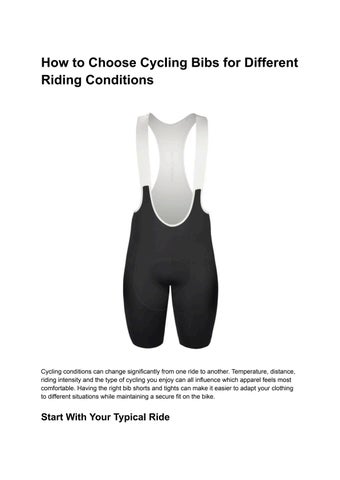
Choosing Bib Shorts for Warmer Weather Bib shorts are particularly practical when temperatures rise. Their shorter leg length provides greater airflow while the bib construction helps keep the garment securely positioned. When selecting bib shorts, look for a fit that feels supportive without being excessively tight. The leg sections should remain in place while pedalling, while the straps should sit comfortably across the shoulders. For cyclists who focus on speed, aerodynamic bib shorts can also be considered as part of a performance-oriented cycling setup. A close-fitting design can help create a streamlined profile and reduce unnecessary fabric movement.
When Full-Length Coverage Is Useful Cooler temperatures can make additional leg coverage more desirable. This is where bib tights can become a useful alternative to traditional bib shorts. Full-length bib tights can provide coverage from the waist down towards the ankles while maintaining the familiar bib construction. They can be suitable for cooler morning rides, seasonal changes or cyclists who prefer greater coverage during training.
Combining Coverage With Aerodynamics Performance does not always have to mean choosing between comfort and coverage. Riders who want a streamlined design while covering more of their legs may consider aero bib tights. These can be useful for cyclists who continue training in cooler conditions but still want clothing that complements a performance-focused riding setup. As with any cycling apparel, choosing the correct size and fit is essential for getting the intended benefits.
Think About Your Riding Routine Your cycling routine should guide your clothing choices. If most of your rides take place during warm weather, bib shorts may form the foundation of your cycling wardrobe. If you
ride throughout the year, adding bib tights can give you more flexibility when temperatures change. It can also be useful to consider how intense your rides usually are. Competitive cyclists may prioritise aerodynamic construction and a close fit, while recreational riders may place greater emphasis on comfort and versatility.
Building a Versatile Cycling Wardrobe Having different cycling apparel options allows you to adjust more easily to changing conditions. Rather than relying on one type of clothing for every ride, cyclists can choose between bib shorts and tights according to temperature, distance and riding goals. Rule 28's men's bib shorts and tights collection includes options for riders looking for different combinations of fit, coverage and performance. Choosing apparel based on your own riding conditions can help make every journey more comfortable and enjoyable.