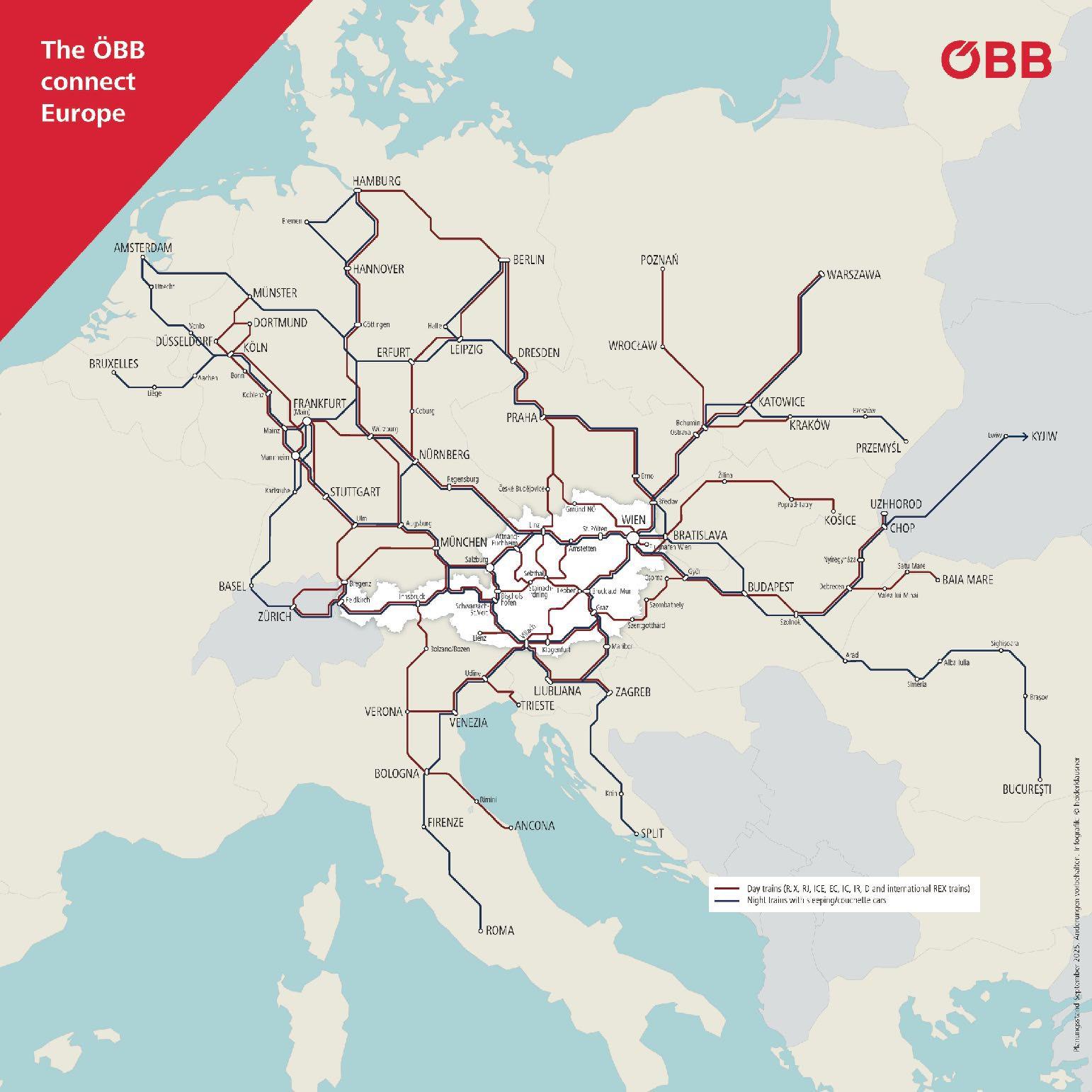
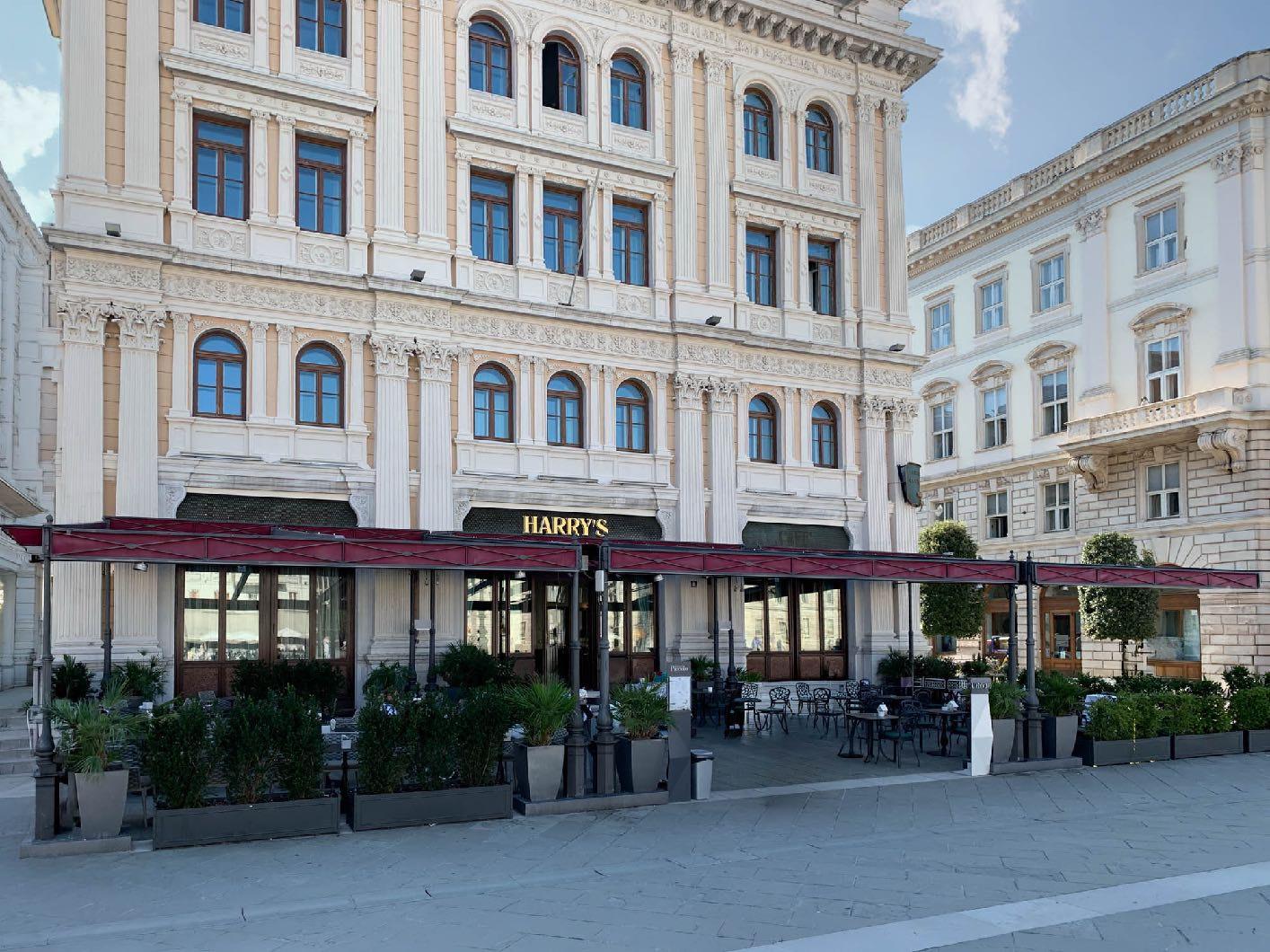
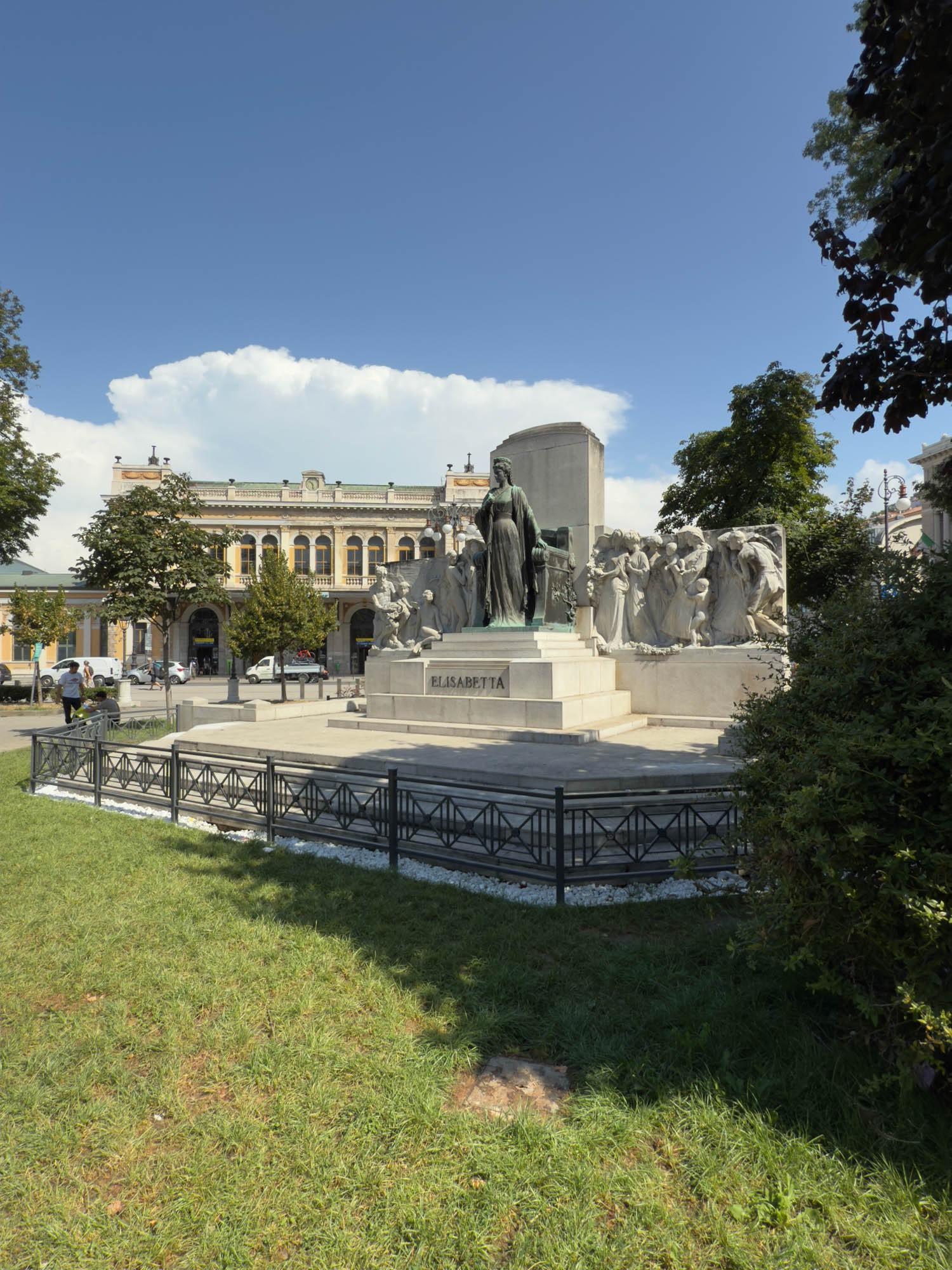
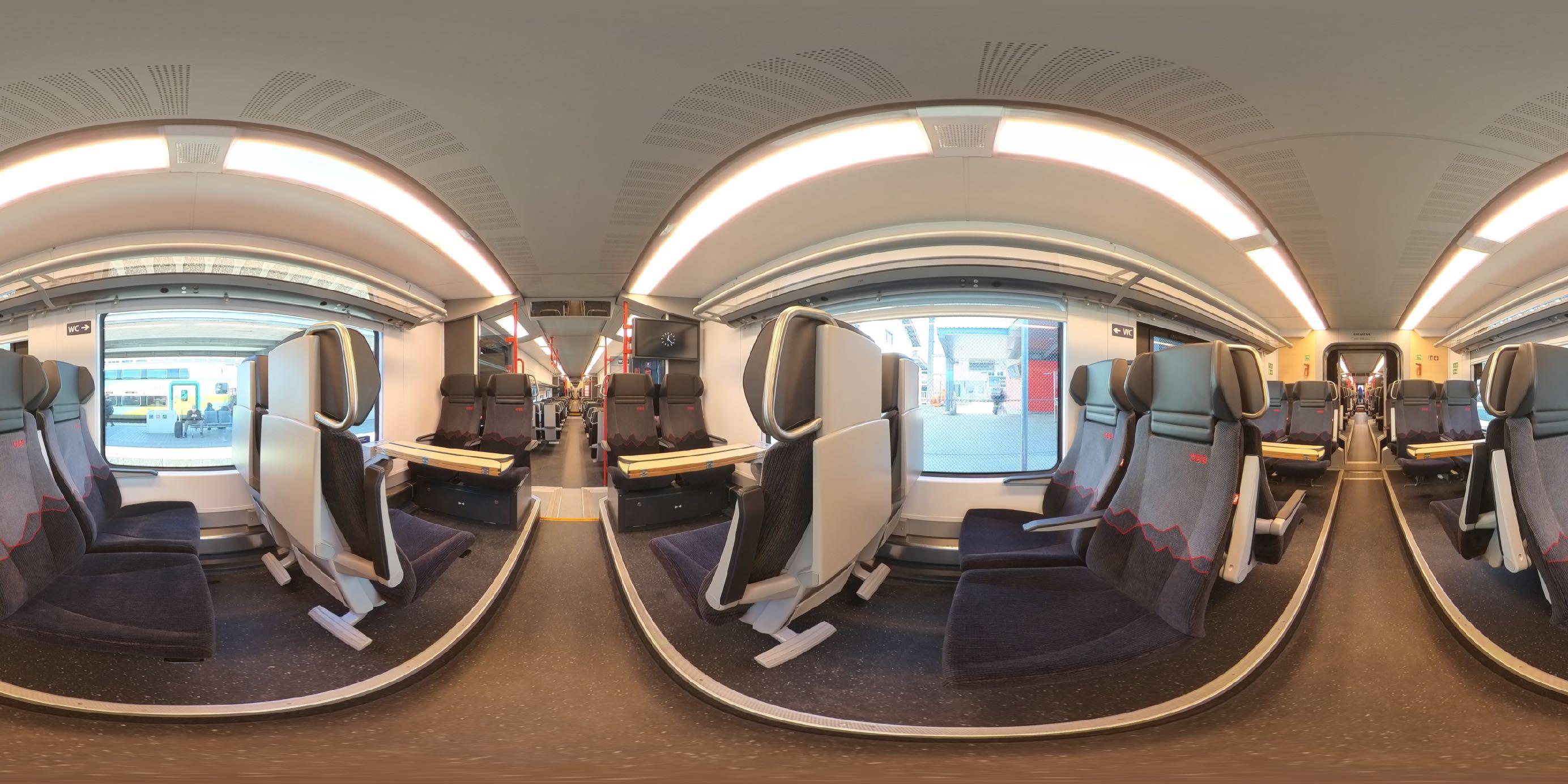
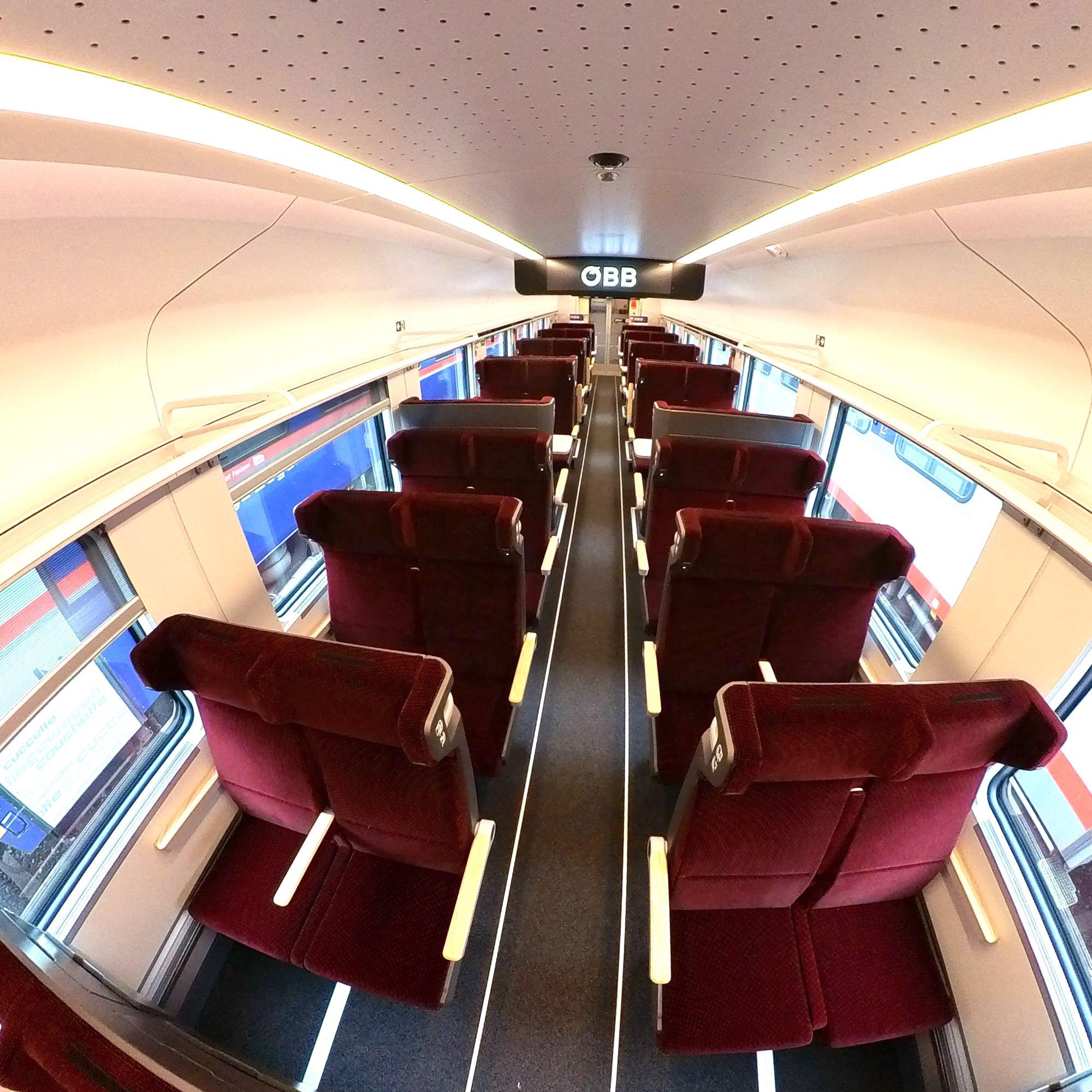
Since the inauguration of the 33-kilometre-long Koralm Tunnel, Austrian Federal Railways (ÖBB) has provided daily direct services from Vienna’s main station through Graz, Klagenfurt, and Udine to Trieste Centrale. ÖBB’s state-of-the-art Railjet trains carry passengers to the Gulf of Trieste’s coast in just under seven hours.
This new route has not only considerably shortened travel times but also sustainably enhanced the appeal of rail journeys within the Alps-Adriatic area. Commuters, holidaymakers, and business travellers all benefit from these comfortable and eco-friendly travel options, which offer a sustainable alternative to travelling by car or plane.
with the ÖBB railjet to Trieste
Ciao Trieste
Gulf of Trieste
Borgo Teresiano
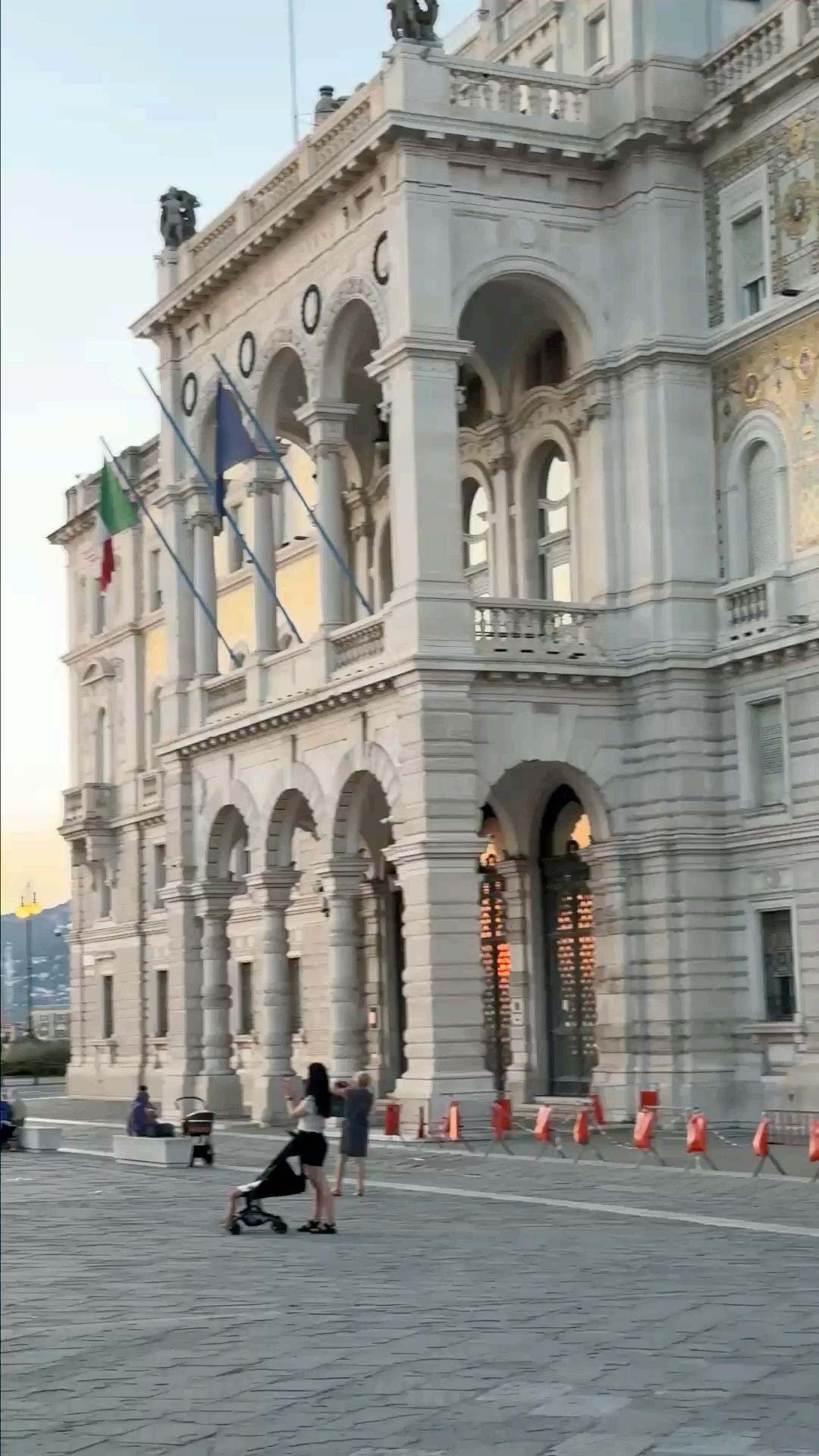
Piazza Unità d’Italia
Castello di San Giusto
Coffee metropolis
Miramare Castle
Special
Imprint
Ciao Trieste
Trieste is the capital of the autonomous region Friuli-Venezia Giulia and has a population of around 200,000 residents. This delightful port city, situated close to the Slovenian border, enchants visitors with its distinctive charm. The history of Trieste dates back to 128 BC. For several centuries, the city played a significant role within the Habsburg Monarchy. The grand architecture and historic landmarks stand as reminders of the period when Trieste was a key trading hub and one of the main
bases for the Austro-Hungarian Navy. Since 1918, Trieste has belonged to Italy, yet it continues to preserve its unique character, shaped by a blend of various cultures, languages, ethnic groups, and religions. Over many centuries, Trieste was an integral part of the Habsburg Monarchy. It is regarded as a “città mitteleuropea”, characterised by a cosmopolitan and frequently multilingual atmosphere that reflects the splendid era of the Habsburg Monarchy up until 1914.
Ciao Trieste
with the ÖBB railjet to Trieste
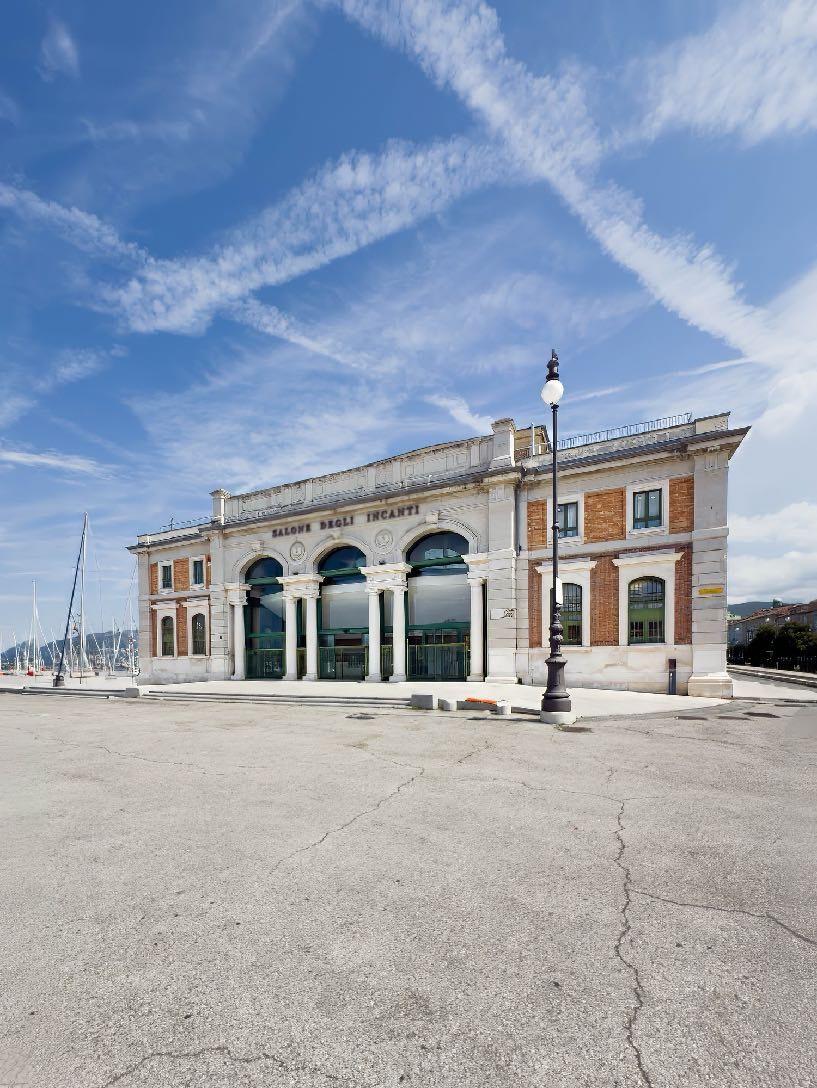
Salone degli Incanti Casa Chiozza
with the ÖBB railjet to Trieste
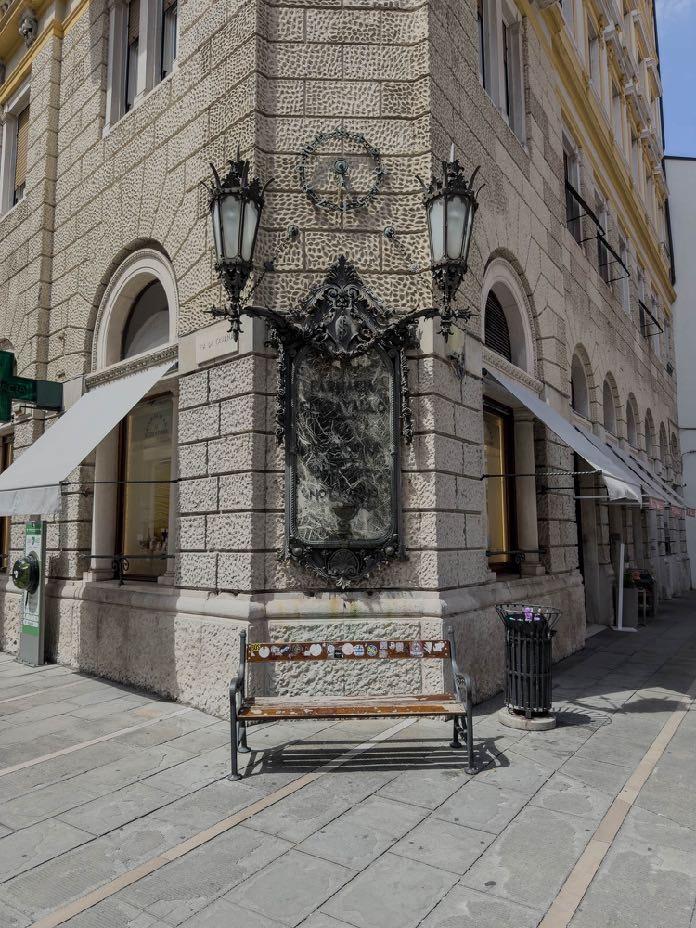
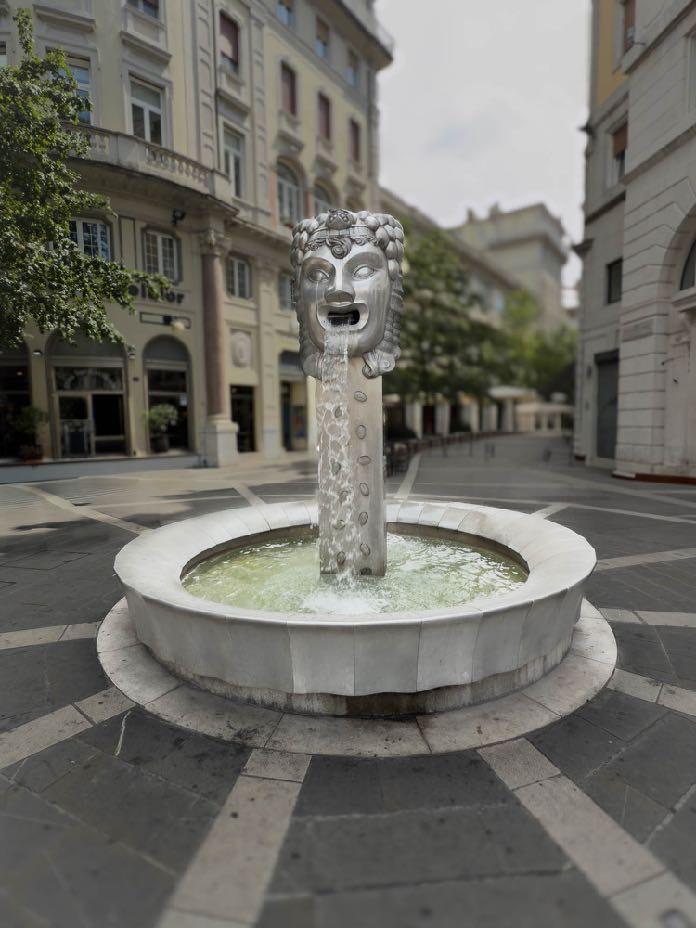
Farmacia Al Redentore Fontana del Giano Bifronte
Gulf of Trieste
Gulf of Trieste
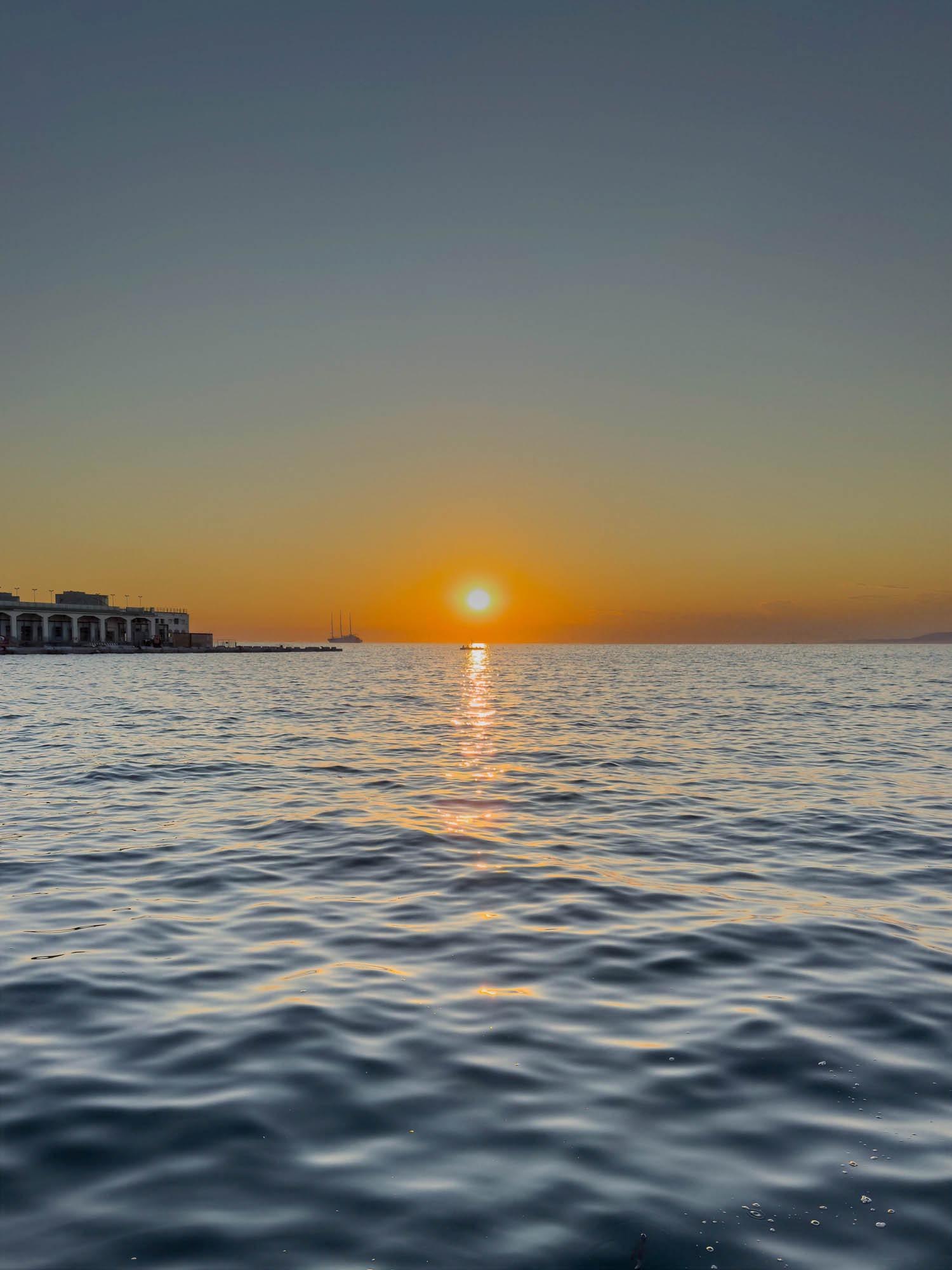
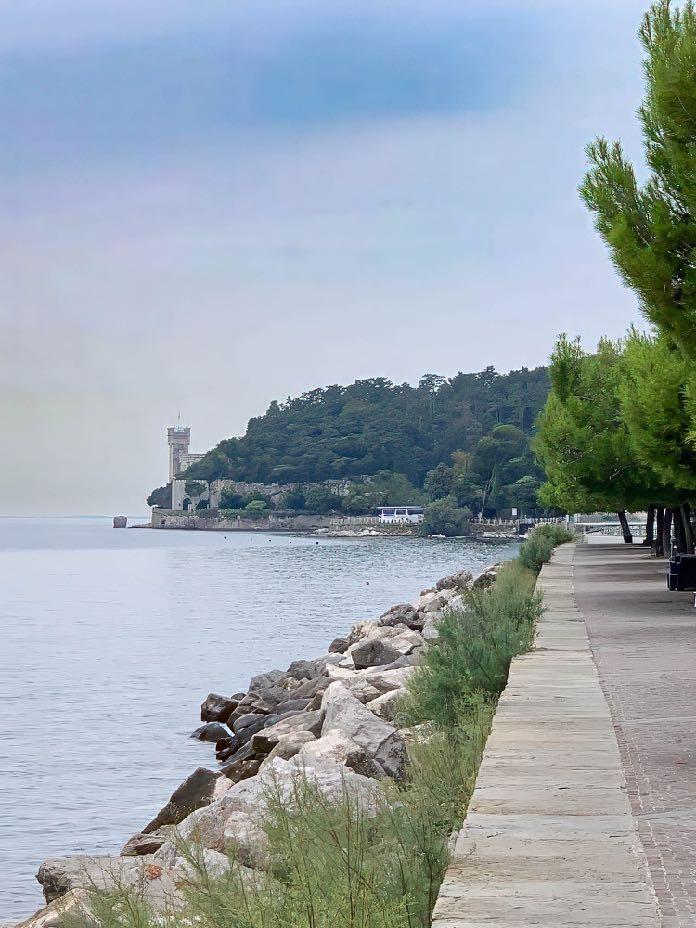
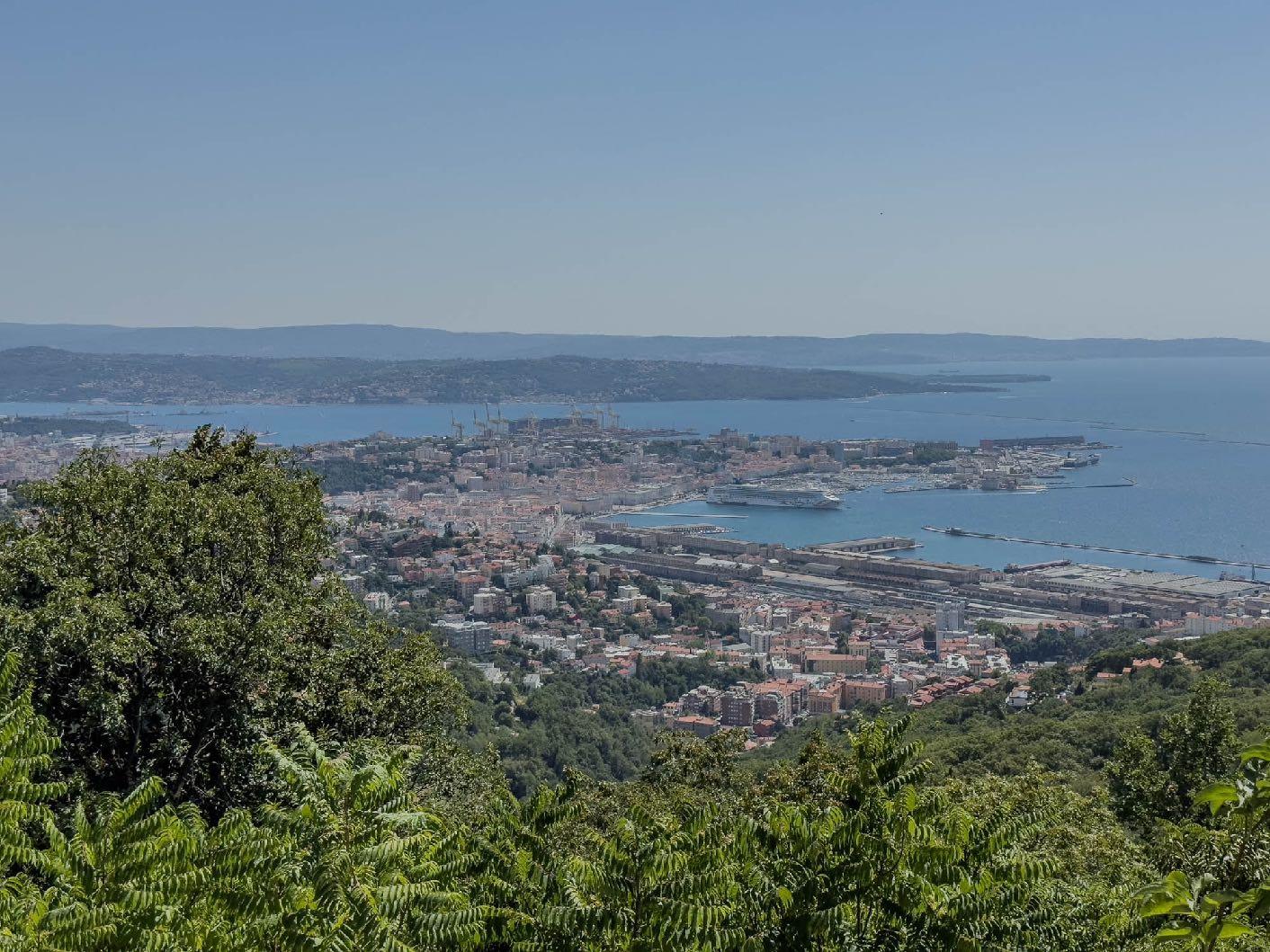
In the Gulf of Trieste, the stunning Adriatic Sea blends seamlessly with a rich and refined history. From the captivating Miramare Castle, standing bright and white above the crystalclear turquoise waters, to the lively centre of the port city of Trieste, lies one of Northern Italy’s most enchanting coastal areas.
Along this Adriatic shoreline, visitors can stroll along the elegant waterfront promenade, take in exceptional views of the bay, and
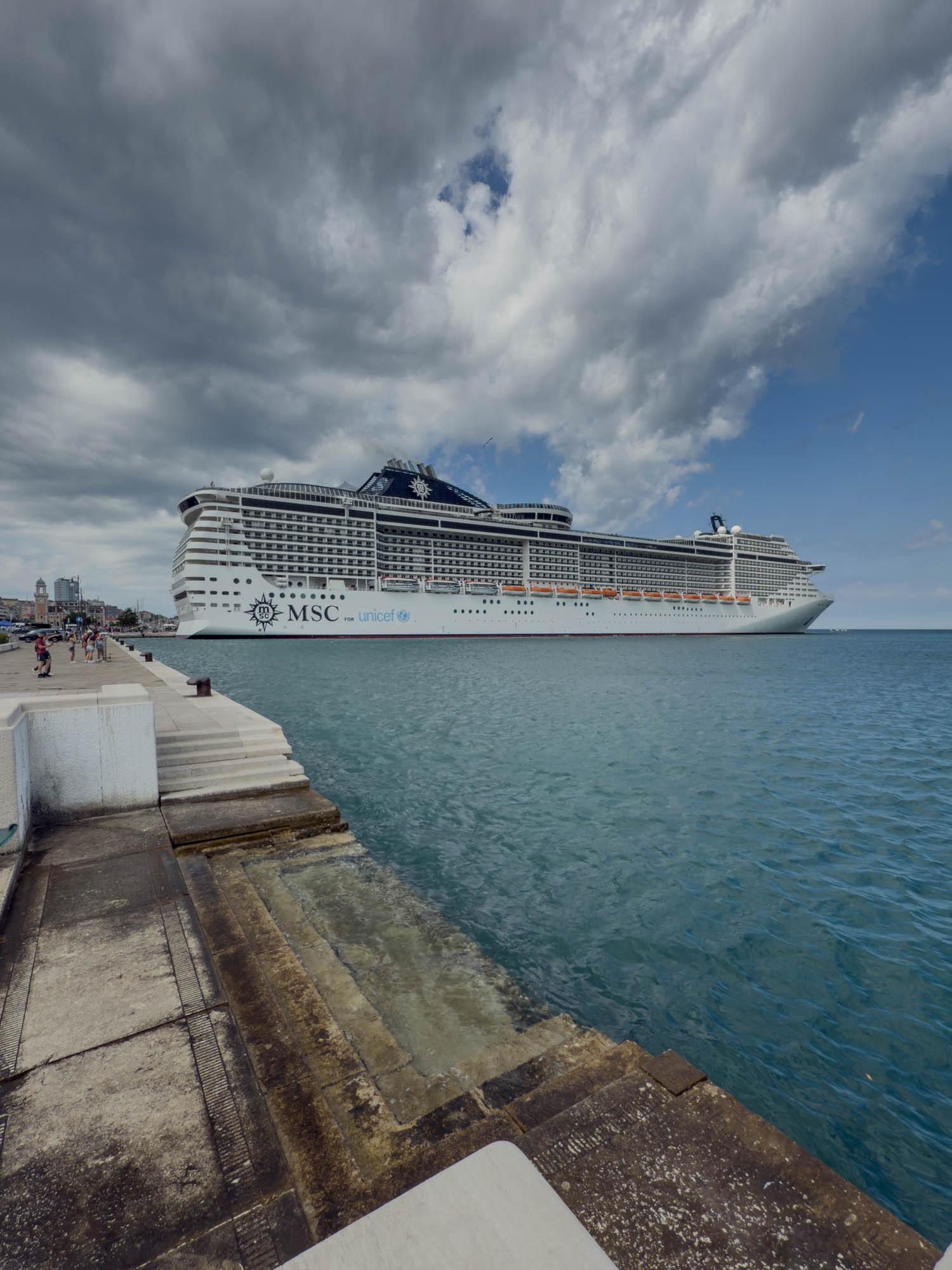
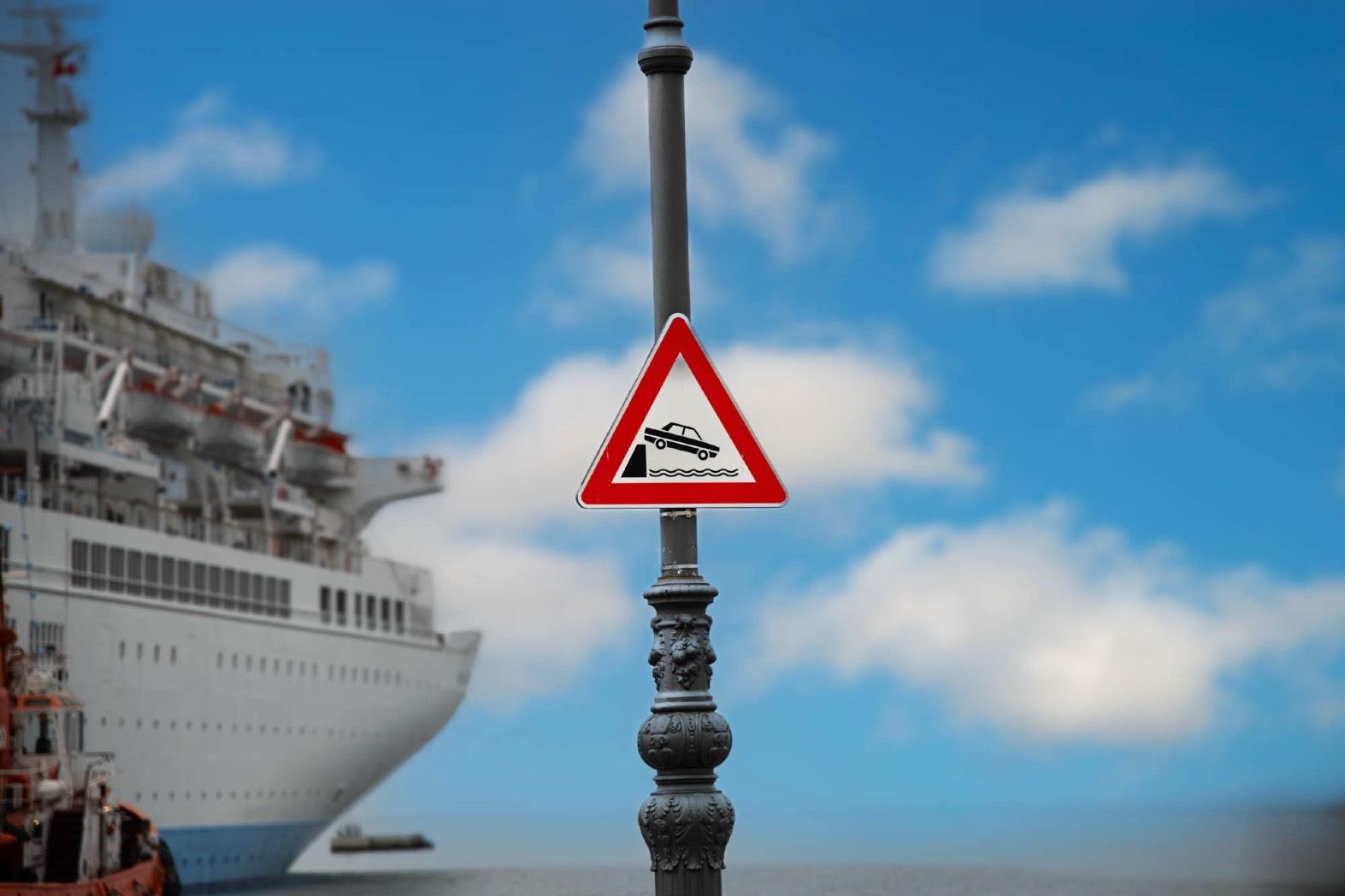
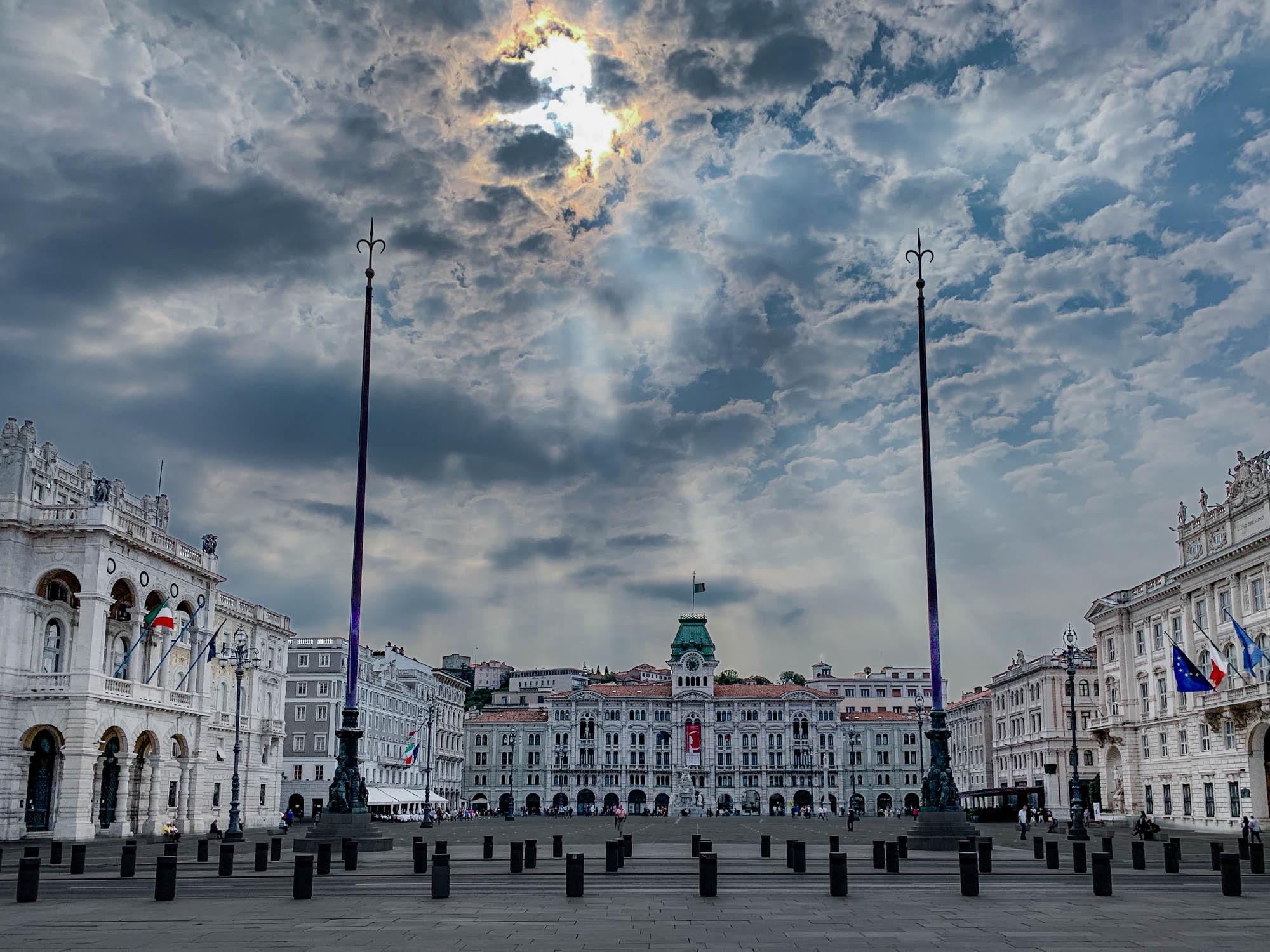
soak up the distinctive ambiance of a city positioned at the crossroads of Central Europe and the Mediterranean. Trieste also ranks among the Adriatic’s key cruise ports: contemporary cruise liners berth directly at the impressive Piazza Unità d’Italia. The city serves perfectly as either a departure or arrival point for cruises. From Trieste, Vienna is easily reachable via modern ÖBB Railjet trains. In the Gulf of Trieste, sea, culture, and lifestyle unite in a truly remarkable way.
with the ÖBB railjet to Trieste
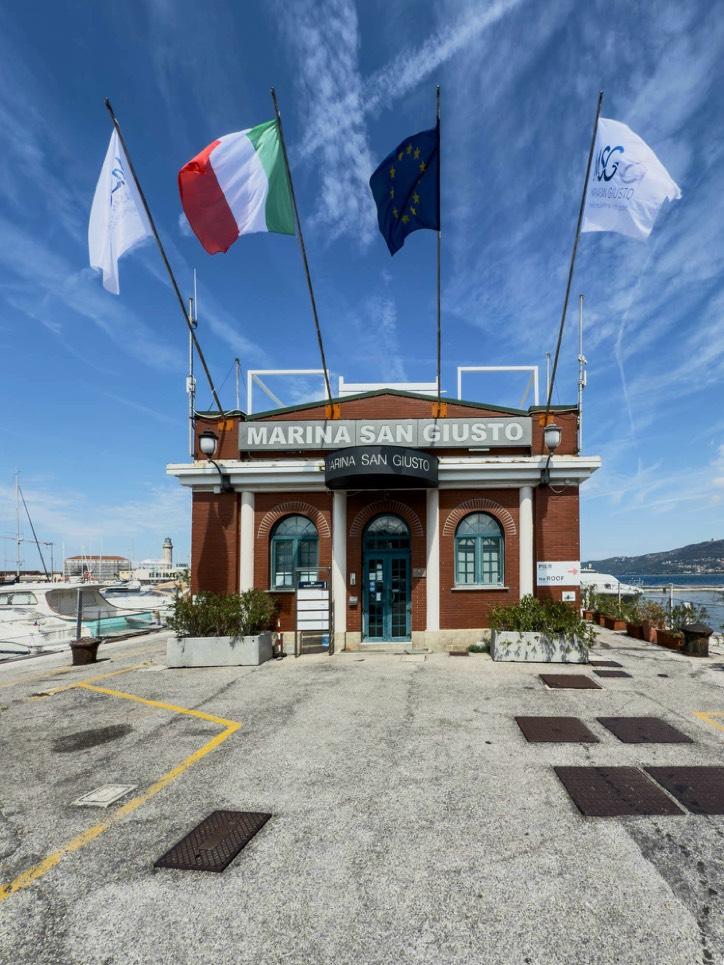
Marina San Giusto
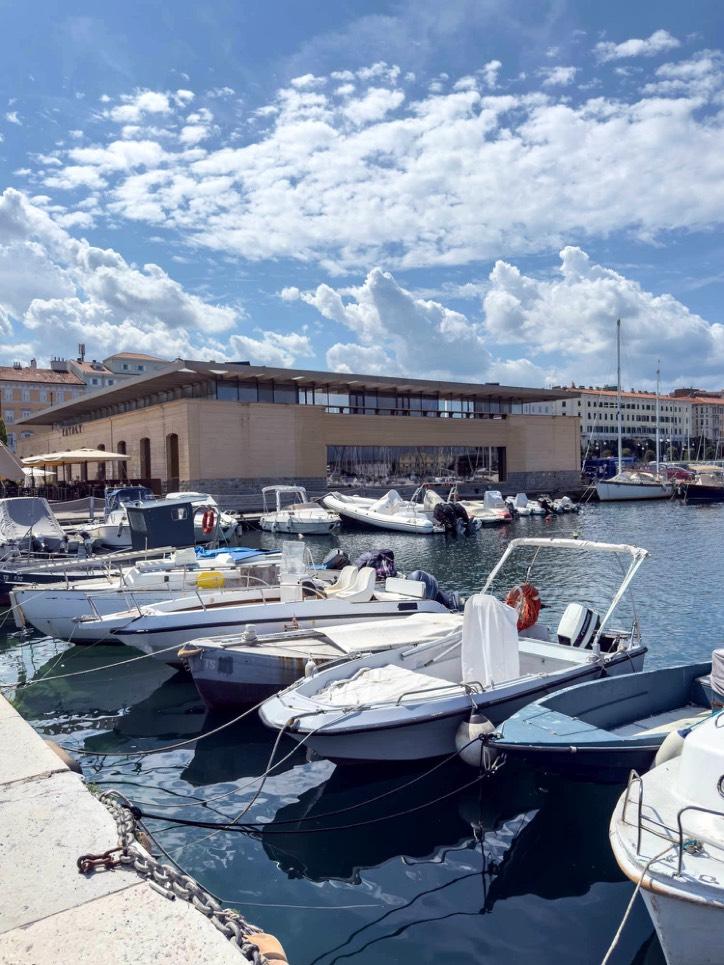
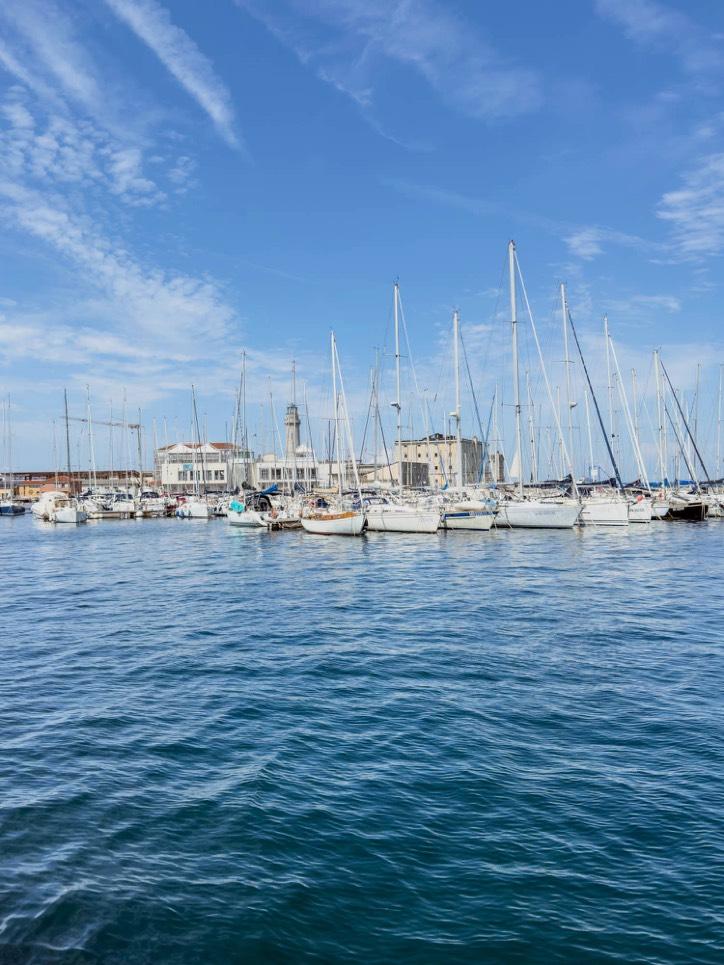
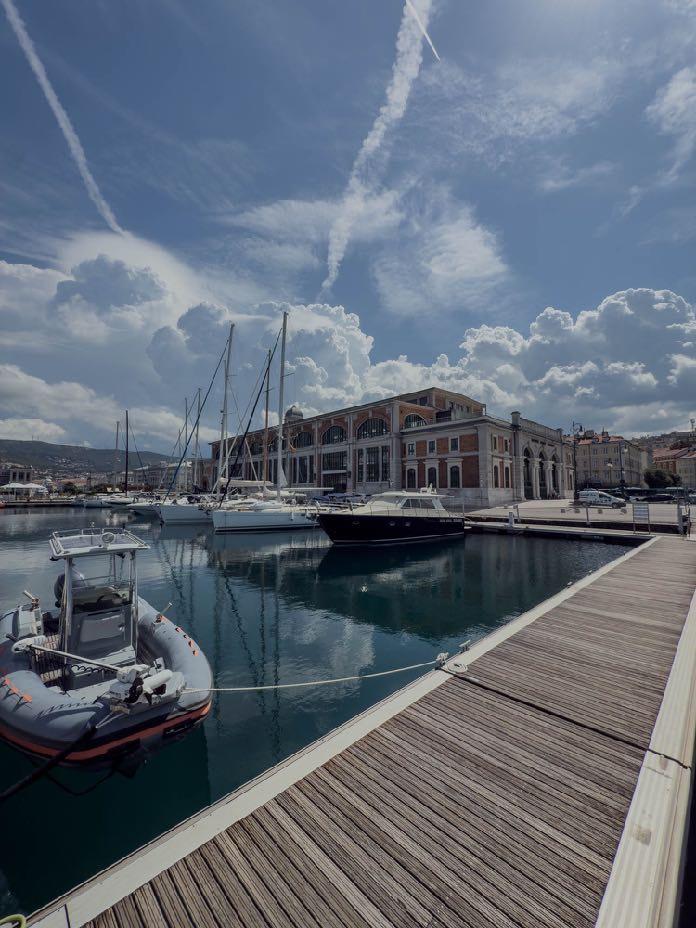
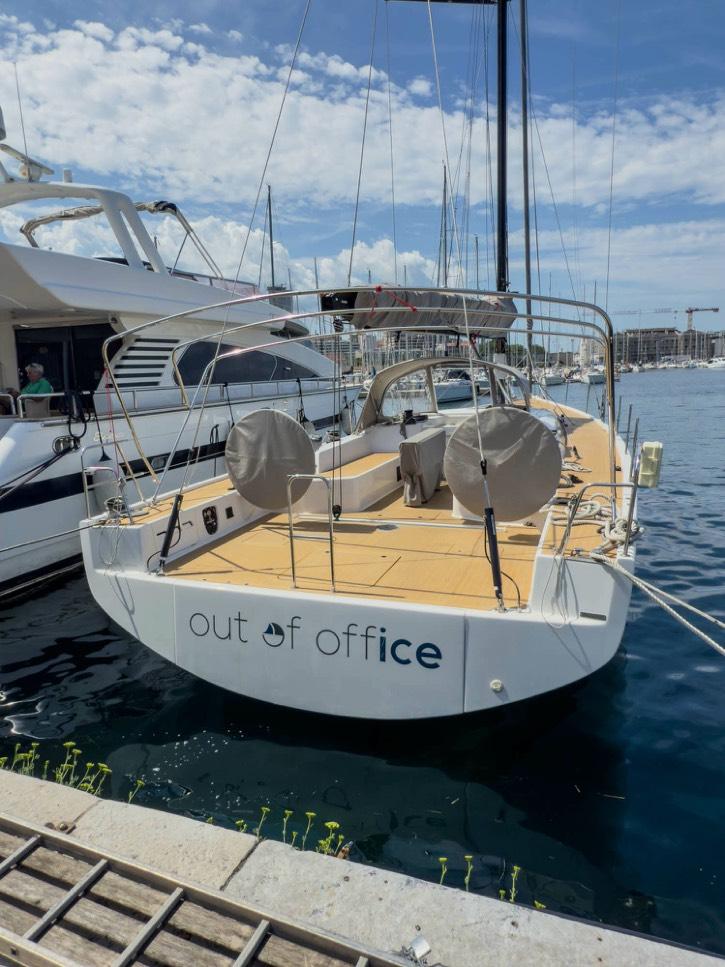
Just a short walk from Piazza Unità d’Italia, located right in the centre of Porto Vecchio’s historic quarter, lies Marina San Giusto. The older section of the harbour accommodates sailing yachts up to 15 metres (almost 50 feet) long. In contrast, the area reserved for mega-yachts can accommodate vessels up to 120 metres (close to 400 feet) in length.
Marina San Giusto is not only an ideal mooring location for those seeking a marina berth for their yacht but also houses the “Pier the Roof” fish restaurant, renowned for its exquisite culinary offerings. During the warmer months, guests can enjoy refreshing cocktails in a relaxed atmosphere at the rooftop bar.
From this elevated spot, you are treated to an impressive view: San Giusto Hill topped by its grand castle, the charming white Miramare Castle visible on the distant horizon, and the sparkling waters of the Adriatic Sea.
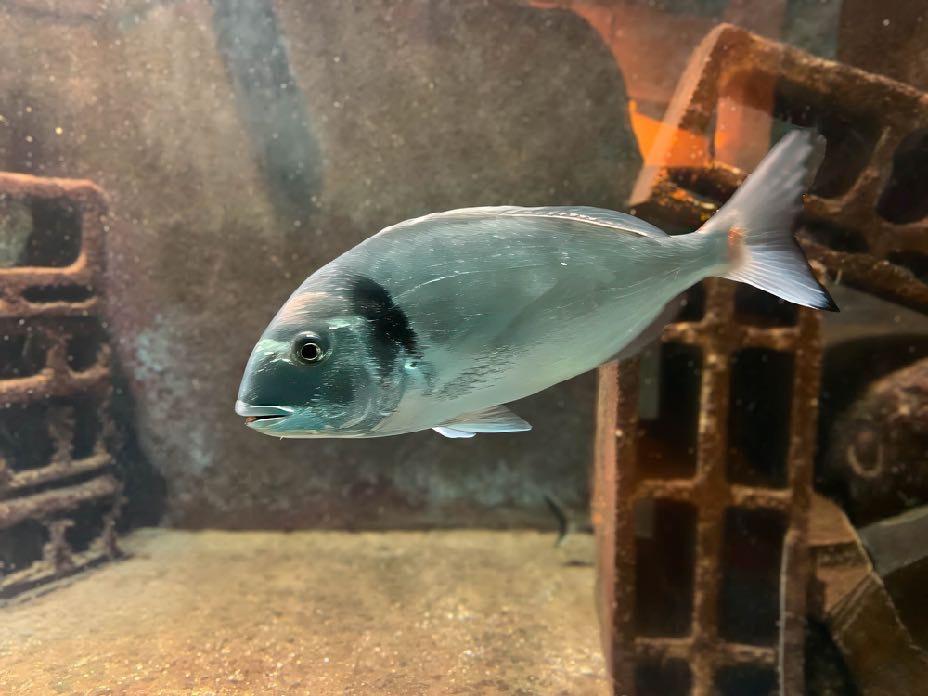
Acquario Marino della Città di Trieste
The Civico Acquario Marino della Città di Trieste (Civic Sea Aquarium of the City of Trieste) is a historic treasure situated directly on the waterfront and has remained one of the city’s most cherished attractions since its opening in 1933. It provides an exceptional insight into the captivating underwater environment of the Gulf of Trieste. Located within the delightful former Pescheria Centrale building, the aquarium housed 30 tanks that vividly displayed the rich marine biodiversity of the northern Adriatic Sea. The large exhibition aquariums, which carefully represented typical seabed habitats, were especially well-loved. The aquarium was a popular destination for families, school groups, and all those with an appreciation for marine life. The Acquario combined educational initiatives, scientific research, and a strong commitment to conserving the Adriatic Sea. Here, the distinctive biodiversity of the local coastal region was brought to life in a vivid manner. Since 2020, the Acquario Marino has been closed for comprehensive renovations and upgrades. Following several delays, its reopening is now anticipated in 2027.
with the ÖBB railjet to Trieste
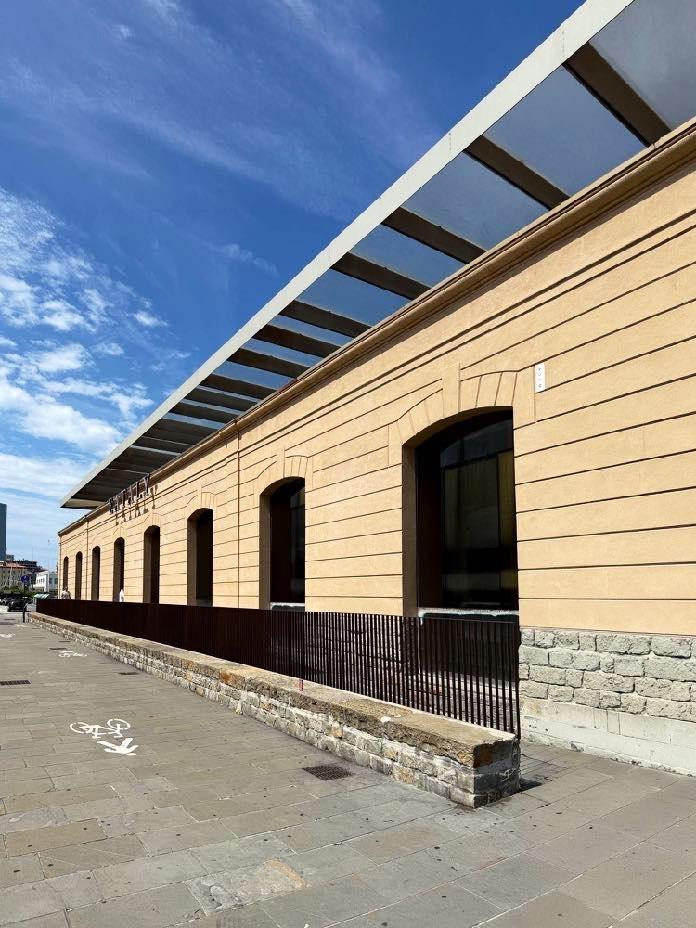
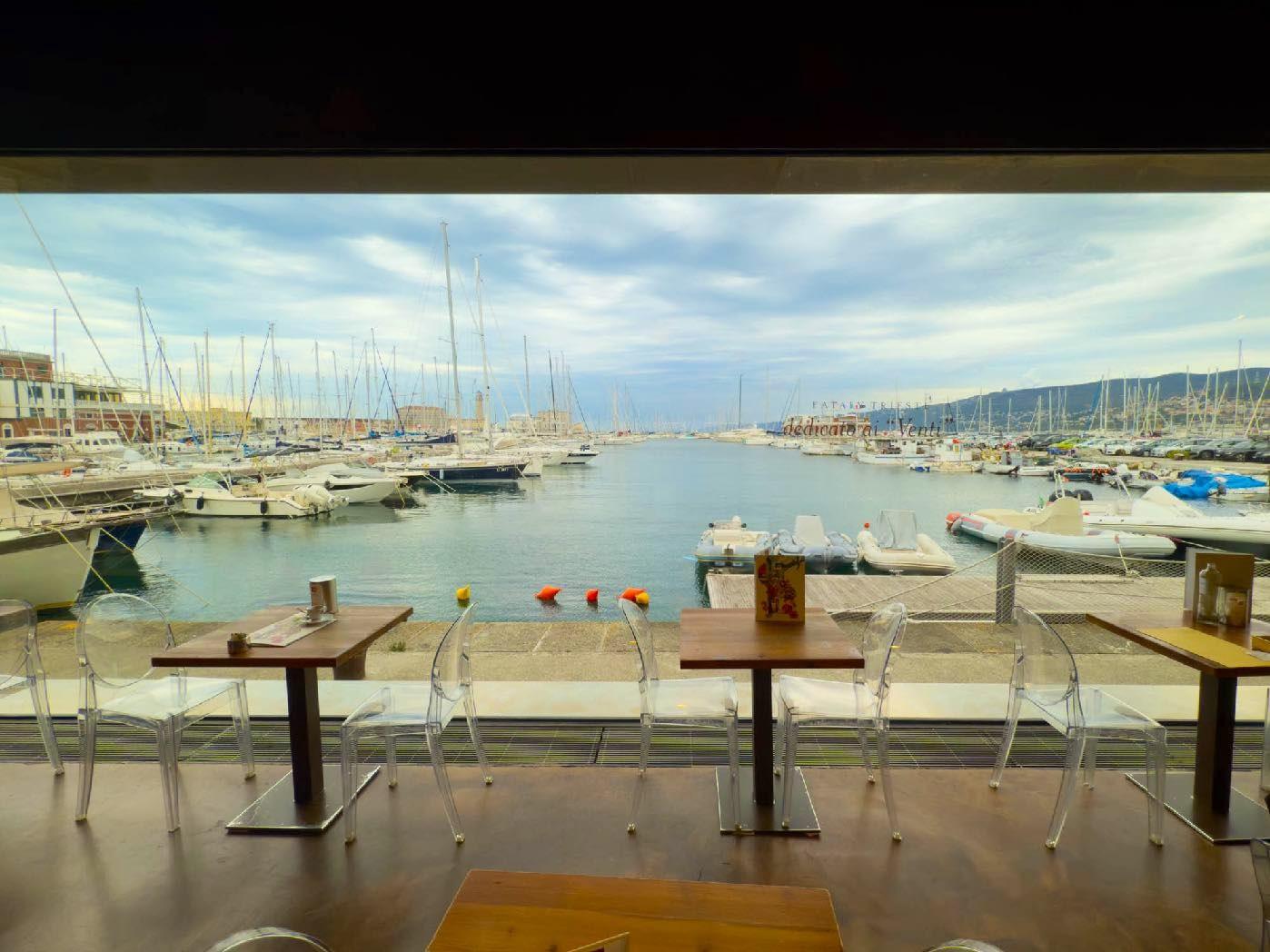
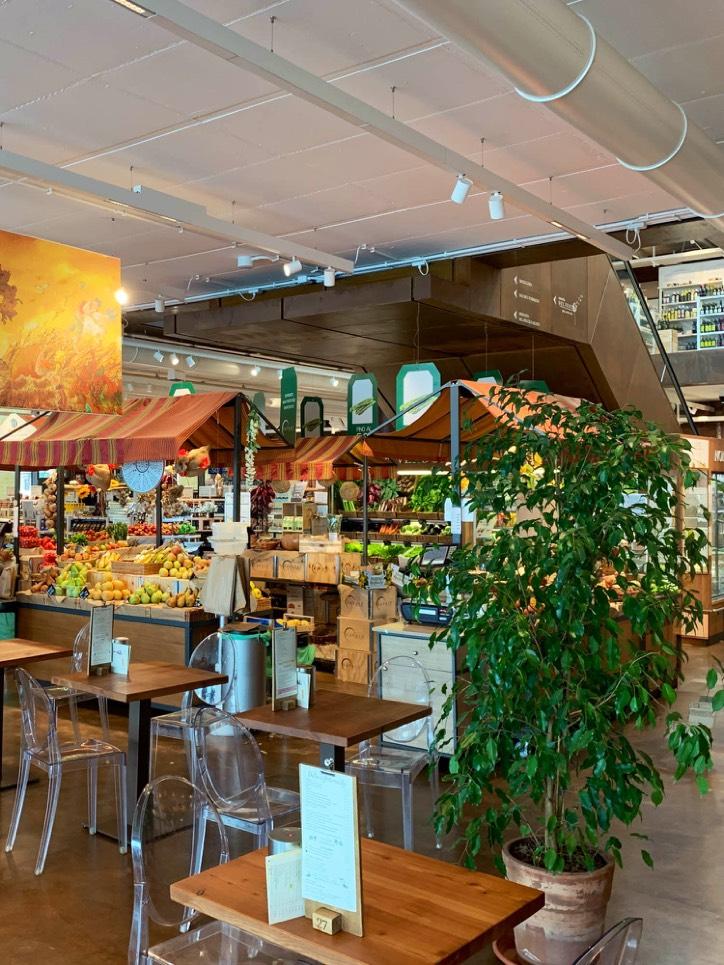
Housed in the historic Antico Magazzino Vini, a former wine storage building dating back to 1902, you will find a comprehensive range of Italian gastronomic treasures. Eataly Trieste serves as a lively centre for Italian food culture located right on the waterfront – an essential destination for anyone who values premium-quality cuisine, genuine products, and the distinctive atmosphere of Trieste. Multiple restaurants and bars highlight the rich variety of Italian culinary traditions. Moreover, a spacious market presents an array of excellent Italian specialties: fresh pasta, cheeses from artisanal producers, salami, olive oils, wines (including selections from nearby Friuli and Slovenia), bread, confectionery, and much more. For those eager to explore the art of Italian cooking further, Eataly frequently hosts cooking workshops. Whether you are stopping by for a quick coffee with a sea view, purchasing regional delicacies to enjoy at home, or savouring a relaxed meal, Eataly Trieste perfectly blends the city’s maritime charm with a dedication to outstanding food.
Borgo Teresiano
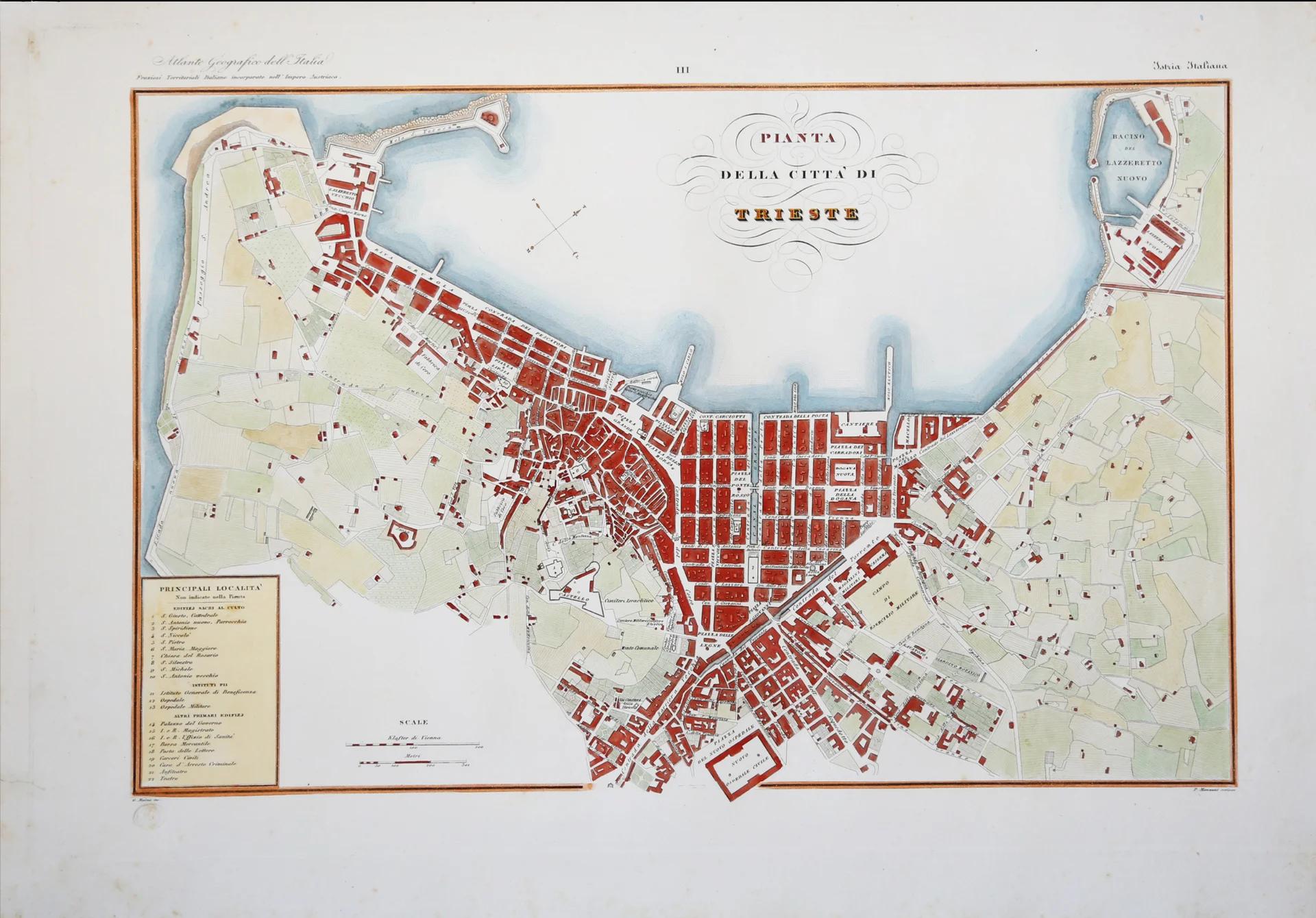
Trieste 1844
This carefully designed historical map from the "Atlante Geografico dell'Italia" depicts the topographical layout of Trieste during the 19th century.
It clearly displays the city's growth, highlighting the contrast between the structured street pattern of Borgo Teresiano and the narrow, winding lanes of the old town and San Giusto Hill.
The harbour facilities, including both the Old and New Hospitals situated on the bay, are distinctly shown.
In the mid-1700s, Empress Maria Theresa ordered the development of Borgo Teresiano. Today, this area, together with Borgo Giuseppino, Barriera Nuova, San Vito, and Città Vecchia, constitutes District 4 (Circoscrizione IV).
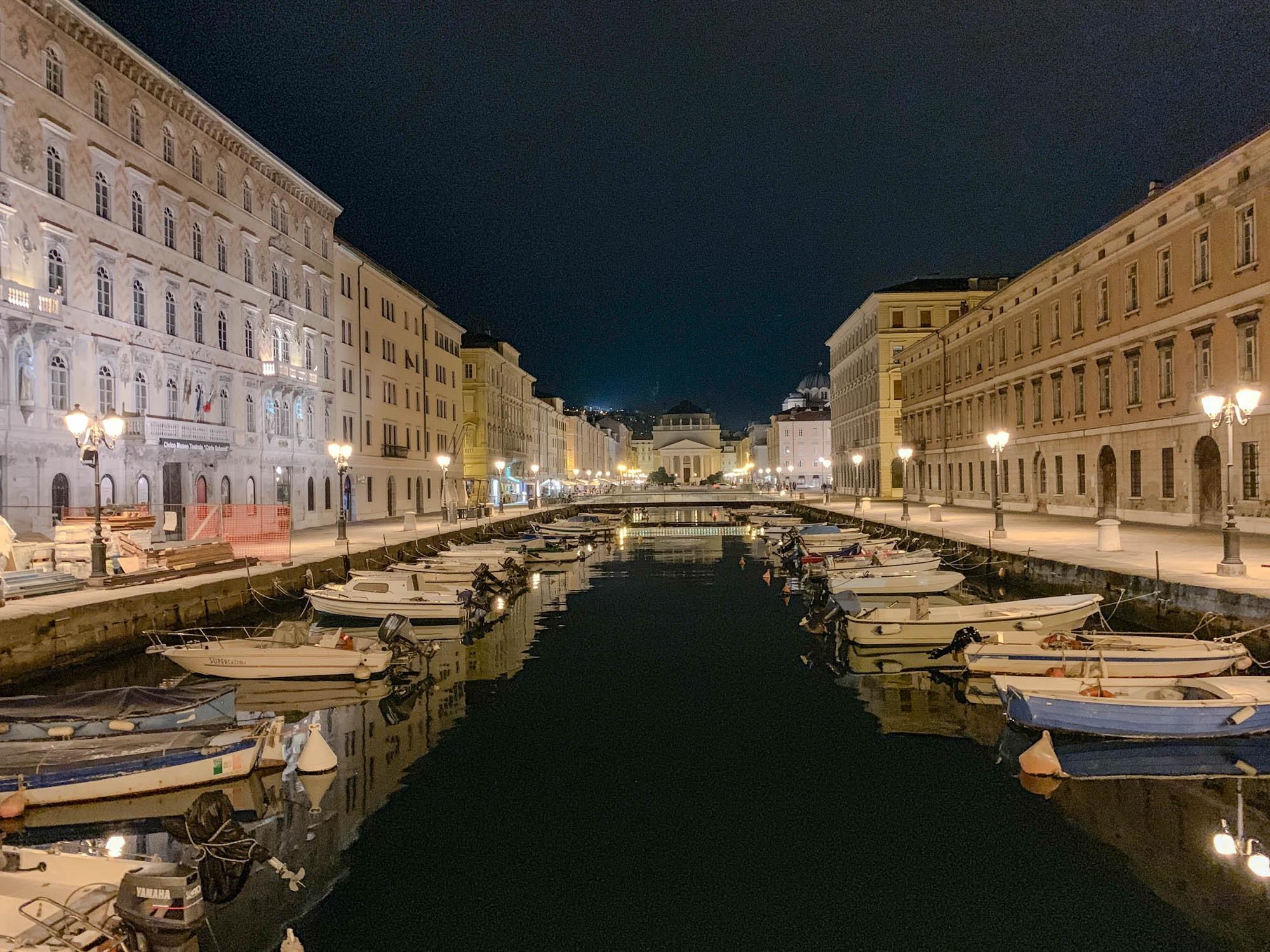
The Canal Grande in Trieste – a Venetian treasure nestled in the lively centre of this bustling port city. Constructed between 1754 and 1766, this charming waterway originally functioned as a gateway for trading vessels. Nowadays, it radiates an authentic lagoon charm within the Habsburg Borgo Teresiano district. Graceful palazzi, vividly painted boats, and welcoming cafés adorn its shores, while neoclassical frontages and the splendid
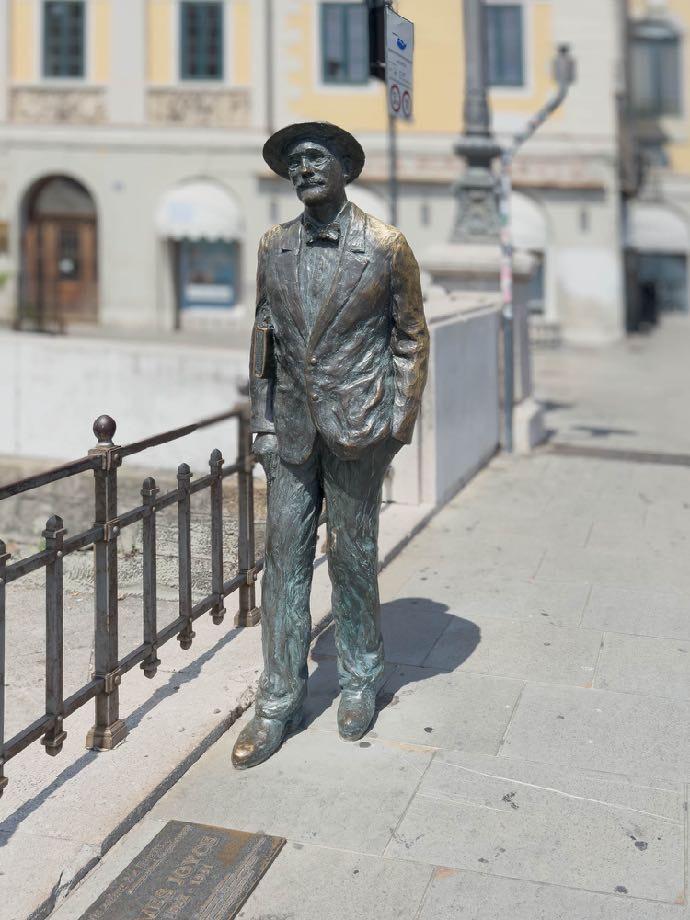
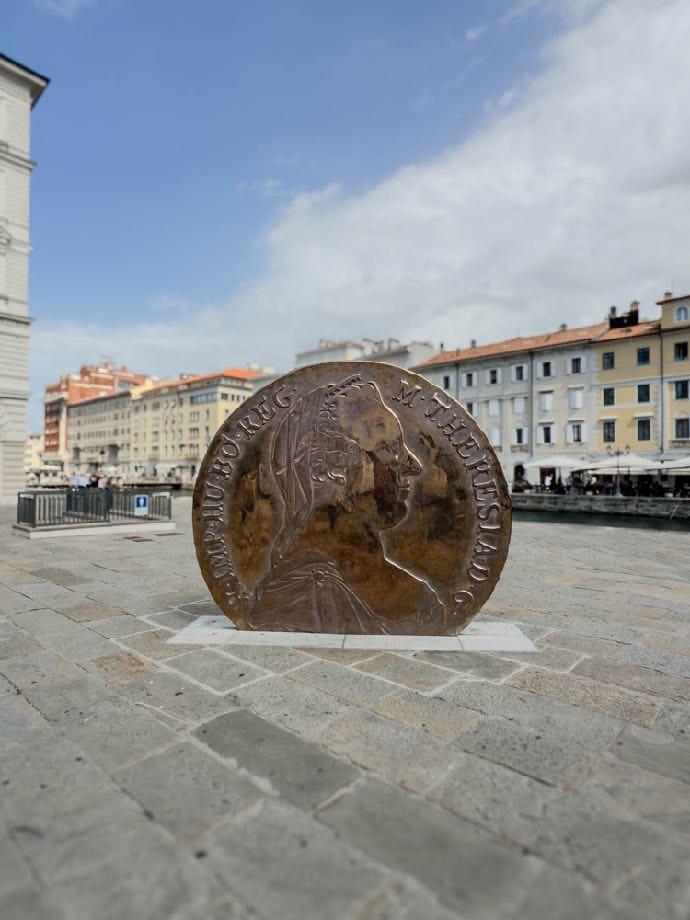
Church of Sant’Antonio Nuovo are softly mirrored in the calm waters. Whether illuminated by the golden hues of sunset or the gentle glow of evening lights, the atmosphere here is always relaxing. At the Ponte Rosso, a statue honours the Irish author James Joyce, who spent many years living in Trieste. Opposite the bridge, since 2023, visitors have been welcomed by a monument shaped like a giant Maria Theresa coin.
with the ÖBB railjet to Trieste
James Joyce „Moneta“
James Joyce was often spotted at different locations around Trieste, including the Berlitz School and Piazza Ponterosso, a place where he once resided and where his bronze statue is presently located.
The striking monument shaped like a Maria Theresa Thaler pays tribute to the Austrian Empress, recognizing her significant role in the advancement of Trieste.
Obelisco di Vetro Josef Ressel
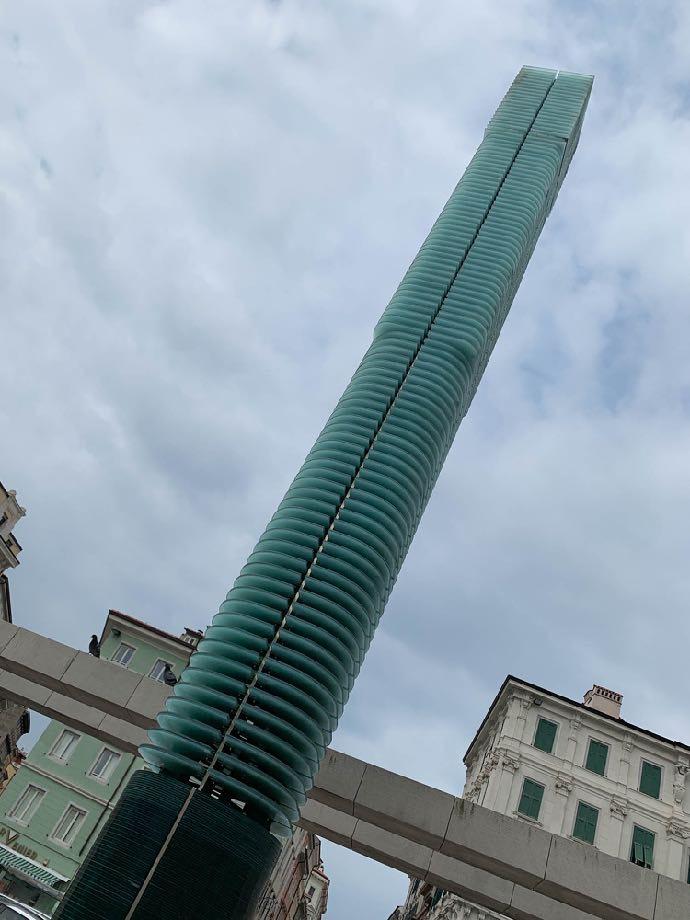
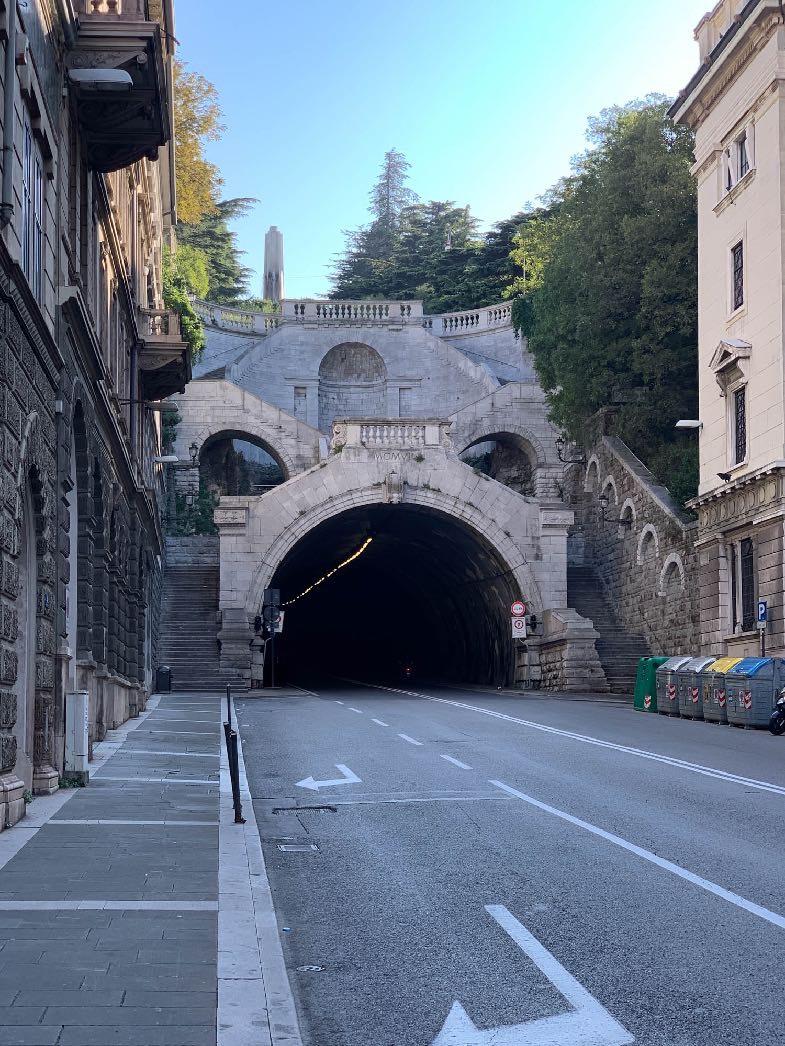
The glass obelisk located in Piazza Carlo Goldini honours those who suffered under totalitarian regimes. Close by stands the Scala dei Giganti, a grand staircase ascending to San Giusto Hill.
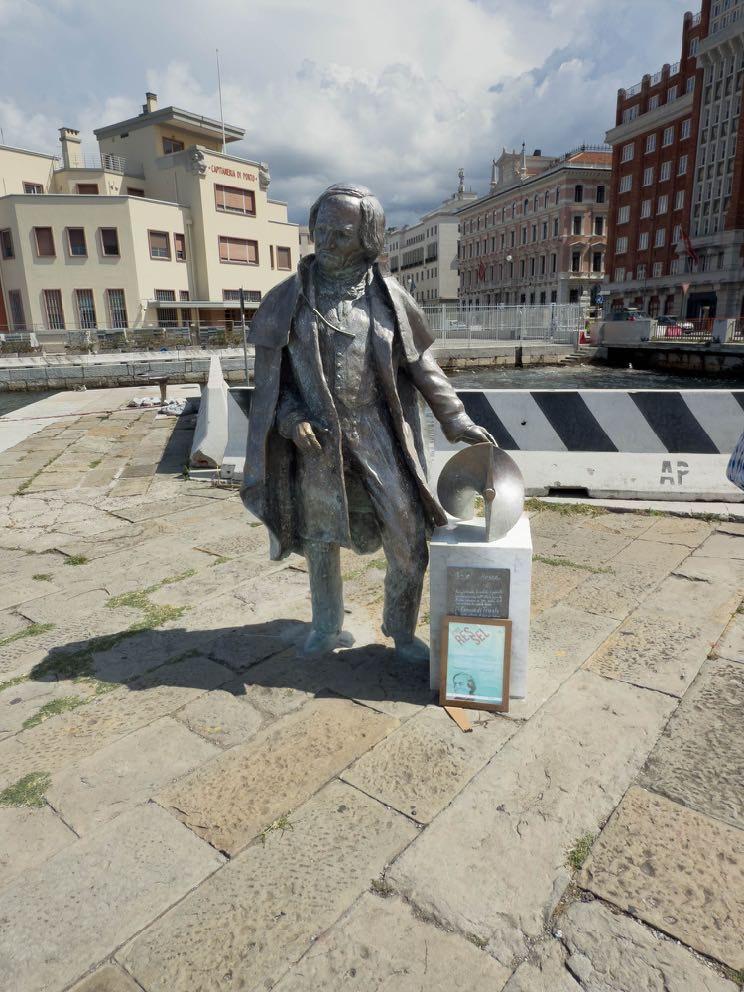
Josef Ressel, known as the inventor of the ship's propeller, worked as a forestry officer and was also an inventor. Early in 1821, he was entrusted with overseeing the reforestation efforts in the karst area.
with the ÖBB railjet to Trieste
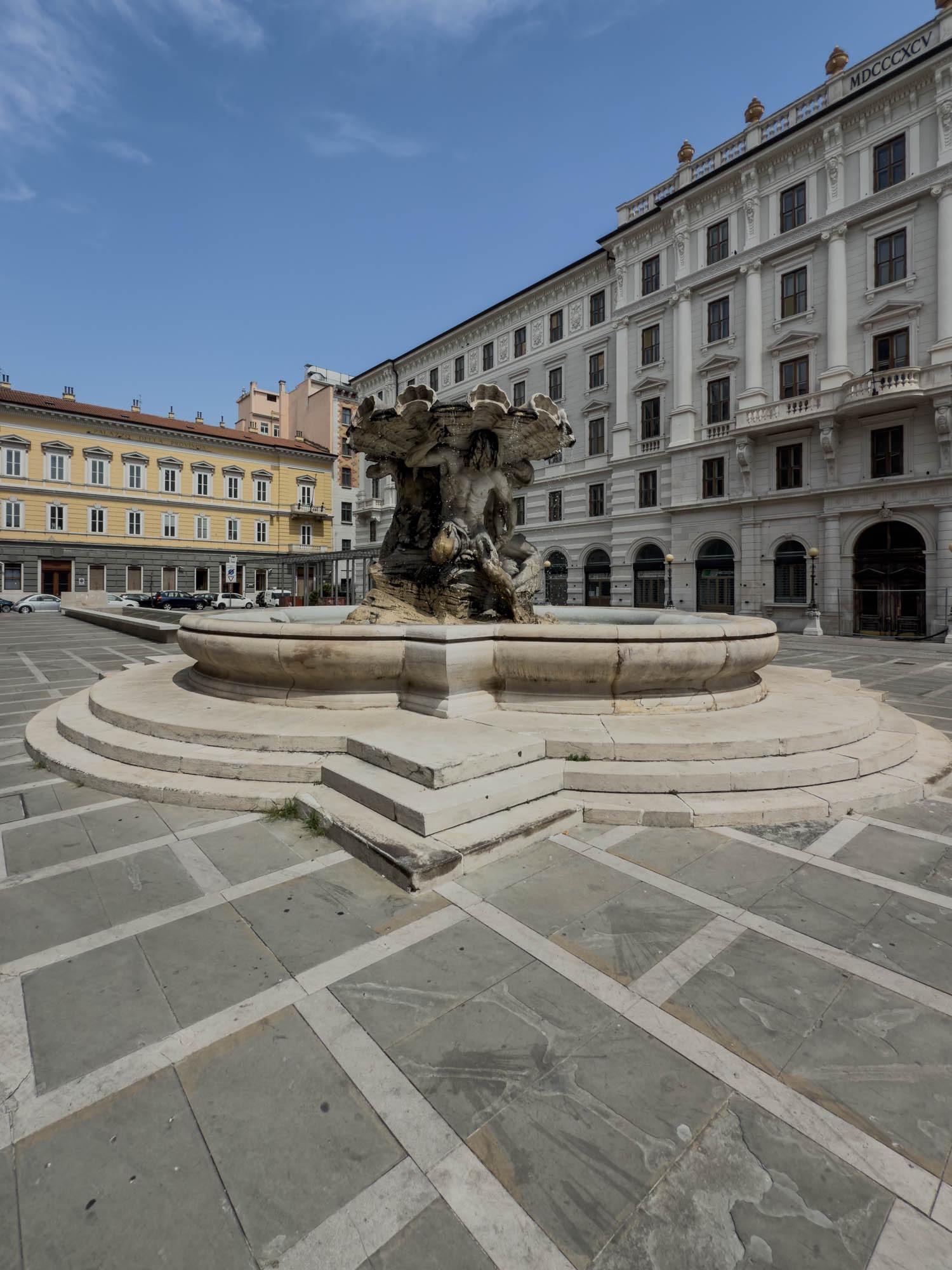
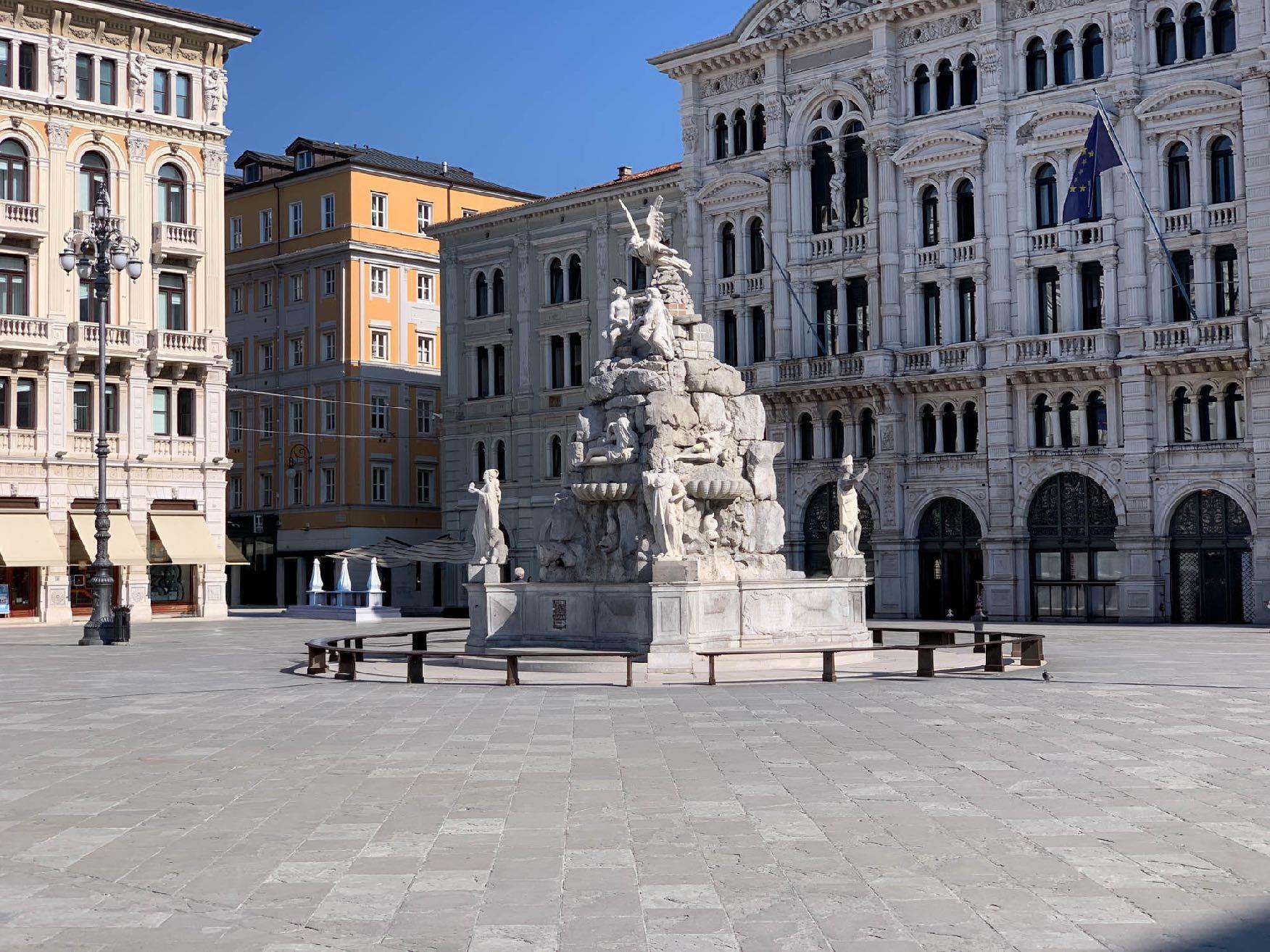
The square was designed in the 18th century as part of the expansion of Borgo Teresiano. Originally, it was named Piazza della Dogana, after the Palazzo della Dogana, which housed the Austro-Hungarian administration and dominated the area. Towards the close of the 19th century, the existing structures were torn down to make space for a grand post office building. From that point onward, the square became known as Piazza delle Poste. It received its present name
in 1919. At the heart of the square stands the impressive Triton Fountain. To the west lies the post office building, which now contains the Museo postale e telegrafico della Mitteleuropa (Postal and Telegraph Museum of Central Europe). Directly opposite is the Palazzo delle Ferrovie dello Stato (Palace of the State Railways), formerly the headquarters of the State Railways, representing the significance of rail transport in Italy.
with the ÖBB railjet to Trieste
Piazza Vittorio Veneto
Museo Telegrafico e Postale della Mitteleuropa
is given to the era of Austrian governance in Friuli-Venezia Giulia. The display is organised into multiple segments dedicated to
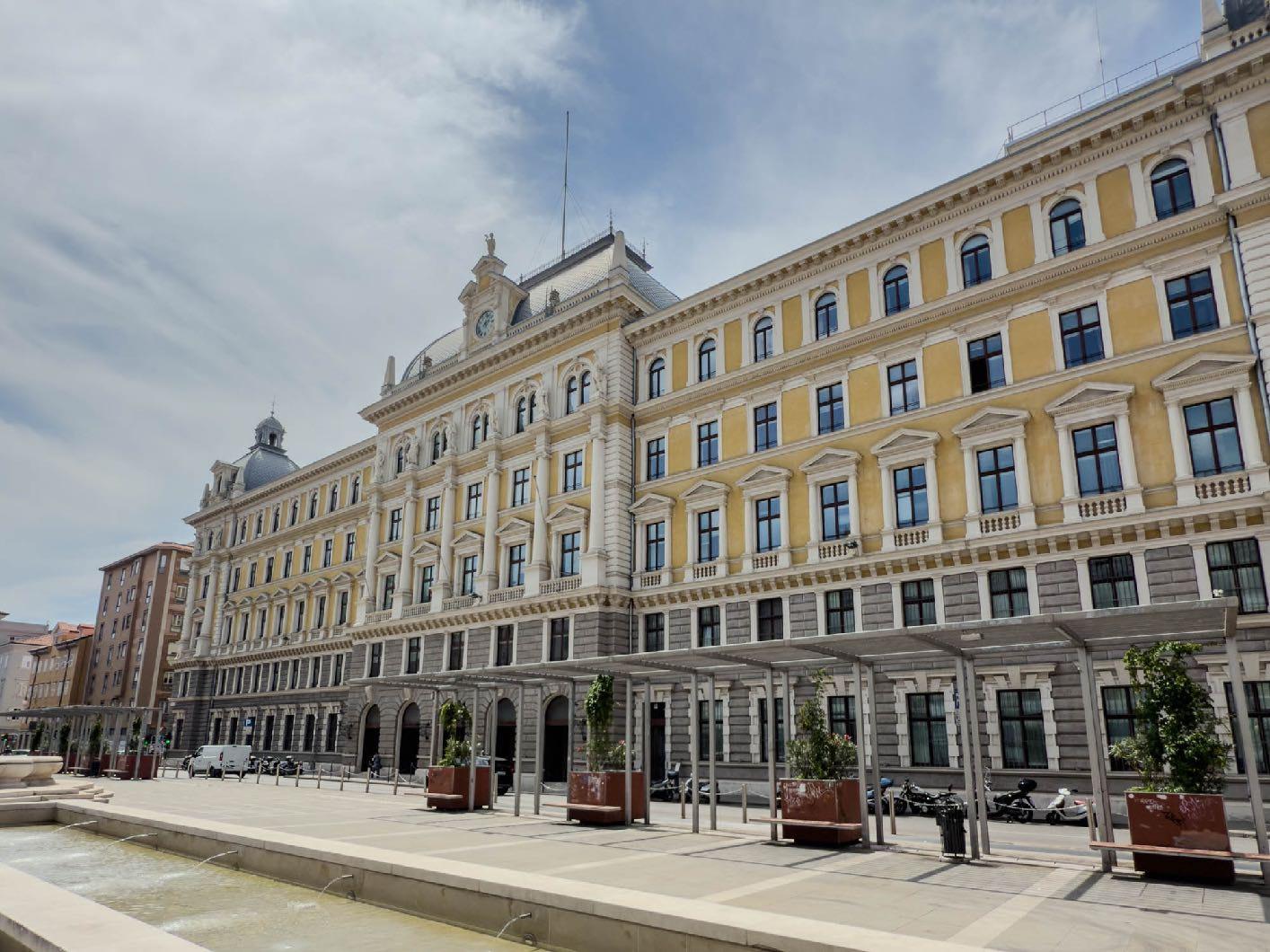
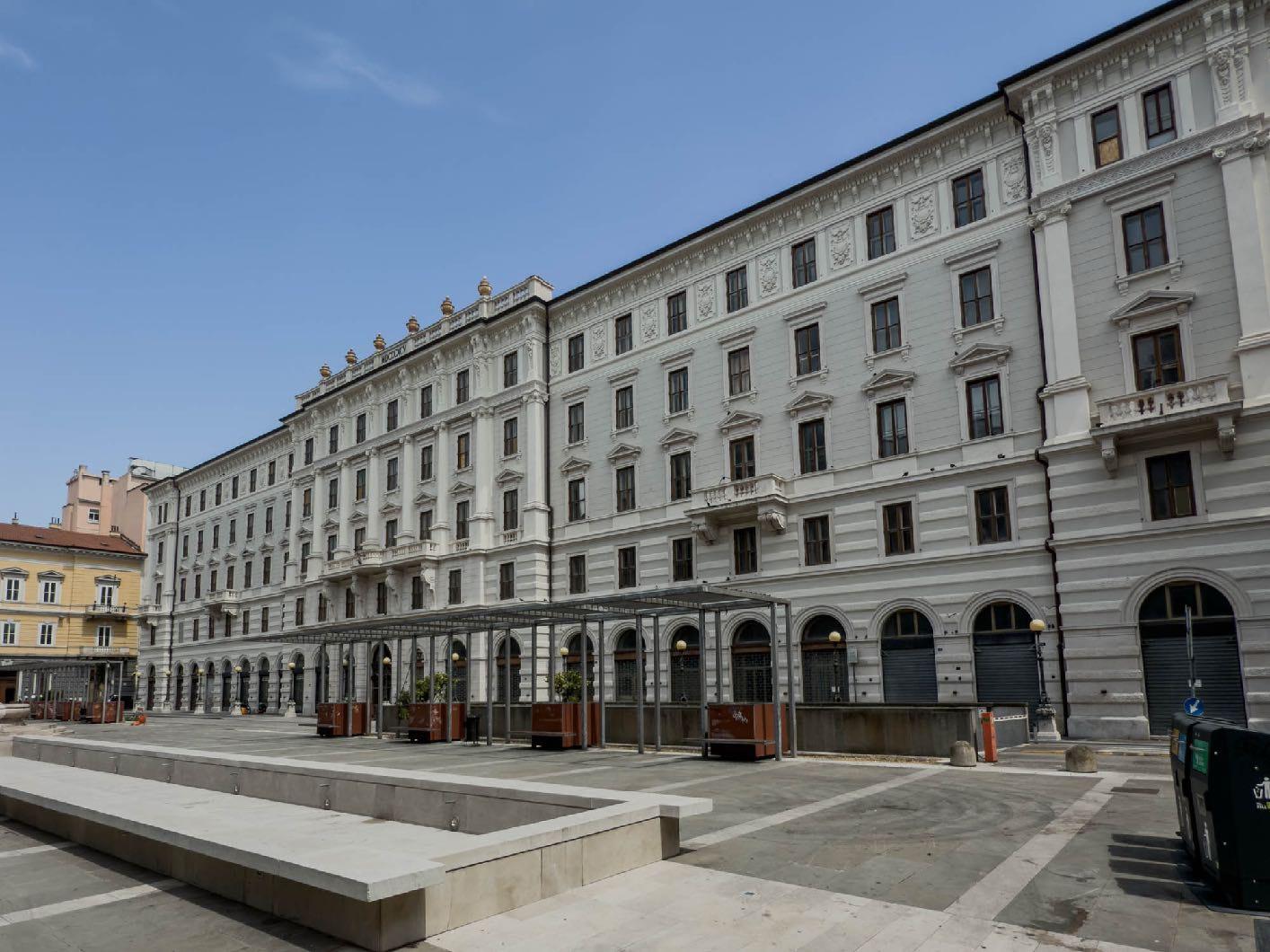
Palazzo delle Ferrovie dello Stato
The palace was constructed during 1894 to 1895. Originally designed to accommodate the Lloyd shipping company, it was soon repurposed as an office building, initially for the Austrian
State Railways and subsequently for the Italian Ferrovie dello Stato. Presently, there are proposals to transform the structure into a combination of a hotel, residential apartments, and retail spaces.
with the ÖBB railjet to Trieste
Piazza della Borsa
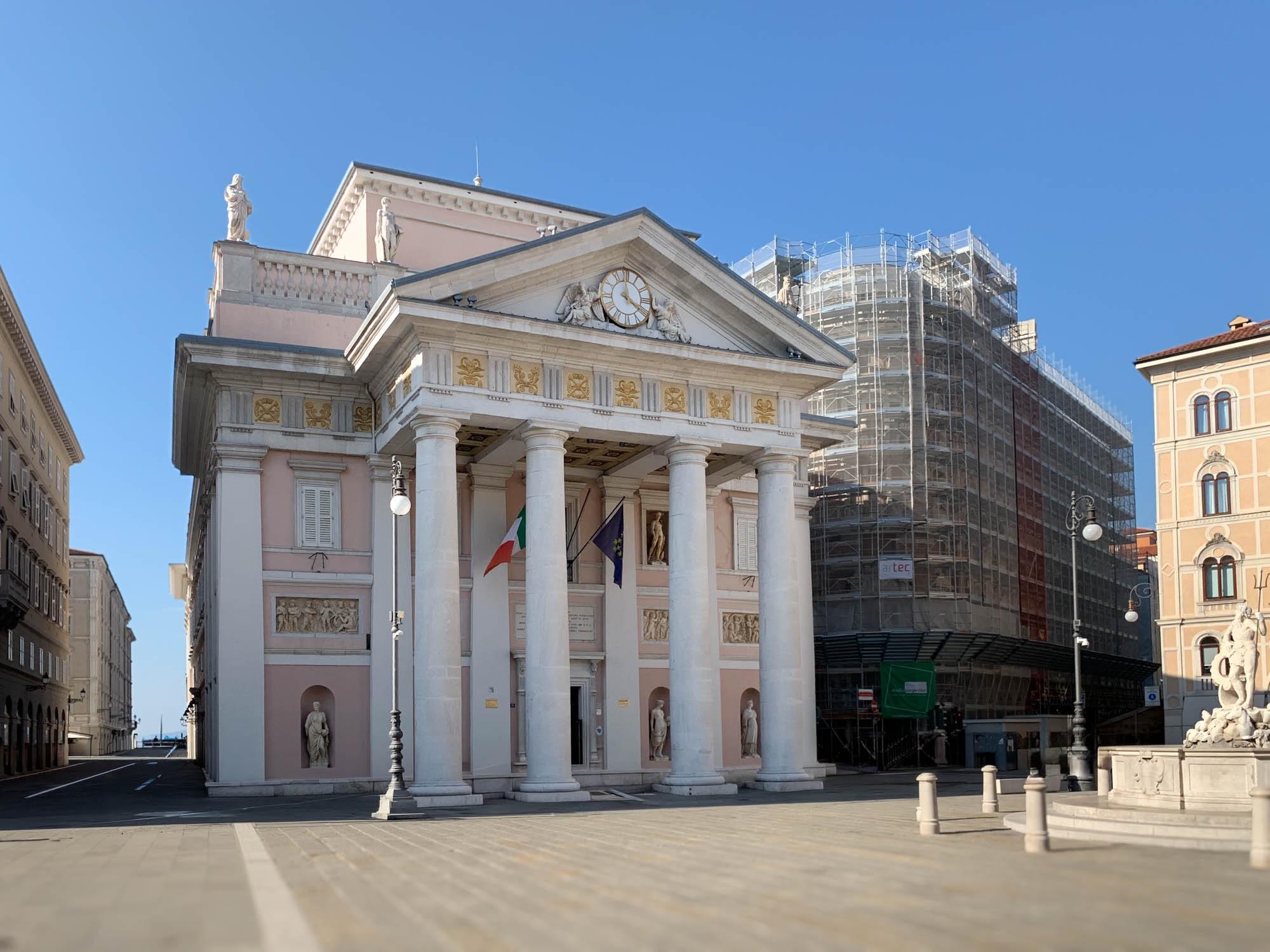
Following Piazza Unità d’Italia, Piazza della Borsa is regarded as Trieste’s elegant second living room – a lively square rich in history and character. Since the 18th century, this square has served as the economic centre of Trieste: the striking neoclassical Palazzo della Borsa Vecchia, which currently houses the Chamber of Commerce, stands like an ancient temple overlooking the square, symbolising its illustrious past as a prominent
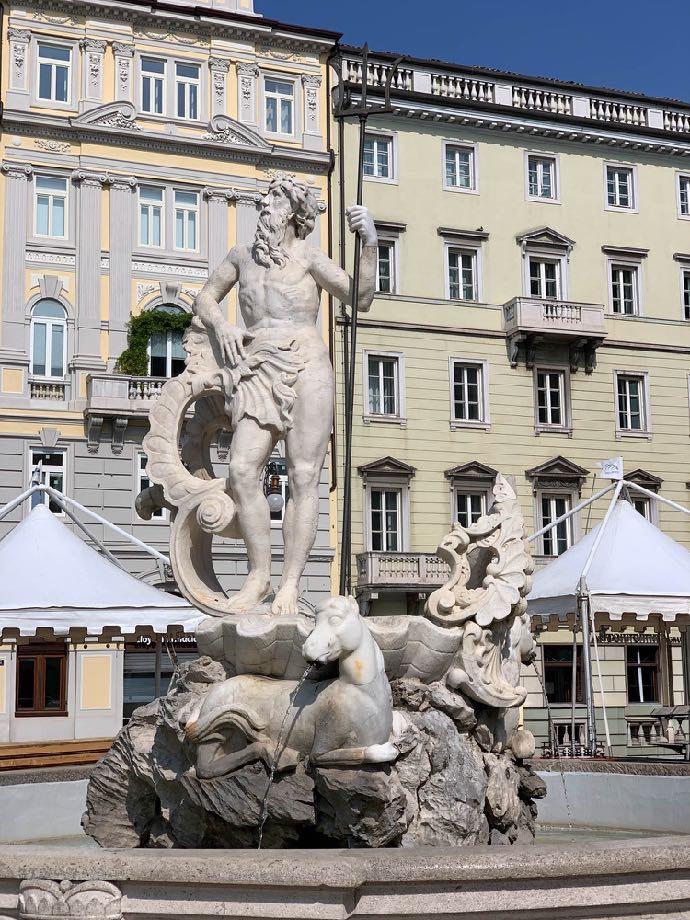
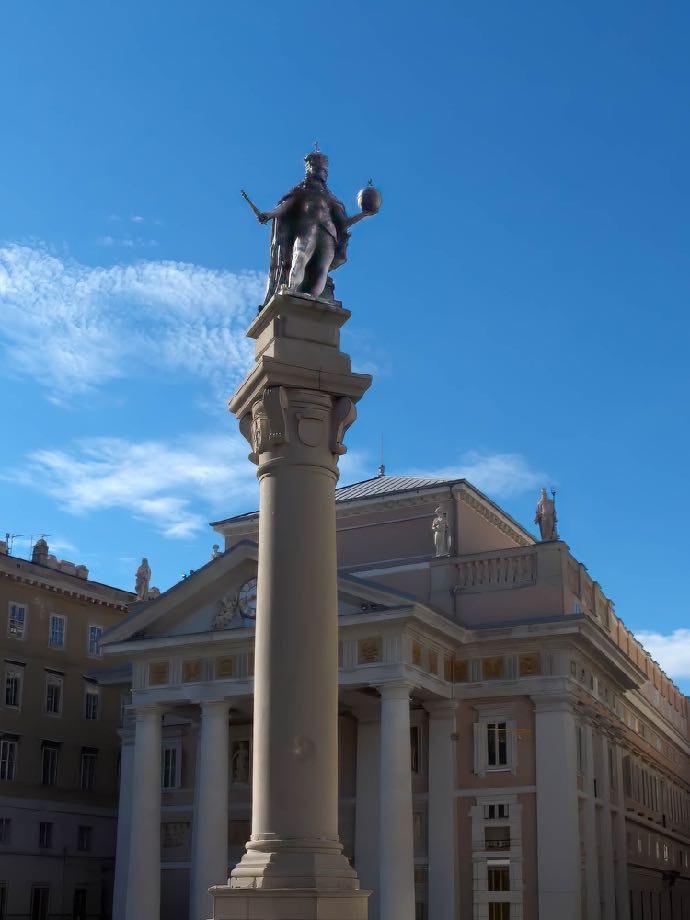
trading hub. Surrounded by splendid buildings from three distinct centuries – including the charming Liberty-style façade of Casa Bartoli and the former Palazzo Dreher –the triangular plaza buzzes with activity, hosting numerous cafés and fashionable boutiques. The Fontana del Nettuno, dating back to 1755, together with the statue of Leopold I, adds a grand and digni fi ed atmosphere to the area.
with the ÖBB railjet to Trieste
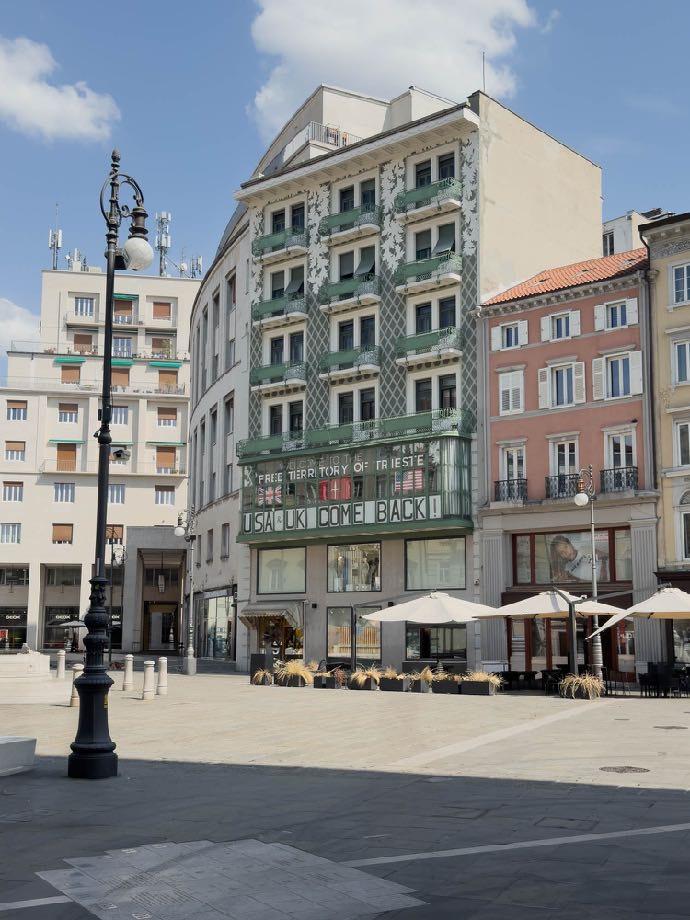
Casa Bartoli La Fontana del Nettuno
Casa Bartoli, constructed from 1905 to 1906 following the plans of the renowned architect Max Fabiani, stands as one of the most
The Neptune Fountain is located in the Piazza della Borsa. Crafted in 1750 by Giovanni Mazzoleni, this sculpture emphasises the city’s
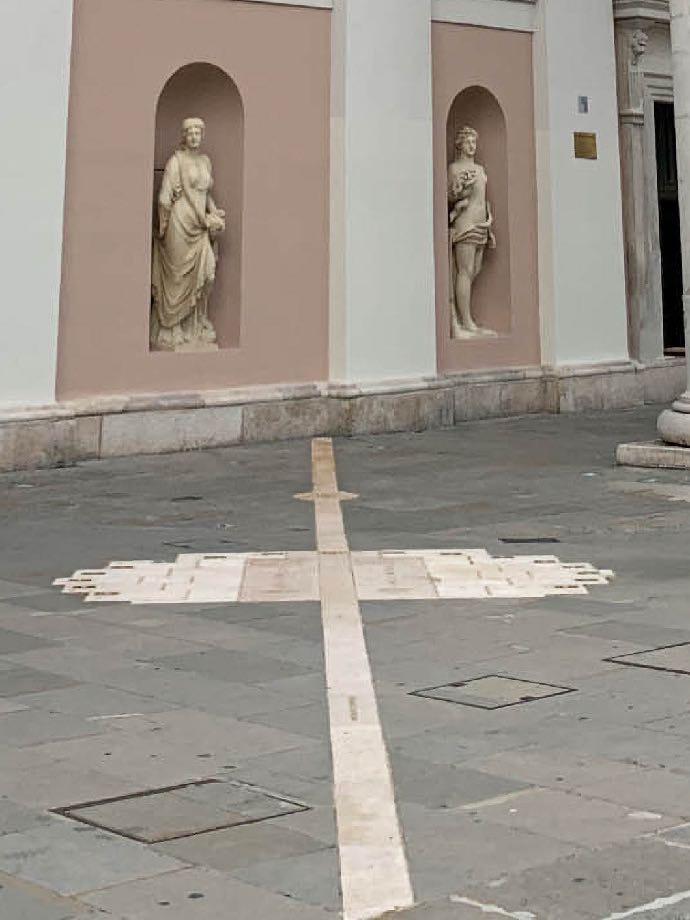
Meridiana interattiva Imperatore Leopoldo I
The historic sundial, measuring 12 metres in length and positioned on the ground before the Palazzo della Borsa, was crafted in 1820 by Antonio Sebastianutti.
The remarkable Leopold Column was constructed to honour the 1660 visit of Leopold I, Emperor of the Holy Roman Empire.
with the ÖBB railjet to Trieste
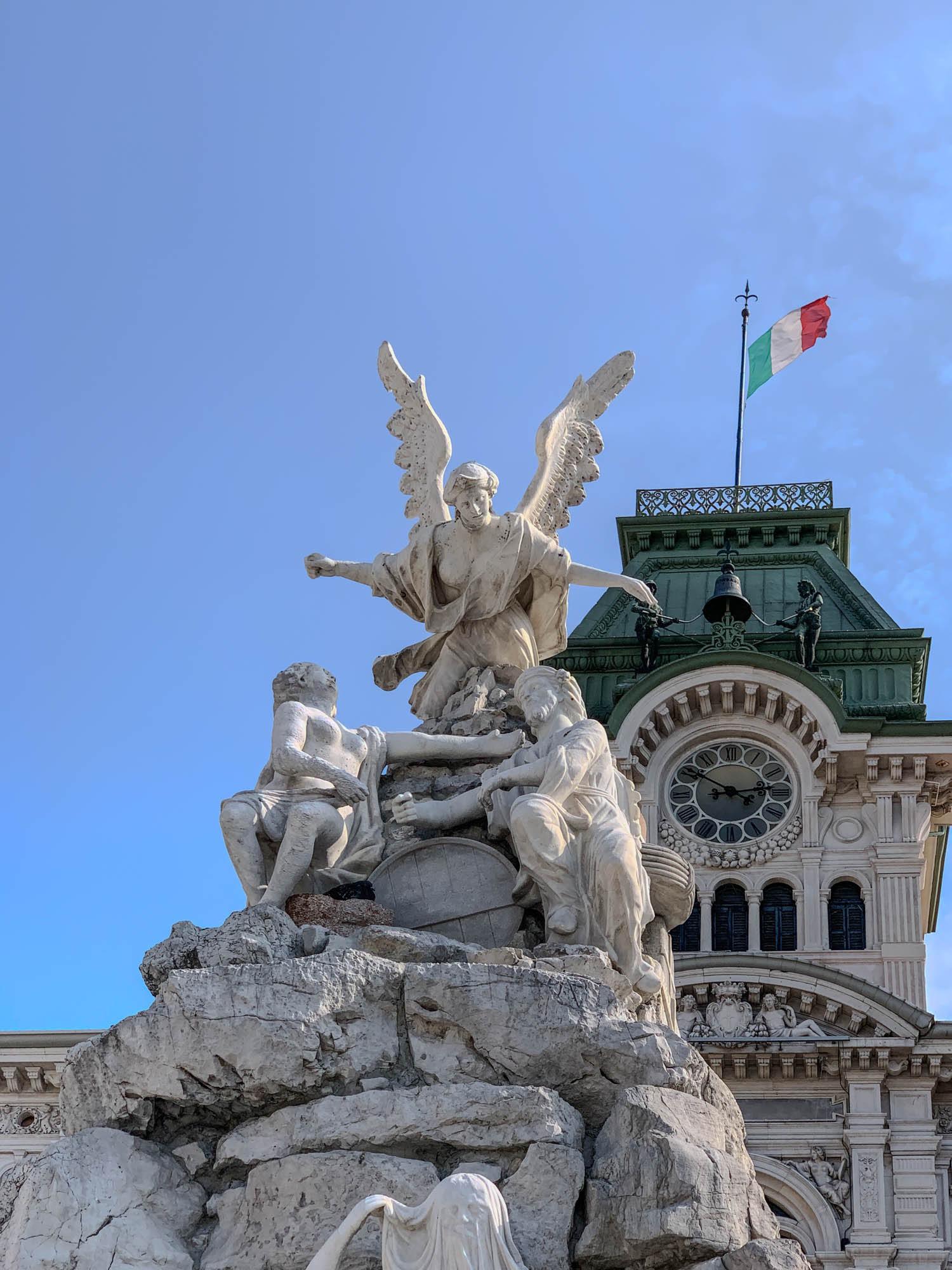
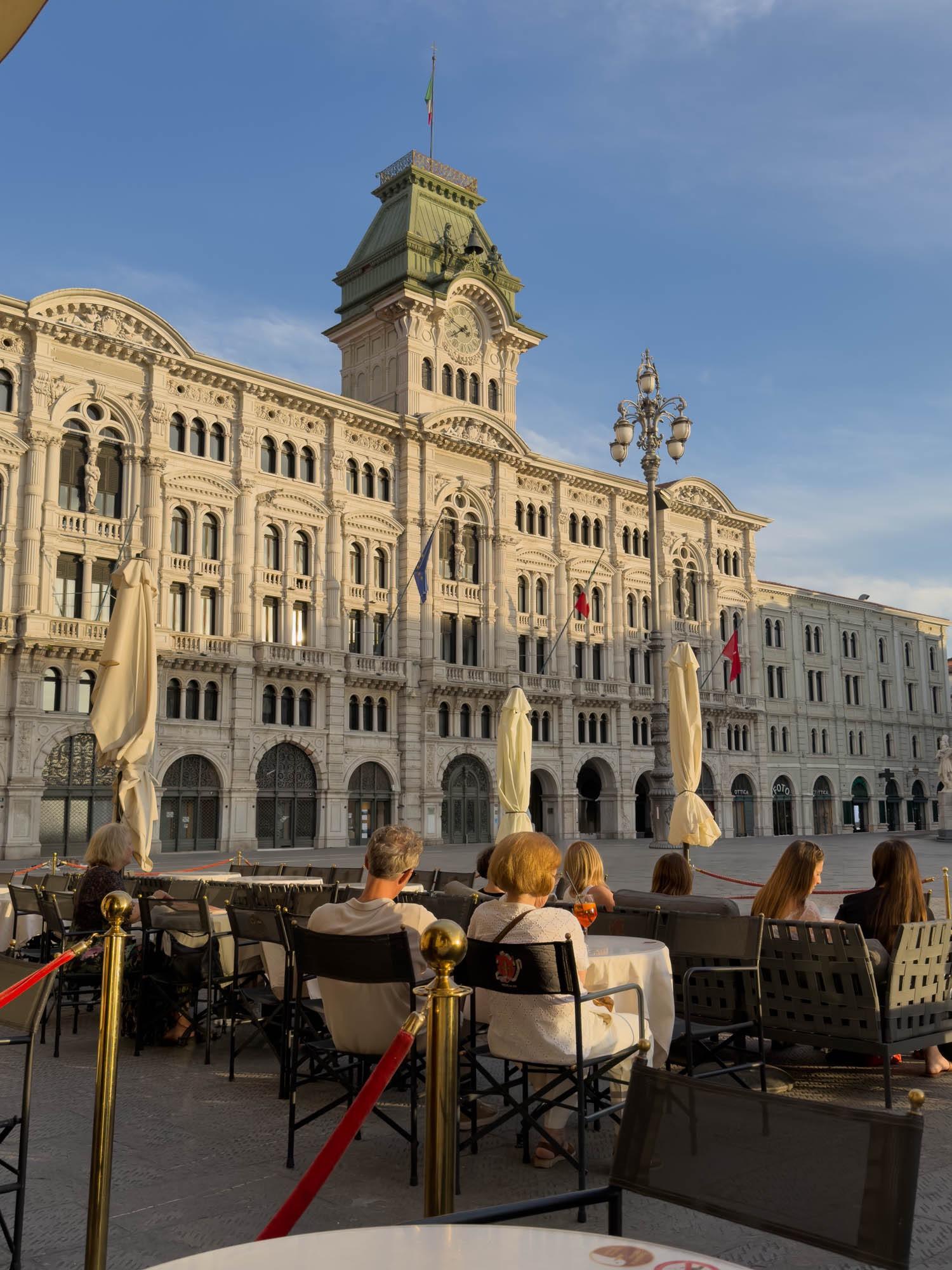
Piazza Unità d’Italia
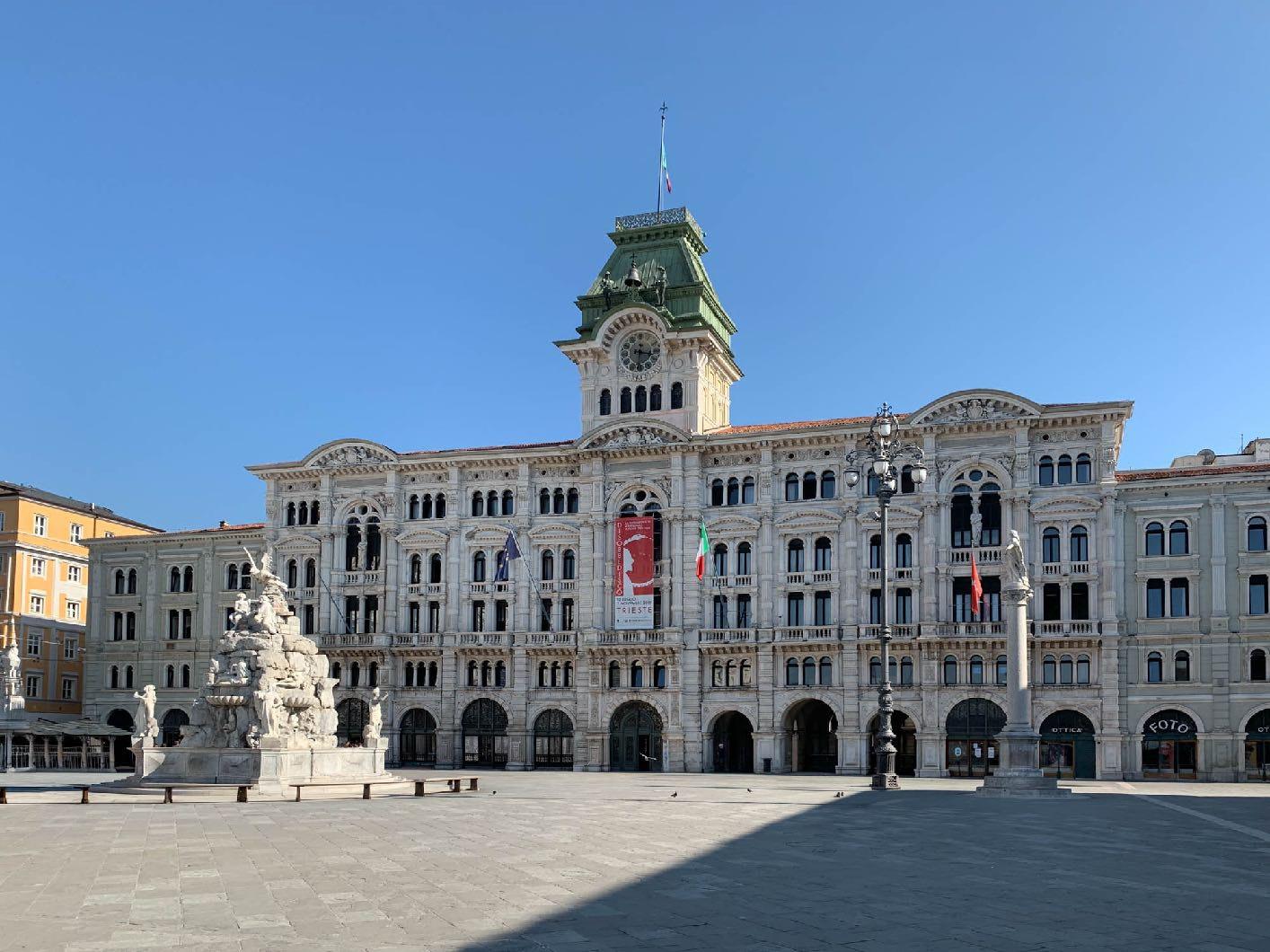
Palazzo del Municipio
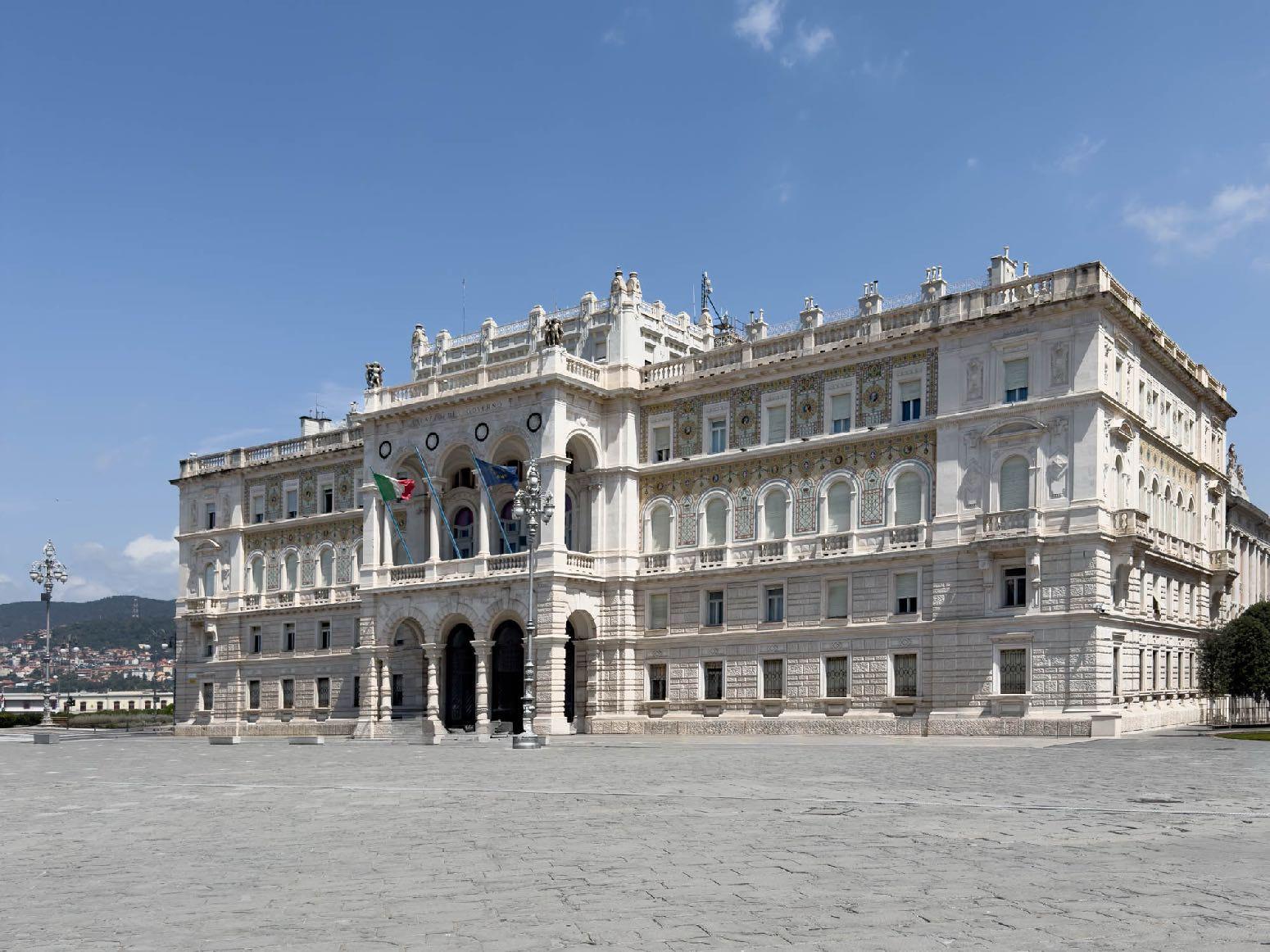
Palazzo della Luogotenenza austriaca
The Palazzo was constructed from 1901 to 1905 following the designs of the Viennese architect Emil Artmann. It stands as one of the most striking structures on the square. Initially, it functioned
indicate the time on the main façade featuring a clock tower. This nale to Europe’s largest square that
as the official home of the Imperial and Royal Governor's Office of the Austrian Littoral. Today, the Palazzo della Prefettura acts as the distinguished seat of the Trieste Prefecture.
with the ÖBB railjet to Trieste
Fontana dei Quattro Continenti
Palazzo Stratti & Palazzo Modello
in 1839
the
Specchi. Between 1871 and 1872, the Palazzo Modello was erected based on Giuseppe Bruni’s designs and acted as a stylistic reference for the 19th-century renovation of the square.
The Palazzo Stratti, constructed
in
Neoclassical style, was designed by the architect Antonio Buttazzoni for the Greek trader Nicolò Stratti. It is home to the renowned Caffè degli
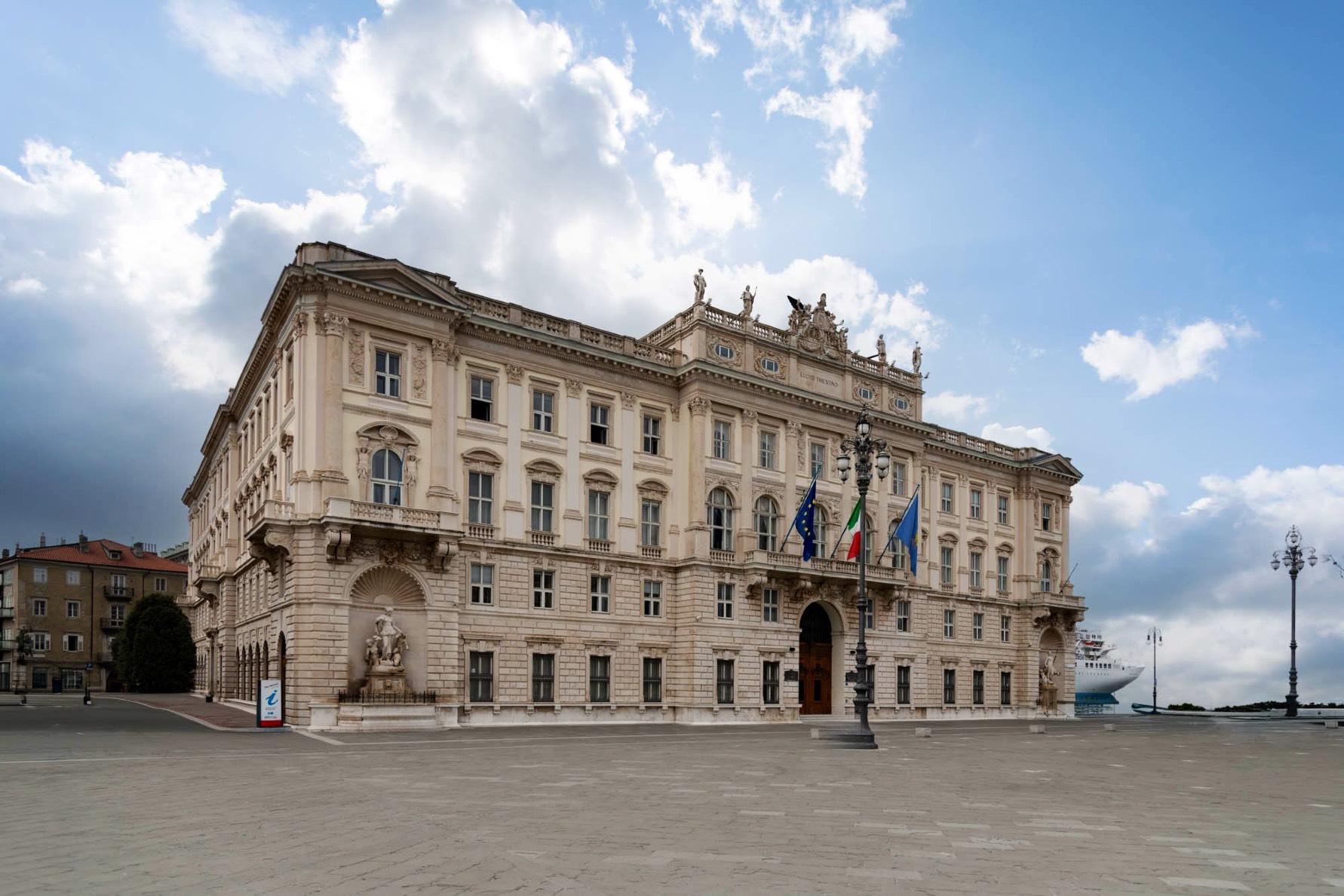
Palazzo del Lloyd Triestino
Hungarian private steamship company (Lloyd Austriaco, later known as Lloyd Triestino). Presently, it accommodates the
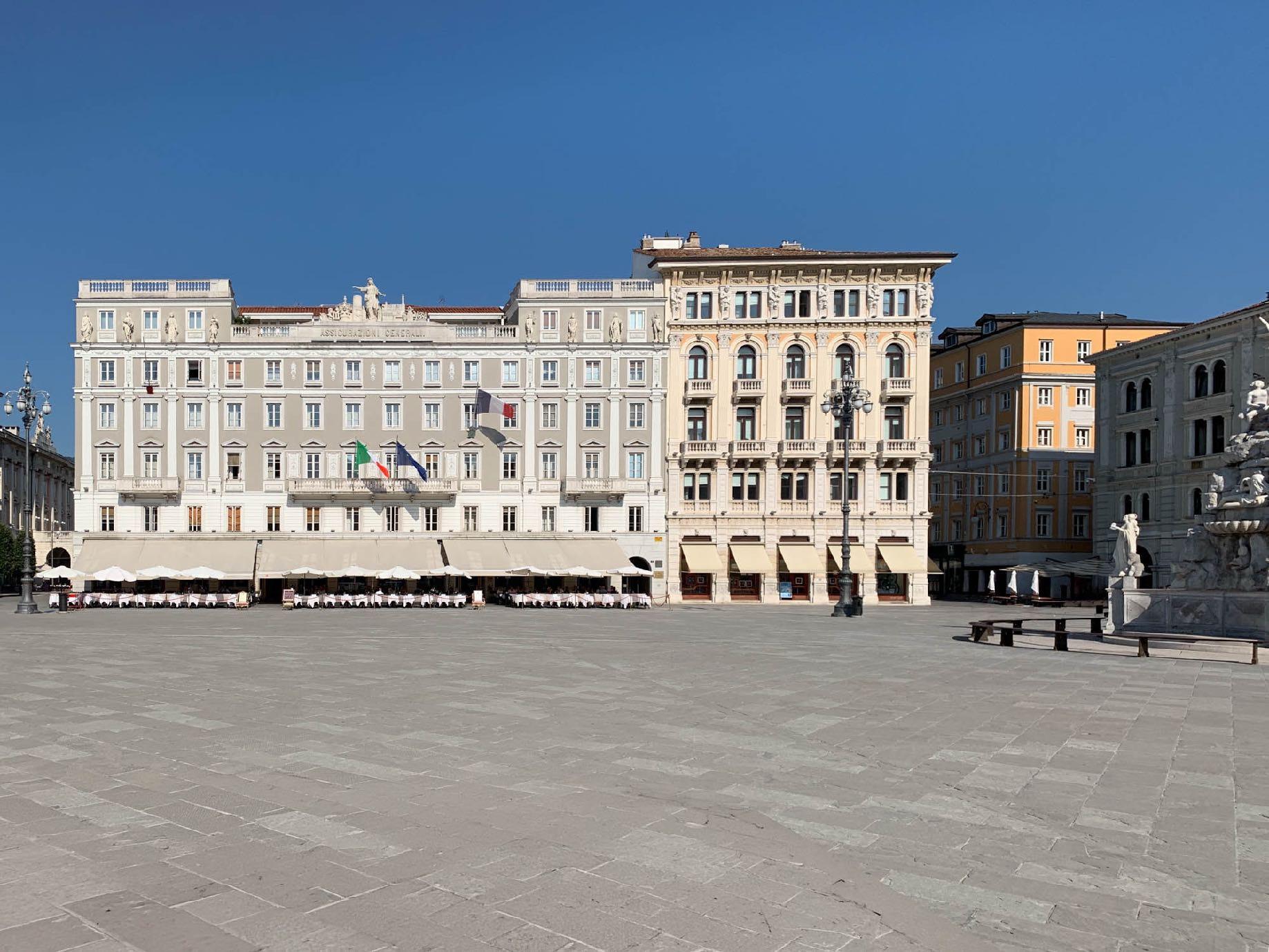
Palazzo Pitteri & Grand Hotel Duchi d’Aosta
The Palazzo Pitteri, constructed in the 18th century, holds the distinction of being the oldest palace on Piazza Unità d’Italia. The building was regarded as an outstanding example of modern
architecture of its time. Adjacent to the Palazzo Pitteri is the Grand Hotel Duchi d’Aosta. On this very location, a hospice existed as early as the 14th century, which hosted many notable guests.
with the ÖBB railjet to Trieste
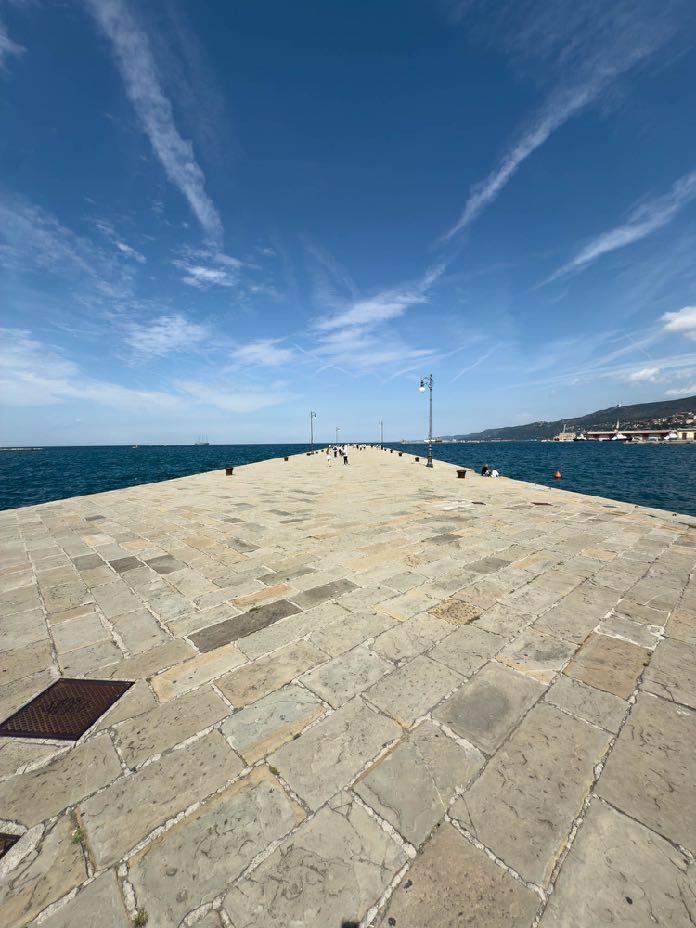
Molo Audace
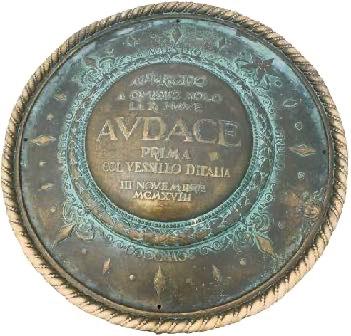
Following the conclusion of the First World War, the Italian destroyer Audace arrived at this pier in Trieste on 3 November 1918. In honour of this important occasion, the pier was later named Audace.
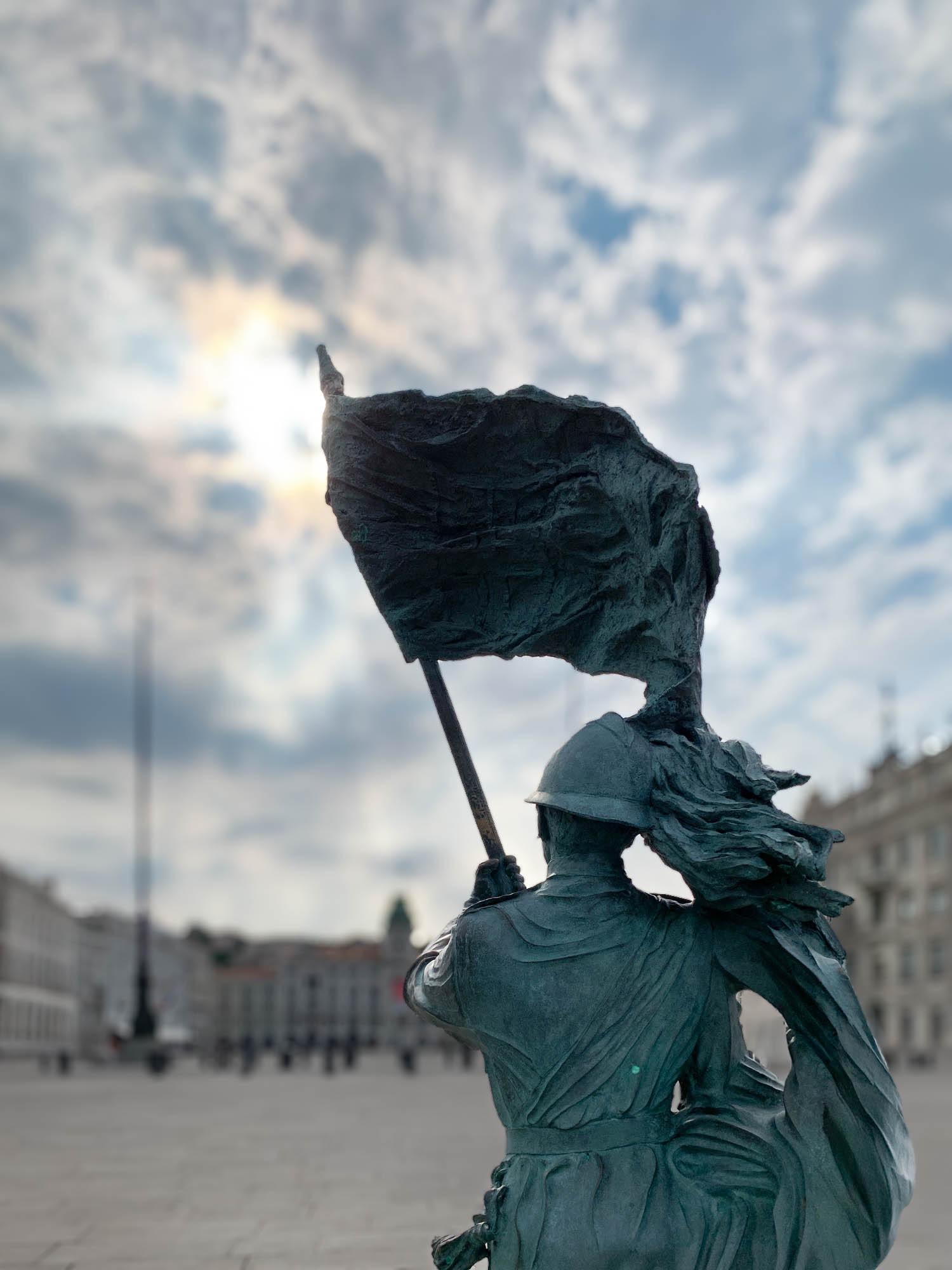
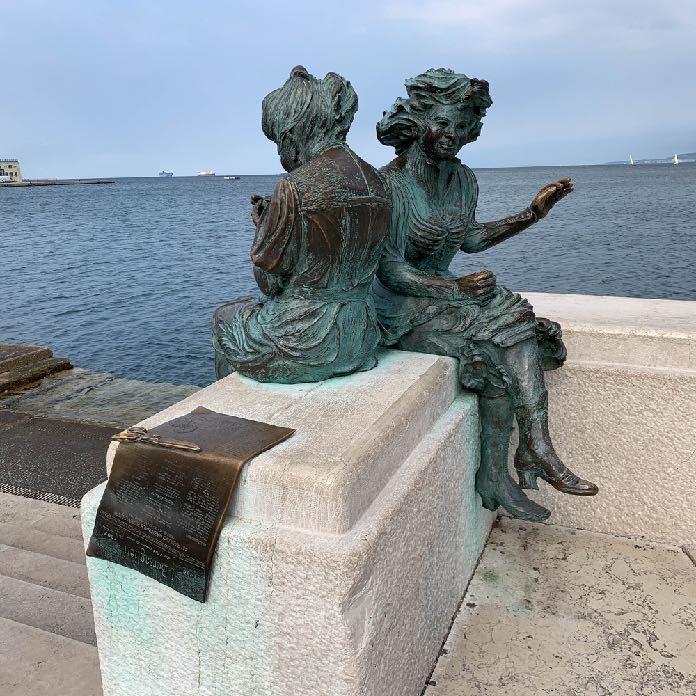
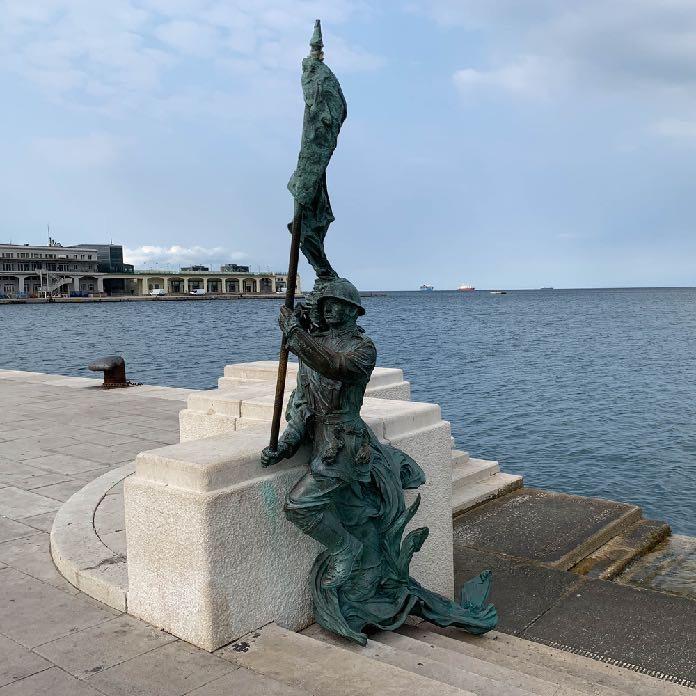
Walking from Piazza Unità d’Italia straight towards the sea, you will come across two sculptures created by the artist Fiorenzo Bacci. The first sculpture portrays a soldier ascending a staircase – representing the arrival of this military unit in the Julian city. The second statue, called "The Girls of Trieste," features two women seated on a wall, sewing the Italian tricolour.
For visitors who consider the ascent to the castle too exhausting, a convenient option exists to reach San Giusto Hill: Bus number 24 stops directly beside San Giusto Cathedral. Even though the bus operates just every 40 minutes, it remains unquestionably the most enjoyable means of getting there.
Castello di San Giusto
Castello di San Giusto
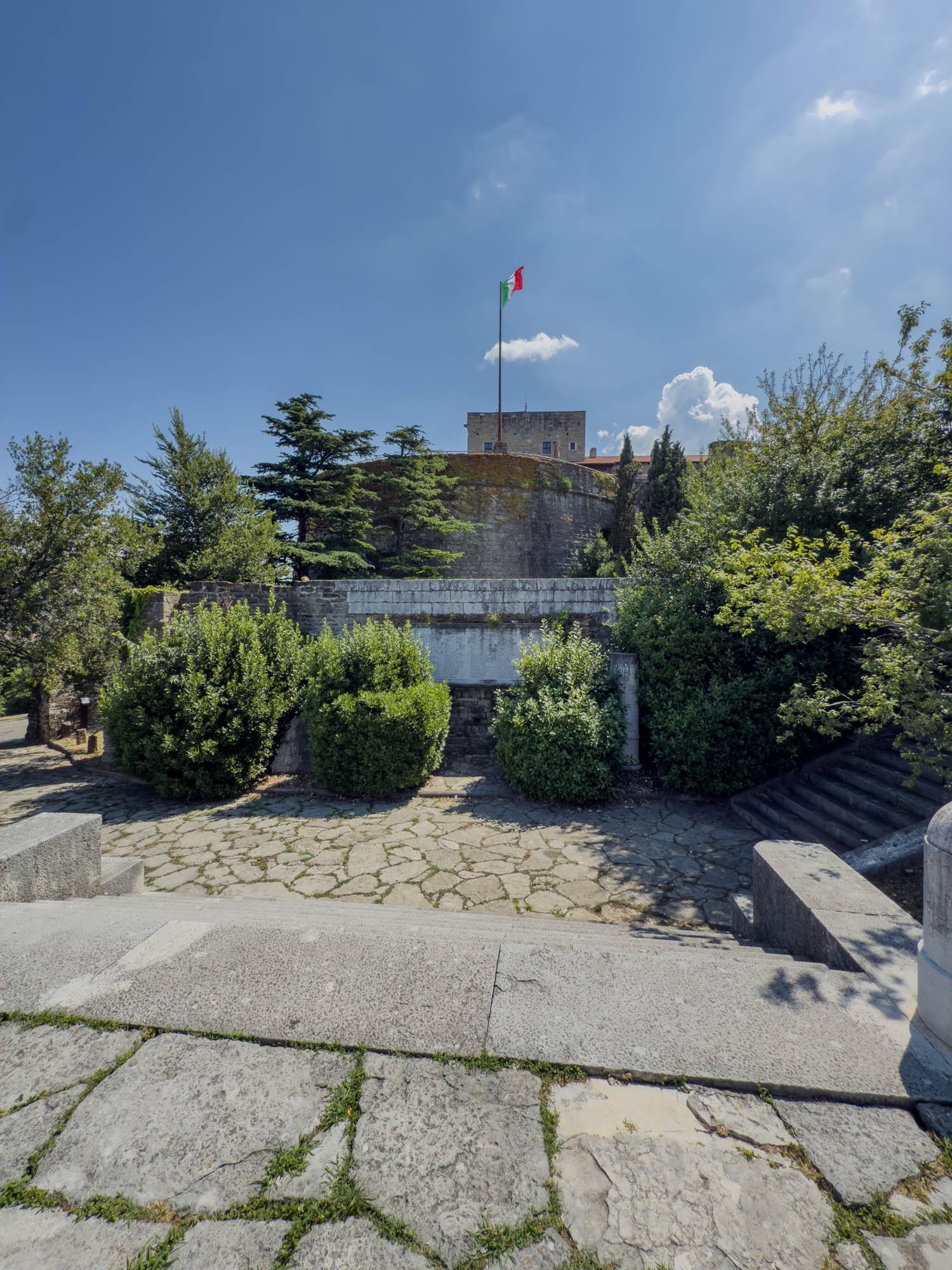
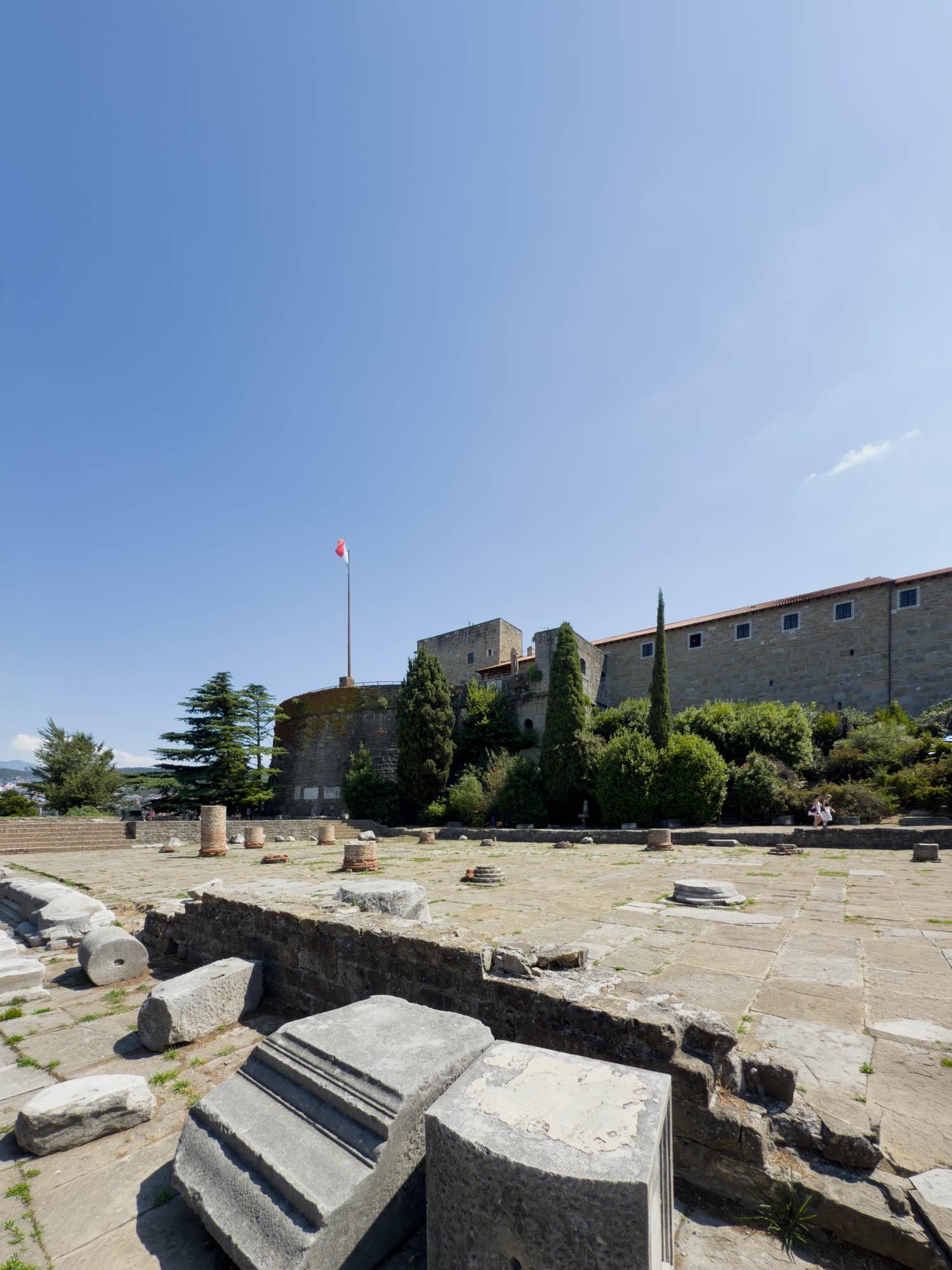
The Château de San Giusto stands prominently atop the hill sharing its name, overlooking the city and providing breathtaking views of Trieste, the Gulf of Trieste, and the Karst hinterland.
Its history dates back to the Bronze Age, when a prehistoric forti fi ed settlement (castelliere) was established on this location; subsequently, the hill served
as a significant hub for the Roman settlement of Tergeste and also contained an early Christian basilica.
Beginning in 1468, the Habsburgs under Frederick III constructed a fortified residence for the imperial captain. By 1636, this had been developed into an impressive triangular fortress featuring three bastions, including the Venetian round bastion dating from 1508/09.
with the ÖBB railjet to Trieste
Via the Scala dei Giganti
Starting from Piazza Carlo Goldoni, proceed along Via Silvio Pellico until you reach the Scala dei Giganti, commonly called the Staircase of the Giants. This name derives from its 252 steps, notable for their unusually steep ascent.
On your way towards the castle, you will come across the Fontana di Montuzza, also referred to as the Fontana di San Giusto. This fountain was constructed in 1938 to mark Benito Mussolini’s visit to Trieste.
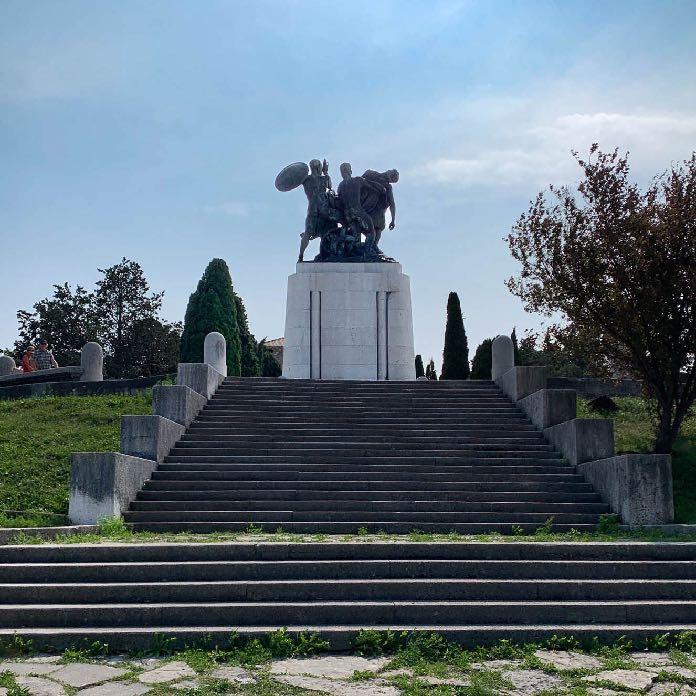
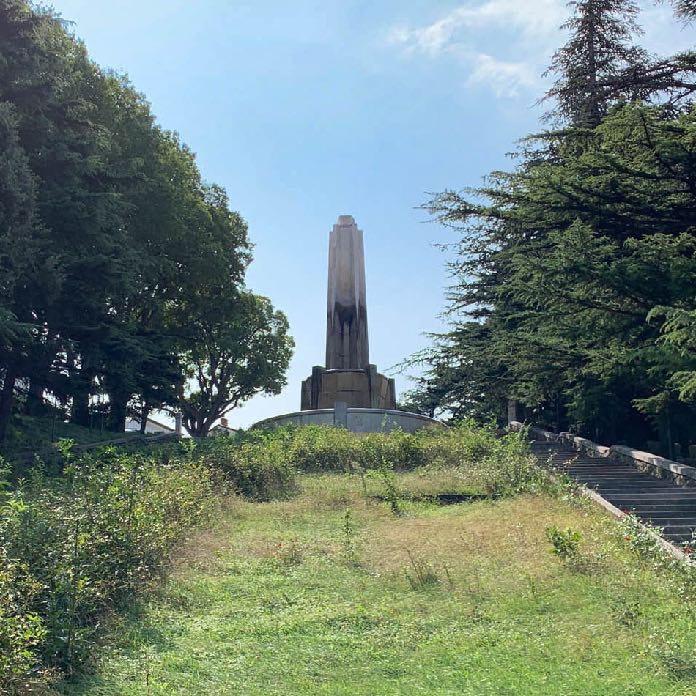
A further flight of steps leads to the Monumento ai Caduti di Trieste, a memorial dedicated to those who lost their lives in the First World War. It was officially opened in 1936 with King Victor Emmanuel III in attendance.
The entire walk to Castello di San Giusto along this path covers roughly 650 metres and typically takes around 15 minutes.
Via the Via della Cattedrale
Starting from Via del Teatro Romano, you arrive at the striking Scalinata delle Medaglie d’Oro (Gold Medal Staircase), named to honour those awarded the Gold Medal for Bravery, Italy’s most prestigious military honour. This stairway leads directly to the Baroque-style church of Santa Maria Maggiore.
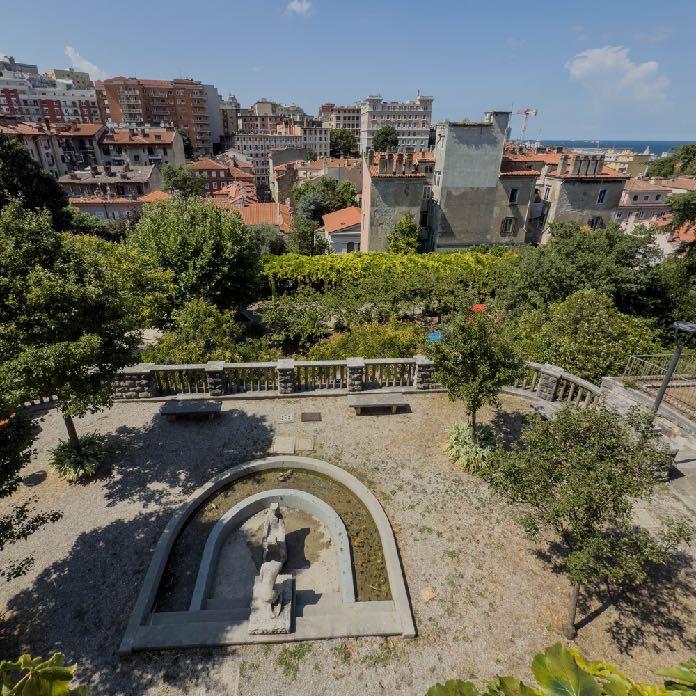
After passing the church, you have the opportunity to visit the Arco di Riccardo, an ancient arch constructed around 33 BC. From this point, the route ascends further to reach the Punto Panoramico del Parco (Garden Viewpoint).
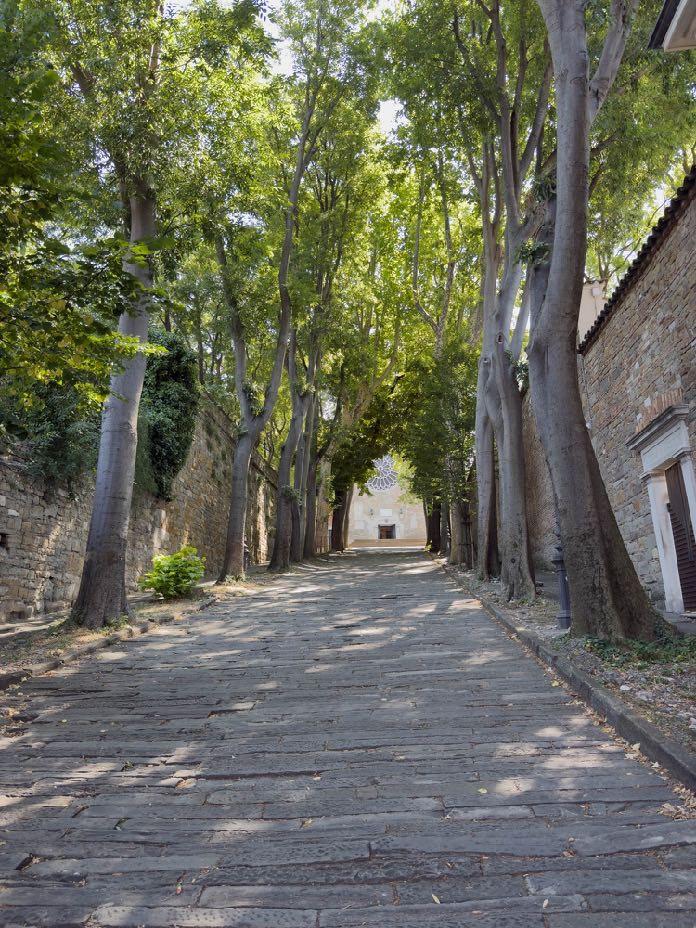
The final part of the climb towards the castle follows a treelined avenue straight to the Cattedrale di San Giusto Martire. It is advisable to wear sturdy shoes for this walk, as the ground is quite uneven.
The distance from here to Castello di San Giusto along this path is roughly 500 metres and typically takes about 10 minutes to complete.
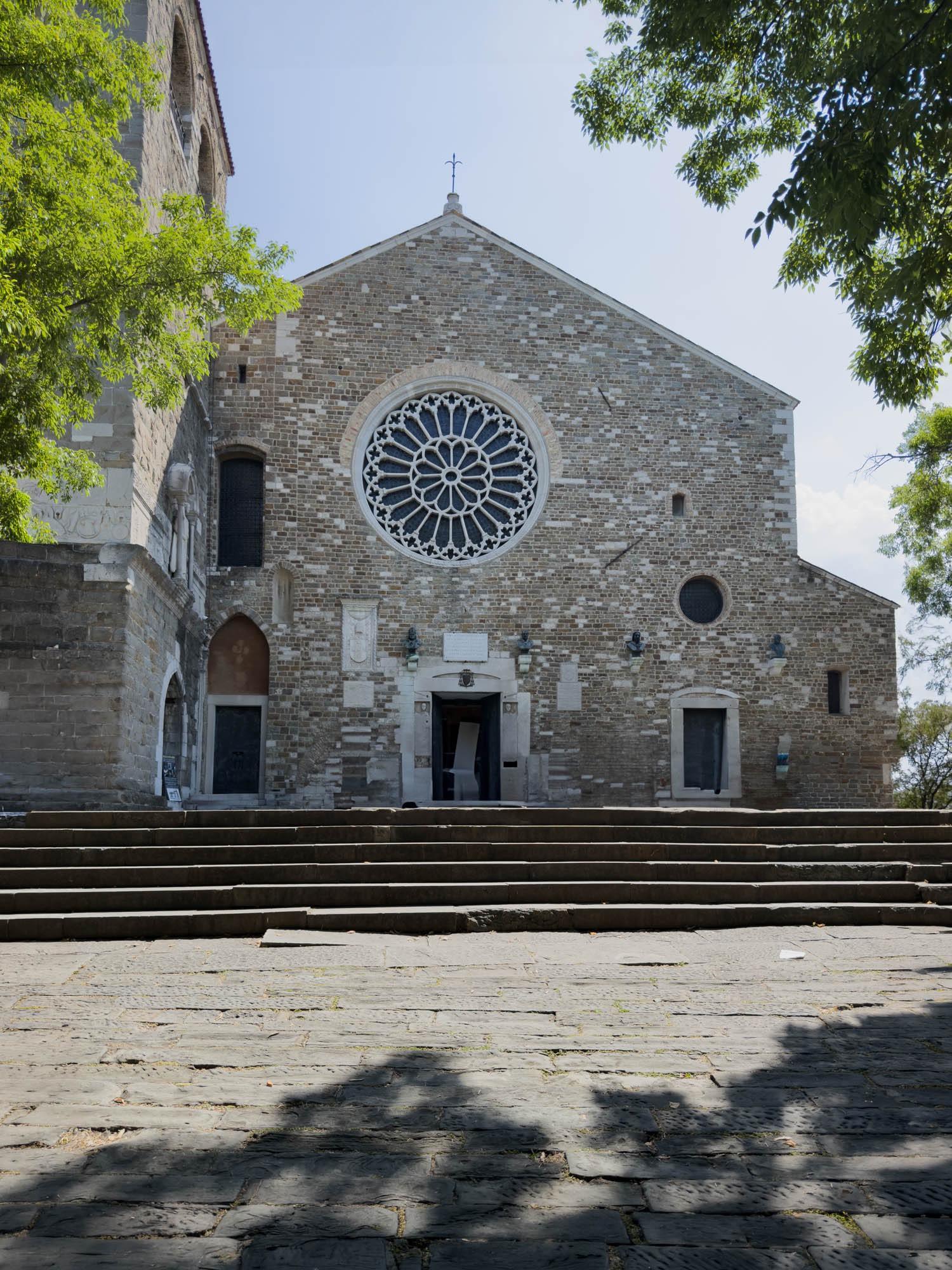
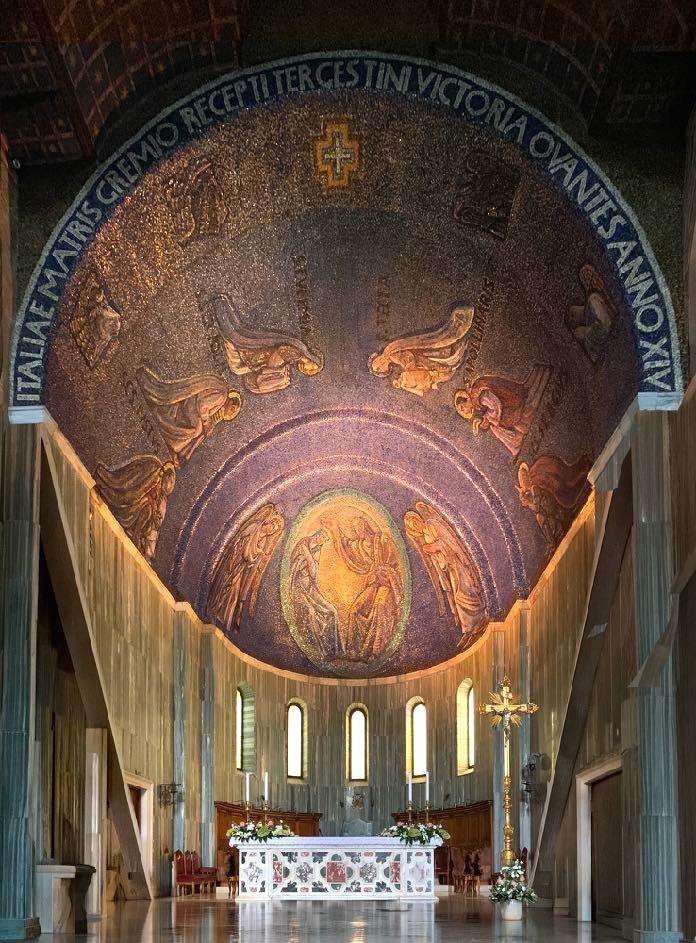
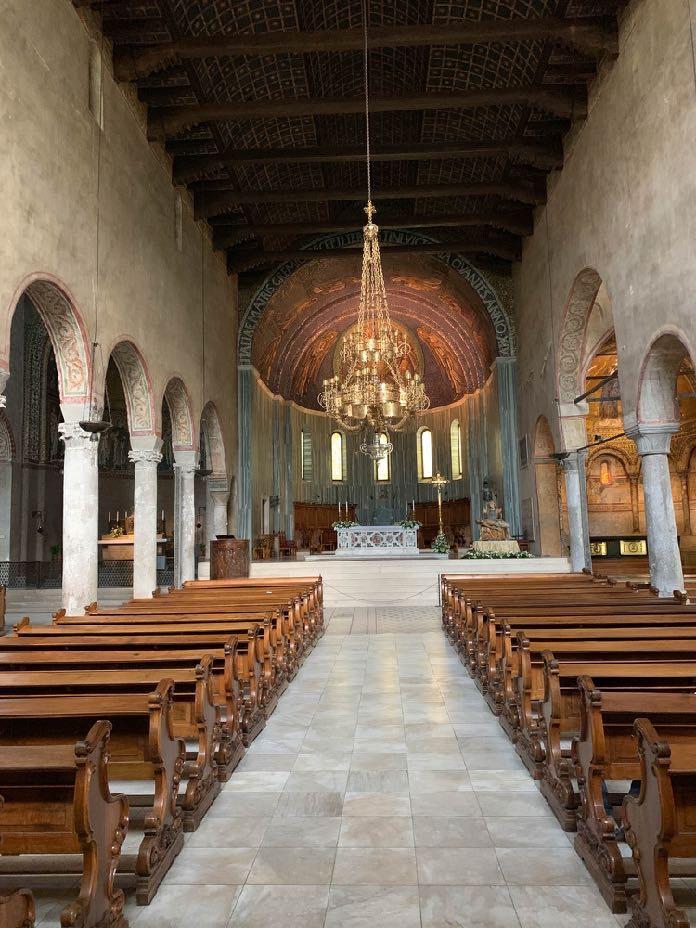
Basilica cattedrale di San Giusto Martire
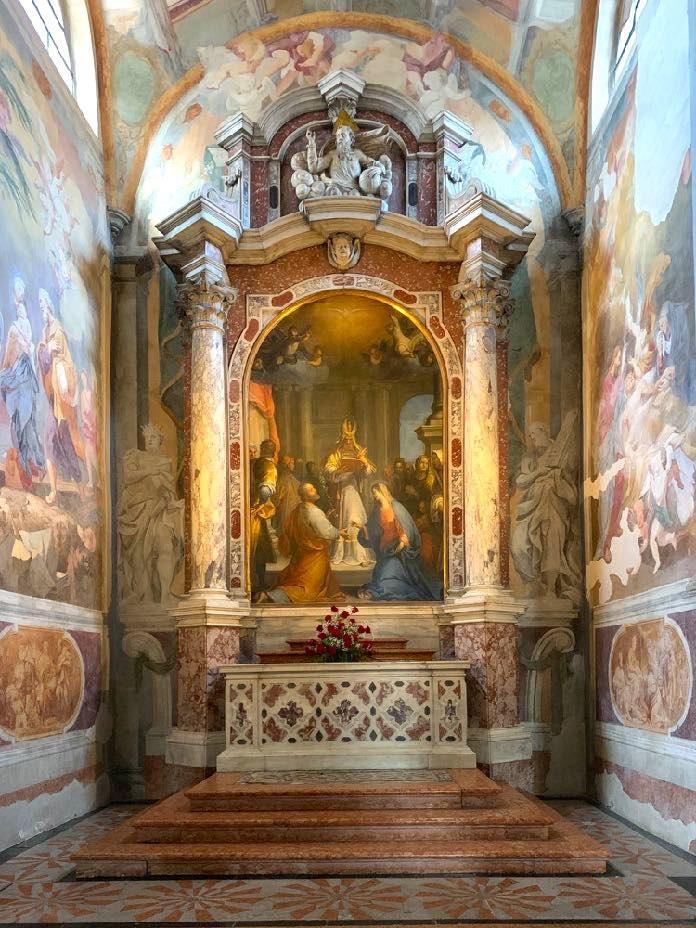
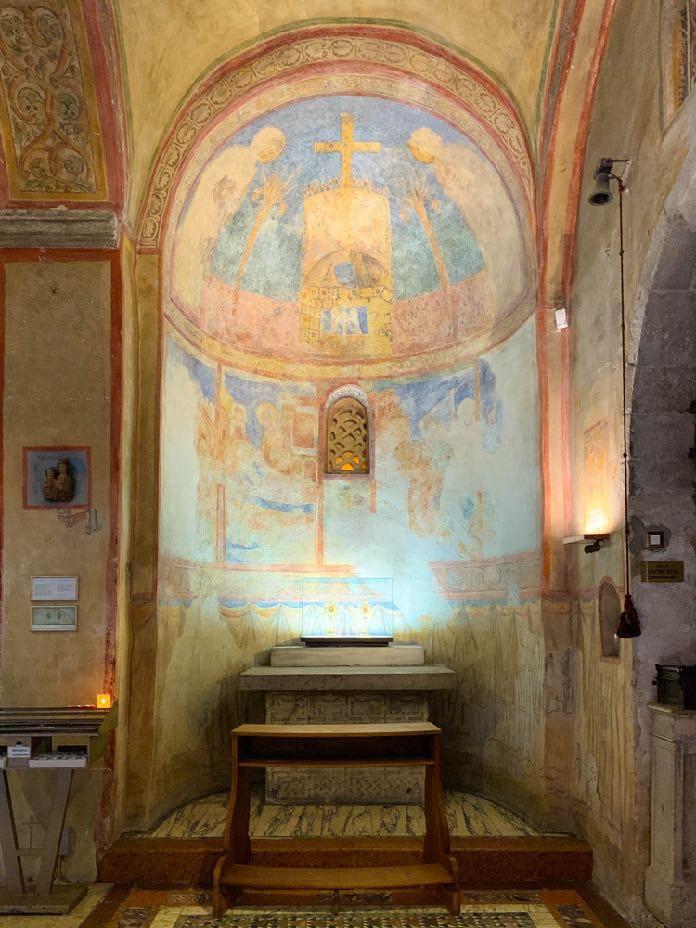
The Basilica Cattedrale di San Giusto Martire, Trieste’s cathedral, proudly crowns the hill sharing its name. During the 14th century, the two earlier churches, Santa Maria and San Giusto, were unified, and a new nave was constructed. This nave is distinguished by a ceiling shaped like the keel of a ship. The refurbishment also introduced a sandstone façade and a rose window crafted from karst marble.
The cathedral is home to 13th-century Byzantine mosaics and remarkable frescoes, which contribute to its distinctive architectural character. Within, visitors find gleaming golden mosaics in the apses, the tomb of Trieste’s patron saint San Giusto, and an important collection of Romanesque art – creating a serene and contemplative environment.
with the ÖBB railjet to Trieste
with the ÖBB railjet to Trieste
Coffee metropolis
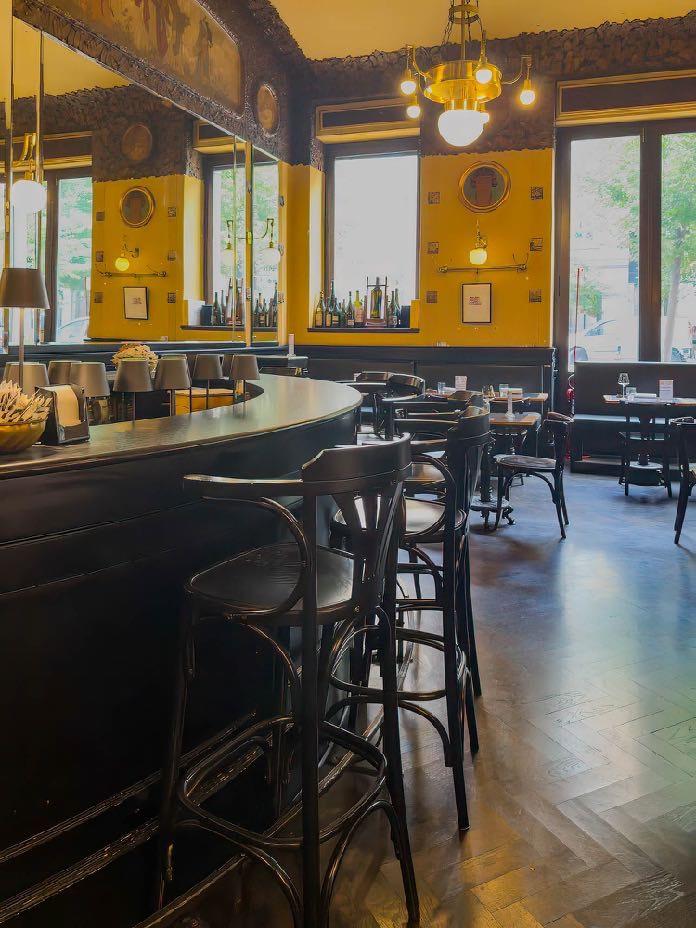
During the Austro-Hungarian Empire, Trieste stood out as a significant free port and international gateway, thriving as a bustling hub for the coffee trade. Large quantities of raw coffee beans arrived in the city, leaving a strong and enduring mark. Austrian-style coffee houses such as Caffè Tommaseo (established between 1825 and 1830), Caffè degli Specchi, and the renowned Caffè San Marco (founded in 1914) introduced Viennese coffee traditions to the coastal region: refined interiors, newspapers, spirited intellectual debates, and naturally, the celebrated "Melange." These cafés served not only as social venues but also as cultural salons of their era,
frequented by writers like Italo Svevo, Umberto Saba, and James Joyce, who lived, conversed, and produced their literary works there. Even now, coffee in Trieste embodies a way of life and a sense of identity: with around 1,500 cups consumed per person annually, the city holds the highest per capita coffee consumption worldwide and is recognised as the undisputed coffee capital. The traditional coffee houses act as living connections to the Austro-Hungarian heritage—spaces where time appears to slow down and a well-made espresso continues to be cherished as a small yet meaningful part of cultural legacy.
with the ÖBB railjet to Trieste
Antico Caffè San Marco
The Antico Café represents the quintessential literary café inspired by the Vienna Secession movement. Since it first opened its doors in 1914, notable visitors have included distinguished figures like James Joyce, Italo Svevo, Umberto Saba, and Claudio Magris. At a certain period, this venue also functioned as a covert hub for creating forged passports used by patriots opposing Austrian rule.
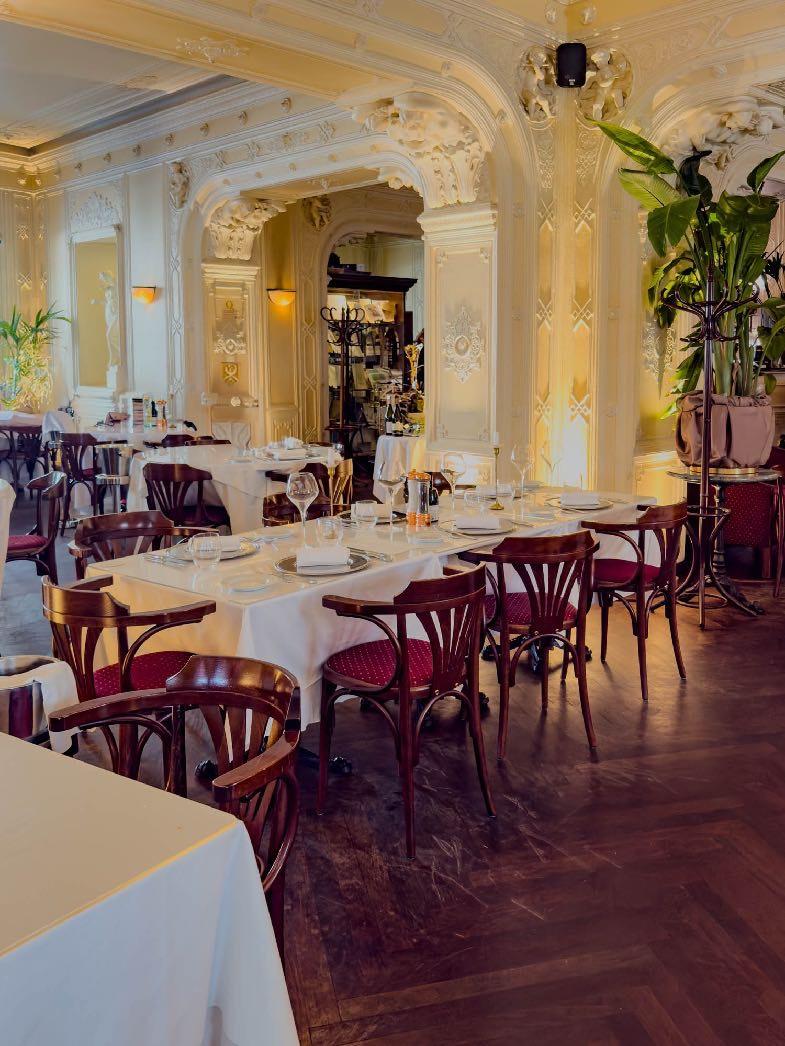
Caffè degli Specchi
The "Mirror Café" is situated right on Piazza Unità d'Italia and is commonly known as the "salon of Trieste“. At this location, visitors can savour not only outstanding coffee in the lively centre of the square but also premium cocktails. Since its establishment in 1839, the café has served as a favoured gathering spot for notable personalities including James Joyce, Franz Kafka, and Rainer Maria Rilke.
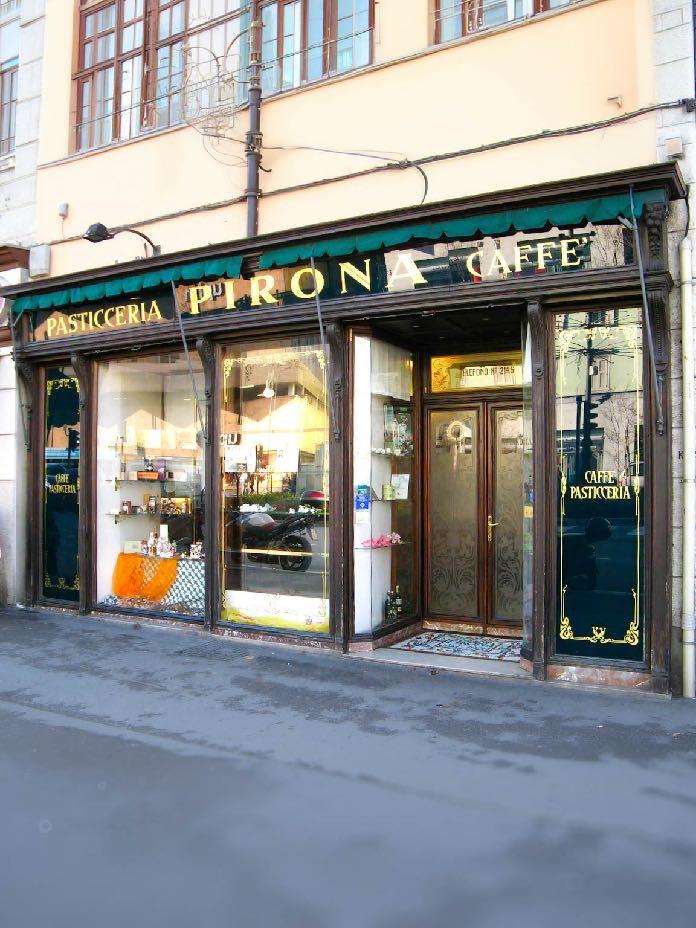
Caffè Pasticceria Pirona
Pirona, established in 1900, is recognised as a site of notable literary importance, with claims that James Joyce started writing "Ulysses" within its walls. Most notably, the Pirona café and confectionery has become a landmark in Trieste, renowned for its classic Viennese cakes and pastries.
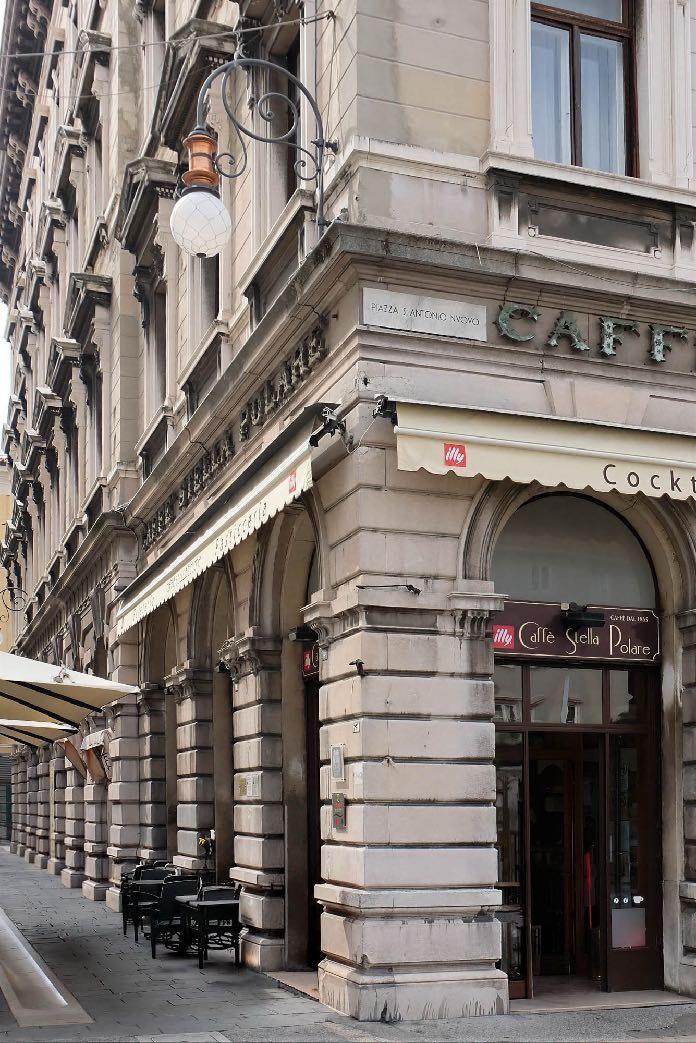
The Berlitz School, where James Joyce once taught, was situated close by – to him, the Stella Polare felt like a well-known, everyday café. Even after many restorations, the Stella Polare has preserved its Belle Époque elegance up to the present day.
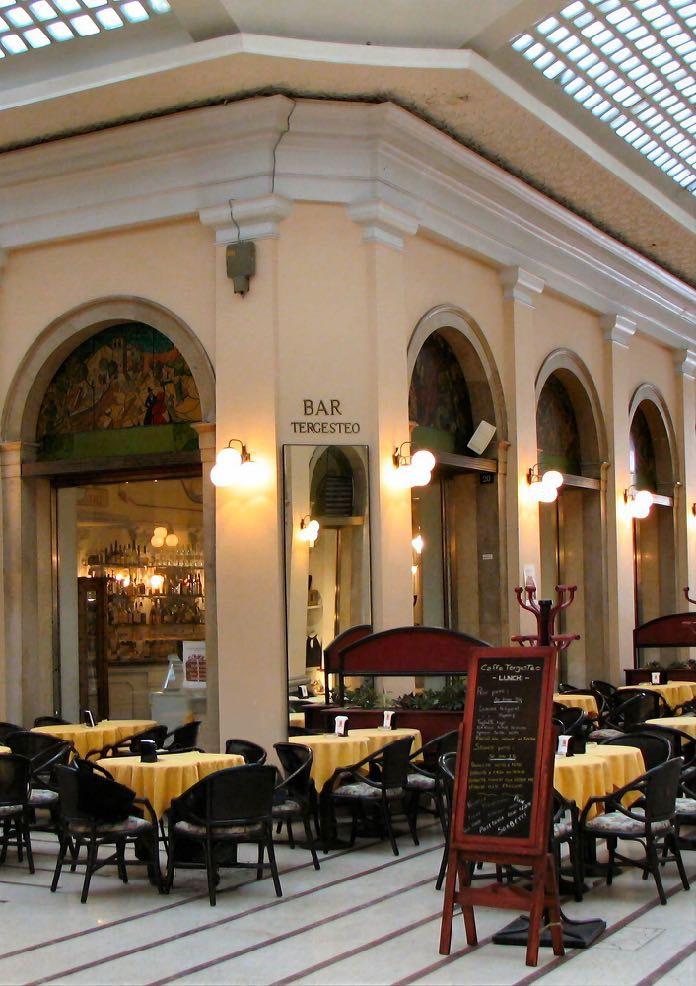
The café was established in 1863 and soon turned into a key gathering spot for the intellectual community of Trieste. The poet Umberto Saba paid tribute to the Tergesteo with a line in his Canzoniere.
Caffè Tommaseo
Tommaseo, established in 1830, holds the title of the city’s longestrunning café. The neoclassical design of its interior adds a unique elegance to the establishment. In 1845, it became the first café in Trieste to serve ice cream, and the building was also one of the earliest to feature gas lighting.
with the ÖBB railjet to Trieste
Caffè Urbanis
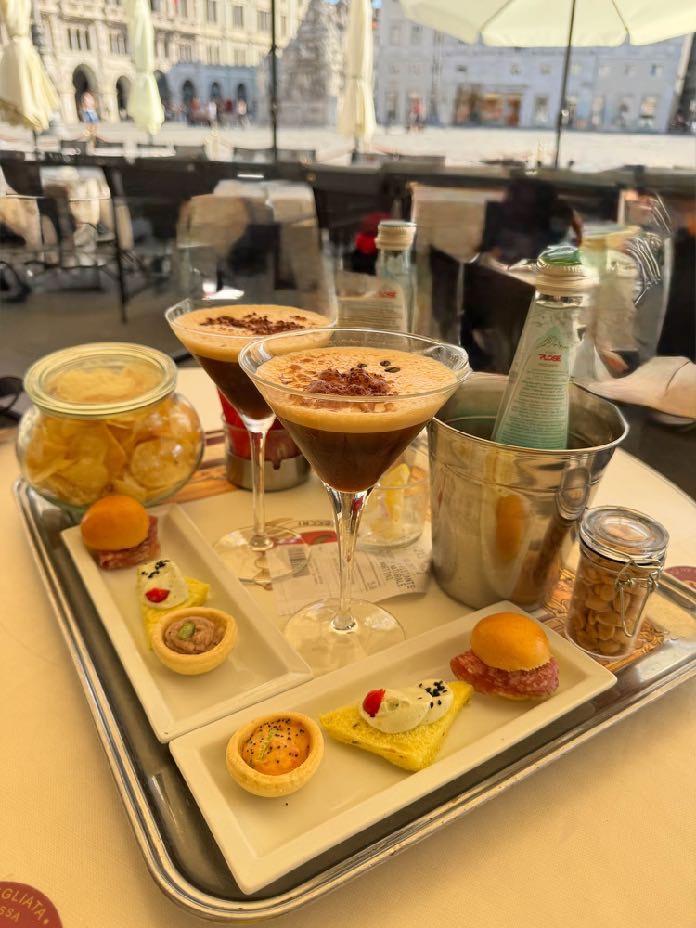
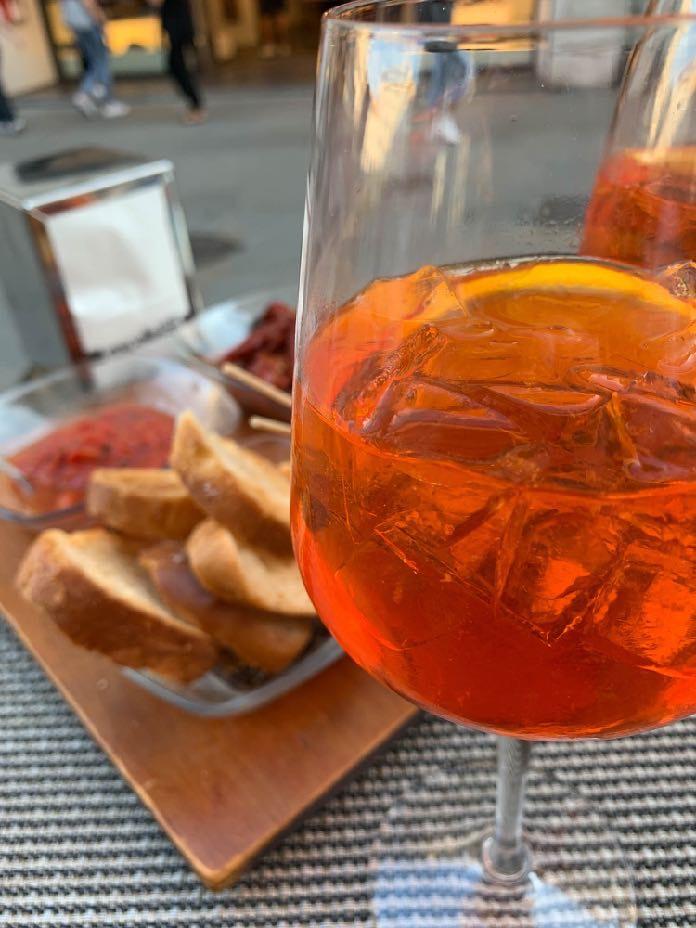
The route from Piazza Unità d’Italia to Piazza della Borsa passes by Café Urbanis. In the warmer seasons, visitors appreciate cooling beverages served alongside ample complimentary nibbles.
Trieste Café Dictionary
Nero
A standard espresso served in the traditional small cup, known as a tazzina.
Nero in B
Espresso presented in a glass (B stands for bicchiere, meaning glass); this version is often slightly larger and visually more appealing.
Deca
A decaffeinated espresso served in a cup.
Deca in B
Decaffeinated espresso offered in a glass.
Capo
An espresso macchiato with a small amount of milk foam, served in a cup; it resembles a small cappuccino but contains considerably less milk.
Capo in B
The classic coffee of Trieste! This espresso macchiato is traditionally served in a small glass and topped with a layer of milk foam. It is the city’s most renowned and beloved coffee. Compared to a regular macchiato, it is much creamier, yet has less milk than a cappuccino.
Capo deca
A decaffeinated macchiato served in a cup.
Capo deca in B
Decaffeinated macchiato served in a glass.
Goccia or Gocciato
An espresso with just a tiny drop of milk foam at the centre— subtly referred to as "macchiato," it is almost pure espresso with a delicate touch of milk.
Caffèlatte or Caffelatte
What is called a cappuccino elsewhere: an espresso combined with a generous amount of hot milk and milk foam; typically served in a larger cup.
Capo in B tanta
Capo in B with an extra thick layer of foam (tanta means plenty).
Capo in B special
A cappuccino in B topped with cocoa powder (sometimes also called "tanta special," meaning lots of milk foam plus cocoa).
Additional variations:
Capo chiaro in B
With more milk, resulting in a lighter flavour.
Capo scuro in B
With less milk, producing a stronger, darker taste.
with the ÖBB railjet to Trieste
Miramare Castle
Castelletto di Miramare
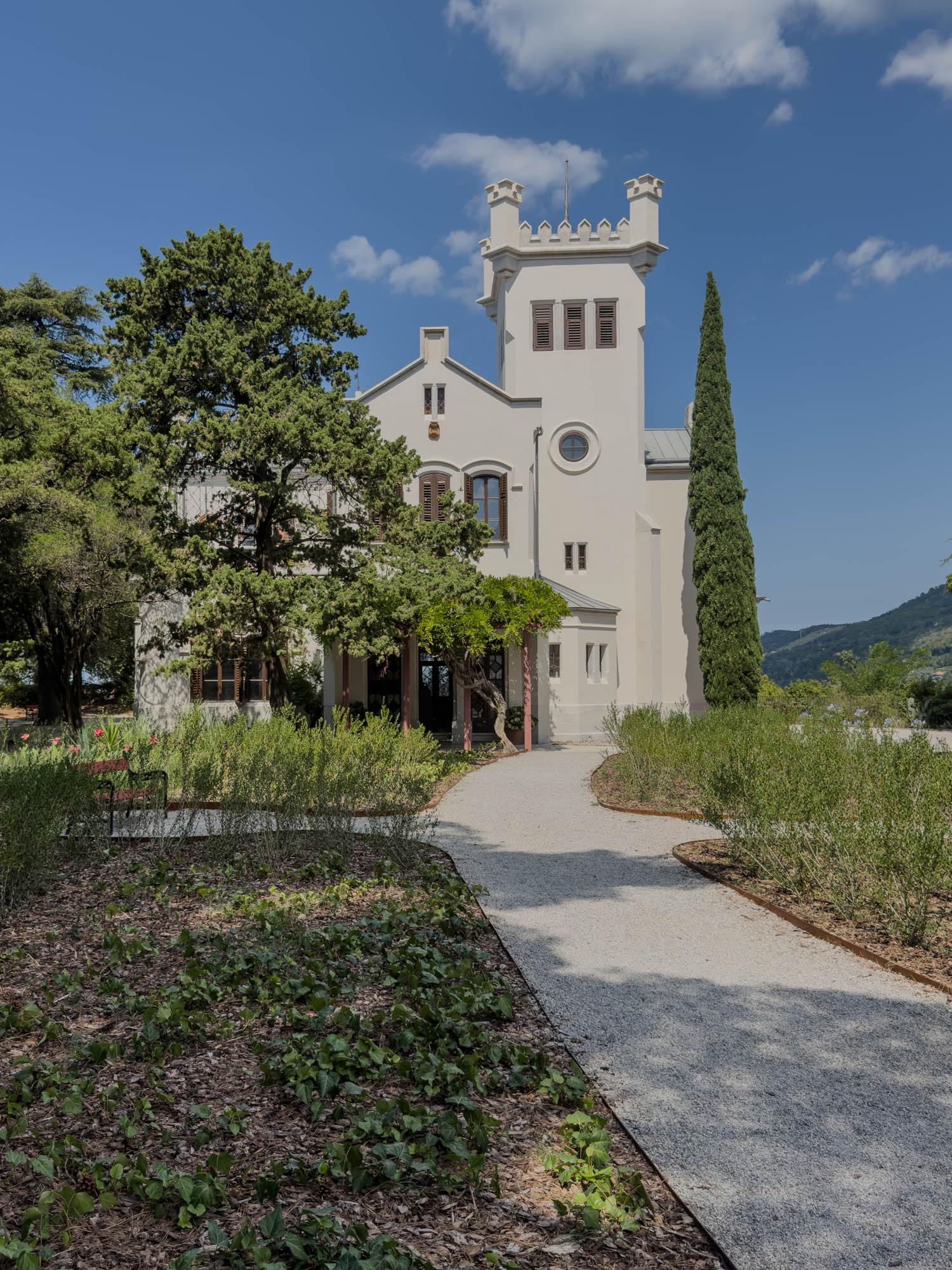
This delightful "little castle" in an eclectic style was constructed between 1856 and 1860 within the grounds of Miramare Castle in Trieste. It served as a temporary home for Archduke Maximilian of Habsburg and Princess Charlotte of Belgium from 1859 to 1860, during the completion of their main residence. Though smaller, it is equally enchanting as its grander neighbour and provides
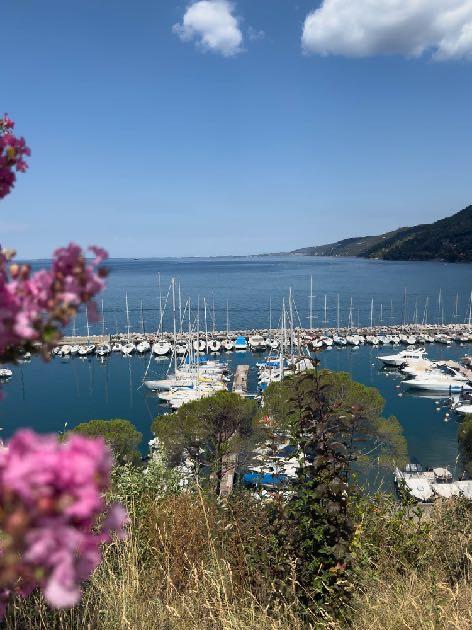
stunning panoramic views over the Gulf of Trieste and the charming harbour of Grignano.
The carefully restored castle is now accessible to visitors. On the ground floor, you will discover a small museum displaying personal keepsakes of the couple, alongside the Flemish Room, the Moorish Room, and an exquisite collection of porcelain.
with the ÖBB railjet to Trieste
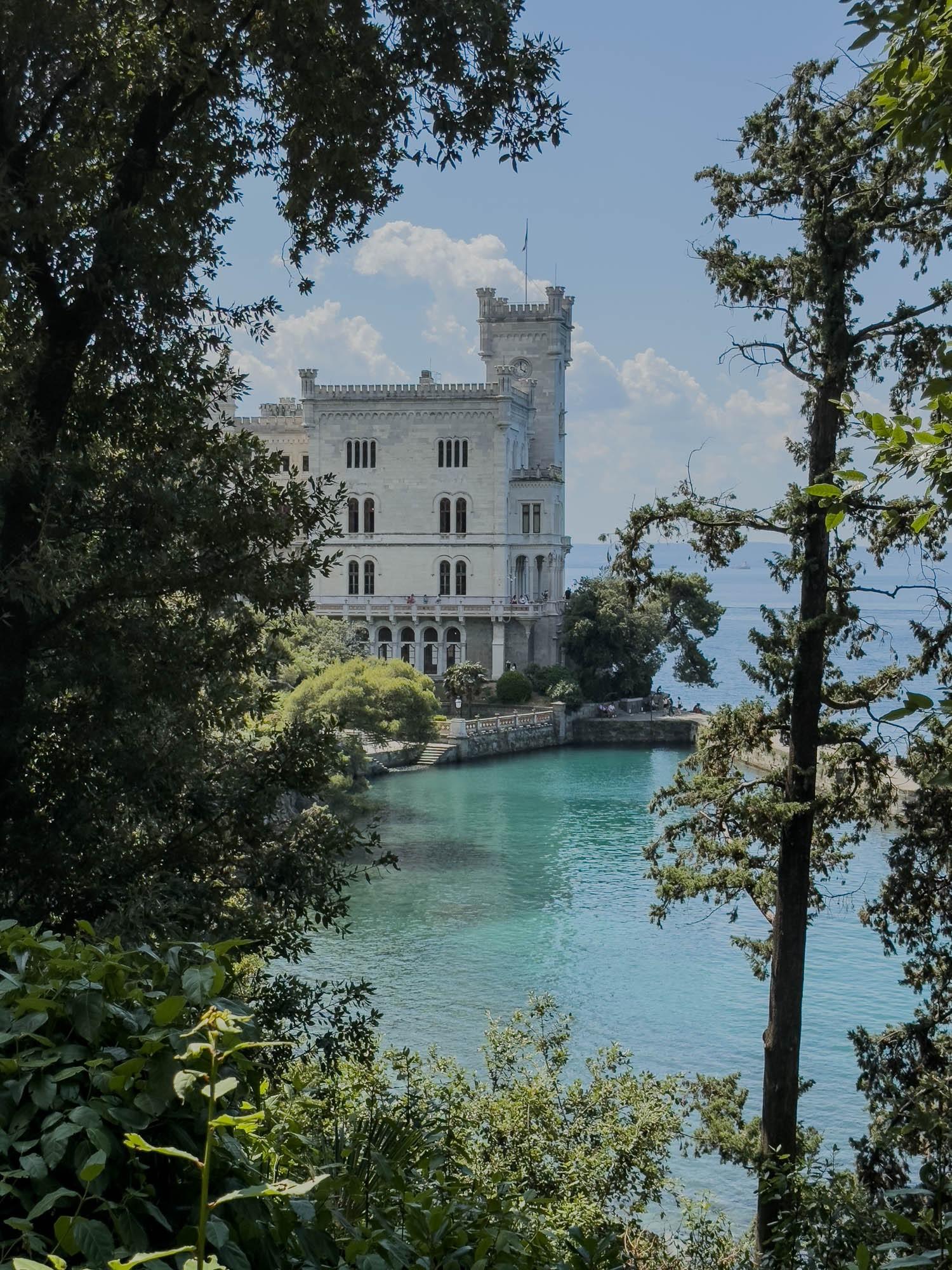
Castello di Miramar
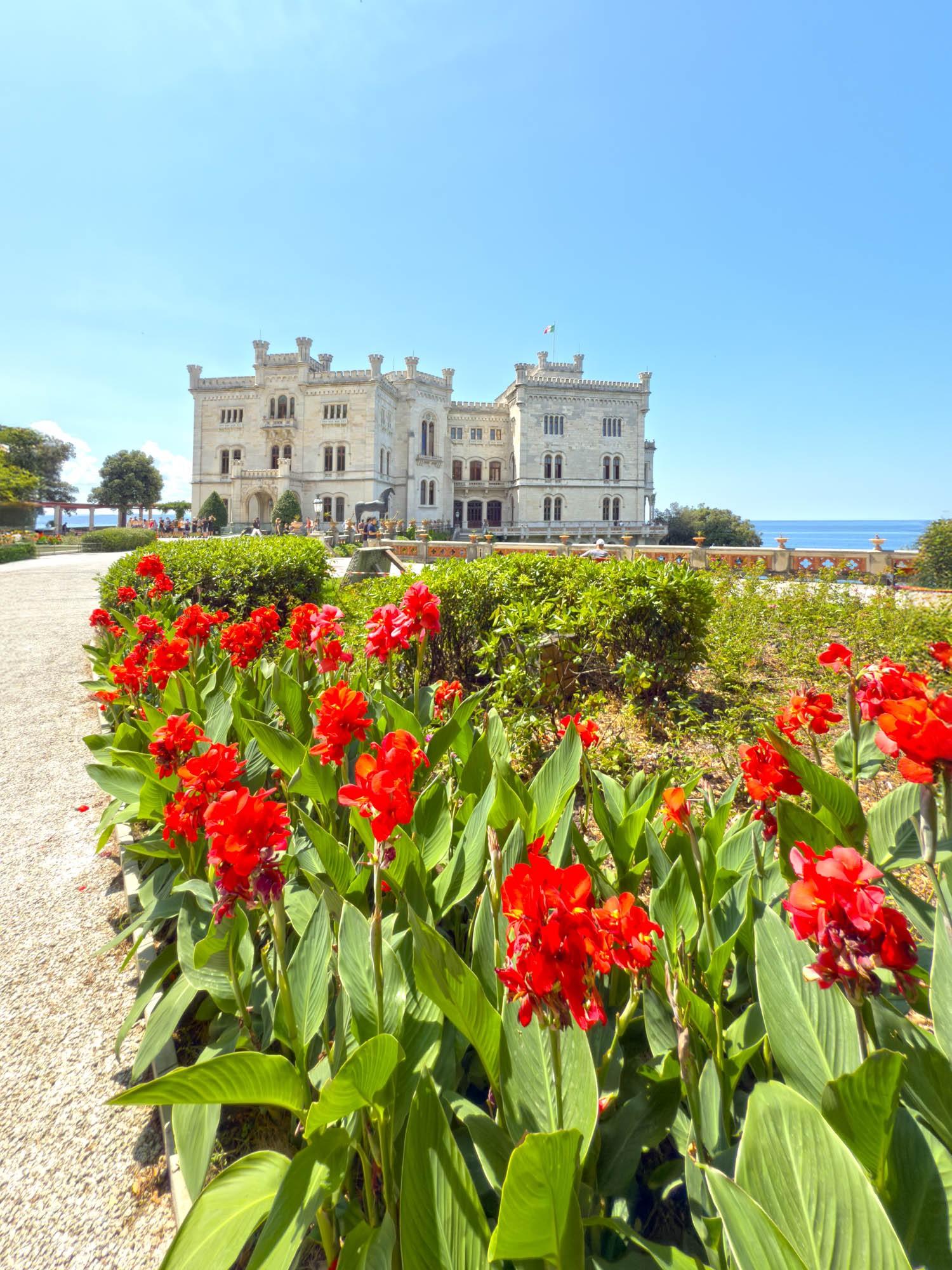
Miramare Castle in Trieste is the renowned white fairytale fortress located on the Adriatic shoreline. Between 1856 and 1860, Archduke Maximilian of Habsburg commissioned this enchanting residence for himself and Carlotta. Perched impressively on a cliff, the castle commands views over the Gulf of Trieste. Built in an eclectic manner using Istrian stone, the castle, with its towers, arcades, and original interiors, radiates genuine
Habsburg sophistication. Of special interest are Maximilian's study and Carlotta's bedroom, both intimately connected to the castle’s history.
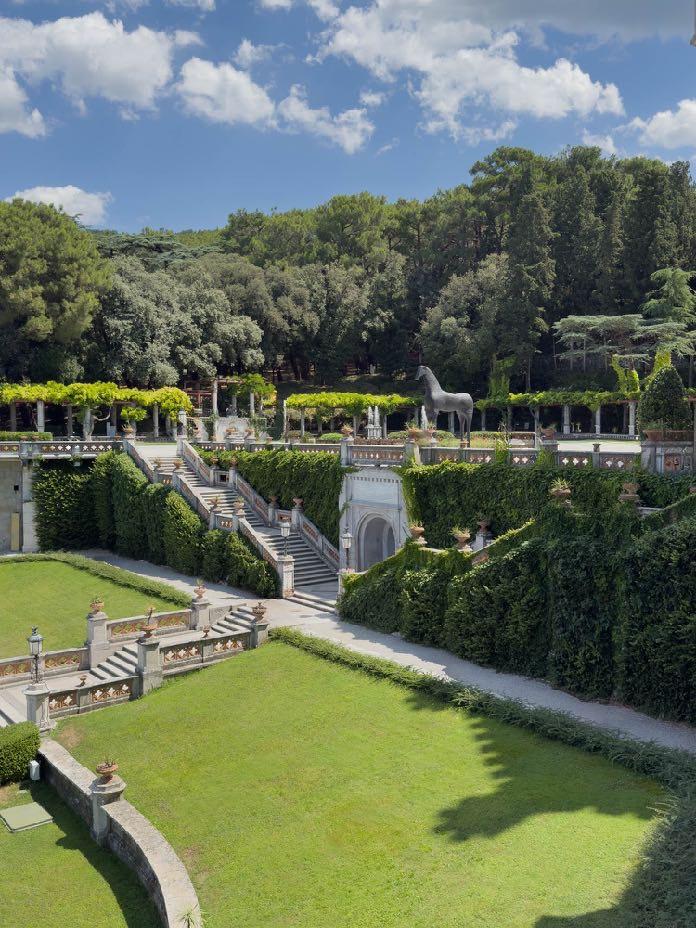
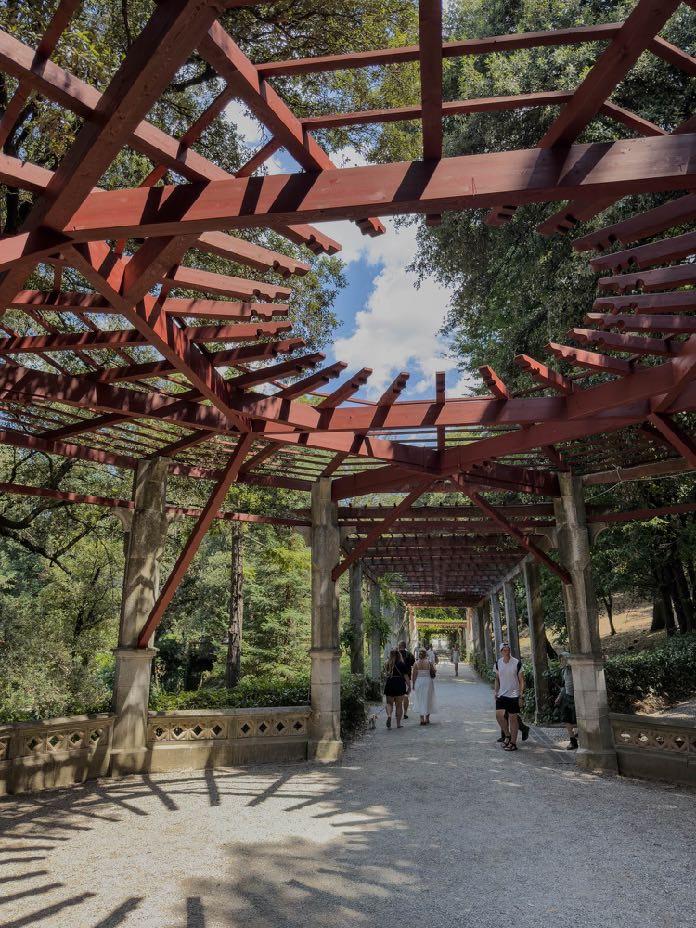
Set within a 22-hectare park abundant with exotic flora, it stands as one of the region’s favourite attractions. The gardens, offering distinctive views of the sea, invite guests to enjoy magical walks and create lasting photographic memories.
with the ÖBB railjet to Trieste
with the ÖBB railjet to Trieste
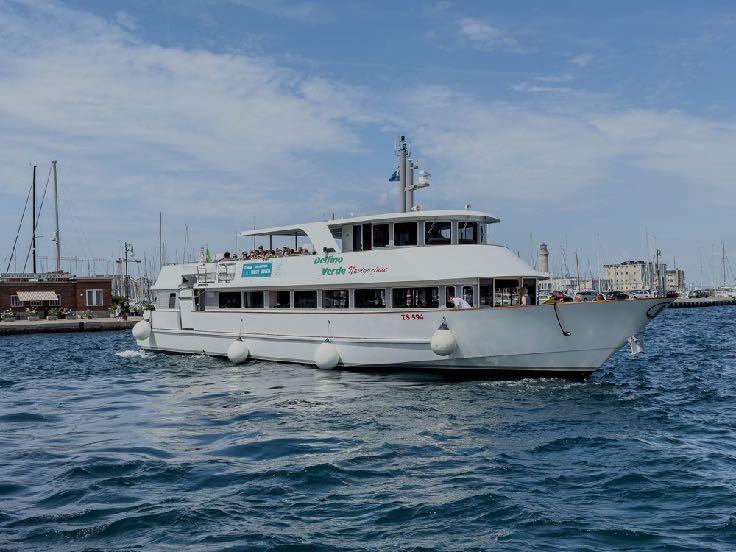
By boat to Miramar
The summer ferry route connecting Trieste, Barcola, Grignano, and Sistiana arrives close to Miramare Castle. The trip lasts around 40 minutes. The ferry departs from Molo Bersaglieri, located right on the Riva Nazario Sauro, just a short walk from Piazza Unità d’Italia.
Starting from the bus stop or the ferry terminal, you will need to walk approximately 750 metres to reach Miramare Castle. The gently ascending trail leads up the
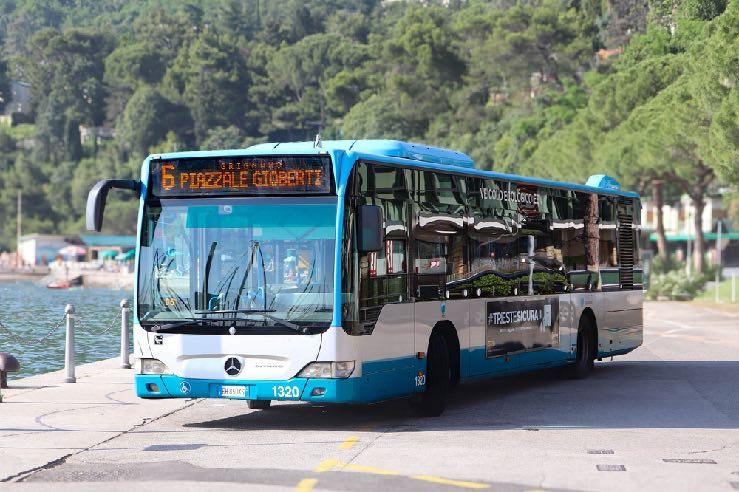
Take the bus to Miramar
Bus route 6 operates between Piazzale Gioberti and Grignano (Miramare). The trip lasts around 30 minutes. During the summer months in particular, the buses, which serve multiple beach stops en route, tend to be quite full.
hill and provides a stunning panorama of Grignano Bay and the harbour. The precise route can be found via the Google Maps link.
Maximilian of Habsburg, younger sibling to Emperor Franz Joseph I, together with Princess Charlotte of Belgium, daughter of King Leopold I, established their residence in Trieste.
Encouraged by Napoleon III and Mexican conservative factions, they accepted the imperial throne of Mexico in 1864: Maximilian assumed the title Emperor Maximilian I, while Charlotte became Empress Carlota—a hopeful
vision of progress and liberal values that quickly deteriorated into a grim ordeal.
As republican forces led by Juárez gained dominance, Maximilian was executed in Querétaro in 1867. In despair and seeking support from Europe, Charlotte suffered a mental collapse and lived in isolation until her passing in 1927.
with the ÖBB railjet to Trieste
Special
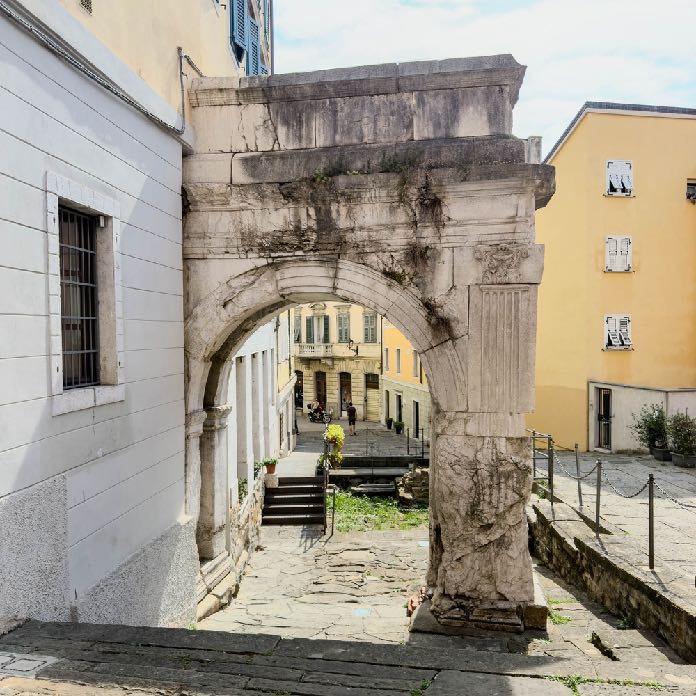
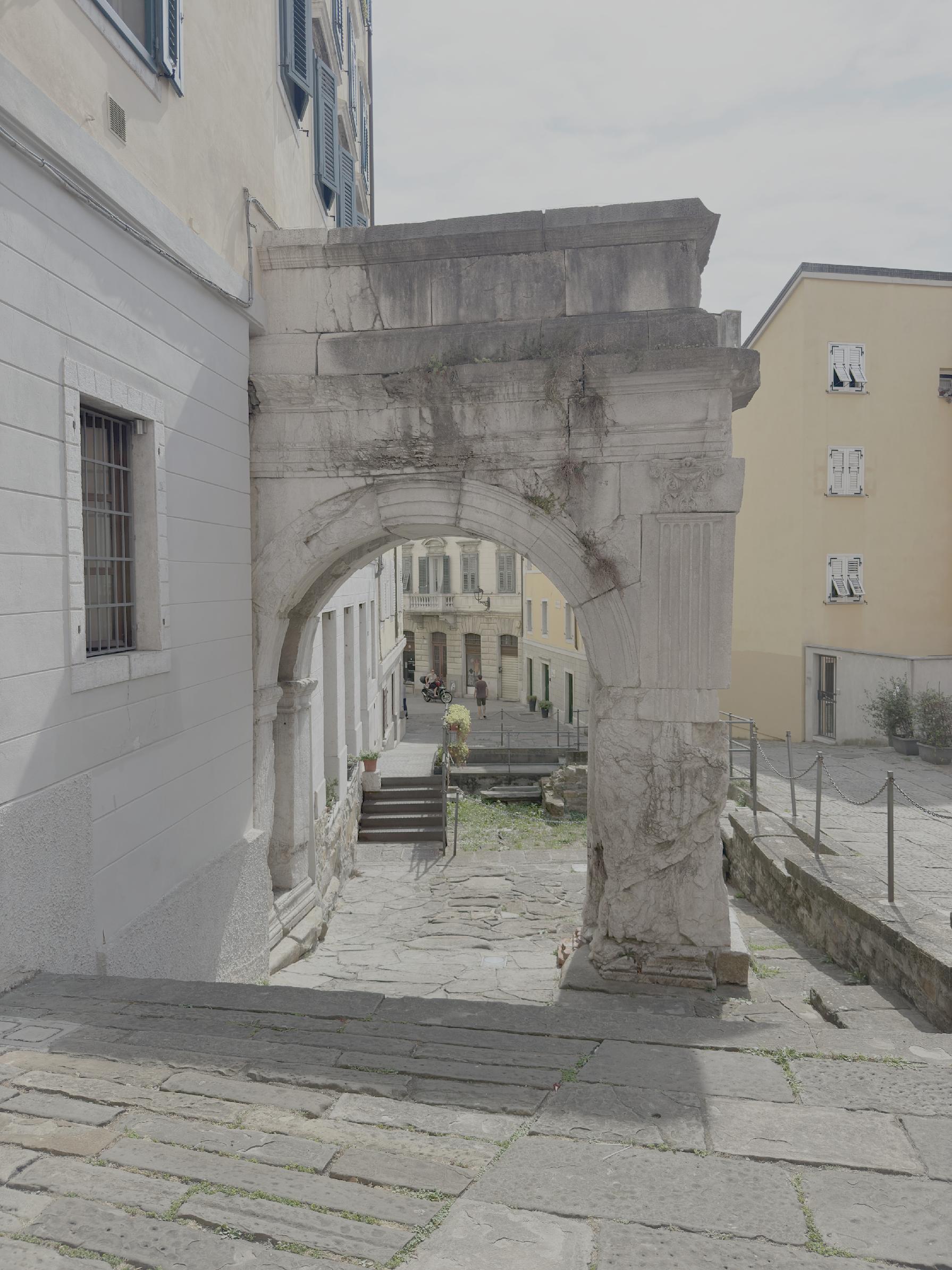
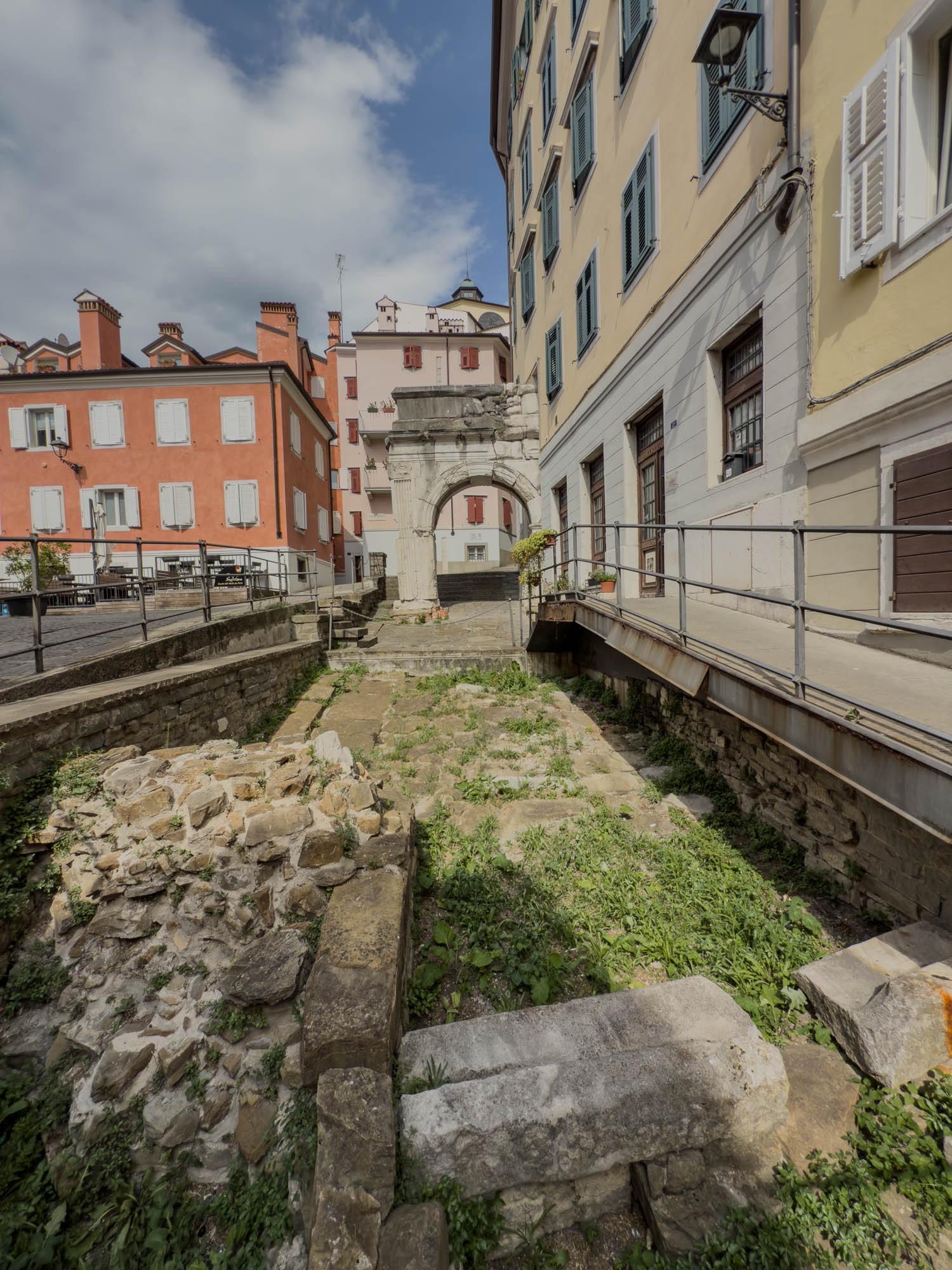
Arco di Riccardo
The Arco di Riccardo (Richard's Arch) is thought to have been one of the Roman gates of the city of Trieste. It was constructed during the rule of Emperor Octavian Augustus, around 33 to 32 BC. However, some accounts propose that it served as one of the entrances to the sanctuary dedicated to the Magna Mater. According to local legend, the arch derives its name from Richard the
Lionheart, who is said to have been held captive in Trieste after returning from the Holy Land.
Archaeological research and historical records provide varying interpretations regarding the exact purpose and importance of the arch, yet it is clear that it held a key position within the urban structure of Trieste.
with the ÖBB railjet to Trieste
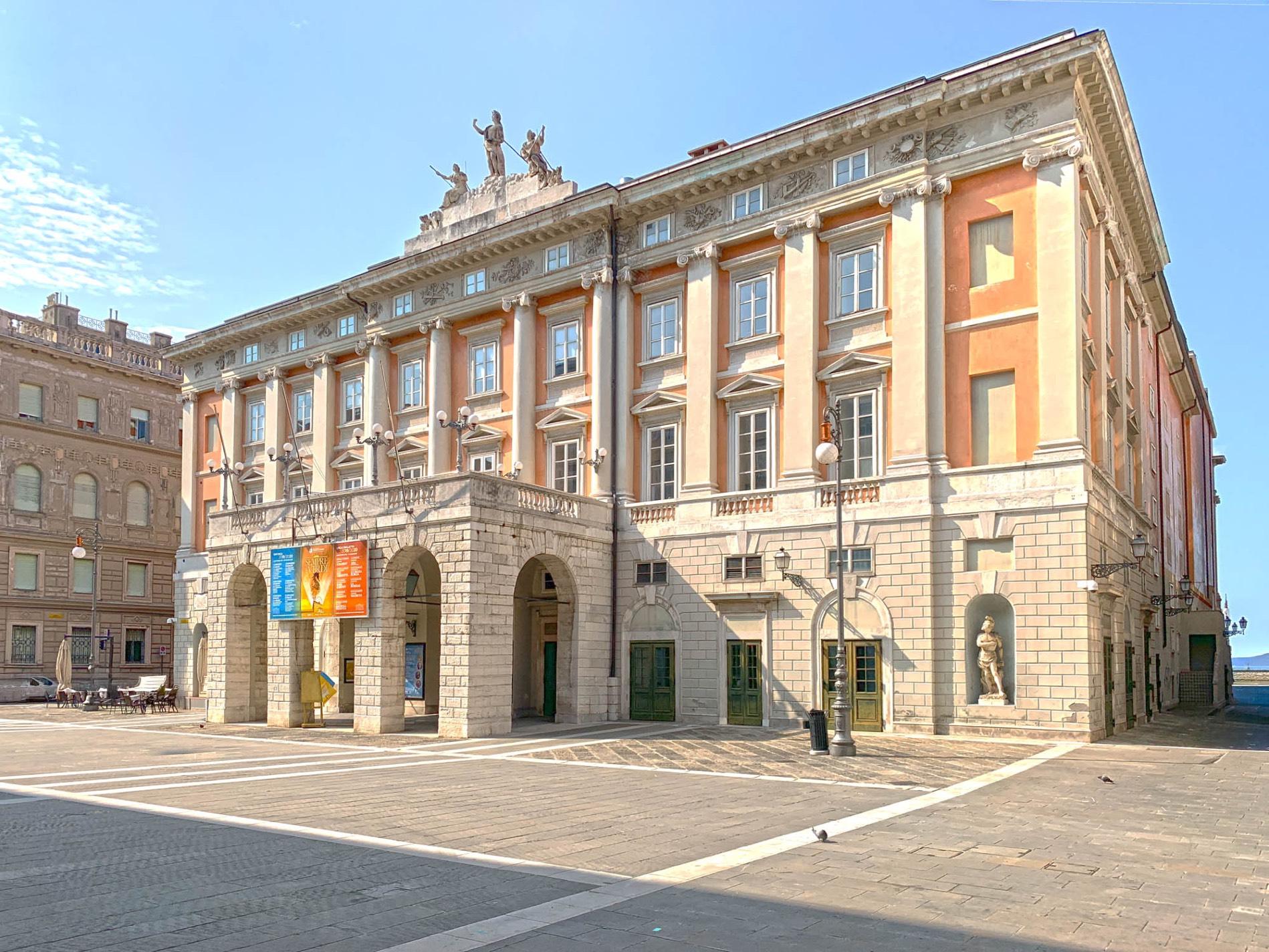
Teatro Verdi Trieste
Since 1801, the Teatro Verdi in Trieste has stood as the city’s iconic opera venue. Created by Gian Antonio Selva, the architect behind Venice’s celebrated La Fenice opera house, it ranks among Italy’s oldest opera houses still in active use.
Its refined neoclassical frontage on Piazza Verdi and the stunning red and gold auditorium, which accommodates around 1,300 guests, enchant every visitor. Experience
exceptional Verdi operas, symphony performances, and the famous operetta festival – a true expression of Italian fervour! Beyond its splendid decoration, the Teatro Verdi is equipped with cutting-edge technology, supporting both traditional and contemporary productions.
A must-see attraction in Trieste: a blend of history, superb acoustics, and enchantment by the seaside.
with the ÖBB railjet to Trieste
Politeama Rossetti
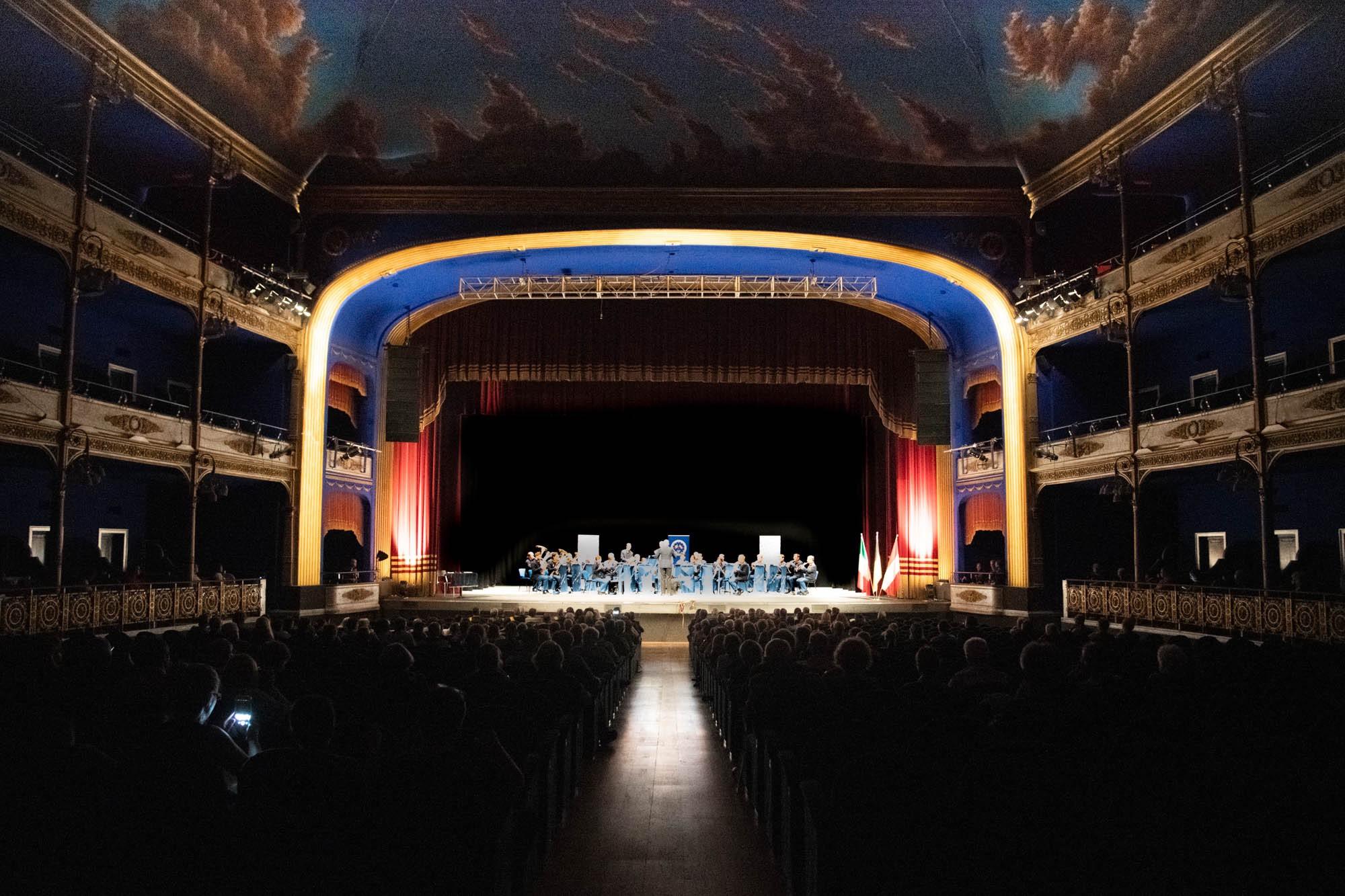
The Politeama Rossetti stands as the lively cultural centre of Trieste – it is the city’s largest theatre and serves as the home of the Teatro Stabile del Friuli Venezia Giulia.
Constructed in 1878 in a refined eclectic architectural style, the spacious Sala Principale (also referred to as the Sala Assicurazioni Generali) offers seating for more than 1,500 visitors. This venue provides an ideal environment for prominent events, ranging from gripping plays and
enchanting musicals and ballets to international concerts and dance performances. The photograph captures a guest appearance by the Imperial and Royal Vienna Regimental Band IR4.
The delightful, more intimate Sala Bartoli enhances the programme with smaller-scale productions of contemporary drama and experimental art – fostering a unique bond between performers and audience.
with the ÖBB railjet to Trieste
Municipal Museums in Trieste
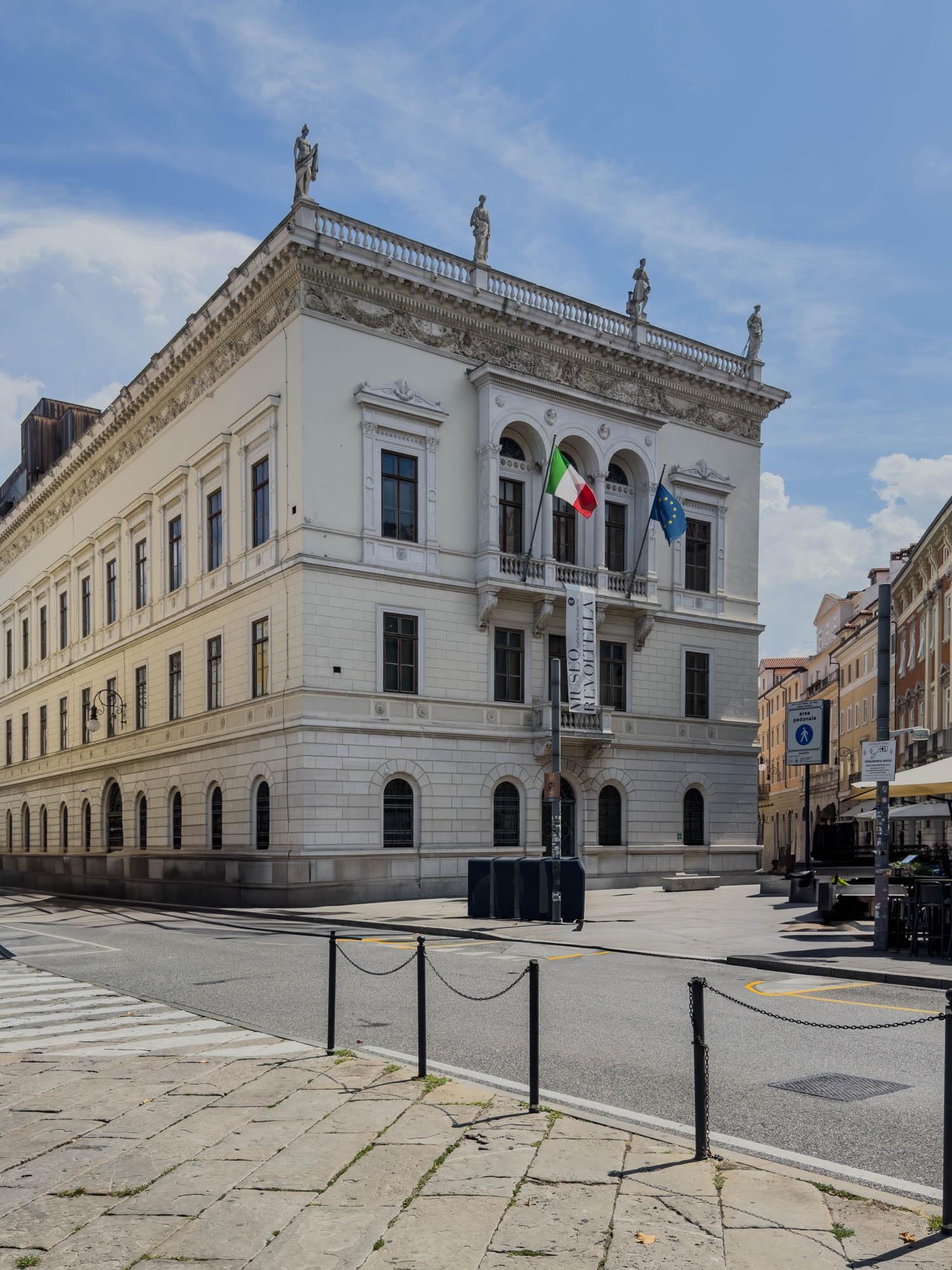
On the first Sunday of each month, a variety of cultural venues in Trieste open their doors to visitors free of charge. Among these are the Revoltella Museum, San Giusto Castle, the Carlo Schmidl Theatre Museum, the Diego de Henriquez Museum (dedicated to the War of Peace), and the Natural History Museum.
In contrast, the following museums offer free entry throughout the entire year: the Maritime Museum, the
Museum of Oriental Art, the Sartorio Museum, the J.J. Winckelmann Museum of Antiquities, the Risiera di San Sabba, the Basovizza Foiba Documentation Center, the Risorgimento Museum and the Oberdan Shrine, the LETS Trieste Literary Centre, the Petrarchesco Piccolomineo Museum, as well as temporary exhibitions held at Warehouse 26.
with the ÖBB railjet to Trieste
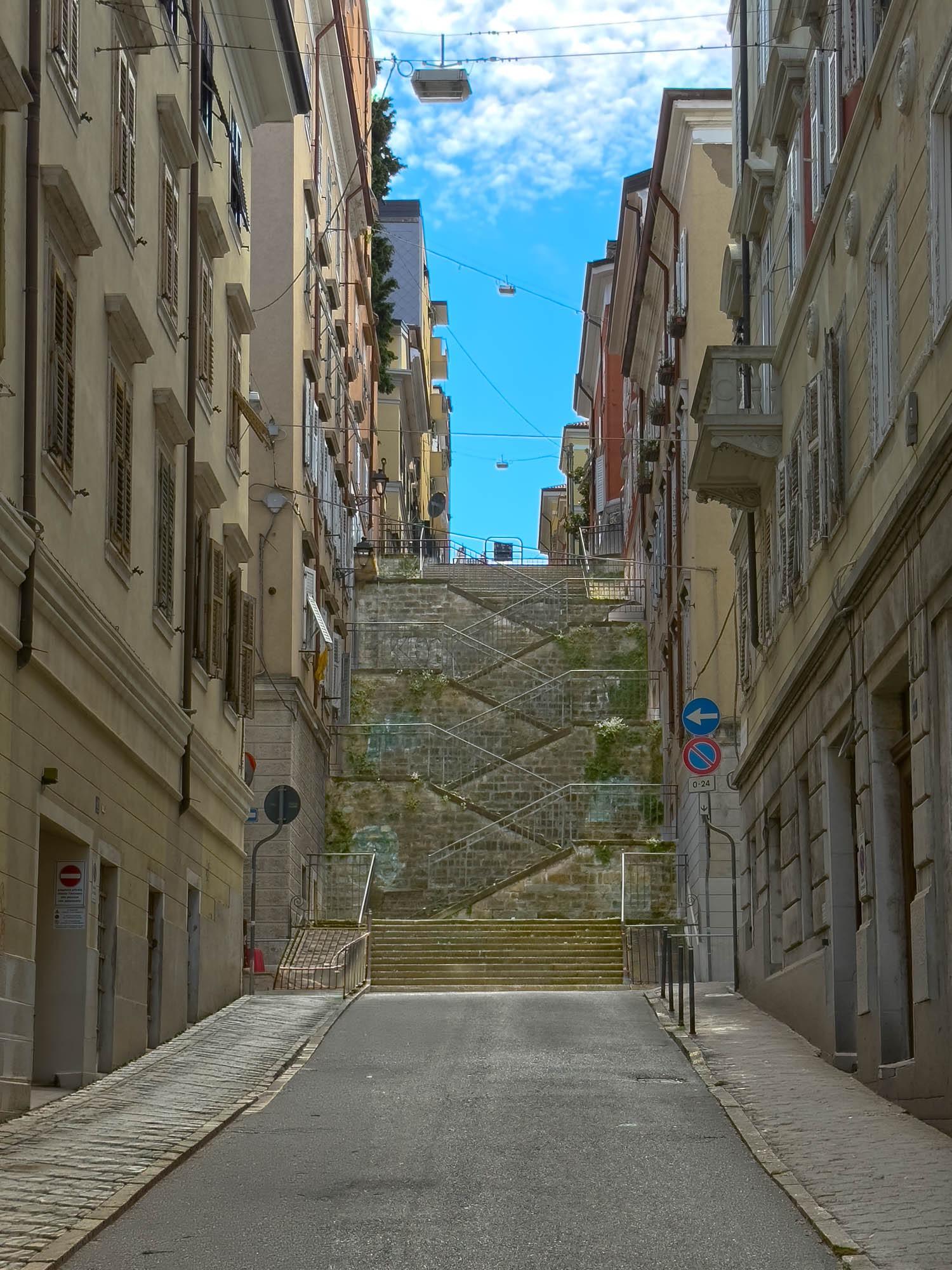
Scala di Via Ciamician
The Scala di Via Ciamician, commonly referred to as Scala Ciamician, ranks among Trieste’s most remarkable and picture-perfect stairways.
This steep and charming staircase, formerly called Via degli Armeni, ascends from the historic heart of the city to the Colle di San Vito. It provides stunning panoramas of the Gulf of Trieste, the terracotta rooftops of the old town, and the shimmering sea beyond. Both
photographers and casual visitors cherish this scenic outlook. Nestled in a tranquil, authentic spot close to the Cavana district and just a short walk from the city centre, the staircase captures the essence of Trieste’s distinctive “scontrosa grazia”—a rugged yet enchanting elegance. It is truly a hidden treasure for anyone eager to discover Trieste’s romantic and windswept character.
with the ÖBB railjet to Trieste
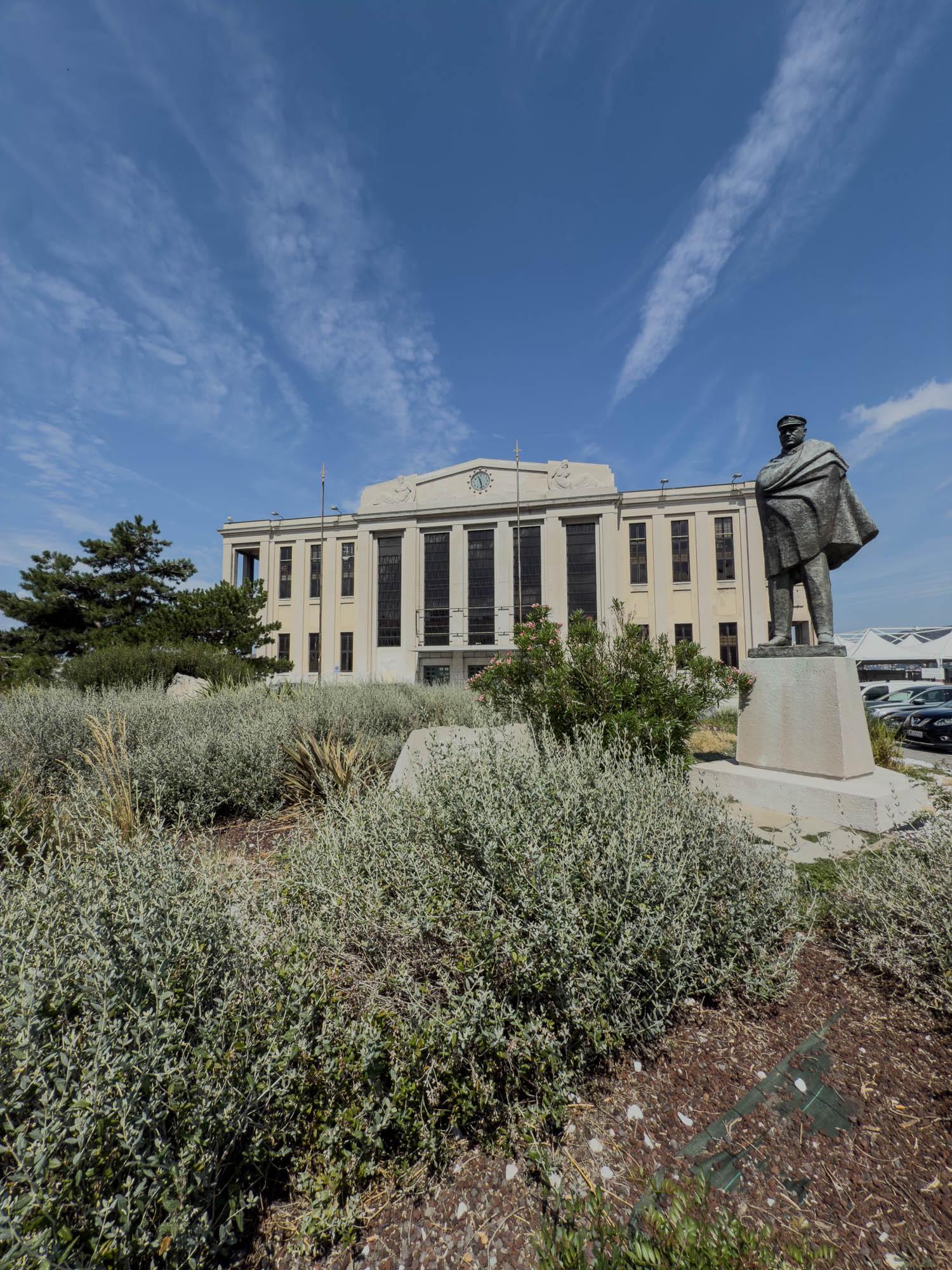
Nazario Sauro
Nazario Sauro (1880–1916) was an Italian irredentist and seafarer. He was born in Capodistria, a town currently called Koper in Slovenia, which at that time belonged to Austria-Hungary.
He showed his commitment to his homeland by defecting to the Italian Navy in 1915. In the following year, he was
apprehended while carrying out sabotage and was later executed in Pula.
Nazario Sauro is recognised as one of the foremost martyrs of the First World War.
Especially in areas that were formerly under AustriaHungarian rule, Nazario Sauro is seen as a symbol of defiance and unity with Italy.
with the ÖBB railjet to Trieste
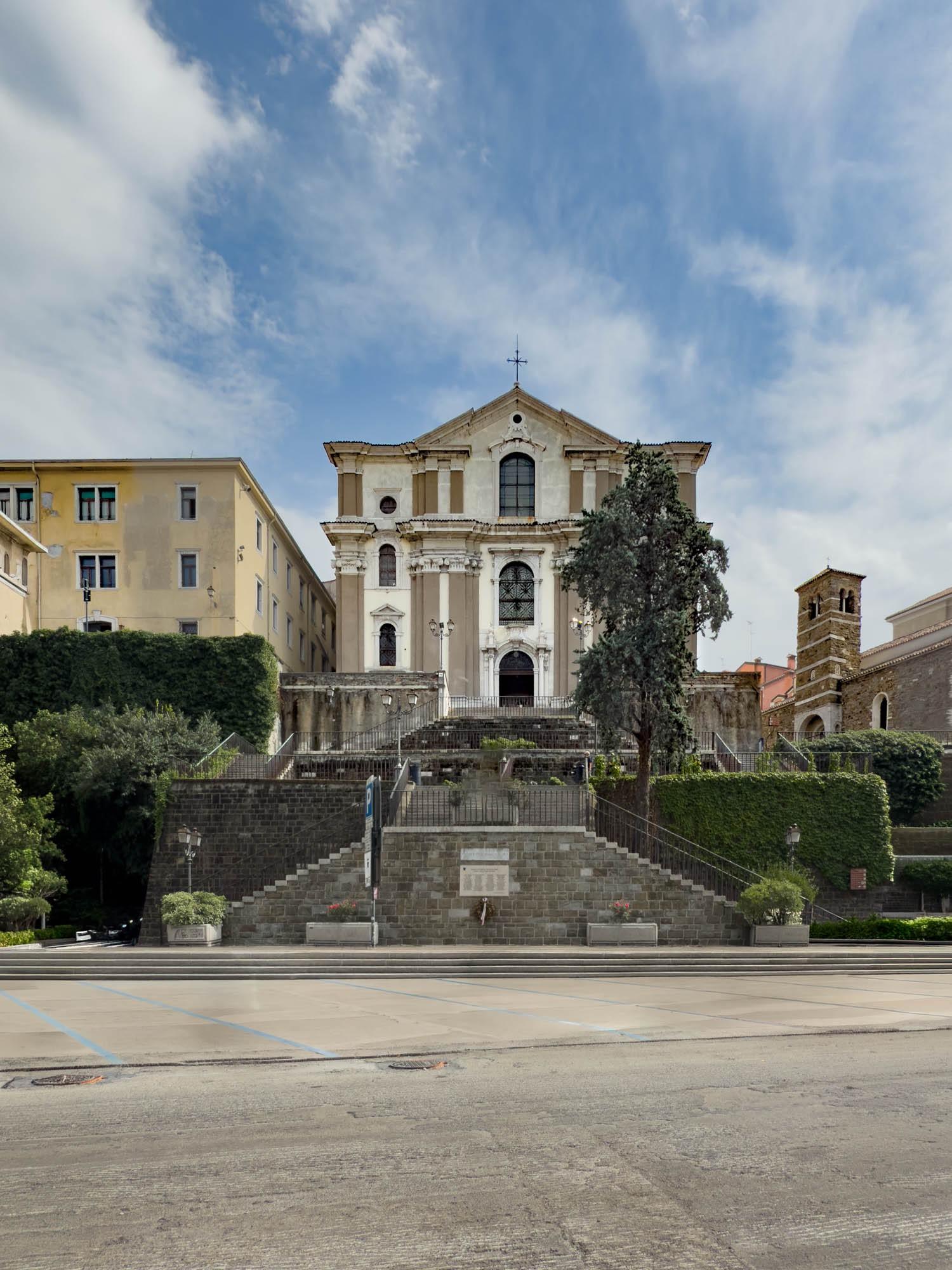
Parrocchia di Santa Maria Maggiore
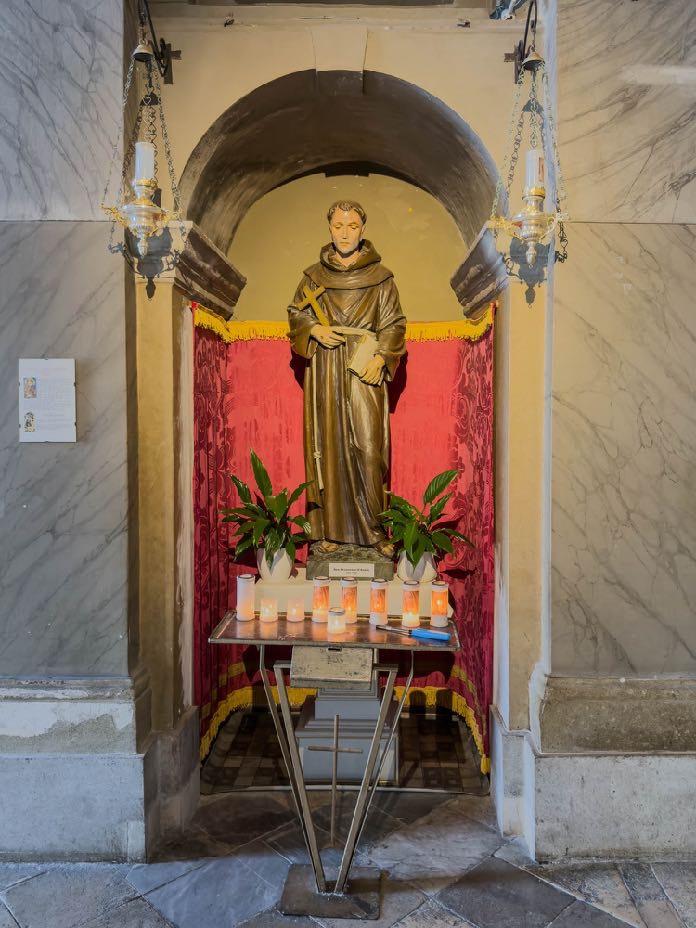
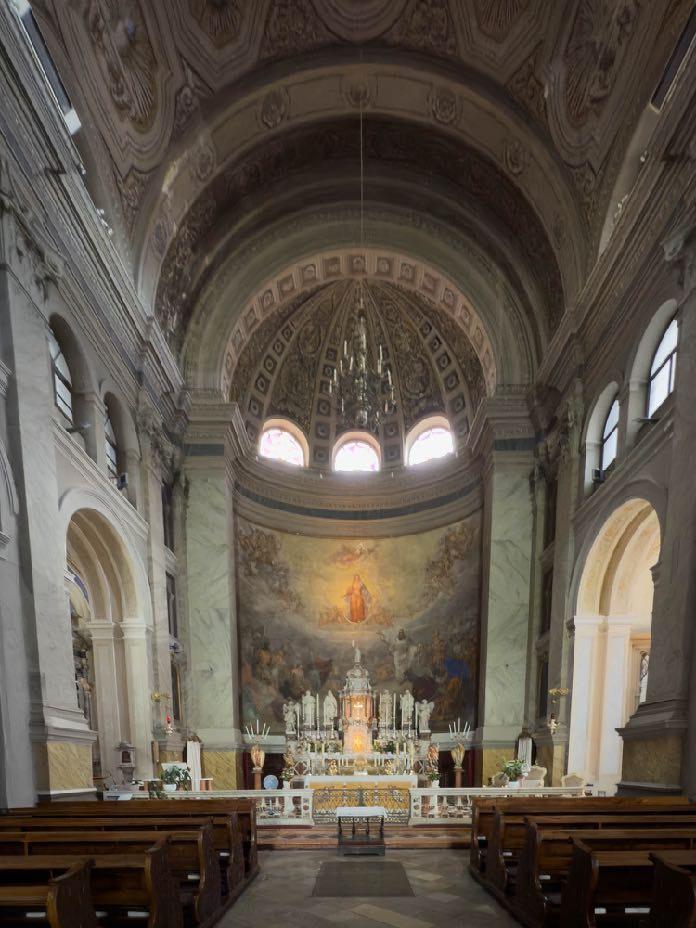
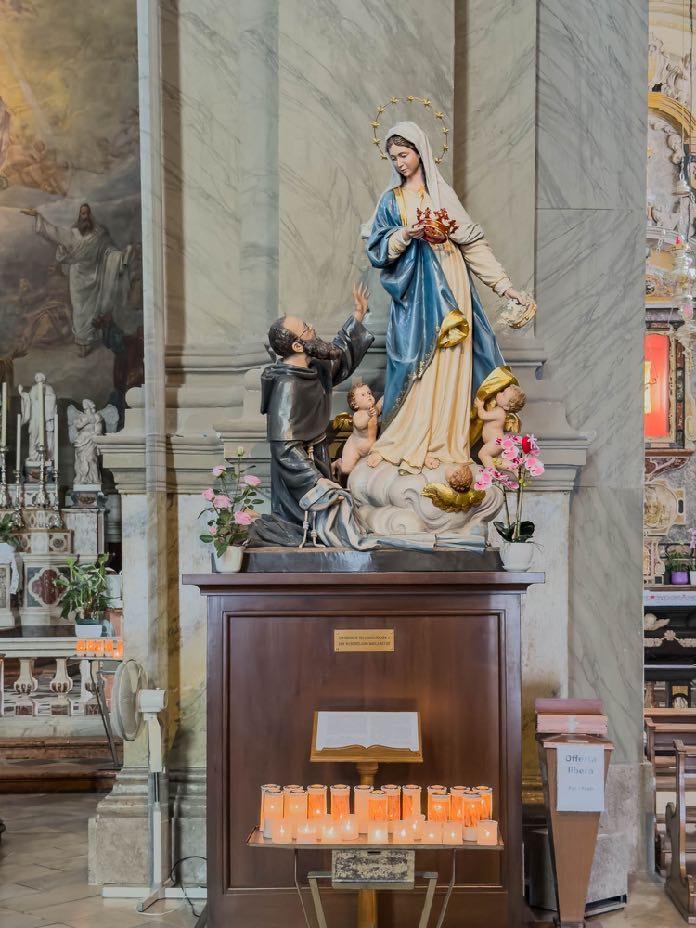
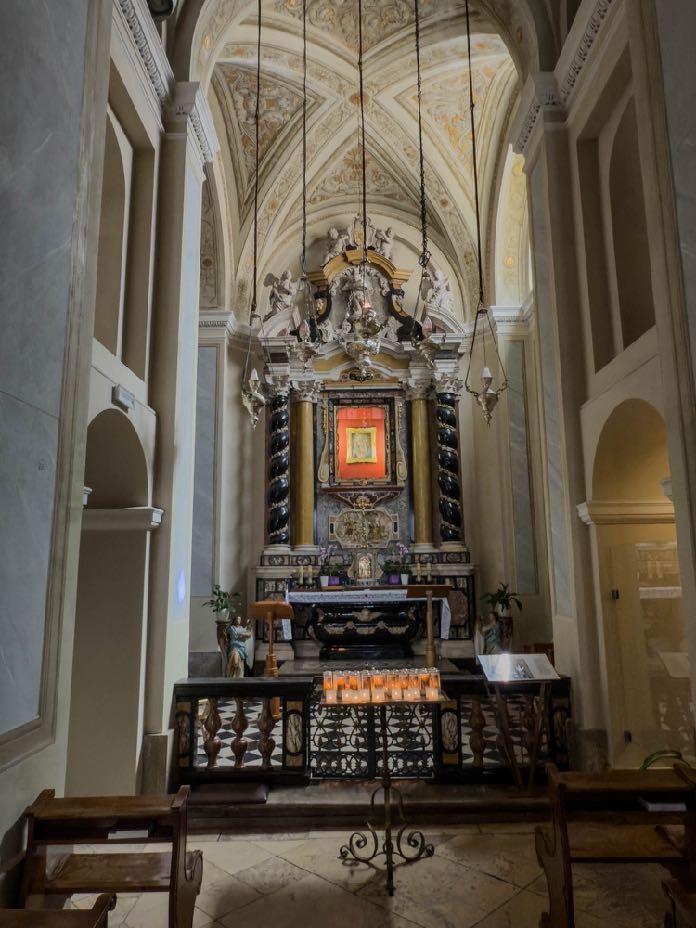
The Baroque Catholic parish church of Santa Maria Maggiore was constructed in the 17th century by the Jesuit community in Trieste. Since 1922, the Franciscan Order has been responsible for the care of this church. Its interior is remarkable for its lavish stucco work and Baroque paintings.
Of special interest are the grand high altar and the many side altars dedicated to various saints, which provide
visitors with insight into the religious art of that period. The church’s design is equally notable, featuring a harmonious combination of Neoclassical and Baroque styles that give the building a stately presence. Additionally, musical performances are regularly hosted within its walls.
with the ÖBB railjet to Trieste
with the ÖBB railjet to Trieste
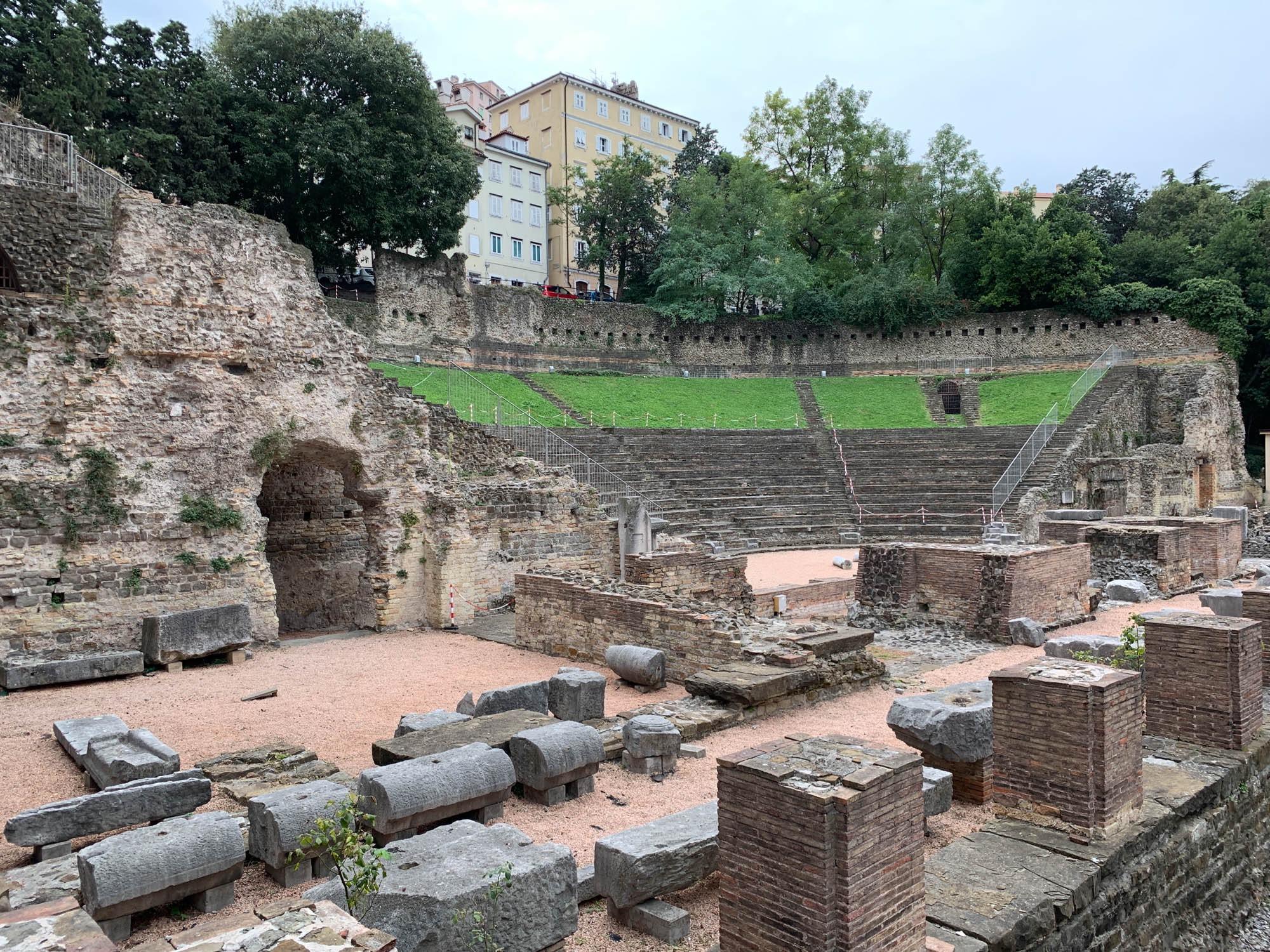
Teatro Romano di Trieste
The theatre was constructed near the close of the 1st century. At that period, the stage was positioned directly along the seafront. It served as the venue for theatrical performances. The semicircular auditorium was segmented into four wedge-shaped sections by stairways. The Roman Theatre of Trieste had the capacity to hold roughly 3,500 to 6,000 spectators. It is thought that the theatre was destroyed by the Lombards in 568 during
their invasion of Trieste. For numerous centuries, the theatre’s remains remained concealed beneath the medieval city walls and neighbouring buildings. In 1938, the theatre was uncovered amid a major urban redevelopment initiative. Today, the remnants of the Roman Theatre of Trieste stand as an important archaeological site.
with the ÖBB railjet to Trieste
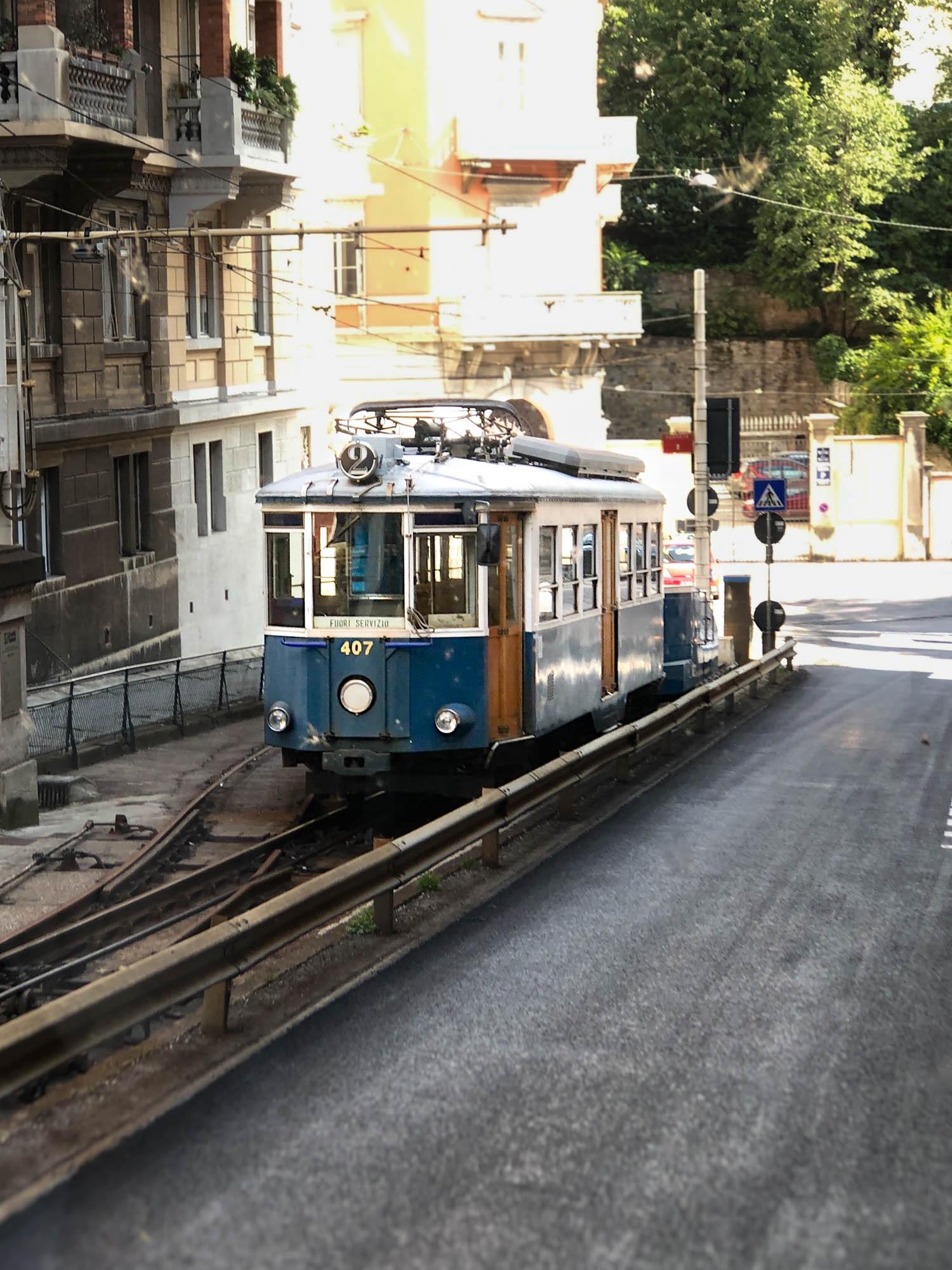
The tram route connecting Trieste and Opicina was inaugurated in 1902. Operations were halted following an accident in 2016 and only resumed in 2025. Since there is no exact information available yet regarding the tram’s service in 2026, it is advisable to consult the official website for the most current updates. Should the tram not be in service, a replacement bus will be provided.
The line extends just over 5 kilometres and ascends approximately 340 metres in height. Because of the steep incline, part of the route is operated as a cable-driven section. On this portion, the tram receives assistance from a pusher when travelling uphill and is carefully controlled on the descent using a funicular railway car.
Tram di Opicina
with the ÖBB railjet to Trieste
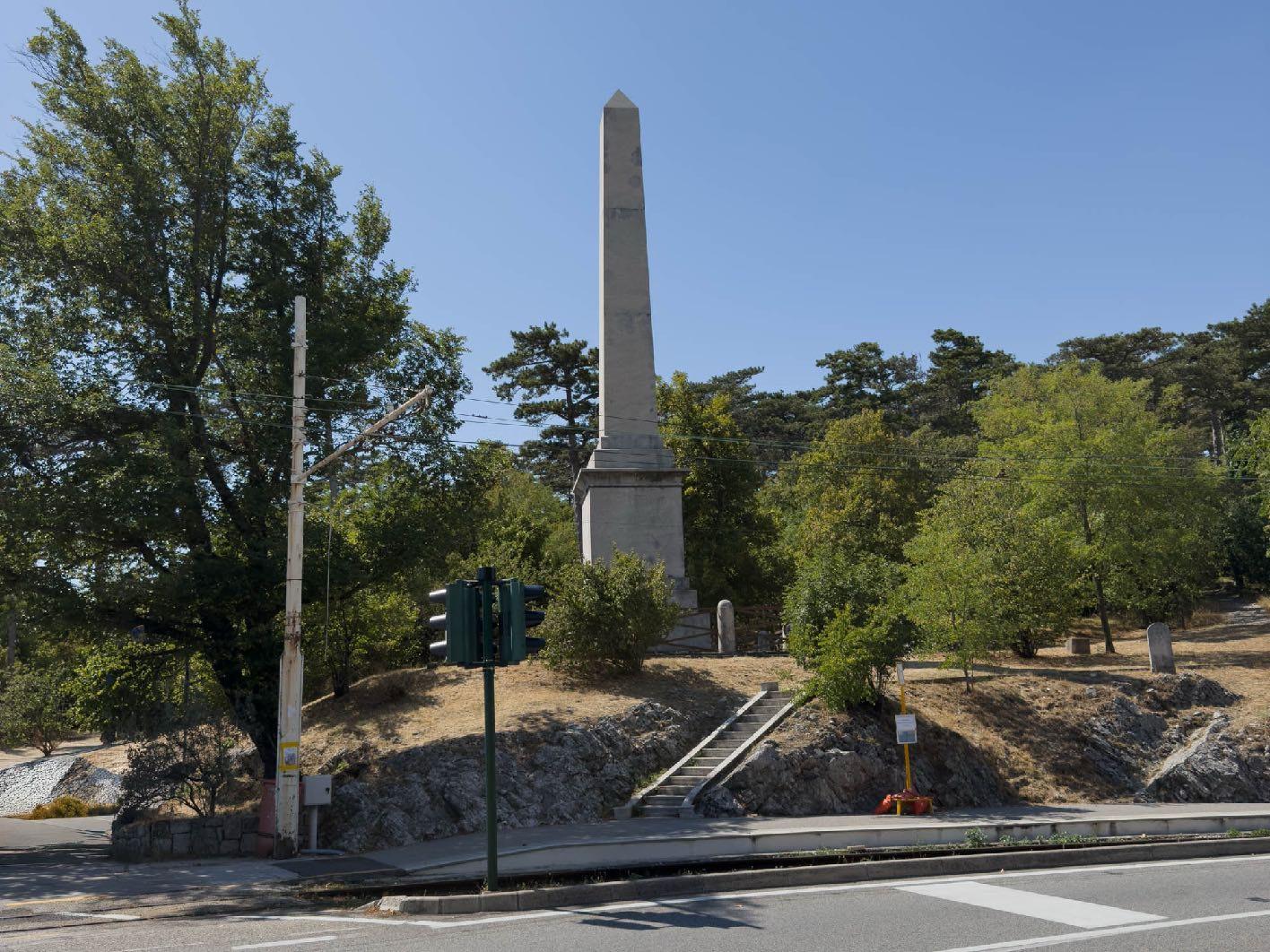
Obelisco di Opicina
Passengers alighting at the Obelisco station can take the chance to view the obelisk honouring Austrian Emperor Franz I. Starting here, a scenic stroll offering stunning vistas unfolds along the
Strada Napoleonica
The street’s name is derived from a legend suggesting that Napoleon’s troops were the first to traverse it. Yet, it is more probable that the name originates from the engineer Vicenti, who
or Napoleonic Road. The journey to Prosecco covers
oversaw its planning. From Prosecco, a public bus is available to return you to the city centre.
This e-book was made possible through the kind support of the regional tourist offices and the OBB. German proofreading and editorial: Martin Andergassen.
References
Text, videos and photos by Rudolf J. Strutz unless otherwise stated. Timetables and travel information: OBB
Assistance from AI
Artificial intelligence applications are occasionally employed for image editing, including the elimination of undesirable components. Additionally, AI tools can enhance the clarity of images and diminish background noise.
OBB railnet
The travel guides are also available free of charge on the OBB online entertainment and internet portal railnet, which is installed on all railjets, nightjets (NG) and cityjets
Copyright
This book was licensed under the Creative Commons License. Conditions of use: attribution, non-commercial, no editing and distribution under the same conditions only as a complete work! The use of individual photos and text is not permitted. This eBook is available free of charge.
Links
All links provided are current at the time of publication of this ebook. Links to tickets usually lead directly to the exhibition location. For tickets and timetables, local public transportation services are linked.
Logos and company names
All logos and company names are used for information purposes only; any use outside of this e-book must be approved by the copyright holders.
SCOTTY mobile shows the timetables for all public transport and helps you plan your travel route.
Book your trip online or view the current timetable online and directly on your mobile phone.