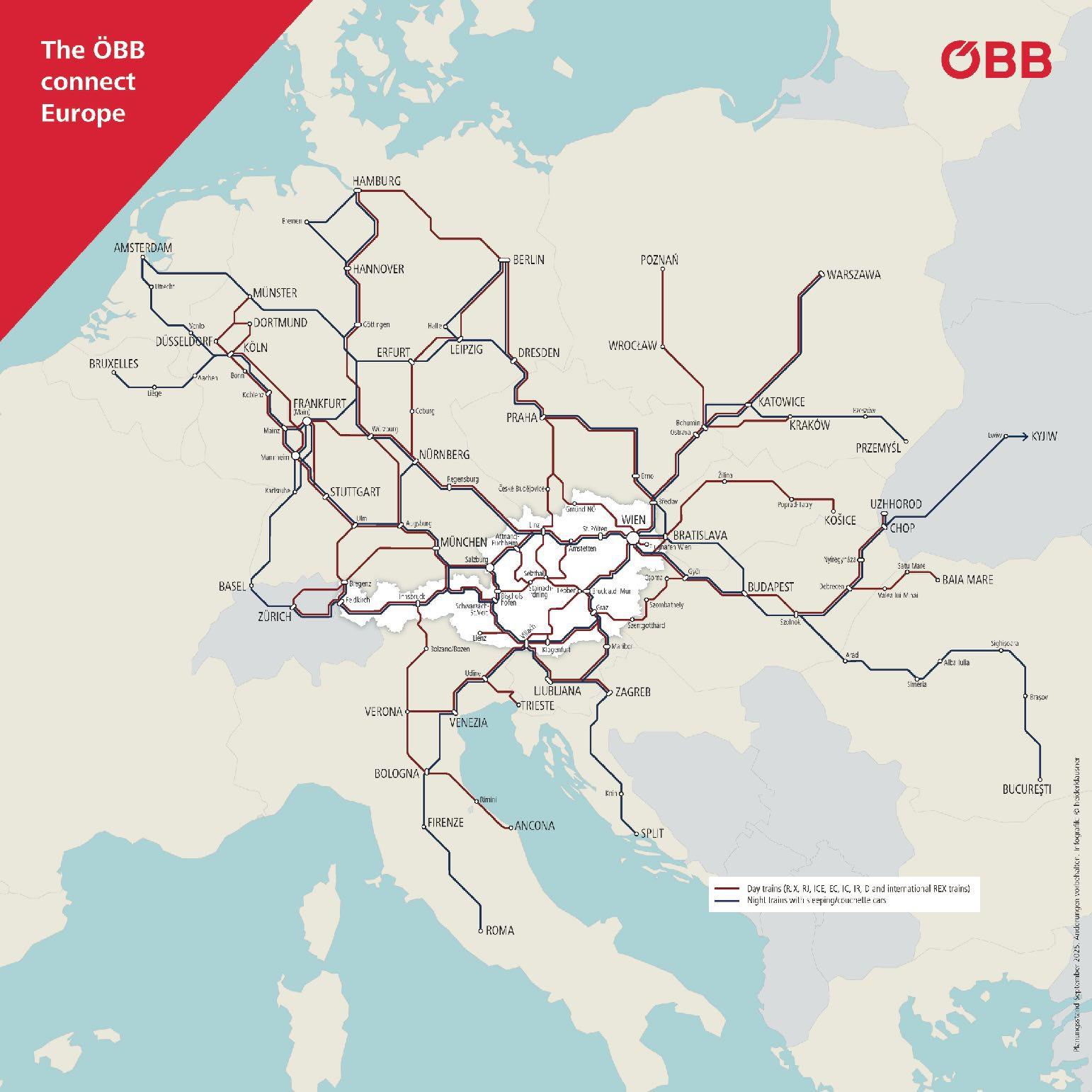
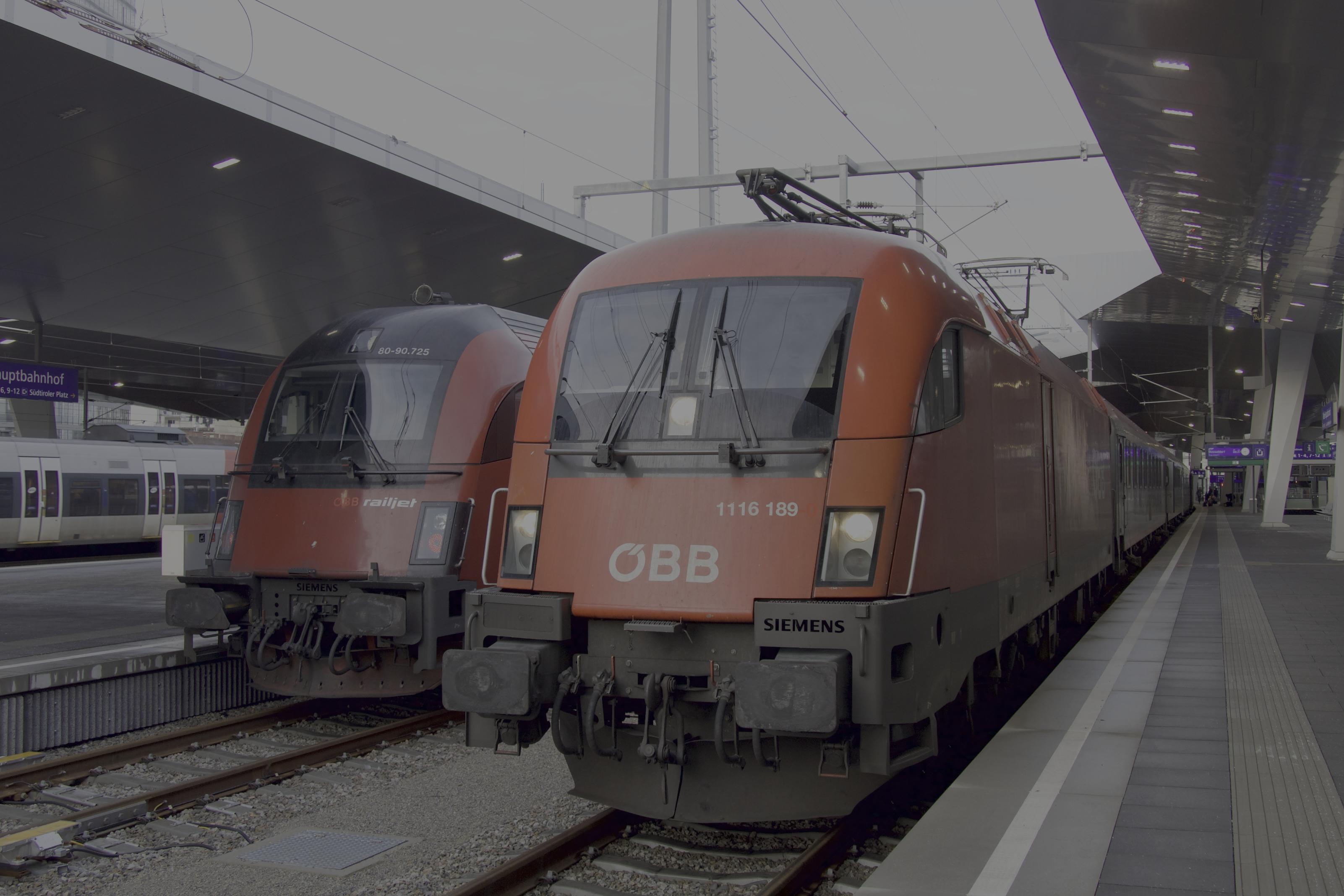
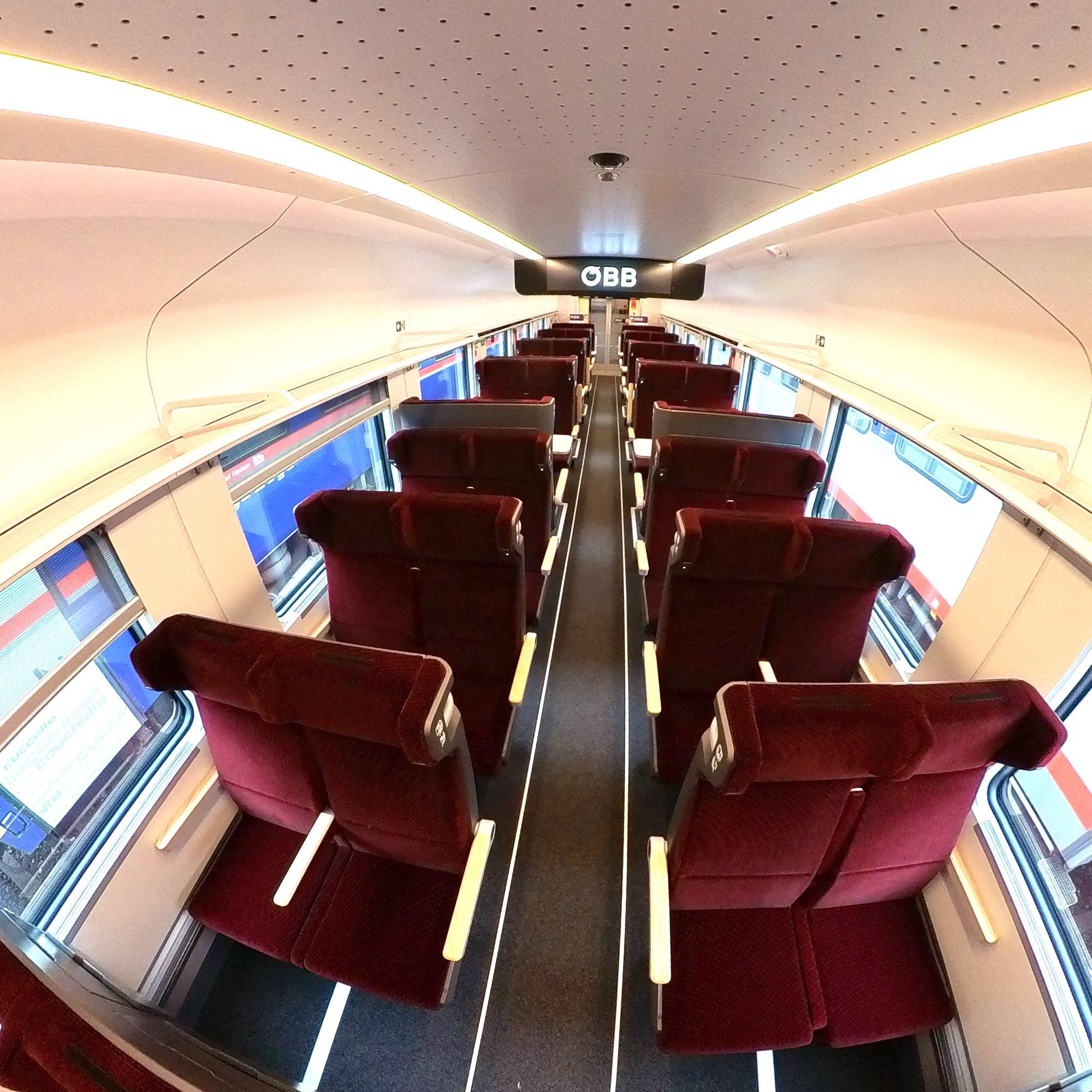
ÖBB connects numerous European cities with modern day and night services.
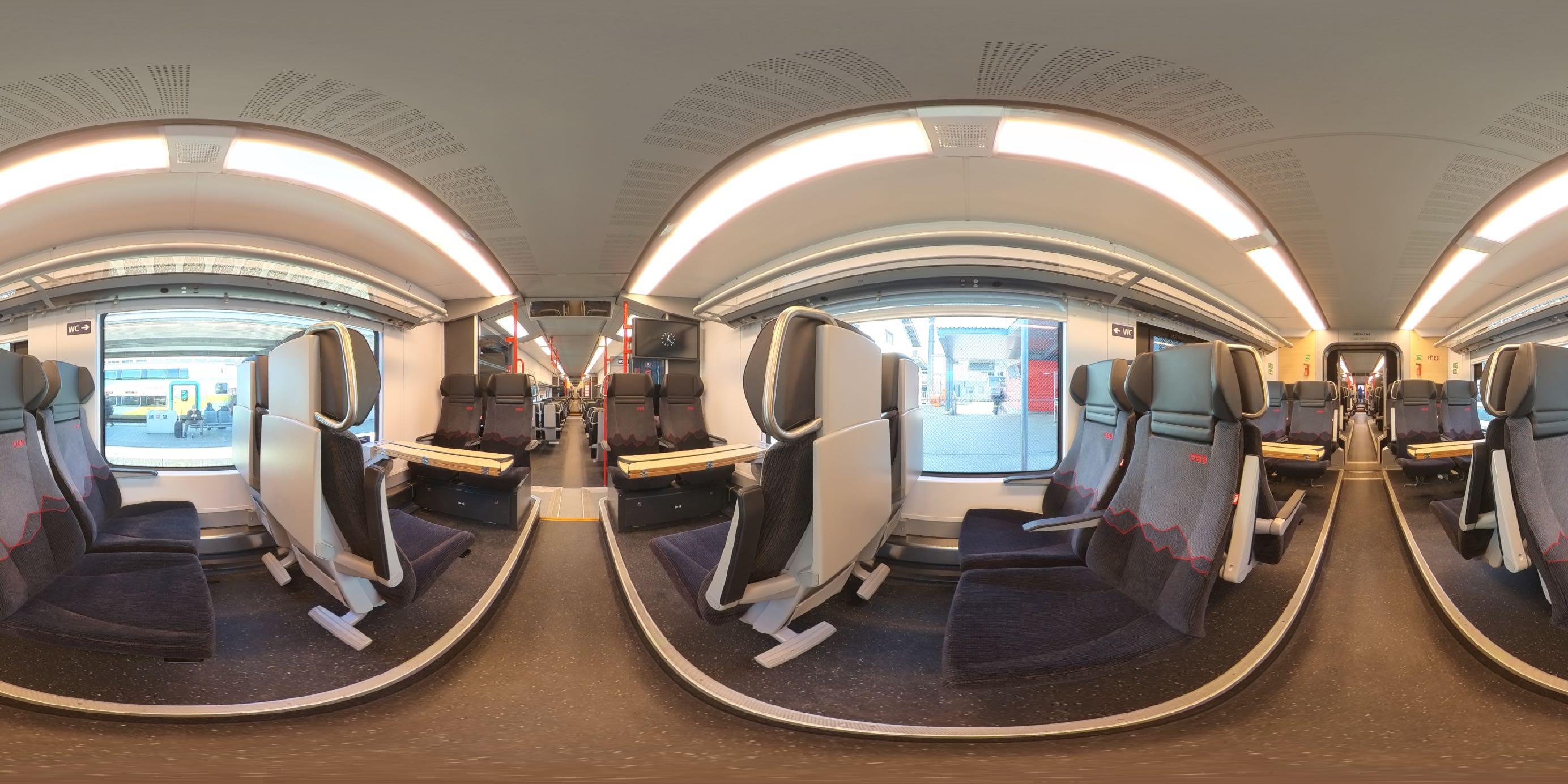
During the day, ÖBB Railjets offer fast and comfortable long-distance travel in Economy, First, and Business classes.
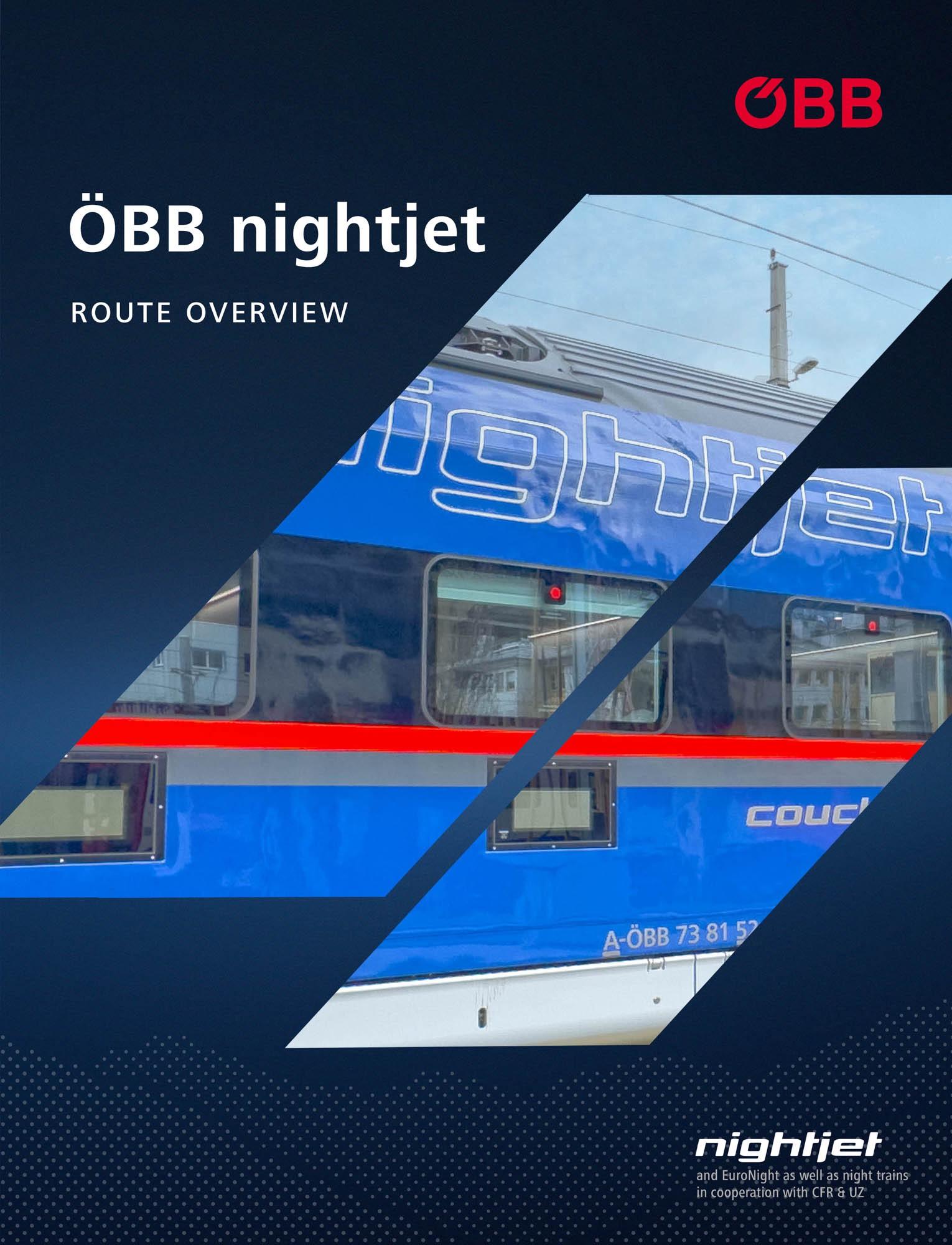
At night, the ÖBB Nightjet provides a relaxing and environmentally friendly journey across Europe. Whether
you prefer a seat, new Mini Cabins, or couchette and sleeper cars – every travel preference is catered for.
Within Austria, ÖBB Cityjets guarantee punctual and comfortable local and long-distance transport.
Further information and booking options can be found via the info button, which leads directly to the ÖBB booking page.


ARRIVAL THE CITY
WORTH SEEING CHURCHES BERGISEL
AMBRAS CASTLE
ALPINE ZOO
NORDKETTE
LOCAL TRANSPORT
IMPRINT
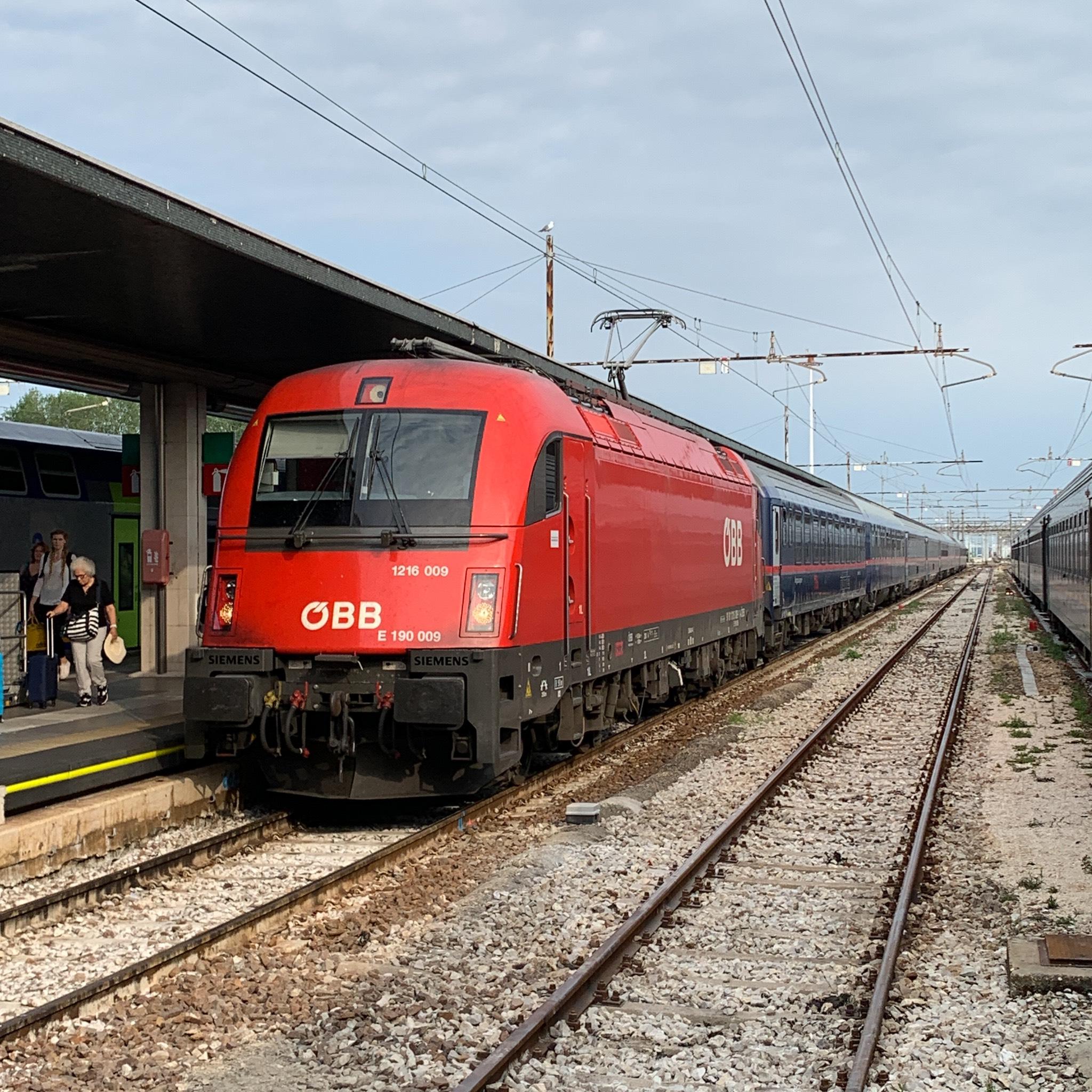

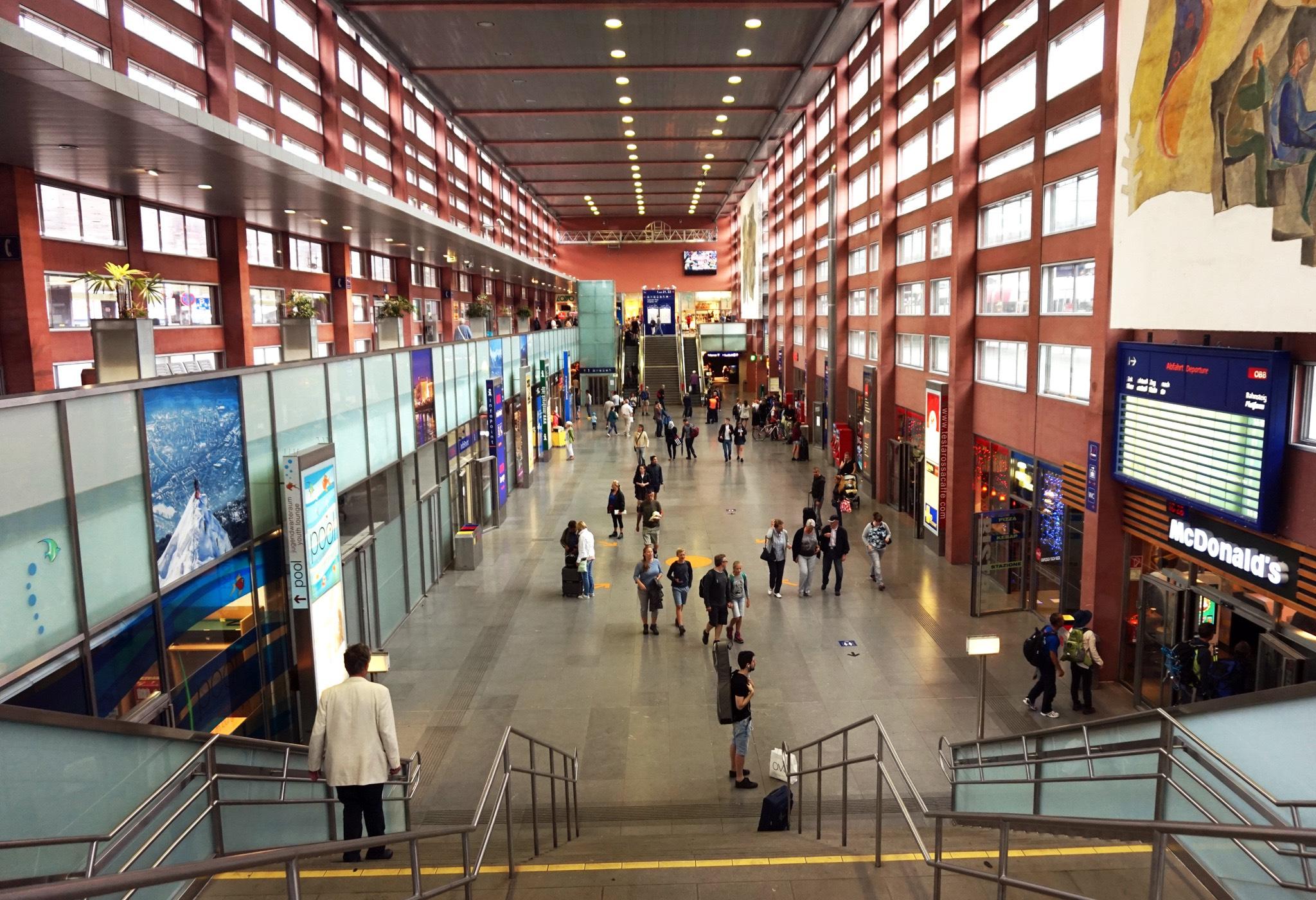
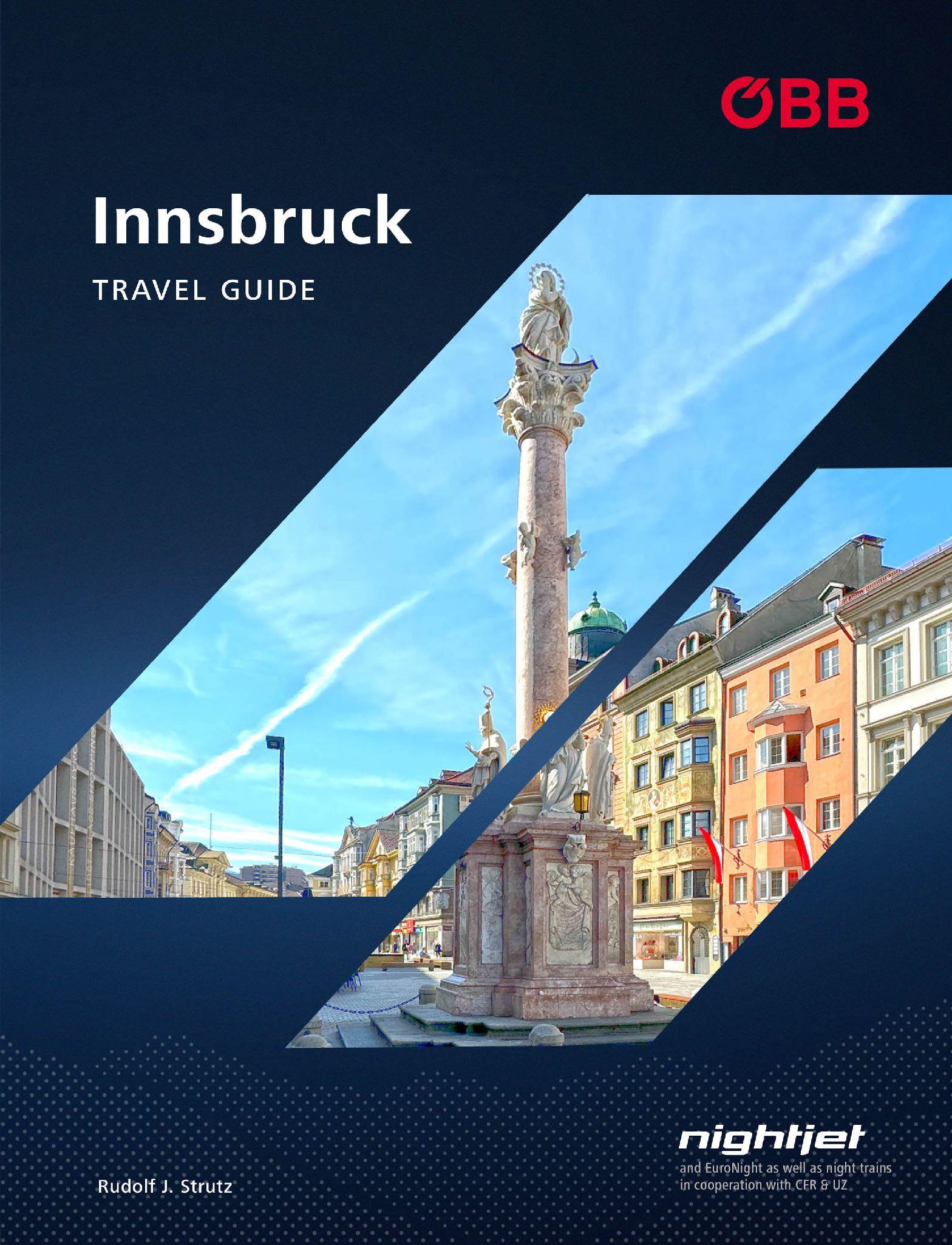
The ÖBB nightjet brings travelers safely, comfortably, and above all completely stress-free to Innsbruck. Whether it's a business or vacation trip, traveling by train is not only more comfortable, but also much more environmentally friendly.
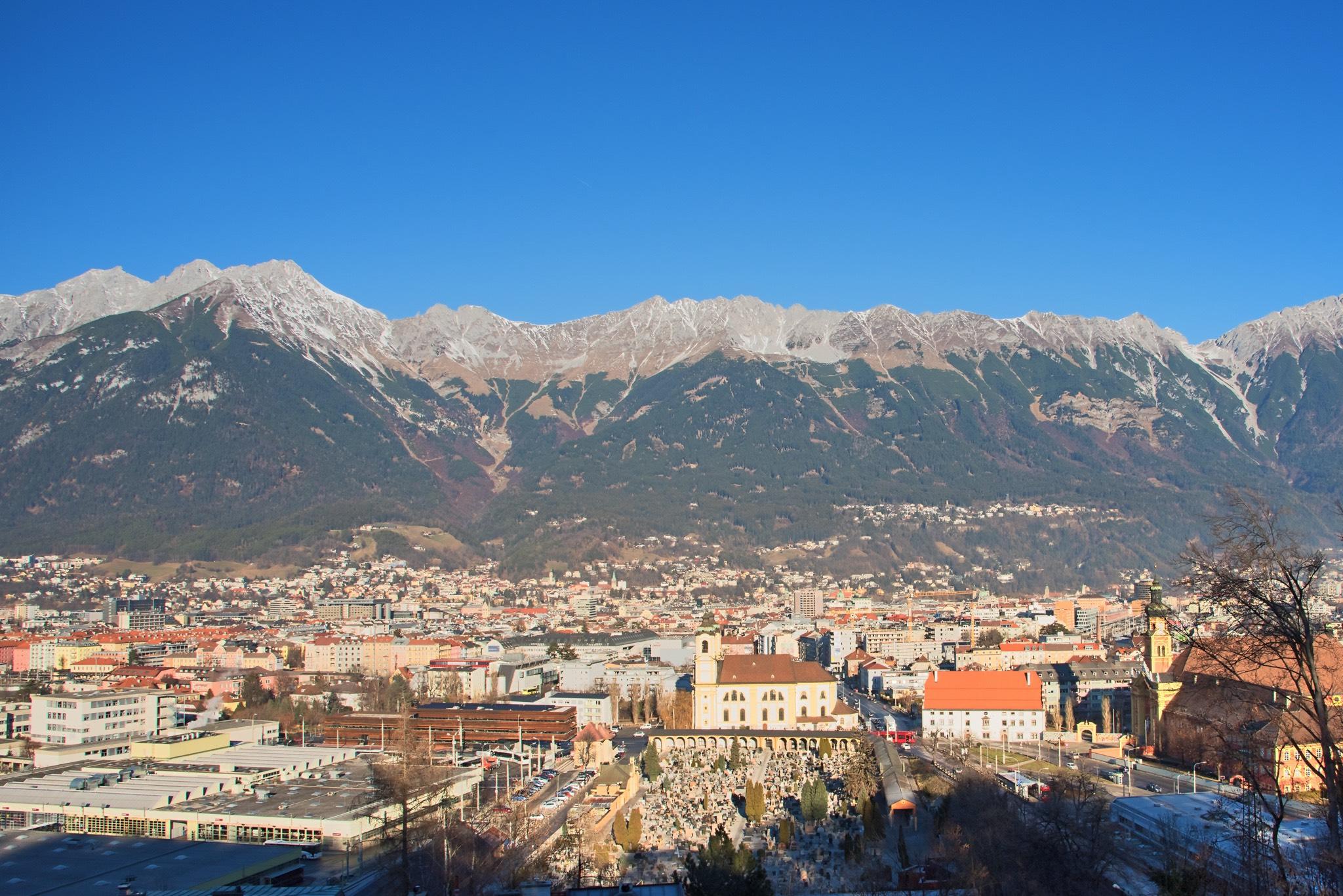

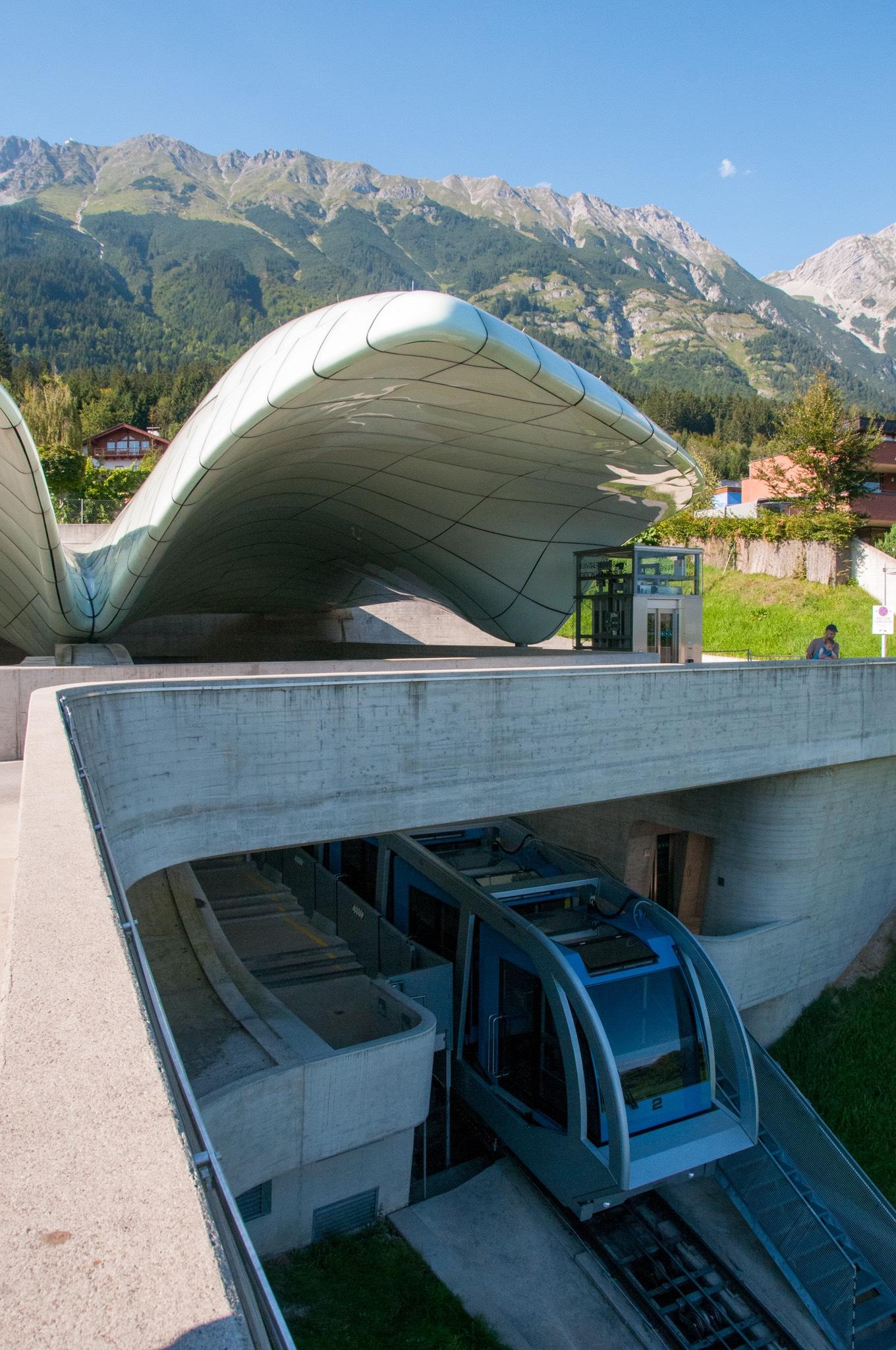
The Innsbruck Basin has been permanently inhabited for about 3,000 years. The state capital of the federal state of Tyrol was named after the bridge over the Inn. The first bridge over the Inn River was built between 1165 and 1170. The importance of the Inn Bridge is
evident from the depiction of the bridge on the city seal. Innsbruck is located on the Brenner route, which has been significant for centuries and was called Via Raetia in Roman times, leading from Verona to Augsburg.
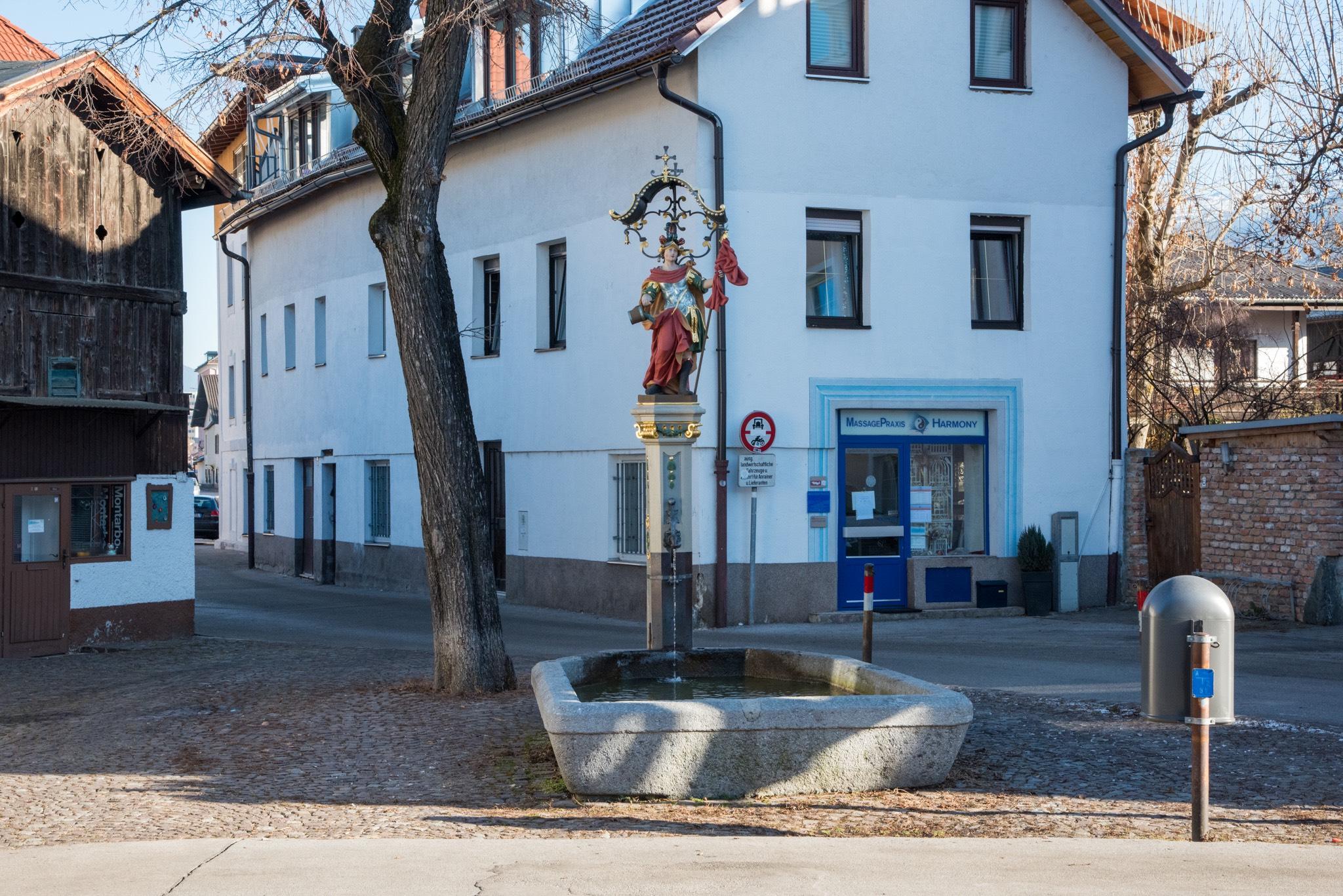
Innsbruck has been the residence of the sovereign prince since 1420. Innsbruck only replaced Meran as the state capital of Tyrol in 1849. With about 130,000 inhabitants, Innsbruck is the fifth largest city in Austria. The city is bordered by impressive mountain ranges. To the north of Innsbruck lies the Nordkette and to the
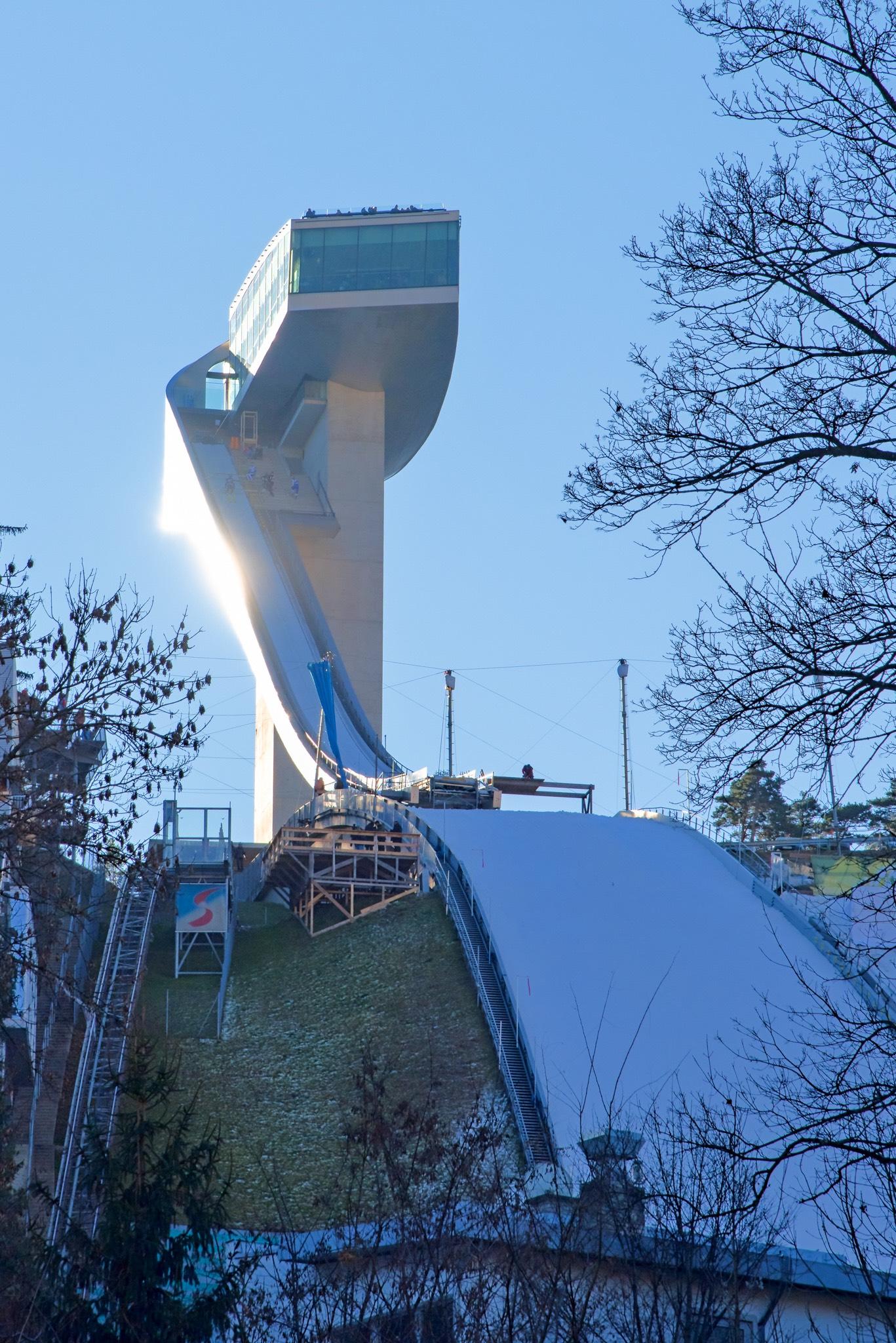
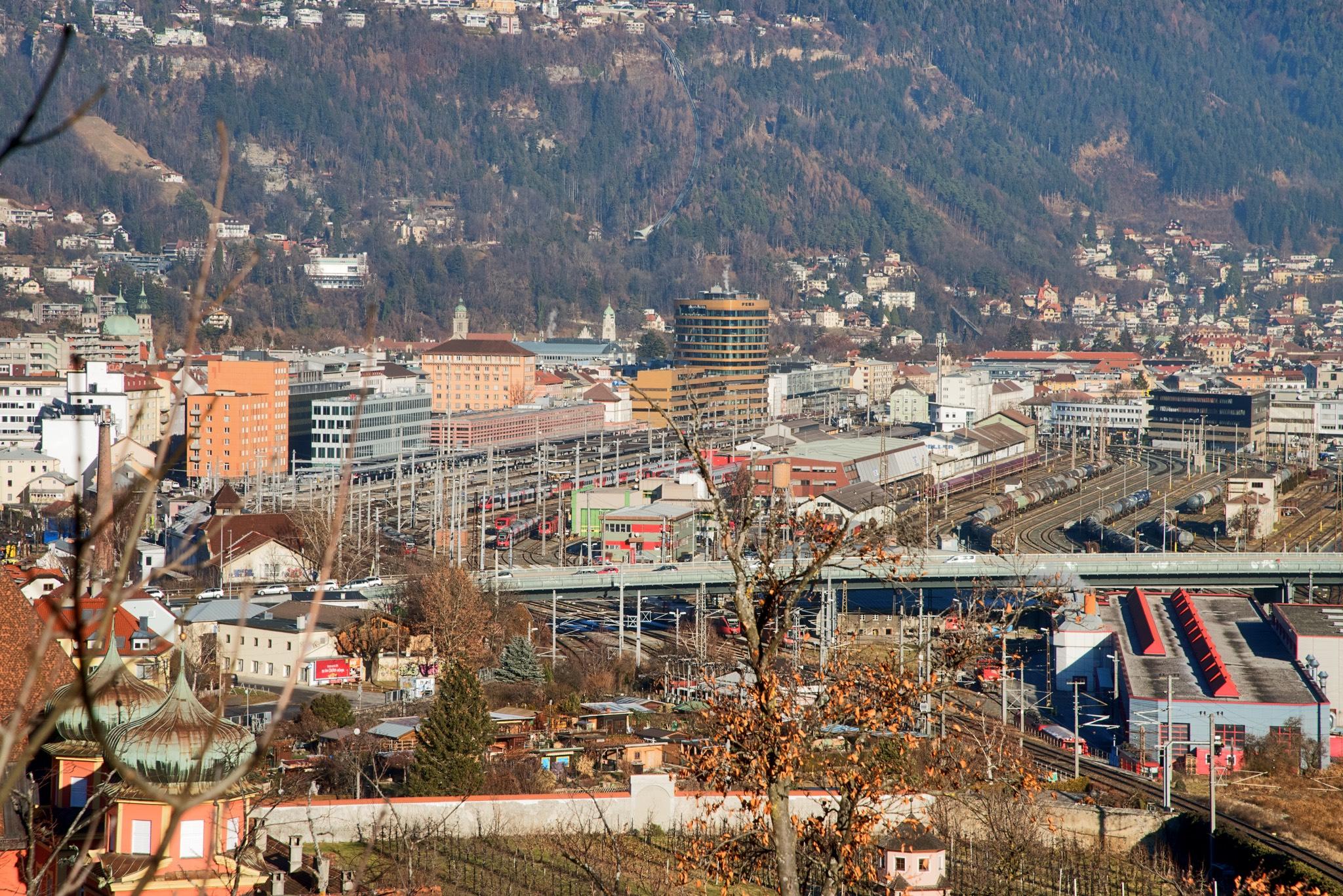
south the Patscherkofel. The Bergisel with its famous ski jump is already clearly visible from the train station. The Olympic Winter Games took place in Innsbruck in 1964 and 1976.
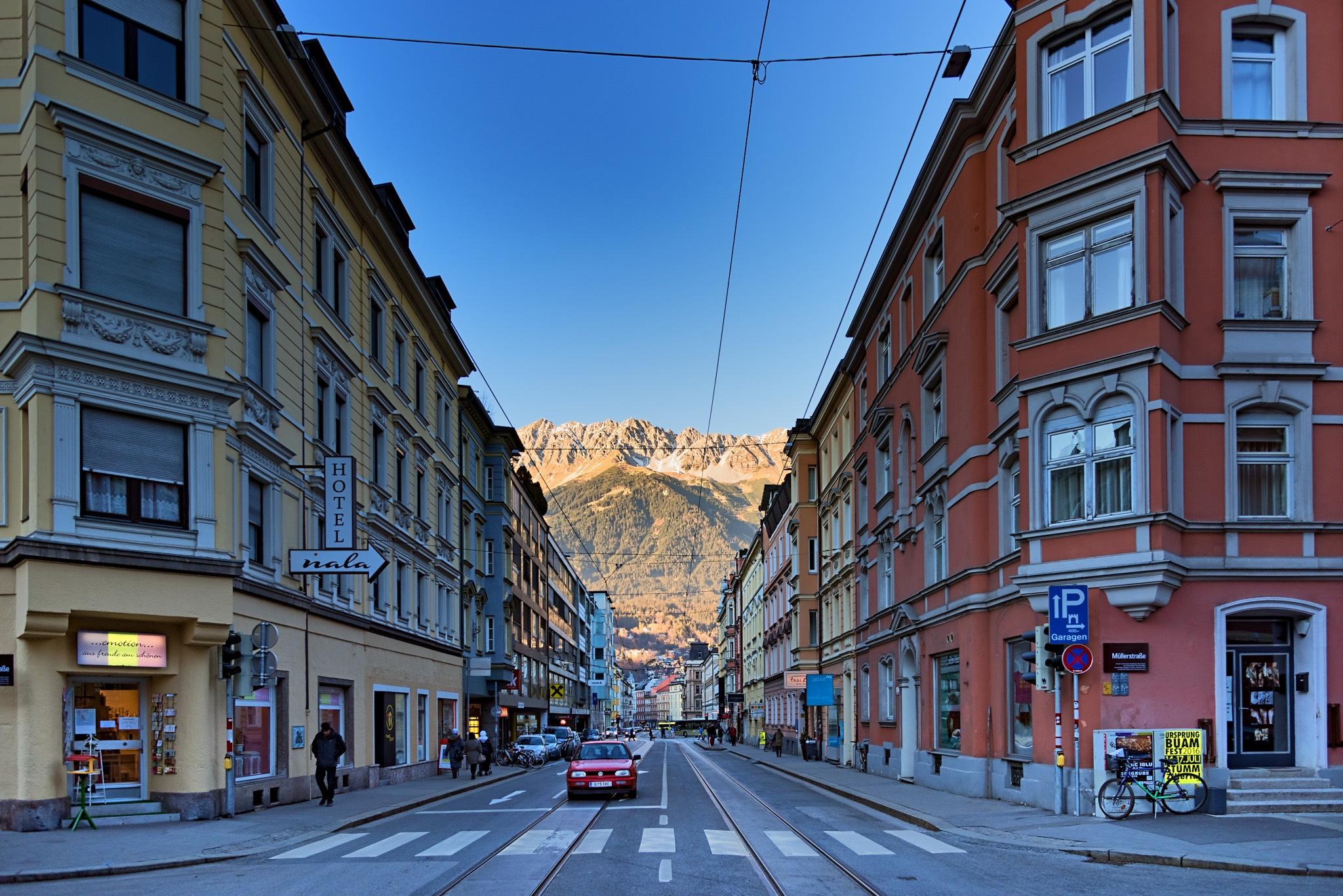



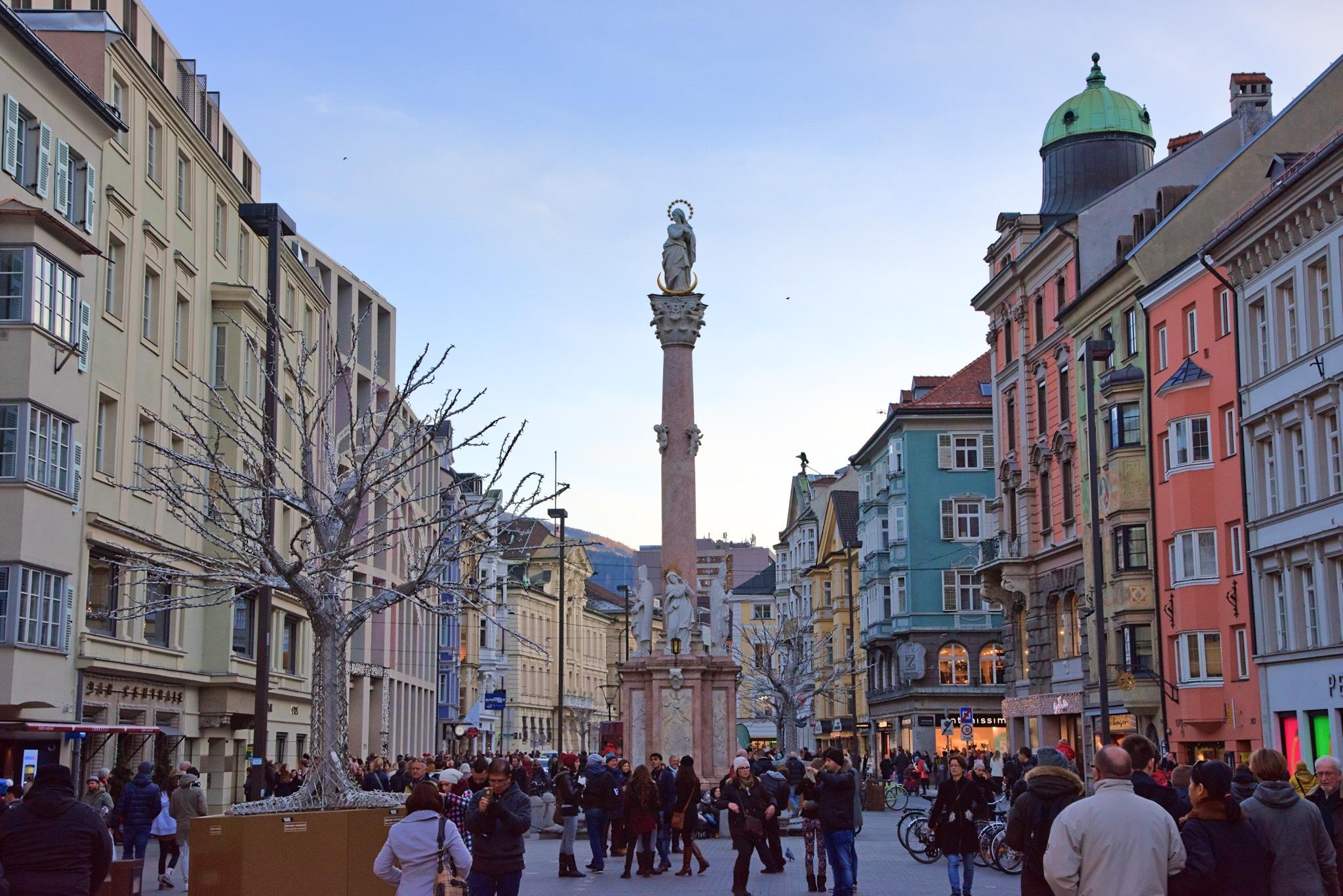
The St. Anne's Column was blessed in 1706 by the Prince-Bishop of Brixen. Its name comes from St. Anne's Day, July 26. The column, crowned by the Crescent Madonna, was
created by the Trentino sculptor Cristoforo Benedetti. The column commemorates the expulsion of the Bavarian troops on July 26, 1703.
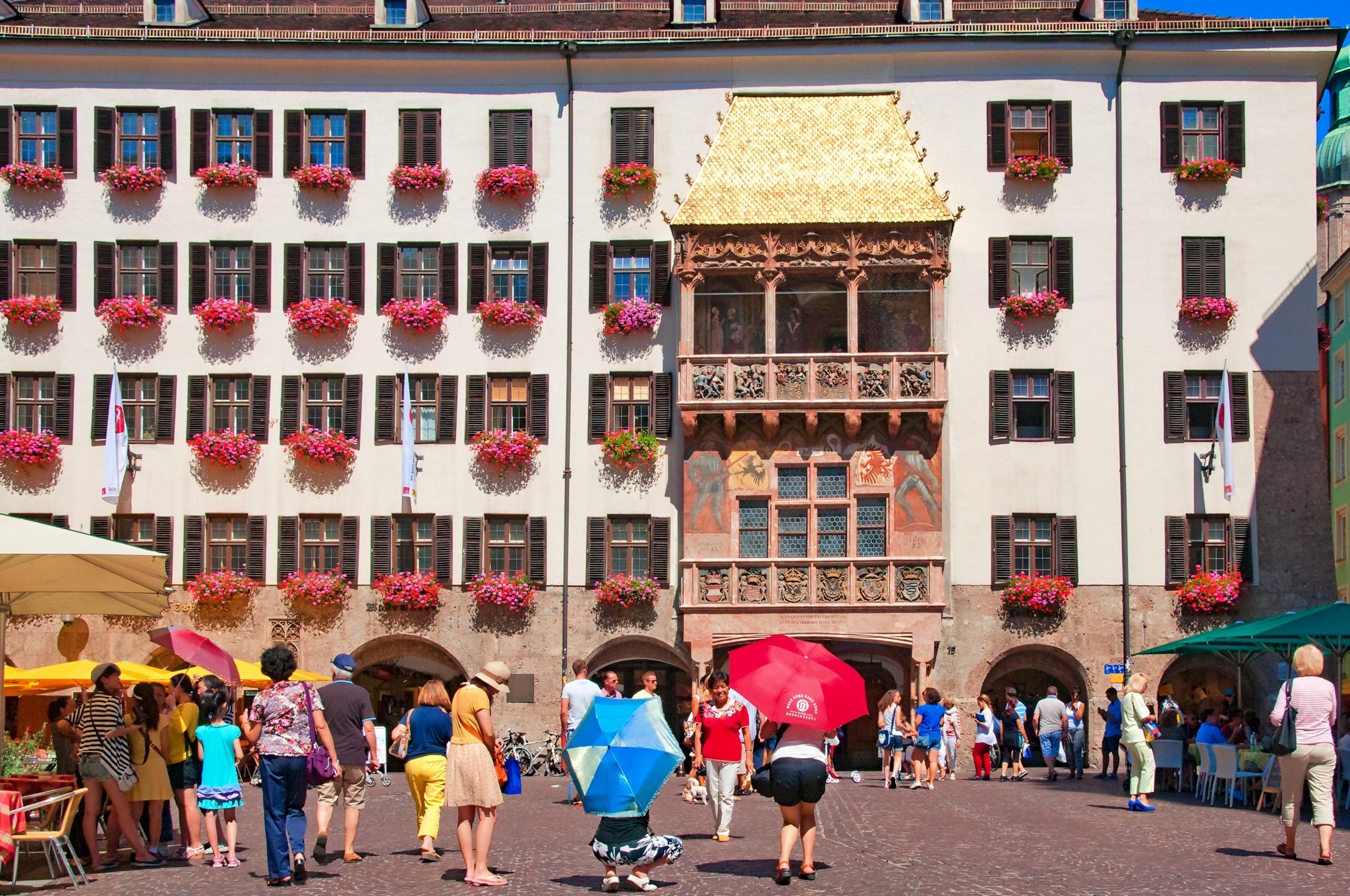
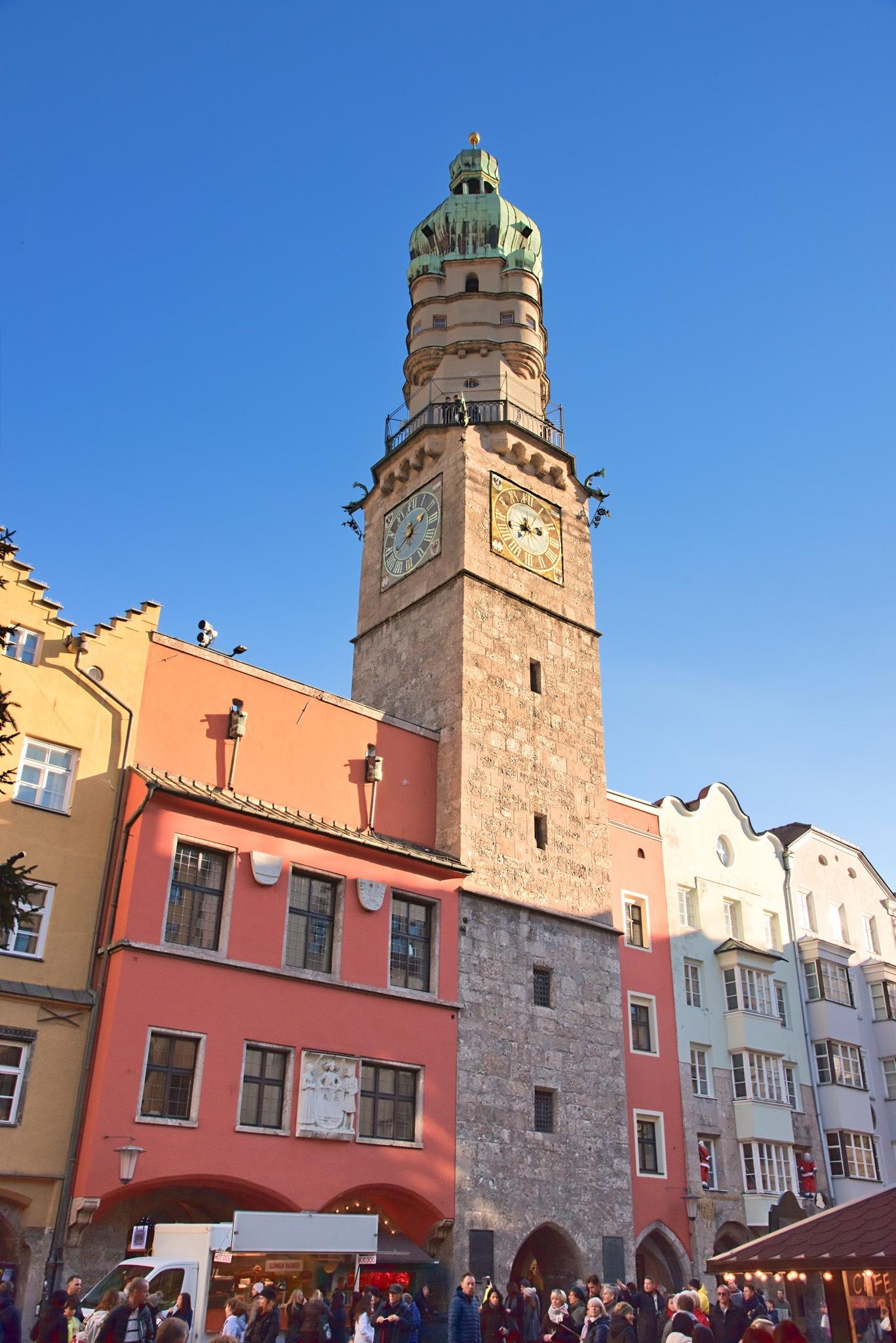
The ornate oriel of the residence of the Tyrolean sovereign prince, built in 1420, was constructed around 1500 on the orders of Emperor Maximilian I. The Golden Roof is adorned with 2,657 fire-gilded copper shingles. The building houses the “Golden Roof Museum”.
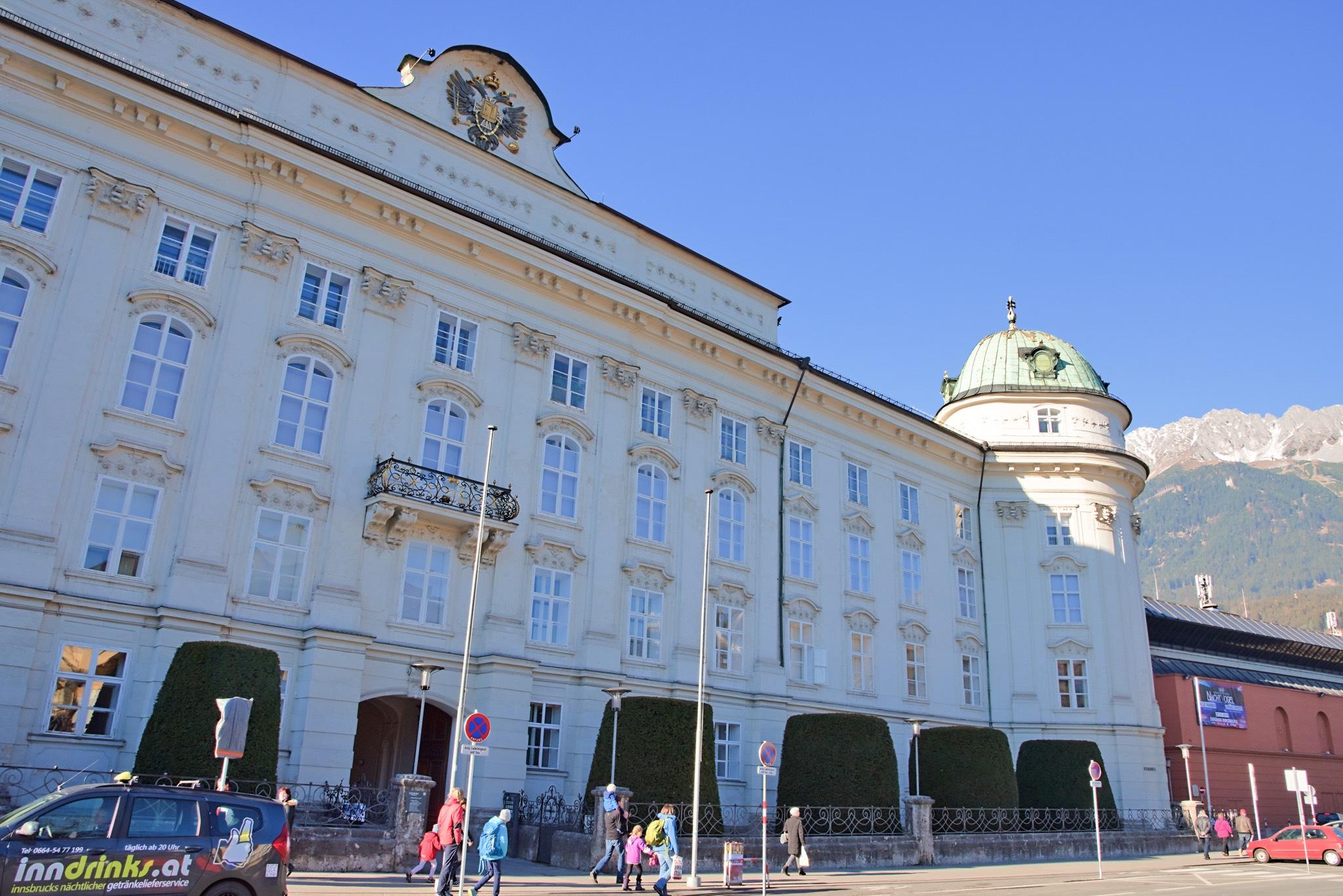
The building was completed in 1500 under Emperor Maximilian I. Maria Theresa hosted the wedding of her son Leopold II to Maria Ludovica of Bourbon in the Innsbruck
Hofburg. The celebrations began on August 4, 1765, and came to an abrupt end on August 18 due to the sudden death of Emperor Franz I Stephan.
with the ÖBB nightjet to Innsbruck
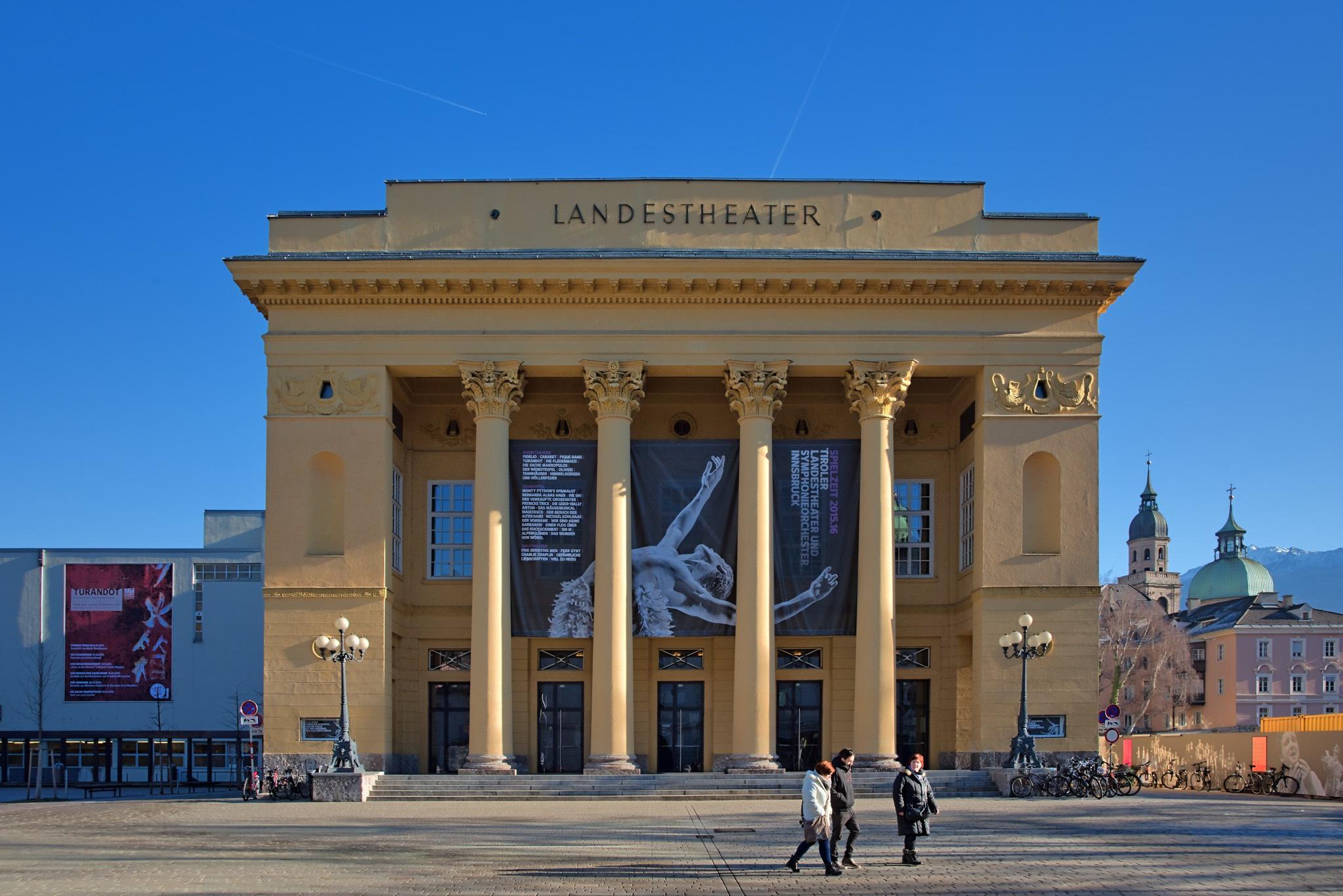
At this site, Archduke Ferdinand Karl had the court theater built from 1653 to 1655.
Between 1844 and 1846, the impressive state theater with its four Corinthian columns was
built according to the plans of Giuseppe Segusini. The expansion and modernization of the state theater was completed in 1967.
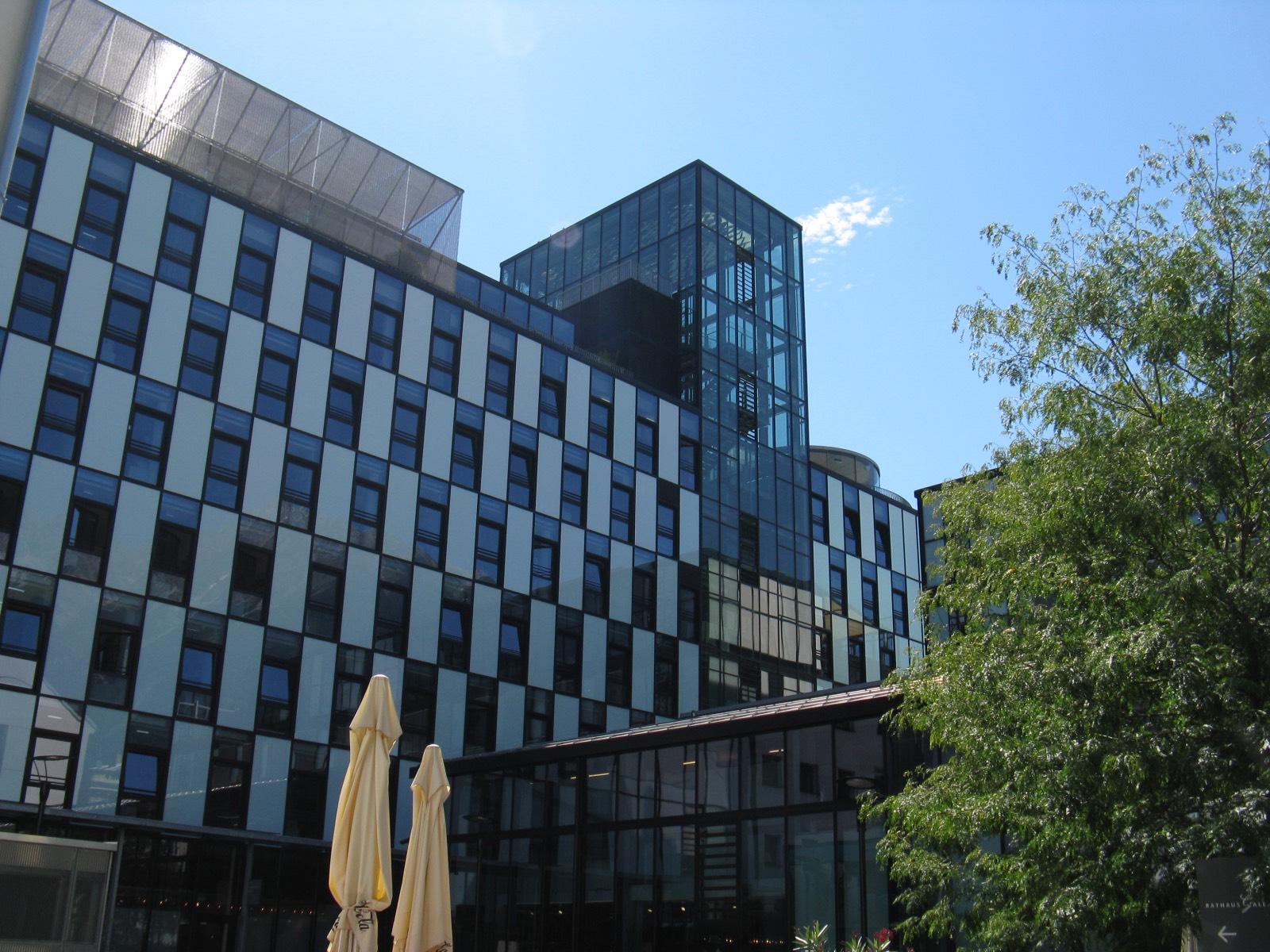
The top floor of the new town hall was designed as a fully glazed and freely accessible viewing platform. The older part on Maria-
Theresien-Straße has been the city's “New Town Hall” since 1897. The modern glass building and shopping center date from 2002.
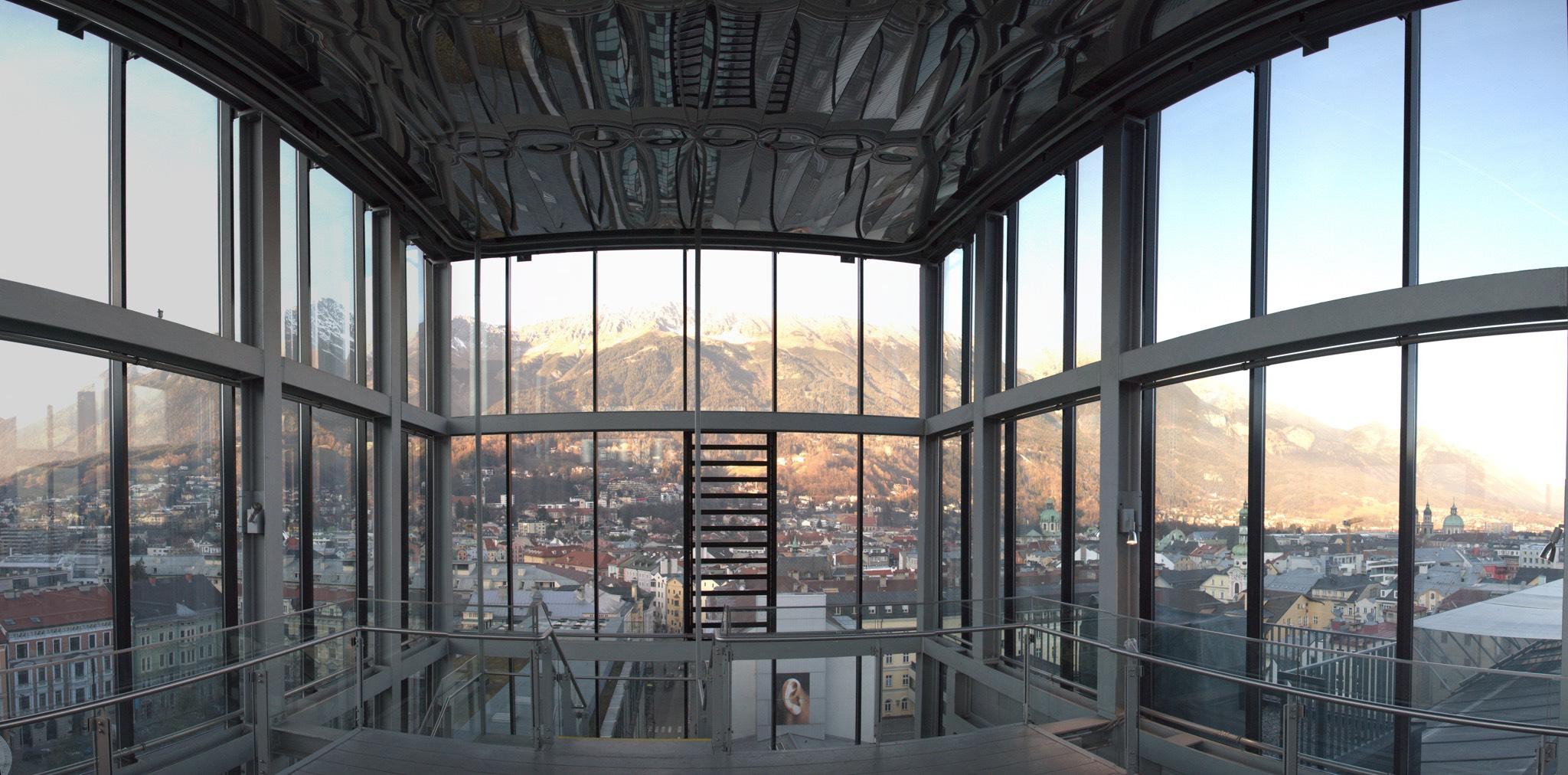
Viewing Platform on the Roof
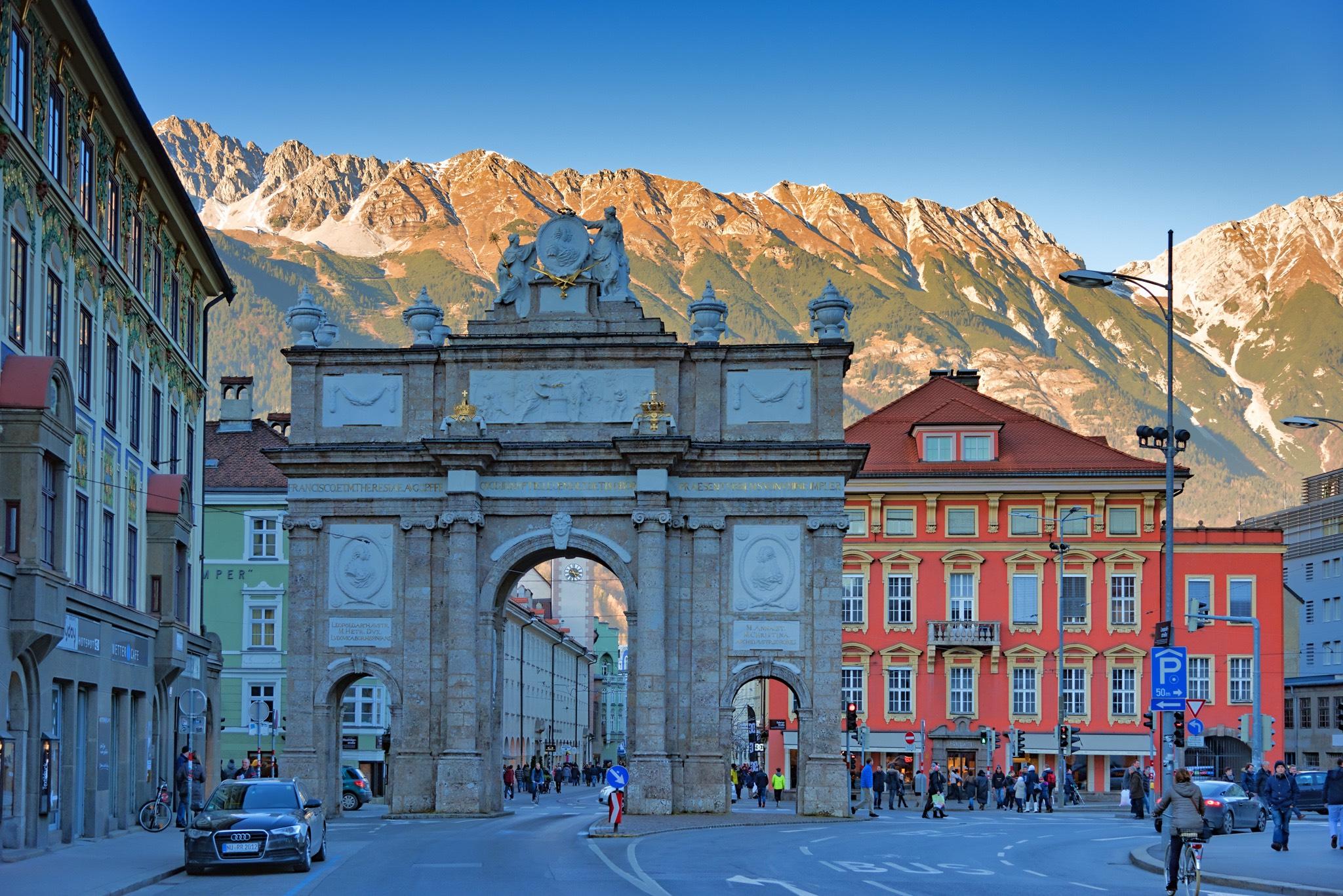
The triumphal arch was built in the 18th century on the orders of Maria Theresa. The landmark commemorates two events in Innsbruck: On the south side, the joy over the wedding of Maria Theresa's son, and on the north side, the deep sorrow over the sudden death of the empress's husband.
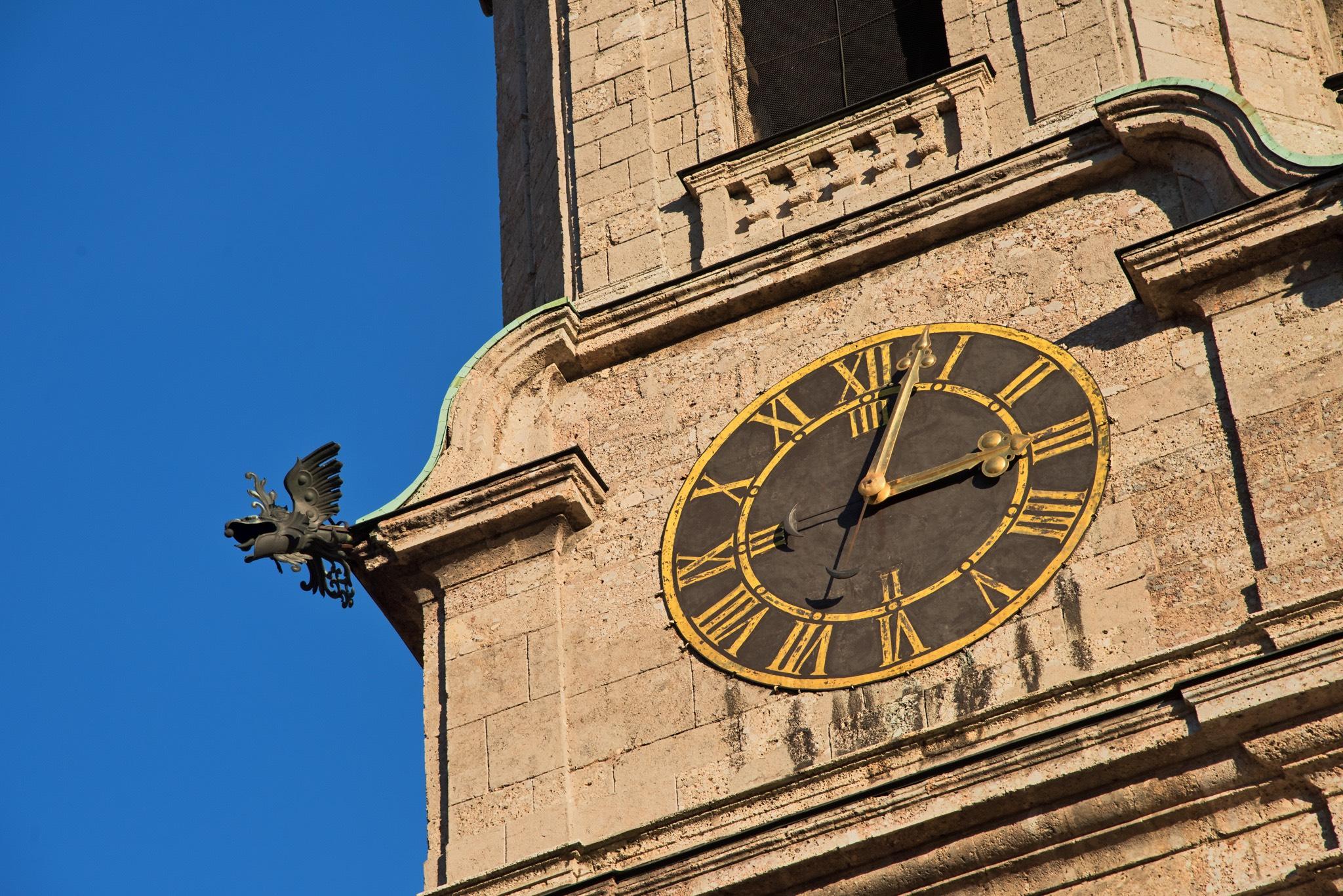

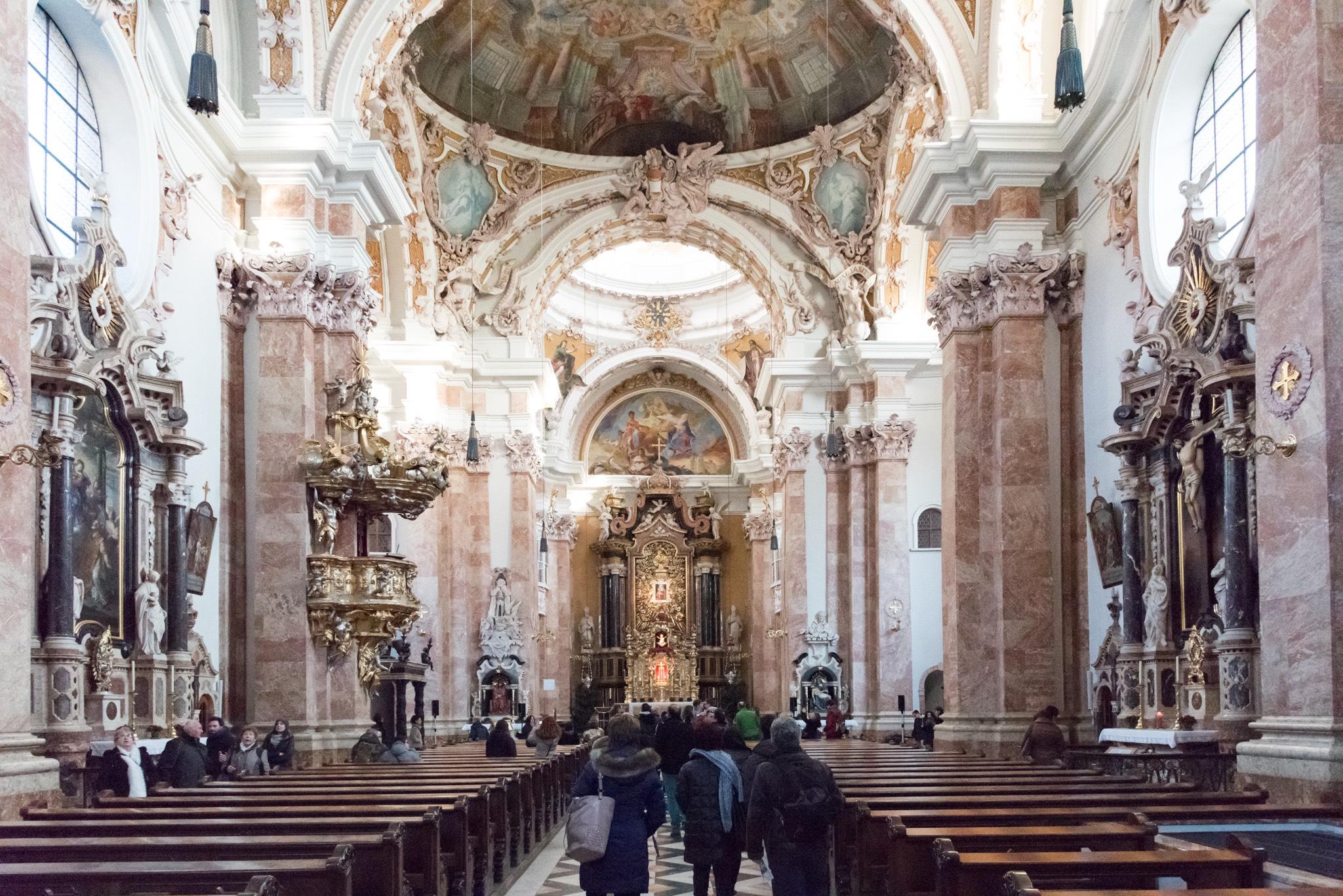
The first documented mention of Innsbruck Cathedral dates back to 1180. The correct name of the church is “Cathedral of St. James”. It is part of the most important
medieval Christian pilgrimage, the Way of St. James. Albrecht Dürer created a famous watercolor of the Innsbruck sacred building.
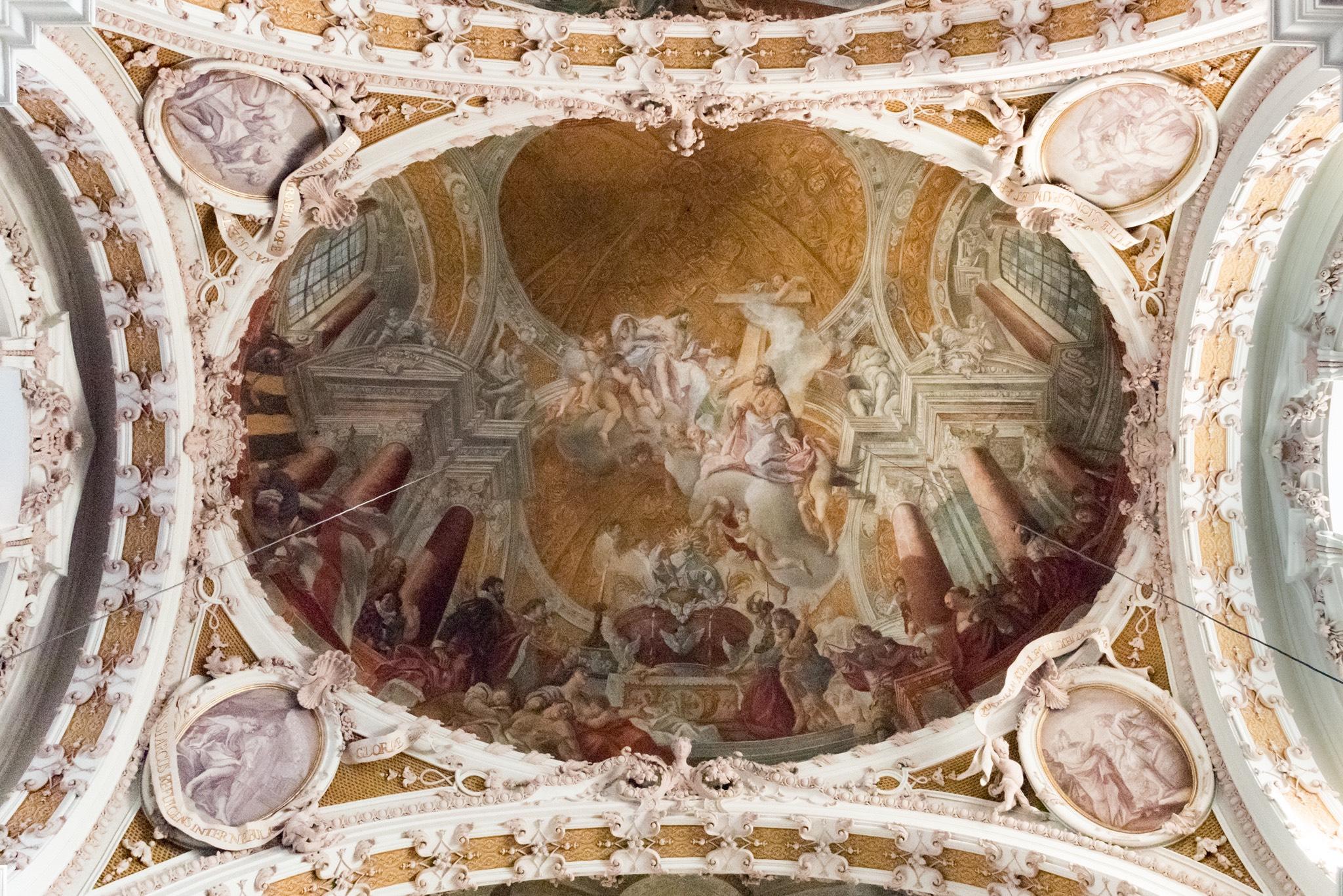
The Innsbruck Cathedral was decorated with fantastic stucco work by the renowned Munich artist Ägid Quirin Asam. A highlight is the miraculous image “Maria Hilf” by Lucas Cranach the Elder, which became the most popular image of the Mother of God in the Alps. In the left side wing of the church is the final resting place of Archduke Maximilian III.
The Mariahilfer Bell was cast in 1846 by the historic Grassmayer bell foundry in Innsbruck. Every day at noon (12:15), the Innsbruck Peace Carillon sounds. With its 57 bells, the carillon is the largest in Austria. The bells come from the Royal Bell Foundry Eijsbouts in Asten (Netherlands).
The Court Church, like the adjacent Franciscan monastery, was built from 1553 to 1563 and dedicated to the Holy Cross. The Court Church is also called the Franciscan or Black Men
Church. It was actually intended to be the tomb of Emperor Maximilian I, who, however, had himself buried in the castle of Wiener Neustadt.
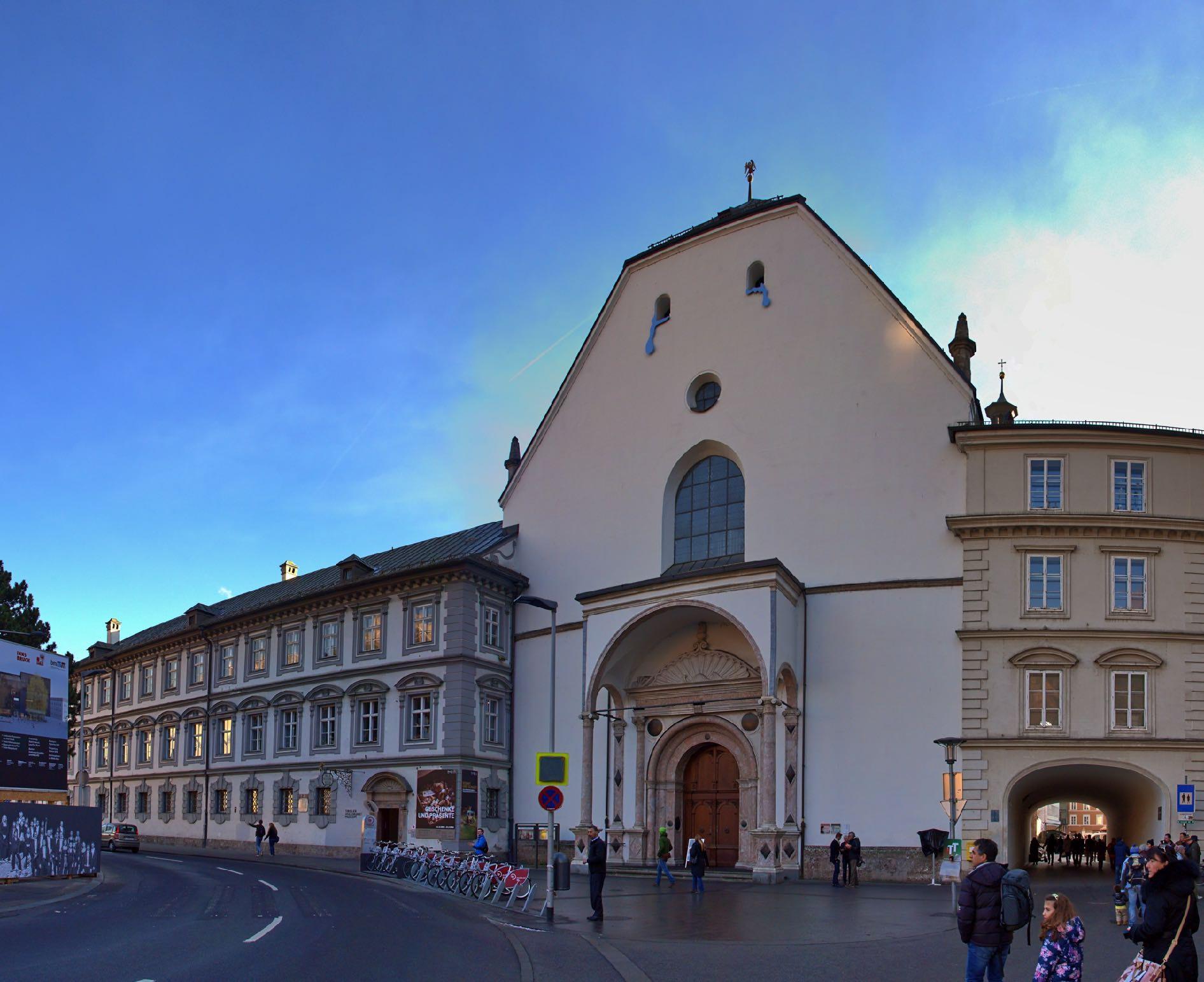
Access to the Court Church is through the foyer of the Tyrolean Folk Art Museum on Universitätsstraße 2. The term “Schwarzmander” means "black men" and refers to the life-size bronze figures that guard
the emperor's sarcophagus. By the way: Eight of the “men” are women, and the emperor who was actually supposed to be guarded here is buried in Wiener Neustadt.
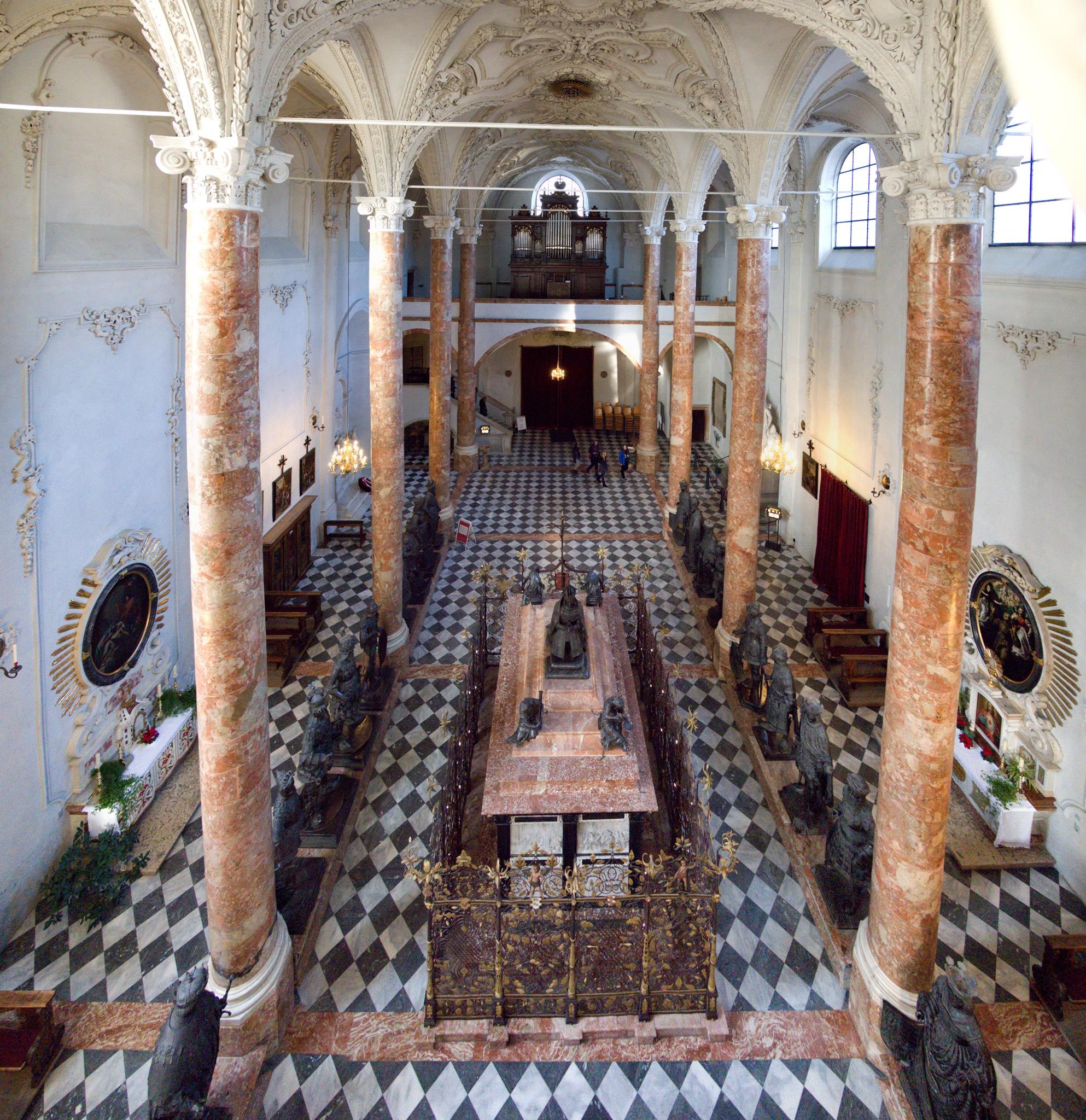
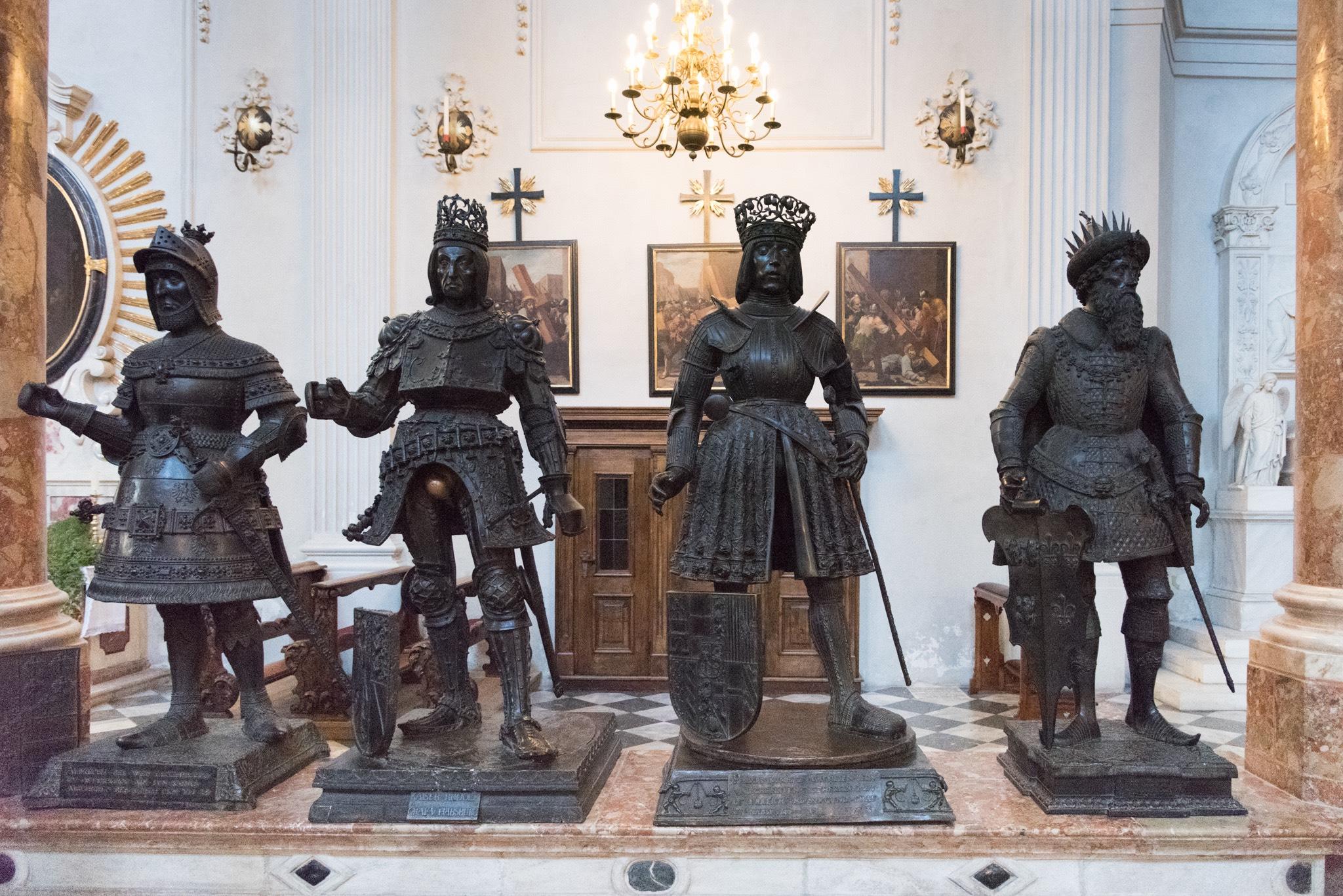
In addition to the silver altar with the Madonna by court architect Giovanni Lucchese, an organ with wooden pipes can also be admired.
The largest Renaissance organ in Austria, the almost 500-year-old swallow's nest organ by Jörg Ebert, is one of the great sights of the Court Church.
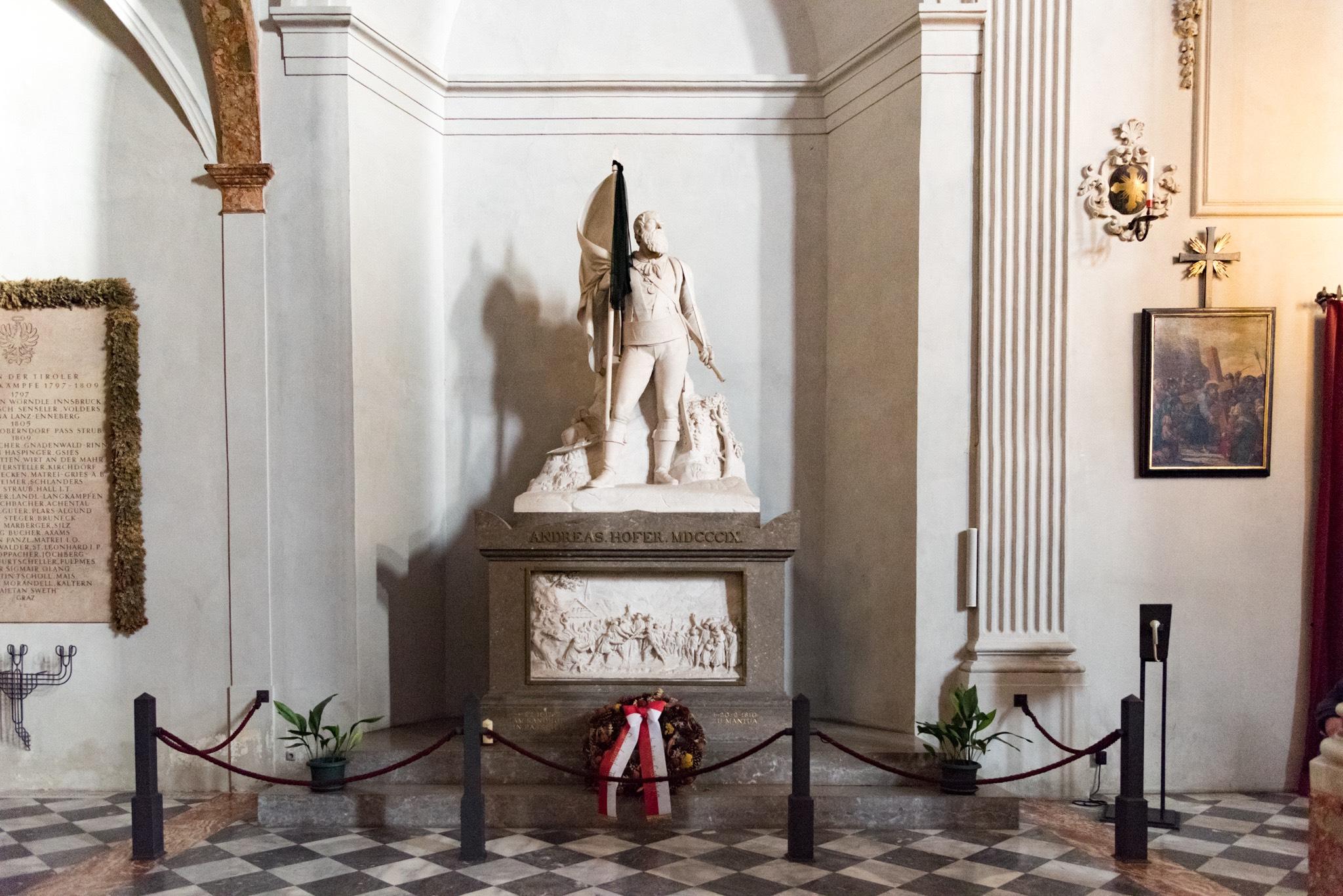
Andreas Hofer's Final Resting Place
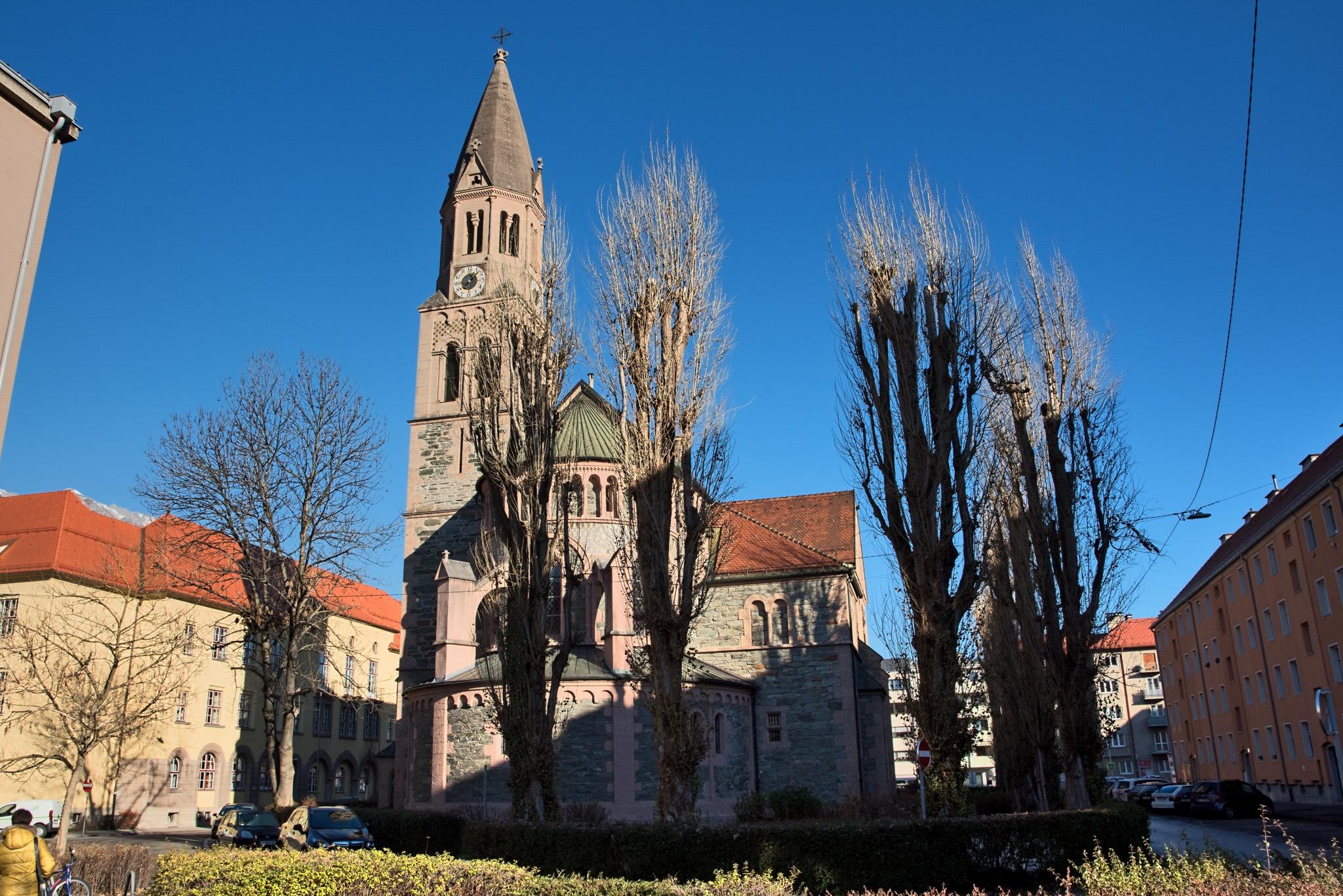
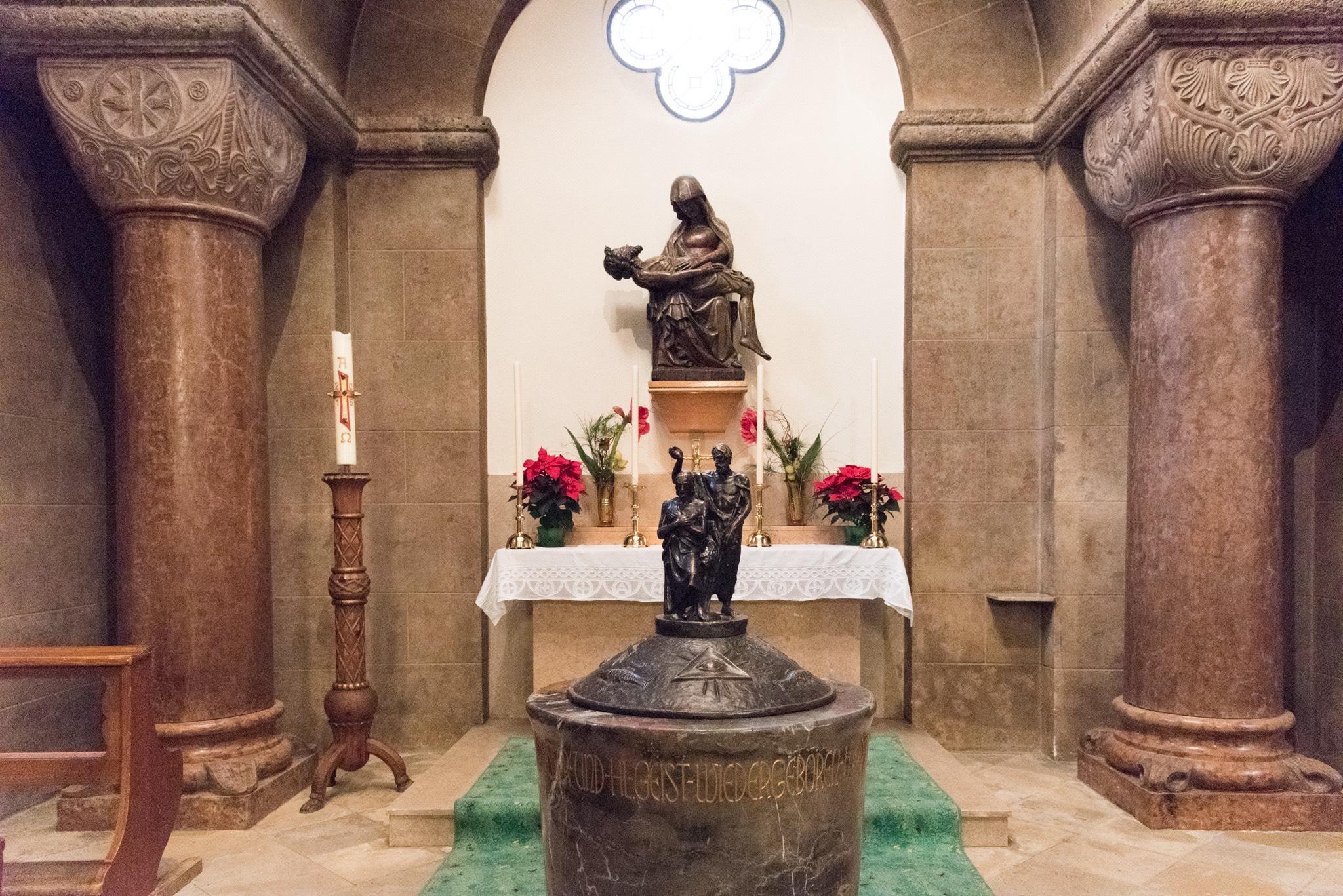
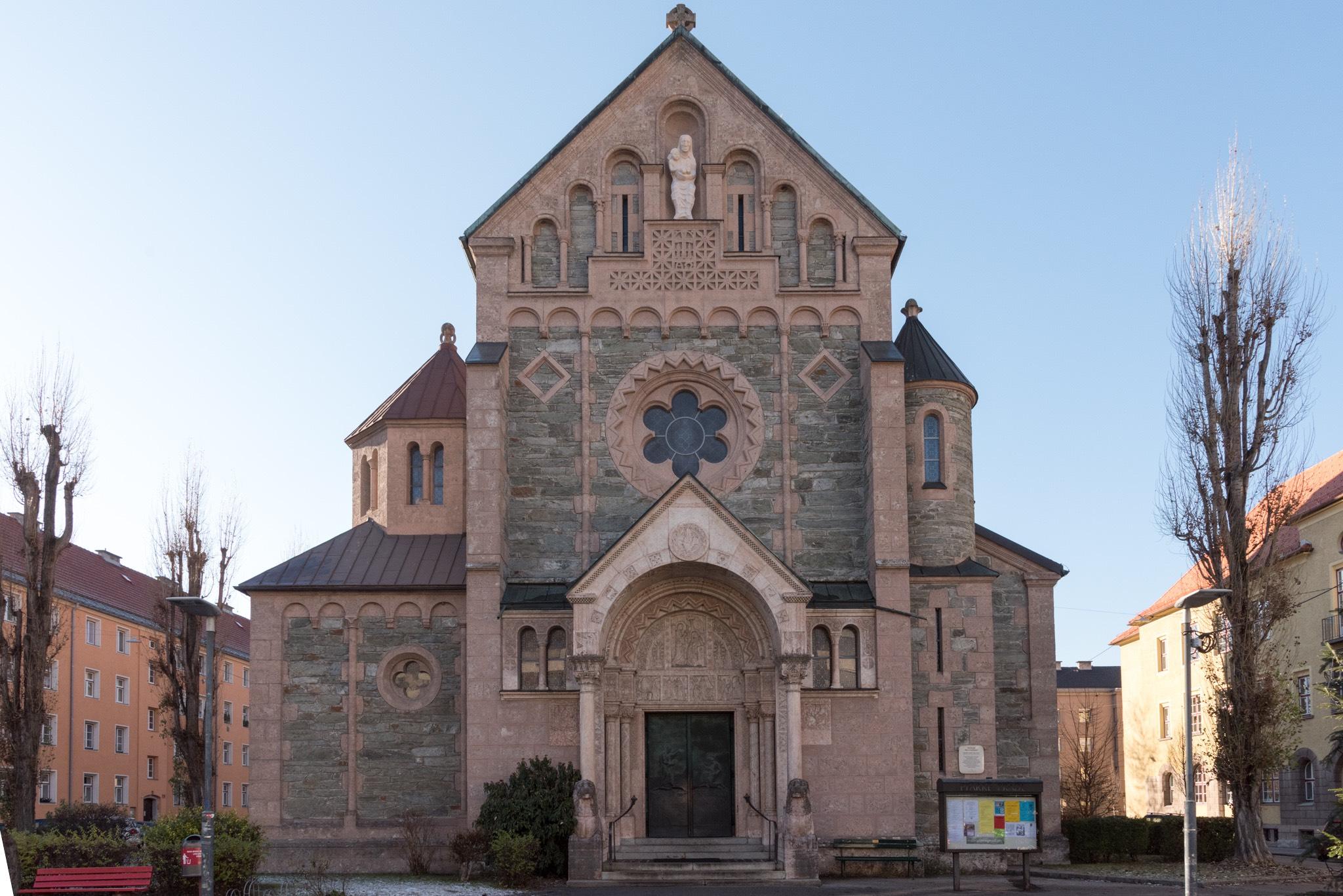
The foundation stone of the Pradl Parish Church “Our Lady of the Immaculate Conception” was laid in 1677. The church
houses a unique old gem: a Gothic Pietà carved from pear wood from the years 1430 to 1440.
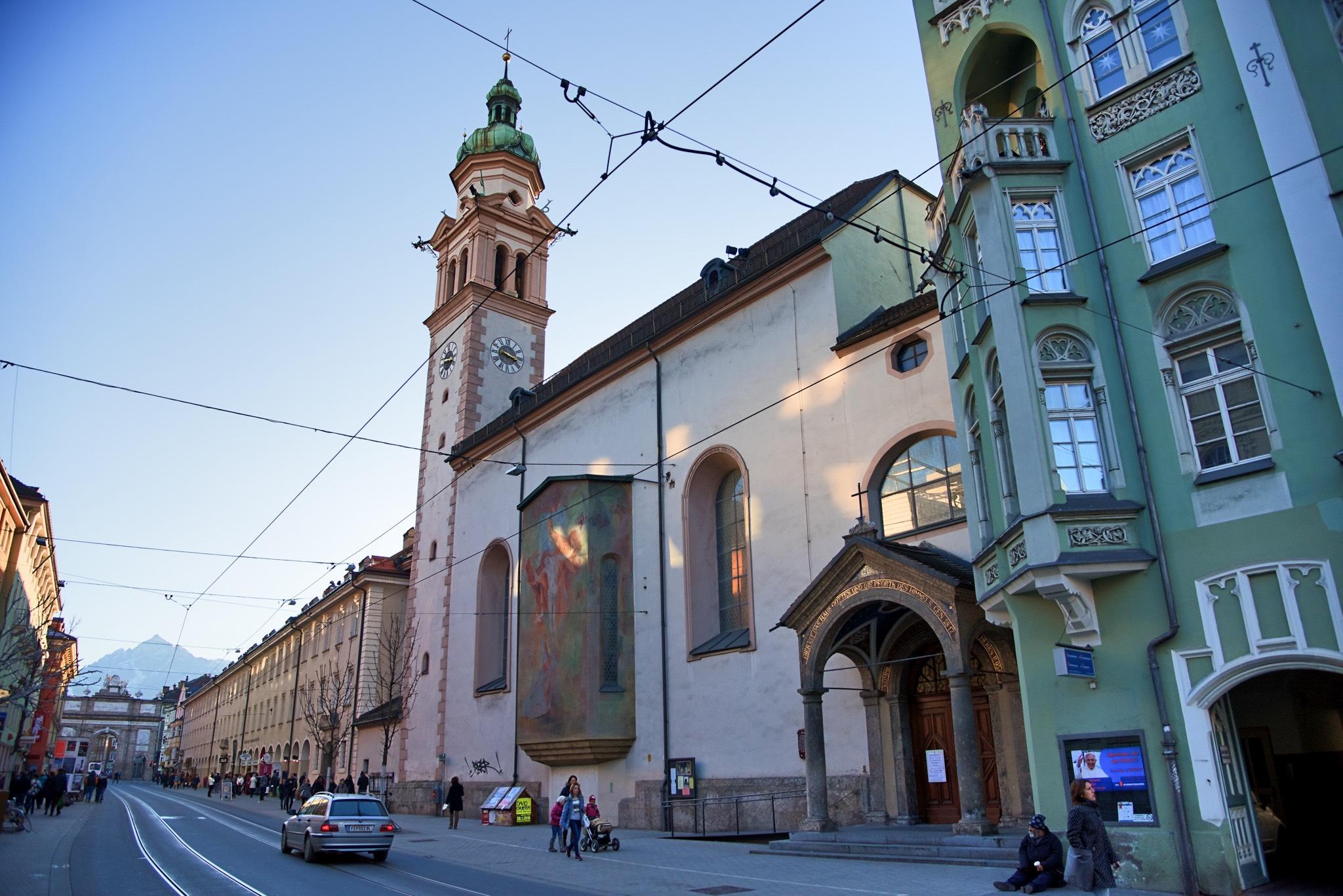
The widow of Archduke Ferdinand II, Anna Caterina Gonzaga of Mantua, founded the monastery in 1614. Thanks to the support of the Habsburgs, the monastery prospered
especially in the 17th century. After a major fire in 1620, the Servite Church was dedicated to St. Joseph in 1626. The church tower dates from 1899.
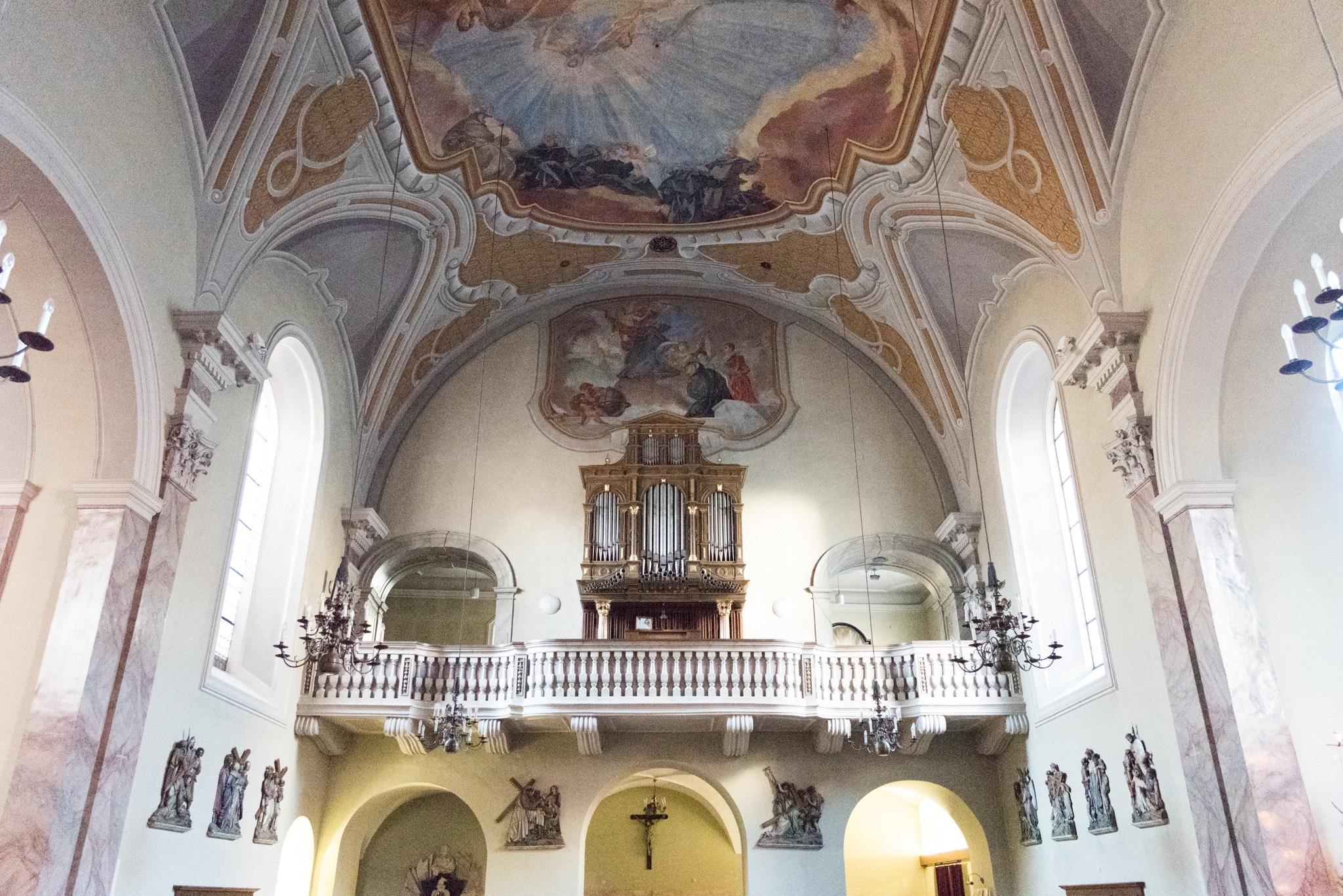
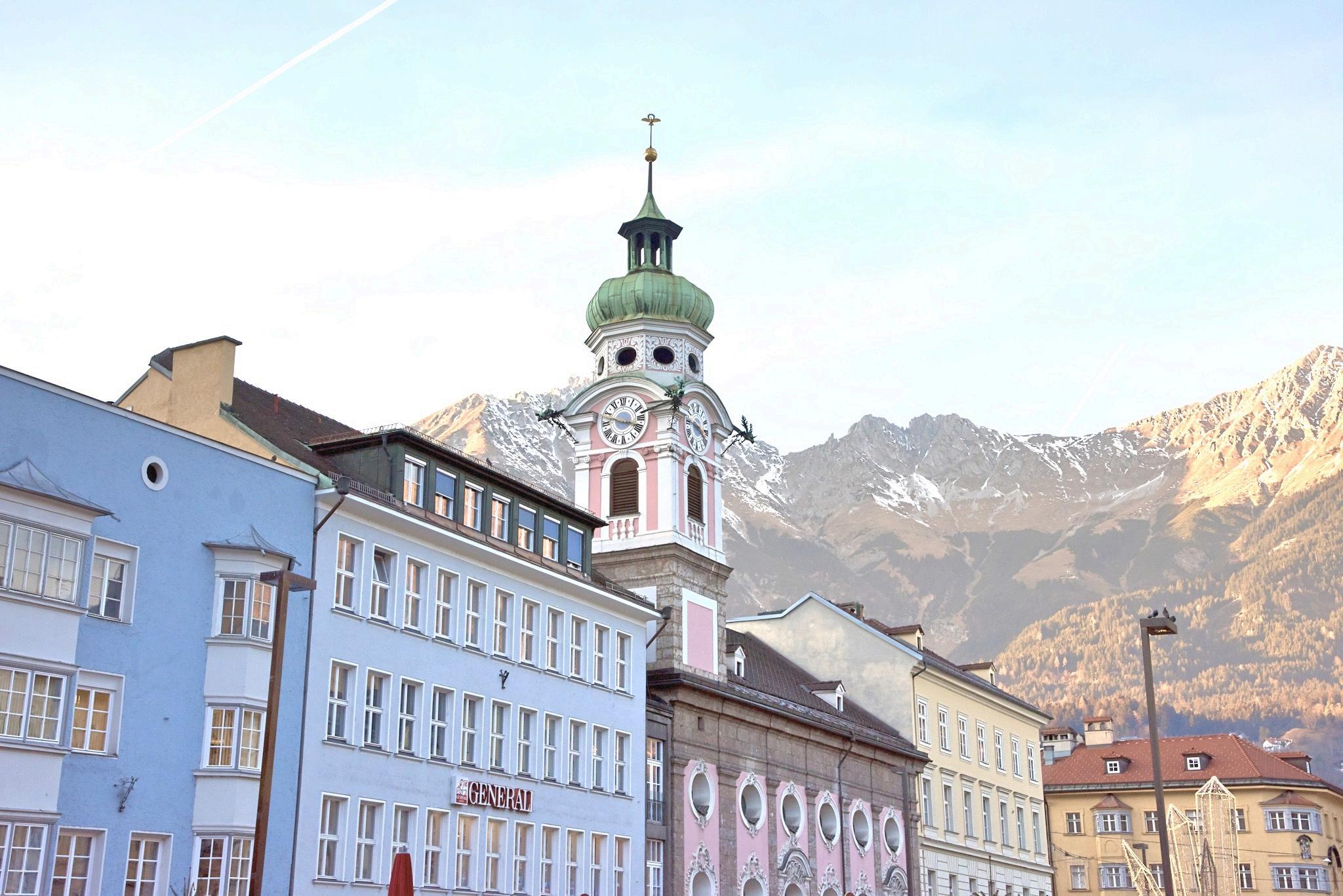
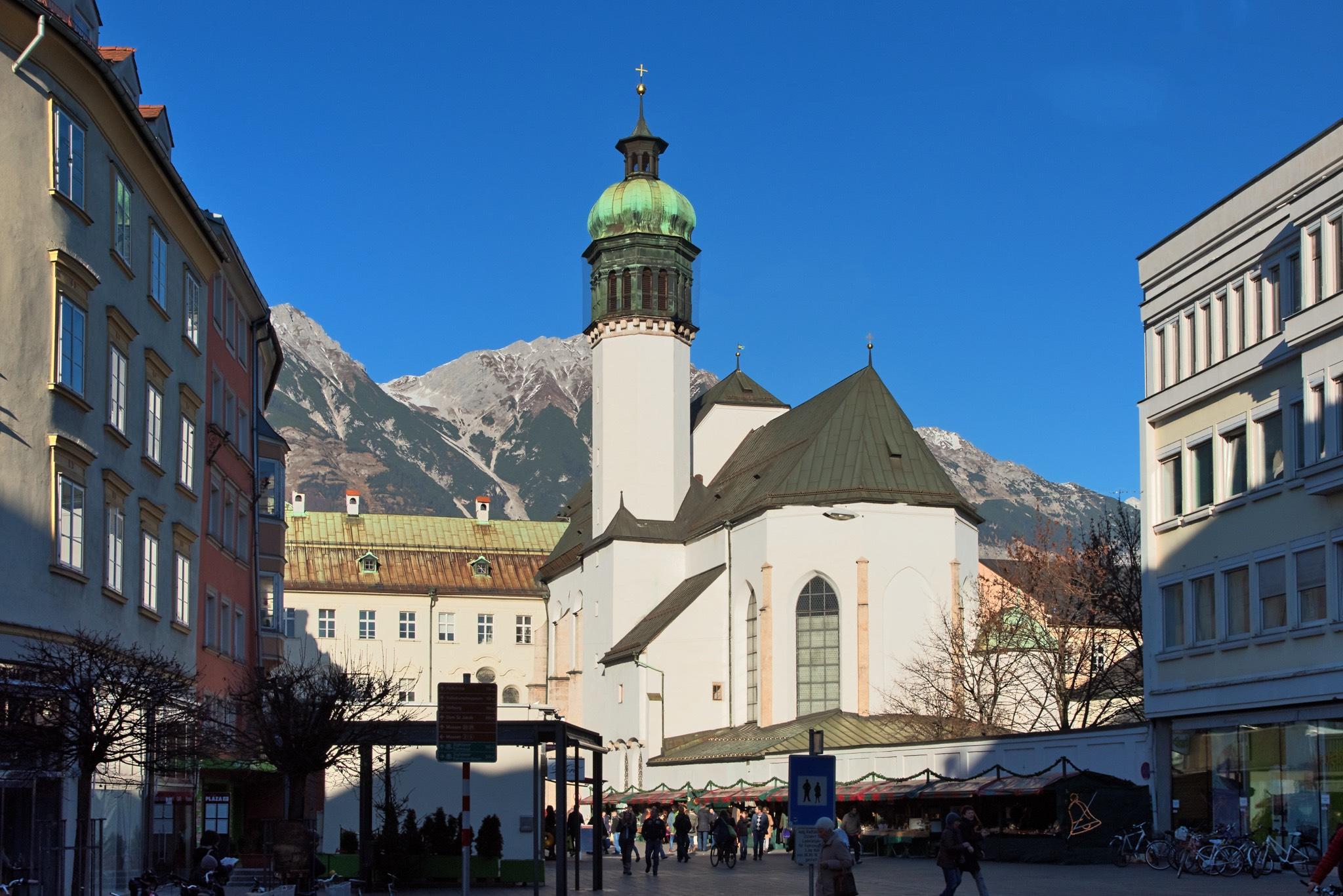
The Hospital Church of the Holy Spirit dates back to 1326. At that time, a city hospital was located outside the city walls. In 1700, the current church was built on the site of the
original Gothic church. The Gothic crucifix integrated into the high altar built in 1705 dates from around 1500.
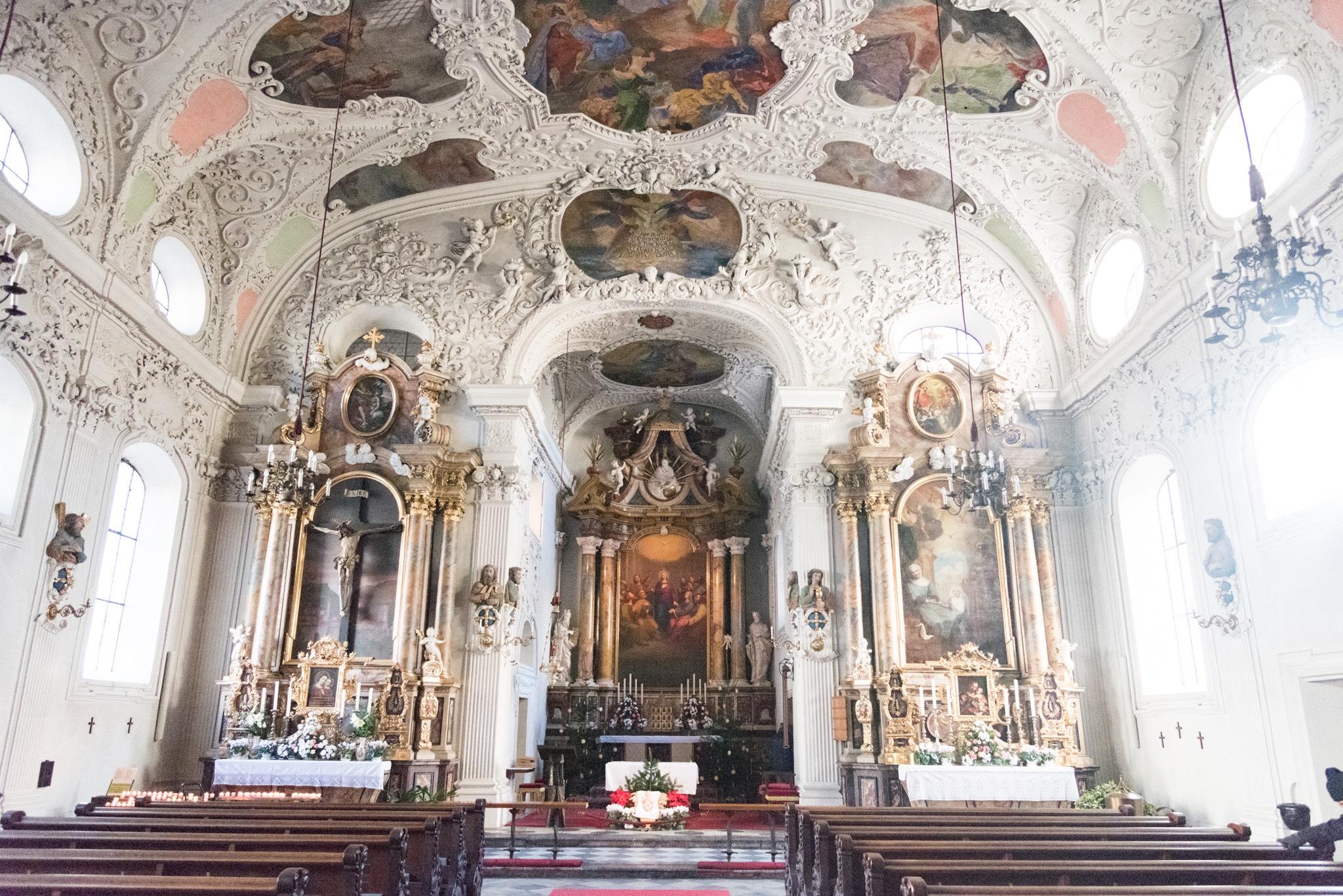
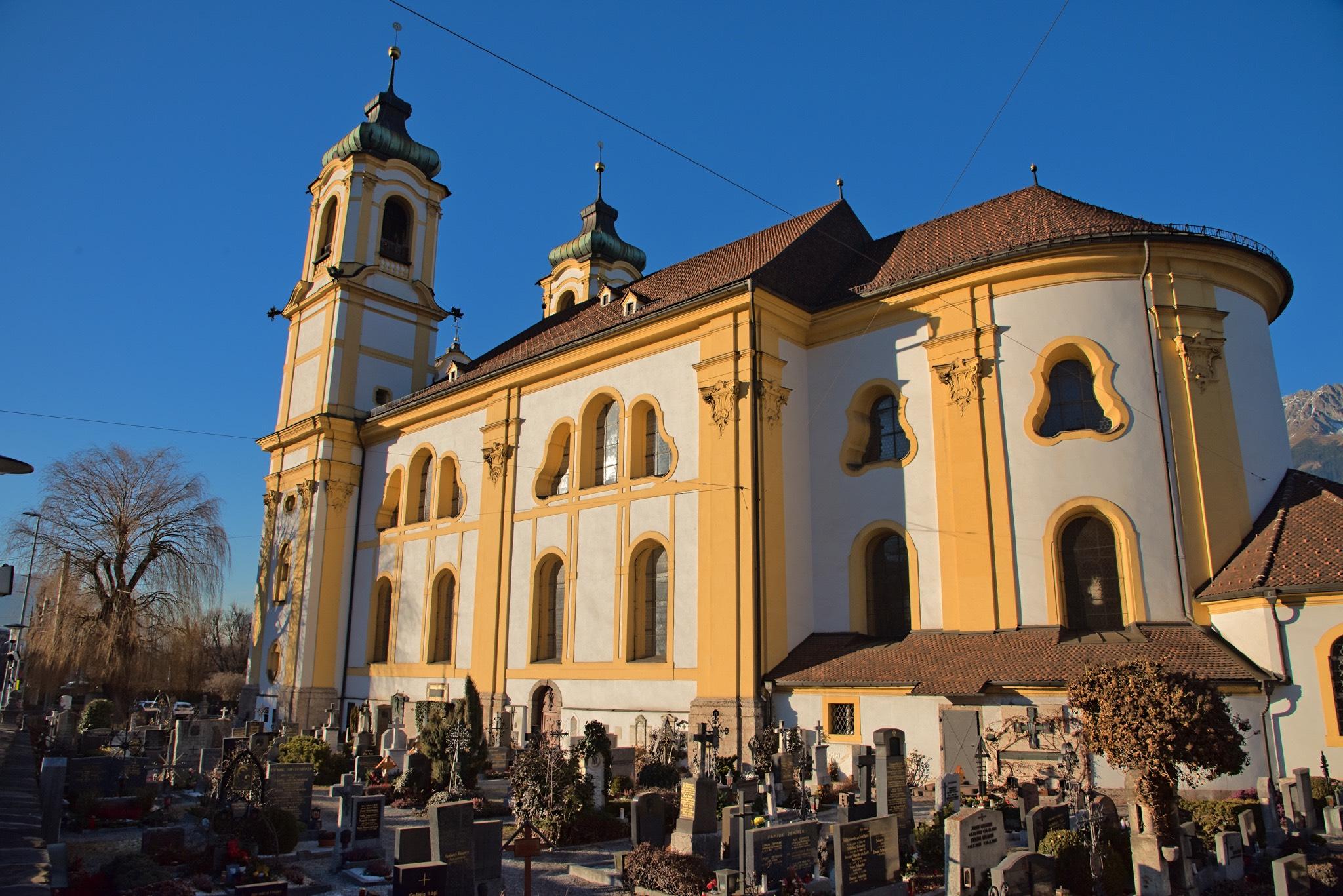
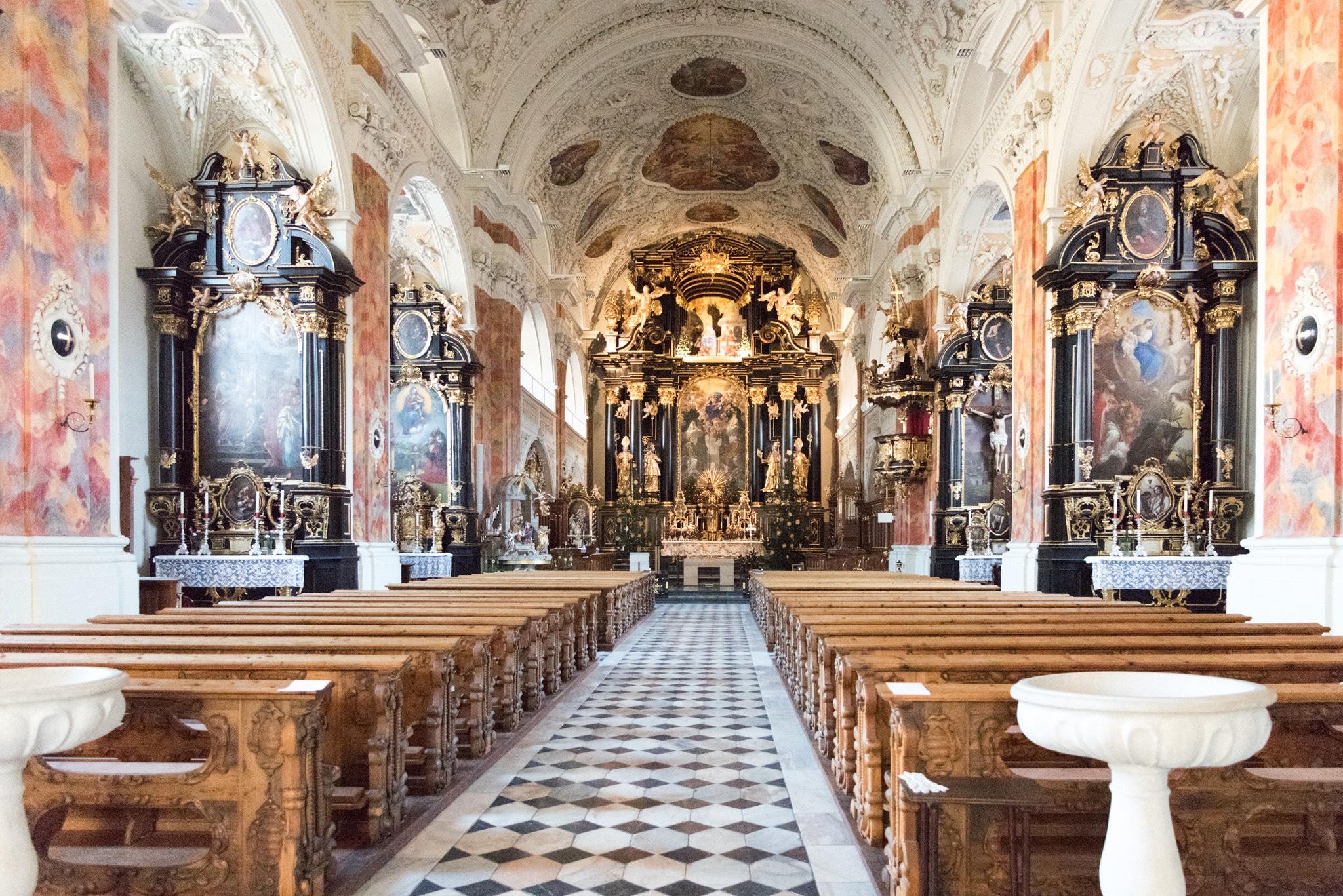
The Wilten Basilica is called “Basilica of Our Lady of the Immaculate Conception” or “Our Lady under the Four Columns”. It is said that
Roman legionaries already venerated an image of Mary at this site. The church is considered the most beautiful Rococo church in Tyrol.

Sightseer bus takes visitors directly to the Kaiserjäger Museum, which is about a 5minute walk from the ski jumping stadium. In
built part of the museum is connected underground to the “old” Kaiserjäger building.
with the ÖBB nightjet to Innsbruck
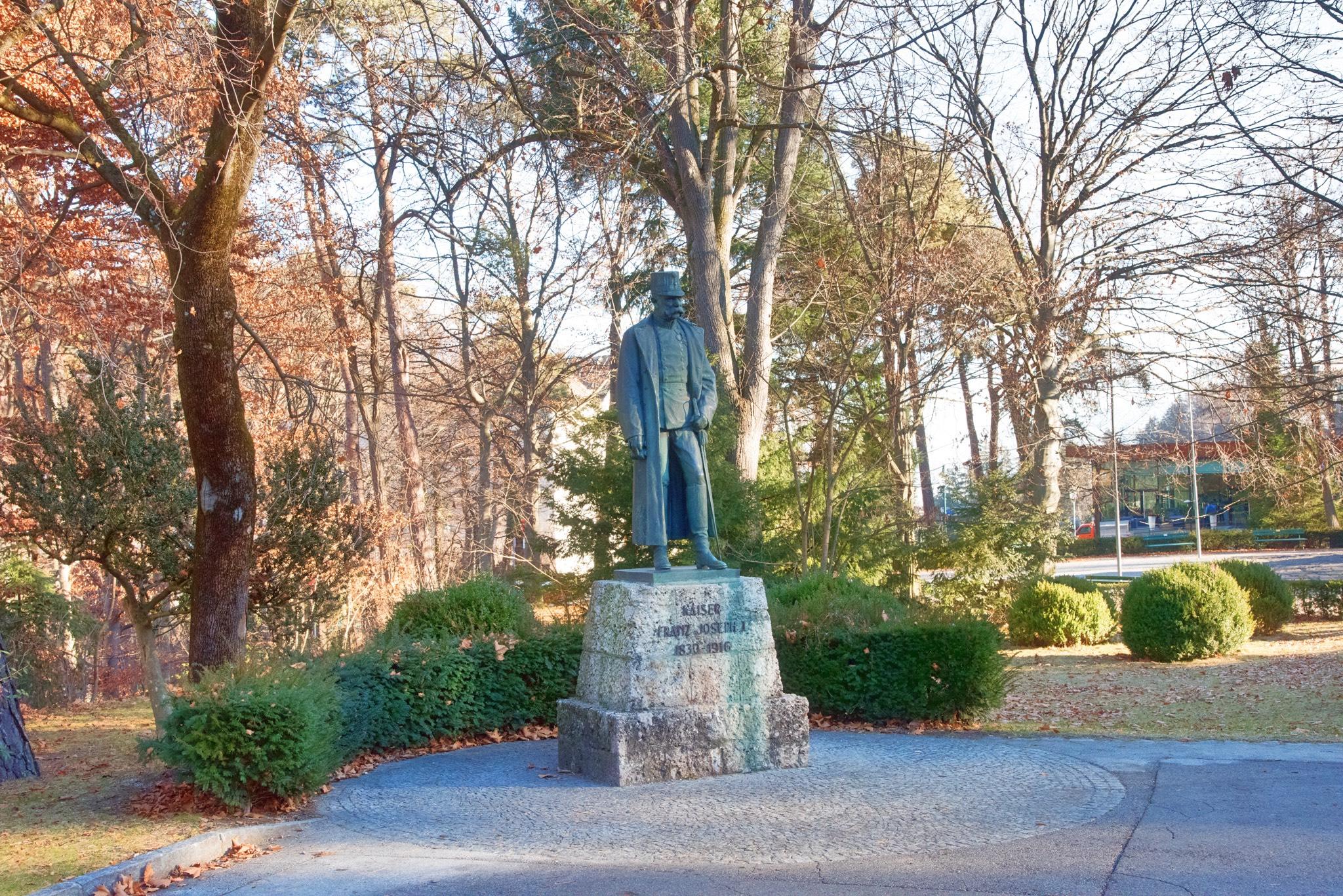
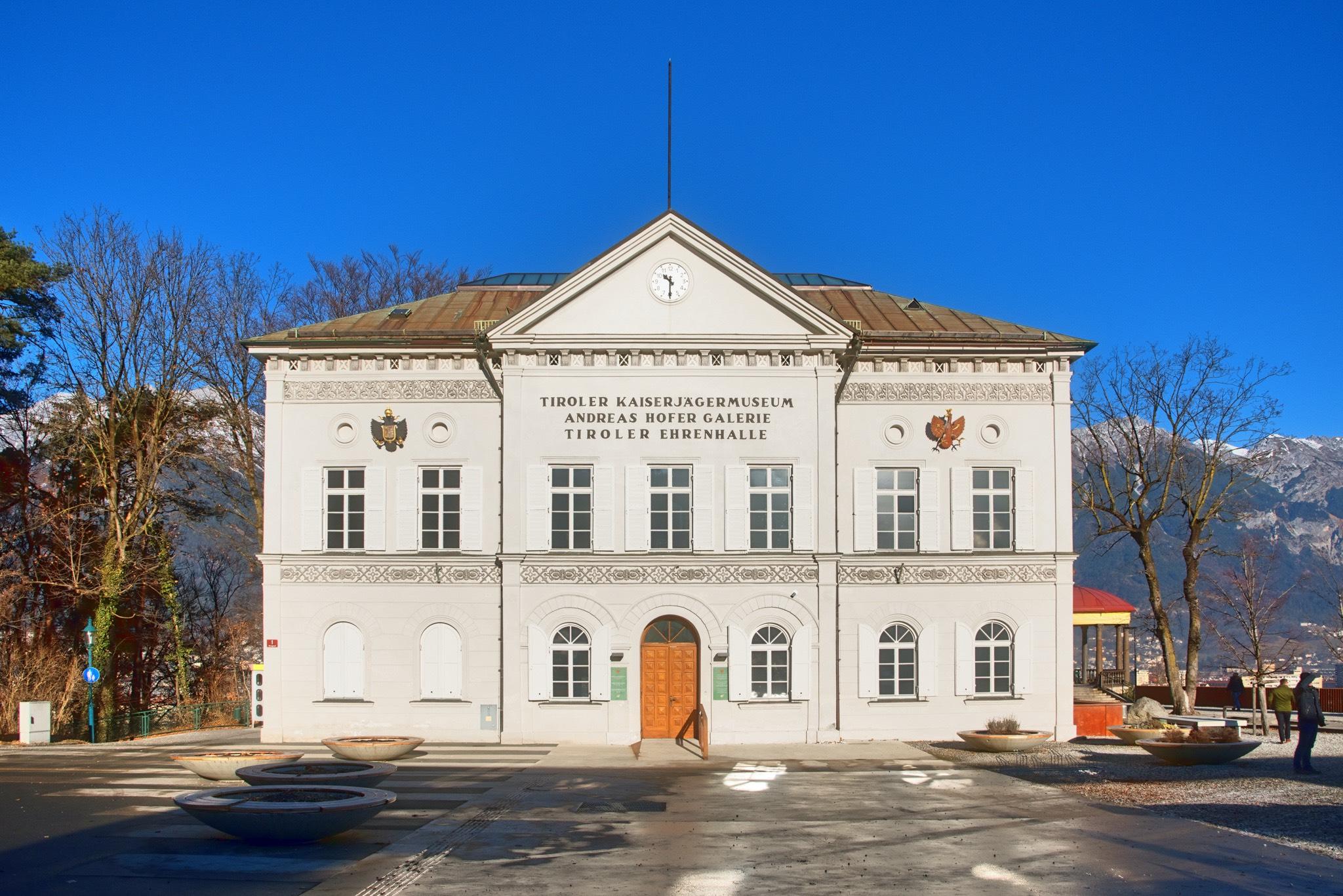
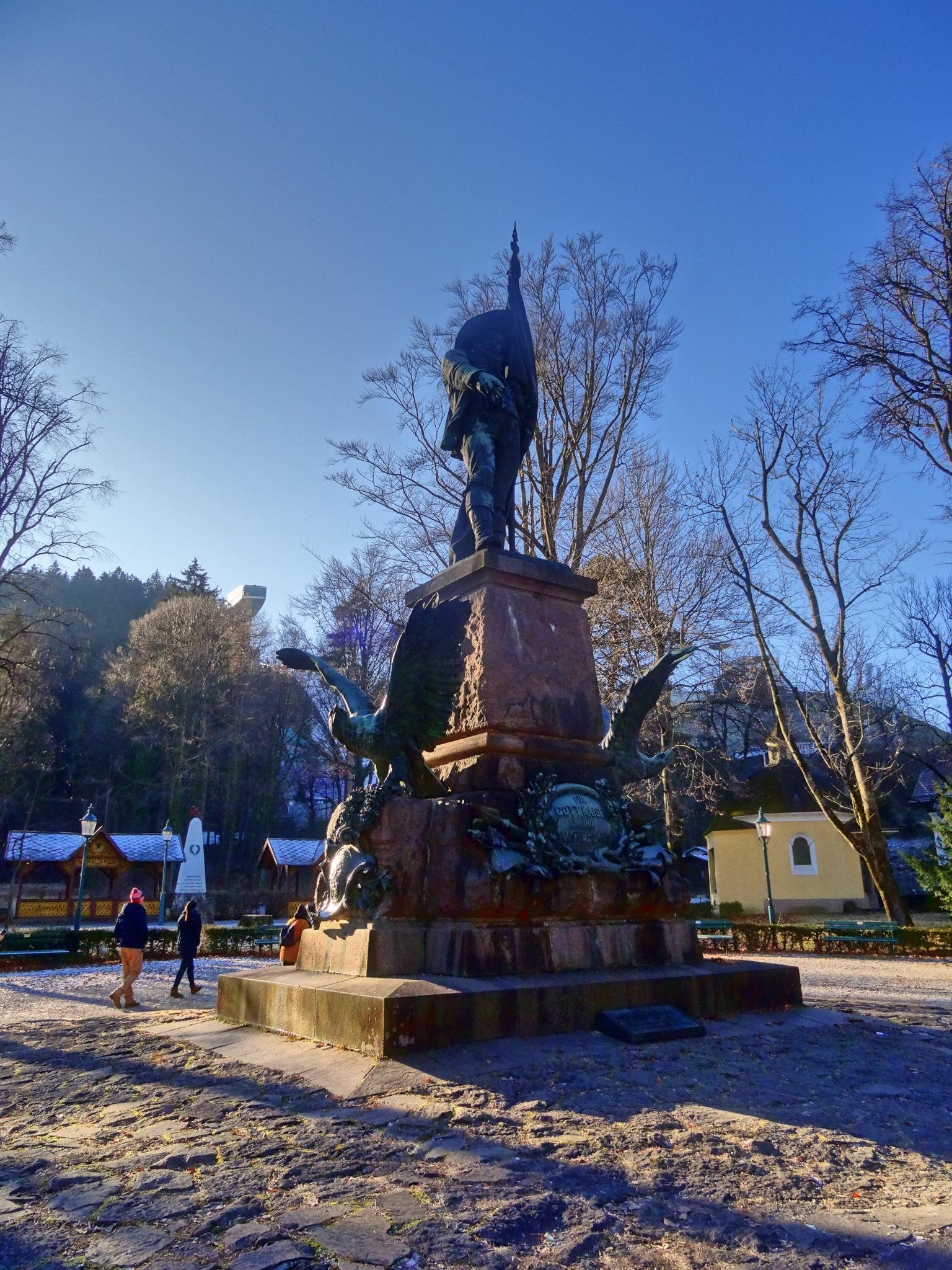
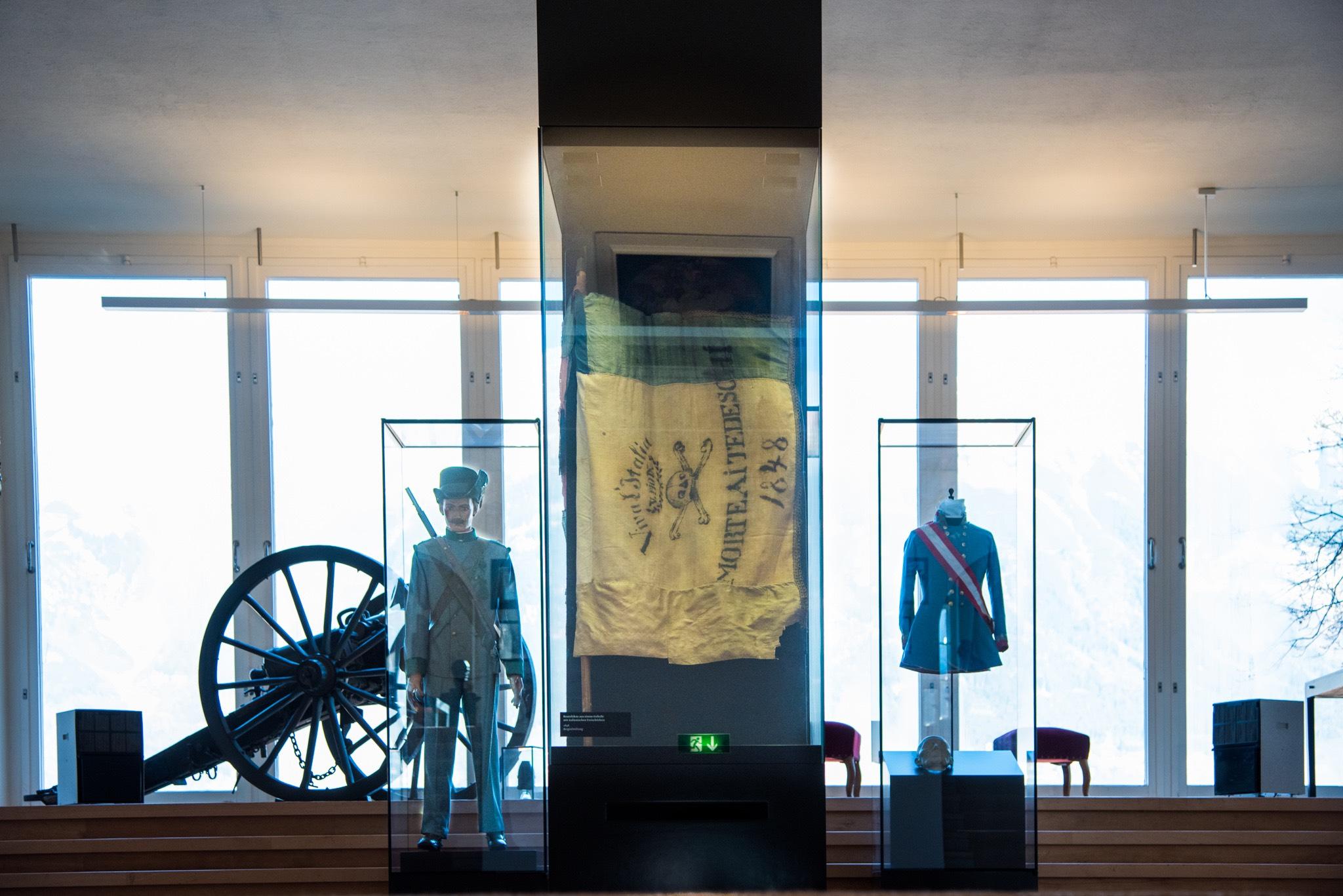
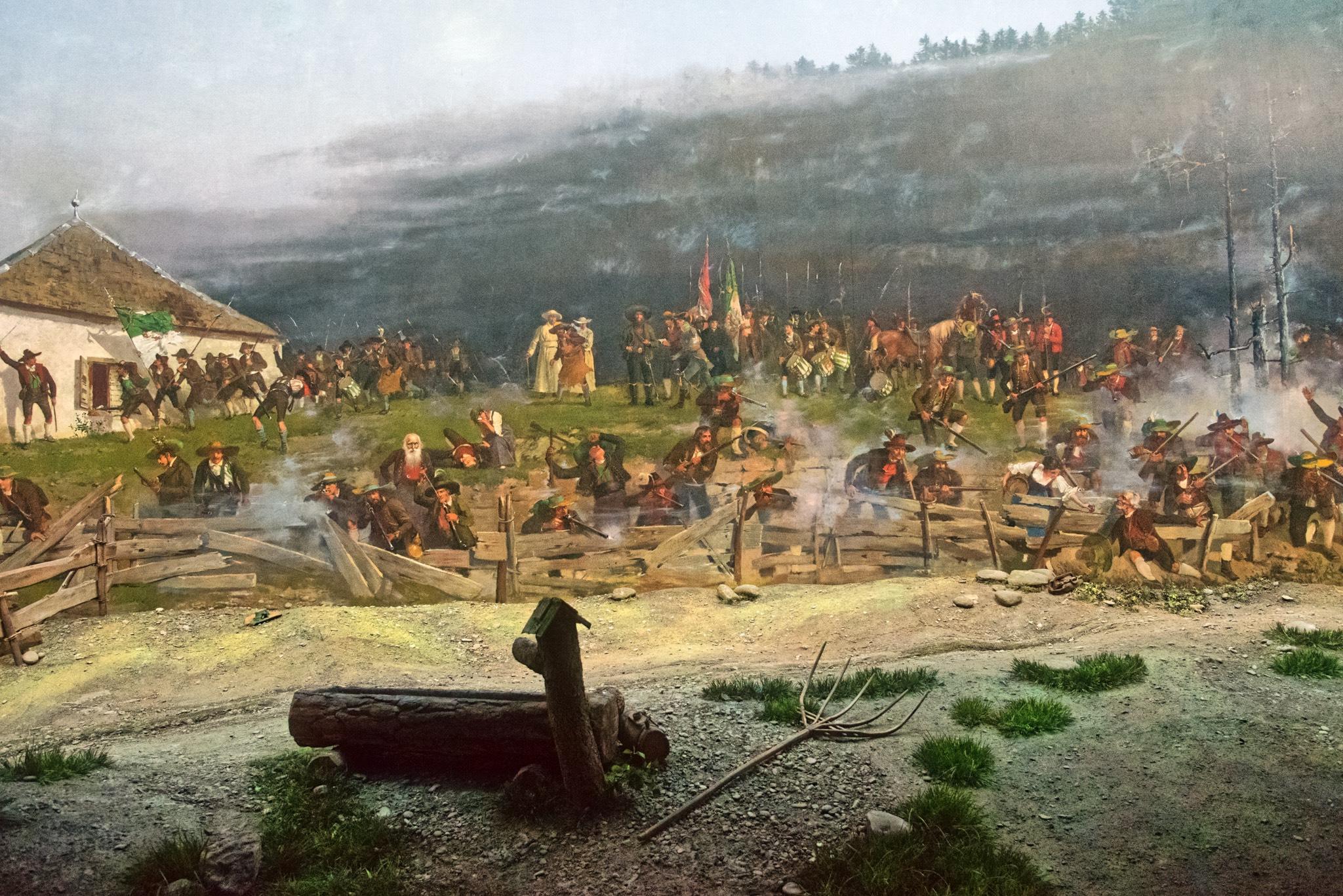
In 1809, the decisive battles of the Tyrolean struggle for freedom under the leadership of Andreas Hofer took place on the Bergisel. The Kaiserjäger Museum was built on this historically significant site. In addition to the
Andreas Hofer Gallery, one can also admire the Ancestral Gallery. On the occasion of the 150th anniversary of 1809, the impressive State Memorial Chapel was set up in the museum.
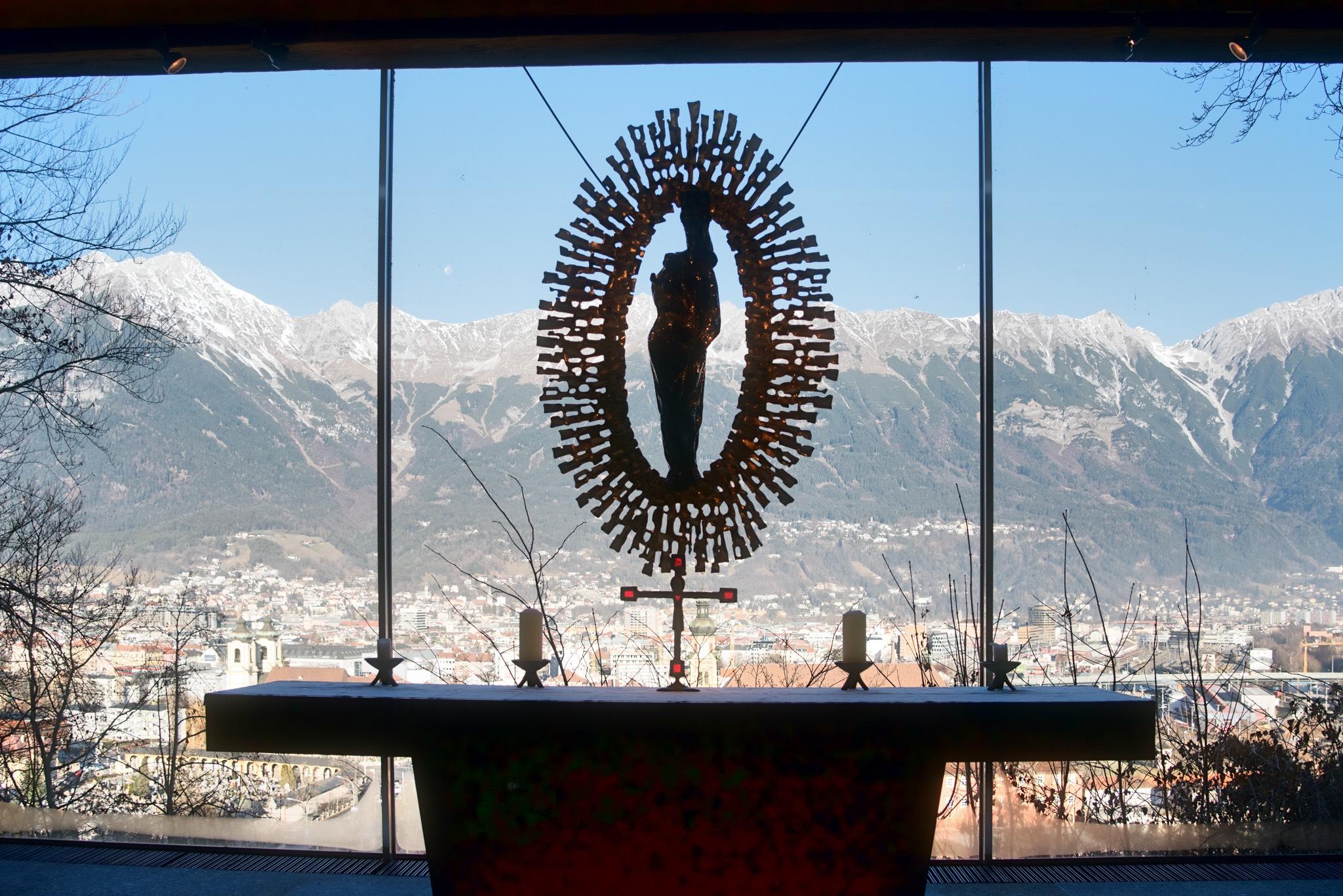
In the chapel are the honor books of the state, in which the Tyrolean victims of the liberation wars and the two world wars are recorded.
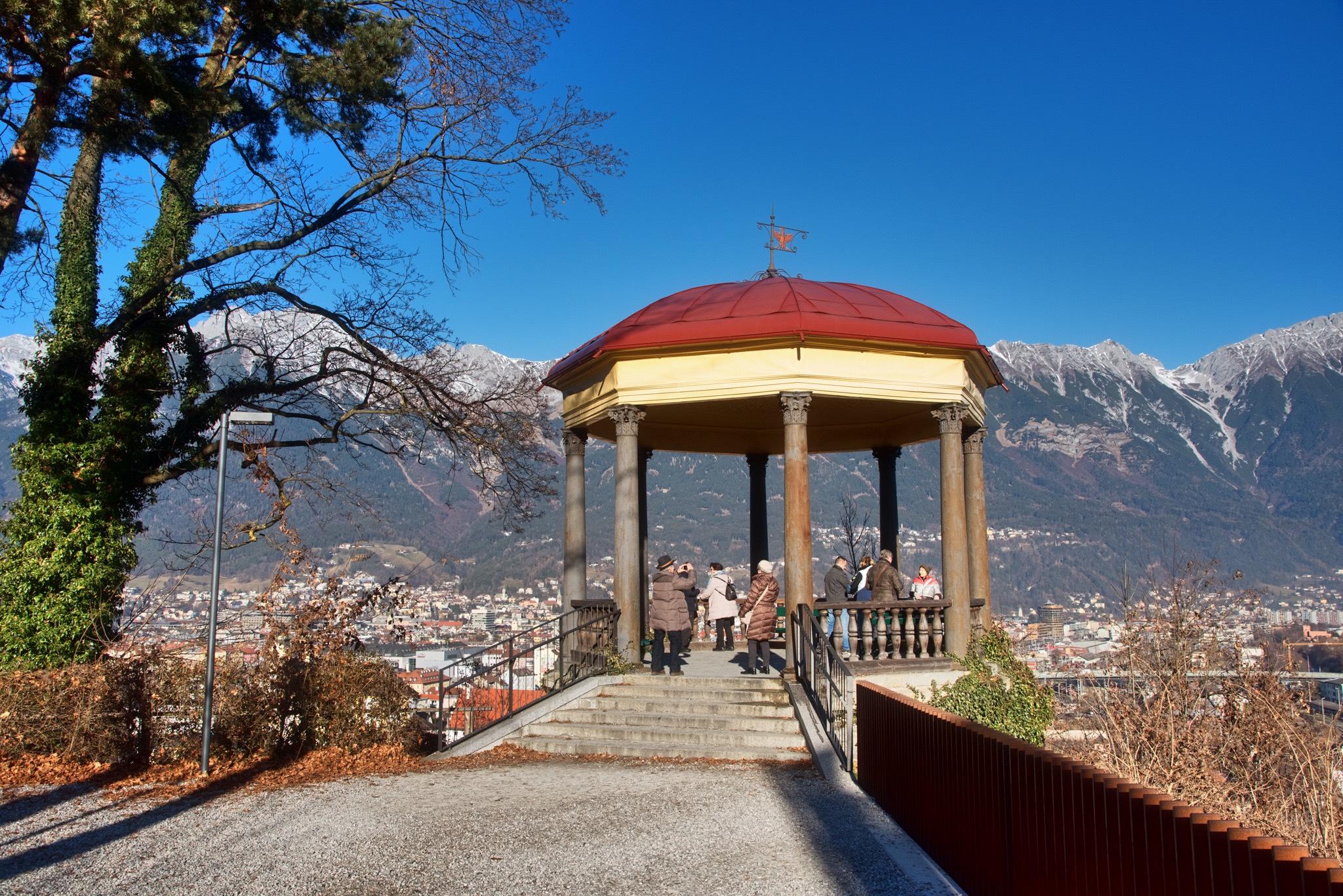
The entire Bergisel is a museum — the many statues and buildings make it incomparable. If you are already at
Bergisel, you should definitely take the 2.2 km panorama loop around the mountain. The path starts right at the museum.
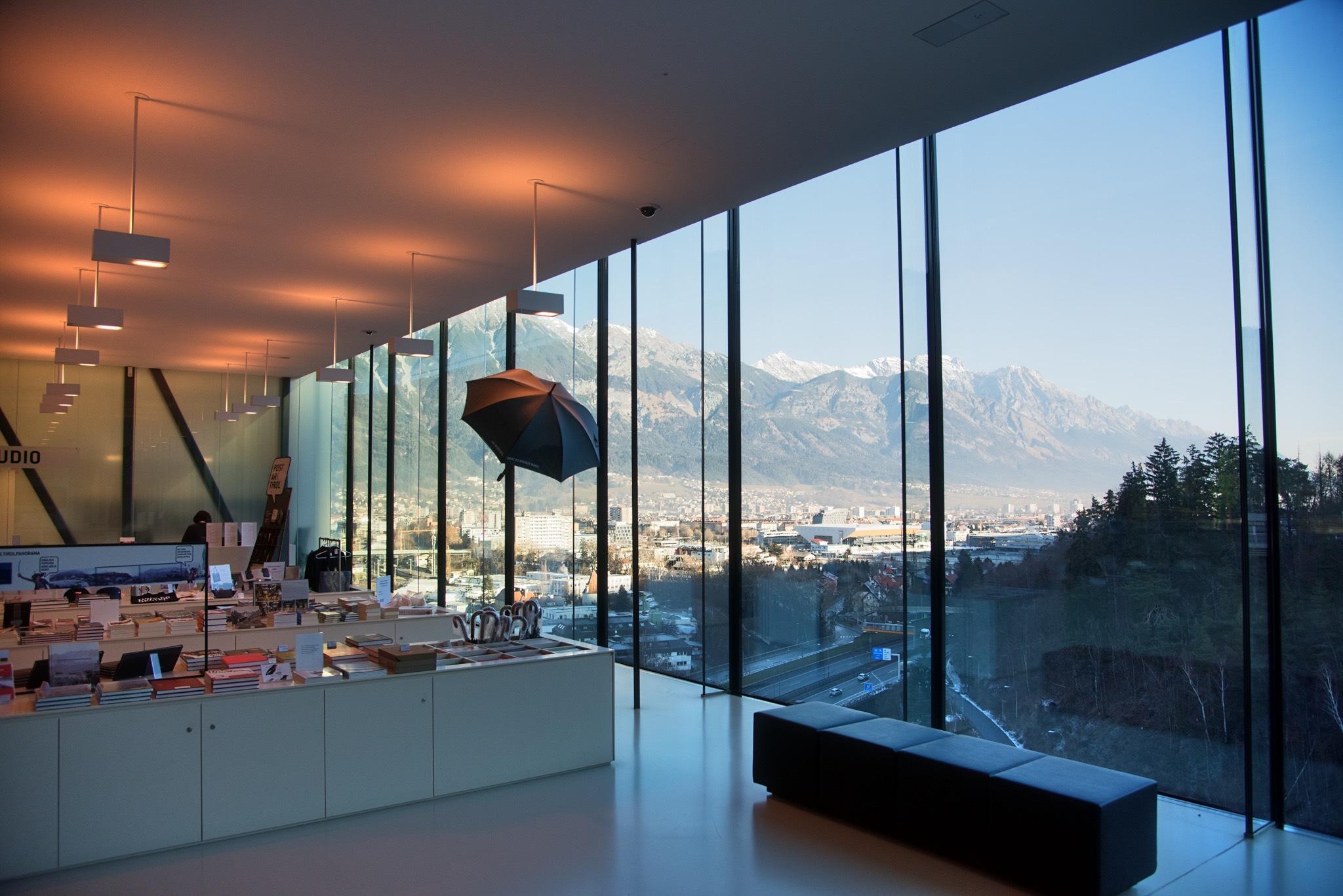
Shopping

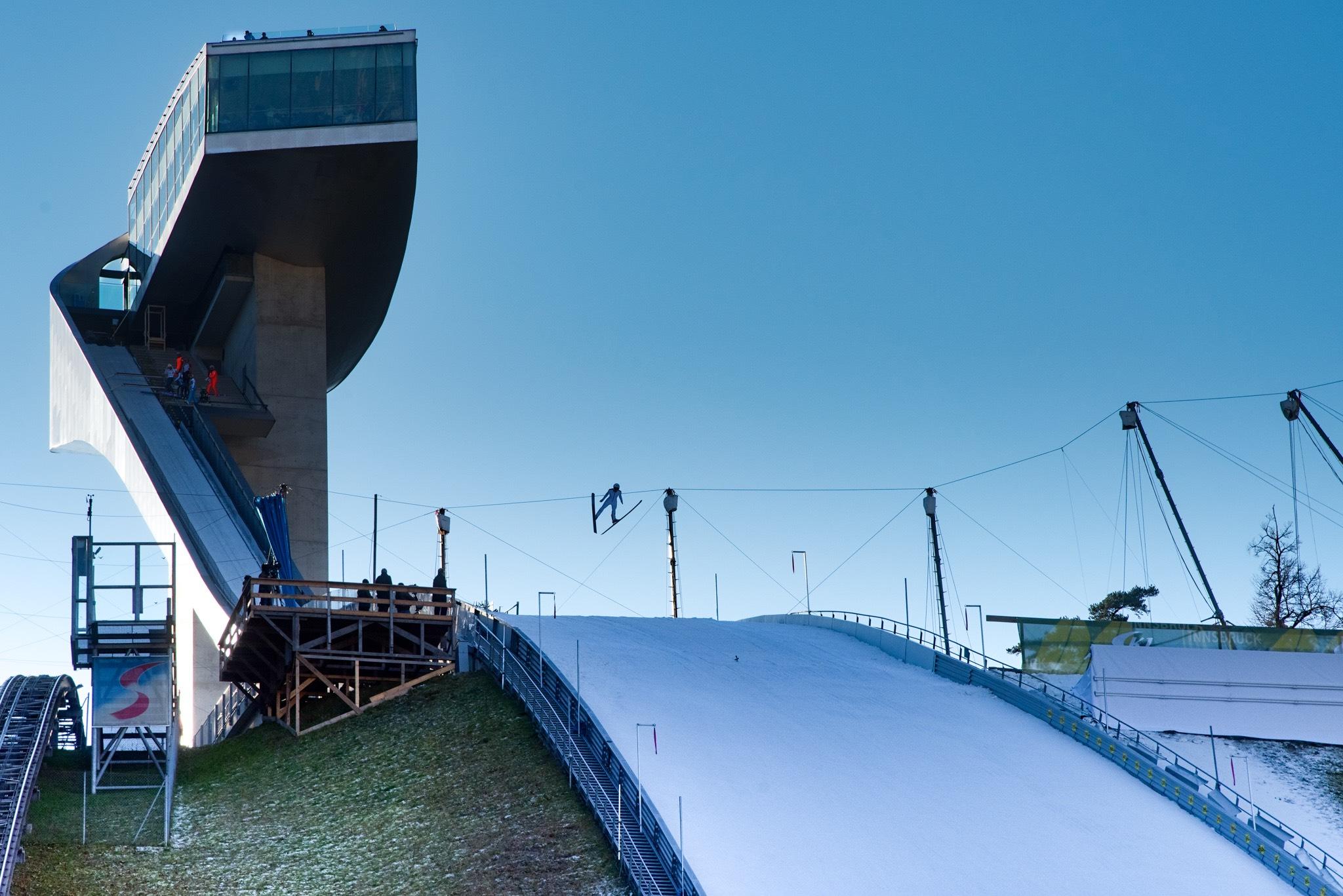
The Bergisel Ski Jump is not only a ski jumping venue with an Olympic past, but also a sports facility, event venue, and restaurant. The world-famous architect Zaha Hadid designed
the impressive tower. At the very top are the panorama restaurant “Bergisel Sky” and a large viewing terrace that offers a magnificent view of Innsbruck.
with the ÖBB nightjet to Innsbruck
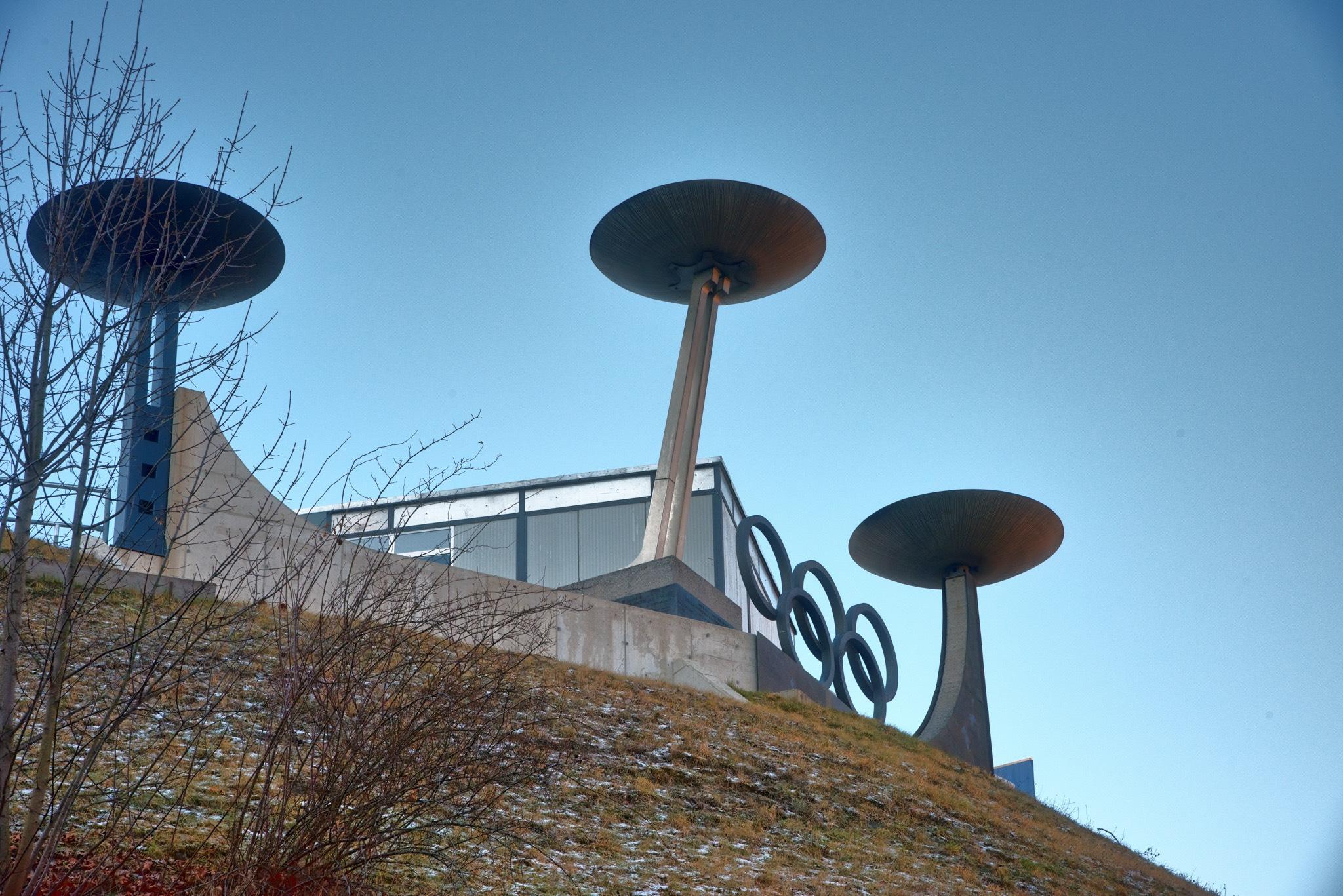
The history of ski jumping on the Bergisel dates back to 1927. At that time, there was a natural ski jump on the mountain. Since January 3, 1953, the Bergisel ski jump has been the venue for the Four Hills Tournament.
This event takes place in Oberstdorf, GarmischPartenkirchen, Innsbruck, and Bischofshofen. In 2003, the run-out was covered with green plastic mats to allow the ski jump to be used in summer as well.
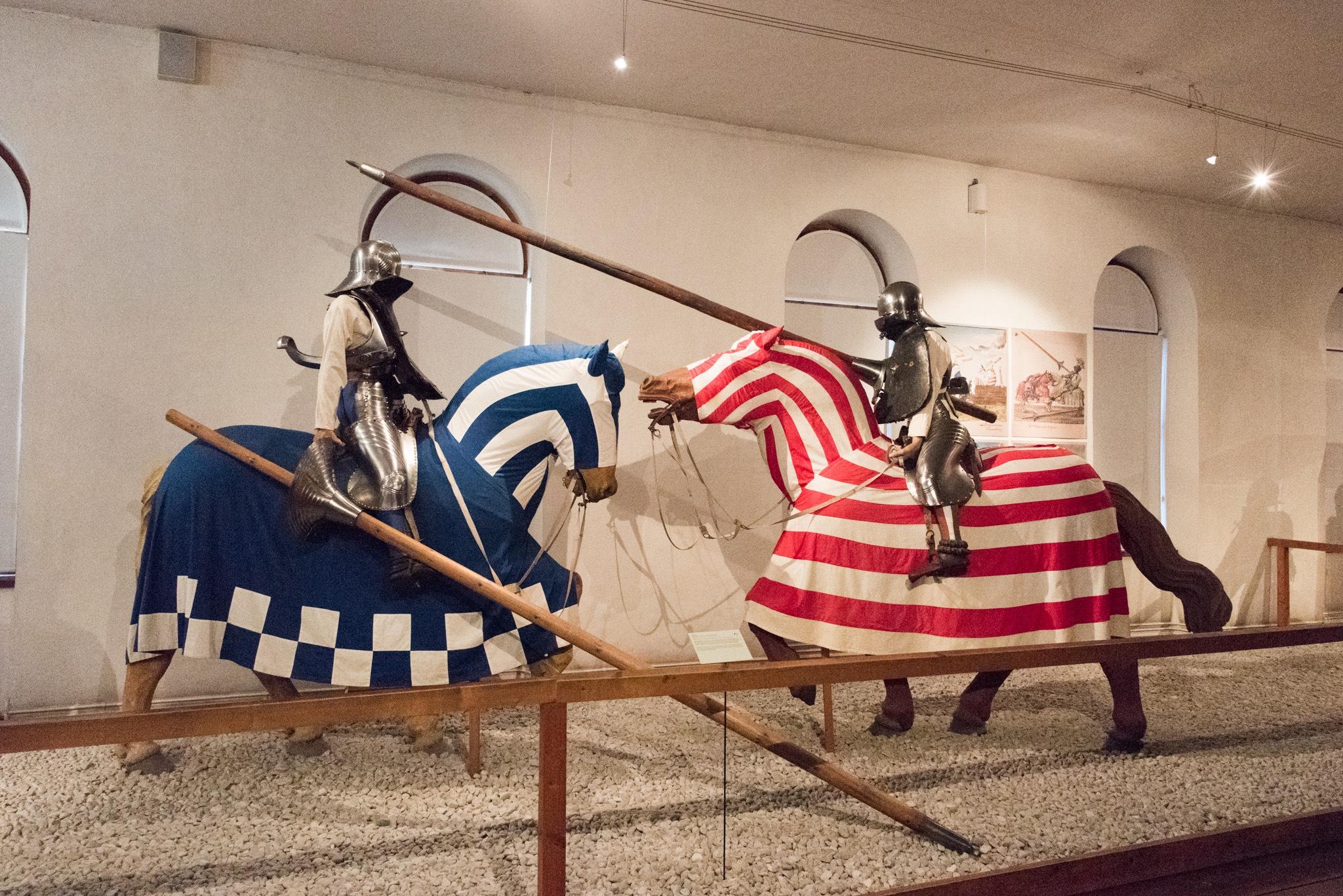

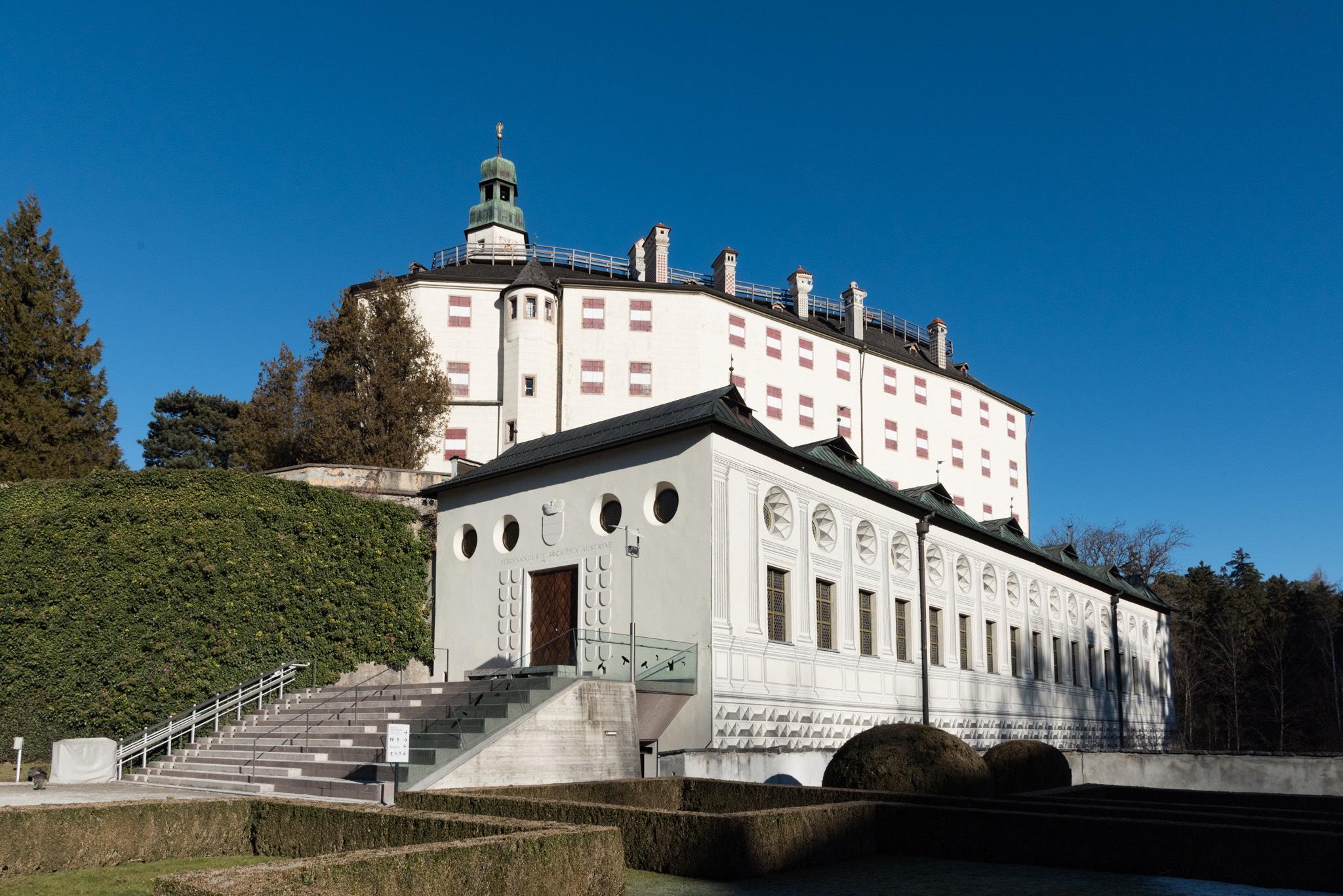
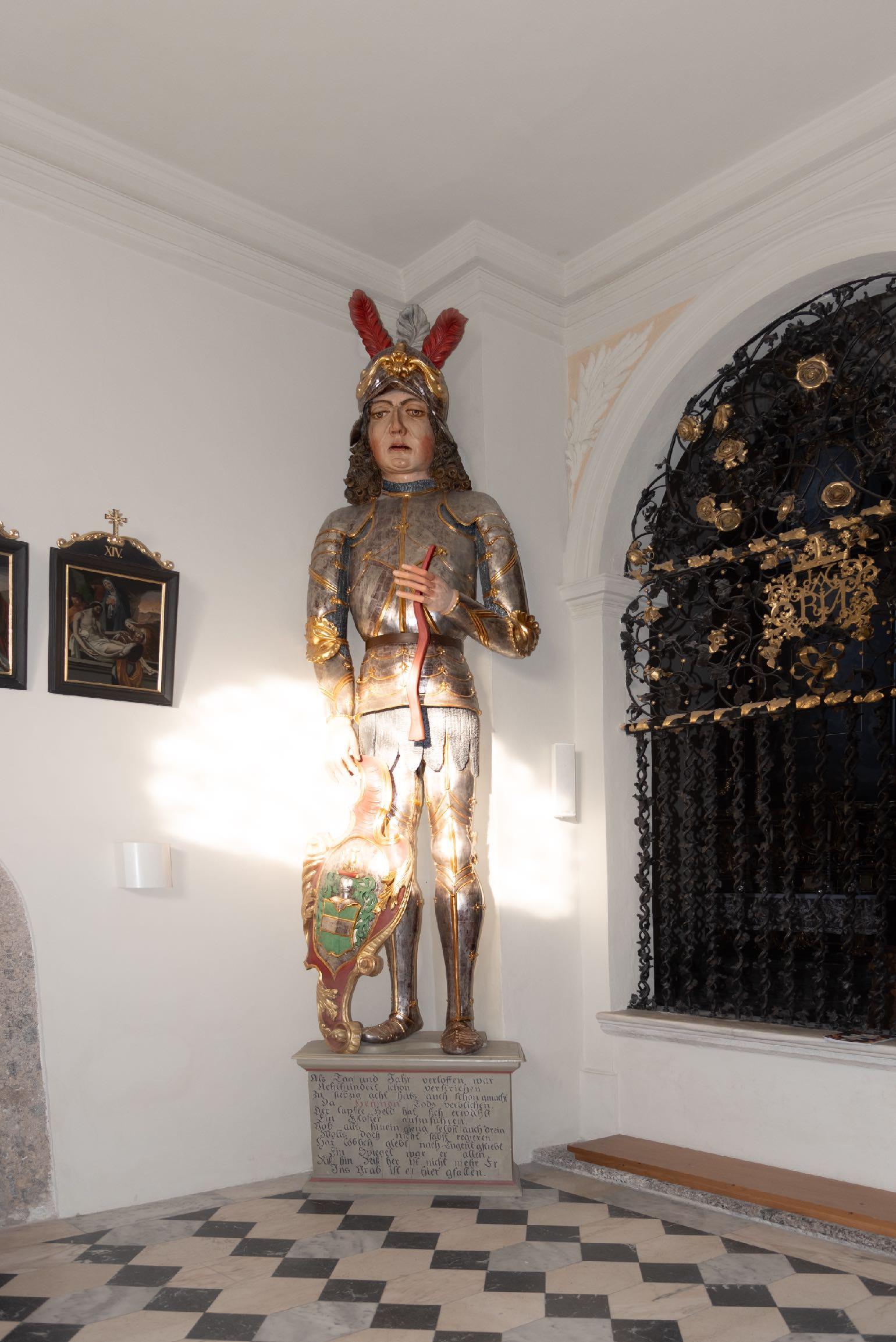
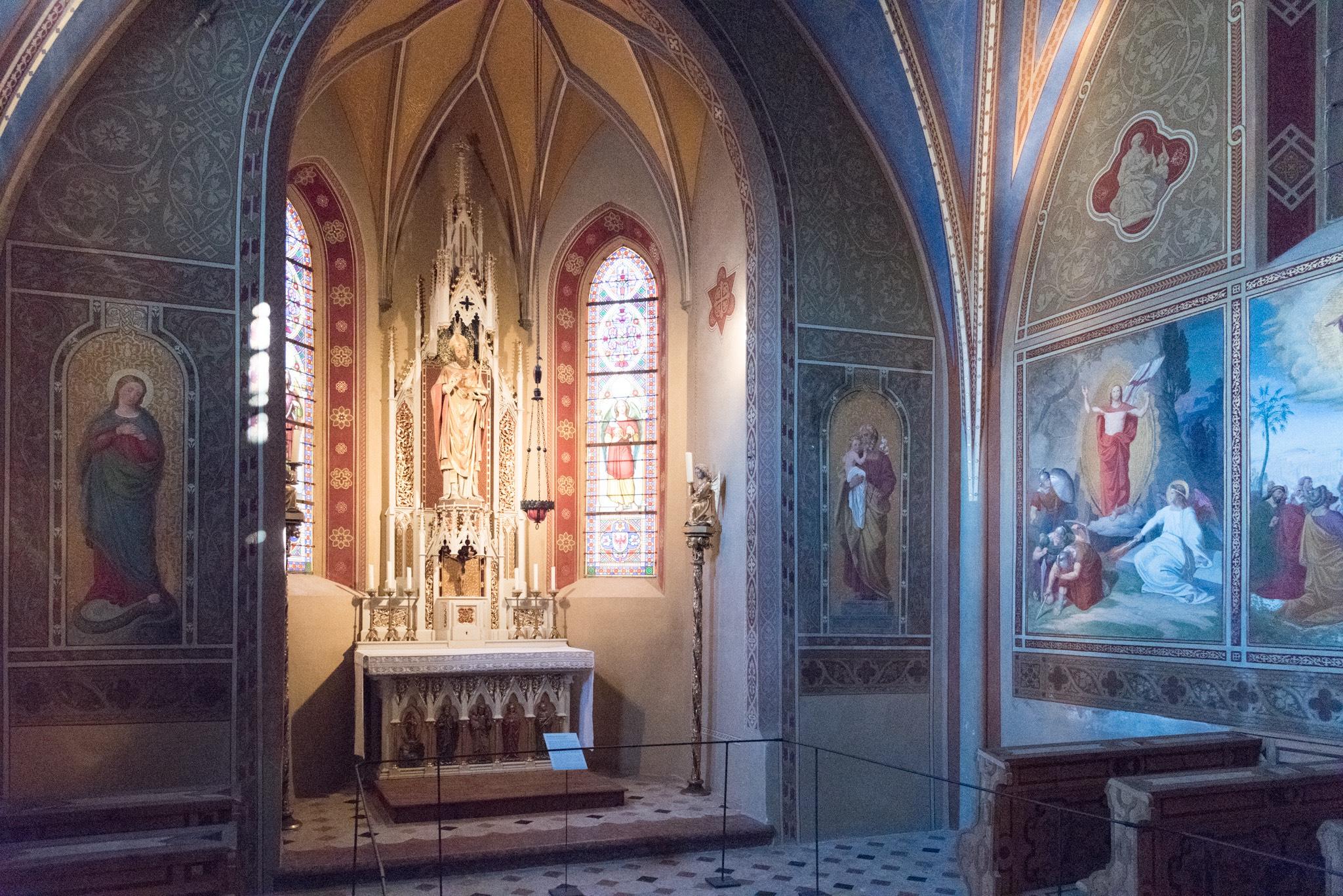
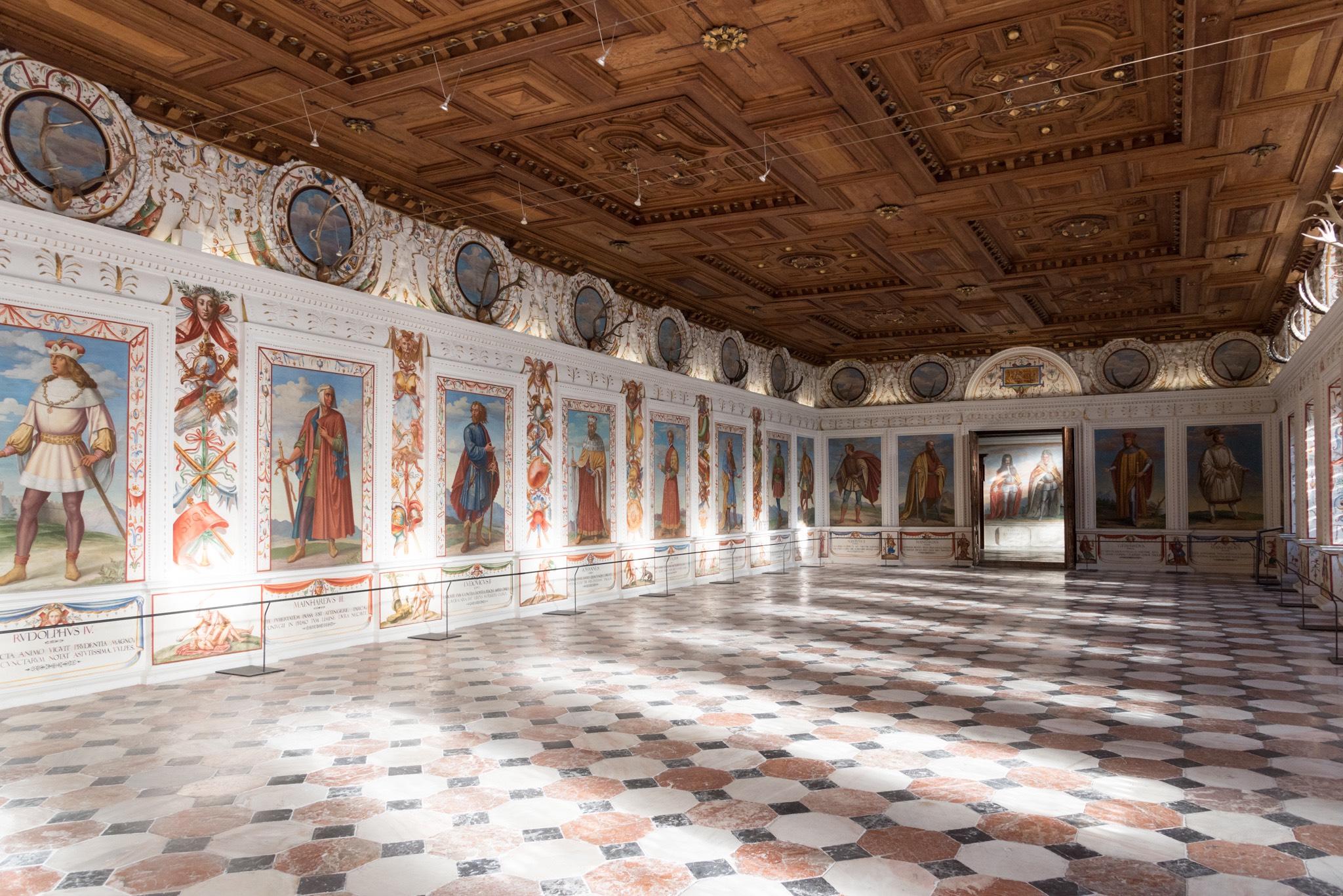
Ambras Castle is one of the most important and beautiful sights in Innsbruck. It houses the Ambras Castle Innsbruck Art History Museum. The ancestors of the Counts of Dießen-
Andechs already lived at the site of the current castle in the 10th century. Under Archduke Ferdinand II, who greatly promoted the arts
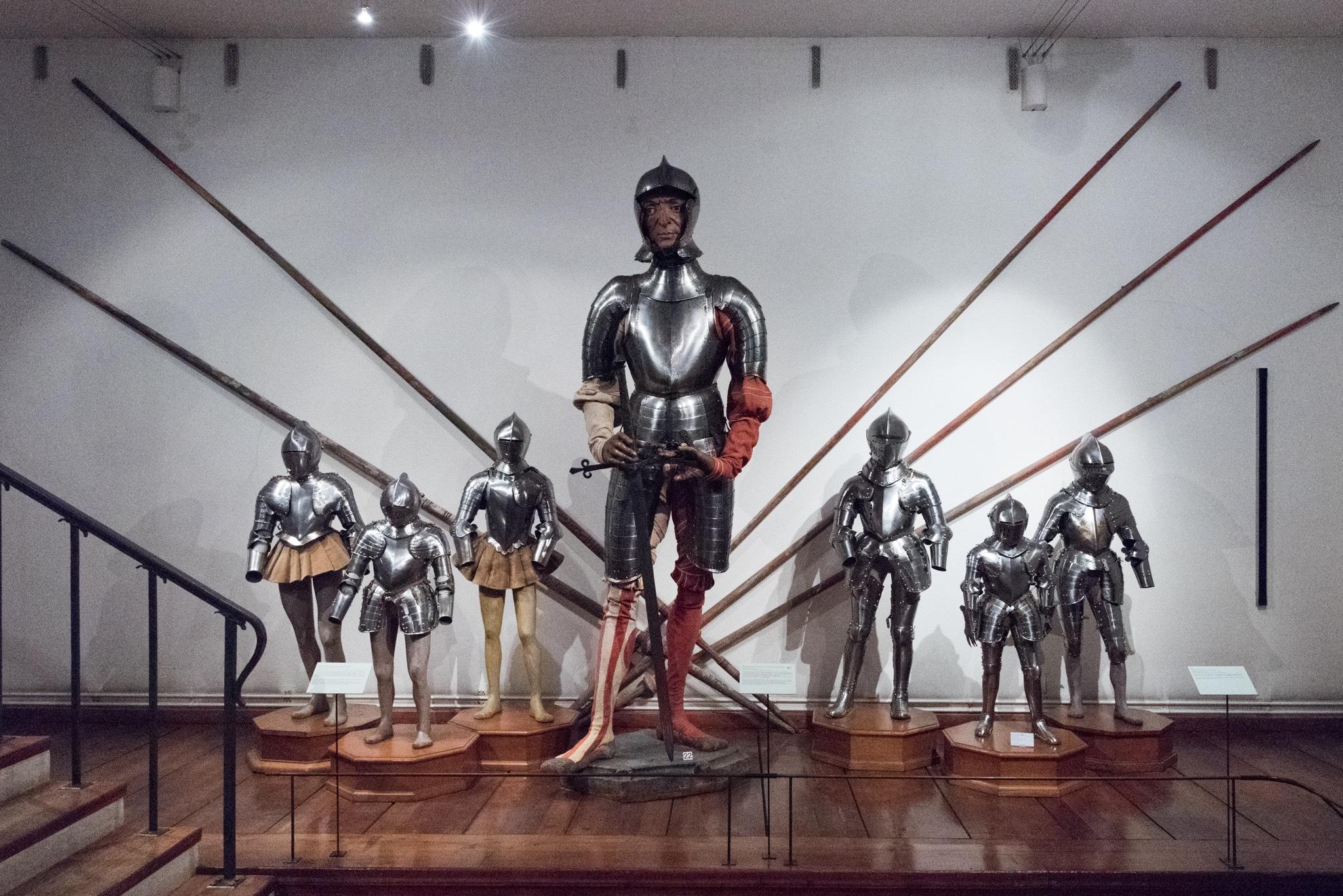
The Archduke brought his art collections from Prague, where he had previously served as governor for 20 years, to Innsbruck. From 1572 to 1583 and in 1589, when an expansion took place, the only surviving
Renaissance museum buildings were created in Ambras. The sgraffito facade of the inner courtyard is particularly impressive.
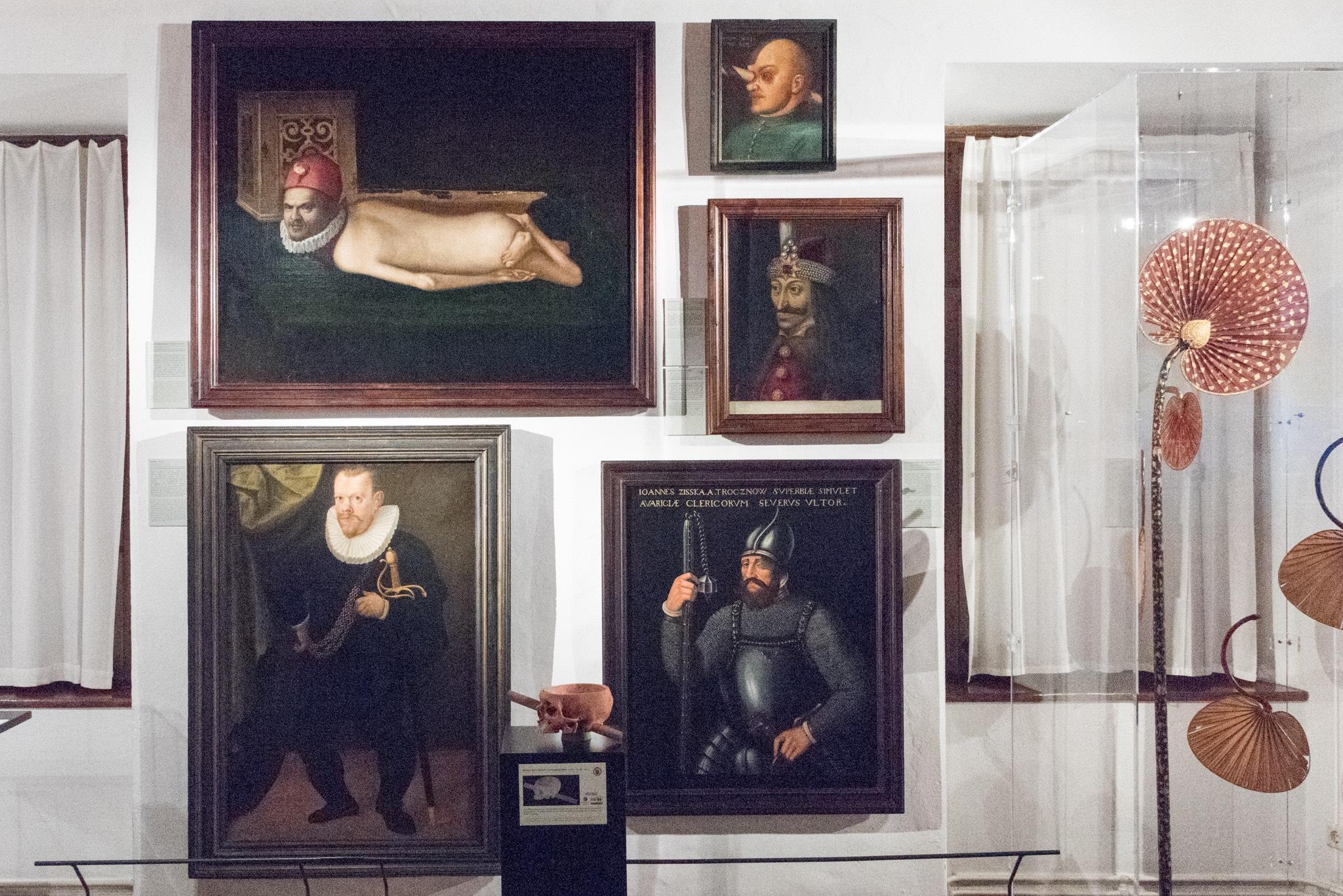
Numerous outstanding collections make Ambras a “must” for all visitors to Innsbruck. The Art and Curiosity Cabinet, the Armories, and the Habsburg Portrait Gallery are just a few of the many appealing collections.
and sciences, the importance of Ambras Castle grew.
In addition to the “Portrait of a Disabled Man”, one finds here the only painting of Vlad Tepes, known as Dracula.
with the ÖBB nightjet to Innsbruck
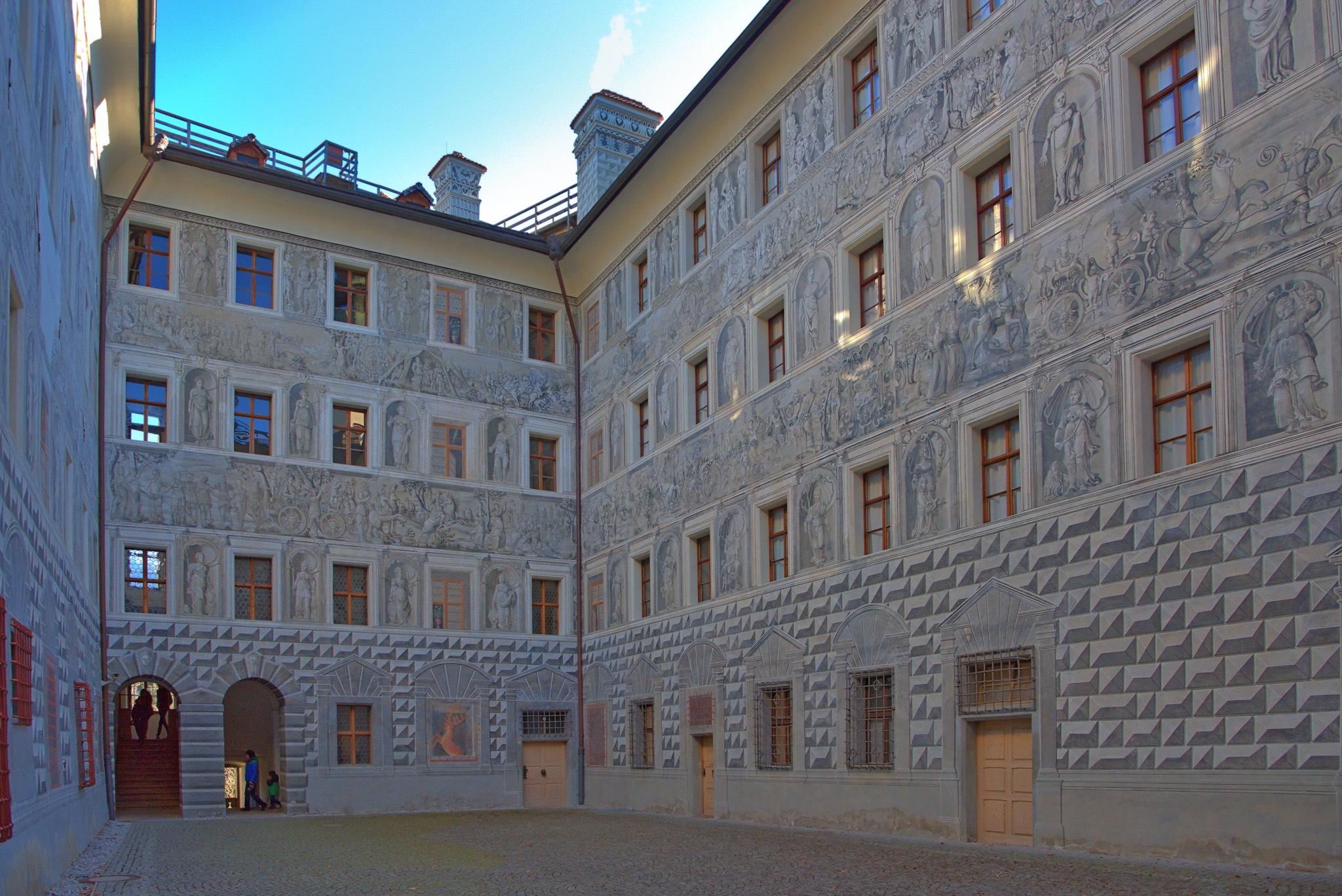
Grisaille Painting in the Inner Courtyard
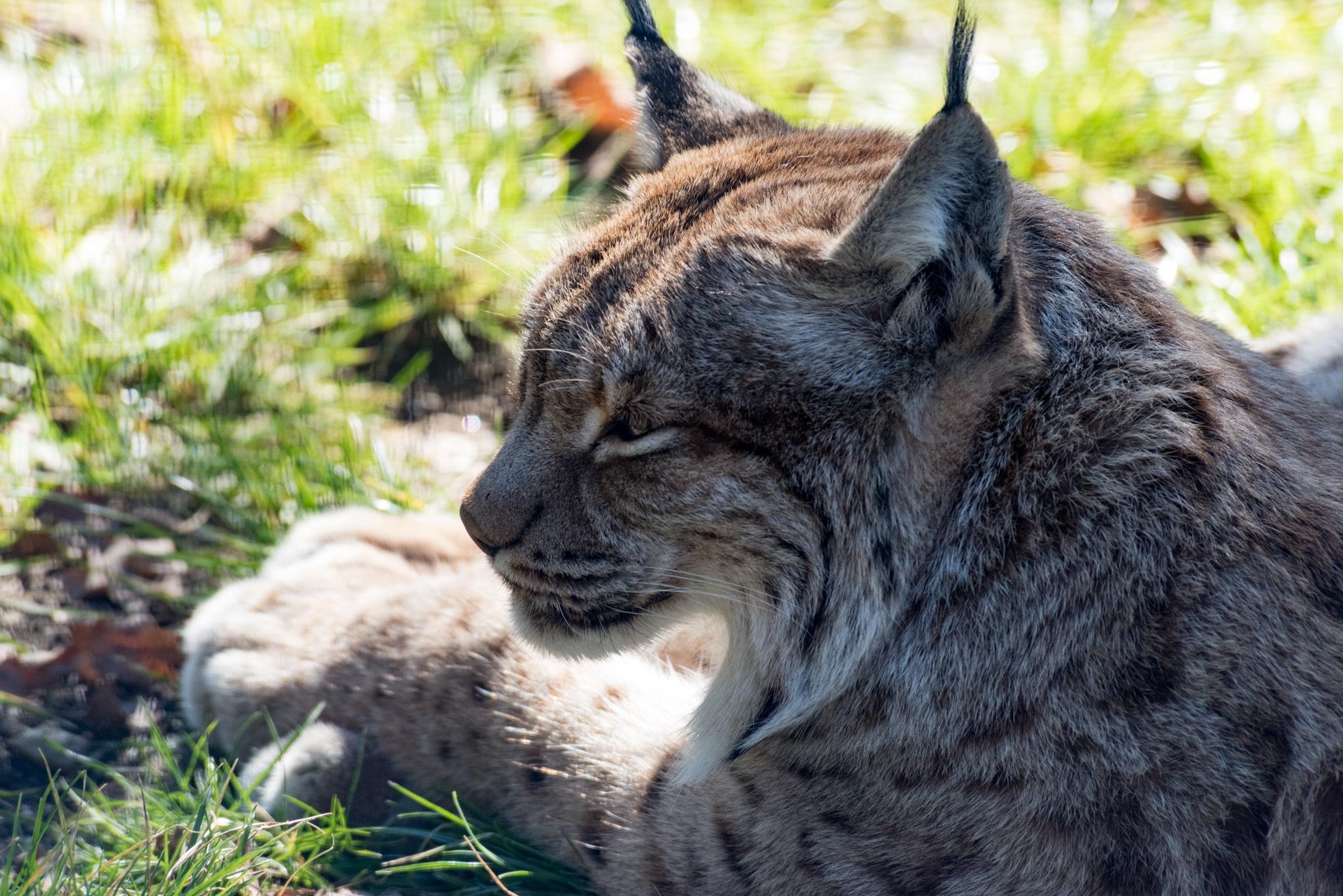

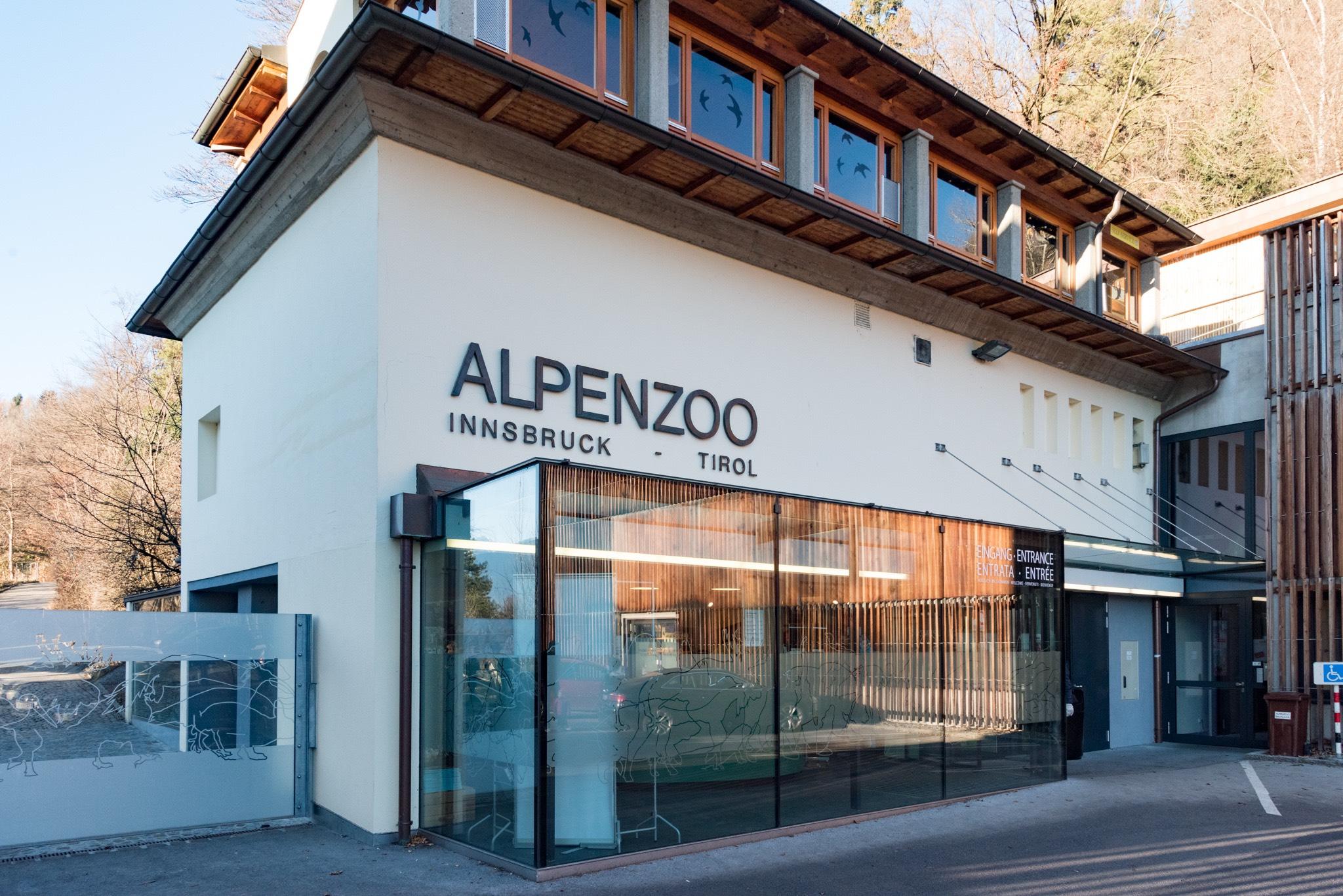
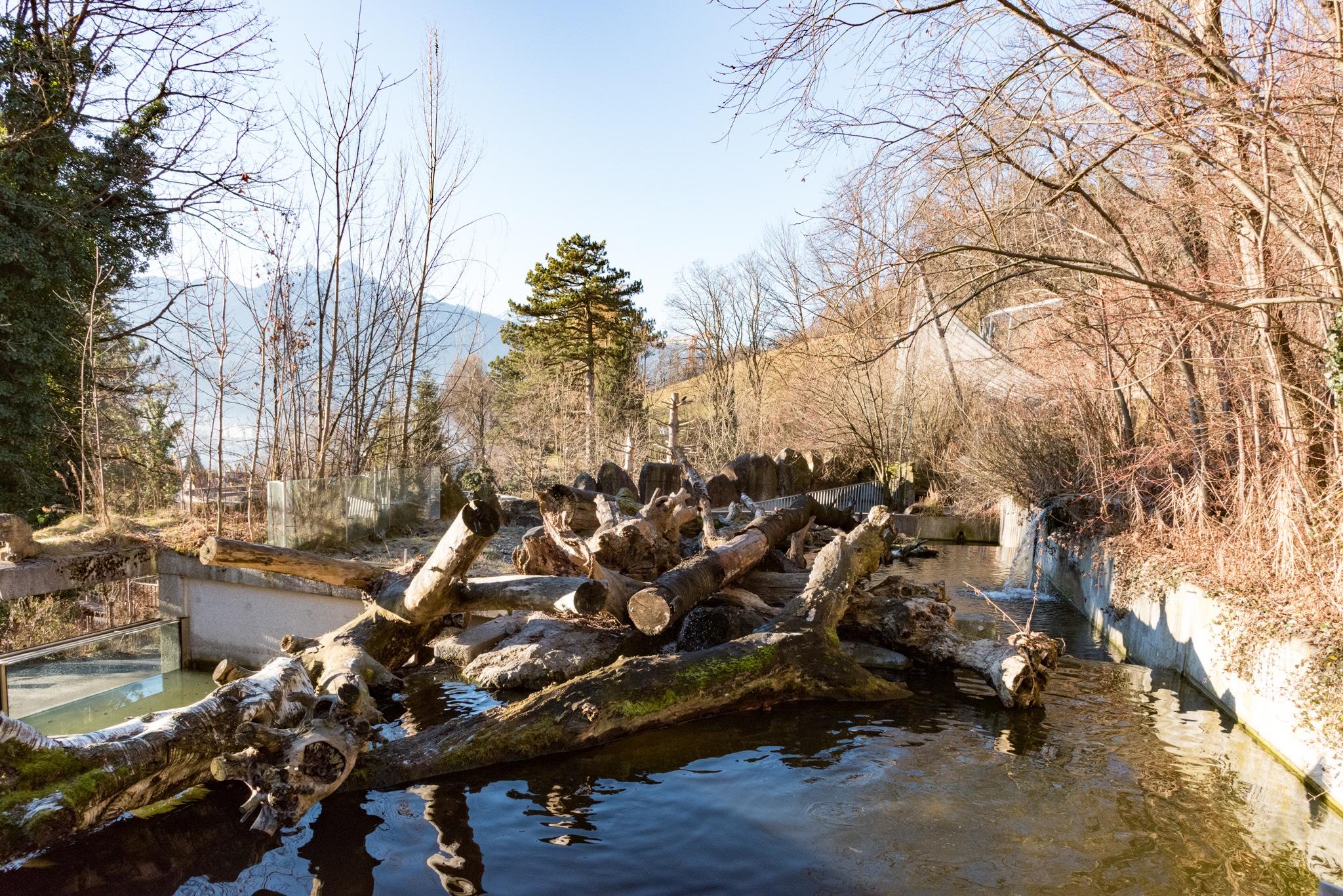
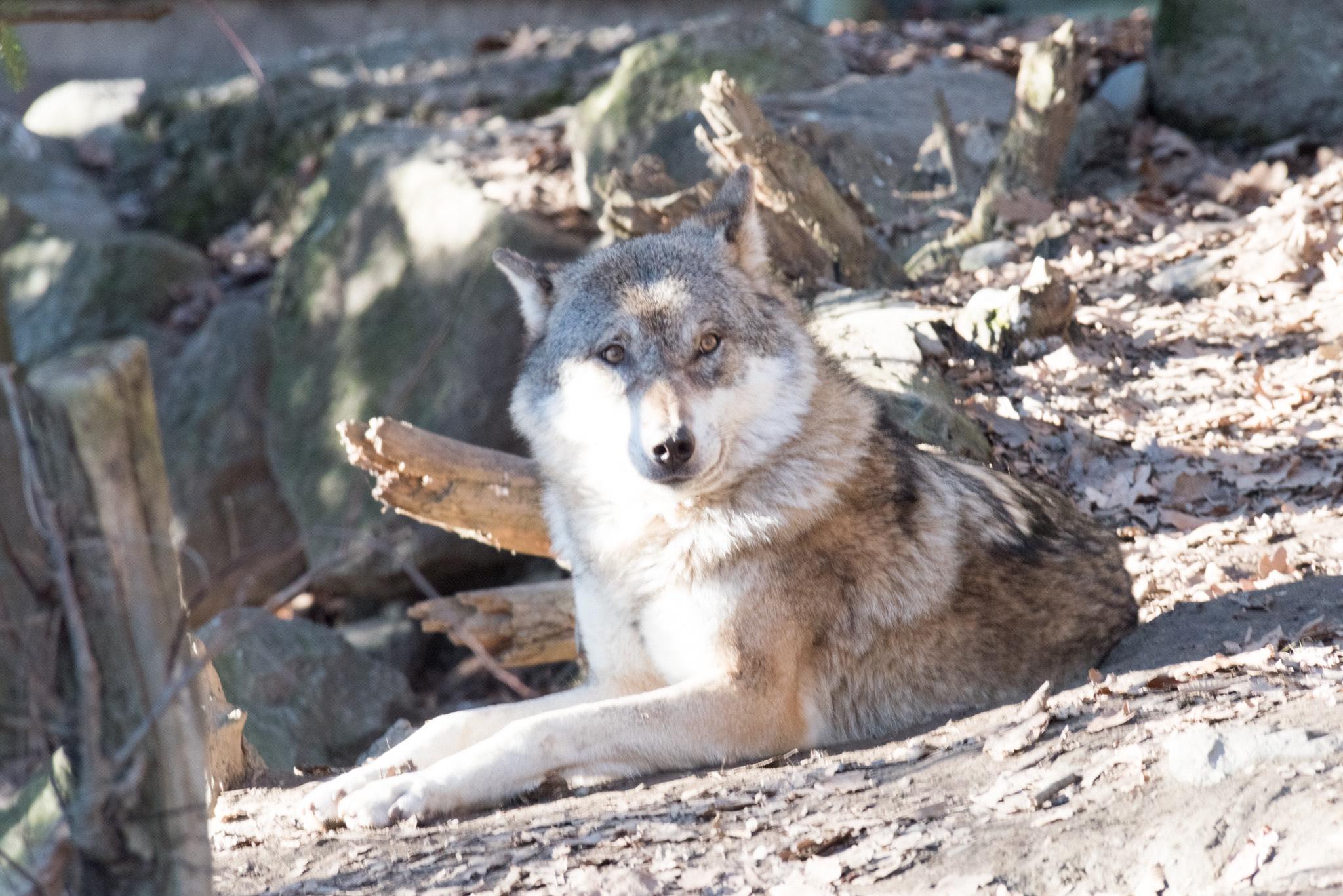
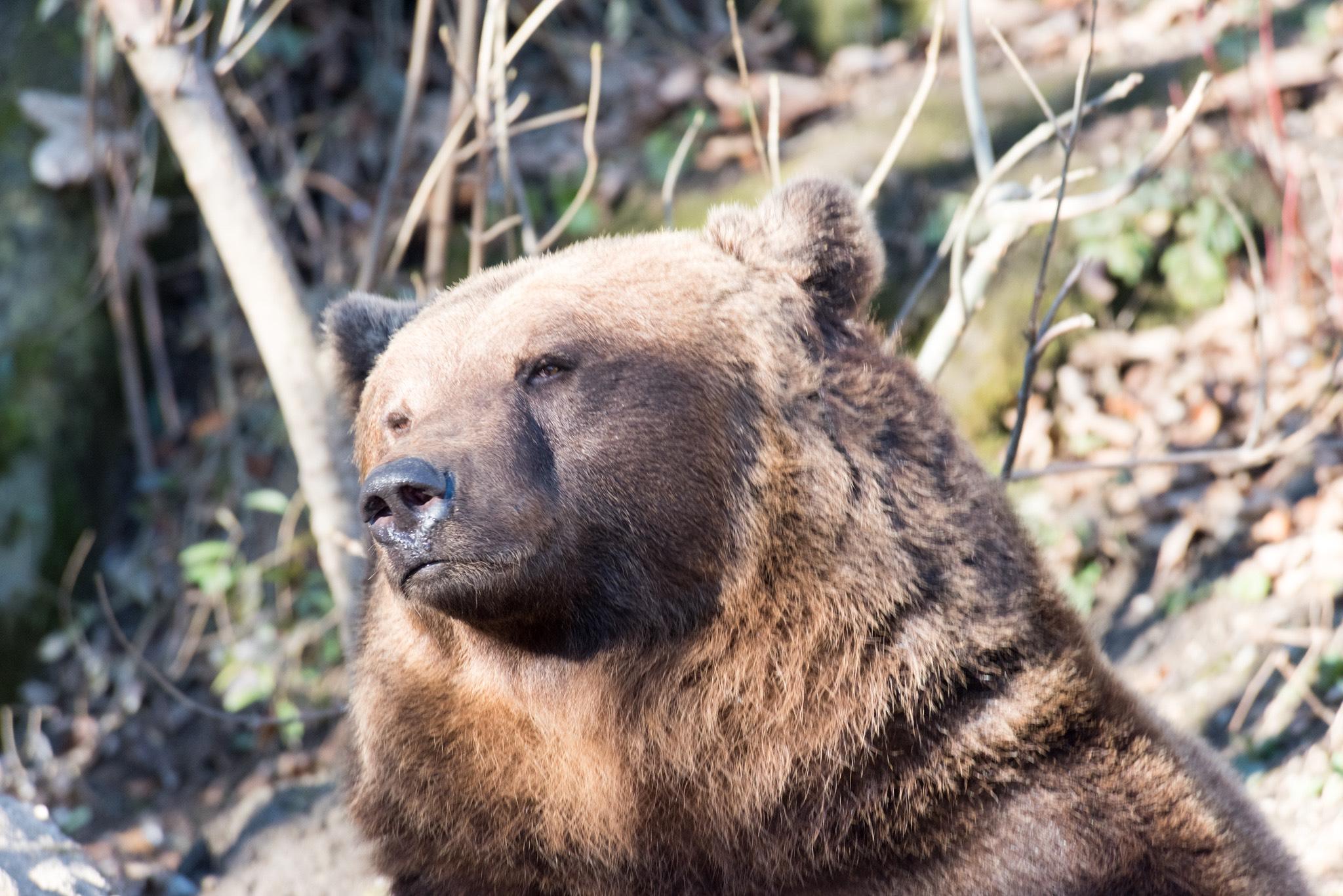
The Innsbruck Alpine Zoo is located at an altitude of 750 meters and is thus the highest zoo in Europe. It houses about 2,000 animals and a total of 150 animal species that represent the entire Alpine region. From Innsbruck, it is easiest to reach by the Hungerburgbahn or bus line W. The zoo is on
the sunny side of Innsbruck, at the foot of the Nordkette. As early as 1591, Archduke Ferdinand II had an imperial zoo built near the Weiherburg. The Alpine Zoo was opened in 1962. The Innsbruck Alpine Zoo is open all year round.
with the ÖBB nightjet to Innsbruck
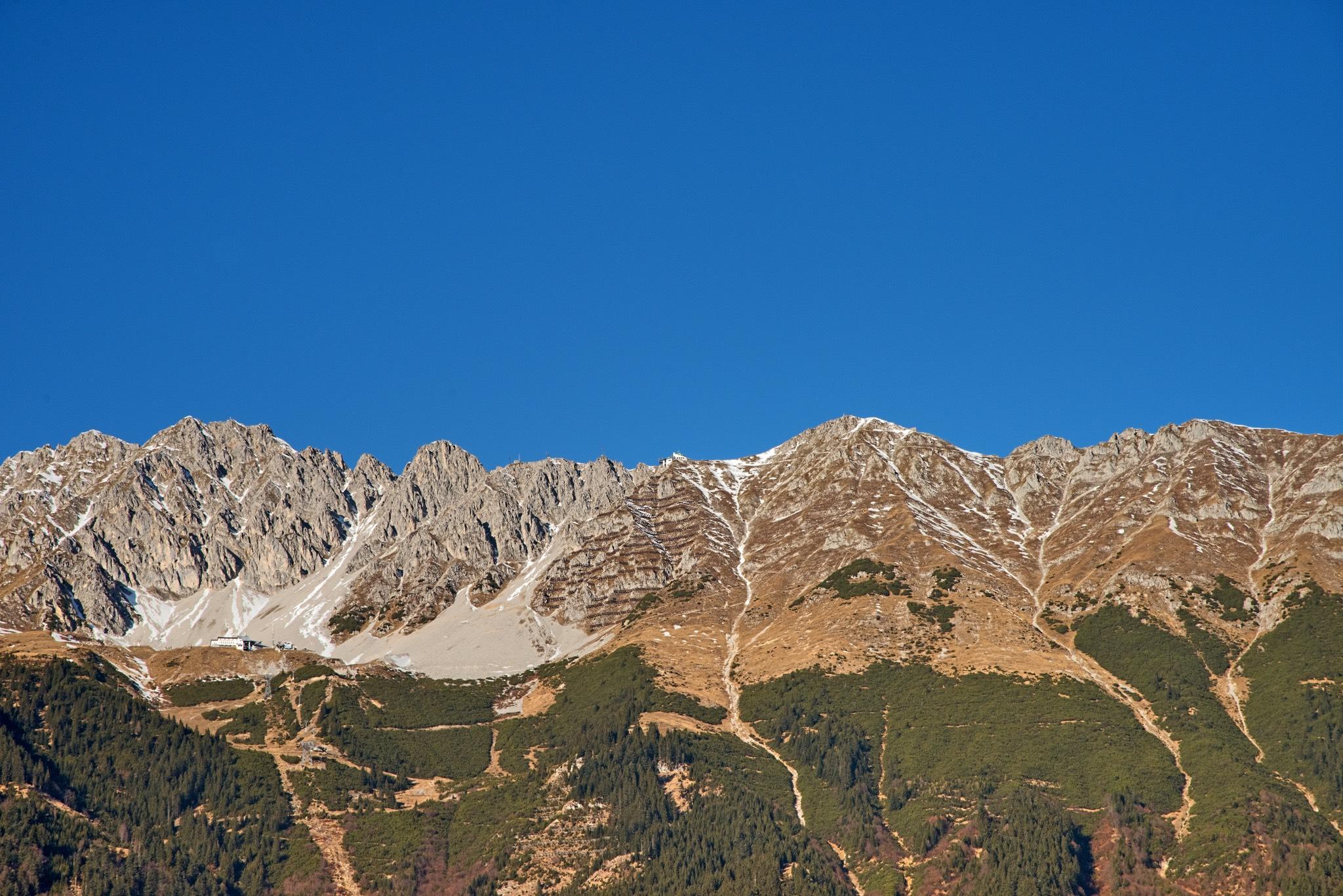

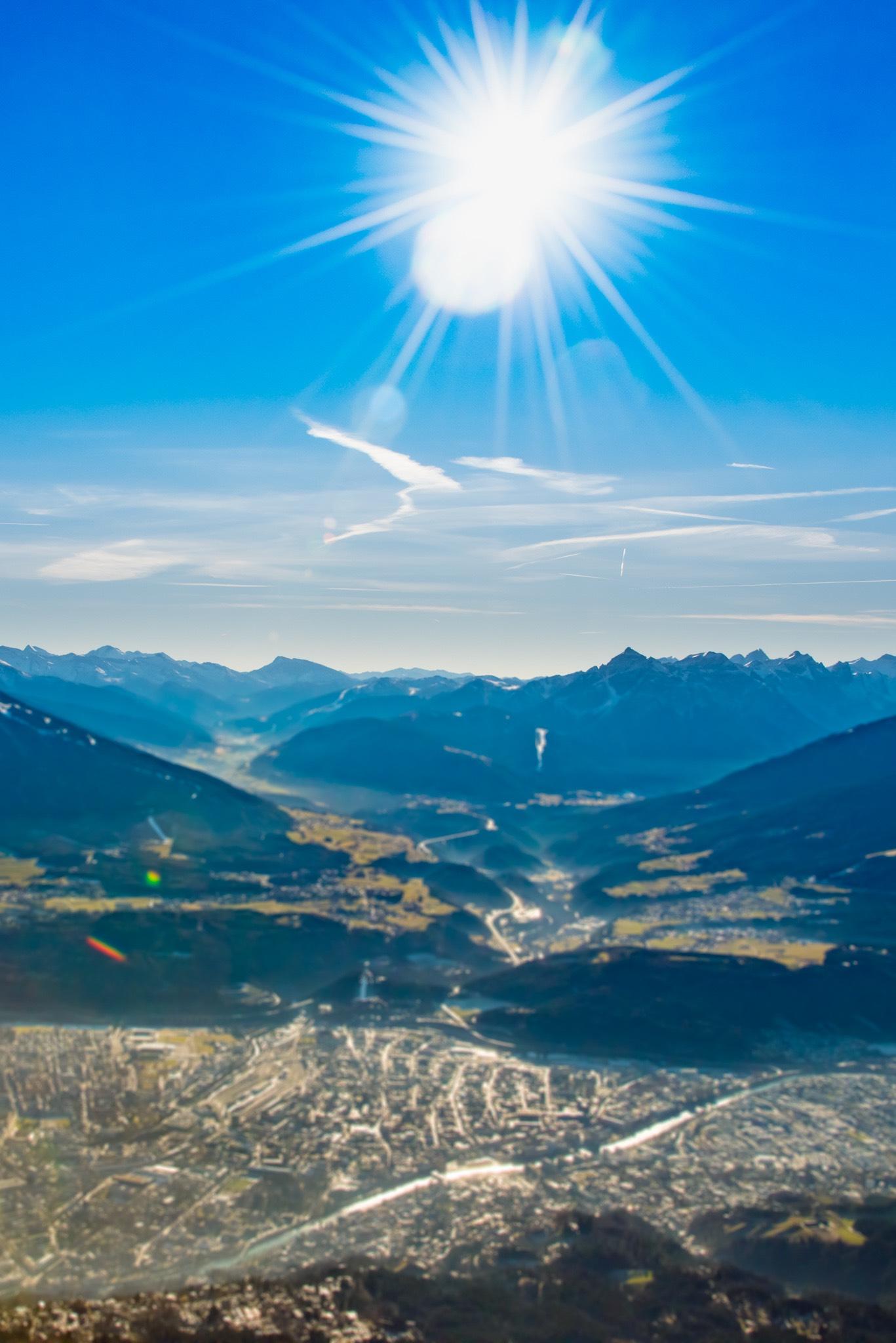
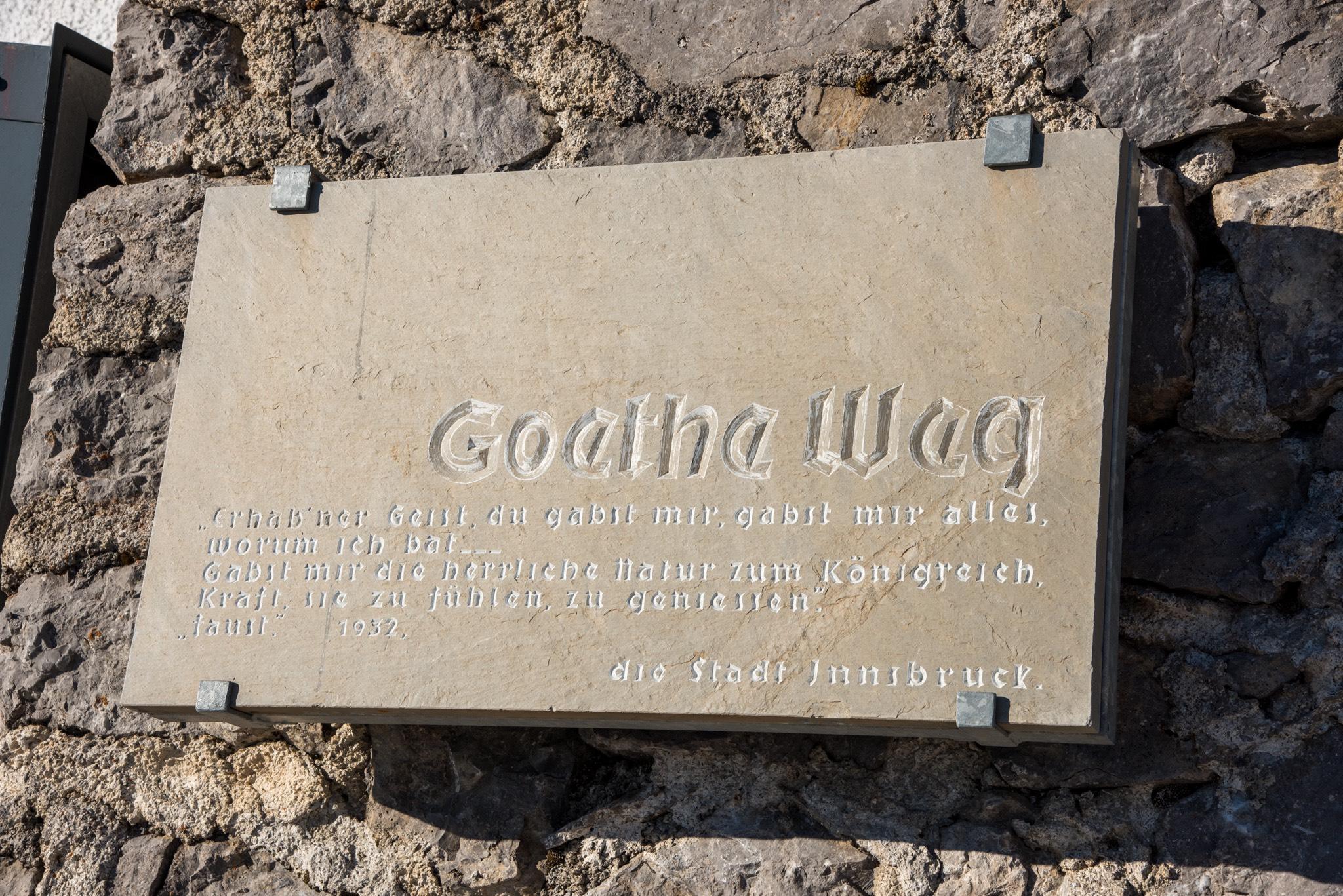
On the Nordkette, there is also a high-alpine climbing arena with 40 routes in difficulty levels 4-9. Finally, the
Hafelekarrinne must be mentioned, which with a 70% gradient is one of the steepest ski routes in Europe.
with the ÖBB nightjet to Innsbruck
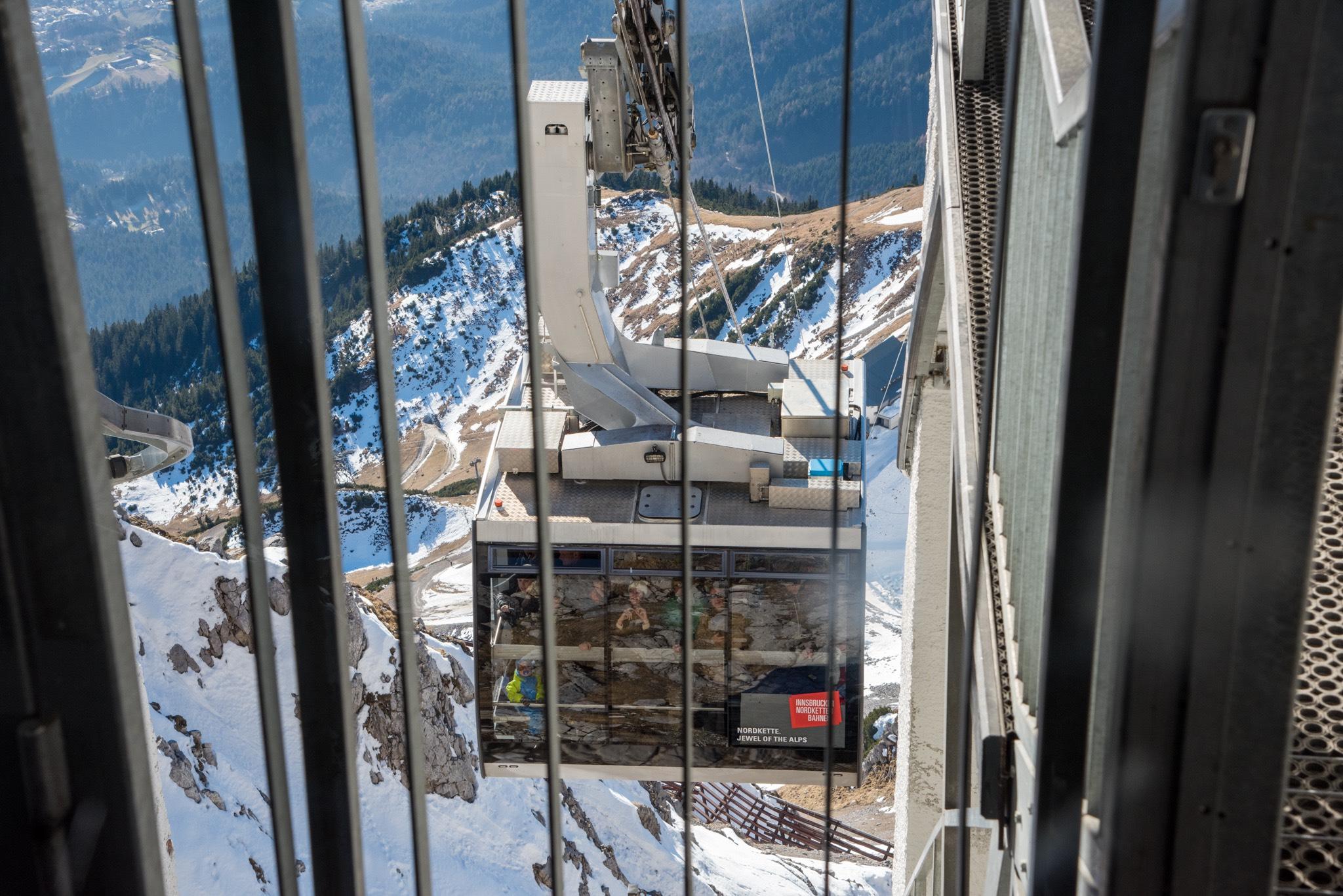
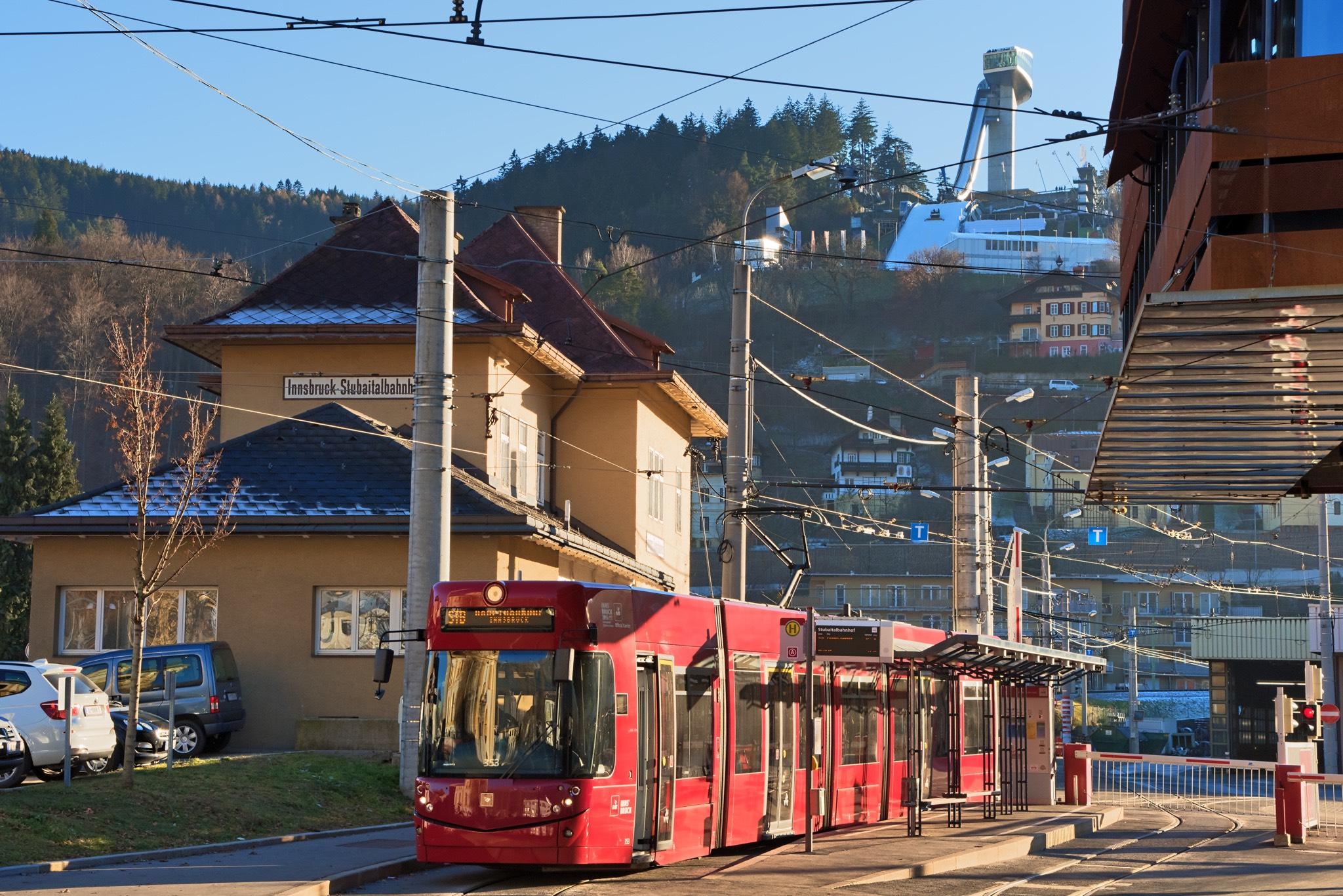

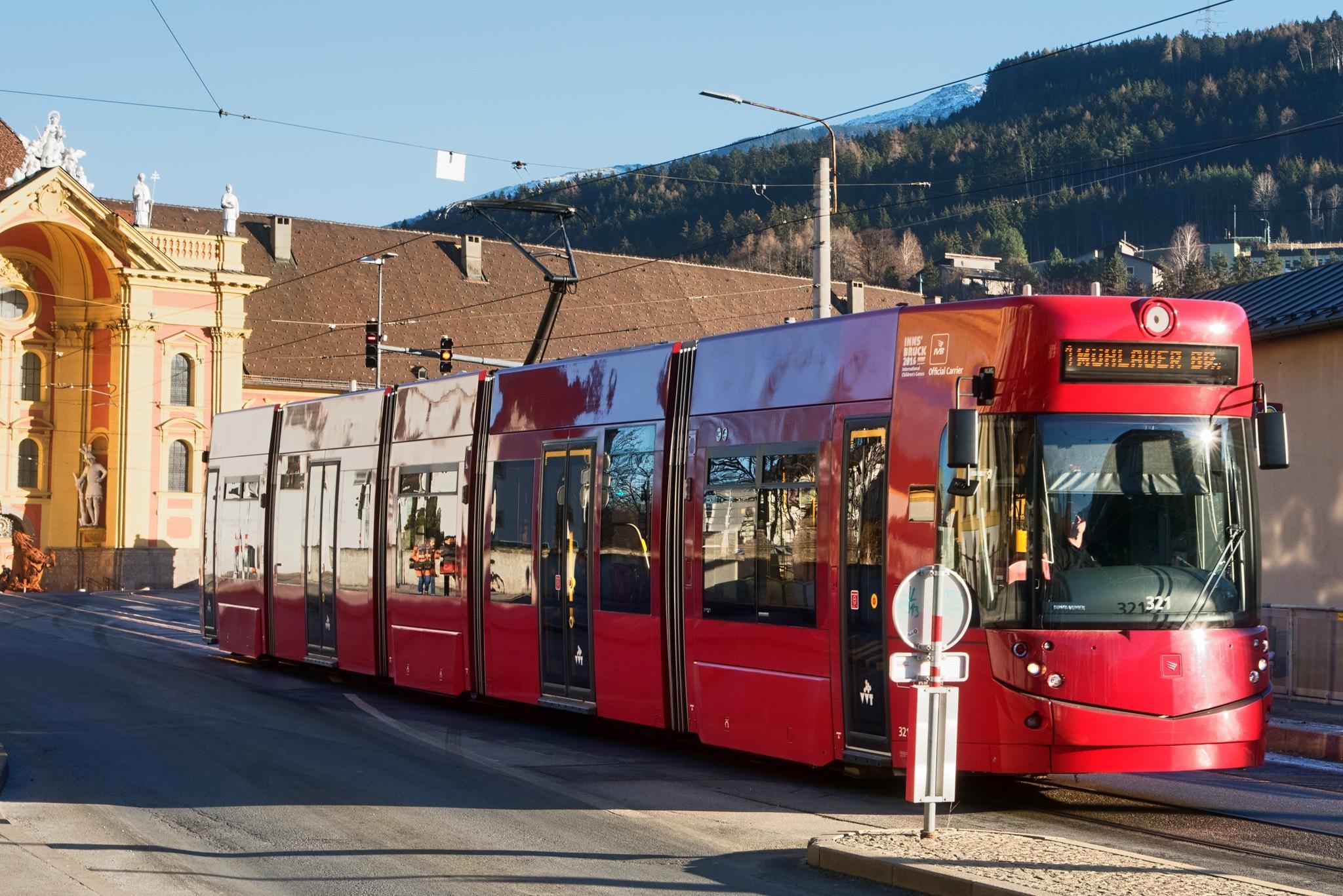
The greater Innsbruck area is well equipped with public transportation. In addition to trams and buses, the regional train is also available for passengers. Tram line 6 is the
Innsbruck mid-mountain railway. The impressive ride on this line leads from the terminus of line 1 in Bergisel to Igls.
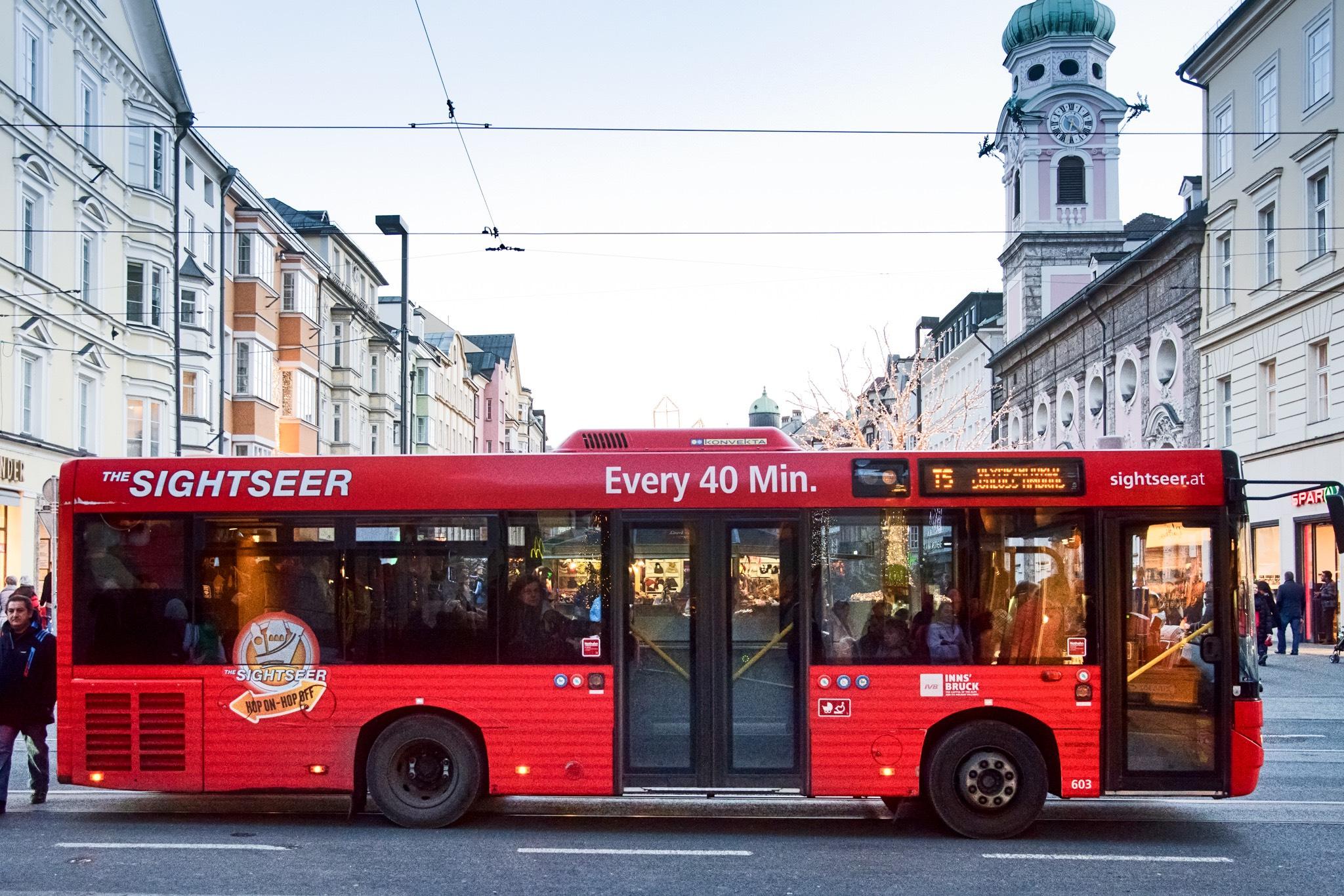
The “Sightseer Innsbruck” is a bus service of the Innsbruck transport company. The vehicles are equipped with audio guides that inform
tourists in eight languages about the sights along the route. Holders of the "Innsbruck Card" enjoy free rides on the Sightseer.

OBB Nightjet and OBB Nightjet Partner









© 2026 (Vers. 26.0)
This e-book was made possible through the kind support of the regional tourist offices and the OBB. German proofreading and editorial: Martin Andergassen.
References
Text, videos and photos by Rudolf J. Strutz unless otherwise stated. Timetables and travel information: OBB
Assistance from AI
Artificial intelligence applications are occasionally employed for image editing, including the elimination of undesirable components. Additionally, AI tools can enhance the clarity of images and diminish background noise.
The travel guides are also available free of charge on the OBB online entertainment and internet portal railnet, which is installed on all railjets, nightjets (NG) and cityjets
Copyright

This book was licensed under the Creative Commons License. Conditions of use: attribution, non-commercial, no editing and distribution under the same conditions only as a complete work! The use of individual photos and text is not permitted. This eBook is available free of charge.
All links provided are current at the time of publication of this ebook. Links to tickets usually lead directly to the exhibition location. For tickets and timetables, local public transportation services are linked.
All logos and company names are used for information purposes only; any use outside of this e-book must be approved by the copyright holders.

SCOTTY mobile shows the timetables for all public transport and helps you plan your travel route.


Book your trip online or view the current timetable online and directly on your mobile phone.