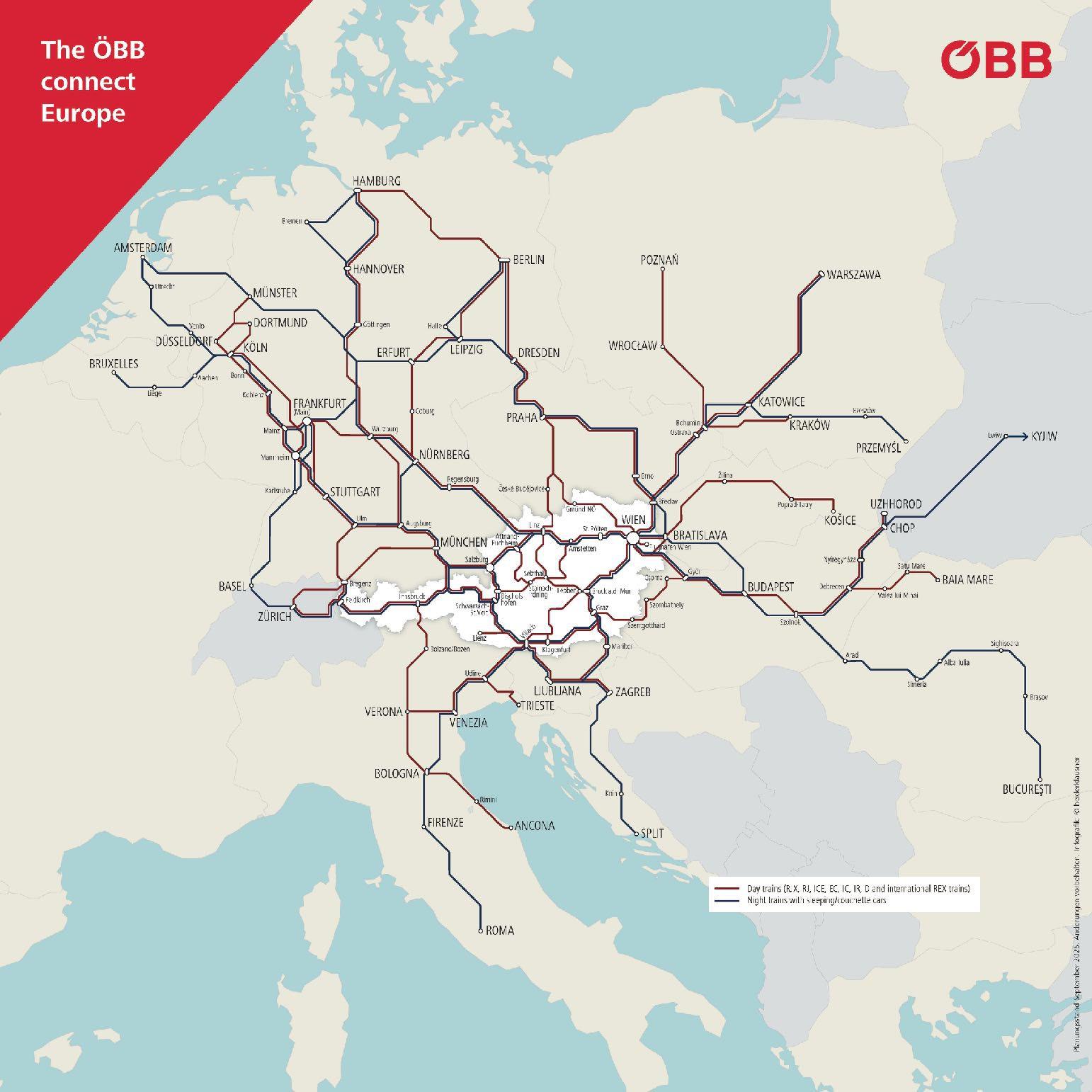
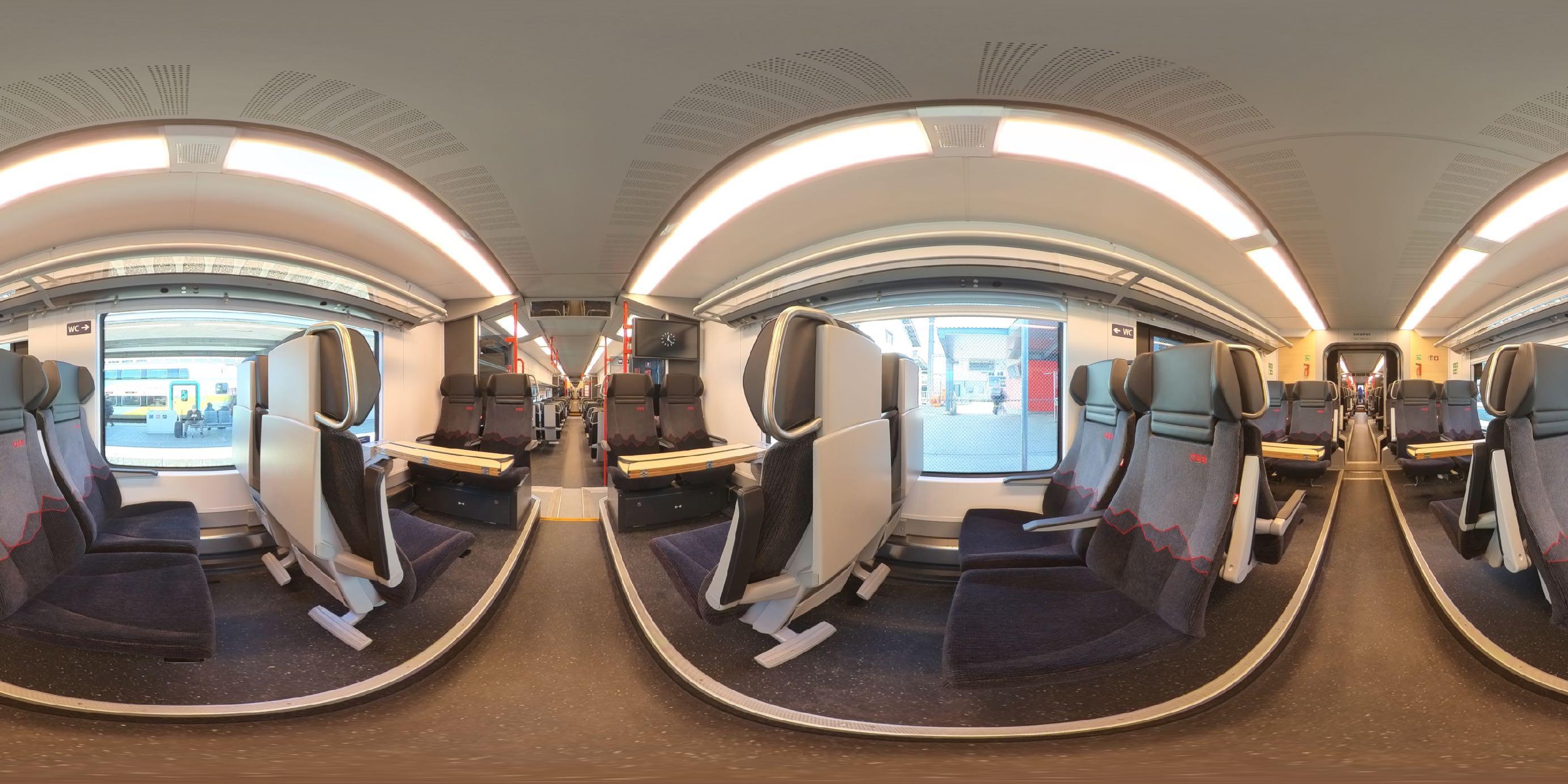
ÖBB connects numerous European cities with modern day and night services.
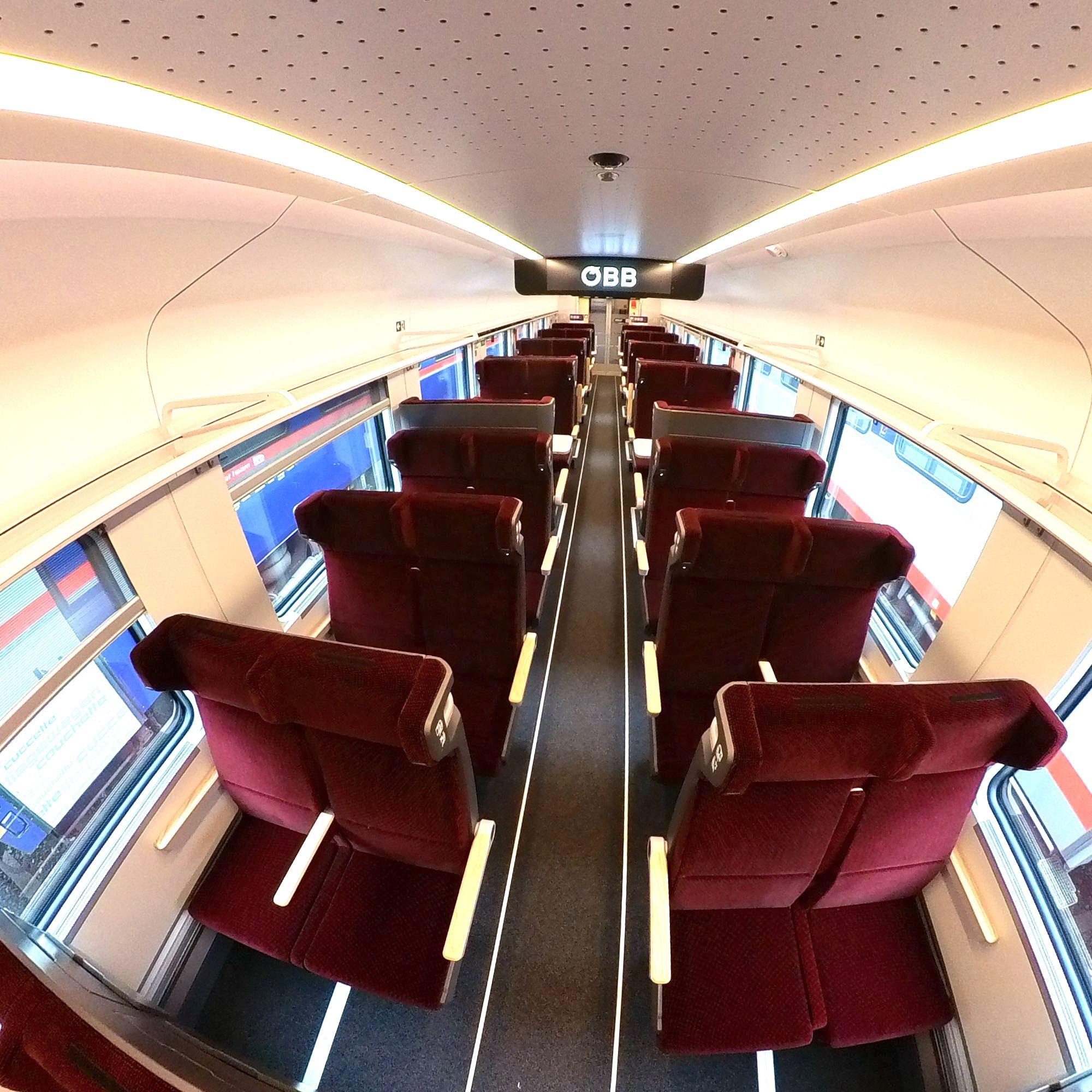
During the day, ÖBB Railjets offer fast and comfortable long-distance travel in Economy, First, and Business classes.
At night, the ÖBB Nightjet provides a relaxing and environmentally friendly journey across Europe. Whether
you prefer a seat, new Mini Cabins, or couchette and sleeper cars – every travel preference is catered for.
Within Austria, ÖBB Cityjets guarantee punctual and comfortable local and long-distance transport.
Further information and booking options can be found via the info button, which leads directly to the ÖBB booking page.


ARRIVAL THE CITY WORTH SEEING
ARCHIT. MONUMENTS SKYSCRAPERS
THIS & THAT SHOPPING CHURCHES MUSEUMS
LOCAL TRANSPORT IMPRINT

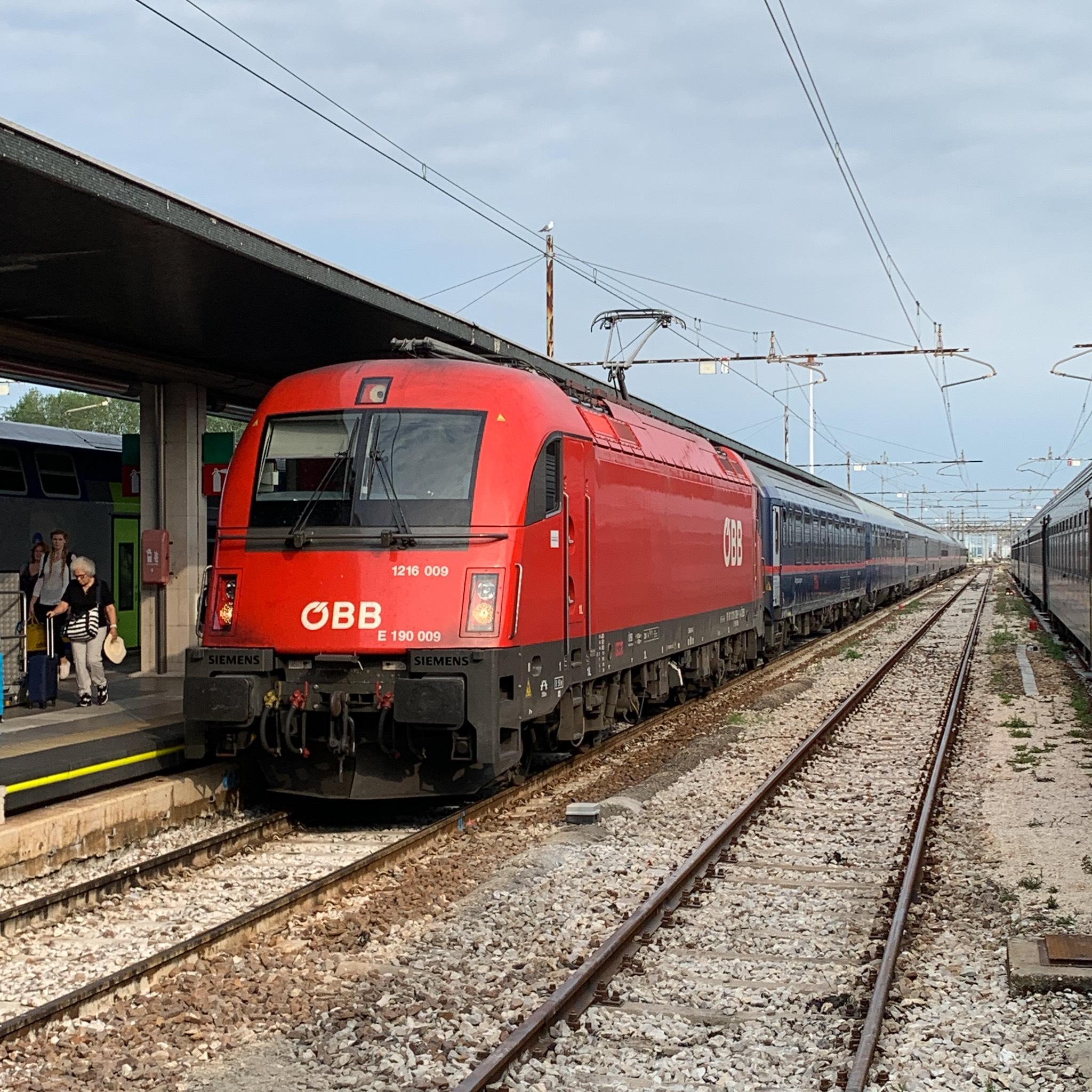
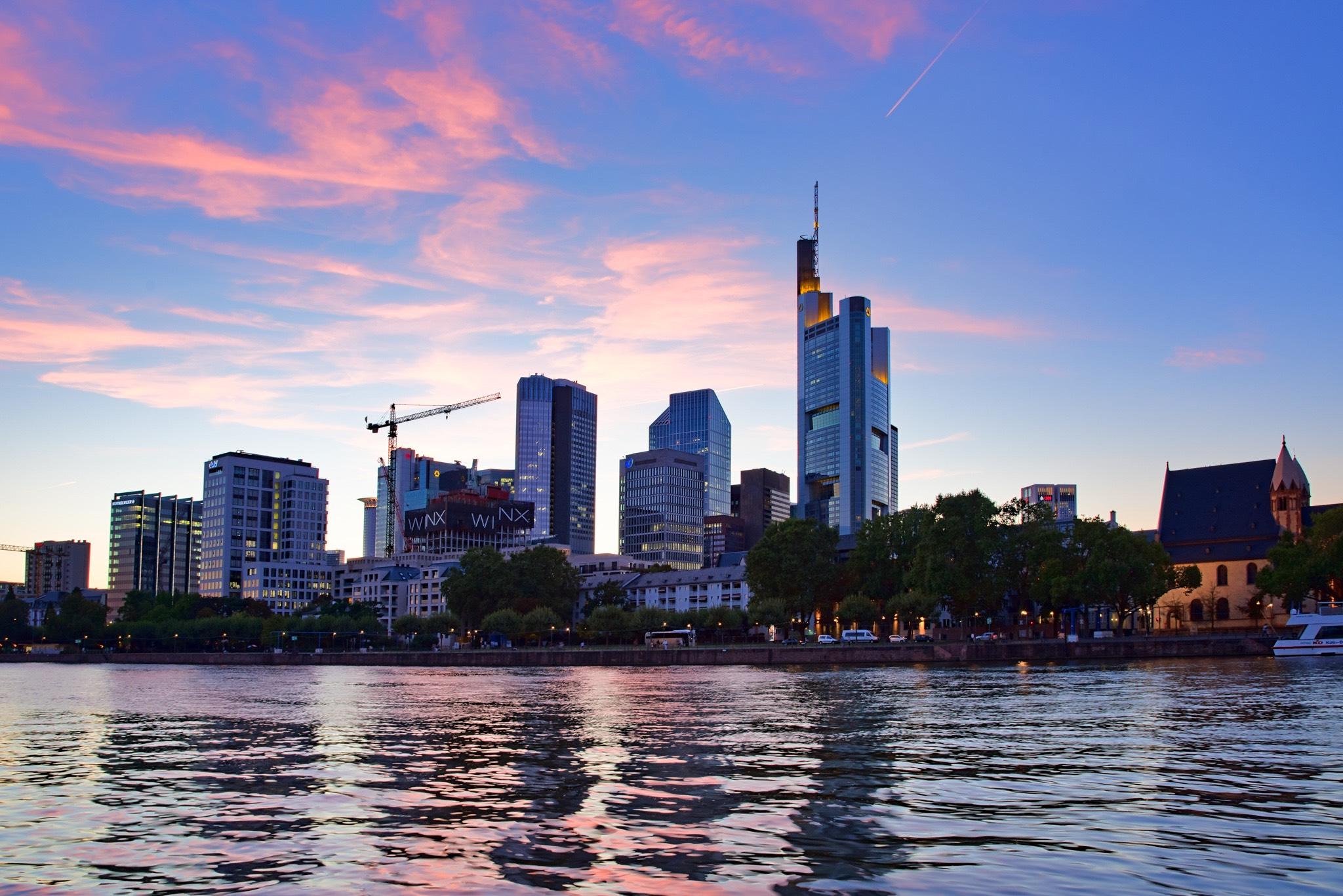
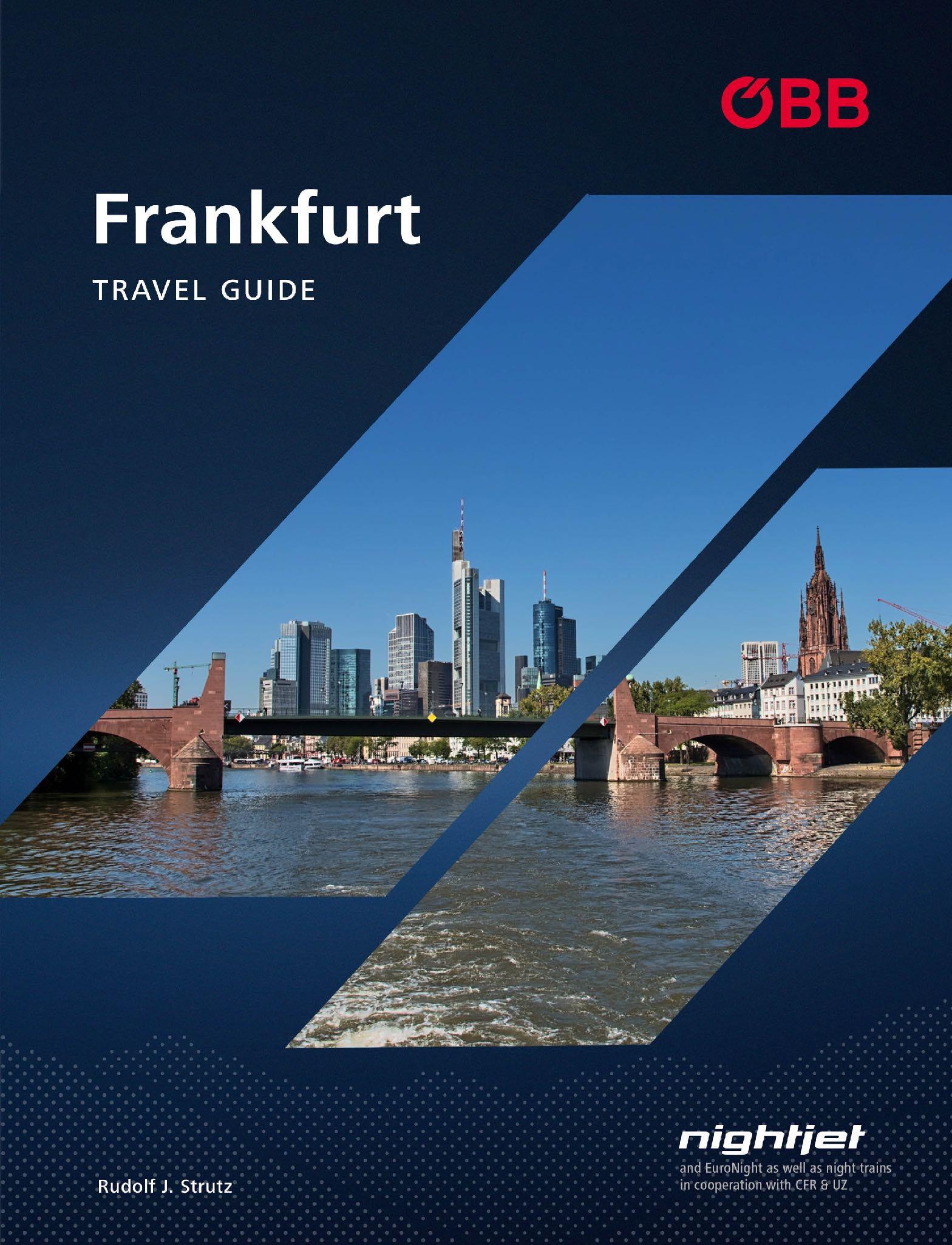
The ÖBB Nightjet brings travelers safely, comfortably, and above all completely stress-free to Frankfurt. Whether it's a business or vacation trip, traveling by train is not only more comfortable, it is also significantly more environmentally friendly.
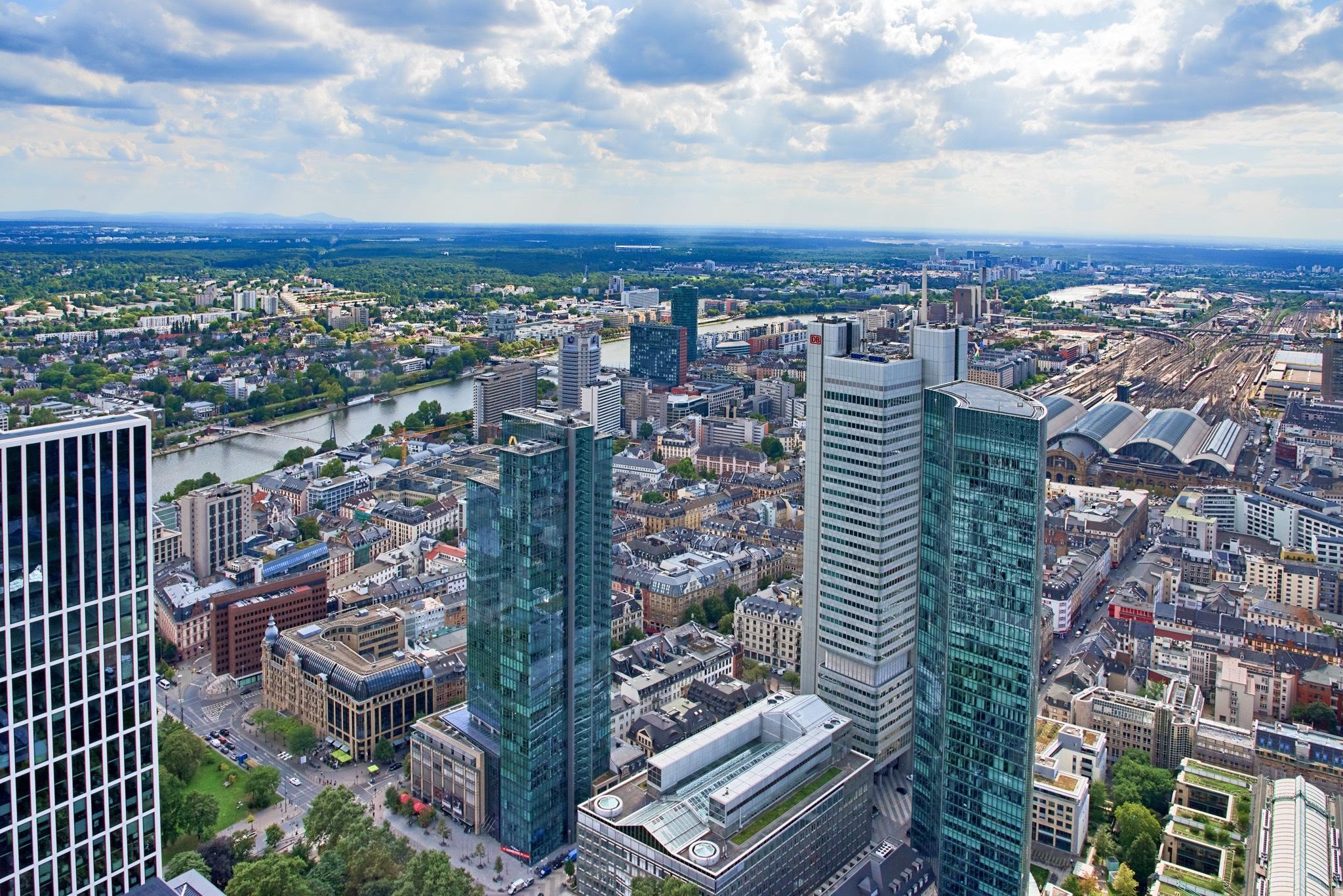
Frankfurt was first mentioned in documents as early as 794. Since 1562, the Roman-German Emperor was crowned in Frankfurt am Main. Today, the city is an internationally important transportation hub. Frankfurt Airport is one of the largest in the world. Frankfurt has also made a name for itself as a financial center. The European Central Bank, the Deutsche Bundesbank, and many international major banks are headquartered here.
In addition to transportation and finance, culture and technology also have a firm place in Frankfurt. The IAAthe International Automobile Exhibition, the Frankfurt Book Fair, and the Music Fair are recognized worldwide as leading trade fairs.
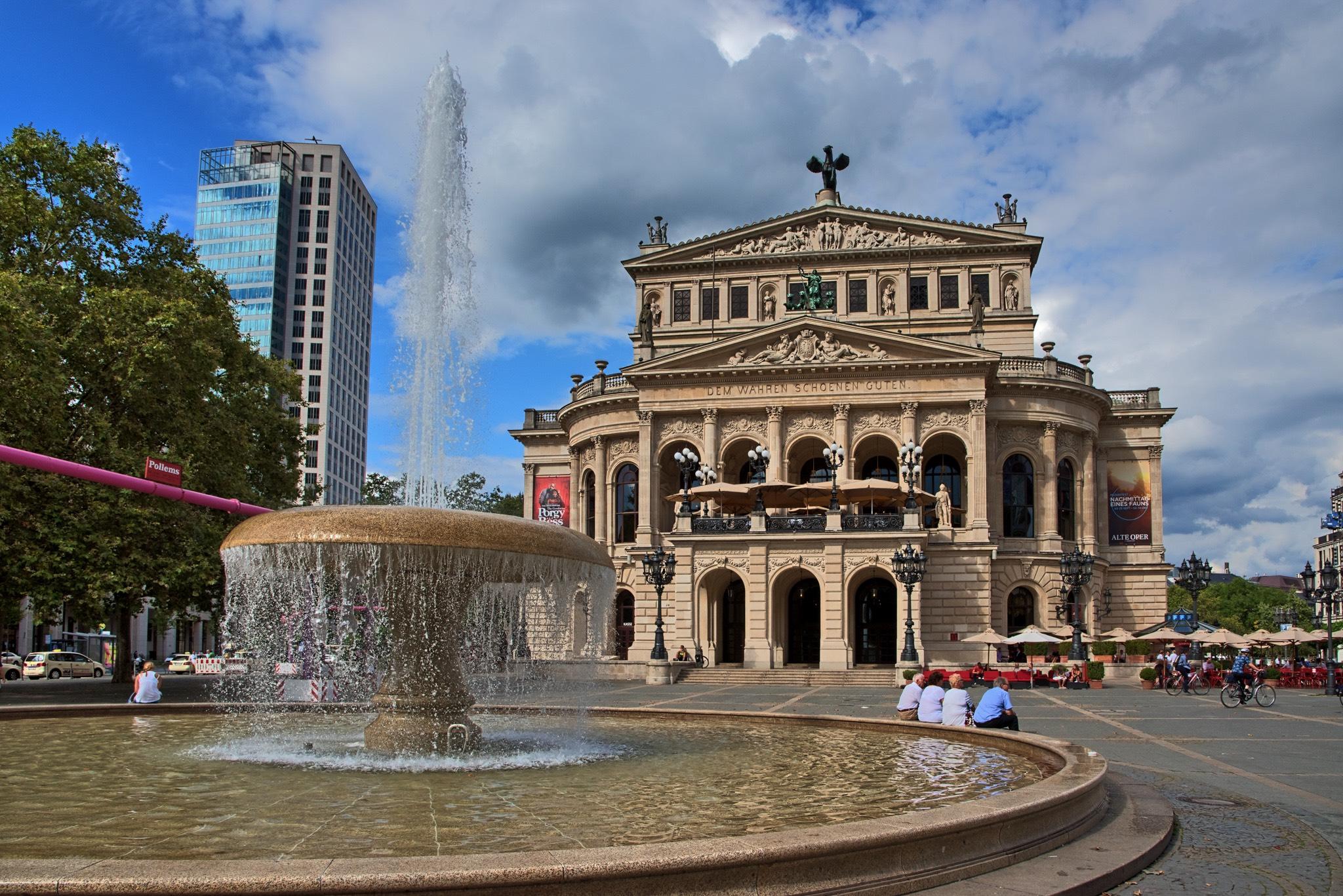
From 1880 to 1944, opera performances, including many premieres, took place here. After the destruction, it took from 1944 to 1981 until art returned to the rebuilt
building. Today, the Old Opera is a congress and event center as well as a concert hall of the highest class.
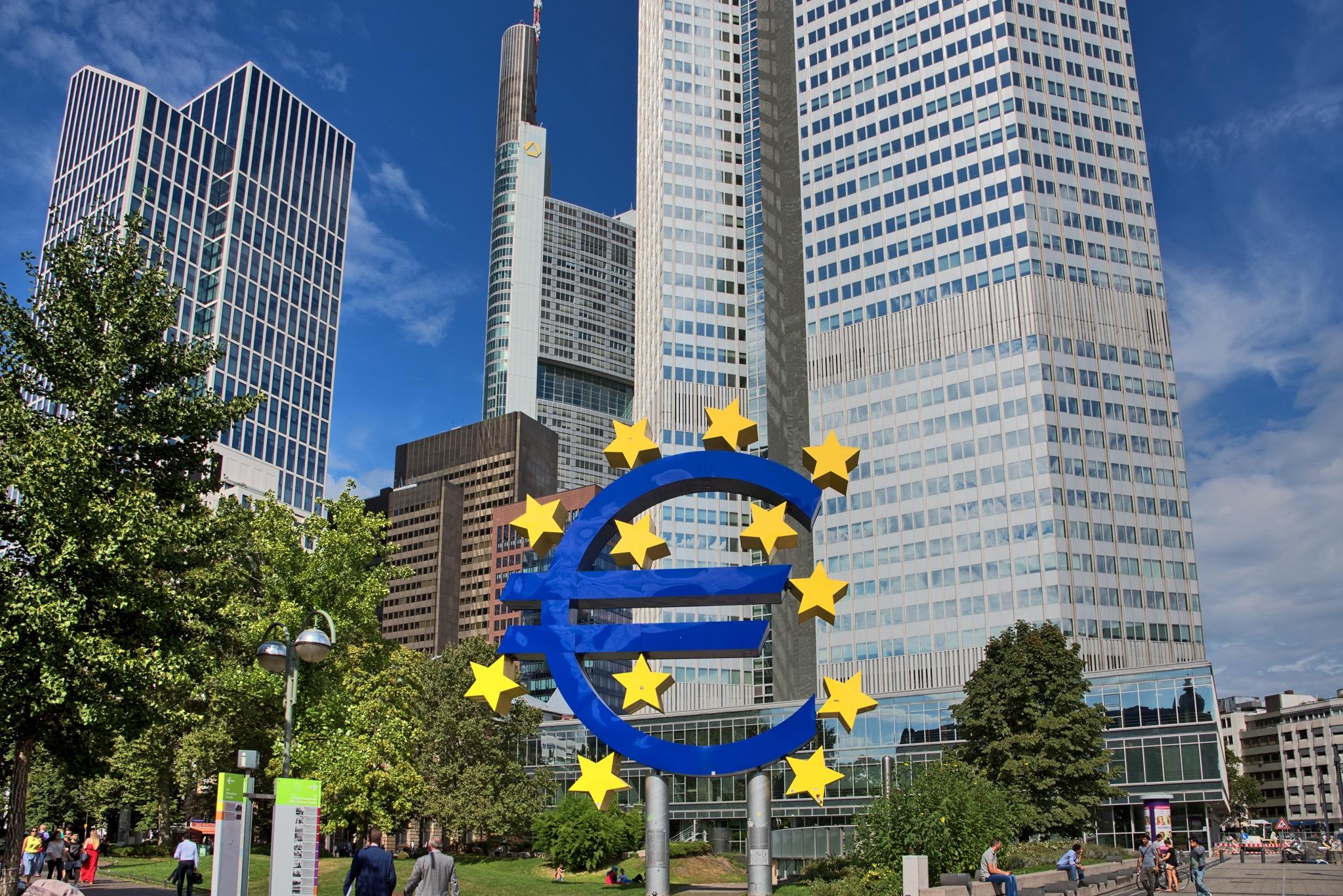
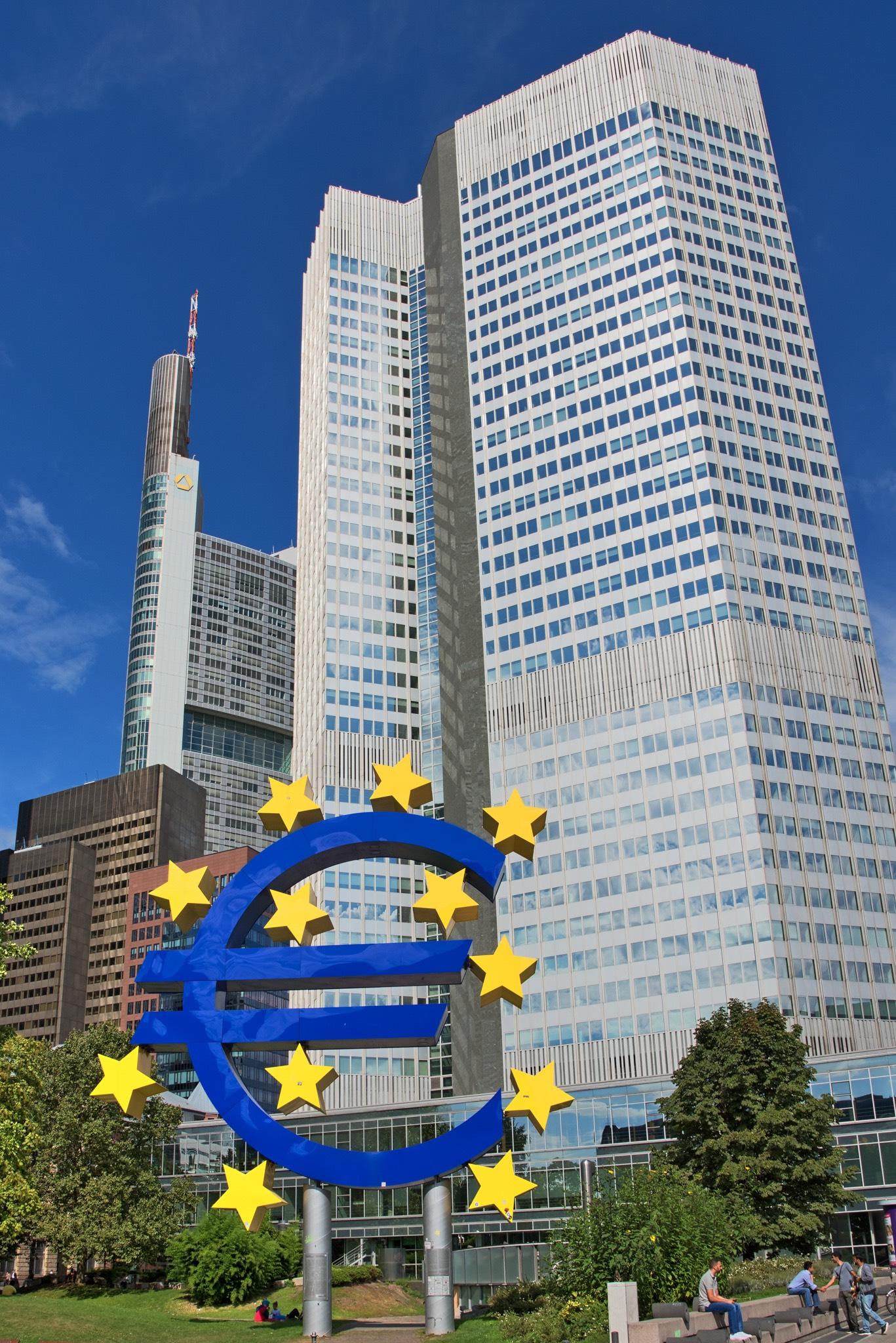
The Euro Sculpture stands in front of the former European Central Bank. The sculpture is a popular photo motif, although there are voices in Frankfurt that would like to
have the sign removed. The artwork was created by the German conceptual and object artist Ottmar Hörl.
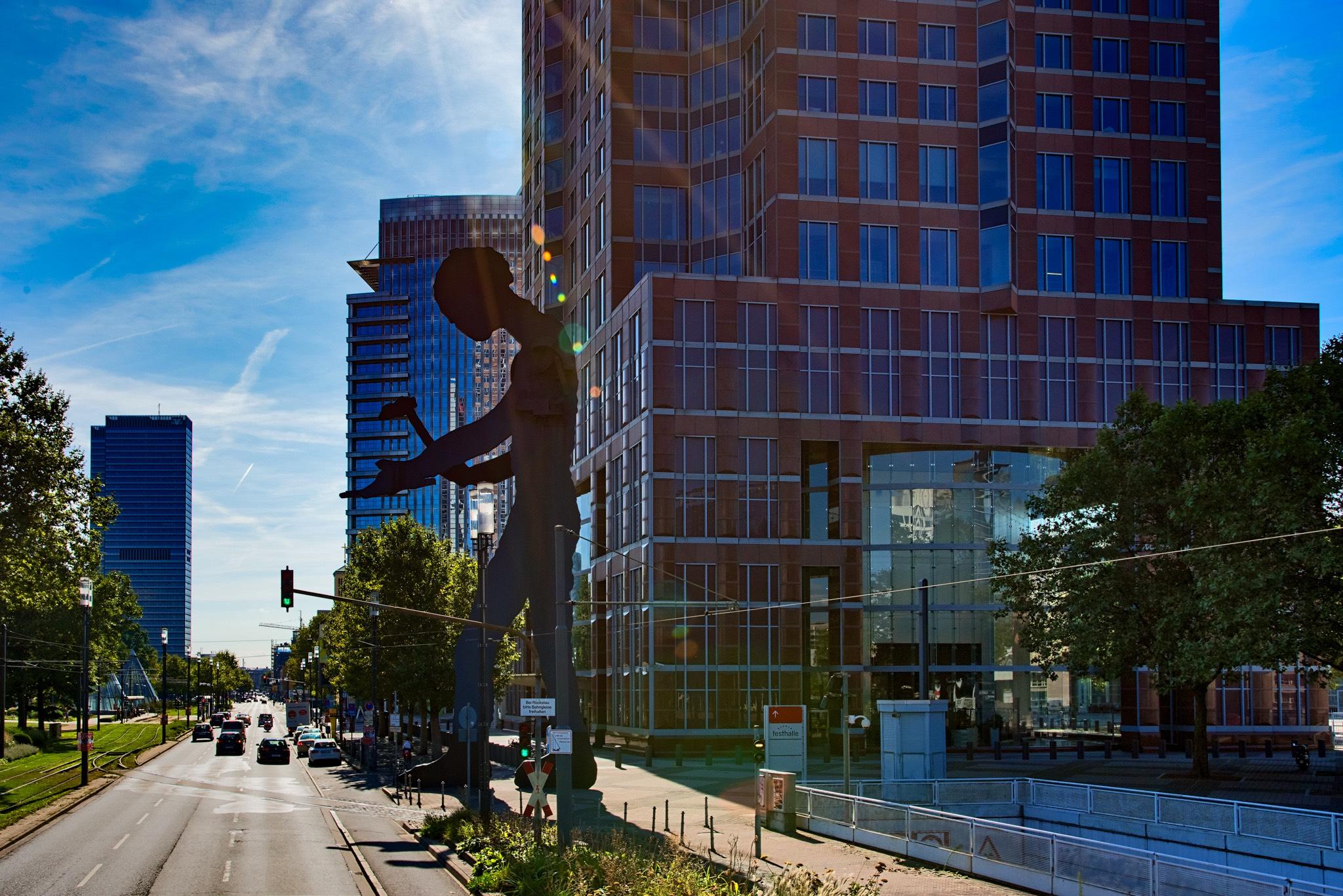
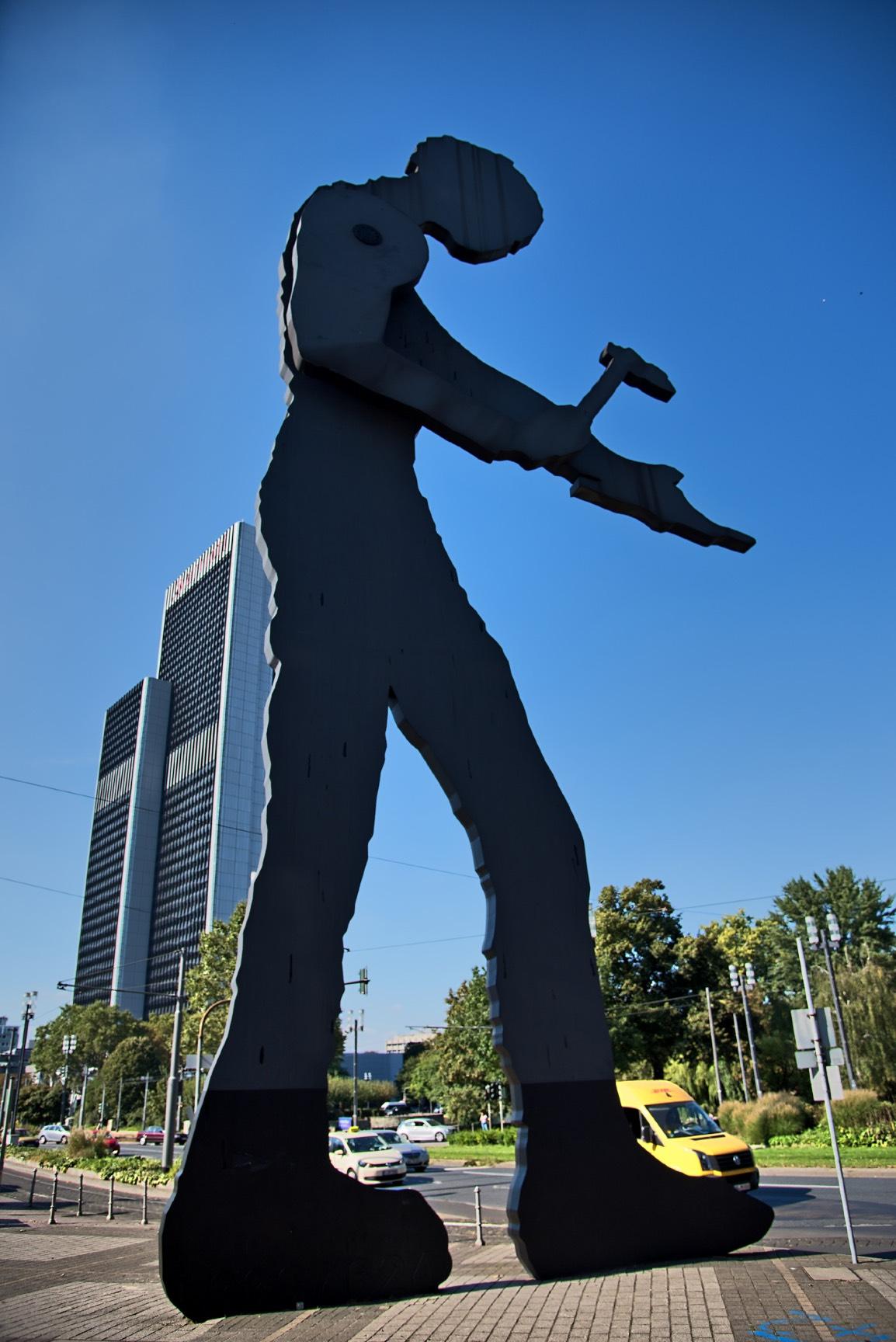
The movable statue "Hammering Man" was created by the American artist Jonathan Borofsky. Not only in Frankfurt, but also in Seoul, Basel, Lillestrøm, Dallas, New York,
Washington, and some other places, there are "brothers" of the symbol for work and solidarity.
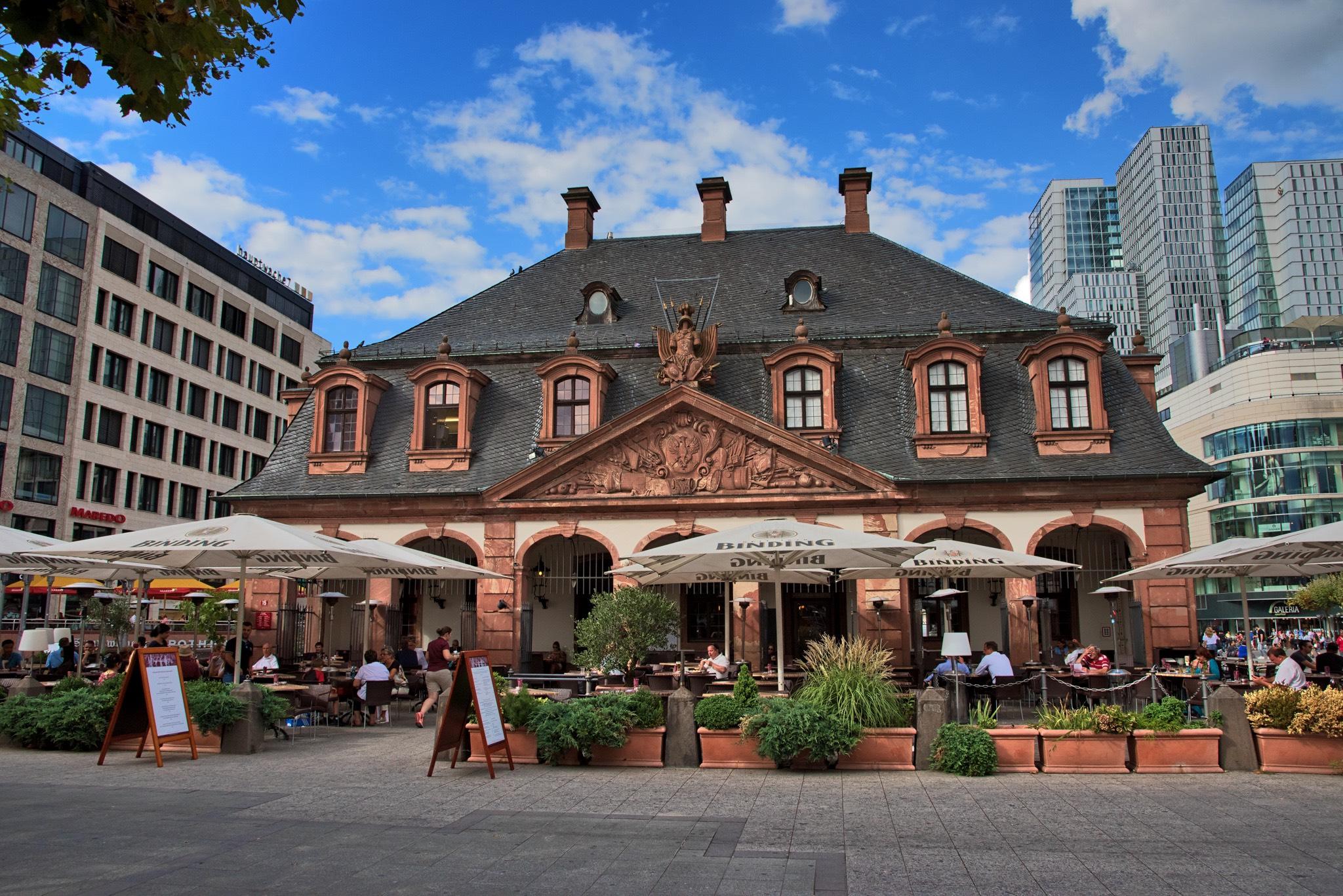
There has been a guard at this location since 1671 and later also a prison. The Main Guard, now used as a café, is a faithful replica of the building constructed from 1729 to
1730. It is a welcome refreshment stop on the way to the Zeil or for regeneration after a strenuous shopping tour.
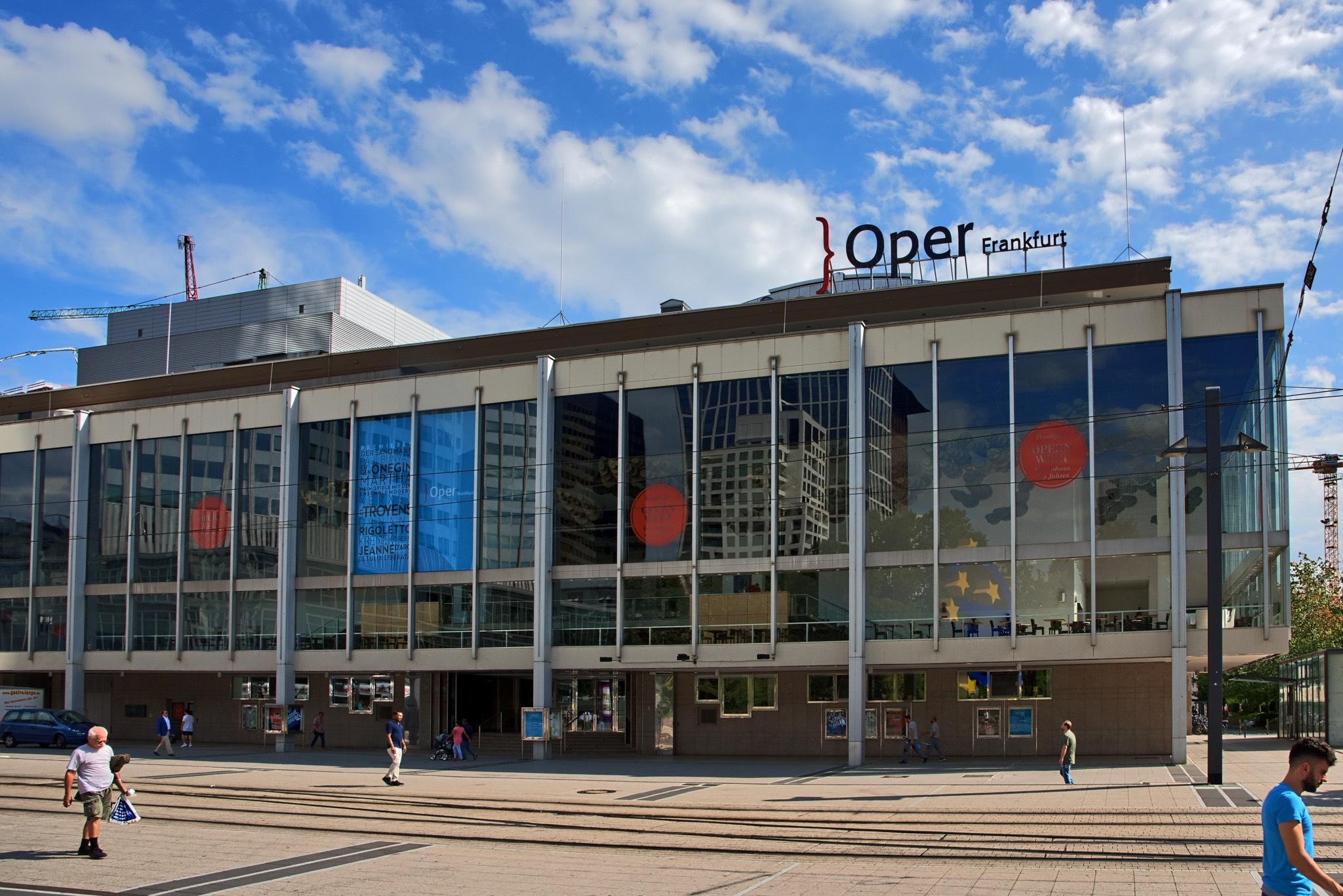
At Willy-Brandt-Platz, opposite the Euro Sculpture, stands a building with a huge glass front. On the right side is the Frankfurt Opera and on the left the Frankfurt Playhouse. The opera is one of the most important stages in Europe and has been awarded Opera House of the Year several times.
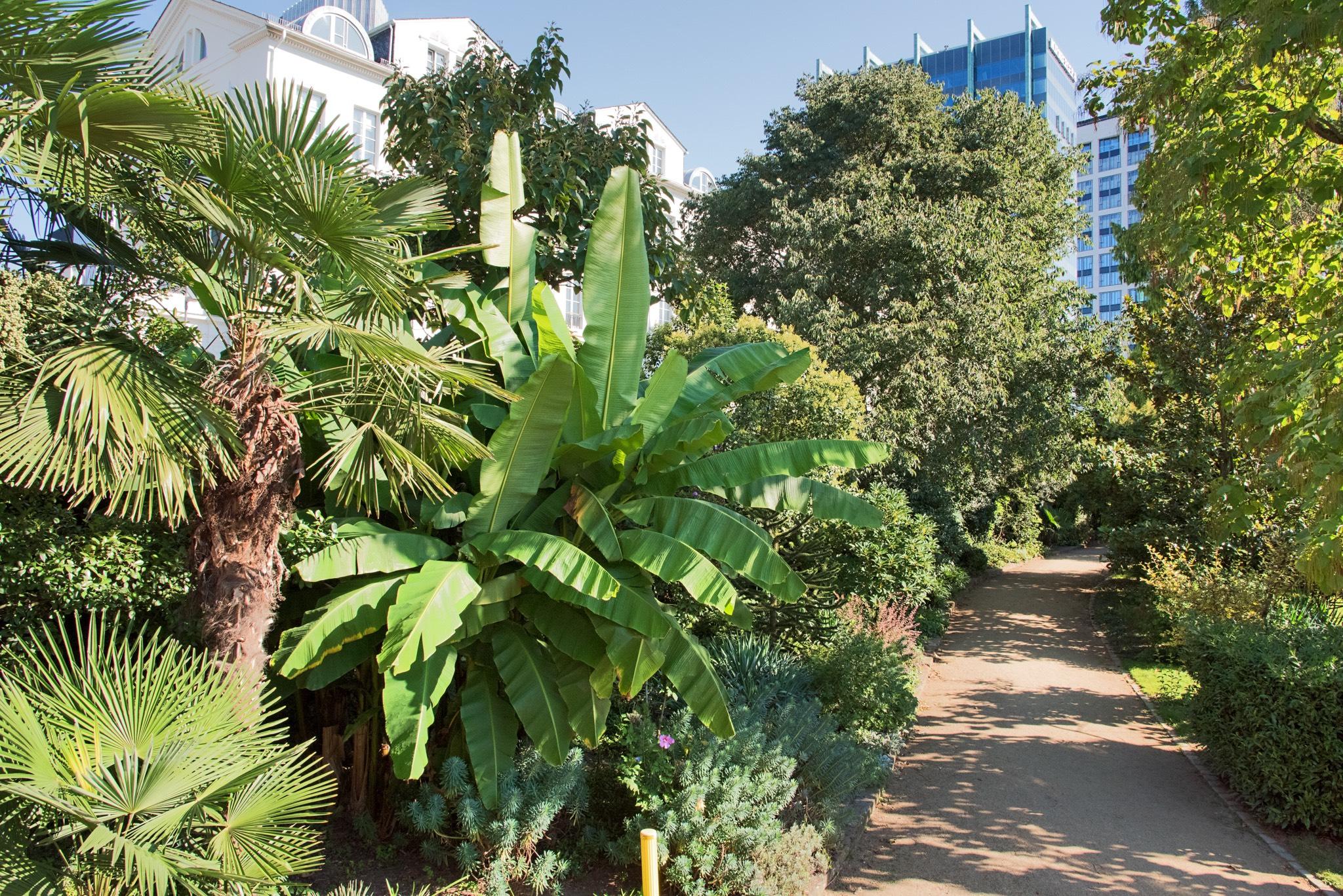
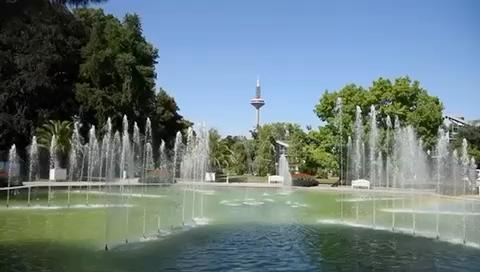
The Nice Gardens is a fantastic park on the northern bank of the Main between the Untermain and Peace Bridges. Since the park is in a particularly favorable microclimate, plants reminiscent of the French Riviera are settled here. At
the entrance to the park there is a recommended restaurant.
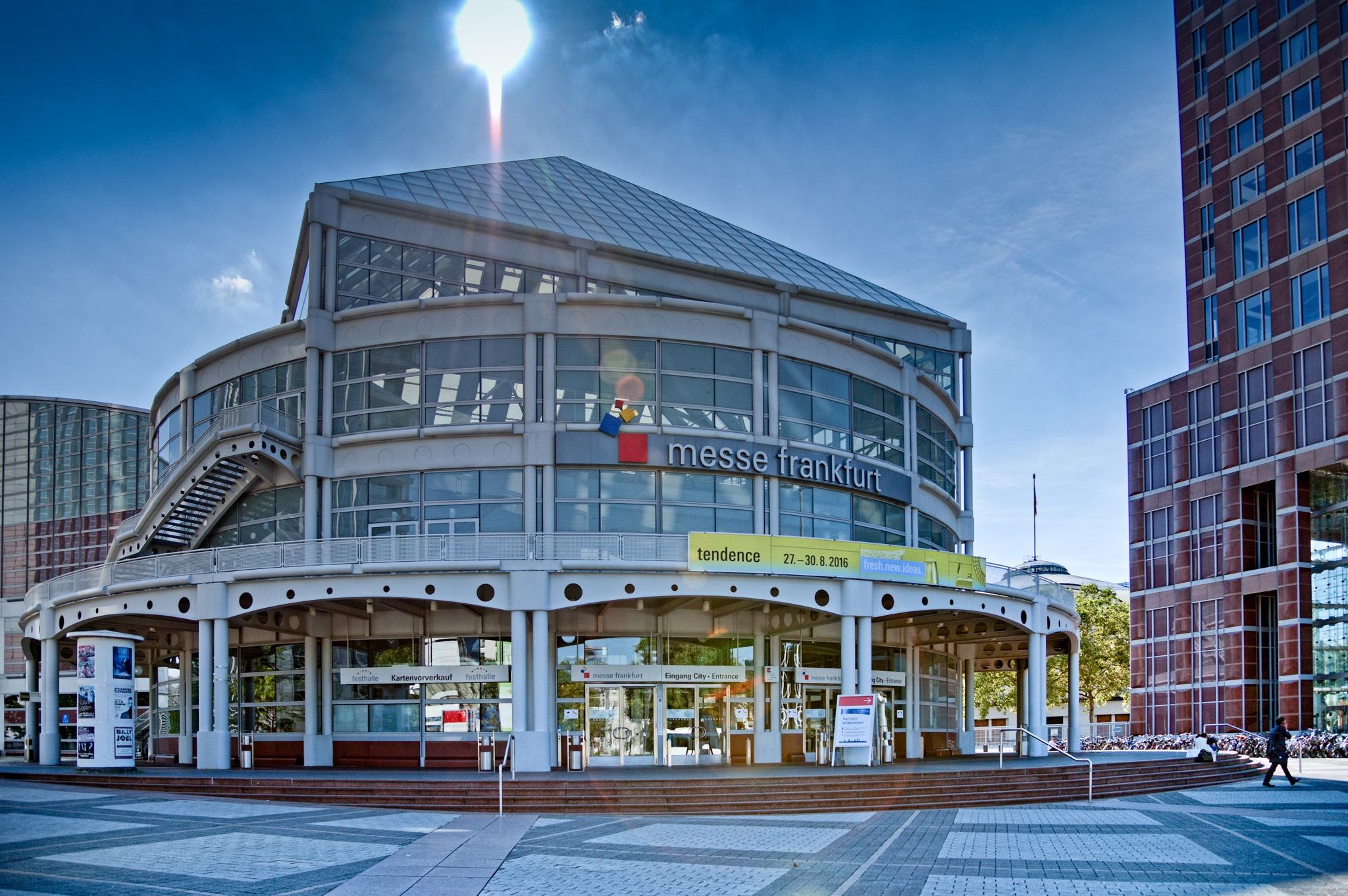
Messe Frankfurt GmbH is one of the largest trade fair organizers worldwide. Many events are significant far beyond Europe's borders: the Music Fair in April, the IAA in September, and the Frankfurt Book Fair in October, to name just a few.
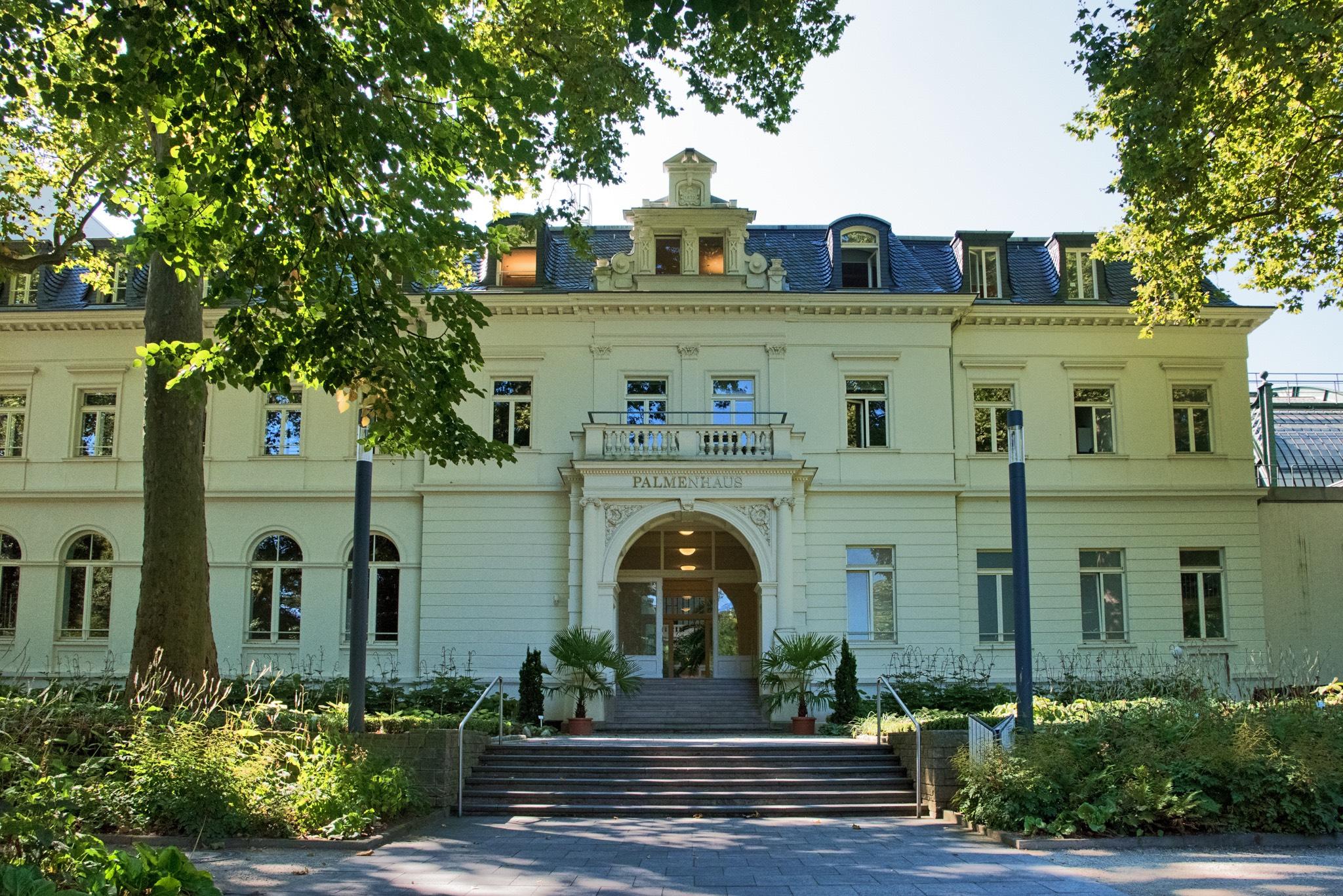
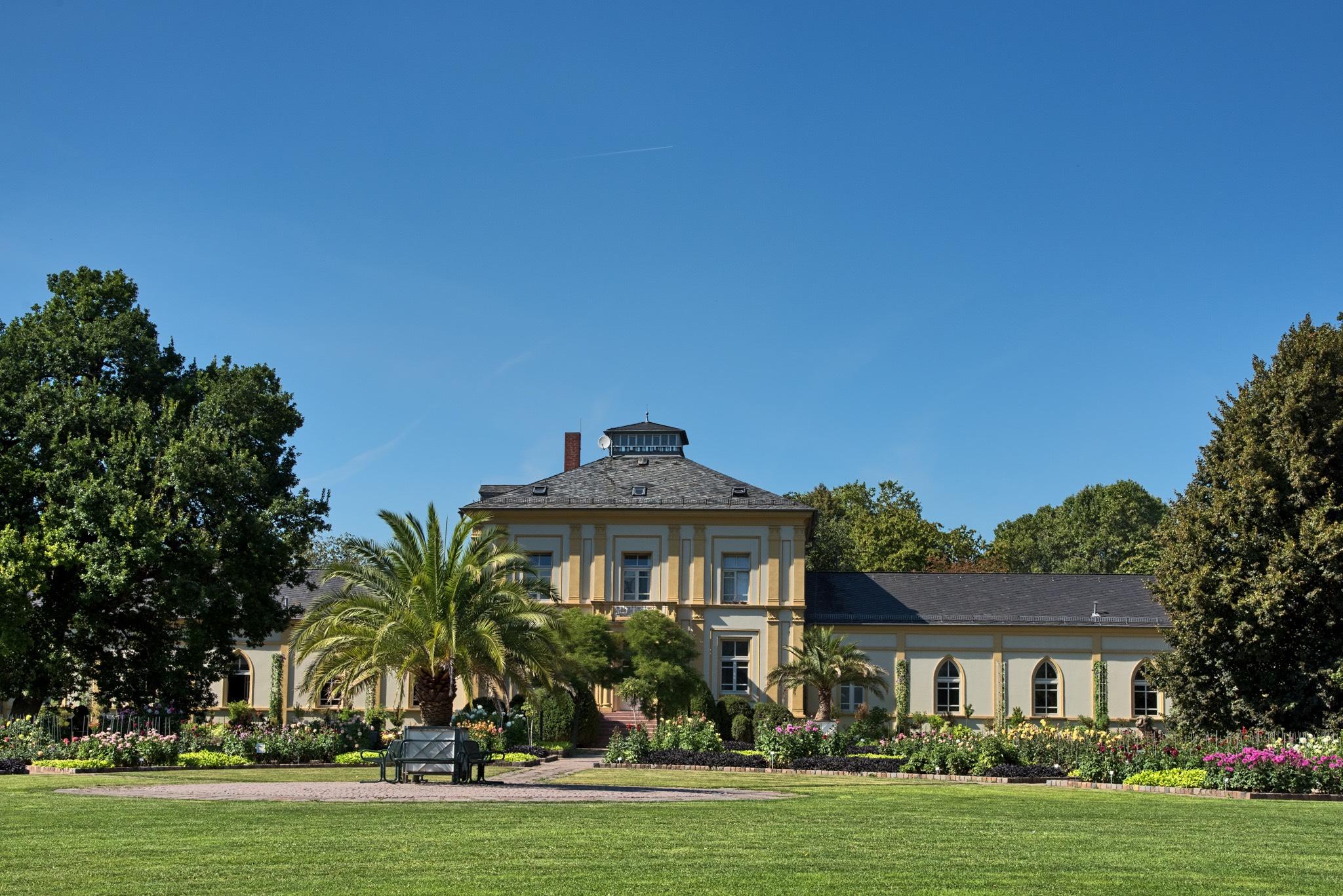
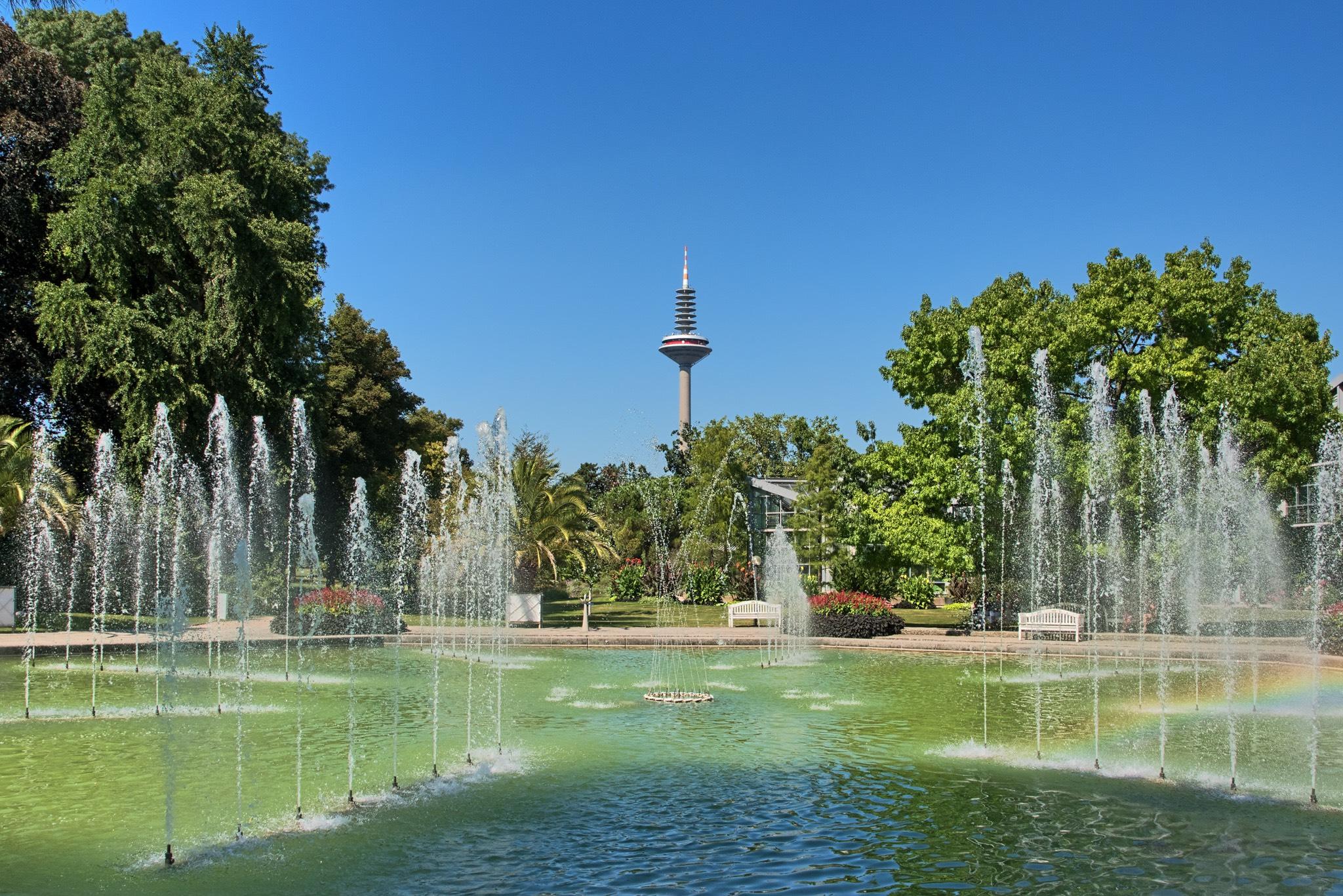
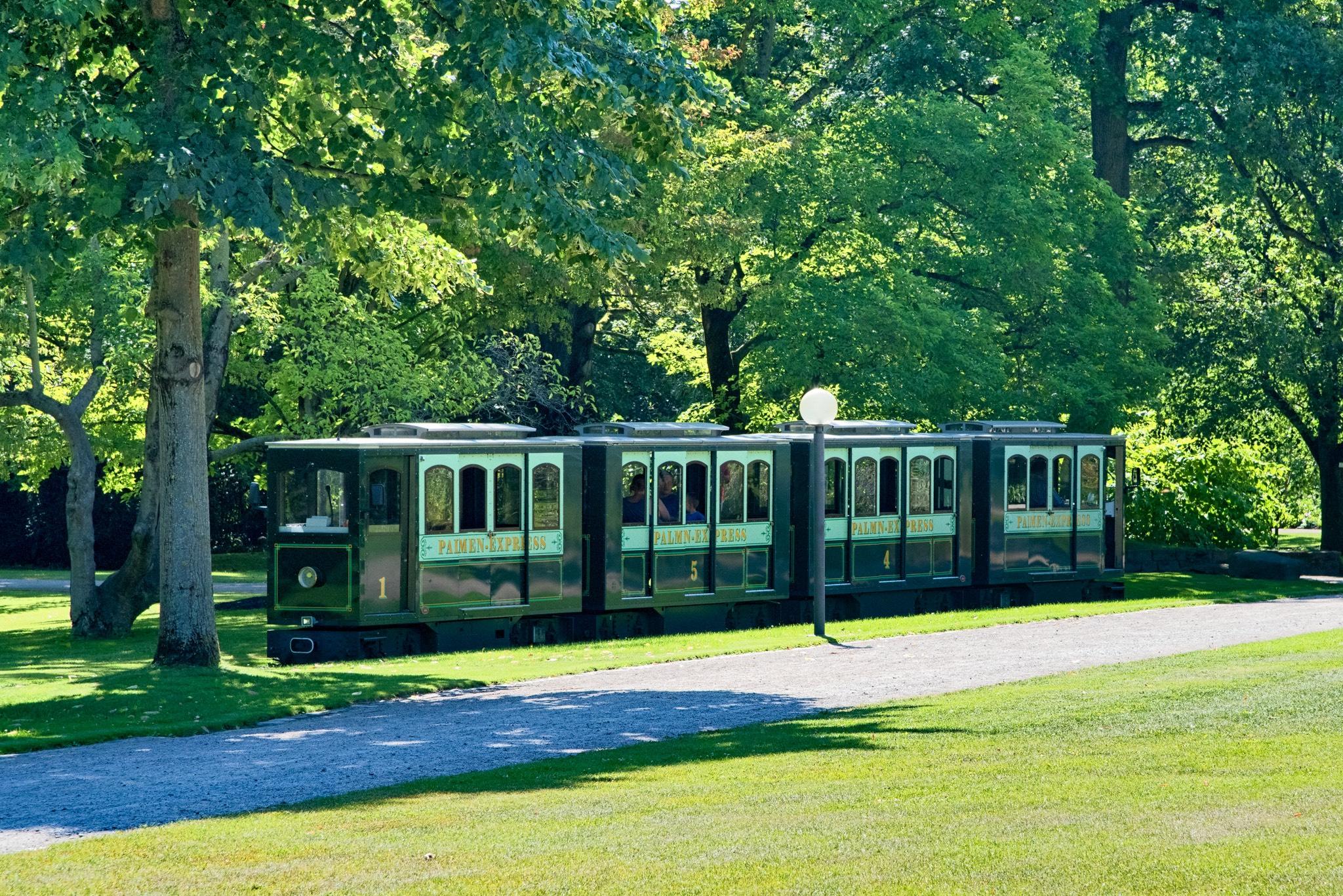
On an area of 22 hectares, you can admire plants from all over the world here. The Palm Garden, together with the Botanical Garden and the Grüneburg Park, form the largest park complex in the city. The Palm House is particularly
worth seeing. You should take plenty of time to visit the facility.
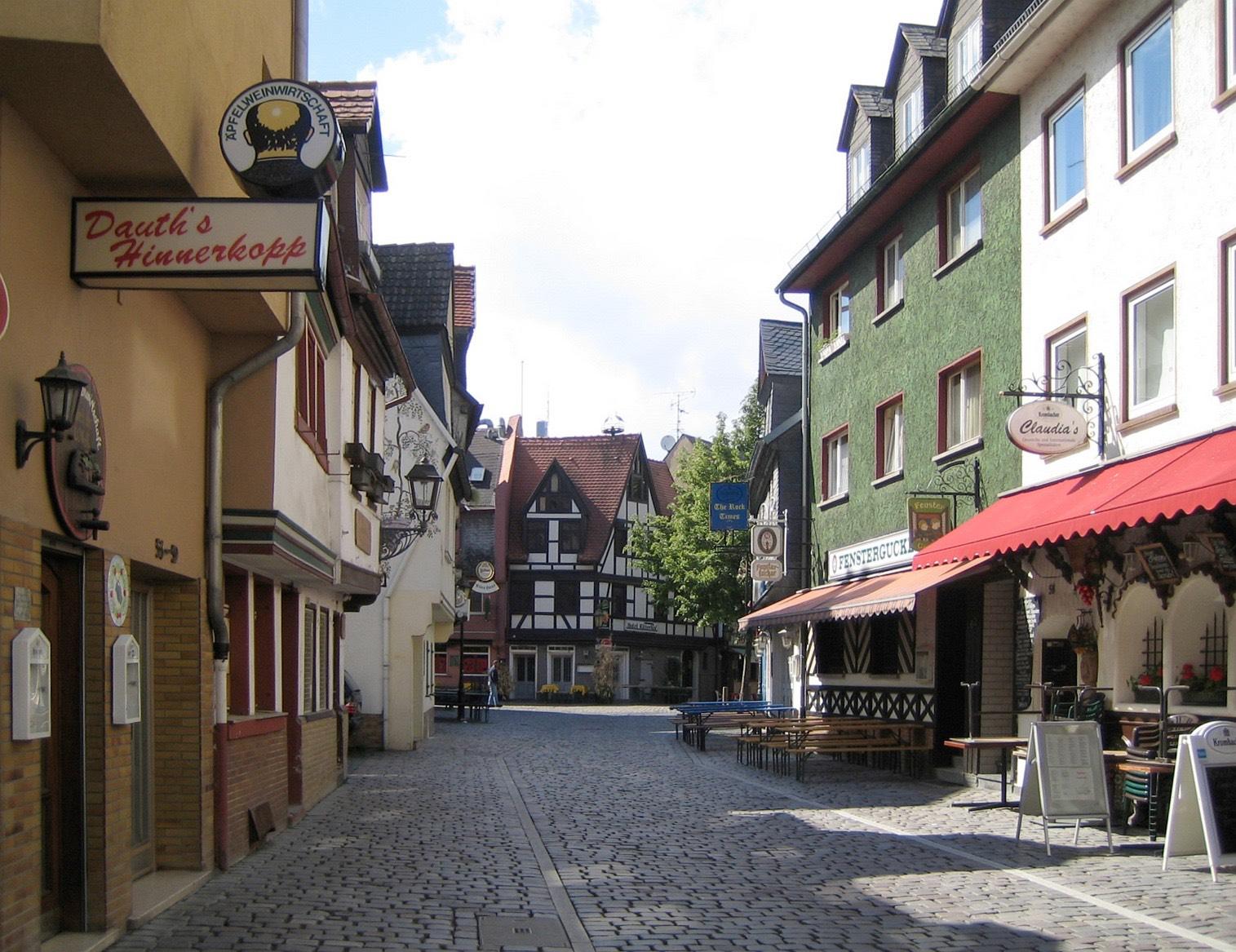
If you visit Frankfurt, a visit to Sachsenhausen is unavoidable. There are countless apple wine taverns here, where you can enjoy hearty food along with the national
drink. The apple wine is traditionally served in a Bembel and drunk from a Geripptes, a ribbed glass.
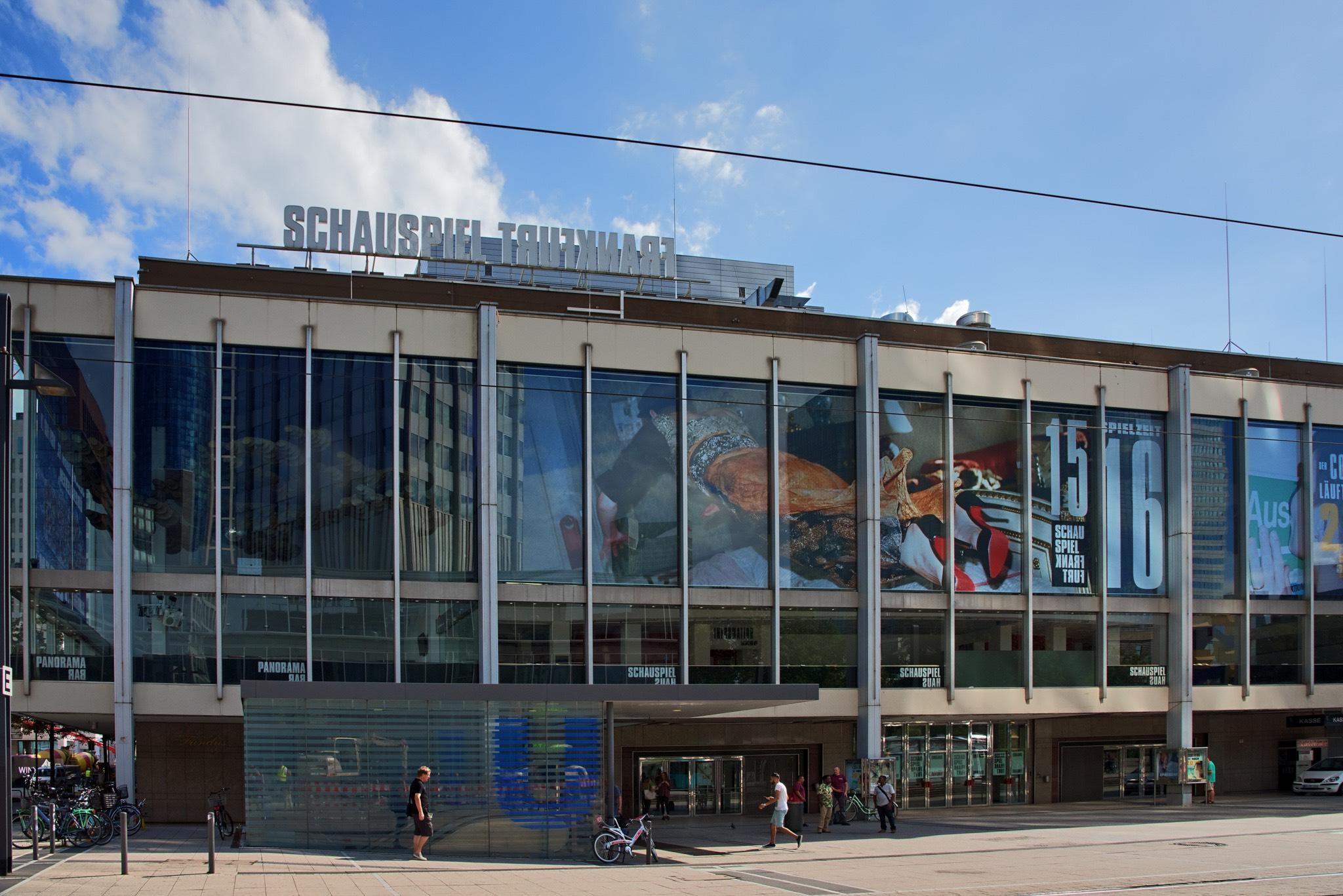
The Frankfurt Playhouse is the largest spoken theater in the region. Due to the high quality of the performances, the stage is noted throughout Germany. With a permanent ensemble of about 30 artists, you can find classics by
Goethe, Kleist or Chekhov, but also always world premieres in the program.
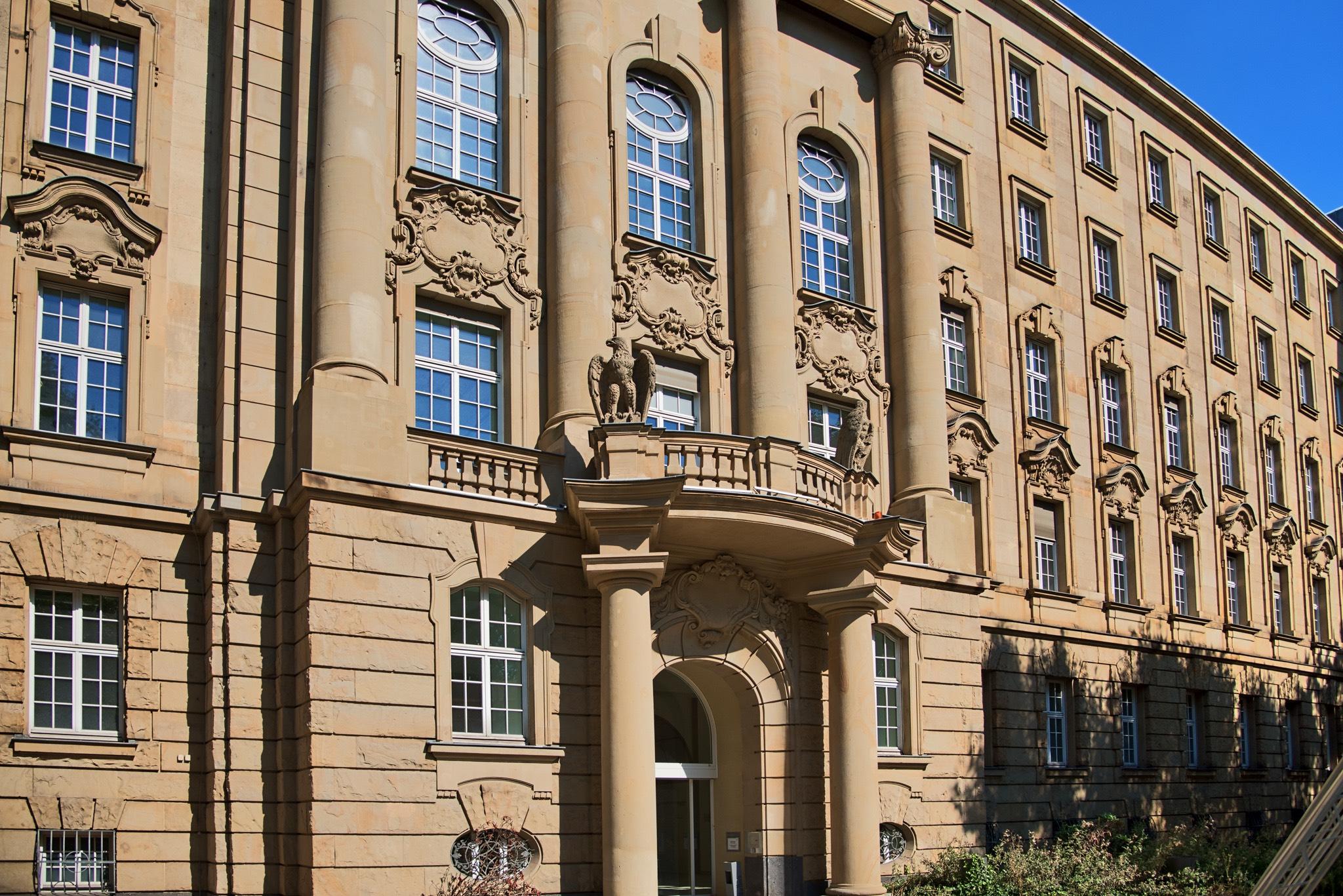
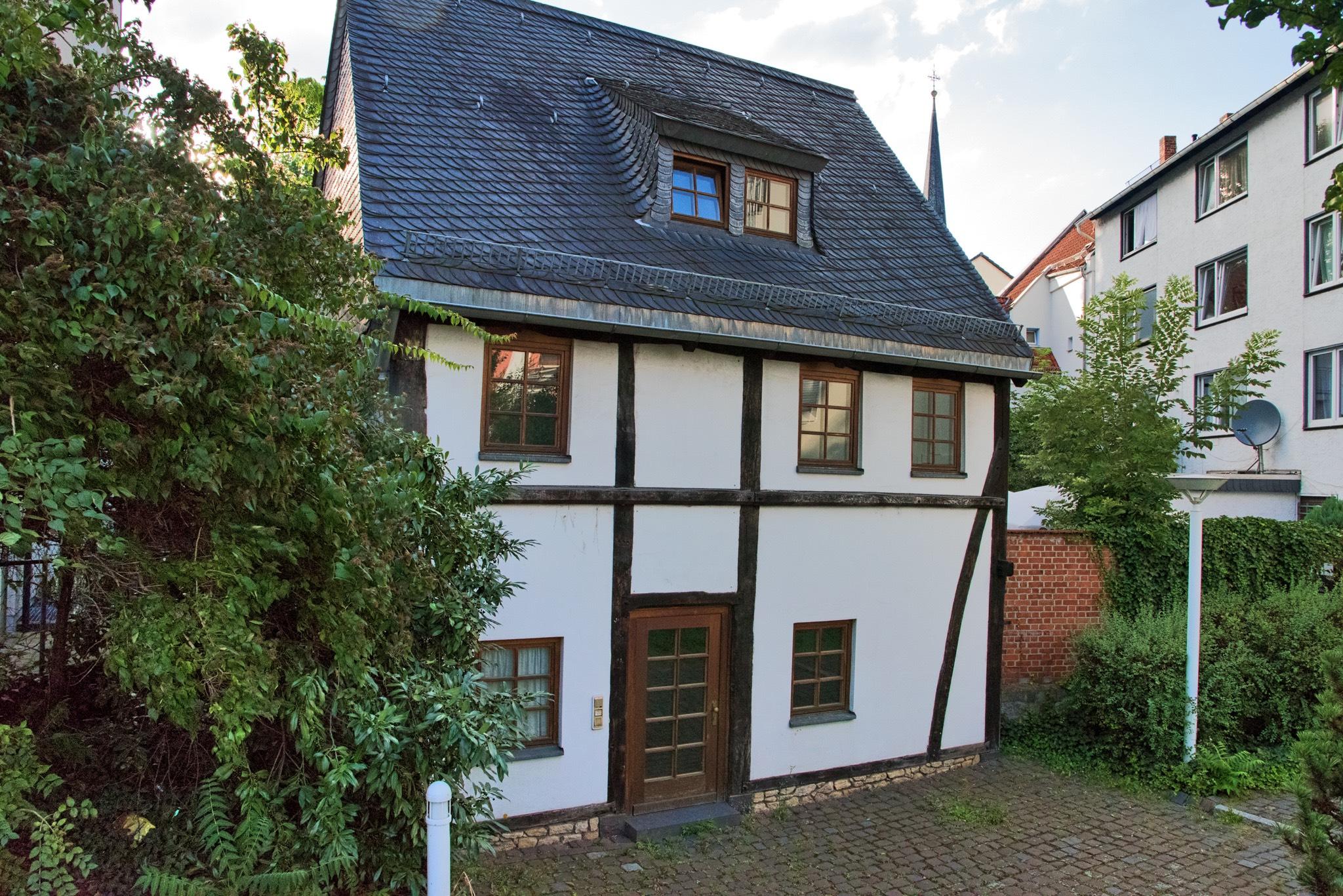
In Schellgasse 8 stands the oldest half-timbered house in Frankfurt. The half-timbered house was built in 1292 and is one of only 27 half-timbered houses from the 13th century that can be documented in Germany. Historians agree that
Frankfurt in the Middle Ages consisted almost exclusively of such buildings.
Schellgasse 8
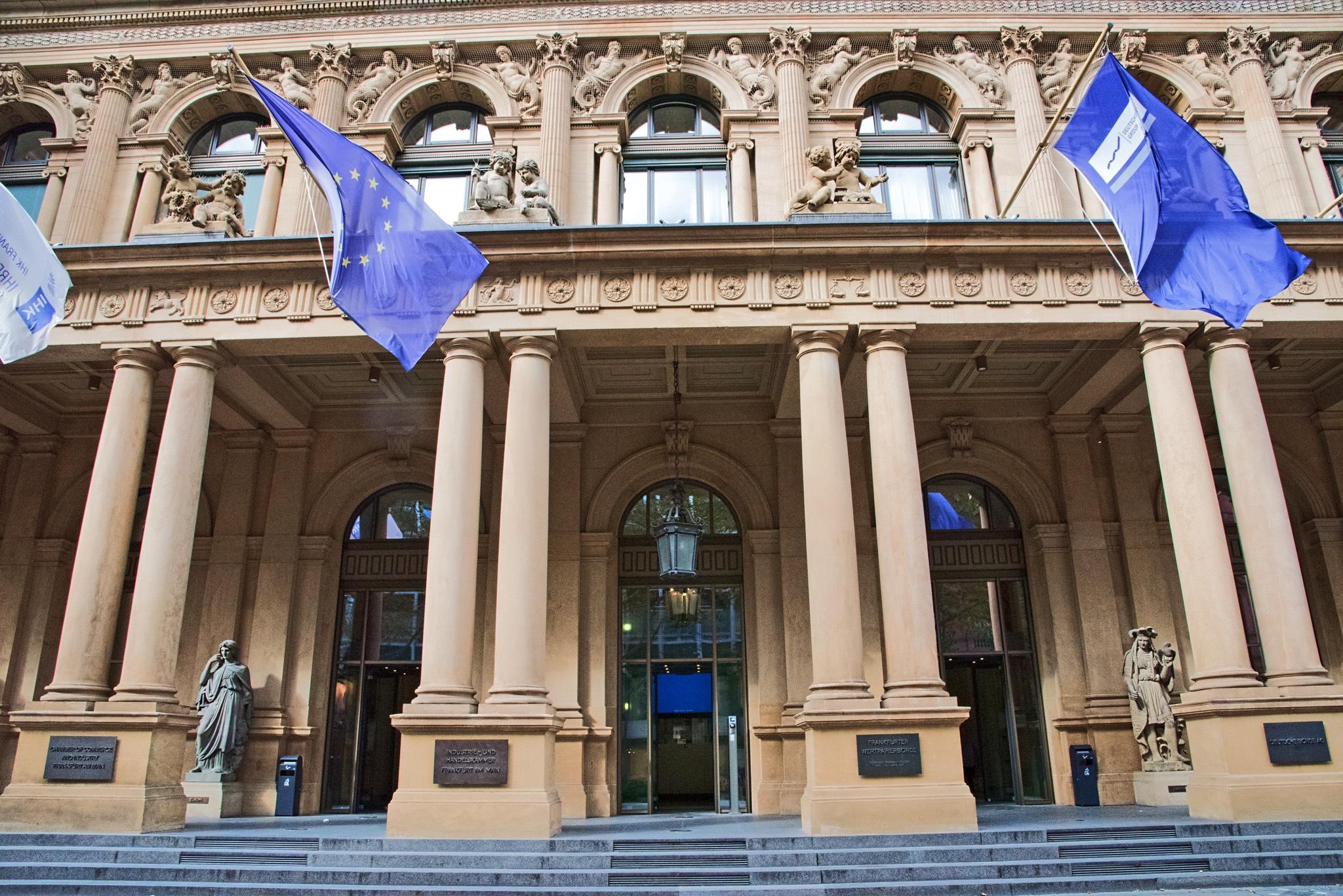
The Frankfurt Stock Exchange is one of the largest stock exchanges in the world. The history of the Old Stock Exchange dates back to 1843. The building at Börsenplatz was opened in 1879.
The large trading hall was extensively renovated from 2006-2007.
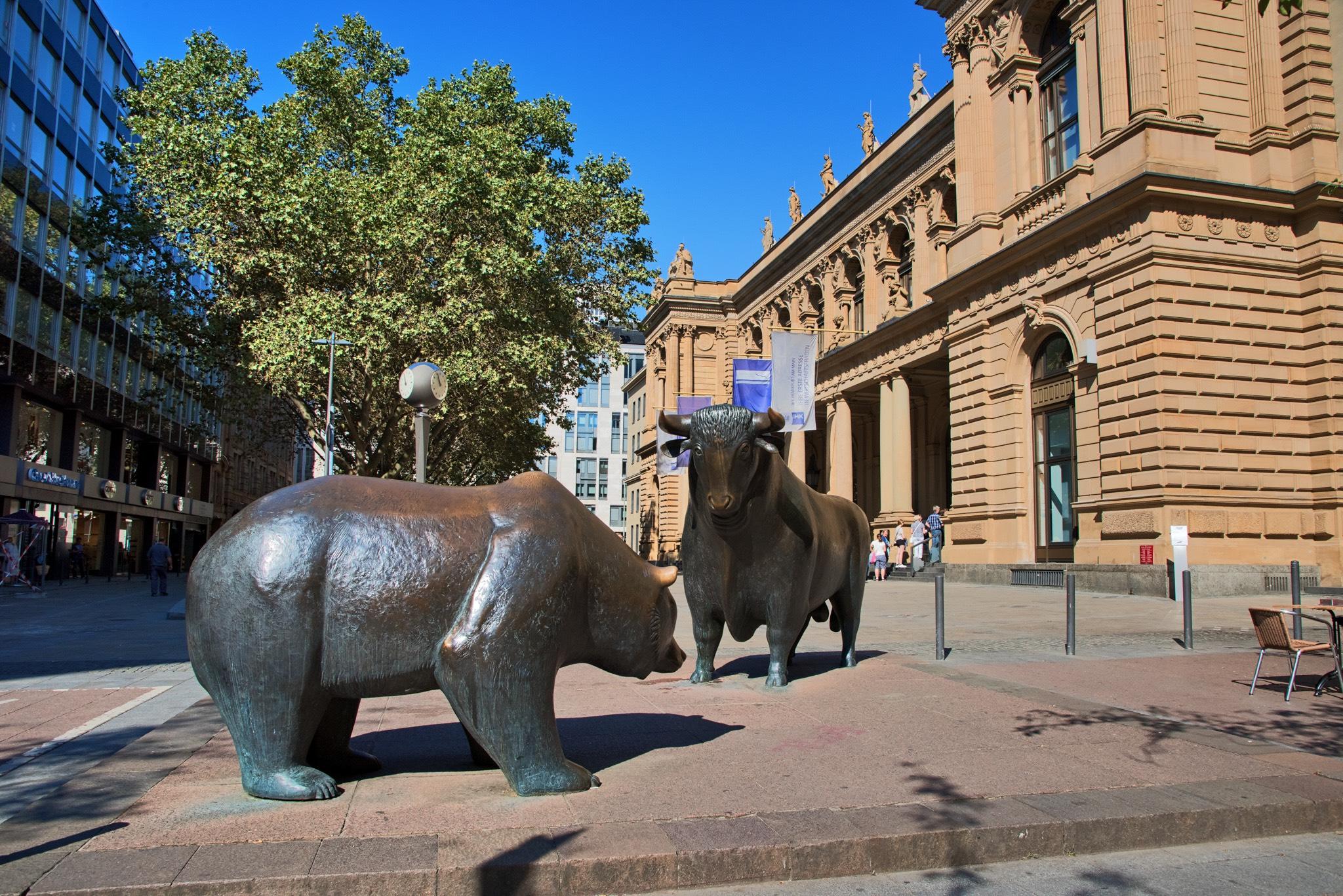
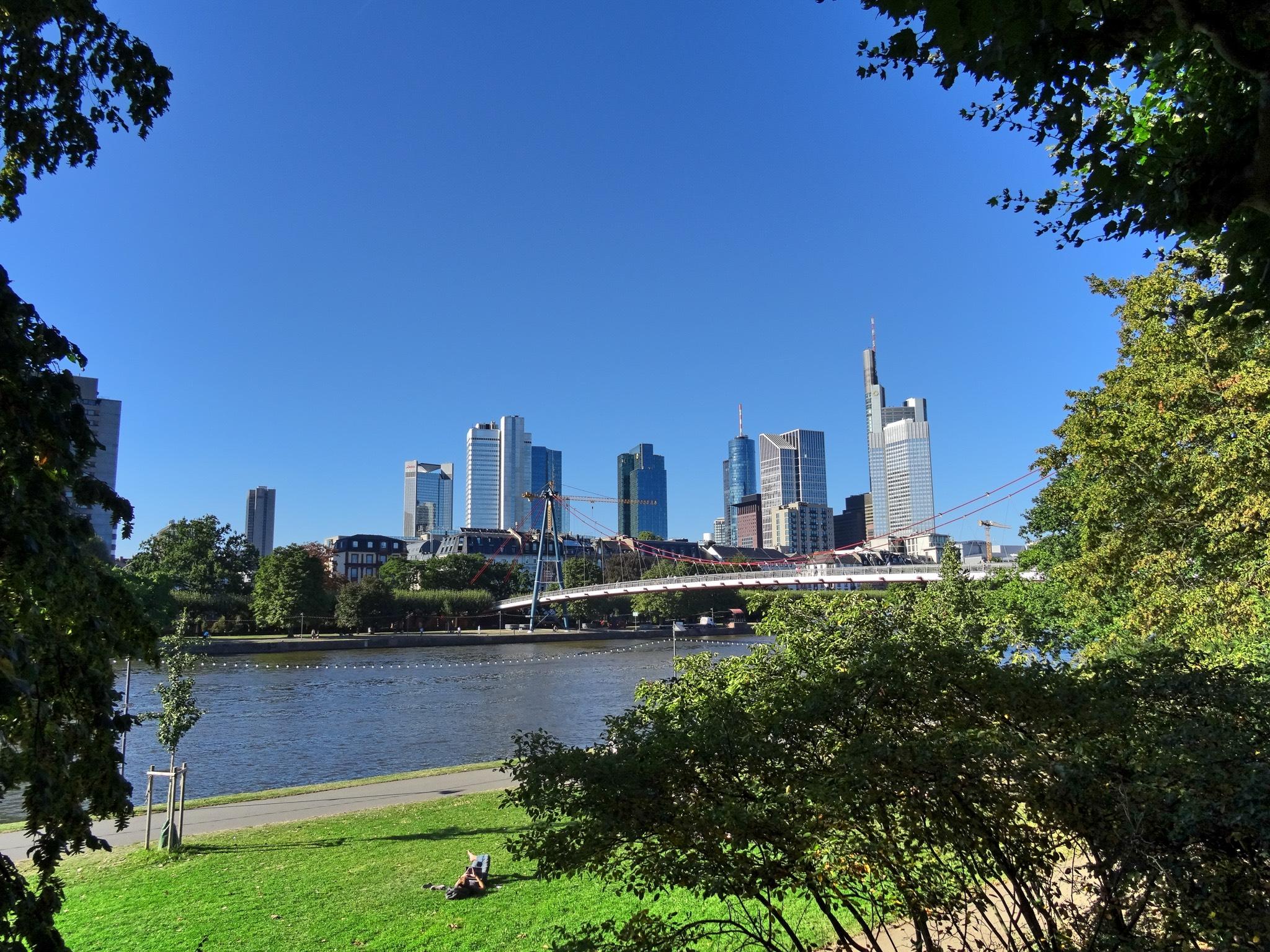
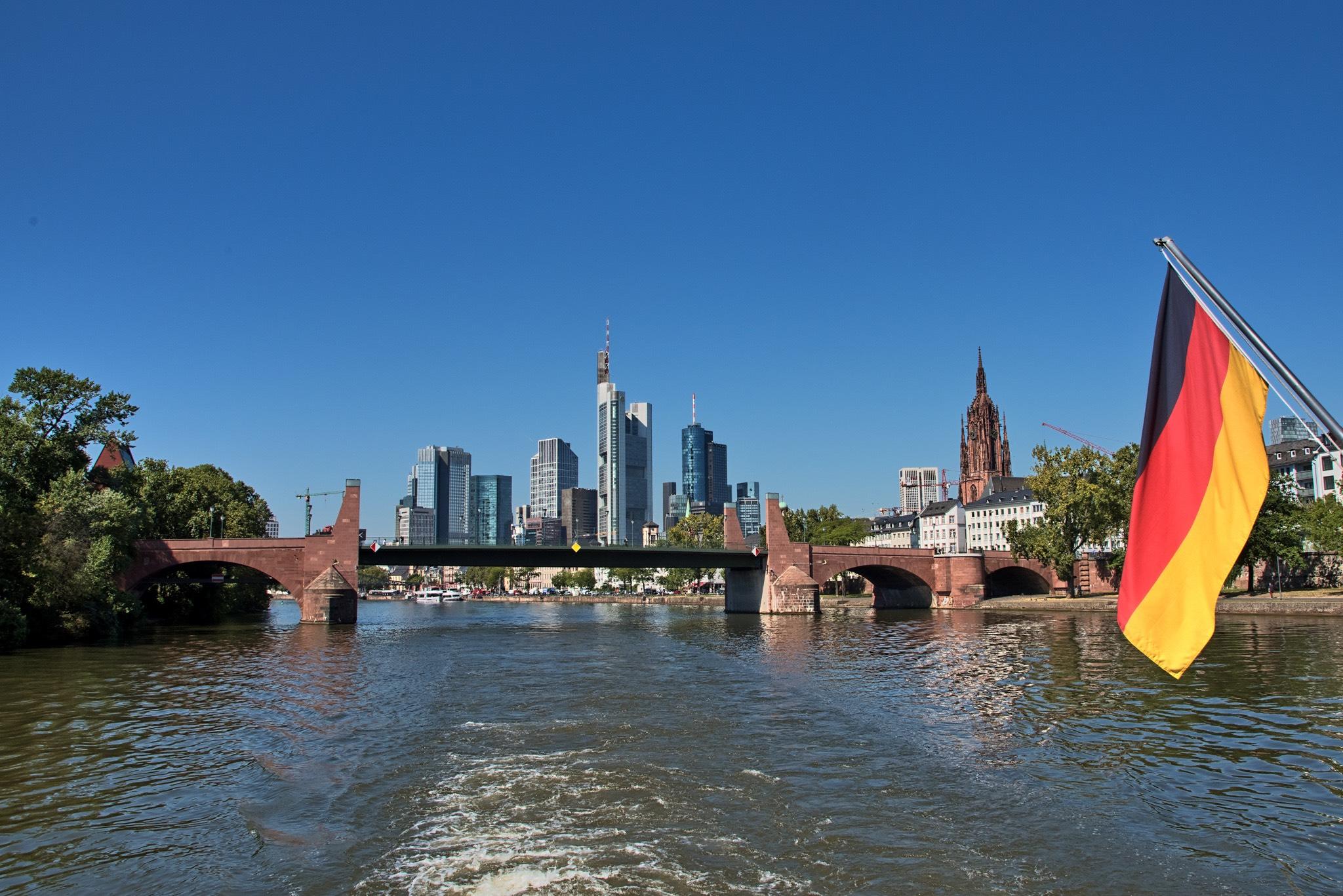
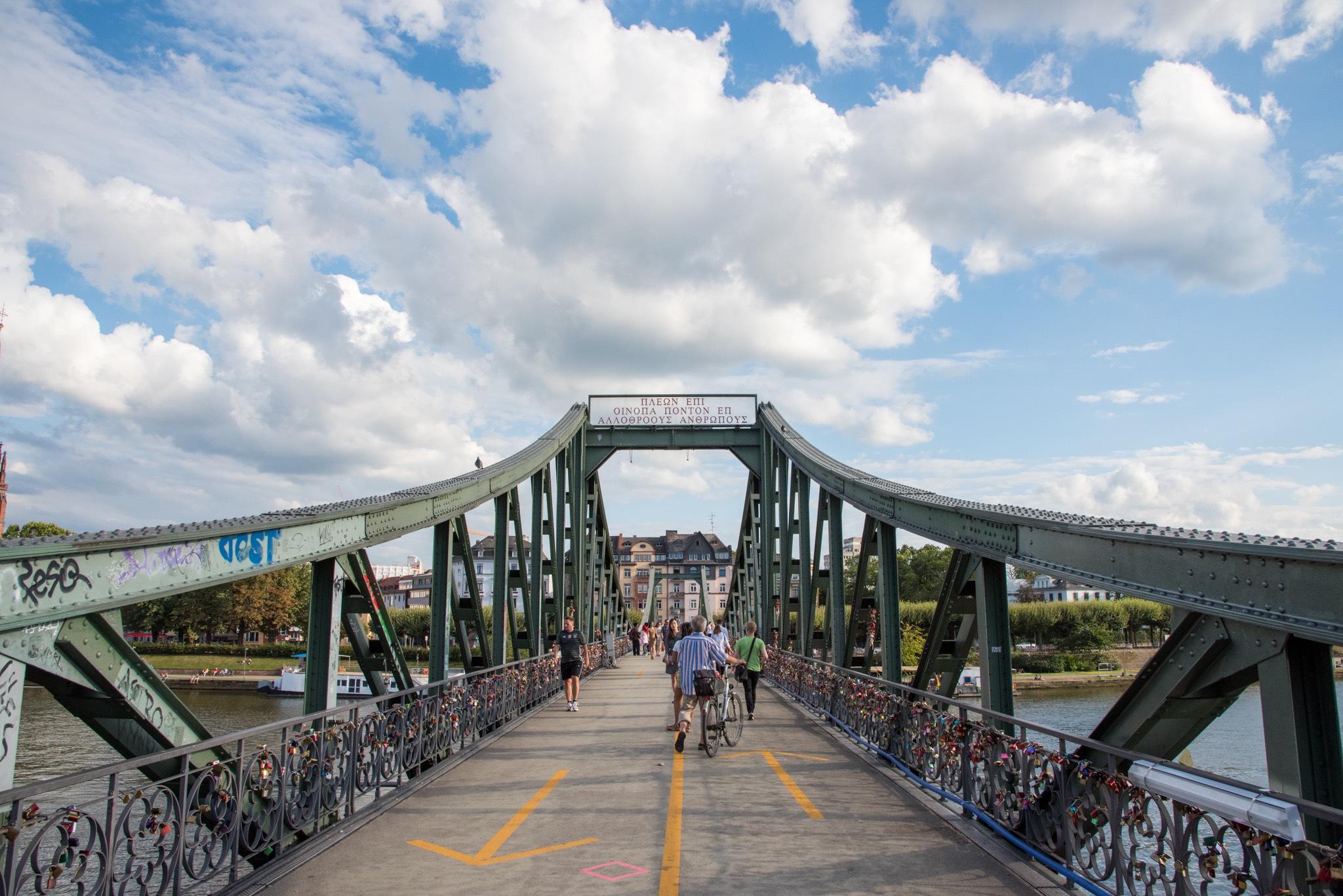
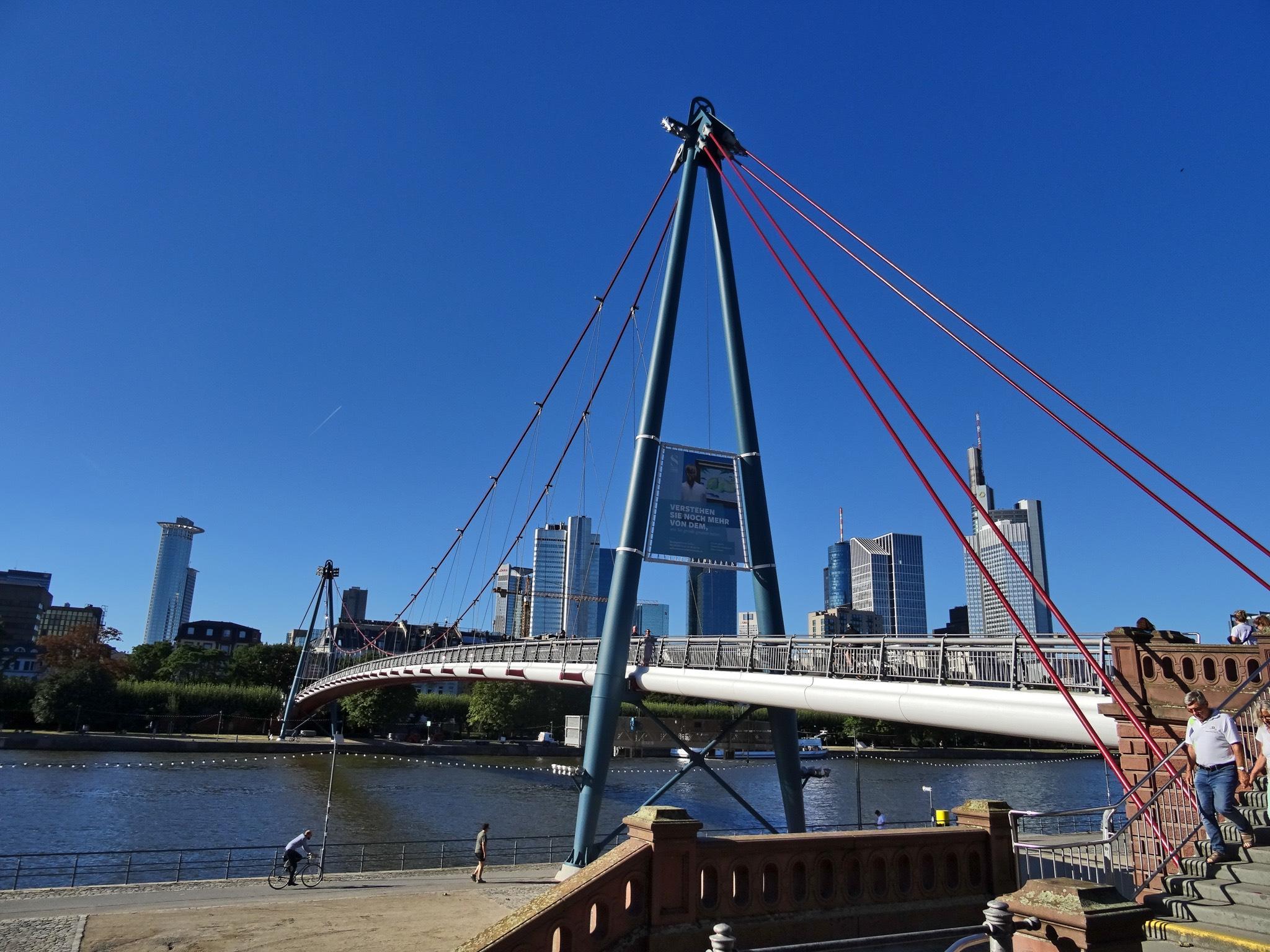
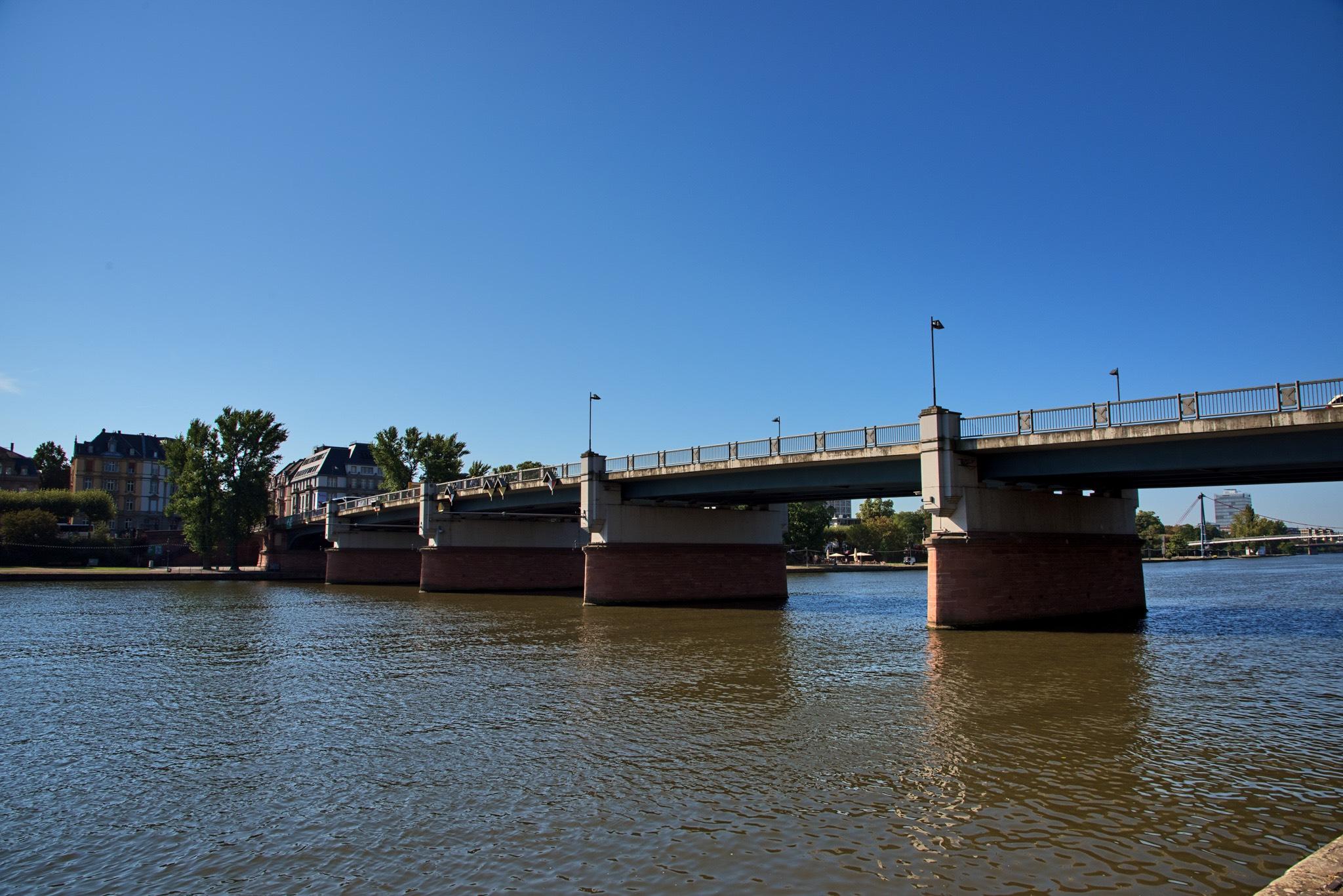
The crossing of the Main in the Frankfurt area eventually led to the name of the city. Frankfurt stands for "Ford of the Franks".
In the inner city area alone, there are nine bridges over the Main today; if you include the outer districts, there are even twenty-one.
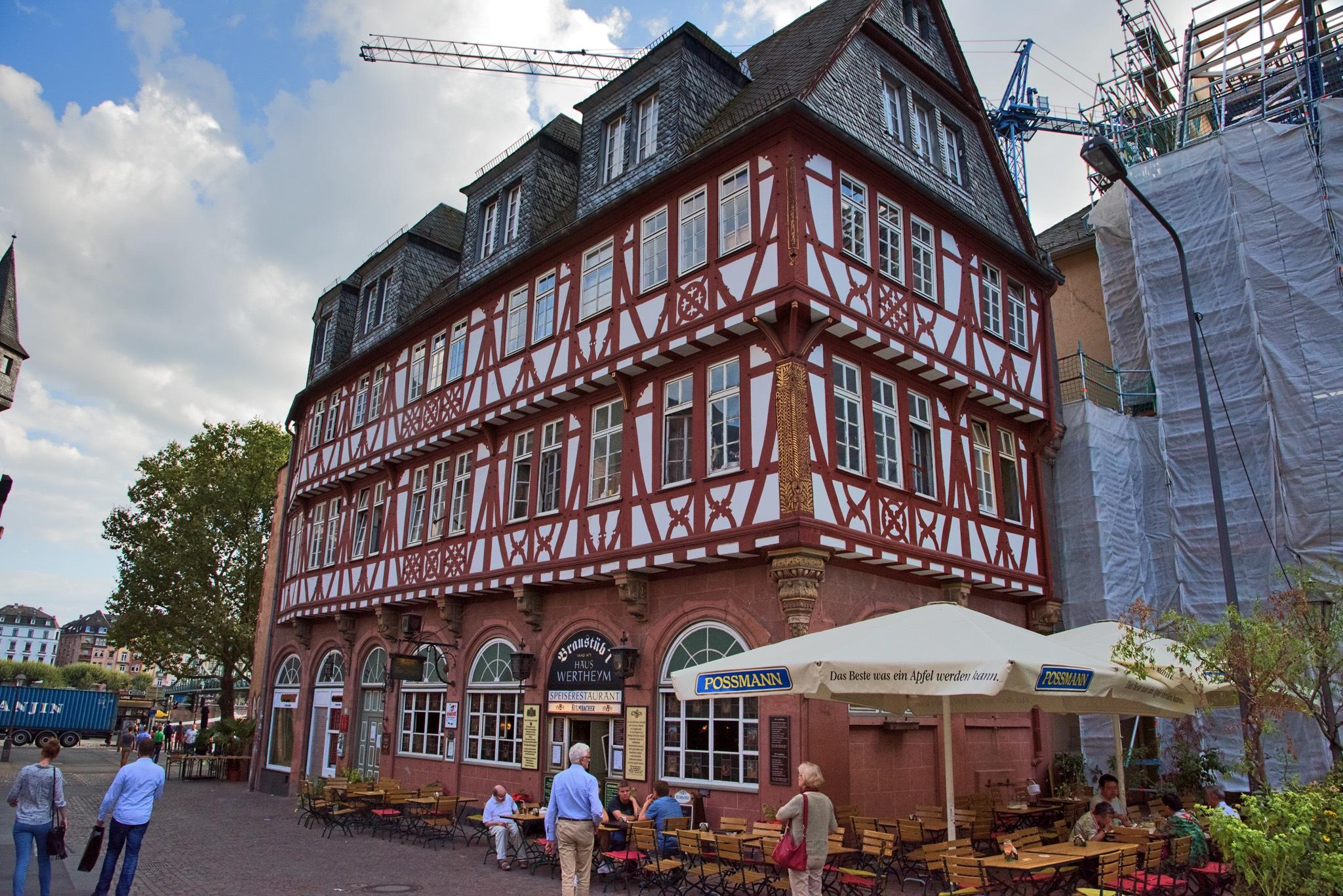
The House Wertheym dates back to 1479, when the Frankfurt merchant Wertheym opened a bathhouse at this location. It received its current appearance in 1812.
In March 1944, the building was the only one to survive an air raid in which about 2,000 half-timbered houses were destroyed.
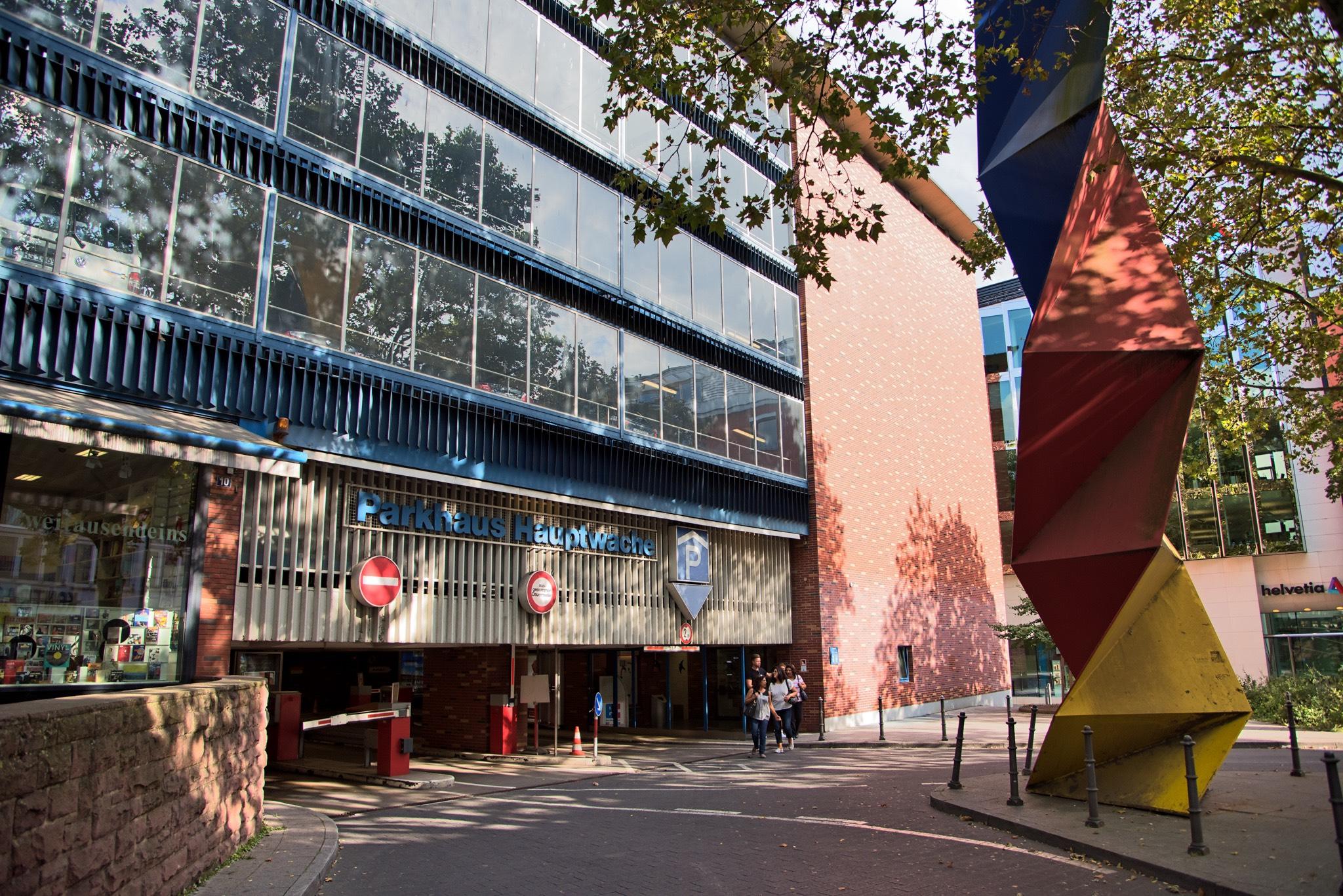
The fi rst public parking garage in Germany, the Hauptwache Parking Garage, was ceremoniously opened in September 1956. At that time, Frankfurt was the most traffic-heavy city in the country.
With the parking garage, an attempt was made to address the shortage of parking spaces in the city center.
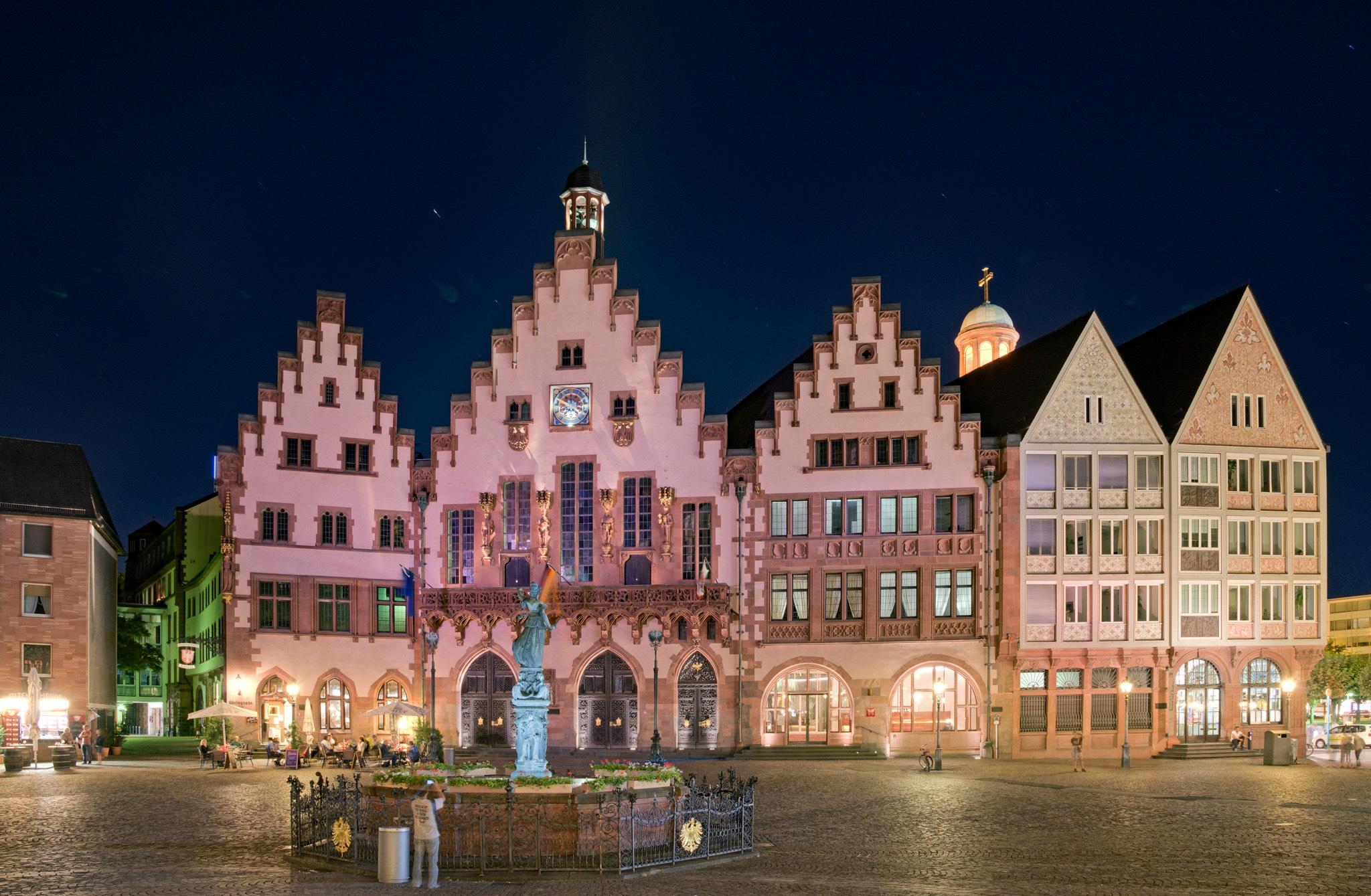
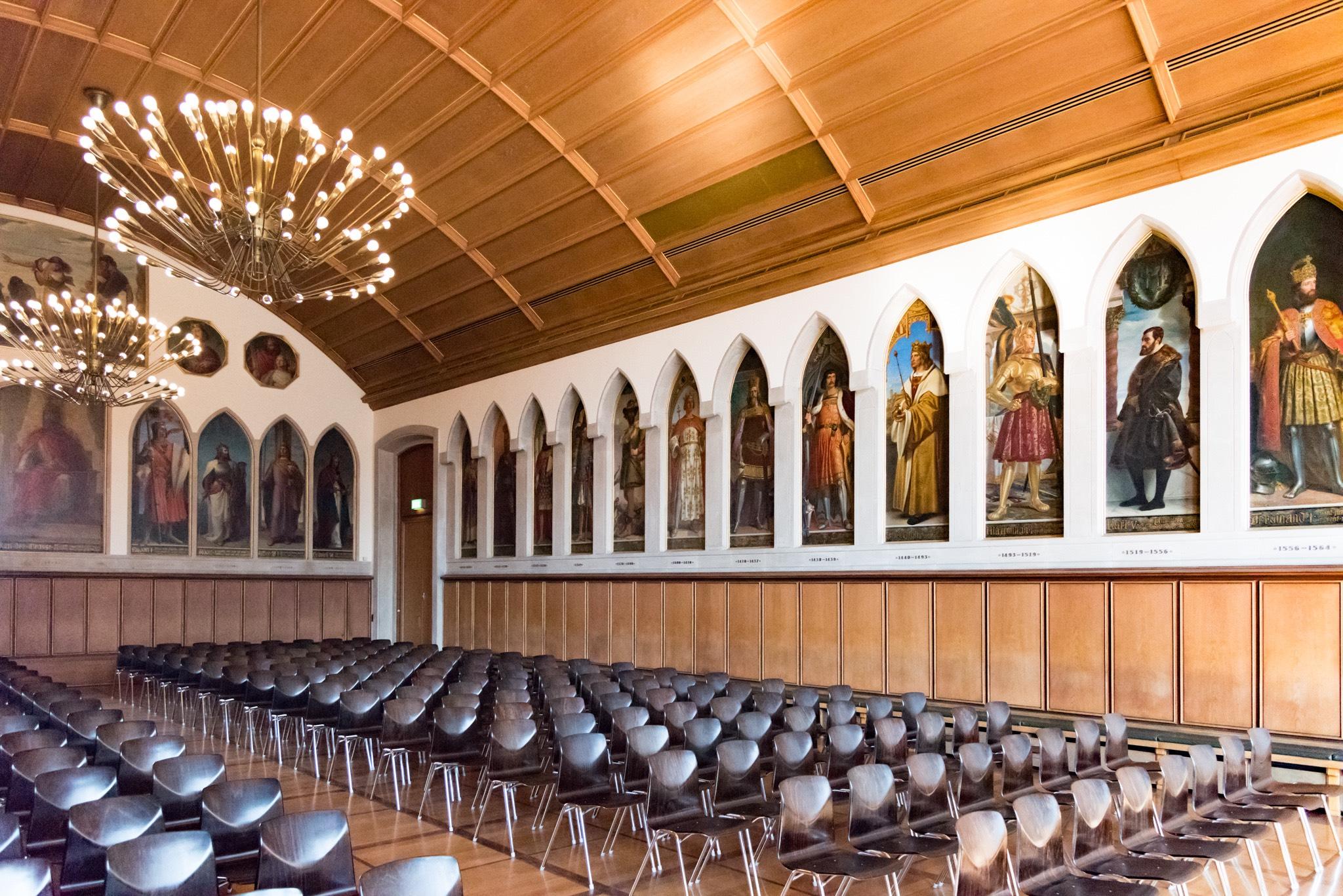
Since the 15th century, the Römer has been the city hall of Frankfurt am Main. With its typical stepped gable facade, the Römer is one of the city's landmarks.
Since the Römer was almost completely destroyed in the Second World War, an office building was added behind the facade in the 1950s.
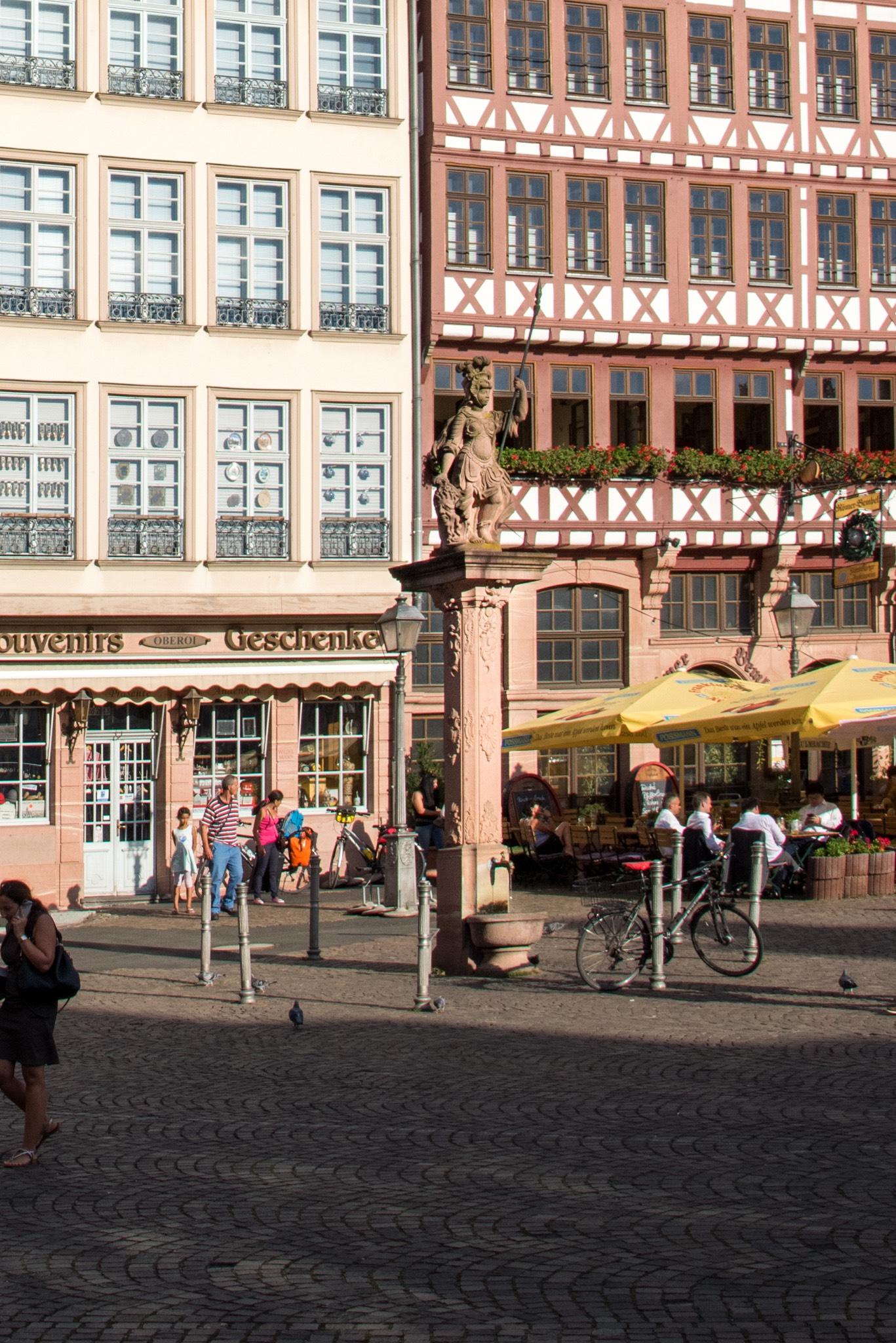
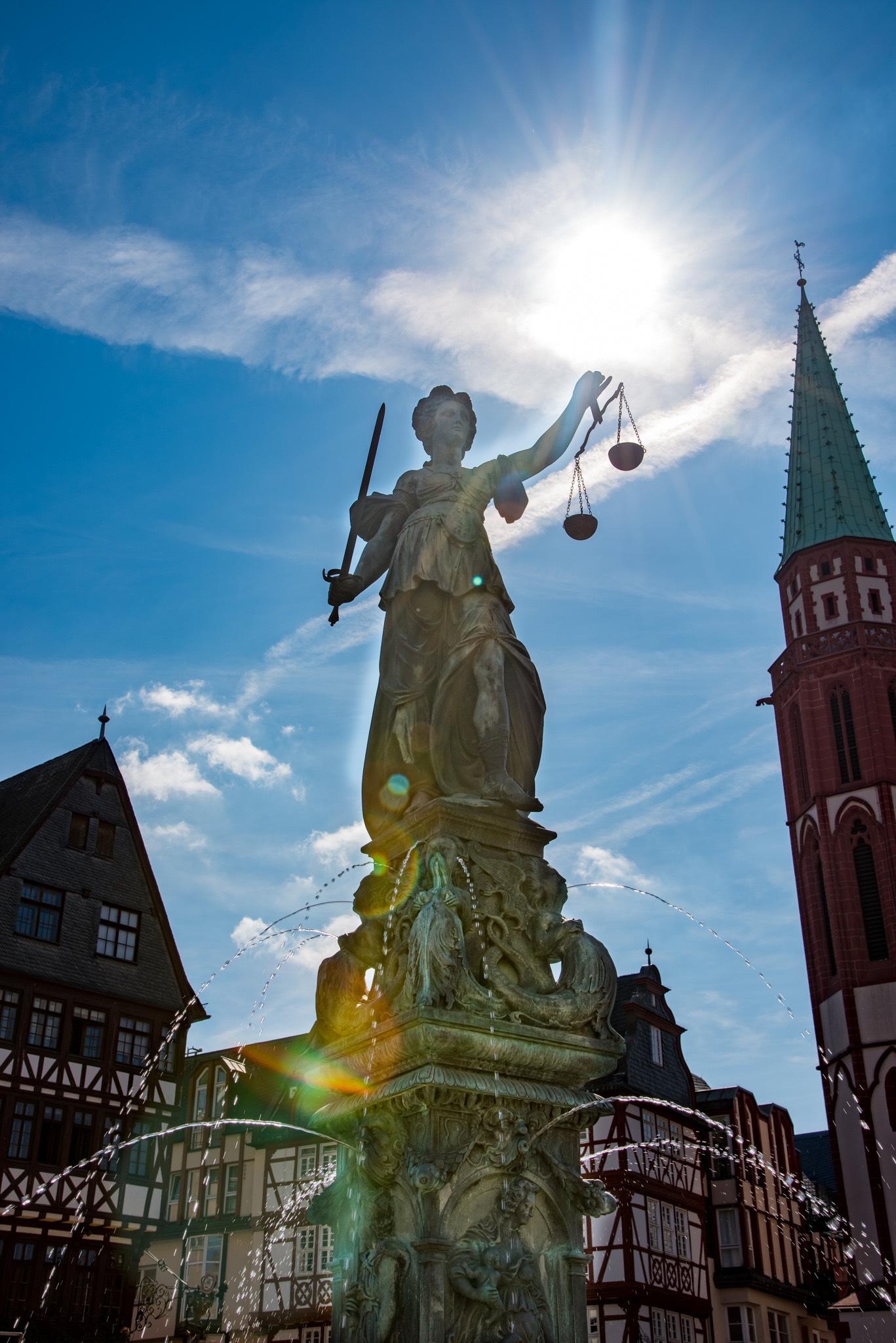
JUSTICE FOUNTAIN (JUSTITIABRUNNEN)
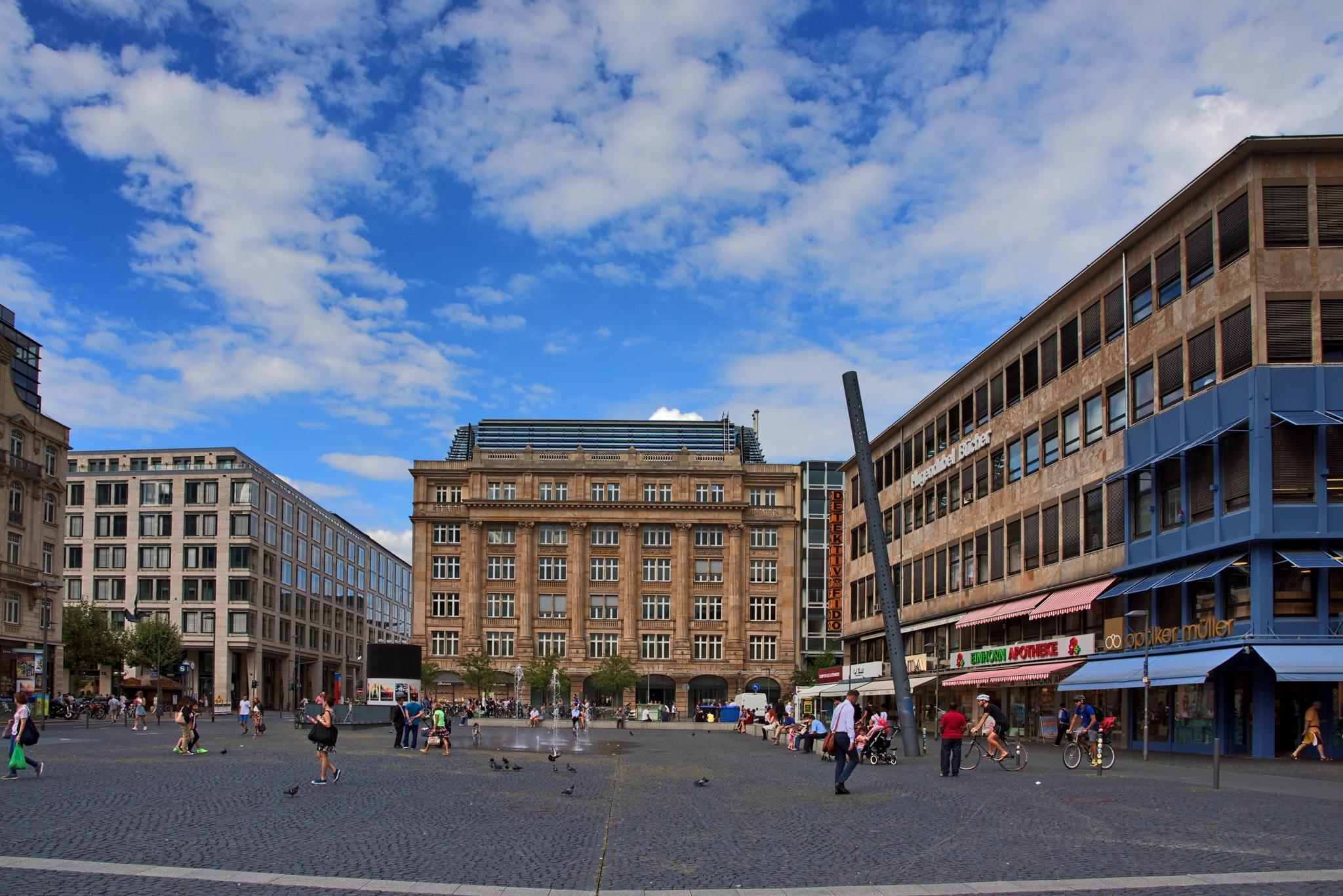
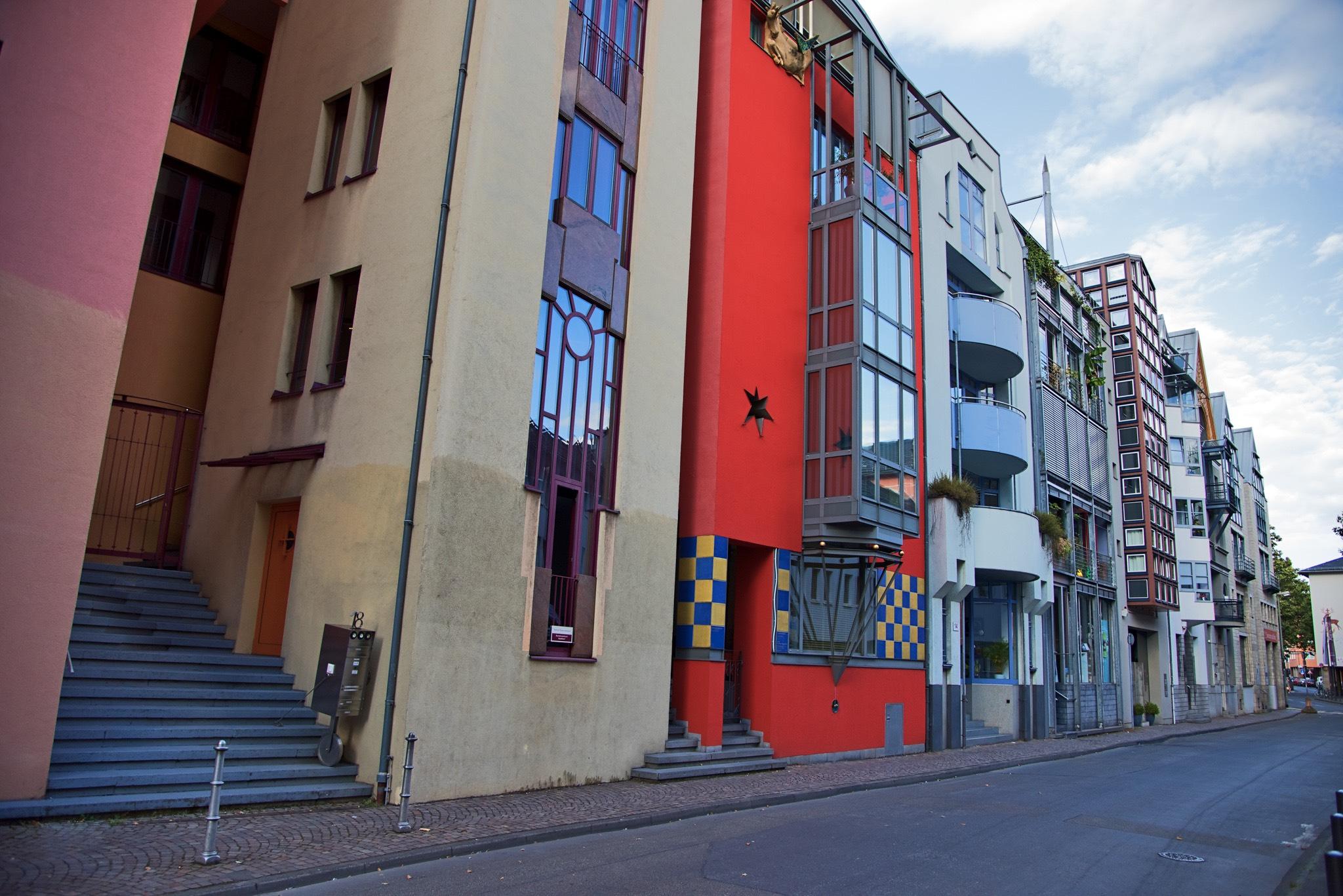
From 1981 to 1984, the "Saalgasse" project was started. On 14 plots, different houses were built to remind of the variety of houses that stood here before the war.
Each house is 7.5 meters wide, 10 meters deep and comprises 4 floors. The Saalgasse is a visually very appealing project.
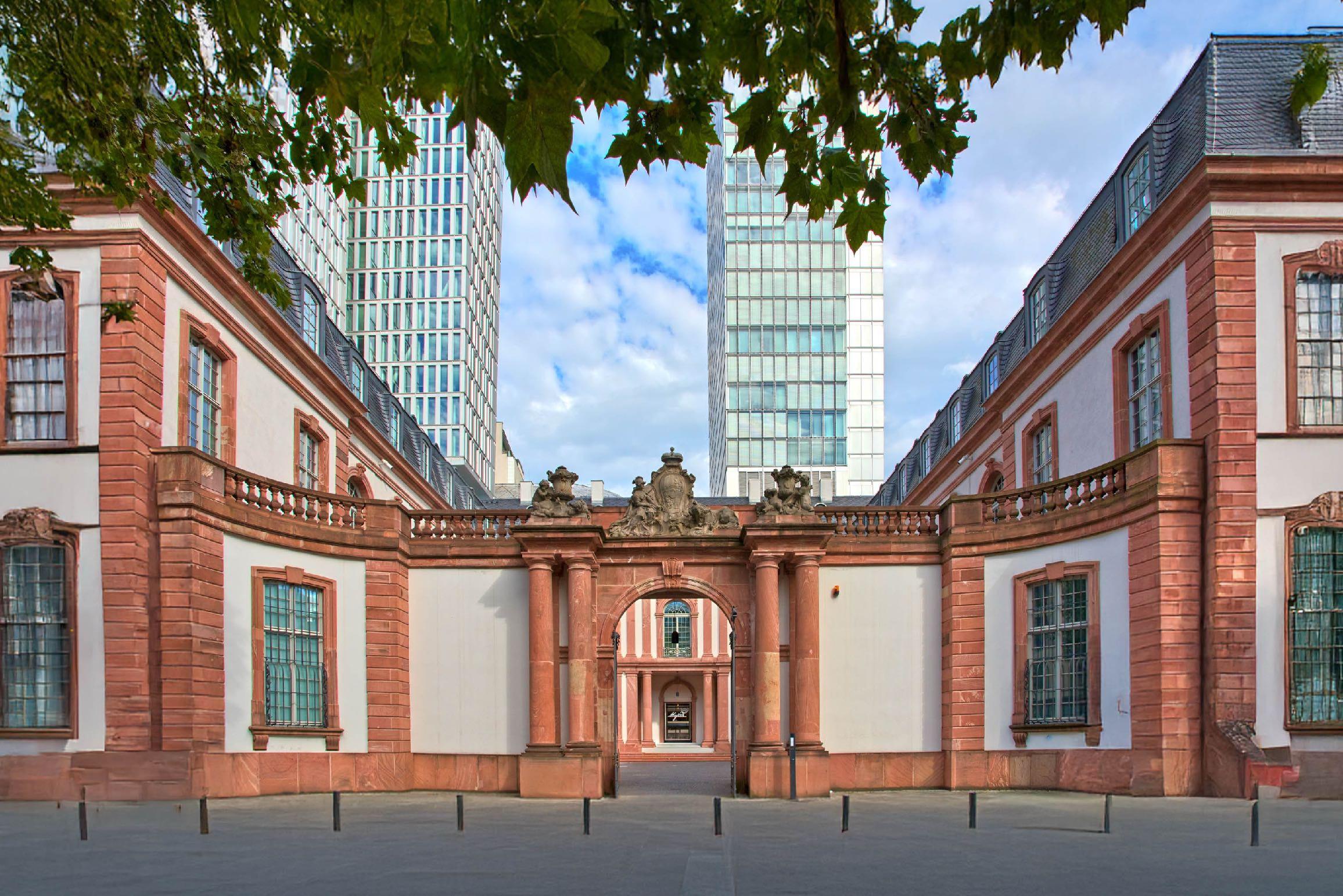
The Thurn and Taxis city palace was severely damaged in the Second World War and demolished in 1951. Now it has been rebuilt according to historical models.
The "new" Thurn and Taxis Palace is part of the Palais Quarter, which is integrated into the MyZeil shopping center.
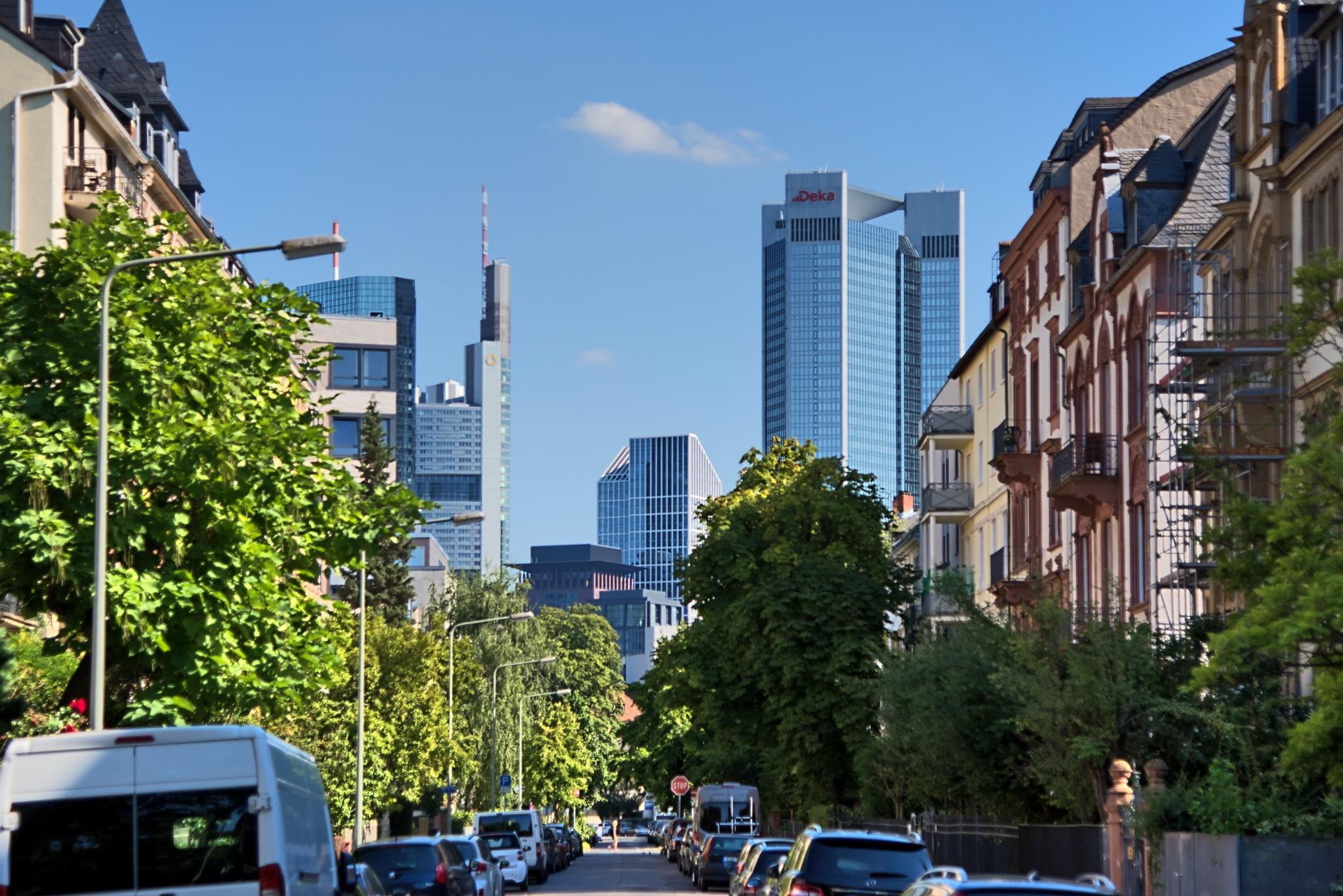
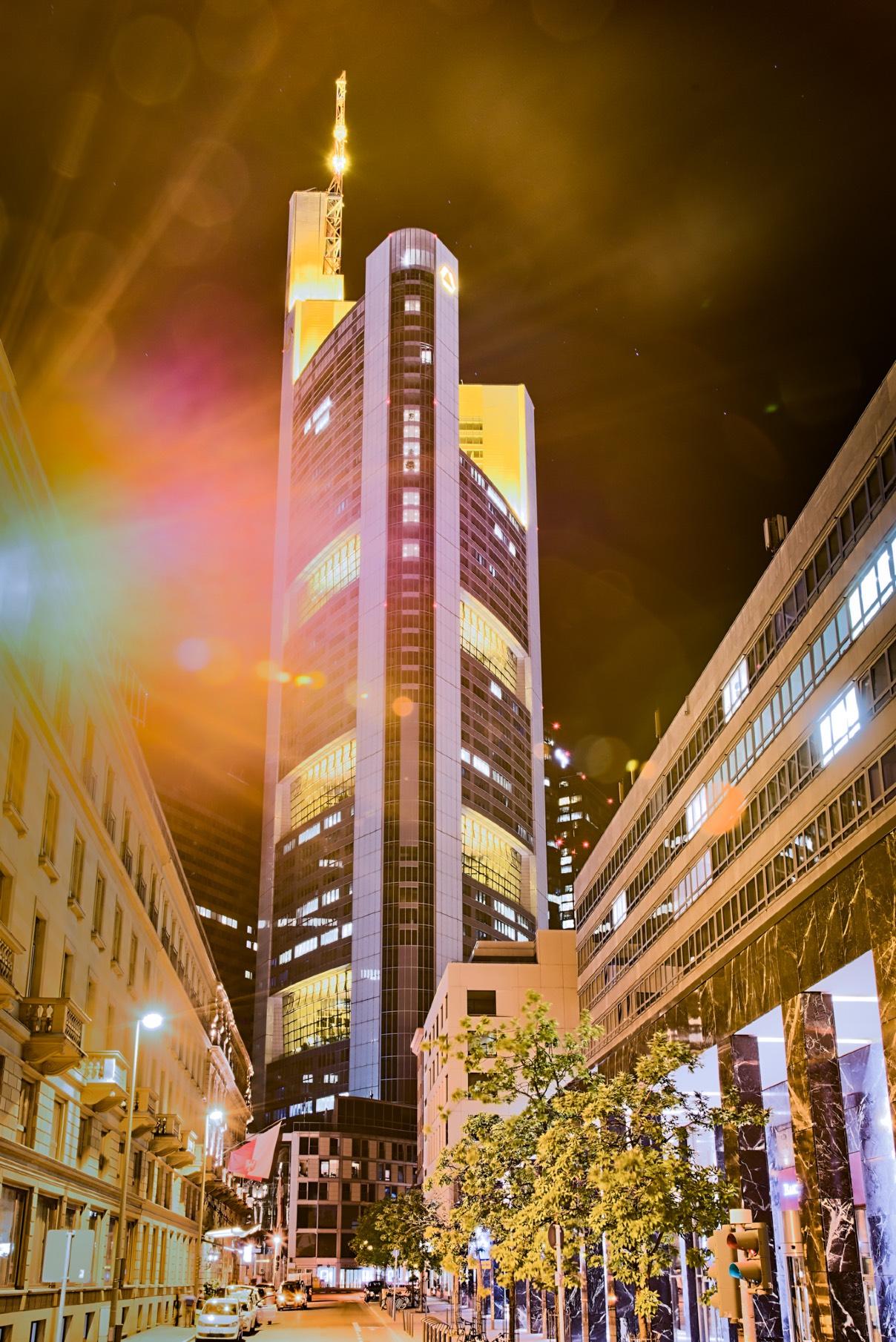
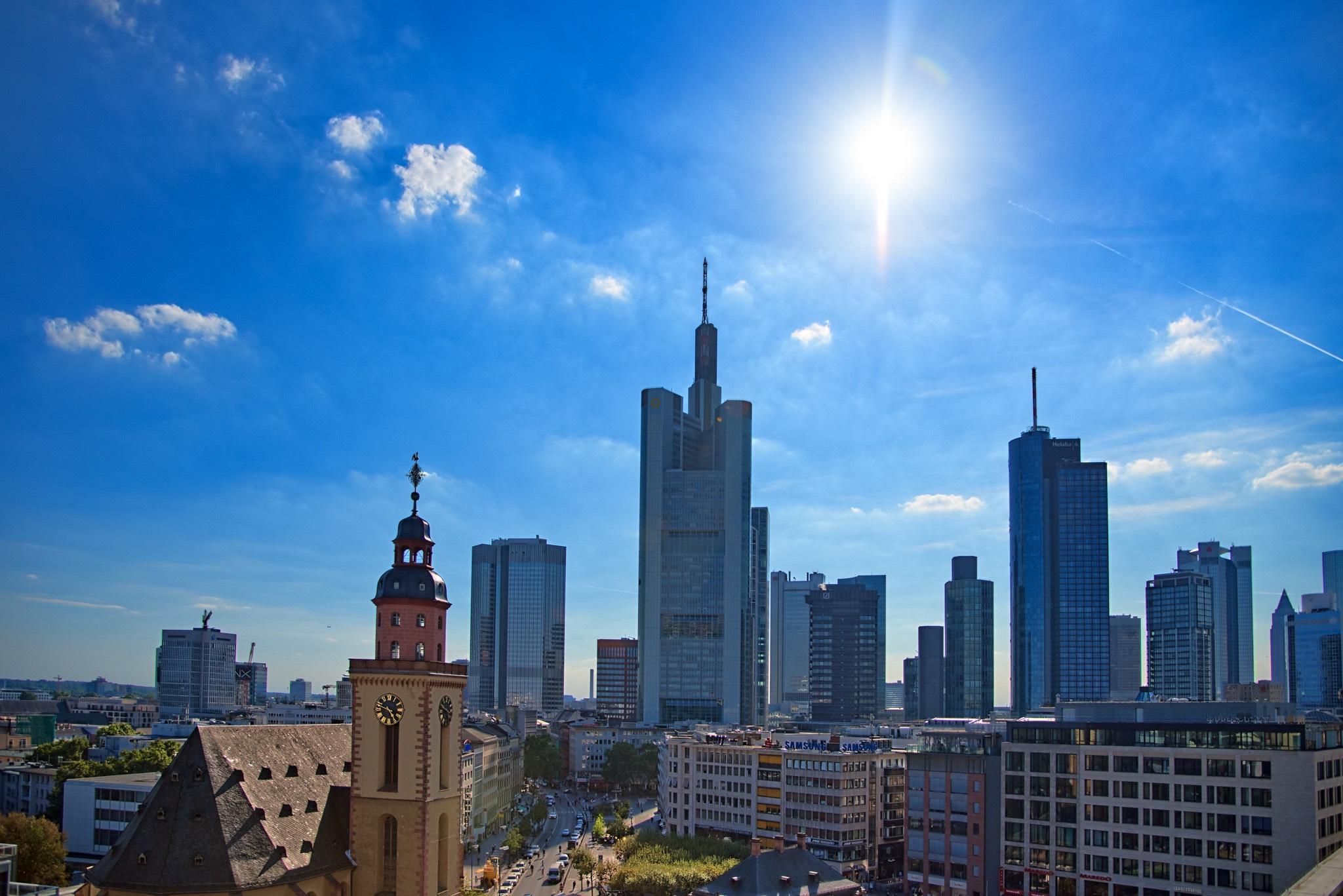
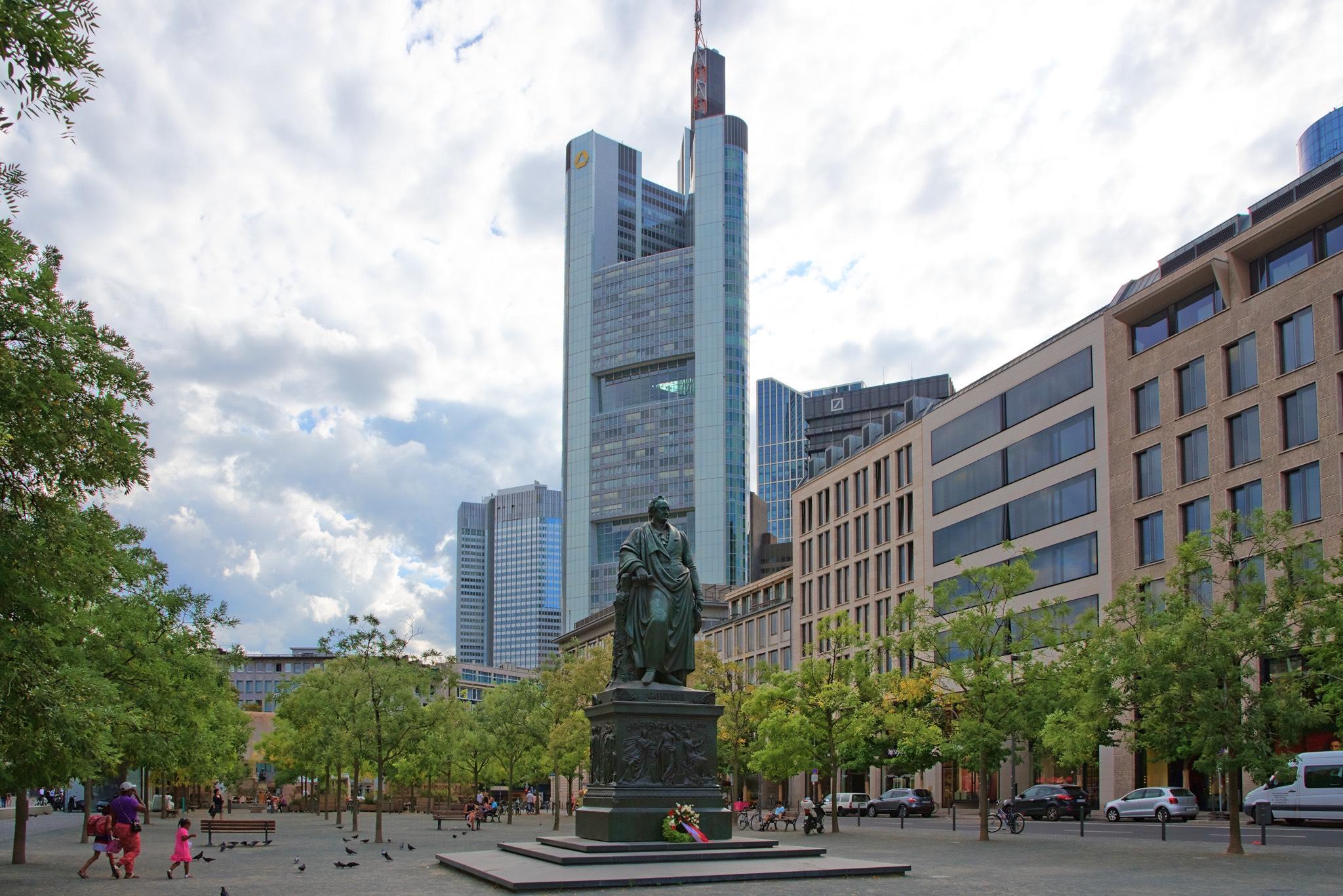
The Commerzbank Tower was the tallest building in Europe for several years. With a height of 257 meters, or even 300 meters if you include the antenna, the
Commerzbank Tower is still the tallest high-rise in Germany.
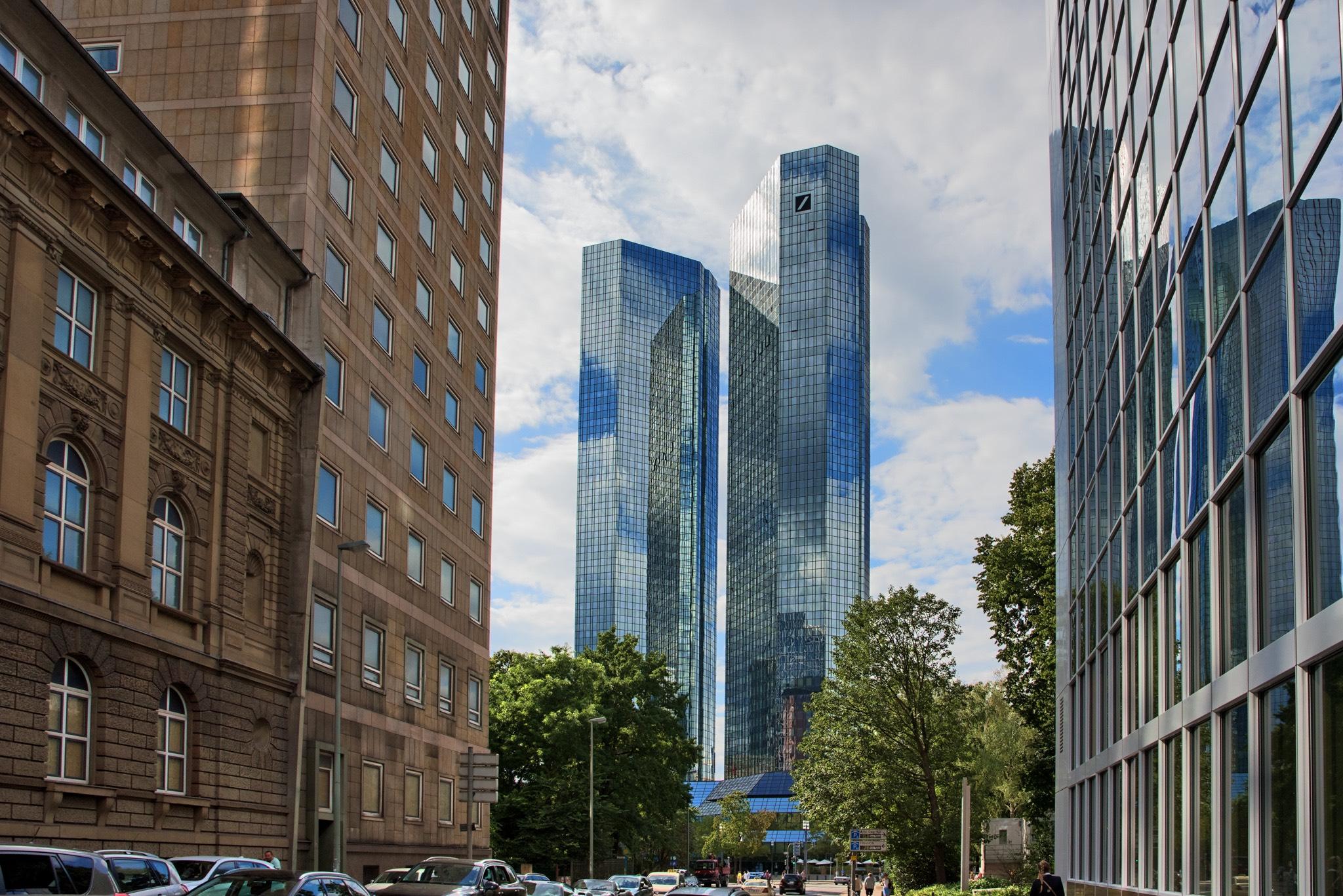
The Deutsche Bank high-rise consists of two towers, each 155 meters high. The towers are also referred to as "Debit and Credit", "Twin Towers" or "Deutsche Bank I and II".
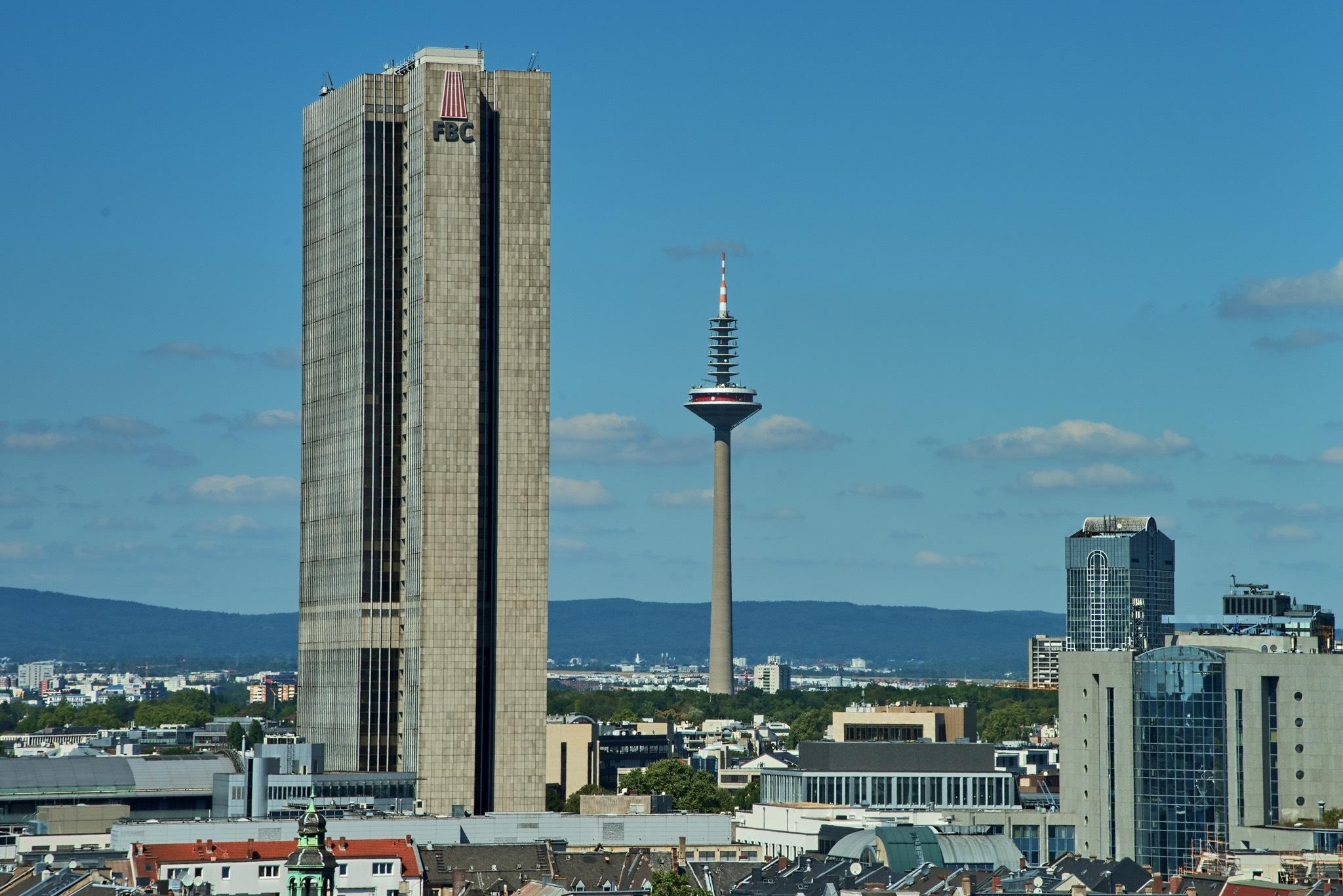
On the left, the Frankfurt Office Center and behind it the Europa Tower. The telecommunications tower is the second tallest freestanding building in the Federal Republic
Stadtweg 90, Bockenheim
of Germany at 337.5 meters. The nickname of the Europa Tower is Ginnheim Asparagus.
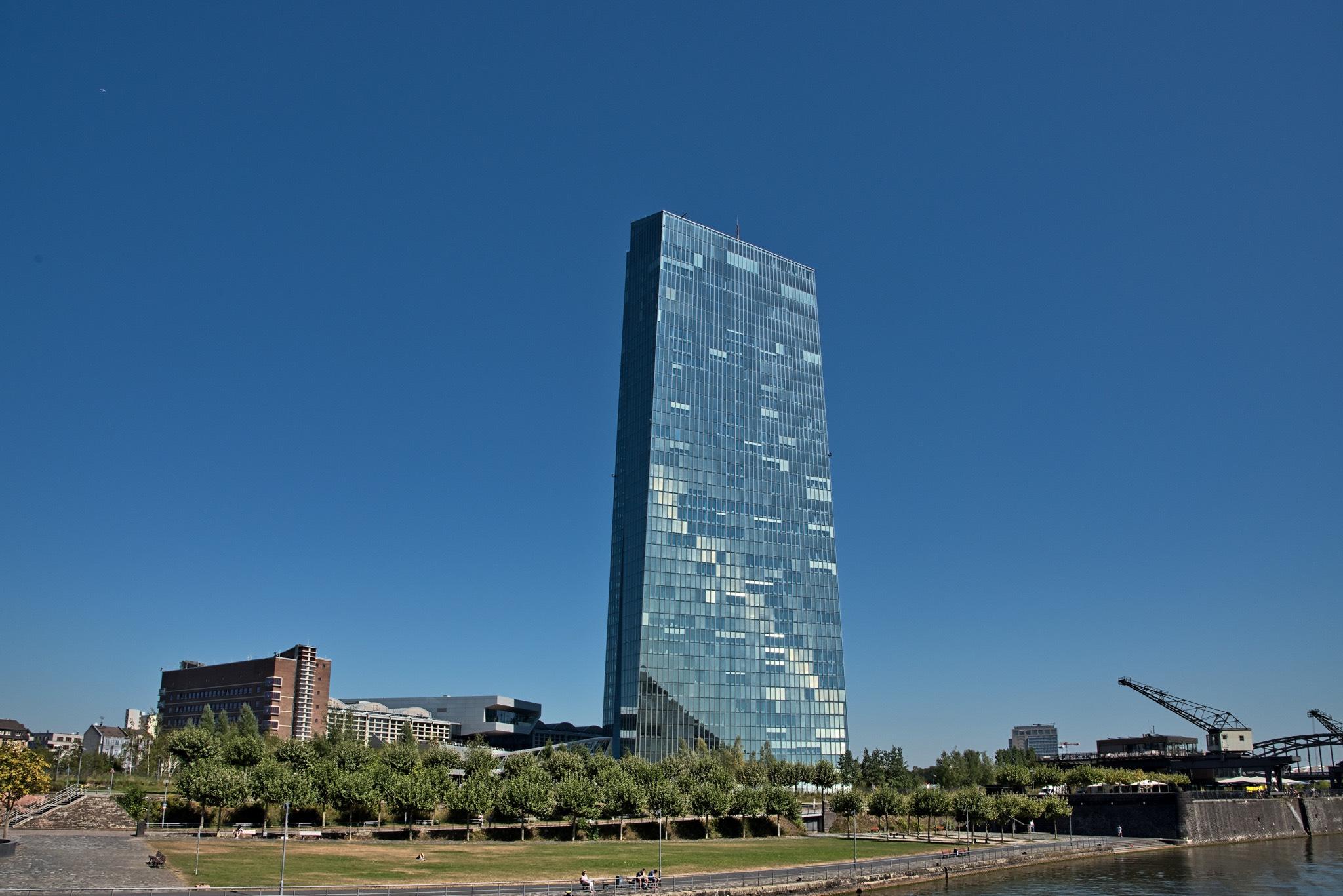
The headquarters of the European Central Bank was designed by the Viennese architecture fi rm Coop Himmelb(l)au. It is located on the site of the Frankfurt
Wholesale Market Hall. The two towers are connected by an atrium and rise to 201 meters including the antenna on the north tower.
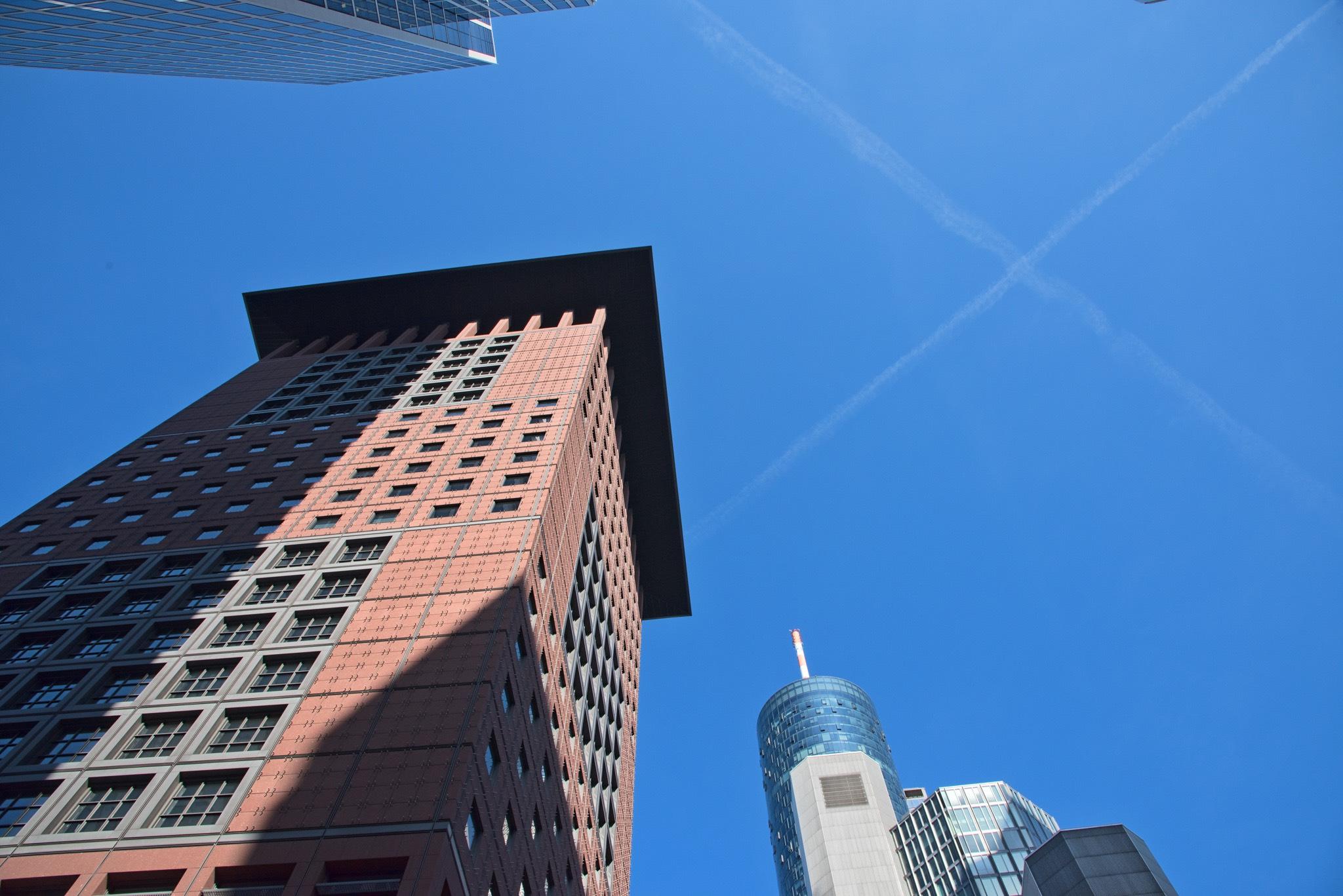
The shape of the building is modeled after a Japanese stone lantern. The architect adhered to Japanese customs with the terracotta-colored cladding and the geometric
design of the building. The Japan Center is 115 meters high.
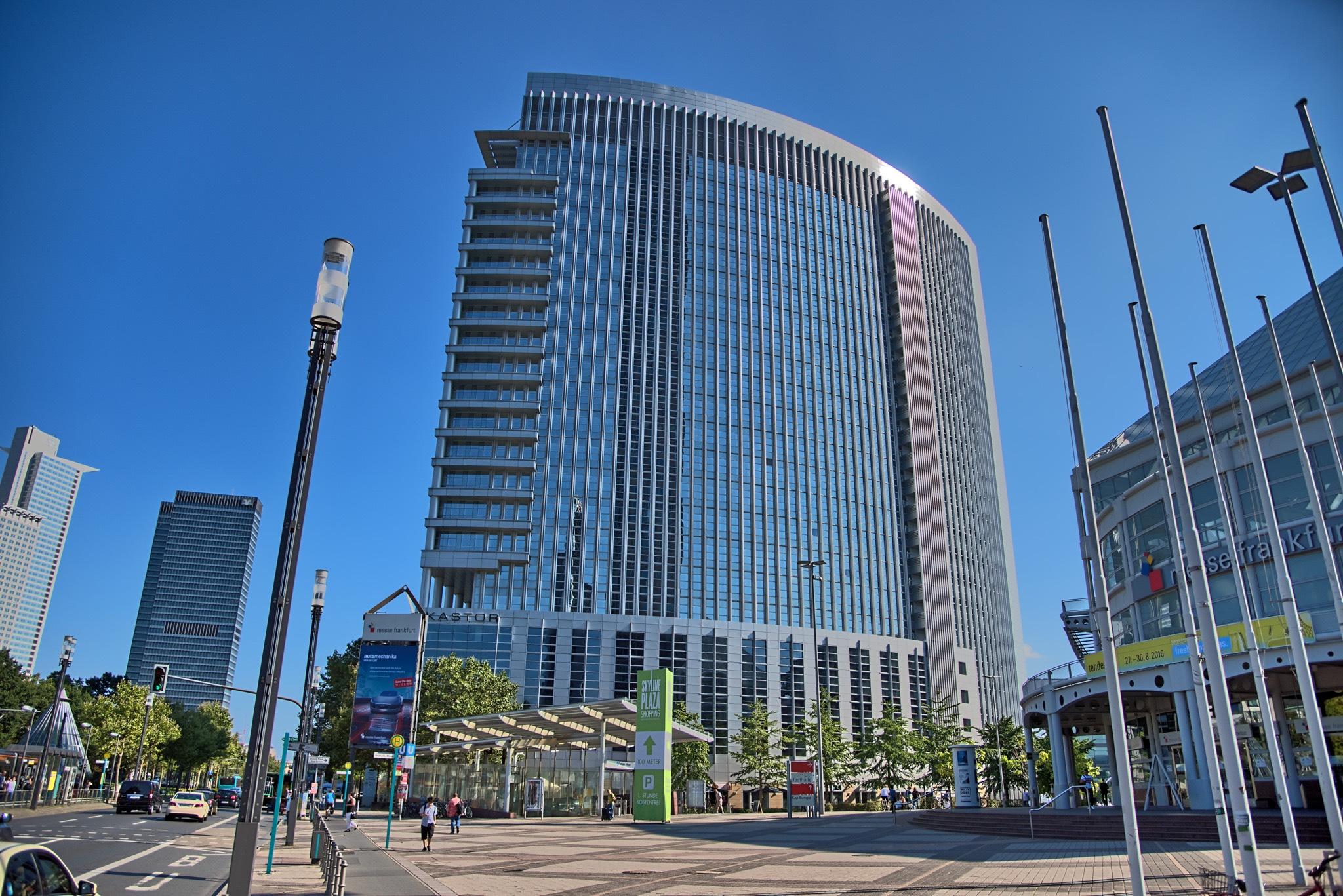
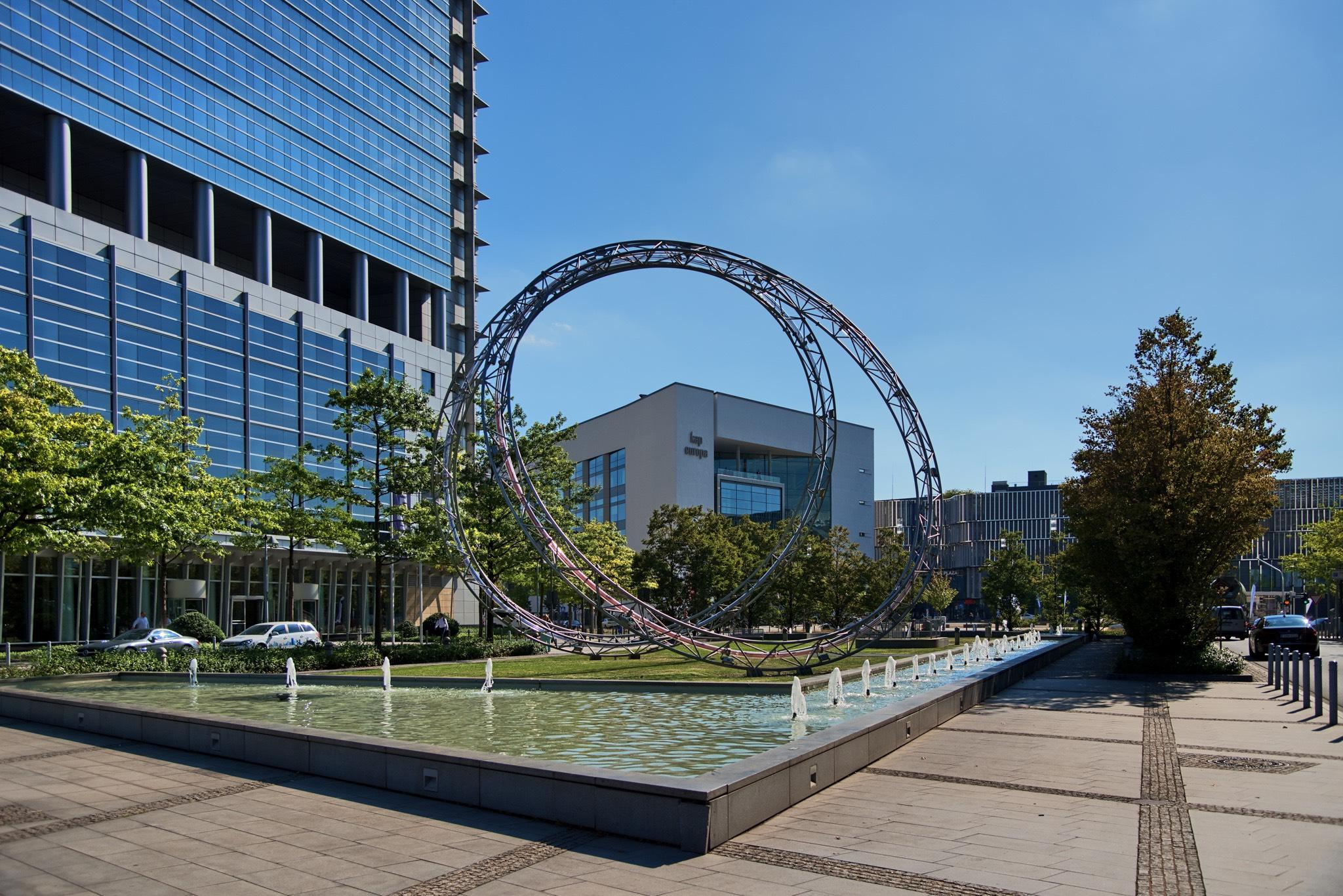
Directly next to the entrance to Messe Frankfurt stands the "Forum Frankfurt" complex. This consists of two buildings named after the twin pair from Greek mythology, "Castor (the mortal) and Pollux (the demigod)". Castor is 95 meters high.
Platz der Einheit 1
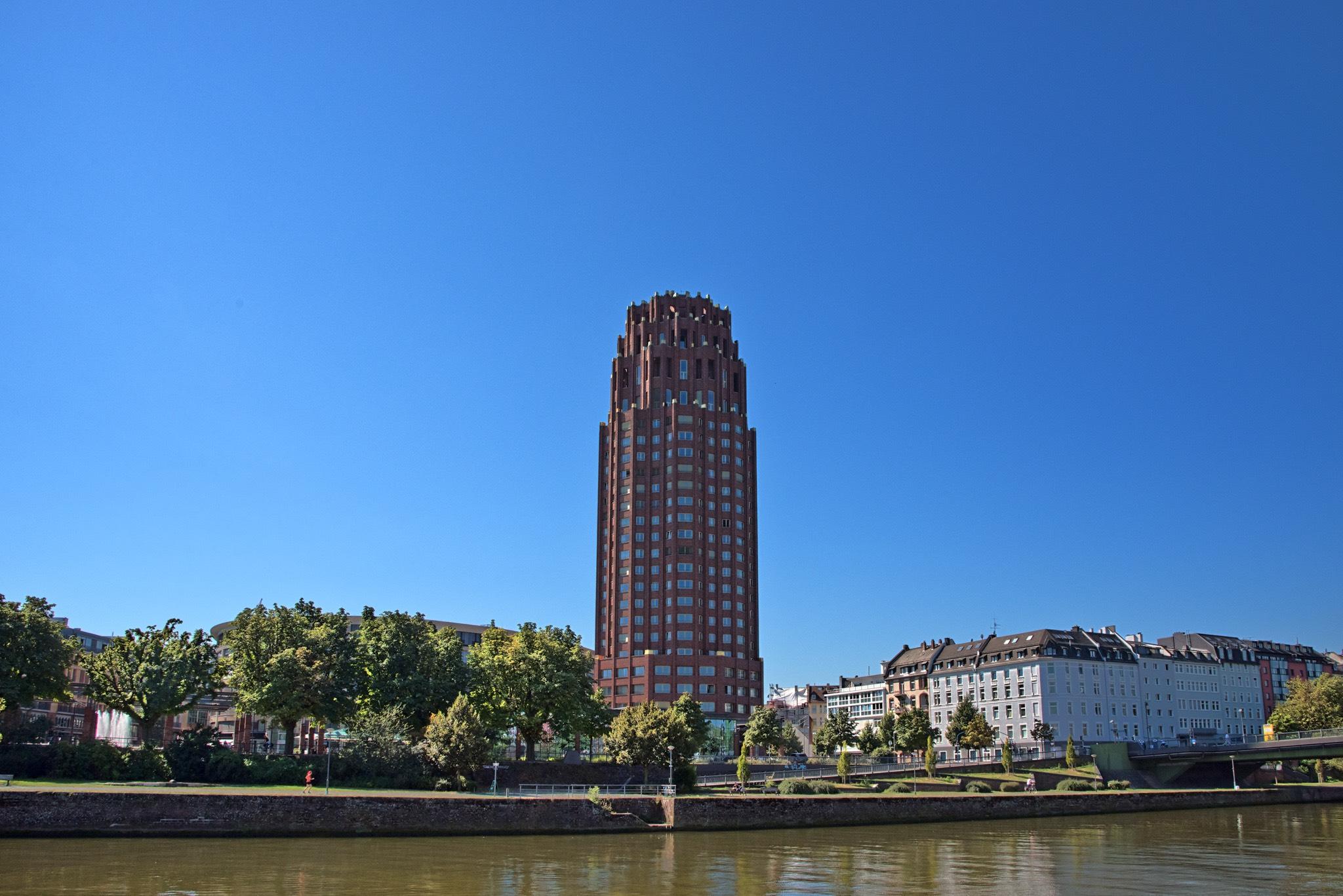
Also called "Hollow Tooth" or "Termite Mound", the highrise built in Sachsenhausen. The 88-meter-high building was designed in reference to American skyscrapers of the
1920s. The Lindner Hotel & Residence Main Plaza offers hotel rooms and apartments.
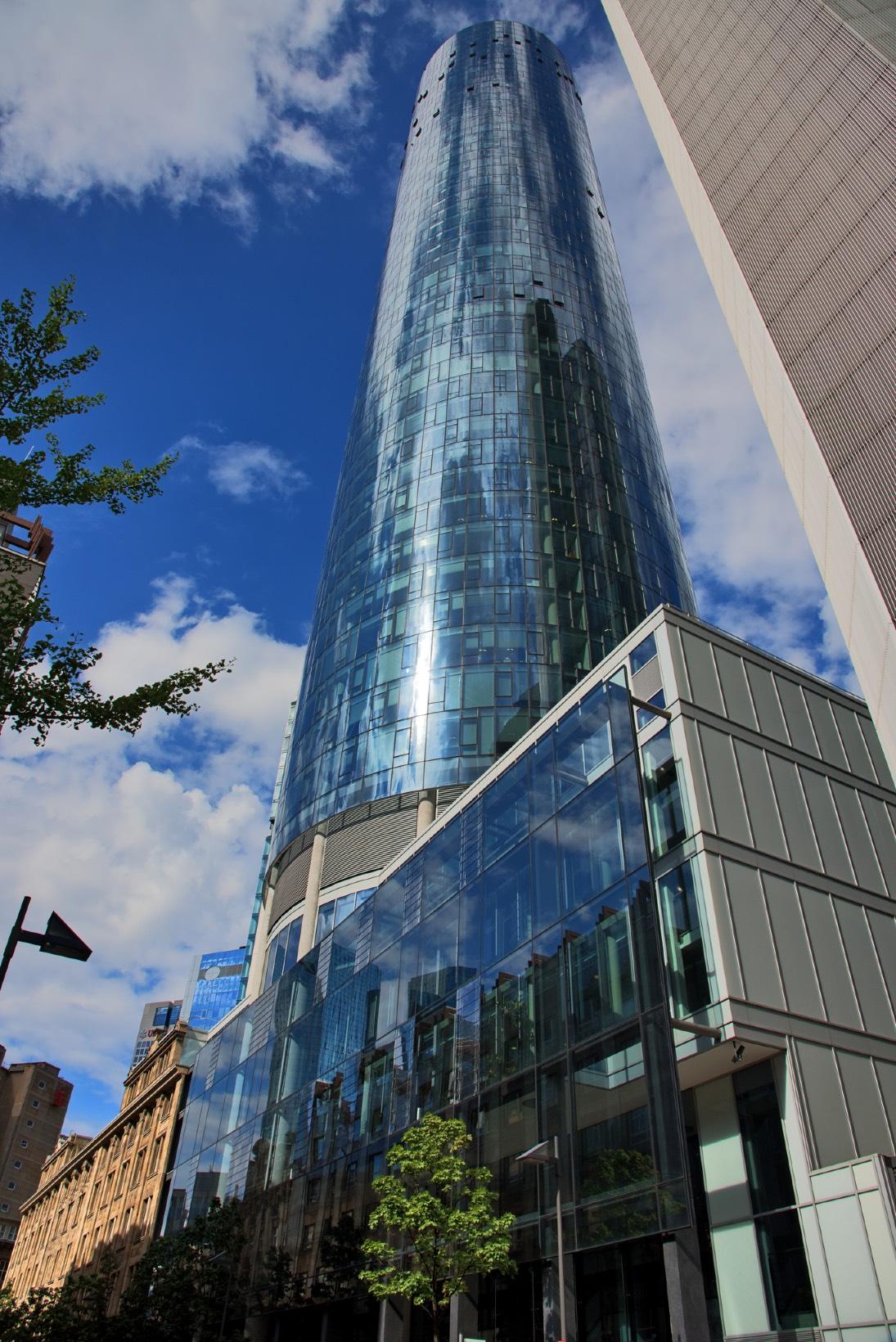
On the 200-meter (with antenna 240 meters) high MAIN TOWER is Frankfurt's highest publicly accessible observation platform. On the 53rd floor, the Main Tower Restaurant & Lounge offers enjoyment at a high level. In the skyscraper, on the 53rd and 54th floors, is also Europe's highest fitness club, Prime Time Fitness.
The observation platform is open daily, tickets can also be purchased online.
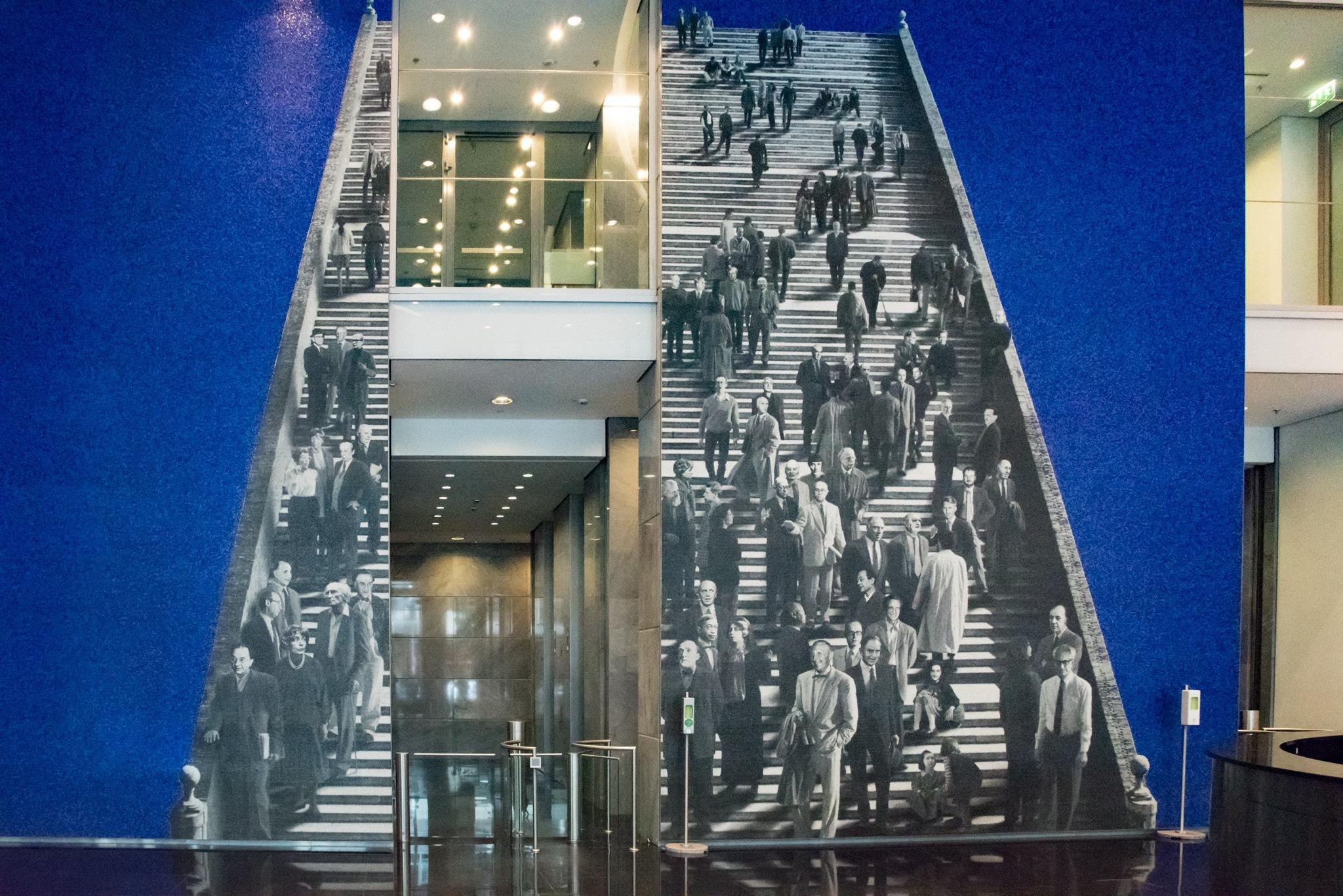
In the foyer of the Main Tower is the "Frankfurt Staircase", a wall mosaic of about 2.7 million stones, showing 56 personalities who have a special connection to Frankfurt.
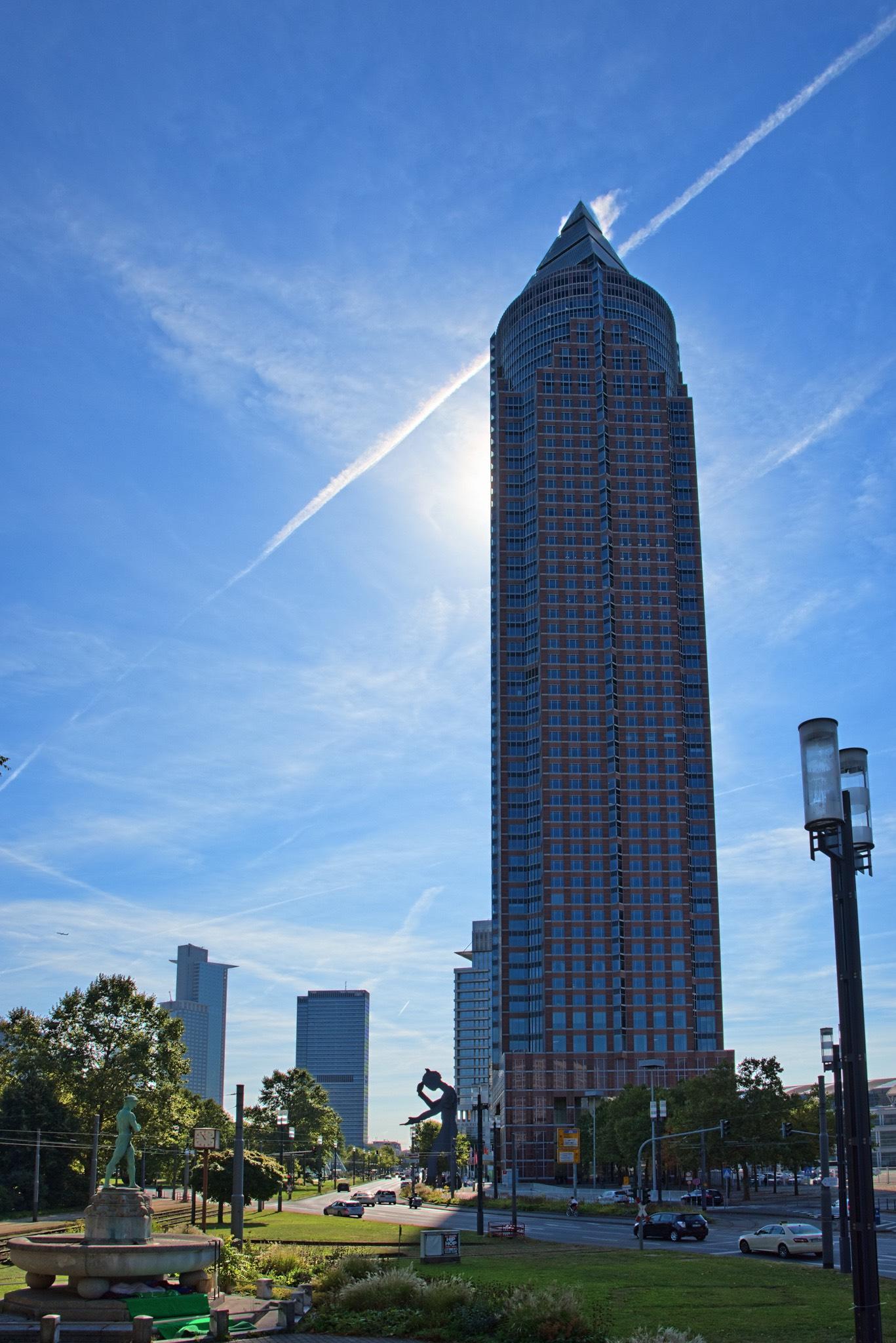
The high-rise got its name from its location directly at the Frankfurt trade fair grounds. The Trade Fair Tower is neither part of the fair nor used for fair events. With a
height of 256.5 meters, it was the tallest building in the city until the construction of the Commerzbank Tower.
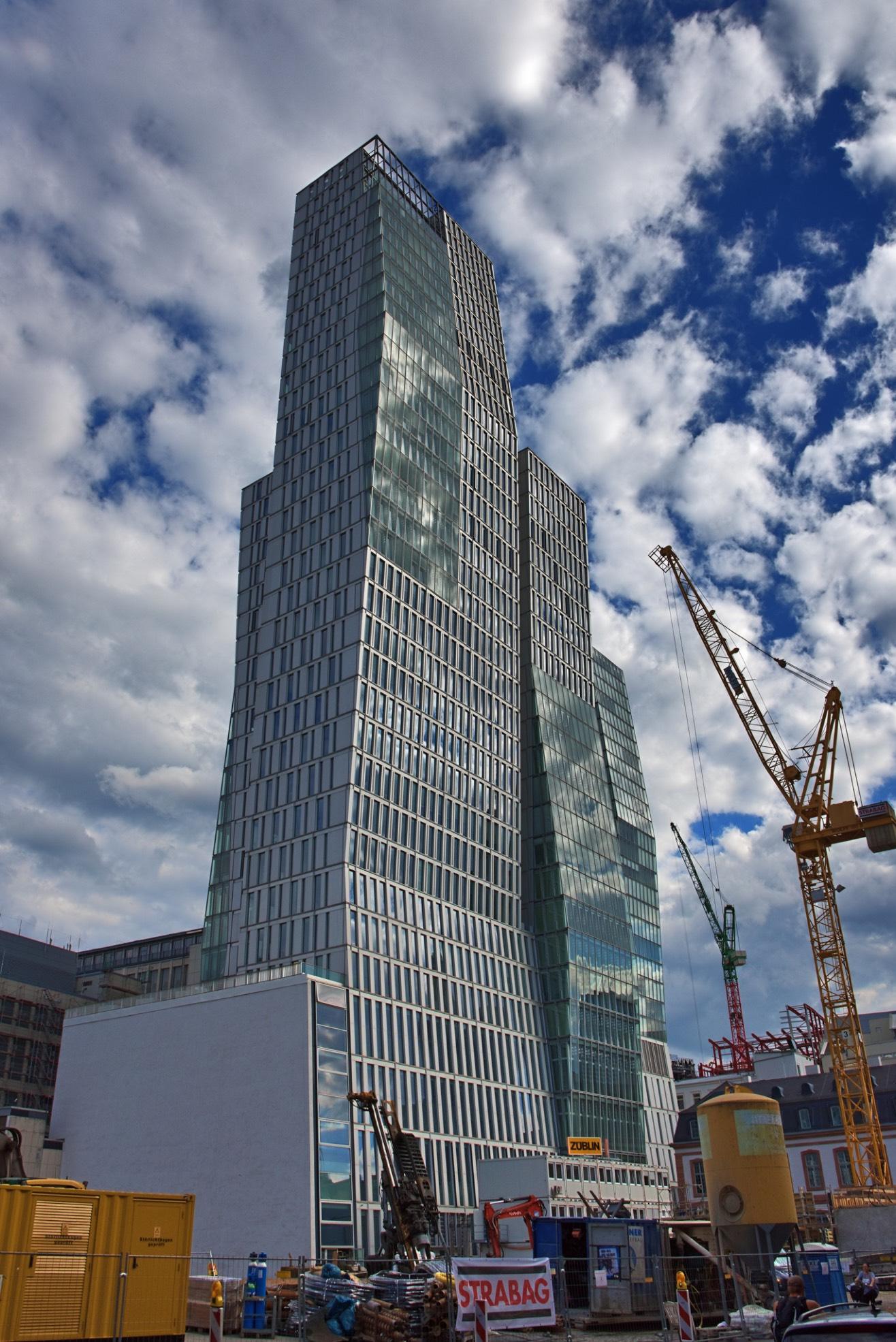
The Nextower is located behind the reconstruction of the Thurn and Taxis Palace and is 136 meters high. Offices are housed in the more than 30 floors. The Nextower has
direct access to the MyZeil shopping center and borders the luxurious Jumeirah Hotel.
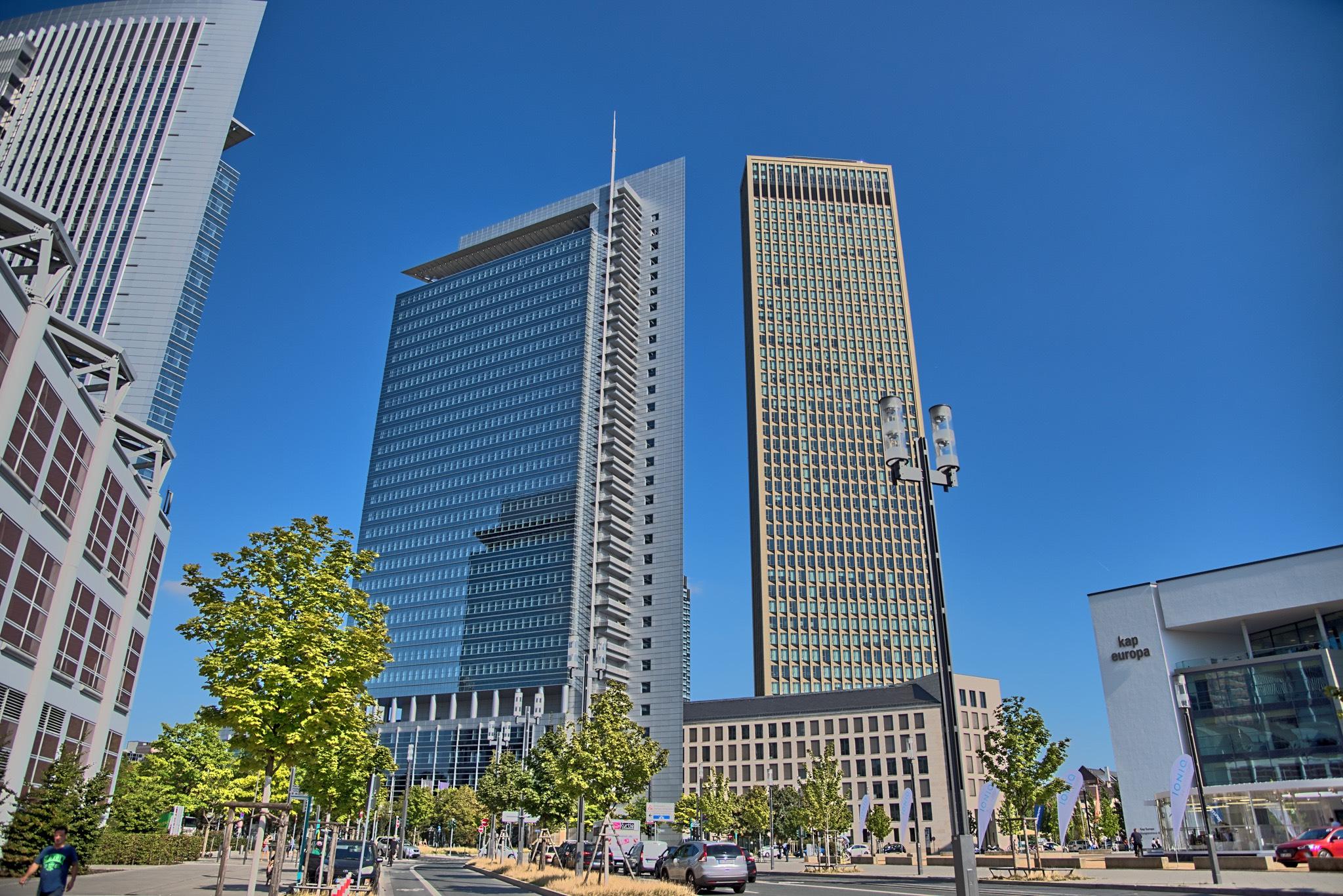
On the left is the "Pollux" high-rise, which together with "Castor" forms the "Forum Frankfurt" complex. On the
side is Tower 185, which at 200 meters towers over both Pollux (130 meters) and Castor (95 meters).
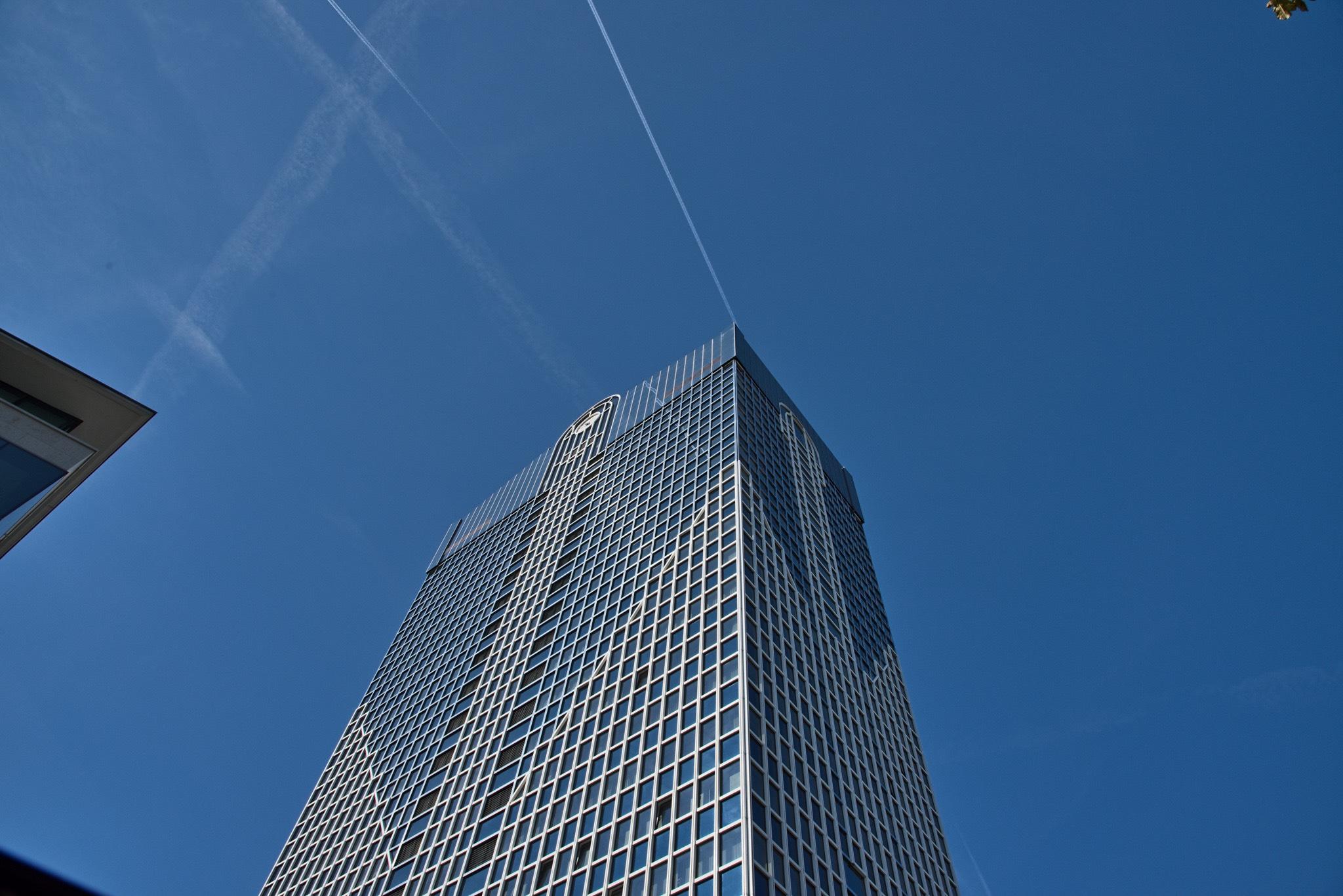
When the 84-meter-high office skyscraper was built in 1959, it was the second tallest building in the city. The visually very interesting structure was completely renovated
in 1991 and received an appealing new facade, in which an analog clock was also integrated.
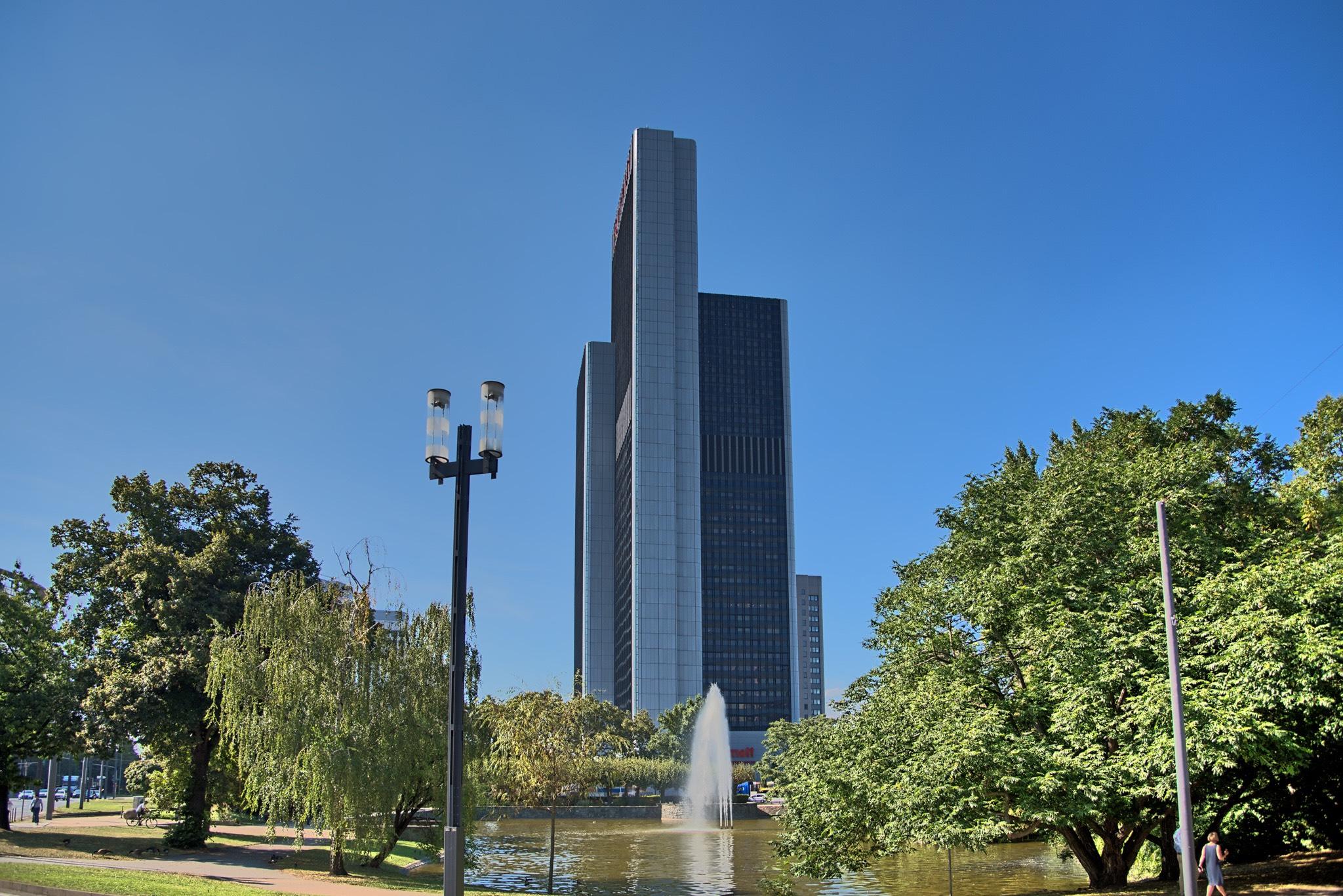
Built from 1976 to 1978, the 159.3-meter-high building was originally called "Plaza Büro Center". In 2010, the facade was redesigned and the skyscraper renamed "Westend Gate".
Hamburger Allee 2–4
The building houses two hotels, the Frankfurt Marriott and the Aparthotel Adagio Frankfurt City Messe.
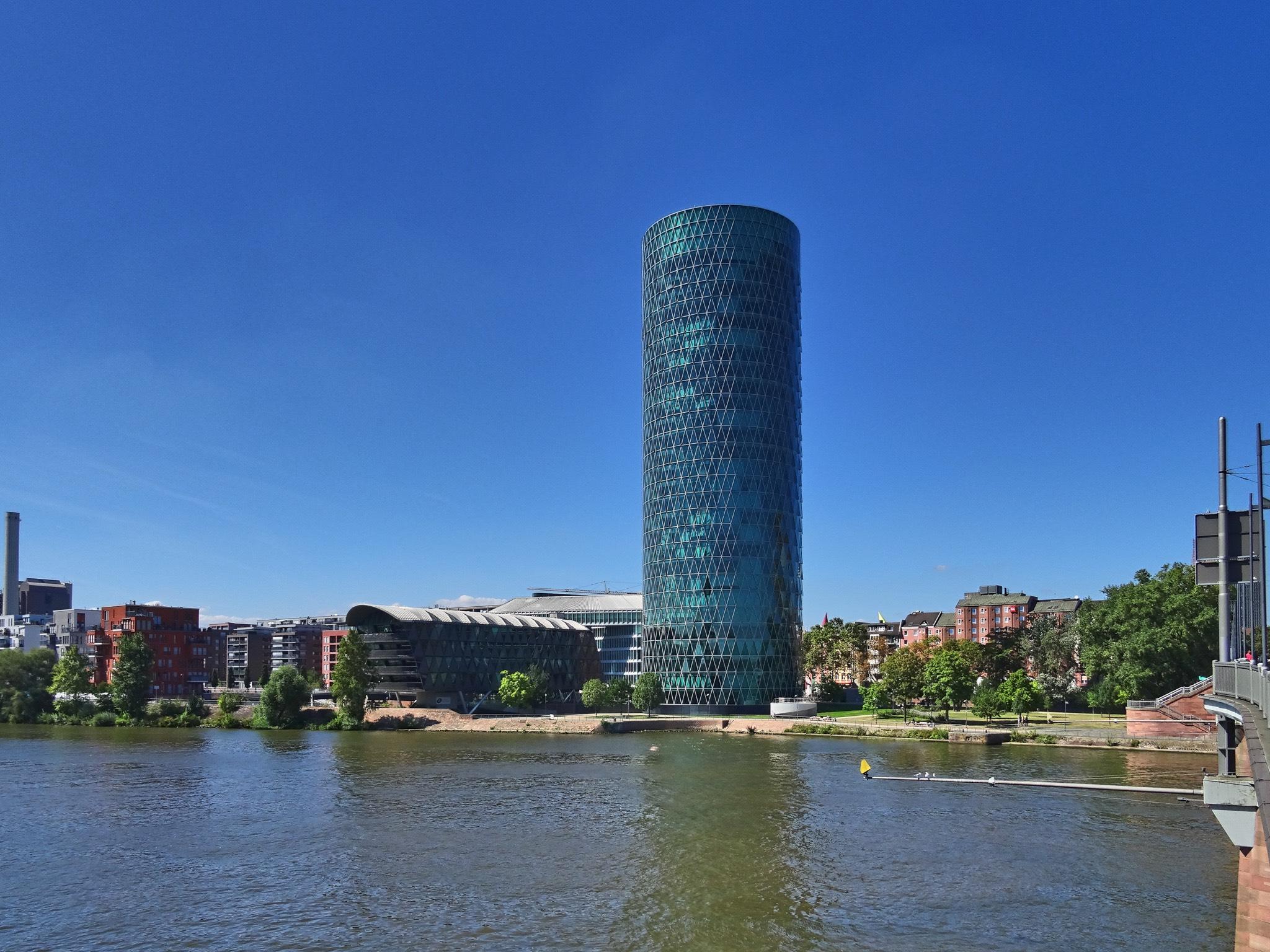
If you were out in Sachsenhausen the evening before and had one or two glasses, it may be that visitors believe they are seeing a mirage. Because the West Harbor Tower looks
like a giant "Geripptes" (apple wine glass), hence its nickname.
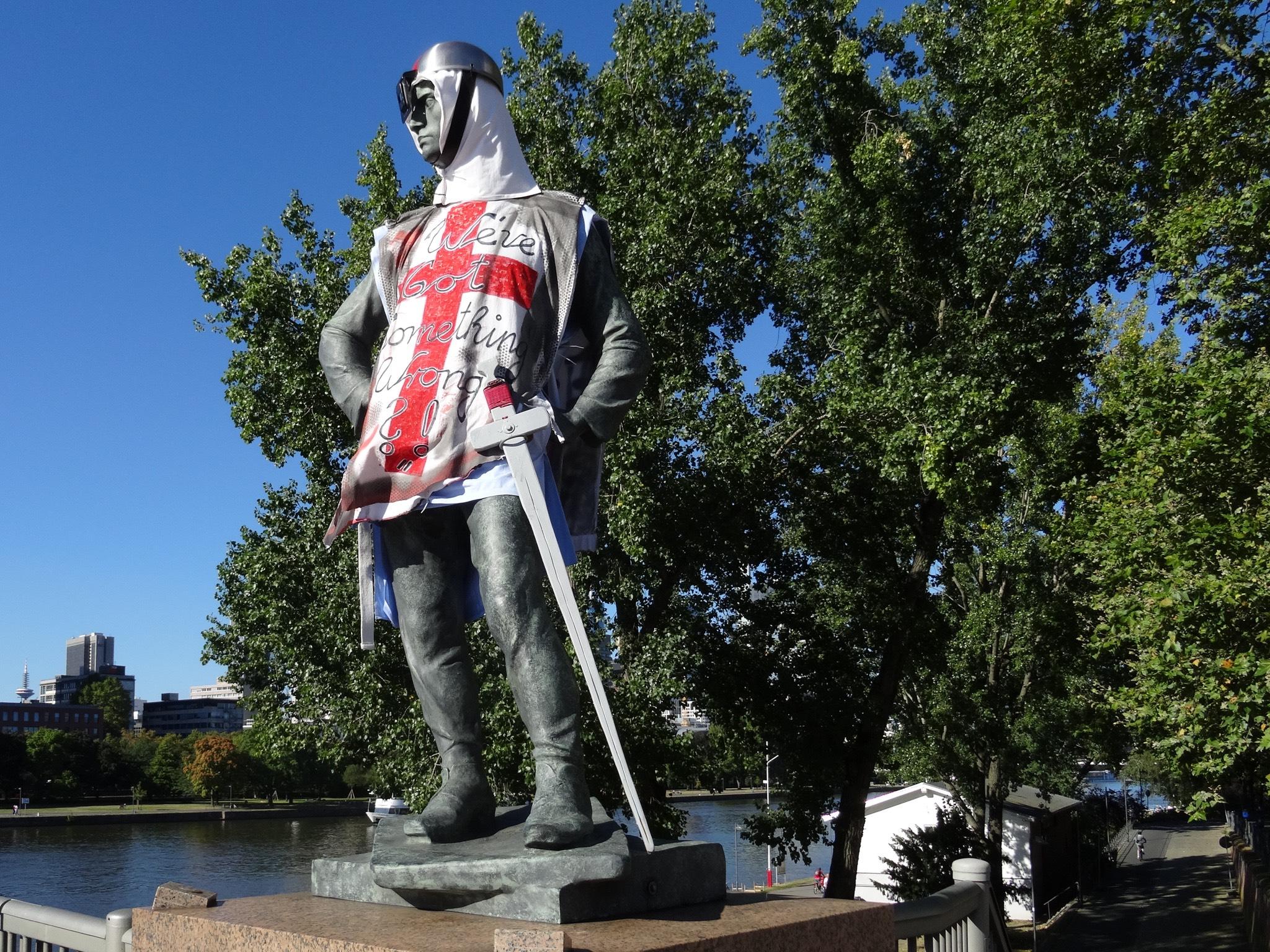
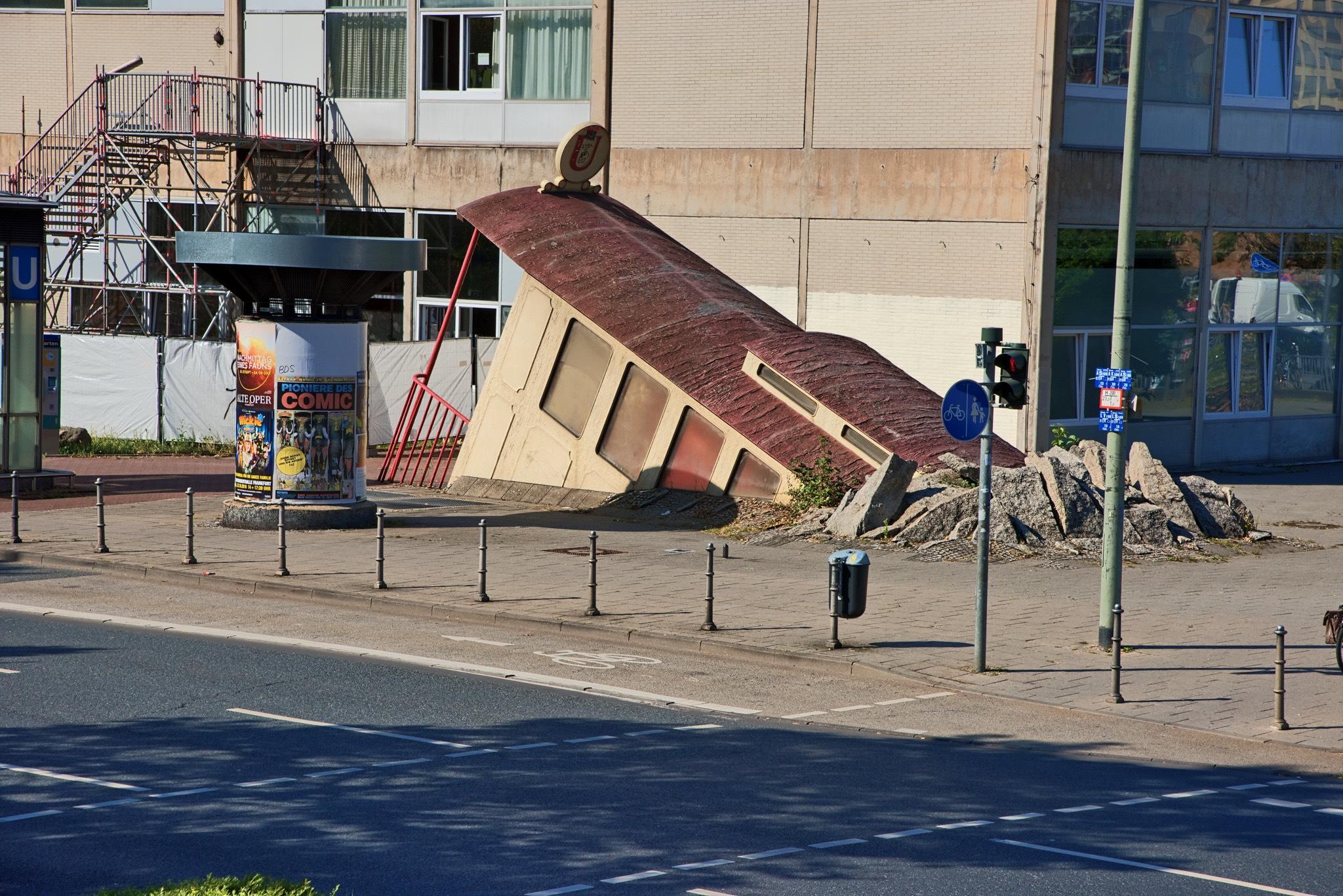
Historically, the Bockenheim Watchtower is one of the four towers built in the Middle Ages by the Frankfurt Landwehr. In our case, the quirky entrance to the subway station is of
particular interest. It is modeled after a former streetcar. From here it is 400 meters to the Palm Garden.
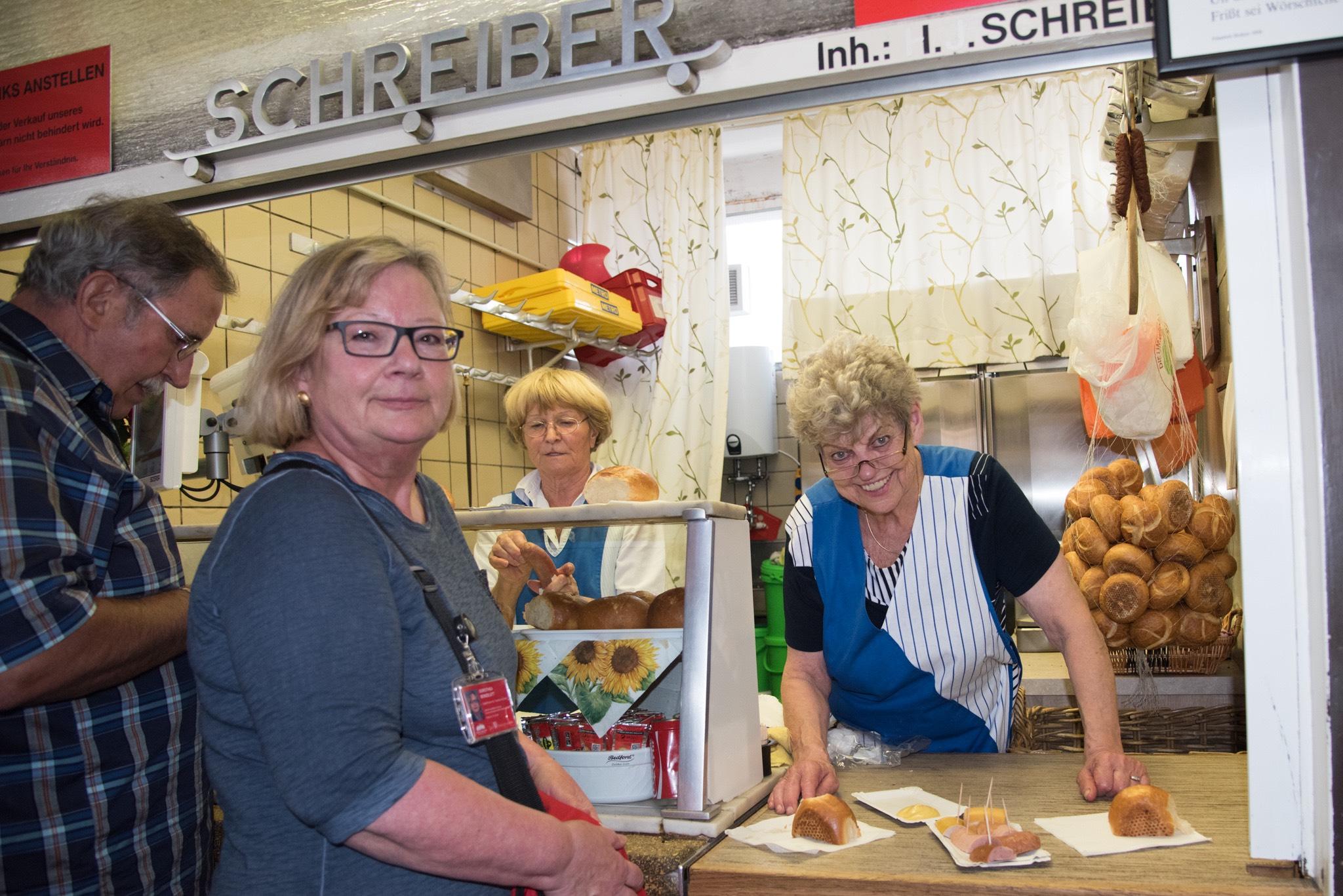
Since 1979, Ilse Schreiber has been serving her customers in the Kleinmarkthalle. Frankfurt sausage specialties are served here: Krakauer, meat, yellow, and beef sausage. Accompanied by water rolls, bread or milk rolls. SausageIlse is an institution and her specialties are even on the
Hasengasse 5-7 (Stand 8)
menu in Sachsenhausen. In February 2020, the sausage legend Ilse Schneider turned 80.
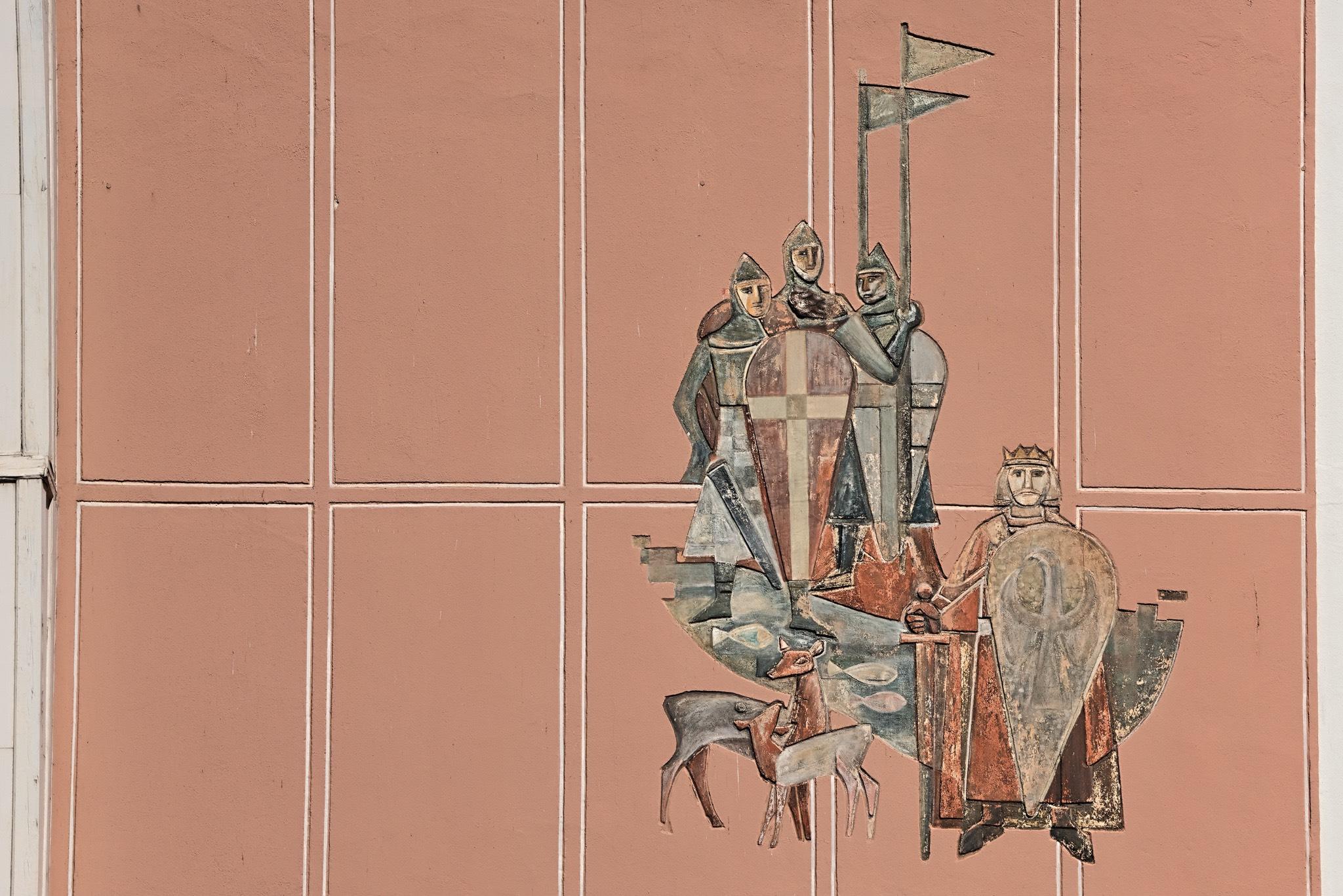
When the Franks under Emperor Charlemagne were fleeing from the Saxons, a white hind showed them the spot where a ford led through the Main. The Franks then settled
at the "Ford of the Franks". This became Frankfurt. On the other bank, where the Saxons lived, Sachsenhausen arose.
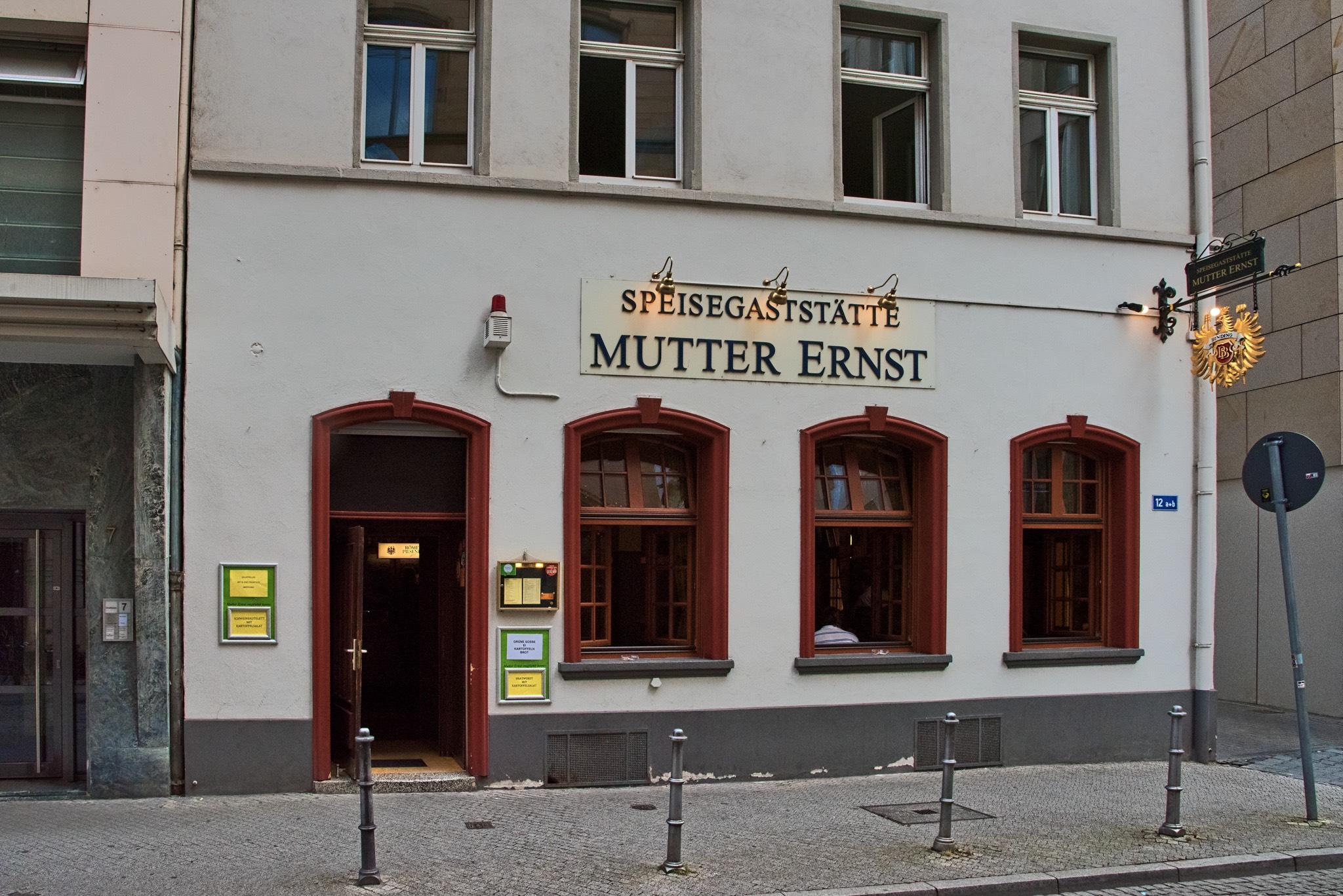
In October 1938, the Offenbach master butcher Richard Ernst opened the Ernst restaurant with his wife Else. Because the guests always went to the "Mother", the place was renamed "Mutter Ernst" in 1975. Here there is hearty,
down-to-earth Frankfurt cuisine. Of course, you can also enjoy the apple wine here.
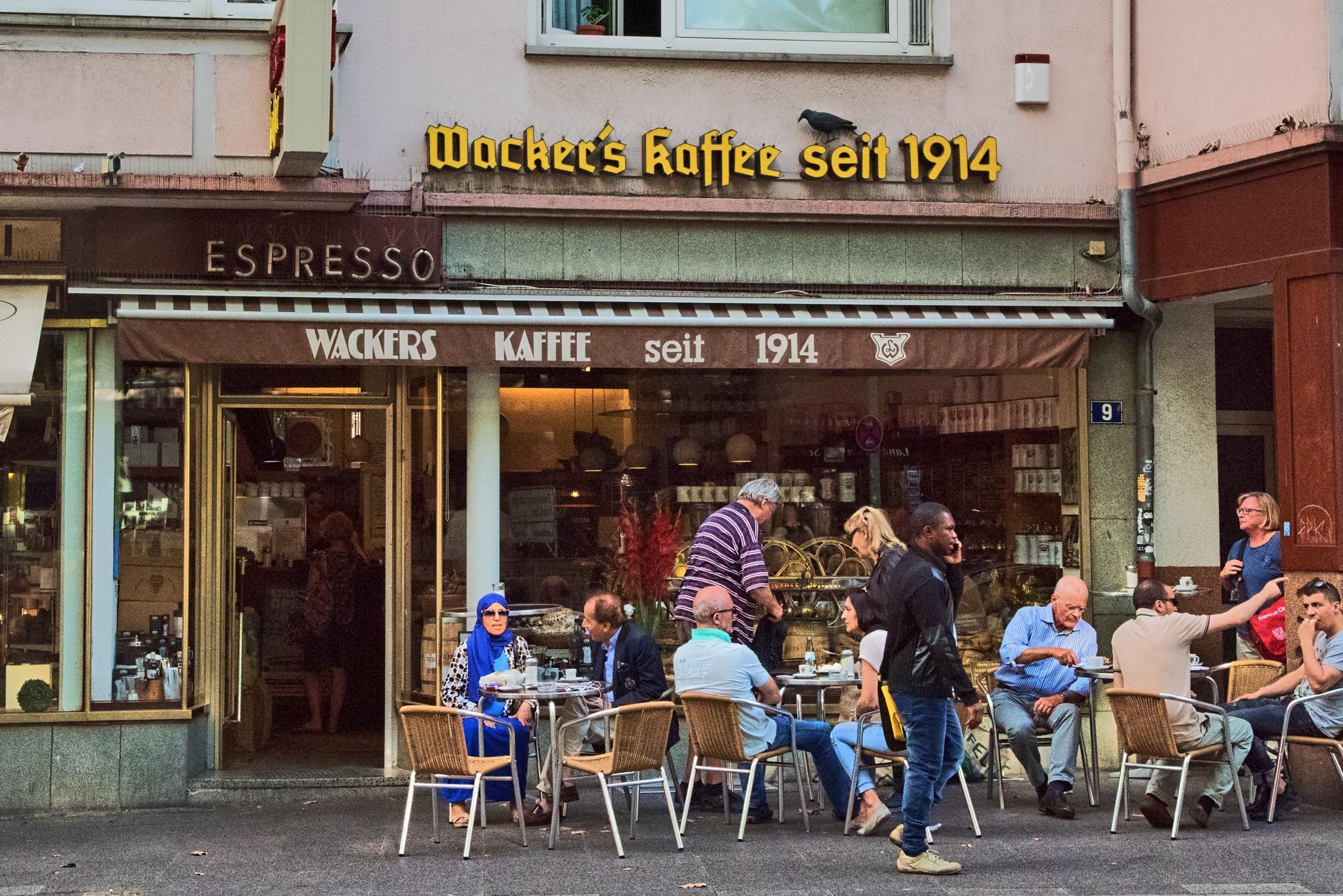
The original location of probably the best coffee in the city has practically not changed since 1955. When you enter the shop, the intense coffee aroma is positively noticeable.
The café is very small and some guests take their coffee cup across the street and enjoy their coffee on the wall there.
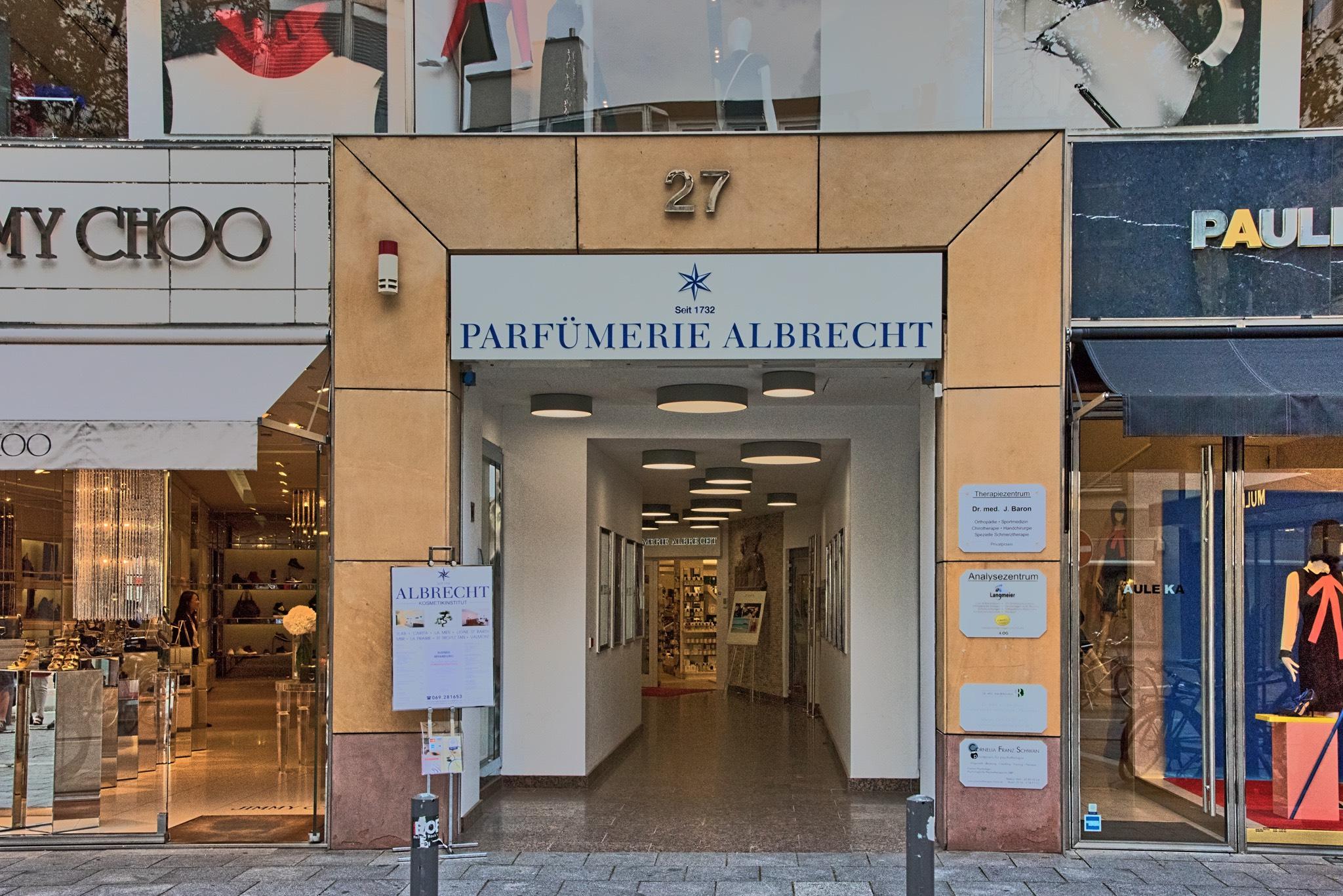
In 1732, the history of Albrecht Perfumery began. At that time, Phillip Gallus Mettenheimer took over the parents' business and continued it as "Mettenheimer's Drug and
Material Goods Store". A visit to Große Bockenheimer Strasse (the Freßgass') is definitely worthwhile.
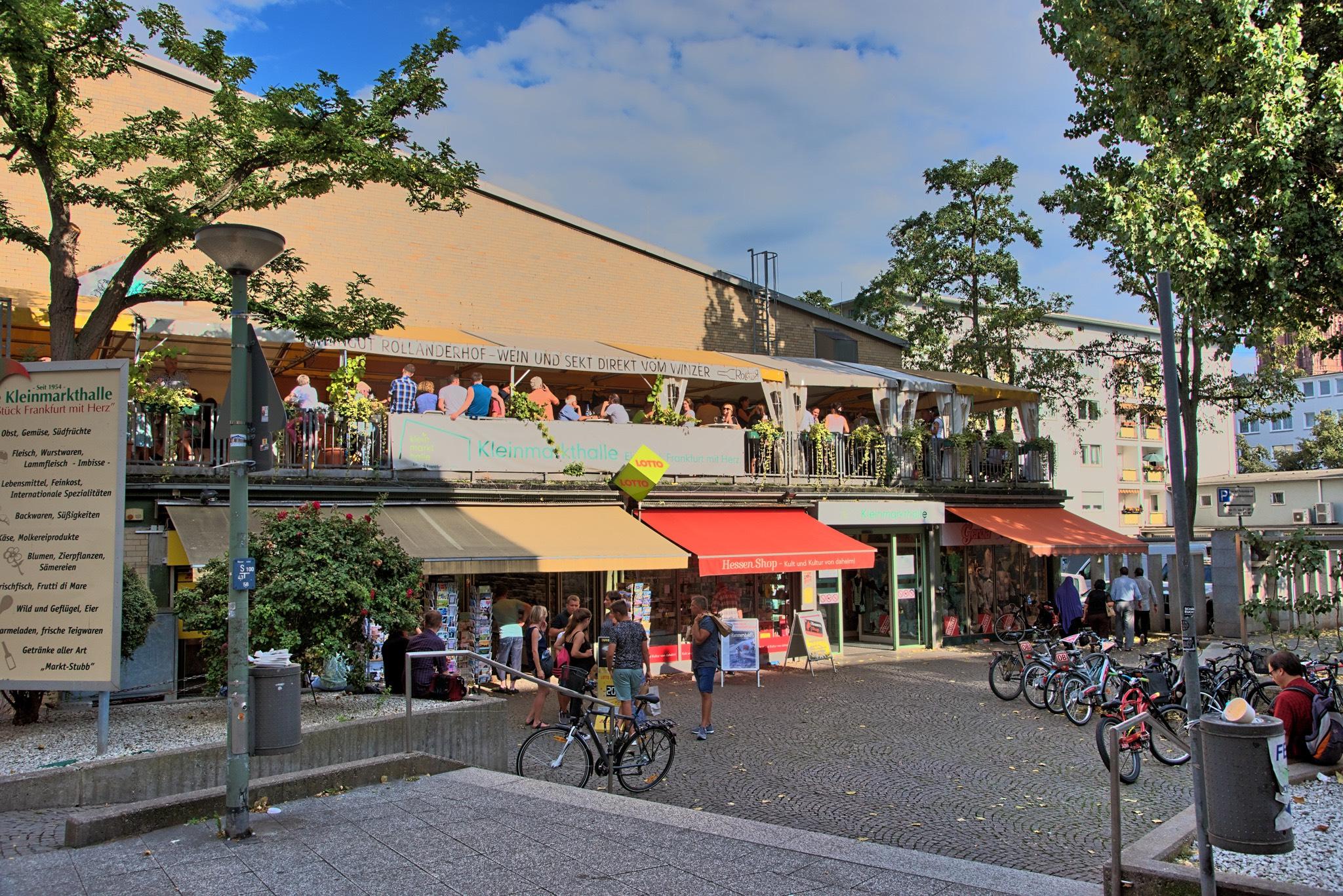
Simply put, the Kleinmarkthalle is a covered marketplace. Here you can also buy the typical "Green Sauce" and get an insight into regional cuisine at one of the many
gastronomic establishments. Open Monday to Friday 08:00-18:00, Saturday 08:00-16:00.
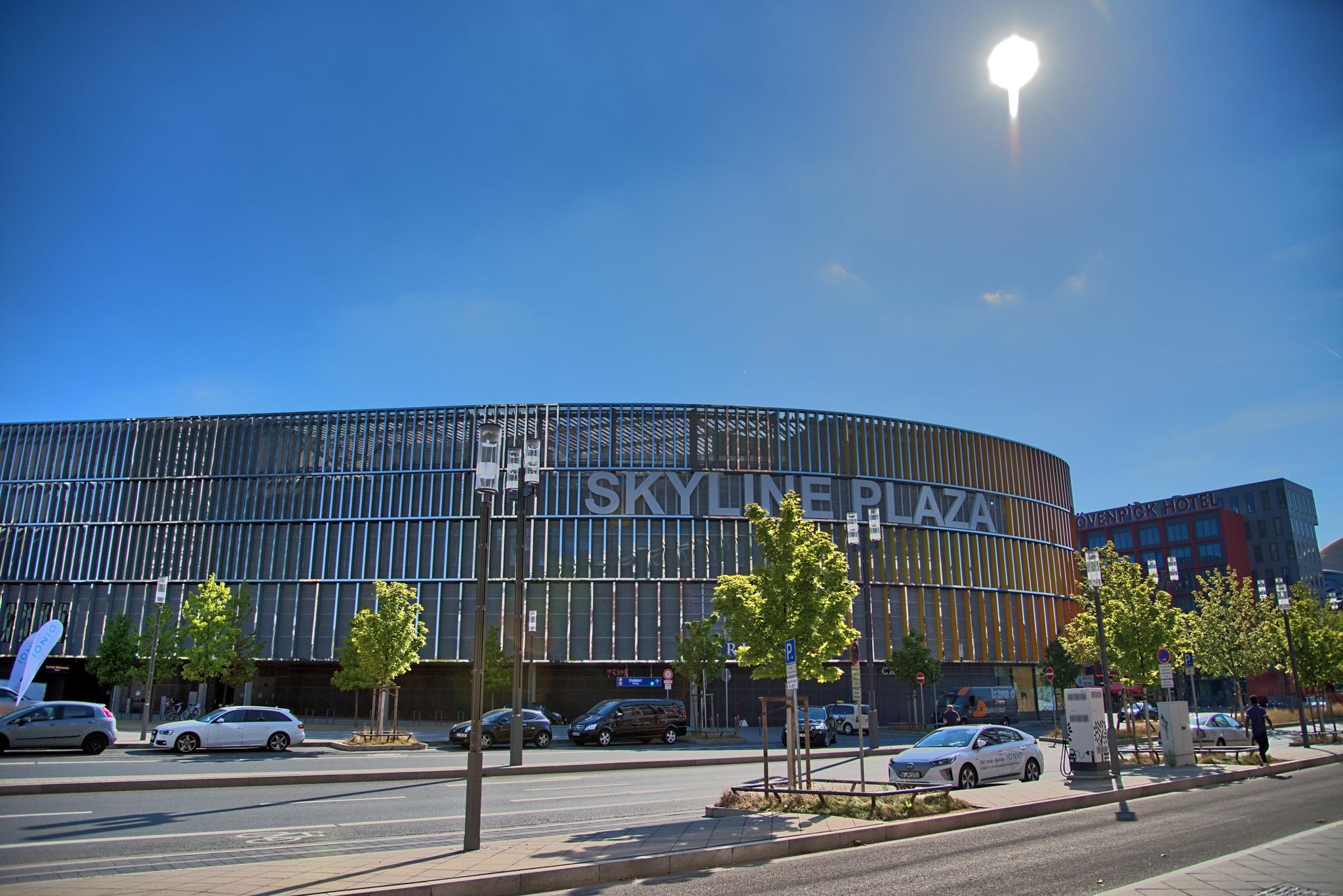
About 170 stores, a fitness and wellness area, and a parking garage characterize this shopping palace right next to the Frankfurt Trade Fair. From the publicly accessible rooftop terrace of the Skyline Plaza, the Skyline Garden,
you have a fantastic view of the skyscrapers in the Westend.
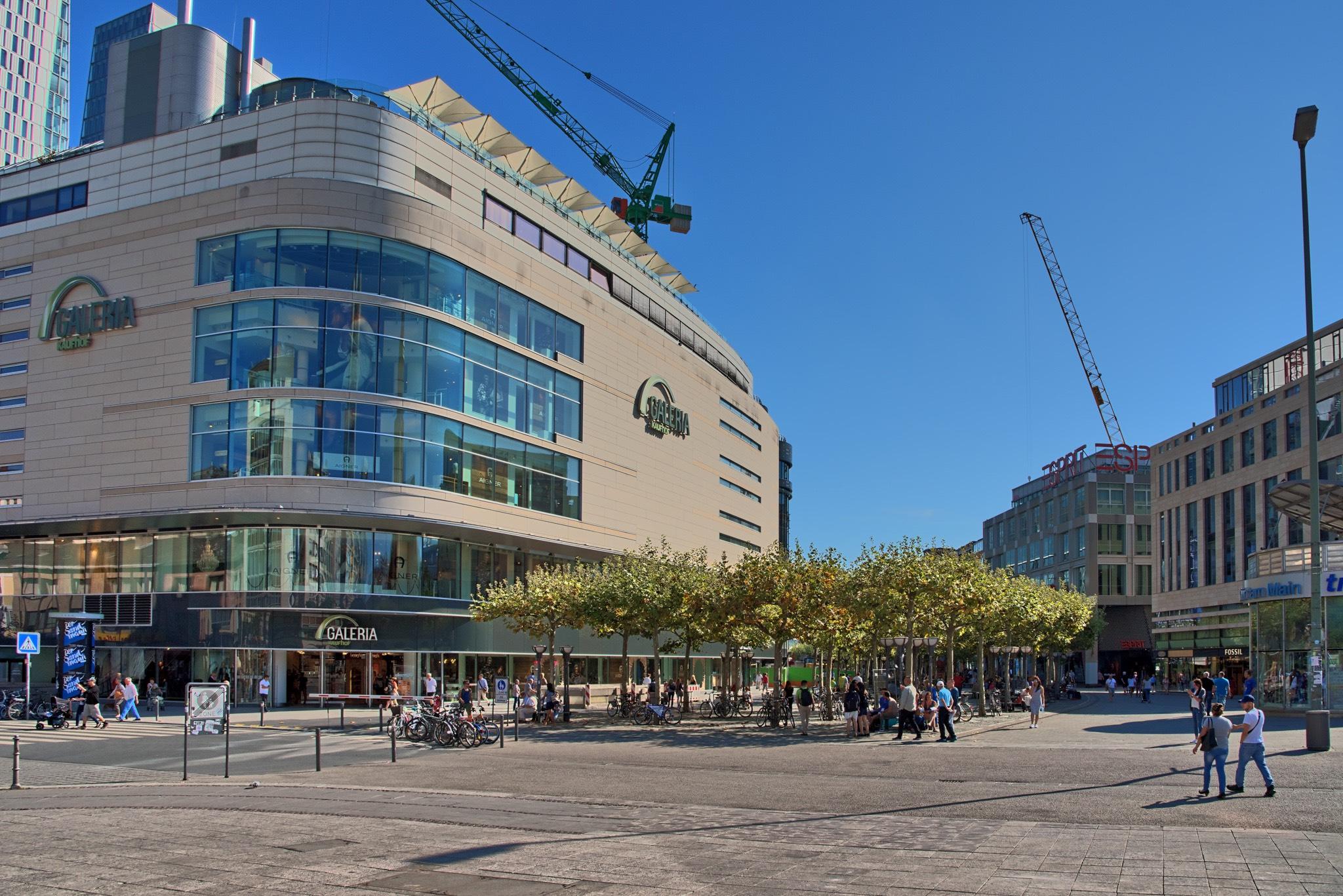
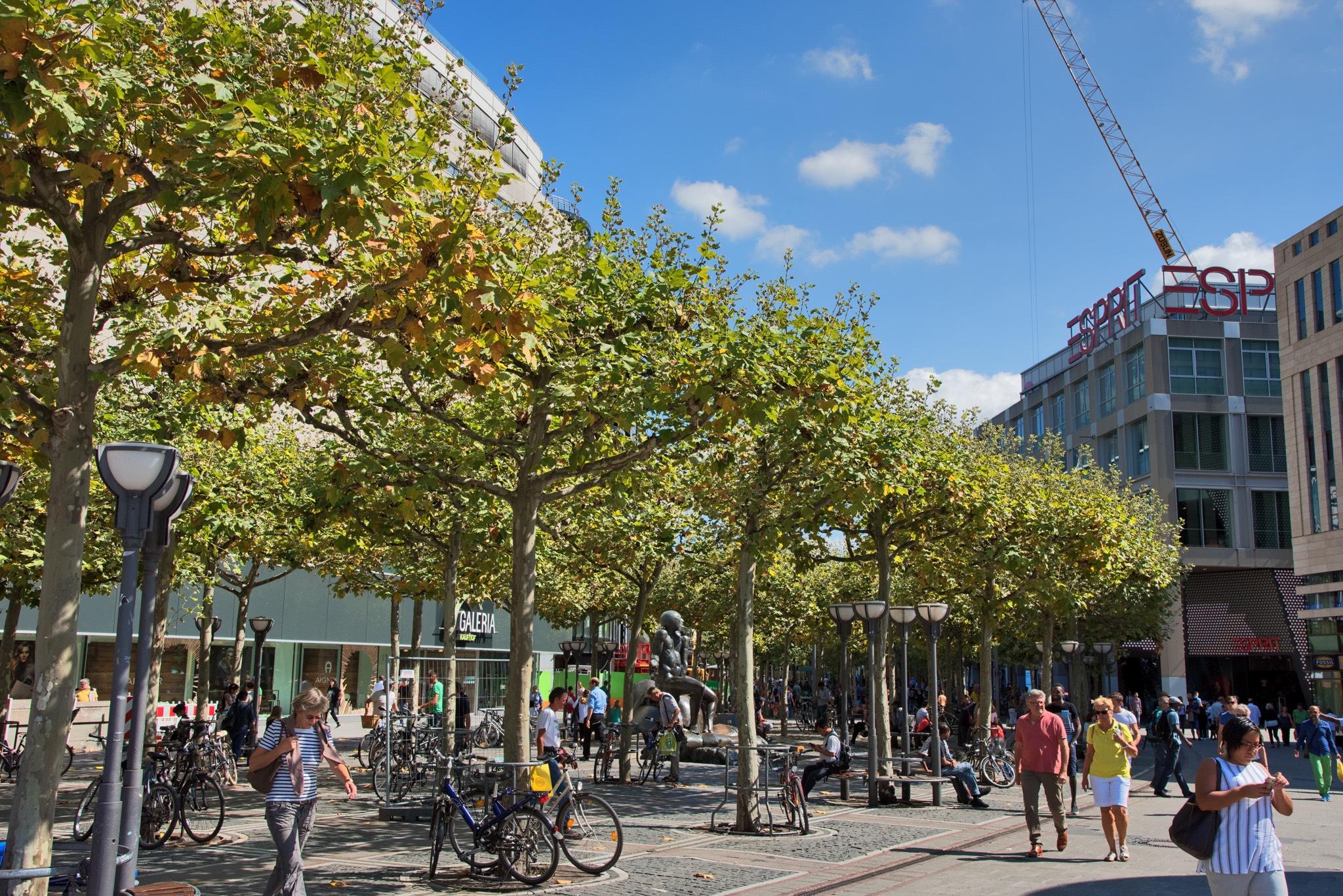
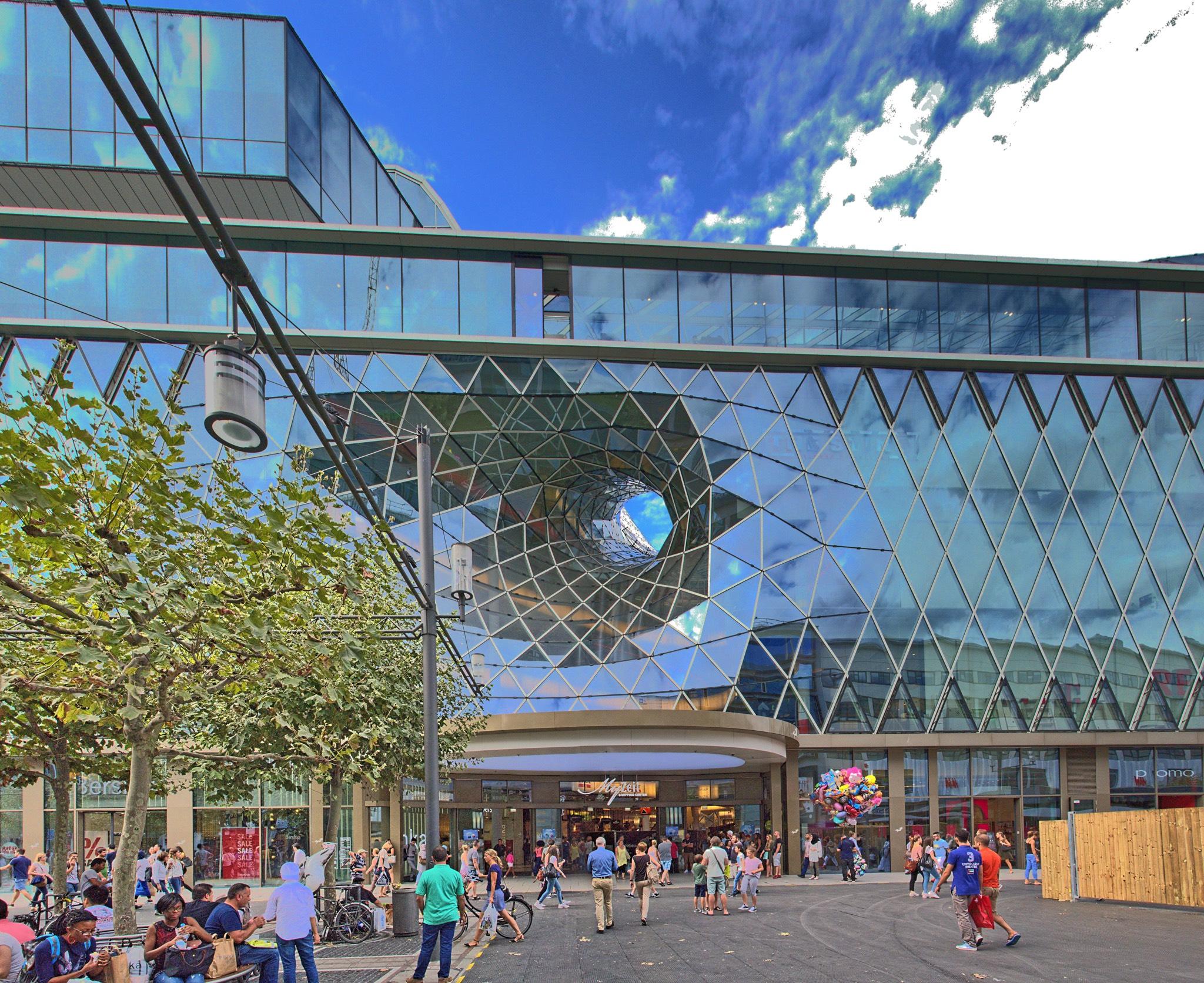
The Zeil is one of the most famous and highest-grossing shopping streets in Germany. A special tip is the Galeria department store pictured here, whose roof offers a restaurant and café with an unexpectedly good view of the
Große Gallusstraße 17–19
city. Right next to it is the MyZeil shopping center with its futuristic roof construction.
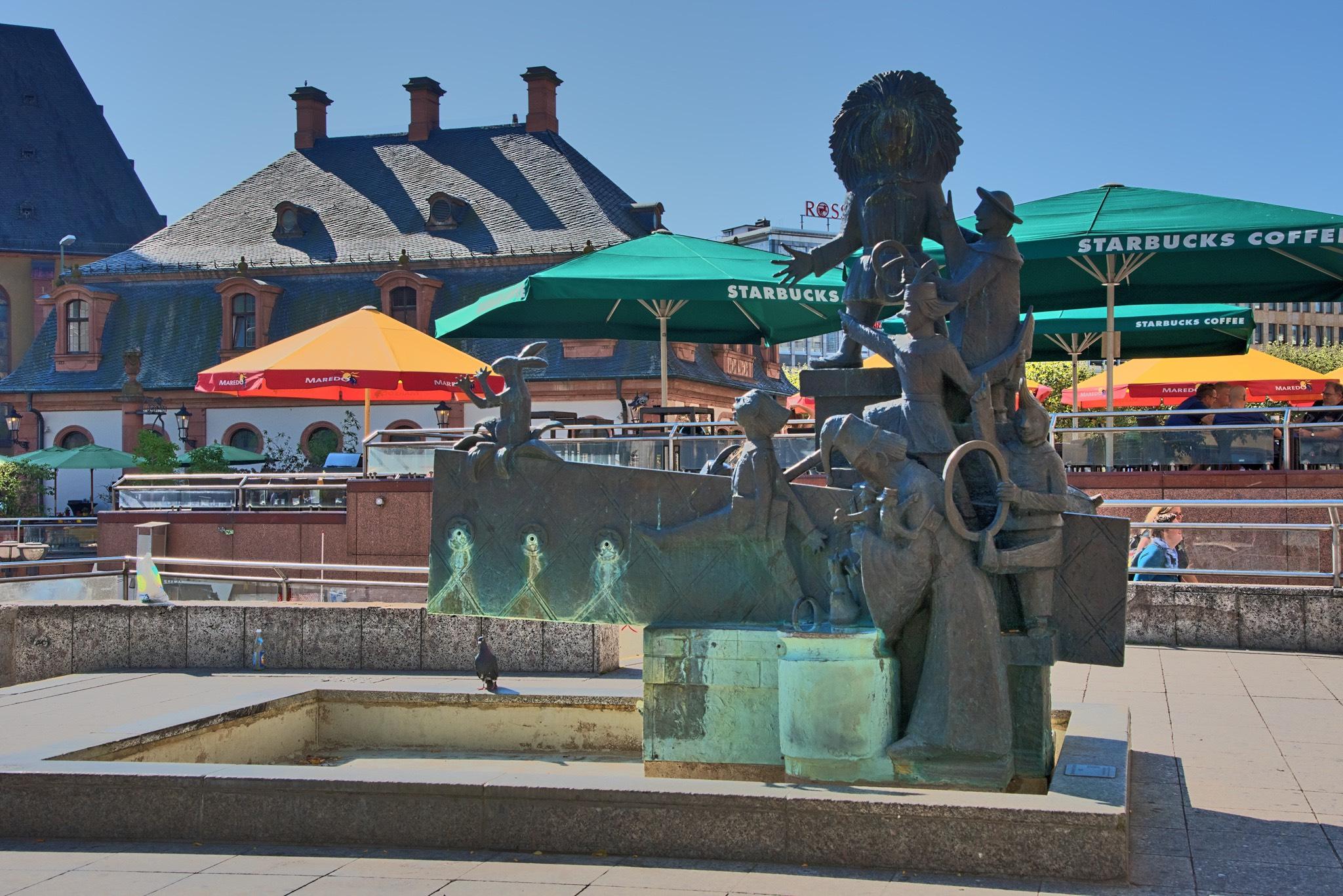
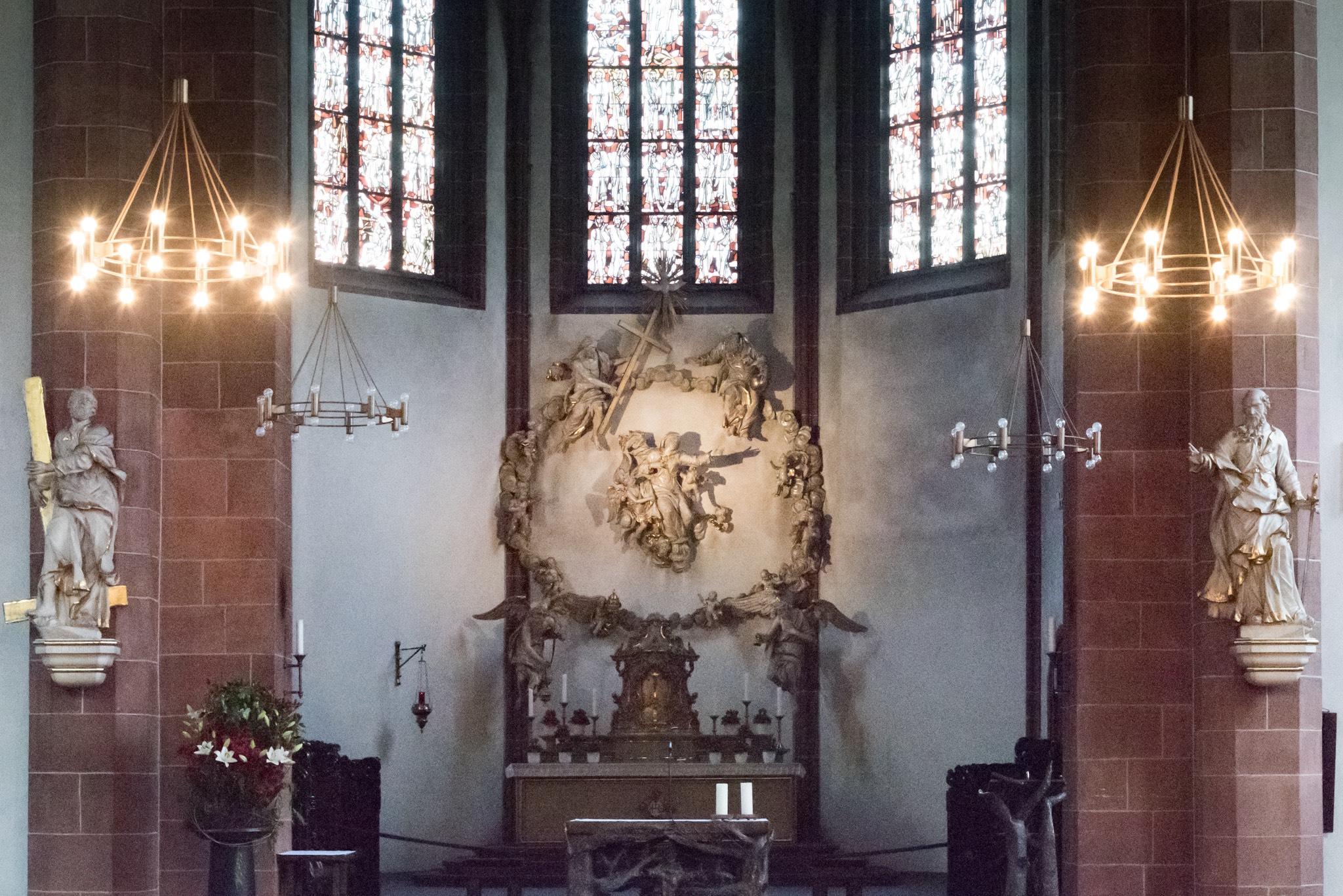
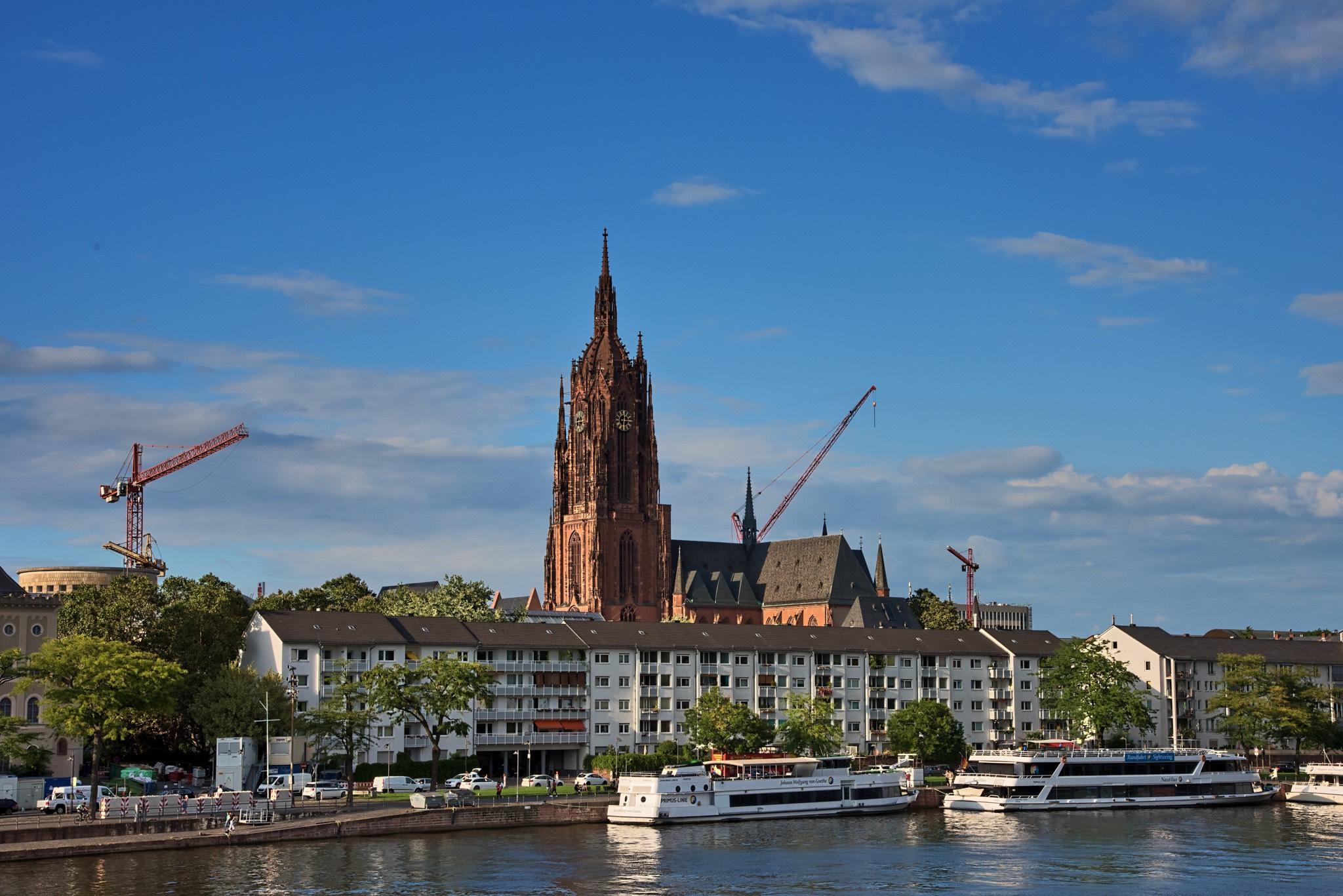
The former collegiate church is the largest church in Frankfurt. The election and coronation church of the Roman-German emperors was considered a symbol of national unity in the 19th century. The Imperial Cathedral
Domplatz 1
in its current form was built from 1250 to 1514 and rebuilt from 1948 to 1953 after the Second World War.
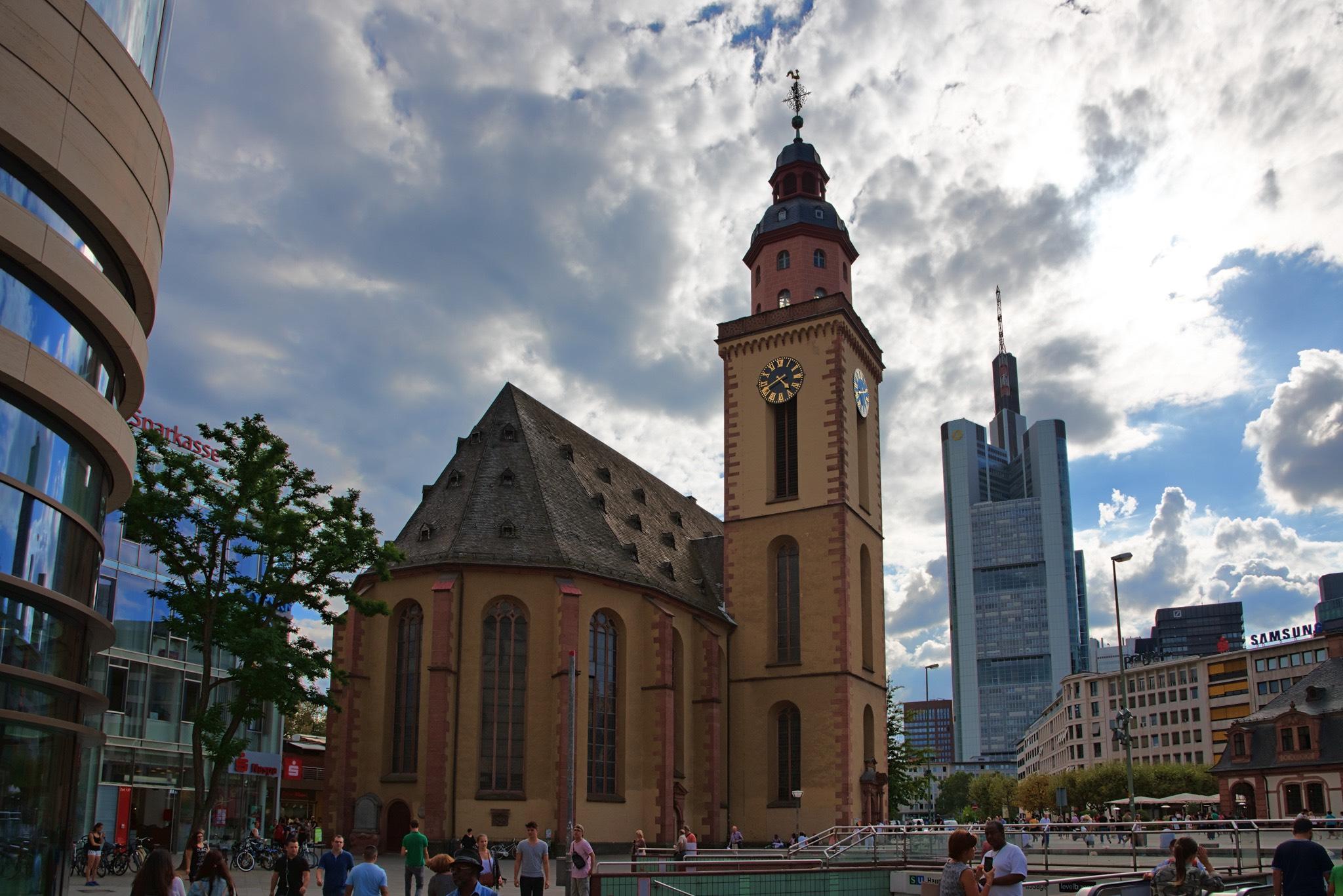
The Protestant main church stands opposite the Frankfurt Main Guard, at the beginning of the Zeil. St. Catherine's Church was built from 1678 to 1681. Johann Wolfgang von Goethe's parents were married here and owned two
An der Hauptwache
church seats in the house of worship. Whether Goethe himself was baptized here or at home is not documented.
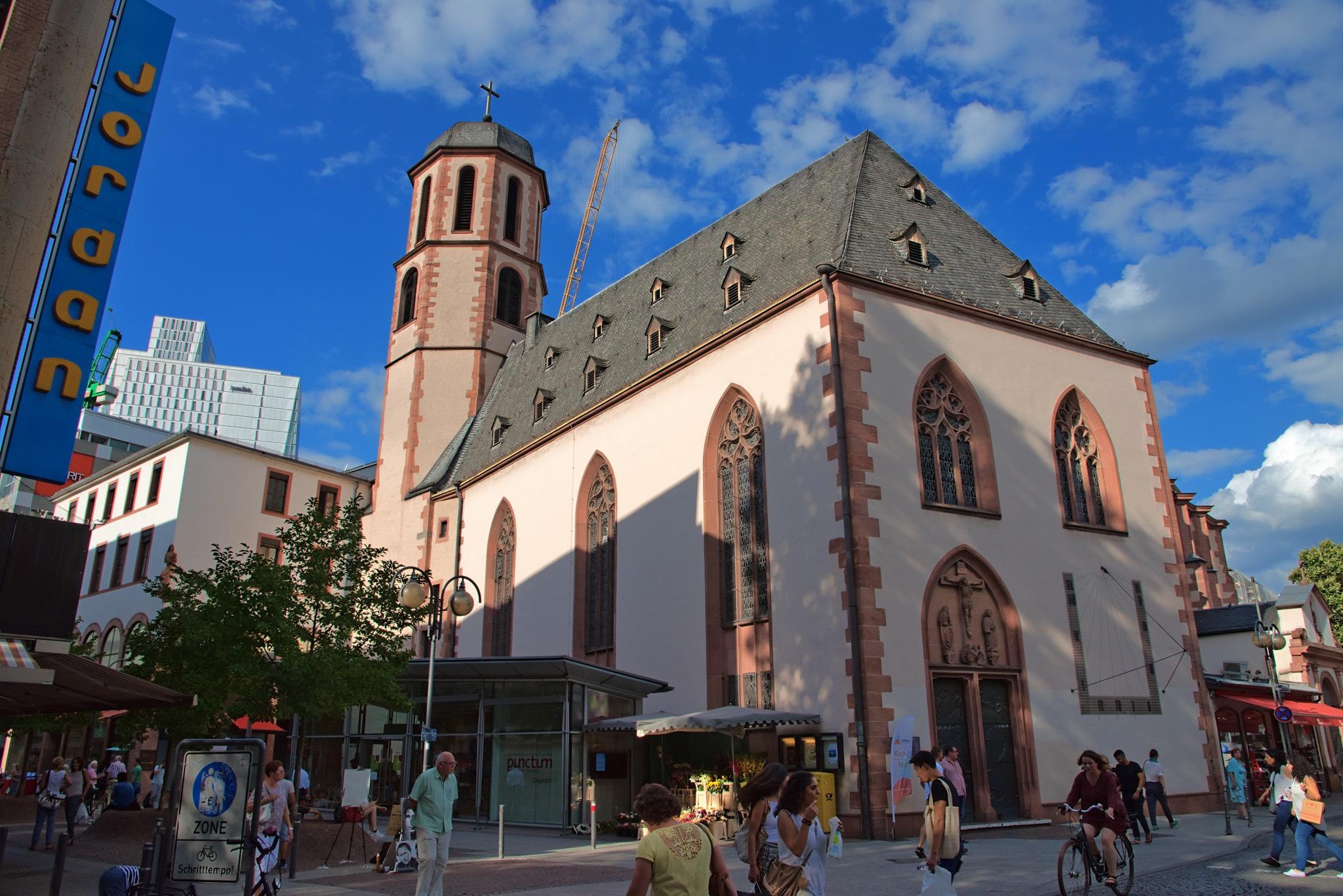
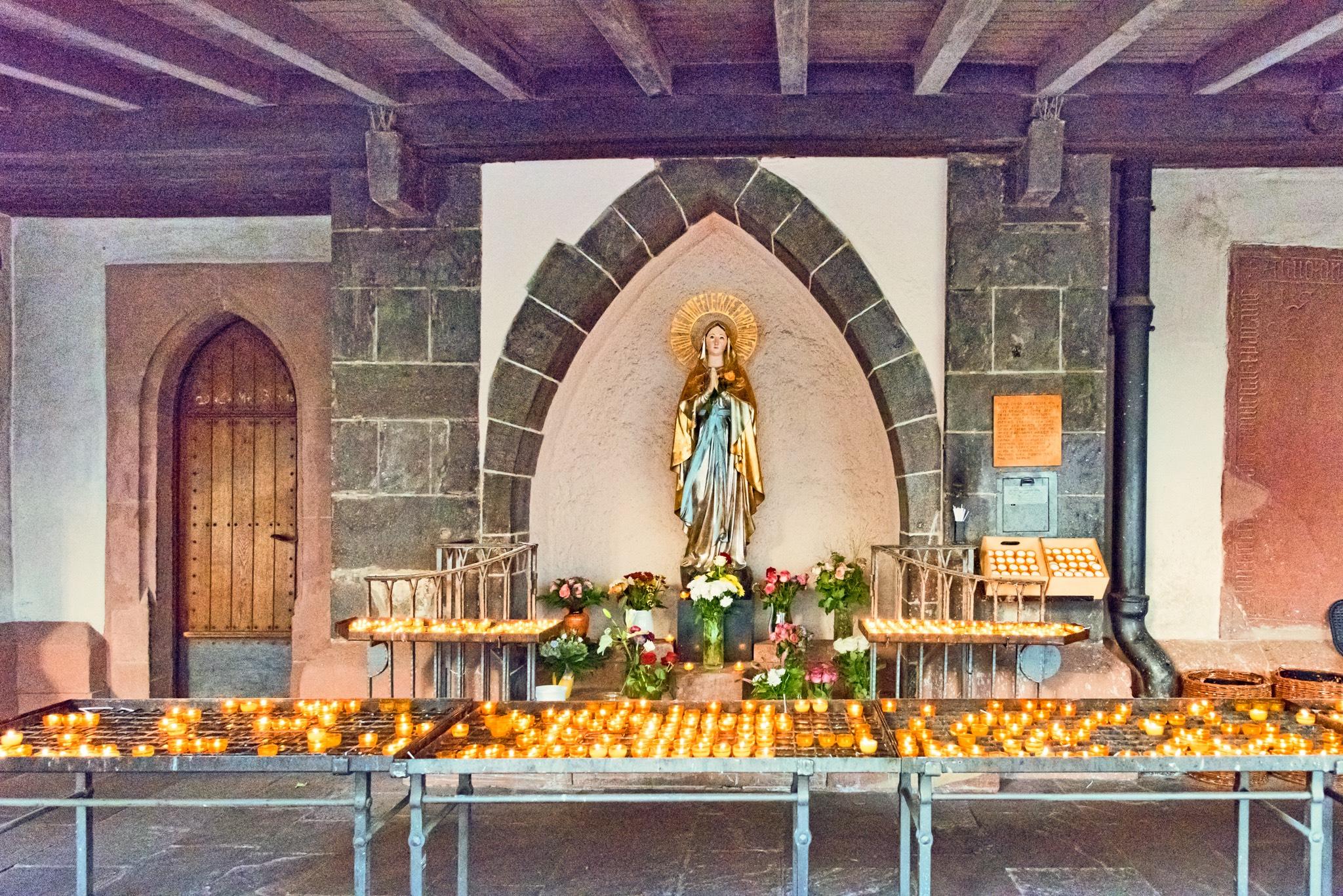
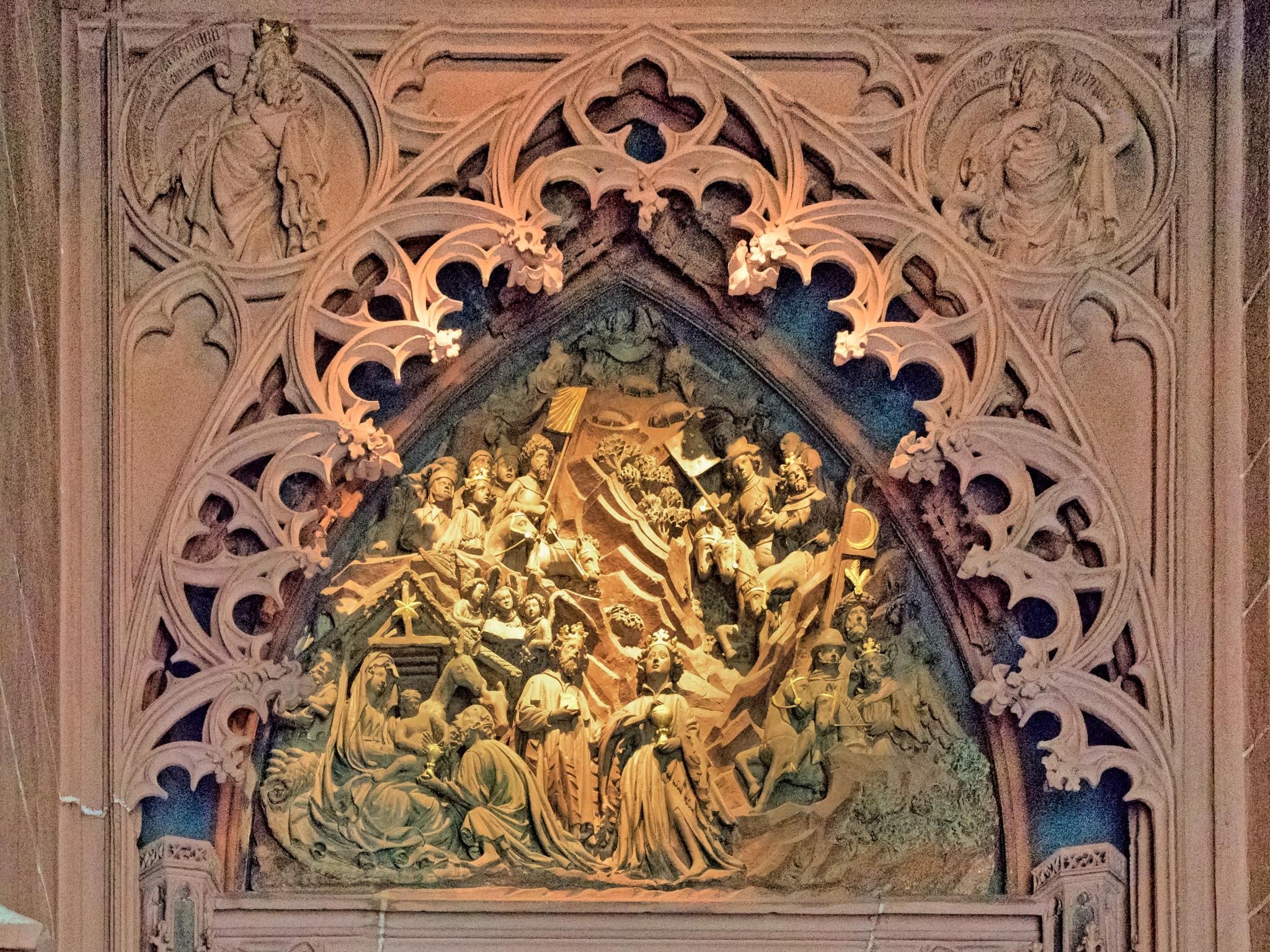
The Church of Our Lady is a monastery and rectory church built from the 14th to 16th centuries. Although the church was built in the usual east-west orientation, the entrance
portal is in the south. This circumstance is due to the fact that the city wall ran along the church.
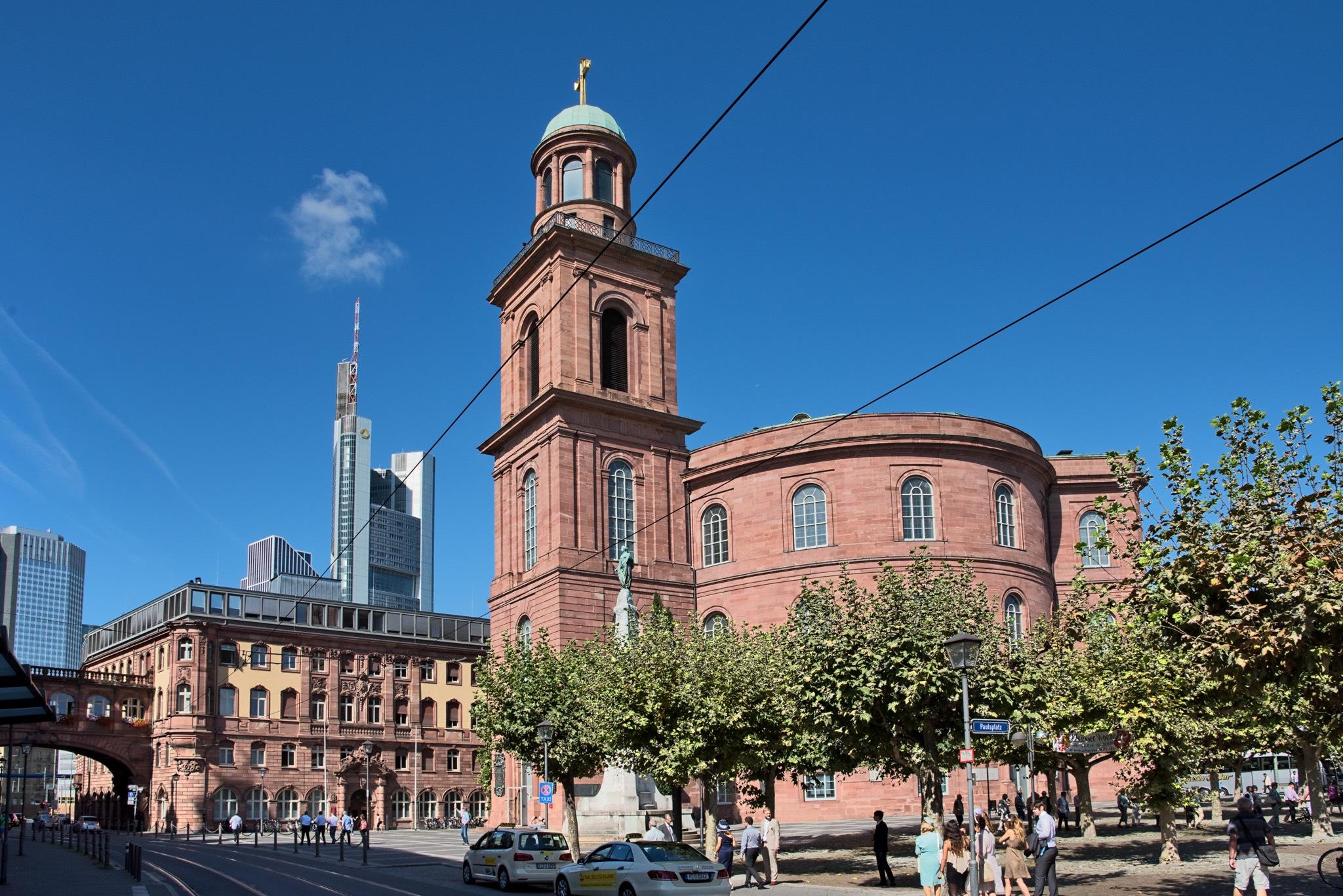
The first free people's representation of the German lands, the Frankfurt National Assembly, met here from 1848 to 1849. After its destruction in 1944, it was the first historic building to be rebuilt. The reopening of the "House of all
Germans" took place in 1948. Since then, St. Paul's Church has been a national monument.
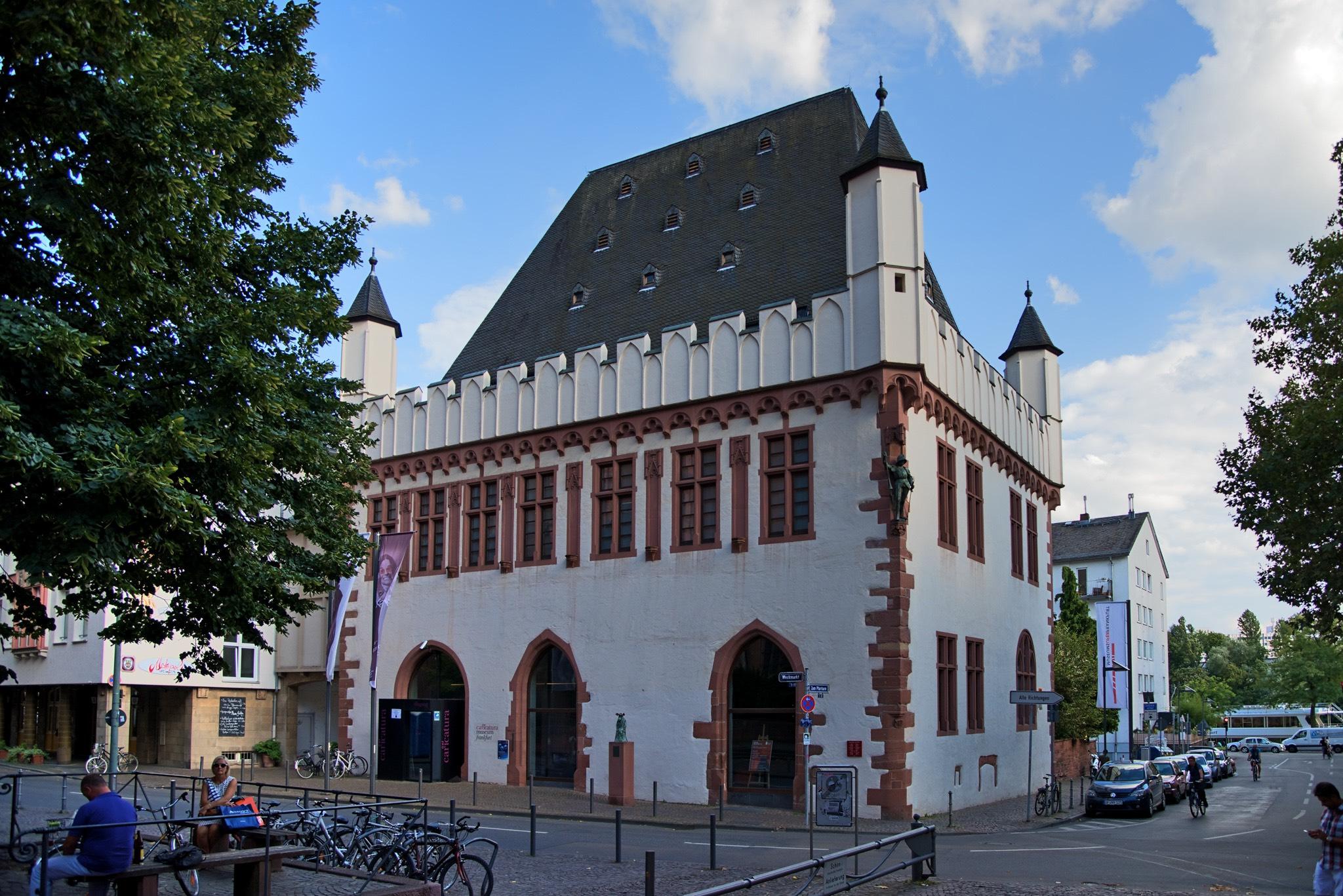
The Museum for Comic Art - caricatura museum frankfurt is housed in the Leinwandhaus. Exhibits from the New Frankfurt School are presented here. The museum's landmark is the elk sculpture by Hans Traxler standing in
front of it. On it is the saying by F. W. Bernstein "The sharpest critics of the elks used to be ones themselves".
with the ÖBB nightjet to Frankfurt
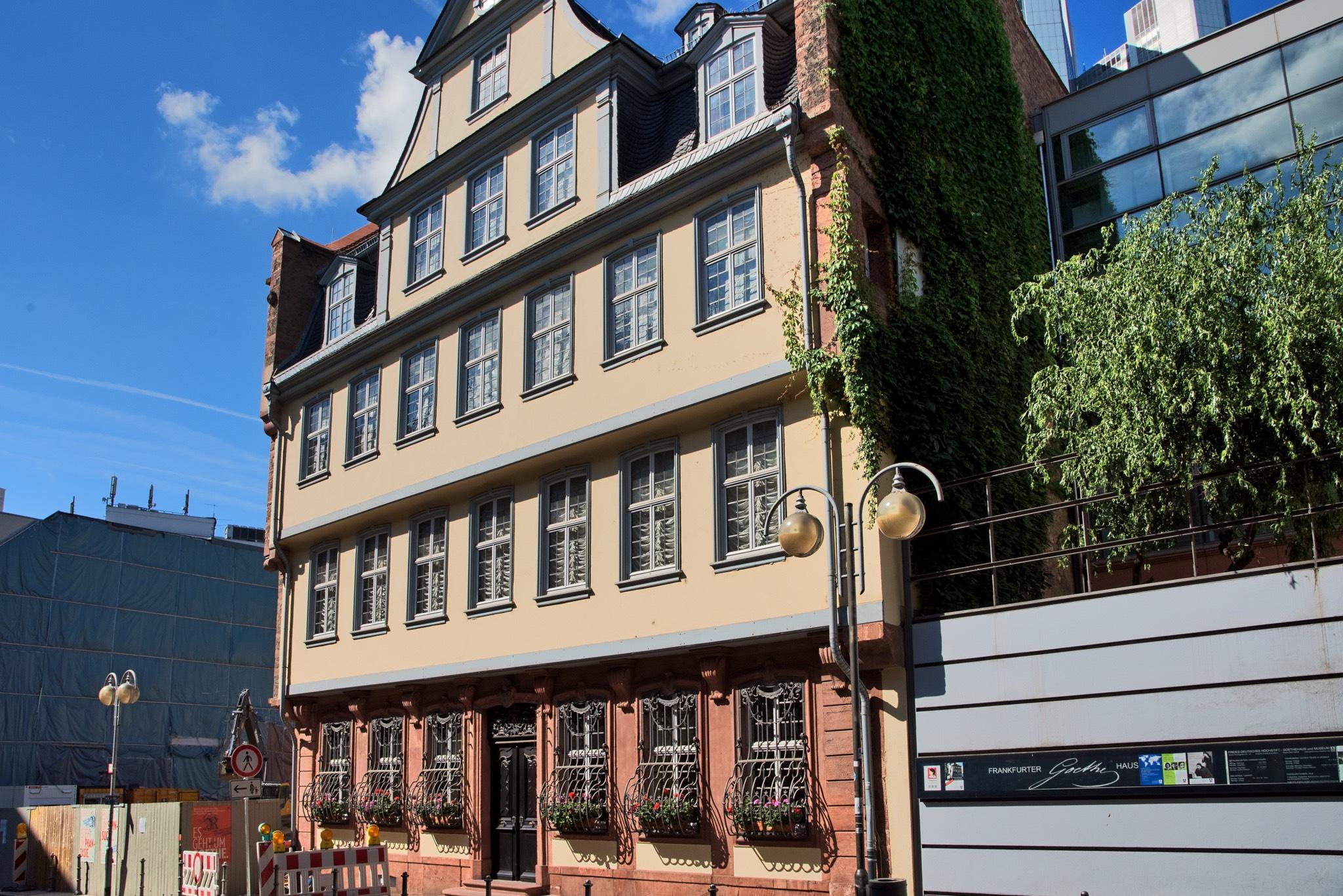
The Goethe family lived in the Frankfurt Goethe House until 1795. Here too, it is a replica of the building, which was destroyed by an air raid on the 112th anniversary of
Goethe's death. Next door, the German Romanticism Museum is currently being built.
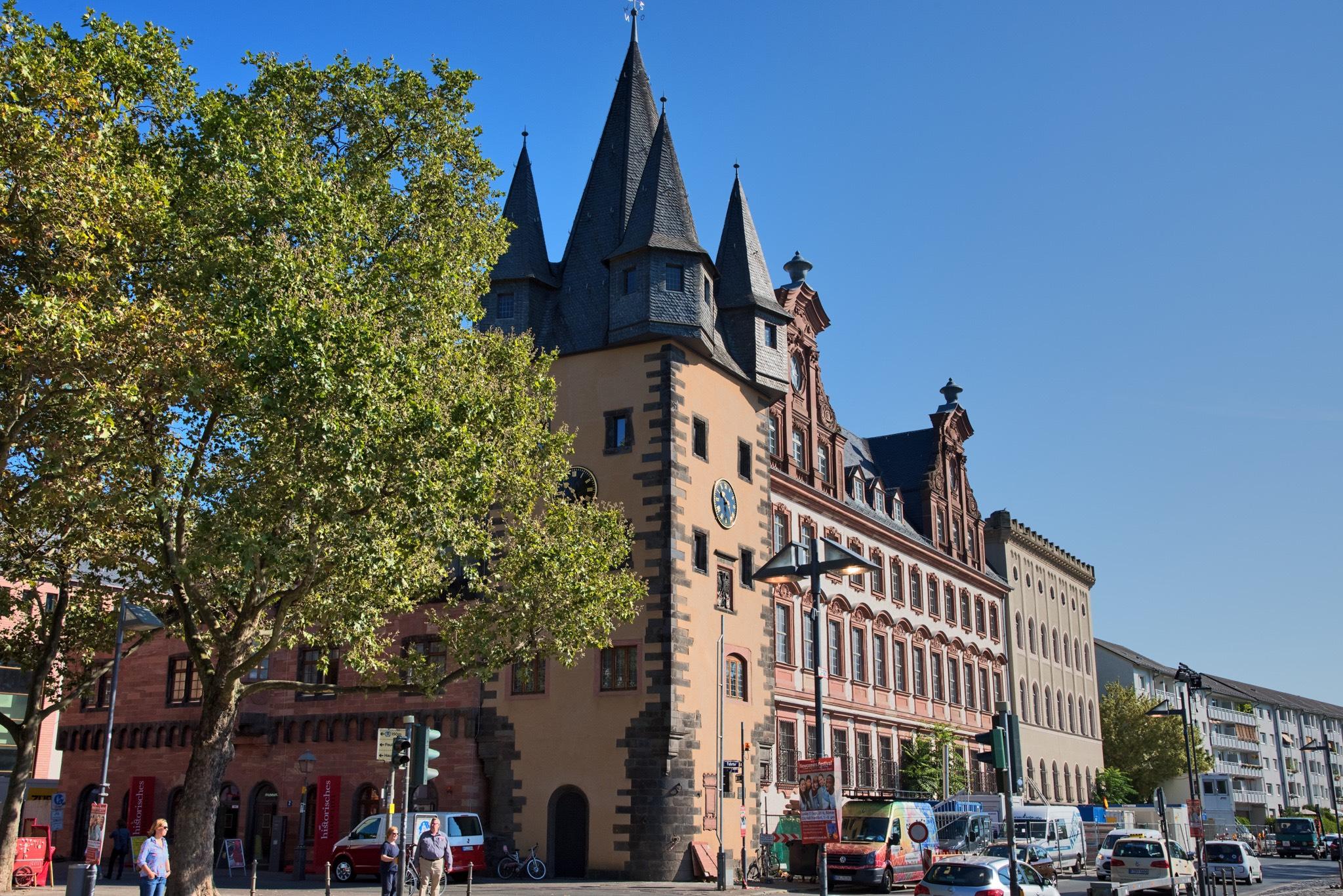
The impressive Rent Tower of the Frankfurt city fortification is part of the Historical Museum Frankfurt. Collections of the city's citizens are exhibited here, dating back to the
15th century. Founded in 1877-1878, it is the oldest museum supported by the city of Frankfurt.
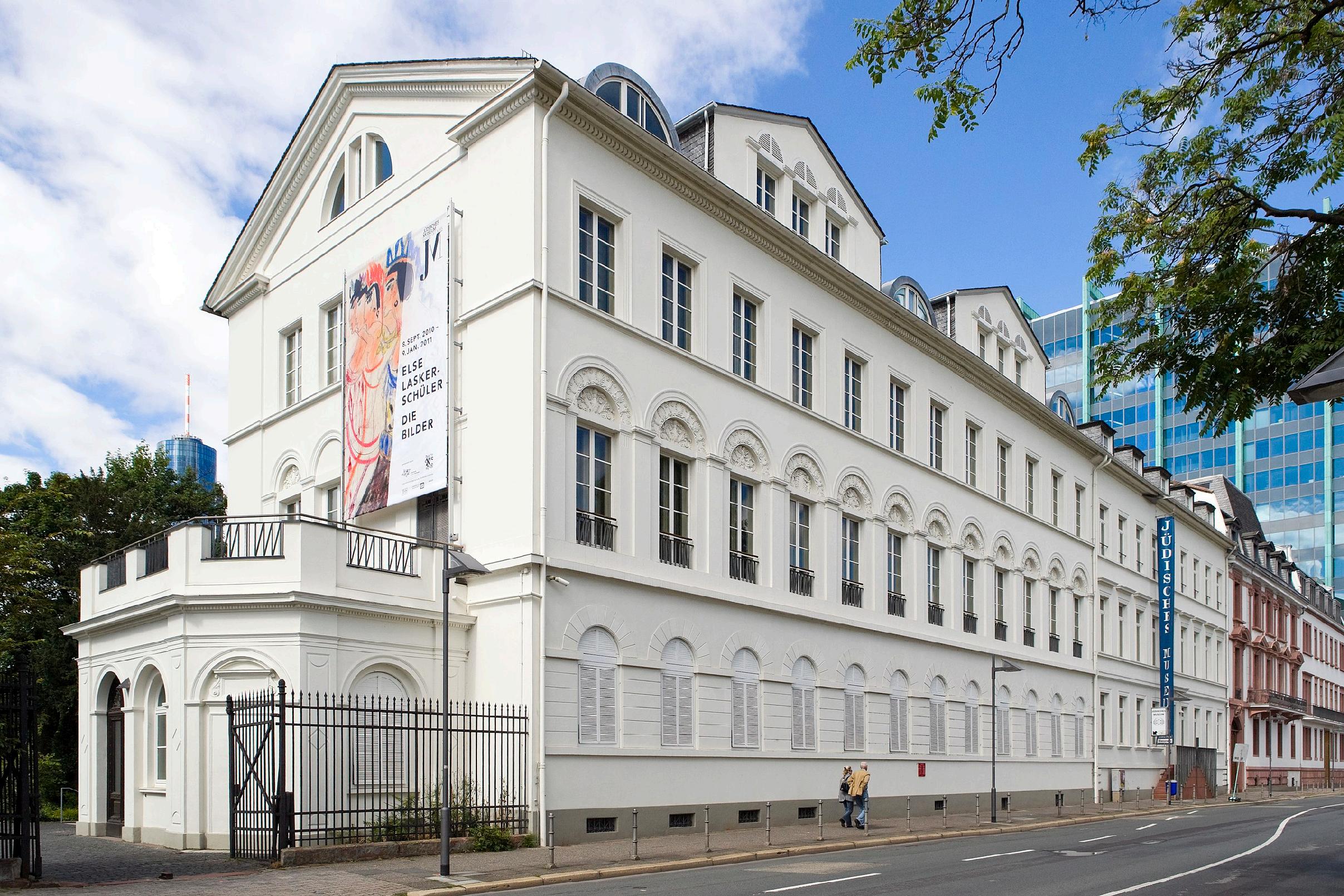
The Jewish Museum of the City of Frankfurt was opened on November 9, 1988 by Helmut Kohl. It is the oldest independent Jewish museum in Germany.
On October 21, 2020, it was reopened after a five-year renovation. An impressive documentation of Frankfurt's nine-hundred-year Jewish history and culture.
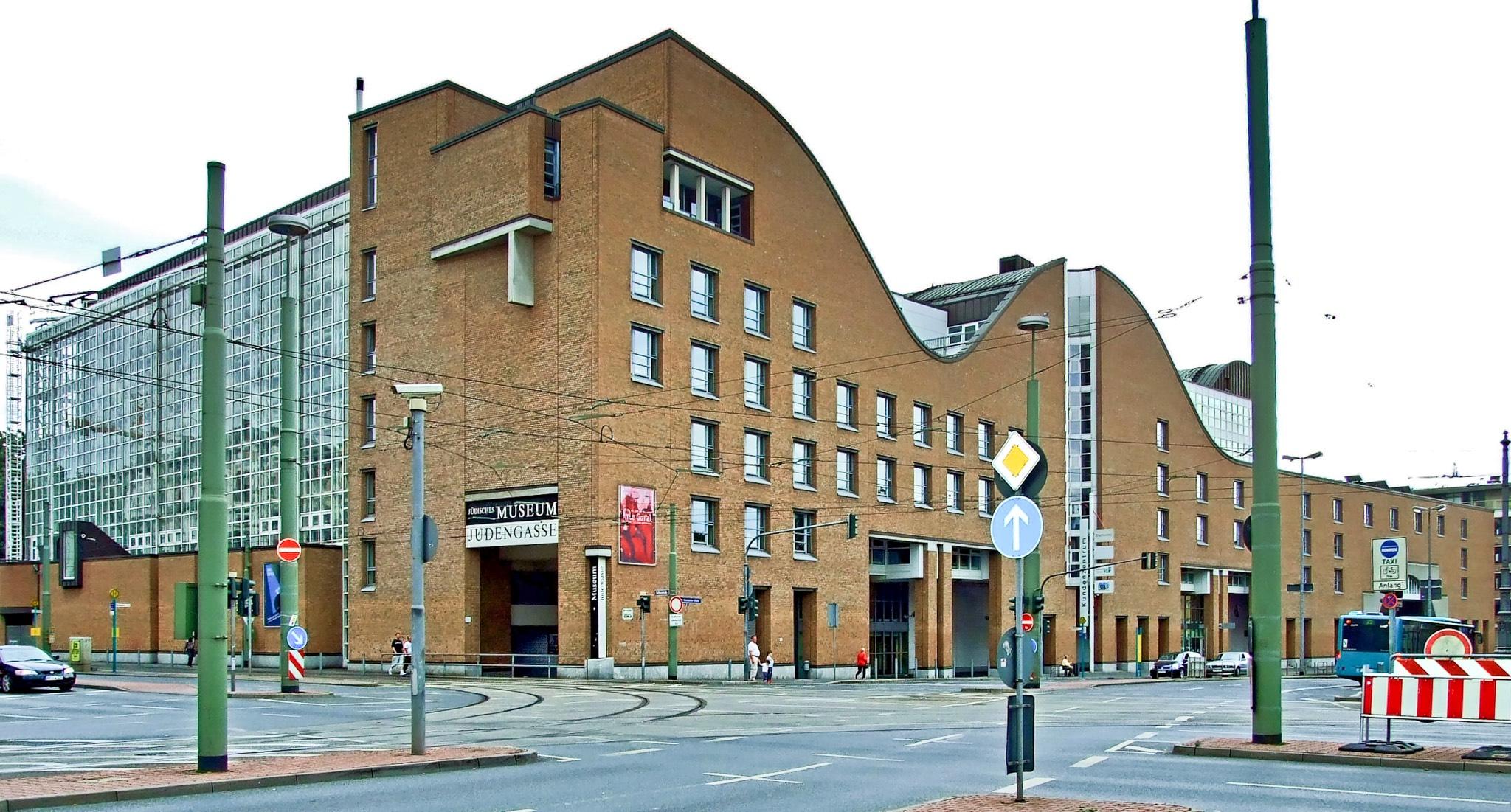
The Judengasse Museum is one of two locations. During excavation work for a new building in the city of Frankfurt, foundations and remains of the houses of the Judengasse were discovered. Part of these finds form the basis of the
museum. The exhibition shows situations from everyday life and much more.
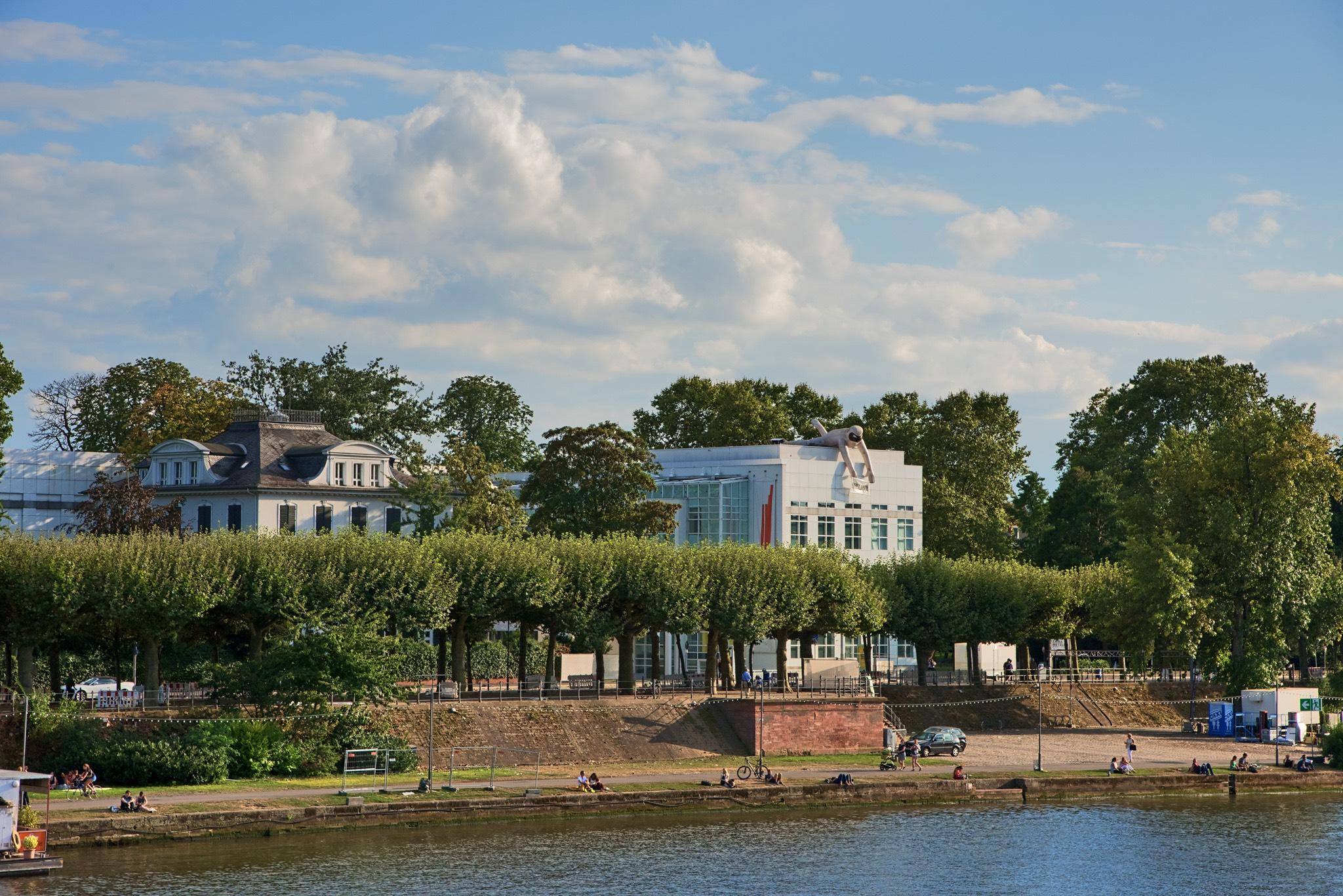
The Museum of Applied Arts about itself: "Against the background of its significant collections, it wants to make the hidden visible and create relationships between the events and stories around things. Ongoing changing
exhibitions tell of cultural values and changing living conditions."
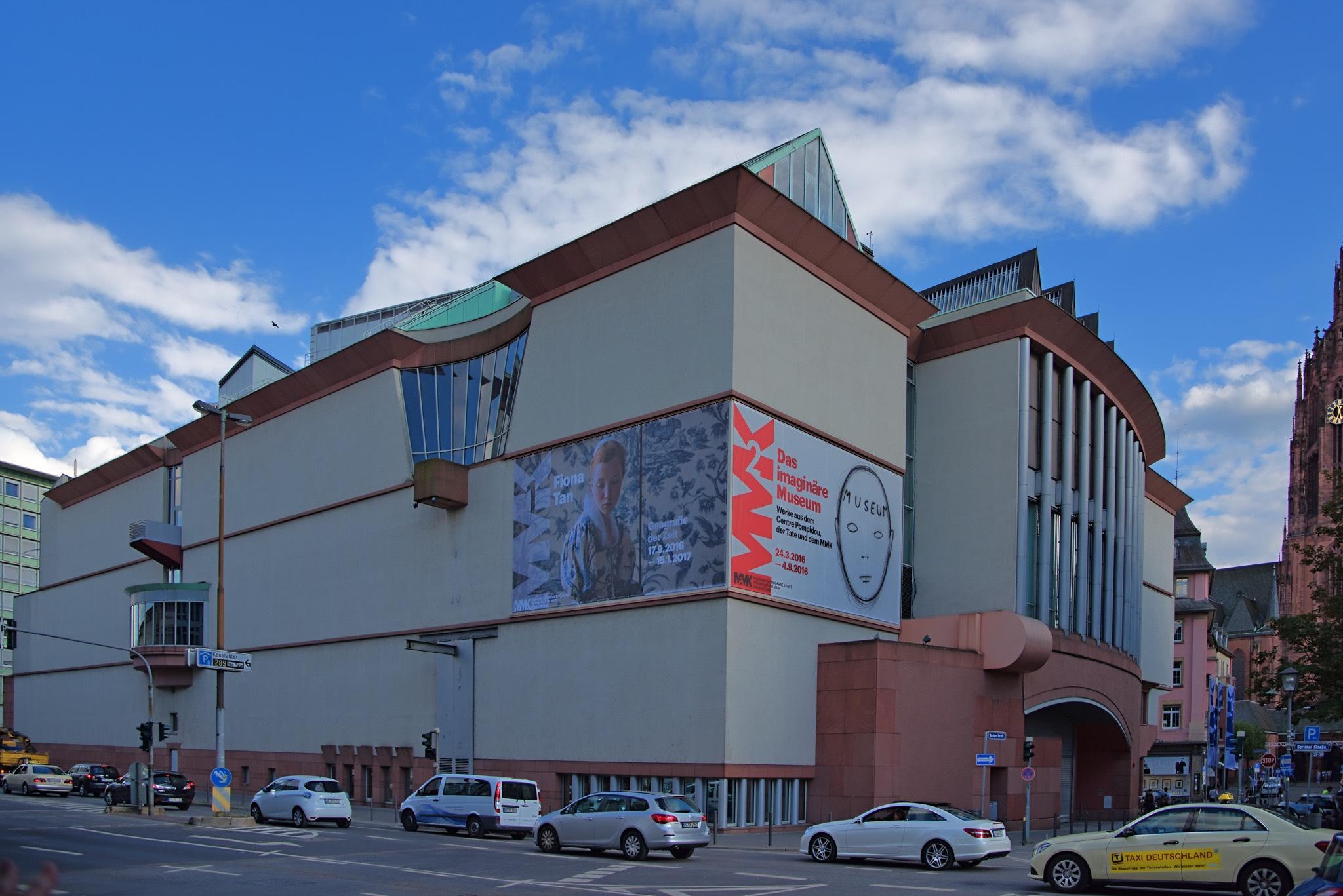
The Museum of Modern Art was planned by the Viennese architect Hans Hollein. The building is three-story and has a distinctive triangular shape with a quirky facade.
Due to its shape, the MMK is also fondly referred to as "piece of cake".
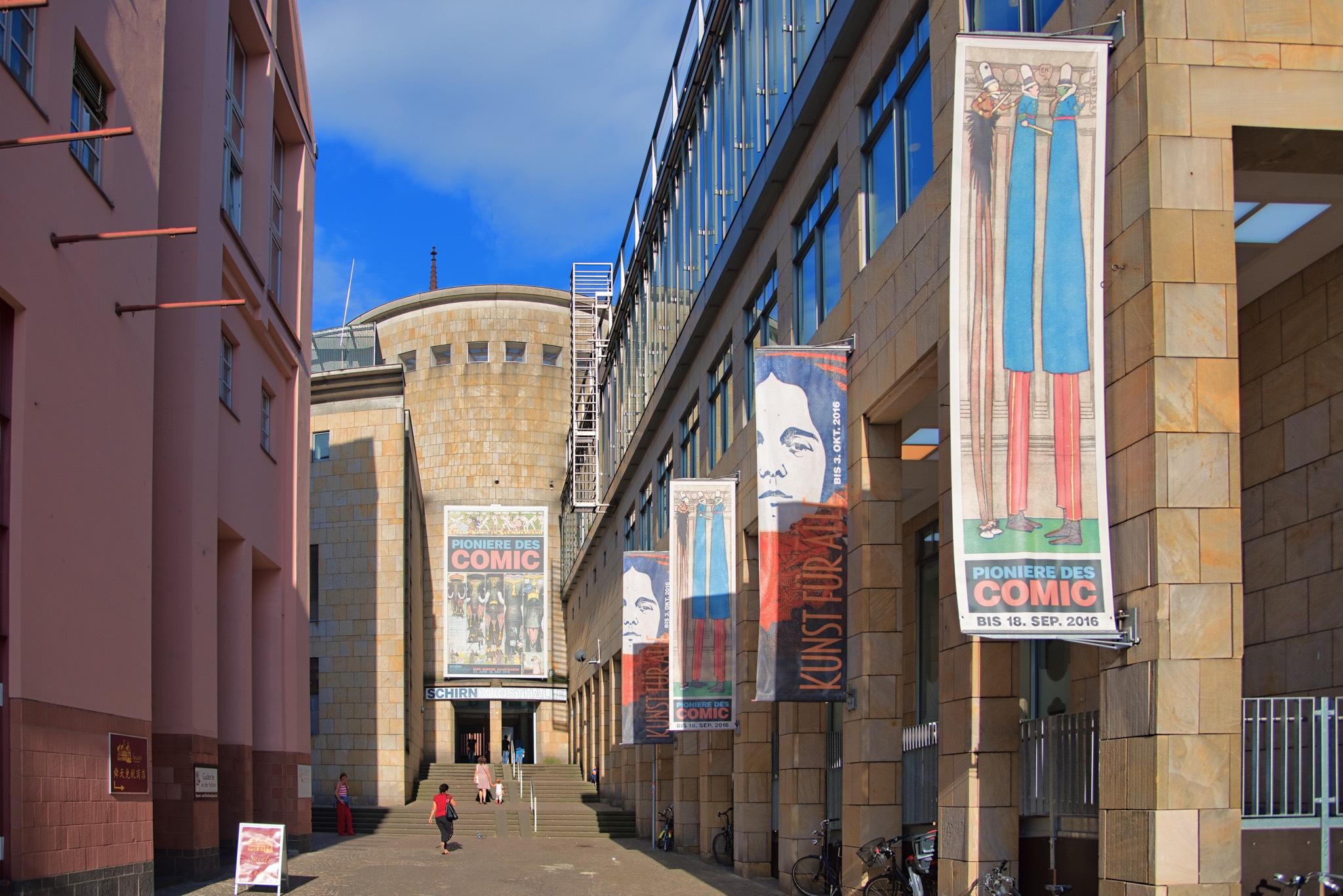
The Schirn Kunsthalle Frankfurt is one of the most famous exhibition houses in Europe. Since its opening in 1986, over 220 exhibitions have taken place here. Above all, art and cultural history themes are considered. In the Schirn,
attempts are made to show developments in the visual arts.
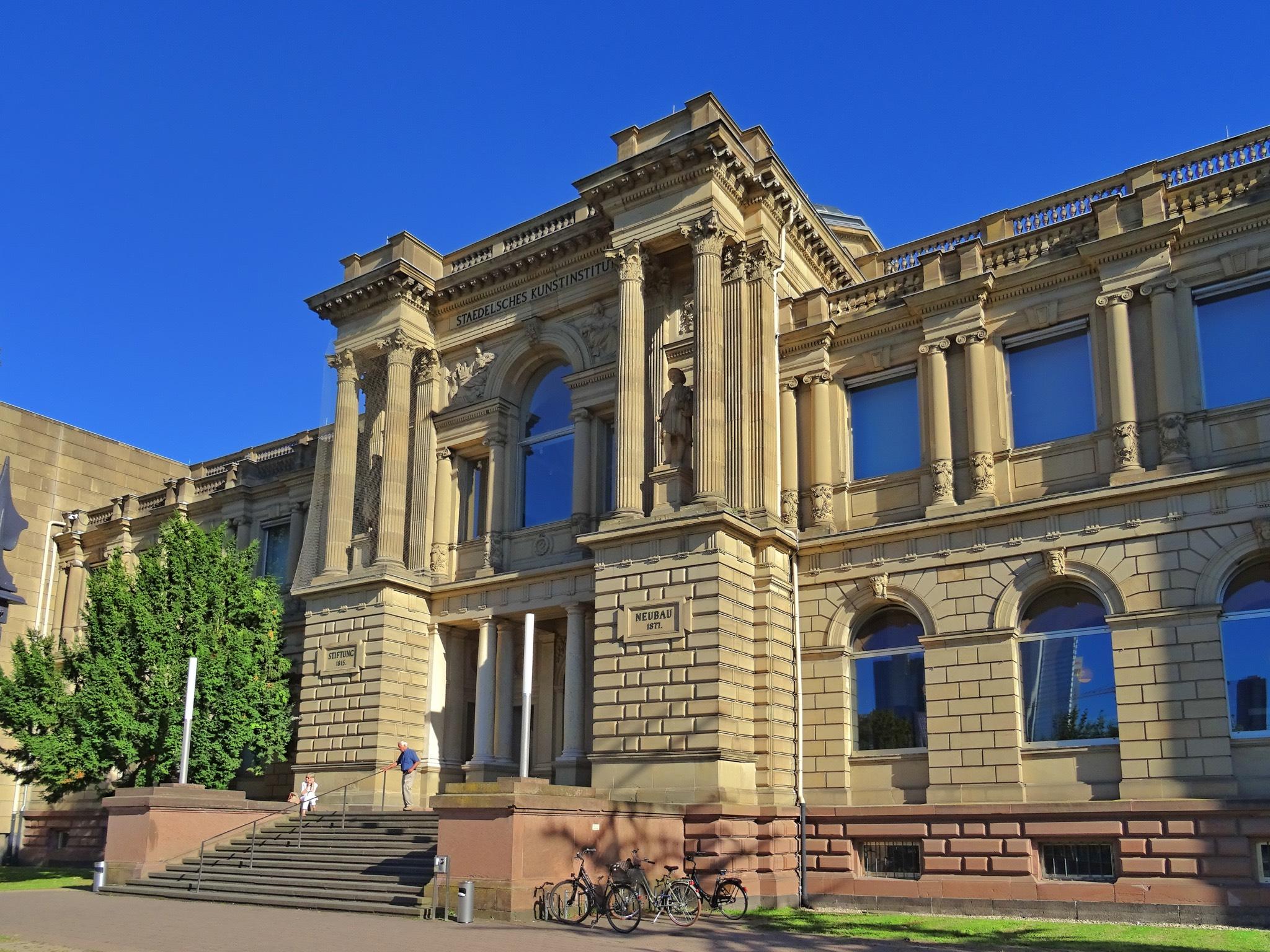
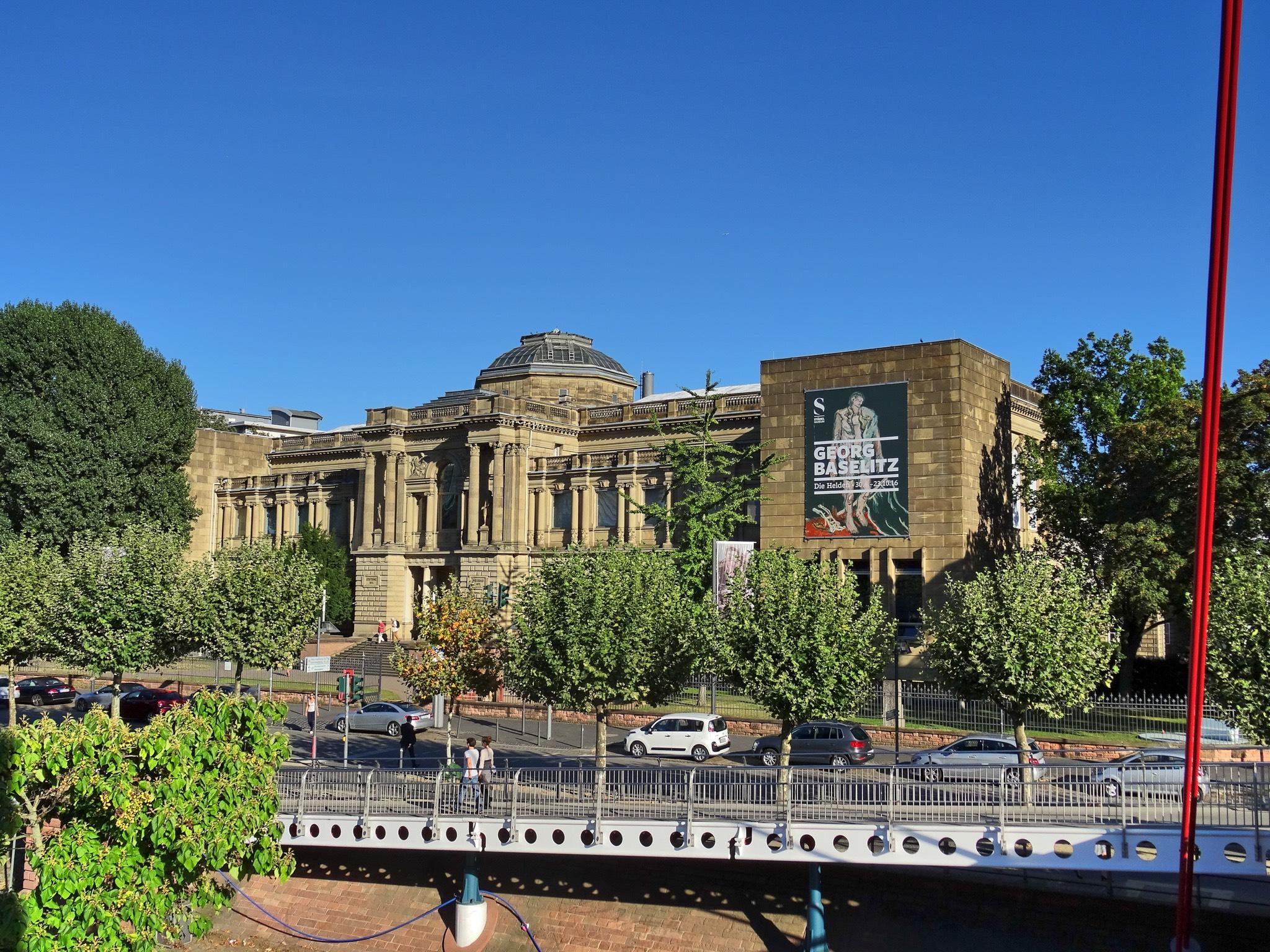
The Städel Art Institute and Municipal Gallery comprises over 4,000 paintings. Works from the Middle Ages to modern and contemporary art are shown. This places it among the most important German art museums. The
foundation of the museum goes back to the estate of the Frankfurt banker Johann Friedrich Städel.
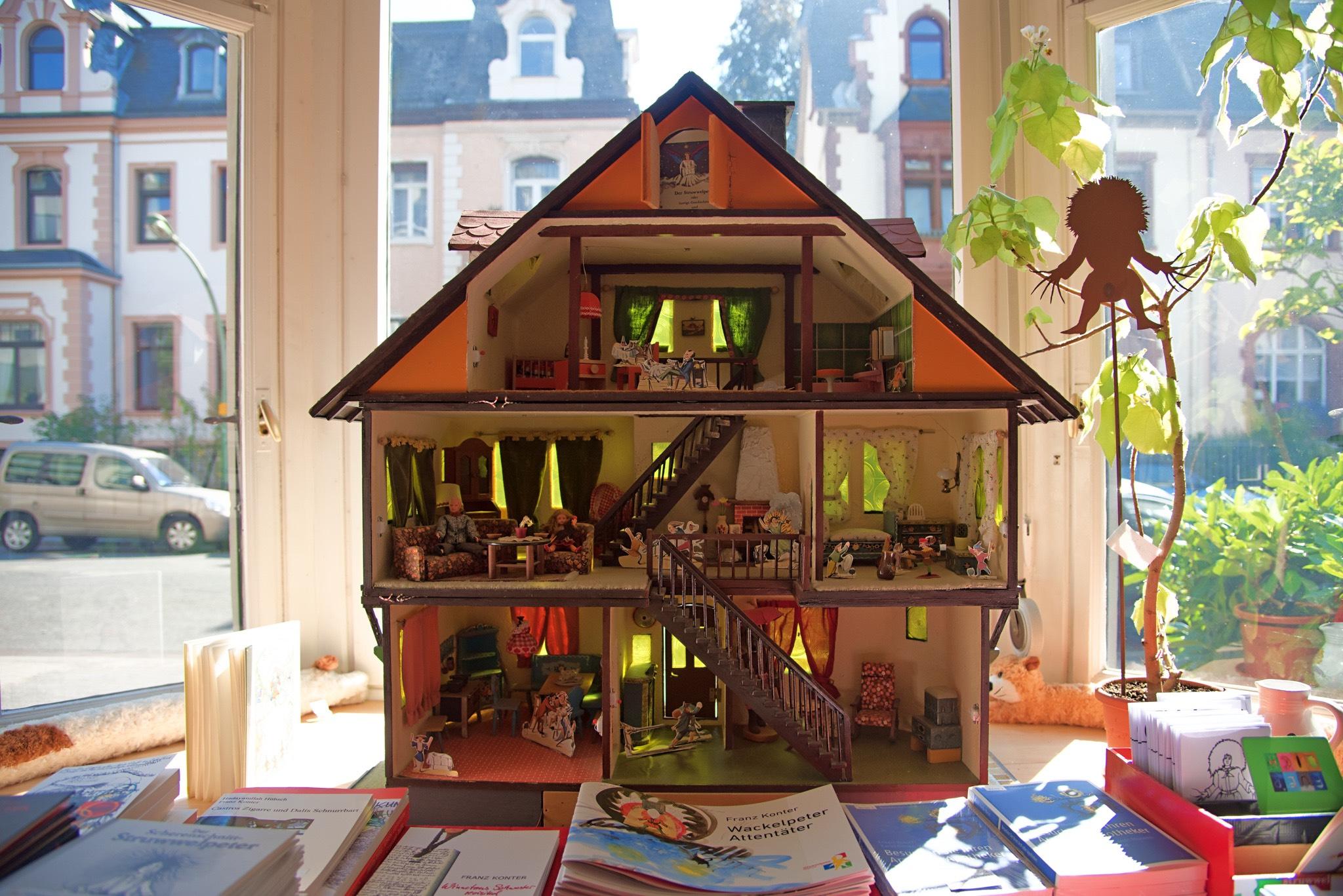
The world-famous "Struwwelpeter" was created by the Frankfurt doctor and author Dr. Heinrich Hoffmann. The museum presents everything on the topic on four floors.
Portraits, letters, sketches and many first editions provide insight into the author's life.
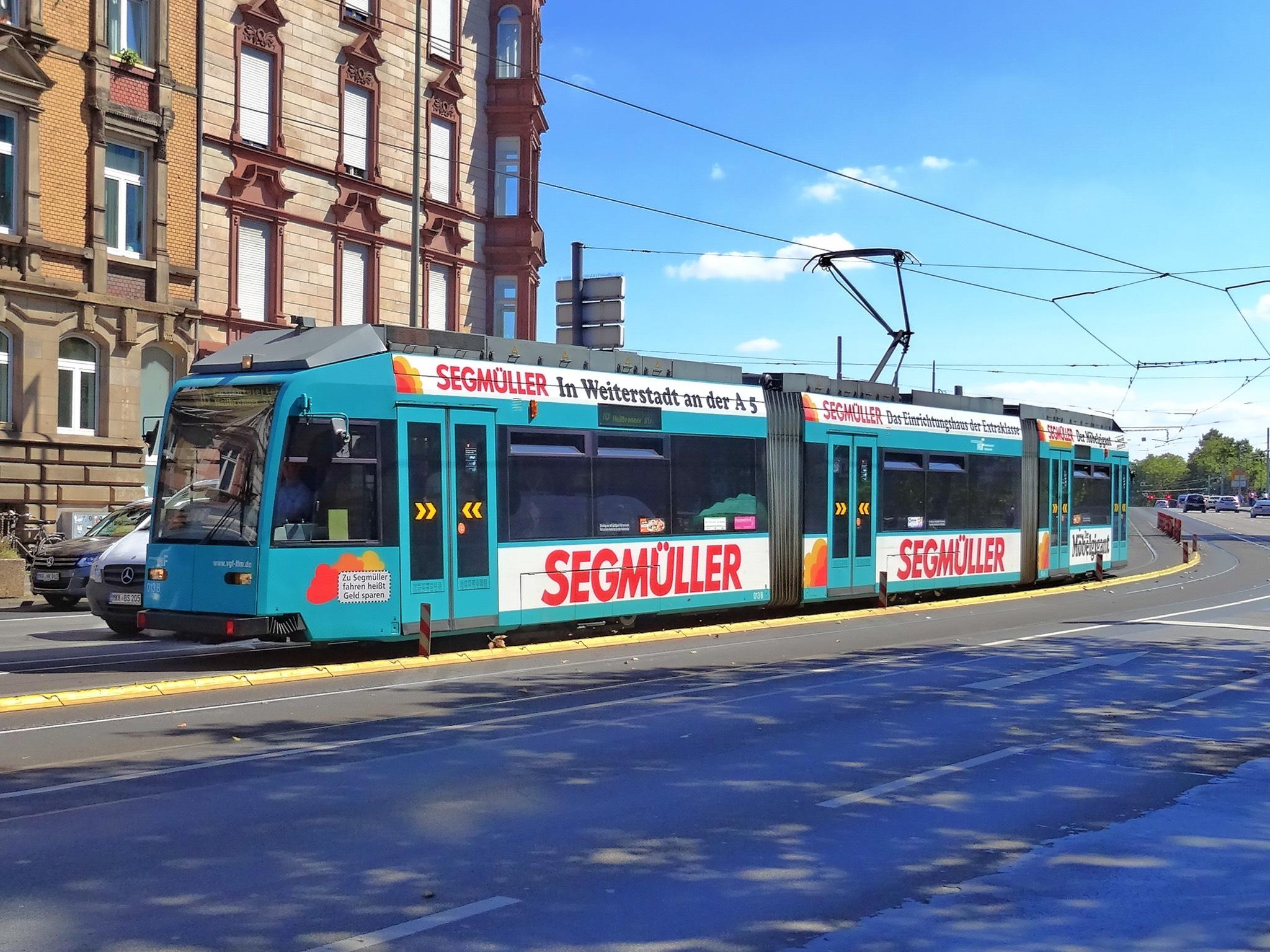
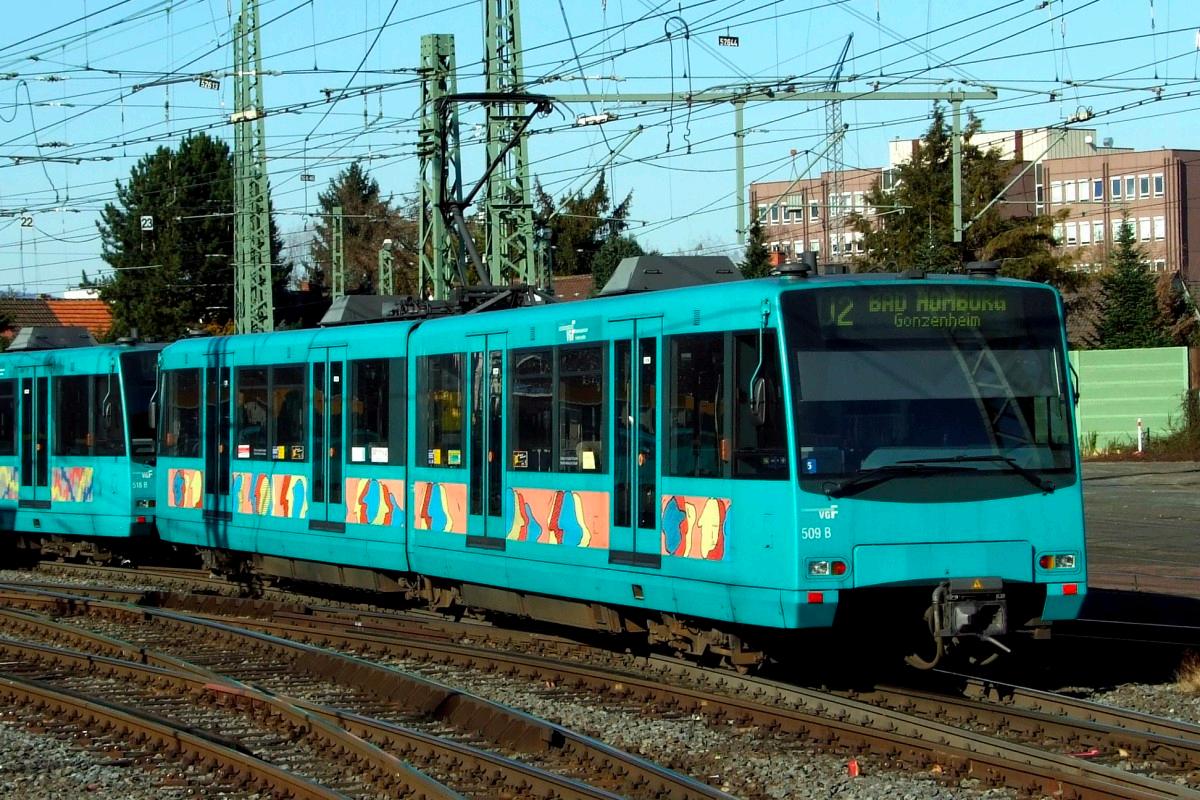
The Frankfurt Transport Company maintains its subway network, which in 1968 comprised three lines. In the north of Frankfurt, two small railroad lines were integrated into the network, connecting two more cities, namely Bad
Homburg and Oberursel, to the Frankfurt subway network. Under the given link you can find info for all public transport in Frankfurt.
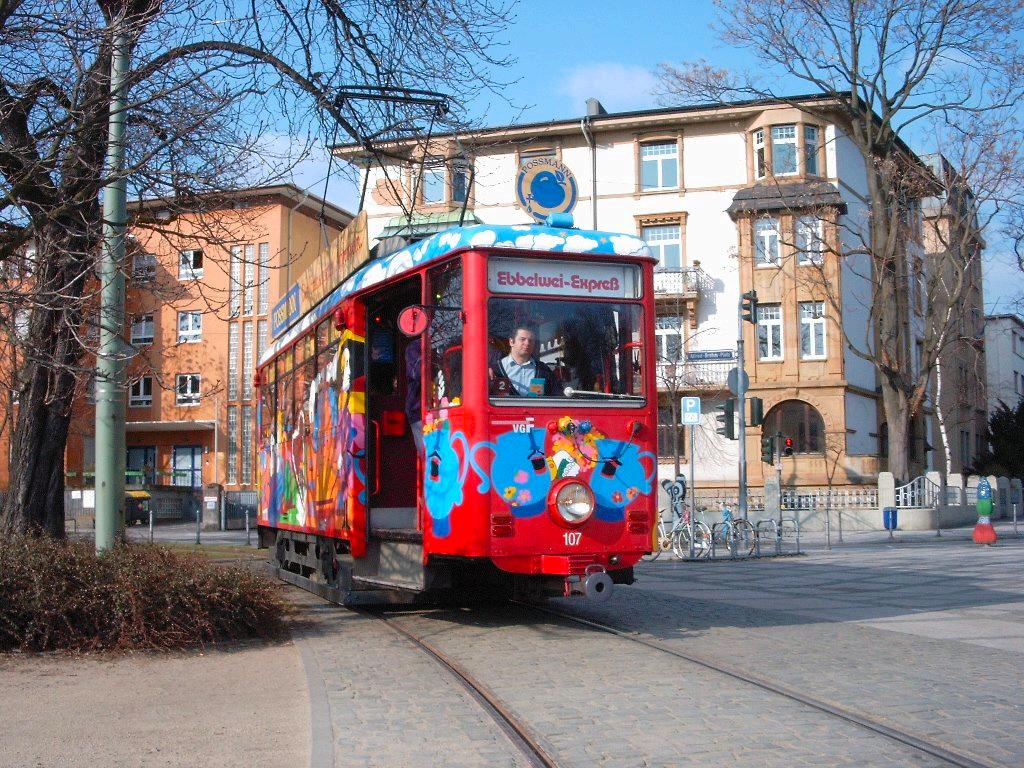
The "Ebbelwei-Express" runs on Saturdays, Sundays and public holidays. The ticket for a one-hour round trip can be purchased from the conductor and costs €8.00 per adult.
in the fare is a choice of a bottle of apple wine, apple juice or mineral water and a bag of pretzels.
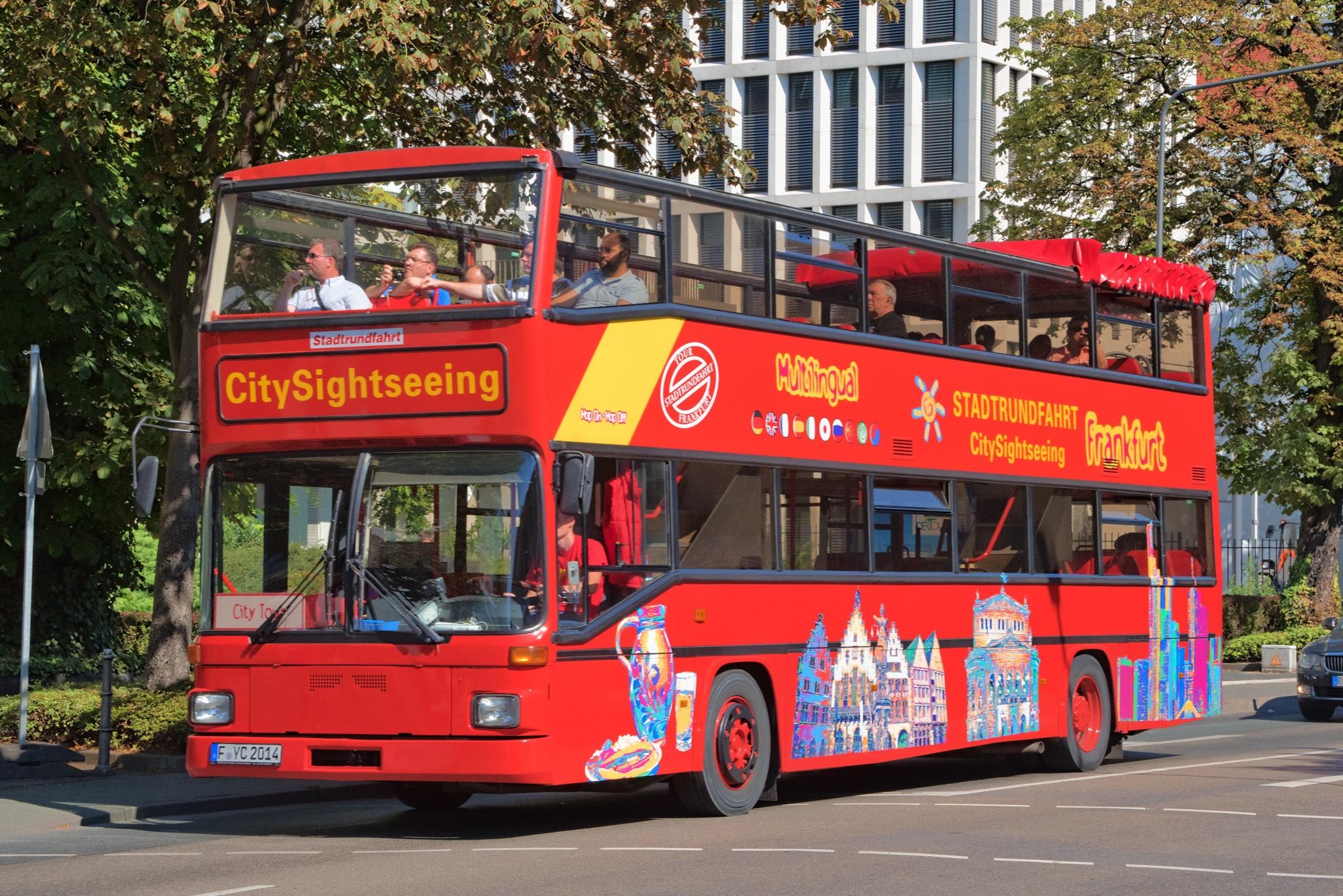
The optimal way to get an overview of the city's sights is to take a city tour with one of the CitySightseeing buses. In Frankfurt, two tours are offered, the City and the Skyline
Tour. Both tours start at the "Paulskirche/Römer" stop; you can get on and off at all stops.
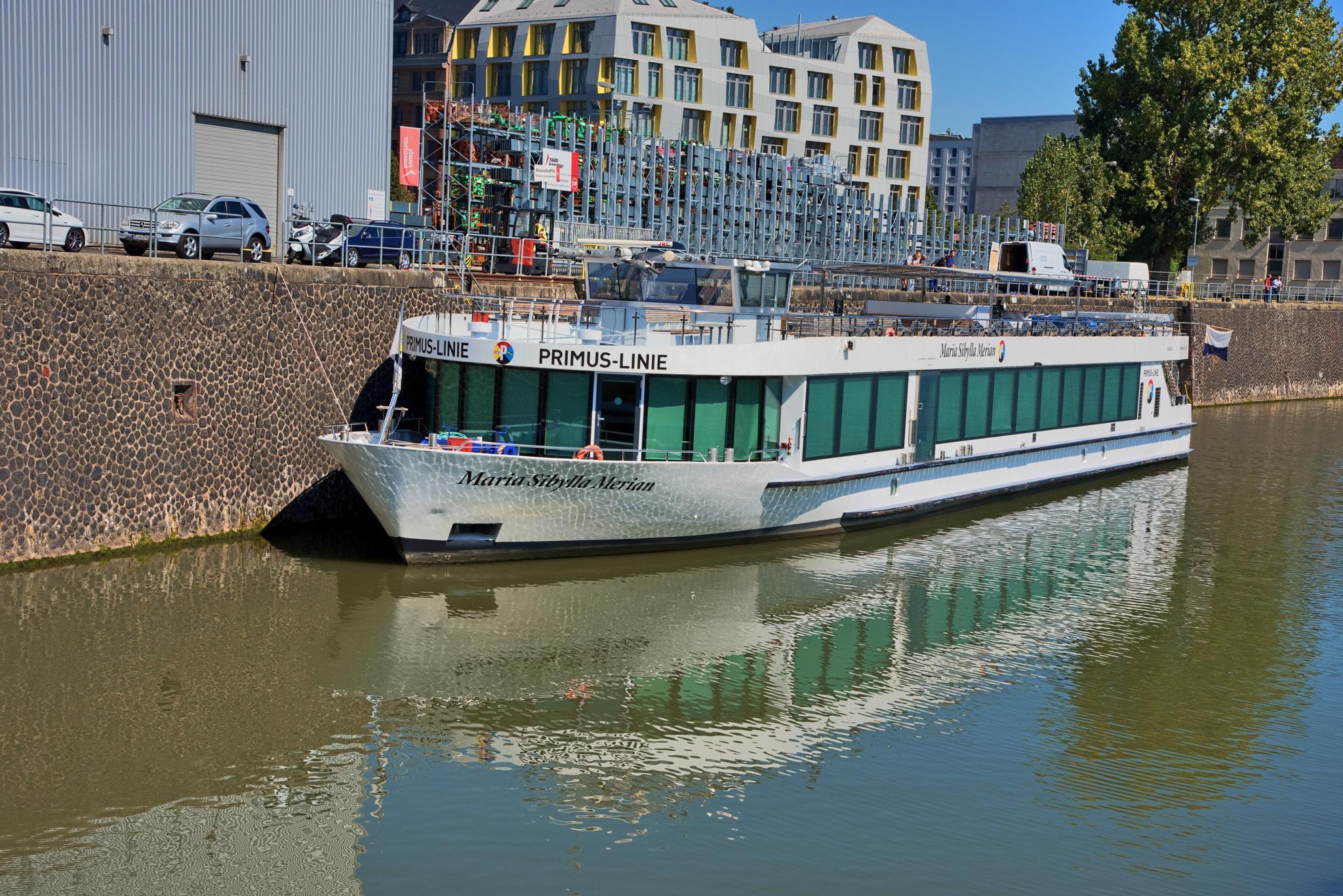
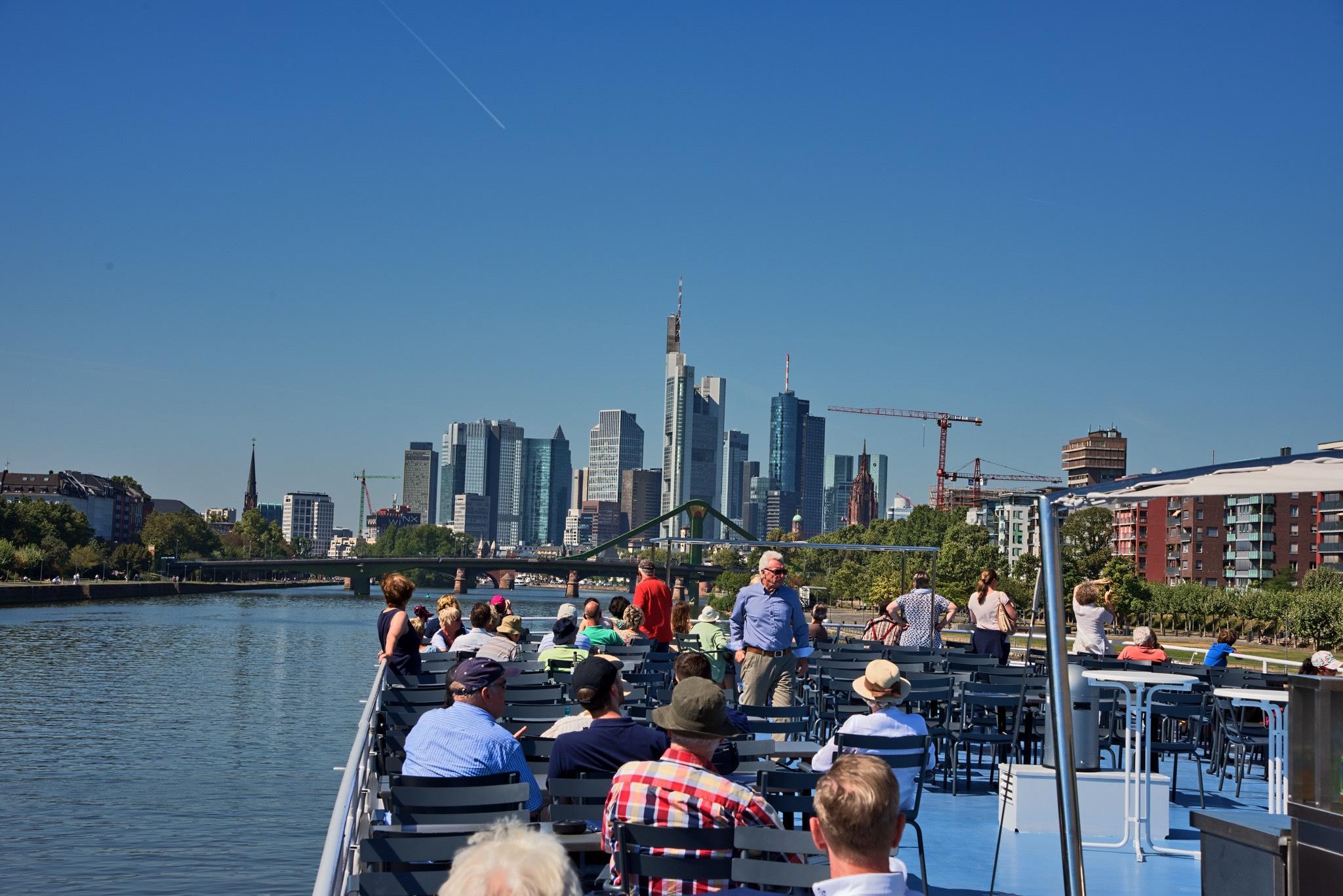
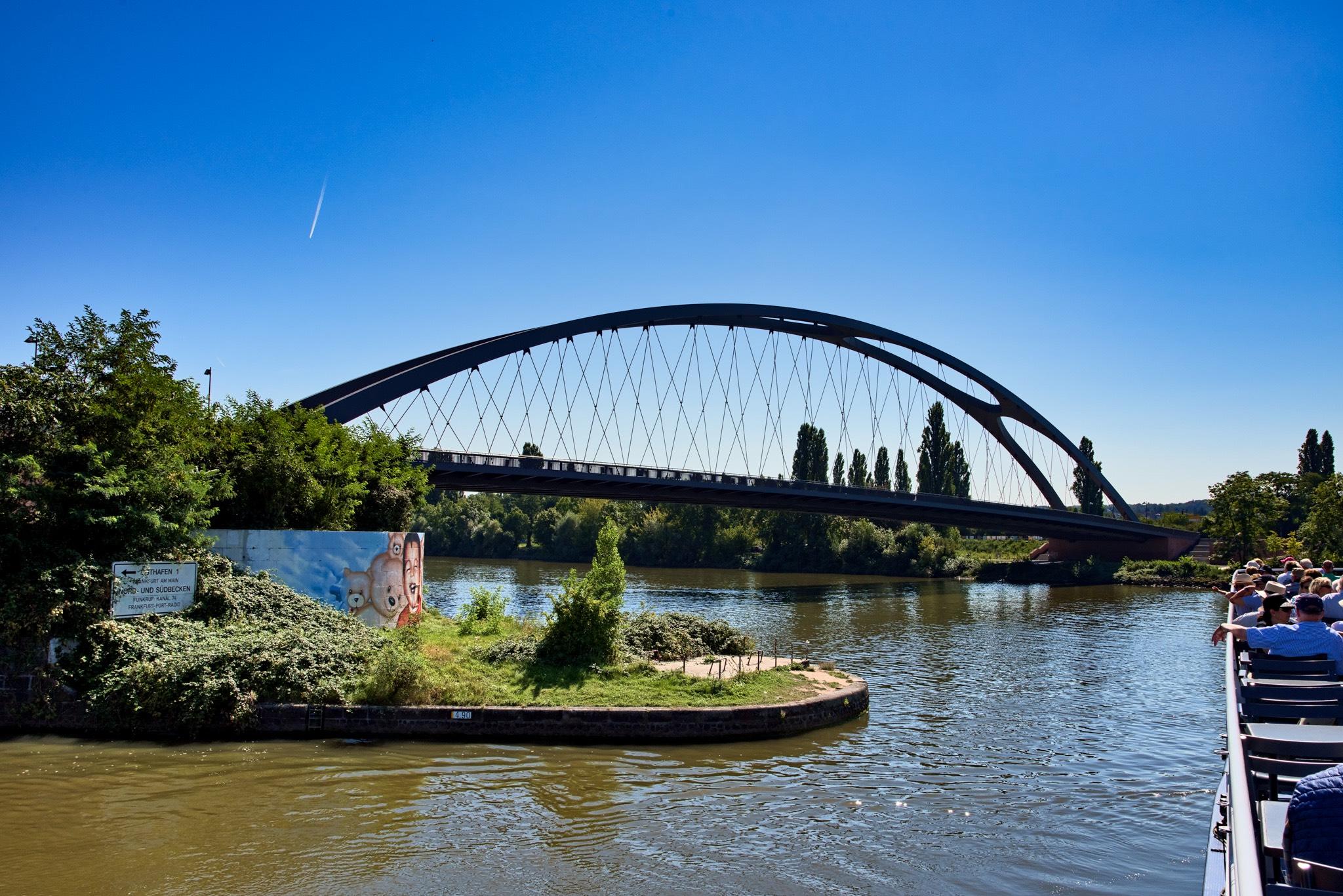
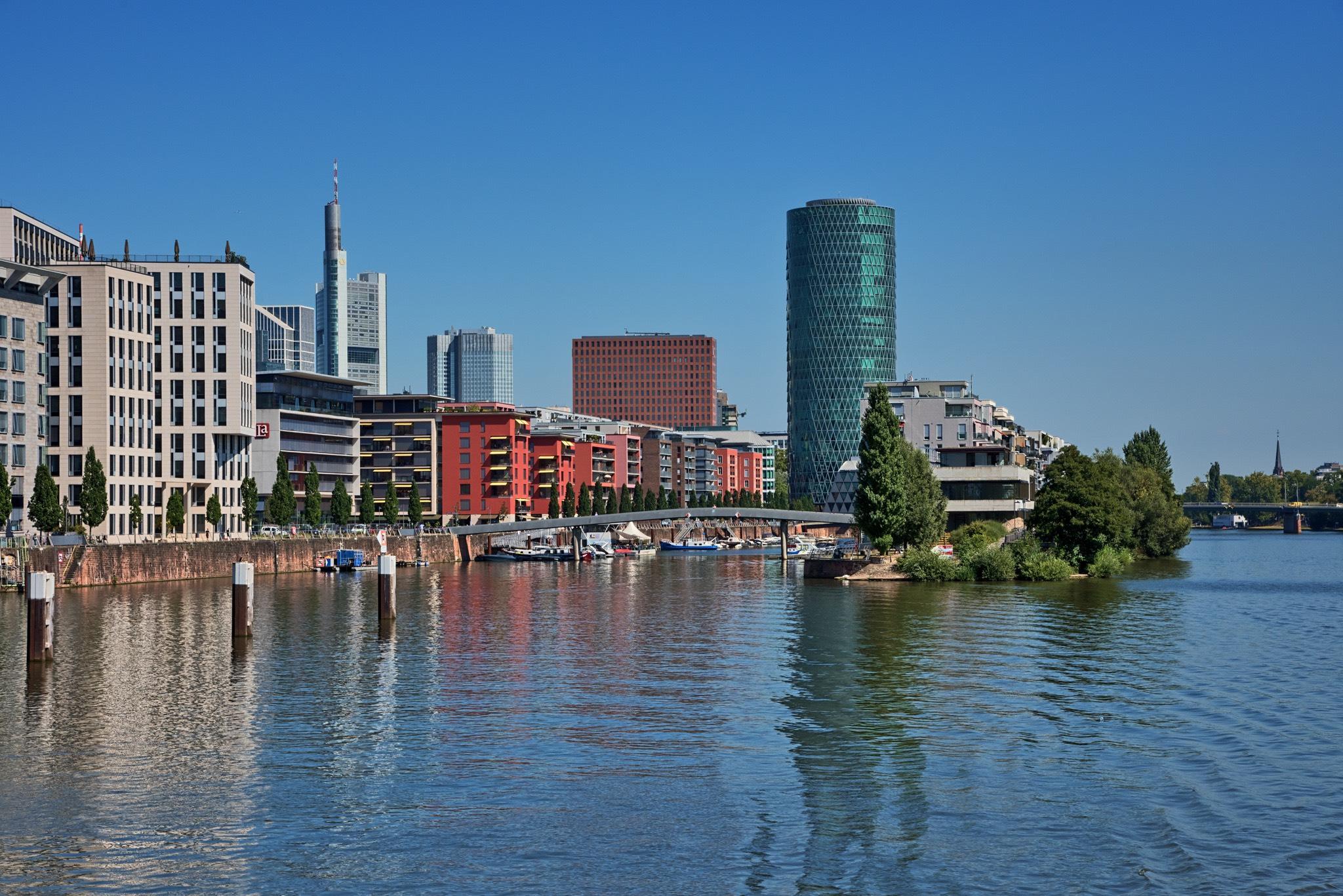
A special experience is to explore the city from the Main. 100 and 50 minute round trips are offered. The longer trip is definitely recommended, which leads from the Iron
Footbridge to the Offenbach and Griesheim locks. On this trip, you will be rewarded with fantastic impressions.
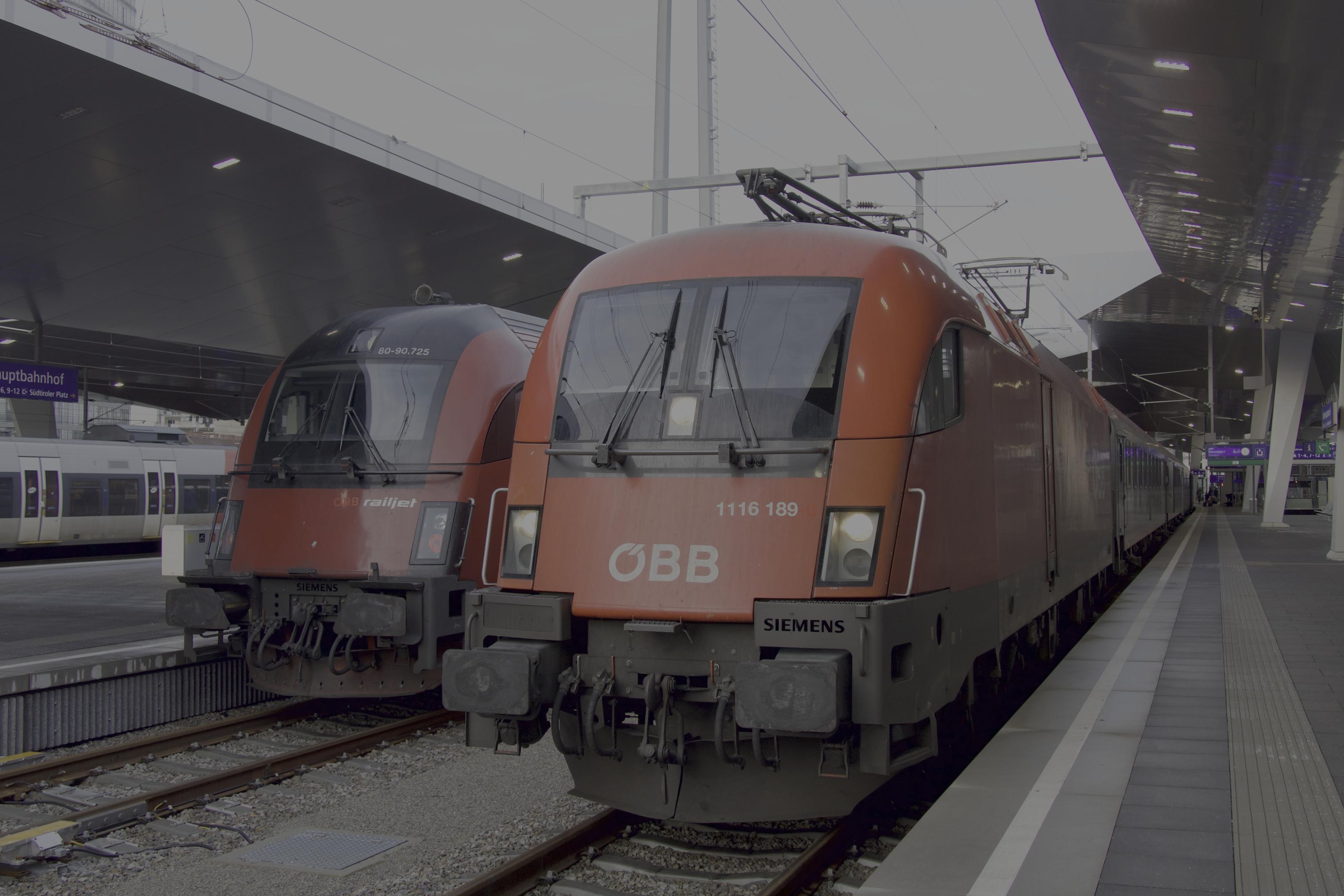
OBB Nightjet and OBB Nightjet Partner








This e-book was made possible through the kind support of the regional tourist offices and the OBB. German proofreading and editorial: Martin Andergassen.
References
Text, videos and photos by Rudolf J. Strutz unless otherwise stated. Timetables and travel information: OBB
Assistance from AI
Artificial intelligence applications are occasionally employed for image editing, including the elimination of undesirable components. Additionally, AI tools can enhance the clarity of images and diminish background noise.
The travel guides are also available free of charge on the OBB online entertainment and internet portal railnet, which is installed on all railjets, nightjets (NG) and cityjets
Copyright
This book was licensed under the Creative Commons License. Conditions of use: attribution, non-commercial, no editing and distribution under the same conditions only as a complete work! The use of individual photos and text is not permitted. This eBook is available free of charge.
All links provided are current at the time of publication of this ebook. Links to tickets usually lead directly to the exhibition location. For tickets and timetables, local public transportation services are linked.
All logos and company names are used for information purposes only; any use outside of this e-book must be approved by the copyright holders.
SCOTTY mobile shows the timetables for all public transport and helps you plan your travel route.

Book your trip online or view the current timetable online and directly on your mobile phone.