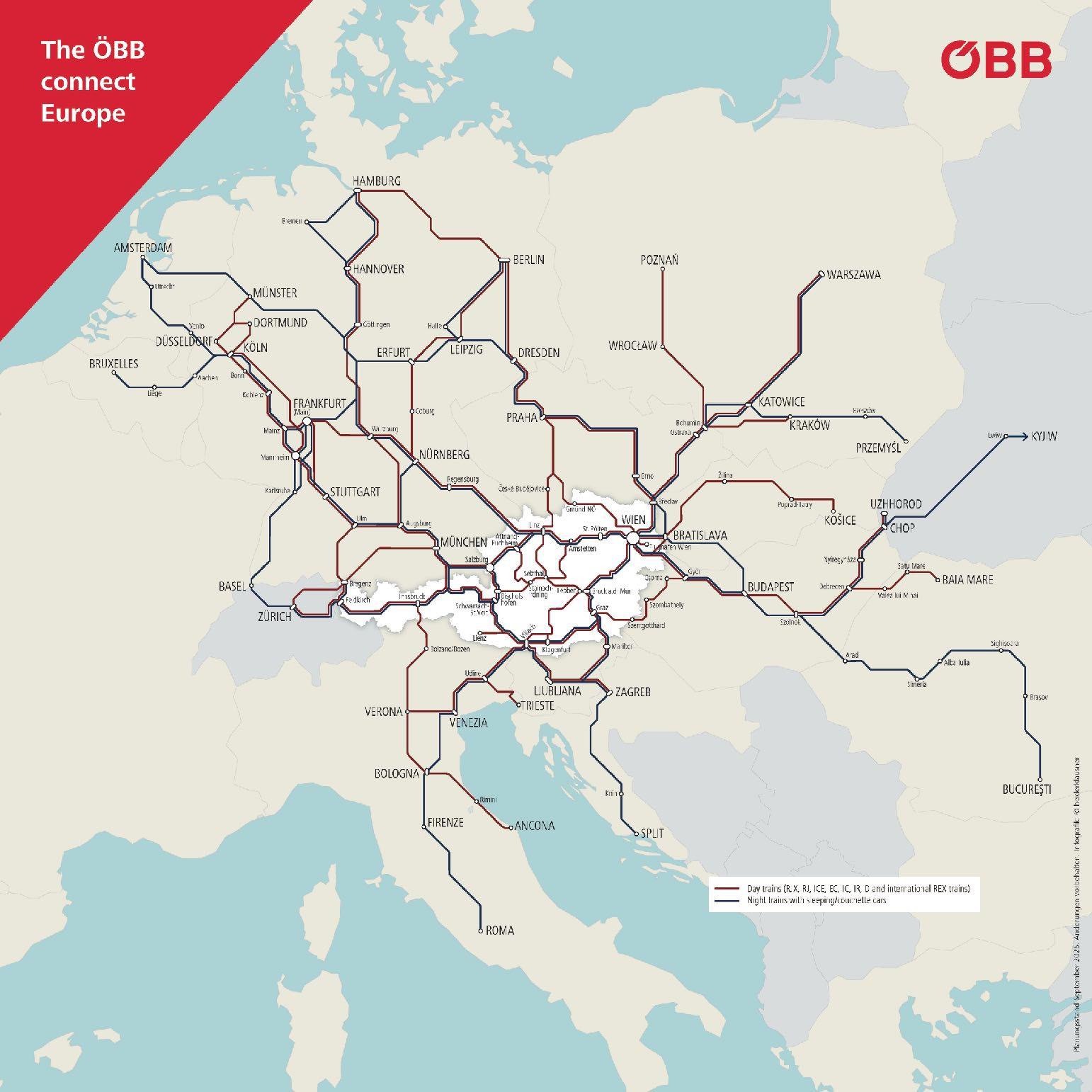
ÖBB connects numerous European cities with modern day and night services.
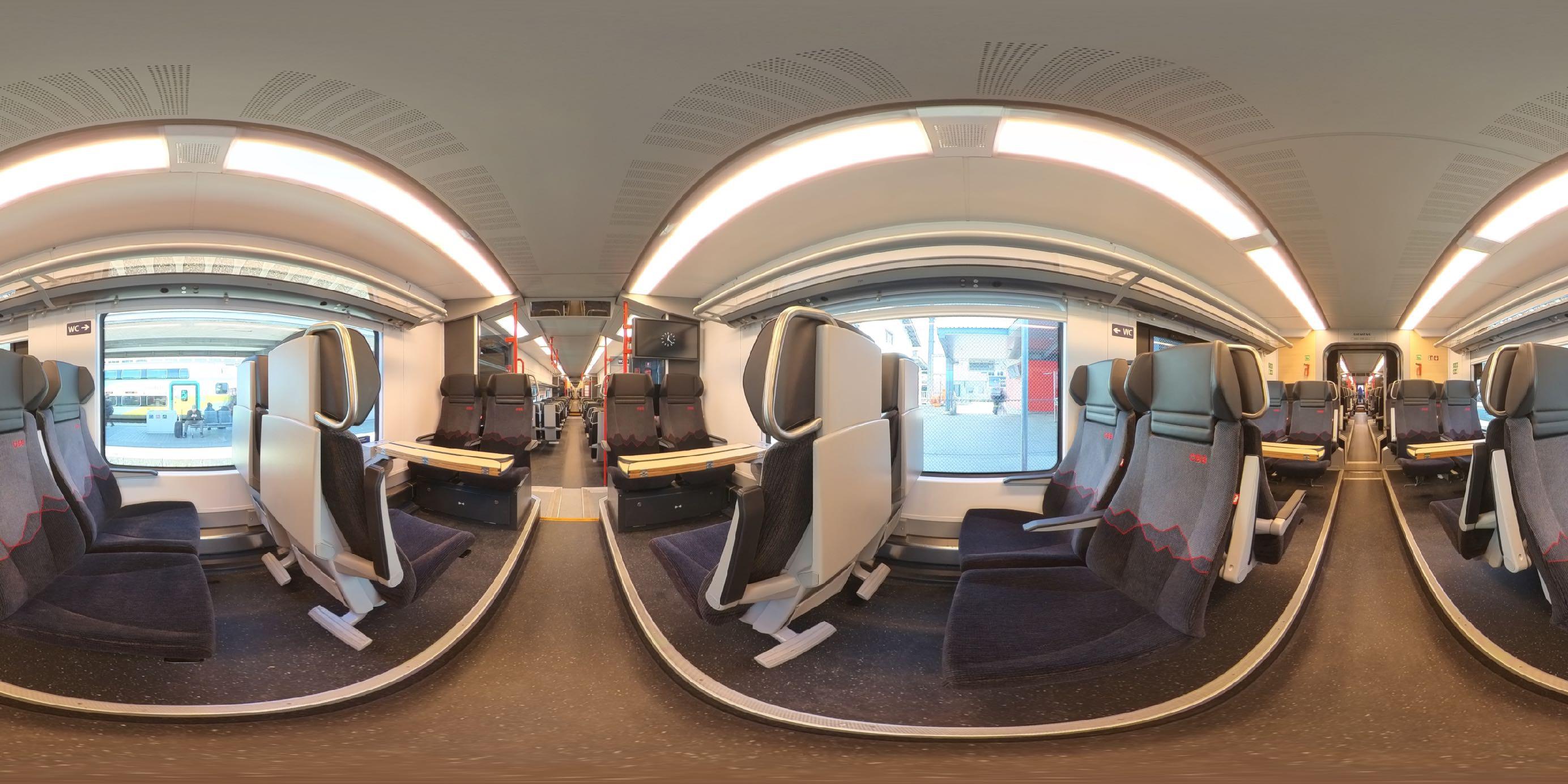
During the day, ÖBB Railjets offer fast and comfortable long-distance travel in Economy, First, and Business classes.
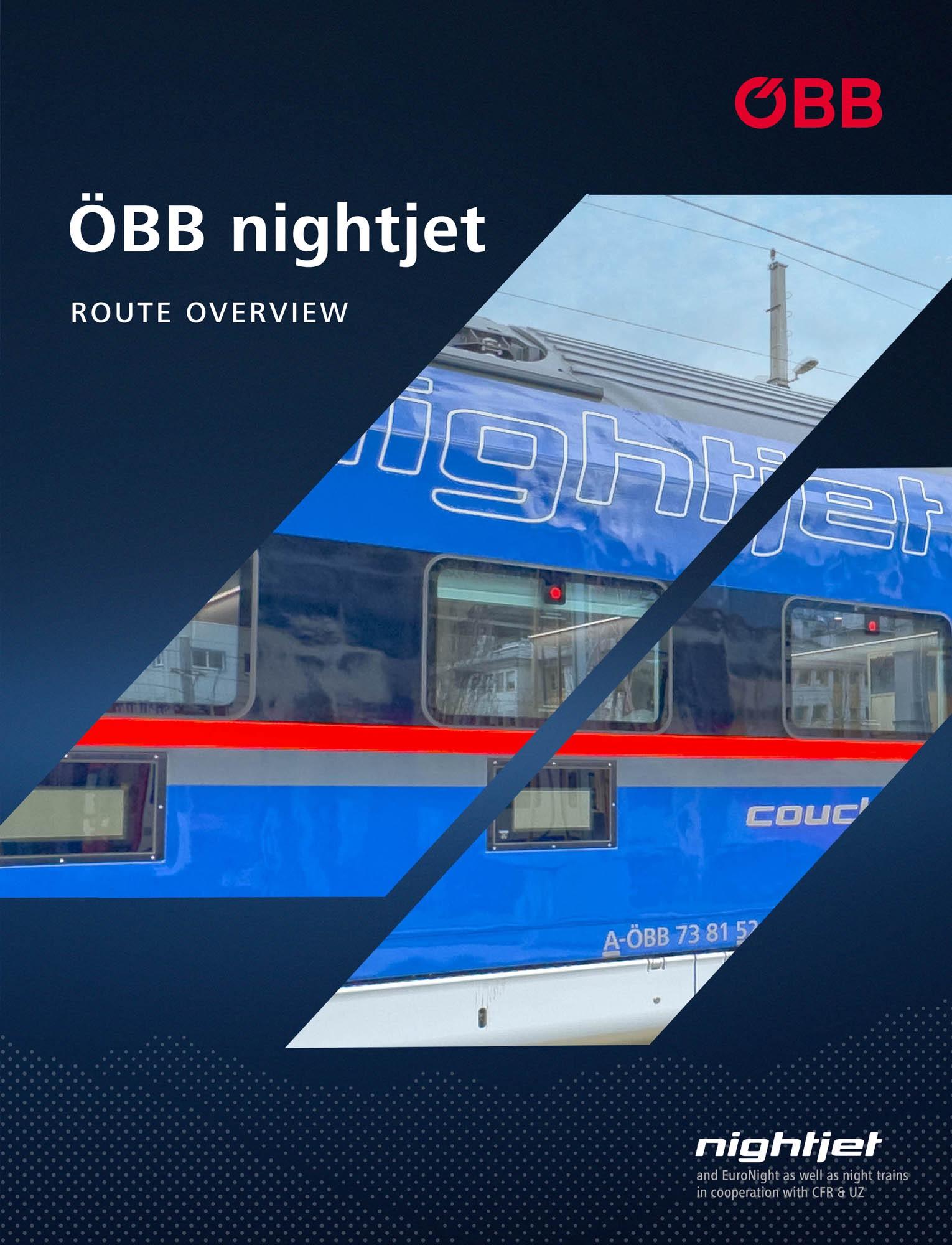
At night, the ÖBB Nightjet provides a relaxing and environmentally friendly journey across Europe. Whether
you prefer a seat, new Mini Cabins, or couchette and sleeper cars – every travel preference is catered for.
Within Austria, ÖBB Cityjets guarantee punctual and comfortable local and long-distance transport.
Further information and booking options can be found via the info button, which leads directly to the ÖBB booking page.


GETTING THERE
THE CITY
WORTH SEEING
CHURCHES
MUSEUMS
DINE & WINE (BEER)
SHOPPING
PUBLIC TRANSPORT
IMPRINT

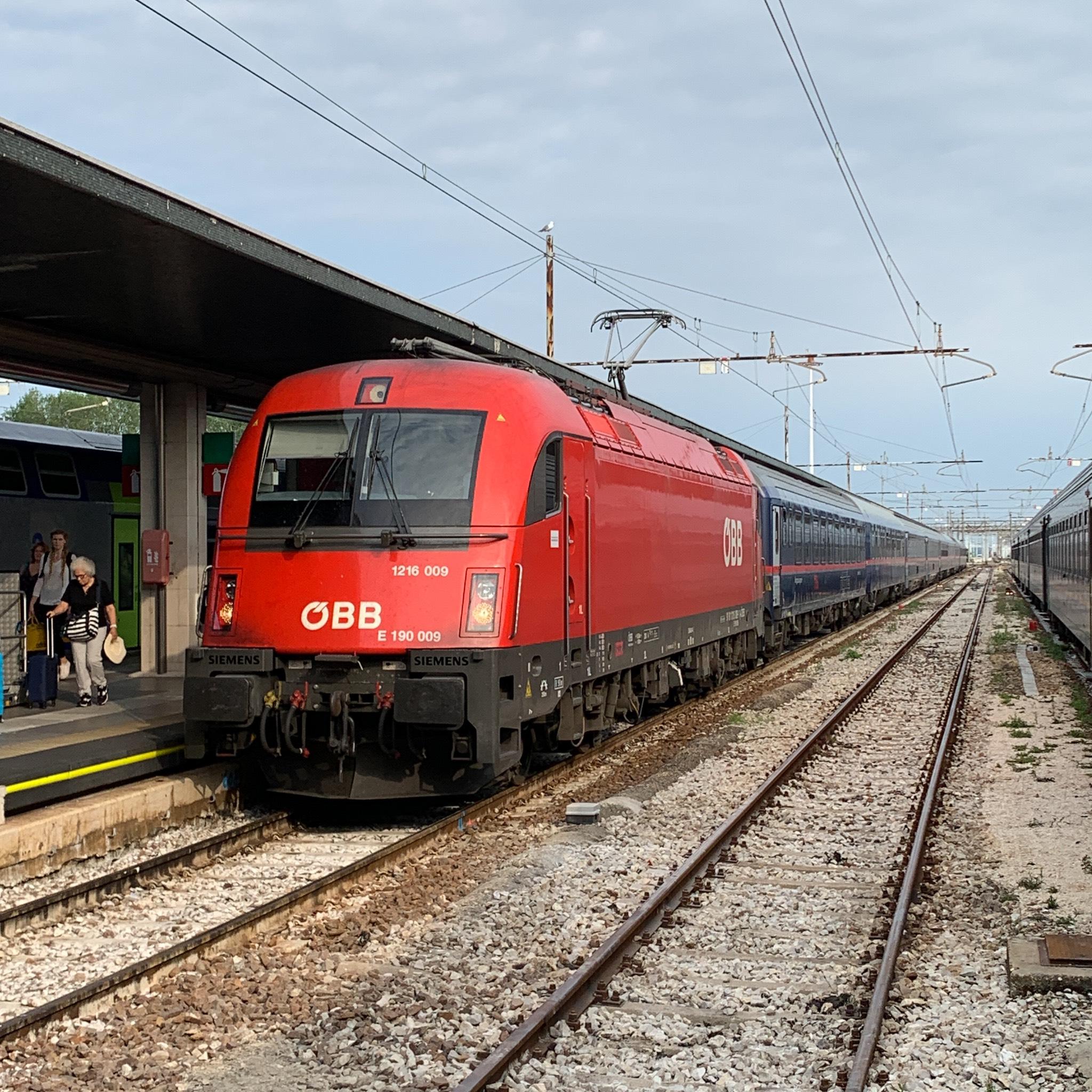

OBB Nightjet trains, which are important night-trains connecting the city with Rome, Venice, Milan, Hamburg, Cologne, and Dusseldorf, to just name a few.
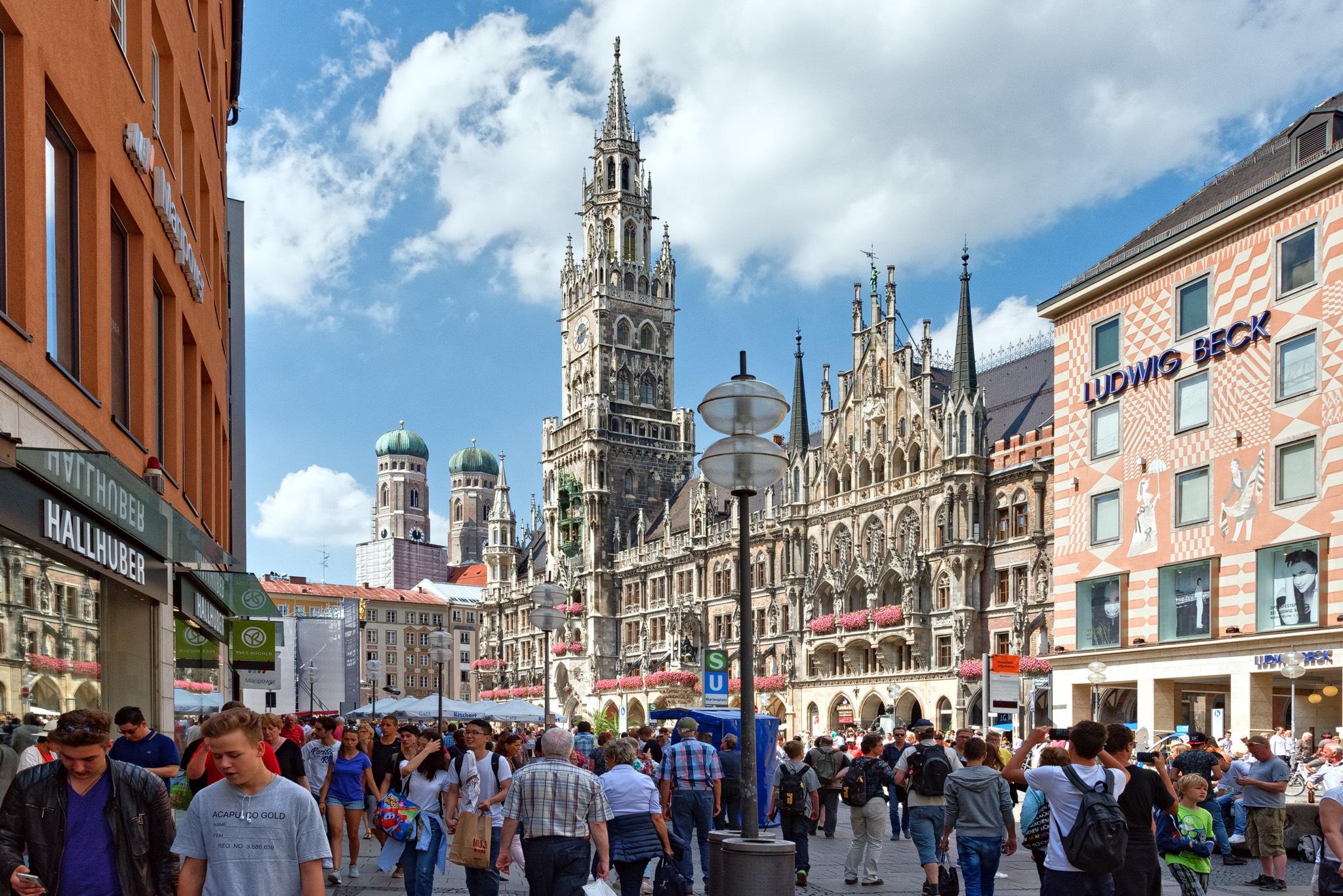

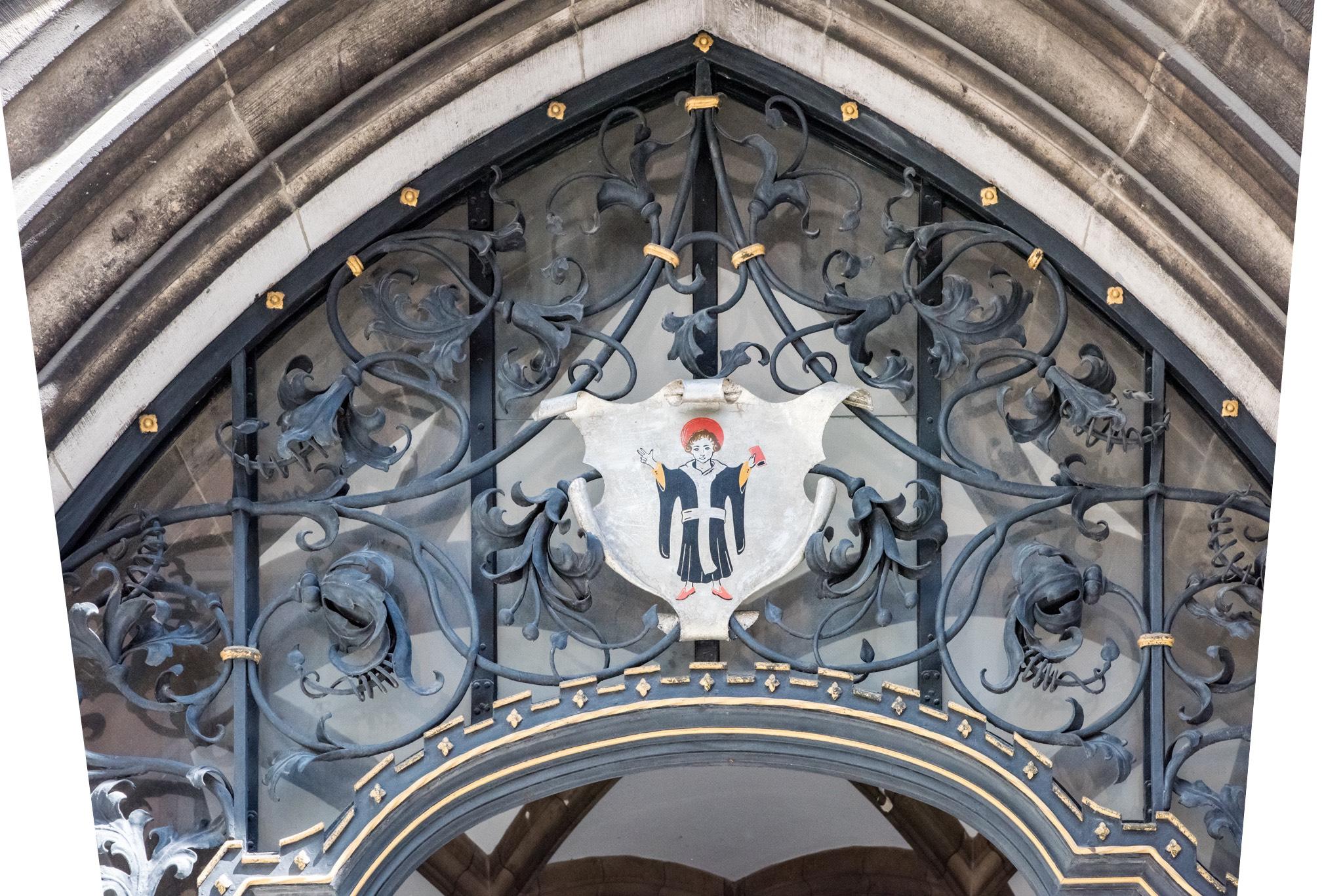
1918, Munich is the capital of the Free State of Bavaria. The city wall and gates date back to the year 1301 and - like almost 90% of the city – were destroyed during World War II. After the war, almost all historic buildings were re-constructed based on
Munich subway and its coordination with the commuter railway system.
Ever since the Olympic Games, Munich also has a large pedestrian area in the city centre.

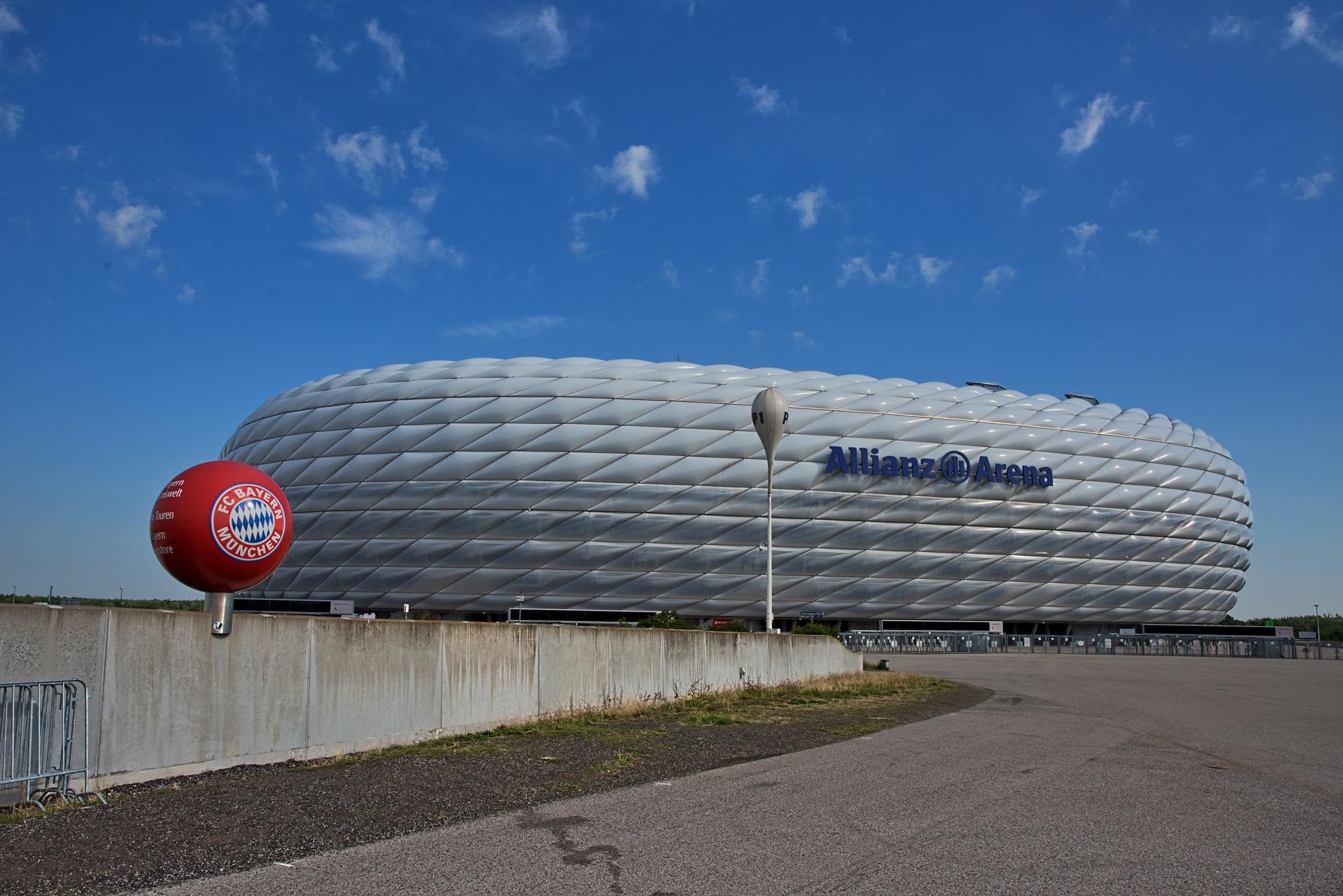
The Allianz Arena is located in the northern part of Munich. The soccer stadium of the local FC Bayern has space for 75,000 people. Despite being located at the highway entrance and providing
parking for about 11,000 visitors, traffic is difficult when everybody is leaving at once. The subwayconnection (U6) is a big advantage.
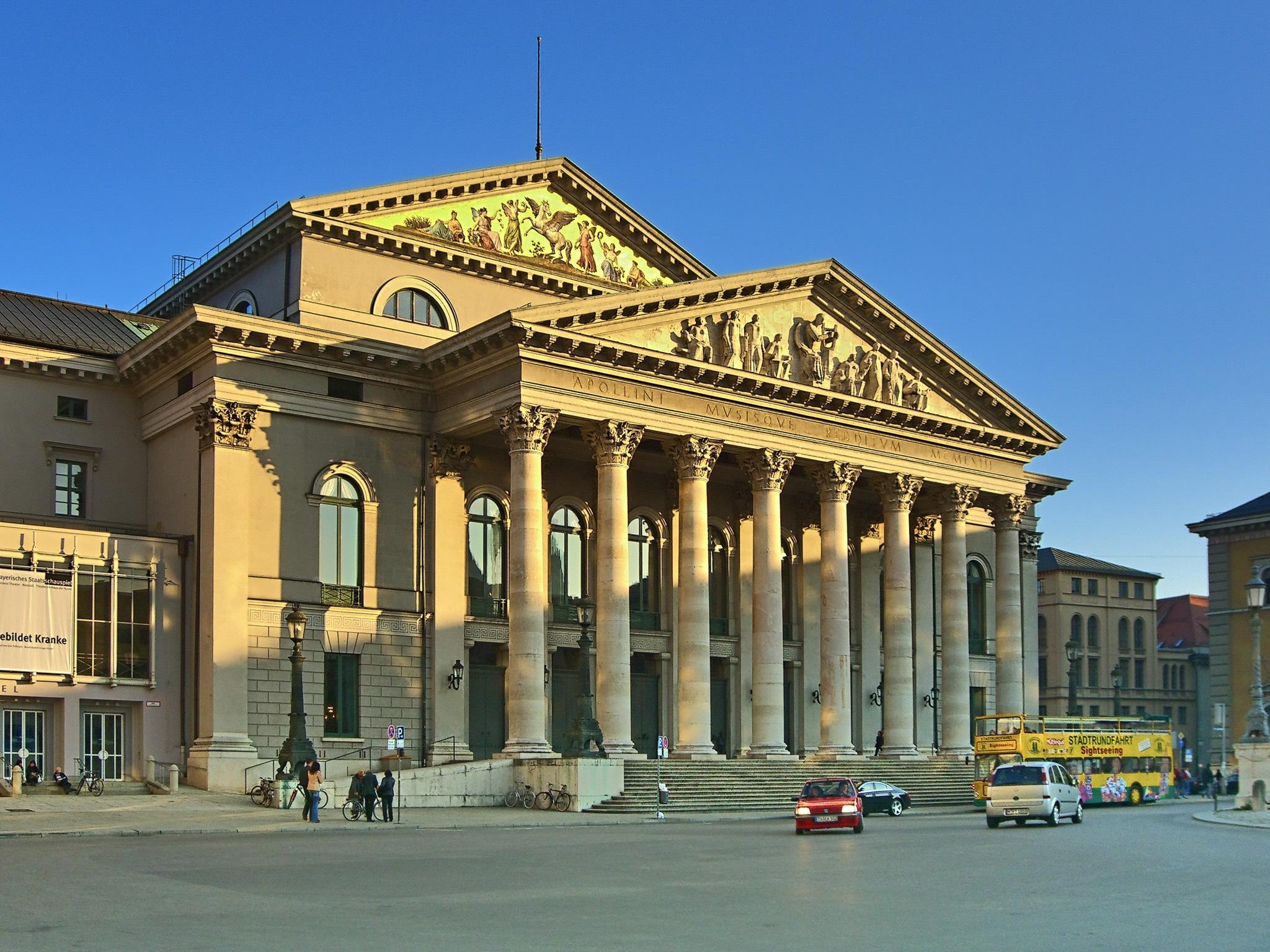
The Bavarian State Opera is amongst the most prestigious opera houses of the country. The first premieres date back to the year 1700. In June and July of every year, the Opera Festival marks the
highpoint of the year for the Munich Opera. The Opera Festival has been a well-visited event since 1875.
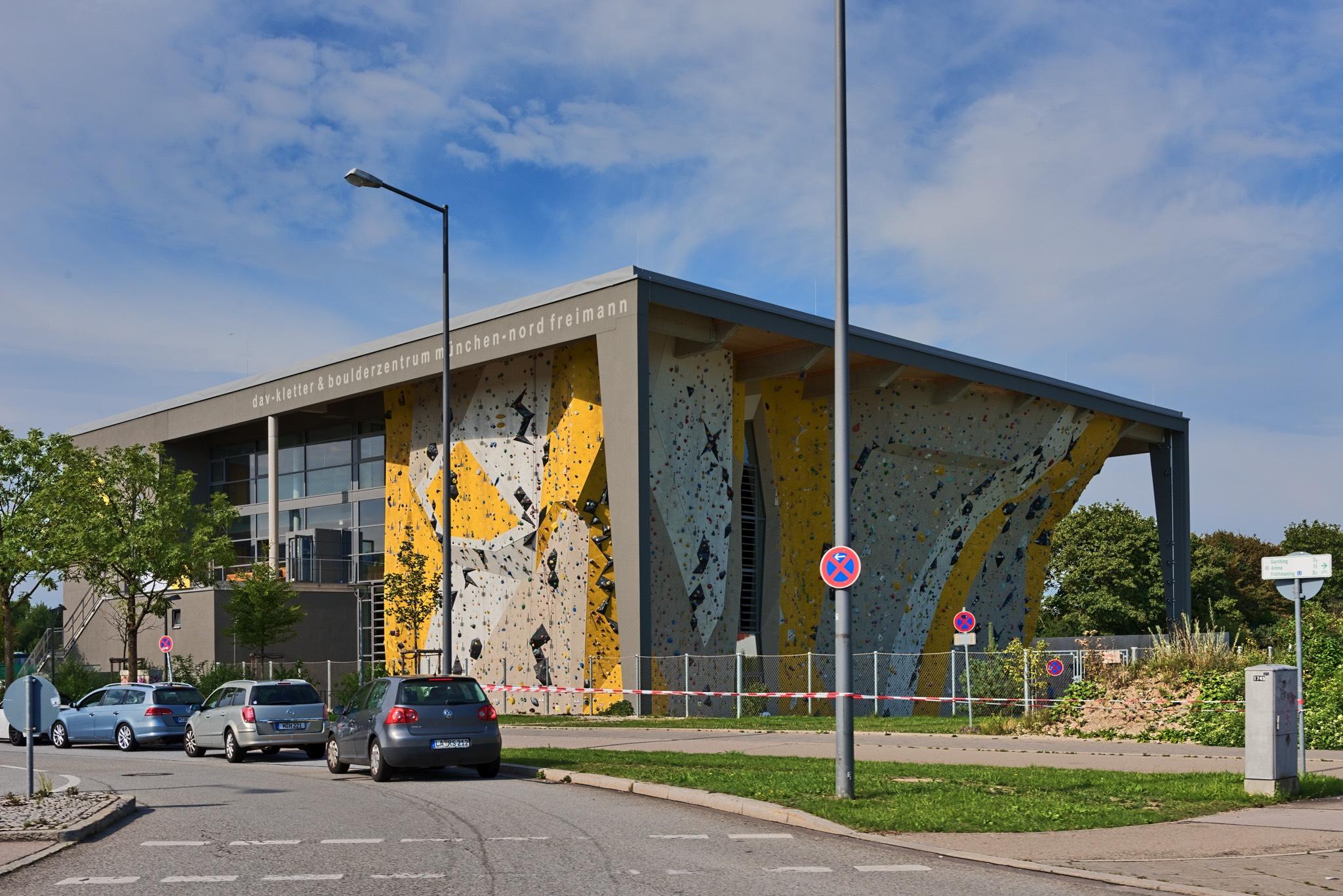
The DAV Climbing- and Boulder-Centre in MunichSouth is the largest climbing centre worldwide and encompasses 7,800 m². It is not just an ideal venue for professional climbers, but can also be used by
children. The attached Bistrocafe as well as the beer garden on the roof terrace will keep visitors nourished.
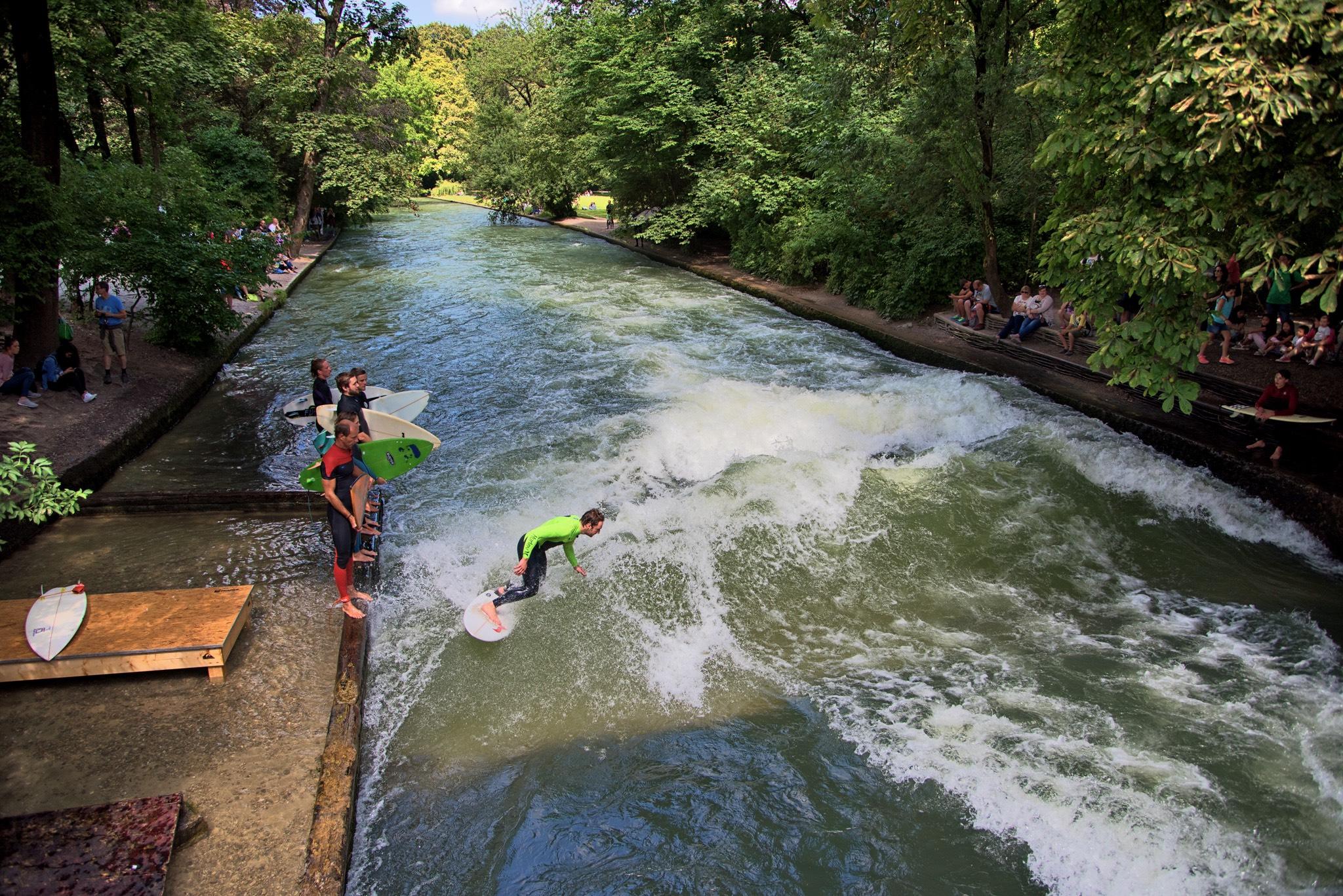
Even from afar, one can spot many visitors on the small bridge at Prinzregenten Street. The waves of Munich's Eisbach River are a dorado for the city's surfers.
Right next to the bus stop "Nationalmuseum/Haus der Kunst" at the English Garden is the meeting point for surf-fans all year round.
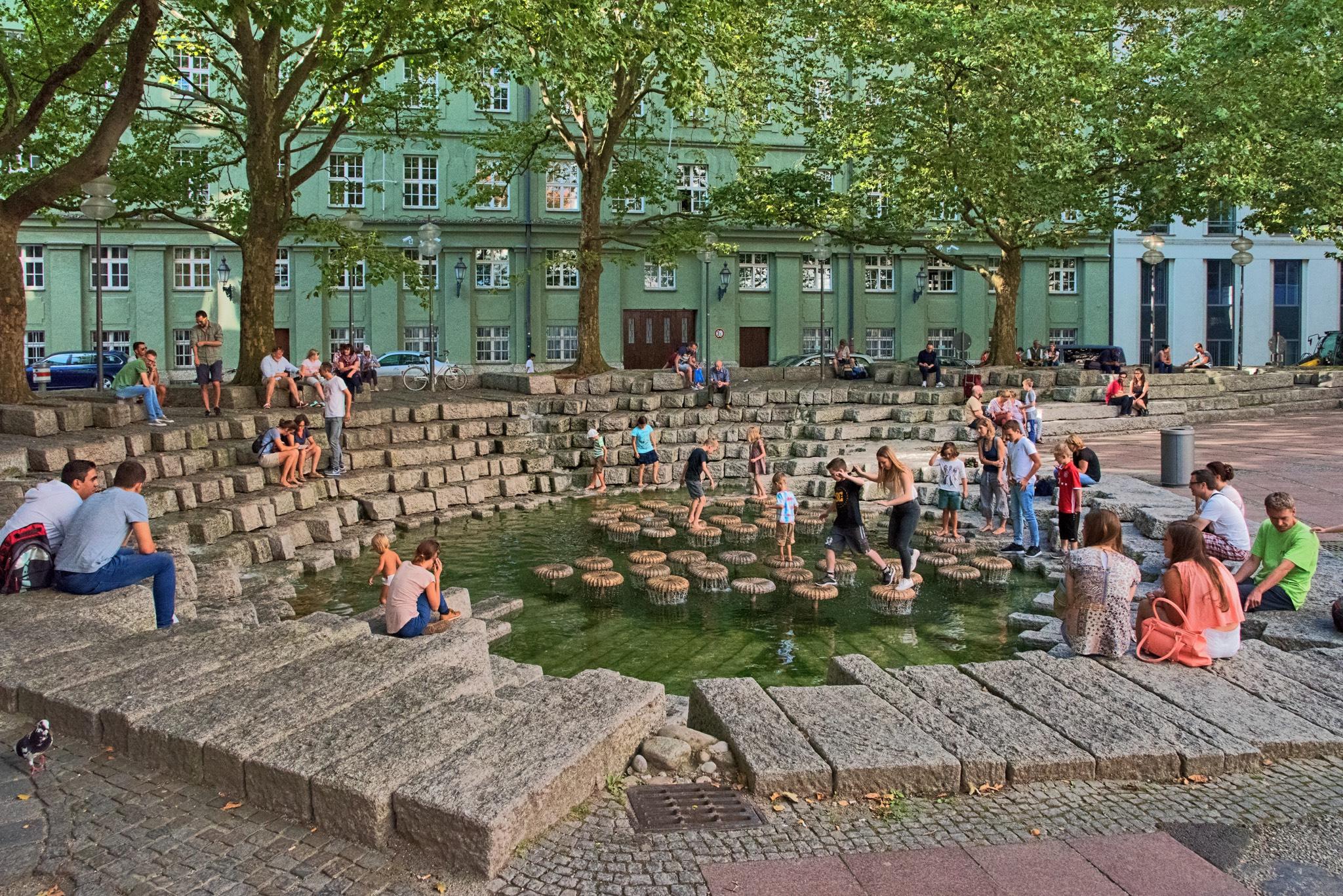
Munich's Frauenkirche is located at Frauenplatz Square and is an oasis of peace amongst the hectic life in the city centre. Wasserpilz-Fountain draws many children who enjoy playing in the
water. But adult tourists use it as well as a chance to rest and to cool their feet after a long walk.
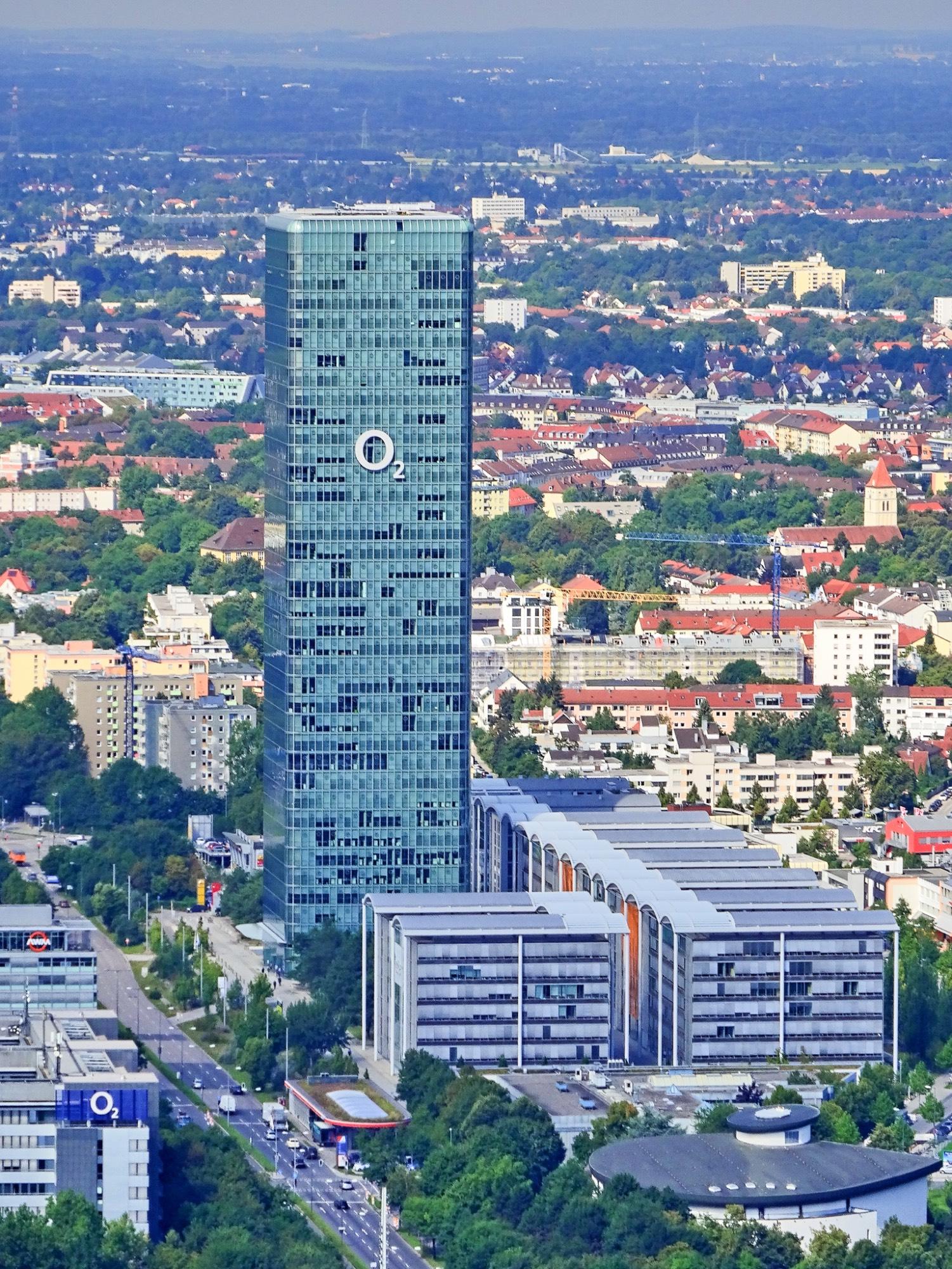
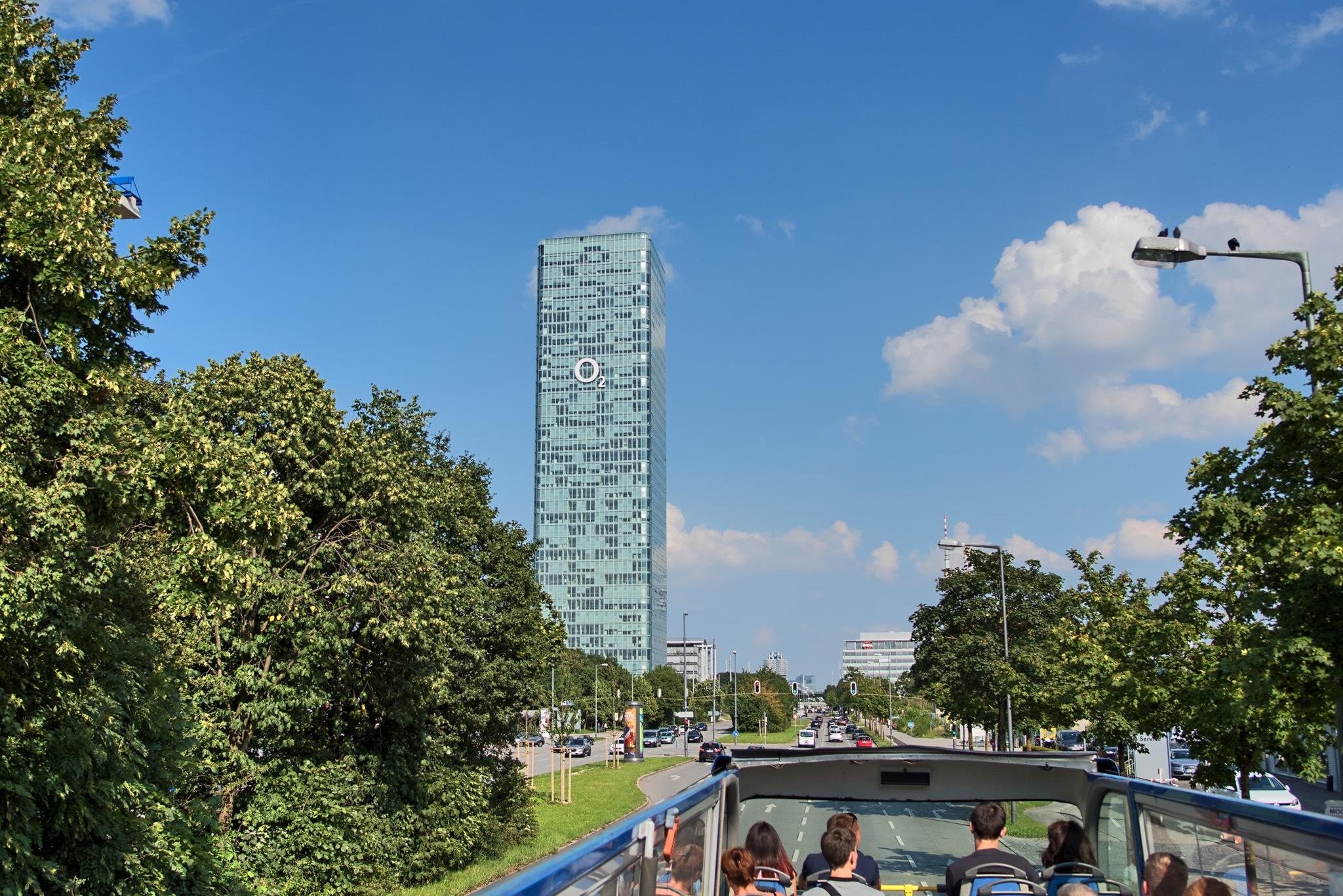
The building measures 146 metres in height and thus is the second-highest construction of Munich, after the Olympia-tower. Right next to the high-rise is a cluster of four seven-story-houses that are connected by a transparent roof. This cluster is called the "campus". Another building houses about 140 apartments. A petition for a referendum in November 2004 reached its goal in preventing the construction of any further high-rise buildings in Munich.
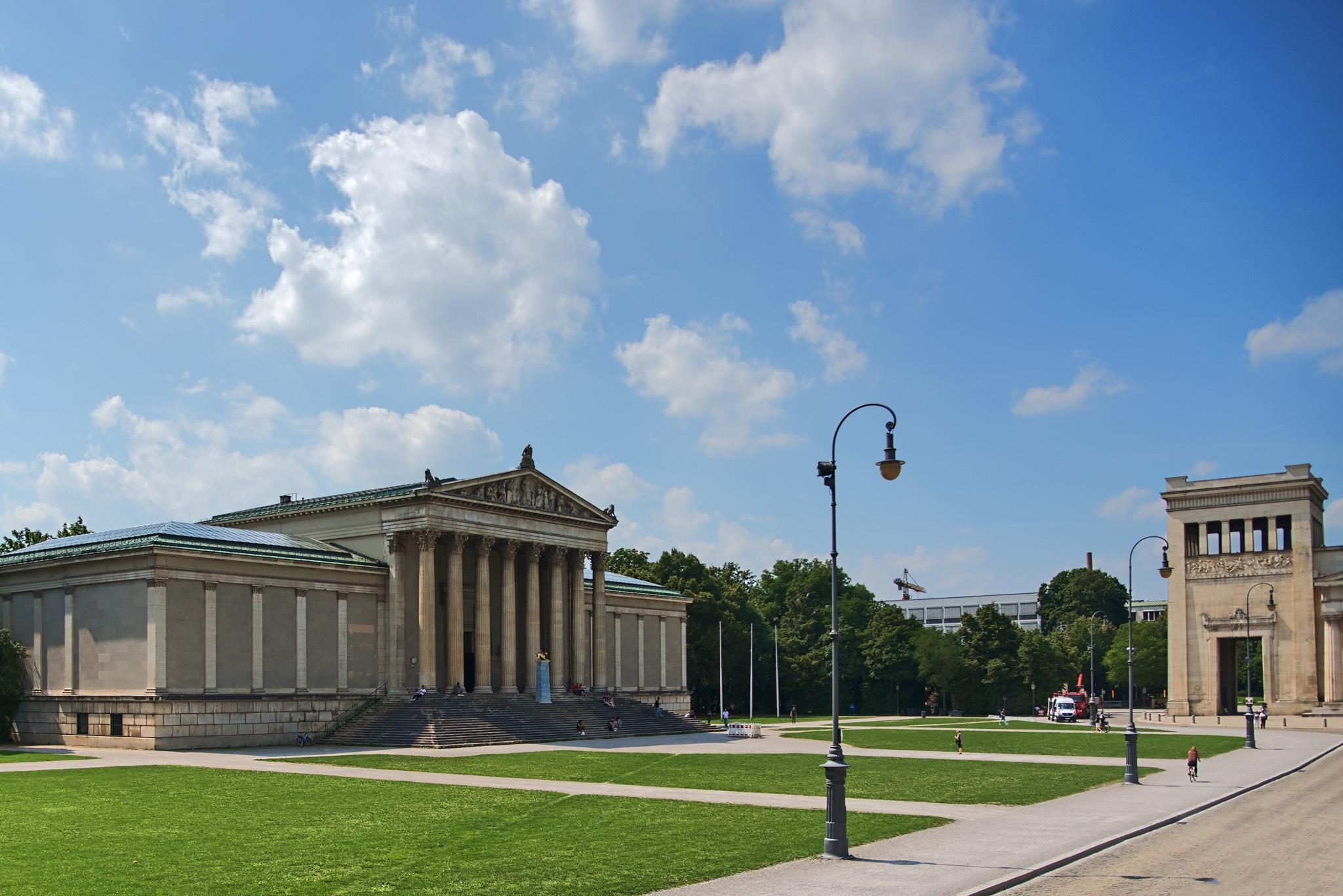
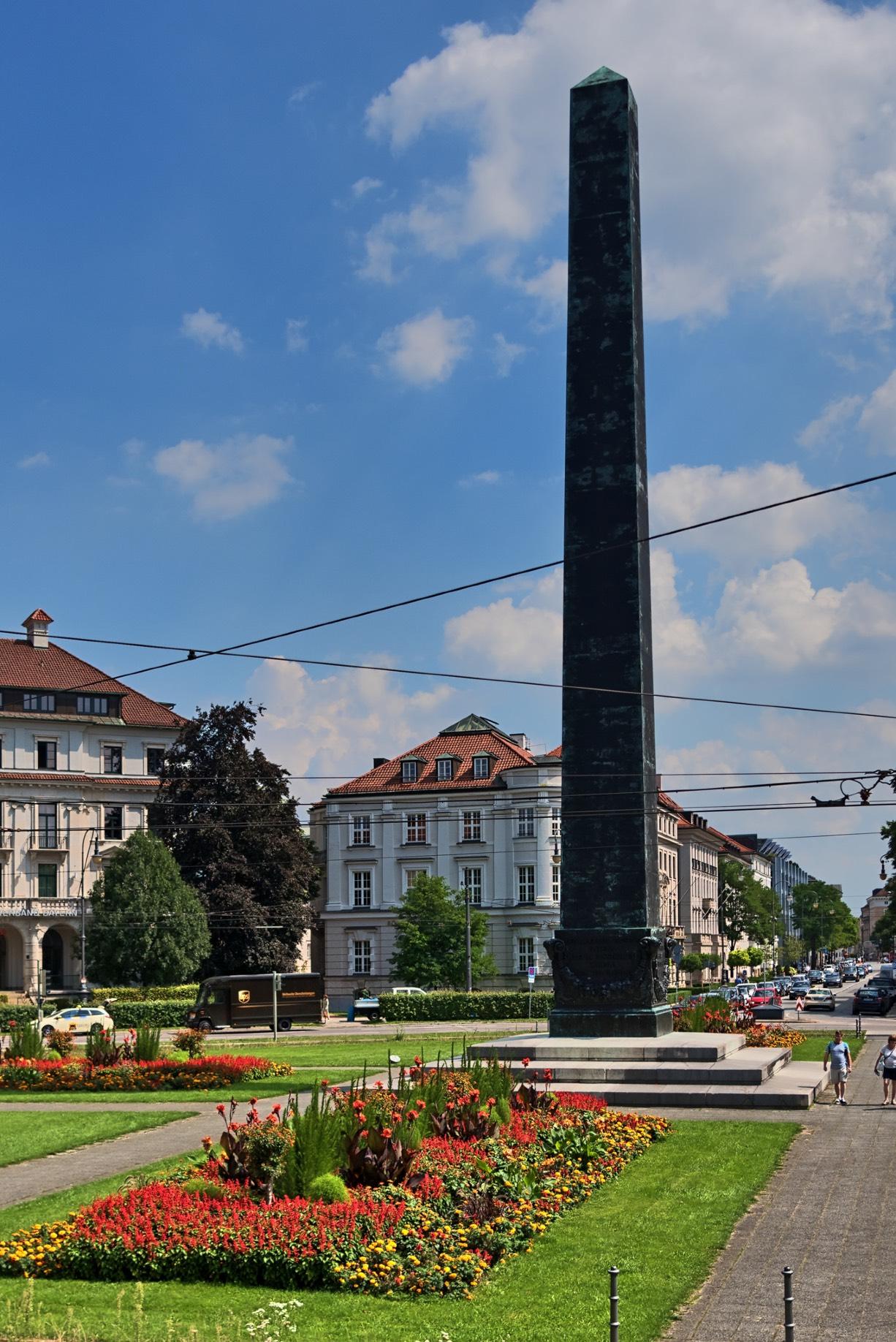
Königsplatz is located in the part of Munich called Maxvorstadt and is one of three Squares of Brienner Street, which was expanded as a boulevard from the residency to Nymphenburg
Königsplatz 1
Palace. Ludwig I had the quare expanded based on his wishes and included buildings that represented his version of "Athens at the Isar River".
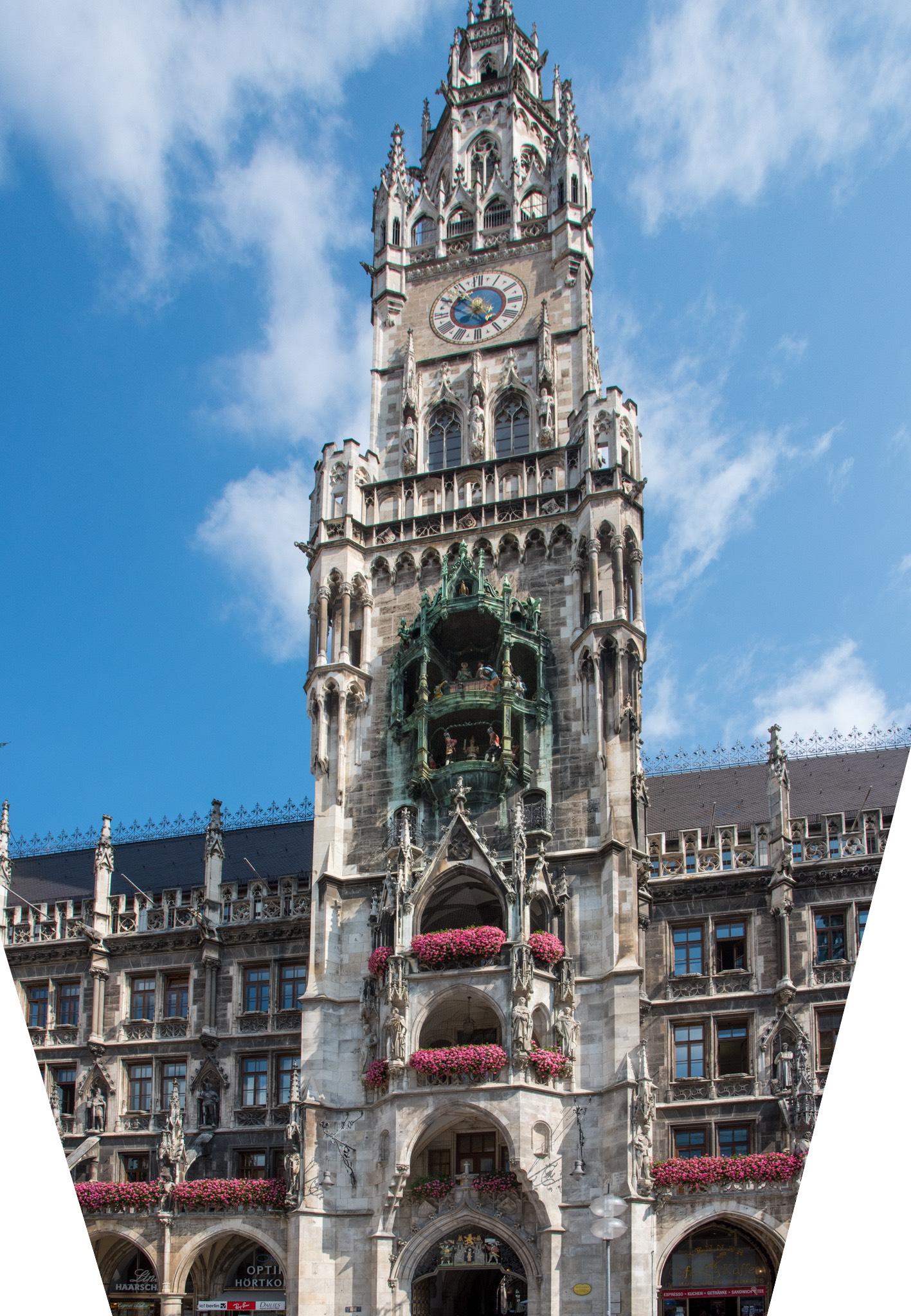
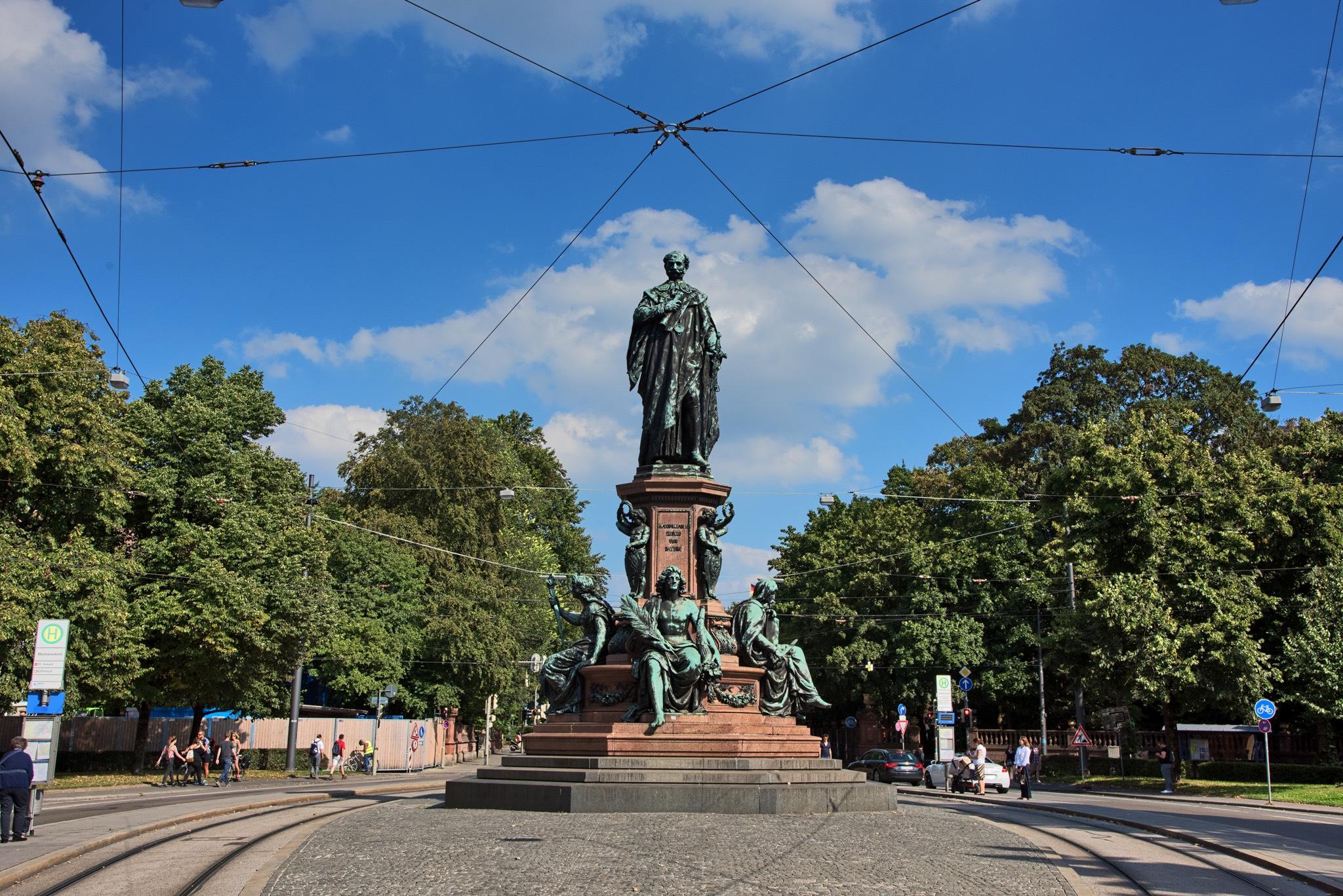
A small traffic refuge on Maximilian Street houses Max Monument, in remembrance of the Bavarian King Maximilian II.
The four seated figures represent the love of peace, justice, strength and wisdom. The bronze statue was unveiled in October 1875.
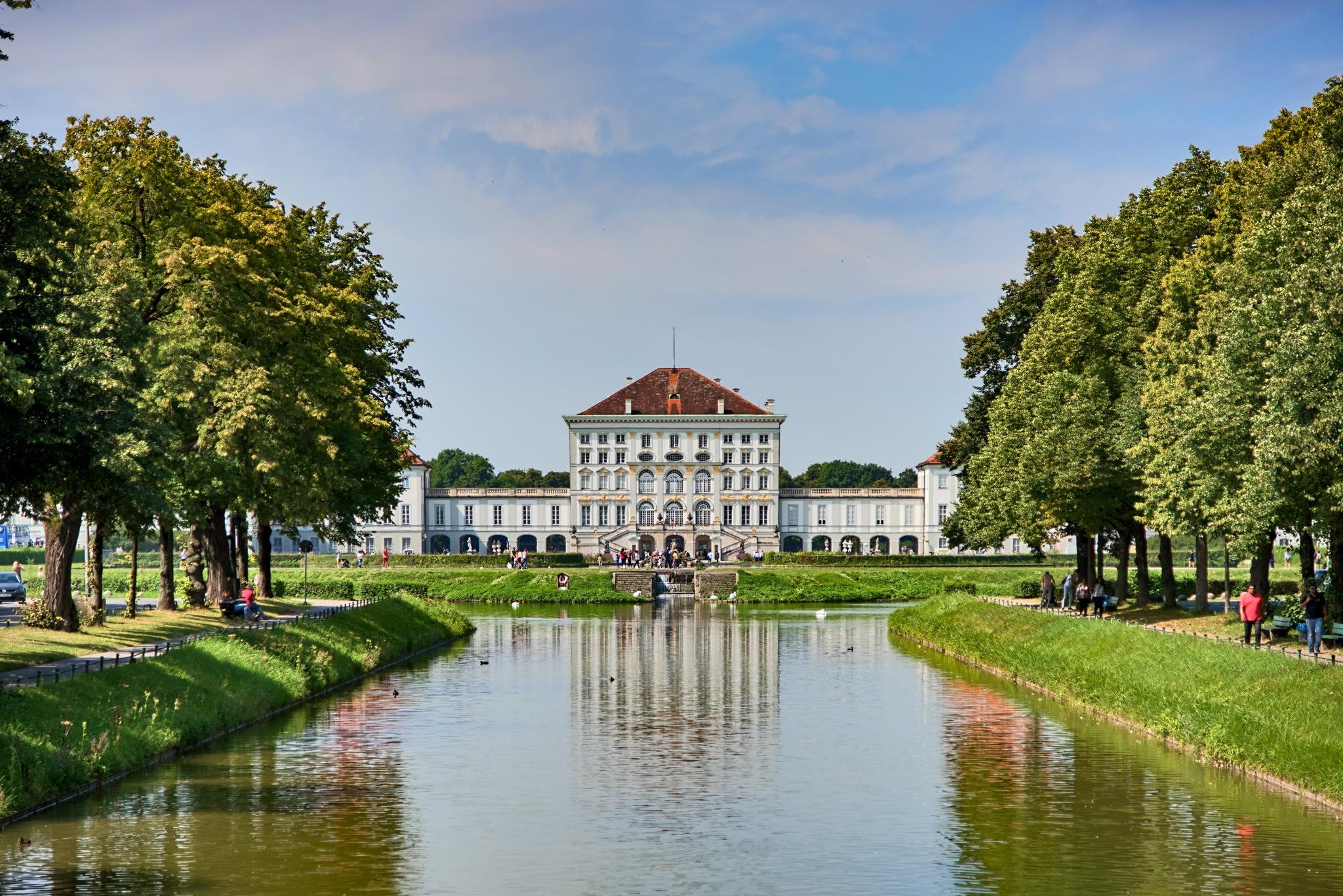
Neuhausen-Nymphenburg is a borough of Munich located in the western part of the city. The ample Schlosspark gardens house the beautiful Nymphenburg Palace. It all started with a five-story
Schloß Nymphenburg 1
building in the centre, which then was expanded every year.
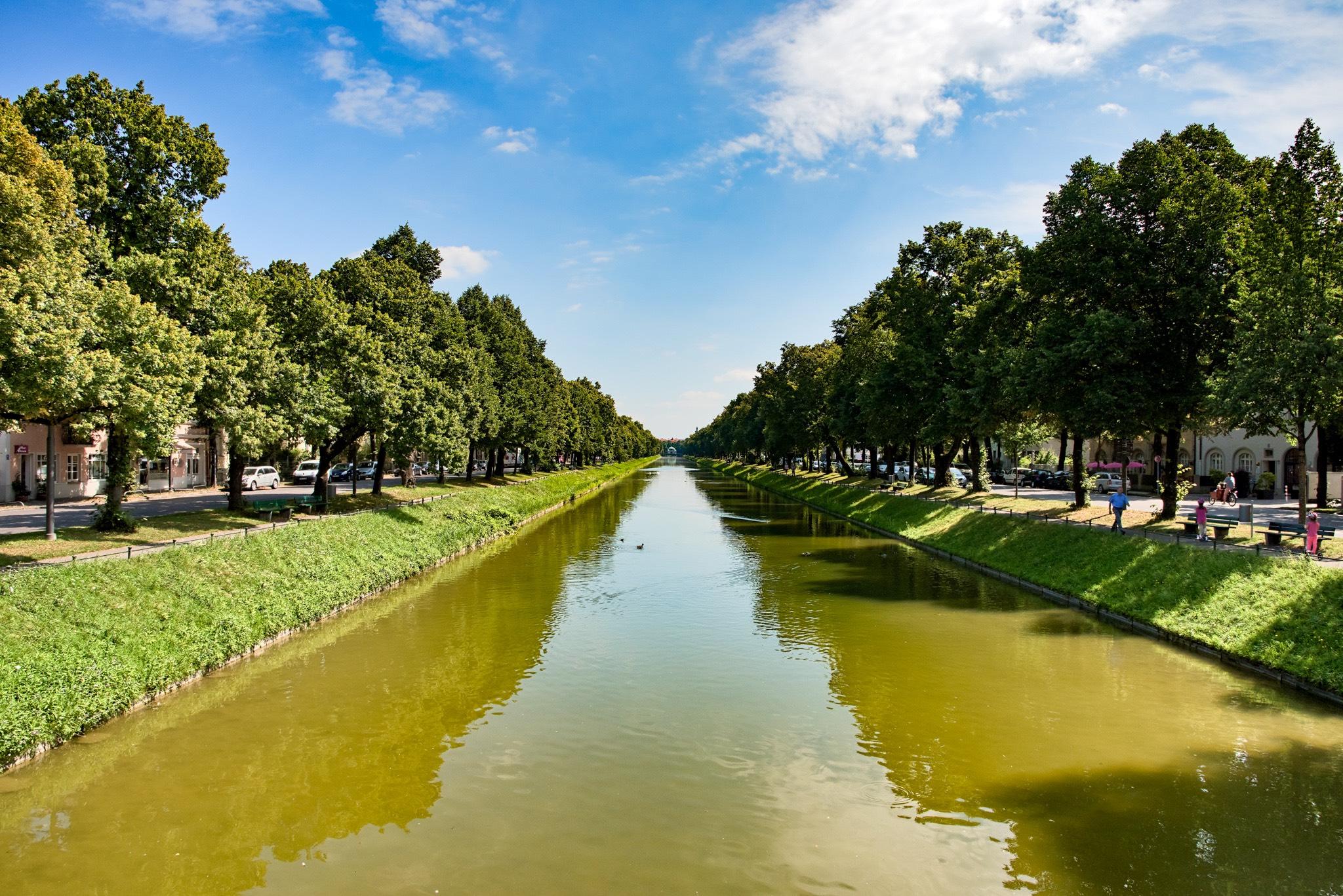
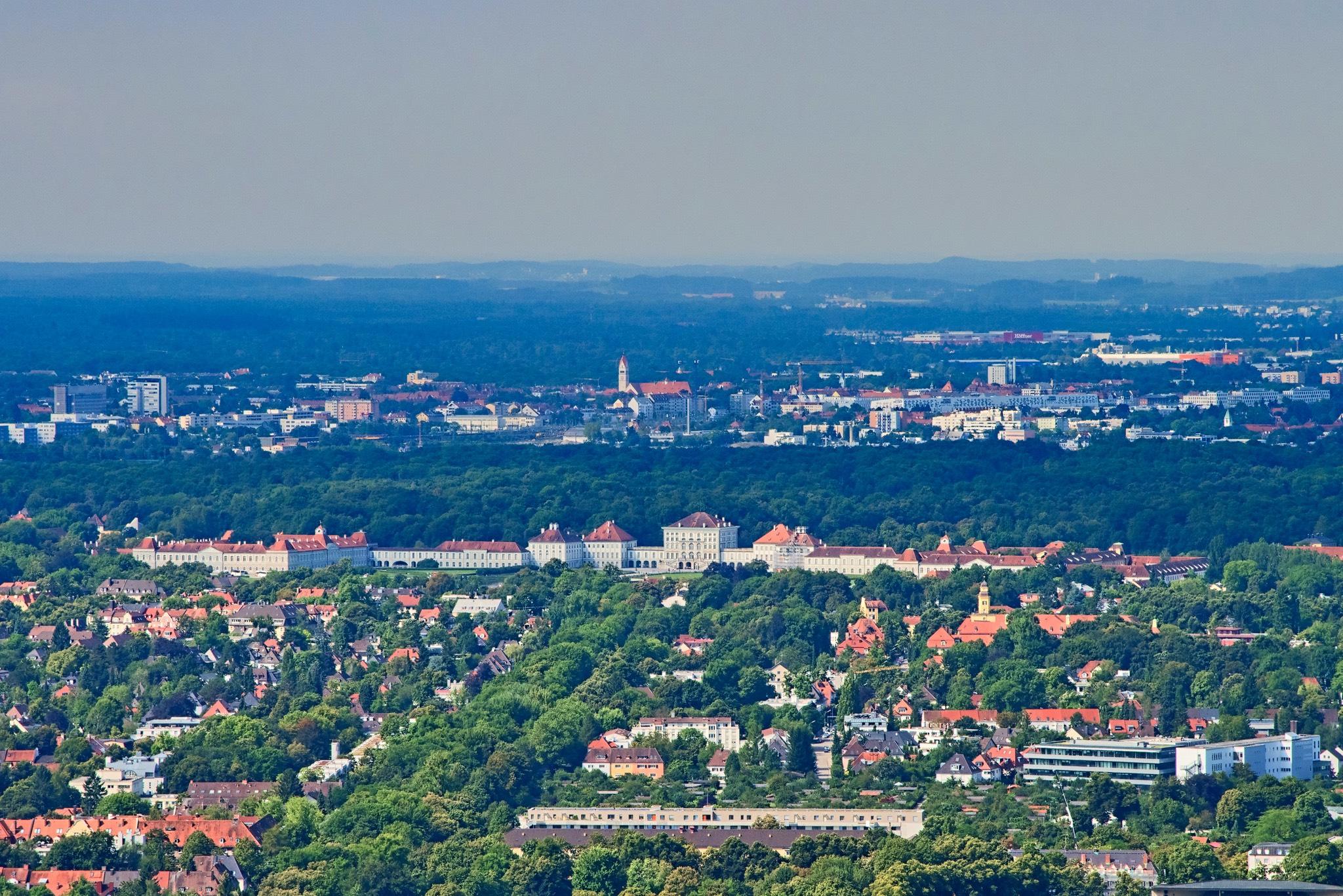
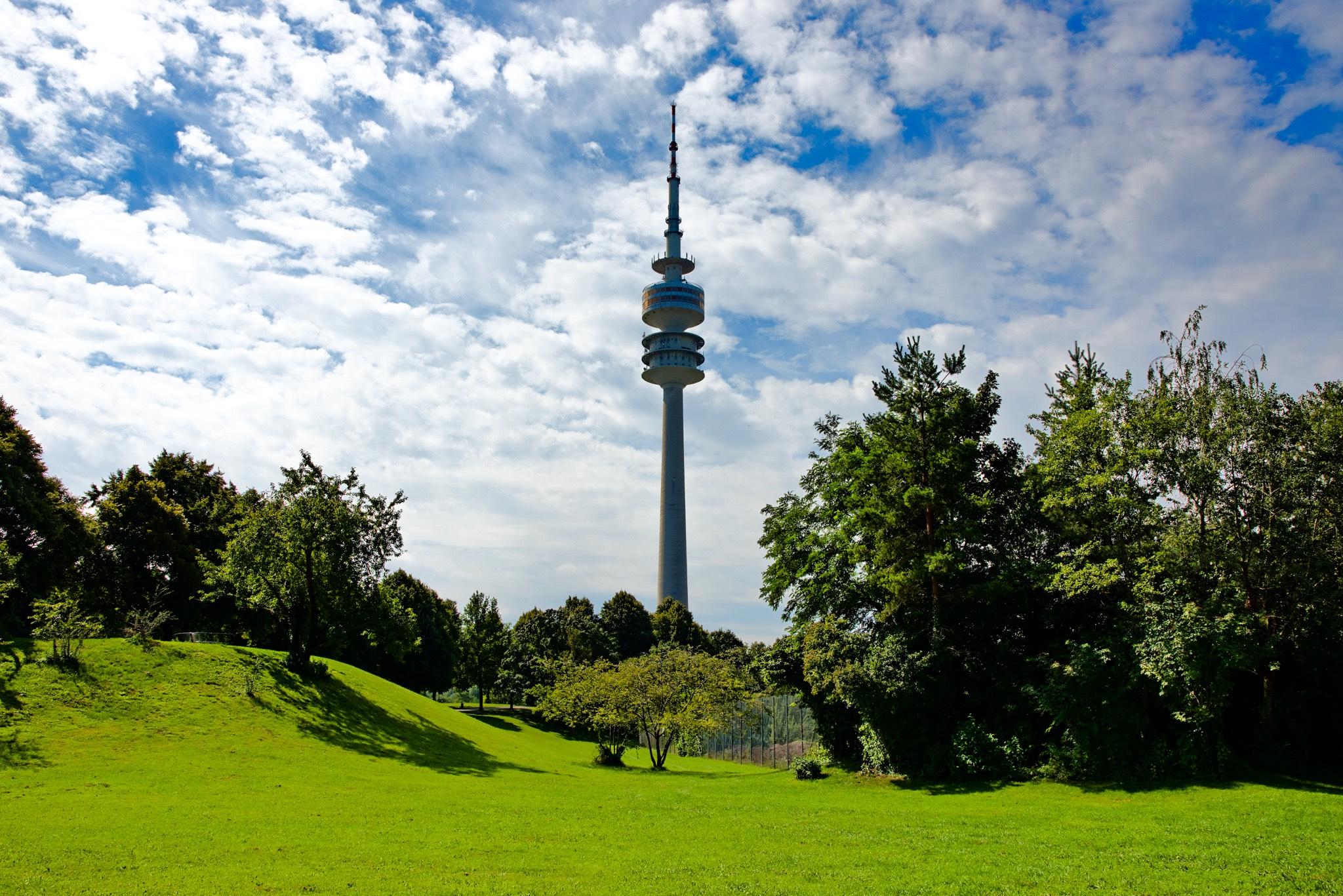
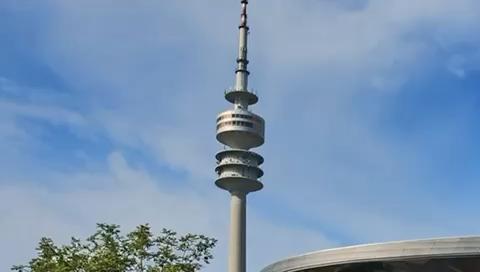
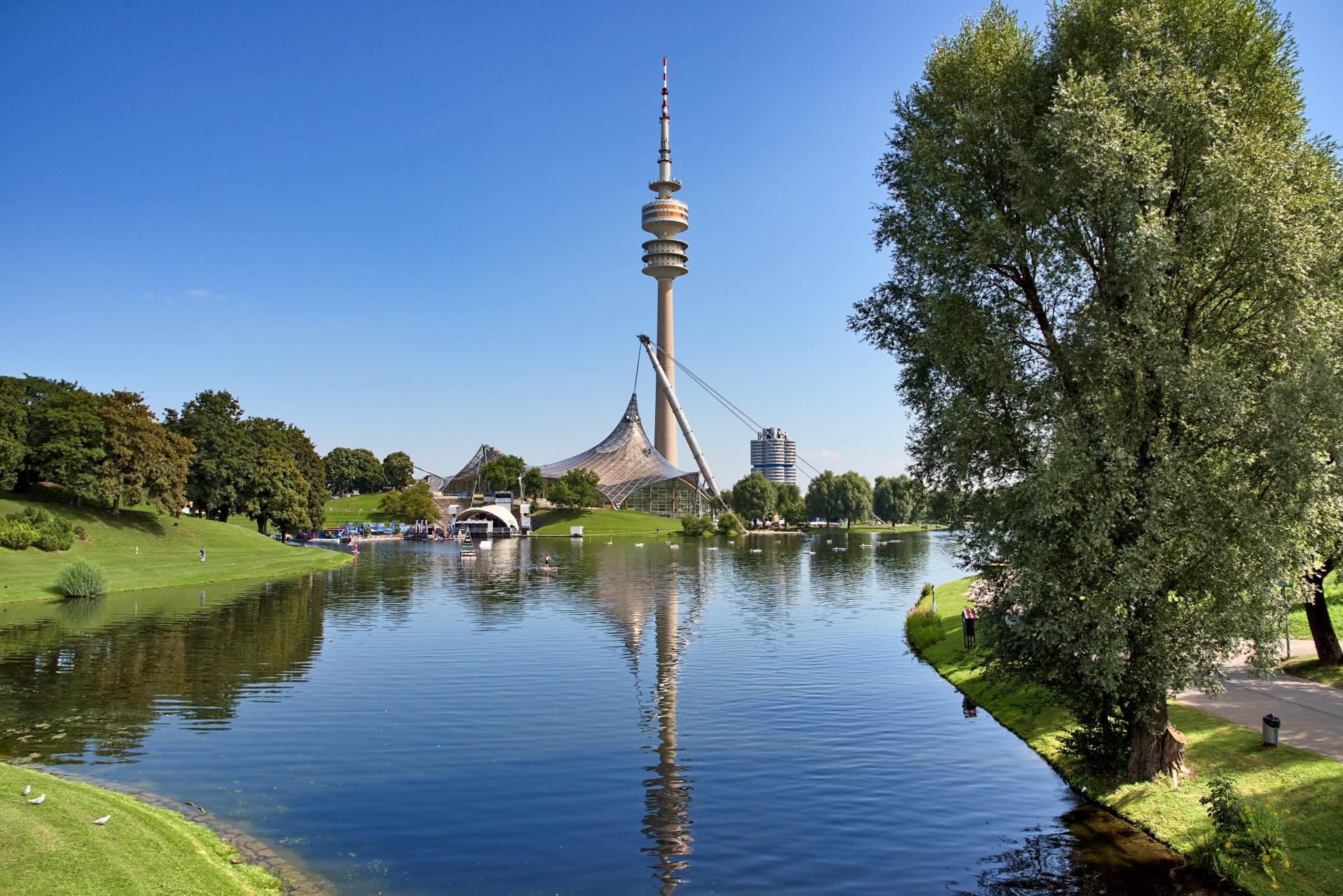
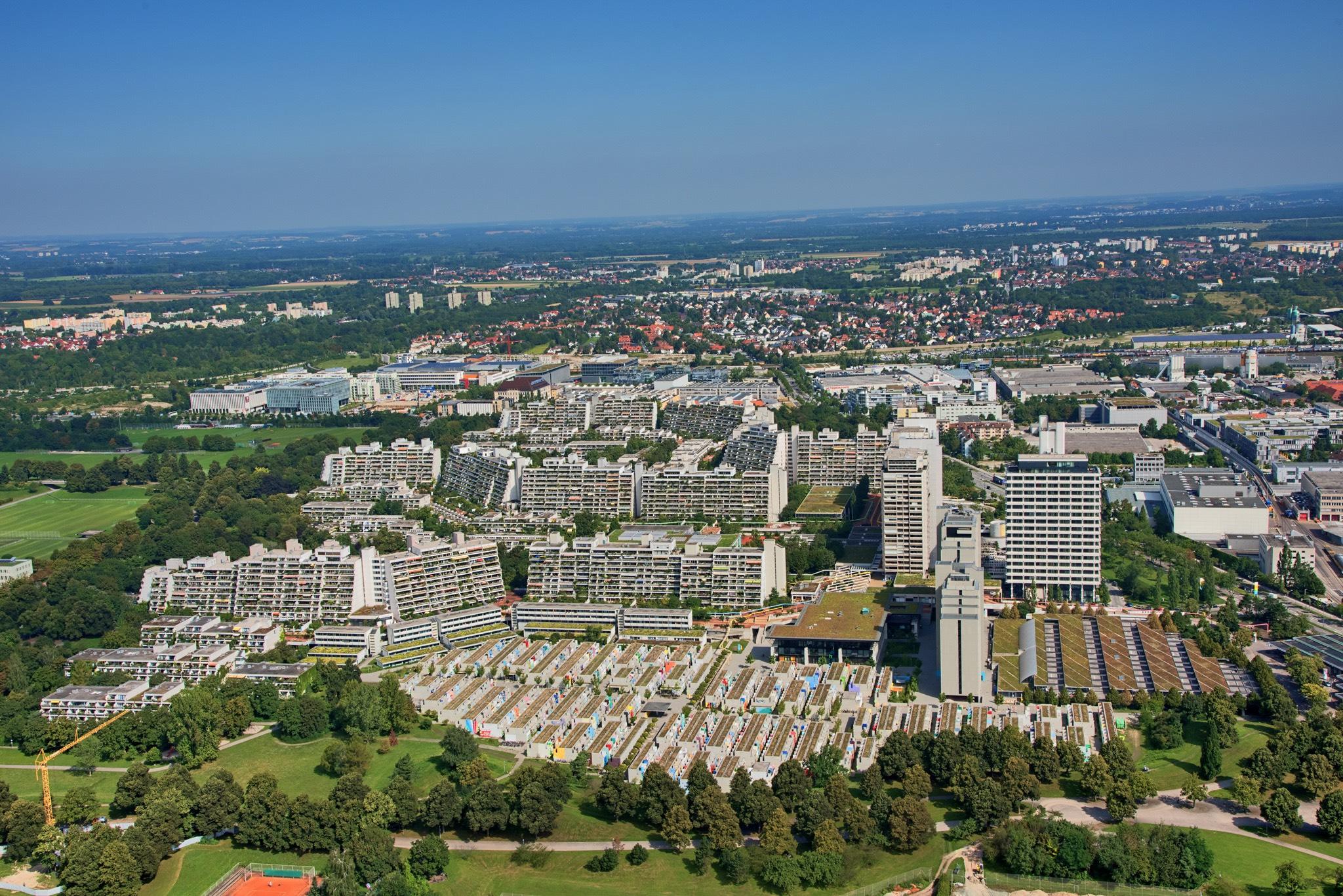
In honour of the Summer Olympic games 1972, the Olympiapark was built on top of the "Trümmerberg" hills.
This is also where you will find Munich's highest building: the Olympia tower, measuring about 300 metres. The park is one of the largest green spaces in the city.
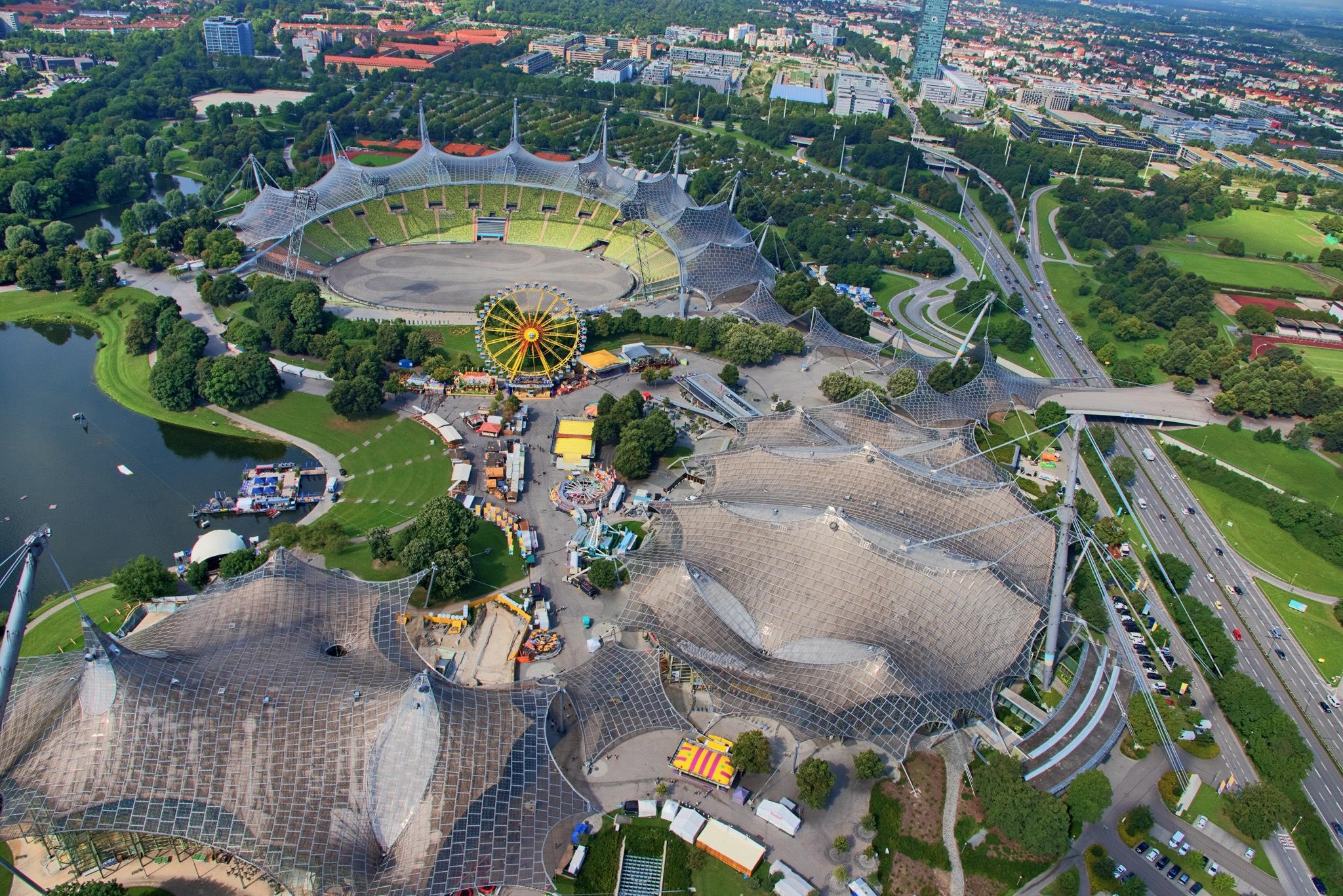
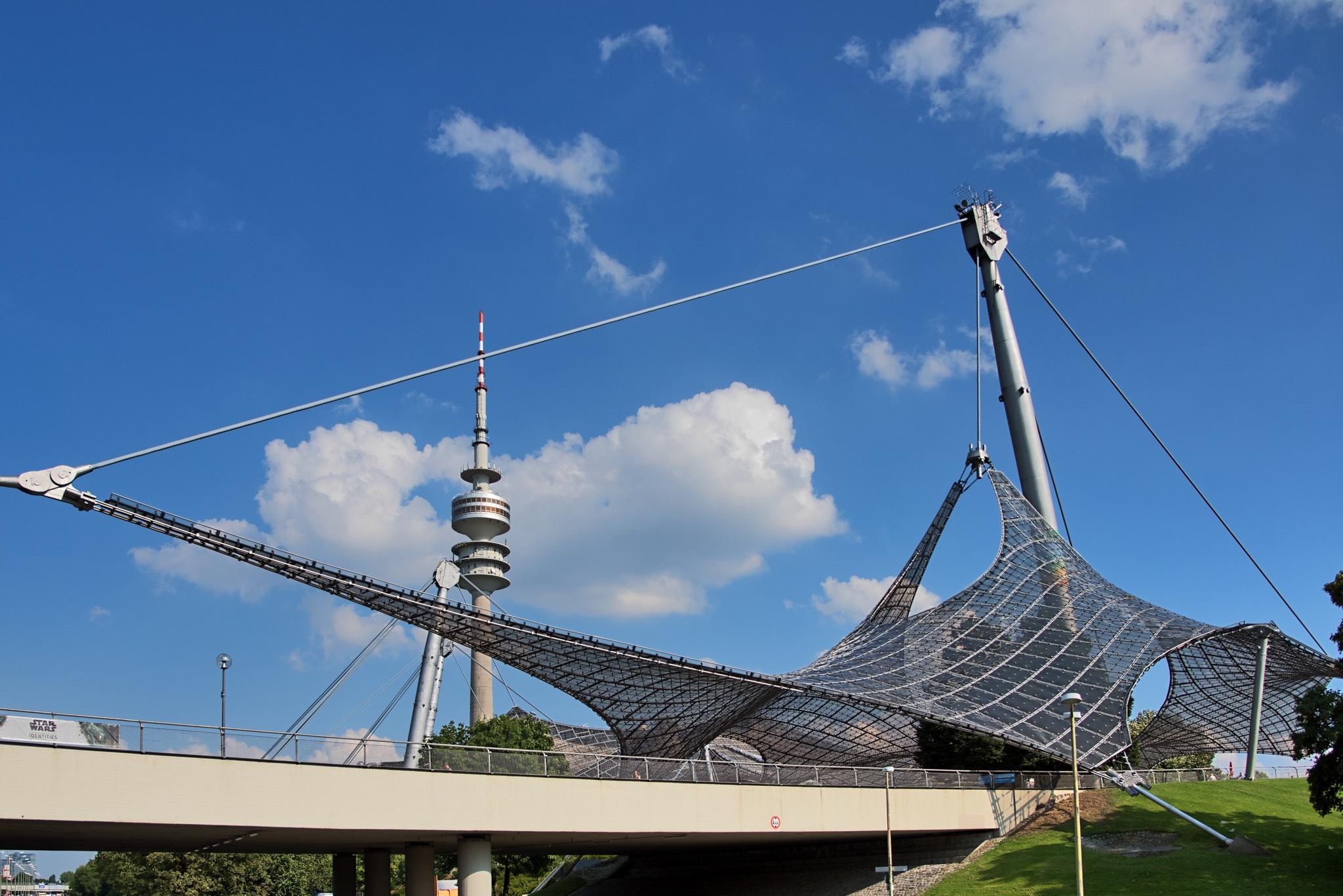
OLYMPIAHALLE, OLYMPIATURM
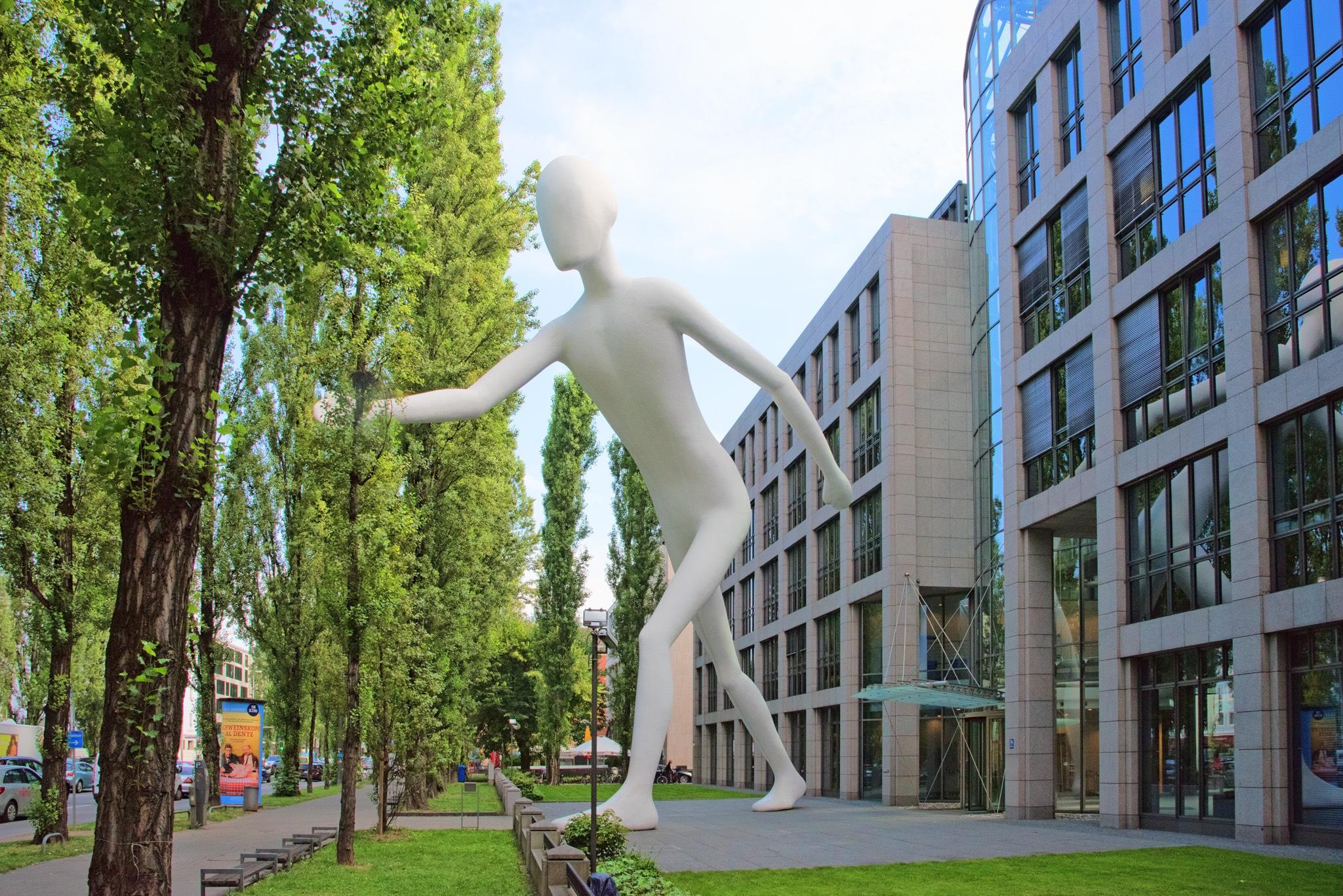
American artist Jonathan Borofsky sculpted the "Walking Man" - an oversized figure, 17 metres high and 16 tons in weight.
The white giant made from glass fibre polymer has been guarding the entryway to the Munich Rückversicherung building in Schwabing.
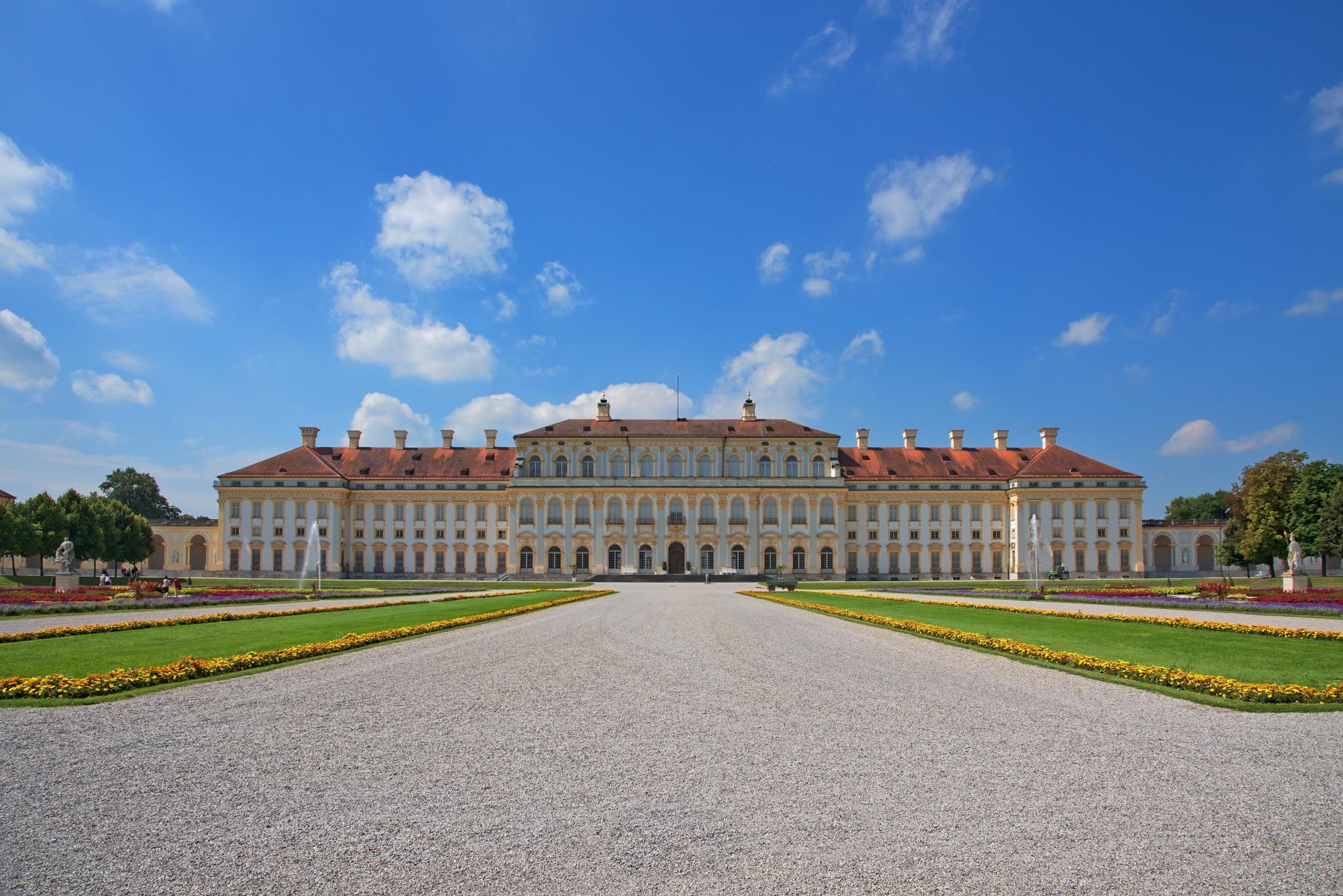
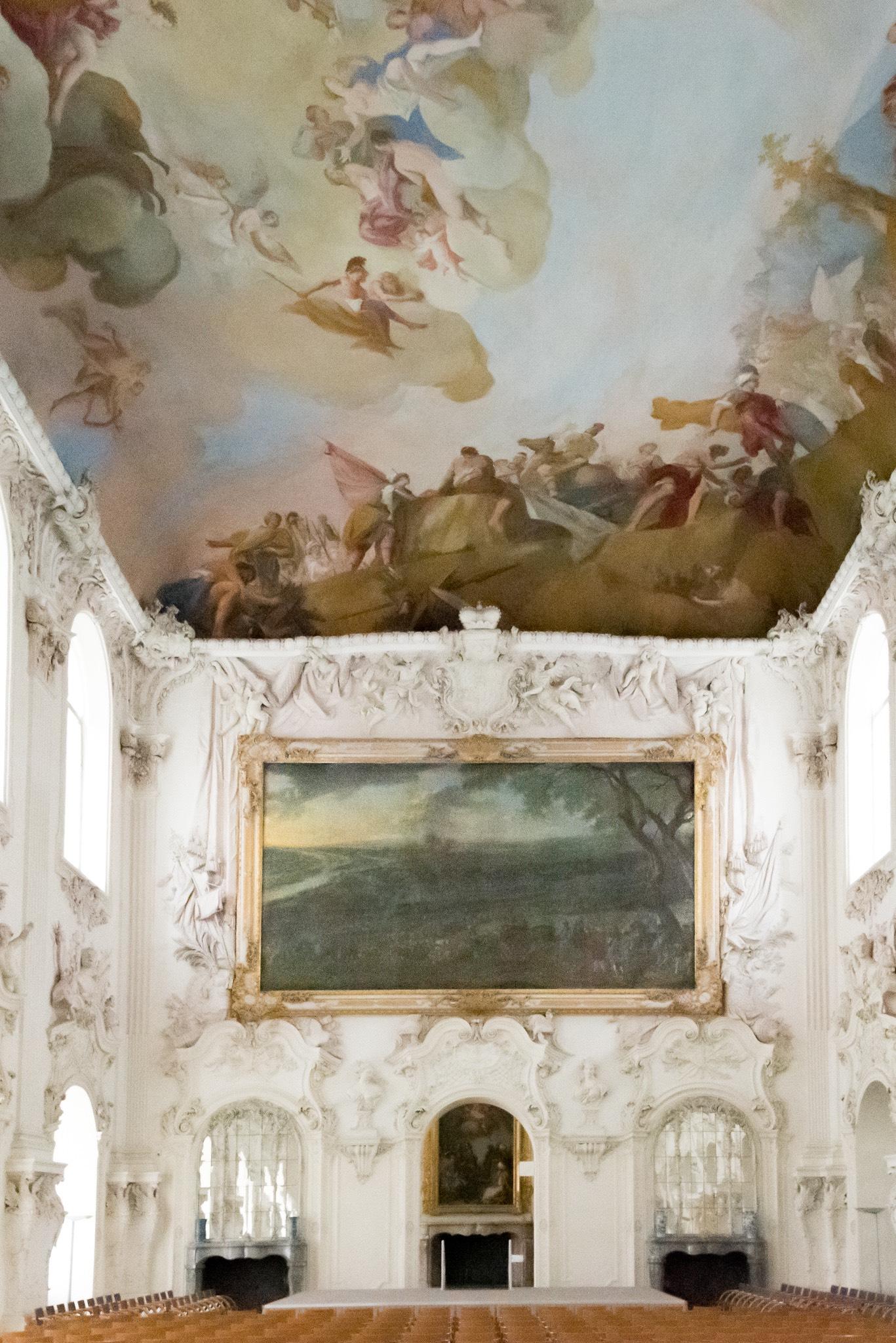
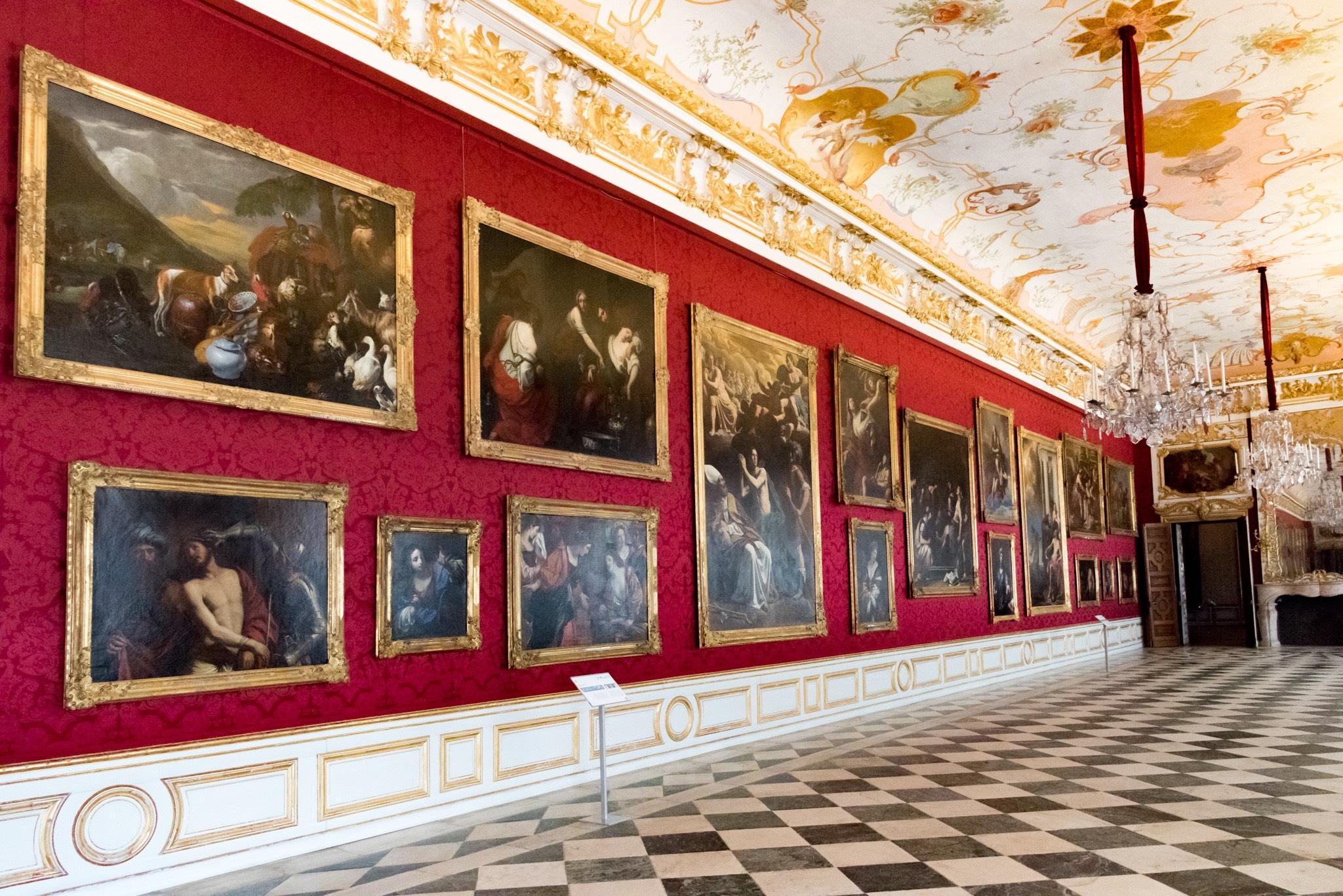
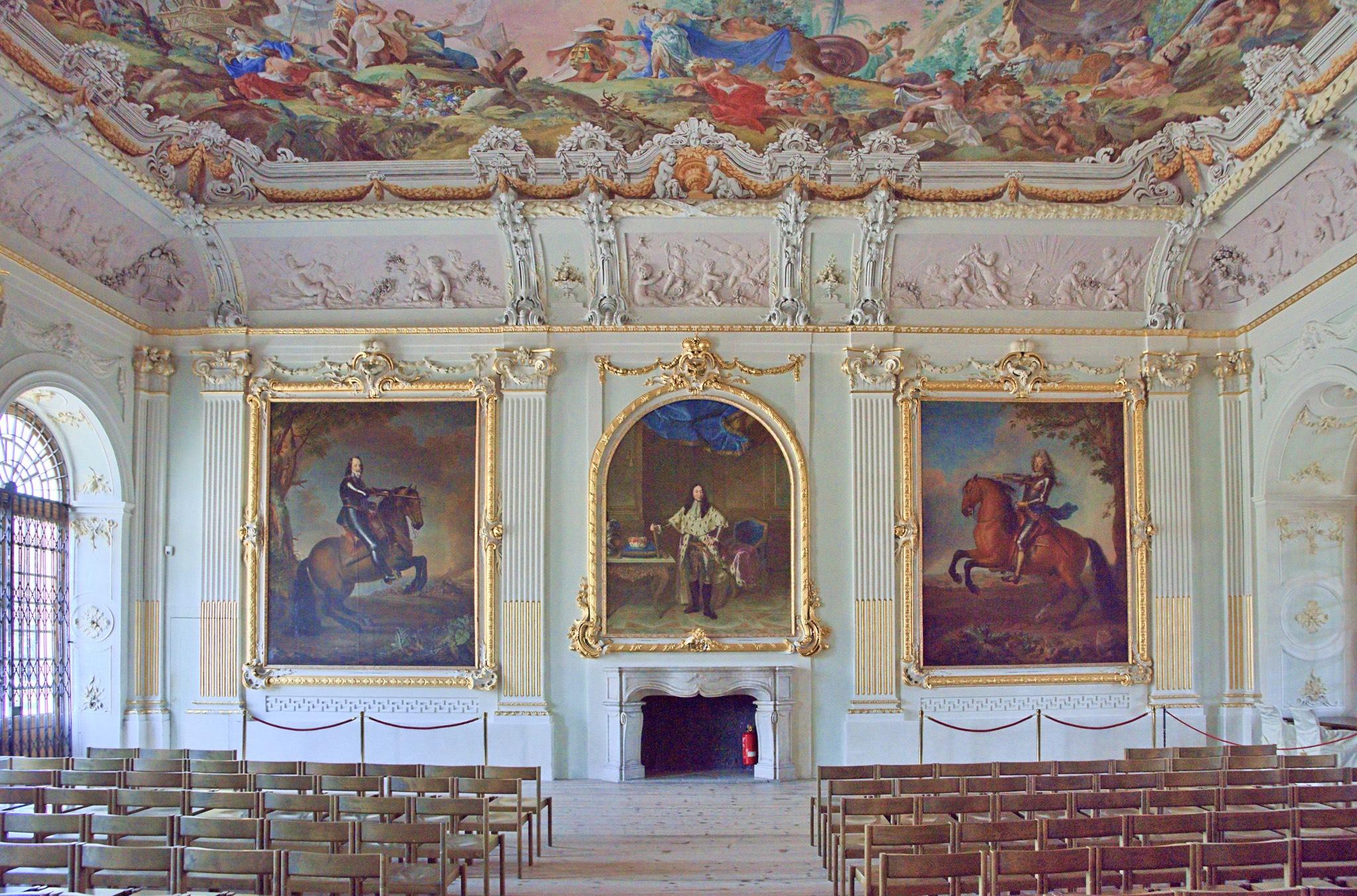
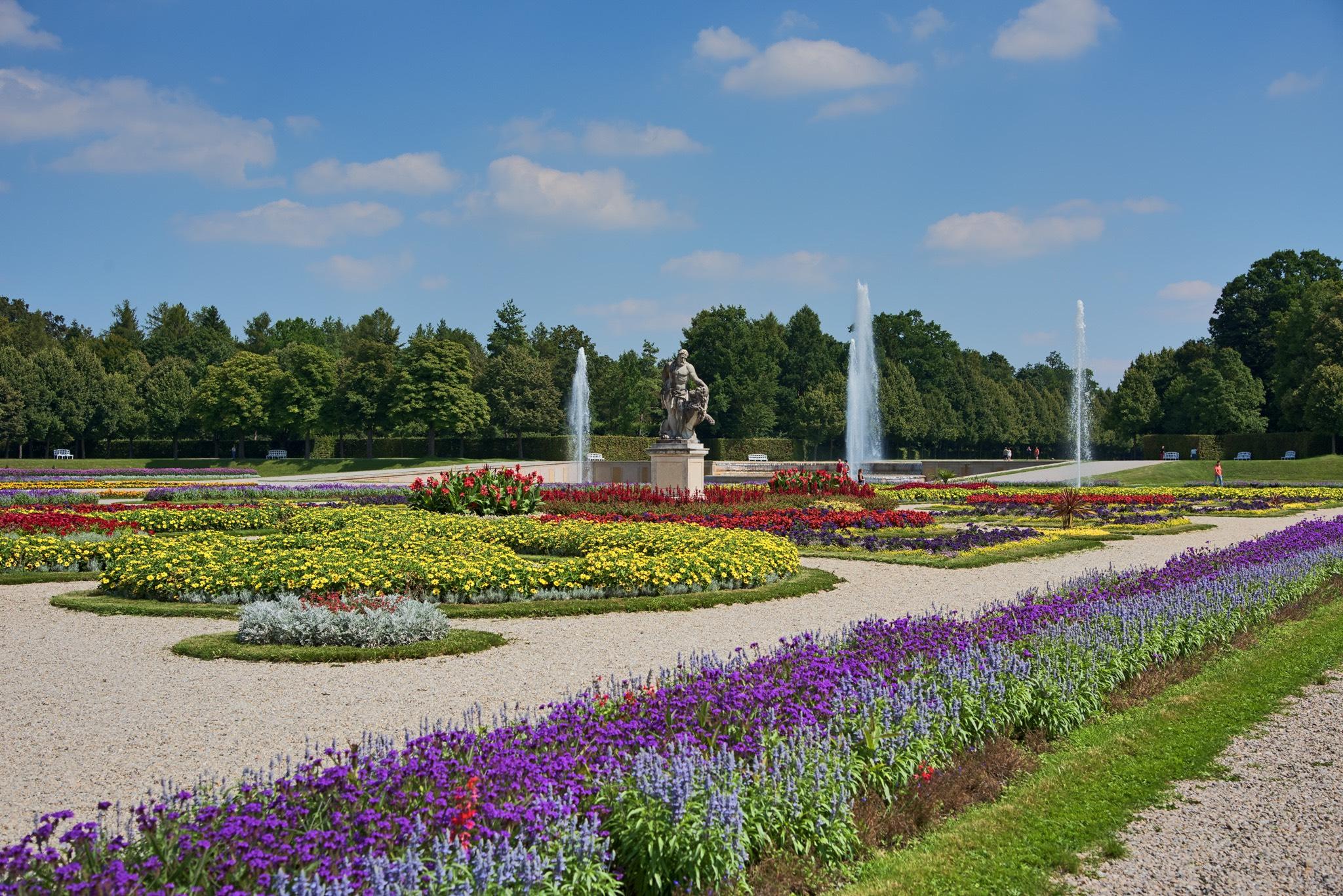
The impressive Schleißheim Palace is located only a few kilometres outside of Munich's city centre and definitely worth a visit. It encompasses three separate palaces:
Oberschleißheim
Old and New Palace Schleißheim and Lustheim Palace. The New Palace houses the Baroque gallery of the Bavarian State Painting Collections.

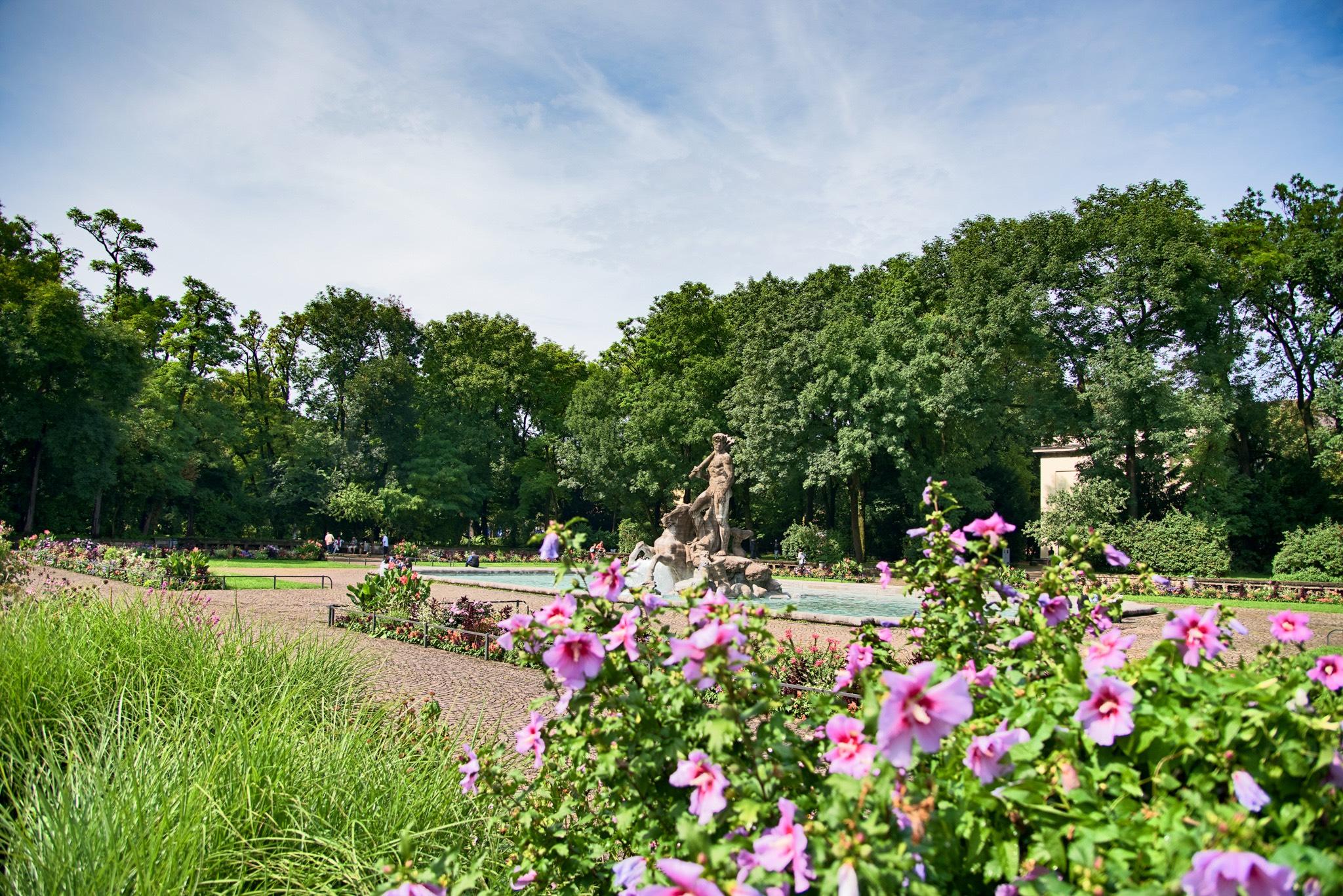
The New Botanic Garden in Nymphenburg was founded in 1914, and the Old Botanic Garden was turned into an ample park. Many exotic trees bear witness to the grand past of these gardens.
The park also houses the Neptune Fountain as well as an exhibition pavilion.
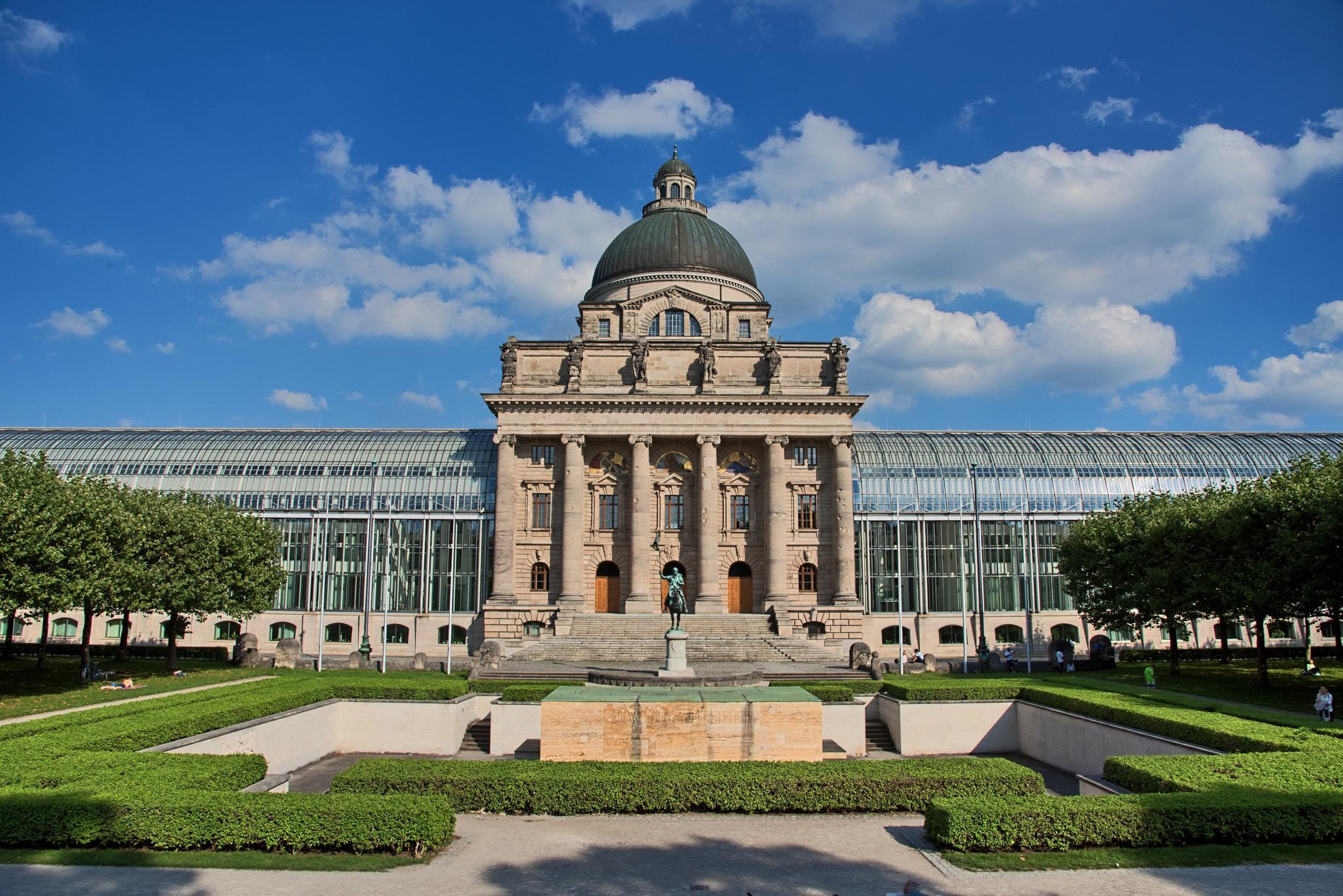
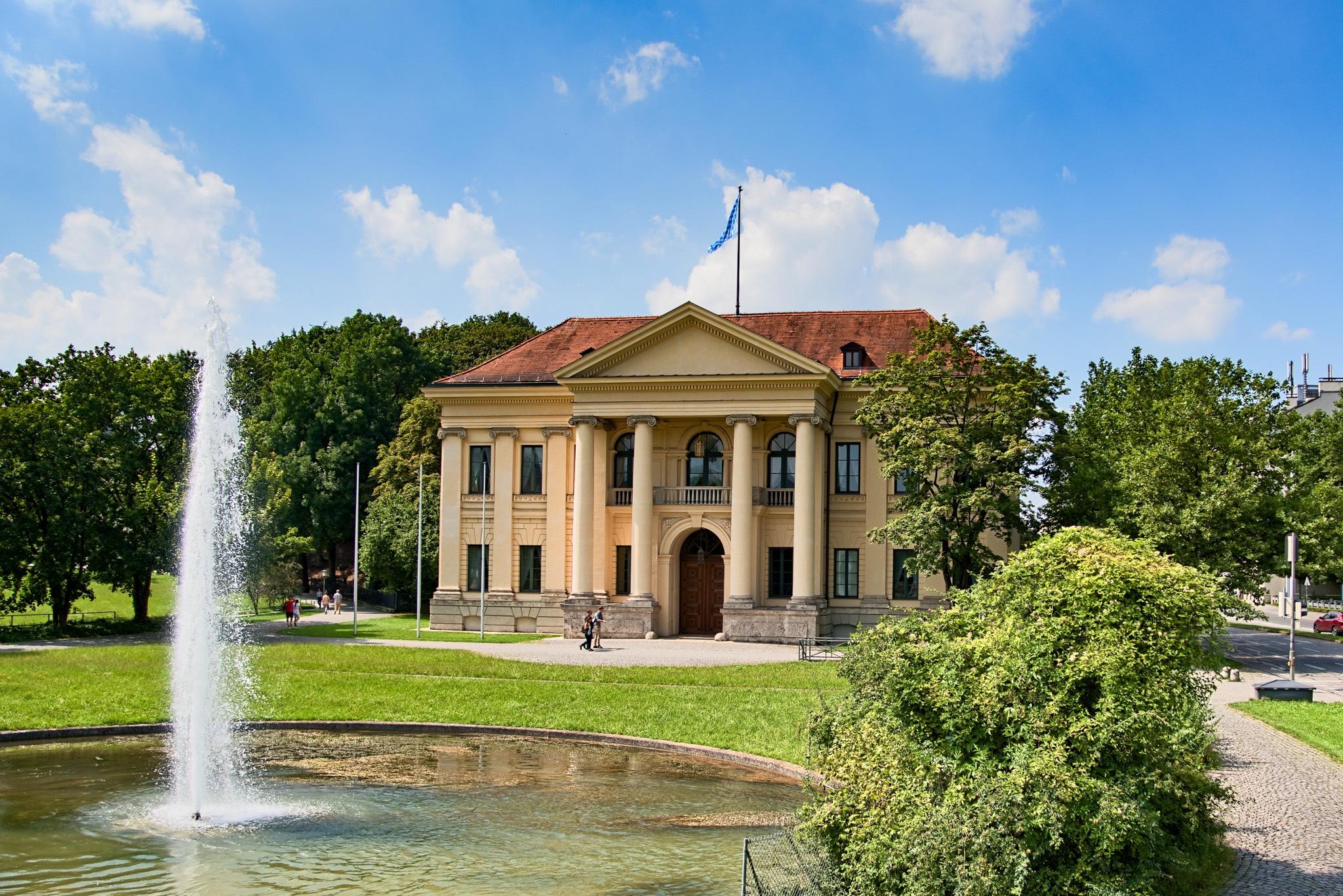
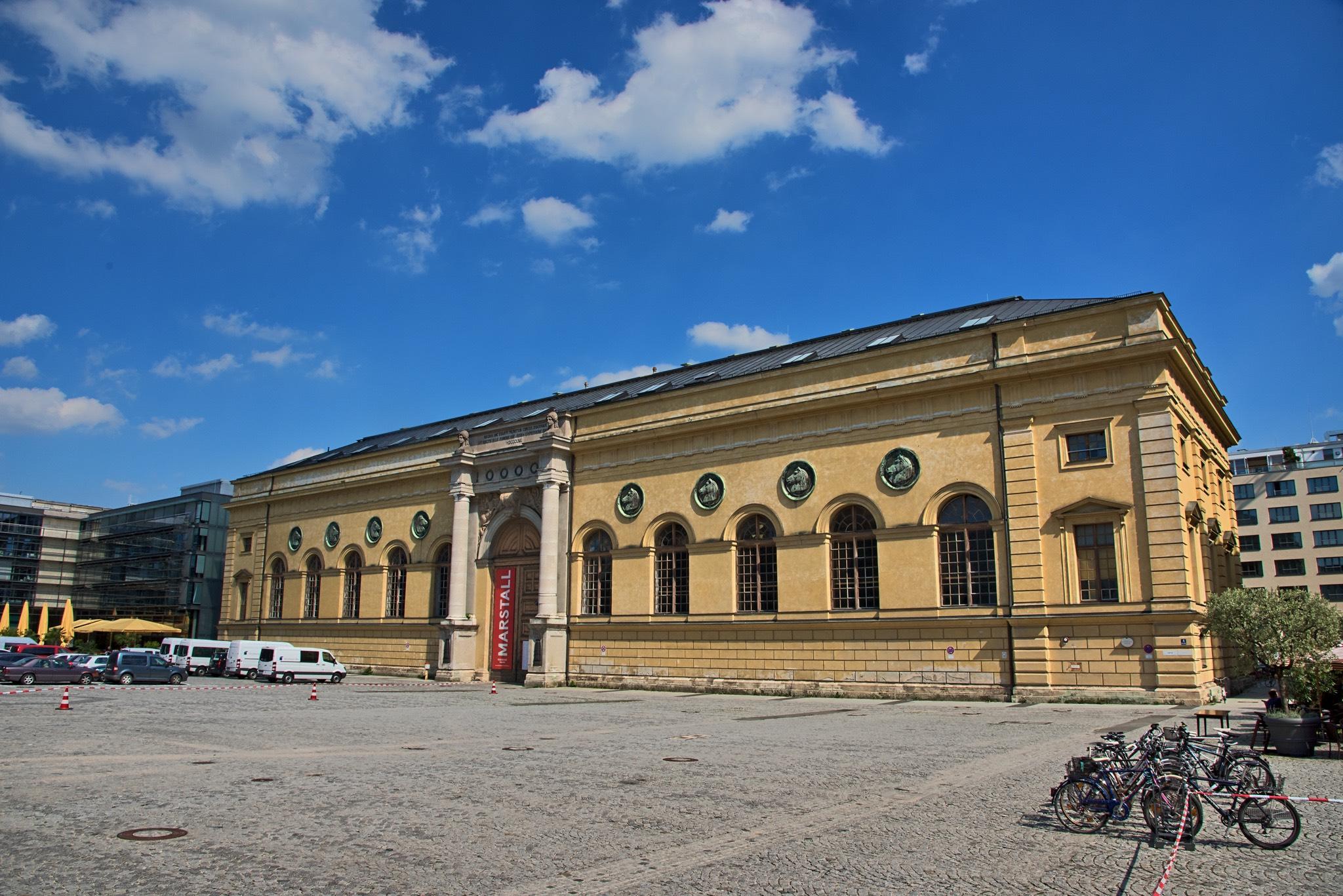
The Bavarian Staatskanzlei was established to support the Prime Minister as well as Munich's citygovernment. The building is located at place of the former Bavarian Army Museum.
Franz-Josef-Strauß-Ring 1
The Prime Minister was able to move into his new residency in May 1993.
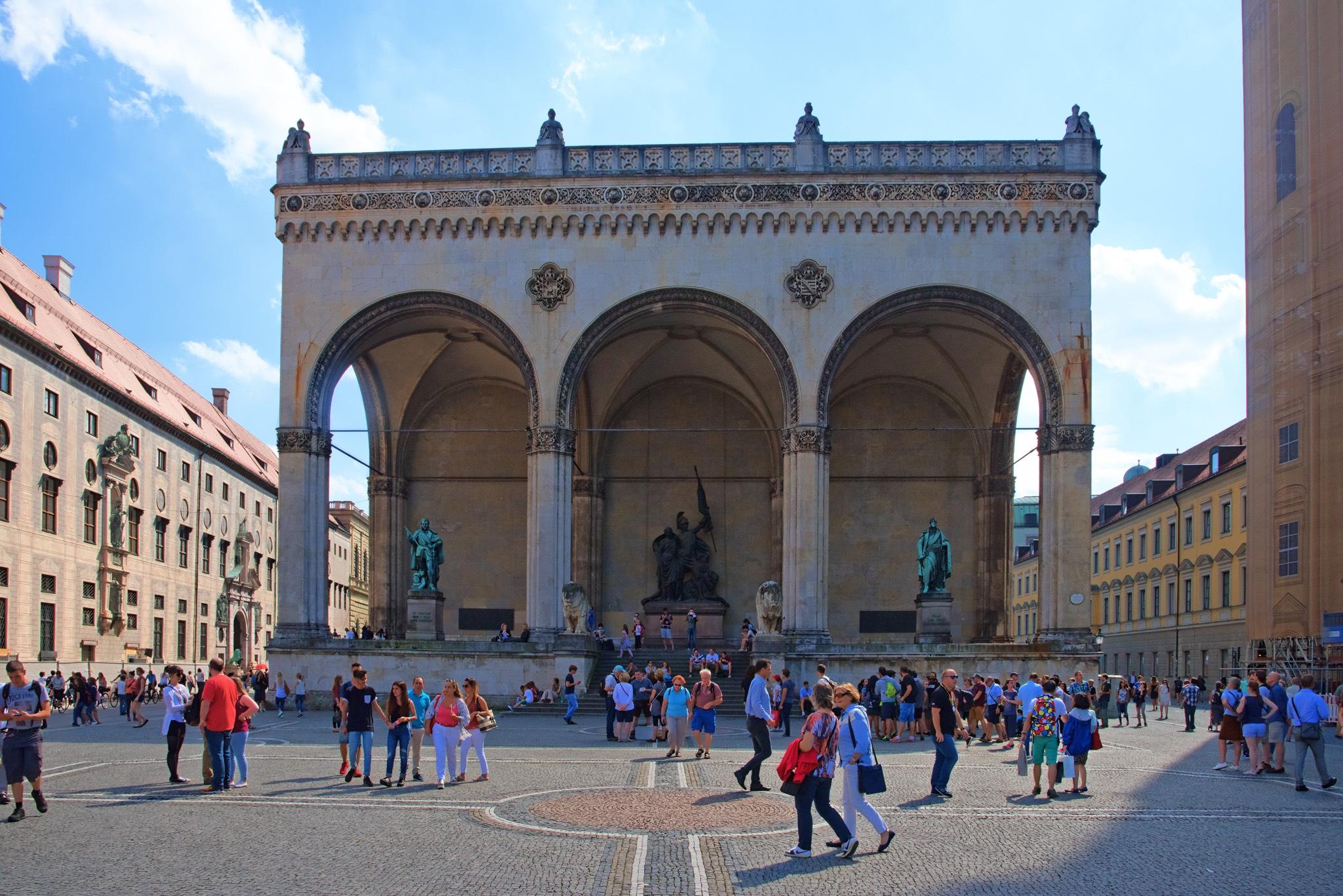
King Ludwig I had the Field Marshals' Hall built after the model of the Loggia dei Lanzi in Florence. The hall was dedicated to the Bavarian military and faces the Siegestor, which is one kilometre away.
The two statues depict Count Johann T'Serclaes of Tilly and Prince Carl Philipp of Wrede.
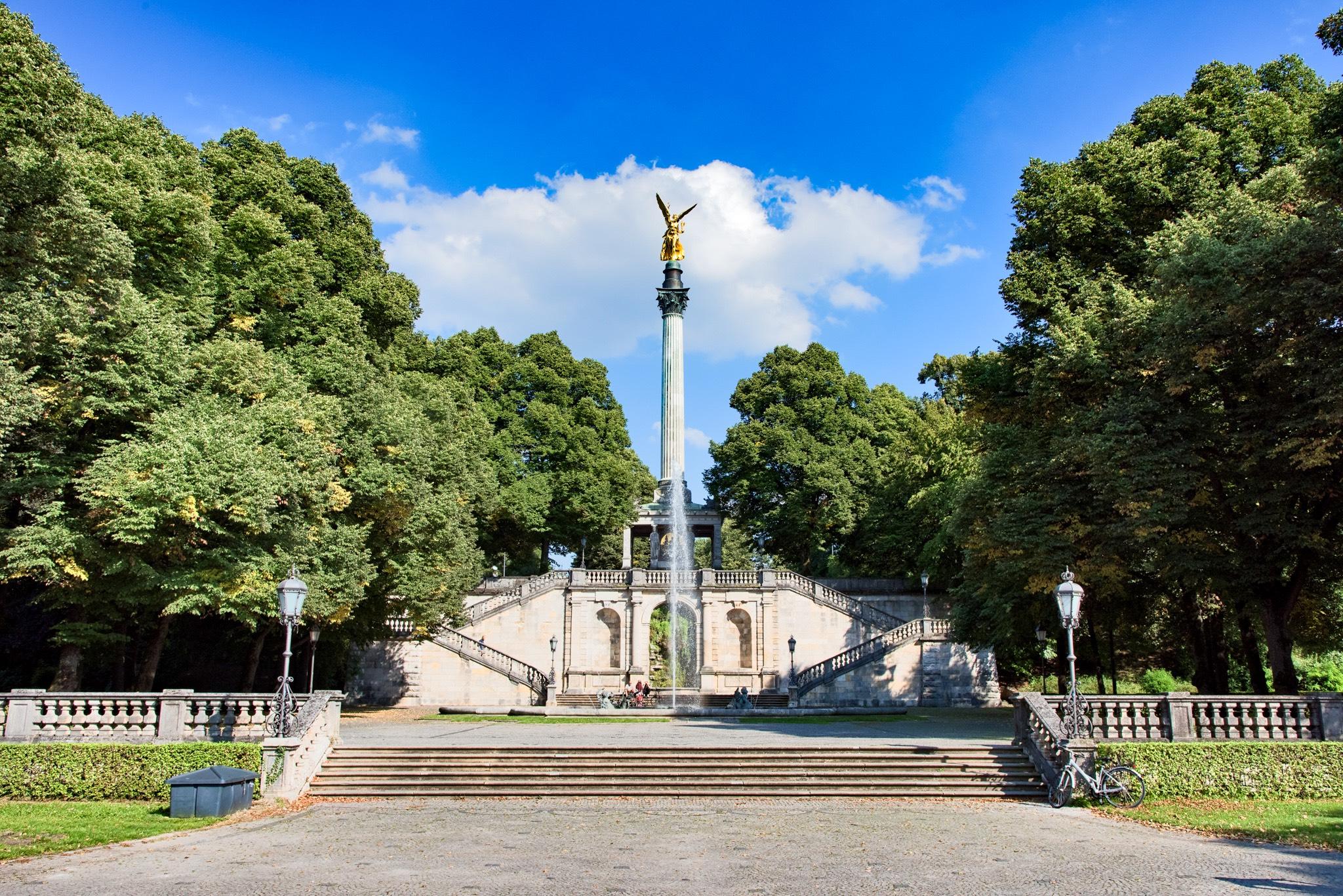
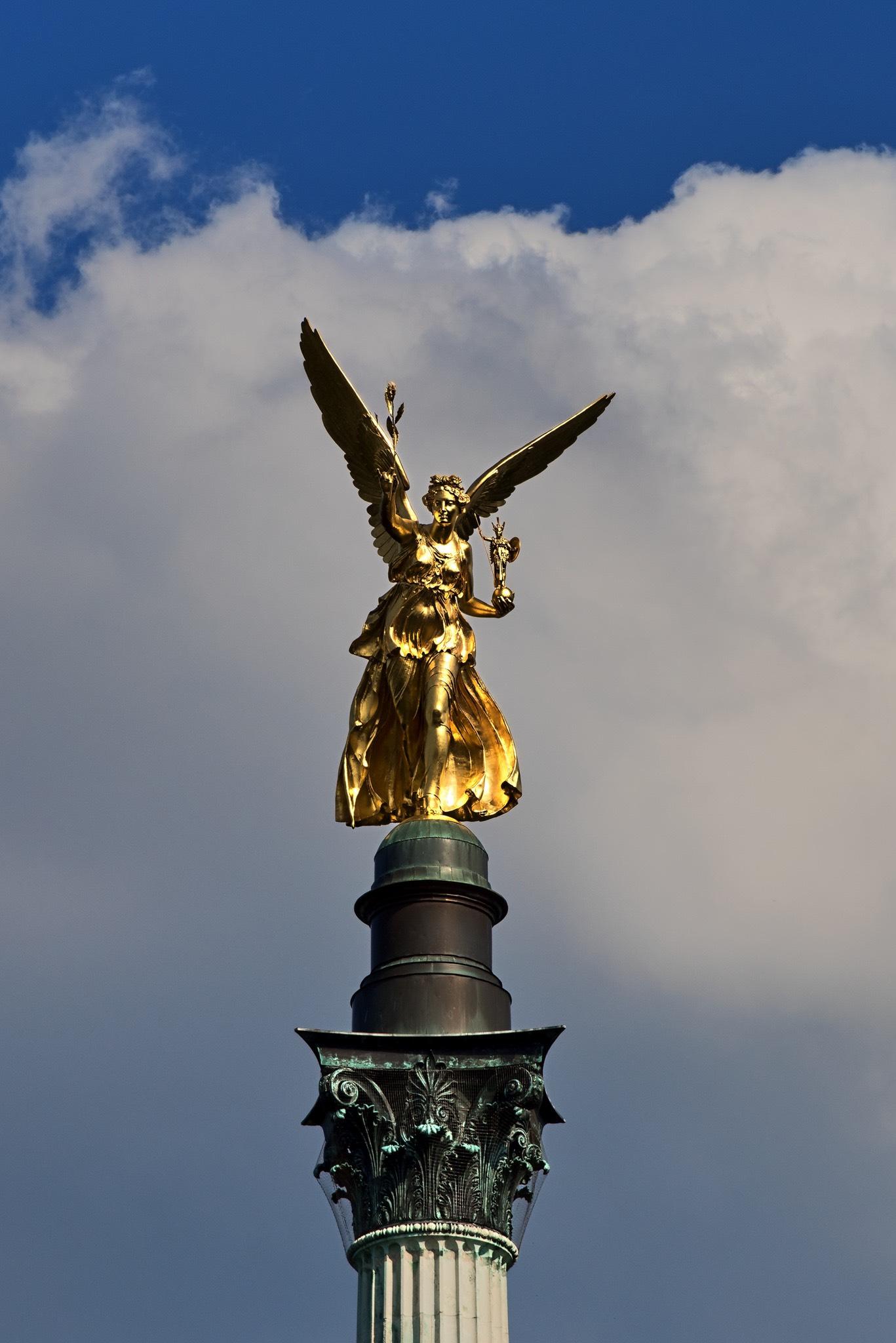
In honour of the 25th anniversary of the victory in the German-French wars of 1870 and 1871, this peace monument was erected.
The monument and the adjacent PrinzregentLuitpold-Terrace build a site that is bordered by the Luitpold-Bridge.
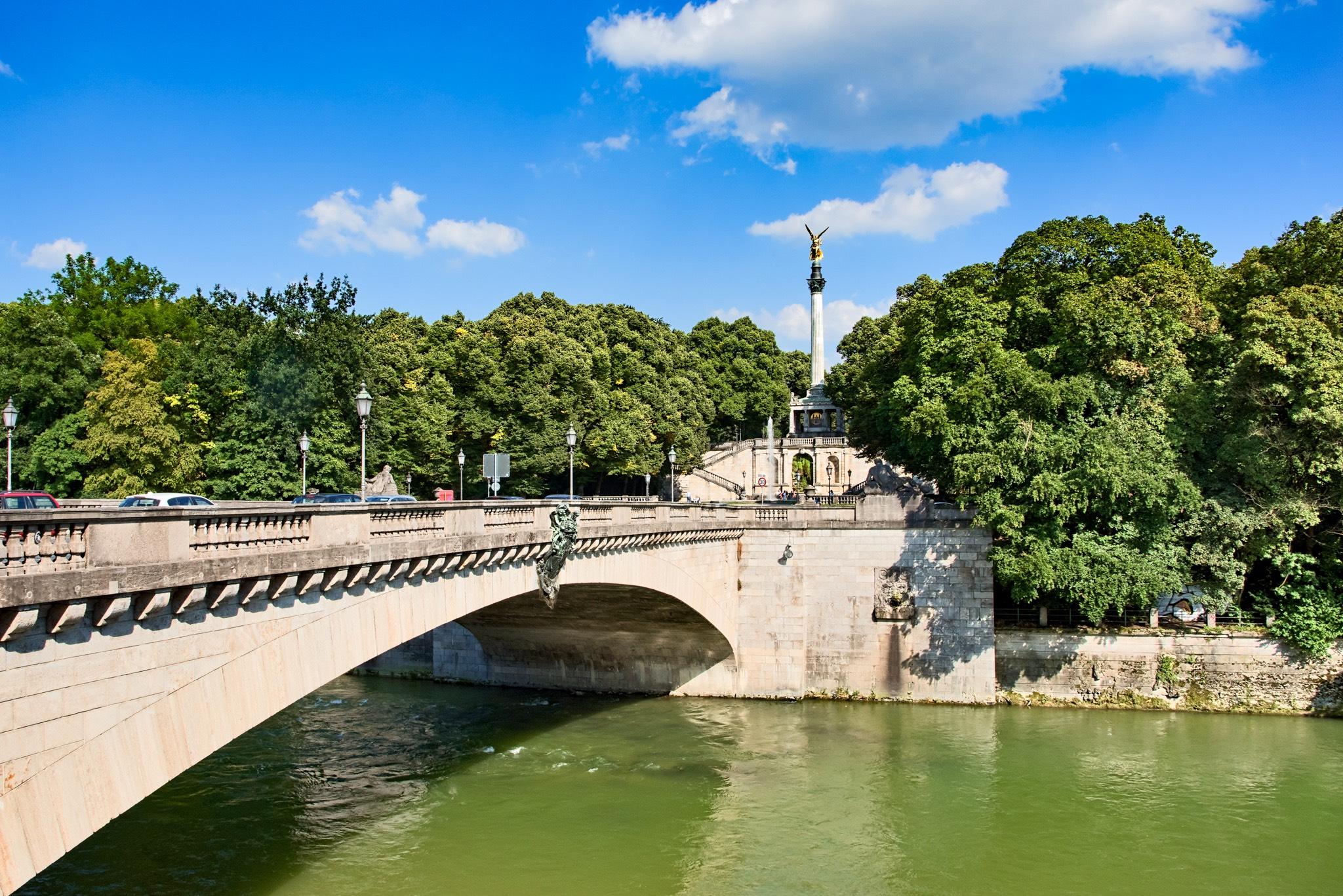
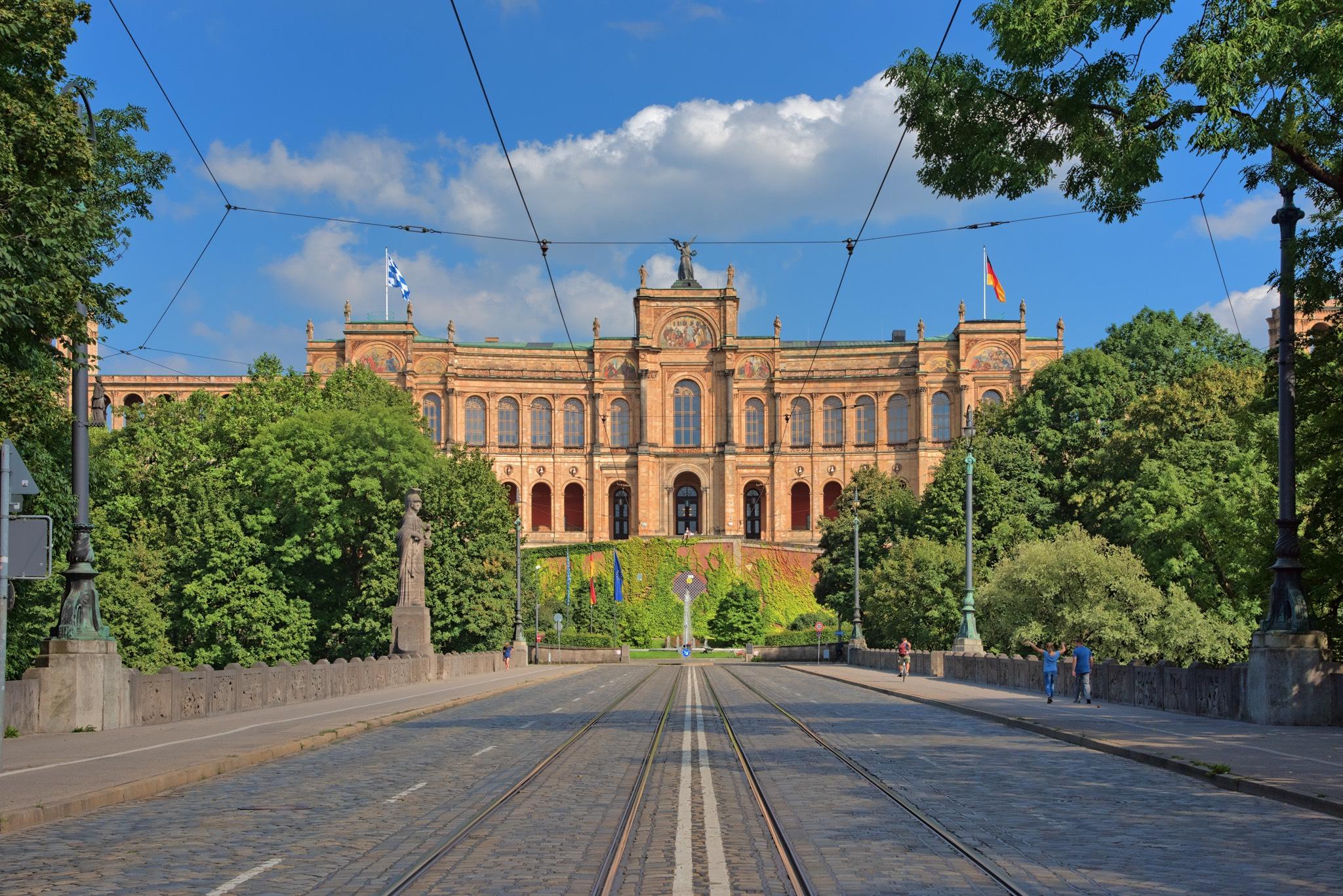
King Max II initiated the construction for the palace in October 1857 and it was completed in 1874. Ever since 1876, the Maximilianeum Foundation has had its offices here.
The Foundation supports gifted students from the States Pfalz and Bavaria. The Bavarian Landtag has been residing in this impressive building since 1949.
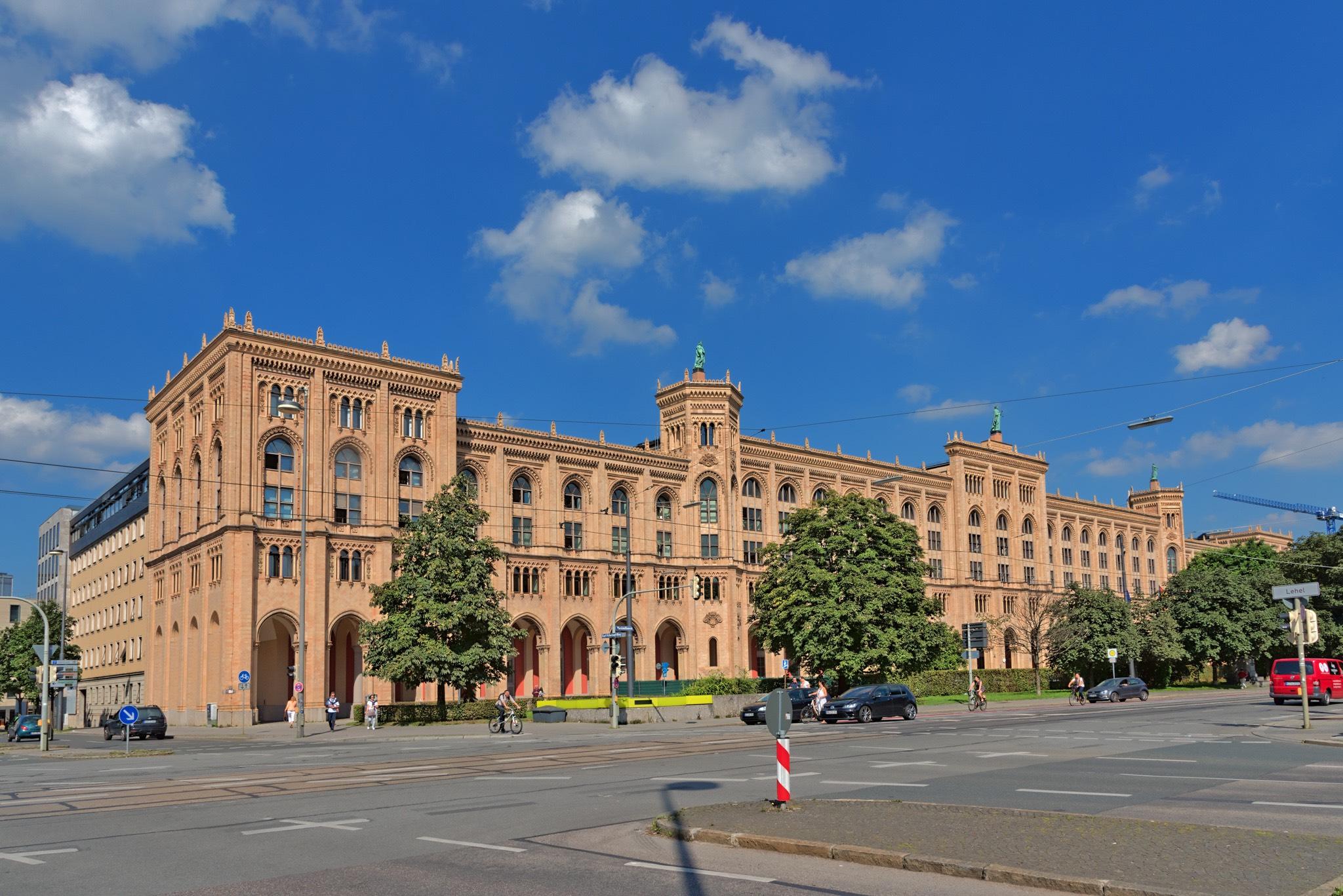
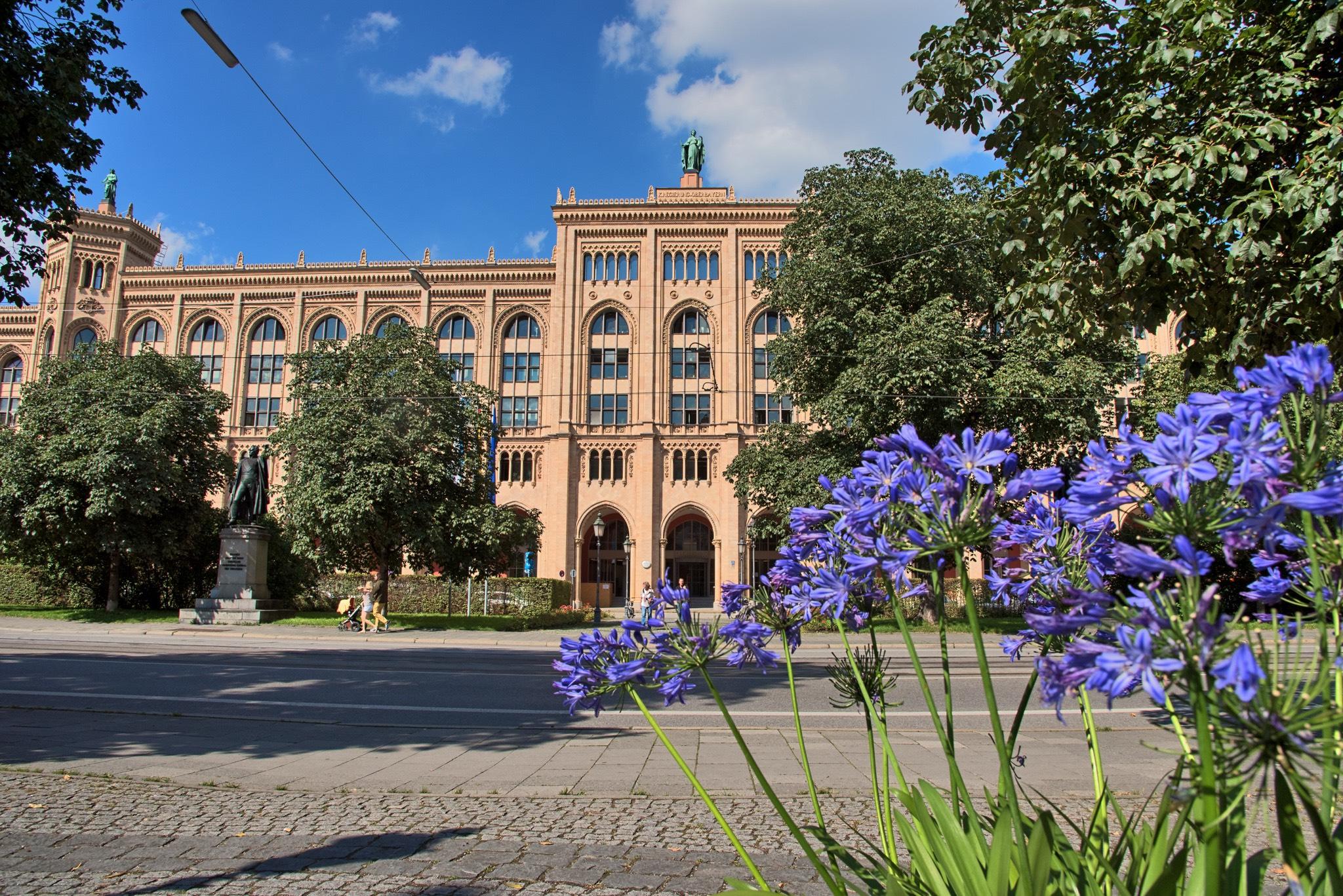
The initial construction started under King Maximilian II in the year 1856. The building was severely damaged during World War II. Today's facade resembles the original, whereas everything
behind it was newly constructed. The roof houses three statues: Fides for fidelity, Justitia for justice and Sapientia for wisdom.
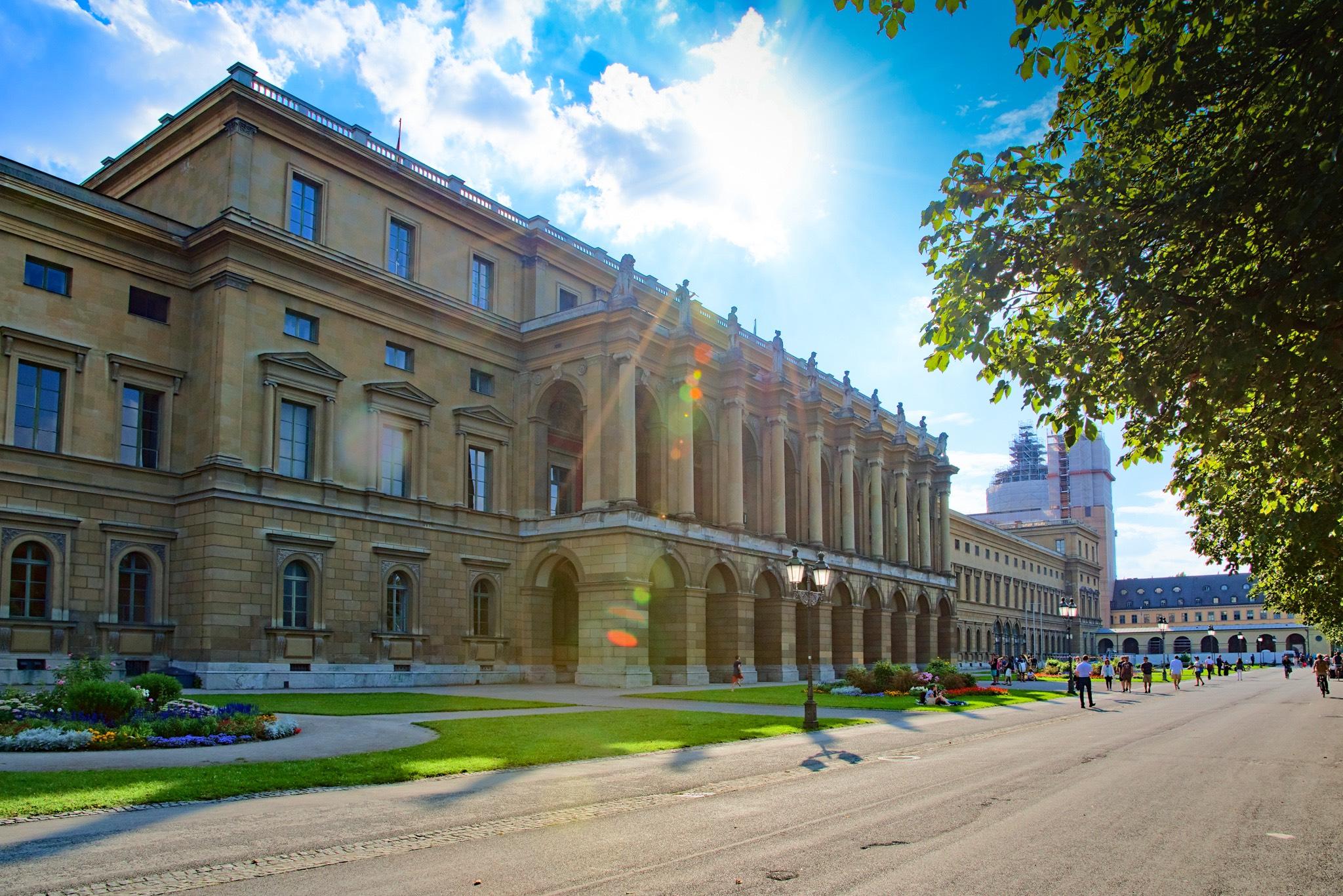
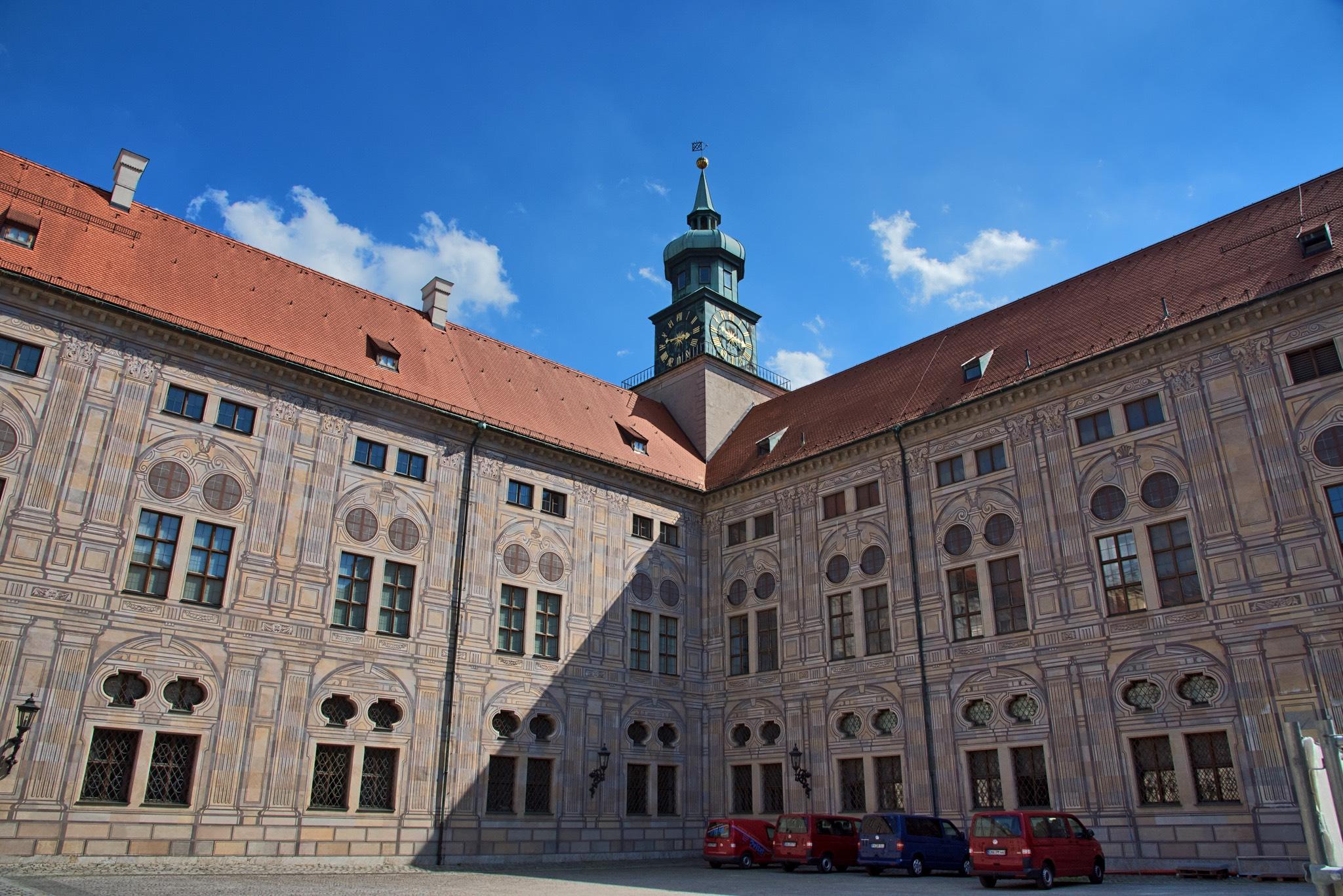
The Residenz is Munich's city-palace. This is where the Bavarian rulers resided. The complex encompasses ten courtyards and is the largest centre-city palace in Germany. The Residenz also
Residenzstraße 1
regularly houses events. If you are visiting, don't forget to see the treasury and the Residenz Museum.
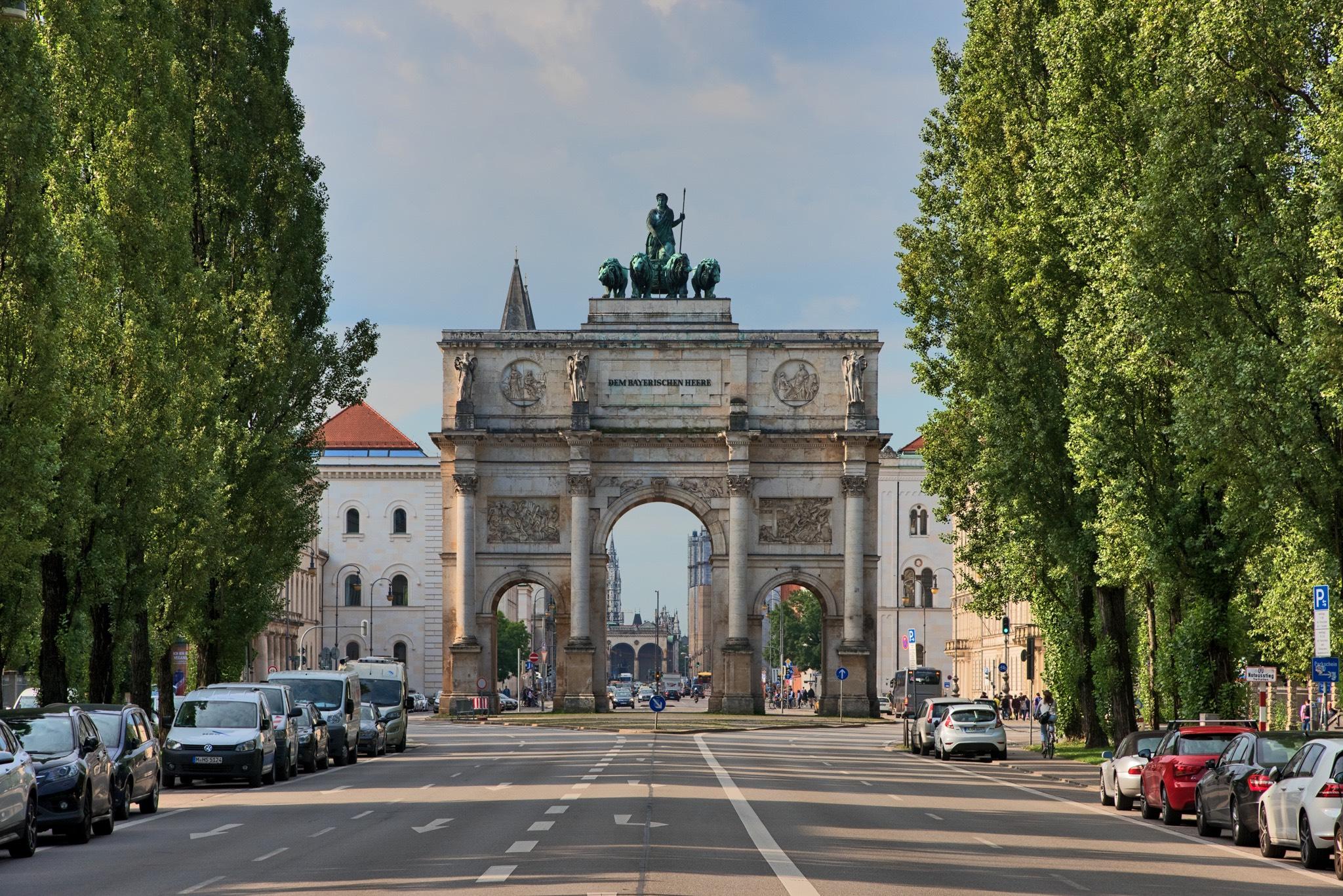
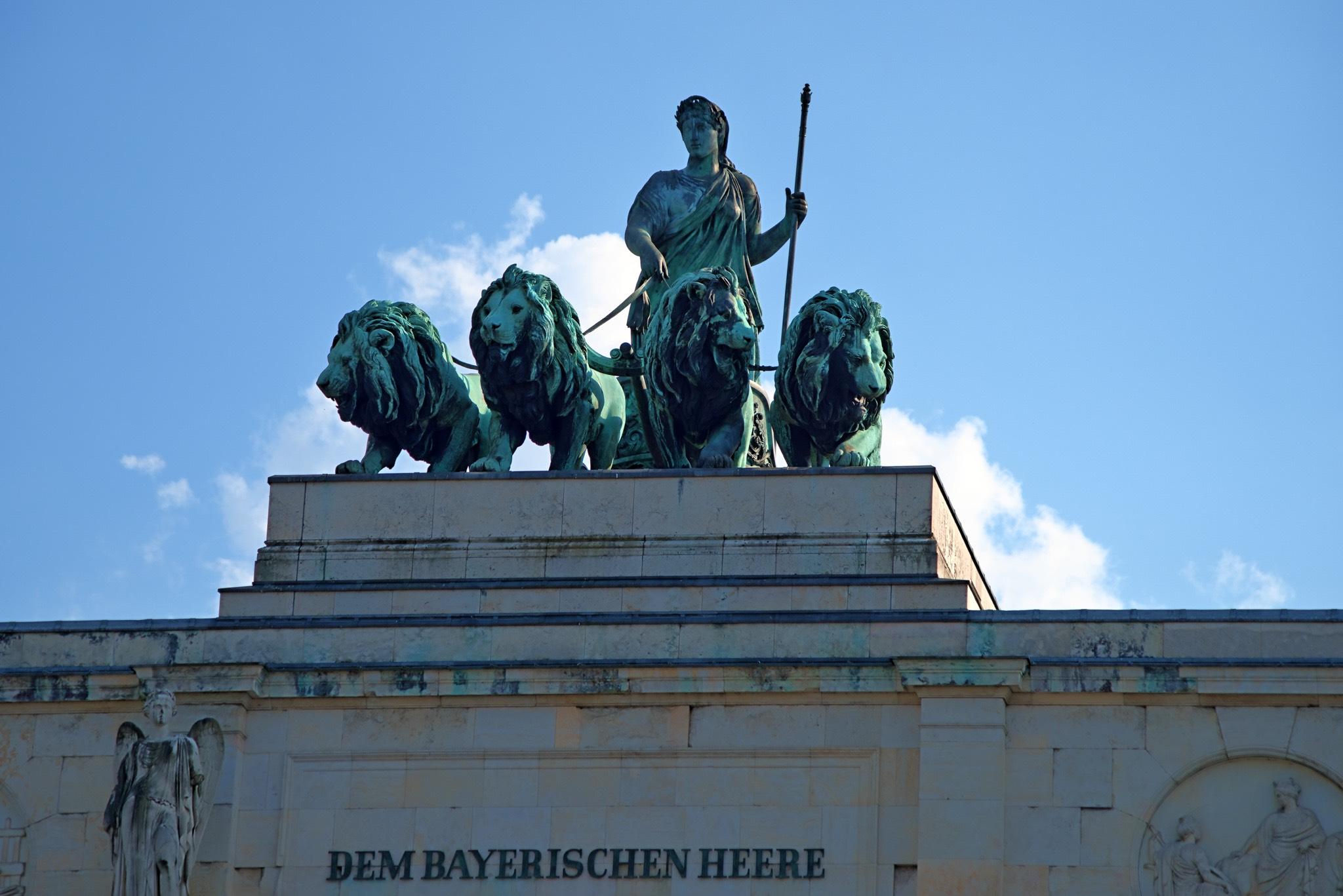
The Victory Gate is the start of Leopold Street and the end of Ludwig Street. It is located at the border between Maxvorstadt and Schwabing. Ludwig I had the gate modelled after the Roman Arch of
Leopoldstraße 1
Constantine and dedicated it to the Bavarian militaries. On its roof, Bavaria is steering a team of four lions.
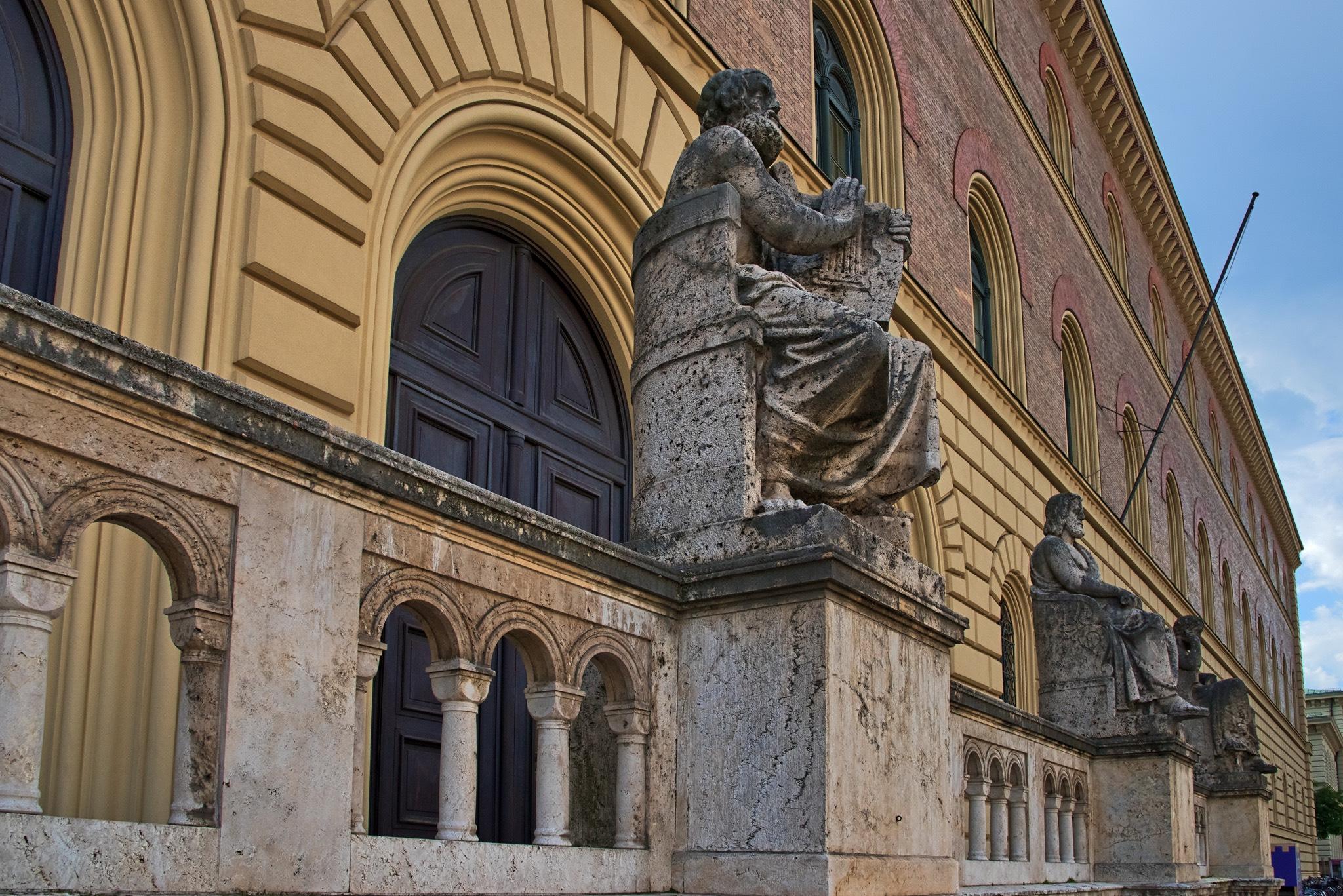
The four statues of Thukydides, Homer, Aristotle and Hippocrates guard the portals to the Bavarian State Library.
The library houses one of the world's most important collections of manuscripts and is home to over 10 million volumes. It is open Monday through Friday.

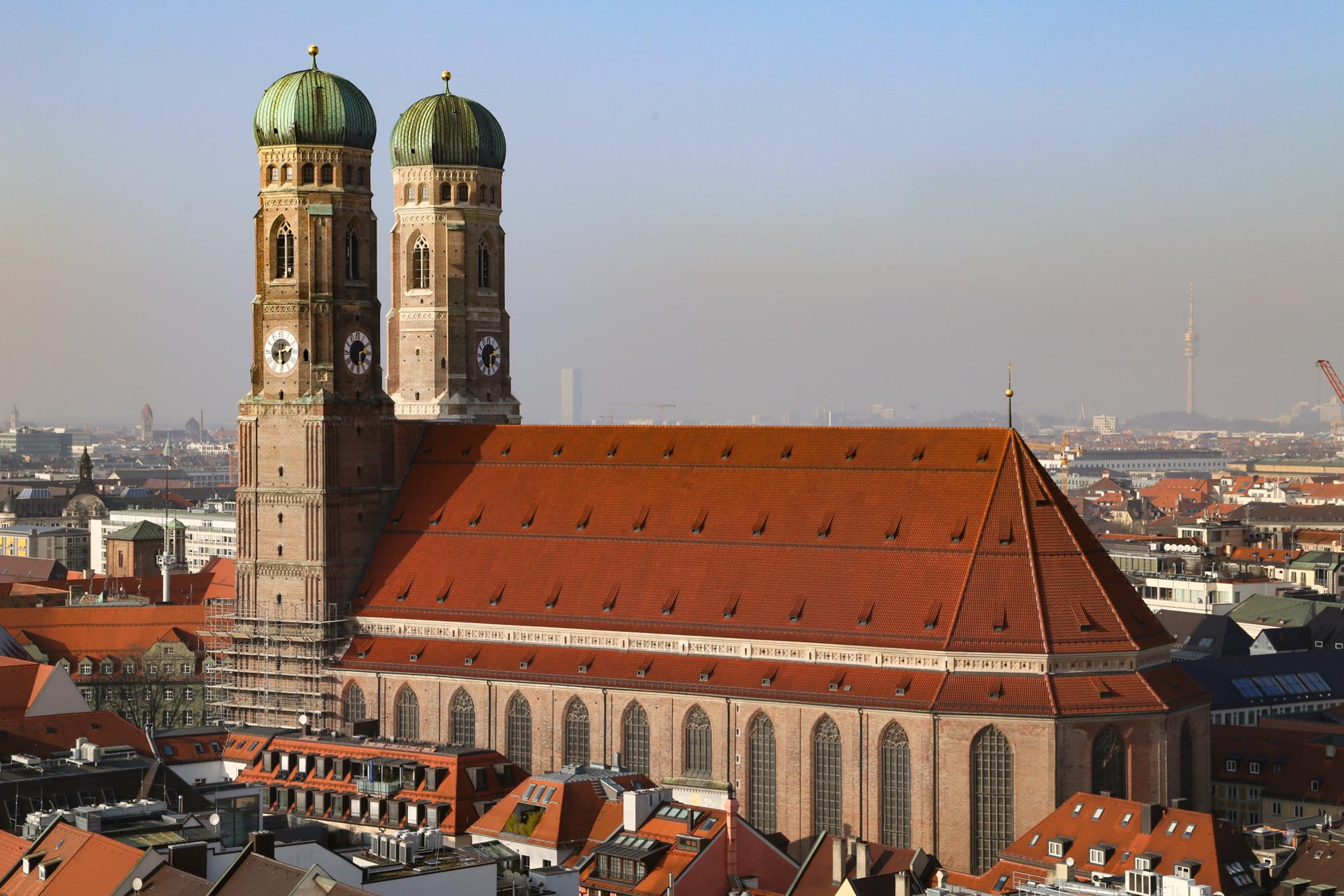
The Frauenkirche is one of Munich's landmarks. The "Dom zu Unserer Lieben Frau" - so its official name - was dedicated in 1494. Its towers are roughly 100 metres high. Due to a regulation by the
city fathers, no buildings higher than 100 metres are allowed within the Mittlerer Ring area, which is why the church can be seen from afar.
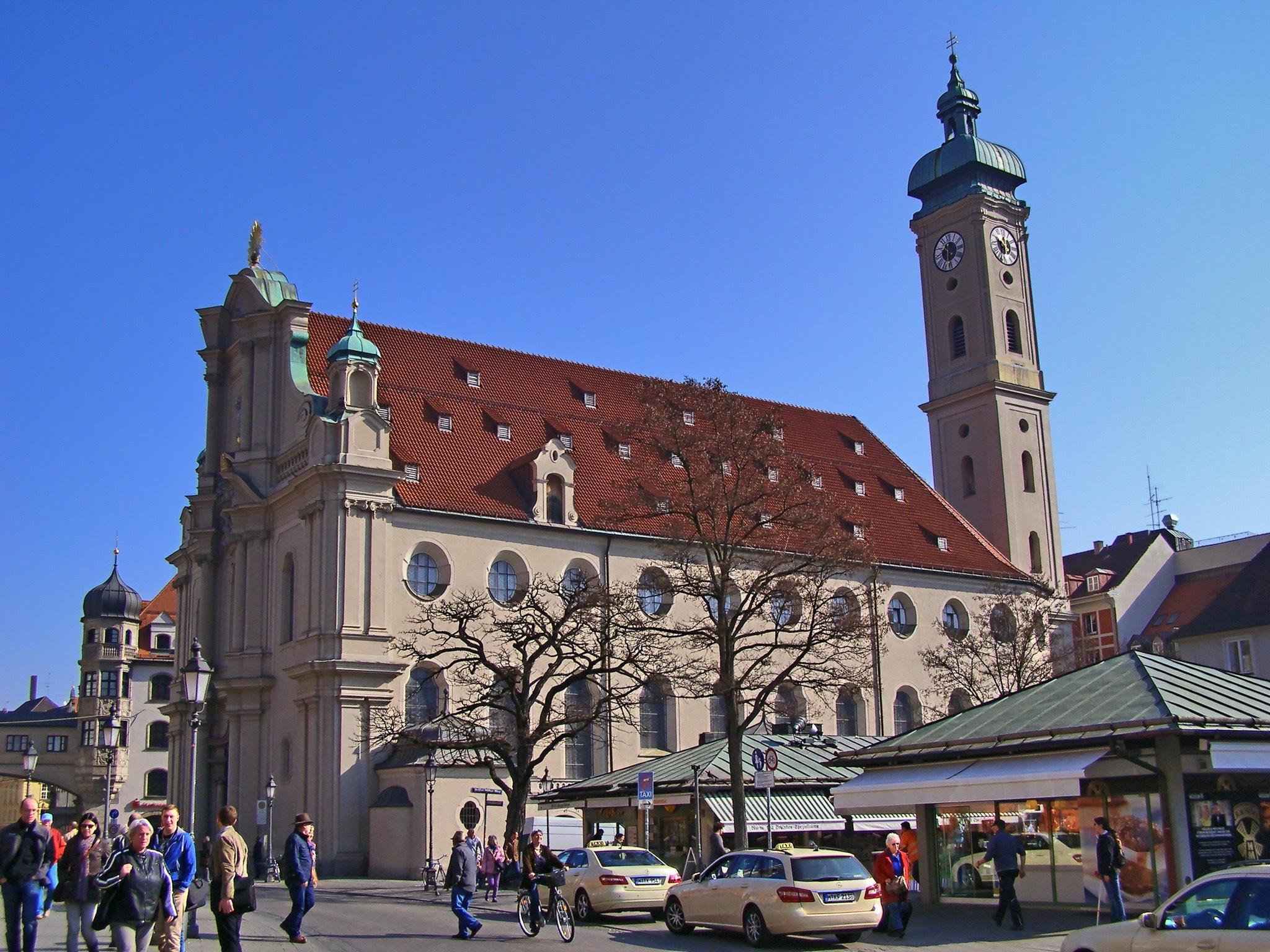
Right next to the Viktualienmarkt is the catholic Holy-Spirit-Church. This church was erected in 1392 and thus is one of the oldest existing churches in the city. The bell-tower houses four
bells: Holy Spirit, Mary, Joseph, and one bell called Breznreiter-Bell, a name that dates back to the legend of a salesperson.
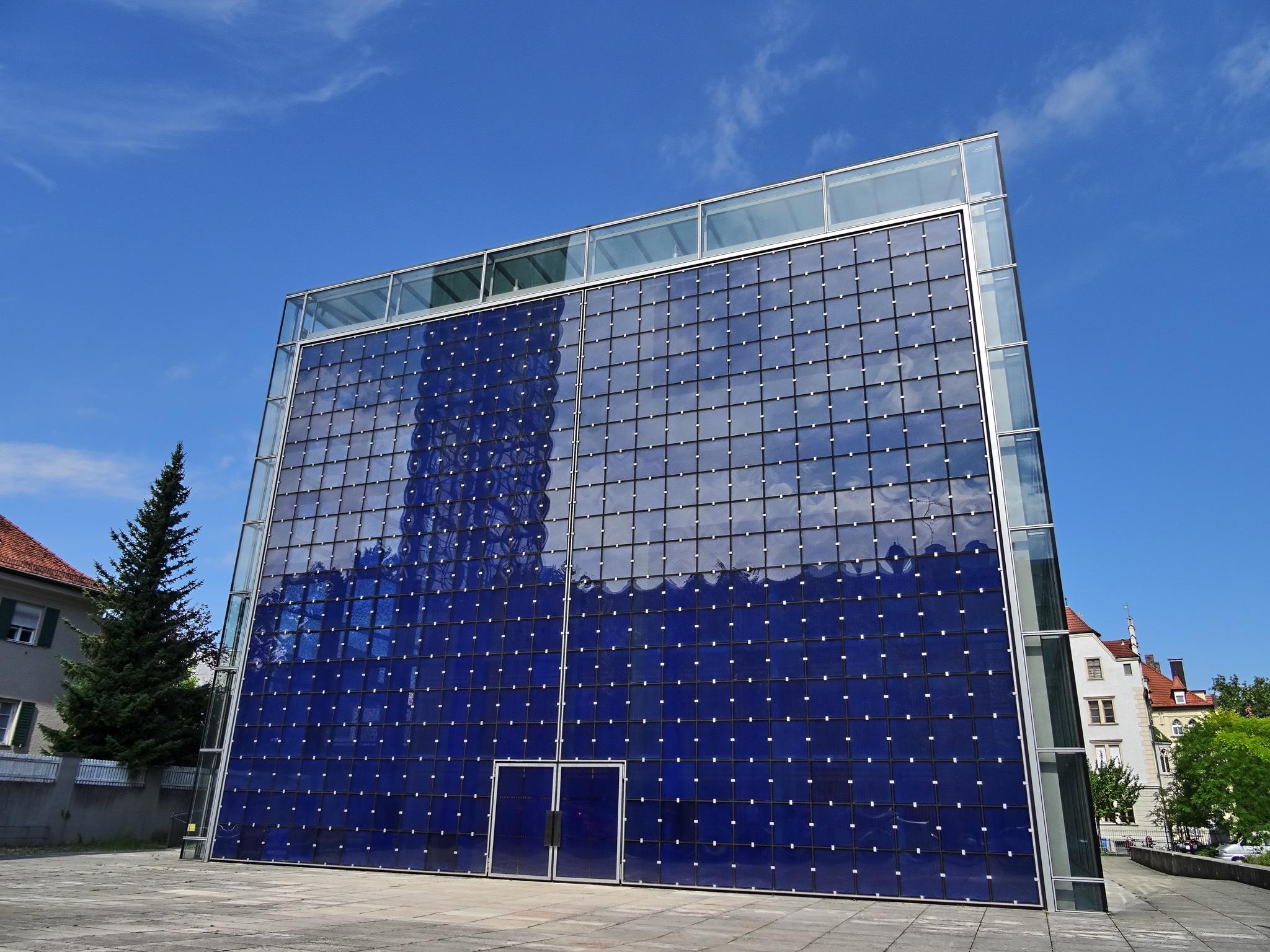
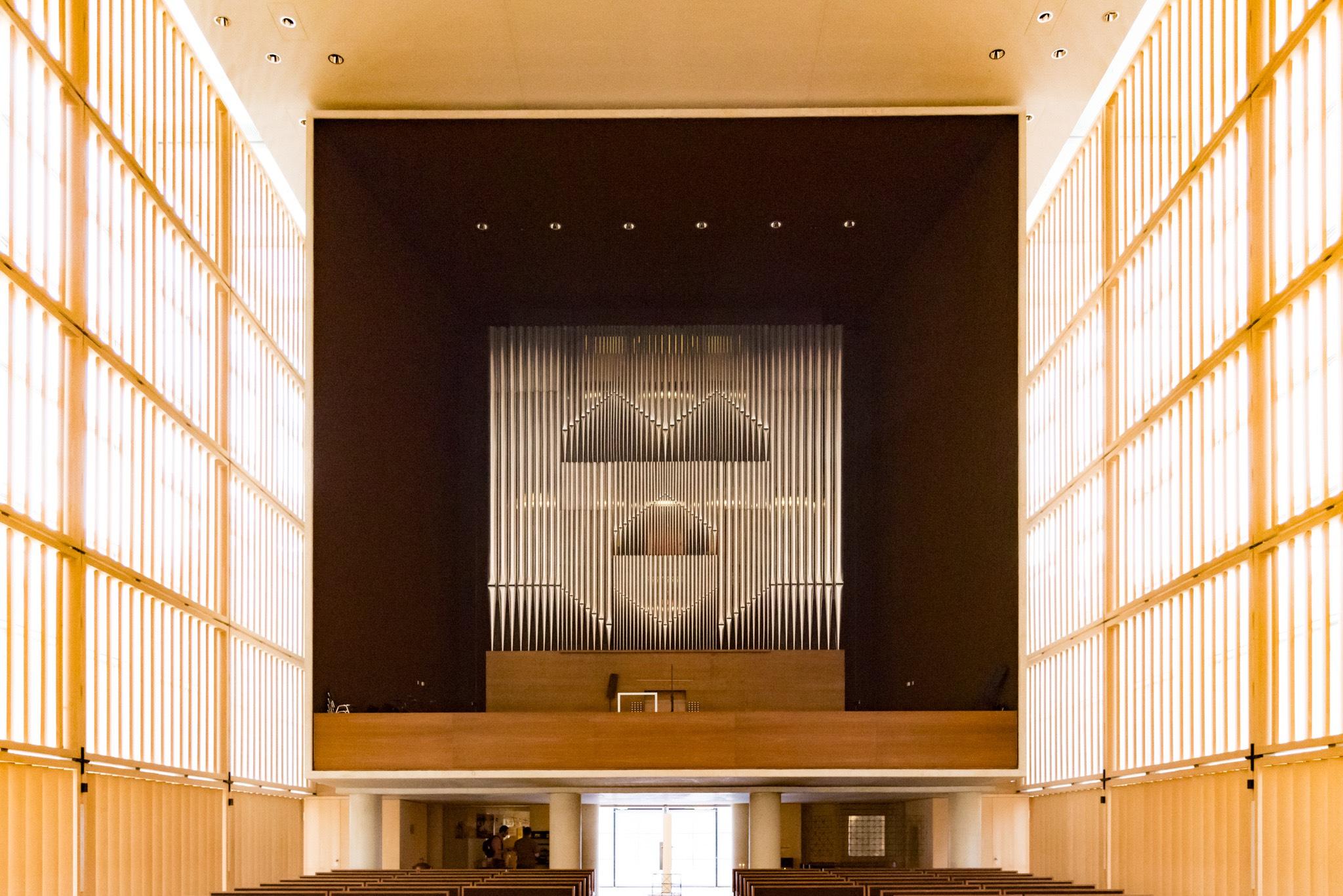
A glass cube with a blue front may not look like a church at first glance. Nevertheless, when you enter the house of prayer, you will be surprised by the illuminated interior of the Herz-Jesu-Church.
The entire front can be opened up. The bell-tower is a few metres away from the church itself.
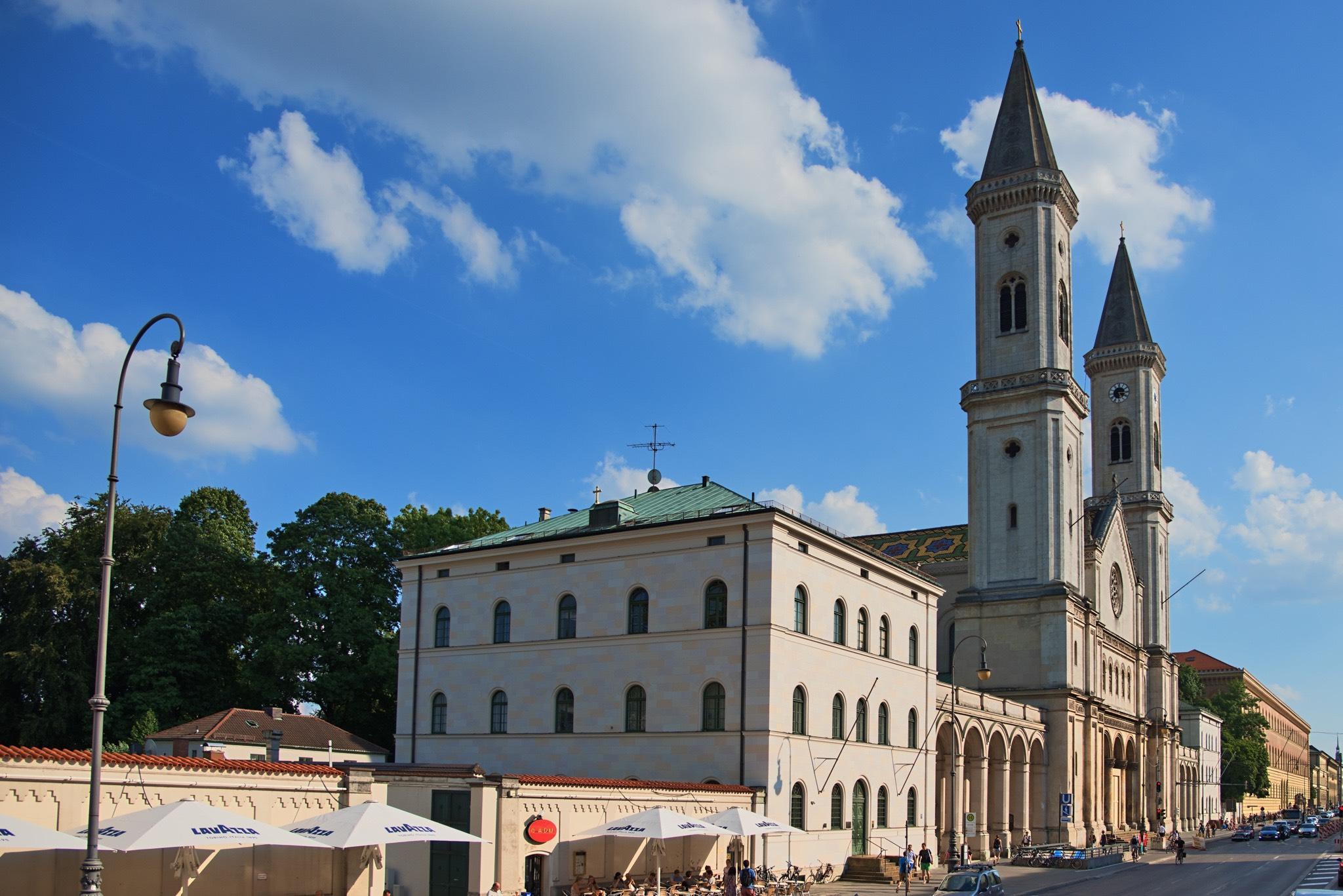
The church was commissioned in 1829 by King Ludwig I. The colourful mosaic-covered roof is especially impressive, even though it is barely visible from the streets. Inside the church, you will
find the second-largest altar-fresco in the world: "Last Judgement" by Peter Cornelius.
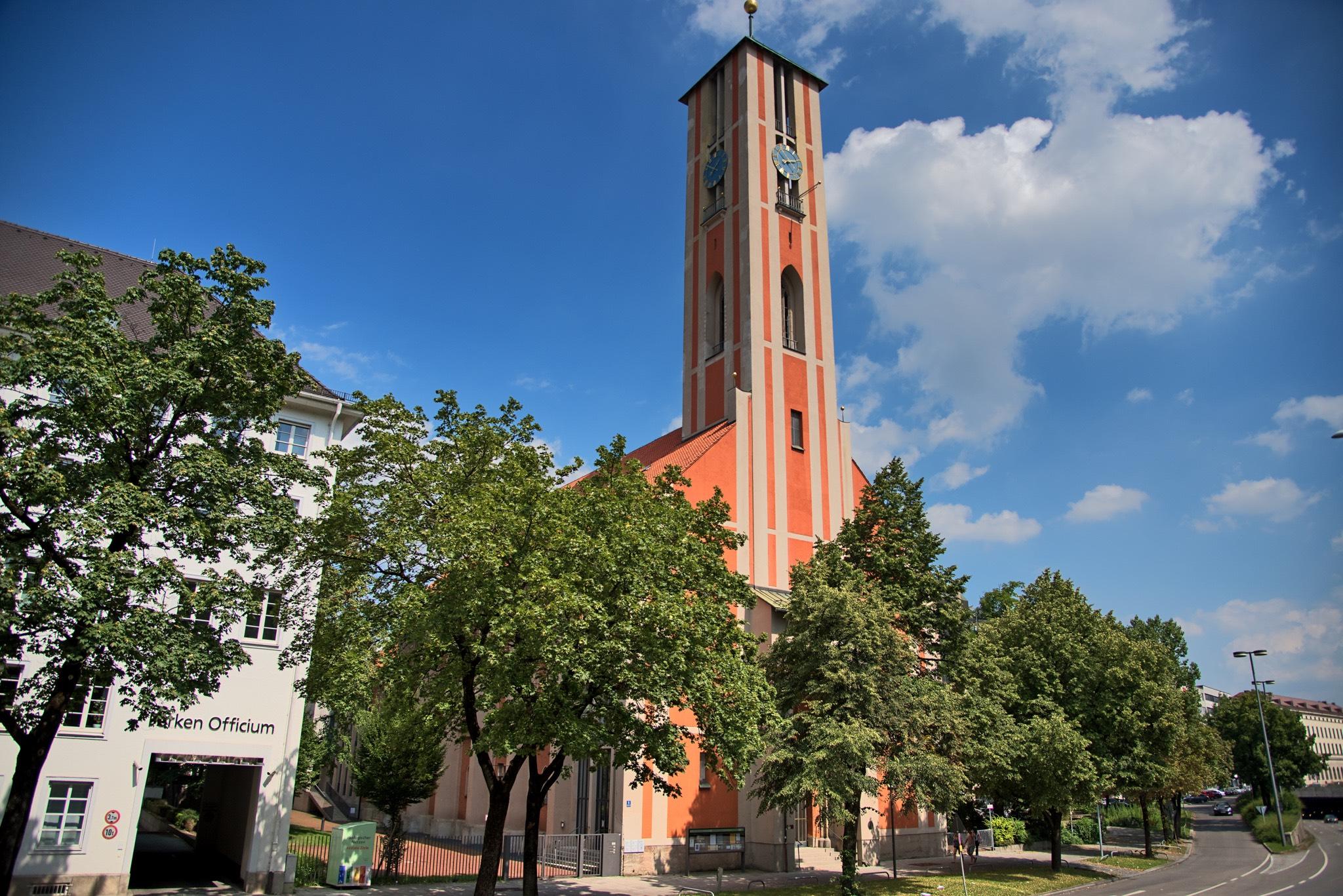
The evangelical-Lutheran parish-, university-, and deanery-church St. Markus is called "MarkusChurch" for short. The building is one of two evangelical-Lutheran churches in the city. Today's
house of prayer was completely re-constructed between the years 1955 and 1957.
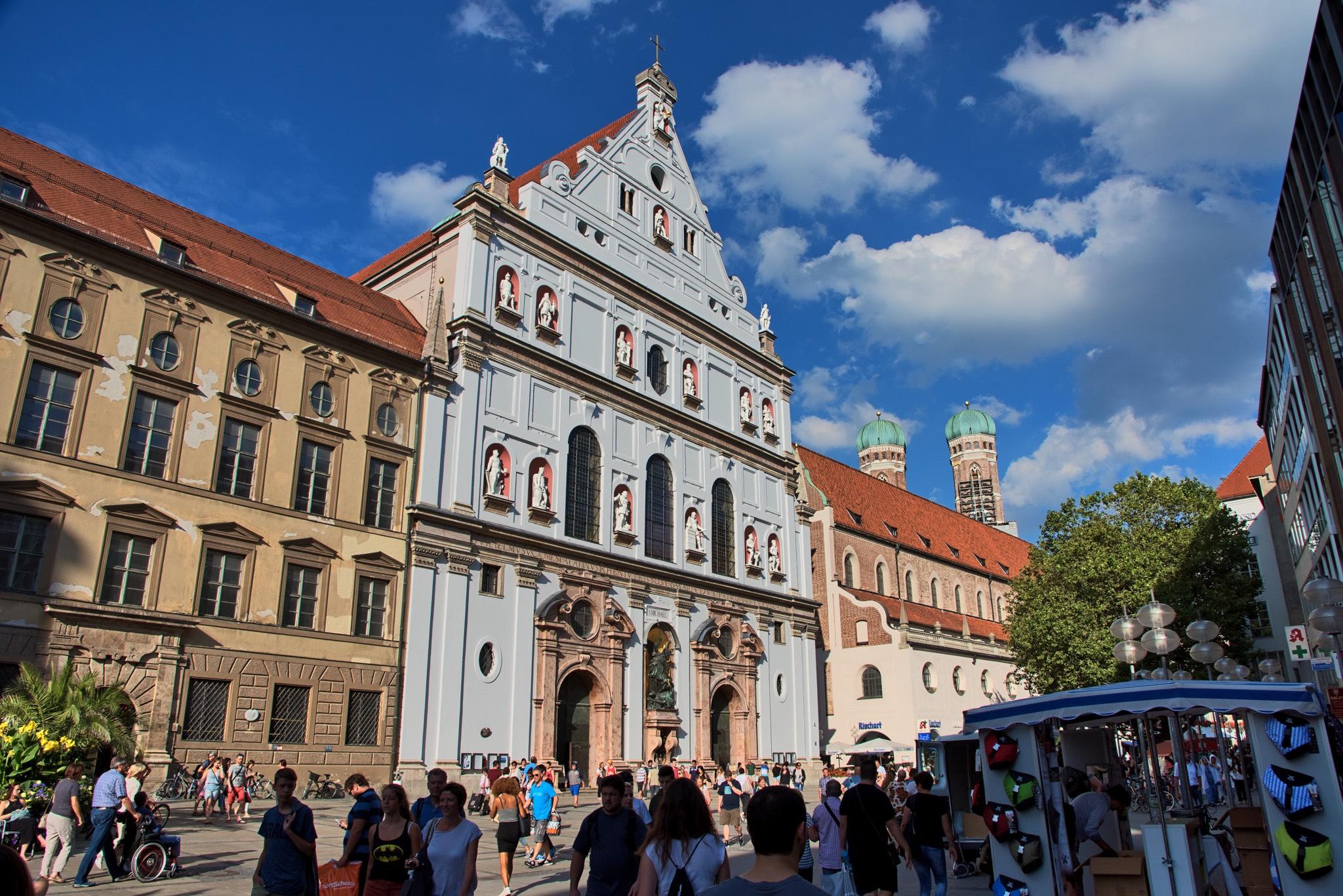
The catholic Jesuit-Church St. Michael was built between 1583 and 1597. The church is dedicated to the archangel Michael, whose statue stands between the two portals. Since the church is
Neuhauser Straße 6
located in the middle of the pedestrian zone, it is very popular with tourists. The church's tombs are open to the public as well.
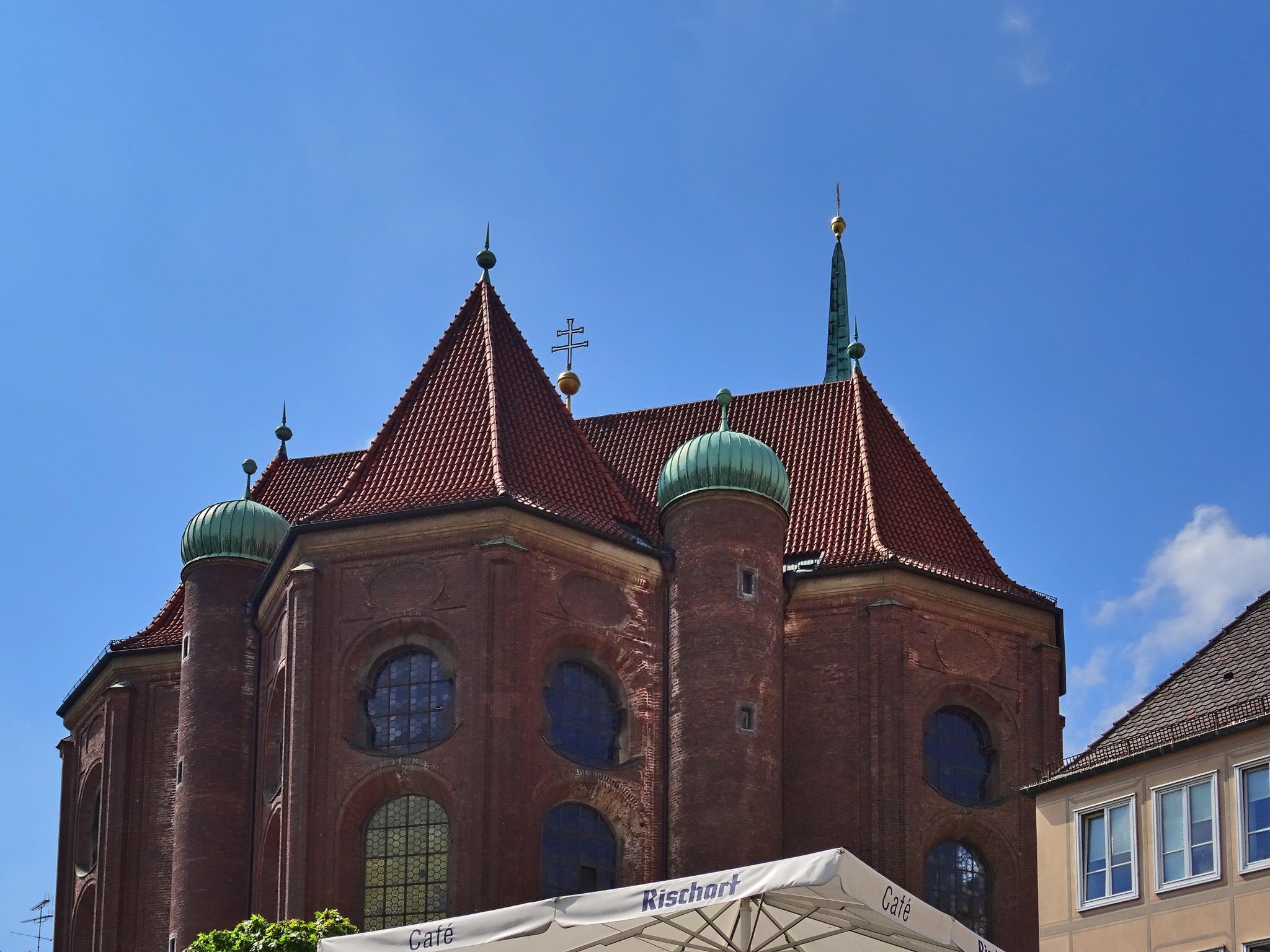
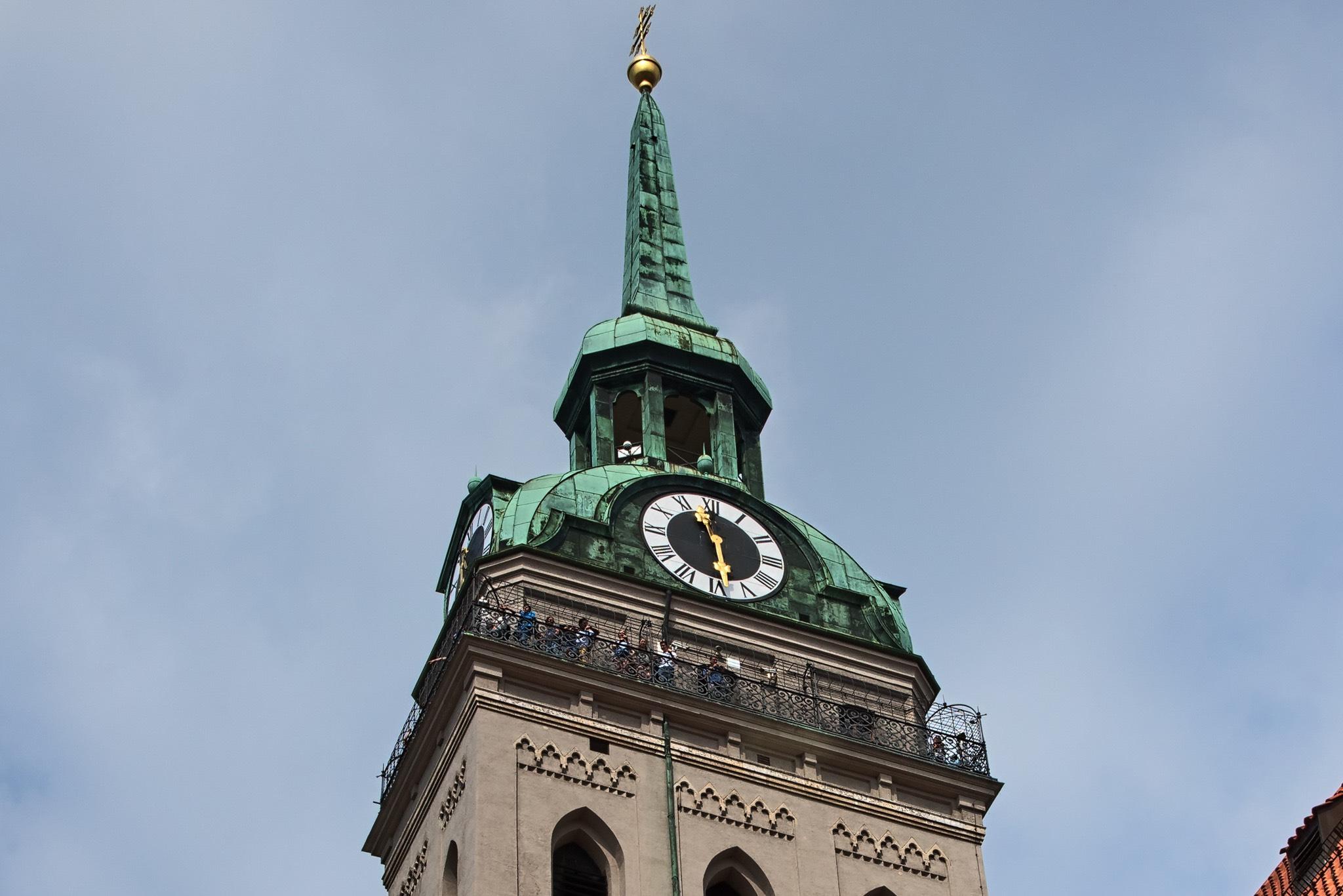
Peters-Church is the oldest church in Munich. If you are in good enough shape, you can climb the 300 steps of the church's bell tower and enjoy one of the most beautiful views over the city centre of
Munich. Right next to St. Peter is Viktualienmarkt, where you can recover from the ascent.
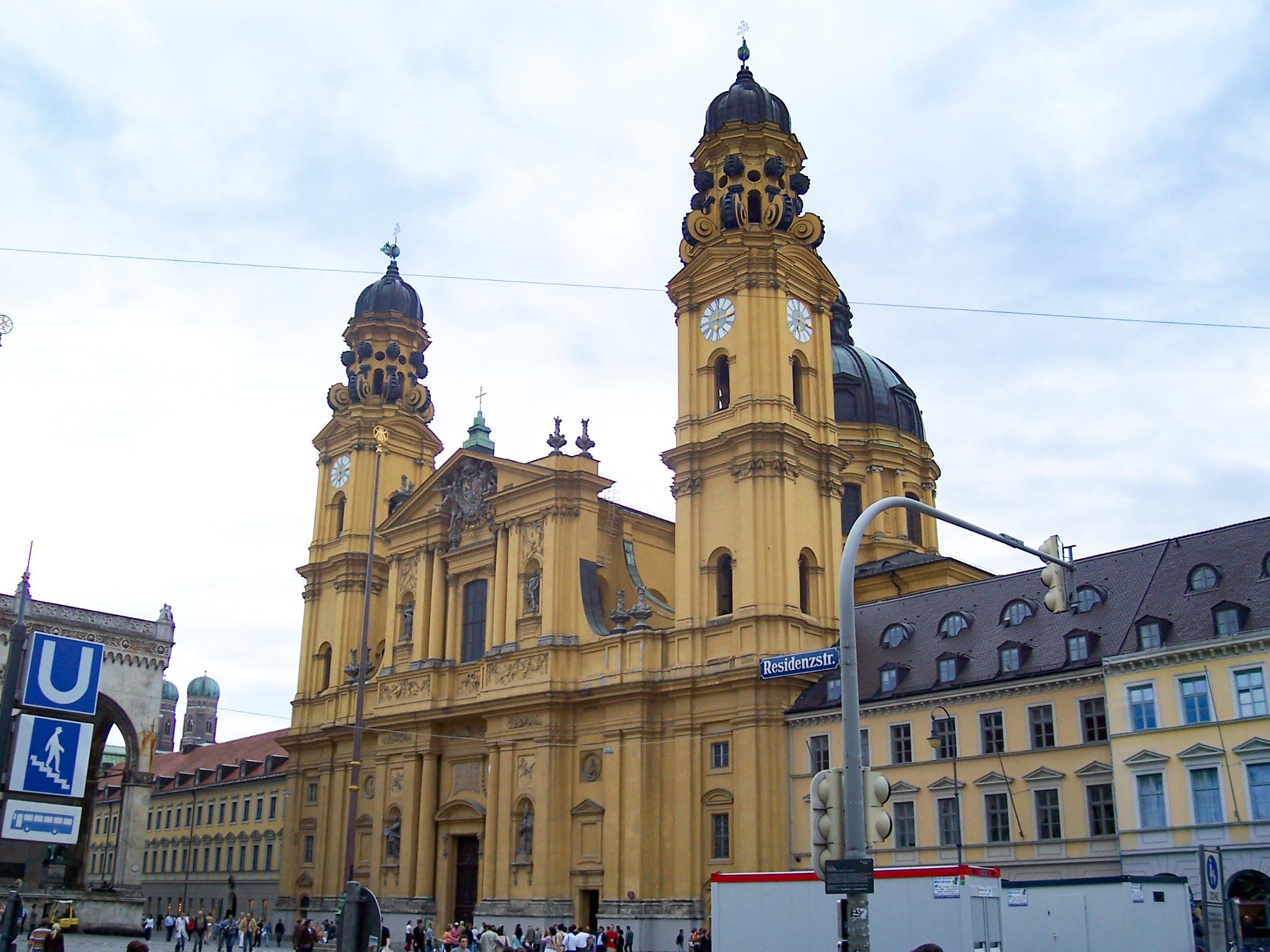
The bright yellow colour of the church, which is right next to the Field Marshals' Hall, is a bright contrast in the old town.
His mother Henriette Adelheid of Savoyen commissioned St. Kajetan Church as token of gratitude for the happy birth of the elector Max Emanuel in the year 1662.
Theatinerstraße

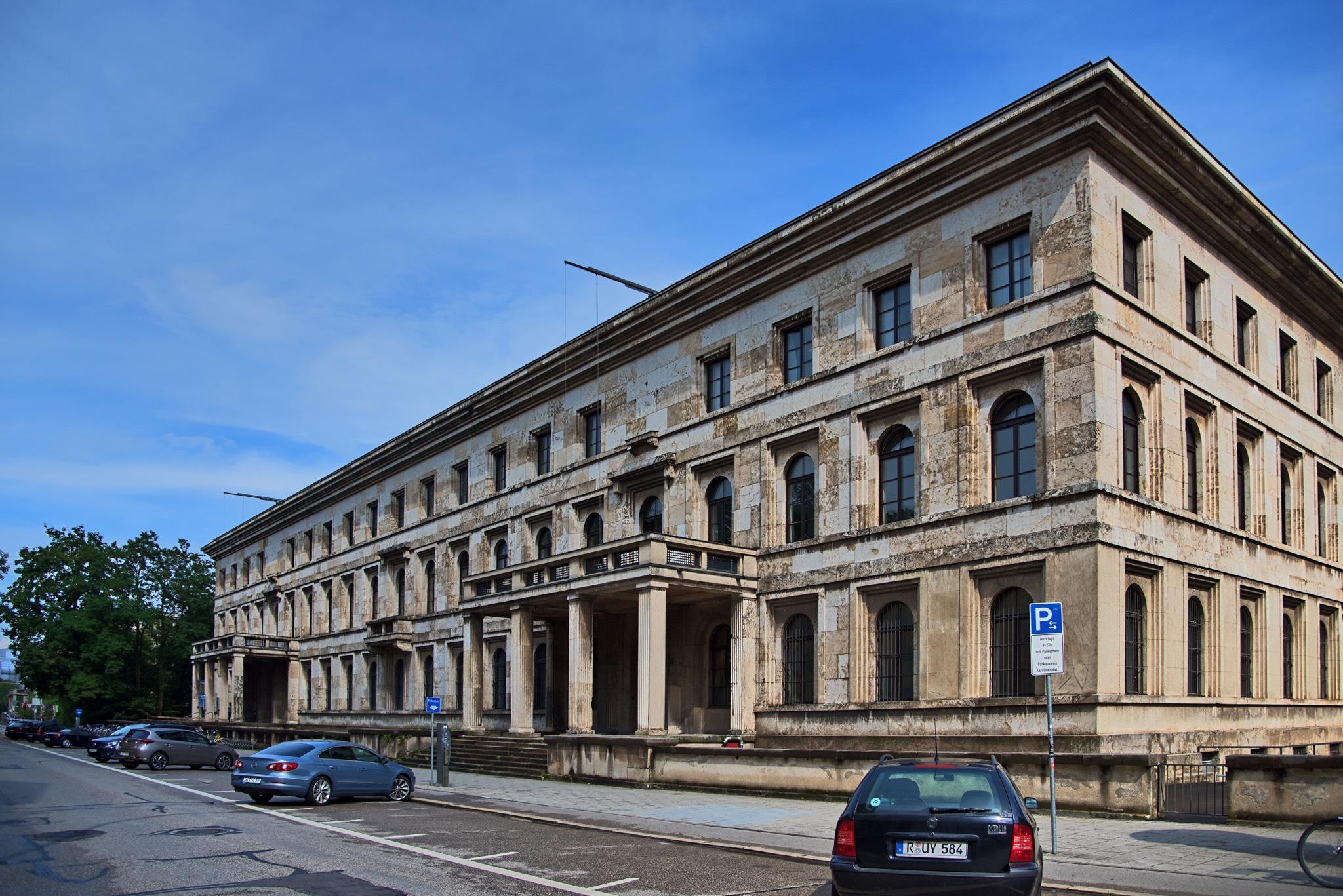
The complete name of the house is "Museum of Casts of Classical Statues". The museum was founded in 1869 by the professorship for classical archaeology at Ludwig-Maximilian-University.
Since 1976, the former NSDAP-administrationbuilding houses the Museum of Casts.
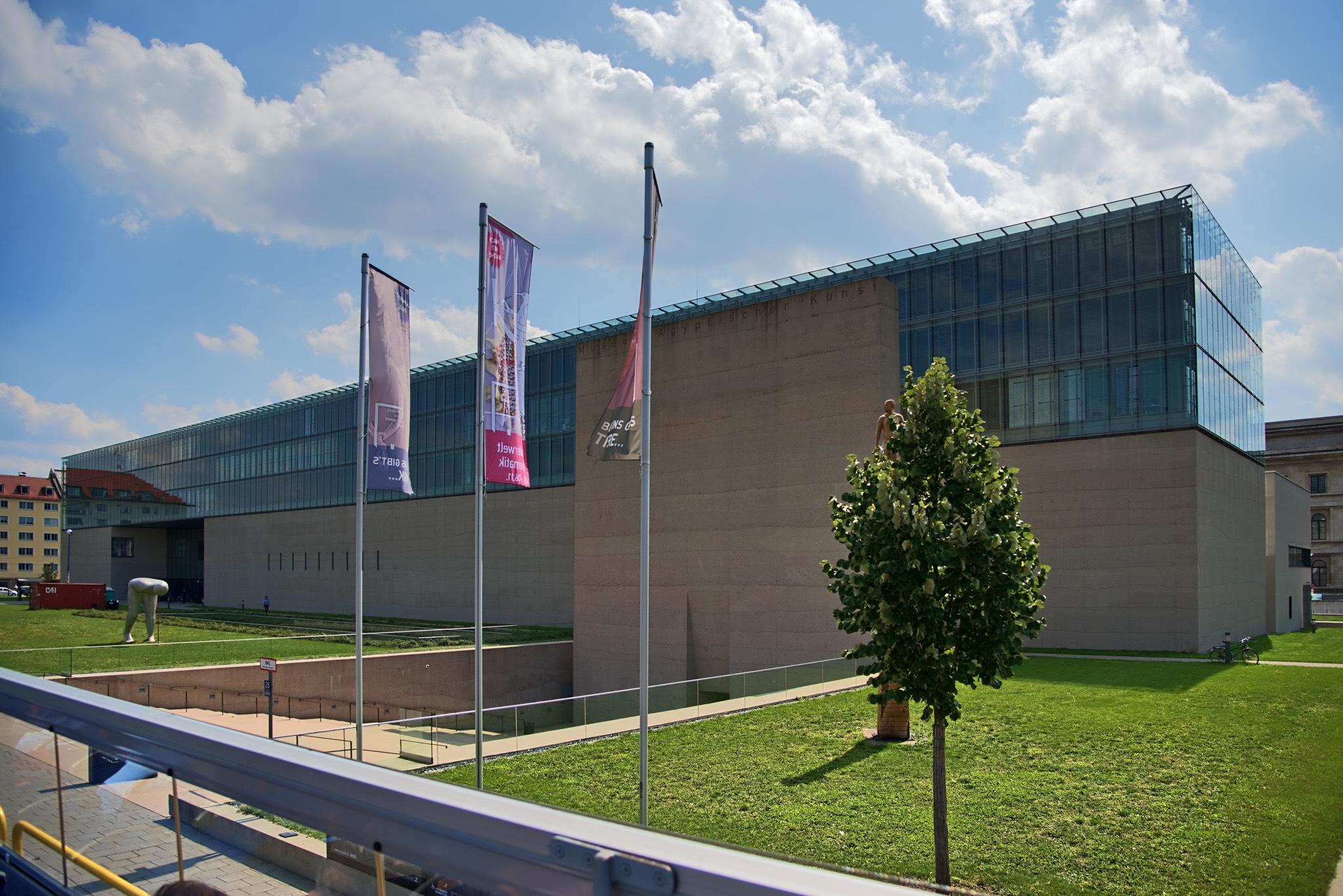
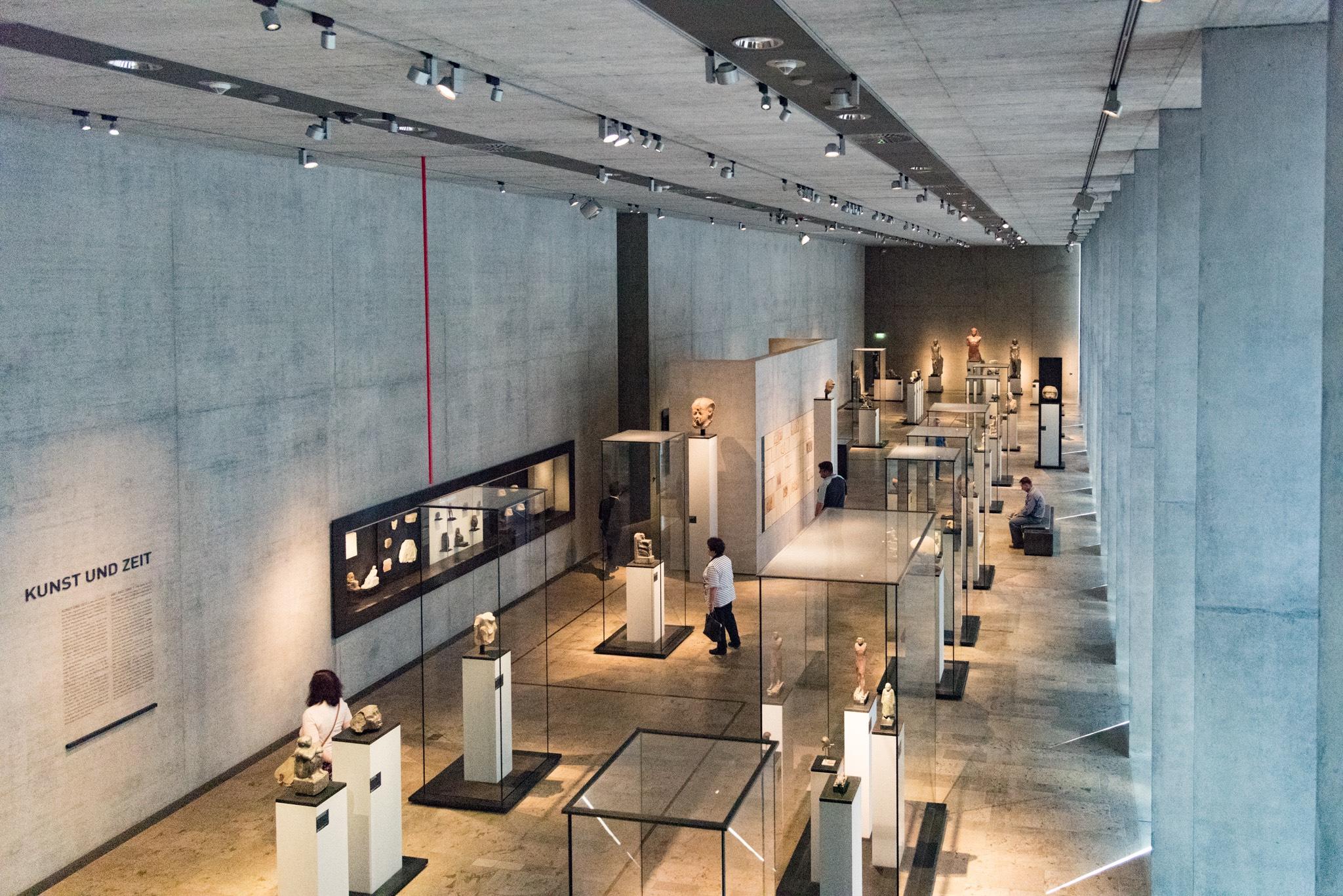
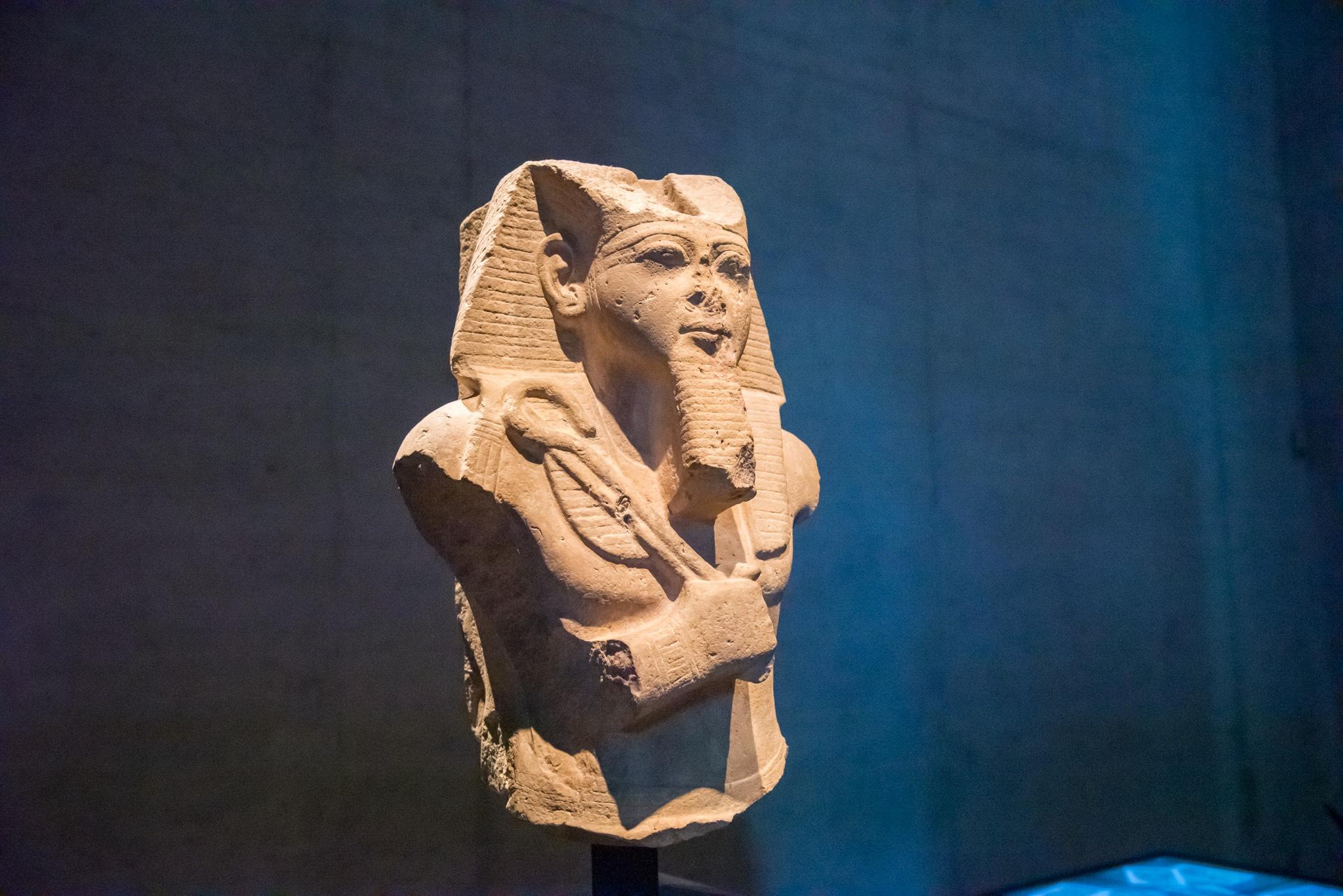
The State Museum for Egyptian Art in Munich is located in the same building as the College for Television and Film at the Kunstareal Munich.
The collection counts among the most noteworthy of its kind in Germany. Exhibits date back to the year 4000 B.C.
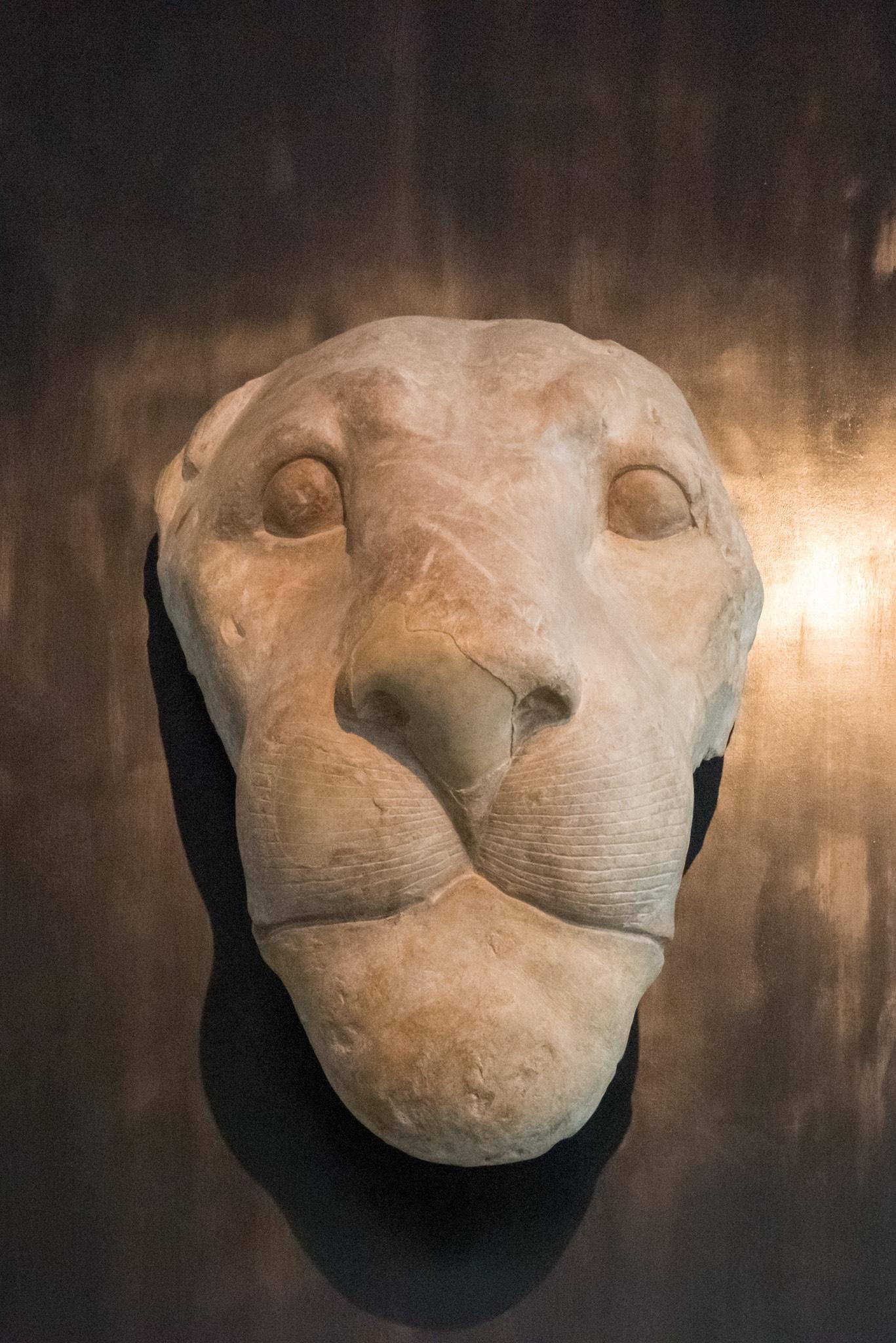
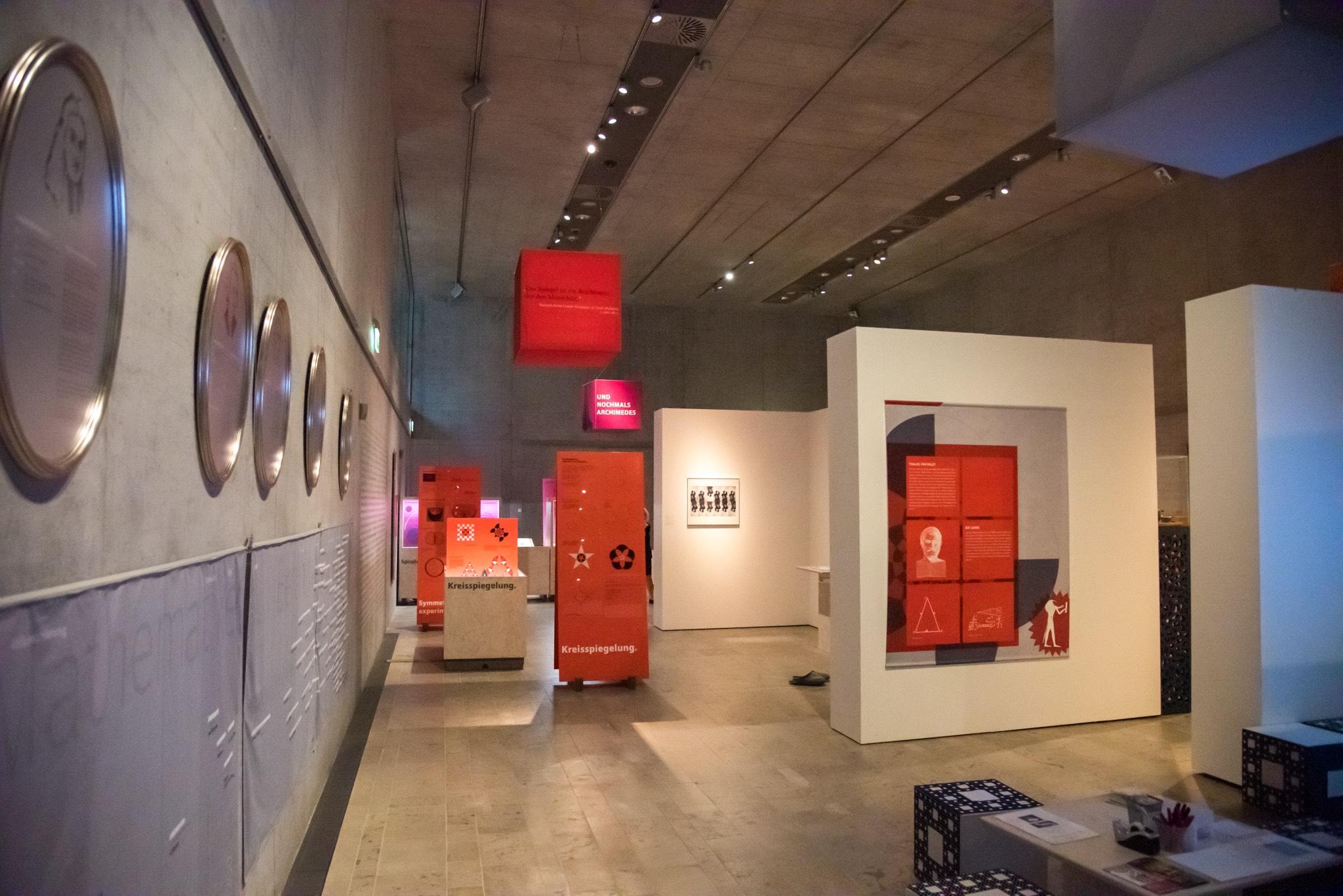
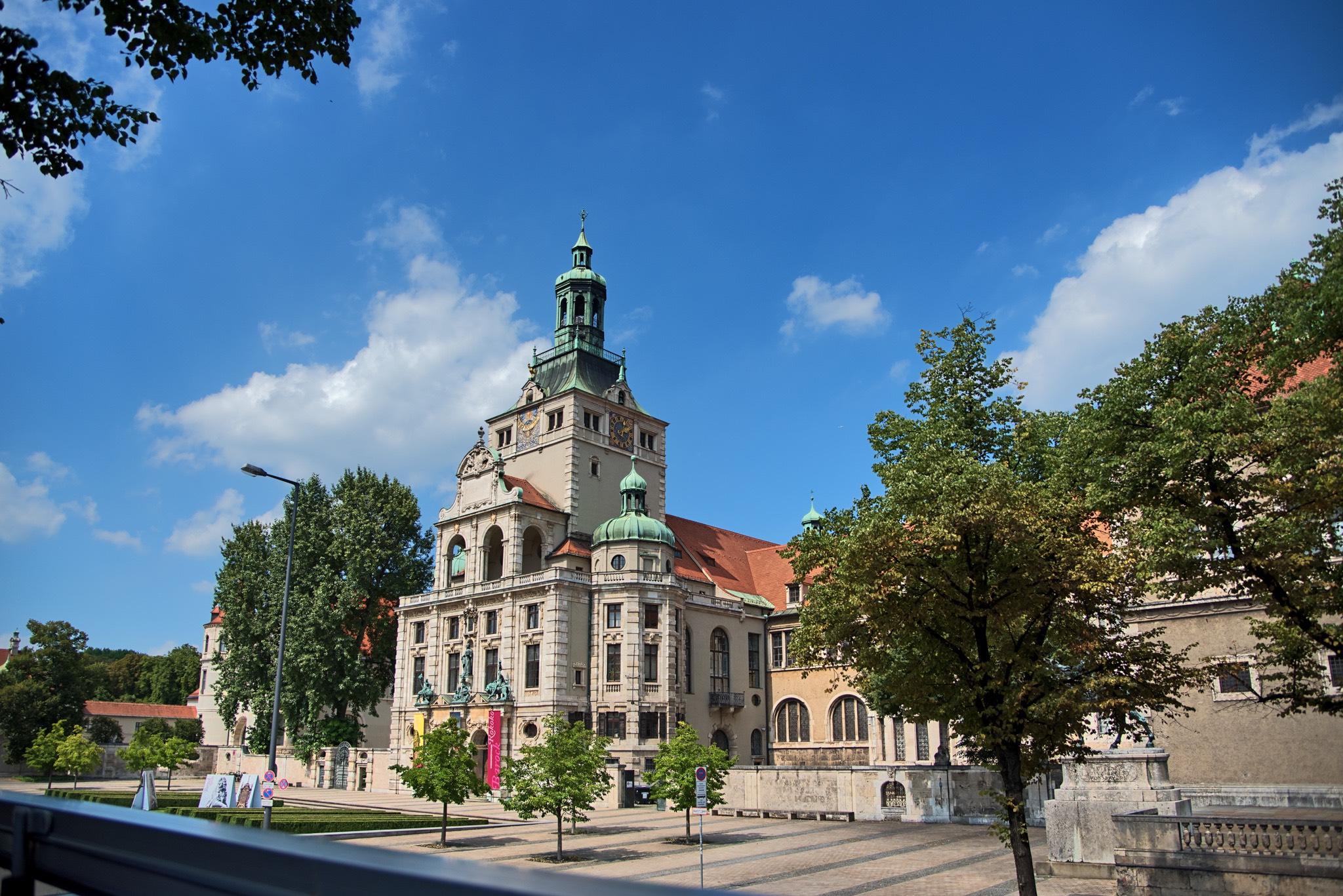
King Maximilian II funded the Bavarian National Museum. Initially it was located in the building that today houses the Museum Five Continents.
The construction at Prinzregent Street started in September 1900. Today, it offers about 13,000 m² of exhibit space.
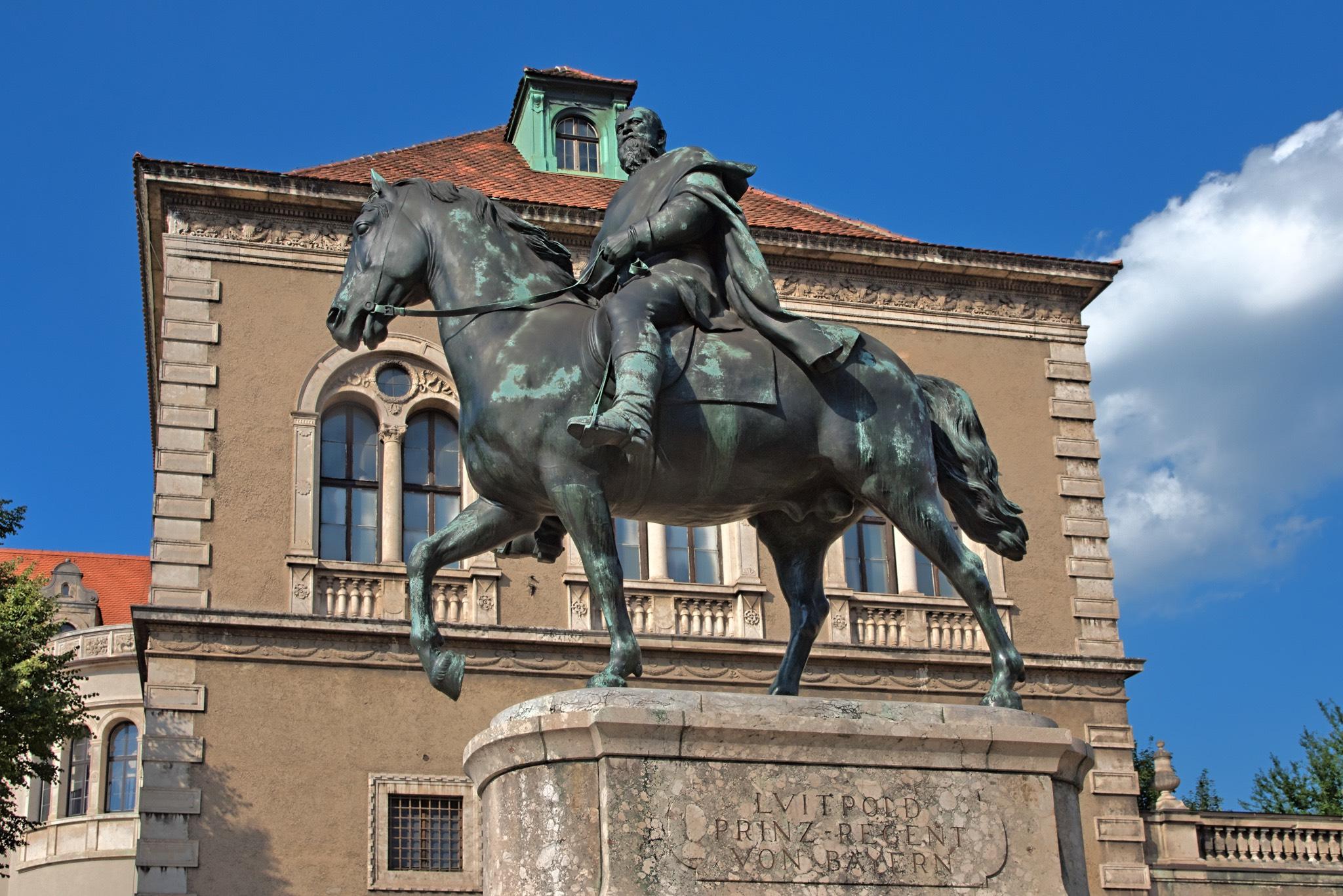
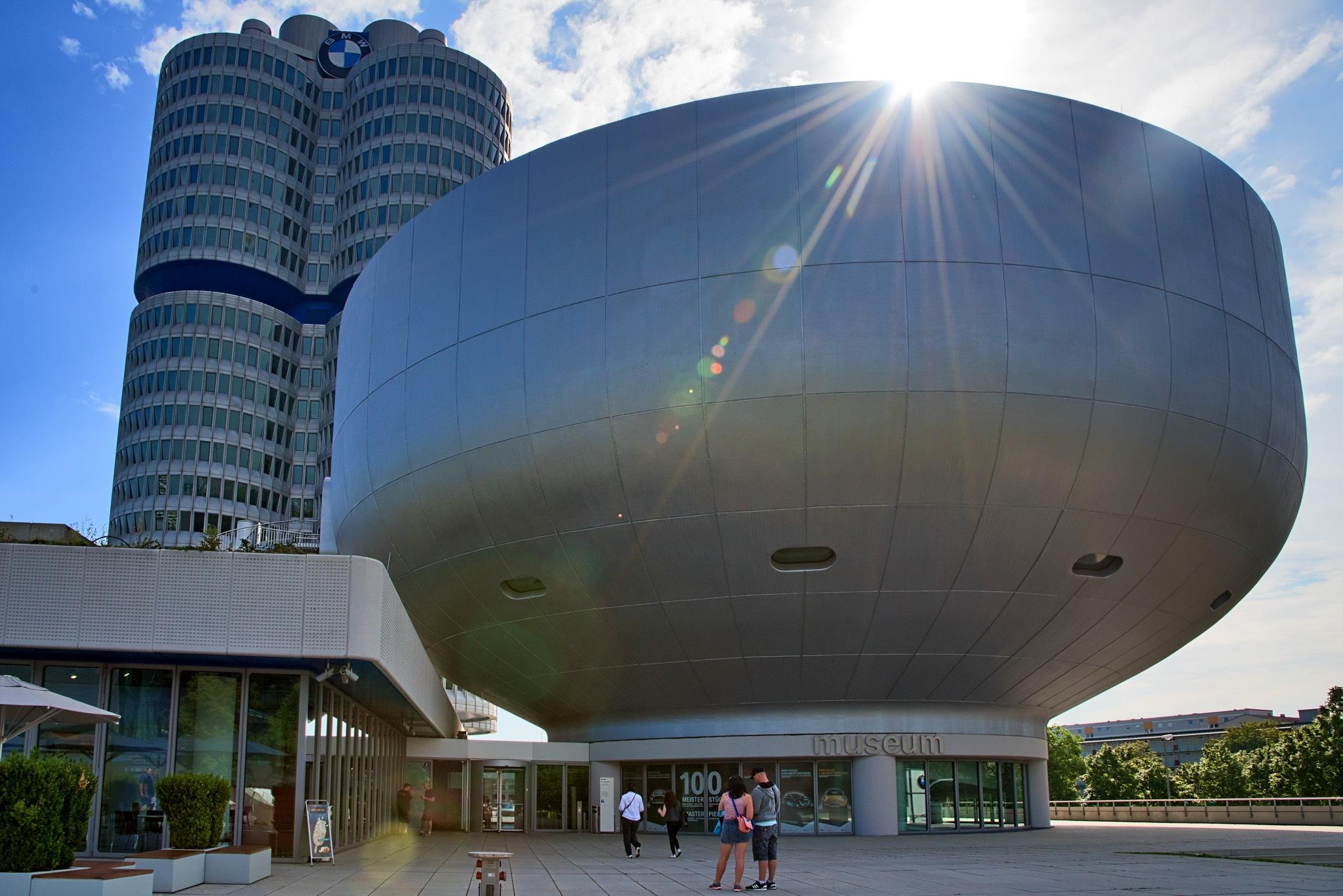
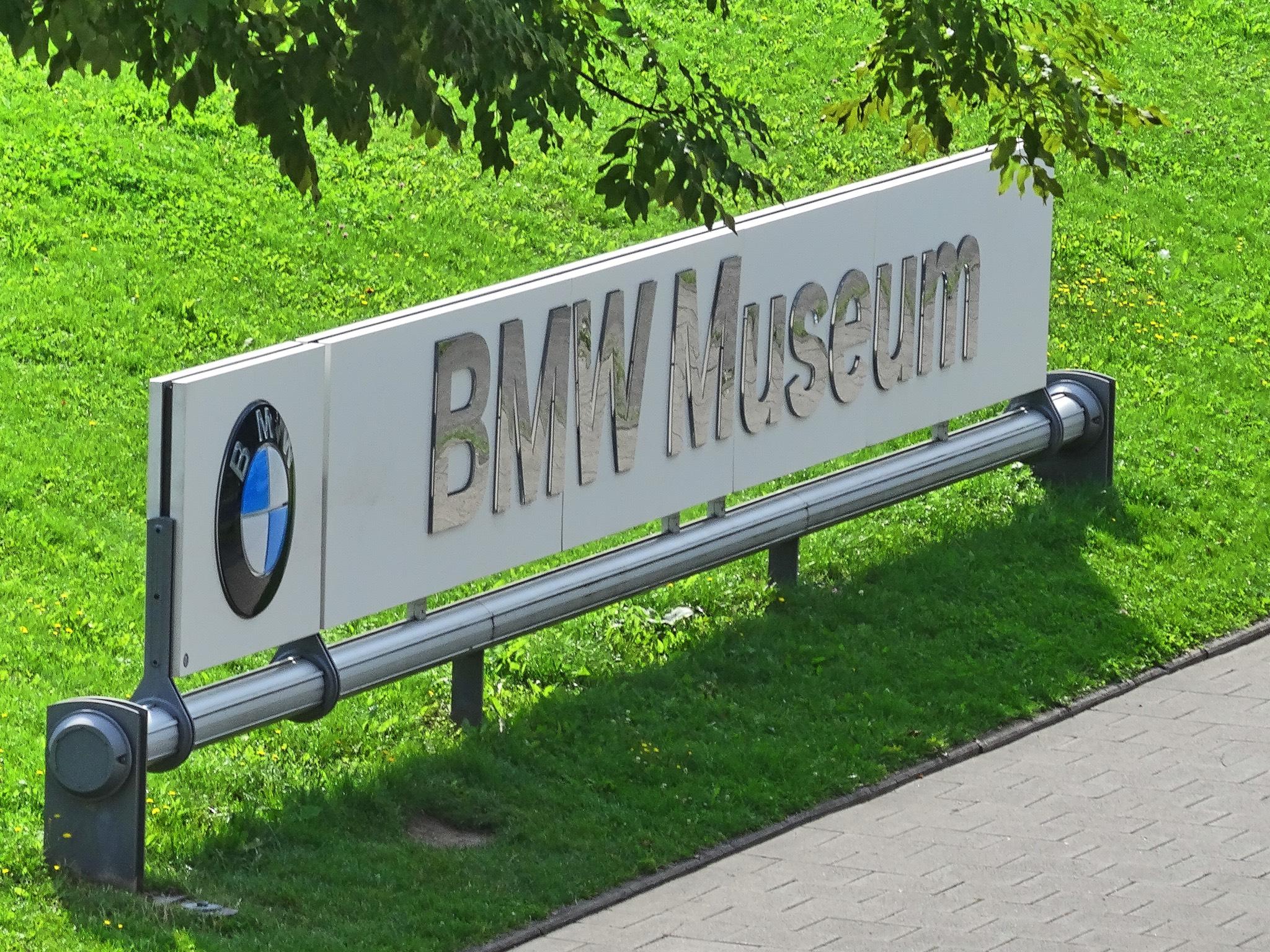
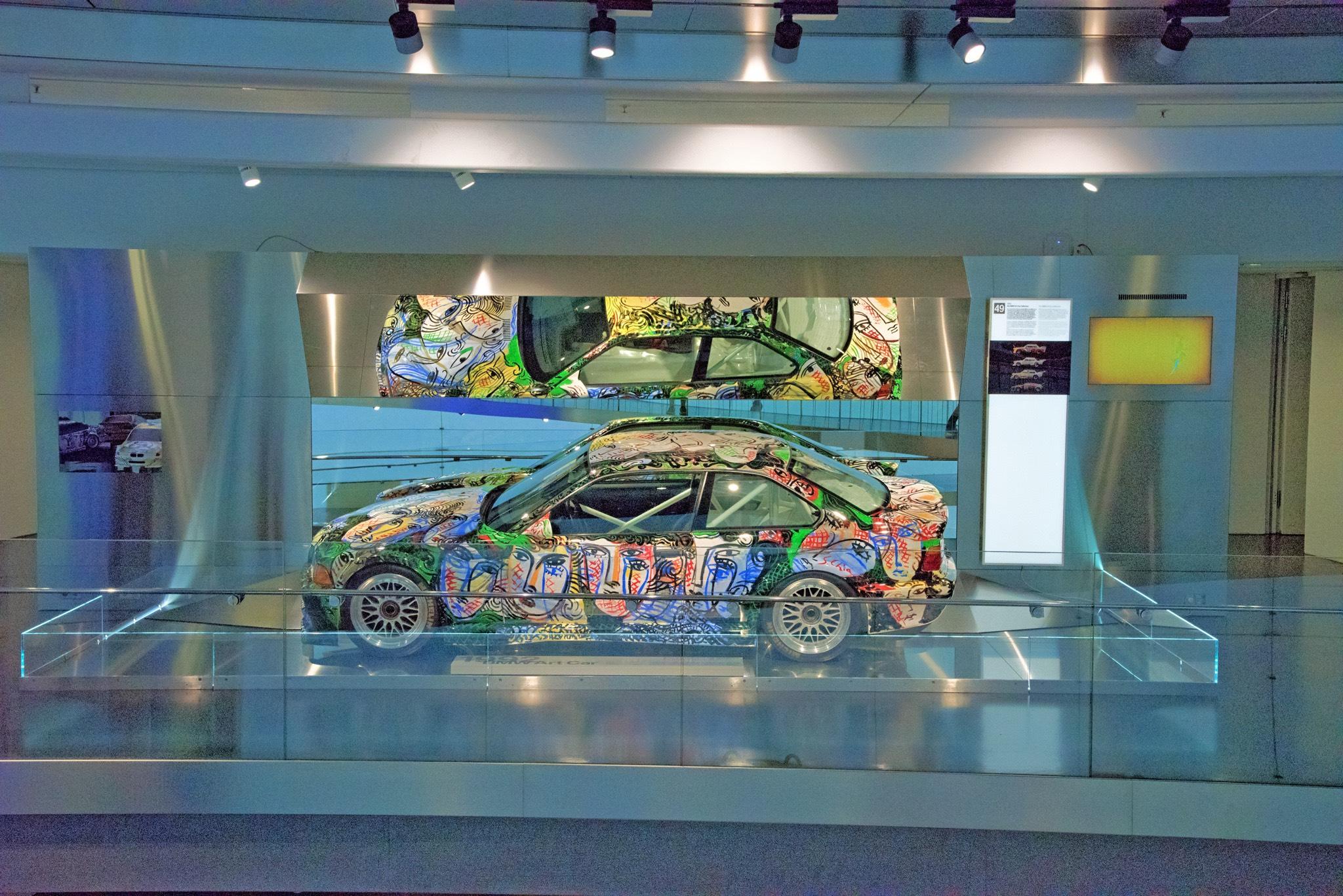
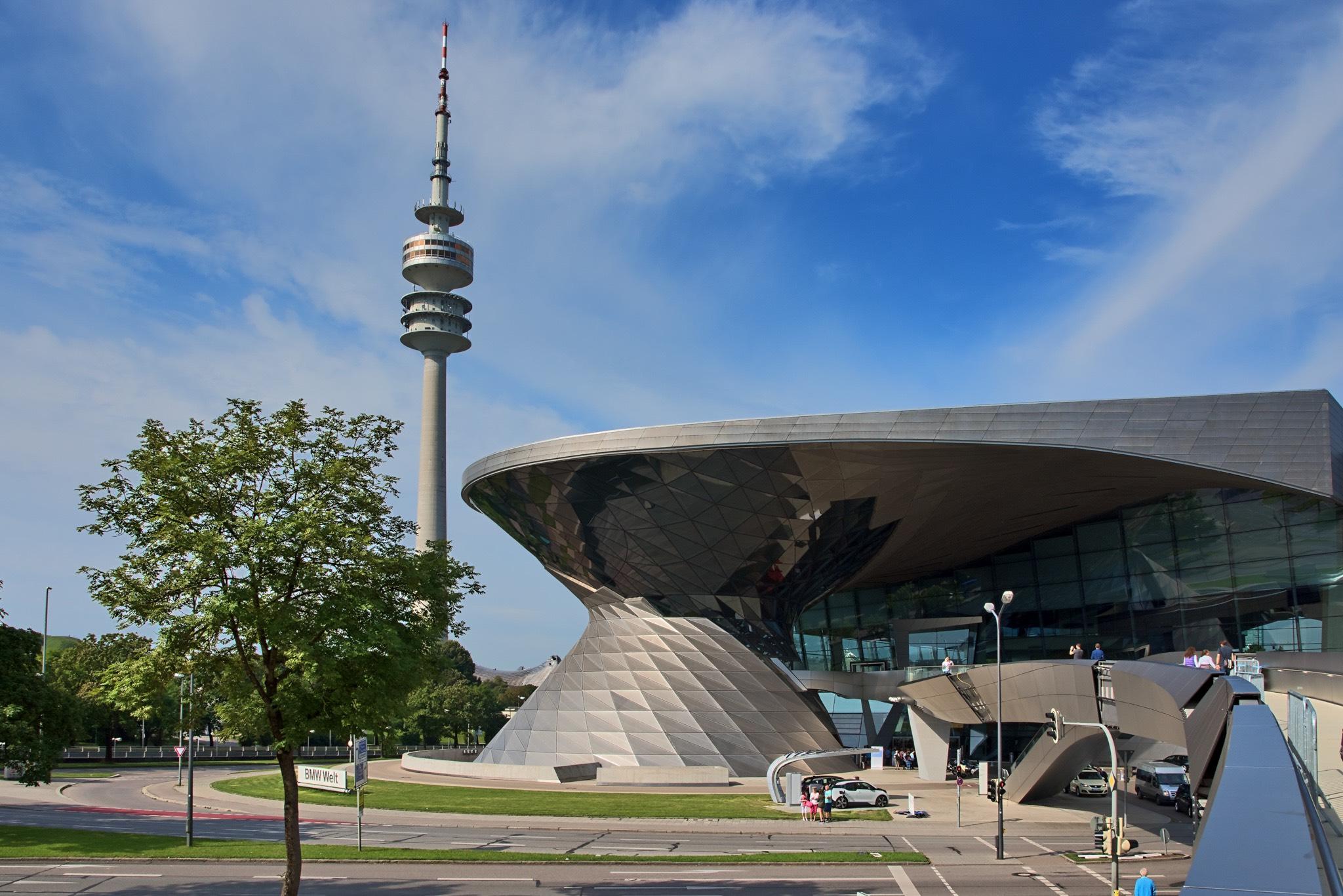
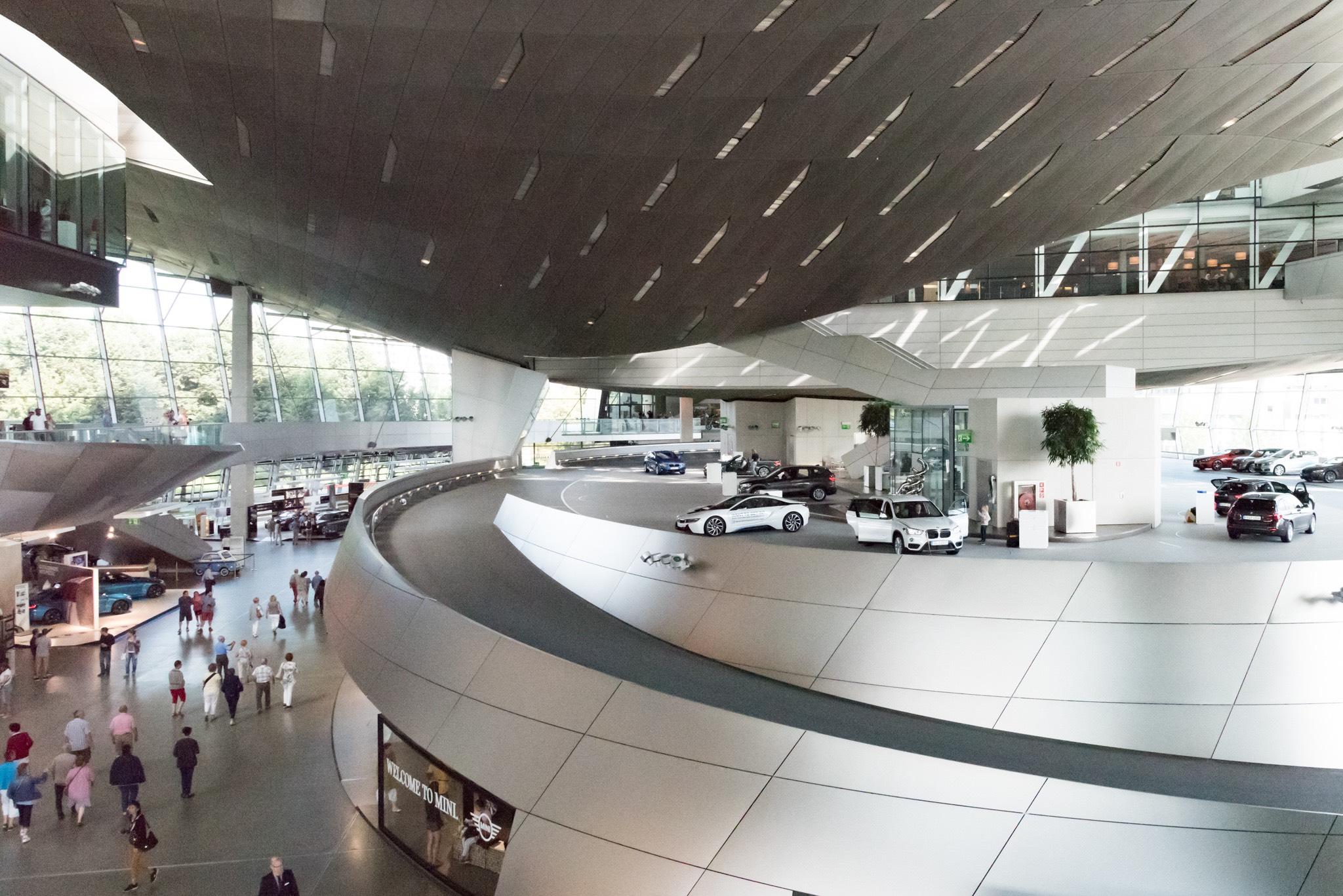
Munich locals love to call it "salad bowl" or "Weißwurst-bowl" - the BMW Museum, which was opened in 1973 and expanded between 2004 and 2008 and which is a true eye-catcher.
It is one of the most popular exhibitions in Munich and a stop that you should not miss when visiting the city at the Isar River.
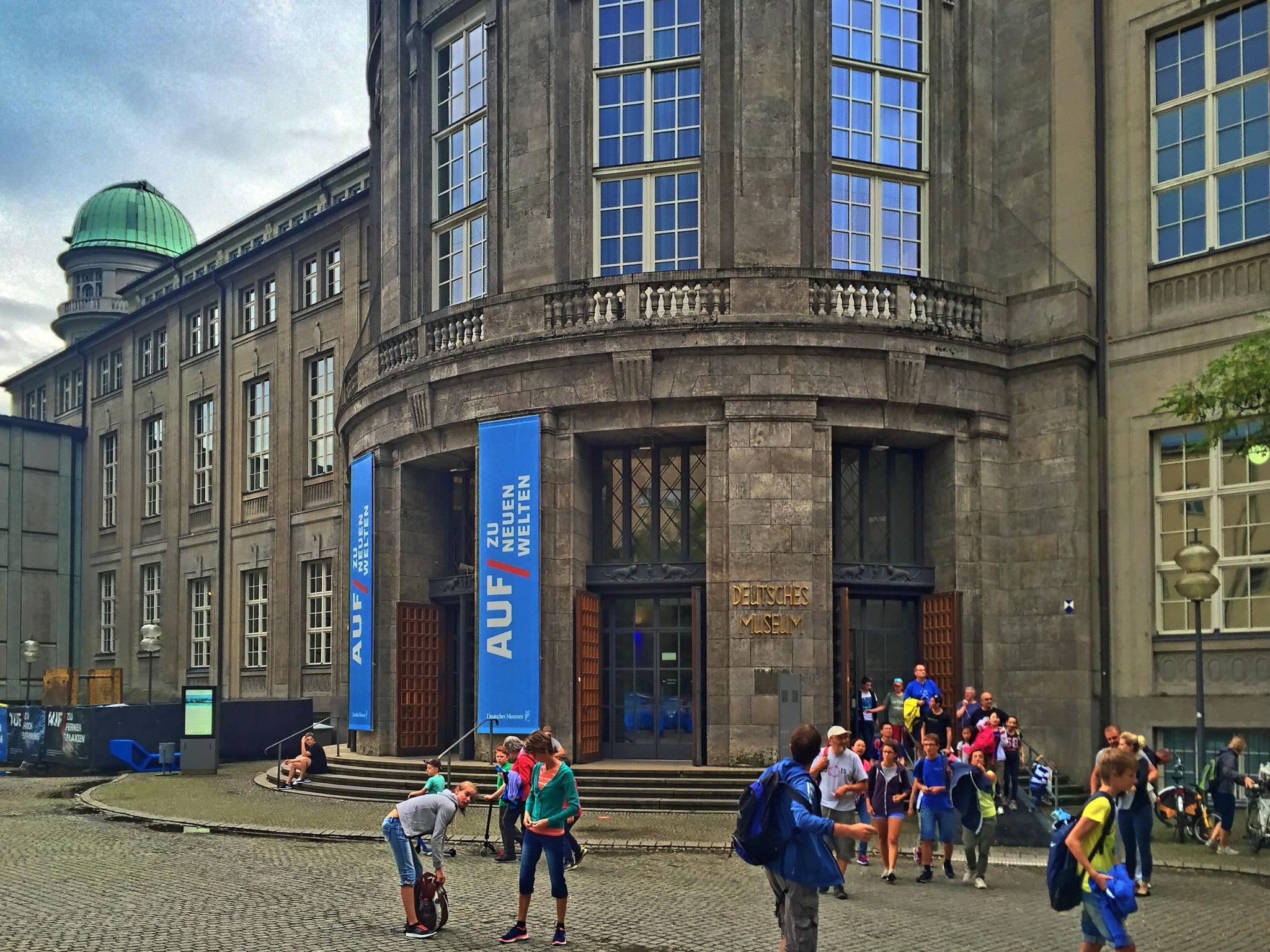
With over 1.5 million visitors per year, the German Museum is one of the most-frequented museums in the country. Here, visitors can experience the world of technology and natural sciences first-hand.
Since extensive remodelling-efforts will modernise the exhibition by 2019, parts of the museums cannot be accessed.
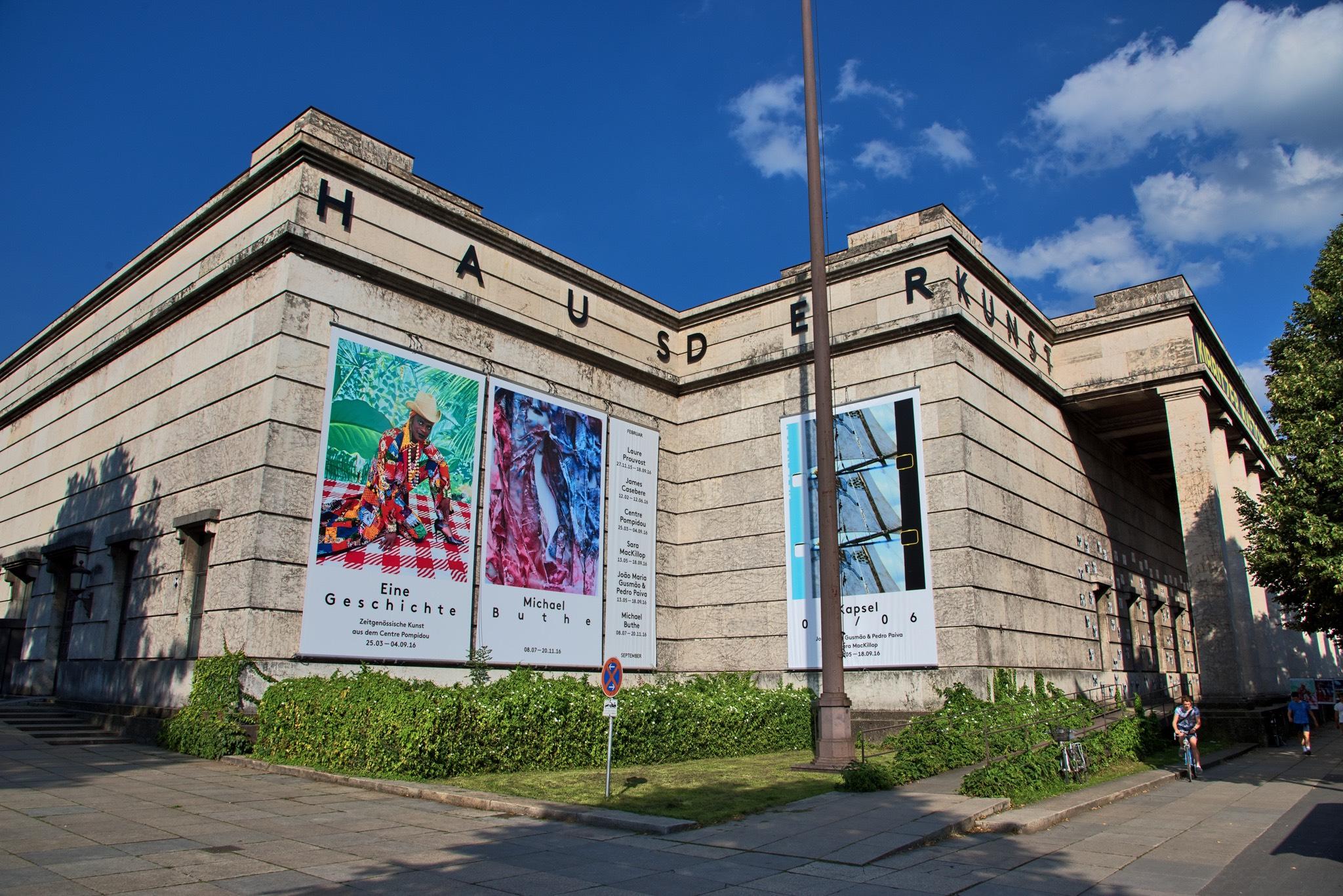
On the southern end of the English Garden is an internationally recognised gallery: the Haus der Kunst. The building was constructed from 1933 until 1937 in the monumental neoclassicism style.
The "Foundation Haus der Kunst" organises regular exhibits of contemporary and modern art.
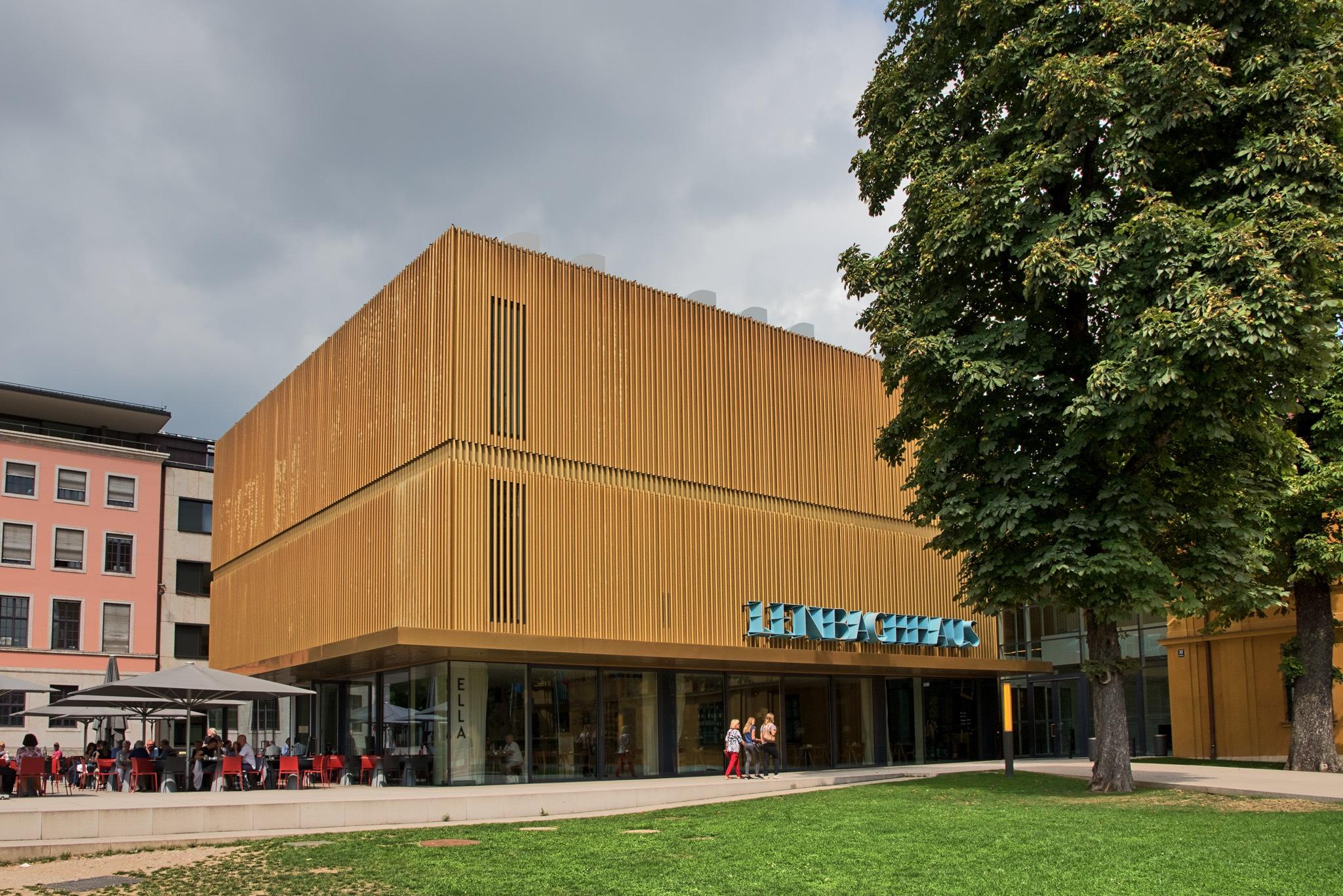
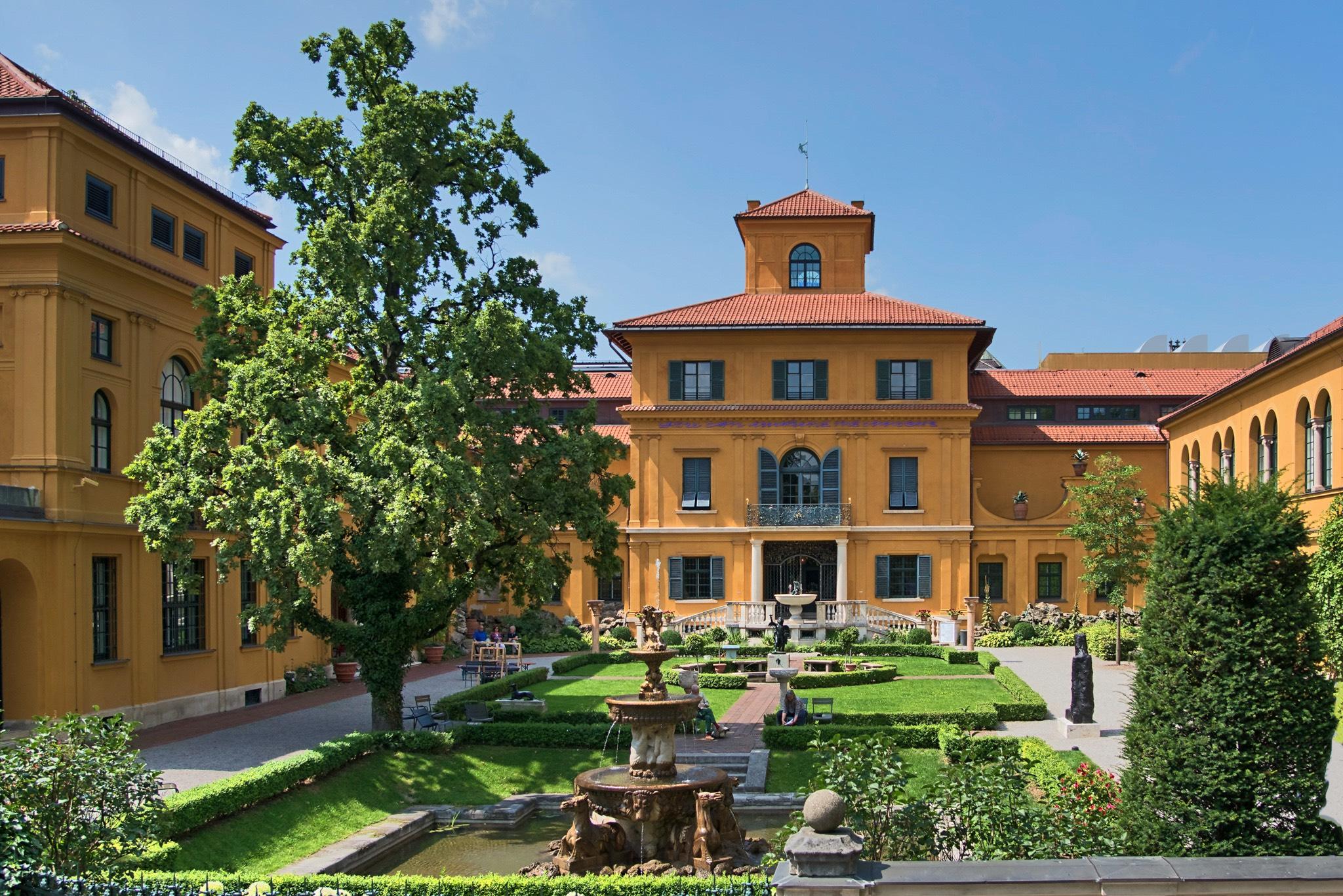
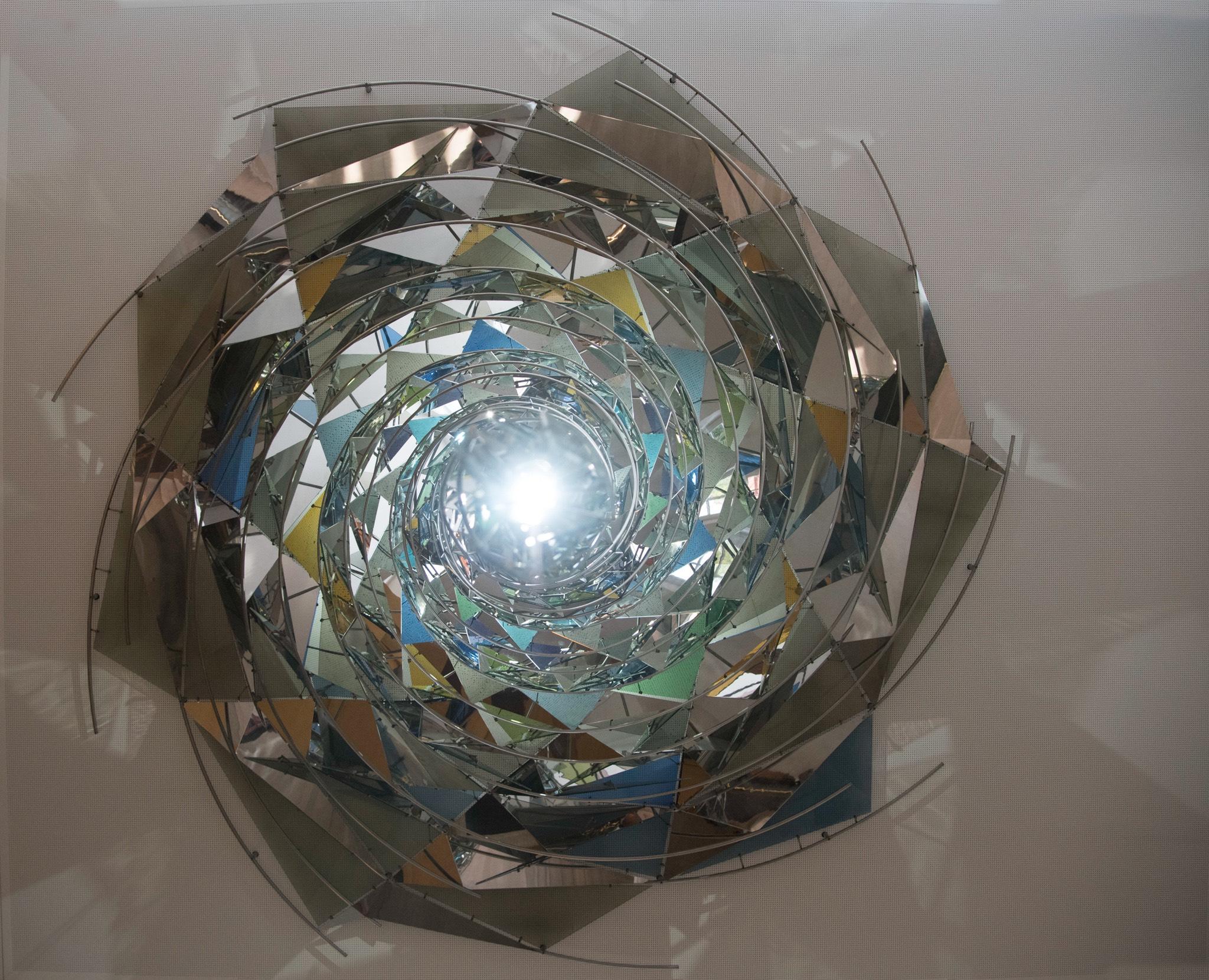
The City Gallery at Lenbachhaus is housed in the Palais of artist Prince Franz von Lenbach. After being renovated in 2013, the art museum has been expanded. The Palais itself is open to the public and some of the original rooms and the beautiful garden can be visited and admired.
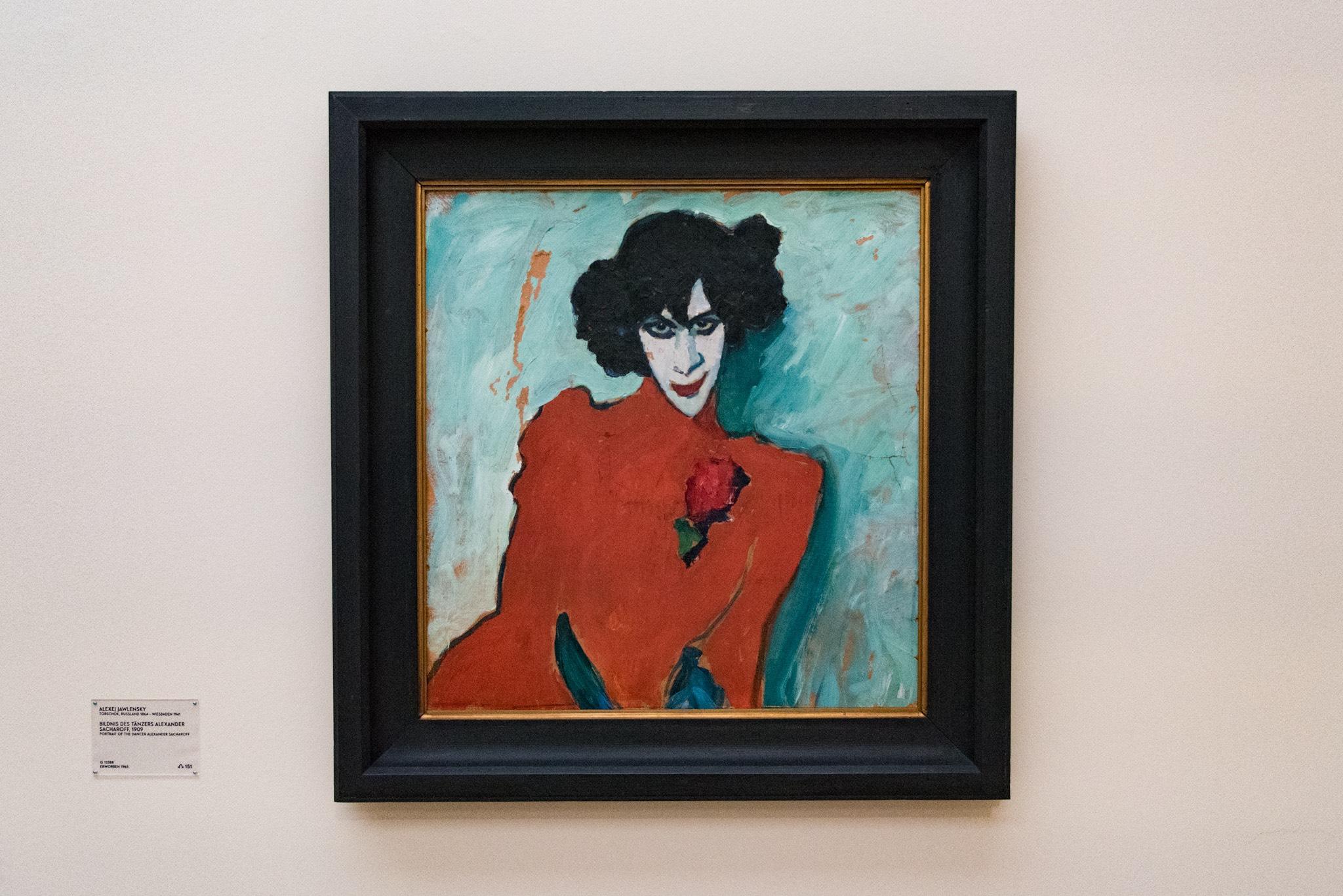
BILDNIS DES TÄNZERS ALEXANDER SACHAROFF
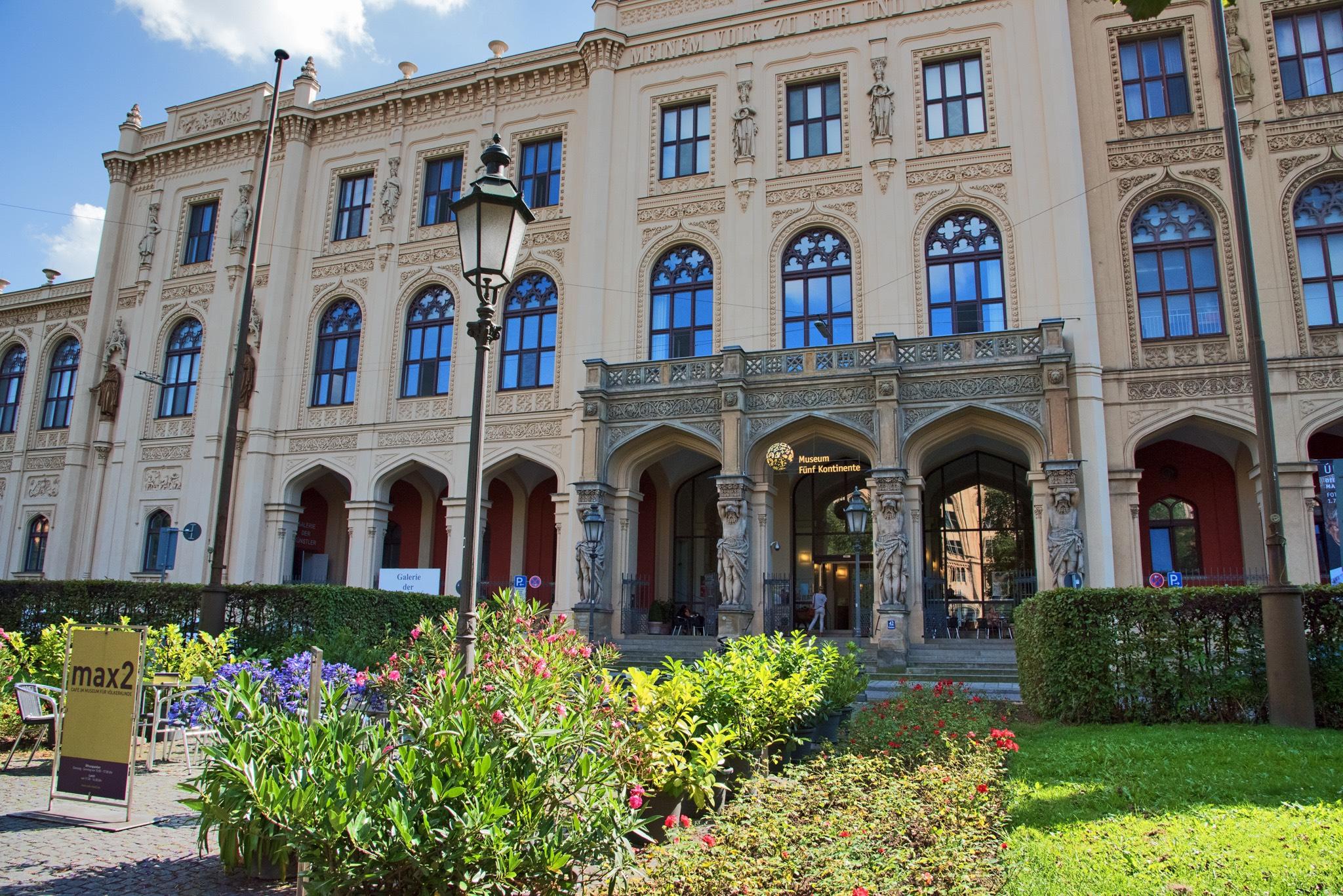
This building used to house the State Museum for Ethnology. Ever since 2014, it has been the Museum Five Continents. Already in its founding year 1862, the house was known as the first
ethnology museum in Germany. You can rest your feet from the visit at the cafe on the terrace in front of the museum.
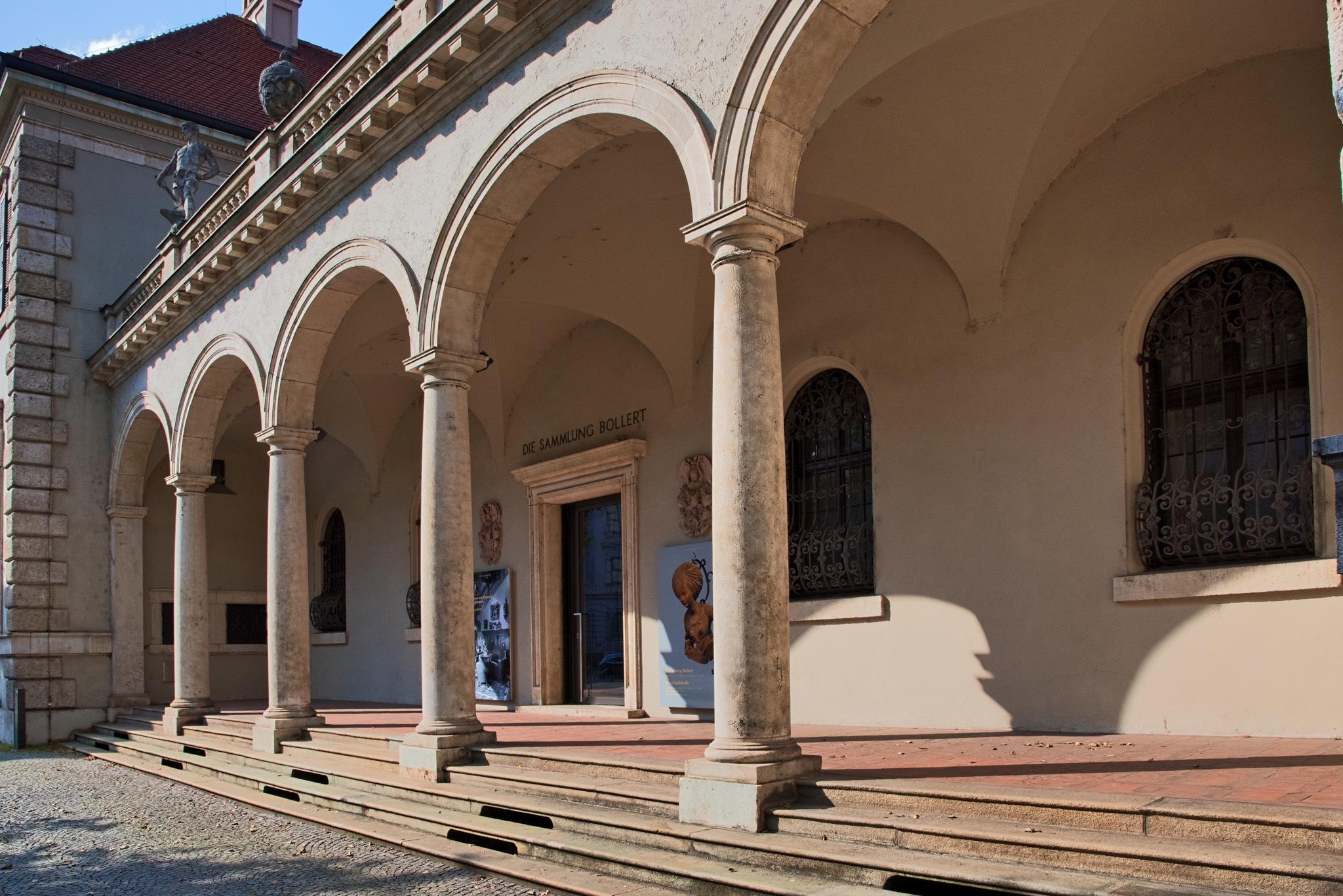
Through the years, Justizrat Dr. Gerhart Bollert collected over 100 exhibits from the 15th and 16th centuries. Bollert specialised on wooden sculptures and artwork from the late gothic and renaissance
eras. Geographically, the collector preferred art from the south of Germany, Italy, and the Netherlands.
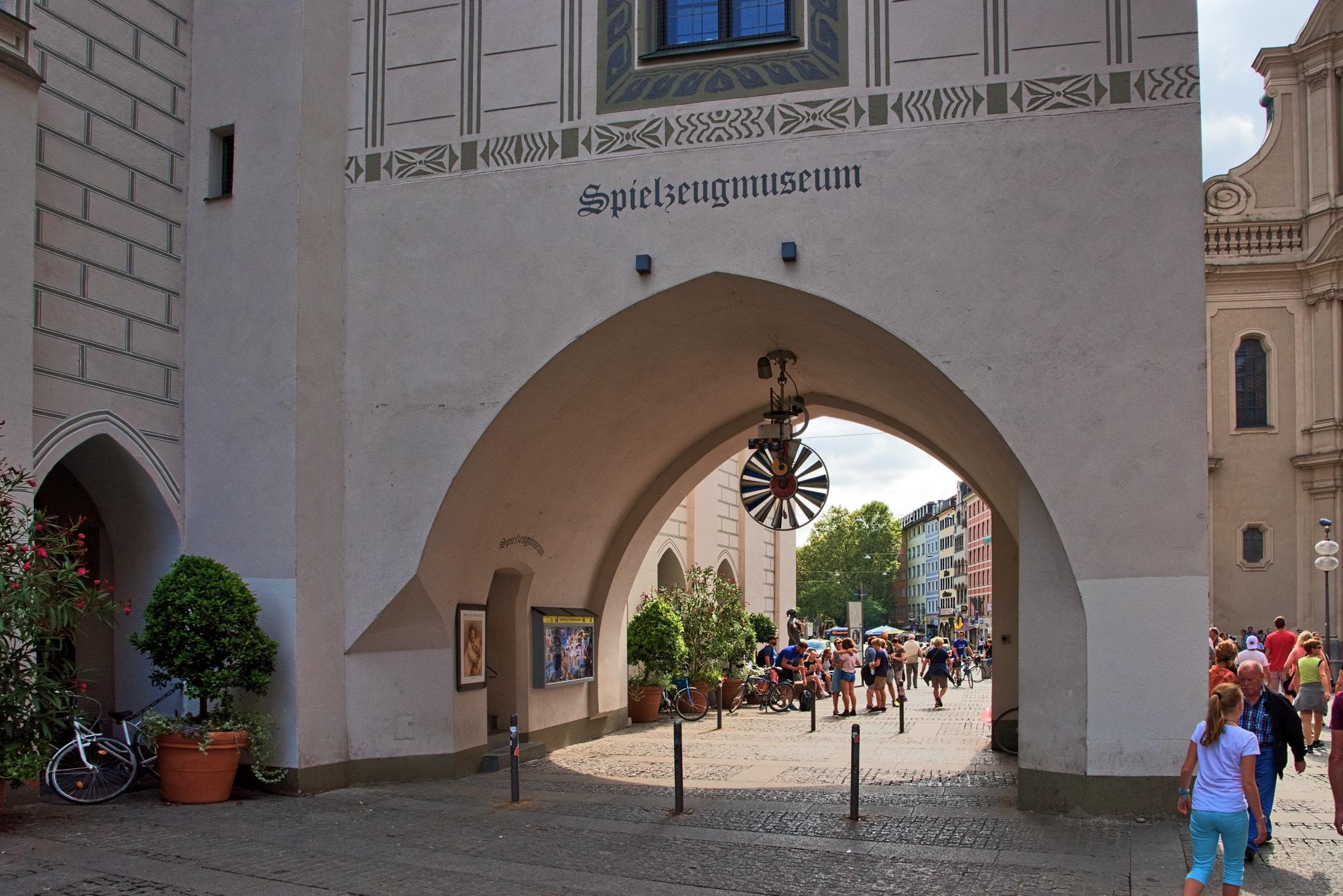
The Old City-Hall-Tower at Marienplatz Square has opened its doors for historic toys. Four floors offer exhibition space for toys dating back until the year
1800. It is a small museum, which reminds visitors of a doll-house due to its narrow stairways.
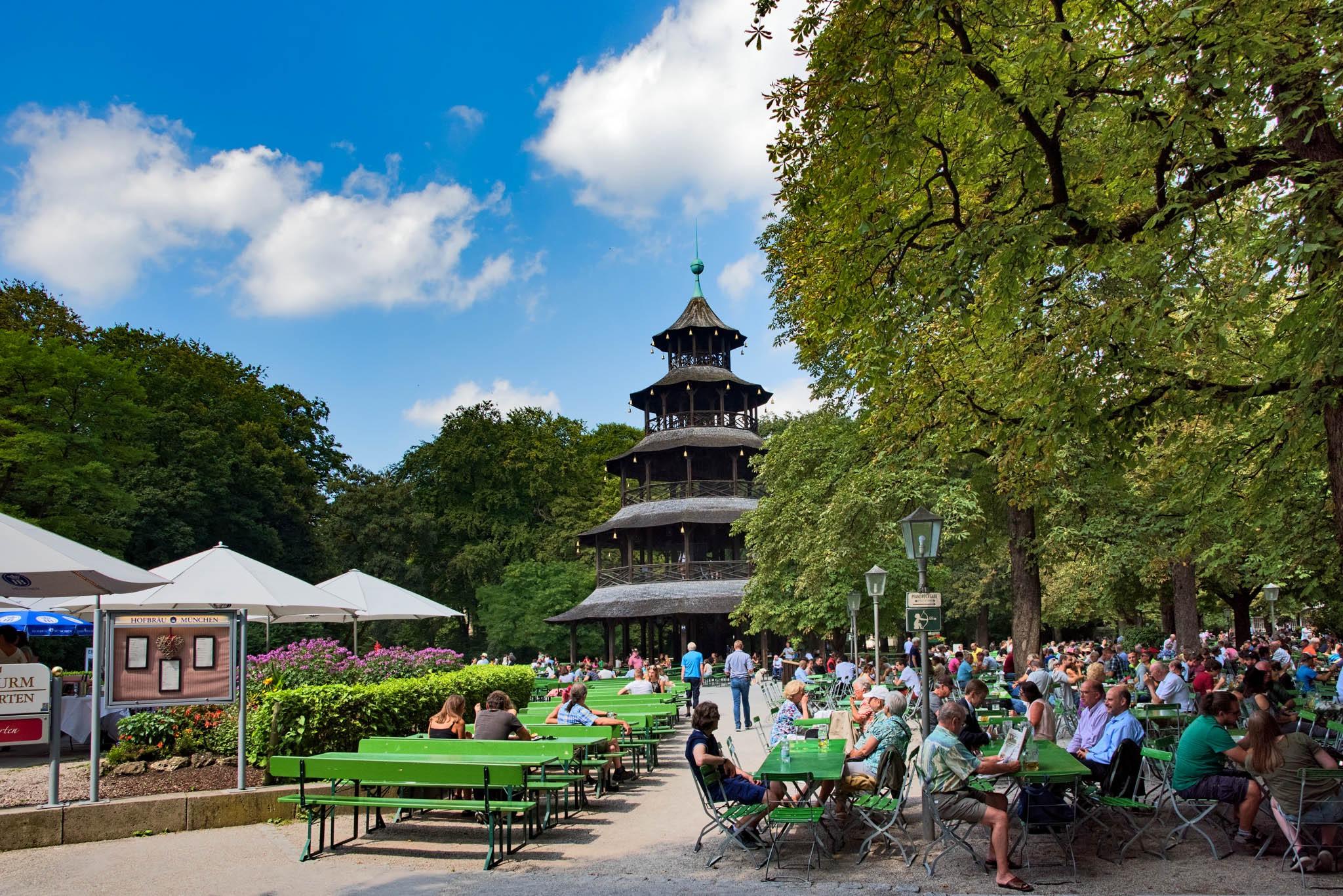
The English Garden also houses one of the largest beer gardens of the city: the Biergarten at the Chinese Tower. About 25 metres tall, the Chinese Tower has only been open for the marching band
Englischer Garten
that performs in it ever since the 1970s. Also called "Chinatower", the tower is a tourist attraction within the English Garden.
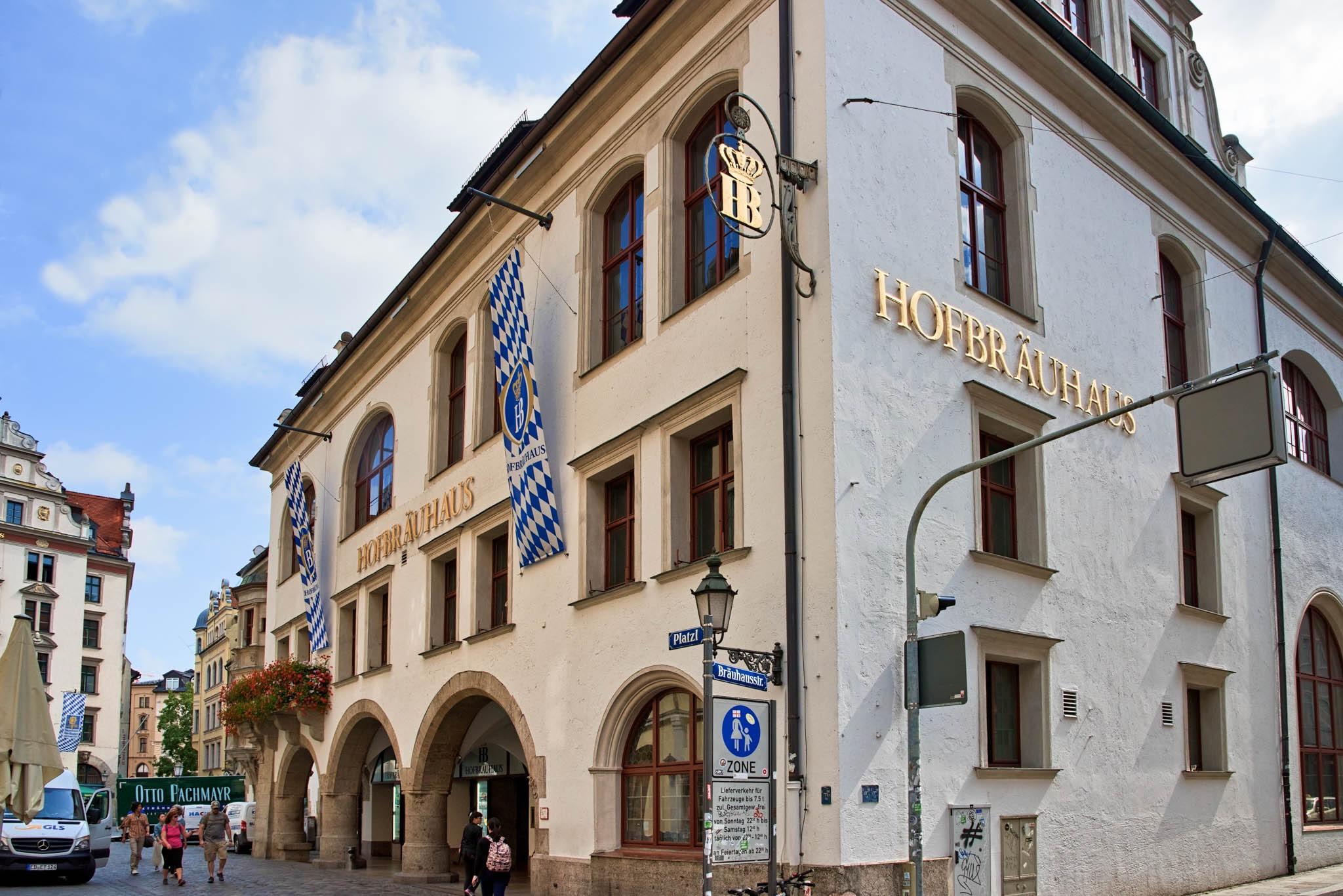
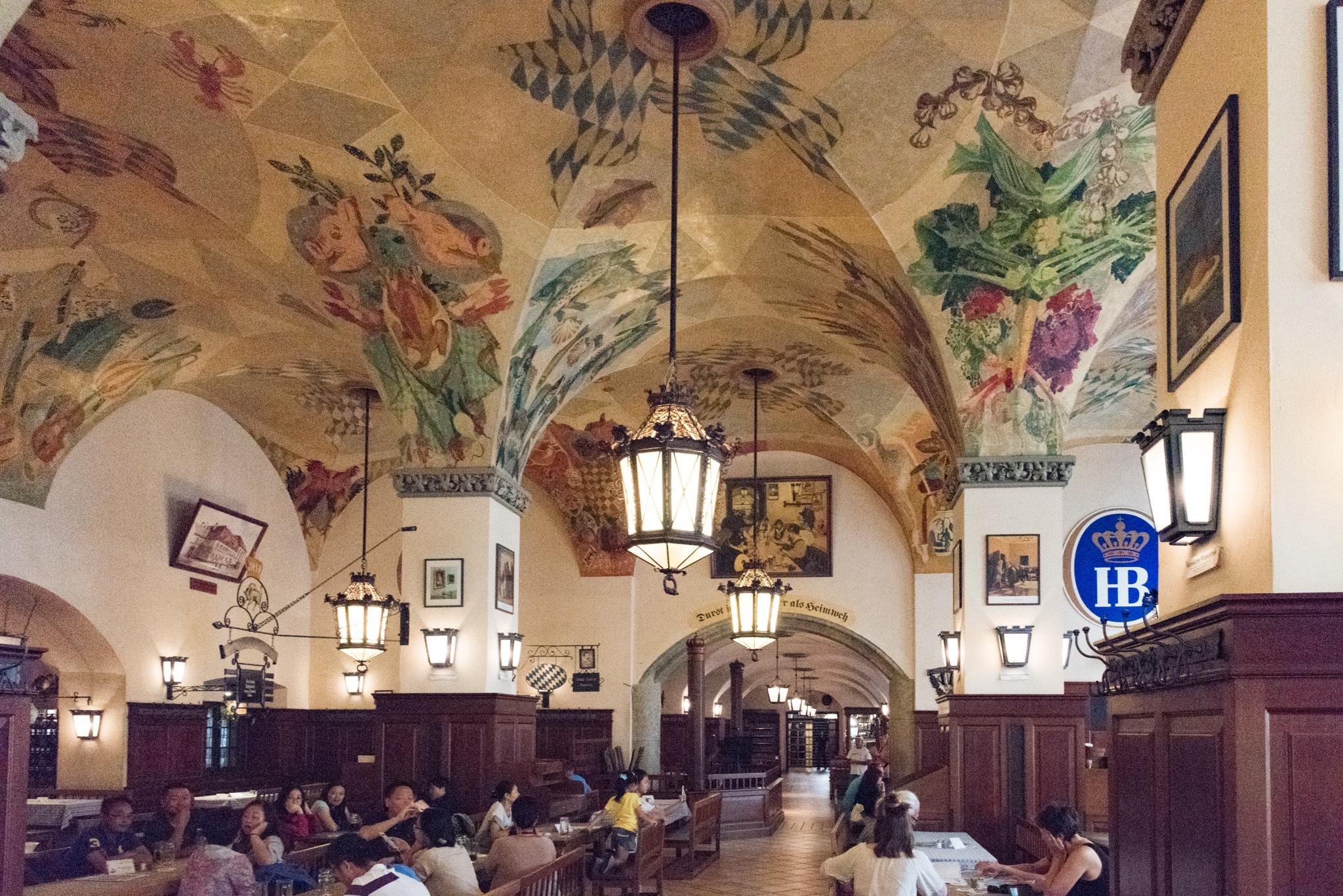
The tradition of the Hofbräuhaus on the square dates back until September 1589. In order to reduce the beer prices for the Wittelsbach Court, Duke Wilhelm V ordered the construction of a
brewery. Today, the Hofbräuhaus serves as restaurant and pilgrimage-destination all in one. Especially the "beer-palace" is very impressive and looks great on pictures.
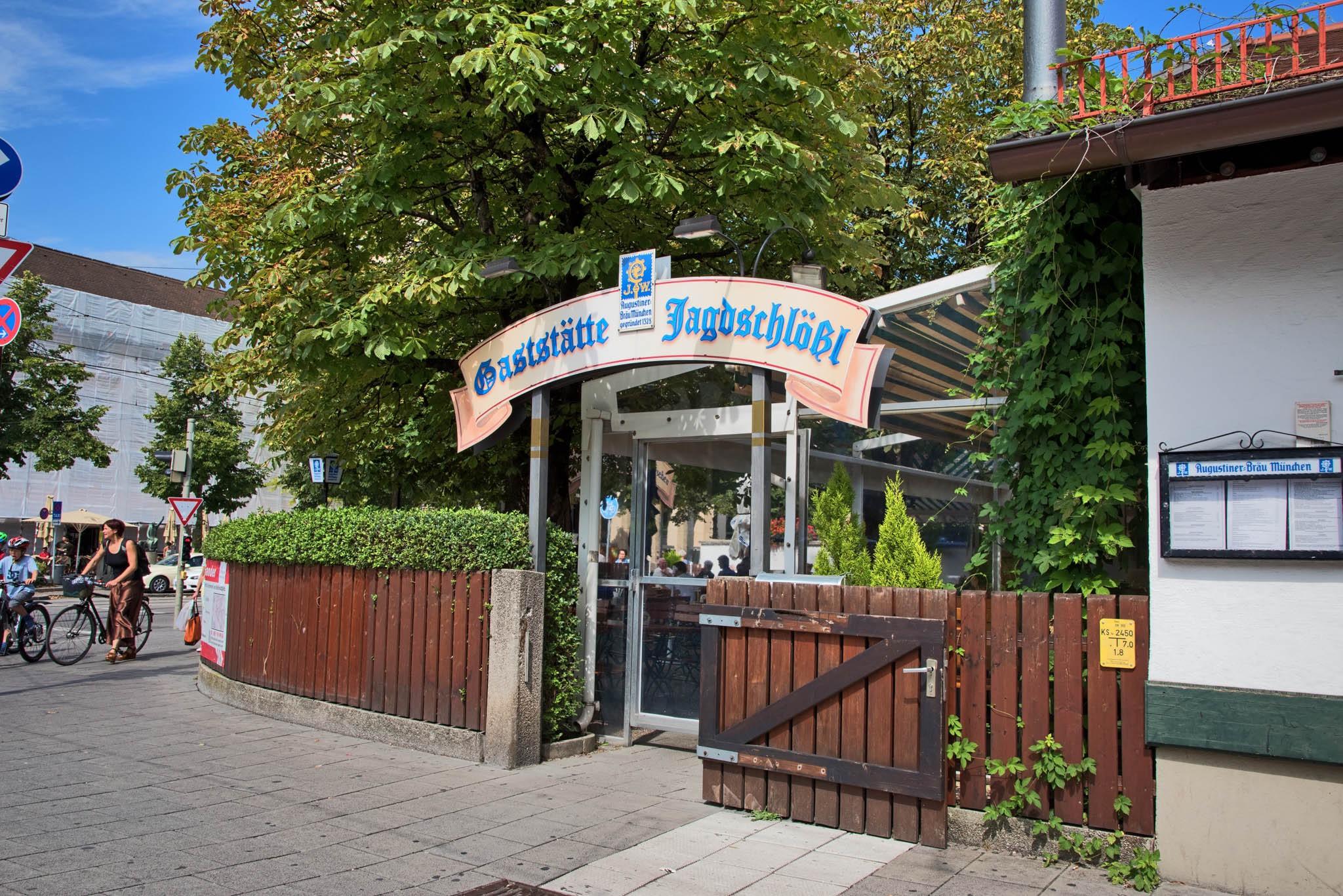
The name "Jagdschlößl" (which roughly translates to "hunting-palace") goes back to the Electoral and later Royal hunting-palace, which was built in 1598 and located right across the restaurant until 1945.
Nymphenburger Strasse 162
The rustic restaurant has been in operation since 1875. The Jagdschlößl is about halfway between Königsplatz Square and Nymphenburg Castle.
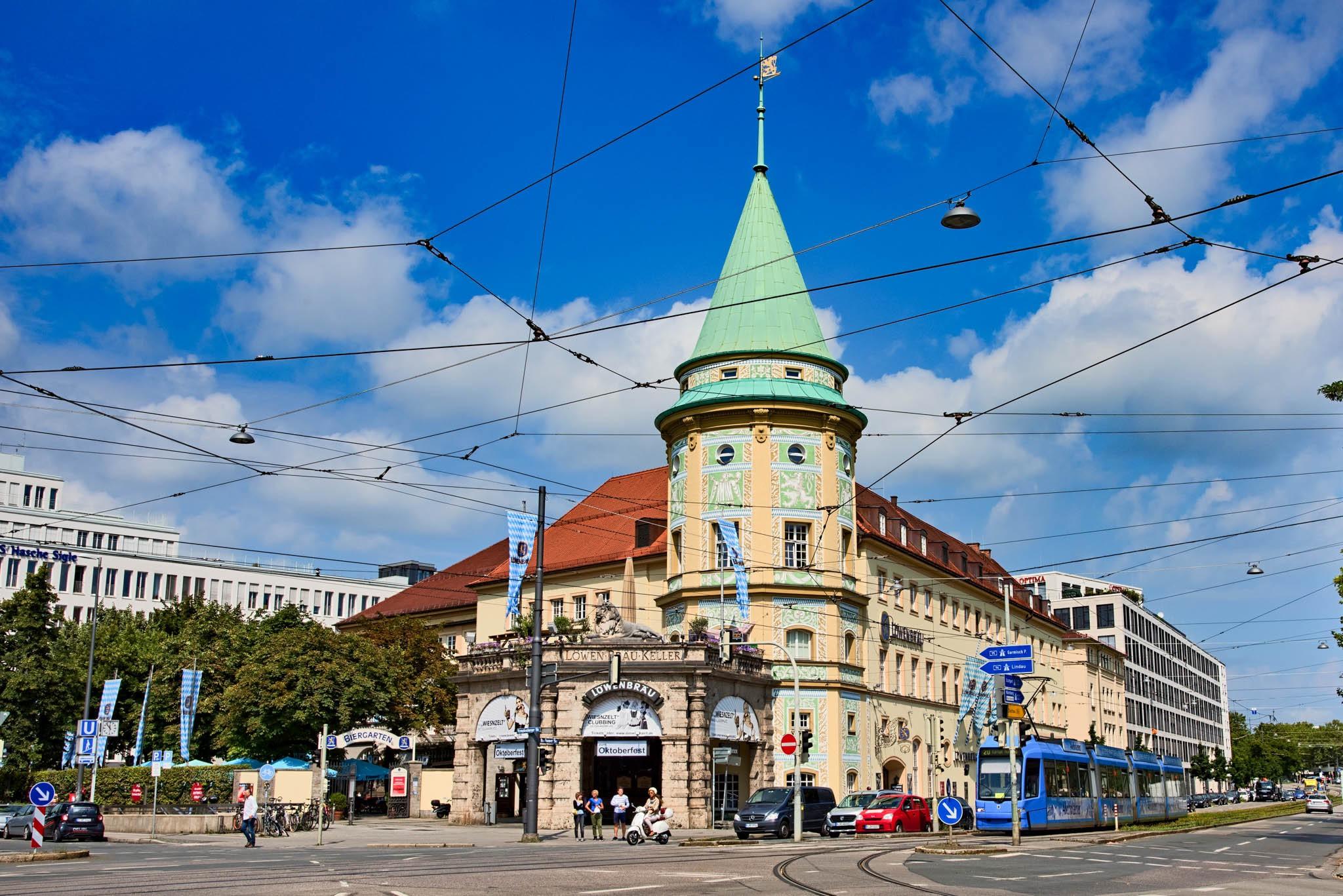
The "beer-palace" Löwenbräukeller was opened in 1883 and re-built after the damage of World War II. When the Löwenbräukeller was opened, it was at the top of the line in terms of technology and
Nymphenburger Straße 2
hygiene. A special attraction is the electric lighting throughout the entire building.
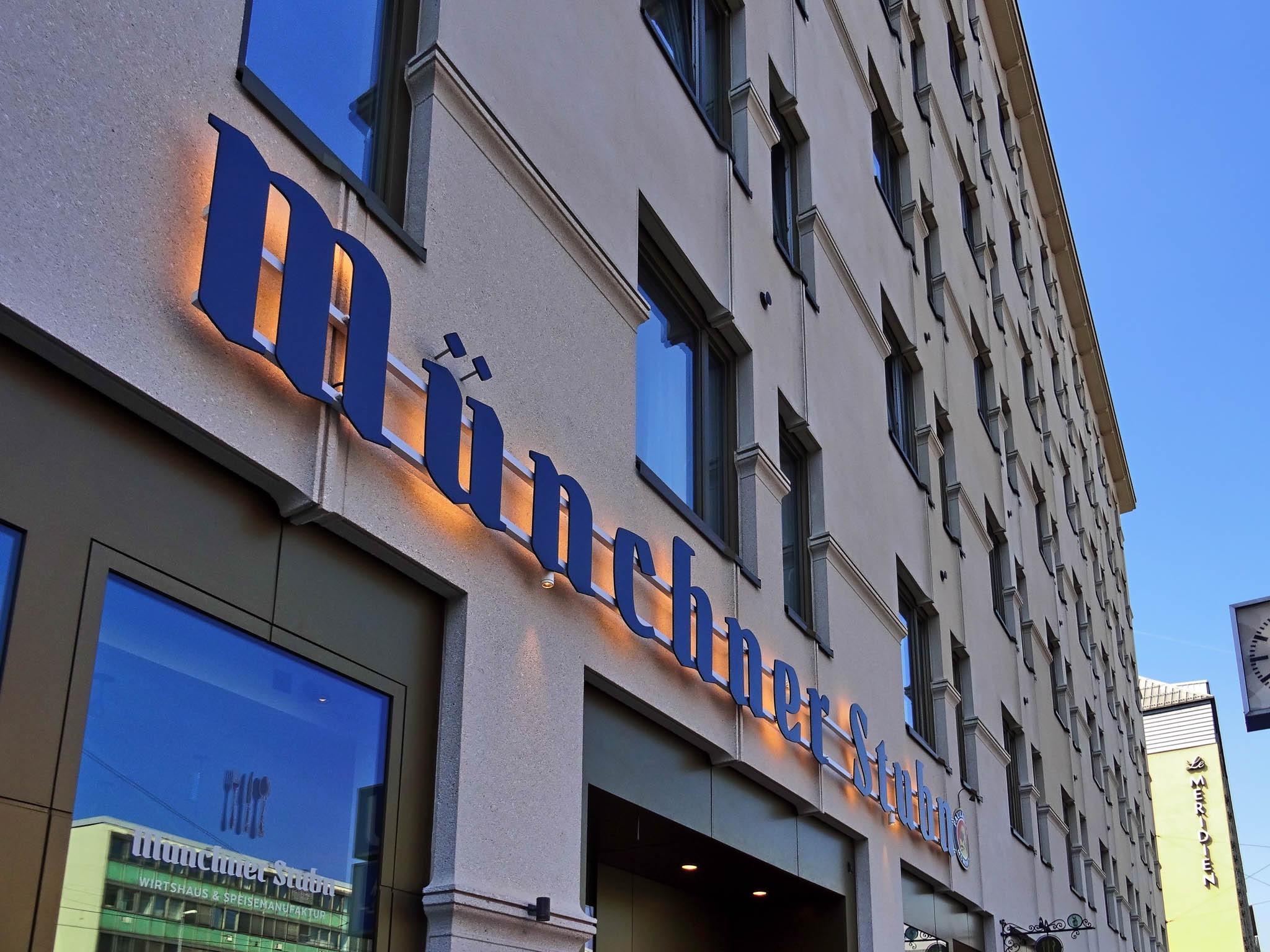
The Münchener Stuben is a small, traditional locale in the city, and a tavern with a big advantage: If you want to shorten your layover or waiting time at the Munich Main Train Station, simply cross the street and experience the best Bavarian cuisine and beer.
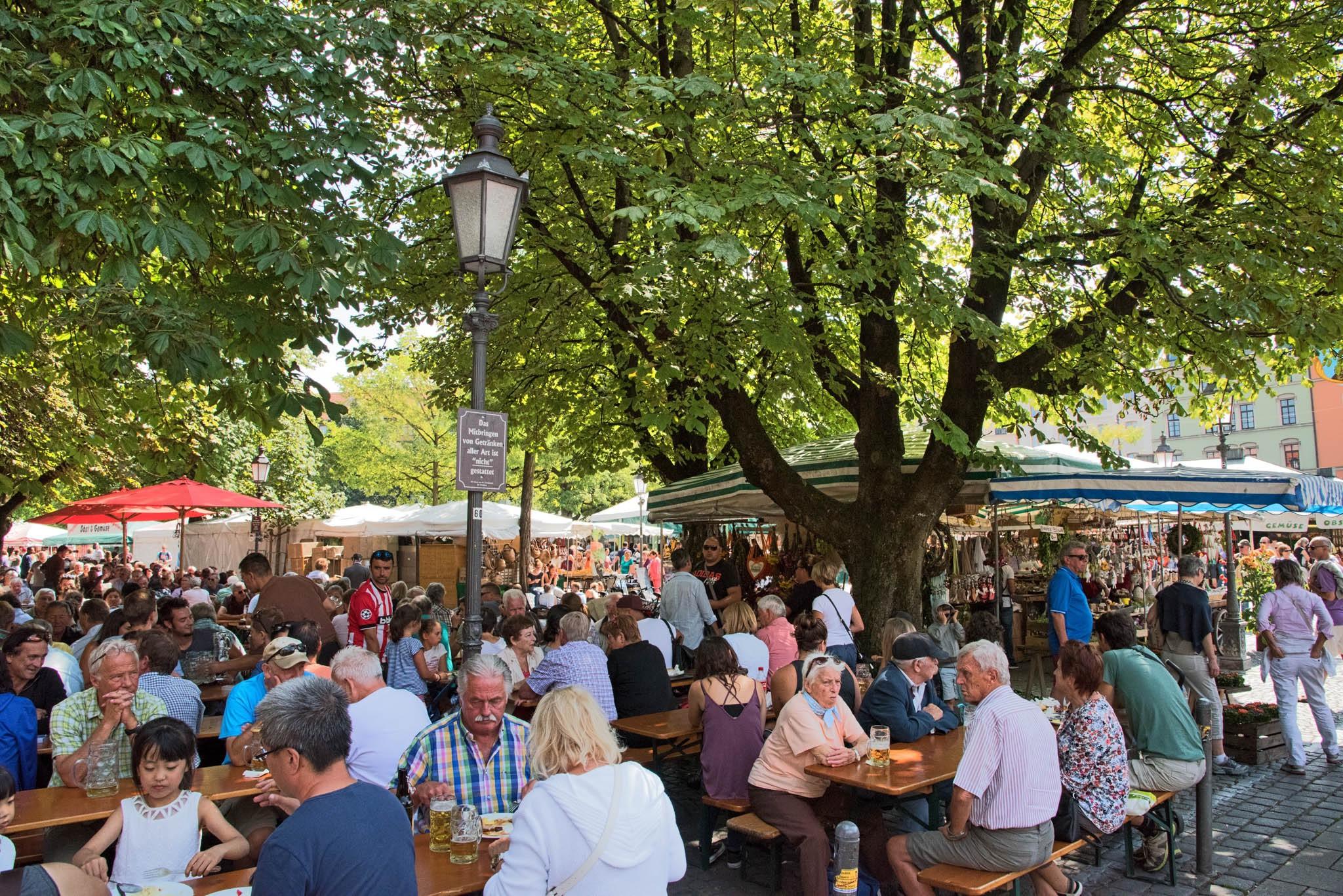
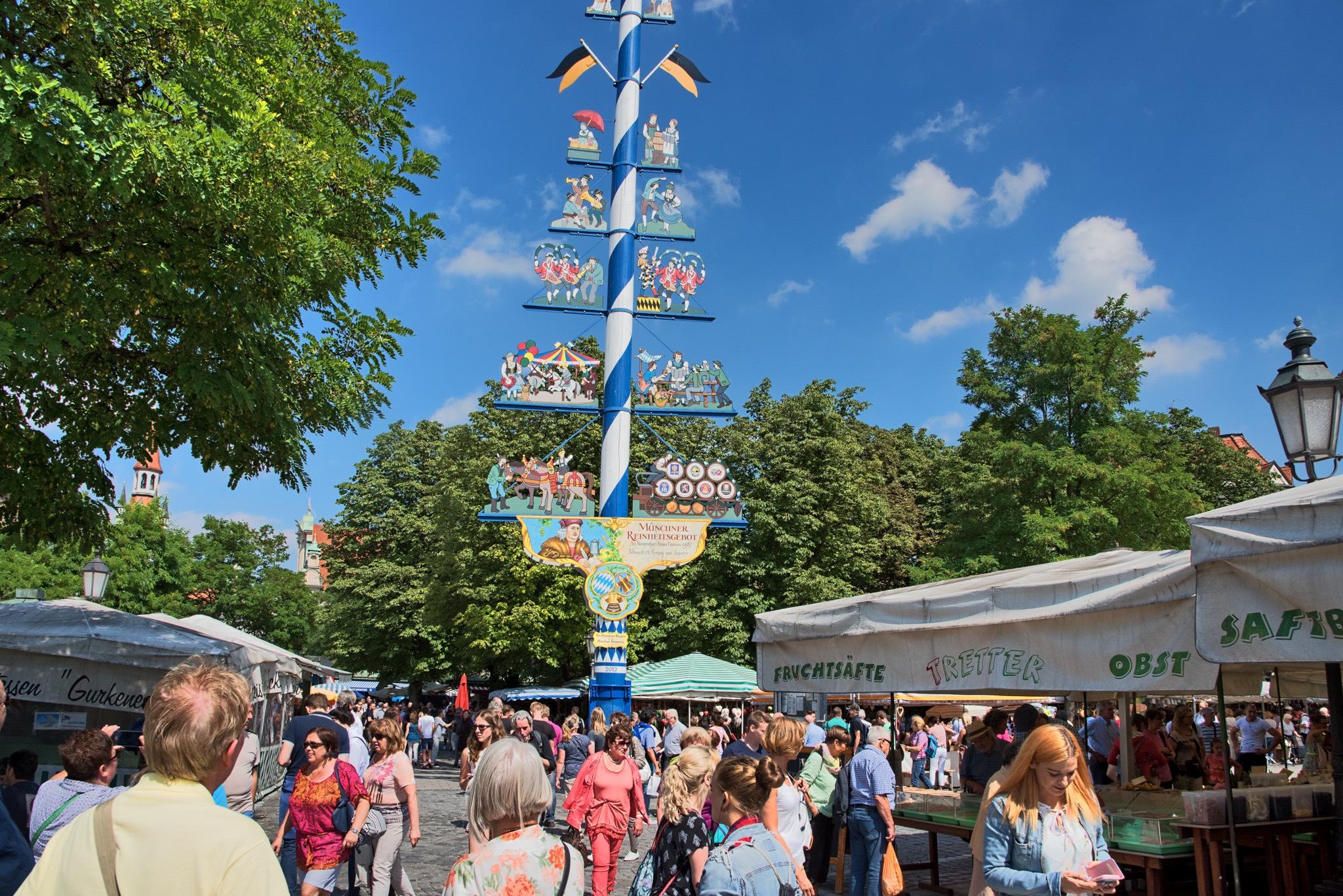
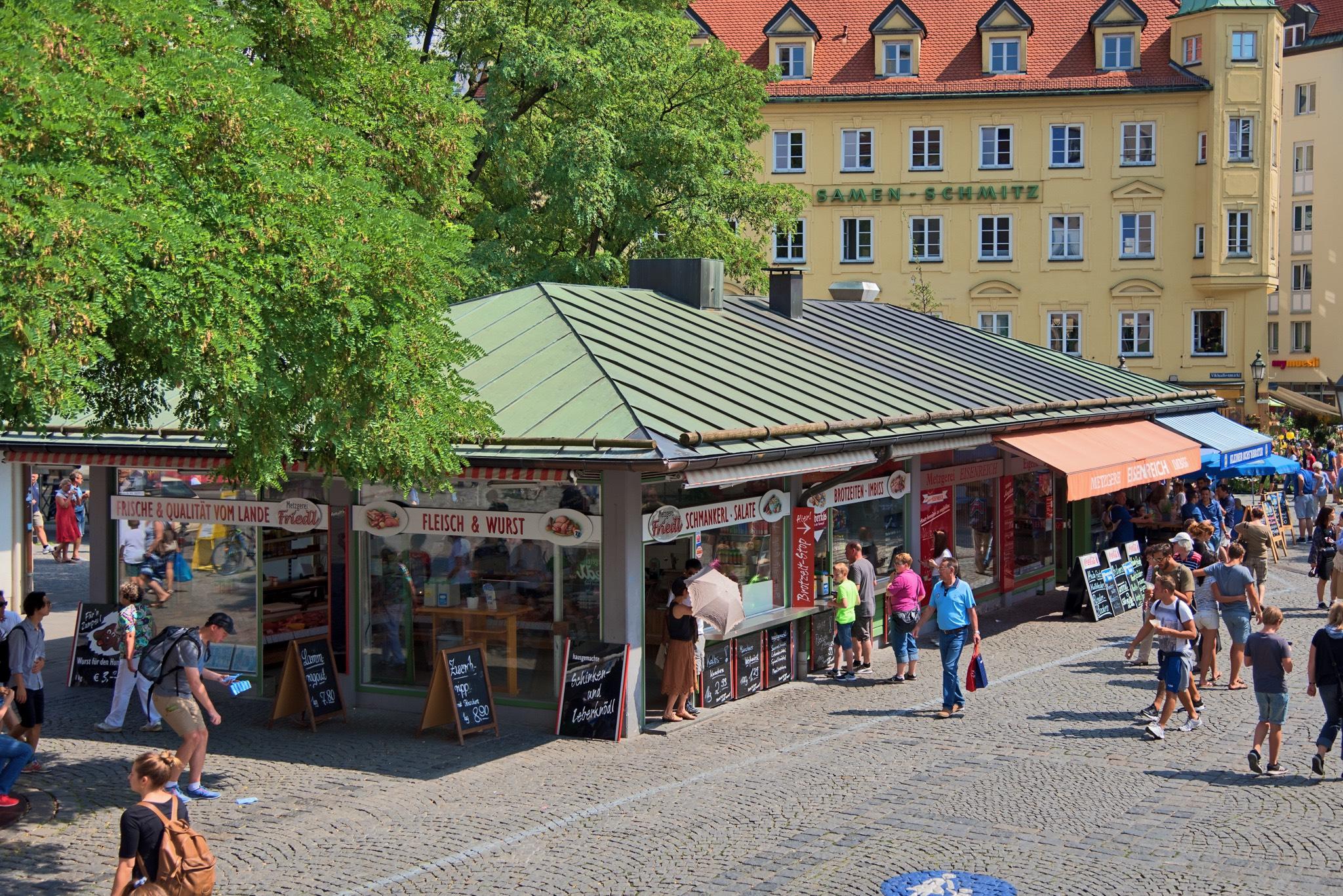
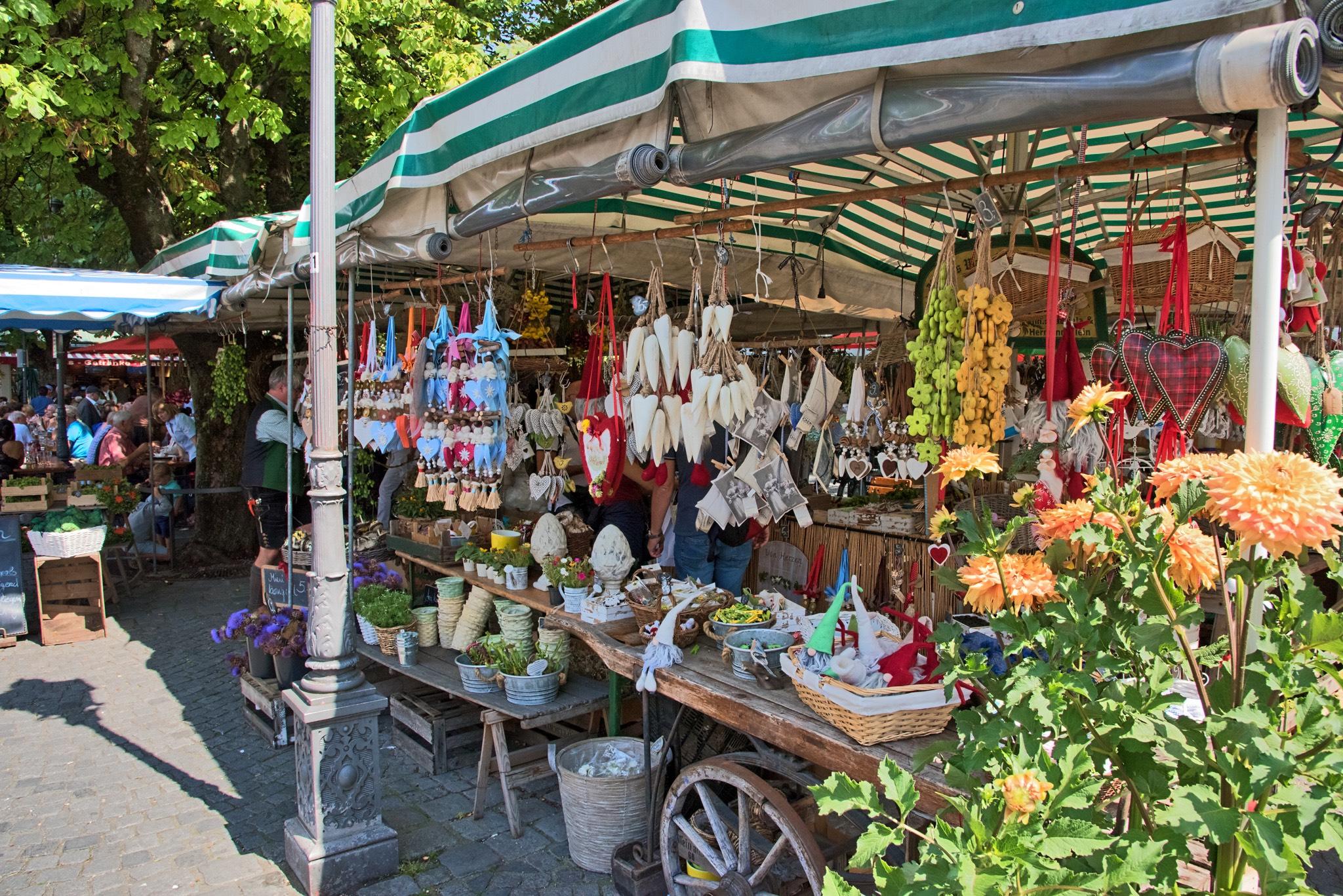
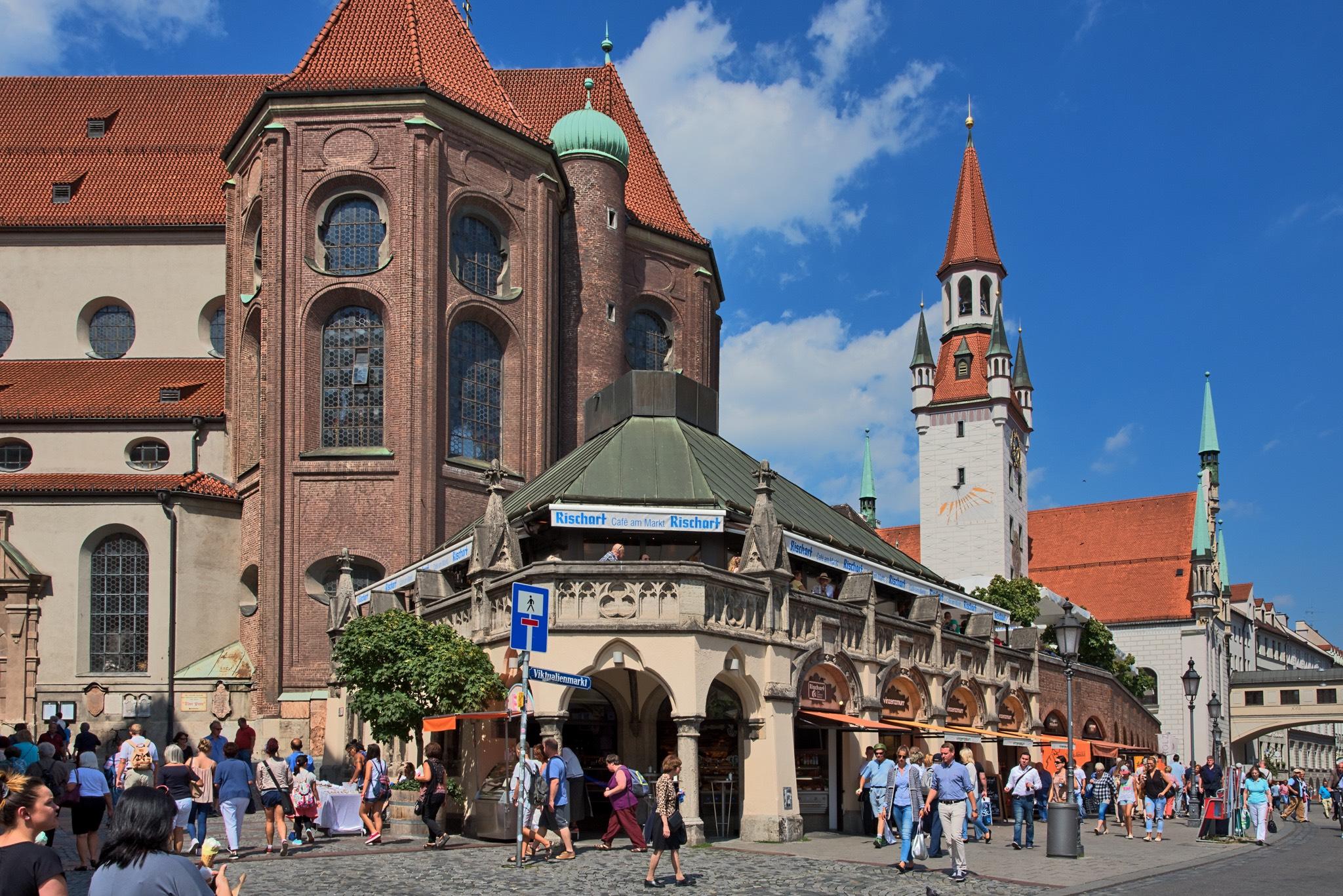
The term "Viktualien" goes back to the Latin term victus, which roughly translates as stock or groceries. At Munich's Viktualien-Market, visitors can buy much more than just all kinds of food and
produce. For over 200 years, the market has been open for foodies, shoppers, and of course for beerlovers who relax at the beer garden.

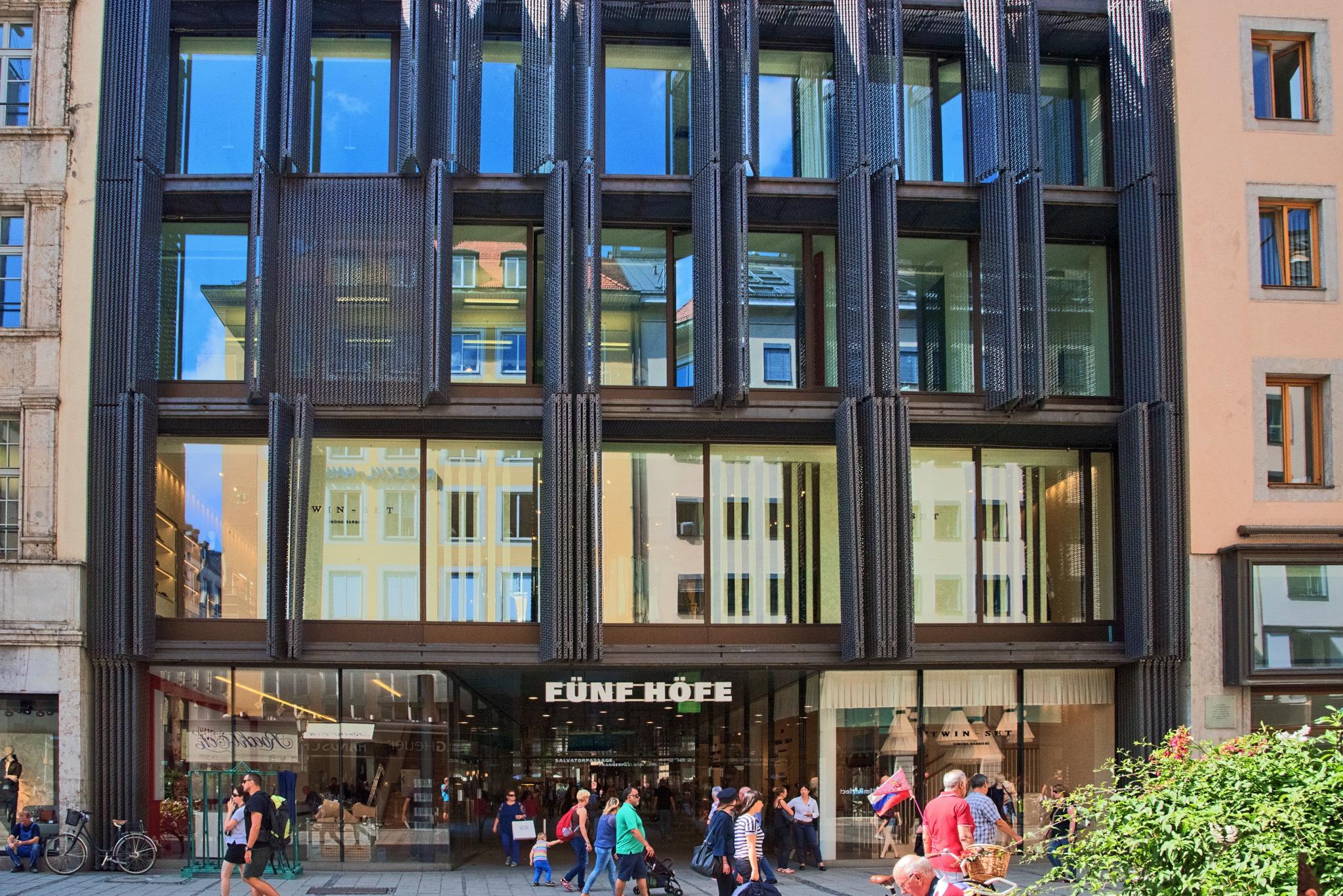
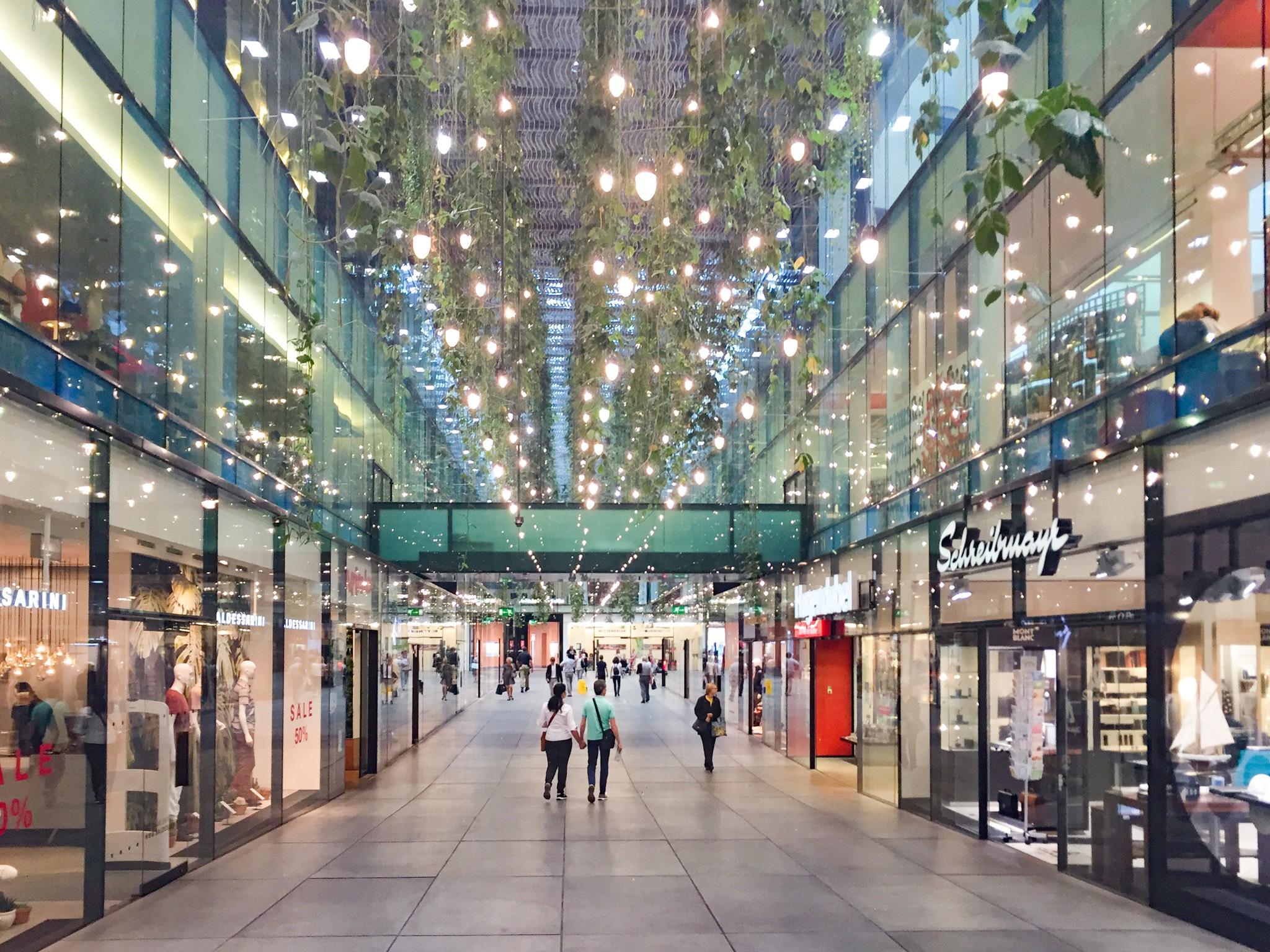
Since 1993, the centre of Munich houses a true temple of shops, of fi ces, and exhibits: the CityQuarter FÜNF HÖFE (five courts). Besides numerous cafes and brand-name stores, you will
also find the Kunsthalle Munich, Wittenbrink Gallery and the CEDON MuseumShop.
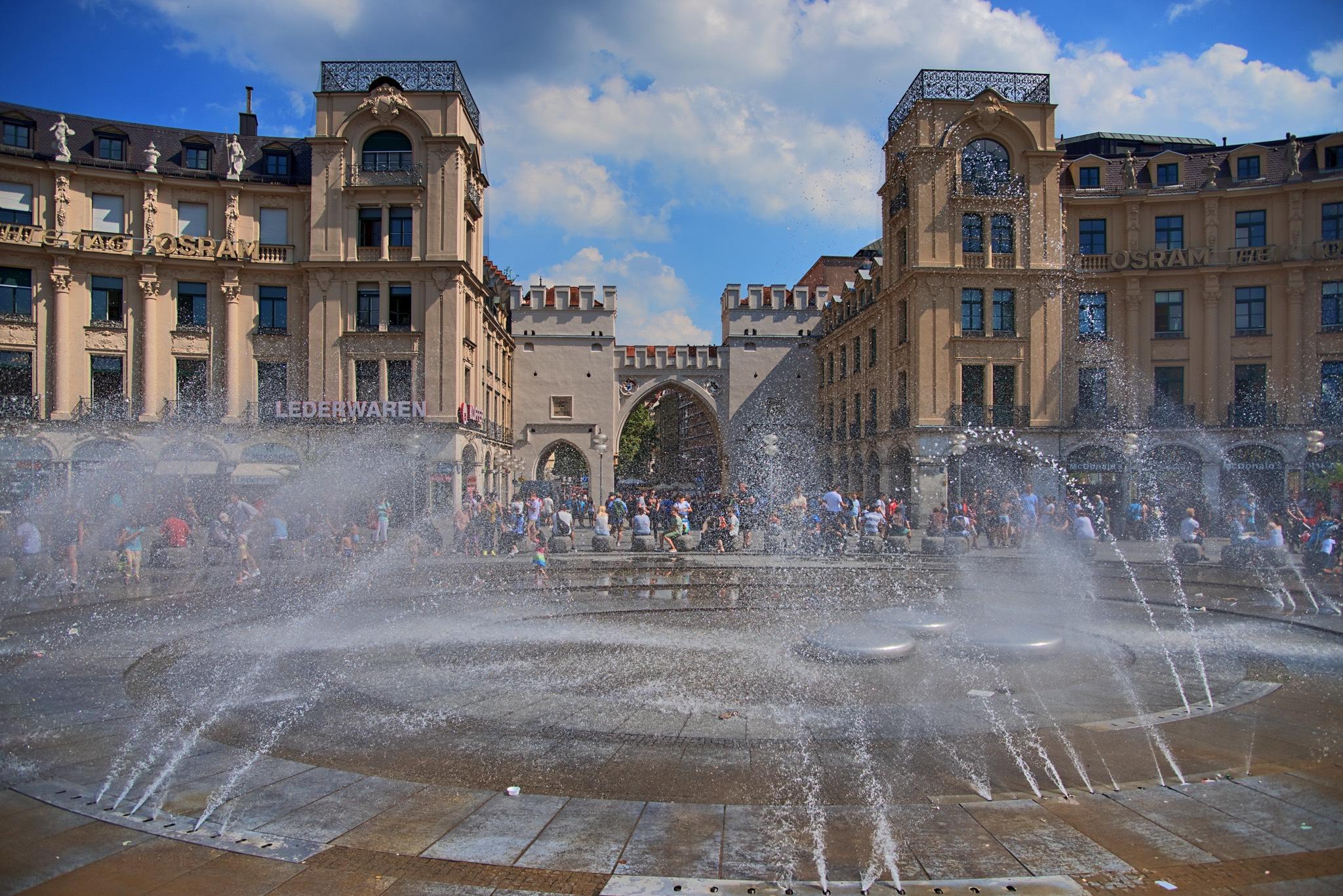
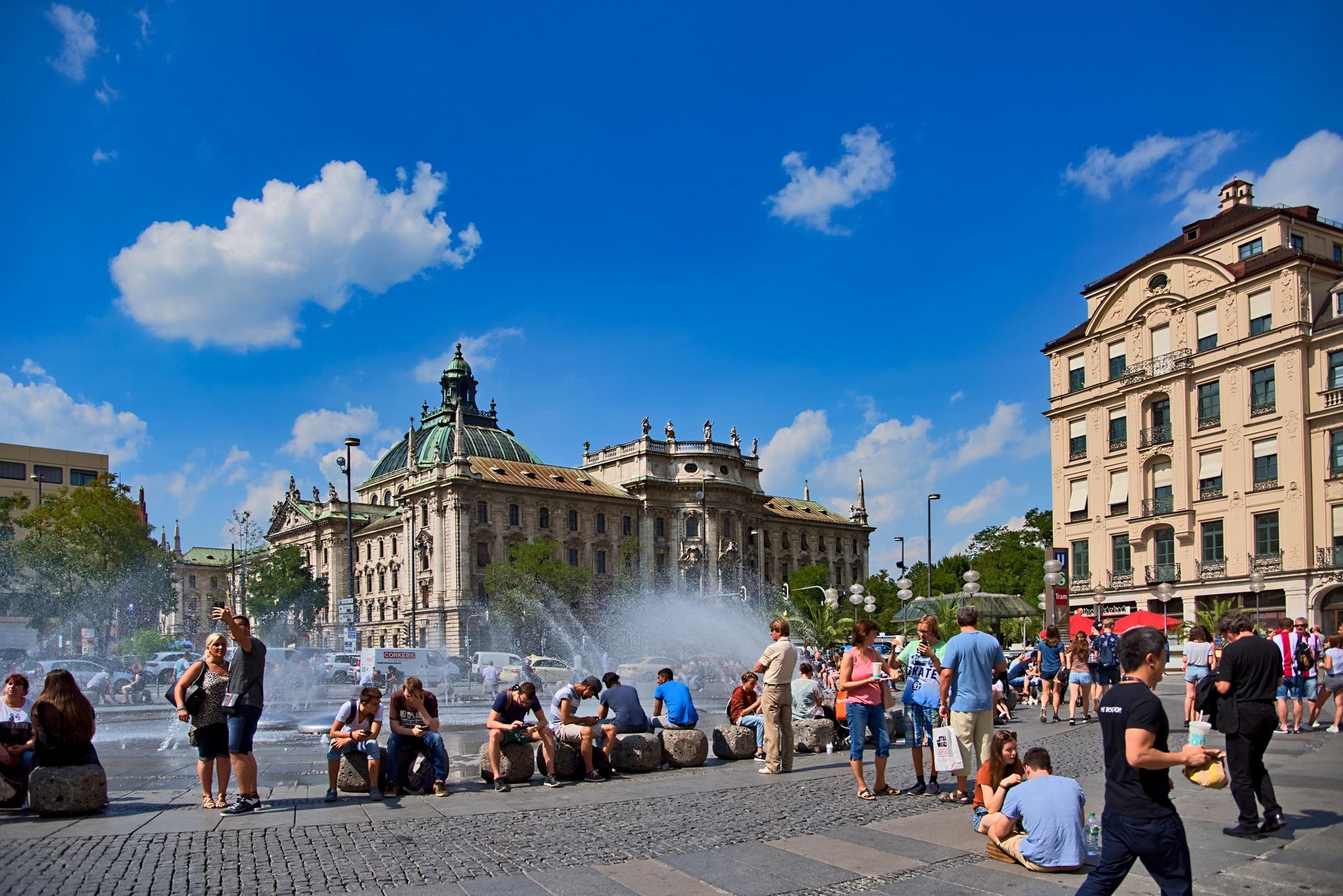
The name "Stachus" - what Munich locals like to call Karlsplatz Square - refers back to "StachusGarden", the restaurant which used to be located where you can now find the Kaufhof. Around
Karlsplatz Square, visitors find many shops and restaurants. Pass through the Karls-Gate and enter the pedestrian-zone of Neuhauser Street.
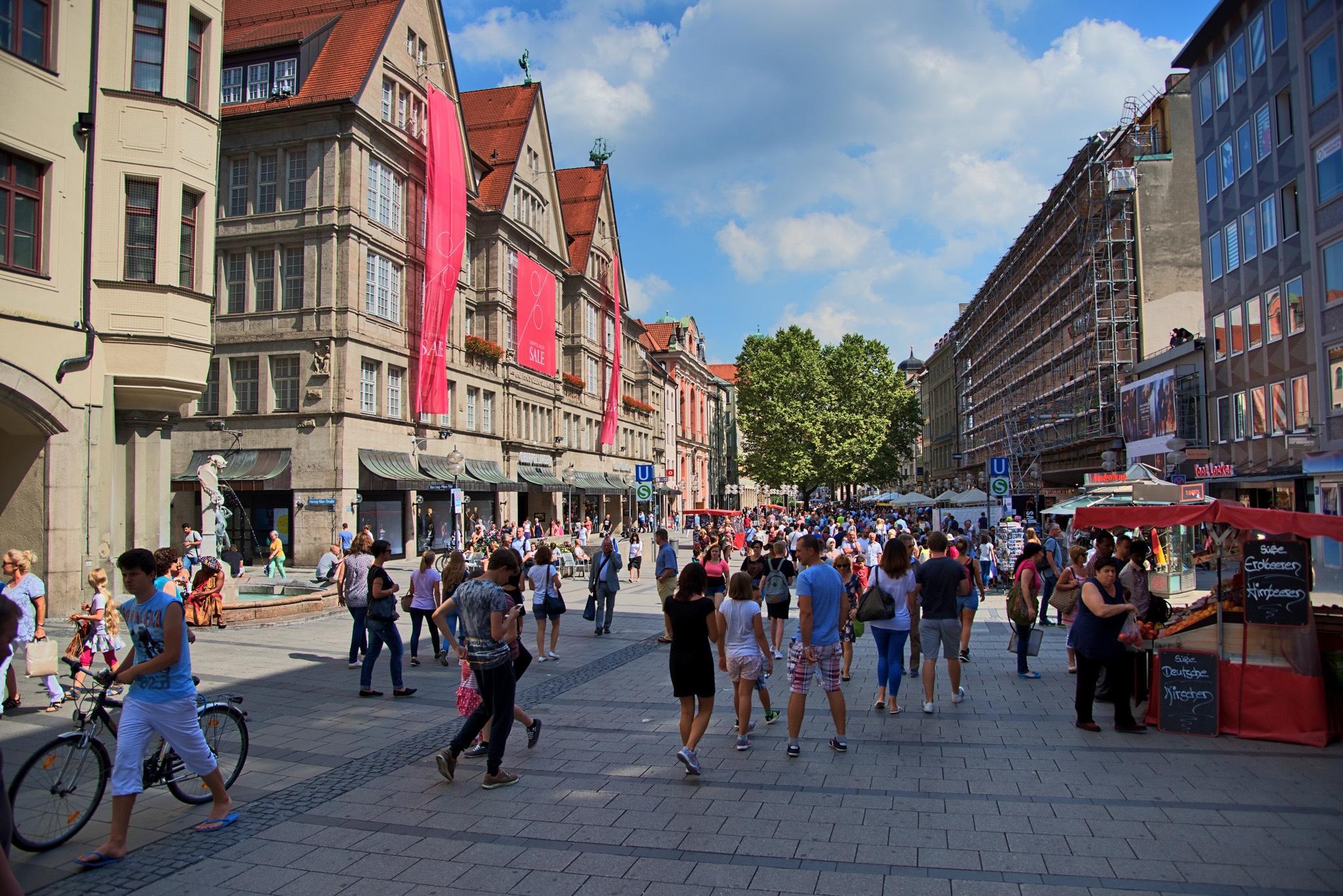
Neuhauser Street connects Stachus Square to the city centre and Marienplatz Square. Here you will find many "typical" stores and an array of hospitality businesses. At Hirmer Department Store,
Neuhauser Street transitions seamlessly into Kaufinger Street.
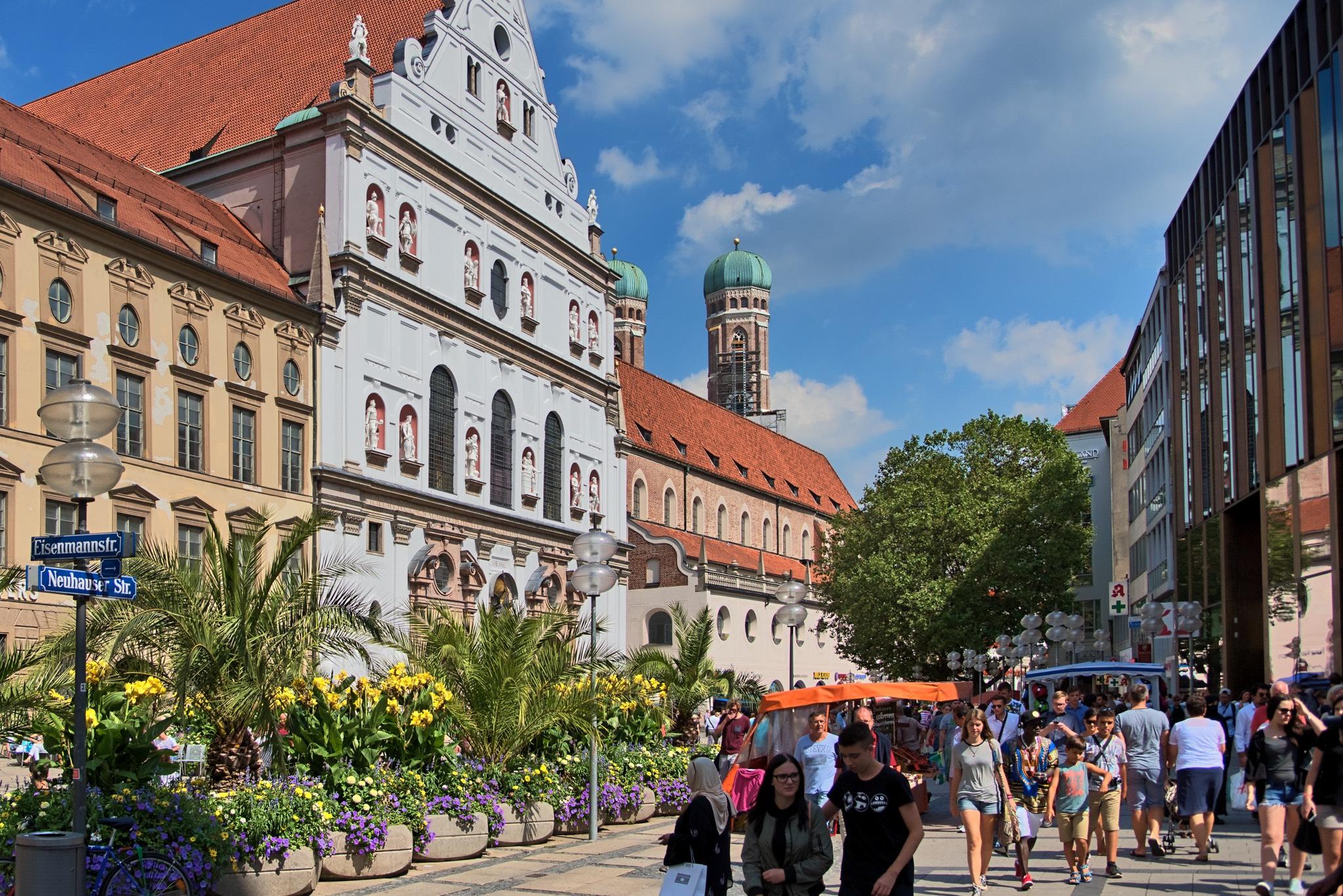
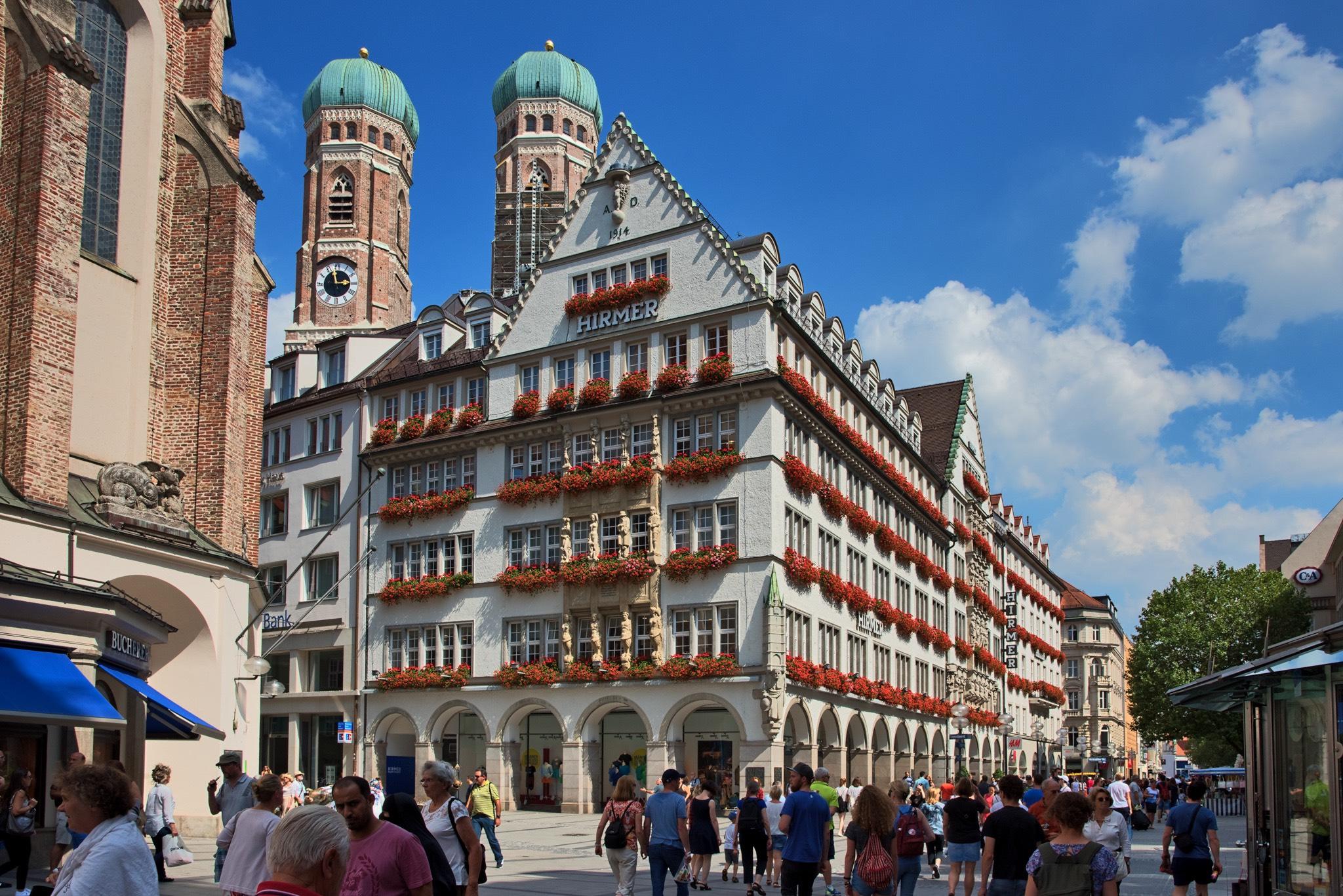
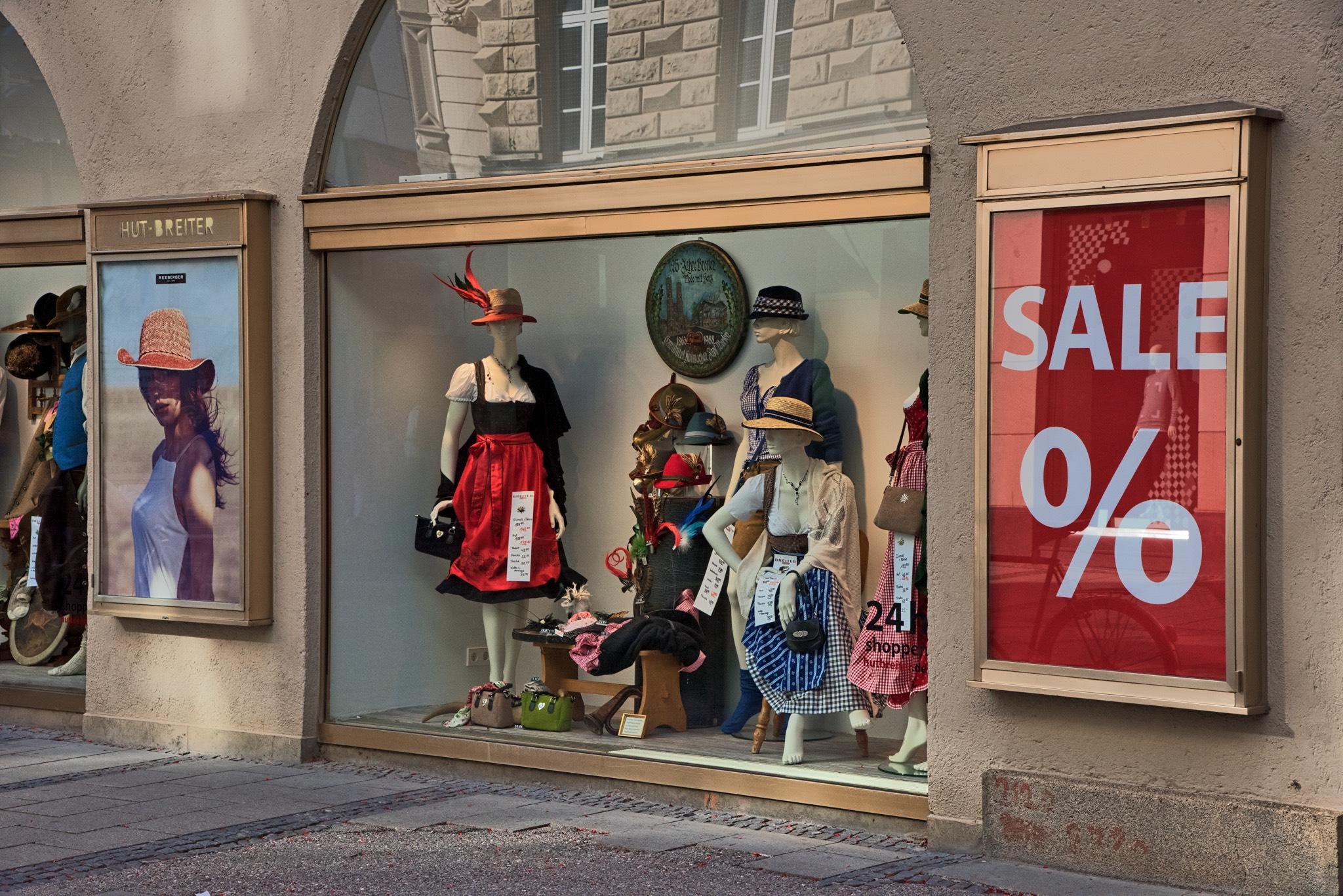
The shops in Kaufinger Street offer fashion and international style above all. Kaufinger Street is currently the most visited and also most expensive shopping area in Germany. Many fashion houses
have a presence here. Kaufinger Street ends at Marienplatz Square.
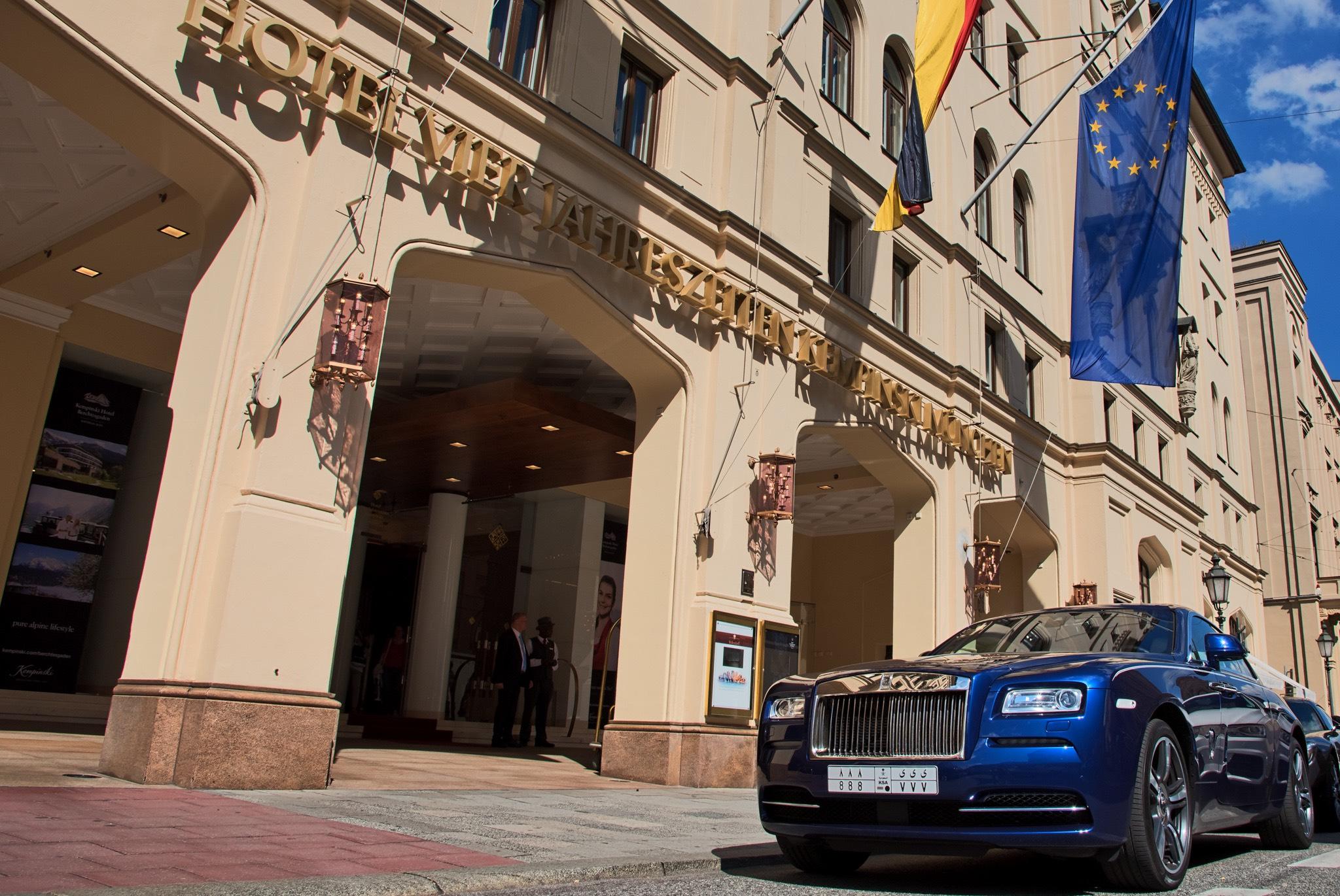
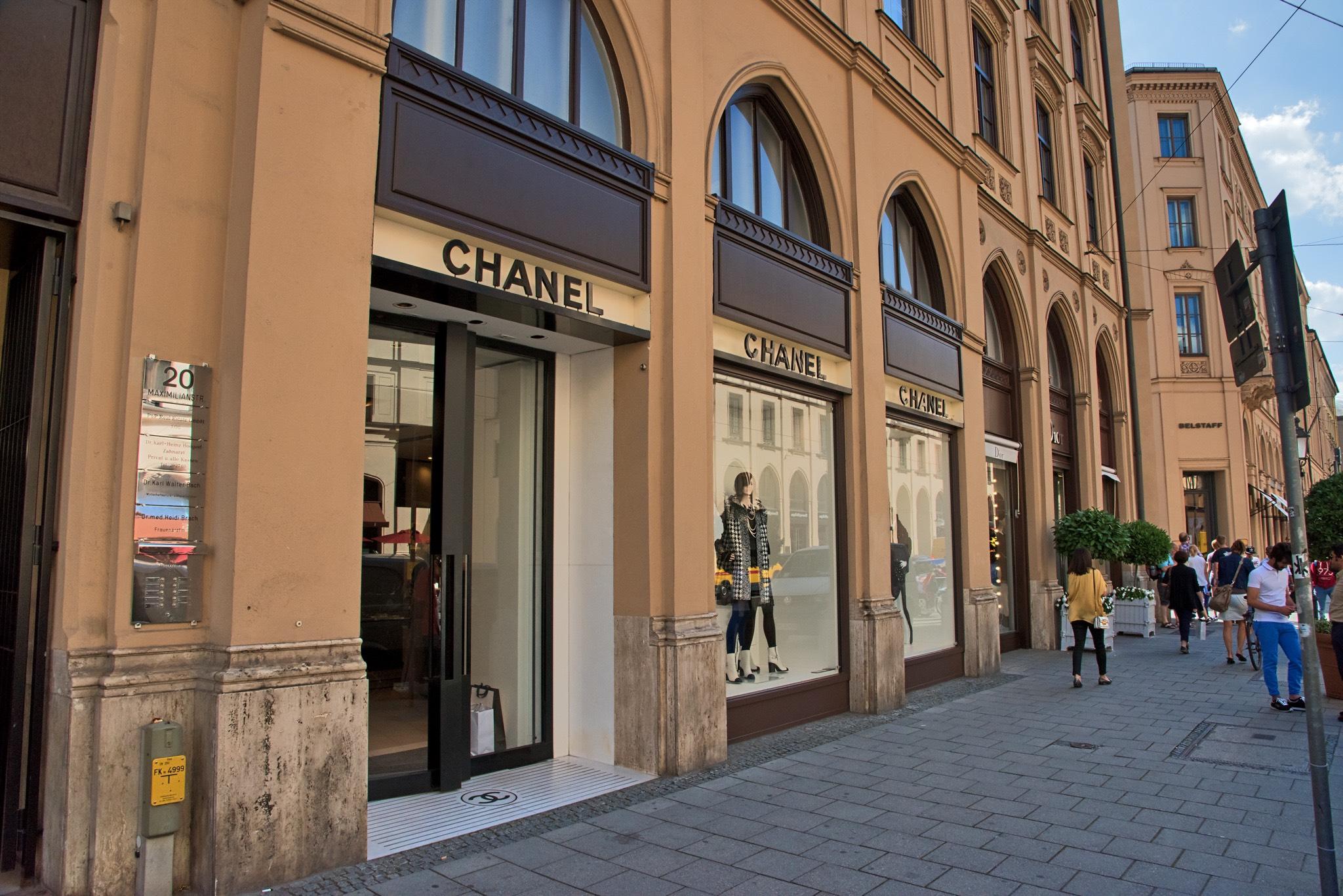
Maximilian Street is not only home to the luxurious Hotel Vier Jahreszeiten (Four Seasons), but offers visitors everything and anything that is beautiful and expensive.
Maximilianstraße 17 (Adresse des Hotels)
The pompous boulevard was named after Maximilian II, King of Bavaria. This luxury-strip in Munich lines up international brand representations.
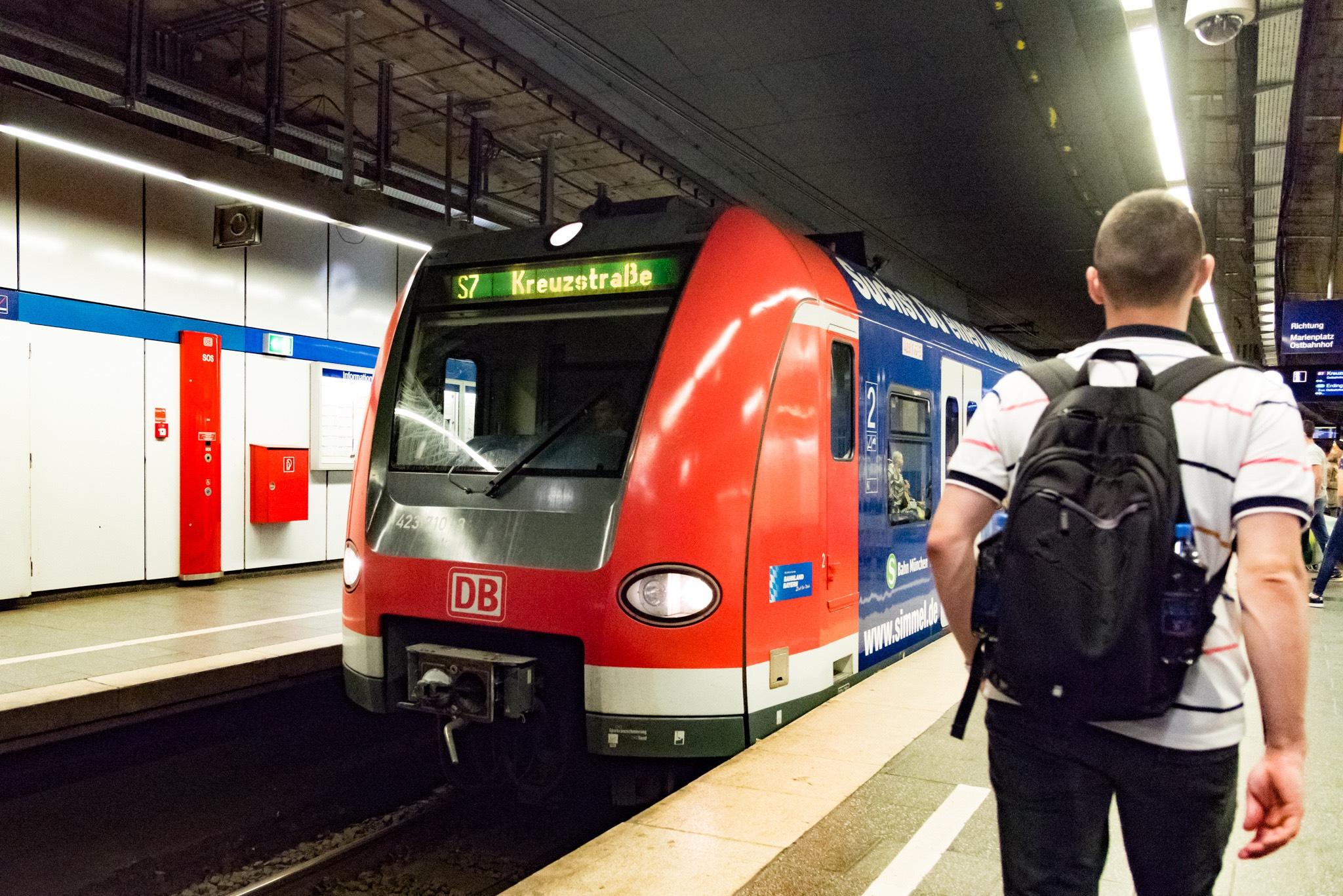

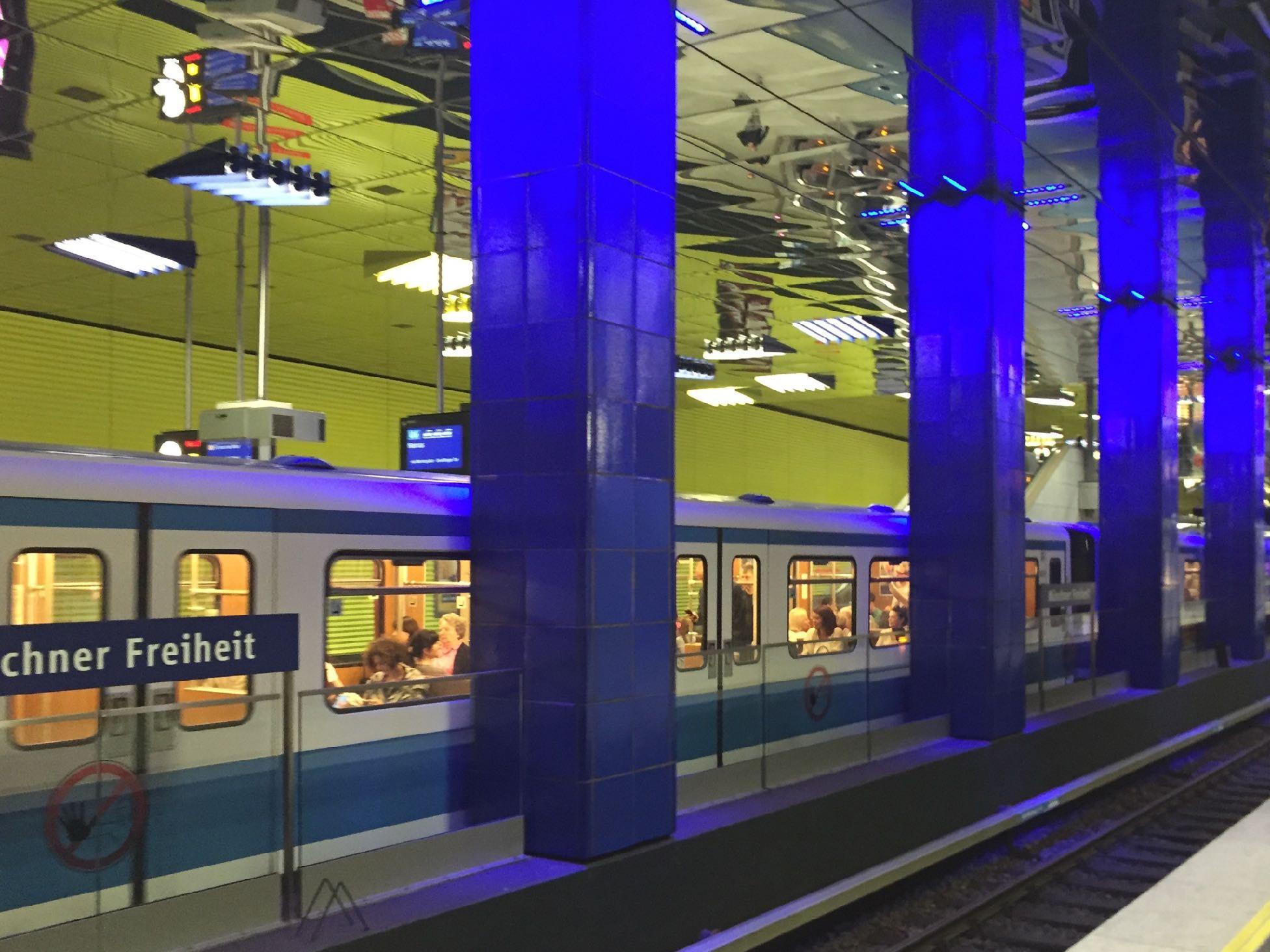
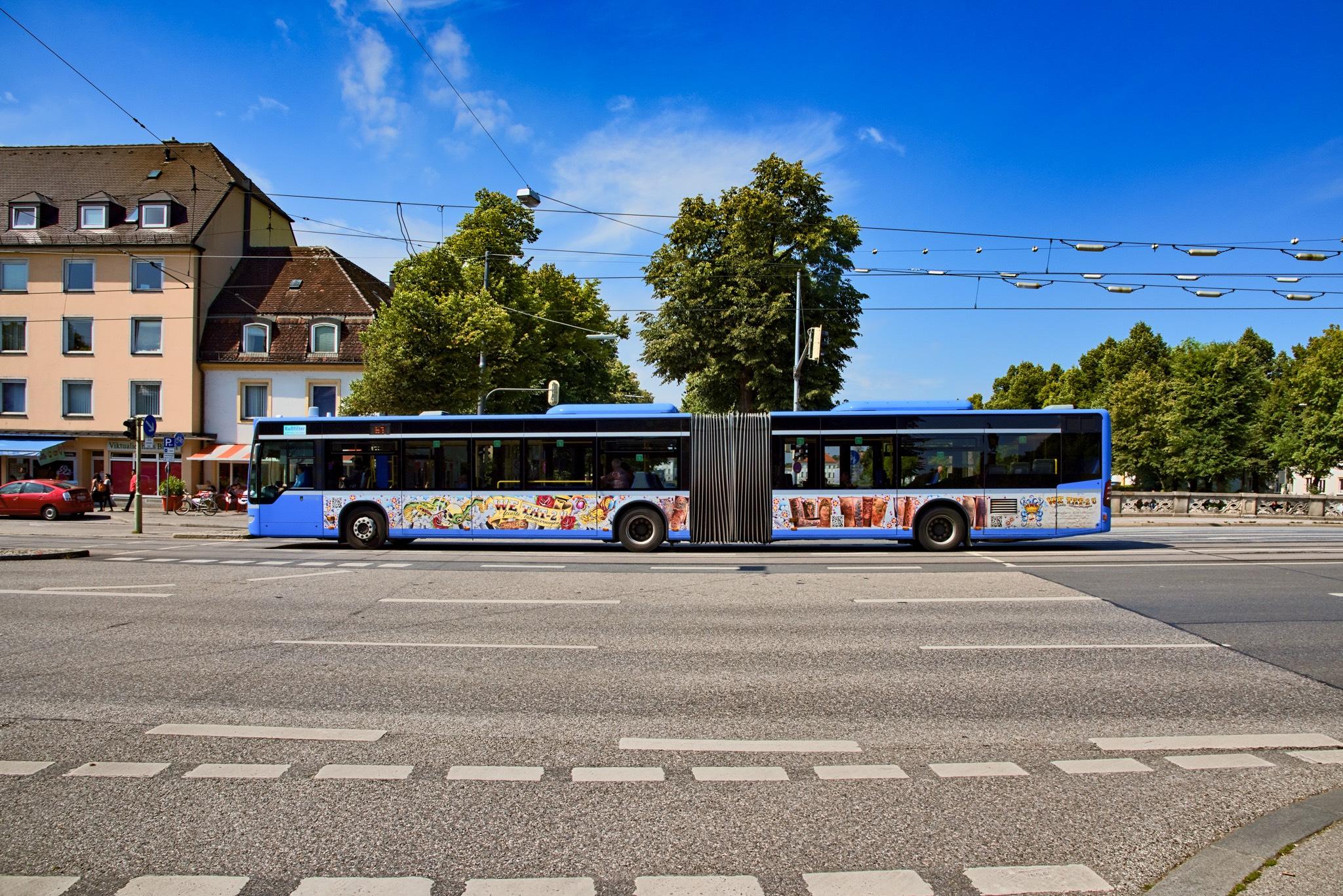
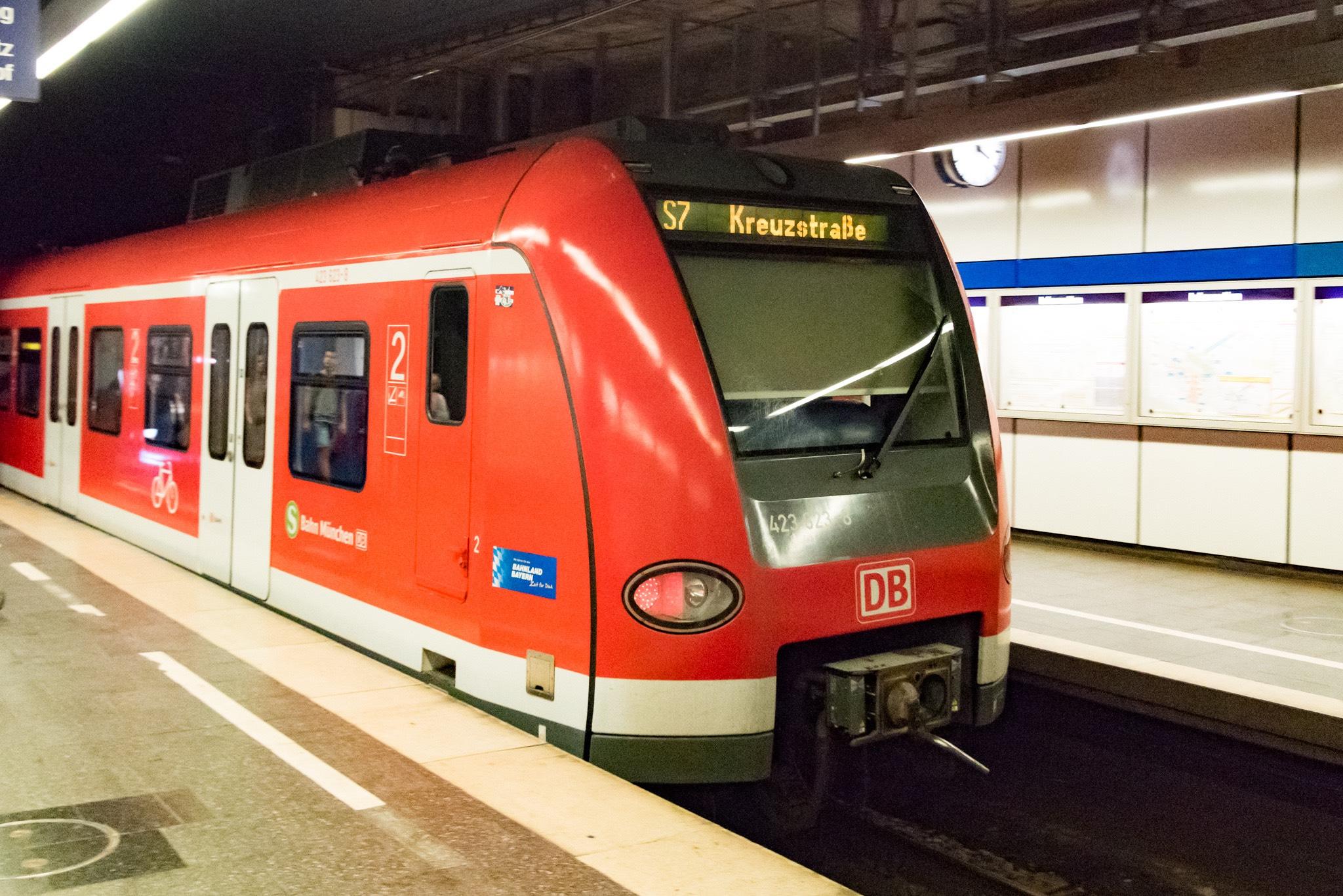
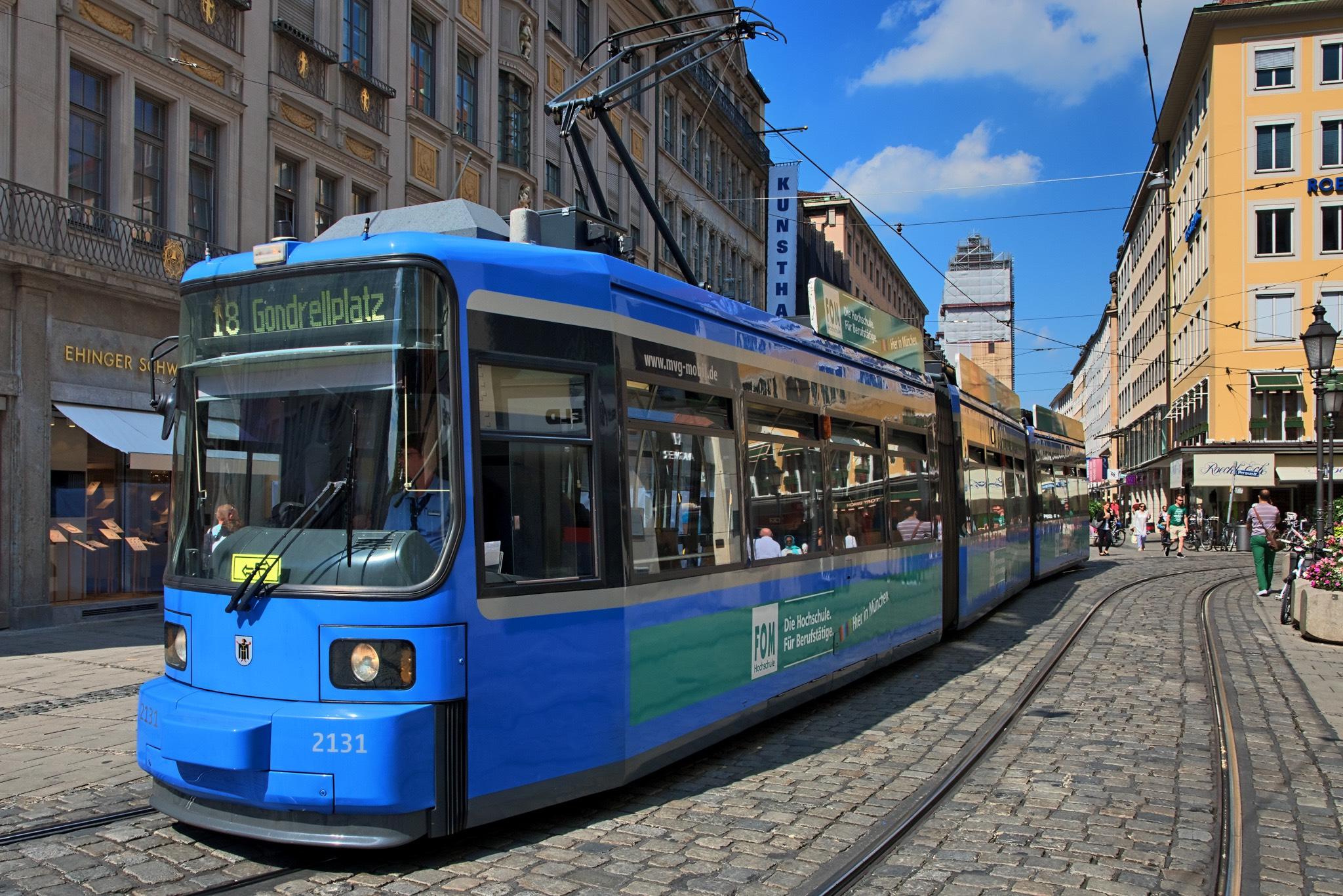
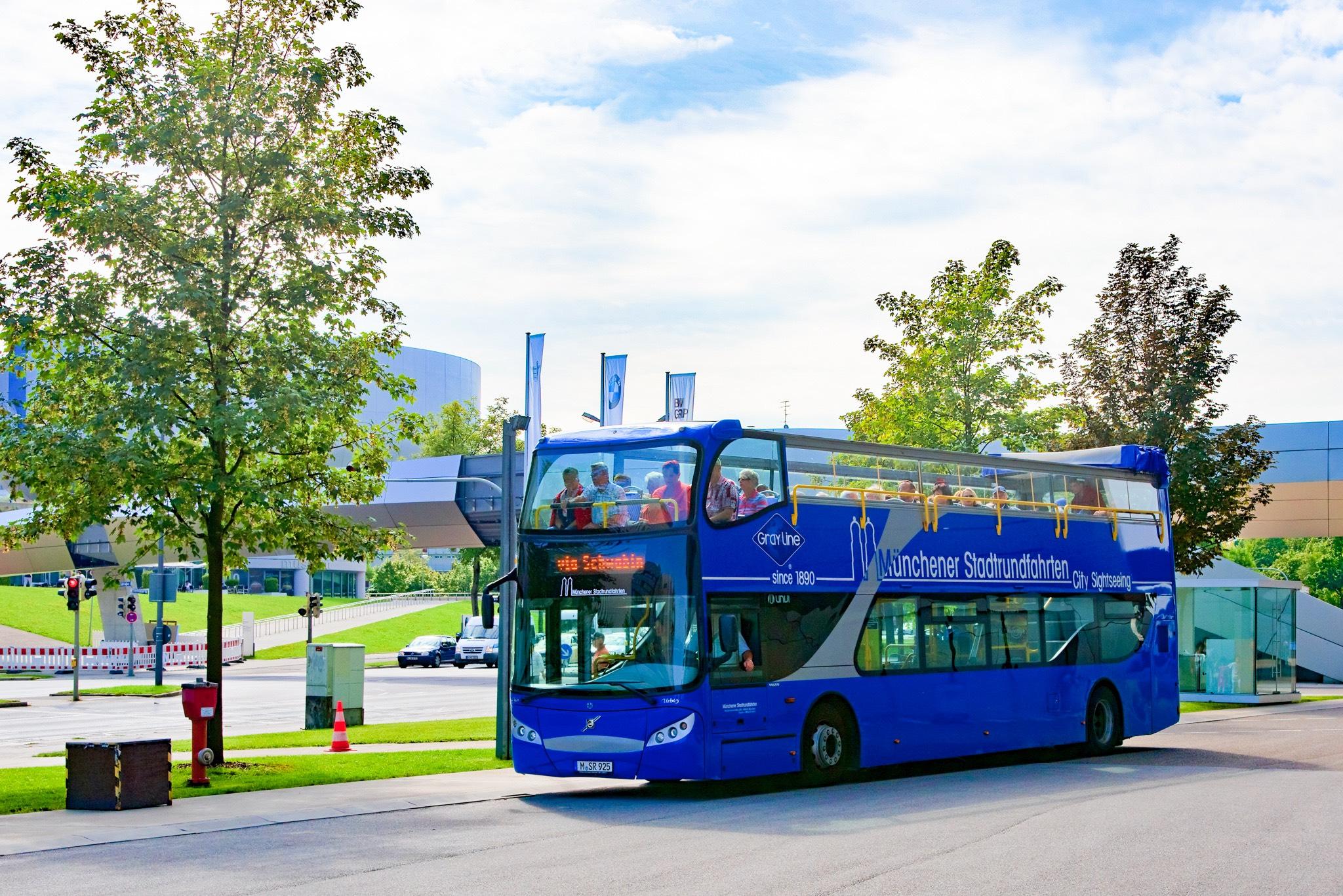
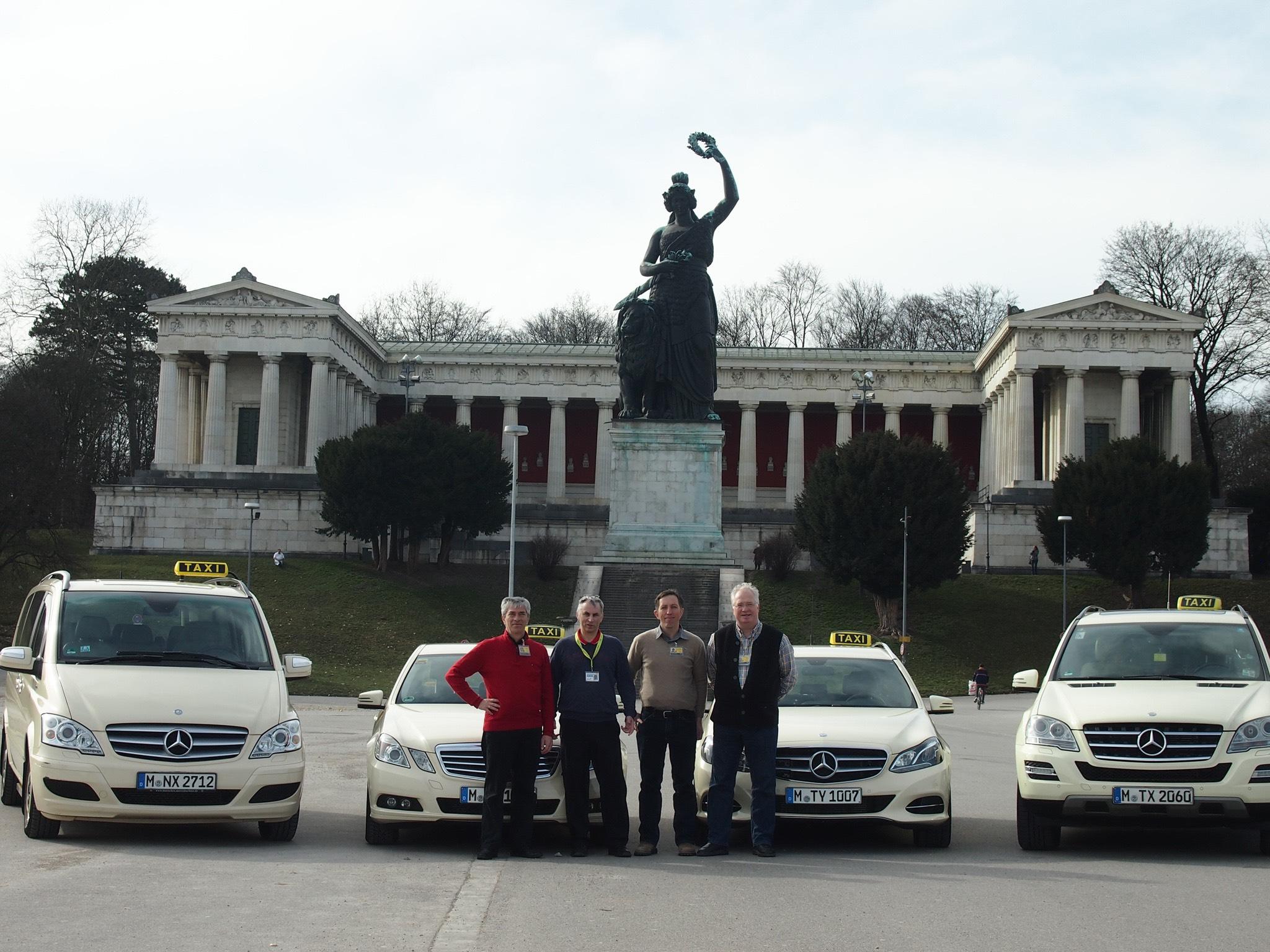
Discovering Munich in your own car can truly ruin your mood. For public transportation, the Munich Verkehrs- und Tarifverbund offers very reasonably priced single- and group-day-tickets. Especially the group-day-ticket is a sensation. This ticket can be purchased valid for one or three days. It is important to note that it is valid until 6:00
am of the following or the fourth day. It is not a 24hour-ticket. With the group-day-ticket, groups of up to 5 adults or 10 children can explore the city. Further information and other special offers for an environmentally conscious city tour can be found on the Website of Munich Verkehrs- and Tarifverbund: www.mvv-muenchen.de
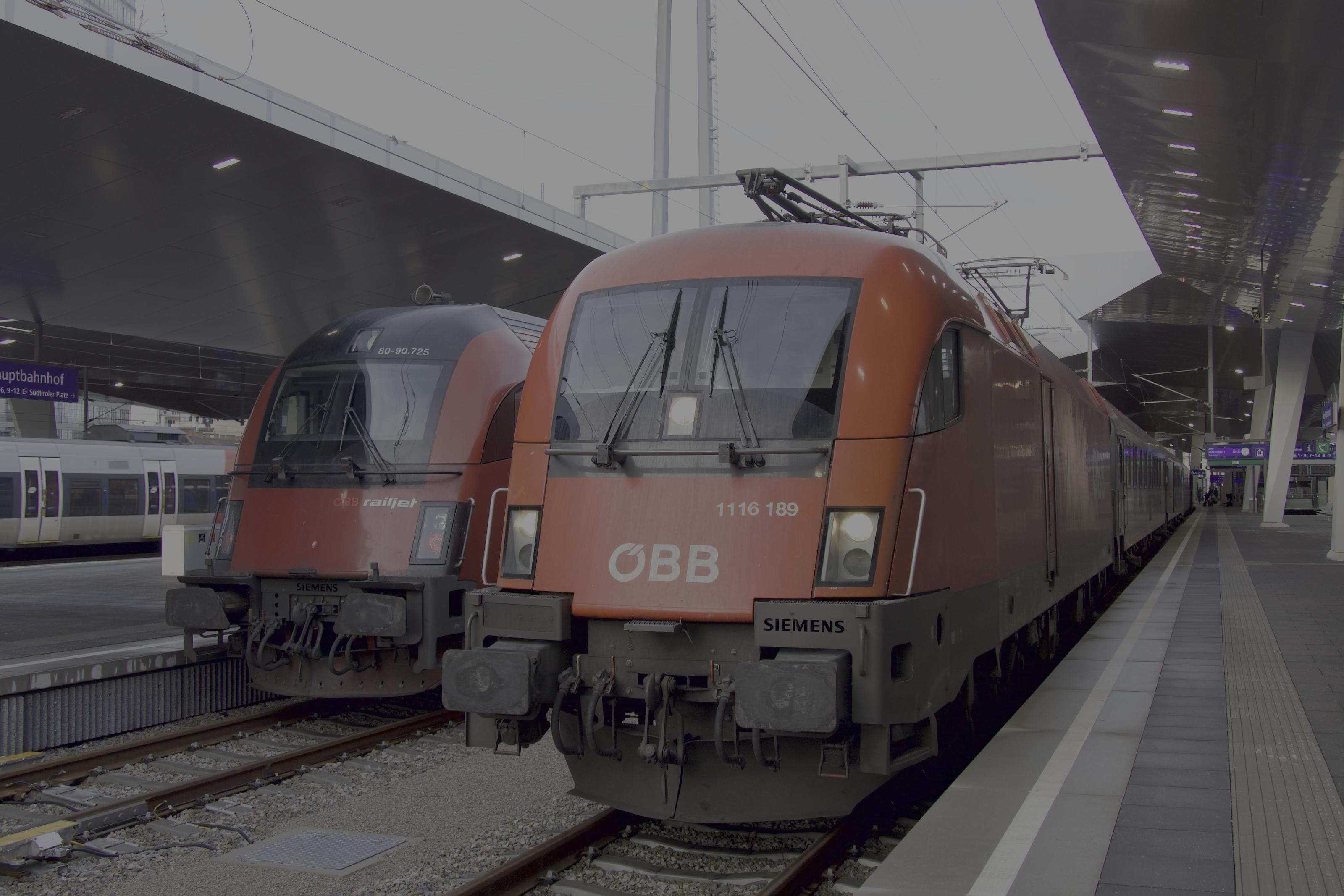

OBB Nightjet and OBB Nightjet Partner










This e-book was made possible through the kind support of the regional tourist offices and the OBB. German proofreading and editorial: Martin Andergassen.
References
Text, videos and photos by Rudolf J. Strutz unless otherwise stated. Timetables and travel information: OBB
Assistance from AI
Artificial intelligence applications are occasionally employed for image editing, including the elimination of undesirable components. Additionally, AI tools can enhance the clarity of images and diminish background noise.
The travel guides are also available free of charge on the OBB online entertainment and internet portal railnet, which is installed on all railjets, nightjets (NG) and cityjets
Copyright
This book was licensed under the Creative Commons License. Conditions of use: attribution, non-commercial, no editing and distribution under the same conditions only as a complete work! The use of individual photos and text is not permitted. This eBook is available free of charge.
All links provided are current at the time of publication of this ebook. Links to tickets usually lead directly to the exhibition location. For tickets and timetables, local public transportation services are linked.
All logos and company names are used for information purposes only; any use outside of this e-book must be approved by the copyright holders.

SCOTTY mobile shows the timetables for all public transport and helps you plan your travel route.
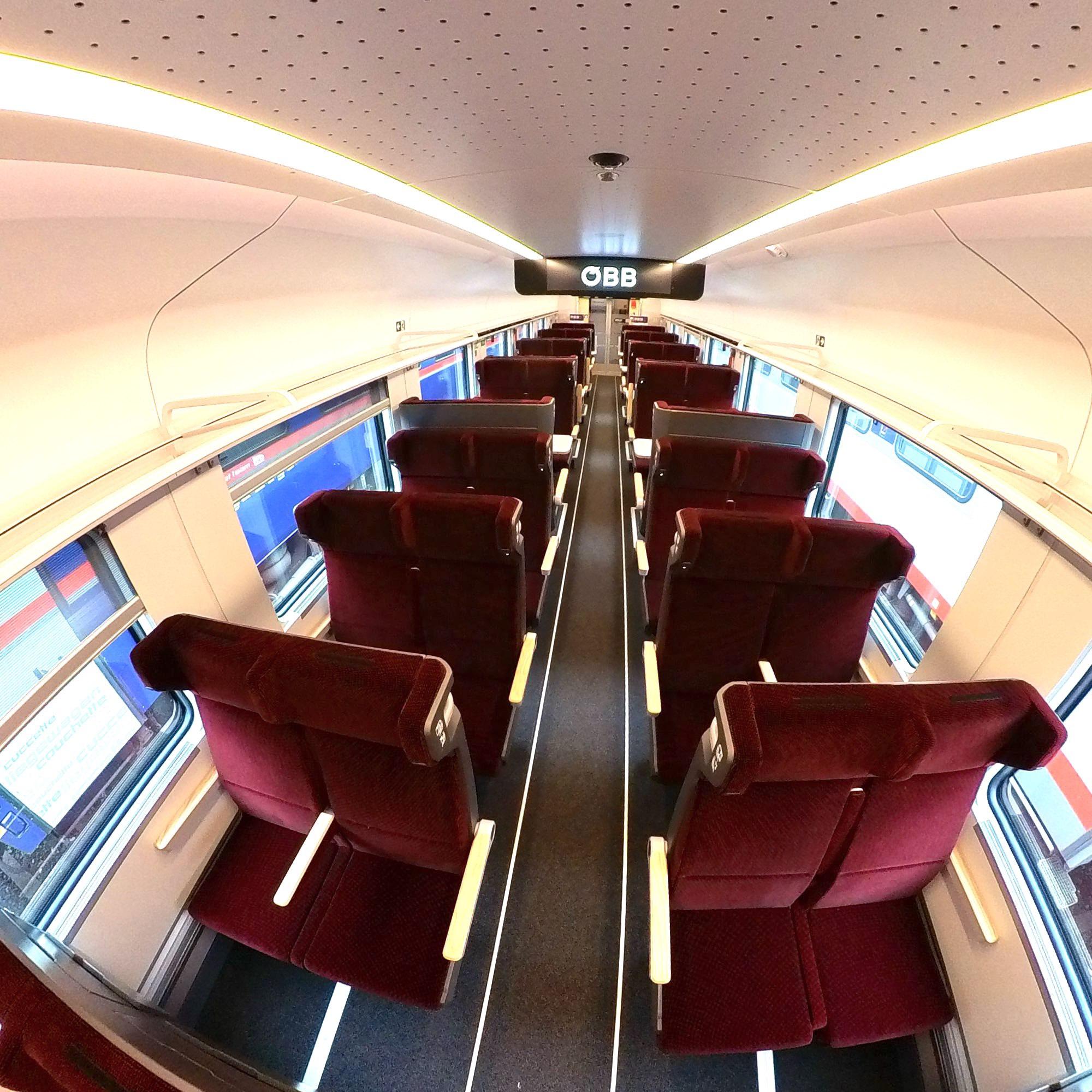


Book your trip online or view the current timetable online and directly on your mobile phone.