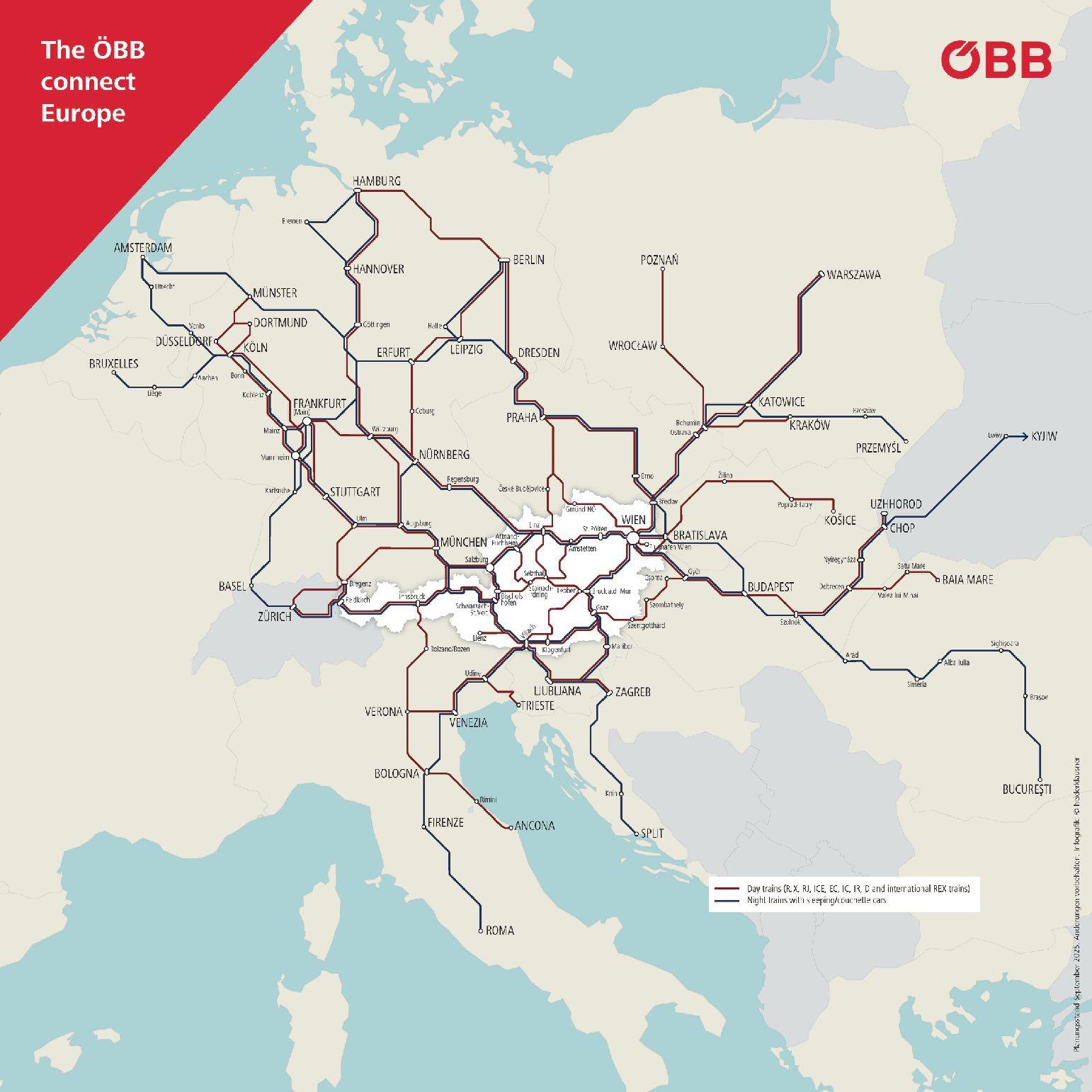
ÖBB connects numerous European cities with modern day and night services.
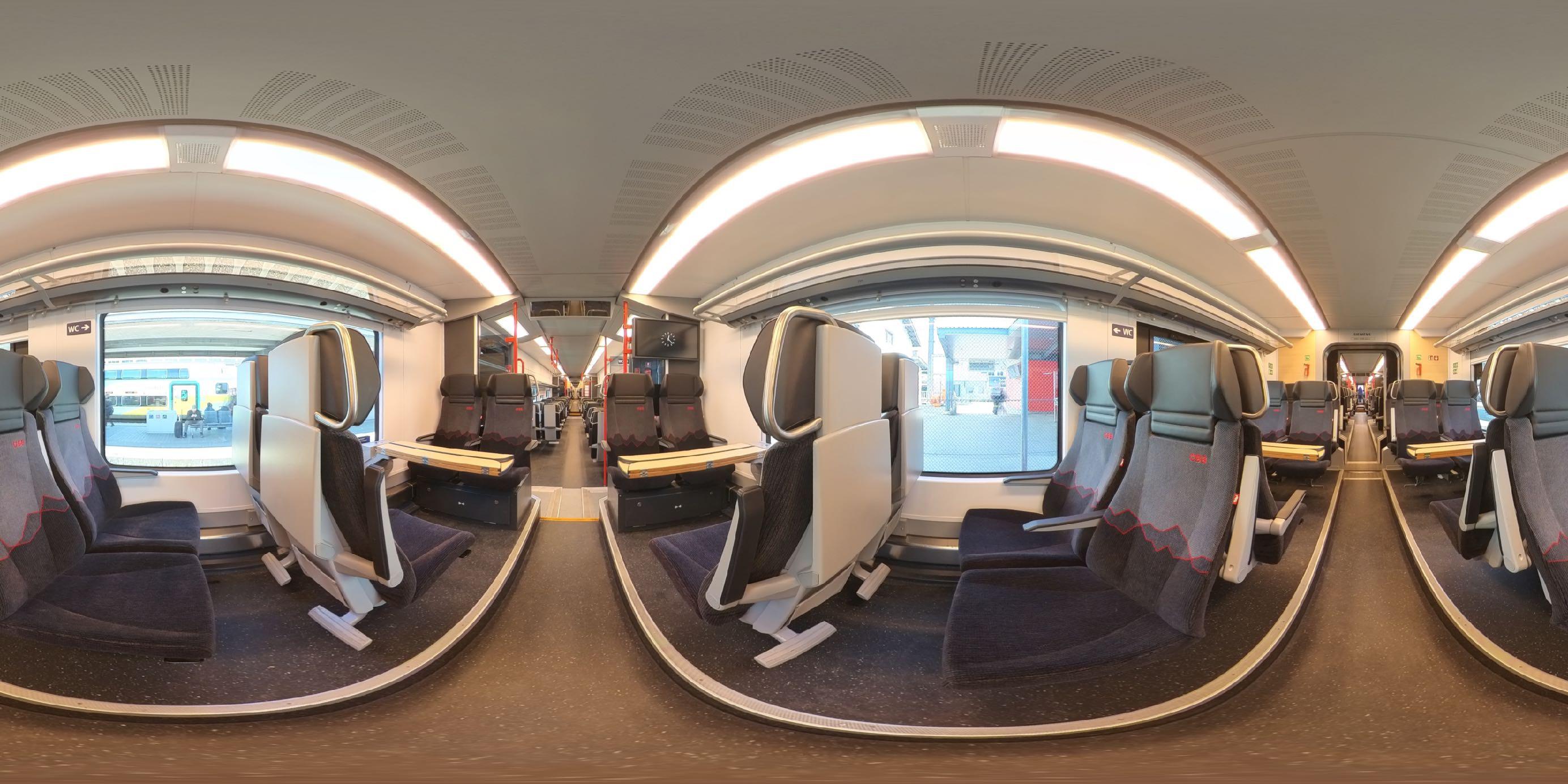
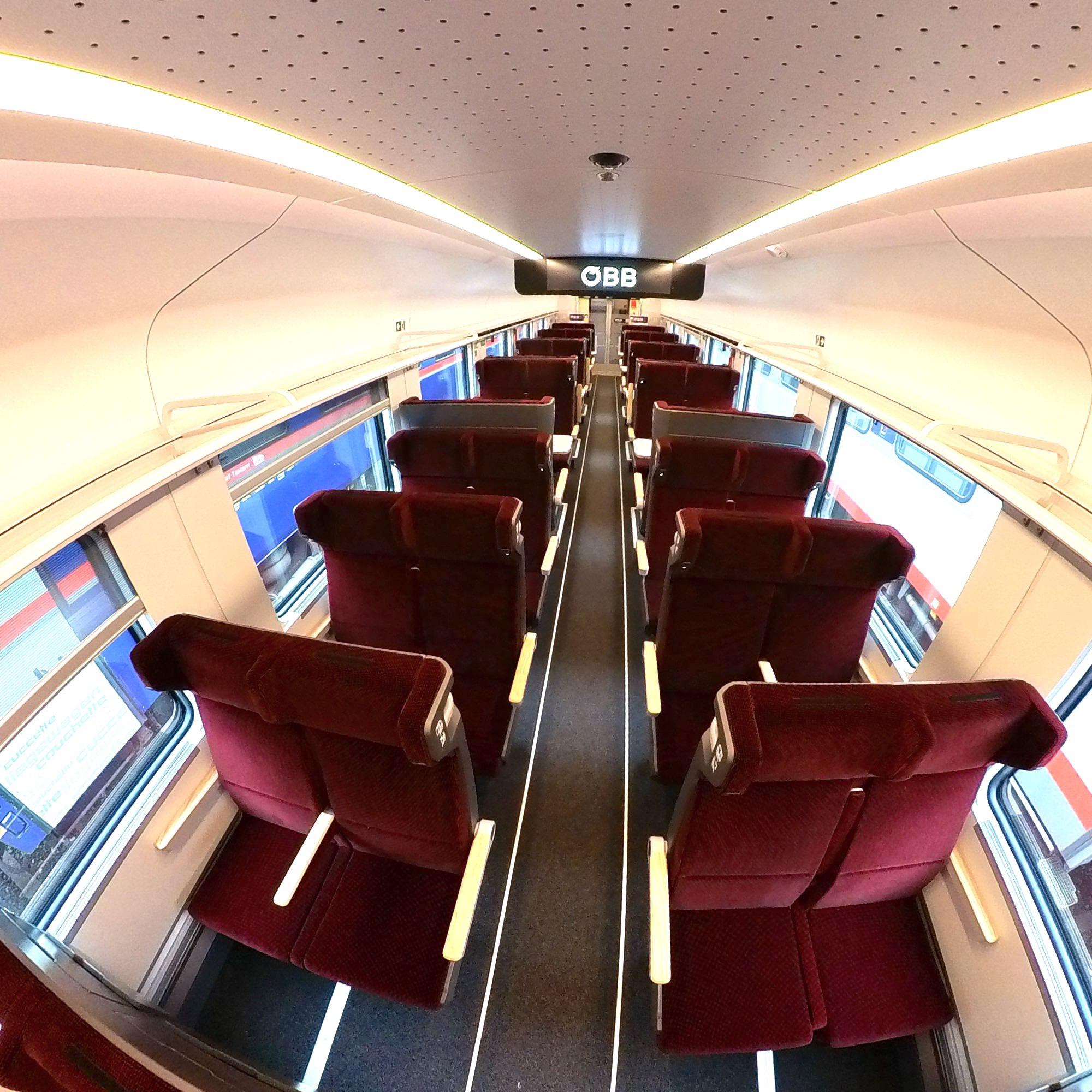
During the day, ÖBB Railjets offer fast and comfortable long-distance travel in Economy, First, and Business classes.
At night, the ÖBB Nightjet provides a relaxing and environmentally friendly journey across Europe. Whether
you prefer a seat, new Mini Cabins, or couchette and sleeper cars – every travel preference is catered for.
Within Austria, ÖBB Cityjets guarantee punctual and comfortable local and long-distance transport.
Further information and booking options can be found via the info button, which leads directly to the ÖBB booking page.


A RRIVAL
T HE C ITY
W ORTH S EEING
U NIVERSITY
P ALACES
C HURCHES
F OOD & D RINK
S HOPPING
I MPRINT
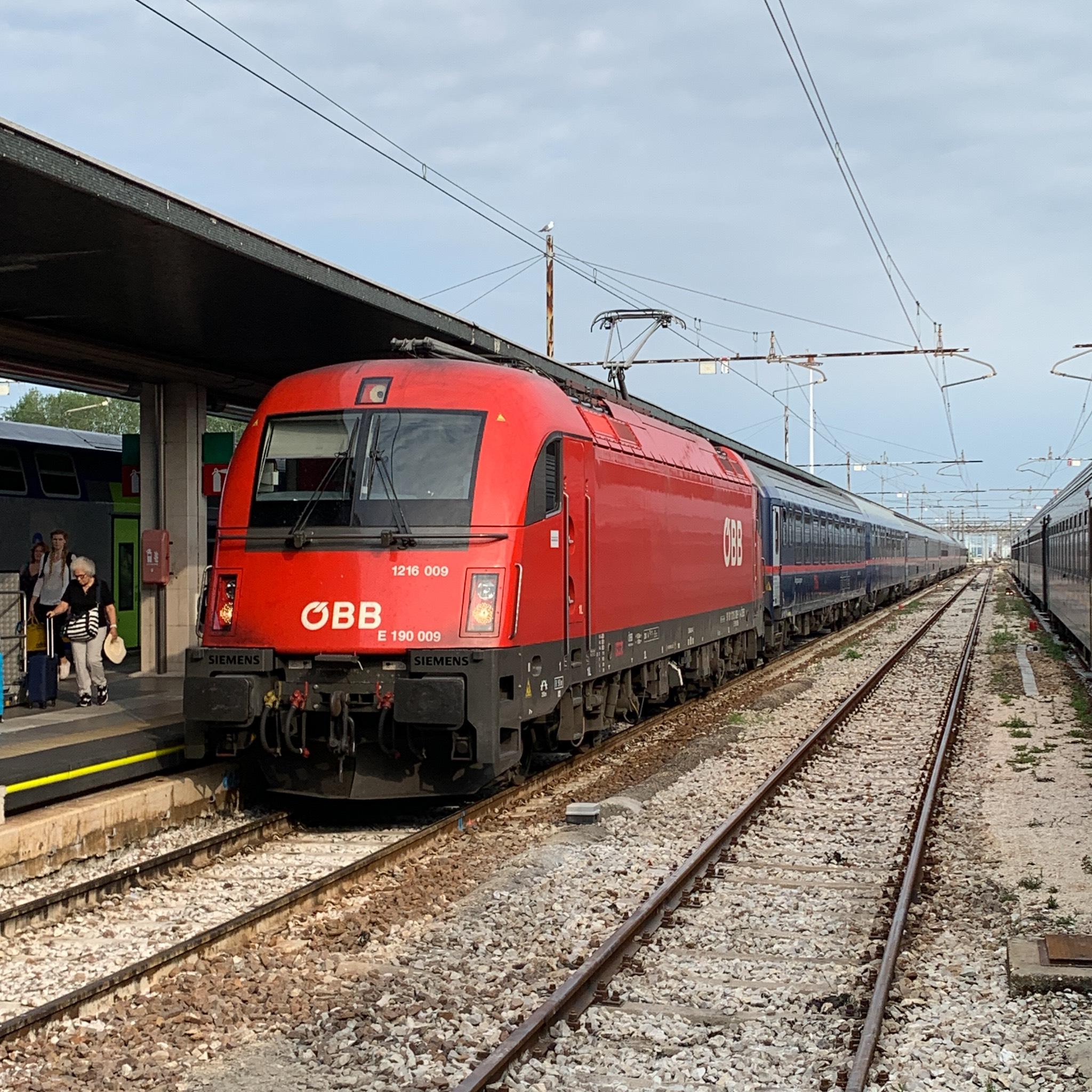

The ÖBB Nightjet takes travelers safely, comfortably, and above all entirely stress-free to Bologna. Regardless of whether it's a
business or vacation journey, going by train is not only more convenient, it's also substantially more environmentally friendly.
the ÖBB nightjet to Bologna
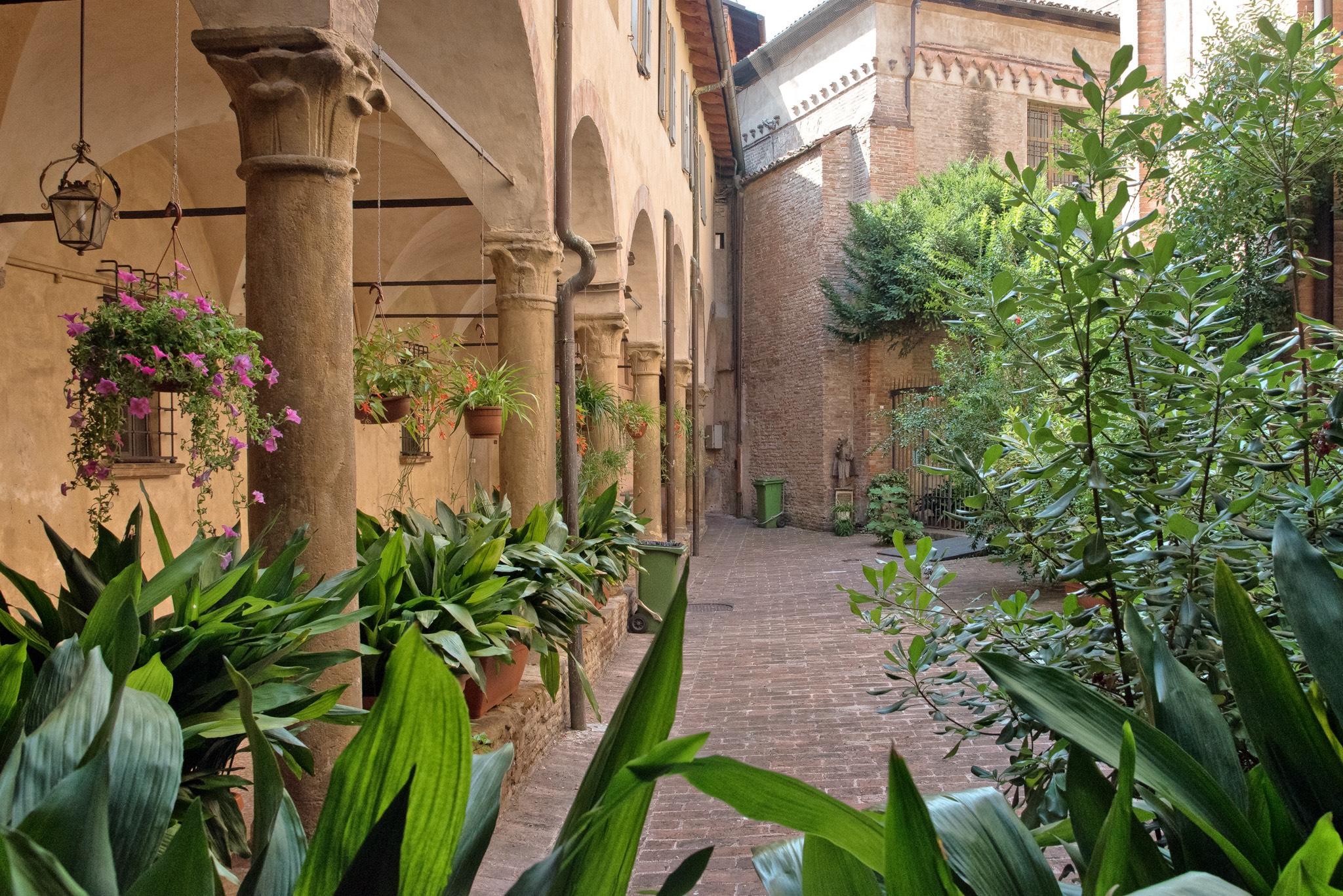

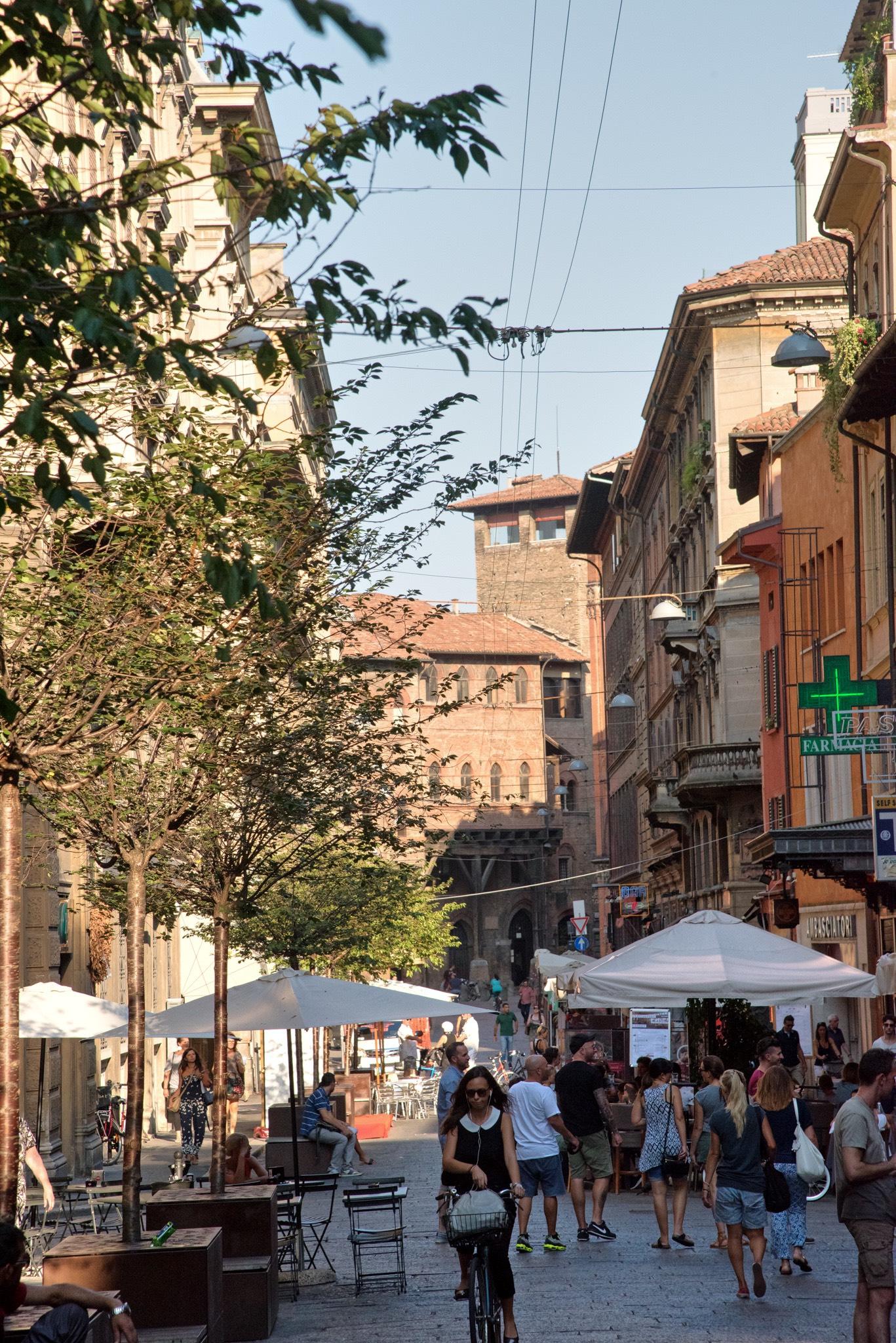
transport hub. About 390,000 people live in the university city. As early as 1088, Europe's first university, the “Alma Mater Studiorum,” was founded. The university's establishment brought thousands of students to the city, and since housing was needed for them, residents added rooms in front of their homes. These spaces were built over
for which Bologna is famous.
Good food is very important in Bologna. Bologna is the home of tortellini and probably Italy's most famous sausage: mortadella.

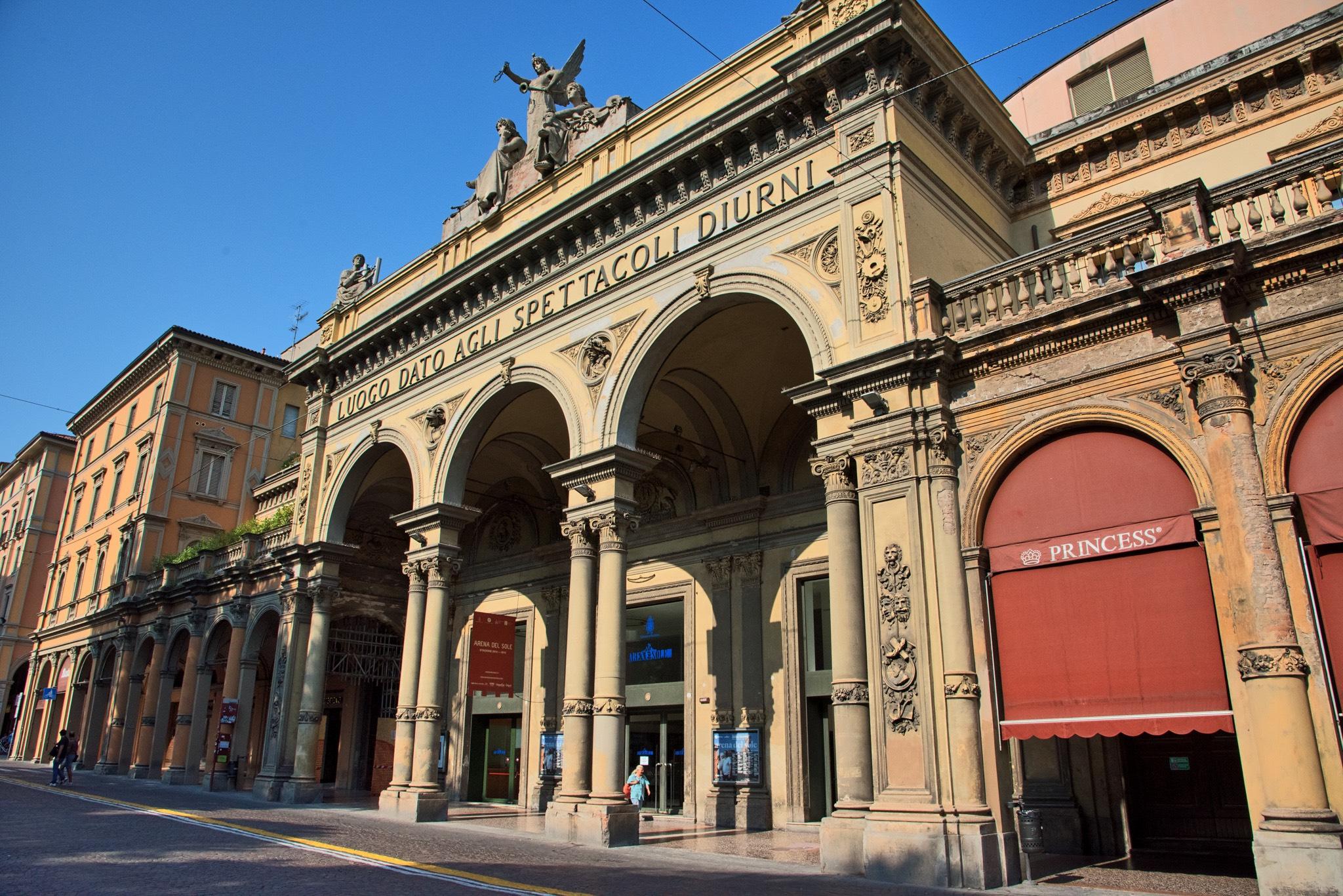
The “Teatro Arena del Sole” was opened in the year 1810. When you step out of the theater, you see the Giuseppe Garibaldi Monument on the opposite side of the street. Over the years, the theater also served as a cinema for a long time. Since 1984, the building has been owned by the city of Bologna.
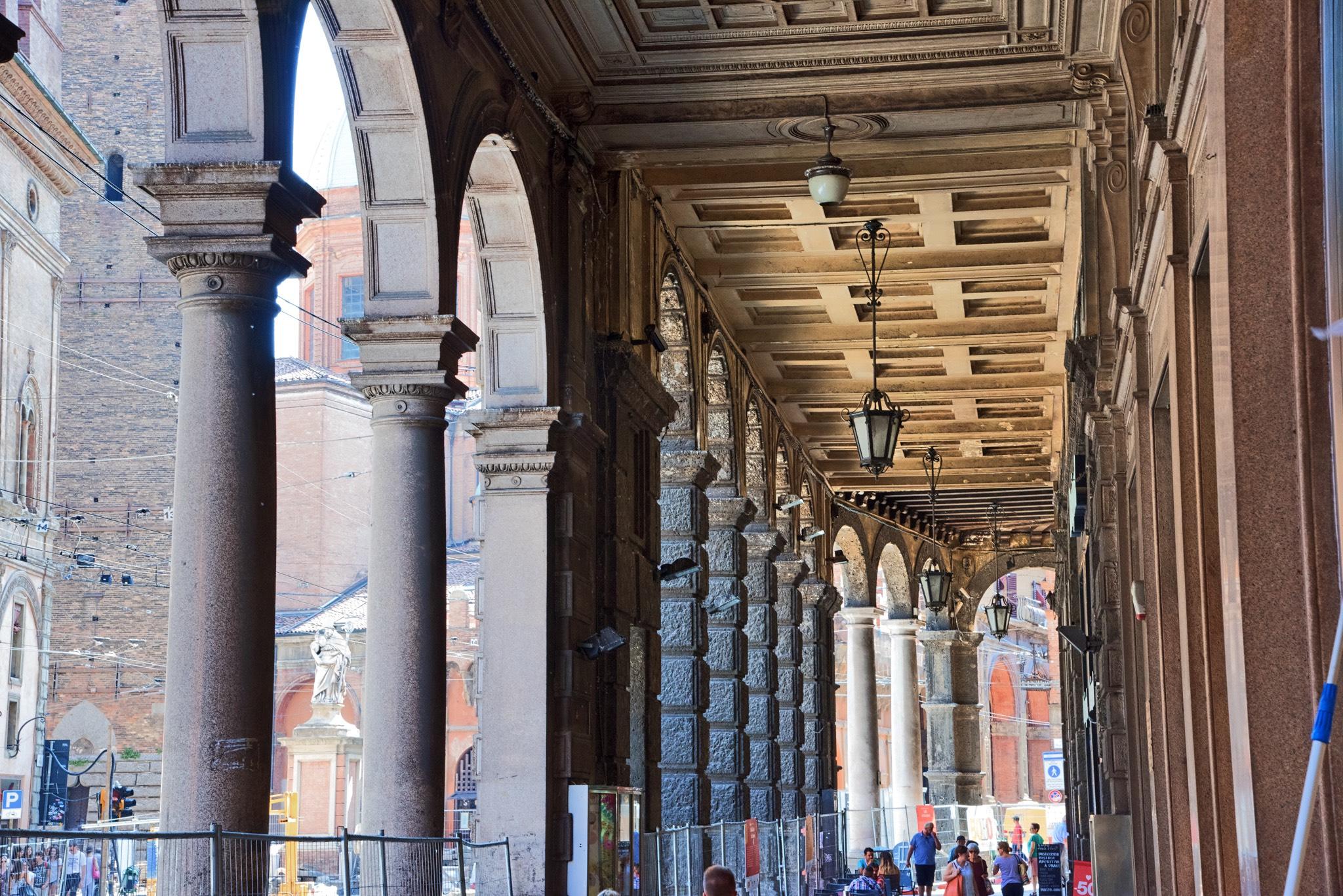
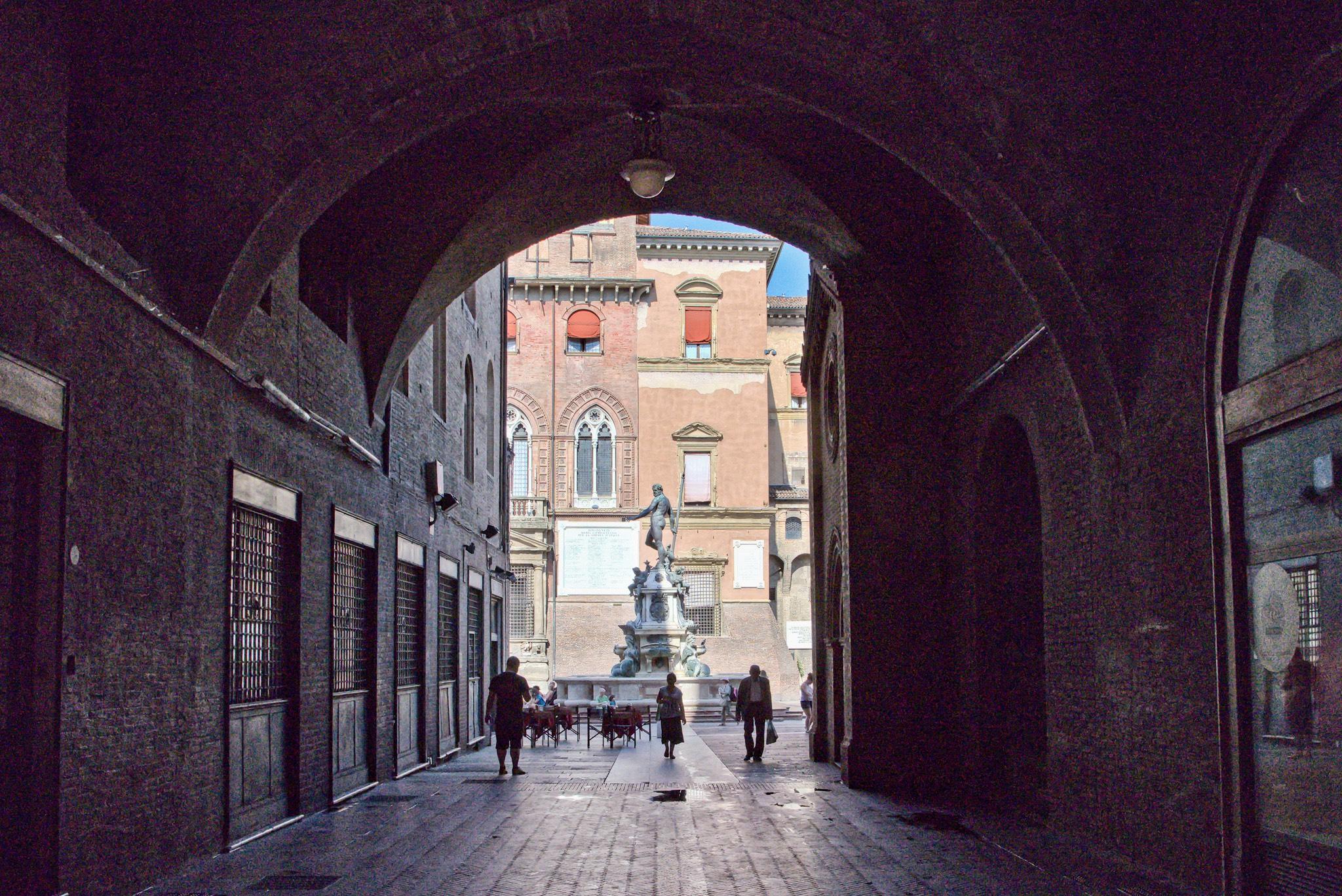
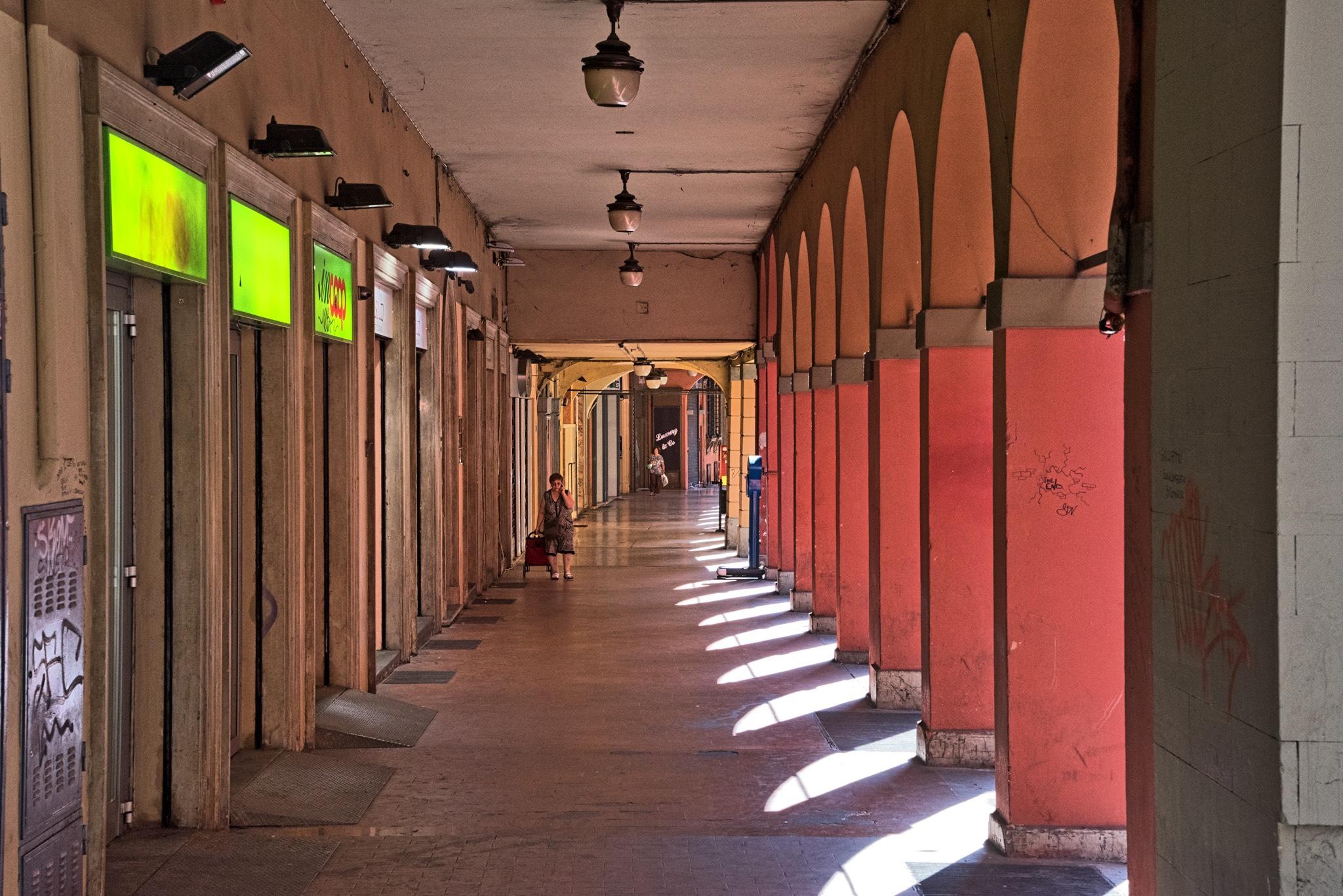
The colonnades make Bologna a pedestrian paradise. They protect from heat, rain, and cold. Bologna has more than 42 kilometers of arcade paths. The world's longest portico leads to the pilgrimage church Santuario della Madonna di
San Luca, located on the Guardia hill; it is over four kilometers long.
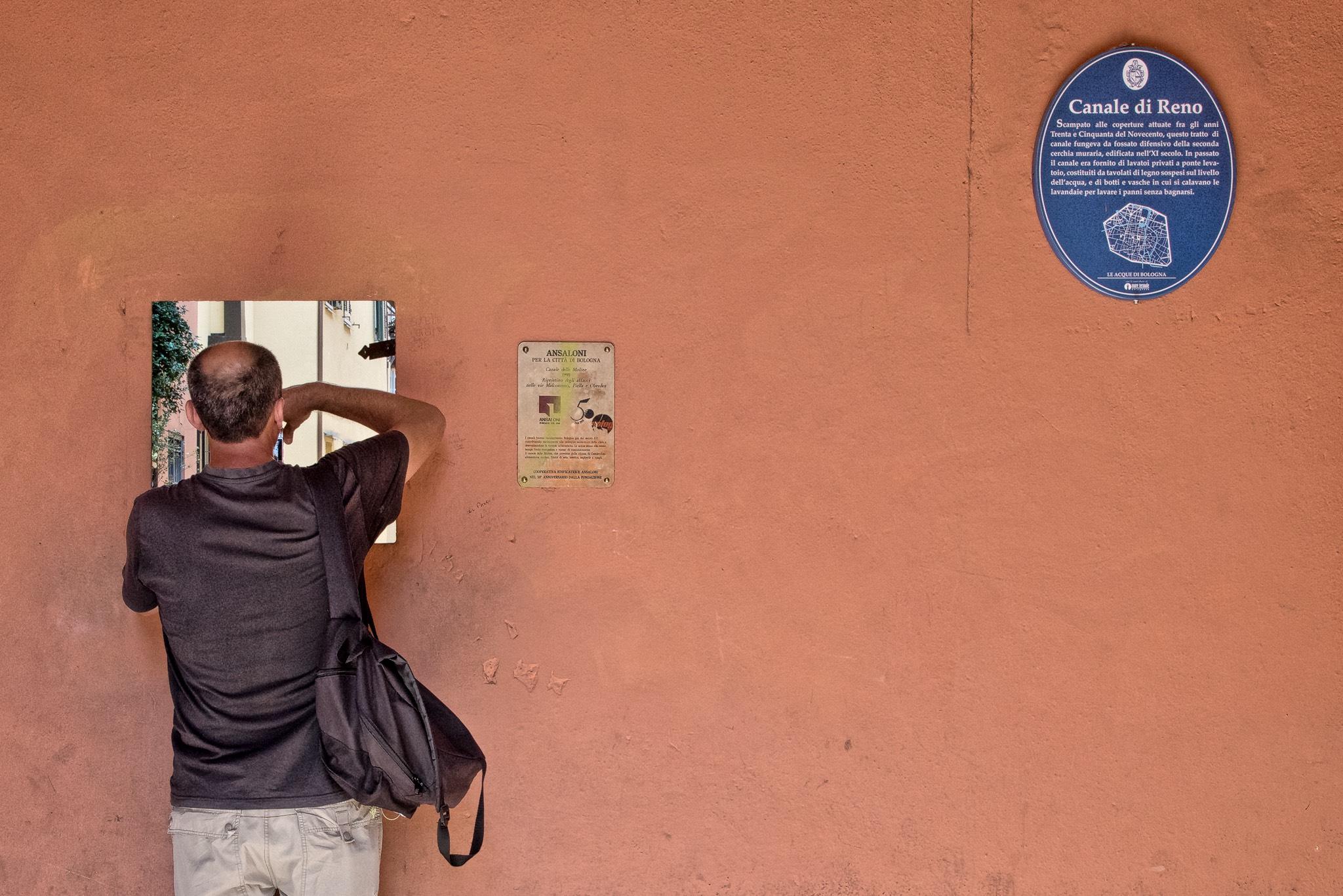
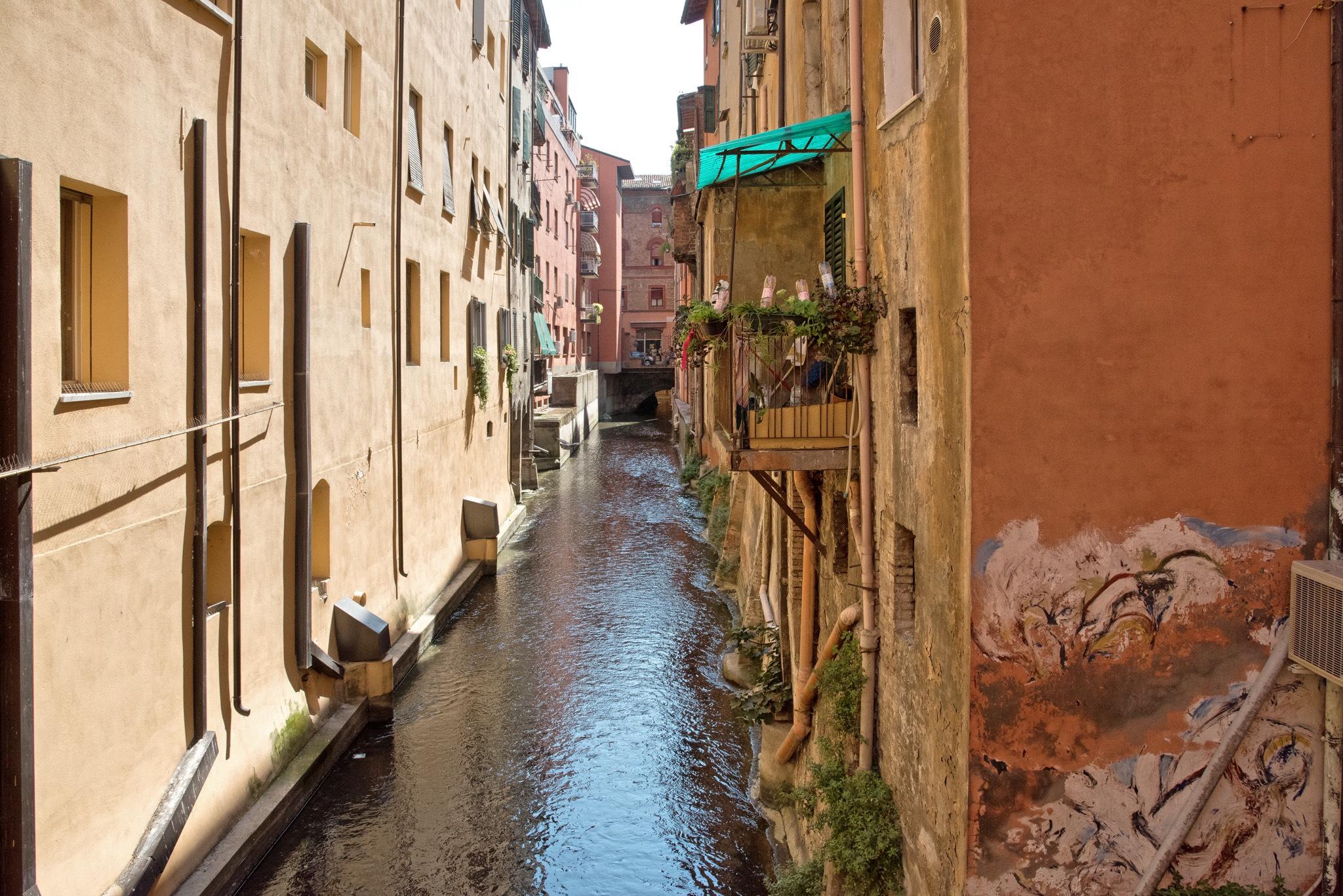
Bologna's canal system was created and expanded from the 12th to the 16th century. It connected the city to the surrounding rivers and was crucial for the economic development of Italy's textile center. Today, the remnants of the canals can only be admired through a window.
Most canals in Bologna are underground. However, at some points, there is the opportunity to “look into the past.”
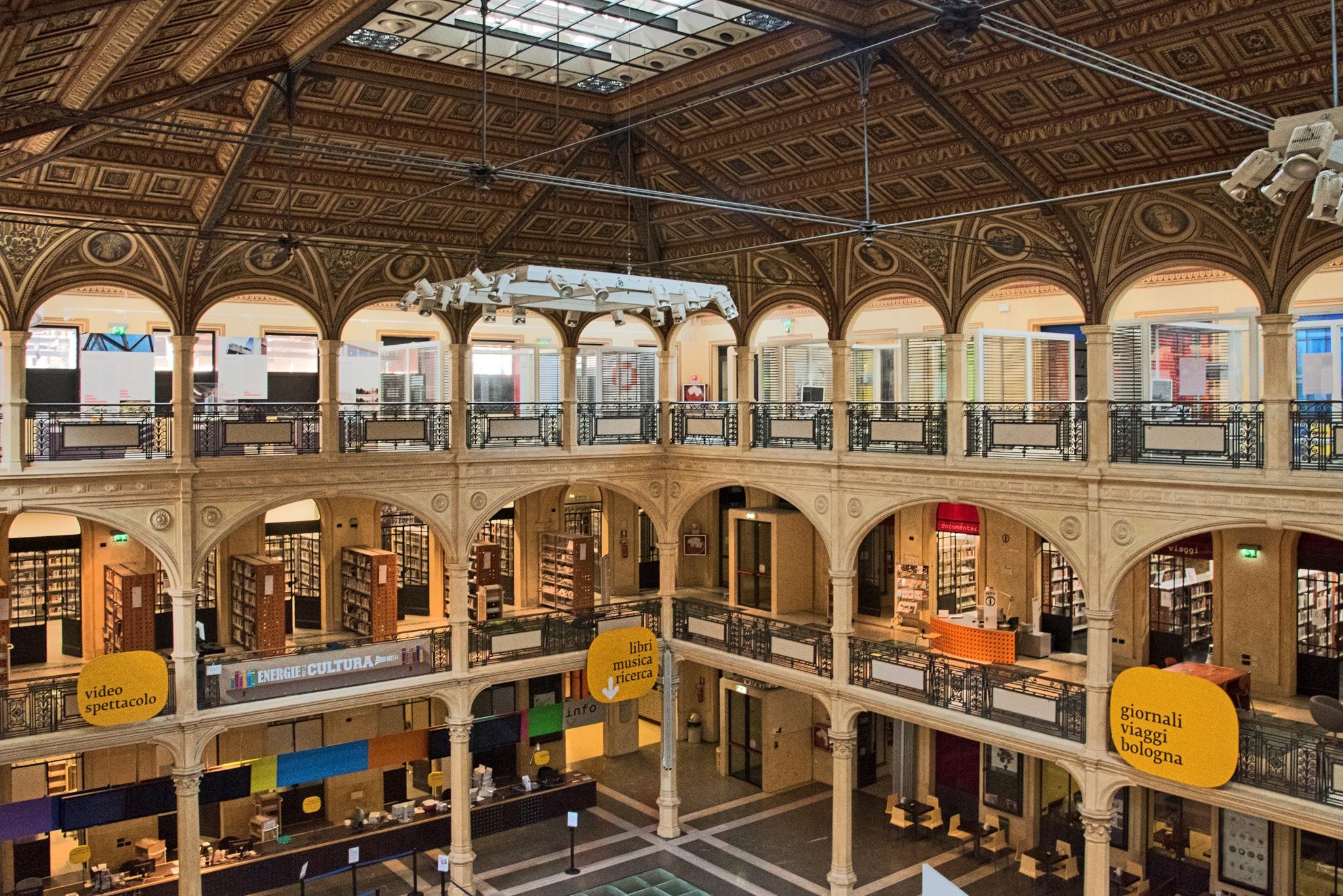
The “Salaborsa” library is housed in a side wing of the Palazzo d'Accursio. On the glass floor of the atrium, one literally walks on Bologna's history.
Over the years, the building housed a botanical garden, the stock exchange, the post office, a bank, and finally the city library.
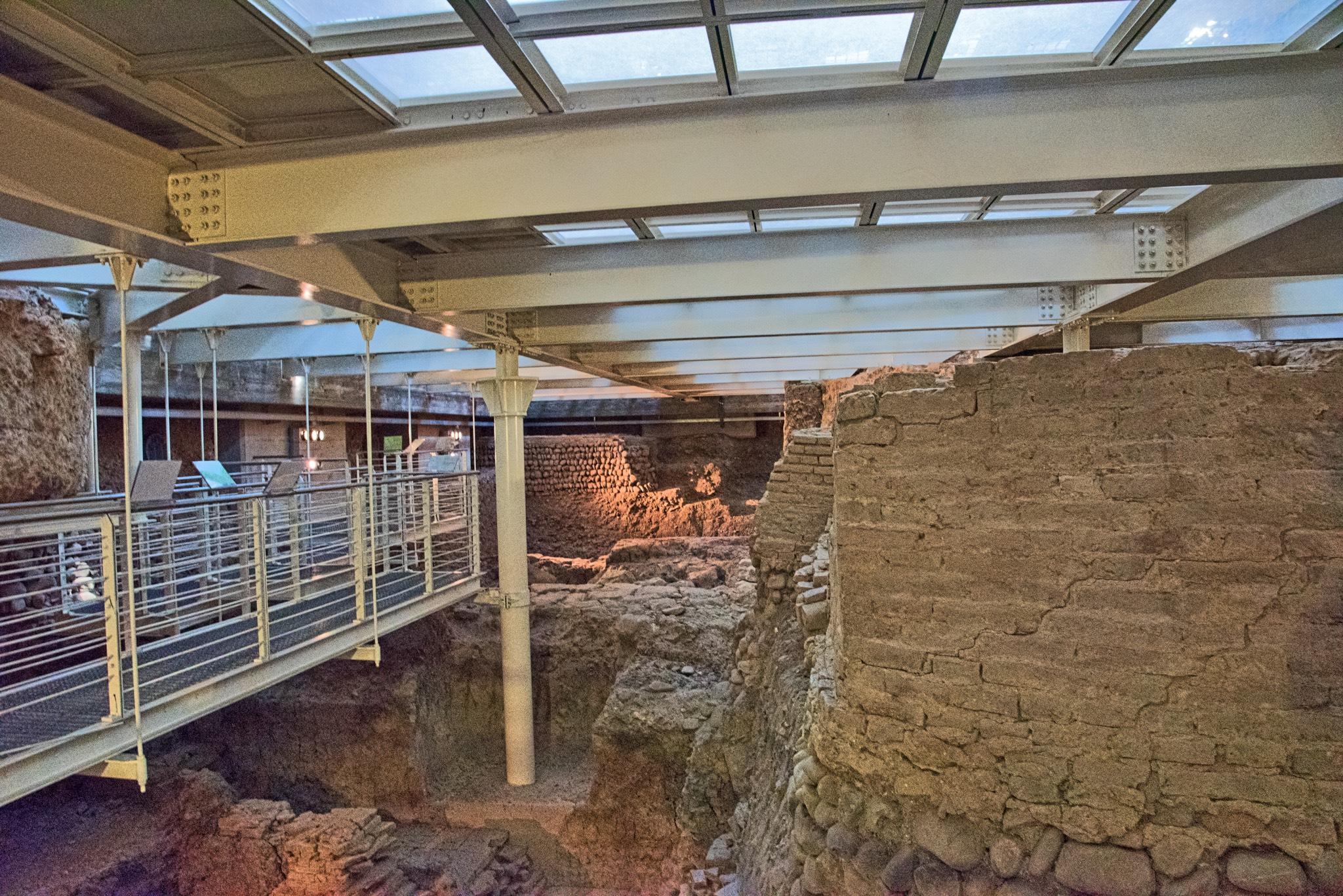
In the basement, one can admire excavations from 700 BC, as well as early settlements of the Etruscans and Romans.
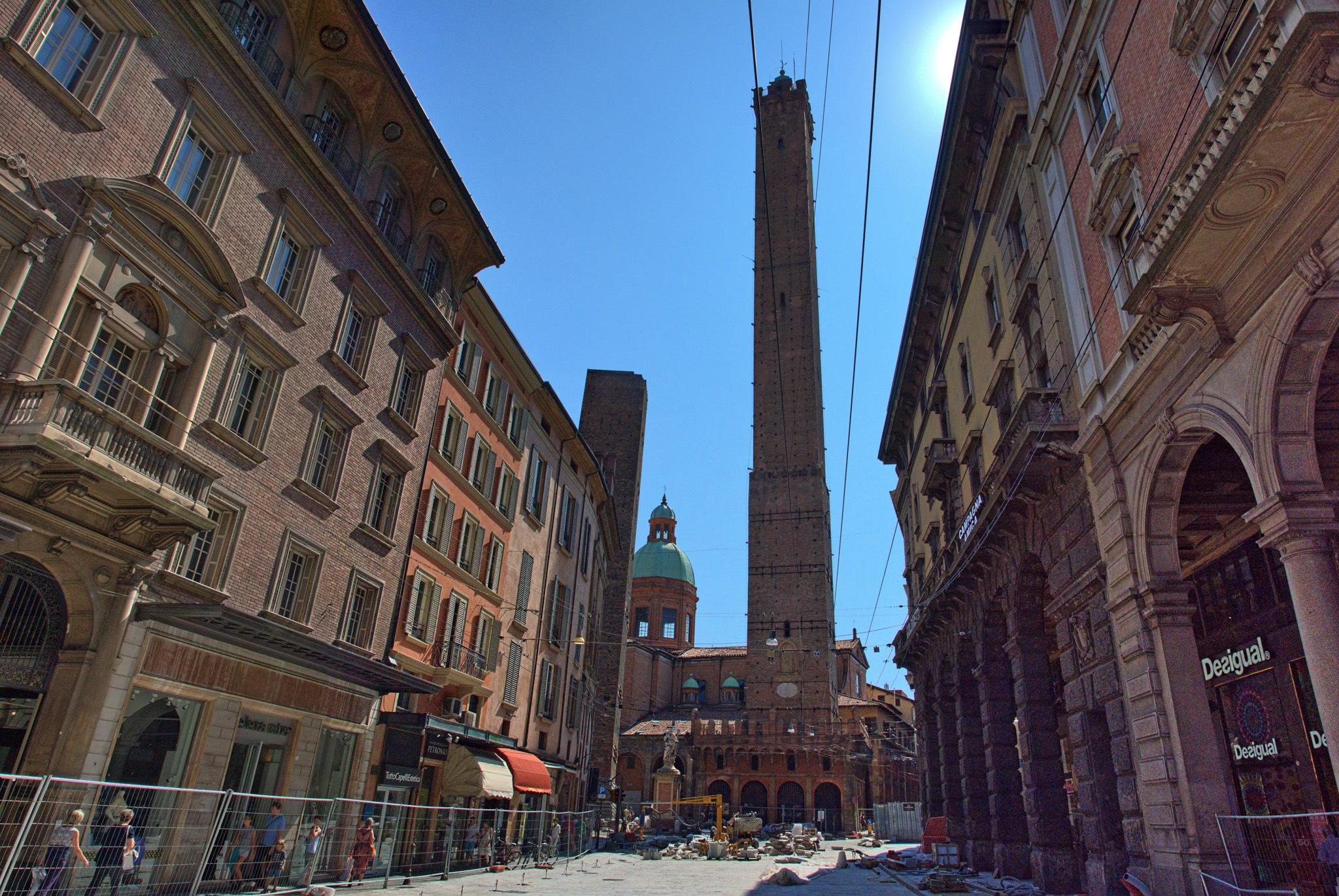
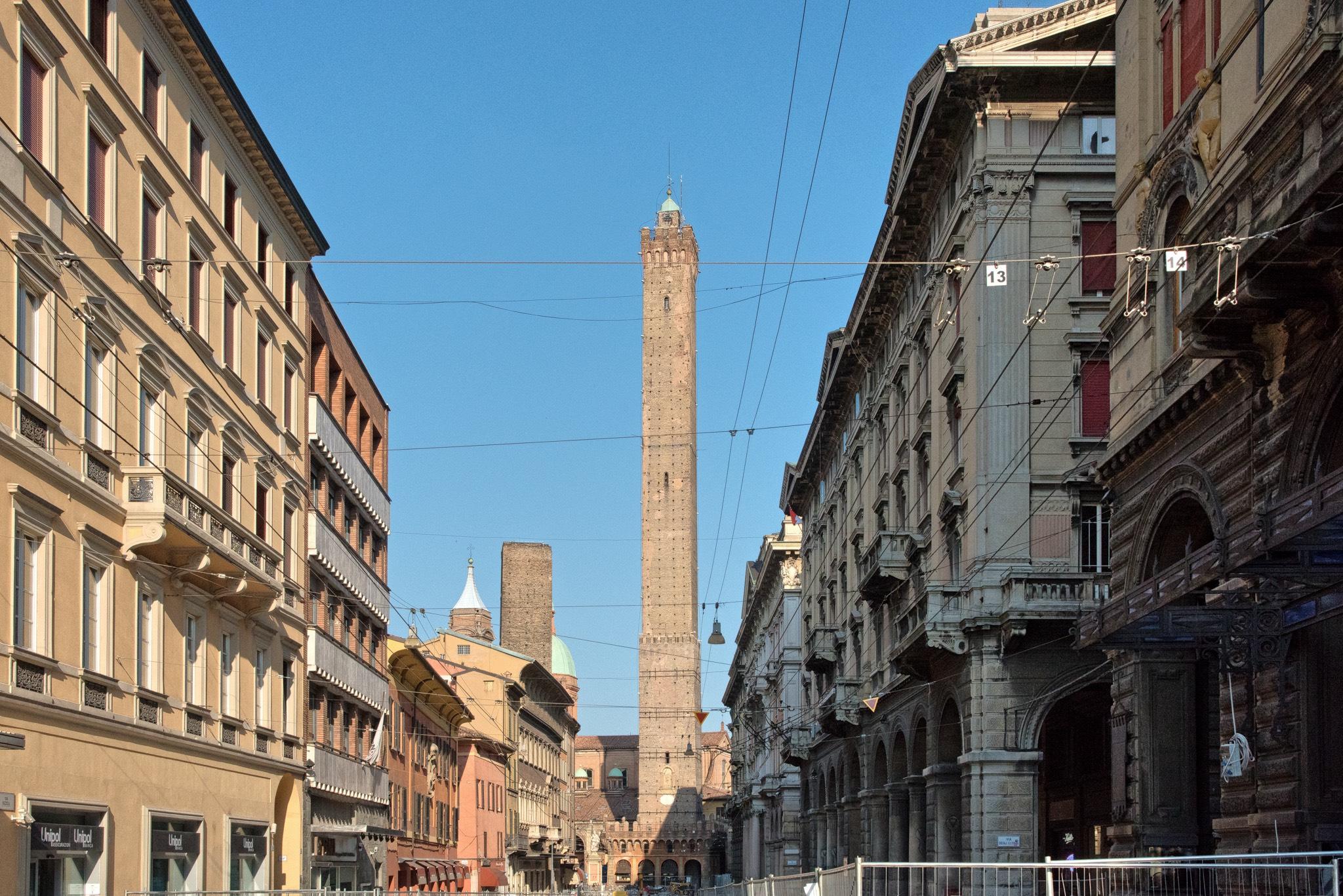
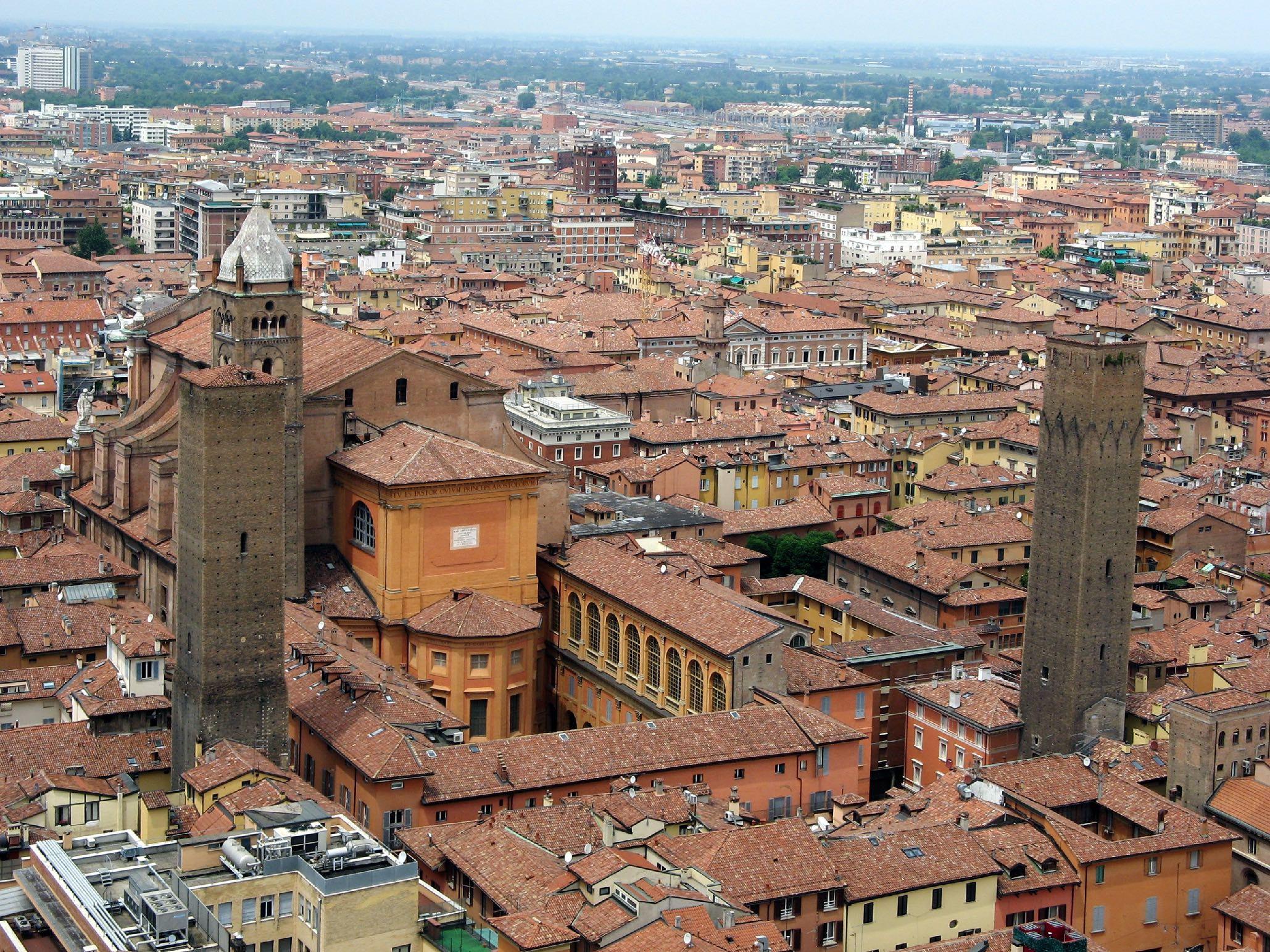
As in many Italian cities, family towers were also widespread in Bologna. The height of the square residential towers symbolized the wealth and influence of
the respective family. The leaning, adjacent towers Garisenda and Asinelli are Bologna's landmarks.
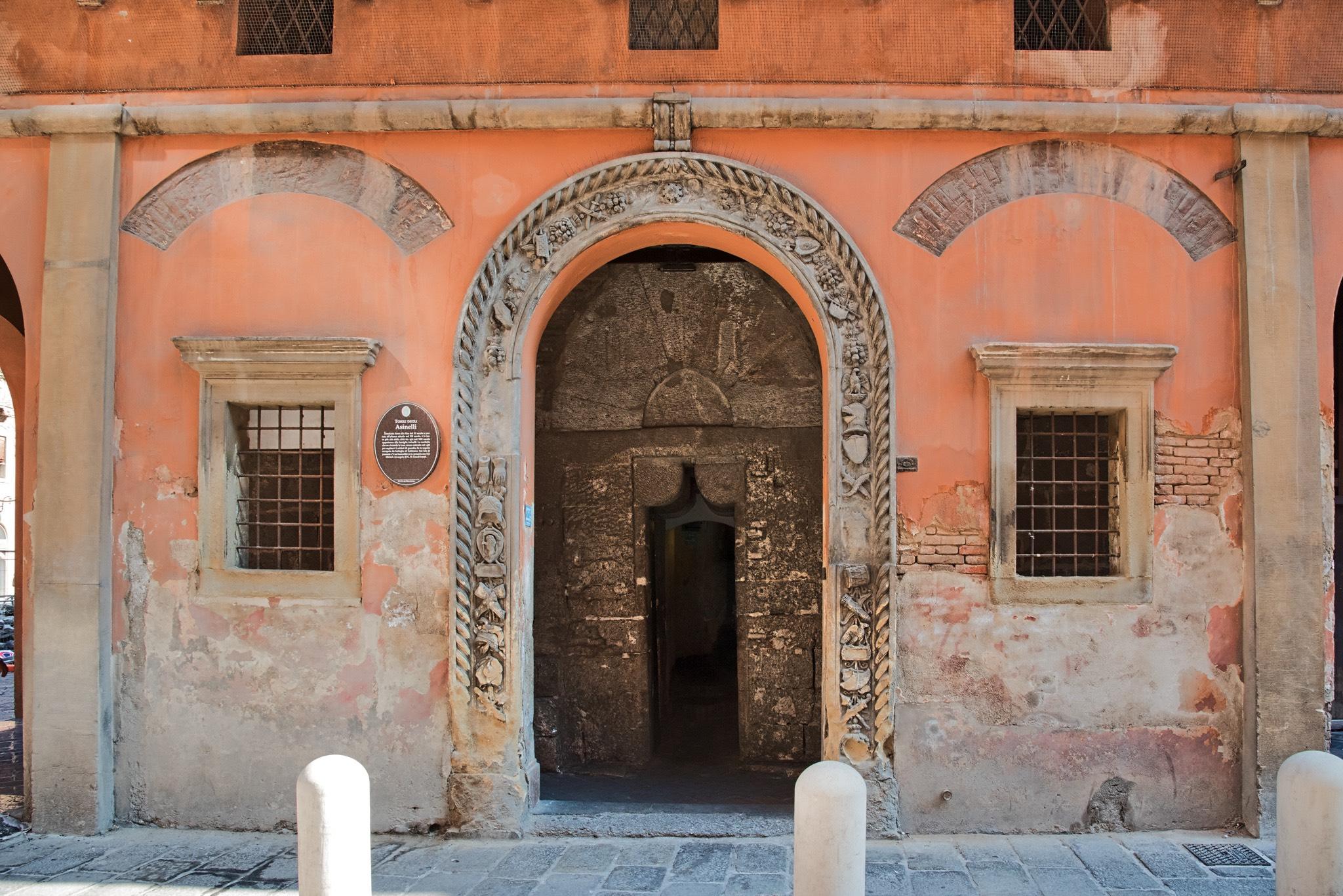
The Torre degli Asinelli is 97.20 meters tall and can be climbed. After nearly 500 steps, one is rewarded with a fantastic view.
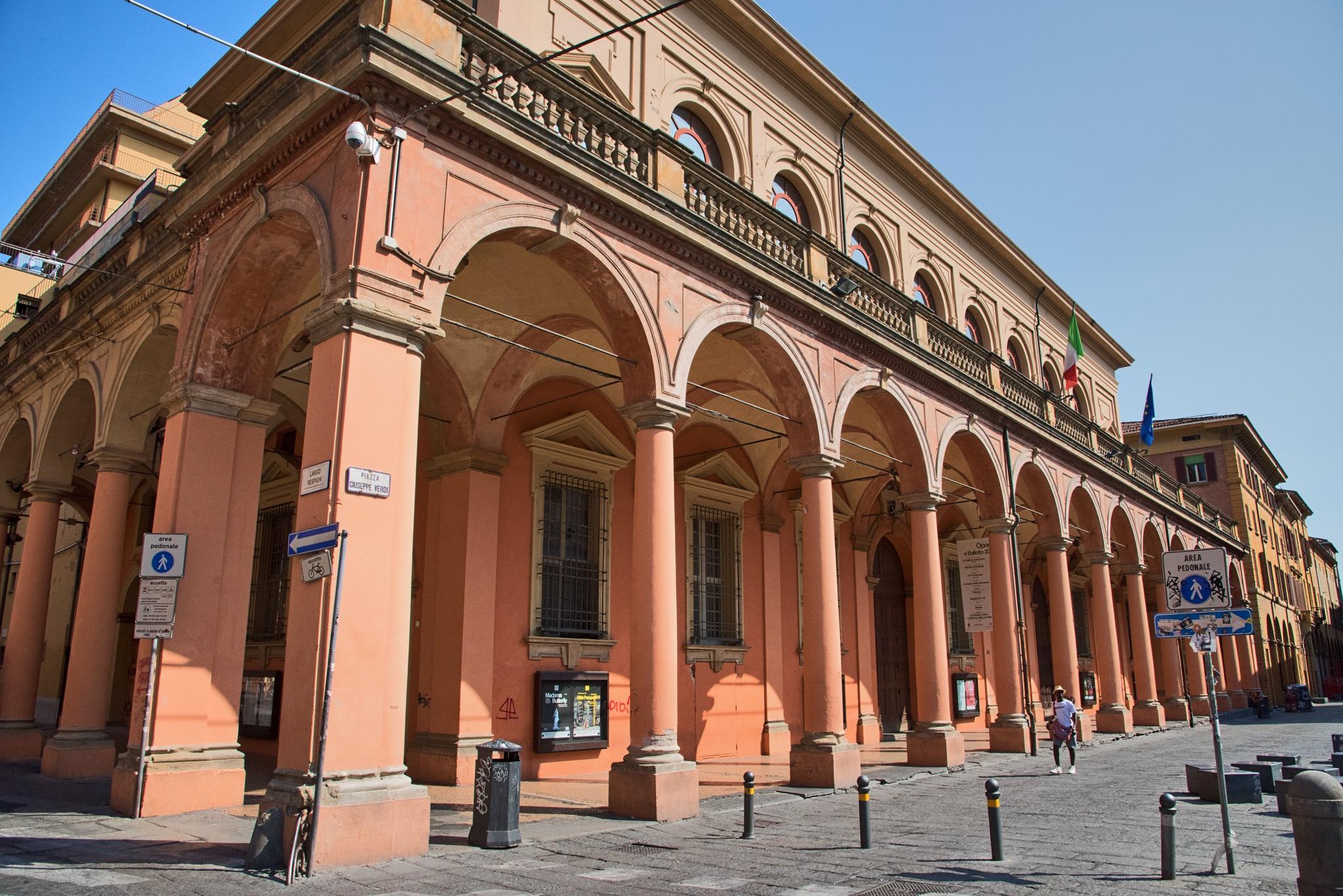
The tradition of opera performances in Bologna dates back to the 17th century. The stately building on Piazza Giuseppe Verdi is one of Italy's most important opera
houses. The opera house offers space for almost 1,100 visitors.
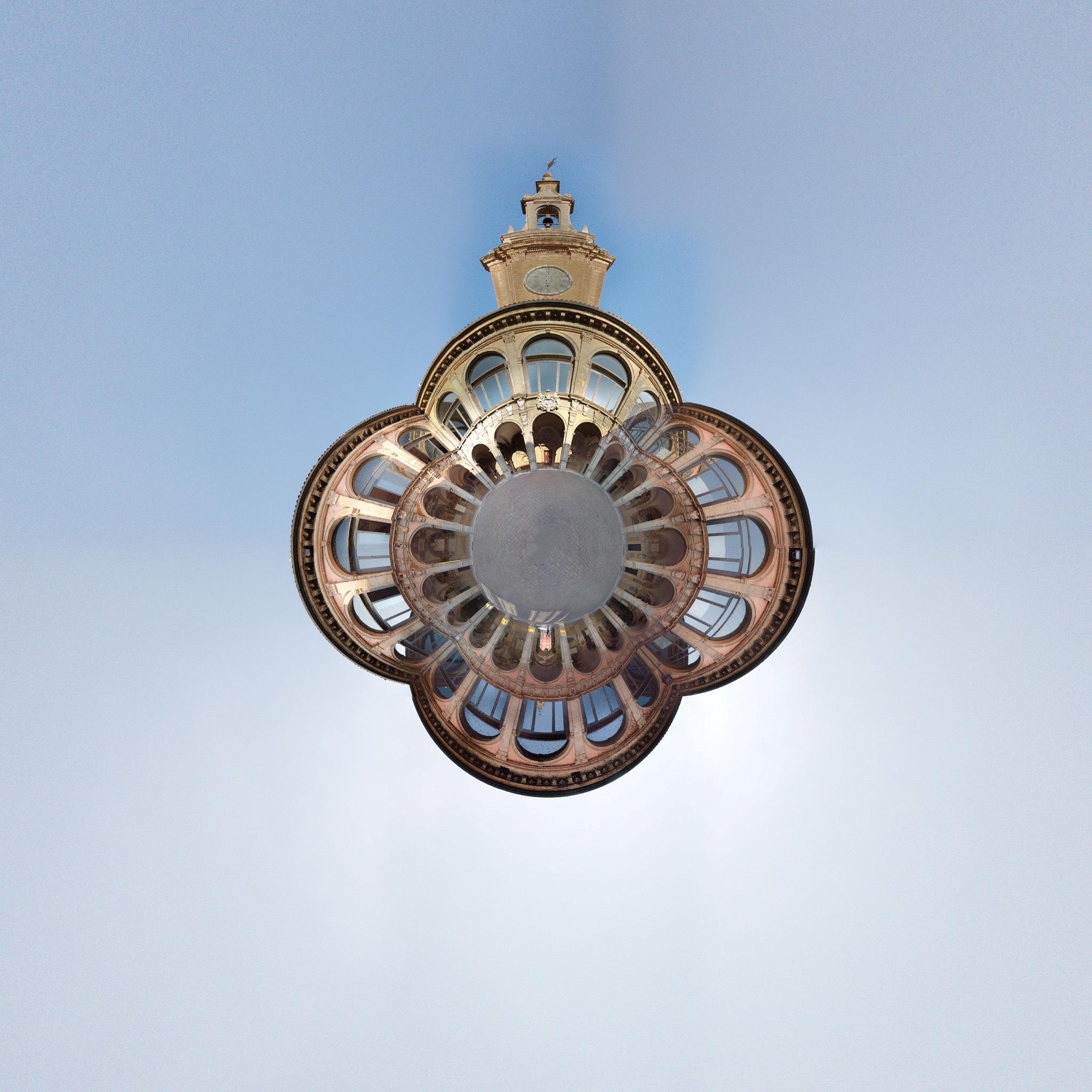

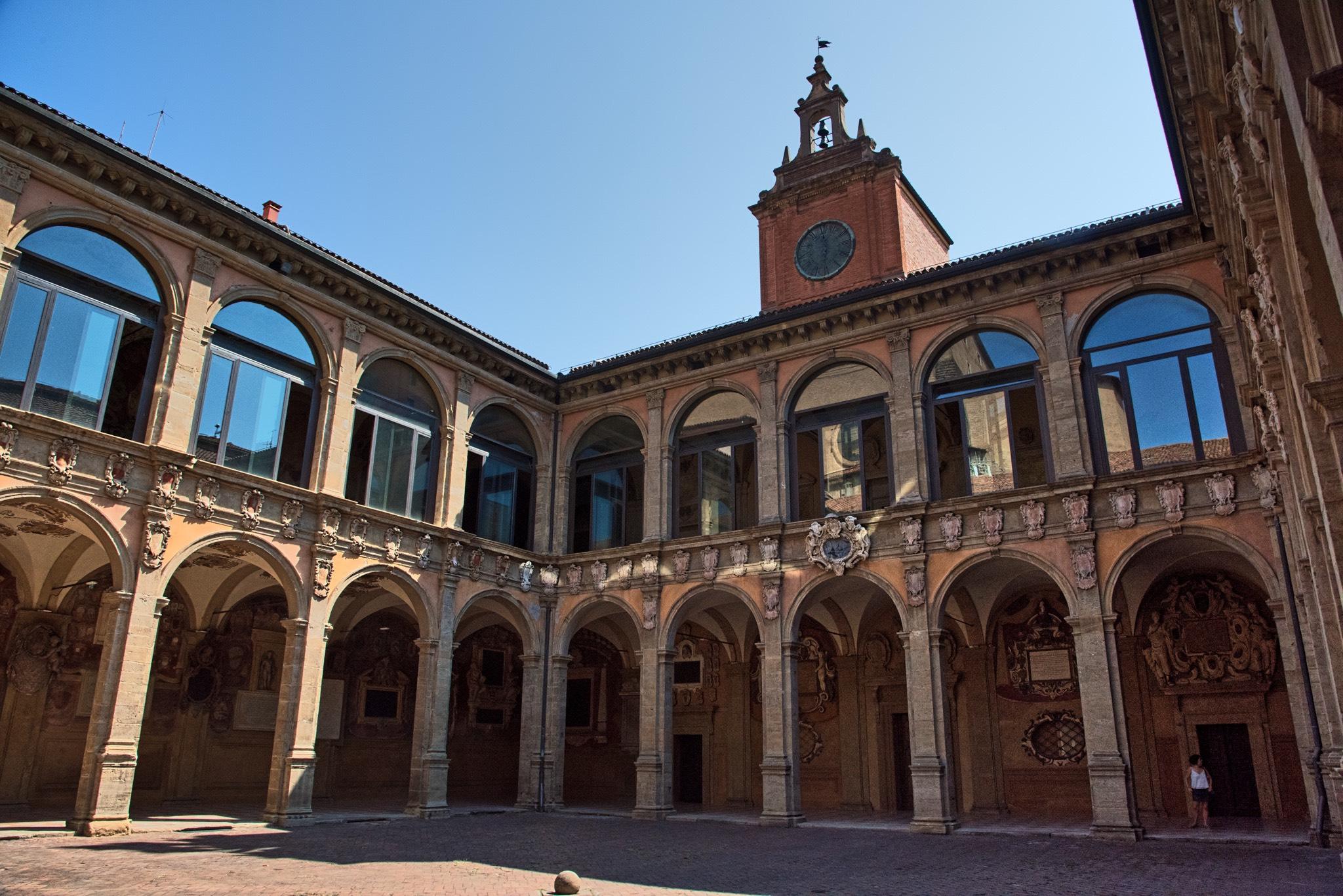
The University of Bologna began teaching activities as early as 1088. Thus, this prestigious institution is the oldest university in Europe. The list of alumni includes many
celebrities: Nicolaus Copernicus, Guglielmo Marconi, Luigi Galvani, Enzo Ferrari, Giorgio Armani, to name just a few..
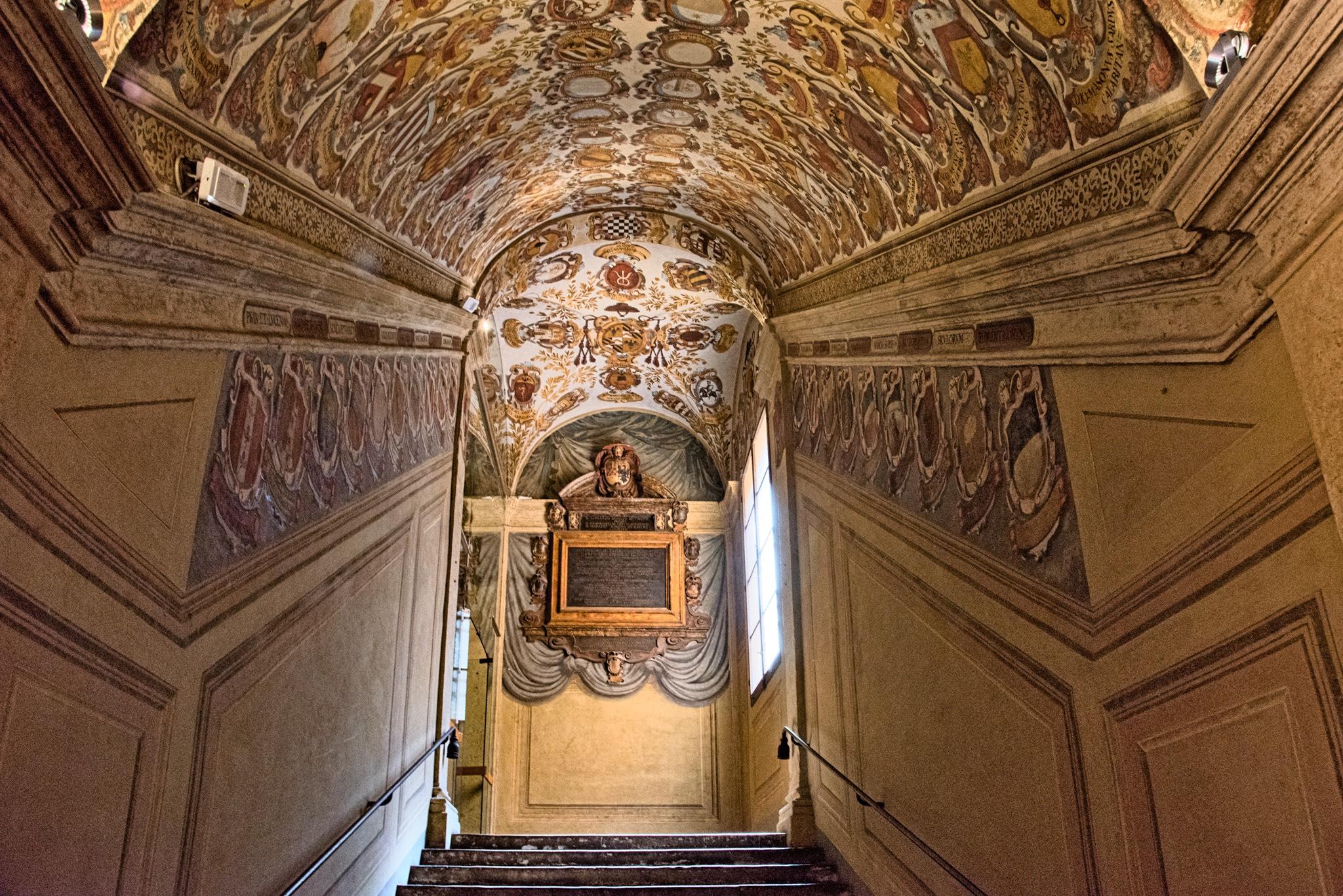
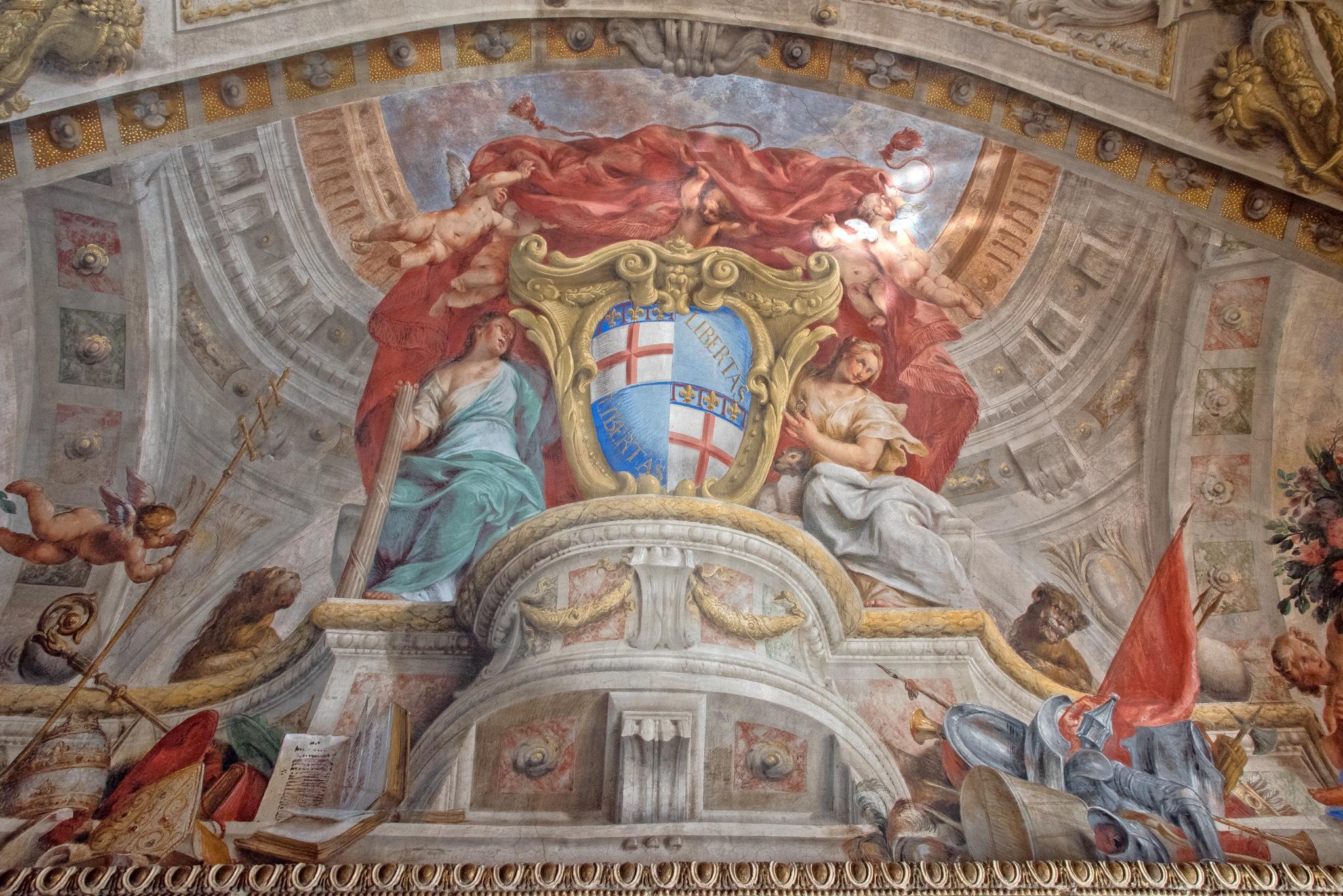
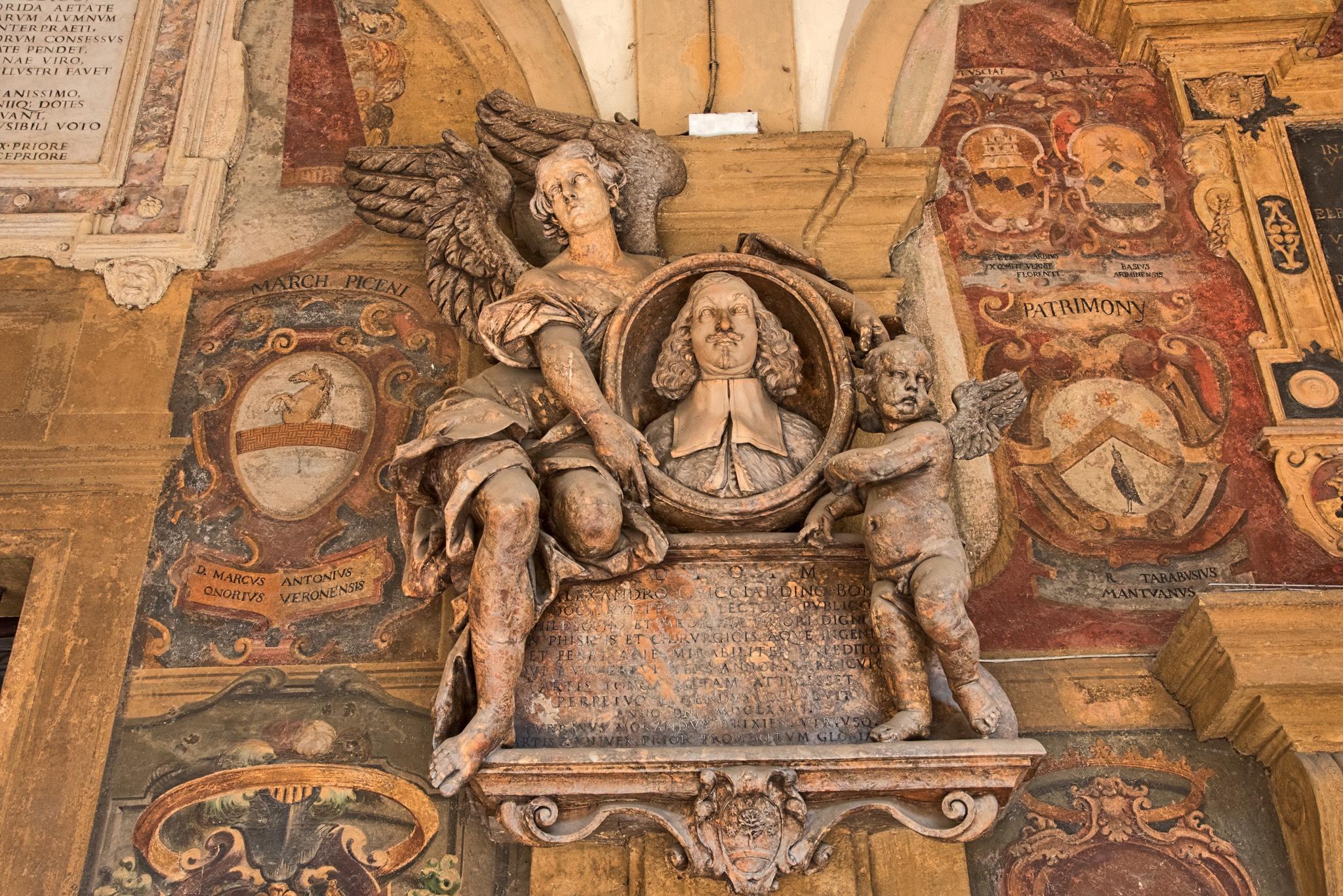
More than 6,000 magnificent coats of arms commemorate students and contain their tributes to their professors.
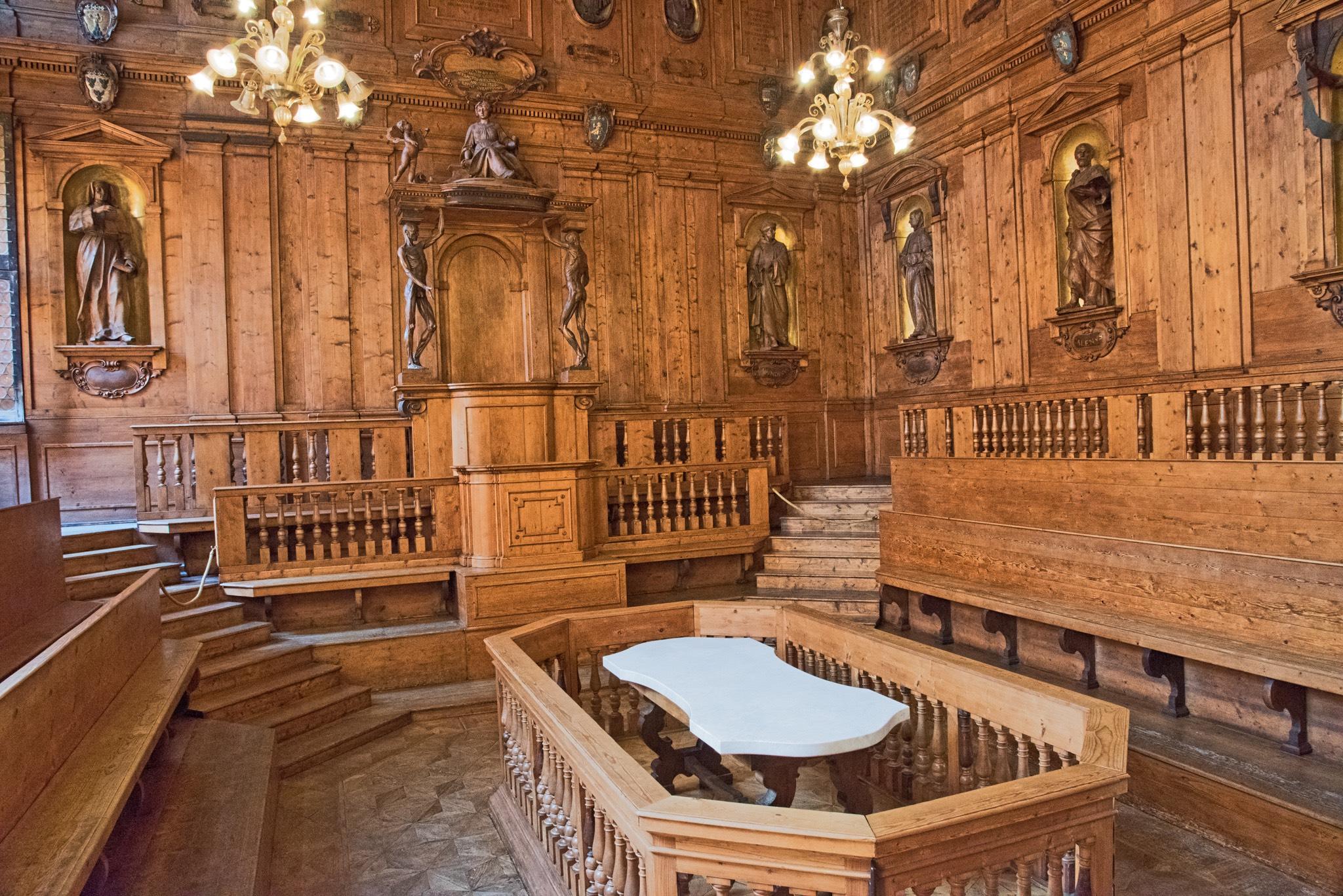
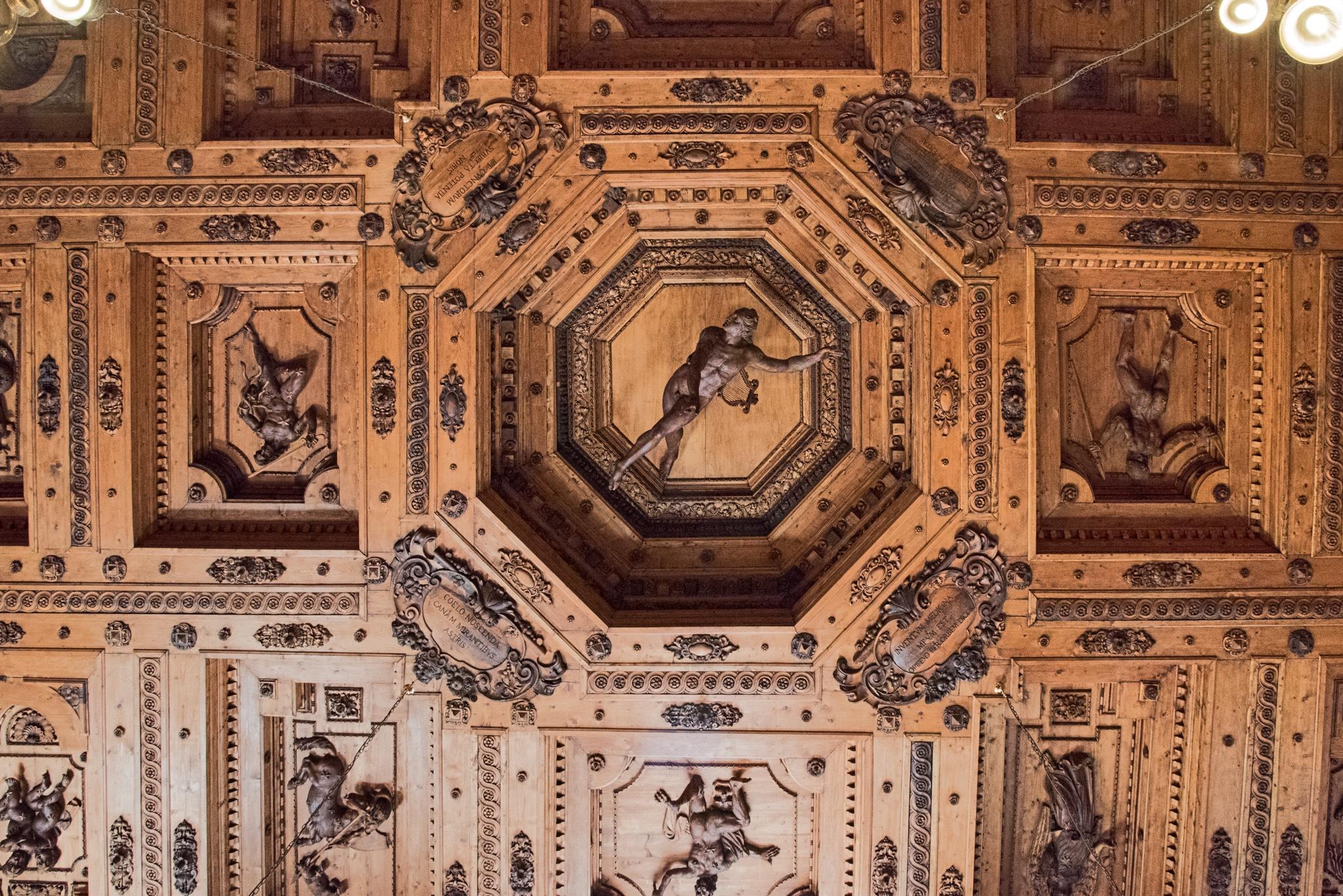
In 1637, aspiring doctors were introduced to anatomical principles here. To provide students with the best possible view, the Anatomical Theater was built in the form of an
amphitheater. Due to the bombing in 1944, the hall collapsed but was subsequently restored again.
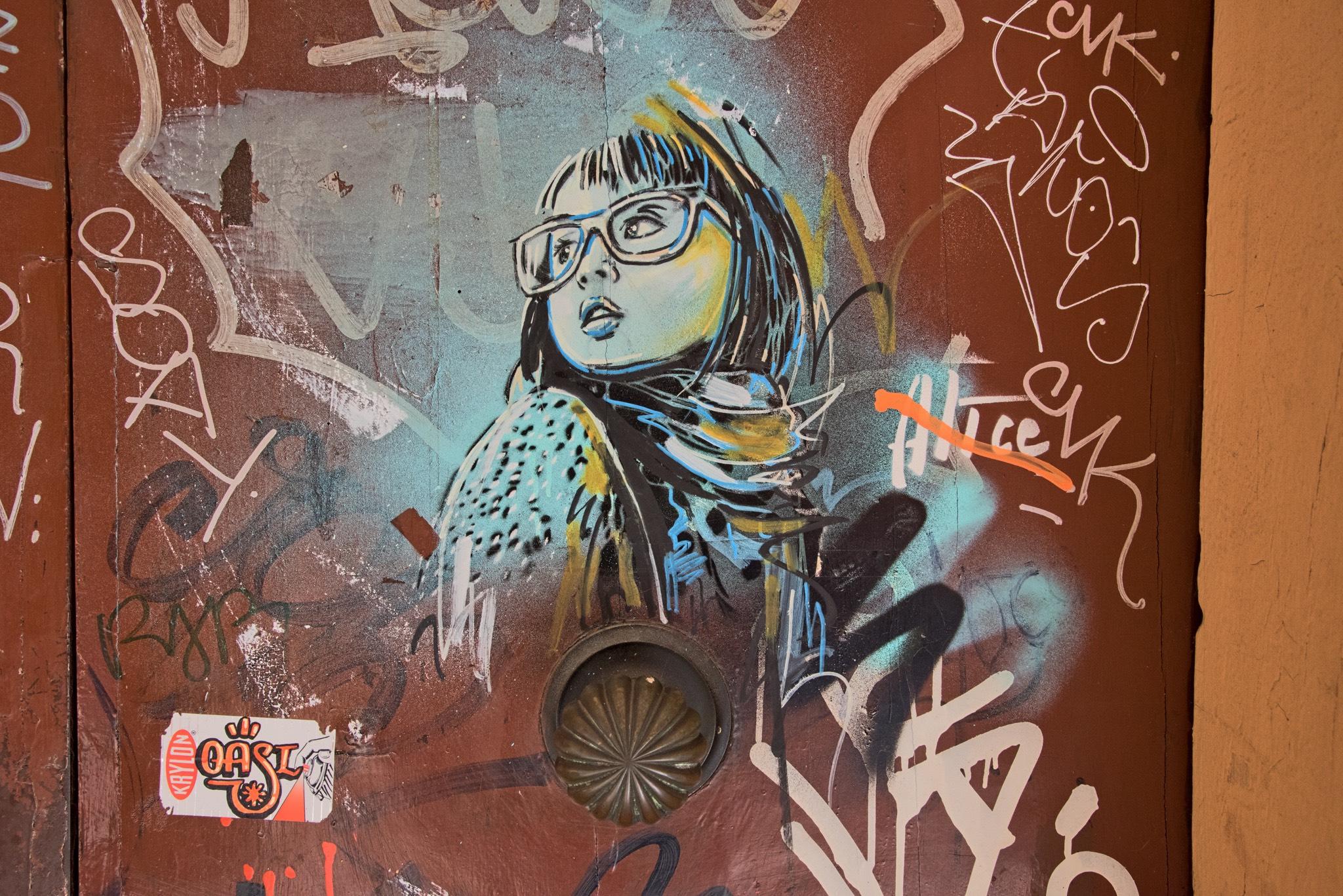
The high number of students in Bologna is evident from the numerous graffitis. Besides many political statements, visually appealing artworks are repeatedly painted on the walls.
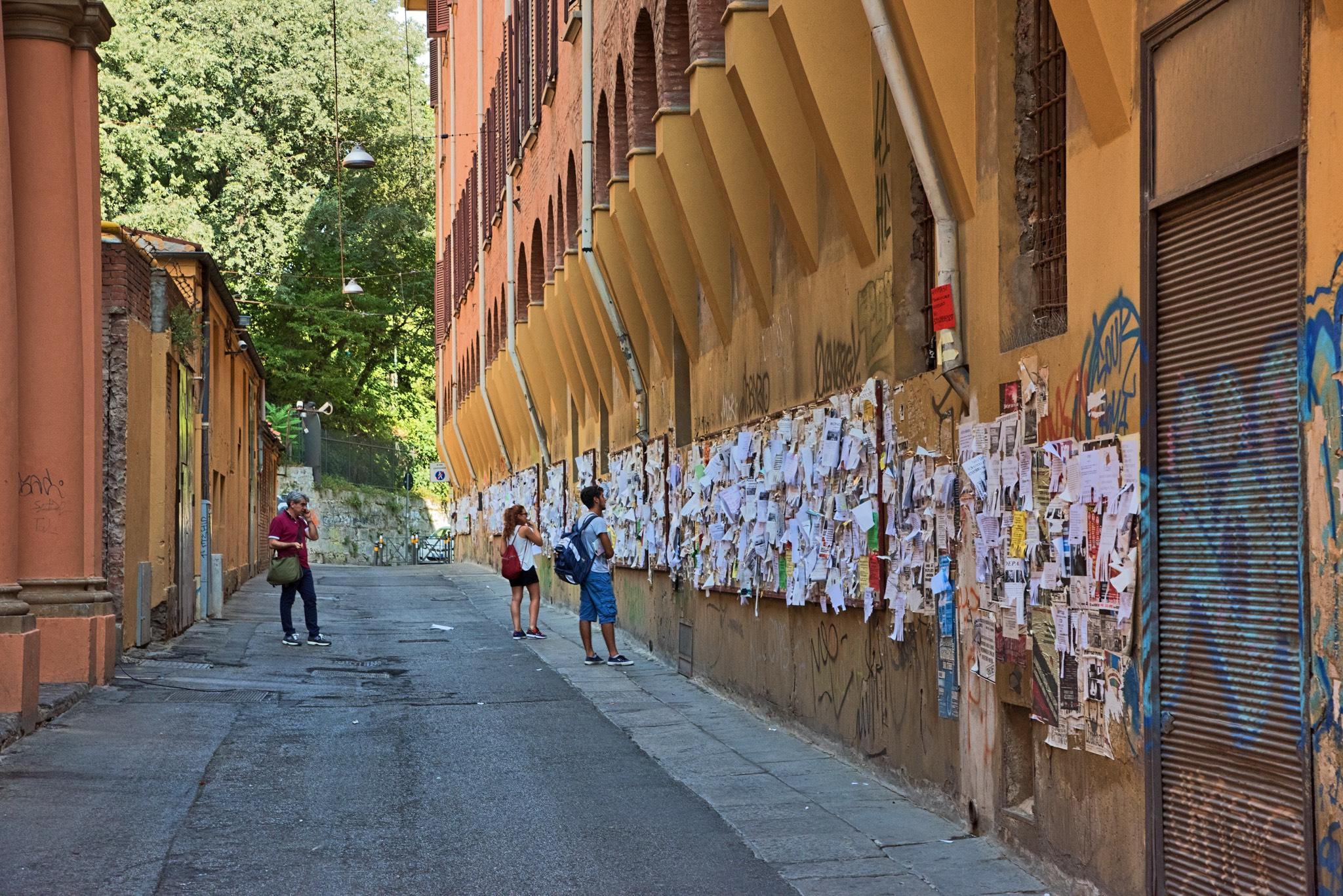
If students are looking for something, or if they want to sell something, or seek an apartment: this is the optimal source of information.
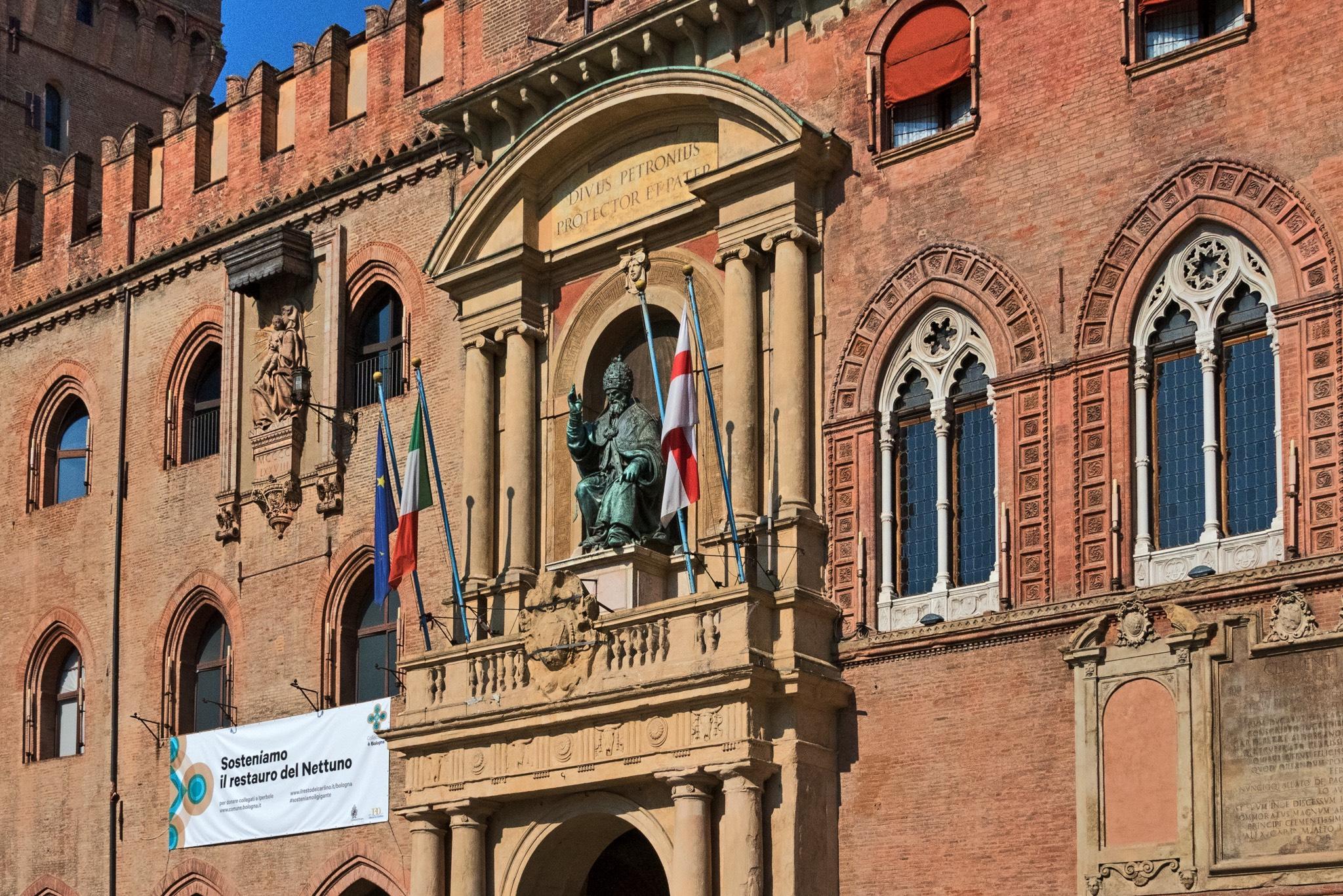

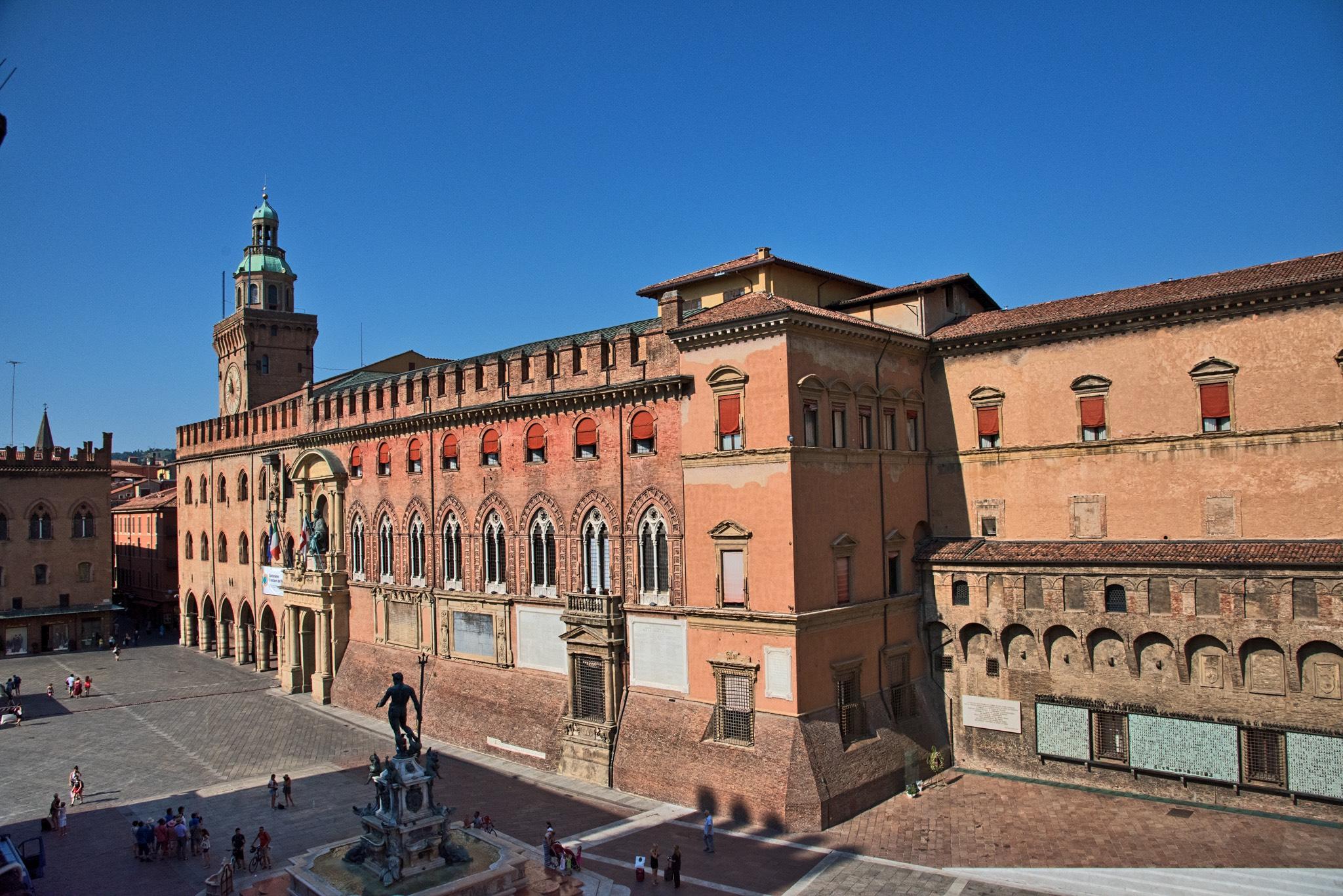
Since the current seat of Bologna's mayor was the residence of the jurist Accursius, the building is also called Palazzo d’Accursio. Above the entrance sits a statue of Pope Gregory XIII. Right next to it is the sculpture “Madonna di Piazza,” created in 1478. The building contains magni fi cent and historically interesting rooms.
The council chamber on the first floor and the Royal Hall on the second floor. Charles V was crowned here with the Iron Crown of Italy. The coronation as emperor followed in the Basilica of San Petronio.
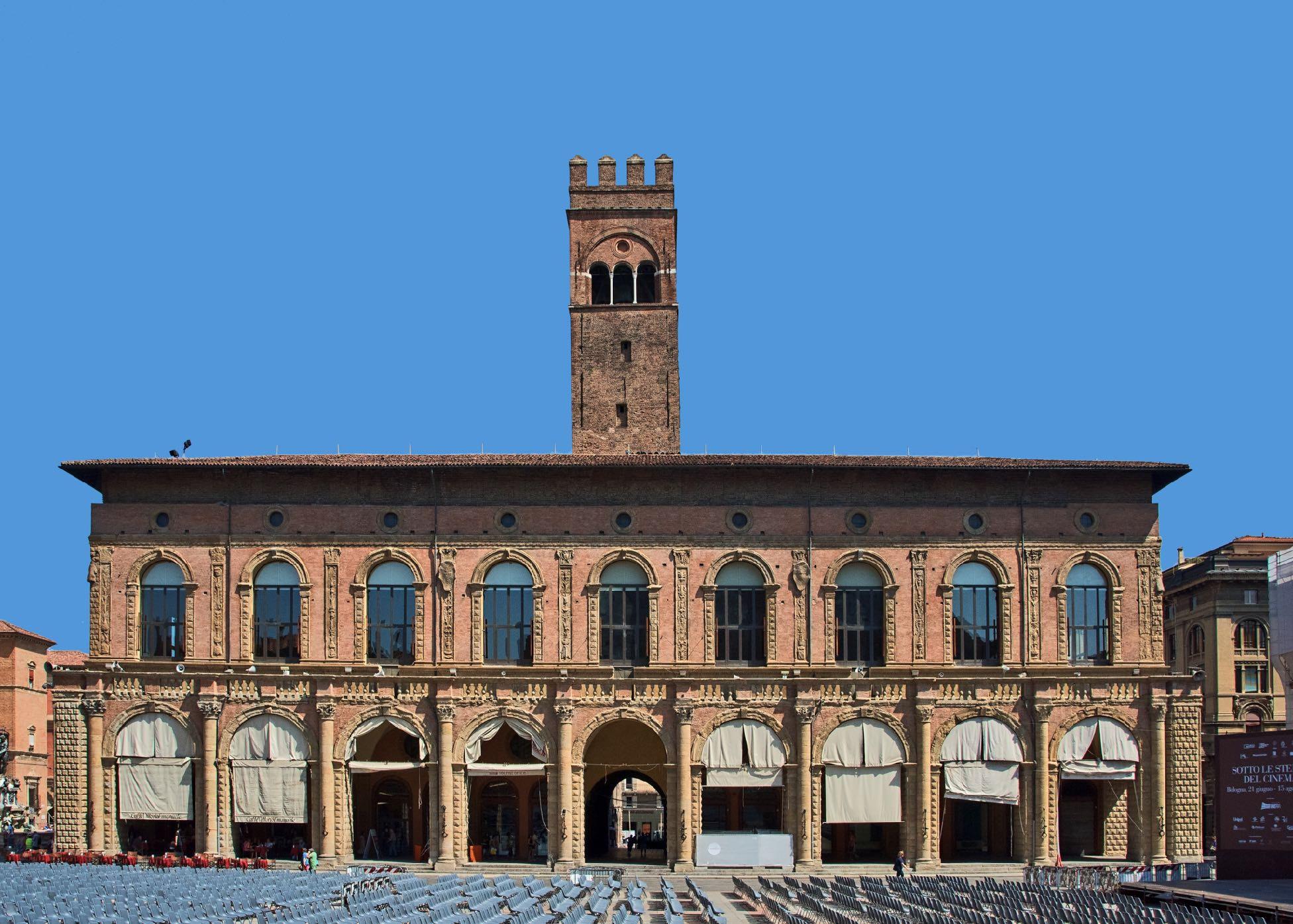
The Podestà cross vault between the Palazzo del Podestà and the Palazzo Re Enzo offers an acoustic peculiarity. If you stand at one of the four pillars with your face to the wall and whisper quietly, the person diagonally opposite can hear everything clearly.
Over the centuries, a court convened in this splendid room, then it was converted into a theater. The approximately 800 m² large room offers space for nearly 500 visitors. On the upper floor is the Sala Re Enzo. The hall was reconstructed as it actually looked around 1771.
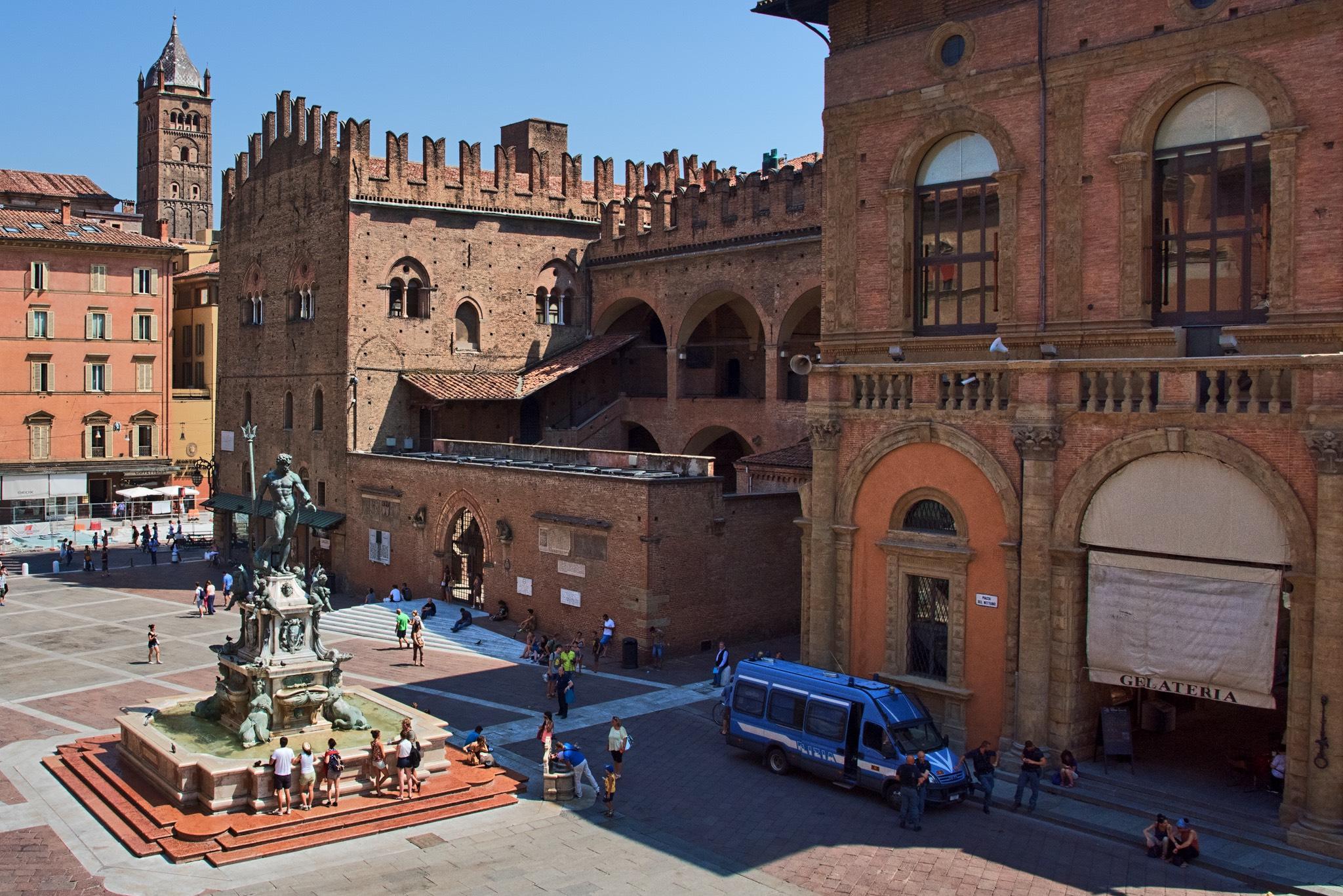
In 1245, the Palazzo Re Enzo was built directly next to the Palazzo del Podestà. From 1249 to 1272, the palace served as the prison for Enzio of Sardinia, the son of Emperor Frederick II.
Hence the name of the palace - Palazzo Re Enzo (Palace of King Heinz).

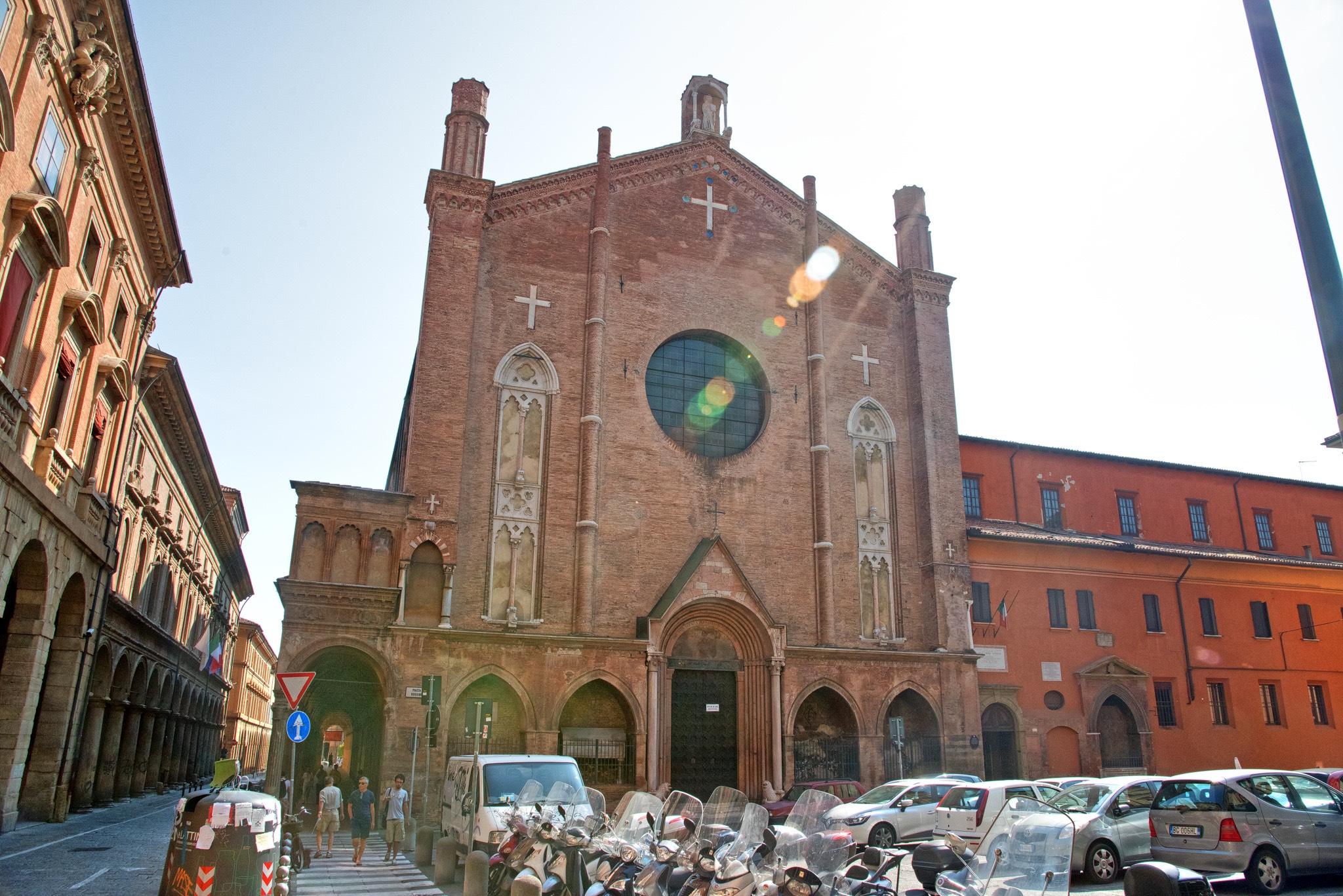
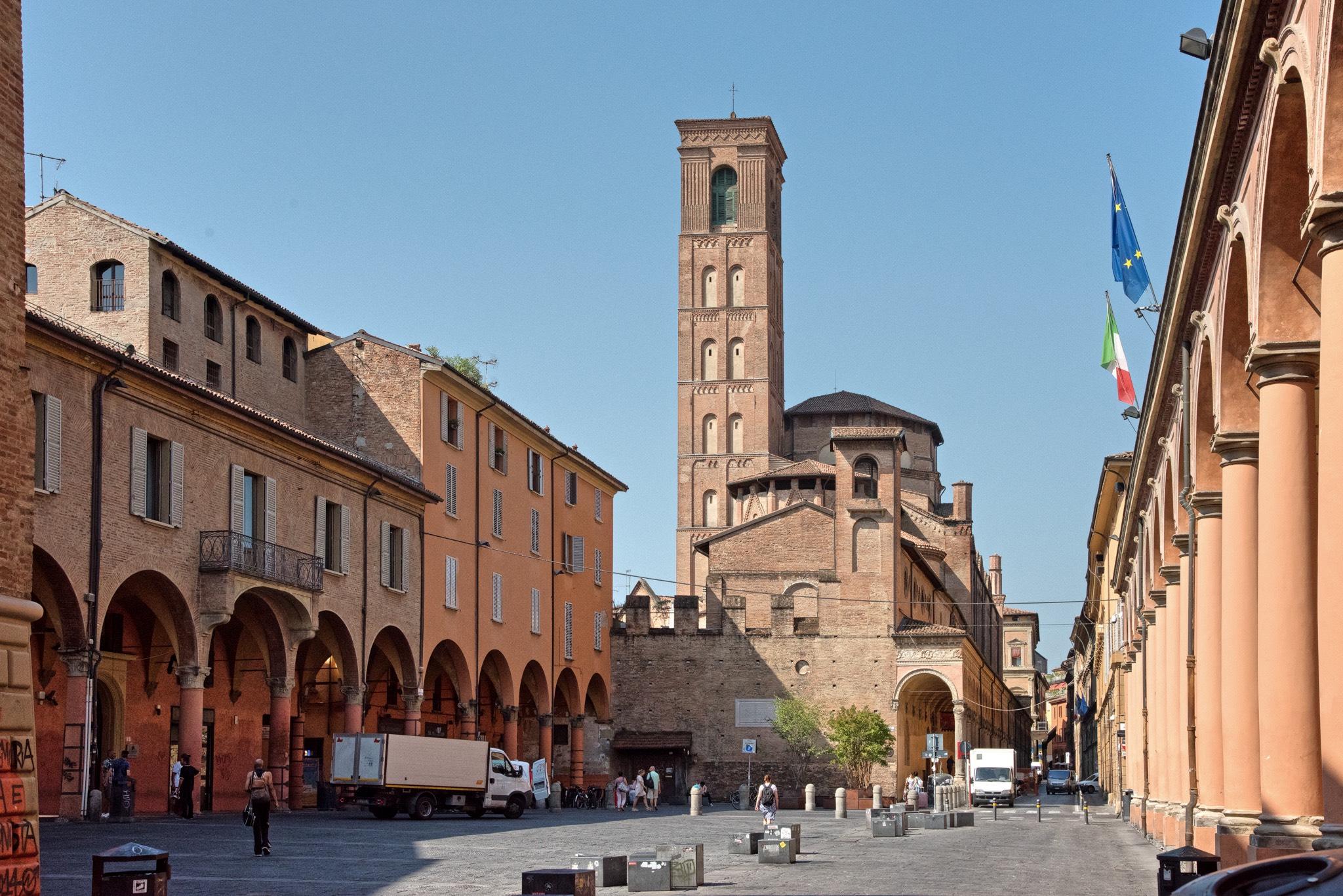
The “Chiesa di San Giacomo Maggiore” is a historic Roman Catholic church of the Augustinian monks, built in 1267. During the French occupation, the monks were expelled and only returned in 1824. The monastery was converted into a music conservatory.
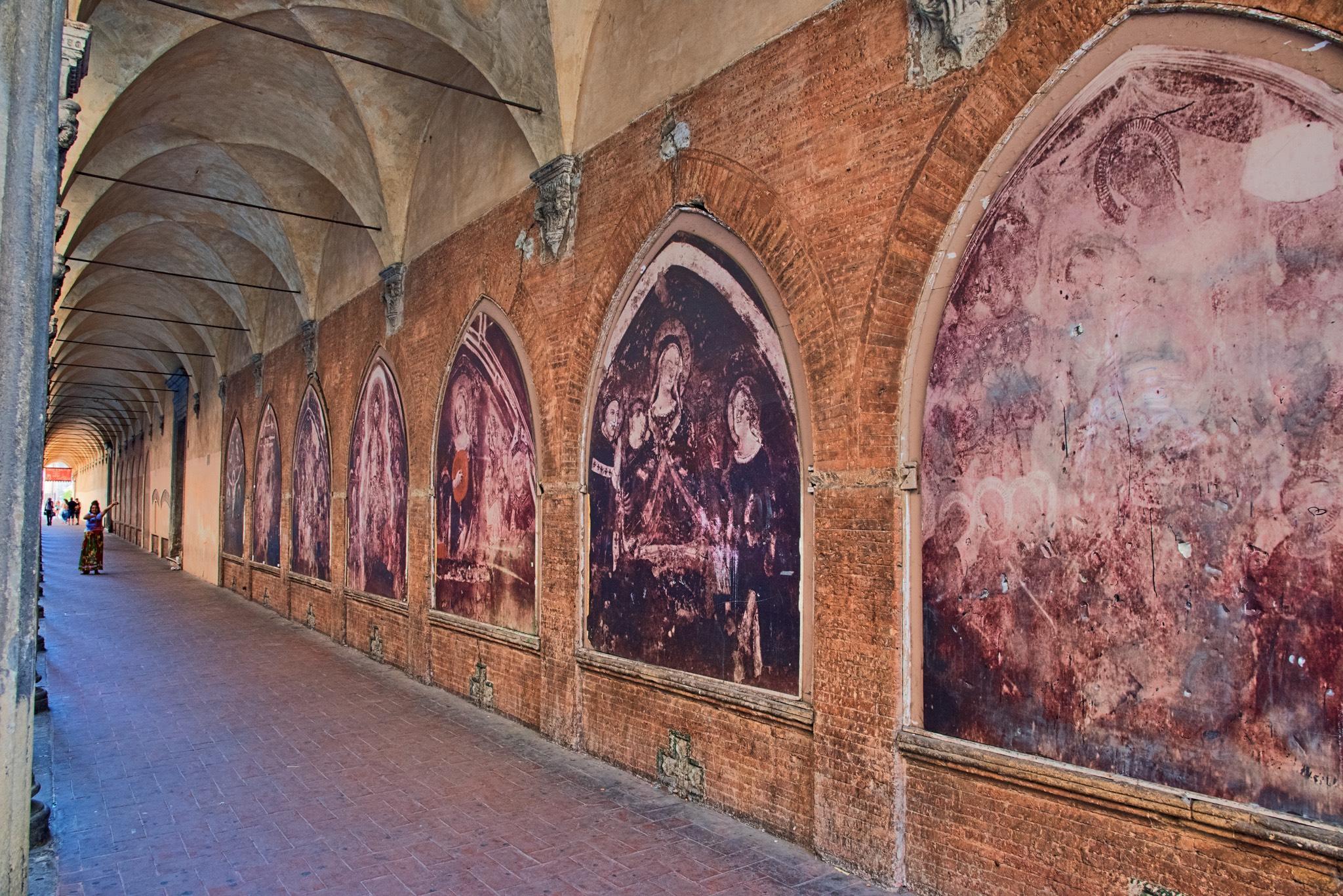
Walking along Via Zamboni, one can admire the old wall paintings under the arcades.
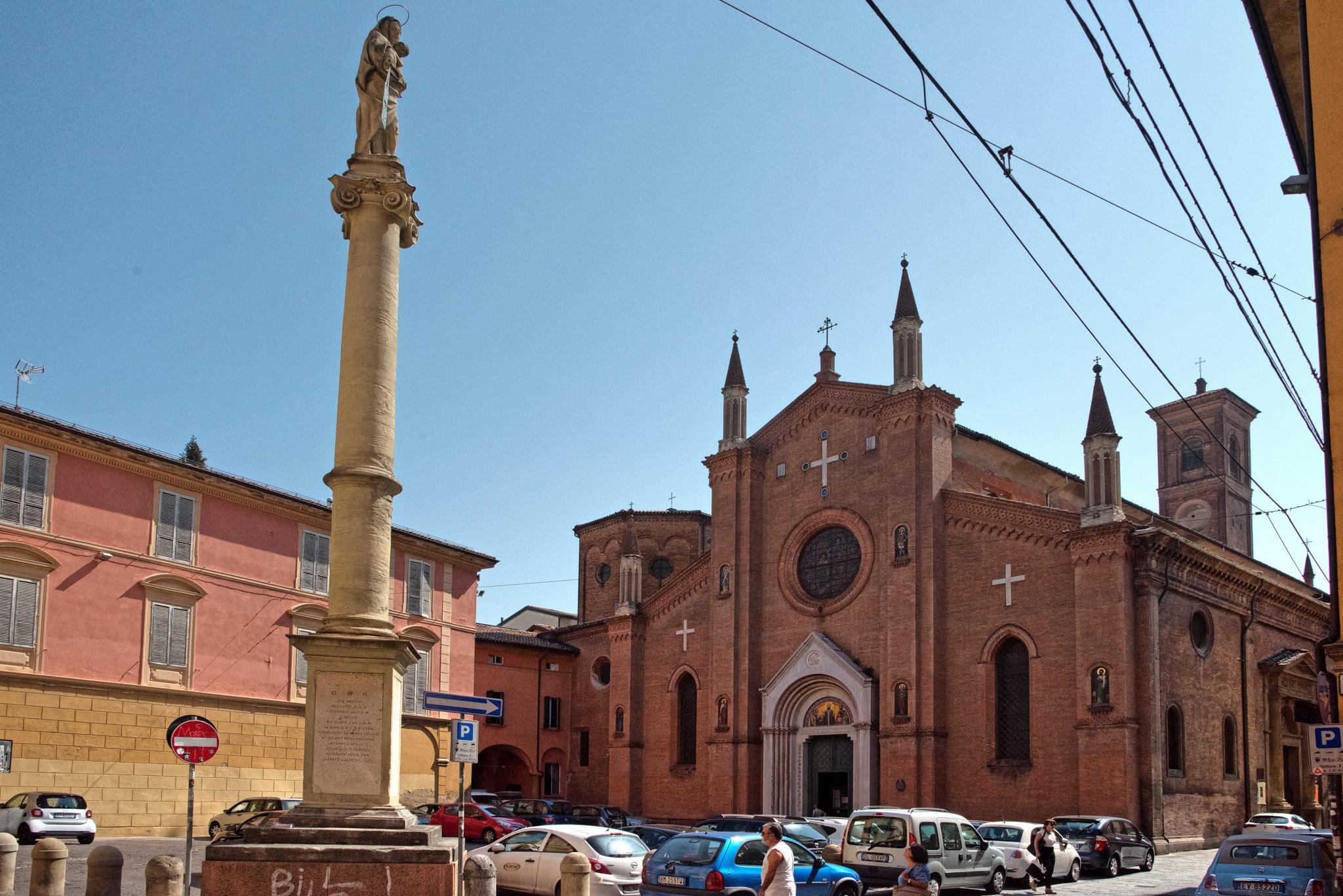
The church of St. Martin dates from the year 1227. In 1293, it was handed over to the Carmelite fathers. Rare traces of the Tuscan Renaissance in the region can be found in the right nave of the church: remnants of a fresco
by Paolo Uccello from 1437 “Adoration of the Child”(Adorazione del Bambino).
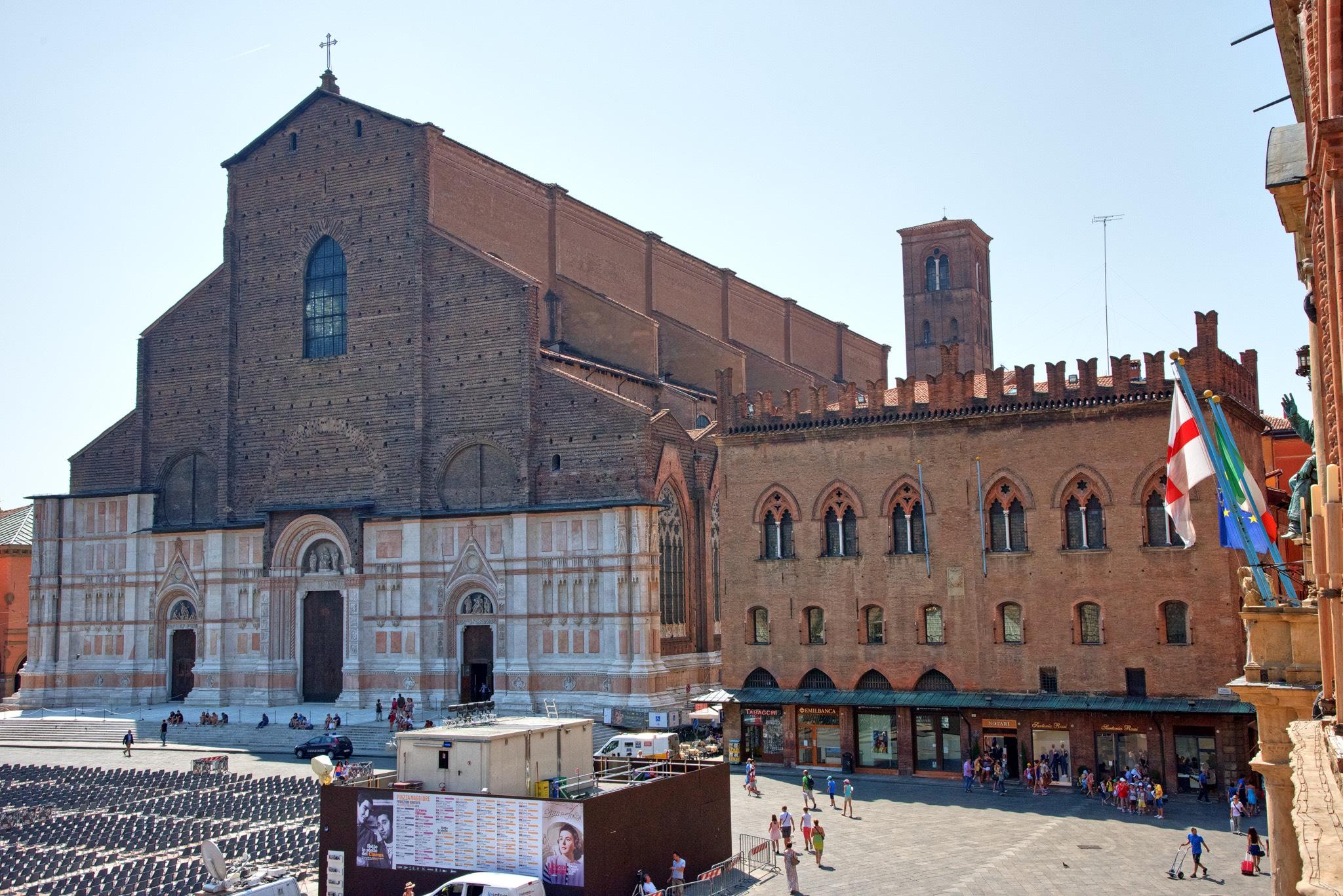
Construction of the largest brick church and the fifthlargest church in the world overall began as early as 1390. Since agreement on the facade has not been reached to this day, Bologna's main church remains unfinished. In 1530, the coronation of Emperor Charles V by Pope Clement VII took place in the basilica.
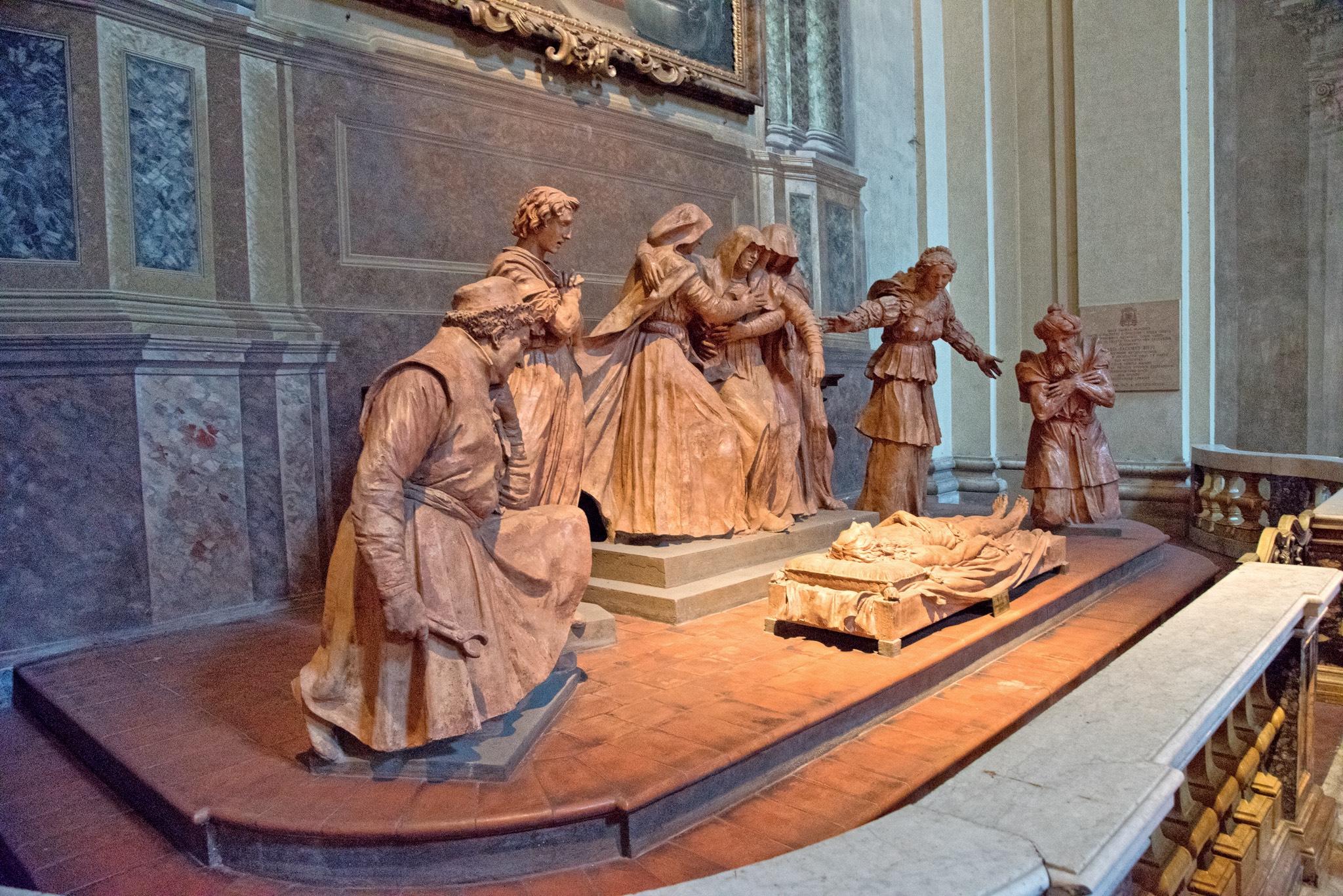
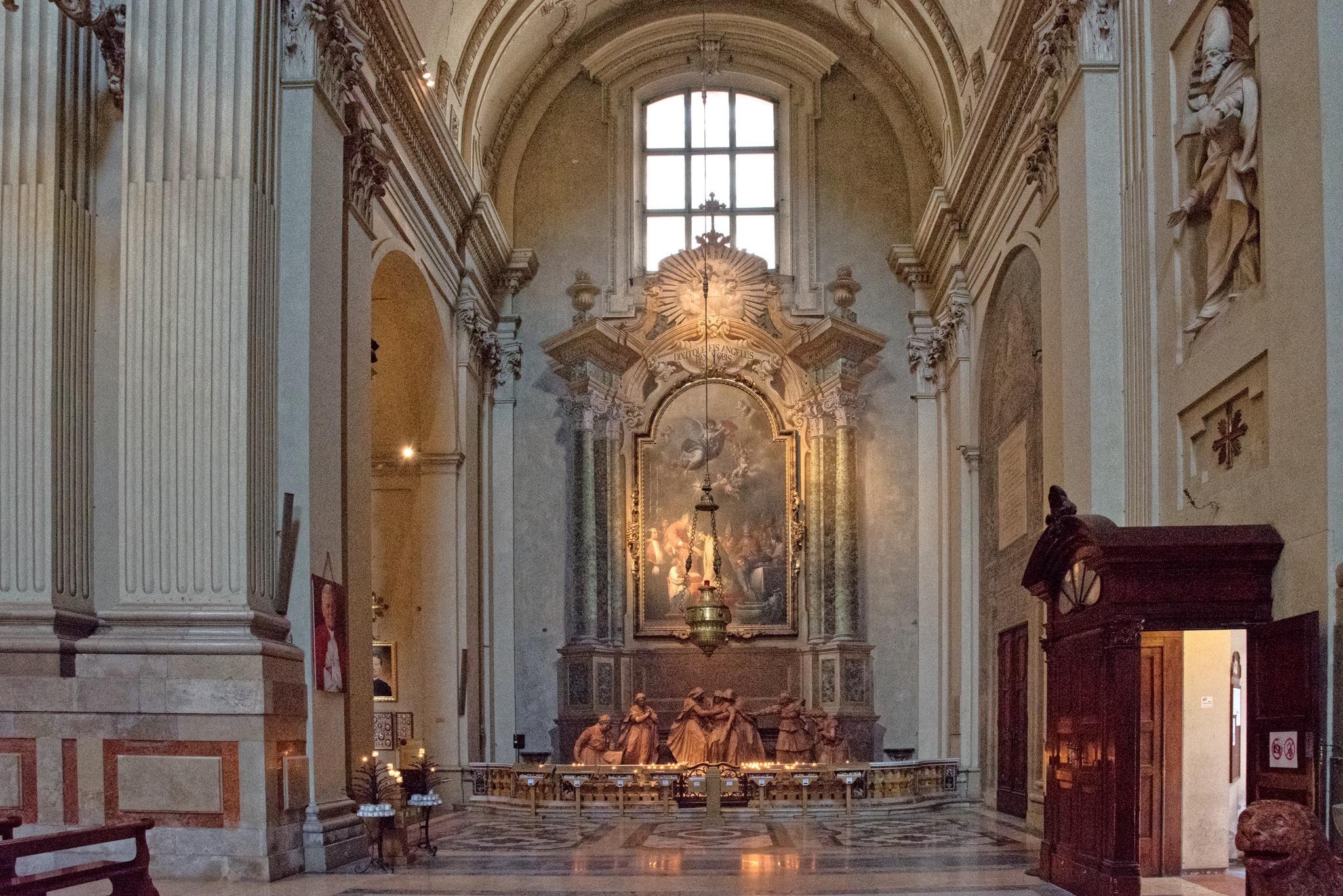
The cathedral of Bologna was built in 1028. After a fire in 1141, the church was rebuilt in 1184. The church houses numerous art treasures, including a crucifix made of cedar
wood and a group of figures created by Alfonso Lombardi at the beginning of the 16th century.
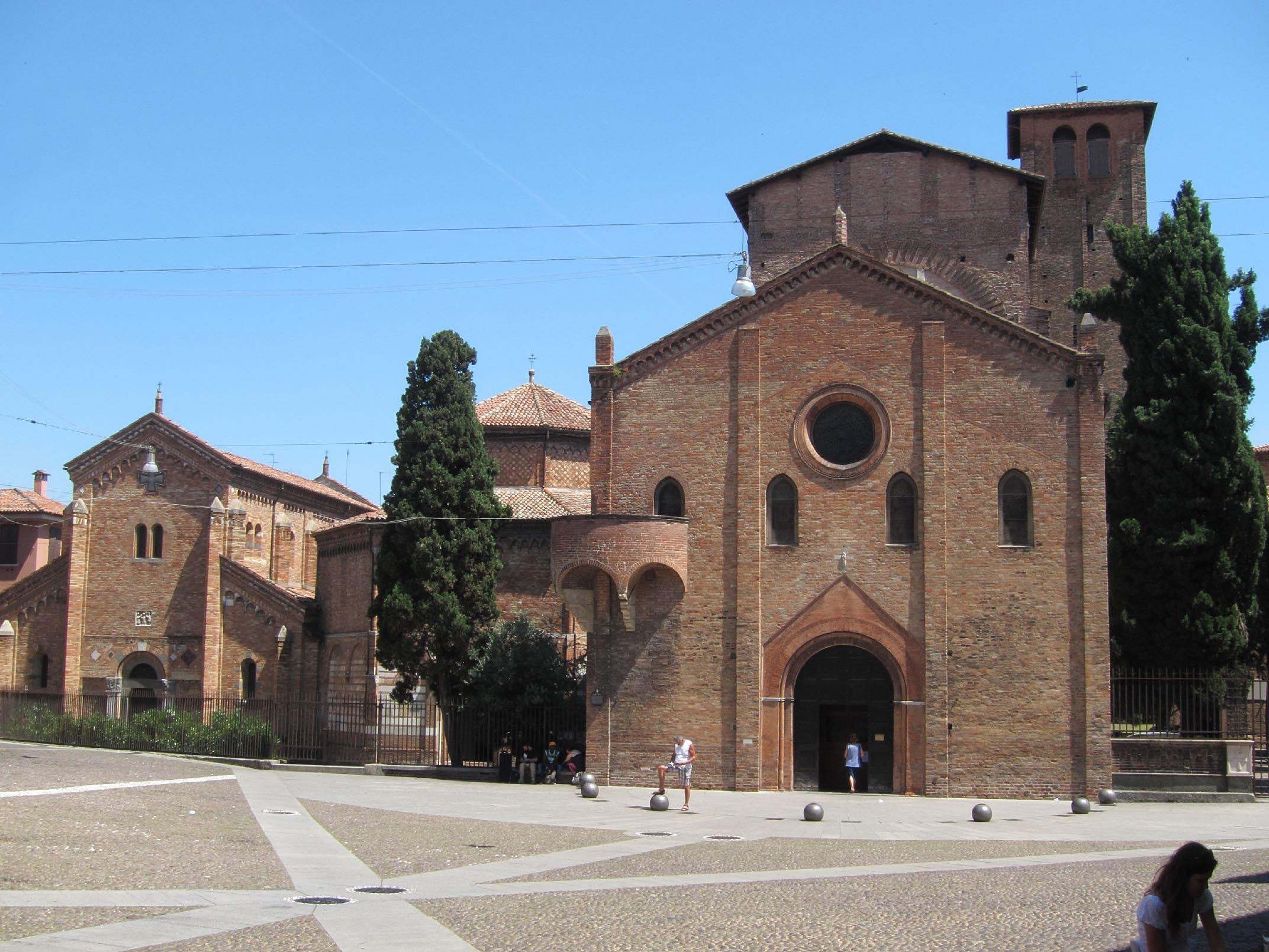
Die Basilika Santo Stefano wird auch als “Sette Chiese” (Sieben Kirchen) bezeichnet. Geschichtlich gehen Teile des Komplexes bis in das 5. Jahrhundert zurück. Im Laufe der
Zeit wurden durch Restauration und Umbauten aus den ursprünglichen sieben Kirchen nur mehr vier.
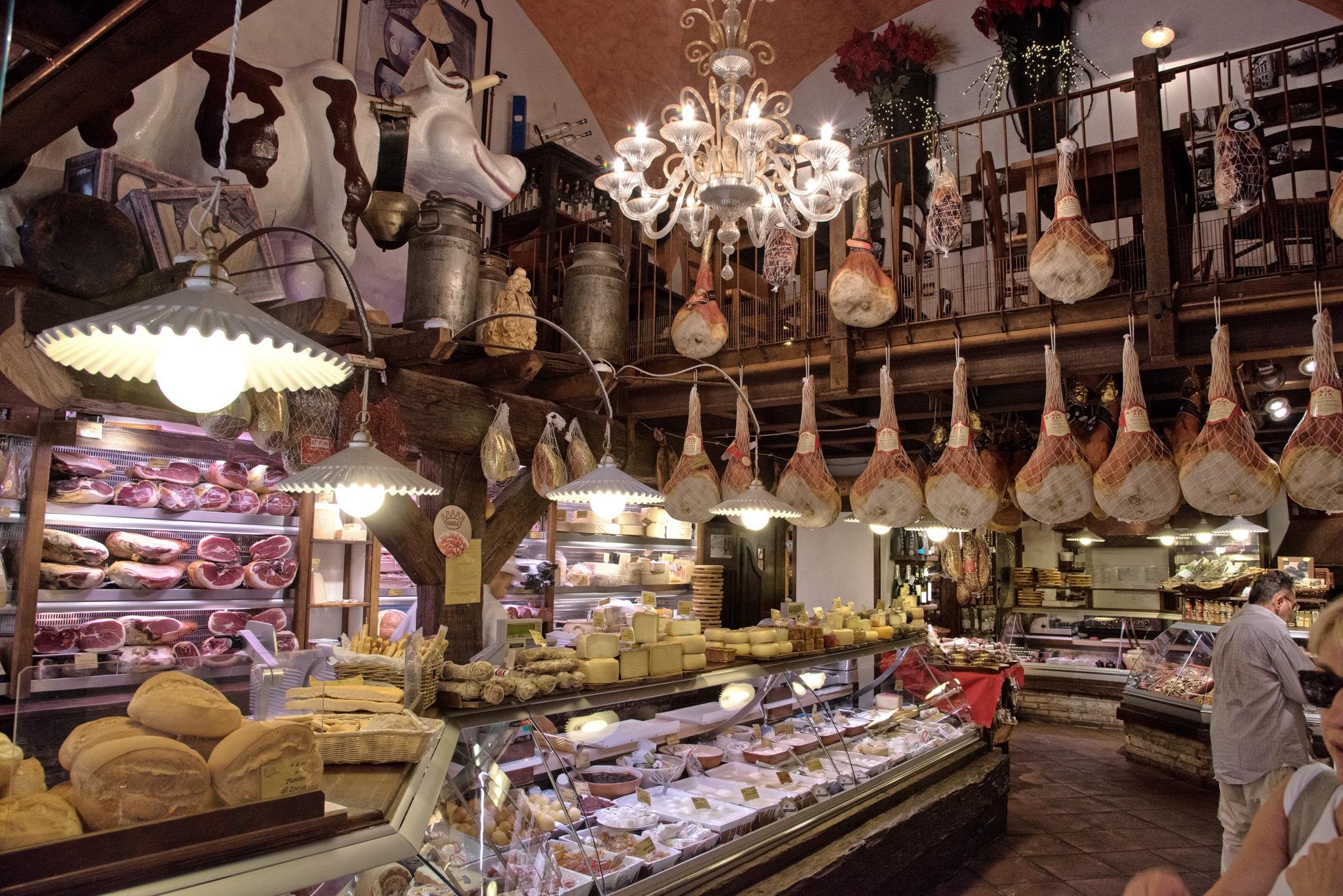

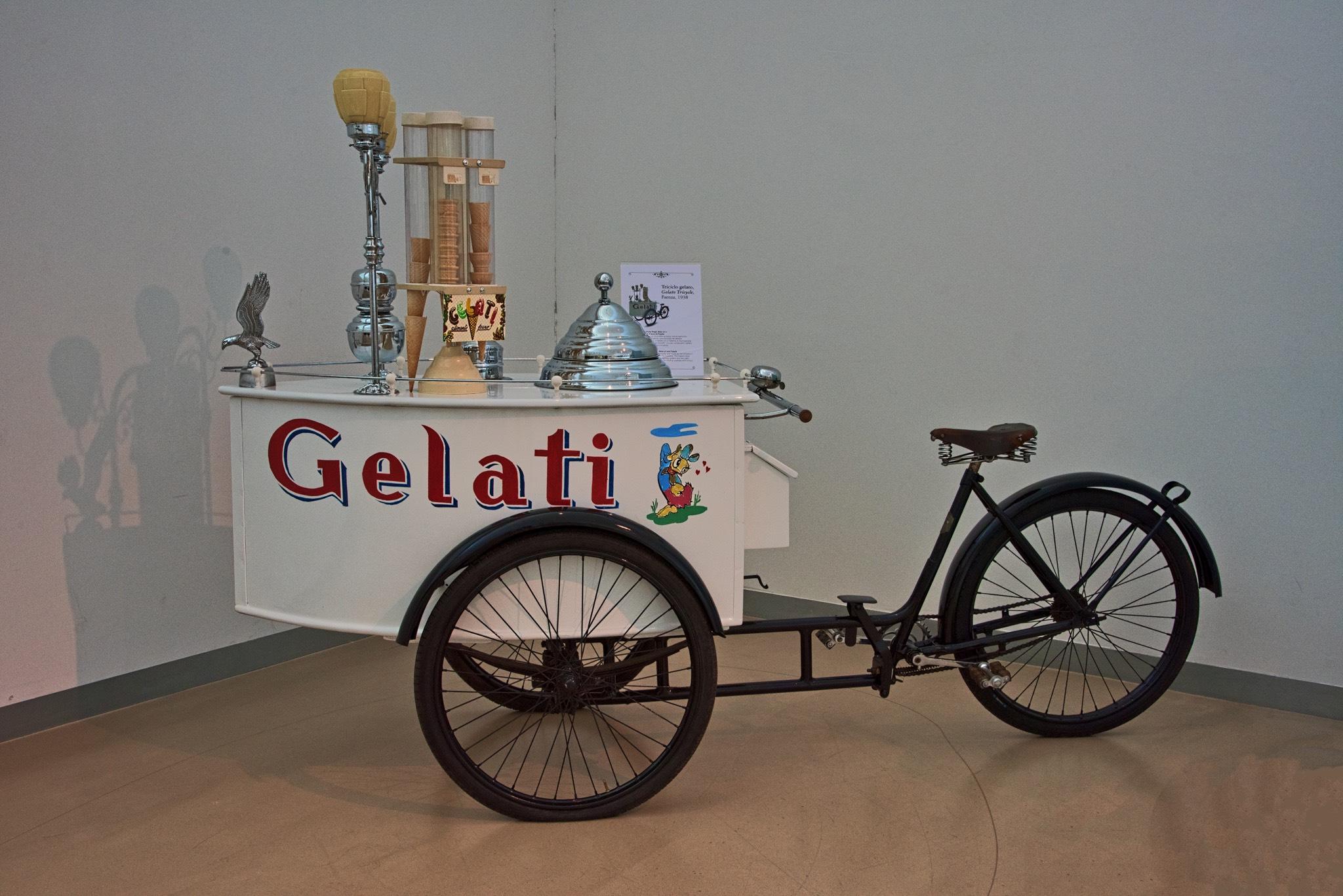
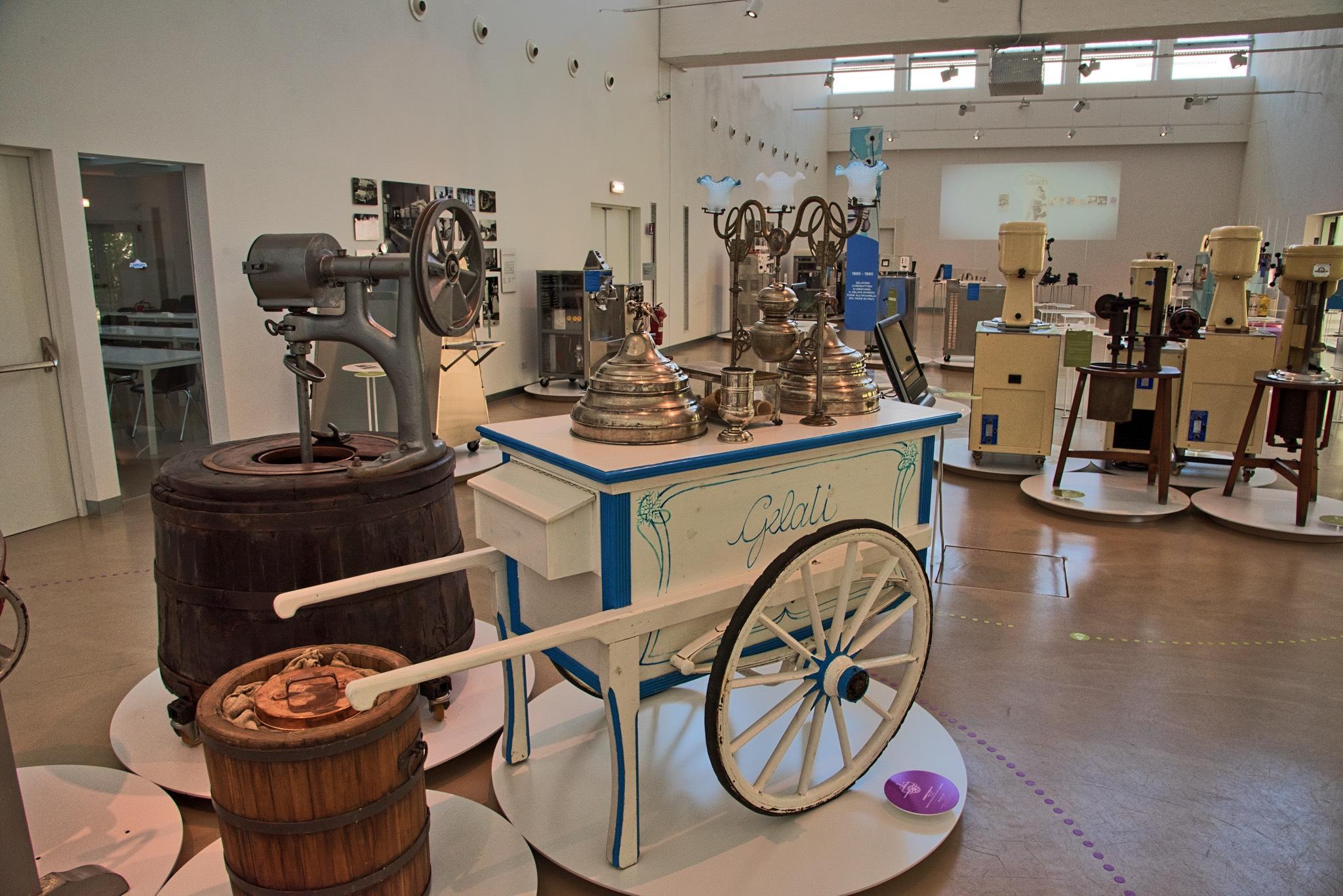
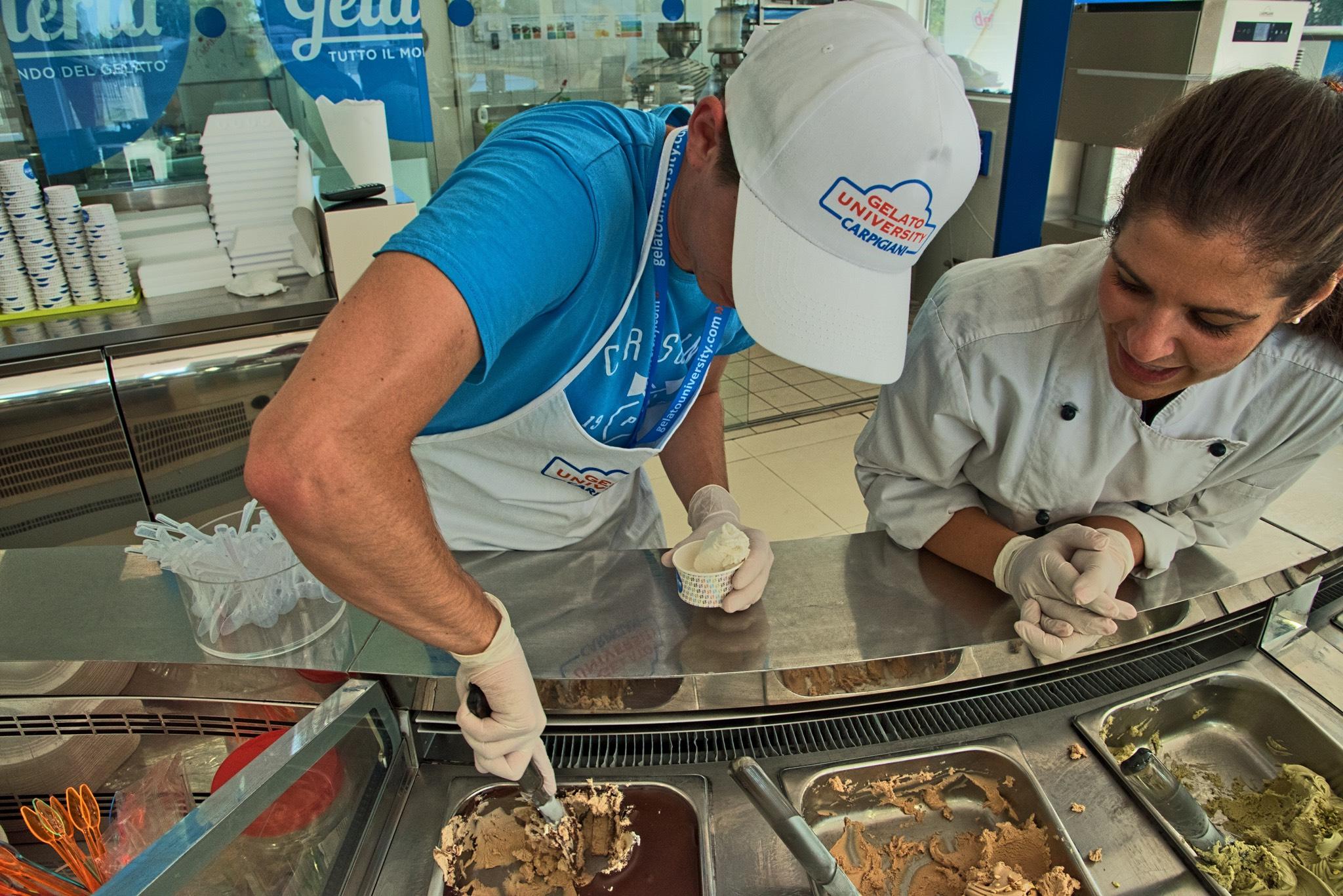
In 1944, the brothers Bruto and Poerio Carlo Carpigiani founded a company that dealt with the production of ice cream making machines.
Today, the company is a leader in the production of typical “Gelati.” In Bologna, one can visit the factory, the university, and the museum.
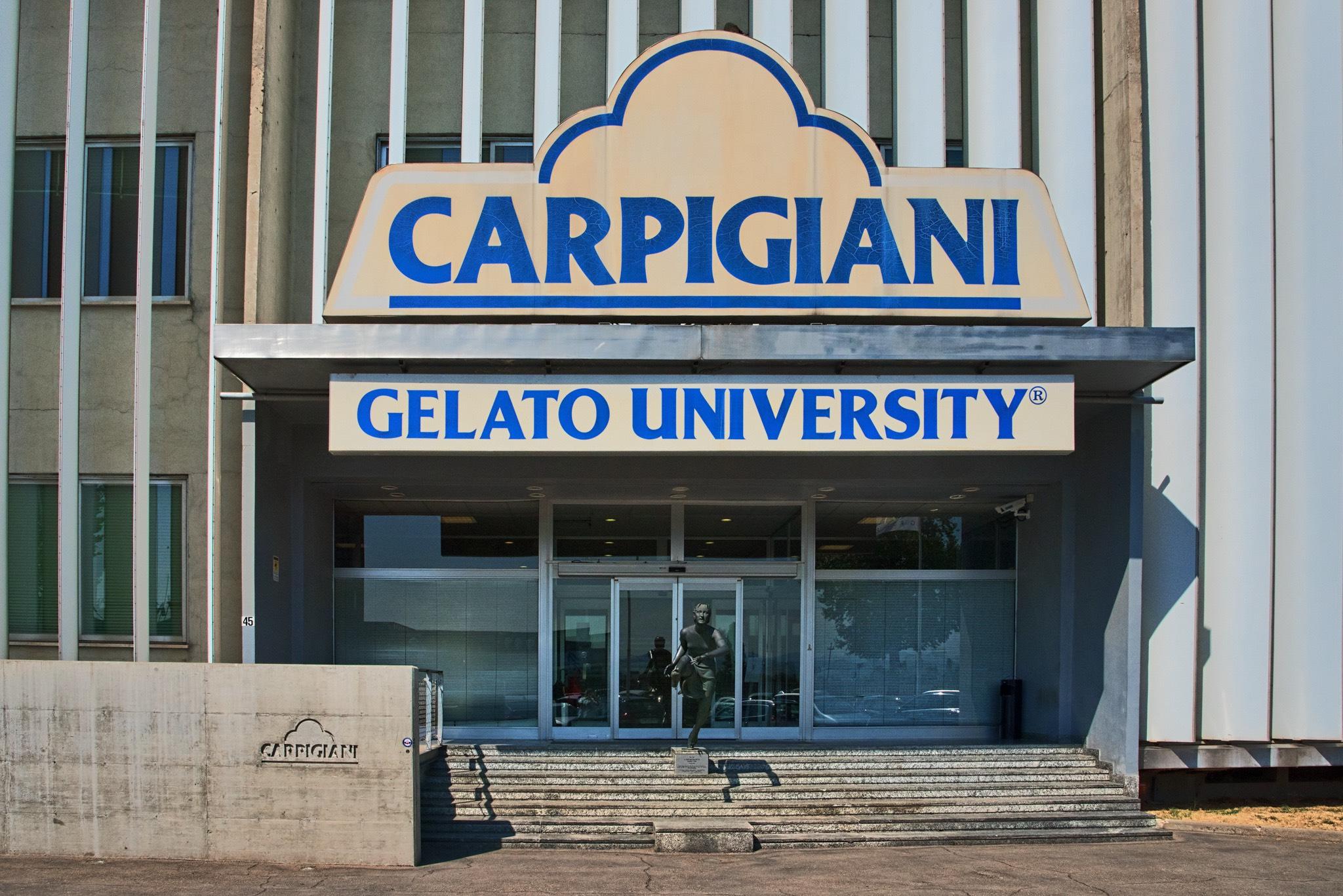
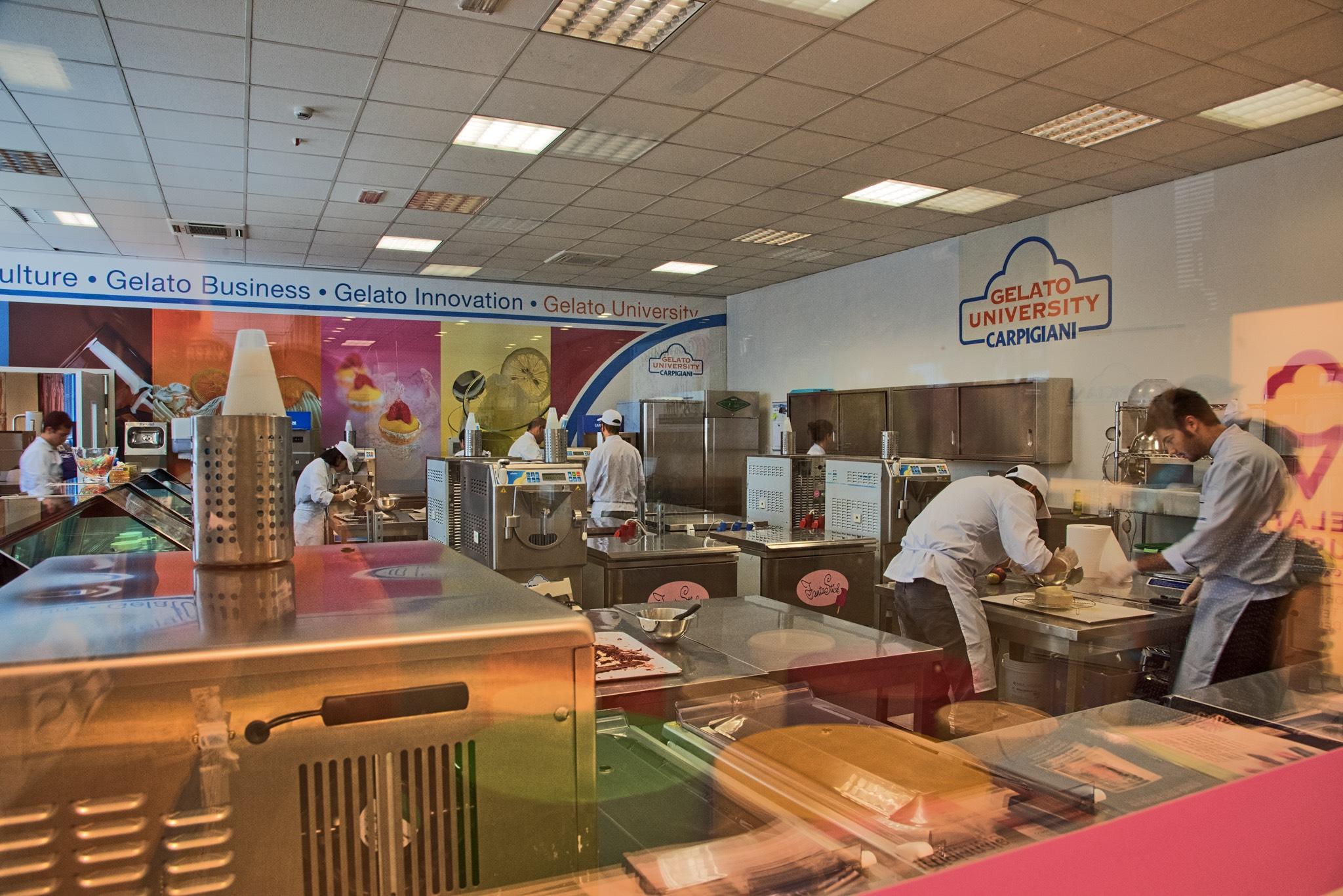
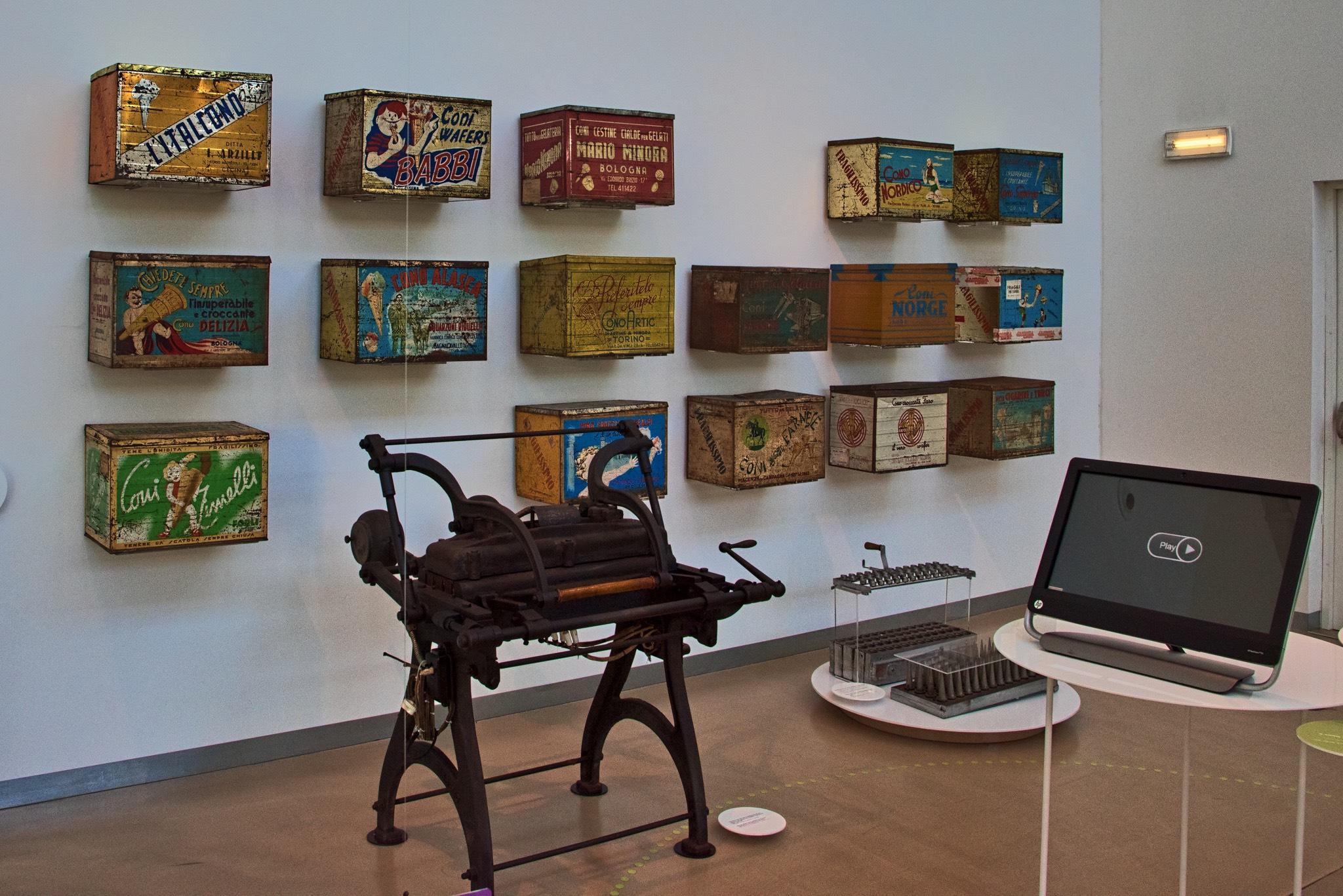
One could almost say that the history of Carpigiani is also the history of typical Italian “Gelato.”
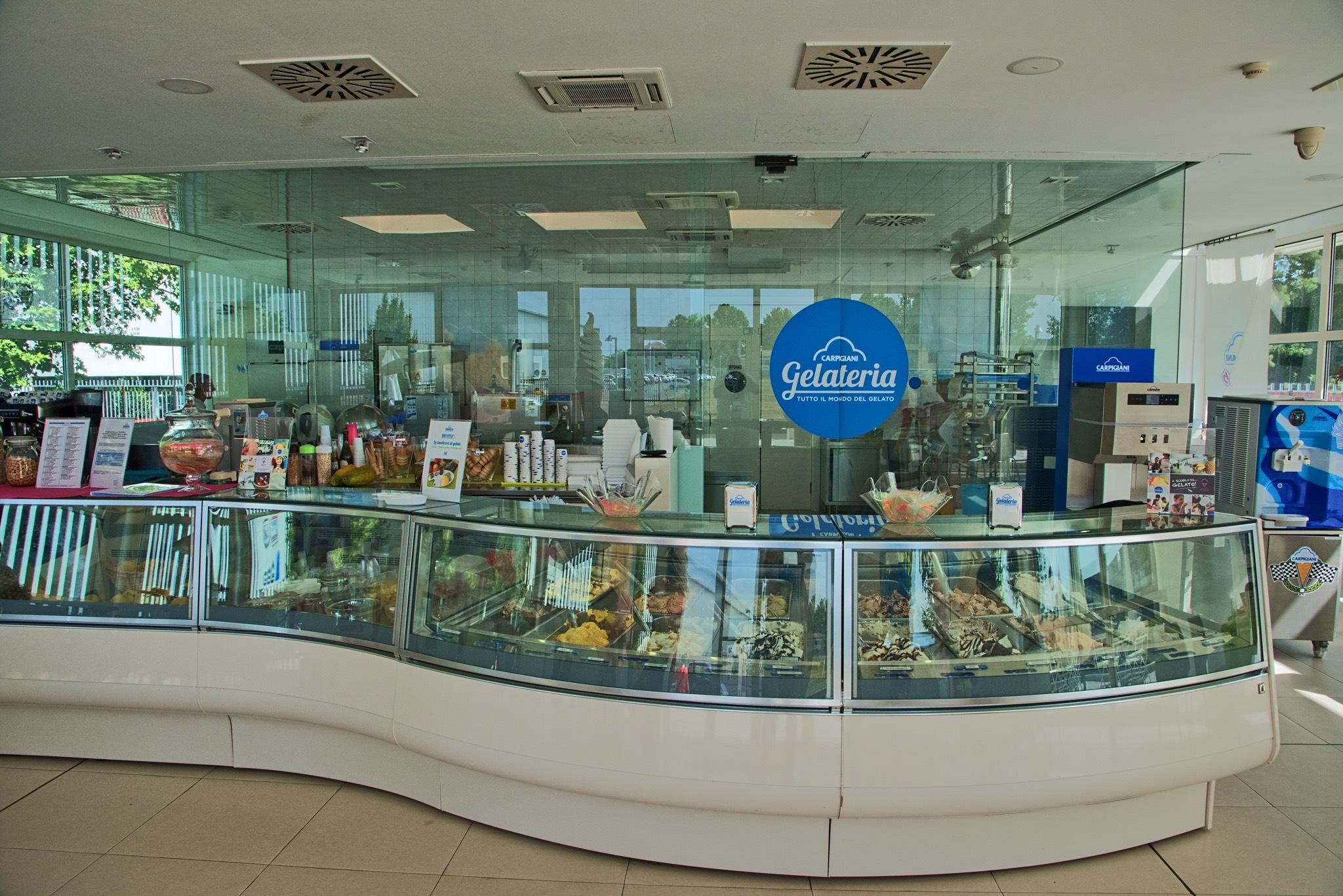
Here, everyone can make their own ice cream. Under professional guidance, delicious frozen specialties are produced.
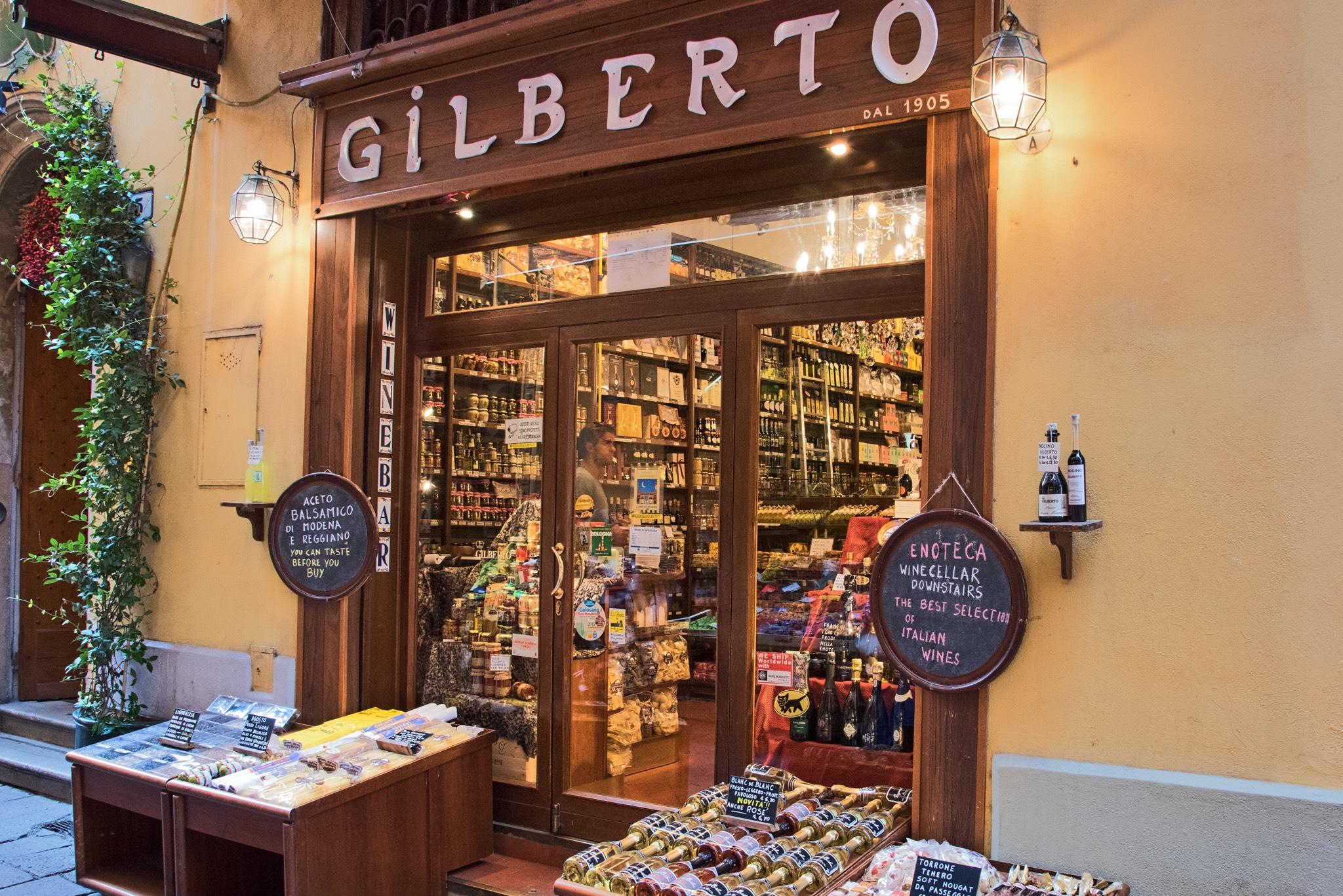
Gilberto is one of the many typical food stores in Bologna. For over a hundred years, all ingredients of Italian cuisine have been offered here. The Italian joie de vivre and
especially the love of good food, which also gave Bologna one of its nicknames, is expressed at Gilberto.
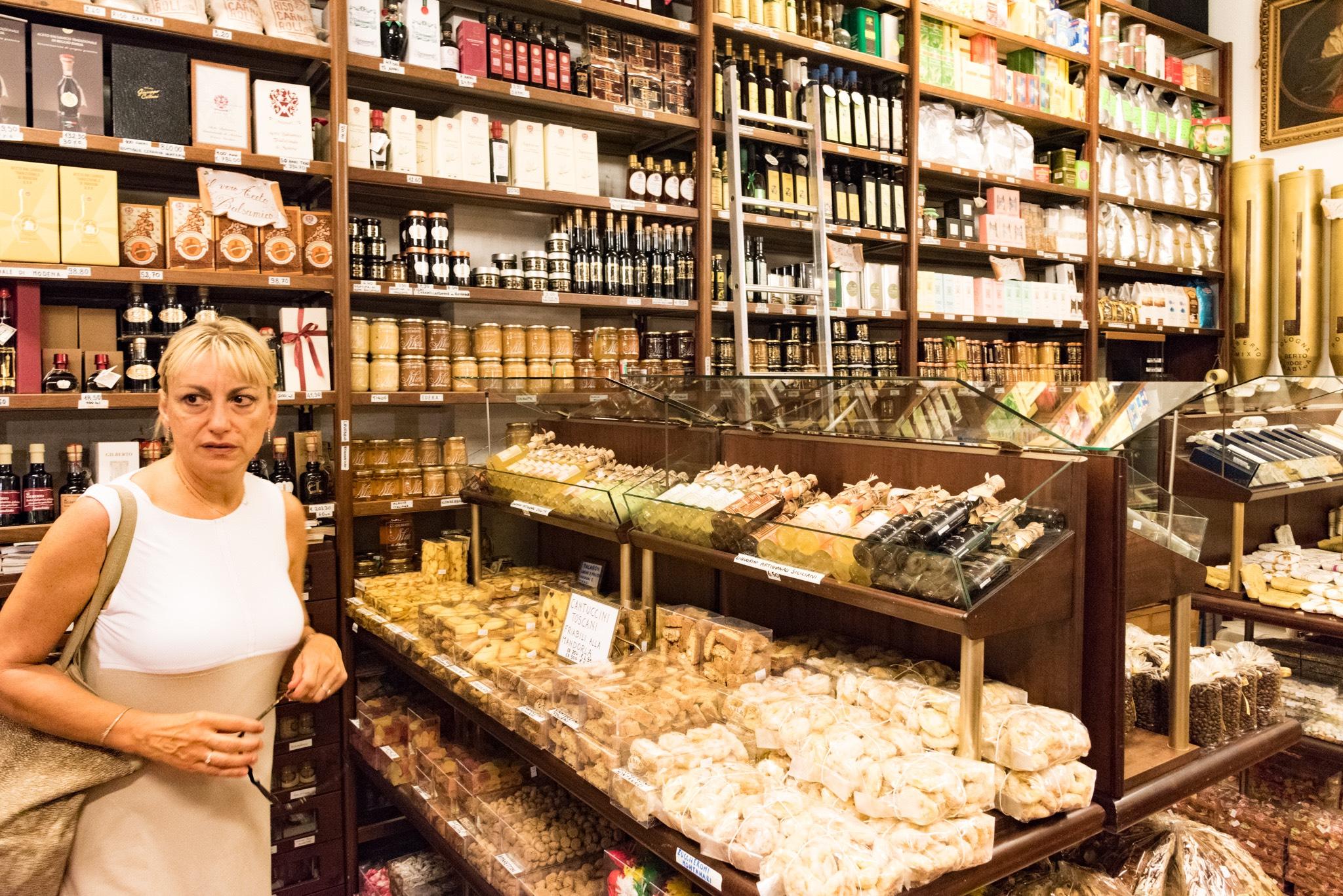
Sweet and Sour
Whether sweet Italian pastries or high-quality Aceto Balsamico Tradizionale, here you find everything a gourmet's heart desires.
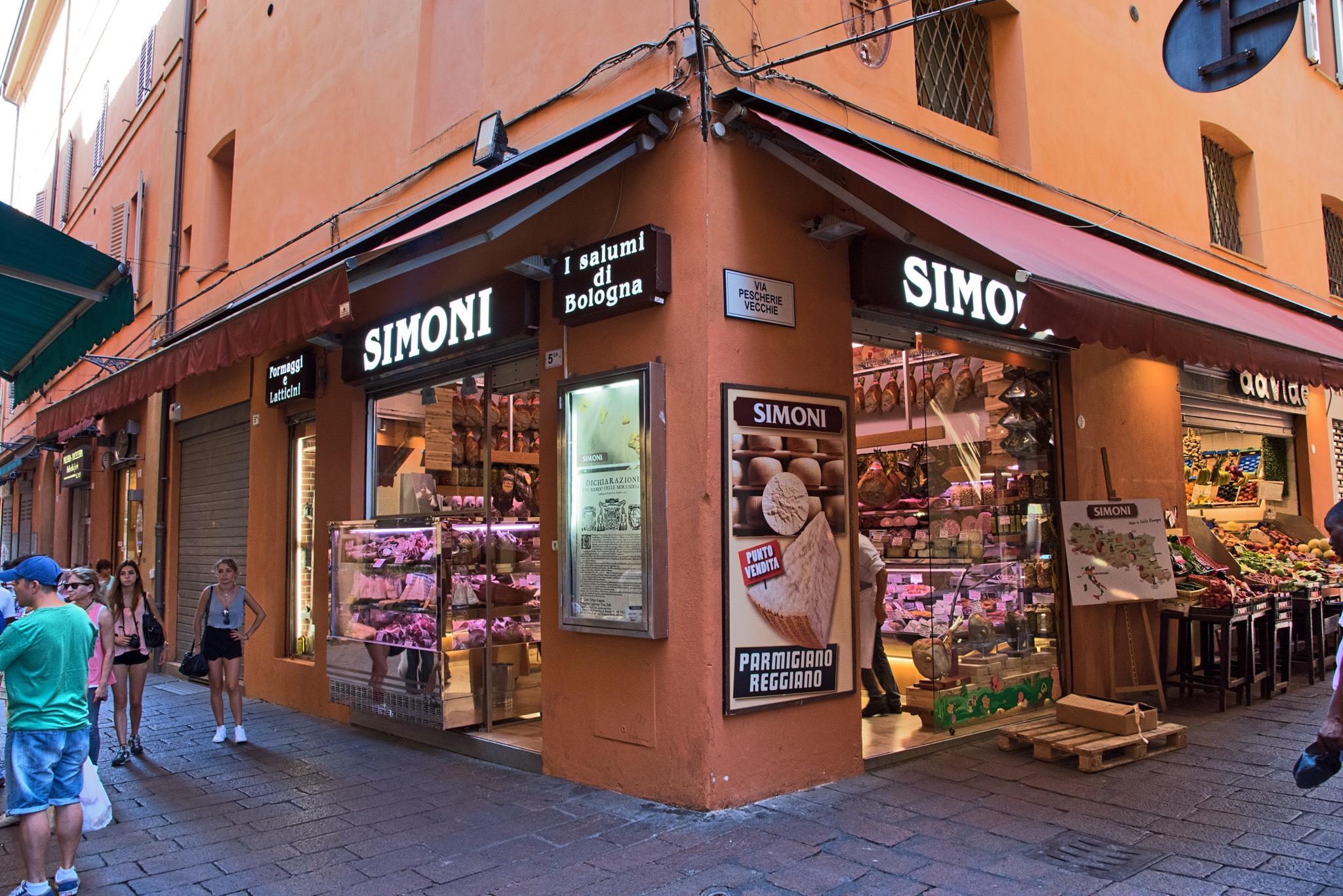
If the Land of Cockaigne was modeled after something, then Simoni could be exactly that model. Here you find fresh tortellini, salami, ham in many varieties, balsamic, and
of course the queen of sausages, mortadella. A visit to this temple of delight is definitely worthwhile.
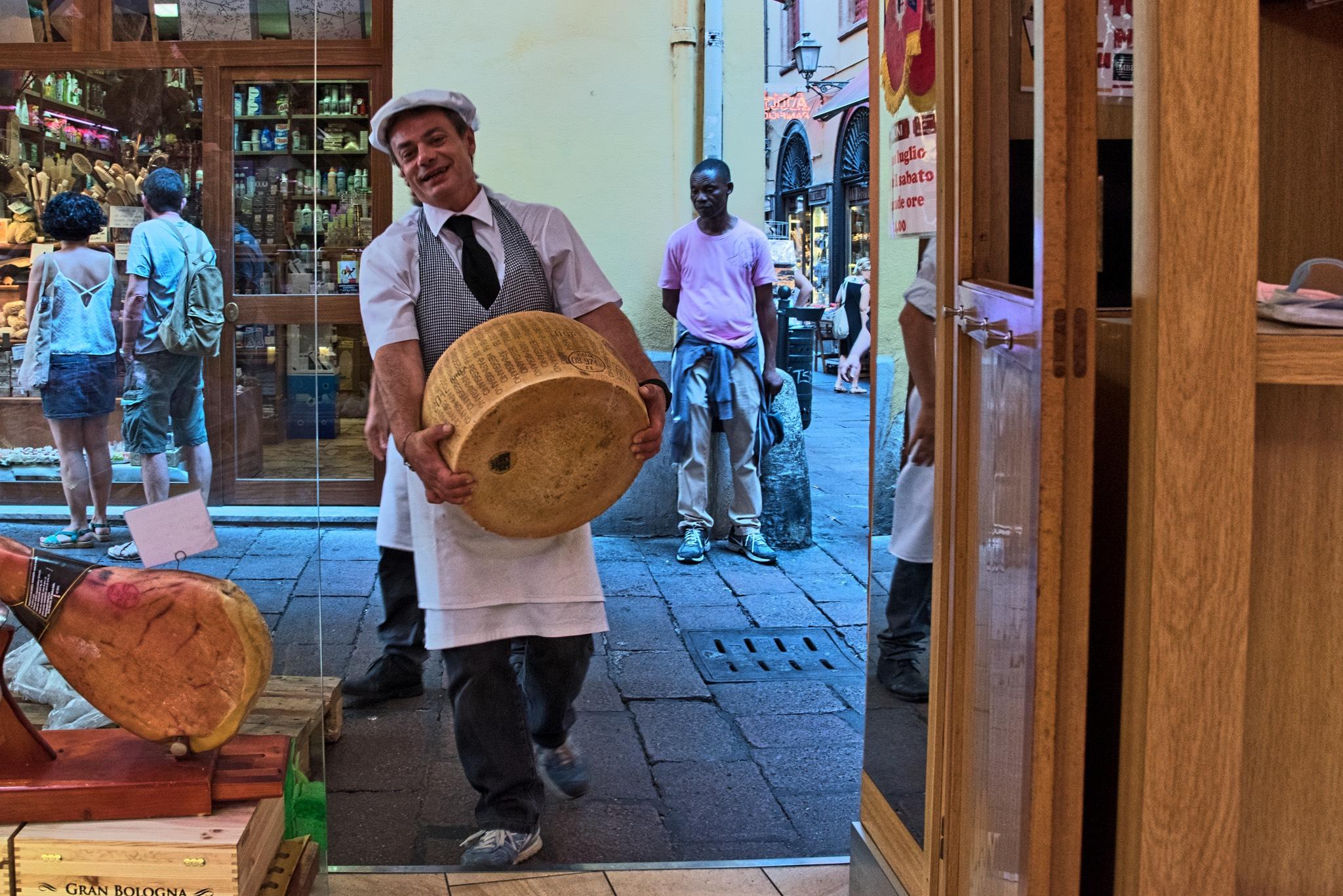
When the cheese delivery arrives, the wheels are carried into the store by hand. A sample convinces even critical palates. It Doesn't Get Fresher
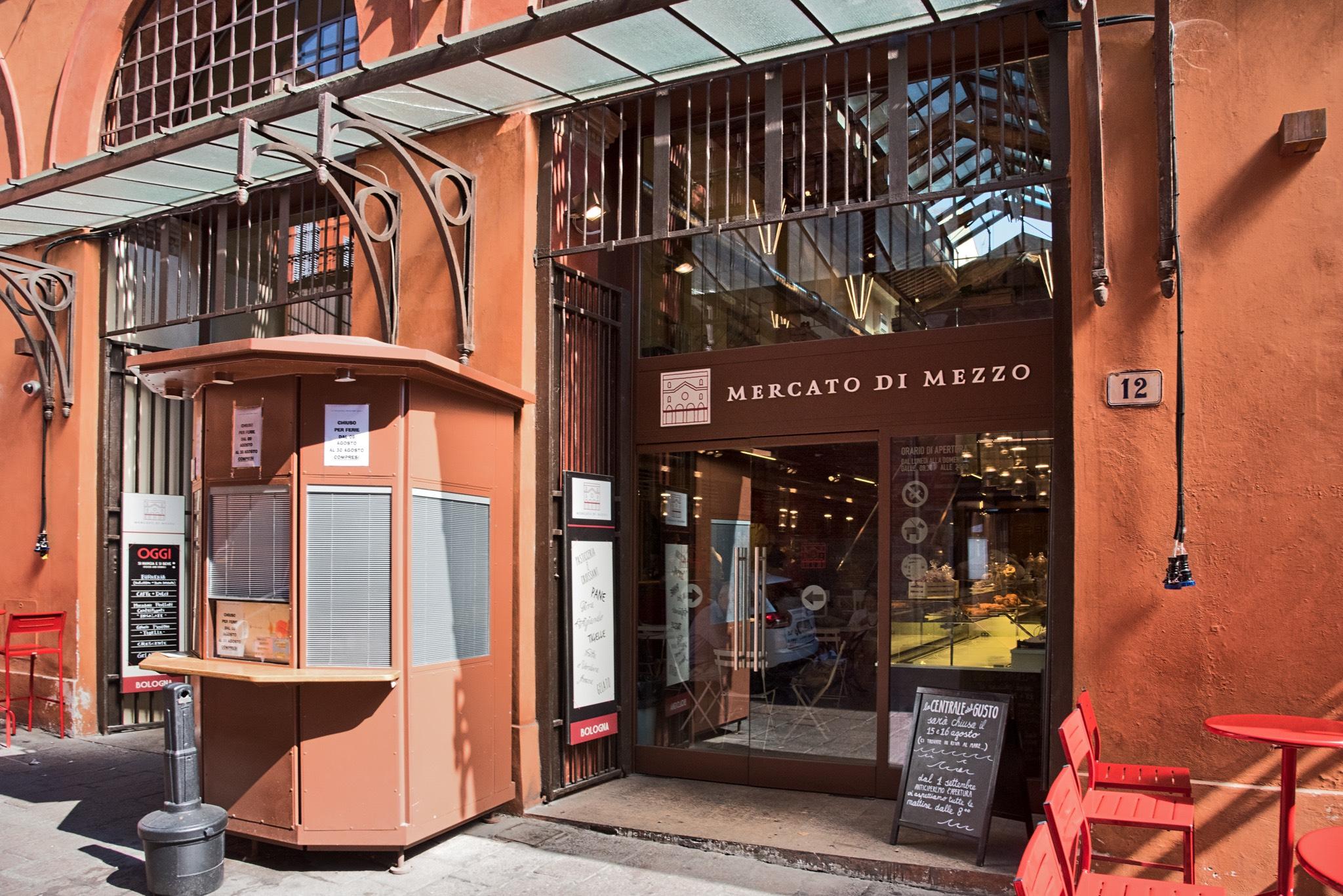
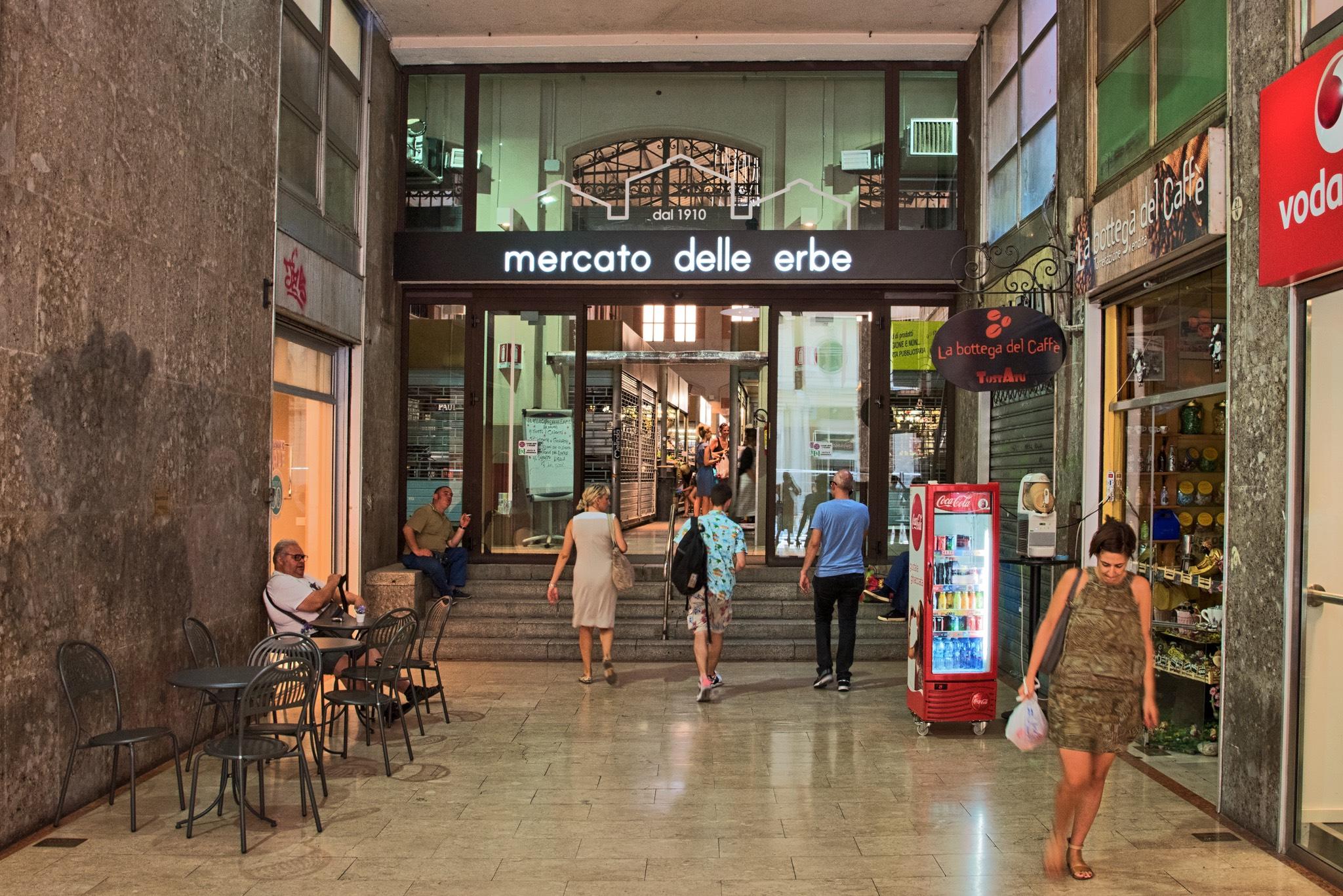
Just a market, one might assume. But the Mercato di Mezzo is a “collection” of small restaurants and cafés that are unparalleled. Particularly noteworthy is the Centrale del Gusto. Here you get coffee, ice cream, and sensational
sweets. The Centrale del Gusto is run by the region's leading pastry chef.
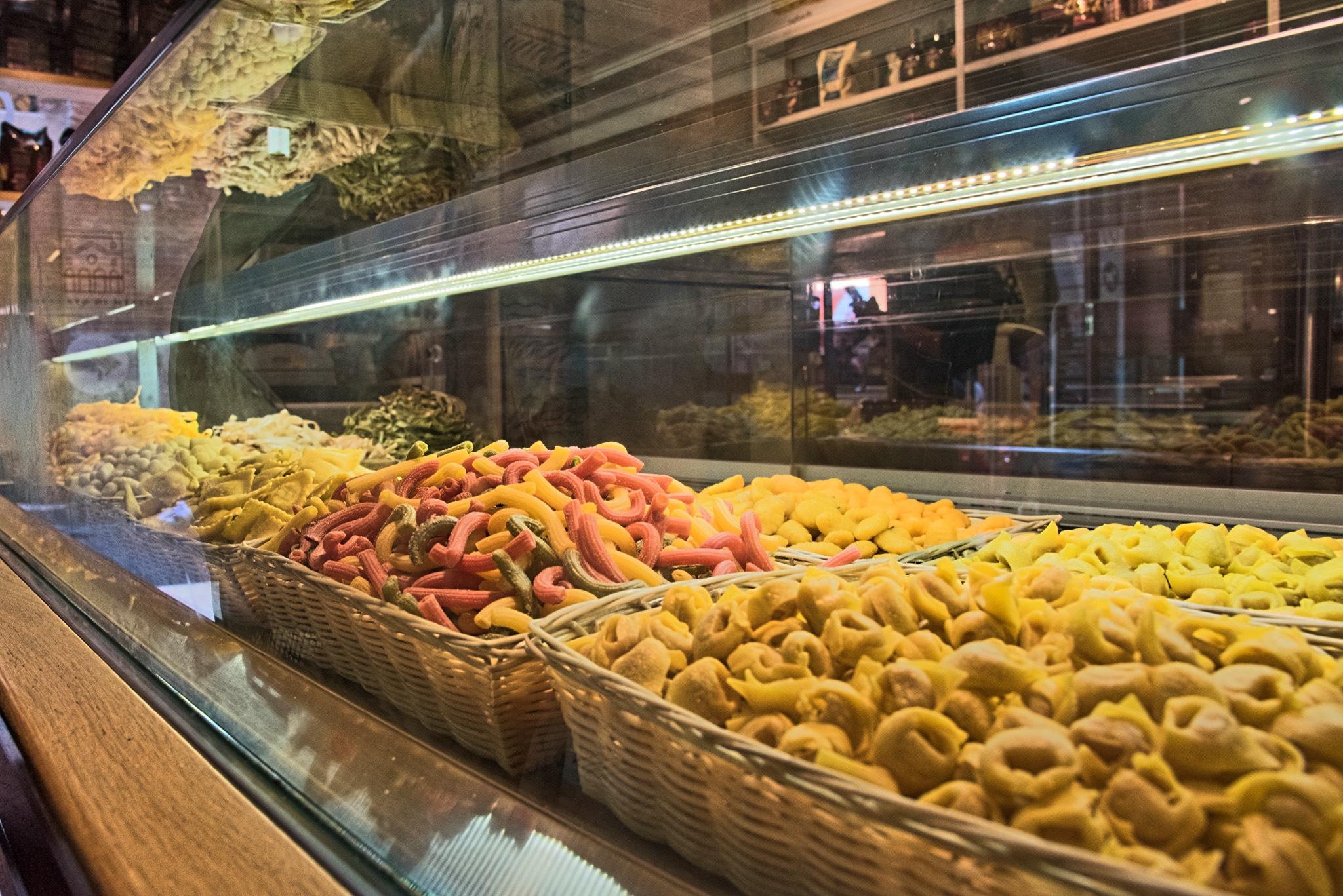
By the way, mainly locals shop here; at lunchtime, it's advisable to be in the market before 12:00 PM, as it gets crowded afterward.
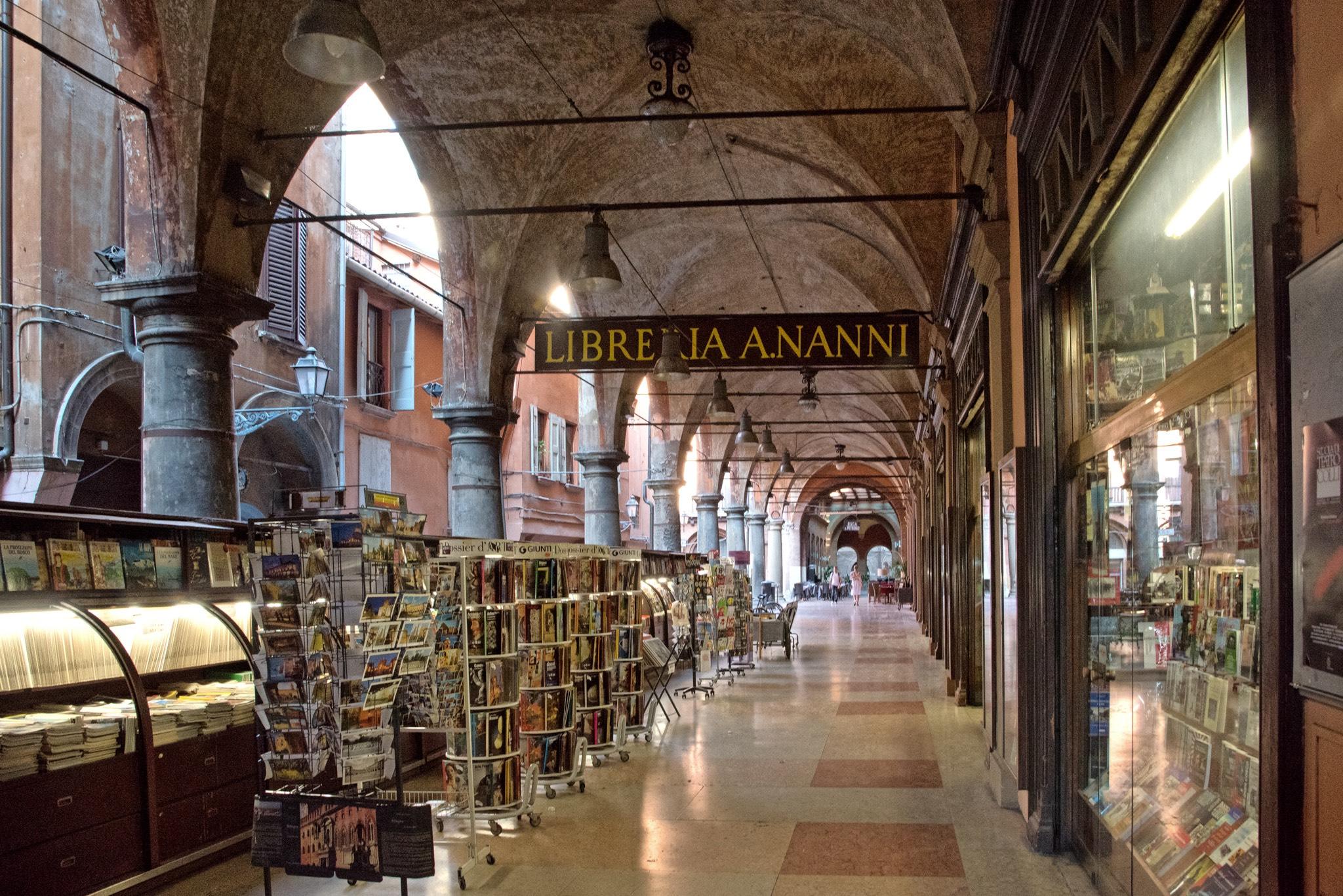

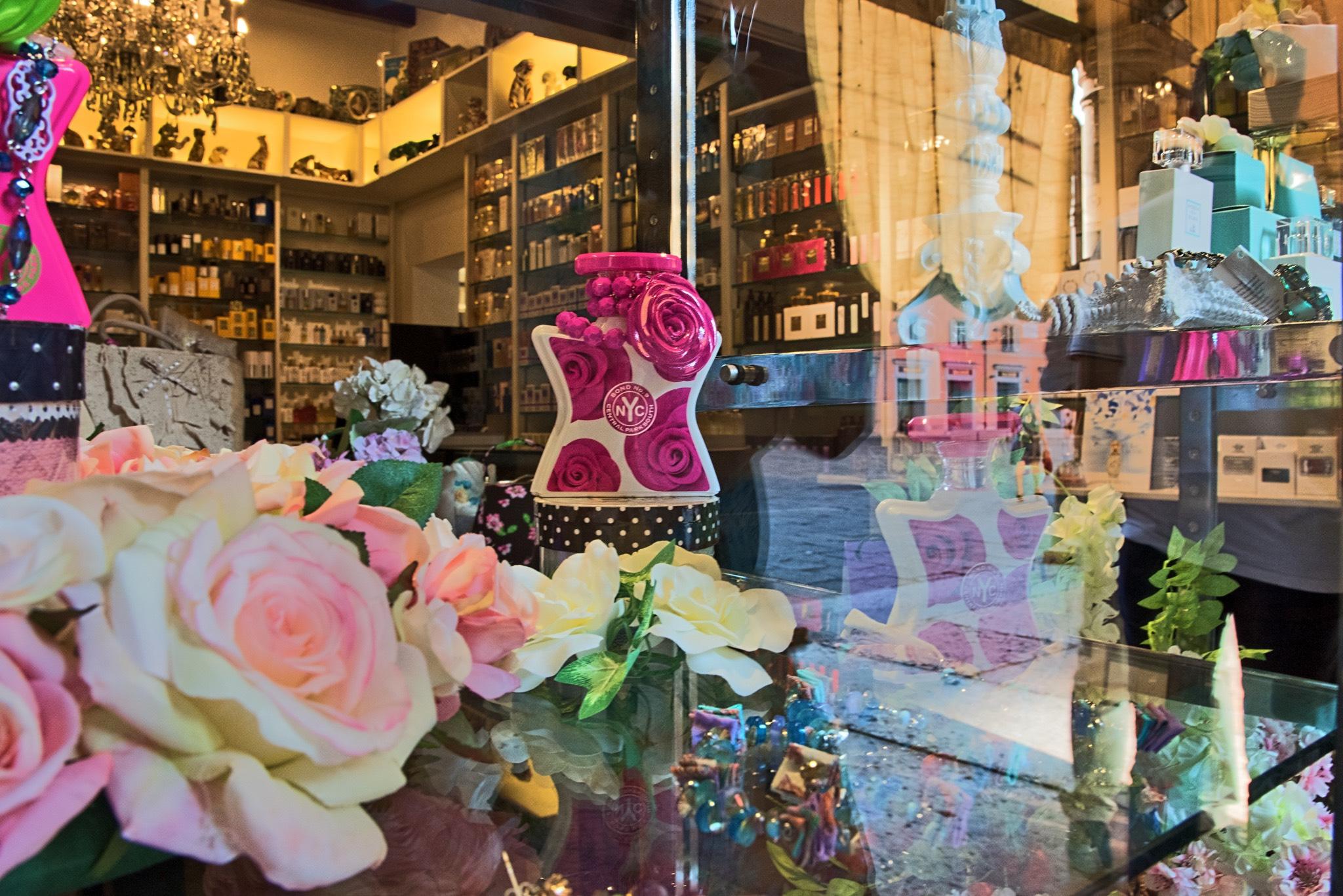
Particularly appealing is that there is an extensive local selection of shops, while the large chains are more in the background.
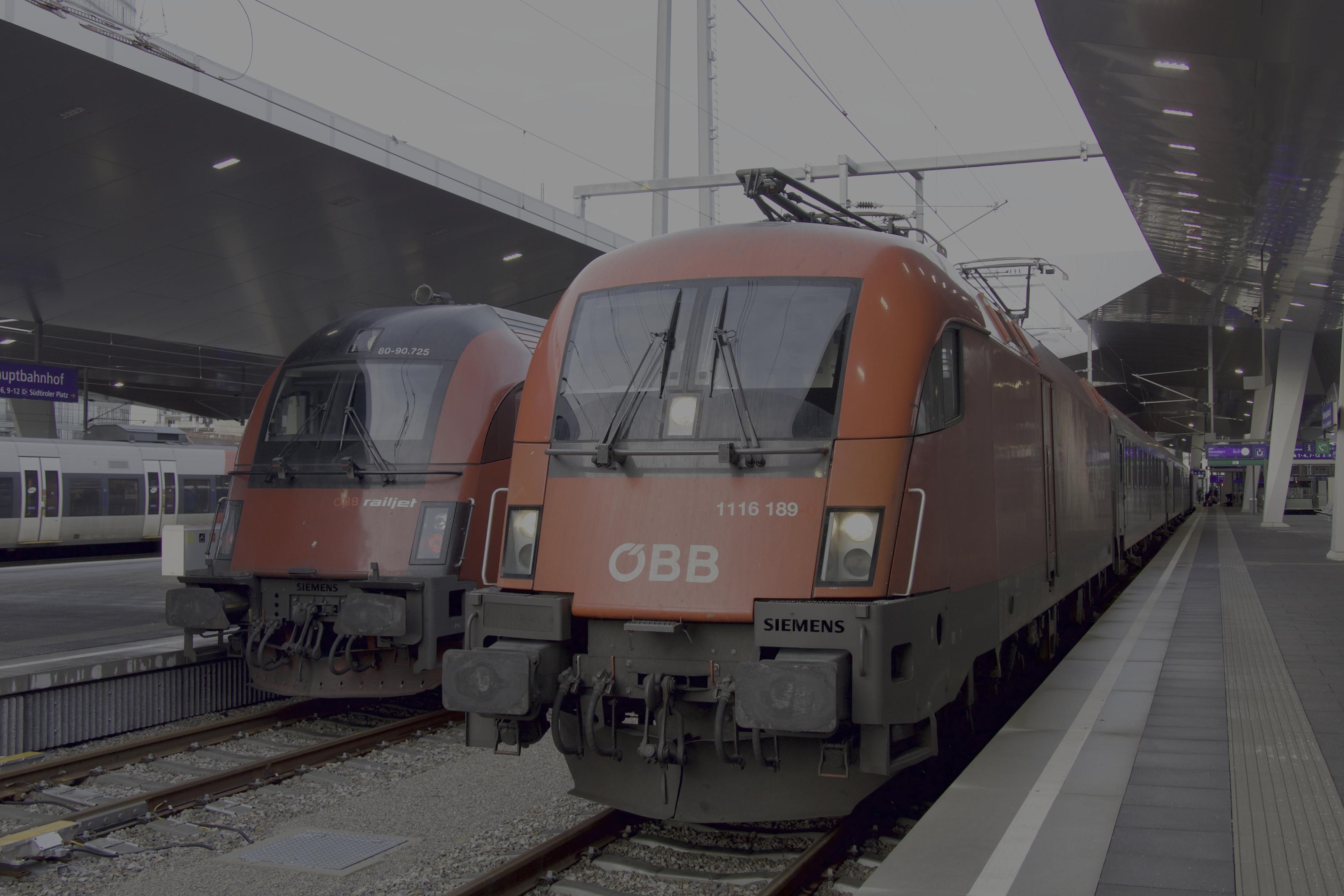

OBB Nightjet and OBB Nightjet Partner










This e-book was made possible through the kind support of the regional tourist offices and the OBB. German proofreading and editorial: Martin Andergassen.
References
Text, videos and photos by Rudolf J. Strutz unless otherwise stated. Timetables and travel information: OBB
Assistance from AI
Artificial intelligence applications are occasionally employed for image editing, including the elimination of undesirable components. Additionally, AI tools can enhance the clarity of images and diminish background noise.
The travel guides are also available free of charge on the OBB online entertainment and internet portal railnet, which is installed on all railjets, nightjets (NG) and cityjets
Copyright
This book was licensed under the Creative Commons License. Conditions of use: attribution, non-commercial, no editing and distribution under the same conditions only as a complete work! The use of individual photos and text is not permitted. This eBook is available free of charge.
All links provided are current at the time of publication of this ebook. Links to tickets usually lead directly to the exhibition location. For tickets and timetables, local public transportation services are linked.
All logos and company names are used for information purposes only; any use outside of this e-book must be approved by the copyright holders.

SCOTTY mobile shows the timetables for all public transport and helps you plan your travel route.

Book your trip online or view the current timetable online and directly on your mobile phone.