
Volume 51, Issue 8 - May 26, 2026

Volume 51, Issue 8 - May 26, 2026
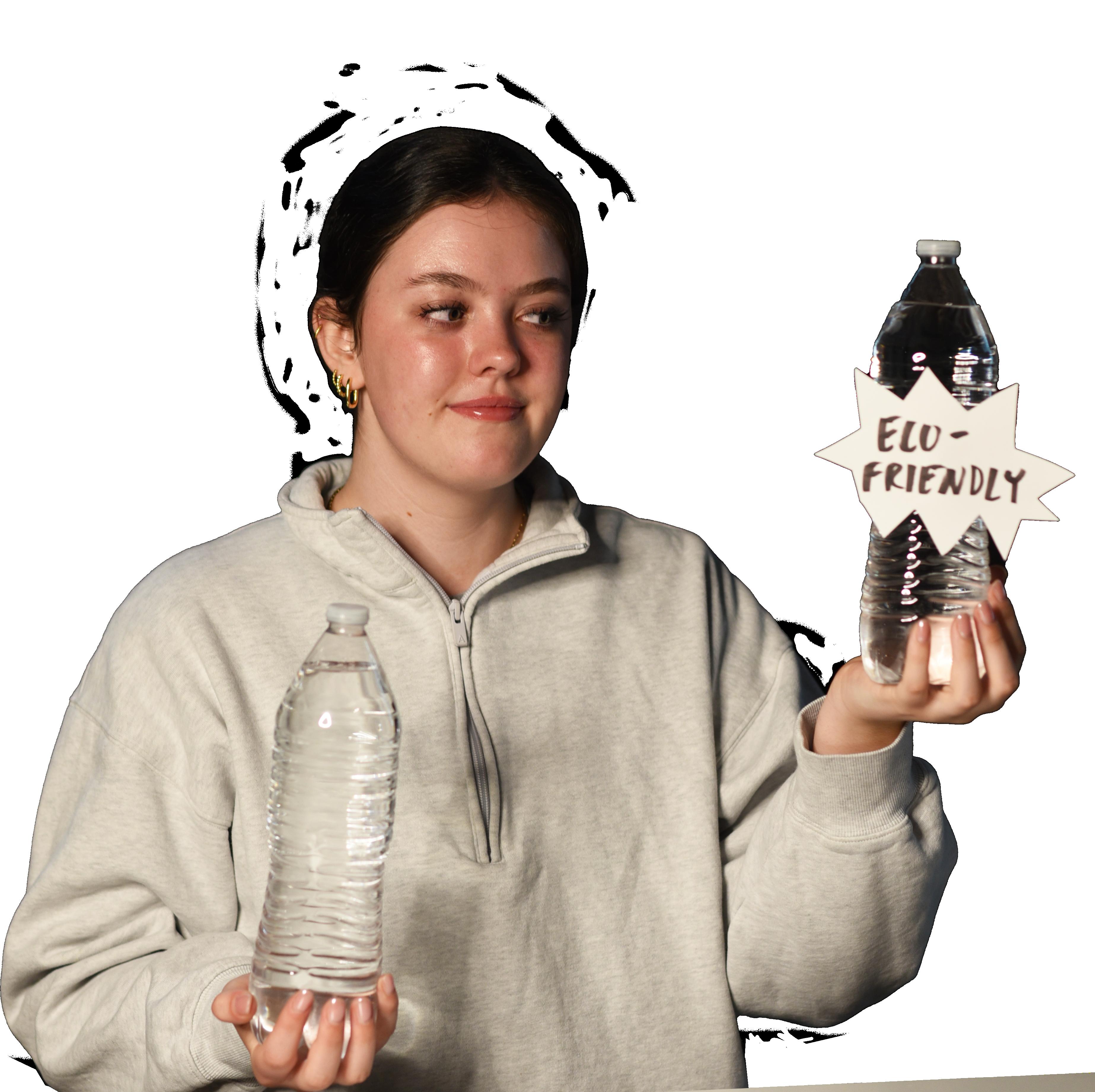
mental impact. But how much are these companies actually doing, and how meaningful are their efforts?
mate efforts, but don’t make substantial adjustments to their manufacturing methods.
“Eco-friendly.” “Green.” “All-natural.” Many corporations use these broad terms, claiming that they prioritize sustainability in their manufacturing to persuade consumers that their purchases have little environ-
Upper school students share the experience of running for elected positions and prepare to take on their new roles. Read more in NEWS.
This raises the concern of greenwashing, a term used to describe companies that exaggerate or falsify their environmental efforts, often misleading consumers. By relying on vague language and selective data, many companies make statements about their cli-
Departing teachers reflect on their time at SPA and look forward to what comes next for them. Read more in FEATURE.
Sophomore Anna Klevan believes that companies greenwashing can blur the fine line between authentic efforts to be environmentally friendly and misleading marketing.
continued on pg. 8
Residents of Uptown Minneapolis come together in efforts to revitalize the area. Read more in SOLUTIONS.
SENIOR SPEAKS.
Class of 2025
graduate Serene Kaludgan gives a commencement speech at graduation. Senior speakers are chosen by the Senior Class Leadership Council via video submissions.

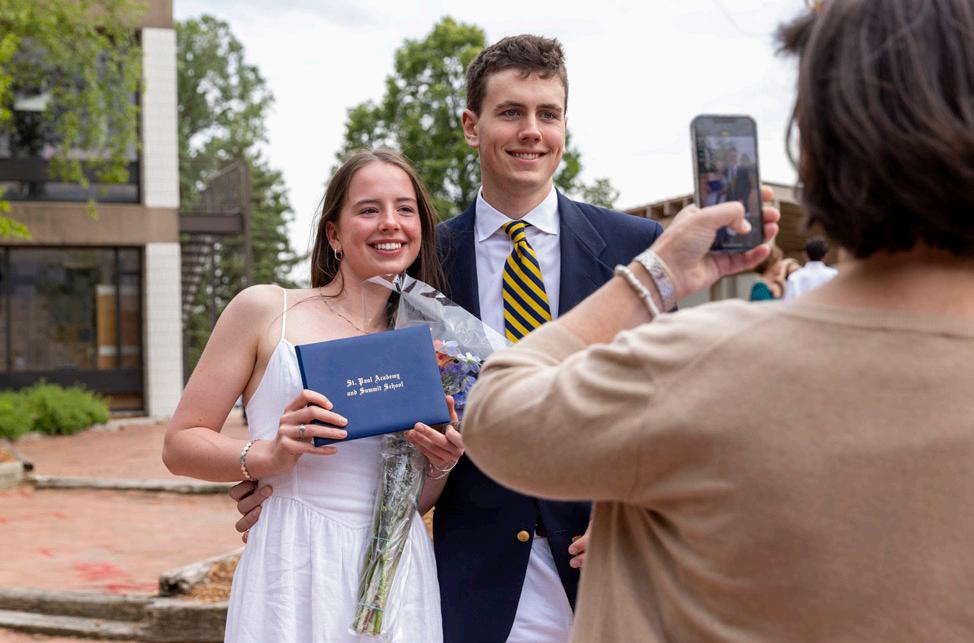
PROUD GRADUATES. Class of 2025 graduates Lucy Thomas and Thomas Kovarik pose with their diplomas in the Lilly Courtyard. Following the graduation ceremony, it is tradition to head to the courtyard to celebrate
COUNTDOWN TO GRADUATION
Take a look at the senior schedule in the final days leading up to graduation
9 DAYS TO GRADUATION
May 28 - Yearbook distribution and signing. Seniors return to campus.
6 DAYS TO GRADUATION
June 1 - Senior project presentations. Seniors share highlights from the four-week experience with their advisories.
4 DAYS TO GRADUATION
June 3 - The Alumni Association celebrates the senior class with a Valedictory dinner.
1 DAY TO GRADUATION
June 6 - Seniors attend commencement rehearsal and College Sweatshirt photo
0 DAYS TO GRADUATION
June 7 - Commencement ceremony. An overnight Senior Graduation Party hosted by the Parents Association follows.

Life
PEONY STEELE THE RUBICON
As commencement approaches, seniors balance senior projects and graduation traditions with the anticipation and stress of life after high school. The weeks leading up to June 7 mark both the bittersweet end of senior year and the beginning of what comes next.
“We don’t have a lot of time left, and that’s kind of the last time we’re all going to see each other in that organized fashion. So [we’re] just making sure that we can enjoy [graduation] and be a class for one last time,” Senior Leah Passe said.
Behind the scenes, graduation requires months of preparation from faculty, staff, parent and student leaders. Stacy Tepp, assistant principal for student life, gave input on all of the extensive planning that occurs to ensure the event runs smoothly.
“There’s different pockets of planning… It’s kind of everybody, and we sit around a table and go through a checklist, and then those pockets meet individually to do different things,” Tepp said.
The Senior Class Leadership Council also plays a significant role in planning commencement, with the seniors meeting during Elected/ Selected X-Period times to contribute ideas. The council assists in picking out the student speakers.
Commencement speakers to represent graduates of the class of 2026 are Sonia Kharbanda and Bokii Mullataa. Valedictory speakers are Rowan Moore and Carys Hsiung.
Passe spoke to the process of selecting senior speakers. “Mostly, I think it’s watching the videos that people submit who are interested in being the student speaker, and then SCLC as a group votes on those people who submitted those videos,” she said.
Additionally, the tradition of selecting a dedicated faculty speaker for the main ceremony began in 2023, with history teacher Ben Bollinger-Danielson serving as the first official faculty speaker for the Class of 2023.
“There’s this emphasis on the community itself and hearing from people who know us in the community,” Passe said.
A large focus of the commencement ceremony is tradition, which graduation attire reflects. Seniors wear formal clothing, with many students choosing white outfits, generally dresses, while others follow more traditional dress expectations such as navy blazers and formal wear.
While still trying to preserve the traditional blue and white colors, administrators have adjusted the dress code to be more inclusive of different shades of blue and khaki off- white. In the past, Summit School graduates wore white
dresses, and that tradition has continued but with more leniency.
Floral arrangement traditions have similarly shifted, but have not been eliminated entirely. “There used to be a bouquet that female students would carry, and that went away … now everyone gets a single yellow rose,” Tepp said.
Following graduation, some seniors acquire cigars, which originated as an off-campus act of rebellion to avoid school rules. Over time, the custom gradually moved onto campus grounds and became a lasting part of commencement culture, and have historically been used to demonstrate maturity and independence.
After months of tireless planning, commencement traditions symbolize the graduating class’s transition into life beyond high school and adulthood while creating a sense of unity and celebration.
Commencement for the class of 2026 will take place at 4 p.m. June 7.
Scan this QR code to read more about the class of 2026’s final months of school and preparations for senior projects.

EVANS
Upper school elections have been a staple of the school’s culture for decades. 2026’s election marked the first time students could run for the position of the Spartan, alongside previously available positions on the Student Technology Committee, Student Activities Committee and Upper School Council.
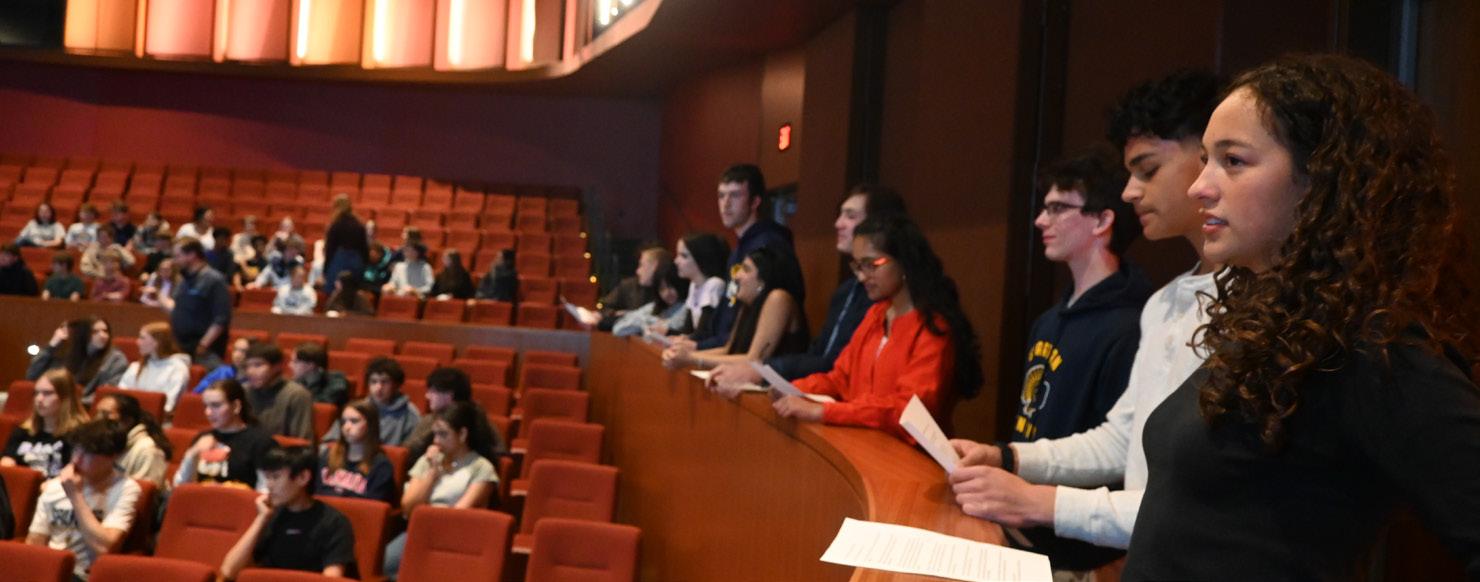
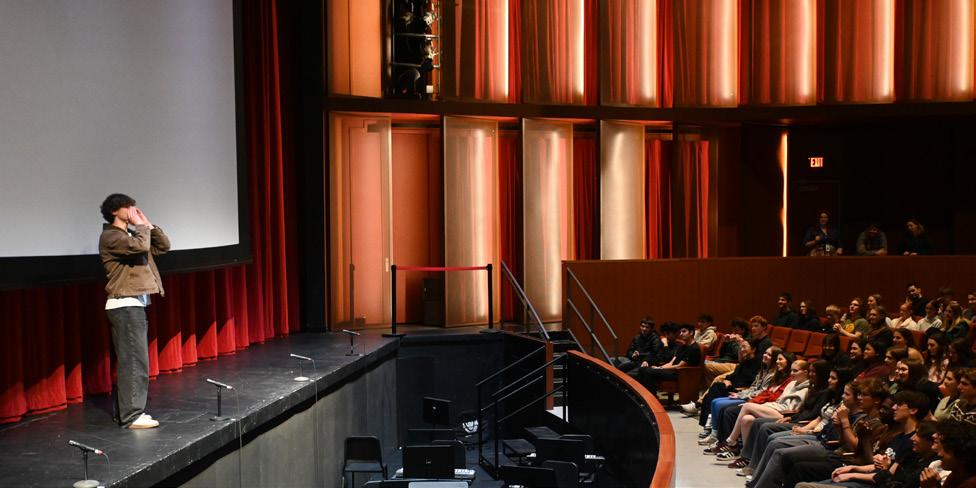
Elections were held Thursday, May 7 at an upper school assembly, where the participants gave speeches representing their campaigns. Most candidates ran unopposed in their respective categories, except for USC secretary and USC co-presidents.
Junior Gavin Leuthold was elected for USC secretary, sophomores Caleb Colton and Sophie Karmaliani were elected as USC co-vice presidents and juniors Sofia Rivera and Aldegundo Brenneman as USC co-presidents. Juniors Nico Martin and Richard Romans will be the Spartans.
STC grade level representative Pete Hovan feels that communication
with administration is important in committees, and that STC is crucial to the school community, despite its small number of representatives.
“One of the reasons I’m running for STC … [is] because it’s very important for us students to be able to talk with [administration] about how we think certain tech policies should be integrated,” ze said. “But [the issue of tech policies has] never been the most popular… As someone who is interested in technology and how we use it … it is really important that we continue to have people who are interested … doing it.”
It’s pretty cool to be able to make actual change in our school policy.

Hovan hopes to continue to work towards improving the school
community in the upcoming year.
“I like being with a lot of other like-minded peers who are … thinking about how it’s very important how we use technology in the school space,” ze said. “It’s pretty cool to be able to make … actual change in our school policy.”
This year, USC made changes in the community. They ended Meatless Wednesdays after a poll of the student body in the 2024-2025 school year found 65% disliked the lunch, but previously no policy change was made.
“This year, I tried … again, sent out another form, and again, we got a majority of people saying they wanted to remove it, and we did,” USC representative Zack Berchenko said.
Next year, some candidates plan to take similar strides to benefit the community. For example, Rivera and Brenneman hope to create an open gradebook to reduce academic pressure.
“I think if students had access to where they were, they’d be able to plan out their time and where they want to spend the most energy,” Rivera said.
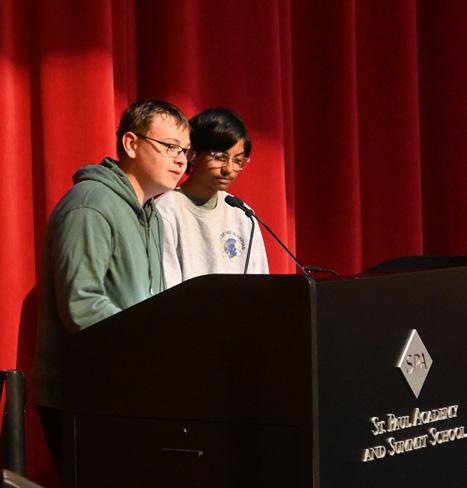
The co-presidents also hope to reform the tardy policy and increase community-building within and across grade levels. Rivera looks forward to her new role as USC co-president after being on the council throughout high school. She also participated in a similar committee in middle school.
“I’m absolutely elated. … I think being able to be USC president is kind of a culmination of my love for [this school],” she said. “I’m just really excited to express my gratitude to everybody by hopefully representing [them] the way that they want to be represented.”
Next year, the elected and selected committees
will continue to make changes and work towards a healthier, better community.

One hundred days into her term, St. Paul Mayor Kaohly Her has stayed true to one of the key promises she made in her inaugural speech.
“This is my commitment to you as your next mayor,” she said. “I will always show up. We are a large city, but a small community. Being involved matters.”
Involvement is something that St. Paul’s first Hmong and female mayor has never shied from.
“It’s really impactful that she is the first woman to lead in St Paul. And in addition to that, she’s the first Hmong American, I think that ... it’s a good representation,” sophomore Emma Brewton said. “It’s inspiring to younger women knowing that they can also make an impact.”
After pursuing higher education, Her spent 15 years working in budget analytics. Taking a pause from the workforce, she spent time as a stay-athome mom, caring for
her two children. Her then worked as the Board Administrator for St. Paul, before being elected a Minnesota state representative for District 64A in 2018.
It’s inspiring to younger women knowing that they can also make an impact. “

On April 20, Her gave her first State of the City address. The event took place at the International Institute of Minnesota. In her speech, Her reviewed discussions held with business owners and their responses. A highlight was the links to Immigration Defense Network and St. Paul police efforts to keep residents safe during Operation Metro Surge earlier this year.
“While we work to restore economic vitality downtown and commercial corridors across our city, we must first grapple with the unprecedented economic damage done by the Trump administration during Operation Metro Surge,” she said.
Her urged lawmakers to be aware of the loss that Minnesota, specifically Twin Cities communities, have faced in recent months and not yet recovered from. She mentioned various efforts that have taken place as forms of relief.
“Our response to the federal occupation is far from over,” she said. “We will have to work intentionally for years to overcome the harm the Trump administration inflicted on our city.”
Despite her strong campaign, Operation Metro Surge was an event that neither Mayor Her, nor any politician anticipated. Her took time and effort to support citizens of St Paul, as well as others in surrounding areas.
Sophomore Kieran Adhearne-Kroll, who lives in
St. Paul, appreciated this care.
“I feel glad that I’m living here. … Despite all of the ICE activity, it is one of the more liberal and supportive places in Minnesota and in the U.S.,” they said. “I’ve seen a lot of news stories about how we’re all coming together, and we’re all supportive. … I feel really happy to be living here and around that culture.”
Her’s focus on affordability, safety and blooming economics were all key touchpoints in her State of the City address. These focused not only at the start of her term, but her future. As Mayor Her continues into her term, hope for the future quells.
“Together, we will keep repairing what’s broken, investing in what matters, and seizing the opportunities ahead. I am honored to do this work with you: to listen, to act, and to lift Saint Paul higher by rising to our full potential,” Mayor Her said as she closed out her State of the City address.
“Before I was even sworn in, my goal was to secure a balanced deal that does not raise property taxes, with sustainability built in. Within the first six weeks, we did exactly that.”
“Our downtown core is in desperate need of recovery, and with the hard work of the city, my administration, and our key partners, I am more optimistic than ever that we will see it.”
“Instead of withering, we have met them together, supporting one another, rebuilding together, loving our neighbors, and fighting, together.”

HARPER LARSEN THE RUBICON
The “Land of 10,000 Lakes” prides itself on preserving wilderness. That pride took a hit April 27, when the U.S. House lifted a ban on mining in and around the Boundary Canoe Area Wilderness. Minnesotans around the state are concerned with the lack of protection for the BWCA, a place that runs deep in Minnesota culture as well as the future of protected wildlife areas across the U.S.
Junior Avital Coleman, frequently visits the Boundary Waters.
“[They are] the most beautiful lakes I’ve ever seen in my life,” she said.
President Donald Trump campaigned on restarting mining in Minnesota and officially signed H.J. res 140 into law allowing for Twin Metals Minnesota, a subsection of a larger Chilean mining company, to start working toward opening proposed underground copper and nickel mine. This broke the previous 20-year ban on mining in the BWCA from the Biden administration. Although the mining operation faces more approval hurdles, the ban’s end is a blow for
environmentalists and BWCA lovers.
Sophomore Lucy Lowman has been visiting the BWCA with her family since she was a toddler.
“You really can’t put into words how special a place the Boundary Waters is,” she said.
The Boundary Waters are also the ancestral homeland to the Anishinaabe people, making it an important place to Native people. Allowing mining could cause significant damage to the land.
You can’t really put into words how special a place the Boundary Waters is. “
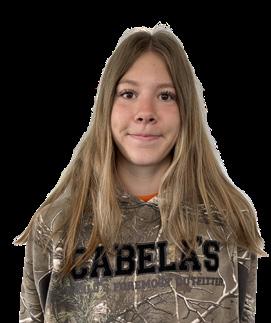
Lowman is troubled by the disregard that politicians showed toward protected wilderness areas.
“I think it’s really frustrating, because I think a lot of current politicians and congress members do not appreciate or even understand how significant and important the Boundary Waters are,” she said. “For them to
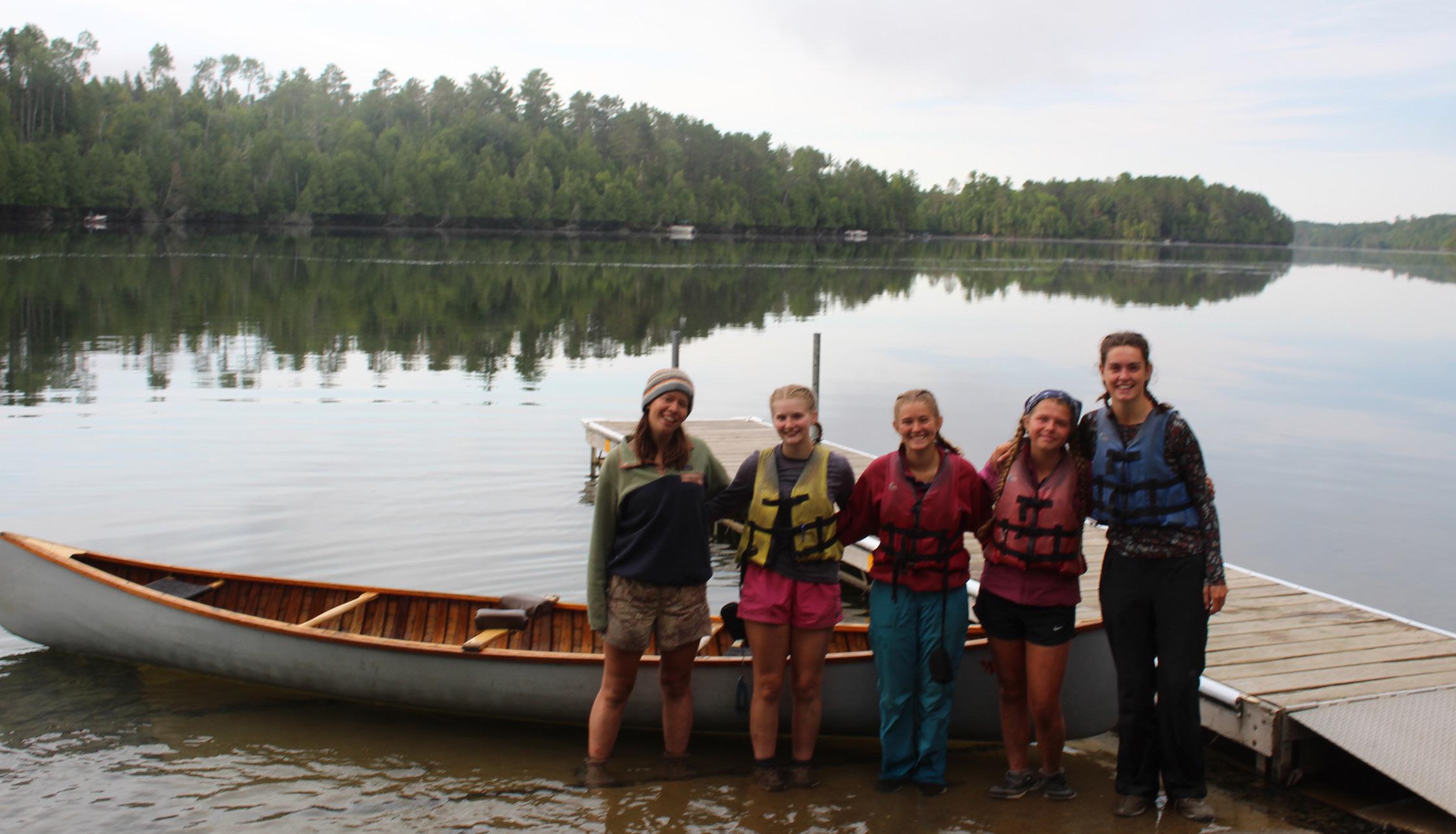
SUBMITTED PHOTO: Avital Coleman PICTURESQUE WILDERNESS.
Many students enjoy summer vacations to the Boundary Waters Canoe Area in Northern Minnesota. Junior Avital Coleman visited with camp Widjiwagan for the fourth time this year. “[They are] the most beautiful lakes I’ve ever seen in my life,” she said.
completely disregard how meaningful this land is, and just use it for personal and economic progression, is just so selfish.”
Coleman wonders what this means for the future of the Boundary Waters. “I think that there’s a lot of issues … like climate instability, and it’s really a danger to all the animals whose habitats are there, and all the natural ecosystems in that area,” she said.
Beyond the BWCA being a special place to many Minnesotans, this legislation raises questions around the country as people are question the future of preserved
wildlife areas. According to a 2026 map from The Wilderness Society, many other protected areas are under similar threats from the Trump administration, including the Ruby Mountains in Nevada and the Thompson Divide in Colorado.
Junior William Drake has thought about this, considering the impacts drilling and mining will have on wilderness.
“I think it’s not the end. There’s going to be other examples of this.
The Arctic National Wildlife Refuge. They’re opening a large portion of that to oil drilling,” he said.
Lowman realizes that this could have broader impacts and not be a oneoff instance.
“I think at some point … the expectations are just going to continue to diminish, and there’s not going be any standards for drilling anymore,” she said.
Coleman shares the concern that this may have wider repercussions on international waters. “One of the things that I just don’t see being talked about a lot is where the mine is being built, it’s right by border lakes. So [mining is] also gonna affect international waters. I think that it’s really
unfair to affect another country’s nature and ecosystems,” she said. Across Minnesota, many are disappointed with the lack of protection for the BWCA, and worry for the environmental impacts within the state and beyond.

SUNDE AUBERJONOIS
MANAGING EDITOR
In the wake of another assassination attempt against President Donald Trump, students take note of the increased political violence in the United States.
On April 25, a gunman at the annual White House Correspondents’ dinner disrupted the event, evacuating the president and sending attendees to seek cover. The shooter has since been identified as 31-year-old Cole Tomas Allen from Torrance, California. He has now been indicted on charges of attempted assassination of the president.
This is the third attempt in three years. For

junior Olivia Andres, the recurrence of instances of political violence like this one is disturbing.
“[Political violence has] been going on throughout history for a long time. A very prevalent example of this was the raid on the [U.S.] Capitol after Biden won the presidential election
and Trump lost. [Jan. 6] was an extremely sad circumstance,” Andres said.
In further comparison between the events of Jan. 6, 2021 and April 25, 2026, federal magistrate judge Zia M. Faruqui has been critical of Allen’s treatment in detainment, claiming that it has been significantly worse than the treatment defendants received after participating in the acts of the Jan. 6 insurrection.
With multiple threats of violence against Trump over the last 10 years, the assassination of Minnesota legislator Melissa Hortman in June 2025 and the assassination of political commentator Charlie Kirk in September 2025, many people are seeing an upward trend in polit-
ical violence. According to a Pew Research Center study from September 2025, 85% of adult Americans agree that politically motivated violence is on the rise in the U.S.
“We have a larger divide between the right and left than ever before, so we don’t see each other as people but as the ‘enemy.’ When you see someone as an enemy, you can justify a lot of awful actions,” one Republican study participant said.
Sophomore Archie Dougherty agrees with this conclusion.
“I think political violence is definitely a big issue, and I think the normalization of it is an issue, people are so used to it, and that’s a very dystopian thing,” he said.
The country is split on whether or not political violence is more of a left-wing or rightwing issue. Despite this difference in belief, many think that the divide is, in and of itself, a factor in fostering political violence.
Andres sees political violence as more of a right-wing issue.
“I think there’s problems on both sides, but I think in the grand scheme of things it’s usually more on the rightwing side right now,” she said.
Andres also believes that gun control has something to do with the increase in politically motivated attacks.
“I think that [lack of gun control] enables
people easier access to extremely violent and harmful objects that people don’t always handle with respect and care in regard to other people’s safety and well-being,” she said.
While Dougherty agrees that a lack of gun control exacerbates political violence, he doesn’t believe it to be cut and dry.
“It’s complicated,” Dougherty said. Whether gun control is a left-wing or a rightwing issue, many agree that it’s not simple. Allen has pleaded not guilty on all four counts and is awaiting trial.
READ OPINIONS about political violence on pg. 7.
OUR MISSION
We strive to capture the spirit of the community through its stories while inspiring deeper conversations. Above all, we stand for integrity in our pursuit to inform and engage our readers.
THE RUBICON
St. Paul Academy and Summit School 1712 Randolph Ave • St. Paul, MN 55105
rubicon.spa@gmail.com www.rubiconline.com
@TheRubiconSPA
MAY 25 STAFF
THE RUBICON
EDITOR-IN-CHIEF MANAGING EDITORS
CHIEF VISUAL EDITOR NEWS EDITORS
OPINIONS EDITORS
PAGE ONE/IN DEPTH EDITOR
FEATURE EDITORS
SPORTS EDITORS
A&E EDITOR
SOLUTIONS EDITOR
DATA/INFOGRAPHICS EDITOR
Evie Gardner
Wynter Feiner
Sunde Auberjonois
Sam Galarneault
Sylvia Westra
Grace Berger
Eva Burns
Ariella Kim
Lina Abid
Lilly Parr
Peony Steele
Harper Larsen
Niko Lifton
Ivy Evans
Izzy Middlebrook
Jack Gao
RUBICONLINE
DIRECTOR OF RUBICONLINE
PRODUCTION MANAGER
CREATIVE DESIGN MANAGER
BEATS MANAGER
ENGAGEMENT MANAGER
NEWS EDITORS
OPINIONS EDITORS
FEATURE EDITORS
IN DEPTH EDITOR
A&E EDITOR
SPORTS EDITOR
RUBICON TV PRODUCER
SOCIAL MEDIA MANAGER
Yasmin Khan
Winston Arvidson
Senetneb Theba
Audrey Jansen
Audrey Peltier
Peter Lipinsky
Ike Obi-Walker
Zahir Hassan
Auden Zheng
Maizy Henretta
Gisele Parnell
Nabeeha Qadri
Henry Childs
Aiden Ruediger
Shrey Nemani
Naomi Zins
CONTRIBUTORS
Kate Tuttle, Gwendolyn Uhlhorn, Huxley Westemeier
OUR CLASS OF 2026 GRADS
Juan Miguel Adams, Thomas Chen, Amanda Hsu, Sonia Kharbanda, Andrew Lipinsky, Nora McKoy, Yassin Mokbel, Lani Ngonethong, Peter Ostrem, Greyson Sale, Elizabeth Tuttle, Allen Wang, Zimo Xie
ADVISER
Kathryn Campbell, CJE
PUBLICATIONS ASSISTANT
Scott Gillespie
THE RUBICON - MAY 2026

DAUNTING DECISIONS. Making significant life decisions can feel incredibly daunting for young people trying to navigate life’s uncertainty. However, shifting interests, changing goals or completely backtracking should be viewed as necessary steps in identity development rather than failures. Accepting that mistakes are an inevitable part of the journey allows for people to continue growing and adapting to new environments. of the staff agree 100%
EDITORIAL THE RUBICON STAFF
Many young people have to face a daunting reality: making choices that feel life-defining. From college to classes, to clubs to sports and free time, the choices keep increasing, and it’s rarely clear as to what the right path is.
While the buildup of many choices can alter the trajectory of someone’s life, perhaps the most imperative reminder is that a single choice rarely defines who someone is entirely. Identity takes time to develop, and decisions are the building blocks of this process. Even if one’s sense of self is lacking in earlier years, as time passes and experiences unfold, moments of choice become more frequent and vary significantly in importance.
Remember that it’s completely acceptable to change one’s mind or backtrack. It is not a bad thing to change goals, switch interests or even transfer activities. Even though this change might feel like giving up, it is important to remember that everyone has given something up at some point. Growth would be impossible if people were expected to commit to one version of themselves forever.
GROWTH WOULD BE IMPOSSIBLE IF PEOPLE WERE EXPECTED TO COMMIT TO ONE VERSION OF THEMSELVES FOREVER.
However, it is usually a good idea to prioritize long-term habits over short-term impulses. Even though instant gratification can be rewarding, many decisions that feel right in the moment do not always align with larger goals or future well-being. Learning to balance present desires with possible future consequences is one of the hardest parts of decision-making.
Although many make choices without much restriction, not everyone has the same freedom to choose. Environment, family, finances, expectations and culture can influence and control behavior, forcing a choice upon someone or at least strongly encouraging one. Even though someone may appear to have control over their life, preexisting circumstances can change the decisions available to them in ways that might not be obvious to an observer.
Psychologists have found that perception of control or choice is deeply connected to well-being. A 2017 study titled “Honoring the Everyday Preferences of Nursing Home Residents: Perceived Choice and Satisfaction with Care” found that overall satisfaction levels went up for residents who had choice within the nursing home. This study shows that agency, or the sense of freedom to make decisions, affects emotional well-being regardless of age.
Agency means having the capacity to make independent choices. When there is more control over a situation, it is easier to feel a greater sense of attachment and commitment. Through agency, one can take greater ownership of their decisions, becoming more motivated to be the architect of their lives rather than a bystander. When faced with a difficult choice, it can take a while and lots of focused thinking to decide on the best course of action. A tool to aid in the decision-making process is to ask questions: “Does this align with the kind of person I want to become?” “How does this affect those around me?” “Am I making this choice for myself or based on other people’s expectations?” Perhaps the most important question of all is “Will this matter in five weeks? Five months? Five years?”
People are constantly changing, adapting to different environments and making informed decisions and objectively “better” decisions with more experience. While choices shape us over time, making mistakes is inevitable and part of becoming the best version of oneself. The goal is not to make the right choice every single time, but to make a choice and continue growing afterward.

RELIGIOUS RIFT. President Donald Trump’s comments towards Pope Leo XIV have blatantly disrespected the Catholic community and blurred the line between religion and politics. On Truth Social, Trump told the pope to “get his act together as pope, use Common Sense, stop catering to the Radical Left, and focus on being a Great pope, not a Politician.”
EVIE GARDNER EDITOR-IN-CHIEF
Since the founding of the United States, religion’s role in the government has been extremely controversial. Trump has taken things to a new level after publicly feuding with Pope Leo XIV and making disrespectful comments regarding religion.
The initial issue was the separation of church and state, which has been heavily debated since 1776. 250 years later, Trump is attempting to
blur the line between the two domains.
This issue, though, is not unique to the current Commander in Chief. Presidents Woodrow Wilson, George W. Bush, Ronald Reagan and Dwight D. Eisenhower have all, in some respect, advocated for the United States as a Christian nation, and sought to have the country guided by theology.
What none of these presidents have done, however, is mock religious groups, get into an online feud with the
pope about military operations or threaten the annihilation of an entire people.
Trump’s polarizing views and actions have not started and will not stop with the pope.
Evie Gardner

This ongoing saga began with the March 30
Operation Epic Fury. This military initiative killed the Supreme Leader of Iran, Ali Khamenei, and officially marked the beginning of the U.S. war with Iran. This move was heavily criticized worldwide, but particularly by Pope Leo XIV, who expressed his “deep concern” over the strikes and encouraged a ceasefire.
On Easter Sunday, Trump posted an extremely disturbing and inappropriate post on Truth Social, garnering criticism from political commentators, even on
the radical right. Addressing Iranians, he profanely demanded the opening of the Strait of Hormuz or else, “you’ll be living in Hell,” and finished the post by praising Allah.
In one go, the president threatened the destruction of the Iranian people, mocked Islam and expressed his own lunacy.
An integral value of the president’s job is respect: respect for other countries, leaders and residents of the globe. Having a president express disdain toward an innocent group of people, not their government, is embarrassing.
To make a mockery of one religion is to make a mockery of all belief.
One week later, an April 12 “60 Minutes” segment highlighted the pope’s discontent with Trump, prompting the president to retaliate on Truth Social by calling the pope “weak on crime.” Trump also warned the pope to “get his act together as pope, use Common Sense, stop catering to the Radical Left, and focus on being a Great pope, not a Politician.”
And later, “I don’t think [the pope] should be getting into politics. I think he probably learned that from this.”
The president’s comments show his blatant disrespect for anyone with opposing views. Putting aside status, his utter disregard for another human solely due to a dis-
agreement contributes to the polarization plaguing the world today.
What’s also surprising is that Trump still claims to be a Christian, despite routinely contradicting Bible verses calling for unconditional love and respect. His choice to post a hate-filled message on Easter morning, the holiest day in the Christian calendar, begs the question: How can someone who claims to be Christian mock faith so disrespectfully?
And further, Is Trump truly pro-religion or is he utilizing his Christianity to manipulate religious voters? His betrayal of values is not only alarming on a political level, but on a human one.
According to the December 2025 Religious Landscape study by PEW Research Center, 70% of U.S. adults identify as religious. A leader without respect for their people is an embarrassment.
After centuries of debate regarding the status of religious prominence in the federal government, a new angle on faith’s role in government has emerged: manipulation and mockery. Trump’s polarizing views and actions have not started and will not stop with the pope. Notice what’s going wrong, counter the president’s wrongdoings with one’s own good deeds and have respect for all, regardless of religion, sex, background or identity.
Being nonchalant has ruined Gen Z. It has limited interpersonal communication, ruined relationships and hindered adolescents’ ability to build identity.
The word nonchalant means being careless or indifferent, and emphasizes not trying, which hinders learning. Being nonchalant has negatively affected the classes that students enjoy. Many people align themselves with “hating all classes,” and refuse to do work to show a lack of caring. This boxes students in, forcing them to conform to the norm of performing poorly.
Along with educational downsides, nonchalance encourages social shortcomings. Rather
than feeling comfortable with who they are, many individuals develop self-confidence issues, refusing to show compassion for anything out of fear of judgment. Being seen as outgoing is no longer viewed as brave but as cringe worthy.
With the rise of social media, constant recording or the fear of being recorded can restrict teens’ choices. Many teens already find themselves with low self-esteem due to hormonal shifts. Nonchalance has only worsened this issue. Rather than putting themselves out there, students cut off the joy of connection.
Many teens also refuse to take risks, which is necessary in brain development. Whether it be asking someone out or being willing to do something they’re not already good
at, risks can help self-confidence, curiosity and dopamine activation.
Although being nonchalant can seem cool and the norm, it is not worth sacrificing genuine emotion for.
Niko Lifton

But where did the nonchalance epidemic come from? It’s a combination of two things. First, the agreed-upon set of norms, beliefs and practices a society uses to nullify threats. Second, the overall desensitization of society. The uptick in vio -
lence on social media has risen dramatically over the last few years, as the algorithm does not care about its users’ mental health, prioritizing monetary gain instead. Graphic and extreme videos are used to bait user engagement. Over time, this causes viewers to become accustomed to violence and to display a lack of empathy, contributing to a dry or emotionless social environment.
Although being nonchalant can seem cool and the norm, it is not worth sacrificing genuine emotion for. Go take risks. Try out for that play or sport. Be friendly with new people. Most of all, show true feelings. Reject nonchalance, and instead, be your authentic self.
Vulnerability can feel scary, especially in a group setting. However, in order to overcome nonchalance, one must be open about who they are, especially to the people they care for.
Although showing interest in a certain hobby or passion can feel like a risk, it allows for new connections to form.
It is important to remember that life comes with awkward moments, and being able to overcome embarrassment while still being authentically oneself is what is truly valuable.
Social media often portrays being nonchalant as an admirable trait, discouraging viewers from being openly enthusiastic or expressive. Remember that characteristics praised on social media are not always realistic or positive.
INCREASE IN TARGETED POLITICAL VIOLENCE
RISE IN THREATS AGAINST MEMBERS OF CONGRESS 58%
OF LOCAL OFFICIALS ARE LESS LIKELY TO ENGAGE IN KEY POLITICAL ACTIVITIES 75%
INFORMATION: Princeton University
INCONSIDERATE INTIMIDATIONS. A 2025 data report demonstrates a sharp increase in online threats and violent rhetoric against legislative figures. In response, legislators have passed Hoffman’s bill to increase safety measures to prevent political violence.
When entering the public sphere as a politician, judgments and scrutiny are expected; violence and concerns of personal safety should not be.
After increasing incidents of political violence on a federal level, threats of that kind have only been exacerbated. Violence has worsened against Minnesotan politicians, particularly after the assassination of House Speaker Emerita Melissa Hortman and shooting of Sen. John Hoffman on June 14, 2025. According to MinnPost, even after Hoffman’s assassination attempt, he continues to receive threatening messages.
Maple Grove Rep. Kristin Baher spoke about how posts on social media have encouraged Minnesotans to take up arms and protest outside of her home, including a post depicting a gun pointed at her head. Minnesota House Speaker Lisa Demuth had to file a restraining order against a woman who left a voicemail saying she wanted to see Demuth “fall at the end of a barrel,” according to the St. Cloud Times.
Using the fear that political figures feel for their families and the fear constituents have for the people
who represent them to promote other politicians’ ideologies is a disgusting utilization of democracy. Using political violence as a crutch for another politician’s campaign is amoral and should be treated as such.
The escalation of threats against Minnesotan politicians can not simply be pushed
Izzy Middlebrook

The normalization of political violence creates an association of fear and brutality with democracy. No matter party affiliation, the creation of this environment delegitimizes the democracy Minnesota aspires to be.
The escalation of threats against Minnesotan politicians cannot simply be pushed aside as this increase in political violence allows for the weaponization of fear.
In an interview with the New York Times, Dartmouth College professor Sean Westwood, who tracks
With finals looming, students are focused on traditional methods for academic success – but what if the solution is not in study habits, but in social ones? Many people give compliments, but most don’t understand the benefits. During stressful times, a simple compliment can boost self-image and foster a growth mindset. Giving compliments can feel vulnerable, and the words’ impact rarely reaches their full potential. With finals approaching, acts of kindness may reap more benefits than you think. During end-ofyear exams, students rely on confidence, memori-
zation and engagement; remarkably, giving and receiving compliments encourages all of the above.
Compliments are up to interpretation and are more meaningful when they are specific.
Grace Berger
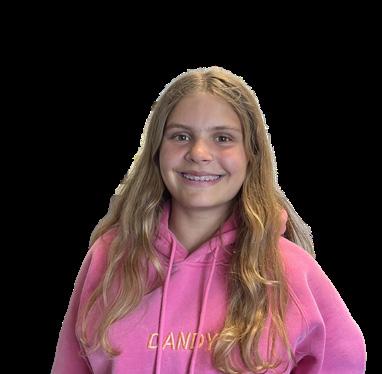
According to the American Federation of Teachers, compliments increase confidence and motivation, helping students perform better academically. A 2021 study
PUBLICATION INFO The Rubicon is the student news organization of St. Paul Academy and Summit School. We operate as a public forum for student expression. We publish 8 issues a year and distribute 500 copies of each issue on the Randolph Campus.
ADVERTISING The Rubicon does not accept advertisements.
ANONYMOUS SOURCES Although it is always preferable to use names when reporting, there are times when it is necessary to protect those we report on. Use of grade level or first name only are the most commonly used methods of anonymity.
BY
revised
from Brigham Young University found that high praise improved academic achievement by 60-70%.
These effects are chemical. When giving or receiving a compliment, the brain releases dopamine - known as the ‘feel-good’ chemical. This chemical reduces stress, helps retain memories and boosts motivation, thereby enhancing academic performance.
It takes effort to make a compliment effective. Often, compliments are superficial, only appreciating visible traits. “I like your outfit” may land differently for some than “I appreciated what you said during the discussion” or “thank you for making me feel welcome.”
and fact-checked an assigned story. Shared bylines are given to joint effort assignments. Stories that include supplemental materials include a credit at the bottom that states “Additional reporting by” followed by the name of the reporter.
EDITORIALS articulate the collective opinion of the staff, while minieditorials, opinions pieces, arts reviews, and columns belong to the author.
SUBMISSION GUIDELINES Opinions are welcomed as Letters to the Editor or Submitted Opinions and may be published in print or online. Submissions should be 400-650 words. Both may be edited for length and style. All pieces are published with a full name.
These are examples of impactful compliments - what someone does or how they make you feel.
To experience the full benefits, compliments must be genuine. It is important to note that compliments are more meaningful when they are specific.
Compliments are a communal experience that benefit everyone involved. Both giving and receiving compliments releases dopamine. Giving simple praise brightens someone’s day, and with a little extra effort, can improve someone’s studies as well. During high stress times like the end of year exams, a compliment can be just what is needed.
UPDATES AND CORRECTIONS
During the post-critique process, staff members identify inaccuracies and discuss reader feedback. The staff publishes corrections when an error is discovered during critique or reported to a staff member. Corrections should be directed to the Editor in Chief or appropriate section editor.
IN PRINT: Corrections are printed at the bottom of News p. 2. Corrections will be printed in the month following the error and, if the story is also published online, will be corrected following the online corrections policy.
PHOTO CREDITS Photos are labeled with the photographer name, whether on staff or freelance. Images sourced outside the staff are credited with
political violence and its perception in America, noted that “After the assassination of Charlie Kirk, Trump argued for the suppression of civil liberties, arguing for the termination of university faculty, arguing for suppression of speech. And that message resonated among Americans.”
Still, the issue of political violence remains. Violent threats against politicians should be treated as the serious and reprehensible acts that they are, and the weaponization of actual violent attacks should never occur. If individuals impassioned to run for office do not do so because they are afraid of violent threats, Minnesota loses.
Threats of violence are not empty, as seen through the tragic loss and targeting of important Minnesota legislative figures. Hoffman’s bill to create a unit to protect Minnesota lawmakers is imperative and will create necessary change that will impact the political landscape for years to come.
Scan this QR code to read about a Minnesota legislative session covering gun violence.




CALMING COMPLIMENTS. A simple compliment can have a significant impact on student’s success during exams. To maximize these benefits, try to use authentic, specific praise rather than superficial.
guidance from the National Press Photographers Association guides.
NAME AND PRONOUN USE
The Rubicon uses the name and pronouns shared by individual sources during interview. Each interview and survey begins with a request to say and spell the person’s name and to share the pronouns they would like to see published in the story, and the reporter is transparent about where the story will be published. If a mistake is made, a correction will be posted per the corrections policy.
CONFLICTS OF INTEREST The Rubicon news and Ibid yearbook avoid conflicts of interest while also honoring the fact that our reporters are involved in the school and local
community beyond their work on staff. Staff avoid writing about students, teachers, student clubs, affinity groups, and organizations that they are closely involved with. The reporter is responsible for disclosing conflicts of interest, but if a conflict of interest comes to light after publication, it does not warrant removal of the story. If it is in the best interest of a source to be interviewed by a close friend in the case of a sensitive topic, the interviewer will not write the story— they will solely conduct the interview. Unavoidable conflicts of interest are mentioned at the top of a story. Photographing or videography of news events is never a conflict of interest.
Read more policies at RubicOnline “About Us” tab.

mental accountability efforts. IKEA, a Swedish furniture retailer, has implemented specific environmental initiatives, such as using recycled wood.
Additionally, IKEA has prioritized creating products quickly and cheaply, earning the label of a fast furniture brand. Klevan believes this method of production completely sacrifices sustainability.
continued from pg. 1
“I’ve heard about a lot of companies trying to become more sustainable but it’s hard to discern real sustainability from the greenwashing so many brands are using,” she said.
TRANSPARENT LABELING
For example, the meat and dairy industries, which have had the greatest environmental toll among food producers, highlight their minor sustainability initiatives while continuing largescale practices that contribute heavily to greenhouse gas emissions. A 2026 study by PLOS Climate found that out of 1,233 climate effort claims made by 33 of the world’s largest meat and dairy companies, 98% could be categorized as greenwashing using a framework that researchers have developed.
Despite widespread greenwashing, some companies have prioritized transparency over misleading statements. One of those companies is Patagonia.
Over the years, Patagonia has earned the reputation of a leading company in environmentally friendly production. Ninth-grader Ava Mays appreciates Patagonia’s sustainability initiatives, particularly their use of recycling in clothing.
“I like Patagonia because you can bring in your
old clothes and they’ll recycle them into new clothes. That’s kind of cool,” she said.
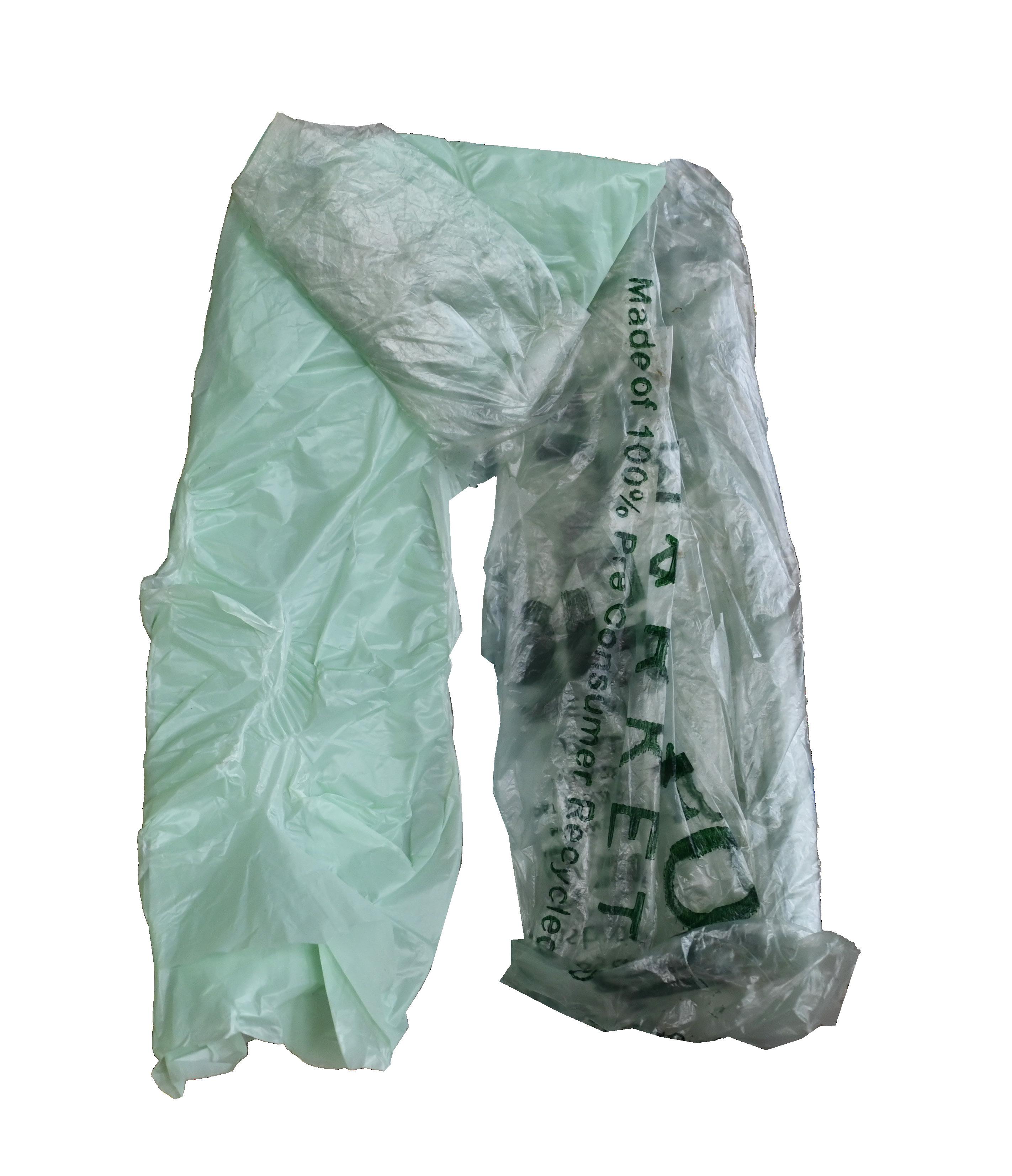
The clothing company released its first impact report in 2025, which discussed how they have improved their products to be more sustainable, their industry partners in climate efforts and specific data on their impacts. Impact reports are common for government bodies, but detailed and high-quality reports for manufacturing companies are less common.
The report also laid out the environmental goals they met and those they did not. Though the report listed many successes, failures were not hidden in the fine print; they were presented in bold headlines. The report was praised by Forbes for raising awareness and increasing visibility around climate efforts, regardless of success.
As a consumer, I value honesty above anything else. “

Junior Lachlan Gaspard believes that this level of authenticity should be the standard for manufacturers.
“I think reports like the one released by Patagonia should be normalized for all companies of that size,” he said. “As a consumer, I value honesty above anything else.”
Other companies have faced mixed public reactions to their environ-
“Manufacturing can be sustainable, but at some point, mass production can never be,” she said.
According to Gaspard, there are two main barriers to reducing mass production.
“Realistically, the largest problems right now are greenhouse emissions from energy, as well as the fact that the main material used is plastic,” he said.
Plastic is a hard material for large companies to avoid, as its properties that are difficult to replicate with green alternatives.
“While biodegradable materials are the best solution for many things, people generally prefer plastics because they are largely more flexible and stronger than biodegradable materials,” Gaspard said.
Though roadblocks like these are difficult to overcome, Gaspard still hopes production can have a sustainable future if companies directly address their problems instead of trying to maneuver around them.
“If factories used sustainable energy for power and switched to a biodegradable material, the emissions would be largely manageable,” he said.
As companies continue to promote environmentally friendly manufacturing, the extent of their efforts range widely. Some businesses provide transparency through detailed data, and others shine a light on their minuscule impacts while failing to address larger environmental problems. Across industries, from clothing to furniture brands, the task remains to not only reduce the effect of production on the environment, but also to clearly communicate to their consumers what their efforts involve.



SYLVIA WESTRA
THE RUBICON
Consumerism is everywhere. Whether it is food, clothing, technology or household appliances, near constant spending has become a societal norm. Advertisements intrude on everyday media, encouraging individuals to buy and buy. According to Visual Capitalist, in 2023, U.S. consumer spending reached a high of $19 trillion per year.
Junior Murphy Miltner believes that consumerism creates an unhealthy social environment.
“[Consumerism] creates a need, socially, to have whatever’s new, instead of reusing what you have and buying quality pieces,” she said. “And because trends come and go so quickly in this day and age, it just is so wasteful.”
According to the United Nations, the current trend of consumer habits will not be sustainable for the Earth’s future: it is predicted that if the planet’s population increases to 9.8 billion by 2050, the equivalent of three planets’ resources will be required to sustain current lifestyles. Thus, sus -

tainable consumption is a recommended practice among many experts.
Middle school social
studies teacher Bobak Razavi focuses his yearlong global issues course for seventh graders on sustainability.
“Sustainable consumption, to me, means that you are taking from the earth or our markets in a way that those materials can still be replenished,” he said.
Throughout Razavi’s class, his students learn about sustainability through sources on new urbanism, drowning island communities, fast fashion and even labgrown meat. Razavi leads his class through discussions and debates regarding sustainability issues.
“We start with clothes in here,” Razavi said. “If you can get a kid just to look at the tag on their hoodie, that starts the process of awareness, and that starts the discussion.”
Fast fashion is a growing route of mass consumerism and has numerous environmental consequences. A 2024
Sustainability: Science, Practice and Policy study found that global clothing production has doubled over the last 15 years, while, on average, garments are worn less and discarded faster.
Sustainable consumption, although it requires sustainable options on the market, also involves seeking items that can be repaired, reused, or recycled, a process referred to by the UN Environment Programme as ‘Lifecycling.’
Sophomore Addy Davies believes brands should be expected to pursue sustainability in this way.
“I think brands, especially skincare [or] hair care - that kind of product that you just throw away the packaging after you’re done with it - [should] either [try] to make their packaging easier to recycle, or have refills, so that you’re not throwing something away and going and buying it again every time you run out of the product,” she said.
Davies also finds it difficult to consistently choose sustainable options due to price.
“It’s also a factor of how much money I have

to spend. Because, for sure, I would buy everything super sustainably if I had the money for that,” Davies said.
Brief, food production, consumption and waste have detrimental environmental impacts. 30% to 40% of the U.S. food supply is wasted each year.
By teaching students about sustainable consumption, Razavi has learned more about sustainable food consumption and has altered his habits accordingly.
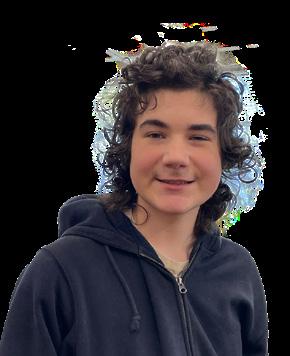
Despite obstacles such as price, social pressure, and advertisement, Razavi’s advice for students becoming sustainable consumers is simply awareness.
Clothing is only a factor of what people consume on a day-to-day basis, as the U.S. Bureau of Labor Statistics reported that apparel and services accounted for only 2.5% of household expenditures in 2024. Other more popular categories included Housing, Transportation, and Food.
According to the research library Ballard
“Through teaching this course and reading a million articles, … I have stopped eating as much red meat. I had no idea before I taught this course the giant impact that eating red meat has,” Razavi said.
Food habits are crucial to sustainability. A 2020 Science of The Total Environment study, found if all Americans switched to eating beans instead of meat, it would free 42% of U.S. cropland and reduce carbon emissions by 334 million metric tons.
Additionally, a switch to clean energy or renewable energy would have a great impact on reducing individuals’ carbon footprint. According to the U.S. Environmental Protection Agency, about 40% of total energy consumption in the U.S. is

used to generate electricity. Adopting renewable energy practices would have little to no impact on the environment.
Ninth-grader Louis Goldbaum thinks it is everyone’s job to monitor sustainability when consuming products.
“Sometimes that’s a really big change that can often be hard to make, especially when it’s easier to buy from unsustainable places,” he said.
Miltner advises others to be mindful of what they buy, where the product comes from, and what happens when the consumer no longer wants it.
“So, if there’s a new water bottle you want to get, [think] why do you want this new water bottle? What does it have [that] your old water bottle doesn’t have? … Can you donate the old one so that it’s getting used?” she said.
The intensity of consumerism has made it difficult for consumers to step back and consider the product they are buying.
As Razavi said, “[There] are little changes we can make, but if you’re not aware of it, you can’t make any change.”
RUBICON - MAY 2026
She will attend the June conference in Washington, D.C., with 51 delegates, one from each state
FEINER MANAGING EDITOR
“Dream. Dare. Do” is the slogan of the Al Neuharth Free Spirit and Journalism Conference, and the motto junior Audrey Peltier will be adopting as Minnesota’s 2026 delegate. In May, Peltier was named Minnesota’s Free Spirit Scholar, earning her a $1,000 college scholarship and a ticket to the conference’s fiveday summer program.
A large part of her journalism career has been centered around photography.
“I am typically around the school a lot with my camera, whether it’s a sports event or an assembly,” she said. “I’m really involved with sports photography, so I think that plays a big role in why I continue [as a journalist].”
Peltier has been expanding those camera skills for a while. In the summer of 2025, she trav-
eled to New York City to participate in a photography program for college credit at New York University.
I’m interested in meeting a bunch of different reporters. “
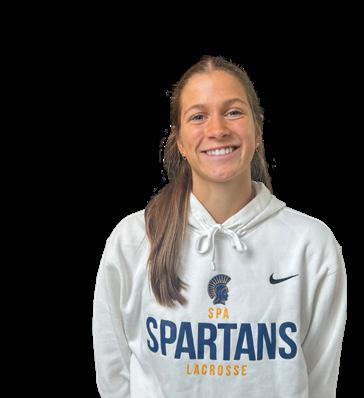
“I got to meet a lot of cool people from all over the country, and even outside the country,” she said.
In the future, she hopes to pursue a career in sports media or journalism and hopes to take advantage of the conference to grow her skill set: “I’m hoping to ... learn more about what [jour-
nalism] would look like outside of high school, and possible opportunities for college,” she said. “I’m interested in meeting a bunch of different reporters and finding more about what I could possibly do in college.”
Peltier discovered an interest in multimedia journalism as a staff writer in ninth-grade, joining the RubicOnline staff as a photojournalist but evolving that first year into a social media assistant manager, a role she held this year. Next year Peltier is the community engagement manager, examining Rubicon coverage and analytics, and providing outreach to readers.
The Free Spirit program is all expenses paid and takes place in Washington, D.C. from June 21-26, giving 51 high school juniors, one from each state, the opportunity to engage with journalists other across the country.
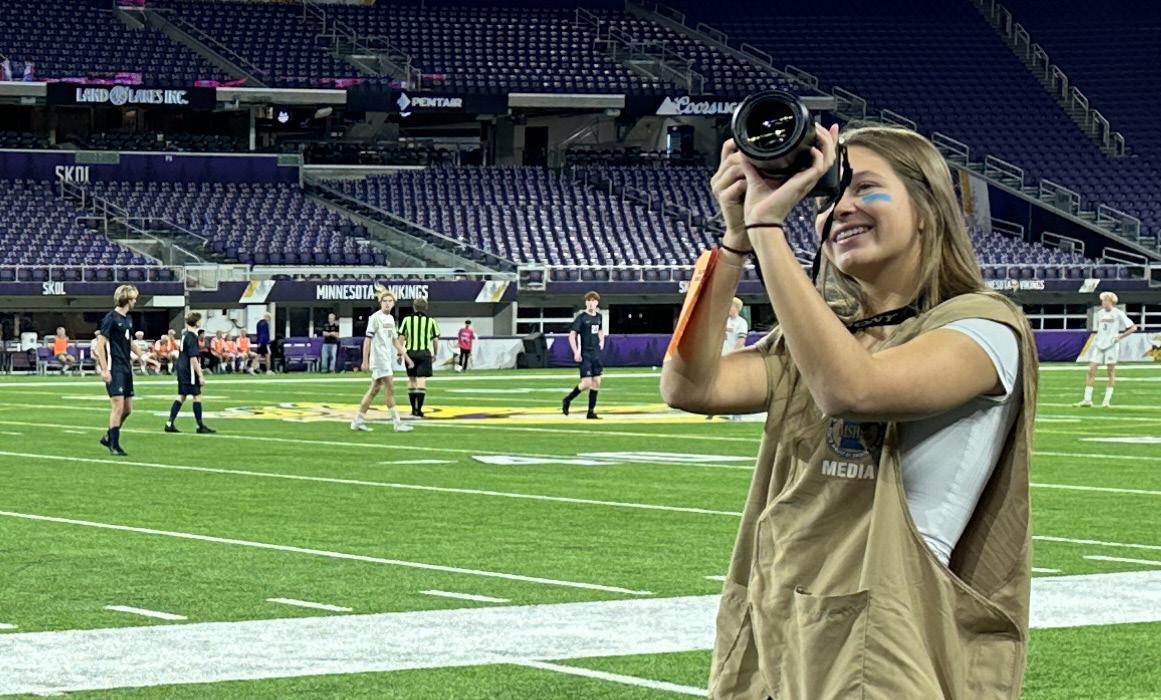
Adviser Kathryn Campbell described Peltier as “someone who transforms every space she occupies with kindness, ambition, and curiosity. Audrey makes instant friends of strangers, strives to innovate and elevate. Like the news industry she loves, she seeks to adapt, just as Al Neuharth did.”
USA Today founder Allen Neuharth designed the conference to surround First Amendment rights, something that caught Peltier’s attention.
Peltier is setting goals for herself and the Rubicon in preparation for the program.
“I’m hoping to bring insight about our own publications,” she said.
In her application, Peltier reflected on her experiences with story challenges and censorship. Peltier will act as the fourth Minnesota Free Spirit Scholar from The Rubicon, following Sonia Kharbanda ’26, Orion Kim ’23 and Noor Qureishy ’16.
JACK GAO THE RUBICON
Private and public. Third grade and 12th grade. Then and now. No matter which school someone goes to, what grade they are in or if they’re a current student, most have had to take a test.
That’s where studying comes in. With tests throughout the year, students, former or current, naturally develop study habits specifically tailored to them.
As the world becomes more digitalized, tests have shifted online more and more, with greater access to practice problems and solutions.
For junior Noah Abraham, study habits have been de-
fined by a mix of unit tests and finals preparations.
“I go over the work that we’ve done in the unit, mostly homework. I go over notes and use them to help review for tests,” he said. “A lot of my classes have specific main themes and points in each unit to know for the final.”
Considering classes of different difficulties, Abraham prioritizes more challenging ones.
“I think for my easy subjects, I tend to avoid studying because I’m not as worried compared to the really hard tests that I know I’m going to have in other classes,” he said.
“So I spend more time preparing, and I also start studying a bit earlier for those kinds of tests.”

Distractions can seriously affect studying by breaking concentration and making it harder for students to retain information.
According to the University of North Carolina at Chapel Hill, distractions can be in the form of phones, friends, computers or even personal thoughts.
To combat this, Abraham keeps himself away
from his phone. “When I study, I put my phone away or put [it] in my bedroom, and then work somewhere else. That helps me avoid being distracted by my phone,” he said.
“
I use ChatGPT and Claude a lot to help. I create review questions, and then I go through those, [which] helps me study.
junior Noah Abraham

In the late 1990s, current Spanish teacher, then student, Pete Daniels relied on paper-based materials for studying.
“I remember putting a lot of time into studying. Going over the reading, my notes [and] making flash cards by hand. A lot of that process of writing things out by hand, that helps to sink into your deeper memory,” he said.
Daniels also described finals as more cumula-
tive and required a different set of skills.
“I remember finals … They were all cumulative, and they took so much work to put all the details together … You had to be really good at keeping a folder of all your materials,” he said.
Daniels’ distractions in the ‘90s and ‘00s were different: “I remember the day when [my brother] came home with his graphing calculator [which] had Mario, and I was blown away,” he said. “The distractions were more social, the people around you, the jokes, the passing notes, the side conversation in the classroom, it was all in the moment, while you [were] there.”
When comparing studying now versus his time as a student, Daniels finds that organization has become an aspect taken for granted by today’s students.
“You can go back in Google Classroom and find everything just in order, organized, digitally available to you,” he said.
Artificial Intelligence has also become a big part of studying. According to the University of Illinois Urbana-Cham-
paign, AI can be used to personalize learning, provide immediate feedback and provide greater access to resources. However, AI can also exhibit biases, provide incorrect information and lead to plagiarism.
To reduce these downsides, Abraham exclusively uses AI to write review questions.

“I use ChatGPT and Claude a lot to help. I create review questions, and then I go through those, [which] helps me study,” Abraham said.
Studying has always been a part of school for both Abraham and Daniels. While both have used different methods, resources, and technology, each has found study habits that best suit them for both tests and finals.
CALCULATING THE CHANGES. As study habits have changed, the materials used have changed too.
“I remember the day when [my brother] came home with his graphing calculator, [which] had Mario. And I was blown away,” spanish teacher Pete Daniels said.
IVY EVANS THE RUBICON
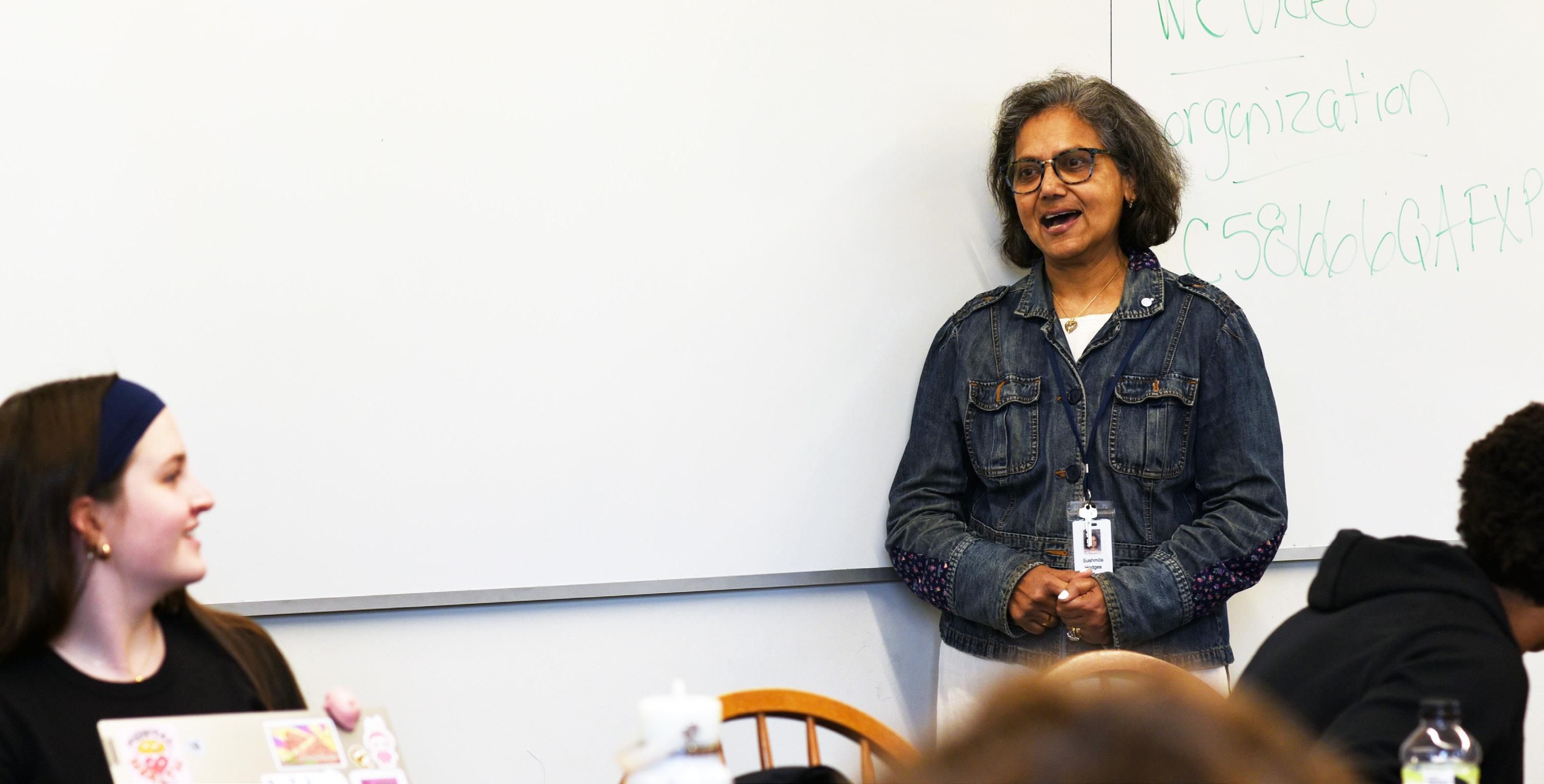
For 26 years, Sushmita Hodges has been teaching history at the upper school. After leaving, she plans to put focus into her freedom.
Hodges has often found teaching to be very time-consuming and looks forward to the lessened responsibilities that will come with retirement.
“[Teaching] can be very demanding,” she said. “And so consequently, I feel that I have sort of put my personal health and well being in the background … and now I can … bring it to the forefront.” She hopes that this will give her more opportunities to spend time with her family and, in the long term, plans to play it by ear until she decides anything big.
“I want to live it for a year before I decide. … I also have two grandchildren now … So I’m looking forward to … spending time with them,” Hodges said.
One thing she will miss is the impact she has on her students and the opportunity to watch them grow and develop. She loves to receive emails after they’ve graduated, telling her how the classes she taught have influenced them or are reflected in their current college curriculum.
“As you’re teaching [you] can have those moments where … it feels like you’re not making a difference,” she said. “But … I’ve always told myself through the entire time I’ve been here, regardless of whether it happens right away or not: I feel that I’m … planting seeds that will blossom and … take shape one way or the other down the road.”
“I feel that I’m seeds...planting that will blossom ...and take shape one way or another.”
- Sushmita Hodges
Her impact is not only felt by those who have graduated, but by current students. Sophomore Oakley Schonwald is one of Hodges’ current World History II students. Shay appreciates the latter’s love for knowledge and her familial anecdotes.
“[She’s] very passionate about teaching,” Shay said. “I love hearing about her grandchildren.”
Despite the many things Hodges looks forward to after retirement, leaving the community after so many years feels like a milestone.
“As a historian, what really sort of pops out as I’m leaving here is that, for me, personally and professionally, … it marks the end of an epoch,” she said.
The end of the school year brings bittersweet endings, and new beginnings. As three teachers prepare to leave the upper school, students reminisce and teachers reflect on their experience learning together.
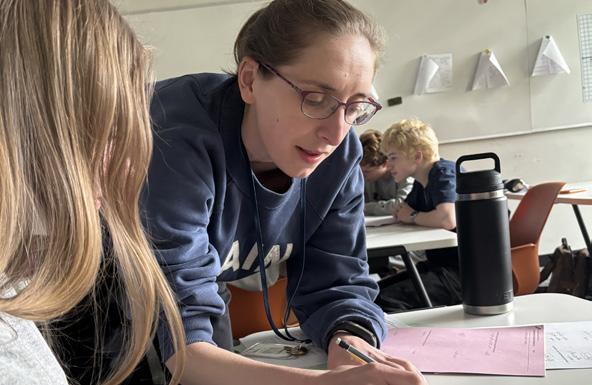
The thing that bothers math teacher Nicole Koenig most about leaving the upper school is that she’ll be leaving its community members.
“I will … miss the students, and my colleagues. All of them have been absolutely wonderful,” she said. “I love the kids. They’ve been the highlight of my job and they’ve really made it worth it for me.”
Something Koenig will not miss about St. Paul is the snow. She has been surrounded by winter weather all her life, having lived in Buffalo, Leavenworth and Laurence in Kansas before coming here, but has never gotten used to the inclement weather.
“I will not miss scraping the ice off of my windshield,” she said. “As a kid, obviously, I didn’t drive … I loved it, as a kid. As an adult, no.”
Koenig has taught for three years in the math department, and although departing is bittersweet, she’s excited to teach at The Barstow School and live near her mother, a social welfare professor. “We’re basically best friends,” Koenig said.
No matter where she is, Koenig will keep her memories at the Randolph campus with her.
“I’m excited about where I’m going and the people I’ll be with, but this has been a really great environment,” she said. “I wish I could just take the school and bring it with me, to be honest. … It’s just a really nice place to be and a really nice place to work.”

English teacher Robert van Vliet is departing from SPA after many years of teaching, and has had a strong influence on many of his students.
This semester, van Vliet taught multiple periods of the Literature of Monstrosity elective as well as English 9. Junior Chloe Kovarik, a student in one of van Vliet’s Literature of Monstrosity classes, finds his teaching style unique and appreciates his ability to keep the class engaged.
“He has a very interesting teaching style. He’s very hands-on,” Kovarik said. “He’s very engaging when we talk about what happened … It’s a very engaged discussion [and] he’s … good at making sure it stays on task.”
After teaching a variety of classes at the upper school, van Vliet will depart for new beginnings at the end of the semester.
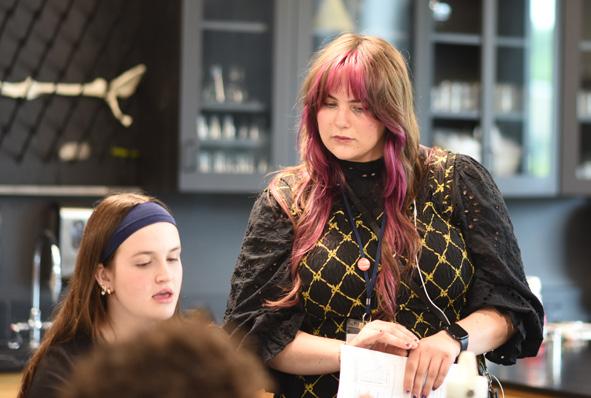
As science teacher Eleanor Wriedt’s time at St. Paul Academy and Summit School comes to an end, they look back on their upper school experiences with
fondness. A favorite memory of theirs was the 2026 junior retreat at Camp Courage, a unique experience for them.
“Getting to see … students interacting as a whole outside of … small classroom dynamics is really cool to see. And getting to talk about things beyond my content area was interesting, because obviously I hear a lot about chemistry and [biology] and science, but … getting to hear student perspectives on … life, I think has been a highlight,” she said.
One of the biggest factors in shaping Wriedt’s time at SPA into a positive one is their colleagues, and how welcoming the faculty has been since their first day at the school.
“It speaks to who the faculty are as a whole. … They’re interdisciplinary by nature,” she said. “There’s so much curiosity about who people are, kind of within other spaces in the school. … [It] makes it so there’s a lot of cohesion and a lot of inclusivity.”
Wriedt has had an impact on students, too. Junior Jack Bettenburg, for example, is inspired by Wriedt’s authenticity.
“They’re so authentically themselves that it inspires me and so many other people to also authentically be themselves, and that is just such a superpower in teaching,” he said.
As they prepare to depart, Wriedt hopes to illustrate how grateful they have been for the school’s positive community, and not only faculty, but students’ willingness to have open arms for its new members.
“It’s easy, as faculty, to be like, ‘hi, hello, new adult.’ But I think as students, as a collective, everybody has been so excited to meet the new faculty,” she said. “It’s been very heartwarming. So I guess a message of gratitude is my last leave-off.”
RUBICON - MAY 2026
SAM GALARNEAULT THE RUBICON
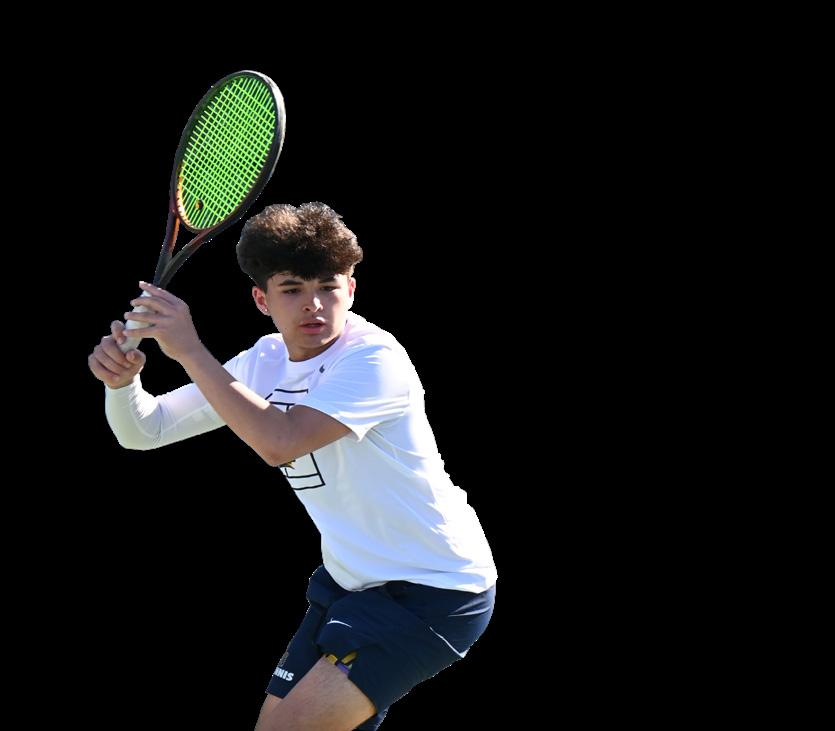
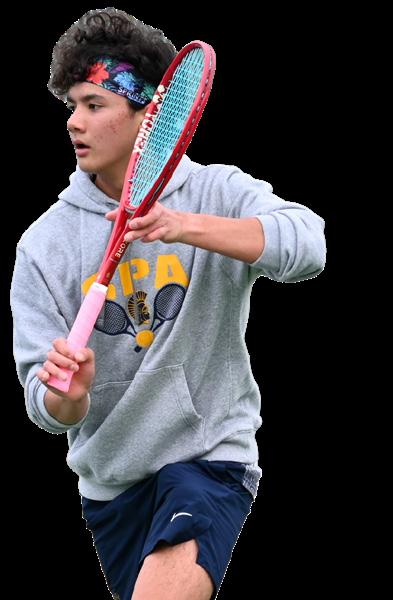
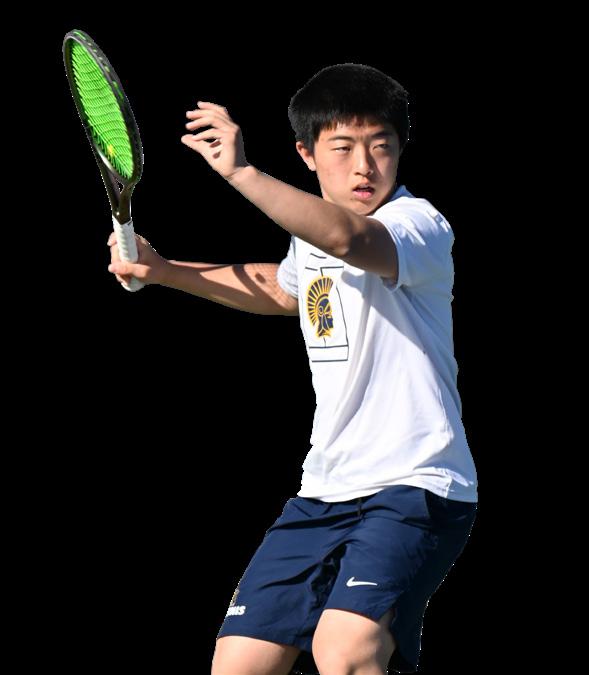
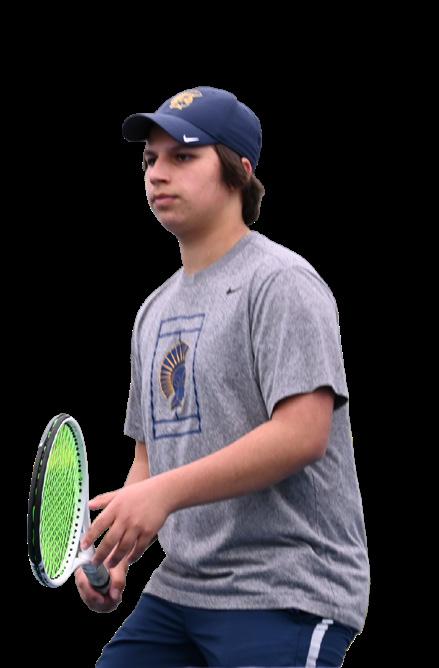
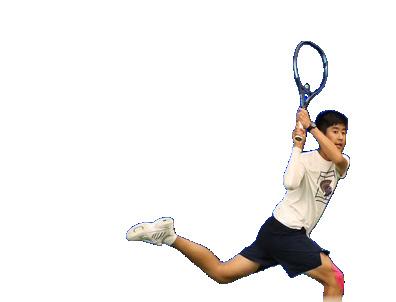
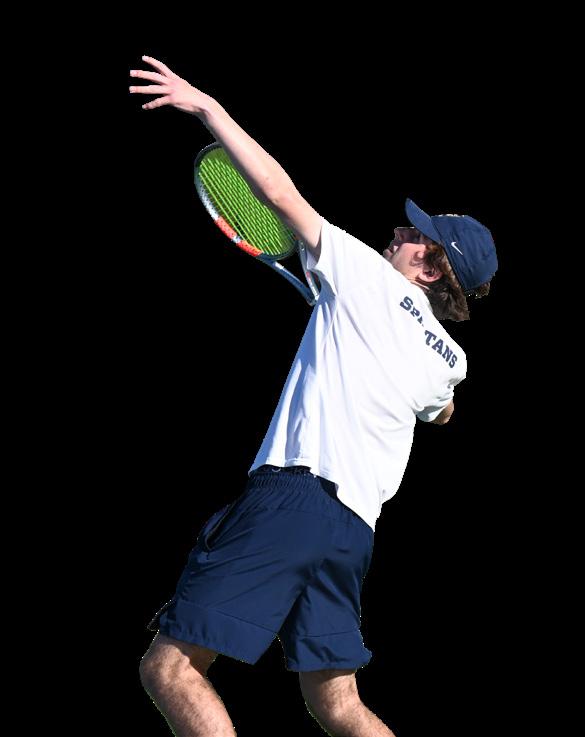
After winning their fourth consecutive Section 4A championship last year, the varsity boys tennis team feels pressure. The team is working to uphold their winning streak as they enter the postseason.
The tennis team is state-bound as a team, with two individuals and two doubles to play in the tournament. The team has a history of strong performance at the state level, with nine previous Minnesota State High School League State Team Championship titles under their belt, dating back to 1993. The boys tennis team is also the most recent team to have won four consecutive Class A State Champions titles since 1963. With a strong history, the tennis team began their preparation for state and the postseason by reflecting on regular-season successes and challenges.
Junior Gavin Leuthold has been a part of the culture that the team has worked hard to create. He feels the pressure of trying to maintain their title, but also wants to go into the postseason with a strategic mindset, focusing on one thing at a time.
“Sections are the first focus for us … then state,” Leuthold said. “We just want to focus on staying confident, collected and playing within ourselves.”
Senior Elliot Sjaastad has been on varsity for the last two years. He wants to embrace the high demand that the team is familiar with. He hopes that this determination will drive the team to success in sections and state competition.
“We want to use that pressure as a motivation to play harder,” Sjaastad said.
After losing some prominent senior players in the last few years, the team has had to adjust. In addition to having an injured captain. Sjaastad is proud of how the team has rebounded.
Leuthold and Sjaastad focus on creating a balance of competitiveness with perseverance as they head with the team to postseason matches.
Junior Isaak Senaratna, competing in the state tournament with doubles partner senior Allan Wang, feels the excitement and demand it takes to be at the state tournament for another consecutive year.
“I think given our track record, our goal is obviously to win, but this year we can’t take anything for granted and have to battle across all seven courts,” he said.
junior Gavin Leuthold “
We just want to focus on staying confident, collected and playing within ourselves.

“Our lineup isn’t as strong as it was from last year, and some other teams have improved, but we are working hard and playing well, so we are feeling good heading into the postseason,” he said.
As the team moves into the state tournament, the champion title is in reach, but not guaranteed.
“Second place in state is still an amazing accomplishment, but as a team we believe we can go farther than that this year,” Senaratna said.
The team hopes to rely on their preparation for when they compete to maintain the championship title for another year.

PEONY STEELE THE RUBICON
The Spartan way in sports has become more than just wins and championships.
Over the years, athletic teams have built a culture centred on trust and encouragement, helping programs advance deep into sections and state competition. While talent and hard work are important, athletes and coaches often point to strong teammate connections as the foundation for success.
NORDIC COMES TOGETHER
The girls Nordic ski team has combined competitive success with a tight-knit team culture. However, it wasn’t always that way.
Captain Eleanor Mody has witnessed a transformation in her five years on the team, two of those as captain.
“I’d say when I first joined the team, there was a lot of disconnect between all of our teammates ... I feel like this
year we really were able to just come together as a team.”
Especially during a dark, cold and (at times) demanding season, athletes stay supportive and help each other keep on track. During conference, sections and state, when athletes miss days of classes for competition, Mody leans on her team to get caught up on missed work.
This year we really were able to just come together as a team. “ junior Eleanor Mody

“[E]veryone just comes together, and it makes going back to school a little less stressful because you have this community who’s doing the same thing,” Mody said.
Parallel with building relationships within the team, the girls push each other to excel at skiing.
This stems from healthy competition: “We’re always pushing each other to be better and racing the other girls during our intervals,” Mody said.
Because the team values support and connection as much as results, success becomes less about individual victories and more about pushing one another to grow.
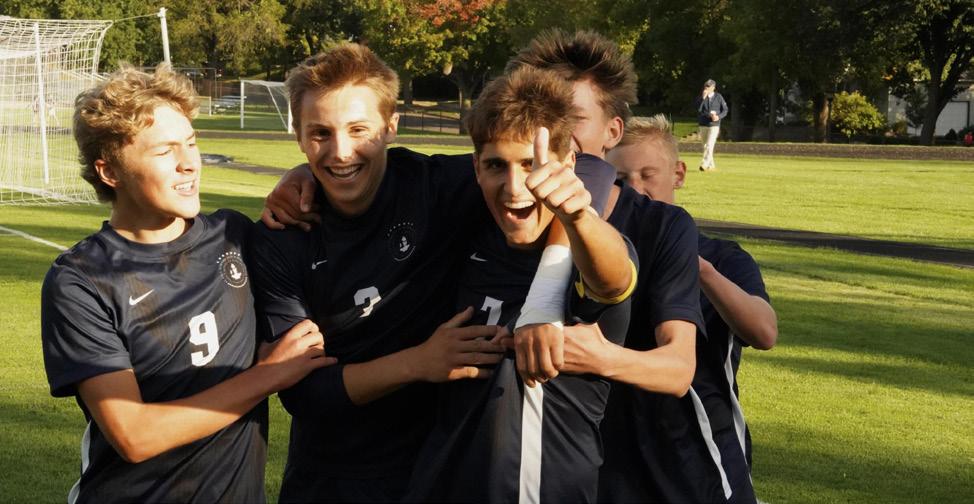
A similar atmosphere exists within the boys soccer program, where teamwork is essential both on and off the field.
“There is a big sense of family with the team,” sophomore Graham Waibel said. “I know we do a lot of team dinners or events to build a strong sense of community.”
Players rely on communication, trust and chemistry during games. Those relationships are built through time spent together at practices, team events and throughout the season.
“In soccer, I feel like you have that close con-
nection. You trust each other and know each other more … and that obviously [fosters] more success,” Waibel said.
Track and field athletes compete in individual events while still contributing to a larger team score, making solo performances a collective result.
Sophomore Noah Miller-Fimpel said, “Everybody encourages each other and cheers each other on, that drives you to do better.”
Miller-Fimpel also credits team success to healthy competition.
“You compete against your friends. It’s like you race each other doing the same splits and stuff,” he said.
Strong team connections help athletes support each other. Across sports, a common theme of teamwork, encouragement and competition are important parts of the athletic experience.


JUMPS. Hurdler Jocelyn Rog placed fifth in 100m hurdles at the Independent Metro Athletic Conference Championship May 14 with a time of 16:43. “If my stride gets messed up mid-race, I sometimes just have to embrace it and keep going,” Rog said.

Maximize horizontal velocity. Minimize vertical displacement. Every part of the race is a calculation. During each hurdle, while moving at high speed, athletes have to jump at just the right height to clear the three foot tall obstacle without slowing down. Each hurdle approaches in rapid succession. At full sprint, there’s no time to think; athletes have to rely on the instincts they have trained during practice. One short jump can easily send an athlete crashing to the ground.
Sophomore Jocelyn Rog, who has been hurdling since eighth grade, works consistently on developing proper technique. Rog focuses on the little things.
“stretching my hips [and] snapping my trail leg down after each hurdle … sometimes I get caught on a hurdle and it takes me out,” she said.
Most injuries in hurdling happen during these awkward landings, according to the study published by the Multidisciplinary Digital Publishing Institute “Age and Sex Comparisons in Pediatric Track and Field Hurdle Injuries Seen in Emergency Departments of the US.” These risks highlight the importance of technique, strength training and most of all, consistency in preventing injury.
Rog got injured during her first ever race.
“I got stuck on the last hurdle and basically had to roll to the finish, but it messed up my knees. The track is not too forgiving and is basically like sandpaper or a cheese grater,” she said.
One of the most important parts of hurdling is maintaining three steps between each hurdle. Mess up, and the entire race could be ruined. As fatigue sets in, especially when running a longer event, stride length naturally shortens, forcing athletes to adjust their strides mid-race. Unlike a flat sprint, hurdling has far less room for error because of the obstacles. Every single step must land correctly to avoid
It’s easy to be a professional sports fan every season in Minnesota. With stadiums nearly within walking distance of each other in Minneapolis and two pro hockey teams in St. Paul, there’s a seat to see the action nearly any time.

ownership by the Pohlad family have led fans to boycott games: “[The fans] express this movement by wearing a black shirt to the game,” he said. “That’s why the attendance has been at an all-time low this year.”

they represent familial bonds.
“The Vikings remind me of watching games with my grandpa,” he said. “I think it’s very important to build connections with these sports teams because if your whole family watches, it’s really important.”
losing momentum. Athletes have to practice maintaining consistent strides.
“The hardest part about maintaining a rhythm is taking the right amount of steps in between,” Rog said. “Three steps ensure you keep the rhythm with the same lead leg, while four steps force you to switch legs, disrupting the rhythm and making you think more.”
By the final stretch of the hurdles, the race becomes about endurance. As lactic acid builds and the legs grow heavier, what once felt automatic requires more deliberate effort and mental stamina. Hurdlers have to adapt instantly if the race isn’t going according to plan.
“If my stride gets messed up mid-race, I sometimes just have to embrace it and keep going,” Rog said, “but other times, if I am fully aware, I will do a double four stride to switch back to my fastest lead and trail leg.”
“ The hardest part about maintaining a rhythm is taking the right amount of steps in between.
sophomore Jocelyn Rog

The motion of jumping over the hurdle creates a sort of “whip.” As the athlete jumps over the hurdle, the trailing leg stays behind, with the hip stretched to generate elastic energy like a slingshot, pushing the leg over the hurdle and helping the athlete return to sprinting form as quickly as possible.
Hurdling is ultimately a sport of precision. Compared to other track events, hurdling requires a much more specific rhythm. Each race is a test of consistency because even the smallest mistake can be a dangerous fall. The sport combines both speed and agility, requiring a talented athlete. To truly succeed, a hurdler must be more than fast; they must be exact.
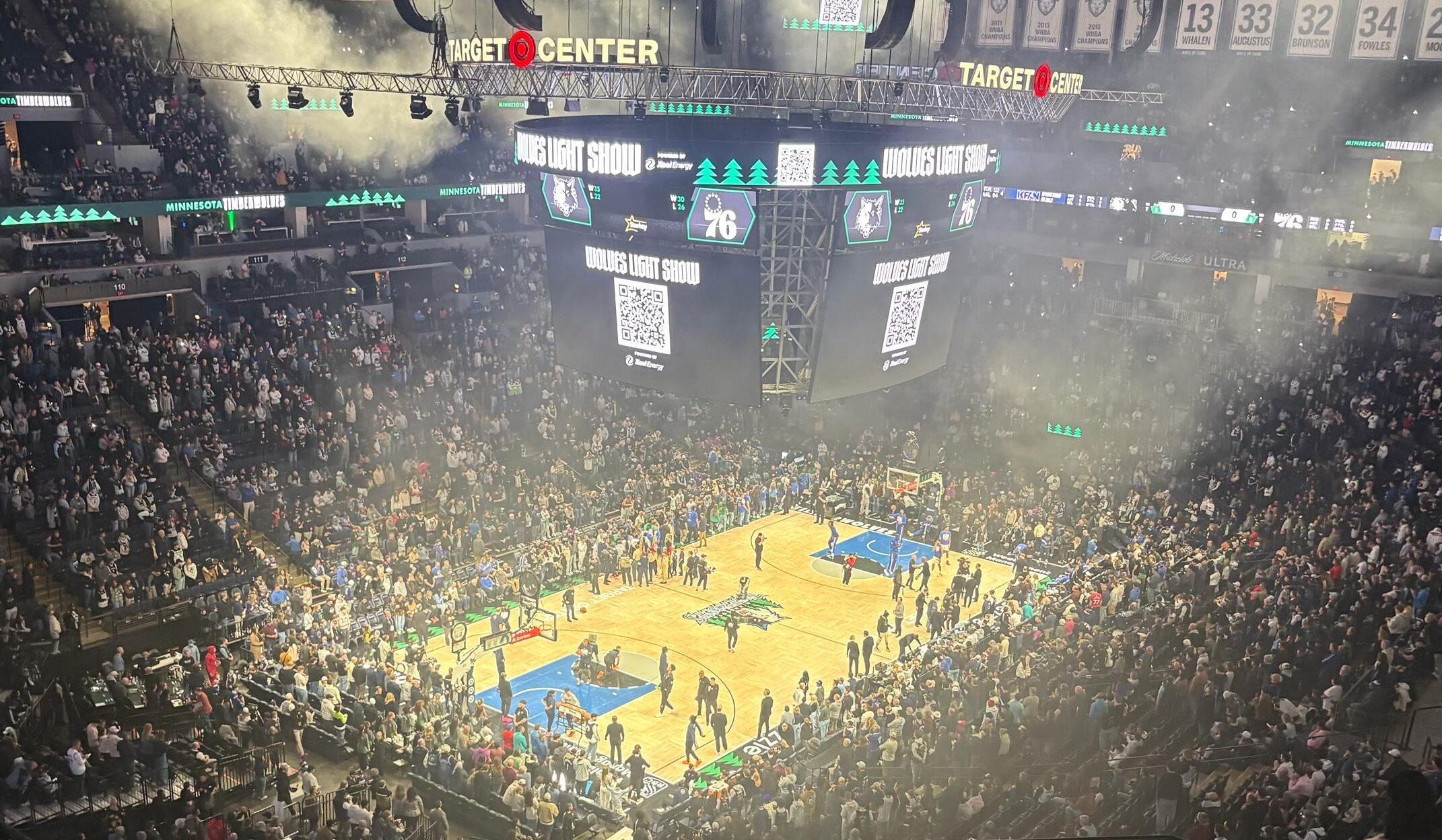
comes from their fan base: “The fans help create a strong identity in professional basketball. I think [Minnesota’s] really a positive fan base. There are no toxic fans. Everybody’s in support of the team,” he said. Minnesota features a plethora of teams to support throughout the year, fostering community and spirit statewide. 1 3 2
The Minnesota Twins were formed in Kansas in 1894, before moving to Washington, D.C. in 1901, and finally settling in Minnesota in 1961. Since then, the Twins have won the World Series twice in 1987 and 1991, but have not been back since. Recently, the Twins have had a rocky time with ownership and low payroll issues. As junior Gus Hembre noted, recent events surrounding the teams
Founded in 1960, the Minnesota Vikings were part of an expansion effort for the NFL. The Vikings have not had major success in the playoffs since appearing in but losing four Super Bowls in the 1970s. With the introduction of head coach Kevin O’ Connell, however the Vikings have had two dominant 13-4 and 14-3 seasons in 2022 and 2024, respectively. They have lost in the wild card playoffs both times. The Vikings aren’t just a sports team. For sophomore Pike Marthaler,

The Minnesota Wild debuted after the departure of their predecessor, the Minnesota Stars in 1993. In the most recent 2025-26 season, the Wild made the second round of the playoffs for the first time in 11 years, breaking a playoff “curse”.
The Minnesota Frost have roots that are much more recent than the Wild’s. In 2023, it was announced that one of the first six Professional Women’s Hockey League teams would be based in
Minnesota. Since then, the Frost have been Walter Cup champions in 2024 and 2025.
Sophomore Teddy Crook sees Minnesota having men’s and women’s professional hockey as representative.
“I think it’s important to have representation in our state, like the men’s and women’s league,” they said.
The Minnesota Timberwolves were one of the last teams added to the National Basketball Association in 1989. While the Timberwolves
initially struggled, recent years have told a different story.
In the past six years, the Timberwolves have had five straight playoff berths (2022-2026), including two straight Western Conference Finals appearances (20242025).
Over the past 15 years, the Minnesota Lynx have also had amazing results. In addition to qualifying for playoffs 14 times, they have made the Women’s National Basketball Association Finals seven times, winning four titles.
As sophomore Sam Worrall sees it, much of the success and support in Minnesota basketball
1. HOME PLATE. Watching the twins. SUBMITTED PHOTO: James Welsh. 2. PERFECT VIEW. Fans are on their feet during for he game SUBMITTED PHOTO: Sophie Karmaliani. 3. PLAYOFF PUSH. Minnesota Wild vs. Dallas Stars. SUBMITTED PHOTO: Ella Bond
Junior Caden Deardurff’s most memorable moment from prom was being surrounded by his friends and classmates.
“Taking pictures with friends and as a grade beforehand was really fun,” he said.
The 2026 prom theme, “A Night in Rio,” was originally proposed for a different event, but the theme was eventually picked for the much more anticipated one. According to Student Activities Committee sophomore representative Fiona Lambert, the theme is the first thing on the agenda. Although Lambert wasn’t a main contributor while planning this year’s prom, she was able to watch and learn about the process.
Prom is one of the most exciting school events for many juniors and seniors, and it is highly anticipated: thus, all of the planning that goes into it takes a lot of energy.
“We start out kind of early, just to make sure that we have it done on time,” Lambert said. “We all sit around and come up with ideas and we start off with a theme first, because everything falls in place after that.”
Prom is traditionally a highly anticipated event. High school proms were not the beginning of the tradition, though: prom was first mentioned when college dances started to be referred to by the nickname. It wasn’t until a few years later that the first high school proms were hosted. Eventually, this would evolve into the event that is a staple in American high school experiences.
process in more depth.
started planning
away after the winter formal, and the very first thing that we did was decide on a theme,” he said.
Planning an anticipated event can be stressful, but consistent work over a period of time can help to take off the pressure.
“We worked on planning every meeting between winter formal and the day of prom, but it was spread out enough that it didn’t feel stressful at all,” durff

He also described the venue and layout for the event.
“The location for prom was super nice,” he said. “Tables for dinner were on a different level than the dance floor [and] dessert table, which made it so that people could spread out more depending on what they wanted to do.”
He also noted that the decorations for prom were very different from the decorations for other school dances: palm trees, balloon arches and tropical flowers adorned the space, setting a mood to match the theme.
“All of the decorations are done by the parent association to make the night more special … Prom had a lot more decorations than other dances,” Deardurff said.
Prom was held May 9. Activities included board games, dinner, dancing and a photo booth.
SAY CHEESE. Juniors Anneli Wilson and Jack Bettenburg pose with friends for photos before prom. The prom was held at the Minnesota History Center, and the night began outside the building, where the junior class gathered to take photos. “Taking pictures with friends and as a grade beforehand was really fun,” junior Caden Deardurff said.

An underrated and understated film, “Chan is Missing,” directed by Wayne Wang, follows two taxi drivers, Jo (Wood Moy) and Steve (Marc Hayashi), on a search to find Chan, a character who has disappeared with Jo’s $4,000.
The film is an 80s noir-adjacent voyage set in San Francisco’s Chinatown, and Wang offers a peek into every house Jo and Steve enter. Everyone Jo and Steve meet have a different idea of Chan. Some think he is conniving, but some believe he is honest. Wang’s ultimate vision for thew film, to be representative of the San Francisco Chinatown community, was bold at a time
“Four Samosas” instantly brings the viewer into the lively and breezy world it is set in with a wide shot of a grocery store and a group of people manically rushing out. The colors are vibrant, loud and always making a statement. The score is jaunty and, at times, lovingly cartoonish.
The film follows Vinny (Venk Potula), an aspiring rapper, and his friends who plan to break into his ex-girlfriend’s dad’s grocery store and steal his uncertified diamonds. Director Ravi Kapoor clearly takes inspiration from director Wes Anderson in his color grading and aspect ratios, and in a more subtle vein, has gags that feel reminiscent of director Edgar Wright.

Director Justin Lin is perhaps best known for directing five films in the “Fast and Furious” franchise, most notably “The Fast and the Furious: Tokyo Drift.” Lin’s debut feature film “Better Luck Tomorrow” is often overshadowed by the car blockbusters, but it is a sincere filmmaking debut for Lin.

when narratives surrounding Chinese Americans were scarce. However, the eclectic cast of characters in this casually humorous film paint the portrait for how Chinese American identity can exist: in multitudes.

It’s a film that is nearly impossible to dislike, even with a script that is a bit disjointed at times. “Four Samosas” uses stylistic choices and flirts with different genres to create an enjoyable and perky film.
The film follows a group of Asian American high school students, with protagonist Ben Manibug (Parry Shen), who become bored with their respective high school careers and turn to crime. The film’s character-based narrative storytelling is what hooks the audience into what could be an otherwise formulaic story. “Better Luck To -
Even though Gurinder Chadha has directed some phenomenal teen films, undoubtedly Chadha is at her best in “Bend it like Beckham.”
“Bend it like Beckham” follows Jesminder “Jess” Bhamra (Parminder Nagra) as a soccer obsessed teenager who struggles to follow her passion due to her family’s lack of support. Over the summer, Jess gains an opportunity to play soccer with new friend Jules Paxton (Keira Knightley) while she and her family prepare for Jess’s older sister’s wedding. “Bend it like Beckham” allowed accessibility to soccer in a time where it felt like a male dominated sport. Not only did Jess act as a unique represen-
morrow” shows the gradual descent into crime in an insightful way, leaving room for moments of comedy, but still maintaining the intensity of the journey.

tation for British South Asian women, but the movie uses soccer as a vehicle for classic coming of age tales. It’s everything that one could want in a feelgood movie: it’s funny, charming and lovely all around.
CREATING THE CHARACTER.
Sophomore Kate Tuttle, who played Marian in “The Music Man,“ serenades the audience at rehearsal. “I think Kate is doing a great job of making Marian seem more like she has her own opinions and a personality, besides making her ... stereotypically ingenue,” junior Eva Johnson, Tuttle’s castmate, said.
BOOKS & BALLADS. Senior William Hanna and sophomore Kate Tuttle rehearse the show’s number “Marian the Librarian” as Harold and Marian, respectively.



ALMOST SHOWTIME. The cast of “The Music
the show’s full-cast
LILLY
PARR THE
RUBICON
It began, like most good things, with snacks. Participating students filed into the Huss Center for Performing Arts. Following their long days, they spent the 15 minutes before rehearsal began in the hallway behind the stage, snack on the daily options: popcorn, M&Ms or something else, hidden in the wooden cabinet along the wall.
Once the clock hit 3:15 p.m., it was time for vocal warm-ups. Choir director Tim Kraack, who directed music for “The Music Man,” led from the pit.
Above him, assembled students sang into the auditorium about munching M&Ms and “Olivia
Rodrigo” (the name, not the artist’s discography).
As the cast concluded their singing, Jon Ferguson, the upper school interim director of “The Music Man,” instructed the cast to begin from the top of the first act.
“We’re just focusing on running out the show as much as we can … If something doesn’t go well in the run-through, we’ll go through that and make sure we all understand what we’re supposed to be doing,” junior Eva Johnson, who played Mrs. Paroo, said.
“The Music Man,” which Ferguson described as a “big, classic musical,” had many moving elements.
“On the face of it… it’s a pretty simple story. But the scenes are big …
There’s a lot of people moving,” he said. “There’s also delicate, intricate, emotional moments.”
Those were moments that the production team, cast and crew worked through by having discussions and participating in focused scene work.
Part of the struggle that arose when crafting a show as grand as “The Music Man” was the level of what cast members could pursue with their ever-busy academic schedules.
“There’s always the question of keeping up with your homework … making sure that you’re ready for your next rehearsal or your next class,” assistant director Akie Kutsunai said.
In order to combat the struggle, the production
team created the role of understudies, something new to upper school performances.
After every rehearsal I’m thinking about what I could do differently tomorrow.
junior Eva Johnnson
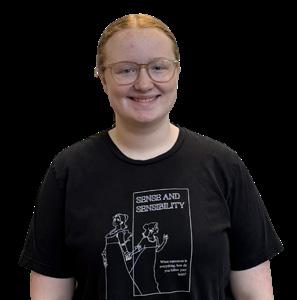
At rehearsals, actors had varying attendance rates, meaning that the usage of understudies varied in tandem. Sophomore Elliot Gilats, along with his role as a member of the ensemble, served
as an understudy for the character of Tommy Djilas.
“Any time that El [Nelson], the person who plays Tommy, is called, I would also be called to be there,” he said. “[I’m there] either to fill-in, ... or just to learn that part.”
No matter what style “The Music Man” is produced in, the show itself is another matter to address. The show, written by Meredith Willson, was quite popular when it hit Broadway in 1957, but is now somewhat outdated.
Kutsunai discussed how the issue was combatted. “We’ve also had some pretty frank discussions with the whole cast and crew about ways in which the show thinks about not just the question of misogyny and sex-
ism but also … the idea of outsiders,” they said. In a way, rehearsals don’t really end. The entire cast and crew continue to work, think and craft this show, even outside of rehearsals.
“After every rehearsal I’m thinking about what I could do differently tomorrow, or … what we’re going to do tomorrow,” Johnson said.
As students shuffle out from Huss, the curtain falls, but “The Music Man” will continue on in the minds of every person who attended.

GRACE BERGER THE RUBICON
Every time a new album drops, a single tops the charts or an artist announces a tour, teens hope for the once-in-a-lifetime opportunity to see their favorite artist in concert. For many teenagers, concerts are a long-awaited experience, whether they learned every song by heart, traveled across the country or funded it themselves. However, the latter can land concertgoers in an unfortunate situation, especially when their earnings don’t keep up with rising ticket costs.
Sophomore Anna Klevan thinks the rationality depends on the concert.
“I love live music and going to concerts, so if it’s someone that I really like, then yes [I would go], although some concerts are really expensive,” she said.
Last month, the ongoing scrutiny of ticket sales superpower Ticketmaster reached a fever pitch. Its affiliate Live Nation was found liable for anticompetitive conduct, stifling competition and dramatically raising ticket prices since May 2020. As the company created an illegal monopoly over the entertainment industry, it took advantage of audiences and artists in the process.
Ninth-grader Ruth Kenny, a frequent concertgoer, said, “I feel like going through things like Ticketmaster takes away some of the humanity [of the artists and] sets them up as a commodity.”
In 2010, ticket seller Ticketmaster and venue promoter Live Nation merged to form Live Nation Incorporated, the same year artists like Taylor Swift,
Eminem and Justin Bieber hit their stride. The new company controlled access and the event itself, quickly taking over venues, profiting from musicians, and overcharging its audiences. The company was also considered a monopoly due to its control of roughly 80% of ticketing, largely limiting consumer choice.
I think art should just be accessible to everyone. In the system under capitalism, everything will be commodified.
junior Saif Mujahid

Junior Saif Mujahid believes that such high prices should not be put on something as universal as art.
“I think art should just be accessible to everyone. In the system under capitalism, everything will be commodified; it just fosters an environment for profit,” he said.
As the minimum wage fluctuates, inflation rises, and concert prices under Live Nation increase, too, making venues less accessible for younger audiences.
This April, a federal jury in Manhattan accused the company of wielding immense power over too many aspects of the live entertainment industry. Additionally, a class action lawsuit will take place July 6 involv-
ing concertgoers, including teenage customers. The estimated damages are over $150 million.
Over time, concerts have become increasingly inaccessible for teenage audiences. This gap widens for artists and concertgoers, as the threat of corporate control limits teenagers’ ability to experience the magic of live music.
Uptown revival movement refers to “returning to” or “bringing back” a version of Uptown in its heyday, many community members are focused on moving forward with what Uptown could become in the future, and setting attainable goals for its improvement.
“bring back” to Uptown. Often, as part of these walks, participants are encouraged to patronize the local businesses and pick up litter around the neighborhood.
Within the effort, Uptown United has incorporated a program of community ambassadors, the qualifications being that an ambassador is someone who cares deeply about the Uptown community and making the neighborhood a safe, connected and enjoyable place to live and visit.
It’s good for the community ... it is bringing a place that was kind of neglected back to life. “

The day-to-day action that community ambassadors take part in are community walks. On Fridays and Saturdays from 6:30-7:30 p.m., they invite all community members, or anyone in support of their cause, to join a volunteer-based walking group.
The aim is to foster connection and replicate the lively energy that many wish to
Sophomore Eli Kardasis Sturtz commends Uptown’s community-based efforts.
“I think it’s really cool, and it’s good for the community, because it is bringing a place that was kind of neglected back to life,” he said.
Similar projects have been put in motion to combat the aftermath of the COVID-19 pandemic. In April, Ramsey County officially approved the plan “Building Stronger Together,” with the goal of revitalizing Downtown St. Paul. The plan encompasses many projects regarding safety, community parks, and creating housing.
Unlike Uptown United, the first steps towards St. Paul’s goals were established by the government. However, that is not to say that Downtown St. Paul did not want change.
Uptown reflects residents and business owners coming together, many volunteering as community ambassadors and taking the concrete steps they wished for. This camaraderie created and encouraged a growing movement and official city involvement.
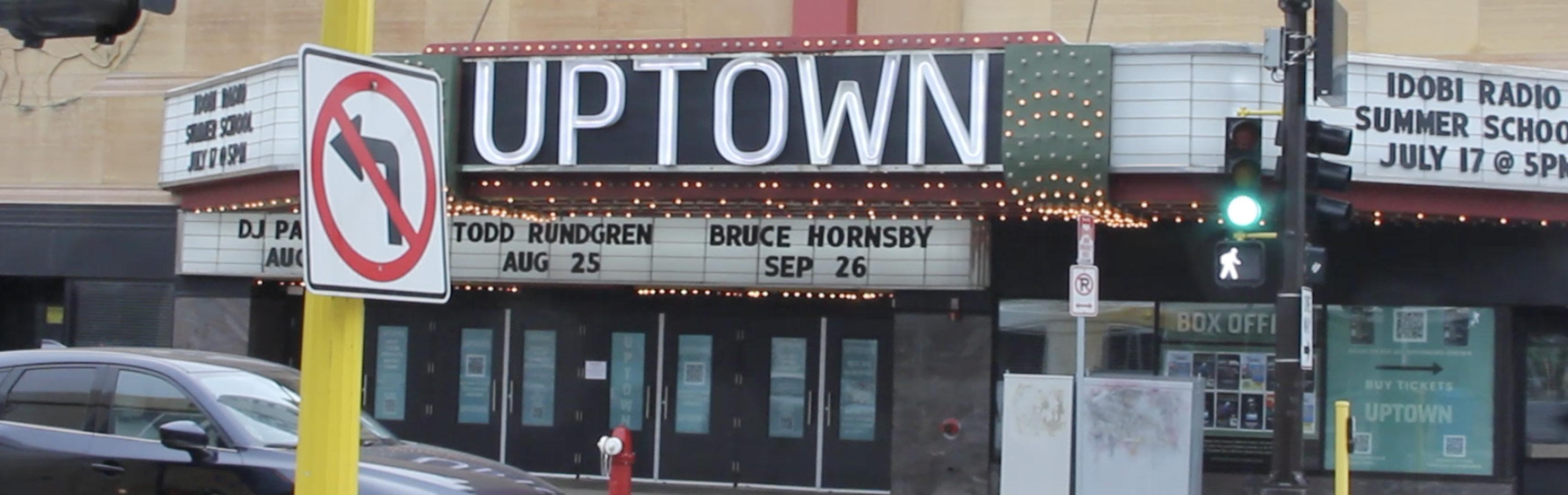
After a period of uncertainty, Uptown is at a standstill. One way that residents are trying to bring Uptown back to life is through Community Ambassadors, whose role is to encourage walkability.