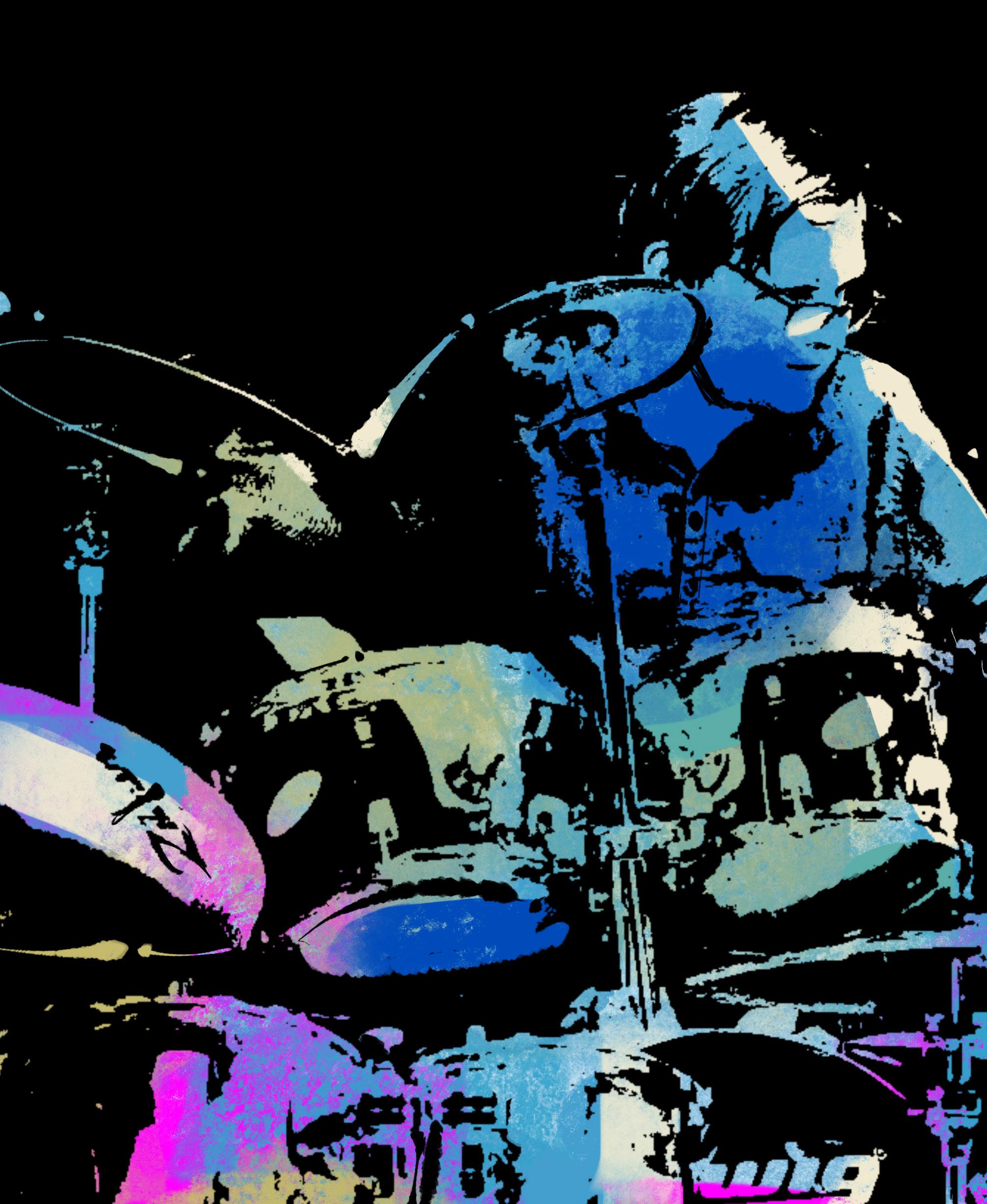
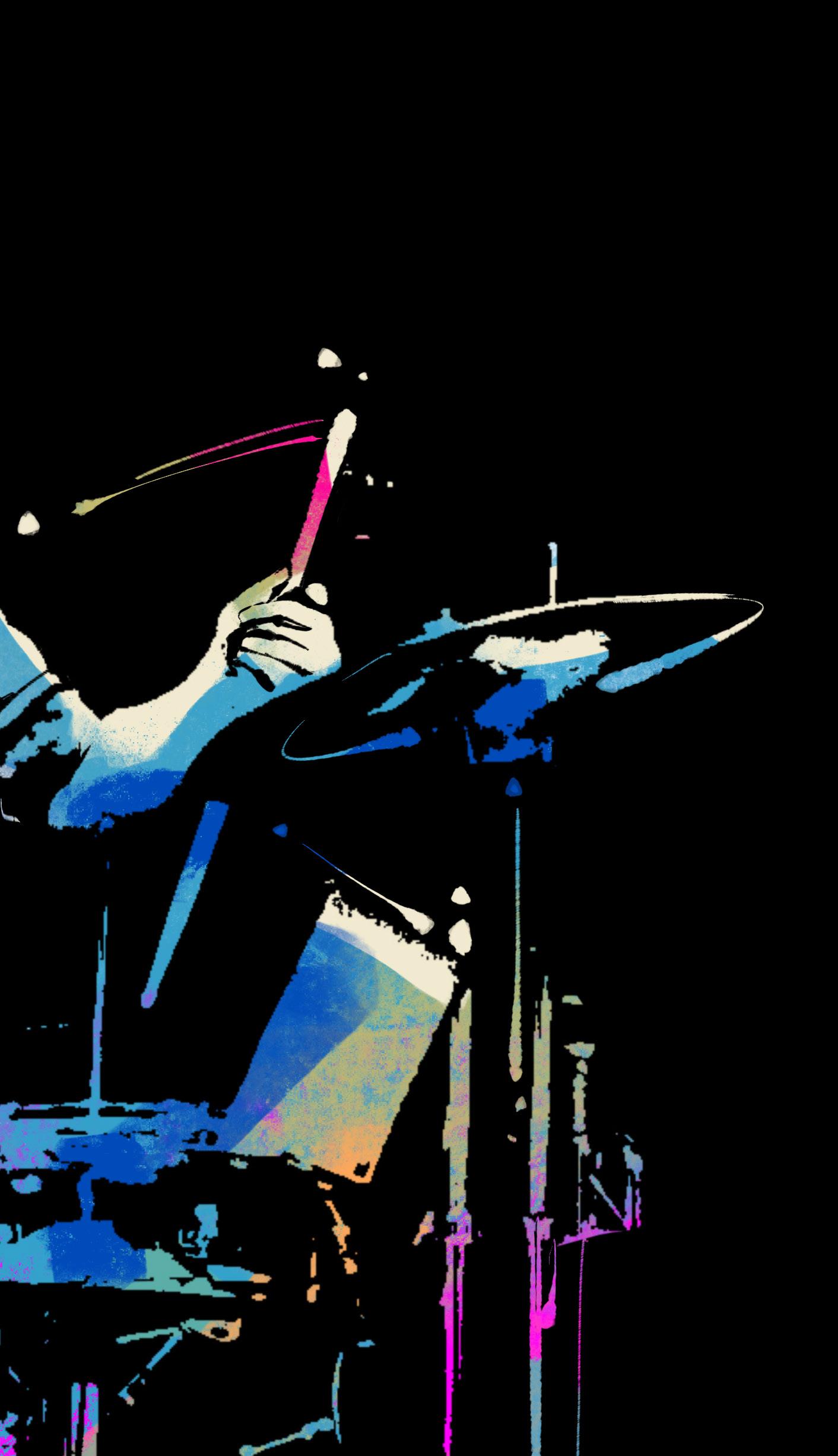
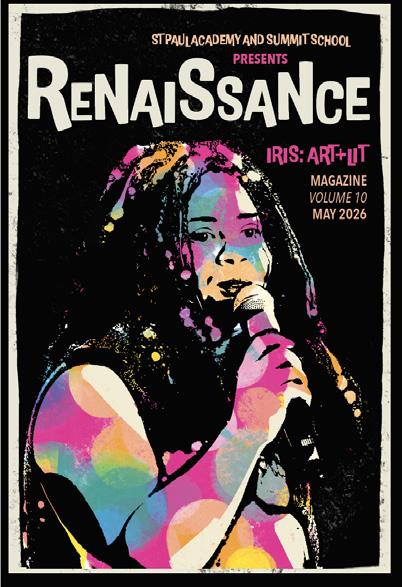
When art is uplifted in our community, as our magazine intends to help it do, it can go from being in jeopardy -- forgotten, overlooked, discarded, disparaged, or insulted -- to flourishing.
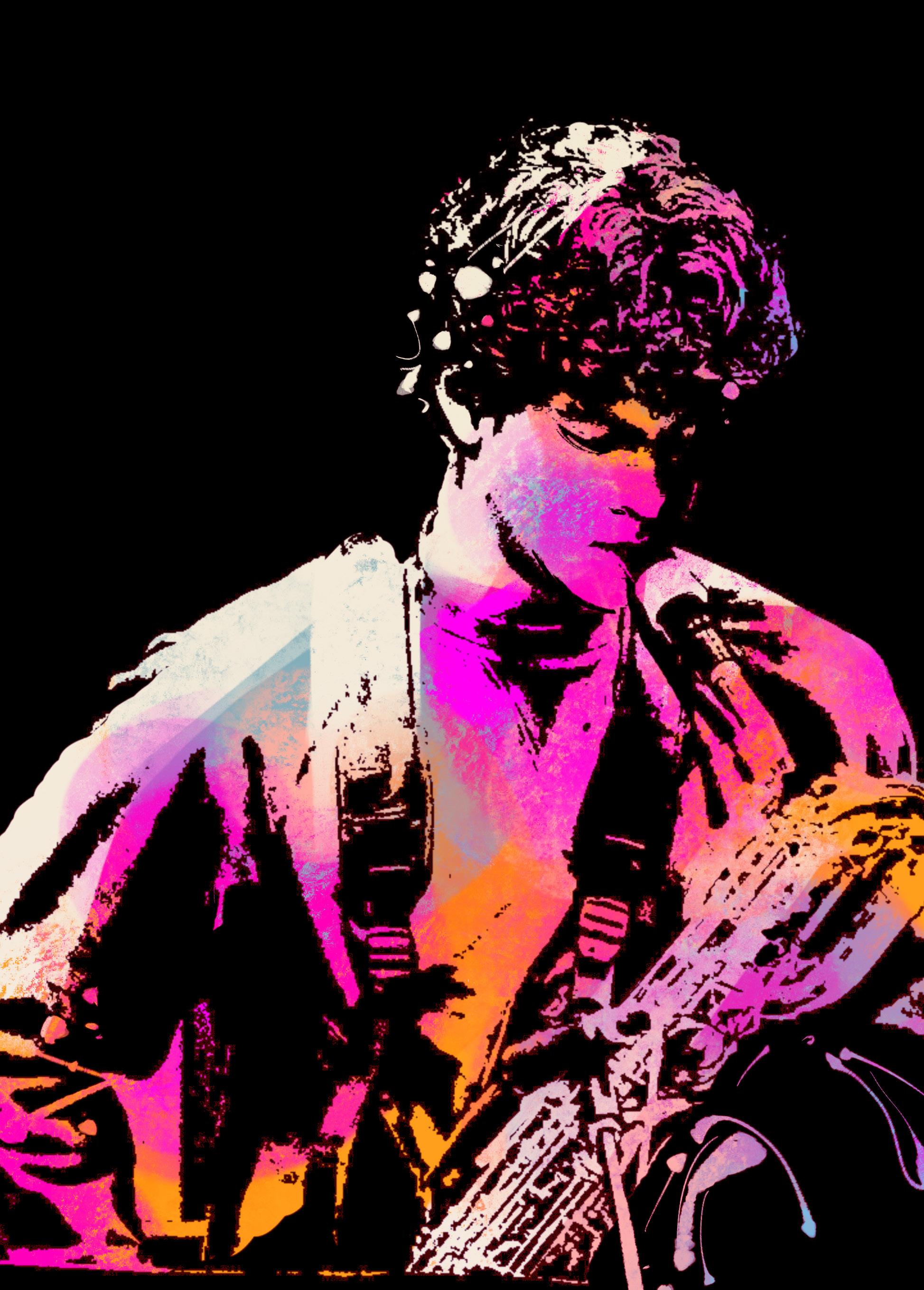
The “Nashville Hatch Show Print”-style music posters that this magazine took initial inspiration from are a perfect example of how there is even beauty in the act of advertising art, and sometimes, advertisement ends up becoming art itself, laying the groundwork for greater forms of artistic expression.
Starting with “DISSONANCE,” the stories and artwork reflect inner turmoil, distress, themes of death and despair -- all the things that can be attributed to notes that clash and hurt the ears. As jazz has taught many, dissonance is beautiful in its own way.
As the magazine progresses, dissonance becomes “REVIVAL.” It is a state of perfect imperfection, as the art and literature in this section reflects. A climactic indication of something more to come that exists in the space between lines, strokes, notes.
The magazine ends with “HARMONY.” At this point, all of the dissonance from before has been “figured out,” the clashing notes resolving into something more comfortable. Thank you for taking the time to look through the magazine. I ask you to approach reading this magazine with anticipation, but still appreciate each piece as its own distinct moment deserving of attention and praise.
Roman Farley Editor-in-Chief
DIS ONA
ONANCE
SCAN THIS QR CODE TO LISTEN TO “DISSONANCE” INTERPRETED BY THE JUAN MIGUEL QUARTET
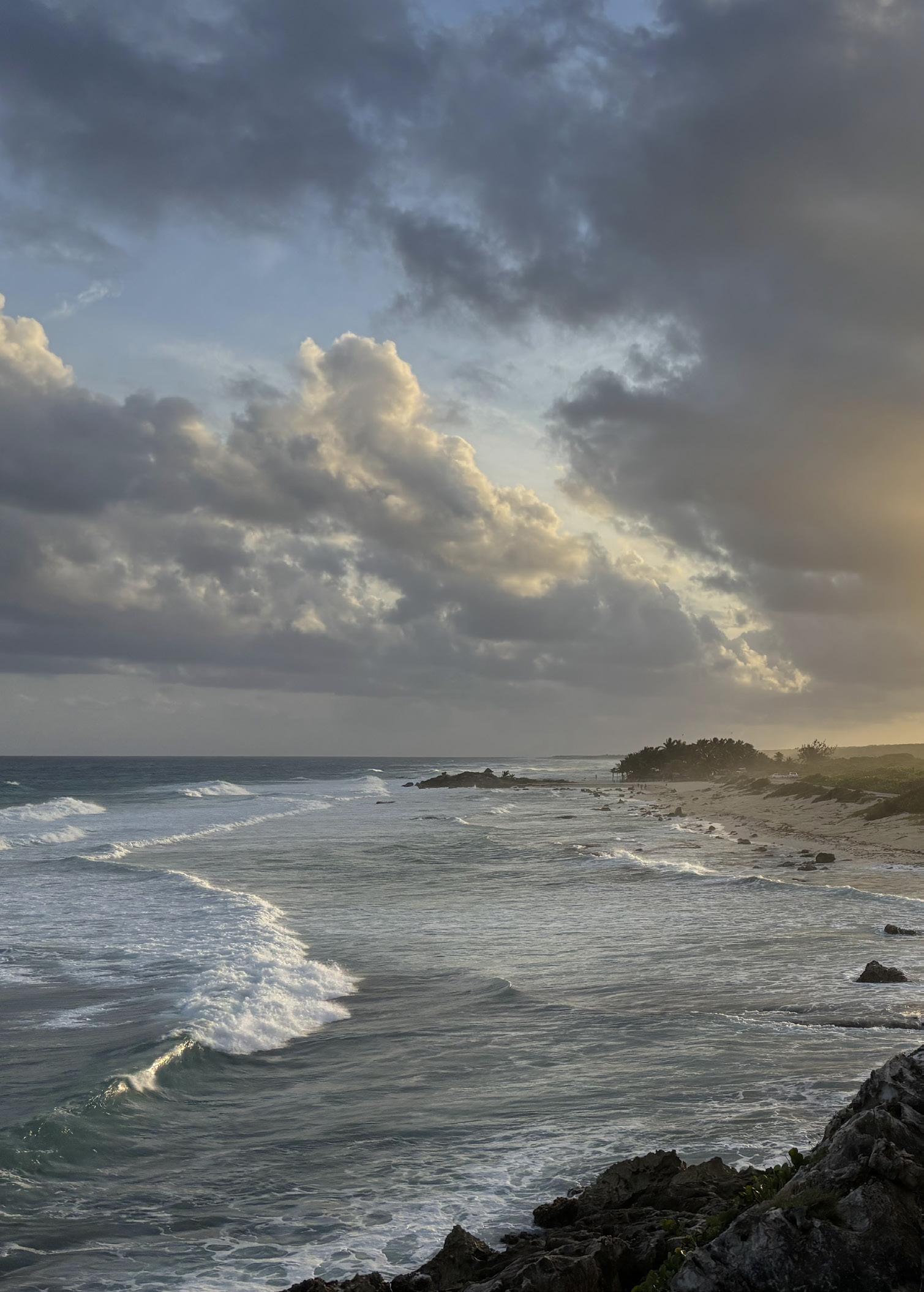
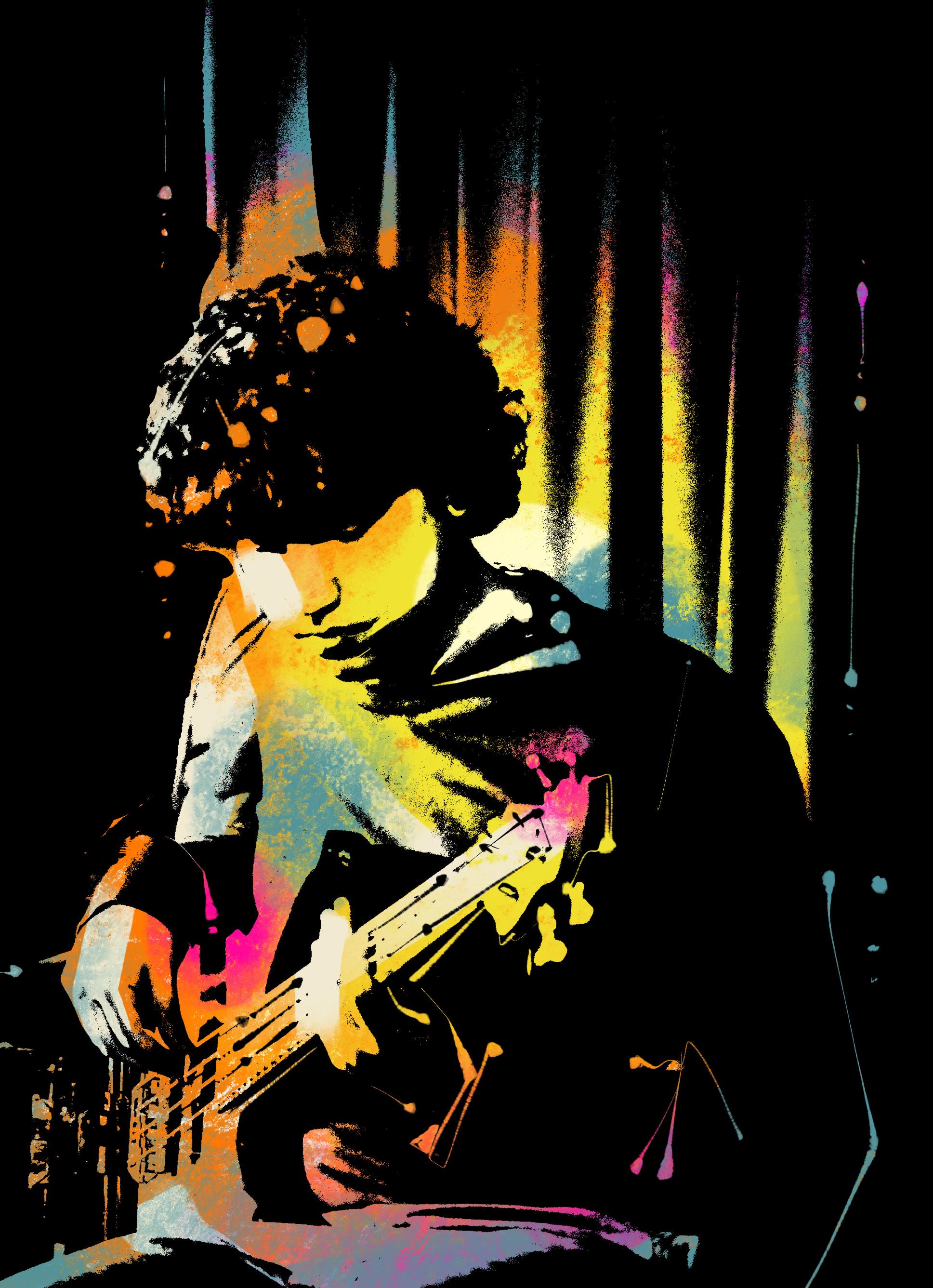
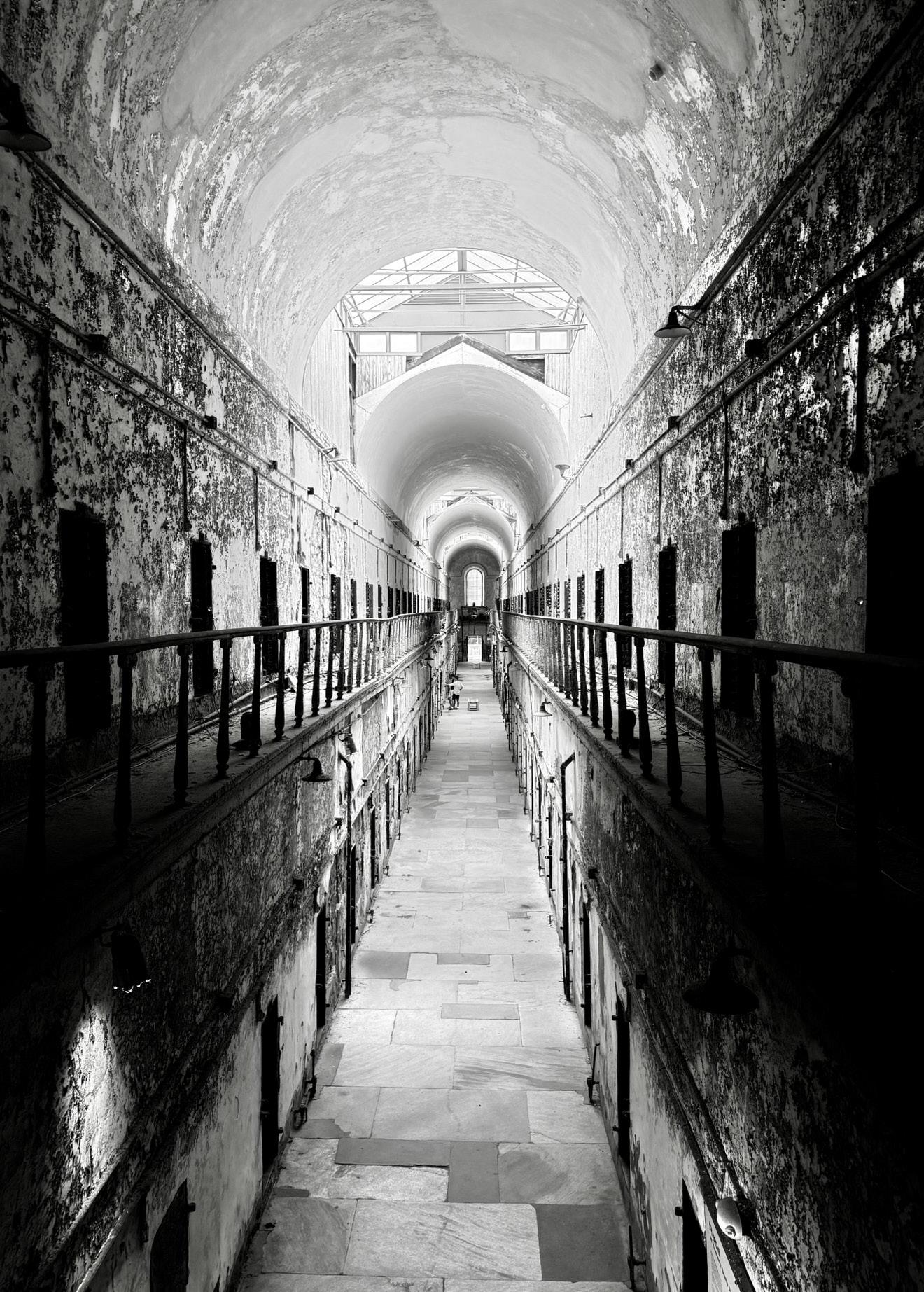
JACOB ATKINSON - digital photo
SCARED HEIGHTS OF
Fabric sticks to sweaty palms
As I climb higher.
My feet cramp in their pinched point
Joints hyperextended, muscles overstretched
Old aches whisper promises of new pain. I smile.
I can’t breathe.
I have no trouble looking out at the audience:
They have never seen me off the stage
They are still surprised to see me fall
The ribbons twirl a beautiful funeral bouquet
And the snapping jaws below open still wider
When I land but inches from their shining teeth.
This one surprised me, too–
I didn’t think it would be so hard to stop.
I didn’t think I’d fall so far, rope cinching around my waist
My body another lifeless knot in the silk
I want nothing more than to hang there
But they are prodding me with greedy eyes, watching to see if I will move I gather my limp limbs to me, throw back my head and open my eyes
Familiar faces cheer from the comfort of their seats
They too believed I’d smash into the ground.
You would never know that you’d hurt me that I find myself wishing I had kept falling – crumpled beautifully into the concrete
A bloody mess, broken inside and out A finale just for me
Because I wasn’t supposed to have to put on this show for you, too.
Every day I climb towards the sky on stretchy white fabric
Every night I wipe the glitter off my face alone. Backstage is empty,
And I let myself slump in exhaustion. It never occurs to me, to mind the act
But when you appear at my door, Stones to throw instead of roses
And I let you see through the mask, tears in my eyes
And the only thing on your lips
Is an admonition for a bent foot or faltering smile
And a final reminder that I cannot climb without you
And I cannot catch myself without you
That I can’t do this on my own, My back straightens and I keep silent
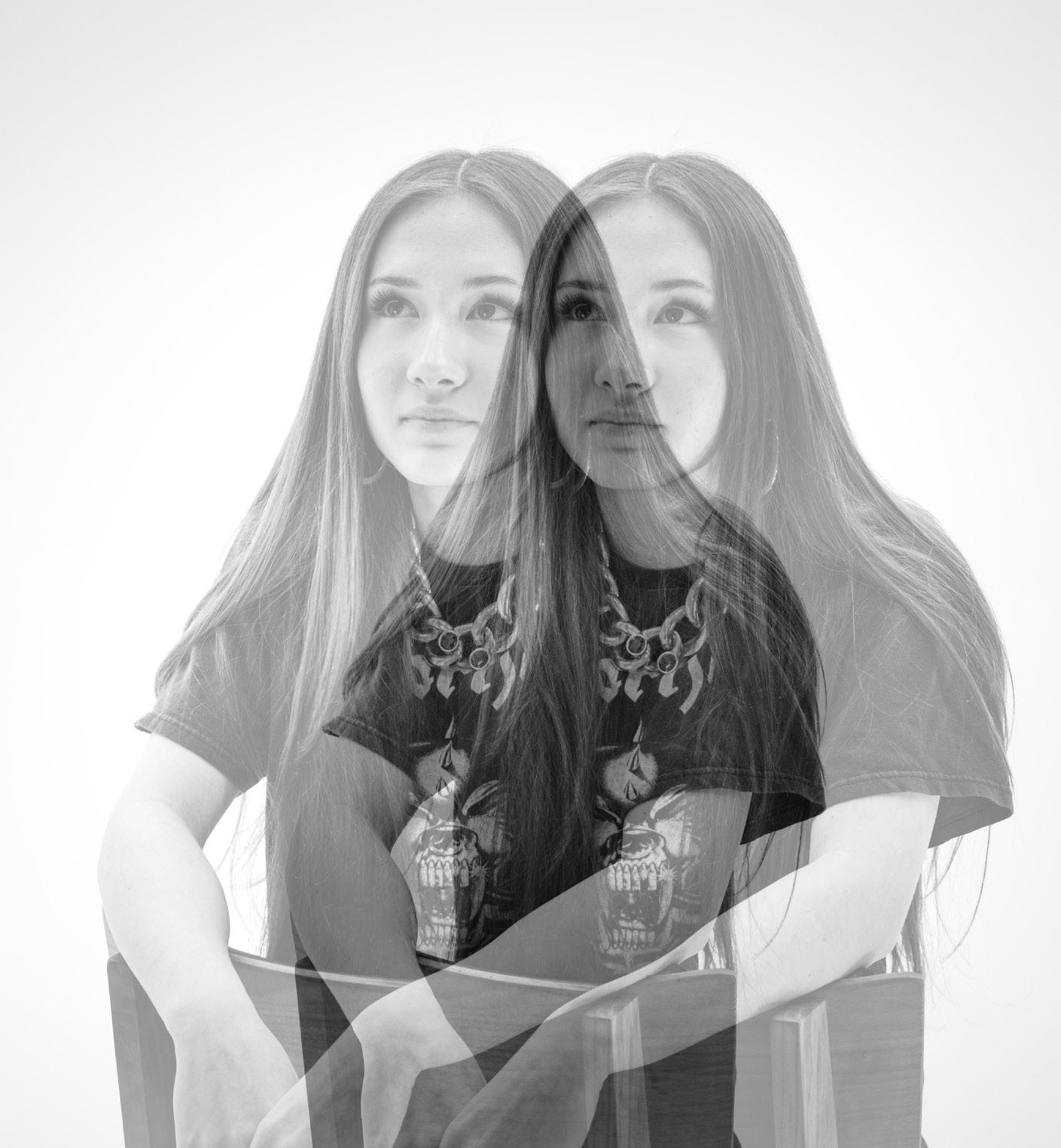
PALOMA GOMEZ WHITNEY portrait
NO TEARS
SCAN TO WATCH THE 10-SECOND VIDEO
ZIMO XIE - stop motion
IMITATION OF
“GOOD BONES”
FRANCES CONROD-WOVCHA - poem
Life is short, and the news reminds me daily. Life is short, and I watch as others are shortened In a thousand sour, brutal ways, A thousand sourly brutal ways I’ll be reminded of daily. The world is over Fifty percent terrible, and that is a reasonable Estimate, I see it in my streets. For every monarch, there is a hungry hand ripping, pulling, prodding at its wings. For every loved child, a child shot, shoved, American blood seeping in the school carpet. Life is short and the world Is over half terrible, and for every kind of stranger, There is one who would draw their gun on you, Though I wish this was kept from me. I am trying To buy the world. Any decent seller, Walking me through the streets, yammering on About freedom: This place should be beautiful, Right? I hope one day this place will be beautiful.
L ITTLE THINGS
ETHAN HE - speech
I’ve always tended to remember the small things; the details that most people overlook always stick with me. I memorize the license plates of friends’ cars, the smell of a classroom, or a traffic light that always turns red. These pieces of life stay with me, and they build up without me realizing. Maybe it’s because I like knowing things, which I do. I can spend hours babbling about fish species or a newly discovered dinosaur to a friend, and it’s something I truly enjoy doing. But if I’m honest, I think my tendency to remember goes deeper than curiosity; I think it’s because I’m afraid of forgetting.
“ I THINK MY TENDENCY TO REMEMBER GOES DEEPER THAN CURIOSITY.
I’m afraid of forgetting myself. When I was in Taiwan, this fear of forgetting who I am was a never-ending feeling. I remember trying so hard to fit into one identity that I started pushing others away. I wanted to be “American” enough, and so afraid of forgetting that part of me that I clung onto English as a lifeline. I spoke it constantly, even when I didn’t have to, even around family and friends who expected Mandarin from me. Slowly, without meaning to, Mandarin started to slip away. Words on signs and menus became unrecognizable, and I could barely go through a sentence without an English word slipping through.
Today, this fear stills follows me. I try to hold conversations in Mandarin, and sometimes the words just aren’t there. I’m afraid that now, I’m forgetting another aspect of who I am. I’m afraid that it may disappear, and that it may never be brought back. And, as I have found myself forgetting parts of my identity, I realized something else; I’m afraid of forgetting others.
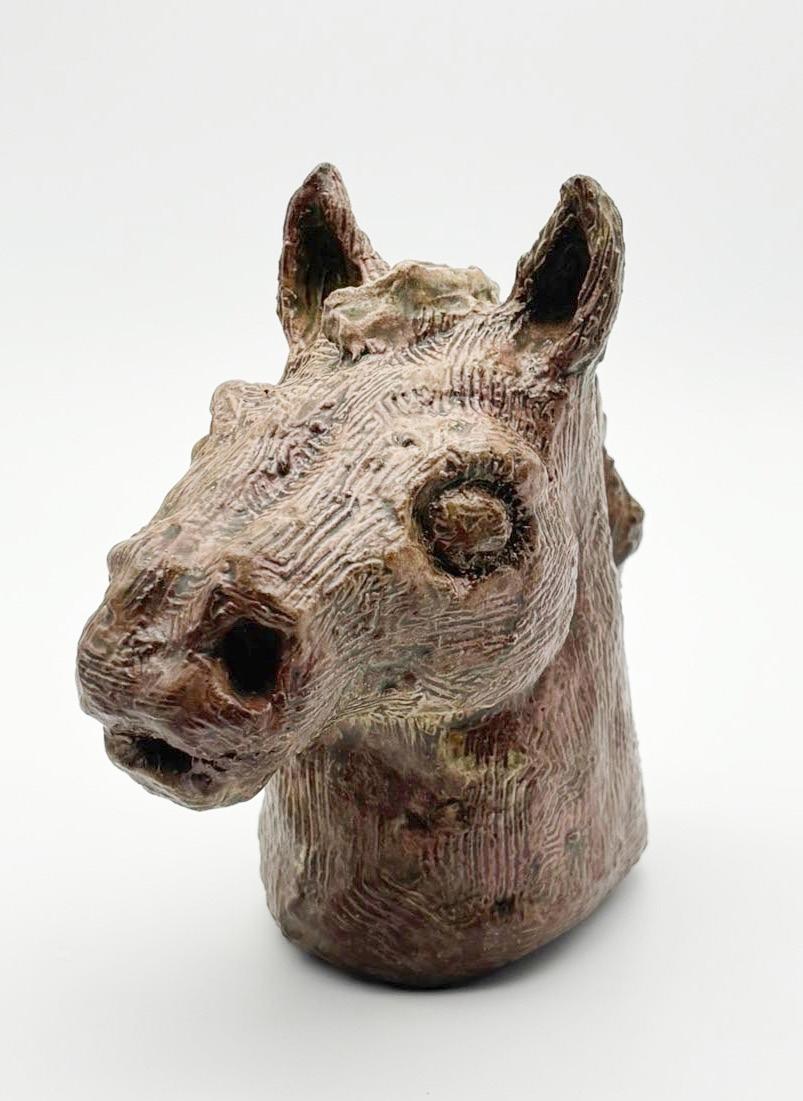
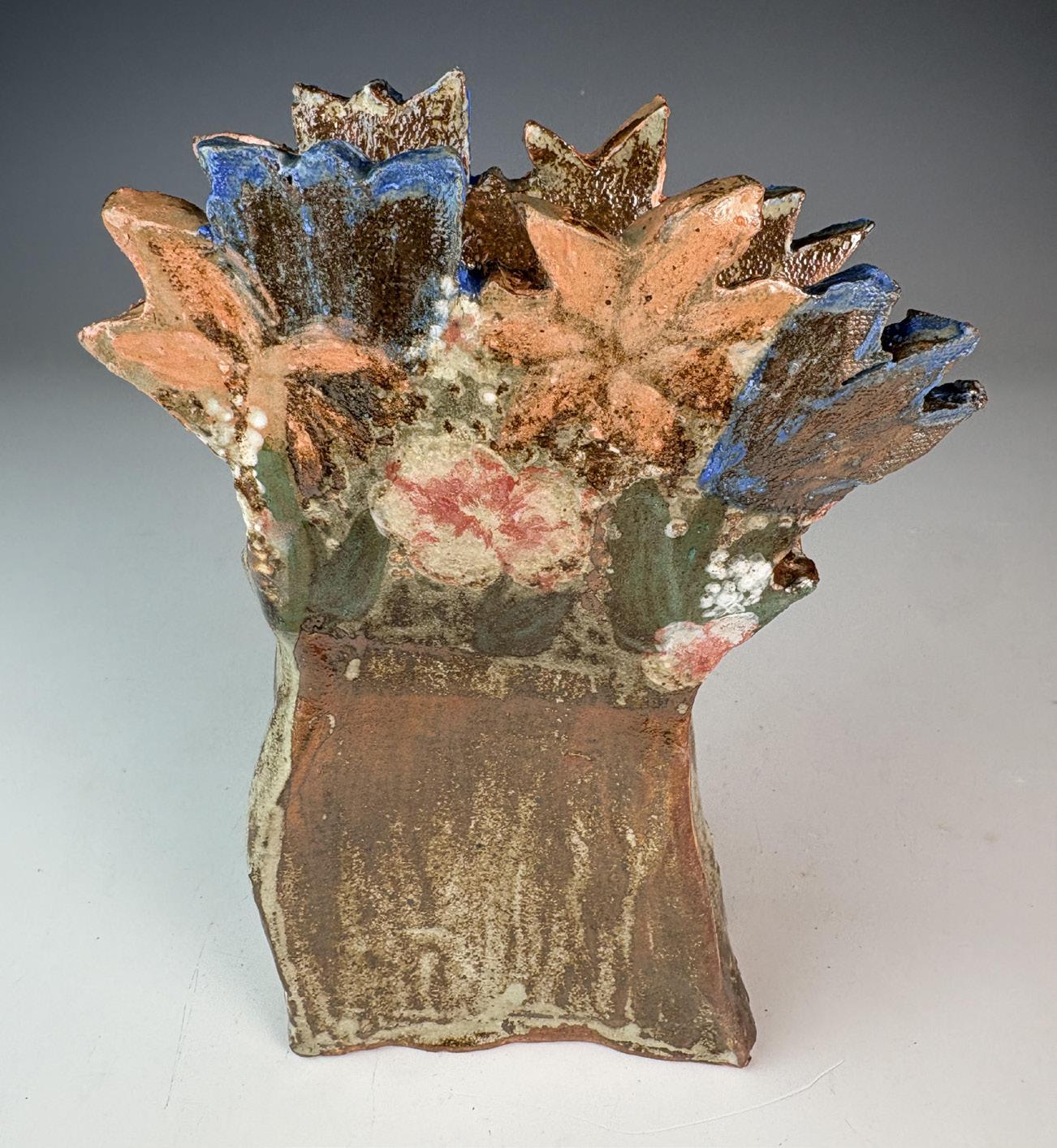
JAY TILTON - ceramic
DARK BAY HORSE BUST
Sometimes I realize this when I stumble over a family member’s name, or when stories my parents tell about distant relatives slip away too easily, dissolving as if they were never mine to keep. Two years ago, our family visited the cemetery in Hunan. We walked through the stone markers, only stopping at a small, quiet gravestone: my aunt’s. Seeing her name etched in stone made me feel a pang of guilt, as if I had done something wrong, and I had. I had forgotten her. I had only known fragments of her existence, bits of a story I never bothered to remember.
Her name was my father’s younger sister. She died when she was seven, almost 45 years ago. She was born with a heart condition which resulted in an incomplete mix of oxygenated blood, and was in and out of the hospital. My dad described her as a brilliant and smart child. I never got to meet her, and never will, but hearing even those small pieces made me feel a sense of urgency. I wanted to hold her close, to etch her into my memory so she wouldn’t disappear again, not to me, not to time, not even to death. Someone once told me that a person truly dies when they are forgotten, and I hold that sentiment to be true. When we forget a person, we forget their voice and their stories. But forgetting doesn’t only kill in a symbolic, emotional sense. Forgetting kills literally.
We forget that there are those who are starving because it’s easier to not picture the realities of hunger while in the comfort of our own homes. We forget the hundreds of thousands of people murdered because the headlines move on, because it becomes “too much to handle.” We forget the people living under siege and apartheid as the media is silenced, even though children, parents, cousins, friends, and siblings are still stripped of their basic rights, still running, still dying, still mourning beneath skies of fire and mountains of shrapnel and rubble. We forget the genocides happening in front of us, streets filled with so much blood and destruction that it can be seen from space but somehow not by us. We forget that it’s our money, our government’s greed, our inability to act that is driving these crises. We forget them because they look
different than us, have a different culture than us, that somehow it justifies a lack of empathy, that some deserve to be forgotten. We diminish them to a number on the news, a point made on the political stage, forgetting that they too, are people.
When we forget, we don’t just allow suffering; we become the reason it continues.
So this fear I have, the fear of forgetting, is maybe something we should all have. Maybe it’s something worth listening to. Because remembering isn’t just about clinging to the past or memorizing every detail. It’s not about knowing every word or story from childhood.
Remembering, at its core, is to care.
It’s how we keep ourselves alive, how we keep others alive and our humanity alive.
I’m not asking you to remember everything, every tragedy, every event, every person who needs help. That’s simply impossible. What I’m asking you to do is remember as much as you can; if you truly care about something, remember it.
“ REMEMBER WHO YOU ARE, EVEN WHEN THAT IDENTITY FEELS UNCERTAIN.
Remember who you are, even when that identity feels uncertain. Remember your loved ones, even if their memories and stories are fragmented. And remember the strangers you may never meet; the ones whose lives are reduced to headlines and histories, whose futures depend on someone refusing to forget them.
Because what makes me afraid of forgetting is that it happens slowly. It happens when we grow tired, when we avert our eyes, when we decide something is too far or too big or too hopeless. It’s quiet, and when we decide something is worth our attention, it’s already too late.
So today, my message is simple:
Don’t forget. Please.
WHITE FEATHERS
ISA PIÑERO- short story
There was an old abandoned four-story home that stood alone in a field far from anybody. Surrounded by prairie grass that eerily swayed in the wind, the home had wood siding, the dark purple paint chipping off. If you opened the front door, you would see the large rooms filled with old furniture covered in a layer of dust, sunlight coming in through the shattered windows exposing the stillness of everything left behind, as if the people who used to live in it had completely disappeared.
If you went up the large staircase in the middle of the room, you would find yourself in a long, stretched hallway, with an old maroon and red detailed carpet lining the floor. The hallway had three rooms on the right: a nursery, a bathroom, and what used to be a playroom.
On the left, the hall was row after row of windows, nearly all of them missing glass, and the blinds blowing gently as if made of silk.
Up another set of stairs at the end of the hallway, and you’ll see a similar layout, this time with a green carpet instead. But if you enter the middle room, you’ll find the walls covered with dark blue wallpaper that pictures a background of vines, and white birds that seemed like they were trying to escape out of the open window, finally leaving the silence they are trapped in.
Everywhere on the wallpaper was the same, all but one spot, and an endless repeating pattern. But in that particular spot, a bird was missing from where there should have been one to keep the pattern consistent. Next to that irregular pattern, the wings of another bird start to peel off
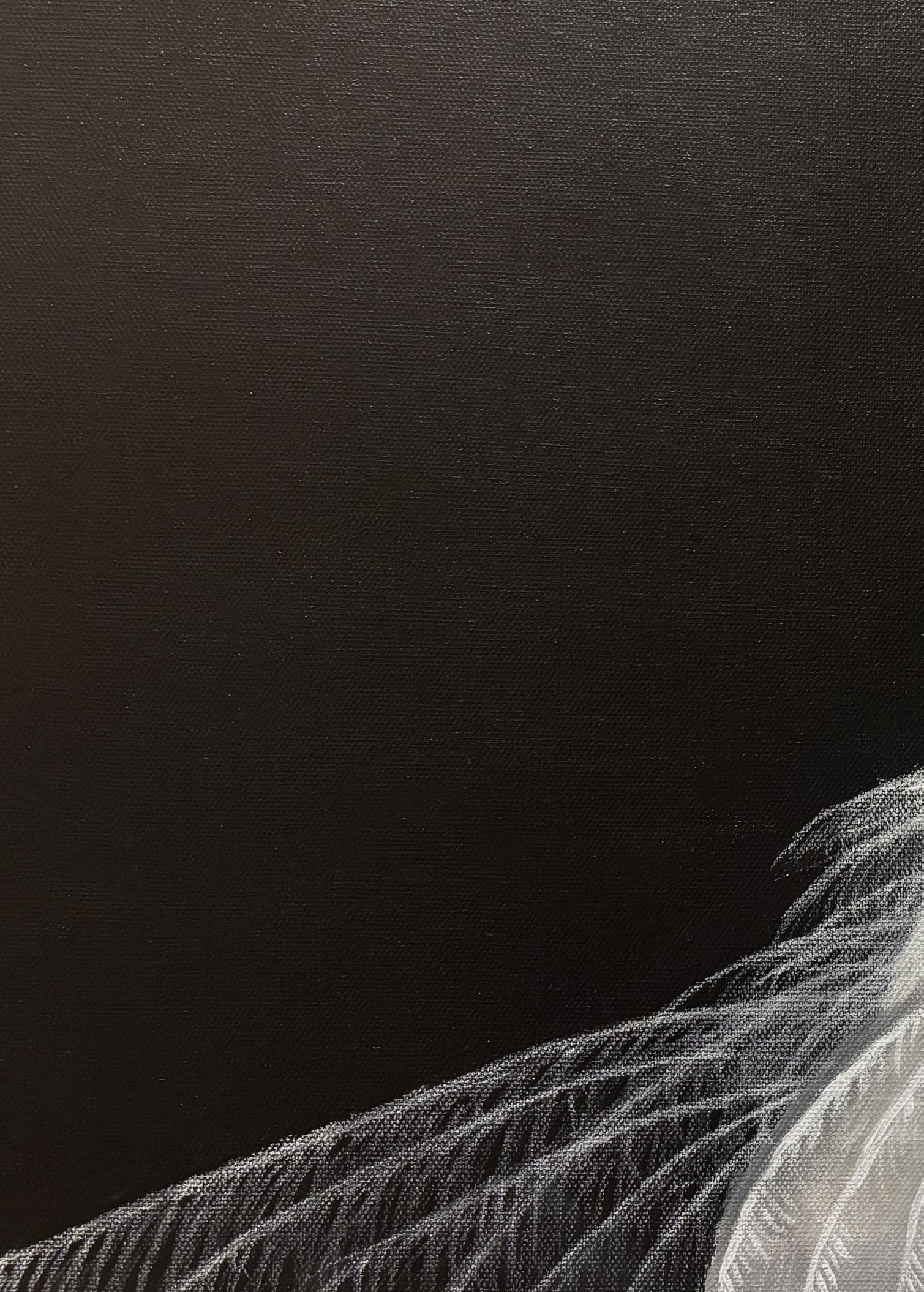
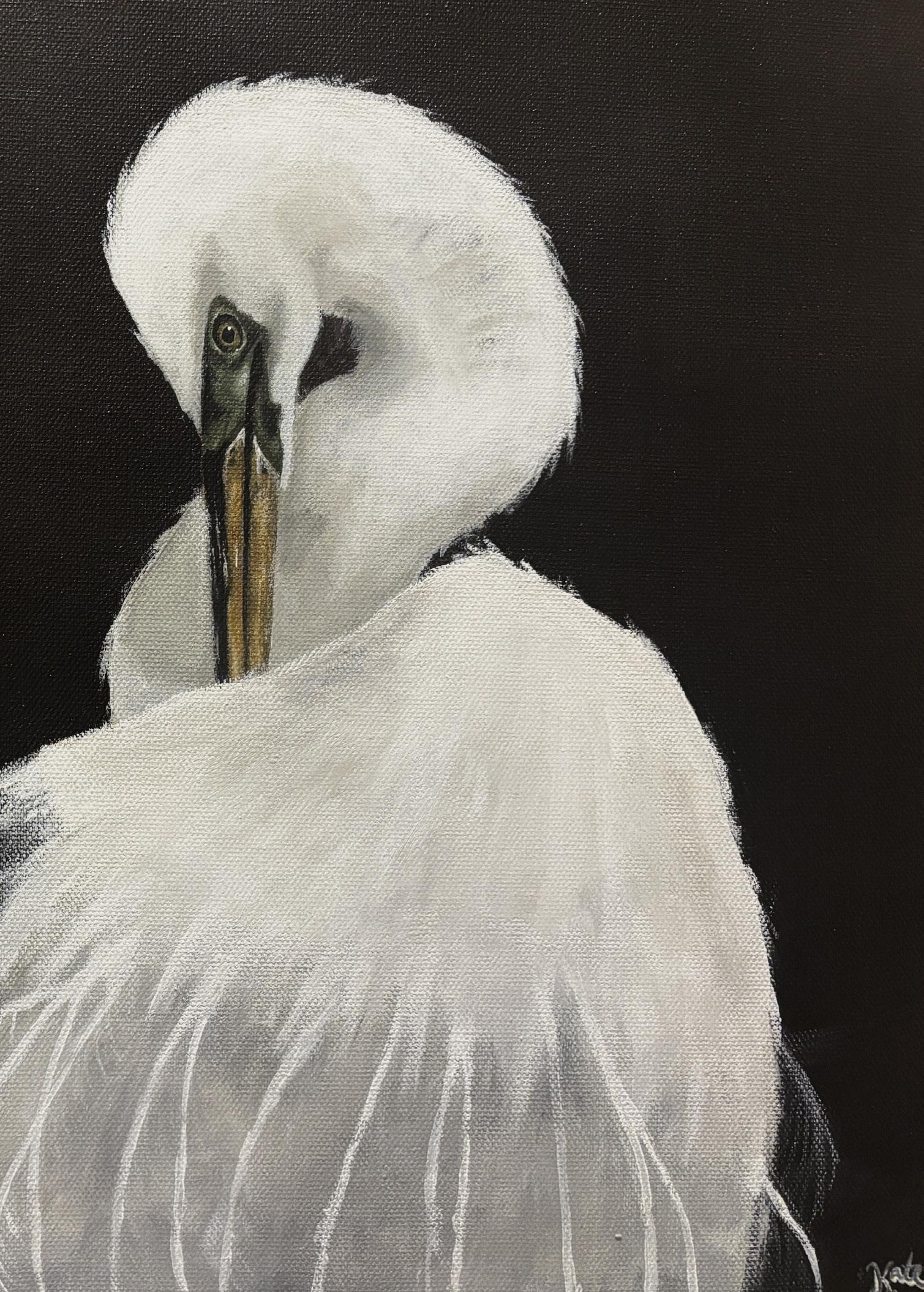
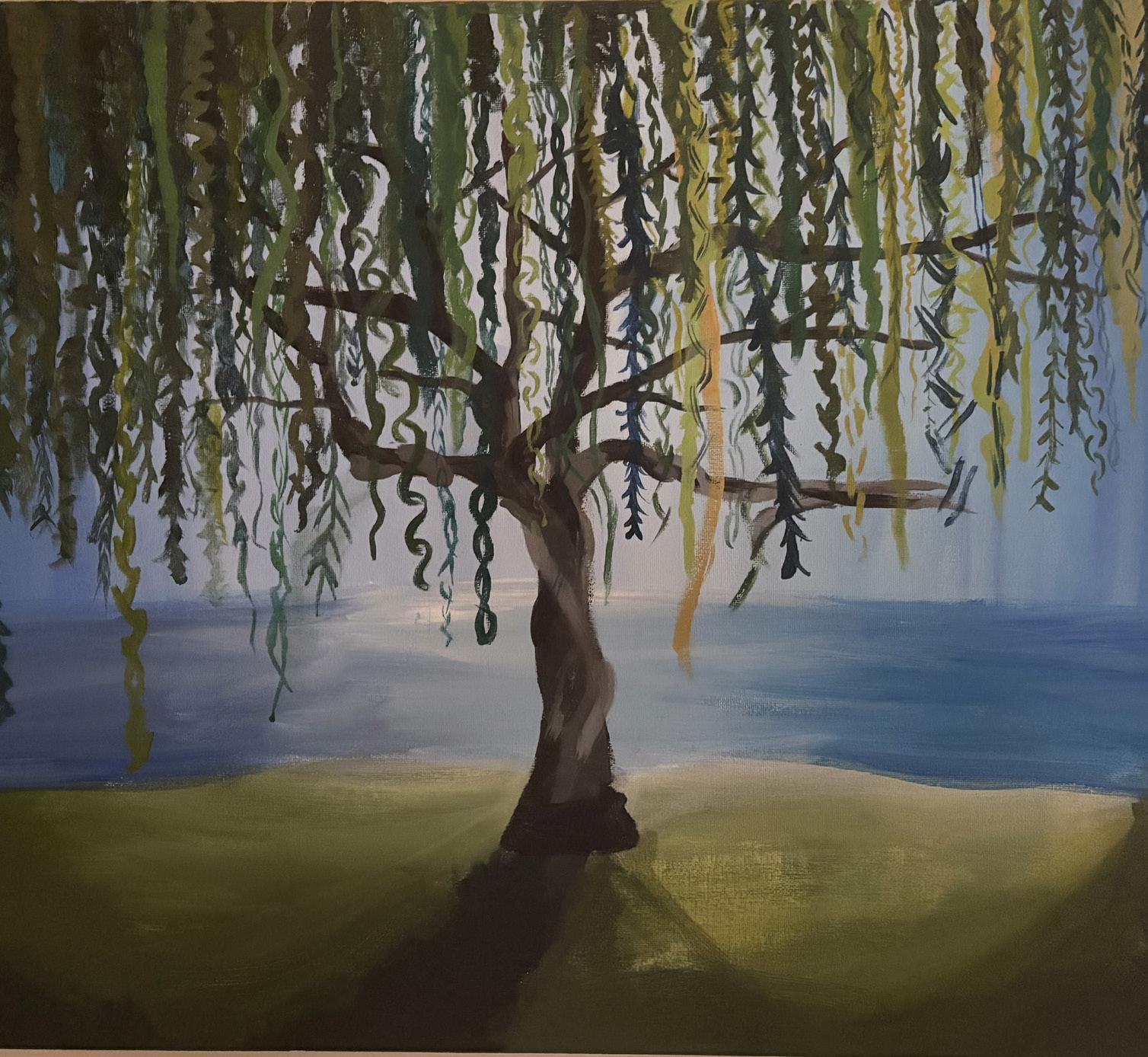
KATE TUTTLE - acrylic painting
WHITE CRANE
the wallpaper and come to life. The bird struggles but makes it off. It falls to the ground, unsure of how to fly. Once it uses its wings well enough, it flies out of the window at last, feeling free, finally letting go of a constant loudness of nothing.
“
THE BIRD FOUND ITSELF FLYING FAR, FAR AWAY TO AN OPPOSITE ENVIRONMENT.
Looking back, it feels a bit of guilt leaving everyone and everything, but it keeps going.
The bird flies and flies, never feeling tired until it reaches a spot it decides it wants to stay. The bird perches on a branch, watching the water flow, and listening to the other birds chirp, wondering how it could learn to chirp back.
It became night, and the bird fell asleep in a nearby pile of leaves.
When the bird woke up, the sun shone through the branches, and the leaves gently rustled. It stepped into the river, washing itself for the first time. It looked around, almost not noticing the harp that sat on a rock to the birds’ right.
It wasn’t there the night before..right?
He decided to move on and ignore the harp, realising it won’t affect him. The bird sat on the rock, feeling happy with the new
environment it was in. But the bird didn’t notice the boy and his dog hiding out behind some trees.
The dog knew what it wanted, and that was the white feathered animal sitting next to the harp. The boy eyed it too, and suddenly but quietly, said “go!”
The dog ran full speed and bit the air where the bird used to be. But instead of holding a bird in its mouth, an enchanting noise started to play. The bird’s wings brushed against the harp as it flew away, in shock at how fast everything happened.
The dog barked as the bird flew away forever, the boy laughing at his dog’s failed attempt.
The bird found itself flying far, far away to an opposite environment. It was in Venice, a beautiful city filled with light and excitement. People walked around together, laughing and enjoying life, while their dogs playfully barked at each other.
But the bird flew too far. It started getting dark and loud. Not loud with people talking and enjoying themselves, but loud with machines and fighting. The bird heard a horn and looked in the distance. A ship had gone too far into the city, and buildings began to crumble as the ship crashed into them.
The bird was scared and wondered if it ever should have left its home in the field, with its chipped paint and shattered windows. At least it would have known it was safe. •
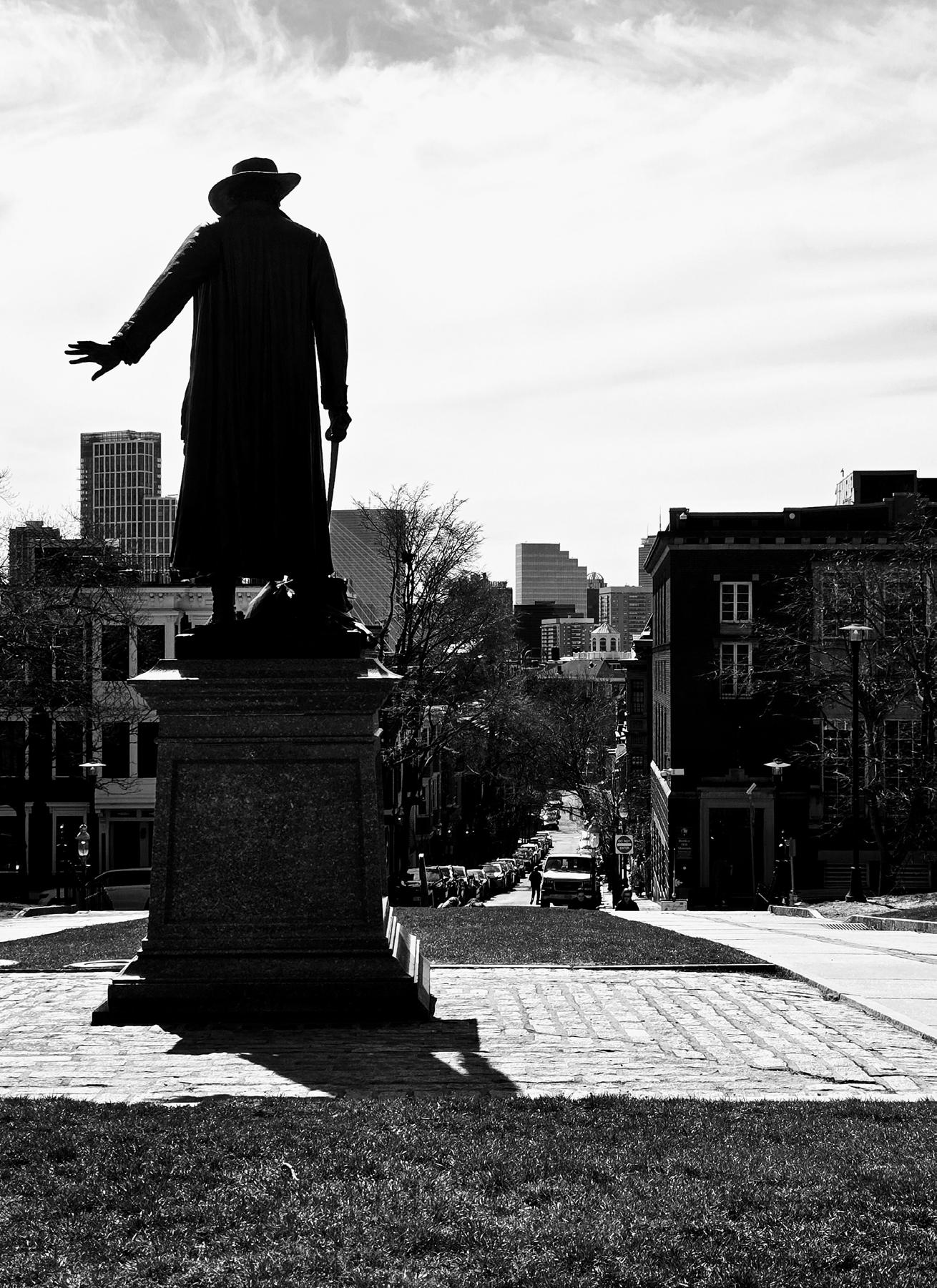
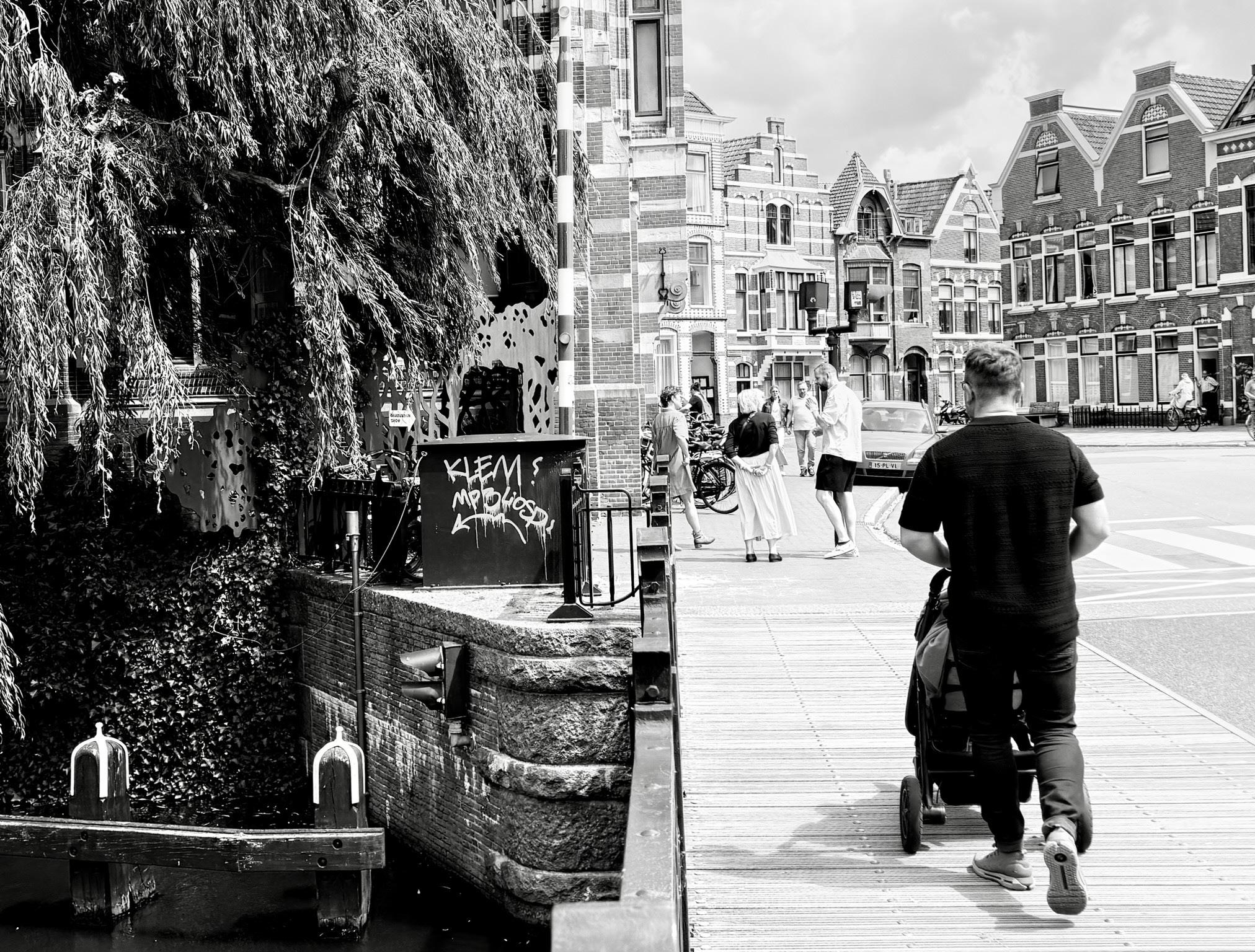
CADEN DEARDURFF - digital photography
SPLIT BY SHADOW
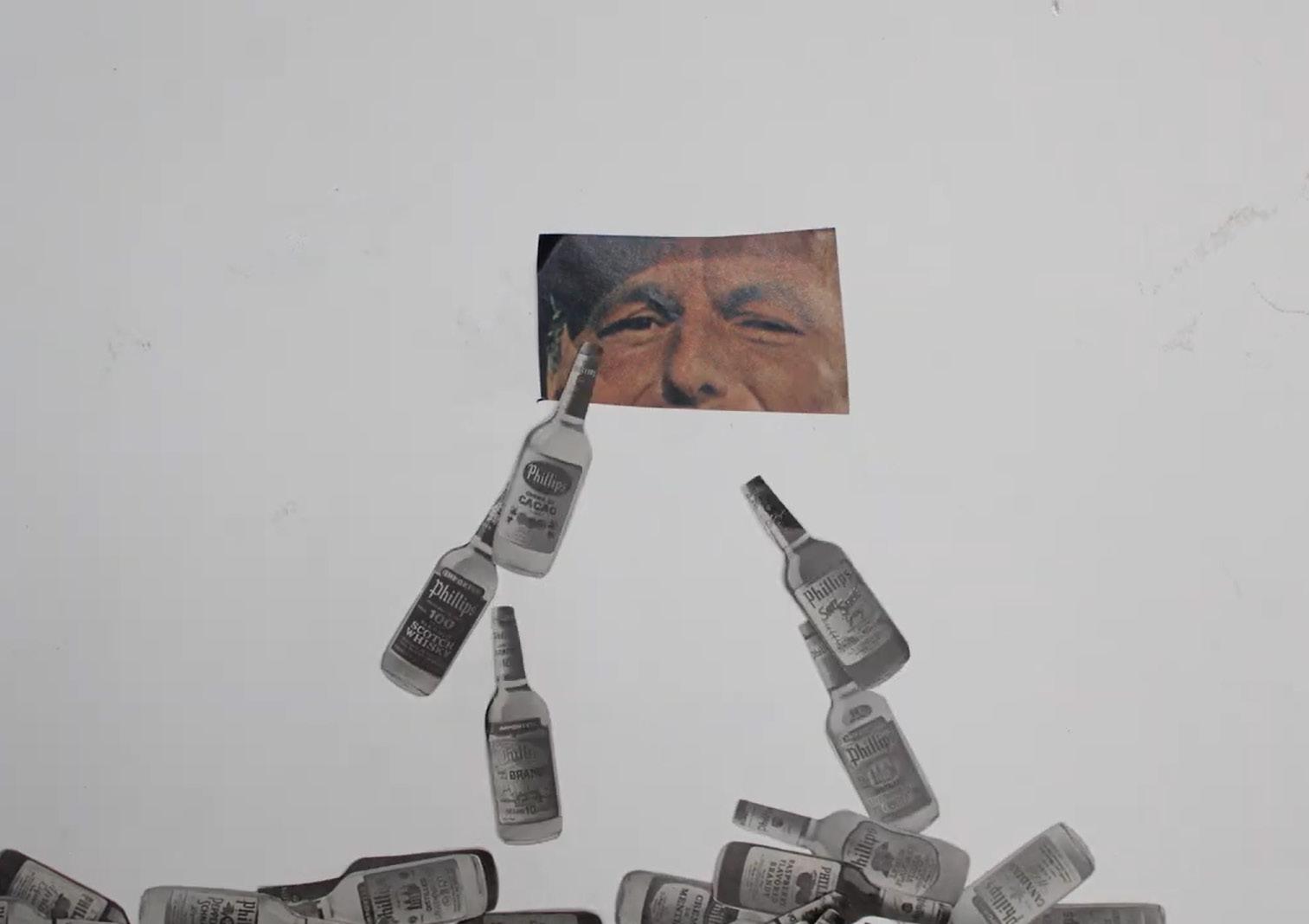
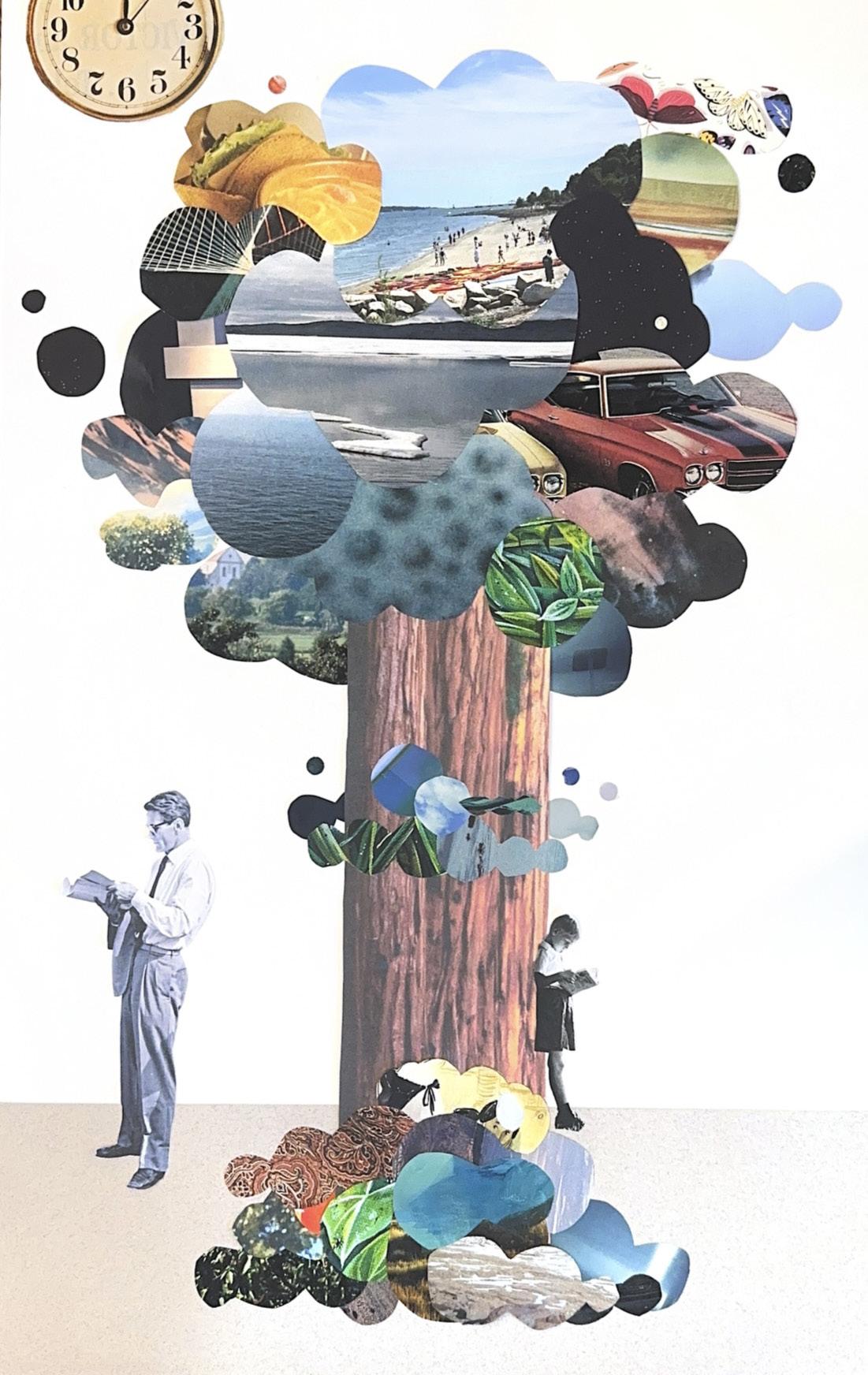
SOPHIA RIVERA - collage - 23x13”
THOUGHTS ON POSTIMPRESSIONISM
Van Gogh and his flowers never bothered me. Did they bother you, in all their glorified beauty? Van Gogh, Vincent, I went to your museum in Amsterdam and cried my eyes out on the second floor. If only you were there, you would have laughed and laughed that people could be so infatuated by oil. Van Gogh, Vincent, Picasso, Monet. Or was it Monte, Monte Carlo, names upon names, how do we remember all of them?
I’d like to see a show, an art show, I have never seen any kind of art show before. I want to see a bullfight, so I can listen to the cheering as it charges through the ring. I wonder does it miss its mother? Does it feel pain? Violence upon violence, how do we remember all of it? All we can think of these days, over and over until I start to wish that I could crawl away. Maybe I can hide here, underneath your starry sky, make my home down deep, down deep to the underworld, like Hades or his fates, or Demeter, or Persephone, all those tiny souls. Van Gogh, I wonder if you wander the Fields of Elysium in your spare time, or amble through the Asphodel like Sisyphus, cursed to hold a brush for all of time. Van Gogh you look so saintly there, painting flowers upon flowers upon flowers.
“Hi mom.”
“I miss you.”
“I miss you too.”
“How are you? What are you doing?”
NIJAH JOHNSON personal narrative
M 0 M
I miss my mom every day. I think about her all the time. No matter what time of day, the thought of her always lingers in the back of my mind, kind of like a hiss of air coming out of a hole in a pipe. It’s something I’m trying to conceal or hide, but it’s slowly coming out anyway. I miss going to her house every weekend or break to see a new litter of kittens, because Black Diamond, our cat, couldn’t stay away from her street cat boyfriend. I miss receiving a warm hug from her because her hugs felt like they came with no judgment. I miss how every time she would pick me up from my dad’s house, she would squeeze my cheeks and say “Hi sieza,” no matter how old I got. I miss hearing her laugh and her stories. I miss the random adventures she’d take me and my siblings on whenever she got a good deal on Groupon.
I miss my mom so much.
But every time she calls me, a feeling of aggravation and fear takes over me.
At first, she would call every week, on Saturday, I believe. The phone calls were always the same: “Hi baby girl,” she’d say.
I would respond with the same thing every time: “I’m okay, my day was fine. Just school and homework. How was your day? How is it in there?”
And then she would proceed to tell me some of the craziest stories and then after she got done rambling, because I wasn’t saying anything, there would just be silence, then a random “I miss you.”
“I miss you too.”
Silence until that fateful automated voice said, “You have 1 min left.”
We would get our “I love you’s” out, and she would hang up. I’d either sit in silence for a few minutes staring at the wall or my phone, and then I would snap out of it and finish what I was doing before.
I never really had an actual conversation with my mom before, at least not a peaceful one. She was always too high or too active to sit down and talk to me. So, under unfortunate circumstances, when given the opportunity to talk to her soberly, I didn’t know what to say.
All the fun activities she took us on happened only because it was her way of saying, I’m sorry: “I’m sorry you had to see me like that,” or “I’m sorry I left you guys at the house for days without warning,” or “I’m sorry I purposely lied to keep you guys here knowing you’re not happy. Knowing you’re scared and sad and hate me.”
She never said “I’m sorry” but, I saw it in the way she would sober up for a few hours and try to be engaged in the activity. Then, as soon as it was done, she went back to who she was before.
And the cycle repeated.
Ever since she got arrested, I’ve felt that my life has been in a cycle. I feel trapped.
Stuck.
Like I’m moving but not going anywhere.
More recently, her calls have become rare. The longest we have gone without talking was a little over two months. Her explanation was that she was put in isolation for 30 days because she was caught breaking some rules. The other 48 days were on purpose because she was told I was busy.
I guess I am. I have basketball, Science Olympiad; last semester I had robotics and college apps, schoolwork, and my job. But I could have spared 15 minutes.
When I was in middle school, those 15 minutes of a call felt so dreadful to the point where my emotionless face turned into a subtle smile whenever that automated voice came. Since I did only have school, I had all the time in the world, but those 15 minutes felt like they were taking away from literally anything else I could have been doing.
Now, when I’m the busiest I have ever been, I can spare 15 minutes. November 8 was the last day she called me. That date overpowered my mind so much that I would
“ EVER SINCE SHE GOT ARRESTED, I’VE FELT THAT MY LIFE HAS BEEN IN A CYCLE.
just say it out loud, unprovoked. And that random Sunday in the new year, when I saw the notification that said “mom” is calling, I quite literally jumped off the couch in joy and answered.
I told her how the basketball season was going, that I was accepted into all my colleges, and about all the things I’m building for the Science Olympiad. She was really impressed, talking bout “My baby smart! She gon make money! Ayy!”
We had random laughs like that all the time, but as always, we eventually fell into silence.
I don’t really know how I feel about my mom being in prison; like, it sucks, but I don’t feel much. Or at least I think I don’t feel much. Whenever someone asks me, I freeze up, because I genuinely don’t know how I feel. Perhaps I feel everything at once, and that’s why it feels like nothing. It’s all overwhelming, so I push it back far enough till I can’t feel it anymore, but it still lingers.
It comes out little by little in every decision I make or action I take. Everything I do is impacted by this, yet I can’t say what it’s doing.
It’s just there.
Maybe all my emotions will come out when I see her again, and I could see her
this weekend if I wanted to, but the need to fill out the paperwork so I can see her hasn’t felt urgent. It hasn’t been urgent since she was taken away, and I don’t know if it ever will be. Along with the “I miss and love yous,” my mom adds, “When are you going to come see me?” and I act like I forgot or was too busy, but in reality, I just want to wait until she gets out.
I know that’s selfish, but when compared to all the bull she put me through, it’s like comparing a pebble to a boulder.
Although she might be healthier, the person in prison right now is not my mom; she’s not the one who raised me, she’s different, and it’s scary.
A few years ago, I was forced into doing a video call with her, and I didn’t even realize it was her on the screen. I was scared.
My heart dropped to my stomach, and I tried to hide myself behind my Nana because I didn’t want to see her, but Nana pushed me in front. Because my Nana was there, the energy wasn’t too awkward, but I was still quiet.
I fear that if I visited my mom in person, I would run out of the room and never come back. I would take advantage of being 18 now and use my free will to run wherever my body led me to.
But that unknown path also scares me.
There isn’t really a meaning to this; it’s just a reflection of the thoughts that have been crowding my mind for the past five
“ THE PERSON IN PRISON ISN’T MY MOM; SHE’S NOT THE ONE WHO RAISED ME. SHE’S DIFFERENT.
years, and probably many more to come. I don’t know if I will ever stop feeling scared and aggravated when talking about my mom, but this a step forward I never thought I would take. To end this overshare, I want to thank people, because I fear I don’t say it enough.
To my Aunty Joi and Grandma Liz, I am so grateful for you guys. My life would be incomplete without you. To my baby brother, Junior, although you are expeditiously annoying, you never fail to make me laugh, and I’m sad I have to leave you soon.
To my friends, you guys are the best ever, and I’m so happy I get to see your faces every day.
To my teachers, advisors, and coaches, thank you so much for your support. I found myself needing it more often than I thought.
And to anyone I have ever interacted with, without knowing it, that compliment or wave in the hall probably made my day, and I was able to pass that positive energy along to others.
Thank you.•
Little
Little girl trying to fall asleep as she lay in bed, she hears someone weep
GI R L
NIJAH JOHNSON - poem
Little girl sneaks into the hall quiet as a mouse, hoping she doesn’t fall
Little girl peeks through the door she sees her mommy lying on the floor
Little girl doesn’t know what’s going on but as her mommy looks her in the eye
Little girl knows her mommy is gone for mother has decided to stop by
Little girl does not like mother because mother never seems to love her
Little girl sees mother searching for something that’ll keep them both hurting
Little girl knows what mother is searching for it’s white as snow, and mother says it makes her soar
Little girl wants to know what makes mother so happy so she decides to try some too
Little girl finds it herself and eats it, but starts to feel crappy then her mother starts asking her, “What did you do!?”
Little girl falls like a tree when no one is around and mommy comes rushing to help her to the ground
Little girl’s heart starts pounding and mommy starts crying
Little girl starts to see black and mother starts cutting herself some slack
Little girl sees that mommy is gone once again and mother starts to devise a plan
Little girl sees her mother take the white stuff through the vein and little girl does one final reach for mommy’s hand.
028 - DISSONANCE
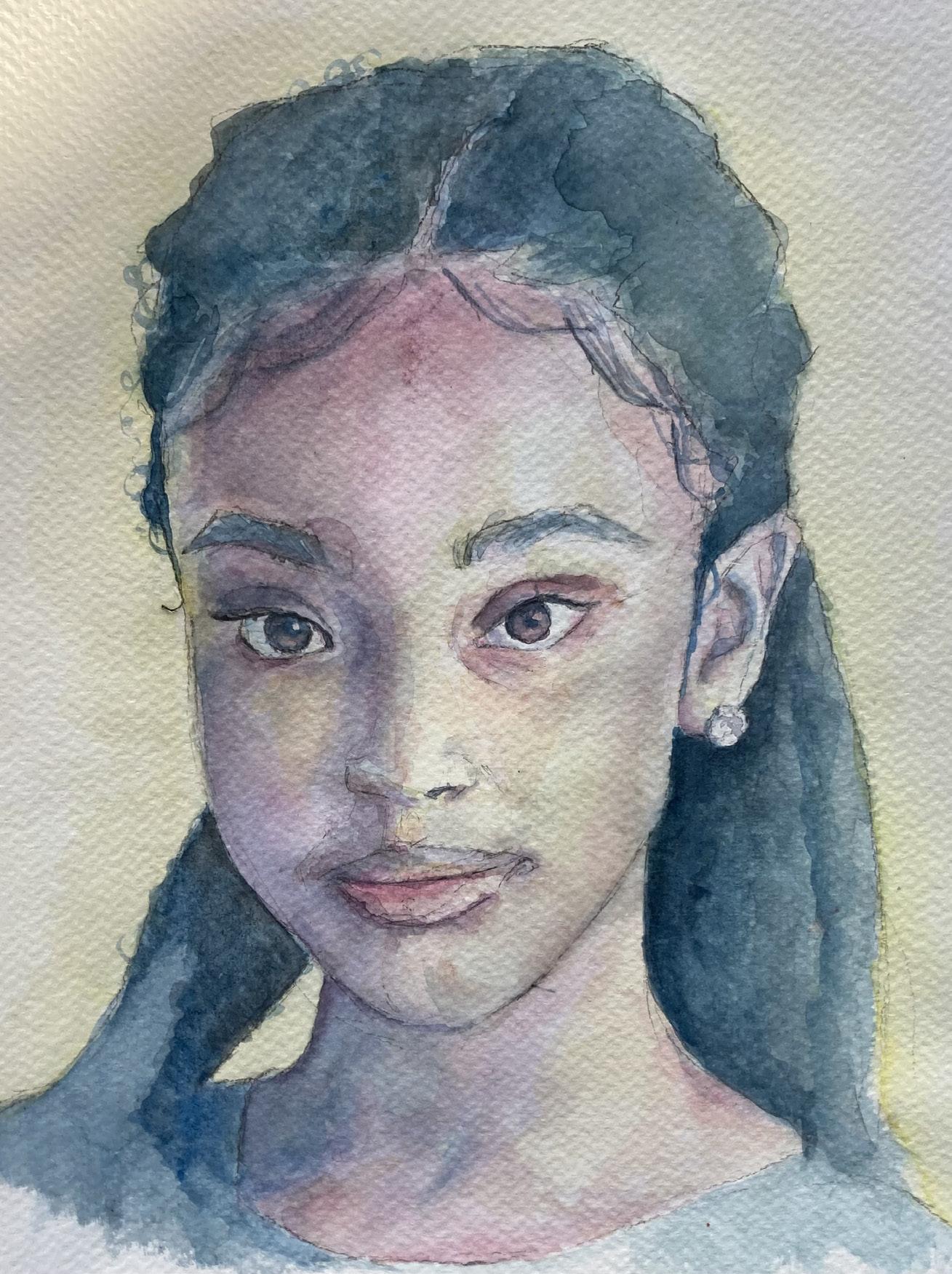
FRANNY WAGNER - watercolor - 13x9”
BLUE GIRL
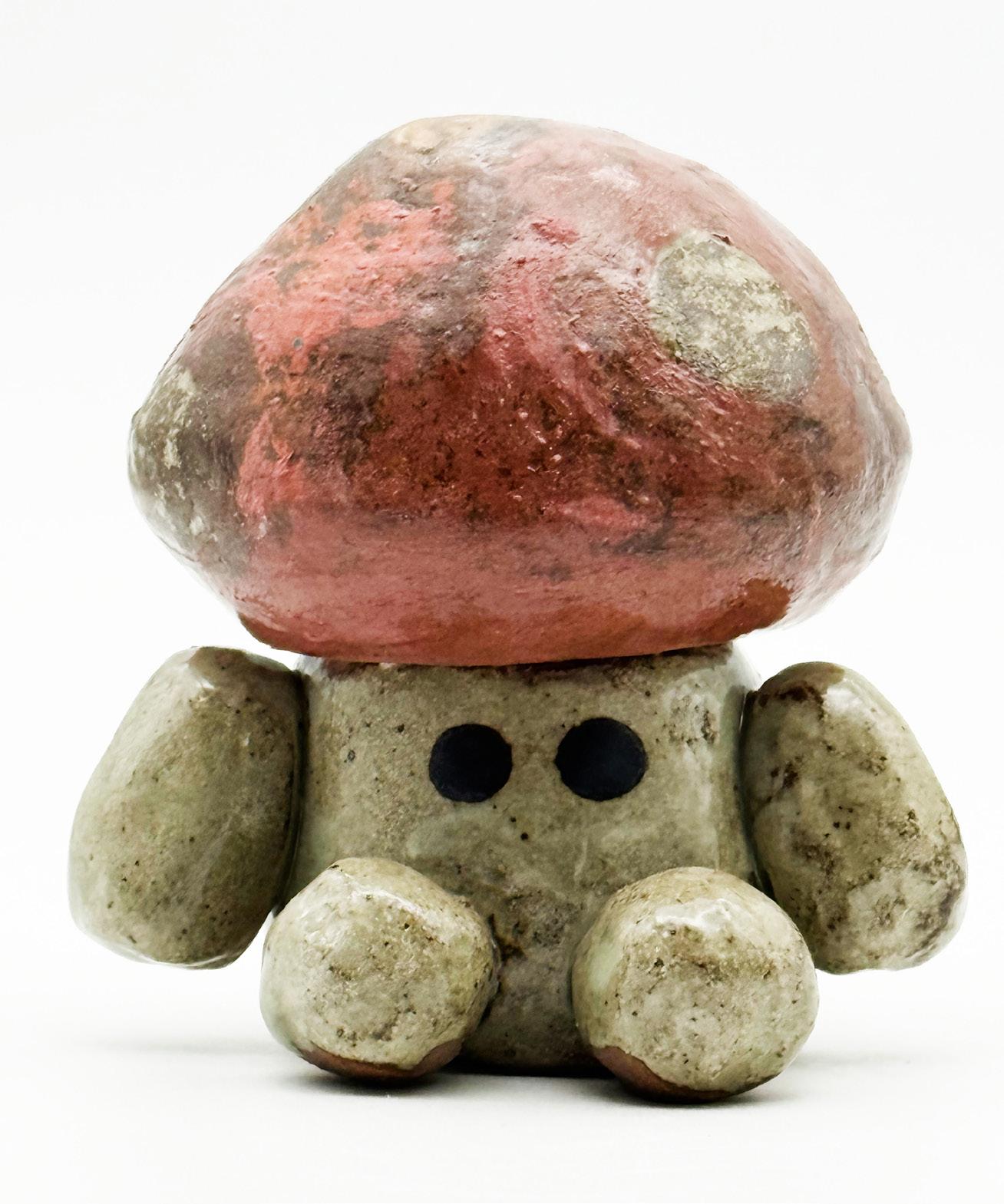
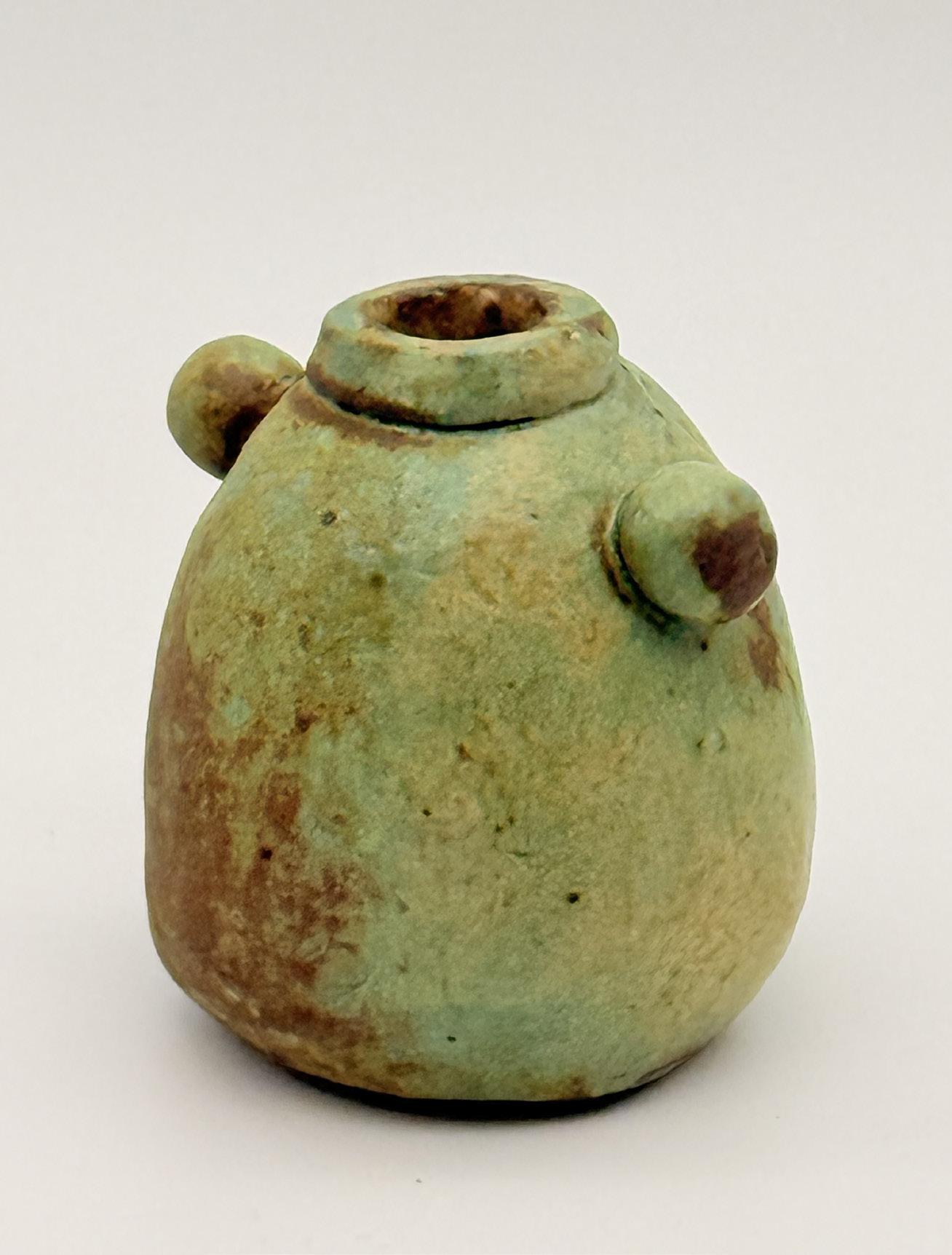
CERAMIC MUSHROOM FRIEND
OAKLEY SCHONWALD - ceramic
HOUS E
QUENTIN
SENTZ - poetry
Except for those Parasitic humans
Who created me
Who were now living within me
I was all alone for Years And Years
Their yelling and laughter
Filled my ears
So loud I could not hear
Unlike the sounds of nature so soft and pure
When all of a sudden A redwood appeared
Gave me another presence
Of which I could connect with
We sit there unmoving In utter silence
Over the years, I watched it grow tall
Watched its first leaf
Wither and fall
Short arms outreached
Reaching for the sun
Suddenly, it got closer Closer And Closer Its arms shooting outward More and More
Towards my windows Doors and walls Through And Through
Until I was no more
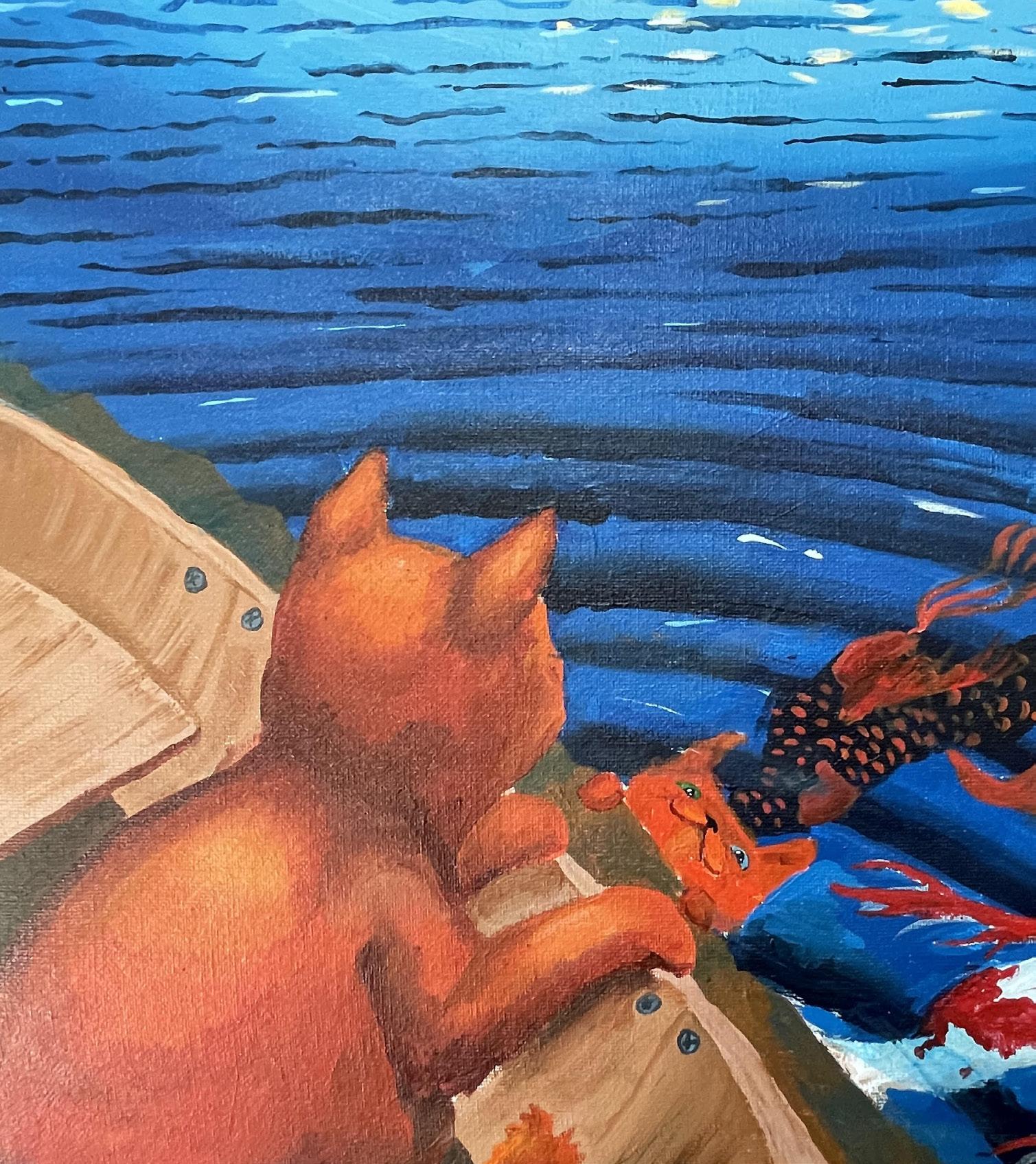
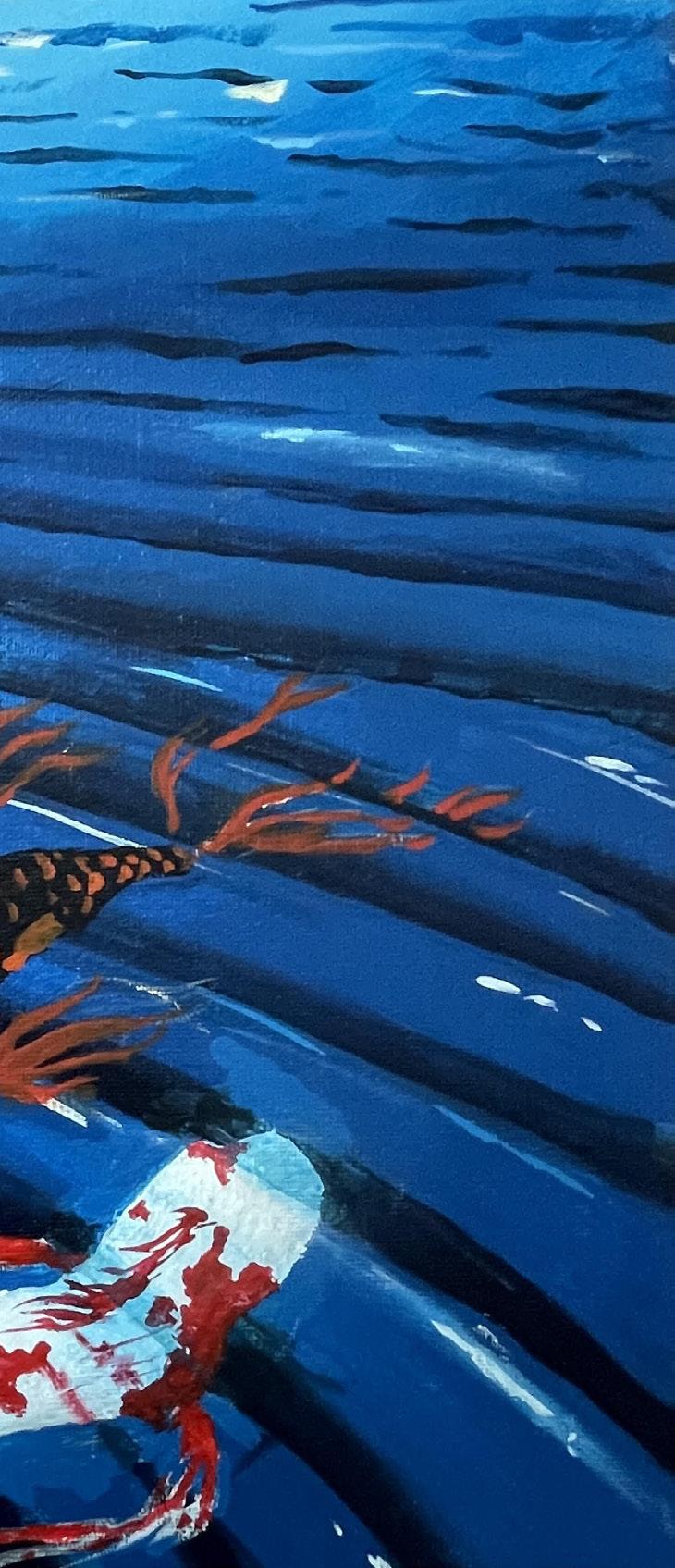
CAT. FISH.
ANNIKA KIM - painting
EARLY
JUNE
I shiver, reminding myself to move my feet faster
The striped red-and-white beech towel is wrapped around my head and upper body, keeping me from feeling exposed.
Exposed to the cool air, exposed to the drizzling rain
Short-lasting that was
The towel now sits unneatly on the dock’s surface
My skin is covered in involuntary bumps
We laugh, looking over the dock ledge
At first, I only see cold
Deep, dark, opaque blue moves in tandem with the wind
A Droplet hits the surface, then is quickly absorbed
Another hits then another
ELLA BOND - poem
We step back
Away from the thing we know will cause us pain
That’s a normal response
To back away
But I often remind myself that, well, if you wait a bit too long, you might only just get colder
We look at each other to share a laugh On 3!
1
Lurking in the frigid water, a scaly lake monster awaits me, its evil eyes making their way into my vision.
2
The oxygen stops, my nervous system halts. The water was far too cold.
3
If today is my day to die, then that is my fate.
We sprint to the ledge and push off the dock, catapulting towards the water
Pain stabs me all over my body
A thousand knives Are gone I shiver
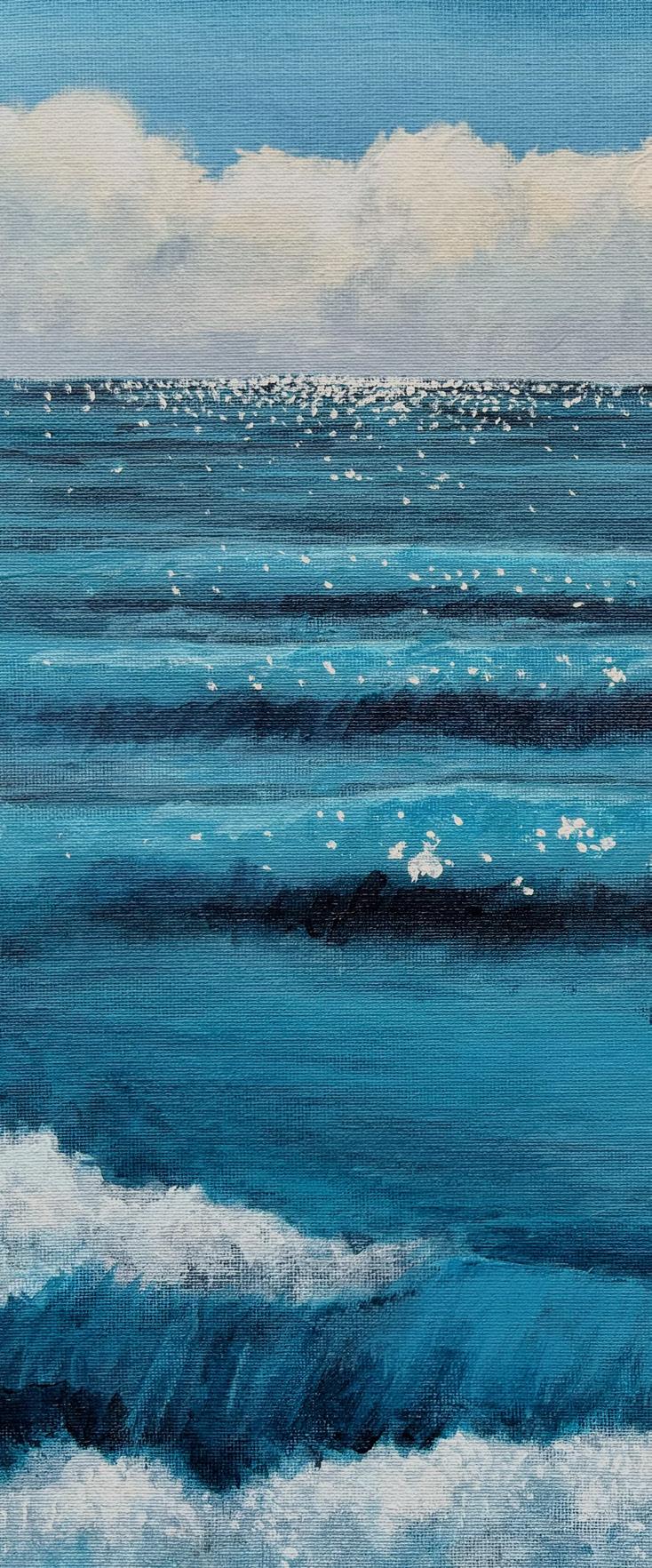
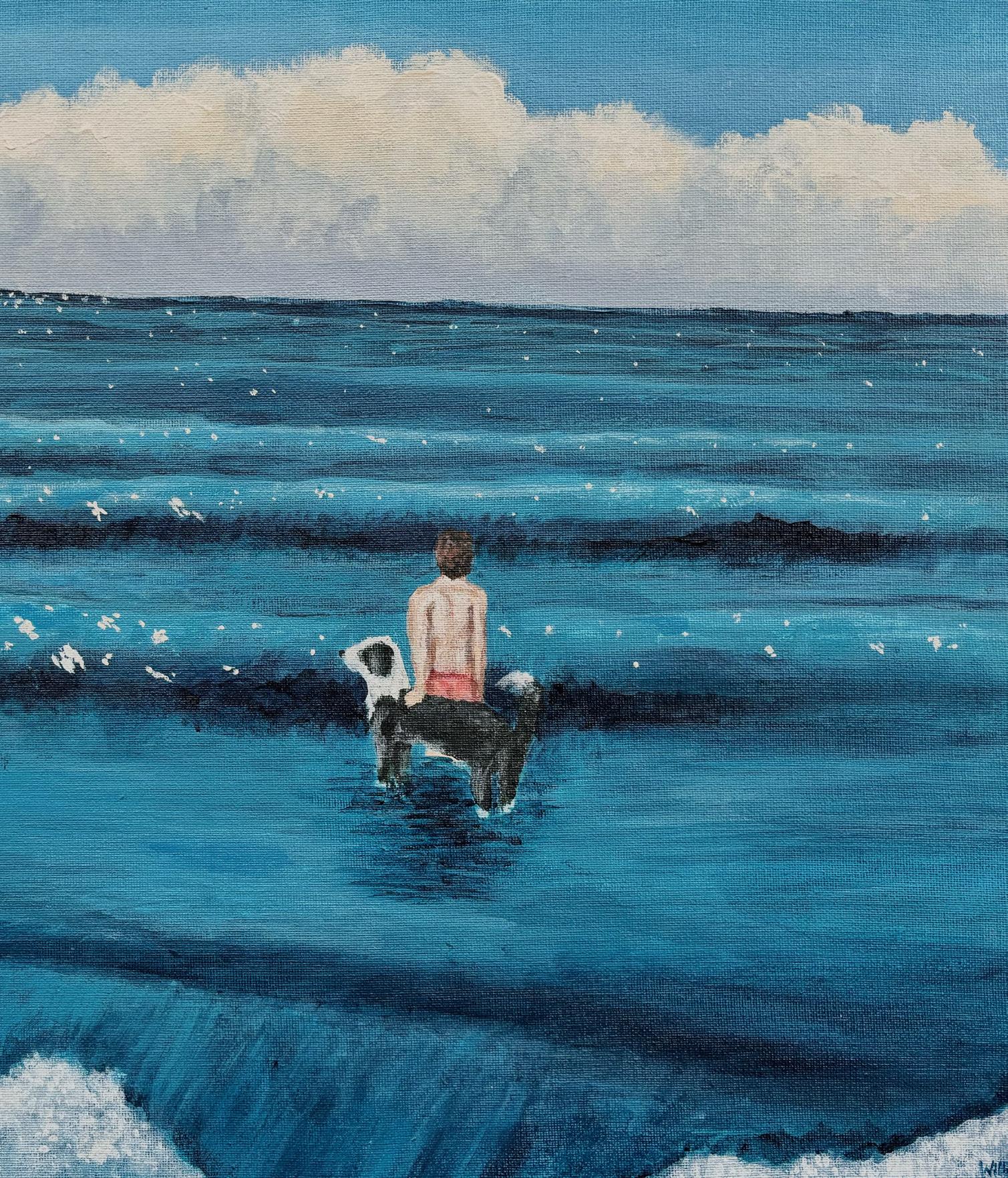
WILLIAM DRAKE
acrylic painting
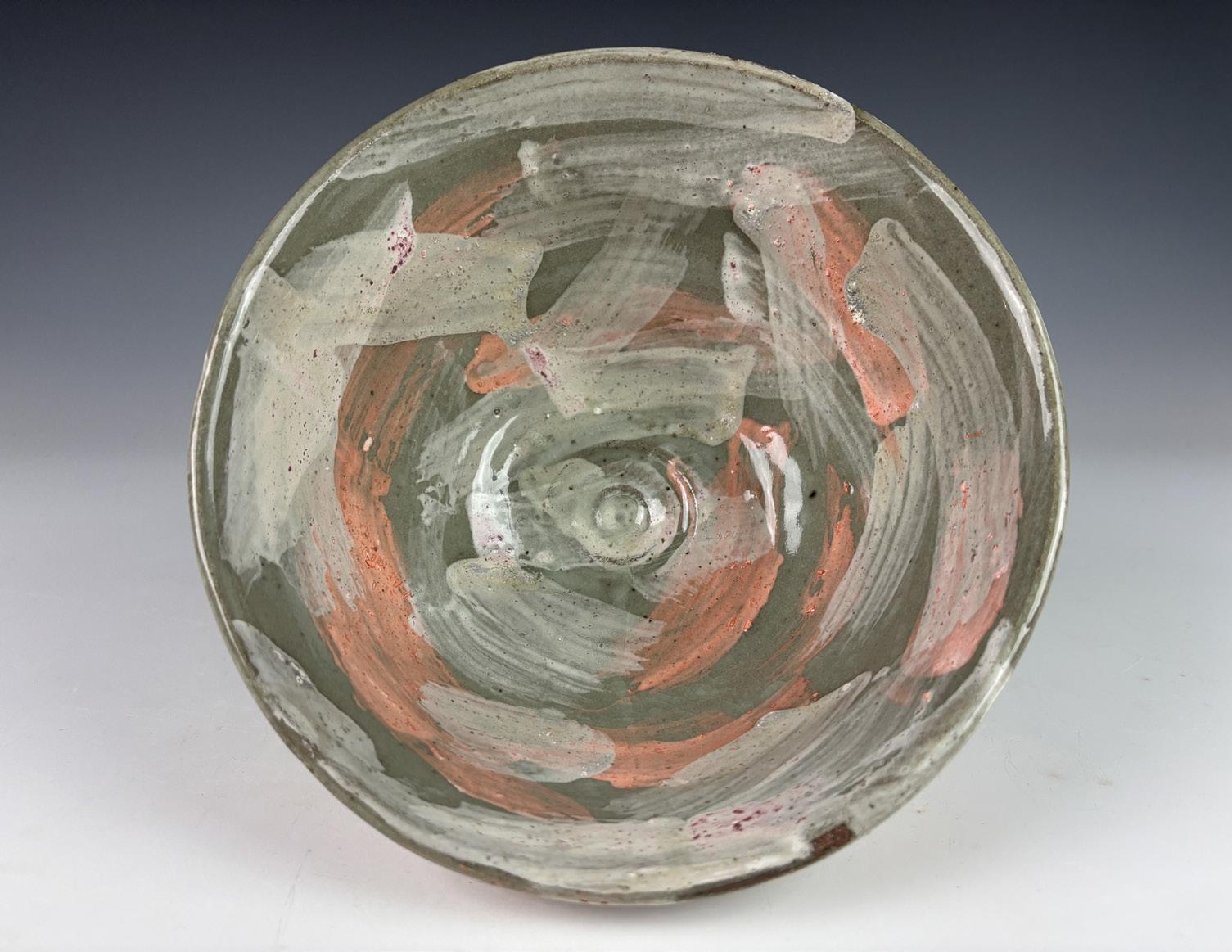
JACK BETTENBURG - ceramics
PASTEL PORTIONS
HUNGER
IZZY MIDDLEBROOK - poetry
Maybe it’s malnourishment I feel dizzy when you see me You knew who I was When hunger was my identity
My head just starts spinning I cannot stand up that straight Going to the grocery store Just increases the death rate
Touch my tongue to the apple Felt the singe, felt the burn I wish it was childish I truly wish you had some concern
FINAL WHISTLE
Whales, when close to death make their final dive deep down to the bleak blue, the uncharted the never before.
We do not follow we do not film we do not intrude
Not on this
The creation and the experience
The play and the hunt
Always captured always shared, Paid for
We let this be
It’s the final act the whales get They chose to be selfless, to say thank you, To one up the camera crew
They swim back to the heart
Back to the home
To the start of the circle
All over again
NAOMI GLOZMAN - photograph AFTER
SCAN THIS QR CODE TO LISTEN TO “REVIVAL” INTERPRETED BY THE JUAN MIGUEL QUARTET
IN THE END
KIERAN AHEARNE-KROLL - poem
Do I wander for nothing?
Do I search the barren lands just to come up empty-handed?
The air is chilly
There is no light
The stench of hope is long gone
All there is left is silence soil smoke
The city is rubble no more screams of terror
The walls have fallen the steadfast telephone poles toppled
Only the lamps remain lighting the ghostly streets anchored to the ground by something unknown their glistening black skeins steady against the silent chaos
And then it hits me
This is why I fell to witness tragedy to hear pain to taste anger to smell hope
To drown in the death of these strangers and see how they rose out of the ashes and swam through their anguish and held onto their lives until their lives let go and they fell into the ground like I fell into the sky and onto this land and crawled through my night and stumbled toward the end of the tunnel and the end of my life
Because I did it once and I will do it again and these lives will too—
I fell so I could be seen
So I could know that I’m not alone
And what my life has taught me is that it’s true
Because look at this city of people who died to protect their neighbors
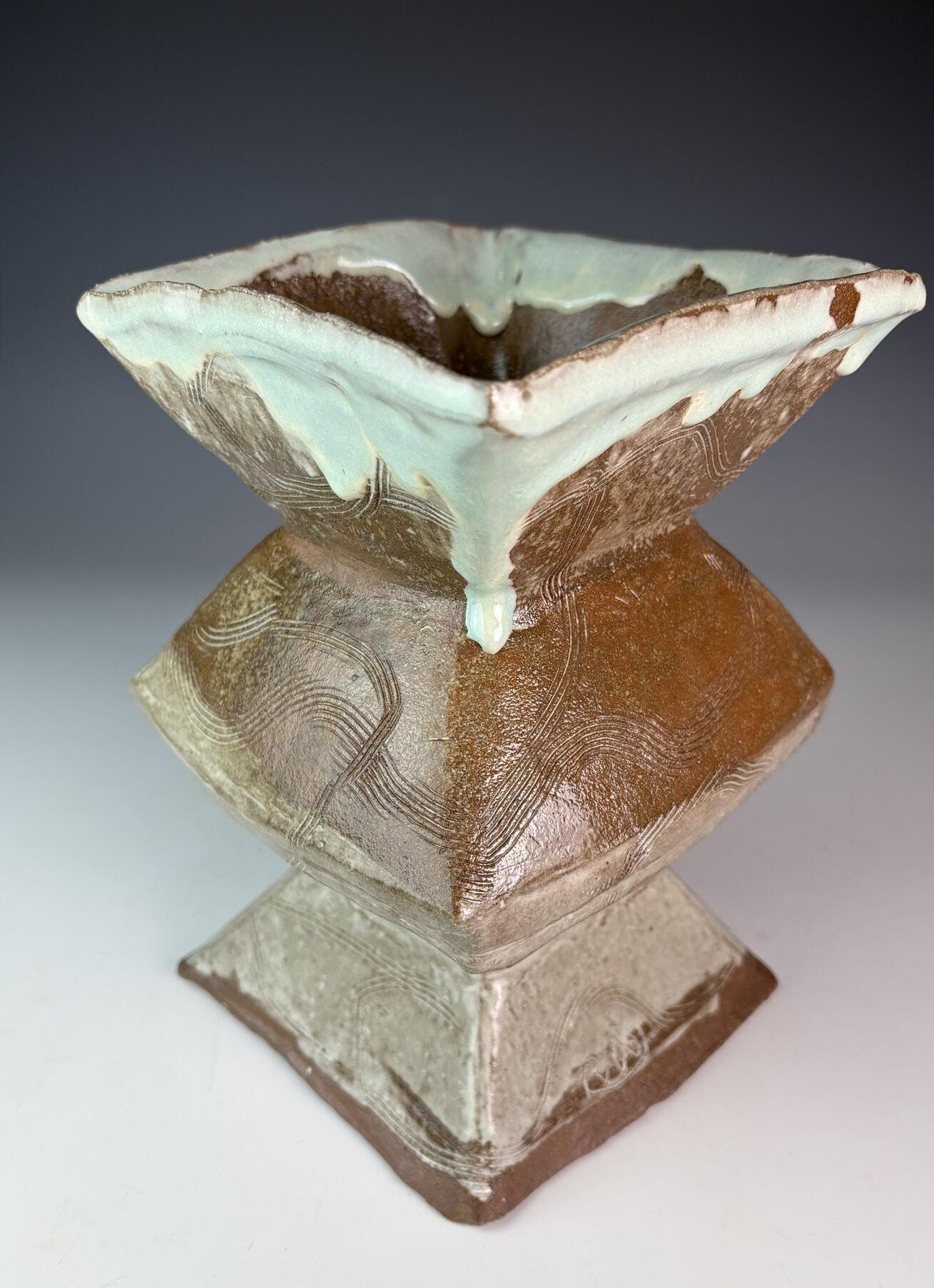
PYRAMID HOURGLASS
RICHARD ROMANS - ceramic
HUXLEY WESTEMEIER - ceramic
Look at their lives their ends and tell me we’re not the same
They lived in darkness for so long They were born in darkness They died in it
Tell me they fought for the light the easy way out the temporary solution
Because they didn’t they fought for peace for non-violence for the protection of every life form no matter the race the gender the sexuality the ability They stood up to the ones who wanted to kill their neighbors for how they looked
These beings walked in darkness And it was my joy— my honor to witness it.
THE BLUE BOOK
ELENA FLETCHER - puzzle story
“ KRIS WONDERED WHAT SORTS OF AMAZING BOOKS WERE BACK THERE.
Mr. Linden’s Bookstore was nestled in between a clothing shop and a bakery on Main Street, so small and unassuming you might miss it if you didn’t know it was there. Kris had happened upon it just last month, and since she was a book collector, she had been coming to the store regularly. The books were always one of a kind: strange tomes from the 1800s, volumes in long forgotten languages, and novels that were never published. In the back of the store was a door to the restricted section, and although it was always locked, Kris wondered what sorts of amazing books were back there and her curiosity grew with every visit.
Today was different, because when Kris walked into the store, something caught her eye. The door was unlocked, and open just enough to see a brilliant light seeping through the crack. Her curiosity got the better of her, and she slowly opened the door before slipping inside.
The room she found herself in was marvelous, filled from floor to ceiling with grand ivory bookshelves, engraved in strange runes. One of the books on the shelf was faintly translucent, illuminating a faint circle of dust on the wood, and Kris reached for it. Abruptly, her hand stopped midair, held back by an invisible barrier surrounding the shelf. With a frown, Kris withdrew her hand, when something caught her eye.
On a marble pedestal in the middle of the space, there sat a small book bound in a shade of sapphire blue so striking it was as if someone had taken a piece from the sky. Kris gravitated towards the book, its radiance entrancing. She carefully lifted the book from the pedestal, glancing around, and then left the room, closing the door until she heard the click of the lock. Kris walked to the cashier, and set the book on the table confidently.
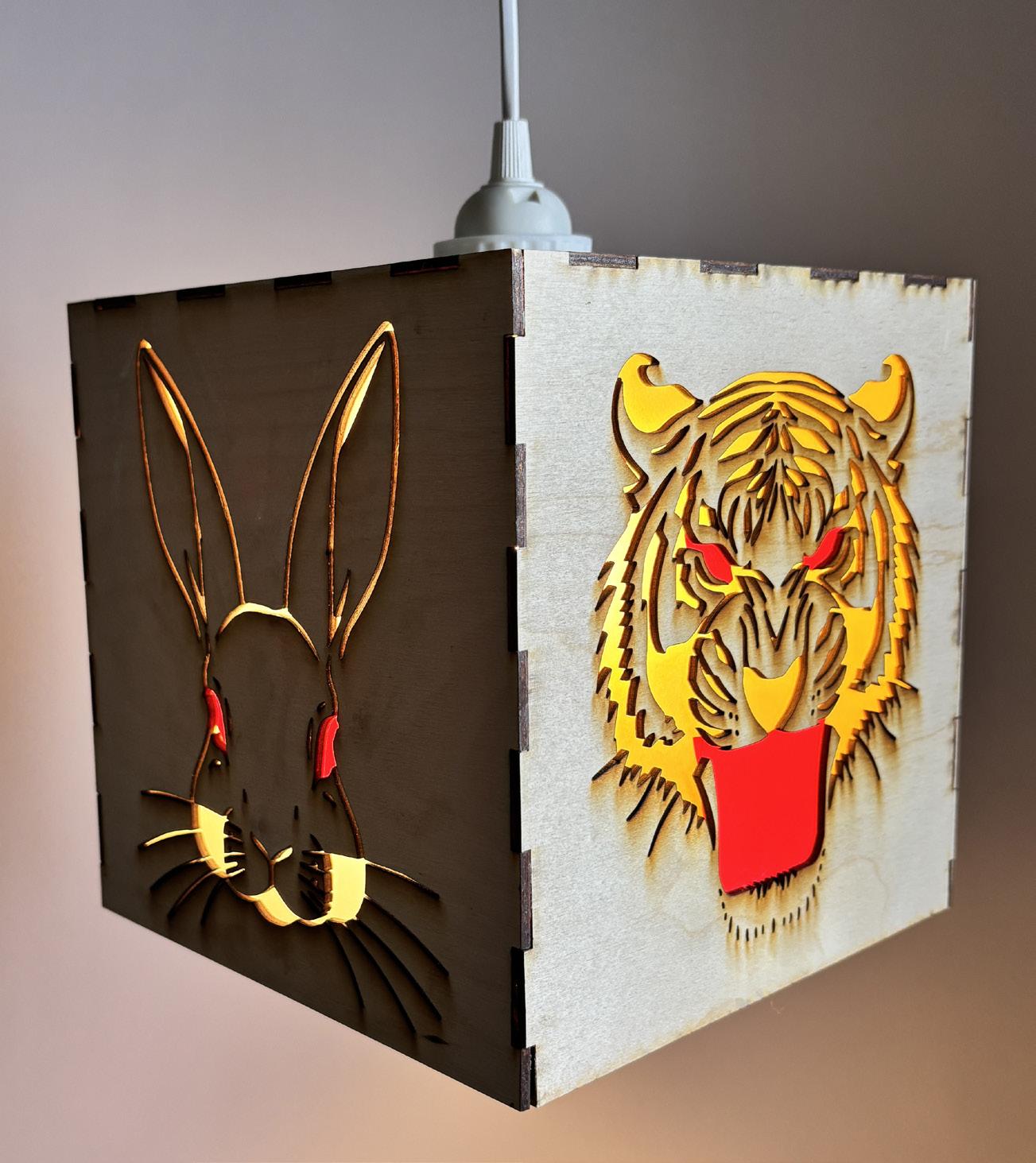
THE RABBIT AND THE TIGER
The cashier, a tall man with a curly mustache, appeared confused. “Was this book really on one of the shelves?” he asked. “I didn’t think we were done with this one yet.”
“It was on the shelf there,” Kris said, and pointed to a random bookcase near the front.
ZOE BRENNER - lazer cut lamp
“ THIS BOOK IS VERY SPECIAL. I WOULD BE CAREFUL WHEN READING IT.
“I will warn you,” He exclaimed, mustache twitching. “Even after we’ve dealt with it, this book is very special. I would be careful when reading it.”
Kris paid for the book and left to go back home. When she got to her apartment she walked the two arduous flights of stairs to her room. She placed the book on her bedside table, next to the window and the wallpaper with creamy white doves mid-flight, before cracking open the window to let in the cool afternoon air.
Later that night, she decided to read the book before she went to sleep. When Kris opened to the first page, she was confused to find it blank, just a yellowed sheet of paper. She flipped through the pages, each one the same, until she came to the final page, and stopped.
It was a beautifully rendered photo of a delicate harp standing alone in the middle of a forest. The stream looked so real that she could almost hear the sound of rushing water, the trees so lifelike that it seemed as if they were swaying in the breeze. She shut the book, disappointed that there was nothing else, and drifted off into sleep.
As the moon shifted higher in the sky and stars started to peek from behind the clouds, the air shifted in the room. Chirps sounded and soft wings fluttered in crisp night air. The noises crescendoed, more and more wings flapping in the confined space, until they slowly became more faint and far away. Slowly, the sounds disappeared altogether, replaced only by the wind.
The book started to shake violently, pages turning by themselves until the illustration of the harp was revealed. Leaves started to peel themselves off the page and vines disconnected from trees to snake towards the bed and grab Kris. They dragged her towards the book until she was directly on top of it, and then with one swift motion, pulled her into the page, leaving an unassuming book lying atop the empty bed.
Kris woke up with a start, and found herself lying in the middle of a forest. She stared at her surroundings, confused. Getting up, she wandered around and marveled at the trees in shades of
vibrant green and the stream with crystal clear water. Little fish darted around the water in shades of chartreuse and turquoise.
Kris felt like something was wrong, but she couldn’t remember what. Now that she thought about it, she didn’t know where she was or why she was there. She kept wandering along the edge of the stream, until she saw something strange.
There was a harp sitting on a large grey rock in the middle of the stream. It was not a very big harp, but it was made of pretty light brown wood and it had shining silver strings that reflected the light and made tiny rainbows on the rock. All of a sudden, Kris remembered the picture she had seen in the book she bought, and realized that it looked like the scene she was staring at now. She stepped into the shallow stream and clambered onto the rock. She wondered what the harp would sound like, so she plucked one of the strings and listened to the sweet sound it made.
The note rippled the water and caused the tree branches to sway gracefully. Suddenly everything started shaking as the note reverberated through the ground, and it crumbled. Wind ruffled her hair as Kris fell into the darkness, an endless void threatening to consume her.
Just as suddenly, she woke up in a cold sweat and looked to her bedside to check if the book was there. It was gone so Kris assumed that everything had just been a bad dream. She relaxed and closed her eyes. The last thing she thought before falling asleep was how strange it was that there weren’t any birds on her wallpaper anymore. Somewhere in the city, faraway, downy white doves flew beyond the horizon and into the stars. •
“ SUDDENLY EVERYTHING STARTED SHAKING AS THE NOTE REVERBERATED THROUGH THE GROUND.
SCAN TO WATCH THE SHORT ANIMATION
SEA ENCOUNTER DEEP
ANNIKA KIM - video
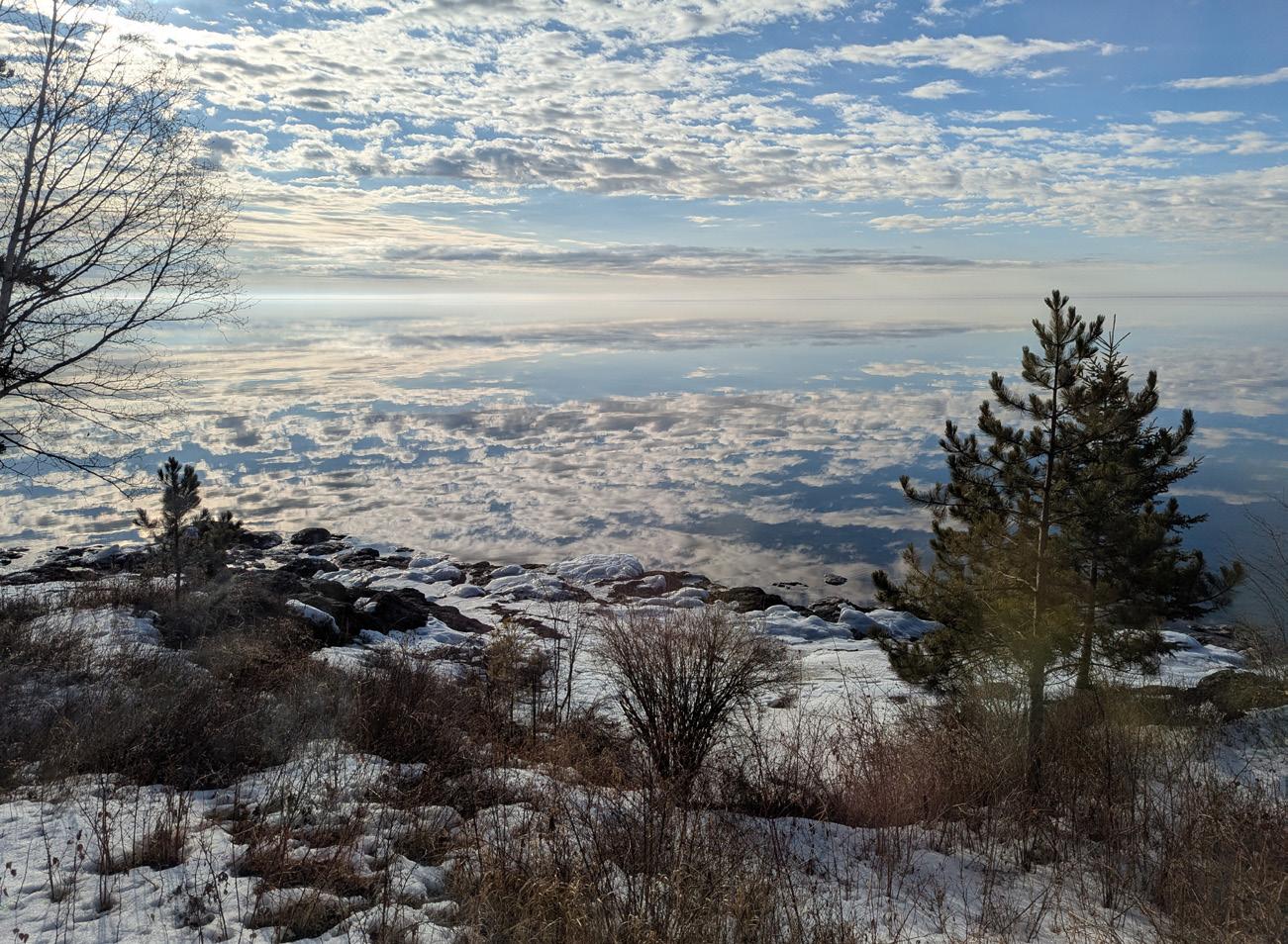
WINTER IN
MINNESOTA
LILLY PARR - poem
it will be warm again, one day and sunny, too the people will come back outside the kids, back to their recess, the parents, back to their jobs and whatever they enjoy families and friends will reunite (not everything will be fixed, not that it can be anymore. Yet one open palm can’t every wound) no more ice on our streets, causing chaos and crashes, no more cold weather that freezes, or hate like this. there’ll be sun and flowers, bees and beatles, and bikes, and strollers, and spring, and summer. but that’s not today; maybe tomorrow? its being a long winter, full of snow and wind and more ice than police. i want tomorrow. i better go get it. i better go grab my winter boots and my whistle, my snow pants and my signs, my coat and my courage. Are you coming?
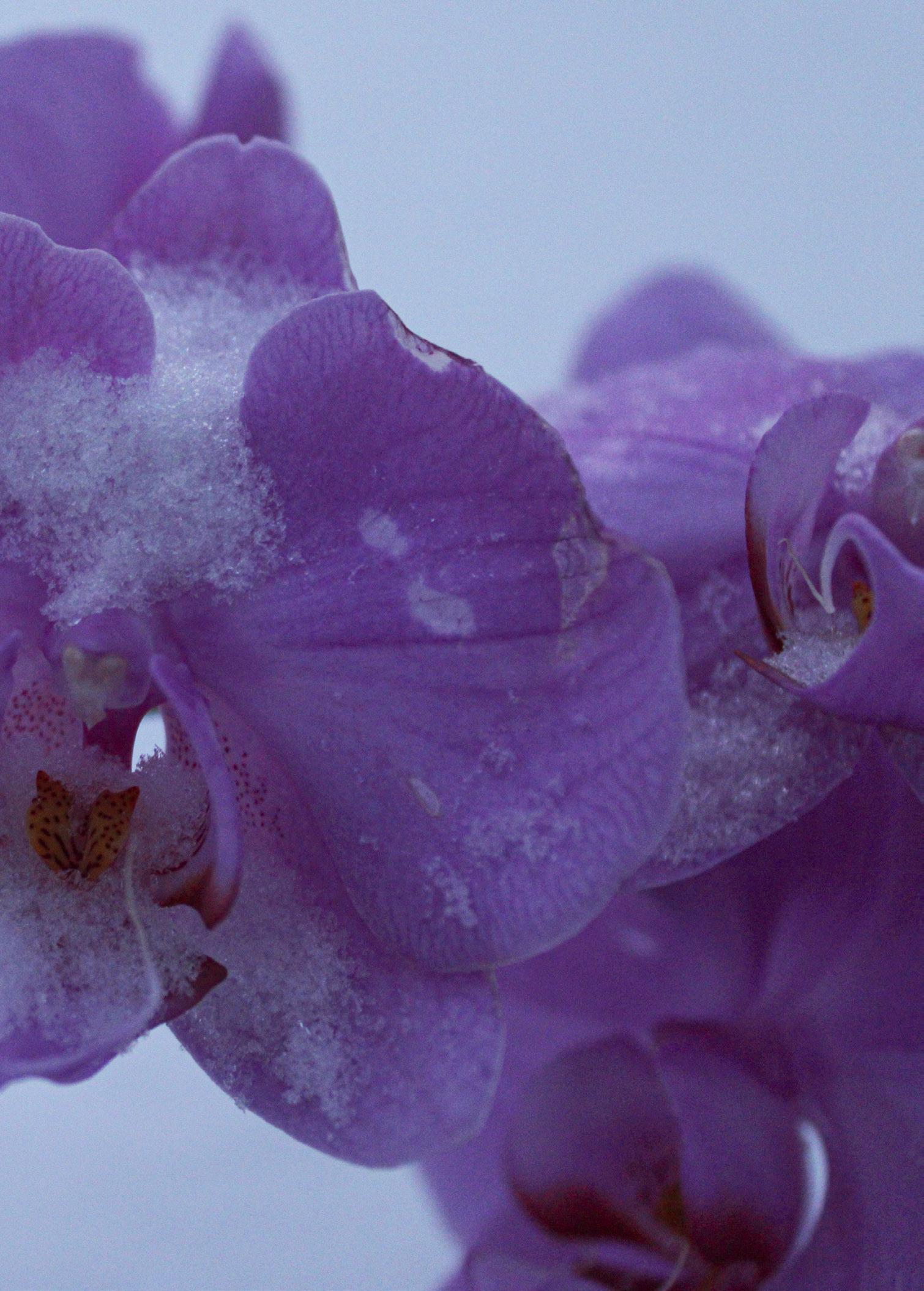
ORCHID
SOPHIA
AGENCY
Today, I want to talk about agency. I think that every person underestimates the change they can make, whether within our local community or in the world outside it.
A few times a day, I open Instagram, and I scroll through my friends’ stories to see what they’re up to. Though there are posts about sports and pictures with friends, the bulk of the Stories I see are about the news. Whether they’re linking to articles about ICE, or climate change, or the humanitarian
WILLIAM HANNA - speech
AN EXPANSION OF NATALIE
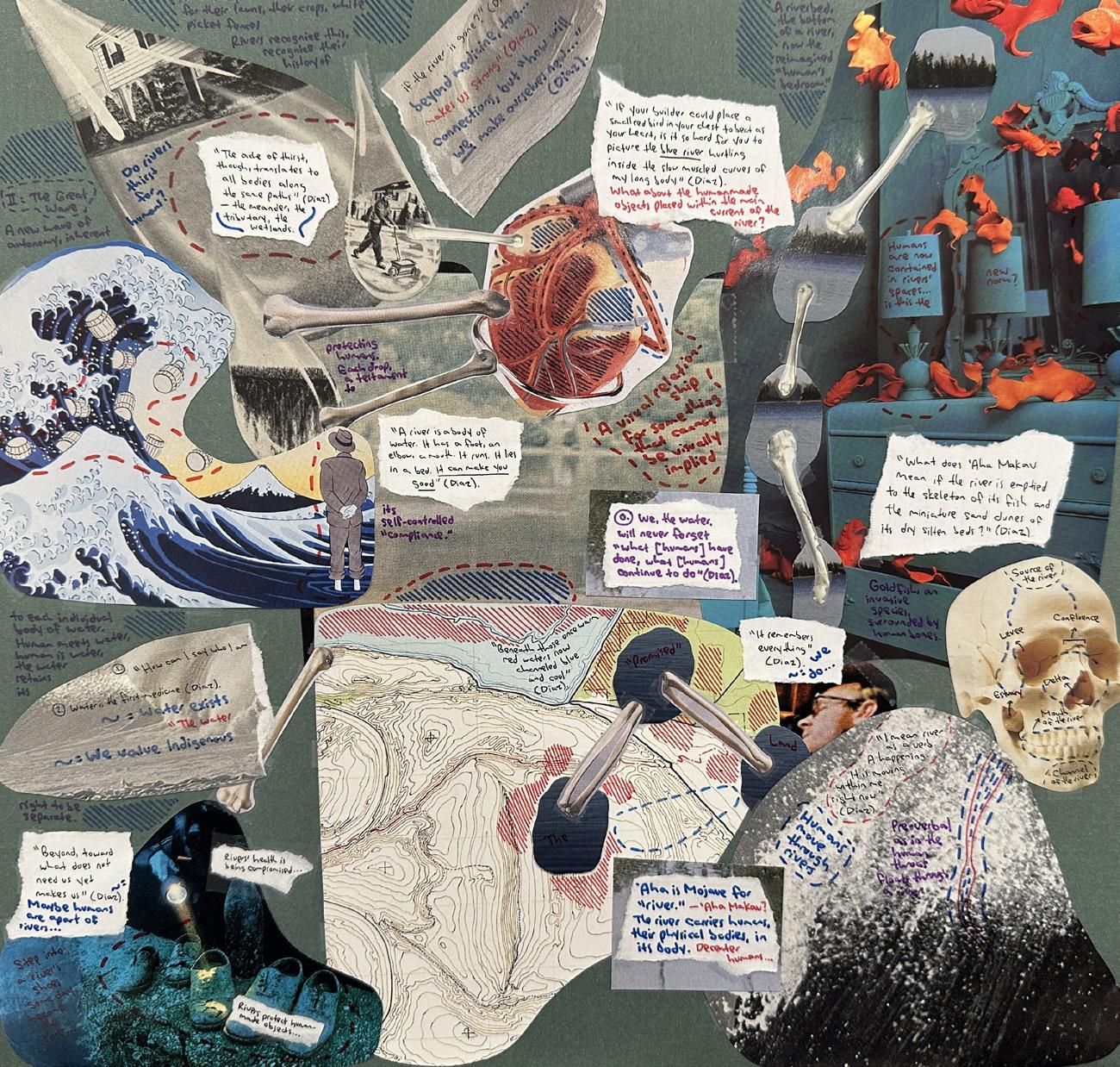
CARYS HSIUNG - mixed media
crises in Gaza and Sudan, I see how much all of you care about what is happening in our world. I want to help give you the tools to go out and do something about it.
When I was in 10th grade, I was looking at the summer ahead of me and trying to figure out what to do with myself. I had been paying close attention to the runup to the 2024 election and wanted to get involved in some way. So, I did a little Googling, and I found the Democracy Summer program. Democracy Summer combines an internship with local progressive candidates and online political education from leaders of the nationwide progressive movement. I filled out an application to partner with the Betty McCollum campaign, my local congressional representative, and sent it in.
Now, this application was not stellar. I was 16 years old, had never had a job beyond mowing my neighbor’s lawn, and knew absolutely nobody in politics. I was not optimistic about hearing back. To my surprise, the McCollum Campaign asked for an interview, and they hired me! I got to spend the whole summer learning about government and politics while doing a ton of campaigning.
My experience illustrates a misunderstanding about politics. Yes, the government is weird and complicated. A lot of things are based on who you know. But
none of you should feel like your experience or connections get in the way. Quite simply: political campaigns need passionate young people to get out into the communities, make phone calls, knock on doors, hand out brochures, and ensure as many people as possible are involved in our political system. Campaigns cannot function without us. The more energy and volunteers a campaign has, the better it typically does. Campaign organizers will be thrilled to teach you. Shoot them a quick email or phone call, and they will fill you in on upcoming opportunities and will train you in whatever you plan on doing. In my case, they even paid me $1,000 for those 7 weeks of education and campaigning.
My favorite part of political volunteering is door knocking. Canvassing can seem scary, but it’s basically just taking a list of names and addresses, going to each house, asking the residents a set of questions, and writing down what they say. That is all. I’ve had some great conversations and have gotten a lot of people informed about elections they didn’t even realize were happening. I realize that, as a tall, white, male-presenting person, walking up to strangers’ doors to talk about politics seems a little less daunting to me than it may to many others, but go door knocking with a friend, or if that’s still too much, you can call people on the phone or text them.
Over the past two years, I have knocked on hundreds of doors. In one day last October, I was able to inform over a dozen people about an upcoming election, and they all committed to voting for the candidate I was supporting. Because it was a special election at a weird time, very few of the people I talked to even knew an election was happening in less than a month.
I realize that a dozen does not sound like a lot of people to get to vote. But I was not campaigning for Kamala Harris, who won Minnesota by 138,000 votes. I was campaigning for Amanda Hemmingsen-Jaeger, a Woodbury state senate candidate who won by just 4,000 votes. In 2024, Democratic State Rep. Brad Tabke won in Shakopee by exactly 13 votes. In a Minnesota state legislature split evenly between Democrats and Republicans, one singular volunteer could have swung that race, and thus the balance of power in the entire state of Minnesota. Similarly, Al Franken, former senator from Minnesota, won the state by just 225 votes in 2008. George W. Bush, a hugely influential president, won his first term as President of the United States by a mere 537 votes in Florida.
This is where I circle back to the Instagram stories. What can bother me about these posts is that they often feel distant. Isn’t it terrible that this or that thing is happening? In reality, the primary driver behind the devastation of Sudan is weapons supplied by the United Arab Emirates. Who is the UAE’s closest ally and backer? The
USA. If American lawmakers felt strongly enough, they could do a lot to end the flow of weapons into war-torn Sudan, but they are choosing not to.
Similarly, in Gaza, the bombs that are still being dropped on the Strip are supplied by who? Us. By pressuring or outright replacing our representatives here at home,
SYLVIA WESTRAphoto composition
we can work to solve these crises.
If electoral politics aren’t your thing, that’s ok. Pretty much every political advocacy organization, from climate activism to ranked-choice voting, has volunteer structures similar to those of political campaigns. No matter what your issue is, you can make a difference.
Everyone has the power to change minds and help mobilize their community. Working together, we can make massive political change. So, get out there. Knock on some doors. Make some phone calls. Make our world a better place. I look forward to seeing what we can accomplish. •
RUSTED GRAPE
058 - REVIVAL
NOLAN ROSENBERGER
ceramic - 3x3x3”
TWO REALITIES
A SUMMER IN ZIMBABWE. LIFE IN THE U.S.
SHEFALI MEAGHER - speech
Spending almost two months in Zimbabwe this summer reshaped the way the world felt. Days were filled with warmth, and people greeted strangers with kindness; life moved at a steady rhythm. There were vibrant markets filled with laughter, children walking home from school, and communities that knew each other by name. But beneath all of that, there was something even more striking: a sense of security that felt unfamiliar.
In those weeks, there was no constant hum of fear in the background. No headlines of mass casualties. No scrolling through a feed filled with violence. Every morning, the third-grader of the family with whom I stayed would go to summer school. He’d have class, and in the afternoons, kids would flood the open fields for sports time. They played outside with complete freedom. Parents weren’t hovering with anxiety. Watching them, I realized: this is what childhood looks like when safety is the expectation, not the exception. Zimbabwe, like any country, has its struggles, but the ability to go to your local mall, movie theater, place of worship, or school without worrying about whether you’d be coming back safely was a difference that stood out immediately.
“ THIS IS WHAT CHILDHOOD LOOKS LIKE WHEN SAFETY IS THE EXPECTATION NOT THE EXCEPTION.
People weren’t living under the weight of what-ifs. Guns were simply not part of the equation. You couldn’t fatally harm someone from 50 feet away, even if you wanted to.
After my trip,coming home was like stepping into another reality. The United States is filled with opportunity and innovation, but it is also a country where that quiet sense of safety is hard to find. Here, there is always a shadow of worry. The news cycle constantly reminds us of tragedy. The idea that anything could happen anywhere has seeped so deeply into daily life that it feels routine.
Around 95% of schools practice lock down drills. Events now have increased security.
I still vividly remember my first day at SPA in first grade, my parents taking pictures of me at the Goodrich campus. It feels like it was yesterday, but suddenly here I am in my senior year. And as I approach the end of my time in high school, I can’t help but think about all the kids who didn’t get to this point in life. No senior prom, no college applications, no graduation, no future.
When surrounded by this reality for long enough, it’s easy for us to feel numb. Fear has become part of this culture, and the most unsettling part is how quickly it has all become normalized. We’re all desensitized. Tragedies begin to feel like numbers rather than lives. There is a sense of helplessness, a belief that nothing can change.
“ REMAIN HOPEFUL. THIS LEVEL OF VIOLENCE IS NOT INEVITABLE.
Unfortunately, I don’t know how to fix this, but I remain hopeful. This level of violence is not inevitable. When sitting in the center of the problem, it’s hard to see away out. But when I stepped away, traveling to a place where such problems did not exist, it was a reminder to me that this is not the only way to live.
This outlook came from experiencing culture in a completely different context, which is why I encourage everyone here to embrace adventures. Whether it’s reading a book, interacting with a stranger, or traveling to a different place, I hope you find away to gain new perspectives. You never know what you’ll learn. Those new points of view allow people to see the world through another lens,to understand that sometimes you have to look at the problem from the outside. Immersing yourself in another environment unlocks new ways of thinking, challenges old assumptions, and helps you see that solutions exist, even if they are not simple.
As we step into the future, I hope we don’t just carry ambition or dreams—I hope we also carry responsibility: to notice, to listen, and to learn. If we do, we can shape a reality that’s better for all of us. And that’s a responsibility, but also a moral obligation, that belongs to every one of us. •
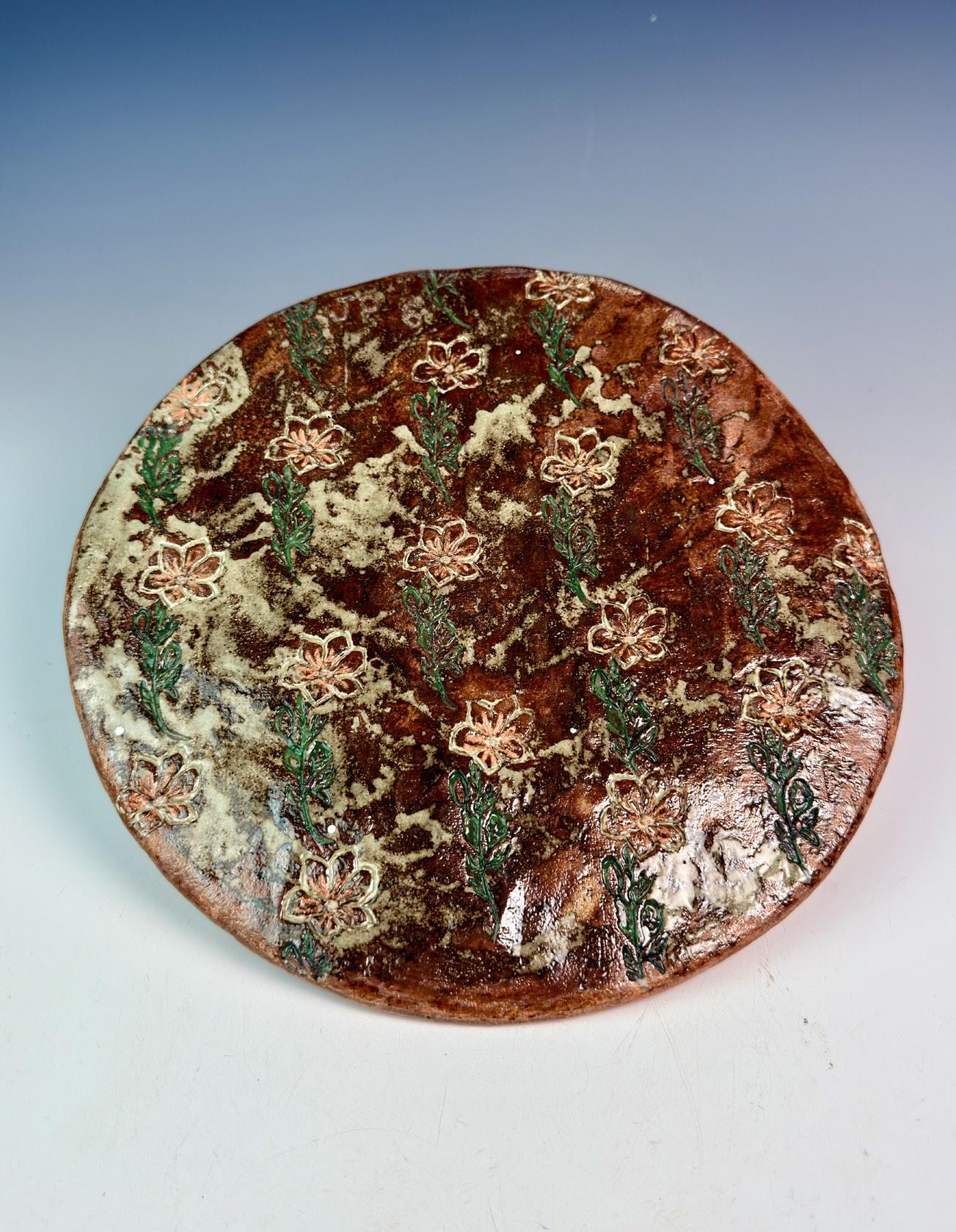
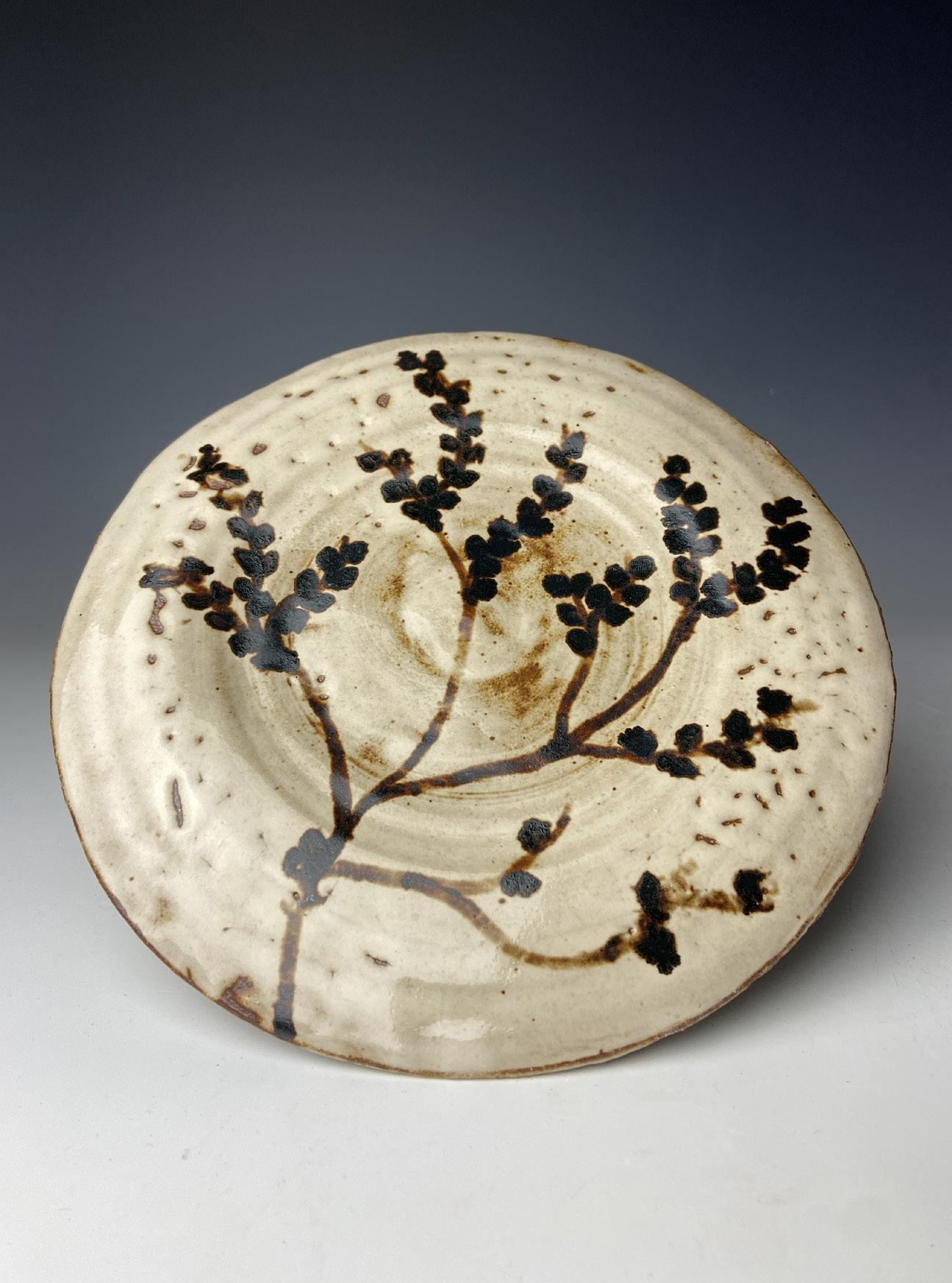
JULIET PICKENS - ceramic plate MUDDY SPRING
JOSH MELCHERT - short story
The giant old tree towers above the river valley, spreading its canopy above a world unlike its own. The thick lines of bark skirt up the tapering trunk, swirling around the burls of long-gone branches. Red oaks like this one are unique: their jagged leaves are the first to bud in the spring, but the last to fall. The dead leaves hold tight until the new buds of growing leaves push off the dead ones. Then, they silently float onto the waning snow cover that sifts through the brown grass as it melts in the bright spring sunlight.
INSIDE THE OPEN HOLE LEFT BY A CUT-OFF BRANCH IS THE DARK WOODEN BURROW IN THE SKY THAT I CALL MY HOME.
Inside the open hole left by a cut-off branch is the dark wooden burrow in the sky that I call my home. Like me, many generations of raccoons have sat here overlooking the view of the river valley. Green trees lavishly carpet the flowing bluffs that roll down to the deep, dark water. I’ve been told stories of a time when we raccoons could sit atop a tree like mine and see only pure, undisturbed beauty. Now, the horizon is invaded by gray obelisks with violent angles, imposing like giant soldiers, towering above the trees.
Perched between where the tree trunk splits into two, I turn away from the expanse of the river valley below towards the house. Its windows emit a welcoming, orange glow into the diminishing light outside. The back door swings open. Out stumbles a giant, clumsy dog with fur white as snow. I’m startled by the piercing barks escaping from between four sharp canine teeth. But I remember that I am the one in the tree,
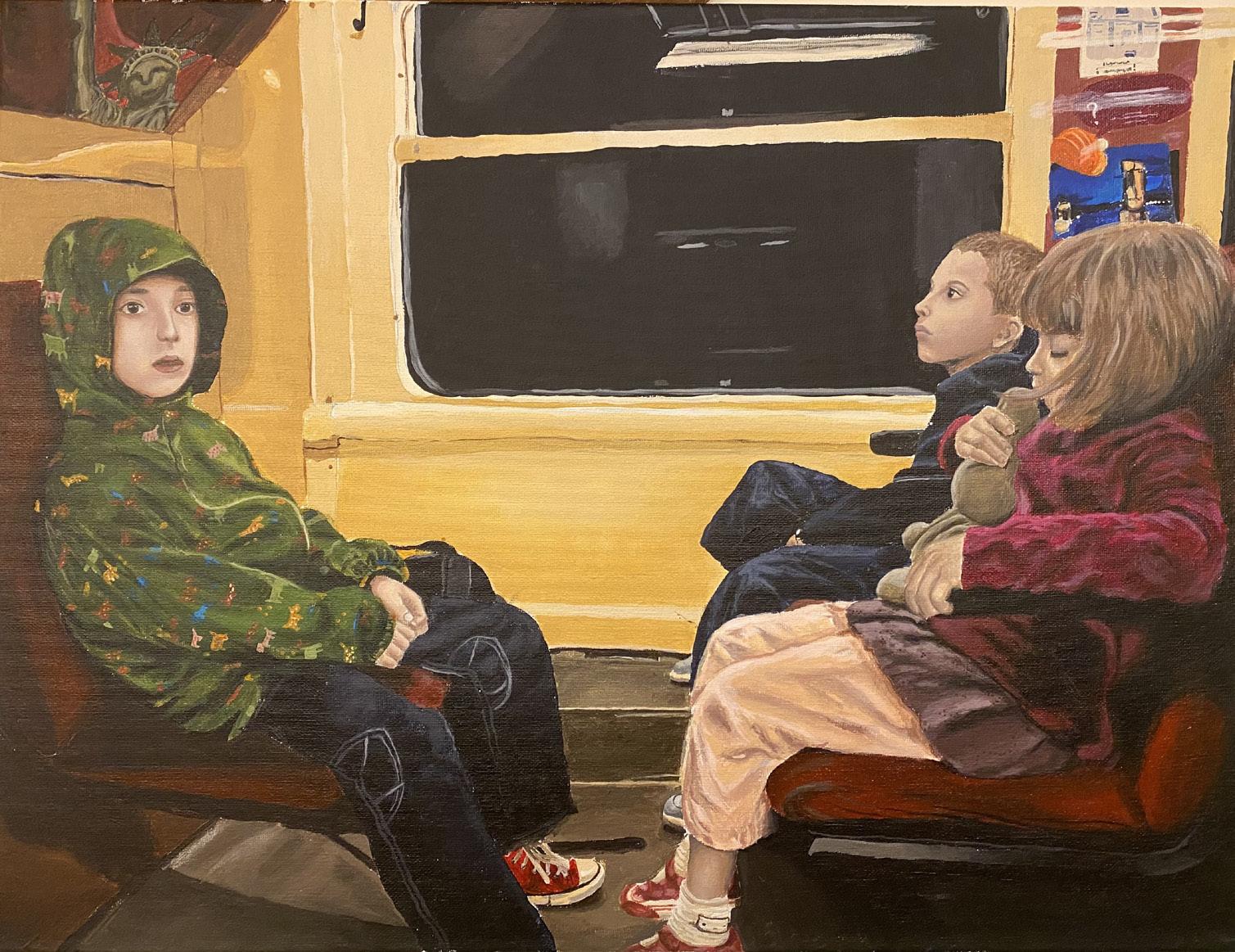
IRIS LUTHER-SUHR - acrylic painting
watching an angry sitting duck taunting me below. I sit and watch as the unnecessary, relentless shrieks from the dog are quieted by the stern tone of a boy walking out to calm the dog. The human scans his backyard, trying to find what his dog was barking at. I feel his gaze lock onto me, joining that of the ferocious, pathetic dog.
I FEEL A SLIGHT HEAT ON MY BACK LIKE A WARM BLANKET OF DISCOMFORT.
He quickly ushers the dog inside and points to me, enlightening the other humans in the house to my presence in their backyard.
Do I scare them? Am I some sort of ungovernable beast, invading their home?
If only they knew.
If only they knew our fear.
With many of my past family members trapped and sent away from this tree, as its appendages are trimmed, its insides rot, and the insects drill veins in the flesh of the tree, how could we not be scared? After the humans disappear, the electric fluorescence ceases, one by one, behind each of the windows.
I flicker my eyes around the brown, stuccoed structure and the doctored garden lining the yard below. I creep carefully down the tree, through the thick hostas dusted
with the slow-burning orange of a decorative lamp post. Behind the tall bushes lining the yard’s outer edge, poorly stained, splintering wood shoots up to sharp points. The fence, like a row of daggers, supposedly protects the yard.
From what?
I am already here.
Borders can not contain the earth.
On the other side, I reach the wide stone path with large metal machines slumbering next to the house. I smell my first stop of the night. The dark gray prism, filled with societal waste — indestructible skeletons and wrappings of every color imaginable — casts its long shadow across the path by the glow of an overhead nightlight protruding from the side wall of the house. Here is where the food is thrown out, supposedly unfit for human consumption.
I slip under the flat, hinged lid of the gray prism. Tonight, I particularly enjoy the molding berries and unwanted soggy French fries. I sit atop the mountain of indigestible plastic, which I see lining the ditches on the side of roads, floating down the murky river below, and blowing across sidewalks like tumbleweed.
My peaceful rummaging is interrupted by a strange yet familiar feeling. I feel a slight heat on my back like a warm blanket of discomfort. Something is sharing this solitary moment with me, its sharp eyes already piercing the moonlight, focusing on me.
I turn to see a coyote staring at me from the end of the stone path, its ears pointed straight up. The poor, emaciated thing -- ribs outlined through its skin like the spiny metal poles of the backyard umbrella stretching against the canopy -- had strayed from its den in the natural river basin below. Hungry like me, he scavenges for anything he can find in this concrete wilderness. He usually hunts the few stray turkeys roaming through alleyways and pecking at leftover birdseed fallen from backyard feeders, or a helpless vole digging its own city beneath the surface. When he can’t find anything, the coyote turns to the fruits of the disposable society, like I do.
It seems as if nothing is safe from being thrown out, effectively disappearing from inconsiderate minds, yet plaguing the world, my food, my blood, with artificial parasites and chemicals never to be returned to the Earth.
But what can I do?
Who is to blame for the ignorance of a species drunken with power and selfish intent?
I can’t even blame the coyote for lunging at me. I would have done the same. Yet, this time, I sense this poor beast is after something else -- me.
Either way, there is nothing I can do except run and survive as we are all forced to do in this man-made wilderness.
I tumble from the top of the gray, rubbish-filled prism and begin to run down
the stone path onto the gloomy street, where the cool, still night air envelops me. No matter how fast I go, it seems as if the ghastly coyote is still behind me. After a while, the passing bushes, fences, and stone walls turn to a blur on the sides of my vision, oscillating with the staggered glow of streetlights.
I can’t tell if I am still being chased or if he turned back once he decided he drove me far enough away from the garbage feast. But I keep going, towards anywhere and nowhere.
I
RUN TOWARDS THE WILDLIFE RESERVE WHERE MY FAMILY MEMBERS HAD BEEN RELEASED AFTER BEING CAPTURED AND TAKEN FROM OUR RED OAK TREE.
I run towards the legendary forests up north, towards the wildlife reserve where my family members had been released after being captured and taken from our red oak tree.
However, it became clear I was running deeper into the dense concrete jungle. I run across busier and busier roads with animal carcasses smeared by the speeding silver
CAMOUFLAGED DESIRE
MARIN AHEARNE-KROLL ceramic sculpture - 8x6”
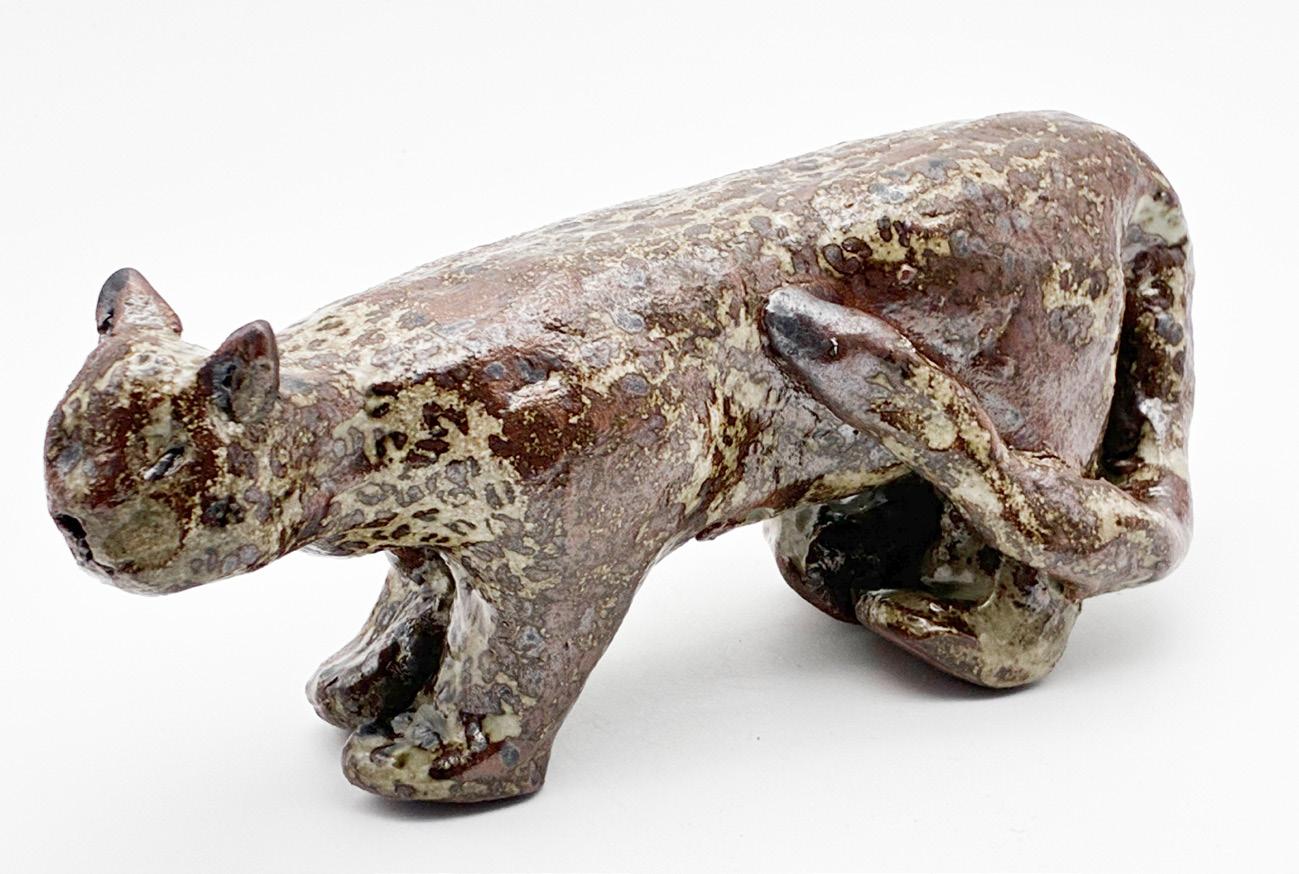
CHEETA
ADDY PETERSON ceramic sculpture
bullets -- the now awake metal machines.
All of a sudden, I see a tall silhouette in the distance. A tree! I scamper across the rough cement, digging into my paws and eating away at my claws, as the ominous gray structures close in around me.
As my muscles begin to ache and my breath begins to waver, I stop, finding no coyote ready to devour me. I look around, finding that the tree I had seen is behind a chain-link fence with coils of violent-looking hooks lining the top.
I decide to slip under the fence in search of the tree.
On the other side, piles upon piles, mountains upon mountains of indestructible skeletons and wrappings of every color imaginable surround me. From the dusting of trash on the streets and the collection bins at every home, to these breathtaking mountains, this must be humans’ version of beauty.
A tall bare trunk punctures into the starry night sky, spreading its canopy of ashfilled smoke from its top. Battered, loud metal machines load heaps of rubbish into the structure surrounding its base.
Climbing to the summit of the tallest peak of forgotten items in line to turn to suffocating ash, I look off into the distance,
hoping I can make out my beloved red oak. The old, wise tree that has kept watch over the river valley, long before any cement structures were ever placed on the land.
I WONDER WHEN THE BUDS OF THEIR TREES WILL PUSH OUT THE OLD WITHERING LEAVES.
I remember my beautiful red oak, and how its dead leaves only fall when they are pushed off by the buds of a new season of life.
The new buds give way to new beginnings, shedding the wilted and expired products of the last four seasons. But now, looking around in this wilderness, I wonder when the buds of their trees will push out the old, withering leaves of devastation, and renew the beauty of the Earth. •
AWAY BACK NOTES ON LOVE &
THOMAS FERGUSON - speech
I imagine that most people in this room would agree that middle school is an exceptionally formative time in a young person’s life. During this deceptively medial period, many people discover their interests and passions, truths about their identities, and some even make lifelong friends.
It’s all the more telling, then, when I inevitably must reveal that I did not attend middle school – at least, not in the American sense. After fifth grade, my family decided to move (by CHOICE) to the United Kingdom. In my eyes, it was an absolute blunder; after all, the UK lacked several things I knew I would miss. Now, don’t get me wrong: I was happy to be entering a more pedestrian-friendly society, with wonderful public transportation and much better chocolate, but I knew that my new community would lack people I could relate to, and it would lack people like me.
For the first decade of my life, I had been raised to be comfortable in how I spoke, how I dressed, and how I saw the world – I attribute part of this to my extremely progressive charter elementary school, where I was taught that the best way to ‘fit in’ was to be yourself to the most extreme degree.
I’m happy to say that some of these earliest parts of my identity persisted to the present day; after all, I stand before you now wearing a vest covered in the faces of little babies. These are the parts of me that make me who I am, and they’re the parts of me I’m the most proud of. Unfortunately, however, these most potent pieces of my personality were what made my life abroad the most difficult.
Being the only American at my new secondary school, my relative non-conformity was only made more obvious, and I quickly became the target of incessant bullying. When it came to my nationality, my peers would pick on everything from American dietary stereotypes to national tragedies (oddly enough, they found the
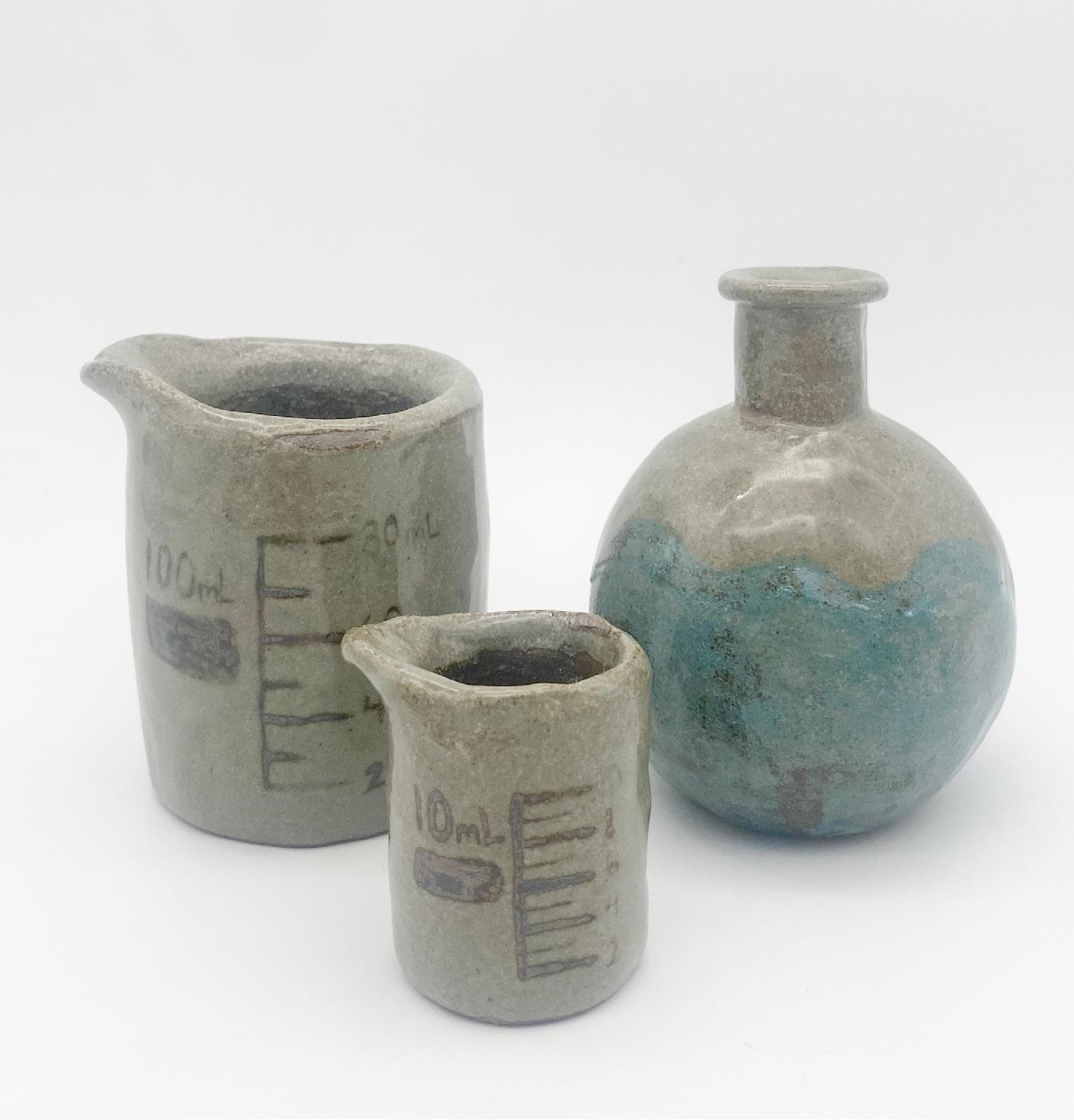
THE ART OF SCIENCE
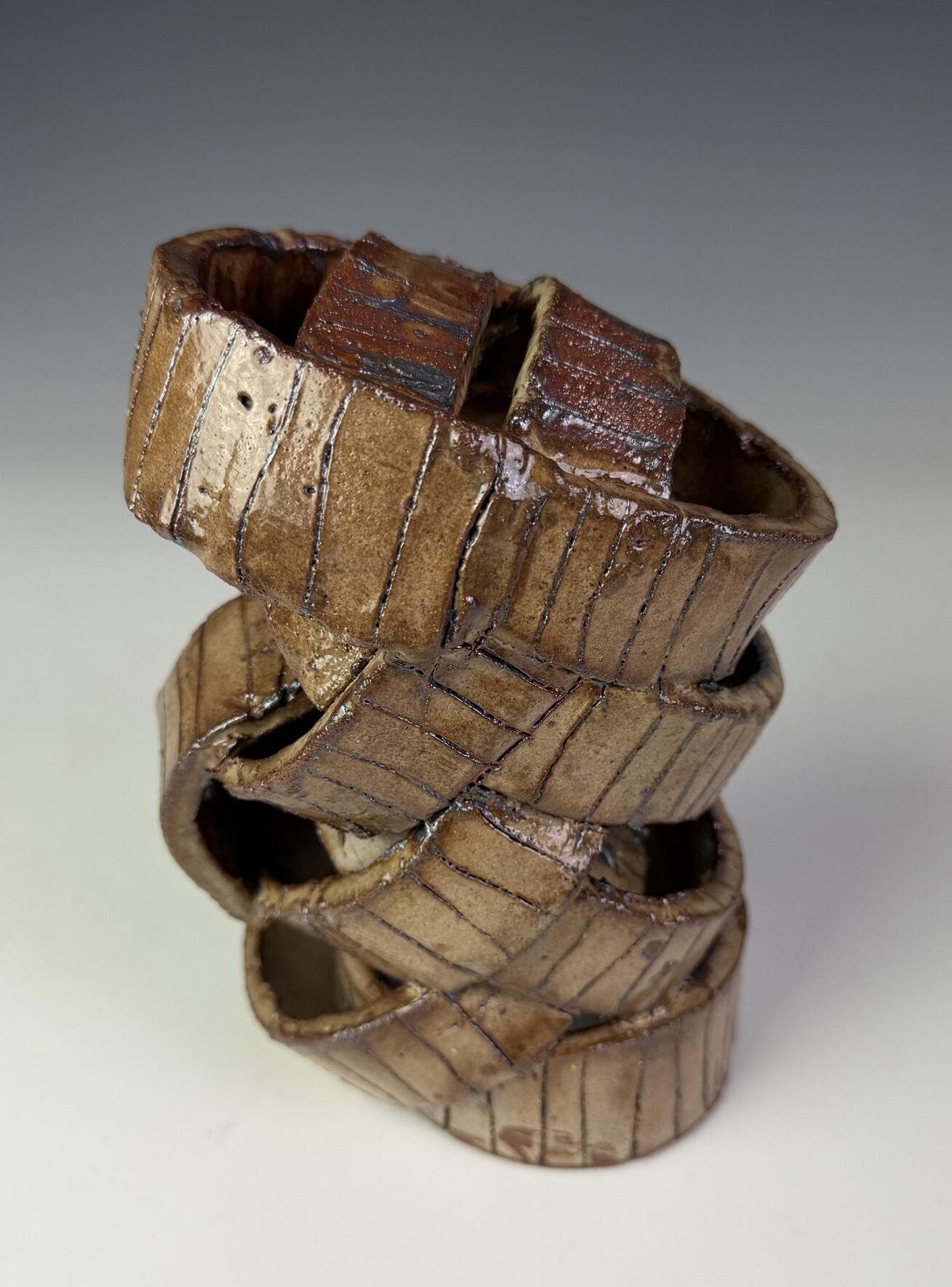
MAREN OVERGAARD- ceramic vessels
I began to realize that what I had been fighting against was not really bullying or othering or abuse. I was not entirely lacking compassion, care, or empathy. No, although all of the above were undoubtedly part of the issue, what I was really experiencing was a lack of love. I understand that love isn’t the first word that comes to mind in such public, general contexts; in our modern world, the word love is almost always used romantically between partners or familially between kin.
As the years went by, however, I began to develop a new definition of love – one that binds an individual to their community, and should be present always, in all of us. It is a love that transcends personal connection and forms an indispensable bond that, if ever broken, has already shown to have potentially disastrous consequences.
As put by underground rapper and contemporary cultural phenom Fakemink, “Showing fake love won’t get you no where in this world boy.” Now, that quote was posted to his Instagram story soon after he had been unfollowed by much younger artist Nettspend, but I believe my point is put more earnestly by one Jon Batiste; in his words, “I love you even if I don’t know you.” And as I look out past the frustratingly bright lights, I see 500 or so faces looking back that – despite not having conversed with every one of you – I have a deep, respectful love for. You have shaped the last four years of my life in so many wonderful and profound ways, and I am truly proud of the person I have become thanks to you all.
In closing, I implore you: care deeply, for friend and stranger alike. Give every good, honest part of yourself to those around you. And most importantly, love as much as you can... because your love goes further than you will ever know. •
SONNET FOR THAT
FLY ON THE WALL A
A shorter me once thought, that maybe pests could hear Us lonely sapiens planning once again, routine genocide Now I know for sure. There’s no doubt that flies must feel, when near The miserable motives forbidden to be specified
We are all acquiescent to detest, to exterminate mosquitoes and moles It’s clear they must live solely to torment us lonely creatures unblemished lawns And what happens? when the mares have their wobbly foals And the ewes bear their perfect, white, unintelligent fawns
The lowest, most desperate for love, embarrassments of the slums Know the rats, wasps, and roaches so closely, close as the dying scheme of “family”
So what will happen? When a rich man has finally had enough, and bombs echo like drums / Those nasty moles will hide in war bunkers, and mosquitoes find a buffet, amongst the calamity /
So I beg. For you to let someone know, fly, what do you feel? When yet another convention of villains in priceless suits begins to unpeel.
IMPOSSIBLE
JAY TILTON - sonnet
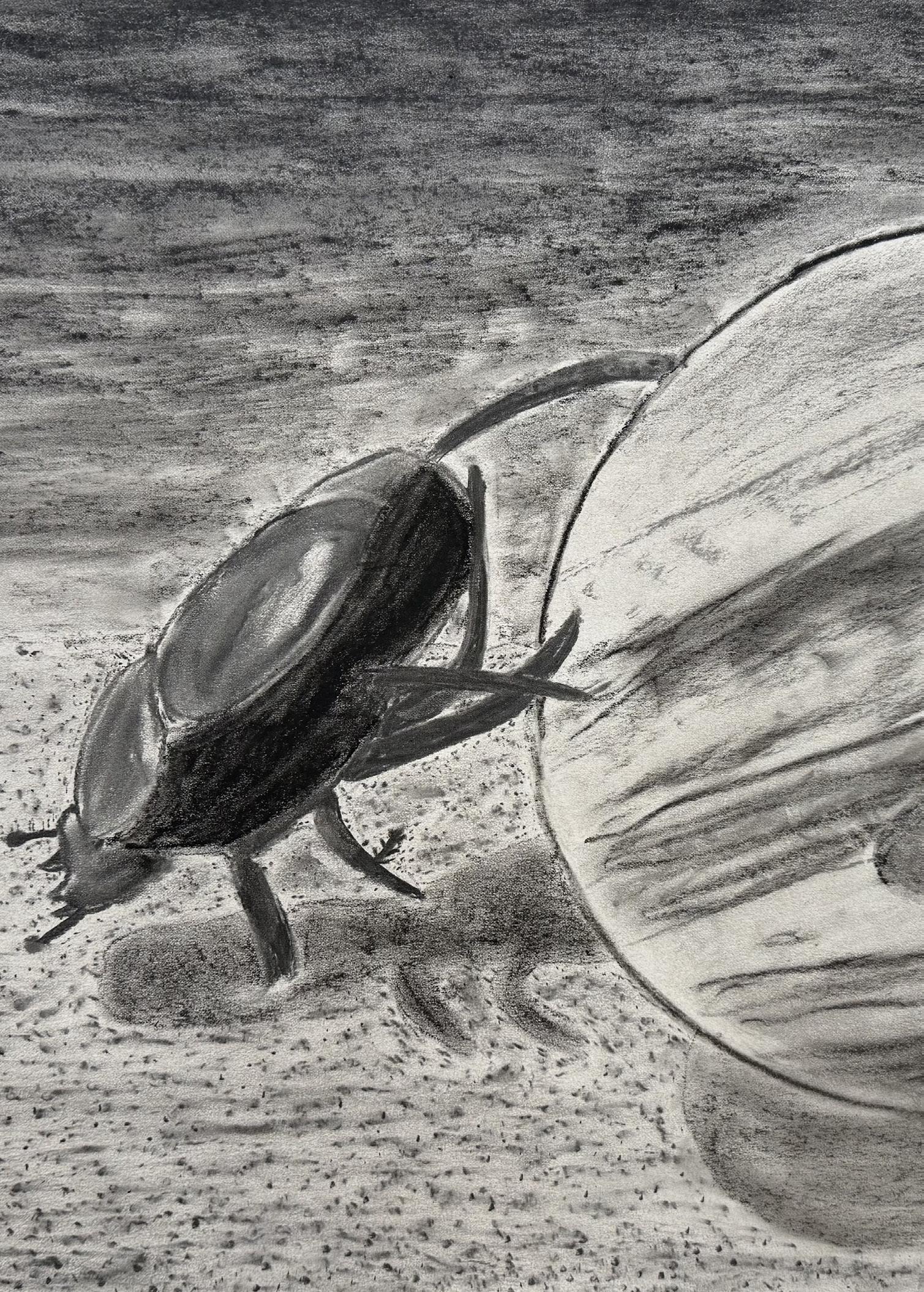
HENRIK BRAUDE - charcoal
GROUNDED
ANN LI - Ceramic - 5 x 4.5 x 5.5”
MOUNTAIN EVER-CHANGING
In response to “The Glorious Indifference of Wilderness” by Terry Tempest Williams
GAVIN LEUTHOLD - short story
The wind blows around and above me. The dark clouds come from the ocean and pour rain onto my windward side, while creating a dry rain shadow on my leeward side. Then, lightning strikes my summit and fractures me. I silently scream out in pain.
The next day, I start to feel a slight movement along my side, moving steadily upwards. The rocks that are a part of me shake with each step. I feel how the shaking stops momentarily when the human stops to take a break. Most days, a few black bears or moose roam around. I feel happy when they are near, because I am proud to provide a place for them to live. These animals cause me amazement and inspiration in their joy, survival, and different species-specific behaviors and skills. I am never bored because I can always observe the animals. Also, the angle of the sunlight constantly changes and shines on different parts of
my surface throughout the day.
A few days later, I feel pain on my leeward side as my rocks tumble down my steep slope and create a rumbling that reverberates throughout my entire being. I can feel my vast existence shift every time this rumbling happens. It wears me down little by little over time. But then, later, the earth beneath me rises as a response to the rumbling, which lifts me back up. I feel stronger when this happens.
This rumbling reminds me of how, a very long time ago, the earth beneath me created an enormous earthquake that formed a long, deep fissure through the ground, right beside me. I was mostly unharmed by the earthquake, but I witnessed it cause significant destruction of my brother mountain, as well as kill a few small land animals, and for that, I felt very sad. My brother has never been the same
since. I have spent the entire time since that event mourning the loss of the animals and longing for the time when my brother stood taller and more complete. I fear that one day this event could occur to me. And again, this was the very same type of event that created me, ages prior.
“ THIS ICE AGE WILL EVENTUALLY PASS BECAUSE NOTHING IS PERMANENT.
Another noticeable change I experience regularly nowadays is that I have sensed my snow melting in much greater amounts. It runs down my side in the form of waterfalls and rivers, increasing in volume. For this, I am sad because I value the snow that covers me. It adds so much, and now it is being taken from me, because the air gets warmer and warmer. This warming has a clear cause. But I can do nothing about it, except witness the snow melting over time, and wish humans would not disrespect me in such horrible ways.
Every storm season, I sense the atmospheric river that runs over me becoming larger and wider, resulting in more intense rainstorms. The thunderstorms are becoming more frequent and severe, causing me increasing damage in the form of landslides every year, which creates the same
rumbling I mentioned earlier. The storms cause immense flooding that submerges parts of me in water, and when this happens, I feel suffocated by the floodwaters.
When I hear a human describe me as a permanent force that is “softened in the shadows,” I know it is very inaccurate, but I have no way of challenging the claim. I am ever-changing and impermanent in many different ways, due to the natural processes and climate change impacts that constantly affect me. I am never the same at two different points in time. I am beyond happy to provide a space for reflection for many people, but I disagree that I am a “glorious indifference.” To suggest so is to indicate that I am always the same, which I have already shown to be false.
A very long time passes, and widespread cooling occurs. I become covered in an ice field that surrounds me. Only my summit sticks out above the ice. I have to endure this cold suffocation for a very long time. I feel very sad that all of the land animals that lived on my surface have died as a result of the new ice age. Now, I am lonely. I can no longer observe the animals or provide a place for them to live. I hope for warmer times.
However, this ice age will eventually pass because nothing is permanent. Eventually, animals will roam free again, and the air and ground will thaw. •
WINTER FEATHERS
DALIA WOLKOFF - ceramic - 4x7x5”
SCAN THIS QR CODE TO LISTEN TO “HARMONY” INTERPRETED BY THE JUAN MIGUEL QUARTET
EVER-LASTING
SIRI HOLDEN- ceramic
IN THE MOMENT
ELLA BOND - college essay
It’s hard to believe how much camping has positively affected me over the past few months, especially considering how my younger self used to dread and despise the activity. I fervently believe I have enjoyed camping with my oldest sister, Annabelle, this summer because the time out in nature, without my phone, has given me space to honestly think. Away from the noises of society and expectations, I have felt free to let my mind wander and explore myself. I can get lost in my thoughts and find meaning without standards. As I have gotten older, I have realized there is power behind living in the moment, and just because one thing goes poorly doesn’t mean everything has to.
WE CANOED THROUGH SMALL LAKES BEFORE GETTING TO THE CAMPSITE IN THE LATE AFTERNOON. “
My first blurry memory of camping wasn’t an ideal experience. The day we arrived consisted of thunderstorms, constant rain, and wet, soggy clothes, which is never very fun for a seven-year-old. The next day was forgotten in my brain, but the night was vivid as a family friend told my
sisters and me a horrific, scary story around the crackling campfire. That night, I did not sleep as visions of haunted possessed dolls with eerie smiles clouded my dreams. After this trip, I didn’t go camping again till I was a few years older at a summer camp up in Northern Minnesota. My cabin had an overnight camping trip midweek, and we canoed through small lakes before getting to the campsite in the late afternoon. The night was long and restless, with many tears shed. Sometime in the dark hours, one of my friends in a tent only a few feet away suddenly got sick and started vomiting. The harsh gut-wrenching sound of someone throwing up in the quiet darkness jolted everyone awake. The unsettling raw noise seemed to echo through the trees around us as an unpleasant sound became surreal. After that overnight, I vowed never to camp again.
These two camping experiences stand out in my memory because they were
uncomfortable and unfortunate. I can’t recall the happy moments because the bad seemed to outweigh them at the time. For years, those memories shaped my view of camping– muddy, cold, sleepless nights I wanted no part of again. But things changed. Maybe it was time, and those memories were fading, or my sister convinced me to give camping another try, fueled strangely enough by our shared love for The Lord of the Rings and the idea of embarking on our own adventure. Since then, I have discovered that anything is as enjoyable as you allow it to be.
“
I HAVE DISCOVERED THAT ANYTHING IS AS ENJOYABLE AS YOU ALLOW IT TO BE.
Ahead of me was the expanse of what looked like ocean, broad, vast, beautiful, and intimidating, but I was nowhere near the ocean; I was at Lake Superior. I let out a deep exhale as I paused at the outlook spot. Willie, our family golden retriever, did the same as if he were enjoying the view himself. Annabelle, Willie, and I were a couple of miles from our campsite for the night. We had been laughing, chatting, and hiking in silent moments all day. Taking breaks to jump into the frigid lake water. Finally, we made it. I walked down the wooden steps that led us off the small dirt trail and down
the steep drop off that wouldn’t be possible without the stairs. At the bottom was a small opening with a fire pit, two wooden benches, and two bare spots that appeared to be for tents. Behind the open area were a few pine trees and a river with a waterfall-like drop off. I ran down to the rocky shore and was mesmerized by what I saw. Catching the sunlight, the spray from the fresh tumbling waterfall looked like a cascade of sparkling diamonds. Nothing was perfect, my clothes were wet, my legs were all itchy from mosquito bites, and my hair was greasy, but those were minor, insignificant details. •
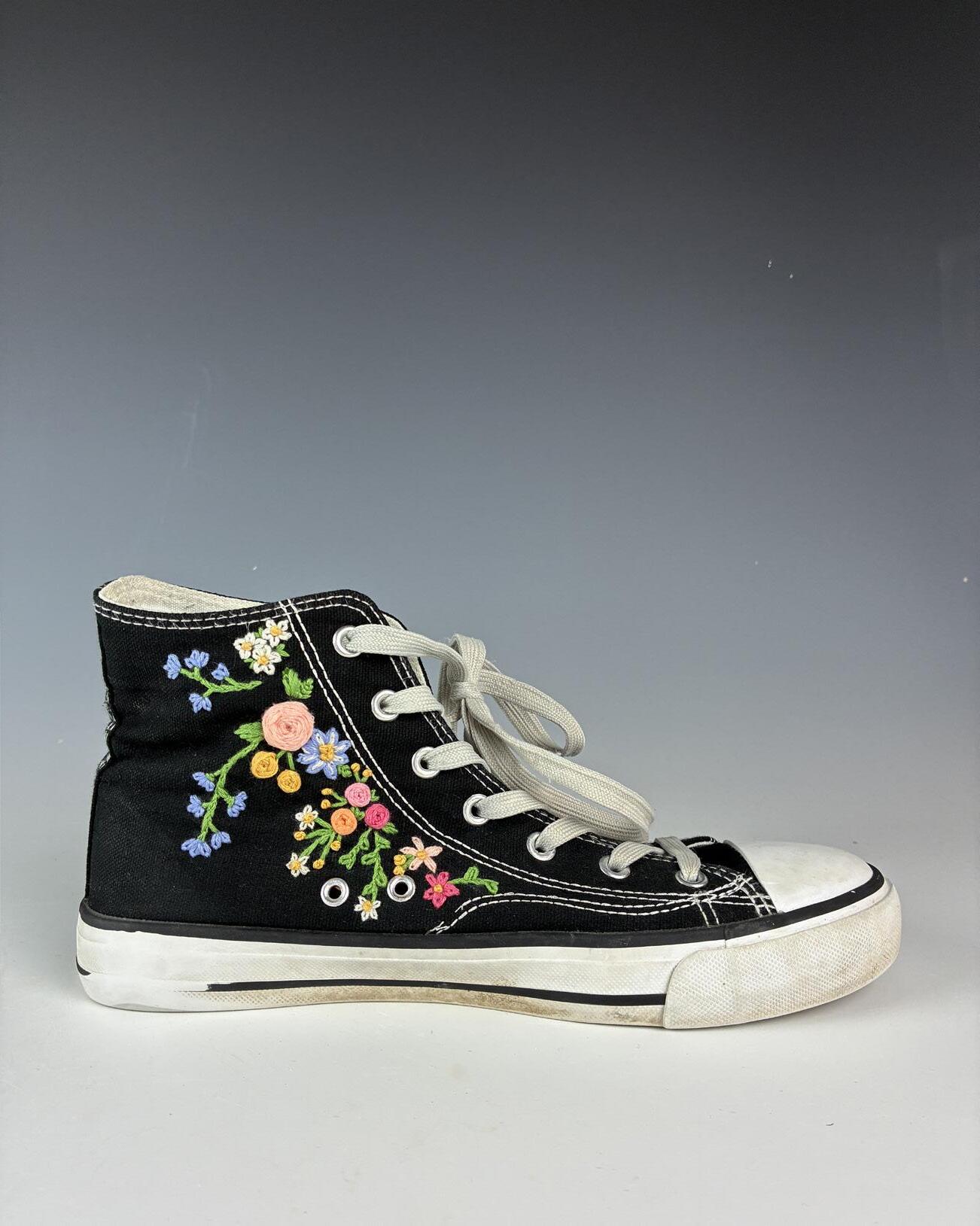
A WALK THROUGH THE FLOWERS
EVA JOHNSON- canvas embroidery
THE WITCH OF THE TOWER
MILO LEVINSON - short fiction
Once upon a time, on a far away land, there lived a family. The father of this family worked harder than any other, tilling the barley fields from dawn to dusk, but he was happy because he had a wonderful family. He had a wife, five sons and three daughters, all of whom except the littlest boy, of only two years, helped on the farm. The three eldest sons, named Benedict, Bartholomew, and Barrett, were weary from their hard work and wished they didn’t have to spend their lives in grueling labor, sweating rivers in the hot sun.
Benedict was a very cunning lad. He was the one who fixed all the broken tools for the farm. But he was very ugly. His face looked like that of a pug and it didn’t help that it was completely covered in dirt. He wished could have the handsomeness of Bartholomew.
Bartholomew was very good-looking. He had many acquaintances and was very popular but he was sad, because he wished he could be as good as Barrett. Barrett was very kind and caring. He was the one who cared for the sick in the village but he wished he could be clever like his brother
Benedict. Because of their envy, they never were good friends.
A terrible sickness took hold of the village and soon most of the family died. Their rivers of sweat became rivers of tears, but they didn’t have much time for grieving because they were starving and had too few hands on the farm and needed to work all day.
One day, Benedict was milking the scrawny, black, goat, when he had an idea. He ran over to the stone house. He summoned Bartholomew and Barrett. “I have an idea,” he said, a look of excitement spreading over his soiled face, “The Witch.”
Bartholomew said, “Yes, she lives at the top of the black stone tower.”
“What about her?” Barrett asked, then his eyes widened.
“No, we can’t do that,” Bartholomew said in disbelief, “Everyone who went never came back.” The expression on his face was as if he had seen someone die, which of course he had.
Benedict smiles sadly, “What choice do we have?” the sound of his voice, echoing around the small room.
“I cannot ask any of you to do this,” Barrett says, “I shall go–”
The brothers interrupt, “Fool!” showing the extent of their brotherly love.
And so the three brothers wished their father farewell and left. They walked along a muddy track for miles and miles. After a while, they heard the gallop of hooves and a clink of mail. Along rode a knight on an elegant black horse. His black-painted armor glistened in the harsh rays of midday.
The brothers were not overly fond of warriors, as they often came by, collecting most of what little money the poor farmers had. Furthermore, the black armor could only mean one thing: his liege was The Witch. Benedict gave him a cold look, an act that was enough to get the rider’s attention.
“Who goes there?” He asks.
“And where is “there”, may I ask?” he asked.
The knight gave him a long, hard stare, as well as any piece of metal can.
The knight takes the prisoners and brings them to a tall tower. The stones were obsidian, the mortar was ink black, the iron-studded door was jet black. The only thing that wasn’t black was a green shine from the very top of the tower. The knight brought them to a dungeon. Cruel, bloodstained devices littered the floor. He locked up Benedict and Barrett, leading Bartholomew out of the dungeon. “You,” he said, “are handsome and so you shall marry my daughter.”
In came a girl with a golden necklace. Her gold hair clashed horribly with her yellow dress. Her voice squeaked like a beginner’s violin, she asked, “Will you marry me?”
Bartholomew said “I’d love to!”
“My father is evil. He has hurt many, not excluding myself.”
She said, a pale scar twitching on her forehead, “I will help you
and your family.” She gave a golden key to Bartholomew. “This will unlock the dungeon doors. I stole it from my father.”
Bartholomew promised he would come back and sneaked out with her gift. He crept to the brothers’ cell and unlocked the doors. With a click, the rusty doors swung open and they all rejoiced. They left the chamber and stole up the spiral staircase. They went around and around, and up and up until they came across an old guard. She hobbled down on a warty cane, wrinkles of dangling skin like wet rags hanging on a skeleton. In her dark blue eyes, lurked hunger. She held a wicked knife.
The brothers all jumped back, startled. Benedict and Bartholomew were very uneasy.
They saw the knife she was holding. But Barrett was kind, and seeing the woman’s hunger, he comforted her and gave her a loaf of bread from his pack. “Thank you good lads,” She croaked, her hollow voice echoing around the staircase. She handed them her weapon. Bartholomew took his key and unlocked her bonds, releasing her.
Benedict told his brothers his plan. They kept climbing, eventually coming to a door.
They quietly opened it, revealing an even older woman. Her face was obscured by a jet black cloak. Benedict came with the woman’s knife concealed in his clothes.
He crept up to the woman from behind as she was muttering and stirring the cauldron.
Benedict stabbed her in the back. She barely grunted. They then left. She was dying so she was forced to make a potion to cure herself. When she was done, the brothers came in and killed her.
They took a cauldron of green potion and returned home. They poured some into the mouths of all the deceased. After a few minutes, they woke up from their peace. The family was reunited, Bartholomew was married, and most importantly, the brothers became deepest friends. •
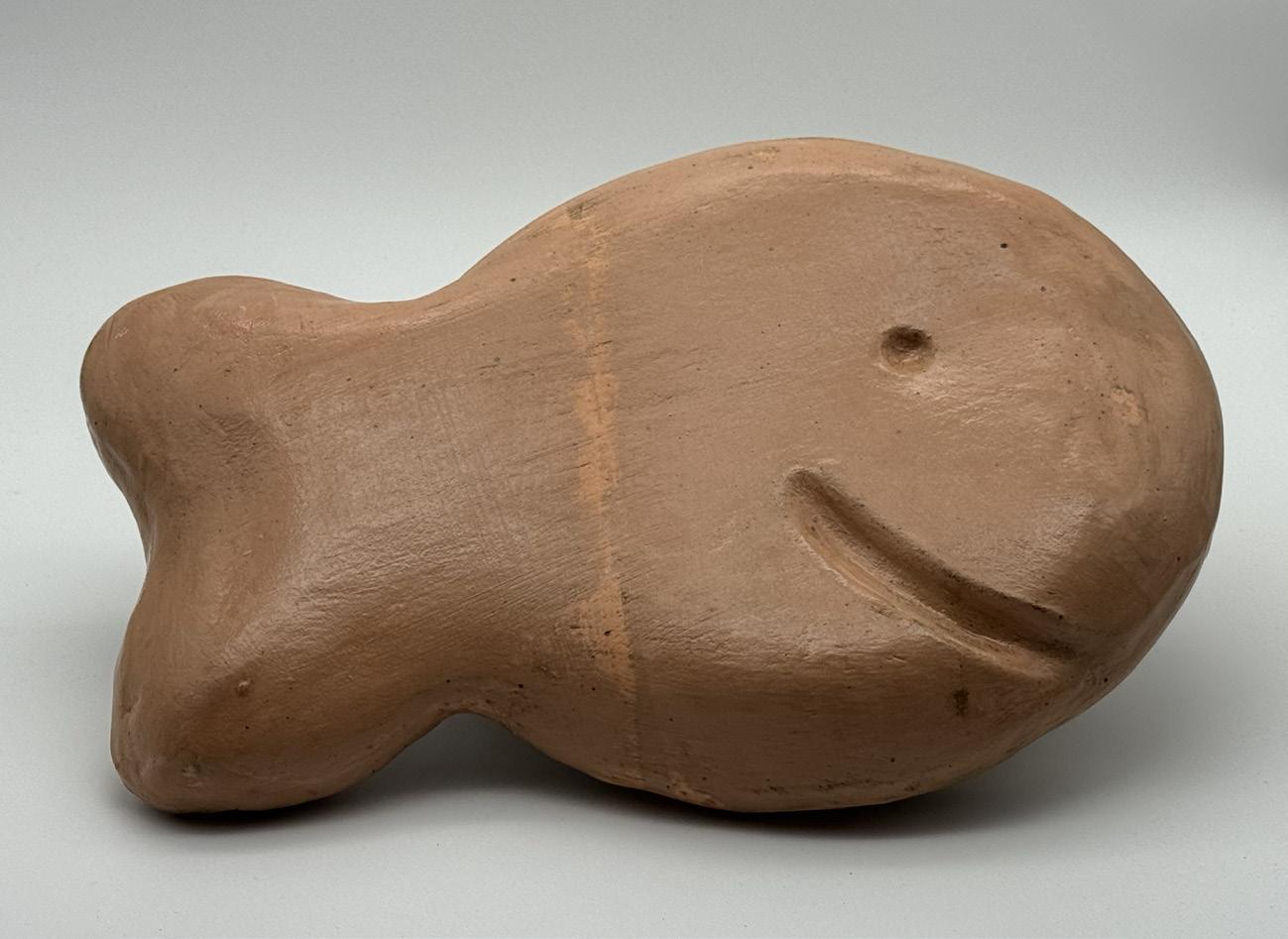
GOLDFISH
EVY SACHS - ceramics
THE MOST AWESOME SPEECH EVER WRITTEN
A HUGH ADAMS STORY
HUGH ADAMS - humor
I woke up as the cold bit my face and nose, and I rolled out of my sleeping bag. I unzipped my tent and saw a bright blue flash.
To my surprise, a small unattended tent greeted me by rolling down the road like a tumbleweed, and then it promptly got shot back into the sky by the wind.
Looking back on this camp out now, it holds a special place in my mind. I remember it as an epic battle. Me, the most legendary 6th-grade camper on this side of the Mississippi, vs the weather. I had soft hands, a soft gaze, but a fiery determination going into that trip. The camp was run by the National Guard to showcase various
military equipment to campers. It opened up most of the base to the public, and many troops from Minnesota and Wisconsin attended the event.
At that point, I had been in scouting since kindergarten, but I still wasn’t very independent (despite what I thought.) At that time, I thought of myself as a strong champion, who would surely not be proven wrong this trip.
After driving hours towards central Minnesota, we pulled through the gates and stopped at our designated section of the field. I thought it would be an excellent idea to bring thin clothes, on par with Hawaiian flower shirts, for a bright, warm spring retreat… This was not my brightest idea, but it was somehow, impressively, not the worst decision I made that trip.
At that time, I was inexperienced, and most of what follows could have been entirely avoided if I had undertaken the dangerous task of using my brain.
When I arrived, the pouring rain, wind, and relatively cold spring weather wiped my easy-going beach smile off my face. The other two people in my tent were my friend Josiah and my… acquaintance… Malcolm. With these two distinguished gentlemen, we saw darker clouds fast approaching and created a battle plan. We rushed to set up our green Eureka brand tent. We flicked poles together and slammed stakes into the ground. If you had seen me do this, you would likely have thought I was pretending to be a pirate as my tent instantly caught
the wind like a ship’s sail. If that wasn’t challenging enough, as we set up our tent, Zeus himself tried to strike us down!
Despite that we got the tent up, but the sides had already pooled with water from the inadequately sized rain-fly covering it. Knowing we had lost both the battle and the war, with purple hands, shivering, we sought shelter. One of the Scout’s dads led us to what we thought would be an oasis. A haven for my fellow man to hide from the horrors outside.
“ MOST OF WHAT FOLLOWED COULD HAVE BEEN ENTIRELY AVOIDED.
I tentatively walked into a rectangular, one-story concrete building to find, not a bunch of warm beds and caviar, but, to my horror, dozens of toilets lined up side by side with no dividers. The showers on the other side of the room were a place only the bravest would dare go: a mixture of mold and unknown goo invading every surface.
I was worried and embarrassed going to the bathroom with no privacy. As I walked… I heard giggles and hushed talking echo off the half-foot-thick concrete brick walls. I investigated to find a small group of elementary schoolers who set up a home base in the bathroom. A vein popped on my head as I swiftly approached them. I was mad… they stole my idea! These young rapscal-
lions caused many social losses for other warriors my age. Rest in peace.
After another failed mission, we went about our days as best we could. However, as night approached, we were forced, out of necessity, to seek refuge from the pelting rain in our tent.
“
I PUMPED MY FIST AS I LEFT THAT CAMP OUT, A WARRIOR READY TO OVEREXAGGERATE MY STORY.
At some point in the night, I woke up with my heart pounding. I snapped up to see Josiah and Malcolm awake. I felt a familiar sting of pain shoot up my back. My crappy air mattress was flat, and tree roots jutted into my back. The next thing I noticed was the tent sounded as if it were ready to cave in; the poles jutted and groaned, the rain-fly flapped frantically as if trying to escape. The many sounds of loose items being tossed around and the wind slamming into things were loud and constant.
I accidentally blinded myself as I opened my six-grade Motorola to see 3040 mph wind reported on my weather app. I nodded as I peered through the tent window and agreed with this assessment. While moving, I had to avoid the tent walls; even the slightest touch would leak water on top of my sleeping bag, which made 30% of the space unusable.
I heard a rumbling diesel engine as one of the adults slowly parked his truck in front of our fortress. He did this because he genuinely believed the wind might break our decade-old tent.
Under my brave bravado and strikingly handsome demeanor, I was scared. I wrongly thought he moved his car because we would fly away while inside the tent like we were in a tornado. Luckily, after that unsettling theory a mixture of fear and exhaustion from the day eventually led me to fall asleep.
When I woke up, I felt my arms and realized I with a sigh… I was still alive and had not been caught in a tornado as I had feared.
I opened the tent zipper and saw our tent poles bent at 30-degree angles. I was impressed that my knowledge, confidence, bravery, and most of all skill were (what I thought at the time) the sole factors in overcoming this challenging feat.
I pumped my fist as I left that camp out, a warrior ready to overexaggerate my story and relay it to everyone I saw.
Now, I see other young Scouts going through what I did, and I realize how it helped build their confidence, experience, and skill as it did mine…. You never know what moments will shape your future, so embrace every adventure like it’s your last because every feat builds either your confidence… or your overexaggerated story repertoire. •
MIRROR
KIERAN AHEARNE-KROLL - photography
AUDREY PELTIERmixed media
ARTIST STATEMENT:
Four years ago, I lost my Grandmother, Arlie, to Alzheimer’s. Watching her memories fade made me realize how fragile and essential our stories are. It reminded me that memory isn’t just about the past, it’s about connection, identity, and holding onto the moments that make us who we are. Listening to other people share their stories, some talking for almost forty minutes, felt like a special way to keep memories alive, both for themselves and in honor of my Grandmother. Since I couldn’t talk to my Grandmother, I left her memory box empty. I felt like the blank space showed how Alzheimer’s had taken away her ability to remember and share her stories, even on her good days. Leaving her box empty captured the quiet reality of Alzheimer’s, reminding me how easily stories can fade and why it matters that we hold on to them.
EDIBLE IDENTITY
KATE TUTTLE- graphite drawing - 12x20”
STRAWBERRY STRAWBERRY
FRANCES CONROD-WOVCHA - haikou
The red strawberries That my mother gave to me Are collecting dust.
I. YOU. WE.
EVA BURNS - poem
i’m the ocean you’re the land
we’re the line where the water meets the sand
i’m the moon you’re the sun
we’re when the day is finally done
i’m trying to stall you’re the jumpstart
we are two entire universes apart
GROWING BACK
ARTIST NAME - medium - 5x7”
THE GIVING TREE
A NEW PERSPECTIVE
HART WALTZ - photo story
“ I WISH I COULD GIVE YOU SOMETHING, BUT I HAVE NOTHING LEFT.
- TREE from “The Giving Tree” by Shel Silverstein
THE WORLD
ACCORDING TO US
FRANCES MATTHEWS - short story
The world was like this: you were born into a place, and then you stayed there for the rest of your life. It always had been and always would be this way. No matter where your place was– some got unlucky and ended up surrounded by cement and stomping feet and dropped plastic. Some got lucky and got to live out their lives surrounded by the chirping of birds and a beating sun and the whispering of the trees.
We liked our draw. We may not have had much space, but we were protected by walls of stone and trees hovering above us, offering shade and companionship. Over the years, we had climbed these rock walls, to get closer to our tree friends, and we spread ourselves out across our place, slowly but surely leaving our mark of fuzzy green across our home.
“ GONE WERE THE DAYS FULL OF SHADE, PEACE, AND THE TREES LOOMING ABOVE US.
And it was ours. We were the only ones to truly live there. Every once in a while, those tall gangly things would come through, but they never stopped for long. Just stood at the top of the walls, took a gasping breath or two, then kept moving.
We spent our days basking in the shade of our tree friends, listening to birds fly past as they sang songs, and slowly climbing further up the walls.
It seemed like this could last forever.
One day, something new showed up nearby. All of a sudden, we were hearing chatter of a foreign species, the clank of machinery, and the pouring of gravel. It didn’t disturb our home, so we didn’t think about it too hard. After all, this place was ours. What could they do to ruin that?
Some man kept coming and going from our home. He was just a visitor, but every time something in his eyes would shift a little from the last time. We couldn’t read him, so we didn’t know what these looks meant. We figured he was just amazed by the home we had built up. He always left after a few minutes, going back to the strange new sounds not too far away.
We also heard news of brethren from within the forest above us being moved out of their homes, which was, of course, sad to hear. But it didn’t worry us. After all, we had strength in numbers. There was so much of us, and those who were moved lived by themselves. And we had our wall guardians and our tree friends to protect us. It could never happen here.
For all the big talk of security, we never did plan for if the impossible were to happen. We should’ve, could’ve, fought back in any way possible. Instead, when we were moved, we let it happen.
Our new home was different. Gone were the days full of shade, peace, and the trees looming above us. Now we lived under the sun, on the rocks, with people swarming around us every day, spraying water out of plastic bottles in hopes to keep us alive. It wasn’t working.
Without the walls of stone there to protect us, we felt bare and open to attack again at any moment. We had been placed over rocks, almost as a pale imitation of our former home, but they didn’t do the same thing. We had to be our own protectors now.
Most of all though, we missed our tree friends. There were other trees planted near us, but they were stoic and silent, almost unnaturally so. They didn’t have the same comforting presence as the gentle giants that used to be ours. We wondered if they missed us too. If they saw our home emptied of living beings and thought of what once was. If they were calling out to us on the wind as we called to them. Come back. We wished we could. •
ANNIKA BRUUN ceramic TURTLE
VIA CAMPBELL - ceramic
SHIN GODZILLA
GIRL GIRL A AND HER COFFEE COFFEE
ELZIE BIEGANEK - poem
The sizzling fills my ears as I walk through the espresso scented space. The smooth jazz places a warm and contagious smile upon my face. Whether they’re newcomers, or old comers, everyone is sipping in unison. I am so content with this reality. This reality is mine.
No matter what age people are in this place they enjoy themselves. I have made an oasis for them to run or walk away to.
To escape their busy and bustling life.
Work. School. Play. Homework. Break-ups. Conflict. Loss. Grief. No matter what, this place puts them at peace.
I serve up a piping hot steaming delight and glide it across the counter. The person smiles and salutes their drink to me as if we’ve known each other forever.
The snow is falling softly outside and tucks us into its snow globe as the windows fog over. People observe its beauty and curl up by the warm fire with cozy blankets and books. The chatter blends perfectly with the smooth jazz, and the space purposefully serene.
Order up! Order up!
Nothing feels stressful. No one feels pressured to do anything. The only thing people can worry about here is accidentally spilling their steaming delight. And even then there doesn’t have to be a care in the world. I will just serve them another.
IRIS: ART+LIT
EDITOR-IN-CHIEF: Roman Farley
THEME DEVELOPMENT: Annika Kim, Lani Ngonethong
LADDER DEVELOPMENT: Lani Ngonethong, Eva Johnson
COVER/DIVIDERS: (Photos) Lili Itzkowitz, Lani Ngonethong (Digital Illustration) Annika Kim (Music) Juan Miguel Adams, Roman Farley, Howard Huelster, Ryan Kari (Video Production) Elliot Sjaastad
PAGE DESIGNERS: Lailee Gaspard, Lili Itzkowitz, Annika Kim, Katherine Lin, Iris LutherSuhr, Lani Ngonethong, Kate Tuttle, Ellie Whitcomb
CLUB MEMBERS: Roman Farley, Caden Dearfurff, Eva Johnson, Annika Kim, Iris LutherSuhr, Lani Ngonethong
ADVISER: Kathryn Campbell, CJE
STAFF COLOPHON
2026
“Renaissance,” Art + Lit 2026 was printed by Ideal Printing in Saint Paul, MN on 80# Neenah Digital Smooth Text paper with a 120# Classic Crest Eggshell Cover with high profile spot gloss UV coating.
Body text font is Avenir Next Condensed 10 pt. Title/Credit fonts include Avenir Next Condensed and P22 Nudgewink Pro.
All graphic design was completed in Adobe CC on Mac desktops with 27” monitors. Files were submitted via Google Forms.
410 copies of the magazine were printed, with one copy of the magazine distributed free of charge to each 9-12 family with the support of a publication budget for the magazine.
Additional copies of the magazine can be purchased for $15, subject to availability. The digital copy of the magazine is available at ISSUU.com/rubiconarchives
CHANELLE GALLAGHER (Anishinaabe) is a Minneapolis-based artist whose practice centers continual movement through time, memory, and material. Working primarily with clay, she builds forms that hold overlapping temporalities of ancestral memory, embodied present, and speculative futures where time is layered and returned to. Chanelle treats making as an ongoing act of world-building through dreaming and disruption. Working with clay becomes an act of connection and resistance, deepening relationships with body and land while responding to the ongoing impacts of settler colonialism. They are continually drawn to water, shorelines, and fire as sites of transformation.
Chanelle is currently pursuing her MFA at the Institute of American Indian Arts in Santa Fe, New Mexico. She is a former First People’s Fellow and was a Native American Artist-in-Residence at the Minnesota Historical Society.
NANCY LOEWEN is a writer, editor, and college prep tutor. She grew up on a farm in southwestern Minnesota, surrounded by library books and cats. Now she lives in Saint Paul and has published more than 150 books for children and young adults.
Loewen earned an MFA from Hamline University (Saint Paul) in 2007. While in graduate school, her short story “Harvest” won a national award from the Association of Writers and Writing Programs (AWP) and was published in The MidAmerican Review. Two of her books, The LAST Day of Kindergarten and Four to the Pole: The American Women’s Expedition to Antarctica (co-authored with polar explorer Ann Bancroft), were Minnesota Book Award finalists.
Loewen is passionate about the importance of early childhood literacy and has served three terms with AmeriCorps, working with preschoolers, toddlers, and even babies. Learn more at nancyloewen.net.
&
The mission of Iris: Art + Lit is to celebrate the diverse creative voices in our community and encourage engagement with the arts. Poetry, prose, and artwork are submitted via contest participation, teacher recommendation of classroom work, and individual student submission. Professional artists and authors jury the work. The art juror ranks the top 50 submitted works: drawing and painting, ceramics, and photography. Videography recommendations are made by the instructor. The literature judge ranks works on a 5-star scale.
Iris: Art + Lit is an open forum for student expression. The ideas presented in the work, as well as the copyright of each piece, belong to the author or artist who created it. However, the magazine staff reserves the right to deny publication to submissions. The staff may edit pieces for length or typographical errors, with the goal of maintaining the integrity of the original work.
2016-25
MISSION POLICIES AWARDS
COLUMBIA SCHOLASTIC PRESS ASSOCIATION - Gold Crown Award (2023, 2021, 2020, 2018), Silver Crown Award (2026, 2025, 2024, 2022, 2019). NATIONAL SCHOLASTIC PRESS ASSOCIATION - Pacemaker Finalist (2026, 2023, 2021); Winner (2022, 2020, 2019); All-American (2017-present). JEA/NSPA CONVENTION BEST OF SHOW - (Spring 2026) - 2nd Place; (Spring 2024) - 4th Place; (Fall 2023) - 8th Place; (Fall 2022) - 7th Place; (Fall 2021) - 4th Place; (Spring 2021) - 2nd Place; (Spring 2020) - 1st Place; (Fall 2019) - 2nd Place. NCTE: REALM - First Class (2024, 2022-2020, 2018), Superior (2019). MN HIGH SCHOOL PRESS ASSOCIATION - Best of Show 1st Place (2017-2023, 2025), 2nd Place (2024). JOURNALISM EDUCATORS OF MINNESOTA- All State Gold (2017-present).
THANKS
To the administration: Head of School Luis Ottley, US Principal Minnie Lee, Assistant Principals Tom Anderson and Stacy Tepp. To the Visual Arts and English faculty. To the senior speech program coordinators. To all who speak truth to power and bravely create art.
ABOUT THE
COVER AND DIVIDERS
Vol. 10 of the Iris: Art + Lit magazine, “Renaissance” features a digital illustration by Annika Kim using a photograph taken by Lili Itzkowitz of Lucille Brooks singing at the MS/US Jazz Cabaret on April 15.
Inspired by jazz and band concert posters, each photo, from cover to dividers, is posterized and layered with graphics.
The dividers “Dissonance,” “Revival,” and “Harmony” each feature a member of the Juan Miguel Quartet, and link to a song performed by the jazz group. “Dissonance” features Howard Huelster on drums photographed by Lili Itzkowitz; “Revival” features Ryan Kari on bass photographed by Lani Ngonethong; “Harmony” features Juan Miguel Adams on baritone saxophone photographed by Lili Itzkowitz.