Regenerative Agriculture
Regenerative Incentive Systems (RIS)
Global results
Themeasureofcentraltendencyusedwasthemode,whichisthevaluethatoccursmostoften
Themeasureofcentraltendencyusedwastheweightedaverage,whichconsidersthenumberof indicatorsperareaofimpact.Fortheoverallscore,thescoreachievedbythe5farmsbelowthe maximumscoreoftheprotocolwasconsidered.
Regenerative practices
Cover cropping
What percentage of the productive area receives cover cropping betw seasons?
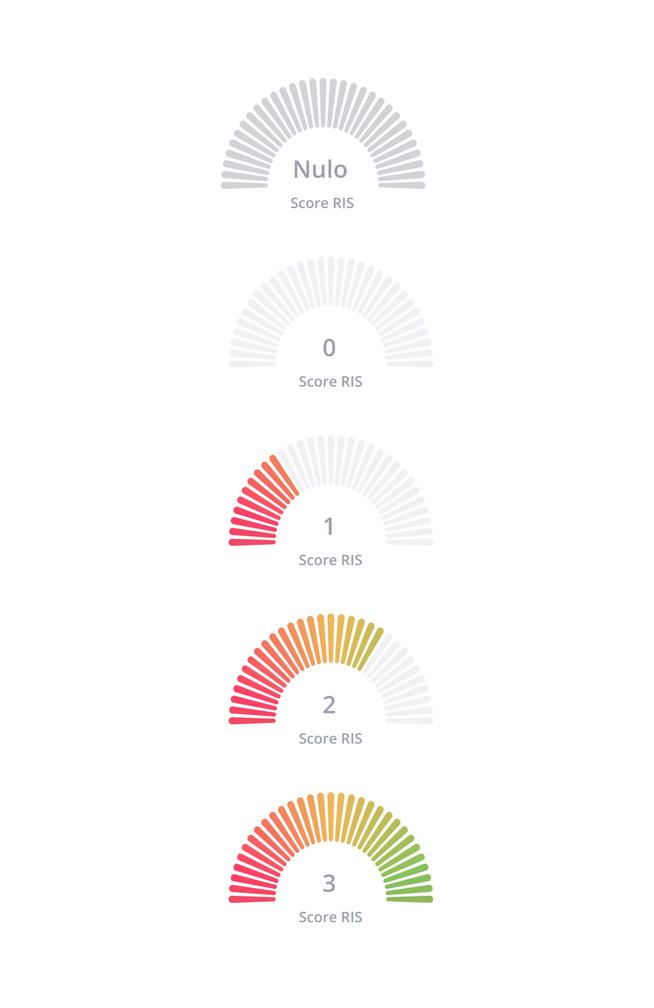
0: Not applied.
1: Applied, but to less than or equal to 10% of applicable land.
2: Applied to 11-40% of applicable land.
3: Applied to >40% of applicable land.
Conservation tillage
What percentage of the productive area operates under conservation
0: Applied to less than or equal 20% of the productive area.
1: Applied to 21–40% of the productive area.
2: Applied to 41–60% of the productive area.
3: Applied to more than 60% of the productive area.
Crop rotation
Has crop rotation or succession been implemented in the last harvest years)?
0: Crop rotation plan is in place and productive area is left fallow durin
1: Applied to productive area with two crops in sucession
2: Applied to productive area with three crops in sucession.
3: Applied to productive area with a change of the summer crop.
Multi-cropping and Inter-cropping
What percentage of the productive area uses crop intercropping and mu species?
0: Not applied
1: Applied but in less than 3% of the productive area
2: Applied in 3 –10% of the productive area.
3: Applied in more than 10% of the productive area.
Natural fertilizer strategies
What percentage of NPK comes from natural sources?
0: Nutrient management plan in place and implemented, but not app NPK input is sourced from organic or natural origins.
1: 5 -15% of the NPK input is sourced from organic or natural origins.
2: 15 - 30% of the NPK input is sourced from organic or natural origin
3: More than 30% of NPK from organic or natural sources.
Soil analysis
Are there updated soil analysis reports and a defined frequency?
0: Soils tests done but not in the last 3 years and there is a soil manag
1: Soil tests done in the last three years & have a soil management pla
2: Soil tests done in the last three years, and the soil managemen strategy to improve the SOM.
3: Soil tests done every year and the soil management plan has improve the SOM SOM is increasing
Gas Emissions (GHG)
Which option best describes the current stage of the property in relat emissions management?
0: Does not make an inventory
1: Has inventory
2: Has inventory and baseline
3: Has inventory, baseline and mitigation plan.
Synthetic fertilizer reduction
What strategies are used to reduce the use of synthetic NPK in relatio baseline?
0: No reduction strategy
1: 3 strategies adopted
2: 5 strategies adopted
3: 8 or more strategies adopted
Greenhouse
What percentage of the productive area adopts natural crop protectio such as the use of biological products?
0: No natural CPP strategy in place or implemented.
1: Natural CPP strategy developed and implemented on >10% of the p area
2: Natural CPP strategy developed and implemented on 10-30% of the area.
3: Natural CPP strategy developed and implemented >30% of the prod
Synthetic pesticide reduction
Has pesticide use decreased compared to the baseline?
0: Plan for synthetic pesticide reduction in place and implemented, bu pesticide usage is equal or above the baseline, with a 5% margin
1: Synthetic pesticide usage is 5-15% below the baseline.
2: Synthetic pesticide usage is 15-30% below the baseline.
3: Synthetic pesticide usage is >30% below the baseline, and no HHPs
Renewable energy
What percentage of consumption comes from renewable sources?
0: No energy usage for on-farm operations is sourced from renewable
1: 1-15% of energy usage for on-farm operations is sourced from rene sources.
2: 15-50% of energy usage for on-farm operations is sourced from ren sources.
3: >50% of energy usage for on-farm operations is sourced from renew sources and have self-generation energy
Buffers around watercourses
What is the level of conservation of the natural vegetation buffer arou watercourses or springs?
Null: Not applicable - No watercourses
0: Natural vegetation areas around springs and along natural waterco
1: Natural vegetation areas around springs and along natural waterco 15m wide.
2: Natural vegetation areas around springs and along natural waterco 25m wide.
3: Natural vegetation areas around springs and along natural waterco >25m wide.
Biodiversity
If there is a biodiversity plan, how many biodiversity practices are imp
0: Biodiversity plan developed, but no practice and maintenance and s of wildlife is implemented, but no extra practices are in place and bein
1: Biodiversity plan developed, with 2 practices implemented.
2: Biodiversity plan developed, with 3 practices implemented.
3: Biodiversity plan developed, with 5 or more practices implemented
Hedgerows and windbreaks
What percentage of the area is bordered by hedgerows and windbreak
0: < 1% of the farmland is bordered by hedgerows or windbreaks.
1: 1-2% of the field is bordered by hedgerows or windbreaks.
2: 2-5% of the field is bordered by hedgerows or windbreaks.
3: >5% of the field is bordered by hedgerows or windbreaks
Perennial cropping
What percentage of the productive area has perennial crops?
0: Not applied
1: Applied but to <1% of the productive area.
2: Applied to 1–5% of the productive area.
3: Applied to >5% of the productive area.
Irrigation efficiency measures
Null: Does not use irrigation
0: Irrigation management and monitoring plan in place, but no irrigati management practice(s) implemented
1: Irrigation management and monitoring plan in place and implemen irrigation management practice implemented.
2: Irrigation management and monitoring plan in place and implemen irrigation management practices implemented.
3: Irrigation management and monitoring plan in place and implemen irrigation management practices implemented
How many efficient irrigation management practices are implemented?
Water quality and Pollution prevention
What water quality and pollution prevention practices have been adop
0: No key practice in place
1: At least one key practice in place
2: At least one key practice in place and at least one additional practic
3: At least one key practice in place and at least two additional practice
Conservation of natural habitat
What proportion of agricultural land is dedicated to the conservation o areas without human activity?
0: <10% of farmland is devoted to conservation of natural areas witho anthropic activities.
1: 10-15% of farmland is devoted to conservation of natural areas with anthropic activities
2: 15-25% of farmland is devoted to conservation of natural areas with anthropic activities.
3: >25% of farmland is devoted to conservation of natural areas witho anthropic activities.
Practices Used on the farm:
Reduction of Synthetic Fertilizers
What strategies are used to reduce the use of synthetic NPK in relation to the baseline?
Inoculate seeds with Bradyrhizobium before planting.
Monitor root nodulation to assess BNF efficiency.
Reduce or eliminate nitrogen fertilization when BNF is efficient.
Use microorganisms that solubilize phosphorus and potassium.
Apply liquid or solid biofertilizers produced locally.
Prioritize certified biological products for greater effectiveness.
Plant sunn hemp, pigeon pea, or brachiaria between seasons.
Incorporate biomass into the soil to increase organic matter.
Use cover crops to recycle nutrients and reduce losses.
Conduct soil analysis regularly.
Correct acidity with lime in a localized manner.
Apply rock powder or remineralizers as a gradual nutrient source.
Adopt site-specific fertilizer application (band or spot).
Avoid excessive applications or applications in low-response areas.
Incorporate organic compounds, manure, or agro-industrial waste.
Assess the quality of waste to prevent contamination.
Use compost to stabilize nutrients before application.
Biodiversity
If there is a biodiversity plan, how many biodiversity practices are implemented?
Implement crop rotation (e.g., soybeans → corn → pearl millet → legumes).
Intercrop soybeans with cover crops (brachiaria, sunn hemp, pigeon pea).
Use different soybean cultivars adapted to local conditions.
Maintain native vegetation areas (APPs, legal reserves).
Create ecological corridors to connect vegetation fragments.
Preserve riparian forests and springs.
Adopt Integrated Crop-Livestock-Forestry (ICLF) systems.
Use green manure to enrich soil and increase plant diversity.
Adopt no-till practices to maintain permanent soil cover.
Encourage natural pest enemies (ladybugs, parasitoids, beneficial fungi).
Reduce chemical pesticide use, prioritizing bio-inputs.
Monitor fauna and flora to assess impacts and adjust management.
Protect wetlands and micro-habitats within the farm.
Promote diversity of cover crops to attract pollinators.
Implement soil conservation practices that support underground organisms.
Water Quality and Pollution Prevention
What water quality and pollution prevention practices have been adopted?
Conduct soil analyses before any fertilization.
Use precision technologies (GPS, sensors, drones) for site-specific application.
Adjust fertilizer and pesticide doses according to actual crop needs.
Prioritize bio-inputs and green fertilization to reduce synthetic chemicals.
Maintain native vegetation buffer strips around rivers, springs, and wetlands.
Implement buffer zones with cover crops to filter sediment and nutrients.
Avoid applying inputs near watercourses.
Adopt no-till farming to reduce erosion and surface runoff.
Maintain permanent ground cover to protect soil from heavy rainfall.
Control machinery traffic to avoid compaction and runoff channels.
Install rainwater harvesting and storage systems.
Periodically monitor water quality (nitrates, phosphorus, pesticides).
Implement efficient irrigation practices, avoiding waste.