





The Round Table on Responsible Soy (RTRS) will launch, starting in the 2025/2026 crop season, a pilot certification module for regenerative agriculture in Brazil. The new model expands the scope of traditional responsible soy certification by assessing not only the presence of practices, but also the level of their implementationandintegrationwithinfarmingsystems.
ThestudyestablishedabaselinefortheCerradobiomeinthestateofMatoGrosso, based on 160 certified farms distributed across 39 municipalities. The assessment, conducted by Produzindo Certo, combined field data, document analysis, and scientificreferences,enablingthemeasurementofthecurrentstageofadoptionof regenerativepracticesandtheirsynergieswithintheproductionsystem.
The results indicate that no-tillage farming (93.1%) is well established, providing a solid foundation for advancing regeneration. Practices at an intermediate level of adoption include the reduction of synthetic pesticides (66.2%), soil testing (55.6%), crop rotation (53.7%), use of biological inputs (55.6%), and the conservation of Permanent Preservation Areas (PPAs) (46.2%). These practices show strong potential for expansion but still depend on broader technical dissemination and economic incentives. Practices at an early stage of adoption include organic fertilization (23.1%), the use of renewable energy (30%), reforestation (33.1%), live fences/hedgerows(31.9%),andrainwaterharvesting(6.3%),allofwhichareessential forstrengtheningtheecologicalresilienceoffarms.
Fromanenvironmentalcomplianceperspective,76.2%ofthefarmspresentaLegal Reserve deficit, while only 22.5% are fully compliant with Brazil’s Forest Code, highlightingoneofthemainchallengesforsocio-environmentalcomplianceinthe Cerrado. In addition, the analysis of Soil Organic Carbon (SOC) stocks showed average levels of 39.6 t C/ha across the total area and 44.6 t C/ha in agricultural areas,withatrendofstabilityorslightincreasebetween2013and2023.Thisreflects the positive impact of conservation practices such as no-tillage, permanent soil cover,andcropdiversification.
The study demonstrates that regeneration depends on the integration of complementary practices, including no-tillage combined with crop rotation, vegetativecoverassociatedwiththeuseofbiologicalinputs,connectivitybetween Permanent Preservation Areas and reforested areas, and the use of clean energy combined with efficient irrigation. Based on this baseline, the Cerrado region of Mato Grosso emerges as a key area to lead the transition toward a more resilient, productive, and environmentally responsible agriculture, supported by strengthenedtechnicalassistance,differentiatedcredit mechanisms,andmarketbasedinstrumentssuchasPaymentsforEnvironmentalServices(PES)andcarbon credits.
Regenerative agriculture is an approach aimed at restoring agricultural ecosystems, with a strong focus on soil health, biodiversity, and climate resilience. Unlike sustainable agriculture, which seeks to maintain resources over time, regenerative agriculture promotes active intervention to rebuild soil fertility through practices such as no-tillage farming, crop rotation, composting, and integrated crop–livestock–forestry systems (ICLF), fostering ecological synergies andgreaterproductionefficiency(AgroReceita,2025).
In addition to reducing the use of chemical inputs, this approach contributes to carbon sequestration, improved water retention, and the mitigation of climate change impacts. According to Gheler-Costa et al. (2023), regenerative agriculture can be defined both by its processes—such as integrated soil management—and by measurable outcomes, including increased biodiversity and improved environmental quality. This flexibility allows practices to be adapted to different regionalcontexts,makingthemodelbothviableandscalableinBrazil.
Building on this framework, after 15 years of certifying sustainable soy production in Brazil, the Swiss-based association RTRS (Round Table on Responsible Soy) will launch, in the 2025/2026 crop season, a pilot project to also assess the adoption of regenerativeagriculturepracticesbyBraziliansoybeanproducers.
The potential new regenerative agriculture certification will be offered as a complementary module to the RTRS standard. To access it, producers will be requiredtoalreadyholdthecorecertificationforresponsiblesoyproduction.
Currently, RTRS already offers complementary certifications—referred to by the organizationas“add-ons”—toensurecompliancewithEuropeanmarketstandards for biofuel production, non-genetically modified (non-GMO) soybeans, and responsiblecornproduction.
The main distinction of the new regenerative standard lies in its assessment methodology. While the current model verifies whether or not a producer implements a given practice, the new module assigns scores based on the extent andproportionofapplicationofeachtechnique.
Accordingly,Produzindo Certoisworking withabaseline forthe Cerrado regionin Mato Grosso, where regenerative agriculture practices are being analyzed to understand the current conditions and maturity level of farms within the area of interest.
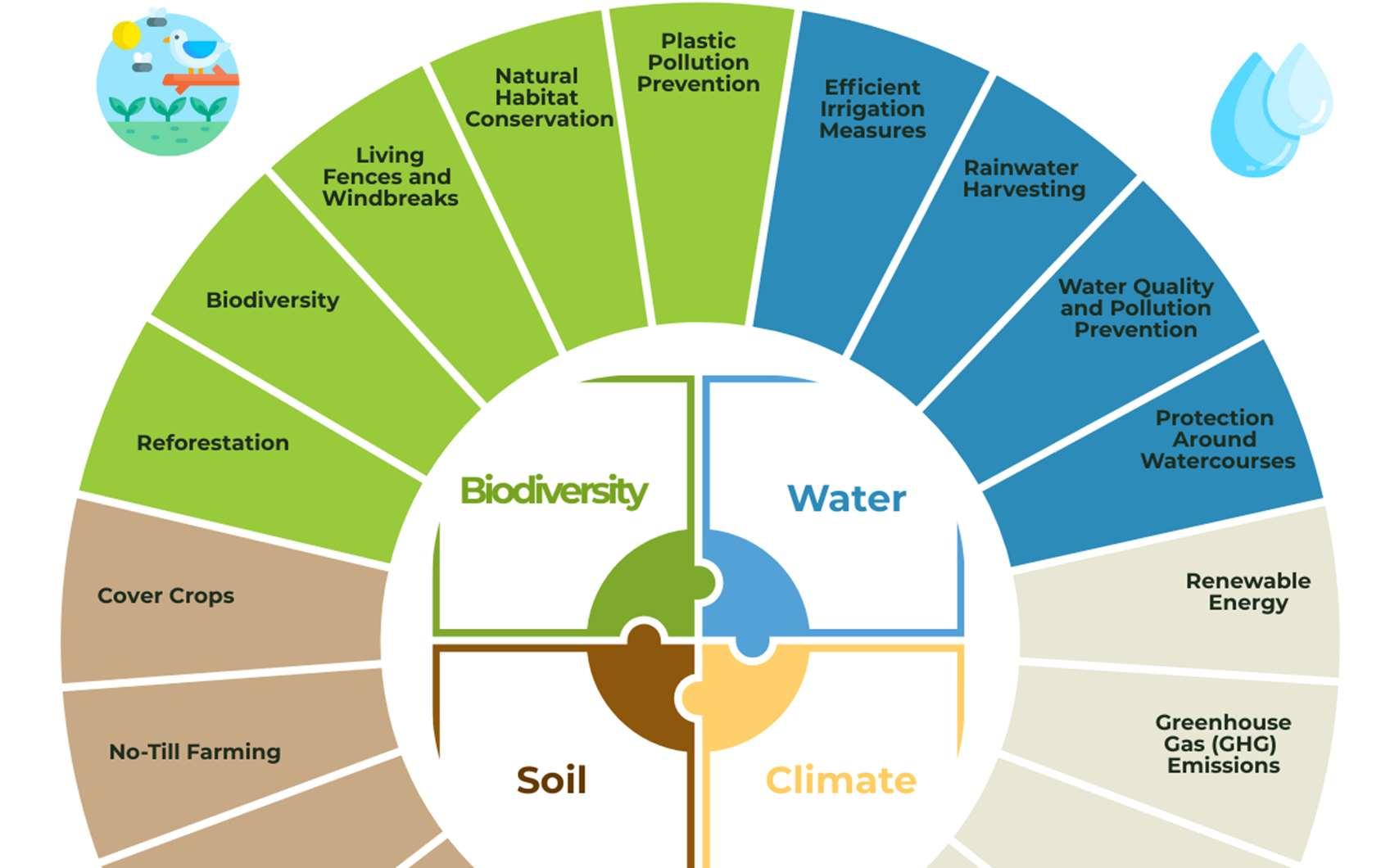
AftermorethanadecadecertifyingresponsiblesoyproductioninBrazil,RTRStakes a new step toward sustainability by launching a pilot project for regenerative agriculture certification, scheduled for the 2025/2026 crop season. This new module, which complements the core RTRS certification, introduces a more indepth and quantitative approach by assessing the degree of adoption of regenerativepracticessuchasno-tillagefarming,croprotation,theuseofperennial crops, and efficient input management. The proposal is to measure indicators acrossfourimpactareas—soil,water,biodiversity,andclimate—establishingscores proportionaltothelevelofimplementationofthesepracticesinthefield.
The project is directly linked to a methodology structured around practical guidelines that support producers in integrating regenerative actions into their agricultural routines, always in compliance with applicable legislation. In this way, the new RTRS certification not only strengthens the environmental commitment ofthesoyvaluechain,butalsoprovidesproducerswithaconcretetooltotransition towardmoreresilient,efficientproductionsystemsthatareactivelyengagedinthe regenerationofagriculturalecosystems.
The assessment methodology was designed to provide a solid technical basis capableofmeasuring,inacomparableandobjectivemanner,thelevelofadoption of regenerative agriculture practices within the context of soy production. Unlike traditional certification schemes, which only verify the presence or absence of specificpractices,theRTRSregenerativeagriculturepilotprojectseekstoquantify the degree of implementation at the farm level, establishing a clear baseline that willallowprogresstobemonitoredovertime.
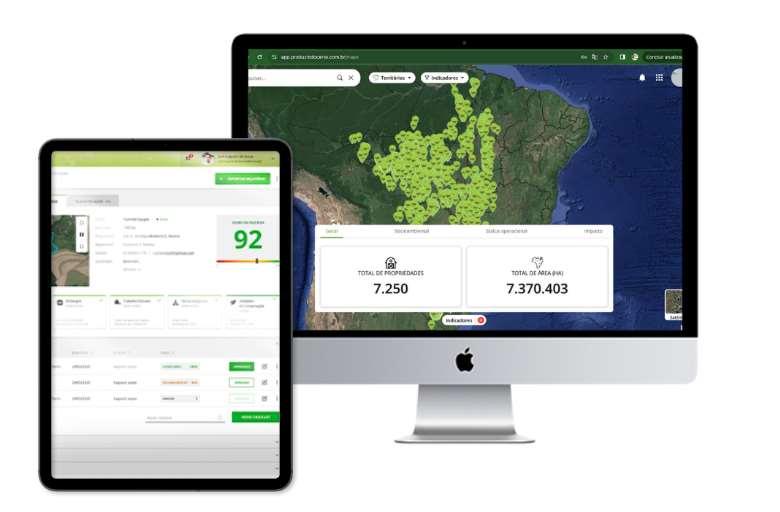
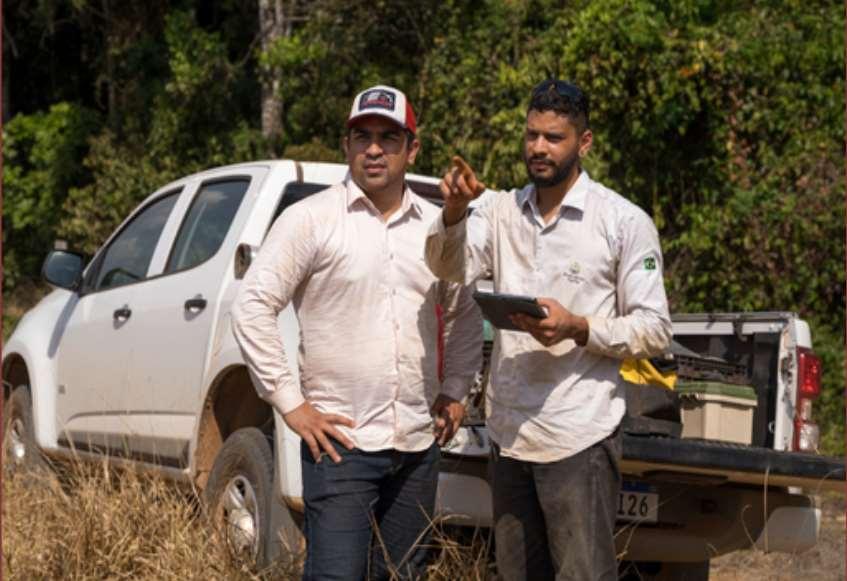
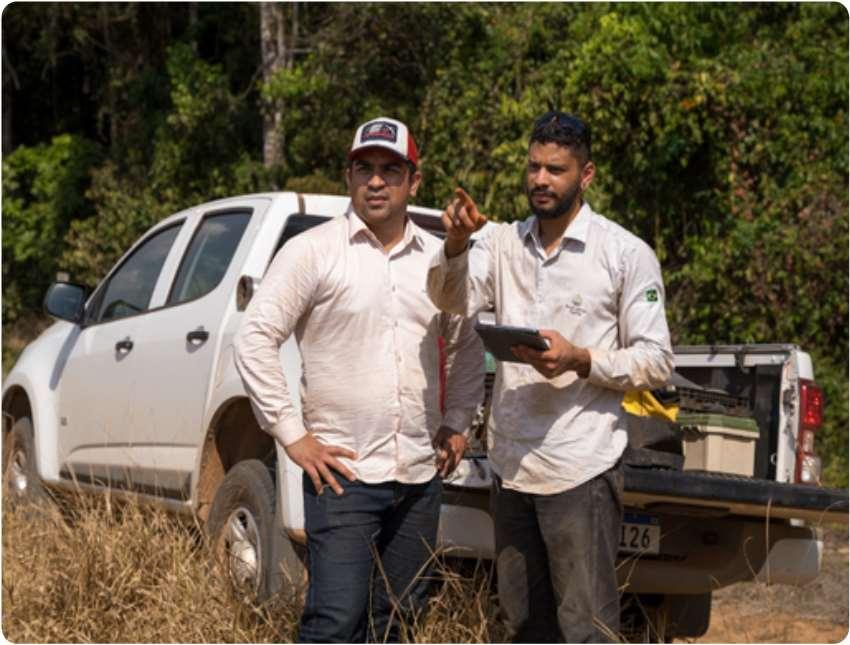
ProduzindoCerto(PC),RTRS’stechnical partner,wasresponsiblefortheexecution and systematization of the assessment. The organization maintains a robust database built from on-site technical visits conducted directly on farms. For this specific analysis, properties with visits carried out from January 1, 2022 onwards wereselected.
During these visits, specialized consultants applied a socio-environmental checklist comprisingmorethan70indicatorsrelatedto environmental, social, and productive aspects.This initial diagnosisnot only defines the current situation of the farms, but also establishes a technical and bibliographic reference to guide the practical implementationofregenerativeagriculture.

The collected data underwent processes of treatment, validation, and standardization to ensurethat thesampleis reliable and representative.Based on this structured dataset, three core components of the methodology were integrated:
field application of the checklist, generating the Produzindo Certo Score,whichrangesfrom0to100and reflects the farm’s level of compliance with good practices and legal requirements.
development of farm-specific recommendations, highlightingthestepsrequiredforthe
transition toward regenerative systems, in compliance with socio-environmental
MonitoringPlan– continuous follow-up of practice implementation, carried out bothinloco(throughnewtechnicalvisits)andviadigitaltoolsandsatelliteimagery.
Thisintegratedframeworkensuresthattheassessmentisnotlimitedtoaone-time snapshot of practice adoption, but rather establishes a continuous process of diagnosis, planning, and monitoring. In doing so, it creates a baseline that is comparable across different farms and regions, enabling the identification of progress, challenges, and opportunities for regenerative agriculture certification withintheRTRSframework.
Thus, the structured process not only strengthens the reliability of the collected data, but also enables an evolutionary view of the adoption of regenerative practices over time. It is worth noting, however, that some practices are not yet assessed by Produzindo Certo; in such cases, reference parameters were drawn fromspecializedscientificliterature,ensuringgreatermethodologicalrobustness.
Based on this approach, the stages of methodology development were organized intoalogicalandtransparentsequence,facilitatingunderstandingandapplication.
To clearly illustrate the process of constructing this assessment method, the following section presents a timeline highlighting the main stages that led to the methodologyadoptedinthisstudy.
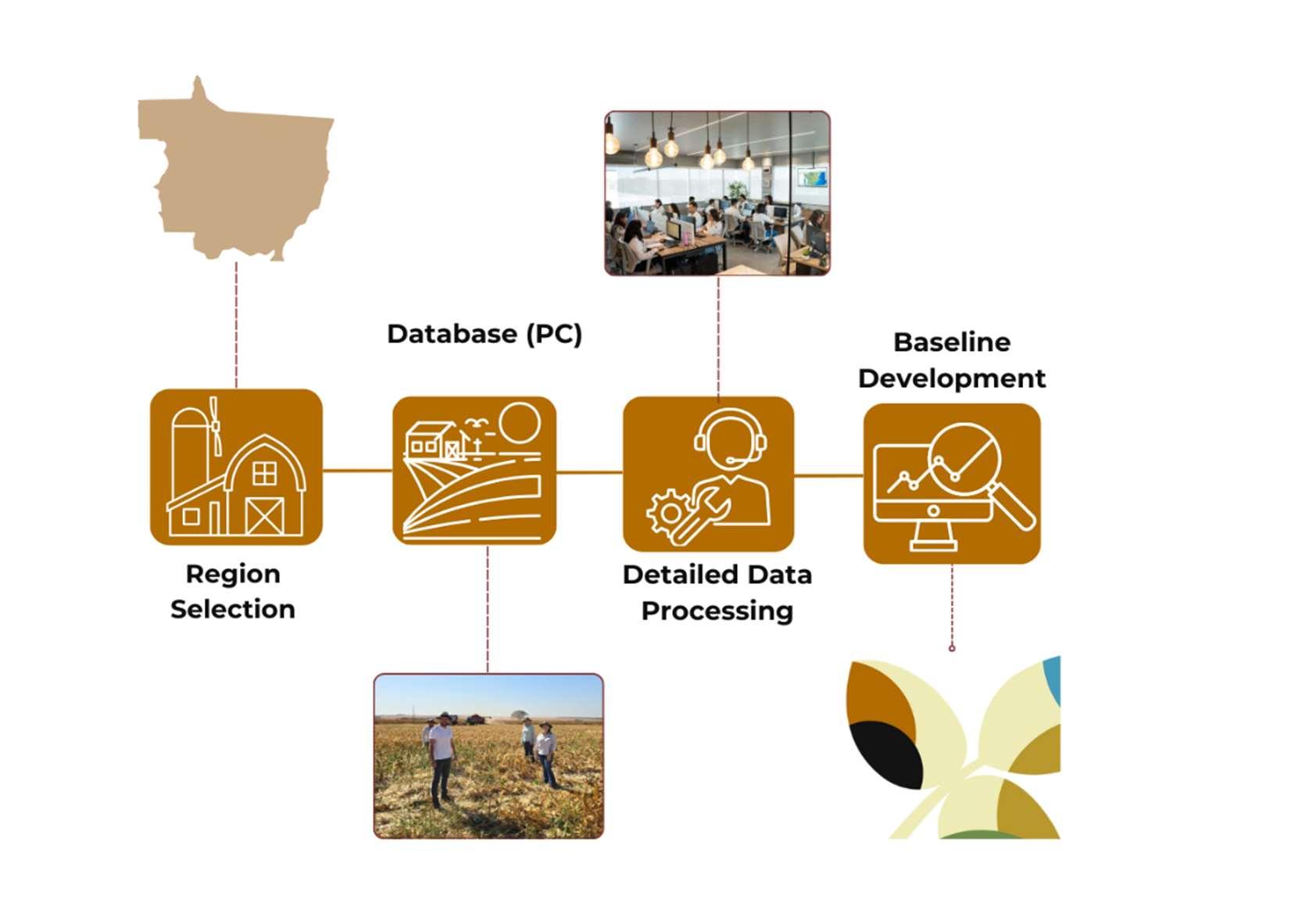
Indefiningtheareaofinterest,vegetationdatafromtheRADAMBRASILprojectwere used. This pioneering initiative carried out a systematic survey of Brazil’s natural resourcesandwasprimarilyconductedduringthe1970sand1980s.Theprojectrelied onextensiveairbornesurveys,enablingadetailedcharacterizationofseveralBrazilian biomes,includingtheCerradoandtheAmazon.
To ensure robustness in this process, the Cerrado biome in the state of Mato Grosso was selected as the reference area, both due to its strategic relevance for soybean production and the significant environmental pressure it faces. This choice ensures that the results reflect a region of high productive importance and strong potential forpositiveimpactthroughtheadoptionofregenerativepractices.
Thefarmsincludedinthestudyareaaredistributedacrossatotalof39municipalities. ThehighestconcentrationofpropertieswasrecordedinnorthernMatoGrosso,which accountedfor78.12% ofthetotalfarms,with particularemphasisonthemunicipality ofDiamantino.InadditiontobeingoneofthemainagribusinesshubsintheCerrado, Diamantino is characterized by highly technified producers, consolidated logistics infrastructure, and a strong culture of innovation adoption in agricultural practices. The southeastern region of Mato Grosso also showed significant participation, especially in the municipalities of Alto Garças and Guiratinga, where deforestation pressure is high and, consequently, the potential for positive impact through the adoptionofregenerativesystemsissubstantial.
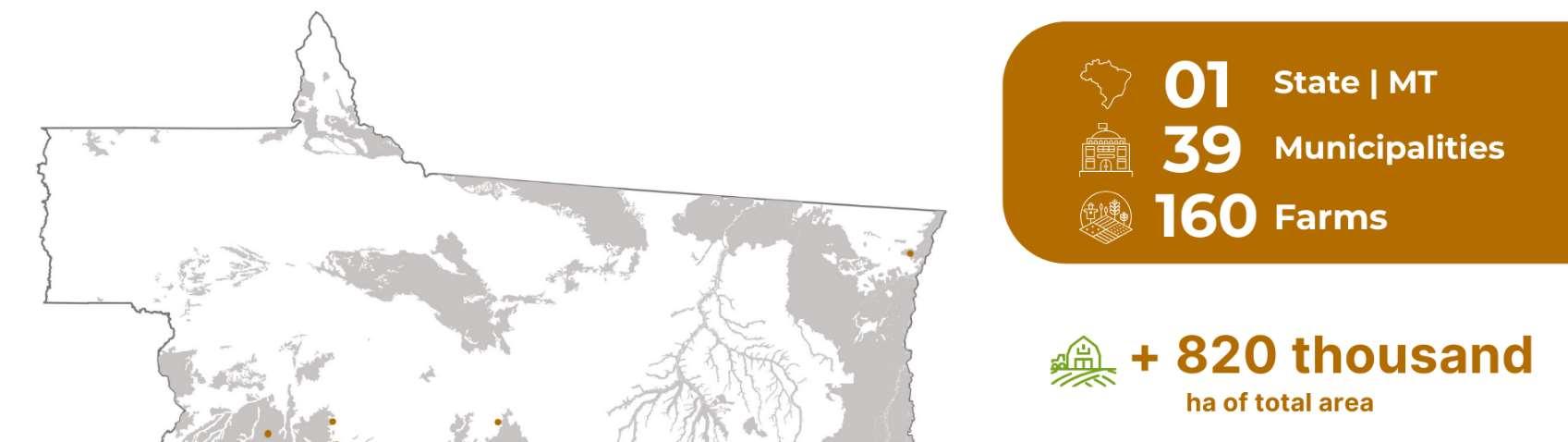
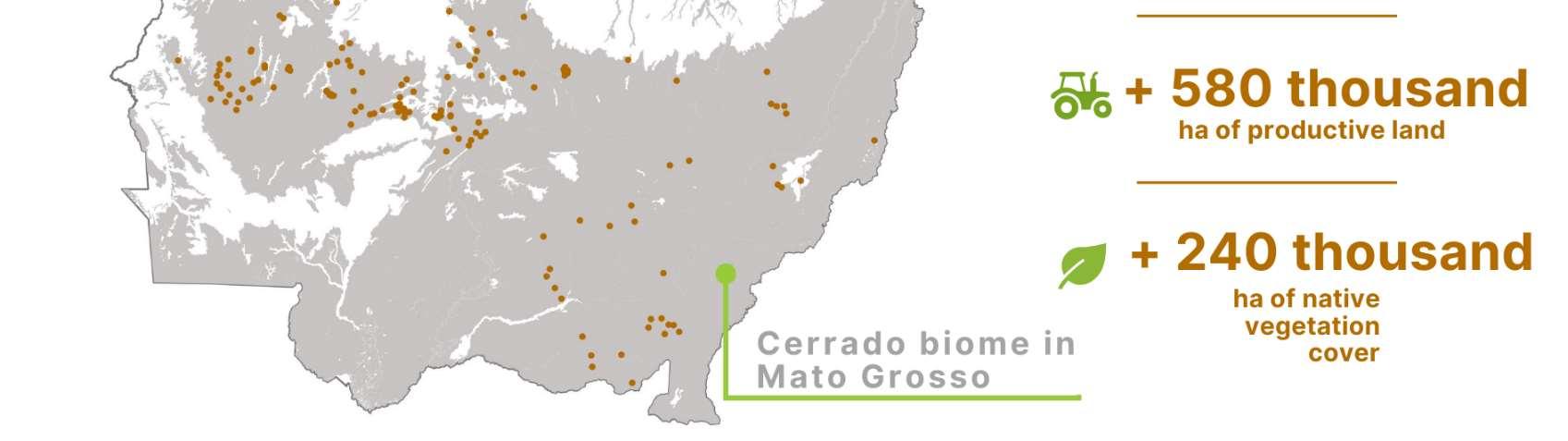
Source: RADAM BRASIL. Available at: https://www.sgb.gov.br/radam-d Accessed in August 2025 .
The assessment of the regenerative agriculture practices selected in this study was carried out using a classification system that allows their performancetobecomparedacrossdifferentdimensions.Foreachpractice, criteria were defined to capture economic, environmental, and implementation-related aspects, providing a balanced view of both benefits andchallenges.Thecriteriaconsideredwere:
Economicbenefit – impact on productivity, cost reduction, or income diversification.
Cost –levelofinvestmentrequiredfortheadoptionofthepractice.
Scalability –potentialforregionalandnationalexpansion.
Environmentalimpact – contribution to soil, water, biodiversity, and carbon outcomes.
Currentlevelofadoption- degree to which the practice is already disseminated(Low:0–40%;Medium:40–80%;High:above80%).
Implementationfeasibility– ease of adoption considering technical and culturalbarriers.
Eachcriterionwasscoredusingfilledcircles“●”,onascalefrom1to3,where one circle indicates lower intensity or relevance and three circles represent the highest level. This visual scoring system simplifies the analysis, allowing for quick identification of strengths and opportunities for improvement for eachpractice.
Thecombinationofthesecriteriaenablesacomparativeassessmentamong practices, guiding the prioritization of those with the greatest potential for positive impact and higher feasibility of adoption within the context of sustainablesoybeanproduction.
1 - Practice Classification Scale
Criterion
EconomicBenefit
Limited impact on cost reduction or income generation
Cost Requires high investment in inputs or machinery
Scalability
EnvironmentalImpact
CurrentAdoption Level
Implementation Feasibility
Restricted to specific contexts, difficult to replicate
Restricted effect only on soil, water, biodiversity, or carbon
Low adoption (<40% of producers)
Requires deep cultural changes or significant technical/financial barriers
Partially contributes to efficiency or productivity
Requires moderate adjustments or partially available resources
Can be expanded regionally with technical support
Promotes noticeable improvements in some environmental indicators
Partial adoption (40–80% of producers)
Feasible with some technical support or management adaptation
Generates clear gains in input savings, productivity, or diversification
Accessible practice, with little or no investment needed
Consolidated practice and widely replicable
Strongly contributes to healthy soil, carbon sequestration, and biodiversity
Already consolidated in the field (>80% of producers)
Simple practice, well known, and easy to adopt
The regenerative agriculture practices selected by RTRS for this study were defined based on a benchmarking analysis of regenerative practices, using the Regenagri standard as a reference. The selection aimed to include practices already applied in the field, grouped into four impact areas—soil improvement, biodiversity, water, and climate—with provenpotential forexpansion anddemonstratedpositiveimpactson bothproductivityandenvironmentalconservation.Thesepracticesincludetheuseof cover crops, no-tillage farming, crop rotation and intercropping, organic fertilization strategies and the reduction of synthetic fertilizers, biological pest management, efficientirrigation,soiltestingandmonitoring,aswellasactionsaimedatpromoting biodiversity. Together, these practices represent a diverse set of solutions that contribute to improved soil health, reduced reliance on chemical inputs, and the developmentofmoreresilientandsustainableagriculturalsystems.

Covercropsareplantspecies—grasses,legumes,ormixedspeciessystems—grown during fallow periods or prior to commercial crops, with thepurpose of protecting the soil and improving its fertility. They provide crop residues for the no-tillage system,keepingthesoilcovered,reducingerosionandcompaction,andhelpingto conservesoilmoisture.
Beyondphysicalprotection,covercropspromotechemicalandbiologicalbenefits, such as increased soil organic matter, enhanced nutrient cycling, and stimulation of microbial diversity, thereby supporting the development of subsequent crops. When properlymanaged, they help reducetheneedfor chemical inputs, increase productivity, and strengthen the resilience of agricultural systems, in line with the principlesofregenerativeagriculture(Silvaetal.,2021).
Currently, Produzindo Certo does not collect data on the adoption of cover crop practicesduringitsfieldvisits.However,asurveyconductedbyEmbrapaCerrados found that 74% of farmers use cover crops on their farms. Although 26% reported not adopting the practice, nearly all of them expressed willingness to consider its use. The study received contributions from across Brazil, with the highest participationcomingfromthestateofMinasGerais,followedbyParaná,SãoPaulo, andGoiás(EmbrapaCerrados,2025).


Therotationaluseofcovercropsisexpectedtoimprovesoilstructureandincrease soil organic matter content, while enhancing biological activity, reducing losses from erosion and nutrient leaching, and decreasing the need for chemical inputs. In addition, nitrogen-fixing legumes can supply part of the nitrogen requirements of subsequent crops, reducing production costs and mitigating environmental impacts(Silvaetal.,2021;Carvalho,2019).
Native and exotic cover crop species adapted to the Cerrado are commercially available and can be established using basic soil preparation and seeding equipment,withouttheneedformajorinfrastructureinvestments.Clearprotocols for legume inoculation, initial fertilization, and crop residue management enable producers to integrate cover crops into no-tillage systems and crop rotation schemes(Silvaetal.,2021;Carvalho,2019).
Cover crops act synergistically by maintaining crop residues that protect the soil under no-tillage systems, disrupting pest and disease cycles within rotations and intercroppingsystems,recyclingnutrientsthatsupporttheuseoforganicfertilizers andthereductionofsyntheticinputs,andconservingsoilmoistureinsystemswith efficientirrigationorrainwaterharvesting.Inthisway,theyintegrateintoabroader set of practices that enhance productivity and resilience across agroecosystems (Silvaetal.,2021;Carvalho,2019).
TobesuccessfullyestablishedintheCerrado,itisessentialtoselectspeciesthatare tolerant to water stress and have slower decomposition rates, enabling the formation of long-lasting soil cover under conditions of limited water availability. Recommended species include sunn hemp (Crotalaria spp.), pigeon pea (Cajanus cajan),pearlmillet(Pennisetumglaucum),andsorghum(Sorghumbicolor),which maintain soil cover during the off-season and promote efficient nutrient cycling (Carvalho,2019).
Evaluationcriteria:

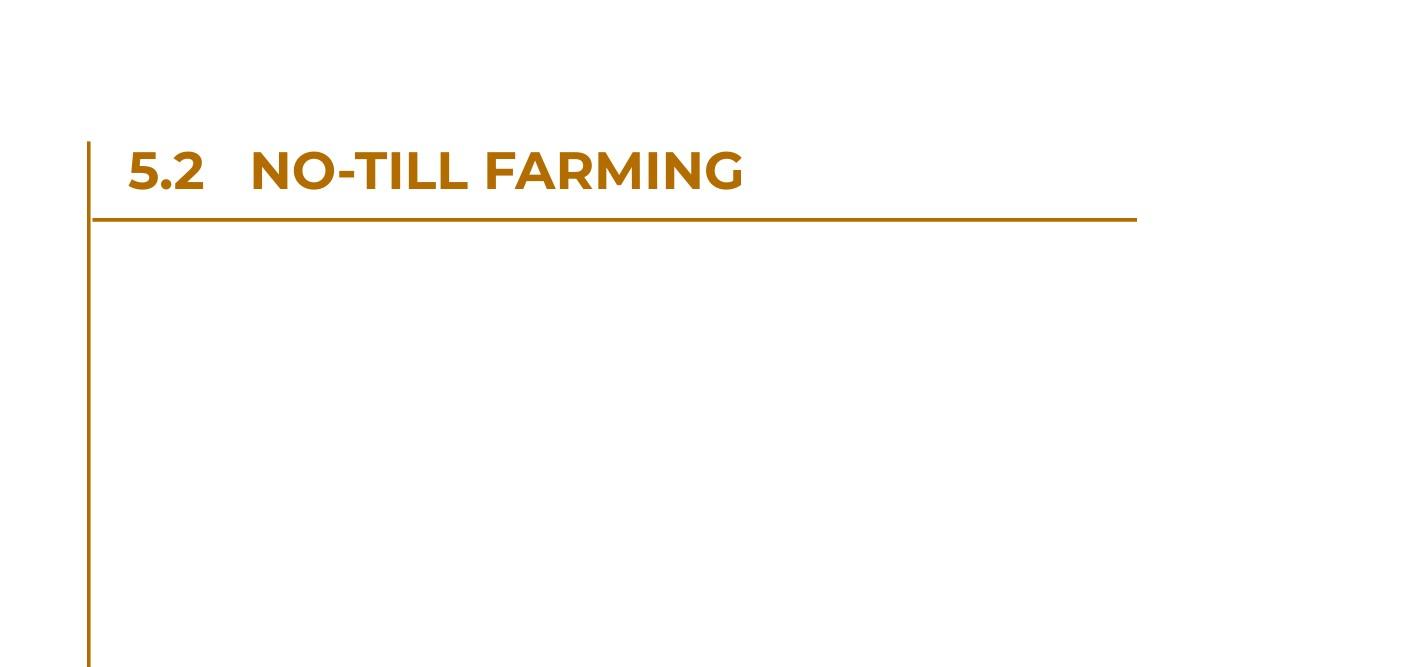
The No-Tillage System (NTS), also referred to as direct seeding or no-till farming,is a conservation agriculture practice in which the soil is disturbed only along the seedingline.TobecharacterizedasNTS,thesystemmustcomplywiththreebasic principles: minimal soil disturbance, maintenance of permanent soil cover with cropresidues,andcroprotation(Nobre,2018).
According to Embrapa,approximately33millionhectaresarecultivatedundernotillagesystemsinBrazil;however,only2.7millionhectaresofthistotalfullycomply withallNTSprinciples.
When fully adopted, NTS provides multiple benefits, including reduced erosion, improved soil fertility and structure, fuel savings, improved soil moisture and yield stability, greater efficiency in fertilizer use, the potential for biological nitrogen fixation,andreducedweedinfestation.Italsopresentspotentialforgreenhousegas mitigation,contributingtothesustainabilityofagriculturalsystems.
Ofthe160farmsanalyzed,149(93.13%)reportedadoptingcovercrops,while8(5.0%) donotusethepracticeandfor3farms(1.87%)thedatawerenotcollected,asshown inthechartbelow.

Percentagedistributionofno-tillfarmingadoption
No-tillage farming significantly improves soil health by increasing soil organic carbon stocks, enhancing soil structure and macro- and microaggregation, reducingerosion,andincreasingwaterretention.Itpromotesnutrientcyclingand enhances biological activity, resulting in greater soil biodiversity. Well-managed systems can sequester carbon at levels comparable to native vegetation, contributing to greenhouse gas mitigation and increasing resilience to extreme climateevents.
No-tillage systems currently cover approximately 61.0% of Brazil’s grain-cropped area, equivalent to about 33 million hectares (2017 Agricultural Census, IBGE). Economic feasibility is driven by reduced costs associated with fuel, machinery maintenance, and inputs, which offset investments in specialized seeders and workforcetraining.
No-tillageintegratesmultipleregenerativepractices:permanentsoilcoverprotects the soil surface, crop rotation diversifies nutrient sources and suppresses pathogens, and techniques such as contour seeding and the use of terraces increasewaterinfiltrationandreducesurfacerunoff.Thiscombinationstrengthens the resilience of the production system and supports a more sustainable productioncycle.
In the Cerrado region of Mato Grosso, NTS benefits from the alternation between rainy and dryseasons, provided that sufficient soil coverismaintained. Deep,welldrained Red and Red-Yellow Latosols are suitable for this system, but they require crop rotation and cover crops with high carbon-to-nitrogen ratios and elevated lignincontenttoensurepersistentandeffectivecropresiduecover(Carvalho,2010; Silvaetal.,2022).
Evaluationcriteria:

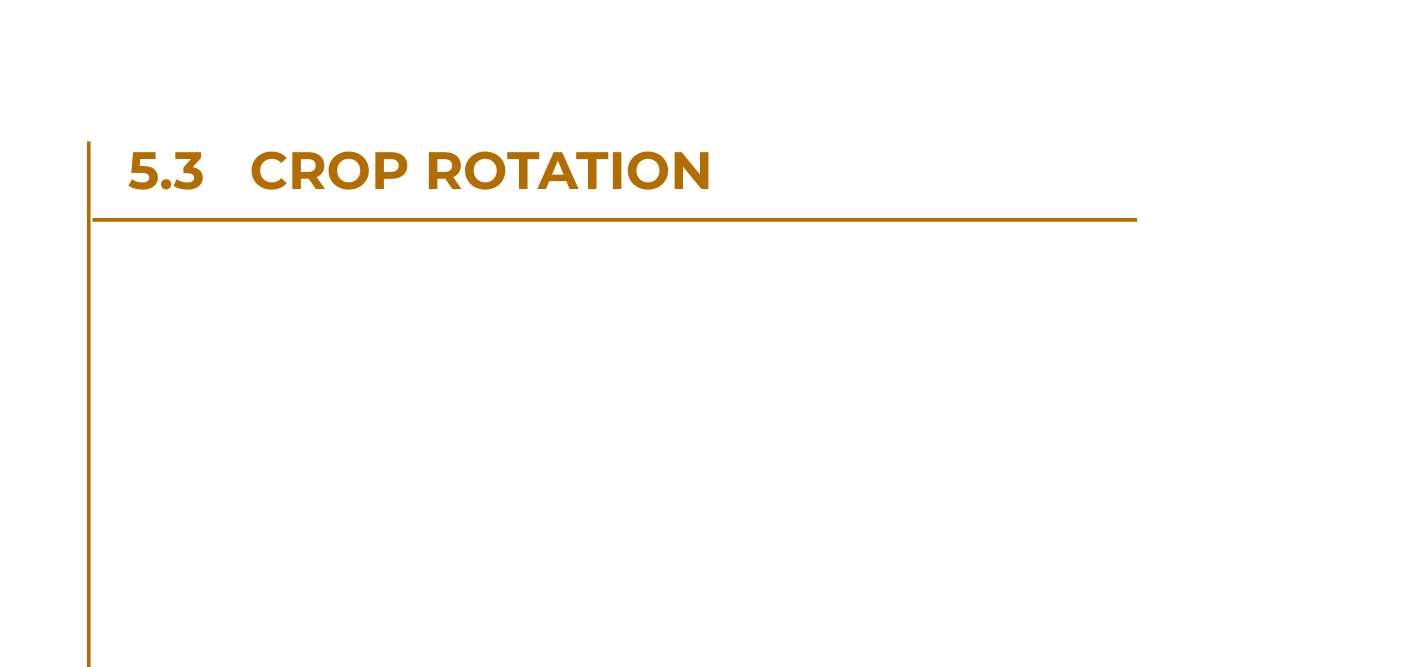
Crop rotation consists of the planned alternation of different plant species on the same area over successive years, with the objective of taking advantage of varied root architectures, growth cycles,andnutritionalrequirements.Thissystemdiffers from crop succession, which occurs when two or more species are grown sequentially within the samecropping year.It is important to emphasizethat true crop rotation involves replacing the main crop with a different species in the followingcycle,therebycharacterizinganactualrotation.
The main objectives of crop rotation include breaking pest, disease, and weed cycles, diversifying production, and reducing the vulnerability associated with monocropping.Byavoidingtherepeatedcultivationofthesamecropinsequence, pressure from crop-specific pathogens is reduced, leading to lower reliance on agrochemicals. In addition, the inclusion of cover crops and green manures betweencommercialcroppingseasonscontributestoresidueproduction,whichis essentialforno-tillagesystemsandforsoilconservation.
Results
Of the total farms assessed, 87 (53.75%) reported adopting crop rotation, while 71 (44.38%) stated that they do not use this practice. For 2 farms (1.88%), the informationwasnotcollected,asshowninthechartbelow.
Percentagedistributionofcroprotationadoption
Adopted
Notadopted
Notreported
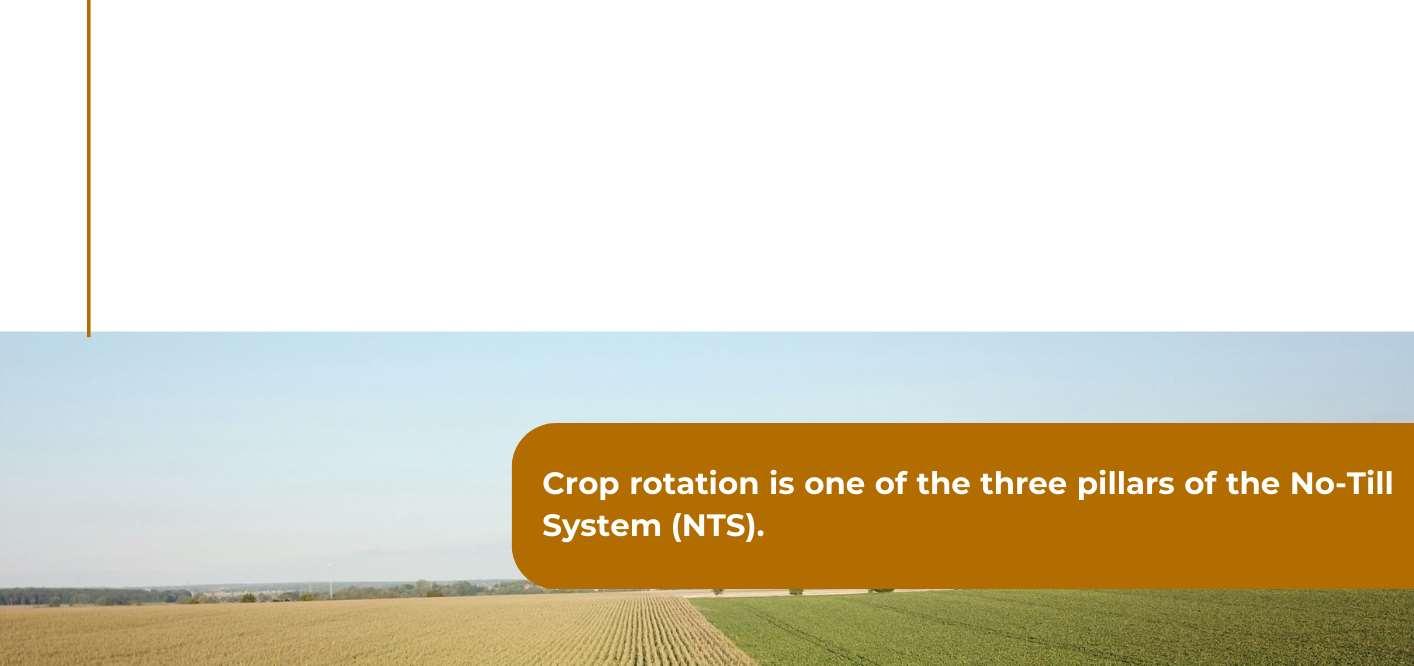
Croprotationisanagriculturalpracticethatalternatesplantspeciestoimprovesoil healthandproductivity.Byrotatingcropswithdifferentnutrientdemandsandroot systems, this practice increases soil organic matter and nutrient availability, disrupts pest anddiseasecycles,and improveswaterretention.Asaresult, itleads to higher food production, reduced dependence on pesticides and fertilizers, and more effective weed control, making the practice both more sustainable and economicallyadvantageous.
In many areas of the Cerrado, simple crop rotation systems—such as soybean–maize rotation—are common. While economically attractive in the short term, these simplified systems can lead to soil degradation over time and increase pest, disease, and weed pressure. To maximize the benefits of crop rotation, greater species diversity is recommended, including legumes and other cover crops such as pearl millet, pasture species, and Brachiaria grasses, which help improve soil health,increaseproductivity,andreducefertilizercosts.
No-tillage systems integrate several regenerative practices: permanent soil cover protects the soil surface, crop rotation diversifies nutrient sources and suppresses pathogens,andtechniquessuchas contourseedingandterracing enhance water infiltration and reduce surface runoff. This combination strengthens the resilience oftheproductionsystemandsupportsamoresustainableproductioncycle.
Crop rotation enhances the effectiveness of other regenerative agriculture practices by maintaining crop residues produced by cover crops and no-tillage systems, promoting efficient nutrient cycling and soil moisture retention. Its association with multi-speciesintercropping expands root systemexploration and reinforces natural biological pest control. Integration with natural fertilization strategies and reduced synthetic inputs allows for more precise application of biofertilizersandmineralsoilamendments.
Evaluationcriteria:

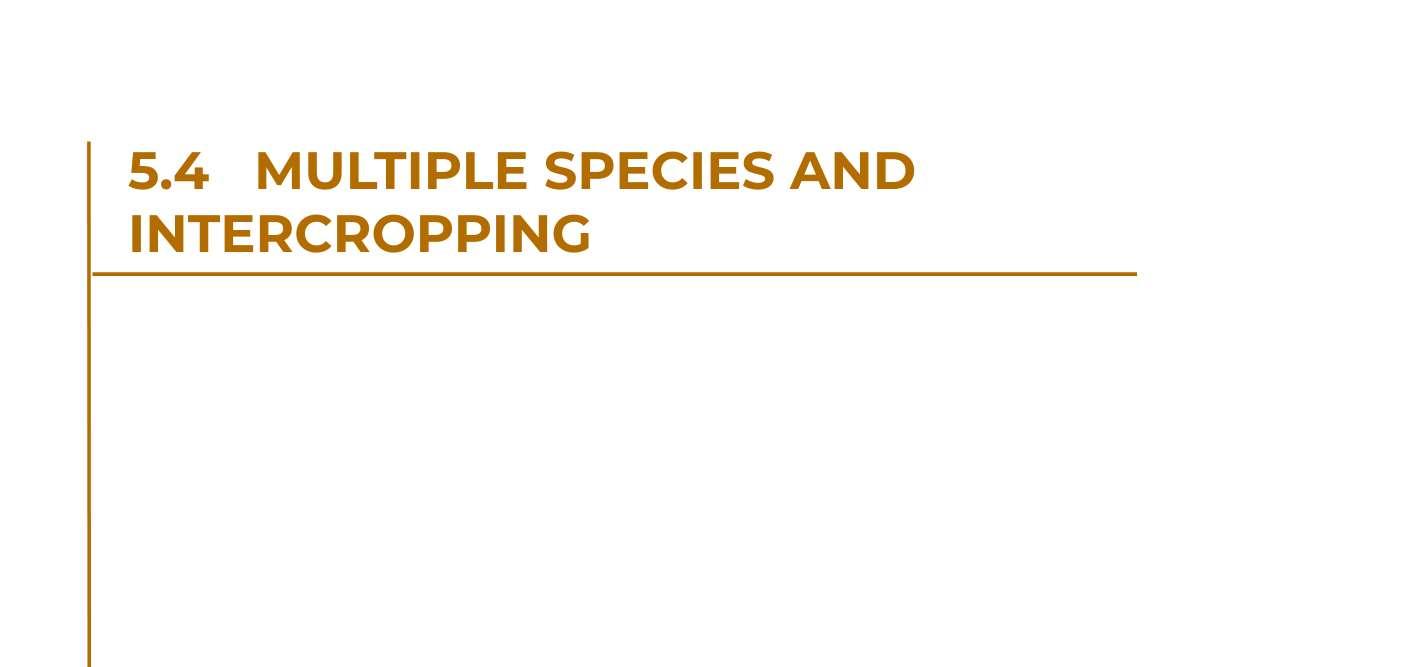
Intercropping,alsoreferred toasmultiplecropping,isthepracticeof growing two ormoredifferentcropspeciessimultaneouslyonthesamearea.Thisstrategyaims to optimize the use of resources such as sunlight, soil moisture, and available nutrients. Multiple cropping systems include arrangements in which species may be sown without organized rows, in mixed rows, or in strips that are wide enough to allow independent management but narrow enough to enable interactions amongplantspecies(MinistryofAgricultureandLivestock,2016).
Thebenefits of intercropping include more efficient land use,reducedlossesfrom erosion and weed competition, natural control of pests and diseases through increased species diversity, higher inputs of organic matter, and enhanced biological nitrogen fixation by legumes. In no-tillage systems, intercropping strengthens both living and dead soil cover, promoting soil aeration and water conservation, which are essential for low-carbon agriculture and the long-term sustainabilityofcroppingsystems(Embrapa,2021).
Among the farms analyzed, 34 (21.25%) reported adopting intercropping, while 72 farms (45.00%) stated that they do not use this practice. In addition, 54 farms (33.75%)didnotprovideinformationonthisaspect,asillustratedinthechartbelow.
Percentagedistributionofmultiplespeciesandintercropping adoption

Adopted
Notadopted Notreported
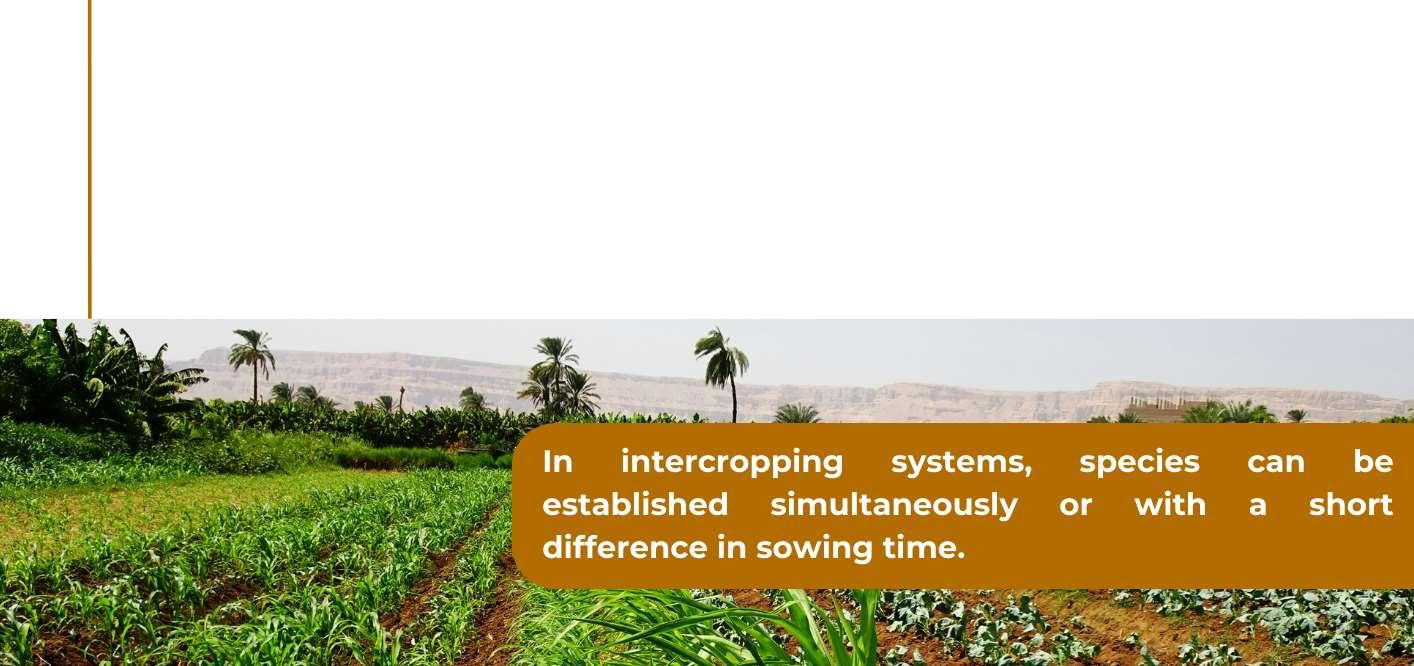
The use of multi-species intercropping is expected to increase soil organic matter and biological activity, enhancing carbon stocks and reducing the incidence of specific pests and diseases due to the diversity of root systems and the disruption of pathogen life cycles. Intercropping enables the maximization of space and resource use (water, light, nutrients) through the simultaneous cultivation of species with different architectures and growth habits. The combination, for example,ofmaizewithBrachiariaensuresprolongedsoilcoveraftermaizeharvest, protectingthesoilagainsterosionandmaintainingmoisture.
Crop intercropping is a practice that can be adapted to different production contexts, from smallholders to large-scale farms. The adoption of intercropped systems, such as soybean + forage grasses or maize + legumes, is already well established, supported by standardized technological packages developed by Embrapa.Additionalcostsrelatedtoseedsandsowingequipmentarerapidlyoffset by savings in nitrogen fertilizers and crop protection products, achieving a return oninvestmentwithinafewyears.
Crop intercropping integrates with cover cropping and no-tillage systems by increasing residue retention and nutrient cycling. When combined with crop rotationandtheuseofnaturalfertilizers,itoptimizestheefficiencyofnitrogenfixed by legumes and of mineral soil amendments. When associated with efficient irrigation practices and rainwater harvesting, intercropping improves water availability within the soil profile and strengthens soil biodiversity, creating a resilientsystemwithlowchemicalinputrequirements.
In the Cerrado biome, the seasonal tropical climate favors the establishment of intercropping systems, as alternating moisture conditions stimulate biological nitrogenfixationandnutrientcycling.Thepredominantsoilsinthisregion,suchas clay-textured Red Latosols, generally exhibit low natural fertility, acidity, and low organic matter content. Under these conditions, intercropping—especially with green manures—is a suitable strategy to promote improvements in the physical, chemical, and biological quality of the soil, increasing organic matter levels and enhancingnutrientcycling.
Evaluationcriteria:


Perennialcroppingreferstothecultivationofplantspeciesthatremainproductive forseveralyearswithouttheneedforreplanting,suchasfruittrees,foragespecies, and native timber plants. These systems promote continuous soil cover, reducing erosionandtemperaturefluctuations,whileenhancingnutrientcyclingandcarbon sequestration. Embrapa Cerrados has led research programs focused on the domestication and management of native perennial species, highlighting their multifunctional potential within the Cerrado landscape (Rocha et al., 2019).The expansion of perennial crops in the Cerrado has been remarkable. For example, sugarcane—consideredasemi-perennialcrop—sawitsharvestedareainthebiome increasefrom490thousandhectaresin1975toapproximately5millionhectaresin 2015, expanding its share of national production from 25% to 49%. In 2015, the Cerrado accounted for 52% of the country’s sugarcane production (Bolfe et al., 2020).

Produzindo Certo did not collect this data from the selected farms; however, it is expected to be included in future protocols.National statistics indicate significant variation in land use for perennial crops in Brazil. Between the 2006 and 2017 AgriculturalCensuses,theareaallocatedtopermanentcropsdeclinedby34%,from 11,679,152 to 7,755,817 hectares, while temporary crops expanded by 14% over the sameperiod.Despitethisreduction, the totalvalueof permanent crop production reached BRL 40,221,838 thousand in 2017. In terms of economic specialization, permanent crops were themain activity in11.09%of establishments specializedby activitygroup(IBGE,2017).WithintheCerradobiome,permanentcropshaveshown dynamic growth, although they remain relatively less important than temporary crops. The harvested area increased from 481 thousand hectares in 1975 to 816 thousand hectares in 2015. Sugarcane alone—often classified as a permanent or semi-perennial crop—expanded from 490 thousand hectares to approximately 5 million hectares in the Cerrado, representing 49% of the national harvested area (Bolfeetal.,2020).
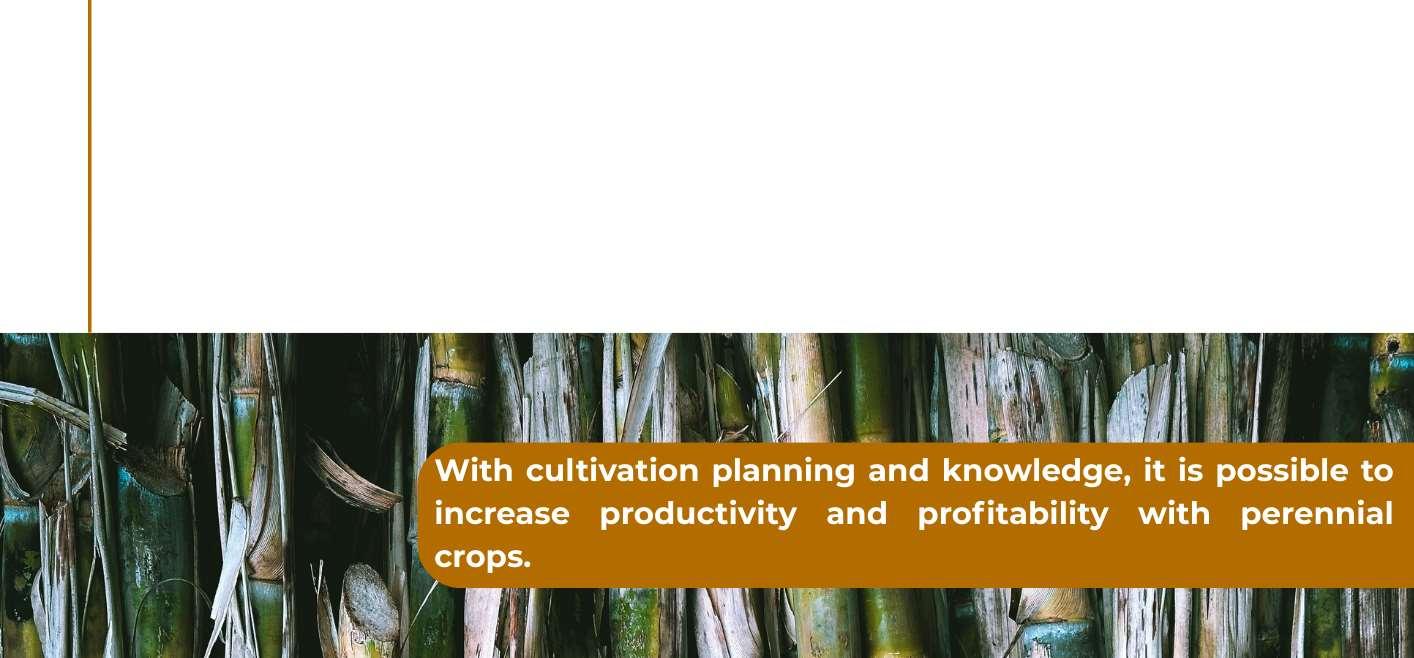
The adoption of perennial crops can increase soil carbon stocks and reduce water erosion due to permanent vegetation cover and typically deep root systems that stabilizethesoilprofile.Inaddition,thesespeciesprovideshelterandresourcesfor pollinators and natural enemies of pests, enhancing agroecosystem resilience to climatevariabilityandreducingdependenceonchemicalcropprotectionproducts (Bolfeetal.,2020).
The technical and economic feasibility of perennial cropping in the Cerrado is supported by well-established guidelines, such as Embrapa Cerrados’ Manual for the Domestication of Perennial Plants and the Conilon Coffee Irrigation Guide, whichprovideprotocolsfor siteselection,soilpreparation,cropmanagement, and harvesting.Thesedocumentsdemonstratethat,withmoderateinitialinvestments in land preparation and establishment irrigation, perennial systems can achieve financialreturnswithinfourtosixyears,consideringthelongproductivelifespanof thesecrops(Veigaetal.,2021;Rochaetal.,2019).
Perennial cropping enhances other regenerative agriculture practices by maintaining living cover and deep root systems year-round. In intercropping systems,itcomplementsnutrientcyclingalongsideannualcrops.Underno-tillage systems,itcanensureacontinuousinputoforganicmatter.Whencombinedwith natural habitat conservation strategies, perennial crops strengthen landscape biodiversity and improve overall system efficiency (Rocha et al., 2019; Bolfe et al., 2020).
Although requirements vary by species, perennial crops such as conilon coffee (Coffea canephora),cashew (Anacardium occidentale), and annatto (Bixa orellana) show good adaptation to the seasonal climate and typical soils of the Cerrado in Mato Grosso. The choice of species and adaptation measures—including pH correction, fertilization, supplemental irrigation during the dry season, selection of tolerantcultivars,andintegratedagroforestrysystems—willdependonfactorssuch assoiltexture,depth,andnaturalfertility,aswellasmarketpotentialandlocalvalue chains, in order to increase productivity and facilitate market access (Veiga et al., 2021; Victoriaetal.,2020).
Evaluationcriteria:

Naturalfertilizersareorganicormineralsubstancesthatsupplynutrientstoplants without undergoing industrial chemical synthesis processes. Obtained directly from natureor through biological processes such as composting, fermentation,or the decomposition of organic residues, these inputs include animal manure, organic compost, vermicompost, bone meal, plant ashes, liquid biofertilizers, and natural phosphates. The most widely used practice within this context is organic fertilization, which consists of incorporating organic materials such as manure, agro-industrialresidues,plant-basedcomposts,andgreenmanuresintothesoilin order to improve soil fertility and crop productivity (EMBRAPA, 2021; EMBRAPA, 2023). This practice is aligned with the principles of sustainable agriculture, as it promotes soil biological balance, reduces dependence on chemical inputs, and contributes to mitigating the environmental impacts of agricultural production. AccordingtoEMBRAPA(2023),organicfertilizersactassoilconditioners,improving physical structure, water-holding capacity, and microbiological activity—factors thatareessentialforhealthyplantdevelopmentandfortheresilienceofproduction systemsinthefaceofclimatechange.
DataonOrganicFertilizationfromtheProduzindoCertoChecklistwereanalyzedin 100% of the project properties. Among them, 75% do not use this practice in their production areas, while 23% of the properties adopt organic fertilization, as illustrated in the chart below. In 2% of the properties, this information was not collected.
Percentagedistributionoforganicfertilizationadoption
Adopted
Notadopted
Notreported
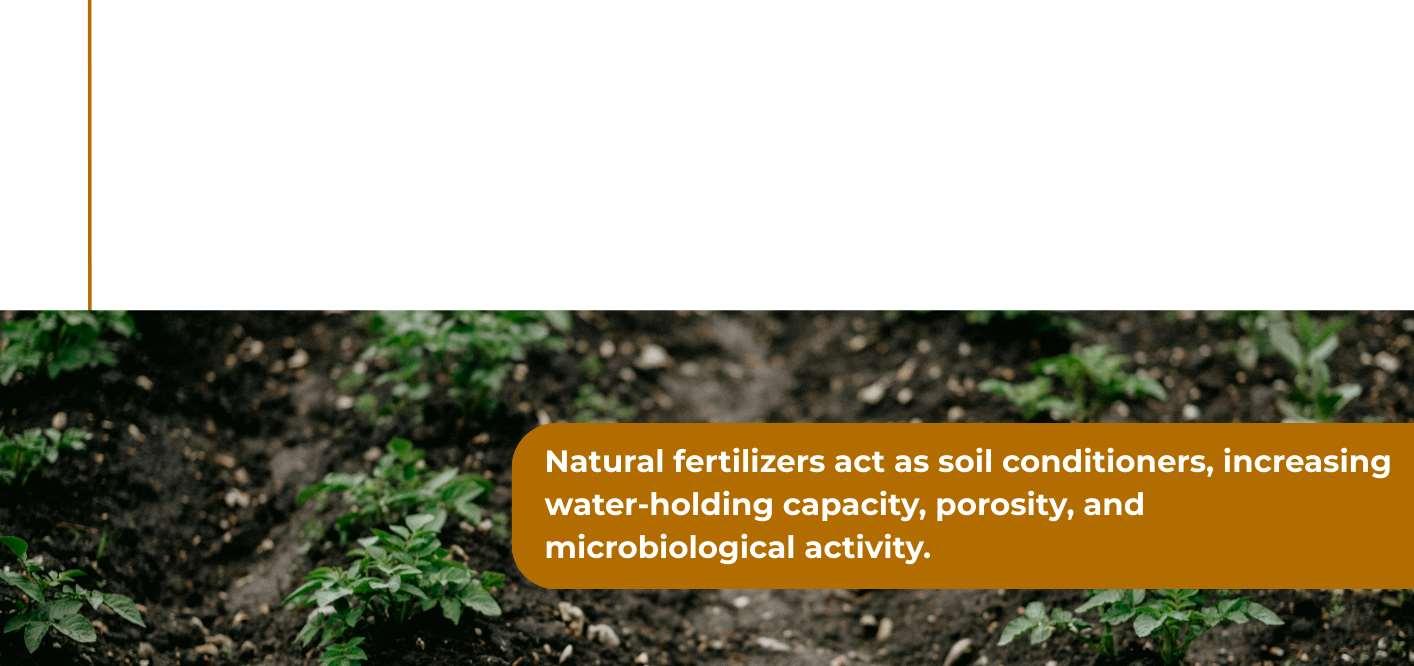
The use of natural fertilizers, such as organic composts, well-composted manure, and liquid biofertilizers, has demonstrated positive impacts on soil fertility, crop quality, and the overall sustainability of production systems (Mendes et al., 2020; Silva & Oliveira, 2022). These inputs act as soil conditioners, improving water retention, porosity, and microbiological activity, which supports root development and reduces irrigation needs—especially in sandy soils. Organic fertilization also contributestoreducinggreenhousegasemissionsbyavoidingtheexcessiveuseof synthetic nitrogen fertilizers and by promoting carbon sequestration in the soil (Speraetal.,2016).
The feasibility of organic fertilization is directly linked to its integration with sustainablepracticessuchascroprotation,no-tillagesystems,andtheuseofcover crops,whichenhanceitsagronomicandenvironmentalbenefits(UFV,2022).Statelevel initiatives in Goiás and Mato Grosso have encouraged composting and the reuse of agro-industrial residues to strengthen natural soil fertility (MAPA, 2024). The effectiveness of this practice depends on proper technical planning, soil analysis, and decomposition control, taking into account factors such as the carbon-to-nitrogen (C/N) ratio, temperature, moisture, and the presence of decomposermicroorganisms.
Organic fertilization shows strong synergy with biodiversity conservation, as it stimulates soil biological activity, favors beneficial organisms, and reduces the contaminationofwaterbodiesbynitratesandphosphates.
In the Mato Grosso Cerrado, soils are naturally acidic and low in organic matter, which makes organic fertilization an effective strategy to correct nutritional deficienciesandincreasecropresiliencetoclimatevariability(Silvaetal.,2021).The application of organic compounds enhances nutrient cycling, reduces losses throughleaching,andpromotestheformationofstablesoilaggregates,whichare essentialforsoilconservation.
Evaluationcriteria:

Chemical fertilization, widely used in modern agriculture, is based on the applicationofsyntheticfertilizersformulatedwithmacronutrientssuchasnitrogen, phosphorus, and potassium, and is effective in increasing agricultural productivity andcontributingtofoodsecurity(EMBRAPA,2022).However,itsindiscriminateuse can generate serious environmental impacts, such as contamination of groundwater by nitrates (Silva & Oliveira, 2021) and eutrophication of water bodies duetoexcessphosphorus,compromisingaquaticbiodiversity(Speraetal.,2016).
DatacollectedbyProduzindoCertodonotassessthepracticeofreducingsynthetic fertilizers. Therefore, the information was generated solely from the Chemical Fertilization item, which indicates that 100% of the properties analyzed in the project use chemical fertilization in their production areas. In a study by Nascimento (2024), a metabolic failure in Brazilian agriculture was identified, evidenced by the disparity between the growth in the use of synthetic fertilizers (nitrogen,phosphorus,andpotassium)andtheincreaseinproductivityofthemain crops—soybean and maize—resulting in ecological impacts that include soil mineralization and salinization, eutrophication of water bodies, and loss of soil biodiversity. While the use of these inputs increased on average four times more than productivity, Brazil became highly dependent on fertilizer imports, which compromises its sovereignty and makes it vulnerable to fluctuations in the international market. Another study complements these findings. According to Moreira et al. (2012), agriculture in the municipalities of Lucas do Rio Verde and Campo Verde, both in the state of Mato Grosso, is affecting water resources and local biota, with a tendency toward worsening due to the expansion of cultivated areas in the state. Pesticide residues were detected in rainwater and streams, indicating atmospheric contamination that reaches even urban centers and compromises drinking water quality. This highlights the importance of replacing these chemical products with more sustainable practices and inputs, such as bioinputs and agroecology. These approaches are also reflected in Federal Governmentmeasures,asthereductionofpesticidesinBrazilisanobjectiveofthe National Program for the Reduction of Pesticides (Pronara – Decree No. 12,538/2025).

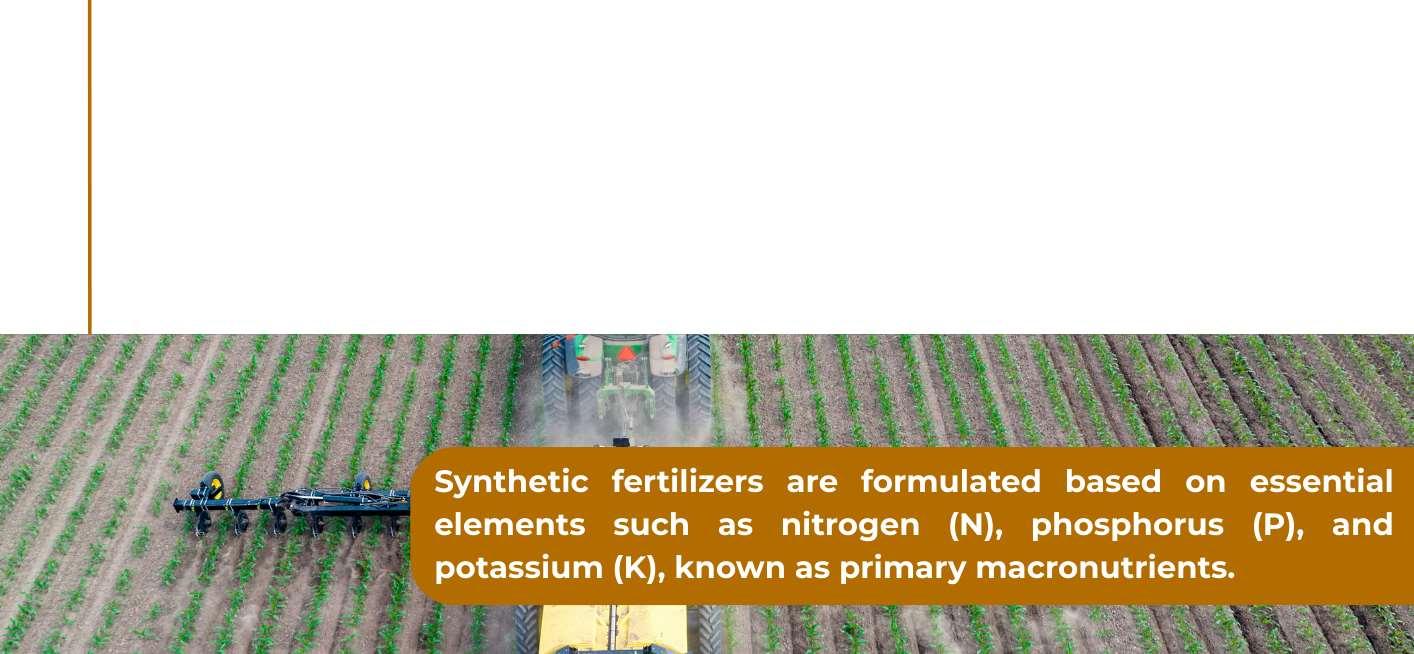
Reducing the use of synthetic fertilizers, such as urea, superphosphate, and potassium chloride, is an essential strategy to promote agricultural sustainability and preserve natural resources. Although these inputs are effective in plant nutrition, their excessive use is associated with soil degradation, water contamination, microbiological imbalance, and greenhouse gas emissions (Mendes et al., 2020). The intensive application of nitrogen fertilizers, for example, significantly contributes to the release of nitrogen oxides (NOx), exacerbating globalwarming.Studiesindicatethatpartialsubstitutionwithorganicsourcescan reducetheseemissionsbyupto40%intropicalsystems(Oliveiraetal.,2021).
Reducing the use of synthetic fertilizers can be achieved through several complementary strategies. One is organic fertilization and composting, which use organic residues as nutrient sources, improving soil structure and decreasing dependence on chemical inputs (EMBRAPA, 2022). Another effective alternative is the use of biofertilizers, composed of microorganisms such as nitrogen-fixing bacteria and mycorrhizal fungi, which naturally increase nutrient availability to plants (IPAM, 2023). Precision agriculture also plays a key role in this process by employing technologies capable of monitoring crop nutritional requirements in realtime,reducingwasteandoptimizingfertilizeruse(UFV,2022).
The integration of chemical fertilization with sustainable practices such as notillage,croprotation,andgreenmanuringcontributestonutrientrecyclingandthe improvement of soil fertility, making the agricultural system more balanced and sustainable (MAPA, 2023). This integration can mitigate negative effects and promoteamoreresilientproductionmodel.
Inregionswithhumidtropicalclimates,forexample,thehighrateoforganicmatter mineralization allowsgreaternutrientrelease,whichcanbe utilized byshort-cycle cropswithlowerdependenceonsyntheticfertilizers(MAPA,2023).
Evaluationcriteria:

Thenaturalcropprotectionstrategyinvolvestheuseofbiologicalagents—suchas predators, parasitoids, microorganisms, and botanical extracts—to control pests anddiseases,replacingorreducingtheuseofchemicalpesticides.Inthisapproach, each biological control product (BCP) is selected according to its specificity to the target pathogen or insect and to local environmental conditions. Application records (date, treated area, and agent used) and the classification of the BCPs employedallowanassessmentofhowwellthestrategyfitsthecroptype.
The use of BCPs prevents toxic residues in food, preserves natural fauna, and reduces the risk of pest resistance, generating multiple agronomic and environmental benefits.Studiesshow thatwell-managedsystemsmaintain stable populations of natural enemies, resulting in continuous pest suppression and reducedcostswithchemicalinputsoverthemediumandlongterm.
Of the total properties visited, 89 (55.62%) use biological control products, while 12 (7.50%) do not adopt the practice, and 59 producers (36.88%) did not report this information,asshowninthechartbelow.
Percentagedistributionofbiologicalcontroladoption
Adopted Notadopted Notreported
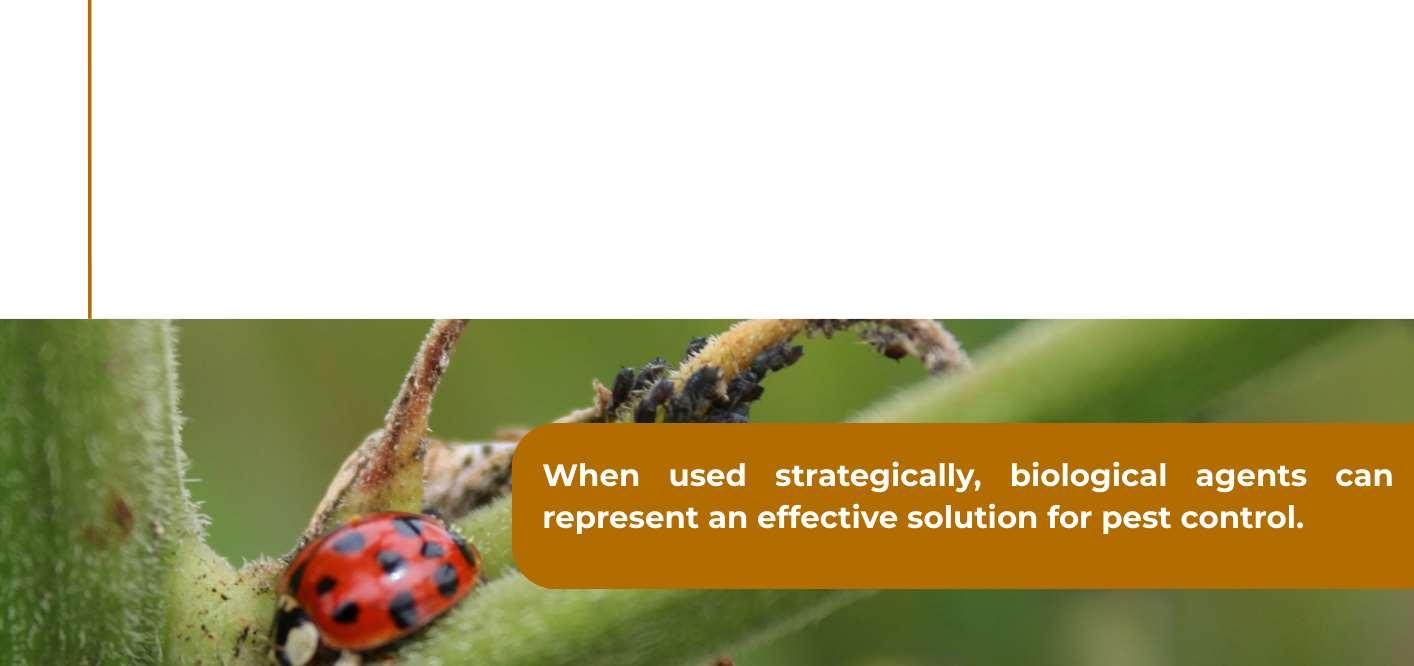
TheadoptionofBCPscanreducetheuseofsyntheticinsecticides,improvesoiland water quality by eliminating chemical residues, and promote the biodiversity of natural enemies, creating production systems that are more resilient to pest outbreaks.Incottonproduction,forexample,thebiologicalcontrolofpestssuchas aphids (Aphis gossypii) aims to mitigate yield-limiting damage withoutthe severe consequences associated with pesticide applications, including risks to farmers’ health and the development of pest resistance (Taveira, 2017). Successful programs—such as the use of baculovirus against the soybean caterpillar (Anticarsia gemmatalis)—have demonstrated a reduced need for chemical insecticides, thereby minimizing environmental impacts (Fontes; Valadares-Inglis, 2020).
Biological strategies require greater technical knowledge and more detailed management, which can be challenging in regions with limited tradition in these practices. The lack of specialized training and the shortage of rural extension techniciansaresignificantconstraintsthatmustbeconsidered.However,although the acquisition of biological inputs and technical training requires initial investment,ruralextensionprogramsandpartnershipswithbioinputsupplierscan leadtolowerexpendituresonchemicalpesticidesandproductivitygainsresulting fromimprovedecologicalbalance.
Natural crop protection strategies integrate efficiently with other regenerative practices:permanentsoilcoverandno-tillagesystemscreaterefugesforbiological agents, while crop rotation disrupts pest cycles, enhancing the effectiveness of BCPsandstrengtheningavirtuouscycleofnaturalcontrol.
The Mato Grosso Cerrado, characterized by a 4- to 6-month dry season and acidic, low-fertility soils, presents both challenges and opportunities for adapted species. The selection of host plants and natural enemies must take these conditions into account. Soil texture influences the effectiveness of control agents: the bacterium Pasteuria penetrans performs better in sandy soils, while the establishment of nematode-predatory fungi varies according to population density and local edaphoclimaticconditions.
Evaluationcriteria:

These consist of practices and technologies aimed at the rational use of water in agriculture, ensuring that each drop is applied at the right time and in the appropriate amount to meet crop water requirements. Such techniques include dripirrigationsystems,automatedsprinklerirrigation,soilmoisturesensors,theuse of agricultural hydrogels, and subsurface irrigation, all focused on reducing losses duetoevaporation,surfacerunoff,andnutrientleaching(123ECOS,2024).
Environmentallicensingisrequiredforwateruse,anditismandatoryforirrigation projects,asitassessesandauthorizesthefeasibilityofanenterprisebyconsidering its environmental impacts and the sustainable use of water resources. In addition to the environmental license, the process also includes obtaining a water use permit (outorga), which authorizes the use of water resources (surface or groundwater)forirrigation purposes, in accordancewith the terms established by thecompetentenvironmentalauthority(CONAMA,2001).
Datawerenotcollectedfor95%oftheproperties,asshowninthegraphbelow.Only 5% of the properties use irrigation in soybean cultivation, predominantly through centerpivotsystems;inone property,atraveling gun(hydrauliccannon)systemis used.
Percentagedistributionofirrigationadoptioninsoybeancrops
Adopted
Notadopted
Notreported
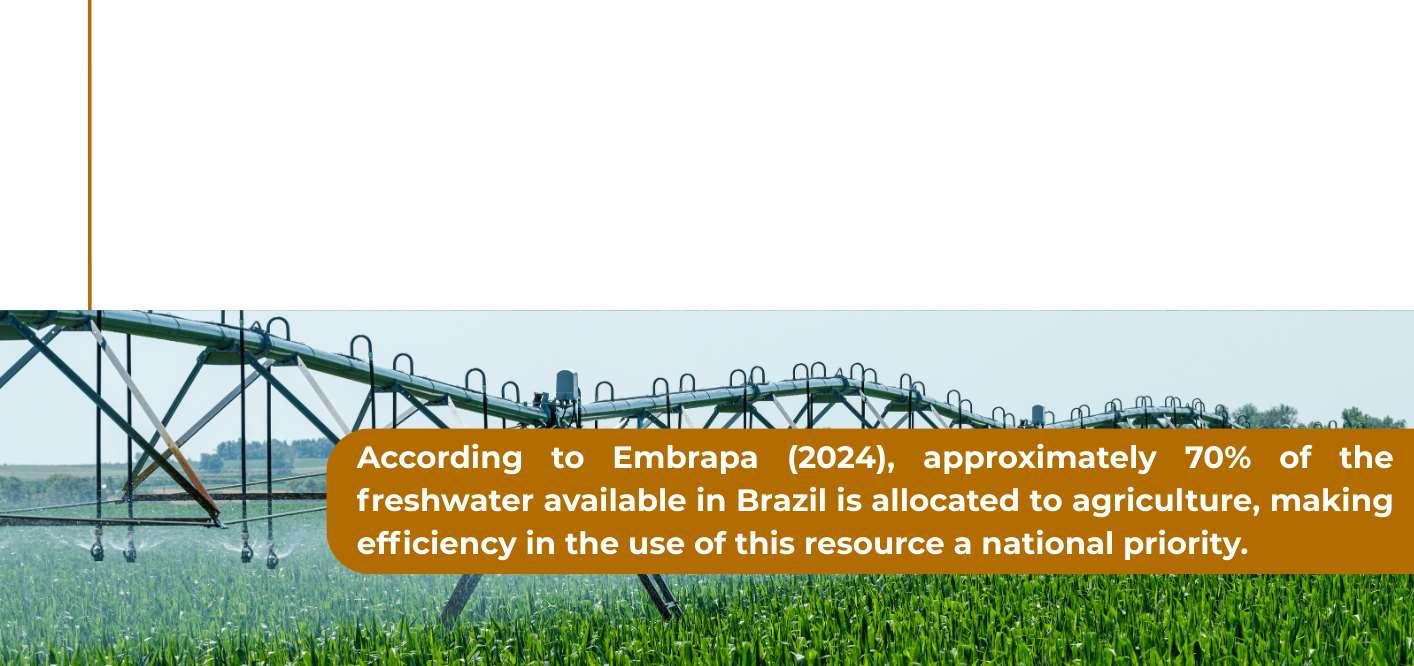
Thus, the results show that only 8 of the assessed properties use irrigation within their operations. Among these, only two properties presented documentation confirming that they have “procedures for good irrigation practices implemented on the farm,” which is one of the questions included in the Produzindo Certo checklist.
Adoption has proven to be a fundamental strategy to increase agricultural productivity, conserve water resources, and promote the sustainability of production systems. These measures include the use of technologies such as drip irrigation, automated sprinkler systems, soil moisture sensors, rational managementofirrigationdepth,andintegrationwithclimatedata.Suchpractices aimtoapplywaterintherightamountandattherighttime,reducinglossesfrom evaporation,surfacerunoff,andnutrientleaching(EMBRAPA,2021).
AccordingtoPiresetal.(1999),well-managedirrigationsystemscanincreasewater use efficiency by up to 90% and improve the efficiency of nutrient uptake applied tothesoil.
This depends on factors such as soil type, the crop being grown, water availability, and the level of technological development of the farm. Research carried out in Buritis (RO) and São Luiz Gonzaga (RS) shows that irrigated and mechanized systemspresentbettereconomicindicators,withalowriskofunfavorablereturns, when compared to conventional rainfed systems without irrigation (Oliveira & Maximenko,2012).
Soil analysis stands out as a key practice, as it allows irrigation to be adjusted according to the soil’s water-holding capacity, texture, and depth. Studies by Embrapa(2021)showthatsoilsmonitoredthroughregularanalysesrespondbetter to localized irrigation, avoiding losses from excessive infiltration or surface runoff. Covercropsandno-tillagesystemsarealsohighlycompatible,astheyincreasesoil organicmatter,reduceevaporation,andimprovewaterinfiltration.
In the Mato Grosso Cerrado, soils range from sandy to clayey, generally with low water-holding capacity and high vulnerability to erosion, combined with a welldefined dry season and high temperatures. These conditions require systems that minimizeevaporationlossesandoptimizewaterinfiltrationintothesoil(EMBRAPA, 2025). Proper irrigation management must consider crop evapotranspiration, relative air humidity, solar radiation, and wind speed, adjusting irrigation depths andintervalsaccordingtoplantwaterdemand(Piresetal.,1999).
Evaluationcriteria:

Soilanalysisconsistsofasetoflaboratoryandfieldproceduresaimedatquantifying the physical, chemical, and biological attributes of the soil profile, providing diagnoses related to fertility, acidity, texture, and organic matter content. The results also guide cover crop management, the selection of species for green manure,and the incorporation of biological inputs,contributing to the restoration and conservation of soil ecological functions. Soil analysis is classified as a fundamental technical practice and serves as the basis for agronomic decisionmaking(TEIXEIRAetal.,2017).
In addition to supporting the planning of more sustainable agricultural practices, soil analysis allows for the identification of nutrient deficiencies, risks of soil compaction, and chemical imbalances that may compromise crop productivity. Based on this information, it is possible to define more precise correction and fertilization strategies, reducing the excessive use of fertilizers and the associated environmental impacts. In regenerative systems, soil analysis also plays a strategic roleinmonitoringbiologicalquality,enablingtheassessmentofindicatorssuchas organiccarbon,enzymaticactivity,andmicrobialbiomass,whichreflectthehealth andresilienceofthesoilecosystem.
Thus, this practice contributes not only to increased productive efficiency but also to the development of more balanced agricultural systems, resilient to climate changeandalignedwiththeprinciplesofregenerativeandlow-carbonagriculture.
Among the properties analyzed, 89 (55.62%) demonstrated that they carry out soil analysis, while 69 (43.12%) did not present the analysis results, and in 2 properties (1.25%)thedatawerenotcollected,asshowninthechartbelow.

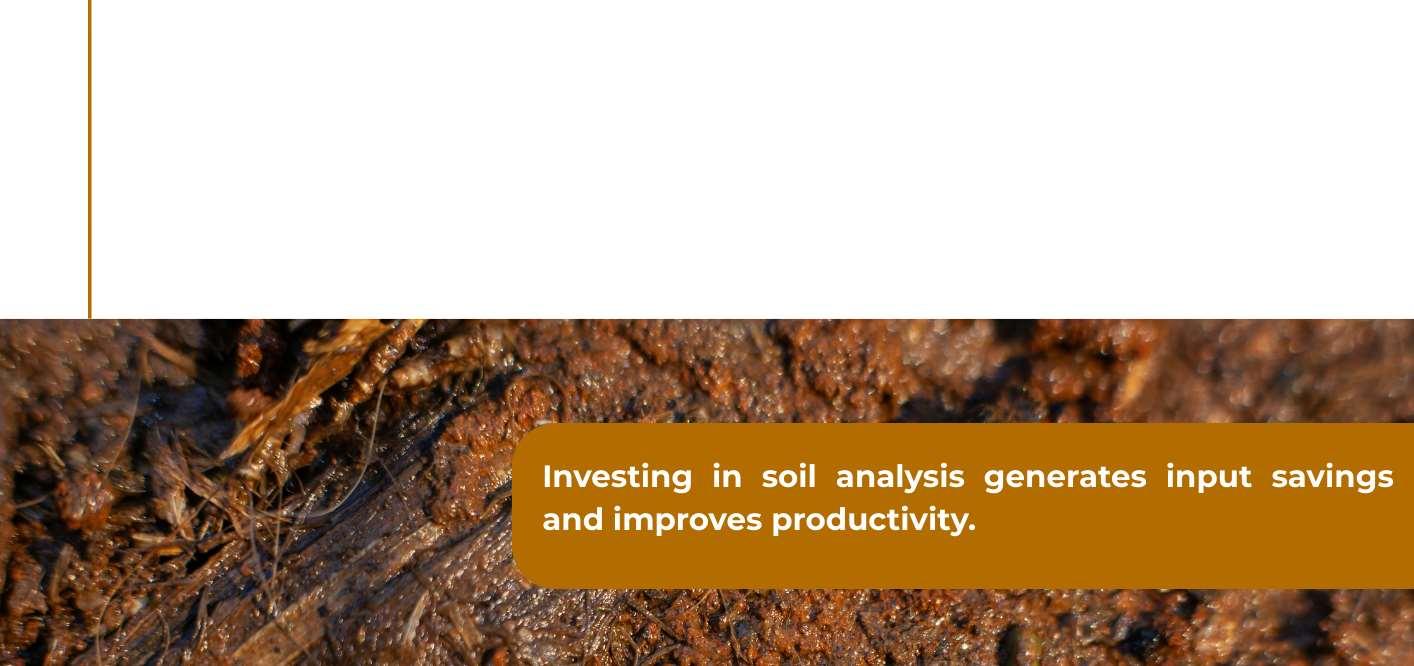
The adoption of soil analysis makes it possible to diagnose nutrient levels, pH, and organic matter content, enabling targeted corrections that can increase productivity by up to 20% and reduce the use of chemical fertilizers by up to 30%. In addition, continuous monitoring contributes to soil conservation by reducing losses through leaching and mitigating the contamination of surface and groundwater,therebyensuringlong-termagriculturalsustainability.
Soilanalysisistheprimarytechnical basisfordecisionsregardingwhat, when,and how much lime and fertilizer should be applied. Embrapa has a standardized soil analysis protocol developed by Embrapa Solos, which is available in accredited publicandprivatelaboratoriesacrossallregionsoftheCerrado.Theprotocolrelies on reproducible methods that use moderately priced equipment and accessible soilsamplingkits.
Soil analysis is integrated with several regenerative agriculture practices. In cover cropping and no-tillage systems, it quantifies residue decomposition and nutrient release, guiding the selection of species and optimal planting densities. In crop rotation and multi-species intercropping systems, it reveals patterns of nutrient extraction and replenishment, allowing adjustments to green and organic fertilization schedules. When combined with natural fertilizer strategies and the reduction of synthetic inputs, soil analysis provides precise parameters for biofertilizerdosagesandmineralamendments.
Soil sampling should be carried out at the end of the rainy season, when soil moistureisoptimal,atdepthsof0–20cmand20–40cminRedandTypicLatosols. At these depths, samples reflect nutrient reserves and organic matter content, supporting management protocols suited to local soil and climatic conditions. Representativenessmustnotbecompromised,andsamplinginwaterloggedsoils should be avoided. The quality of the analysis depends on proper sampling in the area to be planted, conducted in a zigzag pattern at 15 to 20 different points, with the land divided into uniform areas of up to 10 hectares. Samples should not be collectednearfertilizerstorageareasorsimilarlocations.
Evaluationcriteria:


In its broad definition, biodiversity refers to the variability of living organisms from allsources,encompassingterrestrial,marine,andaquaticecosystems,aswellasthe ecologicalcomplexesofwhichtheyarepart.Thiscomplexityintheorganizationof lifeincludesthreemainlevelsofvariation:diversitywithinspecies(geneticdiversity, which is essential for evolution in response to change), diversity between species (the richness and abundance of different organisms, indicating a healthy and resilient ecosystem), and ecosystem diversity. Maintaining healthy and diverse species populations is of great importance to ensure the long-term health and resilience of ecosystems and to sustain nature’s contributions to people. In this context, the preservation and enhancement of biodiversity depend on practices suchas the implementation of ecological corridors and theadoption of diversified and planned land use, which favor habitat connectivity and the resilience of productivesystems.
There is currently no biodiversity data collection in the Produzindo Certo data collection protocol. However, within the RTRS framework, there are two related questions:“Huntingandfishingareprohibited”and“Isthereareportdocumenting faunaandflora?”
Statistics on Brazilian biodiversity reveal the country’s immense biological wealth while also quantifying existing pressures and knowledge gaps. Brazil is one of the 17 countries classified as megadiverse and holds the greatest biological diversity among them. It is estimated that the country hosts approximately 13.2% of global biota, with flora comprising around 45,000 plant species, representing about 20% to 22% of all known plant species worldwide. Fauna diversity is equally significant, with approximately 200,000 animal species and more than 9,000 vertebrate species (IBGE, 2022). The Cerrado, recognized as the most biodiverse tropical savanna in the world, is the second biome with the highest diversity of angiosperms, totaling 12,829 species of terrestrial plants (Bolfe et al., 2020). Brazil containstwoglobalbiodiversityhotspots(theAtlanticForestandtheCerrado)and nearly 1,500 protected areas. A national assessment of extinction risk for fauna, coordinatedbyICMBio,analyzed12,254speciesduringthefirstcycle(2009–2014),of which1,182species(9.6%)wereclassifiedundersomecategoryofthreat.
Practices such as regenerative agriculture and agroforestry systems, which are classified as nature-based solutions, aim to increase on-farm diversity, restore biodiversity, and enhance carbon sequestration. From an economic perspective, the implementation of these practices can lead to sustainable increases in crop yields and farm profitability. From an ecological standpoint, greater agrobiodiversity protects production systems, as the loss of diversity in food crops reduces agricultural resilience, making systems more vulnerable to pests and extremeclimaticconditions.
The implementation of practices that promote biodiversity on rural properties is feasible and provides both environmental and economic benefits. Measures such asprotectedareas,hedgerows,ecologicalcorridors,croprotation,andagroforestry systemscontributetosoilconservation,waterbalance,andnaturalpestcontrol.In addition, these practices increase the resilience of production systems and may enable access to differentiated markets and certification programs. Despite initial challenges, financial incentives, technical assistance, and consumer demand strengthentheadoptionofthesepracticesinthemediumandlongterm.
The combination and synergy between biodiversity-focused practices and other regenerative agriculture interventions form the foundation of agroecological resilience and productive stability. Practices such as diversified crop rotation, notillagesystems(NT),andcontinuoussoilcoveracttogether,generatingsynergistic effectsthatimprovesoilphysicalstructureandwater-holdingcapacity,increasesoil organiccarbon,andpromotesoilbiologicaldiversity.
In the Cerrado of Mato Grosso, edaphoclimatic conditions characterized by acidic soils with low natural fertility, combined with a climatic regime marked by prolongeddryperiodsandconcentratedrainfall,maketheadoptionofbiodiversityenhancing practices essential to increase agricultural resilience and productivity. Species diversification through agroforestry systems, crop rotation, and the use of covercropscontributestoimprovedsoilstructureandfertility,reducederosion,and enhanced water retention capacity—critical factors under conditions of pronouncedclimaticseasonality.
Evaluationcriteria:
EvaluationCriteria:


Protection around watercourses is based on the delimitation of Permanent PreservationAreas(APPs).Themarginalstripsofanynaturalwatercourse,whether perennial or intermittent (excluding ephemeral ones), are considered APPs, with the minimumwidthmeasured fromthe edge ofthe regularriverbedchannel.The minimumwidthsofAPPsaredefinedbytheForestCode:30mforwatercoursesup to10mwide;50mforthose10–50mwide;100mfor50–200m;200mfor200–600 m;and500mforthosewiderthan600m,allmeasuredfromtheedgeoftheregular riverbed channel. The protection of watercourses is a requirement established by Law No. 12,651/2012 (New Forest Code), which repealed the previous Forest Code (Law No. 4,771/1965) and Provisional Measure No. 2,166-67/2001. The state of Mato GrossoisentirelyincludedwithintheLegalAmazon,asdefinedbylegislation,which gives compliance with APP requirements strategic importance for the region. Riparian forests (gallery forests and riparian woodlands) of the Cerrado are protectedbylawduetotheirrecognizedimportance.
Of the properties analyzed, 74 (46.25%) are in compliance with the legislation and havenoAPPareasrequiringrestoration,while86(53.75%)haveAPPareasthatneed restoration,asshowninthegraphbelow.
PercentagedistributionofAPP(PermanentPreservationArea) compliance
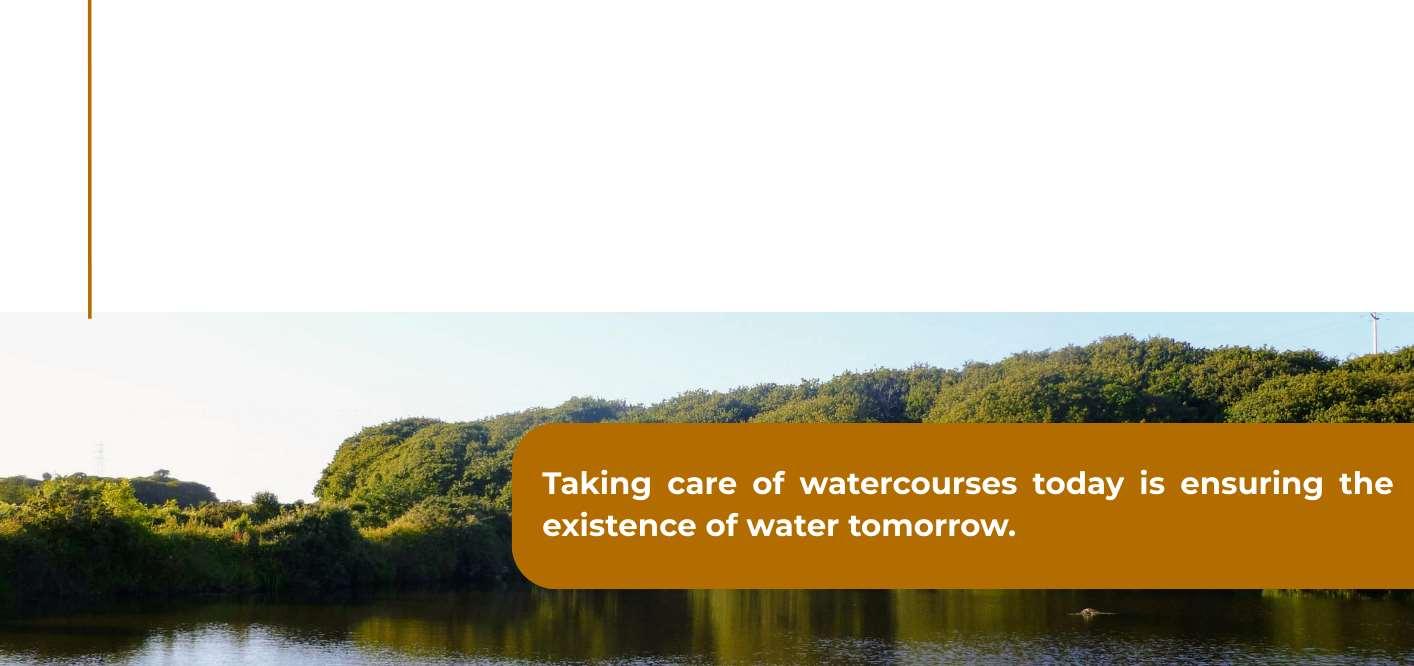
Therestorationandmaintenanceofvegetationalongwatercoursespromotebank stabilization, erosion reduction, and sediment retention, in addition to improving water quality by filtering nutrients and contaminants. These vegetated strips also function as corridors for aquatic and terrestrial fauna, enhancing habitat connectivityandcontributingtothemaintenanceofwaterresources.
ThemaintenanceandrecoveryofAPPsaresupportedbymethodssuchasnatural regeneration and isolated or intercropped planting of native species with authorized exotic species, as well as fencing and area signage. These procedures require low initial investment—mainly labor, seedlings, and soil correction when necessary—and can be integrated into routine agricultural practices, making compliance with environmental legislation economically feasible for properties of differentsizes.Asalegalrequirement,maintainingAPPsalsohelpsavoidfinesand embargoesintheeventofinspectionsbyenvironmentalauthorities.
APPstripsintegratesynergisticallywithotherregenerativepracticesbysupporting rainwater capture, controlling infiltration, and fostering the biodiversity of aquatic and terrestrial insects, thereby enhancing biological pest control and nutrient cycling.
Marginal APPs occur in alluvial or hydromorphic soils subject to seasonal flooding and dry periods, with high organic matter content and water-holding capacity. These factors, combined with the local rainfall regime and hydrological cycle, requiretheuseofnativespeciesadaptedtovariationsinmoistureandwaterlogged soils.Ingeneral,theuseofnativevegetation,togetherwithareafencing,issufficient forthepreservationofAPPareas(Aquino;Vilela,2008).
Evaluationcriteria:


Windbarriers,alsoknownaswindbreaksorvegetativeshelterbelts,consistofrows oftreesplantedperpendiculartotheprevailingwinddirection.Theirmainpurpose is to reduce wind speed in agricultural areas, protecting crops, soils, and rural structures.Byattenuatingstrongaircurrents,thesevegetativestructuresminimize wind erosion, conserve soil moisture, and reduce excessive evapotranspiration in plants.
Among the benefits of wind barriers are the protection of crops against lodging, increased productivity due to microclimate improvement, and mitigation of soil erosion. Well-established barriers also create biodiversity corridors, provide shelter for livestock, and sequester carbon, contributing to more resilient and low-carbon agriculturalsystems(Foelkel,2016).
Ofthetotalpropertiesvisited,51(31.88%)adoptlivingfencesorwindbarriers,while 106 (66.25%) do not use the practice, and 3 (1.88%) did not report whether they use it,asshowninthechartbelow.
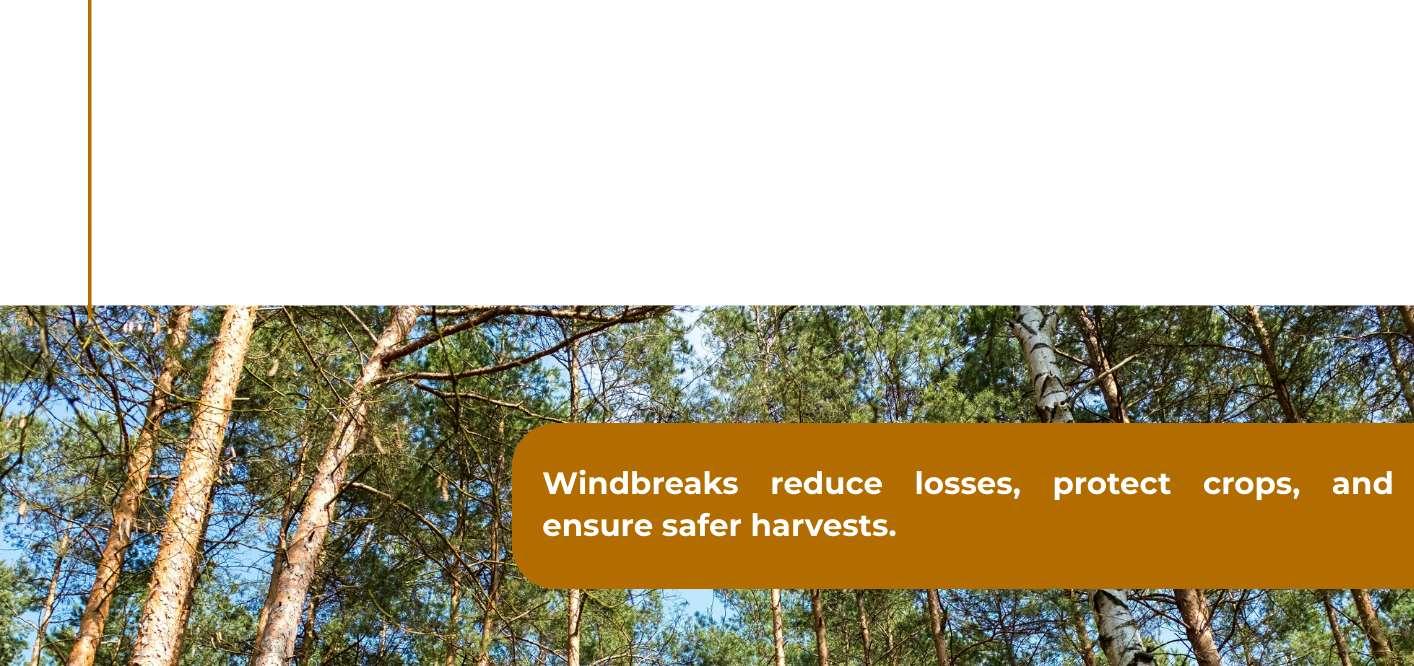
The establishment of living fences and wind barriers can reduce wind speed, decreasing soil losses due to erosion and surface drying, while favoring increased agricultural productivity in protected areas. In addition, the mulch layer and associated tree stratum act as corridors for beneficial fauna and seed dispersal, increasing local biodiversity and improving microclimate quality by mitigating thermalextremesandreducingevapotranspiration.
To optimize the establishment and longevity of living fences and wind barriers, plantingisrecommendedinsoilswithgooddrainage,aminimumdepthof50cm, andloamy-sandytoloamy-clayeytexture,asthesecharacteristicsfavorverticalroot development without the risk of waterlogging. Under these conditions, native species such as Mimosa caesalpiniaefolia (sabiá or sansão-do-campo), commonly used for this purpose, tend to establish easily. Mimosa caesalpiniaefolia is a fastgrowingspecies(around1meterperyear),withgoodadaptabilityandhigh-quality wood.
When integrated with other regenerative agriculture practices, living fences and windbreaks enhance their benefits. Combined with infiltration furrows and terraces, they increase water infiltration into the soil. Together with no-tillage systems and cover crops, they improve organic matter retention and prevent sediment transport. When associated with the use of vetiver grass (Chrysopogon zizanioides)asalivingbarrieragainstrunoff,livingfencesstrengthenslopestability, reducethesilting ofwatercourses,and createmicroenvironments favorabletosoil biologicalactivity.
To implement windbreaks in the Mato Grosso Cerrado, it is necessary to select species adapted to acidic, low-fertility soils and long dry periods, such as sabiá (Mimosa caesalpiniaefolia). Fertilization optimizes growth, while deep-rooted species avoid competition with agricultural crops and help recycle nutrients from deepersoillayers..
Evaluationcriteria:

The conservation of natural habitat, from a global perspective, is often structured through the establishment of protected area systems dedicated to maintaining biologicaldiversityandnaturalandculturalresources.Inseveralcountries,suchas Argentina, the United States, Canada, and Australia, protection on private lands does not necessarily follow a fixed percentage of Legal Reserve as in Brazil, but rather focuses on preserving ecologically sensitive and specific zones, such as riparianareas(alongwatercourses)andsteepslopes.Thecentralobjectiveofthese international systems is to ensure ecological representativeness and adequacy by protecting samples of regional ecosystems in order to guarantee the long-term viabilityandintegrityofspecies.
Of the 160 properties analyzed, the majority (76.25%) show a deficit of native vegetation in relation to the 35% required by the Forest Code. Only 36 properties (22.50%) meet or exceed the legal target, with surpluses ranging from 0.22% to 44.70%. Twopropertiesdid not provide sufficient datafor analysis,asshownin the chartbelow.
Thetablebelowshowsthenumberofpropertiesbyconservationsurplusrange . Table 2 – Distribution of properties by range of native vegetation conservation surplus
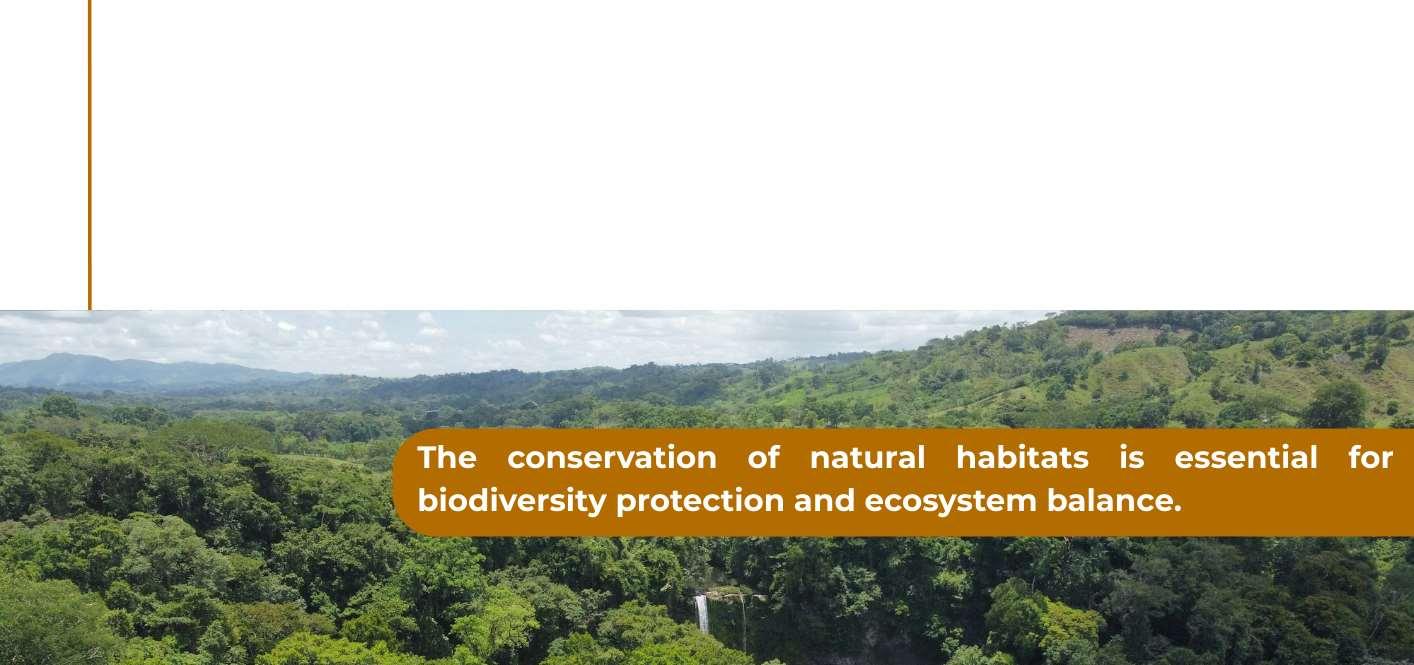
Thefirstaspecttobeconsideredisthevaluationofecosystemservicesprovidedby native vegetation. Conserved areas contribute to water regulation, biological pest control,maintenanceofsoilfertility,andresiliencetoextremeclimaticevents(Silva etal.,2020).Studiesindicatethatfarmswithgreatervegetationcovershowsuperior agricultural performance in the long term due to the integration of these services intotheproductionsystem(Speraetal.,2016).
Theconservation of natural habitat is associated with participation in Payment for EnvironmentalServices (PES) projects,suchas theConserv programpromoted by IPAM, which remunerates producers for maintaining native vegetation beyond legalrequirements.ThismodelisparticularlypromisingintheMatoGrossoCerrado, where preservation costs are lower and incentives are better aligned with local realities. In addition, there is the possibility of issuing Environmental Reserve Quotas (CRA), which allow vegetation deficits to be offset in other properties. Landowners with vegetation above the legally required level may register these areas in the Rural Environmental Registry (CAR) and generate CRA, which are tradableassetsinthecompensationmarket.AccordingtoOliveiraetal.(2024),the municipality of Rondonópolis, Mato Grosso, presents a surplus of 5,849 hectares eligibleforCRA,highlightingitseconomicpotential.
The conservation of natural habitat also contributes to improving soil structure, favoring practices such as cover crops, crop rotation, and natural fertilization strategies, especially when associated with soil analysis and the use of organic fertilizers.
From a climatic perspective, the Cerrado is characterized by a rainfall regime concentrated between October and April, with a well-defined dry season. This seasonality directly influences vegetation regeneration cycles and soil nutrient dynamics. The conservation of natural habitat under these conditions contributes to regulating the local microclimate, reducing thermal amplitude and increasing relativeairhumidity,whichbenefits bothbiodiversityand agriculturalproductivity inadjacentareas(ADVDOBRASIL,2024).
Evaluationcriteria:


Reforestationisanecologicalrestorationpracticethatconsistsofplantingnativeor well-adaptedtreespeciesindegraded,deforested,orerosion-proneareas,withthe objective of restoring environmental functions, promoting biodiversity, and improving the quality of natural resources. In agricultural contexts, reforestation can be carried out in Permanent Preservation Areas (APPs), around springs, along riverbanks, on slopes, and in ecological corridors, directly contributing to water stability,soilprotection,andmicroclimateregulation(Rodriguesetal.,2011).
Beyond restoring vegetation cover, this practice strengthens essential ecosystem services for environmental balance, such as carbon sequestration and nutrient cycling. It also enhances connectivity between forest fragments, creating habitats for wildlife and increasing landscape resilience to extreme climatic events. When associated with sustainable production systems, reforestation can be integrated into management strategies that reconcile conservation and income generation, suchasagroforestrysystemsandenvironmentalcompensationmechanisms.
Of the 160 properties analyzed in the project, 105 do not contain areas under regenerationwithintheirboundaries.Another53propertiespresentedareasunder regeneration, ranging from 0.05 to 1,963.60 hectares. Additionally, 2 properties did not have data available for analysis regarding regeneration areas on the platform, asshowninthegraphbelow.
Percentagedistributionofadoptionofareasunder regeneration

Adopted
Notadopted
Notreported
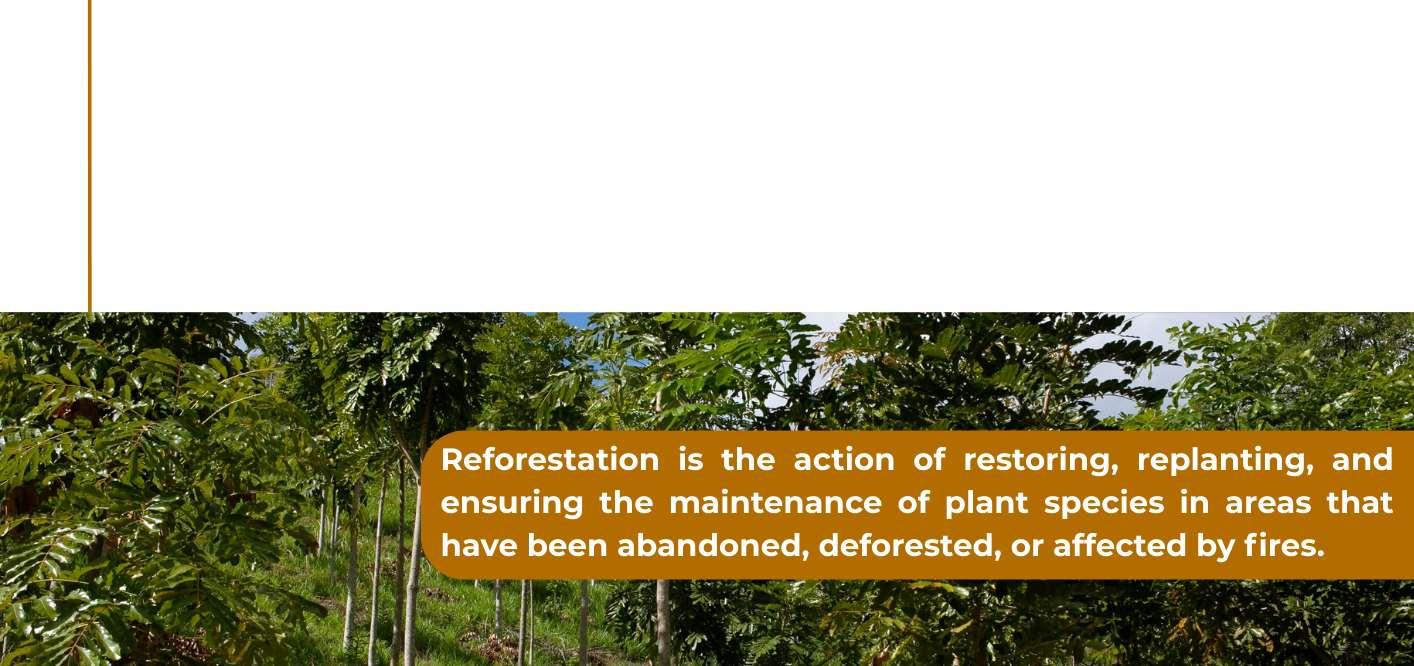
Thus,theresults obtained show that65.63%of the properties do not contain areas underregenerationwithintheirterritories,andonly33.13%arecontemplatedunder this criterion. That said, out of the total 828,445.21 hectares corresponding to the sumofthetotalareasofthepropertiesincludedintheproject,only5,156.18hectares areaccountedforasregenerationareas.
From an environmental perspective, increasing vegetation cover reduces surface runoff,enhanceswaterinfiltrationintothesoil,andcontributestoaquiferrecharge. Studies conducted by Brancalion et al. (2019) demonstrate that reforested areas present higher water retention, lower soil temperatures, and greater biological diversity, especially of pollinators and soil fauna. In addition, reforestation acts as a natural barrier against wind and erosion, protecting crops and improving air and waterquality.
Fromanagronomicstandpoint,reforestationinstrategicareaspromotesimproved crop performance, particularly when integrated into agroforestry systems. The presence of trees provides controlled shading, improves soil structure, and increases the availability of organic matter, resulting in higher productivity and reduced need for chemical inputs (Souza et al., 2020). Furthermore, native vegetationservesasarefugefornaturalenemiesofpests,strengtheningbiological controlandreducingtheuseofpesticides.
AccordingtothehandbookoftheNationalRuralLearningService–SENAR(2020), the implementation of reforestation projects can be adapted to different property profiles,rangingfromsmallboundaryareasto largeextensionsintendedforforest restoration. Economic viability is associated with the selection of species with commercial or ecological value, such as eucalyptus, pine, yerba mate, and native Cerrado species, which can generate financial returns through the sale of timber, seeds,non-timberforestproducts,orcarboncredits.
StudiescarriedoutinthestateofParanáshowthatreforestationalongtheborders of small rural properties presents good economic performance, especially with species such as yerba mate and pine, which offer returns over medium-term productioncycles.ThefeasibilityanalysisusedindicatorssuchasNetPresentValue (NPV), Benefit/Cost Ratio (B/C), and Internal Rate of Return (IRR), demonstrating that reforestation can be competitive with other agricultural activities when properlyplanned(Malinovski,2006).
Soil analysis is a fundamental step for the success of reforestation projects, as it allows the identification of physical and chemical limitations, guides the selection of native species, and defines appropriate management strategies (Morfo, 2023). Soils that are well monitored through analysis favor seedling growth and reduce fieldmortality.
Protection around watercourses is another highly complementary practice, as the reforestation of riparian areas contributes to bank stabilization, reduction of siltation, and improvement of water quality. According to the Ministry of the Environment, riparian vegetation acts as a natural filter, retaining sediments and
contaminantsbeforetheyreachwaterbodies(MMA,2025).
Inaddition,theuseofnaturalfertilizersandthereductionofsyntheticfertilizersare compatiblewithreforestedareas,astheypreventsoilandwatercontaminationand promotemorebalancednutrientcycling(Embrapa,2024).
From a climatic perspective, reforestation acts as a carbon sink, absorbing carbon dioxide (CO₂) from the atmosphere and helping to mitigate the effects of global warming. Another relevant impact is the regulation of the hydrological cycle. Restoredforestsprotectsprings,increasewaterinfiltrationintothesoil,andreduce the risk of erosion and siltation of water bodies. This is especially important in regions such as the Cerrado and the Amazon, where vegetation cover directly influencesrainfalldistributionandwateravailability.
Evaluationcriteria:

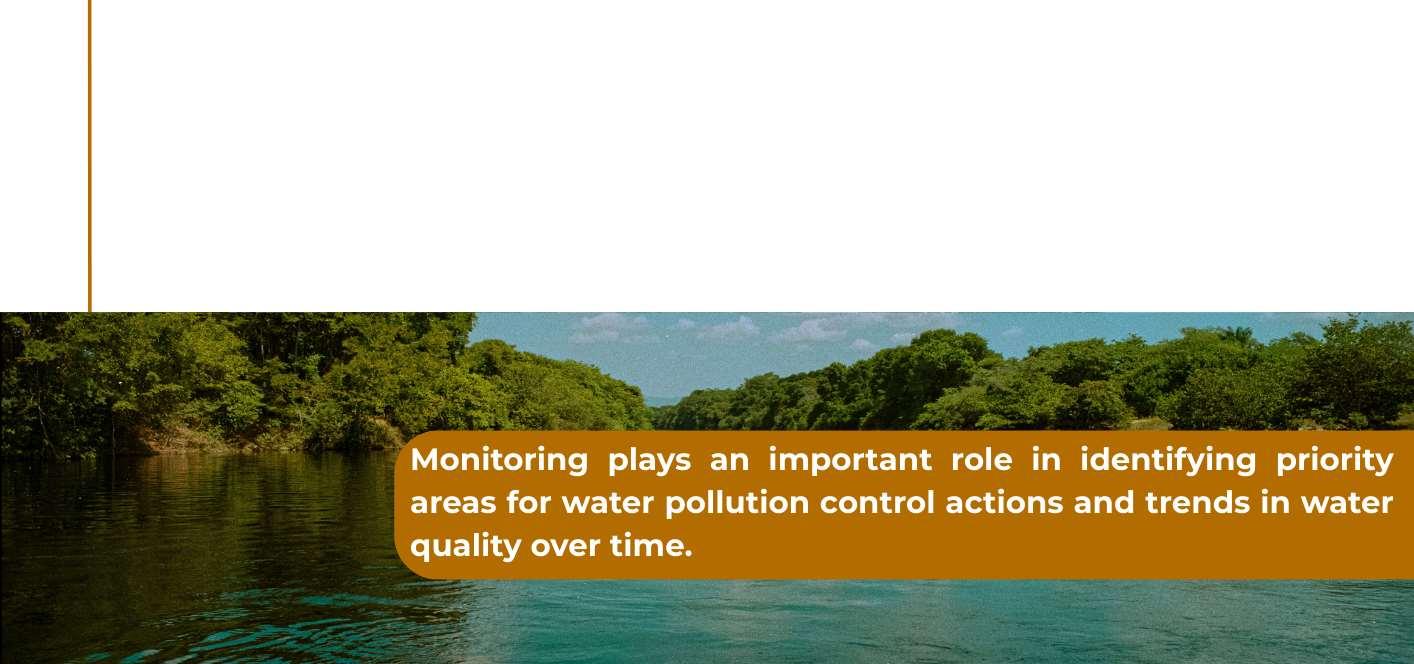
Water quality refers to the set of physical, chemical, and biological properties that determine its suitability for different uses, such as human consumption, irrigation, livestock watering, and environmental conservation. These parameters include turbidity, pH, electrical conductivity, presence of nutrients, heavy metals, fecal coliforms,andorganicresidues,andaremonitoredundertechnicalstandardssuch as Ordinance GM/MS No. 888/2021, which establishes drinking water quality standards in Brazil (Ministryof Health, 2024). Pollution prevention, in turn, consists ofasetofactionsaimedatprotectingwaterbodiesfromsourcesofcontamination, whetherpointsourcessuchasindustrialeffluentsanddomesticsewage,ordiffuse sources such as surface runoff of fertilizers and pesticides from agricultural areas (EMBRAPA,2018).
Of the 160 properties analyzed in the project, only 12 carry out water quality monitoring within their own areas. However, more than 93% of the analyzed properties—namely 148—do not conduct water quality analysis of their watercoursesordidnothavethesedatacollected,asshowninthechartbelow
Regarding the discharge of production effluents into water bodies, 159 properties donotcarryoutsuchdischarges,andinonlyonepropertythisinformationwasnot collected.However,whenconsideringthedischargeofdomesticeffluentsontosoil or into water bodies, the figures differ: 29 properties report carrying out such discharges, 54 did not have data collected on this aspect, and 77 stated that this improper discharge does not occur within their properties, as illustrated in the chartsbelow.
Percentagedistributionofdomesticeffluentdischargeonto soilorintowaterbodies
Discharge
Notdischarge
Notreported
Percentagedistributionofdomesticeffluentdischargeonto soilorintowaterbodies
Discharge
Nodischarge
Notreported
TheresultsobtainedindicatethatthepropertiesstillneedtocomplywiththeWater QualityandPollutionPreventioncriteria,astheyshowalowpercentageintermsof wateranalysisandstillengageintheimproperdischargeofdomesticeffluentsonto soilorintowaterbodies.
Cleanwaterreducestheincidenceofdiseasestransmittedbypathogens,improves the performance of irrigated crops, and preserves aquatic biodiversity. Studies by Embrapa indicate that adopting good soil and water management practices, combined with continuous monitoring of water parameters, can significantly reduce pollutant loads and increase the availability of potable water on rural properties(NICODEMOetal.,2018).Furthermore,reducingpollutioncontributesto the recovery of springs, erosion control, and decreased turbidity in watercourses, enhancingwaterinfiltrationandstorageinthesoil.
The feasibility of implementing measures to improve water quality and prevent pollution on rural properties is considered high, especially when integrated with sustainablemanagementpractices,publicincentives,andaccessibletechnologies. Theseactionsarefundamentaltoensuringwatersecurity,agriculturalproductivity, and compliance with environmental regulations. According to the Guide for the Implementation of Drinking Water Quality Standards prepared by the Brazilian Ministry of Health, it is possible to apply monitoring and control protocols even in decentralizedsystems,such aswells,cisterns,andspringsin ruralareas.Theguide providesinstructionsonphysical,chemical,andmicrobiologicalparameters,aswell as strategies for adapting water sources at low cost and with high effectiveness. Technical feasibility is also reinforced by Embrapa studies, which show that
practices such as fencing springs, maintaining riparian vegetation, controlling erosion, and rational use of agricultural inputs are effective in reducing diffuse pollution andimproving waterqualityforirrigation andconsumption(WINCKLER; PILLON,2021).
Native vegetation and soil conservation practices, such as no-tillage and cover crops, act as natural barriers against diffuse pollution, promoting water infiltration and aquifer recharge. The use of water quality indicators, such as turbidity, pH, dissolved oxygen, and coliform presence, is essential for diagnosing and planning preventive actions (WINCKLER; PILLON, 2021). Additionally, strategies such as fencing wetlands, treating effluents, and harvesting rainwater contribute to the conservation of water resources and maintaining the hydrological balance of the properties.
IntheMatoGrossoCerrado,soilsarepredominantlyacidic,naturallylowinfertility, andhighlysusceptibletoerosionwhenlackingvegetativecover.Theclearlydefined dry season, along with periods of intense rainfall, favors surface runoff, which can transport sediments, nutrients, and contaminants into water bodies (EMBRAPA, 2021).
Evaluationcriteria:

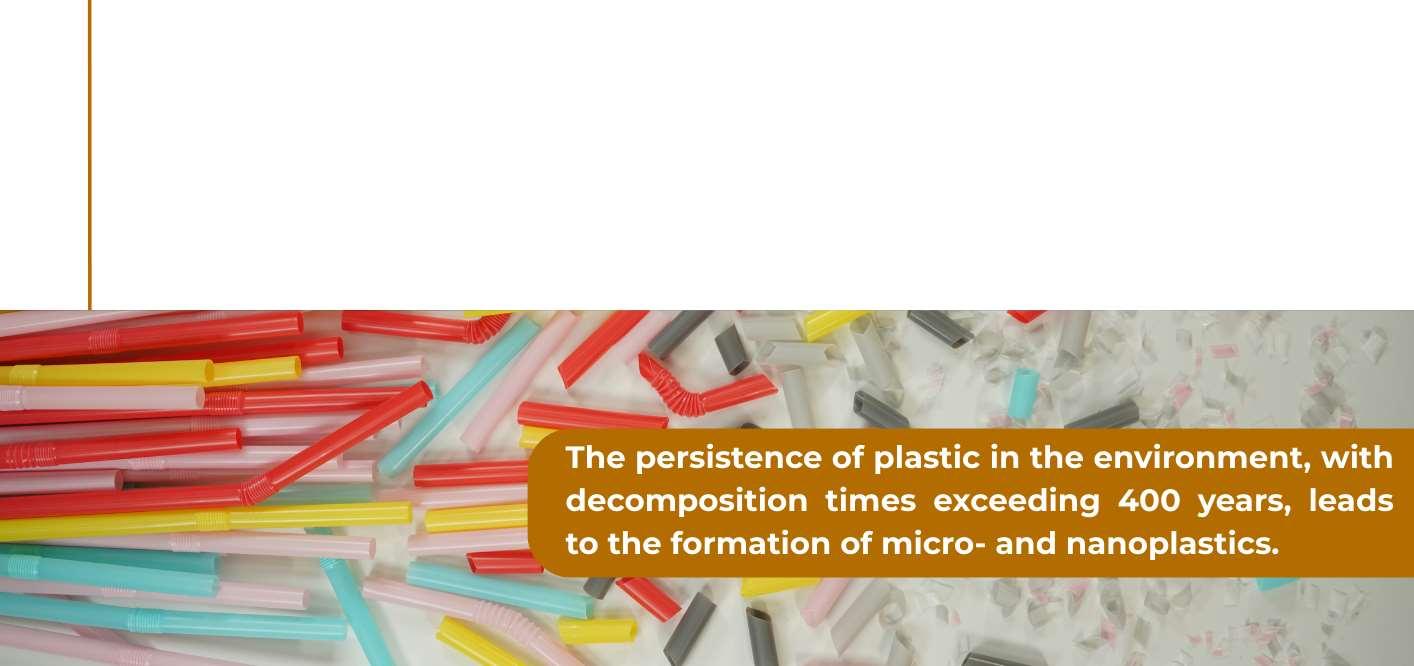
Plasticpollutionisconsideredoneofthegreatestenvironmentalthreatsofthe21st century, affecting terrestrial and aquatic ecosystems as well as human health. It is estimated that over 460 million tons of plastic are produced annually, of which around 40% are disposable and less than 10% are recycled (EMBRAPA, 2025). This accumulation of waste results in soil and watercontamination, animal deaths due toingestionorentanglement,andtheformationofmicroplasticsandnanoplastics, whichhavealreadybeendetectedinfood,drinkingwater,andevenair,posingrisks tohumanhealthandfoodsecurity.
Preventing plastic pollution requires a systemic approach involving changes in production, consumption, and disposal patterns. The adoption of sustainable practices on rural properties can significantly help mitigate this issue. Measures such as proper management of pesticide containers, replacing conventional plasticswithbiodegradablematerials,usingreuseandrecyclingtechnologies,and implementing reverse logistics programs strengthen the sector's environmental commitment.Furthermore,raisingawarenessamongproducersandruralworkers about responsible disposal and the circular economy is essential to reduce environmentalimpactandpromotemoresustainablesupplychains.
Of the 160 properties analyzed in the project, for the first indicator (“Does the property have trash bins?”), 113 (71%) have trash bins for waste disposal on-site. Another44properties,or27.5%,donothavetrashbins.In3properties,nodatawere collectedforthisindicator.
Regarding the indicator (“Does the property have unusable tires (old/unused) storedorplacedoutdoors?”),78properties(48.8%)donothavesuchtires,indicating thatthetireshavesomedestination.However,28propertieshaveunusedtiresonsite, and 54 properties had no data collected, meaning that in these last two categories,over50%ofthepropertiesanalyzedstillpresentissues.
Lastly, but not least, we have the indicator (“Is recyclable waste sent to the city?”), considering that all recyclable waste requires proper disposal. Of the properties analyzed, 64 (40%) send recyclable waste to the city, 56 (35%) have no proper destination—disposing it in private landfills, burning it (which is not allowed), or otherimpropermeans—andin40properties(25%)nodatawerecollected. Alldataforthethreeindicatorsmentionedabovecanbeseeninthegraphsbelow.
Percentageofwastebinadoptionontheproperty
Percentagedistributionofscraptiresdisposedoforstoredin theopenair
Adopted
Notadopted
Percentagedistributionofrecyclablewastesenttothecity
Notreported
Adopted
Notadopted
Notreported
Adopted
Notadopted
Notreported
Inruralareasandregionsofhighbiodiversity,suchastheCerradoandthe LegalAmazon,plasticpollutionrepresentsasilentthreat.Studiesfromthe Silent Amazon Expedition revealed the presence of microplastics in fish, aquatic plants, and even birds using plastic waste to build their nests, demonstrating the penetration of these contaminants into the country’s most sensitive ecosystems (National Geographic, 2021). The lack of basic sanitationinmuchoftheAmazoniancitiescontributestothedispersionof plastics in rivers, making this biome one of the world’s hotspots for microplasticcontamination(FAPESP,2025).
Protectionaroundwatercourses,for example,preventsplasticwastefrom beingtransportedbyrunoff,actingasaphysicalandbiologicalbarrier(IEC, 2025).
Additionally, practices such as soil analysis and the use of natural crop 0%20%40%60%80%100%
protection strategies help reduce the need for plastic inputs, including packaging, tarps, and irrigation tubing. The adoption of biodegradable or reusable alternatives is essential to minimize waste generation and promotecleanerandmoreefficientagriculture.
Native Cerrado vegetation, when preserved or restored, functions as a physical and biological barrier against the movement of solid waste. Practices such as reforestation, protection of riparian forests, and conservation of natural habitats are fundamental to retaining lightweight plastics, such as bags and agricultural packaging, preventing their fragmentation into microplastics and subsequent contamination of soils and groundwater (SOARES-FILHO et al., 2014). Furthermore, vegetation covercontributestoregulatingsoiltemperatureandmoisture,factorsthat influencethephysicalandchemicaldegradationofplasticpolymers.
Thecombinationofintensesummerrainfallandlongdryperiodsfacilitates the transport of plastic waste by runoff, especially in areas with low vegetation cover and exposed soils (EMBRAPA, 2025). Water erosion, commoninsandyandunprotectedsoils,enhancesthedispersalofplastics intowatercoursesandaquiferrechargeareas,exacerbatingenvironmental impacts.
EvaluationCriteria:


Rainwater harvesting is a very simple practice that allows producers to reduce dependenceonexternalwatersourcesandstrengthenresilienceagainstdroughts. Bycollectingwaterdirectlyfromroofsandotherbuildingsurfacesthroughgutters and downspouts, it is possible to maximize water use for irrigation, cleaning facilities, livestock watering, and replenishing underground reservoirs, thereby reducingcostsandimpactsonnaturalwaterbodies.
Ensuring the quality of the collected water is essential, especially when used for food crops. It is important to discard the first flush of water. Researchers at the University of São Paulo (USP) analyzed parameters such as pH, electrical conductivity,totalnitrogen,anddissolvedorganiccarbonatdifferentstagesofthe harvestingsystem,concludingthatdiscardingthefirst2–5mmofrunoffefficiently removed impurities, ensuring water of adequate quality for vegetable irrigation (CARVALHO,2014).
Of thetotal properties visited, 10(6.25%)practicewaterreuse,while149 (93.13%) do notimplementthispractice,and1producer(0.62%)didnotreport,asshowninthe graphbelow.
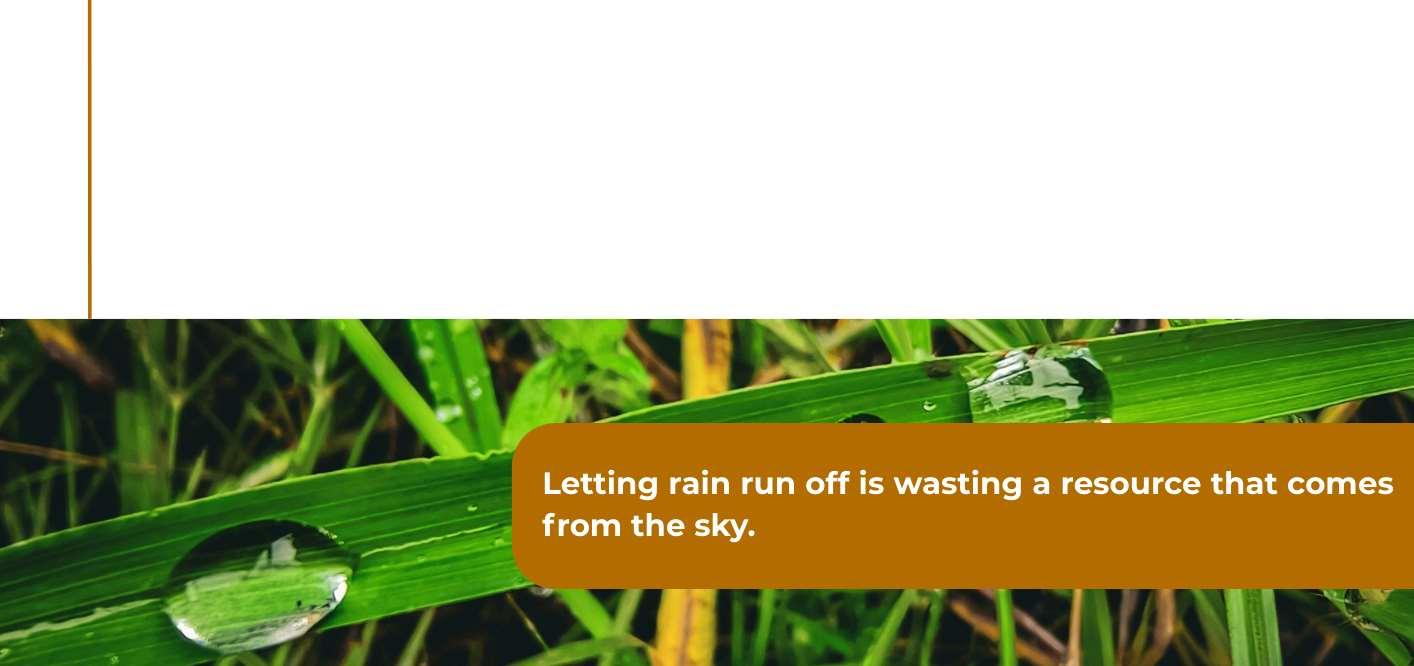
Rainwater harvesting increases water availability during dry periods, ensuring supplemental irrigation and livestock watering without overloading aquifers and natural water sources. At the same time, by reducing surface runoff, it decreases erosion and promotes infiltration, enhancing the soil’s available moisture and contributing to the stability of soil microbiota and thermal regulation of the productionsystem(EMBRAPASUÍNOSEAVES,2015).
The economic feasibility of implementing rainwater harvesting systems mainly dependson threefactors:average precipitation, catchmentarea, andnon-potable water demand profile. Research conducted by the Federal University of Goiás showed that in buildings with constant demand for uses such as machinery washingandlivestockdrinkers,theinvestmentreturnoccursinlessthanfiveyears whenthesystemisdesignedaccordingtoregionalseasonality(SILVA,2023).
Rainwater harvesting is a strategic practice that strengthens regenerative agriculture and is essential for supplementary irrigation of crops and orchards during the dry season. When combined with other storage techniques such as cisterns and small dams, rainwater harvesting improves water management, increases the autonomy of rural properties, and enables crop diversification, resultinginhigherproductivityandeconomicviability.
In the Mato Grosso Cerrado, the tropical seasonal climate features a well-defined rainyseasonfromOctobertoApril,withannualprecipitationrangingfrom1,200to 1,800mm,andaharshdryseasonfromMaytoSeptember,whenthewaterbalance shows deficits that can exceed 400 mm. The dominant soils are Red and Yellow Latosols, which are deep, well-drained, and highly porous, but naturally low in fertility, acidic, and low in organic matter. This combination of strong rainfall seasonality and highly infiltrative soil characteristics highlights the importance of harvesting and storing rainwater to ensure a continuous supply during the dry months.
EvaluationCriteria:

Renewable energy is obtained from natural resources that continuously regenerate, such as the sun, wind, water, biomass, and geothermal heat. Unlike fossil fuels, these alternatives do not deplete with human use and have a lower environmental impact. In Brazil, the electricity matrix is one of the cleanest in the world,withabout88%ofgenerationcomingfromrenewablesources,accordingto areportbytheInternationalRenewableEnergyAgency(IRENA,2025).
Solar energy, for example, has been growing rapidly. In the first quarter of 2025 alone, nearly 300,000 new consumers joined the distributed generation system, consolidatingthecountryasagloballeaderinphotovoltaicenergy(ANEEL,2025).
In the agricultural sector, its most directuses include pumping and pressurization for irrigation, cooling and processing on farms, lighting, electrification of fences, automation, and drying, as well as replacing diesel generators with photovoltaic andwindsystems;andvalorizingorganicresiduesthroughbiodigestersforbiogas and biofertilizer production. In short, this involves replacing fossil fuels with lowcarbonsources,offeringgreatercostpredictabilityandsuitablewater–energy–food integration(FAO,2018;MEKHILEF;SAIDUR;KAMALISARVESTANI,2012;IRENA,2015).
Only 49 properties confirmed benefiting from the use of some renewable energy source, either wind or, in most cases, solar. Another 57 properties reported no renewable energy use,and for 54 properties, the data was not collected, as shown inthegraphbelow
Percentagedistributionofrenewableenergyadoption
Adopted
Notadopted
Notreported
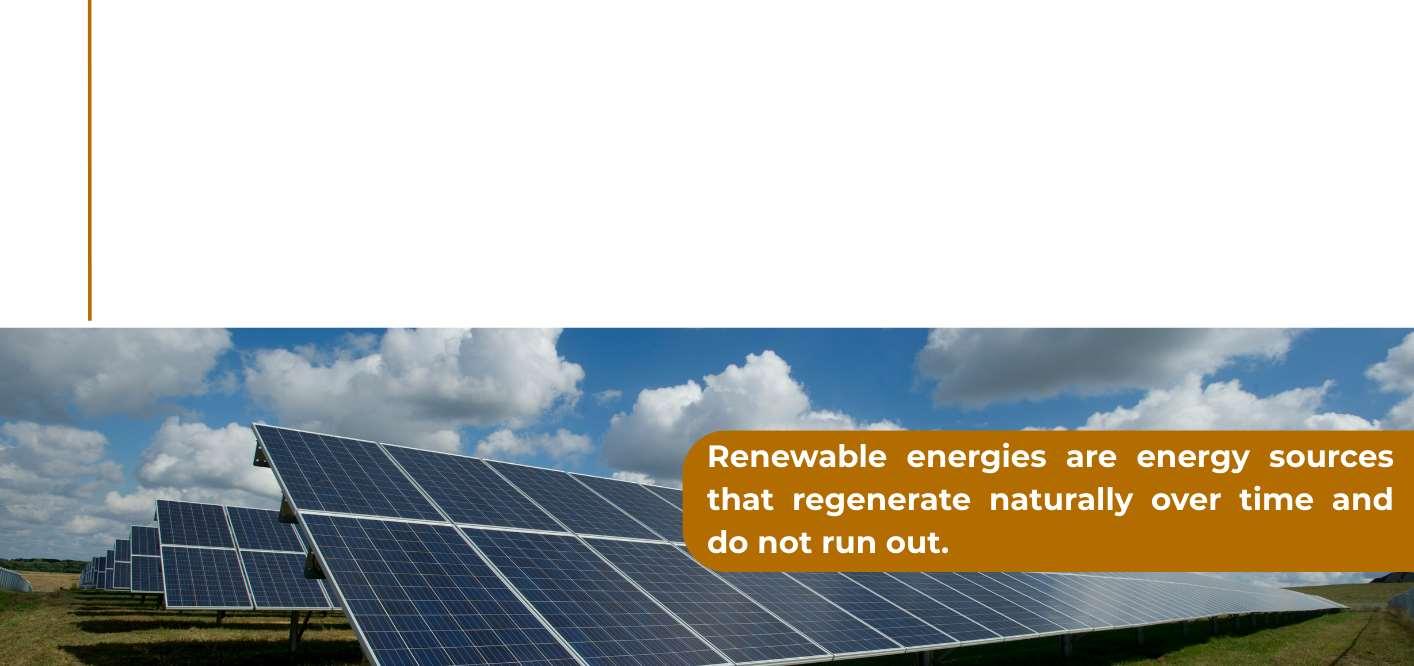
Thus,theresultsindicatethatonlyapproximately30%ofpropertiesusesomeform ofrenewableenergy,whilenearly70%oftheremainingpropertieseitherdonotuse renewableenergyorthedatawasnotcollected.
First, there is a direct reduction in emissions and local pollution: replacing diesel pumps with photovoltaic pumping eliminates CO2 emissions during operation, reduces NOx/particulate matter and noise, and decreases the risk of oil spills, resulting in environmental and occupational health benefits (MEKHILEF; SAIDUR; KAMALISARVESTANI,2012;IRENA,2015).
In irrigation systems,solar energy combined with drip irrigation and sensor-based management improves water-use efficiency by aligning energy supply with crop water demand, reducing losses due to evaporation, runoff, and nutrient leaching. Technical-economicstudiesindicatehighreliabilityandcompetitivelevelizedcosts forphotovoltaicpumpinginremotefarms(CAMPANA;LI;ZHANG,2015;FAO,2018).
Solar energy, in particular, has gained prominence due to the high incidence of solarradiationintheCerradoregion,withanannualaverageabove5.5kWh/m²/day, whichfavorstheefficiencyofphotovoltaicsystems(EDP,2025).
The economic feasibility of renewable energy is linked to the availability of tax incentives, specific credit lines, and financing programs, suchas the Climate Fund and the Program for the Development of Distributed Electricity Generation (PROGD). Photovoltaic solar systems, for example, offer medium-term financial returnsandlowmaintenance(ABRADEE,2025).
WiththeNationalEnergyPolicy(LawNo.9,478/1997)andthe2050NationalEnergy Plan establishing guidelines for sustainable development in the energy sector, prioritizing renewable sources and energy efficiency, the expansion of these sources is encouraged by programs such as Proinfa and Renovabio, which aim to increasetheparticipationofcleanenergyinthenationalmatrix(MME,2025).
State initiatives also reinforce this, such as the Mato Grosso Program for Rural Renewable Energy, which provides specific credit lines, technical training, and tax incentives for producers interested in adopting clean energy sources (EDP, 2025). According to the Strategic Plan for Renewable Energy Development in Mato Grosso, prepared by UFMT and UN Environment (2019), distributed generation in rural areas can reduce operational costs, increase energy autonomy, and enhance propertyvalueintheagriculturalmarket.
Theadoptionofrenewableenergystrengthenstheenvironmentalsustainabilityof the Mato Grosso Cerrado by replacing fossil fuels with clean alternatives, directly contributing to greenhouse gas emission reduction, biodiversity preservation, and compliance with national climate targets (SOARES-FILHO et al., 2014). This energy transition, when integrated with conservation practices such as reforestation, soil conservation,andwatercourseprotection,amplifiesecologicalandsocialbenefits.
The Mato Grosso Cerrado region presents favorable edaphoclimatic conditions for implementingrenewableenergysystems,especiallysolar,wind,biomass,andsmall hydropower plants (EDP, 2025). The flat topography and low population density facilitatetheinstallationofsolarpanelsandwindturbines,whileconstantwindsin open areas enhance the potential for local wind generation (UFMT; UN Environment,2019).
The availability of agricultural biomass, derived from crop, livestock, and agroindustrial residues, allows the use of biodigesters and cogeneration systems, promoting the energy reuse of organic materials and reducing greenhouse gas emissions(MARTINSetal.,2022).
EvaluationCriteria:

Greenhouse gas (GHG) emissions are one of the main drivers of global climate change.Thesegases,suchascarbondioxide(CO₂),methane(CH₄),nitrogenoxides (NOₓ), and fluorinated gases, have the ability to trap heat in the atmosphere, intensifying the natural greenhouse effect and causing global warming (IPCC, 2023). In Brazil, the main sources of GHG emissions are related to deforestation, agricultureandlivestock,industry,andthetransportsector(MCTI,2024).
TheNationalClimateChangePolicy(LawNo.12,187/2009)establishesguidelinesfor reducing emissions and promoting sustainable practices. Monitoring and quantifying GHGs iscarried out through the Greenhouse Gas Emissions Estimates System (SEEG), which provides updated data on emitting sectors and their respectivecontributions(SEEG,2025).

The carbon footprint is the measure of the total GHG emissions caused directly or indirectlybyaprocessorproduct.Inagriculture,itconsidersallemissionsalongthe product’slifecycle,frominputproductiontodeliverytothetrader.
ForimplementingGHGaccountingusingtheGHGProtocolmethod,itisnecessary to first define boundaries, identify the gases, determine the different emission sources, establish the geographic area, and set the time interval covered, which mustbeatleastoneyear.
GreenhouseGas(GHG)inventorieswerepreparedinaccordancewithGHGProtocol guidelines, based on primarydata collected on-site. Of the 160 farms evaluated, 55 haveconsolidatedinventories.
For the purposes of this study, a total cultivated area of 201,596.24 hectares was considered,with143,248.23hectaresallocatedtosoybeancultivationand58,348.01 hectarestocorncultivation.TotalGHGemissionsassociatedwiththesecropswere estimatedat436,789.73tCO₂eqforsoybeanand74,328.55tCO₂eqforcorn.
Additionally,emission intensityindicators were calculated based on the cultivated area. For soybean, the intensity was 178.93 tCO₂eq/ha, while for corn it was 57.97 tCO₂eq/ha.
The following figure presents average values per farm, including average total emissions, intensity per hectare (tCO₂eq/ha), and intensity per production (tCO₂eq/ton).
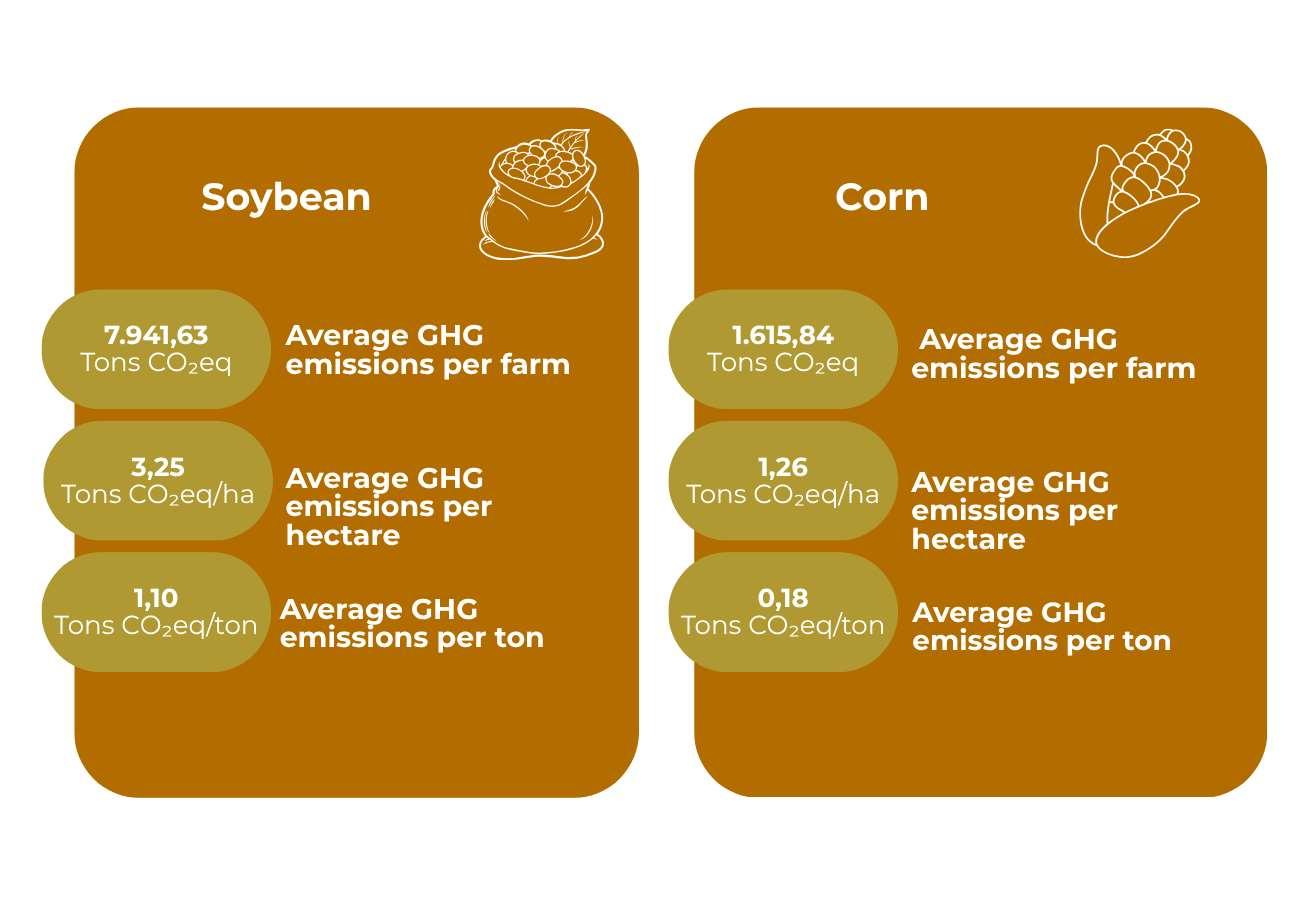
Reducing GHG emissions directly contributes to achieving national and internationalclimatetargets,suchastheParisAgreement.Additionally,mitigation practices promote co-benefits, including improved soil quality, increased productivity, and reduced operational costs (SILVA et al., 2022). The adoption of clean technologies also enhances the institutional image of properties and their accesstosustainablemarkets.
Implementation feasibility by producers is a major challenge, as GHG calculations require a large volume of information and documentation, including energy consumption data for the entireproperty during the year, as well as fuel expenses separated by crop and season.These procedures aretime-consuming and require cooperation across multiple areas of the farm, where operations become particularlydynamicduringplantingandharvestperiods.
Economic feasibility for GHG mitigation is associated with participation in
Payments for Environmental Services (PES) programs and the carbon credit market. Properties that adopt sustainable practices can generate certified credits and sell them on national and international platforms (CARBONO BRASIL, 2025). Theuseofbiodigesters,forexample,reducesmethaneemissionswhilegenerating renewableenergyandorganicfertilizers,providingmedium-termfinancialreturns.
GHGmitigationsynergizeswithpracticessuchasno-tillfarming,croprotation,the use of bioinputs, and ecological restoration. Integrating these actions enhances carbon sequestration, improves soil structure, and reduces dependence on chemical inputs (SOARES-FILHO et al., 2021). Combining strategies allows properties to achieve greater climate resilience and competitiveness in the agriculturalsector.
Edaphoclimatic conditions directly influence GHG emissions and mitigation. Clay soils,forexample,havehighercarbonretentioncapacity,whilesandysoilsaremore pronetoorganicmatterloss.Rainfallpatternsandaveragetemperaturealsoaffect decomposition cycles and the release of gases such as methane and nitrogen oxides(EMBRAPA,2025).Adoptingpracticesadaptedtolocalconditionsisessential tomaximizeenvironmentalandeconomicbenefits.
EvaluationCriteria:

Thereductionofsyntheticpesticides,whicharechemicalproductsusedtocontrol andeliminatepests,isseenasanurgentnecessityforthesustainabledevelopment of agriculture. Historically, the intensification of pesticide use was the solution found to ensure food availability amid rapid population growth. However, this practice caused significant environmental contamination, as there was no technology capable of targeting only the pest, affecting the entire crop-pest system.Thenegativeimpactissubstantial,includingthedestructionofnon-target organisms (such as earthworms,pollinators,and natural predators), leading to the loss of biological diversity and soil biomass, and posing serious risks to human health. In fact, 55% of synthetic active substances carry hazard warnings, being significantly more dangerous than natural substances. Therefore, the central objective is to minimize impacts on human health and the environment through alternatives such as the adoption of Integrated Pest Management (IPM) and PrecisionAgriculture.
The use of synthetic pesticides was assessed according to the adoption of Integrated Pest Management (IPM) by producers. Of the 160 properties analyzed, 106 (66.25%) provided documentation certifying the use of IPM, while 54 (33.75%) didnotprovidesuchdocumentation,asshowninthegraphbelow.
Reducing theuse of chemical pesticidesdirectlycontributesto more efficient and sustainable crop management. Insteadof generalized applications, practices such as Integrated Pest Management (IPM) and precision agriculturetools allow inputs to be directed only where truly necessary. This improves pest control, reduces waste, and decreases unnecessary exposure of the environment and people to chemicals.Furthermore,morejudicioususeofpesticideshelpspreservebeneficial organisms, such as pollinators, natural enemies, and soil biota, supporting ecologicalbalanceandmaintainingbiodiversity.
Feasibility depends on behavioral change among users and the adoption of alternativepestmanagementapproaches.IntegratedPestManagement(IPM)isa fundamentalalternative,employingacombinationoftechniquessuchasbiological control (using parasitoids, predators, nematodes, etc.), cultural practices, and rationaluseofchemicalproducts.Theuseofbioinputs(biopesticides,bioproducts) presents“enormouspotential”toreplacechemicalproducts.
The synergy between reducing synthetic pesticides and regenerative agriculture practices is based on transitioning to resilient agroecological food systems. This combinationcentersontheadoptionofIntegratedPestManagement,whichseeks tobalancebiologicalcontrol,monitoring,andrationaluseofinputs.
Edaphoclimatic conditions (soil and climate) greatly influence the effectiveness, persistence,andtransportofpesticidesintheenvironment.Climatically,pesticides and biopesticides are highly sensitive to climate change, as increases in temperature and UV radiation, or decreases in relative humidity, can reduce their effectiveness. These changes may lead to considerable increases in quantities applied to compensate for lost efficiency. Furthermore, the use of chemical productsis directly conditionedbysoilandclimatic characteristics.Eventssuchas heatwaves, prolonged droughts, or pest population peaks tend to demand higher frequencyandvolumesofapplication.
EvaluationCriteria:

Soil organic carbon(SOC) corresponds to thefraction of carbon present in organic matter—resulting from the decomposition of plant and animal residues—and constitutesakeyindicatorofsoilquality,health,andfertility.Itisdirectlyrelatedto aggregate structure and stability, water and nutrient retention, and biological activity,playinganessentialroleinagriculturalproductivityandclimateregulation through carbon sequestration and greenhouse gas (GHG) mitigation. Thus, monitoring SOC is fundamental to understanding the impacts and benefits of regenerativeagriculturalsystems.
Inthiscontext,81farmscertifiedbyRTRSwereselected,representingasetofrural propertiescommittedtomoreresponsibleandsustainableagriculturalpracticesin the Mato Grosso Cerrado. These farms cover approximately 469,000 hectares of total area, of which about 342,000 hectares correspond to effectively utilized agriculturalland.
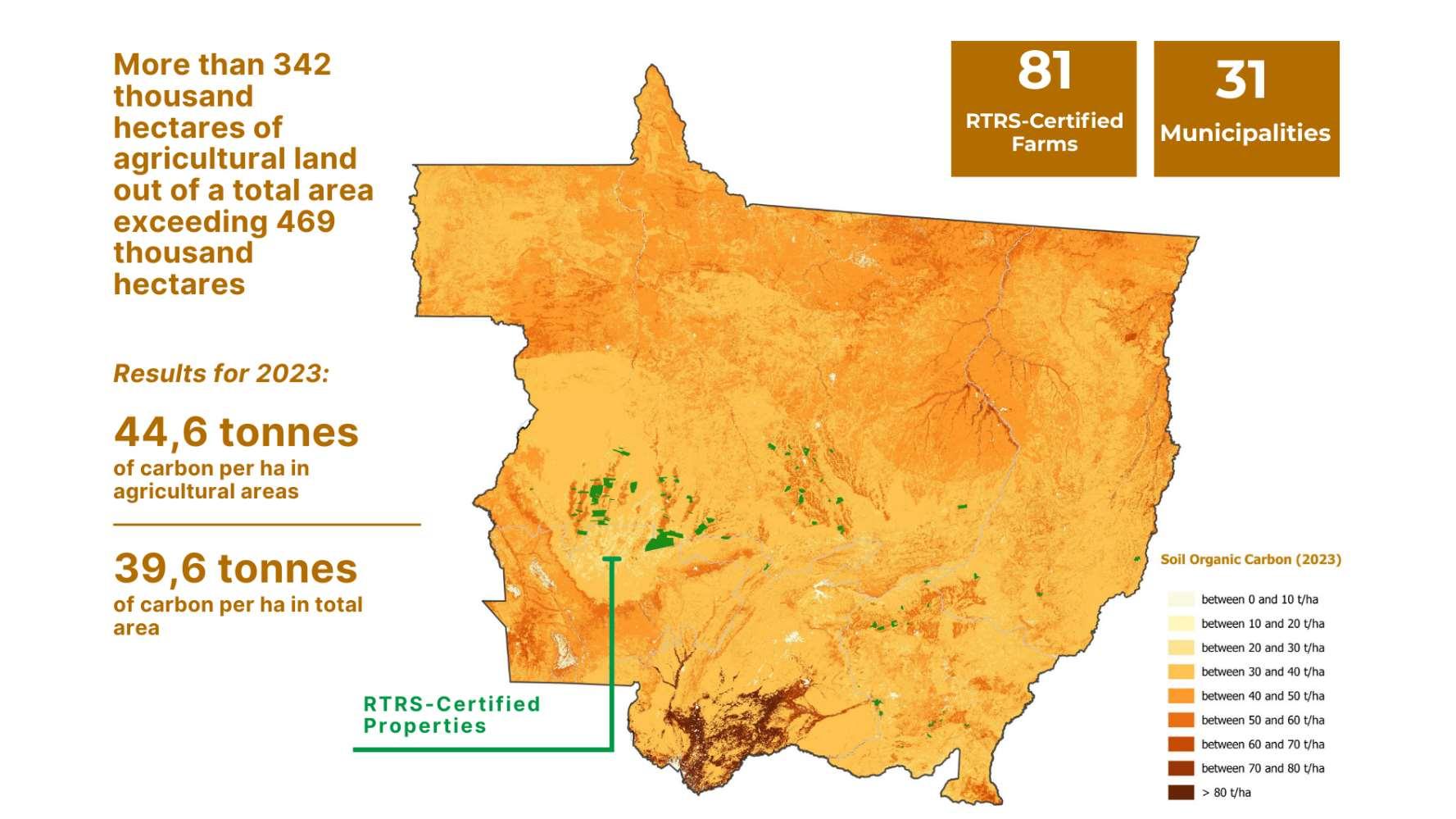
The spatial distribution of these properties spans 31 municipalities, distributed across four of the five mesoregions of the state, reflecting territorial diversity and theeconomicrelevanceofagriculturalproduction—especiallysoy—inMatoGrosso. Among the analyzed municipalities, Sapezal stands out as the main hub, concentrating 13 of the 81 farms. Located in the northern mesoregion of Mato Grosso, the municipality hosts 56 of the evaluated properties, constituting a strategicareaforsoilconservationandsustainablemanagement.
From an environmental perspective, the certified areas play a significant role in maintaining carbon stocks. The presented estimates were obtained from MapBiomas data, a collaborative initiative that uses satellite imagery and classification algorithms to map land use and land cover in Brazil annually. The methodologycombinesremotesensingtimeseries,fielddata,andcross-validation, allowingforspatiallyexplicitmeasurementofsoilorganiccarbondynamics.
Forthisstudy,theperiodfrom2013to2023wasconsidered,enablingtheevaluation of carbon stock evolution over the past decade. The results indicate that, on average, the farms present 39.6 tons of carbon per hectare when considering the total area (including agriculture, pastures, and native vegetation). In agricultural areas alone, the average value is higher, reaching 44.6 tons of carbon per hectare, reflecting more stable production systems with greater accumulation of organic matterandconservation-orientedmanagement.
Temporal analysis reveals that, between 2013 and 2023, carbon stocks remained stableor showed slight growth, especially in agricultural areas under conservation management. This trend demonstrates that sustainable practices—such as no-till farming, crop rotation, and cover crops—have contributed to gradually preserving and increasing SOC. Furthermore, the observed stability indicates that the properties avoided significant carbon losses, even in a context of agricultural expansion.
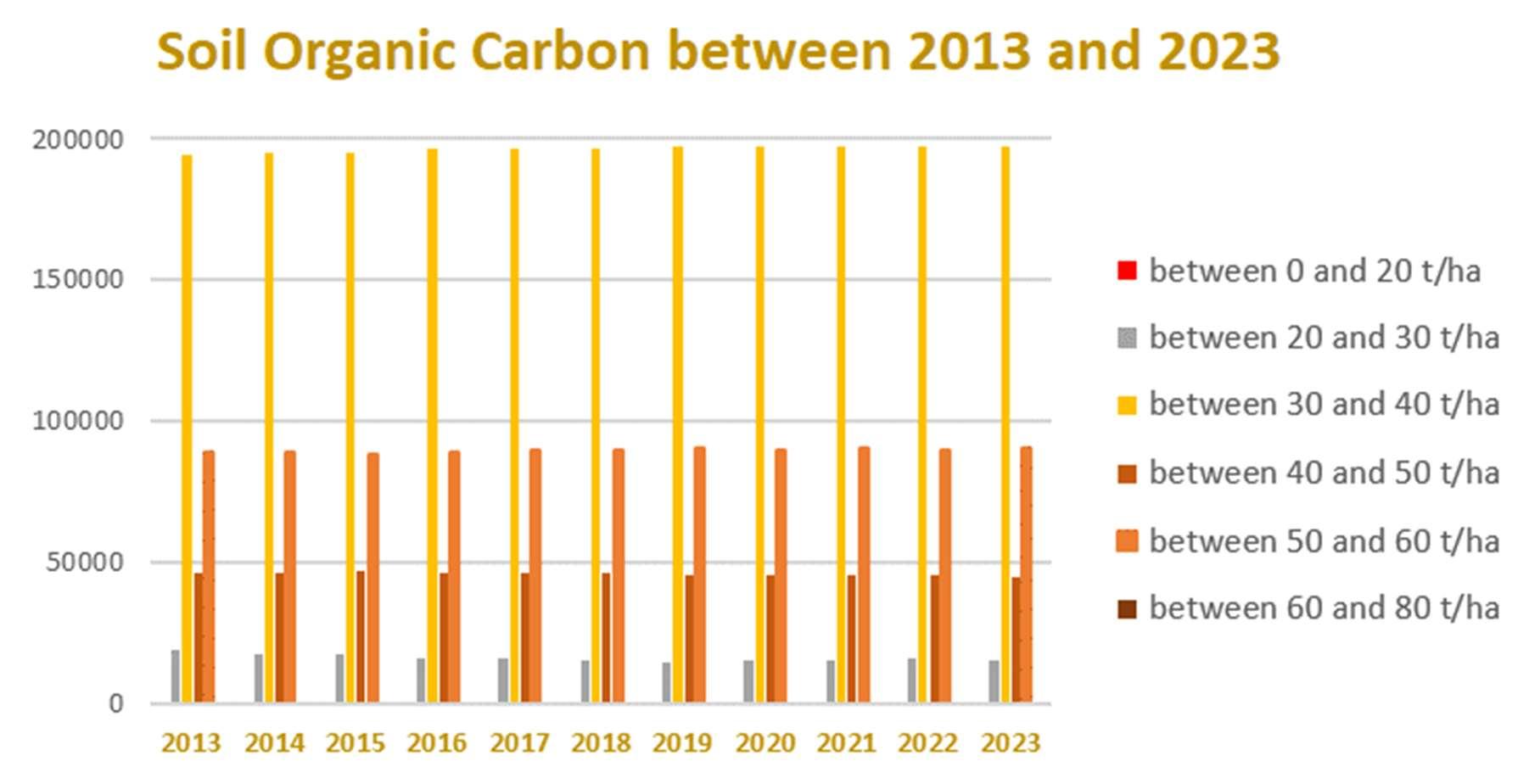
Legend: Average soil organic carbon (SOC) stocks on RTRS properties (2013–2023).
The baseline analysis reveals a heterogeneous scenario in the adoption of regenerativeagriculturepracticesamongtheevaluatedproducers.Somepractices are already widely consolidated, while others remain in the early stages of implementationorareminimallydisseminated.
The practice of no-till farming shows high adoption among producers (over 80%), reflecting the technical maturity of the sector regarding this aspect. This result indicates that producers have already incorporated this fundamental soil conservationpractice,creatingasolidfoundationforfutureadvancements.
In the intermediate adoption group (40% to 80%), practices such as the use of biological agents, crop rotation, and soil analysis are included. These represent an area of significant potential, as they are partially incorporated but still require broader dissemination and technical capacity-building to become standard practices.The trend istowardgrowth, givenalignmentwithmarketdemands and demonstratedproductivitybenefits.
On the other hand, practices with low adoption (below 40%), such as organic fertilizers, renewable energy, live fences, and reforestation, reveal important opportunities for advancement. Despite their strategic role in environmental sustainability and legal compliance (such as the conservation of native vegetation in natural habitats), implementation still faces challenges such as high costs, the needforgreatertechnicalsupport,andthelackofadequateincentives.
Overall, the results indicate that the sector already demonstrates good conditions regardingbasicconservationpracticesbutneedstoadvanceinitiativeswithhigher environmental and social impact. Strengthening technical assistance, economic incentives, and more targeted public policies will be crucial to expanding the adoptionofpracticescurrentlyintheearlystages.
1 No-tillfarming
3 Cropintercropping
4 Naturalfertilizerstrategies
5
6
7
8 Soilanalysis
10
11
12
13
14 Plasticpollutionprevention35,00%
15
18
1 Cover crops
2 Perennial cropping 40% Low Limited practice System diversification
3 Biodiversity - Low Significant legal deficit Benefits for natural systems
Below, the applications of the main regenerative agriculture practices on rural properties are presented, with a focus on promoting sustainability, soil conservation, biodiversity, and efficiency in the use of natural inputs. For each practice,thefollowingelementsareindicated:
1.Feasibilityofapplication: classifies the ease of implementing the practice in the field context, taking into account factors such as available resources, existing infrastructure, the producers’ technical knowledge, and local environmental conditions. The categories used — High, Medium, and Low — allow for a quick identification of which practices can be adopted immediately, which require adaptationortraining,andwhichneedmorerobustplanningandinvestment.
2.Datacollection: definestheverificationmethodforthepractice,whichcanbeOnsite, through field inspections; Remote, using satellite imagery, drones, or other sensing technologies; or Hybrid, combining both methods. This distinction is essential for organizing the monitoring schedule and optimizing resources, ensuringgreateraccuracyinevaluatingtheimplementedpractices.
3.Assessment: describes how the practice is monitored in routine agricultural operations, including visual inspections, review of management records, and historicalactivitydataprovidedbytheproducer.Thisassessmentallowsverification of proper practice implementation, identification of improvement opportunities, and ensures that the desired regenerative effects are consistently achieved over time.
4.Typesofevidence: detailstheelementsthatprovetheeffectiveapplicationofthe practices, ensuring transparency and reliability in the evaluation. Evidence can be classifiedintofourmaingroups:
Technical documents (agronomic prescriptions, management plans, input invoices);
Photographicrecords;
Geospatialevidence(remotesensing,maps,andgeoprocessing);
Otherrecords(plantinghistory,speciesinventories,emissioncalculations).
Fieldverificationofthe presenceofcoverplants betweencroppingseasons
Photographicrecords;remote sensingmaps;IPMplanning;crop rotationplan 2 No-tillfarming Medium On-site
Inspectionofsoil management,presenceof cropresidues,andabsence oftillage
Photographicrecords;fieldactivity report 3 Croprotation Medium On-site
Reviewofplantinghistoryin recentseasonswiththe producer
Visualassessmentofspecies cultivatedsimultaneously
Directidentificationofthe presenceofestablished perennialspecies
Verificationoftheuseof compostsorbioinputs
Comparisonofrecordsof chemicalinputusewith previousseasons
Invoices(receipts)forseedsof plantedcrops;photographic records
Invoices(receipts)forplanted crops;photographicrecords
Invoices(receipts)forplanted crops;managementplan; photographicrecords;remote sensing
Documents:agronomic prescription;applicationrecords; reductionorsubstitutionplan
Documents:agronomic prescription;applicationrecords fromrecentyears;invoicesfor fertilizersusedinrecentseasons; reductionorsubstitutionplan
Observationoftheuseof biologicalcontrol,traps, naturalbarriers,orplant extracts
Assessmentofthepresence oflocalizedirrigation systems(drip,low-pressure sprinklers)andfrequency management
Reviewoflaboratoryreports andfrequencyofanalyses
Observationofthepresence ofpreservedareas,ecological corridors,andspecies diversityinthelandscape
Visualinspectionor aerial/satelliteimageryto verifymaintenanceof PermanentPreservation Areas(APPs)andriparian vegetation
Visualverificationofrowsof
Photographicrecords;biological applicationrecords;IPM;product purchaseinvoices
Document:irrigationmanagement andmonitoringplanandwateruse permit;photographicrecord
Document:soilanalysisreports; analysishistoryofrecentyears;soil managementplan
Photographicrecords;species inventoryandgeoprocessing
Photographicrecordand/or geoprocessing
Photographicrecords;remote
Assessmentofmaintenance ofnativevegetationareas andabsenceofdeforestation
Verificationofseedling establishmentandgrowth stageofreforestedareas
Document:CAR(percentageof LegalReserve);remotesensing
Photographicrecordsand geoprocessing;PRAD
Reviewofwateranalysesand observationofcontaminant containmentpractices.
Wateranalysisreportforwater bodies;watermanagementplan; andphotographicrecords.
Assessmentofplasticwaste management(input packaging,plasticfilms, selectivesorting,etc.).
Verificationoftheexistence ofcisternsorcollection tanks.
Checkingforthepresenceof solarpanels,biodigesters,or otherinstalledsystems. Collectionofenergy consumptiondata.
Collectionofenergy consumptiondataandother informationrelatedtoGHG emissionscopes.
Comparisonofrecordsof chemicalinputusewith previousgrowingseasons.
Document:SolidWaste ManagementPlan(PGRS);proofof properdisposalofallclassesof waste;andphotographicrecords (CDF).
Rainwatermanagementplan; volumecollected;photographic records.
Document:Electricitybill;contract withtheutilitycompany;and photographicrecords.
GHGcalculator;GHGinventory; continuousimprovementplan.
Document:agronomic prescriptions;applicationrecords fromrecentyears;invoicesfor fertilizersusedinrecentgrowing seasons;reductionorsubstitution plan.
The adoption of regenerative practices faces a series of obstacles that can be categorized into four main dimensions: technical, economic, cultural, and regulatory.Anintegratedanalysisofthesefactorsisessentialtoguidestrategiesfor overcoming them and promoting the transition to more sustainable production systems.
From a technical perspective, limited specific knowledge and the scarcity of specialized technical assistance represent high-impact barriers, especially for practices that require greater complexity, such as the integration of organic fertilizers, efficient irrigation systems, or advanced water management. The absenceofprotocolsadaptedtoregionalconditionsandthedifficultyofcontinuous monitoringalsohindertheevaluationofresultsandtheadjustmentofpractices.
Ontheeconomicfront,initialimplementationcostsandlong-termfinancialreturns are the main obstacles, particularly for emerging technologies such as renewable energyorinvestmentsininfrastructurelikeeffluenttreatmentsystems.Thelackof markets that differentially value sustainable products and the limitations of credit linesspecifictoregenerativepracticesreducetheincentiveforadoption.
Culturalaspectsrevealsignificantresistancetochange,oftenassociatedwithfears of production losses and attachment to traditional models. The perception of risk, evenwhennotalwaysjustified,hasastrongimpactonproducers’decisions.Family traditions and social pressures exert a more moderate influence but can reinforce themaintenanceofthestatusquo.
Finally, in the regulatory sphere, the complexity of legal requirements and bureaucracy involved in environmental regularization processes, such as compliance with Legal Reserves and Permanent Preservation Areas (APP), stand out. The lack of adequate incentives and inconsistent enforcement generate distrustandreduceadherencetopublicpoliciesaimedatsustainability.
Thetablebelowsummarizesthemainbarriersidentified,theirdescription,andthe associatedlevelofimpact:
1 No-till farming
2 Cover crops
3 Crop rotation
4 Multiple Species and Intercropping
5 Natural Crop Protection Strategies
Limited knowledge of proper management
Lack of regional protocols for species
Difficulty in monitoring frequency and results
Shortage of specialized technical assistance
Lack of training and applied research
Cost of specialized machinery
Resistance to abandoning conventional tillage Bureaucracy in conservation projects
Initial investment in seeds Family tradition of monoculture Inadequate incentives
Benefits only in the medium term
Market still undervalued
Initial implementation costs
6 Natural Fertilizer Strategies Low local availability / logistical constraints Long-term return
7 Biodiversity
8 Perennial cropping
9 Reduction of synthetic fertilizers
10 Water Quality and Pollution Prevention
11 Soil analysis
Limited knowledge of proper management
Lack of regional protocols for species
Difficulty in monitoring frequency and results
Attachment to traditional practices
Lack of incentive policies
Fear of productivity losses Legal complexity for registering systems
Perceived risk (uncertain effectiveness)
Initial cost
High initial investment
Benefits only in the medium term
Limited knowledge Implementation cost
Limited knowledge about the need
Initial cost
Lack of clear incentive policies
Low cultural acceptance Inconsistent enforcement
Resistance to abandoning conventional tillage Bureaucracy in conservation projects
Family tradition of annual cropping Inadequate incentives
Attachment to conventional use
Lack of incentive policies
Low cultural adoption Inadequate incentives
Perceived risk (uncertain effectiveness)
Lack of clear incentive policies
12 Renewable Energy Need for specialized technical knowledge
13 Efficient Irrigation Measures
14 Rainwater harvesting
15 Protection Around Watercourses
16 Natural habitat conservation
17 Reforestation
18 Living Fences and Windbreak Barriers
19 Plastic pollution prevention
20 Greenhouse Gas (GHG) Emissions
21 Reduction of synthetic pesticides
Insufficient technical monitoring
High initial investment
High costs of modern systems
Limited technical knowledge in system sizing Costs of reservoirs
Lack of technical assistance for restoration
Technical deficiencies in restoration practices
Lack of local technical protocols
Restoration costs
Tradition of relying solely on rainfall
Cultural resistance (new practice)
Resistance to allocating productive land
Bureaucratic water-use permitting
Water licensing regulations
Legal requirements (fines if not complied with)
No direct economic return Family resistance to land restoration Legal complexity / CAR / CRA
High investment with no immediate return
Need for proper species selection Implementation and maintenance costs
Lack of rural selective collection infrastructure
Lack of local technical protocols
Limited knowledge
Logistical costs for proper disposal
Low cultural acceptance
Insufficient incentive policies
Resistance due to the perception of “loss of productive area” Lack of incentives
Culture of improper disposal
Lack of local recycling policies
No direct economic return Cultural resistance Complexity
Benefits only in the medium term
Fear of productivity losses Inadequate incentives
ThebaselineconstructedintheCerradoofMatoGrossorevealsabalancedpicture of progress, limitations, and opportunities for regenerative agriculture. No-till farming, present in more than 90% of the properties, is the most widespread practiceandconstitutesthefoundationforotherconservationstrategies;however, its full regenerative potential depends on integration with crop rotation, cover crops, and multi-species intercropping, which are still at intermediate levels of adoption.
In contrast, practices such as organic fertilization, efficient irrigation, rainwater harvesting,andrenewableenergyareatanearlyormarginalstageofadoption.The conservation of native vegetation in natural habitats and the protection of areas surroundingwatercoursesshowasignificantdeficit.Theseaspectsrepresentmajor bottleneckstoamoreconsistenttransition.
Another challenge lies in the lack of quantitative and frequency-based data on practices. Although it is possible to identify their presence or absence, there is still noclarityregardingintensityandcontinuity—suchashowmanyrotationcyclesare carried out or the effective area covered by intercropped systems. This gap is relevant because regenerative effectiveness depends not only on nominal adoption,butonconsistencyandqualityovertime.
This difficulty in consolidating metrics is also reflected in the scientific literature, whichtendstofavorqualitativeanalysesorisolatedcasestudies.Thisreinforcesthe need for research that provides robust and comparable indicators to monitor the evolutionofregenerativeagricultureinBrazil.
The integrated analysis confirms that the path to regeneration does not lie in the sumofisolatedpractices,butinhowtheyarearticulatedinsynergy.No-tillfarming combined with cover crops and rotation, together with biological inputs, creates resilient soil systems. Restored Permanent Preservation Areas (PPAs), along with reforestation and living fences, strengthen biodiversity andwaterprotection. Solar energycombinedwithefficientirrigationincreasesfarmautonomy.
The barriers identified—implementation costs, restricted access to credit, lack of technical assistance, and regulatory complexity—underscore the need for structured support. It is essential to expand training, financing lines, and marketbasedinstrumentssuchasPaymentsforEnvironmentalServices(PES).Inthisway, the baseline fulfills its role: providing a clear snapshot of the current reality and indicating the next steps. The Cerrado already shows significant progress and leadershippotential,butthe consolidationof regenerativeagriculturedepends on the effective integration of practices, the overcoming of barriers, and the strengtheningofincentivepolicies.
Soil Analysis
Laboratorystudythatmeasuresnutrients,pH,texture,andchemicalparameters tosupportmanagementandfertilizationrecommendations.
Soil Sampling
Processofcollectingrepresentativesoilsamplesforchemical,physical,or biologicalanalysis;thebasisforanyfertilitydiagnosis.
Good Agricultural Practices (GAP)
Setofstandardsandmanagementpracticesthatpromoteproductionefficiency, environmentalconservation,andfoodsafety.
Good Management Practices (GMP)
Techniquesaimedattherationaluseofinputs,wastereduction,andsustainable production.
Soil Organic Carbon (SOC)
Fractionsofcarbonpresentinorganicmatter.Reflectssoilhealthandcarbon sequestrationcapacity.
Nutrient Cycling
Movementandtransformationofnutrientswithinthesoil–plant–environment system,influencedbyorganicmatter,microbiota,andmanagement.
Soil Compaction
Reductionofsoilvolumeduetomechanicalpressure,decreasingmacroporesand hinderingrootgrowthandwaterinfiltration.
Soil Conservation
Setoftechniquestoreduceerosion,maintainsoilstructure,andpreservefertility.
Crop Season / Second Crop (Safrinha)
Agriculturalproductioninmorethanoneannualcycle,commonintheBrazilian Midwest,e.g.,soybeanfollowedbycornorothercrops.
Water Availability
Amountofwaterinthesoilaccessibletoplants,dependingontexture,structure, androotdepth.
Water Erosion
Soillosscausedbyrainfallandrunoff,impairingproductivityandsustainability.
GHG Emissions (Greenhouse Gases)
ReleaseofgasessuchasCO₂,CH₄,andN₂O.Inagriculture,influencedby fertilization,soilmanagement,andresidues.
Carbon Stock
Totalamountofcarbonstoredinthesoilandplantbiomass.
Soil Fertility
Soil’sabilitytosupplynutrientsandconditionsforoptimalplantgrowth.
Biological Nitrogen Fixation (BNF)
Naturalprocessperformedbybacteriathatconvertatmosphericnitrogeninto formsassimilablebyplants.
Water Infiltration
Movementofwaterfromthesurfacetodeepersoillayers.Essentialtoreduce erosionandfavorrootdevelopment.
Crop-Livestock-Forest Integration (CLFI)
Systemcombiningagriculture,livestock,andforeststooptimizelanduseand enhancesustainability.
Supplemental Irrigation
Applicationofwatertocompensatefordeficitsduringcriticalperiodsofthecrop cycle.
Leaching
Lossofnutrientsthroughdownwardmovementtodeepersoillayers,belowthe rootzone.
Integrated Pest Management (IPM)
Strategycombiningbiological,chemical,andculturalmethodsforrationalpest control.
Soil Organic Matter (SOM)
Materialderivedfromthedecompositionofplantandanimalresidues,essential forfertilityandsoilstructure.
Soil Microbiota
Communityofmicroorganismsresponsiblefornutrientcycling,decomposition, andsoilhealth.
Soil pH
Indicatorofacidityoralkalinity,influencingnutrientavailabilityandbiological activity.
No-Tillage (NT)
Systemwithoutsoildisturbance,maintainingcropresidues,reducingerosion, increasingorganicmatter,andimprovingwaterefficiency.
Crop Rotation
Plannedalternationofspeciesovertheyears,promotingsoilhealth,breakingpest cycles,andoptimizingnutrientuse.
Carbon Sequestration
Captureandstorageofatmosphericcarboninsoilsandvegetation.
Conventional Systems
Basedontraditionalpractices,usuallynon-irrigated,withlowertechnological input,greaterdependenceonclimaticconditions,andlimiteduseof mechanizationandadvancedmanagement.
Production System
Setofpracticesadoptedonafarm:soilpreparation,planting,harvesting, fertilization,pestmanagement,etc.
Soil Texture
Proportionofsand,silt,andclay,determiningwaterdynamics,compaction,and fertility.
Evapotranspiration
Sumofsoilwaterevaporationandplanttranspiration;usedasareferencefor irrigationmanagementaccordingtocropwaterdemand.
ADVDOBRASIL.ReservaLegal:29perguntaserespostasessenciais.Disponívelem: https://advdobrasil.com.br/licenciamento-ambiental/assessoria-juridica/reservalegal/..Acessoem:1ago.2025.
AGRO. Técnicas eficazes para conservação de água no campo: estratégias sustentáveis para agricultores. Tecnologia no Campo, 29 jan. 2025. Disponível em: https://tecnologianocampo.com.br/tecnicas-eficazes-para-conservacao-de-aguano-campo-estrategias-sustentaveis-para-agricultores/..Acessoem:25ago.2025.
ALTIERI,M.A.;NICHOLLS,C.I.Agroecologia:fundamentoseaplicações.5.ed.Porto Alegre:EditoraUFRGS,2020.
ANDRADE, Aluísio Granato de; CHAVEZ, Tiago de Andrade. Vetiver, o capim campeão contra a erosão. Rio de Janeiro: Embrapa Solos, 2013. Disponível em: <https://www.infoteca.cnptia.embrapa.br/infoteca/bitstream/doc/1003868/1/erosao .pdf>.Acessoem:25ago.2025.
ANEEL – AGÊNCIA NACIONAL DE ENERGIA ELÉTRICA. Dados de geração distribuída no Brasil. Brasília: ANEEL, 2025. Apud: CAPITAL NEWS. Brasil registra quase 300 mil novos consumidores de energia solar em 2025. Campo Grande: Capital News, 2025. Disponível em: https://www.capitalnews.com.br/economia/brasil-registra-quase-300-mil-novosconsumidores-de-energia-solar-em-2025/404512..Acessoem:25ago.2025.
AgroReceita. (2025). Agricultura Regenerativa: o que é e como aplicar. Disponível em:https://agroreceita.com.br/agricultura-regenerativa/.Acessoem:jul.2025.
Araújo,F.C.,Nascente,A.S.,Guimarães,J.L.N.,Sousa,V.S.,&Silva,M.A.(2019).Cultivo deplantasdecoberturanaproduçãodebiomassadeplantasdaninhas.InEmbrapa Arroz e Feijão-Artigo em anais de congresso (ALICE). In: CONGRESSO BRASILEIRO DE ARROZ IRRIGADO, 11., 2019. Balneário Camboriú, SC. Inovação e desenvolvimentonaorizicultura:anaiseletrônico.Epagri:Sosbai,2019...
Biofílica Ambipar Environment. Cerrado: descubra qual percentual mínimo de ReservaLegalparasuapropriedade.Disponívelem:https://biofilica.com.br/cerradodescubra-qual-percentual-minimo-de-reserva-legal-para-sua-propriedade. Acesso em:jul.2025.
Brasil.MinistériodaAgriculturaePecuária.PlanoABC:Dezanosdesucessoeuma nova forma sustentável de produção agropecuária / Ministério da Agricultura e Pecuária. Secretaria de Inovação, Desenvolvimento Sustentável, Irrigação e Cooperativismo.–Brasília:MAPA/SDI,2023.
AQUINO, Fabiana de Gois; VILELA, Marina de Fátima. Importância das Matas
Ripárias. Artigo em Hypertexto. Infobibos, 2008. Disponível em: https://www.infoteca.cnptia.embrapa.br/infoteca/bitstream/doc/571761/1/art023.pdf ..Acessoem:26ago.2025.
Bolfe, E. L.; Sano, E. E.; Campos, S. K. Dinâmica agrícola no Cerrado: análises e projeções. Planaltina, DF: Embrapa Cerrados, 2020. Disponível em: https://www.alice.cnptia.embrapa.br/alice/bitstream/doc/1121716/1/LVDINAMICAAG RICOLACERRADO2020.pdf
BRANCALION, P. H. S. et al. Reforestation can enhancebiodiversity and ecosystem servicesinagriculturallandscapes.EcologicalApplications,v.29,n.3,p.e01876,2019. DOI:https://doi.org/10.1002/eap.1876..Acessoem:16set.2025.
BRASIL.Leinº 12.651, de 25de maiode2012.Dispõesobrea proteçãodavegetação nativa; altera as Leis nº 6.938, de 31 de agosto de 1981, nº 9.393, de 19 de dezembro de 1996, e nº 11.428, de 22 de dezembro de 2006; revoga as Leis nº 4.771, de 15 de setembrode1965,enº7.754,de14deabrilde1989;edáoutrasprovidências.Diário Oficial da União, Brasília, DF, 28 maio 2012. Disponível em: <https://www.planalto.gov.br/ccivil_03/_ato2011-2014/2012/lei/l12651.htm>. Acesso em:26ago.2025.
BRASIL. Ministério do Meio Ambiente. Conselho Nacional do Meio Ambiente –CONAMA.Resoluçãonº284,de30deagostode2001.Dispõesobreolicenciamento ambiental de sistemas de irrigação. Diário Oficial da União: seção 1, n. 188, p. 150, 1 out.2001.
BRASIL. Ministério da Agricultura, Pecuária e Abastecimento. 2019. Mercado de biodefensivos cresce mais de 70% no Brasil em um ano. Disponível em: https://www.gov.br/agricultura/pt-br/assuntos/noticias/feffmercado-debiodefensivos-cresce-em-mais-de-50-no-brasil
BRASILNATIVAS.ImportânciadoreflorestamentodoCerrado.2023.Disponívelem: https://brasilnativas.com.br/importancia-do-reflorestamento-do-cerrado/. . Acesso em:21ago.2025.
CAMPANA,P.E.;LI,H.;ZHANG,J.Techno economicfeasibilityofphotovoltaicwater pumpingsystems.RenewableandSustainableEnergyReviews,v.49,p.1084–1094, 2015.DOI:10.1016/j.rser.2015.04.066.
CARVALHO, Jean. Avaliação da qualidade de água de um sistema de captação de água pluvial: estudo de caso: Laboratório de Ecologia Isotópica/CENA/USP. 2014. Dissertação (Mestrado) – Universidade de São Paulo, Piracicaba. Disponível em: <http://www.teses.usp.br/teses/disponiveis/91/91131/tde-24062014-150831/>. Acesso em:17mar.2025.
Carvalho, Wellington Pereira de. Recomendações Técnicas para o Uso de Plantas de Cobertura na Proteção do Solo no Período da Seca na Região dos Cerrados. CircularTécnica42.Planaltina,DF:EmbrapaClimaTemperado,2019.Disponívelem: https://www.infoteca.cnptia.embrapa.br/infoteca/bitstream/doc/1125176/1/CIRT-42Wellington-Carvalho.pdf..Acessoem:25ago.2025.
EDP.OpotencialsolardoCerradoGoianopodeimpulsionarumfuturosustentável. 2025. Disponível em: https://solucoes.edp.com.br/blog/potencial-solar-cerradogoiano/..Acessoem:25ago.2025.
Embrapa. Área de Reserva Legal (ARL). Disponível em: https://www.embrapa.br/codigo-florestal/area-de-reserva-legal-arl. Acesso em: jul. 2025.
EMBRAPA. Conceitos e benefícios da rotação de cultura. Agência Embrapa de Informação Tecnológica, 08 dez. 2021. Disponível em: <https://www.embrapa.br/agencia-de-informacaotecnologica/cultivos/soja/producao/rotacao-de-culturas/conceitos-e-beneficiosda-rotacao-de-cultura>.Acessoem:28jul.2025.
EMBRAPA – EMPRESA BRASILEIRA DE PESQUISA AGROPECUÁRIA. Adubação orgânica: fundamentos e práticas recomendadas. Brasília: Embrapa Solos, 2023. Disponível em: https://www.embrapa.br/adubacao-organica. . Acesso em: 20 ago. 2025.
EMBRAPA – EMPRESA BRASILEIRA DE PESQUISA AGROPECUÁRIA. Fertilizantes químicos:fundamentoserecomendaçõestécnicas.Brasília:EmbrapaSolos,2022.
EMBRAPAHORTALIÇAS.Manejoadequadodairrigaçãofavoreceaprodutividadee a economia de água e energia. Brasília: Embrapa, 2025. Disponível em: https://www.embrapa.br/busca-de-noticias/-/noticia/1463432/manejo-adequadoda-irrigacao..Acessoem:16set.2025.
EMBRAPA. Qualidade da água e redução da poluição. Brasília: Embrapa Pecuária Sudeste, 2018. Disponível em: https://www.embrapa.br/busca-de-publicacoes//publicacao/1131187/qualidade-da-agua-e-reducao-da-poluicao..Acessoem:26ago. 2025.
EMBRAPA. Manejo adequado da irrigação favorece a produtividade e a economia de água e energia. Brasília: Embrapa, 2025. Disponível em: https://www.embrapa.br/busca-de-noticias/-/noticia/1463432/manejo-adequadoda-irrigacao..Acessoem:25ago.2025.
EMBRAPASolos.Análisesdesolos.PortalEmbrapa:Embrapa,2024.Disponívelem: <https://www.embrapa.br/solos/analises>.Acessoem:31jul.2025.
EMBRAPA. Solos: estudos, potencialidades e uso. Capítulo 2: Solos e irrigação. Recife: Embrapa, 2021. Disponível em: http://www.infoteca.cnptia.embrapa.br/infoteca/handle/doc/1140429. Acesso em: 25ago.2025.
EMBRAPASUÍNOSEAVES.Reaproveitandoaáguadachuva!PortalEmbrapa,2015. Disponível em: <https://www.embrapa.br/contando-ciencia/agua//asset_publisher/EljjNRSeHvoC/content/vamos-reaproveitar-a-agua-da-chuva/1355746>.Acessoem:17mar.2025.
FAO. The potential of solar water pumping for agriculture. Rome: Food and Agriculture Organization of the United Nations, 2018. Disponível em: https://www.fao.org/3/i9047en/I9047EN.pdf..Acessoem:19set.2025.
FAPESP. Saneamento precário facilita a dispersão de plástico e microplástico na Amazônia. Revista Pesquisa Fapesp, São Paulo, 2025. Disponível em: https://revistapesquisa.fapesp.br/saneamento-precario-facilita-a-dispersao-deplastico-e-microplastico-na-amazonia/..Acessoem:22ago.2025.
Fialho,A.R.(2020)Sistemasdeproduçãodesojaemsucessãoaculturasanuaisde cobertura.CursoemPós-GraduaçãoemCiênciasAgrárias-AgronomiadoInstituto FederalGoiano,RioVerde,59.
FONTES, E. M. G.; VALADARES-INGLIS, M. C. Controle biológico de pragas da agricultura.Brasília:EmbrapaRecursosGenéticoseBiotecnologia,2020.Disponível em: <https://www.gov.br/agricultura/ptbr/assuntos/inovacao/bioinsumos/publicacoes/livro-controle-biologico-de-pragasda-agricultura-embrapa-2020/view>.Acessoem:20ago.2025.
GHELER-COSTA, C.; LOPES, J.; CRUZ, G. M. da. (2023). Agricultura regenerativa no Brasil: desafios e oportunidades. In: Agro in Data – Insper. Disponível em: https://agro.insper.edu.br/agro-in-data/artigos/agricultura-regenerativa-o-que-hade-novo.Acessoem:jul.2025.
GUARINO, E. de S. G.; LUCAS, R. R.; SOUSA, L. P. de; MIURA, A. K.; GOMES, G. C. Cortinas vegetais: usos e conceitos. Pelotas, RS: Embrapa Clima Temperado, 2018. 20 p. (Documentos, 475). Disponível em: <https://www.infoteca.cnptia.embrapa.br/infoteca/bitstream/doc/1102296/1/DOCU MENTO475.pdf>.Acessoem:31jul.2025.
GUIMARÃES, Daniel Pereira; FONSECA, Carlos Eduardo Lazarini da. Considerações preliminaressobreousodequebra-ventosnosCerrados.Planaltina,DF:EmbrapaCPAC, 1990. (Embrapa-CPAC. Documentos, 34). Disponível em: <https://www.infoteca.cnptia.embrapa.br/infoteca/bitstream/doc/548631/1/doc34.p df>.Acessoem:25ago.2025.
INSTITUTOBRASILEIRODEGEOGRAFIAEESTATÍSTICA–IBGE.CensoAgropecuário 2017: Resultados Definitivos. Rio de Janeiro: IBGE, 2019. v. 8, 105 p. ISSN 0103-6157. Disponível em: <https://www.fao.org/fileadmin/templates/ess/ess_test_folder/World_Census_Agric ulture/WCA_2020/WCA_2020_new_doc/BRA_REP1_POR_2017.pdf>. Acesso em: 27 ago.2025.
ICV – Instituto Centro de Vida. Transparência Florestal Mato Grosso: potencial de aplicação da Cota de Reserva Ambiental em Mato Grosso. Cuiabá: ICV, 2022. Disponívelem:https://www.icv.org.br/publicacao/policybrief-cra-mt/..Acessoem:1 ago.2025.
IEC – Instituto Evandro Chagas. Poluição plástica na Amazônia: evidências e desafios para a saúde ambiental. Ananindeua: IEC, 2025. Disponível em: https://www.gov.br/iec/pt-br/assuntos/noticias/iec-debate-poluicao-plastica-eseus-impactos-na-amazonia..Acessoem:22ago.2025.
IEF – Instituto Estadual de Florestas. Reserva Legal – SISEMA. Disponível em: https://ief.mg.gov.br/reserva-legal..Acessoem:1ago.2025.
IPAM – INSTITUTO DE PESQUISA AMBIENTAL DA AMAZÔNIA. Compostagem e manejo sustentável de resíduos orgânicos. Brasília: IPAM, 2023. Disponível em: https://ipam.org.br/publicacao/compostagem-e-manejo-sustentavel/. . Acesso em: 20ago.2025.
IPAM – INSTITUTO DE PESQUISA AMBIENTAL DA AMAZÔNIA. Manejo sustentável denutrientesnaagricultura.Brasília:IPAM,2023.
IPAM – Instituto de Pesquisa Ambiental da Amazônia. Programa CONSERV. Disponívelem:https://ipam.org.br/projeto/conserv/..Acessoem:1ago.2025.
IRENA – INTERNATIONAL RENEWABLE ENERGY AGENCY. Renewable Energy Statistics 2025. Abu Dhabi: IRENA, 2025. Disponível em: https://www.irena.org/publications/2025/Aug/Renewable-Energy-Statistics-2025. . Acessoem:25ago.2025.
IRENA. Renewable energy in the water, energy & food nexus. Abu Dhabi: International Renewable Energy Agency, 2015. Disponível em: https://www.irena.org/publications..Acessoem:19set.2025.
LIMA, Laryssa Batista de Abreu. Parasitismo de Cotesia flavipes (Hymenoptera: Braconidae) em diferentes estágios larvais de Diatraea saccharalis (Lepidoptera: Crambidae).2014.Dissertação(MestradoemAgronomia:Fitossanidade)–Escolade Agronomia, Universidade Federal de Goiás, Goiânia, 2014. Disponível em: <https://files.cercomp.ufg.br/weby/up/70/o/Disserta%C3%A7%C3%A3o_LARYSSA_B ATISTA_DE_ABREU_LIMA.pdf>.Acessoem:20ago.2025.
Leal, A. J. F.; Lazarini, E.; Tarsitano, M. A. A.; Sá, M. E. D.; Júnior, F. G. G. Viabilidade econômicadarotaçãodeculturaseadubosverdesantecedendoocultivodomilho em sistema de plantio direto em solo de Cerrado. Revista Brasileira de Milho e Sorgo, Viçosa, v. 4, n. 3, p. 1–12, 2010. Disponível em: <https://www.researchgate.net/profile/AguinaldoLeal/publication/242412295_Viabilidade_Economica_da_Rotacao_de_Culturas_e_A dubos_Verdes_Antecedendo_o_Cultivo_do_Milho_em_Sistema_de_Plantio_direto_ em_Solo_de_Cerrado/links/00b4952fec13a6015e000000/Viabilidade-Economicada-Rotacao-de-Culturas-e-Adubos-Verdes-Antecedendo-o-Cultivo-do-Milho-emSistema-de-Plantio-direto-em-Solo-de-Cerrado.pdf>.Acessoem:22ago.2025.
MALINOVSKI, R. A. et al. Viabilidade econômica de reflorestamentos em áreas limítrofesdepequenaspropriedadesruraisnomunicípiodeSãoJosédosPinhais–PR.Floresta,v.36,n.2,2006.DOI:https://doi.org/10.5380/rf.v36i2.6451.
MANDAL, Torsten. Métodos e alternativas de irrigação de conservação de solo e água. Wikifarmer, 2025. Disponível em: https://wikifarmer.com/library/ptbr/article/metodos-e-alternativas-de-irrigacao-de-conservacao-de-solo-e-agua/. . Acessoem:25ago.2025.
MANZAN, Leonardo. A importância da energia renovável para o desenvolvimento sustentável. O Globo, Rio de Janeiro, 2025. Disponível em: https://oglobo.globo.com/patrocinado/saftec/noticia/2025/08/21/a-importancia-daenergia-renovavel-para-o-desenvolvimento-sustentavel.ghtml..Acessoem:25ago. 2025.
MAPA – MINISTÉRIO DA AGRICULTURA E PECUÁRIA. Boletim técnico sobre fertilizantesquímicosnoBrasil.Brasília:MAPA,2023.
MAPA – MINISTÉRIO DA AGRICULTURA E PECUÁRIA. Programa Nacional de Incentivo à Adubação Orgânica. Brasília: MAPA, 2024. Disponível em: https://www.gov.br/agricultura/pt-br/assuntos/adubacao-organica. . Acesso em: 20 ago.2025.
MARTINS, Lucas Carvalho et al. Análise de viabilidade econômica da geração de energia elétrica por biomassa provinda de propriedades rurais. Revista GeSec, São Paulo,v.13,n.3,p.1258–1279,2022.DOI:https://doi.org/10.7769/gesec.v13i3.1400..
MDA; MMA;BNDES.FlorestasProdutivas:editaldeR$ 150miparareflorestamento em assentamentos rurais. 2025. Disponível em: https://www.gov.br/mda/ptbr/noticias/2025/03/florestas-produtivas-mda-mma-e-bndes-lancam-edital-de-r150-mi-para-reflorestamento-em-areas-de-assentamentos-rurais. . Acesso em: 21 ago.2025.
MEKHILEF, S.; SAIDUR, R.; KAMALISARVESTANI, M. Solar energy in water pumping applications: A review. Renewable and Sustainable Energy Reviews, v. 16, p. 3861–3879,2012.DOI:10.1016/j.rser.2012.03.015.
MENDES,L.R.;SANTOS,A.P.;COSTA, F. M.Efeitosdousodefertilizantesorgânicos naqualidadedosoloenaprodutividadeagrícola.RevistaBrasileiradeAgroecologia, v. 15, n. 2, p. 45–58, 2020. Disponível em: https://revistas.abaagroecologia.org.br/index.php/rbagroecologia/article/view/2345..Acessoem:16set. 2025.
MINISTÉRIODAAGRICULTURAEPECUÁRIA.Consórciodeplantas.Brasília,20 dez. 2016. Disponível em: <https://www.gov.br/agricultura/ptbr/assuntos/sustentabilidade/organicos/fichas-agroecologicas/arquivos-producaovegetal/6-consorcio-de-plantas-1.pdf>.Acessoem:29jul.2025.
MINISTÉRIODASAÚDE.Guiaparaimplementaçãodanormadequalidadedaágua para consumo humano. Brasília: MS, 2024. Disponível em: https://www.gov.br/saude/pt-br/composicao/svsa/saudeambiental/vigiagua/publicacoes/guia-para-implementacao-da-norma-dequalidade-da-agua-para-consumo-humano..Acessoem:26ago.2025.
MMA – MINISTÉRIO DO MEIO AMBIENTE. Qualidade da água. Brasília: MMA, 2025. Disponível em: https://www.gov.br/mma/pt-br/assuntos/meio-ambiente-urbanorecursos-hidricos-qualidade-ambiental/qualidade-da-agua. . Acesso em: 21 ago. 2025.
MORFO. Análise do solo: pilar da restauração florestal. 2023. Disponível em: https://www.morfo.rest/pt-br/article/analise-solo-pilar-restauracao-florestal-morfo. .Acessoem:21ago.2025.
Nascente,A.S.,Crusciol,C.A.C.,&Cobucci,T.(2013).Theno-tillagesystemandcover crops—Alternatives to increase upland rice yields. European Journal of Agronomy, 45,124-131.
NATIONALGEOGRAPHICBRASIL.Poluiçãoinvisívelnaságuasamazônicasameaça
populações e biodiversidade.São Paulo: National Geographic, 2021. Disponívelem: https://www.nationalgeographicbrasil.com/meio-ambiente/2021/10/amazoniamanaus-lixo-poluicao-plastico-residuos-solidos-rios-contaminantes-invisiveismicroplastico..Acessoem:22ago.2025.
NICODEMO, M. L. F.; MATTHIENSEN, A.; OLIVEIRA FILHO, E. C. de; PEREIRA, L. A.; BRITO,L.T.deL.;OTENIO,M.H.;OLIVEIRA,M.D.de;SCORZAJUNIOR,R.P.Qualidade daágua eredução da poluição.In: SILVA, M.S.L.da; MATTHIENSEN,A.; BRITO, L. T. de L.; LIMA, J. E. F. W.; CARVALHO, C. J. R. de (org.). Água e saneamento: contribuições da Embrapa. Brasília, DF: Embrapa, 2018. cap. 3. Disponível em: https://www.alice.cnptia.embrapa.br/alice/handle/doc/1101773. . Acesso em: 26 ago. 2025.
NOBRE, Myriam Maia; OLIVEIRA, Ivênio Rubens de (ed.). Agricultura de baixo carbono: tecnologiaseestratégiasde implantação. Brasília,DF:Embrapa,2018.194 p..
OLIVEIRA, Leandro Lopes de; MAXIMENCO, Paulo André Bordim. Viabilidade de instalaçãodeirrigaçãoemumapropriedaderural.RevistaAmazonida,v.4,n.2,2012. Disponível em: http://www.periodicos.ulbra.br/index.php/amazonida/article/viewFile/2983/3014. . Acessoem:25ago.2025.
OLIVEIRA, Rafael Loverde; MIOTO, Camila Leonardo; MACEDO, Luís Otávio Bau. Mensuração do excedente de reserva legal em municípios: uma abordagem aplicadaparao municípiode Rondonópolis,MatoGrosso, Brasil.Revistade Gestão Ambiental e Sustentabilidade, São Paulo, v. 13, n. 1, p. 1–20, 2024. DOI: https://doi.org/10.5585/2024.22219..
OLIVEIRA,R.T.etal.Emissõesdegasesdeefeitoestufaemsistemasagrícolascom diferentes fontesde nitrogênio. Revista Ciência do Solo, v.45, n. 1, p. 1–12, 2021. DOI: https://doi.org/10.1590/18069657rbcs20210012..Acessoem:16set.2025.
PinusLetter nº 47 – Quebra-ventos, Barreiras ou Cortinas de Árvores FOELKEL, Celso.Quebra-ventos,BarreirasouCortinasdeÁrvores.In:PinusLetter,n.47,p.1-20, out. 2016. Itaim Bibi: ABTCP, 2016. Disponível em: <http://www.celsofoelkel.com.br/pinus/Pinus47_Quebras_Ventos_Cortinas_Arvores.pdf>. Acesso em: 31jul.2025.
PIRES, Regina C. de M. et al. Métodos e manejo da irrigação. Campinas: Instituto Agronômico, 1999. Disponível em: https://www.bibliotecaagptea.org.br/agricultura/irrigacao/livros/METODOS%20E% 20MANEJO%20DA%20IRRIGACAO.pdf.Acessoem:25ago.2025.
Rocha, F. S.; Aquino, F. de G.; Gonçalves, H. M.; Carson, L. D. H.; Lazarini, C. E. F. Domesticaçãodeplantasnativasperenes:programadepesquisa.Documentos352. Planaltina, DF: Embrapa Cerrados, 2019. Disponível em: https://www.infoteca.cnptia.embrapa.br/infoteca/bitstream/doc/1122226/1/Doc-352WEB.pdf
RODRIGUES, R. R. et al. Manual para recuperação de áreas degradadas no Estado de São Paulo. São Paulo: SMA/CPLA, 2011. Disponível em:
https://www.infraestruturameioambiente.sp.gov.br..Acessoem:16set.2025.
SENAR. Reflorestamento: viabilização econômica, implantação e comercialização. Brasília:ServiçoNacionaldeAprendizagemRural,2020.
SILVA,DaianedeFreitas.Aproveitamentodeáguapluvialparafinsnãopotáveisem moradiauniversitária.2023.Dissertação(Mestrado)–UniversidadeFederaldeGoiás; Universidade Federal de Catalão, Catalão. Disponível em: <https://files.cercomp.ufg.br/weby/up/1194/o/Disserta%C3%A7%C3%A3o_Mestrado_ -_Daiane_de_Freitas_Silva.pdf>.Acessoem:17mar.2025.
SILVA, Luciana Duque; BASTOS, Fabiana Gonçalves; PECCHI LEITE, Hellen Patricia; FREIRE, Luis Valentino; HIGA, Antonio Rioyei; VICTORIA, Daniel de Castro. Capítulo 2:OclimanoBiomaCerrado.In:PL-Clima-Cerrado.Embrapa,2021.
SILVA,J.M.C.da;BATISTA,E.K.;COSTA,C.P.Serviçosecossistêmicoseconservação davegetaçãonativano Cerrado.RevistaBrasileiradeEcologia,Brasília,v.19,n. 2,p. 45–60,2020.
SILVA, J. R. da; OLIVEIRA, M. A.; FERREIRA, L. C. Efeitos da adubação orgânica na fertilidadedesolosdoCerrado.RevistaBrasileiradeAgroecologia,Brasília,v.16,n.2, p. 45–58, 2021. Disponível em: https://revistas.abaagroecologia.org.br/index.php/rbagroecologia/article/view/2021. . Acesso em: 20 ago.2025.
SILVA,J.R.da;OLIVEIRA,M.A.Impactosdaadubaçãoquímicanaqualidadedaágua subterrânea.RevistaBrasileiradeEngenhariaAgrícolaeAmbiental,v.25,n.3,p.215–222,2021.
Silva,M.A.;Nascente,A. S.;Frasca,L.L.deM.;Rezende,C.C.;Ferreira,E.A.S.;Filippi, M. C. C. de; Lanna, A. C.; Ferreira, E. P. de B.; Lacerda, M. C. Plantas de cobertura isoladas e em mix para a melhoria da qualidade do solo e das culturas comerciais no Cerrado. Embrapa Arroz e Feijão, 2021. Disponível em: https://www.embrapa.br/busca-de-publicacoes/-/publicacao/1136914/plantas-decobertura-isoladas-e-em-mix-para-a-melhoria-da-qualidade-do-solo-e-dasculturas-comerciais-no-cerrado..Acessoem:25ago.2025.
SILVA,M.F.;PEREIRA,J.L.;COSTA,A.C.Impactosdalixiviaçãodenitratosemáreas agrícolassobreaqualidadedaáguasubterrânea.RevistaAmbiente&Água,v.14,n. 4, p. 55–68, 2019. DOI: https://doi.org/10.4136/ambi-agua.2345. . Acesso em: 16 set. 2025.
Silva, Marcos Antônio. Clima do Bioma Cerrado. Planaltina, DF: Embrapa Cerrados, 2020. Disponível em: <https://ead.senar.org.br/.../AULA_4_CLIMA_DO_BIOMA_CERRADO.pdf>. Acesso em:22ago.2025.
SILVA, M. F.; OLIVEIRA, J. V. Avaliação da eficiência de biofertilizantes líquidos em sistemasdeproduçãoorgânicadehortaliças.RevistaCientíficadaUFV,v.28,n.1,p. 112–125, 2022. Disponível em: https://www.ufv.br/revistacientifica/artigo/2022biofertilizantes-liquidos-hortalicas..Acessoem:16set.2025.
SOARES-FILHO, Britaldo Silveira; RAJÃO, Raoni; MACEDO, Marcia; CARNEIRO,
Arnaldo; COSTA, William; COE, Michael; RODRIGUES, Hermann; ALENCAR, Ane. Cracking Brazil’s Forest Code. Science, v. 344, n. 6182, p. 363–364, 2014. DOI: https://doi.org/10.1126/science.1246663..
SOLUSOLO. Práticas regenerativas e a redução de insumos químicos. 2024. Disponível em: https://solusolo.com.br/praticas-regenerativas-e-a-reducao-deinsumos-quimicos/..Acessoem:21ago.2025.
SOUZA, C. R.; ALMEIDA, V. M.; LIMA, F. T. Avaliação econômica da substituição de fertilizantes sintéticos por compostos orgânicos em propriedades familiares. Revista de Economia Rural, v. 33, n. 2, p. 88–102, 2022. Disponível em: https://www.ufla.br/revistaeconomiarural/artigo/2022-substituicao-fertilizantessinteticos..Acessoem:16set.2025.
SOUZA, C. R.; ALMEIDA, V. M.; LIMA, F. T. Sistemas agroflorestais e reflorestamento estratégico em propriedades familiares: impactos agronômicos e ambientais. Revista de Agricultura Sustentável, v. 12, n. 1, p. 55–70, 2020. Disponível em: https://www.ufla.br/revistaagriculturasustentavel/artigo/2020-agroflorestaisreflorestamento..Acessoem:18set.2025.
SPERA, S. A.; CUNHA, D. A.; DIAS, L. C. P.; COSTA, M. H.; PIMENTEL, L. G. Land use changeimpactsontheclimateandhydrologyoftheBrazilianCerrado.Agricultural and Forest Meteorology, Amsterdam, v. 226–227, p. 108–121, 2016. DOI: https://doi.org/10.1016/j.agrformet.2016.05.017..
TAVEIRA, Abraão de Paula Catalão. Uma modelagem estatística aplicada ao controle biológico da praga que ataca a cultura do algodão. 2017. Dissertação (Mestrado em Estatística e Experimentação Agronômica) – Escola Superior de Agricultura “Luiz de Queiroz”, Universidade de São Paulo, Piracicaba, 2017. Disponível em: <https://www.teses.usp.br/teses/disponiveis/11/11134/tde-20032018122335/>.Acessoem:20ago.2025.
TEIXEIRA,P.C.etal.Manualdemétodosdeanálisedesolo.3.ed.rev.eampl.Brasília, DF: Embrapa, 2017. 574 p. Disponível em: <https://www.infoteca.cnptia.embrapa.br/infoteca/handle/doc/1085209>. Acesso em:31jul.2025.
UFMT; ONU MEIO AMBIENTE. Plano Estratégico para o Desenvolvimento de Energias Renováveis em Mato Grosso – PEDER-MT 2050. Cuiabá: Universidade Federal de Mato Grosso, 2019. Disponível em: https://www.unido.org/sites/default/files/files/202004/Plano%20Estrat%C3%A9gico%20para%20o%20Desenvolvimento%20de%20Ene rgias%20Renov%C3%A1veis%20em%20Mato%20Grosso%20PEDERMT%202050.pdF.Acessoem:25ago.2025.
UFV – UNIVERSIDADE FEDERAL DE VIÇOSA. Sistemas agroecológicos com adubação orgânica: desempenho e viabilidade. Viçosa: Departamento de Fitotecnia, 2022. Disponível em: https://www.ufv.br/agroecologia/adubacaoorganica..Acessoem:20ago.2025.
UFV – UNIVERSIDADE FEDERAL DE VIÇOSA. Tecnologias em fertilizantes de eficiênciaaumentada.Viçosa:DepartamentodeSolos,2022.
Veiga,A.D.;Guerra,A.F.;Bartholo,G.F.;Rocha,O.C.;Rodrigues,G.C.;Amabile,R.F.; Celestino,S.M.C.Recomendaçõestécnicasparaocultivoirrigadodocafécanéfora noCerrado.CircularTécnica48.Planaltina,DF:EmbrapaCerrados,2021.Disponível em: https://www.infoteca.cnptia.embrapa.br/infoteca/bitstream/doc/1135273/1/CT48-web.pdf
Veronese, M., Francisco, E. A. B., Zancanaro, L., & Rosolem, C. A. (2012). Plantas de cobertura e calagem na implantação do sistema plantio direto. Pesquisa agropecuáriabrasileira,47,1158-1165.
Victoria, D. de C.; Sano, E. E.; Bolfe, E. L. Potencialidades para expansão e diversificação agrícola sustentável do Cerrado.Capítulo 8. In: Bolfe, E. L.; Sano, E. E. (eds.) Dinâmica agrícola no Cerrado: análises e projeções. Planaltina, DF: Embrapa Cerrados, 2020. Disponível em: https://www.infoteca.cnptia.embrapa.br/infoteca/bitstream/doc/1124110/1/LVDINAMICA-AGRICOLA-CERRADO-2020-capitulo08.pdf
WINCKLER, Lilian Terezinha; PILLON, Clenio Nailto. Qualidade da água no meio rural: principais indicadores e procedimento de coleta para análise. Pelotas: Embrapa Clima Temperado, 2021. (Documentos / Embrapa Clima Temperado, n. 517).
123ECOS. Irrigação eficiente: tipos de técnicas, vantagens e melhor escolha. 2024. Disponívelem:https://123ecos.com.br/docs/irrigacao-eficiente/..Acessoem:25ago. 2025.