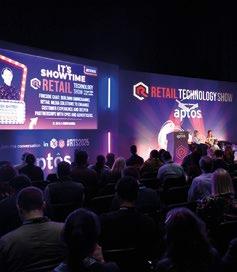











It is my great pleasure to welcome you to The Barbican here in the heart of the City of London, and the inaugural RTIH AI in Retail Awards.
Thank you to our sponsors, VenHub Global, 3D Cloud, Retail Technology Show 2026, and EdTech Innovation Hub. Thanks also to our fantastic judges:
• Glen Richardson, Non-Executive Director, PoundFun and former COO, The Range
• Dan McGrath, JD Group Customer Operations, JD Sports
• Suhas Grama, Senior Software Development Engineer, Amazon Just Walk Out
• Vineta Bajaj, Group CFO, Holland & Barrett
• Becky Lombardo, Founder, Londra Consulting
• Graham Broomfield, Managing Director, Austen & Blake
• Nadine Neatrour, Chief Marketing Officer, Gordon Ramsay Restaurants
• Andrew Grill, AI Keynote Speaker, Bestselling Author
• Mike Cadden, Chief Technology Officer, Marie Curie
• Carole Kingsbury, Chief Technology Officer, C&C Group
• Matt Taylor, CTO of Global Managed Services and VP of SecDevOps, NCC Group
• Christine Russo, Industry Analyst and Retail Influencer
• Paula Bobbett, Chief Digital Officer, Boots
• Oliver Banks, Retail Transformation Director & Consultant, OB&Co
• Emma Thompson, Editor and Founder, EdTech Innovation Hub
• Toby Pickard, Retail Futures Senior Partner, IGD
And last but most certainly not least, a round of applause for all those shortlisted for an award this evening. Here’s to a great night as we crown our first ever RTIH AI in Retail Awards hall of fame entrants!

Scott Thompson
Editor & Founder, Retail Technology Innovation Hub scott.thompson@retailtechinnovationhub.com
Described as ‘charmingly effervescent’, Lucy Porter has gathered a strong following and excellent reputation on the live circuit, and her Edinburgh shows are invariably a sell-out. Also at Edinburgh and away from comedy, she starred alongside Christian Slater in the stage version of One Flew Over the Cuckoo’s Nest.
A finalist on Channel 4’s So You Think You’re Funny?, she is a regular on Radio 4 panel and comedy shows, and has also appeared a number of times on Have I Got News For You and Mock the Week. She has also appeared on Newsnight, The Culture Show, and Richard Osman’s House of Games, and has written for Johnny Vaughan, Adam and Joe, and Jimmy Tarbuck.
Lucy is a keen amateur quizzer, having won Celebrity Mastermind and The Chase. She has also appeared on Impossible, Fifteen to One, The Weakest Link and Pointless raising money for charities including Children in Need, the Loss Foundation and Carers UK. She also presents the quizzing podcast Fingers on Buzzers alongside The Chase’s Jenny Ryan.

RTIH Founder and Editor, Scott Thompson, runs through the key AI in retail challenges and opportunities in 2026.
The AI solutions that succeed in 2026 will be those that apply it thoughtfully, focusing on areas that add real value to colleagues and customers, argues VoCoVo’s Martin Smethurst.
Deployments that create friction or feel like they are imposed are unlikely to be welcomed by customers, and may even undermine trust and the shopping experience. We’re therefore likely to see a carefully considered hybrid approach combined with human led customer service to assist colleagues, rather than replace them.
For example, we’re starting to see AI guiding customers through complex DIY projects, delivering step-by-step instructions and shopping lists to customers, alongside sharing useful video content via QR codes. But colleagues remain available to support customers face to face as well. The smartest retailers will pick the solutions that consistently win on the shop floor, not those that are surrounded by hype.
Not a bubble but challenges remain
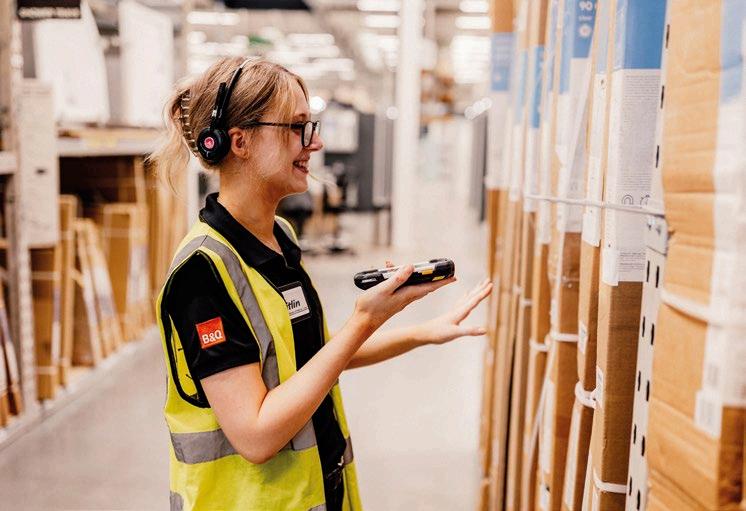
At the opening keynote panel of LTW365 AI in Retail in London during November, delegates were reminded that while many retailers have made AI a top priority, the technology has proved hard to implement.
“I don’t think it’s a bubble,” Mohsen Ghasempour, Chief AI Officer at Kingfisher, shared, adding that the technology was already having an impact at the home improvement giant.
Personalised recommendations are generating sales for the business, while AI is also supporting pricing. “It’s easy to get a return on investment in these areas,” he added.
Simon Ellis, Head of AI Transformation and Enterprise Architecture at Pets at Home, told delegates that the pace of change in retail is an issue.
“There are two worlds and they need to align - consumer expectations and the operations of the business,” he said.
“There is a danger that with AI you are simply doing the same thing, just faster,” Ellis warned.
“It really offers us a chance to do things differently.”
Assisting colleagues rather than replacing them.
Integration, integration, integration
Retail AI isn’t failing because of technology, but rather because of integration. So says Elliott Johnson, Founder at EKB Labs. He was speaking in reaction to Tesco inking a three-year agreement with French startup Mistral AI, as part of a broader strategy to bolster the use of AI in the UK grocery giant’s operations. While competitors chase flashy AI demos, Tesco is focusing on embedding AI into everyday workflows. That’s the difference between a pilot project and actual transformation, observes Johnson.
“In my enterprise AI consulting work, I’ve watched countless retailers burn millions on AI initiatives that never make it past the proof-of-concept stage. The breakthrough always comes when leadership stops asking, what can AI do? and starts asking, how does AI fit into what we already do well?” he says.
“Tesco gets it - three years isn’t just a contract timeline, it’s a commitment to systematic integration. Most retailers want AI magic in 90 days. The smart ones plan for 90 weeks. The real question: Are you building solutions that require your team to change everything, or are you building AI that amplifies what they’re already great at?”
Just Walk Out tech is finally acting its age
In September, we reported that Amazon was binning its ambitious Just Walk Out technology powered Amazon Fresh experiment in the UK, just four years after the US online giant launched its first grocery store in London.
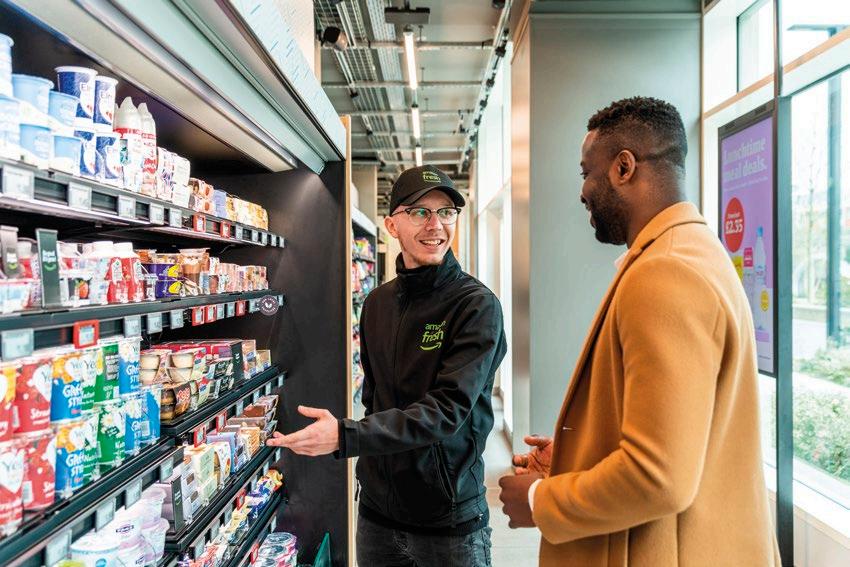
Many industry observers argue that JWO is dead. Not true, according to Michael Guzzetta, Retail Innovation & Strategy Leader at Cookie Plug San Antonio, and a former H-E-B executive.
“It’s just finally acting its age. The newest wave of Amazon retrofits (tiny ceiling cameras, lighter sensors, cheap edge compute) shows a shift from moonshot autonomy to practical autonomy. And honestly, retail’s been waiting for this moment,” he says.
“The first version of JWO was beautiful… but only in the “concept car” sense. Great to look at, impossible to scale across stores with inconsistent lighting, tight ceilings, and a facilities team already stretched thin. Cool, but impractical.”
The new flavour is different, he believes. It’s cheaper. It’s modular. It fits into real stores instead of forcing stores to become labs. And this isn’t just Amazon. You can see it across the field.
AiFi, for instance, uses small ceiling cameras with tiny edge models that don’t need a server room. Install time is measured in hours, not weeks.
Trigo, meanwhile, is powering full size autonomous grocery for Rewe and others. Its entire
pitch is “retrofit reality,” and it actually works with messy, lived in store conditions.
Guzzetta comments: “The pattern is obvious: Nobody is chasing perfect anymore. They’re chasing manageable. That’s the shift retailers needed. Because stores never needed level 5 autonomy. They needed level 2.5… the kind that speeds up the line, lowers the error rate, and makes the associate’s life easier instead of adding another fragile system to babysit.”
He concludes: “Checkoutfree retail isn’t dying. It’s finally getting practical. This shift is only going one direction… toward simpler, cheaper, and smarter autonomy.”
Online visibility is being redefined AI’s impact on search is undeniable.
“Organic traffic can no longer be viewed in isolation from AI driven discovery, summaries, and recommendations,” says Vicky Robinson, Head of E-commerce at Pillow Talk Australia.
“Rankings still matter, but visibility is being redefined. In an AI driven search world, brands win by being the most useful, trusted and well structured source on a topic, so AI systems choose to reference them.”
Just Walk Out isn’t dead, it’s just finally acting its age.
This award focuses on technology deployments enabling physical spaces to thrive via AI powered solutions, even as online shopping continues to grow.
Orquest is an AI powered workforce scheduling solution that helps physical retail stores optimise operations, boost productivity, and control labour costs.
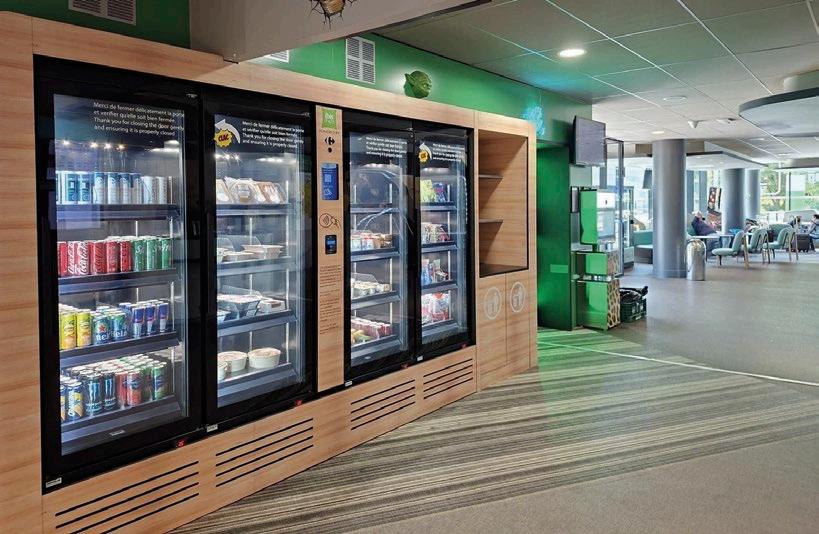
Reckon.ai is a PE backed scale-up from Porto, Portugal. It offers smart coolers and fridges using AI powered software to detect purchases with input from weight sensors and cameras.
Retail-AI equips physical stores with an anti-theft solution. Monitoring stock in real-time, its system detects theft and unwanted behaviours instantly. At the core lies RaiD10 Data Cube. This centralised hub offers retailers vital security alerts and customer demographics. It optimises operations by assigning staff tasks; from mopping to maintenance, verifying their completion through AI overwatch.
Sensei partnered with Sonae MC to launch the world’s largest autonomous store. Deploying its technology in a 1,200 m² store with over 11,000 SKUs demanded unprecedented precision and robustness.
Sensei had to ensure accurate tracking of a high volume of daily baskets using 1,676 ceiling mounted cameras and 2,000 shelf sensors, while delivering a seamless experience.
Spacture AI has boosted physical retail security through its real-time AI Vision Agent system that powers person recognition and suspicious activity detection.
Tahina
Tahina is creating a new kind of food retail experience, an autonomous, AI
Reckon.ai
powered grab and go store designed to make shopping fast, easy, and completely checkout free.
The flagship store, planned for London, will use smart shelving, motion sensors, and AI to let customers pick up high quality, globally inspired meals and leave without queues or cashiers.
Trigo’s Full-Store Loss Prevention Vision AI empowers physical retail stores to reduce shrink by turning existing CCTV into real-time, full-store theft detection.
Unlike limited point solutions that monitor only self-checkout, Trigo covers aisles, manned checkout, SCO, and store exits, detecting concealed items, missed scans, cashier theft, and checkout skippers. Retailers receive immediate alerts with video evidence and actionable insights on theft patterns, enabling measurable revenue recovery.
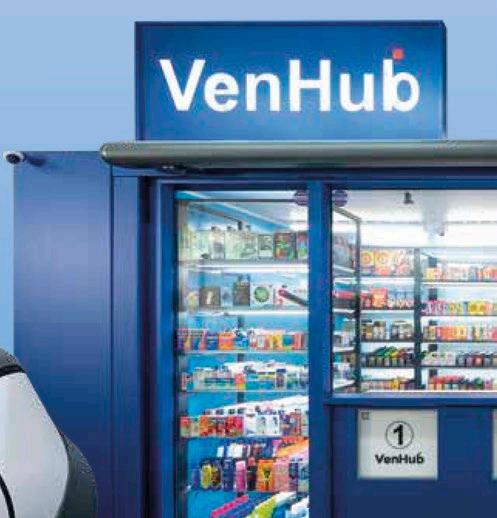
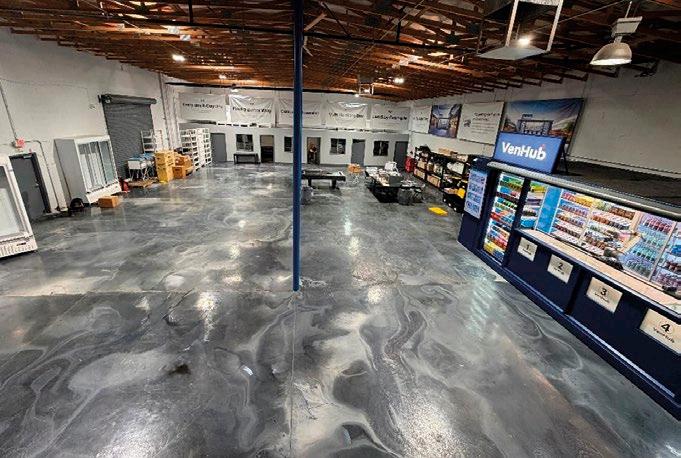
VenHub Global is revolutionising bricks and mortar retail with the fully autonomous Smart Store, designed for 24/7 operation, zero on-site staff, and maximum efficiency.
Its modular units combine AI, robotics, and robotics arms to eliminate labour
costs, reduce shrinkage, and operate in high-traffic or underserved areas where traditional retail fails. Four Initial deployments across California include a landmark store at LAX Airport/Metro Transit Center and one at the Hollywood Bowl.
VusionGroup is redefining how retailers use data and AI to optimise operations, reduce waste, and enhance the customer experience.
Through platforms like Memory, Captana, and VusionLive, retailers can use real-time in-store data to make better decisions, faster. Bringing together electronic shelf-labels, realtime shelf availability monitoring, shopper behaviour, basket insights and automated pricing, VusionGroup’s AI and data analytics platforms can turn these insights into actions that improve retailers’ bottom lines.
x-hoppers has transformed how Herron Foods associates communicate on the shopfloor. Outdated systems are gone, replaced with smart, wireless, AI powered headsets to talk, solve problems and get support on the spot and in real-time.
Who has been the most innovative, customer focused, AI powered online retailer this year?
Depop’s mission is to make fashion circular by creating an experience as intuitive and inspiring as buying new. It combines machine learning with ongoing community insight to deliver a people powered, and AI enabled shopping experience that helps users discover great, affordable fashion quickly and easily.
Real-time model refreshes surface emerging trends and power a personalised feed, while AI driven features like auto-generated listing descriptions make selling faster, effortless, and more accessible.
Continuous user research programmes ensure product decisions reflect real community needs. The result is a seamless, culturally grounded and personalised secondhand shopping experience.
Goddiva has redefined online fashion retail with the launch of Goddiva AI, an intelligent shopping assistant powered by OpenAI GPT-5 and LangChain.
Fully integrated into the brand’s e-commerce platform, it delivers hyperpersonalised, conversational shopping experiences, from curated product discovery to real-time order tracking and seamless returns.
By combining data precision with stylist level empathy, Goddiva AI transforms customer engagement, boosts conversion, and reduces returns. The system’s privacy first, GDPR compliant

design ensures trust while driving sustainable, mindful shopping.
This innovation marks Goddiva’s evolution from online retailer to AI driven fashion pioneer, setting a new standard for personalised e-commerce.
Hockerty presents the Redefining the Classics Spring/Summer 2025 LookBook, where tradition meets innovation.
By training specific LLMs to work with its unique designs and combining them with advanced image generation models, Hockerty has achieved an ultrarealistic, highly detailed representation of its garments.
This approach ensures both accuracy and diversity, offering customers an authentic and precise portrayal of each piece. At the same time, it reinforces the brand’s commitment to sustainability by minimising its ecological footprint.
Through technology, Hockerty redefines classic elegance, enhancing the customer experience with a visually rich and true to life presentation of its collections.
Prezzee is always exploring innovative ways to spark human connection through gifting moments. Its Magical Messages experience brought the magic of Santa to life through a hyper-personalised digital experience designed for consumers of all ages.
Powered by AI and audiovisual synthesis, users entered a few personal details to receive a unique video message from Santa, confirming they’d made his ‘Nice List’.
Set in a snowy, whimsical digital Santa’s workshop, the experience blended tradition with technology to deliver joyful, emotional moments during the festive season. The result was surprise, delight and holiday magic, powered by AI and made meaningful by Prezzee.
As the leading online marketplace in Israel, with hundreds of sellers, SuperPharm is challenging itself to maintain a high quality catalogue. So it has built an AI-based solution to optimise and enhance product information at scale.
This award will go to an AI tech centric approach to retail that provides customers with a fully integrated shopping experience across bricks and mortar stores, online, mobile, and everything in between.
Cyncly
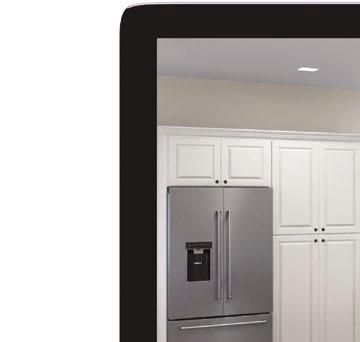
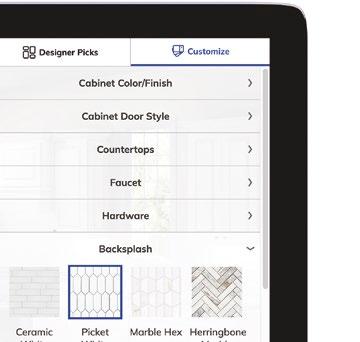
Cyncly’s AI initiatives are transforming kitchen retail by connecting every stage of the customer journey, from inspiration to installation. Its AI powered Spaces Flex Inspire to Design solution accelerates kitchen sales by enabling seamless, personalised design experiences, bridging online and instore interactions.
Globant
Globant has redefined the retail status quo by engineering advanced AI technology that enables 18,000 fans to shop without queues, payments, or interruptions.
At the LA Clippers’ $1.2 billion Intuit Dome, Globant created the world’s first fully autonomous retail ecosystem, delivering a frictionless checkout experience at unprecedented scale.
Instacart
Instacart is bridging the online and instore grocery shopping experience for retailers, brands, and customers.
Its smart trolley, Caper Cart, enhances the grocery shopping experience.
Caper Carts automatically identify items, turning grocery shopping into a seamless, personalised experience.
They enable customers to watch their running total and access product recommendations, all while providing a smooth checkout process directly from the trolley. They enhance the customer experience with features like synced lists, coupons, gamification, and product recommendations.
Maestra’s client, Furniture Fair, sells a wide range of furniture, and design expertise is a big part of its brand. In its physical stores, this was obviouscustomers could see it in the specially curated showroom interiors. But bringing that expertise to the website was tricky.
Maestra transformed the brand’s designer showrooms into AI powered “how to style it” recommendations. By combining Furniture Fair’s design expertise with its recommendation engine, it created a seamless omnichannel experience. Now the website suggests complete, ready made room solutions that are always in stock and ready to deliver. The impact: 46% higher add to cart conversion and 21% more online revenue.
Riskified’s AI powered platform is revolutionising omnichannel retail. It directly tackles the messy reality of fragmented shopping journeys and siloed fraud prevention, creating truly seamless customer experiences across online, mobile, and physical stores.
Scantranx is an AI powered omnichannel retail management platform transforming how small and medium-sized retailers connect in-store and online. By unifying PoS, e-commerce, inventory, payments, and loyalty in one system, it enables realtime data synchronisation and AI driven insights that predict demand, personalise promotions, and automate operations.





The Covid-19 outbreak and cost-of-living crisis have reshaped customer behaviour and their expectations of retailers. This award will go to an online and/or physical retailer that has understood and reacted in a positive fashion to these customer trends and patterns, by providing exceptional AI technology powered omnichannel experiences.
Brarista is AI built by lingerie professionals - the world’s first bra fitting platform for lingerie retail.
90% of consumers wear the wrong size bra, flooding support teams and driving returns. Generic chatbots can’t solve this - they don’t understand the nuances of bra fitting: cup shape, band tension, projection, how fit varies across brands and styles.
Brarista does. Think of it as a bra fitter, stylist, and product educator in one tool. Fit AI for sizing. Style AI for personalised recommendations. Care AI for multilingual support and breast care education.
Habitium has implemented an AI powered system that enhances multilingual customer service by integrating OpenAI within its helpdesk (Freescout) environment.
The solution summarises customer emails - regardless of language - into Spanish, enabling agents to respond effectively. Their replies are then analysed by a second AI layer, which translates it to the customer’s language, reviews, and validates the content before sending it. If incomplete, the system blocks the message and prompts the agent with actionable feedback.

Walmat partnered with LatentView Analytics to enhance customer experience using AI driven personalisation and omnichannel insight.
Through three initiatives - home catalogue, fashion geo test, and a national entertainment launchLatentView applied segmentation, causal inference, and behaviour analytics to create more relevant and responsive customer journeys.
The work reactivated thousands of lapsed customers (24+ months inactive), increased first time digital engagement by 9–13%, and delivered meaningful channel improvements such as a 29% rise in fashion visits and a 4.7× ROAS within home. Across digital and store
channels, customers experienced clearer discovery paths, more relevant content, and smoother experiences, strengthening trust and long-term engagement.
VenHub Global is revolutionising bricks and mortar retail with the fully autonomous Smart Store, designed for 24/7 operation, zero on-site staff, and maximum efficiency.
Its modular units combine AI, robotics, and robotics arms to eliminate labour costs, reduce shrinkage, and operate in high traffic or underserved areas where traditional retail fails. Four initial deployments across California include a landmark store at LAX Airport/Metro Transit Center and one at the Hollywood Bowl.
This award highlights companies that are re-inventing and re-thinking retail supply chains via innovative AI technology.
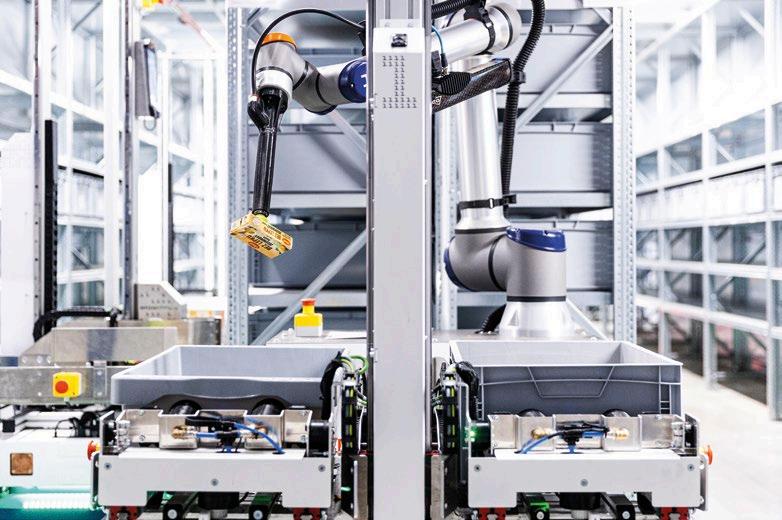
CarouselAI is AutoStore’s first AI powered robotic piece picking solution. Last year, AutoStore partnered with Element Logic to deploy the solution for MEKO, an automotive spare parts chain in Northern Europe.
Bamboo Rose is transforming retail supply chains with embedded AI across the entire product lifecycle - from planning to distribution.
Dropit boosts retail inventory decisionmaking with an AI powered platform for optimal inventory planning, allocation, and logistics.
Finmile is redefining last mile logistics with AI that optimises routes at the parcel level, not just the depot or route level. Its platform reduces delivery routes by up to 42%, cuts operating costs by more than 20%, and lowers carbon emissions across retail supply chains.
The IBM Smart Green Pallet (SGP) revolutionises logistics with an intelligent handling support system and advanced data services.
Made from recycled and recyclable plastic in France, the durable pallet integrates IoT sensors for geolocation, temperature, and shock monitoring, and features a unique GRAI code for precise tracking. By leveraging AI for
data management on the IBM Cloud Platform, the SGP enhances supply chain resilience, efficiency, and sustainability, offering over 60 tangible and measurable benefits.
Lumina is an AI native supply chain operating system built for fast growing retail brands. It replaces spreadsheet heavy workflows and rigid ERPs with a single platform that connects data, plans demand, forecasts stock, and automates daily operational tasks.
Nextail revolutionises fashion retail by using AI and machine learning to optimise inventory management, demand forecasting, and merchandising decisions.
ShopAi improves business communication through the world’s first omnichannel AI mediated platform, creating intelligent partnerships that amplify human capability rather than replacing it.
Vaayu is transforming global retail supply chains through its AI powered climate technology platform, enabling companies to reduce environmental impact in real-time. Purpose built for retail, Vaayu uses primary data, quality secondary data and Generative and Predictive AI to create accurate product level footprints and model impact across Scopes 1, 2 and 3.
Veloq is transforming online grocery logistics with an AI native fulfilment platform built to optimise every link in the supply chain.
Developed within Rohlik Group and now launched globally, Veloq unifies forecasting, routing, labour management, and automated picking into one intelligent system. Its realtime AI engine enhances visibility, slashes food waste to just 0.5%, and enables 95% on-time, error free deliveries, including fresh and frozen goods.
This award recognises AI powered payment initiatives that are both innovative and customer and retailer friendly.
A leading global marketplace has deployed XGBoost-based Gradient Boosted Decision Tree (GBDT) models to enhance real-time payment authorisation and fraud detection.
These models analyse transaction, behavioral, and velocity data, such as card usage patterns, buyer history, and device signals, to assess risk and improve approval accuracy. Integrated across multiple payment processors, this helped boost authorisation success by about 1%. Continuous retraining using chargeback and dispute feedback ensures adaptive performance.
Paytiko’s Growth Hub is an AI powered payment recommendation engine designed to revolutionise the way merchants manage online transactions.
By analysing real-time data and user behaviour, Growth Hub intelligently suggests optimal payment methods, routing options, and PSPs - to boost approval rates, reduce fees, and enhance customer conversion.
This feature not only empowers retailers with smarter, data driven decisions but also transforms the enduser checkout experience through faster, localised, and personalised payment journeys. Growth Hub delivers tangible automated improvements to merchant performance, shopper satisfaction, and bottomline growth, all from a single, unified dashboard.
Adaptive Checkout by Riskified is a fraud prevention solution that dynamically
assesses each transaction’s risk in real-time, reducing false declines and increasing approvals.
Designed for e-commerce merchants, it personalises the checkout experience by adapting fraud decisions to each customer’s profile and transaction context. By minimising mistaken declines, it boosts conversion rates and revenue while maintaining strong fraud protection.
Small and medium-sized retailers face complex payment challenges, high transaction costs, fraud exposure, and fragmented systems across in-store and e-commerce channels.
Traditional PoS and payment gateways often lack integration, leading to reconciliation delays, chargeback risks, and poor customer experience. Many retailers also struggle to adopt advanced fraud detection tools due to cost and technical barriers.
Scantranx recognised this gap during its deployment across emerging and
developed markets, where payment inefficiencies directly impacted profitability and customer trust. The challenge was to develop an AI driven payment system that seamlessly connects physical and digital sales channels, reduces fraud, and enables retailers to compete with enterprise grade solutions without requiring extensive technical expertise or infrastructure investment.
VenHub Global is revolutionising bricks and mortar retail with the fully autonomous Smart Store, designed for 24/7 operation, zero on-site staff, and maximum efficiency.
Its modular units combine AI, robotics, and robotics arms to eliminate labour costs, reduce shrinkage, and operate in high traffic or underserved areas where traditional retail fails. Four initial deployments across California include a landmark store at LAX Airport/ Metro Transit Center and one at the Hollywood Bowl.
This award celebrates those who are at the forefront of digital transformation in the retail space, achieved through the deployment of innovative AI technologies.
Ai4.Style has launched a personalised black eyewear recommendation system using AI4.Style, in collaboration with designer Robert Roope, whose frames are worn by the likes of Pedro Pascal and Lady Gaga.
The system captures his expert judgement to deliver tailored recommendations based on facial features and personal preferences. The recommendations are supported with GenAI powered try-on images, allowing customers to instantly see how frames suit them, and share to get a second opinion.
Goddiva has undergone a landmark digital transformation through the creation of Goddiva AI: a next-generation shopping assistant powered by OpenAI GPT-5 and LangChain.
This project unified previously separate retail systems, customer data, and communication channels into a single, AI driven ecosystem. The result is an intelligent, conversational platform that delivers hyper-personalised shopping journeys, streamlines operations, and drives measurable growth.
LatentView Analytics executed a core digital transformation project for a global retailer, fundamentally overhauling its legacy approach to vendor negotiations and margin management.
LEAFIO AI and Baltic Petroleum
Baltic Petroleum transformed retail operations across 86 fuel stations by
implementing LEAFIO AI Retail Platform combining Inventory Optimisation and Shelf Efficiency.
This centralised AI driven solution replaced manual ordering and merchandising processes, delivering unprecedented control, accuracy, and operational efficiency.
Movable Ink and Currys
Currys transformed its CRM programme by partnering with Movable Ink to integrate Da Vinci, an AI powered content decisioning engine.
Scantranx is redefining digital transformation in retail through its AI powered omnichannel platform that unifies in-store and online operations.
VenHub Global
VenHub Global is revolutionising bricks and mortar retail with the fully autonomous Smart Store, designed for 24/7 operation, zero on-site staff, and maximum efficiency.
Its modular units combine AI, robotics, and robotics arms to eliminate labour costs, reduce shrinkage, and operate in high traffic or underserved areas where traditional retail fails. Four initial deployments across California include a landmark store at LAX Airport/ Metro Transit Center and one at the Hollywood Bowl.
Zenline AI empowers European retailers with AI agents for modern assortment optimisation.

This award recognises the use of AI technologies to enhance training and development within the retail sector.
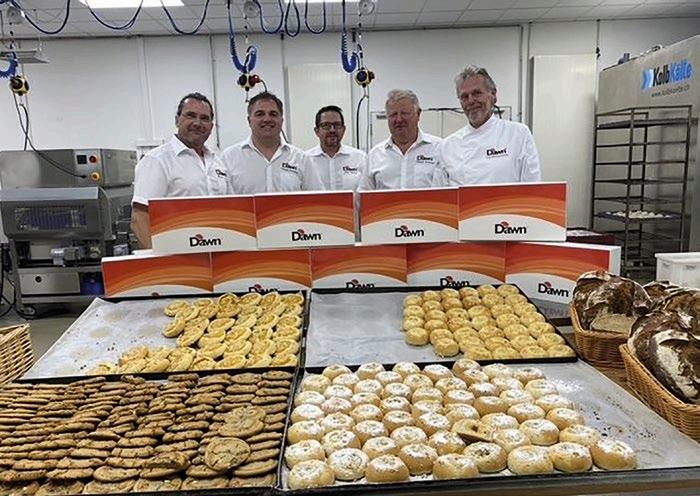
Dawn Foods transformed training by working with Attensi to introduce game-based SKILLS solutions. As well as achieving more engaging and impactful training modules, it maximised efficiency - critically important as a time poor team.
It adopted Attensi’s AI Creator co-pilot to produce superior learning content delivered within hours as opposed to the weeks it took prior to the technology partnership.
Brarista is AI built by lingerie professionals - the world’s first bra fitting platform for lingerie retail.
90% of consumers wear the wrong size bra, flooding support teams and driving returns. Generic chatbots can’t solve this - they don’t understand the nuances of bra fitting: cup shape, band tension, projection, how fit varies across brands and styles.
Brarista does. Think of it as a bra fitter, stylist, and product educator in one tool. Fit AI for sizing. Style AI for personalised recommendations. Care AI for multilingual support and breast care education.
Metagora.tech is boosting retail sales training by combining AI and immersive 3D avatars to create lifelike, gamified simulations.
Designed for luxury and retail brands, its solution enables sales teams to practice real-world scenarios anytime, anywhere - boosting engagement, confidence, and performance. With
clients like LVMH, Amazon, and Sony Music, it empowers brands to scale training globally while personalising the learning journey.
Uhuru Botanicals partnered with AND Digital to build the UK’s first AI powered tool for researching botanical hair and skin formulations for Uhuru’s cosmetic formulation academy. The tool also needed direct, easy and low cost maintenance control over the content elements without technical development skills.
WorkJam’s AI powered digital workplace platform transformed training and
frontline engagement at Priceline Pharmacy, Australia’s largest health and beauty retailer.
Through the launch of Pink Pathway - Priceline’s staged onboarding and training programme - the platform delivered 107,000 e-learnings and 1.6 million minutes of learning in just nine months. With more than 259,000 assessments completed and over 200,000 emails eliminated, it has simplified compliance, improved consistency across 470+ stores, and boosted both employee engagement and customer satisfaction.
Previously reliant on 470 managers to cascade updates, Priceline adopted WorkJam’s mobile first solution to give 8,000+ team members direct access to training and operational information.
This category celebrates UKI companies that have developed innovative AI technologies and worked with retailers to transform CX or back-end operations or both.
Amperity was founded to help every brand turn complex customer data into business value. Using advanced AI, it unifies fragmented customer data to create complete profiles.
Eagle Eye’s AI powered Personalised Challenges solution enables leading retailers to execute, one-toone personalisation at massive scale, driving measurable behavioural change and delivering a 7:1 ROI.
FoundIt! delivered AI technology for B&Q’s two million product marketplace. As the catalogue expanded exponentially, customers struggled with overwhelming choice, causing abandonment and declining conversion.
FoundIt!’s proprietary AI platform deployed machine learning powered intent led navigation across 21,000+ category pages and 250,000+ search pages, analysing millions of customer intent signals to create dynamic, contextual shopping journeys.


Product content creation is hugely challenging for e-commerce teams. Vast amounts of content need to be optimised for customers and search engines, refreshed every season - and nowadays, all content needs to be optimised for AI search like ChatGPT too. Ocula’s AI Copywriter tool automates this process from end-to-end, generating unique, brand aligned copy at scale for every product page across every channel.
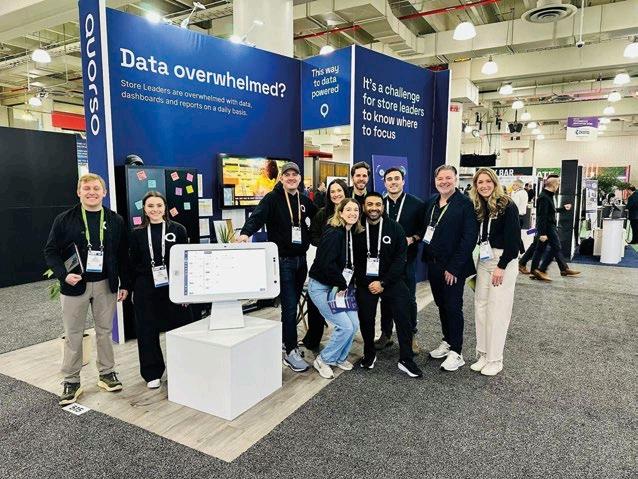
Quorso’s patented Intelligent Management Platform is a leading all in one platform for the intelligent store, replacing fragmented retail management tools with a unified AI powered solution.
The company is working with 15 of the top 50 retailers in the world, managing $280 billion of P&L, streamlining their store operations, driving sales and boosting the bottom line by delivering personalised and prioritised work to the right people at the right time across the organisation.
Renude is an AI supplier redefining beauty retail. Its AI Skin Chat technology is the first of its kind: built by dermatologists, chemists and estheticians, it gives every shopper instant, expert skincare advice based on personalised needs.
Retail Express helps retailers overcome the challenges of disconnected, outdated legacy systems with an AI driven merchandising platform which centralises pricing, promotions, media and supplier collaboration.
Currys has launched a colleague led ideas platform, the Pitch, designed to turn insights from across the business into real improvements, powered by AI. Built in partnership with Sideways 6 and integrated into Microsoft Teams, the platform enables colleagues to share ideas at scale and receive updates in their collaboration space.
This category celebrates global companies that have developed innovative AI technologies and worked with retailers to transform CX or back-end operations or both.
Constructor faced challenges including AI scalability. Building AI wasn’t enough. It needed to scale it across massive, complex catalogues and billions of shopper sessions. The team invested in infrastructure that supports AI decisions in real-time and where multiple models (for search, recommendations, retail media, etc.) share data, context and goals across the shopper journey: delivering high performance personalisation at scale.
Fynd powers global retailers with a suite of AI native products namely AI Photoshoot, GlamAR (3D/AR-VR Try-On and AI Skin Diagnostics), and Create (AI enabled Planning, designing and manufacturing for fashion).
Legion AI is a platform that integrates AI technologies, enterprise grade AI infrastructure and data pipeline, enabling intelligent automation across workforce management and drives critical functions within WFM.
Orquest is an AI powered workforce scheduling solution used by global retailers to optimise schedules, cut labour costs, and improve service quality. Its machine learning forecasting and mathematical optimisation scheduling engine help brands like H&M, Dior, Kiabi, McDonald’s, and Burger King align staffing with real demand while respecting legal, contractual, and preference-based constraints.
Perfect Corp.’s HD Skin Analysis is AI and AR powered software that analyses consumers’ faces in realtime and produces comprehensive, accurate skin scores based on 15 parameters, all in mere seconds and high definition.
In collaboration with Google Cloud, Revieve fuses generative AI, machine learning, and AR to create hyperpersonalised beauty experiences across skincare, makeup, and hair care.
Sensei is redefining retail with scalable, AI powered autonomous solutions across more than 100 active points of sale in Europe and LATAM. From grab-and-go cabinets and convenience pods to full-sized supermarkets, its technology is live in Portugal, Spain, Italy, France, and Brazil.
Simbe Vision is an AI powered computer vision platform for in-store retail
operations. Purpose built to deliver real-time, shelf-level visibility at scale, it combines optical character recognition (OCR), visual AI, and machine learning to proactively flag low stock items before outages and detect pricing errors before they impact sales.
Competitor Data Bureau provides vital near-real-time intelligence-as-aservice on competitor moves across pricing, promotions, assortments, content, and marketing. Powered by domain specific, patented algorithms, GenAI, NLP, and image recognition, it provides actionable insights at scale and at granular levels.
VusionGroup is a global leader in the digital transformation of physical retail. Its AI driven solutionsincluding VusionLive, VusionCloud, Captana, and Memory - combine real-time data, computer vision, and IoT infrastructure to automate pricing, optimise inventory, and deliver tailored shopping experiences.

This award will recognise the startup with the most innovative AI technology offering and the company which is best placed to succeed in the long-term.
AiDA Intelligent Solutions is a startup using AI to help retailers fix messy product data. It scans thousands of product pages to spot issues like missing details, duplicate images or greenwashing claims - then help teams fix them fast.
Commerce moves fast - but when data lives in silos, brands fall behind. Dema, a next-generation analytics platform founded in Stockholm, brings clarity by unifying marketing, sales, inventory, and customer data into one real-time platform.
FoundIt! is an AI startup redefining how enterprise retailers manage large, complex catalogues. In 12 months, it has scaled from a pilot with Kingfisher/B&Q to becoming a strategic partner across multiple banners, including B&Q, TradePoint, and Brico Dépô, driving a 72% uplift in conversion and 112% revenue per user.
GetVocal is a conversational AI platform built for hybrid human AI workforces.
Lumoo Studio is redefining the future of fashion, sport, and retail through AI driven innovation. Its platform combines advanced technologies, like virtual tryon, AI models, and automated content creation, to deliver personalised, scalable, and brand-specific experiences.
Pagent.ai is an AI agent enhancing e-commerce personalisation through “Emotional AI,” automating hyperpersonalised web experiences to boost conversions.
Profound is quickly becoming one of the most important tools in modern commerce. As AI search reshapes how people discover products, it gives brands and retailers the visibility they’ve completely lost in the shift from SEO to AEO.
PropTexx Retail has developed a next-generation AI virtual placement and visualisation engine that
transforms how retailers showcase products online.
Reckon.ai is a PE backed scale-up from Porto, Portugal. It offers smart coolers and fridges using AI powered software to detect purchases with input from weight sensors and cameras.
Veloq is an AI native grocery fulfilment platform redefining how grocers deliver speed, scale, and sustainability. Spun out from Rohlik Group - a European online grocer - it transforms fragmented operations into a single intelligent system. Its AI engine powers inventory forecasting, automated picking, labour management, and real-time last mile routing.

This category shines a spotlight on AI driven approaches to data analysis and insight generation within UKI retail.
Amperity was founded to help brands turn complex customer data into business value. Using advanced AI, it unifies fragmented customer data to create complete profiles.
B&Q’s expansion to two million marketplace products created a discovery crisis - customers couldn’t find products, conversion declined.
FoundIt! deployed AI powered intent led navigation designed to predict what customers were trying to find and buy as they journeyed across the website. The AI mined hundreds of millions of rows of analytics data from Google Analytics, search, advertising, pathing behaviour, sales and site crawls to dynamically curate intend led journeys across 1.9 million products and pages.
Eagle Eye’s AI powered Personalised Challenges solution enables retailers to execute, one to one personalisation at massive scale, driving measurable behavioural change and delivering a 7:1 ROI.
EE transformed its budgeting approach by replacing static weekly shop budgets with dynamic, demand driven forecasts. Using Google Cloud’s machine learning and AI recommendations, it analysed three years of historic data to create tailored seasonal budgets for each shop.
Galvia is transforming decision-making at Irish retailer Petstop. While Petstop had plenty of data, it lacked a way to connect, understand, and act on it. Galvia built a domain specific connected intelligence platform that unifies data into real-time insights and actions.
HyperFinity helps retailers make the most of their data using analytics and AI. It recently supported Toolstation with a marketing and customer loyalty challenge using a combination of AI powered software and services.
Retail Insight turns complex store data into real-time, AI powered decisions that drive profitable, sustainable retail at scale.
Retail companies have access to vast amounts of data but lack the tools to
process it and then take meaningful action. Fragmented systems, inaccessible supply chain inputs and slow, spendbased reporting made it nearly impossible to surface granular, product level environmental insights.
Retailers need not just analysis, but real-time guidance to model alternatives and make smarter business decisions. Vaayu was created to bridge this gap, harnessing AI to unify, automate and operationalise impact data, enabling retailers to reduce their footprint while improving business efficiency, traceability and trust.
Pinpoynt.ai transforms anonymous mobile location data into realtime retail insight. The AI platform gives retailers powerful footfall analytics, customer segmentation, and transactional behaviour insights, without reliance on WiFi, cameras, or beacons.

This category shines a spotlight on AI driven approaches to data analysis and insight generation within global retail.
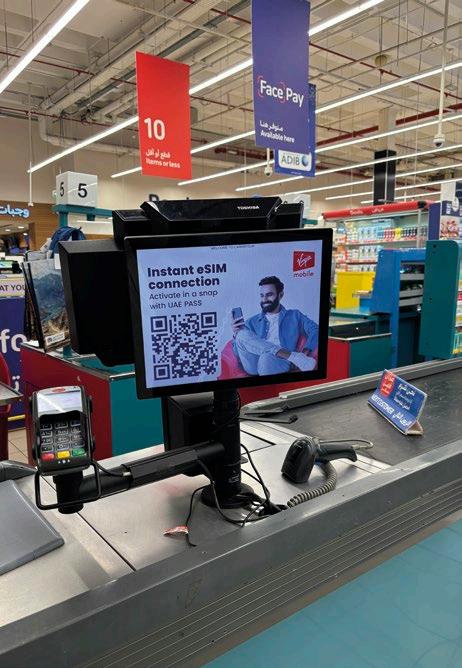
Advertima partnered with Majid Al Futtaim’s Precision Media to power Carrefour UAE’s transformation into a true omnichannel retail media platform. By deploying Advertima Audience AI in Carrefour’s hypermarkets, this initiative merges real-time in-store intelligence with online audience data.
Competera’s AI powered Pricing Platform transforms retail data into customer-centric pricing strategies that drive profitability and loyalty. Powered by proprietary Contextual
AI, the platform analyses billions of data points, including transactions, competitive dynamics, product roles, and shopper behaviour - to deliver real-time pricing recommendations with 95%+ accuracy across every product, store, and channel.
Commerce moves fast - but when data lives in silos, brands fall behind. Dema, a next-generation analytics platform, brings clarity by unifying marketing, sales, inventory, and customer data into one real-time platform.
Built by former operators, it connects ad platforms, storefronts, and ERPs to highlight what’s driving ROAS, where budgets are being wasted, and when stockouts are around the corner. Instead of dense spreadsheets, teams get clear dashboards, predictive models, and practical next steps.
An e-commerce company partnered with LatentView Analytics to build a unified, interactive dashboard that gives the Product Marketing Management team end-to-end visibility into ads marketing CRM campaign performance.
Legion Technologies delivers a workforce management platform. It
enables businesses to maximise labour efficiency and employee engagement simultaneously. The Legion WFM platform is intelligent, automated, and employee centric.
Onebeat is a dynamic inventory optimisation and execution platform that helps retailers align stock with real-time demand daily, by SKU, style and store. Built on the Theory of Constraints and powered by AI, Onebeat replaces static forecasts with actionable daily recommendations that improve availability, reduce waste, and boost margins.
VTEX Intelligent Search gives retailers an AI powered boost by transforming how shoppers find and discover products. Using advanced algorithms that understand intent, it delivers hyper relevant, personalised results that increase conversion and streamline the path to purchase.
Walkbase TREQ transforms in-store analytics and retail media measurement by unifying data from occupancy, shopper journeys, and retail media campaigns into one powerful decisionmaking platform.
This award will go to a retailer or brand that has worked with AI technology suppliers to put sustainability at the core of its values. The winning entry will show how a company has boosted its green credentials whilst also demonstrating the tangible business benefits of sustainable practices.
Global Intuition integrates AI driven creative innovation with sustainable fashion practices to reduce waste and build conscious design at scale.
Working in collaboration with the AI powered creative engine of YiZhouStudio, the brand uses artificial intelligence for low waste concept development, forecasting, and digital first design to minimise overproduction and reduce its environmental footprint. AI enhances material planning, improves inventory precision, and streamlines visual asset generation, enabling the brand to operate more efficiently and sustainably.
The IBM Smart Green Pallet (SGP) revolutionises logistics with an intelligent handling support system and advanced data services. Made from recycled and recyclable plastic in France, the durable pallet integrates IoT sensors for geolocation, temperature, and shock monitoring, and features a unique GRAI code for precise tracking.
By leveraging AI for data management on the IBM Cloud Platform, the SGP enhances supply chain resilience, efficiency, and sustainability, offering over 60 tangible and measurable benefits. This solution aims to improve end-to-end supply chain quality, reduce losses, and optimise delivery times, ultimately contributing to a more sustainable and effective logistics ecosystem.
Nextail enhances fashion retail by using AI and machine learning to optimise inventory management, demand forecasting, and merchandising decisions. Its platform helps retailers reduce overstock, avoid stockouts, and maximise sell-through by predicting demand at the SKU store level. Since its launch, Nextail has delivered up to 40% sales growth and operational efficiency improvements for global brands such as Guess or Gina Tricot.
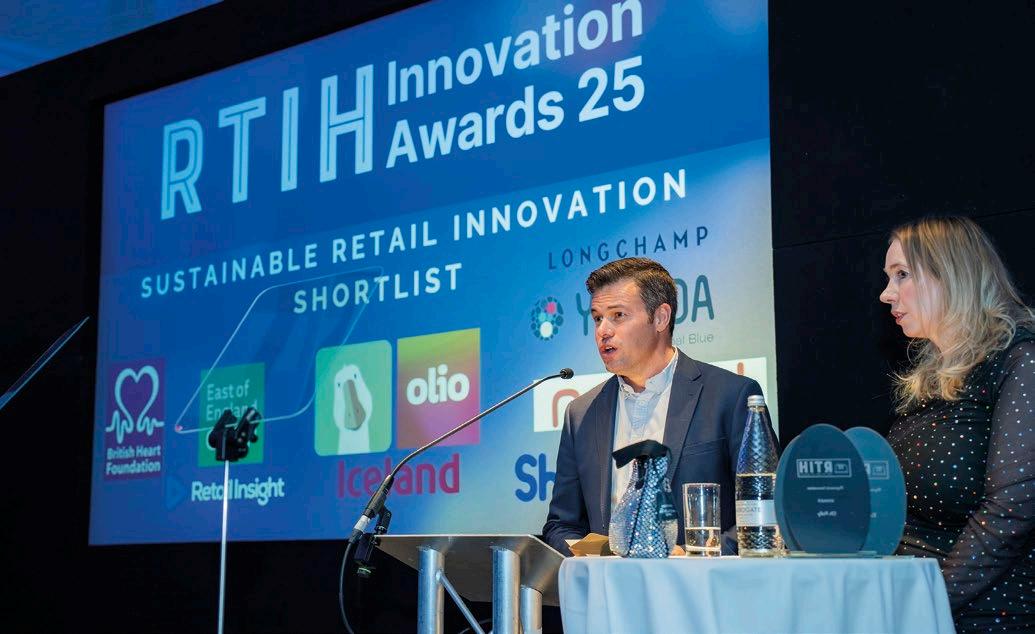
In its ESG ambition to become zero waste, Southern Co-op wanted to reduce food waste. It turned to AI to drive this change, cutting waste and selling more reduced to clear items.
It implemented Retail Insight’s WasteInsight, tapping the solution’s dynamic markdown feature, which uses advanced AI and cognitive technology to analyse data - from product type to seasonality - to calculate optimal discount prices and markdown timings.
This reduced food waste, preventing 3.1 million meals (~3,083 tonnes of food) entering landfill in 2024. It also stopped ~8,323 tonnes of Co2e from being emitted, all while helping the retailer improve sell-through rates.
Tahina is approaching sustainable retail with cutting-edge AI at its heart. Its platform is engineered to slash food waste, supercharge supply chain efficiency, and shrink carbon footprints - all while delivering unmatched convenience and quality.
By harnessing AI powered demand forecasting, dynamic inventory control, and eco-smart logistics, it is proving sustainability and profitability can go hand in hand. Tahina isn’t just building a retail brand; it is creating a movement that sets new standards for responsible shopping in the 21st century, showing how smart technology can drive bold environmental change and real business growth.


This award will go to a retailer or brand that has tapped AI technology to put inclusion at the core of its values. The winning entry will show how a company has boosted its inclusive credentials whilst also demonstrating the tangible business benefits involved.
90% of consumers struggle with bra shopping. Sizing varies wildly across brands - a 34D in one label fits completely differently in another. Terms like sister sizing, cup projection, and band tension mean nothing to most shoppers. Beyond fit, they want bras that suit their shape and silhouette, but without expert guidance, they’re left guessing.
Fit queries are the number one type of customer service enquiry retailers receive. Support teams drown in repetitive questions: “What size am I?” “Will this suit my shape?” “Why doesn’t this fit like my last one?”
Brarista’s retail partners faced this daily: rising returns, overwhelmed teams, declining confidence. Generic chatbots and static sizing charts or fit tools built for the clothing businesses offered no relief - they lack the specialist knowledge lingerie demands. The industry was waiting for a purpose built solution.
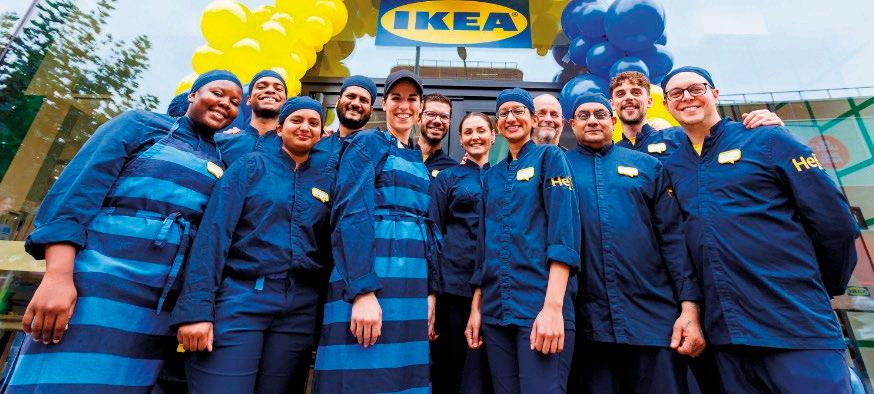
Ikea wants to create a better everyday life for people. It decided years ago to
build digital accessibility and inclusion into the way it designs.
The goal was simple: ensure people can shop with the retailer independently, without barriers of ability and language. In June 2025, it launched an AI tool for alt-text (alternative texts/alt texts are written descriptions of images that can be read by screen reader software for blind and low vision users).
This AI product for improving accessibility creates descriptions for over 400,000 images in 27 languages, guided by the needs of blind and low vision people.
Tahina’s AI driven features, such as voice activated assistance and personalised settings, break down barriers that have long kept many customers on the sidelines. This forward thinking design is generating genuine interest among future users and industry partners alike, who recognise the power of retail without limits.
What drives this success is its close collaboration with diverse communities. By co-creating with those
who understand accessibility fi rsthand, it is building solutions that aren’t just clever, they’re meaningful. Customers will enjoy a seamless, intuitive journey whether shopping in-store or online, regardless of their abilities or backgrounds.
WeCarryBags enhances retail convenience through technology that eliminates the burden of carrying shopping bags. Its proprietary single QR code system seamlessly connects customers, retailers, and delivery services via an intuitive mobile platform.
Founded by UK graduates who transformed personal adversity into innovation, it has expanded from solving local challenges to operating internationally across the UK, South Korea, India, and UAE. Its technology supports bricks and mortar retailers while enhancing customer experience through hassle free shopping and delivery.
The company is currently developing AI powered personalisation and launching global personal shopping services.
Who has been the most innovative, customer and employee focused retailer over the last 12 months? Judges are asked to look at AI powered tech deployments, pilots, initiatives etc and decide which retailer has been the most consistently forward thinking and customer centric.

EE transformed its budgeting approach by replacing static weekly shop budgets with dynamic, demand driven forecasts. Using Google Cloud’s machine learning and AI recommendations, it analysed three years of historic data to create tailored seasonal budgets for each shop. These budgets were integrated into its analytics tool, ‘My Store’, enabling leaders to make smarter staffing decisions, offering overtime or encouraging leave based on real-time customer demand.
Goddiva has set a new benchmark for retail innovation with the launch of Goddiva AI - a pioneering intelligent shopping assistant powered by OpenAI GPT-5 and LangChain.
Habitium is redefining global e-commerce in the home and garden sector through a hybrid model that merges marketplace breadth with the agility of cross-border dropshipping - enabling sales across Europe without physical infrastructure. Operating in eight countries, it combines strong customer focus with proprietary technology, AI driven automation, and fully localised logistics and payment systems.
Ikea wants to create a better everyday life for people. It decided years ago to
build digital accessibility and inclusion into the way it designs.
The goal was simple: ensure people can shop with the retailer independently, without barriers of ability and language. In June 2025, it launched an AI tool for alt-text (alternative texts/alt texts are written descriptions of images that can be read by screen reader software for blind and low vision users).
Prezzee’s always exploring innovative ways to spark human connection through gifting moments. Its 2024 Magical Messages experience brought the magic of Santa to life through a hyper-personalised digital experience designed for consumers of all ages.
Powered by AI and audiovisual synthesis, users entered a few personal details to receive a unique video message from Santa, confirming they’d made his ‘Nice List’. Set in a snowy, whimsical digital Santa’s workshop, the experience blended tradition with
technology to deliver joyful, emotional moments during the festive season.
Marrying powerful AI with a deep understanding of human behaviour, Tahina is building fully autonomous grab and go stores designed to deliver lightning fast, hyper-personalised experiences, without compromising inclusivity, sustainability, or ethics.
VenHub Global
VenHub Global is revolutionising bricks and mortar retail with the fully autonomous Smart Store, designed for 24/7 operation, zero on-site staff, and maximum efficiency.
Its modular units combine AI, robotics, and robotics arms to eliminate labour costs, reduce shrinkage, and operate in high traffic or underserved areas where traditional retail fails. Four initial deployments across California include a landmark store at LAX Airport/ Metro Transit Center and one at the Hollywood Bowl.

This award recognises AI technology project excellence, both in delivery and outcomes.
Over the last 12 months, B&Q and FoundIt! have built a high trust, high velocity AI client/supplier partnership that has transformed how millions of customers shop DIY.
Phase one saw FoundIt! deploy generative, visual navigation on product detail pages to keep paid and organic landers on-site and reduce “bounce back to Google.” This pilot rapidly expanded to generative navigation across 21,000+ PLPs and 250,000+ SRPs, turning overwhelming choice into intuitive journeys.
Currys partnered with Quorso to launch a new tool called ‘Action AI’ in its stores. The award winning, patented smart platform helps store teams work more efficiently and saves time by making important data easier for managers to find and understand.
Quorso is a pioneer of a new approach to store operations. The implementation of its Intelligent Management Platform was supported by the Currys team’s outstanding change management programme, utilising teaser trailers, pilot user videos, inspiring training and strong advocacy across all levels of the organisation.
By initially focusing on sales, customer and colleague missions, Action AI quickly proved itself as a genuine sales driving tool that the store teams loved using daily. Continuous user feedback shaped the product

roadmap, giving store teams ownership and driving widespread engagement and value.
Peak’s partnership with Debenhams Group revolutionised its approach to pricing through AI powered optimisation. Leveraging Peak’s Pricing AI application, the retailer - starting with with PLT and BoohooMAN, and expanding to Boohoo, Karen Millen and Debenhamstransitioned from manual, conventional pricing to a sophisticated, strategic, data led process.
Managing a catalogue of over a million products from more than 1,000 suppliers posed major operational challenges for Habitium.
Each item required manual data entry, translation, classifi cation, and content optimisation across multiple languages and markets, an extremely time-consuming process prone to errors and inconsistencies. Habitium needed a fast, reliable, and scalable solution to automate its processes while maintaining high content and brand quality.
Petstop and Galvia Galvia is a domain specific AI platform built for the fast paced, complex world of retail. It delivers connected intelligence that transforms data into real-time, retail ready insights, forecasts and real-time prompts for action.
By creating one trusted view across sales, customers, and operations, it helps teams make faster, smarter decisions. With retail clients like Petstop, Galvia has demonstrated how AI can drive revenue, improve efficiency, and spark a cultural shift. The platform empowers staff at all levels by surfacing actionable insights and removing data silos.
Southern Co-op and SymphonyAI
Southern Co-op transformed its retail operations by replacing 15-year-old Excel-based systems with SymphonyAI’s unified platform.
The company now efficiently manages assortment and space planning, tailoring product ranges to local shopper preferences. Key improvements include streamlined workflows eliminating constant system switching, rapid insights for better decision-making, and automated new product introductions that cascade across multiple store planograms in clicks.
This award recognises a successful AI powered partnership between a retailer and a technology supplier, with an emphasis on the last 12 months and how said partnership has gone from strength to strength during that period.
B&Q and Foundit!
Over the last 12 months, B&Q and FoundIt! have built a high trust, high velocity AI client/supplier partnership that has transformed how millions of customers shop DIY.
Phase one saw FoundIt! deploy generative, visual navigation on product detail pages to keep paid and organic landers on-site and reduce “bounce back to Google.” This pilot rapidly expanded to generative navigation across 21,000+ PLPs and 250,000+ SRPs, turning overwhelming choice into intuitive journeys.
Currys and Quorso
Currys partnered with Quorso to launch a new tool called ‘Action AI’ in its stores. The award winning, patented smart platform helps store teams work more efficiently and saves time by making important data easier for managers to find and understand.
Quorso is a pioneer of a new approach to store operations. The implementation of its Intelligent Management Platform was supported by the Currys team’s outstanding change management programme, utilising teaser trailers, pilot user videos, inspiring training and strong advocacy across all levels of the organisation.
Debenhams Group and Peak Peak’s partnership with Debenhams Group revolutionised its approach to pricing through AI powered optimisation. Leveraging Peak’s Pricing AI application, the retailer - starting with with PLT
and BoohooMAN, and expanding to Boohoo, Karen Millen and Debenhamstransitioned from manual, conventional pricing to a sophisticated, strategic, data led process.
Managing a catalogue of over a million products from more than 1,000 suppliers posed major operational challenges for Habitium. Each item required manual data entry, translation, classification, and content optimisation across multiple languages and markets, an extremely time-consuming process prone to errors and inconsistencies. Habitium needed a fast, reliable, and scalable solution to automate its processes while maintaining high content and brand quality.
Galvia is a domain specific AI platform built for the fast paced, complex world of retail. It delivers connected intelligence that transforms data into real-time, retail ready insights, forecasts and real-time prompts for action.
By creating one trusted view across sales, customers, and operations, Galvia helps teams make faster, smarter decisions. With retail clients like Petstop, it has demonstrated how AI can drive revenue, improve efficiency, and spark a cultural shift. The platform empowers staff at all levels by surfacing actionable insights and removing data silos.
Southern Co-op and SymphonyAI
Southern Co-op transformed its retail operations by replacing 15-year-old Excel-based systems with SymphonyAI’s unified platform.
The company now efficiently manages assortment and space planning, tailoring product ranges to local shopper preferences. Key improvements include streamlined workflows eliminating constant system switching, rapid insights for better decision-making, and automated new product introductions that cascade across multiple store planograms in clicks.


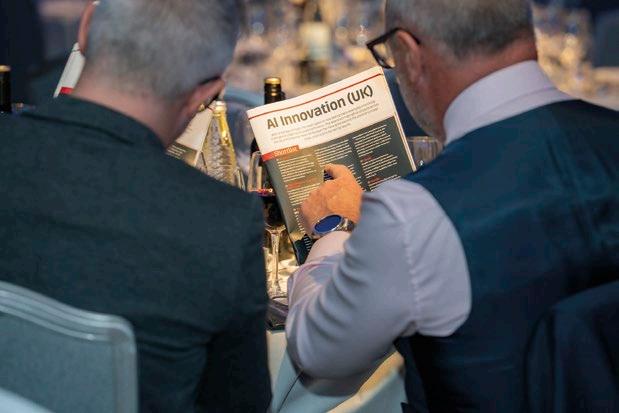
RTIH Editor’s Choice Award
RTIH Editor, Scott Thompson, will pick his stand out entries from across the 18 aforementioned categories.
Our judging panel will pick their stand out entry from across the 18 aforementioned categories.

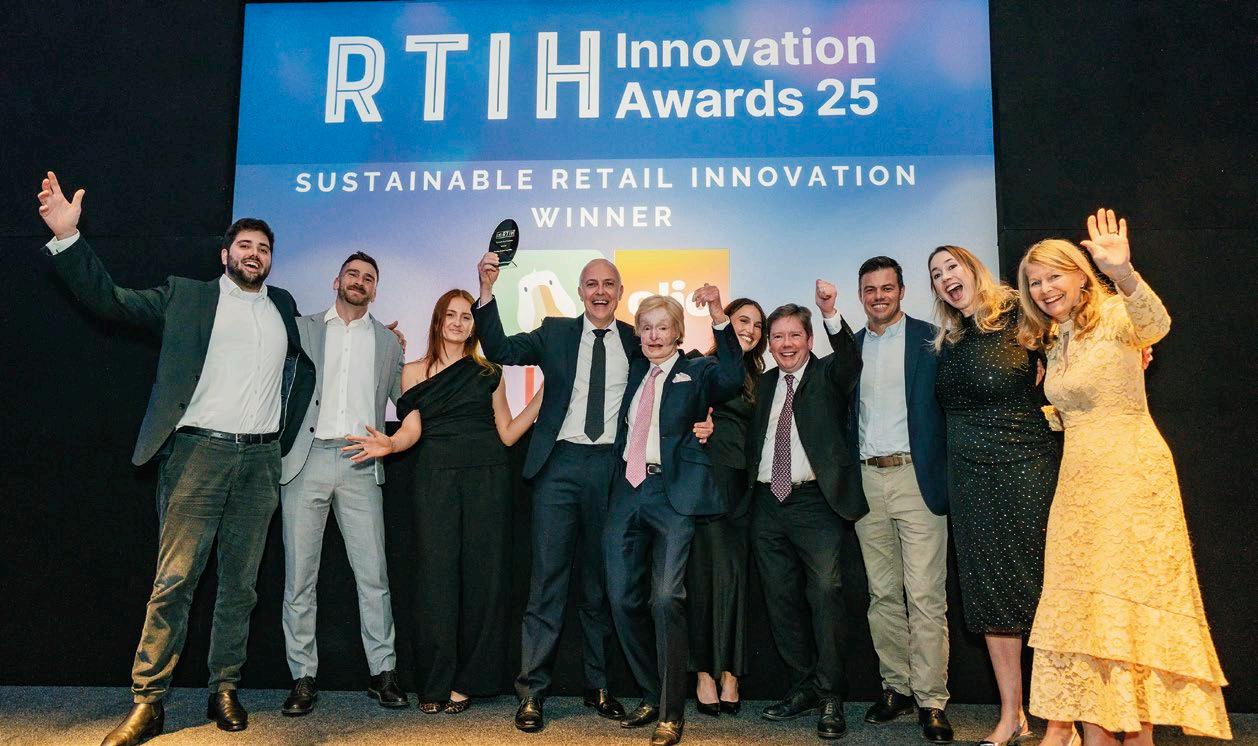
The eighth edition of the RTIH Innovation Awards will open for entries in April. The awards celebrate global tech innovation in a fast moving omnichannel world. Our latest winners were revealed at the 2025 RTIH Innovation Awards Ceremony, taking place at The HAC in Central London on Thursday, 16th October.
Tuesday, 7th April: Awards open for entries
Friday, 11th September: Award entry deadline
Tuesday, 15th September: 2026 finalists revealed Wednesday, 16th September - Wednesday, 30th September: Judging days Thursday, 15th October: Winners announced at the 2026 RTIH Innovation Awards Ceremony, taking place at The HAC in Central London
• Is there a fee to enter the awards? No, it is free of charge.
• Can I enter across multiple categories Yes.
• Do I need to complete all the sections in the entry form? No, but the more information you provide, the better chance you have of producing a successful submission.
• Is there a certain timeframe for nominated projects, initiatives etc? Yes, nominated projects, initiatives etc should have been completed (or substantially completed) during the last 12 months.
• Who has visibility of our completed entry form and what information will be public should we win or be shortlisted?
Only our Editor, Scott Thompson, and judging panel will view submissions. The information provided in the summary section of the entry form will be made public.
• Do you only accept entries from UK-based companies? No, we accept entries from all parts of the world.
• What is the shortlists process? Shortlists will be announced in September, then shortlisted entries will be sent to our independent judging panel who will decide upon the winners and highly commended submissions. Shortlisted companies will be invited to attend an event at The HAC in Central London on Thursday, 15th October (consisting of a drinks reception, three course meal and awards ceremony).
• Do winners and highly commended companies receive postevent coverage? Yes, post-event coverage includes articles on our website and also an in-depth awards review in our printed magazine. There is also the opportunity for a company profile type piece to be published on our site.
• When is the deadline for 2026 submissions? 11th September 2026.
• When will the 2026 winners be revealed? Our 2026 winners will be announced at the aforemention event at The HAC in Central London on Thursday, 15th October.
Dan McGrath, JD Group Customer Operations, JD Sports
Rob Smith, Technology Officer, East of England Co-op
Vineta Bajaj, Group CFO, Holland & Barrett
Nadine Neatrour, Chief Marketing Officer, Gordon Ramsay Restaurants
Mike Cadden, Chief Technology Officer, Marie Curie
Carole Kingsbury, Chief Technology Officer, C&C Group
Nina Mimica, Board Advisor and Former Studenac Executive
Christine Russo, Industry Analyst and Retail Influencer
Matt Taylor, CTO of Global Managed Services and VP of SecDevOps, NCC Group
Paula Bobbett, Chief Data and Digital Officer, Boots
Scott Thompson, Editor and Founder, Retail Technology Innovation Hub
Toby Pickard, Retail Futures Senior Partner, IGD
Further judges to be announced in the coming months. Further information at: retailtechinnovationhub.com/rtihinnovation-awards-2026
The judging panel for the RTIH AI in Retail Awards includes representatives from the likes of JD Sports Fashion, Amazon, C&C Group, Holland & Barrett, Austen & Blake, PoundFun, and Boots. We have brought together a broad spectrum of independent experts, who have experience and insight into different aspects of the retail technology industry.

Non-Executive Director, PoundFun
Bio: Whether through AI driven marketing, e-commerce strategy, or investment connections, Glen helps brands scale fast and smart.
He is currently Non-Executive Director at PoundFun, and has also served as COO at The Range and CMO at Fruugo.
JD Group Customer Operations, JD Sports Fashion
Bio: With nearly 16 years at JD Sports and an entire career in retail, Dan is a recognised leader in retail technology and innovation. As Head of Customer Operations, he focuses on how emerging technologies can transform customer experiences and empower employees to perform at their best.

A true futurist, Dan explores the intersection of digital and physical retail, continually seeking ways to make the shopping journey more seamless, connected, and human.
Founder, Londra Consulting
Bio: Becky Lombardo is an international retail logistics expert with over 20 years of experience working with some of the world’s most recognisable retail brands across luxury, fashion, beauty, homewear, wellness and food including Harvey Nichols, Fortnum & Mason, Asos, Dunelm, and Matchesfashion.
As the founder of Londra Consulting, Becky specialises in helping businesses navigate the complex, fast evolving landscape of global e-commerce and

omnichannel logistics. She has worked across every major fulfilment model, from direct-to-consumer and drop ship to concessions and rental, giving her a uniquely broad perspective.
Managing Director, Austen & Blake
Bio: Graham is a retail and digital leader with 25 years’ experience scaling global consumer brands.
His work focuses on building customer centred cultures, modern retail systems, and commercially resilient growth models. Graham also advises retail and technology businesses on strategy and leadership. He is passionate about elevating customer experience, developing people, and creating meaningful, longterm value.
Industry Analyst and Retail Influencer
Bio: Christine is an industry thought leader, Retail Technology Innovation Hub Top 100 Influencer, and the RTIH US correspondent.
She hosts the industry recognised leading podcast What Just Happened, where tech solution CEOs, leaders in retail and brands speak candidly about industry shaping issues and challenges.
Editor and Founder, Retail Technology Innovation Hub
Bio: Over the past 25 years, Scott has held senior editorial positions at and contributed to a number of business and technology related publications.
Prior to launching Retail Technology Innovation Hub, he was Editor at crypto publication Coin Rivet and Senior Editor at IBS Intelligence, heading up their monthly banking technology title, IBS
Journal and daily online news service. Scott also spent ten years at retail tech title, Retail Systems.
Chief Data and Digital Officer, Boots
Bio: With over a decade of experience, Paula is currently serving as Chief Data and Digital Officer at Boots UK, and contributing to digital transformation efforts through analytics and customer insight expertise.
She is also chairing the Boots Benevolent Fund and serving as a NonExecutive Director at Spire Healthcare Group, bringing diverse perspectives to leadership. Paula is skilled in leveraging data to drive actionable insights, aligning organisational goals with innovative digital strategies.
Chief Technology Officer, C&C Group Bio: From publishing to fashion retail,
Carole has successfully delivered technology solutions and services for FTSE 100 and FTSE 250 companies. Whether working as a Technology Consultant, Business Analyst, Programme Manager, or IT Director, her approach has consistently focussed on people, process, data, and technology (in that order).
Senior Software Development Engineer, Amazon Just Walk Out
Bio: At Amazon, Suhas focuses on building the company’s Just Walk Out cashierless technology for retail stores, based in Seattle, USA.
CTO of Global Managed Services and VP of SecDevOps, NCC Group
Bio: Prior to NCC Group, Matt was a partner and the technology strategy and transformation leader at one of the


Big Four. He has also been a CIO and previously led large scale complex global IT transformation, delivery and recoveries for over 20 years at Accenture.
Group CFO, Holland & Barrett
Bio: Vineta is an industry expert in the e-commerce and grocery industry, bringing several years’ experience in this space.
She spent ten years at Ocado Group, the FTSE 50 online grocer and technology provider supporting its growth and strategic M&A, strategic divestments and fundraising over £1.5 billion. She then took on the Group CFO role at Rohlik Group, a Pan European online grocer spanning five countries that has unicorn status.
Vineta recently joined Holland & Barrett as Group CFO. Her experience spans the US, UK, Europe and Asia. She is a finance, tax and business expert. She acts as an angel investor and advisor to a number of pre-series to Series A startups across a variety of industries and gives her time to supporting small businesses.
AI Keynote Speaker, Leading Futurist, Bestselling Author
Bio: Andrew is a leading AI expert, combining over 30 years’ experience at IBM and high tech startups with degrees in engineering and business strategy. He was a Global Managing Partner at IBM, and works with C-suite teams at Kingfisher, Shell, Dell, Intel, Vodafone and the NHS.
Andrew has delivered over 600 keynotes in 50 countries on generative AI, quantum computing, and digital transformation and in 2025, he was named to the AI 100 UK List for responsible AI. He is the author of the international best-seller Digitally Curious, hosts a popular podcast, and appears regularly on BBC, Sky News, and in major publications.
Retail Transformation Director & Consultant, OB&Co
Bio: Oliver is a recognised expert and consultant in retail transformation, guiding senior leaders to rethink strategies and operating models for the future of retail.
A LinkedIn Top Voice and as one of RTIH’s Top 100 Retail Technology Influencers, he hosts The Retail Transformation Show podcast and is widely recognised as one of retail’s most influential thinkers. His book, Driving Retail Transformation, provides a practical roadmap to deliver change with clarity, confidence, and conviction.
Chief Marketing Officer, Gordon Ramsay Restaurants
Bio: Nadine is a board level multichannel professional with full end to end e-commerce, marketing and retail experience from platform development to trading optimisation to community building to loyalty.
She is passionate about customers, experienced in cross channel retail and inspired by brands. Nadine is a thought leader in the retail space, and helps brands realise their customer opportunities through e-commerce, CRM, customer service, clienteling and digital in store experiences to grow sales, build loyalty and maximise profit. She passionately believes in uniting channels to create a truly universal customer experience that drives customer loyalty and surpasses global boundaries.
Chief Technology Officer, Marie Curie
Bio: Mike is an experienced transformational technology executive with an exceptional track record in strategic and technical management in retail and FMCG with a passion for using data to deliver powerful customer experience that drives increased revenues.
He has extensive experience in business and technology turnarounds and digital transformations which have delivered both multi-million year-onyear revenue improvements as well as significant six figure savings to PE, PLC and privately owned businesses.
Retail Futures Senior Partner, IGD
Bio: Toby has over 17 years’ experience working in the food and consumer goods industry.
He researches, analyses and presents insights on innovations, technology, retail futures, sustainability and macro trends in the FMCG sector.
Founder, ETIH
Bio: Director of Content at Paxton Media and Co-founder and Editor at RTIH’s sister title, EdTech Innovation Hub, Emma is an education writer and former teacher and Head of Early Years and Key Stage One. She is the author of The Power of Words and has contributed to TES, Schools Week and Teach Primary.
VenHub Global is in the running for five awards this evening: AI and Physical Stores, Best Use of AI in Customer Service, AI and Payments, Digital Transformation Project of the Year, and Most Innovative Retailer.
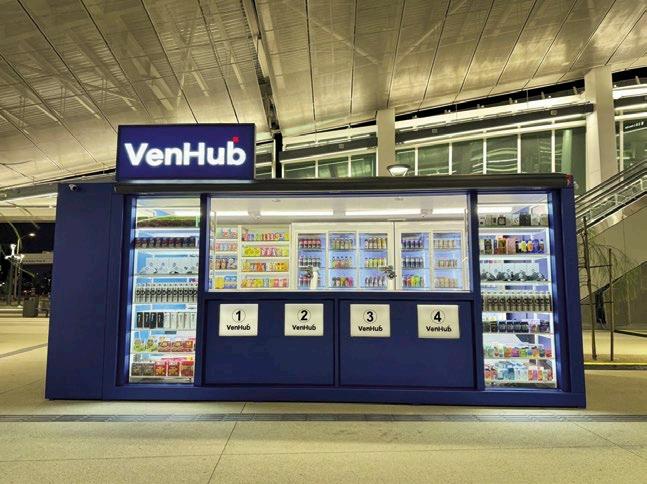
The US-based company is focusing on bricks and mortar retail with the fully autonomous Smart Store, designed for 24/7 operation, zero on-site staff, and maximum efficiency. Its modular units combine AI, robotics, and robotics arms to eliminate labour costs, reduce shrinkage, and operate in high traffic or underserved areas where traditional retail fails. Four Initial deployments across California include a landmark store at LAX Airport/Metro Transit Center and one at the Hollywood Bowl.
VenHub is more than innovation - it’s a blueprint for the future of retail. By solving the biggest challenges facing physical retail, it enables a sustainable, scalable model that empowers entrepreneurs and redefines what’s possible in convenience commerce.
VenHub Global was named Startup of the Year at the 2025 RTIH Innovation Awards Ceremony in London during October. It was also recognised as a finalist in two additional categories: Payments Innovation and Most Innovative Retailer (Rest of World).
“We’re honoured to be recognised as Startup of the Year by RTIH,” said Shahan Ohanessian, Founder and CEO at VenHub. “This award reflects the commitment and innovation of the entire VenHub team as well as the continued belief in our mission from all our partners and supporters.”
“Our Smart Stores are demonstrating what is possible for retail operators and their customers as we are introducing a retail solution that meets people where they are - with speed, accuracy, and purpose.”
Ohanessian added: “We also congratulate all the other RTIH Innovation Awards nominees and winners. Innovation does not happen in isolation. It happens when people across the world pursue bold ideas and deliver real results. We are proud to be part of this community.”
Retail does not have an AI problem. It has a heroics problem, says Vineta Bajaj, Group CFO at Holland & Barrett, and a member of the RTIH AI in Retail Awards judging panel.
The industry has normalised firefighting. Being “always on”. Running on adrenaline.
Vineta Bajaj: “The fastest way to kill AI in retail is to turn it into performance art”


Celebrating teams who save the day when things go wrong. That culture is often framed as unavoidable. Retail is complex. Retail is fast. Retail is unpredictable.



But that story is convenient. And wrong. Retail is predictable most of the time. Roughly 80% of retail decisions repeat. Demand follows patterns. Replenishment cycles are known. Pricing mechanics are understood. Labour needs are forecastable. The same decisions are made every day, often by different people, with



slightly different judgement, under pressure.
The real problem is that retailers treat the predictable 80% as if it were exceptional. They force humans to re-decide routine things. They rely on heroics instead of systems. And then they wonder why teams are exhausted and AI never scales. This is where boring AI wins.
Boring AI is embedded, not performed
The fastest way to kill AI in retail is to turn it into performance art. Dashboards. Scenarios. Workshops. Endless “decision support”. All of it looks sophisticated. None of it removes work.
In replenishment, boring AI means order proposals, not forecasts. In pricing, recommended price moves within clear guardrails, not scenario trees. In labour, stable shift plans, not prettier dashboards. This distinction matters.
Scenarios feel safe because they keep humans in control. In reality, they expose the flaw in how retail adopts AI. Humans are still being asked to make routine, repeatable decisions. Boring AI should make the boring decisions happen.
If a pricing move sits within agreed guardrails, the machine should execute it. No meeting. No approval. No dashboard review. Humans should only see exceptions. Cases that fall outside tolerance. Cases that genuinely require judgement.
The machine under the hood should hum. Quietly. Reliably. Constantly. If AI’s primary output is a dashboard asking a human what to do, the value has already leaked out.
Retail teams often take pride in heroics. Fixing problems at the last minute. Saving promotions. Chasing stock. Reworking labour plans. Pulling all-nighters to close gaps. But heroics are not a sign of excellence. They are a sign of system failure. Every heroic intervention usually points to a decision that could have been automated earlier. A pattern that was known. A rule that was not
enforced. Data that was not trusted. Boring AI changes the operating model. It normalises the predictable. It absorbs routine variability. It makes “nothing happened today” the goal. Humans then focus on the genuinely exceptional 20%. Supplier failures. Weather shocks. Demand spikes. Strategic trade-offs.
discipline is the unavoidable foundation
There is an old phrase. “Shit in, shit out.” What we are seeing now is that principle playing out at industrial scale. Everyone is racing to adopt AI. Very few are clear on the problem they are trying to solve. Even fewer have
the data discipline required to solve it well.
AI does not fix ambiguity. It amplifies it. Product hierarchies change mid-year. Promotions are coded differently by team or country. Substitution logic is unclear. Ownership of data is vague. Definitions drift. No model can compensate for this.
The retailers winning with AI invest heavily in data discipline. Clear ownership. Boring definitions. Master data that does not change unless it absolutely has to. Promo mechanics that mean the same thing everywhere. This work is slow. Political. Unsexy. It is also where AI either becomes boring and valuable, or exciting and useless. GenAI
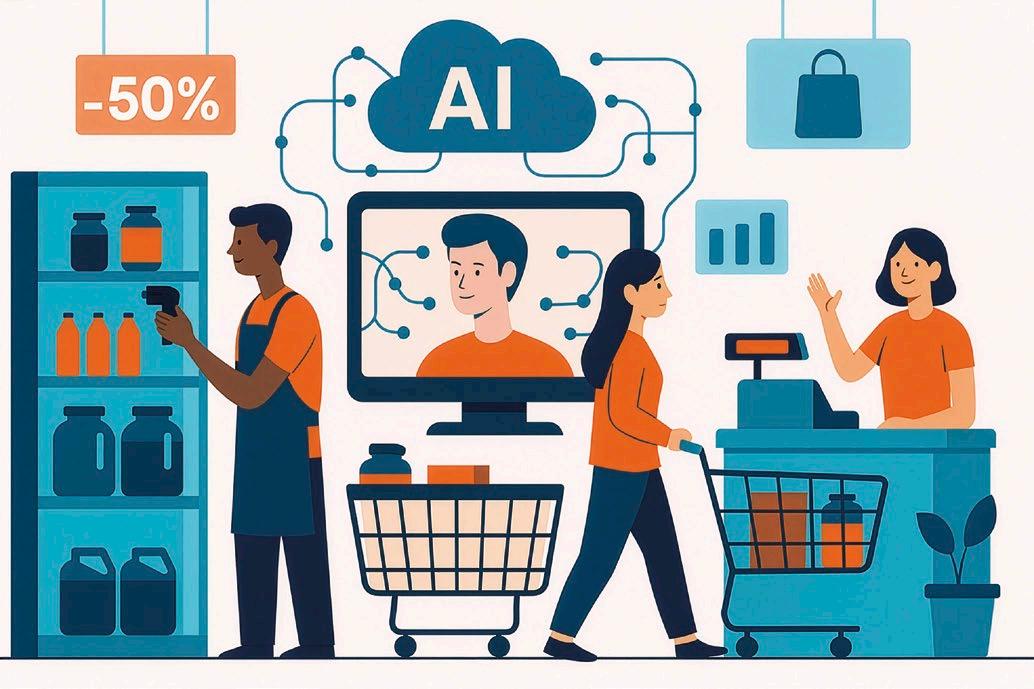
layered on messy data does not create intelligence. It creates confident nonsense, faster.
Value lives in exceptions, not averages
Another retail myth is that improvement comes from optimising the middle. It doesn’t. A small percentage of SKUs drive most stock-outs. A handful of stores create disproportionate waste. A few promotions destroy margin assumptions. Averages hide all of this.
Boring AI focuses on exceptions. What changed. What broke. What needs attention now. AI does prioritisation. Humans apply judgement. This is how heroics disappear. Teams stop reacting to everything and focus on what actually matters.
Ownership beats innovation every time AI does not fail because it is technically hard. It fails because nobody owns the outcome. Innovation teams do not run P&Ls. Data teams do not own margin. IT does not carry working capital targets. When AI sits outside the line, it stays in pilot mode forever.
Where AI works, ownership is explicit. Pricing AI is owned by Commercial. Finance defines guardrails, margin floors, and economic logic. AI proposes price moves automatically. Humans only see exceptions. This only works if definitions are clear. Data is clean. Guardrails are stable. Ownership without discipline is theatre. Discipline without ownership is bureaucracy. You need both. And yes, this means fewer hero moments. That is the point.
Boring AI compounds. Heroics do not.
The most damaging question leaders ask about AI is “what’s the ROI this quarter?” The AI that creates durable advantage delivers small gains that compound. Slightly better forecast bias. Fewer emergency orders. Lower waste. More stable labour plans.
Week to week, it feels underwhelming. Year to year, it is material. Heroics feel good in the moment. They do not compound. They exhaust people and hide structural issues. From a CFO perspective, the choice is obvious. Compounding beats adrenaline. Every time.
The winners are not building use cases. They are building systems. Demand feeds
supply. Supply informs pricing. Pricing reshapes demand. Execution feeds learning. Decisions connect. That is the retail brain. Not a monolithic platform. A set of boring, reliable intelligence loops embedded across the business. Tools optimise tasks. Brains remove heroics.
Retail AI does not fail because the technology is immature. It fails because retailers cling to heroics. The retailers winning with AI are doing deeply unsexy work. Removing noise. Enforcing discipline. Automating the predictable. Letting machines handle routine decisions. They are making retail boring again. And that is exactly why they win.