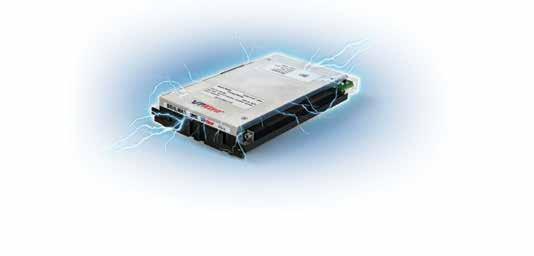
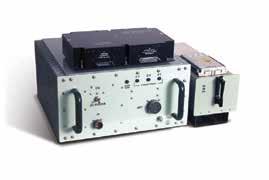
Behlman has provided reliable power to mission-critical military airborne, shipboard, ground and mobile applications for over 50 years. Behlman offers the widest array of COTS AC to DC and DC to DC power supplies that meet military requirements at industrial pricing.
> Proven military reliability without the high cost of full mil-spec
> Built to perform to full power at rated temperatures
> Modified COTS solutions that offer faster delivery, higher reliability and lower cost than custom designs
> Hundreds of designs to meet a wide range of applications

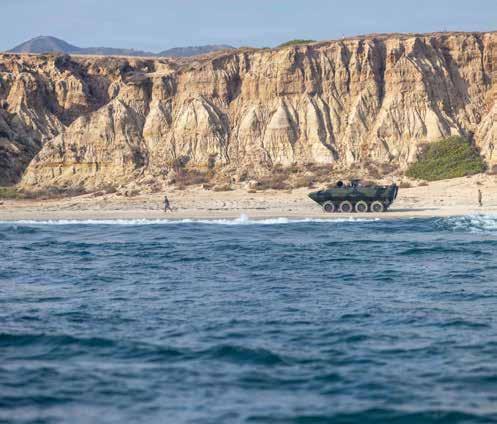
COTS (kots), n. 1. Commercial off-the-shelf. Terminology popularized in 1994 within U.S. DoD by SECDEF Wm. Perry’s “Perry Memo” that changed military industry purchasing and design guidelines, making Mil-Specs acceptable only by waiver. COTS is generally defined for technology, goods and services as: a) using commercial business practices and specifications, b) not developed under government funding, c) offered for sale to the general market, d) still must meet the program ORD. 2. Commercial business practices include the accepted practice of customer-paid minor modification to standard COTS products to meet the customer’s unique requirements
—Ant. When applied to the procurement of electronics for the U.S. Military, COTS is a procurement philosophy and does not imply commercial. Office environment or any other durability grade. E.g., rad-hard components designed and offered for sale to the general market are COTS if they were developed by the company and not under government funding.
By John Reardon, Editor-in-Chief, COTS Journal


EDITORIAL
EDITORIAL SUBMISSION AND RELEASES
johnr@rtc-media.com
PUBLISHER/CEO
John Reardon • johnr@rtc-media.com
CONTRIBUTING EDITORS
Jeff Elliott, Scott Meyer
ART AND PRODUCTION
CREATIVE DIRECTOR
Shae Mirizzi • shaezrear@gmail.com
DIGITAL MARKETING MANAGER
Scott Blair • scott@blair-media.com AD TRAFFIC
Vaughn Orchard • vaughno@rtc-media. com
FINANCE AND ACCOUNTING
Paige Reardon • paiger@rtc-media.com ADMINISTRATION/CIRCULATION
Dawn Dunaway • dawnr@rtc-media.com
ACCOUNT MANAGER
SALES MANAGER
Vaughn Orchard • vaughno@rtc-media. com
CUSTOM AND CONTRACT SERVICES
John Reardon • johnr@rtc-media.com
COTS Journal
CORPORATE OFFICE
RTC Media
110 S Rancho Santa Fe, Virgin UT 84779 PO 790039
Phone: (949) 226-2023
Fax: (949) 226-2050
www.rtc-media.com
PUBLISHED BY RTC MEDIA
Copyright 2026, RTC Media. Printed in the United States. All rights reserved. All related graphics are trademarks of The RTC Group. All other brand and product names are the property of their holders.


























































By Michael Collett, Executive Director, Business Development (DOJ)

As AI adoption accelerates across the government, modernization has become a must-have for federal agencies. Recent mandates from the current administration have raised the stakes for these agencies to implement tighter oversight, improve security, consolidate systems, and replace outdated technology that no longer meets mission needs.
Recently, OMB directed agencies to improve transparency in federal technology purchasing by requiring monthly CIO reports, clearer pricing, and the adoption of risk-based security models aligned with the mission. Along similar lines, Presi -
dent Trump’s Management Agenda calls for secure, digital-first services, AI and automation, and the elimination of data silos. These efforts build on years of modernization policy and zero-trust mandates, elevating legacy IT from a back-office issue to a national security concern.
However, a short-term fix for modernization is often just legacy debt in a different form. As agencies modernize, they need to make lasting technology decisions that can withstand leadership changes, budget shifts, acquisition delays, evolving threats, and shifting mission demands over time.
Future-proofing starts with the mission, not technology.
When future-proofing, agencies must focus on their main goal rather than just technology. The mission comes first. Agencies should step back from the solution itself and ask how the technology is boosting operational effectiveness, workforce productivity, and risk-based decision-making. A cargo-screening tool may speed throughput, but does it help officers find higher-risk shipments without creating issues in the supply chain? A data platform may give the Coast Guard better awareness, but does it help crews act faster with fewer people while also supporting a risk-based threat response?
DHS is interconnected and constantly changing, with varied missions that often overlap across components. This overlap necessitates that agencies take a holistic approach to modernizing and future-proofing technology. For example, border security doesn’t fall on a single agency or unit. CBP and the Coast Guard both contribute to securing border environments. A data platform that’s effective for one but not the other creates an operational gap. In the same way, traveler screening relies on coordination between CBP and TSA (not to mention the additional coordination that occurs with state and local counterparts who provide additional scrutiny in the traveler screening process). A system that enhances vetting for one agency but disrupts handoffs for the other is not truly future-proof.
Legacy systems, fragmented modernization, proprietary lock-in, and outdated procurement cycles all make it hard for agencies to adapt. A quick fix might help now, but it causes bigger problems later on. This is especially clear with AI and cybersecurity. Threats evolve faster than budget and acquisition timelines; a cybersecurity solution procured 18 months ago is likely already outdated as AI accelerates the scale and speed of attacks. What worked before no longer fits today's IT environment, so agencies have to choose technologies and approaches that adjust as conditions change.
However, adaptability depends on more than architecture. Even the best-designed systems fall short if agencies aren’t properly managing how they are deployed, the standards that ensure consistency, the testing that validates performance, and the data quality that supports trustworthy outcomes. Success with AI depends on building oversight, traceability, and evaluation processes to ensure systems are reliable and aligned with mission requirements.
Just as important, the workforce must be trained to use these tools effectively. Sustainable adoption depends on training, change management, and shifting perception toward how AI is improving their work.
To assist with this process, agencies should look to work with integration partners that have expertise in agile delivery. While investing in strong products can be a good temporary way to improve agencies’ tech stack, these solutions often don’t align with the overall IT environment. Each decision should be evaluated carefully to ensure the solution functions effectively within existing systems and can support future growth.
Future-proof investments should show measurable mission value, whether through productivity gains, improved output, stronger resilience or better operational outcomes. Agencies can measure productivity gains based on mission impact. i.e., if the same workforce can process more cases, reduce backlogs, or move more travelers through checkpoints without adding personnel. Agencies can also measure mission impact through stronger operational outcomes, such as whether security technologies actually improve lane effectiveness or make critical systems more resilient against cyber or physical disruption.
For federal agencies, future-proofing means making mission-centered decisions that handle change while staying relevant. Agencies will be better prepared if they focus on mission needs, avoid quick solutions that limit them later, and invest in governance to keep technology secure, adaptable, and mission-ready.
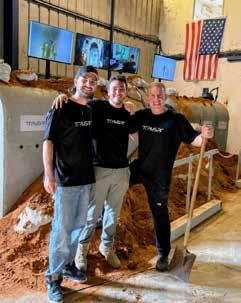
Traysar Raises $25M Seed, Emerges from Stealth at Reindustrialize as the World’s First Subterranean Defense Tech Company.
The U.S. Army estimates more than 10,000 known military facilities are hidden underground worldwide.* Today, Traysar declares an end to the subterranean blindspot for the free world
With $25M in funding led by Silent Ventures, Traysar publicly launched at the 2026 Reindustrialize Summit, introducing a new class of autonomous “subterra” platforms engineered to penetrate and secure the domain beneath the Earth’s surface.
The underground threat is accelerating on every front. In its 2023 report to Congress, the DoD acknowledged Chinese investment in underground facilities to conceal and protect all aspects of its military forces. Allied forces struggle to reach Iran’s deep nuclear bunkers. Hamas built an entire terror state underground, and penetration tunnels are breaching borders worldwide - including America’s own.
Meanwhile, the global defense industry has a vertical bias: hundreds of billions flow skyward into missiles, missile defense, drones, and counter-drone systems, while adversaries dig in, building deeply buried

facilities the U.S. cannot reliably strike, and cannot affordably keep disabled. The Earth’s crust is the new strategic chokepoint.
“For decades, we have allowed a massive capability gap to widen beneath our feet,” said Yadin Soffer, Co-Founder and CEO of Traysar. “Our message to adversaries is clear: there is no place to hide. Traysar’s mission is to expose every subterranean threat and equip the armies of the free world to fight in this new-yet-ancient dimension.”
“Traysar is pioneering the doctrine and developing the technology required for U.S. military supremacy across the subterranean domain, a war-fighting realm steeped in history dating back to WWI, through the Vietnam Conflict, and is now quickly emerging as the defining 21st-century battlefield," said Jackson Moses, GP at Silent Ventures, whose seed investments include Saronic and Castelion.
Traysar’s engineering team, including early engineers from SpaceX and The Boring Company, is fielding autonomous platforms built for subterranean maneuver and infrastructure survivability starting with:
An excavator-class autonomous tunnel breaching and tactical exploration platform that rapidly navigates, maps, and clears contested underground networks.
A high-speed, rapid-burrowing autonomous platform that creates precision subterranean access points and delivers critical payloads beneath the surface.
The same underground domain adver-
As part of the official German delegation to the NATO summit in Ankara, Quantum Systems announced its support of NATO’s Drone Edge initiative, with the expansion of its international production network. In addition to expanding existing manufacturing facilities in Germany, Ukraine, Australia, and California, the company is currently ramping up a new facility in Huntsville, Alabama. Additional production sites are being established in the UK and along the Eastern Flank in Lithuania, Estonia, and Romania.
"Combat power does not begin on the battlefield - it begins in trusted factories. Armed forces can only fight at the speed their industrial partners can produce, adapt, and sustain," said Martin Karkour, Chief Revenue Officer of Quantum Systems.
saries use to shield missiles, leadership, and command infrastructure can be used by allied forces to harden bases, secure manufacturing, and preserve logistical continuity under attack. Traysar builds for both sides of that equation.
The seed round was joined by Lux Capital, Ora Global, and strategic angel investors, including Steve Blank, and founders from Anduril and Erebor, among others. Additional investors include NeverLift VC, Mana, Impatient Ventures, New Vista, and Entree Capital, among others. Traysar was co-founded by Yadin Soffer, Asher Katz, and Gilad Adin.
"Our expanding manufacturing footprint allows us to produce closer to our customers, strengthen industrial cooperation across the Alliance, and translate operational demand into reliable delivery," he added.
Sven Kruck, co-CEO of Quantum Systems, said: “Deliver, Support, Integrate is our philosophy of localization. After delivering systems, we quickly build up a local support network and then integrate into national economies and industries to scale production and deliver in months, not years.”
With manufacturing capabilities spanning multiple allied nations, Quantum Systems continues to invest in the industrial infrastructure needed to support long-term defense readiness and deliver critical autonomous systems where they are needed most.
The FLEETWERX, NPS CAMRE, and Industry Partners to Demonstrate Historic Advanced Manufacturing Operations During RIMPAC 2026
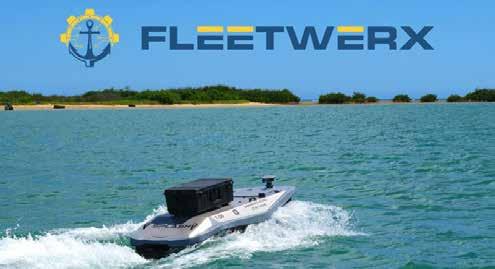
FLEETWERX, in support of the Naval Postgraduate School's Consortium for Advanced Manufacturing Research and Education (NPS CAMRE), the U.S. Navy, U.S. Marine Corps and leading industry partners, will demonstrate the largest advanced manufacturing effort ever conducted during a military exercise as part of RIMPAC 2026.
During the exercise, military operators and industry innovators will 3D print drones, manufacture mission-critical readiness parts aboard warships and ashore, employ artificial intelligence tools to help determine where parts should be produced, and use autonomous systems to deliver components across the operational environment.
Participating organizations include leaders in advanced manufacturing, autonomous systems, artificial intelligence, logistics technologies, and expeditionary production systems.
The USS Essex will serve as a centerpiece of the effort, hosting multiple expeditionary manufacturing systems capable of producing readiness parts and unmanned systems at sea. The broader effort will span multiple operational locations, including aboard the USS Essex and USS Theodore Roosevelt, at military installations across Oahu and through a distributed network of more than 50 manufacturing nodes located across military instal-
lations, universities, manufacturing centers, and operational locations worldwide.
Participating technologies will include modular drone production systems, hybrid metal manufacturing platforms, autonomous surface vessels and AI-enabled decision tools designed to help connect production, logistics and operational requirements.
FLEETWERX is coordinating military, academic, and industry participants across a distributed network of manufacturing, logistics, and decision-support technologies.
The objective is to connect capabilities that are often tested separately and evaluate how they perform as part of a single operational workflow.
The demonstration will connect advanced manufacturing systems, autonomous logistics platforms, and AI-enabled decision tools across ships, military installations, and a global network of production partners, in what organizers describe as the largest advanced manufacturing effort in the Department of Defense's history.
"Many of these technologies have been demonstrated independently. What makes RIMPAC unique is the opportunity to bring them together in an operational environment," said Morgan Bower, Director, FLEETWERX. "We're manufacturing parts aboard ships, producing drones at sea, and using autonomous systems to move critical components where they're needed."
At its core, the effort is focused on readiness. Participants will evaluate whether emerging manufacturing and logistics capabilities can help reduce repair timelines, improve responsiveness, and provide additional options when traditional supply chains are
delayed or constrained.
The exercise will help military leaders better understand how advanced manufacturing, autonomous logistics and AI-enabled decision tools perform when integrated into a single operational workflow and tested in realistic field conditions.
For forces operating across the Indo-Pacific, where logistics networks span thousands of miles, even modest reductions in repair timelines and delivery delays can have an outsized impact on readiness and operational flexibility.
RIMPAC 2026 is scheduled to take place from June 24 to July 31 in and around the Hawaiian Islands. The exercise is expected to include 31 participating nations, approximately 40 surface ships, five submarines, more than 140 aircraft, and over 25,000 military personnel operating under the theme "Partners: Integrated and Prepared."
The demonstration builds on lessons learned during previous RIMPAC exercises, including a successful 2024 operation in which NPS CAMRE personnel manufactured and machined a replacement component aboard USS Somerset, returning a critical shipboard system to service in approximately 34 hours.
The exercise will test a complete workflow that begins with identifying a requirement from an operational unit, digitally assigning production to the most appropriate manufacturing node, producing the component through distributed manufacturing systems, and delivering the completed part using autonomous platforms.
While many of the individual technologies participating in RIMPAC 2026 have been demonstrated previously, the exercise represents one of the first opportunities to evaluate them as part of a coordinated operational workflow spanning ships at sea, military installations and industry partners. The effort is intended to help military leaders better understand how emerging manufacturing and logistics capabilities can contribute to readiness, resilience, and operational flexibility in future operations.
"RIMPAC provides an opportunity to test these technologies in realistic operational environments and alongside the people who may ultimately use them," said Chris Curran, CAMRE Program Manager. "The lessons learned help shape future research, experimentation, and capability development across the force."

By combining deltaflare’s Phoenix platform with OnLogic's industrial edge hardware, this partnership provides essential and critical infrastructure operators with a secure, software-defined foundation for their distributed OT estates.
Industrial computing and edge AI specialists OnLogic and operational technology (OT) cybersecurity leader deltaflare have announced a strategic partnership to deliver cyber-resilient, hardened hardware solutions tailored for Critical National Infrastructure (CNI) and essential services.
By integrating deltaflare’s Phoenix platform with fanless, ruggedized edge computing hardware from OnLogic, the collaboration provides
In aerospace and defense, the most important additive manufacturing question is no longer whether a machine can print a complex shape. The real question is whether a difficult part can move from concept to a repeatable, productionready process with the dimensional control, material performance, and manufacturing discipline required in a highconsequence environment. For metal and ceramic applications especially, the challenge is rarely printing alone; it is understanding how powder behavior, densification, shrinkage, support generation, postprocessing, and inspection interact to
a secure-by-design foundation for operators in energy, water, electricity, and transport networks, allowing them to safely digitize and defend distributed assets.
Hardening the Edge: Software-Defined Security on Industrial Compute
Modern distributed infrastructure relies on processing data directly at remote, unmanned locations subject to extreme temperature fluctuations and continuous 24/7 operational demands. Traditional technology solutions risk catastrophic failure in these harsh environments from environmental stressors or cyber vulnerabilities.
OnLogic devices provide the hardened physical foundation for deltaflare’s software-defined Phoenix platform. Engineered to withstand harsh conditions, OnLogic hardware provides Phoenix with a stable, intervention-free foundation at the operational edge, enabling the platform to run security controls, enforce access policies, and maintain continuous evidence of compliance without relying on site visits to keep it online.
"Our Phoenix platform replaces a stack of separately procured vendor products in detection, asset visibility, remote access, network security, and workload isolation, with a single software platform on standardized edge hardware. For that to be credible in critical operational environments, the compute platform has to be reliable without intervention. OnLogic gives us that. Their supply chain depth and industrial build quality are what make the model work in practice,” says Mo Javadi, co-founder and COO of deltaflare.
Encapsulating Legacy Systems and Ensuring Compliance
A persistent challenge for essential service
determine whether a part can be qualified and produced consistently.
Arc Impact is a global leader in advanced binder jet manufacturing, focused on turning complex metal and ceramic designs, such as siliconcarbidebased components, into qualified, repeatable production programs for aerospace, defense, and other demanding markets. In these sectors, that focus matters because many of the most promising opportunities involve parts that are difficult to machine, difficult to cast, or difficult to produce repeatedly once geometry, operating conditions, and material requirements become more demanding. Through its AM2 Production framework, Arc Impact works with manufacturers to define the application, engineer the workflow, and demonstrate that a given production route meets technical and business requirements.
AM2 Production focuses on the entire manufacturing workflow, including materials development,
operators is protecting legacy industrial systems that cannot be patched, replaced, or taken offline. The joint solution uses OnLogic industrial edge computers alongside deltaflare's platform encapsulation layer to run legacy SCADA workstations and unsupported operating systems inside a secure-by-design virtualization environment, without requiring changes to the underlying systems.
The integrated solution continuously captures telemetry, asset inventory, and configuration state as part of normal platform operation, producing audit-ready evidence of UK NIS and EU NIS2 compliance without requiring a separate assurance workstream. This gives asset owners evidence of Zero Trust controls in practice.
Reducing Operational Friction and TCO
The partnership significantly reduces the Total Cost of Ownership (TCO) and operational friction associated with managing remote infrastructure.
Eliminating Truck Rolls / Call-outs: The high-availability, fanless design of OnLogic hardware virtually eliminates the need for expensive emergency maintenance trips to remote sites to replace or reboot failed PCs.
Central Orchestration: Through the Phoenix platform, fleets of edge-deployed OnLogic units can be maintained via templated blueprints, enabling low-overhead deployment and secure remote updates at scale.
"Our hardware is meant to be installed and then left to do its work for the life of the project," says Roel Weijters, EU Partnership Manager at OnLogic. "This provides the reliable physical infrastructure that ensures deltaflare's apps stay online 24/7, keeping vital systems secure and accessible at all times."
applications development, evaluating candidate parts, optimizing part designs, implementing manufacturing work cells, validating both technical performance and the business case, and then scaling into sustained production. In practice, this extends beyond the asprinted part to include upstream and downstream steps, such as powder selection, sintering strategies, machining, and finishing, so that manufacturers are qualifying a complete path to the final component, not just a build file.
One reason this approach is necessary is that aerospace and defense programs often fail or stall not because the initial part cannot be made, but because the process around that part is not stable enough to validate. AM2 Production addresses this by structuring adoption as a staged pathway that begins with benchmarking and initial qualification, then moves through workflow optimization, technical and business validation, and finally production deployment and scaleup. For engineering
teams in aerospace and defense, that framework reflects how real Arc Impact Customer Part Example - Binder Jetted.
Silicon Carbide manufacturing decisions are made with risk reduction, repeatability, and the ability to transition from development to controlled, auditable output in mind. Silicon carbide is a clear example of why this applicationfirst strategy matters. Advanced ceramics such as silicon carbide sit at the intersection of demanding material behavior, tight tolerances, and harsh thermal and mechanical conditions, making them difficult to address with conventional manufacturing routes. For aerospace and defense hardware, that combination is especially important in applications that must remain dimensionally stable and mechanically robust under vibration, high temperature, and rapid thermal cycling. Across applications ranging from spaceborne optics to hightemperature thermal management and protection systems, including components for propulsion, sensing, and survivability, Arc Impact positions its XSeries binder jet systems around the densification of complex metallurgical and ceramic systems. The X-Series systems are capable of processing nonoxide ceramics such as silicon carbide, with openparameter development to finetune powder morphology, binder saturation, and sintering profiles. The goal is not simply to demonstrate that silicon carbide can be
Boeing’s [NYSE: BA] MQ-28 Ghost Bat has participated in Exercise Valiant Shield alongside F-35A, F-35B, F-15EX, HC-130, E-3, E-2D, EA18G, RC-135, and various other joint and coalition aircraft, becoming the first and only collaborative combat aircraft (CCA) deployed to a multinational, joint operational exercise.
During Valiant Shield 2026 in June, the Australian-developed MQ-28 Ghost Bat integrated with forces from the U.S. Pacific Command to support the U.S. Air Force’s Experimental Operations Unit’s CCA integration objectives.




printed, but to qualify robust manufacturing paths for highvalue components on which it depends.

Within this broader solutions framework, the X25Pro™ and X160Pro™ function as complementary platforms that support different stages of application maturity and scale. The X25Pro™ provides a midsized environment well suited to benchmark parts and earlyphase aerospace and defense programs where the immediate objective is to establish process understanding, refine densification behavior, and build confidence in dimensional outcomes. Once a workflow has been proven out, the X160Pro™ carries the same binder jet logic into a larger production envelope, enabling larger parts, larger batches, or arrays of parts when the conversation shifts toward throughput, cost per part, and
F-15EX Eagle II are pictured together during Exercise Valiant Shield 2026 over the Philippine Sea, demonstrating the future of human-machine teaming in the theater.
The aircraft participated alongside crewed platforms as they refined tactics, techniques, and procedures around the Marianas Island Range Complex in the Western Pacific region. Such exercises are critical to ensuring the interoperability and interchangeability of the MQ-28 and to proving the ability to deploy and integrate into a joint force.
“Having MQ-28 participate in such a significant military training exercise is a first, and this is just the start of demonstrating how advanced human-machine teaming extends the reach and awareness of crewed platforms



supplychain resilience.



That progression is important because not all aerospace and defense applications ask the same question at the same time. Early on, the challenge may be proving that a difficult geometry in metal or technical ceramic can be processed within specifications, thereby justifying further investment. Later, the emphasis may shift to demonstrating that once a material and geometry are understood, the workflow can scale without losing dimensional control or throughput efficiency. By mapping applications across the AM2 Production pathway and deploying the X25Pro™ and X160Pro™ where they add the most value, Arc Impact enables manufacturers to move from first-article to serial production without changing the underlying manufacturing logic.
er, president and chief executive officer of Boeing Defense, Space & Security.
“We’ve proven that it’s combat-capable and now the U.S. military, along with allied and partner forces, is able to test it first-hand and experience the value and advantage that CCA brings to the force mix.”
As part of Boeing’s broader family of systems, the MQ-28 has been developed using open mission systems and government reference architectures that enable defense forces to rapidly integrate sovereign payloads to meet their specific mission requirements. It is designed to team with 4th-, 5th-, and 6th-generation aircraft to enhance the capabilities of the entire fleet.
“MQ-28 Ghost Bat is the most proven, mature CCA in allied nations, and this latest demonstration highlights our readiness to bring this Australian-developed capability to global air forces,” said Amy List, vice president and managing director, Boeing Defense Australia.
Valiant Shield is a biennial exercise focused on integrating the joint force and fostering real-world proficiency in detecting, locating, tracking, and engaging units at sea, in the air, on land, and in cyberspace across a range of mission areas.
New facilities in Canada, North Carolina, and Florida are expected to more than double INKAS®’ armored vehicle, defense, and special-purpose production footprint by July 31, 2026
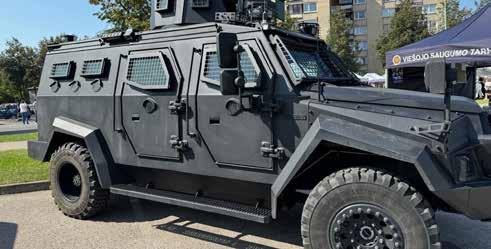
INKAS®, a Canadian armored vehicle manufacturer and systems integrator, announces a major expansion of its North American manufacturing footprint, with three additional production facilities across Canada and the United States expected to be fully operational by July 31, 2026.
The three newly leased facilities comprise a mix of manufacturing and production space, with approximately 42,000 square feet at an additional Toronto facility in Canada, 200,000 square feet at an armored vehicle production facility in Charlotte, North Carolina, and 31,000 square feet at a first-time facility in Fort Pierce, Florida.
Together, these facilities are expected to more than double INKAS’® production space across North America, strengthening the company’s ability to support growing demand from government, defense, law enforcement, commercial security, and specialized vehicle customers.
The expanded footprint provides INKAS® with greater production flexibility, additional manufacturing capacity, and a stronger operational platform to support both current and future programs across its armored vehicle, tactical platform, drone/UAV, and special-purpose vehicle portfolios. The Charlotte facility is specif-
NATO signals its intention to procure Northrop Grumman’s MQ-4C Triton, enhancing its maritime ISR capabilities and joint operational flexibility.
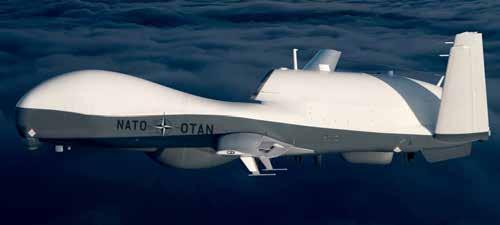
NATO has signed a Letter of Intent (LOI) to expand its Intelligence, Surveillance, and Reconnaissance (ISR) Force by pursuing the
ically equipped for armored vehicle production and has access to an experienced workforce with direct expertise in armored vehicle manufacturing, helping to accelerate operational scaling without having to build those capabilities from the ground up.
“This expansion marks an important milestone in the continued growth of INKAS® as a North American manufacturer,” said David Khazanski, CEO of INKAS®. “By adding significant production space across Canada and the United States, we are strengthening our ability to support customers with reliable, scalable, and mission-ready security and defense solutions. This investment reflects our confidence in the long-term demand for advanced protected mobility, unmanned systems, and specialized platforms.”
The new facilities form part of INKAS®’ broader strategy to increase production capacity, improve operational resilience, and support a growing portfolio of armored, tactical, unmanned, and special-purpose solutions. With operations expanding across Toronto, Charlotte, and Fort Pierce, INKAS® is positioned to better serve domestic and international customers
while supporting more efficient production, faster program execution, and future growth across key markets.
“Beyond expanding our production footprint, this investment is about creating skilled jobs, supporting local economies, and building long-term manufacturing capability in North America,” said Margarita Simkin, Chairwoman of INKAS®. “As these facilities come online, they will create opportunities for engineers, technicians, production specialists, and support teams across Canada and the United States. We believe that investing in people and manufacturing infrastructure is essential to building a stronger, more resilient security and defense industry.”
For nearly three decades, INKAS® has specialized in the design, engineering, and manufacturing of armored vehicles and advanced security solutions. The company’s portfolio includes discreet armored SUVs and sedans, tactical vehicles, armored personnel carriers, drones / UAVs, cash-in-transit vehicles, and custom-built special-purpose platforms for clients around the world.
acquisition of Northrop Grumman’s MQ-4C Triton aircraft. This action signals NATO's commitment to enhance allied maritime security and situational awareness.
Four nations signed the LOI at the NATO Summit Defense Industry Forum.
Working closely with NATO, the U.S. Navy and trans-Atlantic industrial partners, Northrop Grumman (NYSE: NOC) would build and deliver the aircraft. Key European industry partners would deliver components of the ground station and the supporting data-processing infrastructure.
NATO has operated Northrop Grumman's RQ-4D Global Hawk (Phoenix variant) from Sigonella, Italy, providing commanders with vital ISR data to inform joint decision-making.
MQ-4C Triton adds unmatched maritime surveillance capabilities and operates collaboratively with crewed platforms across domains through the intelligent, timely exchange of data. It complements the Phoenix fleet by expanding NATO’s organic ISR assets, enhancing surveillance coverage across the alliance’s northern, eastern, and south-
ern flanks. Given its lineage to the Global Hawk family of aircraft, Triton offers opportunities to leverage cost-saving synergies in operations, maintenance, and training with the existing Phoenix fleet.
Experts: Jane Bishop, vice president and general manager, global surveillance division, Northrop Grumman: “Our collaboration with NATO and the U.S. Navy strengthens the Alliance’s ground and maritime surveillance capabilities. Like Phoenix, Triton conducts ISR at higher altitude and with longer endurance than medium-altitude systems, and is poised to provide NATO new levels of capability and operational flexibility to monitor and protect maritime interests from the Mediterranean to the High North.” Program Details: Built for the U.S. Navy and the Royal Australian Air Force, the multi-intelligence MQ-4C Triton supports missions including maritime patrol, signals intelligence and search and rescue. It delivers unmatched persistent surveillance that
anticipates adversary behavior, enabling better planning and joint military responses. Triton builds upon Northrop Grumman's leadership in autonomy and high-altitude, long-endurance (HALE) to provide unmatched maritime surveillance capabilities.
Northrop Grumman is a leading global aerospace and defense technology company.
Our pioneering solutions equip our customers with the capabilities they need to connect and protect the world and push the boundaries of human exploration across the universe. Driven by a shared purpose to solve our customers’ toughest problems, our employees define the possible every day.

A new era of airpower focused on autonomy and affordable mass production is entering the production phase: today, the Air Force selected Anduril for the Collaborative Combat Aircraft (CCA) program. Under the contract, Anduril will deliver an initial set of production FQ-44 semi-autonomous fighter aircraft to support continued testing, validation, and, ultimately, operational fielding. The contract also establishes a structure for the Air Force to purchase additional lots of FQ-44 production aircraft over the next several years, providing a clear path to rapidly and affordably expand fighter capacity.
The decision is an important waypoint in the history of military aviation writ large: FQ-44 is the first semi-autonomous fighter aircraft to move into serial production. We are well on our way to delivering this capability to warfighters.
Speed
The threat demands that we move with urgency. Crewed fighters and bombers are impressive technical feats, but they cannot be produced on the timelines or at the scales required to effectively deter or sustain a high-end fight. The CCA program is America’s answer to that intractable problem: by rapidly designing, developing, testing, and fielding large numbers of affordable, mass-producible semi-autonomous fighter aircraft, the program will enable America to rapidly regain airborne combat mass on an operationally relevant timeline.
Only by achieving affordable mass, by putting new and more intelligent aircraft on the ramp, can we successfully deter great power conflict. Today, just over two years after the prototype award, the capability that we’ve built is real and moving into serial production. That timeline — prototype award in April 2024, start of ground test in April 2025, first flight in October 2025, and production contract in June 2026 — represents the fastest path from prototype to production for a fighter aircraft in more than 50 years.
By announcing a production decision months ahead of schedule, the Air Force is making their belief in the program clear. The decision serves as a testament to the capabilities of the combined Anduril-USAF team and to the steps we have already taken to prove them out. Operationally-relevant capability
Moving fast only matters if the capability itself is actually worth fielding. In its current configuration, FQ-44 has the ferry range necessary to
deploy anywhere in the world. It can take off and land on a short field. It has a combat radius that significantly exceeds that of current crewed fighters, and the speed to keep up. It has the payload capacity required to make a real impact on the battlefield. And, across hundreds of hours with Air Force experts and thousands of simulations, we have demonstrated that FQ-44 will do more than just survive the high-end fight: it will excel.
We have already taken important steps to prove the aircraft’s performance. Today, we have multiple aircraft flying regularly. We have completed dozens of sorties from multiple airfields, in multiple mission configurations, demonstrating the aircraft’s performance across greater portions of the flight envelope each time. We have flown two different mission autonomy software suites, switching between them mid-flight. We have integrated and flown the aircraft with inert airto-air munitions. And, in our first exercise with the Air Force’s Experimental Operations Unit, we proved that a small crew with just days' worth of training can launch, recover, and turn multiple FQ-44 sorties without the infrastructure of a large, established base.
Together, Anduril and the Air Force have made progress towards our ultimate goal: delivering a real, operational capability on the ramp and ready by the end of the decade. We have moved at pace to deliver an aircraft that meets the Air Force’s core air superiority mission, and we have done so on time and on budget. But critically, FQ-44 was designed to evolve: the aircraft’s modular design and open hardware and software architectures ensure that we can rapidly integrate new capabilities as real-world operations and program partners demand them.
A handful of aircraft will not move the needle in a great power conflict. From the design of the aircraft itself to the production system that will
deliver it, we have maintained a relentless focus on the need to deliver at scale.
Since day one, our focus has been on eliminating production risk early. We have been refining, testing, and iterating on our production system, in parallel with aircraft development, for the past two years. We have already implemented our fullrate production processes and tooling on prototype aircraft, identifying and addressing issues during prototyping to streamline the transition to production.
The production line at Arsenal-1 is already on this path: work there is active today, and the production line itself is capable of delivering up to 150 aircraft per year in its current configuration. Everything on that line is on wheels, ensuring that we can iterate on our production system in parallel with iterations on the aircraft itself, or scale it further to meet additional surges in demand.
The Air Force’s decision marks the first time that a new company has won a fighter aircraft program since the 1970s. For Anduril, there is no denying the magnitude of this milestone. What was once little more than a bar napkin idea has evolved into a production-ready capability in record time. We have conquered impossible odds, built a first-in-class capability, and are primed to deliver it at scale.
Still, we know that our journey on this program is just beginning. The hard part — scaling production and fielding an operational capability — is what comes next. As we move into the next phase of the program, we do so with overwhelming conviction in the aircraft we have built, the team that builds it, and our ability to surmount the challenges that remain before us.
The threat demands a step change in airborne capability. The Air Force has selected Anduril’s FQ-44 to spearhead America’s response.

Millennium Space Systems, a Boeing Company, has begun on-orbit commissioning of NASA's Tandem Reconnection and Cusp Electrodynamics Reconnaissance Satellites (TRACERS), following the mission's launch on Wednesday, July 23.
Millennium designed, built, and tested the two identical TRACERS spacecraft at its El Segundo factory and is conducting mission operations from its in-house Mission Operations Center (MOC).
"Millennium has enabled TRACERS through design, production, and now into launch and mission operations," said Tony Gingiss, CEO, Millennium Space Systems. "We are thrilled to be part of this important NASA mission, enabling critical advances in heliophysics science which will help improve our understanding of space weather, ultimately benefitting commercial and national space systems."
The spacecraft launched as a primary rideshare payload aboard a SpaceX Falcon 9 rocket
Picogrid was selected for NATO’s Decision Superiority Warfighter Challenge to operationalize the connective tissue between disparate tactical-edge sensors and the Alliance’s Maven Smart System (MSS). This NATO initiative synthesizes resilient, edge-processed data directly into the Allied command frame-
from Vandenberg Space Force Base after completing testing at Millennium's Small Satellite Factory in June 2025.
"TRACERS is the result of strong collaboration between our team, NASA, the University of Iowa, and Southwest Research Institute," said Richard Prasad, TRACERS Spacecraft and MOC Project Manager, Millennium Space Systems. "That close partnership was key to delivering two high-quality spacecraft,
and we'll continue working together through on-orbit operations to ensure the mission achieves its science objectives."
Now in orbit, the spacecraft will work in tandem to study interactions between the Sun's magnetic field and Earth's magnetosphere, advancing understanding of how these interactions shape space weather on Earth.

work.
NATO commanders face an overwhelming influx of sensor data, yet are starved for a unified operating picture. Picogrid’s platform enables commanders to act at speed, transforming isolated edge data points into the real-time, cross-domain decision superiority required to outpace modern threats.
While AI platforms like MSS are powerful, they are only as effective as the data they re-
ceive. Picogrid connects fragmented sensors directly into these systems, turning a chaotic stream of isolated information into a unified, actionable map. This allows commanders to see the full battlefield clearly in real time and make critical decisions in seconds, not hours.
"An alliance of 32 nations means 32 different sets of sensors and systems, and getting them to work as one has always been the hard part. Picogrid links the equipment each nation already owns into MSS, so no member has to give up its own systems to share a common picture," said Martin Slosarik, Co-Founder and Head of Growth at Picogrid. "Commanders get one operating picture drawn from every nation's feeds, and the Alliance can add new capability without ripping out what already works."
Picogrid brings a proven track record of integrating tactical-edge systems with C2 platforms, including MSS, Lattice, and TAK. As NATO continues to scale MSS across member states, Picogrid is positioned to provide the interoperability and edge-orchestration layer needed to support this expansion, reinforcing the company's role in accelerating Allied interoperability and defense modernization.
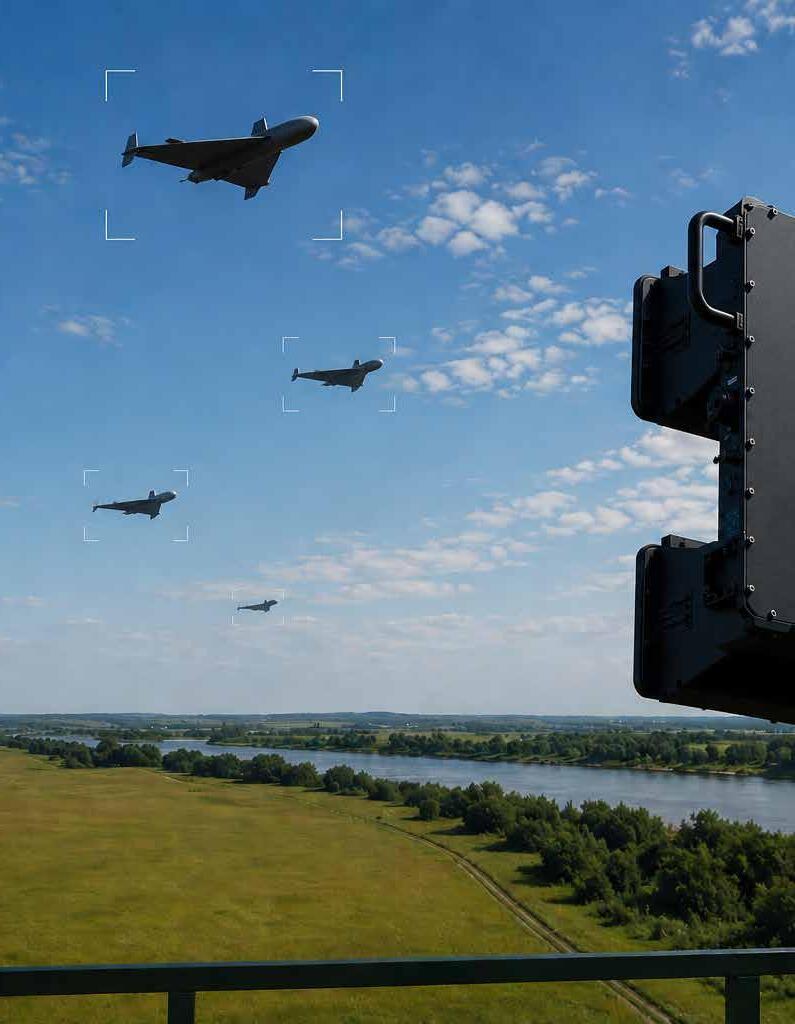
Countering low-flying drones is possible with sophisticated Ku-band ESA micro-Doppler radar
By Mark Radford, Chief Technology Officer, Blighter Surveillance Systems
Recent conflicts in the Middle East and Ukraine have highlighted the challenge of radar detection of low-altitude and one-way attack drones, which fly 'below the radar' at altitudes under 100m, taking advantage of ground clutter reflections and radio propagation fading effects. These real-world issues conceal small air targets beneath the larger clutter returns and weaken the radio signal.
While low-frequency long-range air surveillance and counter-UAS radars are essential in a layered drone detection system and offer good capability for high-flying drones, their ability to detect low-flying and near-surface targets is often compromised. Why? Because they simply cannot avoid the dramatic fading effects of multipath when scanning the horizon and cannot consistently remove significant ground clutter.
This article examines how advanced Ku-band sensing, electronic scanning array antennas, micro-Doppler waveforms, and sophisticated clutter suppression technologies can minimize radio multipath fading and remove significant ground clutter, providing a COTS solution for detecting these low-flying and one-way attack drones.
Radar remains a detection system immune to weather, light, and sound conditions, and with careful design, can avoid detection by adversarial electronic sensing as well. With clever engineering and some degree of ingenuity, near-surface targets such as first-person-view (FPV), fiber-optic, and Shahed-type winged drones – even those flown at 50m or less while tracking the terrain –can be successfully detected, classified, and tracked by radar.
flections from everything on the ground that is not moving. This can include mountains, hillsides, buildings, trees, vegetation, fences, signage, power lines, and other infrastructure. Anything that stands above the ground can reflect radar energy – often surprisingly efficiently - and it does not have to be metallic.
To detect a drone 5km away with a radar cross-sectional area (RCS) of 1 m² in an area with buildings or a hillside in view would typically require illuminating a total volume of over 1 million cubic meters. The radar must be able to discriminate between a 1 m² moving target and a radar reflection potentially 115,000 times larger.
Clearly, ground clutter is a major challenge for radars, which is why classic air surveillance radars and many C-UAS systems point upwards to illuminate air targets and avoid this problem.
Modern non-rotating electronic systems and digital signal processing (DSP) platforms allow the ubiquitous Fast Fou -
rier Transform (FFT) to provide Doppler discrimination, the ability to distinguish different types of motion or targets by their frequency signatures.
A large ‘micro-Doppler’ FFT can segment the zero-Doppler (no motion) radar return from ground clutter within a Doppler bin equivalent to a tenth of 1km/hr. or less.
While modern DSP platforms allow this level of Doppler fidelity, mechanical rotation of classic single-antenna radars adds both incoming and outgoing Doppler components to the otherwise very narrow zero-Doppler ground-clutter measurement. This clutter-spreading can easily obscure a 1 m² target, such as a drone.
Electronic-scanning array (ESA) antennas provide a multitude of individual beam positions to deliver the required volumetric coverage, but each beam is
Ground clutter is the massive radar re -
static. No Doppler is spreading, so the radar can achieve remarkable levels of ground-clutter rejection, allowing the 1m² target in 115,000m² of clutter to be easily discriminated.
There are several ESA architectures, but they all produce symmetrical transmit and receive beams, with energy focused tightly on the area of interest. Other staring array technologies, such as holographic radars, also lack mechanical rotation but asymmetrically illuminate large areas of ground clutter, making clutter rejection considerably harder for near-surface detection.
The challenge of rejecting ground clutter while detecting low-flying drones requires an elegant, highly complex solution that leverages ESA antenna technology and Micro-Doppler signal processing. It also requires engineering excellence to ensure the fidelity of tiny target signals throughout the entire radar system, especially in the DSP.
Those with a memory of driving down a long highway listening to FM radio slowly fading in and out, and eventually fading to nothing, have experienced Ra -
dio Multipath Fading (RMF). It affects almost all ground-based communications systems, and height is the best mitigating factor.
Radar is another communication system, with a twist. It suffers RMF from the radar to the target, and then the reflected signal is reflected to the same radar receiver. This results in a double-fading effect that acts like a brick wall and can severely limit the maximum detection range unless carefully managed.
While RMF is mostly recognized for its fading effects, it has one upside: the same direct-indirect phasing effect can
enhance the signal under certain conditions. With careful design of radar deployment height, it can achieve some beneficial improvements in target detection range by allowing the radar signal to reach its normal signal-to-noise limit before the catastrophic effects of RMF overwhelm.
While RMF affects all ground-based communications systems, the operating frequency can have a significant effect on the immediacy of the fading problem.
Ku-band radars, operating typically in the 15 to 17 GHz dedicated radar bands, have the shortest wavelengths among typical longer-range government/military-grade radar systems. This short wavelength of just 2cm is easiest to manage, allowing RMF to be mitigated sim -
ply by elevating the radar a few meters above the ground. RMF will still occur; however, the fade periods are shorter, allowing target trackers to 'join the missing plots,' and the distance at which near-ground fading becomes terminal can be pushed beyond the signal-tonoise limitations of the same radar.
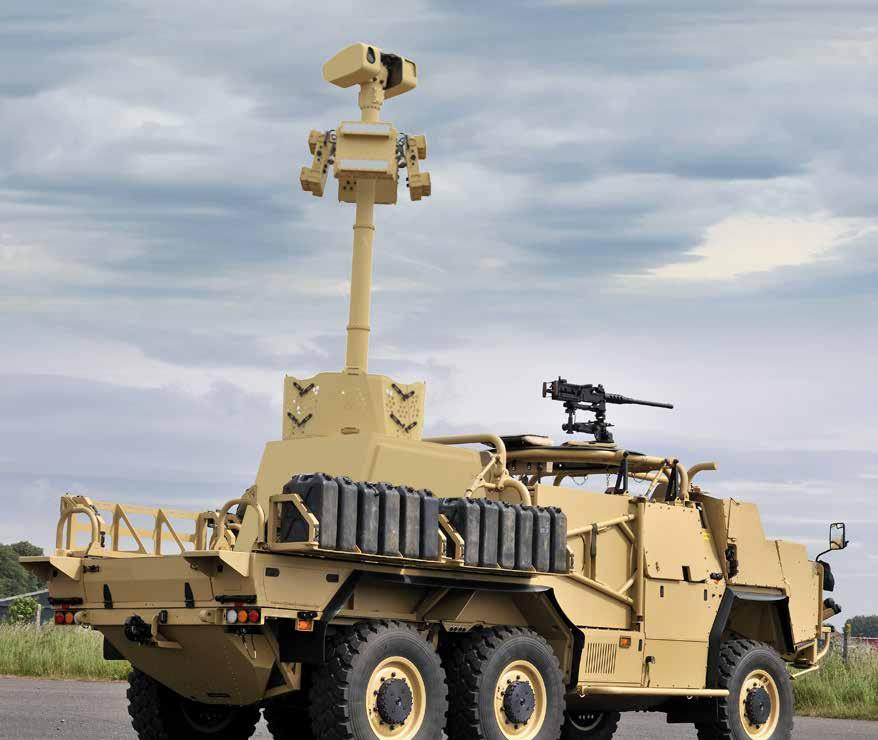
Blighter Surveillance Systems has implemented these techniques in its COTS ground-based radars, including its A400 and B400 2D radars and its A800 4D multi-mode radars, to protect against low-flying and one-way attack drones. These systems are deployed as part of a layered drone detection system by the US Air Force at several international airports and by multinational forward operating bases in the Middle East.
Mark Radford has worked in the radar industry since 1985, initially as a designer of high-performance signal processing solutions for naval radar systems and later as a system designer and development manager. Since joining Blighter in 2000, Mark has been responsible for the specification, design, and development of Blighter electronic-scanning array radars. It was the discovery of North Korean winged drones along the Korean demilitarised zone (DMZ) in 2014 that kick-started Blighter’s development of its Ku-Band ground radar system and later a complementary C-UAS system called AUDS.

By John Reardon, Editor-in-Chief, COTS Journal
The defense industry loves a good buzzword, and right now, "digital twin" is at the top of the command-and-control PowerPoint deck. In tactical briefings and procurement slide decks, the term is tossed around as a universal cure for operational friction. It is often pitched as a single, uniform concept that can model everything from the thermal fatigue of an F-35 turbine blade to the packet routing of a multi-domain theater network.
But here is the reality: treating a physical asset twin and a network digital twin as the same technological animal is a fundamental mistake.
As the military pushes toward Combined Joint All-Domain Command and Control (CJADC2), the systems engineering community must wrap its arms around the vast operational differences between these two concepts. More importantly, we must address a critical point of confusion in modern systems engineering: the difference between simulation and emulation. For prime contractors, system integrators, and defense personnel utilizing commercial off-the-shelf (COTS) technologies, confusing these terms is not just a semantic error—it is an architectural vulnerability.
To understand where platforms like Swish Data Digital Twins fit into the tactical landscape, we must first separate physical replicas from network abstractions.
The traditional digital twin is born in the world of mechanical engineering. When you build a digital twin of an armored vehicle or a transport aircraft, you are mapping physical matter. You are feeding a model with telemetry—vibration data, thermal cycles, structural stress, and hydraulic pressures.
This model is strictly bound by Newtonian physics. The goal is predictable and mechanical: calculate material degradation, optimize the supply chain, and conduct predictive maintenance before a part fails in theater.
A network digital twin operates in a completely different dimension. A tactical data network is not bound by physical wear and tear; a router does not route packets slower because it is "tired." Instead, a network is an incredibly dense, chaotic ecosystem of software configurations, dynamic routing protocols, security policies, and firmware interactions.
As detailed by network validation specialists at Forward Networks Digital Twins, a true network twin is a software-copy model of the entire network infrastructure. It does not look at the physical chassis of a switch; it ingests the exact configuration states, routing tables, and access control lists (ACLs) of every node across the enterprise. It builds a mathematically accurate map of all possible packet paths.
While a physical twin looks for material structural failure, a network twin looks for logical policy violations, routing loops, and hidden security vulnerabilities.
For engineers designing AI-driven cyber ranges or mission-rehearsal environments, the distinction between simulation and emulation is the difference between guessing and knowing.
Simulation is an approximation of reality. A network simulator uses mathematical models to mimic how a network should behave under specific conditions. It abstracts the underlying technology. If you simulate an enterprise network, you are us -

ing a mathematical formula to predict latency and throughput. It is excellent for high-level capacity planning, but it lacks the granularity to capture real-world software glitches, configuration drift, or zero-day exploits.
Emulation, on the other hand, runs the actual operational software. A network digital twin built for high-stakes defense applications leverages high-fidelity emulation. It replicates the behavior of a device so precisely that the network operating system cannot tell the difference between the physical COTS hardware and the virtual instance.
As explored in deep-tech frameworks like the Keysight Automated Creation of Network Digital Twins White Paper, automated ingestion allows engineers to capture running configurations from live networks and instantly generate a runnable, emulated replica. This is not a simplified model; it is a live, sandboxed copy of the network that processes traffic, executes routing protocols, and fails exactly like the real-world system.
In the 21st-century battlespace, the network is the weapon system. If an adversary disrupts our tactical data links, our precision-guided munitions, automated sensors, and command posts are neutralized. This reality has turned network twins into
Modern electronic warfare and cyber operations cannot be safely tested on live military networks without risking catastrophic self-inflicted outages. According to the strategic insights in the Keysight Network Digital Twins for Wargaming White Paper, emulated network twins provide the ultimate safe space for cyber ranges.
Commanders can launch devastating, simulated cyberattacks against a perfectly emulated replica of their own command network. This allows them to see exactly how malware propagates through specific switches, verify if firewalls drop the malicious packets, and train cyber defense teams against realistic threats.
Military bases and tactical operational centers are packed with Operational Technology (OT) and Internet of Things (IoT) devices—everything from fuel telemetry sensors to connected perimeter cameras. These systems are notoriously difficult to secure because they often run legacy, un-patchable software.
Security researchers highlight this vulnerability in the Armis Centrix Digital Twin for OT/IoT Se -
curity Brief. By building a network twin that maps every connected OT asset, defense teams can continuously monitor device behavior, analyze traffic anomalies, and find hidden attack vectors. This allows operators to isolate compromised systems without taking critical base infrastructure offline.
The integration of artificial intelligence into electronic warfare demands a continuous loop of testing and sensing. Concepts like the Keysight Golden Dome Framework showcase how AI-driven cyber ranges rely on network digital twins to simulate complex electromagnetic spectrum environments. By combining RF sensing with automated network emulation, the military can test how electronic warfare jamming affects tactical IP networks in real time.
From the editorial desk of COTS Journal, the shift toward network digital twins represents a major win for open architecture and commercial tech adoption. The military can no longer afford to rely on proprietary, siloed hardware platforms that take a decade to update. By leveraging COTS-based virtualization, containerization, and advanced software
platforms, organizations like Swish Data allow the DoD to rapidly scale its testing infrastructure.
However, system integrators must remain vigilant. A network digital twin is only as good as the fidelity of its data ingestion. If your twin relies on stale configuration data from last month's exercise, your wargaming results will be fundamentally flawed. Automated, real-time configuration collection must be built into the core architecture of our defense networks.
The term "digital twin" is not a one-size-fits-all label. While physical twins will continue to keep our aircraft flying and our vehicles moving, it is the network digital twin that will keep our data flowing and secure our command posts from sophisticated cyber incursions.
We must move past simple simulations and embrace high-fidelity, emulated environments. In an era where the electromagnetic spectrum and the digital network are contested domains, the ability to test, break, and heal a network in a sandbox environment is no longer a luxury—it is a mandatory requirement for mission success.
Supermicro Delivers NVIDIA
Vera Rubin NVL4 End-to-End DCBBS Blueprint with Native FP64 Performance for Converged HPC and AI Infrastructure
Super Micro Computer, Inc., an AI, Enterprise, Storage, and 5G/Edge Total Solution Provider, introduces the Data Center Building Block Solutions® (DCBBS) Blueprint for HPC, based on the NVIDIA Vera Rubin NVL4 platform, which was announced at ISC 2026. Following Supermicro's DCBBS Blueprints for NVIDIA Vera Rubin NVL72 and NVIDIA HGX Rubin NVL8 introduced at Computex, the Blueprint for HPC and AI applies the same end-to-end methodology to scientific computing. The Blueprint is based on Supermicro's DCBBS, which provides the necessary compute, networking, advanced liquid cooling, power distribution, and site infrastructure, delivered by a team of Supermicro DCBBS experts to accelerate time-to-online for research institutions and supercomputing centers.
"Scientific discovery has always been driven by the tools available to researchers, and AI has become an essential part of the research process," said Charles Liang, president and CEO of Supermicro. "The institutions that accelerate infrastructure deployment will lead the next generation of breakthroughs. With our DCBBS Blueprints for NVIDIA Vera Rubin NVL4, research organizations can confidently deploy HPC and AI infrastructure at any scale, knowing that it is backed by Supermicro's proven experience building some of the world's largest liquid-cooled clusters."
Researchers increasingly rely on a converged approach to computing, pairing traditional FP64 double-precision simulation with accelerated computing and AI methods, revolutionizing time-to-discovery across climate research, drug discovery, materials science, and energy. The NVID-
IA Vera Rubin NVL4 platform is built for this convergence, and the DCBBS Blueprint for HPC defines the steps to deploy it successfully, backed by Supermicro's proven track record building the world's largest liquid-cooled supercomputing clusters featuring over 100,000 GPUs.
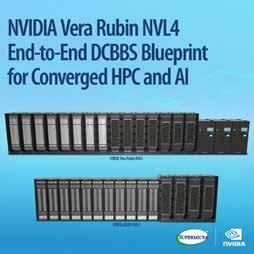
The Blueprint covers the end-to-end process Supermicro has used to complete large-scale liquid-cooled projects at record-breaking speeds. On-site facility surveys conducted by the Supermicro experts assess loading dock access, data hall measurements and clearances, floor load ratings, and existing power and cooling infrastructure to inform a design proposal tailored to each project. Solution integration begins well before delivery, with racking, stacking, cabling, and system-level (L10) and cluster-level (L11) testing performed in Supermicro's global manufacturing facilities. White-glove delivery and on-site integration cover rack placement, power and cooling connections, network cabling, commissioning, and on-site solution validation, with ongoing support options including on-site response times as fast as 4 hours for mission-critical uptime.
A Scalable AI and HPC Solution to Modernize Computing Infrastructure for Scientific Research
The Supermicro DCBBS Blueprint for HPC and AI based on the NVIDIA Vera Rubin NVL4 Scalable Unit contains the following, which can be multiplied to deploy clusters of any size, from 3.2MW to 1GW:
8x liquid-cooled compute racks in customized 52U, 750mm-wide enclosures, each housing 36 NVIDIA Vera Rubin NVL4 nodes within a 362 kW envelope, for a total of 288 nodes, up to 1,152 NVIDIA Rubin GPUs, and 576 NVIDIA Vera CPUs per Scalable Unit
Advanced Direct Liquid Cooling technology stack (DLC-2), including 3x in-row cooling distribution units (up to 1.8MW each) per Scalable Unit in a 2+1 redundant configuration, direct-to-chip copper cold plates, and vertically mounted cooling distribution manifolds, featuring Supermicro SMC PG25-A coolant engineered for exceptional chemical and thermal stability
NVIDIA Quantum-X800 InfiniBand compute fabric across dedicated networking switch racks with fully liquid-cooled options available, providing the high-bandwidth scale-out interconnect for distributed scientific and AI workloads
Rack power and management: 8x 72 kW power shelves per compute rack delivering busbar power for the 362 kW rack envelope, with two ToR management switches per rack for out-of-band control
Configurations for HPC and AI based on the NVIDIA GB200 NVL4 are also available for immediate deployment.
Supermicro DCBBS delivers complete, modular AI infrastructure built from validated components and subsystems, enabling flexible deployment from individual servers and networking to full rack-scale and data center-level solutions, including software and services. Supermicro continues to lead the industry with its comprehensive portfolio of AI infrastructure solutions, enabling organizations worldwide to deploy scalable, efficient, and environmentally responsible AI data centers.
Radiation-Tolerant,
Spacecraft timing systems must provide highly stable, precise signals for navigation, communications, and scientific instruments, even when GNSS signals are weak or unavailable. Designers often rely on multiple oscillators and buffers to supply precise frequencies to various subsystems, adding size, mass, and complexity. Microchip Technology (Nasdaq: MCHP) announces the space-grade DSA504RT, a radiation-tolerant, six-output programmable clock generator designed to address the complex timing needs of

aerospace and defense applications.
The DSA504RT streamlines timing architecture by generating multiple clean, phase-aligned frequencies from a single master source. Additionally, this solution reduces the need for multiple discrete oscillators, lowers the overall component count, and improves the system failure-in-time (FIT) rate. It also reduces power consumption and mass, and simplifies distribution networks, keeping all subsystems synchronized even in the harshest environments and during GNSS outages or disruptions.
Equipped with an Analog Phase-Locked Loop (APLL) featuring spread spectrum capability, two fractional and two integer dividers, and six highly configurable output buffers, each of which can be configured as a differential driver (LVPECL, LVDS or HCSL) or as a pair of single-ended CMOS outputs, the DSA504RT delivers ultra-low jitter performance as low as
Abaco Systems today introduced the SBC3618, a market-leading compute-intensive 3U VPX® single-board computer built on Intel® Core Ultra Series 3 processors, formerly Panther Lake. Aligned with the SOSA™ compute-intensive profile, the SBC3618 brings hybrid CPU, GPU, and NPU acceleration to sensor fusion, autonomy, electronic warfare, and AI inference at the tactical edge and was designed in concert with the Intel CPU launch.
"Our customers are pushing more autonomy and more AI into the platform, and they need it inside a power and thermal envelope that fits the mission," said Simon Collins, Director of Product Management at Abaco Systems. "The SBC3618 is a SOSA™ compute-intensive board built with the new Core Ultra Series 3, and it gives integrators a programmable 15 to 65W power envelope, real-time AI processing, FPGA-backed security, and optional TSN, all on a SOSA-aligned card." Key capabilities:
• Intel® Core Ultra Series 3 with integrated CPU, GPU, and NPU for AI at the edge
• Up to 64 GB LPDDR5 with ECC and up to 1 TB NVMe storage
• 100G Ethernet data plane with RDMA and PCIe Gen4 expansion
• Xilinx UltraScale+ FPGA with dedicated user space for customer and third-party security functions
• Optional Time-Sensitive Networking for deterministic, low-latency communications
• Convection- and conduction-cooled variants
• Linux and Windows support
200 femtoseconds (12kHz–20MHz) and is compliant with PCIe® Gen 1-7 standards. This level of integration allows engineers to replace multiple crystals, oscillators, and buffers with a single device, improving design reliability, reducing Bill of Materials cost, and design complexity.
“This Microchip clock generation device is a game changer for space applications. It can offer a comprehensive clock tree solution, producing three different clock families and up to six different frequencies, each buffered on a variety of selectable output drive types,” said Maamoun Abou Seido, appointed vice president of Microchip's timing communications group. "Replacing numerous oscillators, buffers, and synthesizers, the DSA504RT saves board space and reduces part count to improve the system Failures in Time (FIT) rate in these high reliability applications."
The DSA504RT, offered in QFN28 and CQFP32 packages, serves as a companion device for complex aerospace and defense systems.
New PXI/PXIe modules deliver high-density waveform generation, DAC outputs, and thermocouple simulation.
Pickering Interfaces, the leading supplier of modular signal switching and simulation solutions for electronic test and verification, has announced three new PXI/PXIe analog output modules, expanding its signal sourcing and sensor simulation portfolio for functional test and hardware-in-the-loop (HIL) applications.
The new modules include multi-channel waveform generators, precision digital-to-analog converter (DAC) outputs, and high-density thermocouple simulators. Together, they enable engineers to stimulate embedded controllers with realistic analog, sensor, and waveform conditions from compact, open-platform test systems. Designed for high channel density, broad chassis compatibility, and long lifecycle support, the modules help reduce rack space, complexity, and obsolescence risk.
“These new analog output modules expand Picker-
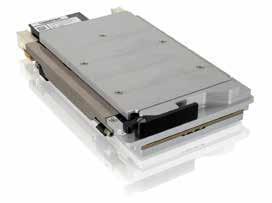
Kontron Launches VX33211 3U VPX GPU Board for AI, Graphics and High-Performance Edge Computing
Kontron announces the VX33211, a high-performance 3U VPX GPU board designed to deliver advanced graphics, AI inference, sensor processing, and GPGPU acceleration in rugged
ing’s ability to support realistic signal and sensor simu lation across functional test and HIL applications,”
Stephen Jenkins, Simulation Product Manager at Pickering. “They deliver high channel density, precise performance, and dependable long-term support in modular PXI/PXIe platforms.”
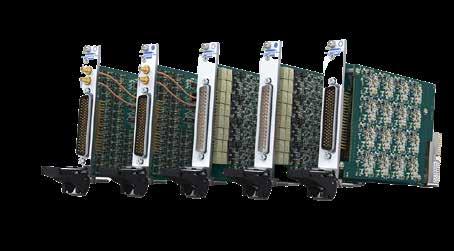
instruments to initiate waveform generation or frequency sweeps.
The 41-770 PXI and 43-770 PXIe DAC modules provide up to four fully isolated analog output channels in a single 3U PXI/PXIe slot. Each channel is independently programmable across multiple voltage and current ranges, with voltage outputs up to ±40 V and current outputs up to ±20 mA. The modules can also simulate open-circuit conditions, helping engineers replicate wiring or sensor failures for fault-injection testing. A hardware interlock adds protection for the device under test (DUT) and the broader test system.
The 41-625 PXI and 43-625 PXIe multi-channel waveform generators provide up to 32 independent output channels in a single 3U PXI/ PXIe slot. The modules support waveform generation from DC to 300 kHz, making them suited for simulating accelerometers and other multi-channel stimulus conditions. Each channel includes independent memory for sine waves, standard waveforms, or customer-de-
embedded environments.
Powered by the NVIDIA® RTX PRO™ 2000 Blackwell Embedded GPU, the VX33211 brings high-performance GPU acceleration into a compact 3U VPX form factor. This enables system designers to run compute-intensive workloads such as artificial intelligence, real-time image processing, and parallel computing directly at the edge within mission-critical defense and aerospace platforms.
Delivering up to 13.78 TFLOPS FP32 performance, the VX33211 features 3,328 CUDA cores, 104 Tensor Cores for AI inference and deep learning, and 26 RT Cores for real-time ray tracing. With 8 GB of GDDR7 memory and up to 384 GB/s bandwidth, the VX33211 supports high-throughput data processing for demanding applications.
Designed for rugged deployments, the conduction-cooled version complies with VITA 48 standards and aligns with the environmental aspects of VITA 47. The board operates reli-
The PXI 41-761A analog output/thermocouple simulator modules provide precise µV-level thermocouple sensor simulation with built-in fault insertion. The modules offer independently isolated, two-wire, low-voltage outputs that cover common thermocouple ranges, support multiple cold-junction configurations, and handle common-mode voltages for true sensor-level simulation. With up to 32 fully isolated channels per slot, they deliver high-density thermocouple simulation without external switching or system expansion.
Designed for HIL simulation, functional test, sensor simulation, production test, and fault injection, these modules provide software-controlled electrical stimulus for embedded controllers and DUTs.
PXI and PXIe variants are available, with driver support for Windows and Linux and APIsfor C, Python, C#, MATLAB, Simulink, and LabVIEW.
ably in harsh environments across an extended temperature range of -40°C to +85°C at the card edge. An air-cooled version is also available for evaluation and laboratory use.
The VX33211 is developed in accordance with SOSA®-aligned OpenVPX profiles to enable interoperability and simplify system integration. This open architecture approach reduces development risk and lifecycle costs for defense programs. The board provides PCIe Gen4 connectivity via the backplane and features an IPMI controller for VITA46.11 Tier 3 support and outof-band system management.
The VX33211 is part of Kontron’s VPX portfolio and complements existing CPU boards, such as the VX307C, enabling a balanced combination of CPU and GPU performance for next-generation embedded systems. It is also integrated into the Kontron HARAKAN-F platform, extending NVIDIA Blackwell GPU acceleration across Kontron’s rugged computing portfolio.

North Atlantic Industries Introduces NIU1U Nano Interface Unit for Rugged Embedded I/O and Communications Platforms
North Atlantic Industries announces the release of its NIU1U Nano Interface Unit - a next-generation evolution of NAI's field-proven Nano Interface Unit family. Building on a successful, widely deployed product line, the NIU1U preserves the compact, rugged, SWaP-optimized design philosophy customers already rely on while delivering a major step up in processing, memory, storage, networking, and operating system support. Built on NAI's Configurable Open Systems Architecture™ (COSA®), the NIU1U combines embedded processing, networking, and configurable I/O capabilities in a rugged, self-contained system suitable for air, land, and sea platforms.
The most significant advance is at the processing core. Where the prior generation offered an
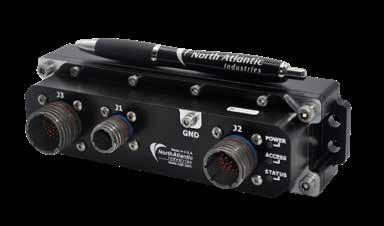
optional 32-bit ARM® Cortex®-A9 processor, the NIU1U integrates a 64-bit Xilinx® Zynq® UltraScale+™ SoC with dual-core or quad-core ARM® Cortex®-A53 processing as a standard, central capability - transforming the platform from a primarily Ethernet-attached I/O concentrator into a true edge-processing node that can host customer applications while simultaneously managing system I/O and communications. The next-generation design also adds 4 GB of LPDDR4 memory and 40 GB of onboard solid-state storage as standard - resources not part of the prior-generation base design - giving programs meaningful onboard compute and data-handling headroom in the same nano-class footprint.
The NIU1U retains the proven COSA flexibility of its predecessor -- a single standard or PCIe-capable function module slot with more than 100 interchangeable smart I/O, communication, and networking functions -- while opening a new dimension of capability through the Zynq UltraScale+™ SoC’s integrated programmable logic (FPGA fabric). That on-chip fabric provides headroom to
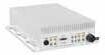
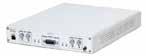
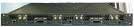
can make your ruggedization aspirations come to life. This includes outdoor IP67 styles that are fanless, full MIL rugged, or versions with superior forced air cooling. Whether it’s an NI/ Ettus SDR or your customized SFF solution, Pixus has a solution for you.



firmware and protocol acceleration directly within the main SoC architecture, enabling custom edge I/O, processing offload, and advanced network synchronization alongside the ARM processing cores. Supported deterministic networking implementations can include Time-Sensitive Networking (TSN, IEEE 802.1) and Time-Triggered Ethernet (TTE, SAE AS6802), including support for multiple Ethernet traffic classes such as Time-Triggered Ethernet (SAE AS6802), ARINC 664 Part 7 / Avionics Full-Duplex Switched Ethernet (AFDX®), and IEEE 802.3 best-effort Ethernet. As a result, the NIU1U can be configured both to aggregate and process sensor and I/O data at the edge and to operate as a node within deterministic, time-synchronized Ethernet architectures -- making it well suited for network interfacing, data concentration, vehicle electronics, avionics, mission systems, and health monitoring applications.
"The NIU1U is a deliberate upgrade for programs already invested in our Nano Interface Unit platform - we moved from an optional single processor to an integrated, multicore 64-bit SoC, added standard onboard memory and storage, and opened up programmable logic for embedded deterministic networking, all while staying true to the compact, rugged, SWaP-optimized design our customers depend on," said Lino Massafra, Vice President of Sales and Marketing at North Atlantic Industries. "It gives them a clear, low-risk path to add edge processing and modern, time-synchronized networking to existing fielded systems without a costly redesign."
Designed for deployment in demanding military and aerospace environments, the NIU1U supports Gigabit Ethernet connectivity, optional USB 2.0 and serial maintenance interfaces, an optional power supply hold-up for ride-through, and continuous background Built-In Test (BIT). Operating system support has been broadened well beyond the prior generation to include modern environments such as Wind River® VxWorks® 7, Xilinx PetaLinux® 2023.x, and DDC-I Deos. Its compact, rugged design makes it well suited for deployment as a Nodal Access Unit (NAU), Data Concentrator Unit (DCU), Remote Interface Unit (RIU), or Health & Usage Monitoring System (HUMS).
The NIU1U provides a rugged, configurable embedded computing solution that simplifies integration while enabling scalable system architectures. As the next generation of NAI's COSA-based Nano Interface Unit portfolio, the platform extends the life of fielded I/O and communications architectures while delivering the processing, networking, and software headroom required by today's mission-critical applications.
Extreme Engineering Solutions Introduces XPand9320: High-Performance 1U Rugged Rackmount Server Featuring Dual Intel® Xeon® D-2800 Processors and Advanced AMD.
Extreme Engineering Solutions (X-ES), a leading provider of embedded computing solutions, announced the official release of the XPand9320. This innovative 1U rackmount server delivers an industry-leading combination of security, performance, and flexibility for edge computing. Designed to excel in severe environments, the server delivers extreme processing density, ultra-high-speed networking, and hardware-enforced security.
Unmatched Processing Power and Hardware-Level Security
At the core of the XPand9320 are dual Intel® Xeon® D-2800 series processors (formerly Eddy Lake). These advanced processors deliver massive multi-core throughput and high energy efficiency.
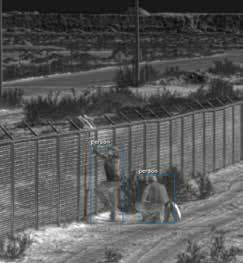
AI-driven software stack provides situational awareness and high-fidelity tracking for complex ground-based intelligence, surveillance, and reconnaissance missions.
Teledyne FLIR OEM announced Prism™ Ground ISR, a mission-ready software stack for ground-based intelligence, surveillance, and re-
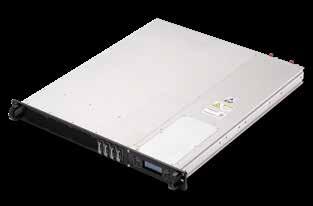
This computing power is tightly coupled with an integrated AMD (formerly Xilinx) Versal® Prime VM1402 Adaptive Compute Acceleration Platform (ACAP). The Versal® Prime ACAP functions as a dedicated security anchor. It provides critical cryptographic acceleration, secure boot mechanisms, and real-time monitoring. This combination ensures maximum system integrity and operational protection against sophisticated cyber threats.
Next-Generation Connectivity & Flexible Expansion Modern edge architectures demand rapid data transmission. To meet this need, the XPand9320 features four integrated 100 Gigabit Ethernet (100GbE) ports via QSFP28 interfaces. These high-bandwidth interfaces enable fast throughput for data-heavy sensor processing and networking applications. Additionally, the system incorporates:
• A PCI Express Gen4-capable expansion site
• Multiple high-speed storage bays supporting E1.S form-factor solid-state drives
• Comprehensive fallback interfaces, including several USB-C UART console ports and legacy serial connections
connaissance (ISR). Building on the recently announced Prism C-UAS for aerial drone threats, Prism Ground ISR brings advanced computational imaging and AI-driven perception to ground platforms, enabling rapid detection, classification and tracking of diverse targets including specific military vehicle classes.
Advancing Ground-Based Protection As security environments grow more complex, the need for persistent situational awareness is growing. From border surveillance to force protection and the defense of critical infrastructure, operators need tools that identify threats earlier and with greater precision. Prism Ground ISR addresses these challenges by combining patented image enhancement with advanced AI models to deliver accurate target recognition with fewer false positives in cluttered environments.
“Just as Prism C-UAS transformed how we detect small, fast-moving drones, Prism Ground ISR marks a significant advancement in ground-based AI target recognition,” said Jared Faraudo, Vice President of Product Management at Teledyne FLIR OEM. “By integrating visible and infrared thermal data, including fine-grained military vehicle classification, we are turning raw data into a decisive tactical advantage.”
Prism Ground ISR combines AI-powered detection with computational imaging to extend detection range, improve track persistence, and reduce
• Open Systems Architecture & Rugged Reliability
Built with a standard 1U form factor, the XPand9320 follows strict Open Systems Architecture (OSA) guidelines. This standards-based approach eliminates proprietary vendor lock-in, simplifying hardware upgrades and tech insertion cycles.
Unlike standard enterprise servers that require modified enclosures, the XPand9320 features native ruggedization. It reliably withstands extreme temperatures, high shock, and heavy vibration without secondary enclosures.
Ready Software Ecosystem
The XPand9320 includes production-ready software packages to accelerate development timelines. X-ES Enterprise Linux (XEL) and Linux Yocto Board Support Packages (BSPs) ship with the platform as standard. These verified software stacks provide developers with low-level drivers, secure hypervisor hooks, and complete control over the system's dual-CPU and FPGA resources.
false alarms, helping operators respond earlier and with greater confidence. The software uses turbulence mitigation, dehazing, and super-resolution to enhance infrared visibility. At the same time, separate acquisition and tracking pipelines support earlier detection and more accurate tracking of small, fast, or maneuvering targets.
Trained on Teledyne FLIR OEM’s real and synthetic electro-optical and infrared data, the software supports fine-grained military vehicle classification and improved target recognition in cluttered environments. Prism Ground ISR supports up to 15 object classes out of the box, while Prism AIMMGen™ enables rapid expansion to additional target classes using synthetic data as mission requirements evolve.
Designed for rapid integration, Prism Ground ISR runs on NVIDIA® Orin NX and AGX and supports Teledyne FLIR OEM’s Boson®+ and Neutrino® camera families, including continuous zoom models. The software is also compatible with select third-party infrared and electro-optical sensors, enabling comprehensive multi-sensor solutions. The Prism Ground ISR SDK further reduces integration risk and helps teams field new capabilities faster. Backed by global-scale production and an experienced technical services team, Prism Ground ISR can be deployed across a wide range of tactical ground architectures.
Quilter shipped an automated BGA fanout, eliminating a major manual PCB setup step and highlighting 2026 releases that expand the size, density, and complexity of boards that its physics-driven AI can route end-to-end.
Quilter, the physics-driven AI that automates PCB layout, has shipped BGA fanout automation, removing one of the major manual steps that customers had to perform in their ECAD tool before submitting a dense board to the platform. The release headlines a run of 2026 updates that have materially extended the size, density, and constraint complexity of boards Quilter can route end-to-end.
The focus of the year has been to take every
piece of design intent that engineers have already expressed in their ECAD files and turn it into something Quilter reads, respects, and routes against. Earlier versions of the platform made calculated guesses about certain inputs, which worked on simpler boards but produced friction on complex ones. The 2026 releases have systematically replaced those guesses with first-class capabilities.

Automated BGA fanout, released in beta and still undergoing active development, is the largest single capability addition of the year. Ball grid arrays are the densest components on most modern boards. Application processors, FPGAs, and high-pin-count connectors regularly have hundreds or thousands of solder balls
packed under a single package, and routing the short escape paths from each ball through vias and trace segments has historically been the first thing a PCB designer does by hand before any other routing begins. Until this release, Quilter customers had to complete that step manually in their ECAD tool before submission.
Quilter now generates fanout and breakout automatically as part of standard candidate generation, selecting via patterns, escape directions, and breakout traces for each BGA based on the surrounding placement, the stackup, and the rest of the board's routing. Coverage extends to standard-pitch BGAs, dense BGAs, and the irregular ball patterns common on application processors and high-density connectors. Because Quilter selects the fanout itself rather than routing around one a customer drew by hand, routing quality on dense designs improves alongside the time saved.
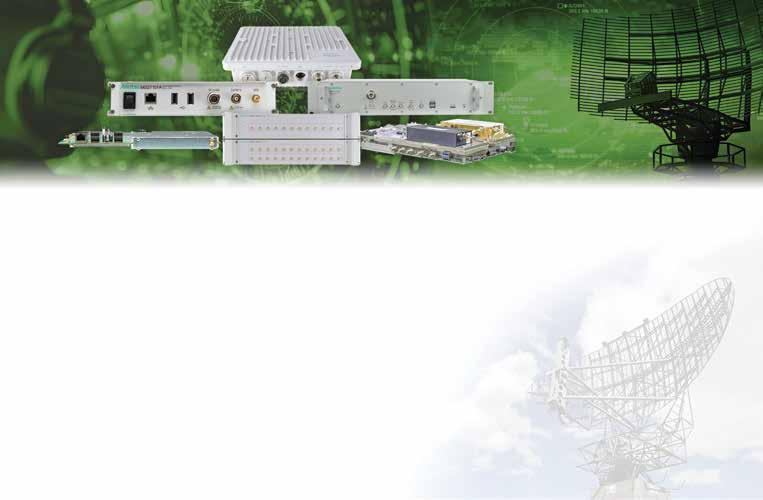
MS2710xA and MS2720xA Series Remote Spectrum Monitors
Frequency Range: 9 kHz to 9/14/20/26.5/32/43.5/54 GHz
Designed for integration into spectrum monitoring and threat detection systems, perfect for SIGINT, TSCM, interference hunting, and drone detection applications.
Curtiss-Wright Becomes First in Industry to Offer End-to-End Time-Sensitive Networking SOSA-Aligned Portfolio
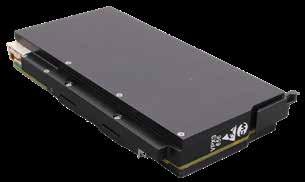
Curtiss-Wright announced the newest product in the company’s SOSA®-aligned 3U OpenVPX line, the VPX3-656 Time Sensitive Networking (TSN) 10G Ethernet switch, which brings assured deterministic performance to standard Ethernet systems. The VPX3-656 switch complements several TSN-enabled SOSA-aligned processors, making Curtiss-Wright the first company to offer an end-to-end TSN Ethernet solution from a single supplier, simplifying the building of a deterministic TSN system spanning compute and networking.
As aerospace and defense platforms evolve toward increasingly networked, distributed, software-defined, and sensor-rich architectures, regular Ethernet struggles to meet the deterministic needs of time-critical mission communications. While traditional Ethernet provides reliable network communications, it remains a best-effort medium; messages are expected to arrive, but there is no guarantee exactly when they will arrive. That timing uncertainty creates challenges for applications such as sensor fusion, autonomy, mission computing, coordinated control, and AI-driven edge processing, where delayed or unsynchronized data can affect mission success.
TSN adds time awareness to standard Ethernet communications, enabling system designers to assign timing requirements to
critical network traffic. Hence, data moves predictably and reliably across compute, switching, and input/output resources. This allows deterministic TSN traffic and conventional best-effort Ethernet traffic to coexist on a shared network backbone, helping reduce system complexity while supporting the next generation of distributed defense and aerospace platforms.
"Time Sensitive Networking is more critical today than ever before," said Lee Brown, Vice President and General Manager of C5ISR, Curtiss-Wright Defense Solutions. "The introduction of our VPX3-656 TSN Ethernet switch means our customers now have the option of a one-stop shop to build their end-to-end deterministic TSN Ethernet system architectures."
The VPX3-656 simplifies deployment of high-speed networks by combining integrated optical 10G Ethernet connectivity with backplane 1G and 10G interfaces. This
flexible architecture enables both internal OpenVPX card connectivity and external optical network connections without additional conversion hardware.
Designed to support the recently published IEEE 802.1DP TSN Aerospace Profile, the VPX3-656 allows integrators to deploy standard Ethernet networks today while providing a straightforward path to TSN-enabled deterministic communications as mission requirements evolve. The TSN switch complements additional Curtiss-Wright TSN-enabled components such as the recently introduced V3-1223 DAL certifiable processor, the VPX3-1262 Intel Fabric100 high-performance processor, and the V3-1222 DAL certifiable processor, allowing Curtiss-Wright to offer customers a full TSN suite of products for ground or airborne applications.

Company Page # Website
Annapolis Micro Systems.
Anritsu.
Behlman Electronics.
Great River Technology.
.www.dolphinics.com/COTS
PICO Electronics, Inc.
www.tekdense.com
COTS Journal (ISSN#1526-4653) is published monthly at; 110 S Rancho Santa Fe, Virgin UT 84779. Periodicals Class postage paid at San Clemente and additional mailing offices. POSTMASTER: Send address changes to COTS Journal, 110 S Rancho Santa Fe PO 790039, Virgin UT 84779.


https://issuu.com/rtcgroup is re-published each month on
Last month, more than 18,000 readers downloaded COTS Journal. This pushes our monthly readers to over 50,000 each month.
This pushes our monthly readers to over 50,000 each month.
Issuu allows you to look back at all the great issues of COTS Journal and is the perfect resource to find articles on the most interesting topics for you.
Thanks to our partnership with Issuu, more people can enjoy COTS Journal each month.

Introducing the VPXtra® 500DW-IQI, Behlman’s latest power supply with a wide range DC input that is fully compliant for all platforms in the Army CMFF program. This rugged, highly reliable switch mode 3U VPX unit meets a new standard of adaptability, and is backed by unmatched integration support from the Behlman team.
> Developed in alignment with the SOSA™ Technical Standard and VITA 62.0
> Delivers over 482 watts of DC power via two outputs
> 90% typical efficiency
> Features cutting-edge Tier 3 software
> System management integration via VITA 46.11 compatible IPMC