Advertisements in The RSPB Magazine are accepted on the understanding that they conform to the British Code of Advertising Practice. Adverts are not endorsed by the RSPB, unless otherwise stated.
The RSPB Magazine is available on CD for visually impaired members. Call 01767 693680 for information.
Views expressed by contributors are not necessarily those of the RSPB. While every effort is taken to ensure accuracy, we cannot accept liability for errors or omissions.
Circulation 520,642 Jan–Dec 2025 (ABC); The RSPB has 1,154,485 members.
Registered charity in England & Wales 207076, in Scotland SC037654. Member of BirdLife International.
Designed, edited and published by Our Media Limited. Printed by William Gibbons.
Our Media Company is working to ensure that all of its paper comes from well-managed, FSC®-certified forests and other controlled sources. This magazine is printed on Forest Stewardship Council® (FSC®) certified paper. This magazine can be recycled, for use in newspapers and packaging.
Welcome
This issue of TheRSPBMagazineis bursting with springtime arrivals. We meet the Redstart (p8), the Yellow Wagtail (p13) and our cover star, the colourful Puffin (p18). David Lindo celebrates Swifts and explains how we can protect their nesting sites (p78). Alison Maney’s listening to Nightingales at RSPB Pulborough Brooks (p50), while Simon Barnes greets a familiar spring cast bringing song and drama to our shores (p27).
What a wonderful time of year to get outdoors! RSPB President Dr Amir Khan shares his thoughts on how nature boosts your mental health, with Nicola Chester (p11). And if you’re inspired by your encounters with nature this season, why not write about it? Acclaimed author Julia Donaldson has a wealth of writing tips (p10).
You can read new advice on feeding garden birds, and the keywords are seasonally and safely. See the simple shifts in feeding habits we can all make to give finches and other garden visitors a brighter future (p36).
It’s incredible what your RSPB membership is achieving. Thanks to your support, we’re tackling disturbance of ground-nesting birds (p70) and making sure that important places for wildlife are looked after properly (p31). There’s landscape-scale change taking place in the Cairngorms (p40) and Little Tern colonies are recovering in Norfolk (p49). There are bold plans to save Curlews and Steppe Eagles (p46), and a project to transform RSPB Lake Vyrnwy’s treescape (p41). We also have news on your Big Garden Birdwatch results, and fantastic projects from RSPB Local Groups (p45).
These are your successes. Thank you for being part of something amazing.
Jamie Wyver Editor
Protecting habitats, saving species and helping to end the nature and climate emergency.
We have been sailing the Norwegian coast for over 130 years. Step on board our small ships to experience authentic journeys with unmatched expertise and unforgettable scenery. Glide through breathtaking fjords, encounter the wild or marvel at the Northern Lights.
Our famous postal route connecting local communities to 34 ports since 1893.
THE COASTAL EXPRESS
Bergen – Kirkenes – Bergen
Regular departures throughout 2026/27 12 days from £2,204pp
Including flights 16th Dec 2026 Our premium cruises with all-inclusive dining and beverages to our top handpicked destinations, with longer time in port. THE NORTH CAPE LINE Oslo – Honningsvåg – Oslo Jan 2026 – Apr 2027 15 days from £3,492pp
Including flights 20th Nov 2026
THE SVALBARD LINE
Bergen - Svalbard - Bergen May – Sep 2026 16 days from £4,575pp
Including flights and pre-night in Bergen 7th Sep 2026
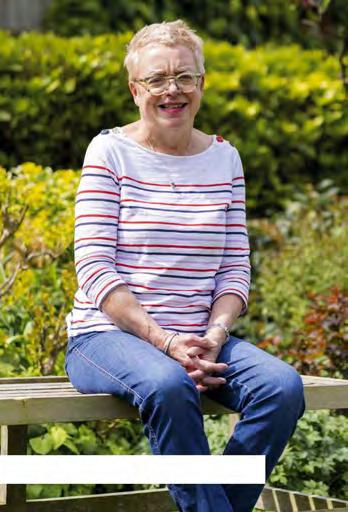
Beccy Speight
Making a change for our garden birds
Beccy Speight has been the RSPB’s Chief Executive since 2019 and has led the organisation through some of nature’s most urgent challenges.
When I first moved into my house many years ago, like so many of us, one of the first things I did was put up a few bird feeders in the garden. Among the Blue Tits, Robins and Blackbirds, it was the Greenfinches that quickly became my firm favourites, with their nasal wheezing and handsome flash of colour. These birds were numerous at first, but over the years have all but disappeared from my local area, and seeing or hearing one is now sadly something of note.
Our long-term science and monitoring work lays the blame for this decline with the disease, trichomonosis, which is caused by a protozoan parasite. The parasite develops in the throat of affected birds and causes problems with swallowing. Although I have never seen a sick Greenfinch in my garden, this disease is almost certainly the reason they now rarely visit.
And the evidence tells another story, too. We know that many people – myself included – take great joy in feeding garden birds. It helps us feel connected to nature, and for many species, the extra food can be a real lifeline, especially during the harsh winter months. But evidence now also shows that for some species, including finches, feeding can unintentionally do harm. Where many birds gather closely around feeders, the risk of spreading diseases such as trichomonosis increases significantly.
The Greenfinch was added to the UK Red List a couple of years ago and declines are now
‘You can be at the forefront of this movement for positive change. Protecting the birds we love means being willing to adapt and change how we help’
being seen in other species including Chaffinch and Bullfinch. Faced with this information, the RSPB’s conservation scientists have looked at the latest scientific research on what happens when we feed garden birds, particularly with regards to the spread of disease. You can read more about this research in this issue in our in-depth feature on page 36, but the resulting action is that we need to change how we feed our garden birds.
So what are we recommending? The most significant change is to stop providing peanuts and seeds during the summer and autumn months, when natural food sources are more plentiful and disease transmission risks are higher. In addition, we all need to clean our bird feeders regularly – weekly is best – to minimise the build-up of harmful pathogens. Combined with wildlife-friendly gardening, such as planting and creating natural foraging habitats, these measures could make a real difference.
As a precaution, we’ve already been advising not to use flat feeders such as bird tables, where disease risk is highest. Our advice now extends to not feeding certain foods in the summer and autumn.
And this is where you come in. Changing habits – especially something as familiar and widespread as bird feeding – takes time. But as members, you can be at the forefront of this movement for positive change. Protecting the birds we love means being willing to adapt and change how we help as new evidence emerges, and that’s where the strength of RSPB membership truly shines. Together, we can turn science into action, helping species such as the Greenfinch recover and ensuring our gardens remain alive with birdsong. By changing how we feed, keeping feeders clean and, above all, creating richer habitats, we can give wildlife the best chance to thrive. Your membership makes this possible and, with your support, we can continue shaping a future where nature is not only cherished, but genuinely protected and restored.
How to safely share space with nature to avoid disturbing ground-nesting birds
This season
10 How to: write stories inspired by nature, with tips from author Julia Donaldson
11 Nature notes: Nicola Chester speaks to RSPB President Dr Amir Khan on how nature can help our mental health
12 ID challenge: learn to ID spring singers
13 Species focus: all about Yellow Wagtails
14 Days out in nature: discover a wealth of things to do at RSPB nature reserves
16 Designed by nature: how do Ospreys grab and hold prey?
Comment
05 Beccy Speight: let’s work together to do the best for our garden birds
27 Simon Barnes: spring is all around us
78 David Lindo: scaffolding vs Swifts
Action for nature
40 Places: the latest from the Cairngorms Connect project
42 People: news about your membership
45 Science: Big Garden Birdwatch results
46 Species: renewed hope for Curlews
Features
18 Wildlife: Puffins may bumble on land, but at sea they are hardier than you think
31 Our work: thanks to your support we can protect the places wildlife rely on
36 Update: the latest bird feeding research
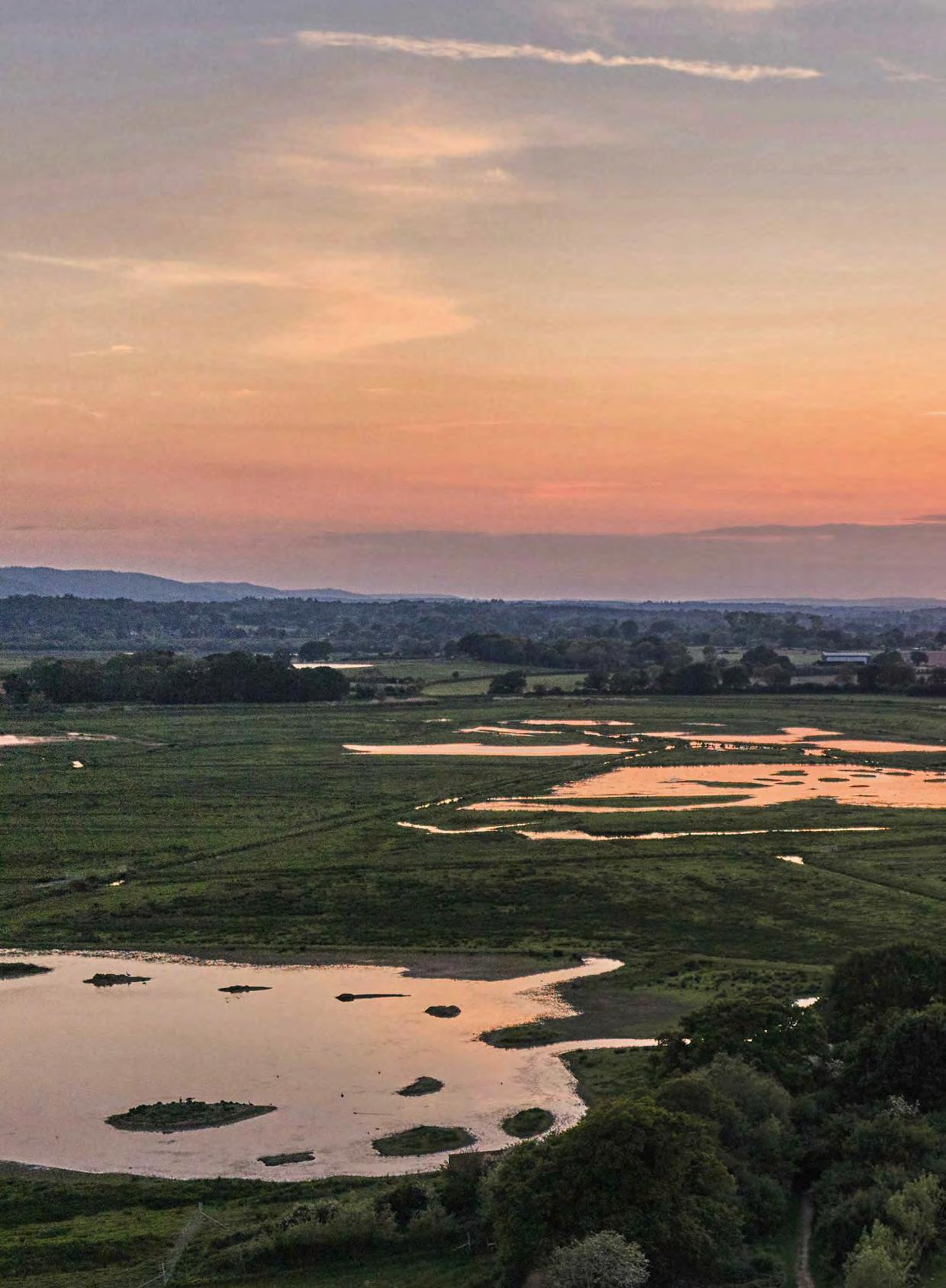
50 Our places: hear Nightingales sing at RSPB Pulborough Brooks
70 Bigger picture: ground-nesting birds are vulnerable to disturbance. Let’s raise their profile and tackle the issue together
82 Takeouts: three things to think about and do after reading this issue
Together for nature
57 Your stories: how surveying Water Voles is helping this secretive species
58 Your say: your letters and stories
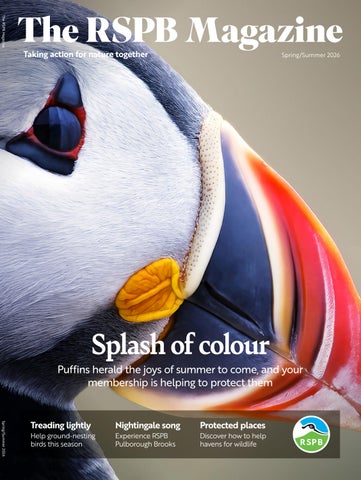
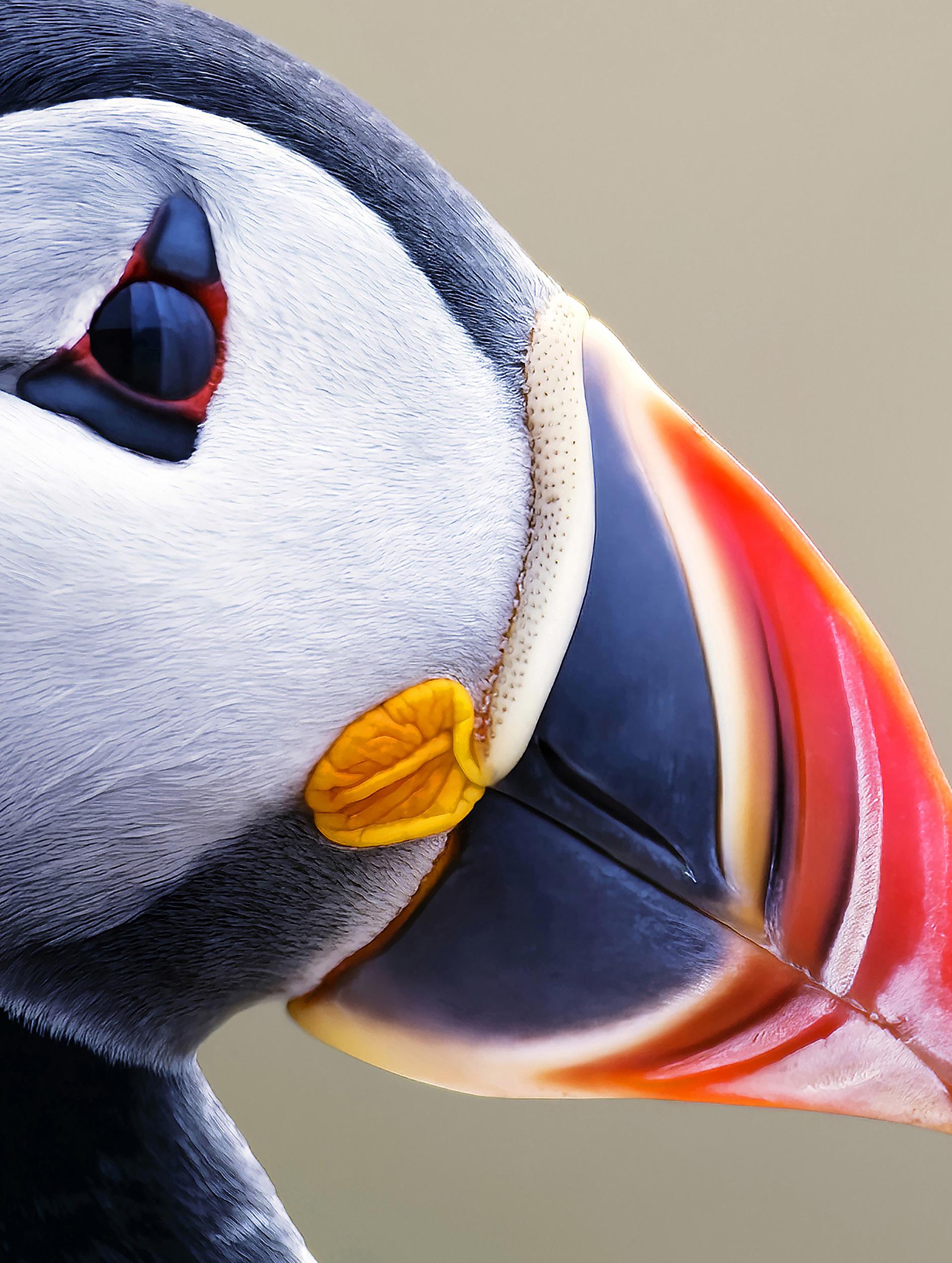
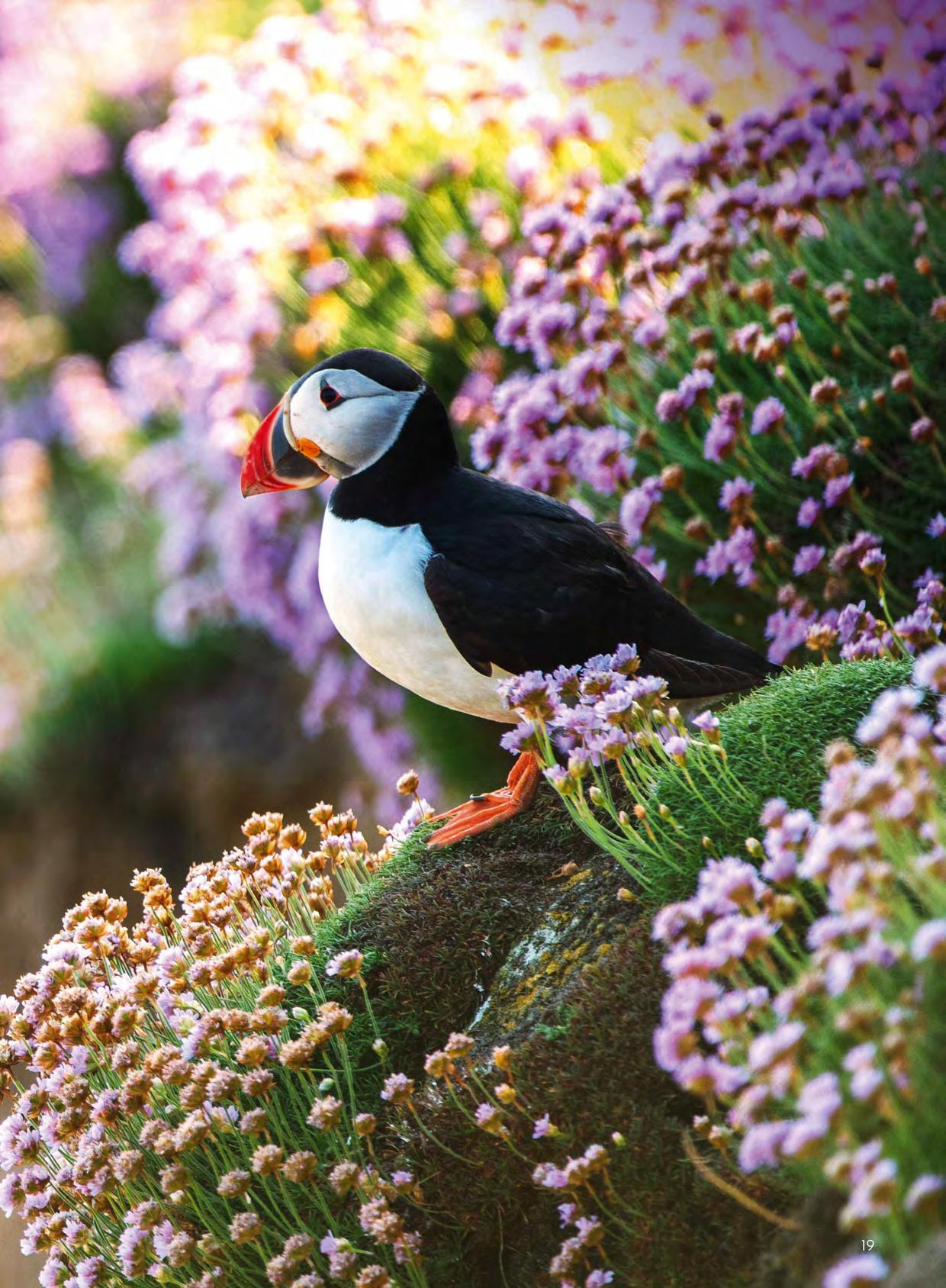
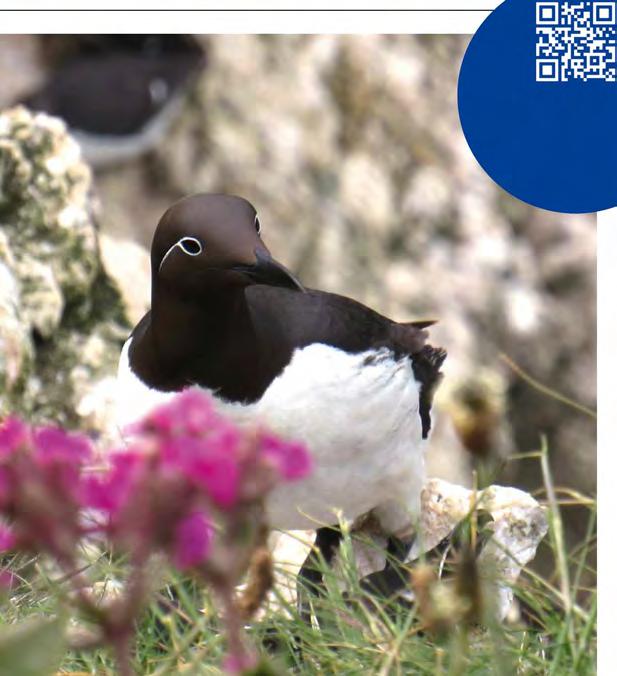
Discover the secret lives of one of our favourite seasonal visitors, Puffins, on page 18. Photo: Craig Churchill (rspbimages.com) On the cover 31
59 Crossword: test your knowledge, and find the answers on page 66
60 Your photos: share your pictures with us
62 Your gardens: the Forest of Flowers is a unique 44ha garden for wildlife
66 Your questions: The RSPB answers your wildlife queries and species ID mysteries
This season
What to see in nature | Great days out | Ways to help wildlife
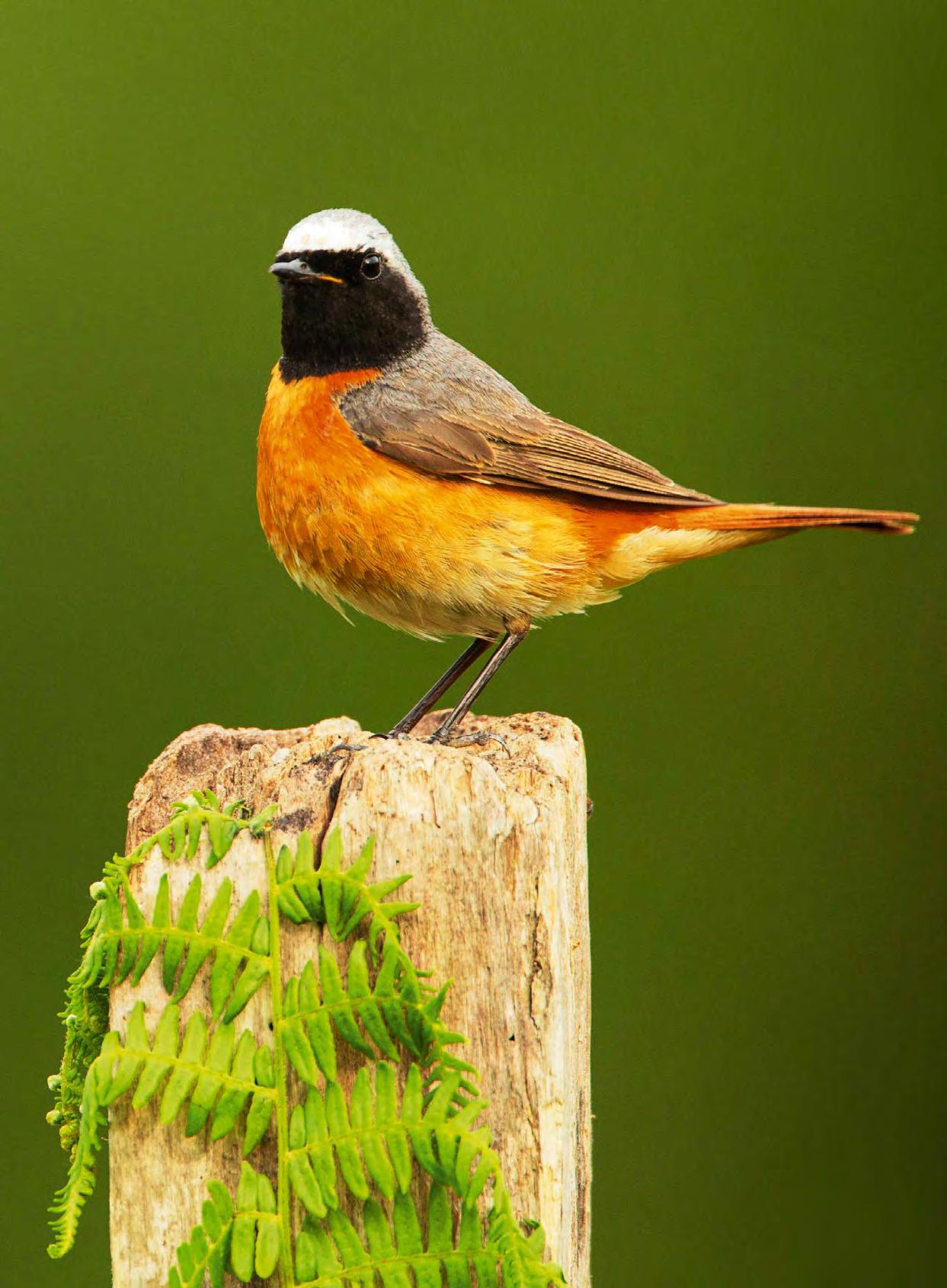
Species Redstart
Perched proudly and singing their hearts out, male Redstarts are unmistakable in their breeding plumage. Look out for a black mask and bright orange-red tail and chest on a Robin-sized bird. While females don’t have the same bold colouring, they can still be readily identified by the orange-red tail feathers that they’re named after – the ‘start’ coming from the old colloquial term for tail.
In spring and summer, an estimated 100,000 breeding pairs of these little birds visit the UK. They make the long migration from central Africa in search of temperate woodlands to breed in and insects to eat. Across Britain, these Amber-listed birds are most abundant in Wales, but can also be found in the north and west, occasionally breeding in central and southern England. They are a rare breeder in Ireland.
Populations sharply declined in the late 1960s and early 1970s due to severe drought in the wintering location of Sahel, but numbers have since recovered. Conservation work by the RSPB to protect woodland nature reserves in Wales benefits this species. They often nest in holes of trees and in stone walls, but will also use open-fronted nest boxes, so a box high up in a mature tree where human disturbance is minimal can also help these passerine birds.
Its close relative, the Black Redstart, has similar habits but lacks the red chest and blue-grey upperparts. The Black Redstart is Red-listed and more likely to be found in urban habitats when breeding.
Hear the melodic rattle of the Redstart at rspb.org.uk/redstart
This season
How to Be inspired by nature
Writing tips from author
Julia Donaldson
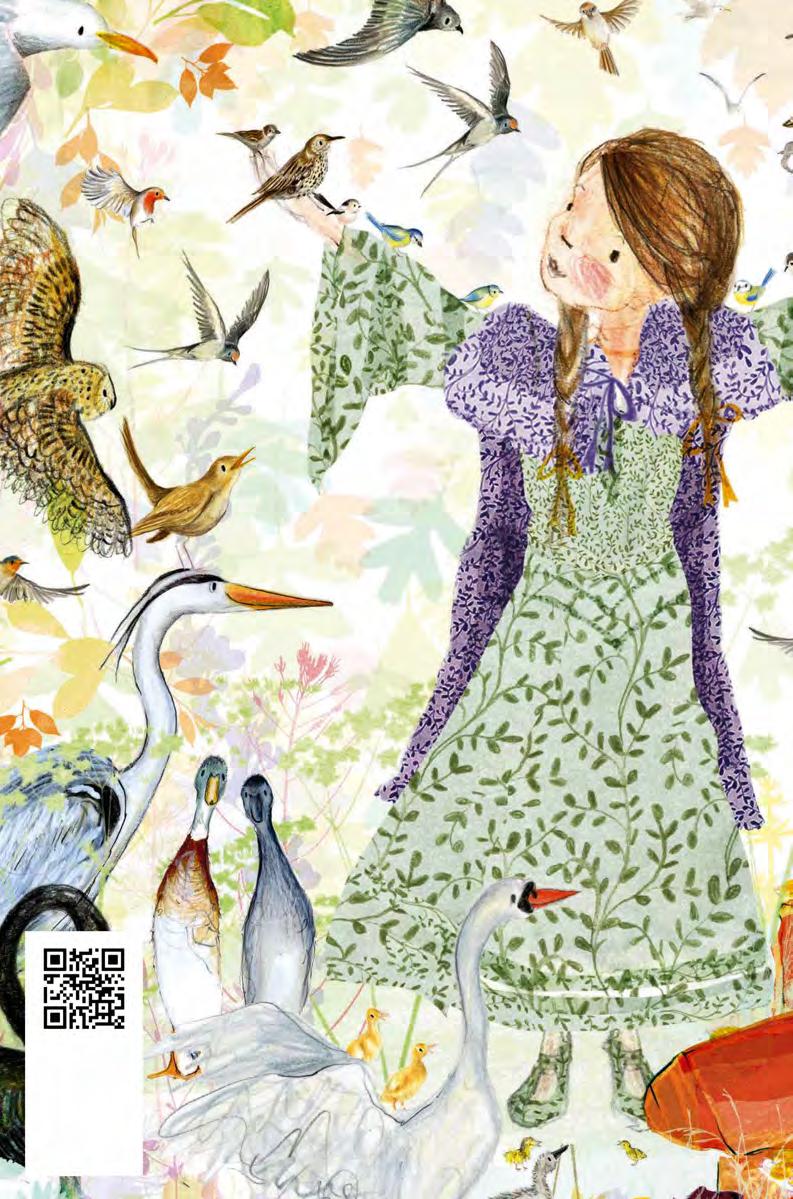
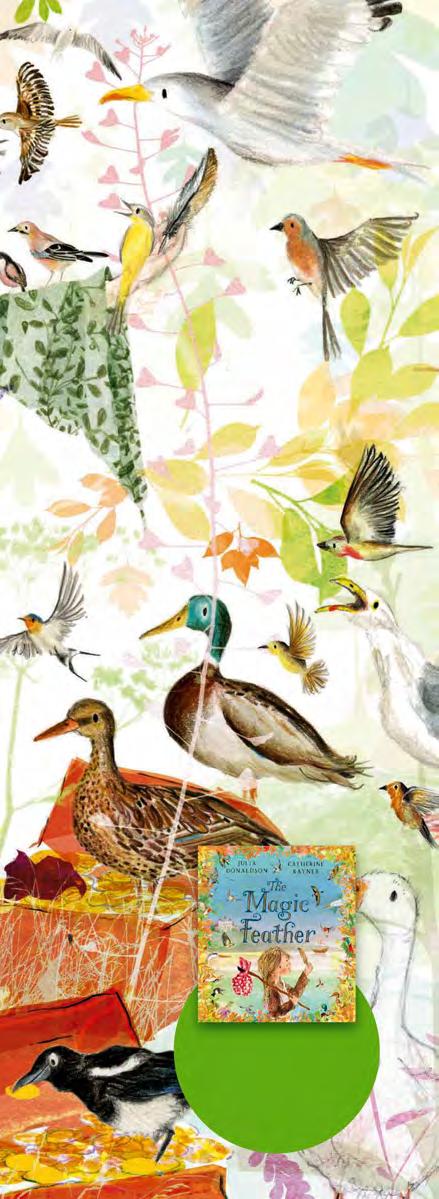
Acclaimed children’s writer Julia Donaldson began by writing songs to perform while busking. It wasn’t until she was approached to turn one of her songs into a picture book that she broke into the world of children’s publishing. Today she is known as the author of family favourites including The Gruffalo, Stick Man and Room on the Broom, as well as many more, and regularly writes stories that bring the natural world to life. Her new book The Magic Feather, illustrated by Catherine Rayner, tells the story of a girl who can talk to birds and beautifully brings to life some stunning UK species.
Julia Donaldson has written songs, plays and stories since she was a young girl. In 2019, she received a CBE for her children’s writing.
Learn how you too can be inspired by nature to create a story that celebrates the natural world.
1. Take a walk
The practice of walking through nature can get your mind into quite a receptive mode. You might not even be thinking about a nature-based story, but I feel being in the open air is very productive. Walking along I find a good place for airing ideas.
2. Inspiration is everywhere
Anything could inspire a story. I watched a David Attenborough programme about bowerbirds and that inspired a story. It doesn’t just have to be going out into the wild. It might be going to a museum or a nature reserve. They often have placards telling you about some interesting creature. One of my stories was inspired by a moth trap at an event I went to.
3. Character building
I think most stories with animal characters are really fables. Such as in the classic tale of The Hare and the Tortoise, the hare is a person who’s very capable and speedy, but a bit lazy, and the tortoise is a slow, plodding type of person who gets there in the end. Pay attention to the characteristics of an animal, and
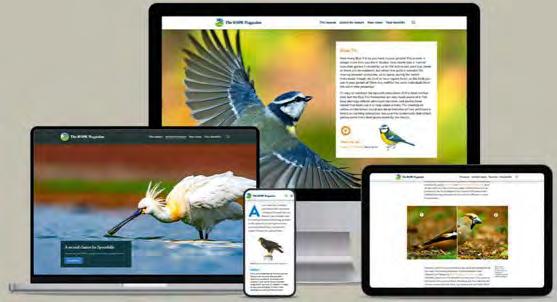
Switch to digital and enjoy these interviews in full.
see how you can use those to depict some kind of human behaviour.
4. Good things take time
I’ve got a whole file on the computer of half-baked ideas, but I don’t spend very much time on them. I’ll only start to write once I know something is potentially going to really work. For example, for my book Jonty Gentoo I’d had an idea about a penguin, a Polar Bear and an Arctic Tern for years. I was excited when I found an Arctic Tern could fly from pole to pole, but then I couldn’t think what the storyline would be. It was on ice for years until I cracked it.
5. Story first
Don’t try to preach. While I very much do want children to be out more in the natural world and spend less time on their screens, that’s not the aim of writing. It would be a bonus if reading The Magic Feather got them interested in birds, but first and foremost I just want to write an enjoyable story.
6. End on a high
Make sure you have a good ending. Very often editors tell me they get work submitted that’s really well written and really promising, and then at the end it just falls a bit flat. Think about how
you wouldn’t start a joke without first knowing the punchline.
7. Persist, persist, persist Keep at it. Eventually luck will strike, but maybe not in quite the way you’d envisaged. I’ve had loads of rejection letters in my life, but I was lucky with that first one that got me out there.
8. Know the market
I think it’s good to be aware of what’s out there and the type of stories that publishers look for. However they’re always looking for the next different thing so don’t let that limit you too much.
Mental health and nature
Experiencing nature on a daily basis is a hugely significant part of my wellbeing. Subconsciously or instinctively, I seek it out. It is key to my happiness. It helps soothe and excite me, focus or galvanise my thoughts and actions, or allows me to just be. I am lucky that I’ve known or felt the mental health benefits of access to nature all my life. But this recognition can benefit us at any point. And if circumstances cut us off from nature, we know to find a connection. Decades ago, working on an industrial estate, I found lunchtime routes to a trolley-filled scrap of canal with willow trees, Grey Wagtails and Kingfishers. Holed up recently with a broken leg, the view outside the window and my nature-themed books and art only deepened my love and connection to it all.
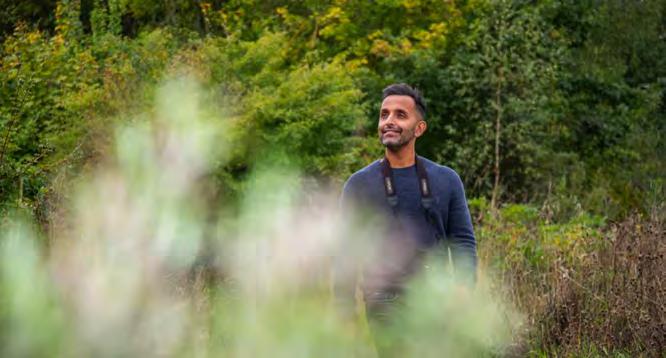
The RSPB’s President, Dr Amir Khan (pictured above), a much-loved NHS doctor, author, presenter and lecturer, is passionate and well-versed in the topic and science of nature and wellbeing. “I talk about the health benefits of nature with my patients when I feel it will help them, and would like everyone to be able to experience it, whether you live in an inner city or the countryside.” He talks about the reciprocity of our relationship with the natural world – something I know as ‘wild service’ – “When we care for the natural world, we nurture our own health, too. This is the biophilia hypothesis – our innate desire to connect with nature.” Dr Khan practises this for himself: “Immersing myself in nature is my way to clear my head. It can be comforting to realise that nature is going about its business without
worrying about the things we’re worrying about.” I couldn’t agree more. Daily nature keeps me falling in love with the world anew; whatever else is going on.
As a GP, Dr Khan has seen the benefits first-hand. “Nature Prescriptions and green prescribing empowers healthcare professionals to guide patients toward meaningful connections with nature, helping to improve their wellbeing alongside other prescriptions and recommended medical advice.
“Just 10 to 15 minutes in nature can lift our mood, reduce anxiety, and increase feelings of calm.” We may have forgotten, but Dr Khan says, “The idea that nature is good for us actually goes back thousands of years! When our very-distant ancestors were looking for places to settle, being around places where they could hear birdsong suggested that they would be safer, as there were fewer predators around. Many, many generations later, we still feel comforted, hopeful and safe when we hear birdsong.”
Dr Khan advocates finding nature where we are, too, whether it’s hanging up a bird feeder near a window, visiting our nearest green space, or following “incredible nature influencers on social media”. As a busy GP with many commitments, he enjoys reading inspirational stories of people engaging with nature. Like me, it reassures him that, as nature lovers, we are a community, capable of solutions that engender and multiply hope and action for nature, and ultimately, each other.
Nicola Chester is a columnist, nature writer and award-winning author. @nicolawriting or nicolachester.com
Nature notes Nicola Chester
Julia Donaldson’s new book The Magic Feather is out now.
Identification Stars of the dawn chorus
As the morning light begins to emerge and the air is still, birds take to the stage and demonstrate their health and skills to a potential mate
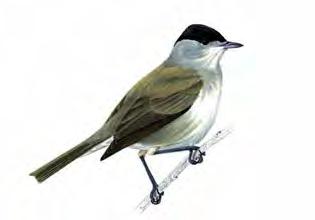
Blackcap
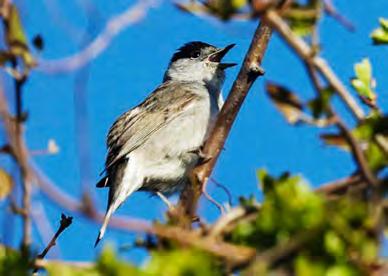
Nicknamed the ‘northern Nightingale’, the Blackcap has a complex song. Hidden away in thick bushes such as Blackthorn or Hawthorn, it is often heard before seen. Its cheerful, melodic song has rich notes and often ends with a flourish. Other birds’ songs are sometimes incorporated. (Male pictured)
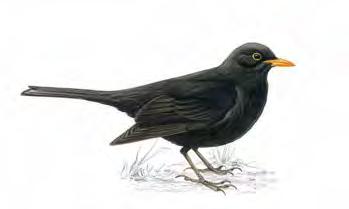
Blackbird
The Blackbird is one of our most familiar singers. Found in a variety of habitats, listen out for short phrases with an almost scratchy end. It has a hugely varied repertoire and can even mimic other birds within the verses of their rich and mellow songs. It perches at the top of trees to ensure its song carries. (Male pictured)
Switch to digital and enjoy these articles in full.
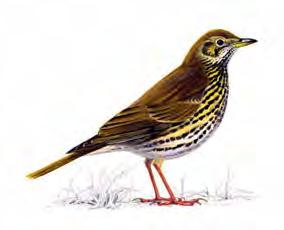
Song Thrush
One of the first to begin singing, and often the most confident, the Song Thrush has a truly atmospheric repertoire. Found across the UK and in different habitats from woodlands, parks, gardens and farmland, it will usually perch high up in a tree and will repeat certain ‘phrases’ two to four times with brief pauses.
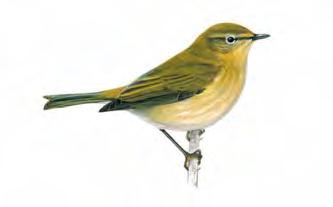
Chiffchaff
A truly onomatopoeic call, the Chiffchaff is not shy to shout its name despite its small size. Repeating “chiff chaff, chiff chaff, chiff chaff” with an occasional extra note thrown in, its calls are a true indication of spring. It is very well hidden thanks to its olive-brown plumage so can be heard more than seen.
Wren
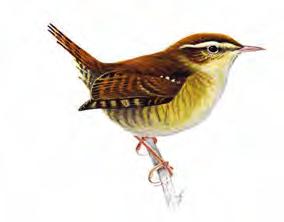
Small but mighty, the Wren certainly makes itself known. A song bursting from thick vegetation, the Wren has an incredibly loud song compared to its size. It’s fast paced too; it packs in an impressive 100 notes in just five seconds with a series of high-pitched notes and trills and always ends with an erratic rattle.
Roshni Parmar-Hill, Community Engagement Officer
Woodpigeon
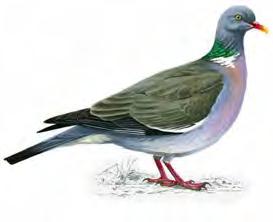
Our most common species of pigeon and dove, the Woodpigeon song is an iconic UK sound, especially during summer. With five-notes, mellow coos and a slightly raspy tone, a good mnemonic to use is “My toe hurts, Betty”. Often perched high in trees, look out for it in parks, woodland and in the garden.
What is your role and what does it entail?
I have the wonderful job of working with volunteers, community groups and young people to save nature on our patch. We are currently trying to transform Manchester into a Swift-friendly city. That means surveying Swifts in the summer, putting up Swift boxes, and lobbying housing developers and councillors to put Swift bricks in new builds. Our biggest success so far has been the launch of the Swinton Swift Street. In collaboration with two amazing Swift Champions, Suzanne and Haldis, we were able to put up over 100 Swift boxes in a small neighbourhood in Salford.
Species focus Yellow Wagtail
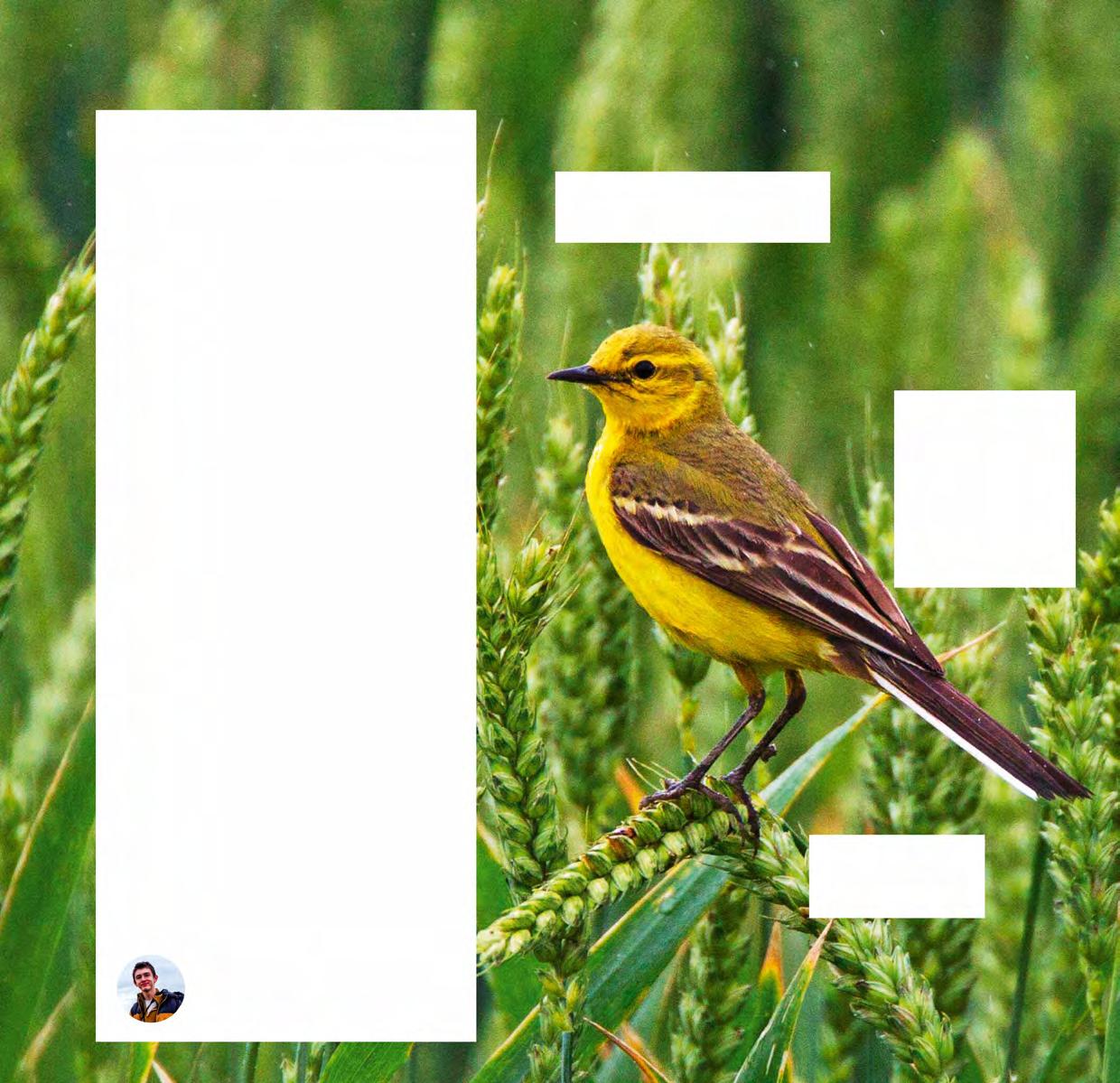
With its characteristic dancing tail, yellow and grey plumage and pointed beak, you may easily confuse the Yellow Wagtail for its more common cousin, the Grey Wagtail. Closer inspection reveals striking differences. In fact, Yellow Wagtails are one of Europe’s most variable bird species – with about 10 subspecies recognised, all with different plumage and colouration.
Unlike other wagtail species – which are resident here in the UK all year round – the Yellow Wagtail migrates, spending winter in the warmer climes of Sub-Saharan Africa. In fact, as you read this, the first Yellow Wagtails may be dropping in off the sea – making their arrival on the south coast of England. From here, many continue north, heading for arable fields and wet ground across central and eastern England, Wales and southern Scotland.
You may not associate wagtails with dry land – and you’d be right. The Yellow Wagtail has suffered an enormous decline of 78% since 1967, partly due to its favoured ‘wetter areas’ (such as floodplain meadows and unimproved grassland) being drained as farming intensified, forcing them to adapt to this new habitat. Pesticides too have had a huge impact, reducing the population of the invertebrate prey that Yellow Wagtails rely on so heavily. However – for now – there are still enough of these wonderful, graceful little birds to surprise and delight birdwatchers across the country this coming spring. Listen carefully for their distinctive ‘trslie’ call as they brighten up a field or meadow near you.
Rufus Dawson is a 15-year-old naturalist, birder and musician. He regularly writes for the RSPB’s youth magazine Wingbeat
The distinct wagging tail. Potential theories for this include: a signal of social status, a foraging aid, or a tool for warding off predators by showing the bird’s alertness.
What current projects are you working on?
As my project is coming to an end in 2026, we are transitioning from a staff-led to a volunteer-led group. We have a brilliant team of RSPB Swift Champion volunteers who have been at the heart of the Swift City programme. We are now transforming this network into a new RSPB Local Group for central Manchester and Salford. As an RSPB Local Group, the team will have more autonomy over their activities; they will be able to fundraise; and can expand their horizons to other birds and wildlife. I cannot wait to see what this group will get up to in the coming years!
What message do you want to share with readers?
Working for the RSPB for the past 18 months has shown me that we are so much more than a ‘bird charity’. I have seen that we are also a society. The RSPB brings people together, changes lives, and builds community. In a world that can feel isolating and overwhelming, these pockets of friendship bound together by a common love for our planet and wildlife is so precious. Indeed, I think Emily Williamson, the woman who founded the RSPB in Manchester over 100 years ago, would be proud of the work we are doing in cities and towns across the UK.
A slender, pointed beak is perfectly adapted for foraging for insects.
Long, agile legs aid the bird in its quick feeding movements.
This season
Days out in nature
Experience the wild
Our nature reserves are springing to life – see for yourself
1. Dawn chorus
Wake up with nature and experience the tranquillity of dawn on one of our nature reserves this season. Whether you join an expert-led 4am walk, an early morning tour in search of booming Bittern or – if the small hours aren’t your cup of tea – a ‘not-so’ dawn chorus walk, you’ll relish a totally unique experience. Tune into birdsong, including the cheerful tune of the Blackcap (pictured bottom left), with events running from the end of March to May. Take a look at what’s on offer at events.rspb.org.uk/dawnchorus
2. Play Wild Cards
Take the family out for an adventure with our new Wild Cards! Pick up a pack of playing cards on your arrival at participating nature reserves and compare the strengths and facts of some of spring’s most familiar species as you explore. Over the Easter holidays you could even win a chocolatey prize! Find out which sites to visit to take part from Easter until the end of May at events.rspb.org.uk/wildcards
3. Bird ID walks and workshops
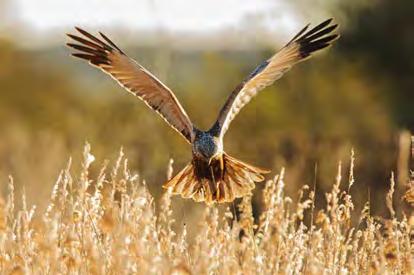
Boost your skills this season with an interactive session from the RSPB. Learn to identify birdsong, get expert tips on starting your birdwatching journey, or get to know your favourite species better with specialist workshops on warblers and raptors such as Marsh Harrier (pictured bottom far right). Whether you’re a beginner or an experienced birder, there’s something on offer for everyone. Find an event for you at events.rspb.org.uk/birdid
4. Sensory experiences
Immerse yourself in the myriad sights, smells and sounds nature has to offer. Soak in the sweet scent of a blossoming wildflower meadow; listen to the hum of vibrant dragonflies darting by; take a moment of peace by the still waters of ponds that burst with life beneath the surface; and marvel at snow-white Spoonbills gliding their spatula-shaped bills through water. Join us from June until August to find your nature-fuelled reset. Visit events.rspb.org.uk/summer
Useful gifts for nature lovers
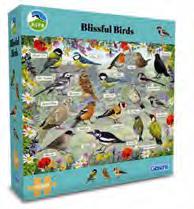
l RSPB Blissful Birds puzzle (£16) Enjoy a slow afternoon spent with your favourite garden birds with this 1,000-piece puzzle. Featuring beautiful illustrations of UK birds, why not frame it once complete and see these species up close every day?
Out now Bookshelf
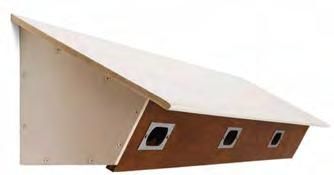
l Action for Swifts nest box (£140) Any day now, Swifts will be soaring through our skies again. Give these sociable birds a helping hand by installing a triple chamber nest box on your house. Designed by experts at Action for Swifts, each chamber has a nest cup inside and is easily accessible for these high-flyers that approach nests at speed. Mount 5m up in a shaded spot and fill your summers with joy as you watch them return year after year.
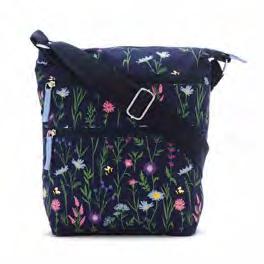
l RSPB wildflower bag (£30) You’ll have flowers wherever you go with this colourful accessory! Celebrate our blossoming meadows with this crossbody bag, filled with buzzing bees flying amongst pastel wildflowers –the perfect gift or treat for yourself.
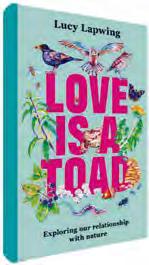
Love Is a Toad
Lucy Lapwing
£18.99 Wild grief and soaring joy: RSPB Ambassador Lucy explores the complex and wonderful things nature makes us feel.
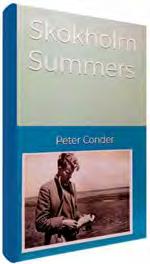
Skokholm Summers
Peter Conder
£8.52 From prisoner of war to RSPB Director, Peter shares studies from Skokholm: his spiritual home.
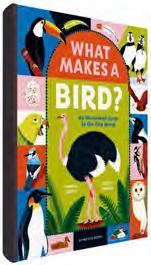
What Makes a Bird? Nadeem
Perera £14.99
RSPB Ambassdor Nadeem explores the intricacies of our feathered friends in this illustrated guide for children.
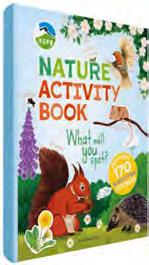
RSPB Nature activity book
The RSPB £6.99 Stickers, wildlife ID tips, facts, games and crafts: this book has everything young nature lovers need!
Photos: Our Media Studio; Paul Chesterfield, Euan Myles, Ben Andrew (all
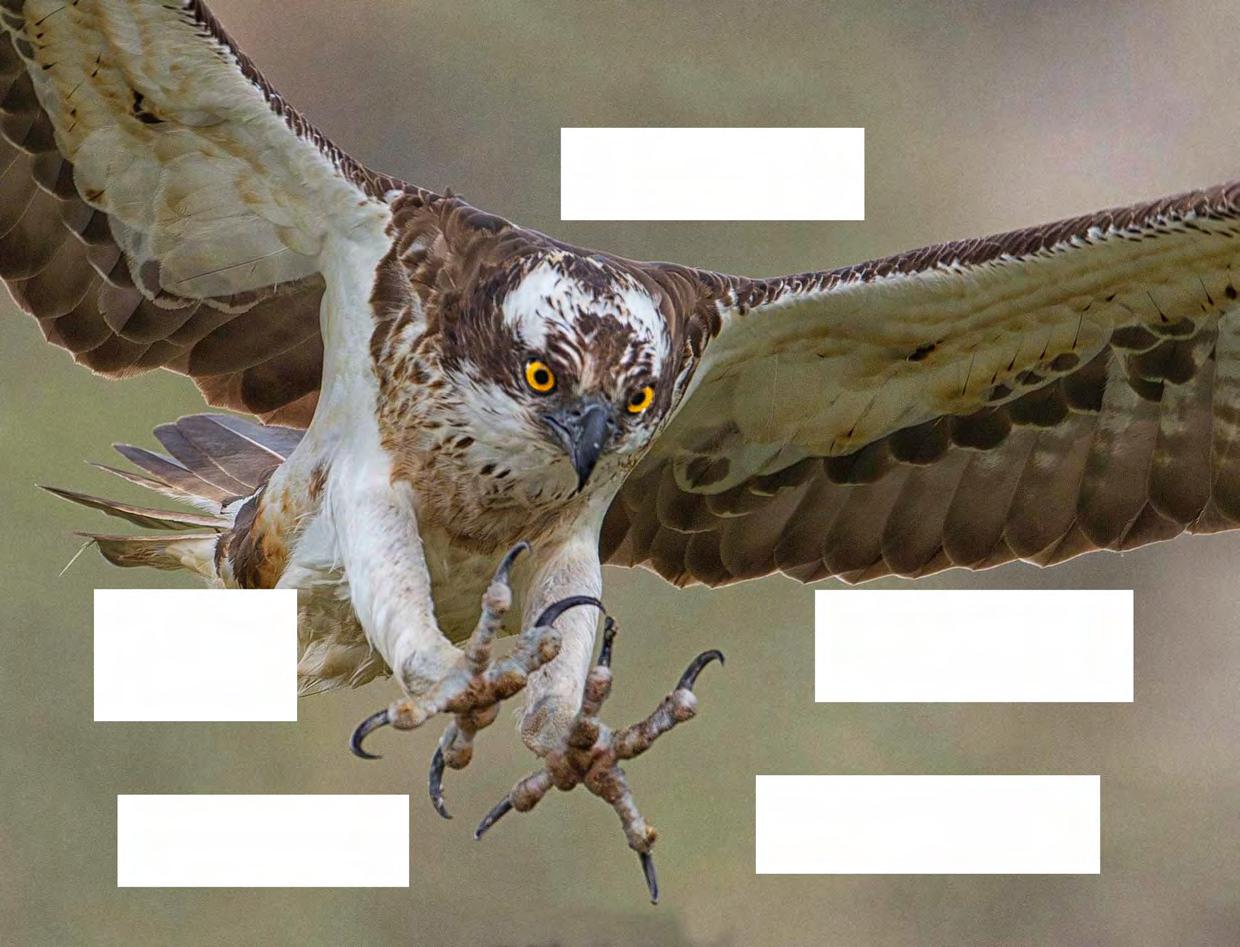
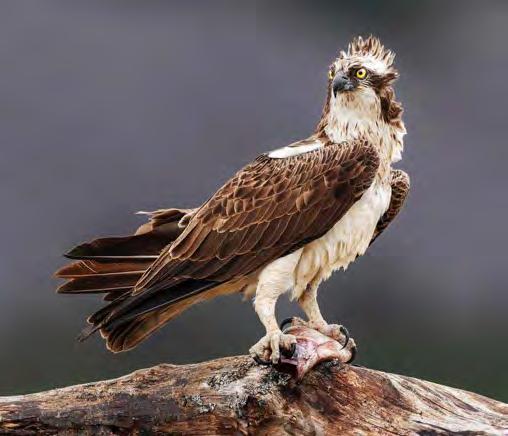
The gut of the Osprey is unusually long, enabling it to digest prey fully, including some fish bones.
Designed by nature
Dominic Couzens
induce grip.
The eyes face forward, enabling the Osprey to judge distance – and also compensate for refraction.
The claws are broad, sharp and extremely curved. When the Osprey is at the nest, it clenches these claws, so they don’t damage eggs or young.
balanced span to the Osprey’s reach.
Power move
The hunting techniques of the mighty Osprey are incredible to observe
Vanishingly few birds in the world catch fish with their feet. Think of all the waterbirds you know, and they all use their bills, so the Osprey is a true outlier. Its specialised hunting technique is to plunge into water feet-first and get enough of a grab of slippery prey to carry it away. Another rare exception, the White-tailed Eagle, can grab fish from the water with its talons, but it doesn’t plunge, only snatches.
Ospreys have multiple adaptations for this way of life. The most extreme involve the legs and talons, the catching equipment. The Osprey’s legs are unusually long, and the feet are large for the size of bird. The claws are very long, sharp and strongly curved inwards, although also robust. Importantly, the outer toe can be swung back to meet the hind toe, so two toes face forwards and two back. When the Osprey plunges, it opens its talons and these adaptations all combine to give it excellent reach. The talons also absorb the shock of hitting the water. Assuming the Osprey dives accurately, the long claws both embrace and partly impale the fish. As the talons clamp, the fish’s body is further gripped by spicules that project from the bottom of the toes, allowing it to be held tight. Once airborne
again, the Osprey manoeuvres its prey to face forward below the hunter’s body, to reduce aerodynamic drag.
None of this works unless the Osprey can find a target first. It has keen eyes, which face forward, allowing it to judge distance. The relatively light body and long wings allow it to soar and hover for long periods at a time, all the while manoeuvring over unsuspecting prey. It can spot fish from at least 40 metres up, although it can plunge from as little as 10 metres. Once in a plunge, its relatively small head allows for less wind drag. Its dense, oily plumage confers waterproofing and its nasal valves prevent water rushing up its nose. Once the fish is snared, special skeletal adaptations of the wing enable it to flap to get airborne, even when carrying prey that may weigh 2kg, over half the weight of the heaviest Osprey. Most prey, though, only weighs 150–300g and measures 25–35cm in length.
Dominic Couzens is a wildlife writer and tour leader living in Dorset. Visit birdwords.co.uk or @DominicCouzens
The outer toe is movable, allowing it to rest next to the hind toe and giving extra,
Spikes on the underside of the toes lodge into the slippery scales of the prey and
Women’s Merino Wool Chevron Zip Neck Jumper
Men’s Merino Crew Neck
Waxwing Robin Puffin Curlew Swift
clowning Not
Puffins are hardier than they look. Ed Hutchings discovers the secret life these clever navigators spend at sea, and how they need our help
Charming, comical and charismatic, few birds inspire such affection as the Puffin.
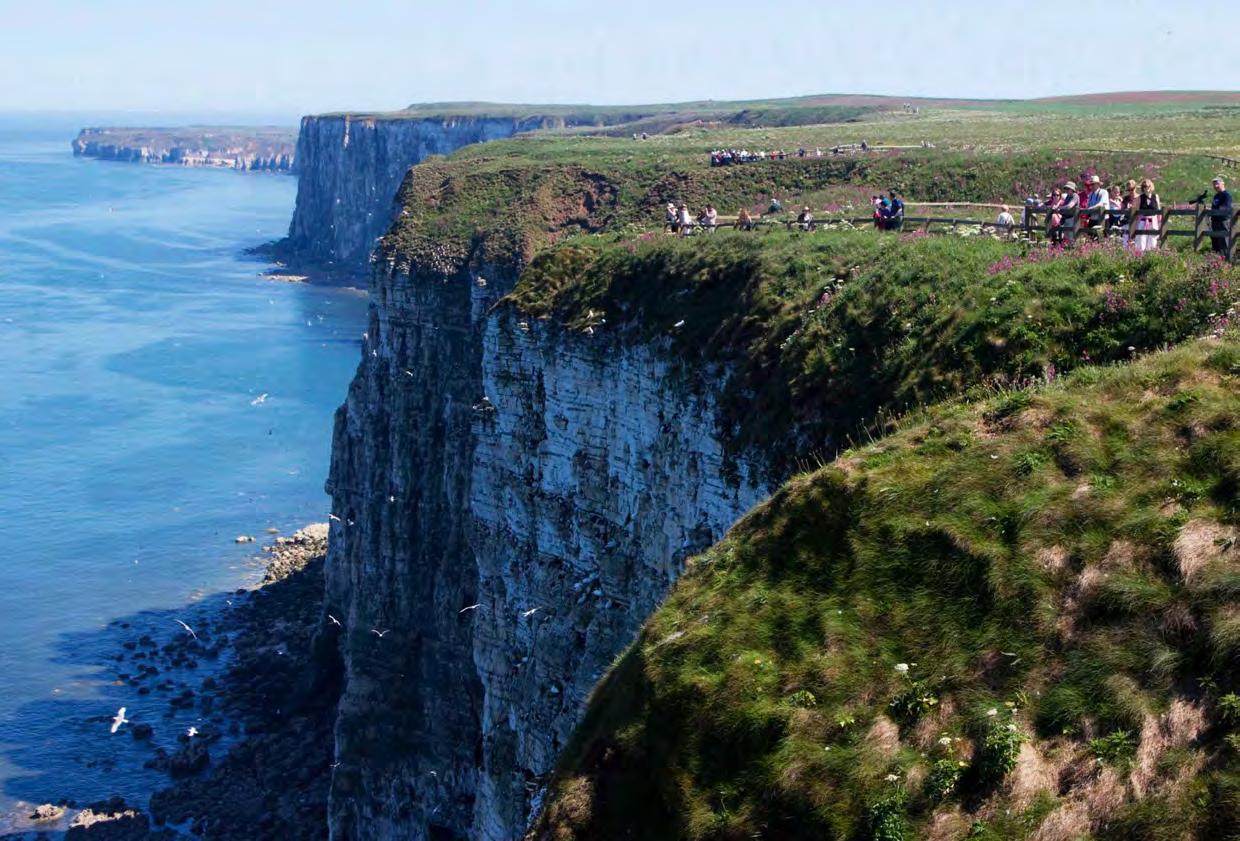
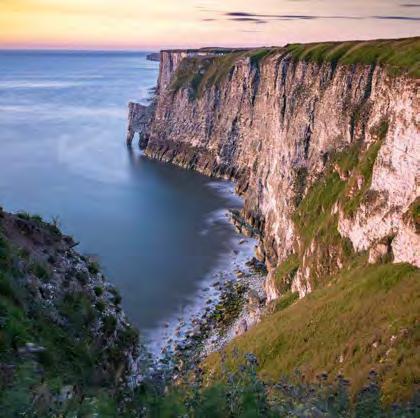
On a blustery June morning at RSPB Bempton Cliffs, their orange feet and rainbow bills delight visitors, but these unmistakable waddling birds are more than a seasonal wonder – they are a profound barometer of the health of our seas.
Previous: Puffins can be seen atop sea cliffs where they dig burrows to lay their eggs
1. Seabird research being undertaken in the Shiant Isles
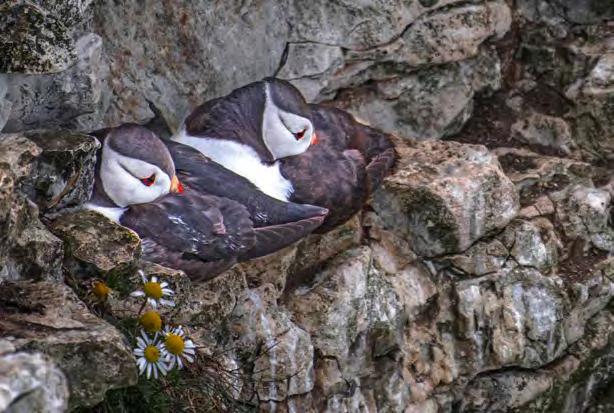
2. Puffins return to the same site and mate each breeding season
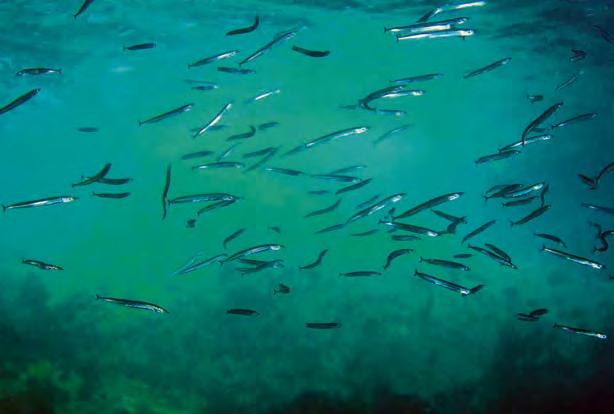
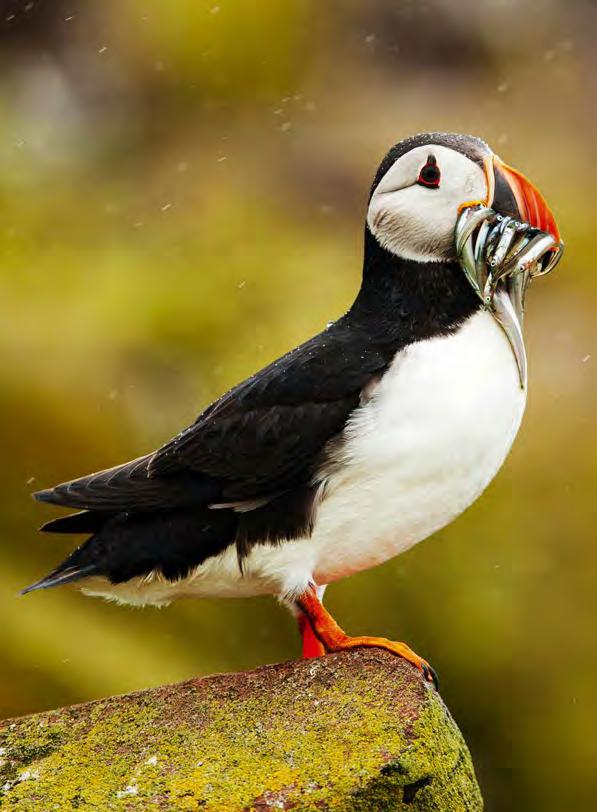
3. Sandeels are a lipid-rich, highly nutritious food source for Puffins and other seabirds
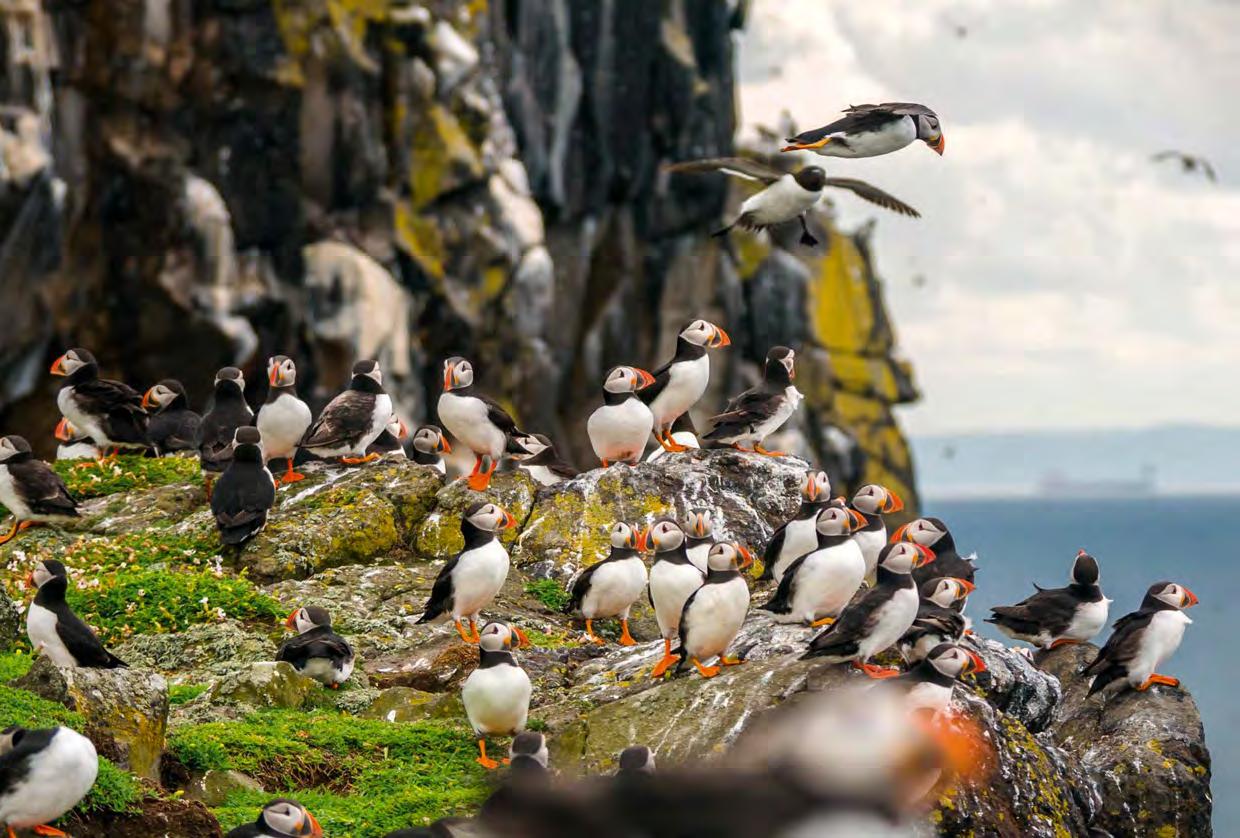
4. Solitary Puffins congregate in large colonies for breeding season
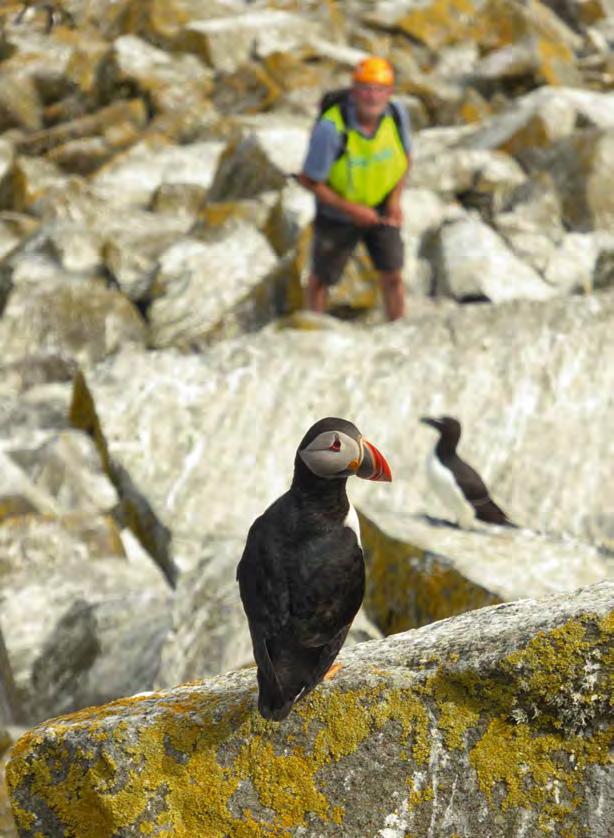
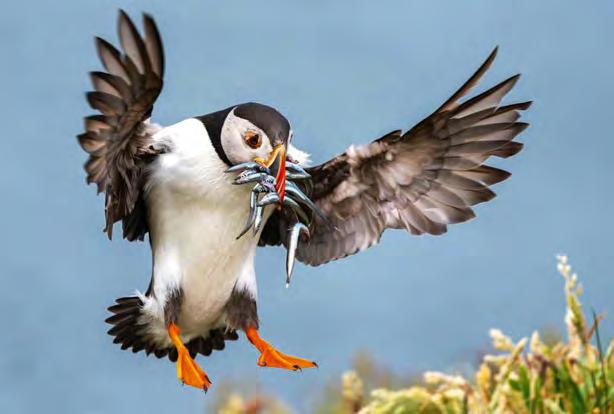
Puffins hold a special place in the UK imagination. Known affectionately as ‘clowns of the sea’, they combine striking looks with endearing behaviour. Their upright stance, waddling gait and oversized bills make them instantly recognisable. Yet beneath the comic exterior lies a bird adapted to life on the edge: streamlined for diving, resilient against storms and capable of navigating thousands of miles across the North Atlantic. For many of us, Puffins are the highlight of a summer visit to a nature reserve. At RSPB sites across the country, visitors gather to watch them wheel in from the sea, bills brimming with fish. These encounters are more than spectacle – they are moments of connection; reminders of the wild richness still present on our coasts.
More than meets the eye
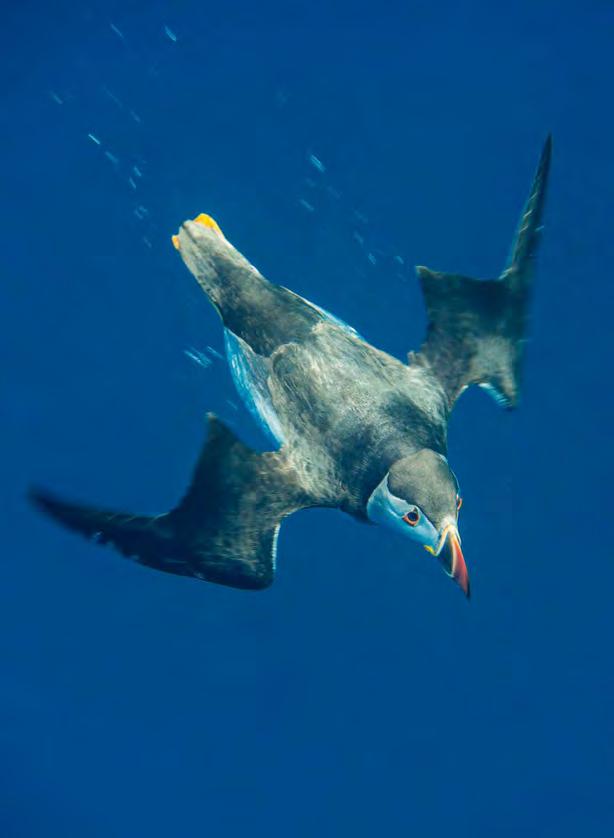
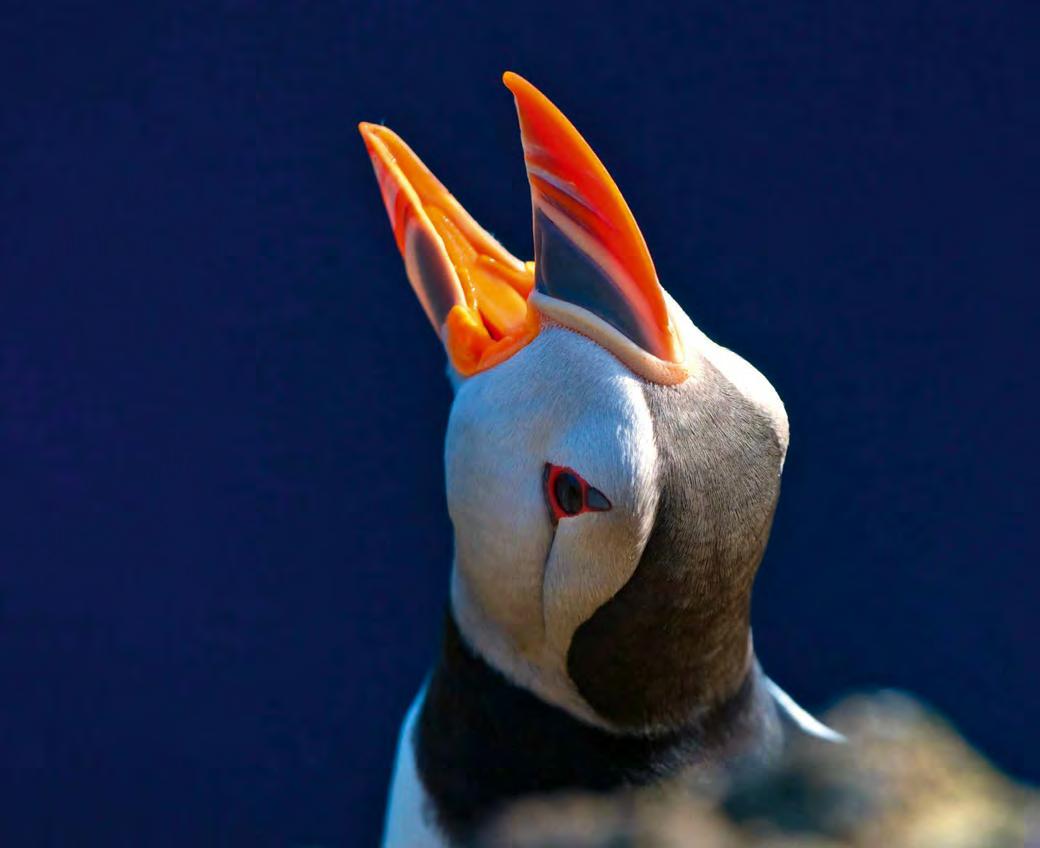
Atlantic Puffins spend most of their lives far out at sea, returning each spring to burrows on grassy clifftops. They are expert divers, ‘flying’ underwater with rapid wingbeats, plunging to depths of 50 metres. Their bills, ridged with backward-facing spines, allow them to carry a dozen sandeels at once – sometimes more than 60 fish in a single trip.
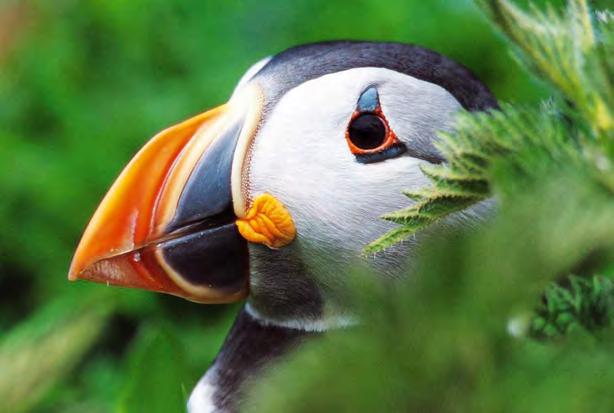
In winter, the bright outer layer of the bill is shed, leaving a duller profile until breeding season returns.
“Many people don’t realise that behind the charismatic and sometimes amusingly clumsy, stylised or inquisitive behaviour, Puffins actually have complex social interactions, which they need to get along with their neighbours while breeding so close together,” says Connie Tremlett, RSPB Conservation Scientist and Puffin Species Lead.
“Like most seabirds they’re long lived, living for
‘Behind the charismatic, clumsy, inquisitive behaviour, Puffins actually have complex social interactions’
around 25 years, and they mate for life. They produce just one puffling a year, hidden deep in a burrow. In winter they actually spend most of their time all alone, braving the stormy ocean, away from the busy colonies we associate them with.”
Puffins are also remarkable navigators. After fledging, young birds spend several years at sea before returning to breed. They can locate their natal colony with uncanny precision, guided by a mix of magnetic cues, celestial navigation and memory. Their social lives are complex: pairs reunite year after year, often at the same burrow, reinforcing bonds through billing displays and mutual preening. Their diet is equally fascinating. While sandeels are the staple, Puffins also take sprats, rockling and juvenile gadoids, depending on local conditions. Flexibility helps Puffins thrive across their range, but individual birds are still reliant on just a handful of local prey species, which makes them vulnerable when ecosystems shift.
A labour of love
Despite their charm, Puffins are in trouble. The UK hosts around 474,679 breeding pairs, three quarters of them in Scotland. Yet breeding success has faltered: recent surveys show fewer than one chick fledged per two pairs. Globally, Puffins are listed as Vulnerable, with populations declining across Europe. “Climate change and warming seas are of enormous concern for the fortunes of our special seabirds,” warns Dave O’Hara, Senior Site Manager at Bempton Cliffs, “but in the busy North Sea, overfishing, the accidental mortality due to seabirds being caught on nets and lines, and the risk of collision with marine windfarms pose real threats.” The decline is not uniform. Some colonies, such as those on the Isle of May, have shown resilience while others, such as on Fair Isle, have suffered steep drops. This patchwork reflects the complexity of marine ecosystems and the urgency of tailored conservation. One cap does not fit all.
The RSPB has fought tirelessly for Puffins. After 25 years of campaigning, the UK and Scottish Governments closed industrial sandeel fishing in 2024 – a monumental win for seabirds. Citizen science has played its part, too: the Puffarazzi project saw 1,260 volunteers submit nearly 4,000 photos of Puffins carrying fish, revealing regional differences in diet and linking prey type to population change. “We were bowled over by the incredible support of the public,” says Connie, “The Puffarazzi provided us with robust data at a scale that would’ve been impossible without citizen science, which is vital for better understanding the threats faced by our Puffins and how we can help them.” Thank you to RSPB members who took part. On islands from Lundy to Rathlin, restoration projects have removed invasive rats, giving Puffins safe burrows again.
Monitoring remains a challenge: Puffins nest underground, so researchers rely on physically checking burrows by hand to estimate breeding numbers – a method that’s impossible at most colonies because they’re so remote or inaccessible; especially at cliff-nesting sites such as Bempton.
Previous: Ben Andrew (rspb-images.com). Photos: Colin Wilkinson, Rosie Dutton, Les Cater (all rspb-images.com); Sally Anderson (Alamy Stock
Photo)
Up close Anatomy of the bill
How can these small birds carry over 60 fish at a time? Various parts of the bill must work together.
Rough, spiky tongue
Pushes fish upward into the palate, locking them in place.
Hinge-like bill joint
Allows the tip to open independently, so the Puffin can keep its catch secure while adding more.
The breadth of work is striking. RSPB marine policy teams negotiate with governments and industry; site managers restore habitats; volunteers conduct surveys; members provide the financial backbone. Together, these efforts form a mosaic of action, each piece vital to the whole.
Conservation officers describe Puffin work as both joyous and painstaking. “We’ve some real challenges around assessing our Puffin population at Bempton Cliffs,” says Dave. “One method that has given us a count of 3,080 Puffins, is to count them on the sea in March when they socially raft together before settling on the cliffs, but this is a brief window
5. Puffins use their wings to steer when underwater
6. They shed the outside of their bright bill after the breeding season
7. Sandeels are a key prey species for Puffins and other seabirds
8. At RSPB Bempton Cliffs, Puffins nest on the sheer cliffs
‘Remote cameras and acoustic monitoring are helping, but patience remains the greatest tool’
Serrated upper palate
Tooth-like keratin
High friction surfaces
Textured interior and tongue prevent slippage even underwater.
and subject to great variability. Still, it gives us a sense of scale of our population and something to compare with counts of the more visible seabirds such as Gannets.” Every effort, large or small, strengthens Puffin conservation.
The bigger picture
Marine policy leads stress that Puffins are not alone: protecting sandeels benefits Kittiwakes, Razorbills and even marine mammals. On Rathlin Island, researchers also speak of the challenge of burrow surveys. Remote cameras and acoustic monitoring are helping, but patience remains the greatest tool. In Shetland, site managers note how Puffins are part of a wider seabird community, their fortunes intertwined with Guillemots and Fulmars. These interconnected efforts are essential for seabirds. Puffin conservation is not just about Puffins. By protecting sandeels, we safeguard food for a host of seabirds and marine mammals. By restoring islands, we create safe havens for Storm Petrels and Manx Shearwaters. By shaping offshore wind policy, we balance renewable energy with biodiversity. Actions ripple outwards, reinforcing the health of marine ecosystems and the resilience of coastal communities.
ridges grip each fish as it is added.
‘With continued dedication and collaboration, Puffin populations have a real chance to flourish again’
Already, early signs are encouraging. Puffins have returned strongly to Bempton Cliffs and the Firth of Forth in 2025, and the recent sandeel fishing closure should help improve breeding success in years ahead. But long-term recovery will also depend on tackling climate change, which is causing more severe and more frequent storms – causing large numbers of Puffins to die and be washed up on beaches. A recent ‘wreck’ made headlines. Climate change is also the biggest driver of sandeel declines – we need to ensure that other important forage fish, such as rockling, sprats and juvenile gadoids, are all properly protected. If these measures hold, Puffin and other seabird populations could stabilise, and perhaps even thrive again.
How to help We can all do our part to protect Puffins
l Visit RSPB nature reserves where you can see them:
Bempton Cliffs, England (pictured above)
South Stack, Wales
Rathlin Island, Northern Ireland
Hermaness, Shetland, Scotland
l Campaign for nature by supporting marine protections and resisting attempts to overturn the sandeel fishing closure.
l Volunteer or donate to seabird surveys or island restoration projects.
Their fate reminds us that collective action works: from government policy to volunteer surveys, every effort matters. These hopeful signs demonstrate that with continued dedication and collaboration, Puffin populations have a real chance to recover and flourish once again.
9. Climate change and overfishing led to a rapid decline in sandeels, a diet staple for Puffins
The resilience of Puffins inspires us all to keep fighting for the natural world, proving that hope can light even the darkest seas. Puffins are more than ‘clowns of the sea’. They are symbols of resilience, of what can be achieved when people unite for nature. With RSPB members’ support, the story of Puffins may yet be one of recovery – a reminder that hope can be as bright as their bills in summer. Together, Puffins can have a future.
Ed Hutchings is a freelance wildlife writer and tour guide. Through his work, he connects people to the rich biodiversity and cultural heritage of vibrant regions worldwide.
Simon Barnes Spring Actually: a welcome return
Simon Barnes is a bird and wildlife writer and author. His latest book, How to Fly: Taking Wing with Birds, Bats, Insects and Humans, is out now.
Let me introduce you to nature’s latest blockbuster: coming with an all-star cast, featuring breathtaking aerial stunts and the best musical numbers you will ever hear in your life. Yes, once again it’s time for another revival of... Spring Actually.
Did you watch an old favourite film over Christmas? Perhaps you even watched the 2003 classic LoveActually and saw Keira Knightley trying to sound surprised that she looked quite pretty; Lúcia Moniz learning English “just in cases”; Emma Thompson’s heartbreak; and, of course, Hugh Grant performing the prime ministerial boogie. Spring is just the same, only different: a great welcoming back of old friends. The birds that live here all year are spectacular enough, but the whole show gets its edge from those that fly in to join us for the spring. We’re a country made richer by those who join us from overseas.
It helps if you learn to listen. My springs are twice as good since I learned birdsong; now I can welcome the arrival of the first migrant birds even when I can’t see them. Chiffchaffs says their own name in steady, even syllables – you can Google it: write the name of any species of UK bird, add ‘RSPB’ and you’ll go straight to a page that will play you its sound.
It’s not a great song, but the Chiffchaffs put their hearts and their souls into it, and they’re always the first new arrivals to sing. But listen out for the Blackcap, the back-garden
‘Let’s resolve to make the most of the spring; so long in coming, so glorious once established, and so soon gone’
superstar: a fruity and flutey song that seems almost too lovely for our damaged world.
One Swallow doesn’t make a summer, they say, but it’s a good start. Does a Swallow ever fly in a straight line? Every movement seems to trace an ‘S’ or an ‘O’ or a ‘C’: a flight full of curves and jinks as if they were doing it all for joy rather than survival.
It’s worth going to the seaside just to celebrate the birds that leave the high seas to join us for spring and summer. You can’t lay an egg on the ocean, so they grudgingly make use of a piece of land as close to the sea as they can get. The seabird cities, especially those with Puffins at the top, are as dramatic a sight as you’ll see anywhere in the world. Make a pilgrimage to RSPB Bempton Cliffs in Yorkshire to see for yourself.
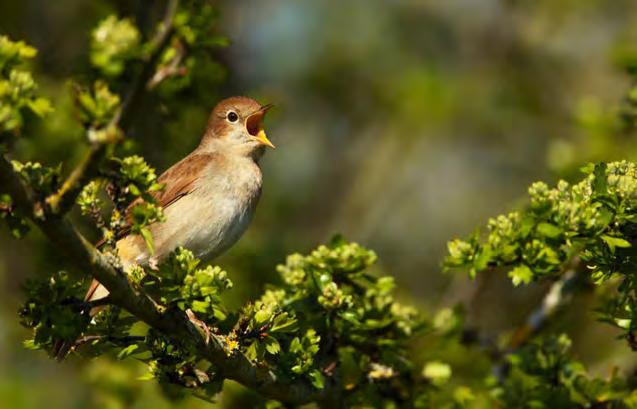
The great achievement of the spring is the song of the Nightingale, and yes, they sing throughout the day as well as through the night, apparently immune to fatigue. You find them in special places in the south of England: a quick search online will lead you to the nearest.
Let’s resolve to make the most of this spring; so long in coming, so glorious once established, and so soon gone. Back in 1954, everyone was thrilled when a single pair of Ospreys returned to Scotland to nest. Now there are around 400, flying in from Africa to enrich our spring.
As we celebrate the triumph of the Ospreys we must also thrill to the glorious flying displays of the Swifts. They are the greatest fliers of them all; the young birds won’t breed this year, and in fact they won’t even touch the ground. They will spend all their time in the air, because for them the sky is nothing less than home. Learn more on page 78.
Savour every one you see, because Swifts are in very steep decline. A world without Swifts? Scarcely worth living in. That’s nature in the 21st century: every joy must be coloured with a little sadness. Spring Actually, like LoveActually, has its sad bits.
WONDERS OF MADAGASCAR & THE SEYCHELLES
An expedition from Mauritius to Mahe aboard the MS Island Sky 16th to 30th November 2027
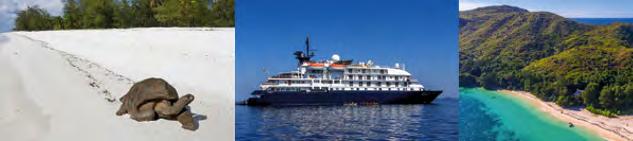
Join us aboard the MS Island Sky for this island hopping expedition through the Indian Ocean which will appeal to those who enjoy the natural world and all its wonders, travelling aboard a small ship and staying clear of the well-beaten tourist tracks. The all-suite MS Island Sky with her fleet of Zodiac landing craft is the perfect vessel for such an enterprise. Carrying just over 100 guests, she is a far cry from the latest breed of cruise ships and can visit small islands which larger vessels cannot access. Your experience will be made all the more memorable by our expedition team of marine biologists, ornithologists and botanists who have many years of experience in the Indian Ocean and will provide commentary on all we see.
Setting sail from Mauritius we will land on its nearest neighbour, Reunion, a little bit of France in the Indian Ocean and a truly stunning place. Continuing to Madagascar we will have four days to explore the incredible verdant and beautiful island and its unique flora and fauna. Then follows the Seychelles and one of the highlights of the voyage which will be our time spent exploring the Aldabra Islands, the last breeding ground of the giant tortoise and in addition to seeing some of these endearing creatures, we should also encounter dolphins, turtles and whales as well as countless birds. To explore the abundant crystal clear waters of the vast lagoon and to set foot on atolls that have never been exploited by the hand of man is a rare experience.
Our itinerary is a veritable feast of beauty and the natural world. You will witness the bounty of the islands, the wildlife from the lemurs of Madagascar to the giant tortoises of Aldabra, an amazingly prolific birdlife and a mesmerising underwater life.
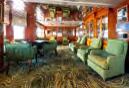
MS ISLAND SKY is one of the finest small ships in the world. With a maximum passenger capacity of only 118, the all-suite vessel has the benefit of unusually large accommodation, public areas and spacious outside decks. All suites feature a sitting area and some have a private balcony. The spacious and finely decorated public rooms include a lounge, elegant bar, library and a single seating dining room. Outside there is a rear sun deck, a bar and comfortable deck furniture. The atmosphere on board is akin to a private yacht or country hotel. A little music in the lounge or bar after dinner, talks from the onboard speakers, informative port briefings and of course good food which may be enjoyed leisurely in the attractive dining room, all contribute to making any voyage aboard the MS Island Sky a memorable experience.
INDIAN OCEAN
Aldabra Island Group
SEYCHELLES
Mahe
Curieuse & Aride
Amirante Islands
Mauritius
Reunion Island
Diego Suarez
Vohemar
Nosy Mangabe
Masoala National Park
MADAGASCAR
Day 1 London or Manchester to Mauritius. Fly by scheduled indirect flight.
Day 2 Mauritius. Arrive and transfer to the MS Island Sky. Enjoy welcome drinks and dinner.
Day 3 Reunion Island. Arrive at breakfast in Reunion where we have a choice of excursions. On a full day tour we will visit the central highlands, where spectacularly rugged peaks of volcanoes cradle huge amphitheatres known as cirques, where mountains tower to over 10,000 feet and magnificent waterfalls plummet hundreds of feet. Enjoy panoramic views from the Nez des Boeuf and visit the crater of Piton de la Fournaise. After a Creole lunch in a local restaurant, we will visit La Cite du Volcan museum. Alternatively, take a morning tour to a vanilla plantation in Saint Andre to learn about the history and cultural importance of the crop. Continue to Salazie, a verdant landscape and home to many waterfalls before spending some free time in Saint Denis
Day 4 At Sea. Spend a relaxing day at sea as we sail towards Madagascar.
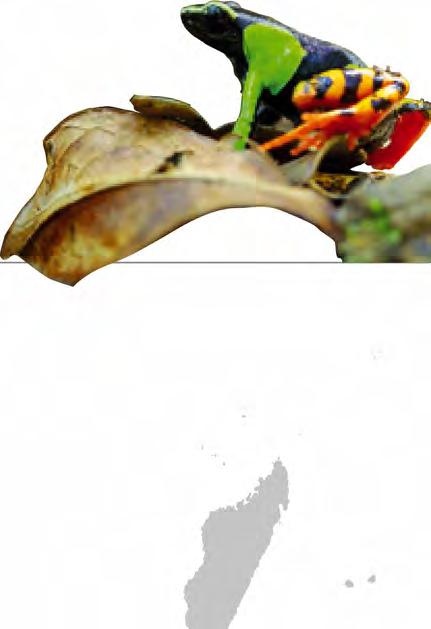
Days 5 & 6 Nosy Mangabe & Masoala National Park, Madagascar. Spend two days at anchor exploring Nosy Mangabe, a 520-hectare island reserve and one of Madagascar’s most diverse areas of virgin rainforest. The island has served as an important research centre since the mid-1960s when several aye-ayes and other lemurs were released into the forest. Using our Zodiacs we will land on a beach next to the forest and enjoy guided nature walks looking at the varied trees, plants and ferns and we hope to spot chameleons, lizards and black and white ruffed lemur. For the birders, we will keep an eye out for Madagascar buzzard, kingfisher and paradise flycatchers. We will also explore Madagascar’s largest protected National Park, the Masoala Peninsula, which comprises of coastal rainforest, flooded forests, marsh and mangroves. With luck, we may encounter the endemic red-ruffed lemur. The park is also home to various species of brightly coloured Mantella frogs, all manner of extraordinary chameleons and many endemic bird species.
Day 7 Vohemar. After a morning at sea, arrive over lunch at the port of Vohemar. This afternoon, there is a choice of tours. Set out to explore Daraina Forest, a protected area in Loky Manambato. The undulating hills covered with deciduous and semi evergreen forest
are home to one of the world’s rarest primates, the golden crowned sifaka, as well as Daraina sportive lemur and Sanford’s brown lemur. Alternatively, for those that would like to experience a bit of local life there will be a tour of Vohemar. From the port, set out on a walking tour through the city taking in the hustle and bustle of everyday life. There will also be an opportunity to sample the local rice cake, mokary vary, one of the most popular street foods in Madagascar. Continue by tuk tuk to a nearby vanilla plantation, where we will learn about the process of cultivation, harvest and transformation of vanilla for export
Day 8 Diego Suarez. This morning we will enter the dramatic harbour of Diego Suarez, also known as Antsiranana. From here you can choose from a city tour or alternatively, drive up to the Amber Mountain National Park at an elevation of 3,200 feet, where we will divide into short and long walking parties to explore the pristine rainforest. Amid the towering vegetation, we may encounter Sanford’s brown and crowned lemurs, as well as chameleons, stunningly well camouflaged leaf-tailed geckos, and an array of endemic birds.
Days 9 to 11 Aldabra Islands, Seychelles. Arriving in the Outer Seychelles we have two and a half days to enjoy the remarkable Aldabra group of islands. Whilst our itinerary is flexible, we hope to call at the island of Assumption where rare birds and green turtles are in abundance. Our time here will be spent beachcombing, on nature walks or snorkelling. We will also plan time on Aldabra, the island referred to by Sir Julian Huxley as “One of nature’s treasures and should belong to the whole world”. Aldabra is truly unique, and every time we call at what is believed to be the world’s largest atoll we find something new of interest. Sightings have included the extremely rare white throated rail, while the atoll is also home to the world’s second largest colony of frigate birds and the largest crab, the coconut crab. Whilst exploring by Zodiac it is difficult to know in which direction to look first. The clear blue seas abound with life, the skies are alive with varied birdlife and ashore giant land tortoises forage as they have done for millions of years. We hope to explore Picard Island with a short walk to see some of the numerous tortoises and robber crabs or swim in the lagoon, a vast 17 mile stretch of shallow clear water. From our Zodiacs we can watch the everchanging undersea world and snorkel in colourful coral waters. Meanwhile, at Cosmoledo a huge ring of twelve islands circles a lagoon. Many of the atolls are still to be surveyed and we will explore some of them by Zodiac. This is an Important Bird and Biodiversity
Area with all three species of booby found in the Seychelles including the last breeding site for the brown booby.
Day 12 At Sea. Spend a leisurely day on board.
Day 13 Amirante Islands. This morning we arrive at the 28 islands in the Amirante Group which were discovered by Vasco de Gama in 1501 and are considered to be some of the most pristine and untouched islands in the world. If conditions permit we will visit Poivre Atoll which is made up of three islands and a popular nesting ground for bird species like Chinese and blue heron, whimbrels, fodies, noddies and greater frigate birds.
Day 14 Aride & Curieuse. Early this morning we arrive at the Inner Seychelles and hope to anchor off Aride, one of the finest and most important seabird islands in the Indian Ocean. Over one million seabirds breed on the island including tropical shearwater, lesser noddy, frigatebirds and roseate tern and also five species unique to the Seychelles such as the Seychelles warbler and Seychelles magpie robin. We will spend our final afternoon on the island of Curieuse which is an important nesting site for hawksbill turtles and boasts endemic vines and mangroves.
Day 15 Mahe to London or Manchester. Disembark and transfer to the airport for our scheduled indirect flight.
PRICES & INCLUSIONS
Special offer prices per person based on double occupancy start from £10495 for a Standard Suite.
WHAT’S INCLUDED:
Economy class scheduled air travel • 13 nights aboard the MS Island Sky on a full board basis
• House wine, beer and soft drinks with lunch and dinner • Noble Caledonia expedition team
• Shore excursions • Gratuities • Transfers
• Airport taxes • Port taxes.
NB. Ports and itinerary are subject to change. All special offers are subject to availability. Travel insurance and Seychelles Travel Authorisation are not included in the price. Our current booking conditions apply to all reservations. Zodiacs will be used regularly during this expedition.
right time Right place
Protecting our precious habitats is key to changing declines in UK wildlife. Luke Phillips explains what this means and what needs to be done to keep our special places safe for nature
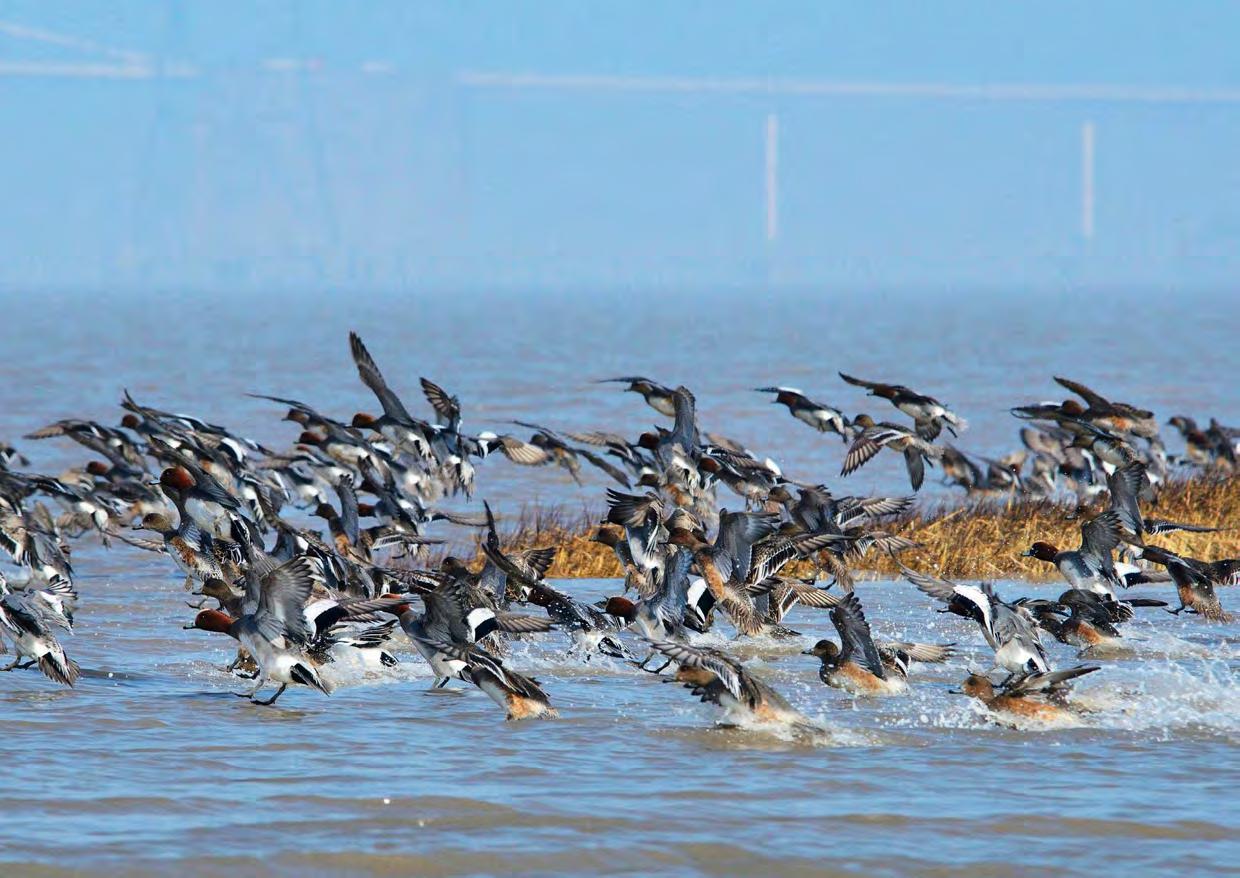
My early years of birdwatching often took me to the Severn Estuary. As a keen youngster, the place blew my mind. I’d see huge swirling flocks of Dunlin moving with the gigantic tides, vast numbers of Wigeon grazing on the saltmarsh and during my years of visiting, Avocet numbers grew and are now thriving on the estuary.
However, various threats to the estuary, including multiple proposals for a Severn Barrage, have raised their heads over those years, endangering this vital habitat. Although thankfully not currently being pursued, these show how suddenly even the best places for wildlife can find themselves under threat.
I’m happy to admit I was an unusual teenager. Birds were front of my mind, but not in the way my family joked about. Most of my spare time was spent birdwatching and this led me to meet some amazing people. Rod was one of these people. He was a keen local birdwatcher who had devoted his life to putting up nest boxes. I remember him, aged 70, scrabbling down steep riverbanks to show me a Dipper nest or 10 metres off the ground checking a Tawny Owl box.
Previous: A flock of Wigeon land on the Severn Estuary
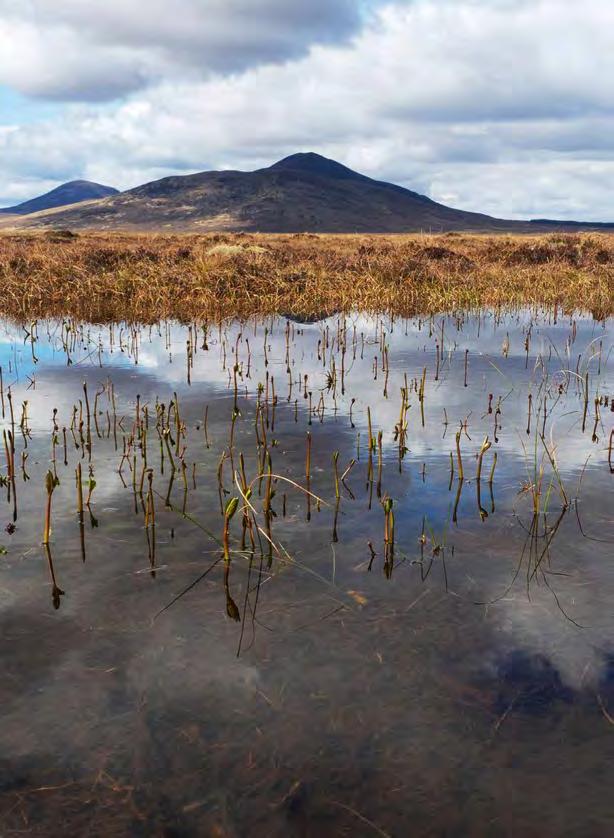
1. Around 2.25 million hectares of blanket bog is found in the UK
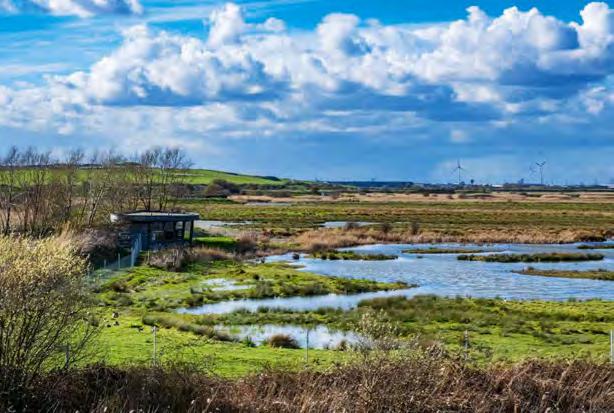
2. The 411 hectares of ancient, low-lying grazing marsh are looked after at RSPB Rainham Marshes
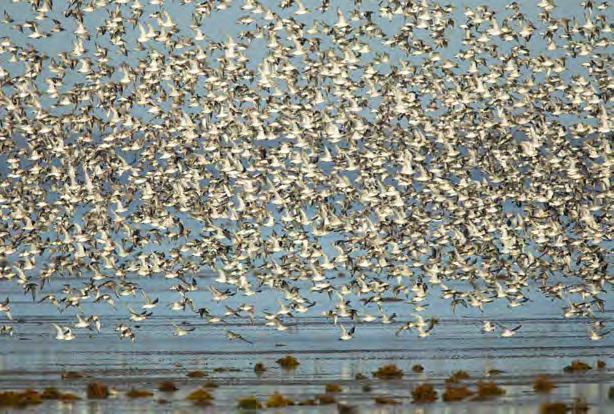
3. Many migratory Knot spend winter on RSPB nature reserves, such as RSPB Snettisham
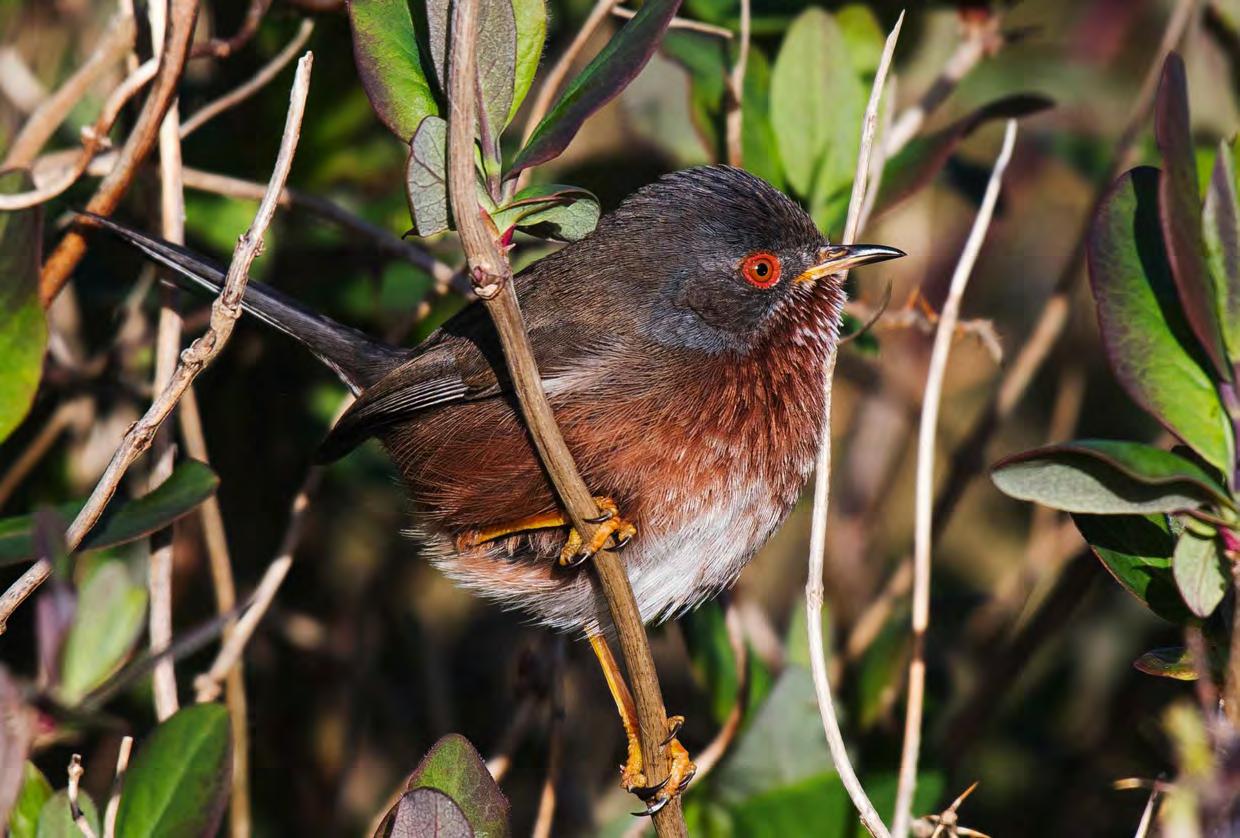
4. RSPB Arne’s heath is an important habitat for rare Dartford Warblers
Commitment, right? Through Rod, I became aware of the biodiversity group on the local council; I needed to get involved. I was invited to join a committee that looked to designate locally important areas for nature. These designations made a difference and recognised that they were special for a range of species. That recognition was key, and official. They were more protected, and it felt great to be part of it.
Let’s go back to the Severn Estuary. One of the reasons it’s been possible to fight off threats such as that barrage is because of the level of legal protection this unique place receives. These vital protections rightly steer development towards other areas less damaging to nature. The most significant protection is its status as a SPA – Special Protection Area – a place of international importance for birds. Rooted in national and international law, there are 286 SPAs across the UK, covering almost 5.5 million hectares – and very likely one near you. These vary from the iconic heathlands and blanket bogs of the Pennines and Peak District, to vast estuaries such as the Solway Firth and the Wash. They also extend into our seas where they sit alongside other designations, such as Marine Conservation Zones.
Times are changing
For us, people who love wildlife, it’s a worrying time. Protections for SPAs and other sites such as SSSIs are things we should be proud of, fiercely protect and enhance, but the future is looking increasingly uncertain. I spoke to Alice Hardiman, Director of Campaigning and Mobilisation at the RSPB. “Protected sites are the jewels in our crown – some of the very best places for UK wildlife,” she says. “They need proper investment and care which, frustratingly, we know has been lacking in recent years. Despite this, they remain without doubt some of the most incredible places for our birds and evidence shows that wildlife surrounding these places benefits from them, too.
“The science is clear that without protected sites nature’s decline in the UK would be so much worse, yet time and again we see decision makers not understanding why these places are important. A range of examples in recent years have made us really concerned. The Planning and Infrastructure Bill in England last year, which thousands of members helped us campaign against, is a scary example of how proposed legislation that should be protecting these special places can instead undermine and weaken them. We fear there will be more examples to come.”
‘These special places are protected because the things that make them special can’t be easily replicated’
Glossary
A protected area guide
Site of Special Scientific Interest: SSSI/ASSI
SSSIs (or ASSIs in Northern Ireland) are places of national importance for nature, representing over 6,500 of the UK’s very best wildlife and geological sites. They cover a range of important habitats and species and are the foundation of nature conservation in the UK.
Special Protection Area: SPA
Internationally important sites for birds, including migratory species. These protections originated from international conventions and, through the Birds Directive, form part of a network of SPAs across Europe. SPAs can extend out to sea, forming part of the Marine Protected Area (MPA) network.
Special Areas of Conservation: SAC
Sites of international importance for priority habitats and non-bird species, such as blanket bogs, ancient woodlands, chalk streams, rare fungi, Otters, and Marsh Fritillary butterflies. SACs can also be designated at sea, forming part of the Marine Protected Area (MPA) network.
Ramsar sites
Internationally important wetland sites, identified and protected under the global Ramsar Convention on Wetlands, an international treaty signed in Ramsar, Iran, in 1971. In the UK, these sites are afforded the same level of protection as SPAs and SACs.
I’ve said already that these protections are rooted in legislation, which means they are legally binding. So what’s the problem? We’ve heard some worrying rhetoric from our current UK Government with nature being framed as a blocker to development, and laws that protect our special places and sensitive species, such as bats and newts, being at fault for the lack of progress with – for example – house building. Disappointingly, the new Planning and Infrastructure Act has followed through on this talk and – while it is not as damaging as the originally drafted Bill – we still firmly believe that this Act will weaken protections for nature.
Blánaid Denman is one of the RSPB’s Policy Officers, working to secure better management and protection of our protected areas across the UK. She says: “Our protected areas are the beating heart of nature conservation in the UK. These special places are protected because the things that make them special can’t be easily replicated elsewhere. Review after review has concluded that the legislation that protects them works – for nature and for people. If problems arise, those reviews make clear it’s down to poor implementation of the laws, not the laws themselves. The UK is already one of the most nature-depleted countries in the world; we can’t afford to make things worse. Sometimes we have to let nature come first.”
Previous: Nick Upton (Alamy Stock Photo). Photos: Mike Read, Les Cater, Ben Andrew, Sam Turley (all rspb-images.com)
The pitting of nature against development is obviously deeply unhelpful. We live on a small set of islands with limited space and resources, and our economic security, food security, and societal health and wellbeing depend on a healthy natural environment. Protected sites occupy little more than 10% of the UK’s land area (one of the lowest in Europe) and as well as being our best places for nature, they are often also our main sources of drinking water, and our biggest carbon sinks. Building on them is in no one’s interest.
A potential disaster, out of sight
That time I spent on the Severn Estuary watching internationally significant numbers of birds showed me the importance of these protected areas in front of my eyes, but one of the biggest threats to birdlife is unfolding miles out to sea, east of Edinburgh. In July 2025, the Scottish Government granted consent for the Berwick Bank Offshore Wind Farm, which the RSPB believes could be the world’s deadliest wind farm! The consent requires the developer, SSE Renewables, to demonstrate sufficient seabird compensation will be put in place before the project can start, but the RSPB does not think this is possible. The RSPB is in full support of renewable energy, as climate change is that constant looming overriding threat to nature (and us!), however, this cannot be at the cost of (in the case of Berwick Bank) potentially tens of thousands of endangered and iconic seabirds such as Puffins, Guillemots and Kittiwakes. It could also threaten the world’s second largest Gannet colony, Bass Rock. This is clearly the wrong place for this sort of development. So, if this
Sign up as a campaigner to get regular emails about how you can stand up for nature. See page 82 for more
area is so vital for internationally important numbers of birds, why has it been consented by the Scottish Government? How could this happen?
Anne McCall, director of RSPB Scotland, says: “We support offshore wind, but not at such a devastating cost to wildlife. Berwick Bank is the worst possible development in the worst possible place. It’s planned close to some of the most important places on Earth for seabirds, which are already in serious trouble. We’re thankful to the thousands of RSPB supporters who have already spoken out against this harmful project. There is no way to compensate for the tens of thousands of seabirds that will be killed. We’ll keep fighting for Berwick Bank to be scrapped, to make way for offshore wind that avoids the most important places for nature.”
Here we have an example of a development that would impact up to eight SPAs in Scotland and England, with irretrievably disastrous consequences, yet it’s still on the table.
The value of your voice
I’ve been lucky to spend countless hours at RSPB Arne, which forms part of the Dorset Heaths SPA. It’s tricky to pick out highlights but all my memories are of an incredible abundance of wildlife. Summer evenings were my favourite time on the nature reserve. Dartford Warblers would often have one last rattly warble before diving down into a gorse bush to roost, and the first crepuscular moths would start to emerge before another heathland highlight would make itself known. Just after sunset, Nightjars would start to chur across the heath followed by the first flights of the night, by which time they were just silhouettes against the burning orange sky. At the time, the fact that this place could be anything other than a nature reserve just wouldn’t cross my mind. Even writing it makes me quite uneasy. Years of work made possible thanks to RSPB members and done by a small army of volunteers and wardens have created what I think is one of the best nature reserves there is. All this is legally protected thanks to those little acronyms – SPA, SSSI, SAC – and the support of your membership, which means we can continue to buy and manage vital sites such as this.
“Without RSPB members behind our campaign, our voice wouldn’t be heard,” says Alice. “It is vital we are a force for nature, now more than ever.”
The RSPB (another acronym!) is right to worry about the direction of travel we’ve seen in recent years. These next few years could be pivotal, and your support will be called upon. Together, we can protect these very special areas.
Luke Phillips is a lifelong birder and naturalist who lives in Dorset. He’s worked for the RSPB for 16 years and volunteered for nearly 20. He is currently Head of Supporter Communications.
Above: The bridled Guillemot – the result of a genetic variation – is one of the species that will be impacted by Berwick Bank
Stairlift? No
A Stiltz Homelift is a safe, attractive and affordable alternative to a stairlift. It can be installed into almost any home. A Stiltz Homelift has a compact footprint, similar in size to a small armchair.
Your forever home
Save the cost and upheaval of moving or the disruption of adapting your home for downstairs living. A Stiltz Homelift helps you live safely and independently in the home you love.
The width of an armchair
change, big Small impact
The RSPB has issued new advice on how to safely feed garden birds
There isn’t often a conservation project everyone can play a part in. But now we better understand the unintended consequences of feeding garden birds, there’s a great opportunity for us all to make a difference. Whether you love to see birds in your garden, on your balcony, or on your local patch, here’s how to help.
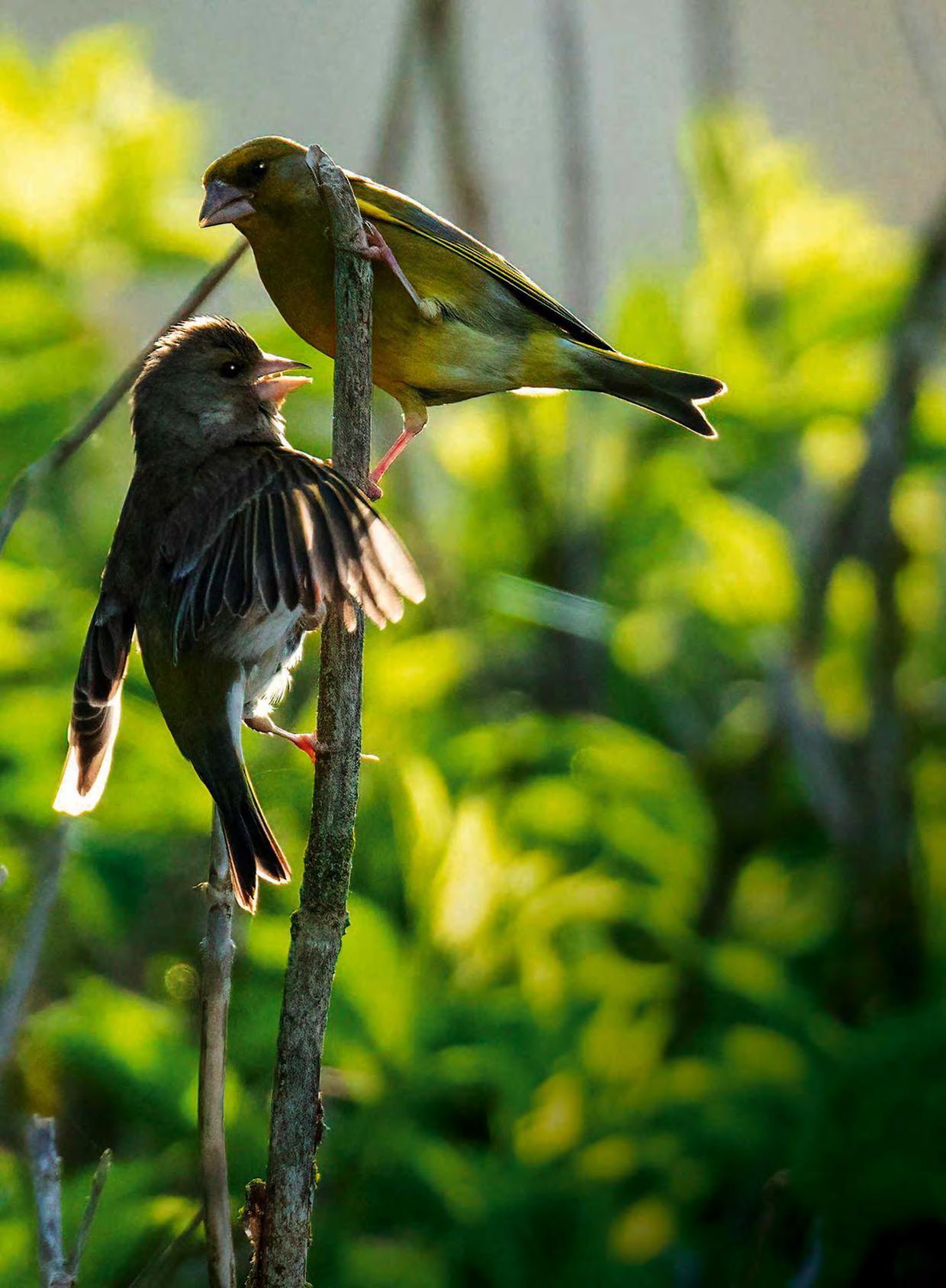
Opposite: Greenfinches (male and juvenile pictured) have been hard hit by trichomonosis
Encouraging birds to gather around a feeder can have a serious effect on their health. Spread through the saliva of birds, the microscopic parasite Trichomonas gallinaecan cause a disease, trichomonosis, which has proved fatal for several garden bird species. This disease has caused the recent worrying declines of Chaffinches and Greenfinches, and our scientists suspect it is likely to be affecting other bird species, too.
If you’ve been reading TheRSPBMagazineover the past year you may be aware that, as part of the Garden Wildlife Health project, the RSPB has been working to find solutions to this problem. This work has been partly funded by Natural England (NE) through the NE and RSPB Action for Birds in England partnership. It included RSPB scientists taking samples from gardens where finch trichomonosis is suspected, and the Institute of Zoology (IoZ) analysing these to understand how the disease is most likely to spread. At the same time, the British Trust for Ornithology (BTO) has led research looking at how season, weather, bird feeding and local bird abundance may affect these outbreaks, using long-term citizen science data gathered through the BTO Garden BirdWatch project.
“Using bird feeders carries risks and benefits for our birds. Research clearly shows that feeding helps birds get through periods of harsh winter weather,” explains Will Peach, the RSPB’s Head of Conservation Science in England and Wales. “However, by repeatedly attracting many birds to the same location, feeding risks disease spread, which we know has caused widespread mortality amongst several finch species.”
The good news is that our scientists believe we can help garden birds with a couple of simple shifts.
‘The RSPB and other partners are working together to trial new feeder designs to make bird feeding safer ’
Feed seasonally
Although trichomonosis is a threat all year round, the risk of disease spreading is higher during the warmer months. This is also when adult birds will be taking potentially infected food to then feed their young.
From the beginning of May until the end of October, we recommend you pause feeding peanuts and seeds. Gradually reduce the seeds and nuts you put out during April, then stop at the beginning of May. If you want to keep feeding birds during May to October we suggest you only put out small amounts of mealworms or suet. It is natural for many garden birds, such as Blue Tits, to switch from eating seeds to invertebrates during spring and summer. They have evolved to eat what would normally be available to them each season. Soft food such as caterpillars, spiders and worms are also safer to feed to their chicks as they are less likely than nuts and seeds to get lodged in their throats.
The RSPB will pause selling seeds and peanuts for birds between May and October, but will continue to sell suet and mealworms throughout the year.
Feed safer
“Flat feeder surfaces such as seed-catching trays and bird tables should no longer be used, as these increase the risk of disease spread,” says Will.
Research shows that these feeders present the highest risk because they can easily retain regurgitated, damp food and bird faeces. The RSPB removed feeders with flat surfaces from sale in December 2024 as a precautionary measure. The RSPB and other Garden Wildlife Health partners are working together to trial new feeder designs to make bird feeding safer.
Spreading feeders apart and moving them around your garden probably also reduces the risk of disease spread. That helps to mimic the way birds would move naturally between different food sources in the wild, rather than repeatedly returning to the same location.
You can judge how much food to provide by the speed at which it is removed. Food in nut and seed feeders should be eaten within two days to reduce the risk of disease spread. If you find your local birds are not getting through the food fast enough, reduce the amount that you offer.
Bird feeders should be cleaned at least once each week. It’s best to wait until they are empty, then clean thoroughly and refill. Avoid adding new food on top of old food and make sure seed is not accumulating on the ground below feeders. Regular cleaning of feeders can contribute to reducing disease spread, but combining it with the advice above will have a much bigger impact in improving safety for garden birds.
So, we don’t need to stop feeding birds, but by taking these simple precautions we can make a huge difference, slowing the spread of trichomonosis and helping garden bird populations recover. The science will continue to evolve but we must act now. We believe this is the fastest way of limiting how the disease is spread. The RSPB and Garden Wildlife Health partners will continue to monitor the situation and provide updated advice.
Photo: Lisa Geoghegan (Alamy Stock Photo)
“Much of our conservation work is carried out away from where we live, but our own gardens and local green spaces are also vital for wildlife. By switching to seasonal feeding and providing food safely, everyone can help make a difference,” says RSPB Chief Executive Beccy Speight. “This is a unique opportunity for all of us to work together and help give finches a brighter future.”
We recognise this will be difficult for the bird food and bird care industry and it will take time for industry to transition, but we want to work with them to find long-term solutions. We all have a crucial role to play and we hope they will support our policy change and work with us to improve product design, reduce disease risks and promote seasonal, science-based feeding guidance.
We’ll continue to provide guidance on how we can all help garden birds, including the best plants that provide natural food for birds in your garden, balcony or window box, in TheRSPBMagazine
For the latest advice on keeping garden birds healthy, including a guide to cleaning bird feeders, visit rspb.org.uk/keep-garden-birds-healthy
Jamie Wyver is Editor of The RSPB Magazine. His wildlifefriendly outdoor space includes plants chosen to feed and shelter birds, a pond, and RSPB Swift nest boxes.
Handy checklist
Bird feeding advice from April 2026
Feed seasonally
From 1 November to 30 April, provide seeds, peanuts, suet/fat and mealworms
From 1 May to 31 October, pause feeding seed and peanuts
Provide natural sources of food through planting in your gardens or balconies
Feed safer
Feed small amounts at a time
Make sure seed is not accumulating on the ground below feeders
Only offer water if you’re able to change it every day, and tap water is likely better
If you think the birds have been affected by disease, it is best to stop feeding for at least two weeks and empty any bird baths. Only start feeding again if you are no longer seeing birds with any signs of disease.
Please report sickness or death of any garden birds to the Garden Wildlife Health (GWH) project at gardenwildlifehealth.org
Photo: Paul Weston (Alamy Stock Photo)
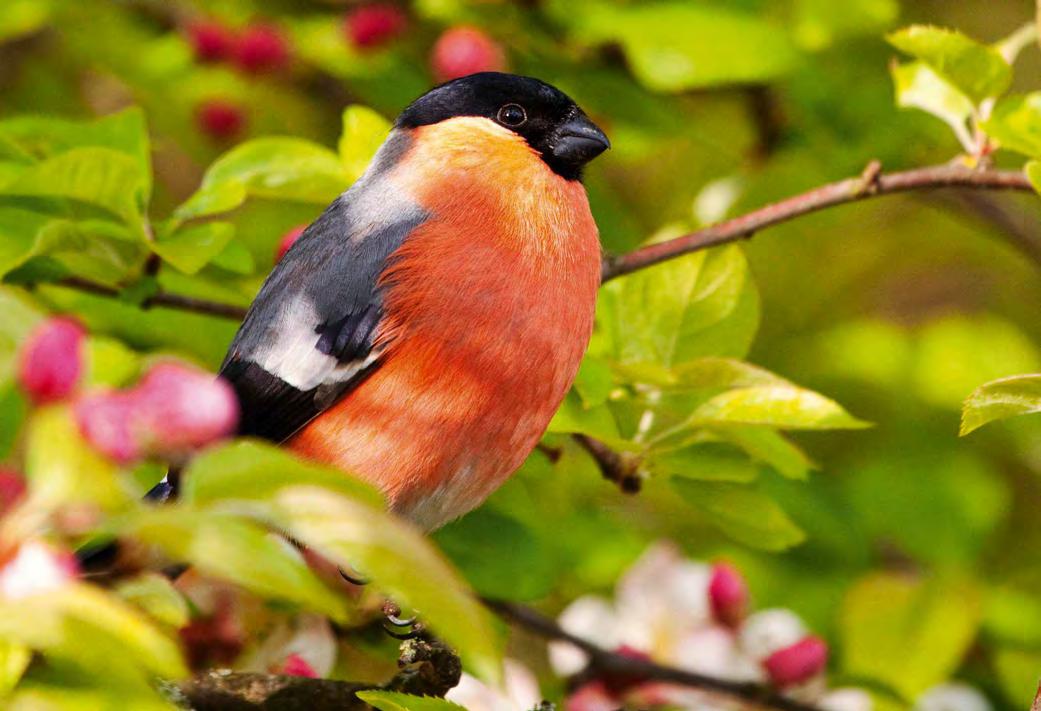
Above: It is feared that other species, such as the Bullfinch, may also be affected
TURMERIC+ GOLD keeps Liz in her stride
67-year-old Liz Singh started taking Turmeric+ Gold after joint issues got in the way of her much-loved walks. She hasn’t looked back since.
A retired chemistry teacher from Maidenhead, Liz loves to walk far and wide, as often as she can.
‘I’ve always loved to walk both long and short distances,’ she says. But in 2019, she suddenly found herself struggling after a three-mile stroll that normally would have been easy.
‘It was a slight problem to start with but got progressively worse,’ says Liz.
‘I’d been planning a long walk to Bath, but it got to the point that I couldn’t walk a hundred yards, let alone a hundred miles!’
‘When my yoga teacher mentioned Turmeric+ Gold, I decided to give it a try, as I had nothing to lose,’ she says.
Developed by Cambridge scientists, Turmeric+ Gold uses a formula confirmed to be effective
by more than 45 scientific studies. Now, it’s a best-selling supplement for joint health, certified by Informed Sport for use by athletes.
Turmeric’s active ingredients –curcuminoids – are hard for our bodies to absorb. But Turmeric+ Gold contains a sunflower lecithin formulation called Meriva® that makes curcumin 30 times more absorbable than ordinary turmeric powder.
‘It works by mimicking the way we naturally absorb curcuminoids after eating turmeric cooked with fat,’ explains Dr Miriam Ferrer, PhD, from FutureYou Cambridge. ‘It delivers the equivalent of 150g of raw turmeric in a single, easy-toswallow capsule.’
Liz noticed the difference within three months. ‘I’m delighted to say I
Feel the difference
• 30 times more absorbable than standard turmeric – powered by the patented Curcuma Phospholipid Complex formulation, Meriva®.
• Science-backed: Uses sunflower lecithin to naturally enhance curcumin absorption.
• Plus essential vitamins: Includes vitamin C and D to support healthy bones, muscles and joints.
*Turmeric+ Gold contains vitamin C which contributes to normal collagen formation for the normal function of cartilage and bones. Vitamin D contributes to the maintenance of normal muscle function. Introductory offer valid for new UK customers only. Offer expires 30th June 2026 and cannot be used in conjunction with any other promotions. Cancel any time, without obligation. See FutureYouHealth.com/TGX108 for full terms and conditions. Discover why thousands trust Turmeric+ Gold for joint support, backed by over 45 human studies.
was able to complete my walk from Maidenhead to Bath,’ she says. ‘I’m still taking Turmeric+ Gold and I haven’t looked back.’
Action for nature
Work made possible thanks to your membership and support
Places
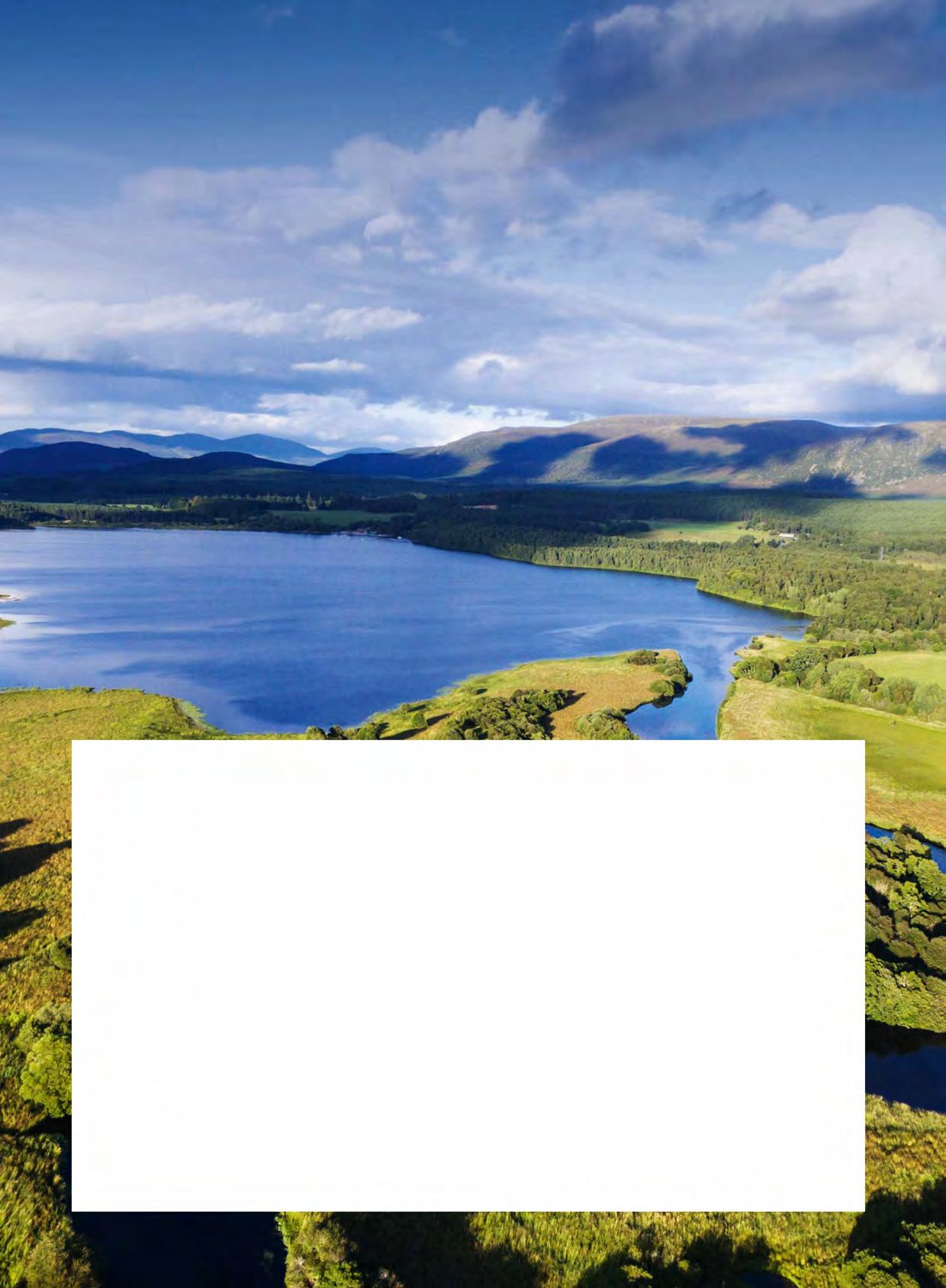
Cairngorms’ powerhouse partnership
We’re celebrating 10 years of Cairngorms Connect, a groundbreaking nature-restoration partnership in the eastern Highlands.
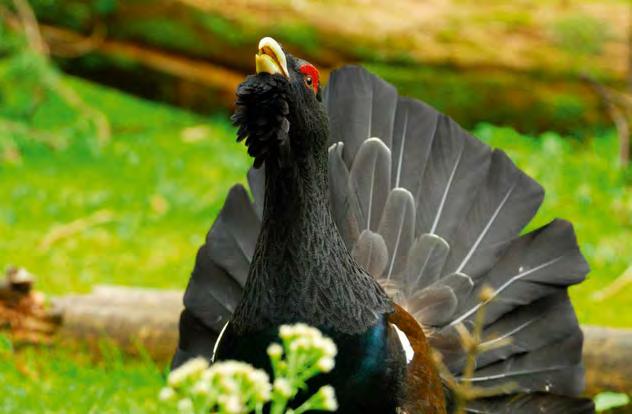
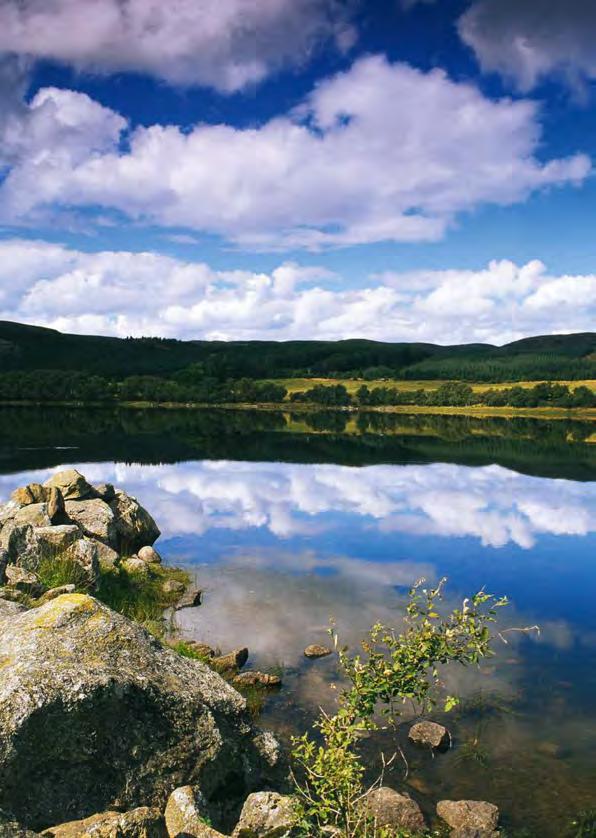
In 2016, a memorandum of understanding signed by the RSPB, WildLand Limited, NatureScot, and Forestry and Land Scotland established a 200-year vision to enhance habitats, species and ecological processes in Cairngorms National Park. This extraordinary landscape, encompassing mountains, ancient woodlands, blanket bog, rivers and lochs, is home to Capercaillie, Golden Eagle, Osprey, Red Squirrel, and a wide variety of rare insects and plants.
Over 1,000ha of native woodland has regenerated following management of deer that otherwise nibble saplings. That’s allowed the launch of Cairngorms Connect
600+
sqkm: the area of project focus
60+
staff employed locally
Venison, which is “incredibly low on food miles and iconic to this part of Scotland”, proclaims Owen Caldwell of the Old Bridge Inn, Aviemore.
In addition, landscape-scale work has restored peatland, rivers and floodplains, benefiting species including Beaver and Wildcat, both reintroduced in recent years and now proliferating here, as well as helping waders such as Redshank, Curlew and Lapwing, which breed here.
Crucially, the work of Cairngorms Connect is possible only through collaboration between partner organisations and land managers, staff, local communities and individuals.
We’ll continue to deliver ecological restoration at a scale unparalleled in the UK – for people, climate and nature. Follow the project at cairngormsconnect.org.uk
1,360 hectares of native woodland created
79 hectares of river and floodplain restored
Did you know? 0.62 hectares is the equivalent size of one football pitch
1,539 hectares of peatland restored
Photo:
Places
Treescape ambitions at Lake Vyrnwy
Wildlife including Black Grouse, Merlin, Pine Marten and Dormouse are benefiting from a major habitat restoration project at Lake Vyrnwy that will add more than 250,000 trees within three decades.
The RSPB, working with landowner and water company Hafren Dyfrdwy, is delivering the treescape plan across more than 1,100ha of the mid-Wales reserve. The vision is to reverse the long-term loss of trees from the ffridd, a uniquely Welsh upland-edge habitat mosaic now in steep decline. By strengthening links between existing woodlands, ffridd, meadows and upland habitats, many species that rely on mixed habitats will benefit, including Red-listed Cuckoo, Pied Flycatcher, Willow Tit (pictured right) and Wood Warbler as well as bats, Welsh Clearwing moth, and plants and lichen.
Key to success will be natural regeneration through targeted grazing management, retaining open habitats where they are most valuable, and demonstrating how trees can be integrated sensitively into a farmed landscape. Most new tree cover will be upland scrub and scattered plants rather than closed-canopy woodland, reflecting both the ecological importance of ffridd and the cultural landscape of upland Wales. By looking after our upland habitats and boosting tree and scrub cover, the project will ease flooding, prevent erosion and build long-term climate resilience. People are also a priority; work with local communities will connect diverse people to nature. Through the Vibrant Vyrnwy project and the community-run tree nursery, volunteers and community groups are growing local provenance trees and learning new skills.
This exciting long-term project promises to be a huge boon for nature, climate, water and people.
Conservation
Funding wins
Three major RSPB-linked projects recently launched thanks to new funding totalling over £4.5m awarded via the UK Government’s Darwin Initiative.
Since the 1990s, vulture populations in south Asia have suffered catastrophic declines. Vast numbers died after scavenging carcasses of cattle treated with the drug diclofenac, fatally toxic to these birds. Hope came with the 2006 ban on the veterinary use of diclofenac in Nepal, India and Pakistan, supported by the RSPB, and the Vulture Safe Zone created in Nepal in 2021. Now, the Vultures, Cows and People project aims to create a new Vulture Safe Zone and connect vulture population restoration with improved livelihoods for farmers. Along with boosting local dairy industries and promoting vulture-safe treatments, the project will support ‘cow retirement communities’ to keep cattle out of Shuklaphanta National Park in Nepal.
On the South Atlantic island of St Helena, cloud forest restoration will continue and water security will be improved by tackling plant pathogens and invasive species. And on New Island in the Falklands, the removal of invasive cats, rats, Rabbits and mice will support habitat restoration and the recovery of native species and globally important seabird nesting sites for species such as Black-browed Albatross (pictured left).
Species
Swift spectacle
Visitors to Lancaster Priory during November’s Light Up Lancaster festival admired Swifts swooping around the walls, pillars and ceiling. Blink and You Miss It, an amazing sound-and-light installation by artists leo&hyde and supported by RSPB Lancaster Local Group, highlighted the birds’ aerobatics, epic migrations, and sad decline in the UK. “It made me cry – absolutely stunning!” declared one attendee.
Places
Anglesey’s birds and boulders
A pioneering new partnership is helping us bring the story of Anglesey’s extraordinary geological past to even more people.
South Stack is a spectacular landscape, renowned for dramatic sea cliffs, thriving seabirds and rare species such as Chough and Silverstudded Blue butterfly. It’s also part of a UNESCO Global Geopark spanning the whole island, managed by GeoMôn.
In September, a collaboration between RSPB South Stack and GeoMôn was launched, with staff and volunteers sharing information and training. We’re also joining forces to offer guided walks, events and educational programmes showcasing how the area’s physical heritage –from 500-million-year-old Cambrian rocks to ancient human monuments, soils and landforms – interacts with and creates vital habitats for seabirds to pollinators and more.
For upcoming activities, visit events.rspb.org.uk/southstackcliffs
People
A small membership price increase will bring big benefits to wildlife
This year, the RSPB is increasing our minimum membership price. Costs associated with many aspects of our conservation work, from basic equipment to major landscape restoration projects, have risen due to inflation. At the same time, the need for wildlife conservation has become even greater.
To address these challenges, we have made big changes to reduce costs and increase efficiency. However, the minimum membership price has stayed the same for several years. From 1 April 2026, the new minimum prices are £6 per month for an adult, £7 for two adults and £8 for a family (two adults and up to five children). Youth membership prices remain unchanged. Some members kindly give more than the new minimum each month so may not see an additional increase this year. For those paying below the new minimum amounts, we will phase the increase over the next three years to make the change easier, and you will see a small percentage increase on your monthly or annual payments.
Look out for your membership renewal pack over the next year for details of how
this impacts you. Most members, unless paying the new minimum price (or more), will see an increase of around 10%. You will receive a new Direct Debit mandate or a revised amount to pay by credit card. If you have any questions or would find this increase difficult, please contact supporter services on 01767 693680, email membership@rspb.org.uk or read the FAQs at rspb.org.uk/membershipfaqs
You will continue to enjoy unlimited entry to over 170 RSPB nature reserves, as well as RSPB printed or digital magazines for great tips on watching nature, as well as news about the work you are supporting.
A small increase from everyone can add up to a huge impact. Thanks to you, together we have helped Bitterns and Cirl Buntings – once on the verge of disappearing from our shores – thrive again; helped return Cranes to the UK; managed nature reserves that are now home to over 18,500 species; and given struggling seabirds a boost by ending the industrial fishing of sandeels. And there’s so much more to do. All of this happens because of your generosity. Thank you!
Photos: Alex Stagg
Wool bedding can give you a better night’s sleep and can improve your health
10 reasons to choose wool duvets and pillows from Baavet!
1 Wool Regulates your temperature Wool naturally adjusts to your body temperature, keeping you warm in winter and cool in summer – even with two body temperatures in the same bed!
2 Hypoallergenic, Antibacterial and Dust Mite-Resistant Wool bedding is ideal for allergy sufferers as it repels dust mites, mould, and bacteria and is naturally antibacterial.
3 Moisture-Wicking and Breathable Wool absorbs excess moisture and releases it into the air, preventing clamminess and overheating.
4 Eco-Friendly and Sustainable Made from natural, biodegradable materials with no synthetic fillings or harsh chemicals, love your Baavet and it should last a lifetime.
5 You will have the best sleep ever! Having a regulated temperature is key for optimal sleep quality because it helps your body maintain a stable core temperature, which is essential for deep, uninterrupted rest.
6 You will feel better! Getting a good night’s sleep improves brain function, boosts immunity, supports heart health, balances hormones, enhances mood, and promotes overall physical and mental well-being.
7 Genuinely British made Each duvet and pillow is carefully made in Britain, at Baavet HQ nestled amongst the beautiful mountains of Snowdonia, ensuring top craftsmanship and quality.
8 100% British Wool Baavet supports local farmers paying them a premium price for their high quality chemical- free wool.
9 Our customers love them! Users praise Baavet duvets and pillows for their comfort and quality, with many noting improved sleep and satisfaction.
10 Variety of Weights Baavet offers duvets in different weights—Super Light, Light, Medium, and Winter—catering to various preferences and seasonal needs.
• Your Baavet is available in four different weights and prices start at £121 for a Super Light single, and pillows from £46.
• Our pillows come as Firm or Medium with zips to allow you to adjust the filling, increasing or decreasing the firmness.
• We also sell wool mattress protectors and pet beds.
“The service at Baavet is amazing!”
“I placed my order and received my parcel the next day. I was also able to talk to a person before placing my order. I have recommended this company to siblings and they have also had good experiences. So it does seem to be consistently good customer service. The quality is still fantastic. Their product checking process seems to be super stringent. I would definitely recommend this company and will be purchasing from them again.”
Trusted Customer
“Just what we were looking for!”
“Your service following our purchase of a new duvet was impeccable. It was delivered on time within two days of our order being placed. The duvet has proved to be just what we were looking for and we are very pleased with it.” -
Trusted Customer
Your legacy is nature’s future
At the RSPB we know our connection to nature is irreplaceable. We must nurture and protect it, because without it we are lost.
That’s why we’re working tirelessly to tackle the biggest threats facing our world, so one day we can truly thrive together.
A gift in your Will to the RSPB is one of the most powerful ways you can support this mission for generations to come.
Request your RSPB Gifts in Wills guide at rspb.org.uk/legacy or call one of our Legacy Advisers on 01767 669700
Places
Top-level accreditation
We are proud to have achieved Green Dragon Level 5 across our UK operations, following an audit of our environmental management systems. This is the highest level of the externally verified standard run by Groundwork Wales. This recognises our continuous improvement; systematically reducing our negative impacts on the environment while strengthening our ambitions to protect wild birds and improve habitats and landscapes. It follows over a decade of work undertaken since the RSPB first gained Level 2 accreditation in Wales in 2014.
The 2025 audit involved the RSPB’s UK headquarters and six reserves: Blacktoft Sands, Bempton Cliffs, Saltholme, Lochwinnoch, Belfast WoW and Loch Leven. The award reflects a raft of efforts to improve environmental management, ranging from energy-efficiency improvement measures to switching to electric tools and solar-powered water pumps in wetland habitats, and generating the equivalent of well over 50% of our UK electricity requirements through solar systems and a wind turbine.
Science
Big Garden Birdwatch 2026 results
This year, 650,279 people took part in the RSPB’s Big Garden Birdwatch, counting 9,473,932 birds!
See the full results at rspb.org.uk/ birdwatch 220 reserves and office bases working with environmental advisers to develop and improve practices
50+
solar systems on RSPB reserves, generating over 300MWh of electricity per year – the equivalent to the electricity consumption of more than 120 typical houses
1,600MWh electricity generated by the wind turbine at The Lodge, the RSPB’s HQ, in an average year
House Sparrows retained the top spot in this year’s results, but average counts of this much-loved bird are now down by 64% compared to the first Birdwatch in 1979. Blue Tits are at number two, with Starlings in third place. Data gathered from this huge citizen science project, which is the world’s largest garden wildlife survey, helps give us a greater understanding of how garden birds are faring.
The average Birdwatch count for Greenfinches has fallen by 67% since 1979. See p36 for the RSPB’s new advice on how you can help reduce their decline. Redwings were recorded in many more gardens than in 2025, perhaps reflecting the cold snap during the week of the Birdwatch.
Across the UK, participants saw a wide variety of species. Judy, who lives on a nature-friendly dairy farm, reported a Yellowhammer in her garden; Dan was surprised by a Moorhen; and Anna, Ariella and Alexander were delighted that their Great Spotted Woodpecker showed up just in time.
Meanwhile, the RSPB’s Big Schools’ Birdwatch ran throughout the first half term of the year. The top bird for schools was the Woodpigeon, followed by the Blackbird and Carrion Crow. St John’s Stonefold Primary School reported that: “the children enjoyed exploring our school grounds, counting and observing a variety of different birds. We even used binoculars to get a closer look, which created lots of excitement and curiosity.”
Thank you to everyone who took part. If you’d like to help count more birds in your local area, the British Trust for Ornithology (BTO) launches a new project, Birds in Greenspaces, this spring. Take part by spending time in your local greenspace and recording the birds you see. The project will run during the bird breeding season from 1 April to 30 June 2026. Find out more and sign up at bto.org/greenspaces
People
Fundraising heroes
This is a landmark year for the RSPB South Wiltshire Local Group as it celebrates its 40th anniversary. The group has raised well over £300,000 for the RSPB in its time, as well as contributing to vital conservation efforts such as coppicing at RSPB Garston Wood.
Each year in June, group volunteers capture the imagination of the public when they run a Peregrine Date with Nature in Salisbury Cathedral (pictured left), offering passers-by close-up views of these amazing birds. Thank you, and congratulations!
To learn more about local groups, or to get involved with one near you, visit rspb.org.uk/groups
Great Spotted Woodpecker
People
Nature-friendly farmer awarded
Last October we were delighted to present the prestigious RSPB Medal to Martin Lines, who founded the Nature Friendly Farming Network (NFFN) in 2017. The medal – previous winners of which include Sir David Attenborough and King Charles –recognises Martin’s phenomenal contribution to conservation. Under his leadership, the NFFN has united farmers producing food while restoring the environment, thousands of whom work to raise awareness, share knowledge and advocate for better policies.
“It’s through nature-friendly farming that we can address climate change, build resilience in UK farming, and reverse the declines in our wildlife,” commented RSPB Chief Executive Beccy Speight. “Martin has played a truly significant role in championing farmers, and it is a huge privilege for the RSPB to work alongside him and the NFFN.”
People Join us at Birdfair
Global Birdfair, the annual event celebrating wildlife and conservation, returns 10–12 July in Rutland – a treat for keen birders, nature-loving families and wildlife celebrity spotters. As well as enjoying nature walks, talks and workshops, find out more about our work at the RSPB stand. For information and tickets, visit globalbirdfair.org
Species Action for Curlew
A UK Action Plan for the Curlew was launched at the House of Lords in January, aiming to steer work by Government and agencies to save this Red-listed bird.
Once common on farms and uplands, the Curlew’s haunting cry is increasingly rare in the UK – where a quarter of the European birds breed – due to changing land-management techniques and unsustainable predation of eggs and chicks. The population halved in England and Scotland and declined by more than 80% in Wales since the mid-1990s. Between 1987 and 2013, the Northern Ireland population plummeted by 80%.
The Action Plan, a collaborative effort by organisations including the RSPB, advocates for key interventions, with a focus on increasing breeding success. The four main objectives are: form a UK-level Curlew Recovery Taskforce; secure sufficient habitat and sites for breeding Curlew; provide expertise and financial support for farmers to deliver actions aimed at increasing productivity of breeding Curlew; and monitor and share research on the most effective conservation strategies. You can read the full Action Plan at curlewlife.org
Species
Saving Steppe Eagles
A new 10-year Global Action Plan adopted at the Convention on the Conservation of Migratory Species of Wild Animals (COP15) in Brazil this March aims to shape actions to halt and reverse the decline of the Steppe Eagle. Once considered the world’s most common large bird of prey, this migratory raptor of grasslands, including steppes, is now Endangered, its population falling across much of its Central Asia range.
The plan, developed by the RSPB with other stakeholders, focuses on strategic goals including reducing the impact of energy infrastructure along the species’ flyway; cutting deliberate and accidental killing; conserving habitats; addressing knowledge gaps on distribution, movement and threats; and engaging with communities and other stakeholders across the whole range.
Photos: Jake Stephen; Paul Sawyer (rspb-images.com)
Discover The Essential Easy-To-Use Samsung
Whether you’re new to smartphones or just want something more intuitive, make life easier with the Samsung Galaxy A16 Easology — a smartphone for anyone who values clarity over complexity.
Your essentials sit front and centre on a personalised home screen, with quick calling to four favourite contacts. Large readable text, bold icons and generous touch areas keep every interaction calm and stressfree. If you ever feel lost, a dedicated ‘Home’ button takes you back instantly. Powered by Samsung, the Galaxy A16 Easology delivers a vivid screen, long-lasting battery and ample storage — with clear audio and a sleek design that feels just right. It’s Smart Made Easy.
Do more in a few taps:
Call, video or text family & friends
Browse the web, check news & weather
Download your favourite apps
Watch YouTube videos
Listen to music or audiobooks
Read and reply to emails
Take crisp photos & videos
Built-in magnifier for reading small print
Specifications:
6.7” super AMOLED touchscreen
Size: h 16.4 cm, w 7.8 cm, d 0.8 cm
4G (compatible with all networks)
Wi-Fi, Bluetooth, NFC, GPS
128GB storage
Add storage with a microSD card
All-day battery and fast charging Front (13MP) and rear (50MP) cameras
Android 16
2-year Samsung warranty
No setup required —
Black It’s everything I need in a phone – simple, smart and reassuringly easy to use – Sandra, 76, N. Yorks
Ready to use
Everything in one box – the Samsung Galaxy A16 Easology phone with FREE: 141-page user guide, charger, protective cover, stylus, SIM card (or use your own) and UK call-centre support and FREE delivery.
A father’s devotion leads to incredible patented pillow –one day all pillows will be made this way
her comfortable throughout the night.
After purchasing dozens of different types and finding none that worked, Alex, a renowned furniture and domestic product designer, decided to engineer his own.
UNIQUE BREAKTHROUGH
He made a breakthrough when he realised that all pillows spread out and flatten down as the weight of the head rests on them. This flattening progresses through the night, leaving the head and neck poorly supported – and sleep interrupted. This is why many people find themselves half awake and ‘pillow-punching’ in the middle of the night, desperately trying to get comfortable.
EXTRA
COMFORT AND SUPPORT
The innovative model that Alex designed has internal ties that hold the filling in place, and pull the pillow in and up to cradle the head and neck. This provides extra comfort and support that lasts through the night and ensures that you get the most benefit from an undisturbed sleep.
I can honestly say that your pillow has made the world of difference… and fully endorse your pillow as being quite unique in its ability to maintain support throughout the night.
MADE IN THE UK
Made in the UK, the Gx Pillow comes in a choice of two levels of support: Medium-soft, which most people seem to prefer, or Medium-firm for those who like a little more resistance. Alex’s desperate desire to help his daughter Georgia has led to a pillow that has also transformed the lives of thousands of people. So if you have spent a lifetime looking for the perfect pillow, your search may well be over!
cannot believe that after 40 years I have finally
Conservation wins in West Africa
Every year the wooded savannahs of northern Ghana host thousands of migratory birds, including Garden Warblers, Whinchats and Wood Warblers which breed in the UK. But outside protected areas, habitat has become fragmented. So, with Ghana Wildlife Society (GWS) and other partners, the RSPB is working with local communities to restore areas surrounding Mole National Park.
With funding from the Ecological Restoration Fund, thousands of trees have been planted and a new community-led conservation area will be established. Funding from A.G. Leventis Foundation has also supported training in bioacoustics and bird monitoring for staff and volunteers to help understand how birds are using the landscape.
Conservation Goulds for RSPB
The sale of Victorian lithographs is raising funds for the RSPB. Renowned ornithologist John Gould’s monograph on the birds of paradise was completed after his death in 1881. Rare-book dealer Sotheran’s is selling 60 complete uncoloured and unbound sets for £4,200, with £500 to the RSPB. Visit members.rspb.org.uk/ goulds-birds-of-paradise
Species
New spiders on St Helena
Two new species of spider have been discovered on St Helena, a remote UK Overseas Territory in the South Atlantic. The eyeless Martina Minuscule Spider is under 0.5mm long, while the Christy Jo Goblin Spider boasts armour-like abdominal plating. Both were identified by arachnologist Danni Sherwood when combing through records and previously collected museum specimens.
These bring the number of endemic species recorded on St Helena to 507. Neither has been seen in the wild for over 30 years, so may be highly threatened or even extinct. See p41 for more on work to conserve St Helena’s precious surviving 16ha of cloud forest.
Species
Little Terns up
After decades of decline, 2025 UK breeding figures offer hope for Little Terns. In Eccles, Norfolk, 455 fledged – up from 319 across all East Norfolk in 2019. And at RSPB Pagham Harbour, West Sussex, 21 chicks fledged, compared with none in 2024. Conservation efforts included installing predator-proof fences, engaging with communities to reduce disturbance, and enhancing nesting habitats.
People
Growing hope in Oxford
Optimism blossomed at farming conferences in Oxford – thanks to stories of hope from nature-friendly farmers, and fertile discussions with political decision makers. Each January, the Oxford Farming Conference and parallel Oxford Real Farming Conference draw farmers, policymakers and industry from across the UK to debate the future of our farming systems.
The RSPB delivered its new Nature-friendly Farming report and reinforced the importance of nature-friendly farming in building resilience, delivering nature recovery and improving soil quality and yields.
RSPB CEO Beccy Speight chaired a packed panel event, ‘A Landscape of Hope: How farming is transforming nature’s decline’, at which nature-friendly farmers shared their experiences. “What really struck me was how [for the farmers on the panel], restoring nature and having a resilient farm going into the future, and having a financially viable commercial farm product at the end, were all mixed into one system in their heads,” reported Beccy.
We also arranged meetings between Beccy, nature-friendly farmers, Defra Secretary of State Emma Reynolds, Minister of State Angela Eagle, and other politicians. “It felt like Emma Reynolds and Angela Eagle were really listening,” said East Anglian farmer Richard Evans. “That does feel like a win.”
Days out in nature
Pulborough Brooks
Teamwork and passion are making a difference at this nature reserve, connecting people and habitats. Alison Maney explores the intertwined worlds of this unique site
Scan for more info
Visitor guide RSPB Pulborough Brooks
Getting there
Pulborough train station is two miles from the site. You can take the Compass Bus 100 from the station to directly outside the nature reserve. If travelling by car, follow the A283 towards Storrington.
Entry
Free entry and parking for RSPB members; £5 entry for non-members.
Seasonal highlights
Take in blossoming wildflower meadows on a visit to this nature-rich reserve in spring. In the daytime, watch dragonflies and damselflies dart across the ponds, and visit at dusk in June and July to hear churring Nightjars on the heath and spot twinkling Glow-worms.
This season’s star species
Lapwing, Nightingale, Blackcap, Grass Snake, Brown Hairstreak butterfly
Accessibility
Parking: five Blue Badge spaces and a drop-off point outside the visitor centre. Wheelchairs: The wetland trail can be accessed with mobility scooters but not manual wheelchairs. The wooded heathland is not suitable for mobility scooters. There is level access to the café. Dogs: Dogs on a lead allowed on parts of the wooded healthland trail, but not on the wetland trail. Assistance dogs welcome.
rspb.org.uk/pulboroughbrooks
I’m
standing motionless on the path with six strangers. Some listen silently; others scramble for binoculars. Others crane their necks, peering into the branches of an ancient oak tree. We’re here for a celebrity of sorts – a Nightingale, muse to literary greats such as John Keats and Oscar Wilde, and the star of the season at RSPB Pulborough Brooks.
Previous: Located in West Sussex, there are beautiful views of the South Downs from Pulborough Brooks
1. The ponds may look still, but many creatures hide beneath the surface, including newts
2. Over 30 species of butterflies can be seen at Pulborough, including the Brown Hairstreak
3. Grey Herons are a common sighting at the site, often found hunting in the wet grassland
4. Red-listed Nightingales are known for their melodic song
This is my first time hearing one of these small brown songsters, and I’m surprised at how clearly the song carries across the small glade in front of us, with rapid-fire high and low notes peppered with almost mechanical-sounding cranks and beeps. The performance lasts for several minutes, and the enraptured audience grows as more visitors stop, transfixed. For a microsecond I spot a small, light-brown body flit between two branches. My first Nightingale sighting.
When the singing stops, the crowd begins to move again, but the crystalline call’s spell still links us. We chat gleefully to each other about what we’ve just heard. Suddenly, it feels like we’re no longer strangers at all.
But no one is really a stranger at Pulborough Brooks. Anna Allum, the site’s Visitor Experience Manager and one of my guides for the day, greets almost everyone we come across on the path. Some of the people she speaks to are visitors like me; others are part of the site’s 180 volunteers, many of whom have formed their own friendships over butterfly surveys and post-work lunches.
Everything at the reserve has an undercurrent of friendliness and collaboration. And for good reason – teamwork and a shared enthusiasm for nature are what make this place the wildlife haven it is today.
Woodland wandering
“When it opened to visitors in late 1992 (after the RSPB acquired the site in 1989), it wasn’t a readymade nature reserve,” Anna says as we sit outside the
‘As untouched as it looks, every part of Pulborough Brooks has been thoughtfully curated to cater to the wildlife’
Sussex site’s barn-turned-visitors’ centre, where my tour begins. We’re overlooking a panoramic view of the wetlands that, with its soft greens and silvery blues, is so pristine that it feels more like a film backdrop than a real landscape. As untouched as it all looks, every part of RSPB Pulborough Brooks has been thoughtfully curated by the team to cater to the wildlife that needs it most.
The site is a tapestry of woodland, wetland and heathland. The woodland is a mixture of stately trees, still ponds, sunny clearings and what Anna calls “scrubby bits”, which appear completely untended but are actually carefully maintained for Nightingales, Brown Hairstreak butterflies, Grass Snakes and more.
The wetland is also meticulously managed, with workers and volunteers constantly raising and lowering the water levels for breeding birds such as Red-listed Lapwing and Amber-listed Redshank. And on the far side of the car park, past another stretch of woods, is the heathland, the newest addition to the nature reserve. It’s a small, thriving area of low-lying scrubby brush filled with Nightjars, Woodlarks and rare invertebrates such as the Sussex Tiger Cranefly and the recently reintroduced Field Cricket.
Starting at the visitors’ centre, we plan to wander through the woods and down to the wetland, then back up towards the heath. At nine months pregnant, I’m determined to waddle through as much of the site as possible, and I’m pleasantly surprised to find the slopes gentle and the walks relatively short. Anna and I are joined by Ruth Gillies, Project Manager for the RSPB’s strand of the Downs to the Sea project. This partnership project is focused on restoring and protecting key freshwater habitats in the South Downs National Park, while also increasing people’s understanding of the importance of water in their lives. Downs to the Sea is funded by the National Lottery Heritage Fund and, thanks to National Lottery Players, vital wetland restoration work has already been carried out at RSPB Pulborough Brooks.
Our first stop is just outside the visitors’ centre at the Window to the Wetlands pond-dipping pond. Thanks to Downs to the Sea, it’s now encircled by a flat gravel path and sports ornately carved benches overlooking the wetlands. In the pond, great globs of vegetation hang motionless under the still water while a lone, perfect water lily floats on its surface. The scene seems tranquil, but to Anna and Ruth, this quiet spot is full of action. Snails cling to the pondweed, water boatmen row through the water and dragonflies soar like jet planes, alighting briefly on the pond grass to display their resplendent colours in the early summer sun.
“You’ve got an amazing eye for spotting wildlife,” I tell Anna. “It’s making me realise how little I look around when I’m out and about.”
“We all interact with nature in different ways,” she shrugs. “And I think that’s what’s so lovely about the natural world. I always have an urge to identify things, but for other people it’s just about being out here and listening.”
‘Pulborough Brooks is just such a magical place that it never ceases to uplift and inspire me’
Claire Powell, RSPB supporter
5. A springtime walk on one of Pulborough’s trails is a wonderful wildlife-filled way to spend a day
6. Join one of Pulborough’s nighttime safari events to listen for churring Nightjars
7. Lapwing nest on short grassland
8. Pulborough Brooks’ visitors’ centre surrounded by woodland and heathland
As we enter the woods, dappled light falls through the branches onto the dirt path. We stop at a bramble patch to pick out the bouncy tones of a Blackcap, the squeaks of a Chiffchaff and a brief ‘choo-choo’ from a Nightingale. Their songs make me wish I’d come early enough for one of Anna’s dawn chorus walks.
The woodland gets even dreamier as we go along. Tree roots dip into mirror-like pools and gauzy willow seeds float down like snow. In a few weeks, the sunnier areas of the wood will be carpeted in wildflowers. Some of the trees are oaks, three to four centuries old, with dead branches jutting out of their living trunks like sun-bleached bones. “They’re just fabulous for wildlife because they have all sorts of nooks and crannies,” says Anna. We pass beautiful handwritten signs with lifelike pictures of birds drawn in chalk pen. Anna, it turns out, is the artist.
Wetland wonders
At the edge of the woodland, we approach West Mead Hide, a low, red-roofed structure tucked in among the trees. It’s busy in there today, so we slip in and stand at the back. The single room is quiet as binoculared visitors gaze reverentially through the hide’s windows, taking in perfect, unobstructed views of one of the wetlands’ glittering ponds.
Anna and Ruth are keen to show me one thing in particular – Lapwing chicks. “With Lapwing, it’s not always about how many pairs you have. It’s how many chicks you get fledged,” explains Ruth. “We’re yet to find out exactly how we’ve done this year, but I think numbers are definitely on the up.” She points to a two-week-old chick as it scuttles busily along the mud bank of the pond. It seems to be all on its own, but Ruth shows me where the parents are hovering a few metres away.
Switch to digital to enjoy more images from Pulborough Brooks.
But this pond isn’t just a home for breeding Lapwings – it’s a neighbourhood of birds all bustling about their everyday lives, completely oblivious to their enraptured human audience. A Grey Heron stands stock-still in the shallows, waiting for an unlucky fish to brush its leg; a pair of Canada Geese engage in a loud domestic dispute while a dozen swimming goslings look on; a Redshank steps daintily on neon-orange legs, poking about for worms in the mud.
It’s hard to believe that just over 30 years ago, this thriving wetland was rank grassland, an overgrown
Pulborough Brooks Our places
former farm that was no good for wetland species and no good for the wintering wildfowl that now visit in spectacular numbers.
“The ditches, which were used to drain the farmland, we now use to keep it wet,” says Anna. “It went from being poor for wetland species to being a really important place for wildlife and then for the people coming to enjoy it.” That importance has been formally recognised – this spot is a Site of Special Scientific Interest (SSSI) and is part of the Arun Valley Ramsar wetlands, Special Protection Area (SPA) for winter birds and a Special Area of Conservation (SAC) – read more about these internationally important places on page 31.
Maintaining the wetland hasn’t been easy – Ruth herself has managed the site’s water levels through many climate change-induced dry seasons and flood events. “We can’t pump water out of the river because of pollution, so we try to hold the water we’ve got and move it around the site to keep those key wader areas wet,” explains Anna. “It doesn’t just happen. It’s a lot of work to get that habitat right for the key species we’re trying to protect.”
Upon the heath
After exploring the wetland, we go back past the visitors’ centre and up to a lookout point over the newest part of the reserve: Wiggonholt Heath, created where a plantation of non-native Corsican Pines and Western Hemlocks once stood. “It was all dark and practically devoid of any kind of birdsong or life,” says Anna. But as the conifers fell, the heathland began to resurrect itself. Heather, which can lie dormant in the soil for 100 years, sprang up naturally. The wildlife began to return, including three pairs of Nightjars.
A stretch of woodland connects the rest of the site to the heathland and ends on a hill overlooking the heath’s dragonfly filled ponds and golden, low-lying vegetation. To protect ground-nesting birds, the heathland is closed to visitors, but it can still be admired from a perimeter path that meanders around it, or from above, as we’re doing now. “We want to try and give people a chance to see some of the wildlife,” explains Ruth, “but it’s a balancing act.” We stand in the shade viewing the expanse of scrub, punctuated by sparkling ponds and a few soaring pines, through a frame of gently drooping tree branches.
After admiring the view, we wind our way back to the visitors’ centre. I’m now acutely aware of my heavily pregnant belly, and I can’t believe I’ve managed to trek through woodland to wetland to heathland and back again. But despite my tiredness, I feel energised. It’s hard not to be when you’re surrounded by so much life and by people with so much passion for nature.
Alison Maney is a Production Editor and writer who has worked on multiple craft and nature publications. She loves exploring RSPB nature reserves with her two children.
Skylark® Binoculars
Stop watching, start seeing
Spring Demo Weekend, 2–3 May
Try our Skylark® Binoculars and the full RSPB Optics range at our upcoming Demo Weekend. Get expert advice, test binoculars and scopes in the wild, and enjoy double loyalty points on every optics purchase.
See the clarity. Feel the focus. Get closer to nature.
RSPB Skylark® Binocular 8x42 endorsed as Which? Great Value.
Scan to find your nearest Demo Weekend
forTogether nature
HELP WATER VOLES! Join a local conservation project. You can find your local RSPB volunteering opportunties at rspb.org. uk/volunteer
Your stories
“I hope it will inspire people to learn more”
Nature has always been a passion of mine. I was fortunate to grow up with Lee Valley Park on my doorstep, and I spent much of my childhood outdoors. We also had a pond in our garden, and I was fascinated by the wildlife living there.
My first encounter with Water Voles came after volunteering at Lee Valley Wildlife Discovery Centre, where I help visitors see and identify local wildlife. A fellow volunteer suggested I visit RSPB Rye Meads, and there I saw and photographed my first Water Vole. After researching them, I was shocked to learn they are the UK’s fastest-declining mammal.
Another visitor put me in touch with Josh Kalms, Water Vole Conservation Officer at the Herts and Middlesex Wildlife Trust, and I joined the surveying team as a volunteer. Surveys take place twice a year, when Water Voles are most active, and involve looking for signs such as latrines and feeding remains. All sightings and signs are important and can be recorded year-round. One of my favourite moments was spotting a Water Vole pup.
Water Voles are declining mainly due to predation by invasive non-native Mink, habitat loss and poor water quality. They play a vital role in wetland ecosystems, helping to create conditions that allow other species to thrive.
Alongside surveying, I raise awareness through photography and art. My Water Vole bench design has been selected for the Hertford to Ware riverside art trail, and I hope it will inspire people to learn more about Water Vole conservation. If it encourages even a few people to take action, whether by keeping waterways clean, reporting Mink sightings or joining surveys, it will mean a great deal to me.
Rebekah Weatherhead
Your say
Star letter
It’s never too late
I have discovered that there is something rather special about the birding community. Having decided to take up birdwatching rather later in life I wondered where to start. My husband and I decided to join the RSPB and tentatively booked a European birding holiday, hoping that if the bird spotting aspect didn’t work out for us, at least we would be able to enjoy the wonderful scenery. I had worried that the expert birders might be irritated by amateurs, but how wrong I was. Everyone was so helpful, from our very knowledgeable leader to the other participants who wanted to share their experience and equipment with us. Their enthusiasm proved infectious. We have become addicted. It is such a buzz when you can spot a bird other than your usual garden visitors. We love to visit RSPB sites whenever we take a trip to different parts of the country, and people are equally friendly there. We take binoculars with us wherever we go; when other people are staring at buildings and monuments, we are looking at the sky, the trees and shrubs in the hope of spotting some fluttering wings. It has certainly given us a new dimension to life and something to continue for the rest of our retirement years. Well done to the RSPB for helping to protect so many species of birds and enabling visitors to enjoy seeing them.
Erica Stott
A chance sighting
It was the most beautiful clear-blue sky, early autumn evening. In fact, it had been like that all day after a whole week of the most torrential rain. I had just visited Arnside with my daughter and her family. After they left for home, I decided to stay and visit the RSPB site at Leighton Moss. I arrived early evening. Two RSPB employees were addressing a small group by the visitor centre, so I quietly went on my way towards the Sky Tower. Taking the steps to the very top, I took in the view: the pools and reedbeds backlit by the evening sun. So very beautiful. The group led by the RSPB officials joined, and I scanned the reedbeds as the staff member began his talk. I noticed several crows mobbing a bird of prey. The RSPB officials trained their binoculars on the bird and confirmed it was a female Hen
Harrier! Yes, definitely a Hen Harrier, and not the larger Marsh Harrier that regularly visits the reedbeds.
I could not believe my good fortune. My first ever sighting of a Hen Harrier! Living near the Forest of Bowland I had regularly walked the fells hoping to catch a glimpse of this elusive raptor, and tonight, in glorious sunshine, standing with a group of strangers, a long-awaited sighting had occurred. The staff explained it was rare but at this time of year (midSeptember) Hen Harriers occasionally venture down from the hills looking for food. What an absolute treat, thank you to everyone at RSPB Leighton Moss!
Tom Briggs
A place to remember I would like to say what an amazingly moving and perfect place RSPB Dove
Stone’s Celebration Wood was for planting a tree in my late dad’s memory in September. My brother and I attended with my wife and teenage daughter. We had not had a chance to properly say goodbye to my dad, so this felt the best way to allow us to share the things we wanted to say: a poem my daughter wrote and mine and my brother’s shared memories. Claire Johnston from RSPB Dove Stone thoughtfully left us to do so after planting the oak tree with us. We left a beautifully crafted ceramic dove with Dad’s comment to ‘look at the green and blues’ hung on the tree in his memory. Thank you dearly for this great opportunity and memory. Now we can think of our dad, grandad and father-inlaw in a perfect place where his oak tree will help nature live on.
Daniel Keeler
The star letter wins a pair of RSPB 8x32 Avocet binoculars from our Viking Optical range –waterproof, nitrogen-filled and robust. To see the full range, visit rspbshop.co.uk
Crossword: Jamie Wyver.
Photo: Our Media Studio
The RSPB crossword
These clues are mostly straightforward, but keep an eye out for the occasional cryptic one!
Across
1 A young bird that’s just left the nest (9)
5 Bird in bowler hat often seen at night (3)
6 (and 2 down) Native UK bucks and does (3)
7 Natural listening device (3)
10 Male duck (5)
13 A Bean Goose that may visit us from Northern Europe (5)
14 A first for a birder (5)
15 Ringed bird sensitive to disturbance (p73) (6)
17 Another name for Tadpole Shrimp, a crustacean successfully reintroduced to RSPB Mersehead (6)
18 Something a Woodcock does as a territorial display (5)
23 The Devil’s Coach-horse is a type of...? (6)
24 Another word for a plant in the sage family, a great addition to a wildlife garden (6)
25 Colourful, tropical and often noisy bird (6)
Answers on page 66
26 Small, Red-Listed finch which gets its common name and Latin name from its favourite seeds (6)
Down
1 Bird looks like a burning circle (8)
2 (see 6 across) (4)
3 Shore, Sky or Wood? (4)
4 A creature you might encounter in a Julia Donaldson book (8)
8 A prefix meaning ‘earth’ which
Your membership has impact
Here are just a few of the wins for wildlife that you, as a member, have helped us to achieve. Thank you.
l In 2025, Little Terns in Norfolk had a breeding increase of 43% after decades of decline.
l Puffin populations on Lundy Island increased from 13 individuals in 2000 to over 1,335 in 2023.
l Work to protect ground-nesting Ringed Plovers saw a 273% increase in fledglings from 2021 to 2024.
l Once extinct in the UK, Ospreys have bred at RSPB Loch Garten almost every year for the last 68 years. The site was bought for their conservation.
describes a ‘wolf’ and a ‘vark’? (4)
9 An eagle your support is helping to save (p46) (6)
10 A Common dragonfly? (p65) (6)
11 Young eels (6)
12 A Red-listed Black bird monitored by the RSPB’s Species Volunteer Network (6)
16 Recently returned to the UK, the Beaver is our largest...? (6)
17 Spiky plant which can attract Goldfinches (6)
19 In birding, an extremely unusual sighting (4)
20 One of many objects a bird might use for navigation (4)
21 A new one has been launched for saving Curlews (p46) (4)
22 SSSI stands for a ... of Special Scientific Interest? (p32) (4)
Find the answers on the side of page 66
Send your wildlife photos to us at RSPBmagazine@ rspb.org.uk rspb.o
There was a whole flurry of activity on this beach in North Gare, including Little Stint, Turnstone, Dunlin, Ringed Plover, Wheatear, Meadow Pipit and this Curlew Sandpiper. Stephen Selkirk
Our star amateur photo wins £250 to spend on anything at the RSPB Shop! From wildlife garden ideas to homewares, books and even chocolate, everything is produced in the most sustainable and nature-friendly way possible, and proceeds go directly towards wildlife conservation. So treat yourself or a loved one, safe in the knowledge that you’re supporting both wildlife and sustainable, ethical businesses.
Star photo
1. Osprey by Victoria Cheston
2. Mediterranean Gull by James Hanlon
3. Red Squirrel by Mike Kiely
4. Water Rail by Gehan Aluvihare
5. Male Tufted Duck by Teri Altree
6. Starling murmuration at RSPB Minsmere by Paul Farrow
Young woodland flourishes. This whole scene is on land that, just over 10 years ago, was intensively farmed.
Diverse beds of wildflowers continue to outcompete the grasses, thanks to the extensive beds of subsoil they grow in.
Your gardens
In the Forest of Flowers
Adrian Thomas visits a wildlife oasis created at scale out of former farmland on the outskirts of York
While this feature usually delves into modest-sized gardens, a few people are lucky enough to own something a little larger. So, what can you do for nature if your ‘back garden’ is a whopping 44ha?
That was the opportunity facing Alwyn Craven when he returned to his Yorkshire family farm in 2014. His dad had retired in the 1990s, and for about 20 years the land was managed intensively. In that time, much of the nature Alwyn remembered from his childhood had disappeared.
But he had a vision that revolved around two things: trees and wildflowers. So, in 2015, he boldly ploughed up the land to begin the process of turning it
back to nature. I joined one of the guided tours led by Alwyn and his partner, Tom, to see the results.
One of the biggest challenges was getting wildflowers to flourish on the enriched topsoil. When nutrient levels are high, grasses soon dominate. Alwyn’s solution? “I decided to do topsoil inversion,” he says. “That is where a tractor and plough bury the upper layers and bring the poorer subsoil up to the surface.” Into this blank canvas, he then planted 42,000 trees and shrubs of 27 native species. “All the trees were planted in little groups of the same species to give the woodland structure,” he explains.
It was also important to design open spaces into the woodland. A pure wildflower mix was sown, allowing grasses to come in of their own accord, and the name ‘Forest of Flowers’ was born. In a bid to encourage even more diversity, Alwyn and Tom started digging ponds. “We’re a bit addicted to them – there are now 18!” Alwyn says. “The main target was Great Crested Newts, but of course plenty of other wildlife benefits from all these wetland features.”
So, has nature returned? The answer is “in droves”! “We’ve recorded over 450 species of moth,” says Tom. “There are six species of bat using the site, including
Broad, shallow ponds dot the Forest, visited by Green Sandpipers on passage along with a host of other wildlife.
Whiskered and Daubenton’s. And the dawn chorus is full of Willow Warblers, Blackcaps, Whitethroats and Reed Buntings.”
Perhaps most impressive is the uplift in butterfly numbers. Of all 100 sites that are officially monitored across Yorkshire, the Forest of Flowers has the greatest abundance, including White-letter Hairstreaks in the elm trees.
With the creation phase largely complete, thoughts turn to management, such as the cycle of coppicing of trees such as Hazel, but it is relatively light touch. As we wander through the young woodland and meadows, you wouldn’t guess that it was covered with wheat and cattle barely 10 years ago – it looks like nature has been here forever. “The abundance of species spurs you on,” Alwyn says. “You see results and then you want more – that’s the joy of it all.”
Alwyn and Tom’s tips for large-scale wildlife habitats
1 Research what habitats and wildlife would have been there previously.
2 Be ambitious! The larger the area you dedicate to nature, the better the habitats you’ll create and the more species will benefit. You could get your neighbours involved, too!
3 When making meadows, reduce the soil fertility if you can. Soil inversion is easiest on lighter, sandy soils, but repays the effort.
4 If you have hay meadows, you will need to cut the hay at the end of the season and ideally introduce some winter grazing, but you can usually find a friendly local farmer to help.
1. A couple of characterful goats help manage some of the grassland areas, as well as providing milk
2. The return of the Common Blue butterfly to breed has been a highlight, taking advantage of the Bird’s-foot Trefoil in the meadow areas
3. Even on the brickwork of the old barns, you sense nature making a bid to return, such as these ferns
4. Alwyn leads a guided tour, a chance to inspire others to transform their own patch, however large or small
Words and photos: Adrian Thomas
Follow @forestof flowersuk or visit forestofflowers.co.uk for more info, events and even wildflower seeds.
How to Create large ponds
If you have the space, a large pond – like the one above in the Forest of Flowers – can be among the most wildlife-rich habitats you can create. It can also be surprisingly quick to make with a digger. Here are some golden rules to follow: Avoid existing nature-rich habitats
Choose a site that is naturally damp
Activity
Wildlife gardening ideas: meadow making
Meadows are great for wildlife. It is something that can be done on any scale, from a couple of square metres through to full-size fields. Here are some tips for getting started: If you can bury the topsoil and bring the subsoil to the surface, it will help you maintain more diverse populations of wildflowers and will also give you a clean seedbed to start.
Sow seed in March/April or September/October. The seed mix you need is a perennial meadow mix, not an annual cornfield mix.
Remember that this will become a permanent habitat you will manage by mowing, usually at the end of summer.
and low-lying rather than trying to line it
Avoid places into which fertilisers or pesticides can run
Decide in advance what you are going to do with the spoil
Check whether the pond will require planning permission If in doubt, get advice!
What to grow Mulleins: Verbascum
This Great Mullein (above) was flowering in the old farmyard at the Forest of Flowers, where it was busy with bumblebees and was being munched by the caterpillars of the aptly named Mullein Moth.
It is usually pronounced ‘MULL-in’ or ‘MULL-ayn’, either will do!
Four species of mullein are native to the UK but only Great Mullein and Dark Mullein are widespread.
A number of garden varieties are also widely grown, including several species from southern Europe.
Mulleins are dramatic plants, usually biennial (flowering in the year after germination and then dying). They throw up tall, thick flower spikes with the flowers seeming to bloom straight out of the stem.
Great and Dark Mulleins have yellow flowers, but some mulleins are white, and Verbascum phoeniceum is purple.
The seedheads of Great Mullein can persist for over a year after the plant dies, a great hibernation site for ladybirds and other insects.
Mulleins tend to self-seed freely and are easy to transplant to preferred locations or weed out.
Easy to grow from seed, the rosette of leaves at their base is often dinner-plate sized and is great for suppressing unwanted plants.
Spotlight on Dragonflies
The Four-spotted Chaser (right) – which confusingly has eight wing spots – is just one of nine dragonfly species that have colonised Alwyn and Tom’s ponds. Big ponds are likely to attract the most species, but even smaller ponds in sunny positions can still be effective for more common garden dragonflies.
These include:
Common Darter (everywhere in the UK)
Emperor, Broad-bodied Chaser, Migrant and Southern Hawkers (England and Wales, but moving north)
Common Hawker (mainly in the north and west)
Key features to include in your dragonfly pond are:
Plenty of submerged native pondweed
Emergent plants with tall, straight stems such as irises, up which nymph dragonflies can climb to turn into adults
It is best to avoid introducing fish
My garden is a quarter of an acre and backs onto open countryside. I’ve been gardening for wildlife ever since we arrived here in 1994, having been inspired as a boy by Tony Soper’s Bird Table Book
The garden has a variety of habitats: mini meadows, a mature oak, fruit trees, blowy hedges, ponds, flower beds of sorts, shrubs, plus compost heaps, a wildlife wall (below left), brash piles, bee hotels, and stacked deadwood.
Adrian says: What an inspiring account, and that ‘wildlife wall’ made of old roofing tiles looks incredible! John’s 20-year programme of ‘cutting and collecting’ his grass clippings shows how long it can take to reduce the nutrient levels in soils, but how that effort can be rewarded with an incredible diversity of wildflowers –including orchids. Your letters
wasps. My wildlife highlights have been Great Crested Newts, Slow-worms, Grass Snakes, nesting Tawny Owls, Weasels and Bullfinches. The garden and its wildlife have been a delight. John Madden, Surrey
What lawn I have is restricted to access paths snaking down the garden with shrubs and hedges either side. I have religiously cut and collected the grass clippings all the years I have been here to reduce the fertility of the soil –almost anywhere you can count at least 20 species of wildflower.
My favourite area is the spring woodland meadow under my apple trees, which is a riot of Snake’s-head Fritillaries, Snowdrops, Primroses, Bluebells, Wild Daffodils and more. Every year I spot more Common Spotted Orchids (top left) and now have between 50–100 flowering spikes.
I have recently become fascinated with solitary bees and am delighted with the Hairy-footed Flower Bees, which love my drifts of cowslips, and the Red Mason Bees in my bee hotels.
Last year, I collected dead wood to make all sorts of upright structures and was delighted with the arrival of jewel
Get in touch
We’re looking for more gardens to visit in 2026! Do you have a wildlife-friendly garden with a story, either your own or a community garden? It doesn’t have to be big – it just needs to be special, for you and for wildlife. We’re particularly interested in stories of people bringing their cultural heritage to their gardens. Write and tell us about it, ideally with a couple of photos showing the garden.
Email rspbmagazine@rspb.org.uk
Words and photos: Adrian Thomas
Your questions
Questions answered by India James, Molly Brown and Alex Wilkins, from the RSPB Wildlife Enquiries team. Send your wildlife questions to YourQuestions@rspb.org.uk
Are these chicks the same species?
Peter Burrill
Despite the differences in plumage colour, these photos both show Arctic Tern chicks. These different ‘morphs’ are typical of these birds, with Arctic Tern chicks ranging from grey to various shades of buff. Most chicks also have dark spots or speckles, as can be seen in these photos. Their forehead, lores (between the eye and the bill), and
throat are also grey-brown or a dark brown. More research is needed to explain the different morphs, however, the differences in colouration have been linked to their surrounding habitat. Greyish chicks are more often found in areas with grey rocks and sparse vegetation, compared to areas of reddish rocks or brown sandy soil.
Certain species have been found to work collaboratively to hunt and increase their chance of catching prey. One example of this is seen with Cormorants. Studies across western Europe have found large fishing flocks (some can include thousands of birds) where they school their prey to tire them and drive them higher in the water column, making the fish easier to catch. This is an incredible strategy to help improve their success when fishing. Have you ever wondered if birds hunt together?
How to…
Support birds through planting and creating wildflower gardens
Your garden or even windowsill can provide positive impacts for birds, either by providing food and shelter or by attracting beneficial insects. More insects in the summer months means more food for young birds! Many seed mixes full of native flowering plants are available (tailored towards pots or patches of soil), but some suggestions to help both birds and insects are Cornflower, Corn Marigold and poppies, which are fast growing from seeds to a mass of flowers in only a few months. Insects love lavender, Catmint, Verbena and geraniums. Birds such as Greenfinch and Goldfinch can also use plants such as chickweed, groundsel and teasels for food. You can sow wildflower seeds in early spring for summer flowers or in autumn to ensure an early spring supply of flowers and food for wildlife.
Photos: Rachel Husband (Alamy Stock Photo), Ben Andrew (rspb-images.com)
I have seen Cuckoos and noticed they have a similar plumage to Sparrowhawks. Is this on purpose?
Rachel Grandey
It’s fantastic to see or hear these amazing birds! They do have a barred under-plumage which mimics that of the Sparrowhawk. This is advantageous for the Cuckoo as Sparrowhawks are predators of many of the host species that Cuckoos parasitise (where they lay eggs in other birds’ nests), so this similarity can scare away prospective hosts, leaving the nests unguarded. The female Cuckoo
removes an egg and lays a replacement very quickly while the hosts are spooked. Sometimes, if Cuckoos are perceived as a Sparrowhawk, this can have the opposite effect however, as wild birds are very protective of their nests once they have laid eggs and they can choose to try and mob the bird rather than hide. Meadow Pipits are particularly favoured, as well as garden birds such as Dunnocks.
Juvenile Cuckoo
WILDLIFE & WONDERS OF BORNEO & SUMATRA
A journey from Kuala Lumpur to Penang aboard the MS Island Sky – 2nd to 18th July 2027
Here is an opportunity to journey in comfort aboard the MS Island Sky whilst exploring Malaysia, Borneo and Indonesia on what promises to be a great adventure with just over 100 fellow, like-minded travellers. This unusual voyage begins on the island of Borneo, a veritable wildlife wonderland, and ends in Penang, Malaysia. In between we have an endlessly fascinating itinerary combining remote islands, energetic cities and perhaps most enticing of all there will be several opportunities to witness orangutans including those orphaned or rescued from captivity learning how to live in the wild again.
Afloat and ashore, this will be a journey of contrasts, from lush rainforests to diverse cultures, spectacular wildlife and intriguing history. This eclectic mix will appeal to the genuine traveller who wishes to see Southeast Asia at its bountiful best.
MS ISLAND SKY is one of the finest small ships in the world. With a maximum passenger capacity of only 118, the all-suite vessel has the benefit of unusually large accommodation, public areas and spacious outside decks. All suites feature a sitting area and some have a private balcony. The spacious and finely decorated public rooms include a lounge, elegant bar, library and a single seating dining room. Outside there is a rear sun deck, a bar and comfortable deck furniture. The atmosphere on board is akin to a private yacht or country hotel. A little music in the lounge or bar after dinner, talks from the onboard speakers, informative port briefings and of course good food which may be enjoyed leisurely in the attractive dining room, all contribute to making any voyage aboard the MS Island Sky a memorable experience.
THE ITINERARY IN BRIEF
Day 1 London to Kuala Lumpur, Malaysia. Fly by scheduled flight.
Day 2 Kuala Lumpur. Arrive and transfer to our central hotel for a two night stay.
Day 3 Kuala Lumpur. After breakfast in the hotel, we take a walking tour of Malaysia’s capital city. The remainder of the day is free before we meet for dinner this evening.
Day 4 Kuala Lumpur to Sandakan. This morning we transfer to the airport for our scheduled flight to Sandakan. On arrival we transfer to the MS Island Sky moored in the city and embark.
Day 5 Sandakan. For our day in Sandakan we have a choice of excursions including the Sepilok Centre where we will learn about the rehabilitation of the orangutans and hear about their threats to survival. We will visit the Sepilok Forest Reserve feeding platform and see orangutans in the third stage of their rehabilitation programme; the orphaned and
injured orangutans are brought to Sepilok to be rehabilitated to return to forest life. Sepilok is a primary lowland forest and one of the few remaining rainforests in Sabah. Observe the fascinating diversity of plants, trees and wildlife as Sepilok is known to have more than 450 species of trees and more than 250 species of birds, and we also have a good chance of sighting macaques, leaf monkeys and other mammals. Close by is the Sun Bear Conservation Centre which provides rehabilitation to the smallest bears in the world that are at risk from deforestation and poaching. Maybe visit the Rainforest Discovery Centre, one of the most accessible natural rainforests in Sabah which is a 3-in-1 park (wildlife, bird and plant) where we can see the unique flora and fauna of Borneo. Our walk through the forest trails will lead to the canopy walkway where the centre boasts a pristine lowland dipterocarp forest with an astounding 300 species of birds recorded in the area. Alternatively, a city tour of Sandakan will include the lively market and the old-fashioned stone building of St Michael Church.
Day 6 Kota Kinabalu. Spend the morning cruising around the coast of Borneo before we arrive into Kota Kinabalu over lunch. This afternoon there will be the opportunity to explore the myths and legends of Borneo and delve into the history of the ‘headhunters’ with a visit to an ancient burial site and the memorial dedicated to the legendary headhunter Monsopiad. Here, we will learn more about the Kadazan community, the largest indigenous ethnic group in Borneo, and the descendants of Monsopiad.
Day 7 Muara, Brunei. We arrive this morning in oil-rich Brunei where our full day excursion will include the immense Kianggeh open air market before we take a scenic boat ride along the Brunei River offering views of the magnificent Sultan’s Palace. We will also see the colourful water villages built on stilts and connected by wooden walkways before continuing to the stunning Omar Ali Saifuddien Mosque. Our tour will conclude at the Royal Regalia Building, which is home to the Sultan’s marvellous collection of royal gifts and ceremonial weapons.
Day 8 At Sea. Spend a leisurely day at sea.
Days 9 & 10 Kuching, Malaysia. Our final two days in Borneo are based in Kuching, capital of the state of Sarawak. We will spend our time here exploring the city and the natural wonders of the surrounding
area. There will be a chance to visit the nearby Semenggoh Nature Reserve where since 1975 the wardens have been training young orangutans, who had been orphaned or rescued from captivity, how to survive in the wild. The success of this programme has left the surrounding forest reserve with a thriving population of healthy adolescent and young adult orangutans, who are now breeding in the wild. Besides orangutans, Semenggoh Nature Reserve is also a habitat for rare flora and fauna and a splendid variety of birds. We will also set out to explore the city of Kuching and learn more about the exploits of the Brooke family who, some 200 years ago, were awarded Sarawak by the former owner, the Sultan of Brunei, in recognition for the aid provided in defeating a rebellion. We will also visit Bako National Park, the oldest national park in Sarawak which is known for its amazing diversity containing almost every type of vegetation found in Borneo. On a series of guided nature walks for all levels we will explore the jungle keeping an eye out for proboscis monkeys, long tailed macaques, silvered langurs, monitor lizards and bearded pigs as well as some of the 190 species of birds that can be found here.
Day 11 At Sea. A relaxing day cruising.
Day 12 Singapore. We will spend today in Singapore where there will be a choice of excursions this morning. A city tour will start in Little India including the magnificent Sultan Mosque before seeing the bright colours and vibrant hues in Singapore’s exciting Chinatown. We will also cruise along the Singapore River sailing past a mix of colonial buildings and modern skyscrapers. Alternatively, visit the National Orchid Garden which displays the largest collection of orchids in the world with 2,000 hybrids. After lunch on board, the remainder of the day is at leisure.
Day 13 Malacca, Malaysia. Returning to Malaysia we spend the morning in the historic port of Malacca. From our anchorage we will use the Zodiacs to land for a guided tour which will include the 16th century Portuguese fortress, the former Dutch Governor’s house and the impressive Christ Church.
Day 14 Lake Toba, Indonesia. We arrive on Sumatra at Kuala Tanjung, our base to visit the iconic Lake Toba. At over 1145 square kilometres it is the largest lake in southeast Asia found in the volcanic peaks of the island. After an early breakfast we will start our
journey inland. The scenery is stunning and after lunch in a local restaurant we will board our boat to cruise across the lake to the central island of Samosir, passing lovely coves with white sandy beaches to where colourful Toba Batak villages cling to the shore. We will visit the beautiful traditional houses and ancient tombs of Laga Siallagan, the first king of Ambarita.
Day 15 Belawan. There will be a choice of excursions today, choose a long but rewarding day as we leave the vessel at sunrise and drive inland to the eastern side of the Gunung Leuser National Park and visit the Orangutan Rehabilitation Centre at Bukit Lawang. This is now one of the world’s most important conservation projects as orphaned orangutans are brought here to learn how to live in the wild again. We can watch them at play and feeding and learn how the six month rehabilitation programme works. Alternatively explore the highlights of Medan, the nearby capital of North Sumatra. Here we visit the 19th century Maimoon Palace before continuing to the Mesjid Raya (Grand Mosque) and the Museum of Northern Sumatra.
Day 16 Penang, Malaysia to London. Disembark this morning and after a walking tour of historical Georgetown we will transfer to the airport for our scheduled indirect flight to London.
Day 17 London. Arrive today.
PRICES & INCLUSIONS
Special offer prices per person based on double occupancy start from £9995 per person for a Standard Suite.
WHAT’S INCLUDED:
Economy class scheduled air travel • Two nights hotel accommodation in Kuala Lumpur with breakfast • 12 nights aboard the MS Island Sky on a full board basis • House wine, beer and soft drinks with lunch and dinner • Noble Caledonia expedition team • Shore excursions • Gratuities • Transfers • Airport taxes • Port taxes.
NB. Travel insurance, Indonesian visa, dinner on day 2 and lunch on day 3 are not included in the price. All special offers are subject to availability. Ports and itinerary are subject to change. Zodiacs will be used regularly during this expedition. Our current booking conditions apply to all reservations.
On common
ground
Enjoying the outdoors is vital for our own health, but when we share space with wildlife we need to be mindful of our impact. Sophie Pavelle learns more
It is a dark January day as I write. Physically, I’m at my desk. Mentally, I’m in the saddle of my gravel bike, whizzing through a tree-tunnel on the edge of Dartmoor National Park. In this daydream it is late March, the birds are with me – loud and raucous – and I hear a Chiffchaff laying its sunshine beat amid the fray. I glance up at the overstory, hoping to glimpse it. Which betrays my oversight.
Chiffchaffs, like dozens of birds, defy all assumption and nest on the ground. My gaze should have been cast downward, to the bridleway below my wheels. My mind was elsewhere. And to be honest? I simply had no idea.
Now, I feel uncomfortable. Because on my bike I confront a paradox shared by anyone spending time outdoors: accessing nature to connect with the living world, while unintentionally intruding into some of the UK’s most sensitive habitats, placing undue risk on vulnerable and rare species – such as groundnesting birds. Which begs the question: how can we dive deeper into the natural connection time outside offers us, but improve our awareness of the hidden species also sharing these spaces?
Except ground-nest disturbance is more than a question. For the RSPB, it’s a national initiative, as practical as it is social. Cue the RSPB and National Trust’s Recreational Disturbance Programme. In post for less than a year, Programme Manager, Dr Conor Pharaoh-John, is already making waves in convening tailored, solution-led responses to disturbance issues: from conservation and land management techniques to visitor engagement and behaviour change.
More on that soon, but already the programme is galvanising – supporting, gathering and facilitating knowledge-sharing between a medley of stakeholders – from academics and other organisations to ramblers and riders, surfers and divers. “All of whom have a vital part to play in ensuring the welfare not just of species, but of people, too,” Conor says. “We want to understand how people are engaging with nature,
Previous: Turnstone and Ringed Plover foraging on the shoreline
1. Chiffchaffs build feather-lined nests among brambles and nettles near the ground
2. Clear signage is key in raising awareness of ground-nesting bird species
3. Dotterels build their nests from leaves, lichens and grass stems
4. Little Terns are one of the UK’s rarest breeding seabirds
‘People genuinely don’t realise the birds are there. We’re taught as children that birds live in trees’
and how RSPB teams and volunteers are working to ensure people have a positive impact and experience.”
Down at the seaside
This duality between impact and experience is often under tension on the coast. More people than ever are visiting UK coastlines, the repercussions of which are written into the lives of some iconic species.
Life has never been easy for the Little Tern. Each spring, they fly fast and focused from West Africa to nest in colonies from East Anglia to the Humber, and from North Wales as far south as Dorset. By late summer, they return to Africa to overwinter. Covering some three thousand miles each year: across deserts, oceans and forests, through storm, sun and starlight. Sometimes living into their 20s, they’re among the world’s most impressive migrators.
On paper, meanwhile, they are Amber-listed. Their numbers have declined by nearly 40% across the UK and Ireland since the 1980s. After their cousin, the Roseate Tern, Little Terns are the second rarest breeding seabird in the UK with around 1,900 pairs.
Paradoxically, nature’s disguise places a target on their silvery back. They nest directly on the beach. Their eggs look formed by sand or shingle itself. What evolved as protection is progressively problematic. Beach nests are needles in the bustling coastal haystack.
“Ground-nesting birds are incredibly cryptic,” says Dr Joelene Hughes, Principal Conservation Scientist for the RSPB. “Chicks sit still and are very hard to see.” Meaning, disturbance is rarely malicious. “People genuinely don’t realise the birds are there. We’re taught as children that birds live in trees.”
Our ignorance is not avian bliss. For migratory birds such as Little Terns, their breeding season coincides with our own rush to the beach, and they tend to be more sensitive than resident species. East Anglia saw nearly a 20% increase in summer coastal visitors in 2025 versus 2024. This region supports almost half the UK’s breeding pairs of Little Terns, rendering it a critical bellwether for the species’ national population. Joelene sighs: “We’ve seen Little Terns abandon sites entirely after repeated disruption.” Abandonment leaves the nest and chicks even more vulnerable to trampling or predation, and adults may not return in following years.
This conundrum is shared by the Ringed Plover; a charismatic resident wader. Since 1984, the UK has lost more than one in three, and disturbance is a significant contributor to their Red-listed status. Pairs nest in concealed ‘scrapes’ between the top of the shore and the high tide mark. Devoted parenting and defensive behaviours in tiny chicks can weather a storm or fool a gull, but up against flip-flops and paws, the consequences can be devastating.
“Even the most well-behaved dog can put their paw through an egg, and the owner would never know,” Conor, a dog-owner himself, cautions. As of 2025, 36% of UK households own at least one dog. Canine behavioural issues are also more apparent. UK studies measure a 52% rise in barking and reactivity since the pandemic. “Dogs off the lead risk
trampling nests and scaring adults away, which can lead to breeding failure. Keeping your dog under close control is the most impactful thing you can do.”
The threat doesn’t have to be physical. Simply the perception of danger – well-intentioned people getting too close; dogs on leads nearby; too crowded; too noisy – might be enough of a red flag. “This applies to all ground-nesting species,” says Joelene. Disturbance can force birds into poorer habitats where they have lower breeding success.
All this, in places already on the edge. Joelene explains: “For some species, disturbance is the main issue. For others, it’s an additional factor.” The UK has lost nearly half of shingle and 15% of intertidal habitats since the end of the Second World War, directly reducing nesting options and prey for Little Terns and Ringed Plovers. Extreme weather is also more intense and frequent. Storm surges and higher spring tides can wash nests and chicks away.
The complexity of threats facing beach-nesting birds justifies the Disturbance Programme more than ever. Many beaches across England and Wales restrict dogs between May and September under a Public Space Protection Order. But bans are inconsistent – and more about dog fouling than nesting birds. Curiously, Norfolk welcomes dogs year-round to beaches – while also having a record breeding season for Little Terns in 2025. Coexistence, how? For Joelene, RSPB volunteers are crucial in these positive outcomes. This beachnesting project had over 60 volunteers dedicating over 31,000 hours to protecting Little Terns.
“Conservation is as much about people as it is animals,” Conor adds. “The RSPB’s work in Norfolk has shown how powerful engagement with visitors and local communities – combined with fencing, camera traps and monitoring – can be in inspiring respect and care for the colonies.”
Into the woods
Joelene recommends attentiveness beyond the breeding season. “In winter, birds have limited daylight hours to forage. If they’re repeatedly disturbed it further reduces the time they can feed.”
In the Scottish Highlands, Capercaillie know this all too well. Like Little Terns, Capercaillie are Schedule 1 Protected Birds meaning any disturbance, especially during their breeding season (March to August), constitutes a serious criminal offence. They don’t face the same challenges as beach-nesting birds: their Gaelic name, ‘capall-coille’, which means the
5. The RSPB works with trained volunteers to ring Little Tern chicks
6. Once extinct in the UK, the Capercaille is still under threat
7. RSPB Loch Ruthven welcomes breeding pairs of Slavonian Grebes
8. Dunlins nest in ground scrapes on upland moors and in bogs, and Ringed Plovers on sand or gravel beaches
Top tips How to reduce groundnest disturbance
1. Get in touch with a local nature group, often found at your nearest RSPB nature reserve. It’s a great way to meet new people and learn about your local wildlife, understand how to help protect it, and make others aware.
2. When you’re outside stick to the paths in the woods and countryside and be careful on the beach. You never know what might be nesting right under your feet!
3. Dogs don’t have to be off the lead to have a stimulating walk. Allowing them to sniff and explore while on the lead is just as interesting for them. Conor Pharaoh-John lets his dog lead the way: “I like to let my dog choose which paths we take, following his nose to interesting scents and sights.”
‘horse of the forest’, reveals that the males at least are anything but cryptic.
In their native Scottish pinewoods, life is busy. When not combing the ground for berries, buds and shoots, males may be popping and wheezing, flutter jumping and fighting – elaborate lekking displays vying for female attention – and unwittingly captivating us. Lek sites can host generations of courtship. Yet if disrupted, by a dog, a rambler, a keen photographer or mountain biker, especially within the brief window of female Capercaillie fertility, the population may abandon the lek and not breed at all. Lone dogs can flush birds 100% of the time, which kills chicks. If safety is not perceived, families fragment. If spooked, Capercaillie avoid up to 40% of the habitat they need to survive. For a species whose Scotland population has plummeted by 97% in 50 years, every spring matters.
Springs in Scotland are progressively wetter, affecting insect availability and, crucially, the ability of chicks to both feed and keep warm and dry by brooding under their mothers. This, with disturbance issues, could vanish this population from Britain within 20 years. The RSPB’s official advice is simply to not to go looking for Capercaillie. Viewing during the breeding season is only sanctioned under licence from NatureScot.
‘People need to be out in nature to care about it [...] but it’s about encouraging responsible interaction’
Of the remaining UK Capercaillie population, 85% resides in the Cairngorms National Park –sharing space with around two million annual visitors and over 6,000 resident dogs. An inquisitive dog can explore double the distance of their owner when walking. Intoxicating smells draw dogs away from the path and into the nests of others, such as the Dotterel, a Red-listed montane plover. Unnerving fearlessness explains their nickname, ‘the little fool’, yet this trust leaves them vulnerable.
Photos: Image Professionals GmbH (Alamy Stock Photo), Ben Andrew, Ray Kennedy, Andy Hay (all rspb-images.com)
Breeding disruption has helped drive an 89% decline of the UK population over the past 30 years, and the RSPB is using specialist nest cameras to better understand the nuance behind Dotterel disturbance.
Scotland in the spring is a balm to its winter bite, emphasising the overall disturbance dilemma. “People need to be out in nature to care about it –that’s essential if conservation is to succeed in the long term,” shares Joelene. “But it’s about encouraging responsible interaction with nature.”
Connecting groups who share these spaces is key. In Scotland, initiatives such as the ‘Lek It Be’ campaign show collaborative effort to encourage visitors to avoid disturbance. The Capercaillie Emergency Plan, led by the Cairngorms National Park Authority and NatureScot, brings together stakeholders towards the common goal of protecting and restoring this species. The RSPB works with landowners, partners and the Scottish Government across the Capercaillie range in Scotland to have the greatest impact and, at RSPB Abernethy, there are promising signs for the species following habitat restoration work made possible through partnerships.
“Engaging with local communities, recreational users and commercial operations has led to a substantial decrease in Capercaillie disturbance,” says Conor, motivated by a case where mountain bikers were invited to plan new routes away from lekking sites.
“Co-developed solutions lead to the best outcomes.”
Working together
There may be a brighter future for the Red-listed Slavonian Grebe. RSPB Loch Ruthven, south of Inverness, remains a key breeding stronghold, yet numbers have fallen sharply – just three pairs bred there in 2024 – as watersports activity has increased. Since 2021, RSPB rangers have monitored bird sightings and disturbance incidents. In May 2025, a public consultation proposed seasonal local access guidance on swimming, paddleboarding and kayaking in parts of the loch, supported by Highland Council.
From summer 2025, as part of a development phase project funded by the Scottish Government’s Nature Restoration Fund managed by NatureScot, the RSPB has been working to understand more about the use of local lochs by people and Slavonian Grebes with an aim to effectively reducing disturbance in the future.
Through the RSPB and National Trust’s Recreational Disturbance Programme, a steering group brings insights from across the UK, helping to deliver consistent messaging and action, while tailoring support to align with the devolved variation in access rights. It’s an ongoing challenge, but one that Conor and Joelene are galvanised by.
“If people adjust their behaviour slightly: sticking to paths, keeping dogs on leads in sensitive areas, it makes a real difference,” advises Joelene, also a dog owner and keenly aware of the joy that comes with your dog getting exercise and stimulation from a walk. Where possible, the RSPB supports dog walkers, by identifying areas or times where dogs can be off lead. “We try and understand people’s goals for getting outside and offer positive alternatives,” she says.
9. Ringed Plovers lay their eggs in shallow scrapes on the ground and the chicks swiftly become independent
Communication lies at the heart of any relationship, especially between conservationists and the public. Not just in reminding us that not all birds nest in trees, but in empowering public agency. “Our communications team plays a critical role,” Conor says, “inspiring the public through specific features and campaigns on ground-nesting species.”
Smart signage can be a game changer. Joelene admits how, “conservation signs often feature beautiful pictures of birds, but that doesn’t always resonate with dog walkers”. Signs with images of dogs, however, “feel immediately relevant. It’s about tailoring communication to the audience and activity, not just the conservation issue itself.” Positive language in signage is more effective, guiding people in what they ‘can do’ versus ‘cannot’. “It’s also about where and how we do it – even unintentional actions have impacts.”
Equally, too much signage can backfire and attract unwanted attention to sensitive species. Expert knowledge of sensitive areas cannot be assumed, and I hope that our wild spaces won’t become an exhibition. “There have been discussions about using apps that hikers already use, with notifications about sensitive areas,” muses Joelene, “but conservation signage is improving.”
In February, the RSPB hosted the Recreation in Nature Conference: a gathering of academics, conservationists, land managers and recreational groups to discuss best practice and share knowledge – the first of a series over the next 18 months.
That same call to action rings louder, but more as an affirmation than a question, offering a hopeful path forward: together, we can improve access, while ensuring nature flourishes.
Sophie Pavelle is an awardwinning author and science communicator. Her second book To Have or To Hold: Nature’s Hidden Relationships (Bloomsbury, 2025) is out now.
A magical night for nature lovers flies north
Saturday 15 August
See the UK’s nature in a new light at Harrogate’s dazzling Royal Hall. The RSPB’s Night of Nature is an exclusive blend of star-studded entertainment and powerful purpose, where every note played and every ticket sold will help to save our wildlife.
After a celebrated debut in London, it’s your chance to catch the show as it heads north. You’ll be guided through an evening of sublime live performance and stunning cinema.
Feel a frisson from the soaring harmonies of G4 and the elegance of the string quartet. Witness awe-inspiring wildlife visuals on the big screen — all in celebration of a future rich in nature.
Reserve your place at the event where Harrogate’s heart beats for nature.
Royal Hall, Harrogate Convention Centre, Harrogate, Yorkshire
7.30pm | Tickets from £35
Scan the QR code to book now
David Lindo
Scaffolding vs Swifts
David Lindo is The Urban Birder and founder of The Urban Birder World, theurbanbirder world.com
Out of all our summer migrant birds, I would argue that Swifts are the most eagerly awaited returnees. The internet becomes ablaze with people regaling about the first sightings of Swifts over their neighbourhoods, cutting shapes through the skies. I too rejoice in their return. Ever since I was a child I wondered about their journeys and pondered over what these graceful birds saw on their migrations. I was even concerned as to whether they had got enough sleep!
We know a lot more about these birds now, even though we still have a lot more to learn. It is amazing to think that Swifts (known internationally as Common Swifts) belong to a family 109 species-strong that are found in almost all the corners of the world apart from Antarctica. Although all have the same basic design as the Swift we know, some are subtly different, having square-cut tails or slightly different shaped, though still scythe-like, wings.
The UK has only one regularly occurring species but, as a whole, the family ranges in size from the aptly named Little Swift to the needletails of Asia, some of whom approach the size of a small falcon. Speaking of which, the White-throated Needletail is often cited as the fastest animal in level flight, having been unofficially clocked ripping up the sky at speeds of up to 105mph. Incidentally, our very own Swift currently holds the confirmed level flight record of 69.3mph.
The subject of speed brings me neatly onto nesting. Practically all the swift family are
‘They need a clear flight path; unlike most other birds, Swifts simply cannot navigate around these structures’
cavity nesters, with a few species choosing to breed within our buildings. Herein lies a major problem. You will not need me to speak about the lack of nesting sites that Swifts are experiencing in our increasingly modern world. Moreover, when they do find suitable buildings, they are at the mercy of homeowners and builders who erect scaffolding smack bang in the middle of their breeding season.
I can understand the notion of making hay while the sun shines – who wants to do necessary building work during the wet and cold depths of winter? Unfortunately, the array of poles and platforms the scaffolding presents create an obstruction to the bird’s nests as Swifts fly at speed directly into their nest holes. They need a clear flight path because, unlike most other birds, Swifts cannot simply navigate around these insurmountable structures.
When they repeatedly can’t gain access to their nests the birds will desert their eggs and young. As birds with very strong site fidelity, they cannot simply move on and find another place to nest. And even if they could, in the UK and other highly developed Western European countries, they would face the ever-present issue of finding another suitable nesting site.
Work with your local Swift conservation group to plot where the birds are nesting in your area (or visit swiftmapper.org.uk). If you have a neighbour who is unaware that their house is a Swift nesting site, perhaps inform them before they ever need to do any work. Hopefully, this will be enough to make them mindful of the birds’ survival. If they choose to ignore you and moodily start erecting scaffolding, have a chat with the building company. Perhaps remind them that Swift nests, along with all other wild birds’ nests, are protected under the Wildlife and Countryside Act 1981.
Many builders and scaffolders may be totally unaware of this matter and will, hopefully, welcome being enlightened. So, let’s all keep looking out for our amazing Swifts.
Swift Awareness Week is 27 June–5 July 2026. Visit rspb.org.uk for talks, walks and other events.
Takeouts
Three things to take away from this issue – and do
1 Use the Planning for Nature toolkit
If you are worried about a planning or development issue on your local patch, the RSPB’s Planning for Nature toolkit is for you. As covered in the feature on page 31, it is vital that nature and planning work in harmony. Whether you are concerned that nature is being threatened by a new proposal, or want to ensure a development makes space for nature, the planning toolkit can give you the tools to respond and make your voice heard. Use the toolkit to find out planning rules in your country as well as how to make your case and how to rally support. When we all work together for nature, we are a powerful force. Raising your voice about the issues you care about in your local area can make a huge difference. View a variety of how-to guides at rspb.org.uk/planningfornaturetoolkit
3 Go digital
Switching to a digital membership can bring your magazine to life in ways that print just can’t. Articles about your favourite species are paired with videos of RSPB experts and audio clips of bird calls. You can test your knowledge with wildlife quizzes, explore interactive maps and even take advantage of exclusive discount codes. We have loads to offer you when you make the switch.
Choosing a digital membership also helps the RSPB save money, which can then be funnelled into vital conservation work. It also saves huge amounts of paper, which is good for the planet but also great for your storage space!
If you’d like to make the switch simply visit rspb.org.uk/ go-paperless to opt in.
2 Campaign for our wildlife
If you were inspired to raise your voice for nature by the feature about special sites on page 31, sign up to become a campaigner today. When you do you’ll receive updates about how you can help nature, regular emails about RSPB campaigns, as well as the fortnightly Action for Nature email. Whether you want to speak to your MP, join a demonstration or march, or speak to your local media, the newsletters are packed with ideas and advice. rspb.org.uk/takeaction
Take action
In this issue
Enjoy the delight and the spectacle of spring, discovering how you can make the most of the season
The circus comes to town
Colourful Puffins are making their way to our shores. Discover fascinating facts about this species, and how your membership is helping to protect them. P18
Julia Donaldson inspires
From scenic walks to wildlife documentaries, acclaimed children’s writer Julia Donaldson shares how nature inspires her work, and how you can harness it, too. P10
In the Forest of Flowers
Delve into this magical garden where one couple has turned their 29 hectares into a haven for wildlife, and discover how you can apply their ideas to your own local patch. P62