News from RSPB Northern Ireland and the Isle of Man
Memory maker
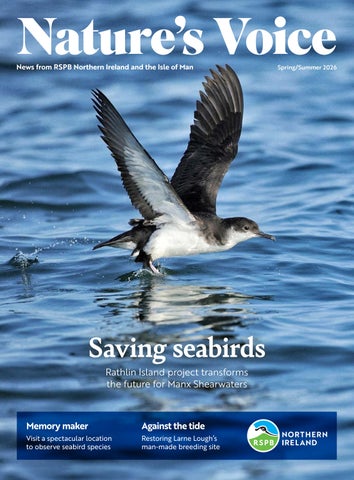
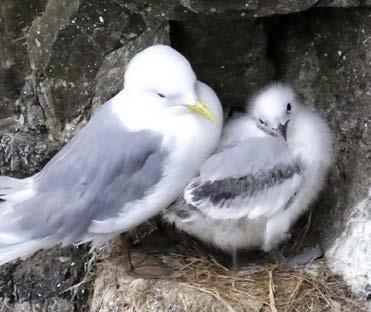
Saving seabirds
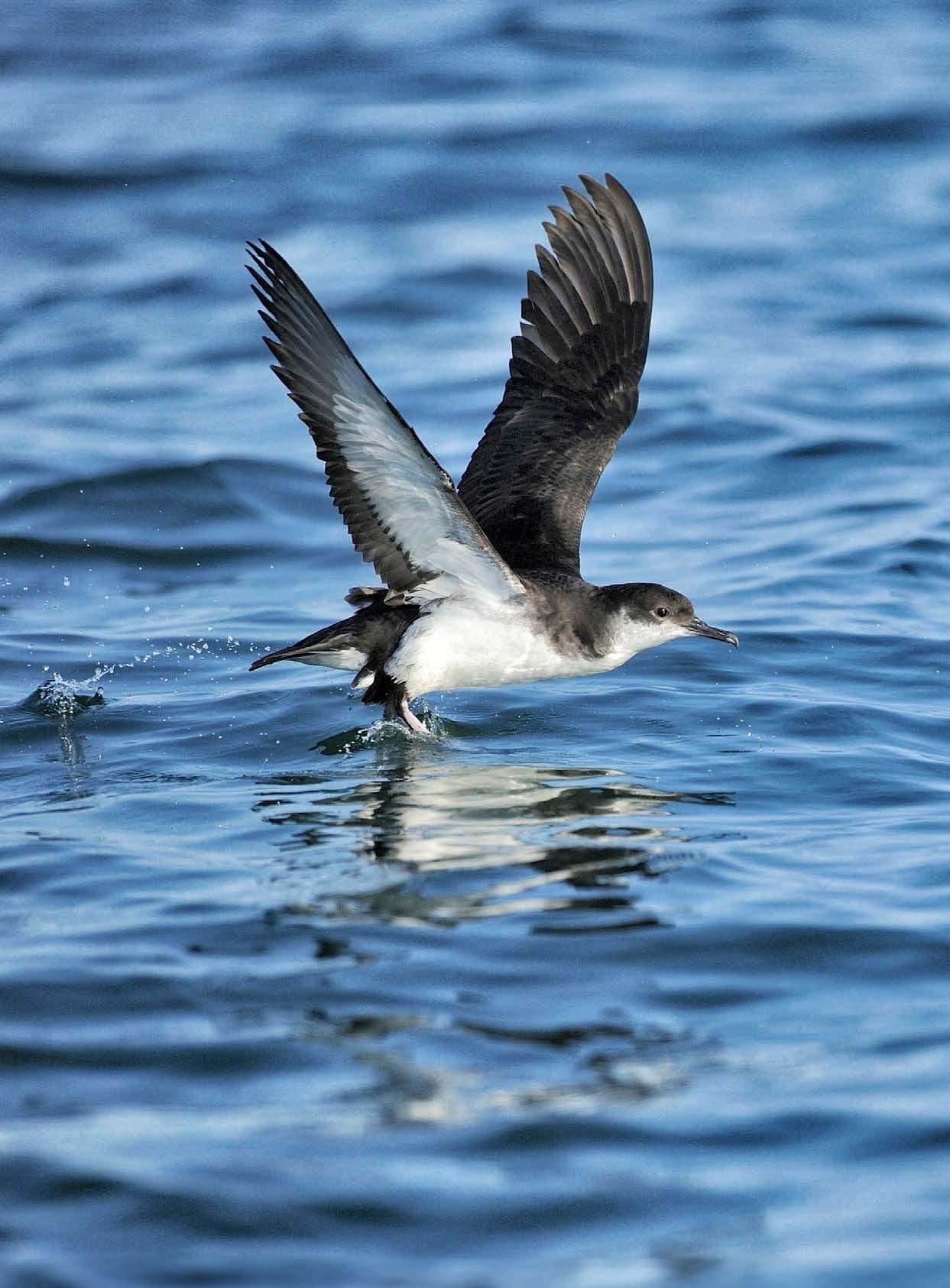
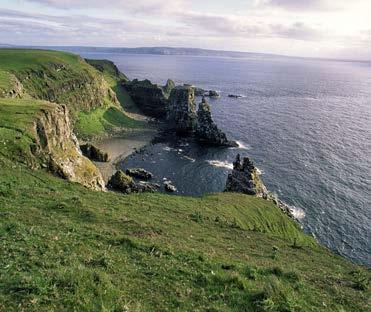
Rathlin Island project transforms the future for Manx Shearwaters
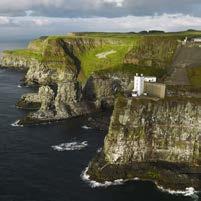
Visit a spectacular location to observe seabird species
Against the tide
Restoring Larne Lough’s man-made breeding site
Welcome!
As we welcome a new season, I’m delighted to introduce the latest edition of Nature’s Voice – a celebration of the people, places and wildlife that make Northern Ireland such a special home for nature. This year is particularly meaningful, as 2026 marks our 60th year of the RSPB in Northern Ireland: six decades of protecting habitats, restoring species and inspiring communities to stand up for nature.
At the heart of this edition is Rathlin Island, which we explore at one of the most exciting times of the year, when the seabirds are returning to nest, Corncrakes are beginning to call and the island is bursting with life. Here, communities and conservation partners work side by side (page 6).
Across Northern Ireland, we protect and restore precious habitats. From Blue Circle Island, where restoration helps vulnerable terns and gulls withstand rising sea levels (right), to a monumental update from the LIFE Raft project (page 3), this issue highlights what you make possible with your support.
Thank you for being part of our story over the past 60 years. Together, we’re creating a future where nature can thrive. I hope you’ll enjoy this edition and I look forward to seeing you out and about on our reserves.
Joanne Sherwood Director, RSPB NI
Action for nature
Our places Safeguarding seabirds
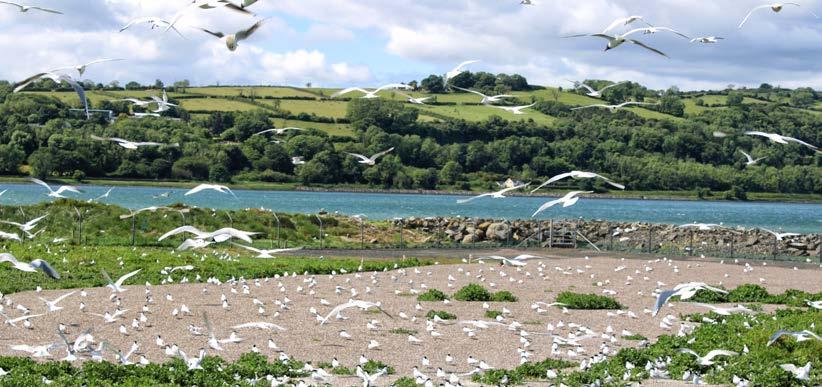
Last year, vital restoration work was completed on Blue Circle Island in Larne Lough, to help protect some of Northern Ireland’s vulnerable seabird population from the growing impacts of rising sea levels. Located just off the southern shore, this man-made island was originally created in the 1980s using deposits of silt from the adjoining lough channel and rock from a nearby quarry. The central breeding surface of the island has now been raised up to 1.6 metres, to prevent high tides flooding the nests during the breeding season. This intervention was urgently needed following high tides flooding key nest sites, threatening species including Sandwich Terns, Blackheaded Gulls and Mediterranean Gulls.
Seabirds began breeding on the island in 1993 and it has become a stronghold for breeding terns and gulls. At its peak in the 1990s, Larne Lough supported 19 pairs of Roseate Terns, the rarest breeding seabird in Europe. Today, RSPB NI encourages their return by providing concrete nest boxes and installing predator-deterring fencing. Donnell Black, RSPB NI East Reserves Site Manager, said: “Blue Circle Island plays a crucial role in protecting some of our most rare and vulnerable seabirds. Recent surveys show there are now 650 breeding pairs of Sandwich Terns and 1,870 breeding pairs of Black-headed Gulls using the island, underlining how critical restoration work is in safeguarding these species which are at risk.”
Our species
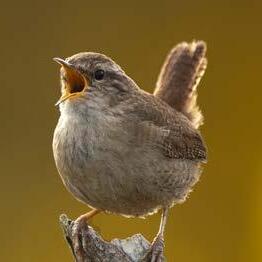
Spring up for birdsong
The dawn chorus is nature’s morning symphony, performed by birds singing firstly to attract mates and secondly to defend their territory. It was thought that birds sing early while it’s too dark to forage, as sound travels further in the denser morning air. New science suggests that its more about birds marking their territory after being inactive at night, and communicating about finding food. Whatever the reason, in early May the chorus reaches its peak, filling gardens, parks, hedgerows and woodlands with sound. Why not set your alarm to tune in on International Dawn Chorus Day, Sunday 3 May 2026.
Photos: Ben Andrew (rspb-images.com); Kirsty Benton; Charlie Bosanquet; Donnell Black; Anna Feeney
Our places Ferret-free – a world first
Rathlin Island is celebrating a landmark conservation success, becoming ferret-free thanks to the achievements of the LIFE Rathlin Acting for Tomorrow (Raft) project. Introduced ferrets posed a serious threat to Rathlin’s internationally important seabird populations, including Puffins and Manx Shearwaters, by preying on eggs, chicks and even adult birds.
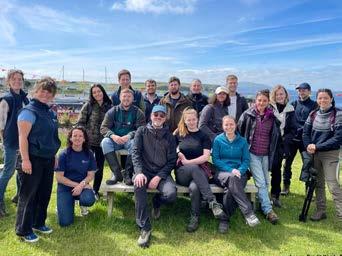
Through years of dedicated fieldwork, innovation and careful monitoring, the LIFE Raft team (some pictured) successfully removed ferrets from the island, securing a brighter future for Rathlin’s wildlife.
LIFE Raft was led by RSPB NI, in partnership with the Rathlin Development and Community Association (RDCA), Causeway Coast and Glens Heritage Trust (CCGHT) and Causeway Coast and Glens Borough Council (CCGBC). It was funded by EU LIFE, The National Lottery Heritage Fund, Garfield Weston Foundation and the Department of Agriculture, Environment and Rural Affairs (DAERA).
This important achievement marks a major step forward for nature on Rathlin Island, giving seabirds and other vulnerable species, such as Corncrake, a safer place to breed, helping to secure the island’s rich wildlife for future generations. It also demonstrates the power of long-term commitment, partnerships and community effort in delivering lasting conservation success.
We warmly thank the island community for their support, patience and dedication during this project to date.
Nature notes
Staff highlight
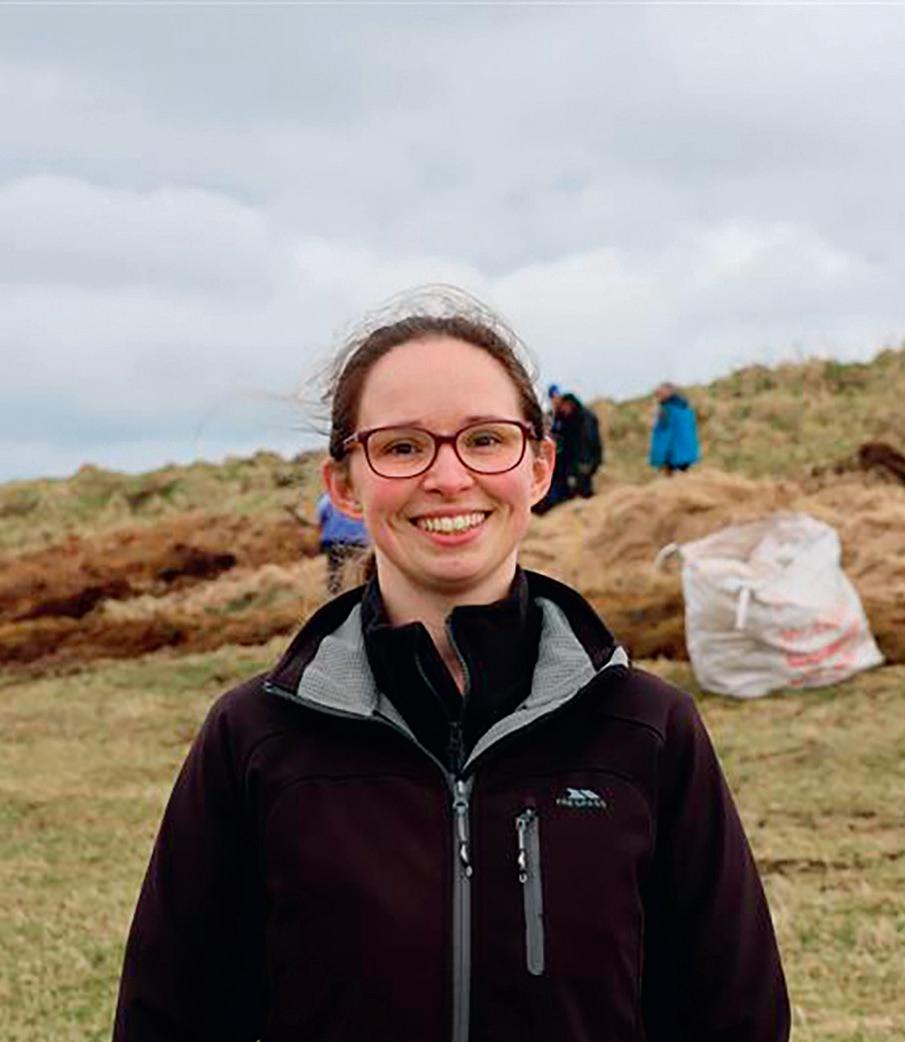
Ric has lived on Rathlin Island since 2017 and joined the LIFE Raft project in 2022. As Senior Research Assistant, he spends much of his time at the island’s famous seabird colonies, collecting data on bird populations and nesting success.
About his role, Ric said: “It can be challenging, but it’s a privilege to work with fascinating species in such a spectacular location. A recent highlight was finding Manx Shearwaters breeding successfully on Rathlin – the first time this has been confirmed for decades.”
here for our coastlines
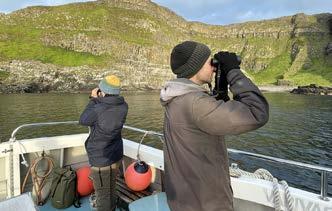
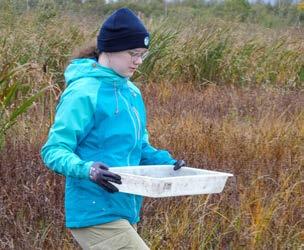
The Coastal Monitoring and Adaptation Planning (CMAP) project is led by the University of Ulster, uniting 19 organisations (12 partners and 7 associated partners) across Northern Ireland and the Republic of Ireland, including RSPB NI, to better understand how climate change is affecting coastlines and to support future planning.
The €9.6 million CMAP project is supported by PEACEPLUS, managed by the Special EU Programmes Body (SEUPB). The project focuses on coastal areas that support diverse marine plants and wildlife. Rising sea levels, increased storm activity and species loss are placing growing pressure on these environments. Working
across 15 coastal sites, CMAP will link local action with citizen science to learn more about coastal processes, habitats and key species such as Kittiwakes and terns, helping to develop practical, sustainable approaches to coastal adaptation. The project relies on the dedication of partners and collaboration with local communities.
Above: CMAP project volunteers
Our people Welcome, Fiona!
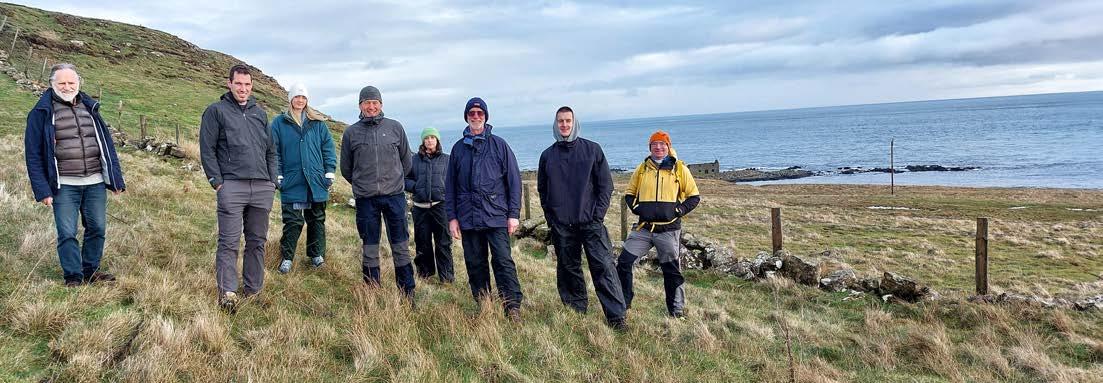
The Giving Corncrake a Home Project has recently welcomed Fiona Robinson (below), who previously volunteered for the Project, into a brand-new role as Assistant Conservation Officer. This is thanks to recent funding under the PeacePlus Nature Programme, funded by PEACEPLUS, a programme managed by the Special EU Programmes Body.
She started as a Volunteer Co-ordinator for Giving Corncrake a Home, driven by a desire to help save nature, meet new people and gain experience in the conservation sector. With a lifelong passion for wildlife, Fiona knew conservation was the career path she wanted to follow. Reflecting on her time as a volunteer, Fiona said: “Volunteering with the RSPB was incredibly
rewarding. The role was flexible and fitted well around my life as a mum and part-time worker. I gained valuable experience, accessed fantastic training and felt truly supported by staff who valued volunteer ideas.”
A standout moment came in 2023, when volunteers visited Rathlin Island to see the habitat they had helped create. “Hearing my first Corncrake calling was magical, especially seeing the excitement on the volunteers’ faces.”
Fiona is now looking forward to continuing this important work alongside the volunteers helping to secure a future for this endangered species.
To find out more about volunteering with RSPB NI, see the back page.
Star species
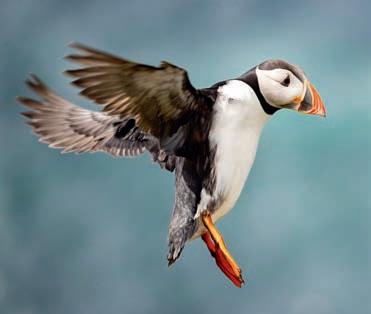
Puffin
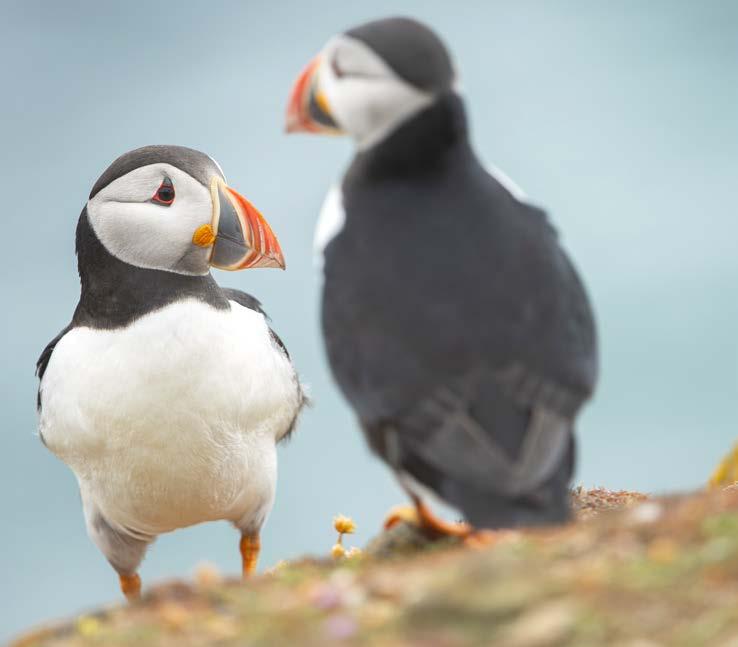
Puffins are unmistakable birds in the summer with their black back and white underparts, black head with large pale cheeks and their tall, flattened, brightly coloured bill. Its comical appearance is heightened by its red and black eye-markings and bright orange legs. Used as a symbol for books and other items, this clown among seabirds is one of the world’s favourite birds. With half of the UK population at only a few sites, it’s a Red List species. Read more about their annual return to Rathlin Island (p6) and learn more in your Spring/Summer issue of The RSPB Magazine
Our projects
Supporting marine environments
Positive momentum continues in securing funding to address climate change and protect marine and coastal environments across Northern Ireland and the Republic of Ireland. RSPB NI is proud to be a partner in the ACCLIMATISE project, led by the Agri-Food and Biosciences Institute (AFBI). ACCLIMATISE (A Changing Climate Impact Monitoring and Assessment Toolbox for Irish Seas) will support adaption to climate change by developing innovative monitoring tools, strategies and action plans to allow for more effective, ecosystem-based marine management.
This cross-border initiative has been awarded €7.1 million through the PEACEPLUS programme, managed by the Special EU Programmes Body, supported by the EU, UK and Irish Governments, and the Northern Ireland Executive.
Scientific name
Fratercula arctica
Wingspan
47–63cm
Length
26–29cm
Where to see
Marine and Intertidal
Conservation status
Red List
Allison
Leonard, Managing Director Manx BirdLife Education area given go-ahead
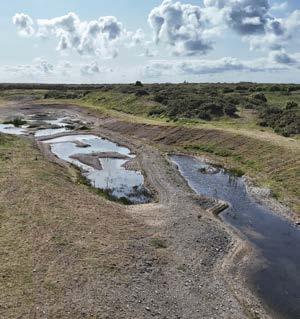
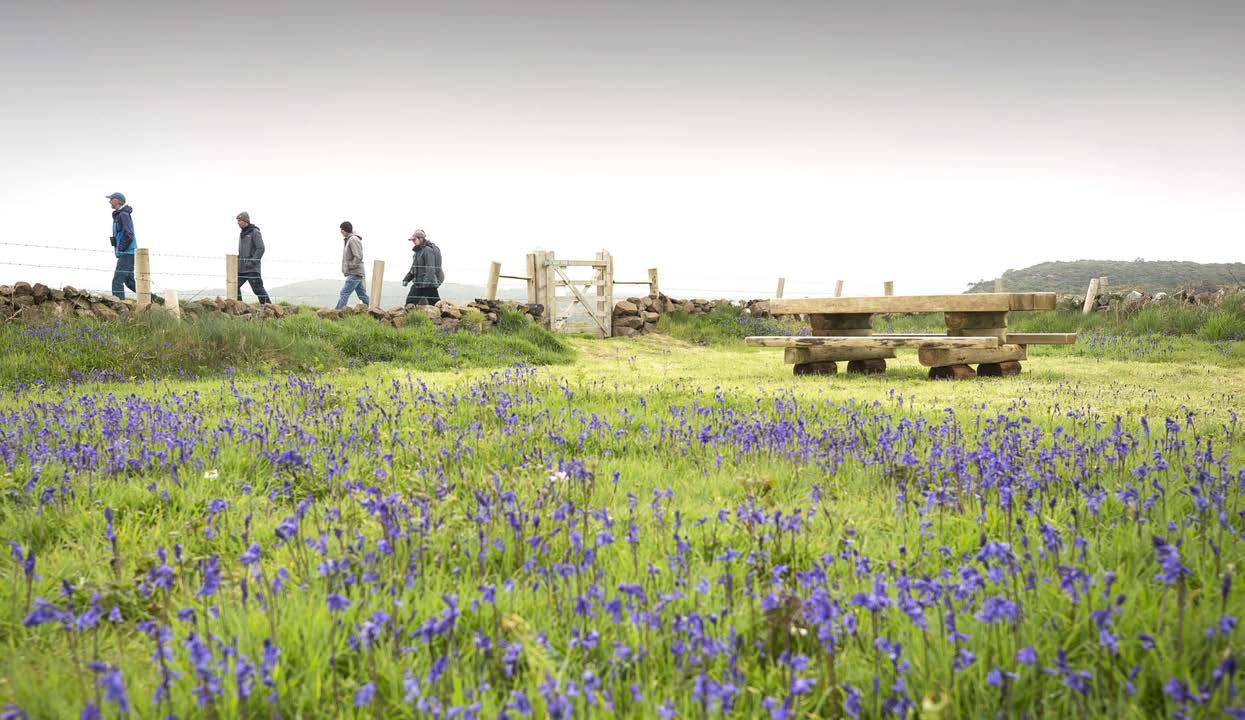
Manx BirdLife is delighted to share the fantastic news that planning permission has now been granted for new outdoor education facilities at the Manx BirdLife Point of Ayre National Reserve (site pictured).
At the core of the facilities will be a large canvas canopy to provide shelter from the elements (thankfully, the canopy can be lowered in high winds, making it suitable for the environment), along with a dedicated area designed specifically for education activities. We’re keen for local schools to be involved in shaping how this space is used, so it delivers exactly what teachers and pupils need to get the most from their visits to the nature reserve.
Also being installed is a composting toilet. While this facility will be available for all reserve visitors, it represents a particularly important step forward for school groups, for
whom the lack of toilet facilities has been a significant barrier in the past.
We’re hopeful that with construction work due to start at time of writing, schools can start using the new facilities in spring.
We can’t wait to welcome more young people to the nature reserve and help inspire the next generation of nature champions.
Your questions
How can I help wildlife in my garden during the nesting season?
Hannah, Comber
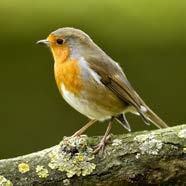
During spring and summer, birds such as Robins (right) are busy nesting and raising young. You can help by avoiding hedge cutting and tree work, as nests are often hidden and it is illegal to disturb nesting birds. You can also provide fresh water for drinking and bathing and leave some areas of your garden wilder for insects, which many birds rely on to feed their chicks. If you find a garden bird fledgling (fully feathered baby bird) on the ground, if they’re not sick or injured they’re best left alone.
Are there any rare or unusual birds to look out for in spring migration?
Mary, Strabane
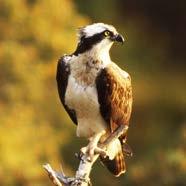
Spring migration can bring some exciting surprises. Along our coasts, wetlands and headlands you might spot scarce visitors such as Osprey (above) passing through on their way north. Occasionally, rarer migrants such as Hoopoe turn up, especially after favourable winds. Keeping an eye on local bird news and visiting migration hotspots can really pay off at this time of year.
Why do some birds suddenly disappear once spring arrives and where do they go?
Ian, Lisburn
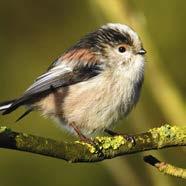
It can seem as though birds vanish in spring, but most haven’t gone far. Many species, including the Long-tailed Tit (above), become quieter and harder to see once breeding begins. Males stop singing as frequently, and birds spend more time hidden in vegetation, incubating eggs or feeding their chicks. Others may move from gardens into nearby countryside to breed, giving the impression that they’ve disappeared altogether.
Island magic
The wild beauty of Rathlin Island nature reserve can be discovered through immersing yourself in the sights and sounds of its wildlife
There are few experiences quite like stepping off the ferry onto Rathlin Island. As you arrive, the sea shimmers in the sunlight and a salty breeze rolls across steep cliffs and quiet lanes. For many visitors, it is this first moment – the sudden sense of calm and the raw Atlantic air – that captures the spirit of Rathlin. Just six miles off the coast of County Antrim, the island is a mix of rugged beauty, thriving wildlife and a community deeply connected to the land and sea around them. Rathlin is a haven for nature lovers. From the island’s elusive population of golden hares to the drama of thousands of seabirds circling the cliffs, it offers a spectacle unlike anywhere else in Northern
‘Witnessing the first Puffins returning to the island each spring is a thrilling experience’
Ireland. Every spring and summer, the cliffs become alive with movement and sound as thousands of Puffins, Fulmars, Kittiwakes, Guillemots and Razorbills return to nest. Visitors travel from far and wide to watch this annual transformation. The island is full of raucous calls and circling wings, each bird returning for the precious nesting period.
Return of the Puffins
Among the island’s most celebrated arrivals are the ever-punctual Puffins. Known affectionately as ‘clowns of the sea’, their bright bills make them instantly recognisable and their annual return signals the exciting beginning of the breeding season. Incredibly, Rathlin’s Puffins have been returning around the same timing for the last nine years, arriving in late March, almost to the day. Just as the clocks change and spring begins to take hold, they appear again on the coastline, ready to nest in burrows and rocky crevices.
“Witnessing the first Puffins returning to the island is always a thrilling experience,” says Liam McFaul, RSPB NI Rathlin Reserves Warden. “Their arrival indicates the renewal of life on the Rathlin cliffs, as they prepare to nest and rear their young in the weeks to come.
The best time for a close-up view of the Puffins and our other seabirds is usually late April to early July.”
These months provide the most spectacular seabird viewing opportunities and, for many visitors, the sight of Puffins standing proudly at the bottom of the cliffs, easily spotted by their orange feet, becomes a memory to hold for years.
Beyond the Seabird Centre
While the West Light Seabird Centre draws the crowds in spring and summer, much of Rathlin’s magic lies in its quieter spots. The island offers a rich network of walking trails, providing space for peaceful exploration and time to connect with the landscape beyond the seabird bustle.
One of the most accessible routes is the Craigmacagan Nature Reserve Trail. This gentle 2.1km walk winds through a peaceful nature reserve filled with wildflowers, where lucky visitors might spot the island’s famous golden hares. This beautiful animal is a type of Irish Hare unique to Rathlin and has become one of the island’s most mysterious icons. To spot one grazing in the grass is to witness Rathlin’s wild spirit at its finest.
For those seeking more of a challenge, the Roonivoolin Trail loops through the island’s southern region, offering sweeping sea views and dramatic terrain changes. Along the way, keen-eyed walkers might even see Buzzards circling effortlessly above the cliffs. Gray and common seals can also be spotted around the coastline of Rathlin Island.
Meanwhile, the Kinramer North and South Trails pass across Northern Ireland Environment Agency land, through open fields and past rugged cliffs, giving a true sense of the island’s remoteness and ancient character. Whether visitors want a relaxing stroll or a day-long trek, Rathlin’s walking network has something for every ability, connecting people with the island’s environment and its long human history.
Conservation work
What makes Rathlin so special is not only its landscape and wildlife, but the people who live and work here; RSPB NI works alongside farmers, landowners and
island residents to protect Rathlin’s biodiversity and preserve its heritage for generations to come. Current projects such as Giving Corncrake a Home and LIFE Raft represent years of collaboration, research and community commitment.
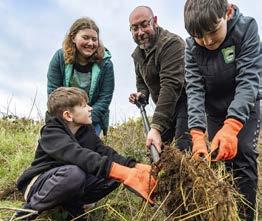
Through the winter months, reserve teams have been preparing the island for another busy breeding season. Staff and volunteers have worked hard to create habitat for one of Rathlin’s most elusive seasonal visitors: the Corncrake. By replanting nettle rhizomes, the team provides early cover to help these secretive birds, creating a habitat for them to call for mates and raise their young in safety. Last year, six calling males were recorded on Rathlin – an exciting milestone and the highest number heard in recent memory. We can’t wait to see what 2026 has to offer.
The LIFE Raft project has also reached a remarkable achievement. Following years of effort from staff, volunteers and islanders, the island has now been confirmed ferret-free (page 3). This breakthrough marks a huge step for the project and Rathlin Island’s wildlife.
Whether you come for the birds, the walking trails, the conservation success stories or simply the peace of the island itself, Rathlin Island promises memories that last a lifetime. Its magic is not just in its scenery or wildlife, but in the deep sense of place it offers – a chance to see nature thriving, communities working together and wild beauty unfolding at every turn.
Nature of Rathlin Island in numbers
250,000 seabirds use the cliffs for breeding and nesting
1km the distance a calling Corncrake can be heard from
30+
Fulmars have an average lifespan of 30–40 years, though it’s believed some can live for up to 60 years!
No visit to the island is complete without a trip to the Rathlin Island West Light Seabird Centre (pictured), which reopens to the public on Sunday 5 April 2026.
Nestled at the top of the island, the centre is where you’ll be greeted by the sight, sound and smell of seabirds on the cliffs during the spring and summer. Scan the QR code to find out more or visit rspb.org.uk/days-out/reserves/rathlin-island
Get involved with RSPB NI
Discover other ways to support nature in Northern Ireland
Join the community that suits you and show your support for nature in Northern
Ireland
Campaigning
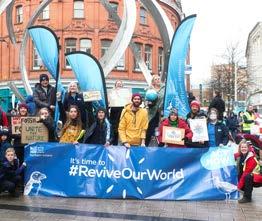
Campaigning is about making change happen. For many of our campaigns, this means working towards changes to policies or laws. In Northern Ireland, we’ve been campaigning for nature for 60 years, and we’ve become pretty good at it. We need as many passionate people as possible to call on Government to tackle the nature and climate emergencies and put nature’s recovery at the heart of policymaking. You can sign up now to be a Campaign Champion and keep up to date on our latest news and actions at bit.ly/ BecomeCampaignChampion
Contact us
RSPB Northern Ireland Headquarters
Belvoir Park Forest, Belfast BT8 7QT 028 9049 1547 rspb.nireland@rspb.org.uk
Follow us facebook.com/RSPBNI @rspb_ni
Volunteering
At the RSPB, there are many different ways to volunteer your time and take action to help save nature. Our dedicated volunteers do anything and everything, which accounts for an incredible 85% of the total RSPB workforce, and we couldn’t do our work without them. Meet new people, have new experiences and learn new skills with RSPB NI at bit.ly/VolunteeratRSPBNI
Youth Network
If you, or someone you know, is aged between 16–30 and interested in taking action for nature, then RSPB NI’s Youth Network is the place to go. Commitment can be as much or as little as you like, whether it’s taking on the five-minute monthly challenge or diving into more hands-on opportunities – every bit counts. Build connections with like-minded individuals, gain experience in conservation and help make a difference for nature in Northern Ireland. Find out more and join the community at bit.ly/ YouthNetworkSignUp
Local Groups
Antrim
Michael Ingleston (Leader), 028 9332 3657 rspbantrim@gmail.com
Belfast Eleanor Brennan, rspbbelfastlg@proton.me
Coleraine
James McDowell, 07596 503 435 group.rspb.org.uk/coleraine
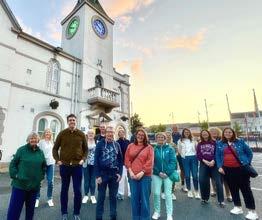
The RSPB’s Local Groups are a way to make new friends and connect with wildlife in your local area. Members are welcome to get as involved as they’d like, from stopping by for a natter about nature to leading a session. Here in Northern Ireland, there are groups in Belfast, Antrim, Lisburn, Coleraine and Fermanagh. If you’re interested in signing up, visit bit.ly/RSPBNILocalGroups
Photos: Press Eye photography, Brian Morrison (rspb-images.com)