
Usher Hall, Edinburgh Fri 5 Jun 2026 7.30pm
Glasgow Royal Concert Hall Sat 6 Jun 7.30pm
Usher Hall, Edinburgh Fri 5 Jun 2026 7.30pm
Glasgow Royal Concert Hall Sat 6 Jun 7.30pm
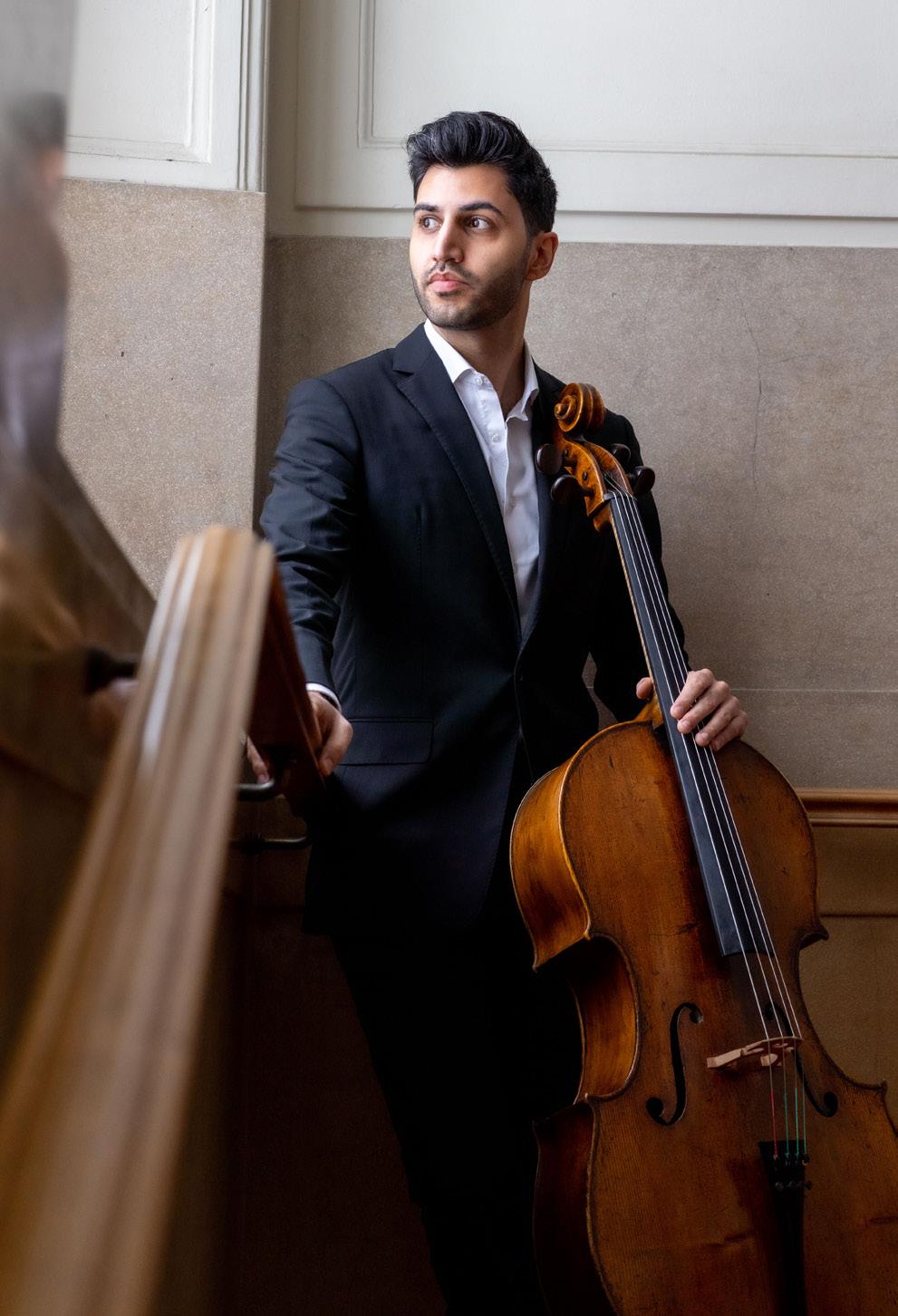
There’s a good reason why Elgar’s Cello Concerto is a classic: deep emotions surge beneath its haunted surface, and if anyone can uncover them it’s our remarkable soloist, Kian Soltani. Today, it’s just one stage on an emotional odyssey devised by our Principal Guest Conductor Patrick Hahn: a voyage that embraces the infinite longing of George Crumb and Richard Wagner, the volcanic grief of Benjamin Britten, and Scriabin’s final, multicoloured starburst of pure sonic bliss. Be transported.
CRUMB God-music from Black Angels [3’] leading without a break into
BRITTEN Sinfonia da Requiem Op20 [21’]
ELGAR Cello Concerto in E Minor Op85 [26’]
INTERVAL
WAGNER Prelude to Act I from Tristan und Isolde [13’] leading without a break into
SCRIABIN Poem of Ecstasy Op54 [22’]
Patrick Hahn Conductor
Kian Soltani Cello
Royal Scottish National Orchestra
The Glasgow performance will be recorded for the RSNO Archive. Supported by the Iain and Pamela Sinclair Legacy.
If viewing these notes at the concert, please do so considerately and not during performances. Please silence all mobile telephones and alerts, and refrain from taking photographs, without flash, until the end of each piece.
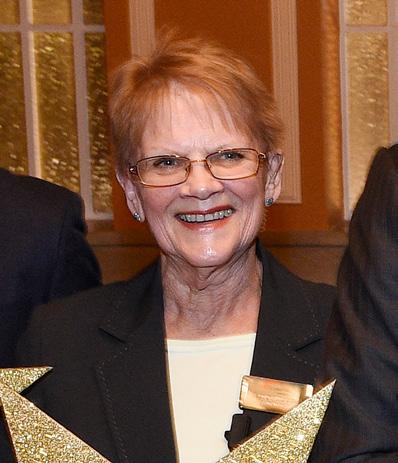
Our Edinburgh performance is dedicated to the memory of Irene Heggie.
A well-kent face in the Usher Hall team, Irene gave over 24 years of dedicated service to the Usher Hall, rarely missing an RSNO performance. She gave everyone a warm welcome – always going out of her way to get to know RSNO staff, musicians and, most importantly, our supporters. Irene will be fondly remembered by all who knew her. We send our love and best wishes to Irene’s family and friends who are here with us tonight.
It’s a pleasure to be back with you this evening after being away on tour with Music Director Thomas Søndergård and violinist Lü Siqing. We have been in China for almost two weeks, performing in Beijing, Nanjing, Shanghai and Tianjin, building connections across the world. But it’s always great to be back home performing for you, our dedicated audiences, as we head towards the end of a magnificent Season.
Tonight marks the fantastic Kian Soltani’s RSNO debut, joining us for Elgar’s Cello Concerto, the centrepiece in Principal Guest Conductor Patrick Hahn’s one-of-a-kind programme. Patrick puts together brilliant programmes, his most recent being with the Frank Dupree Trio in November. Tonight Patrick creates a thread running through the whole concert – a unique way to approach classical music that really marks him out. It’s no surprise that we’re looking forward to him joining us again next week for the Season Finale!
You may have already heard the news that we have appointed Giedrė Šlekytė as our new Music Director from the beginning of the 2027:28 Season. Giedrė’s appointment opens an exciting new chapter in the RSNO’s history. Current Music Director Thomas Søndergård becomes our Music Director Emeritus. With Giedrė and Thomas on our Artistic Team alongside Patrick as our Principal Guest Conductor, I am extremely excited about the future!
For now, though, I hope you enjoy this evening’s performance.
Alistair Mackie CHIEF EXECUTIVE
Keep in touch with the RSNO
Royal Scottish National Orchestra 19 Killermont Street Glasgow G2 3NX T: +44 (0)141 226 3868
Scottish Company No. 27809
Scottish Charity No. SC010702
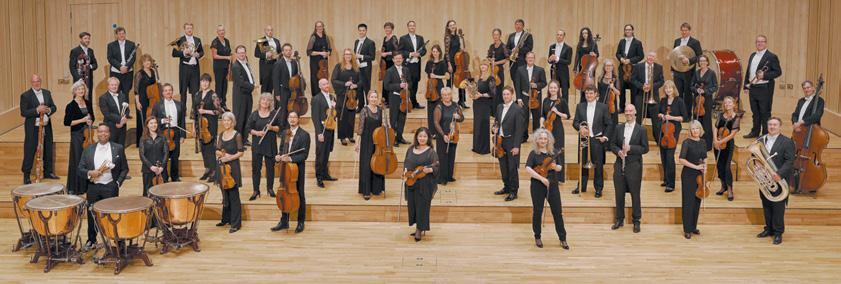
Formed in 1891, the Royal Scottish National Orchestra (RSNO) is one of Europe’s leading symphony orchestras. Awarded royal patronage by Her Late Majesty The Queen in 1977, its special status in the UK’s cultural life was cemented in 2007 when it was recognised as one of Scotland’s five National Performing Companies, supported by the Scottish Government.
Led by Music Director Thomas Søndergård, the Orchestra performs across Scotland, including concerts in Glasgow, Edinburgh, Dundee, Aberdeen, Perth and Inverness, and appears regularly at the Edinburgh International Festival and BBC Proms. The RSNO tours internationally, most recently visiting China and Europe. In May 2026, Giedrė Šlekytė was announced as the RSNO’s Music Director Designate and will formally become Music Director from the beginning of the 2027:28 Season, with Thomas Søndergård taking on the new position of Music Director Emeritus.
The RSNO has a worldwide reputation for the quality of its recordings, receiving a 2020 Gramophone Classical Music Award for Chopin’s Piano Concertos (soloist: Benjamin Grosvenor), conducted by Elim Chan, two Diapason d’Or awards (Denève/Roussel 2007; Denève/Debussy 2012) and eight GRAMMY Award nominations. In recent years, the RSNO has cultivated an international reputation for world-class film, television and videogame soundtrack recording.
The Orchestra has recorded for BAFTA-winning series Silo (Apple TV) and worked with the likes of GRAMMY Award-winning composer Lorne Balfe on Life on Our Planet (Netflix). Other notable titles include Nuremberg (Sony Pictures), Now You See Me: Now You Don’t (Lionsgate), Horizon: An American Saga (Warner Bros) and Star Wars Outlaws (Ubisoft). The Orchestra records at its bespoke in-house facility in Glasgow. In 2026, the RSNO was the first professional symphony orchestra to be awarded the Royal Philharmonic Society’s Ensemble Award since 2014. The award recognises musical ensembles for outstanding quality and scope of performances and work.
The RSNO believes that music can enrich lives and aims to inspire, educate and entertain people throughout Scotland and beyond with its performances, recordings and engagement programmes. Supporting schools, families, young professionals and wider communities, the RSNO delivers high-quality initiatives for all ages and abilities. The RSNO’s engagement offering includes its singing strand, encompassing a Buggy Choir and Chorus Academy in both Dundee and Glasgow and a lunchtime Workplace Choir, which complements the well-established and highly respected RSNO Youth Choruses and RSNO Chorus. The community choruses are designed with the benefits of group singing for health and wellbeing at their core and are open to all.
FIRST VIOLIN
Maya Iwabuchi LEADER
Shlomy Dobrinsky
ASSOCIATE LEADER
Patrick Curlett
ASSOCIATE PRINCIPAL
Helena Rose
Susannah Lowdon
Caroline Parry
Alan Manson
Veronica Marziano
Lorna Rough
Liam Lynch
Ursula Heidecker Allen
Elizabeth Bamping
Joana Rodrigues
Sophie Sild
SECOND VIOLIN
Emma Oldfield
GUEST PRINCIPAL
Jacqueline Speirs
Marion Wilson
Sophie Lang
Colin McKee
Robin Wilson
Anne Bünemann
Emily Nenninger
Paul Medd
Joe Hodson
Fiona Stephen
Seona Glen
VIOLA
Tom Dunn
PRINCIPAL
Felix Tanner
Asher Zaccardelli
Lisa Rourke
Beth Woodford
Claire Dunn
Katherine Wren
Francesca Hunt
Marsailidh Groat
David McCreadie
CELLO
Pei-Jee Ng PRINCIPAL
Betsy Taylor
Kennedy Leitch
Yuuki Bouterey-Ishido
Rachael Lee
Sarah Digger
Gunda Baranauskaitė
Robert Anderson
DOUBLE BASS
Seb Pennar
GUEST PRINCIPAL
Michael Rae
Alexandre Cruz dos Santos
Moray Jones
Olaya Garcia Alvarez
Paul Speirs
FLUTE
Katherine Bryan PRINCIPAL
Oliver Roberts
Adam Richardson
Jack Welch
PRINCIPAL PICCOLO
OBOE
Adrian Wilson PRINCIPAL
Peter Dykes
Fraser Kelman
Henry Clay
PRINCIPAL COR ANGLAIS
CLARINET
Timothy Orpen PRINCIPAL
William Knight
Leo Kerr
Duncan Swindells PRINCIPAL BASS CLARINET
SAXOPHONE
Lewis Banks ALTO
BASSOON
David Hubbard PRINCIPAL
Jamie Louise White
Emma Simpson
Paolo Dutto PRINCIPAL CONTRABASSOON
HORN
Amadea Dazeley-Gaist PRINCIPAL
Alison Murray
Andrew McLean
David McClenaghan
Martin Murphy
Andrew Saunders
Diana Seach
TRUMPET
Christopher Hart PRINCIPAL
Brian McGinley
Jason Lewis
Robert Baxter
Andrew Connell-Smith
TROMBONE
Dávur Juul Magnussen
PRINCIPAL
Cillian Ó Ceallacháin
Alastair Sinclair PRINCIPAL BASS TROMBONE
TUBA
John Whitener PRINCIPAL
TIMPANI
Lou Goodwin
GUEST PRINCIPAL
PERCUSSION
Simon Lowdon PRINCIPAL
Stuart Semple
Colin Hyson
Peter Murch
Scott Vassie
HARP
Pippa Tunnell
Sharron Griffiths
PIANO
Lynda Cochrane
ORGAN
Imogen Morgan
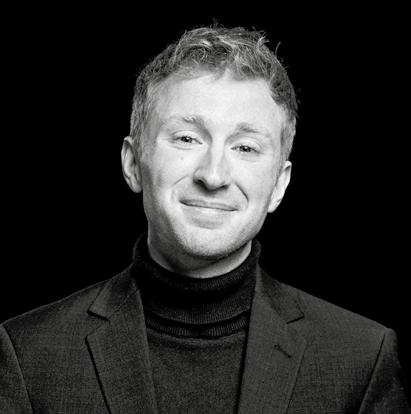
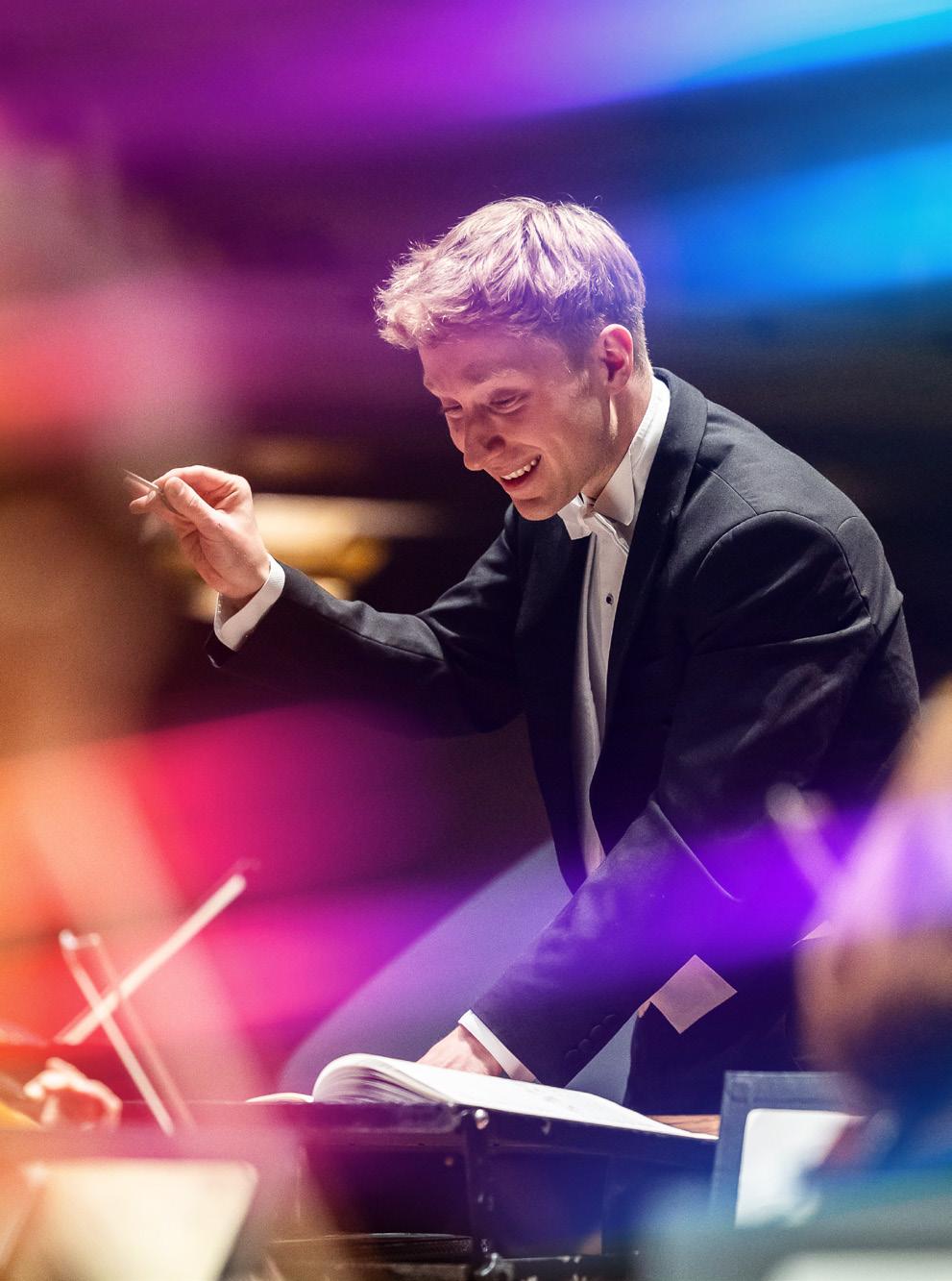
Patrick Hahn is one of the most sought after and exciting conductors of his generation. He is General Music Director of the Sinfonieorchester und Oper Wuppertal, and Principal Guest Conductor of the Münchner Rundfunkorchester and RSNO. In his last season as General Music Director in Wuppertal, Patrick presents Wagner’s Ring cycle in concert across the season with an internationally renowned cast featuring Catherine Foster, Benjamin Bruns, Michael Kupfer-Radecky and Karen Cargill.
As a guest conductor in the 2025/26 season, Patrick makes his first appearances at the Gewandhausorchester Leipzig with Sol Gabetta, Staatskapelle Dresden, WDR Sinfonieorchester Köln with Ilya Gringolts and Staatsphilharmonie Nürnberg with Timothy Ridout. Return visits include the Deutsches Symphonie-Orchester Berlin with Fazıl Say on a five-concert tour of China. Opera highlights include his debut at Deutsche Oper Berlin with Johann Strauss’ Die Fledermaus, Richard Strauss’ Intermezzo at the Semperoper Dresden, and Mozart’s Le nozze di Figaro at the Bayerische Staatsoper.
Previous seasons’ highlights include his first appearances at the hr-Sinfonieorchester Frankfurt, Brussels Philharmonic with Patricia Kopatchinskaja and Anastasia Kobekina, Orchestra Sinfonica Nazionale della RAI with Truls Mørk, and the Staatsoper Hamburg for Wagner’s Parsifal. Successful return visits include the Wiener Symphoniker in Vienna and on tour, and the Tonhalle-Orchester Zürich.
CD releases this season include an all-Gottfried von Einem album with the RSNO on Linn Records, and Ethel Smyth’s opera Der Wald with the Sinfonieorchester Wuppertal on the CPO label, marking the first time it has been recorded in its original German language.
Aside from his work in classical music, Patrick accompanies himself on the piano singing cabaret songs by the Austrian satirist and composer Georg Kreisler. As a jazz pianist, he received awards from the Chicago Jazz Festival, and the Outstanding Soloist Award from the University of Wisconsin-La Crosse as the best jazz pianist of the 37th Annual Jazz Festival.
EDINBURGH
FRI 12 JUN: 7.30pm
GLASGOW SAT 13 JUN: 7.30pm

Mendelssohn The Hebrides Overture
Fingal’s Cave
Sir James MacMillan Three Scottish Songs
Beethoven Symphony No9 Choral
Patrick Hahn Conductor
Eleanor Dennis Soprano
Karen Cargill Mezzo-soprano
Joshua Ellicott Tenor
Andrew Hamilton Bass
RSNO Chorus
Stephen Doughty Director, RSNO Chorus
Paul Whittaker BSL Performer
Black Angels: University of Michigan, Ann Arbor, October 1970
DURATION God-music: 3 minutes
The American composer George Crumb was fascinated with musical texture and timbre, which led him to push the capabilities of instruments and players to their limits. His music is connected to classical traditions but moves beyond them – returning to fundamentals of sound that some have linked to ancient traditions.
Crumb listened to the world around him and brought that world into the concert hall. In 1970, the Vietnam War was at its height. In February of that year, Crumb finished Black Angels, a score for amplified string quartet, crystal glasses and two tam-tam gongs subtitled ‘Thirteen images from a dark land’. It would become his most famous and most-performed work.
Black Angels is many things. One is a protest against war, which Crumb clarified by inscribing the words ‘in a time of war’ in the score in Latin (in tempore belli, a label used famously by Joseph Haydn). It is also a voyage of the soul, a meditation on life and death, and an exploration of the religious strife of the modern world, in which the first violin represents the music of the devil and the cello is the voice of God.
Many of the work’s meanings are hidden within its copious riddles and number games which orbit around the prime numbers 7 and 13 –both in musical detail (note values, patterns and pitches) but also in the structure of each movement.
Crumb, however, warned listeners not to attach too much importance to the work’s complex numerology. ‘Music might be defined as a system of proportions in the service of a spiritual impulse,’ he once said. More tangible are the score’s references to two known tunes: the plainchant theme Dies Irae and the slow movement melody from Franz Schubert’s own String Quartet in D Minor D810, Death and the Maiden
Black Angels has 13 movements and is divided into three parts: Departure, Absence and Return. The excerpt heard tonight, God-music, opens the third section, Return. It is designated as an aria accompagnata (accompanied song), in which a solo cello ‘sings’ over the sound of glasses played by running wet fingers around their rims. For these performances, the original string quartet parts are played by percussionists. The movement is conceived as a moment of calm between the strife and restlessness that characterise the music surrounding it.
© Andrew Mellor
Please note: Britten’s Sinfonia da Requiem follows Crumb’s God-music from Black Angels without a break.
FIRST PERFORMANCE
New York, 29 March 1941
DURATION 21 minutes
1. Lacrymosa
2. Dies Irae
3. Requiem aeternam
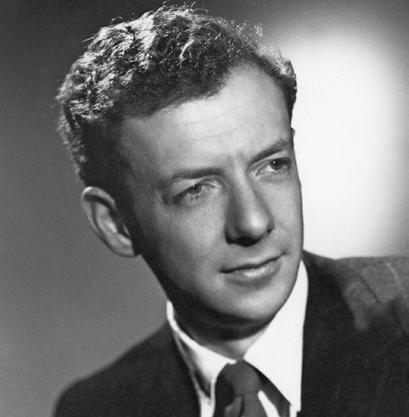
While the intended audience of Britten’s Sinfonia da Requiem may have been disgruntled, this emotionally charged work has endured as one of his most powerful early masterpieces. In 1939, Britten was approached by the British Council to write a piece of ‘festivity’ for an unspecified major power. It turned out to be part of a wider commission from the Japanese government to mark the 2,600th anniversary of the founding of the Japanese Empire. Britten was commissioned along with the French composer Jacques Ibert, Richard Strauss (who was pressured into participation by Joseph Goebbels of the Nazi government) and several other Japanese composers.
Britten agreed, on the proviso that he wouldn’t be expected to write a jingoistic work. After a delay in receiving the contract, Britten had just
six weeks to write the piece. Realising that the Sinfonia was all he could reasonably complete in time, he notified the Japanese consul of its nature and the Latin titles he planned to use. He assumed this information had been passed on, submitted the work and heard nothing more from the Japanese contingent for six months.
Dedicated to Britten’s parents, the piece also reflects Britten’s deep opposition to the looming war. He was a pacifist, later applying to be a conscientious objector. He had recently moved to the US with his partner Peter Pears to escape the outbreak of war. At the point of writing, Japan was invading mainland China but had not yet formally entered the Second World War or allied with Nazi Germany.
In autumn, Britten learned that the Japanese government had rejected the piece for its sombre character and use of Catholic references. The Sinfonia eventually received its Japanese premiere in 1956, having already been performed in the US, where an early Boston Symphony performance helped lead to the commission of Britten’s opera
Peter Grimes
This is a pivotal piece in Britten’s output: his largest orchestral work for the concert hall and his first major orchestral work without a soloist. The three movements, played attacca (without a break), mirror the emotional arc of a Requiem Mass, from lamentation to fury and ending with a fragile peace. Lacrymosa opens with an explosion of timpani and brass, before an ominous calm falls across the orchestra, with lower strings providing an eerie atmosphere and wind instruments exploring their higher registers to showcase a breadth of colour. Dies Irae is a high-intensity ‘dance of death’, with fast, repeated notes and stabs thrown across the orchestra. Requiem aeternam returns to a more sombre, peaceful mood – albeit with a whisper of comfort, provided in the D Major concluding key.
© Freya Parr
FIRST PERFORMANCE
London, 27 October 1919
DURATION 26 minutes
1. Adagio – Moderato
2. Lento – Allegro molto
3. Adagio
4. Allegro – Moderato – Allegro, ma non troppo
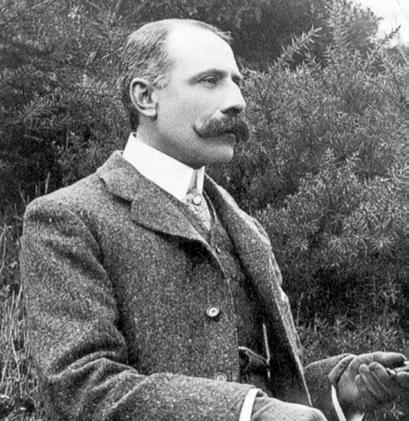
It would be easy to hear Edward Elgar’s Cello Concerto of 1919 as a great musical gasp of grief and horror at the losses and sufferings brought about by the Great War, which had finally ended the previous year. Sombre, introspective and anguished, the work appears to encapsulate what the British public must have been feeling as they quietly surveyed the conflict’s aftermath.
In reality, though, while the war undoubtedly played its part in forming the music’s emotional world, the Concerto’s darkly reflective mood probably owes more to the increasing bleakness of the composer’s more immediate personal, social and artistic surroundings.
As Elgar penned the Concerto during the summer of 1919, his beloved wife of 30 years, Alice, began her descent into the illness that would claim her life the following spring. He later described her literally ‘fading away before one’s very eyes’.
Socially, Elgar’s beloved Edwardian England was also fading away, as new, more socialist ideals captured the imaginations of post-war society. Likewise, new ideals were gathering momentum in the world of music. Across the channel in Paris, 1919 saw the completion of Darius Milhaud’s surrealist ballet The Ox on the Roof, its lively, Brazilian-influenced music playfully sidestepping the traditional rules of harmony. Likewise, Prokofiev’s first two piano concertos –thoroughly modernist of aesthetic, and tonally dissonant – were already a number of years old. Elgar’s implacably tonal, late 19th-century style was beginning to sound dated.
Even so, when the Concerto received its premiere that autumn at the opening concert of the London Symphony Orchestra’s first post-war season, its intense autumnal beauty should have won it a warm reception. The fact that it didn’t receive one was largely down to the fact that the
conductor of the rest of the concert, Eric Coates, had devoted the majority of the rehearsal time to his own favourite work on the programme, Scriabin’s Poem of Ecstasy The Observer reported afterwards of Elgar’s work, ‘The orchestra was virtually inaudible, and when just audible was merely a muddle. No one seemed to have any idea of what it was the composer wanted.’
Still, even without that Eric Coates-shaped torpedo, it’s possible that the work, as gloriously affecting as it was quickly discovered to be by subsequent audiences, still wouldn’t have met with an ecstatic reception that night, simply due to its mood. Right at that moment, Scriabin’s lushly scored, otherworldly, euphoric music probably delivered the sheer escapism that the war-weary audience needed. By contrast, the searing pathos of Elgar’s work might well have hit the national psyche a bit too squarely on the head for an evening that was supposed to be entertainment.
The Concerto opens with an impassioned cello solo. This solitary outpouring of emotion is eventually overtaken by a flowing, lyrical theme introduced by the violas, which the cello then picks up. The mood lifts briefly for the central section, but only slightly; when the cello reintroduces the flowing theme as the movement moves towards its climax and close, there’s no perceptible shift in temperament.
The music slips into the second movement without a break, starting off tense and hesitant, with the cello alternating between plucked notes and nervous bowed statements. The orchestra then launches the movement proper with two sharp woodwind chords, off which the cello immediately bounces and is away, hesitating no more. In the Scherzo-like music that follows, full of fast, gossamer-light cello runs, the overarching tension is punctuated by moments of brightness and even humour.
With the slow movement, peace and profundity combine. More than ever the cello dominates, with the orchestra largely the sympathetic background texture. Mournful acceptance appears to be the message of the cello’s intensely lyrical song.
The finale opens with a doom-laden statement from the orchestra, which heralds a cello solo echoing that of the work’s opening. As the movement continues, there are upbeat moments, and even a gentler theme containing glimmers of hope. However, sorrow is never completely out of earshot, meaning that it’s no surprise when eventually, towards the end, the music irrevocably darkens. First, the cello reutters a lamenting passage from the Adagio. It follows this with the anguished phrase from the very opening of the Concerto, then the music swiftly builds to its dramatic conclusion.
© Charlotte Gardner
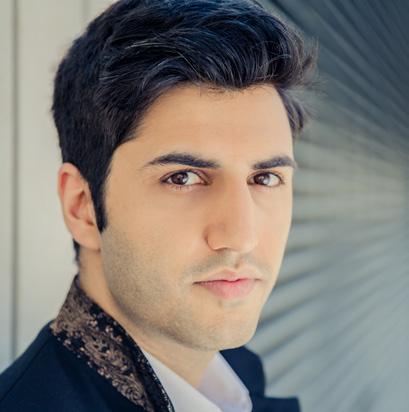
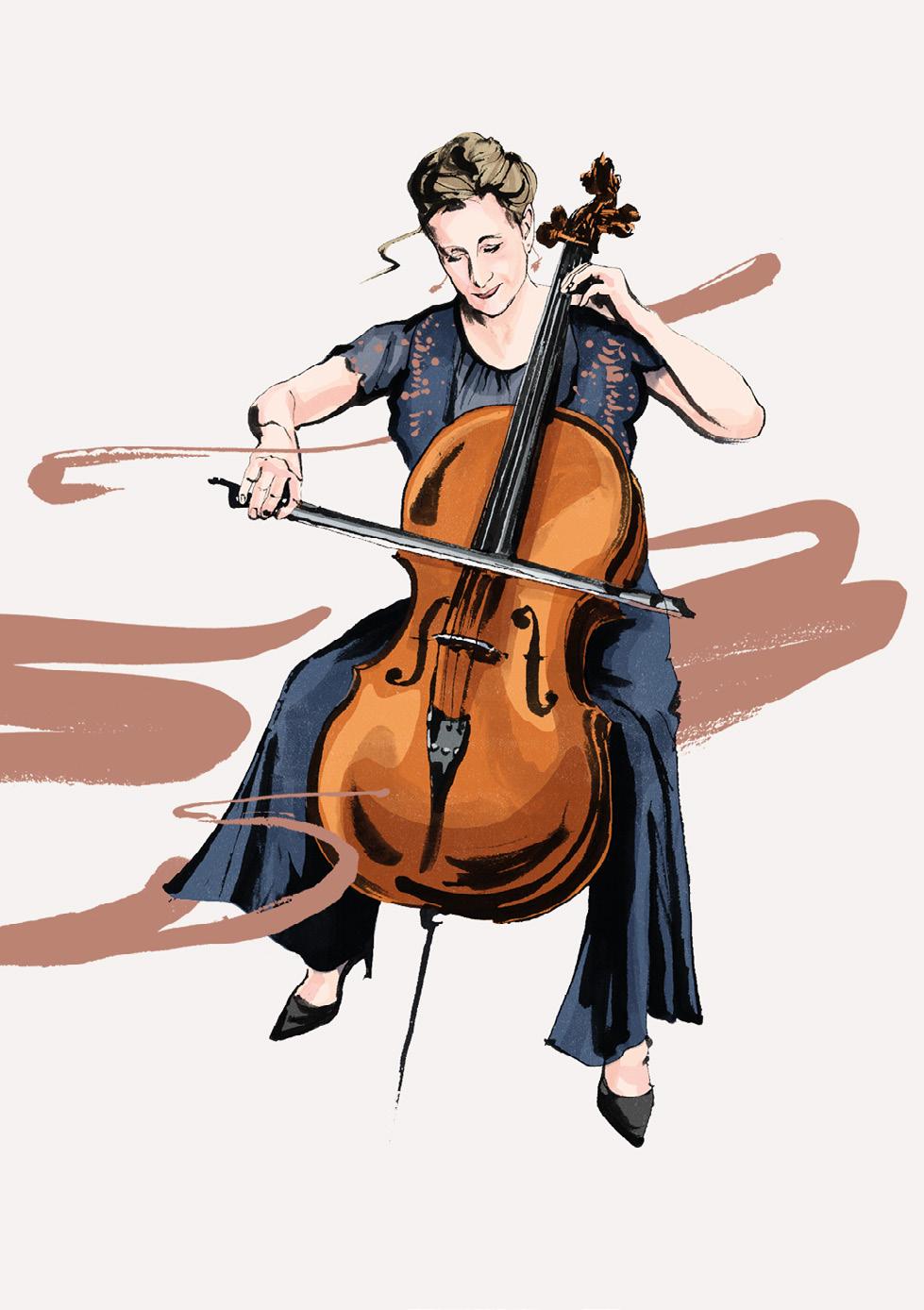
Kian Soltani’s playing is characterised by profound depth of expression, sense of individuality and technical mastery, complemented by his charismatic stage presence. He appears regularly with many of the world’s esteemed orchestras and conductors, firmly establishing himself as a leading voice among today’s generation of cellists.
25/26 season highlights include his performance with the Mahler Chamber Orchestra and Gianandrea Noseda at the Elbphilharmonie in Hamburg, his return to the Orchestre Philharmonique de Radio France under Daniel Harding and debuts with the Orchestre National de France, Sydney Symphony Orchestra, New Zealand Symphony Orchestra, Atlanta Symphony Orchestra and St Louis Symphony Orchestra. Further highlights include a European tour with the WDR Sinfonieorchester and Cristian Măcelaru, and his residency with the Iceland Symphony Orchestra, during which he embarks on a European tour with their Chief Conductor Eva Ollikainen. He tours Europe in trio with Renaud Capuçon and Mao Fujita, and in duo with
Benjamin Grosvenor, while also touring the US in a chamber programme.
Soltani has performed with many leading ensembles, such as the Tonhalle-Orchester Zürich, Staatskapelle Berlin, Munich Philharmonic, Wiener Symphoniker, Netherlands Radio Philharmonic, Detroit Symphony Orchestra, Toronto Symphony Orchestra, NHK Symphony Orchestra Tokyo and Accademia Nazionale di Santa Cecilia. He is also a frequent guest at prominent festivals such as Verbier, Rheingau, Dvořák Prague, Bregenz, Gstaad Menuhin, Grafenegg and Salzburg.
In 2017 Soltani signed an exclusive recording contract with Deutsche Grammophon, releasing his acclaimed debut album Home in 2018, featuring works by Schubert, Schumann and Reza Vali. He went on to record Dvořák’s Cello Concerto with the Staatskapelle Berlin and Daniel Barenboim in 2020 and released a Schumann album with Camerata Salzburg featuring the Cello Concerto and Lieder transcriptions in 2024. His 2021 album Cello Unlimited earned him the Innovative Listening Experience Award at the 2022 Opus Klassik Awards.
Born in Bregenz, Austria, to a family of Persian musicians, Soltani began playing the cello at age four and was only 12 when he joined Ivan Monighetti’s class at the Basel Music Academy. He was the recipient of an Anne-Sophie Mutter Foundation scholarship in 2014 and completed further studies at the Kronberg Academy in Germany and International Music Academy in Liechtenstein.
Soltani plays ‘The London, ex Boccherini’ Antonio Stradivari cello, kindly loaned to him by a generous sponsor through the Beares International Violin Society.
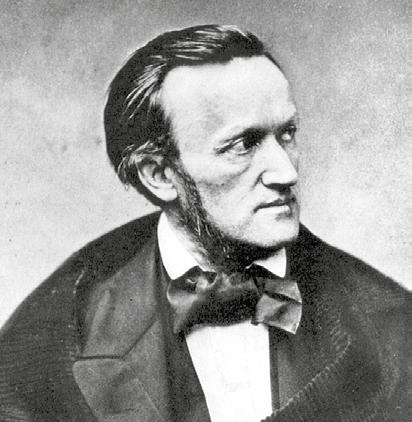
Full opera: Munich, 10 June 1865
DURATION Prelude: 13 minutes
First performed in Munich in 1865, Wagner’s Tristan und Isolde belongs to the small category of works that can genuinely be said to have changed musical history. In this intense exploration of a love between two individuals that achieves a transcendent level, and can only be consummated in death, Wagner represented the heights and depths of his central characters’ inner feelings in music that reaches an unprecedented level of chromaticism – that is, using notes outside the main key of any given section. The result is to undermine the individual key to the point where it ceases to have any real solidity.
From a historical perspective, this was a highly influential procedure – it would lead to an increased use of chromaticism in the works of many other composers, and eventually to the dissolution of tonality (or key structure), to atonality (or the absence of key), to the 12-note system of Schoenberg and other far-reaching developments.
Beyond its historical position, Tristan was an exceptional achievement in its own right. Wagner started sketching his score in 1854, when in exile in Switzerland from his criminal revolutionary activities in Germany. It was inspired partly by his love for Mathilde Wesendonck, the wife of a Zurich silk-merchant who was supporting him financially. But by the time of its premiere, Wagner was involved with Cosima von Bülow, daughter of another supporter, Franz Liszt, and the wife of the conductor of that first performance, Hans von Bülow. Cosima left her husband the following year and became Wagner’s second wife in 1870.
During the course of the opera, the Cornish knight Tristan and the Irish princess Isolde take a potion which they believe will lead to their deaths, but which instead is a love potion that allows them to admit feelings for each other that they have had to deny hitherto. Once released, the impact of these feelings devastates their lives and those of others.
Wagner originally gave the title Liebestod, or love-death, to the opera’s Prelude, now a familiar concert work that distils the essence of the opera it begins.
© George Hall
Please note: Scriabin’s Poem of Ecstasy follows Wagner’s Prelude to Act I from Tristan und Isolde without a break.
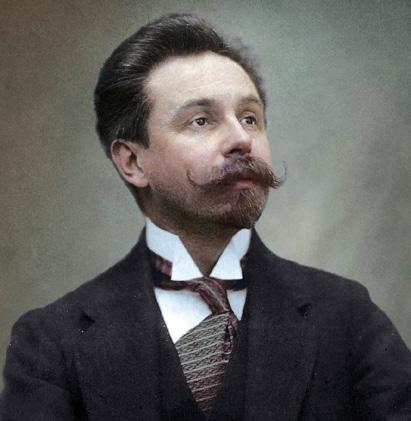
FIRST PERFORMANCE
New York, 10 December 1908
DURATION 22 minutes
Born in Moscow into nobility, Alexander Scriabin began his career as a concert pianist and composer of piano music, studying as a boy with Nikolai Zverev, who taught Rachmaninov, and then at the Moscow Conservatory where his teachers included Anton Arensky and Sergei Taneyev. Listen to his early-career works and you hear simply Russian-flavoured, crowdpleasing late Romanticism; in fact, his Piano Concerto – his first orchestral work, composed in 1896, and his only concerto – sounds thoroughly Rachmaninov-esque. However, with his ambitious six-movement First Symphony of 1900 came the beginnings of a change: a slightly more chromatic harmonic language; more mystical-sounding and ecstatic in tone; and featuring an optional chorus in its final movement whose lyrics, penned by Scriabin himself, were a hymn to Art as a deity capable of transforming mankind. ‘You breed thoughts of a new order,’ it proclaims. ‘An endless ocean of emotion you breed in the enraptured heart’ – and for what was left of Scriabin’s short life, it was this mystical, theosophy-inspired belief in music’s ability to bring man into ecstatic union with the cosmos that his increasingly chromatic, borderline atonal works espoused.
Poem of Ecstasy, the single-movement ‘Fourth Symphony’ he composed between 1905 and 1908 from Italy – while lying low with pianist Tatiana Schlözer, for whom he was leaving his wife – represents the full flowering of that philosophy on his musical style. Its forces are massive, including eight horns, five trumpets, three trombones, two harps, celeste, organ, and a percussion section featuring tam-tam and church bells. Its high-intensity language then out-Wagners Wagner in its voluptuously scored high chromaticism and its long-drawn build-up towards a final ecstasy via successive rolling, yearning musical waves whose textures, teeming with complex contrapuntal writing, feature a solo
violin among their many colours. Not for nothing was it Scriabin’s original intention to name the work ‘Poème orgiaque’ (Orgiastic Poem).
Scriabin’s own programme note for a 1909 Moscow performance was no less voluptuously articulated. To quote just a tiny extract of this attempt to explain his extra-musical ambitions for his music, ‘Poem of Ecstasy is the joy of liberated action ...,’ it reads. ‘The stronger the pulse-beat of life and the more rapid the precipitation of rhythms, the more clearly the awareness comes to the Spirit that is consubstantial with creativity, immanent within itself, and that its life is a play. When the Spirit has attained the culmination of its activity and has been torn away from the embraces of teleology and relativity, when it has exhausted completely its substance and its liberated active energy, the Time of Ecstasy shall then arrive.’
Scriabin would only complete one more orchestral work, the similarly mystical Prometheus: The Poem of Fire (1910), before succumbing to sepsis in 1915, aged 43.
© Charlotte Gardner
24 Jan Robert Baden-Powell’s Scouting for Boys was published, effectively beginning the Boy Scout movement
3 Apr Glasgow-born Henry CampbellBannerman resigned due to ill health and died on 22 Apr in 10 Downing Street – the only prime minister to do so
26 May The first Middle East oil discovery was made at Masjed Soleyman in Persia; the UK quickly acquired the rights
30 Jun A huge atmospheric explosion, known as the Tunguska event, thought to be caused by a stony asteroid 50-60m wide, felled 2150 sq km of forest in eastern Siberia
1 Jul The SOS distress signal came into force internationally
13-25 Jul The Summer Olympics were held in London, moved there from Rome after the Mount Vesuvius eruption of 1906
26 Jul The Federal Bureau of Investigation was founded in the US
17 Aug The first animated cartoon, Fantasmagorie by Émile Cohl, was released
1 Oct The Model T motor car was officially launched at the Ford Piquette Avenue Plant in Detroit, Michigan
3 Nov Republican William Howard Taft defeated William Jennings to become US President
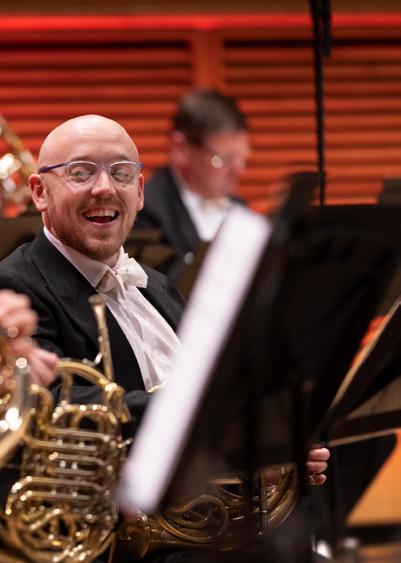
Do you wish to support the Orchestra on a regular basis, hear behind the scenes news, and attend open rehearsals?
Becoming a Circle member is for you.
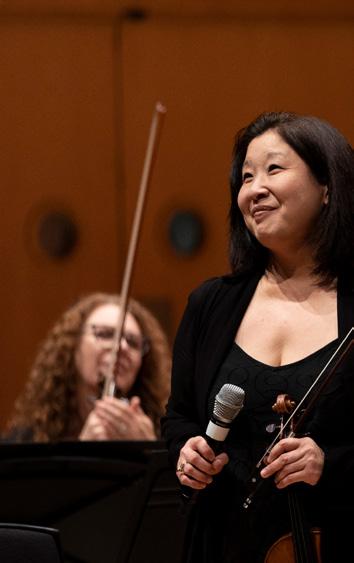
This year we launched our Every Child, Every Community appeal, with funds directly supporting our work in musical education, from early years to young professionals. If you would like to support the next generation of young professionals please donate at rsno.org.uk/every-child

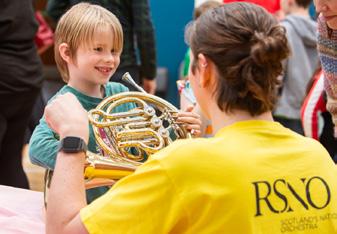
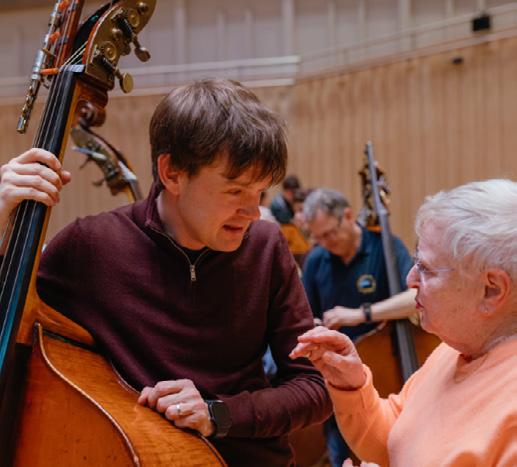
By becoming an RSNO Circle Member or Patron, donating to our appeal or leaving a gi in your Will, you are helping to keep Scotland’s National Orchestra on stage and in communities across the country.
To find out more please contact polly.lightbody@rsno.org.uk
RSNO Patrons support the Orchestra by aligning their giving to a specific area of interest, from individual musicians and our Engagement activity through to new commissions and international touring. Being a Patron brings you closer to our community of supporters, with access to our members’ bar and exclusive events.

Carl Orff’s
30th Anniversary Gala
Usher Hall, Edinburgh 13th Sept, 5pm
Conductor Christopher Bell
World premiere of The World by Jay Capperauld
Scottish premiere of the new orchestrated version of The Passing of the Year by Jonathan Dove
Book now: nycos.co.uk
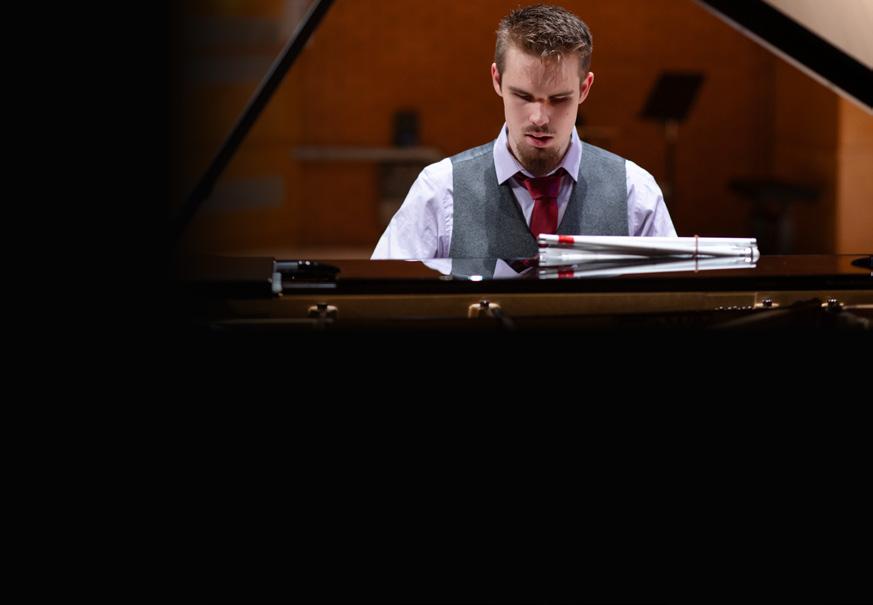
Sun 7 Jun 2026: 1pm
Debussy Three movements from Préludes Book I
Debussy Four movements from Préludes Book II
Ethan Loch Melody of Gratitude
Ethan Loch Fantasy of the Sea World Premiere
Ethan Loch Piano Antonia Cramb Ballet Dancer
We are grateful to all our individual supporters for their generous philanthropy and loyalty. Your support enables the Orchestra to achieve its most ambitious goals and to continue inspiring people across Scotland both on and off the concert stage.
RSNO Benefactors
Sir Ewan and Lady Brown
Gavin and Kate Gemmell
Kat Heathcote and Iain Macneil
Ms Chris Grace Hartness
RSNO Conductors’ Circle
Ardgowan Charitable Trust
Stina Bruce Jones
Ian and Evelyn Crombie
Kenneth and Julia Greig
Shirley Murray
David and Alix Stevenson
Eric and Karen Young
Learning and Engagement Patrons
William Brown, W.S
The Dundee RSNO Circle Committee
Neil and Nicola Gordon
Professor Gillian Mead, FRSE
Nicholas and Alison Muntz
Maurice and Nicola Taylor Charitable Trust
Assistant Conductor
Celia Llácer
The Solti Foundation Chair
First Violin
Maya Iwabuchi LEADER Dunard Fund Chair
Tamás Fejes ASSISTANT LEADER
The Bill and Rosalind Gregson Chair
Ursula Heidecker Allen
The James and Iris Miller Chair
Elizabeth Bamping
The WL and Vera Heywood Chair
Alan Manson
The Hugh and Linda Bruce-Watt Chair
Liam Lynch
Ms Chris Grace Hartness Chair
Lorna Rough
The Sir Richard Dunbar Chair
Second Violin
Marion Wilson ASSOCIATE PRINCIPAL
The Nigel & Margot Russell Chair
Sophie Lang
The Ian & Evelyn Crombie Chair
Viola
Tom Dunn PRINCIPAL
The Cathy & Keith MacGillivray Chair
Lisa Rourke SUB PRINCIPAL
The Meta Ramsay Chair
Francesca Hunt
The Rolf and Celia Thornqvist Chair
RSNO Patrons
Geoff and Mary Ball
Lady Rebecca Fraser
Don and Lois Macleod
Walter and Janet Reid Charitable Trust
George Ritchie
Stephen Sweeney
Valerie Wells
Cello
Pei-Jee Ng PRINCIPAL
Ms Chris Grace Hartness Chair
Betsy Taylor ASSOCIATE PRINCIPAL
The Maxwell Armstrong Chair
Kennedy Leitch ASSISTANT PRINCIPAL
The David and Anne Smith Chair
Rachael Lee
The Christine and Arthur Hamilton Chair
Double Bass
Nikita Naumov PRINCIPAL
The Gregor Forbes John Clark Chair
Michael Rae ASSISTANT PRINCIPAL
James Wood Bequest Fund Chair
Flute
Katherine Bryan PRINCIPAL
The David and Anne Smith Chair
Oboe
Adrian Wilson PRINCIPAL
The Hedley Wright Chair
Peter Dykes ASSOCIATE PRINCIPAL
Witherby Publishing Group Charitable Trust Chair
Cor Anglais
Henry Clay PRINCIPAL
In memory of a dear friend, Fiona H
Clarinet
Timothy Orpen PRINCIPAL
The Shirley Murray Chair
William Knight
The Turcan Connell Chair
Horn
David McClenaghan SUB-PRINCIPAL
The Springbank Distillers Chair
Alison Murray ASSISTANT PRINCIPAL
Mr & Mrs Pierre and Alison Girard
Martin Murphy ASSISTANT PRINCIPAL
The Gordon Fraser Charitable Trust Chair
Andrew McLean
The Catherine McLagan Chair
Trumpet
Christopher Hart PRINCIPAL
Ms Chris Grace Hartness
Timpani
Paul Philbert PRINCIPAL
Ms Chris Grace Hartness
Staff
Chiko Parkinson COMMUNITY SINGING ASSISTANT
Supported by ScotRail
We are also grateful to those who give but who wish to remain anonymous.
If you would like to discuss how you can become an RSNO Patron, please contact Constance Fraser, Head of Development (Individuals and Partnerships), at constance.fraser@rsno.org.uk
Virtuoso
Ms Catherine Y Alexander
Mrs A M Bennett
Mr Alan and Mrs Carolyn Bonnyman
Dame Susan and Mr John Bruce
Stephen and Morny Carter
Francesca and Eoghan Contini Mackie
Dr Clive Criper
Martin and Carola Gordon
Scott and Frieda Grier
Judith and David Halkerston
Iain MacNeil and Kat Heathcote MBE
Ian and Sarah Lister
Miss A McGrory
Maureen Michie
Mr James Miller CBE
Mrs Abigail Morrison
Nicholas and Alison Muntz
Bernard and Jane Nelson
Meta Ramsay
Mr and Mrs W Semple
Gregor and Lesley Stewart
Mr Ian Taft
Claire and Mark Urquhart
Raymond and Brenda Williamson
Margaret Duffy and Peter Williamson
Symphony
Mr John Brownlie
Mr A Campbell
Dr K Chapman and Ms S Adam
Sir Sandy and Lady Crombie
Mr W G Geddes
Dr Robert Gibb
Mr I Gow
Christine Lessels
Hon Lord McGhie
Mrs A McQueen
Kathryn Michael
Mr Iain Percival
David and Maggie Robinson
Mrs Henrietta Simpson
Ian and Janet Szymanski
Dr C Cradock and Dr S Todd
Nelson and Barbara Waters
Tom and Lisa Watson
Philip Whitely and Robert H Mackay
Concerto
Neil Barton
Mrs Mary Black
Miss D Blackie
Dr C M Bronte-Stewart
Dr F L Brown
Mr and Mrs Burnside
David Caldwell
Ms H Calvert
Ross Cavanagh
Myk Cichla
Terry and Joan Cole
Dr J Coleiro
Christine and Jo Danbolt
Steven J Davis
Mr and Mrs K B Dietz
Dr A Ewing
David and Sheila Ferrier
Mr C Ffoulkes
William Findlay
Mr and Mrs M Gilbert
Lord and Lady Hamilton P Hayes
David G Henderson
Dr and Mrs P Heywood
Ms H Kay
Mr and Mrs W Kean
Nicholas Kilpatrick
Morag MacCormick
Mr and Mrs Marwick
Mr S Marwick
Mrs Sandra Maxwell
Mr and Mrs G McAllister
Mrs M McDonald
Dr A H McKee
Mr Rod McLoughlin
Morag Millar
Mrs B Morinaud
Dr and Mrs D Mowle
Mr K R and Dr C C Parish
Ms A and Miss I Reeve
Mrs E M Robertson
Sheriff Linda Ruxton
Dr and Mrs G K Simpson
Dr Norma H Smith
Mr and Mrs A Stewart
Jenny Stewart
David and Helen Strachan
Mr I Strachan
Dr G R Sutherland
Mr and Mrs J B Watson
Mr and Mrs D Weetman
Helen and Peter Wilde
David W Wren
Roderick Wylie
Sonata
Mr and Mrs G H Ainsley
Mr K Allen
Dr A D Beattie
Mrs H Benzie
Mr R Billingham
John Bradshaw and Shiona Mackie
Mrs Bryan
Andrew Burrows
Mrs C M Campbell
Miss S M Carlyon
Amanda Carter-Fraser
Alan Clevett
Lady Coulsfield
Adam and Lesley Cumming
Mrs C Donald
J Donald and L Knifton
Mr John Duffy
Mr R M Duncan
Brigadier and Mrs C C Dunphie
Mrs E Egan
Mr R Ellis
Mr R B Erskine
Dr E Evans
Kenneth Forbes
Mr D Fraser
Philip and Karen Gaskell
Elizabeth Gibb
Mrs M Gibson
Mrs M Gillan
Mrs J K Gowans
Dr J and Mrs H Graham
Professor and Mrs A R Grieve
Simon and Fiona Guest
Mr Martin Hammick
Dr P J Harper
Dr N Harrison
Mr and Mrs R J Hart
Bobby and Rhona Hogg
Mr and Mrs F Howell
Mrs A Hunter
Inez Hutchison
Professor R N Ibbett
Thomas Jakobsen Burns
Geoffrey and Elizabeth Johnston
Iain M Lanaghan
Ms K Lang
Mrs Anne Lindsay
Dr Dorothy A Lunt
Mrs Jean C Martin
Mr and Mrs J Martin
Ms S McArthur
Jean McCutcheon
Rhyse McDermid
Mr M McGarvie
Mrs S McGeachan
Dr Colin McHardy
Ms H L McLaren
Margaret McLay
Libby McLean
Mr and Mrs B Mellon
Simon Michaelson
Mr I Mills
Mrs P Molyneaux
Kenneth M Murray
Bruce and Christine Nelson
Alastair Ogilvie
Mr and Mrs K O’Hare
Mr and Mrs K Osborne
Dr G Osbourne
Mr A Ownsworth
Mr R Parry
John Paterson
Misses J and M Penman
Mr J W Pottinger
Miss J A Raiker
Alastair Reid
Ms F Reith
Dr and Mrs D Robb
Anne Robertson
Ms A Robson
Mrs J Shanks
Mr J A Shipley
Dr M J and Mrs J A Shirreffs
Richard and Gillian Shirreffs
Ana Smith
Mrs E Smith
Mr M Smith
Dr and Mrs B Stack
Mrs Lorna Statham
Mrs R F Stewart
Mr and Mrs B Tait
Lisbeth Thoms
Dr and Mrs T Thomson
Dr Morag Ward
Dr Alex Watson
Mr W Watters
Alan Weddell
Mr and Mrs D Weetman
Mr R Young
Thank you to all our members of the Circle, including Overture members and those who wish to remain anonymous.
If you would like to discuss how you can become an RSNO Circle member, please contact Polly Lightbody, Individual Giving and Partnerships Officer, at polly.lightbody@rsno.org.uk

Charitable trusts and foundations have a distinguished history of supporting the RSNO, both on and off the stage. From one-off donations for specific concerts and musicians’ chairs, to multi-year funding for our community engagement initiatives, including our Schools Programme, every grant in support of our work is truly appreciated. We are grateful to the following trusts and foundations for their generosity:
Aberdeen Endowments Trust
ABO Sirens Fund
Adam Mickiewicz Institute
Alexander Moncur Charitable Trust
Alma & Leslie Wolfson Charitable Trust
Adam Mickiewicz Institute
Balgay Children’s Society
Boris Karloff Charitable Foundation
Brownlie Charitable Trust
Castansa Trust
CMS Charitable Trust
Common Humanity Arts Trust
Cookie Matheson Charitable Trust
Cruden Foundation
David and June Gordon Memorial Trust
Dunclay Charitable Trust
Educational Institute of Scotland
Ettrick Charitable Trust
Fidelio Charitable Trust
Forteviot Charitable Trust
Gannochy Trust
Gaelic Language Promotion Trust
Gordon Fraser Charitable Trust
Great Britain Sasakawa Foundation
Harbinson Charitable Trust
Hobart Charitable Trust
Hugh Fraser Foundation
James Wood Bequest Fund
Jennie S Gordon Memorial Foundation
Jean & Roger Miller’s Charitable Trust
Jimmie Cairncross Charitable Trust
John Scott Trust Fund
John Mather Trust
Jones Family Charitable Trust
JTH Charitable Trust
Leach Family Charitable Trust
Leng Charitable Trust
Lethendy Charitable Trust
Marchus Trust
McGlashan Charitable Trust
Meikle Foundation
Mickel Fund
Miss E C Hendry Charitable Trust
Miss Jean R Stirrat’s Charitable Trust
Murdoch Forrest Charitable Trust
N Smith Charitable Settlement
Nancie Massey Charitable Trust
Noel Coward Foundation
Northwood Charitable Trust
Nugee Foundation
Pear Tree Fund for Music
PF Charitable Trust
Pump House Trust
Q Charitable Trust
R J Larg Family Trust
Ronald Miller Foundation
Rowena Alison Goffin Charitable Trust
Russell Trust
Scops Arts Trust
Scott Davidson Charitable Trust
Scottish Enterprise
Solti Foundation
Souter Charitable Trust
Stanley Morrison Charitable Trust
Stevenston Charitable Trust
Sylvia Aitken Charitable Trust
Tay Charitable Trust
Thriplow Charitable Trust
Tillyloss Trust
W A Cargill Fund
W M Mann Foundation
W M Sword Charitable Trust
Walter Scott Giving Group
Wavendon Foundation
Weir Charitable Trust
Zich Trust
We are also grateful to a number of trusts that wish to stay anonymous.
If you would like more information about our work and how you can make a difference, please contact Niamh Kelly, Trusts and Projects Manager, at niamh.kelly@rsno.org.uk
FUNDERS





PRINCIPAL MEDIA PARTNER



CORPORATE SUPPORTERS



PRINCIPAL TRANSPORT PARTNER


BROADCAST PARTNER

PARTNERS
Adelaide Place • Age Scotland • Black Lives in Music • Charanga • Children’s Classic Concerts
Children’s Hospices Across Scotland • Classic FM • Douglas Academy • Dundee Science Centre
Dunedin Consort • Edinburgh Zoo • Education Scotland • Fanzclub • Gig Buddies • GMAC Film
Heads of Instrumental Teaching Scotland • Hebrides Ensemble • Kibble • Luminate • Marine Conservation Society
MARSM • Music Education Partnership Group • ParentZone • The Pyramid at Anderston
Royal Conservatoire of Scotland • Scottish Book Trust • Scottish Chamber Orchestra
Scottish Refugee Council • Sistema Scotland • St Mary’s Music School • Tayside Healthcare Arts Trust
Trees for Life • University of Glasgow • V&A Dundee • Visible Fictions
With thanks to Mr Hedley G Wright and the Springbank Distillery for their support of the RSNO
If you would like more information about sponsorships, corporate partnerships or fundraising events with the RSNO, please contact Constance Fraser, Head of Development (Individuals and Partnerships), at constance.fraser@rsno.org.uk
PATRON
His Majesty The King
ARTISTIC TEAM
Thomas Søndergård
MUSIC DIRECTOR
Patrick Hahn
PRINCIPAL GUEST CONDUCTOR
Celia Llácer
ASSISTANT CONDUCTOR
Ellie Slorach
ENGAGEMENT CONDUCTOR
Kellen Gray
ASSOCIATE ARTIST
Neeme Järvi
CONDUCTOR LAUREATE
Alexander Lazarev
CONDUCTOR EMERITUS
Stephen Doughty
DIRECTOR, RSNO CHORUS
Patrick Barrett DIRECTOR, RSNO YOUTH CHORUSES
CHIEF EXECUTIVE
Alistair Mackie
CHIEF EXECUTIVE
Dr Jane Donald
DEPUTY CHIEF EXECUTIVE
Nicola Kelman
EXECUTIVE ASSISTANT
PLANNING
Tammo Schuelke
DIRECTOR OF ARTISTIC PLANNING
Xander van Vliet
ARTISTIC PLANNING MANAGER
Rachel Pullin
ARTISTIC PLANNING OFFICER
Richard Payne
HEAD OF LIBRARY SERVICES
Megan Bousfield
LIBRARY ASSISTANT
Christine Walker
CHORUS MANAGER
ORCHESTRA MANAGEMENT
Matthias Van Der Swaagh
HEAD OF ORCHESTRA MANAGEMENT
Brodie Smith
DEPUTY ORCHESTRA MANAGER
Megan Walker
ORCHESTRA AND PROJECTS OFFICER
OPERATIONS AND PRODUCTION
Craig Swindells
HEAD OF PRODUCTION
Adam Dundas
STAGE MANAGER
Dylan Findlay
ASSISTANT STAGE MANAGER
Ted Howie
FACILITIES MANAGER
RSNO BOARD OF DIRECTORS
Elected Directors
Gregor Stewart CHAIR
Gail Blain
HONORARY TREASURER
Kayla-Megan Burns
Ken Hay
Kat Heathcote MBE
Don Macleod
David Robinson
John Stewart
David Strachan
Cllr Edward Thornley
NOMINATED DIRECTOR
Julia Miller
COMPANY SECRETARY
Player Directors
Katherine Bryan
Christopher Hart
David Hubbard
William Knight
David McClenaghan
Lorna Rough
SCHOOLS ADVISORY GROUP
Pam Black
Norman Bolton
Martin Greig
Neil Millar
Mae Murray
Andrew Stevenson
DIRECTOR OF ENGAGEMENT
Anna Crawford
ENGAGEMENT DELIVERY MANAGER (MATERNITY LEAVE)
Rachel Naismith
ENGAGEMENT DELIVERY MANAGER (MATERNITY COVER)
Maisie Leddy
ENGAGEMENT PRODUCER
Chiko Parkinson
COMMUNITY CHORUS AND PARTNERSHIPS COORDINATOR SUPPORTED BY SCOTRAIL
EXTERNAL RELATIONS
Dr Jane Donald
DIRECTOR OF EXTERNAL RELATIONS
Carol Fleming
HEAD OF MARKETING
Constance Fraser
HEAD OF DEVELOPMENT
Ian Brooke
PROGRAMMES EDITOR
Fred Bruce
TRUSTS AND PROJECTS ADMINISTRATOR
Clara Cowen
MARKETING MANAGER
Seonaid Eadie
EXTERNAL RELATIONS OFFICER
Katie Kean
COMMUNICATIONS AND MARKETING OFFICER
Niamh Kelly
HEAD OF TRUSTS AND PROJECTS
Polly Lightbody
DEVELOPMENT MANAGER
Graham Ramage
GRAPHIC DESIGNER
Sam Stone
INFORMATION SERVICES MANAGER
Ross Williamson
VIDEO PRODUCER (MARKETING)
Hedd Morfett-Jones
STUDIO MANAGER
Sam McErlean
MEDIA MANAGER AND AUDIO ENGINEER
Ahan Sengupta
TRAINEE AUDIO ENGINEER
AND CORPORATE SERVICES
Nicola Mills
DIRECTOR OF FINANCE AND CORPORATE SERVICES
Susan Rennie
HEAD OF FINANCE
Jade Wilson
FINANCE OFFICER
Abby Dennison
FINANCE ADMINISTRATOR
Phoebe Connolly
FINANCE ASSISTANT
Contents © Copyright RSNO and named authors.