Be there to support your mates.
Can you tell if your mates are really ok?
If one of them isn’t, would you know the best way to help? When someone we care about is struggling, we naturally want to help. But we may not know how – and helping may feel difficult or uncomfortable.
Backed by research, the latest RSL Be:Well module can help prepare you to support your mates – and seek professional help if needed.
Check out Be:A Supportive Mate – now available free online.
Returned & Services
League of Australia
(Queensland Branch)
ABN 79 902 601 713
State President Major General Stephen Day DSC AM
State Deputy President Wendy Taylor
State Vice President Arran Hassell CSC
Administration
PO Box 629, Spring Hill, Qld 4004
T: 07 3634 9444
E: reception@rslqld.org
W: rslqld.org
Advertising Peter Scruby
E: massmedia@ themediaworkshop.com.au
Editor RSL Queensland E: editor@rslqld.org
Content Coordinators, Graphic Design
Varsity Graphics
W: varsitygraphics.com.au
Printing & Distribution
Printcraft
W: printcraft.com.au
RSL Queensland current membership: 35,316
Queensland RSL News distribution: 30,000
Submissions: Editorial and photographic contributions are welcome. Please contact the Editor for guidelines. Preference will be given to electronic submissions that adhere to word limits and are accompanied by high resolution photos. Originals of all material should be retained by contributors and only copies sent to Queensland RSL News
Disclaimer: Advertisers and contributors to Queensland RSL News acknowledge that they are aware of the provisions of the Anti-Discrimination Act 1977 and the Competition and Consumer Act 2000 in relation to false and misleading advertising or statements under other unfair practices and the penalties for breach of provisions of these Acts. The publisher accepts no responsibility for such breaches. Opinions expressed by contributors are their own and not necessarily endorsed by Queensland RSL News or the publishers. All material in Queensland RSL News is copyright and may not be reproduced in whole or in part without the express permission of the publishers. All articles are general in nature. Individuals should seek expert advice before acting on any information.
Please note: This publication may contain images of deceased Aboriginal and Torres Strait Islander peoples.


23
WHATEVER HAPPENED TO THE CRUSADER?
Launched in 1919, The Crusader set out to champion Queensland’s returned servicemen – but numerous challenges brought it to an early end.
31
CELEBRATING 100+ YEARS OF COMMUNITY SPIRIT
Geebung Zillmere Bald Hills
Aspley RSL Sub Branch celebrated its centenary in 2023, with its connection to community stronger than ever.
39
TURNING CARING INTO A NEW CAREER
The RSL Employment Program helped veteran partner Cherie Mortimer find a new career in nursing.

42 FROM DARKNESS INTO LIGHT
Led by veterans, the Timor Awakening program has helped transform hundreds of lives affected by trauma.
46 FROM RUBBLE TO RENOVATION
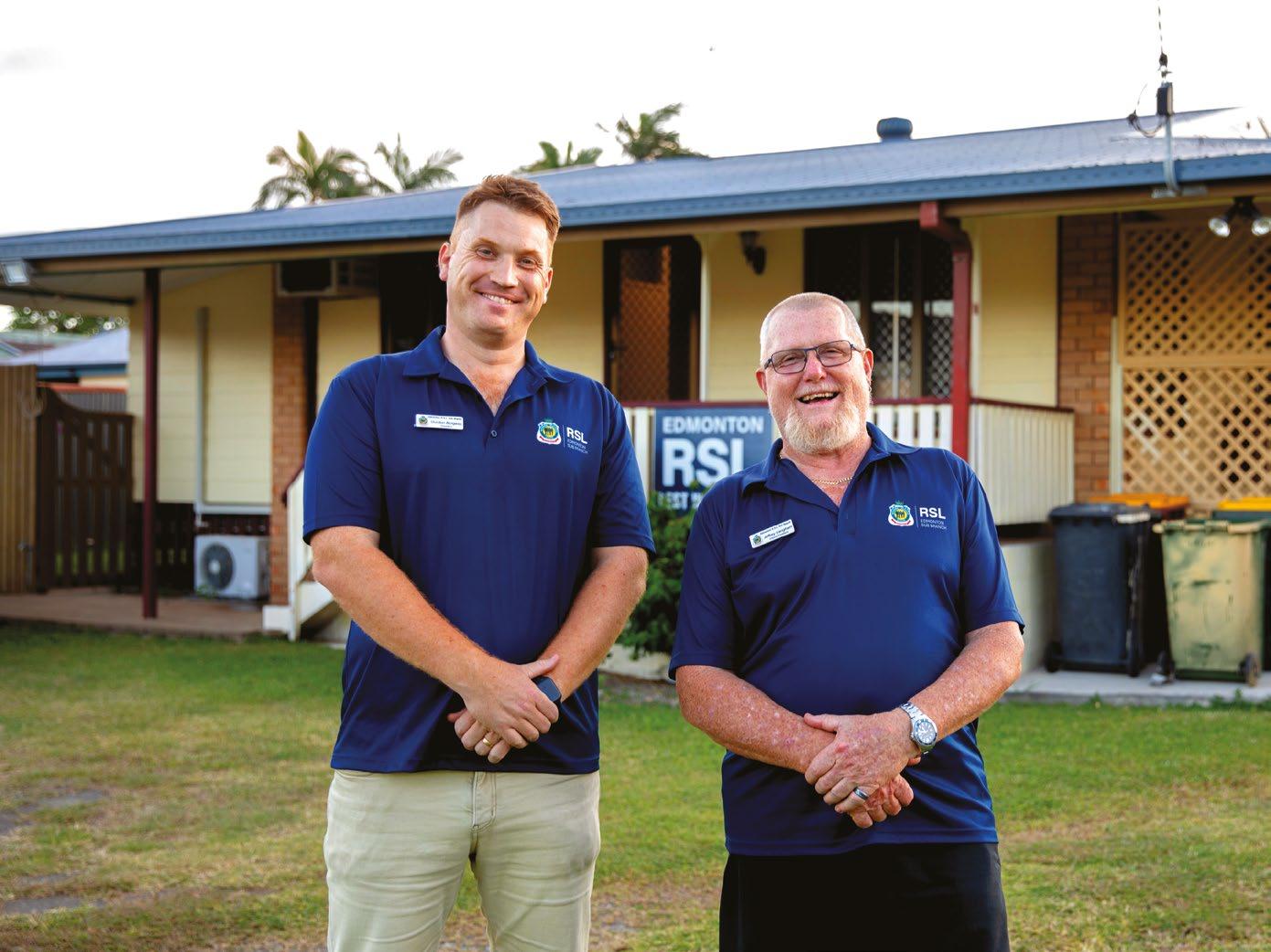
Gordonvale RSL Sub Branch members and the local community have banded together to refurbish their beloved hall.
53
REMEMBRANCE DAY 2025
More than 165 RSL Sub Branches held commemorative services across Queensland on 11 November, honouring the courage and sacrifice of so many who have worn their nation’s uniform.
66
EMBARKING ON A PILGRIMAGE OF REMEMBRANCE
Army veteran Tony Young recently travelled to Europe to honour Australia’s fallen heroes.
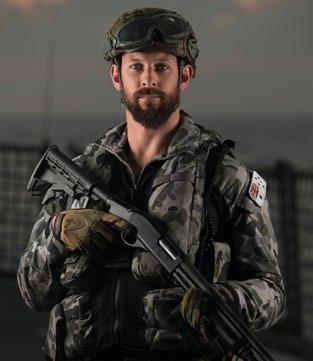
68 AGAINST THE TIDE
One man, two fins, one world first. Veteran Ashley Semmens conquered the English Channel –and his own limits – for charity.
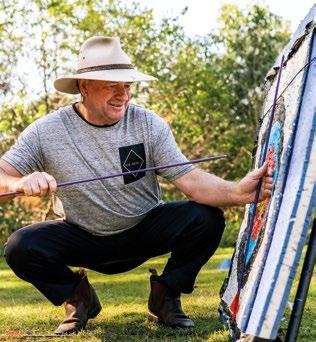
72
A SAFE SPACE
Army veteran Steve Bain explains how RSL Rec Connect events provide him with the opportunity to connect with other veterans.
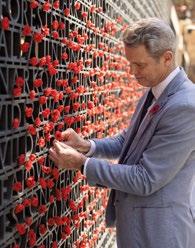
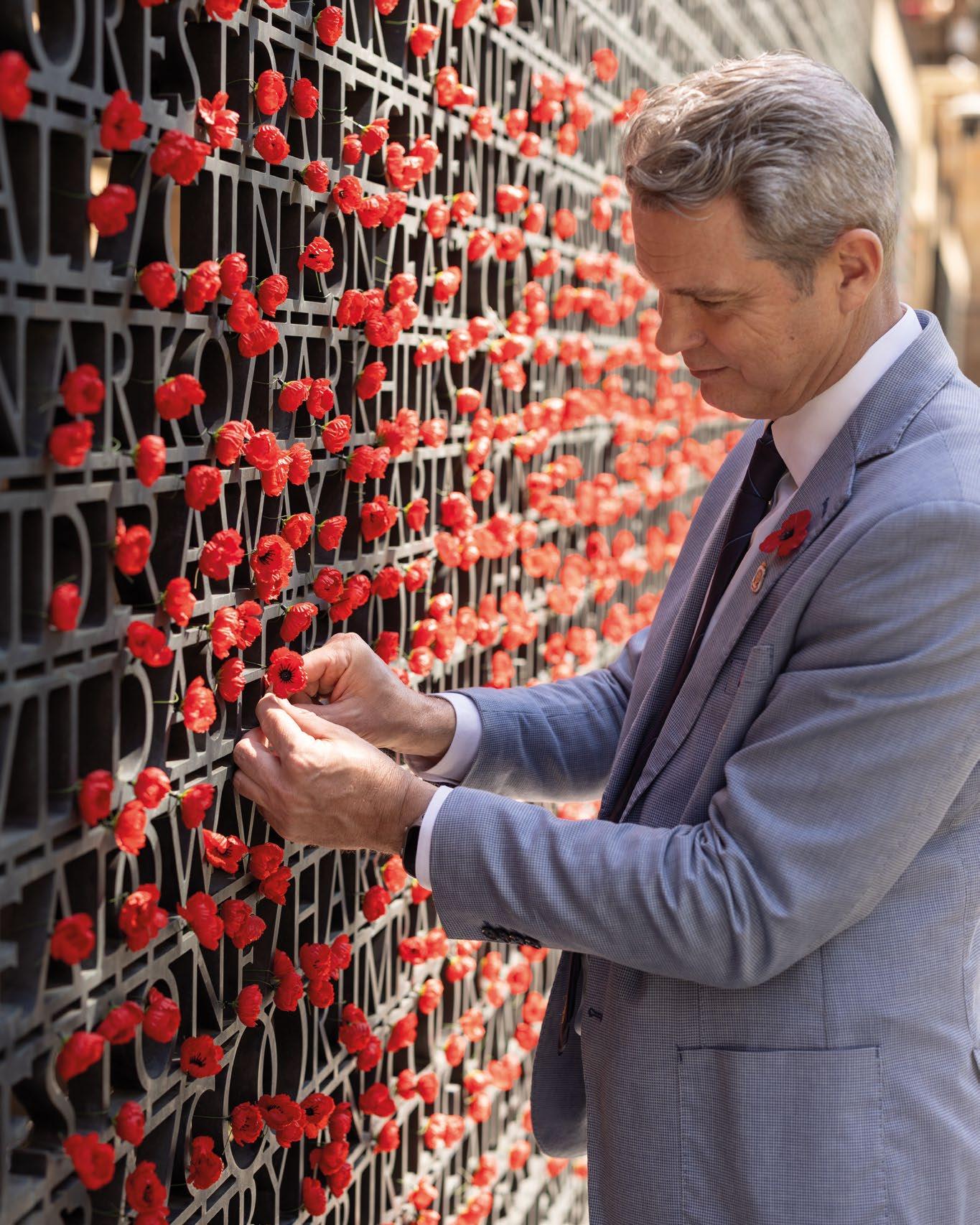
Toowong RSL Sub Branch member James Mackay places a poppy tribute in Brisbane’s Anzac Square for Remembrance Day.
Supporting veterans in 2025
OVER the past year, RSL Queensland has strengthened its commitment to care, commemoration and camaraderie.
I’m proud to highlight some key achievements in these areas.
CARE: VETERAN SERVICES REVIEW
This year, RSL Queensland undertook a review of veteran services, prompted by member feedback and the Royal Commission into Defence and Veteran Suicide. The review asked whether our services aligned with veterans’ needs.
We know our systems can be more efficient, and we must connect more closely with veterans and local support networks. Some changes have already taken place, including Mates4Mates joining RSL Queensland, streamlining governance and improving access to support.
There’s more work ahead, particularly in responding to the Royal Commission’s recommendations, but overseeing this review will remain a key focus.
COMMEMORATION: ANZAC DAY AND VP DAY ANNIVERSARIES
In 2025, RSL Queensland marked several significant commemorations.
On 15 August, we honoured the 80th anniversary of Victory in the Pacific and the nearly one million Australians who served in World War II (WWII), including more than 39,000 who never returned.
I’d like to highlight the efforts of two RSL Districts. South Eastern District organised
an event attended by seven WWII veterans, while North Queensland District supported Townsville City Council’s three-day commemoration, also attended by WWII veterans.
At the Royal Queensland Show (Ekka), we held a special VP80 display where I spoke about the Showgrounds’ wartime role and 1945 peace celebrations.
This ANZAC Day marked 110 years since the Gallipoli landings. More than 500 services were hosted by RSL Sub Branches across Queensland, with strong community participation despite some weather impacts.
This year’s turnout was among the strongest in recent memory, reflecting the strength of the ANZAC tradition.
I also want to note the recent Bill that aimed to limit veterans’ ability to seek reviews of Defence decisions on retrospective honours and awards. Although the Bill has now been withdrawn, RSL Queensland supported RSL Australia in preparing a submission outlining our concerns.
Before its withdrawal, the Independent Chair of the Defence Honours and Awards Appeals Tribunal warned the Bill would severely limit the Tribunal’s ability to hear appeals. While it is no longer proceeding, we remain firm that any move to restrict fair review processes for veterans is unacceptable.
CAMARADERIE: RECOGNISING OUR MEMBERS
On the camaraderie front, our membership continued to grow in 2025, surpassing 35,000 members. This milestone reflects the strong
and supportive community veterans find in their local Sub Branch.
During National Volunteer Week in May, we recognised RSL Queensland members whose time, skills and compassion support veterans, their families and communities. From connecting people with services to leading commemorations, our volunteers remain vital to our mission and deeply appreciated.
An important initiative this year has been sharing Sub Branch stories that showcase the many ways our members contribute – preserving history, delivering wellbeing programs, mentoring veterans and leading community projects. These stories reflect the significant impact of our members.
This work will continue in 2026, celebrating our diverse Sub Branches and their role in fostering camaraderie.
Thank you for all you’ve done this year to support veterans and their families. I wish you a safe and restful holiday season and look forward to continuing our important work together in the new year.
Stephen Day
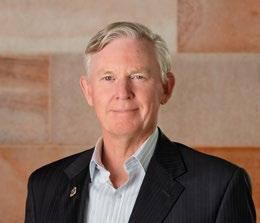
RSL Queensland State President Major General Stephen Day DSC AM
Building momentum into 2026
I’M surprised that we’re into our final edition of Queensland RSL News for 2025. While the time has flown by, RSL Queensland has continued to advance throughout the year.
A NEW WEBSITE AND MEMBERSHIP GROWTH
Sub Branches have grown their membership again in 2025, and I’m proud to say the League in Queensland is in a healthy place. We’ve introduced a renewed prize line-up for the Dream Home Art Union and added new innovations to our existing services framework for veterans and their families.
As part of our engagement with veterans across the state, you may have noticed our website has changed. Among other improvements, this has provided a better user experience for those seeking support and directed more people to activities within their Sub Branches and communities.
I encourage everyone to visit the ‘What’s on’ section of the website, where you can find out what’s happening in your community based on your location. This is designed to help members and others connect with activities in the areas of care, commemoration and camaraderie.
You will also find it easier to access and understand our services, reducing barriers for those seeking assistance.
STATE COLLABORATION
In November, I again met with CEOs from other RSL State Branches. Our shared goal remains strengthening our
connection and developing opportunities to provide a greater national support model. This will help us improve alignment and understanding of our services across Australia.
FOUR KEY PRIORITIES FOR 2026
Looking ahead to 2026, there are four key matters in the forefront of my mind.
First, we will ensure our approach – aligned with our three strategic pillars – remains appropriate and sustainable across Queensland. You will see a change in our regional support model, bringing our services together locally to enhance support and community engagement.
This will allow for greater coordination – particularly across the support areas of care and camaraderie. We look forward to continuing to connect and enable our support through Sub Branches across Queensland.
Second, we will continue to evolve our support model for veterans and their families at a federal level. You may have seen our online program RSL Be:Well was recently promoted through Open Arms and the Department of Veterans’ Affairs.
This is an example of how the RSL can develop scalable capability to benefit all veterans and their families nationally. These opportunities also showcase what the RSL can anchor to when we all work together.
Third, we will embed the new Dream Home Art Union prize lineup and continue sourcing amazing
prizes for our supporters –evolving and enhancing our value proposition along the way. We will also ensure our systems and capabilities are well positioned to support our future plans.
Finally, we will work to finalise a sustainable position for RSL Queensland. This includes achieving clarity on our sustainable size, service offerings, support model and revenue diversification, ensuring we can continue to deliver on our mission into the future.
As this is my final Queensland RSL News message for the year, I would like to wish you all a merry Christmas and a happy new year. I look forward to working collaboratively through 2026 to support those we are charged to serve, keep up our membership growth and continue to connect the good work of the RSL across Queensland and nationally.
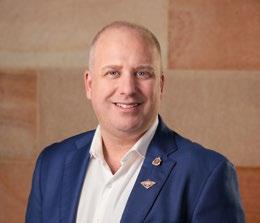
RSL Queensland Chief Executive Officer Robert Skoda
Robert Skoda
Continuing to challenge the status quo
AS I reflect on the many great accomplishments across the League in 2025, I want to acknowledge the Sub Branches that have embraced the spirit of positive change and had the courage to rethink long-standing ways of doing things.
POSITIVE CHANGE
In all cases, those Sub Branches are listening to their members and encouraging veterans from the wider community to ‘check out’ the Sub Branch. They also have effective committees that work together to ensure the Sub Branch supports veterans and their families with dignity and respect.
We’ve also seen younger veterans elected to committees take the time to respectfully acknowledge the previous committee’s dedication while bringing new energy and ideas to the Sub Branch.
As a direct result, membership across RSL Queensland has continued to grow, and we are meeting the expectations of our members, veterans and the wider community. In some cases, new committees with fresh ideas have ensured a Sub Branch not only survives but thrives.
CHALLENGING THE WAY WE DO THINGS
While we continue to develop the new By-Laws for release in early 2026, I am very impressed with the way our League has embraced ‘the way we do things around here’. Overwhelmingly, we are being good humans – giving each other a fair go, listening without judgement, resolving issues at
the lowest level and treating each other with mutual respect.
It has been great to see issues at all levels being resolved through communication, conversation and compromise, without the need for more formal mediation or disciplinary outcomes. We should continue to focus on how we manage a range of issues across the League that reinforce our strong sense of support and compassion for others. We must remain an organisation that values its members and purpose over self-interest.
Since our 2025 State Congress, many Sub Branches have reviewed the way they have always done things and created time and space to focus on what really matters, while reducing governance and remaining compliant.
We continue to challenge the status quo at State Branch with the launch of a new RSL Queensland website, a review of key processes to better support and enable Sub Branches, and an organisational review of Veteran Services. This work will ensure we are structured to deliver outcomes that matter most to our veterans and members.
In 2026, we will continue to evolve – supported by new By-Laws, updated governance guides and training, and a focused workforce dedicated to enabling Districts and Sub Branches.
CLOSING OUT 2025
It was an honour to close out the year with Remembrance Day commemorations across the state, supporting our Christmas hamper initiative and preparing
our revised By-Laws for Board approval.
I encourage all of us to reflect on our success, identify opportunities and improve anything that didn’t quite work for us in 2025. We shouldn’t be afraid to accept that we didn’t get everything right, and with honesty, reflection and calmness, consider how we can do things better.
As a final thought, over the past two years I have attended most District Annual General Meetings and visited around 100 Sub Branches. I have also had the pleasure of attending or officiating many events honouring our amazing volunteers, Life Members, Meritorious Medal recipients, commemorations and Sub Branch celebrations.
It remains my sincere privilege to represent you all as State Secretary and to be actively involved in such an important mission. I deeply appreciate the great work you do across the League every day in support of our veterans and their families.
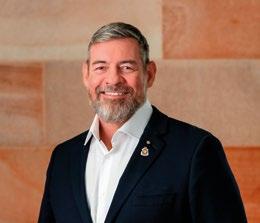
Iain Carty CSM
RSL Queensland State Secretary
Iain Carty



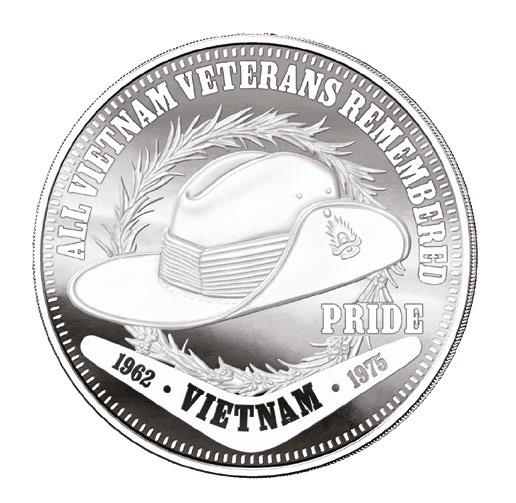
HONOURING ALL VIETNAM VETERANS SILVER COMMEMORATIVE COIN -
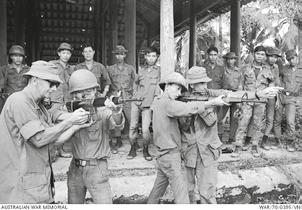
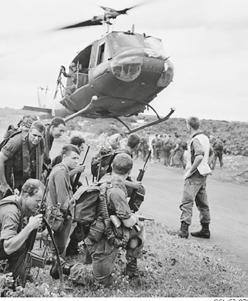
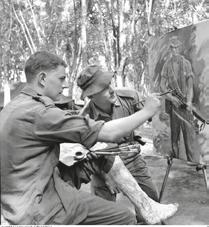
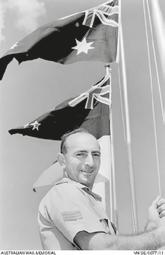
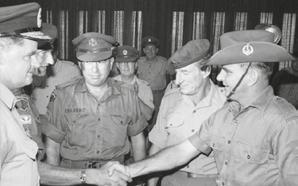
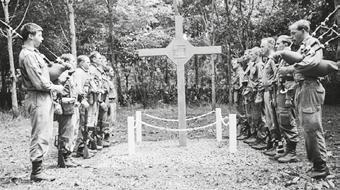
In the early 1960s, Australian support for South Vietnam was largely in keeping with the policies of Allied nations - particularly the United States - to stem the spread of communism across Asia, with the South Vietnamese government repeatedly requesting security assistance. The arrival of the Australian Army Training Team Vietnam - thereafter known as the ‘Team’ - in South Vietnam in August 1962 was the beginning of Australia’s involvement in the Vietnam War. Now recognised as some of the bravest service personnel in our military history, The Bradford Mint is proud to honour all veterans who served - male and female, military and medical, artillery and ancillary - and remember their selfless service and sacrifice with this meticulously crafted, fully etched, Silver Commemorative Coin. One of just 1,975 minted worldwide - in line with when the war ended - the coin celebrates the pride of our ANZACs - their attributes, battles and Australia’s pivotal part in that tortuous conflict. Accompanied by a fact-filled booklet and Certificate of Authenticity - issued under the authority of Ascension Island and approved by Buckingham Palace - this pure silver coin signifies the pride, respect and recognition that all personnel who served in Vietnam deserve - then and now.
Specifications
YEAR OF ISSUE 2025

ONLY $99.00
ALLOY .999 Silver
DIAMETER 22mm
WEIGHT 1/4 oz
DENOMINATION Quarter Crown
MINTAGE LIMIT 1,975 worldwide
QUALITY Proof - the highest quality possible
ISSUING AUTHORITY Ascension Island, approved by Buckingham Palace
REVERSE Finely etched legendary Australian slouch hat, boomerang and a rosemary wreath commemorating Australian heroes in the Vietnam war, along with the word, ‘PRIDE’.
OBVERSE Portrait of His Majesty King Charles III

Call one of our Senior Executives today on 02 9841 3324 to secure your limited-edition celebration of EVERY Vietnam Veteran for just $99.00.
AN ENJOYABLE read
Queensland RSL News is delivered to members across our stunning state – from the tropical shores of Thursday Island in the north and the historic town of Wallangarra in the south, to the serene sands of Point Lookout in the east and the rugged beauty of Mount Isa in the west.
For more than a year, we’ve been travelling around Queensland to highlight some of the unique locations where our readers enjoy the magazine. You may have spotted some of these photos on our social media.
We’d love to see other interesting or unusual places where you’re perusing the publication. Send your photos to editor@rslqld.org.
Happy reading!
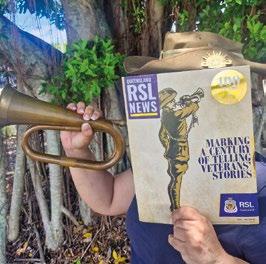
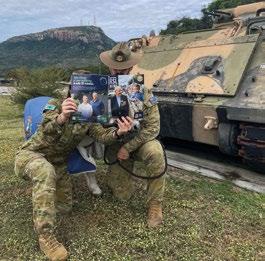
90 10 Edition 2 2025 is being enjoyed by Corporal Septimus (also known as Seppy), the mascot for the 1st Battalion, Royal Australian Regiment at Lavarack
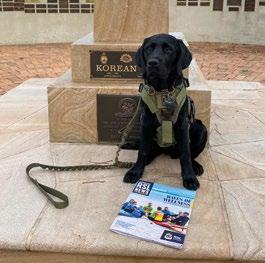
90 10 Shadow, a 4.5-month-old black Labrador, is pictured “reading” Edition 3 2024 of Queensland RSL News at Mudgeeraba War Memorial in RSL Gold Coast District.
Barracks in Townsville, in RSL North Queensland District. His handler is PTE Luke Rosin.
90 10 The arrival of the special Queensland Digger centenary Edition 1 2025 is heralded in at Cairns, in RSL Far Northern District.
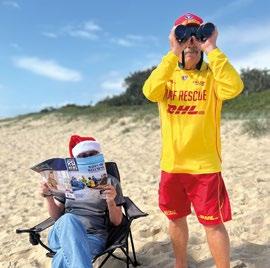
90 10 Two sandy members are getting in their summertime reading of Edition 4 2024 at the beach beside Kawana Waters RSL Sub Branch in RSL Sunshine Coast and Regional District.
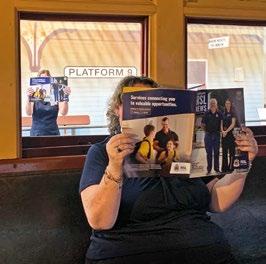
90 10 Our tour around the sunshine state made a stop at the Queensland Museum Rail Workshops in Ipswich, where RSL Moreton District staff were spotted reading Queensland RSL News Edition 3 2025.
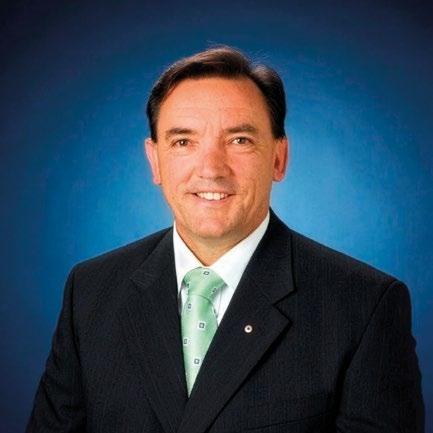
NEW RSL NATIONAL PRESIDENT
RSL QUEENSLAND congratulates Peter Tinley AM on his election as RSL Australia National President. Peter served 25 years in the Australian Defence Force, including 17 years with the Special Air Service (SAS) Regiment.
We thank Major General Greg Melick AO RFD FANZCN KC (Retd) for his leadership of RSL Australia over the past six and a half years.
We look forward to working with Peter to continue supporting veterans and their families.
NEW VETERAN & FAMILY WELLBEING CENTRE FOR IPSWICH
IN August, RSL Queensland announced the location for its latest Veteran & Family Wellbeing Centre in Ipswich, providing a centralised space for health and wellbeing support for veterans and their families.
The Centre, which will be located at 260 Brisbane Street, West Ipswich, is set to open in mid-2026, providing more than 10,000 veterans and their families living within the Ipswich and surrounding community with increased access to tailored support, plus an additional 5,000 Defence personnel at RAAF Base Amberley.
RSL Queensland Deputy CEO – Veteran Services Troy Watson said the Centre would make it easier for veterans and their families in the community to access support.
“With the growing population of veterans in the
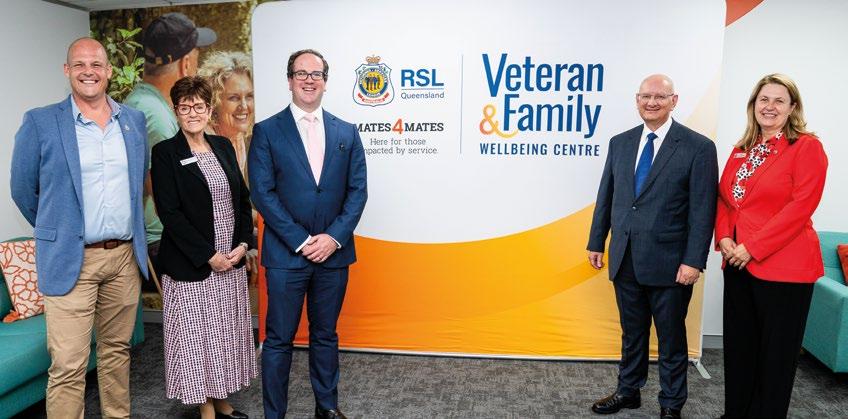
PICTURED: RSL Queensland Deputy CEO – Veteran Services Troy Watson, Wendy Bourne MP, Minister for Veterans’ Affairs Matt Keogh MP, Shayne Neumann MP and Ipswich Mayor Teresa Harding.
Ipswich community, it is vital that we establish a space where veterans and their families can easily access a variety of health and wellbeing services under one roof,” Mr Watson said.
The Veteran & Family
Wellbeing Centre Ipswich will span 800sqm and be home to RSL Queensland and Mates4Mates services, including compensation and wellbeing support, clinical services, a rehabilitation gym, and it will also host social connection activities. In addition, there will be several meeting rooms and bookable spaces that other service providers can book as required.
NEWS ADVOCATING FOR VETERANS IN 2025
IN 2025, RSL Queensland continued to amplify the voices of veterans and their families to ensure they are heard by decisionmakers, while also working to drive reforms that strengthen the wellbeing of the veteran community.
This work has delivered progress across state and national priorities, from the Royal Commission into Defence and Veteran Suicide to the development of Queensland’s first Veterans and Veterans’ Families Strategy.
QUEENSLAND VETERANS AND VETERANS’ FAMILIES STRATEGY
One of RSL Queensland’s key advocacy priorities over the past two years has been urging the Queensland Government to develop a Veterans’ Strategy, shaped by conversations and consultation with members and the broader veteran community. This effort paid off in 2025, with Premier David Crisafulli committing to deliver the first ever Queensland Veterans and Veterans’ Families Strategy and funding secured in the 2025-26 State Budget.
The Queensland Government held in-person consultations across the state and online to ensure the voices and experiences of veterans and their families
inform the development of the strategy. The consultation focused on five key pillars: commemoration and recognition; community and sport; education and employment; health, housing and support; and veterans in business. The consultation closed on 14 November.
ROYAL COMMISSION INTO DEFENCE AND VETERAN SUICIDE
September 2025 marked one year since the release of the Royal Commission’s Final Report. Veterans’ Affairs Minister Matt Keogh MP reported on the Australian Government’s work to implement its 122 recommendations, including simplifying veterans’ entitlements legislation and
reducing the DVA claims backlog.
As the Government moves into the second year, Minister Keogh said the focus will be on four priority areas – wellbeing, addressing military sexual misconduct, reforming the military justice system and establishing the Defence and Veterans’ Service Commission (DVSC).
DEFENCE AND VETERANS’ SERVICE COMMISSION
The DVSC commenced operations on 29 September, providing oversight of the health and wellbeing of current and former serving Defence Force members, as well as implementation of Royal Commission recommendations. RSL
Queensland, working with the national RSL network, made several submissions to the Royal Commission, Senate Inquiries and the Government advocating for the DVSC’s independence and powers.
On current legislative settings, the DVSC is well positioned to make a strong start, but RSL Queensland continues to call for standalone legislation to ensure its full independence.
RSL Queensland recently met Tony Sheehan, Head of the Implementation Taskforce, which sits within the Department of the Prime Minister and Cabinet. Mr Sheehan is advising the Australian Government how to best advance work across the four priority areas.
Discussions focused on RSL Queensland’s services and supports, including initiatives to strengthen veteran and family wellbeing and the research that guides their design and delivery. We also shared how new, standalone legislation for the DVSC could leverage the structures and powers of existing Commonwealth entities, such as the Inspector-General of the Australian Defence Force, rather than duplicate them.
Work to finalise the Department of Veterans’ Affairs (DVA) Wellbeing Agency operating model is underway, and Minister Keogh has signalled that it will commence in mid-2026.
RSL Queensland is regularly meeting with DVA to inform development of the model.
As 2025 comes to a close, these advocacy efforts have delivered meaningful reforms that will continue to improve the wellbeing and support of veterans and their families.
SPOTLIGHT ON QUEENSLAND VETERANS’ ACCESS TO HEALTHCARE
Many Queensland veterans are finding it difficult to access healthcare, with fewer general practitioners (GPs) accepting veteran healthcare cards.
RSL South Eastern District President Kerry Gallagher
AM says Department of Veterans’ Affairs rebates have not kept pace with rising practice costs, leaving
many doctors out of pocket and unable to take on new veteran patients.
The problem is felt nationwide but is particularly severe in regional Queensland, where the shortage of GPs is greater. Some veterans have stopped using their white or gold cards altogether due to financial or administrative barriers, often choosing to pay privately instead.
RSL Queensland Deputy CEO – Veteran Services Troy Watson says the new Queensland Veterans’ and Veterans’ Families Strategy is a promising step, but stronger federal support is needed. He emphasises that access to affordable, quality healthcare is vital to veterans’ physical and mental wellbeing and their transition from Defence to civilian life.
RSL South Eastern District Company Secretary Judy Alterator and RSL South Eastern District President Kerry Gallagher AM.
VETERANS AND VETERANS’ FAMILIES STRATEGY
EARLIER this year, the State Government announced $26.4 million of the 2025-26 State Budget had been allocated to supporting Queensland veterans and their families. As a part of this commitment, we are pleased that the government has promised to
develop a new Queensland Veterans and Veterans’ Families’ Strategy.
As an organisation, we have advocated for a strategy from the State Government that ensures the best possible services and support are available for veterans and
their families across the state, and welcomed the call to the veteran community to be involved in the consultation process.
During October and November, the Queensland Government held 11 community forums across the state to help shape this strategy. An online survey also asked veterans, their families and community organisations to share their experiences and ideas.
NEW WEBSITE LAUNCHED
RSL QUEENSLAND officially launched a new website in August. Over the past two years, we have consulted members, families of veterans and the general public to better understand how they use our website to find the information they’re looking for. With improved site navigation and page layouts, the new website makes it easier for you and your family to find the information that you need, on any device. Sub Branches and local communities can also easily see events and services near them through the new interactive map on the homepage.
We encouraged everyone to take the opportunity to share their thoughts and add their individual voice to the strategy. As the largest, and growing, veteran organisation in Queensland we can help guide the strategy to best ensure it meets the needs of Queensland veterans and veterans’ families whilst aligning with our pillars of care, commemoration and camaraderie.
With the RSL working together at the local, district and state level, we can enable and shape great outcomes for our fellow veterans and our families.
What’s new?

Take a look at the refreshed look and simple navigation at rslqld.org
• Easier navigation and improved search function to help you find the information you need
• Mobile-optimised design for more userfriendly browsing on all devices (including desktop, mobile and tablet)
• Interactive maps to easily find Sub Branches, events and Veteran & Family Wellbeing Centres
Honouring Vietnam Veterans
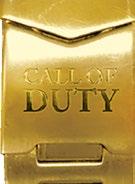
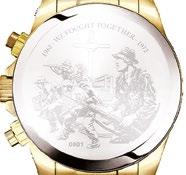
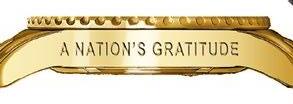
Each watch is individually numbered - one of just 2,999 worldwide Finely engraved with poignant tributes
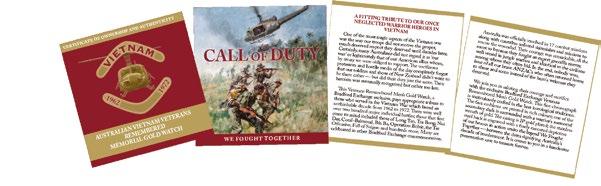
Full colour Certificate details history of ANZAC involvement in Vietnam
VETERANS REMEMBERED MEN’S GOLD WATCH
Berated on their return, yet amongst the most courageous men of the ANZAC legend, the diggers of Vietnam have endured much on and off the battlefield. Now recognised for their enduring courage, resilience and the brotherhood they shared during combat, this ‘Veterans Remembered Gold Watch’ pays tribute to their sacrifice. Only available from The Bradford Exchange, its gleaming IP gold-plated case plays host to a wealth of icons associated with those who gallantly served. The face depicts a distinctive Iroquois ‘Huey’ Chopper, surrounded by the tribute ‘Veterans Remembered’. The side is engraved with ‘A Nation’s Gratitude’, a sincere expression of thanks. The case back features a finely etched battle scene highlighting the mateship which has defined our Vietnam veterans for over 50 years. The words ‘We fought together’ serves to remind us that in war and in peace, the brotherhood of veterans will endure. Below the scene is the individual issue


number authenticating the watch as part of a worldwide release of just 2,999 watches. As versatile as it is striking the watch features three chronographic sub dials, a stopwatch function and is water resistant to 3 ATMs .
Exclusive Limited-Edition Tribute
Arriving in a deluxe presentation case, the ‘Veterans Remembered Men’s Gold Watch’ can be yours for just 4 instalments of $87.49 or $349.96, plus $19.99 postage and handling - backed by our 365-day return policy for complete peace of mind. Just go to bradford.com.au/144845 now, call (02) 9841 3311 anytime or return your coupon today.
©2025 The Bradford Exchange Ltd. A.B.N. 13 003 159 617 503-FA140.01 Promotion code: 144845
RESERVE YOURS TODAY — PAY NOTHING NOW
YES! Please reserve the ‘Veterans Remembered Men’s Gold Watch’ for me as described in this offer. I understand I need pay nothing now. Mail to The Bradford Exchange, Reply Paid 3344 Parramatta NSW 2124 (no stamp required)
Mr/Mrs/Miss/Ms First Name:
to illustrate 100 years 10 moments
PART 2
In this second instalment of our two-part series, we highlight some of the key stories captured by RSL Queensland’s member magazine since 1925. You can read part 1 in Edition 3 2025.
Courtney Adams
MOMENT 6: INTERFET AND EAST TIMOR (1999)
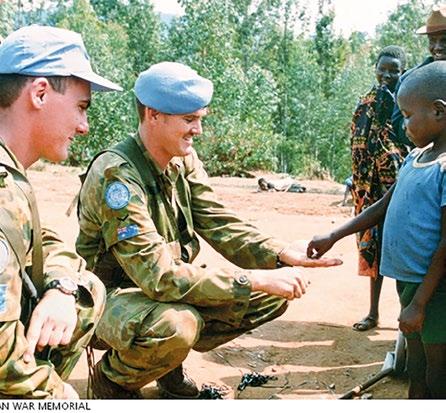
Between September 1999 and February 2000, some 5,500 ADF personnel were deployed to East Timor, led by Major General Peter Cosgrove. Their mission was to curb violence and facilitate humanitarian assistance during the nation’s transition to independence from Indonesia.
The mission became Australia’s largest overseas deployment of troops since the Vietnam War, and despite being a relatively short mission, it was covered by Queensland RSL News (particularly in the ‘President’s Points’ sections) from 1999 to 2000.
“On the national scene, the deployment of the Interfet Force to East Timor has attracted a great deal of comment. It is particularly pleasing to see that the Australian public has appeared to be very supportive of the ADF members who are serving there.” (State President Ray De Vere, November 1999 edition of Queensland RSL News)
Australia’s response to the East Timor crisis was also supported by both readers and Sub Branches
Balike. For example, the Autumn 2000 Edition of Queensland RSL News mentions that Banyo RSL Sub Branch organised Christmas greetings to troops in East Timor, while in the Winter 2000 Edition, the Ithaca, South Brisbane, BCOF RSL Sub Branch put out an appeal to help the East Timor Children’s School, stating:
“Our INTERFET Forces have set a wonderful example in the true ANZAC tradition.” (Page 10)
Despite being “stretched to the limit” and “hampered by an outsourcing policy” (Ray De Veere, Spring 2000 Edition of Queensland RSL News), on 28 February 2000, INTERFET handed over its command to the United National Transitional Administration in East Timor (UNTAET).
In recognition of those who served in peacekeeping missions such as INTERFET, Edition 4 of the 2017 Queensland RSL News published an article honouring 70 years of Australian peacekeeping. The article illustrates the incredible
impact that Australian service has had worldwide.
“Australia has contributed more than 66,000 personnel to 73 peacekeeping operations in 64 different countries, including East Timor, Somalia, Rwanda, Bosnia Herzegovina, Kosovo, Iraq and Afghanistan. They have joined military and police personnel, wearing the uniforms of more than 120 countries, with only their sky-blue berets or helmets to unify them as UN peacekeepers.”
(Edition 4, 2017 of Queensland RSL News, pages 34 and 36)
MOMENT 7: THE ESCALATION OF CONFLICTS IN THE MIDDLE EAST (1990s-2000s)
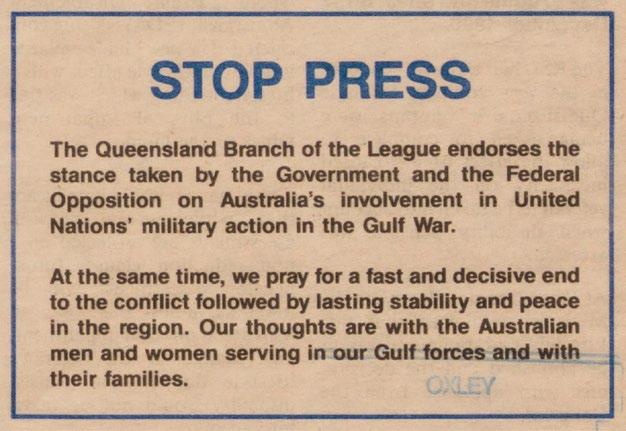
Queensland RSL News also covered the Gulf, Afghanistan and Iraq wars throughout the 1990s and 2000s. The first mention of these conflicts appears to be on the cover of the January 1991 Edition of Queensland RSL News, when a call-out box with STOP PRESS stated its support for Australia’s involvement in the Gulf War.
Australia’s involvement in the war ended in September 1991.
The July 1991 Edition has a few mentions of those who served in this conflict, including a story about the State President’s annual report, a seaman and Gulf War veteran based in Sandgate who laid a wreath on ANZAC Day, and an ANZAC Commemoration essay by Annette Harris of Goomeri.
“Today the Defence Forces play a wider role than just the defence of Australia. The recent Gulf War demonstrated how readily Australian Forces could be needed to play a part in the defence of
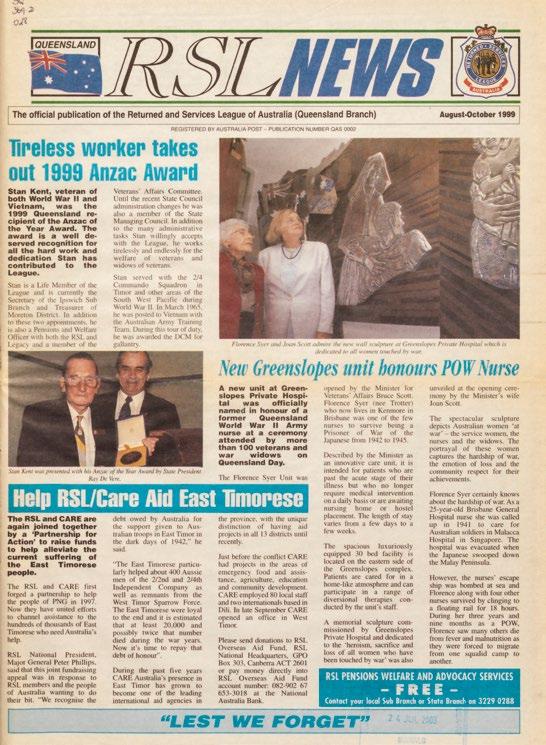
A: An article on the front page of Queensland RSL News, August 1999 Edition, published to help the East Timorese. Shortly after, Australian troops were deployed to the region to assist in a peacekeeping mission known as INTERFET.
B: Stop Press call-out box on the cover of Queensland RSL News, January 1991.
C: Article from Edition 4, 2017 of Queensland RSL News honouring 70 years of Australian peacekeeping, including INTERFET.
democracy in a World arena.” (July Edition, 1991 of Queensland RSL News, page 7)
The above sentiment remained relevant around a decade later when Australia entered the conflict in Afghanistan in 2001. This, combined with the conflict in East Timor, was believed to have “pricked the conscience of most Australians”, teaching “the reality of conflict to a new generation”. (Peter Phillips, National RSL President, Queensland RSL News, Autumn 2002 Edition)
Only a few years later in 2003, Australia entered the Iraq War. Throughout, RSL Queensland remained committed to supporting the men and women who served in these regions – as reflected in this reader’s letter published in the Summer 2007 Edition.
“Last year, Mike returned from Iraq… What did please us and it is a gesture we know Mike will remember forever, was the very professional pack the RSL forwarded to him, along with his membership information… I guess first and foremost I’d like to thank you for being there for our veterans.” (Bob Konig, Summer Edition, 2007 of Queensland RSL News, page 3.)
At this point in history, society also understood more about physical and psychological afflictions that affected many current and ex-serving personnel as a result of war. RSL Queensland was proactive in setting up programs and initiatives to help troops returning from places like Afghanistan.
For example, in the President’s report of the 2012 Christmas special Edition, then State President Terry Meehan talks about the sponsorship of Soldier Recovery Centres in Brisbane and Townsville, as well as increasing support of current serving personnel.
By 2011, all Australian troops had
Abeen withdrawn from Iraq, and from 2013, service personnel deployed to Afghanistan began returning home.
Queensland RSL News published stories honouring their service, including reflections from deployed veterans and coverage of the Lake Tinaroo Avenue of Honour, which was built as a memorial for the fallen in Afghanistan.
In 2016, an article commemorating the 25th anniversary of the first Gulf War was also published, noting that military activity in Iraq continued well beyond those years.
“Afghanistan continuously nurtures significant leaders through combat experience, tribal affiliations, family connections, sheer individual spirit and willpower… Complementing impressive work by Afghan leaders and security forces,
coalition soldiers serve throughout Southern Afghanistan to achieve their mission. Many of these coalition soldiers, including Australians, are highly experienced veterans of multiple deployments.” (Chris Field, Edition 4, 2013 of Queensland RSL News, page 25)
MOMENT 8: FIRST INDIGENOUS VETERANS’ CEREMONY (2007)
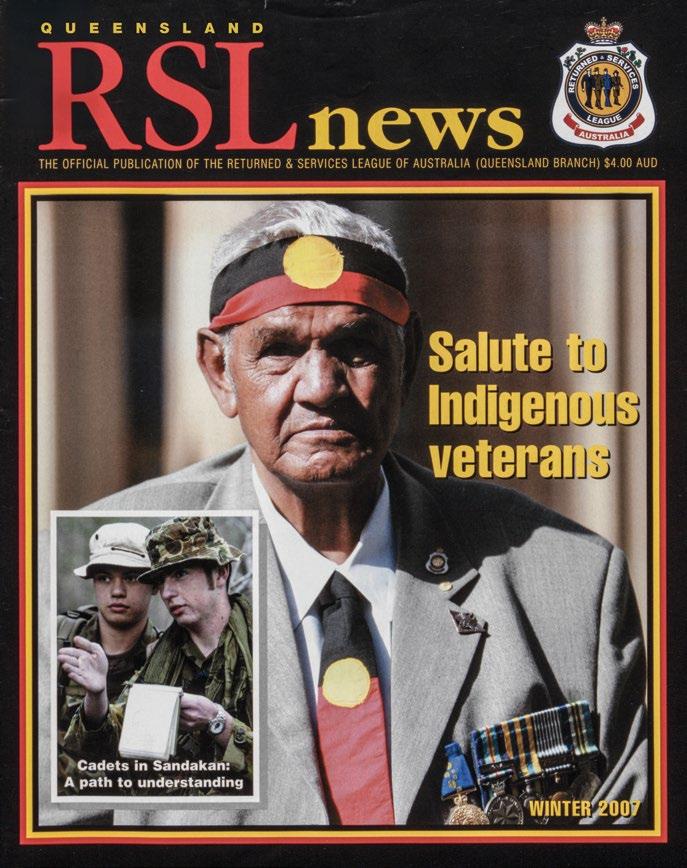
Over the past 100 years, there have been many ‘first’ moments that RSL Queensland’s member magazine has documented – first anniversaries, first commemorations and first global events. Perhaps one of the most culturally significant has been the first Indigenous Veterans’ Ceremony. The Indigenous Veterans’ Ceremony recognises the service of Aboriginal and Torres Strait


Islanders, many of whom faced unfair or unequal treatment during, but particularly after, their return from service. In 2007, Queensland RSL News reported on the inaugural Indigenous Veterans’ Ceremonies, which took place in Brisbane, Townsville and Cairns. This occasion was held on the 11th anniversary of the establishment of National Reconciliation Week and the 40th anniversary of the 1967 Referendum that formally recognised Aboriginal and Torres Strait Islander peoples as Australian citizens.
The significance of the occasion was marked by a front-page feature on the Winter 2007 Edition of Queensland RSL News.
“For the first time in Queensland, all current and ex-serving Indigenous veterans were formally recognised by the RSL and DVA, in commemoration ceremonies held in Brisbane, Cairns and Townsville on May 28 during Reconciliation Week.” (Winter Edition, 2007, of Queensland RSL News, page 4)
Subsequent Indigenous Veterans’ Ceremonies have also been reported by the magazine. In 2023, Queensland RSL News reported on the first memorial to be installed at ANZAC Square since the 1990s: a bronze sculpture honouring Aboriginal and Torres Strait Islander veterans.
“The sculpture bridges the culture and traditions of Aboriginal and Torres Strait Islander peoples and their contributions to our shared military history. I hope that it stands to educate all people –Indigenous and non-Indigenous – and allows our own people to be proud to know that we’ve had
people who served in defence of our country.” (Aunty Lorraine Hatton OAM, Edition 3, 2023 of Queensland RSL News, page 17)
Other articles over the years have profiled the stories of Indigenous veterans and reported on ceremonial events across the Sub Branch network.
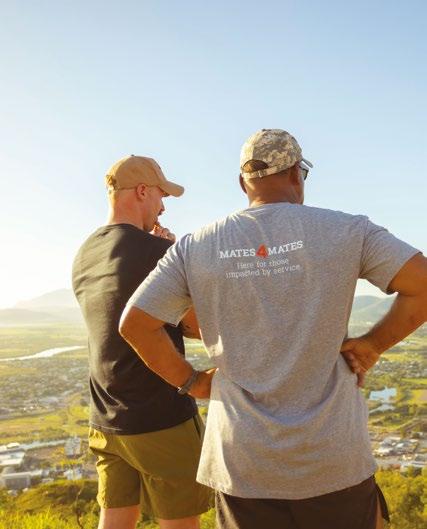
MOMENT 9: LAUNCHING MATES4MATES (2013)
In Edition 2, 2013 Queensland RSL News announced its new veteran health and wellbeing initiative, Mates4Mates, providing veterans with ‘trust, humility and mateship in times of need’. The announcement formed the front-page story on Edition 2, 2013.
At that point in time, many current and ex-service personnel had recently returned from war-torn areas like Afghanistan, Iraq, East Timor and the Solomon Islands, some bearing physical and/or mental burdens resulting from their service.
To assist with their transition to civilian life, Mates4Mates provided these veterans with programs and services to aid their physical and psychological treatment, rehabilitation and recovery. The initiative also established on-base recovery centres and facilitated research projects to “rebuild their lives and overcome the traumas of war” (Nick Ransley, Edition 2, 2013 of Queensland RSL News, page 4)
“By focusing on soldiers of ‘modern’ conflicts, Mates4Mates can provide an up-to-date rehabilitation service for contemporary Armed Forces personnel, to help them see what they can achieve and offer them
the skills and support to realise their ambitions.” (Nick Ransley, Edition 2, 2013 of Queensland RSL News, page 4)
Other articles over the years provided helpful information to veterans about events, activities and programs to help foster the spirit of mateship and camaraderie among the veteran community. Profiles and reports from fellow ‘mates’ shared inspirational stories about fellow veterans.
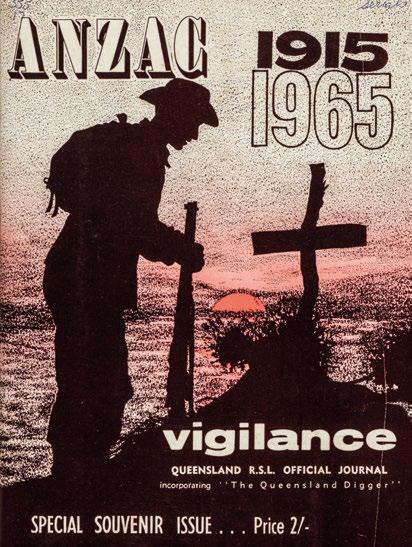
MOMENT 10: 100 ANZAC DAYS COMMEMORATED (1925-2025)
The idea of ANZAC Day first emerged from Queensland in 1916, and Queensland also held the first commemoration ceremony that year. The legacy of commemoration has been consistent throughout the years and well documented in the RSL Queensland member magazine. In the first edition of The
Queensland Digger, ANZAC Day is front and centre. The publication described its hopes for the continued commemoration of ANZAC Day, which had been observed for less than 10 years at the time.
“It is hoped that whatever may happen in the future, the observance will never lose that solemnity and devout character which is so deeply appreciated by the present generation.” (April 1925 Edition of The Queensland Digger, page 6)
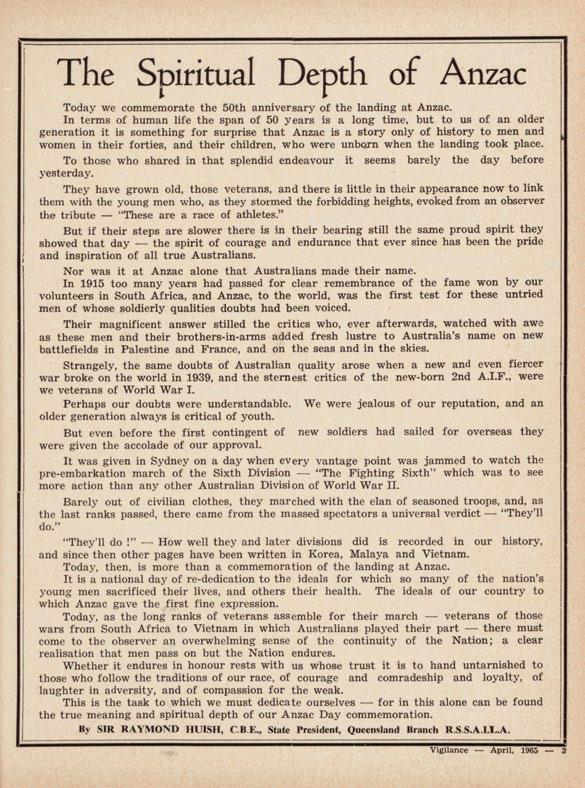
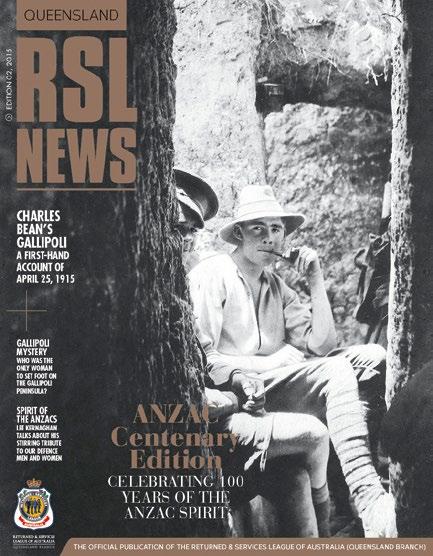
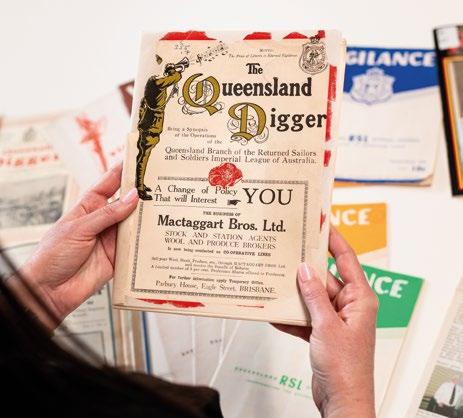
Every April edition of The Queensland Digger, Vigilance and Queensland RSL News since then has acknowledged the various ANZAC Day commemorations that have taken place across the state. Perhaps most notably, the 50th and 100th anniversaries of ANZAC Day had extensive coverage in the 1965 and 2015 editions, including special edition covers to mark these occasions.
From the 50th anniversary edition, the ANZAC spirit and heritage were celebrated with stories and photographs from the years before. At this stage, many ANZACs were still alive and participated in services and parades around the country.
“Today, then, is more than a commemoration of the landing at Anzac [Cove]. It is a national day of re-dedication to the ideals for which so many of the nation’s young men sacrificed their lives, and others their health. The ideals of our country to which Anzac gave the first fine expression.”
(State President Sir Raymond Huish C.B.E., April 1965 Edition of Vigilance, page 3)
The 100th anniversary feature in 2015 included pages filled with historical photographs, stories of bravery, reflections from local supporters and tributes from prolific Queenslanders. A list of 2015 ANZAC


The origins of ‘ANZAC’
Day services from the Sub Branch network covered seven pages featuring almost 200 event listings across the state.
“Even today, 100 years later, April 25 remains the most significant commemoration of military casualties and surviving servicemen… In Australia and New Zealand, Gallipoli nurtured the legend of the ANZAC soldier –brave, resourceful, individualistic.”
(John Brennen, Edition 2, 2015 of Queensland RSL News, page 57)
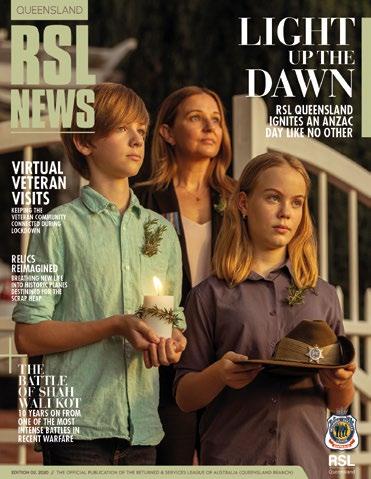
More recently, the arrival of the COVID-19 pandemic on Australian shores necessitated the first widespread stay-at-home ANZAC Day commemorations. Instead of attending a local Dawn Service on ANZAC Day, citizens across Queensland participated in the Light Up the Dawn initiative.
“RSL Queensland was inundated
with alternative ideas on how to commemorate ANZAC Day during the pandemic. One idea that came up again and again –and resonated deeply with the RSL Queensland team – was the concept of households conducting a vigil on their driveway or balcony at 6am. This ingenious idea… would allow the Australian public to show thanks to our Defence personnel in a way that respected social distancing measures.”
(Edition 2, 2020 of Queensland RSL News, page 18)
Today, ANZAC Day remains a solemn and sacred day of reflection and commemoration, and one that RSL Queensland will continue to cover in its member magazine for as long as it’s published.
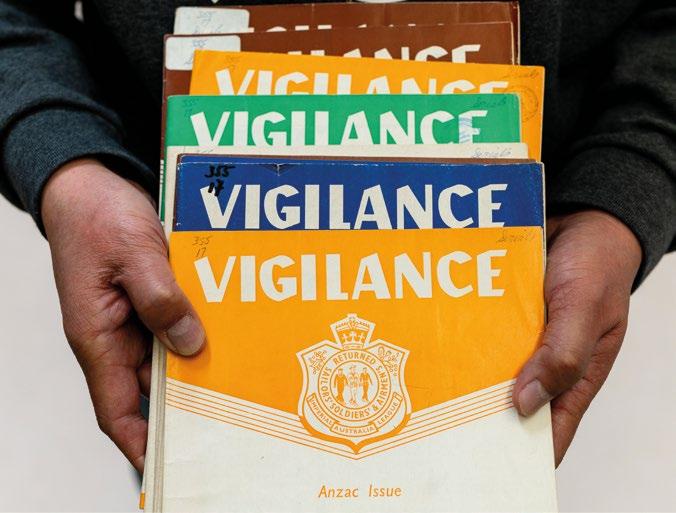
A: Cover of Vigilance April 1965 issue, commemorating 50 years of ANZAC Day.
B: An article in the April 1965 issue about the importance of ANZAC Day.
C: The cover of Edition 2, 2015 which was Queensland RSL News’ ANZAC Centenary edition
D: An article about the origins of ‘ANZAC’ in Edition 2, 2015 of Queensland RSL News, page 42.
E: The cover of Edition 2, 2020 of Queensland RSL News promoting Light Up the Dawn.
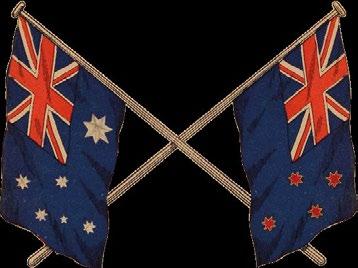
ANZAC is the acronym formed from the initial letters of the Australian and New Zealand Army Corps. This was the formation in which Australian and New Zealand soldiers in Egypt were grouped before the landing on Gallipoli in April 1915.
Writing Remembrance Day into history
A century of remembrance through the pages of RSL Queensland’s magazines.
THE first Armistice Day was held on 11 November 1919, exactly one year after the armistice that ended World War I (WWI). Across the world, people paused to remember the sacrifice of those who had served and to reflect on the hope of lasting peace.
In the decades that followed, Armistice Day – later renamed Remembrance Day – became one of Australia’s most significant
Courtney Adams
commemorations. From its earliest issues, RSL Queensland’s member magazines have recorded how Queenslanders marked the occasion.
“The returned soldiers and citizens of this State will, with one accord, pay homage to the illustrious dead who, through their exploits in defence of King and country, have everlastingly inscribed their names in the Book
of Fame, and laid the foundation of Australia’s nationhood, leaving behind them a wealth of tradition, the record of which will go down to posterity as worthy of emulation.” (State President’s Armistice Day Message, 1933 The Queensland Digger Vol. 9, No. 6, Nov. 1933, page 29).
In this 100th anniversary year, we revisit how The Queensland Digger,
Vigilance and Queensland RSL News have reflected the community spirit that defines 11 November.
FROM ARMISTICE TO REMEMBRANCE
The first mention of Armistice Day in the magazine appeared in the seventh issue of The Queensland Digger in November 1925. By then, Australians had already observed the commemoration for six years, beginning with that very first service in 1919.
With the Armistice of WWI still fresh in people’s memories, 1925 was a time of relative peace.
Articles of the period carried a jubilant tone, emphasising victory and unity alongside remembrance. Public ceremonies were promoted to strengthen traditions we still uphold today, including the minute’s silence and the playing of the Last Post at 11am.
This optimism did not last. On the 10th anniversary of the Armistice, the magazine published an article
titled ‘Lest We Forget: Armistice Day Celebrations’ (Vol. 4, No. 6, Nov. 1928). One passage read:
“We believe, and we hope that civilisation will not again be so foolish as to engage in a great struggle like the last.”
Tragically, the world was soon engulfed in another global conflict, and the tone of coverage shifted from celebratory to solemn.
After World War II (WWII), the Australian Government adopted the United Kingdom’s decision to rename Armistice Day as Remembrance Day. In 1997,
Governor-General Sir William Deane formally proclaimed 11 November as Remembrance Day and urged all Australians to pause for at least one minute’s silence on the day at 11am.
CAPTURING REMEMBRANCE IN IMAGES
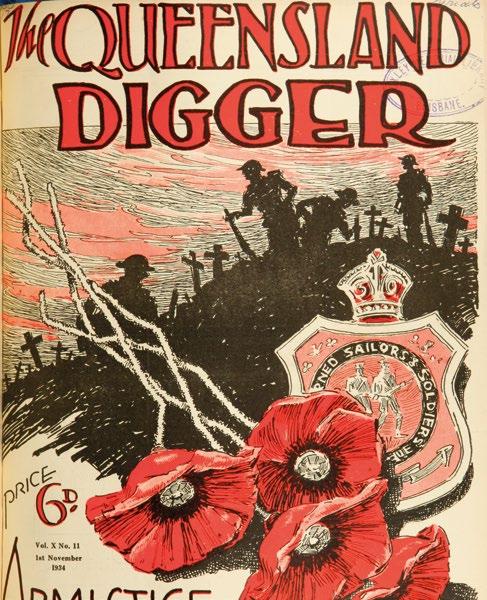
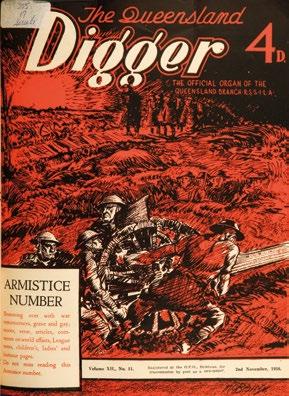
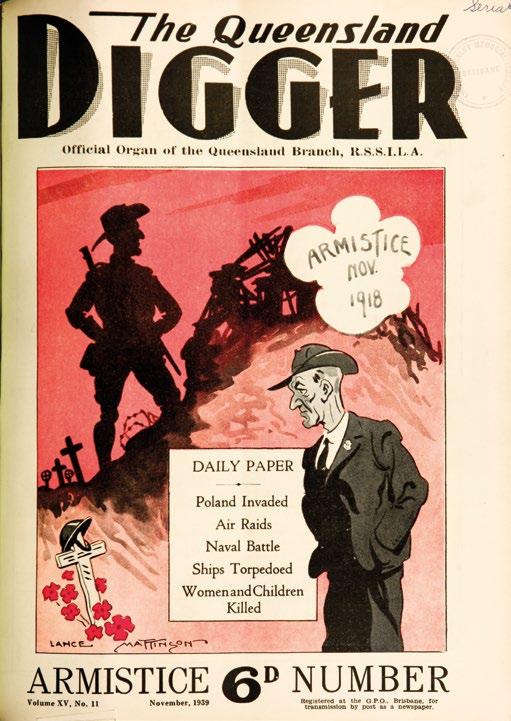
In the early decades of The Queensland Digger (1925–1962), photographs were scarce and covers often relied on illustrations. Over the years, artwork featuring red poppies, service personnel, battlefields, graves and animals gave visual form to remembrance.
C:
D:
E:
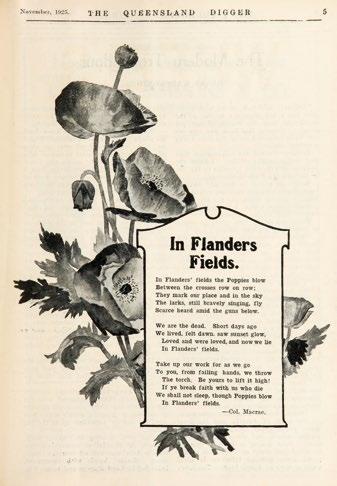
A: The famous poem In Flanders Fields by John McCrae was published in The Queensland Digger in November 1975.
B: The Remembrance Day cover of The Queensland Digger in November 1934.
The Queensland Digger cover in November 1936.
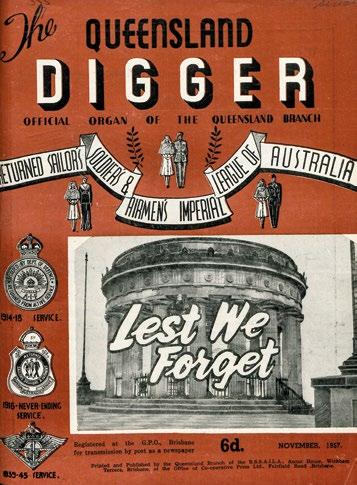
The Queensland Digger in November 1957 featured Brisbane’s Shrine of Remembrance. This photo was used on multiple November editions during the 1950s and 1960s.
Artwork on the cover of The Queensland Digger in November 1939.
Photos began to appear more prominently during the 1940s, particularly through WWII, and steadily became the dominant medium.
THE VIGILANCE YEARS
(1962-1967)
When the magazine was retitled as Vigilance in 1962, covers were consistently branded with the illustrated face of a service man or woman. ANZAC Day and Remembrance Day editions were distinguished by special artwork.
From 1962 to 1967, Remembrance Day issues carried the same striking illustration: a rifle with a soldier’s helmet hanging from the butt, casting a shadow in the shape of a Christian crucifix. This simple image symbolised the solemnity of the day and the sacrifice of those who had fallen.
QUEENSLAND RSL NEWS RETURNS
After a hiatus from 1967, the magazine returned in 1989 as Queensland RSL News Initially printed in newspaper format, it transitioned back to a magazine in 2005.
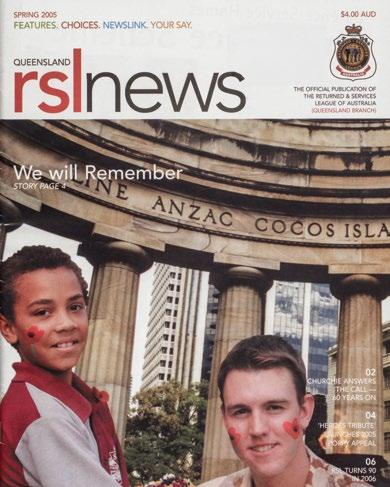
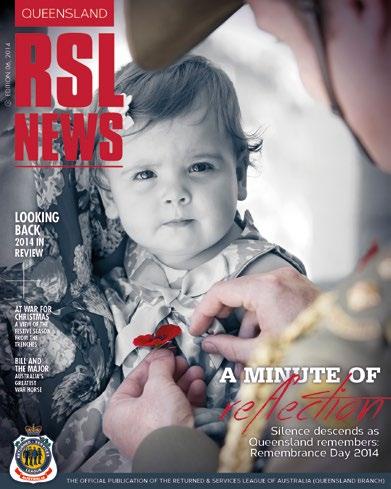
Since then, spring editions often featured Remembrance Day covers, with imagery becoming more diverse and reflective of the many ways Queenslanders honour the day.
100 YEARS AND COUNTING
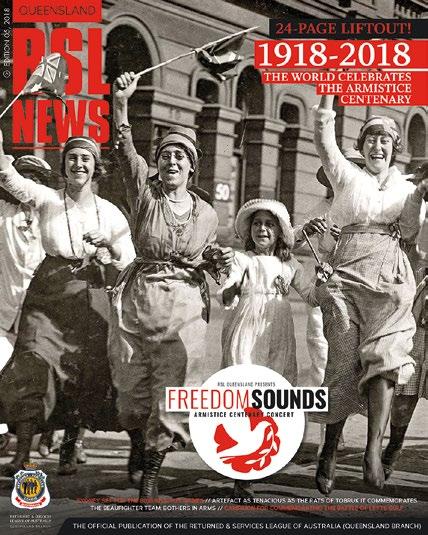
In 2018, the world marked the Armistice Centenary – 100 years since the guns fell silent in 1918 and 99 years since the very first Armistice Day observance in 1919.
To commemorate the occasion, Queensland RSL News produced a special edition featuring historical photos from 1918.
Since then, RSL Queensland has introduced initiatives such as Draw to Remember, which encourages students to keep remembrance alive through creativity, and the ‘Remember to Remember’ campaign, alongside the long-running Poppy Appeal.
Each year, the magazine continues to share images of Remembrance Day services organised by Sub Branches across Queensland and to publish the stories of veterans and communities who keep remembrance alive.
As we move into our second century of publishing, we remain committed to recording the stories of service, sacrifice and commemoration that shape 11 November.
A: Queensland RSL News Spring 2005 featured a soldier and student at Brisbane’s Shrine of Remembrance.
B: Queensland RSL News Edition 5 2018 marked the centenary of the Armistice.
C: Queensland RSL News Edition 6 2014 featured a poppy being pinned to the dress of a young child.
Whatever happened to The Crusader?
Launched amid post-war upheaval in 1919, The Crusader set out to champion Queensland’s returned servicemen – but internal discord, political controversy and financial woes soon brought the State Branch’s first member magazine to an early end.
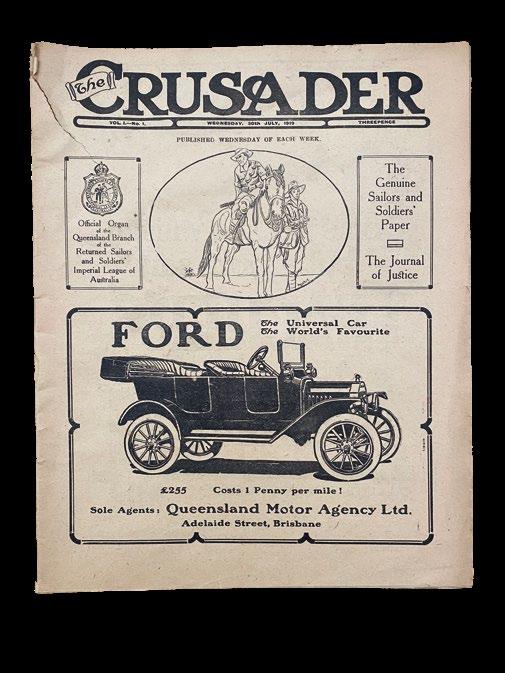
IN July 1919, the Queensland Branch of the Returned Sailors’ and Soldiers’ Imperial League of Australia (RSSILA), today known as RSL Queensland, launched The Crusader However, within five years, the publication was gone, a victim of the turmoil that faced the organisation in the first half of the 1920s.
AN UNCOMFORTABLE YEAR FOR THE LEAGUE
The year 1919 was a tumultuous one for the RSSILA. With demobilisation of the Australian Imperial Force (AIF) underway, the fledgling League
Dr Susan E. M. Kellett
struggled to manage the challenges that a rapid influx of new members presented.
Although the League was founded on the principle of non-partisanship, a continuum of conflicting political ideologies had emerged that, in the lead-up to a Federal election in December 1919, threatened to rip the League apart. It was into this maelstrom of organisational instability that The Crusader emerged.
A NEW CRUSADE BEGINS
In mid-1915, 22-year-old Eric Hanman sustained a gunshot at
Gallipoli that paralysed his left hand. Hanman returned to Australia, where he penned his wartime memoirs Twelve Months with the Anzacs. His flair for storytelling led to a job writing for the Queensland Recruiting Committee.
Despite possessing limited formal management experience, Hanman was appointed The Crusader’s first managing editor in mid-1919.
Queensland was the last State Branch to publish a members’ periodical, and it promised readers 24 pages of weekly content “…devoted to defending and
protecting the rights of Diggers”. Its title tapped into religious and historical principles of service that were common in Australian society at the time.
Some churches likened World War I to a holy crusade, and with more than 93% of the AIF identifying as Christian, the significance of the journal’s name would have been evident to its target audience.
The title also suggested an ongoing and righteous battle to combat the injustices visited upon the returned community, and the magazine’s subtitle – The Journal of Justice – set the tone for much of the content within. Hanman assured readers that The Crusader was “… out to see that the Digger gets the fair deal so long denied him… he hates to be patronised, he scorns charity, he wants justice, he demands justice, and by God he is going to get it”.
‘THE JOURNAL OF JUSTICE’
The Crusader’s columns often featured criticism of issues that affected the returned community: the failures of the Repatriation Department (known today as the
Department of Veterans’ Affairs) and politicians, profiteering and patriotic fund misuse. However, given the high rate of unemployment facing demobilised troops, Hanman reserved his greatest condemnation for those who failed to give preference to the hiring of returned men.
In September 1919, he called out the Commandant of the 1st Military District (1MD) after an officer who had not seen active service was appointed Area Officer of Bowen. The hapless lieutenant was soon replaced by a returned officer.
Editorial accuracy was not one of Hanman’s strengths, and threats of legal action against the League soon emerged in response to his strident criticisms. In 1920, former RSSILA Queensland State President Pearce Douglas was successfully sued for defamation after The Crusader published an article wrongly accusing two Brisbane businessmen of failing to rehire a returned man.
Earlier that same year, The Crusader registered the first of an ongoing series of annual financial losses. A Board of Control (BoC) was established by the RSSILA’s State Managing Council to oversee the publication.
Hanman railed against what he perceived to be a lack of faith in his ability and neither the directions of the BoC nor the outcome of the defamation case modified the stridency of his approach. Hanman’s relationship with the League began to deteriorate.
By late 1920, the discord evident in the pages of The Crusader was causing a “good deal of hurt and dissention amongst the members”.
Periodicals published by RSSILA State Branches in 1919
Calls for reformation of the publication were being made and Sub Branches began cancelling subscriptions.
Not content on badgering the unpatriotic employer, Hanman continued to target members of the returned community; in mid1920, The Crusader claimed that the 1MD Commandant and members of his staff were not returned men. State Executive was subsequently embarrassed when the BrigadierGeneral and his men – one of whom had lost a leg in the war – made an impromptu visit to the RSSILA headquarters to disprove the claims.
A POLITICAL FIRESTORM ERUPTS
After the publication of another contentious article in early 1921, the State Managing Council acted: “Mr Hanman [was asked] to show cause why he should not be dismissed”. Two weeks later, the outspoken editor’s contract was terminated.
Hanman’s political ideology aligned closely with that of the progressives. The Daily Standard was the Labor Party’s Brisbanebased mouthpiece and took every opportunity to criticise what it called the Tory Imperial League. A five-week tirade was launched against the League as the Standard “vomit[ted] forth upon the Managing Council” its displeasure over Hanman’s sacking.
State Branch responded by publishing extracts of meeting minutes that disproved the provocative nature of the Standard’s reportage before adopting a
dignified silence. The appointment of Frederick ‘Jim’ Meacham – an experienced journalist and returned man – as The Crusader’s new editor finally brought the furore to an end. However, by mid-1923 Meacham had moved on, and The Crusader continued to struggle.
THE CRUSADE COMES TO AN END
While the political furore that followed Hanman’s departure did not benefit The Crusader’s cause, other factors helped seal its fate. The instability evident within Queensland Branch during The Crusader’s short life did not help matters.
Apart from three different editors, State Branch also experienced six State Presidents and four State Secretaries during the period of The Crusader’s publication. However, this was perhaps to be expected as sailors and soldiers transitioned back into Australian society and learned to live with both the aftermath of their service and expectations of post-war life.
The periodical’s main source of income came from the sale of advertising space, and this ultimately led to The Crusader’s end. In 1919, local businesses rushed to exploit the potential of the returned community as men returned home. However, the RSSILA was unable to sustain the numbers recruited during demobilisation.
Of the estimated 15,000 Queensland members in 1919, only 29% remained financial by 1924. With The Crusader’s target readership shrinking, advertising revenue fell and the periodical continued to
haemorrhage money.
Hubert ‘Frazer’ East was elected Queensland’s ninth State President in February 1924, and his four-year tenure brought a much-needed period of stability and consolidation to the League. Within two months of assuming office he had cancelled The Crusader. Within 12 months, a new periodical, The Queensland Digger, was launched. Within two years, membership of Queensland Branch finally began rising. Despite early calls for it to be abolished, The Queensland Digger thrived and remained its member magazine for another 36 years.
*References available upon request.

If your Sub Branch has a copy of The Crusader in its archives, please email us via editor@rslqld.org
B:
C:
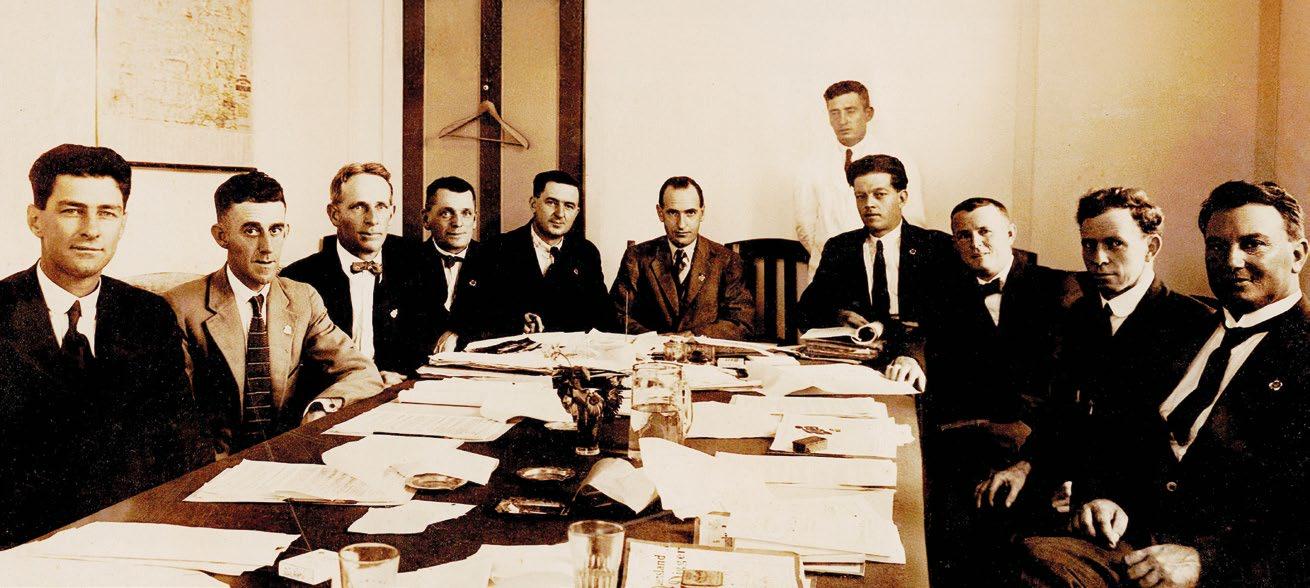
A: State President Frazer East (sixth from left), State Secretary George Simpson (fifth from left) and District Presidents in 1924. They are working on copies of The Queensland Digger, which can be seen on the table before them. (RSL Queensland Papers)
The first issue of The Crusader was published on 30 July 1919. Its cover featured an illustration by then editor Eric Hanman. He signed the work with his nom de plume ‘Haystack’ (National Library of Australia).
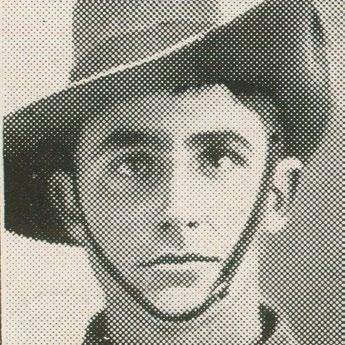
Eric Hanman was the first editor of The Crusader. Hanman served as a Public Relations Officer during WWII and died while posted to Townsville in 1943.
A Q&A WITH OUR State President
As part of our centenary celebrations for The Queensland Digger, we spoke with RSL Queensland State President Major General Stephen Day DSC AM about the magazine’s legacy, its importance to members and what this milestone means for the organisation.
Q: WHY DO YOU BELIEVE IT’S IMPORTANT TO MARK THIS CENTENARY?
It’s an extraordinary achievement for a magazine that was started by a small community to still be going strong after 100 years. Very few magazines can claim that.
And most importantly, it tells veterans’ stories. It tells people who we are, what matters to us and in particular what matters to us at
particular times in history. And that’s worth celebrating.
Q: THE STATE LIBRARY OF QUEENSLAND HAS DIGITISED PAST ISSUES OF THE MAGAZINE. WHY IS THIS SIGNIFICANT?
We’re extremely grateful to the State Library of Queensland for undertaking this project on our behalf. It’s important because the magazine is a record of what we
valued and how we told our stories across 100 years of history.
And to have that in a digital format means it’s preserved. While it might not mean as much to us today, in future generations it will mean a lot.
Q: WHAT IS THE VALUE OF THE MEMBER MAGAZINE TO THE ORGANISATION AND THE WIDER VETERAN COMMUNITY?
The magazine has played a vital role
in capturing our evolving stories. We all try and be worthy of recognition and the magazine recognises a lot of our veterans, the Sub Branches and the Districts, and tells their story.
It also records our history and the way we have evolved over time. We are not the same organisation that we were 100 years ago – or even 30 or 40 years ago.
Q: WHAT DO YOU THINK IT MEANS FOR MEMBERS TO HAVE THEIR OWN MAGAZINE?
It means the world. Members often tell me, “The magazine is fantastic, please don’t stop producing it”. It’s our voice – a platform to share stories, connect as a group and spread new ideas across this geographically large state.
I met an Army officer and RSL Queensland member in Melbourne who told me that she appreciates the magazine because it keeps her connected to her father, who passed away. He was a long-term Life Member of the RSL and an avid reader of the magazine. It was always on their coffee table at home. So, for her, it’s a link to her father. It also inspires action. For example, Gladstone RSL Sub Branch created a program to help troubled youth refurbish an anti-aircraft gun from WWII, teaching them practical skills for future jobs. After we shared their story, other Sub Branches began considering similar initiatives and Gladstone rightly received recognition for its work.
Q: HOW DO YOU THINK THE MAGAZINE HAS CHANGED OVER THE PAST 100 YEARS?
It has evolved – just like our organisation has. The early editions were very much about news from the trenches and the challenges of returning home. Over time it’s broadened to include stories from every generation of veterans, their families and communities. The format has modernised, but at its heart it’s still about telling our stories.
Q: WHAT ROLE DO YOU SEE THE MAGAZINE PLAYING IN THE FUTURE?
I think it will remain an important connector. Our veteran community today is more diverse than ever and spread across a large state. The magazine – in print and online – helps bring people together and shares our progress and achievements.
Q: DO YOU HAVE A FAVOURITE STORY OR MEMORY FROM THE MAGAZINE?
What always stands out to me are the personal stories. I enjoy reading about young veterans transitioning into fulfilling civilian careers and older veterans from WWI or Vietnam reflecting on their service. I think they capture the values of service and mateship that run through each generation.
Q: HOW DOES THE MAGAZINE SUPPORT CAMARADERIE AMONG VETERANS?
Camaraderie is at the core of what we do, and the magazine helps foster it. By sharing what’s happening across Sub Branches,
members can celebrate each other’s achievements and share ideas. It keeps us connected even when distance makes that difficult.
Q: WHAT MESSAGE WOULD YOU LIKE TO LEAVE WITH MEMBERS AS WE CELEBRATE THIS CENTENARY?
This magazine is about our members. For 100 years it has shared their stories and celebrated their achievements, and that connection will carry it into the future.
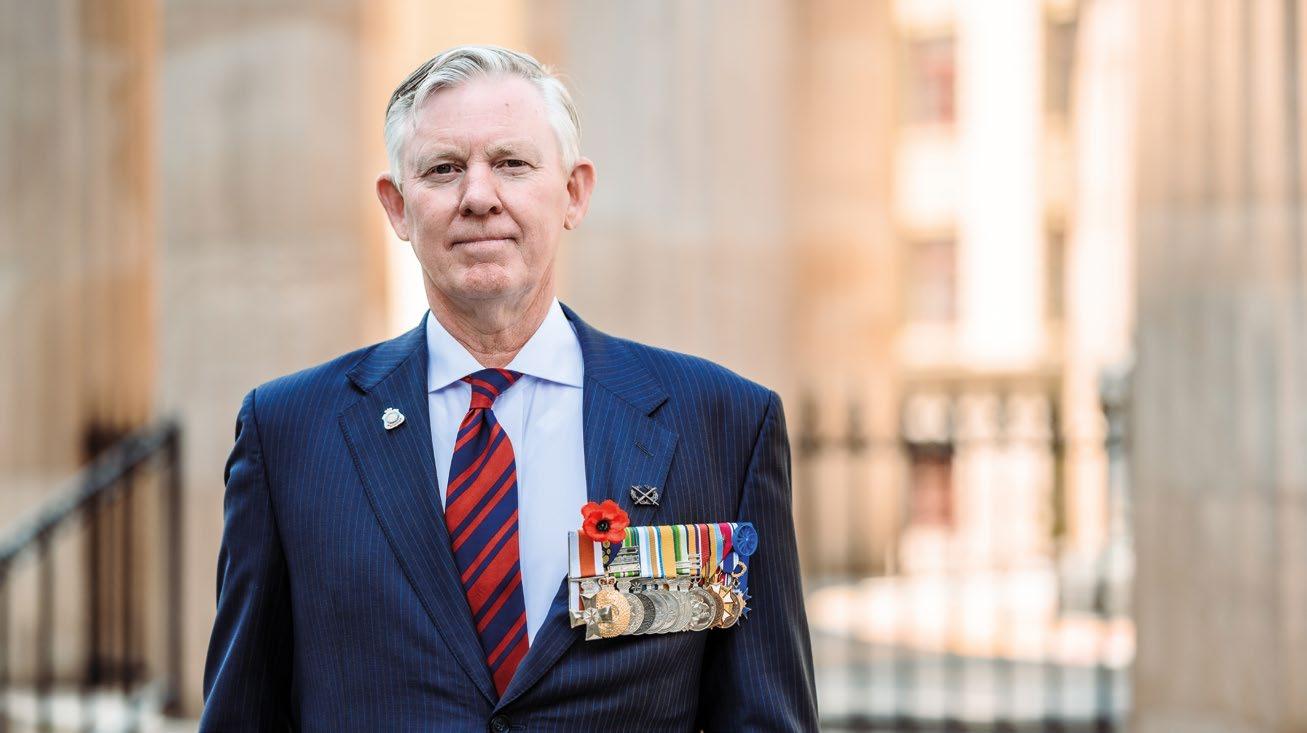
A: RSL Queensland State President Major General Stephen Day DSC
AM at the 2022 Remembrance Day service in Brisbane.
B: Vigilance, which was published from 1962-67.
C: An early edition of The Queensland Digger
The battle for the badge PART 2 The history of the RSL badge
In the aftermath of World War I, the Returned Sailors’ and Soldiers’ Imperial League of Australia (now the RSL) faced an unexpected crisis – a nationwide shortage of membership badges that threatened to derail its post-war growth and unity.
FOLLOWING the Armistice that ended World War I in November 1918, the Returned Sailors and Soldiers’ Imperial League of Australia (RSSILA), now the RSL, anticipated a surge in membership as men returned home. However, sourcing enough badges to meet this demand proved challenging, and the insignia’s scarcity compromised the effectiveness of the League’s recruitment efforts.
TRANSITIONING TO THE RSSILA
In early 1917, RSSILA Queensland Branch watched with alarm as its hard-won membership plummeted from 1,409 to 459 men. In January, the RSSILA’s first subscription of 10 shillings was due. It was 4 pence (d) more than that of the Returned Soldiers’ Association (RSA) and those who joined the League in late 1916 were unprepared to pay another full subscription.
Queensland’s efforts to rebuild its membership were stymied by both the state’s vast geographic area and confusion that a new Brisbanebased association – the Returned
Dr Susan E. M. Kellett
Soldiers’ and Patriots’ National League – caused amongst recently returned men. A Country and a City Organiser were employed to support recruitment and by the end of 1917, Queensland Branch was 2,233 men strong.
Gallipoli veteran William Fisher was appointed Queensland’s third State Secretary in November 1917. A bout of typhoid fever led to his discharge and once back in Brisbane, Fisher took an active interest in the RSA and then RSSILA. As State Secretary, he was instrumental in rebuilding membership.
MEMBERSHIP GROWS
Fisher anticipated that League membership would skyrocket once demobilisation commenced. In addition to the 1,000 insignia that Federal Office (RSL Australia) was issuing to State Branches each month, he had stockpiled around 400 badges.
However, with recruitment exceeding 600 men per week, demand quickly outstripped supply
and by March 1919, Queensland Branch was “… absolutely out [of badges] and losing members fast”.
With other states experiencing similar challenges, the League’s General [National] Secretary, William Henderson, contracted three additional companies to strike another 50,000 badges at 15-18d each. These orders coincided with a Federal Government contract for 1.6 million Peace Medals for school children.
Supply of the insignia limped along as the impact of the government order affected an industry already struggling under the effects of an influenza pandemic and post-war industrial action.
For Fisher – who had worked diligently to rebuild Queensland’s membership – seeing men turn away from the League over the availability of a badge was inexcusable.
“I could foresee in January what was going to happen,” he complained to Henderson.
Despite reassurance that similar demands were being received from all State Branches, Fisher remained
unmoved. As the frequency of his communications to Henderson increased, so too did his frustration. “[One] hundred [badges are] practically useless,” he criticised after a delivery of insignia again fell short of his expectations.
QUEENSLAND GOES ROGUE
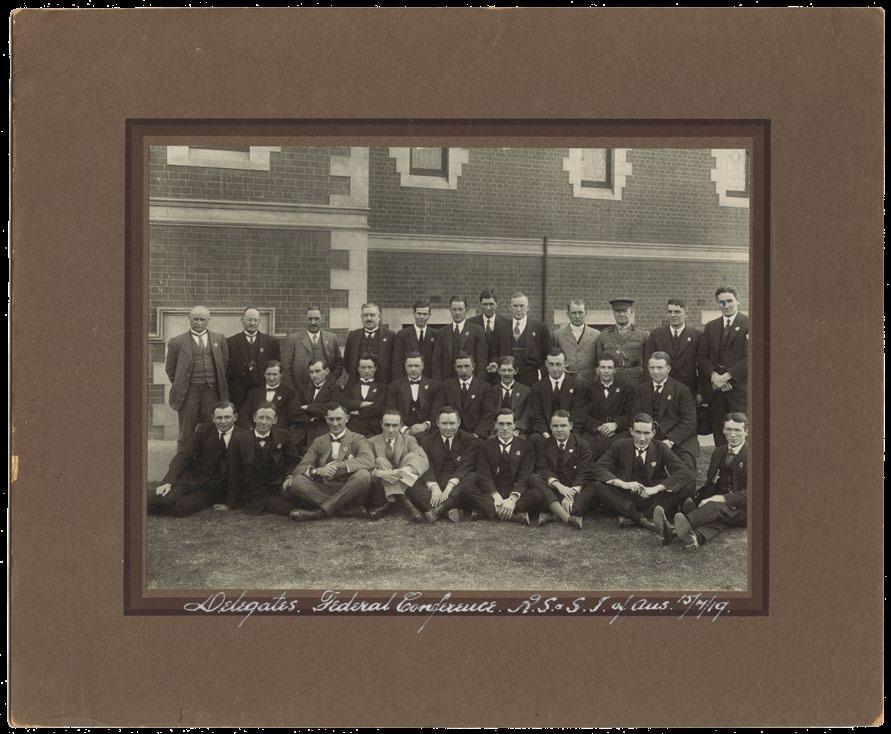
The RSSILA’s 4th Federal Congress (the Annual General Meeting of members) was underway in Adelaide when delegates learned that Queensland had ordered 20,000 badges from Brisbane jeweller Wallace Bishop. They immediately passed a motion that “absolutely prohibit[ed] any Branch from having badges manufactured”.
A month later, Acting General Secretary Alfred Morris was managing six different contracts for more than 70,000 badges (with Stokes and Sons, C. G. Roeszler and Sons, and Bridgland and King in Melbourne; Prouds Ltd and Simes Ltd in Sydney; and Austral Engraving Co in Perth). He finally took Queensland’s unrepentant State Secretary in hand when Fisher
continued to exceed the authority of Federal Office.
THE END OF THE BADGE CRISIS
With the Government’s Peace Medal struck, the League finally began receiving an acceptable quantity of badges as manufacturers in the southern states progressively completed their contracts. In early November 1919, Morris received advice from the State Branches that their demands for badges had been met.
However, in Queensland, Bishop was still to supply 15,000 insignia. With State Branches no longer ordering badges, Federal Office did not have the funds to pay for excess stock.
Morris explained the situation to Bishop and trusted this would release the League from its agreement. The Brisbane jeweller reminded Morris that significant expense had been committed to the contract before adding that the “price [of 15d per badge] would have been much higher for a smaller quantity”.
Morris may have accepted Bishop’s response had he not recently learned some startling information about another contract.
“SOMEONE HAS BEEN ON A GOOD WICKET”
With demobilisation ending, a firm of Sydney badge makers was desperate for work. During the shortage, Prouds subcontracted Amor Limited
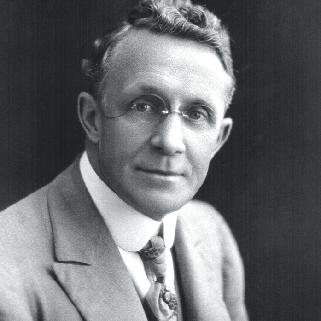
A: Delegates who attended the RSSILA’s 1919 Federal Conference included General Secretary William Henderson (seated middle row, far right), Acting General Secretary Alfred Morris (seated front row, fourth from left) and Queensland State President Pearce Douglas (seated middle row, third from the left). Photo: State Library of South Australia. B: Wallace Bishop c.1925 (Wallace Bishop website).
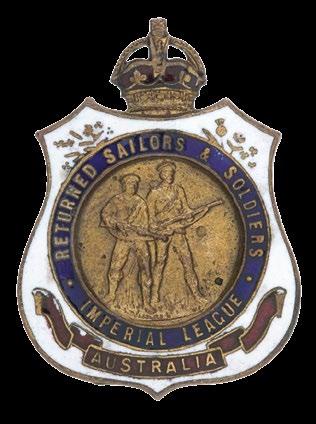
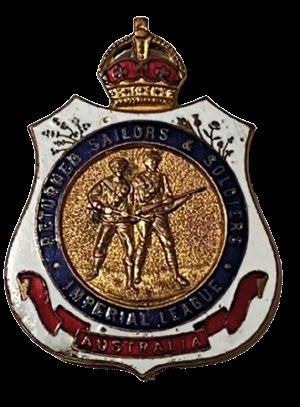
to manufacture around 40,000 RSSILA badges.
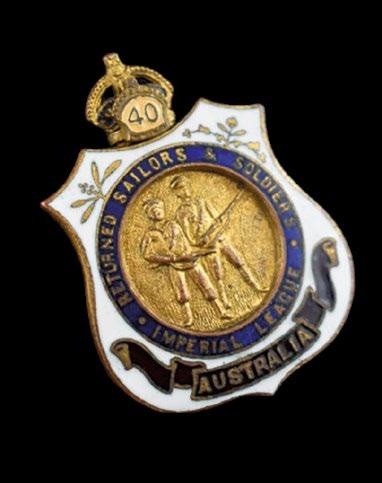
With its obligation fulfilled, Amor was now free to negotiate its own contract with the League and at half the price charged by other firms.
“It is pretty clear that Prouds have been on a good wicket,” intimated the NSW State Secretary to Morris, before adding: “…it looks as though some pretty stiff profiteering has gone on”.
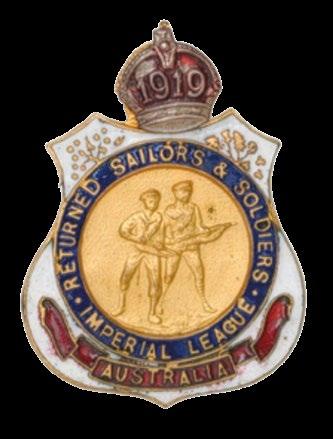
Armed with this information, Morris responded diplomatically but directly to Bishop. He reiterated the League’s position while also disclosing his awareness that the price of badges had been grossly inflated during the period of the RSSILA’s contracts. Bishop compromised and reduced the contract to 10,000 badges.
With the badge crisis over, Federal Office settled back into the routine of
issuing badges to State Branches on a regular and controlled basis.
This would not last long. In 1921 another badge-related headache emerged to vex Federal Office.
*References available upon request.
Part three of the history of the RSL badge will continue in a future edition of Queensland RSL News.
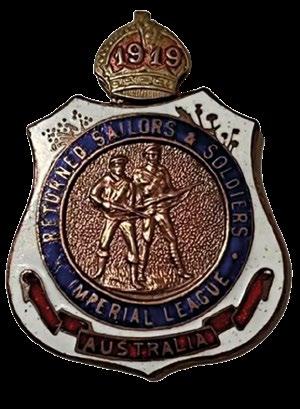
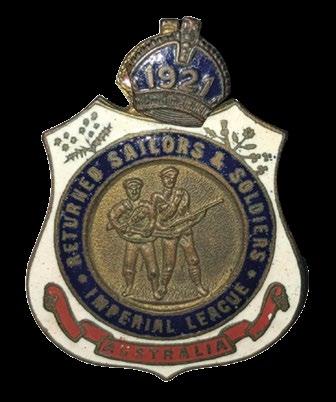
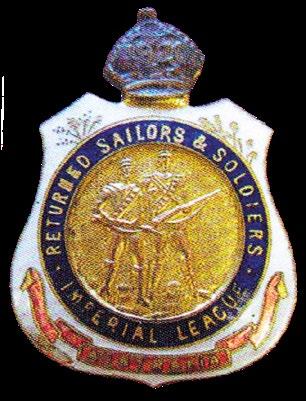
A: Stokes and Sons (Victoria) was the first company to produce badges for the League (Australian War Memorial).
B: Bridgland and King (Victoria) with 1919 financial clip attached (Australian War Memorial).
C: C. G. Roeszler and Sons (Victoria), with 1921 financial clip attached (Victoria Collections).
D: Prouds (New South Wales) contracted Amor Ltd to produce its badges for the RSSILA (Photo: Lindsay Elmore).
E: Austral Engraving Co (Western Australia), with a small 1940 financial clip attached to crown (Collections WA).
F: Simes (New South Wales), with 1919 financial clip attached (image courtesy of Lindsay Elmore).
G: Wallace Bishop (Queensland) was the last company contracted to produce badges in 1919. Shown with 1920 financial clip attached (Victoria Collections).
100+ years of community spirit Celebrating
Geebung Zillmere Bald Hills Aspley RSL Sub Branch celebrated its centenary in 2023, with its connection to community stronger than ever.
Camella Brightman
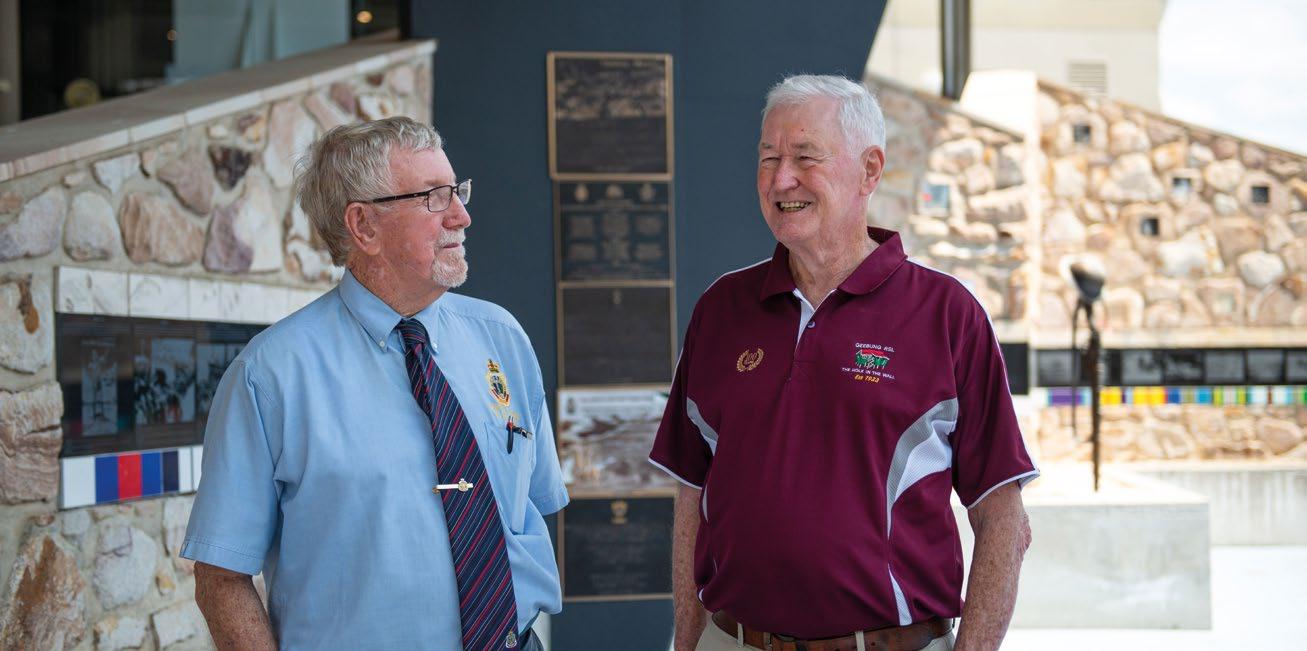
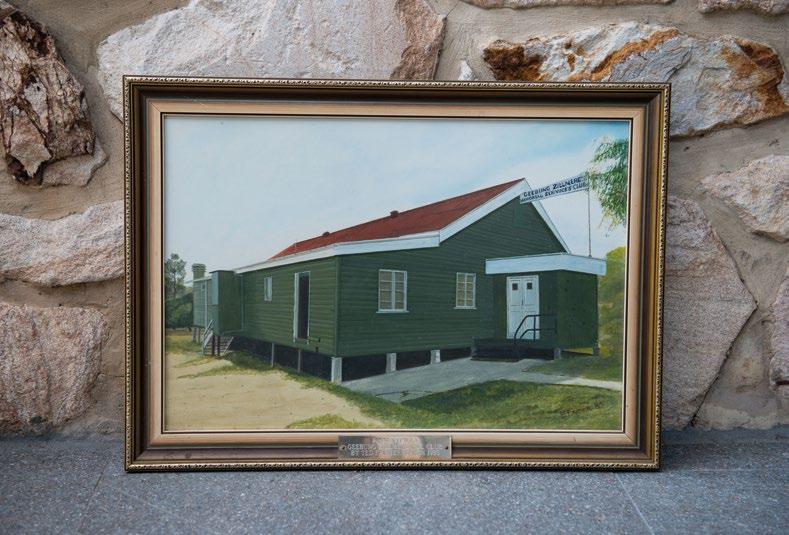
‘THE HOLE IN THE WALL’ Following World War I (WWI), the Geebung community came together to honour the men who left the district to serve the country and never returned.
On land gifted by the local Gerns Family, the Geebung Memorial Hall was officially opened in April 1923 by then Governor Sir Matthew Nathan to commemorate WWI and the five local boys lost in the war.
Having now served the community for more than a century,
the hall, where Geebung Zillmere Bald Hills Aspley RSL Sub Branch now stands, is remembered fondly as ‘The Hole in the Wall’.
Sub Branch President Denis Webb, who has been part of the community since 1972, explains that the ‘The Hole in the Wall’ wasn’t just used by RSL members for meetings; it was a lifeline for a community.
“As well as being a picture theatre, a dance hall and a place for fellowship and enjoyment of refreshments throughout the years,
it also served as a health centre for mothers and their babies, supporting them if there was something wrong,” Denis says.
Sub Branch Vice President Ross Davis, a long-standing member since 1978, remembers it as a lively and welcoming space.
“Sometimes you’d walk up the front stairs of the old ‘Hole in the Wall’ building and there’d be a darts game going on and you had to basically duck the darts as you were walking in through the entrance,”
Geebung Zillmere Bald Hills
Aspley RSL Sub Branch
President Denis Webb, left, and Vice President Ross Davis stand outside Geebung RSL, where commemorative services take place.
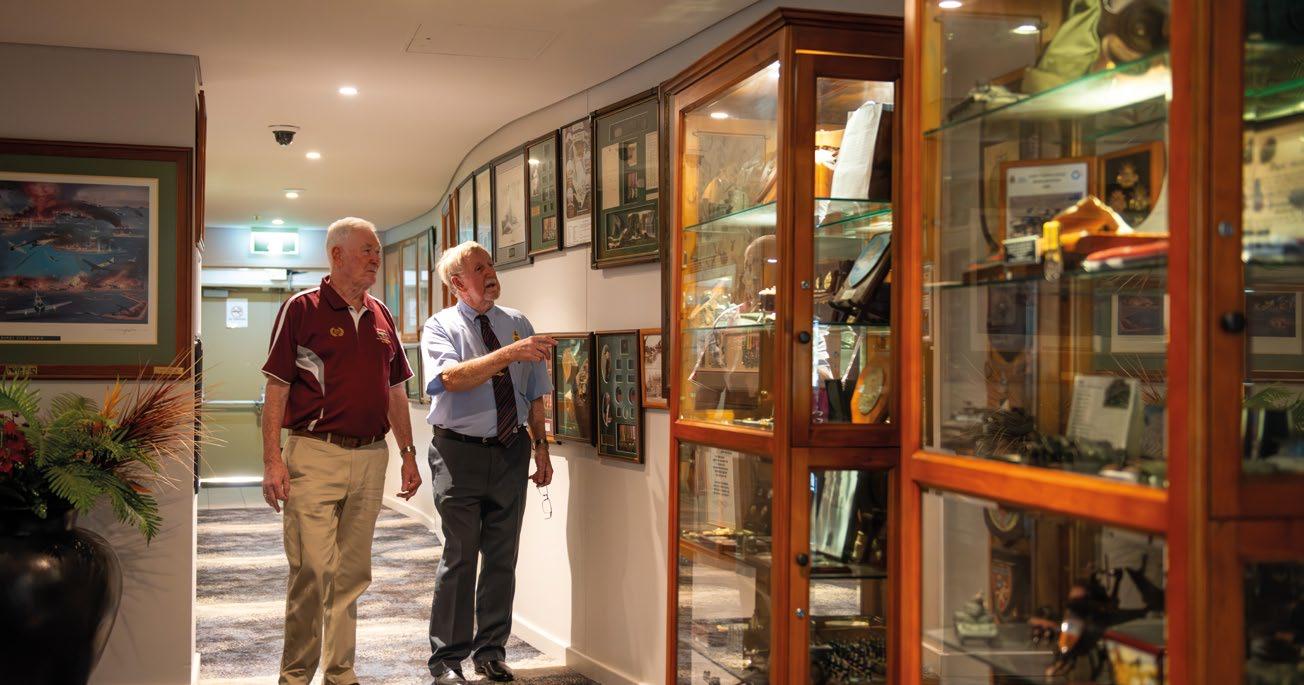
Ross says, laughing.
Beyond its many uses, the hall provided a place for veterans to gather, share stories and support one another. It was a hub built on camaraderie and care.
WITH CAMARADERIE COMES GROWTH
As the veteran community grew after WWII, the Sub Branch evolved. A brand-new Geebung-Zillmere RSL & Services Memorial Club opened in 1982 beside the original hall, which was later removed to make space for parking.
Over the years, nearby Sub Branches joined forces, creating today’s Geebung Zillmere Bald Hills Aspley RSL Sub Branch.
“All the changes over the years
have been well received by the community and the Sub Branch members,” says Ross.
One of the most significant changes came in 2016, when the Sub Branch amalgamated with Geebung Zillmere RSL Services & Memorial Club to become Geebung Zillmere Bald Hills Aspley Sub Branch Inc, trading as Geebung RSL.
“The club has more than 21,000 social members, and they really help us to support the Sub Branch and support those who served,” Denis explains.
Today, the Sub Branch has more than 260 service members and more than 140 volunteers, offering veteran advocacy, welfare support and community outreach.
“We always say, ‘Come and join
us!’. We meet monthly and enjoy activities and bus trips, as well as provide hospital visits to those in need.”
A LEGACY AFTER 102 YEARS
In October 2023, Geebung Zillmere Bald Hills Aspley RSL Sub Branch celebrated its centenary with a special dinner and commemorative merchandise, honouring the service people who have walked through its doors.
“The anniversary served as a reminder that the Sub Branch has survived for that long, and that the welfare of those veterans has been looked after ever since day one. That’s our legacy,” Ross says.
Today, the Sub Branch’s walls tell a century of stories through
A: Geebung Zillmere Bald Hills Aspley RSL Sub Branch Vice President Ross Davis, left, and President Denis Webb walk through the memorabilia section of the Club.
B: The Geebung-Zillmere RSL & Services Memorial Club opened in 1982.
C: The old Geebung Memorial Hall opened in April 1923 and is remembered fondly as ‘The Hole in the Wall’.
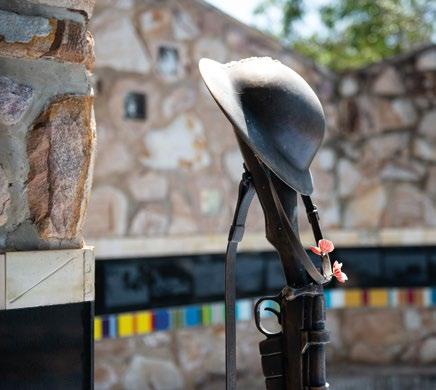
D: The helmet on an inverted rifle is a memorial to the fallen soldier.
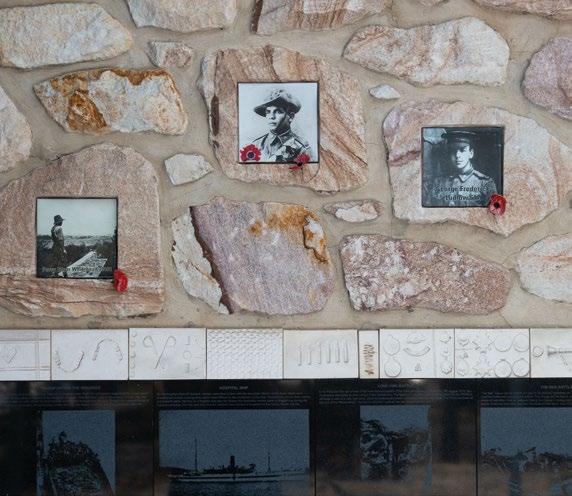
E: The Remembrance Wall out the front of the club.
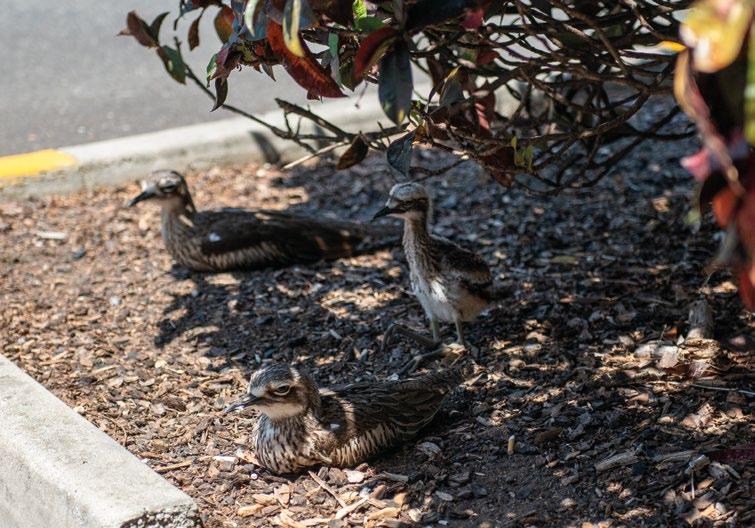
F: A family of curlews who inhabit the carpark have become honourary members.
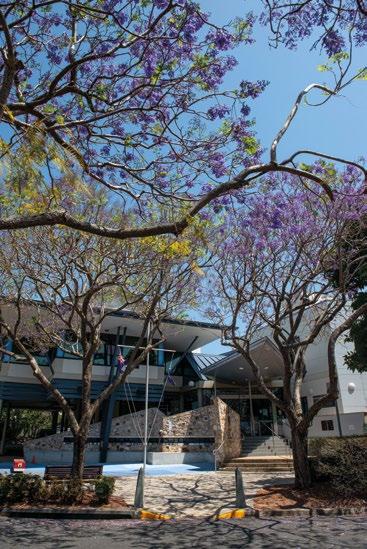
its Remembrance Wall, the Walk of Honour and the in-progress Memorial Garden (complete with a family of curlews who have become honorary members).
Commemorative services throughout the year continue to honour veterans from all conflicts, including a Memorial Day for those who served in East Timor, Afghanistan and Iraq. But just as importantly, the Sub Branch is looking to the future.
Youth engagement remains a key focus through initiatives such
students interview veterans to learn firsthand about their experiences.
In 2024, selected students even joined a sponsored tour of France to gain a deeper understanding of wartime history. Some of the Sub Branch’s artwork was also created by Aspley State High School students.
Prioritising youth involvement at the Sub Branch, Ross says, “We know we’re not going to be here forever, so it’s important that children carry on the stories and traditions as such.”
Honouring its original commitment to support and remember those who served our country, Geebung Zillmere Bald Hills Aspley RSL Sub Branch continues to embody the spirit of care,
members and for the welfare of the veterans. Keeping it a happy place –that’s our priority,” Ross says.
A hundred years on, ‘The Hole in the Wall’ still stands for what it’s always stood for: mateship, memory and community.
THE EVOLUTION OF commemorations
To mark the centenary of The Queensland Digger, we asked Robyn van Dyk, Head of the Research Centre at the Australian War Memorial, how commemorations have evolved over the past 100 years.
Q. HOW HAVE ANZAC DAY AND REMEMBRANCE DAY CHANGED IN THE WAY THEY’RE MARKED AND UNDERSTOOD OVER THE PAST CENTURY?
My mother, who was born in 1932, recalls that when she was young, Remembrance Day was more prominent than ANZAC Day. Over the past 100 years, ANZAC Day has grown and become the focal point of Australian commemorations.
The Australian War Memorial sees both days as opportunities to share stories of the Australian experience of war. While its commemorations have changed little, attendance has grown, especially since the centenary of World War I (2014–2018).
Q. VIETNAM VETERANS’ DAY WAS ESTABLISHED MUCH LATER – WHAT IMPACT HAS IT HAD ON HOW AUSTRALIANS VIEW THAT CONFLICT?
This is an important day to remember the experience of Vietnam veterans and to share their history, stories and remember those who died during this conflict.
The day has a big impact on
recognition of service, and the media and social media are very active and supportive of the occasion. Being able to tell their story to the nation helps our veterans and supports remembrance.
Q. HOW ARE VETERANS OF MORE RECENT CONFLICTS, PEACEKEEPING AND HUMANITARIAN MISSIONS BEING RECOGNISED, AND HOW IS THE AUSTRALIAN WAR MEMORIAL HELPING TO KEEP THEIR STORIES ALIVE?
The Memorial recognises all generations of service, including more recent conflicts, peacekeeping and humanitarian missions. Its redevelopment has expanded galleries to tell the stories of Australians who served in Somalia, Rwanda, Cambodia, East Timor, Iraq, Afghanistan and Syria.
The Research Centre continues to collect personal records such as diaries, memoirs and emails, along with official documents. Online resources like photographs, digitised collections and nominal rolls make these stories accessible, while
privacy safeguards ensure recent experiences are handled with care.
Q. WITH GROWING AWARENESS OF MENTAL HEALTH AND THE HIDDEN WOUNDS OF WAR, HOW HAS COMMEMORATION BEEN INFLUENCED?
The Memorial’s Research Centre holds letters and diaries written by veterans during their service, and these collections include a large body of writing on the hidden wounds of war. The Memorial’s galleries, website, collections, official histories and commemorative events reflect stories on the impact of war on mental health.
A recent example is the sculpture For Every Drop Shed in Anguish (2024), created by artist Alex Seton with input from veterans, families and advocates. It represents those affected by trauma during training, operations and peacetime service, offering a place for reflection and acknowledgement of the hidden wounds of war.
Q. IN WHAT WAYS HAVE COMMEMORATIONS BROADENED TO INCLUDE FAMILIES, COMMUNITIES AND THOSE WHO SERVED ON THE HOME FRONT?
The Memorial was founded not only for those who served but also for

A: The sculpture For Every Drop Shed in Anguish (2024) created by Alex Seton with input from veterans, families and advocates represents those affected by trauma.
B: A service at the Australian War Memorial.
C: The striking Commemorative Courtyard featuring the Pool of Reflection at the Australian War Memorial.
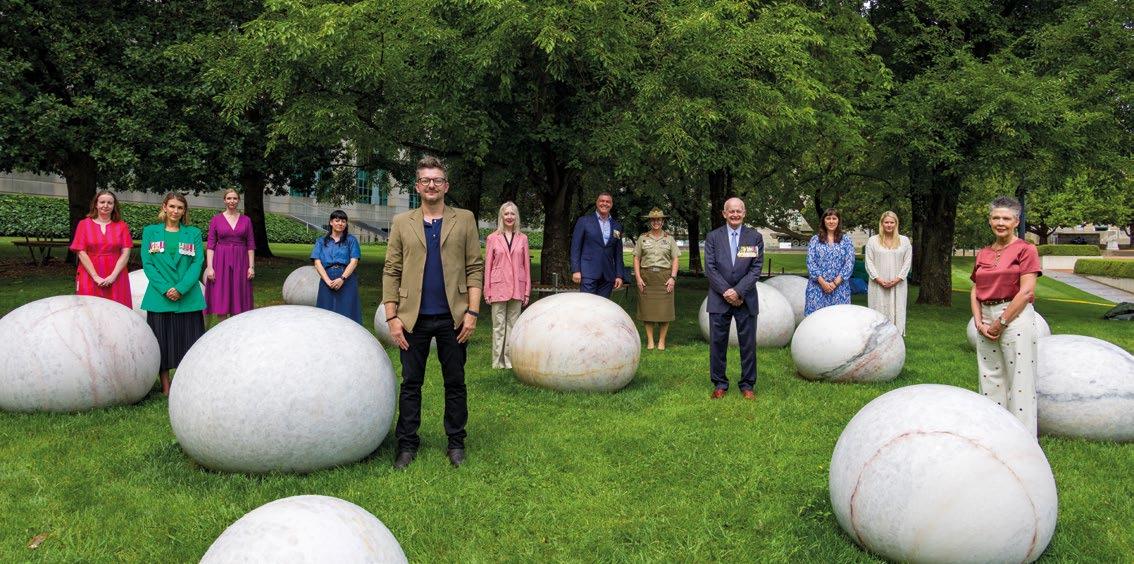
their families and communities at home. During World War I, Australian families often endured months of silence before learning news of loved ones, and many received telegrams confirming death long after they had stopped receiving letters.
The Memorial collects these stories of the home front, including rationing, the work of the Women’s Land Army, the bombing of Darwin and daily life under wartime conditions. Donations such as the Franklin family’s letters to their son, who was a prisoner of war in Japan, reveal the emotional bonds and lifelines sustained through correspondence.
Today, this recognition extends into the way new exhibitions are developed. Veterans, their families and Defence communities have been consulted throughout the Development Project.
Q. RECOGNITION OF INDIGENOUS SERVICE AND OTHER UNDER-REPRESENTED GROUPS HAS GROWN –HOW HAS THIS SHAPED
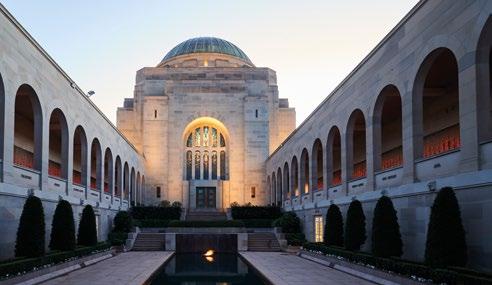
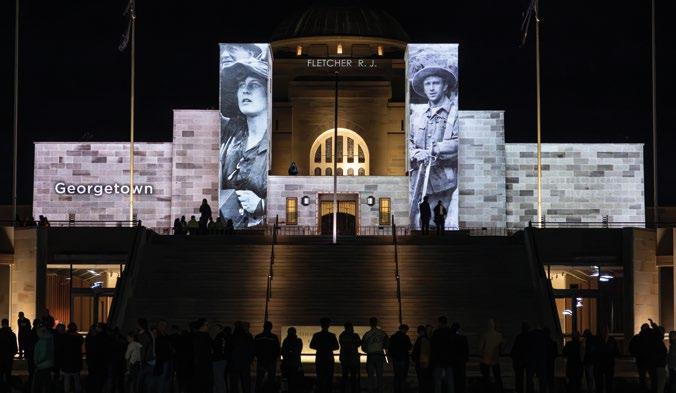
COMMEMORATIONS AND THE MEMORIAL’S WORK?
The role of Aboriginal and Torres Strait Islander peoples in Australia’s wartime history is increasingly recognised and celebrated.
Indigenous Australians have served in uniform, supported the war effort in industry and agriculture, and endured the direct impacts of war on their communities.
The Memorial actively collects their stories and highlights them through dedicated resources, including its Indigenous service webpage and the For Our Country memorial on the grounds of the Australian War Memorial.
What began as informal ceremonies overlooking Canberra has evolved into a nationally recognised commemorative event held each year after the ANZAC
Day Dawn Service. In addition, the Memorial has expanded its Indigenous collections, with more than 140 artworks and growing documentary records including those relating to the frontier wars.
Q. LOOKING TO THE FUTURE, HOW MIGHT THE MEANING OF THESE DAYS CONTINUE TO CHANGE, AND WHAT ROLE WILL THE MEMORIAL PLAY IN THAT JOURNEY?
The Memorial is here for posterity, and this informs how we handle and manage our collections, the galleries and our commemorative spaces.
The Memorial has undergone, and will continue to undergo, significant change, but we will always be leading the nation in remembrance and understanding of Australia’s wartime experience.
BARBECUES AND BURSARIES UPLIFTING THE MUDGEERABAROBINA COMMUNITY
Wellbeing and community engagement are the top priorities of Mudgeeraba-Robina RSL Sub Branch.
Halley
Jasmine
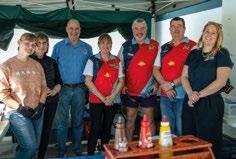
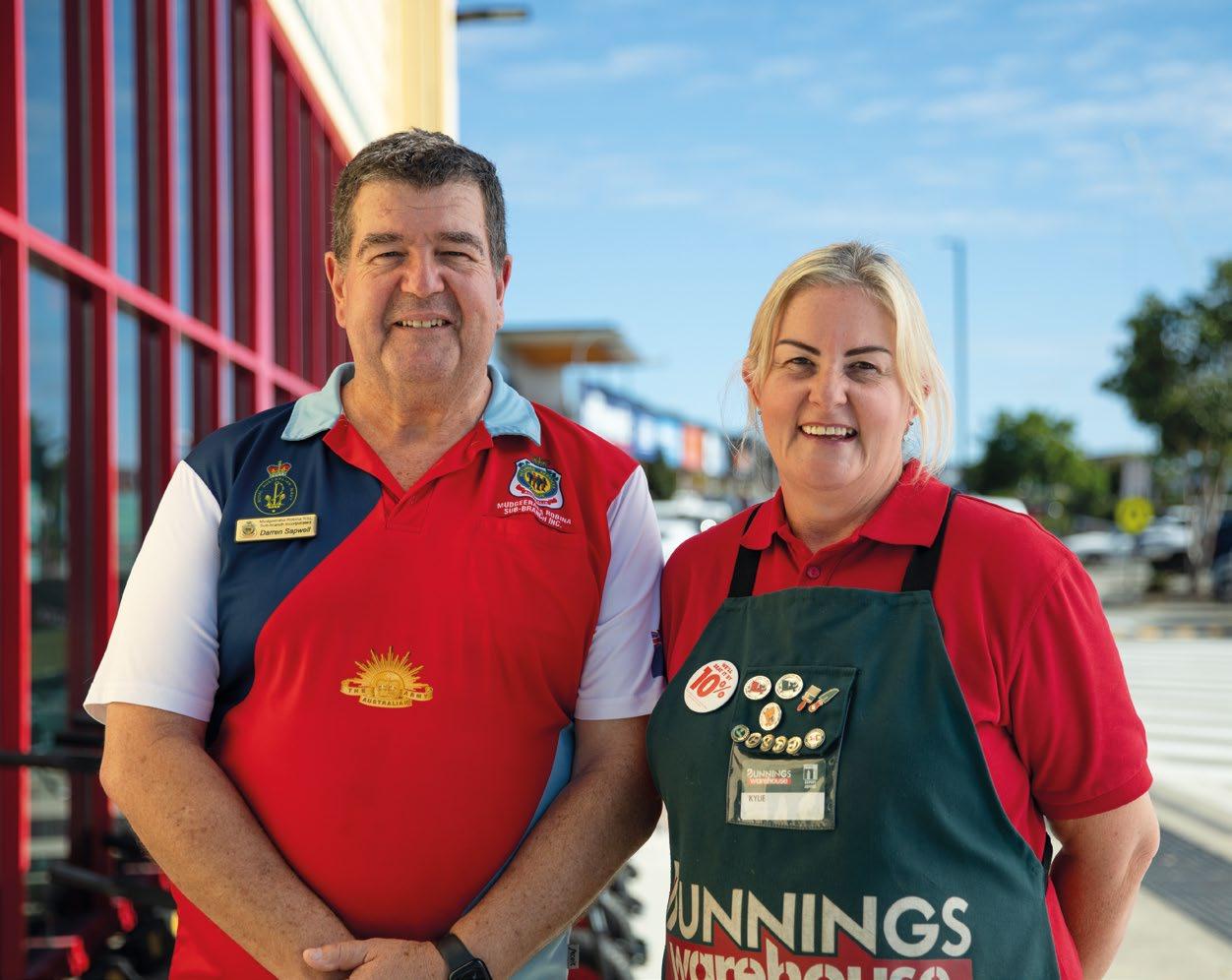
OVER the past 18 months, the small Mudgeeraba-Robina RSL Sub Branch on the Gold Coast has been making moves within the community by getting involved with local organisations and providing opportunities for school children through a bursary initiative.
Sub Branch President Darren Sapwell says it’s important for the Sub Branch to engage with the
next generation and promote the importance of education.
“The $200 bursary recognises deserving students and is designed to give them a chance to invest in their education,” Darren says.
“To be eligible, the student must have a family connection to the veteran community, have good attendance at school and always be striving to do their best.
“Some of them put the bursary
into buying textbooks or uniforms, but we don’t restrict what they buy with it.”
SUPPORTING THE NEXT GENERATION
One of the bursary recipients was Evelyn Petersen, who decided to dedicate her bursary and time to help the Sub Branch.
“I received the bursary in 2023 when I was in year six,” she says.
MOBILE-IPHONE SCAN TO WATCH VIDEO
ABOVE: MudgeerabaRobina RSL Sub Branch President Darren Sapwell, left, with Bunnings Robina Activities Organiser Kylie Mosen.
barbecues and bursaries
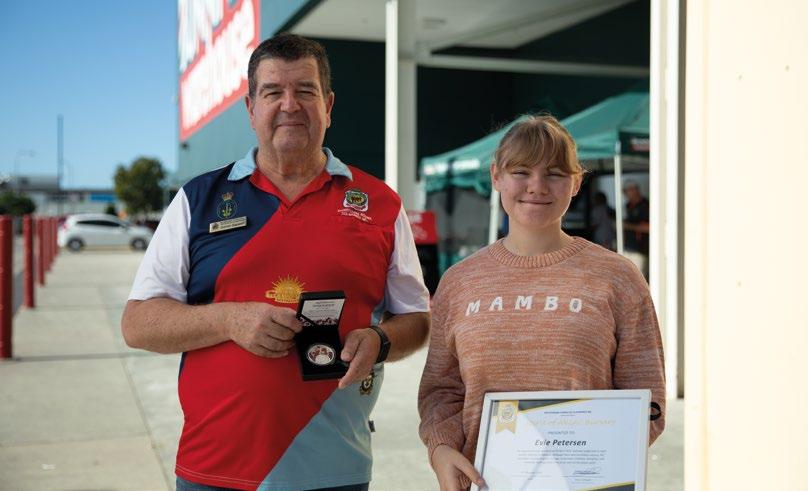
ABOVE:
Bursary recipient
Evelyn Petersen with MudgeerabaRobina RSL Sub Branch President Darren Sapwell.
“I’m quite proud to be able to say that I’ve helped the Sub Branch and given back to the community, especially since we should all help and respect veterans in our community.”
Eveyln comes from a family with a long history of Defence Force members, including a grandfather who served in Vietnam, greatgrandparents who served in WWII and great-great-grandparents who served in WWI.
Evelyn says it was an honour to receive the bursary and enjoys giving back to the Sub Branch.
“I’m quite proud to be able to say that I’ve helped the Sub Branch and given back to the community, especially since we should all help and respect veterans in our community,” she says.
Evelyn’s support for the Sub Branch has even become a family affair, with her mother, stepfather and aunt accompanying her to support the Sub Branch’s fundraising initiatives.
Darren says the support from Evelyn’s family means so much to him and his members.
“Evelyn and her family are fantastic to us when we’re shortstaffed for badge selling or Bunnings sausage sizzles; they always put up their hand,” he says. “The whole family comes and gives up their time to ensure that we raise money to provide our wellbeing and compensation
activities to the veteran community.
“Their support shows us that we’ve earned the respect of the family.”
WORKING WITH BUNNINGS
In addition to the bursary, Mudgeeraba-Robina RSL Sub Branch is committed to finding fundraising opportunities that integrate with other local organisations and businesses. One of these is the local Bunnings, located in Robina.
Some weekends, the Sub Branch hosts the store’s famous sausage sizzles.
“A lot of people aren’t aware that Mudgeeraba and Robina have an RSL Sub Branch, so the sausage sizzles really raise awareness of us within the community,” Darren says.
“We get to talk to a lot of locals and veterans who love having a chat and a snag. We’ve actually attracted four new members from the sausage sizzles alone – just by being in the community and talking to people.
“The reality is, without these fundraising activities that we conduct at Bunnings, we probably wouldn’t be able to survive as a Sub Branch the way we do now.”
Darren says the Sub Branch has a great relationship with the team at Bunnings Robina and works closely with Bunnings Robina Activities Organiser Kylie Mosen.
“If I ever need a raffle prize, I reach out to the Bunnings team and they’re the first ones to reply with a donation of a gift card for our raffles,” Darren says.
“Kylie has also been great to work with. If we’ve got something that we’re unsure how to best approach, I know I can call on Kylie as she’s got a lot of contacts in the community and always comes back with a workable solution.”
THE APPRECIATION GOES BOTH WAYS
“As a local store, we understand the importance of getting involved with the community and working with local organisations, and Mudgeeraba-Robina RSL Sub Branch is amazing to work with,” Kylie says. “They’re always out there in the community helping out, and if I ever have a sausage sizzle cancellation or need some help quickly, they’re there to support us.
“My dad’s a Vietnam veteran and when he had an accident last year, the guys from the Sub Branch were really great and reached out to me to ask if he needed any help – even just a chat! So, I brought him down to one of their monthly morning teas, which was really good for him.”
“The community is everything,” Darren says. “We’ve now made ties with the Mudgeeraba Lions and the Mudgeeraba Springbrook Hall Trust, we engage with our local police officers, we’re involved with the Rotary club, and we’re just starting a partnership with the Show Society.
“To us, community connection helps us get our name out there and raise our profile in the community, spreading the word that we’re here for veterans.”
TURNING CARING INTO A NEW CAREER
The RSL Employment Program, available nationally and delivered by RSL Queensland, helped veteran partner Cherie Mortimer find a new career in nursing.
Jasmine Halley

“A BIG WAKE-UP CALL”
In 2020, Gold Coast local Cherie Mortimer received a shock that would alter the course of her life.
“COVID hit and I was stood down from my job. It was a big wake-up call for me to work out what I wanted to do with my life,” Cherie recalls.
Suddenly pushed to rethink her career, Cherie found herself naturally drawn to nursing. For almost a decade, she had been juggling casual work while caring for her husband, Trent, following his Army discharge in 2014.


“I wanted a role that was going to be valued and one I knew was going to result in a job,” Cherie explains.
ABOVE: When COVID hit and Cherie was stood down from her job, she decided it was time to enrol in university to study nursing.
CENTRE:
The RSL Employment team helped Cherie with her applications, CV, cover letters and interview strategies.
now works as a Registered Nurse for Gold Coast Health.
“I felt like nursing was a no-brainer, especially being Trent’s carer. It would help me with my career but also at home with him.”
That’s when Cherie decided it was finally time to go back to school and enrol in university.
AHEAD OF THE PACK
Towards the end of her degree, Cherie was put in touch with the RSL Employment Program team to help her land her first nursing job.
“I knew how competitive graduate programs are because they are so limited and there are so many students applying. I needed all the help I could get,” Cherie says.
“The RSL Employment Program team got in contact with me almost straight away to get the process started. They explained what kind of help I would receive, and who I would be getting it from.”
The team quickly set about helping Cherie with her applications, including selection
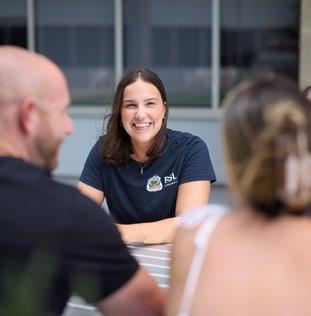
criteria, her CV and cover letters. When the time came, they also helped with interview strategies, which Cherie says alleviated a lot of stress from the process.
“Interviewing was a massive one for me, as a good interview could be the difference between you and the next person. But my Employment Consultant helped me prepare by sending me a massive list of questions to go through, which gave me an idea of the questions to expect, and walked me through some mock interviews,” Cherie recalls.
“That practice gave me the extra confidence I needed going into my interviews.
“I applied for two graduate programs, and I received offers for both. I was really stoked not only to get both, but to have a choice. If I could say one thing to the RSL Employment Program team, it would be a massive thank you.”
LOOKING BACK AND AHEAD
Now working as a Registered Nurse for Gold Coast Health, Cherie reflects on the support she and her husband Trent received from RSL Queensland with gratitude.
“The RSL Employment Program helped me by taking away all the
RIGHT: Cherie


stress that goes into finding a new job, which in turn meant that I wasn’t putting any of that stress onto my family,” Cherie says.
“I was able to be more focused on my family and not have to worry about the process that I knew everyone else was going through, because I knew I had that support and assistance from the team.”
Trent echoes his wife’s sentiments, saying the support
enabled them to move forward and enjoy life.
“There’s no harm in upskilling or having more education; it opens up a lot more doors and opportunities,” he says.
Cherie and Trent encourage others in the veteran and Defence community to access this lifechanging program.
“If somebody else is considering getting in contact with the RSL Employment Team, I would tell them to definitely take that leap and do it. It’s been the best thing that I’ve ever done,” Cherie says.
“For any veteran or family member looking for help, I urge you to talk to RSL Queensland and see what they can offer,” Trent adds. “You’ve got nothing to lose.”
found herself drawn to nursing, after caring for her husband after he was discharged from the Army.
LEFT: For Cherie, studying nursing at university was a way to find a role where she’d be valued.
ABOVE: Cherie
FROM DARKNESSinto light
Led by veterans, the Timor Awakening program has helped transform hundreds of lives affected by trauma, empowering them towards healing and growth.
Belinda Crossman
VETERAN Lily Mulholland had tried all kinds of interventions. For her, the most effective by far was the Timor Awakening program.
“Timor Awakening was one of the best experiences of my life. I could not believe the change in my body and my brain after the program,” she says.
“When I got back home, I felt much, much calmer, and for about six months after, I didn’t have any of the nightmares that I usually have.
“It really changed something inside me and released some of the stuff that I didn’t even know I’d been carrying around.”
HIDDEN TRAUMA
Lily battled 10 years of mounting, unexplained illnesses before being diagnosed with complex posttraumatic stress disorder (PTSD).
“The psychiatrist actually linked it back to my time in East Timor, which was a big shock because I had thoroughly enjoyed the experience,” Lily shares.
In 1999, just months after joining the Army as a Public Relations Officer, Lily was posted to East
Timor – a nation still reeling from conflict with Indonesia.
“It was very dangerous for the first couple of weeks,” she recalls.
“But I really enjoyed it. I was doing what I was trained for. I was seeing the power of peacekeeping force as a circuit breaker.
“I didn’t quite understand that the trauma and the difficulties we experienced, compounded by my non-stop postings for the next few years, meant that trauma didn’t get processed.
“It had been deep in my body for 20 years, and I just kept getting sicker and sicker.”
Then a friend told her about Timor Awakening.
A PATHWAY TO HEALING
Run by Veterans Care Association (VCA), Timor Awakening aims to help veterans and their families overcome trauma and live fulfilling lives.
The immersive program runs in Timor-Leste and on the Gold Coast, and is open to all current and ex-serving ADF members, and their partners and close family. Participation is free, thanks to RSL
Queensland and other funding partners.
“Timor Awakening aims to bring people out of darkness and into the light,” VCA President Michael Stone, a former infantry officer, explains.
“It was born from the darkness of a number of us that had suffered extreme trauma and mental health challenges.
“The pathways provided through the conventional system – medicate, isolate, compensate – weren’t enough.
“So, we put together our best efforts to create something unique that would hopefully inspire people and create a safe space for healing.”
Timor Awakening offers a breadth of support, education and experiences to encourage healing and growth.
Importantly, the program is peerled by Defence members, veterans and partners with lived experience.
“The key strength of Timor Awakening is that it’s run by peers who’ve had trauma, who’ve had serious mental health challenges, and taken on their own personal
Veteran Lily Mulholland describes Timor Awakening as the most effective intervention she’s tried – and one of the best experiences of her life.
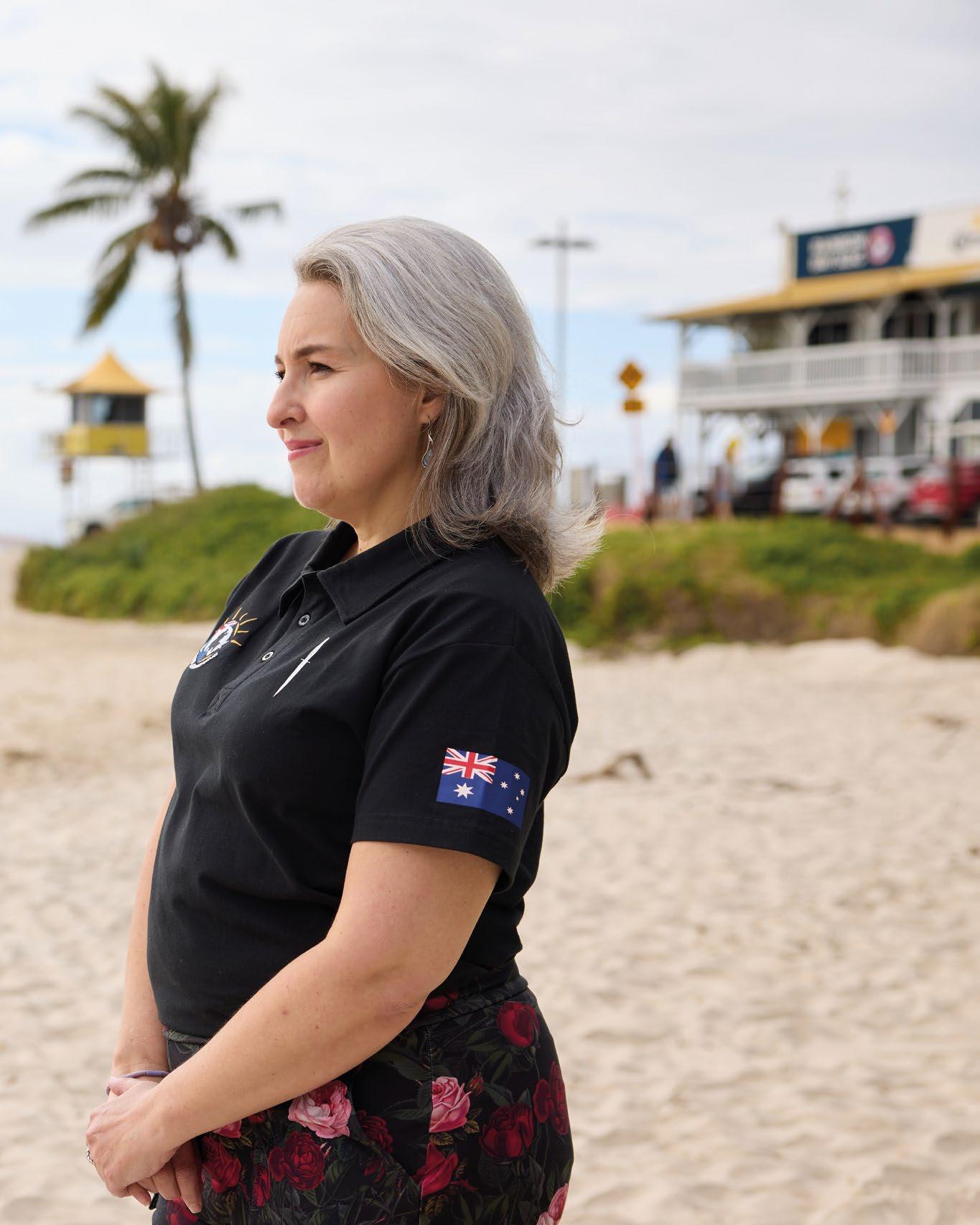
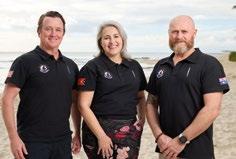
darkness into light
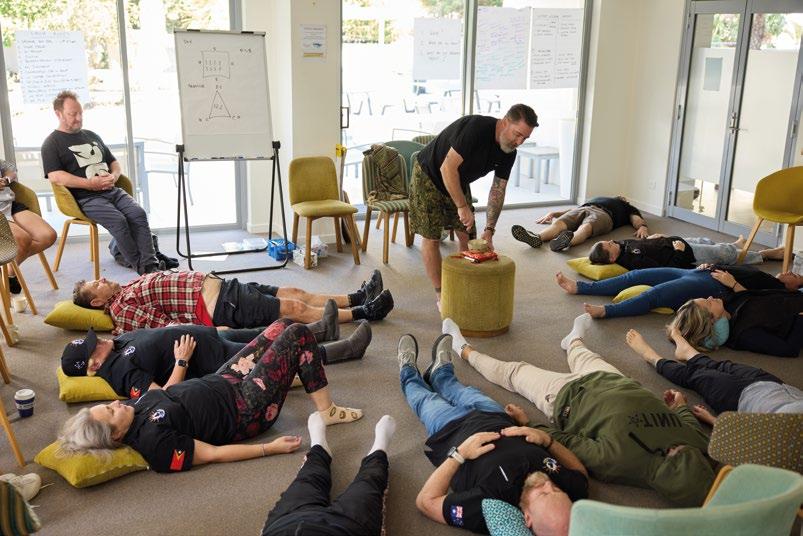
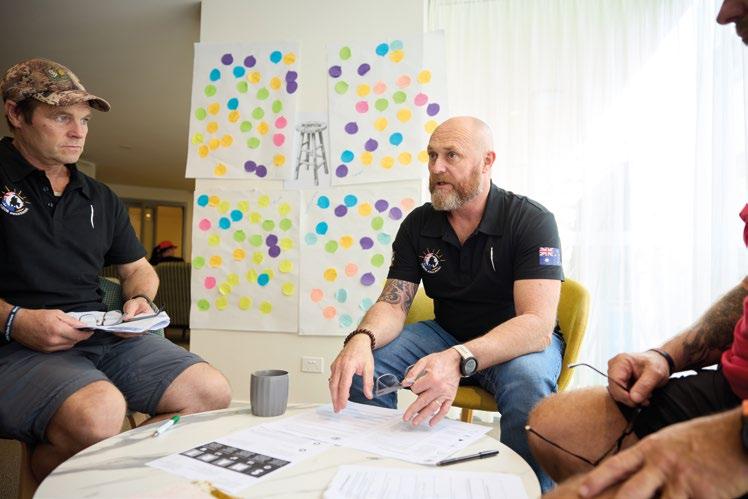
challenge to move forward,” Michael says.
“They are role models who show participants that healing is possible.”
Each program is refined based on past participants’ feedback, which continually highlights the program’s effectiveness.
“Many participants say, ‘This is
the best intervention I’ve had since I’ve been ill or since I’ve left the military’,” Michael says.
“On the first day, you’ll often see people are guarded, nervous, depressed. At the end of a program, people are having fun and doing activities together.
“There’s a real sense of unity and hope, combined purpose
and energy, and that’s incredibly healing and effective.”
HOPE AND GUIDANCE
Program senior mentor Pete Parton is living proof that Timor Awakening changes lives.
“I really believe in what the program delivers. That’s why I volunteer as a mentor – to give back to the organisation that helped me so much,” the former Army commander and trainer says.
“The program was a real watershed moment in my life. It gave me a glimmer of hope that I could have a chance at posttraumatic growth, which I’d never heard of before.
“It allowed me to not only understand how I could better myself, but also gave me some tools to get started.”
As well as presenting sessions, organising activities and training new mentors, Pete’s main job is to support participants both during and after the program.
“My role is to get to know the participant and understand what’s happening with them at a more in-depth level,” he says.
“I’ve mentored veterans; I’ve mentored partners of veterans; I’ve mentored adult children of veterans. We need to have the skillset where we can relate to all those different people.
“We share our vulnerabilities as well, and that’s really important for participants to see. We’re still growing, we’re still dealing with our own issues, but we’re making positive changes and not letting those issues control our lives anymore.”
Being trusted to guide people, and witnessing their transformation, is a “privilege” to Pete.
“I’m always really astounded by how much somebody’s life can change over 10 days,” he says.
“We’ve had people come into the program at their lowest point
and leave with purpose and ready to move in a positive direction.”
HOLISTIC CARE FOR MIND, BODY AND SOUL
Lily completed Timor Awakening’s overseas program last year, revisiting Timor-Leste for the first time in 25 years. She says she was so “blown away” by the experience that she signed up for the Gold Coast program.
While the Timor-Leste program offers an immersive cultural experience (including travel activities, aid projects and engagement with locals), the Gold Coast program focuses more on holistic health education.
“One of the first lessons we give is that your body is a system,” Pete explains.
“If one or several aspects of your life are neglected – be it your health, relationships or mental fitness – then you’re not living a fulfilled, purposeful life and you’ll probably have issues in those areas.”
According to Pete, the 10-day, live-in program aims to “model what a good day looks like every day”.
Held in a peaceful spot by Rainbow Bay Beach, the program combines education, reflection, connection and physical activity. There are open, supportive discussions plus surfing lessons, meditation and organic farming. There are also insightful lessons on the mind-gut connection, growth mindset, moral injury, compassion fatigue, finding your tribe and other key topics.
“Compared to Timor-Leste, we do a lot more of the difficult emotional work here, but it’s done
INFO-CIRCLE
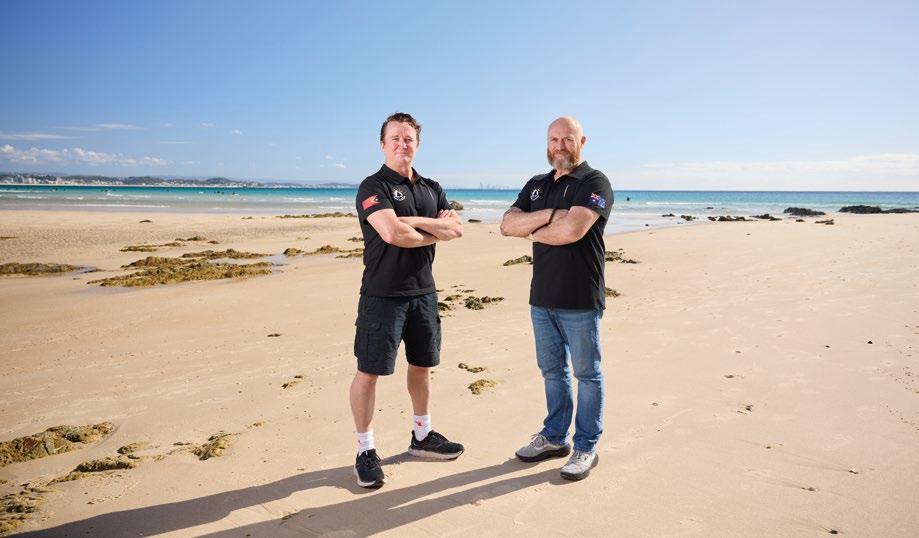
in a really playful, fun, engaging way. The mentors are just brilliant,” Lily says.
“Because we’re all together, we wake up, exercise, eat breakfast and then do our ‘circle time’ (group discussions) and activities together.
“Lunch is cooked for us; everything’s laid on. So, all you have to do is focus on yourself and your wellbeing.
“It’s a really amazing opportunity to just take that time out, put yourself first, leave all those worries behind and be with other people who get you.”
The program has given Lily not just practical tools to support her wellbeing, but also hope, direction and a circle of new friends.
“There is nothing like being surrounded by a group of likeminded veterans to help you realise there’s somewhere you belong after you’ve left the ADF,” she says.
“We’ll be friends for life now.”
“TRULY LIFE-CHANGING”
VCA hopes other organisations will adopt a similar approach to the
Timor Awakening program so more veterans and their families can benefit.
Both Pete and Lily have reassuring advice for anyone in the veteran community who’s struggling with their mental health.
“I can put my hand on my heart and say you’ll definitely benefit from it,” Pete says. “Just feel out the programs and have the courage to put in an expression of interest, come along, and be in a space where you’re ready to move forward.”
“I wish every veteran and their family members could come through this program. It truly is life-changing if you want it to be,” Lily says.
“I think for your mental health, it’s a brilliant complement to the more medical approach that we’re also able to access.
“You get something here that you don’t get anywhere else: a very safe space to explore your darkest places and bring them a bit into the light, surrounded by people who are just there for you.”
ABOVE:
OPPOSITE TOP: Timor Awakening offers a breadth of support, education and experiences to encourage healing and growth.
OPPOSITE BOTTOM: Importantly, the program is peerled by Defence members, veterans and partners with lived experience.
For more information, including upcoming program dates, search ‘Timor Awakening’ on rslqld.org
If you or someone you know needs urgent support, please contact Open Arms on 1800 011 046 or Lifeline on 13 11 14.
VCA President Michael Stone, a former infantry officer, left, and program senior mentor Pete Parton, a former Army commander and trainer.
FROM RUBBLE TO RENOVATION
Saving the Gordonvale RSL Sub Branch Hall
Gordonvale RSL Sub Branch members and the local community have banded together to refurbish their beloved hall.
Jasmine Halley
“After COVID, the community also got a bit disconnected, so having this hall back will be a really great way to get the community back together and participating in events.”
FOR many small towns, the main hall is the beating heart of the community: a place where locals can connect, celebrate and find comfort. These buildings are normally deeply ingrained within the community and bear witness to some of the most significant milestones in a town’s history. In the Far North Queensland township of Gordonvale, this sentiment is no different.
In Gordonvale, the local RSL Sub Branch calls the main hall home. Gordonvale RSL Sub Branch Secretary and Treasurer Peta Ison says the history of the hall dates back to 1934, when it was first built as a theatre before the RSL purchased it in 1952.
“It was originally built as the Lyric Theatre – a performing arts theatre,” Peta says.
“It has since been used for several events including weddings, receptions, funerals, wakes, debutant balls, graduations, parties… It was even the staging area for the US Army’s 503rd
Parachute Infantry Regiment during World War II (WWII).
“After WWII, the RSL purchased the hall for veterans and their families, but it is still very much a community hall; it’s very close to the community’s heart.”
Around 10 years ago, however, the building had fallen into disrepair.
“The building was assessed and marked for demolition. But the community and the Sub Branch decided no,” Peta recalls.
“The hall has a long history with the Sub Branch and houses a lot of military and veteran memorabilia and artefacts. It’s very close to a lot of our Sub Branch members and has been an integral part of their life.”
Together, the community and the Sub Branch decided to form a petition and express their commitment that the hall would be fixed. Fortunately, the demolition order was subsequently removed.
“The community has put their funds and sweat into helping
rebuild the hall since the order was removed. If it wasn’t for the community, the hall wouldn’t be here,” Peta says.
IT TAKES A VILLAGE
Over the years, Sub Branch and community members have contributed to fixing up the hall through working bees and fundraising initiatives.
“About 80% of the labour is Sub Branch members,” Peta says.
“There’s a group of about 12 to 15 members who come down almost every Saturday morning and help with the renovation. At the moment, they’re finishing fibro sheeting of the internal walls, but recently they helped with installing the fire doors.
“It’s a very strong and robust building committee.”
In terms of fundraising, Gordonvale RSL Sub Branch works closely with its Citizens’ Auxiliary, which runs most of the fundraising initiatives including sausage sizzles, monthly garage sales at the
markets and raffles during social nights.
Citizens’ Auxiliary President Judy Hunter says supporting veterans in the community has always been important to her.
“While I did not serve, I have a strong connection to the military with my grandfather having served in Gallipoli, uncles having served in WWII and my daughter now serving in the Navy,” Judy says.
“So, I’ve always thought it was very important to support our veterans, especially when they come home and may not be in a good way.
“That’s why I’m really invested in helping support Gordonvale RSL Sub Branch and doing what I can to fix this hall; it means so much to me and the community.
“I used to go to the cent sales and fashion parades here back in the day, and the ANZAC Day services of course. So, seeing the renovations completed will be marvellous.”
Peta says the Sub Branch also received funding from RSL Queensland’s Sub Branch Support Grant Trial and from the Queensland Government’s Queensland Remembers Grants Program for major capital works.
“The funding from these grants was instrumental for us to ensure the hall become a viable building again,” Peta says. “The funding from RSL Queensland’s grant trial helped us make the hall fire compliant, and the funding from the Queensland Government helped us with a full upgrade of the building’s electrical system.”
A SPACE FOR CONNECTION
With the hall now only months away from completion, Judy says they’re already getting inquiries from local sporting groups about using the space for classes or events.
“We’ve had the archery club hold some meetings here, the
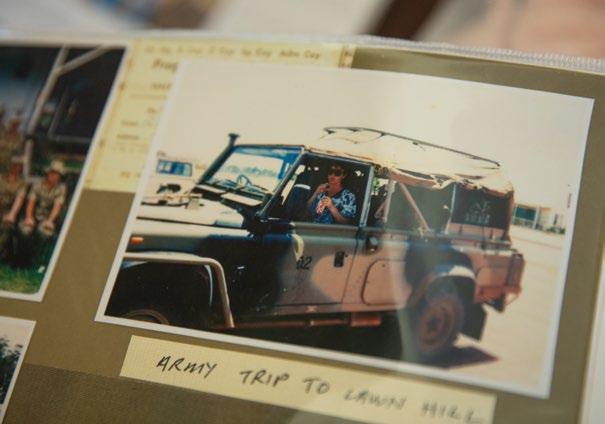
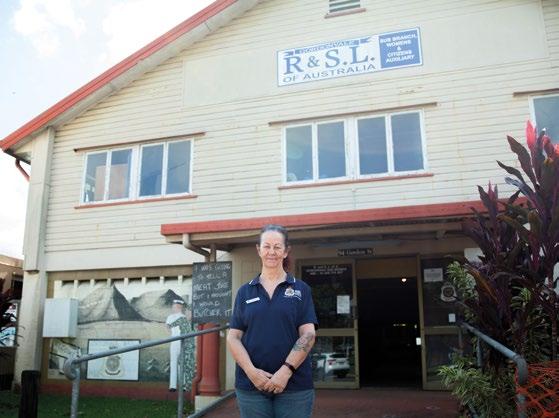
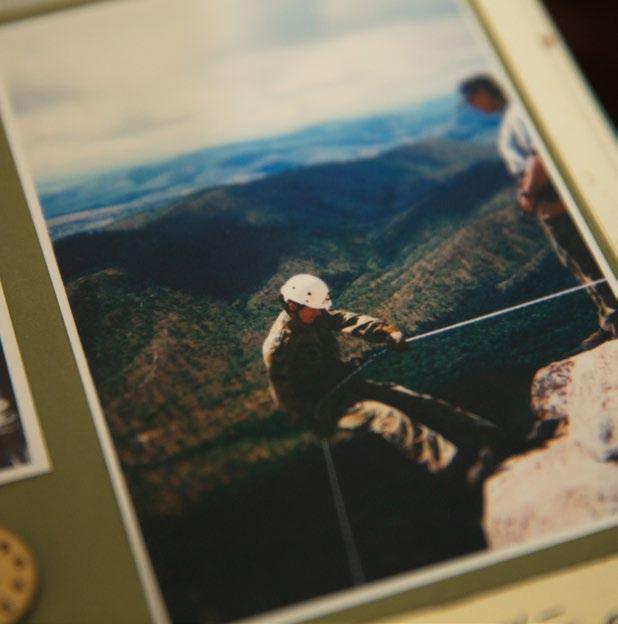
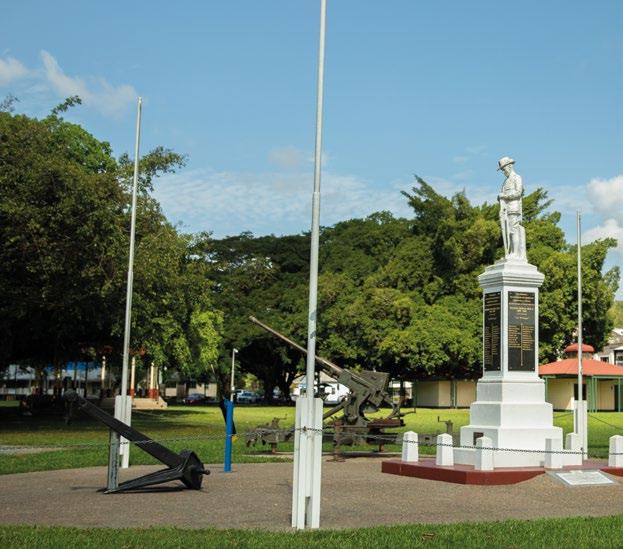
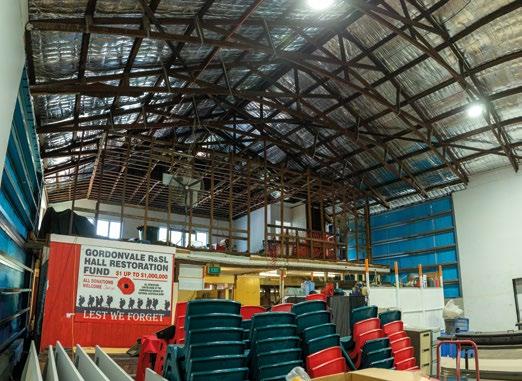
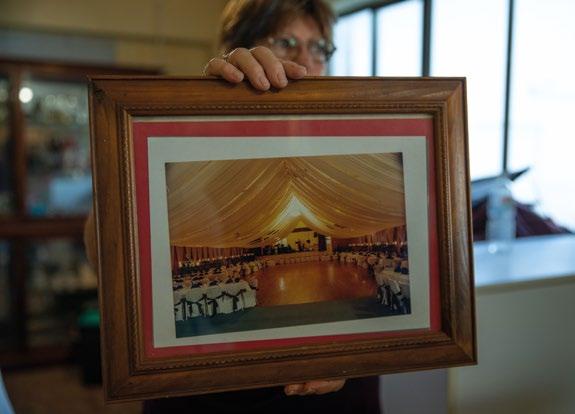
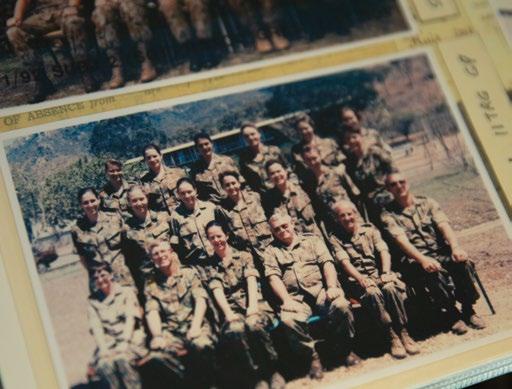
Gordonvale RSL Sub Branch
Secretary and Treasurer Peta Ison in front of the refurbished hall.
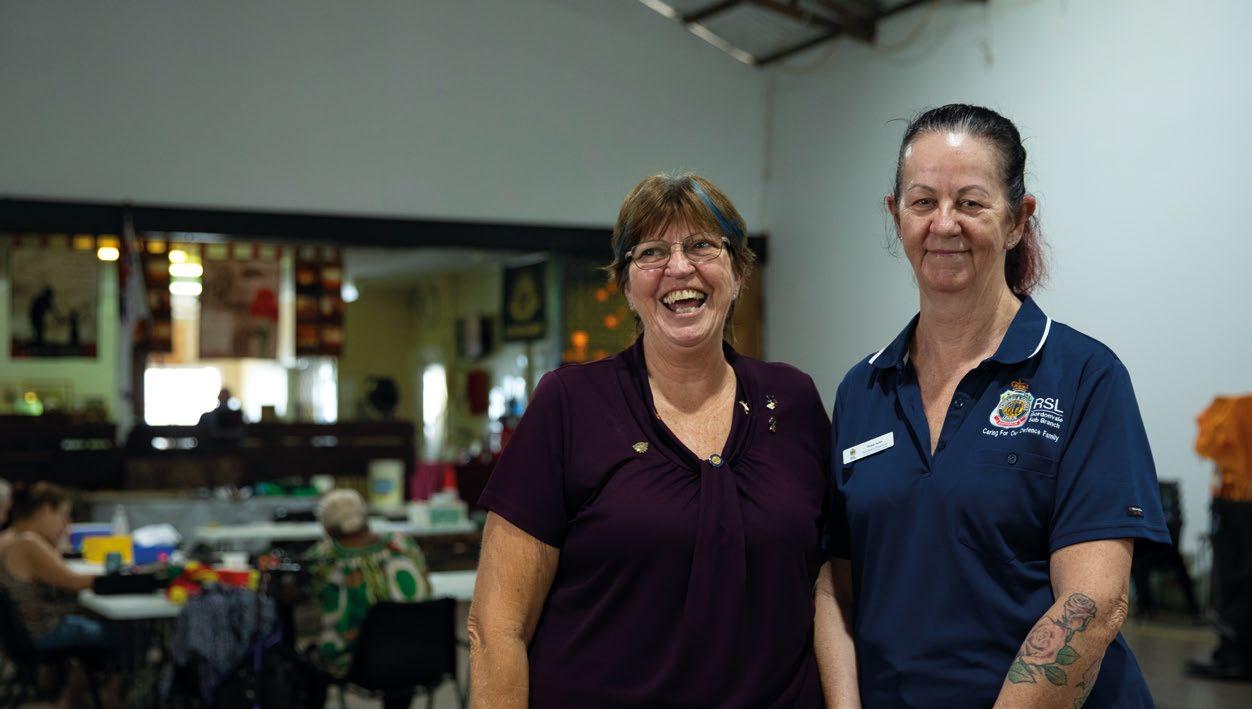
ABOVE:
Citizens’ Auxiliary
President Judy Hunter and Gordonvale RSL
Sub Branch
Secretary and Treasurer Peta Ison.
jiu-jitsu group wanting to come in and practise here, dance companies wanting to host dances here… We’ve received lots of community interest already!” she says.
“After COVID, the community also got a bit disconnected, so having this hall back will be a really great way to get the community back together and participating in events.”
In addition to local sporting group events, Peta says the Sub Branch is planning to host other opportunities for veterans and the community to connect.
“We would love to hold veteran-
specific events during Veterans’ Health Week, for example, but also some competitions for members and the community. We used to hold dart and pool competitions here, which were quite famous,” she says.
The income from these events will support the Sub Branch in delivering wellbeing and other support services to veterans within the community.
Peta says the camaraderie within the community has helped the Sub Branch thrive.
“One thing I’ve found with Gordonvale is that we have a very
Want to help your community? RSL Sub Branches and Auxiliaries offer a number of ways to connect with and make a difference in your community. Learn more at rslqld.org
strong auxiliary membership. And while they’re not veterans, they’ve been around and involved for so long that they understand us and are always willing to support us,” she says proudly.
“We’ve also had an increase in service members recently, as we have a large veteran community here in Gordonvale and our President has been encouraging younger veterans to join the Sub Branch. They’ve not only come on board, but are now also heavily involved in commemoration planning.
“It’s great to have them continue our legacy.”
MOBILE-IPHONE SCAN TO WATCH VIDEO
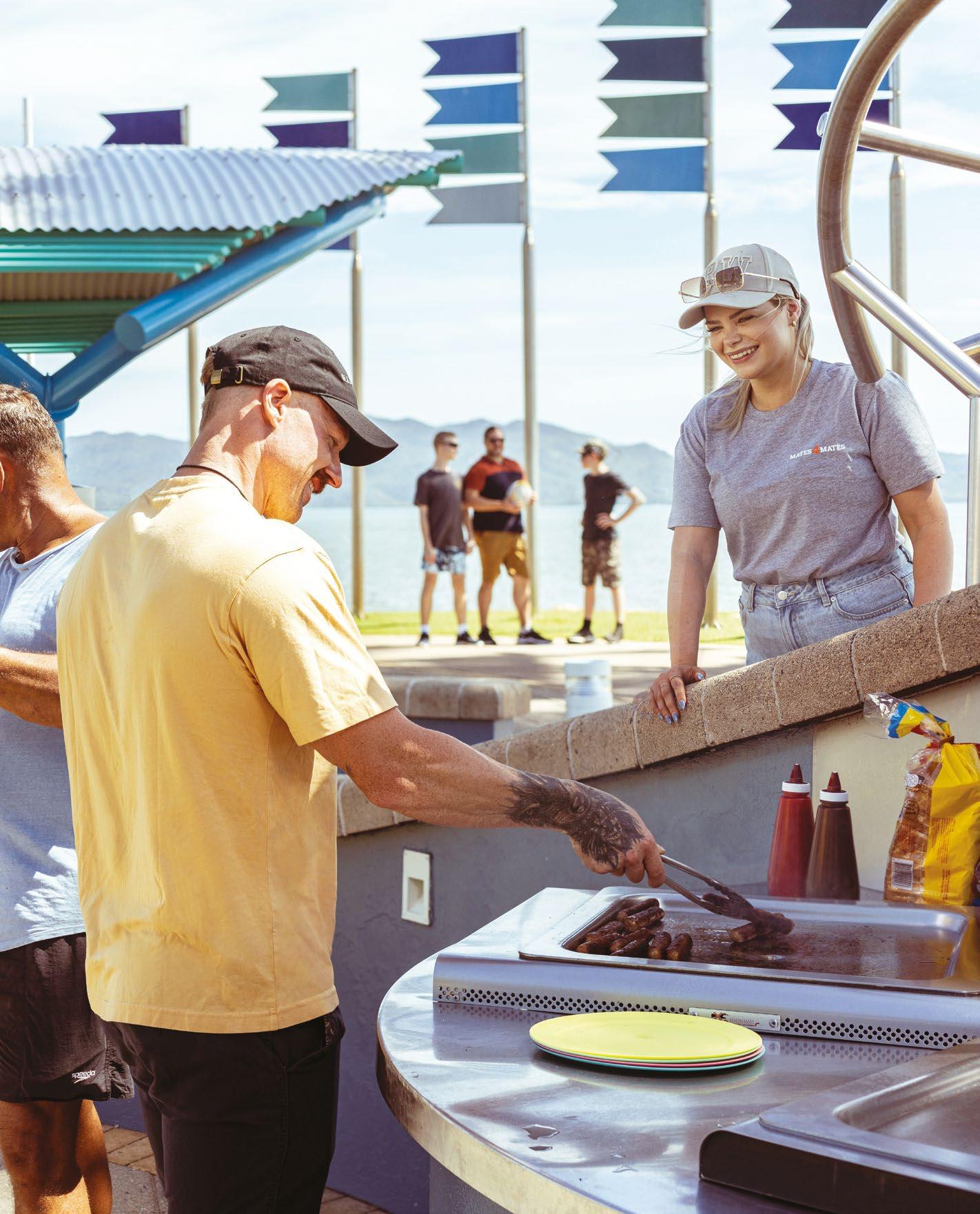
Wrapping up 2025.
As we prepare to welcome in the new year, we reflect on the last 12 months and the highlights from across the Mates4Mates regions.
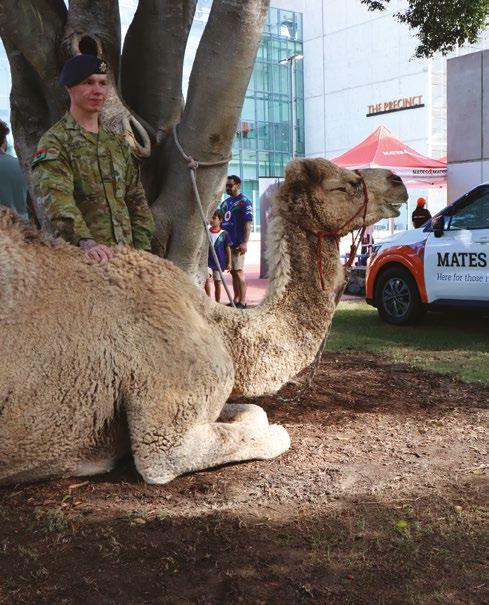
Although the beginning of the year saw wild weather for our friends in Queensland, April brought with it a chance to pause, connect and commemorate the veteran community for ANZAC Day.
Community support was high throughout the month, with fundraising events ranging from selling parmi toppers to mountain treks. Thank you to all the people and organisations who held a fundraiser this year, big and small, as your generosity helped to support veterans and their families impacted by service.
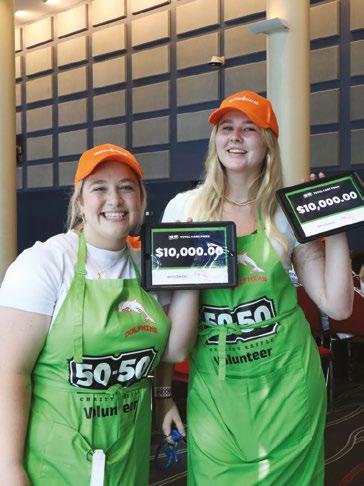
The Brisbane team were off to the Dolphins vs Warriors game in May alongside the Australian Army Band, 1st Regiment (Royal Australian Artillery) and their Bushmaster, and 9th Force Support Battalion, with camels Lance Corporal Penny and Corporal Vernon. Thanks to our charity partnership with the Dolphins NRL, Mates4Mates received an impressive donation of almost $14,000 following the 50-50 Charity Raffle at the game to help support veterans and their families.
We would like to give a special thank you to SHAPE Australia and Sleepy’s, who also helped to make a difference in the lives of the veteran community.
Kicking off in June, physical rehabilitation took the Top End by storm, with group exercise classes and yoga sessions in Stuart Park, Nightcliff and Coolalinga helping to keep the community happy and healthy.
Heading along the Queensland East Coast, Defence families were kept busy across the regions during the September school holidays. From a llama farm tour to a confectionary workshop and mini golf, children of all ages could enjoy quality time with their parents and carers.
As we began to wrap up 2025, the newly developed Skills for Recovery Program, ‘Beyond the Uniform’, was held in Ipswich. The program aimed to connect participants with like-minded others in a focused support group while learning mental, physical and social wellbeing strategies that can assist with the challenges of life after serving.
How EMDR supports veterans.
EMDR, or Eye Movement Desensitisation and Reprocessing, is a therapy method used to help with processing post-traumatic stress disorder (PTSD). For veterans, this can help to reduce psychological distress which may be impacting their lives.
While veterans generally experience PTSD at higher rates than the general population, understanding what’s happening in a brain with PTSD can give us greater insight into how therapy methods, like EMDR, work.
Where to find support.
Over the holiday season, Mates4Mates will be closed from 4:30pm on Wednesday 24 December 2025 and will re-open on Monday 5 January 2026. If you need support during this time, there are many organisations that offer 24-hour support: Open Arms 1800 011 046 Lifeline 13 11 14
Suicide Call Back Service 1300 659 467
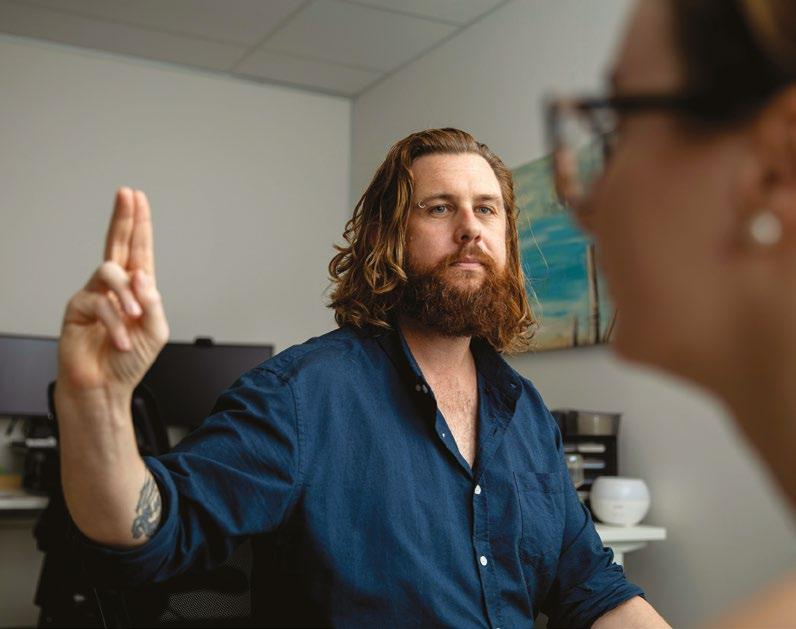
At Mates4Mates, our psychologists are trained in using EMDR to support veterans. Reach out to us today on 1300 4 MATES (62 837) for a confidential chat. Referrals are required to make an appointment.
Tank is a Mate living in Darwin who has been regularly accessing Mates4Mates services for several years.
For more information, scan the QR code to hear from Jono, Mates4Mates psychologist and Clinical Lead of Psychological Services as he explores the mechanics of memory and how EMDR supports PTSD.
What’s your favourite social connection activity?
“My favourite functions are the Friday lunches with table tennis and both the Easter and Christmas lunches, but all activities have been great.” Why do you enjoy being a Mate?
“Being with like-minded people and meeting others that have the same interests as me. It’s a chance to give someone a hand and share in their friendship.”
What impact has Mates4Mates had on you?
“Knowing I’m not alone in facing my demons and helping people with theirs makes me a better person.
I like being in good spirits when attending Mates4Mates, enjoying the camaraderie and the new friendships that develop.”
Manage the holiday season with mindfulness.
The holiday season is typically one of the busiest times of the year, but for some veterans and Defence families it can hold additional challenges.
Around this time of the year, potential stressors for veterans and their families can include changes in routines and structure due to deployments, isolation from friends and wider family due to postings, and financial stressors.
Experiencing these kinds of stressors can increase feelings of anxiety, impact mood and cause struggles with controlling emotions.
Practising mindfulness when feeling overwhelmed can be a helpful tool in the moment to help cope and fight back against stress during the holiday season.
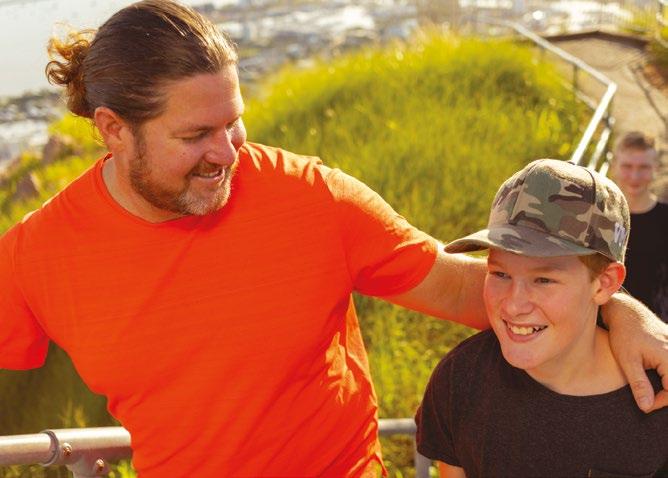
Mindfulness involves staying in the present – or grounded – and remaining focused on your senses, thoughts and emotions as they arise and engaging with the current situation without trying to change or control it.
Practising mindfulness during a challenging moment can increase relaxation. This can then help to manage emotional regulation as well as improve brain function, lower your heart rate, increase your awareness and focus, and increase your feelings of connection. This positive change in your mental state can help you to effectively manage stressful situations.
It’s important to remember that there is no ‘correct’ way to be mindful; it’s about what best works for you.
Some simple exercises include:
• body scans
• mindful breathing
• walking exercises.
Regularly practising mindfulness can help reduce reliance on unhelpful coping strategies during stressful situations and foster more positive outcomes.
The mental health team at Mates4Mates can also support in teaching mindfulness as well as other effective wellbeing strategies and psychological interventions.
To find out more about practising mindfulness, scan the QR code to read the full article online.
Make the call that makes the difference.
Contact Mates4Mates to find out about our services, how you can access support or get involved.
mates4mates. org
1300 4 MATES
Mates4Mates is proudly part of RSL Queensland and supports current and ex-serving Australian Defence Force members, and their families, who have been impacted by their service. If you would like to contribute to our magazine please contact the Mates4Mates Marketing team via marketing@mates4mates.org or call 1300 462 837


REMEMBRANCE DAY 2025

In 1918, at the 11th hour of the 11th day of the 11th month, the guns on the Western Front fell silent, finally ending World War I.
International communities marked that moment once again this Remembrance Day, pausing in silence to remember all who lost their lives in service.
More than 165 RSL Sub Branches held commemorative services across the state, honouring the courage and sacrifice of so many who have worn their nation’s uniform.
These pages show a glimpse of how Queensland


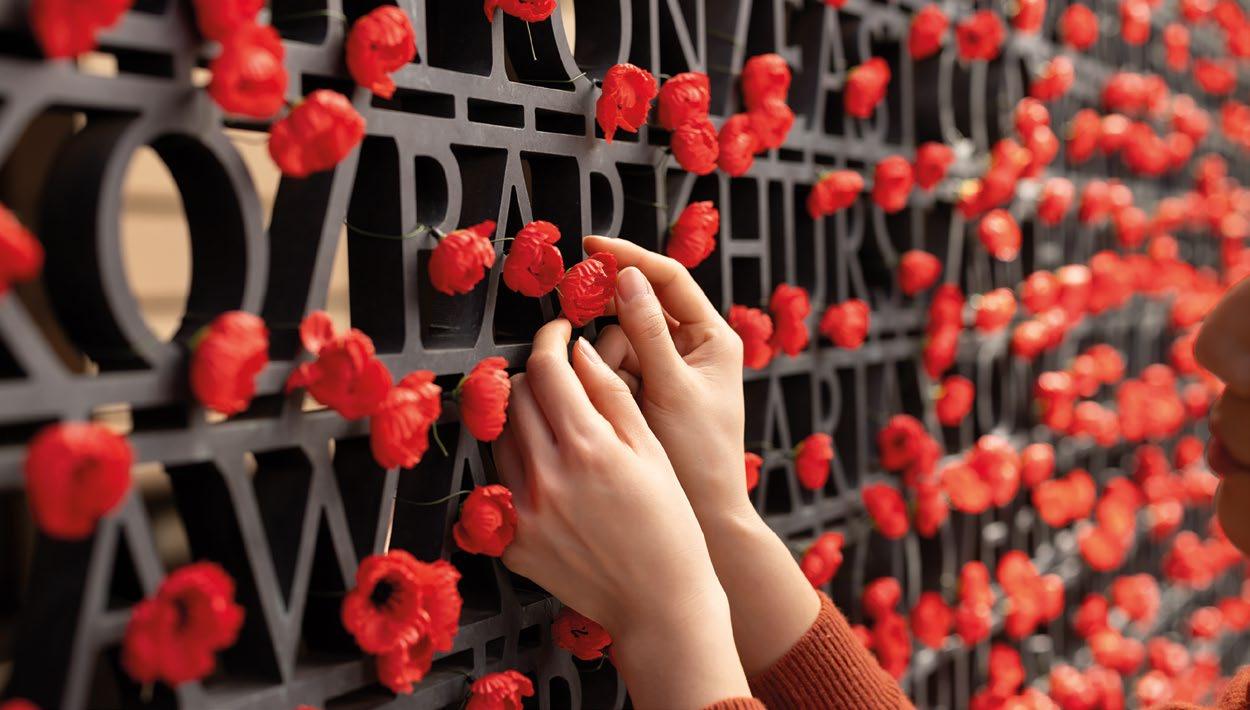
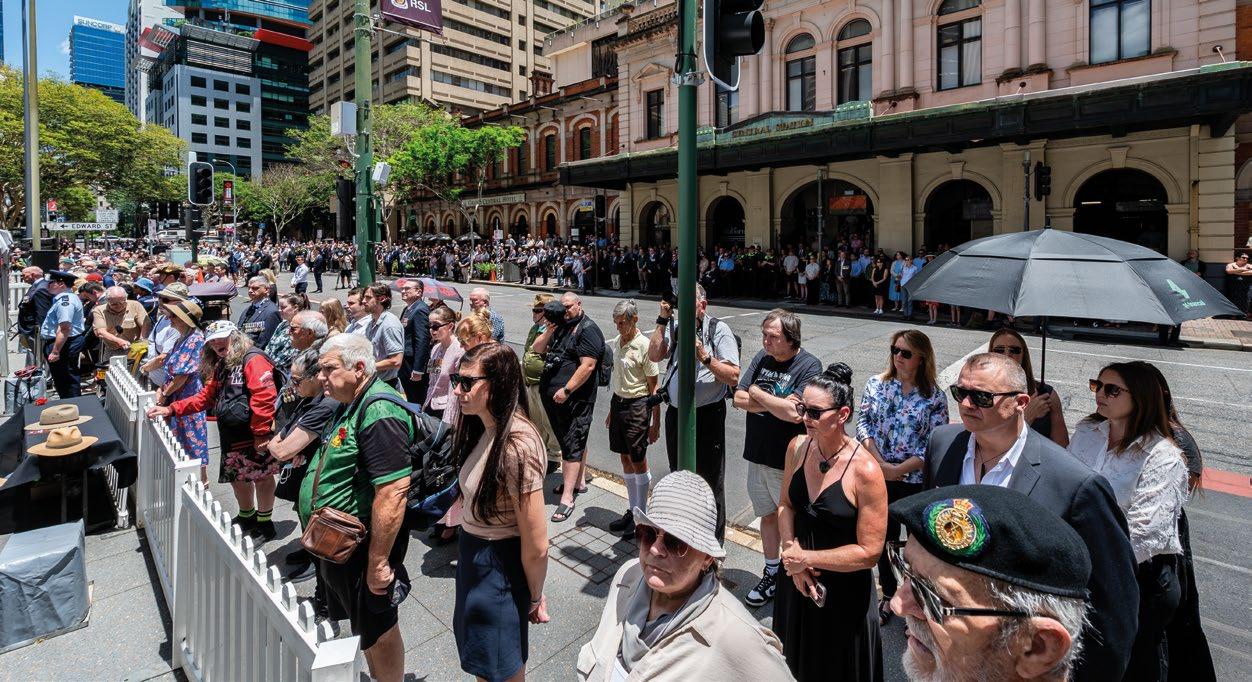
Crowds of people gathered on Ann Street, Brisbane for RSL Queensland’s State Remembrance Day ceremony.
From 4 to 11 November, RSL Queensland invited the public to place a poppy at Anzac Square, Brisbane in tribute to those who served and sacrificed.
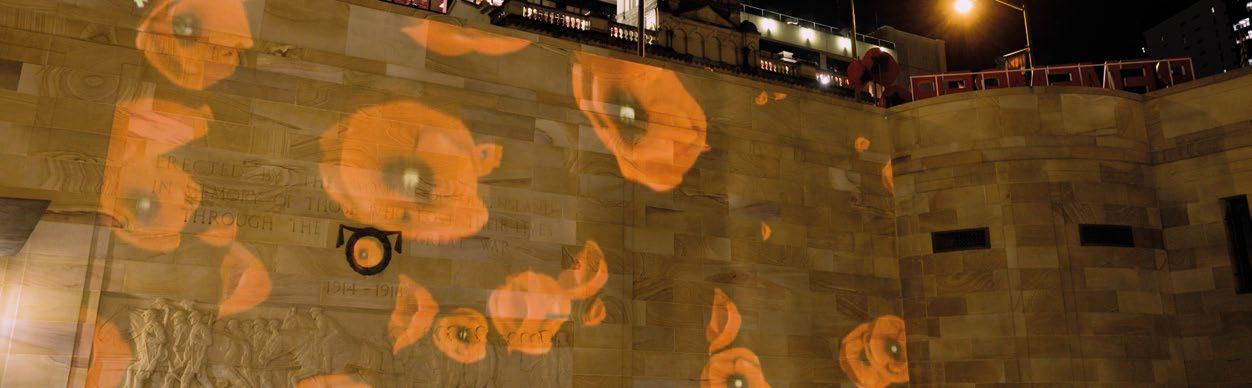
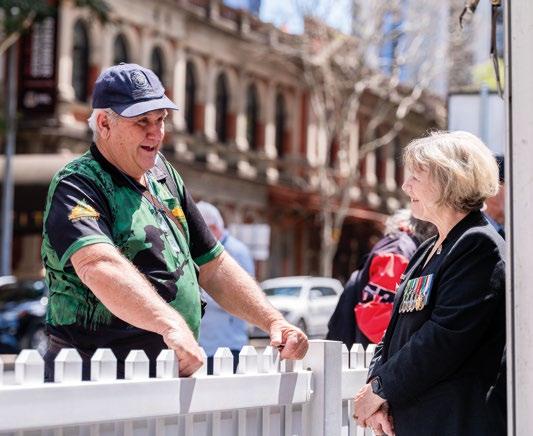
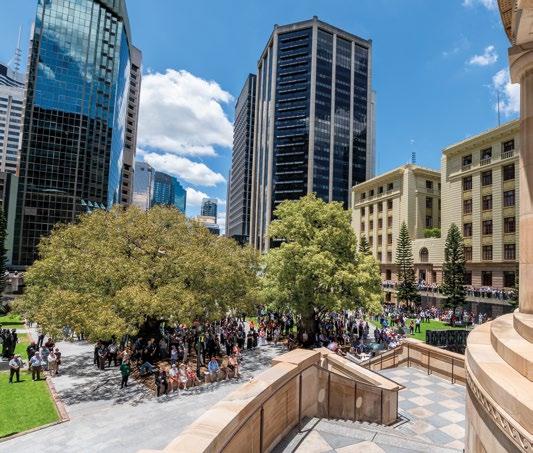
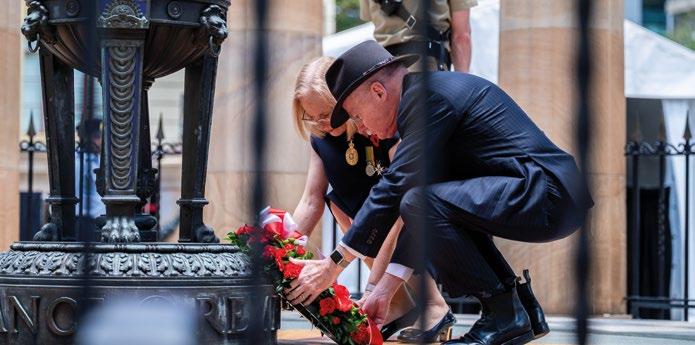
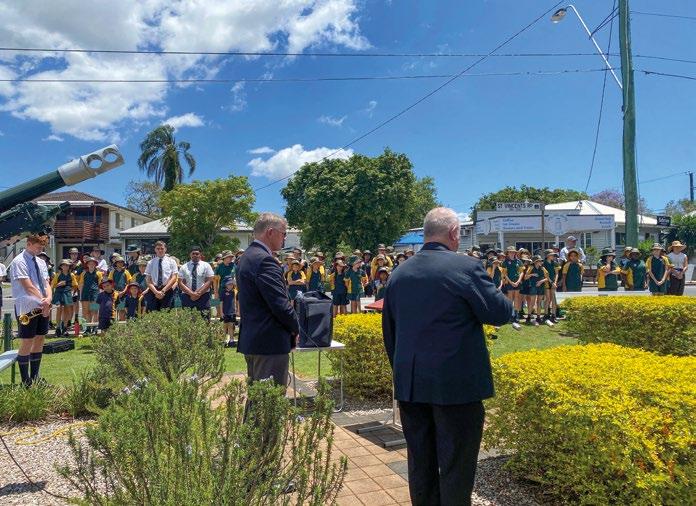
RSL Queensland State Deputy President Wendy Taylor (right) speaks to another attendee at the ceremony in Brisbane.
An estimated 1,500 people gathered in Anzac Square, Brisbane to pay their respects on Remembrance Day.
Approximately 200 people, including many from local schools, attended Banyo’s Remembrance Day service. The service was conducted by Banyo RSL Sub Branch Chaplain Rev. Bob Rogers, with Sub Branch President Michael Frawley reading the Ode.
In the lead-up to Remembrance Day, a projection of falling poppies illuminated Brisbane’s Shrine of Remembrance after dark. The display formed part of the RSL Queensland activation at Anzac Square.
RSL Queensland Patrons Her Excellency, the Honourable Dr Jeannette Young AC PSM, Governor of Queensland and Professor Graeme Nimmo RFD lay a wreath at Brisbane’s Shrine of Remembrance.
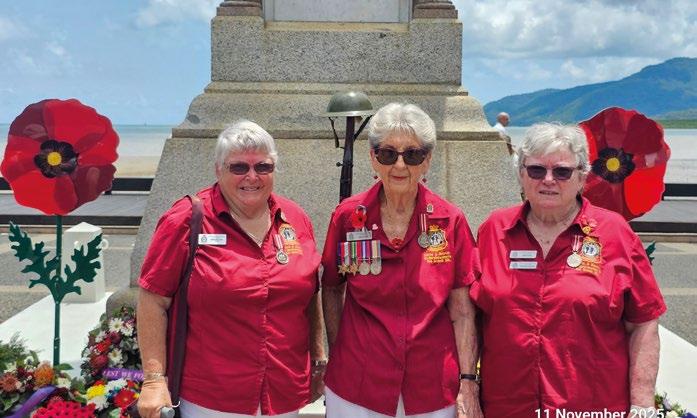
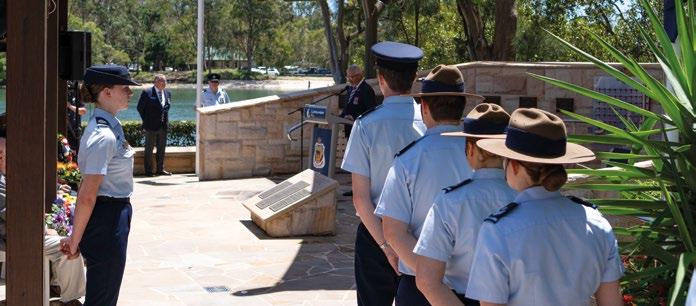
Currumbin Palm Beach RSL Sub Branch held a Remembrance Day service at the Currumbin RSL cenotaph, bringing together more than 250 veterans, current serving personnel, and members of the community. The service featured a flyover by two P-51 Mustangs, creating a powerful moment of reflection. Afterwards, guests came together for a commemorative luncheon upstairs at Currumbin RSL.
In the lead-up to Remembrance Day, RSL Queensland Sub Branch volunteers across the state were busy selling poppies, badges and other merchandise to encourage remembrance and help fund Sub Branches’ vital work in the community.
Pictured are members of Ipswich Railway RSL Sub Branch.
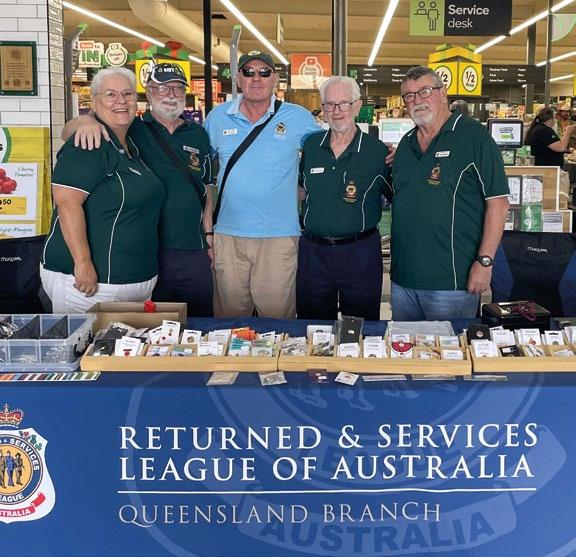
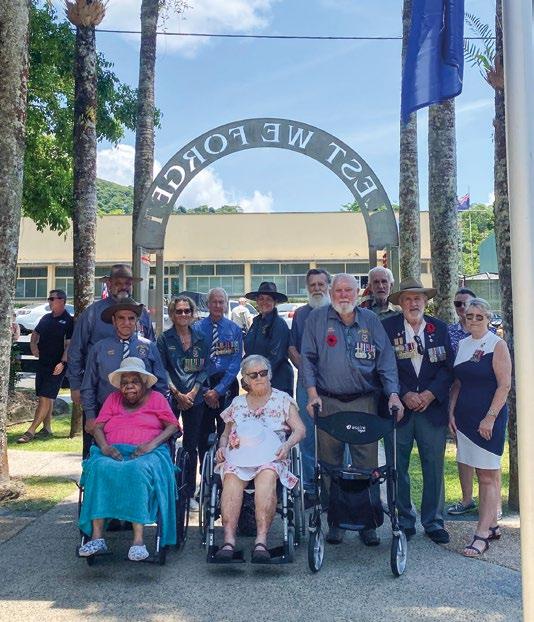
A significant number of
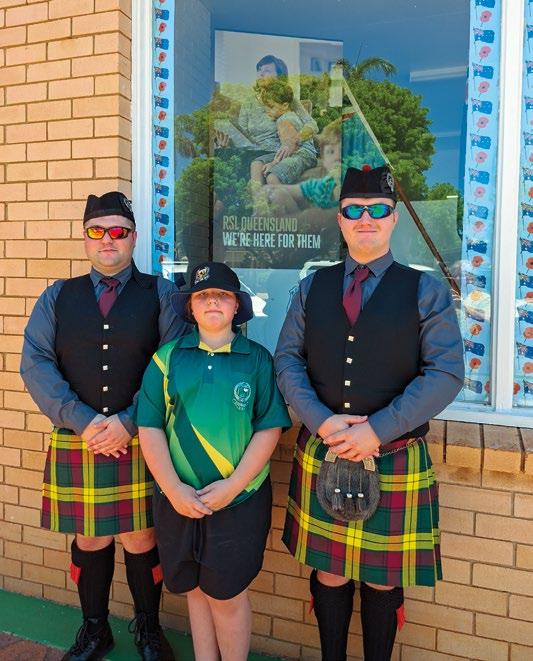
Cairns and District Ex-Servicewomen’s RSL Sub Branch President Marjorie Earl, Vice President Estelle Dan and Committee Member Kimm Ward (pictured left to right) attended the Remembrance Day ceremony in Cairns. Photo taken by Cairns Mayor Amy Eden.
community members attended the service conducted by Babinda RSL Sub Branch, keen to witness the inaugural tolling of the refurbished Peace Bell. A WWI relic from the decommissioned local Anglican church, the bell was pealed for the first time in the newly constructed bell tower by centenarian Dulcie and fellow local Annie.
Barcaldine RSL Sub Branch hosted a moving Remembrance Day ceremony followed by a raffle and sausage sizzle. Sub Branch President Chance Lima played the bagpipes, accompanied by his children (pictured) Phoenix, who also played the bagpipes, and Cruzito and Isabella, who played the drums.
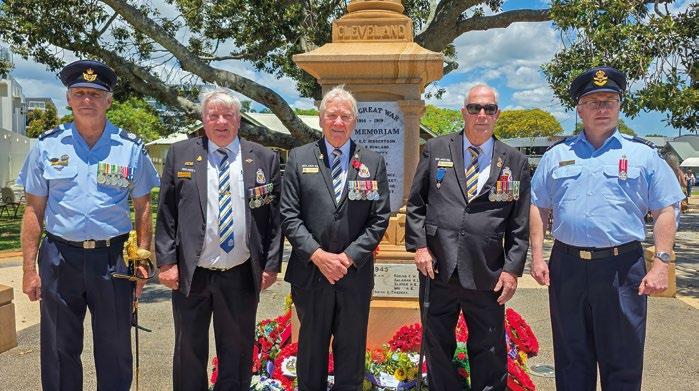
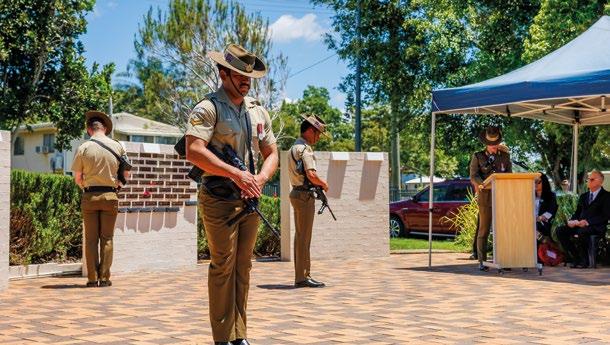
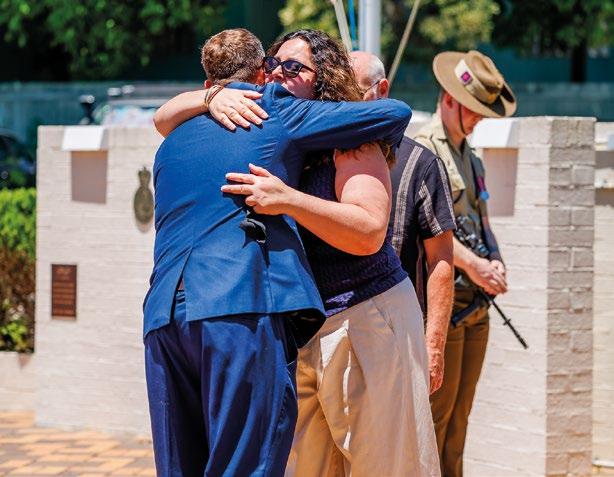
National Servicemen’s Association of Australia member Desmond
paying his respects at the
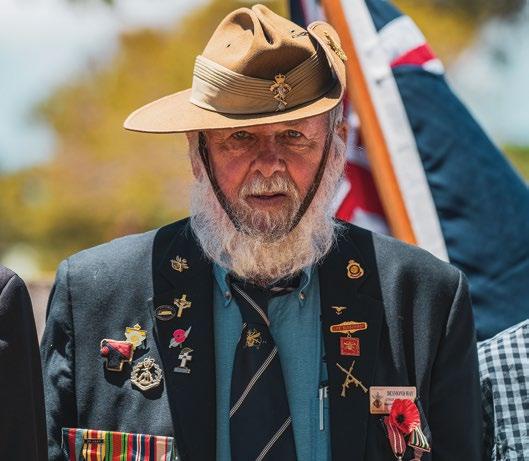
At Wynnum’s Remembrance Day service, many floral tributes were laid in honour of all who served and sacrificed.
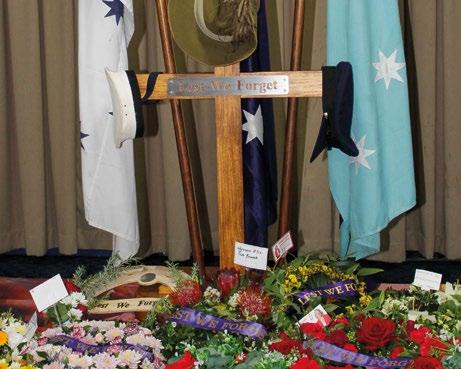
Beerwah’s Remembrance Day commemoration in Turner Park brought together around 150 people – a significant number for a small community.
and District RSL Sub Branch President John Nisbett is
addressing those gathered.
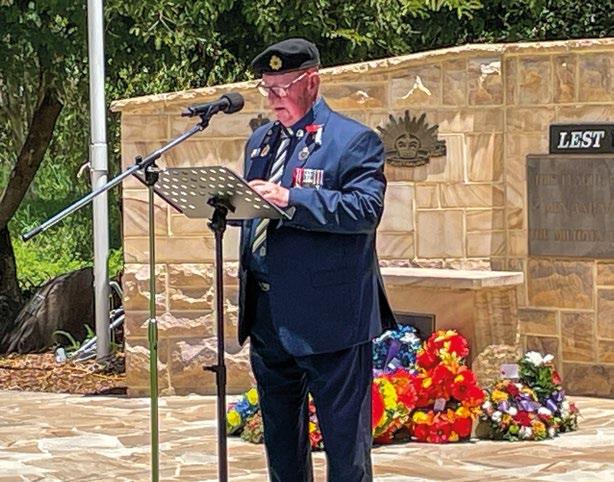
The catafalque party stands in position during proceedings at the service held by Bray Park-Strathpine RSL Sub Branch.
Two attendees embrace at the service hosted by Bray Park-Strathpine RSL Sub Branch.
Beerwah
pictured
Hay
service conducted by Redlands RSL Sub Branch. Photo by Lucas Maher.
Redlands RSL Sub Branch and the local community gathered for a special commemorative service to honour the brave men and women who served and sacrificed. Pictured left to right: Philip Barnes (Catafalque Party Warrant Officer), Michael McDonnell (League Secretary), Robert Wilson (Sub Branch President), Alan Harcourt (former Sub Branch President), and Reverend Father Cameron Freese (RAAF Duty Padre).
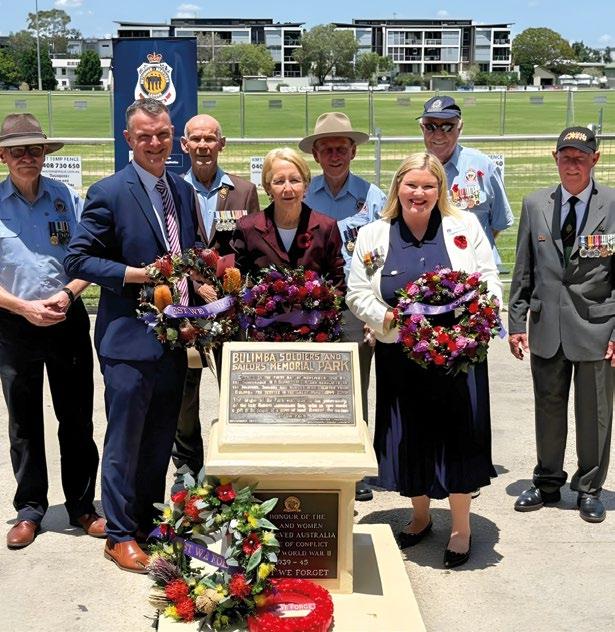
At the Remembrance Day service conducted by Bulimba District RSL Sub Branch, local school students read poems, played the Last Post and Rouse, and led the singing of the Australian and New Zealand National Anthems. Pictured are local political representatives (back row, from left) John Weringa; Tom Williams; Brian Daley; Ken Gillard and Alan Deeth with (front row, from left) Peter representing Renee Coffey, Federal Member for Griffith; Di Farmer, Member for Bulimba; and Councillor Lucy Collier.
Woodgate Beach RSL Sub Branch organised a commemorative service attended by more than 100 residents and visitors who came to lay a poppy in remembrance.
and Sub Branch Secretary Cheryl
In a change of tradition, students of Crows Nest State School were invited to recite the third and fourth stanzas of Laurence Binyon’s poem, For the Fallen, at Crows Nest RSL Sub Branch’s Remembrance Day service. Spectators were then invited to join the students in reciting the fourth stanza. Pictured with the students are Sub Branch President John Sullivan and Sub Branch Secretary Pete Polkinghorne.
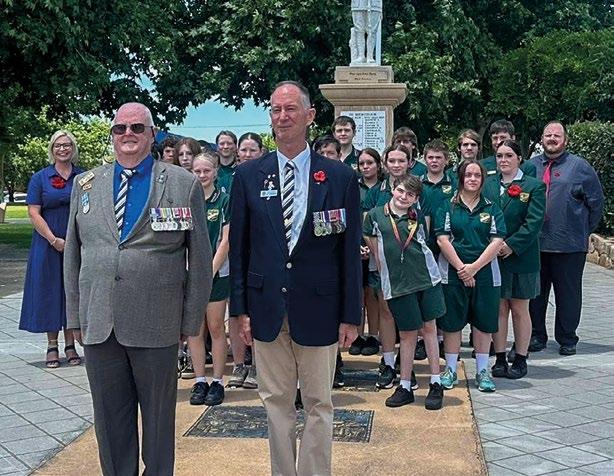
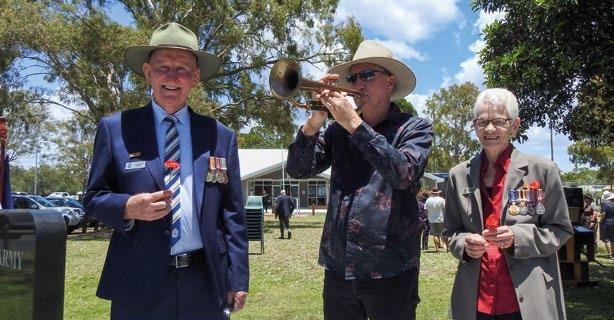
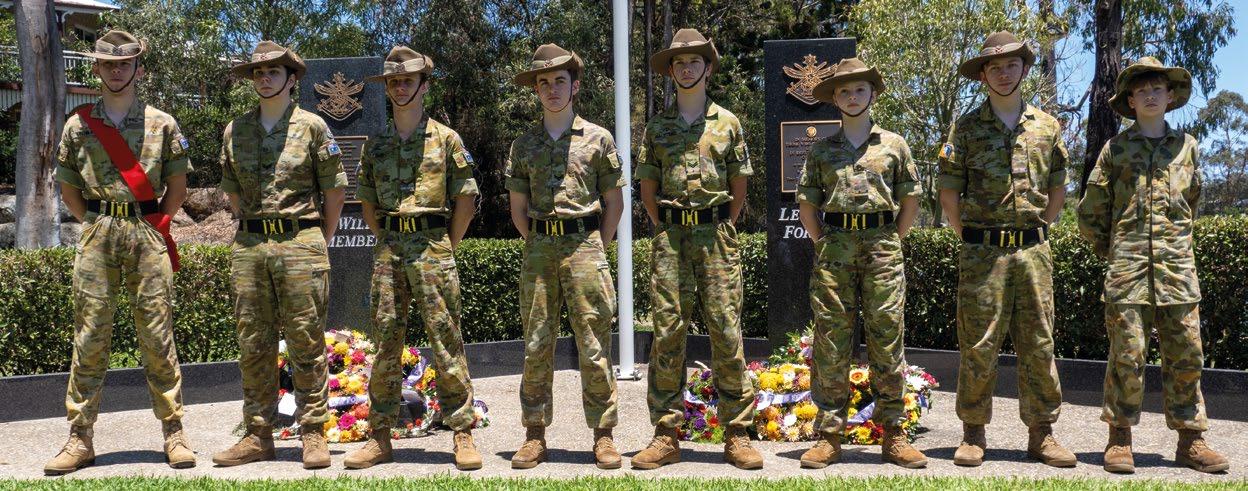
Cadets from 149ACU Greenbank supported Forest Lake RSL Sub Branch’s Remembrance Day commemorations.
Pictured (left to right) are Sub Branch President Lex McKay, bugler Keith Cox
Jones.
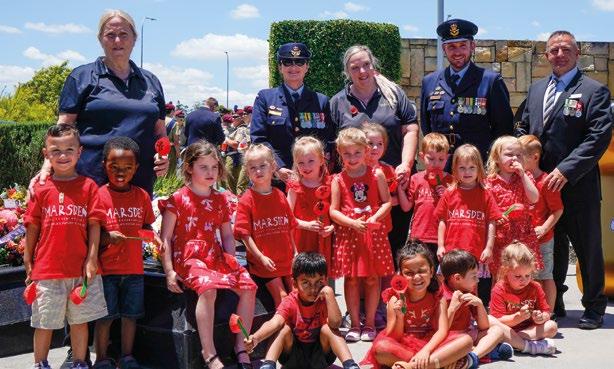
Greenbank RSL Sub Branch held its most successful Remembrance Day ceremony for many years, with nearly 200 guests in attendance. The service welcomed representatives from
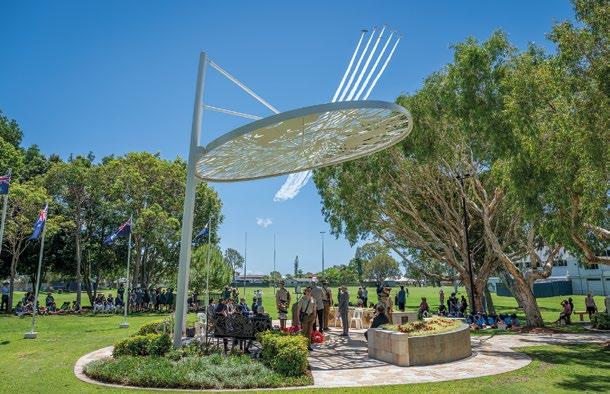
Those attending the Runaway Bay Remembrance Day service were surprised to observe a flyover of six aircraft from the Southport Flying Club right at the moment of the minute’s silence following the Last Post. Runaway Bay RSL Sub Branch is delighted to have a working relationship with the flying club, which also arranges an annual ‘Recognising Veterans Day’ inviting Sub Branch members to a flyover of the city.
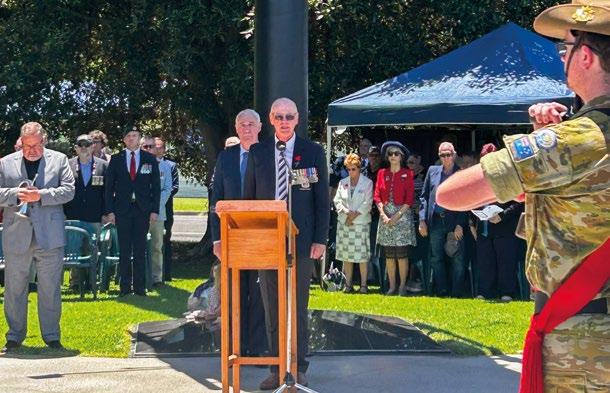
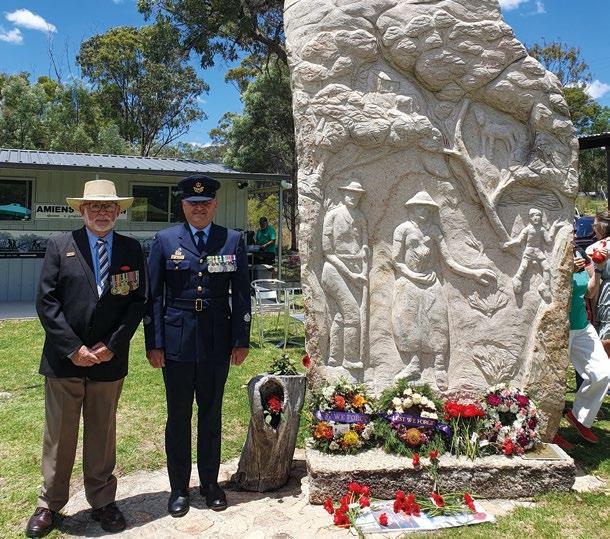
Following a successful Remembrance Day, Stanthorpe RSL Sub Branch board directors attended several commemorative services. Sub Branch Treasurer Tom Page (pictured with guest speaker WO Gino Micallef) was invited to lay a wreath at the service hosted by Amiens Legacy Centre. Photo: Sandra McEwan Photography.
Bugler Adrian Frost and piper Judith Tannoch at Cardwell RSL Sub Branch’s Remembrance Day ceremony. The day was a great success thanks to their contributions and the moving performance by vocalist Colleen Tennent. More than 80 guests attended and paused for a minute’s silence at 11am in honour of those who never returned from service.
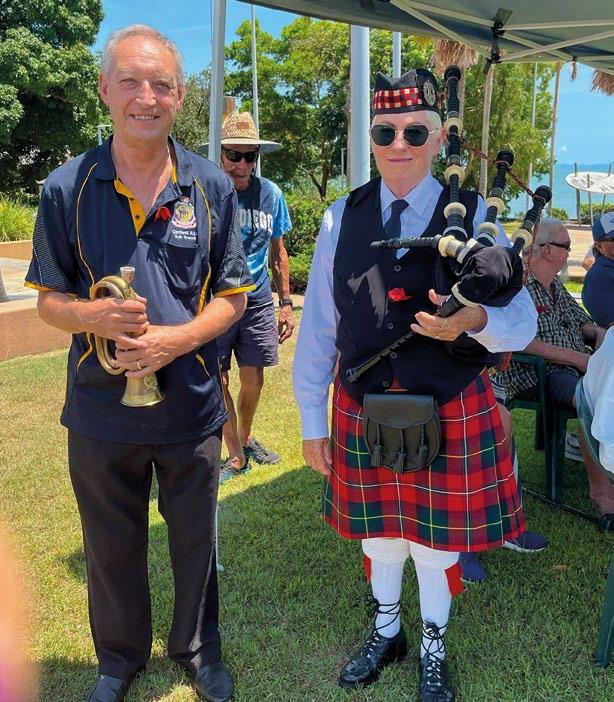
Caloundra RSL Sub Branch President Ian Harrison recites the Ode at the service held at the Caloundra RSL Memorial Gardens and Cenotaph.
382SQN Amberley, along with children from Marsden Early Learning Centre (pictured).
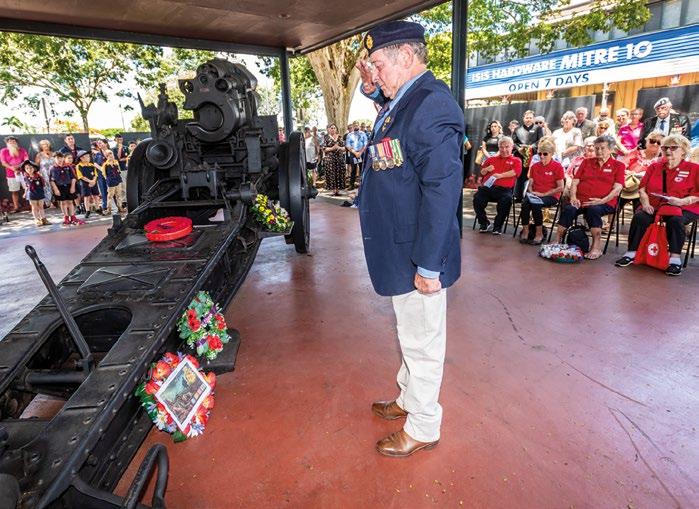
A man attending the Childers Remembrance Day service (organised by Isis RSL Sub Branch) pins a poppy to his companion’s shirt.
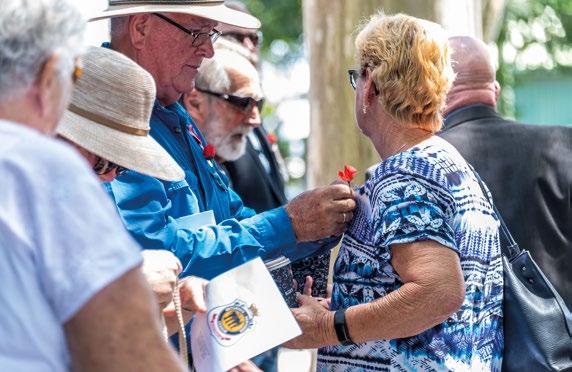
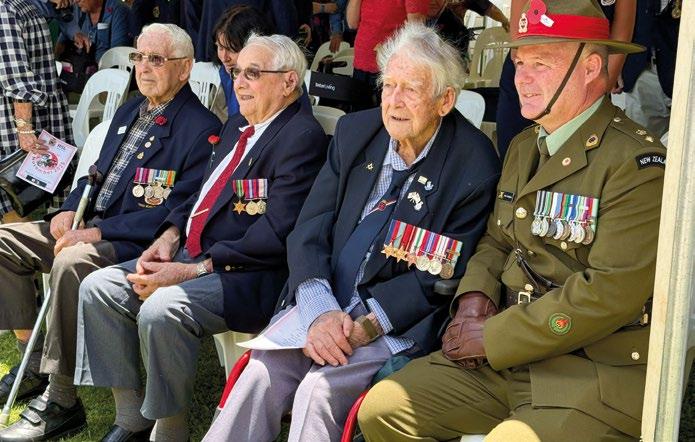
Nerang RSL & Memorial Club’s Remembrance Day service hosted approximately 200 people, including Meaghan Scanlon, State Member for Gaven and Peter Young, Division 5 Councillor for Gold Coast. Nerang RSL Sub Branch President Stewart McGettigan addressed the guests, paying tribute to Nerang’s 70 WWI veterans – 19 of which did not return. While the mood may have been sombre, the men from The Albert Battery made a spectacular entry as the call to march on the firing party was made. The 21-gun salute (pictured) left an amazing impression on all.
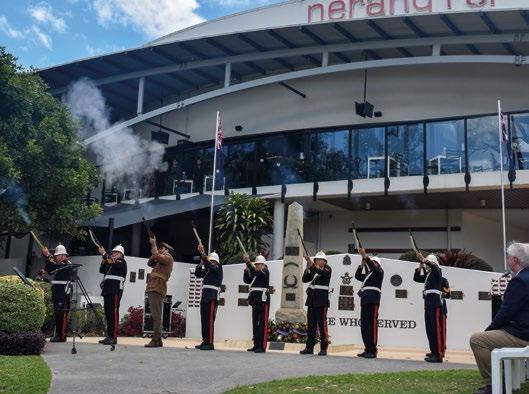
Cooktown RSL Sub Branch hosted a Remembrance Day exhibition at Cooktown Botanic Gardens from 1 to 26 November. The exhibition consisted of memorabilia from the Sub Branch; artefacts collected from nearby WWII sites (Cherry Tree Bay Track and Grassy Hill); and a rolling photo display of WWII in Cooktown and the surrounding area.
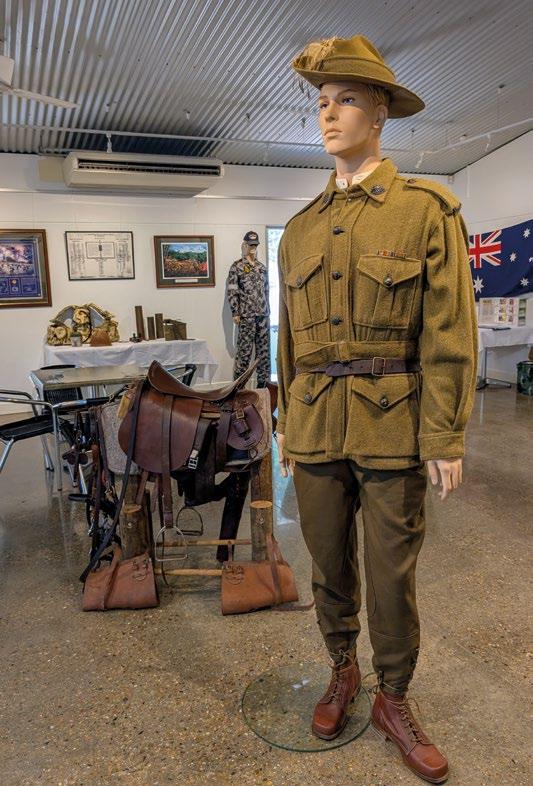
A veteran at the Childers Remembrance Day service (organised by Isis RSL Sub Branch) lays a wreath against the WWI-era cannon at Isis District War Memorial.
Hervey Bay RSL Sub Branch President Brian Tidyman welcomed LTCOL 2 (NZ Army) Nicholas Bowden (pictured far right with WWII veterans Stan Hanna, Alan Williams and Ken Hayden) to make an address at Hervey Bay’s Freedom Park service before more than 600 locals and visitors. Hervey Bay school students and representatives from the Naval Association Fraser Coast, RAAF Dog Handlers, Hervey Bay Ex-servicewomen’s Association and the Nashos were among the wreath layers. The WBB QMI 5LHR took along their horses to the delight of all in attendance.
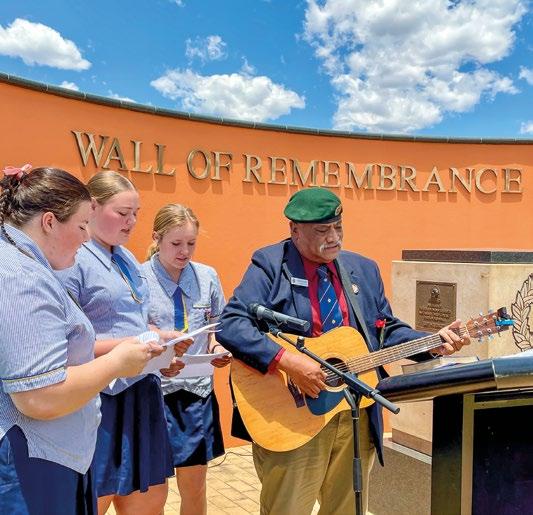
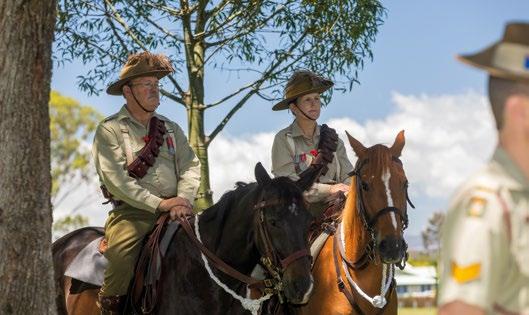
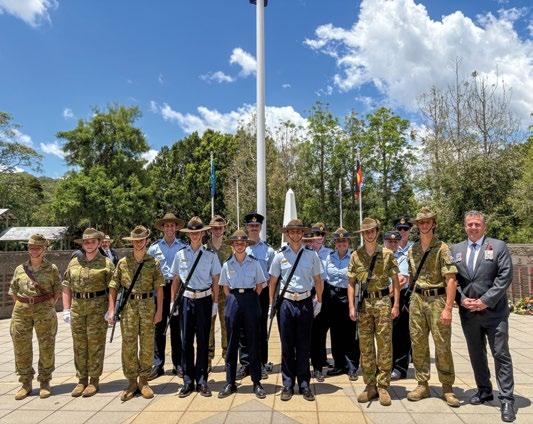
David
from
attended as guest
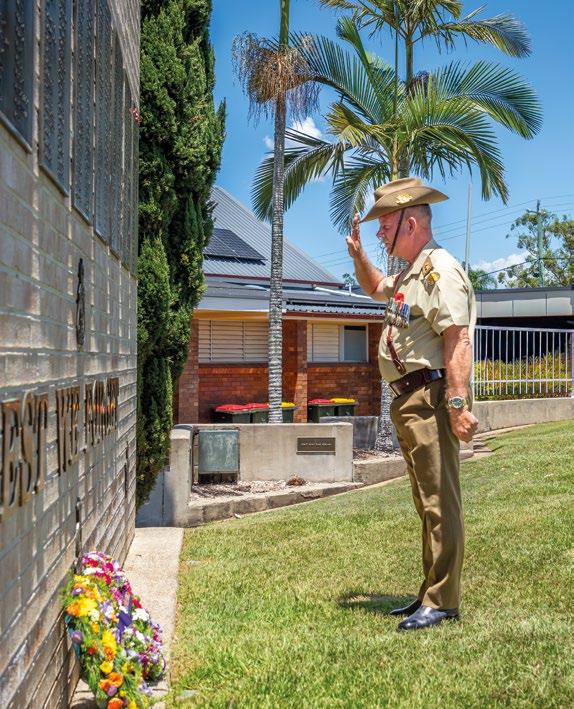
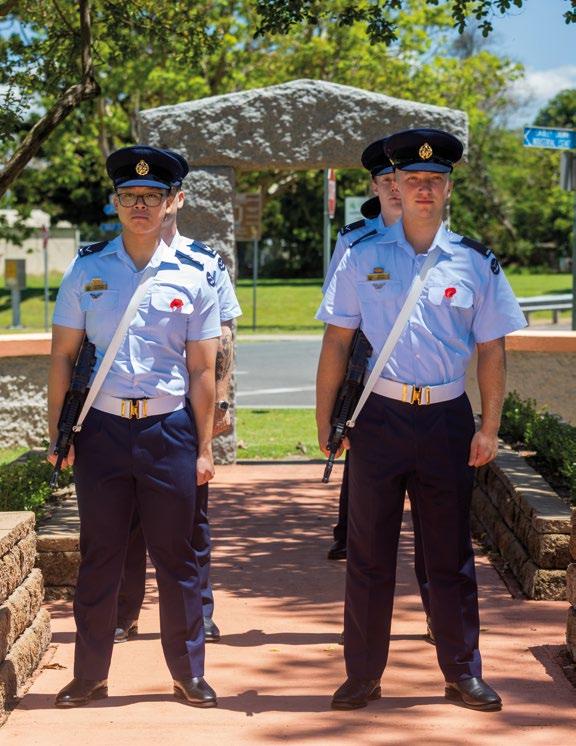
Miles RSL Sub Branch member Hohaia Downs singing the New Zealand and Australian National Anthems, accompanied by students from Miles State High School.
Catafalque party members Brodey Deighton, Ryan Trudgian, Patrick Nguyen, Angus Pichl and Ziggy Ewart at Laidley’s Remembrance Day ceremony.
LTCOL
Stanley
Gallipoli Barracks
speaker at Kilcoy RSL Sub Branch’s Remembrance Day service.
Attendees on horseback pay their respects at Laidley’s Remembrance Day ceremony.
128 Army Cadet Unit and 207 Squadron (Australian Air Force Cadets) supported Nambour’s Remembrance Day service.
Draw to REMEMBER
2025

THOUSANDS of Queensland students took part in RSL Queensland’s annual Draw to Remember initiative, creating artworks to honour Remembrance Day. Now in its fourth year, the program connected 53 RSL Sub Branches with 214 schools across the state.
Local veterans visit classrooms to share the history and meaning of remembrance before students transform their learnings into chalk artworks. Participation has grown from 3,500 students in 2022 to more than 21,000 this year.
Kilcoy RSL Sub Branch President John Robinson says it’s delightful to see the younger generation so engaged in commemoration.
“It’s wonderful to see local students become so engaged in their drawings and explain what remembrance is in their own words. It’s been deeply rewarding to see that desire to be involved increase each year,” John says.
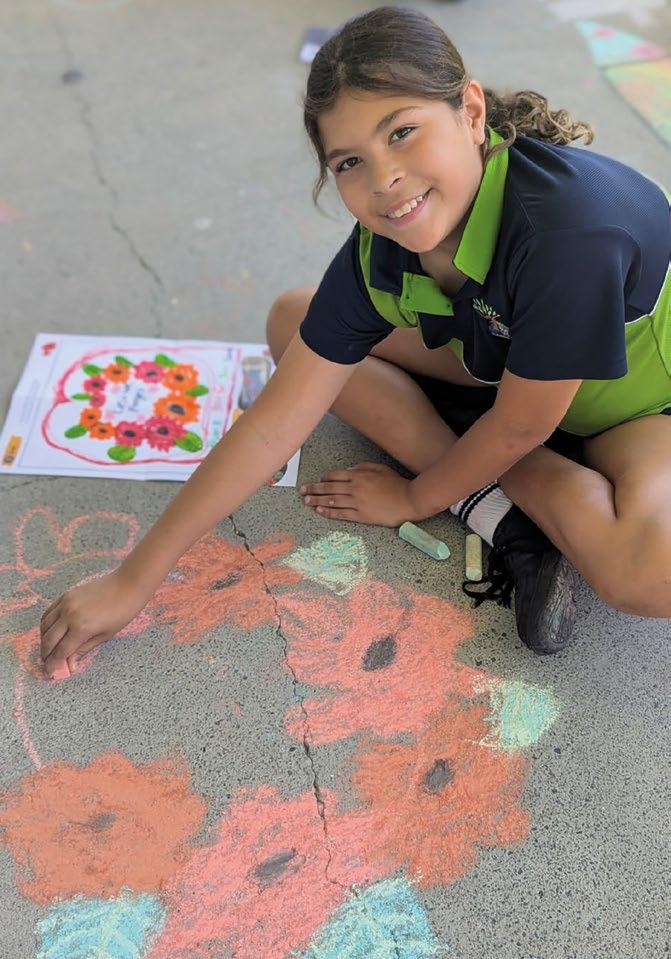
Norfolk Village State School was one of several schools assisted by North Gold Coast RSL Sub Branch.
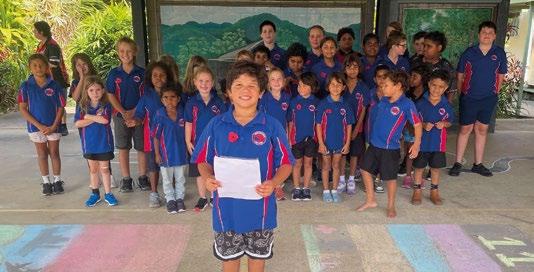
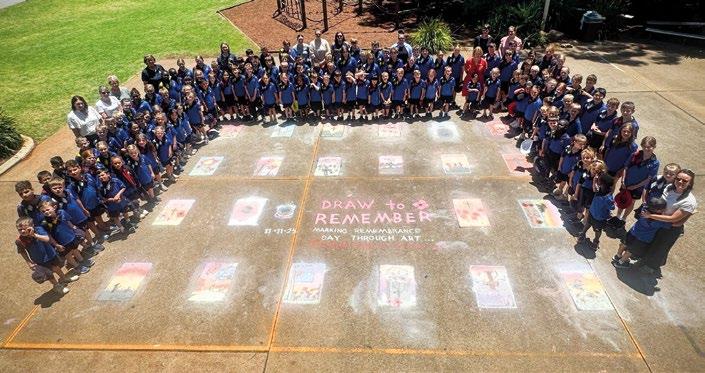
Following a visit from Toowoomba RSL Sub Branch volunteers, Concordia Lutheran College created an impressive collection of chalk drawings.
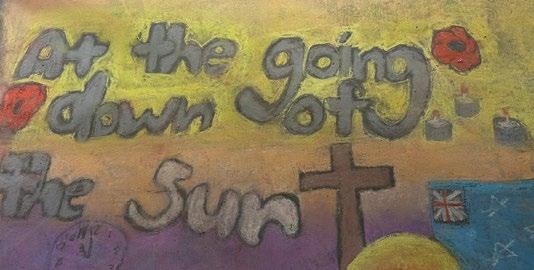
Students of
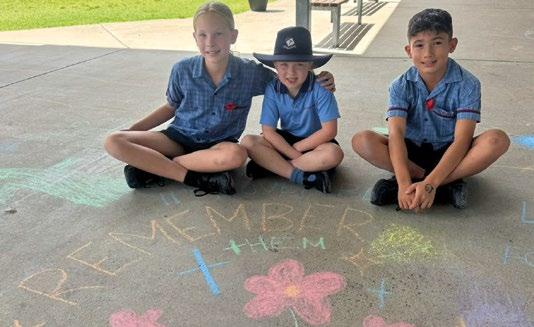
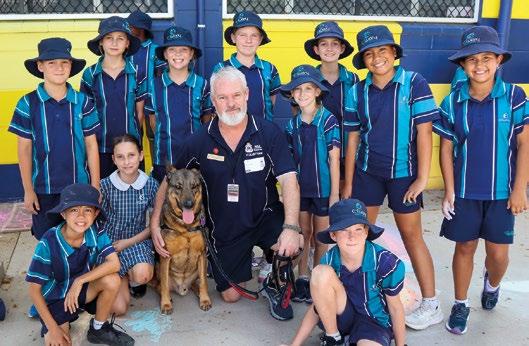
Calvary Christian College was “filled with colour, creativity and beautiful tributes of remembrance, demonstrating the students’ learning and understanding of the importance of honouring those who served”. The school was “honoured” to be joined once again by Townsville RSL Sub Branch volunteer Jason
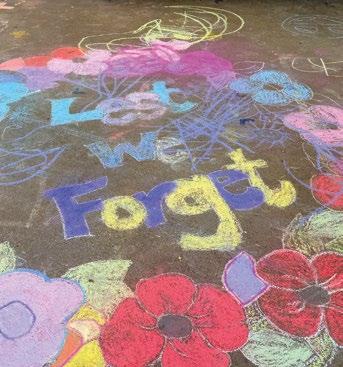
Aspley Special School was “delighted to participate in the inspiring Draw to Remember program”. The school shared on social media, “A warm and heartfelt thank you to Geebung Zillmere Bald Hills Aspley RSL Sub Branch for supplying the chalk that made this creative commemoration possible. Your support helped give our students a meaningful way to show respect and remembrance. Lest we forget.”
Stanthorpe RSL Sub Branch took Draw to Remember to Amiens State School, which created a lasting ‘Wall of Remembrance’ as part of the activity.
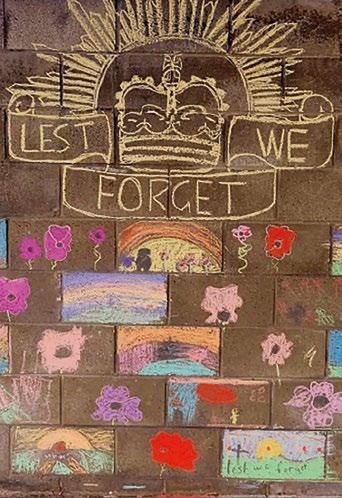
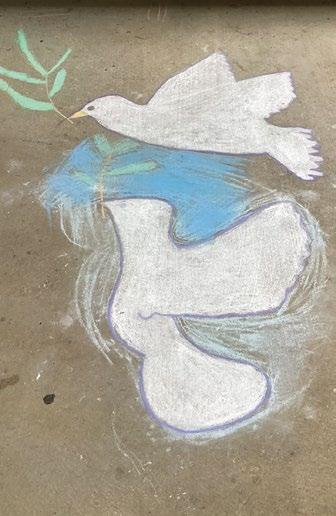
Banyo RSL Sub Branch worked with St Pius V Primary School and Earnshaw State College, with students creating vibrant and thought-provoking drawings.
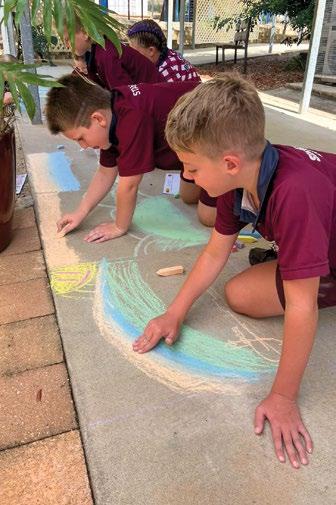
Year 3-6 students of Stanwell State School participated in Draw to Remember, first reflecting on what the day meant for them before transferring their artworks onto concrete. “A big thank you to Gracemere and District RSL Sub Branch for supporting our students through this activity.”
Cardwell RSL Sub Branch once again took the initiative to Murray River Upper State School, where the students proudly displayed their chalk drawings to Sub Branch volunteers.
Harris Fields State School took part in the initiative, saying, “Thank you to Jamie and Donna from Springwood Tri Services RSL Sub Branch for guiding the year 6 students through Draw to Remember”.
St Columba’s Primary School, which worked with Gaythorne RSL Sub Branch, pose for a photo with their creations.
Martin and his assistance dog Bowser.
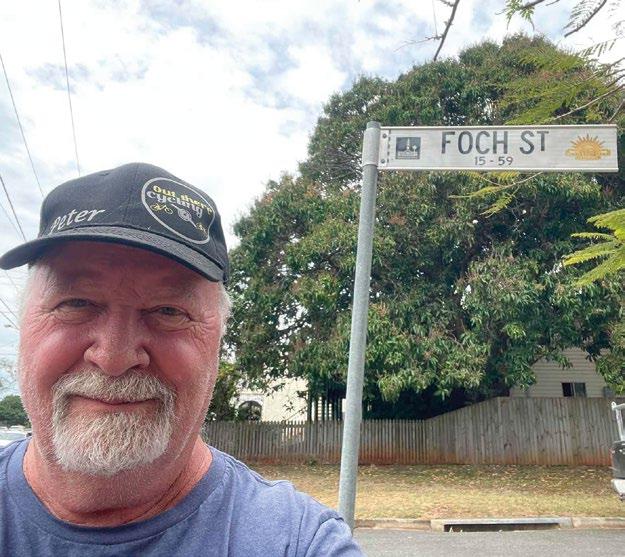
Remembering via Brisbane’s street signs
For more than five years, Peter Rasey has helped Brisbane City Council memorialise the city’s World War II (WWII) history.
Courtney Adams
INSPIRING REMEMBRANCE
ABOVE:
Peter Rasey is an author, podcaster, YouTuber and active member of the Australian American Association Queensland Division who enjoys researching Australia’s military history for memorialisation purposes.
OPPOSITE PAGE: Gallipoli Road in Carina Heights, Brisbane.
Peter Rasey is an author, podcaster, YouTuber and active member of the Australian American Association Queensland Division who enjoys researching Australia’s military history for memorialisation purposes. He credits a close friend with sparking his interest in Australian war memorials and military tourism during their work together on Brisbane’s Expo 88.
“My interest in military history started when a friend of mine, the late Sir Frank Moore AO, told me to take up the cause of remembering WWII. And I did, because I had a
slight interest as my mother and father were indirectly involved in WWII,” Peter recalls.
Upon diving into his new interest, Peter was surprised to discover a deep and significant connection between WWII and his hometown of Brisbane. This included the Pensacola Convoy’s arrival into the city after the attack on Pearl Harbor, General Douglas MacArthur’s command headquarters in the CBD and the Battle of Brisbane in 1942.
His budding interest grew into a burning passion, eventually leading him and Sir Frank to lobby
Brisbane City Council to prioritise building and maintaining places of remembrance.
“Sir Frank and I worked on the legacy of Expo 88, which led us to the World Expo 88 Rainforest Grove at Toowong, further leading us to Canon Garland Place – as former Lord Mayor Graham Quirk so named it – to house the national memorials contained within,” Peter explains.
“Brisbane was not awash with national memorials, and Sir Frank knew about the National Australia Remembers Freedom Wall, with its 15,600 plaques, opposite Canon
Garland Place. The initiative fitted nicely with the remembrance work that Sir Frank thought we should be doing, so Brisbane City Council restored and re-signed the Freedom Wall as a result of our lobbying.”
Encouraged by this positive result, Peter continued his work contributing to the memorialisation of Australian military personnel and historical events, including the recent 80th anniversary of Victory in the Pacific Day work in 2025.
HONOURING STREETS OF REMEMBRANCE
Peter now lives in Queensland’s South Burnett region and continues his remembrance activities in various capacities. In more recent years, he has voluntarily collaborated with Brisbane City Council through his role at the Australian American Association to help identify 27 street signs that have been – or are in the process of being – formally recognised as part of Council’s Streets of Remembrance project.
“Google led us to the 2015 Lord Mayor Graham Quirkinspired Streets of Remembrance campaign. The campaign was originally conceived to celebrate the centenary of the end of World War I in 2018. However, in 2020, the Council opened the project up to all wars,” Peter explains.
“Since then, Lord Mayor Adrian Schrinner has been a great supporter of the effort. Hopefully, the additional WWII streets will be finished within 18 months.”
The Streets of Remembrance project exists to commemorate the ANZAC spirit and those who have embodied it through their service. Alongside Brisbane, similar projects can be found in Bundaberg and on the Gold Coast.
Peter is one of many contributors who assist the Council by identifying street signs throughout Brisbane that are associated with the names

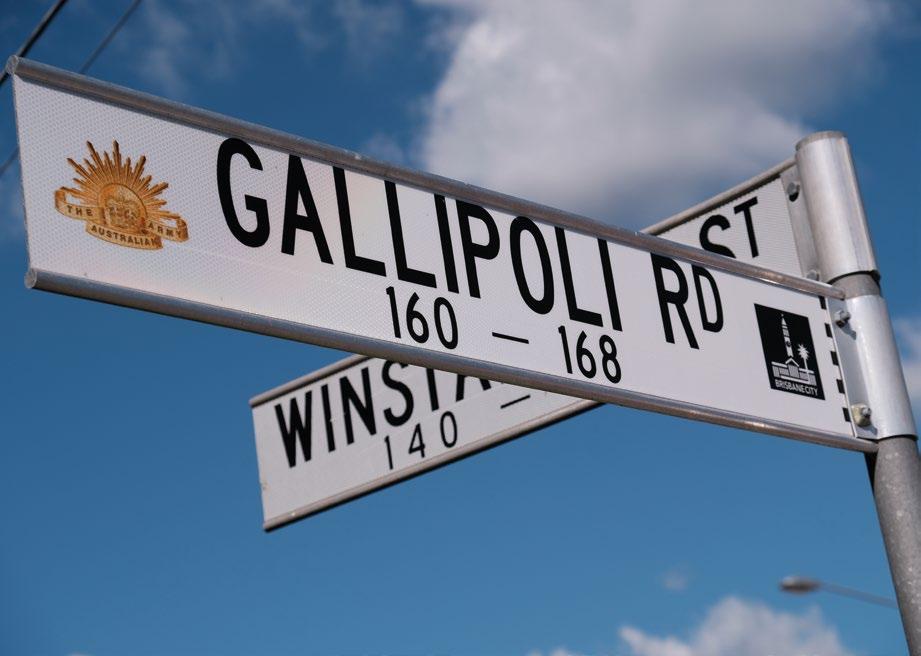
of service personnel, places and events from past conflicts.
Volunteers then liaise with Council to recognise each sign’s military link. Once submissions are accepted, Council adds a military service badge to the sign as an ANZAC Day or Remembrance Day commemoration gesture.
Thinking about the impact of the project, Peter believes that while there is more to be done, the progress made since work began in 2020 has been significant.
THE ALLIED CAPITAL OF AUSTRALIA
“As Paul Budde from the Camp Columbia Heritage Association says, ‘Brisbane was the Allied capital of Australia’, so the Streets of Remembrance additions add special icing to the cake of our military story,” Peter says.
“While the street signs by themselves have little relevance, when the remembrance memorials
are added to them on ANZAC Day and Remembrance Day, they begin to play a role.
“For example, the Brisbane Streets of Remembrance sign and tribute on Feldt Street in Moorooka links in with the work of Councillor Steve Griffiths. Along with the newly unveiled Coastwatchers Memorial at Newstead Terrace Park, these were really the first Australian mainland WWII memorials dedicated to the Coastwatchers.”
So far, Brisbane City Council’s Streets of Remembrance project has seen 757 street signs marked with badges in 230 locations across Brisbane, collectively acknowledging 161 people, places and events in Australia’s military history, with another 21 signs in the works. The project represents a significant mark of respect for Australian veterans – an initiative Peter hopes will continue for future generations.
So far, Brisbane City Council’s Streets of Remembrance project has seen 757 street signs marked with badges in 230 locations across Brisbane, collectively acknowledging 161 people, places and events in Australia’s military history, with another 21 signs in the works.
Embarking on a pilgrimage of remembrance
Army veteran Tony Young recently travelled to Europe to honour Australia’s fallen heroes.
Courtney Adams
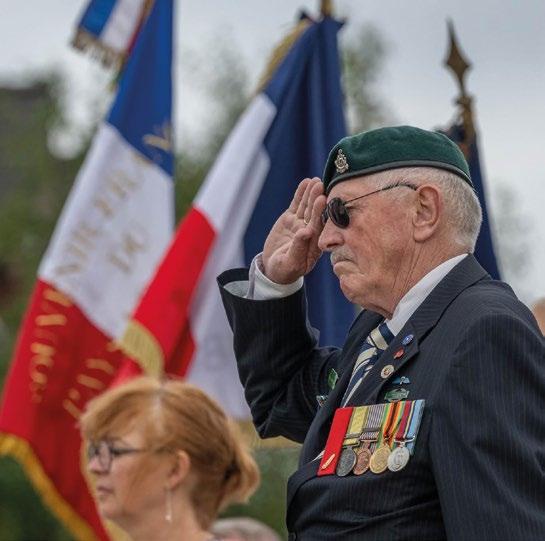
THE MEDAL THAT STARTED A JOURNEY
Kalbar RSL Sub Branch member Tony Young descends from a military family whose service history stretches back hundreds of years. Following in their footsteps, Tony served in the Army for nearly two years and has also been a member of RSL Queensland for more than 45 years.
Having settled in Kalbar, he now fills his days by tending to his farm and researching the lives of Australian diggers. Unbeknownst to him, his research would lead him all the way to Europe.
“Several years ago, a World War I (WWI) Military Cross was found. It
turned out to be a Fromelles Military Cross. The fellow who found it spent some effort trying to reunite this medal with the family, but he had no success,” Tony explains.
“For more than 30 years, I’ve researched and written service biographies for diggers, so this chap eventually handed the medal to me to see what I could do. I endeavoured to trace down the family and eventually I did.
“I got the medal returned and was invited to Sydney for the Fromelles commemoration. The family member I was handing the medal to was the main speaker and turned out to be General Sir Peter Cosgrove.”
As Tony shared this story with his fellow Sub Branch members, they suggested he attend the 2024 Fromelles commemoration in Ipswich. While driving home from this ceremony, Tony hatched a plan with fellow RSL member Stephen Pace to take their next Fromelles commemoration to the battlefields themselves.
THE BOOK THAT FORMED THE ITINERARY
As Tony and Stephen set about planning a remembrance trip, Kalbar RSL Sub Branch was busy publishing The Kalbar District Roll of Honour – a book they’d commissioned to memorialise the servicemen from their region who had served and sacrificed in both world wars. Details of each digger’s death, burial and memorialisation site were a key feature of the book.
“Our trip planning kicked into gear after the launch of that book.
I suggested to Steve that in France we make a point of visiting every Kalbar man buried in France or Belgium, or at least where their names are memorialised. That was quickly adopted into the itinerary,” Tony recalls.
“The Kalbar district is primarily
a rural area, so families would not have had the financial wherewithal to travel to France or Belgium to visit the graves back in the 1920s. There would be quite a number of men who have never had a visitor, so we also laid poppies at their gravesites or on their memorial walls.
“However, during my research I also found it wasn’t only Australia that got hugely traumatised by the losses of war. France lost 1.5 million men, so I said to Steve that I think it’s only right and proper that we also pay our respects at France’s premier WWI memorial site.”
While the three-week trip was going to be action-packed with these plans alone, Tony and Steve didn’t stop there.
THE COINS THAT WERE PRESENTED IN FRANCE
As trip planning was in full swing, Tony and Steve met with Paul Rogers, President of RSL Moreton District, to share their plans and their desire to acknowledge the French contribution to Australian military history.
“I discovered that there were a number of French citizens who had done outstanding work to ensure
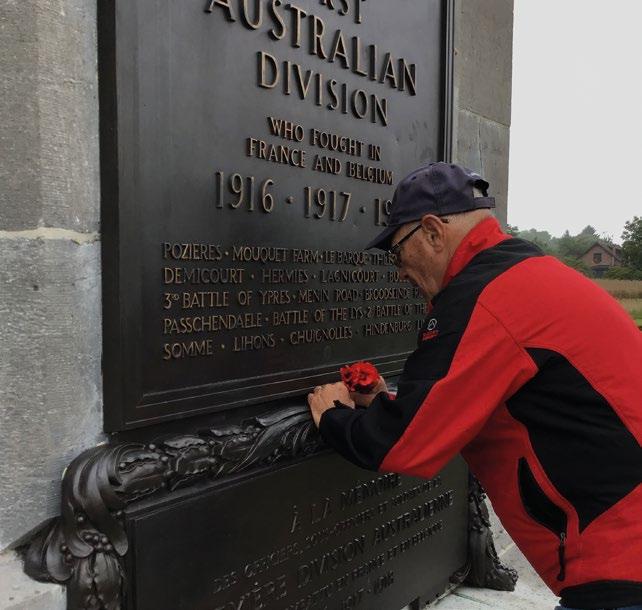
that the memory of Australia’s contribution and sacrifice during WWI was never forgotten. However, they’re quiet achievers; they do all this stuff but don’t get a lot of recognition for it,” Tony explains.
“As a direct consequence, Mr Rogers delegated us to formally present a number of RSL Queensland Coins of Appreciation on his behalf. There were three coins presented to people at the Fromelles Museum, two coins at the Franco-Australian Museum in Villers-Bretonneux, and four coins to the ANSA Museum in Beaumont-Le-Roger.”
Tony and Steve were able to present all but one coin at ceremonial proceedings in France. Their efforts earned them a reserved seating invitation from the President of France to the Bastille Day Parade in Paris.
THE LESSONS TAKEN AWAY FROM THE TRIP
Looking back on this journey of a lifetime, Tony is humbled by what he saw and experienced. As expected, the trip turned out to be life-changing.
“The sheer number of military cemeteries from WWI – it seems you can’t drive more than 5km and you come across one. That left a sobering impression upon me,” Tony says.
“A highlight for me was attending the Fromelles commemoration. I walked through the graveyard and looked at each of the headstones. I was given the honour of reciting the Ode of Remembrance at VC Corner, and that will go down as a highlight of my life.
“I think it’s important that we acknowledge and remember the sacrifices that were made – not just in WWI, but in all conflicts –because they have paid in blood for the lifestyle we live today.
“If we forget the sacrifices or the lessons that we learned, we’re bound to repeat them.”
Tony and Steve were able to present all but one coin at ceremonial proceedings in France. Their efforts earned them a reserved seating invitation from the President of France to the Bastille Day Parade in Paris.
OPPOSITE:
Kalbar RSL Sub Branch member Tony Young salutes during a ceremony at the Pheasant Wood Military Cemetery in Fromelles, France on 19 July 2025.
LEFT: Kalbar RSL Sub Branch member Stephen Pace lays poppies at the AIF First Division Memorial at Poziers, France.
AGAINSTthe tide
One man, two fins, one gruelling world first. Here’s how veteran Ashley Semmens conquered the English Channel – and his own limits – for charity.
Belinda Crossman
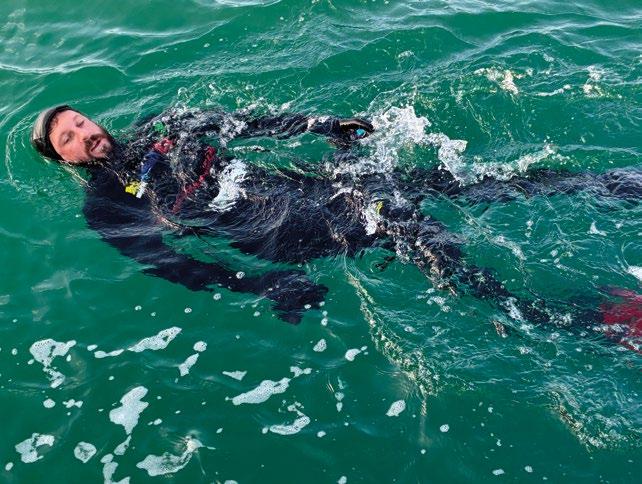
WITH its 32km (minimum) span, bracing temperatures and changeable conditions, the English Channel is considered one of the ultimate endurance swims.
Now, a veteran Navy Clearance Diver is the first person to achieve the feat backwards.
On 13 June, Ashley Semmens crossed the Channel using just his legs and fins – a clearance diver technique known as ‘finning’ – to support the Navy Clearance Diver Trust (NCDT).
SUPPORTING THE CLEARANCE DIVING COMMUNITY
A member of Pine Rivers RSL Sub Branch, Ashley served in the Royal Australian Navy (RAN) for more than 18 years. He specialised in explosive ordnance disposal and deployed multiple times, including twice to Afghanistan.
However, several traumatic and life-threatening incidents took their toll, leading to his medical discharge in 2021.
“I got to a really dark point
where I couldn’t see a future,” Ashley shares.
“I sat with that thought and said, ‘Well, this is up to me. There’s only one person that can make this better, and there’s more to life than just me’. Once I realised that, it inspired me to help others.”
Since 2023, Ashley has volunteered as Clearance Diving Liaison Officer for the NCDT, which supports current and ex-serving RAN clearance divers and their dependants.
Seeing current and ex-serving friends facing similar struggles to his own, Ashley found a new sense of purpose. He set himself the ultimate charity challenge: becoming the first person to fin the English Channel in tribute to and support of his comrades.
TRIAL BY WATER
After 18 months of training and planning, Ashley and his support crew assembled in England – and almost had to cancel everything.
“I had a nine-day window of opportunity, and we didn’t get a single break in the weather,” he says.
“I had to buy myself two more days. I extended my accommodation, the safety vessel
RIGHT: Navy veteran Ashley Semmens is the first person to cross the English Channel backwards using a clearance diver technique known as ‘finning’.
(Photo: Ian Eckersley/ Evolve Media)
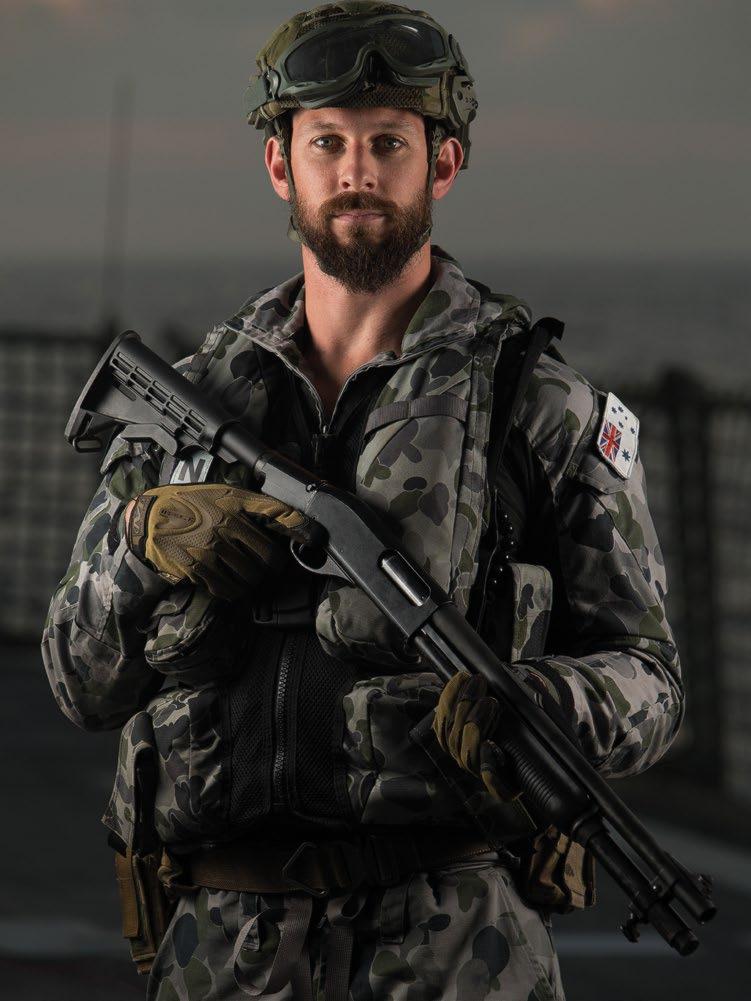
and all those things, just in the hope that we’d get a break, which finally came at midnight on the last night.”
However, despite “beautiful” conditions, the start of Ashley’s fin was “a real emotional rollercoaster”.
“I was in a really dark place. Because I was so low in the water, I could see the Cliffs of Dover and it looked like I was going nowhere,” he says.
“That really reinforced these negative thoughts to the point where I was close to calling it a day.”
Some words from one of his support crew – a fellow Afghanistan veteran – helped him out of the rut.
“He was able to remind me what my purpose was, and then it kind of became enjoyable,” Ashley says.
Some 10 hours in – with just 2km to go – the tides changed, pushing Ashley backwards 5km.
MAKING WAVES
“I was really at my physical limit. My quads and hamstrings were really cramping up; I had to dig deep to get through that,” he says.
After finning non-stop for 11 hours, 49 minutes and 39km, Ashley crossed the Channel – sore, tired, but mostly relieved.
“I didn’t know whether I would make it, or whether I’d even get a chance with the weather, so to get to the end meant a lot,” he says.
“With everything that got thrown in front of me, I just found a way to make it happen.”
Ashley was “over the moon” to raise more than $150,000, which will go directly towards the NCDT’s support programs.
A documentary about Ashley’s journey – titled Against the Tide: The Ashley Semmens Story – is now in production.
He hopes his story shows others that “healing is possible, and we can heal ourselves”.
This article has been shortened for publication. Read the full version at rslqld.org/news
in explosive ordnance disposal and deployed multiple times, including twice to Afghanistan.
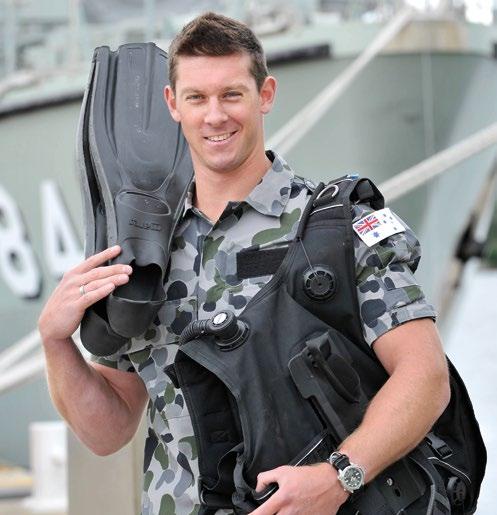
LEFT: Ashley Semmens served in the Royal Australian Navy for more than 18 years. He specialised
(Photo: Department of Defence)
BELOW: Ashley Semmens at HMAS Waterhen in 2008. (Photo: Department of Defence)
Banding together over radio
What makes radio such a popular hobby for veterans?
For amateur radio operators like Jeff, it brings endless challenge, discovery and connection.
Belinda Crossman
“With amateur radio, there’s always someone you can talk and listen to on the bands. It’s another way of getting into a group with similar interests and experiences – and values, strangely enough.”
ARMY veteran and amateur (‘ham’) radio operator Jeff Lord never knows whom (or what) he’ll make contact with next.
He regularly chats with people across the globe, from the next suburb to Europe and the United States. He’s even picked up the duga radar (a.k.a. ‘Russian woodpecker’) used in missile defence by the Soviet Union.
“You’re always meeting somebody new,” the Pine Rivers RSL Sub Branch member explains.
“You can go outside, turn the radio on and listen to the bloody world.”
FROM MORSE CODE TO METEORITES
Jeff – Promotions Officer of Redcliffe and Districts Radio Club – is one of an estimated 500,000 to 3,000,000 ham radio operators (‘hams’) worldwide. Hams use radio transmission to communicate non-commercially via voice, pictures, video signals, Morse code and digital methods.
“There’s just so much you can do. You can build a lot of your own
equipment. You can buy kits and build radios and antennas,” he says.
“We can bounce a signal off the moon, a flying aircraft or that lovely streak of light from a meteorite. We can talk to the International Space Station.
“It’s a technical challenge. It keeps you thinking.”
Radio is also, of course, an invaluable lifeline when all other communication options fail.
“When Cyclone Tracy hit Darwin, and when Hurricane Katrina hit New Orleans, ham radio operators were the first communication lines coming through,” Jeff says.
“We’re not dependent on cell towers, which fail when you have no power, or radio and TV stations, which generally get wiped.
Amateur radio operators can have comms going within an hour of a natural disaster.”
CAMARADERIE ON AND OFF AIR
Jeff is one of many veterans at his radio club, who hail from different
service branches, corps and trades.
The club’s President, Major John Saunders, has observed that “there seems to be a uniquely high percentage of military and ex-military people involved in the hobby”.
“I guess the camaraderie and the technical nature of what we do appeals to the military type,” he says.
To Jeff, camaraderie is one of ham radio’s most rewarding aspects.
“When you leave the military, you leave that close-knit camaraderie that you have within your unit,” Jeff says.
“With amateur radio, there’s always someone you can talk and listen to on the bands. It’s another way of getting into a group with similar interests and experiences – and values, strangely enough.
“They’ve been through the same mill, and they can give you support.”
HAM FESTS, FOX HUNTS AND MORE
According to the Wireless Institute of Australia, there are hundreds of amateur radio clubs across the country.
Anyone can join Jeff’s club, which has an operational radio room, test and repair bench, and regular trivia and tech nights, ‘fox hunts’ (challenges to track down hidden transmitters), markets and competitions.
The club is also active within the community, teaching schoolkids, Scouts and Girl Guides about radio, and members are always there for each other – through cyclones, serious illness and more.
“We’re very much focused not only on the hobby, but also on our members’ welfare,” Jeff says.
NO BARRIERS
According to Jeff, “anybody can be an amateur radio operator”. His club’s youngest ever
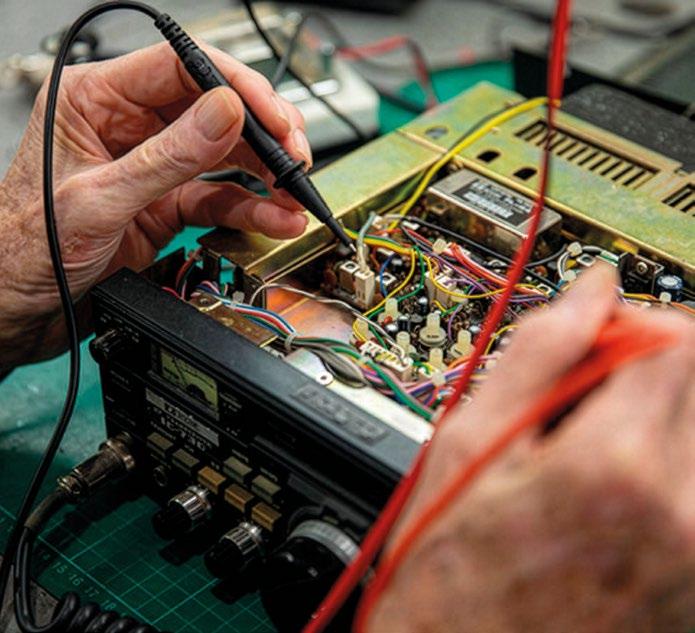
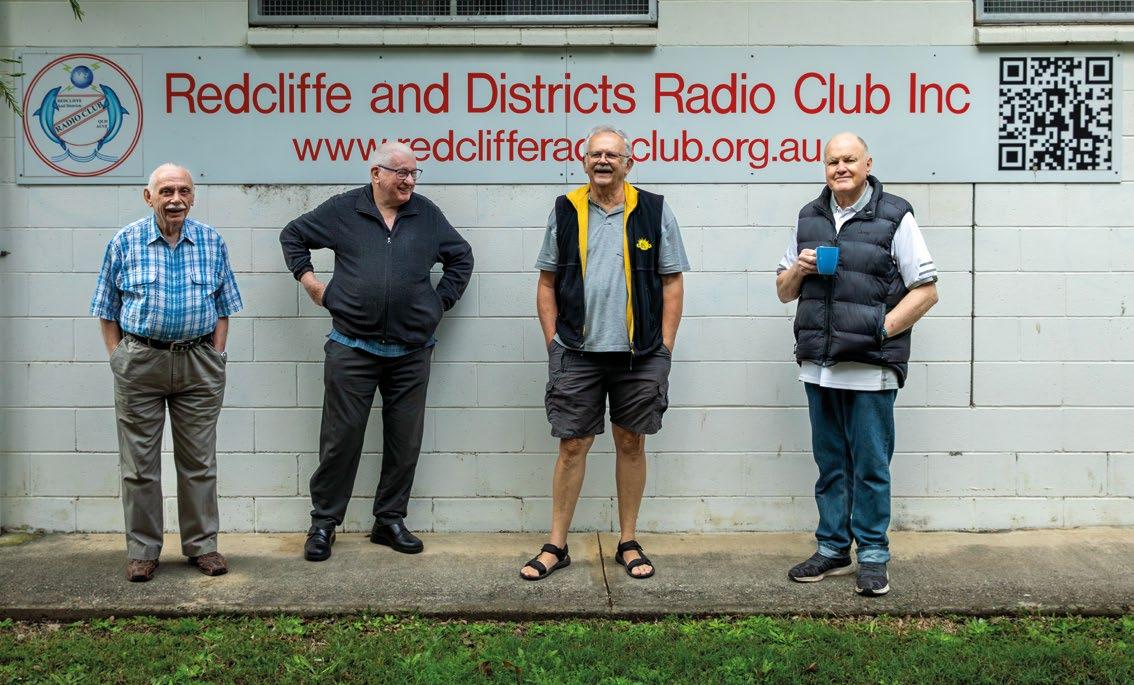
member was eight years old, and members with disabilities use adaptive equipment to tune in and transmit.
“It doesn’t cost the world to get into, though you do require a foundation licence,” he says.
“Most radio clubs run courses to help you pass the exams. From there you can advance to two other licence levels, which give you more power output and more frequencies.
“It’s an amazing hobby.”
This article has been shortened for publication. Read the full version at rslqld.org/news
To learn more or find a radio club near you, visit the Wireless Institute of Australia via wia.org.au
ABOVE: Redcliffe and Districts Radio Club members, from left, Peter Breed, John Arnfield, Jeff Lord and John Baker.
A SAFE SPACE FOR CAMARADERIE AND SUPPORT
Army veteran Steve Bain explains how RSL Rec Connect events provide him with the opportunity to connect with other veterans and their families.
Jasmine Halley
WITH more than 30 years of experience in the military spanning roles such as RAEME Officer and Unit Welfare Officer, Army veteran Steve Bain understands the value of staying connected after service.
“As soldiers, we’re trained to think of others, but when it comes to striving for outcomes for ourselves as individuals, it isn’t in our nature,” Steve explains.
“When we leave the military, we don’t leave this mentality behind, so it’s important for us to try and find our new team.
“When I was a Unit Welfare Officer at 6RAR, I’d help soldiers find and access the support they needed. I saw the benefits they got when they were being pointed
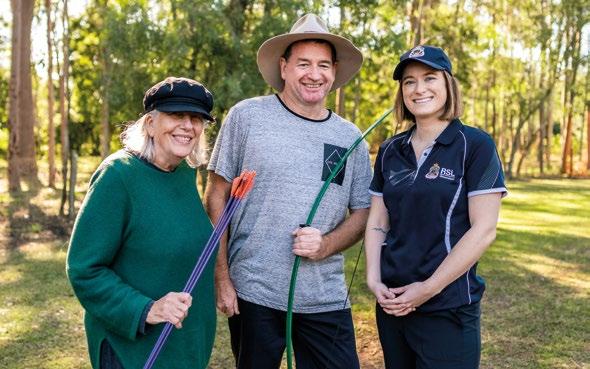
in the right direction, and in a lot of cases, pursuing authentic connections within their family or community was incredibly beneficial.”
CONNECTING AT RSL REC CONNECT
Over the past year, Steve has tried some of RSL Queensland’s Rec Connect events – not only for himself, but also his network.
“I had heard about Rec Connect events and was curious to give them a try,” he says.
“During my time volunteering with Maritime Warriors, I’ve seen how trying new things or learning new skills can improve one’s mental health. You get that sense of achievement when you try something new or different.
“So, the Rec Connect events were interesting to me – not just because I wanted to try them out for myself, but also to see if they’d be good for other veterans I know. I wanted to be able to share these activities with my friends or have them share it with their families, too.”
So far, Steve has participated in a few Rec Connect events including a blacksmithing workshop, as well as the RSL PeerLed Program RAEMUS Rover.
“If I had to pick, I’d say my
favourite Rec Connect event would be the blacksmithing workshop; that was fun,” he says. “I went by myself to that one and not only came away with something I’d made for my wife, but I learnt a little about myself, too.
“In terms of the Peer-Led programs, I really enjoyed participating in RAEMUS Rover. Bringing a family member along to that one and sharing that experience with them was really special to me.”
While the events are a great way to learn something new about yourself, Steve highlights the importance of enjoying these events with friends and family.
“Each event has given me something different, but one of the best takeaways I’ve had is watching veterans connect with their loved ones that they bring along,” Steve says.
“It’s great to see veterans and their kids stand side-by-side in an activity and just help each other or make mistakes in front of one another. You watch it, and you realise they’re actually starting to connect! Then suddenly, the activity itself isn’t important anymore; they’re just enjoying spending time together and talking to one another.
BELOW: Army veteran Steve Bain (centre) enjoys trying new things and making new connections through RSL Rec Connect.
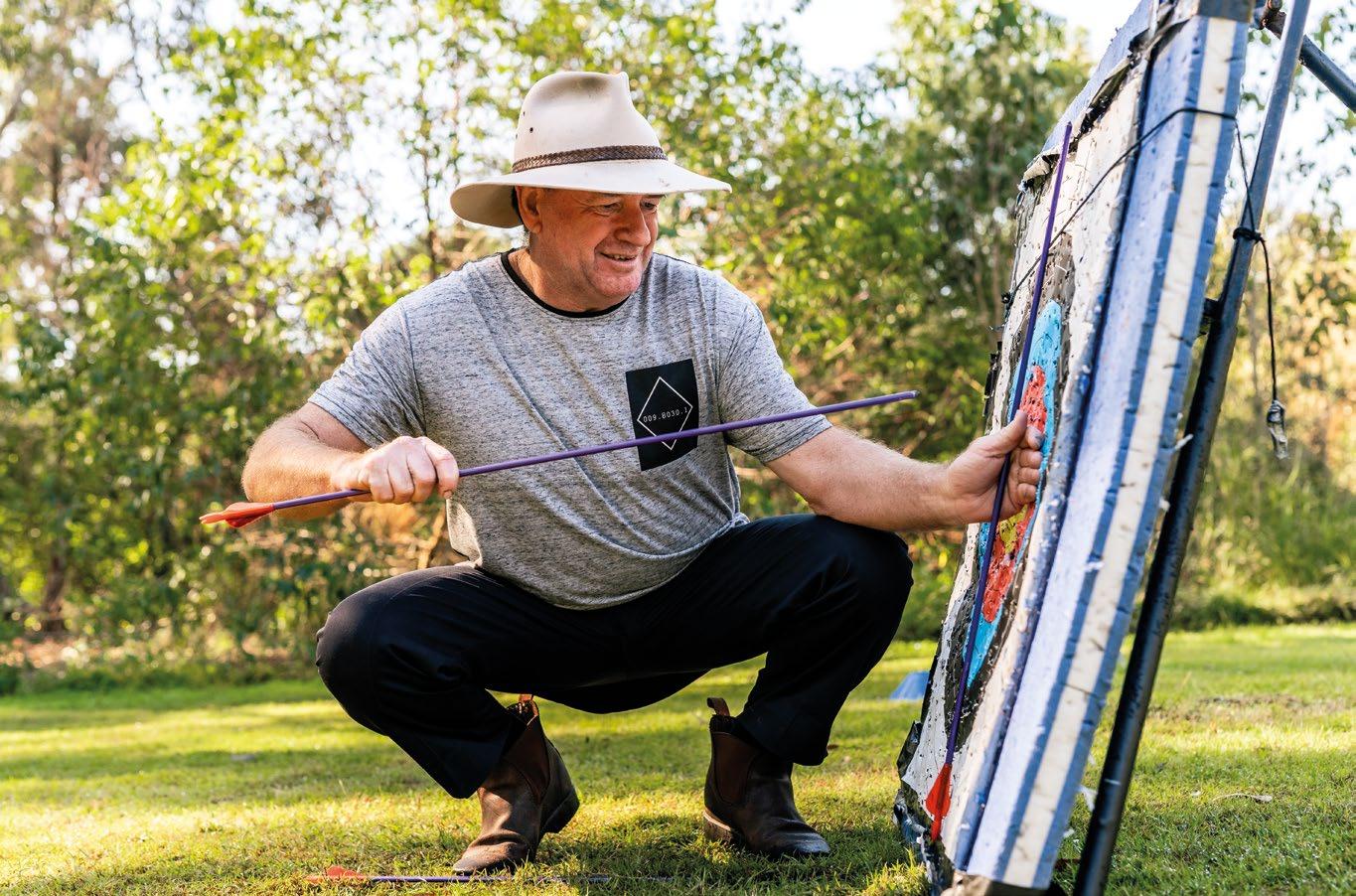
“RSL Rec Connect creates these opportunities – whether it’s picking up a new hobby or just talking or connecting with people. It’s up to the participants to see what they can take out of the experience.”
Connecting doesn’t have to stop there, either. As RSL Rec Connect events are usually hosted on weekends, Steve says they allow veterans who are usually timepoor mid-week to meet other likeminded individuals.
“Rec Connect events can provide you with the opportunity to expand your network too,” he says. “Those new connections could aid in linking you to more services that might support you, or potentially a new job.
“You meet good people at these events; everyone is respectful and can understand your experience in the military. It’s truly a safe space.”
A STEP IN THE RIGHT DIRECTION
Steve understands some veterans may have hesitations about attending social events like those in the Rec Connect program.
“The wariness makes sense –particularly if you haven’t been to one before,” he says.
Although in Steve’s experience, the RSL Rec Connect events offer a safe space for veterans and their families and provide an important step in a veteran’s transition experience.
“After the intense environment of the military, these events give people a chance to have a feelgood experience. They’re a great
INFO-CIRCLE
place, a great environment,” he says.
“Also, if you’ve just left Defence, Rec Connect events greatly help your transition experience.
“The veteran experience is unique and there’s often unsaid understandings between those who have served. So, being able to connect with like-minded people helps us navigate post-service life.
“Having said that, these events are just a part of your overall transition journey back into the broader community. They offer a safe space for you to connect with other veterans, but they also help you build your confidence to integrate back into civilian life.”
ABOVE: Army veteran Steve Bain has participated in various RSL Rec Connect events, including archery and blacksmithing.
What’s on: To discover the range of upcoming RSL Rec Connect events, search ‘Rec Connect’ at rslqld.org
From Friday 15 August,
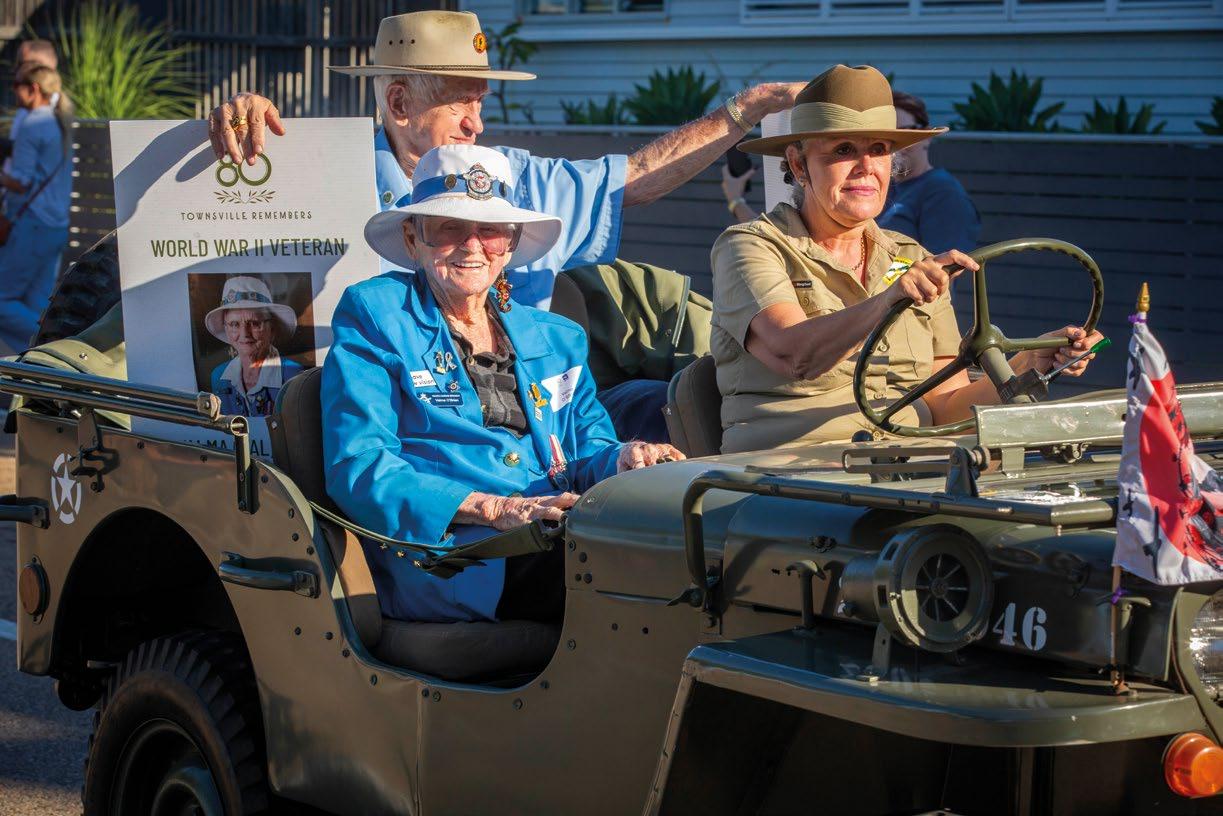

80th anniversary of

This year marked the 80th anniversary of Victory in the Pacific, commemorating Japan’s surrender on 15 August 1945 and the end of World War II (WWII).
RSL Queensland honoured the nearly one million Australians who served – including the 39,000 who lost their lives, 66,000 wounded and 30,000 taken prisoner. These photos capture how Queensland paid tribute to their service and sacrifice.
Townsville hosted three days of commemoration, reflection and celebration to mark the anniversary. WWII veteran Valma
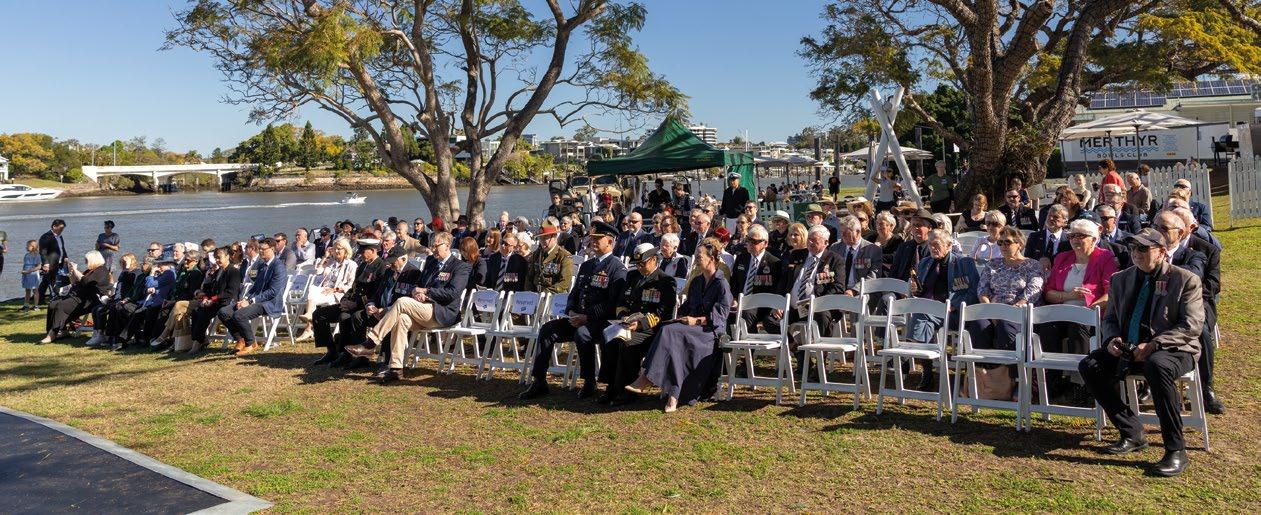
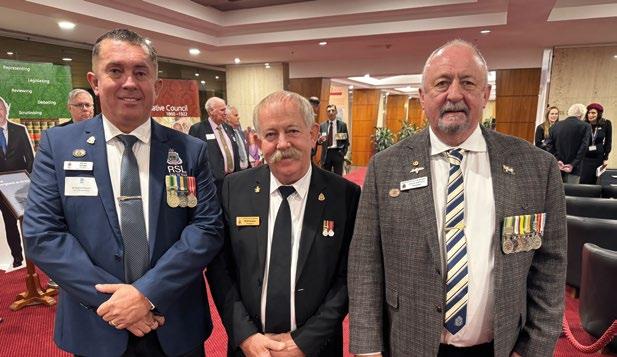
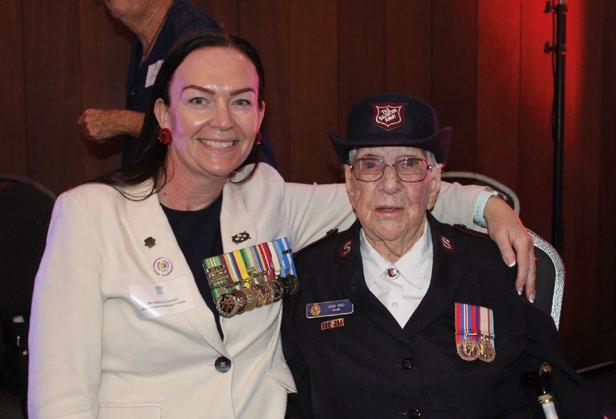
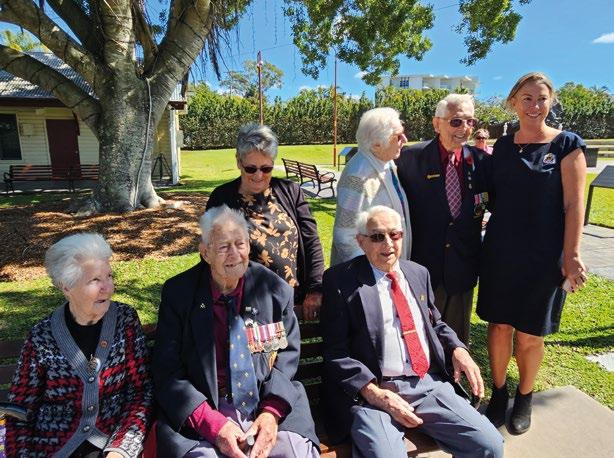
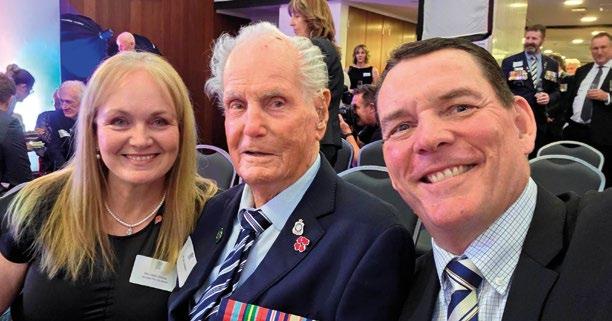
Hervey Bay RSL Sub Branch marked the anniversary with a service at Freedom Park attended by more than 50 people, including WWII veterans Ken Hayden, Alan Williams and Stan Hanna. Pictured at the service, seated on the bench from left, June Hayden, Ken Hayden, Alan Williams, and standing from left, unidentified guest, Shirley Hanna, Stan Hanna and Hervey Bay RSL Sub Branch Wellbeing Coordinator Lou Shipard.
Cairns RSL Sub Branch President Nathan Shingles, Tamborine Mountain RSL Sub Branch President Phil Hunter and Southport RSL Sub Branch President Craig Thomas are pictured at an event to mark the 80th anniversary of the end of WWII in the Pacific. The event was hosted by Queensland Premier David Crisafulli MP and held at Parliament House on 10 July.
Several WWII veterans were honoured at Parliament House, including 99-yearold Ipswich resident Major Jean Bird from the Bundamba Salvation Army, who served for 18 months in the Australian Women’s Army Service. She is pictured with Ramon Fenton from Women Veterans Network Australia.
Representatives from Sandgate RSL Sub Branch at Parliament House on 10 July were, from left, Treasurer Helen Bishop, WWll veteran Jim Grebert and President John Anderson.
RSL South Eastern District commemorated the 80th anniversary of Victory in the Pacific on 23 August. The service was attended by seven World War II veterans, and a wreath was laid on behalf of the District and all its Sub Branches in honour of those who served Australia during World War II. The WWII veterans in attendance were George Churchward, Lloyd Arthur Statham, Lily Milne Ward, Dennis Wellbelove, Lindsay Scott, Murielle Ahern and Cynthia Clifford (nee Cadd).
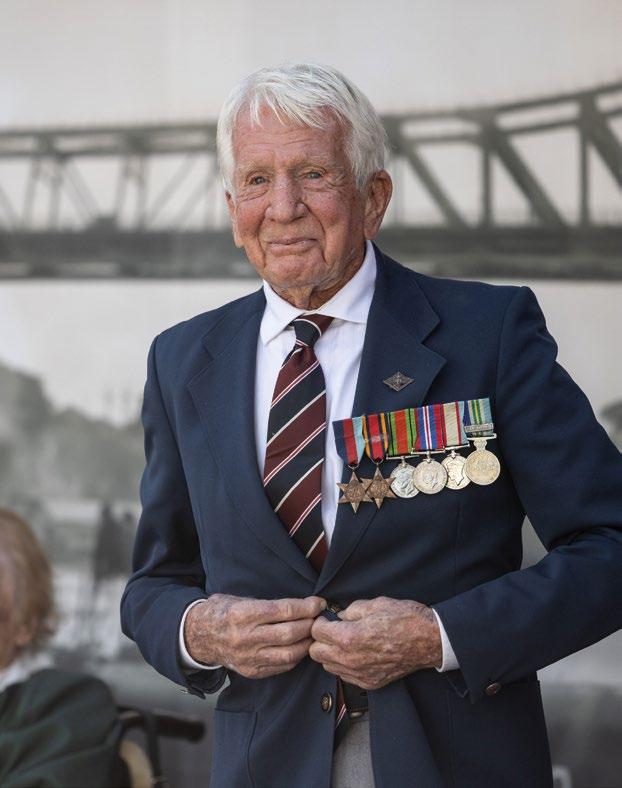
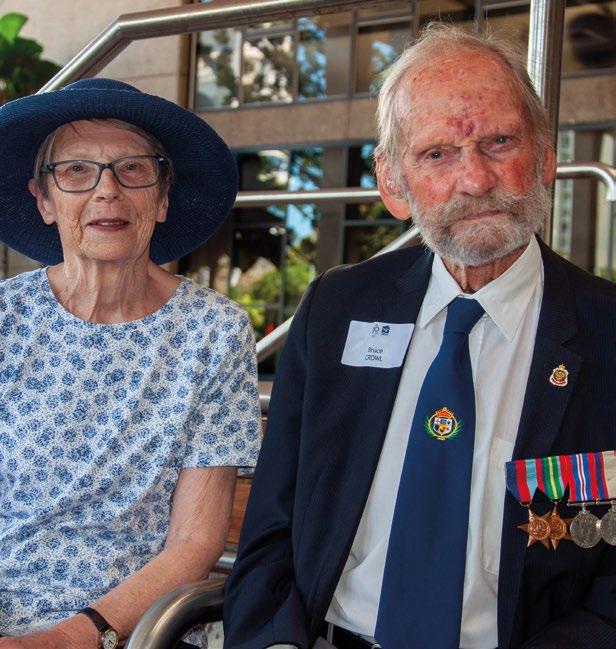
WWII Navy veteran and actor Bruce Crowl and his wife Kate travelled from Victoria to Townsville for the 80th anniversary of Victory in the Pacific. At 99, the former Visual Signalman from HMAS Australia impressed all with his energy and humour.
He recalled life aboard the cramped ship and surviving kamikaze attacks in the Philippines. When the war ended, Bruce was in England preparing to return home with fellow servicemen.
After the war, he built a successful radio and TV career, appearing in Neighbours, Prisoner and The Flying Doctors. Now 100, Bruce still performs on stage and was recently nominated for Best Actor.
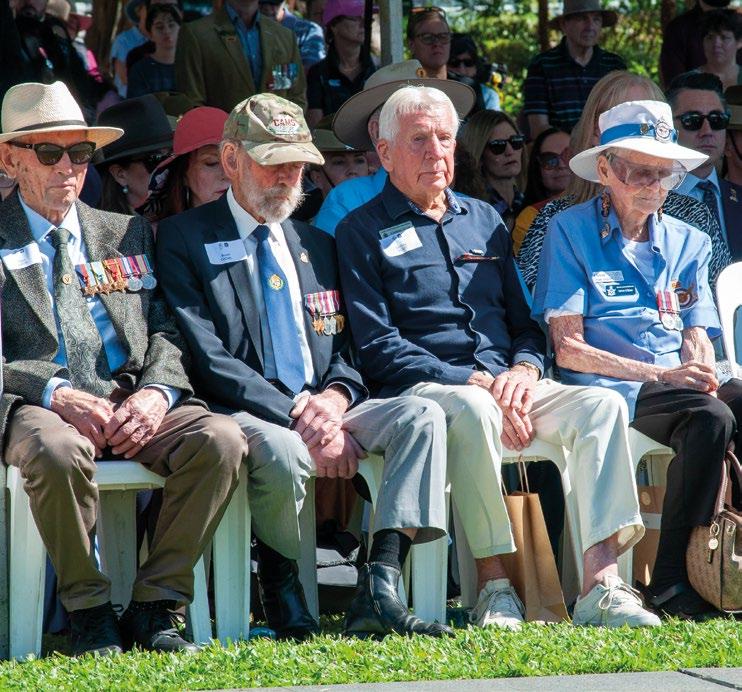
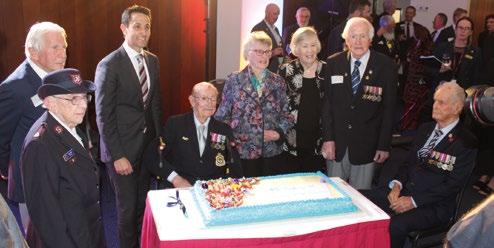
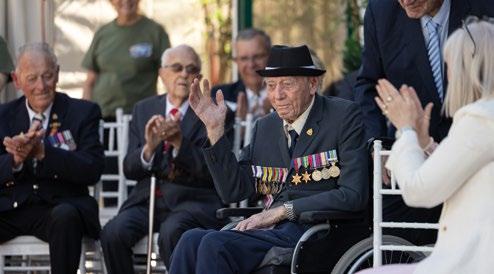
WWII veterans at the Victory in the Pacific event in Townsville.
Guests clap in appreciation of the service of WWII veteran Dennis Wellbelove at the RSL South Eastern District commemoration.
WWII veteran Lindsay Scott at the RSL South Eastern District commemoration.
Five WWII veterans were personally honoured by Queensland Premier David Crisafulli at Queensland Parliament House on 10 July in a moving ceremony to mark the 80th anniversary of the end of WWII in the Pacific.
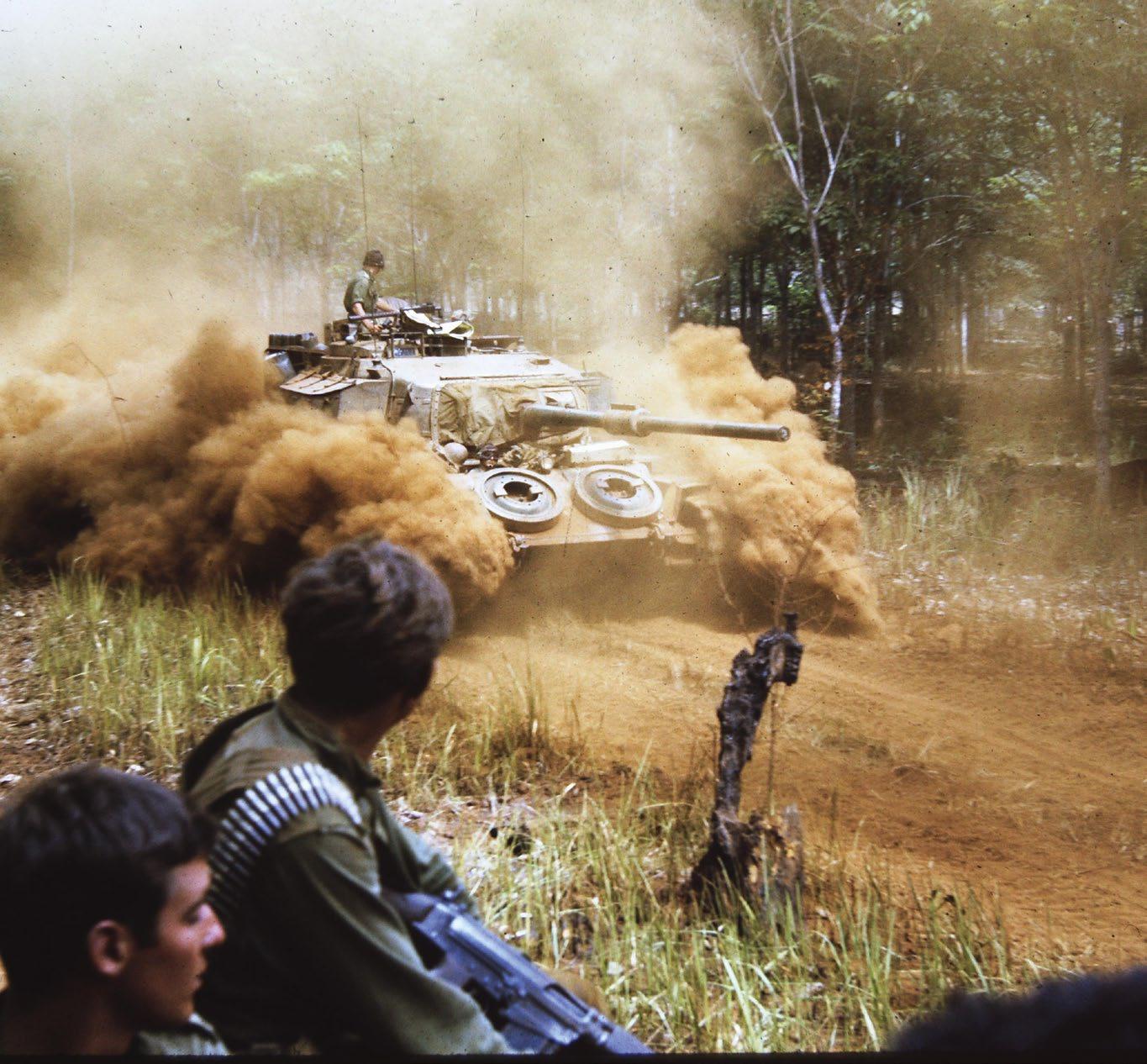
On 18 August, communities across Queensland came together to commemorate Vietnam Veterans’ Day. We thank the many Sub Branches that hosted services and all who paused to honour the courage, sacrifice and enduring legacy of our Vietnam veterans.
Photo: Rex Targett
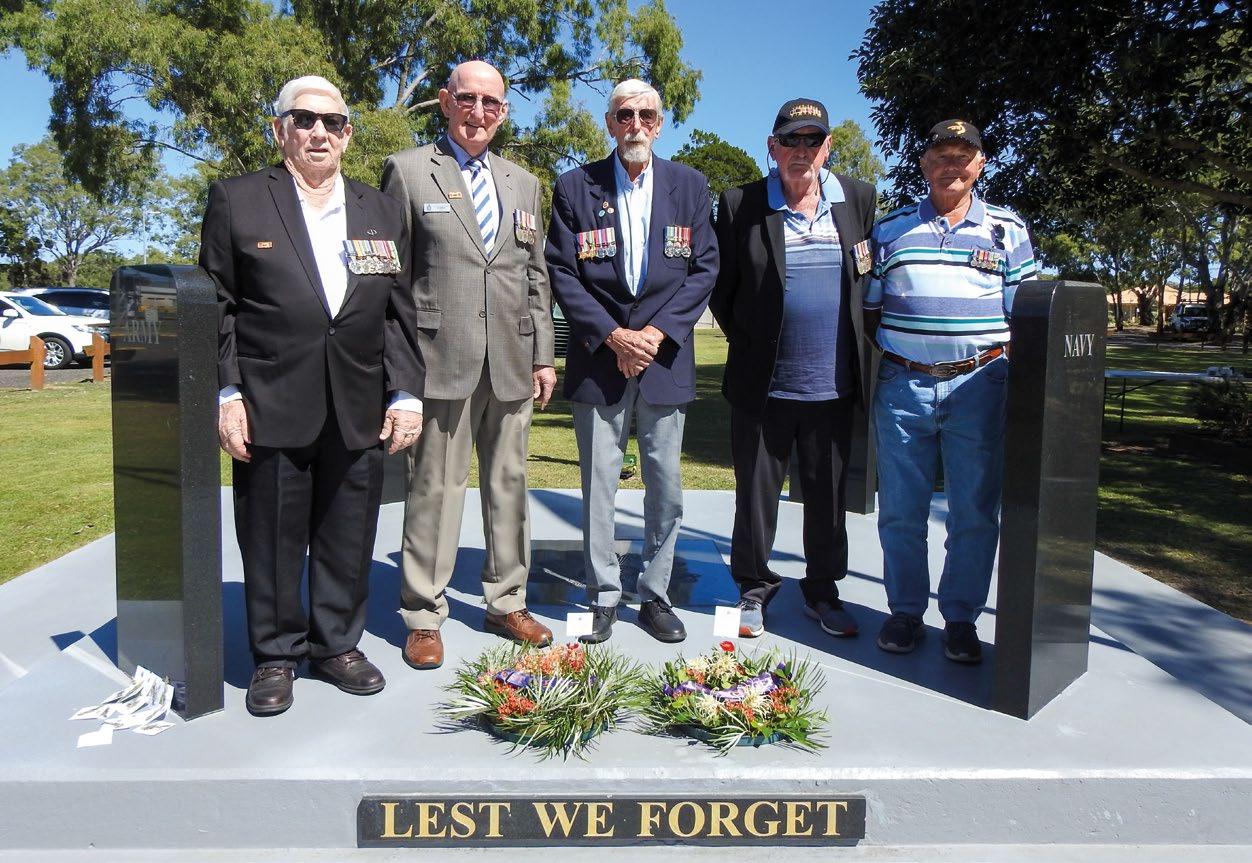
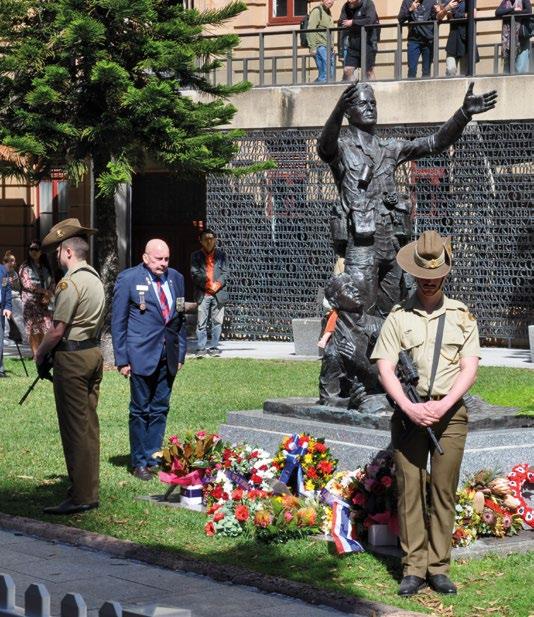
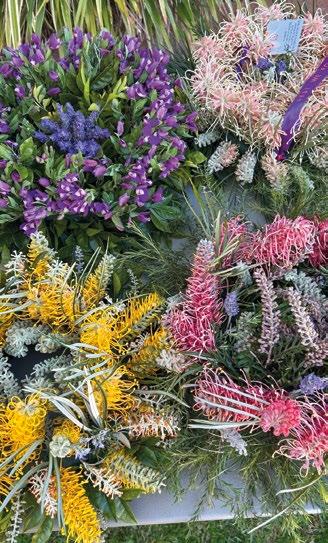
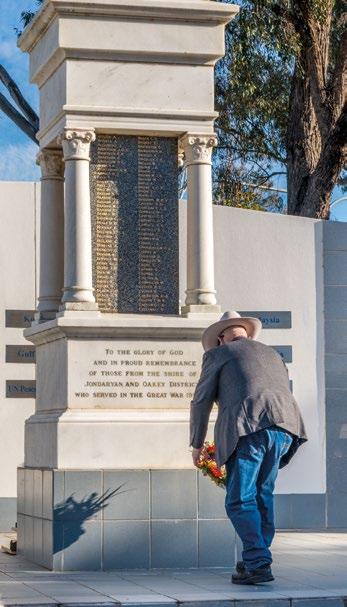
In the days leading up to Vietnam Veterans’ Day, the Ladies’ Auxiliary of Nanango RSL Sub Branch handcrafted wreaths for the service. Their floral tributes bloomed with bottlebrush – a uniquely Australian symbol of remembrance.
A veteran lays a wreath at the Oakey RSL Sub Branch service.
Brisbane North District President Mark Orreal lays a wreath on behalf of the Qld Sappers Association at the Vietnam Veterans’ Day service at Anzac Square in Brisbane on 18 August.
Veterans and community members gathered for a moving service, where the wives and widows of Vietnam veterans offered heartfelt prayers. The commemoration concluded with refreshments at the Woodgate Beach Club.
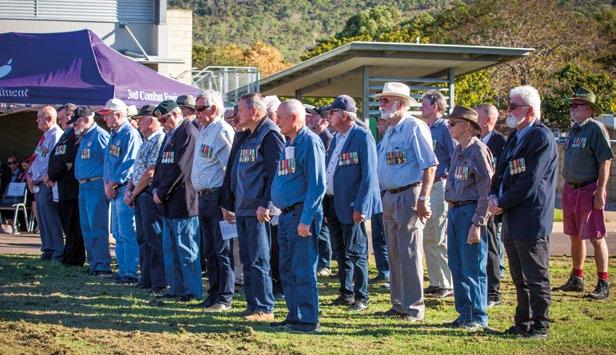
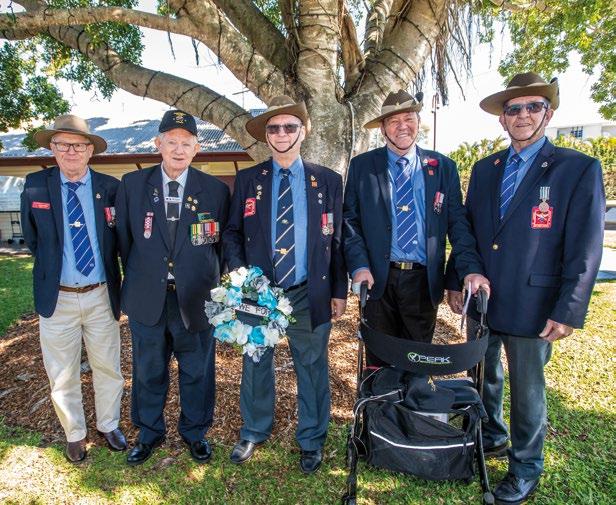
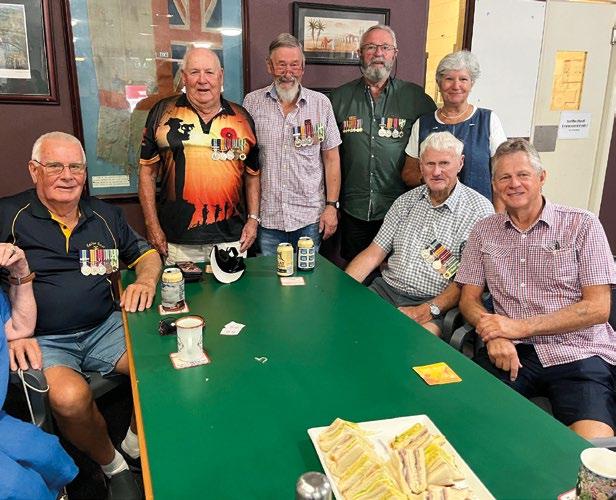
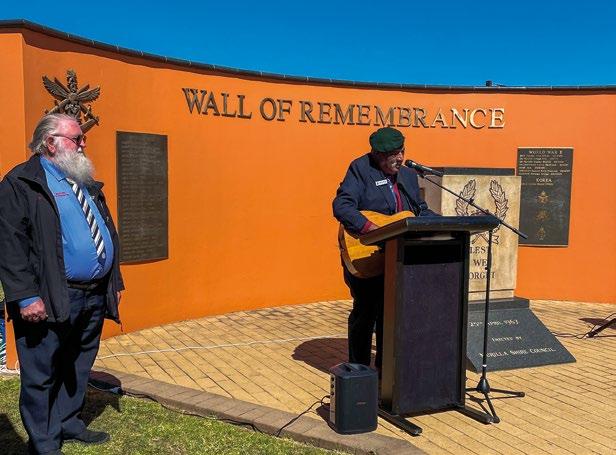
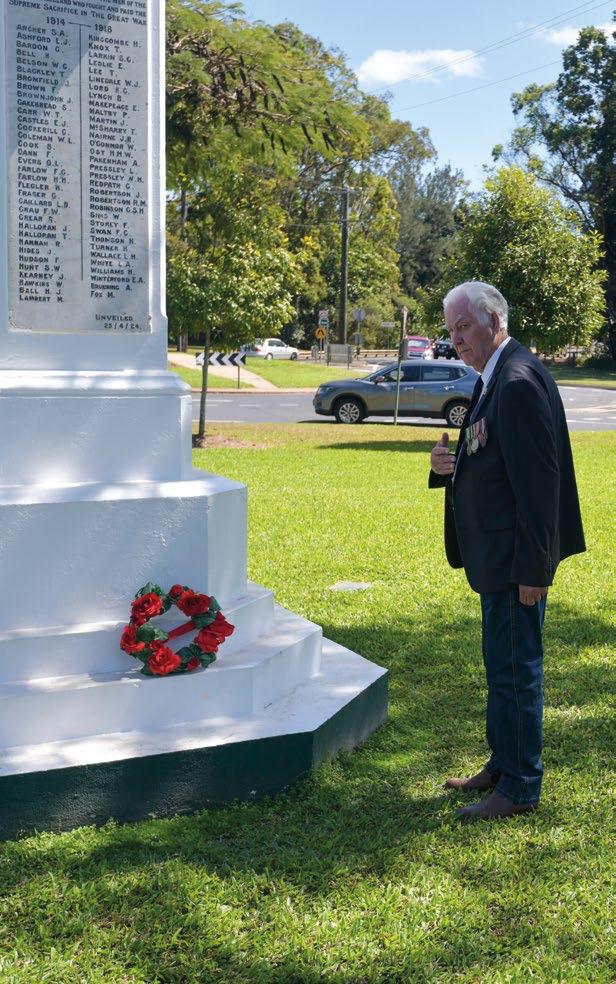
Atherton RSL Sub Branch President Rob Moss lays a wreath on Vietnam Veterans’ Day.
The community gathered to pay their respects to Vietnam veterans at the Townsville service. Photo: Troy Rodgers.
Royal Australian Electrical and Mechanical Engineers and Royal Australian Infantry Vietnam veterans enjoying some fellowship at Bowen RSL Sub Branch in honour of the day.
Veterans gathered to pay their respects at the Hervey Bay RSL Sub Branch service, which saw a strong turnout from the community and 23 wreaths laid to honour the fallen. The Sub Branch held a special lunch following the service.
Miles RSL Sub Branch President Adrian Daveson with fellow member Hohaia Downs singing the Australian and New Zealand national anthems on Vietnam Veterans’ Day.
Giving back for connection and compassion
Helping wherever he’s needed, Graeme Davis is engaged in efforts to support welfare and promote social connections for veterans and their families.
Olivia Lawrence
RIGHT:
Tiaro RSL Sub Branch Vice President and District Deputy President of Wide Bay and Burnett District Graeme Davis, left, with Wide Bay and Burnett District Administration Assistant Sharyn Mitchell.
OPPOSITE PAGE:
Graeme Davis with Tiaro RSL Sub Branch President Scott Wilkinson and Lillian Coyne.
MOVING to Queensland more than 25 years ago, Army veteran Graeme Davis, who had been an RSL Sub Branch member in Victoria for several years, was eager to become involved with the RSL after moving to the Sunshine State.
“I thought it was a good time in my life to give back to an organisation that has given so much to me,” Graeme says.
First joining Maryborough RSL Sub Branch and now a member of Tiaro RSL Sub Branch, Graeme has been involved in a wide range of volunteer activities and is always ready to help wherever he’s needed.
Graeme focuses his efforts on supporting welfare activities and promoting social connection through the assistance of the local Tiaro RSL Citizen Auxiliary and police service.
“Volunteering not only helps keep local Sub Branches going, but it also keeps me going and is something I really enjoy doing,” he says.
Since joining Tiaro RSL Sub Branch, Graeme has been Secretary, President, Treasurer, Membership
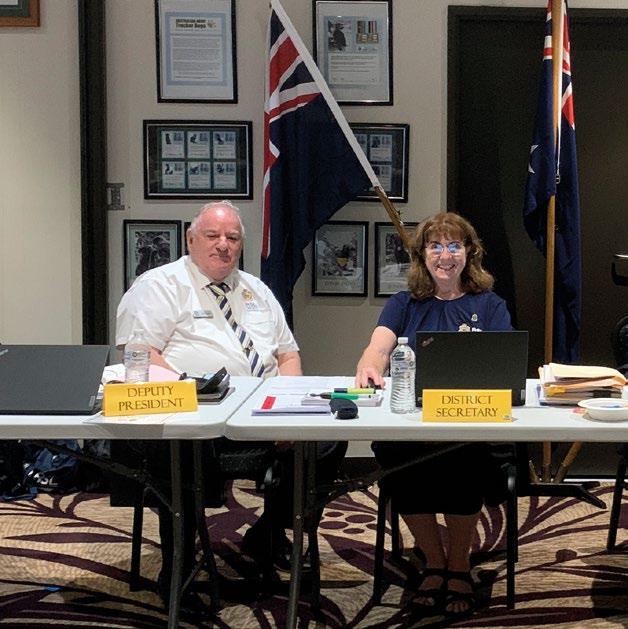
Officer and now Vice President. His leadership also extends beyond the Sub Branch; he’s held the position of Wide Bay and Burnett District Vice President and currently serves as the District Deputy President.
CREATING A WELCOMING ATMOSPHERE FOR VETERANS
With a tight-knit membership of just 65 people at Tiaro RSL Sub Branch, Graeme offers opportunities for
veterans to have regular contact with each other.
“We hold a social day every Friday, inviting members to come out for a cup of tea and cake – it’s important that we know all of our members and they feel a part of the community,” Graeme says.
“It gives our members a sense of mateship but also gives us a chance to check in and see how everyone is doing.”
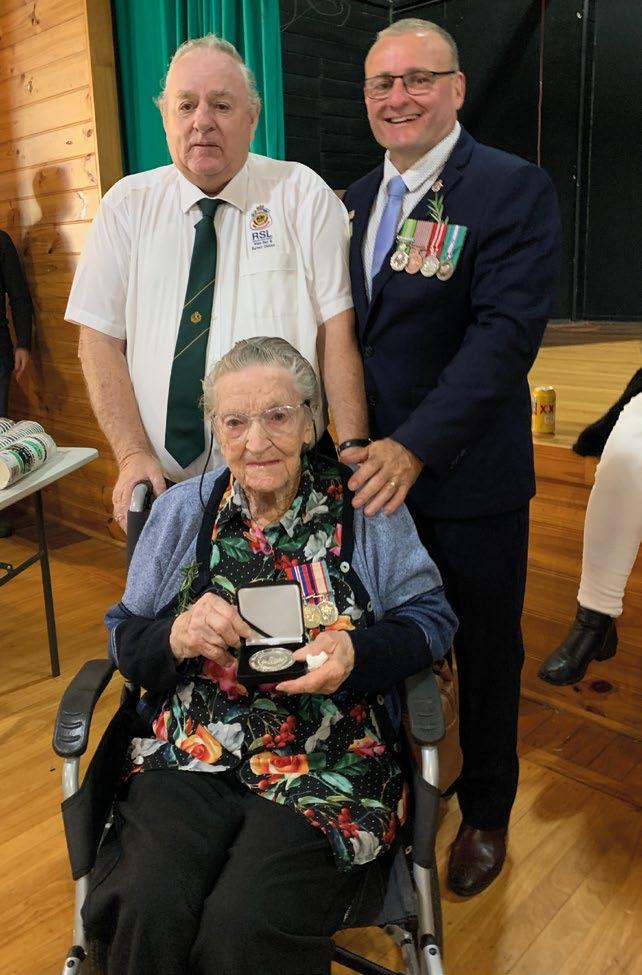
Graeme extends his gratitude to the support of the Tiaro RSL Auxiliary, who work closely with the Sub Branch to raise funds and support their social activities.
“My wife, Heather, is actually the President of our local RSL Auxiliary and they are such a great group of volunteers, helping us with a variety of endeavours,” Graeme says.
“Whether it’s baking, providing lunch after a service or event, or helping us fundraise throughout the year for commemorative events, they help us maintain a social and active Sub Branch.
“Having my wife by my side volunteering is also one of the reasons I have kept doing it for all these years too.”
STRENGTHENING COMMUNITY CONNECTIONS
In addition to providing a regular social day for veterans, Graeme
is frequently taking Sub Branch members out to shop for groceries, attend doctors’ appointments and to visit other veterans in hospital.
“Two to three times a week, I am helping veterans and their families get to where they need to be, which gives me great purpose,” Graeme says.
“Requests and needs change on a weekly basis, but whoever needs to get somewhere and can’t drive can just give us a call and I will assist or find someone who can.”
Graeme also does his part to keep the town safe by volunteering with the Queensland Police Service in Tiaro and its crime prevention team. Passionate about this field of volunteering, he previously spearheaded an initiative to welcome individuals on community corrections into the Sub Branch as volunteers.
“This initiative benefited both the veterans and volunteers involved and has built lasting relationships,” Graeme says.
“Since the program, there are volunteers who still call us up ahead of ANZAC Day offering their assistance, so the initiative has had a really great outcome.
“I am very grateful to all our terrific volunteers and would encourage anyone in the area who is looking to give back or volunteer to join our local Sub Branch or RSL Auxiliary, we’d love to have you.”
International Volunteer Day INFO-CIRCLE
International Volunteer Day on 5 December was an opportunity to recognise the incredible people who give their time to strengthen communities and make a real difference.
At RSL Queensland, our volunteers embody the spirit of service – supporting veterans, families and commemorations across the state. Their dedication, kindness and community spirit are at the heart of everything we do.
“Requests and needs change on a weekly basis, but whoever needs to get somewhere and can’t drive can just give us a call and I will assist or find someone who can.”















































Living the dream
TILLY’S BYRON BAY PARADISE
TILLY*, from Riverina in New South Wales, never imagined that one ordinary day could turn into the most extraordinary day of her life, until she discovered she had won Dream Home Art Union Draw 427, taking home the $13.7 million Byron Bay A-list lifestyle, complete with a breathtaking designer home and $1.75 million in gold.
“I just couldn’t believe it,” Tilly said, laughing through happy tears. “You always dream about something like this, but you never expect it to happen. I’ve been a VIP since 2010, and it feels amazing to win and to support such a great cause.”
Her new home is nothing short of spectacular. Described by The Australian as “minimalism meets wow-factor” and a true “Byron
masterpiece,” it effortlessly connects sky, sea and soul. From the moment you step inside and see the sculptural staircase, through to the light-filled spaces with expansive ocean views, it is clear this is no ordinary prize.
Each of the four bedrooms features sweeping ocean or hinterland vistas and its own day-spa-inspired ensuite, while the designer kitchen, with its dramatic quartzite island, flows seamlessly into a sunken lounge with a floating fireplace.
Outside, a magnesium infinity pool and firepit overlook iconic Tallow Beach, providing the perfect backdrop for Byron sunsets.
Now, Tilly can live life on her own terms, waking to breathtaking ocean views, relaxing by the infinity pool, and
planning a future full of possibilities.
Whether she chooses to embrace the Byron lifestyle, travel the world or invest in new adventures, this extraordinary win gives her the freedom to dream bigger than ever before.
“I used to daydream about what I’d do if I won,” she said. “Now it’s real and I can live life on my own terms.”
Every ticket sold in the Dream Home Art Union helps veterans and their families through RSL Queensland, as it has since 1956. Wins like this are not just lifechanging for one person, but meaningful for many.
Congratulations, Tilly, on a remarkable win and the beginning of a truly incredible next chapter.
*Name changed for privacy.
THE HIDDEN LOAD: HOW VETERAN FAMILIES PROVIDE VITAL, UNSEEN CARE
A new national study by Gallipoli Medical Research and RSL Queensland reveals the extraordinary contribution, and personal cost, of the unpaid family members who provide vital care for our veterans.
WHEN we think about ‘care’, we often picture a nurse, doctor or allied health professional. But across Australia, family members – who are often unpaid and unseen – provide millions of hours of essential care each week.
Carers Australia defines carers as people who provide unpaid care and support to family members or friends living with health challenges. It is not only about physical care, but also emotional, social and day-to-day support. For veterans and their families, this kind of informal care is as common as it is important.
Through our long-term research partnership with RSL Queensland, Gallipoli Medical Research (GMR) has recently completed a national study into what this informal care really means for veteran families. The findings highlight the remarkable contribution carers make, alongside the challenges it can present for their own health and wellbeing.
The study surveyed 173 caregivers of Australian Defence Force veterans living with physical or mental health conditions. Most carers were partners or spouses, with an average age of 59.
On average, each provided nearly 36 hours of support every week, which is the equivalent of a full-time job. Some had been providing this care for more than a decade.
When the hours of support were valued using current professional care rates for nursing support and personal care workers, unpaid family support equated to more than $1,200 per week. Over the average caregiving period of nearly 14 years, this adds up to more than $870,000 per person – demonstrating the significant economic value of family caregiving work, which is often overlooked in health planning.
But the impacts extend well beyond money. Three out of four carers reported moderate to high levels of burden, and many lived with chronic health issues themselves. This reveals the personal cost that can sometimes come with such respected and vital care work.
Carers also described how their wellbeing rose and fell with the health of the veteran for whom they cared. This ‘spillover effect’ highlighted the deep connection between the health of veterans and the health of their families.
As GMR CEO Miriam Kent explains, “Carers of unwell veterans face unique burdens, from secondary trauma to limited support networks. Without recognising and addressing their needs, we risk a hidden crisis.”
There are nearly three million carers across Australia, and the demand for
If you or someone you know needs support, please call RSL Queensland on 134 775 or Open Arms 24-hour crisis support on 1800 011 046.
informal care is expected to grow. For veteran families, stronger recognition and targeted support are essential.
RSL Queensland, in partnership with GMR, is committed to ensuring that the voices of veteran families are heard through research into their lived experience, and to advocating for more support for carers and the veterans for whom they care.
Research findings about unpaid carers of veterans
CARERS:
• 95% female
• Average age 59 years
• 88% are spouses or partners of veterans
• 85% of carers have at least one chronic health condition
• 70% of carers surveyed were located in urban areas, and 30% in rural areas
• Carers provide an average of 36 hours of unpaid care per week
VETERANS UNDER UNPAID CARE:
• 90% male
• Average age 63 years
• Average ADF service duration 16.9 years
• 88% have chronic mental or physical conditions
*References available upon request.
01
WWII RAAF ENGINE MECHANIC TURNS 100
Bowen RSL Sub Branch member and WWII veteran Wally Hourn recently celebrated his 100th birthday. Bowen RSL Sub Branch
President Roger Hine presented Wally with a certificate commemorating this special milestone. Wally was a Royal Australian Air Force Rolls Royce engine mechanic in World War II.
02
LEGACY AUSTRALIA STRENGTHENS TIES WITH EMERALD RSL SUB BRANCH
Legacy Australia recently visited Emerald RSL Sub Branch to discuss supporting dependants of deceased ex-service personnel. They presented a Legacy Ode plaque, to be mounted beneath the eternal flame at Emerald Bowls Club.
Emerald RSL maintains strong ties with Legacy through donations and fundraising, often acting as first contact for bereaved families. Pictured, from left, Danny Milgate, President Noel Mallyon, Rose Swadling OAM, Jo-Anne Peace, Mary Herwin, Bob Holmes and Secretary Bryan Ottone.
03
PIES, PINTS AND BOWLS AT BULIMBA
Bulimba District RSL Sub Branch hosted its annual Pie and Pint Information Day and Barefoot Bowls Battle on 19 July, welcoming more than 40 veterans from Sub Branches including Coorparoo and Sherwood. The day focused on senior veterans’ health and wellbeing. Bulimba emerged victorious in the bowls competition. President Brian
Daley, left, is pictured with winners Bruce Hermann and WO Alesha Rollinson (HMAS Moreton), and Treasurer
Ken Gillard, back right, who handcrafted the trophy at Carina Men’s Shed.
04
SPRUCE UP FOR BRISBANE NORTH DISTRICT OFFICE
Veterans and RSL
Queensland’s Brisbane North District team have a shiny place to call home after the existing office recently underwent a renovation. The refreshed space includes a new boardroom, reception area and some eye-catching poppy branding.
Since its formation in 1989, Brisbane North District has been providing support to the local veteran and Defence community, and 20 RSL Sub Branches in Brisbane’s northern suburbs. Services offered from the District Office include pensions and advocacy, emergency financial assistance, and welfare assistance.
05
VALE PETER
STERLING RFD
We recently mourned the passing of Edge Hill/Cairns West RSL Sub Branch member Peter Sterling RDF, who passed away on 16 August, aged 83. Peter served in the Royal Australian Navy for more than 42 years and had been an RSL member for 15 years.
During his time with the RSL, Peter faithfully served as the Far Northern District President and an RSL Queensland Board Director from 2014 to 2021. Peter’s unwavering dedication to supporting veterans and their families across his community and District will be deeply missed.
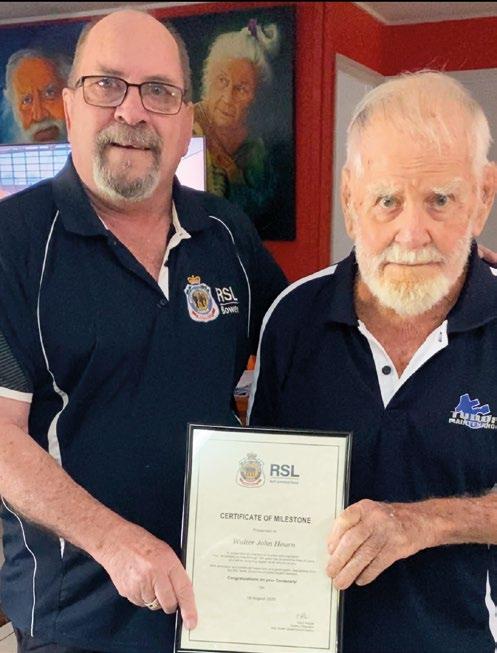
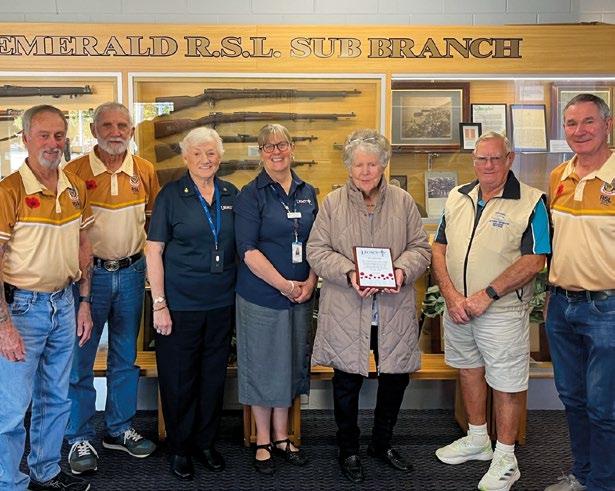
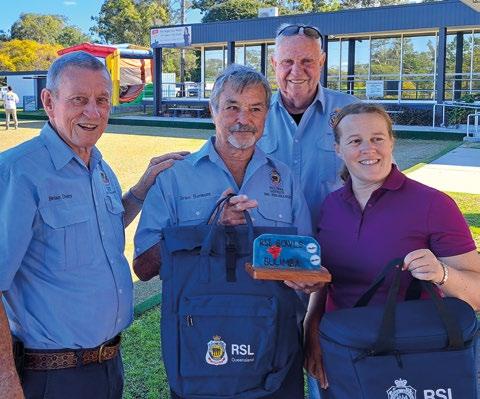
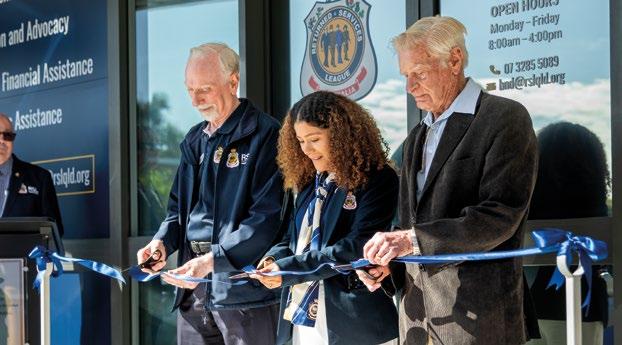
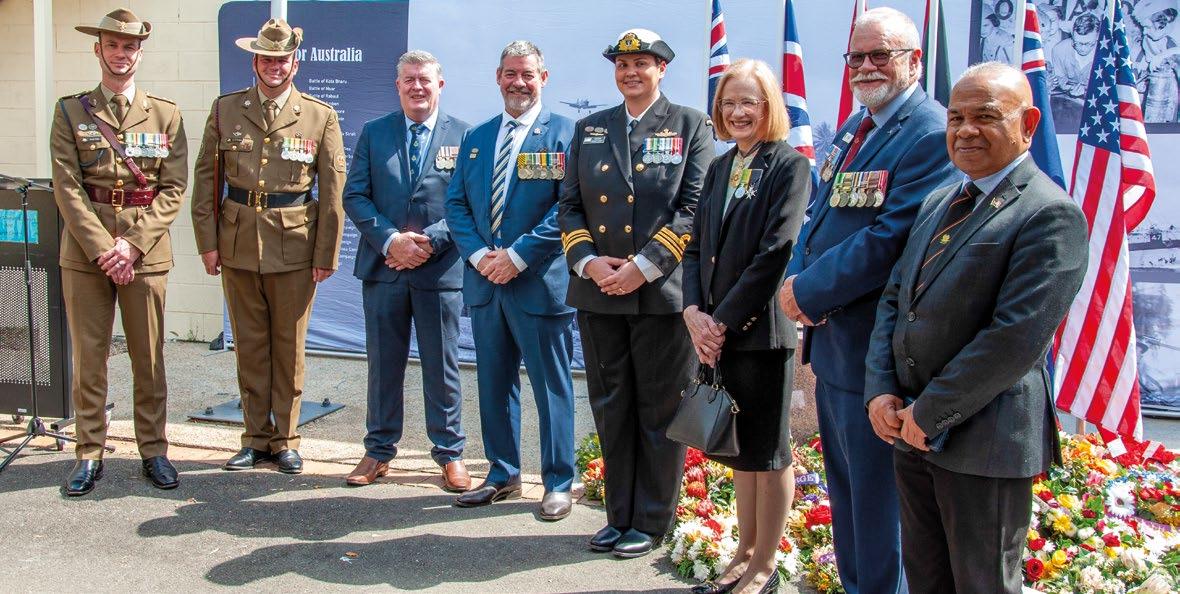
06
BATTLE FOR AUSTRALIA
A commemorative service was held at the Chermside Historical Precinct on 3 September in honour of the Battle for Australia. Those in attendance remembered the Pacific campaigns of 1942 to 1945 that helped turn the tide of World War II and prevent an invasion of mainland Australia.
07
UNSUNG HERO HONOURED AFTER 12 YEARS OF QUIET SERVICE
For 12 years, Trevor Rodgers, a Life Subscriber of Currumbin/ Palm Beach RSL Sub Branch,
quietly maintained the ANZAC story plaque at Currumbin Vikings SLSC. Trevor spent 30 to 40 minutes each week cleaning and polishing it using his own supplies. His dedication came to light as he retired to care for his wife and volunteer Tim Scott brought it to the Sub Branch’s attention.
“Trevor’s selfless service embodies the very spirit of our veteran community,” says Kim, from the Veterans’ Support Centre. Inspired by him, local couples have stepped in to continue his legacy. The Sub Branch celebrated Trevor at a volunteer appreciation night and plans to nominate him for community awards.
01
HONOURING DENIS GRIGGS AND OPERATION BABYLIFT
At Mapleton RSL Sub Branch’s Vietnam Veterans’ Day service, member Denis Griggs shared memories of serving as a C-130 Hercules flight engineer during the 1975 Operation Babylift, which rescued orphaned children from South Vietnam. To honour his role, the Sub Branch presented him with a photograph of his crew reunited with two of those children – now adults – at a recent event at the Australian War Memorial.
02
HONOURING PEACEKEEPERS
Hervey Bay RSL Sub Branch Secretary Brad Gray led a heartfelt Australian Peacekeepers Day service. Attendees reflected on the vital work of Defence personnel, police and civilians in peacekeeping missions since 1947, with a special tribute to Major Susan Lee Felsche – the first Australian servicewoman to lose her life on overseas operations since WWII.
Pictured, from left, State Member for Hervey Bay David Lee, Hervey Bay RSL Sub Branch Secretary Brad Gray, Rev. Jeff Jarvis B.Ed., and Hervey Bay RSL Sub Branch Treasurer Tracy Gillespie.
03
A CENTURY OF SERVICE
Born in Chinchilla in 1925, William (Bill) Francis joined the Volunteer Defence Corps at Brigalow during WWII, before returning to life on the land. He and his late wife raised nine children while running farms in Wychie and Condamine, later working well into retirement delivering cars across the
Western Downs. Now living in Miles, Bill proudly celebrates his 100th birthday and his long-awaited RSL membership.
04
A MILLION MEMORIES
More than 70 former winners, entrants, organisers and supporters of RSL Queensland’s Girl in a Million Quest recently gathered at the View Hotel Brisbane for a heartfelt reunion. The event brought together women from across the state to reminisce and celebrate the Quest’s remarkable 50-year legacy of community spirit and fundraising – raising more than $12 million for veteran services from 1959 to 2009. Emceed by Andrea Crothers from Channel Nine’s Today Show, the afternoon was filled with nostalgic moments as Andrea guided guests down memory lane through interviews, stories, laughter and cherished memories. For many, the Quest not only recognised service and dedication, but also fostered lifelong friendships among entrants, organisers and supporters, creating a lasting bond among the remarkable women who were part of this iconic program. They are pictured with a photo of longtime Quest Chairman, the late Cyril Gilbert OAM.
05
JOHN CELEBRATES
A CENTURY
Maroochydore RSL Sub Branch member John Sanderson was presented with a 100-year birthday certificate by Wellbeing Officer Dennis Condon at his recent birthday party.
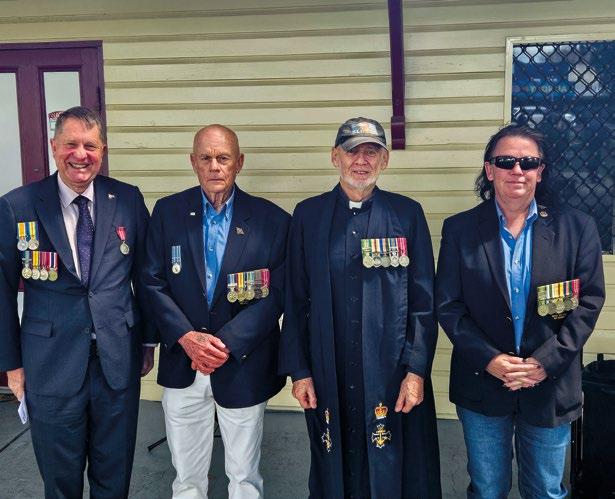
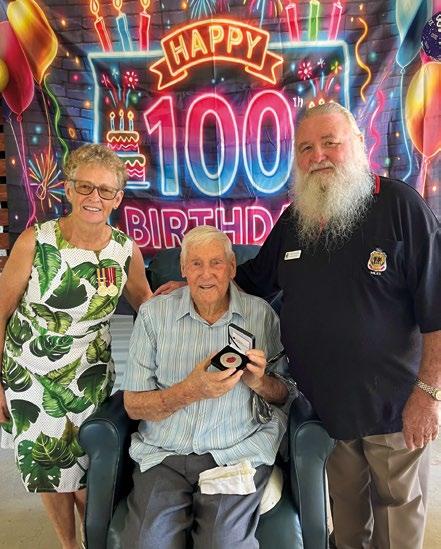
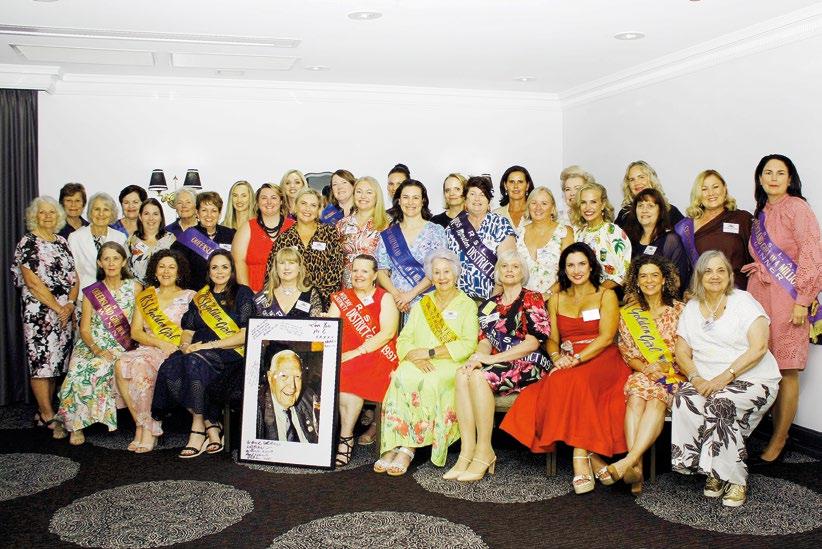
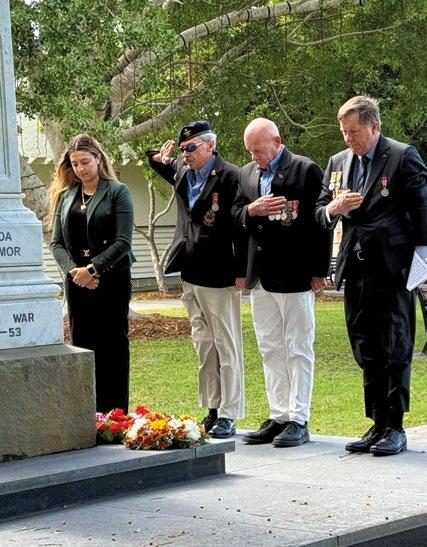
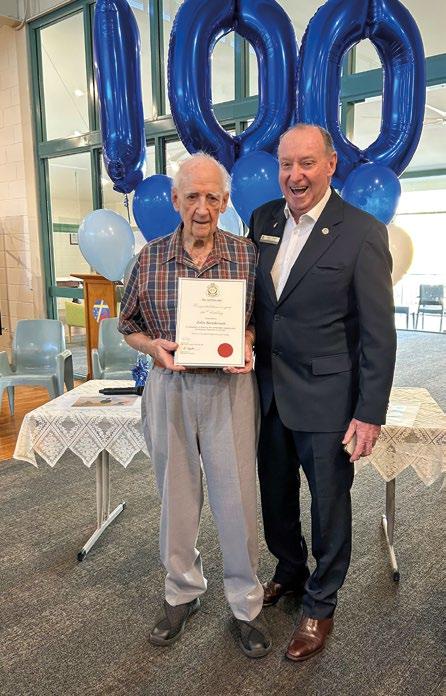
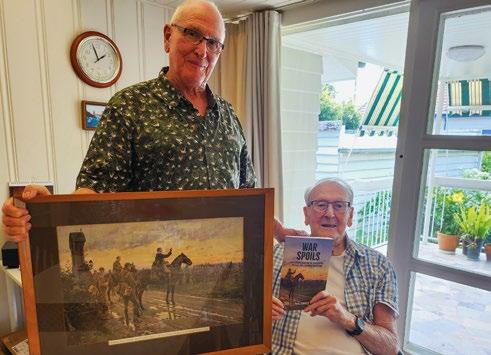
06
HONOURING THE ‘FORGOTTEN WAR’
Around 40 people gathered at Freedom Park for a poignant Korean War service. Hervey Bay RSL Sub Branch was honoured to host veteran Kevin Mitchell from Bribie Island.
Wreath layers pictured at the cenotaph, from left, Fraser Coast Regional Council Deputy Mayor Sara Faraj, Hervey Bay RSL Sub Branch Memorabilia Officer Simon Morley (on behalf of the Korean War veterans), Hervey Bay RSL Sub Branch Secretary Brad Gray, and State Member for Hervey Bay David Lee.
SIXTH BOOK UNCOVERING WWI FAMILY LINK
Wynnum author Paul Dobbyn has released his sixth book, War Spoils: A Childhood Painting, My Grandfather, His Sons and a Stunning Revelation. The book was launched at Manly Lota RSL Sub Branch in May and Redlands RSL in June.
It follows Dobbyn’s journey after re-reading his grandfather’s detailed WWI journal, which recounted battles including the Somme. He discovered his grandfather was among the Royal Munster Fusiliers depicted in the renowned painting The Last General Absolution of the Munsters at Rue du Bois. The family still treasures a print of the artwork, now held by Paul’s 97-year-old uncle, Brian.
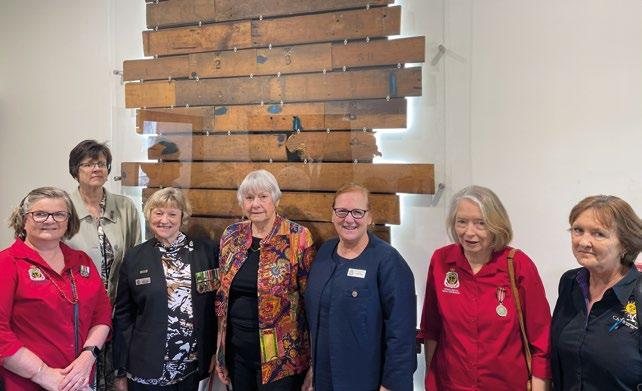
01
MEMORIAL HONOURS
VETERANS AND NURSES
A new memorial honouring Australian veterans of both World Wars and the nurses who cared for them was officially unveiled on 6 August at the site of the former Rosemount Military Hospital in Windsor. It features a display of wooden panels, salvaged from the walls of the old surgery building, bearing the names and units of convalescing servicemen in their own handwriting. These artefacts date back over 100 years and are a testament to the ANZACs and WWII diggers who recovered from their wounds at Rosemount under the care of the Australian Army Nursing Service and the Australian Army Massage Service. The Defence Service Nurses RSL Sub Branch and the RSL South Eastern District partnered with the Metro North Public Health Unit to bring the memorial to life. It was delivered through the Queensland Remembers Grant Program, with the support of Metro North Health.
02
CELEBRATING 25
YEARS OF SERVICE AND MATESHIP
North Gold Coast RSL Sub Branch marked its 25th
anniversary on 5 July with a gala dinner attended by 146 members, dignitaries and partners. President Ken Golden highlighted the Sub Branch’s growth, while RSL Queensland State President Major General Stephen Day DSC AM spoke on leadership and mateship and presented Life Membership to Michael Carter.
03
A UNIQUELY COASTAL COMMEMORATION
Did you know there’s an RSL Sub Branch on Fraser Island? Formed in 1997, the Orchid Beach/Fraser Island RSL Sub Branch began with unofficial ANZAC Day services led by inaugural President John Quincey at the old Orchid Beach Resort. Today, the Orchid Beach/Fraser Island RSL Sub Branch welcomes around 500 attendees each year near Waddy Point –including locals, travellers and veterans.
With a heartfelt beachside service, hot breakfast, lunch, live entertainment and twoup, it offers a truly unique commemorative experience. Despite early setbacks securing land access, the Sub Branch – supported by local rangers – has made the beach its lasting home.
To attend, contact: orchidbeachrsl@gmail.com
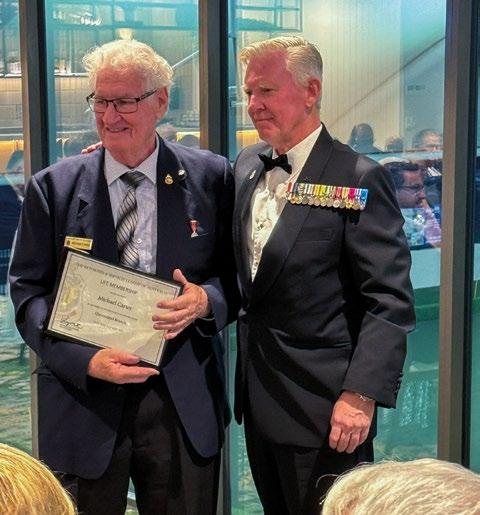
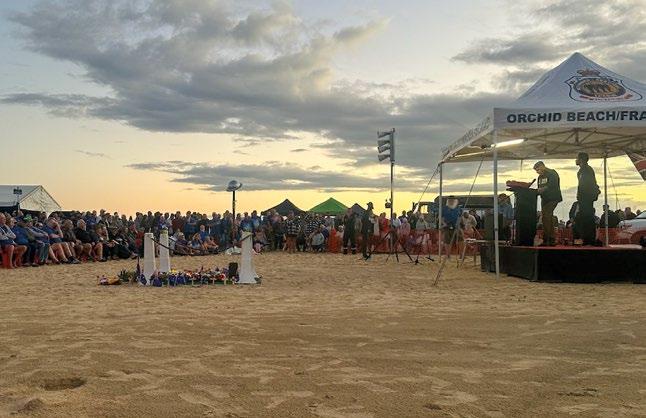
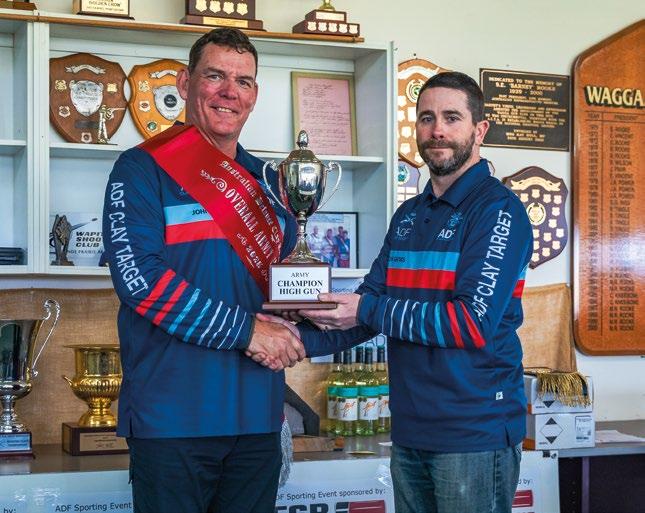
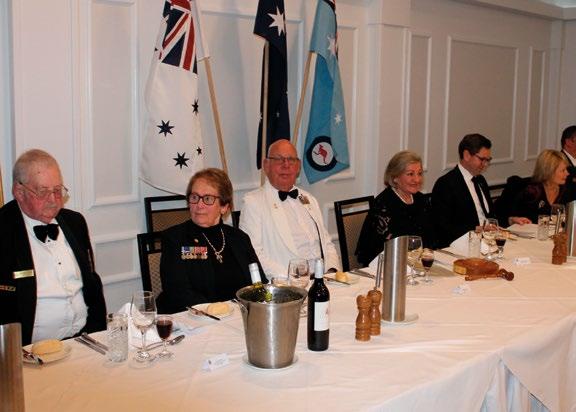
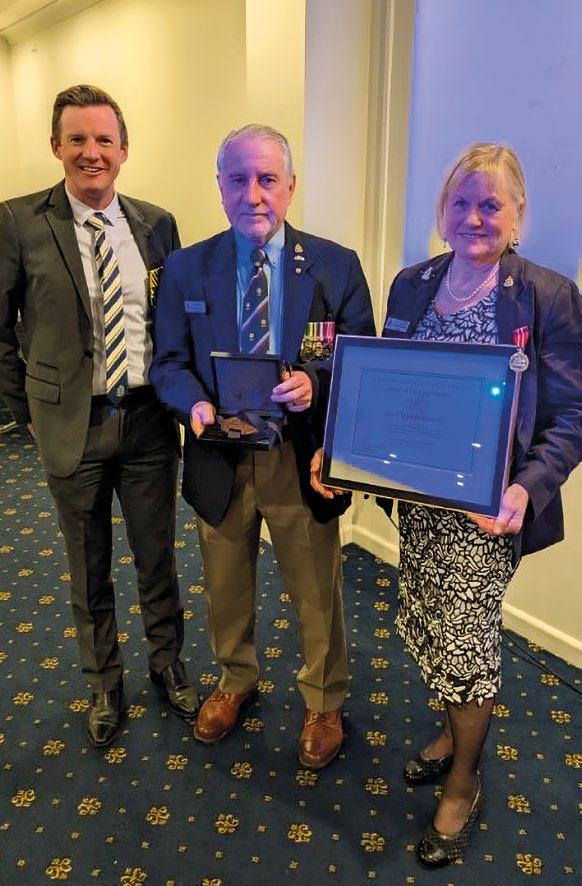
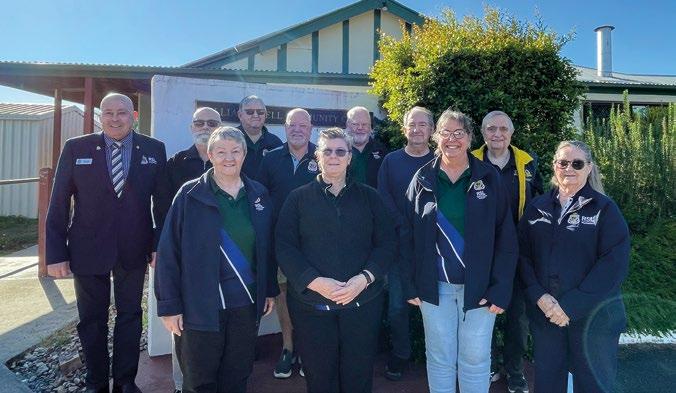
04
SHARPSHOOTER SUCCESS AT CLAY TARGET COMPETITION
Lieutenant Colonel John Anderson, Army Reserve and Sandgate RSL Sub Branch President, claimed the Army Service Champion trophy at the 2025 ADF Clay Target Championships in Wagga Wagga. Competing across Trap, Skeet and Sporting Clays, John also won multiple individual prizes and earned selection in the ADF Skeet and Sporting Clays teams.
05
A NIGHT TO REMEMBER
Toowoomba RSL Sub Branch celebrated a special Combined Anniversaries Dinner on 9 August, featuring speeches, delicious food, choir performances and toasts honouring veterans. The evening was a heartfelt and enjoyable occasion, bringing members and guests together in recognition of service and camaraderie.
06
RSL ANZAC OF THE YEAR
David Simmons, former President of Springwood Tri Services RSL Sub Branch, has been awarded RSL ANZAC of the Year for his exceptional leadership and dedication to supporting veterans. Since joining in 2013,
David transformed ANZAC Day commemorations, introduced key Sub Branch policies and launched the Springwood Homeless Veteran Support Program. His vision, compassion and practical initiatives have left a lasting impact on veterans and the broader community, embodying the true ANZAC spirit. RSL Queensland State Vice President Arran Hassell CSC, left, is pictured presenting the award to David, alongside his wife Andrea.
07
VETERANS HELPING VETERANS
“I became an advocate because, having been helped myself, I wanted to pay it forward,” says President Geoff Clemson, reflecting the spirit of the Pine Rivers District RSL Sub Branch advocacy team. This dedicated group of 11 volunteers provides vital support to veterans and their families, offering expert advocacy, mentoring and wellbeing services.
Led by John Mackinnon and recognised by District President Mark Orreal, the team combines training, experience and compassion to ensure veterans receive the guidance and care they deserve, setting a benchmark for volunteer advocacy.
01
LENDING A HAND AND SOME MUSCLE
Abbot Point Operations came to the aid of Bowen RSL Sub Branch, with both funding and manpower. The company not only provided new chairs through a community grant but also sent along a team of strong young workers to help move the old chairs and tackle other heavy lifting tasks around the premises. Pictured, from left, Geoff Swingler, Lenny Snell, Aiden Ferguson, Nathan Elmer and Sub Branch President Roger Hine.
02
SUPPORTING LOCAL KIDS AND VETERANS
Springwood Tri Services RSL Sub Branch recently donated $2,000 worth of school supplies to Kids4Kids at Bethania, providing 300 school packs for local students. The funds were raised through weekly raffles organised by Murray Stalley. President Jamie McLellan said proceeds also support Logan charities and a homeless veteran accommodation program.
03 TOWNSVILLE AVIATION HERITAGE CENTRE
REOPENS
FIVE
YEARS ON Chief of Air Force Air Marshal
Stephen Chappell, pictured, officially reopened the RAAF Townsville Aviation Heritage Centre (RTAHC) in August after five years of renovations and refurbishments. The reopening event was attended by special guests from the local Defence community and formed part of the 80th anniversary of Victory in the Pacific activities organised by the Townsville City Council.
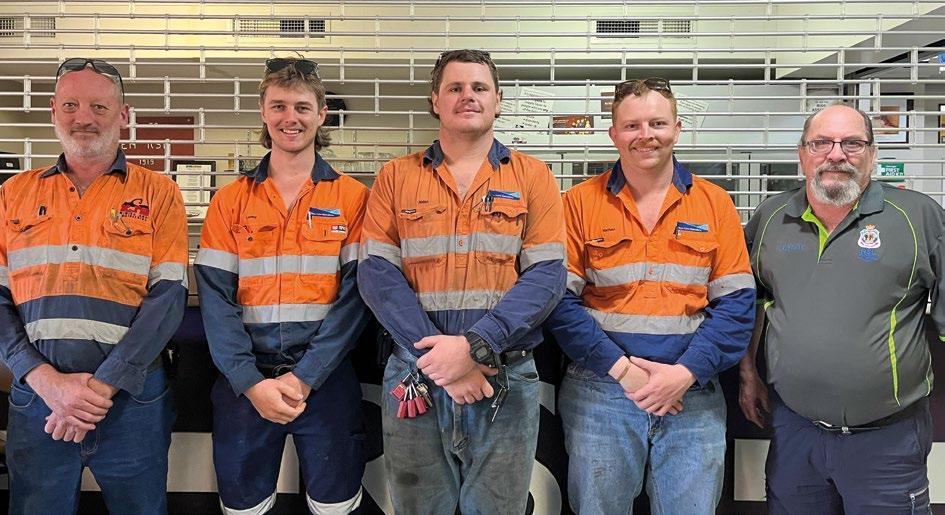
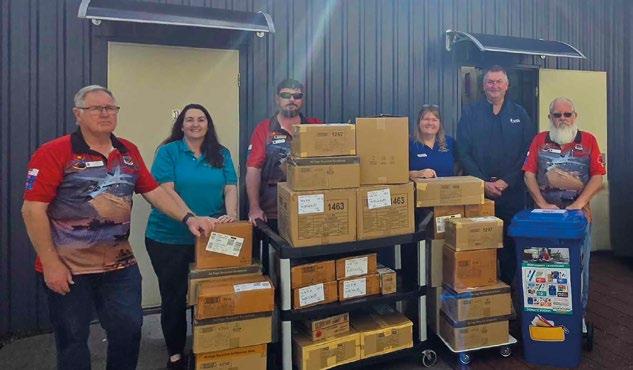
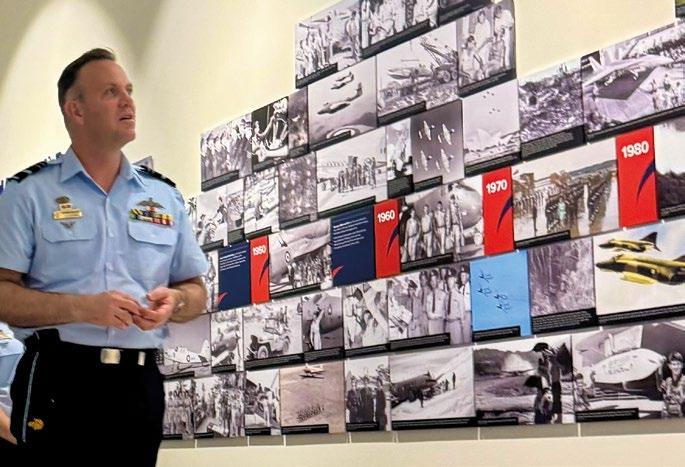
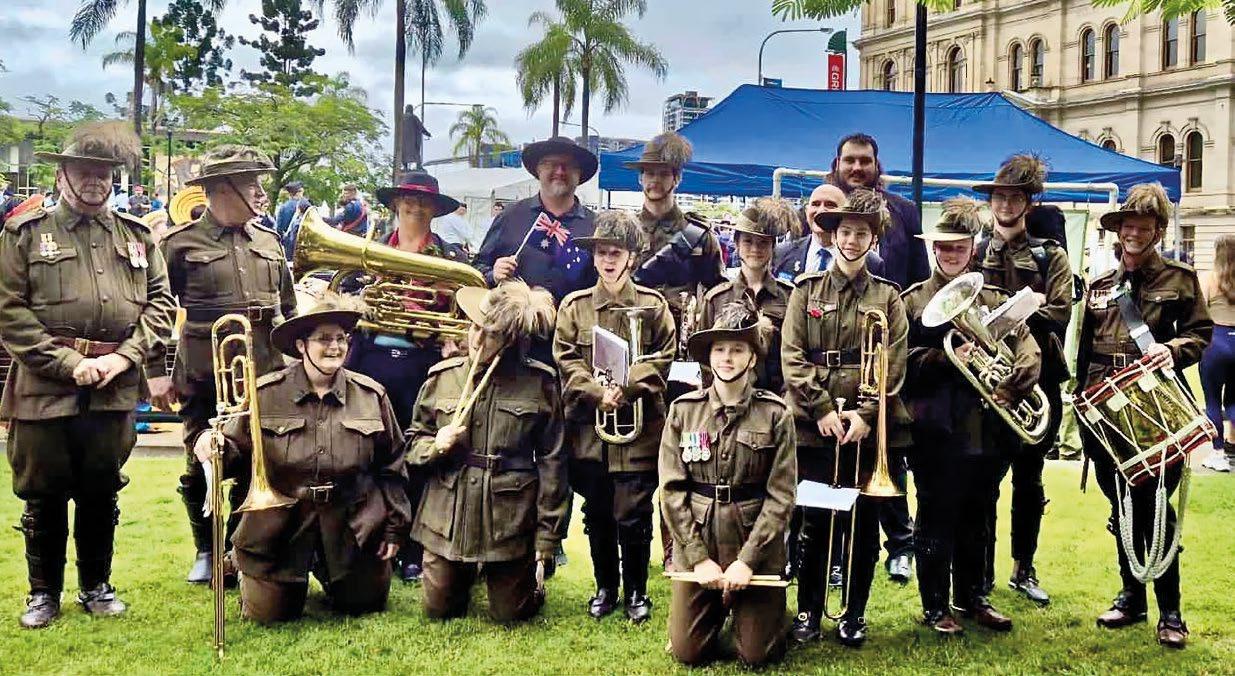
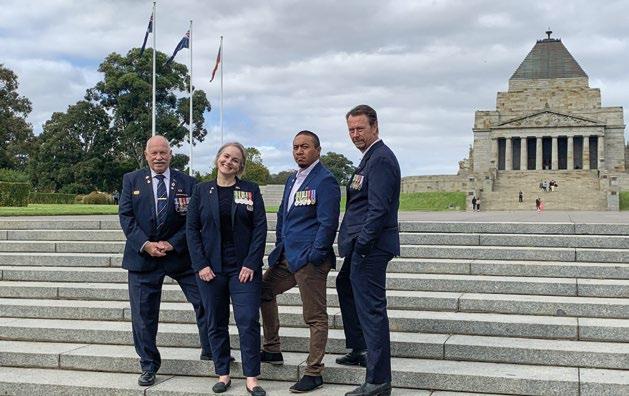
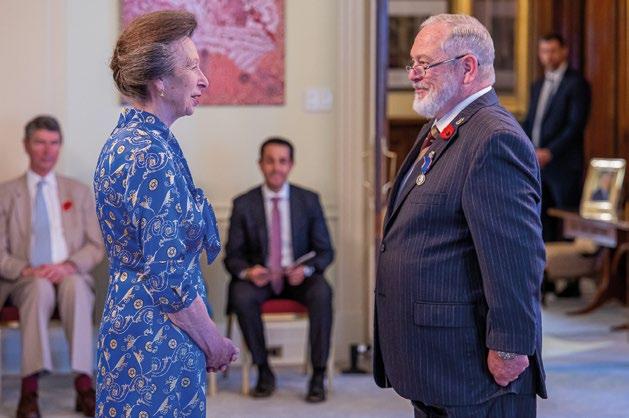
04
20 YEARS OF MUSIC AND MEMORY
This year marks the 20th anniversary of the Queensland Services Heritage Band Association (QSHBA), founded by Band Master Paul Jones in honour of his Light Horse ancestor. From a single Light Horse Heritage Band in 2005, QSHBA has grown to seven ensembles performing at ANZAC Day parades, festivals and memorial services across Queensland.
05
THOSE WHO SERVE: A COMMUNITY’S STORY ON THE NATIONAL STAGE
What began as a modest grant application has grown into Those Who Serve – a powerful documentary created by Caroline Springs RSL Sub Branch in Victoria. Now available on SBS On-Demand, it follows the Sub Branch’s journey and captures raw, personal stories from veterans of WWII through to Afghanistan.
The film shows how a local RSL honours the past while supporting today’s veterans. Among those interviewed were, from left, John Willis, Carolyn West, Jon Saemo and Brian Ross.
06
ROYAL
PRESENTATION FOR 27 YEARS OF DISTINGUISHED
SERVICE
Her Royal Highness The Princess Royal presented The Royal Victorian Medal (Silver) to Senior Patrol Officer Stephen Canning RVM, a member of Holland Park-Mt Gravatt RSL Sub Branch, at an Investiture Ceremony at Government House on 11 November. The prestigious award recognises Stephen’s 27 years of distinguished service to the Office of the Governor of Queensland. Photo courtesy of Government House Queensland.
WIN
For your chance to win a copy of one of the books in this competition, please enter in one of the following ways:
• Email your name, address and contact number (using the book title as the subject line) to editor@rslqld.org
OR
• Post your name, address and contact number to [Book Title], PO Box 629, Spring Hill Qld 4004.
Competition closes 5 January 2026.
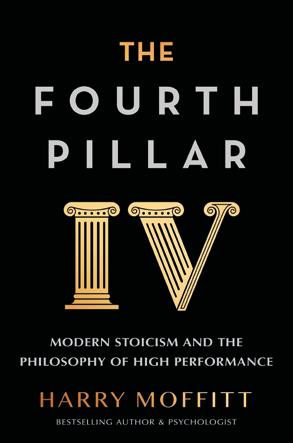
The Fourth Pillar: Modern Stoicism and the Philosophy of High Performance by Harry Moffitt is published by Macmillan Australia (RRP: $17.99).
Australian Special Forces veteran and corporate psychologist Harry Moffitt has trained and worked with the best in the military, sport and corporate realms. He has seen up close what makes a champion tick, and what makes another squander the gifts they’ve been given.
It comes down to purpose, selfawareness and the quality of our lived experience – it comes down to philosophy.
In a world saturated by self-help, we all know the importance of the physical, psychological and social pillars of human performance. But as a society, we have forgotten the crucial fourth pillar – our philosophical self.
The Fourth Pillar resurrects this critical ingredient of a life well lived, providing us with the tools to help navigate our anxious and uncertain world. By unpacking the ancient wisdom of the Stoics, the Spartans and beyond, coupled with hardearned lessons from the battlefield and boardroom to sporting greats and NASA trailblazers, Moffitt reveals the path to true high performance, wisdom and fulfilment.
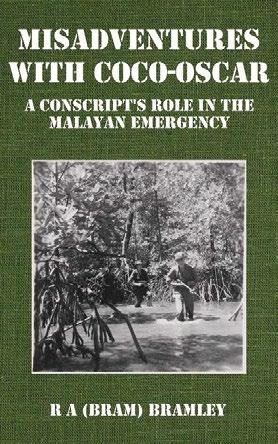
Misadventures with Coco-Oscar: A Conscript’s Role in the Malayan Emergency by Richard ‘Bram’ Bramley is self-published (RRP: $29.99).
How did a British teenager find himself involved in an undeclared and little-known war on the other side of the world? Simply by accepting an offer he could not refuse: to donate two years of his life defending the Queen’s dominions around the world, in his case in what was called Malaya (now Malaysia). It was known as National Service.
Released on Malaya and Borneo Veterans’ Day (31 August), Richard ‘Bram’ Bramley’s Misadventures with Coco-Oscar: A Conscript’s Role in the Malayan Emergency is a comedic account of life in a dysfunctional infantry battalion on active service during the Malayan Emergency (1948-60), as seen through the irreverent eyes of a reluctant and recalcitrant conscript.
This is not a tale of heroic deeds but rather one of raw recruits coming to terms with jungle warfare during the limited period the battalion spent on active operations. During this time, the battalion’s only casualties were self-inflicted, and the only fighting occurred in bars and dancehalls.
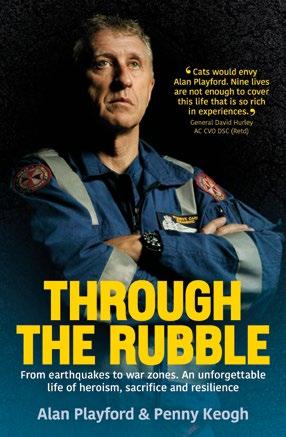
Through the Rubble by Alan Playford and Penny Keogh is published by Big Sky Publishing (RRP: $34.99).
Alan Playford has lived an extraordinary life of service, courage and quiet heroism – long before the day he crawled from the rubble of the Newcastle Workers Club during the devastating 1989 earthquake. That moment, captured in headlines around the world, saw Alan hailed as a national hero after rescuing Norm Duffy from beneath the debris. But for those who knew him, it was just one chapter in a far greater story.
Known as ‘Scoop’ among colleagues, Alan had already played a crucial role in transforming the ambulance service in Australia – modernising equipment, advocating for change and helping to establish helicopter rescue operations. His vision and determination were reshaping the very practice of paramedicine.
Yet his most defining experiences came far from home. Alan served on the frontlines of some of the world’s most harrowing humanitarian crises – in East Timor, the Solomon Islands and, most searingly, Rwanda. The five months he spent amid the aftermath of genocide changed him forever. The things he witnessed haunted him, reshaped him and deepened his understanding of trauma, loss and what it truly means to serve.
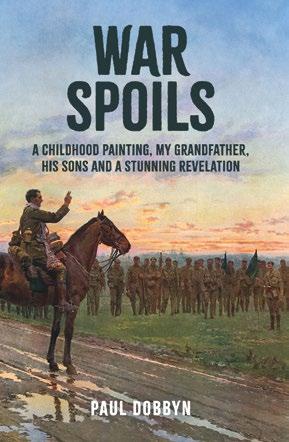
War Spoils by Paul Dobbyn is self-published and is available for purchase via warspoils2025@gmail.com ($36 incl. postage).
War Spoils: A Childhood Painting, My Grandfather, His Sons and a Stunning Revelation takes the reader on a very personal journey into World War I battlefields as witnessed by the author’s grandfather, Captain Henry Dobbyn, of the Royal Munster Fusiliers and the Loyal North Lancashire Regiment. The reader is also aboard the fatal flight of the author’s uncle Pilot Officer Robert Dobbyn of the Pathfinder Force over Europe in 1944, as recreated by British blogger Hogrider Dookes.
The author’s poem War Spoils, inspired by the discovery of Captain Dobbyn’s journal of his World War I experiences, opens the book. The book’s appendix, among other matters, considers challenges the author’s father, Lieutenant Denis Dobbyn, faced as an Australian Intelligence Corps officer dealing with Japanese forces in postsurrender Rabaul, PNG 1945/46.
Former RSL Australia President, Major General Greg Melick AO RFD KC (Retd), in the book’s foreword describes War Spoils as “a well-researched account of the wartime experiences of three members of the author’s immediate and extended family, which once again reminds us of the sacrifices made by so many for us to enjoy our way of life”.
AUSTRALIA’S COASTAL WAR
C Thorpe, Bribie Island
G Unsworth, Pelican Waters
M Bodman, Caboolture South I Quee, Palmwoods
OBOE ONE
J Rhoden, Burpengary
S Smith, Warner
K Crowhurst, Stafford Heights
J Williamson, Goondiwindi
START DIGGING YOU BASTARDS
E Griffiths, Cooran
C Edwards, Urangan
J Groves, Machans Beach
K Finnigan, Woodgate
THE MUTINY AT LONG PHUOC HAI
J Sparksman, Allora
G Carter, Redbank Plains
J Harper, Stanthorpe
J Greeshaw, North Lakes
* Winners’ books will be posted to the addresses supplied in the weeks following publication of the magazine.
Last Post
Queensland RSL News has published this list at the request of RSL members. Queensland RSL News takes no responsibility for inaccuracies outside the control of RSL Queensland. This list was correct as at 14 October 2025. Surnames flagged with an asterisk (*) have an unconfirmed date of their passing.
The list includes each member’s surname, first name, service number and Sub Branch.
ABRAHAM BARRY 2/722948 Emu Park
ALDRED IAN 44374 Caloundra
ANDERSON* DENNIS 1201520 Ayr
ANDREW* DAVID NZ15183 Tweed Heads and Coolangatta
BEAUCHAMP GEORGE 1722772 National Servicemens
BETTANY ROBERT 1411110 Caboolture-Morayfield and District
BIELBY MILTON A219156 Greenbank
BIRD HARRY R693768 Tweed Heads and Coolangatta
BLADIN* HILTON 3/752106 Bowen
BLUNT RALPH 2/745639 Maroochydore
BOUGHTON COLIN 311462 Tewantin/Noosa
BOYLE ALWYN 15174 Pine Rivers District
BROGAN ROSS 2787228 Bowen
BROWN JOHN NX156655 (N172777) Tweed Heads and Coolangatta
BROWN IAN 1202243 Bribie Island
BUNNEY BRYAN 8222103 Gaythorne
CAMPBELL ANGUS 2788987 Bundaberg
CHAMBERS SYDNEY 40545 Beenleigh and District
CHRISTENSEN* DAVID A110573 Geebung Zillmere Bald Hills Aspley
CLARKE GEOFFREY 1735319 Emu Park
COCKER* RODNEY 2588816 Kedron-Wavell
COLEMAN CHRISTOPHER 23310458 Caloundra
COOKE FRANCIS 22374694 Burleigh Heads
COOPER JOHN P/JX629138 Caloundra
COOPER* CARL 276668 Cairns
CROOKS RAYMOND A17436 Caloundra
DAHLER RAYMOND A13844 Redlands
DAPHNE BRIAN 3811483 Gympie
DAVIES JOHN 16556 Redcliffe
DAVIES RAYMOND 3/10686 Boyne-Tannum
DAWSON* ALAN T/19168428 Wynnum
DELPHIN GEOFFREY 6709265 Maroochydore
DONALDSON JAMES 34225 Currumbin/Palm Beach
DUIKER* VERONICA VF517666 Redlands
DUNSHEA JOHN 1200075 Bundaberg
EDSTEIN PHILLIP 242942 Bribie Island
EGAN KENNETH 426327 Currumbin/Palm Beach
EGAN JAMES 314181 Longreach
EISZELE ATHOL 142493 Redlands
ELARDE FRANCISCO R104953 Cairns
ELLIS PETER A224680 Bundaberg
ENNIS* KENNETH 243442 Greenbank
FARRUGIA ANTHONY 2782062 Redlands
FINK* GARTH A11415 Maroochydore
FINN ROGER 3789166 Currumbin/Palm Beach
FLANIGAN IVAN 3/712615 Caloundra
FULTON WILLIAM A225680 Bundaberg
GODWIN LEIGH 58411 Highfields
GOOCH ASTRID 8075019 Unattached List
GOODY JOHN 18898 Greenbank
GRANT (NEE JONES) KERRY F235615 Hervey Bay
GRIFFITHS RAYMOND 1732709 Redlands
GROSSER ROBERT A44327 Hervey Bay
GUNTON GERALD O216566 Tweed Heads and Coolangatta
HAAG TREVOR 1/714331 Caloundra
HAMBURGER DAVID R65782 Tewantin/Noosa
HANSEN KEITH R55456 Pine Rivers District
HANSEN PETER 342799 Canungra
HAUSLER RUSSELL S131798 Bundaberg
HAWKINS PETER A117150 Gympie
HEGARTY* TERENCE 11481/67 Esk
HIGHFIELD LANCE A317856 Nerang
HIND REGINALD 155349 Bundaberg
HITZKE (NEE HIBBETT) VERONICA WR1539 Caloundra
HORVATH ROBERT A47235 Redlands
HUME PETER A17529 Sherwood-Indooroopilly
ILLINGWORTH BARRY 3789269 Hervey Bay
KEENAN WILLIAM 323861 Caloundra
KIDD ROBERT A43250 Ipswich
LANGTON DAVID A110975 Harlaxton
LARK REGINALD R48348 Bundaberg
LAVER BARRY 16389 Beenleigh and District
LE BROCQ BARRIE 3/721461 Beenleigh and District
LEE ATHOL NX53666 Maroochydore
LOFTS RONALD A19207 Ipswich Railway
MARR DAVID Tewantin/Noosa
MASTERS HAROLD 168605 Bundaberg
MATHEWS DOUGLAS 1/2391 Redlands
MCCONACHIE* JEFFREY 148791 Gaythorne
MCCORMICK JOHN R104754 Sherwood-Indooroopilly
MCDADE VICTOR R51601 Coorparoo and Districts
MCGLONE GARRY 219392 Townsville
MCKENNA LESLIE 2720434 Jimboomba
MCNAMARA COLIN 3/723472 Lowood
METCALFE RICHARD A19384 Greenbank
MITCHELL JOHN 1700928 Yeronga-Dutton Park
MORRISON LESLEY F110263 Gaythorne
O’BEIRNE MICHAEL R64321 Redlands
OLSON BRUCE 1990196 Tweed Heads and Coolangatta
OWENS* GENE 16786 Yeppoon
OWENS* DUDLEY B4887 Emu Park
PATERSON JAMES 1731688 Redcliffe
PERCY LAWRENCE 2/7313 Emu Park
PESTRIDGE* JOHN 2782169 Tweed Heads and Coolangatta
PITT* LEO 1/70A035 Redlands
PLUMB GARY 15712 Bribie Island
PORTER* REX 4726 Maroochydore
POTIER ALAIN 62510/02242 Forest Lake and Districts
POWER GRAHAM 1/724734 Banyo
PRICE JUSTIN 1729995 Mackay
PRIESTLEY MAURICE 3/727906/3/165822 Cairns
PURTELL* EDWARD 3410859 Greenbank
QUINN JOHN 1/727776 Kedron-Wavell
REDPATH WILLIAM 24086743 Ipswich
ROSEWARNE GRAEME U134591 Ipswich Railway
RUHL PAUL 8090887 Currumbin/Palm Beach
SANDERS HENRY Hervey Bay
SAUNDERS HERBERT Bribie Island
SEMLER BRIAN 1733055 Greenbank
SETTLE KATHLEEN W/296121 RSL Defence Servicewomen’s Chapter of Sunnybank RSL
SHEATHER FRANKLIN 1066176 Ipswich Railway
SHEPPARD ALLAN M80304 Caloundra
SIMMONS ALBERT 30653 Tamborine Mountain
SIMPSON CHARLES 3799342 Kingaroy/Memerambi
SIMPSON* RICHARD 22884789 Tweed Heads and Coolangatta
SMITH KEVIN 42037 Centenary Suburbs
SNELL NORMAN QX59651 Charters Towers
SOUTHERN* ROBERT 22881069 Tweed Heads and Coolangatta
SPETHMAN DAVID 145629 Bribie Island
SQUIRE* ANTHONY H3503109 Samford
STERLING* PETER 8041006 Edge Hill/Cairns West
STREAT JEFFERY A113529 Caboolture-Morayfield and District
STUMER MERVYN Q39692 1/719360 Ipswich Railway
SWANSSON NORMAN R53357 Beenleigh and District
TAYLOR GARRY 136181/1/715224 Maroochydore
THOMAS* MYLA QFX52460 Redlands
UPPMAN CYRIL 1/3082 Tin Can Bay
VALLE NIGEL 1720979 Tweed Heads and Coolangatta
VAN DYKE JOHN 39502 Gaythorne
VAN KRIMPEN JOHN 316558 Maroochydore
VEA VEA STEVEN 1201244 Hervey Bay
VENEMA CAREL 43544 Hervey Bay
VOLL LYLE 1/713449 Goombungee
WATERMAN ROBERT 898347 Hervey Bay
WEBB* LINDSAY A219012 Toowoomba
WILEMAN* BRIAN LFX848930 Tweed Heads and Coolangatta
WILLEY BRETT 180834 Ipswich Railway
WILLIAMSON BETTY W15890 Kilcoy
WITHERS RONALD R50873 Tweed Heads and Coolangatta
WOOD LYLE 5701558 Sherwood-Indooroopilly
WOODS SHEILA WLA103204 Caloundra
WOODS GEORGE 1/1822 Caloundra
WOOTTEN CHARLES A13571 Hughenden
WORTHEY KEVIN 822992 Tin Can Bay
YOUNG CLIFFORD R110447 Townsville
COMMUNITY CONNECT
MEDALS FOUND IN HERVEY BAY
A World War II War Medal and Victory Medal have been found in Hervey Bay. They belong to Regimental Number 46 TRP James Garrett Martin.
If you are his next of kin, please contact Garth Rodgers on 0412 668 685.
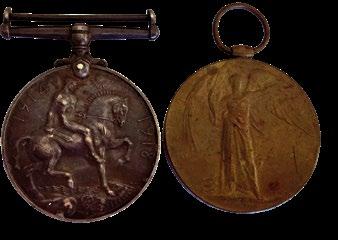
REUNIONS
HQ1ATF ASSOCIATION REUNION
The 2026 HQ1ATF Association reunion will be held at Tiona Holiday Park from 16-20 November, remembering 60 years since the first march into Nui Dat. This fiveday event will be an important part of the Association’s contribution to the healing process, achieved through networking between members, their partners and carers. The reunion helps improve health and wellbeing and reduce social isolation.
There will be several opportunities for members and families to spend time together during the reunion, including:
• 17 November – boat cruise and lunch on Wallis Lake.
• 18 November – commemorative dinner at the Palms Pavilion at TIONA. The dinner will be preceded by a dedication service at 6pm at the Tiona Green Cathedral.
• 19 November – informal farewell dinner at the RECKY Pacific Palms Recreation Club.
For more information, contact John Verhelst via 0437212121, jeverhelst@gmail.com or hq1atf.org

What’s
Explore a wide range of events happening across Queensland. From commemorative services to outdoor activities, creative workshops and family fun days, there’s something for everyone.
CALL OUT TO ALLIED AIR FORCE VETERANS
The Australian Flying Corp and RAAF Association (Queensland Division) is seeking contact with veterans who served in the air forces of allied nations. Several important commemorations are planned, but organisers do not have the means to contact these veterans directly.
Deputy State President Phil Symonds says, “It is imperative we include allied air force veterans as they mean so much to us.”
Upcoming events:
• Sunday 29 March 2026 – Annual Australian and Allied Air Forces Memorial Service. RAAF Memorial, Queens Park, Brisbane City. 9:30am for 10am.
• Saturday 18 April 2026 – 548/549 RAF Spitfire Squadron Memorial Service. Honouring two RAF pilots killed in 1944. Tarakan House, 3 Ogg Road, Murrumba Downs.
• June 2026 – Bomber Command Memorial Service. Amberley Air Force Base.
• July 2026 – Annual visit of International Air Cadets. Tarakan House.
Veterans are encouraged to contact Phil via dstatepres@raafaqld.org.
As a veteran, you may be eligible for Dialysis at home at no cost.

For veterans living with kidney disease, dialysis no longer means hours of travel and ongoing hospital visits. With Dialysis Australia, full treatment of Haemodialysis and Peritoneal Dialysis can be delivered in the comfort of your own home with a nurse by your side. Home dialysis offers you flexible treatment times, improved quality of life, lower costs and more time for what matters.
As a DVA Gold Card holder, you’re fully covered with no out-of-pocket costs while you receive your dialysis treatment at home.
For more information call Dialysis Australia today on 1800 994 244 or visit www.dialysisaustralia.com.au

As an RSL Queensland member, you make the veteran community stronger.
Your membership helps build positive outcomes for the veteran community, keeps ANZAC Day and other commemorations going, and connects thousands of veterans and their families with support and camaraderie.
To renew your membership, contact your local Sub Branch, call 133 995 or email memberships@rslqld.org