Submissions: Editorial and photographic contributions are welcome. Please contact the Editor for guidelines. Preference will be given to electronic submissions that adhere to word limits and are accompanied by high resolution photos. Originals of all material should be retained by contributors and only copies sent to Queensland RSL News
Disclaimer: Advertisers and contributors to Queensland RSL News acknowledge that they are aware of the provisions of the Anti-Discrimination Act 1977 and the Competition and Consumer Act 2000 in relation to false and misleading advertising or statements under other unfair practices and the penalties for breach of provisions of these Acts. The publisher accepts no responsibility for such breaches. Opinions expressed by contributors are their own and not necessarily endorsed by Queensland RSL News or the publishers. All material in Queensland RSL News is copyright and may not be reproduced in whole or in part without the express permission of the publishers. All articles are general in nature. Individuals should seek expert advice before acting on any information.
Please note: This publication may contain images of deceased Aboriginal and Torres Strait Islander peoples.
16
FEEDING VETERANS’ WELLBEING
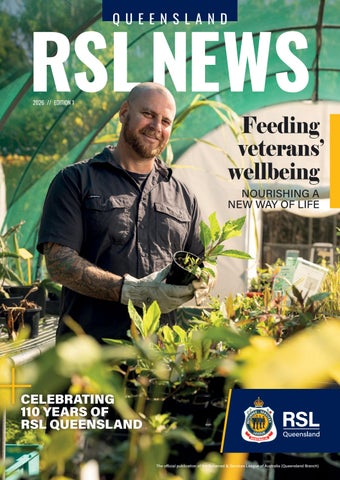
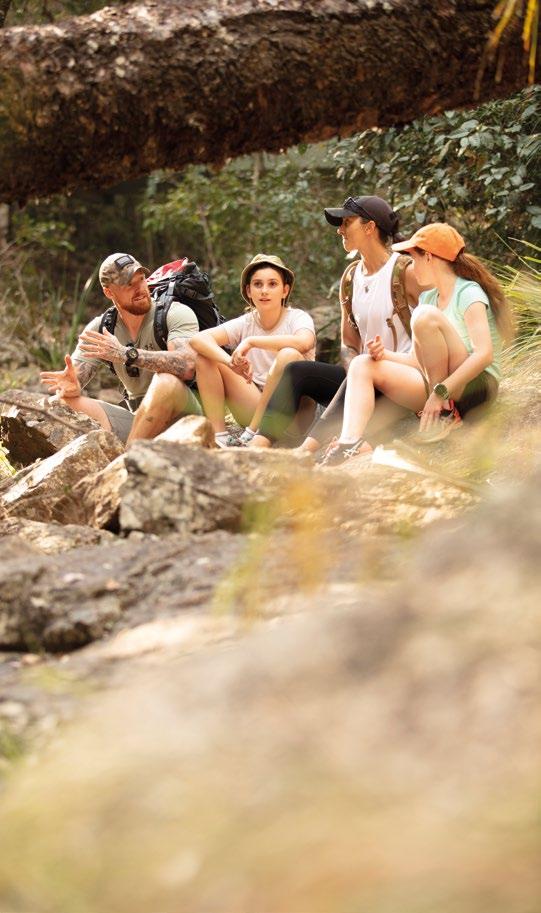
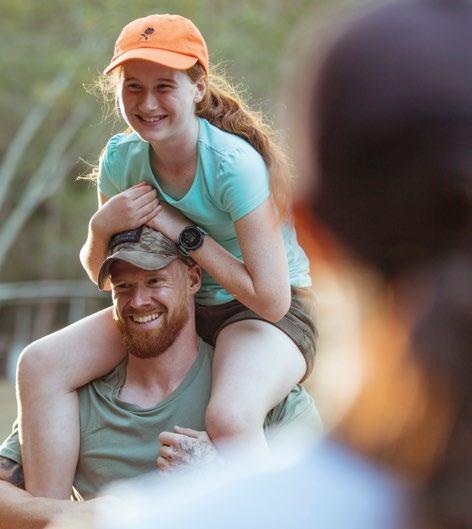
Designed and run by a veteran, Dig In Health Co’s ‘Paddock to Plate’ workshop teaches practical gardening and nutrition skills in the beautiful Sunshine Coast hinterland.
24
HONOURING THE PAST, BUILDING THE FUTURE
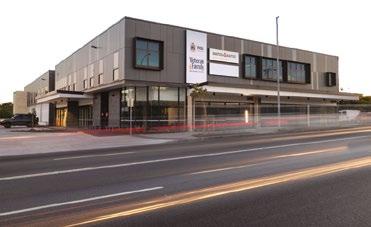
Cloncurry RSL Sub Branch’s young President is determined to make their new building a community hub.
34
BUILDING STRENGTH TOGETHER
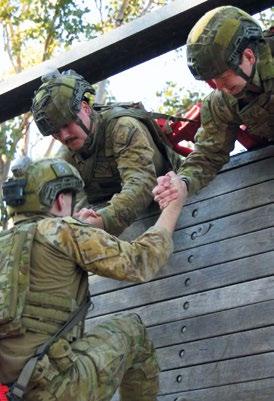
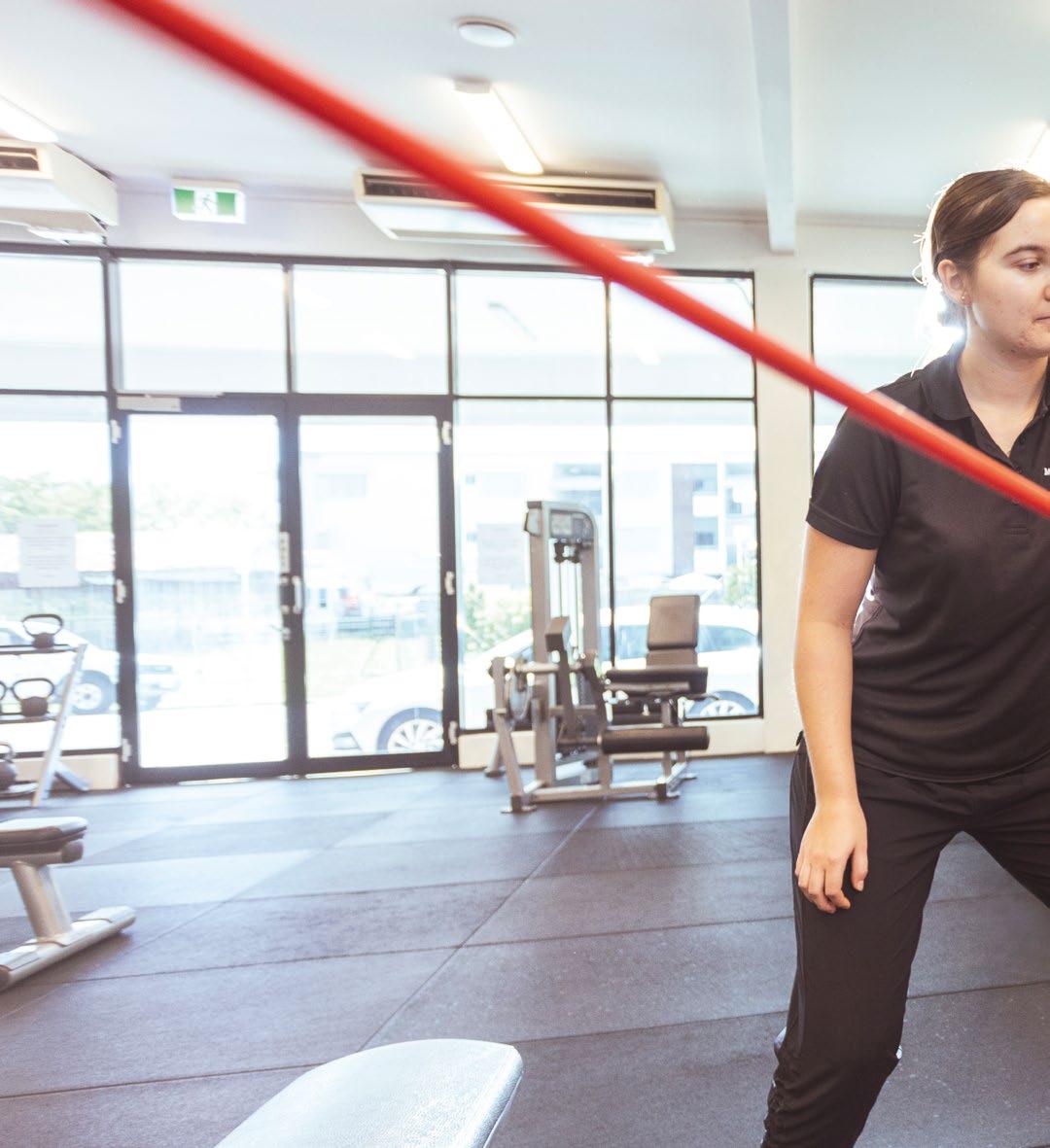
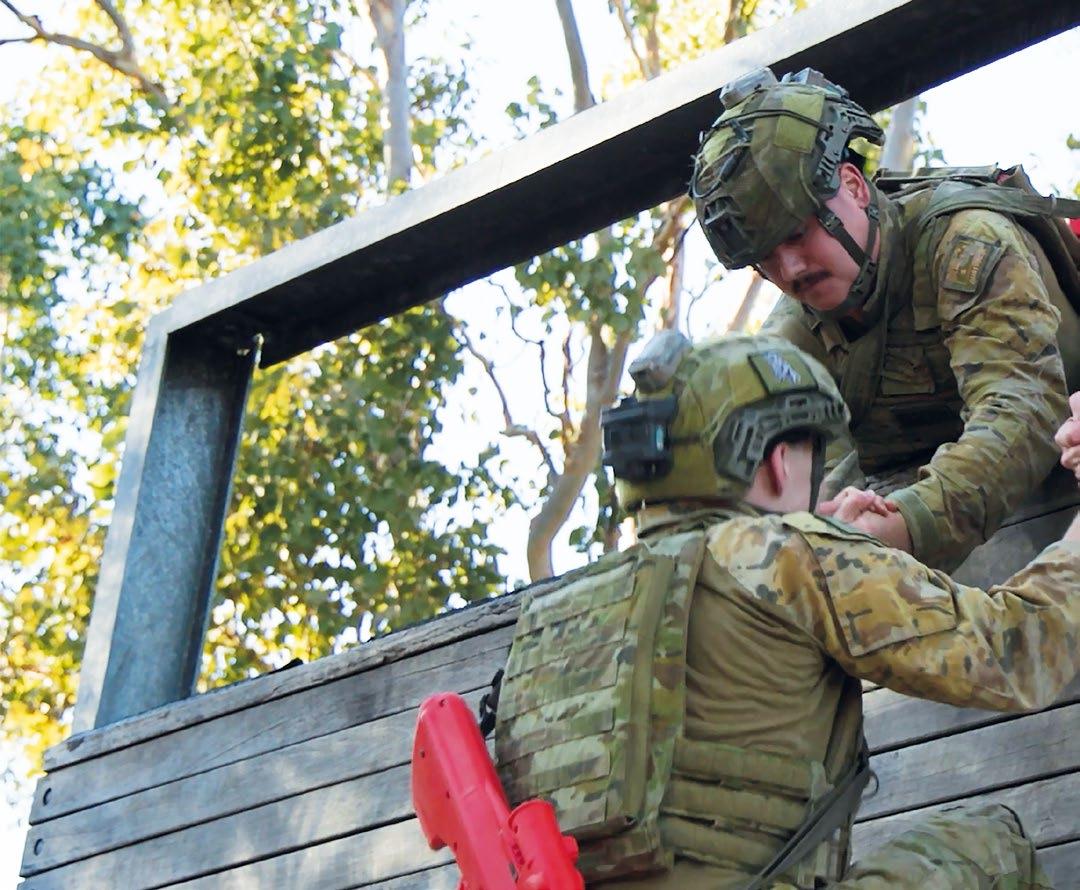
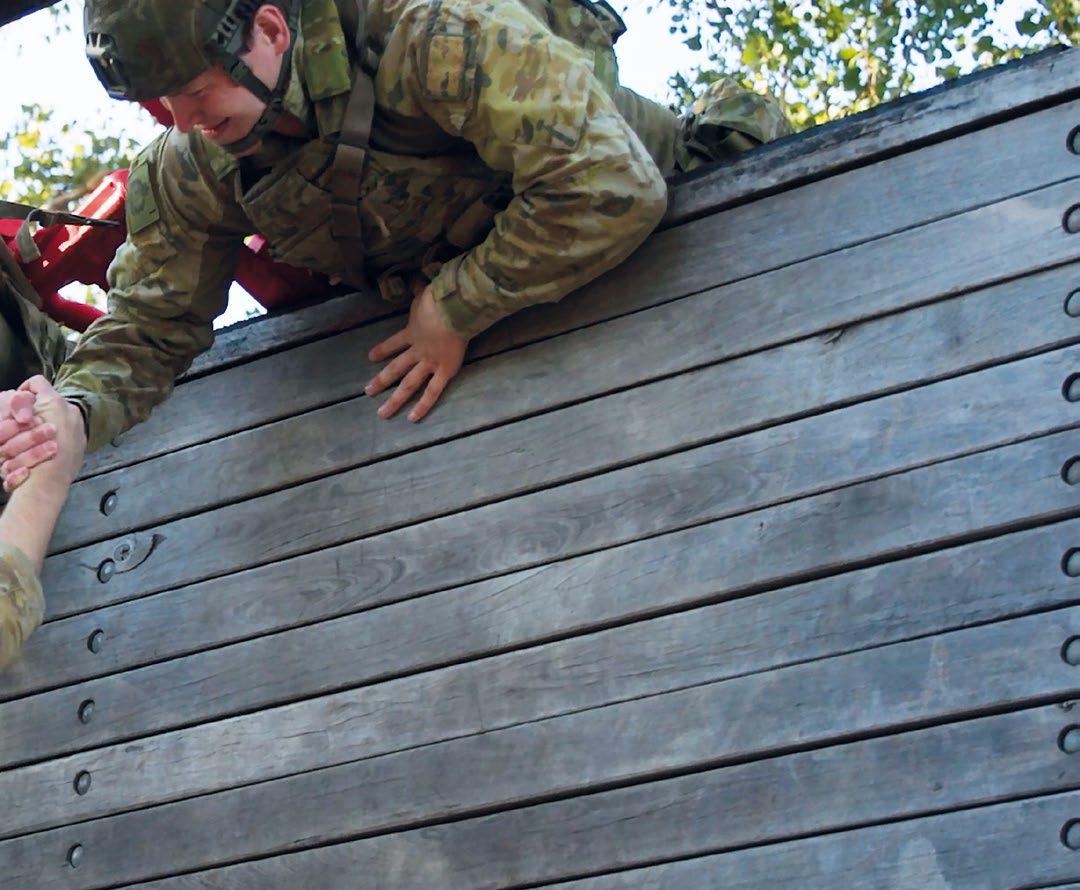
RSL Queensland’s partnership with Lavarack Barracks in Townsville helps build the physical and mental strength of our serving members.
37
75TH ANNIVERSARY OF NATIONAL SERVICE
As Australia marked the 75th anniversary of National Service on 14 February 2026, veteran and Hervey Bay RSL Sub Branch member David Crickmore reflected on his call to duty.
42
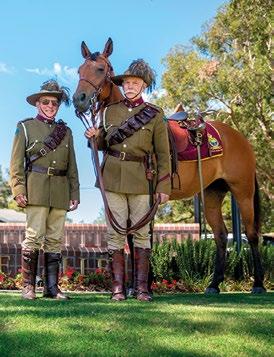
110 YEARS OF CARE, COMMEMORATION AND CAMARADERIE
This year we celebrate a significant milestone: 110 years of RSL Queensland.
71
FORGED UNDER FIRE
Remembering Australia’s Allyship.
60 ADVOCACY SUPPORT FOR NAVY VETERAN
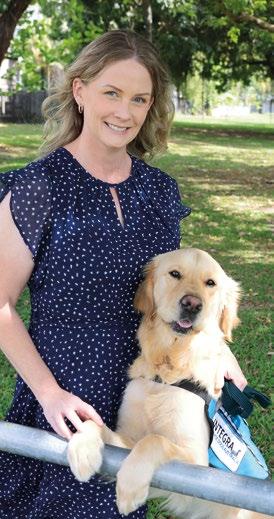
With the help of an RSL Queensland compensation advocate, Navy veteran Rebecca Connolly received the compensation she needed and took back control of her life.
68
FINDING PURPOSE AND A CAREER
Veteran partner Wade Rix found his new calling through the RSL Employment Program.
74 A SCOTTISH SPECTACULAR
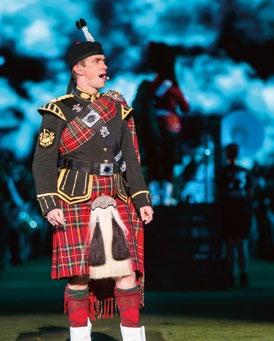
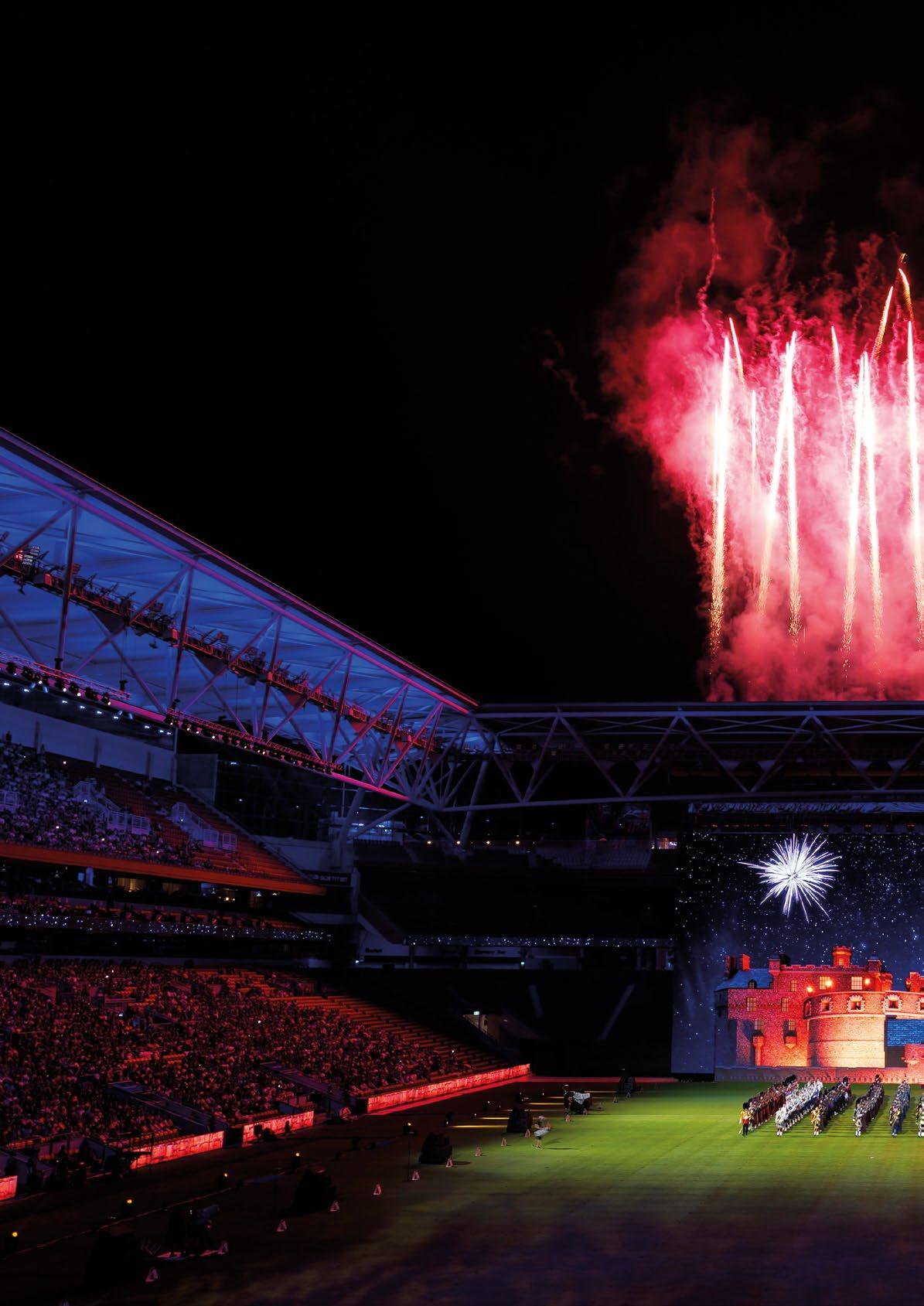
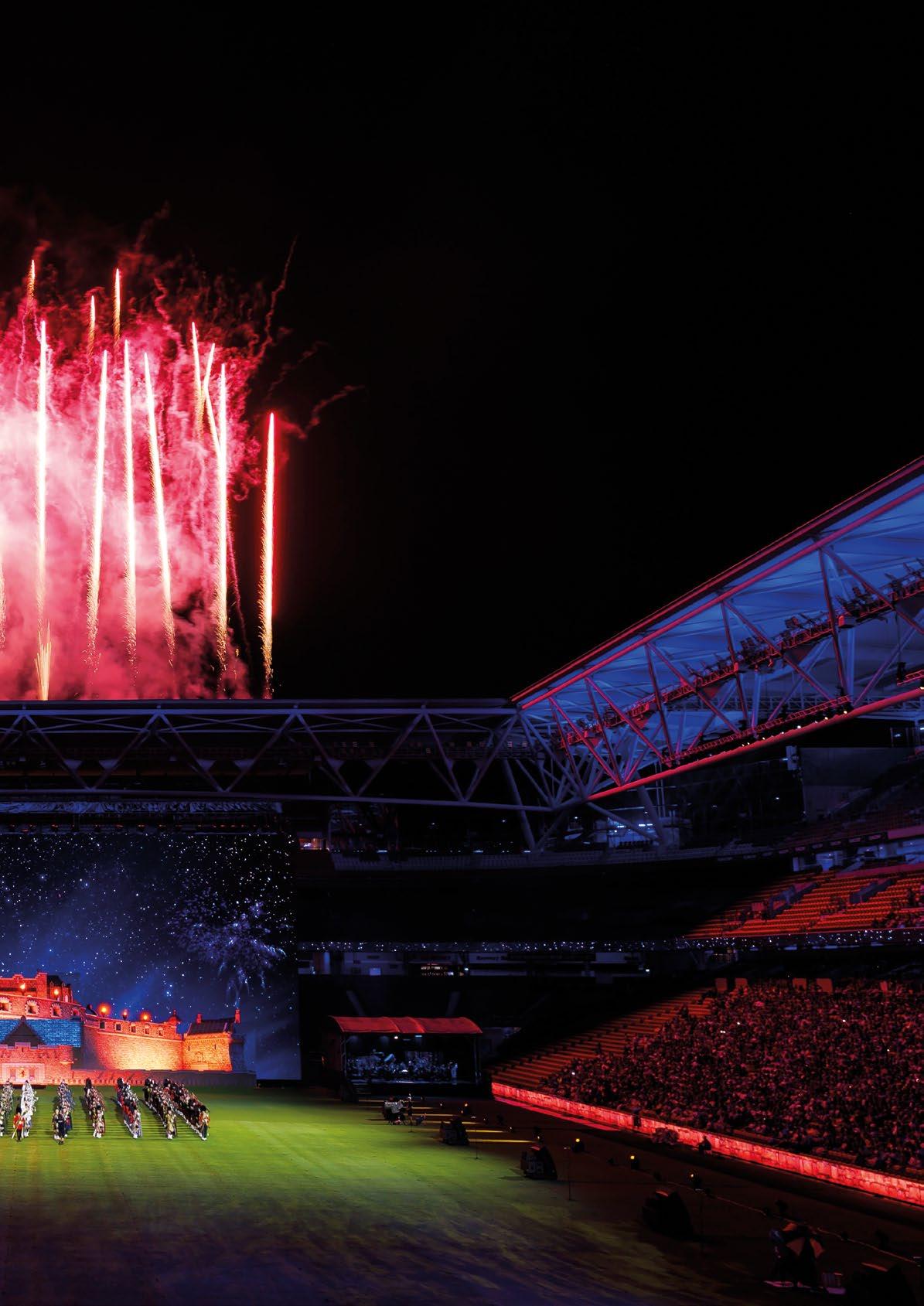
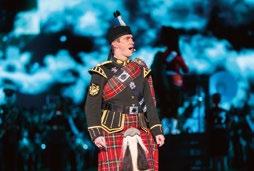
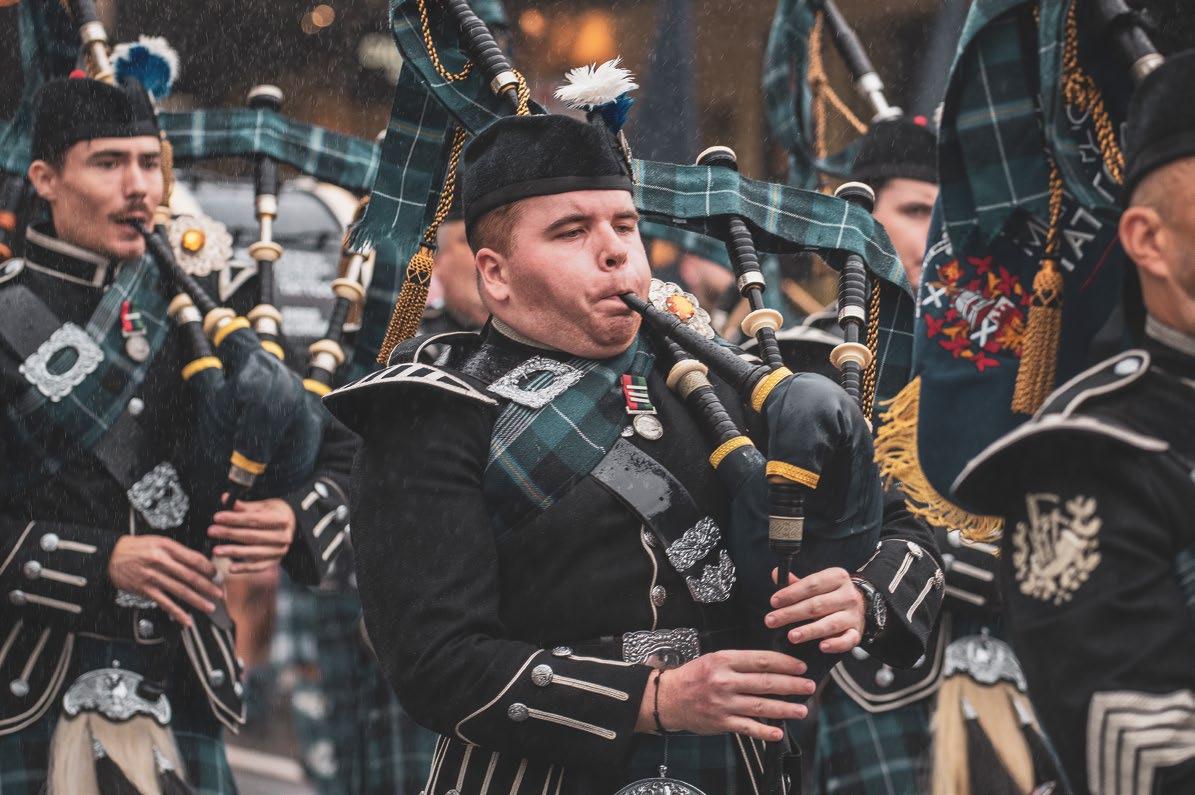
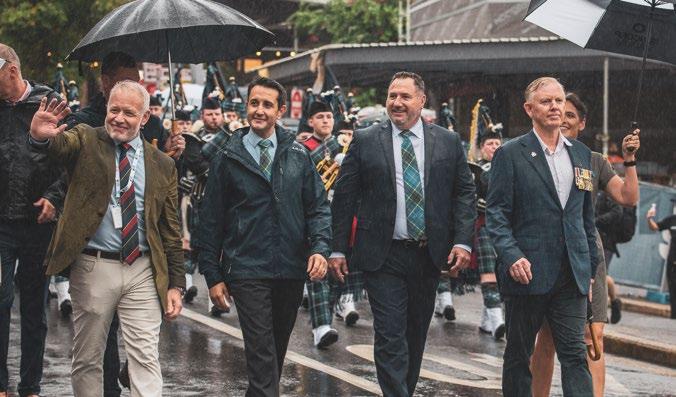
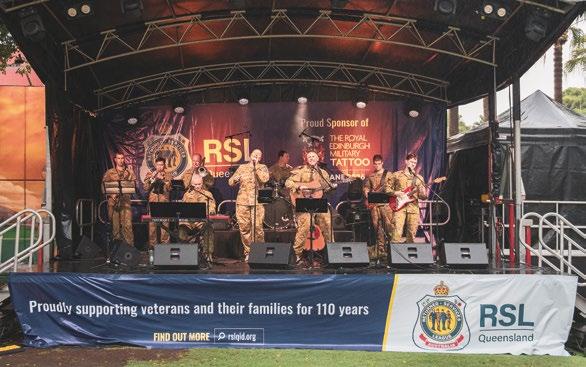
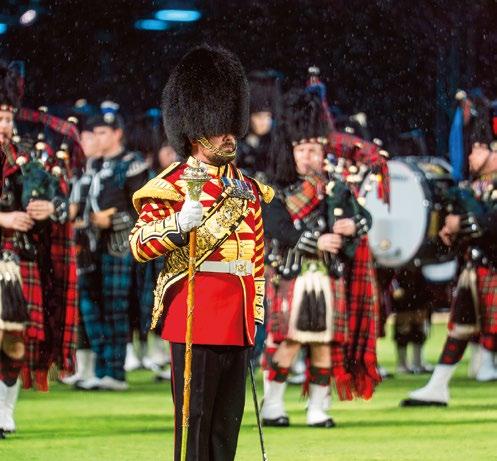
Supported by RSL Queensland, The Royal Edinburgh Military Tattoo marched into Brisbane for the first time ever.
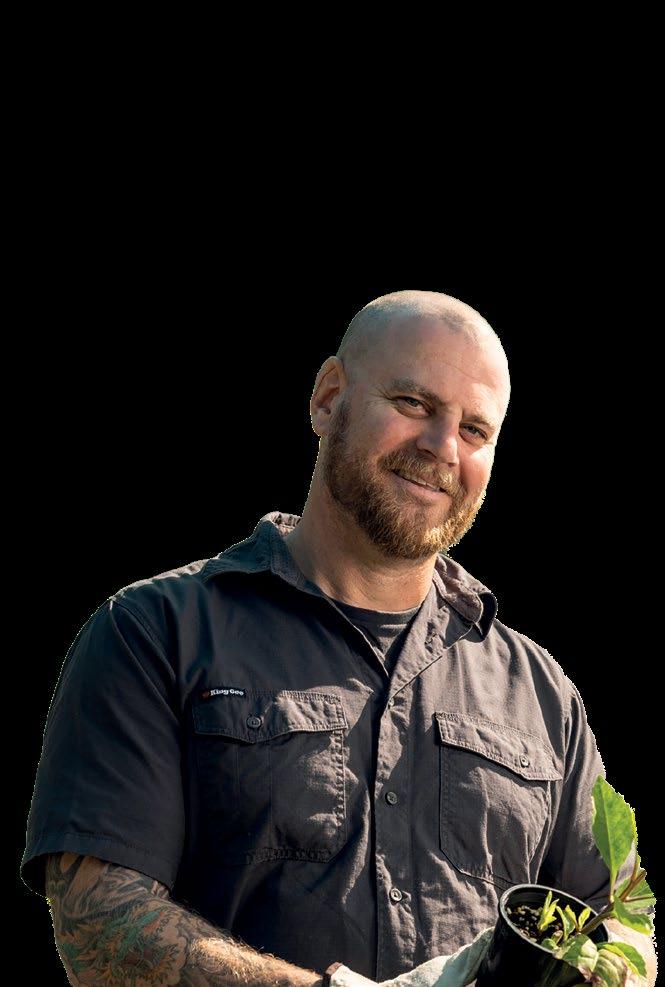
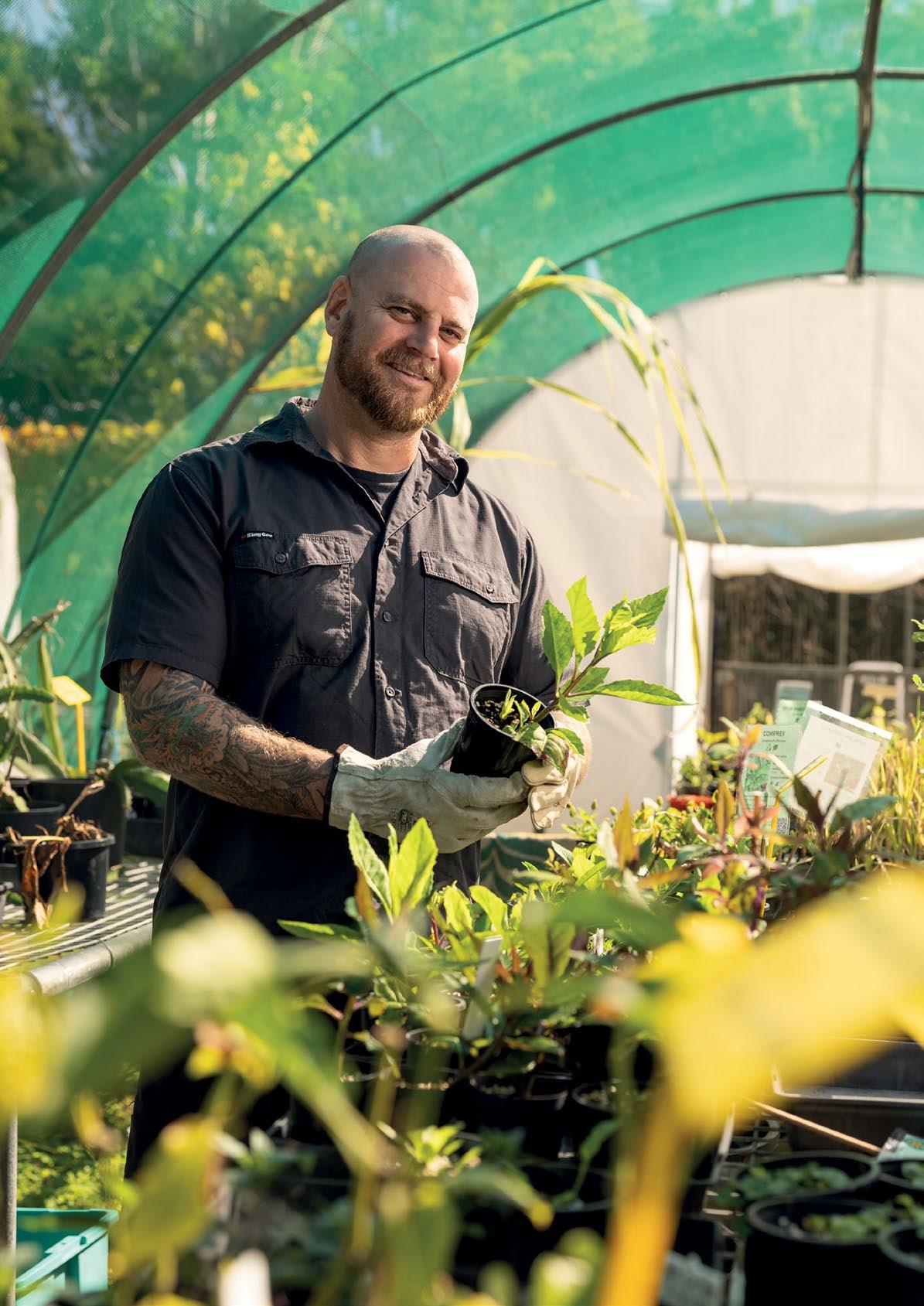
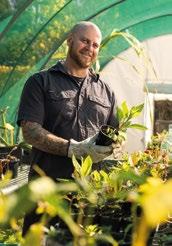
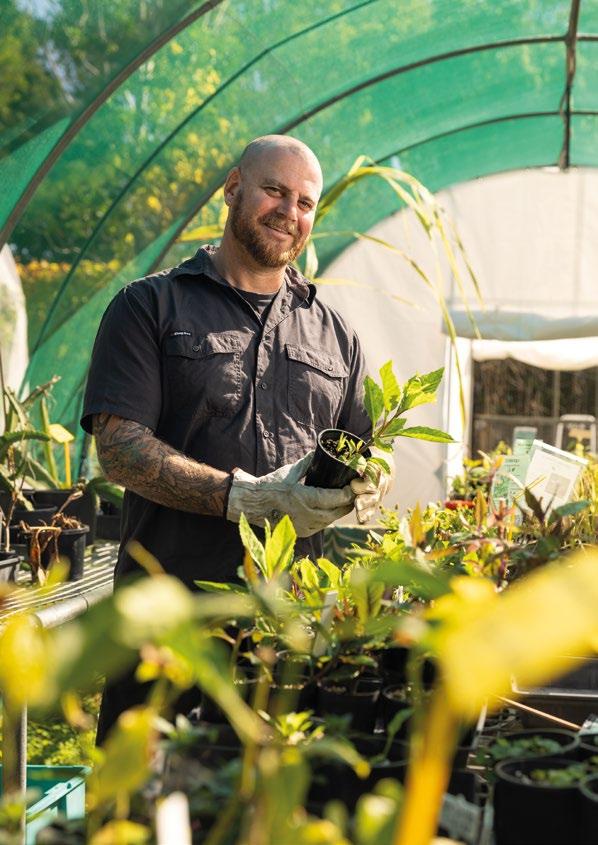
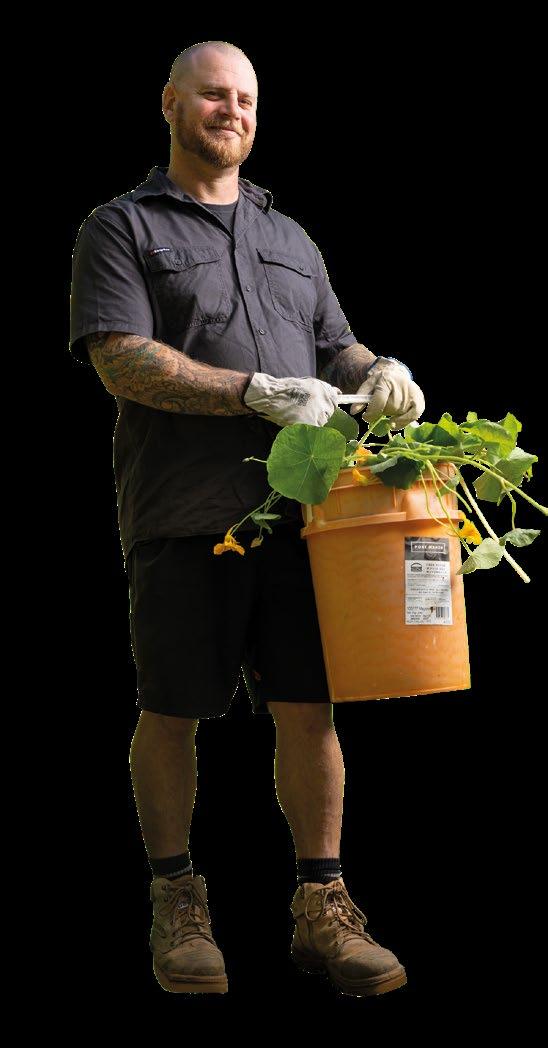
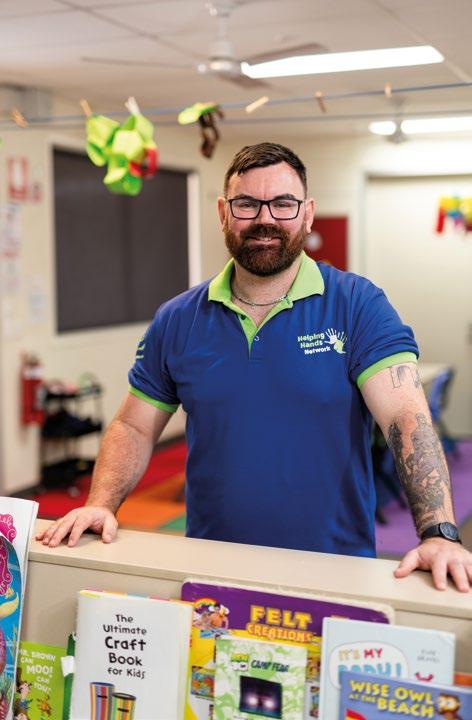
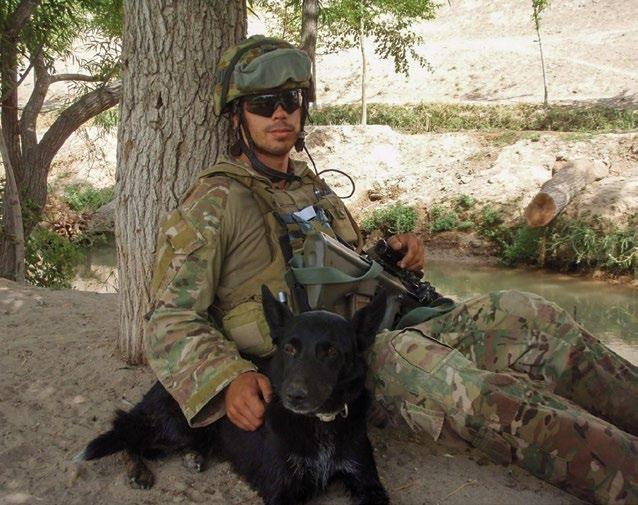
Army veteran Mat Stanbury completed Dig In Health Co’s Paddock to Plate workshop.
Key outcomes for 2026
Members, happy new year to you. As we begin a new year, I owe you my thoughts on what I intend to achieve on your behalf for the year ahead.
There are five measures that will constitute success for me at the end of 2026.
One, our leadership culture and organisational tone are consistent with our noble purpose.
We need all of our leaders to be role models in this regard and to regularly ask ourselves, ‘am I focusing on what is right or am I focused on who is right?’
Two years ago, we reinstated the position of State Secretary. I am particularly pleased with the work Iain Carty CSM has been doing, in partnership with the District Presidents, since his appointment.
By the end of the year, we will publish an amended set of By-Laws, updated to support our goal of having a culture consistent with our purpose.
Two, we have implemented the decisions from the review into our veteran services program.
Last year, we commenced a review of our Veteran Services department. While the review is not yet complete, it became clear that our organisational structure was not fit for purpose, and it was changed.
This year, the task is to complete the review and implement change, as necessary, to the services we deliver.
Our priority will be on programs that support veterans
with the challenges of transition: employment, education, and rehabilitation and reconnection via Mates4Mates.
Three, we have influenced the public narrative about veterans.
There is widespread community pride in veterans and respect for what they do on behalf of the country.
However, there is also a misconceived view that service damages all veterans. This perception influences how veterans feel about themselves and can make it harder to get a job. We will continue our longterm campaign to promote a more accurate narrative.
Four, we have a plan to build commercial income for future generations of veterans and their families.
We have inherited a healthy commercial business and have an obligation to ensure it remains strong for those who come after us.
We will examine the possibility of establishing a future fund to provide meaningful income diversification for RSL Queensland. While there is no certainty this can be achieved without impacting today’s operations, the Board believes the idea warrants close examination and a clear decision.
Five, we have positively contributed to building a more effective national RSL.
The new RSL National President has indicated the National
office will focus on government advocacy and alignment across the League. I welcome this focus, particularly on advocacy.
We will support RSL National as they develop a strategy and strengthen their capacity in these areas. One outcome we seek is a unified RSL voice, developed through an agreed process with the State Branches.
For some years, individual State Branches have felt it necessary to communicate their own views to the Federal Government and media.
While this can make sense in specific moments, over time it has created the impression that the League is divided or disorganised. Both have been true.
I look forward to the year ahead and continuing this work with you, guided by these five measures.
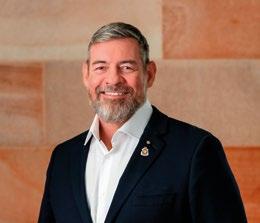
Stephen Day
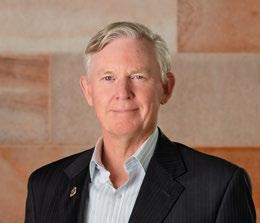
RSL Queensland State President Major General Stephen Day DSC AM
Reflecting, honouring and continuing our mission
Happy new year to the growing membership of RSL Queensland. I hope you and your families are well and had a chance to spend time together over the Christmas period.
At the start of last year I wrote, ‘You blink and 2024 is complete’. It’s fair to say 2025 felt much the same. I want to reflect on what we achieved last year and what 2026 will bring. We closed the year with our Christmas hamper initiative, delivering 600 hampers to veterans and families across Queensland, Tasmania and the Northern Territory. Thank you for your work in getting them to their final locations and sharing stories of our recipients. Many were deeply moved by this project.
In 2025, we continued to demonstrate through action what the RSL in Queensland is all about. I’m pleased to say that our membership surpassed 35,000 members in 2025. People are joining for a range of reasons, but primarily for the camaraderie demonstrated at Sub Branches in every corner of the state.
I will provide a more in-depth update on our Defence relationships later this year as key advancements are finalised. I am buoyed by the fact that current serving members are becoming increasingly aware of the role the RSL can play in their lives.
Building upon
2025
What is evident is that we are now better positioned to work more collaboratively with the veteran support ecosystem of ex-service organisations, government, and community partners. We are actively engaging with government departments in relation to the establishment of capabilities, such as the new Agency for Veteran and Family Wellbeing, which will be established by 1 July 2026.
This agency will work across the Department of Veterans’ Affairs and non-government organisations. The capability that RSL Queensland delivers, coupled with our governance framework, places us in a strong position to partner with this agency.
The structural changes that we made to our Veteran Services department, including the integration of Mates4Mates into the service delivery model, are clarifying how we assist veterans and their families. This will be supported by closer coordination of our support to Districts and Sub Branches and the direct service delivery model.
Whether veterans and their families are seeking care, commemoration or camaraderie, it’s important that there is no wrong door to being a part of the RSL. The fragmentation of the sector was clearly called out in the findings of the Royal
Commission into Defence and Veteran Suicide, and leveraging Queensland’s federated structure while communicating collectively is key to improving this. Stronger engagement and alignment nationally will complement these endeavours. Our commercial operations are seeing early benefits from reinvestment, and improvements to the Dream Home Art Union will help maintain and grow our market position. The development of alternative revenue streams remains a focus to ensure long-term financial sustainability.
I look forward to steady progress in 2026 and using the time to unlock previous investments and implement current investments. Our core aim will be to solidify the RSL here in Queensland.
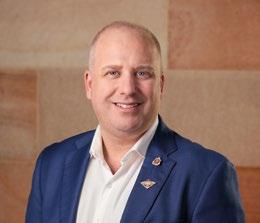
RSL Queensland Chief Executive Officer Robert Skoda
Robert Skoda
Setting the tone for 2026
I trust that all our members, veterans, and their families had a restful and peaceful end to 2025 and start to 2026. For our members affected by extreme weather events, I sincerely hope you avoided the worst of it and are recovering well in your respective communities.
My priorities for the year ahead
Throughout 2026, my focus will remain on promoting a positive League culture and behaviour, and fostering an environment where all members, veterans, and their families can feel welcome, safe and secure, and find the support and services they need.
The By-Law review continues, with a strong focus on our members, their expectations, and how they can contribute to how we do things.
Remember to be a good human, treat each other with dignity and respect, listen without judgement, resolve matters at the lowest level, and ask how your actions and decisions at any level will positively impact veterans and their families.
We continue to deliver on our promise to support veterans and their families to live with dignity and respect.
The importance of AGMs
From early January to late May, and culminating in our
State Congress in June 2026, all levels of our League will conduct their Annual General Meetings (AGMs). AGMs are an opportunity to formally show members how we have been doing things.
The AGM is an essential part of both our governance and democratic processes. It’s very important that we are mindful of our Constitution(s), By-Laws and meeting processes, to ensure we conduct a respectful and productive meeting and enable the democratic process to elect people into key positions as required.
Part of that process is ensuring we provide timely notification of meetings, agendas and reports to all members and follow our agreed process for nominations, elections and voting. If the organisation is governing well and our members are involved and engaged, the AGM is simply a full stop to the previous financial year and we move forward.
Connecting with members
I look forward to taking the opportunity to visit as many Sub Branches as possible in 2026, both for District AGMs and in the second half of the year. I remain committed to taking the time to meet our members, better understand some of your challenges,
celebrate your success and discuss opportunities.
While I may not be able to resolve all your concerns, I am prepared to listen and work with you (and the District) to find a way forward.
Every member and veteran matters. While we may see the world slightly differently, if we take the time to have a rational conversation, share our views respectfully and work towards a common goal, we will continue to deliver on our purpose and promise to our League, veterans and their families, and the wider community.
Iain Carty
RSL Queensland State Secretary Iain Carty CSM
OUR IMPACT 2025 at a glance
Care
7,563
veterans and their families supported by our services to improve their health and wellbeing
7,112 enquiries handled, referring veterans and their families to services that suit their needs
4,670
individuals welcomed and supported across our Veteran & Family Wellbeing Centres in Brisbane, Cairns, Darwin, Ipswich, the Sunshine Coast and Townsville
2,240
veterans and their families signed up to our online learning programs to improve their health and wellbeing
4,200
physical rehabilitation sessions provided to Mates4Mates clients to improve injury recovery and wellbeing
267
jobs secured for veterans and their partners in meaningful employment
5,293 claims and appeals submitted to the Department of Veterans’ Affairs (DVA)
227
veterans and families housed in safe, permanent accommodation they can call home
600
Christmas hampers delivered to veterans and their families across Queensland, the Northern Territory and Tasmania
5,904
mental health appointments provided to Mates4Mates clients to improve their quality of life
RSL Queensland is here to support veterans and their families every step of the way by providing care, commemoration and camaraderie. In 2025, we delivered a range of impactful services and programs, marked commemorative events and fostered strong member networks that provided practical support in real and meaningful ways.
They've provided me with services that I didn't even realise I needed. It really helped me get started on the right career path and secure a role that I take great satisfaction in."
It’s knowing how the claim impacts the veteran’s life as a whole, gives them recognition for their service and has flowon effects for their whole family, bettering their lives too."
RSL QUEENSLAND COMPENSATION ADVOCATE
VETERAN
The veteran experience is unique and there’s often unsaid understandings between those who have served. So, being able to connect with like-minded people helps us navigate post-service life."
VETERAN
For me, ANZAC Day means remembering past conflicts and showing respect and gratitude to those who didn’t make it home, but also connecting with those still with us, as we all share a common interest and camaraderie."
VETERAN
Commemoration Camaraderie
12
commemorative days marked to honour veterans, including ANZAC Day and Remembrance Day
1,114
Sub Branch commemorative services and events listed on the RSL Queensland website to connect communities
24,000
students involved in the Postcards of Honour initiative, facilitated by Sub Branches across 228 schools
21,660
students involved in the Draw to Remember initiative, facilitated by Sub Branches across 214 schools
$1.3m in commemorative merchandise sales reimbursed, supporting Sub Branch fundraising for local veteran initiatives
32,040
District volunteer hours contributed to support local veterans and their families
830
veterans and family members participated in RSL Peer-Led Programs to strengthen wellbeing through shared experience
378 people participated in 15 RSL Rec Connect events to boost connection through fun activities
$1m
in grants allocated to Sub Branches for capital works projects
35,512
members connected across RSL Queensland Sub Branches
A tradition of solemnity and dignity
I was drawn to the article ‘10 moments to illustrate 100 years’ in Queensland RSL News Edition 4 2025. In particular, the mention of a 1965 article by then State President Sir Raymond Huish CBE on ‘The Spiritual Depth of Anzac’.
Writing as a World War I veteran, Huish praised the traditions of his comrades, including “compassion for the weak”. This reminded me of several other 1914-19 veterans from my Buderim district who gave, after the war, their reasons for serving. Generally, those reasons were: restore the peace, protect our liberty and build a fairer society.
Modern veterans would rarely speak of “compassion for the weak”. Rather, they might speak of “compassion for the innocent victims (of war)”, such as today’s citizens of Ukraine. Different words but the sentiment is similar – a determination, from battle experience, that the price of war ought not be borne by our most vulnerable citizens.
Your article also included an extract from the 1925 Edition of The Queensland Digger about the future observance of ANZAC Day: “It is hoped that... the observance will never lose that solemnity and devout character”.
Today’s veterans would likely endorse that hope. ANZAC Day marches now, particularly in rural areas, are serious, thoughtful and supported by the community in large numbers. The long tradition of solemnity and dignity is being maintained. Amen to that.
Greg Ivey Maroochydore RSL Sub Branch
Landmark new policy set to help veterans thrive post-service
RSL Queensland has welcomed the Queensland Government’s new procurement policy that backs businesses that are owned by or support veterans, calling it a pivotal policy move.
RSL Queensland State President Major General Stephen Day DSC AM says the new policy launched by the Crisafulli Government will help veteran entrepreneurship flourish.
“When we back veteran entrepreneurs and businesses that support the veteran community, we’re not only supporting their transition into civilian life – we’re unlocking a pipeline of highperformers that strengthen industries right across the state,” MAJGEN Day says.
“Many veterans live a life of service, with a high proportion of the veteran community bringing the same sense of duty and purpose to their local communities. Whether they’re building businesses or volunteering, their experience and contribution remain invaluable.”
Queensland is home to the largest population of veterans in Australia – almost 30% – with more than 163,000 veterans and current serving ADF members living in the state.
A decade of collaboration and connection in the ESO sector
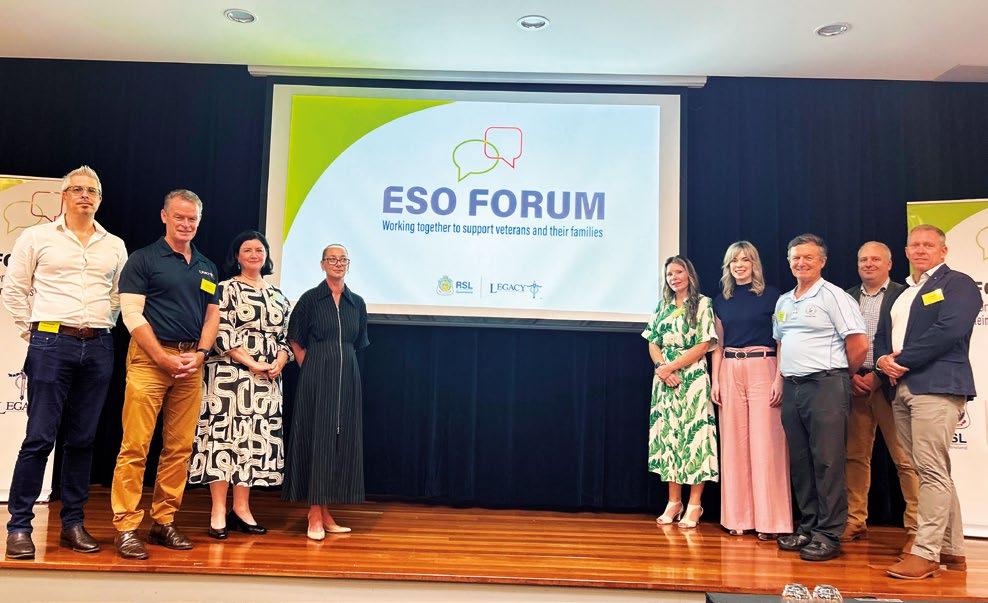
More than 50 ex-service organisations from across Queensland gathered in Brisbane on 17 November 2025 for the bi-annual RSL Queensland and Legacy Brisbane ESO Forum, with more than 100 attendees focused on strengthening collaboration to better support veterans and their families.
The Forum brought together government, community, Defence and veteran support organisations to share updates and explore ways
to reduce barriers and improve coordination across the sector. Key insights included confirmation from Veterans Queensland that consultation for the Queensland Veterans and Veterans’ Families Strategy has concluded, with more than 1,000 survey responses informing five priority focus areas. The Strategy is expected to launch by mid-2026.
The Department of Veterans’ Affairs outlined initiatives to simplify system navigation
Correction to Last Post
and improve mental health literacy, while the Veteran Family Advocate Commissioner highlighted the importance of better support for families at risk of slipping through the cracks. RSL Queensland CEO Robert Skoda said the Forum reinforced the value of consistent engagement to strengthen veteran support networks.
The next RSL Queensland and Legacy Brisbane ESO Forum is set to be held in May 2026.
Our sincere apologies for an error in the Last Post in Edition 4 2025. The following member was accidentally included, and we can confirm that he is alive and well: Ian Brown (service number 1202243, Bribie Island RSL Sub Branch). This was due to incorrect information we received, and we are sorry for any distress this caused.
ABOVE: Pictured at the ESO Forum were, from left, Dr Andrew Khoo, Medical Director, Military and Veterans Programs – Ramsay Clinic New Farm; Brendan Cox, CEO – Legacy Brisbane; Megan Read, Executive Director – Veterans Queensland; Tara Hatzismalis, Deputy Commissioner QLD – Department of Veterans’ Affairs; Dr Nikki Jamieson, Founder – Moral Injury Australia; Annabelle Wilson, Veteran Family Advocate Commissioner – Department of Veterans’ Affairs; Padre Gary Stone, Founder – Veterans Care Association; Robert Skoda, CEO – RSL Queensland; and Daniel Bennett, Head of Government & RSL Branch Relations – RSL Queensland.
Australian Army and Royal Australian Navy mark 125 years
In 2026, the Australian Army and Royal Australian Navy both mark 125 years of service to Australia. Since 1901, they have served at home and overseas, adapting to meet the nation’s changing needs.
The anniversary is a chance to thank all who have served and continue to serve, and to recognise the strong bond between the services and the Australian community. Events will be held across the country throughout the year to honour their people, history and enduring service.
RSL Queensland members recognised
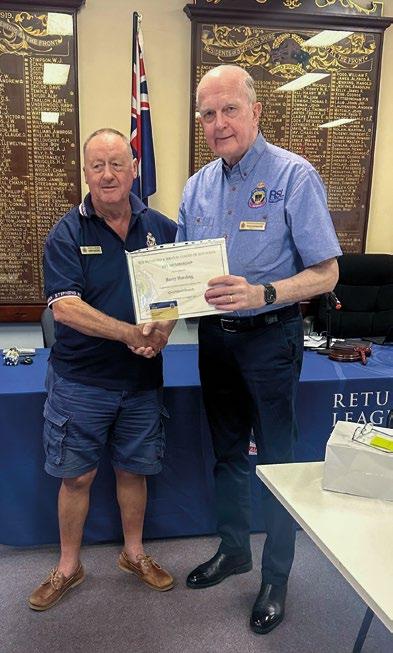
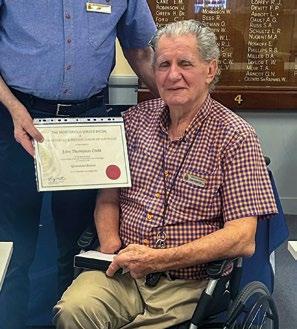
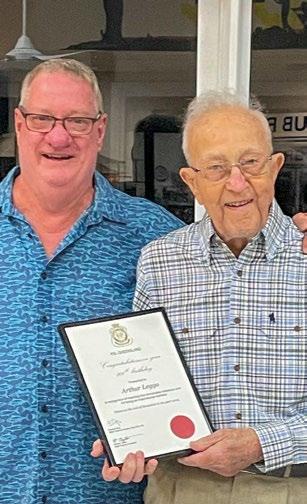
A number of veterans and RSL Queensland members have been recognised for their outstanding service to the community.
2026 Australia Day Honours List
Congratulations to the RSL Queensland members and veterans who have been named in the Australia Day 2026 Honours List.
Medal of the Order of Australia (OAM) in the General Division
• The late Mark Berkovich RFD, Crows Nest
• Charlie Cobb, Sunshine Coast
• James Elsden Danskin, Toowoomba
• John Lewis Forrest RFD, Indooroopilly
• Norman John Fry, Hodgson
• Luke Christopher Harding, Bundaberg North
• Scott Douglas Harris, Bray Park
• Barry Edward Kelly, Warwick
• Raymond George Thomas
• Milton Gregory West RFD ED
• Keith Malcolm Campbell, Kingaroy
• Kerry David Evans, Nambour
Member of the Order of Australia (AM) in the General Division
• Robert Blair, Urangan
• The Honourable Justice John Alexander Logan RFD
2026 Australia Day Achievement Medallions
This year, as part of the 2026 Australia Day
Achievement Medallion awarded by RSL Australia, 11 recipients from RSL Queensland were recognised for the exceptional work that they do within the RSL community.
Congratulations to:
• Beenleigh and District Sub Branch, Gold Coast District
• Kirsty Claassen, South Eastern District
• Freddie Fenton, Gold Coast District
• Peter Hayton, Far Northern District
• Innisfail Executive Board Committee, Far Northern District
• Gordon Nielson, Western District
• Arthur Lee Regnart, Brisbane North District
• Helena Smith, Sunshine Coast and Regional District
• Martin Tanzer, North Queensland District
• Brian Tidyman, Wide Bay and Burnett District
• Toogoolawah Sub Branch Executive, Moreton District
in Disaster
Feeding veterans’ wellbeing
For Army veteran Mat, this free workshop planted the seed for new skills, new friendships, a new business and a nourishing new way of life.
Belinda Crossman
IFArmy veteran Mat Stanbury can eat it, he’s doing his best to grow it.
After completing Dig In Health Co’s Paddock to Plate workshop, he’s filled his yard with edible crops to feed himself and his family.
“I’ve got fruit trees, herbs, vegetables. If I had enough room, I’d try and grow everything,” he says.
“I’ve got passionfruit growing up the fence, I’ve got chokos growing up the fence. I’ve used all of the vertical space that I can.
“I’m trying to convince the wife to get some chickens, but that’s a work in progress at the moment!”
According to Mat, store-bought produce just doesn’t compare to homegrown.
“Once you’ve tasted how much flavour organic homegrown stuff has, you’re not real happy with stuff you buy from the supermarket. You become a bit of a food snob,” he laughs.
From service to seedlings
Over his 11-year Army career, Mat deployed to the Solomon Islands and served in both the Ordnance and the Aviation Corps, “working on helicopters,
Chinooks, Black Hawks, Tigers, stuff like that”.
“It was a pretty cool job,” he shares.
“I had plans of staying in for the rest of my working life, but it wasn’t to be.
“I accumulated injuries as the years went on and was medically discharged, so I sort of found myself thinking, ‘What now?’.”
It was a few years later, during the COVID-19 pandemic lockdowns, that Mat discovered his new passion.
“I started planting things at home, then started doing more research and found that I really enjoyed gardening,” he says.
“Getting out in the garden and getting my hands in the soil is very therapeutic. It takes my mind off everything else that’s going on.”
Digging in for health
Mat went on to volunteer at a plant nursery and later enrolled in the Paddock to Plate workshop by Dig In Health Co.
Run for veterans, by a veteran, this four-day workshop teaches the basics of permaculture and
“It was refreshing because we were outside learning about things. We could actually see the land while we were talking through where we’d put the garden beds, and there’d be chickens sort of moseying through.”
Army veteran Mat Stanbury.
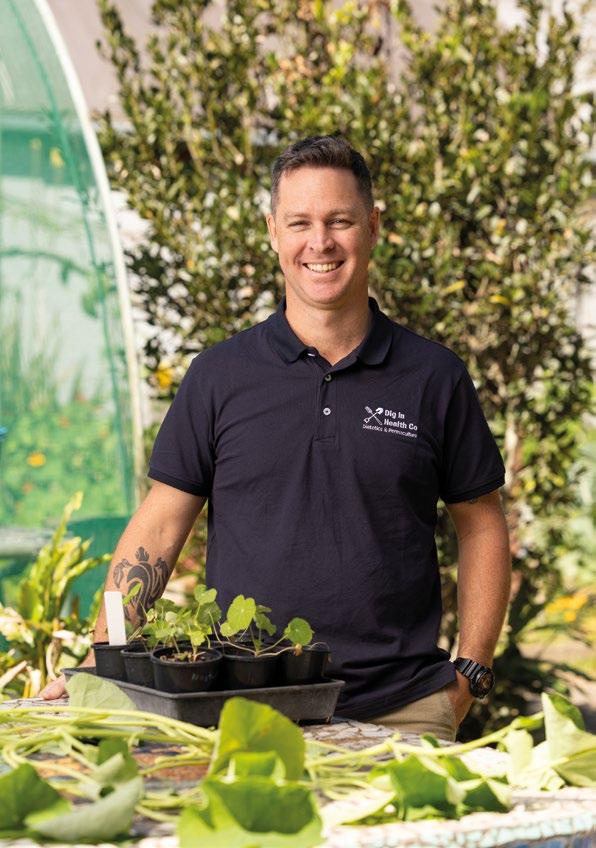
Dig In Health Co owner and director Will Gold.
clinical nutrition. It’s funded by RSL Queensland, so there’s no cost to participants.
Paddock to Plate is currently held in the Sunshine Coast hinterland, though Dig In Health Co hopes to take it on the road from 2026 to reach more veterans.
“It’s an intensive course on how to grow good quality food at home. On the final day, we cover all things nutrition, gut health and how that links to mental health,” Dig In Health Co owner and director Will Gold says.
Formerly a RAAF aircraft mechanical engineer, now an accredited dietitian and certified permaculture consultant, Will started the workshops to support veterans’ physical and mental wellbeing.
He teaches participants how to design and create sustainable growing systems at home and make healthy, informed dietary choices.
“The goal is to see people improve their intake
of wholefoods – whether it’s fruits, vegetables, wholegrains – that are good for their gut health and subsequently good for their mental health,” he explains.
“We know from research that that’s going to have a beneficial effect on preventing and correcting mental health challenges that veterans often face.”
The other main goal of Paddock to Plate, Will says, is to help veterans “succeed in their own backyard”.
“Most people kill something the first time they try to grow it, and that’s what we’re trying to overcome –to see people successfully grow something they can eat and share with their family,” he explains.
“With that success comes a sense of pride, and a sense of being able to provide.
“After the workshop, most people will report back to me with photos of their veggie gardens or designs that they’ve started making. It’s great to see.”
Lasting lessons and connections
Knowing how veterans ‘tick’ was a key factor in how Will designed and delivers the workshop.
The result is a relaxed, hands-on learning experience that attracts veterans of all ages, interests and backgrounds.
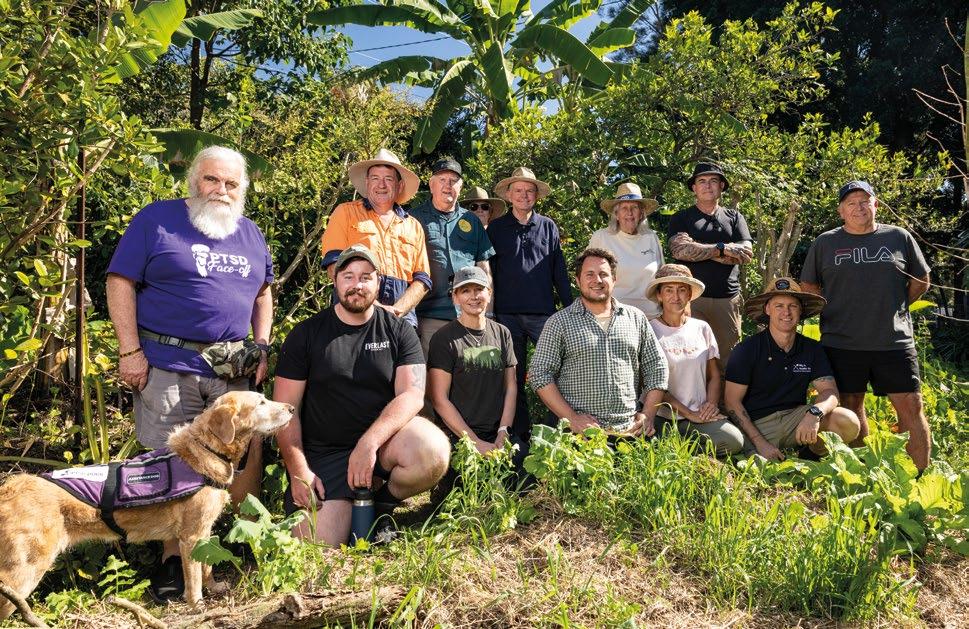
Workshop numbers are kept small – around eight to 12 – to keep the group relaxed and engaged and to bring everyone together.
“I loved it. The instruction was excellent; Will’s very easy to relate to and does a really good job of getting a whole bunch of information crammed into that four days,” Mat says.
“It was refreshing because we were outside learning about things. We could actually see the land while we were talking through where we’d put the garden beds, and there’d be chickens sort of moseying through.
“I thought I had quite a bit of gardening knowledge before, but I’d say the course boosted my knowledge from maybe three to eight out of 10.”
Paddock to Plate has “had a massive impact” on Mat’s food choices.
“The last day was nutrition-based, which I thought was an excellent way to finish because you’re learning about all these foods that you’re going to grow, and then you’re learning about what they can do for the body,” he says.
“It also started making me think a lot more about where my food was coming from: whether it was organic, whether it’d been grown with the use of chemicals, all sorts of things like that.”
However, he says the workshop’s biggest highlight has been the connections he’s made.
“I’ve made lasting friendships with Will and a couple of other people, which is great,” he shares.
“We sort of bounce ideas off each other and they’ll talk to me about their chooks and their gardens and I’ll show them what I’m up to.
“It’s good to have connections with other veterans post-service.”
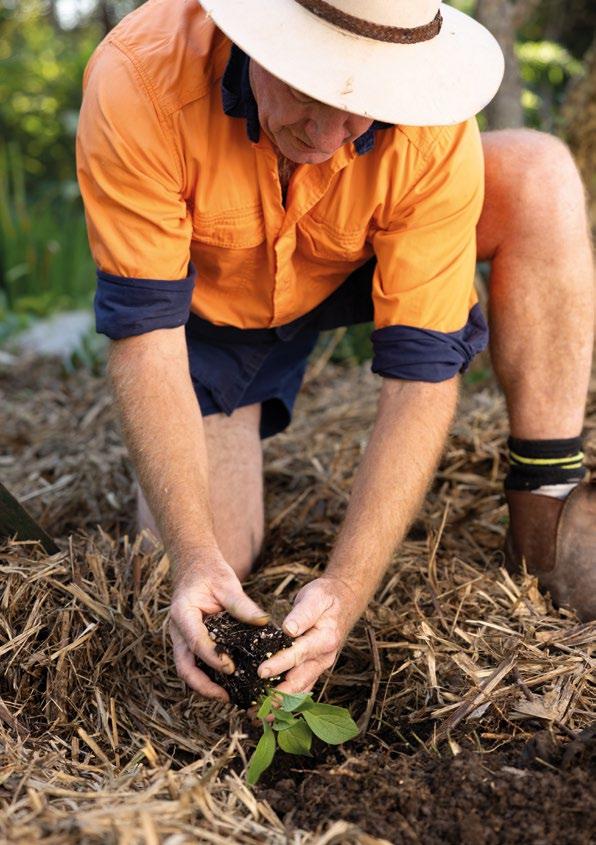
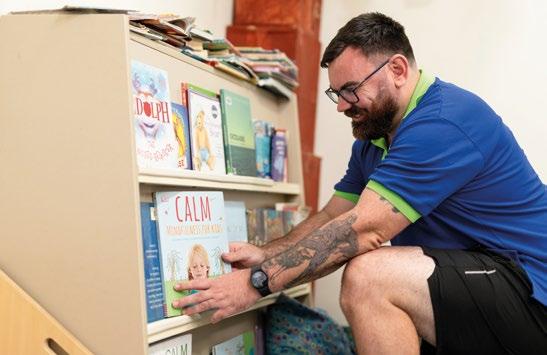
ABOVE: Army veteran Mat Stanbury, who completed Dig In Health Co’s Paddock to Plate workshop. OPPOSITE: The Paddock to Plate workshop teaches participants sustainable growing practices.
Reaping the rewards
Mat enjoyed Paddock to Plate so much that he completed a permaculture design course, building further knowledge and confidence to help his and others’ gardens thrive.
“I’ve since started my own garden maintenance business, which incorporates some permaculture principles,” he says.
“I have a lot of older veteran clients, and it gives me a lot of joy to be able to keep their gardens up to scratch when they sort of can’t anymore.”
Meanwhile, Mat’s own garden has become a rich source of food – and satisfaction.
“One of the highlights of doing Paddock to Plate is having the knowledge and confidence to be able to grow food at home for my family,” he says.
“We’re never going to be fully self-sufficient where we are, but we try and supplement as much of our diet as we can with stuff from the garden.
“And to save money, we try and grow things that are more expensive to buy and don’t take up as much space.”
Being able to grow nourishing, organic food for his family is “a really cool feeling”.
“We’ve got an eight-month-old baby who’s just started on solids. I was able to get him a whole bunch of stuff from our garden and I know how it’s been grown, I know it hasn’t been sprayed with chemicals and I know what he’s consuming,” he says.
“That feeling for me alone was awesome, because he was scoffing it.”
To any veteran with an interest in gardening, Mat says Paddock to Plate is “definitely worthwhile doing”.
“Even if you’ve got a hell of a lot of knowledge, I guarantee that you’d learn something because it covers so many different topics,” he says.
“Even if you don’t have an interest in gardening, I think you can benefit from this course. You can dip your toe in for a few days and see whether you like it.
“It’s had an awesome impact on my life.”
Dig In Health Co’s Paddock to Plate workshop is open to current and ex-serving Defence members. It’s one of many free RSL Peer-Led Programs available. Learn more, including future workshop dates, at rslqld.org/find-help/dig-in-health.
Scan to watch Video
25 APRIL ANZAC Day
So no one stands alone
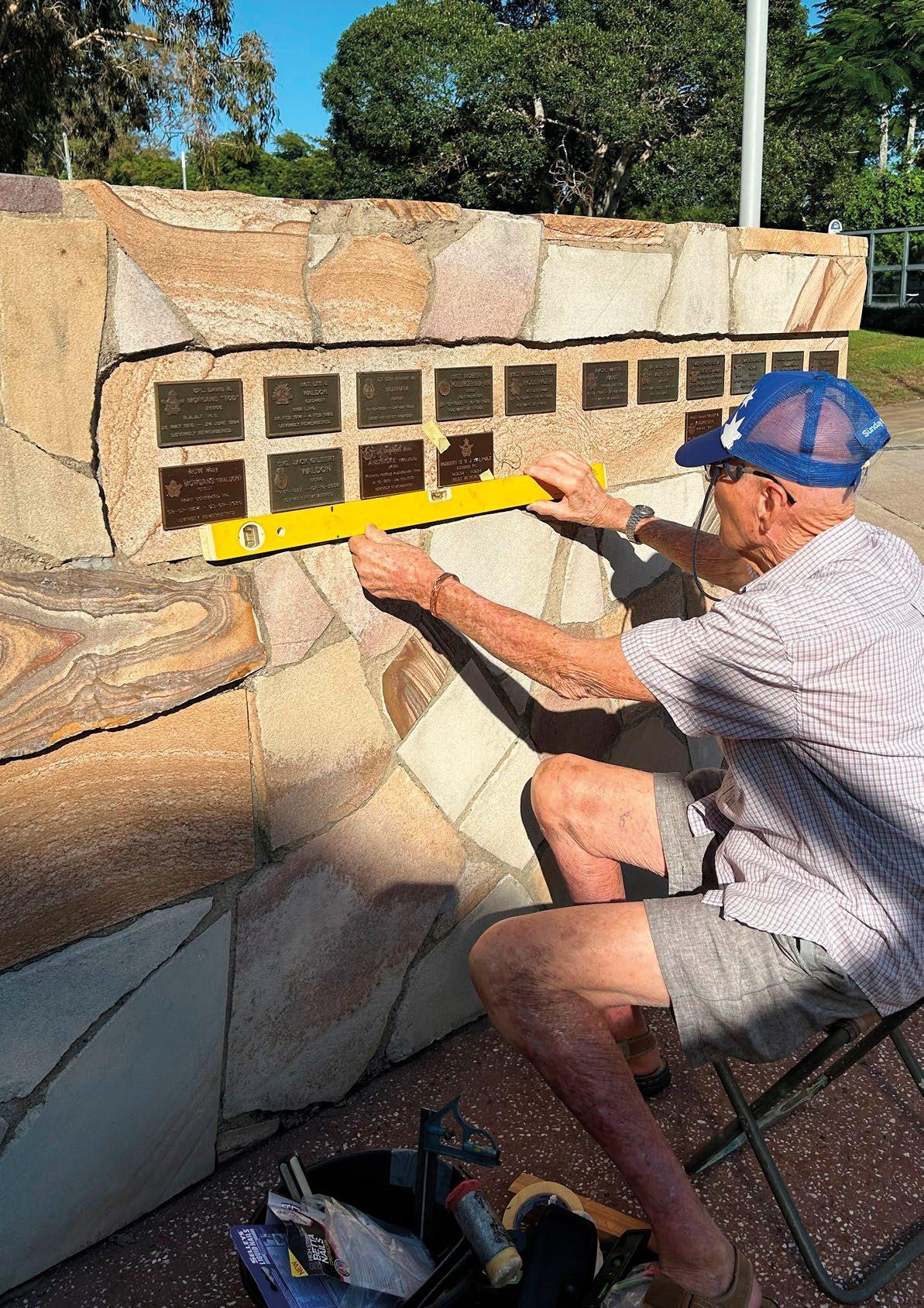
Thanks to veteran Arnold ‘Dickie’ Bird, every late veteran of Beachmere has a permanent memorial in their name. His tireless work has inspired a poem – and helped a community to commemorate.
VETERAN
Arnold ‘Dickie’ Bird, 89, is determined to keep the memory of local veterans alive forever.
For most of the past three decades, Dickie proudly maintained the old and new Beachmere Remembrance Memorial, only recently passing the reins to another volunteer.
The task is no small feat. As well as keeping the grounds tidy, it involves liaising with families and committees, obtaining approvals, researching records, mounting brass plaques, and arranging dedication events.
“It’s really an honour,” the Beachmere RSL Sub Branch Life Member says.
“These people fought for their country, and the majority of them served in war or war-like conditions.
“The memorial is keeping their memory alive. Their family can come and look at the wall, place a poppy there and just remember what their loved one did. To me, it’s a great privilege to have done that.”
Located in north Brisbane, the Beachmere Remembrance Memorial was first built in 1996 then rebuilt in its current location in 2008. Today, it features a central cross and obelisk (a replica from the original site) surrounded by stone walls – one each for the Army, Navy and Air Force.
Largely thanks to Dickie, around 115 plaques on those walls bear the names of every late resident who served in the Australian or Allied forces.
Among them is one of Dickie’s sons, who served in the Army and sadly passed away in 1986. His plaque was the very first that Dickie placed on the old memorial before the plaques’ relocation to the new memorial.
“There’s a lot of names there going right back to the ANZACs,” Dickie says.
“Everyone who was in uniform and lived in Beachmere can be here.”
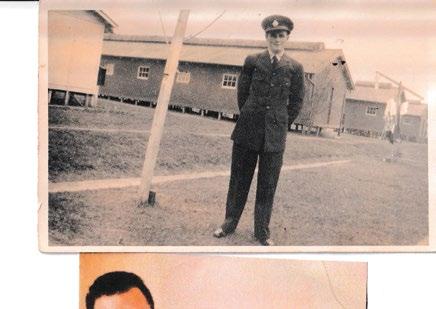
From the land to the Air Force Arnold was christened ‘Dickie’ Bird when he joined the Royal Australian Air Force (RAAF) in 1955, aged 19. Born to a farming family, he’d “never been off the land” before his recruitment interview and medical exam in Sydney.
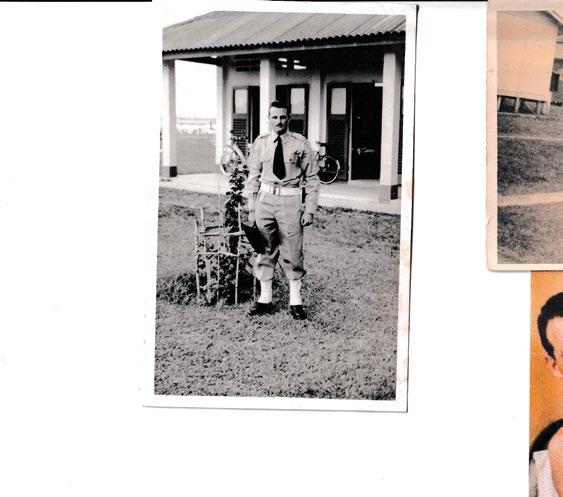
Dickie served all over Australia and deployed to Malaya during the Malayan Emergency, working on equipment supply, plant operating, and building airstrips.
ANZAC Day 1959 – when he was part of a guard of honour at North Borneo’s Labuan War Memorial and saw where the Japanese surrendered in 1945 – was among many of Dickie’s career highlights.
Belinda Crossman
For most of the past three decades,
Arnold ‘Dickie’ Bird has proudly maintained the old and new Beachmere Remembrance Memorial, only recently passing the reins to another volunteer.
So was unexpectedly hatching a chicken (appropriately named Henrietta) in his locker, and meeting his wife Lyn, who served in the Women’s Royal Australian Air Force (WRAAF).
“I think any role in the Defence Force is very important,” Dickie says.
“I was proud to represent my country as much as I did. I wore that uniform, represented my country… I liked it and stayed there for 21 years.
“We had some sad times over in Malaya; we lost a couple of fellas. But I wouldn’t pass [my service] up if I ever had the chance again.
“it’s a good journey. I’d encourage anyone to join up.”
After service
Dickie and Lyn joined Beachmere RSL Sub Branch when they retired to Brisbane in 1989. However, Dickie’s drive to serve never ceased.
As a Sub Branch member, he’s volunteered in
many ways, from serving on the Board to conducting Poppy Services at veterans’ funerals, organising commemoration services and – for 26 years –assisting at the local school.
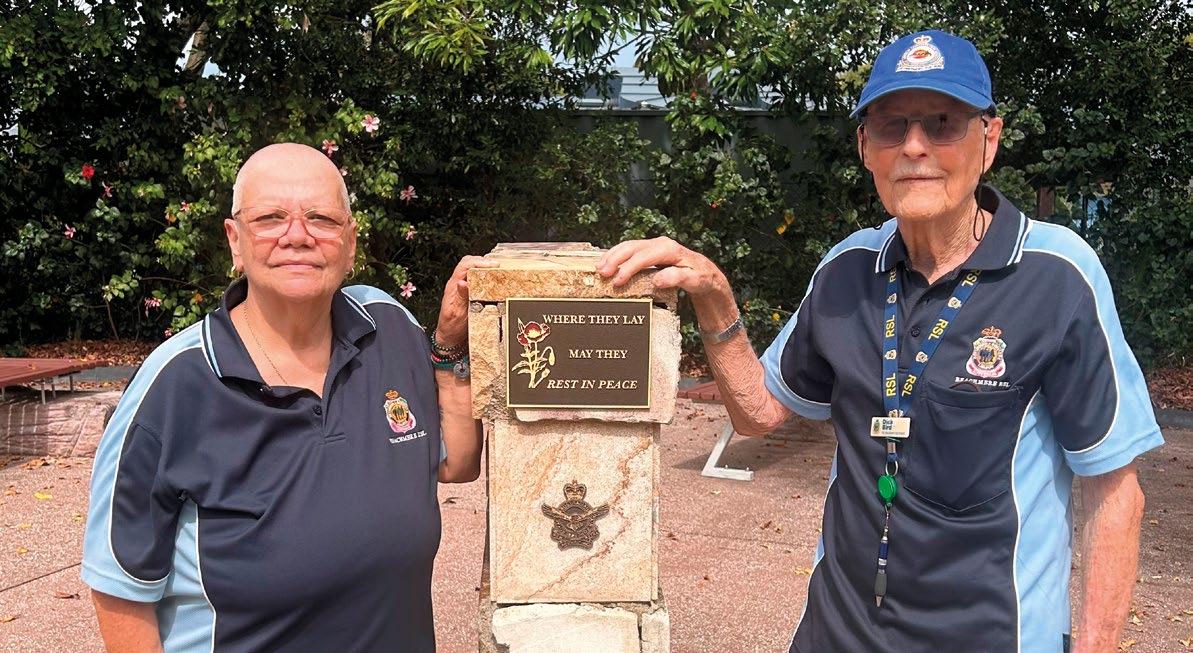
It was Dickie’s work maintaining the war memorial that prompted historian and researcher Karen Wallwork (a fellow Sub Branch member) to pen a poem in his honour.
According to Karen, the poem was inspired by “a simple yet powerful moment”.
“While most of Beachmere slept in the early hours of ANZAC Day 2025, Dickie was already at the memorial, carefully preparing the wall for its newest plaque,” she explains.
“Alone and without ceremony, he levelled and placed a name among the many already honoured there. There was no crowd to witness it. No anthem played. Yet it felt sacred.”
Through the poem, Karen wanted to capture “the quiet devotion behind remembrance – the
Placing the Plaque
There he sits beside the wall, Spirit level held with care, HeHandswornbytime,yetsteadystill— places each name square.
JustNograndparade,nobuglecry, morning sun and stone, SoAligningmemories,rowbyrow, no one stands alone. A humble task, a sacred one, Done quiet, true, and slow. A final honour, lined in brass, For those we used to know.
ThisThankyouforwhatyoudo,oldfriend, wallremembersyet. Each name a life, a debt, a vow— Lest we forget.
ByKarenWallwork
Air Force veteran Arnold ‘Dickie’ Bird with historian and researcher Karen Wallwork (a fellow Sub Branch member).
Karen wrote a poem honouring Dickie’s work maintaining the Beachmere Remembrance Memorial.
unseen acts that make public ceremonies possible”.
“Through Dickie’s work, each name is not merely recorded; it is respectfully remembered. It is a reaffirmation that we do not forget,” she says.
“Dickie’s dedication and meticulous care ensure the memorial is always presented with dignity. That standard flows into the wider community; people notice, and they respond with respect.”
Dickie was humbled but pleased with the honour.
“As volunteers, we don’t expect to get too much reward for what we do. I don’t look forward to being out in the limelight, but I was very chuffed when Karen’s poem came out,” he says.
“It’s been very rewarding and touching to maintain the memorial.”
Honouring all who wore the uniform Uniforms run in Dickie’s family. His daughter, sonin-law and grandson all serve in the Defence Force, while one of his sons is a police offer.
He looks forward to joining them and fellow veterans this ANZAC Day, as well as helping out with the morning service and enjoying a gunfire breakfast.
“It’s good to have all the family together: my son, grandson, daughter, son-in-law, and my wife and I all together in suits with medals. It’s real nice,” he says.
Dickie will also be sure to make a toast to his late son.
“I always go and put a poppy on my boy and have a bit of rum in front of him and his plaque,” he shares.
Dickie says it’s “very important” to have commemorations like ANZAC Day.
“ANZAC Day to me is remembering all those people – the [Army] diggers, the Air Force and the Navy members – who went out and fought for their country,” he says.
“We honour who they were, what they achieved, and their memory. Their memory has to live on forever and be taught to the next generation.”
ANZAC Day 2026
Among all commemorations, ANZAC Day holds an especially sacred place in Australian hearts and minds. It’s a unifying force that brings together the veteran and wider community through services, symbols and ceremonies nationwide. As custodians of ANZAC Day, RSL Queensland Sub Branches unite communities to preserve and share the enduring legacy of the ANZAC spirit that continues to inspire our nation.
The ANZAC spirit lives here
The ANZAC spirit doesn’t live in history. It lives in the choices we make today, the way we treat each other, and the unity we demonstrate when we gather in commemoration.
This ANZAC Day, we invite every Australian to discover their own authentic way to participate in this living tradition, ensuring that the values of courage, mateship, sacrifice and service continue to shape our national character for generations to come.
Together, we will help all Australians understand that the ANZAC spirit lives here, within the hearts and minds of each and every one of us. Let’s show the ANZAC spirit lives here.
Honouring the past, building the future: Cloncurry RSL Sub Branch’s new chapter
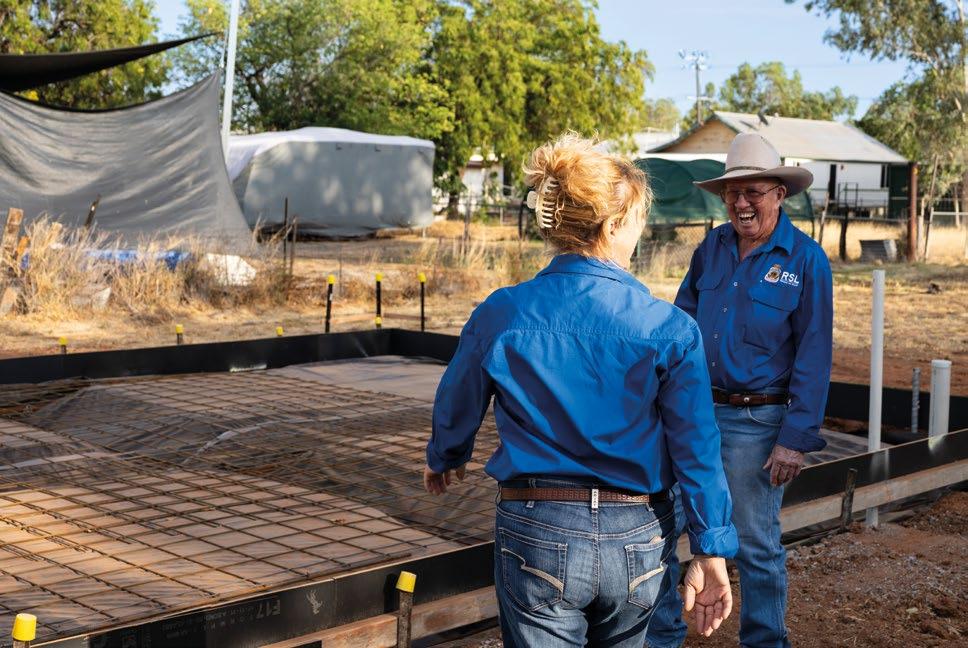
Cloncurry RSL Sub Branch’s young President is determined to make their new building a community hub.
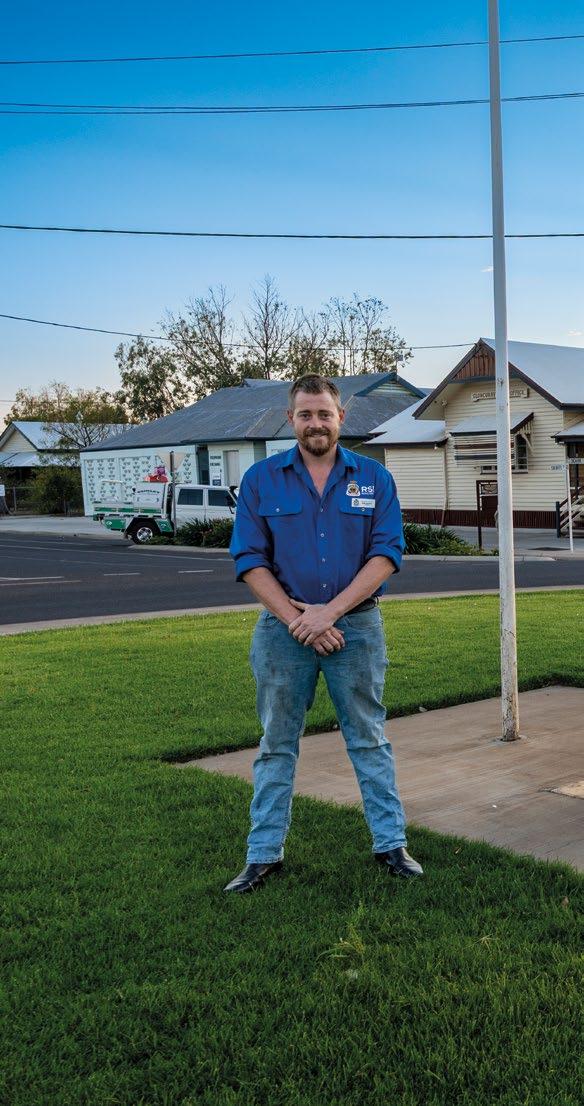
Anneka Salvat Mt Isa RSL Sub Branch member Robert Mathieson
TWO years ago, Army veteran Kane Burgess was working in Mount Isa. Today, he’s the President of Cloncurry RSL Sub Branch.
“Liz, the Sub Branch Secretary, actually got in touch with me when I was working in Mount Isa,” Kane says.
“They needed a President but there aren’t many ex-Defence people here, so I spoke to my wife because it’s not something I want to see die, especially in a small town like Cloncurry.”
Kane spent eight years in the Australian Army,
serving as a gun number in Townsville before a posting to Wagga Wagga as a recruit instructor. He now lives in Cloncurry with his young family.
After Cloncurry’s old RSL building was torn down in 2019, Kane’s main aspiration is to get the new building built and establish a renewed RSL community within the Shire of Cloncurry.
Building a community
As Kane is the only service member in the branch, it’s incredibly important to him to have the support of social and non-League members.
INSET After
“It means it’s not dying – that people are still interested and want things to happen,” he explains.
“It gives me motivation to make sure things do happen. And if I can make something happen, I will.”
It’s also very important to non-League members like Graeme McDonald and Sub Branch Secretary Liz Robertson – who recruited Kane.
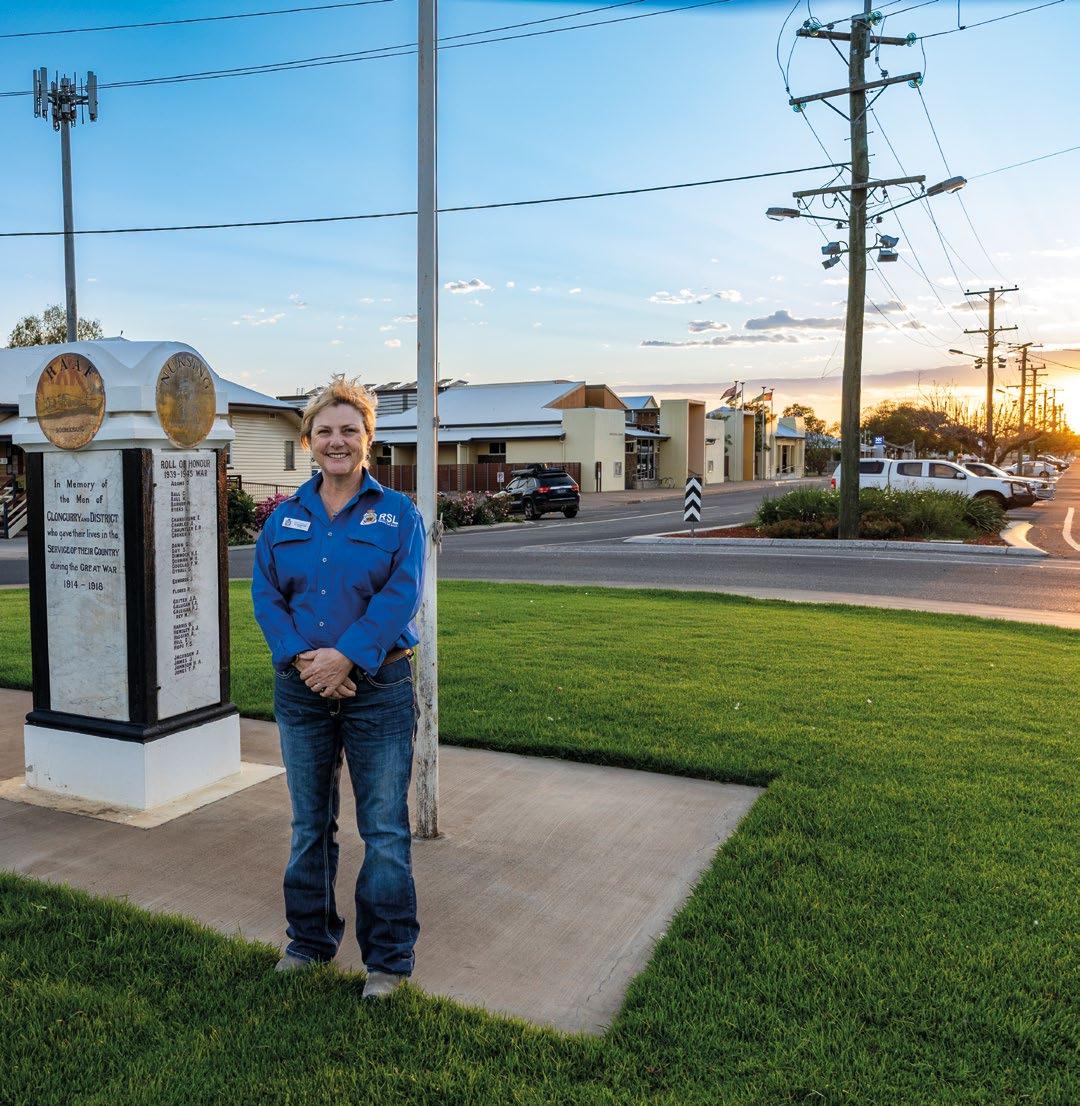
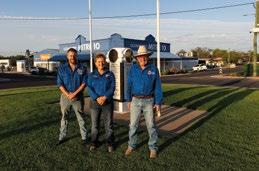
ABOVE Cloncurry RSL Sub Branch President Kane Burgess, left, and Sub Branch Secretary Liz Robertson.
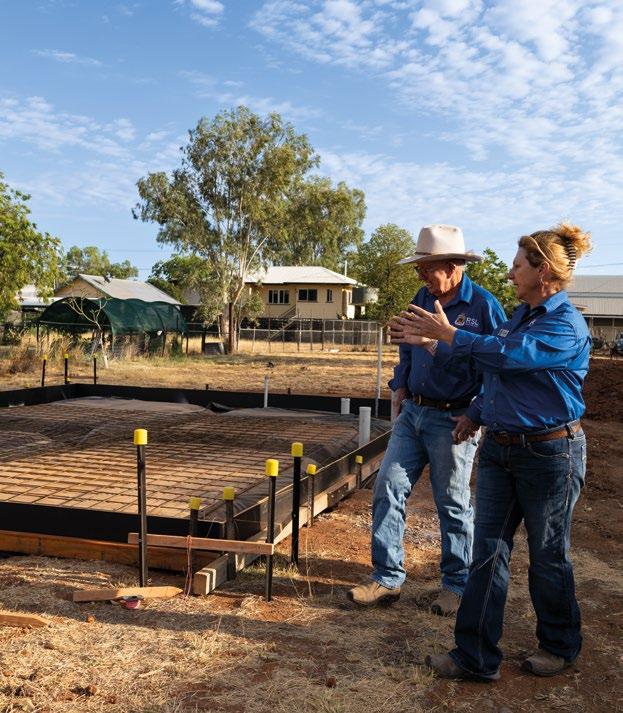
Cloncurry’s old RSL building was torn down in 2019, the Sub Branch wants to get the new building built and establish a renewed RSL community within the Shire of Cloncurry.
This Sub Branch means a lot to me. They fought to have something here and it’s my duty to step up to the plate and get the job done.”
“We had three members and one was going to leave,” Graeme says.
“So, I said, ‘I’ll join’. You have to. You’ve got to keep these things going.”
“Volunteers are so important, especially in small towns like ours,” Liz says.
“I’m very passionate about this town and the people in it.”
While Graeme and Liz are both non-League members, they both have a deep connection to Defence. Graeme’s father served in the Middle East in the Light AntiAircraft Battalion and his uncle served during World War I, while Liz’s grandfather was a Naval Officer on HMAS Australia during World War II and her father was drafted into the Citizen Military Forces.
“We must never forget what our soldiers did. We owe them a huge debt and being part of this Sub Branch is part of that,” Graeme explains.
Liz agrees.
“I’ve always had the utmost respect for our military, past and present, and that’s why I wanted to join the RSL,” she says.
“To me, my membership means respect for our soldiers and I do get quite emotional on ANZAC Day.”
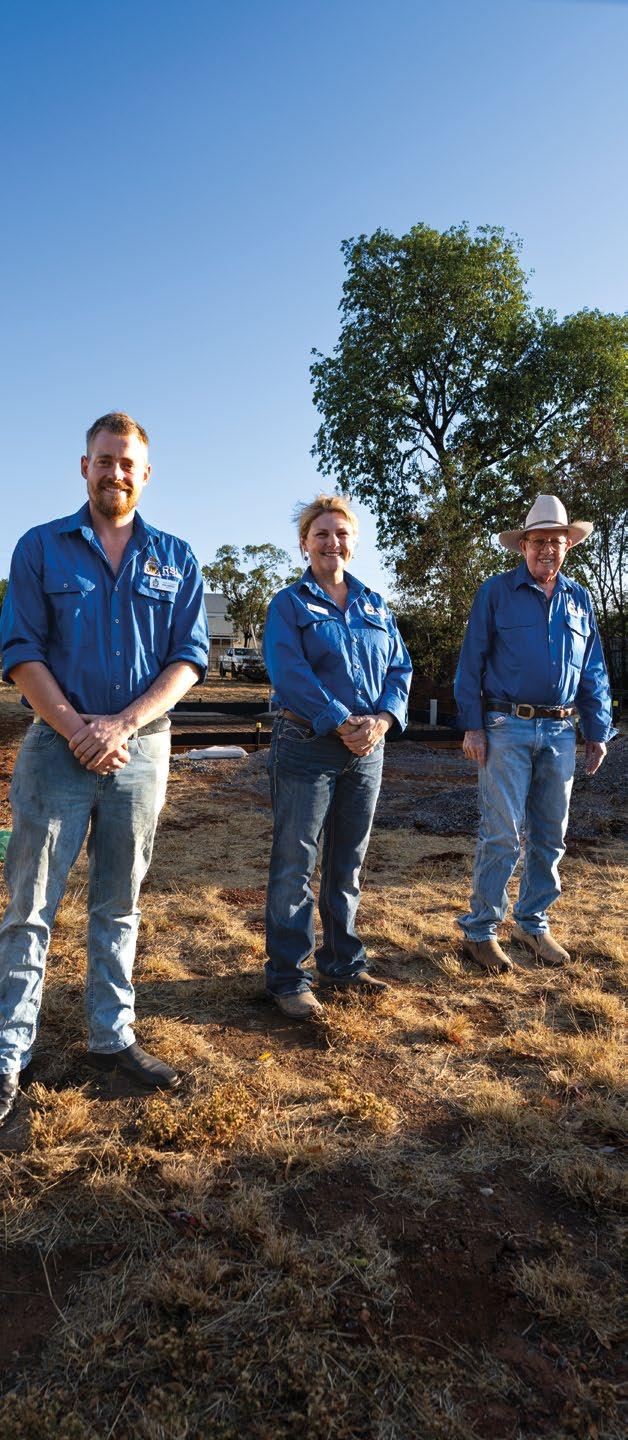
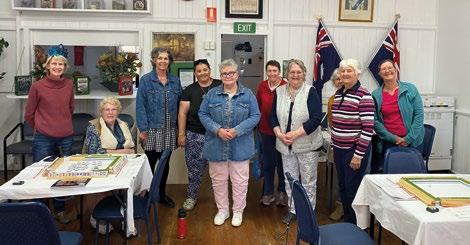
From left, Cloncurry RSL
Sub Branch President Kane Burgess, Sub Branch Secretary Liz Robertson and non-League member Graeme McDonald.
Enduring spirit
That community spirit goes beyond Liz, Graeme and Kane, however, with the Sub Branch and the community coming together to keep the legacy of service alive for younger generations.
In Cloncurry, the ANZAC Day Dawn Service is followed by a gunfire breakfast, and the march is attended by community groups from across the Shire, as well as the local school and emergency personnel. The local Country Women’s Association provides morning tea and there’s also a mid-morning service and two-up.
“We go to the schools for ANZAC Day and Remembrance Day, and the young people are always interested. It’s imperative that we attend so the younger generation know the history and importance of those days.” Kane says.
A place to call home
As a keen gardener, Kane can’t wait for the construction of the new building to finish so they can involve the community in establishing a remembrance garden. It will be yet another way in which the Sub Branch is grounded in the community they all love.
“I think it’ll also be a good place to do sausage sizzles and fundraisers,” Kane explains.
“That’s the plan – to have those community gettogethers. Nothing too big, just keep it local and fun.
“This Sub Branch means a lot to me. They fought to have something here and it’s my duty to step up to the plate and get the job done. That’s part of being an ex-serviceman and I think it’s my way of finishing that part of my duty as a soldier.”
Cloncurry RSL Sub Branch was successful in securing funding for the new Sub Branch building through the Queensland Remembers Grant Program, funded by the Queensland Government.
There are plenty of ways to get involved in your local Sub Branch and give back to the veteran community. Learn more at rslqld.org/get-involved
Scan to watch Video
Keep track of your health goals
New Year’s resolutions aren’t a new concept, but harnessing the motivation behind them to set and track simple goals can help improve your health and wellbeing.
THE‘Fresh Start Effect’ is the idea that a new time marker (like the new year) motivates people to commit to and pursue goals that promote positive behaviour changes, helping to combat old patterns.
Common examples include signing up for a gym membership, beginning a new diet or even creating a new budget.
By taking advantage of this motivation, you can work towards building out achievable goals for yourself, instead of resolutions, with the intention of improving your overall health and wellbeing.
Resolutions vs goals
Making the decision to have new year’s resolutions can be a great start to deciding to take care of your
Baxter Mahutonga, Mates4Mates Clinical Lead – Physical Rehabilitation and Physiotherapist
health and wellbeing, but setting goals can increase your likelihood of achieving them.
This is because a resolution tends to be a broad intention (e.g. “I’ll get fitter”, “I’ll fix my knee”, “I’ll lose weight”), whereas a well‐set goal is specific, measurable, time‐bound and actionable.
For example, rather than a resolution such as, “I’ll be more active”, a goal would be, “I will attend two
physiotherapy sessions for my knee by the end of March and then walk for 30 minutes, three times a week, for eight weeks”.
For veterans or current-serving personnel, who often face unique physical health challenges –musculoskeletal injuries, transition to civilian life, changing fitness demands or possible service‐related wear and tear – a goal-orientated framework helps
channel motivation into meaningful physical health improvements.
How to set realistic goals (and stick to them!)
Setting goals doesn’t need to be complicated – the simpler the better.
Start with your ‘why’. What physical health outcome matters the most to you? For example, “I want to reduce knee pain so I can train without limitation” or “I want to build endurance for everyday tasks” or “I want to increase my strength to pick up my grandchildren”.
Tailor it to suit you. Consider your current health status and use that as a baseline while also considering your barriers (i.e. injury, work, family responsibilities) and your resources (i.e. time, support, funds).
Break it down into tiers. Start with short-term goals (1-2 weeks) such as booking an appointment with a physiotherapist or walking for 15 minutes each day for the next two weeks. Then look at mediumterm goals (3-6 months) to continue building the habit and your capacity, before moving to long-term goals (6-12+ months) where bigger changes happen. Celebrate the small wins. Recognising achievements – big and small – along the way as your goal progresses builds confidence and reinforces behaviour to keep moving forward.
Maintaining motivation to build discipline
Once you’ve built out your goals, the next step is to ensure you maintain that motivation and discipline from the beginning of the year to track and achieve them.
While your motivation is high, use the early part of the year to schedule a health check or allied health consultation with a physiotherapist or exercise physiologist
Then, link that appointment to a clear goal such as, “By June I’ll get on top of this knee pain, so I can train pain-free for the year ahead”.
From there, some simple ways to keep on top of your goals include:
• building habits into your routine
• tracking your progress
• training with a mate or support group
• mixing it up to stay interested
• focusing on why you started, not just the outcome.
Another way to stay disciplined is remembering that by meeting your physical health goals, this can improve your mental health too.
Tracking your goals and seeing progress will boost your confidence and promote a sense of accomplishment. Plus, moving your body helps to reduce stress and lift your mood, which can then help boost your motivation to keep going.
Support at Mates4Mates
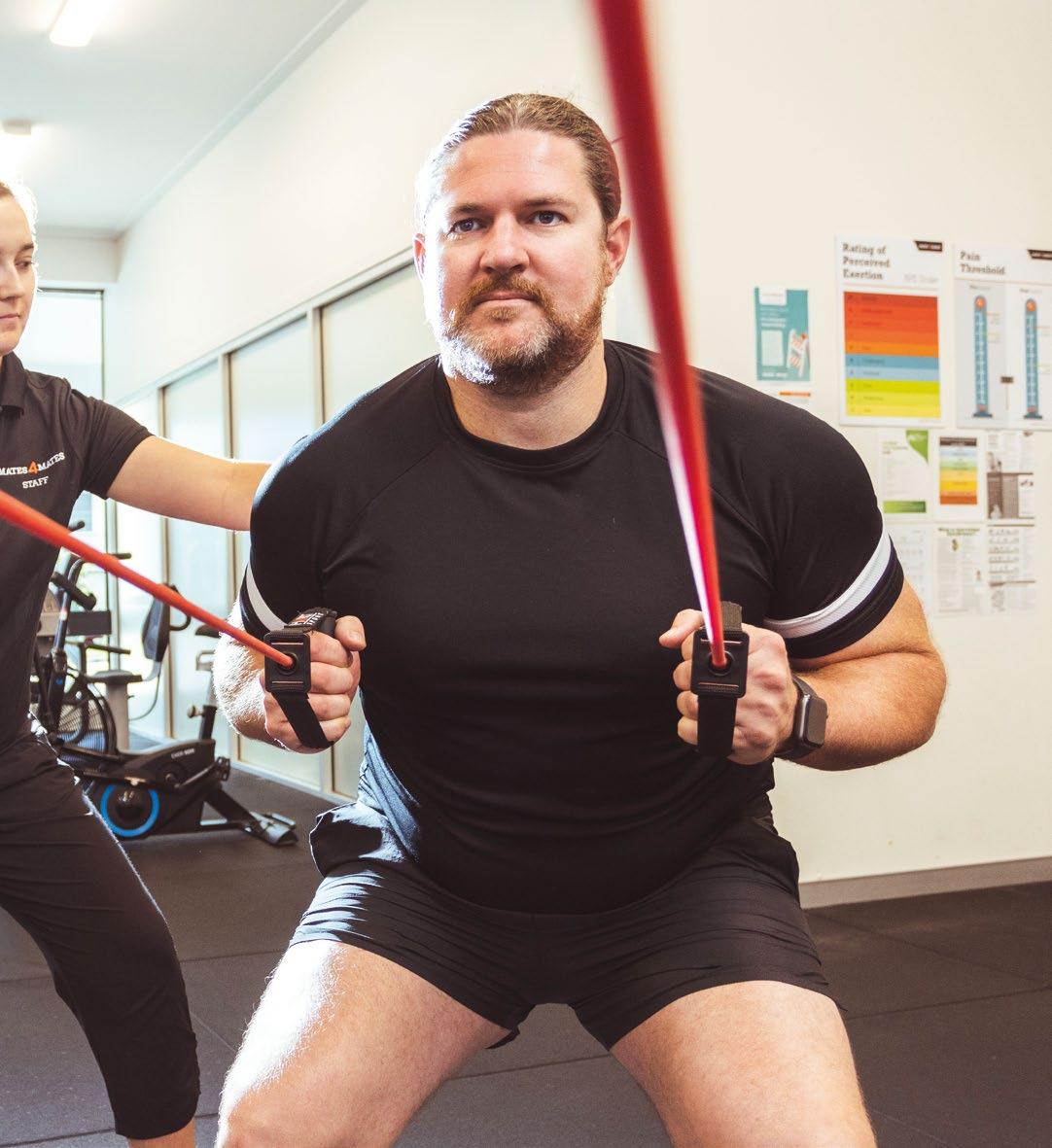
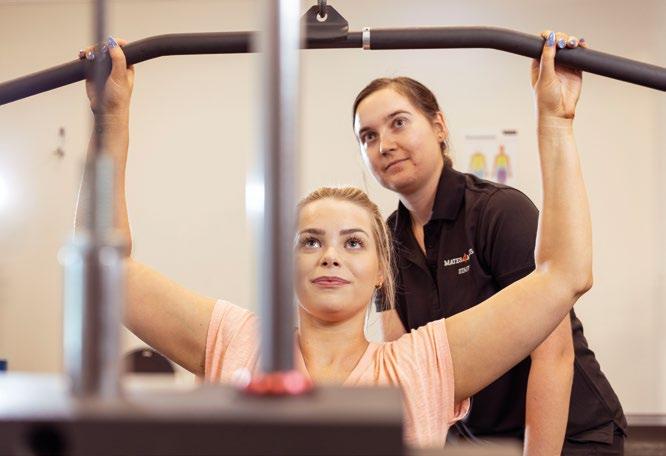
If you’ve made a goal this year to improve your physical health, then the Mates4Mates physical rehabilitation team is here to help you.
The team comprises physiotherapists and exercise physiologists who can support veterans and their families to improve their health and wellbeing through one-on-one appointments and group exercise classes.
They can also support with developing an achievable goal framework that considers your barriers and resources while understanding the challenges of military life.
Mates4Mates also provides mental health services, with appointments available to speak with a psychologist, counsellor or social worker to further support you.
To find out more about how Mates4Mates can help support you, reach out on 1300 4 MATES (62 837) for a confidential chat.
Family re-integration following deployment
Reunion after deployment is a major transition for military families, bringing joy and relief alongside complex emotional, relational and practical challenges that can be eased with understanding, patience and support.
Trinity Pennisi, Mates4Mates Counsellor
WHILE a reunion with a service family member is a time to be celebrated, often bringing relief and joy, it can also be stressful and confusing for all family members as they adjust to the change.
Returning home is just as significant a change as departing
After a period of separation, usually due to deployment, lengthy field exercises or training courses, and domestic or overseas postings, Australian military
families will experience re-integration.
Family re-integration may also occur upon transition out of the Australian Defence Force (ADF), when a veteran may become significantly more immersed into family life.
Military research studies have shown that for many Defence Force families, the re-integration or post-deployment period can be one of the most challenging stages of the deployment cycle.
Adjustment may take a few weeks for some families and a few years for others, with various
Additional support
Other helpful services relevant to re-integration and transition include:
• Defence Member and Family Support with 24/7 helpline: 1800 624 608
• Open Arms – Veterans & Families Counselling with 24/7 helpline: 1800 011 046
• Open Arms – Stepping Out two-day workshop
• Go Beyond – Navigating Life Beyond Service
• Triple P – Positive Parenting Program
• ADAPT – After Deployment: Adaptive Parenting Tools
• Partner Employment Assistance Program (PEAP), which provides financial support for eligible ADF members and their families
factors impacting the re-integration adjustment period such as the dynamic of the family situation, deployment context (combat or non-combat), the length and number of absences, and the family’s available support from friends and family.
Re-integration challenges
During an ADF member’s absence, a family may change and develop new ways of working together. On their return, the family dynamic may not simply revert to the ‘regular programming’ that existed prior to the service member’s deployment or posting.
The returning ADF member’s sense of self will likely have been shaped by the experiences of their deployment or posting, which may have included frequent states of hypervigilance, sometimes traumatic events, aggressive attitudes in hostile settings, strong military unit bonds, highly regimented and structured environments, and considerable stress and fatigue.
When stepping out of a military framework into a very different family life situation, the returned service member can be faced with a range of challenges including:
• Communication barriers: Family members may have trouble expressing emotions. Different communication styles may lead to misunderstandings and difficulty managing conflict.
• Role confusion in the household: Parenting roles, household responsibilities and decision-making dynamics may have changed, as the non-deployed parent needed to take on these roles during their partner’s absence.
• Mental health concerns: Service members returning with PTSD, anxiety, depression, moral injury or chronic pain may find this impacts relationships, daily functioning, emotional regulation, substance use levels and may lead to social isolation.
• Parenting difficulties: Children may have bonded differently with a non-deployed parent or caregiver.
The returning parent may feel unsure how to re-engage with or discipline their children, who may also resist their authority.
• Intimacy and relationship strain: Couples may experience emotional distance and need to rebuild trust and intimacy.
• Financial changes: There are financial benefits for the family whilst the service member is deployed, which can change when they return.
The impact of these challenges may lead to the service member feeling emotionally disconnected from their family even though they are physically together again. Feelings of exclusion or not belonging and being misunderstood may develop and lead to isolation, emotional numbing and withdrawal.
During and post deployment, military families that remain at home generally demonstrate remarkable resilience. There are some unique challenges experienced by partners during re-integration
including loss of independence gained during deployment, suppression of their own needs to meet the needs of the returned member’s, disruption to their routines and parenting dynamics, and changes in their social support networks.
These experiences can be complicated by the presence of physical or mental health conditions the service member returns home with, and challenges in their relationship with children in the household during the period of adjustment.
Research shows that children can display challenging behaviours when reunited with their deployed parent. These can be difficult to manage for a parent who has been absent for long periods, and stressful for the parent who has likely done most of the caring in their absence.
Strategies to ease re-integration
By re-establishing routines, taking the time to reconnect as a family unit and understanding that it can take a few months (or more) to navigate the changes that deployment and training exercises bring, the re-integration process can be made easier.
Helpful strategies to consider during re-integration may include:
• Manage expectations: There may be idealised expectations about the reunion that are not aligned with reality, which can lead to disappointment. Be aware that it will take time to readjust to being together again, which may be difficult at times, and efforts can be made to reduce the impact of the re-integration challenges.
• Practise open and honest communication: Using “I” statements, asking open, curious questions and listening to each other’s answers will promote understanding and enable constructive conflict management.
• Role re-negotiation: Redistribute responsibilities (parenting, finances, household tasks, etc.) and use collaborative problem solving to reduce power struggles and validate the contributions of all family members.
• Re-establish bonds with children: One-onone time with children is recommended and reassurance that the ADF member is home to stay may be needed. Being consistent and patient and learning to manage your own emotional reactions can help the child regulate theirs.
• Create new shared experiences: Build new memories together to strengthen bonds and engage in activities that foster connection and joy
such as planning some fun day trips, sharing in hobbies or taking a holiday.
• Rebuild intimacy and connection with partner: Practise rituals of connection through date nights and shared interests. Allow time for intimacy and trust to re-develop.
• Socially re-integrate: Take steps to engage with friends and family and the wider civilian community.
Support at Mates4Mates
Mates4Mates provides support for current and ex-serving members and their families that may be experiencing re-integration challenges.
Psychological, counselling and social work services are available both in person at Veteran & Family Wellbeing Centres and via telehealth for building knowledge on healthy coping strategies. Individual, couple and family therapy can help process experiences and rebuild trust and connections when an ADF member returns.
In addition, Skills for Recovery Programs can help implement important skills and strategies, with some programs specifically catering for partners and family members. One-Day Wellness programs also provide some time out to relax, share experiences and connect with other like-minded people.
To find out more about how Mates4Mates can help support you, reach out on 1300 4 MATES (62 837) for a confidential chat.
BUILDING STRENGTH TOGETHER
How RSL Queensland is supporting Townsville’s soldiers and families
RSL Queensland’s partnership with Lavarack Barracks in Townsville helps to build the physical and mental strength of our serving members.
Camella Brightman Michael Gillett
Scan to watch Video
By helping to establish recovery spaces and connect soldiers with sports psychologists, RSL Queensland’s partnership ensures that physical and mental fitness are treated as equally vital to operational success.”
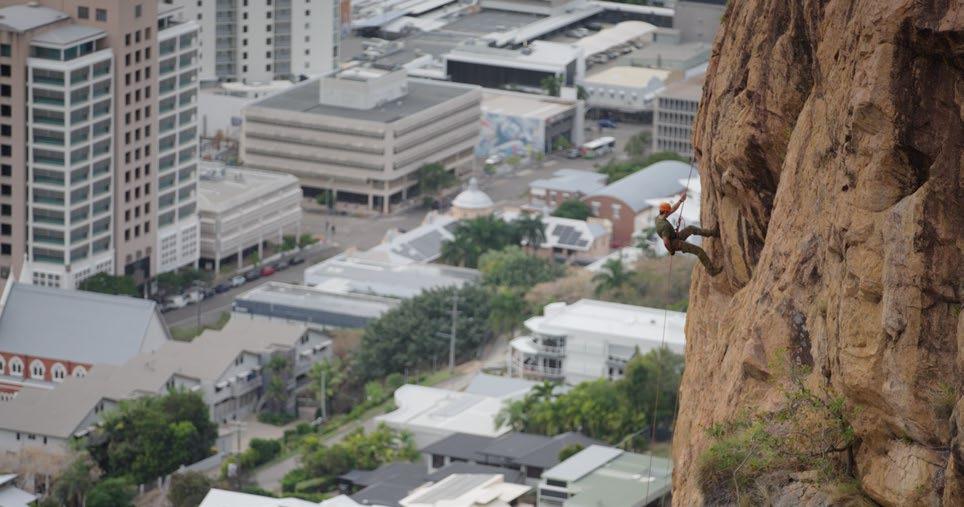
ONany given day in Townsville, members of the 3rd Brigade can be found pushing their limits physically and mentally – whether it be running the annual Brigade Cross Country or scaling the cliff face of Castle Hill.
For officers like Major Joseph Smith, resilience and teamwork aren’t just values; they’re vital parts of life in the military.
“Resilience isn’t something you can just turn up and turn on. It’s something you’ve got to test a lot and practise a lot,” MAJ Smith says.
For many years, RSL Queensland has been supporting the physical and mental resilience of soldiers through its partnership with the Australian Defence Force (ADF), which includes initiatives based at Lavarack Barracks in Townsville.
Investing in high performance
Rebranded as the Human Performance Centre in 2019, the facility aims to enhance wellbeing and maximise the potential of high-performing teams.
Katie Maloney, RSL Queensland General Manager of Strategic Partnerships and Research, says RSL Queensland’s role is about equipping soldiers with the tools to thrive throughout their Defence careers.
“In 2025, we were able to support the ADF personal trainers in setting up a recovery area to help improve physical performance,” Katie explains.
Whether deployed, on exercise or abseiling down Castle Hill, strong teams are essential for mission success. Having specialised recovery equipment available on base, thanks to RSL Queensland’s support, plays a crucial role in helping soldiers sustain their health, fitness and performance long-term.
Mental endurance is just as paramount as physical strength for current serving members.
“Our partnership also enables initiatives such as 3rd Brigade engaging with top sports psychologists to build mental resilience,” Katie adds.
Speaking to the far-reaching impact of these programs, Lieutenant Colonel Simon O’Regan, 3rd
Brigade Senior Health Officer, notes that better people make better soldiers.
“If we can contribute to people performing at their optimum, they’re going to bring better performance to the team – and teams are the foundation of how we operate in the Army,” LTCOL O’Regan says.
By helping to establish recovery spaces and connect soldiers with sports psychologists, RSL Queensland’s partnership ensures that physical and mental fitness are treated as equally vital to operational success.
Supporting the whole family
Having served more than 30 years in the Australian Army, LTCOL O’Regan knows firsthand that behind many a soldier is a family navigating the challenges of Defence life.
He credits his wife with much of his success and says having spaces where families can connect and feel supported is vital.
That’s where the Geckos Family Centre, also supported by RSL Queensland, plays a significant role.
“The Geckos Family Centre is a fantastic initiative that looks after our families, providing them the environment where they can connect with likeminded families,” LTCOL O’Regan says.
Conveniently located on base, the centre provides services and social events like playgroups, parent
groups and fitness programs, helping to keep Defence families more connected.
Advocacy and ongoing support
RSL Queensland’s support doesn’t stop at physical and mental wellbeing. On-base advocates at Lavarack Barracks ensure serving members can access trusted advice and assistance with DVA claims and other services.
“It’s an extension of the health and wellbeing support that RSL Queensland has been providing to serving members and veterans since 1916,” Brigadier Ben McLennan, Commander 3rd Brigade, says.
“We’re really grateful for not only what RSL Queensland does, but the way they do it – enabling us as individuals and as a team to reach our highperforming potential.”
RSL Queensland remains committed to empowering current and former Defence members and their families through care, commemoration and camaraderie.
“This partnership with the ADF is an investment in the overall wellbeing of members and their families,” Katie says.
Together, RSL Queensland and 3rd Brigade are strengthening not just soldiers, but the entire Defence community, building resilience that endures long after the uniform is hung up.
RSL Queensland offers a range of support services for current and transitioning Defence members, connecting you with the right help at the right time. Learn more at rslqld.org/services/support/current-serving-and-transitioning
A NASHO REFLECTS
75th anniversary of National Service
As Australia marked the 75th anniversary of National Service on 14 February 2026, veteran and Hervey Bay RSL Sub Branch member David Crickmore reflected on his call to duty.
Ellise Gill
FROM 1951 to 1972, more than 280,000 young Australian men were called to undergo compulsory training in the armed services.
Although many were proud to serve their country, National Service often came at a personal cost, with more than 200 men losing their life on duty, at home or across the world in Vietnam, Malaysia, Singapore and Papua New Guinea.
David Crickmore was one of the thousands of
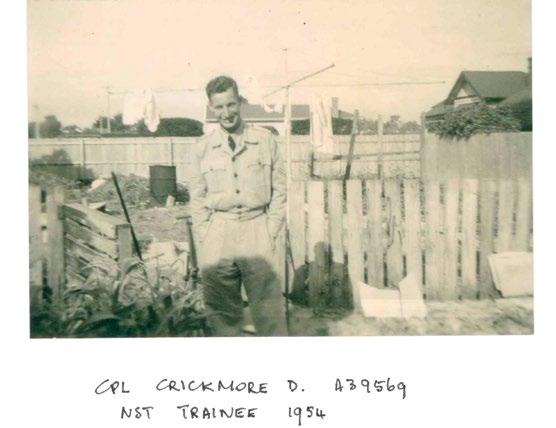
young Aussies who served during the first National Service intake, receiving the call in 1954 when he was just 18 years old.
“Being called up to National Service didn’t worry me. I’d already had some experience through my time as an Air Force Cadet in high school and in the General Reserve. I just thought it was part of being Australian,” David says.
“We couldn’t drink or vote, but we could be sent overseas to war if needed.”
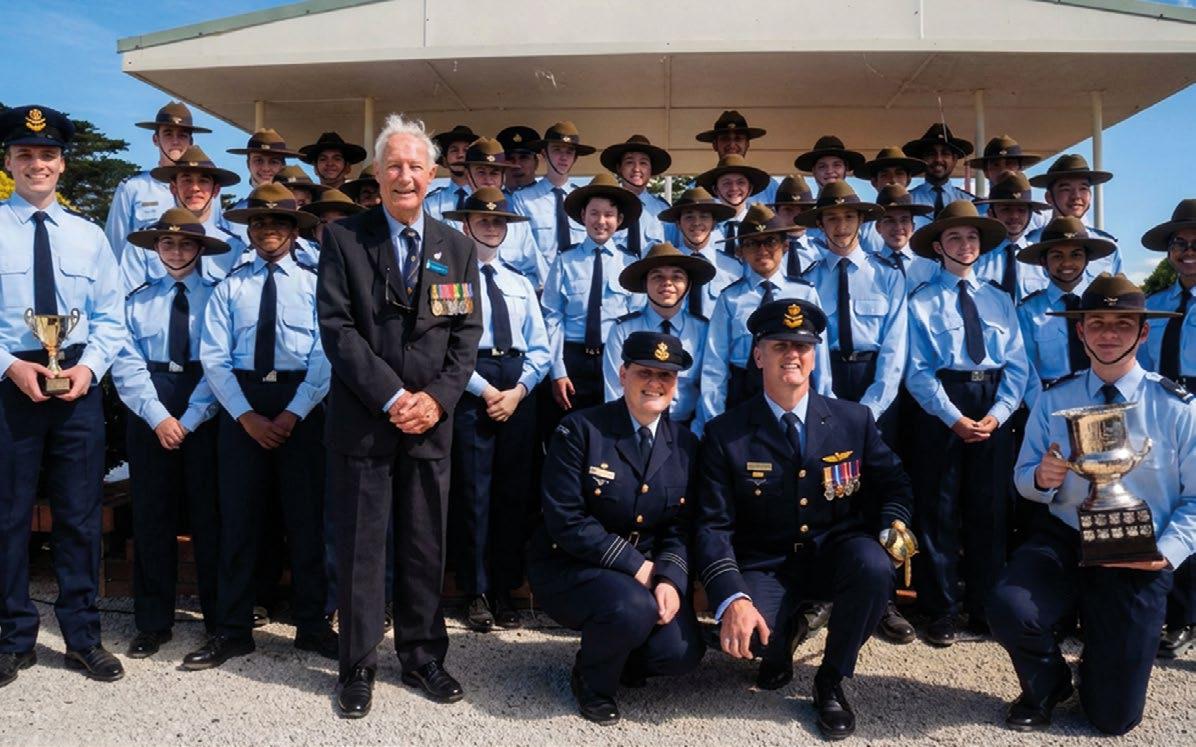
Veteran David Crickmore with the 401 Squadron Australian Air Force Cadets.
Triumph and tragedy
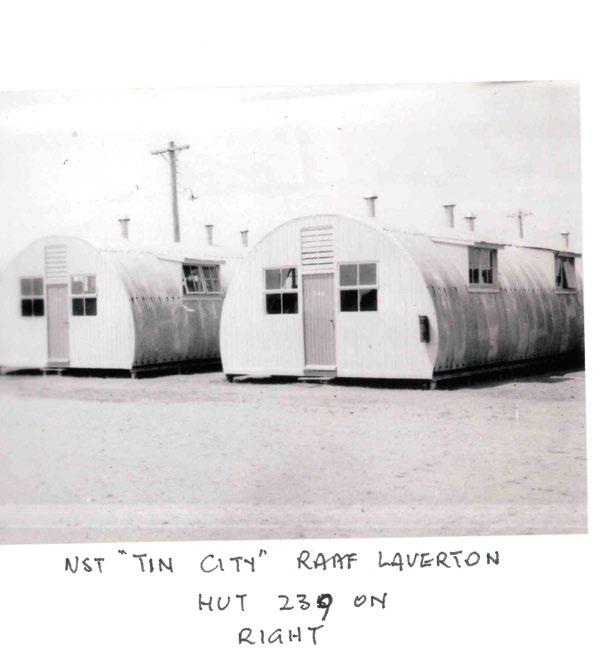
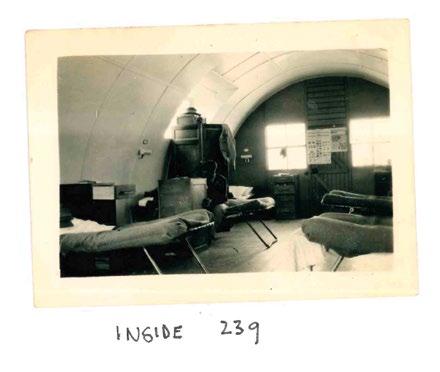
He was posted to 9th Intake, No. 5 National Service Unit at RAAF Laverton and commenced 154 days of training soon after – the first of two training periods with the National Service.
David describes his first day at training as “disorganised chaos” with many troops – some of them university students, apprentices or farmers –having never lived outside the family home, let alone in a different state.
“When we arrived, there were three blankets, two sheets, a pillow and a pillowcase on every bed. And the people who hadn’t made a bed before sort of looked confused as if to say, ‘What do we do with it?’”
Trainees were assigned to huts in groups of eight, each with their own bed, clothes locker, bedside table and chair. Every day they rose at 6.00am, made their bed and began a long day of drills and rifle work, physical education and specialist training such as riot control and weaponry.
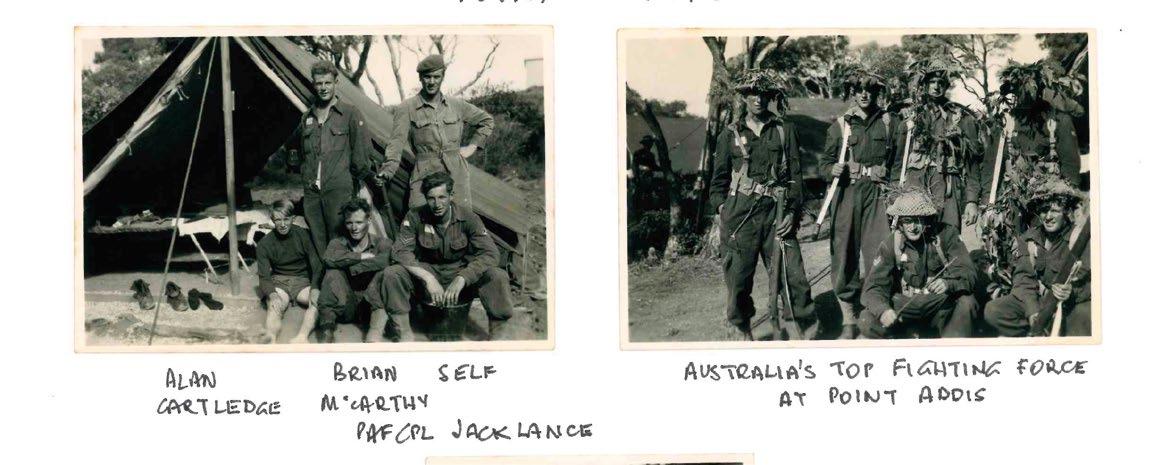
During the first period of training, several recruits were selected to undergo air crew training. Among them was David’s best mate, Alan Cartledge.
“I met Alan in my first year at National Service and we palled up together. He was from Tasmania, so when I found out he was studying architecture at Melbourne University, I invited him to stay with my family in Brunswick,” David says.
“My stepmother was particularly fond of him.”
David and his family formed a close bond with Alan and were devastated when his life was tragically cut short during a training exercise in 1955. Alan was one of two pilots involved in a mid-air collision.
“[At his funeral] they fired a volley of three rounds, and when they fired the first one, that’s when Alan’s parents just collapsed,” David recalls.
“I had to go through all of his personal stuff at camp and at home. I packaged it up and the Air Force forwarded it on to his parents.
“Alan was very missed in our house. He was a wonderful, outgoing person.”
A royal encounter
Though deeply saddened by his friend’s passing, David was determined to “keep moving” and complete phase two of his National Service training.
“Our flight had a new drill NCO, who was great, and after a 30-minute revision of rifle drill we were back into the swing of things,” he says.
“As we could ‘disappear’ while the other two intakes were going about their activities, we became known as The Phantom Flight and had phantom badges on our overalls.”
It was also during this time that Her Majesty Queen Elizabeth II visited Australia. National Servicemen were issued with blue uniforms to wear when they lined the streets of Melbourne for her arrival.
“The Queen was at Point Cook to present the RAAF with a Royal Standard and so we were lining the roads and streets of Laverton when she went over
and back to depart from Aircraft Siding in the Royal Train. There must have been thousands of us,” David says.
The next chapter
On 10 August 1956, David was granted the higher acting rank of Corporal and completed his primary teacher training. He was transferred to Morwell and became a foundation member of No. 26 Flight Latrobe Valley.
When David’s time in National Service ended on 21 March 1955 he continued to serve in the RAAF General Reserve with the Air Training Corps.
Drawing on his own experiences in National Service, and passion for developing young people, David played a pivotal role in shaping the next generation of Air Force Cadets.
In 1967 he was appointed Chief Instructor at 11 Flight-Footscray and just a few short years later, awarded the Cadet Forces Medal for 12 years of continuous service with Cadets.
With the introduction of the new ADF Cadet Scheme in 1978 David was appointed as Commanding Officer of Number 4 Wing Australian Air Force Cadets (AAFC) and progressed to become National Coordinator of AAFC.
“I must have trained hundreds of cadets during my
tenure. A couple of times we were in Melbourne and blokes would come up to me and say, ‘Good morning. Don’t you remember me?’, and I’d say ‘Goodness gracious. Yes, I was your Officer’,” he says.
“Training is not just about Defence. It’s about the development of young people into citizens, being part of a team, doing the right thing and helping others. That’s what’s at its core.”
When David returned from a teaching fellowship in 1982, he transitioned from General to Active Reserve and was appointed a rank of Pilot Officer at 21 Squadron.
Not keen on rushing into retirement too early, David was granted three age extensions before finally retiring from the RAAF in 1995 at 58 years old.
Looking
back
It’s been 72 years since David first embarked on National Service, but the experience is still etched firmly in his memory.
“National Service gave me my own sense of commitment – that I’ve done something for my community and my country.”
David continues to stay connected to the Defence and veteran communities and is an active member of Hervey Bay RSL Sub Branch and the Royal Australian Air Force Association.
More than three decades of service: A lifetime of giving back through volunteering
For more than 30 years, volunteering has been more than just a weekly commitment for Helen Smith OAM. It’s grown into a lifelong passion for service that has brought her connection and camaraderie.
Annéka Salvat
Volunteering isn’t just something Helen Smith OAM does for a couple of hours a week. For her, it has been a way of life.
As a long-standing volunteer with RSL Sub Branches in both Queensland and the Northern Territory, and the proud President of her Women’s Auxiliary for the past six years, Helen has dedicated countless hours to supporting veterans, their families, and the wider community.
Her journey is a powerful reminder of the difference one person can make through service, compassion and unwavering dedication.
From Army to volunteer Helen’s first foray into service began when she joined the Army in 1963, but at the time, marriage meant the end of her active service. For Helen, however, her service didn’t end there. As a military wife and mother
to three daughters, as well as a dedicated volunteer for both NT Netball and her local RSL Sub Branch, Helen remained committed to service far beyond her discharge and was awarded the Medal of the Order of Australia during her time in Darwin.
After more than 30 years in Darwin, Helen and her husband Trevor moved to Caloundra after his retirement, but their volunteering days were far from over.
“It just seemed natural for us to join the RSL here as part of our commitment to the work the RSL does for our many veterans. It’s part of our everyday life. We lived in Darwin for 36 years before we moved here and we were involved there, too,” Helen says.
When she first began volunteering more than three decades ago, Helen never imagined the impact it would have on her life.
“I just wanted to stay busy after the girls started school and to help where I could,” she says.
“I didn’t realise at the time how rewarding it would be – not just for the people we support, but for me personally.”
What began as a desire to contribute soon grew into a lifelong passion for service. Over the years, Helen has been involved in almost every aspect of RSL volunteering – from organising fundraising events and commemorative activities to providing practical support and a listening ear for veterans and their families.
Stepping up
Her leadership and commitment naturally led her to take on the role of President of Caloundra RSL Women’s Auxiliary, a position she holds with pride and humility.
As President, she has helped foster a strong sense of camaraderie among members, encouraging women of all ages to become involved.
“The Women’s Auxiliary plays such an important role,” she explains. “We support our Sub Branch, our veterans and our community in ways that often happen quietly behind the scenes, but they are vital.”
Under her leadership, the auxiliary has grown stronger, united by a shared purpose of service and remembrance.
“I thoroughly enjoy my commitment to these ladies,” Helen says, “At most meetings, we have speakers, which is so wonderful, and we do as much as we can to help our veterans with whatever they need.”
For Helen, volunteering is about far more than just giving up her time; it’s about connection.
“So many veterans just want to know that someone cares,” she says.
“Sometimes it’s as simple as a conversation, a smile or showing up. Those moments matter.
“I’ve also made many friendships through the RSL, which has made our lives much more fulfilling.”
She believes that volunteers are often the bridge between veterans and the support they need, offering both practical help and human understanding.
Sometimes it’s as simple as a conversation, a smile or showing up. Those moments matter.”
“There are many veterans out there who just need someone to talk to, have a coffee with and generally just listen to them. As a volunteer, you fulfil these roles,” she explains.
After more than three decades, Helen’s passion for volunteering has not faded. Instead, it has deepened. She speaks passionately about the importance of volunteering in today’s world.
“Volunteering is so rewarding,” she says. “Our veterans committed themselves to the Defence Force; the least we can do is be there for them when their service is over.”
At 78, Helen is also a strong advocate for encouraging younger generations to volunteer.
“You don’t have to have a military background to get involved,” she says. “All you need is compassion and a willingness to help. Volunteering gives you purpose, friendships and a sense that you’re contributing to something bigger than yourself.”
To learn how you can get involved, contact your local RSL Sub Branch.
Celebrating 110 years of RSL Queensland
THISyear we celebrate a significant milestone: 110 years of RSL Queensland.
When the first soldiers returned from World War I and formed local associations, they laid the foundations of what has become Australia’s oldest veteran organisation. Their aim was simple: to look after their mates. More than a century later, that purpose remains at the heart of all we do.
We have stood beside veterans and their families through wars, deployments and the challenges of service, as well as transition, recovery and new beginnings. Our role as custodians of the memory of the fallen, and of the trust placed in us by those who went before, continues today.
Over time, RSL Queensland has adapted to remain relevant. We now offer a suite of services designed to make life better for veterans and their families –from DVA advocacy and employment assistance to
emergency financial support and online learning. Our goal is to advocate for veterans and their families while providing practical support that makes a real difference.
The real strength of RSL Queensland lies in our members. Our Sub Branches are the heart of the League at the grassroots level, and our volunteers are its lifeblood. Across the state – from Torres Strait to Wallangarra, Magnetic Island to Mount Isa – they bring veterans together, keep commemoration alive and offer support where it’s needed.
Communities see the impact of these efforts firsthand, whether it’s a Dawn Service, checking in on a widow or raising funds for local schools.
These acts of care, large and small, are what keep RSL Queensland relevant and respected after 110 years.
Membership has grown for each of the last four years, reaching more than 35,000 members in 2025.
Together, we have the responsibility to carry forward the legacy of those who built this organisation and ensure it continues to serve with the same spirit of mateship that has defined the League from its inception.”
I congratulate our Districts and Sub Branches for this achievement. While leadership sets the direction, it is those on the ground who bring it to life.
Reaching this milestone gives us pause to honour those who shaped our story and calls us to continue their work. Together, we have the responsibility to carry forward the legacy of those who built this organisation and ensure it continues to serve with the same spirit of mateship that has defined the League from its inception.
The timeline on the following pages reflects that journey, highlighting our history and the work of today’s members, Sub Branches and Districts.
For 110 years we have honoured service and sacrifice. We carry that responsibility with pride into the future.
Stephen Day
Queensland State President Major General Stephen Day DSC AM
RSL
of RSL Queensland history 110 years
11 November 1918
The Armistice signalled the end of WWI. 1914 - 1918
War I (WWI)
23 February 1916
Queensland Returned Soldiers’ Association (which would later become RSL Queensland) forms.
September 1916
First Federal [National] Congress held in Brisbane. Delegates vote to adopt the Constitution and badge.
6 June 1916
Delegates meet in Melbourne and vote to federate into the Returned Sailors’ and Soldiers’ Imperial League of Australia (RSSILA).
25 April 1915
landing at Gallipoli
December 1918
RSSILA State Executive vote to implement the District model of administration in Queensland.
1919
Districts begin forming across Queensland.
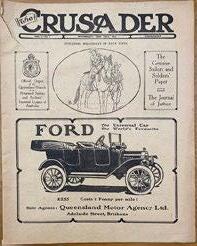
RSL Queensland publishes its first member magazine, The Crusader.
1914 - 1919
September 1917
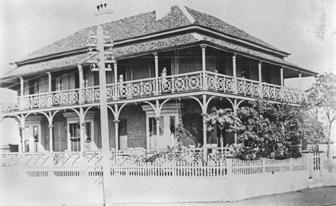
The RSSILA moves into its first permanent headquarters: The Residential Club.
November 1919
Members of the Australian Army Nursing Service become the first female Sub Branch of the RSSILA in Queensland.
Membership in 1920 6,967
1920 Membership crisis
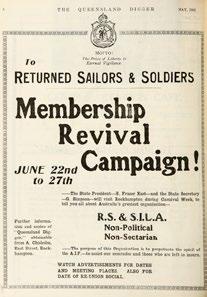
League membership plummeted in 1920 as returned men and nurses settled back into pre-war life, and recruitment campaigns became a stable feature of League business. By 1925, numbers had dropped to 2,960. In 1926, the decline finally stopped and the RSSILA slowly began to grow again.
1921
Federal Government funds RSSILA Employment Department.
1922
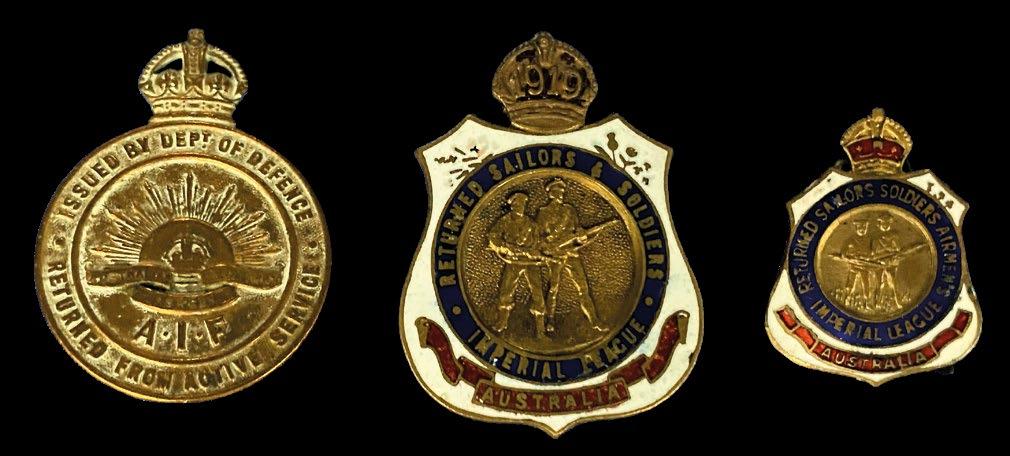
Miniature RSSILA badge issued.
Women’s Auxiliary established
1920 - 1929
April 1925
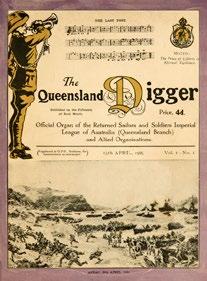
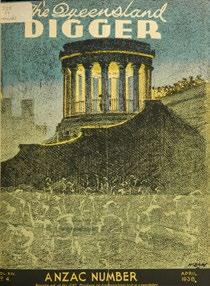
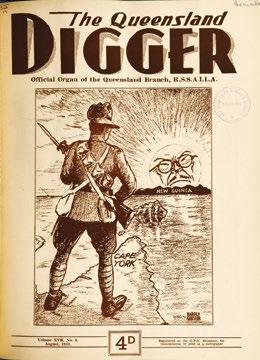
The launch of The Queensland Digger coincided with the 10th anniversary of the Gallipoli landing, featuring a cover painting of the battle by British artist Charles Dixon.
21 February 1924
December 1924
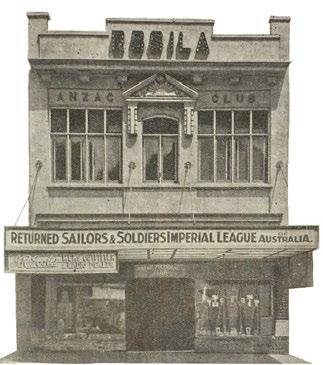
The first ANZAC House opens in Brisbane.
1926
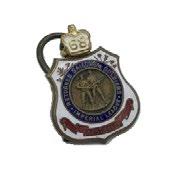
The large RSSILA badge is retired with the miniature version becoming the official badge.
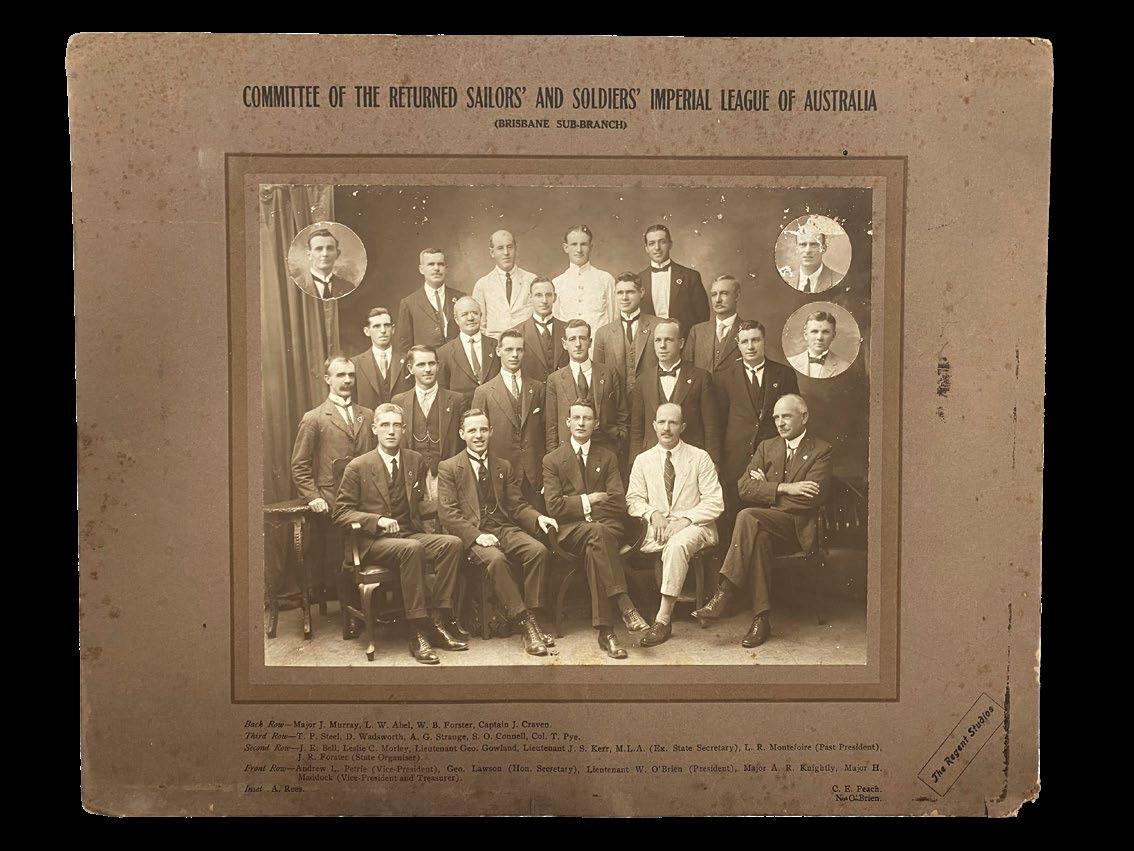
Hubert Fraser East elected State President
East is shown above (sixth from the left) with his District Presidents in 1924.
1930
Anzac Square completed in Brisbane.
The League was instrumental in lobbying the State Government to build Anzac Square.
Then State President James Cannan served on the Queensland National Anzac Memorial Executive Committee, and was joined by Hubert Frazer East in 1926.
1936
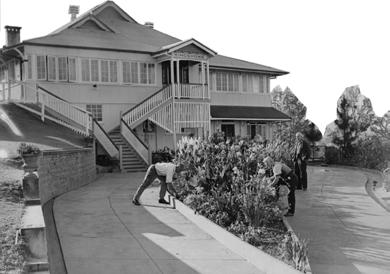
Queensland Branch establishes a War Veterans Home Committee.
April 1938
Ian McBain was commissioned to create this cover of The Queensland Digger in April 1938, drawing inspiration from the painting Menin Gate at Midnight.
1930 - 1939
6 December 1930
In December 1930, 31-year-old Raymond “Bob” Huish was elected the 12th State President of Queensland Branch. Huish was a captain of Queensland industry.
A strategic and hard-working President, Huish led the League continuously for 37 years and remains the longestserving State President in the League’s 110-year history.
18 June 1938
The King George V Memorial Home for Aged Soldiers opens in Swann Road, Taringa. Known as “Kingshome”, the property was donated by a Brisbane businessman and adapted to meet the needs of the RSSILA.
1 September 1939
World War II (WWII) begins as war is declared on Germany.
September
1939
With Australia again at war, the RSSILA swung into action, opening welfare marquees at Enoggera and Redbank Barracks, the Exhibition Grounds, and City Hall.
The Women’s Auxiliary was crucial to the operation and success of these facilities.
June 1940
RSL Volunteer Defence Corps formed.
February 1942
Fall of Singapore and Bombing of Darwin
1942
When men began returning home during WWII, the RSSILA underwent a name change and adapted its badge to include image of an airman.
December 1941
Australia declares war against Japan
1940 - 1949
August 1945
sold.
15 August 1945 Victory in the Pacific
1946
Queensland Branch sponsored 19-year-old Rhondda Kelly in the Miss Australia Quest.
Rhondda won the crown and raised £90,000 for ANZAC House.
1947
The Ex-Servicewomen’s Sub Branch formed in Brisbane in 1947 and members met regularly in the Nurses’ Association rooms.
Australia began its first peacekeeping mission with the United Nations.
ANZAC House
1950 - 1953
Korean War
1950 - 1960
Malayan Emergency 1955
The Dream Home Art Union was established in 1955, with its first draw held in 1956. Harry Dalziel VC was the face of that inaugural draw, and tickets were sold through Sub Branches and from an office the League leased across from the GPO.
August 1959
The third ANZAC House. In 1955, the RSSAILA purchased the Union Jack Club, and a new ANZAC House was opened by Princess Alexandra on 20 August 1958. The headquarters included residential facilities, a bar and a dining room.
1956
Returned Servicemen’s Badge Act passed by the Queensland Government.
31 May 1953
1950 - 1959
1957
Australian forces finally withdrawn from Korea
August 1959
State President Raymond Huish was knighted on 31 May 1953 for his dedication to ex-service men and women.
He was formally invested by a young Queen Elizabeth II during her 1954 visit.
RSSAILA’s Centenary Queen crowned. Held during Queensland’s centenary year, this quest raised money to pay for ANZAC House.
The winner - D’esley Jeffries – was announced in conjunction with the opening of the League’s new ANZAC House on Wickham Terrace.
1960
Girl in a Million Quest commences.
In 1959, the Centenary Queen Quest morphed into the Girl in a Million Quest, which continued until 2009 and raised more than $12 million to support the Queensland War Veterans’ Homes.
1965
The Returned Services League adopted its new name and badge.
Mid-1960s
The RSL shifted its focus toward family and social activities, with RSL Clubs growing increasingly popular.
1960 - 1969
1962 - 1973
Vietnam War
May
1962
In May 1962, the League dedicated the Shrine of Memories in ANZAC House.
The Shrine provided the League with a monument to WWI and a reflective space for visitors to ANZAC House.
July 1962
Vigilance replaces The Queensland Digger.
The name of the reformatted member magazine reflected the threat of communism that the RSL lobbied against for quarter of a century.
Membership end 1969 27,622
1967
Vigilance ceases production.
Raymond Huish retires.
1966 - c. 1972
During Operation New Life, Sir Raymond Huish (centre) delivered basic living essentials to South Vietnamese communities as part of the RSL’s wartime aid.
Sir
1962 - 1973 Vietnam War
1970
By 1970, the RSL was actively reaching out to the younger generation of Vietnam veterans to swell its ranks.
26 January 1970
Sir Raymond Huish dies at the age of 72.
1970s
1974
RSL starts lobbying government over upgrading Anzac Square as it has become the haunt of itinerants and polluted with graffiti.
RSL NSW’s member magazine Reveille distributed to members in the absence of a Queensland publication.
1970 - 1979
1973
New Constitution adopted after RSL Queensland becomes a member of the Incorporated RSL.
1976
The Department of Veterans’ Affairs (DVA) established by consolidation Repatriation, War Service Homes and Commonwealth War Graves.
Throughout the 1960s and 1970s, the RSL ‘Guess the Weight of the Bullocks’ was a regular fundraising feature at the Brisbane Exhibition, now the Royal Queensland Show (Ekka).
Two bullocks were donated each year and money was raised from the guessing competition and auction of the animals.
RSL introduces Service Members: former members of the Commonwealth military without active service.
A new badge (above left) differentiated their service from that of Ordinary Members (above right) who had seen active service abroad. Queensland resists this change for several years.
December 1985
ANZAC House sold and RSL Queensland moves its temporary offices into the crypt of Anzac Square.
1987
Vietnam veterans welcomed home 1983
RSL service membership is disbanded and all members now wear the same badge.
1984
Shrine of Memories relocated from ANZAC House to the crypt in Anzac Square.
1980 - 1989
September 1986
When the RSL’s Angus House opened on Bayliss Street, Toowong, in 1989, it became Australia’s first crisis accommodation facility for Vietnam veterans and set the benchmark for similar centres nationwide.
1988
As part of the Bicentennial Project, two sculptures were added to Anzac Square.
RSL Queensland opposes the destablishment of the Repatriation Hospital system in Queensland. Sadly, the veterans’ healthcare system was lost.
1989
Angus House opens in Auchenflower.
RSL Queensland’s member publication relaunched as Queensland RSL News.
1990-1991 Gulf War
1990
To reflect the changing nature of membership, the RSL was renamed the Returned and Services League and a service woman was added to the badge.
1993-1996 Rwanda Peacekeeping Mission
1993
Remains of the Unknown Soldier interred at the Australian War Memorial.
1998
Delegates at the 83rd State Congress vote to form North Brisbane District. This was the first new District in more than seven decades.
1999-2012 East Timor Peacekeeping Missions
July 1991
Angus House burns down.
July 1992
1990 - 1999
Angus House reopens at Bayliss Street.
1991-1993 Cambodia Peacekeeping Mission
1999
Delegates at the 84th State Congress vote to establish Gold Coast District.
1996
RSL Queensland’s War Veteran Homes celebrates its 60th anniversary. At the time, RSL was managing nine aged care facilities around the state.
2001-2021 War in Afghanistan
2001
Delegates at the 86th State Congress vote to establish Sunshine Coast and Regional District. 2002
2003-2009 War in Iraq
2005
Queensland RSL News gets an update when it reverts to a traditional magazine format and in colour.
Mackay District disestablished after hosting the 90th State Congress, with its Sub Branches becoming part of Central and North Queensland Districts.
2000 - 2009
May 2007
2009
Changing societal expectations around the role of women and increasing insurance costs influenced the end of the Girl in a Million Quest in 2009.
Over the 50 years that it ran, entrants grossed over $12 million for the RSL Queensland War Veteran’s Homes.
Korean War veteran Cecil Fisher OAM attends the RSL’s first Indigenous Veterans Commemoration Ceremony in Anzac Square in 2007.
Initially held during National Reconciliation Week in Cairns, Townsville and Brisbane, the event has become an annual event on RSL’s commemorative calendar.
ANZAC House # 3 opens
2012
RSL Queensland addresses the needs of younger veterans with the establishment of Soldier Recovery Centres at Gallipoli Barracks and Lavarack Barracks.
SOLDIERRECOVERYCENTRE
BRISBANE
2014
The Invictus Games launch, with RSL Queensland sponsoring athletes in the international sporting competition.
2017
RSL Queensland launches its Veteran Homelessness Program in partnership with the Salvation Army.
2013
RSL Queensland establishes Mates4Mates to support those impacted by service who need support to reconnect and recover.
2010 - 2019
2016
RSL Queensland celebrates its 100th birthday.
RSL Queensland establishes a partnership with Gallipoli Medical Research Foundation, after donating $1.75 million for PTSD research.
RSL Queensland returns to its early roots with the launch of the Transition to Employment Program.
2019
RSL Queensland partners with the Queensland Government to support the Premier’s Anzac Prize for secondary school students and teachers, a relationship that continues to this day.
2020
With the government restricting mass gatherings to limit the spread of COVID-19, RSL Queensland introduced Light up the Dawn - a socially distanced response to keep Australians safe while still honouring the ANZAC legacy.
2023
RSL’s flagship Veteran & Family Wellbeing Centre opens in Brisbane, offering a one-stop-shop for veterans and their families seeking support from RSL Queensland, Mates4Mates and other organisations.
2020 - 2025
2021
Veterans included in the Australian Census for the first time since 1933.
This gave RSL Queensland clearer data to better target support for veterans.
2021 - 2024
RSL Queensland supports RSL Australia to make several submissions to the Royal Commission into Defence and Veteran Suicide.
The Commission’s Final Report delivers recommendations that are largely accepted by government to drive national reform.
2022
RSL Queensland adopts a skills-based Board to strengthen governance.
2022 - 2024
2024
RSL Queensland’s prize home lottery underwent several name changes over its 69-year history, before returning to its roots with the Dream Home Art Union.
2025
The RSL has involved children in its activities since the early 1930s, when the League’s Sons of Sailors and Soldiers League formed.
Over the decades, this involvement has taken many forms, and today’s Postcards of Honour and Draw to Remember initiatives continue that tradition.
Centenary of The Queensland Digger
It takes a village: Yarrabah’s mission to uplift the veteran community
In the Indigenous community of Yarrabah, the local RSL Sub Branch celebrates 10 years of supporting and uplifting local veterans.
Jasmine Halley
Belinda Mason OAM and Michael Gillett
IN Far North Queensland just east of Cairns, the Indigenous community and beachside town of Yarrabah – home to the Gunggandji and Yidinji people – has a rich military history.
Yarrabah RSL Sub Branch President Greg Choikee says the military service of community members dates back to World War I.
“There’s a lot of military tradition here,” Greg explains.
“Past members include Carl Baker, who served in WWI and was buried in France. Stanley Connolly served in WWII and still has family here. His son, Father Michael Connolly – who is also the local priest – served in the Vietnam War and then his son, Tony, currently serves with the NORFORCE in Darwin.
“Another is James Canuto, who did two tours of Vietnam and drove a M113-A1 Armoured Personnel Carrier (APC). A few years ago, we organised for the exact APC he drove in Vietnam to be transported here to the Sub Branch. We even got it blessed by Father Michael Connolly. So yeah, there’s a lot of connections to the military here.”
While Greg is in his first year of presidency at the
Sub Branch, he – along with James Canuto – was also one of the founding members of Yarrabah RSL Sub Branch.
“There are a lot of veterans here, so we decided we needed an RSL; we needed to have somewhere to be,” Greg says. “So, we approached Cairns RSL Sub Branch and became a chapter initially, then after the probation period, became a Sub Branch in 2015.”
Supporting members of all generations
Throughout history, Indigenous service personnel had differing military experiences.
At the end of WWII, for example, non-Indigenous veterans were entitled to land and pensions when they returned home from service; Indigenous veterans were not.
During the Vietnam War, Yarrabah community members had to acquire a permit to leave their community to serve in the Australian Army because of their Indigenous heritage.
Greg understands that this history means Indigenous veterans may have different experiences or wellbeing needs, and is on a mission to make the
“Most veterans tend to close up when they leave the military –especially the younger ones – so we like to try and speak to them, bring them in, mentor them where they are.”
Tony Connolly.
The late Robert Patterson.
A selection of black and white images photographed by Belinda Mason OAM for the Serving Country exhibition hang on the walls of Yarrabah RSL Sub Branch.
James Canuto was one of the founding members of Yarrabah RSL Sub Branch.
Sub Branch a supportive and uplifting space for all veterans – no matter their age.
“Most veterans tend to close up when they leave the military – especially the younger ones – so we like to try and speak to them, bring them in, mentor them where they are,” Greg says.
“Every month we like to host meetings here at the Sub Branch, to allow them to open up and have a chat. We just want to give them the support we never had.”
Some of the younger members in the Sub Branch have also become involved with advocacy and
wellbeing training to support a few of the older members.
“Three ladies on our board are going through the training process to become carers and advocates for our members. They’ll even travel to the members that can’t come to the meetings and sit with them and their families,” Greg says.
Importance of commemoration and remembrance
Every year, Yarrabah RSL Sub Branch is involved with a number of local commemorative services. Greg
Scan to watch Video
Greg Choikee.
says these services are a meaningful way for the community to honour the military history of its local veterans.
“It’s important to honour ANZAC Day and Remembrance Day because we have a significant military history in our community,” he says.
“Remembrance is important because we’re all connected here; we’re all family.”
On ANZAC Day in particular, many community groups also like to get involved with the commemoration. Greg says local health centres, the aged care centre and a rehabilitation centre are big supporters of the service and always happy to contribute wreaths or organise food for the event.
This community engagement is important to Greg because it builds the presence of the Sub Branch and
allows veterans in the area to connect.
“It’s hard for some veterans to open up, but we try to make it easy for them,” he says.
“Looking into the future, my vision for the Sub Branch is to turn this building into a hub along the beachfront, where veterans can have a cup of tea and a sandwich, or just come down for a chat. Hopefully that will come about.”
Yarrabah RSL Sub Branch President Greg Choikee.
Bryce Barlow.
Advocacy support delivers positive outcome for Navy veteran
With the help of an RSL Queensland compensation advocate, Navy veteran Rebecca Connolly received the compensation she needed and took back control of her life.
Jasmine Halley
AFTERa challenging few years in the Australian Defence Force, Navy veteran Rebecca Connolly made the decision to discharge from the military at 22 years old.
“I was still quite young,” she says.
“I was struggling with my mental health, so I was given the option to either hang around a little longer and take a medical discharge or just take my five-year end of service agreement discharge.”
Immediately after Rebecca discharged, she attempted to submit some of her Department of Veteran Affairs’ (DVA) compensation claims herself.
“It wasn’t until many years later that one of my old colleagues told me that I needed to reach out to the RSL and talk to an advocate about getting compensation through DVA.
“I said back, ‘What’s an advocate?’.”
Navy veteran Rebecca Connolly pictured with her dog Orbit.
Finding the support she needed
After that conversation in 2021, Rebecca reached out to RSL Queensland and arranged an appointment to visit the Veteran & Family Wellbeing Centre in Cairns. There she met her compensation advocate, Debb Seabrook.
“Without Debb, I would not have been able to go through this process,” Rebecca says.
“She was very approachable, understanding and just open. She is understandably busy but would always make time for you and just be that listening ear. Or she’d point you in the right direction of what services there are and where to get support.
“Debb’s been my background supporter. From when I first walked into the office in 2021 to now, there’s been a drastically positive change in me and a lot of that is because of her support.”
With help from Debb, Rebecca now has a DVA Gold Card and recently received ‘permanent impairment’ status on all her claims that have been submitted to date.
“Receiving this outcome relieved a great level of stress and anxiety in my day-to-day life,”
Rebecca says.
“Now that I receive incapacity payments, I have that sense of financial security for the first time in a long time. I was living in fight or flight mode for so long, struggling to put food on the table for my family.
“But this outcome has made me feel calmer and I can now focus on getting my mental and physical health back. It has also allowed me to be more present for my family.
“I would never be in this position had it not been for the RSL.”
After Rebecca started visiting the Veteran & Family Wellbeing Centre in Cairns for advocacy support, she also started attending veteran social connection activities.
“I’ve participated in quite a variety of activities over the last year or two. I’ve done everything from resin pouring to Bonsai workshops, to art programs and leather and jewellery making,” she says.
Seek support from the get-go
Looking back at her advocacy journey, Rebecca encourages others in similar situations to reach out
Now that I receive incapacity payments, I have that sense of financial security for the first time in a long time. I was living in fight or flight mode for so long, struggling to put food on the table for my family.”
to an advocate for support.
“I tried to do it myself initially, but there was so much legislation that I didn’t understand.
“The whole process can be incredibly stressful if you’re doing it by yourself, so I’d highly recommend speaking with an advocate from the get-go.
“They’re familiar with the legislation, they’ve done the process before, and they’ve likely worked with someone in a similar situation to you.
“I think the best thing you can do is make the phone call and organise to have a chat with an advocate. It’s not only what’s best for you, but also what’s best for your family.
“Your claims won’t be solved in a day, but the process is gentle and supportive the whole time.
“And at the end of the day, it will potentially get you the support you need for yourself, your future, and your family’s future as well.”
Need help with your DVA claims or appeals? Learn more or contact our DVA Advocacy team: rslqld.org/advocacy
ABOVE: Rebecca credits RSL Queensland Compensation Advocate Debb Seabrook with helping her through the DVA claims process.
The history of the RSL badge
Less is more (1921) PART 3
A debate over size, cost and symbolism saw the RSSILA’s original badge give way to a miniature insignia – reshaping membership, identity and administration across the League in the early 1920s.
Dr Susan E. M. Kellett
THE significant size of the Returned Sailors’ and Soldiers’ Imperial League of Australia’s (RSSILA’s) first badge reflected the pride with which members perceived their status as returned men. At a whopping 30mm x 40mm, the insignia was marginally larger than the Australian Government’s Returned from Active Service badge and it dominated the lapels of the men who wore it.
As time passed and recognition of the badge grew, members began yearning for a smaller insignia.
“[It] is somewhat large,” confided then NSW State Secretary Arthur Potter to William Burns, the League’s General [National] Secretary, in early 1918, “and it would certainly meet with [members’] views that the badge be made smaller.”However, with the League in its infancy and other matters demanding his attention, Potter was unable to progress the matter further.
A new State Secretary
Following Potter’s resignation in mid-1920, Gallipoli veteran Roland Hastings was appointed NSW State Secretary. After settling into his new role, Hastings turned his attention to the badge.
Working with a local firm of returned men, he had six small insignia struck. At the January 1921 Federal
Executive (RSL Australia) meeting, NSW’s motion to adopt a miniature badge was carried, subject to the majority of RSSILA State Branches agreeing to the change. William Henderson, the then General Secretary, distributed the six sample badges to the State Branches. When Hastings requested permission to order 5,000 insignia, Henderson reminded him that “until I get permission of the majority of State Executives in regard to the adoption of the miniature badge, the Federal Executive is not empowered to place the order”.
Pros and cons of a new badge
A compelling advantage of the miniature badge was price. Hastings had negotiated the miniature for half the cost – 9 pence (d) – of the large insignia. However, this saving needed to be balanced against the replacement of nearly 50,000 badges nationally. He devised a cost-neutral solution where a member paid 18d for the insignia, its postage and other administrative costs. Victoria and NSW immediately agreed to adopt the miniature badge, as did Queensland, but only after the latter exhausted the several hundred badges it had on hand. The timing of the change was another complicating factor. State Branches were issuing the 1921 financial clips – the
ABOVE: From left to right, the Returned from Active Service Badge, RSSILA Badge with 1919 financial clip attached and the RSSILA Miniature Badge (Source: RSL Queensland Papers).
small metal tag that attached to the crown of the badge and showed a member was financial – and these were too large for the miniature insignia.
The smaller states did not have the same capacity as the larger ones to absorb this cost along with that of a miniature clip. This may have influenced South Australia and Tasmania to vote against the change. Western Australia Branch likewise perceived the miniature badge to be “detrimental to the best interests of the members” but referred the decision to Federal [National] Congress in August 1921.
NSW goes its own way
For NSW Branch, waiting six months for Congress was not an option. During 1920, many of its members failed to renew their annual subscription and numbers plummeted from an estimated 27,000 to 8,241 men. In late February 1921, State Executive implemented an ambitious recruitment campaign that relied upon the miniature badge to attract new men and provide State Executive with an accurate census of members.
Hastings, who had ordered 10,000 of the diminutive insignia, wrote to Henderson on
RIGHT: William J. Henderson was the RSSILA’s fifth General Secretary. He was a veteran of both the Boer War and World War I. (Diggers Gazette, 21 March 1921, 6).
2 March 1921. “To holdover the purchase of these badges… until full Congress… would be to defeat the avowed object of the NSW Branch to secure 50,000 financial members in 1921,” he declared, before adding that NSW was “quite prepared to defend their action at the meeting of the Federal Congress”. However, Henderson did not reply. He had been admitted to Caulfield Military Hospital, where he died unexpectedly on 9 March.
Frederick Forrest replaced Henderson as the League’s General Secretary. He did not contest NSW’s actions; the economic advantages of the miniature badge were evident, and its growing popularity made the insignia’s adoption inevitable.
While Forrest remained unable to source the smaller badge, he did acknowledge that State Branches might independently obtain their own. Queensland Branch began issuing the new badge in June 1921 after its State Secretary, Edward Dibdin, purchased 1,000 insignia from Hastings.
As anticipated, the miniature badge was adopted
as “the official Badge of the League” at the August 1921 Federal Congress. It was also decided that State Branches be empowered to “make their own arrangements for the supply of badges and financial clips”. This change benefited both Federal and State Branches by reducing the onerous workload that managing the badge entailed.
Another challenge
With the miniature badge adopted, State Branches anticipated that the large version would become redundant. This was not the case.
With Federal no longer managing the badge, the states were left to oversee its roll-out. For new members, nothing changed and an insignia was still issued upon joining. However, for those renewing their subscription, the process varied across jurisdictions.
All State Branches mandated that a miniature badge could only be issued after payment of the annual subscription. However, while Victoria and NSW provided a free insignia, South Australia, Queensland
Edward Dibdin (back left) was Queensland State Secretary before being appointed the League’s General Secretary in 1924. He is shown with the Federal President Gilbert Dyett (seated) and Frederick Forrest (standing right) in 1927. G. L. Kristianson, The Politics of Patriotism: the Pressure Group Activities of the Returned Servicemen’s League. (Canberra, ANU Press, 1966), 234.
BELOW:
and Tasmania charged between 10d and 18d per badge.
Understandably, some men refused to pay for a second badge and continued to wear their old one. Most states also required the old badge be surrendered before a new one was issued. In Victoria, however, a man could retain the large insignia for “sentimental or other reasons” if he paid a 12d levy for its replacement. While the miniature badge proved immensely popular and most members adopted it regardless of the conditions imposed upon issue, a minority of men continued to wear the old insignia.
However, with the financial clip no longer fitting the latter, the League feared that these men were unfinancial and abusing the privileges the badge bestowed. This anxiety simmered until 1926, when Queensland became the first State Branch to formally abolish the original badge.
*References available upon request.
Part 4 of the history of the RSL badge will continue in a future edition of Queensland RSL News.
To read other articles in this series, visit rslqld.org/news and search ‘history of the RSL badge’.
ABOVE: Members of the now defunct Brisbane RSSILA Sub Branch shown wearing both the large and miniature versions of the badges in 1922 (RSL Queensland Papers).
Finding purpose and a career
Veteran partner Wade Rix found his new calling through the RSL Employment Program.
Jasmine Halley
SINCE
he was a kid, Wade Rix always wanted to work on the frontline –whether that be as a police officer, firefighter or even in the military. But a hearing impairment meant he had to rethink his childhood dream.
For many years, Wade worked as a pilot escort driver, travelling in front or behind a truck with wide or oversized loads. In this role, he traversed up and down the east coast of Australia.
“Most of the jobs I’ve done involved driving,” he says.
“But when I had to hand in my driver’s licence due to a worsening vision impairment, I felt a bit defeated.
“I was born with a hearing impairment, which I learnt to live with, but when I found out I now couldn’t drive, I felt my window of opportunities minimise.”
Wade’s wife, an Army veteran, advised him to get in touch with the RSL Employment Program, which helps veterans – as well as the partners of veteran and current serving Defence members – find meaningful work.
“I reached out and they were super helpful and considerate of my situation from the get-go,” he says.
“To me, it wasn’t necessarily about finding another job. I was looking for my next career. Finding that sense of purpose again was very important to me.”
More than a job
Early in the program, Wade’s employment consultant helped identify his foundational interests and values. She then used these to suggest career paths that aligned with not only his previous experience, but also with him personally.
“I did this career quiz, which places you into a category and identifies potential jobs in that category,” he explains.
Veteran partner Wade Rix is now studying a diploma in counselling and working as an educator at a before and after school care agency.
The tool is designed to help individuals explore suitable occupations based on their interests, preferences and aptitudes.
“It opened my eyes up to what’s actually out there. I didn’t even know that a lot of the recommended jobs existed!” Wade says.
“I liked the idea of becoming a counsellor because I’ve always had a desire to care for and help people, and when I found out that counselling fell into my category, that just solidified it for me.
“So now I’m studying a diploma in counselling and am also an educator at a before and after school care agency.”
Wade’s daily duties include setting up activity areas for the children to play in, organising breakfast or
afternoon tea, and generally looking after the students.
“Just interacting with the kids and building that bond with them is probably my favourite thing about the role,” Wade says.
I would 100% recommend the program to other veterans or their partners. I went from not knowing what to do, to finding my ideal career, to now growing within my company.”
“Knowing that I’m making a positive impact on their lives is really special, and I also get to be a kid again and let my inner child come out.
“And because I’m planning to go down the counselling path, this role is great experience if I ever wanted to become a school counsellor.”
Now almost a year into this role, Wade has recently been promoted to take on more responsibility.
“Career growth opportunities have always been important to me,” he says.
“And because this company has services all over Australia, there are heaps of opportunities for a new role or growth within the company.
“It’s important to me to be able to keep growing and not get stuck doing the same job.”
Find your fit
If it hadn’t been for the RSL Employment Program, Wade says he would never have been exposed to the opportunities that were out there for him.
“I didn’t know where to go or what to do when I initially reached out; I was basically lost,” he explains.
“I would 100% recommend the program to other veterans or their partners. I went from not knowing what to do, to finding my ideal career, to now growing within my company.
“My employment consultant also helped me with my resume and gave me great tips on how to prepare for interviews.
“I would never have gained these skills, or be where I am today, had it not been for this program.”
Looking for career support?
Available nationally, the RSL Employment Program is open to ex-serving Defence members and current or ex-serving Defence members’ partners. Learn more at rslqld.org/services/employment-support
FORGED UNDER FIRE
Remembering Australia’s Allyship
‘Forged Under Fire’ commemorates over a century of partnership between Australia and Jordan, highlighting the cooperation of Australian and Hashemite-led forces during the 1918 Great Arab Revolt.
A near-forgotten chapter of WWI
Camella Brightman Brayden Davies
Over eight months in 1918, Australian forces coordinated with the Great Arab Revolt, forming close bonds that laid the groundwork for Australia’s enduring friendship with the Hashemite Kingdom of Jordan. In 2025, Australia and Jordan celebrated the 50th anniversary of formal diplomatic relations.
Produced by the Australian Embassy in Amman, Jordan, and supported by RSL Queensland, ‘Forged Under Fire’ is a historical documentary that explores the partnership between the Australian troops and the Arab Revolt forces, who fought concurrently against the Ottoman Empire.
The Queensland premiere took place at The Southport School (TSS) on the Gold Coast – a 124-year-old institution with a proud legacy of service. Distinguished guests attended from around the region, including RSL Queensland State Vice President Brigadier Arran Hassell CSC.
Before the screening, BRIG Hassell told the audience of guests and students of TSS’s Cadet Program that RSL Queensland was proud to support a project that keeps the stories of our soldiers alive.
“This film will help Australians remember those who fought in distant lands. That’s a worthwhile investment of our time, effort and money,” BRIG Hassell said.
“What a great resource for our whole nation and for schools like TSS. This documentary offers Australians the opportunity to learn about a battle and a conflict that many may never have heard of, but which is an important part of our history.”
TSS Director of Cadets and Outdoor Education, Jason Sten CSM, echoed the sentiment of remembering the sacrifices of service, and the importance of showcasing this to the school’s cadets.
“‘Forged Under Fire’ tells the story of courage, mateship and endurance: the same values that underpin the TSS Cadet Program. Hosting the Queensland premiere at TSS is not just a proud moment for the school, but also a chance to inspire our cadets and community,” Mr Sten said.
Honouring the Australian Light Horse
Narrated by Australian military historian James Brew, the film tells the story of the bravery and sacrifice of Australian military forces in the 1918 Jordan Valley campaign, noting it as one of the least known theatres of WWI.
The film features incredible photography from the book of the same name, including an image (pictured on the opening spread) from April 1918, taken near the Ghoraniye Bridgehead on the eastern bank of the Jordan River, of the 5th Light Horse Regiment: Queenslanders manning an outpost days before battle.
Australian Light Horse Association Queensland Director Kym Flehr also attended the Queensland premiere, before being joined by Chris Rowen, Troop Commander of the 11th Light Horse Darling Downs, and his horse, Frazzle, at a wreath laying ceremony following the film.
The more than 2,500 Australian casualties in the 1918 campaign were remembered and honoured, including the nearly 80 Australian soldiers still resting in the soil of Jordan.
With Mr Sten playing the harmonica, the wreath was laid at TSS’s own ‘Memorial for the Fallen’ at the top of the school grounds, officially unveiled last year to commemorate the First 52 – the Old Boys of TSS who gave their lives in WWI.
A legacy of sacrifice
The First 52 are the foundation of the TSS Cadets
Program, one of Australia’s largest Army and Navy cadet units, established in 1901.
“By remembering them, our cadets understand that they are part of something far greater than themselves: a brotherhood that spans generations,” Mr Sten said.
“Every time our cadets don their uniform, they carry the memory of the men who stood for honour, service and sacrifice.”
The school’s connection with the Australian Light Horse Brigades made it the perfect location for the ‘Forged Under Fire’ Queensland premiere, with TSS cadets honoured that their school was recognised in this way.
“I’m honoured, not only because I’m part of something bigger than myself, but because it’s so ingrained in the TSS history,” Cadet Clancy Cohen said. “Every Old Boy who’s come through TSS has been part of cadets and it’s really special.”
RSL Queensland State Vice President, Brigadier Arran Hassell CSC, left, with Australian Light Horse Association Queensland Director Kym Flehr, Troop Commander of the 11th Light Horse Darling Downs Chris Rowen and his horse, Frazzle, and TSS Old Boy, John MacDonnell.
“The premiere really shows how much TSS has become part of the community and the RSL,” Cadet Harry Powell added. “I’m proud to be a cadet and honour those who have come before us.”
The school’s relationship with RSL Gold Coast District also plays a supporting role for the cadets.
“The RSL provides a living link between our cadets and the men and women who have worn the uniform before them,” Mr Sten said.
“Through that connection, our boys gain perspective, gratitude and a sense of continuity. They get an understanding that service to others is not a moment in time, but a lifelong commitment.”
Commemorating a lasting partnership
In helping to tell this story and supporting ‘Forged Under Fire’, RSL Queensland honours the bravery of the Australian Arab Revolt fighters and allies who
Scan to watch Video
‘Forged Under Fire’ is now available to watch online, revealing more about the bravery and sacrifice of Australian military forces in the 1918 Jordan Valley campaign.
fought side by side in 1918 to bring an end to Ottoman rule: a testament to the courage, unity and shared sacrifice of all involved that continues to resonate today.
Celebrating a show like no other
NOTeven the rain could stop four back-to-back nights of the dazzling, Brisbane-exclusive showcase of the Royal Edinburgh Military Tattoo.
An estimated 150,000 fans from across Queensland, and even across the globe, made their way to Suncorp Stadium from 12–15 February to see military bands, cultural troupes, rich storytelling and cutting-edge visuals.
The show featured more than 1,000 of the finest performers from the UK, Europe, USA, Australia, New Zealand and beyond, including Australian Defence Force musicians, Scottish bagpipers, massed military bands, Tattoo dancers and more.
Watching on in awe, attendees of all ages enjoyed the spectacle, commenting that it was a show like no other and, for some, worth the long journey to get there.
“It’s music that we used to go into battle with. It’s music that gets you fired up. It gets right down into your soul and in your gut,” one showgoer shared.
ABOVE: RSL Queensland State President Major General Stephen Day DSC AM, right, joined the parade down Caxton Street, alongside, from left, Royal Edinburgh Military Tattoo CEO Jason Barrett, Queensland Premier David Crisafulli and Queensland Minister for the Environment and Tourism and Minister for Science and Innovation Andrew Powell MP.
Honouring our people
The Tattoo’s theme, ‘The Heroes Who Made Us’, celebrated its magnificent 75-year history and all who have helped defend, support and enrich our communities.
With the show’s theme top of mind, many attendees reflected on their volunteer work and what they do to support their local RSL Sub Branch community.
“My dad served with the Queensland Cameron Highlanders, the 61st battalion. When I was old enough, I joined straight away. I did my National Service in 1956. I didn’t go overseas but now I’m looking after the guys that did,” a veteran remarked.
By sponsoring the event, RSL Queensland proudly celebrates the many individuals who make a difference – whether through military service or volunteering.
RSL Queensland was proud to help bring the iconic Royal Edinburgh Military Tattoo to Queensland for the first time in February 2026. To celebrate the show’s theme, ‘The Heroes Who Made Us’, we’re spotlighting RSL Queensland members – like Jock and Elsie – whose heroic stories are woven into the fabric of our history.
Helping the community one conversation at a time
Drawing on his own journey from service to civilian life, paramedic and veteran Jock Ruthven is helping lead a grassroots mental health movement at Kilcoy RSL Sub Branch, ensuring no veteran is left behind.
Ellise Gill
HAVING
experienced the ups and downs of life after service firsthand, paramedic and veteran John ‘Jock’ Ruthven knows what it takes to support his community.
With a 28-year career in healthcare, and an impressive service history under his belt, Jock wanted to use his unique set of skills to help others.
Now he’s part of a dedicated group of veterans at Kilcoy RSL Sub Branch committed to changing the narrative around mental health, ensuring no one is left behind.
Transition to civilian life
At 15 years of age, Jock began his military career in the United Kingdom as a Junior Leader in the British Army, then Royal Navy, before transferring to the New Zealand forces in 1997. During his time in service, Jock was deployed to the Gulf, former Yugoslavia and Fishery and Border protection duties around the UK and Ireland.
In 1999, Jock, then settled in New Zealand, transitioned out of Defence, working as a firefighter and paramedic.
Despite finding employment after resettlement training, Jock, like many other veterans, found it difficult to adjust to civilian life: finding housing,
navigating relationships and adopting a ‘new normal’ without the security of military life and routine.
“... you’re coming from a secure environment where everything’s provided and then next minute you get nothing provided and it’s all up to you,” Jock says.
Finding a renewed purpose
Upon moving to Kilcoy in 2023, Jock reconnected with his local RSL Sub Branch, bringing with him a sense of duty and a passion for mental health.
“I’ve always been a member of the RSL, and when I came to Kilcoy, I knew a couple of diggers here. I started off mowing the grass around the monuments. On my days off I’d go up and clean, and eventually that transitioned to doing bingo on Sundays,” Jock says.
“At the same time, I was still seeing so many veterans in crisis through my work [as a paramedic]. I wanted to find a way to help address the problem and help our community.
“I had spoken to a few service people in the area who weren’t mentally well, or something just wasn’t right. So, we went right, this is what we’re going to do. We’ll put this mental health support in place so we can actually do things.”
Small community, big heart
Though Kilcoy only has a population of just over 2,000 people, at its heart are 217 Sub Branch members who are all working towards a better, brighter future for their community.
Jock and his RSL comrades now run a fortnightly service, offering mental health education and handson support for members and their families. The service focuses on breaking cycles, challenging addiction, and self-motivation, with members like Jock using their lived experience to enable veterans on their recovery journey.
“It’s about the love of the people, isn’t it? I’ve been a paramedic for 28 years because I enjoy my job and I enjoy engaging with the community,” Jock says.
“When you’re helping someone out of a dark period, I know what to do because I’ve been there myself.”
Though still in its infancy, the program at Kilcoy RSL Sub Branch has already seen success and partnered with a number of local organisations to ensure veterans receive ongoing support.
“I’ve had people come in with PTSD and other issues, and now I see them engaging in the
community, being social and attending the gym – in short, breaking the cycle and taking full advantage of what life has to offer,” Jock says.
Stay the course – it gets better
In the future, Jock hopes to see this model extended to other Sub Branches to provide ‘on the ground’, practical support for those in need.
His message to veterans who might be struggling is simple. “Stick to it. It gets better; it always gets better. And if you ever need a hand with anything, then reach out to someone. There’s plenty of people around who will help.”
Need support?
If you need support or someone to talk to please reach out to Open Arms – Veterans and Families Counselling on 1800 011 046 or Lifeline crisis support on 13 11 14.
Eat your porridge and go dancing: The life of Elsie Dalzell
WWII veteran and centenarian
Elsie Dalzell has lived a life defined by service, enduring friendships and a legacy of duty that now spans four generations.
Ellise Gill
“EAT your porridge, work hard and go dancing.” At 104, WWII veteran Elsie Dalzell swears by this recipe for a long life, though she rarely talks about the extraordinary years she spent in service.
Growing up, Elsie’s daughter Lyn said her mum was hesitant to speak about her military time, preferring instead to focus on the generation before her.
“We knew more about mum’s uncles who served in World War I. All I can remember is that mum had a big great coat from her time in service, which got a lot of use out in Chinchilla on the farm. But mum never talked about it,” Lyn says.
Eyes on the sky
In 1942, Elsie applied to enlist in the Australian Women’s Army Service (AWAS). Just shy of 21 – the enlistment age at the time – she needed her mum’s signature on the application.
“You read in the papers that they’re wanting more girls and so forth. I asked mum, ‘Could I please?’,” Elsie says.
“I just thought things were getting that bad at the time that I wanted to help,” she told Noosa Today’s Margie Maccoll in a 2020 interview.
Her application was accepted, and just six months later, Elsie left the family farm for the first time, travelling to Brisbane and then onto New South Wales for training at Kapooka.
As one of the first female units to train at the camp, a separate section was allotted to the AWAS, with troops taking up residence in tents on a paddock.
While training, the unit shared rations of canned meat, powdered eggs and peas, buoyed by the occasional ice cream to remind them of the comforts of home.
In March 1943, Elsie returned to Brisbane and was assigned to the 56th Searchlight Battery, Royal Australian Engineers.
She took part in staging at Enoggera Barracks before ultimately joining the 79th Searchlight Battery later that year in Townsville.
“I worked in the operations room. The team was comprised of four people: two plotters, one recorder
and one telephonist – me,” Elsie says.
The 79th Searchlight Battery stayed in tents at Pallarenda Beach, taking shifts watching the skies to alert the base to any danger.
During her time in the unit, Elsie studied to identify potential threats and formed a lifelong friendship with fellow troop member Daisy.
Reflecting on the friendship between her mum and Daisy, Lyn says they were like chalk and cheese.
“They called mum ‘Silence’, whereas Daisy was a lot more outgoing. It’s been lovely to look through the old letters between them to see the early days of their friendship and learn more about their time with the unit. We always called her Aunty Daisy,” Lyn says.
Peace at last
In 1944, the Searchlight unit was disbanded, followed closely by the end of World War II.
When peace was declared, Elsie fondly remembers “dancing the Laconga up the main street of Southport”.
“It was an exciting time for all of us,” she says.
Her military career continued after the Searchlights, with Elsie serving as a switchboard operator in military intelligence schools across Southport, Beenleigh and Cabarlah.
Returning home
Elsie was discharged on 26 January 1946 and returned home to the family farm located 30km out of Chinchilla.
Reflecting on the transition from service to civilian life, she says with her trademark wry wit, “I don’t know that it had much effect on me”.
Using her finely tuned skills, Elsie quickly embraced the family business, helping to work the farm and operate the Beruna switchboard alongside her mother.
Lyn, who grew up watching her mum and grandmother deftly manage and transfer calls, couldn’t wait to join the fold.
“I used to be really buzzed when I was allowed to work it myself.”
It wasn’t until the 1980s, when Elsie and her husband Eric moved into Chinchilla, that she connected with the local RSL Sub Branch.
Elsie says joining the RSL felt like “being part of the gang”.
In her early years, she took part in Women’s Auxiliary activities, and as her mobility changed, the Sub Branch organised a mobility scooter so she could remain involved.
Since moving to be closer to her daughter Lyn, Elsie has joined Cooroy-Pomona RSL Sub Branch and now receives weekly calls from senior member John Diprose.
“Mum’s days of contributing are over, but now it’s nice that she’s on the receiving end,” Lyn says.
The next generation
Elsie attended the 2026 Royal Edinburgh Military
Tattoo in February with her family, including her great grandsons, brothers Luke and Nic McGahan.
She especially enjoyed seeing Nic play in the pipe band.
“It was such an honour to be able to play at the Tattoo in Brisbane and know that my Great Nanna was finally able to see me play live – not just on TV. Every time Great Nanna hears I am coming to visit, the first thing she asks is if I can bring my bagpipes just to give her a little private recital,” Nic says.
“Great Nanna is one of the main reasons I started playing bagpipes in the first place. She loved coming to watch my brother and I play when we were at school. Over the past four years I have played at the World Pipe Band Championships as well as The Royal Edinburgh Military Tattoo, but travelling to the UK is a bit far for her now. However, having the show in Brisbane this year meant she got to see how far I’ve come and got to watch the Tattoo live for the first time.”
Elsie’s great grandsons have proudly carried on her legacy, wearing family medals at Warwick Scots PGC College ANZAC Day ceremonies, and in Luke’s case, pursuing a military career himself.
“I think Great Nanna’s experience subconsciously influenced my career path. It made me want to serve and honour our family legacy,” Luke (Leading Aircraftman) says.
“I distinctly remember my first Christmas seeing her after joining Defence six years ago. She asked for my service number. Without missing a beat, she rattled hers off like it was yesterday. I was extremely impressed.
“Going to the Tattoo as a family was an incredible feeling and a memory I will cherish for a very long time to come.”
SYDNEY
MORNINGTON PENINSULA
GOLD COAST
SYDNEY MORNINGTON
Win
Win not one but three luxury units – Gold Coast, Sydney and Mornington Peninsula. Get in quick, closing soon: $12M + $1M gold!!
dreamhomeartunion.com.au 1300 775 888
“I
got my first tickets as a birthday gift”
Congratulations to Andrew* from Brisbane, winner of Dream Home Art Union Draw 429: A $13 million Burleigh ‘Dune’ dream!
This incredible $13 million win means Andrew has officially stepped into a life of coastal luxury. As the proud holder of ticket 11922580, Andrew was left speechless when we called to deliver the life-changing news that he is now the owner of the breathtaking Burleigh Beach mansion known as ‘Dune’.
Perched high above the coastline, this bold, sculptural masterpiece commands panoramic views of the Pacific Ocean. With its sweeping architectural lines, light-filled interiors and tranquil outdoor spaces, ‘Dune’ captures the very essence of Burleigh’s surf, style and serenity.
And with $500,000 in gold bullion included and a grand Christmas tree surrounded by beautifully wrapped presents, the win meant a truly magical Christmas for Andrew.
Now comes the exciting decision: will Andrew move in and make Burleigh home, or sell and enjoy a new level of financial freedom? Whatever he decides, one thing is certain: a bright, golden future lies ahead.
“I got my first tickets from a friend as a birthday gift, and I loved the prize so much that I bought more. I even drove down to Burleigh to look at the house from the beach. I’ve always dreamed of owning a Graya house, but I could never afford one. Now I do, and I couldn’t be happier,” says Andrew.
As a $100 ticket book buyer, Andrew also wins a bonus $100,000 in gold!
Congratulations, Andrew, we wish you all the best for the future ahead in your stunning new Burleigh beach home.
A heartfelt thank you to everyone who supports Dream Home Art Union. Each ticket sold supports veterans and families.
*Name changed for privacy reasons.
01
Celebrating young leadership
The Athol Jory Memorial Perpetual Trophy was presented to LCDT Jack Woodcraft of 220 Sqn AAFC, based at Aviation High, Hendra. Athol Jory was a member of Banyo RSL Sub Branch who served in Vietnam and was awarded the DFC, MBE and the Emergency Services Medal. He passed away in July 2025. The perpetual trophy was presented by Banyo RSL Sub Branch President Michael Frawley, with the keeper trophy presented by Athol’s granddaughter, Vanessa Wilson.
02
Christmas hamper surprise Janet Pearson, left, and Leigh Smith were presented with RSL Queensland hampers at the Banyo RSL Sub Branch Christmas lunch. Leigh, a long-standing Board member, has sold badges for ANZAC Day and Remembrance Day and been involved with Air Force Cadets for more than 40 years. Janet, a valued war widow, also sells badges and attends CAMEO functions.
03
Barcaldine students recognised Barcaldine State School students Penny Chandler and Ronnie Morton were recognised by the local Sub Branch at the end of 2025 for demonstrating the values of service, courage, respect, integrity and excellence. Sarah Lima is pictured presenting both students with their awards.
01
Family receives hamper
An RSL Queensland Christmas hamper was gifted to worthy local residents the Wenham family.
02
Cooling off and connecting Bell RSL Sub Branch has successfully secured funding through the Gambling Community Benefits Fund for three air-conditioning units and a solar installation, allowing much greater use of its building. With the new air-conditioning in place, the Sub Branch now hosts a monthly men’s breakfast run by the Bell Health and Wellness Sub-Committee, a mahjong group that meets twice weekly, and weekly yoga classes.
03
Fitting memorials for brave soldiers
Bowen RSL Sub Branch members gathered on 22 November to honour Private Edward Edwards and Lance Corporal Edward Henry Hammond, two World War I veterans whose graves were unmarked. After researchers highlighted their stories, the Sub Branch pursued commemoration for five veterans, with three receiving official Office of Australian War Graves recognition. Edwards and Hammond were ineligible, so the Sub Branch secured local funding for plaques.
04
Pedalling for remembrance
Cairns RSL Sub Branch members recently came together for a special morning tea and guest presentation with Queensland RAAF veteran Mic Whitty (pictured, centre, with Sub Branch volunteer Kel Ryan, left, and Sub Branch President
Mic spoke candidly about his extraordinary 30-year cycling mission to visit every Commonwealth War Graves cemetery worldwide, a journey inspired by rediscovering his grandfather’s 1916 war diary. He also shared how the project became a turning point in his own life, helping him rebuild after experiencing homelessness. Ten years into the ride, Mic’s story is one of resilience, purpose and honouring the service and sacrifice of those who served.
Nathan Shingles, right).
05
Student awarded $3,000 scholarship
Centenary Suburbs RSL Sub Branch has awarded a $3,000 scholarship to local high school student Cody Roys. An Air Cadet with aspirations to join the Royal Australian Air Force, Cody was selected to travel to the Australian War Memorial with his father, complete a research project and present his findings in an essay and address to the Sub Branch’s general meeting.
Pictured, from left, are Brett Roys (Cody’s father), Sub Branch President Georges Lefevre, scholarship project leader Warren Tapp and scholarship recipient Cody Roys.
06
Connection over afternoon tea
Cooktown RSL Sub Branch war widows came together for afternoon tea at Shipwreck Café in Cooktown on 11 October 2025. The ladies were hosted by Julie Oliver, Bev Stone and Gaby Howarth.
08
Emerald keeps the flag flying
Emerald RSL Sub Branch
President Noel Mallyon and committee member Danny Milgate erected a new flagpole at the home of Margaret Tutt, whose late husband and two sons served in the ADF.
After her flag became worn, Noel and Margaret Mallyon presented Margaret with a new Australian flag, ensuring her family’s tribute continues and encouraging the community to fly the flag with pride.
01
Honour board returns home to Emerald
After decades of mystery, Emerald’s lost World War I honour board has been lovingly recreated and installed at the Emerald Railway Station. Commissioned by Emerald RSL Sub Branch, the replica was meticulously crafted by local artisan Michael Brosnan using only a faded newspaper photo for reference.
Sub Branch President Noel Mallyon says seeing it finally in place felt like “welcoming it home.” The project brought together local trades, Queensland Rail and community groups, including the Emerald Tigers Rugby League Club, who helped fund the protective frame. A second display now also honours veterans from later conflicts.
02
Veteran recognised in front of his family
In December, Goodna RSL Sub Branch member David Lloyd was surprised at his retirement village with the presentation of a Quilt of Valour by Ross Wadsworth CSM, a moment that left David deeply moved.
A former member of the British Parachute Regiment, David completed more than 100 parachute jumps during his service. The ceremony was held in front of family, friends and fellow residents, with David pictured alongside four generations of his family as his service was honoured.
03
Toowoomba ESOs roll into Veteran Health Week
Harlaxton RSL Sub Branch hosted an ex-service organisation (ESO) social bowls day at Northies
Toowoomba during Veteran Health Week, bringing together veterans and families from local ESOs for a relaxed day of lawn bowls, camaraderie and sunshine. The event celebrated connection, friendly competition and community
support. Pictured, from left, Ted Fry from Nashos Toowoomba, Harlaxton
RSL Sub Branch President Tim McCrorey, Nashos Toowoomba Treasurer Dennis Gillbard and Tony Cameron from Northies Toowoomba.
04
Maroochy RSL delivers Christmas cheer
Maroochy RSL spread Christmas cheer across the Sunshine Coast, delivering more than 130 hampers to veterans in aged care, hospitals and private homes. As part of Maroochy RSL’s 91-year legacy of support, Wellbeing Support Officers ensured vulnerable members felt remembered, valued and connected during the festive season.
05
Camaraderie on the course Veterans participated in a Golf 4 Ball Ambrose team event on 21 November as part of Veterans’ Health Week. The event was sponsored by North Queensland RSL District and the Department of Veterans’ Affairs and took place at Tropics Golf Club in Kirwan. The winning team were Dan McIntosh, Tim Bailey, Ethan Andrew and Sam Crowley.
06
Life Membership honours Bruce Coulton’s service
Mudgeeraba-Robina RSL Sub Branch has awarded Life Membership to longserving member Bruce Coulton in recognition of his outstanding service. Despite personal challenges, Bruce has dedicated years to welfare support, fundraising and governance, exemplifying the spirit of service, mateship and commitment to veterans and their families. Bruce is pictured with his daughter, also a veteran, and son-in-law.
07
Doreen Mortimore recognised
Ravenshoe RSL Sub Branch has awarded Life Membership to Army veteran Doreen Mortimore for her outstanding dedication. Over more than 23 years, Doreen has held every executive position at the Sub Branch – treasurer, secretary, vice president, president and delegate – while supporting fundraising and catering for countless events. Her contributions extend beyond the RSL, including community organisations, hospital visits and local festivals, demonstrating commitment to veterans and the wider community.
01
75th anniversary of RAANC recognised at lunch
On 6 December, Crows Nest RSL Sub Branch proudly hosted its 93rd annual luncheon. The lunch marked the 75th anniversary of the formation of the Royal Australian Army Nursing Corps (RAANC). Guest speaker MAJ Roz Glass, Officer Commanding of the Oakey-Cabarlah Health Centre and a serving RAANC member, said she was “chuffed” to represent her Corps on the occasion.
MAJ Glass is pictured (centre) with Toowoomba Regional Council members and Sub Branch Secretary Pete Polkinghorne.
02
Inaugural rifleman’s lunch
Runaway Bay RSL Sub Branch recently held its first rifleman’s lunch at the Seagulls RL Club, drawing a strong turnout of ex-infantry personnel from across the Gold Coast. The event’s success has prompted plans to make it a regular gathering, potentially two or three times a month.
03
Community helps Vietnam veteran regain mobility
After veteran Bob Barnes had his electric trike stolen in March 2025, he faced significant distress, losing both mobility and a key rehabilitation tool for his hips and legs. Thanks to efforts by Jim Chalmers, Greenbank RSL, Springwood Tri Services RSL Sub Branch and BNI Impact Browns Plains, a replacement trike from Everybody E Bikes was presented on Vietnam Veterans’ Day, restoring Bob’s independence and supporting his rehabilitation.
04 Awards for Stephens members
South Eastern District
President Kerry Gallagher
AM presented Stephens
RSL Sub Branch member
John Thompson OAM with a Meritorious Service Medal and Barry Harding with Life Membership.
05
Tamborine Mountain backs students on Kokoda Challenge
Tamborine Mountain RSL Sub Branch proudly sponsored ‘Team RSL’ from Tamborine Mountain State High School in the 2025 Kokoda Challenge, a gruelling 96-kilometre trek inspired by WWII soldiers’ courage, endurance, mateship and sacrifice.
Completing the nonstop course in 30 hours, the students demonstrated resilience and teamwork. The Sub Branch’s support included the $700 registration and ANZAC fundraising, with plans already underway to sponsor another team in 2026. The experience was hailed as life-changing by participants.
Sub Branch member Keith Fraser, left, is pictured with students Bilin O’ConnorBowrey, Finley Milligan, Saxon Kirkham, and accompanying adult Peter Kirkham selling ANZAC Day merchandise.
06
Arthur celebrates 100 years Happy 100th birthday to WWII veteran and Tin Can Bay RSL Sub Branch member Arthur Leggo. Arthur was born in Sydney on 2 December 1925 and enlisted in the Australian Army in 1943. After completing his recruit training at Cowra in New South Wales, he was sent to Canungra in Queensland, then shipped off to Papua New Guinea, where he joined the 2nd/4th Infantry Battalion. Arthur celebrated his birthday surrounded by family and friends.
01
Animals honoured for extraordinary service
The Australian Animal Distinguished Service Medal was awarded to ADF Explosive Detection Dog Flo Joe (pictured) and assistance animal Lachie on 24 February. Flo Joe completed more than six years’ service, including four tours of Afghanistan, saving countless lives through explosive detection. Lachie, an assistance and therapy dog, supports patients and emergency services through compassionate care. Both recipients exemplify loyalty, courage, service and resilience in war and peace.
02
Exercise Vagabonds Trek helps Vietnamese kids in need
‘Exercise Vagabonds Trek’ has raised almost $9,000 to support Vietnamese kids in need. Australian-run, Vietnam-based Diggers Rest ran the fundraising drive across Australia in October, joining forces with event hosts Totally & Partially Disabled Veterans of WA, RSL Shepparton, and Diggers Australia Motorcycle Club.
The funds raised will cover school fees and stationery packs for disadvantaged children living around the former Australian Task Force base of Nui Dat. Orchid Beach Fraser Island RSL Sub Branch made a separate donation to help Diggers Rest maintain the Long Tan Cross memorial in Vietnam. Diggers Rest is now seeking event hosts for the 2026 Exercise Vagabonds Trek. To learn more or get involved, please email jasonfenech@y7mail. com or visit facebook. com/people/DiggersRest/100064814795936
Honouring the legacy of HMAS Sydney
Madeline Blyth, sister of SBLT Eagar who was lost aboard HMAS Sydney II on 19 November 1941, attended the HMAS Sydney commemorative service at South Brisbane on 30 October 2025. An honorary member of the Ipswich Naval Association of Australia Sub Section, she is pictured with the CO of HMAS Moreton and two serving staff members in front of the Jack Tar statue.
04
105 years, a career in caring, and one hell of a love story
In 1944, nurse Marie Maude Kirkby (nee Dexter) enlisted in the Royal Australian Air Force looking for adventure, but instead found the love of her life. Having just completed four years of training at the
RPA hospital in Sydney, Marie transitioned to a new role, nursing soldiers who had returned from war, including one Ian Kirby. After only six weeks in her care, Ian proposed to Marie – and the rest, as they say, is history! Marie recently celebrated her 105th birthday and was joined by representatives from RSL Queensland including State President Major General Stephen Day DSC AM, Ipswich Legatee and Ipswich RSL Sub Branch Secretary, Debbie Wadwell, and Gatton RSL Sub Branch President Kevin Jacoby to mark the occasion. Happy birthday Marie!
05
Queensland SAS Association visits Innisfail
Each year, Queensland SAS Association members travel across the state to attend Remembrance Day services and reconnect with fellow members. In 2025, the group visited Innisfail, where they
met with Jeff Baines, son of SAS Sgt Norm ‘Chicka’ Baines, who was accidentally killed at Nui Dat, South Vietnam, in 1966.
HQ1ATF reunion
Veterans gathered at the HQ1ATF reunion in Wangaratta in November 2025.
MOBILE-IPHONE SCAN TO READ THE FULL STORY
Help improve RSL Be:Well for veterans
ADF veterans are invited to evaluate and give feedback on this online program.
If you are currently serving in, or have left, permanent ADF service and haven’t yet used RSL Queensland’s exclusive online program, RSL Be:Well, we invite you to take part in an evaluation project.
RSL Be:Well is a free, self-paced online program with short, interactive 20-minute modules designed to support veteran health and wellbeing.
Gallipoli Medical Research, in partnership with RSL Queensland, is evaluating RSL Be:Well to better understand users’ experience and the program’s potential benefits for ADF veterans. Your input will help inform how this resource is improved and delivered in the future.
What participation involves:
a brief initial survey up to 30 days to complete three RSL Be:Well modules a post-completion survey a one-month follow-up survey
As a thank you for your time, participants will receive a: $70 e-voucher following a post-completion survey an additional $50 e-voucher after completing the follow-up survey.
Would you like to take part?
This study was deemed an evaluation activity by the Department of Defence and Veterans’ Affairs Human Research Ethics Committee and upholds the principles of the National Statement on Ethical Conduct in Human Research (Reference: 670-25). If you are currently serving in the ADF, any participation in this study must be undertaken off-duty and in a civilian capacity. Proudly supported by RSL Queensland. Scan here to sign-up
Scan the QR code to learn more and register your interest.
9-11 OCT 2026
The ‘A’ Battery celebrates 155 years RAAOC Reunion
The ‘A’ Battery, Royal Australian Artillery will be holding a 155th birthday and reunion activities in Brisbane between 31 July and 1 August 2026. The main function will take place at 6pm on 1 August at the Brisbane Tattersalls Club.
Other events over the weekend will include an open day and barbecue lunch at Enoggera Barracks, meet and greet at the Stock Exchange Hotel and AGM at the South Eastern District in New Farm. For all inquiries, contact event coordinator Paul Johnston via a155@abtyassn.org.au
HQ 1ATF Association reunion reminder
The Royal Australian Army Ordnance Corps (RAAOC) Reunion will be held at Kedron Wavell RSL on 9-11 October 2026. All RAAOC members who have served or are still serving are welcome to attend. For more information, contact Bill Abboud via billabboud47@gmail.com or 0412 088 349.
16-20 Nov 2026
Members and families are reminded that the HQ 1ATF Association reunion will be held at Tiona Holiday Park from 16-20 November 2026, marking 60 years since the first march into Nui Dat. The reunion supports connection, wellbeing and healing, with commemorative and social activities planned. For details, contact John Verhelst via 0437 212 121, jeverhelst@gmail.com or hq1atf.org
For your chance to win a copy of one of the books in this competition, please enter using one of the following methods:
Email your name, address and contact number (using the book title as the subject line) to editor@rslqld.org
OR
Post your name, address and contact number to [Book Title], PO Box 629, Spring Hill Qld 4004.
Competition closes 7 April 2026.
Queensland RSL News
Edition
4 2025
Misadventures with Coco-Oscar
R Robertson, Sippy Downs
P Andrews, West Ipswich
M Papalia, Greenbank
C Way, Boondall
The Fourth Pillar
P Zigmantas, Medowie
G McIver, Townsville
G Ledlie, Taylors Beach
D Perks, Kingaroy
Through the Rubble
T Pengilly, Dardanup
B McGee, Buderim
D Kuhn, Brassall
C Burke, Wynnum
War Spoils
G Snijders, Strathnairn
S Bradshaw, Terranora
B Coleman, Alexandra Hills
G Woolnough, Lutwyche
* Winners’ books will be posted to the addresses supplied in the weeks following publication of the magazine.
Inferno
Inferno: Australians on the Western Front by Phillip Bradley is published by Allen & Unwin (RRP: $36.99)
On 2 August 1914, German troops cross the border and advance into Belgium and France. Two days later, Britain and Australia declare war on Germany. More than 300,000 young Australians will depart to face the Western Front; 46,000 will not return.
Inferno is the story of Australians fighting in France and Belgium from 1916 to 1918 on the greatest battlefront in history, told through the eyes of the Diggers and the Germans. Each of the major Australian battles is recounted from the soldiers’ viewpoints in rich historical detail, much of which has been uncovered for the first time.
Written by bestselling military historian Phillip Bradley, Inferno is an epic chronicle of our wartime history, a comprehensive account of Australians on the Western Front. Amid the largest tragedy in Australian history, this is the legend of the Diggers, brought to life.
The Women
The Women by Kristin Hannah is published by Pan Macmillan Australia (RRP: $22.99)
Their friendship changed lives. Their bravery changed history. ‘Women can be heroes, too’. When 20-year-old nursing student Frances ‘Frankie’ McGrath hears these unexpected words, it is a revelation. Raised on California’s idyllic Coronado Island and sheltered by her conservative parents, she has always prided herself on doing the right thing, being a good girl.
But in 1965 the world is changing, and she suddenly imagines a different path for her life. When her brother ships out to serve in Vietnam, she impulsively joins the Army Nurses Corps and follows his path.
As green and inexperienced as the young men sent to Vietnam to fight, Frankie is overwhelmed by the chaos and destruction of war, as well as the unexpected trauma of coming home to a changed America. Frankie will also discover the true value of female friendship and the heartbreak that love can cause.
Operation Mincemeat
Operation Mincemeat by Ben Macintyre is published by Bloomsbury (RRP: $22.49)
One April morning in 1943, a sardine fisherman spotted the corpse of a British soldier floating in the sea off the coast of Spain and set in train a course of events that would change the course of World War II.
Operation Mincemeat was the most successful wartime deception ever attempted. It hoodwinked the Nazi espionage chiefs, sent German troops hurtling in the wrong direction, and saved thousands of lives by deploying a secret agent who was different, in one crucial respect, from any spy before or since: he was dead.
The brainchild of an eccentric RAF officer and a brilliant Jewish barrister, the great hoax involved an extraordinary cast of characters including a famous forensic pathologist, a gold-prospector, an inventor, a beautiful secret service secretary, a submarine captain, three novelists, a transvestite English spymaster, an irascible admiral who loved fly-fishing, and a dead Welsh tramp. Using fraud, imagination and seduction, Churchill’s team of spies spun a web of deceit so elaborate and so convincing that they began to believe it themselves.
Scars of War
Scars of War by Jason Gibney is published by Big Sky Publishing (RRP: $34.99)
At just 17, Jason Gibney enlisted in the Australian Defence Force, full of vigour and a thirst for adventure. Over the next decade, he served in Iraq, Afghanistan’s deadly Chora Valley and during the heartbreaking fall of Kabul in 2021.
His missions included fierce firefights with the Taliban and a devastating role as an interpreter during the chaotic civilian evacuations. His final role in the evacuation of Kabul was to drag screaming, visa-denied Afghans to their fate, men he could understand, whose death sentences he could hear in their own words.
In this searing memoir, he relives the brutalities of combat and the invisible wounds that followed – panic attacks, flashbacks and a crushing sense of guilt. Diagnosed with posttraumatic stress disorder and discharged, his war didn’t end – it simply changed form. Scars of War charts his long, painful journey through trauma, shame, rage and, finally, the beginning of healing.
This isn’t a tale of heroism or closure. It’s about what happens when the medals don’t match the memories. When the politicians walk away, but you can’t.
Last Post
Queensland RSL News has published this list at the request of RSL members. The publication takes no responsibility for inaccuracies outside the control of RSL Queensland. This list was correct as at 20 January 2026. Surnames flagged with an asterisk (*) have an unconfirmed date of their passing.
The list includes each member’s surname, first name, service number and Sub Branch.
ADAMS ALLAN 120012 Caloundra
ADDISON PETER QX60029 Caloundra
ALEXANDER KEVIN 311496 Bayside South
ALLEN KEVIN A230788 Caloundra
ALLEN DONALD 1703539 Chinchilla
ANDERSON* JACK 51720-1013 Rockhampton
ANGUS PETER 552871/8240034 Townsville
ARUNDEL RICHARD Kenmore/Moggill
ASHCROFT DAVID 215721 Malanda
ASMUS BERESFORD 1/1684 Townsville
ATKINSON PETER 1/725099/364398 Currumbin/Palm Beach
ATWELL HENRY 1/730516 Bundaberg
AUBURN RONALD 53551 Hervey Bay
AUGER JOHN 1928969 Cairns
BALCHIN ROBERT 3750646 Edge Hill/Cairns West
BALDOCK CHRIS O316534 Gympie
BANKS TERRENCE R50034 Maryborough
BARBOUR MARGARET W17431 Cairns & District Ex-Servicewomen
BARNARD PETER CM/X632203 Tweed Heads & Coolangatta
BELL* JOFFRE 404481 Clifton
BENNEDICK REGINALD 18398 Caboolture-Morayfield & District
BENNETT GLEN A116427 Kenmore/Moggill
BENSON DAVID 2781298 Currumbin/Palm Beach
BERZINSKI NOEL 120140 Edmonton
BEVAN THOMAS O25126 Ipswich
BIANCHI RUDOLPH R51091 Holland Park Mt Gravatt
BOOTH LESLIE 1731995 Bundaberg
BRAND GLEN 43992 Bribie Island
BROWN GORDON 1/717381 Gympie
BURKE RONALD 1702221 Redlands
BURROWES COLIN 217819 Caloundra
BURSE ARTHUR 23501784 Hervey Bay
CARMODY KENNETH A17814 Bribie Island
CARTER FRANK Q18683 Bribie Island
CARTNER ALLAN 266809 Woodgate Beach
CAVALLO CARLO 1/29331 Herbert River
CHAMPION DAVID R33449 Redcliffe
CHAPMAN RICHARD 1732132 Gaythorne
CHAPMAN FREDERICK 2781589 Maroochydore
CLEARY TERENCE 213270 Redcliffe
COOK QUREN 30012341 Coorparoo & Districts
CRACKNELL FRANCIS A25362 Redcliffe
CROSSLEY JOHN 2788781 Hervey Bay
DAUTEL STUART 1/721464 Maroochydore
DAVIS* GARRY 1739035 Gympie
DAY* LESLIE 19633 Townsville
DEAKIN* JOHN 1734452 Caboolture-Morayfield & District
DILLON SYDNEY 1/722208 Maroochydore
DOHERTY JOHN 2/700434 Burleigh Heads
DOWNING BRIAN A16808 Innisfail
DRIES PETER 112986 Maryborough
DRUMMOND LESLIE NX149486 Redlands
DUNNE JOHN R42314 Ipswich
ELLIS BARRIE 1721557 Bowen
EVANS ELWYN 23012697 Nambour
FARRELL JOHN 183897 Townsville
FARRELL CLIFFORD 1/704270 Warwick
FERGUSON DENIS 1411134 Caloundra
FINLAYSON RAYMOND 1202894 Redlands
FISCHER KEN A313232 Ipswich Railway
FORD DESMOND 14150 Pine Rivers District
FORDHAM BRIAN A113935 Bundaberg
FRANKLIN RICHARD 2184341 Bribie Island
FRENCH REGINALD 13946 Esk
FUGE DENNIS 397628 Hervey Bay
FUGLER EDWARD A47565 Toogoolawah
GARRATT GEOFFREY 432067 Gympie
GERHARDT BARRY 1/722859 Rosewood
GIBSON GEORGE 23448577 Redlands
GODLEE CHARLES 2786640 Southport
GORDON ROBERT R49550 Bayside South
GOUGH DONALD 0443 Runaway Bay
GOWLETT* CEDRIC 1702835 Caloundra
GREBERT JAMES NX154547 Sandgate
GREGORY WILLIAM A32479 Wynnum
GULLEY WILLIAM 3400749 Malanda
HAMSTRA GRAEME 5114172 Hervey Bay
HANCOCK DAVID R103878 Redcliffe
HANSEN KEVIN 170501 Unattached List
HARGREAVES LUCAS 1808971 / 8236071 Oakey
HARPER CHRISTOPHER A231426 Maroochydore
HARRIS* GREGORY 1201468 Toogoom & District
HENDERSON BRIAN 2753277 Bribie Island
HIGGINS ALROY N129014 Macleay Island
HILL DONALD 22012261 Sunnybank
HILL ROBERT A100794 Redlands
HOLMES GEORGE C102955 Samford
HORSFALL VICTOR A100511 Yeronga-Dutton Park
HUSH RAYMOND S8979 Southport
HUTCHISON RUSSELL R94457 Townsville
IRWIN TREVOR 1201584 Oakey
ISON ALBERT 122654 Cooroy-Pomona
JACKSON GARY 1736136 Sandgate
JEFFERY LEON 61090 Townsville
JOHNSON ROBERT 1730974 Greenbank
JONES DONALD A18414 Maryborough
KING JOHN 39418 Bribie Island
KNIGHT ALAN A219840/222289 Maroochydore
KRIEGER* LESLIE 39309 Agnes Water/1770
KULICK* FRANK A126480 Caloundra
LEMON BRIAN 24050591 Mackay
LENNON JOHN 182298/R103446 Bray Park-Strathpine
LESMOND NEIL R107937 Hervey Bay
LEVY DAVID 216889 Hervey Bay
LISTER LEONARD NX174393 (N442262) Kuttabul
LITTLER PHILIP 39071 Bundaberg
LLOYD BARRY A26382 Currumbin/Palm Beach
LOGAN MARJORIE NF482526 Currumbin/Palm Beach
LORD GREGORY 1736471 Nundah-Northgate
LUCK GRAHAM 1/702046 Emu Park
MACDONALD MALCOLM R94829 Townsville
MANNING DAVID 6709795 Redcliffe
MARTELL WILLIAM NX171300 Sherwood-Indooroopilly
MASON BERNARD 213576 Rosewood
MASON ALFRED 2185684 Toowoomba
MCALLISTER DONALD P925602 Toowoomba
MCANDREW SCOTT 238083/8225440 Currumbin/Palm Beach