Key Tax Provisions in The One Big Beautiful Bill Act
On July 4, 2025, President Trump signed into law the One Big Beautiful Bill Act, a reconciliation package that includes a broad array of tax provisions affecting individuals, businesses and international taxpayers. OBBBA introduces a range of new provisions designated to update existing policy and address areas of growing importance. Covering topics from regulatory adjustments to expanded incentives, the bill contains measures that will affect individuals and businesses alike. While its impact will take time to evaluate, several key provisions stand out as particularly relevant.
Below we highlight the key provisions and offer preliminary insights into how they may affect your tax planning.
INDIVIDUAL INCOME TAX PROVISIONS
The IRS has adjusted income tax brackets to account for inflation. These changes affect both single and married taxpayers, with new thresholds as follows:
Permanent extension of lower tax rates and brackets:
The OBBBA generally makes the tax rates enacted in 2017 in the Tax Cuts and Jobs Act (TCJA) permanent. An additional year of inflation adjustment is added for determining the dollar amounts at which the 12% rate bracket ends and the 22% rate bracket begins.
Standard deduction:
TCJA nearly doubled standard deduction, and the OBBBA makes the deduction permanent. Effective for 2025, the amounts are as follows (amounts will be indexed for inflation):
Single & Married Filing Separately (MFS): $15,750
Head of Household (HoH): $23,625
Married Filing Jointly (MFJ): $31,500
Child Tax Credit:
The nonrefundable child tax credit increases to $2,200 per child beginning in 2025 and the credit amount is indexed for inflation.
Estate and gift tax exemption:
The increased exemption is made permanent and raised to $15 million per individual ($30 million for married couples) in 2026, indexed for inflation.
SALT deduction cap:
The state and local tax (SALT) deduction cap with the TCJA was set at $10,000. With the OBBBA the cap increased to $40,000 per household. The deduction will be phased out for taxpayers with modified adjusted gross income (MAGI) over $500,000. In 2030, the deduction will revert to $10,000.
Charitable deduction for non-itemizers:
Deductions for charitable contributions have historically been available largely to filers with itemized deduction. An abovethe-line deduction is added for charitable contributions that starts in 2026 ($1,000 for single filers, $2,000 for joint filers). This will allow additional deductions for filers who use the standard deduction.
No tax on tips and overtime:
For 2025–2028, above-the-line deductions are created for qualified tips (in certain occupations) and for overtime premium pay, subject to income and occupation limitations.
Enhanced deduction for seniors:
For 2025–2028, a $6,000 deduction is available for seniors (age 65+) with income below $75,000 ($150,000 for joint filers).
Car loan interest deduction:
For 2025–2028, up to $10,000 of interest on loans for U.S.-assembled passenger vehicles may be deducted, subject to income phaseouts.
Home mortgage interest and insurance premiums:
The $750,000 limit on the treatment of mortgage insurance premiums as qualified residence interest is made permanent. The exclusion of home-equity indebtedness from the definition of qualified residence interest is also now permanent.
Other deductions and credits:
Several other deductions and credits, including the adoption credit, employer-provided childcare credit, paid family and medical leave credit, and education-related benefits are made permanent.
BUSINESS TAX PROVISIONS
QBI deduction:
The qualified business income (QBI) deduction is made permanent and the deductible amount for each qualified business would remain at 20%.
Bonus depreciation:
The TCJA set bonus depreciation at 100% in 2017. The deduction percentage has been declining annually, and it was scheduled to sunset in 2027. OBBBA restored 100% expensing (bonus depreciation) for qualified property placed in service after Jan. 19, 2025.
Sec. 179 expensing:
The maximum amount a business may expense for qualifying expenses is increased to $2.5 million, with the phaseout threshold raised to $4 million, both indexed for inflation after 2025.
R&E expenditures:
Immediate deduction of domestic research or experimental expenses paid or incurred in 2025 is allowed. However, research or experimental expenses attributable to research that is conducted outside the United States will continue to be capitalized and amortized over 15 years.
Excess business loss permanency:
The excess business loss limitation is made permanent, and the existing treatment of loss carryforwards is maintained.
Business interest deduction:
The interest expense limitation is calculated using earnings before interest, taxes, depreciation and amortization (EBITDA), rather than earnings before interest and taxes (EBIT).
Third-party network transaction reporting threshold:
Form 1099-K, Payment Card and Third Party Network Transactions, reporting reverts back to previous rules where reporting is required if transactions exceed $20,000 and the aggregate number of transactions exceeds 200.
Form 1099 reporting threshold:
The information reporting threshold for payments for services increases to $2,000 in a calendar year (up from $600) in 2026, and the threshold amount will be indexed annually for inflation starting in 2027.
Renewed Opportunity Zones:
Opportunity zones provisions are made permanent, but with several changes, including narrowing the definition of “low-income community.” The changes will generally take effect in 2027.
Clean energy and IRS credits:
Several clean energy credits from the Inflation Reduction Act (IRA) are terminated.
HOW CAN YOU PREPARE?
As with any broad legislation, the practical effects of the One Big Beautiful Bill Act will depend on how its provisions are implemented, interpreted, and funded in the months ahead. Some changes will be felt immediately, while others may take years to materialize. For both individuals and businesses, the bill provides both opportunities as well as new responsibilities which will require careful attention. Reviewing the details now can help anticipate where adjustments may be needed.
Ultimately, the act serves as a reminder of how quickly the regulatory and economic landscape can shift. By staying informed and proactive, those affected can better position themselves to adapt to these changes and make the most of the opportunities that emerge.
WE’RE HERE TO HELP
If you have any questions about how the One Big Beautiful Bill Act may affect you or your business, please feel free to reach out to me directly. We can help walk your through the details, highlight opportunities specific to your situation, and ensure that you stay ahead of any new requirements. I am happy to discuss how these changes may impact your financial and business planning.
Why Lease?
Reduce costs; improve cash flow; free up capital; gain tax advantages — reduction in taxable income, expensing faster than depreciation; avoid aged or obsolete equipment
What can be Leased?
New or used ag equipment, irrigation systems, trucks, farm shops, metal buildings, grain storage and other facilities
What are the Costs?
Lease payment, operating costs (maintenance, sales and property tax), insurance, usage fee (agreed upon at origination of lease)
Did You Know?
There are tax advantages to lease payments and payments can be customized to fit your cash flow, allowing you to keep more cash on hand.
For complete details and for answers to other leasing questions, contact Andy Crook.
Georgia’s Wine CountryViticulture at Its Best
Articles by Rhonda Shannon
It may not be commonly known, but the state of Georgia was the sixth largest wine producer in America before Prohibition. The industry has rebounded since that time and has continued to grow (pun intended) in recent years with the majority of our state’s wineries located in North Georgia. Viticulture, the term used for the growing and cultivating grapes for wine production, has been around since Georgia was established as a colony. Although not as popular or generally associated with wine making as other areas of the United States, like Napa Valley for instance, don’t be surprised to hear of this industry becoming prominently recognized as a dynamic contributor to our state’s agriculture economy.
BOUTIER WINERY
Article and Photographs by
Rhonda Shannon
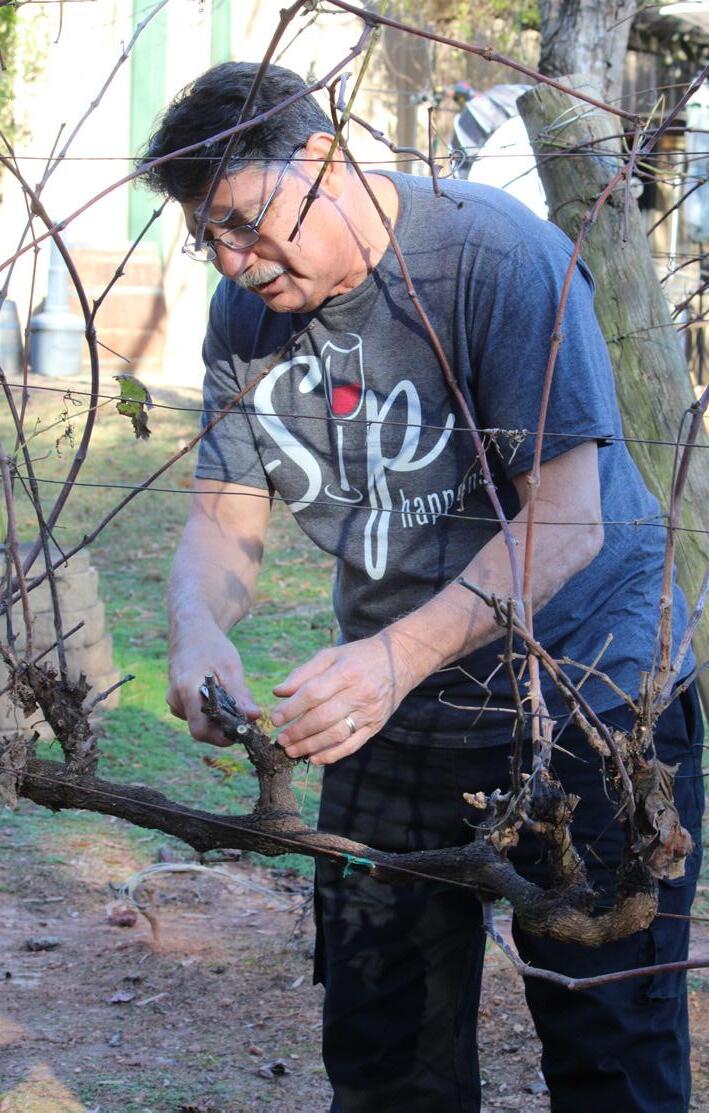
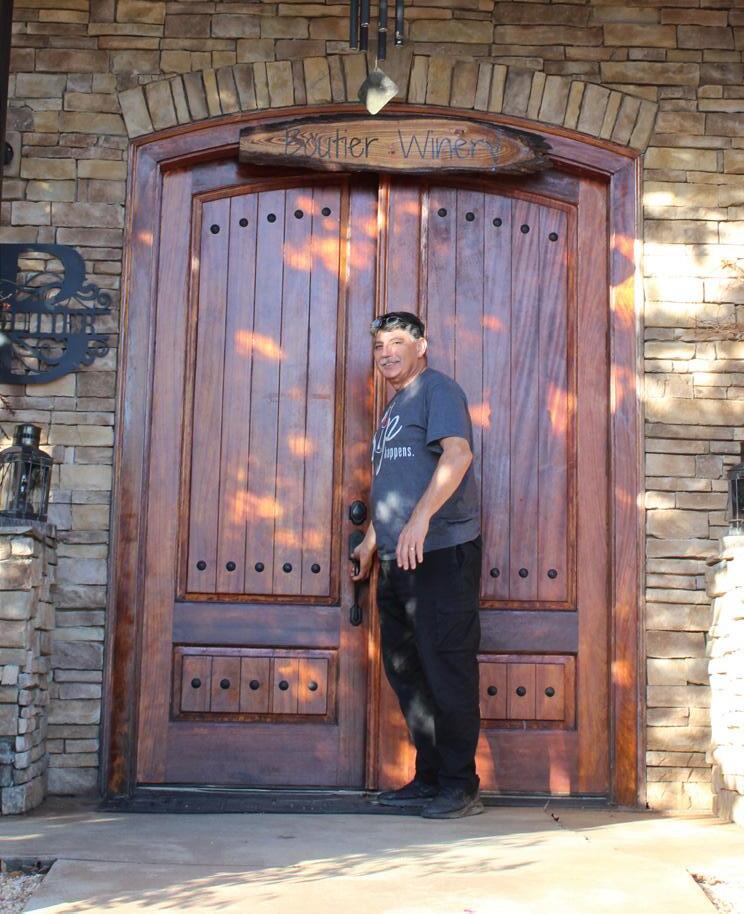
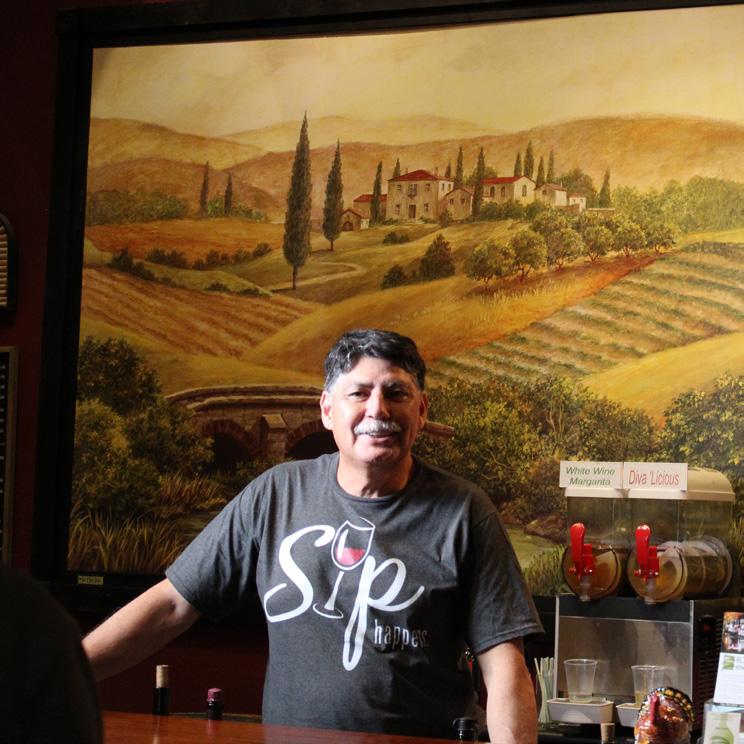
Situated in Georgia’s Piedmont region, Victor Boutier turned a wine-making hobby into a successful winery and events venue. Originally from the Netherlands, Victor came to the United States in 1993 already quite familiar with the fermentation process, having crafted high gravity beer. The establishment where he purchased the ingredients for the beer introduced him to wine making. In 2004, he opened a winery in Acworth and in 2005, began farming when he purchased the existing vineyard in Danielsville and founded Boutier Winery. Today, Victor’s wines have received numerous awards on national and international platforms.
The former owner of the Danielsville location was selling grapes to amateur winemakers from grapevines that were planted in the early
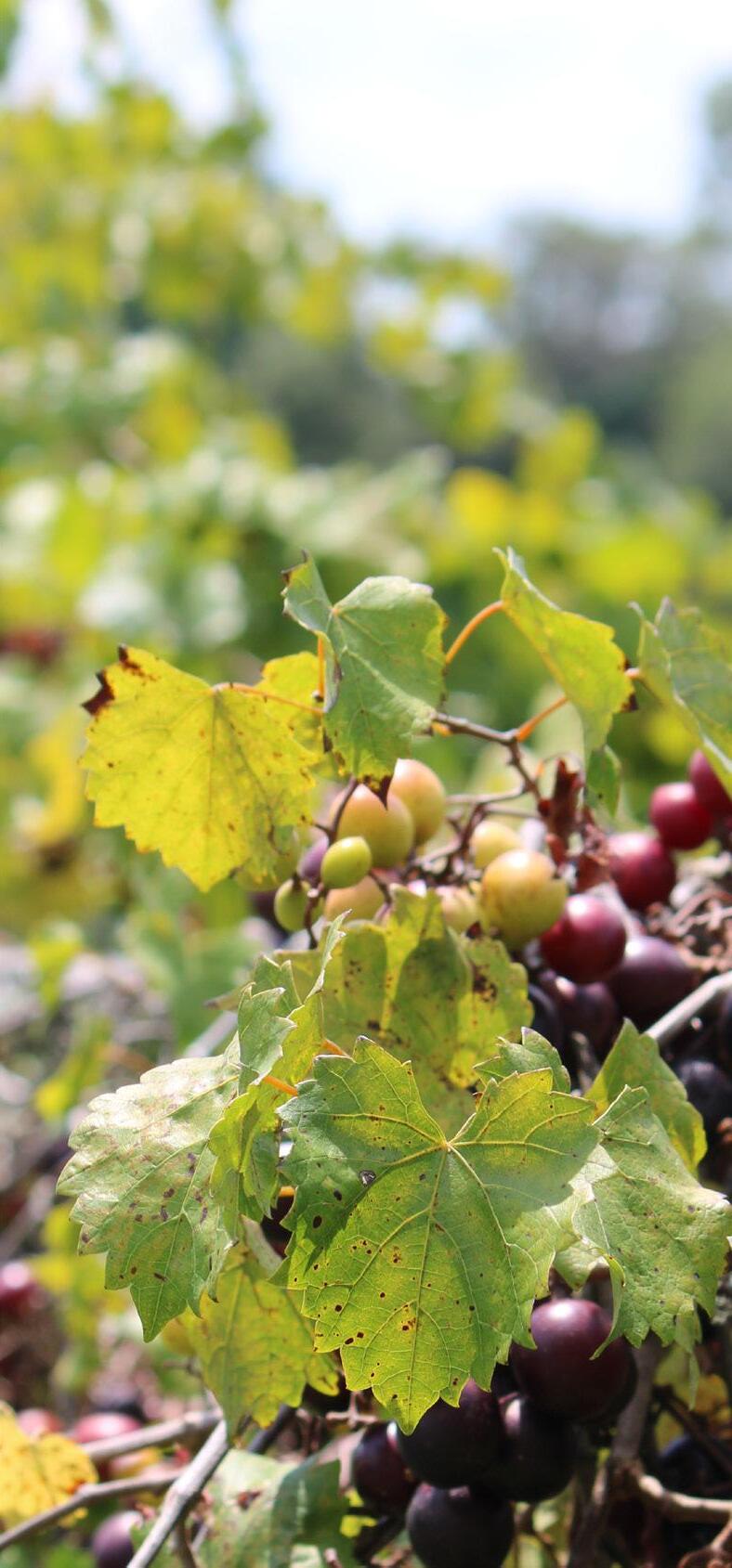
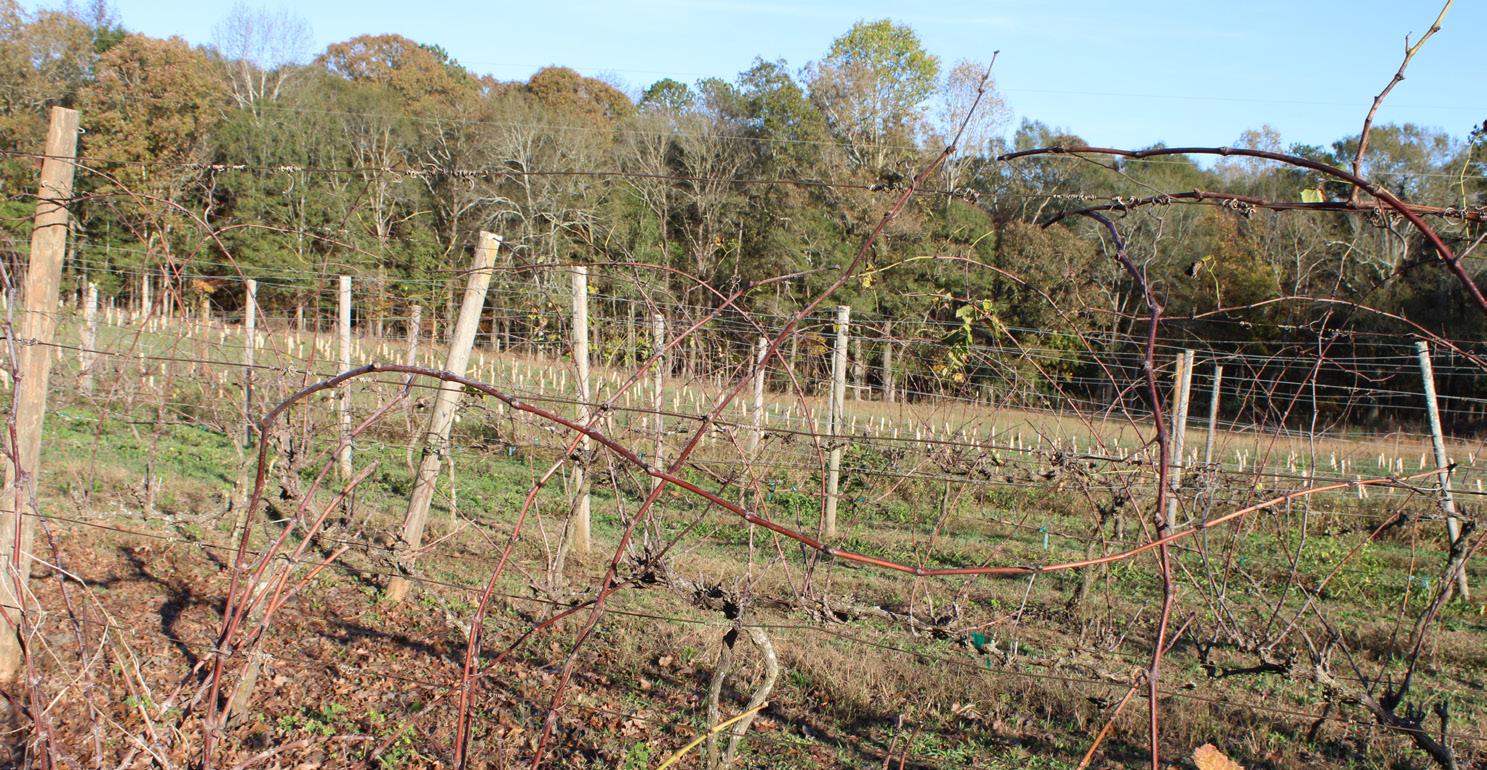
1990’s. The different varieties produced on those six acres includes Cabernet Sauvignon, Cabernet Franc, Cynthiana (also called Norton) Blanc Noir, Lenoir, and Chardonnay. Victor has continued those varieties and added a few more. “Thanks to AgGeorgia, I was able to expand the vineyard,” said Victor. He loves the entire process of wine production and especially enjoys tending to the vineyard. “I enjoy being outside,” Victor explains and continues, “taking care of the vineyard, and actually getting to harvest the grapes.” While his responsibility is to maintain the vineyard, he enlists the help of volunteers and friends to harvest and crush the grapes. It can prove to be a particularly busy time, along with long and hot days during his harvesting period through the end of August. As with most producers, Victor breathes a sigh of relief once the harvest is complete. “With the weather in spring, you’re afraid for late frost. Then later in the season, it’s powdery mildew and other diseases. Hopefully by August you can have a
good crop,” said Victor, sounding like a typical farmer when facing weather, crop diseases or other threats.
Producing nearly 1,800 cases of wine (twelve bottles to the case) from seven different varieties of grapes grown on six acres is always evolving challenge. “It’s an ongoing process,” admits Victor, acknowledging he thought the most recent expansion would be sufficient. But as his hobby and business continues to grow, so does the need for additional room and equipment.
A large improvement included a new filter for the wine, with the ability to process 500-600 bottles in an hour. Already selling his product in North Georgia locations such as Acworth, Kennesaw, Marietta, Dahlonega and Helen, Victor is eyeing an even broader distribution. “My goal for 2025 is to expand and wholesale wine. My plan is to wholesale - I have a wholesale license but I never used that license to sell my wines to other stores. I know people actually asking from even Texas to carry my wine and that’s pretty new. So we’ll see how that’s going to develop,” he concluded.
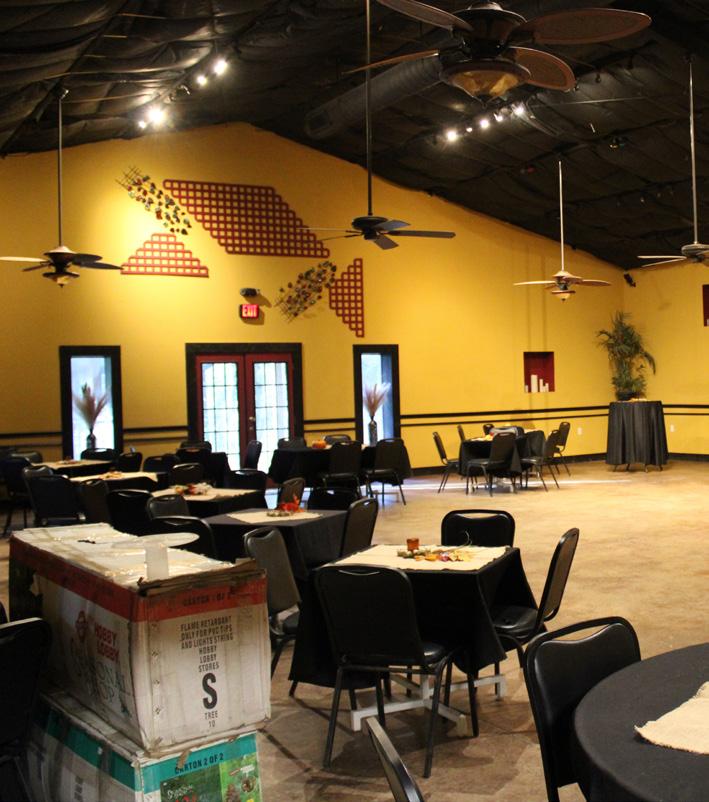
Along with farming the vineyard, Boutier Winery has a hearty agritourism segment. The winery hosts weddings, high school reunions and baby showers that can be booked year-round. His favorite part of the agritourism, he admits, is opening the door on Friday and greeting customers. “You have a feeling that they respond to the atmosphere and everybody’s happy,” Victor said. “I have never experienced people saying ‘I don’t like it over there’. I always find that they appreciate my business. If they


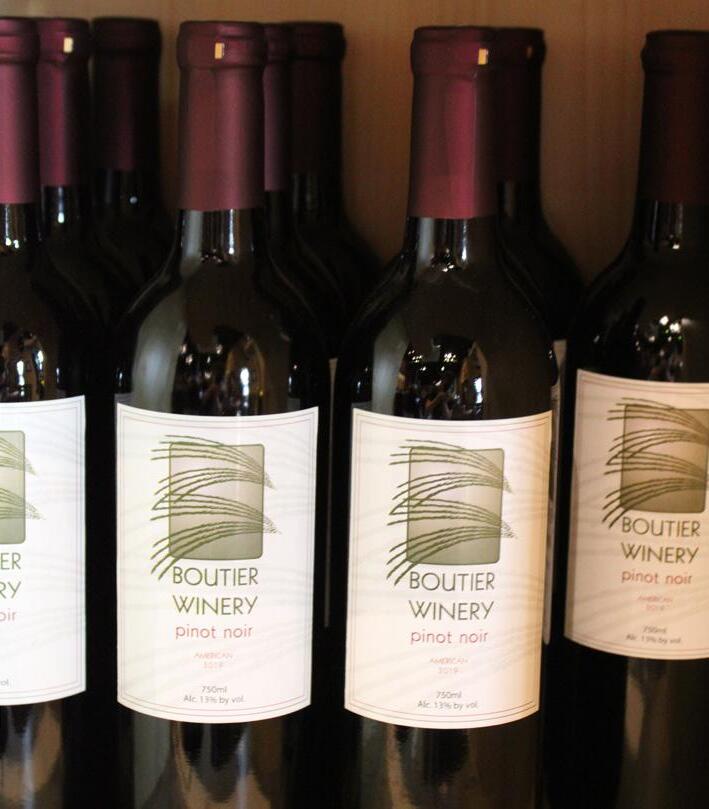
don’t like wine, I serve beer as well,” concluded Victor with a chuckle. Various weekend events, from football watch parties to live bands to wine and cheesecake flights bring new as well as repeat customers for the winery. The flights include four different wines paired with four different cheesecakes. The cheesecakes are provided by Jack’s Cheesecake from the Athens area, a business owned and operated by a local teen with Autism. “He makes wonderful cheesecakes,” said Victor, “and I enjoy supporting him and the
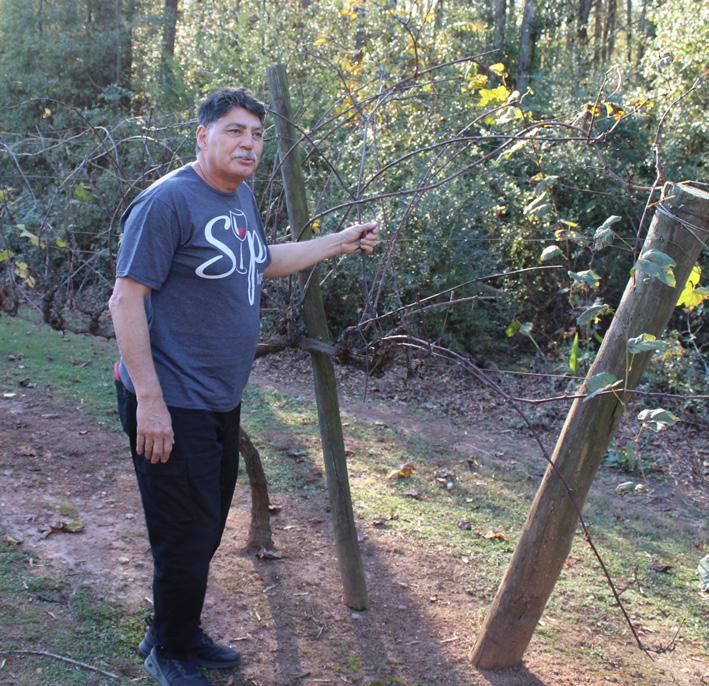
community.” That spirit of community and sustainability resonates with several aspects of Victor’s character. He told of how, after getting juice from the grapes, the solid pieces are either donated to local hog farmers or used for compost. He also enjoys being a part of the winery community. “It’s a small community and we share information,” Victor explained. “I’ll share it with other people who are considering to start a winery. I’m happy to say that after a year or so some have a winery and it’s actually nice to see that they got to have followers as well.”
It is certainly easy to see that relationships are at the heart of Boutier Winery, not only with the community and customers, but with AgGeorgia as the lender. “My experience with AgGeorgia started when Matthew [Hart, Loan Officer) walked in the winery on a Monday and introduced himself and told me about what AgGeorgia can do,” Victor recollects. “He gave me a brochure and I took it home and studied it immediately and I thought ‘wait a minute: I can do more with help from AgGeorgia!’ I contacted Matthew and he granted a loan for me to expand the equipment. For my operation, I would have had to submit so many documents to a big bank and they don’t look at the operation,” Victor explained. “Matthew came to my operation, looked at what I did. I doubt I would have had that loan from a
large bank.” Victor has been pleased with being a part of the community of AgGeorgia, a cooperative structure that understands agriculture. “I was surprised to receive a check in the mail,” Victor said with a smile, referring to the dividend check. “Thank you very much!”
Not all of the wines created at Boutier Winery have been a hit. Victor recalls a candid moment when a new creation in the vinification process wasn’t successful, but used the experience to learn. Still, he enjoys his role as wine maker and enjoys sharing his craft with others. He admits it required extensive reading, research and perseverance to turn his hobby into a profitable profession. Learning the varieties of grapes and which ones do well in the soil type and climate of the area, in addition to understanding the time involved may have had its challenges. But this former police officer from Amsterdam has a deep appreciation for agriculture. As he looks to the future and further expansion of his operation, the art of viticulture coupled with Victor’s hospitality is a combination of bold flavors, community spirit, sustainability and memorable experiences.
DOGHOBBLE WINE FARM
article
by
Rhonda Shannon
photographs by Rhonda Shannon and contributed
Named for a plant that has tough intertwining stems, this ground cover became a safe haven for bears when being hunted by dogs. The dogs couldn’t pursue the bruin and would be hindered or “hobble” through the dense thicket and the plant became known as “doghobble”. When Sam Zamarripa purchased raw land in 2019 for a vineyard and winery, that name was the natural choice due to an abundance of the shrub on the property. Nestled in the Georgia mountains in the middle of the Dahlonega Plateau, an area designated as an American Viticultural Area, the unique soil quality, sun exposure and climate made it especially conducive for a vineyard and Doghobble Wine Farm was established.
Both natives of Georgia, Sam and wife Robin have been naturalists and gardeners and have a deep appreciation and passion for nature. “I like farming,” Sam said and continued, “and vineyards are really just big gardens that are curated landscapes with trellis
and an architectural design.” He described farming as very organized, not chaotic, with everything being structured and done in a certain way at a certain time. “This is all farming,” Sam said as he motioned toward the vineyard. With that philosophy, the foundation for Doghobble and wine making was laid. “Cultivating a varietal that would do well in this area took grafting, which is done in all fruit industries and all farming industries. Determining what would be successful, defining the cost, chemical allowance, manpower, and if it can be done – it’s all just farming,” said Sam.
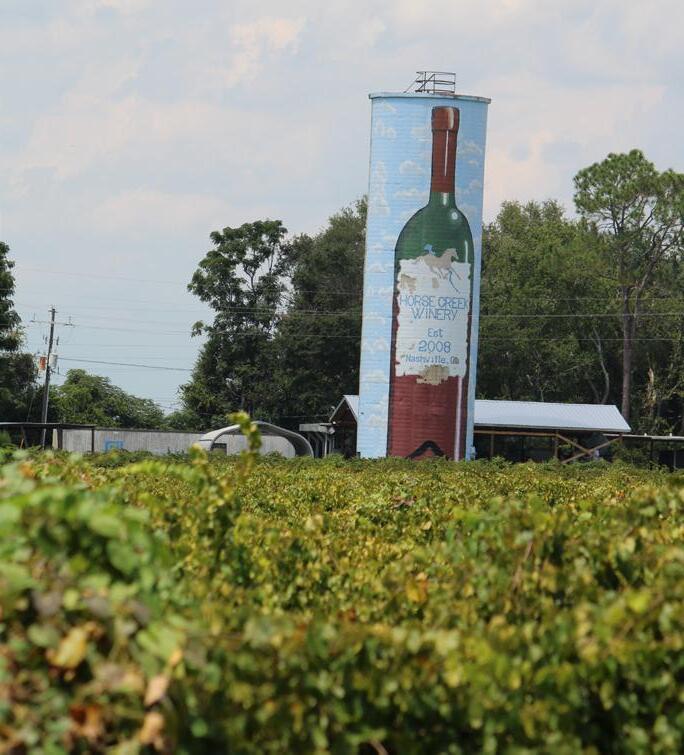
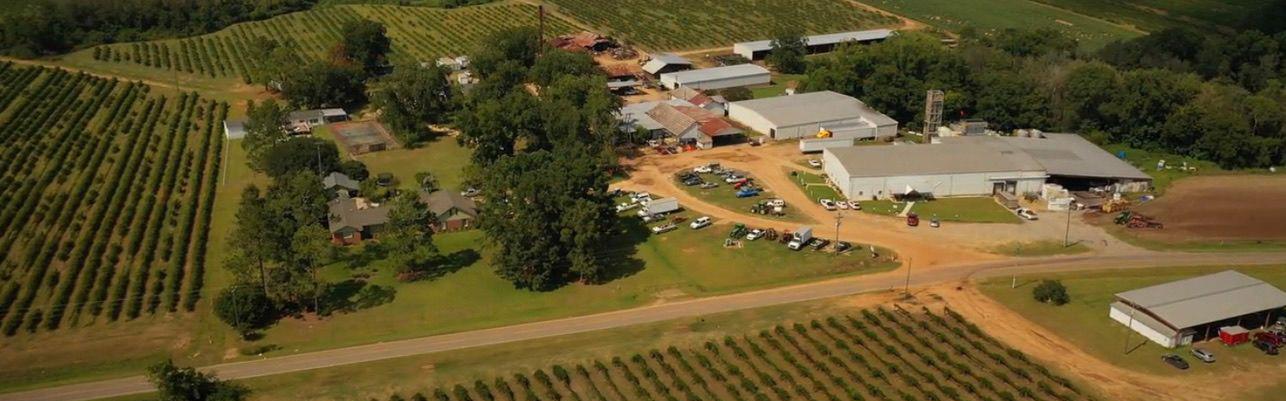
Operating across two primary locations, one in North Georgia and one in South Georgia under the name of Horse Creek Winery, each location has their own function. “I call it having three legs,” Sam explained. They have a farm at Horse Creek in Nashville, Georgia, with approximately 50 acres of vineyard. After an expansion, they were able to harvest the grapes, crush and stem them and bottle their wine on location in South Georgia. They are also a wholesaler, bottling that wine and distributing it with Empire Distributors, Inc. in Georgia or by the winery directly. Next, they
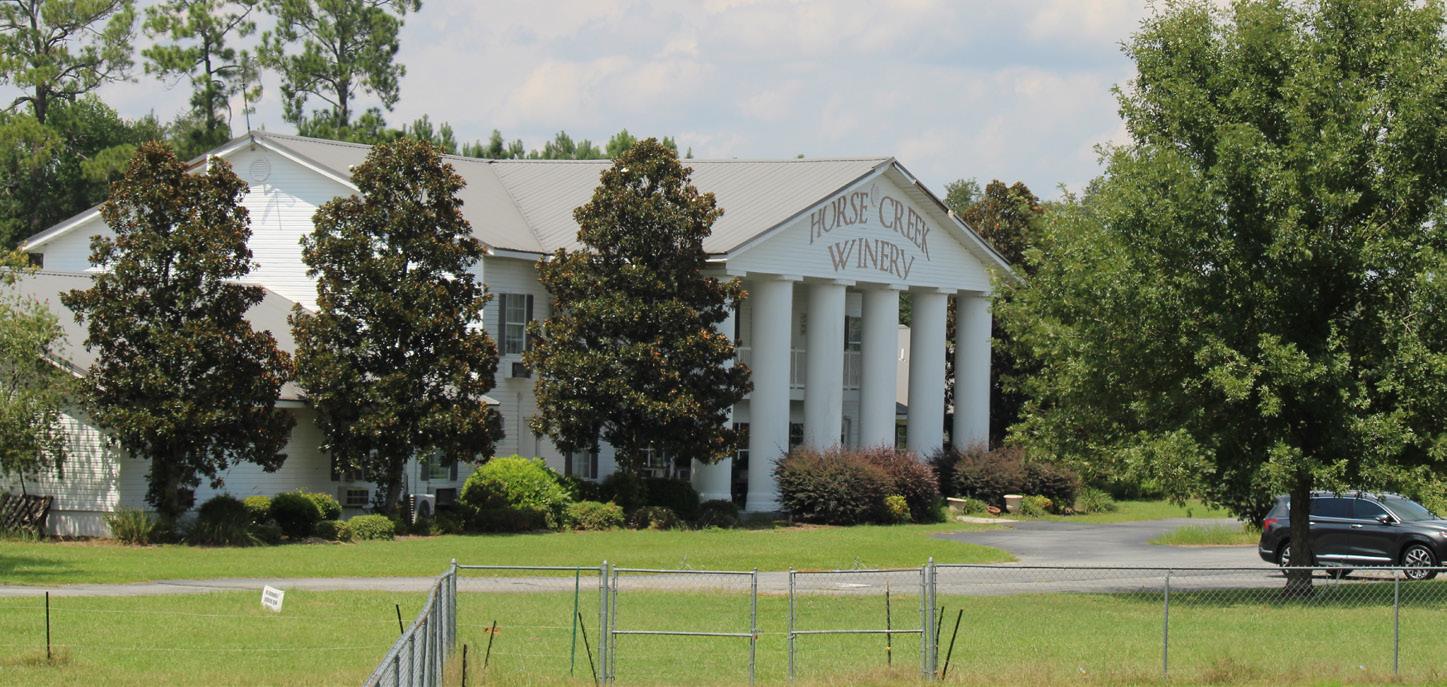
are retailers, having tasting rooms where they meet the public and serve their product. “I call us Farm to Crystal,” states Sam. The main variety of grapes in their vineyard is Norton, and was named for the doctor in Virginia who developed the grape and had deep Georgia roots. “Some vineyards up here grow different grapes because certain grapes thrive in certain elevations and certain temperature zones,” said Nathan Dane, another partner in the business. “We’ll do Norton, Lomanto or something else. And then down the road [another winery in another direction], they’re doing Chardonnay, and in another direction they’re doing Traminette, another direction they’re doing Lenoir. So we all specialize in something and we sell to one another.” Their vineyard has since added Chambourcin and Catawba varieties. 2026 is expected to be the first harvest year for estate grown varietals. In addition to the operational and production expansion, their locations have also expanded to a total of five. Two tasting facilities are on location in Dahlonega in addition to Doghobble Cellars, a tasting room on Main Street in Blue Ridge which opened in early 2025. A tasting room at the new Dillard House Resort in Dillard is expected to open in early 2026. Not only are
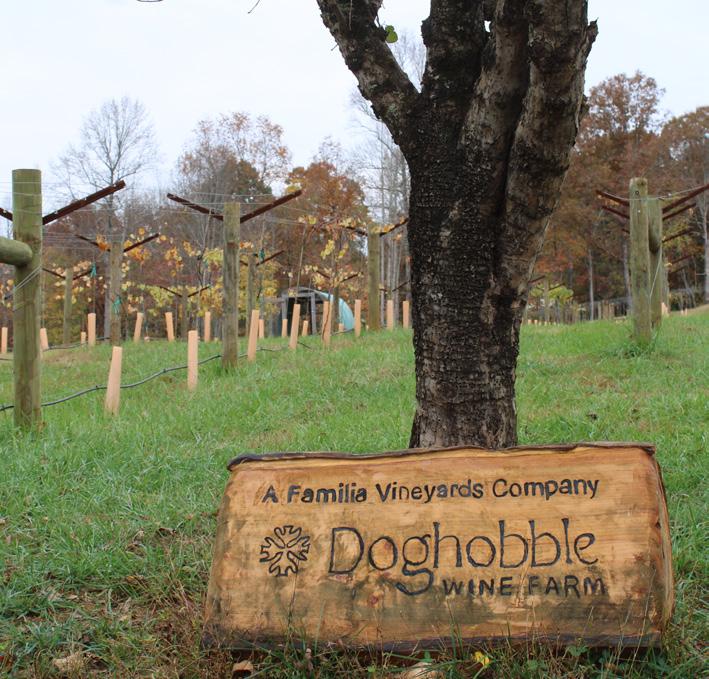
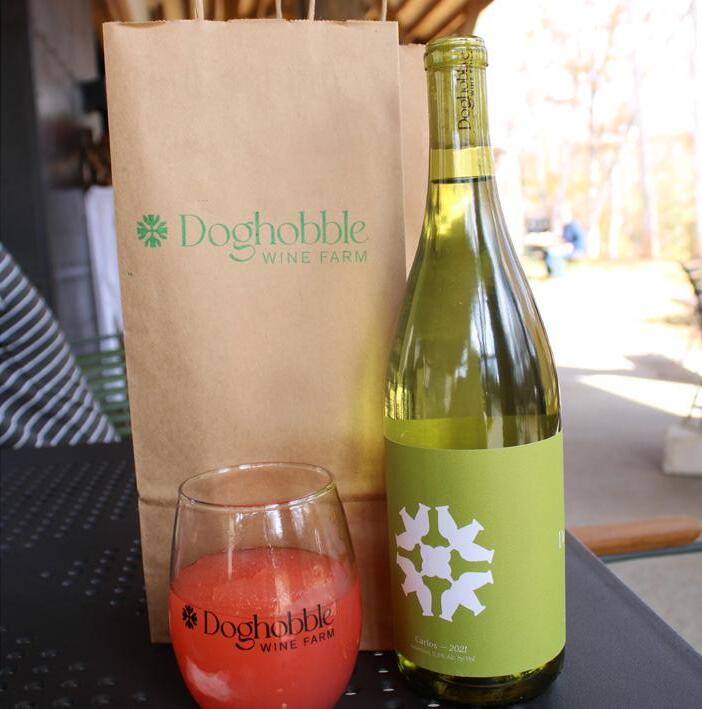
they producers of wine, but Doghobble also has sheep, chickens, alpacas and donkeys. They have farm equipment such as a bush hog for mowing, but the sheep, of course, graze and help maintain the vineyard. “The sheep are simple, they don’t mind being exposed to the elements,” said Sam, but added that although they are simple, they added hundreds of yards of fencing for them and the other animals. They shear the sheep twice a year using an outside source and give their animals routine treatments in addition to the veterinarian’s periodic call. The chickens are called ‘chicken tractors’, since their portable, floorless enclosure combines a coop and grazing area that has a mobile design and allows the land to benefit from the nitrogen in their litter. “The alpacas don’t offer much value, per se, other than their wool, but they are beautiful,” Sam added. The donkeys provide much needed protection, keeping out predatory animals.
Their chief winemaker has fifteen years in the wine industry, working for the last decade in the Dahlonega Plateau and Upper Hiwassee Highlands AVAs [American Viticulture Area].
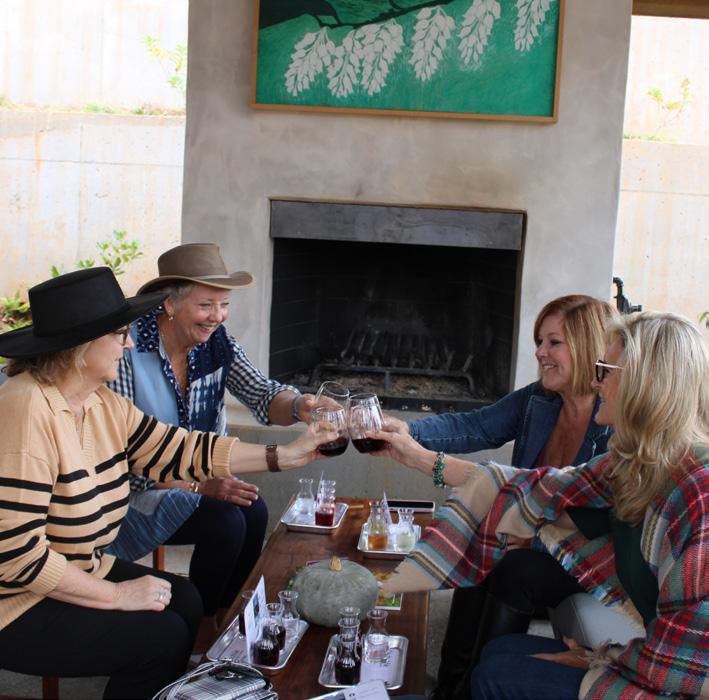
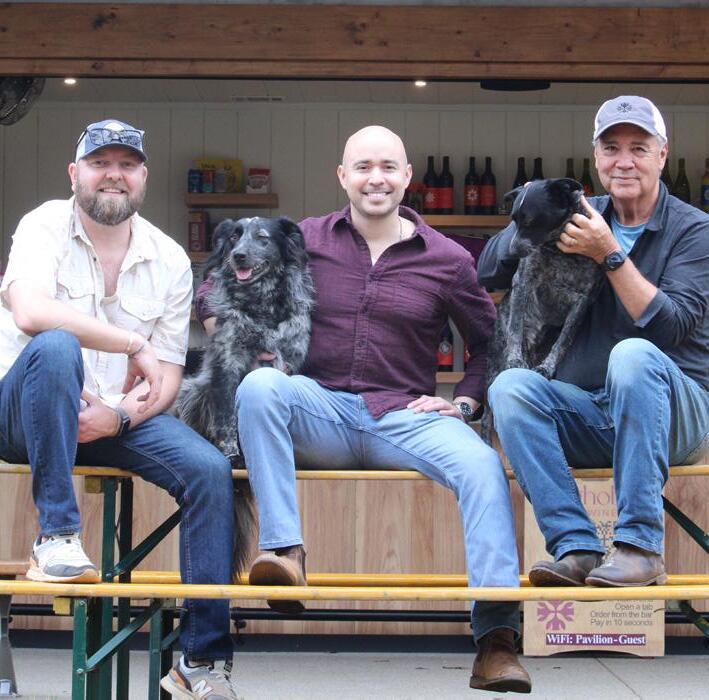
His expertise includes American varietals, sustainable wine farming, authentic and minimalistic winemaking, tasting room management, wine PR/marketing, wine farming, vineyard operations, and wine distribution. Although none of the guys involved are certified wine makers, all of them - Sam, Rex, Nathan and Ed Perry (the fourth partner) – bring a talent and a passion to the business. They all know what it takes to make a successful wine. “It’s art and chemistry,” said Rex, and Nathan quickly adds, “And it’s a lot of iterating too. You’ll make the first batch. You’ll pour some into a glass, smell it and go, ‘OK, I need to add something. I need to do something different, let it ferment longer or take it out now or whatever.’” They all admitted a good palette plays an enormous role in a good tasting wine, coupled with hands-on learning and trial-and-error. “It’s very much hands-on learning, sometimes just simply watching to learn,” said Rex. “But to Nathan’s point, I think it’s also a gift.” Patience is the name of the game for any winemaker, putting in time, effort, perseverance and determination, not counting the three to five years of watching
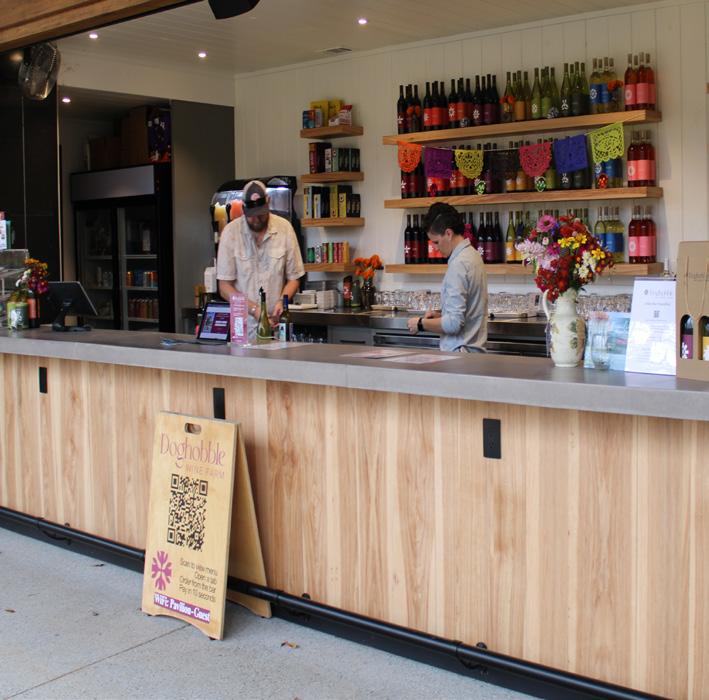
the fruit hang on the vine and knowing it may not be ready to be used for wine. “We actually had a lot of grapes in 2024 but they just weren’t ready for wine making. We clipped them off the vine,” explained Rex. “The rule is at least three years and our Norton variety in the front vineyard is 3 years old. We had a decent number in 2024, but they weren’t quite right. So in 2025, we should probably get a decent harvest out of those,” concluded Rex. Another variety, Lomanto, is about two years old, and some could be used in 2025 as well.
The farm’s philosophy also includes the sustainability aspect with regenerative implementation as is the practice with many farms in our state. And just like other ag producers, the vineyard faces some of the same struggles. Hurricane Helene posed a threat to their crop and even the vines in the Fall of 2024. “The peak time for harvest would be in August, usually being done by Labor Day. We got the grapes picked just before the hurricane,” said Rex. “We lost several vines due to the storm and would’ve lost fruit had we not been able to get it harvested in time.” Outside of weather concerns, Nathan quickly

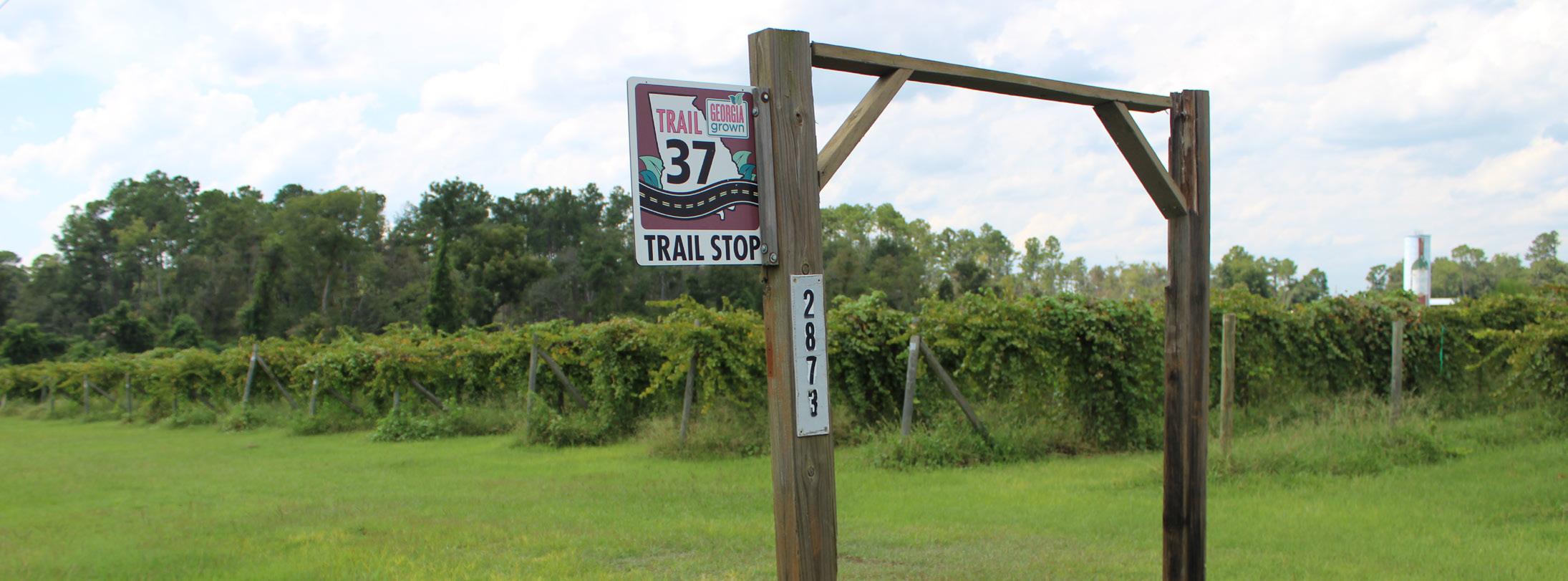
responded to a major challenge. People. “To be clear,” he continued, “the people we have are very good and love working with the company. Everybody is focused and works hard. It’s just a matter of not having enough. We all wear ten hats.” Full-time and eleven part-time employees across the vineyards and tasting rooms, outside help is hiredoutside help is hired during peak season. The grapes are harvested by hand which is very labor-intensive, and outside consultants are brought in for guidance. That’s where AgGeorgia was able to get involved with equipment and expansion for wine production and tourism. Financing for the purchase of the land in North Georgia was the initial relationship with Doghobble. “AgGeorgia was really good to us because we required
raw land and no one else was interested. AgGeorgia was perfect for us,” explained Sam. “There’s no doubt about it. Nathan [Dilday], Loan Officer, has been great with our land purchase, and then with the construction.”
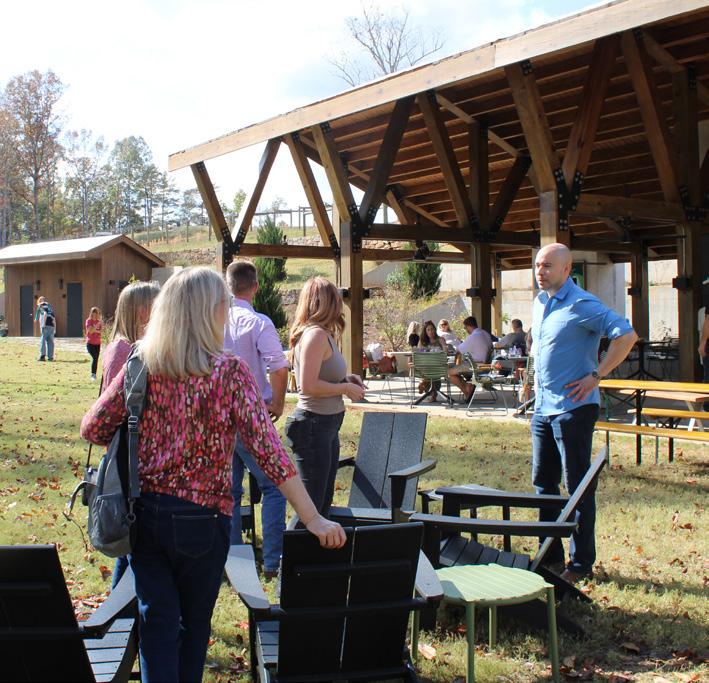
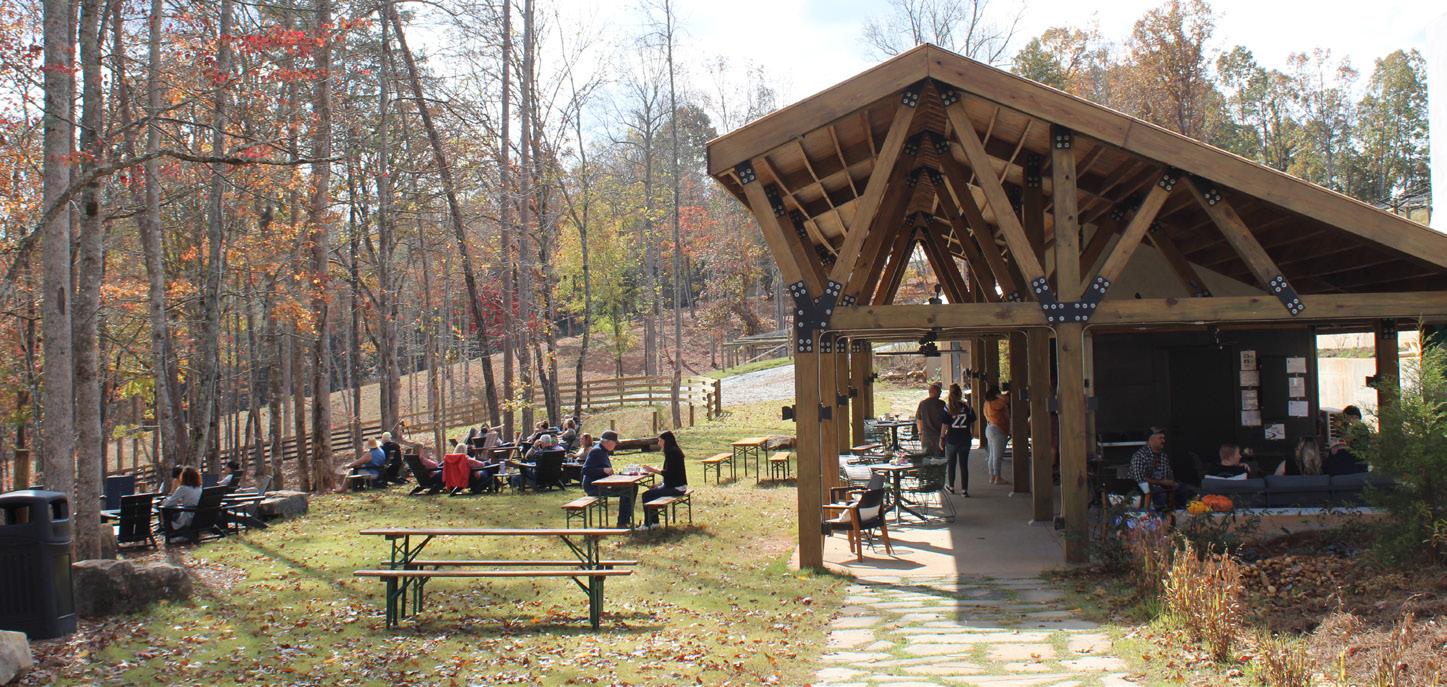
The construction includes a large, covered, open-air patio complete with food and serving bars, fireplaces and seating, along with a separate, newly constructed tasting room and wedding venue area. “We also did a fair amount of leasing for equipment,” Sam added.
Along with fourth partner, Ed Perry in Nashville, they each not only have an interest in the wine industry, but have a bond that spans over decades. They all have banking or corporate industry backgrounds and in addition, Sam, Rex and Ed have family ties. Nathan previously worked with Sam before
joining the partnership. It is very evident that family and relationships are a vital part of their mission. Thus, Doghobble Wine Farm and Horse Creek are subsidiaries of Familia Vineyards, LLC, named for the strong emphasis for not only building a business and brand, but keeping relationships as a position of prominence in all that they do. Dedication to their product, stewardship of the land, and blending traditional farming with innovation in modern viticulture are hallmarks of this multi-faceted operation and their focus on promoting agriculture.
PAULK VINEYARDS
Article by Rhonda Shannon
Photographs contributed
Located in a remote section of Irwin County, Georgia, is a farm that is a testament to agricultural innovation, family heritage, and Southern resilience. Jacob Paulk’s modest experiment and pivotal decision to diversify a small portion of his traditional row crop operation in 1970 transformed what is today this 6th generation farm. Trying his hand at farming a few acres of muscadine vines, Jacob shaped the future for his family, providing numerous opportunities from a native Southern fruit known for its rich flavor and strong health benefits. Since then, the legacy that Jacob inherited and passed to his children and grandchildren has been received heartily and emanated several different individual and joint agricultural entities.
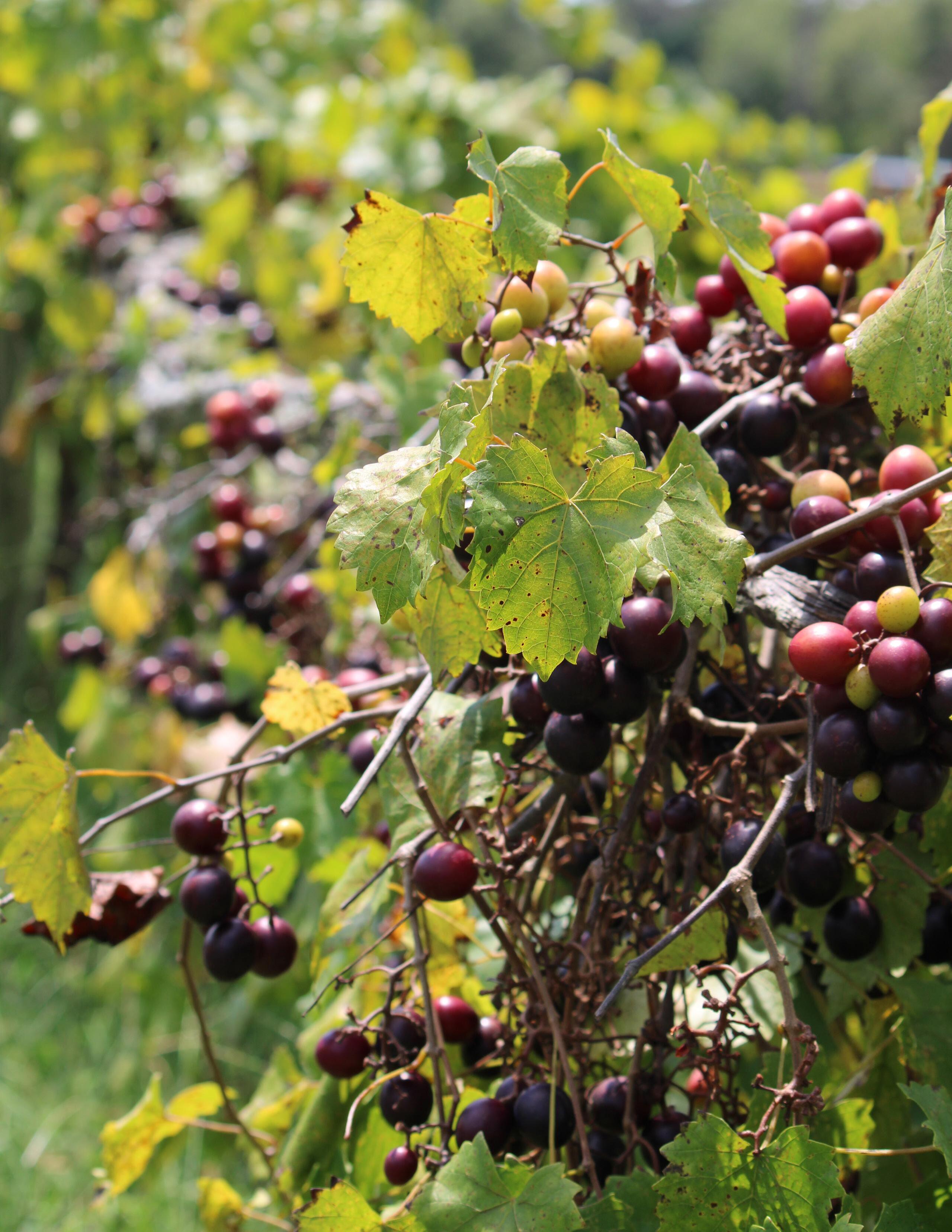
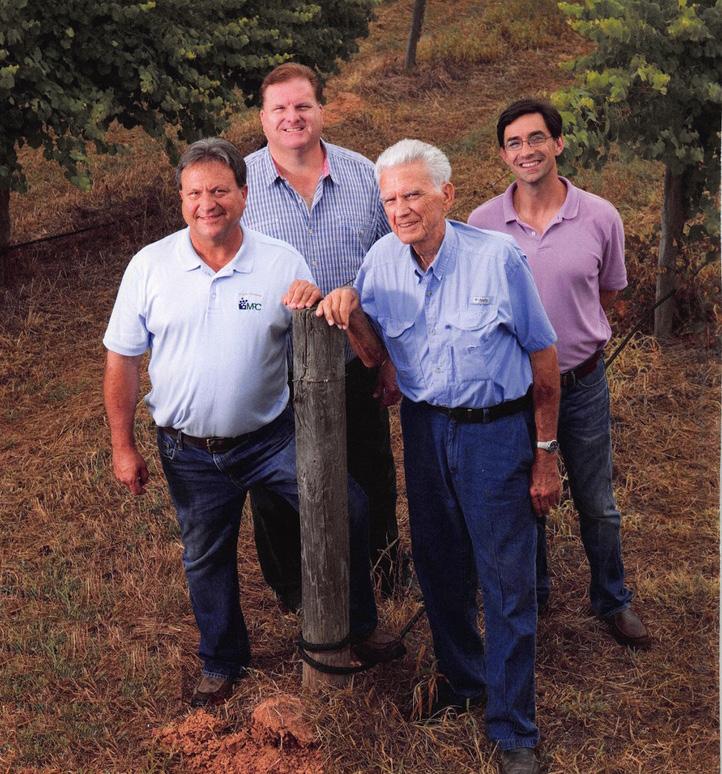
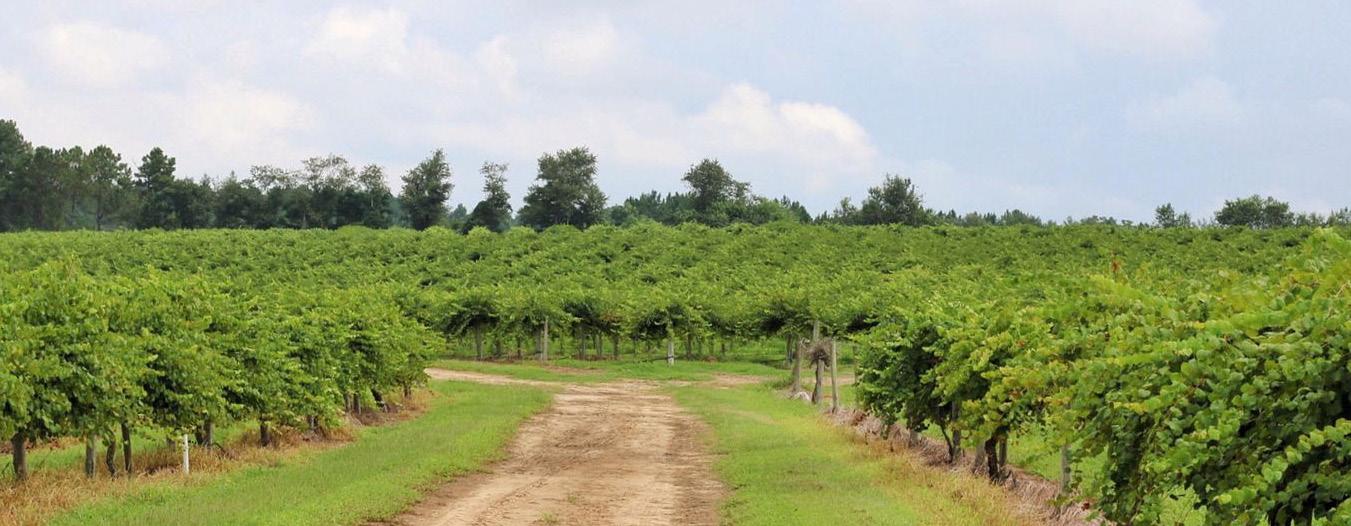
The South Georgia community of Wray is home to the Paulk farm and where those initial muscadine vines flourished. After waiting three years from planting to produce fruit and establishing the first Paulk muscadine brand in 1973, what followed has evolved into diverse operations producing South Georgia’s native grape. Known for its vitality in the climate, vivacious taste, and the full utilization of every part of the fruit, Jacob’s few vines have expanded into approximately 800 acres in muscadine production. With sons Gary and J. W. as growers, the farms of Paulk Vineyards are recognized as the world’s largest muscadine vineyard.
For decades, the muscadines were sold to the public as fresh fruit (with u-pick options and to retailers). Although many
products have materialized, the fruit in its original form tends to bring an unexpected sentiment. “They’re very nostalgic here,” Jorjanne commented about the muscadine. “People remember picking muscadines in their grandparents’ back yards and enjoy reliving the memories they generate. We have people who come in [to their store], having possibly moved away from this area, and say ‘I haven’t had these in years.’” Chris added they also get letters and cards from customers who tell them ‘they never thought about writing a letter in this high-tech world’ but wanted to express their appreciation for being able to enjoy the fruit again. “They buy our fruit from the grocery store and tell us how thankful they are for it taking them back to a favorite memory,” said Chris. Jorjanne added that some have told them they remember going to Paulk Vineyards as a child, with their parents or grandparents, and now they’re bringing their children or grandchildren to do the same.
Chris and wife Jorjanne moved back to Irwin County at the prodding of Grandfather Jacob after completing college. “My Grandpa said, ‘I
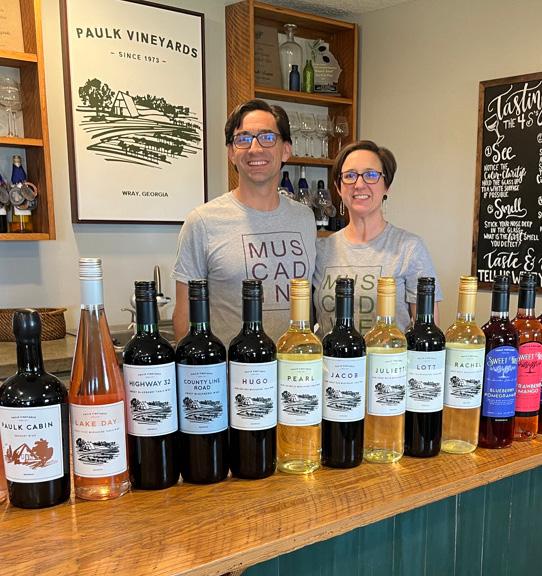
think we can make some stuff out of these grapes, if you want to come back,’” Chris reminisced. “Let’s do it!” Chris responded enthusiastically. Chris and Gary established Muscadine Products Corporation with several forms and uses being developed from fruit, such as being sold in bulk to manufacturers to creating the Paulk’s own consumer treats like juices and jams, using everything from the juice and pomace (pulp) to the skin and seeds. Even though their juice was being sold to wineries, it wasn’t until 2018, when Chris completed the task of acquiring all the necessary registrations, permits and licensing that Jacob had begun for wine production before his passing in 2017, that wine was added to their array of specialty items. Using muscadine’s full potential of taste and health benefits, each bottle of wine tells the family story as unique as the wines produced from the twelve varieties of grapes grown on their farm.
In the height of harvest, approximately 250 employees are involved in this busy and crucial time. Using H2A workers, Chris
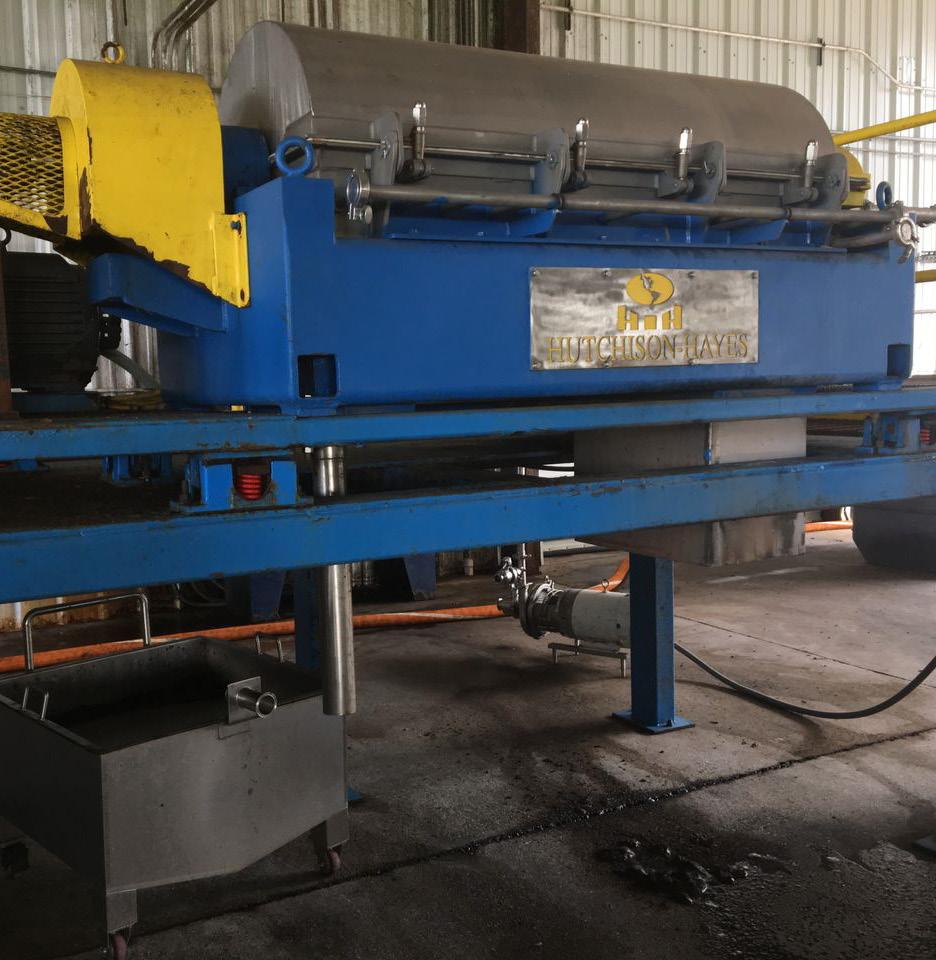
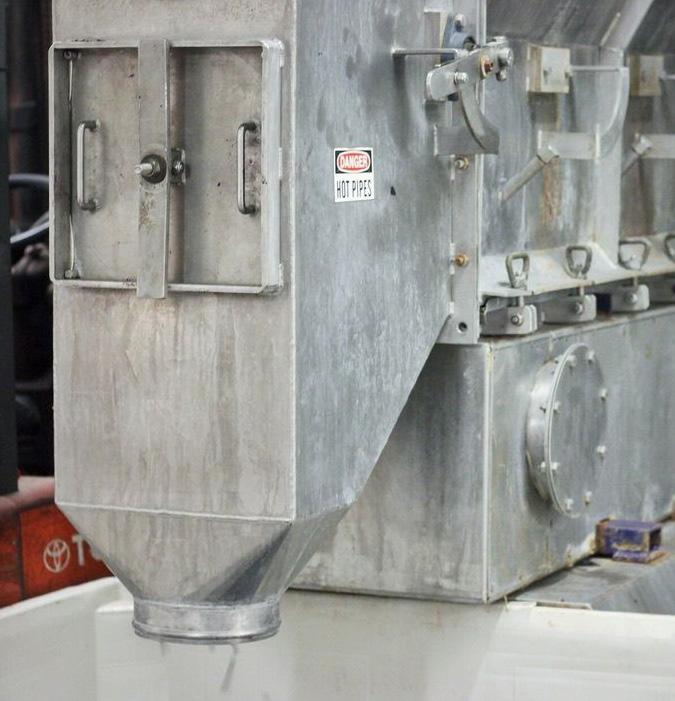
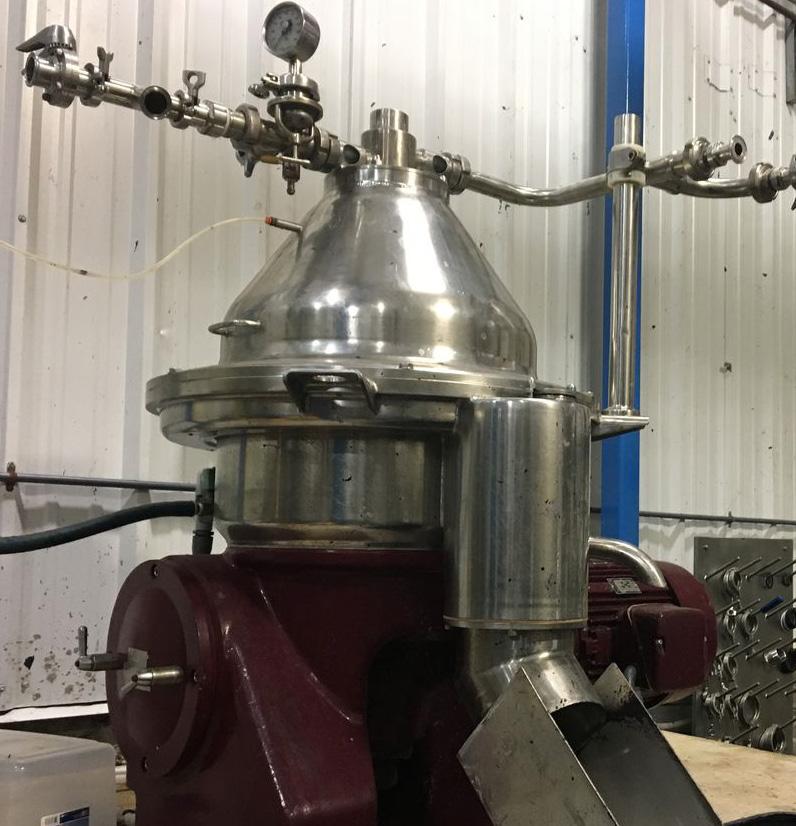
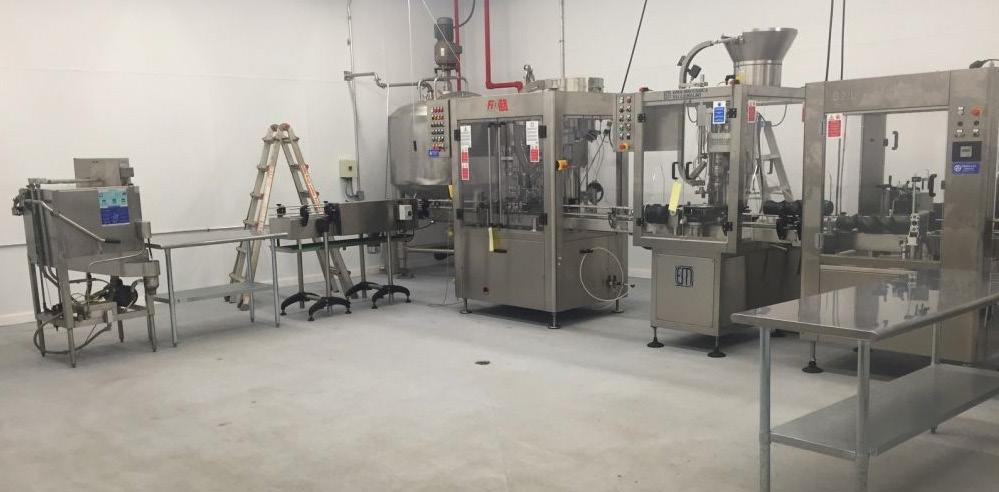
explained their location worked as a benefit for them and for the workers. Their farm’s proximity to blueberry, onion, watermelon and other types of fruit and vegetable harvesting makes it easier to obtain workers from the surrounding areas and offers beneficial, consistent employment for the farm laborers. “It takes a lot of people,” Chris explained. “Outside, it’s very labor intensive and inside, it’s technically intensive.” He elaborated on the amount of machinery involved in making, storing and preserving their products along with creating new ones and marketing them in numerous avenues and for seemingly countless purposes. Machines such as a centrifuge decanter and centrifuge disc, as Chris put in relatable terms, to think of apples going from the fruit to apple sauce to apple cider to apple juice. “The centrifuge decanter takes it from apple sauce to apple cider,” Chris explained and continued, “and the disc takes it from apple cider to apple juice.” He explained that another filtering system is used to really clean it up and make it sparkle. “We use those pieces of equipment for the extraction process, for the juices and for the wines. These two pieces of equipment aren’t used solely for wine,” Chris concluded and explained they were in place for their other products before winemaking began. Thankfully Chris and Jorjanne can use their education and experience to handle the ‘technical’ tasks. “It doesn’t always work out like we intended,” Chris admitted jokingly. But that’s when they go back to the proverbial drawing board, adjusting recipes

and mechanical variations for a marketable, worthwhile and tasty result.
An interesting derivative that they’ve developed has been an extract powder. “We dry the skins and seeds and press them into powders,” Chris explained. “We press the oil from the seeds and the extract powder is similar to the process of making coffee or tea. We hit it with 200-degree hot water, let it steep, go through a process, and then press all the water out of it. We are able to capture all the antioxidants, all the ‘health goody’ out of it. An evaporator, and most recently a drying step, is used and what you wind up with is a powder much like instant coffee or stick packs of lemonade.” This extract is sold to health food companies that distribute them in national markets, typically the more populated, larger cities or metropolitan areas. “We have customers in Canada,” Chris continued, “and recently have leads in China. There could be opportunities [in China] that
get muscadines outside the Southeast and around the world.” Chris mentioned that while muscadines are commonplace to South Georgia, they are just being introduced in other parts of the world and are becoming readily accepted and acknowledged in our health-conscious society.
Admittedly, the Paulk operation is the largest muscadine grower and processor in Georgia. “One claim I say is estate to bottle, meaning we grew it right here, produced it right here and bottled it right here,” Chris added. “Muscadine is cousin to more recognizable grapes used for wines. There are about 150 varieties of muscadines and we grow about a dozen, about half of that dozen are white and half purple. Ten of those varieties are fresh market muscadines, and most of our acreage are for fresh market.” Jorjanne agreed and added, “If you see muscadines in the store, you know they were hand-picked.” The two varieties not used for fresh market are used for their wines, and they are smaller and have a tighter window for harvesting. Although the harvesting process is a short time frame, making the wine is not. “Chris is the winemaker and I am the official taste-tester,” joked Jorjanne. They both expounded on the development of new flavors and sometimes rely on a consultant for guidance and advice on what might or might not work or what pitfalls to avoid. Their newest creation, Game Day, is a muscadine/blackberry blend with both of those fruits also being grown on the Paulk family farm. While the process of winemaking is somewhat controllable,

outside of weather the largest obstacle can be regulatory requirements. “Most of the time, the issue is getting the label and formula approved from TTB (formerly recognized as ATF is now Alcohol and Tobacco Tax and Trade Bureau) who regulates alcohol and tobacco production and trade. They issue the license and approve the labels,” explained Chris, “which includes making sure the label font sizes and state information requirements are met, in addition to other health and regulatory guidelines.”
A recent addition to the Paulk’s family muscadine interests is Tifton Tasting Room, a wine tasting room and events venue to open soon in Tifton. Purchasing an historic building in the heart of Tifton’s downtown district, the building is located along busy Highway 82 that runs east and west through the town and has
records dating back to the late 1930’s - early 1940’s. Chris admits he was a little skeptical of Jorjanne’s pick of location for the idea, but with the remodeling effort nearly complete, is ready to admit he can see her vision and is excited for the opening of it. Having a garden area in the rear of the building and being situated near the Tift Theatre for the Performing Arts, restaurants and to the local police department, the anticipation for its completion is mounting. With their diverse farming operation, the Paulk family has had a long history with AgGeorgia Farm Credit and was a top consideration for the financing of this new project. “We worked with AgGeorgia and Austin Tyson [loan officer] to make this happen,” Jorjanne adds, “He has been great to work with, and he’s come to us on several occasions. That saved time and travel for us.”

The Paulk family continues to be heavily involved in farming and the appreciation for family is entwined in every facet of these businesses. Names for their wines reflect the area where their family homestead is and pay tribute to ancestors who paved the way for their various operations. Whether the Paulk name is on fresh fruit of muscadines, strawberries or blackberries, or is affixed to a bottle of their award-winning wines, the only thing stronger than the pride they take in agriculture is the pride they have in family.