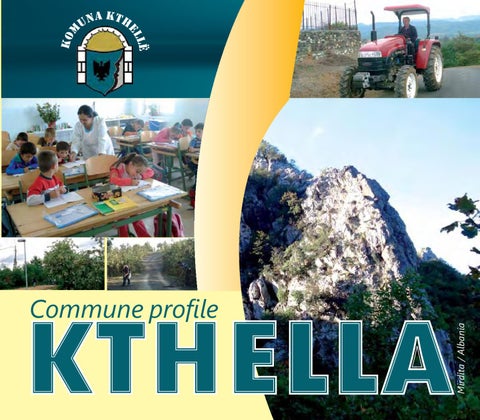
Mirdita / Albania
Commune profile
Publisher:
Address: Rr. Abdi Toptani, Torre Drini, Nr. 63. Tiranë, Shqipëri. P.O. Box. 7451 Tel: +355 4 226 20 67 website: www.cangoalbania.org
email: info@cangoalbania.org Design: Printed: Emal Edition: 100
© 2009 Cango All rights reserved. The contents of this booklet may be freely used for non profitable intentions, provided each reproduction acknowledges CANGO as copyrighter.
Table of Contents
Mayor’s Address...................................................................5 Historical Overview............................................................7 Geographical Overview......................................................8 IClimate..................................................................................9 Natural Resources.............................................................10 Demography........................................................................12 Infrastructure and Public Utilities .................................13 Agriculture and Breeding.................................................15 Economic Development...................................................17 Education.............................................................................18 Health Service....................................................................19 Social care...........................................................................19 Culture and Tradition.......................................................20 Local Government.............................................................21
This publication was supported by CANGO, with funds from CAFOD UK (Catholic Agency of England and Wales for Overseas Development).
Acknowledgement
T
he Centre for Collaboration between Communities, Authorities and NGOs (CANGO) would like to thank all the members of the Kthella Community Advisory Board for their valuable support in the course of the preparation of the Profile. Without their help and support it would have been impossible to gather all the necessary information for this publication. We would like to express our gratitude to the representatives of the Commune Council, to the Commune employees, to the representatives of the Commune and of the local business for their valuable participation and contribution. We are grateful to the work group, especially to our consultant Artan Rroji from the Foundation for Local Autonomy and Governance (FLAG) who led the process for the preparation of the Profile. Finally, the findings of this document are the views of the representatives of the Kthella Community Advisory Board and CANGO and do not necessarily reflect the position of CAFOD UK (Catholic Agency of England and Wales for Overseas Development) who provided the funds for the preparation and publication. November 2009
Mayor’s Address
P
reparing a commune profile has been one of the main tasks that our local government had taken upon itself as such a publication is essential for the fulfilment of our vision of improving living standards
in Selita. Hence we are glad to offer to our community this profile which is a result of the common efforts of the work group, of the commune administration and of the civic society, to all of whom goes our heartfelt gratitude. We would also like to thank CANGO for the dedication and competence shown in the preparation process. The Profile and the Strategic Plan will be basic documents that will channel the local government’s energies and will also serve as an information guide for potential investors. Commune Mayor Tom Lleshaj
Historical Overview
K
t h e l l a Commune lies in the southern part of Mirdita district. Archaelogical finds in “Kodër Pazar” of Perlat Qendër and in 38 tombs in Kaza of Prosek, such axes, helmets, bracelets, beads, necklaces, prove that Kthella has been inhabited since the Neolithic Age. Although once part of Ohrid Sanxhak, not all of its tribes are from there. According to one theory, the place-name Kthellë, alias Thkellë, dates back to the time of Scanderbeg who named it thus. A second version holds that it came into being as a result of a frequent question local people used to ask those who had just been back from some fighting: how deep (kthellw) did you penetrate into the enemy’s area? Kthella is crossed by roads connecting Dibra, Kosova and Mati with Mirdita, Lezha, Shkodra, Dur-
rës and Tirana. Until the 1920-30’s these roads could be crossed only on foot. The first road crossing this region, connecting Rrëshen with Burrel, was constructed in 1935-1939 on the initiative of King Zog. Kthella is well known for its assemblies, especially those concerning the armed resistance to the Roman and Turk invadors. The most renowned assembly venues are “Kroi i Fikut” (The Fig Spring) in Perlat Qendër and “Rrëpë” in Prosek. The Kthella people were successful in preventing the Turks from forcing in Islam, so the population is entirely Catholic, very rich in cultural and religious heritage. Nowadays Kthella has 9 villages. In former administrative divisions it had only 3 villages: Perlat, Prosek and Shebe, and the other 6 were either part or neighbourhoods of these three villages. Subsequently, Rrushkull and part of Ujë separated from Prosek becoming villages on their own and now 46% of the commune popula-
tion lives there (Prosek, Rrushkull and Ujë). They belong to five tribes: Dedaj, Lleshaj, Gjonaj, Tushaj and Bunaj tribes. The Dedajs, Lleshajs and Gjonajs, once known as The 3 brothers, are of Ohrid origin, the Bunajs are from Buna of Shkodra and the Tushajs from Bulgjri Bajrak. Perlat Epër, Troje, Shtrez and part of
Historical Overview
Ujë, once part of the old Perlat, became villages on their own. There live 6 tribes: Dukaj tribe that includes the Lekgegajs, Macajs and Caras; Dodaj tribe that includes the Përndojajs, Tomajs, Radaçis, Sulejmanis, Kelis, Koldoçis, Përlleshkolas, Kolmarkgjokas and Dodbibas; the Radaçis are connected with the Dodajs, but are not of the same tribe;
Picaku tribe includes the great Picak, the Gjetdodajs and the Lleshgjokajs; Ndreja tribe includes the Hasanis, Brozis and Jakajs; Filej tribe is connected with the Nikajs; Doçi tribe includes the Marenas and Mrrukus. Shebe village has always been as it is, whereas Tharri formely was part of Selita commune.
In times past, when there was no state, the ruling authority was the tribe assembly wherein all the tribes had their own representatives. The assembly played and still plays an important role in conflict resolution.
KO M
LË EL
A KT H N U
Geographical Overview
K
thella commune lies in the south of Mirdita district. In the north (partly) and in the west it borders with Rrëshen municipality. In north-east and east it borders with Selita commune, in southeast and partly in the south it borders with the communes of Rukaj and Ulza of Mati district. In the south it borders with the Ulza lake. Kthella has a surface area of 78 km2. It has a broken ground with varied heights starting with the Turk meadow, 104 m above sea level, continues with the heights of Vali up to the highest altitudes of Shëlbum and Shëngjergj, around 700 m above sea level. The Perlat-Prosek area, being by the the riverside of Mati, is softly hilly, whereas Vadhishtë- Shtrez-Ujëare by the Ulza lakeside is the lowest zone in the whole of the commune territory.
Climate
C
limate in Kthella is generally hilly meditarranean, whereas in the north it is partly paramountain. Summer is hot and dry, while the winter soft, but in the north, in 400-500 m altitudes, it is very cold. Precipitation varies from 191mm in December to 162mm in February; in summer they do not exceed 50-60 mm. There are approximately 110-115 rainy and/or snowy days a year. The lowest temperatures usually are from 2 to 4oC in January, and the highest, during summer, fluctuate from 23 to 35oC.
Natural Resources
Kthella’s land fund is 8424 ha whereof 6264 ha are forests, 1485 ha agriculture land and 675 ha infertile land. 75% of the land fund is made up of forests, 18% of agriculture land. The land’s clay and humus composition is propotious for the development of agriculture and stockbreeding. Table 1. Land Fund (ha)
Information Source: Land Registry Office
The government decentralization was followed by the transfer of properties from the state to the commune, so the commune now owns 6264 ha of communal forests. The forests are divided on a village basis. The way they are used is agreed upon by the the forest committee of each village. Most of the forest area is used on a family basis, the rest is used in common by one or more neighborhoods or villages.
Chart 1. Land Fund (ha)
10
11
Natural Resources Table 2. Forest Fund and Usage
Burimi: Zyra e Kadastrës
•Hydrography Kthella’s water wealth consists in a number of torrents which almost dry up in summer. Mention could be made of the Ndrejaj torrent in the south of the samename neighborhood, formed by the union of Thari, Dodaj and Perlikaj torrents. This torrent crosses Per-
lat Qendër village in the east and flows into the Ulza lake. The Prosek torrent is part of Zmesa river, springing forth in the north of Malaj village, flowing along the Prosek village and ending up into the Fan river. Ujë Torrent springs forth from Kulme-
Lurth altitudes and after crossing the same-name village flows into the Ulza lake. The Lozë torrent is a short one, with an internal spring, crossing the villages of Perlat Qendër and Prosek and flowing into the Ulza lake. It is dry for nearly six months a year. • Fauna and Flora Thanks to its climate and relief characteristics, vegetation in Kthellë is rich and varied. In south and in the center grow shrubs and heather, whereas in the other part grow the oak, hornbeam, ash-tree etc. The area is also rich in animals such as hares, wolves, boars, brown bears, etc.
KO M
LË EL
A KT H N U
Demography
B
ecause of the natural riches of the area, people have started to settle down in Kthella since the 12th century. In 1938 there were 300-400 households with more than 1500
inhabitants. After the liberation of the country, the annual population growth rate has been 3% and in the 1980’s Kthella numbered 6500 inhabitants. After the downfall of communism people were free to move, so part of them left Kthella. Nowadays Perlat Qendër, Prosek and Perlat Epër have the highest population density. Most of the inhabitants are
Table 3. Population Statistics
Information Source: Kthella Commune Registry Office
As the table shows, the population has significantly decreased during the 10-year period.
from 25 to 40 years old. Improvement of living standards may not only curb departures but could also lure back some of those who have already left. Kthella Commune has 9 villages: Shebë, Tharr, Perlat-Epër, Perlat-Qendër, Trojë, Prosek, Rrushkull, Shtrez and Ujë. Perlat-Qendër is the commune center.
Chart 2.Movement of Population by Village
Information Source: Kthella Commune
As the chart shows, many people have moved away towards urban areas. From 1998 to 2008 population has dropped by around 30%.
12
P
KO M
Infrastructure and Public Utilities
Distances rosek, Perlat Qendër, Perlat Epër and Tharr are crossed by the
from
the
LË EL
13
A KT H N U
Kthella
Commune center:
Rrëshen-Lurë and Rrëshen-Urakë roads. Perlat-Qendër is 13
Tirana
91km
km far from Rrëshen town. The main road in the commune
Rreshen
13 km
was constructed in the 1930’s. There are a total of 48 km roads
Morinë
100 km
connecting the villages with each other and with the main roads.
Durrës
103km
Only Rrëshen-Prosek road is asphalted, the others are cobbled.
Rinas
80km
A new road connecting Prosek with the secondary school was constructed with
Shëngjin
61km
state funds. All the other roads are in need of repair and maintenance. During 2006-9 the commune has used its unrestricted funds for the construction and
The construction of Rrëshen- Lurë-
reconstruction of several roads, such as that in the Leshaj-Gjon neighbourhood
Peshkopi
in Prosek, the one connecting Perlat-Qender with the church, the cemetary road
roads will give a boost to the movement
in Troje, etc.
of people and goods, opening up new
and
Rrëshen-Burrel-Klos
development opportunities for the
Infrastructure and Public Utilities Commune. There are no water-supply systems
in
the
commune, so people get
drinking
water
straight from natural springs or wells. In 2004 ended the first construction stage of Bargjana watersupply which is to supply water to Prosek, Rrushkull, PerlatQender and Troje, whereas the second stage is expected to end by 2010. In April 2010 will also finish the construction of the water-supply in Lekegegaj neighbourhood. The commune funds the maintenance of the 13 cemetary roads and enclosures.
14
15
Agriculture and Breeding Agriculture Kthella commune, often called “Mirdita’s Granary”, has more agricultural land than the other Mirdita communes. Table 4.Division of Agriculture Land
Information Office: Land Registry Office Table 5. Agricultural Production
Information Office: Land Registry Office
16
Agriculture and Breeding
LË EL
Stock-Breeding Farmers breed mainly cattle and less sheep and goats, consequently most of the revenues come from the cattle. Through artificial insemination breeds have improved and production increased. Table 7. Animals, number of heads and revenues per capita from breeding activities
Information Office: Land Registry Office Chart 3 Animals by village
C ows G oats
P
i
ë
sh
ebë
rl Pe
Tr
Q
oj
Th a rr
erl
r
ë at ep ë
end
sh
tre z
ëj
s
r
at
r ru
u
l l
ek
h ku
s
s heep
P ro
KO M
A KT H N U
17
Economic Development Table 8. Employment
Local Production and Business Employment opportunities in KthellĂŤ are few. There are no business activities, and only a few people are employed in public entities (schools. and commune). There are a few bars of low quality services.
C
urrently the main source of employment are agriculture, viniculture and farming. A few work in traveller and goods transport.
especially in the irrigation system, and of subsidies and credits to the farmers, would help to further develop viniculture, fruticulture and stockbreeding in commune.
Table 9. Small Business Activities
A responsible use of natural resources would result in the increase of revenues and employment opportunities in the future. The 6128ha oak forests are a potential employment resource, especially now that the forests have passed from the state to the commune. Another resource are the medicinal plants such as black and white juniper, thyme, savory, camomile, mint etc.
Information Source: Finance-Tax Department
Tourism Kthella has potentials for the development of mountain tourism. Its most most known tourist spots are the Val Cave visited by 2000 people a year and Ulza lake. Improvement of road infrastructure and of other
These businesses employ 80 people. Although they own big areas of agricultural land, the farmers produce mainly for their own family needs. Increase of state/donor invesments,
service facilities would attract more tourists and thus increase local people revenues. Mining Industry Kthella abounds in minerals, mainly in copper. Mine industry closed down after the 1990’s. Now two Canadian firms are exploring and assessing the underground riches in Perlat EpÍr and Shebe and mines stand a chance to reopen, in which case many Kthella inhabitants could be employed there.
18
Education
T
he first school in Kthellë was opened on April 15, 1918, and that was the second school of Mirdita after that of Orosh commune. It was attended only by boys and only in the early 30’s girls started to attend as well. Now the commune has a global high school in Perlat Qendër, secondary schools in Perlat Qendër, Prosek and Perlat Epër, primary schools in Shebe, Tharr and Shtrez. Ujë village has no school at all.
Tabla 10. Preschool Education (kindergartens)
Information Source: Kthella Commune Headmasters
The high school of Perlat-Qendër has 31 students and 5 teachers, whereof one is a high school graduate and four have a bachelor’s degree. The total number of school students in commune has dropped considerably, so much so that the Perlat-Qendër high school has been on the brink of closing Tabela 11. Primary and Secondary Education
Information Source: Kthella Commune Headmasters
down. The commune has material and human resources (a school building for 300 students and available qualified teachers) for the provision of high school education in agriculture and mines. Use of such resources would result in the increase of the number of students and consequently would ward off the high school close-down.
19
Health Service
P
rimary health care is provided in all of the nine villages of the commune. The commune health care staff numbers one physician and fourteen nurses. During the last years most of them have been reconstructed, and two centers are under construction in Rushkull and Shebe. Now investments are necessary for medical equipment and drugs, as health centers are generally missing.
Social Care Services Social care in the commune is provided through the economic aid office which is accountable both to the commune and to Lezha Regional Directorate. The state funds are distributed to familes with no revenues or with small revenues, based on the Commune Council decision. Thanks to employment opportunities offered by the road and irrigation sectors, the number of families benefiting social aid has decreased over years, as shown in the following table.
Table 12. Statistics on social aid benefits for partially disabled people
Information Source: Finance and Economic Aid Office
Culture and Tradition
K
thella is an ancient dwelling-place. Its inhabitants have been mainly farmers and stock-breeders, and to a lesser extent craftsmen. But in spite of being rich in its tradition in agriculture, stock-breeding and crafts, Kthella has also a rich cultural and religious heritage. These traditions have contributed to the preservation of its identity along the centuries. Local people are known for their love for education and culture. In1959 in Perlat Qendër was constructed a culture house. Later on, in the 70’s, in Prosek was
constructed another culture house, followed by the construction of culture centers in Ujë, Perlat Epër and Shebe, usually run by teachers of the area, and the Workers Club near Perlat Qendër. There used to be a commune chorus, an orchestrina, a theater group, etc. The Perlat Qendër theater group ranked first on a district level by staging “Same blood brothers” and it represented Mirdita in a national meeting in Vlora where it won an award. The commune has taken part in all the cultural activities, including the Gjirokastra folk music festival. The culture houses and centers have closely worked with the schools as many teachers were singers, actors, instrumentists and run the culture centers. This collaboration resulted in the creation of a school artistic group in Prosek that has represented the district in national activities and festivals. One cannot forget the teachers of the 1950’s who not only taught the young generation but imbued them and the whole population with love for art and culture. So we today respect is paid to the loving memory of Engjëll Xhafa, Jani Haxhijakovi and Halil Ruzi who in 1952-53 set up a simple orchestra, of Zef Shkurt Maca, Mark Ndrecë Lleshi, Mark Ndre Krosi, Bibë Gjok Kola, Pjeter Nikoll Kola, Frrok Gjet Kola,
Gjon Pjeter Maca, Llesh Nikolli, Preng Bibe Krosi, etc. who with their skills and wisdom contributed to commune’s cultural development. The culture houses had many books whose collection started in the 50’s. In the 80’s, the Perlat Qendër culture house alone had over 3-4 thousand books, without mentioning the books in the Prosek culture houses and Perlat Qendër Workers Club. In 1977 in Perlat Qendër was constructed a Culture Palace containing a theater hall, a cinema, a library, a museum, a bookshop etc, and in Prosek and Perlat were set up two museum rooms.
20
21
Local Government
T
he 1990’s demographical changes were followed by changes in the local government way of operation. With the new administrative division, the commune took it original name: Kthella. Many of its villages were left out of the commune, except for Selita’s Tharr village that was annexed to it. As from1992 the commune has 9 villages: Perlat Qendër, Prosek, Perlat Epër, Shebe, Tharr, Rrushkull, Ujë and Shtrez. Perlat Qendër is the commune’s center and its administrative headquarters are at the place called “Kodra e Pazarit”. Ndrec Dodaj was elected mayor in the 1992 elections. The council had 11 members and was chaired by Ndue Lleshaj. Commune secretary was Nok Mrruku. In 1996 Preng Toma was elected mayor and Ndue Lleshaj council chairman. In the 2000 Preng Toma was reelected commune mayor, Mark Gjoni became council chairman and Ndue Dodaj council secretary. In 2003 mayor was elected Nok Mrruku, council chairman Tom Lleshaj and council secretary Age Lleshaj. Tom Lleshaj was elected mayor in the 2007 elections, Nok Mrruku council chairman and Age Lleshaj council secretary. The number of council members has risen from 11 to 13. The
Socialist Party has won the elections 4 times, the Democratic Party 4 times and the Demo-Christian Party only once, in 2007. The most important investment made in the commune after the downfall of Communism are: • Construction of Perlat Qendër-Troje, Rrushkull-Shtrez, Shtrese-Ujë and Perlat Epër-Shebe roads. • Construction of internal roads such as the main road Perlat Qendër-old school and Dodaj road in Prosek. • School reconstruction in Ujë, Prosek, Perlat Qendër, Perlat Epër and Tharr.
R e • construction of health centers in Perlat Qendër and Prosek and construction of health centers in Shtrez, Rrushkull, Troje, Shebe. In many villages investments have been made for the construction of watersupplies and repair and maintenance of cemetaries.
ORGANIZATION CHART
Local Government Financial and Investment Capacity The commune budget has gradually increased, but it is still low compared to the community needs for infrastructure and services. Table 13.Commune Budget over years (in ALL)
Infomration Source: Kthella Commune Finance Office
22
23
Address: Rr. Abdi Toptani, Torre Drini Nr. 63. Tirana, Albania. P.O. Box. 7451 / Tel: +355 4 226 20 67 / Mob. 069 20 42 190 website: www.cangoalbania.org / email: Info@cangoalbania.org
Kthella commune, Mirdita e-mail: komunakthelle@yahoo.com