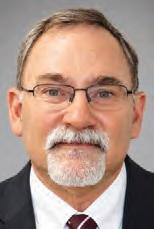
2 housing-code changes advance after planners debate
Brandon Leuallen The Business Times
Two proposed zoning and development code changes are headed to the Grand Junction City Council for their first reading after the Planning Commission recommended their approval. The amendments are intended to reduce development costs and address implementation challenges identified following the city’s comprehensive zoning-code rewrite during the planning commission’s June 23 meeting.
The proposals, both recommended by the Housing Affordability Code Task Force, would reduce bicycle-parking requirements for many developments and delay implementation of a certified irrigation-designer requirement until 2029.
Bicycle-parking requirements
The most extensive discussion during the meeting centered on proposed changes to bicycle-parking requirements adopted as part of the city’s 2023 zoning and development code.
Tim Lehrbach, the city’s zoning supervisor, explained that Grand Junction’s previous code required relatively little bicycle parking. The updated code, which became effective in 2024, significantly expanded those requirements by creating separate short-term and long-term bicycle-parking standards while adding detailed location and design requirements.
See PLANNING on Page 5
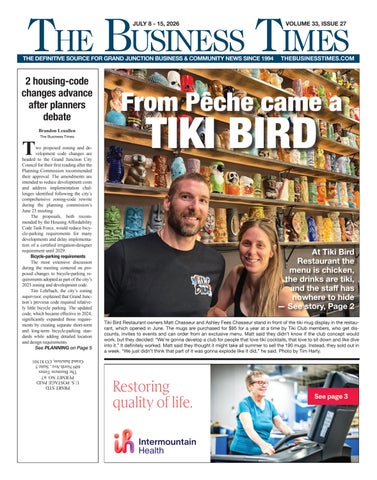
From Pêche came a TIKI BIRD
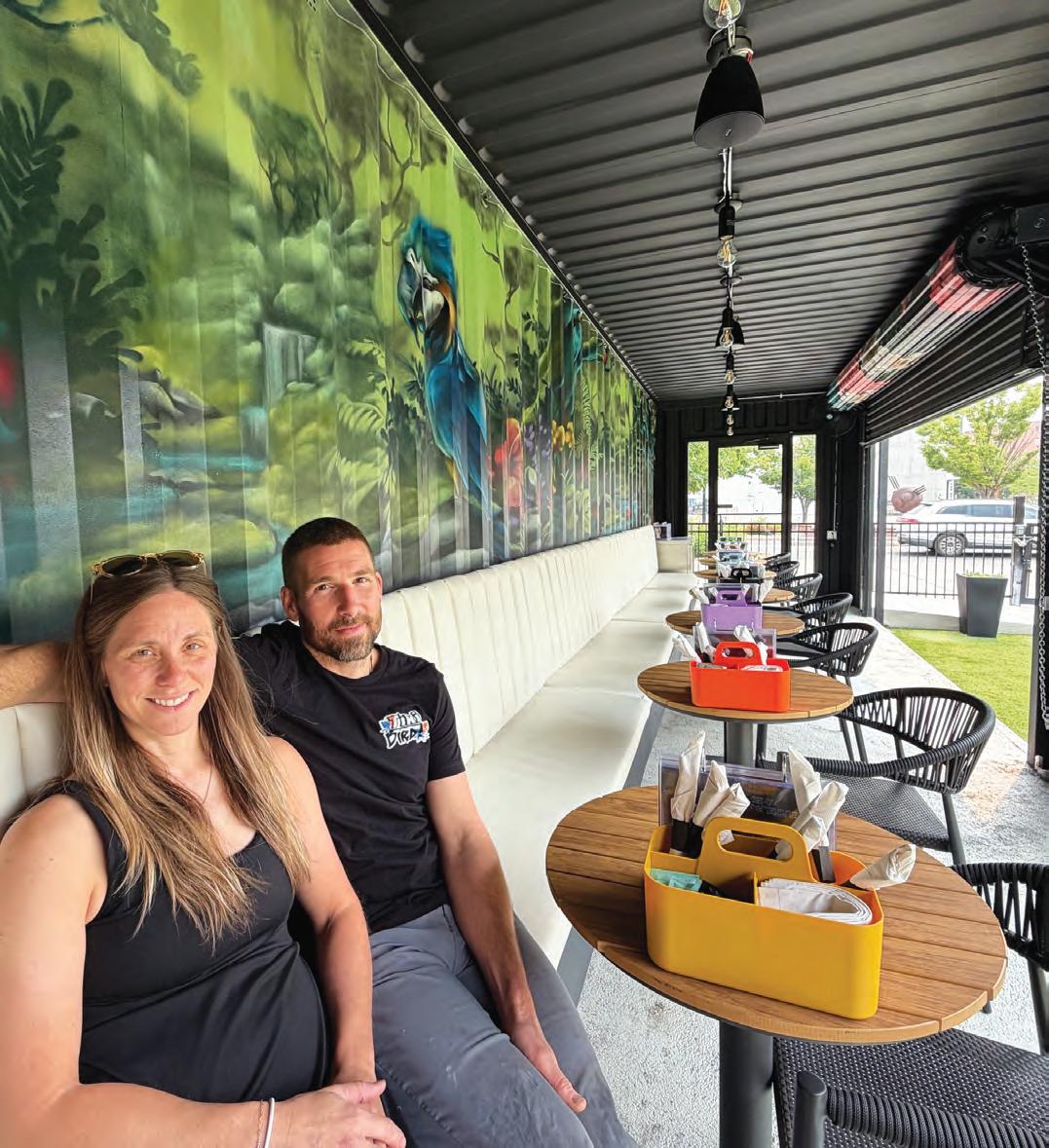
Tiki Bird Restaurant owners Matt Chasseur and Ashley Fees
At Tiki Bird Restaurant the menu is chicken, the drinks are tiki, and the staff has nowhere to hide — See story, Page 2
in front of the
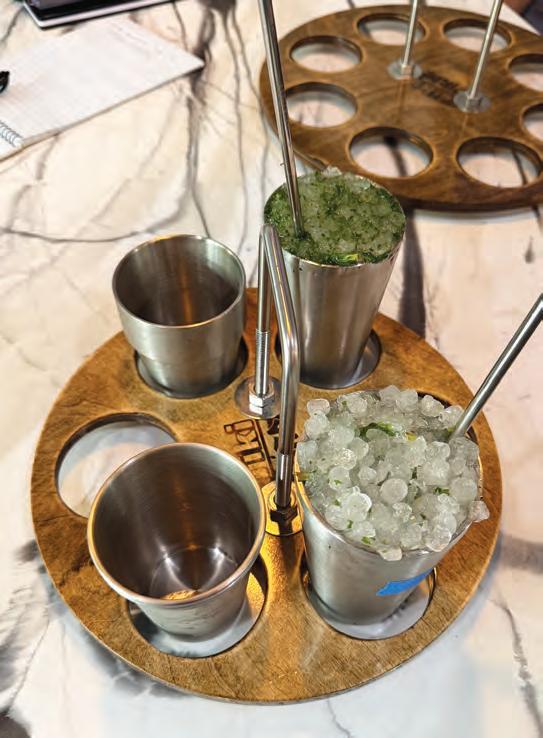
rant, which opened in June. The mugs are purchased for $95 for a year at a time by
in the
members, who get discounts, invites to events and can order from an exclusive menu. Matt said they didn’t know if the club concept would work, but they decided: “We’re gonna develop a club for people that love tiki cocktails, that love to sit down and like dive into it.” It definitely worked. Matt said they thought it might take all summer to sell the 190 mugs. Instead, they sold out in a week. “We just didn’t think that part of it was gonna explode like it did,” he said.
Chasseur stand
tiki mug display
restau-
Tiki Club
Photo by Tim Harty.
Pêche gives flight to Tiki Bird
Patrons of Pêche Restaurant in Palisade know this: The menu changes often, so if you encounter a life-changing entree, enjoy it while you can.
Those menu changes are by design, and Pêche owners Matt Chasseur and Ashley Fees Chasseur stand by their approach.
They also understand why people ask them to bring back this, that and the other thing they loved. That’s why they now have a second restaurant, Tiki Bird Restaurant, which opened in June at 119 N. Seventh St. in downtown Grand Junction, where some Pêche customers will recognize entrees they thought they’d never see again.
And there’s another really big reason to rejoice: Tiki Bird’s menu doesn’t change.
Matt explained the Pêche approach and how that spawned Tiki Bird: “Part of the philosophy of Pêche is once a dish comes onto the menu, it has a lifespan, and then we take it off and never put it back on. It forces us as culinarians, as a restaurant, to continue to grow. We have to evolve. We don’t want to be that restaurant just running the same food, recycled over and over again.
“So, what we found is at the end of six years – it was actually two summers ago –we’re like, ‘Everybody keeps asking for these chicken dishes. They want the jerk chicken back. They want the Thai fried chicken.’ And we just looked at each other, and we’re like, kind of jokingly, ‘Let’s open a chicken restaurant. Let’s bring all these things back,’ because all the recipes are documented out to the 10th of gram. … the methods are all well-documented, so we had this, basically, this cookbook already behind us.”
no other options,’” Matt said. “And being in the industry, we understand that you don’t want to cook all day and then go home and cook again.
“So, that was kind of the impetus where we were like, ‘OK, if we do this, we’re going to be open until 12 as well. We’re gonna be open for those folks that are having lunch. We’re gonna be open for those folks that are, you know, working 9 to 5, and they’re gonna come out for dinner after that. But then, it’s extremely important to us to be open for the service industry.
“So, whether you’re in the hospitality industry, you’re working second shift, the fire station, the hospital, those folks have an opportunity to finish work and go to a place for a delicious meal.”
They knew the menu would be the chicken entrees that made lasting impressions at Pêche. Still to be addressed was the beverage program and how to match it to the food.
“And immediately we’re thinking fresh juices, which are extremely important to us,” Matt said, detailing how Tiki Bird juices its own pineapples, lemons, limes, oranges, etc.
That led to the tiki theme, both the rum-based cocktails associated with tiki and the nonalcoholic cocktails that Matt and Ashley have designed that make it hard to tell that there’s no alcohol in them.
First, they contemplated nonrestaurant ways to provide their recipes. Sell a cookbook? Put recipes online sporadically as part of a social-media campaign?
“Then,” Matt said, “it was like, ‘No, let’s just use these and bring them to a new restaurant.’”
Another driving reason behind the new restaurant came from their experience in the restaurant industry and knowing what their food options are late at night in Grand Junction.
“When we’re finishing – typically on a Friday or Saturday night it’s close to midnight, if not 1 o’clock in the morning – and all the time you hear the rumblings of the chefs. They’re like, ‘Oh, yeah, we’ll get a bite to eat after work.’ I was like, ‘Where are you gonna go?’”
The answer was a number of national-chain, fast-food places, and Matt and Ashley questioned the healthiness of those options.
“And then we’re looking at each other, and we’re like, ‘Well, there’s nothing. There’s
“It was almost like the NA (nonalcoholic) part of the beverage program pushed the tiki forward, because we knew we wanted to do a fresh tropical punch,” Matt said. “Then it was, ‘All right, let’s dive into the world with tiki, because they go hand in hand. You can have a tiki cocktail without any alcohol. It’s delicious. You know, it kind of makes you smile, makes you feel like you’re on the beach. So yeah, it just started to evolve into that.”
Outstanding website
The Tiki Bird Restaurant origin story was just the beginning of the many details Matt and Ashley shared during their hour-long interview with The Business Times on June 24. There’s no way we can do all of that justice, and we recommend you check out the restaurant’s wonderful website at www.tikibirdrestaurant.com to see the menu, hours, their philosophy, staff biographies and more (and do the same for Pêche at www. pecherestaurantcolorado.com).
But there are plenty of interview highlights to hit, such as:
Still in the soft-opening stage
Matt and Ashley say they’ve assembled a wonderful staff, but about 40 percent are new to working at a restaurant, so they ask for patrons’ patience and grace during the early months as people get trained.
See TIKI BIRD on Page 4
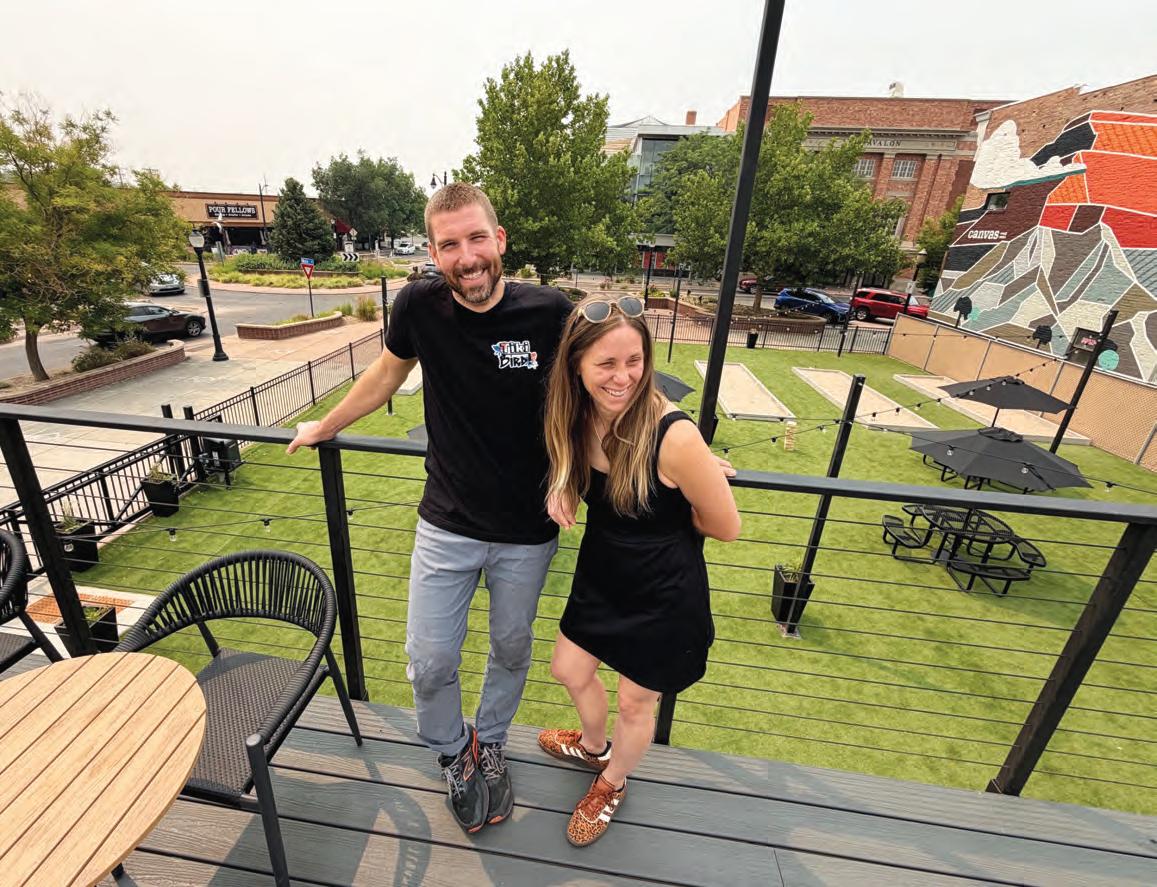
Tiki Bird Restaurant owners Matt Chasseur and Ashley Fees Chasseur stand atop the shipping container that was converted into an outdoor seating area with an elevated view from the rooftop and a covered area below. Behind them is the outdoor area for customers to hang out and play bocce ball. Photo by Tim Harty.
Continued from Page 2
announced it’s soft opening via social media.
grace,” Matt said. “We take training very seriously. In order to train properly, you have to take time with individuals. … And in doing so, the food’s gonna take longer to come out. The service is gonna take longer to service.
“So it was important to us to (say), “Yeah, we’re gonna open the doors to the restaurant. But please, give us an opportunity to learn the dance.”
Matt added he and Ashley “feel truly blessed to be able to have the support and the willingness and the team that we have here in the building, people that want it as much as we do, if not more.”
This is a chicken restaurant
Determining Tiki Bird was going to be all about chicken for its main courses had a lot to do with Pêche customers asking about chicken, specifically the Thai fried chicken.
Beyond that intensely local reason is a global one, as Matt said, “It’s universal. Every single cuisine across the world has chicken.”
Experience the world in an entree
The global theme also manifests in cooking the chicken.
When people ask what the food is like at Tiki Bird, Matt said, “If I was to go to a table, I would look at you and be like, ‘My man, I’ll take you around the world tonight, where you want to go? So we go to Thailand, we go to Jamaica, we can go to grandma’s kitchen in the Carolinas. We can go up to Nashville. We can go to Paris.”
Wherever they decide to go, the price will be the same. Each of the eight entrees cost $28. Each of the six appetizers cost $18. With everything priced the same, they don’t have to think about what they’re spending.
“So you can rule that part out,” Matt said. “Now you can make the decision of what you really want. What kind of food do you want? … So, you want to go to Thailand?
You want to go to India? You want to go to South Carolina?
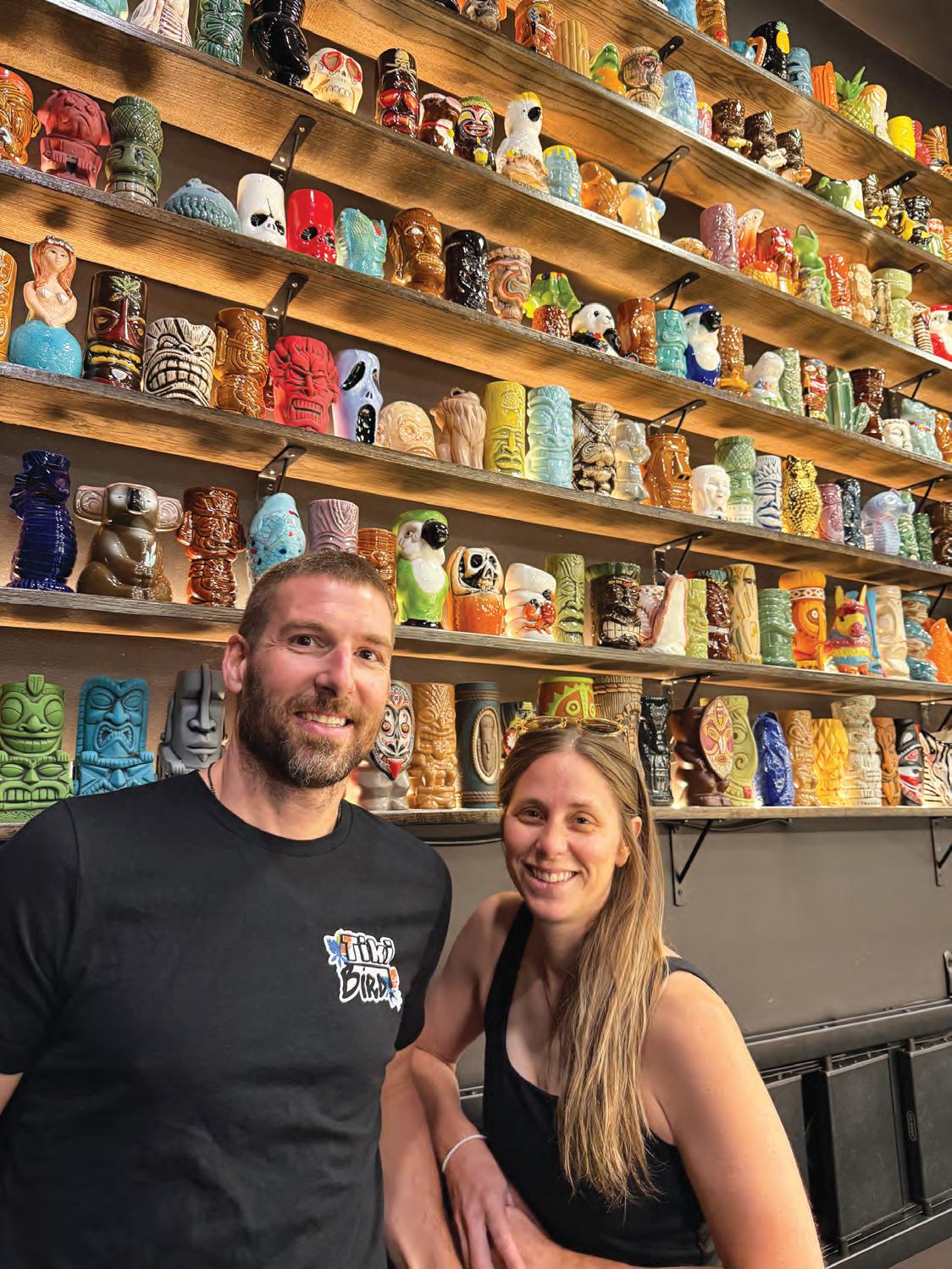
You can’t join, at least not this year. Tiki Bird had 190 individual tiki mugs (no two are alike) available for its mug club at a cost of $95 per year for its perks (20 percent off the exclusive menu/drinks in the mug, invites to special events at the restaurant).
And 190 were sold. The thought of offering more occurred to them, but Ashley said they decided against it because of lack of space to store them.
“We had no idea if it could take off or not,” she said, “but it was a really fun way to bring the tiki culture into the restaurant in an exclusive way. And it worked, because we sold them out in a week.”
Open concept – dining and kitchen
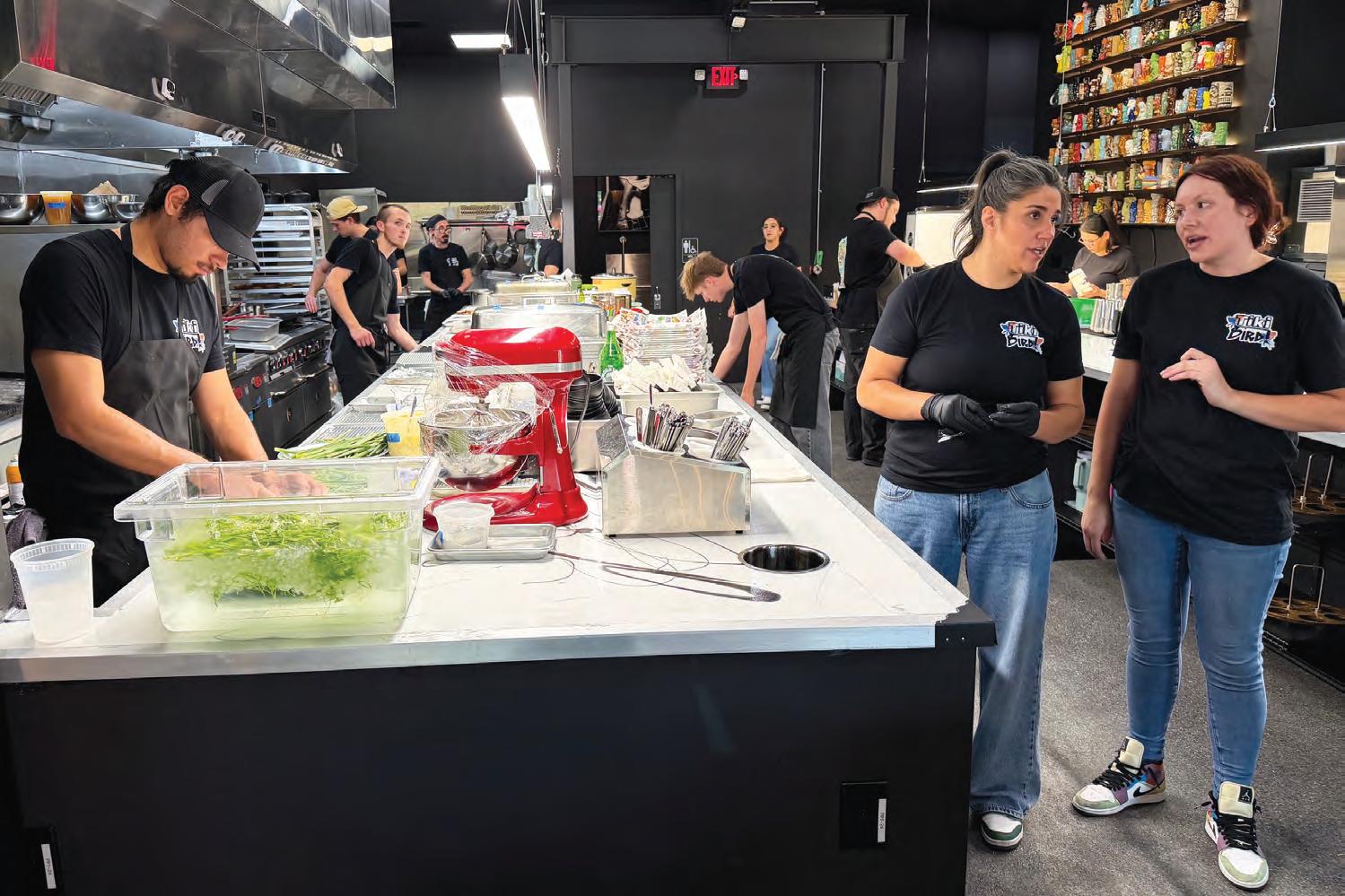
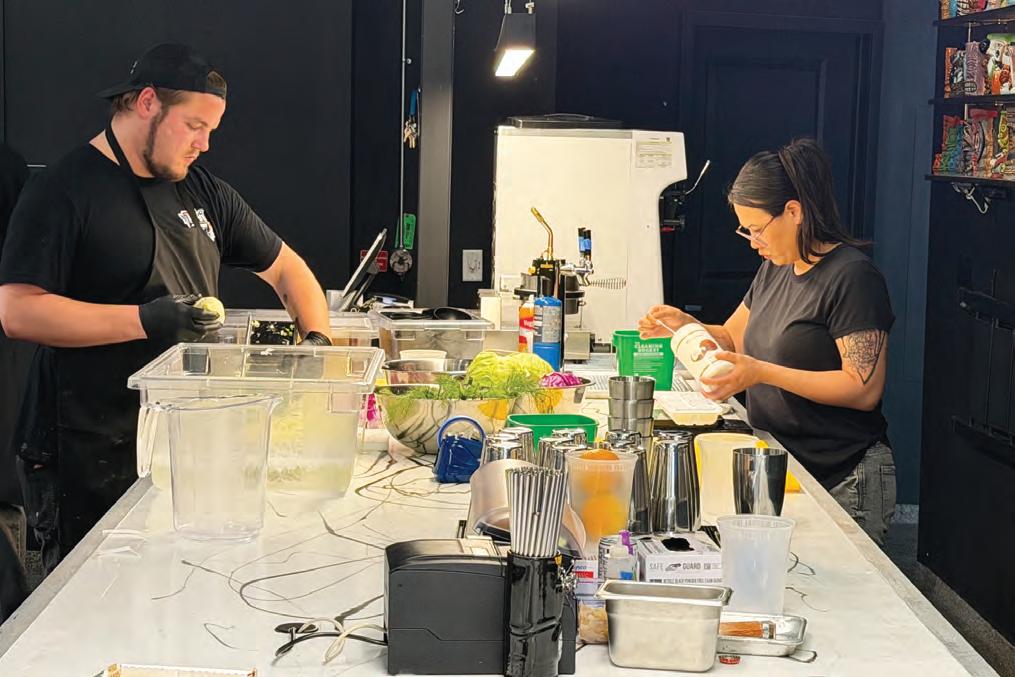
Anyone going to Tiki Bird for the first time will notice this immediately: The space is wide open. Not just the dining area, but the kitchen, which is on display for everyone to see how the food is prepared.
“The open-kitchen concept, for us as chefs, it’s accountability,” Matt said. “It holds you to a standard. There’s not a single place that you can stand in this building and not be seen. That goes for the dishwasher, that goes for the culinary team, the beverage team.”
Matt said it’s also about staff taking pride in what they do.
There’s a wide aisle down the middle of the kitchen area, and customers must navigate it to get to the restrooms.
“I mean, to use the men’s room, you literally see the dish station,” Matt said. “Like, you see the heart of the restaurant. You’re gonna see the hardest-working section.”
Another thing the layout does is create workflow.
“We don’t want that standard, box kitchen where everybody’s running into each other,” he said.
What they found in the Storm: Elevated dining
Tiki Bird converted its parking lot into an outdoor patio, and the stunning centerpiece of it is a … shipping container? Yep, a shipping container.
See TIKI BIRD on Page 6
TOP — Tiki Bird Restaurant has two long tables and a wide aisle between them where its kitchen staff works on full display for customers to see.
BOTTOM — Tiki Bird co-owner and chef Matt Chasseur made all of the drink trays, such as the one pictured, which allow servers to carry multiple drinks in a secure manner. Photos by Tim Harty.
Planning
The Housing Affordability Code Task Force argued those newer requirements increased development costs, reduced site-design flexibility and required bicycle-parking infrastructure that was often underutilized, such as at a car wash.
Task force members also argued the regulations had become too much of a onesize-fits-all approach by requiring bicycle parking for developments where demand was expected to be minimal. They contended developers should determine how much bicycle parking to provide based on market demand rather than uniform code requirements.
The proposed amendment would reduce required bicycle parking: eliminate minimum requirements for many land uses; combine short-term and long-term parking into a single standard; and simplify location and design requirements while retaining minimum bicycle-parking requirements for several commercial and residential uses.
Lehrbach said staff believed the proposal struck an appropriate balance.
“The proposed amendment strikes a balance to pursue housing-production imperatives without precluding continual advancement of multimodal goals,” he said.
Commissioners then spent nearly an hour debating whether that balance had been achieved.
Commissioner Robert Quintero asked whether developers will still be allowed to install more bicycle parking than required under the code.
Lehrbach said the proposal establishes minimum requirements, not maximums.
Mark Austin, a member of the Housing Affordability Code Task Force and owner of Austin Civil Group, argued that one of the biggest concerns involved longterm bicycle-storage requirements.
“The bike lockers at the rec center, each one of those installed is $4,500,” Austin said.
Not all commissioners agreed.
Commissioner Ian Thomas argued that bicycles remain an important transportation option for many residents, especially for low-income citizens.
“It’s very expensive being poor,” Thomas said while discussing transportation costs.
Later in the discussion, he added, “Affordable housing is not affordable if it’s only accessible by car.”
Other commissioners viewed the issue differently.
Commissioner Robert Quintero said the amendment represented one of many incremental changes intended to reduce development costs.
“It’s not going to cure the housing-affordability crisis,” Quintero said. “But it’s a chain of events that do help with easing the burden. You drop three grand here, $500 there, $1,000, $10,000. It all adds up. So, the death by a thousand cuts can be stopped by a thousand Band-Aids.”
He also emphasized that developers would remain free to exceed the minimum requirements.
“It gives them flexibility,” Quintero said. “At the end of the day, I think that provides the public with better options, and it
allows better usage of funds.”
Austin argued the proposal would not eliminate short-term bicycle-parking requirements for all uses. He said most public-facing uses, including restaurants, offices, personal services, recreation and entertainment, retail businesses and multiunit housing, would still be required to provide bicycle parking, though at reduced levels.
Commissioner Keith Ehlers said he believed the discussion had become unnecessarily polarized.
“I tend to reject just the binary decision of you’re either for bikes or you’re against bikes,” Ehlers said.
Instead, he described the amendment as an effort to rebalance regulations.
“This proposal does lean back into a balance,” he said.
Commissioner Orin Zyvan disagreed, saying he believed the proposal overlooked residents who rely on bicycles, because they have few other transportation options.
“It comes down to perspective,” Zyvan said. “If you look at it from the perspective of people who don’t have that luxury, then having it as an integrated part of our community makes a huge difference.”
He concluded, “I can’t feel comfortable moving forward with this as it stands.”
Commissioners briefly considered an amendment proposed by Thomas that would have required at least two bicycle parking spaces for additional nonresidential uses not covered by the proposal. Thomas said he was concerned the city could be missing opportunities by eliminating minimum requirements altogether, noting some businesses, such as car washes or storage facilities, might unexpectedly see bicycle traffic if racks were available.
The amendment failed.
The Planning Commission then voted 4-3 to recommend approval of the proposal as originally written before forwarding it to City Council.
Irrigation certification
Commissioners spent considerably less time discussing the second amendment, which would postpone a requirement that irrigation plans be prepared by Certified Irrigation Designers or professionals holding similar EPA WaterSense certifications.
The certification requirement was adopted as part of earlier water-conservation measures, but it was intentionally delayed because relatively few certified professionals were available locally.
Lehrbach told commissioners the situation has changed little.
Staff and the Housing Affordability Code Task Force expressed concern that allowing the requirement to take effect now could delay development projects simply because applicants would struggle to find qualified professionals to prepare the required irrigation plans.
The amendment would extend the deadline until Jan. 1, 2029, providing additional time for more professionals to obtain the required certifications.
Commissioners recommended approval.
Continued from Page 4
To be clear, the shipping container has been modified, thanks to the handiwork of Storm’s Specialty Services, 779 Riverside Parkway in Grand Junction. It has two floors with the top of the container serving as a rooftop-style area with elevated seating. And one of the container’s long sides was opened, so outdoor tables can sit under the cover of the roof.
After a couple other businesses gave them bids they called “astronomical” and a sense those places weren’t really interested in the project, Matt and Ashley emailed Storm’s Kevin Lemas, who met with them.
“He’s like, ‘Absolutely, we can do this,’” Matt said. “Kevin Lemas is why that shipping container is out there.”
One man and a spray-paint can
After Storm’s Specialty Service did the structural work, Grand Junction artist Jeremy Velasquez made the shipping container pretty. His painting – vibrant colors in the tiki theme – enlivened the interior and exterior.
Velasquez also contributed several pieces to the interior of the main building, among them a mural on the south wall of the dining area.
Matt and Ashley marveled at Velasquez’s prowess with spray paint, especially on the shipping container, which Ashley said is the piece of the property renovation she finds most exciting.
“This space transformation is amazing from top to bottom, inside to out,” she said. “But the shipping container still makes me, like, ‘No matter what, we did something really cool with that shipping container,’ and we didn’t really do much other than have a vision. Kevin brought it to life.”
“And Jeremy gave it its soul,” Matt added, leading Ashley to concur, “100 percent.”
Bocce ball made most sense
The patio also has an area for kids and adults to play bocce ball.
While cornhole has become extremely popular and would work in the patio area, Ashley said that was a good reason not go with cornhole.
“You can go anywhere and play bags,” she said. Ultimately, after considering several possible games to feature, Ashley said bocce ball was the winner, because it’s easy, enjoyable and relaxing.
“Bocce ball makes the most sense. Just does. It is the feel of the restaurant. It’s just like it’s the right thing,” she said. “We’re not saying we may not have a bag set out there at some point. I’ll just say with bocce ball, the Italians did it right. The Rule No. 1 for bocce ball is to grab yourself a fresh cocktail. Like, that’s Rule No. 1.”
Sign him up for endorsements
The architect for the Tiki Bird project, Rich Carter of Vortex Engineering & Architecture, was walking through the restaurant on his way to the exit when he stopped for a minute to tell Matt and Ashley how “amazing, top notch” the restaurant’s chicken is.
His compliment carries additional heft, as Carter said Tiki Bird “changed my whole perspective on chicken. I used to never order chicken anywhere, because it’s always bland and dry, but what you cook’s amazing.”
To that, Matt said, “Well, thank you.”
Carter didn’t stop there.
“This is something else,” he said. “Even at home, I rarely ever cook chicken, just because I don’t know how to cook it. And now, I’m still not going to, because of this. … Cindy, my wife, she’s always critical, but she loves this place, too. So, it was great. … I’m excited for you guys. Perfect location, perfect building, perfect menu, perfect owners.”
ABOVE — Tiki Bird Restaurant owners Ashley Fees Chasseur, left, and Matt Chasseur sit at a table inside the shipping container that was converted into a covered-seating area and has rooftop seating as well. The mural on the wall behind them was done by local artist Jeremy Velasquez, who also painted the exterior of the shipping container and has work featured inside the restaurant. BELOW — Staff members prep food in Tiki Bird’s kitchen, which is open for customers to see everything the staff does. Photos by Tim Harty.
Citrolas checks in at the Clarion Hotel
fills vacant restaurant and lounge space with established Italian restaurant
Tim Harty The Business Times
Looking for a new location for its restaurant, sandwich shop and coffee shop, Citrolas decided to get a room at the inn. In this case, that’s the Clarion Inn, 755 Horizon Drive.
And the room is, well, sizable, because the hotel’s restaurant and bar are meant to accommodate about 200 people, according to Kristy Citrola, who owns Citrolas with her husband, John.
The Clarion Inn traditionally had a restaurant in the space, which Kristy Citrola said is about double the size of what Citrolas occupied previously at 759 Horizon Drive, but it’s been vacant since Ristorante Pantuso relocated to the Redlands nearly three years ago.
Clarion Inn General Manager SJ Christ said the hotel was looking at creating its own restaurant to inhabit the space, but when John and Kristy Citrola inquired about its availability, those thoughts perished. The Clarion made the easy decision to welcome in its neighbor from a couple doors down as Christ called Citrolas “an awesome fit for it.”
She added, “John and Kristy are wonderful, awesome people, and we look forward to working with them for a long time to come.”
Kristy Citrola said Citrolas already had a relationship with the Clarion Inn through catering some events, and then “we just happened to walk in at the right time.” Once the lease was signed, the Citrolas moved in quickly.
“We did it as fast as we could. Get it open,” said Kristy, adding they started serving customers with a soft opening June 18. She said a grand opening is coming soon, “probably the end of July.”
The larger space came with or allowed Citrolas to add a few things it never had at its former location.
For starters, the Clarion Inn setup had a lounge with a full bar. So, Citrolas now has a lounge and bar, which has a separate menu from the restaurant, providing what
Kristy Citrola called “upscale bar food.” She added, “We’re doing Italian nachos, charcuterie boards, just more appetizers, pizzas, flatbreads in here.”
Between the lounge and the restaurant seating area, Citrolas put in a small wine bar.
And Citrolas will now take on providing room service for the hotel’s guests, plus banquets that are hosted at the hotel.
All of that is in addition to Citrolas continuing to do everything else it did at 759 Horizon Drive.
The Italian restaurant kept the same menu.
The sandwich shop, Kristy said, “It’s going to be just like it was before. Just order at the counter and sit down.”
Citrolas’ coffee shop is much smaller now and still getting established in its new surroundings. Kristy Citrola said eventually it will have a baker on board, making pastries to fill a case that currently sits empty.
“Little by little we’re getting it going,” she added.
One thing Citrolas won’t be doing is traditional breakfast. The Clarion Inn has that covered.
“We actually have a full breakfast, not a continental breakfast,” Christ said, adding the inn has its own kitchen, separate from Citrolas.
Being in a hotel now, a logical presumption is Citrolas will pick up business in addition to the regulars who won’t have any problem finding Citrolas’ new home. To what extent hotel patrons boost business remains to be seen, as John Citrola said early July is not a good time to gauge it.
“This is not a busy time,” he said. “You got Fourth of July weekend, and everybody’s gone, so history-wise it’s always a really slow week anyway. I couldn’t really judge it on that right now. But a lot of people have come here, just knowing that we’re open. But this is like, let’s get into next month, I think, and then we’ll really be able to see the difference.”
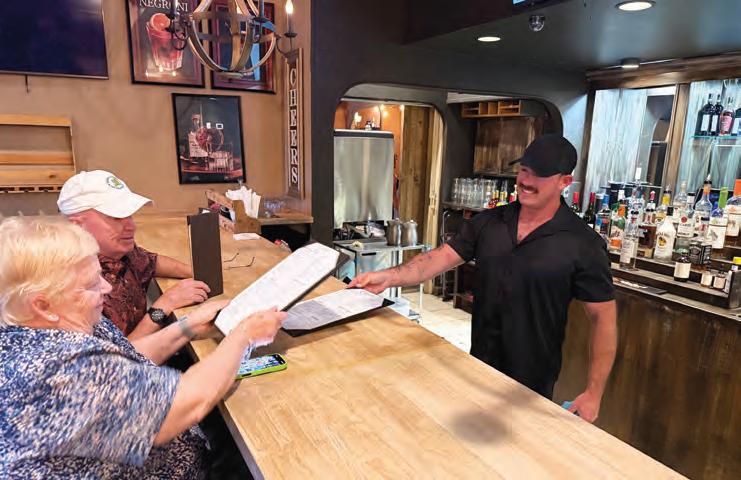
Citrolas bartender and server Jaden Rodebaugh, right, provides menus to customers on June 30 in the lounge bar, a new element for Citrolas now that it is located in the Clarion Hotel. Photo by Tim Harty.
MORE TO THE STORY
Sometimes, for various reasons, The Business Times isn’t able to print everything it wanted to present in a story. When that happens and we feel the need to provide what the original story was missing, we’ll bring you “More to the Story.”
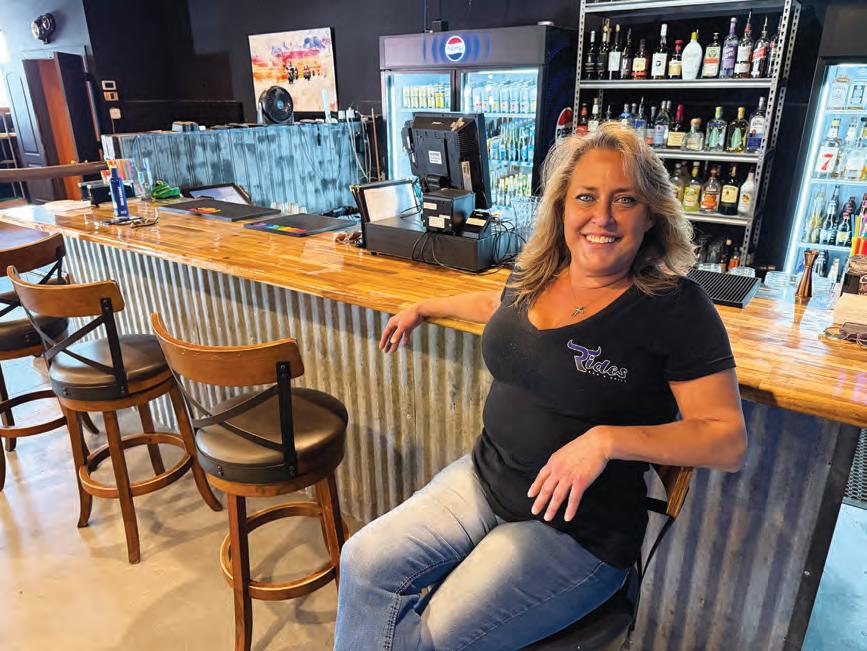
The July 1, 2026, edition included a Page 2 story about Rides Bar & Grill surviving a tough winter and spring when Fruita’s South Mesa Street was torn up for reconstruction. Because of The Business Times’ space limitations, the story did not delve into Rides owner Krista Mahler’s thoughts about the need for the project. So, here they are now:
Bar owner understood need for Fruita street project
Mahler acknowledged she knew when she bought Rides Bar & Grill, 152 S. Mesa St., in the spring of 2025, she knew about the South Mesa Street project that was scheduled to begin in the fall and generally approved of it.
“One of the main reasons they needed to do it was because the sewer lines have always backed up on the street for a long time,” she said.
However, she did not anticipate Rides “would be blocked off from the main roads for a good portion” of the project, which ended up lasting eight months. She said if she’d been told it could last eight months instead of three to six months, she would have budgeted differently and possibly mitigated some of the harm to her business.
Asked whether the street work was something that needed to be done, Mahler said without hesitation, “Oh, my God, yeah. Yeah. I mean I was aware when I purchased the business that there was going to be construction, and I understood what they were doing, and I bought into the whole concept of it.
“I do believe that this will become one of the new main arms into the downtown area, because it gets very congested over by City Market, coming off of there, and then just driving down through all the residential areas. So, I knew it needed to be done, and it looked very industrial prior to all of this. So I bought into the whole concept of: We will be the first thing you see. Of course, Fiesta Guadalajara will be first, but then you’re gonna see us as the new face of downtown.
“And so that’s really what I brought into was that concept. And I still believe in that. It just took a lot longer than I had initially been informed. But, you know, it’s turned out beautiful.”
Recycling facility enters final construction phase in August
Grand Junction’s new regional recycling facility will enter its final construction phase in August as installation of its advanced sorting equipment begins, putting the nearly $29 million project on track to open by the end of the year.
The Grand Junction City Council unanimously approved a $3.24 million change order Wednesday, authorizing KR Construction Group to complete Phase Two of the city’s new Materials Recovery Facility, the final major construction package before the facility begins operations.
Grand Junction General Services Director Jerod Timothy said the city’s total investment now stands at approximately $28.8 million, below the $32.8 million estimate prepared during a 2023 feasibility study.
Timothy noted the earlier estimate did not include several components ultimately incorporated into the project, including land acquisition, permitting, rolling stock and a public outreach and education center. After several years of construction inflation, the original estimate would equate to roughly $37 million to $38 million today, he said.
Construction is about 65 percent complete, with demolition, structural modifications, utility relocations and equipment foundations already finished. The next milestone comes Aug. 3, when AI-assisted sorting equipment is scheduled to begin arriving for installation. Testing and commissioning will continue through the fall before the facility opens by year’s end.
The project includes approximately $11.2 million in advanced sorting and processing equipment and is designed to process recyclable materials from throughout Western Colorado and eastern Utah.
Phase Two will complete the administrative offices, employee locker rooms, conference room, publiceducation center, observation mezzanine, loading docks and the remaining mechanical and electrical systems. Large viewing windows overlooking the processing floor will allow school groups, community organizations and visitors to watch recyclable materials move through the automated sorting system.
Timothy said HDR Engineering & Consulting estimated the Phase Two work would cost about $4.76 million, while KR Construction submitted a proposal of $3.24 million, roughly $1.52 million less than the engineer’s estimate.
Council members also discussed the city’s partnership with Bruin Waste Management, which will operate the facility and how the facility receives recyclable materials from other companies.
“This is not restricted to just recycling that comes in Bruin trucks,” Stout said. “Other recycling partners, other municipalities could bring to this facility as well. We specifically built this as a regional materials-recovery facility.”
Timothy said Bruin already has agreements with communities, including Ouray, Telluride and Gunnison, and the facility will be available to other municipalities, private haulers and residents.
He said demand is evident.
“I received a call from one of those large haulers just the other day,” Timothy said. “He had heard that the facility was open in August, and he’s like, ‘Tell me it’s true, tell me it’s true.’”
The highly automated facility is expected to initially employ 10 to 12 workers, with staffing likely doubling as operations expand to two shifts.
Timothy said the project could spur additional hauling jobs and eventually attract manufacturers that use recycled materials.
How is it funded?
The facility’s long-term funding model is tied to Colorado’s Producer Responsibility Program for Statewide Recycling, a law passed in 2022 that shifts the cost of recycling from local governments to the companies that produce packaging and paper products. Under the law, manufacturers pay fees that help fund recycling collection, processing and infrastructure, including facilities such as Grand Junction’s regional Materials Recovery Facility.
During debate over the legislation, groups such as the American Forest & Paper Association, which represents paper and packaging manufacturers, opposed the bill and warned that the new costs could ultimately be passed on to consumers. In urging Gov. Jared Polis to veto the measure, the association wrote, “EPR could shift the economic burden of new recycling regulations from municipalities to Coloradans. These added costs would especially hurt small businesses and low-income households.”
The legislation was approved, including a provision requiring the state to evaluate its impact on consumer prices beginning in 2028 and every three years thereafter.
The council approved the Phase Two contract amendment on a 7-0 vote.
Hays chosen as new Hilltop CEO
Hilltop Community Resources announced Will Hays was selected by the Hilltop Board of Directors to become its next chief executive officer.
Hilltop said in a June 29 news release that final transition details are in progress, and it will share additional information about timing and next steps soon.
The news release said Hays brings a deep understanding of Hilltop, its mission and the people it serves. Throughout the search process, Hays demonstrated “a genuine commitment to Hilltop’s values, a clear vision for the future and a passion for building on the strong foundation Hilltop has created.”
According to the news release, Hays’ selection follows months of evaluation and interviews to determine a successor to current Hilltop CEO Mike Stahl. Stahl
will transition into an advisory role through the end of his tenure and will work closely with the board of directors and Hays to ensure a smooth transition.
Hays has spent more than 30 years working to build connection in communities, first as a direct-care provider and for the past 27 years as a leader at Hilltop.
The news release said Hays leads with a people-first philosophy and the belief that organizations succeed when they invest in their people with the same intention they invest in their services.
Hilltop Community Resources is a local nonprofit organization that for more than 75 years has provided support on the Western Slope to thousands of community members annually.
F
Rides Bar & Grill
Continued from Page 8
Mahler said South Mesa Street stands to be the new path for Fruita’s parades to start and head toward Park Square.
“They’ll line up down McCune (Avenue) and start going down Mesa Street,” she said, “so that’ll allow me to have maybe some outdoor seating areas where we can utilize the entire parking lot for people to watch the parade.”
u Understanding landlord: Mahler said she asked her landlord for a little help when the street reconstruction was decimating Rides’ revenues and ability to pay bills.
“Luckily, my landlord was gracious enough to cut my rent during the last half of it, so that helped immensely,” she said. “I had him start coming out here to see what I was dealing with, and he was like, ‘Oh, now I see what you’re talking about.’”
u A few residual issues: Mahler said the city posted in late May that the street is open, but there were still “a couple of fine-tuning things” that needed to be done.
Before the Mike the Headless Chicken Festival, the city had to do a couple of temporary closures, she said, “so it created confusion for people. It’s like, ‘Aren’t they, open?’ So, it was just a little chaotic in the interim, but now they’re fully open, and they’re not doing anything else.”
Mahler said South Mesa Street was blocked off during the festival “just because of all the pedestrian traffic,” and she didn’t want passers-by getting the wrong impression when they saw barricades.
“It’s like, ‘No, no, that one’s temporary,’” she said.
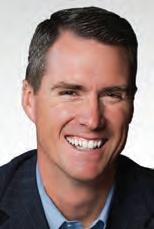
New Hilltop Community Resources CEO Will Hays.
Water Center announces formation of executive board
advisory role and will directors transition. than 30 connection direct-care years as a Hays leads and the succeed when the same services.
Resources is that for provided support thousands of
The Ruth Powell Hutchins Water Center at Colorado Mesa University announced the formation of a new, nine-member executive board, which will provide strategic guidance, inform research priorities and advance outreach and fundraising efforts in support of the water center’s long-term mission.
With the executive board in place, the water center said in a news release it is positioned to strengthen its organizational foundation, deepen regional partnerships and expand its capacity as a trusted source of knowledge and expertise on Western water issues.
“The formation of the executive board marks an exciting step forward for the water center,” said Shannon Wadas, executive director of the Ruth Powell Hutchins Water Center. “This group brings together deep regional knowledge and expertise, leadership in water management and a shared commitment to strengthening the water center’s role as a trusted resource for western Colorado. Their guidance will be invaluable as we begin strategic planning, expand partnerships and build a sustainable foundation for the future.”
The board includes broad regional representation across four major river basins: the Colorado; Gunnison; YampaWhite-Green; and Southwest. Members bring diverse expertise in higher education, water management, agriculture, local government, public policy and regional leadership.
The executive board members are:
• John Marshall, president of Colorado Mesa University.
• Andy Mueller, general manager of the Colorado River District.
• Andy Rossi, general manager of the Upper Yampa Water Conservancy District.
• Celene Hawkins, Colorado River program manager for The Nature Conservancy.
• Janie VanWinkle, owner of VanWinkle Ranch.
• Kathy Chandler-Henry, board
The Business Times 609 North Ave., Suite 5 Grand Junction, CO 81501 (970) 424-5133 www.thebusinesstimes.com
The Business Times is published weekly and distributed throughout Grand Junction, Fruita and Palisade. Advertising rates and deadlines are available upon request. Opinions expressed in this publication are those of the writers and don’t necessarily reflect the views of the publisher, editor or advertisers.
Letters to the editor at: publisher@thebusinesstimes.com
Submit stories or story ideas to: stories@thebusinesstimes.com
member for the Colorado River District.
• Russ George, former speaker of the Colorado House of Representatives.
• Tim Casey, professor of political science at Colorado Mesa University.
• Wendell Koontz, Delta County commissioner.
“The executive board will play a critical role in helping to build an organization that serves as a strong convener and as a source for new, innovative and trusted information that will inform sound policy decisions,” CMU President John Marshall said.
To learn more about the Ruth Powell Hutchins Water Center, visit coloradomesa. edu/water-center.
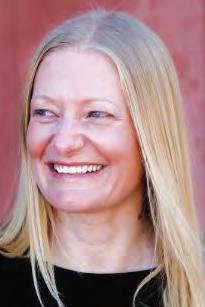
Andy Rossi
Russ George
Andy Mueller Celene Hawkins
Tim Casey
Kathy ChandlerHenry
Janie VanWinkle
Wendell Koontz
John Marshall
How to support team members carrying professional stress
Every leader has seen it: the team member who starts arriving a little later, withdrawing a little more, or reacting a little faster than usual. Their performance dips, their energy shifts, and the spark they once brought to the team begins to fade. These changes rarely happen overnight.
More often, they’re the visible signs of someone carrying more professional stress than they know how to manage.
And here’s the truth: Leaders sometimes forget team members don’t leave their stress at the door simply because we wish they would. They bring it into meetings, into customer interactions and into the culture you’re responsible for shaping. When professional pressure becomes overwhelming, it affects not only the individual, but the entire organization.
The question isn’t whether your people will experience stress. They will. The real question is how you, as a leader, choose to respond.
Leaders set the emotional tone for the workplace. When you pay attention to subtle shifts like changes in demeanor, communication patterns or engagement, you send a powerful message: I see you.
This isn’t about micromanaging or diagnosing. It’s about awareness. When someone who is normally steady becomes short-tempered, or a high performer suddenly disengages, it’s a signal worth exploring. Stress rarely announces itself directly. It shows up in behavior long before it shows up in words.
Team members often hide their stress because they fear judgment, consequences or being perceived as weak. Leaders who want healthier teams must actively dismantle that fear.
You do this by responding calmly when someone shares a struggle, avoiding kneejerk solutions, listening first and consistently reinforcing that asking for help is a sign of maturity, not failure
When people feel safe being honest, they’re far more likely to address stress early, before it becomes a crisis.
Leaders sometimes jump to conclusions: “They’re not committed,” “They’re distracted,” or “They’re not a good fit anymore.” But stress is rarely about a lack of commitment. More often, it’s about a lack of capacity, clarity, or support.
Instead of assuming, ask open, nonthreatening questions:
• “I’ve noticed a shift. How are you doing?”
• “What’s been weighing on you lately?”
• “What would help you feel more supported right now?”
Your goal isn’t to pry into personal matters. It’s to understand the professional pressures they’re facing and how those
pressures are affecting their work.
Stress often comes from blurred boundaries, unclear priorities or unrealistic expectations. Leaders can dramatically reduce stress by helping team members clarify what truly matters, identify what can wait, break large challenges into manageable steps, and let go of tasks that don’t align with their strengths.
Sometimes the most supportive thing a leader can say is, “Let’s simplify this.”
Team members watch how leaders handle stress. If you’re constantly overwhelmed, reactive or unavailable, your team will mirror that behavior. If you carry your stress home, they’ll assume that’s the expectation.
But when you demonstrate emotional regulation, healthy boundaries, thoughtful decision-making and the ability to pause before reacting, you give your team permission to do the same.
Leadership isn’t just about what you say. It’s about what you normalize.
Not every team member needs the same kind of support. Some need clarity. Some need coaching. Some need time. Some need a different role or a different challenge.
Your job isn’t to fix their life. It’s to make sure they’re not carrying their stress alone.
You can encourage them to use coaching or mentoring resources, adjust workloads temporarily, provide clearer expectations, offer flexibility when appropriate and help them explore long-term career alignment
Support doesn’t mean lowering standards. It means helping people rise to meet them.
A stressed team member affects the entire team. But a grounded leader can stabilize an entire environment. When you respond with calm, clarity and compassion, you interrupt the cycle of stress that can otherwise spread unchecked.
Your presence becomes a form of leadership in itself.
Sometimes a team member’s stress is a sign that something in the role or the organization needs to change. Misalignment between a person’s strengths and their responsibilities is one of the most common sources of chronic stress.
Great leaders don’t ignore misalignment. They address it. They help employees explore new roles, new responsibilities or new paths inside or outside the organization.
Supporting someone through that process isn’t just good leadership. It’s good humanity.
Employees carrying professional stress don’t need a leader who looks the other way. They need a leader who sees them, supports them, and helps them navigate the pressures of their work with clarity and dignity.
When leaders show up with awareness, empathy and accountability, they don’t just improve performance, they transform lives.
Marcus Straub owns Life is Great Coaching in Grand Junction. Reach Straub at (970) 208-3150, marcus@ ligcoaching.com or through the website located at www.ligcoaching.com.
Marcus Straub
The primary problem with our primaries lies primarily with the primary process
Oh, we’ll probably get into some secondary problems as well. You know me.
If there’s one thing I’ve never understood since I moved here – and it may not have been a thing when I did in the year 2000, because I wasn’t paying as close attention – is the practice of resigning one’s party affiliation before a primary election so that one could vote in the other party’s primary, usually not for, but rather against candidates one doesn’t like.
Or to vote for a less electable candidate in the other party’s primary so that your guy (sorry, it’s just a phrase) has someone easier to run against in the general. Once you reset your party affiliation, that is.
I mean, seriously, who does that?
I really want to believe it’s very few people, but in the insanity that is Colorado politics, I’m beginning to believe it’s becoming increasingly prevalent. Just looking back at previous elections has pretty much convinced me. Because when I look at the “quality” of candidates on ballots, I’m just not impressed.
Maybe it’s because politics in America, since its inception, continues its downward spiral on what our major parties consider “the best of the best.” As Inigo Montoya might say when it comes to “public service” as being the best of the best, “You keep using that word. I do not think it means what you think it means.”
These candidates now carry about the weight of Grizzy Griswold’s “gold standard” when our elections are filled with graft, grift and gangsters of all kinds, because they are all about power and control, and keeping those two attributes in proper perspective attracts very few good people. As for the “gold standard” Jena, we’re still counting votes in the republican primary for governor, with two out of three sides (one the big loser) saying there’s cheating going on.
But what else would one purport from the party of Peters?
But back to my original point (this is where I’ll get emails saying, “You could have done this whole babbling brook of BS in a couple of paragraphs. But where’s the fun in that, let alone in my talent in abusing alliteration?) of the insanity of allowing democrats to vote in republican primaries or vice versa? Also note, neither party is worthy of a capitalization any longer.
My very simple sampling says (see that?) that it’s democrats doing it way more than republicans. How do I know? They brag about it. I also know most republicans would never vote for someone they despise or think is evil. How do I know that? Personal experience as I exercise that right all the time WITH republicans and as a one-time republican. I bet you didn’t know I’ve gotten votes for president and governor in many elections, did you?
So, if I was self-obsessed like damned near all of our “public servant candidates” I’d include in all my columns some reference of “Craig Hall, who at one time ran (or received votes) for President of The United States” as a lead in to all the knowledge I so gracefully share with my avid and loyal (yes, that’s sarcasm) readership. Except, for the love of my God, I want nothing to do with their kind of “public service.” The only plank I would run for office on would be this: I would work tirelessly so all unconstitutional laws would be rescinded forthwith.
Which makes me unelectable, because that’s about 99 percent of all civil law. And voters who vote for candidates who promise they’ll pass laws for voters’ wishes and demands or to control or cause harm to the kids who picked on them in high school or to assure there are no consequences for their actions would want nothing to do with a candidate who runs on freedom and personal responsibility.
Then again, these voters also resign party affiliation and vote crossover in primaries.
Which brings us back to republican insanity. I’m convinced it’s democrats doing this primary political poppycock way more than republicans. The only question that remains is why do republicans allow it? I once had the local party chairman of our republican politburo tell me the party was just fine with this because: More participation? Maybe he had a point. It just made Victor Marx (for the love of all that is holy, THAT’S what you changed your name to, to get INTO politics?) a primary winner, because there aren’t enough republicans who’d vote for the Jim and Tammy Faye road show (notice I didn’t say debating) if the primary was closed. Fact is, Barb wins, even though Scott won at the convention? Make it make sense.
Yeah, it’s the crossovers. Or in the case of the one at the Bottoms, the terrible Tina effect.
Speaking of candidates, the love child of Carrot Top and Napoleon Dynamite would never win nomination for secretary of state unless unopposed. The only place his videos would attract attention is the faculty lounge with the snapping of fingers from the beret-wearing beatniks. And I’d be remiss to not mention our local candidate with a bias for red ties and turning points, who I am sure democrats put over the top over a much more qualified opponent to elect ineffectiveness to office. Because any republican candidate who can fog a mirror would win in 54, even ones where the fogging is their greatest accomplishment.
So maybe it’s a combination of primary poaching and bad candidates for republicans? I think the main lesson for the party I resigned from a few years back with nary a thought to vote democrat in a primary or worse, re-affiliate, is this: democrats are just better at pigpen politics than pitiful republican pontificators. Politics isn’t a reaction sport. It’s an all-out attack, blood sport. And the democrats just want the money, power and control more. At least at the state level, and more and more at the federal level. And occasionally in downtown River City. Thank God our county holds fast.
I mean, they are winning primaries with communists running now. Admit it, you always thought they’d elect communists against bad republican candidates as I did. But the commies are now using the democrats own primary tactics against them. I’d slather joyfully in that irony if it wasn’t for how it will destroy freedom and our country.
So here we are with perhaps the primary over as of this printing – although maybe not – with republican candidates at the state level poised for disappointment in the general election no matter how many prayers Victor’s supporters demand to their god who would only vote for Victor (as if God has, or wanted, a vote) or selfie videos from flameout boy, all while an avowed, America-hating communist wins in downtown Denver.
I’ll agree on one point from the vociferous Vic voices. We need prayer. For the country, not its “leaders.” I know I’ll hear it on that one. But I mean it in the sense of the people, not the self-imposed elected betters. And for republicans and, prayerfully, democrats, apparently better candidates. I mean, now that we’re electing open communists above crazy progressives and feckless republicans, Colorado, and our nation, are indeed on the brink.
Fact is, crossing over parties during primaries is simply greasing the tracks even more. Because if there’s one thing I know about politics above all else, it will never solve our nation’s ills no matter which candidate, or party, you vote for.
And that’s truly America’s primary problem with politics.
In Truth and freedom.
F
Craig Hall is owner and publisher of The Business Times. Reach him at 424-5133 or publisher@thebusinesstimes.com
Craig Hall
n VA hires Tekansik as health-care-system director
The Department of Veterans Affairs appointed Mathew Tekansik as the new director of the VA Western Colorado Health Care System. Tekansik is responsible for one medical center and four outlying clinics, and he oversees delivery of health-care services covering 17 counties and 47,000 square miles within the state of Colorado and Utah.
Sunaina Kumar-Giebel, Veterans Integrated Service Network 19 director, said of Tekansik. “His sound leadership qualities and proven experience will be valuable assets for the facility, the employees and volunteers, and most importantly for the veterans we are honored to serve.”
Tekansik began his career with the Department of Veterans Affairs in 2011 as a programsupport assistant and TCF intern in the accounting and fiscal department. He advanced through various leadership roles, including the position of chief of fiscal, and he has served as the associate director at VA Western Colorado Health Care System since 2023.
n Alpine Bank opens benefit account for 5 Snyder Fire firefighters
Alpine Bank established a dedicated benefit account to support the families of five firefighters impacted by the Snyder Fire in Mesa County. Three of the firefighters lost their lives and two were critically injured.
Alpine Bank launched the effort with a $25,000 donation to be split evenly among the five families.
“This hits close to home for all of us,” Alpine Bank Regional President Tyler Dahl said. “When something like this happens, you don’t hesitate. You show up. These firefighters were there for our communities, and now it’s our turn to stand beside their families and support them however we can. That’s what neighbors do.”
The benefit account is open for donations through Aug. 31, and all funds go directly to the firefighters’ families. Community members, businesses and organizations can contribute at any Alpine Bank branch, in person or by phone. Donors should reference the “Snyder Fire Firefighter Families Benefit Account” to ensure funds are directed appropriately.
For more information about the benefit account or to learn more about making a donation, visit alpinebank.com/snyderfire.
n United Way activates Snyder Fire Support Fund
In response to the Snyder Fire, United Way of Mesa County activated the Snyder Fire Support Fund. United Way said in a news release that many people have been displaced and require essential supplies, so it is collaborating with local and state government and nonprofit partners to provide immediate relief to those who have been affected.
“In moments like these, we are reminded that the strength of our community is measured by how we show up for one another,” said Cassidy Lujan, executive director of United Way of Mesa County. “The Snyder Fire Support Fund gives every member of our community an opportunity to stand alongside those who need us most. Together, we can help ensure our neighbors have the support they need.”
To contribute the Snyder Fire Support Fund, visit unitedwayofmesacounty.salsalabs. org/snyderfund. The news release said a committee of government and local nonprofit leaders will allocate funds received through this fund to where they are most needed in Mesa County.
n City accepting photo submissions for 2027 calendar
Photographers have until 5 p.m. on July 31 to submit photographs to the City of Grand Junction for possible inclusion in its annual printed calendar for 2027.
Photographers are encouraged to submit photos that celebrate the beauty of the community, including scenes, special events and other snapshots of life in Grand Junction. Other photo options can include landmarks, parks, public spaces or everyday moments from Grand Junction.
Photograph submissions must be completed online. Emailed photos will not be accepted. Horizontal photos are encouraged, and photographs must be a minimum of 300
dpi in file formats that include jpg, tif, and png. Photographers are recognized with their name and website URL (if applicable), which are printed with their photo. Photographers will be contacted to add a title to submitted photos used in the calendar. All photos submitted for the annual calendar may also be used in marketing efforts to promote the beauty of the Grand Junction area and all that it has to offer visitors and residents.
Calendars are mailed to households within city limits in November, and free copies (limit of five per person) are available at City Hall, 250 N. Fifth St., the Utilities office at 910 Main St., the Parks and Recreation office at 1340 Gunnison Ave., and at Visit Grand Junction at 740 Horizon Drive.
n GJ Chamber’s Young Professionals Summit returns in August
The Grand Junction Area Chamber of Commerce is accepting registrations for the Young Professionals Summit, which will take place Aug. 19 at the Colorado Mesa University Ballroom.
From keynote speakers to interactive breakout sessions, the event is designed to help young professionals build valuable skills, expand their networks and invest in their futures. This year’s theme is “Place. Purpose. Possibility.” It celebrates the connection between personal growth and community impact.
The day concludes with the BestSlope NextGen Awards, celebrating the young professionals whose leadership, innovation and commitment are making a lasting impact across our region.
To register, go online to gjchamber.org/ypsummit. Group rates are available for
self-regulation tools to engaging sensory experiences, we are committed to helping individuals, families, caregivers, educators and professionals find the resources they need in a welcoming and inclusive environment.” Photo by Tim Harty.