Why Engine Oil Degrades Faster in Dubai —
And What to Do About It
Introduction
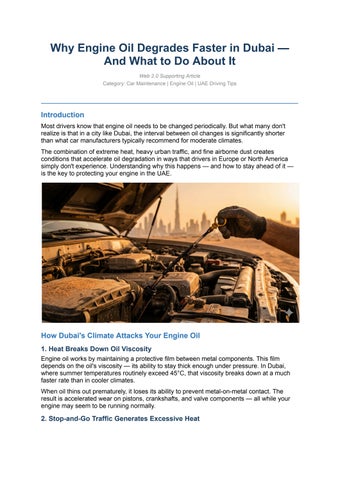
Most drivers know that engine oil needs to be changed periodically But what many don't realize is that in a city like Dubai, the interval between oil changes is significantly shorter than what car manufacturers typically recommend for moderate climates
The combination of extreme heat, heavy urban traffic, and fine airborne dust creates conditions that accelerate oil degradation in ways that drivers in Europe or North America simply don't experience Understanding why this happens and how to stay ahead of it is the key to protecting your engine in the UAE
How Dubai's Climate Attacks Your Engine Oil
1. Heat Breaks Down Oil Viscosity
Engine oil works by maintaining a protective film between metal components. This film depends on the oil's viscosity its ability to stay thick enough under pressure In Dubai, where summer temperatures routinely exceed 45°C, that viscosity breaks down at a much faster rate than in cooler climates
When oil thins out prematurely, it loses its ability to prevent metal-on-metal contact The result is accelerated wear on pistons, crankshafts, and valve components all while your engine may seem to be running normally
2. Stop-and-Go Traffic Generates Excessive Heat
Dubai's urban roads Sheikh Zayed Road, Al Khail Road, and the network of service roads around business districts are known for heavy congestion during rush hours Every stop-and-go cycle forces the engine to work harder, generating more heat
Unlike highway driving, where engines operate at consistent RPMs, city driving creates thermal spikes that place intense stress on oil. Over time, these repeated temperature cycles cause chemical breakdown that darkens the oil and reduces its lubricating properties.
3. Fine Desert Dust Contaminates Oil Faster
The UAE environment introduces microscopic particles of dust and sand into engine systems, even through well-maintained air filters. These particles mix with engine oil, forming a gritty sludge that clogs passages and reduces circulation throughout the engine.
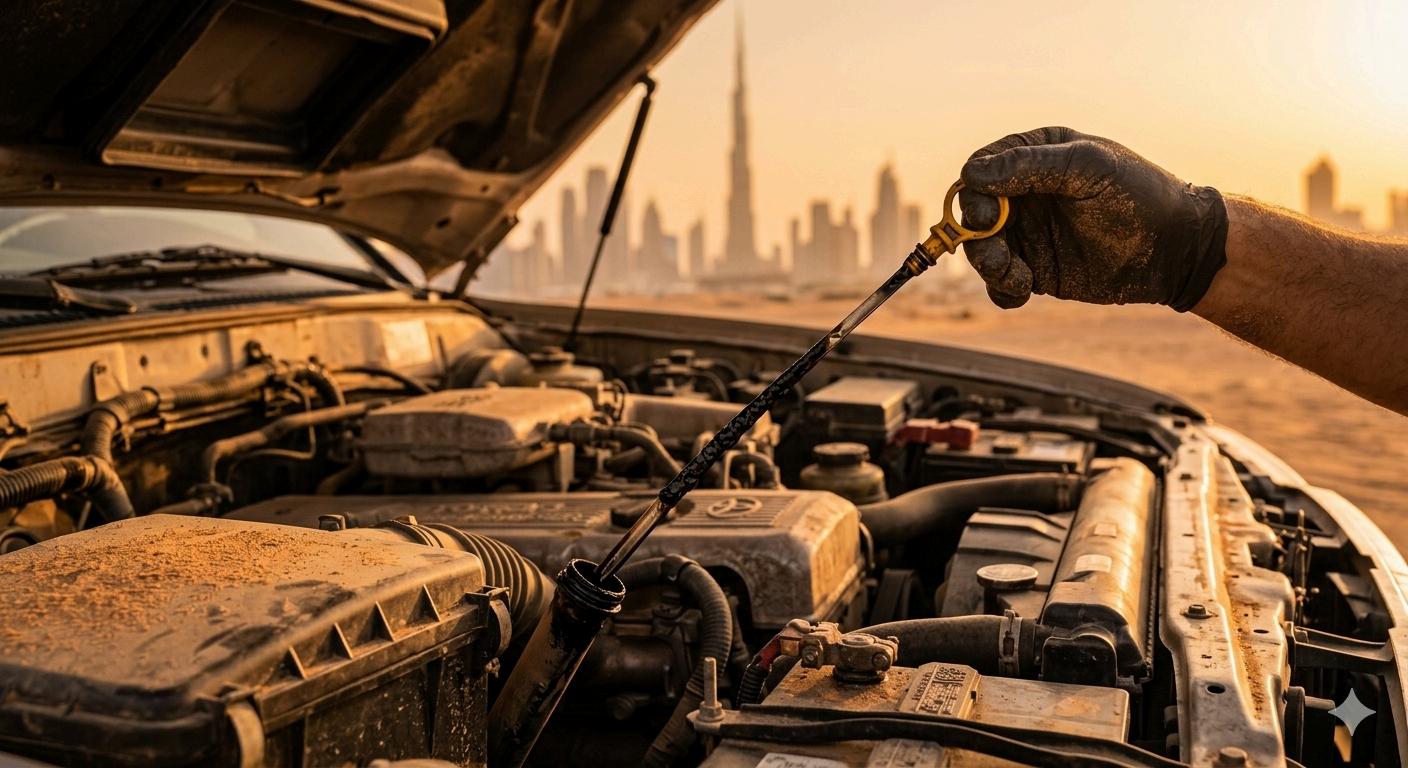
This is why visual inspection of oil color in Dubai is not just a maintenance tip it is a diagnostic tool Oil that has turned dark and gritty within a short mileage span is a clear indicator of contamination, not just normal aging
The Real Cost of Delayed Oil Changes
Skipping or delaying an oil change in Dubai's conditions is not a minor oversight Here is what actually happens inside the engine when oil is left beyond its effective lifespan:
• Oxidation: Oil reacts with oxygen at high temperatures, forming acids that corrode internal engine surfaces.
• Sludge buildup: Degraded oil thickens into sludge that blocks oil passages and starves components of lubrication
• Thermal breakdown: Heat causes base oil molecules to break apart, losing protective properties permanently
• Increased friction: Without adequate lubrication, metal-on-metal contact creates heat and microscopic damage.
• Engine overheating: Degraded oil transfers heat less efficiently, contributing to overall engine temperature problems
Important Note
Engine damage caused by oil neglect is almost always classified as "owner-induced damage" by manufacturers, which means it is not covered under warranty A routine oil change costs a fraction of what engine repairs or replacement will run
Oil Change Intervals: What Works in Dubai
Standard manufacturer intervals (often listed as 10,000–15,000 km) are calibrated for mild driving conditions. In Dubai, most professional service centres recommend adjusting these intervals based on local realities:
Driving Condition
Recommended Interval Reason
Mostly highway driving 7,000 – 10,000 km
Lower stress on oil, fewer thermal spikes
Driving
Mixed city and highway 5,000 – 7,000 km
Mostly urban / stop-go 4,000 – 5,000 km
Older vehicles (10+ years)
High-performance engines
3,000 – 5,000 km
As per manufacturer, checked at 3,000 km
Moderate degradation from heat and traffic
High heat cycles accelerate breakdown
Worn engines generate more contaminants
Stricter tolerances require cleaner oil
The right interval also depends on the type of oil used. Fully synthetic oils offer superior heat resistance and last longer between changes, making them particularly well-suited to UAE driving conditions. Mineral oils, while cheaper, degrade more quickly and require more frequent replacement.
Recognizing the Early Warning Signs
Your car will usually give signals before serious damage occurs Paying attention to these indicators allows you to act early rather than waiting for a breakdown For a detailed breakdown of each warning sign and what it means for your specific vehicle, this guide on
For a comprehensive look at each symptom, see this resource on signs your car needs an oil change it covers everything from dashboard warning lights to changes in engine noise that often go unnoticed
Quick Reference: What to Look and Listen For
• Oil warning light on the dashboard do not ignore or reset without inspecting oil level
• Dark, black, or gritty oil on the dipstick indicates contamination and thermal breakdown
• Engine knocking or ticking sounds classic sign of insufficient lubrication
• Burning smell from the engine bay may indicate oil leaks contacting hot surfaces
• Exhaust smoke with a slight blue tint suggests oil burning inside the combustion chamber
• Sluggish acceleration or reduced fuel economy engine working harder due to increased friction
• Overdue service date even without symptoms, interval-based changes protect the engine proactively
Mineral vs Synthetic: Which Oil Is Right for UAE Conditions?
This question comes up frequently among UAE drivers, and the answer is straightforward for most modern vehicles: synthetic oil is the better choice for Dubai's climate.
Why Synthetic Oil Performs Better in Heat
Synthetic oil is engineered at a molecular level to resist thermal breakdown Unlike mineral oil, which is derived from crude petroleum and contains naturally varying molecular structures, synthetic oil is uniform in composition This means it maintains consistent viscosity across a much wider temperature range
In Dubai summers, when ambient temperatures exceed 45°C and engine operating temperatures push well above 100°C, this consistency matters significantly. Synthetic oil will still protect your engine at the end of a long, hot commute in ways that degraded mineral oil simply cannot.
Cost Consideration
Synthetic oil costs more per litre than mineral oil, but because it lasts longer between changes and better protects the engine, it typically works out to a lower cost over time especially when factoring in the risk of premature engine wear from inadequate lubrication.
Building a Maintenance Habit That Protects Your Engine
The most effective approach to engine protection in Dubai is not reactive it is preventive Here are practical habits that help drivers stay ahead of oil-related engine problems:
Check Your Oil Regularly
A monthly dipstick check takes less than two minutes Look at both the oil level and its color If the level is low or the oil appears dark and gritty well before your next scheduled change, it is better to act early than to wait
Keep a Service Record
Note the date and mileage at each oil change This makes it easy to spot when you are approaching the next interval and helps service providers understand your vehicle's maintenance history
Combine Services for Efficiency
Many drivers in the UAE opt to combine their oil change with a broader vehicle inspection. This approach catches developing issues early such as a worn air filter contributing to higher oil contamination and saves time compared to separate visits.
Choose a Reliable, Specialist Service Centre
Not all oil change services are equal. A qualified technician will check oil quality, recommend the right grade for your vehicle and driving conditions, inspect the oil filter, and flag any related issues. Choosing a centre familiar with the demands of UAE driving conditions ensures you get advice tailored to your environment, not generic guidance written for a different climate.
Summary: Dubai Driving vs Oil Health
Inspect oil more frequently in city driving
Risk Factor
Dust and sand particles
Long service gaps
Mineral oil use
Effect on Oil
Contaminate and thicken oil into sludge
Allows oxidation and acid buildup
Degrades faster under high heat
Recommended Action
Check oil color monthly; change filter every service
Follow UAE-adjusted intervals, not factory defaults
Upgrade to synthetic for better protection
Final Thoughts
Dubai is not a typical driving environment, and your engine maintenance schedule should reflect that The combination of extreme heat, urban congestion, and airborne dust creates conditions that push engine oil beyond its limits faster than manufacturers anticipate in their standard service guidelines.
Staying on top of oil changes in the UAE is not about being overly cautious it is about understanding the environment your vehicle operates in and giving it the level of care that environment demands The difference between a well-maintained engine and a costly repair bill often comes down to whether an oil change was done on time or allowed to slip a few thousand kilometres too far
If you are unsure whether your car is currently showing signs that it needs attention, a good starting point is reviewing the most common indicators of oil deterioration specific to Dubai conditions
Related Reading
For a complete guide to warning signs and what they mean for your vehicle: Signs Your Car Needs an Oil Change Royal Swiss Auto Xpress