


Editor
Since its inception in 2016, the Landscape Group has published 16 magazines. The earlier editions varied in length and content and it wasn’t until after Covid that the number of issues settled down to a regular Spring and Autumn. Across those editions, some 97 photographers, both professional and enthusiastic amateur (and group members), have been featured in articles and many more with individual photographs. Whittling these down to the ten articles celebrated here was no easy task, yet was democratically managed by a group consisting of our founding leaders Mark Reeves and Richard Ellis and the current editorial team. Necessarily for space, most of the articles have been condensed. However, all the back issues of the magazine are on the LG website and QR codes on each article will take you back to source and the full scale piece. We all hope you enjoy this celebration of our history. I would like to thank Mark and Richard, Gaynor and Paul and also Robert Brittle, who preceded me as editor of the LG Magazine.
Candia Peterson ARPS, Editor
The Chair
Welcome to this very special issue of our Landscape Magazine to celebrate our 10th anniversary.
It is a great credit that Mark Reeves, Richard Ellis and the other founding committee members took the initiative to form the Landscape Group in late 2015, with the first newsletter published in early 2016. Today, we are over 1,200 members-strong which makes us the second biggest Special Interest Group (SIG). We know that many RPS members enjoy the numerous benefits of also being members of SIGs and we are proud to offer a great range of events and activities as well as our highly regarded magazine.
Landscape photography is one of the oldest photography genres. It is now 200 years since the creation of the earliest surviving permanent photograph. However, the rate of progress in the photography world has accelerated in the past 10 years since the formation of our group. We’ve seen the ongoing rise of smartphones and computational photography. Mirrorless cameras have started to dominate. Sensors get ever bigger, while AI continues to make a huge impact for better or for worse. It will be fascinating to see what the next 10 years promise, particularly for landscape photography.
In the meantime, we’re delighted to feature 10 inspiring articles in this special issue and I hope you enjoy reading them.
Colin Balfour LRPS, Chair
Committee
Chair:
Colin Balfour LRPS
Secretary:
Viv Cotton ARPS
Finance Officer: Trevor Judd
Communications Officer:
Candia Peterson ARPS
Professional Events Manager:
Chris McIntosh LRPS
Member Events Manager:
Howard Klein LRPS: Circles
David Travis ARPS:
Magazine Editor:
Candia Peterson ARPS
Assistant Editor:
Gaynor Davies ARPS
Publication Manager: Paul Cayton LRPS
This 10th Anniversary Magazine is provided as part of the annual subscription to the Landscape Group.
© 2026 The Royal Photographic Society. All rights reserved on behalf of the contributors and authors. No part of this publication may be reproduced, stored in a retrieval system or transmitted in any form or by any means, electronic, mechanical, photocopying, recording or otherwise without the written permission of the copyright holder. Requests for such permission must be addressed to the Editor. The Royal Photographic Society, RPS Landscape Group and the Editor accept no liability for any misuse or breach of copyright by a contributor. The views expressed in this magazine do not necessarily reflect the policies of the Royal Photographic Society or of the Landscape Group.

Introduction by Mark Reeves FRPS and Richard Ellis ARPS. 6
Susan Brown FRPS takes us to the Blue Mountains of Australia in stunning sepia.
Vanda Ralevska gives us beauty in pylons and how they impact the landscape.
Aaron Dickson shows us the pastel tones of the White Sands desert of New Mexico.
18 Dr Tim Rudman FRPS discusses his thoughts on what he looks for in a landscape distinction submission and shows us images from a recent body of work. 22
Ashok Viswanathan introduces us to his native India and the RPS Indian Chapter.
Verity Milligan explains her approach to city photography with a trip around Birmingham.
Robert Bolton ARPS demonstrates beautiful drone photography over the Carmargue.
Richard Milton-Worssell discusses his prize-winning infrared photography.
Scott Olsen explores small-town America at night.
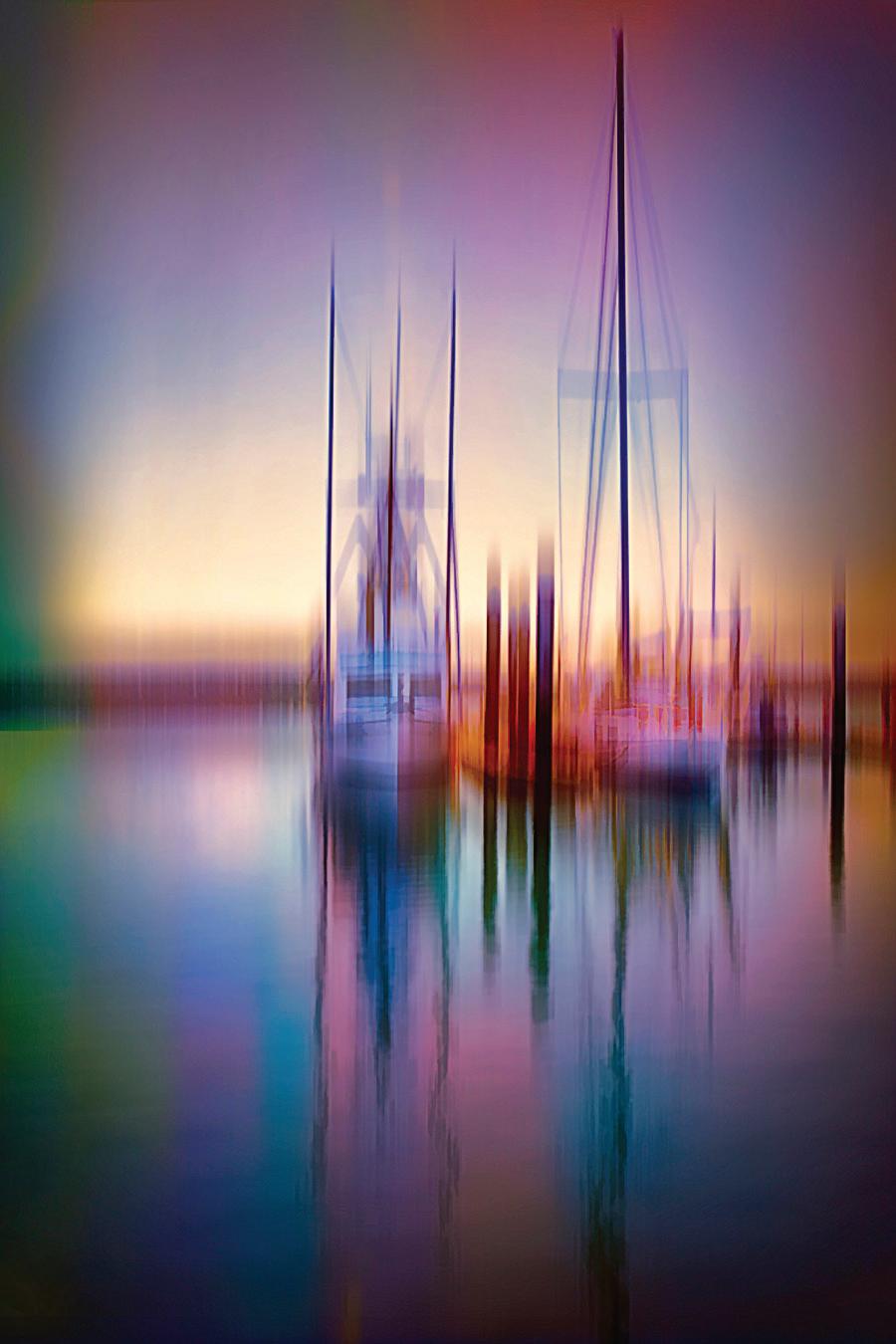
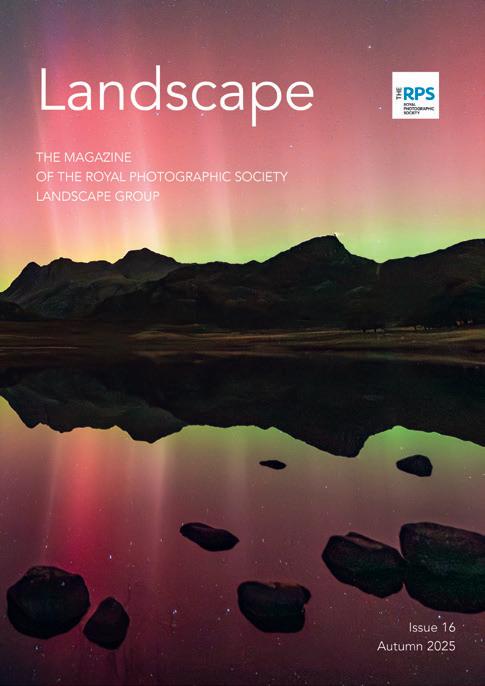
Roxanne Overton demonstrates how and why she is the master of ICM photography. 46 Landscape Magazine - the first sixteen covers of our magazine.
Looking back to 2015, the origins of the Landscape Group could hardly have been more modest. Someone – we no longer remember who – placed a small article in the RPS Journal: Perhaps it was time the Society had a specialist landscape group? It was very odd, when one considers the origins of photography, that there wasn’t already a landscape group! Anyway, that small call-out did its job. A handful of volunteers stepped forward and, by the autumn of 2015, a founding committee was in place: Tim Parish in the chair, with Jim Souper, Karen Thurman, Mark Reeves, Paul Graber, Pauline Benbrook, Peter Douglas-Jones and Richard Ellis.
The group started with very limited means. In fact, it started with none! RPS HQ provided no financial support at the outset so founder members had to pay for things ourselves until membership subscriptions – then £15 per year – resulted in a small operating budget. A few committee meetings were held face-toface in order to help build a team but, in the main we met using Skype. Remember Skype??? None of us had heard of Zoom back then.
Despite the shoestring beginnings, one intention was clear from the start; the new group had to be active. A group that existed on paper but did very little would be pointless. We wanted to create a place where members could improve their photography, find inspiration and learn from one another.
Setting up the tripod
We published our first newsletter in early 2016 and
this was soon followed by the first member-led outing – we think it was a photo walk on the North Downs near Guildford, though the precise details have since disappeared into a dark room.
In that first year, the programme relied entirely on members volunteering to run events. It kept costs down but it meant that the content of the programme was entirely dependent on finding willing volunteers – which wasn’t always easy. By early 2017, we realised that, to offer a genuinely national spread of events, we needed to bring in professionals. Doing so meant paying fees, which in turn meant charging more for places but it also enabled much wider geographical coverage as well as tutored learning. Our first professional workshop was led by Jeremy Walker and focused on long-exposure photography in Bristol Harbour.
That same year, a chance conversation turned out to be very productive. Mark met group member David Fiddes at a Visual Art (VA) group event and asked David about circles. As David had experience of running these for the VA group he volunteered to establish our first print circle. This was later followed by e-critique circles and, later still, processing circles. These have since become some of the group’s really valued activities.
We also took inspiration from the VA group in planning our first residential conference. It was a bit of a gamble: Would anyone want to attend such a thing? As it turned out, yes. In November 2017, members gathered near Skipton in Yorkshire for a weekend that exceeded every expectation. The hotel was superb, the food delicious and the speakers excellent. Charlie Waite opened the programme - a treat in itself - and the event was such a success that biennial conferences subsequently became part of the group’s calendar.
Increasing the dynamic range
With experience growing, the committee began exploring more ambitious ideas. A residential field trip had been discussed for some time and when our founding chair, Tim Parish, moved to the Isle of Lewis he generously offered to run the first one. Again, following its success, residential workshops became
a regular feature; most led by professionals but occasionally led by members.
Since the very beginning of the landscape group, the committee had aspirations to produce a printed magazine. Other RPS groups had shown what was possible but none of us had the skills to produce one until Robert Brittle joined the committee in early 2018. The first issue appeared later in that year; a 32-page glossy featuring articles from both professionals and members. Group members Wendy Akers, Len Williamson and Jan Harris featured in this first edition. Today the magazine has doubled in size to 64 pages and is published twice each year.
In parallel to all this, the group slowly built its online presence; website pages, newsletters and a Facebook group in late 2016. Instagram came late to the party but come it did, in 2020, thanks to the initiative of committee member Fiona McCowan.
Going digital
Spring 2020, with the arrival of Covid-19, forced every organisation to rethink how it operated. The Landscape Group responded quickly - probably faster than any other RPS group - by launching a full programme of online activity. Talks, workshops, critique sessions and hybrid events followed one after the other. Our first such event teamed up professionals Colin Jarvis and Mark Banks in live editing sessions, one using Lightroom and one using Photoshop, to
process the same members’ images.
Hybrid events were our own invention and a precursor to the now very popular Talk-Walk-Talk activities. A tutor would introduce a location they knew well in a Zoom workshop, explaining what there is to be photographed and suggesting different approaches and challenges. Participants would visit independently to make images and everyone would reconvene online for image sharing and feedback.
Our online events offering proved extremely popular and in 2020 alone we delivered more than 100 online events, many selling out within an hour of being advertised.
The group’s first collaborative project, By Degrees, was launched in November 2021. Members photographed all 34 points in the UK where lines of latitude and longitude cross. It proved so successful that collaborative projects have since become a regular feature: The Shipping Forecast, SoundScapes, Postcards from Home, Zines and a what-looks-likebecoming-annual calendar.
Inevitably, some ideas took longer than others to get off the ground. The outdoor travelling exhibition, first discussed in February 2017, finally came to fruition in May 2022 after extensive logistical problem-solving, thanks largely to Howard Klein’s hard work and persistence.
The perfect composition
A decade after that small notice in the RPS Journal, the Landscape Group now has more than 1,200 members, making it the second-largest special interest group in the Society. In its first ten years the group has delivered:
• 2 outdoor exhibitions
• 7 collaborative projects
• 16 editions of the magazine
• 17 circles
• 80 newsletters
• And hundreds of events.
Numbers alone don’t tell the whole story of course but they do hint at the energy with which members have shaped the group. What began with a handful of volunteers paying their own travel costs has grown into a lively, inventive and outward-looking community. And while the past decade has been full of experimentation, the appetite for new ideas shows little sign of fading.
Reeves FRPS and Richard Ellis ARPS
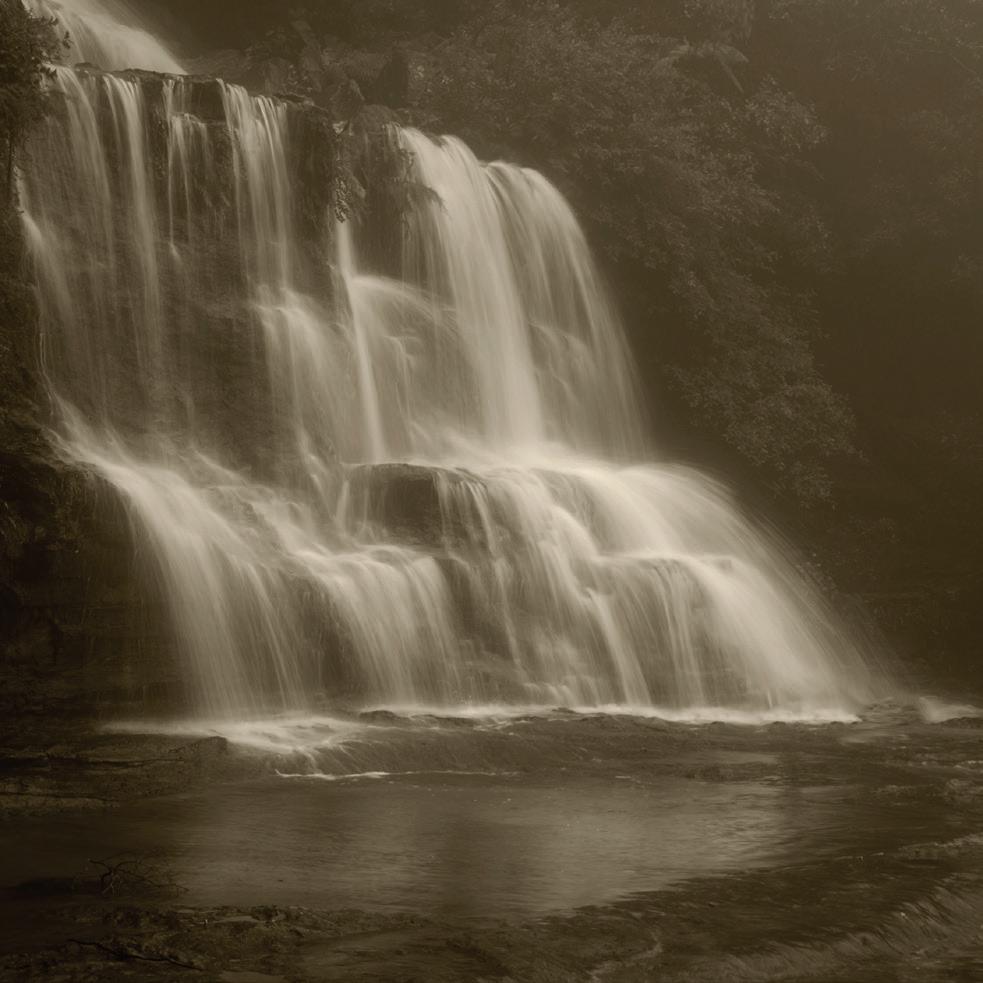
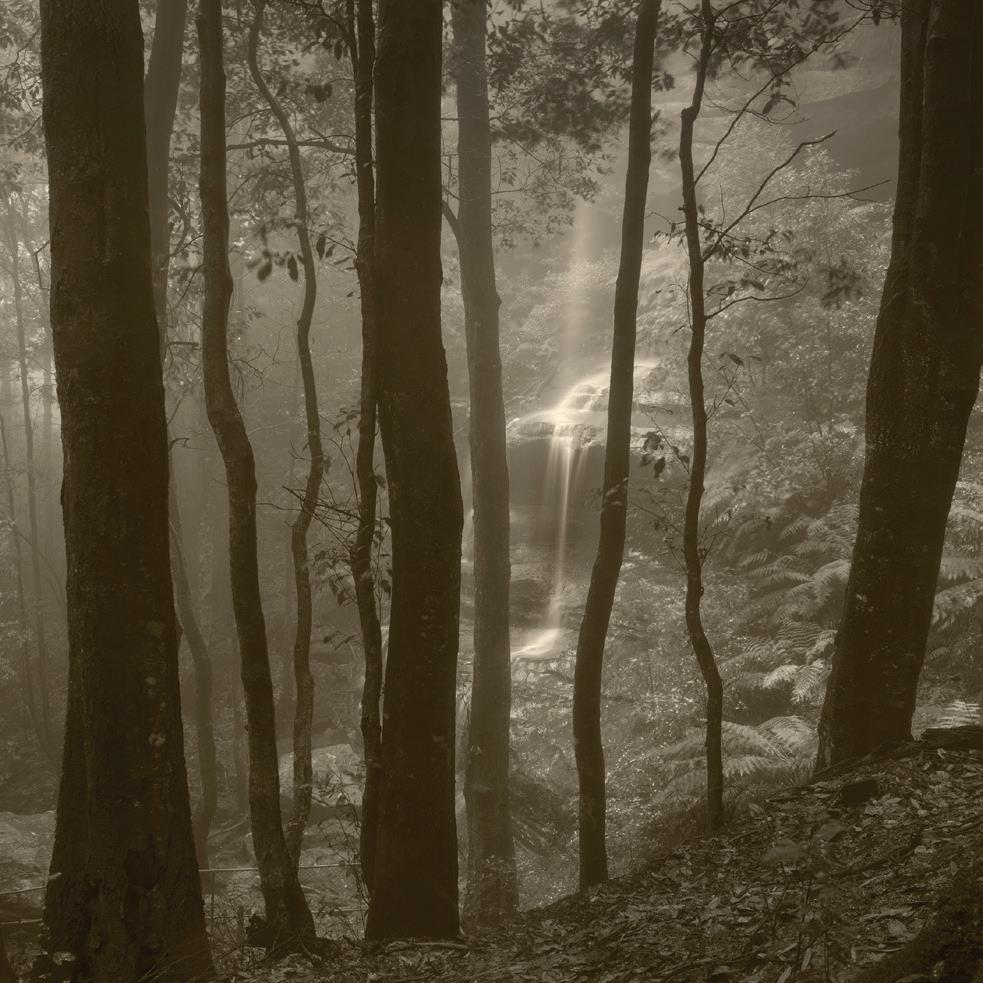
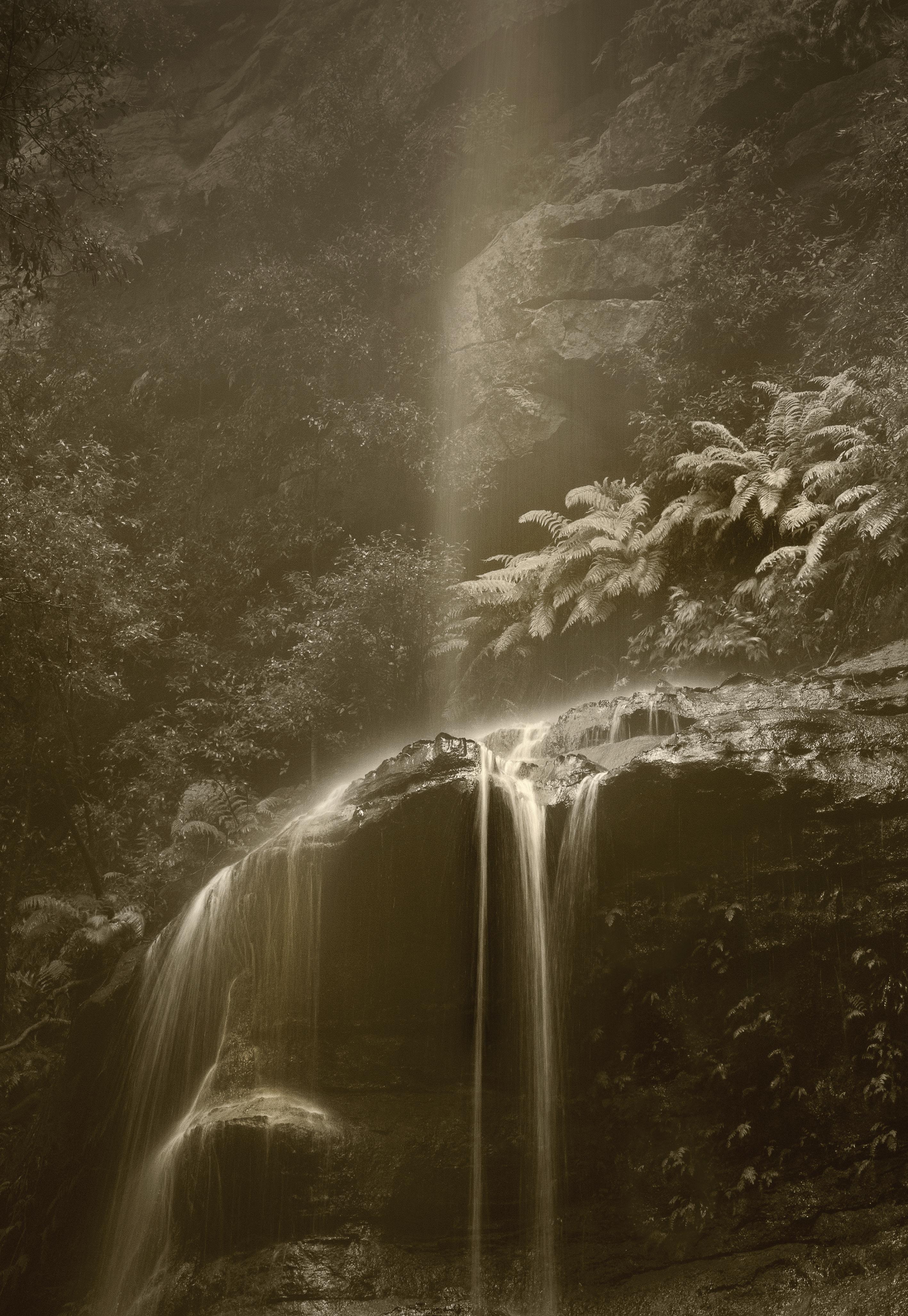
If you go down to the woods you may be pleasantly surprised, as Susan Brown found out in the Blue Mountains of New South Wales, Australia.
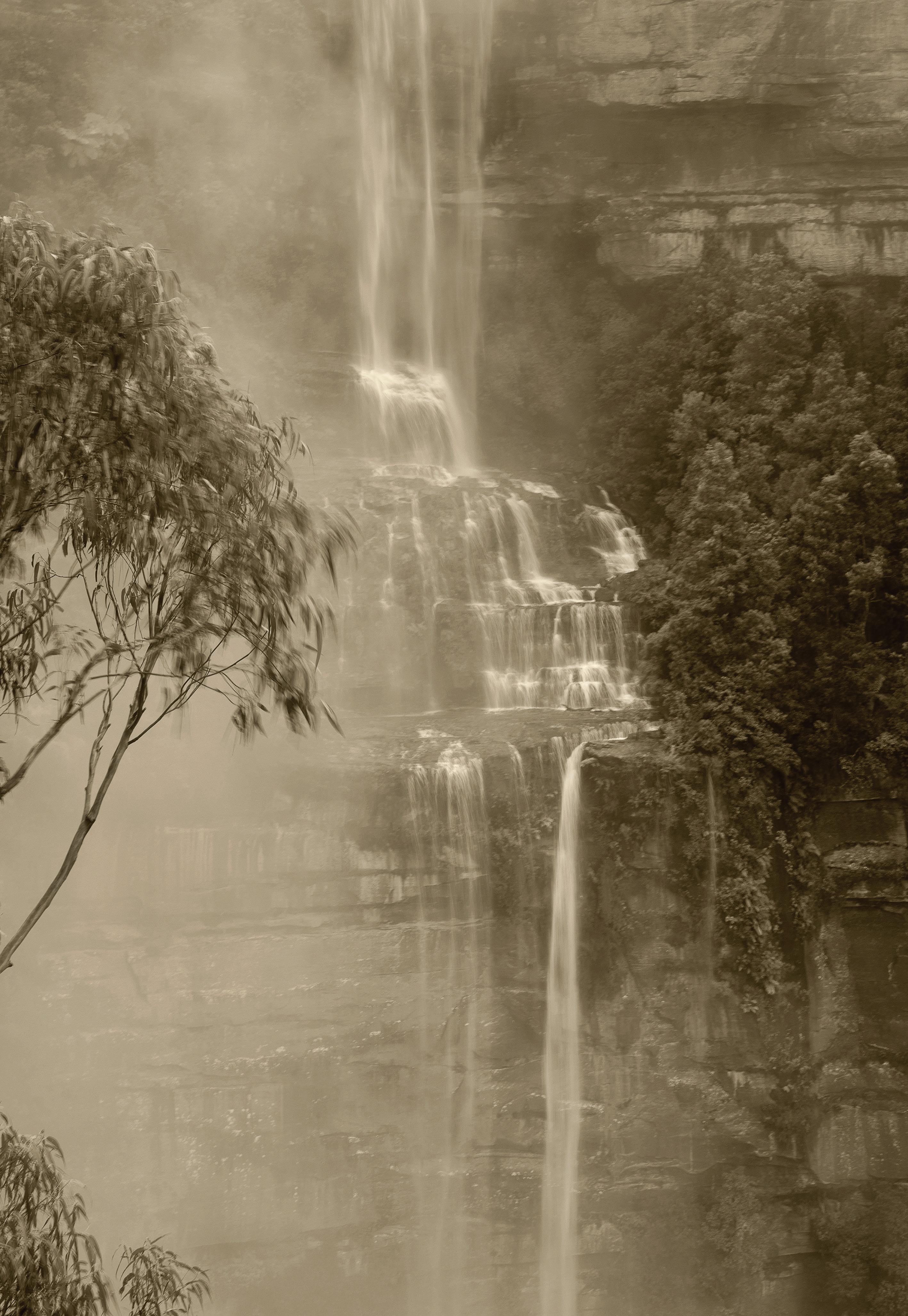
I was ready to leave for a walk in the rain forest of the Blue Mountains, NSW, Australia. DestinationThe Katoomba Falls. It was raining, and the fog was dense in places – PERFECT!
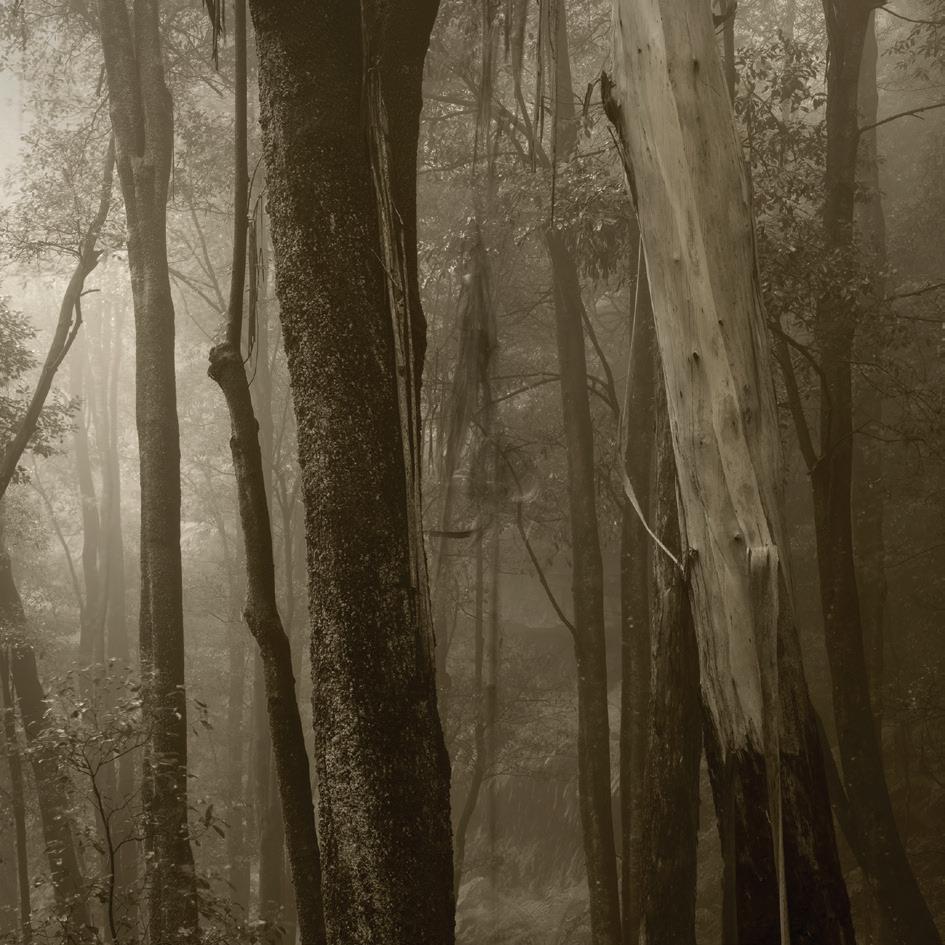
It was a challenging walk, slippery in the rain and the fog made the dense forest seem eerily quiet. An occasional rustling amongst the leaves would startle me; maybe snakes? The strange sounds of the Australian birds were haunting; the Kookaburra laughing at my anxieties.
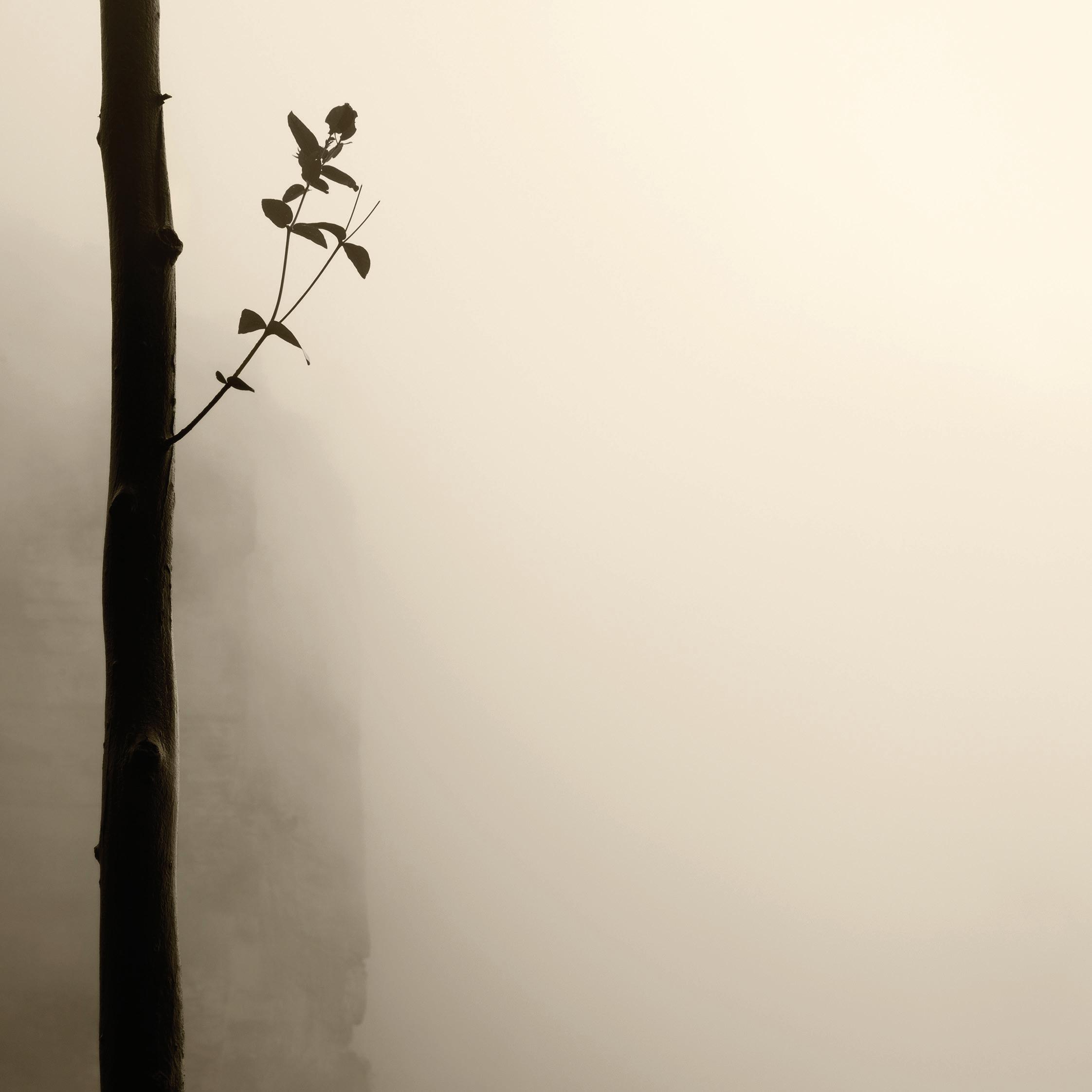
The Falls are beautiful, tantalising, with occasional views of waterfalls between the trees, the plant life large and lush and then occasional clearings where, on a ‘good’ day, you can the see the iconic Three Sisters. For me, this day was a good day as I couldn’t see the Three Sisters because of dense fog but I could feel they were there and had glimpses as patches of fog cleared momentarily.
On returning to the car, my hair was dripping round my face, my wet trousers clinging to my legs and yet I had hardly been aware of the conditions, such was my involvement with the environment.
For me, this day was an example of photographing feelings and I hope that, looking at these images, you can hear, feel and sense what it was like to be there; at the end of the day, Landscape photography is all about communication.
Many thanks to Len Metcalf for taking me out on this memorable walk.
and Negative Space
To see all images in the original article and read Landscape Magazine Issue 1 in full, scan the QR Code below.

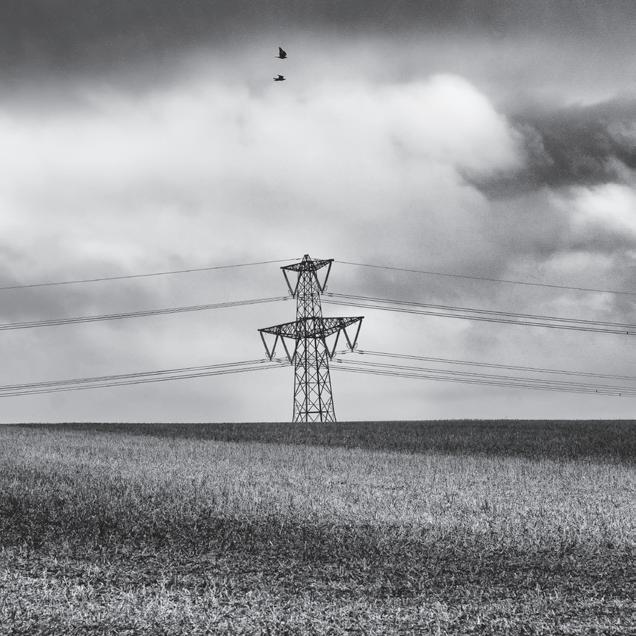
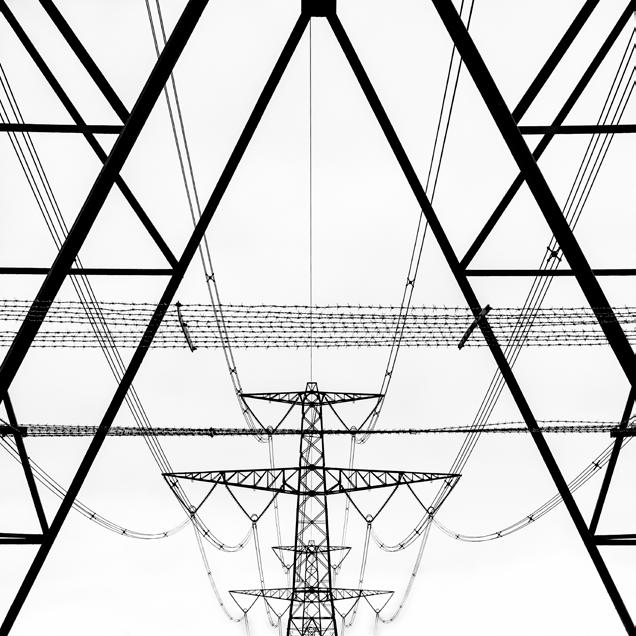
Vanda Ralevska considers how man-made structures in the landscape create both artistic impressions and questions around their inclusion in landscape images.
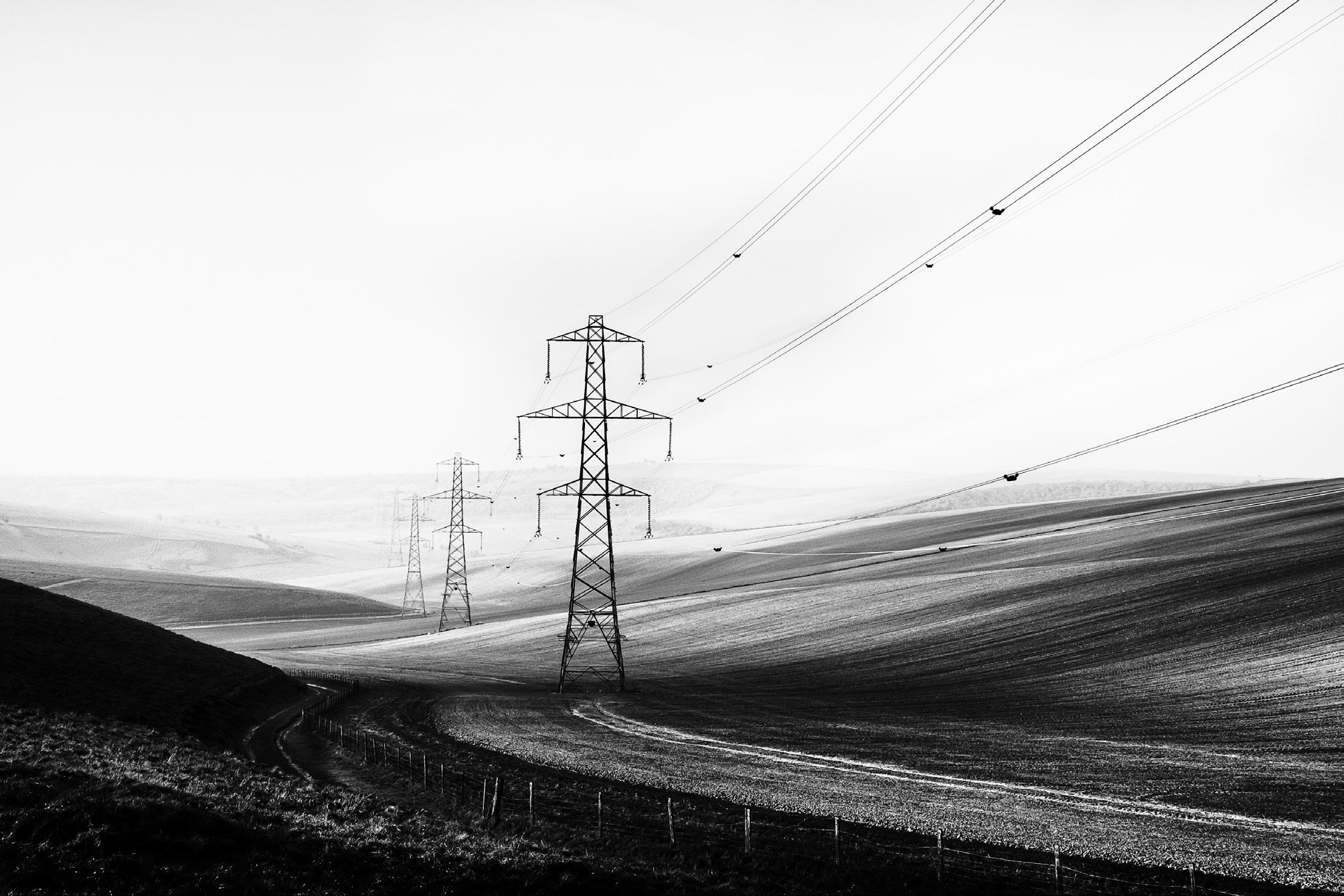
Power lines are not usually regarded as objects of interest or excitement. Lines of pylons striding across the countryside have always been somewhat controversial, invoking a whole range of feelings, from hatred and loathing to affection and fascination. For most people they spoil many a view. They are considered to be obtrusive or even ugly blots on the landscape.
Although the electricity pylons are far too often objects of hate, they perform an invaluable service, bringing us power, light and warmth. Therefore we accept them, learn how to live with them and quite often ignore them. However, there are a surprising number of people who find much more in these tall lattices of metal than the necessary evil. To those people they are things of gaunt,
almost haunting, beauty. The design of Britain’s first electricity transmission tower was inspired by the word “pylon”, which means an ancient Egyptian gateway to the sun. Since then, many artists and poets have embraced electricity pylons as a symbol of the modern world; a gateway to the new golden age.
Many of them, inspired by their skeletal grace, brought a new, lyrical dimension to these towers of steel criss-crossing the British countryside.
Sculptor Barbara Hepworth once recalled on a train journey witnessing “pylons in lovely juxtaposition with spring turf and trees of every stature. It is the relationship of these things that makes such loveliness.”
In the 1930s, Stephen Spender’s poem The Pylons started the whole poetic movement, which reacted to Britain’s newly industrialised landscapes. In his poem Stephen Spender wrote:
“Now over these small hills, they have built the concrete That trails black wire Pylons, those pillars Bare like nude giant girls that have no secret.”
Further on he continued:
“But far above and far as sight endures Like whips of anger With lightning’s danger There runs the quick perspective of the future.”
Another Pylon Poet, Stanley Snaith, wrote:
“Over the tree’d upland evenly striding, One after one they lift their serious shapes That ring with light. The statement of their steel Contradicts Nature’s softer architecture.”
Like most people I used to consider the power lines an eyesore; something that interferes with the beauty of our natural world.
But over time I have learnt how to see the way they blend into the landscape and even see their special beauty. Brute, industrial beauty, but nevertheless, beauty.
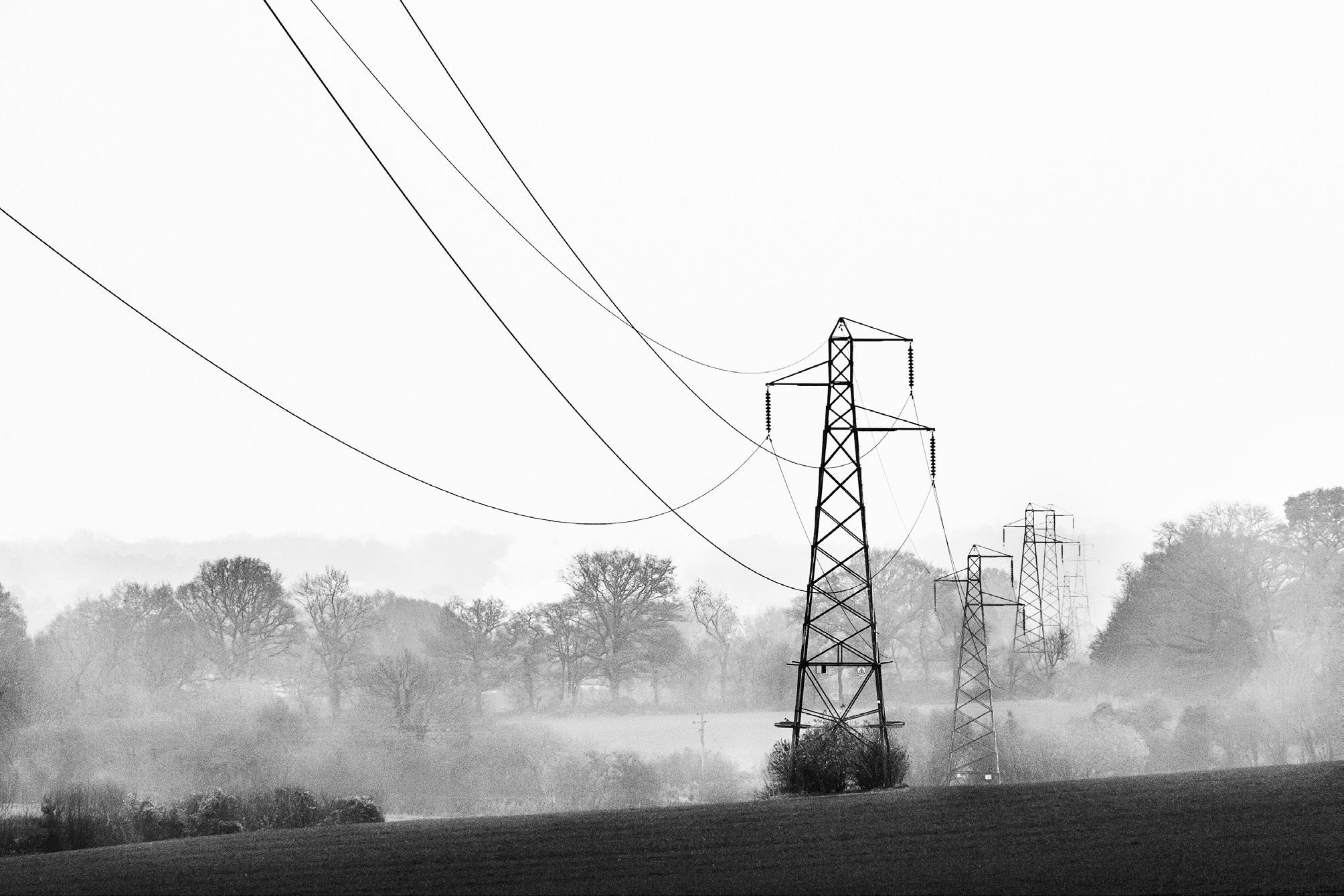
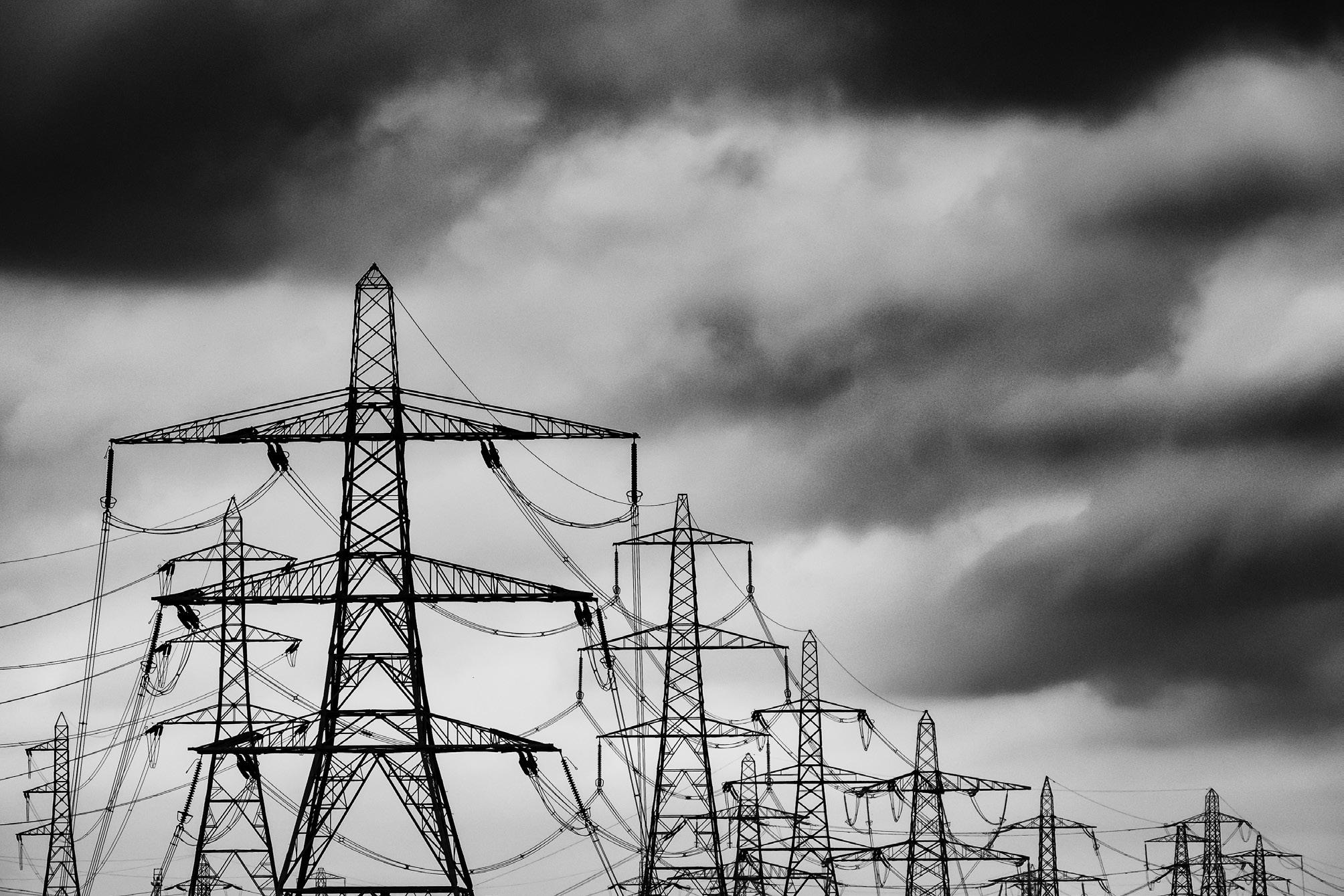
There is definitely something about the old saying that “beauty is in the eye of the beholder”. It all comes down to the ability to see such beauty in the plain and unexciting; in those objects that most people walk by without noticing, such as the towering steel sentinels snaking across the landscape. There is something striking about their shapes and the way they interact with their environment, as the lattices of metal parade over the hills, through the woodlands and dales and across the fields.
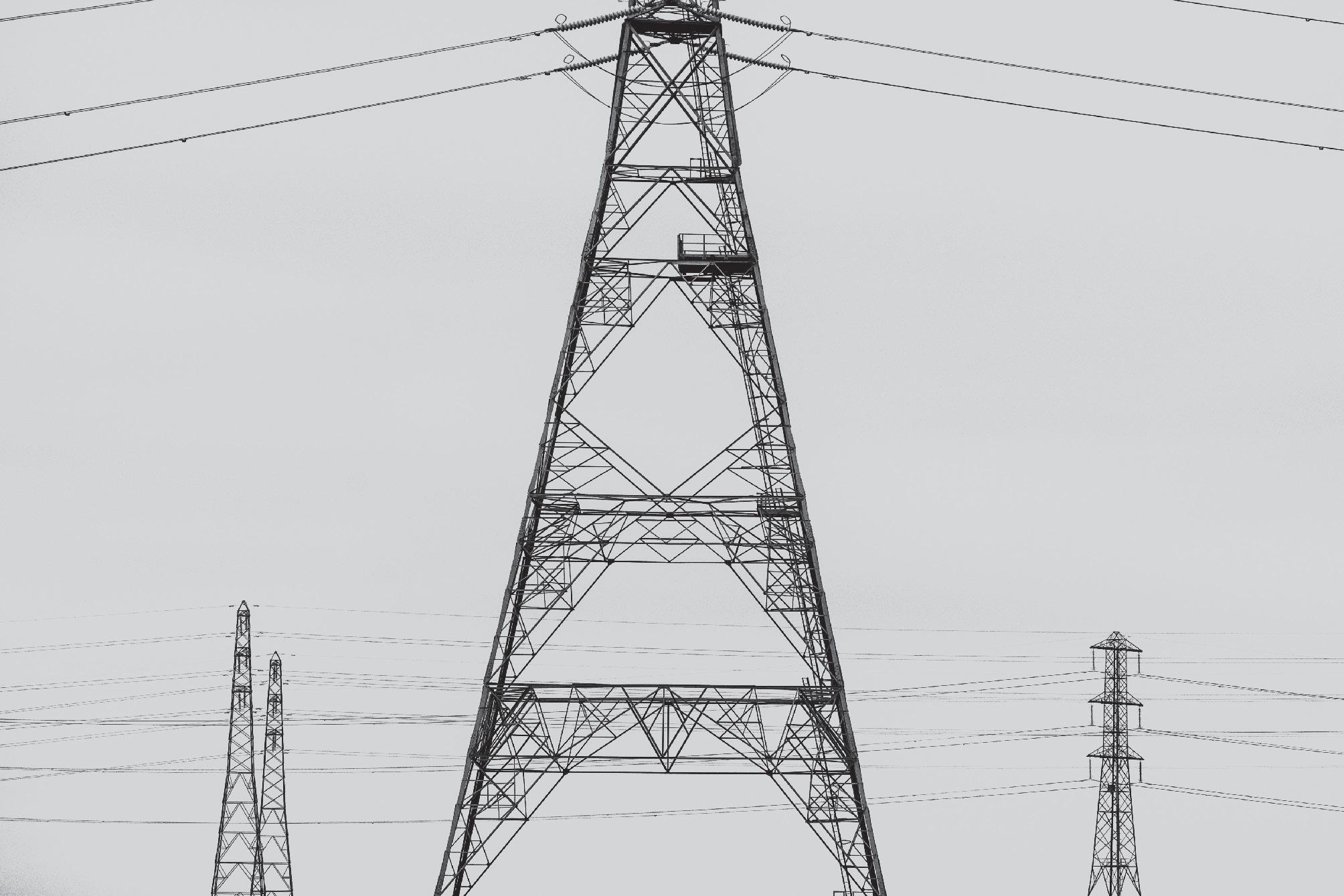
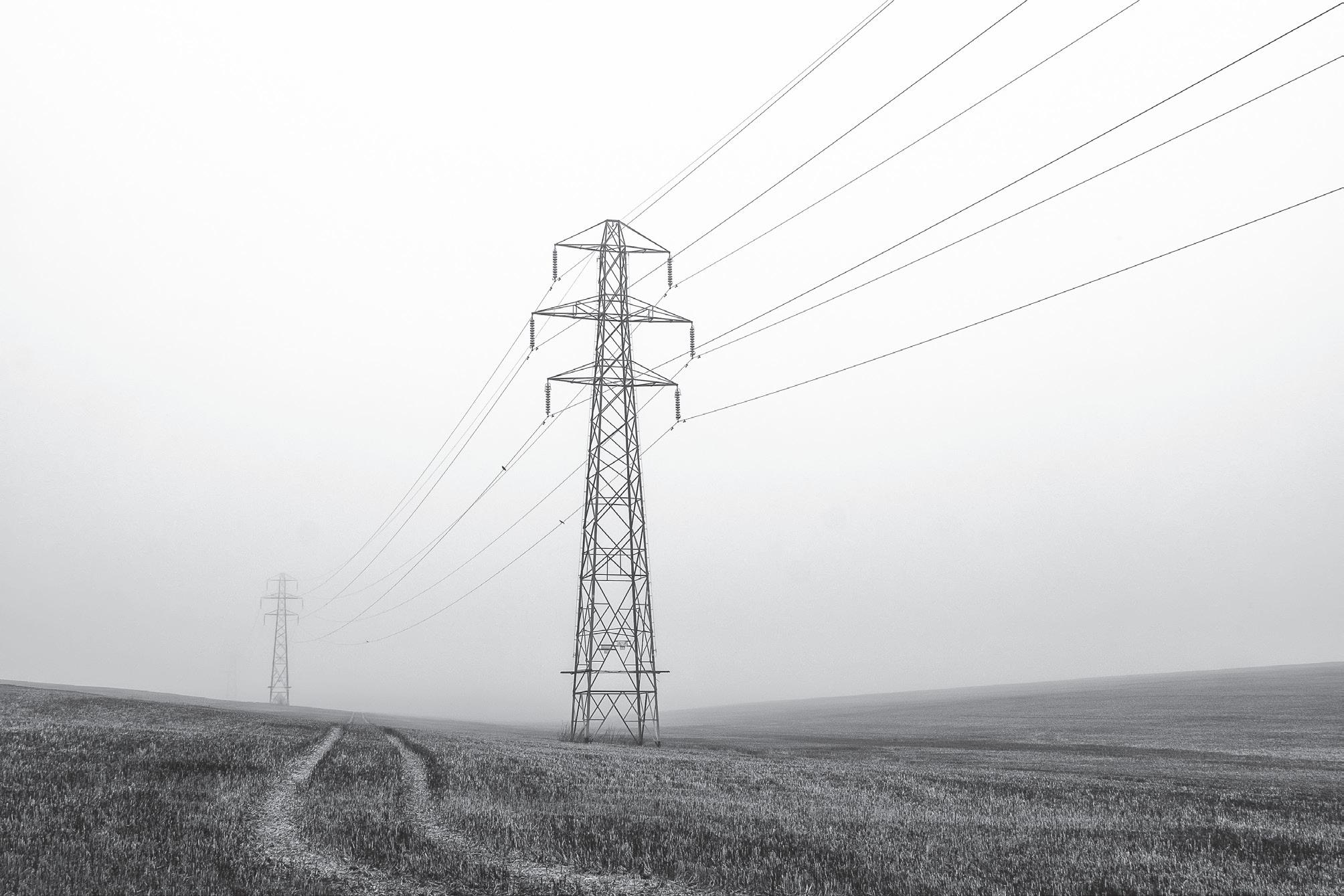
There is something majestic in the rhythm of these lines of giants as they gradually disappear on the distant horizon.
There is something electrifying in watching them form an unchallenged line across everything that stands in their way.
They are great pieces of design and engineering and, with hundreds of electricity volts running through the overhead lines, they carry a little piece of magic too, as Flash Bristow, the founder of the Pylon Appreciation Society, found out:
“My favourite trick is to sit underneath a high-voltage pylon at night, holding up a fluorescent light tube. The residual emissions from the electricity cables will eventually cause it to light up. Just another piece of magic that you only get with pylons.”
To see all images in the original article and read Landscape Magazine Issue 2 in full, scan the QR Code below.

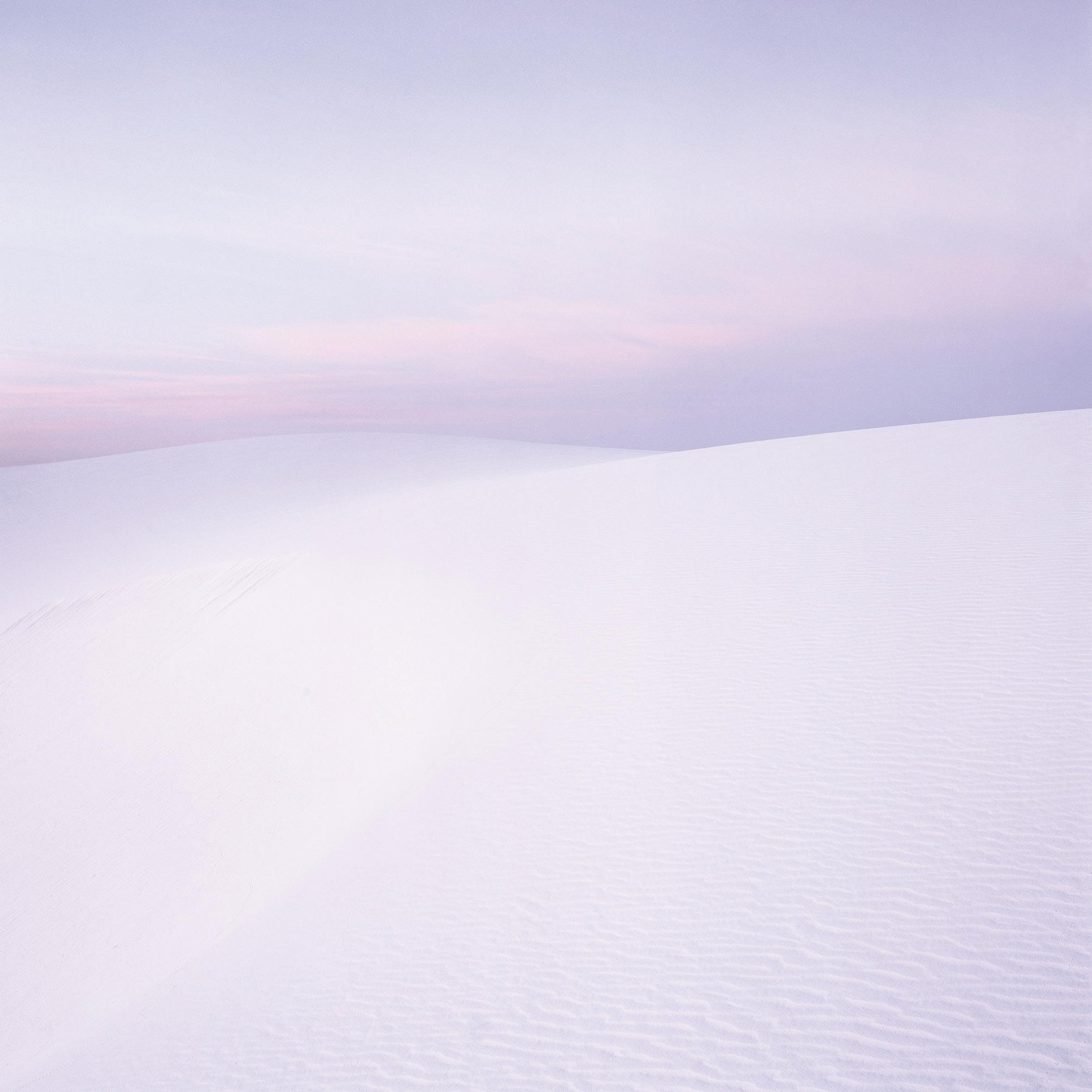
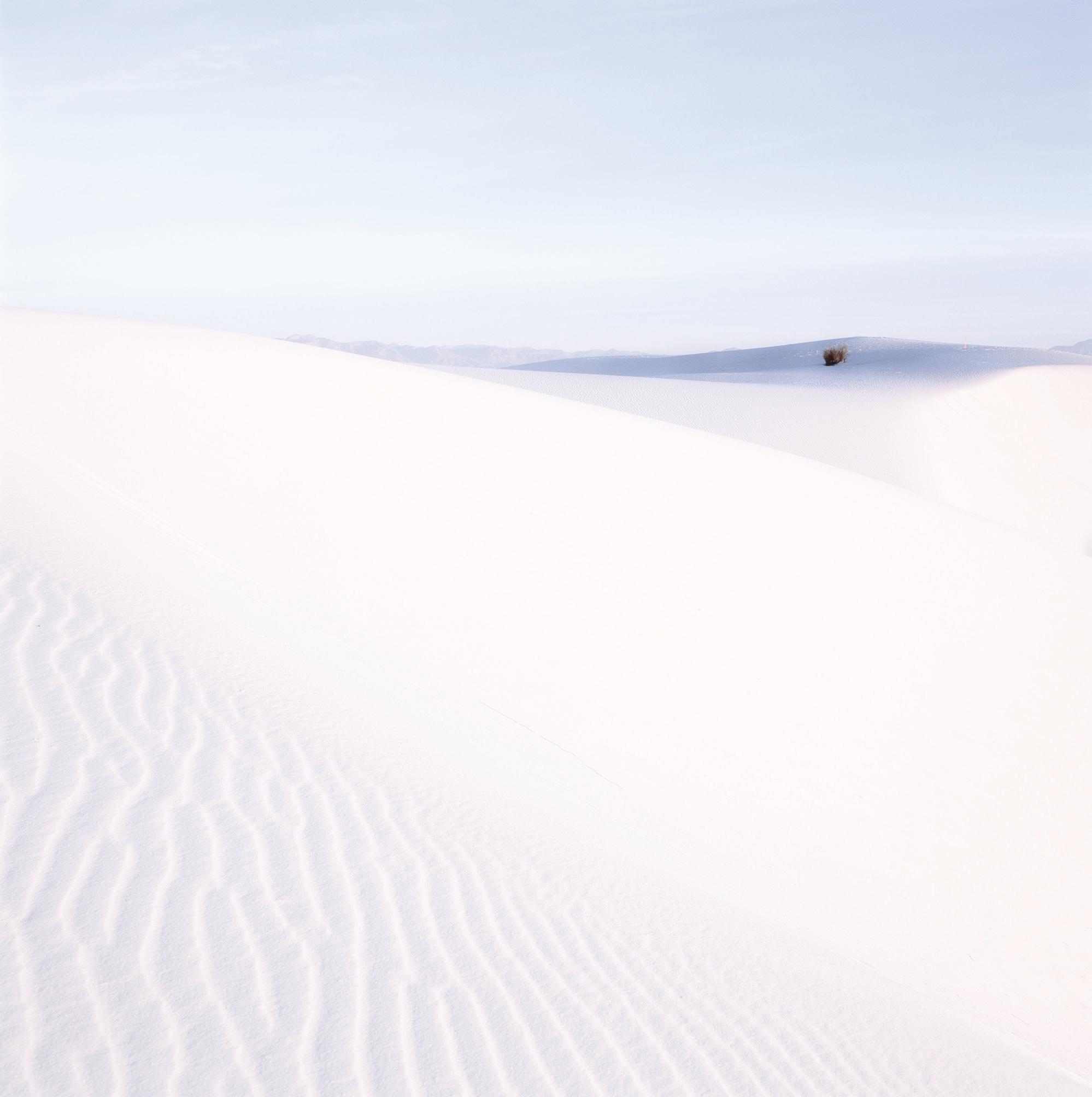
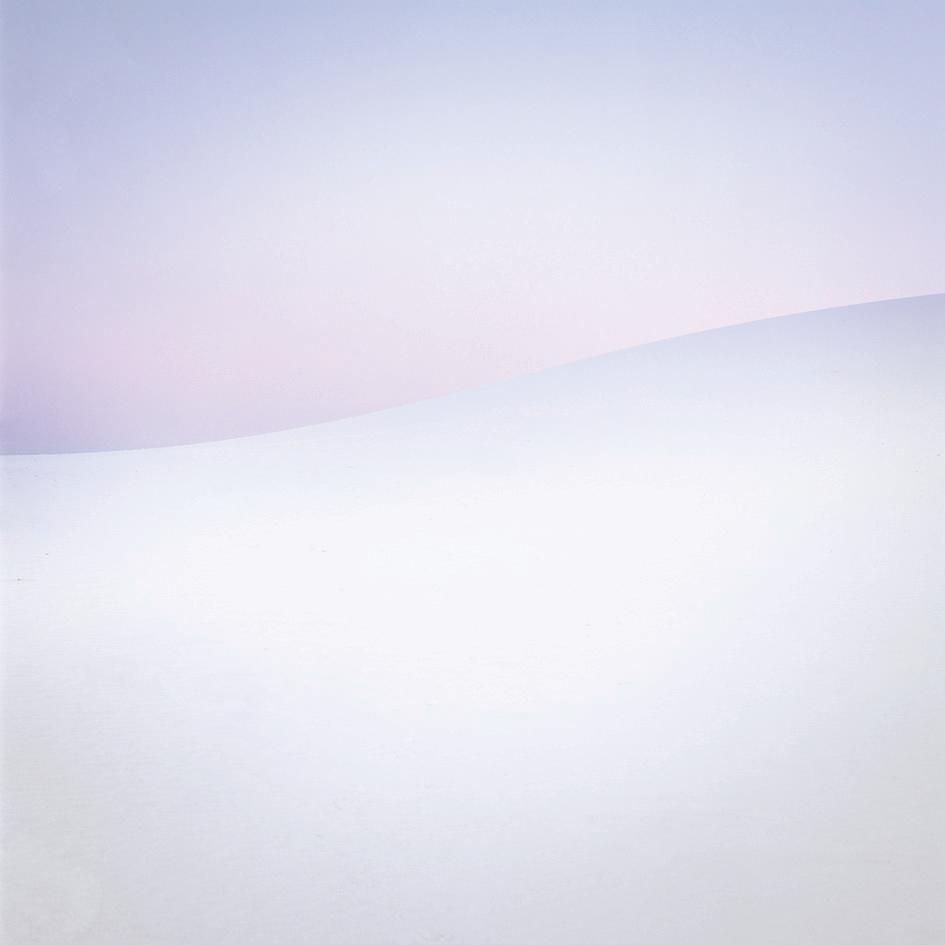
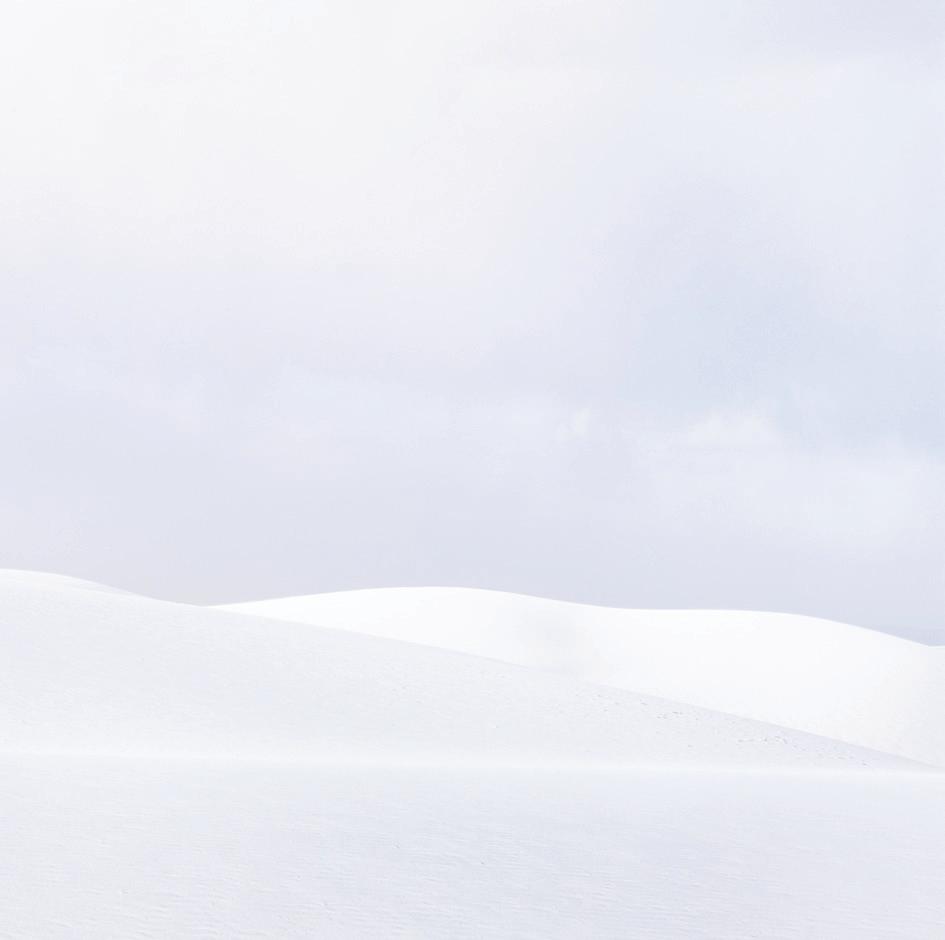
Aaron has tinkered with old film cameras on and off over the years and always liked the simplistic nature of them; photography was pared down to the bare minimum, no bells or whistles attached. Aaron describes his interpretation of a minimalist aesthetic in the White Sands National Monument in New Mexico.
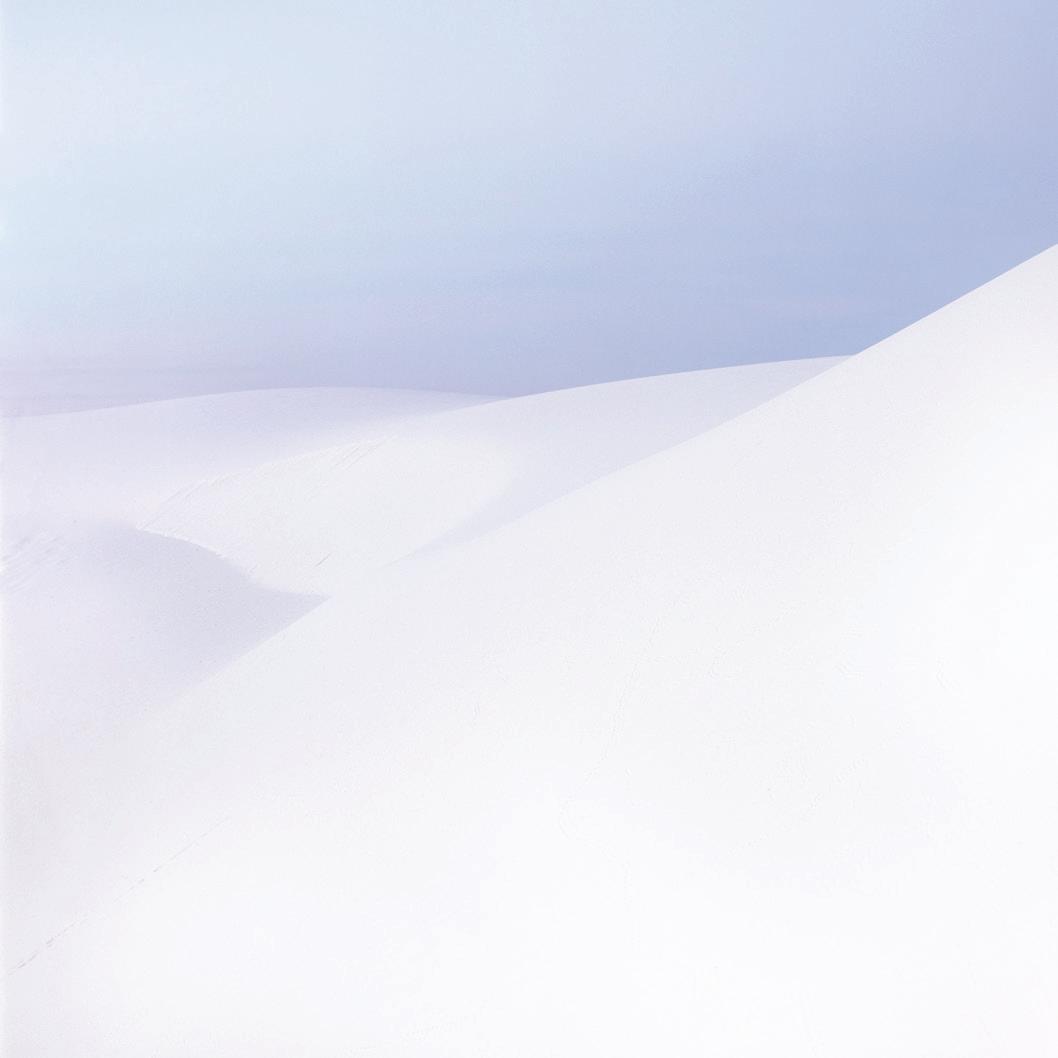
White Sands National Monument in New Mexico is a fascinating place to photograph; pure white gypsum dunes gently undulating as far as the eye can see. Having come across a collection of images of them in a photographic competition a couple of years ago, they had been on my mind ever since as a place to visit. It took me until April of this year to finally make the trip but, as I look at my finished collection of images, I’m glad that it took so long to get there; had I made the trip sooner, I don’t think I would have been ready to photograph them and be satisfied with the results.
A couple of years ago I made the conscious decision to use only film for all my professional work. Having used digital for over 15 years I was starting to feel weighed down by my equipment - too many lenses, camera bodies and all the trimmings that go with it; it was beginning to get in the way of my photography.
I had tinkered with old film cameras on and off over the years and always liked the simplistic nature of them; photography was pared down to the bare minimum, no bells or whistles attached. Working with a manual
film camera proved to be a steep learning curve.
I also liked the slow process involved, from developing my own film to working in a tiny dark room. The effort required to get just one good photo was often Herculean compared to the relative ease of digital but it also felt incredibly rewarding.
By the time I arrived at White Sands I was clearly on a path to minimalism. As I walked amongst the dunes I felt much more comfortable with the scenery than I would have before. A couple
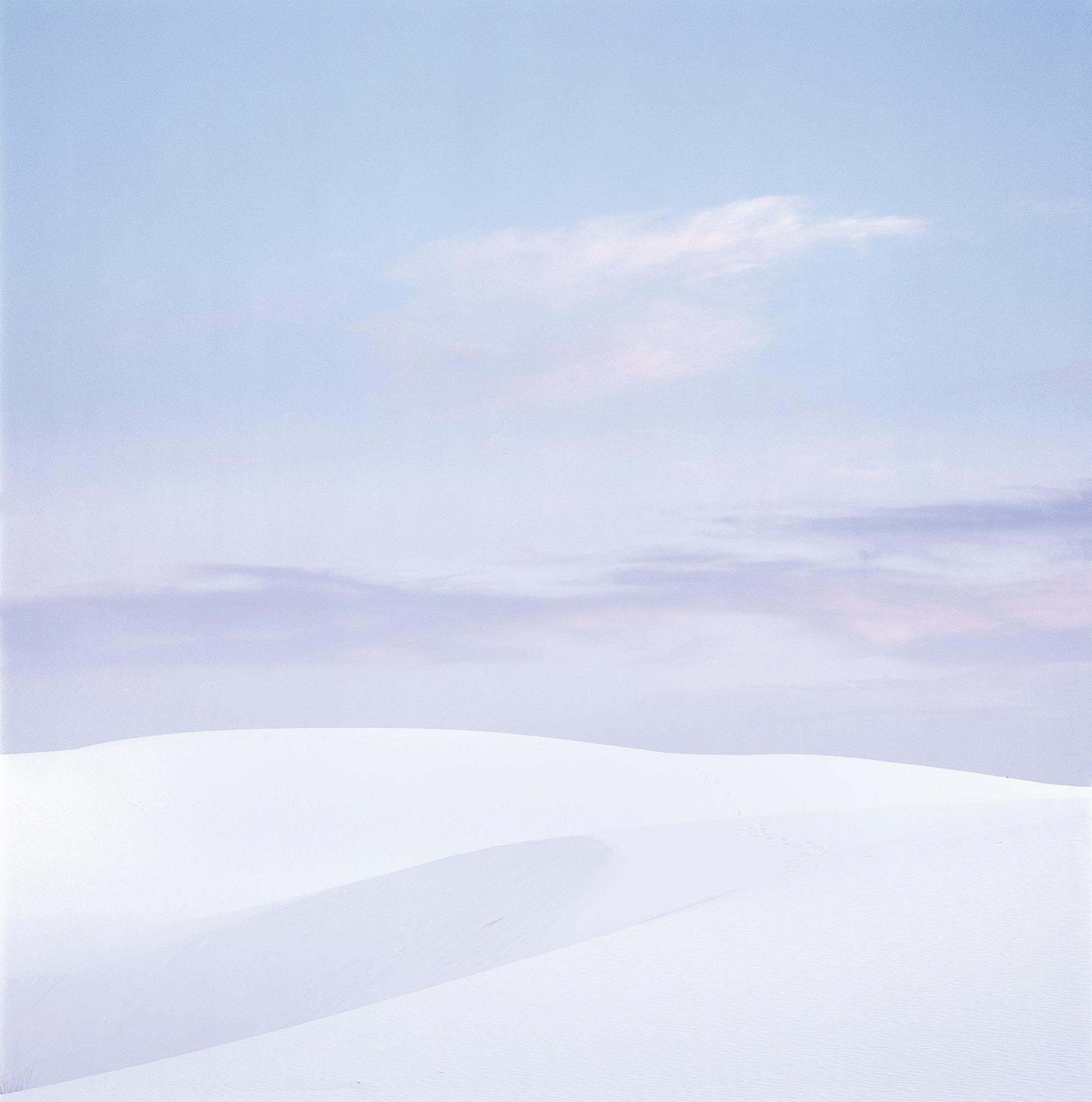
of years ago I would not have seen the subtle curves and tonal changes. I would have been lost looking for an object to focus on or fallen victim to the dramatic skies at sunset, allowing the dunes to sink to the bottom of the frame.
I find a sense of serenity in being somewhere so minimalist. With dramatic mountains or coast, you are often at the edge of the scene looking in but, with no obvious focal point to gravitate
towards, your mind is free to wander and become immersed in the land around you.
This becomes reflected in the final images – I often feel that the less obvious a photograph is, the more time you spend looking at it, being drawn in and clearing your mind of all other thoughts.
This is what minimalism means to me; providing the space within which to clear your mind.
To see all images in the original article and read Landscape Magazine Issue 3 in full, scan the QR Code below.

Landscape Distinctions Panel member and well-renowned photographer Dr Tim Rudman FRPS discusses his thoughts on what he looks for in a distinction submission and shows us images from a recent body of work ‘Iceland – An Uneasy Calm’. Still creating images using analogue processes and toning techniques learnt over many years, Tim describes his work as an extension of his mindset at the time and how he still enjoys his craft, which has been documented in a number of publications over the years.
When the editor of Landscape invited me to share some of my work in the magazine, he asked if I could also include some reference to my role on the new RPS Landscape Distinctions Panel and what we look for in work submitted to it.
As we all know, landscape photography is a very broad church and a popular one. In his video interview with Peter Hayes about the new RPS distinctions genre for landscape photography, former Panel Chairman Joe Cornish HonFRPS described it as “a genre with no limits”. For the purposes of the distinctions, the RPS defines this new distinction genre as “Photography that illustrates and interprets earth’s habitats, from the remotest wilderness to urban environs”. So, in the interest of inclusivity, the submission definitions at this stage are deliberately fairly loose and wide-ranging.
Between the documentation of the Grand Vista and the discrete detail of the Intimate Landscape, there lies unlimited opportunity for exploring the world around us in our own personal ways. For some, this may be an objective recording of the beauty of light on the land or perhaps the effect made by man on the natural world. For others, it might be an attempt to express a personal communication with naturethe effect that nature has on the photographer.
If personal interpretation heavily dominates or if the intimate subject matter is contrived for example, the point may come where the distinction between ‘landscape photography’ and ‘visual art’ overlaps and even, on occasion, may become difficult to make. Much will depend on the context and the motivation behind the work but the important thing is the
work. Genres, after all, are artificial structures made for our convenience and the last thing the RPS wants is for anybody’s work to be excluded by boundary definitions.
To this end, the Society has made sure help is available in the form of advisory days, one-to-one advice sessions and the new Facebook distinctions discussion group, which has proved to be immensely popular: https://www.facebook.com/ groups/rpsdistinctions/.
This group is moderated by members of the RPS distinctions panels to ensure that experienced advice is on hand.
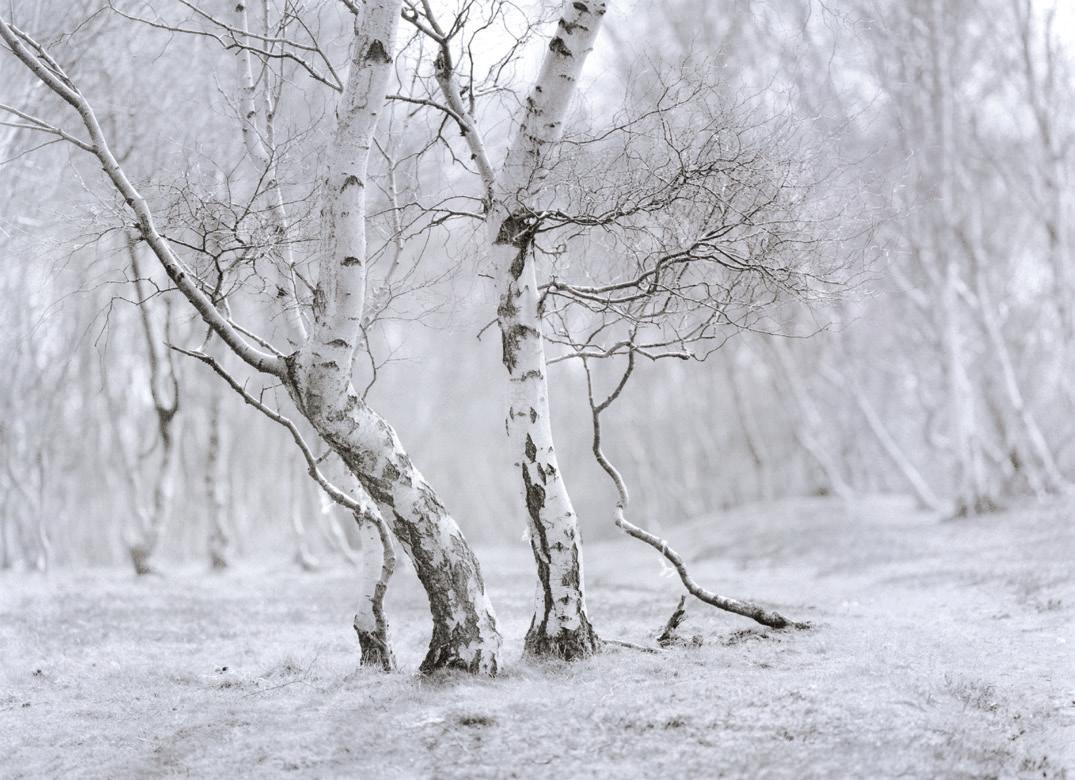
‘Silver birches’. A selenium and gold toned lith print of a chance encounter in the Peak District.
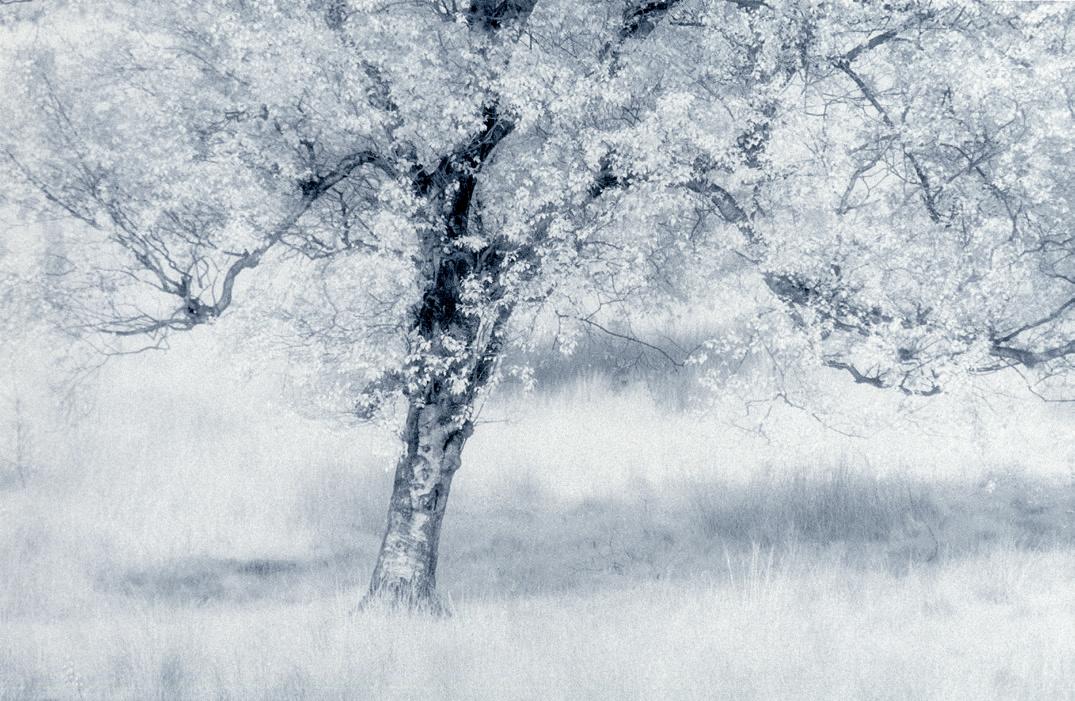
‘Spring’ is really a metaphorical title, as the appearance of blossom comes from the use of infrared film. Gold toned lith print. I consider this stand-alone image more as fine art than landscape (see text).
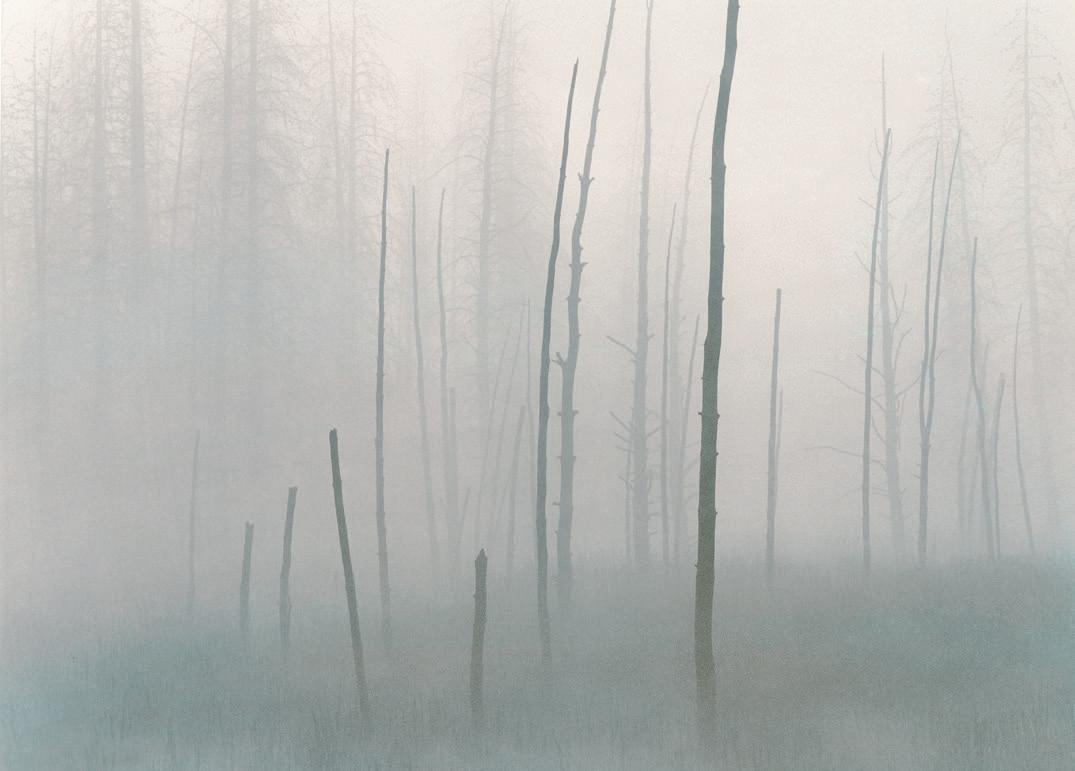
‘Saplings in mist’ is a gold toned lith print. The use of false colour can be a powerful way to impart mood in fine art work (see text).
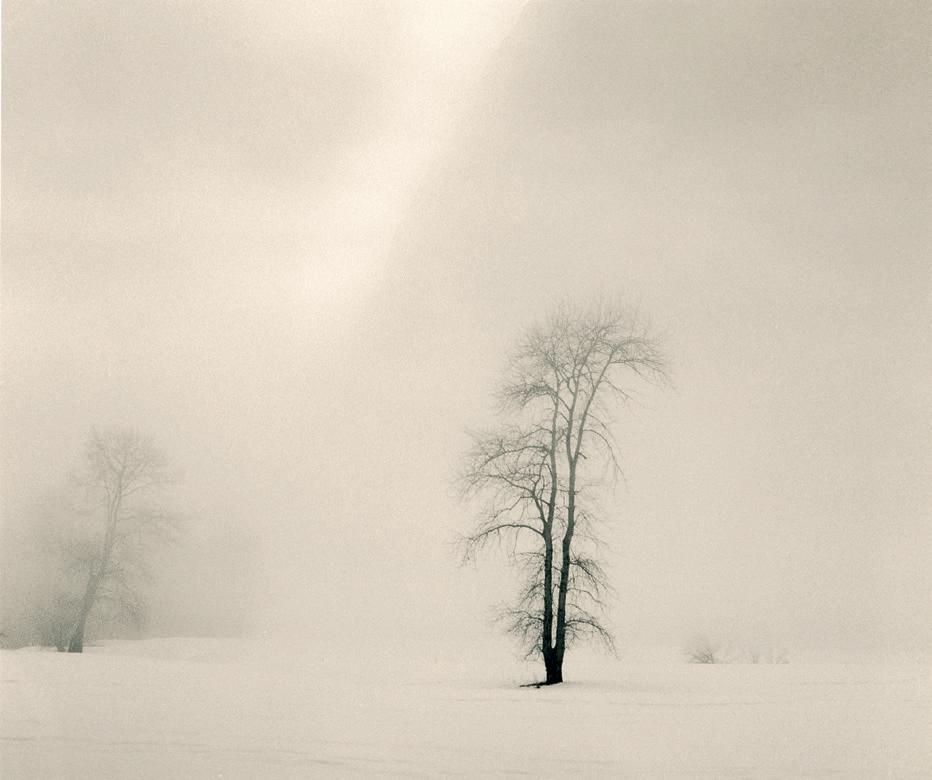
‘Yosemite in winter. Dusk’ A winter evening in Yosemite Valley, the snow was knee-deep and a mist was descending into the valley floor, isolating the trees and simplifying the composition. Despite the warm tone, the feeling is one of intense cold.
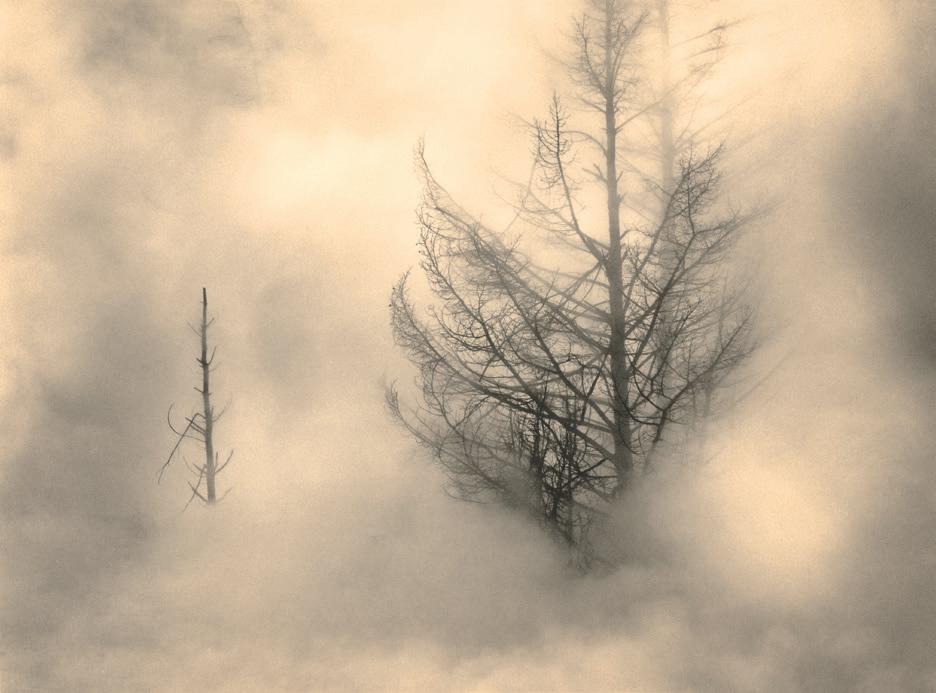
‘First light’ was shot in Yellowstone National Park, split sepia toned, followed by a brief gold toning bath to suggest the warm early light of day.
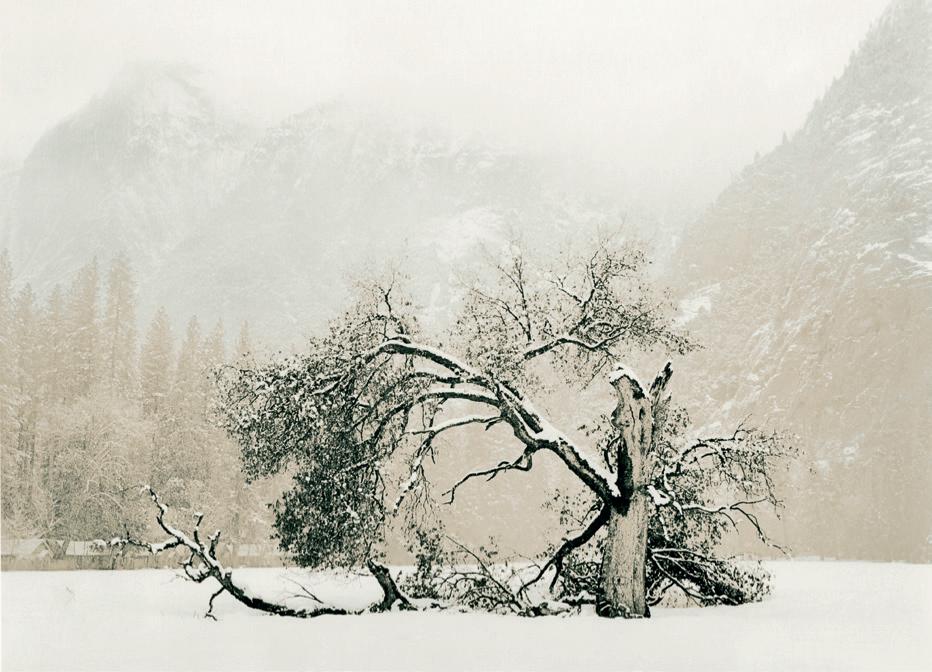
‘Under Yosemite Point’ is a second-pass lith print (bleach and lith redevelopment). As the colour changes through the second development from brown to silver grey, this allows me to ‘snatch’ the print and separate the planes in the scene by colour.
With regard to my personal work, I use only black and white film and silver gelatine printing in my darkroom. I do this not because I think it is in any way better than other forms of photography but simply because I enjoy it. I like the fusion of ‘art’ – the visual and cerebral aspect - and the ‘craft’ – the manual and tactile side. I find the process of manual printmaking a very satisfying one.
Much of my work is taken in the landscape but it is not always about the landscape. There is a difference and I work in both Landscape and Visual Art genres. It depends on my mind-set at the time, which is why context is important. Sometimes the
location is simply a setting for a piece of work which is just about itself, the locale being secondary.
Black and white photography is no simple historical accident, especially in the digital age where the default is colour. Black and White endures because it has the effect of focussing the eye on light, texture and shape and abstracting the image one step away from the reality of true colour. False colour, from lith printing or other alternative and toning processes, abstracts it much further from reality and, in effect, gives both the artist and the viewer permission to make their own interpretations more freely.
The Iceland work here is from my book ‘Iceland. An Uneasy Calm’. I am very much a reactive photographer and generally I don’t research pictures of a place before I go as I want to see with fresh eyes and respond in my own way, not through the eyes of others. I like to feel a connection with the subject and as I don’t print via Photoshop (etc.), I don’t add or remove anything from a landscape print but I do print in a poetic way that reproduces, for me, the feeling of the time and of the place. Often this ‘essence of place’ is to be found in quiet, less-travelled areas, rather than at the ‘honeypot’ sites, visited by many.
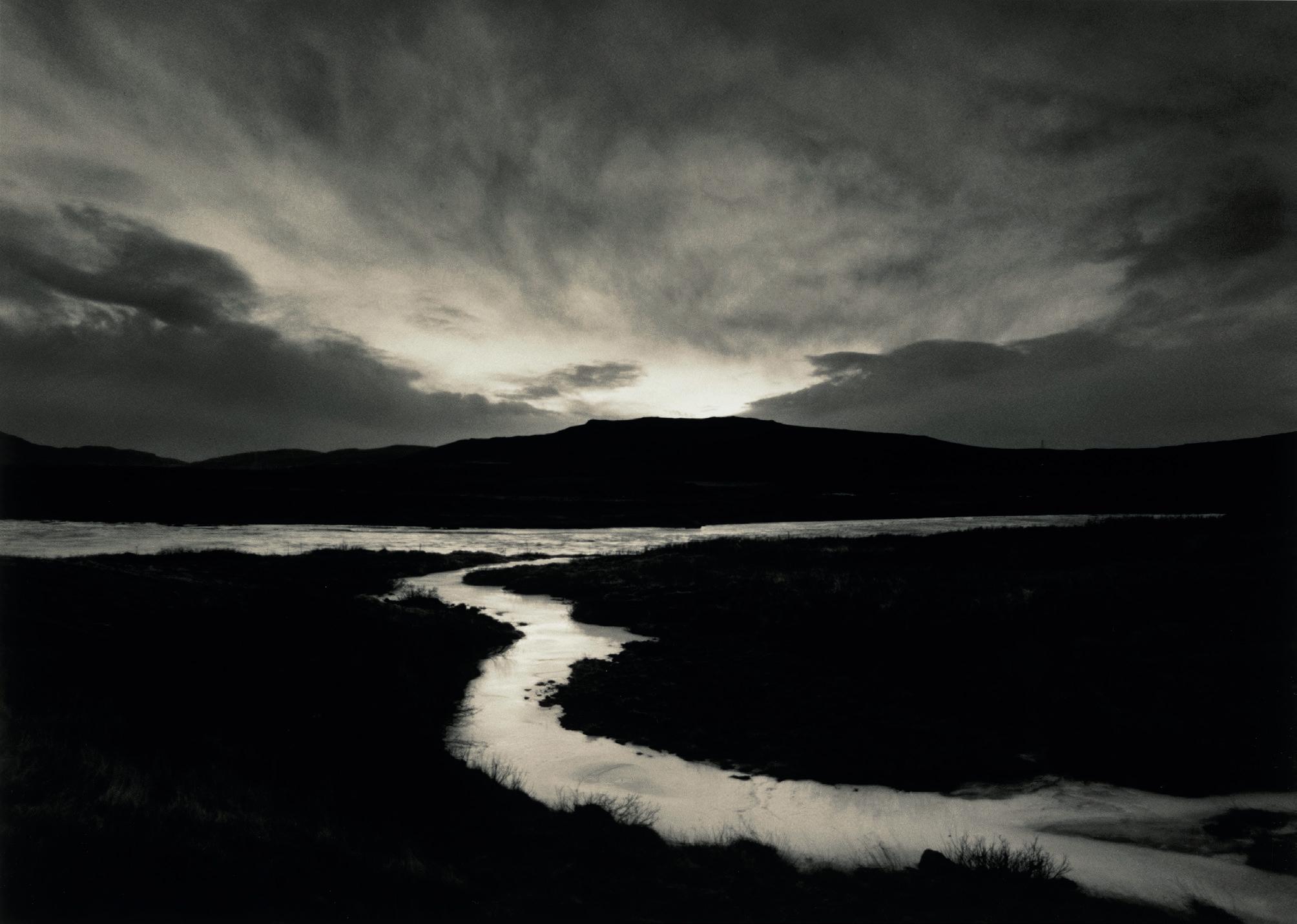
‘After dark’ was taken shortly after sunset and was used for the book cover because of its simple graphic design. It also represents a metaphor for the explosive beginnings of this country and is consistent with the ‘creation, recreation, recycle of matter’ background narrative to the book.
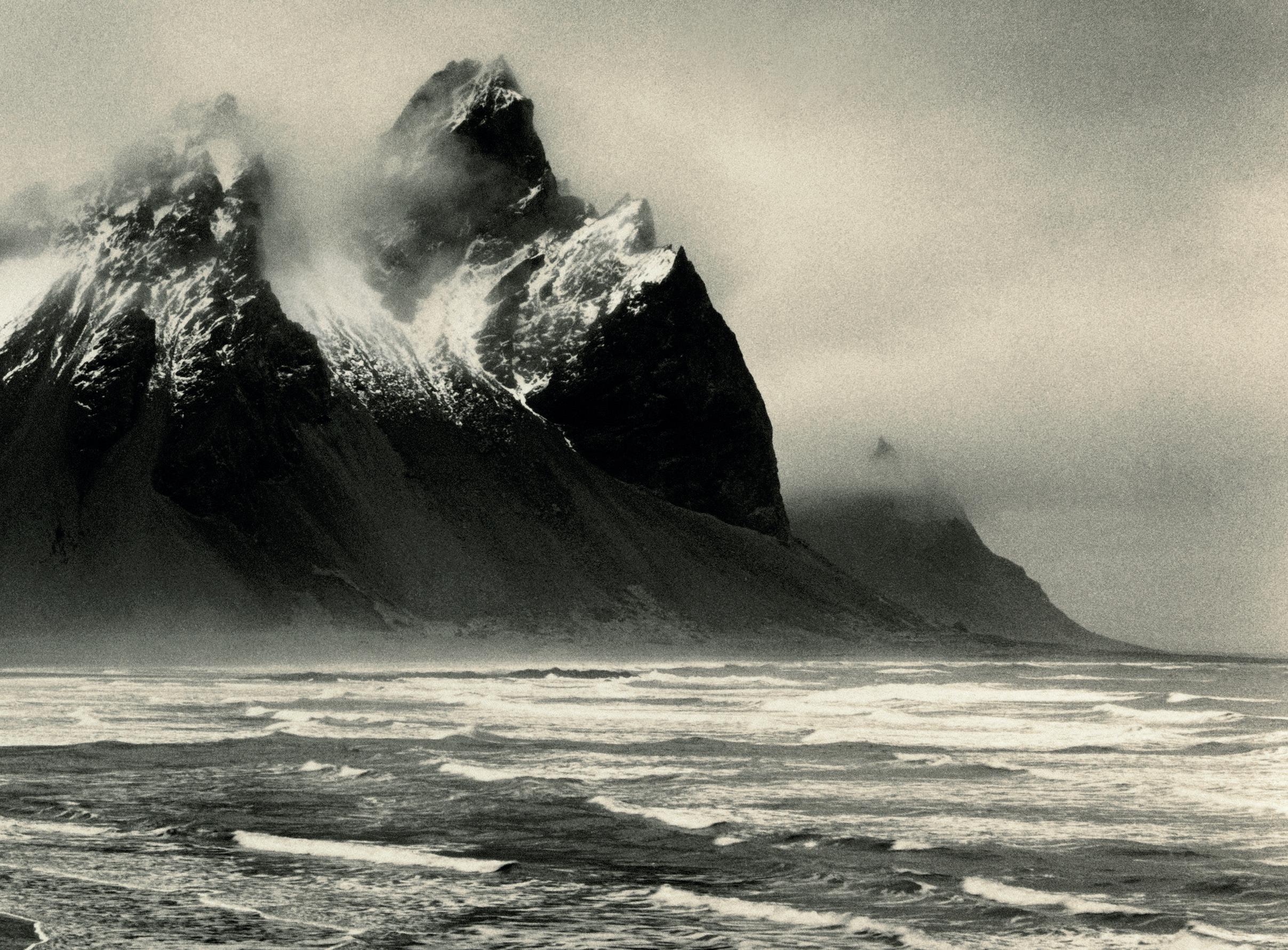
‘Storm over Vestrahorn’ Before this mountain acquired its more recent celebrity status, I visited it many times in all seasons and weathers and, for me, this picture encapsulates something of the soul of this corner of Iceland, so regularly featured in the shipping forecast gale warnings.
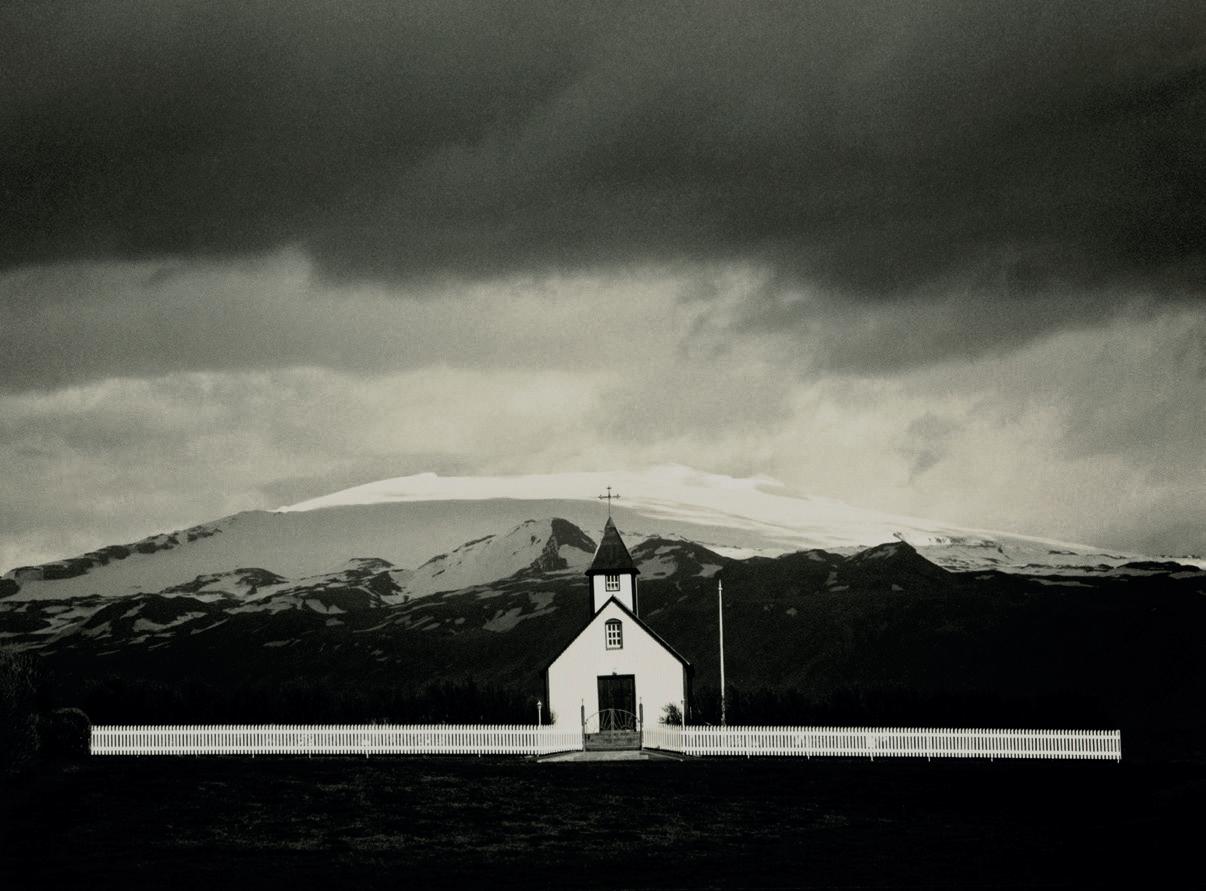
‘White church with fence’. Churches are omnipresent in Iceland and are almost as much part of the landscape and history as the rocks and glaciers.
To see all images in the original article and read Landscape Magazine Issue 5 in full, scan the QR Code below.

We are delighted to include some landscape images from one of the RPS Chapters and, in this case, a photographer from the Indian Chapter has kindly allowed us to feature their images in this issue. Hopefully, some of us will be inspired to visit some of the places featured.
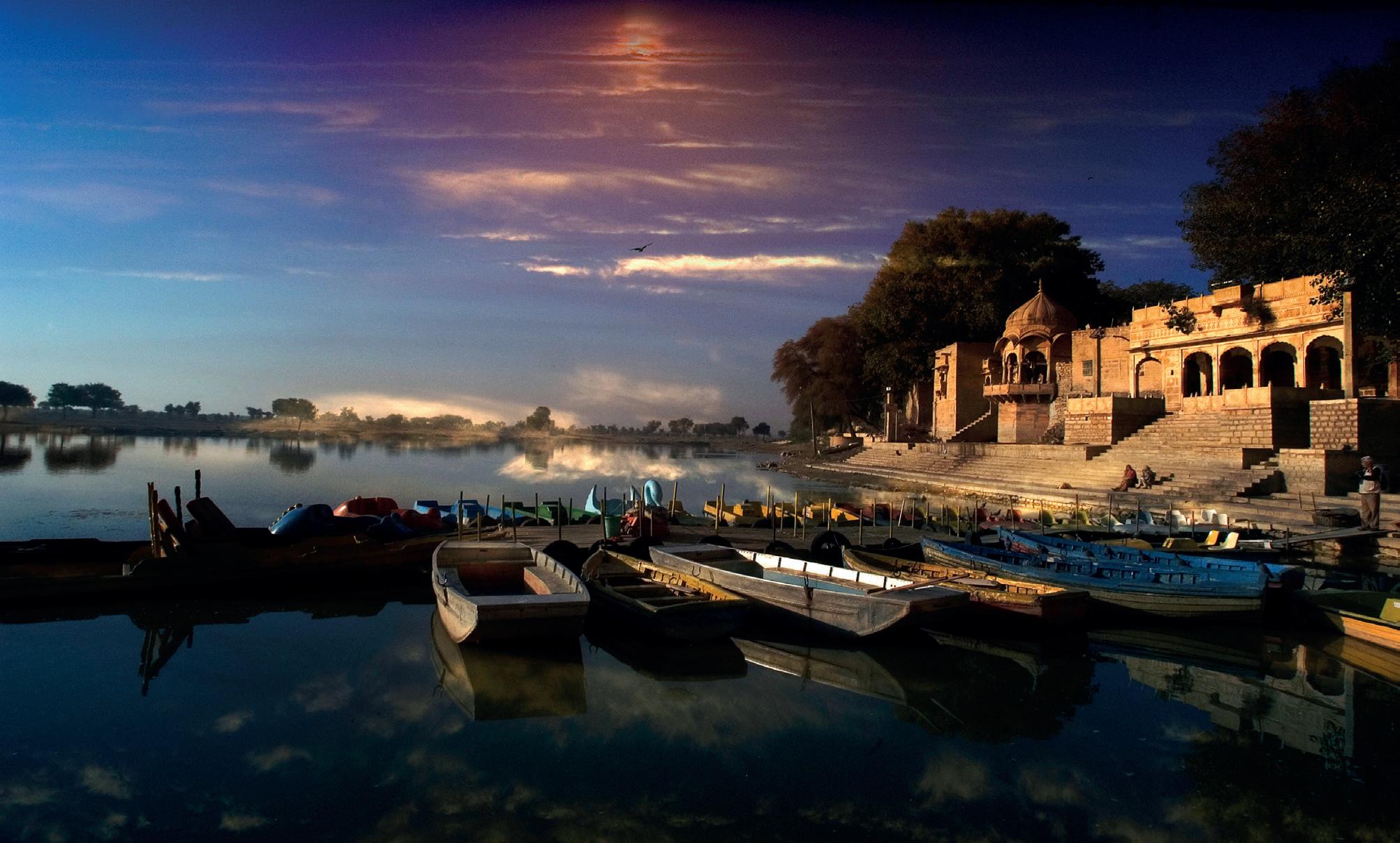
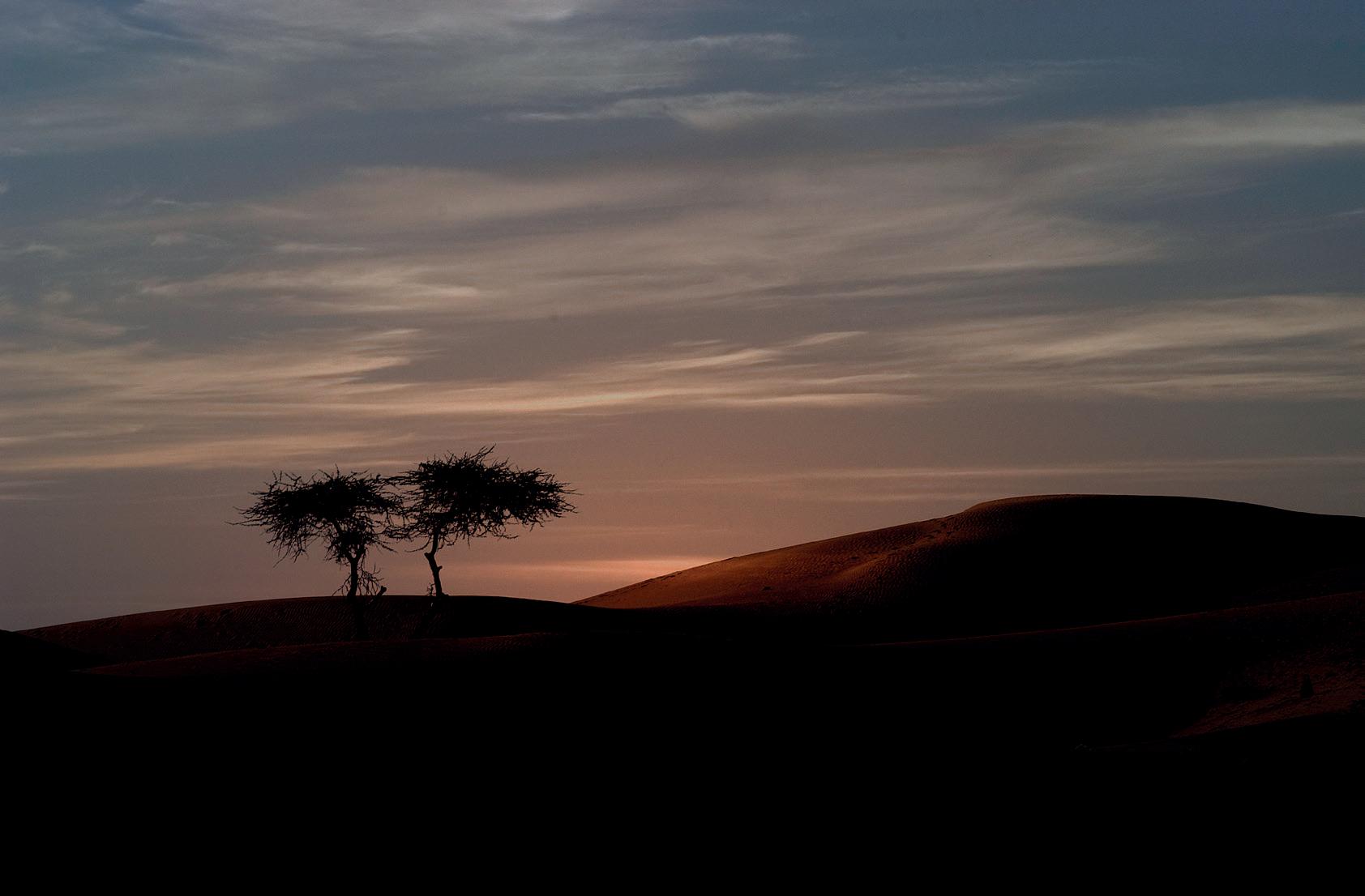
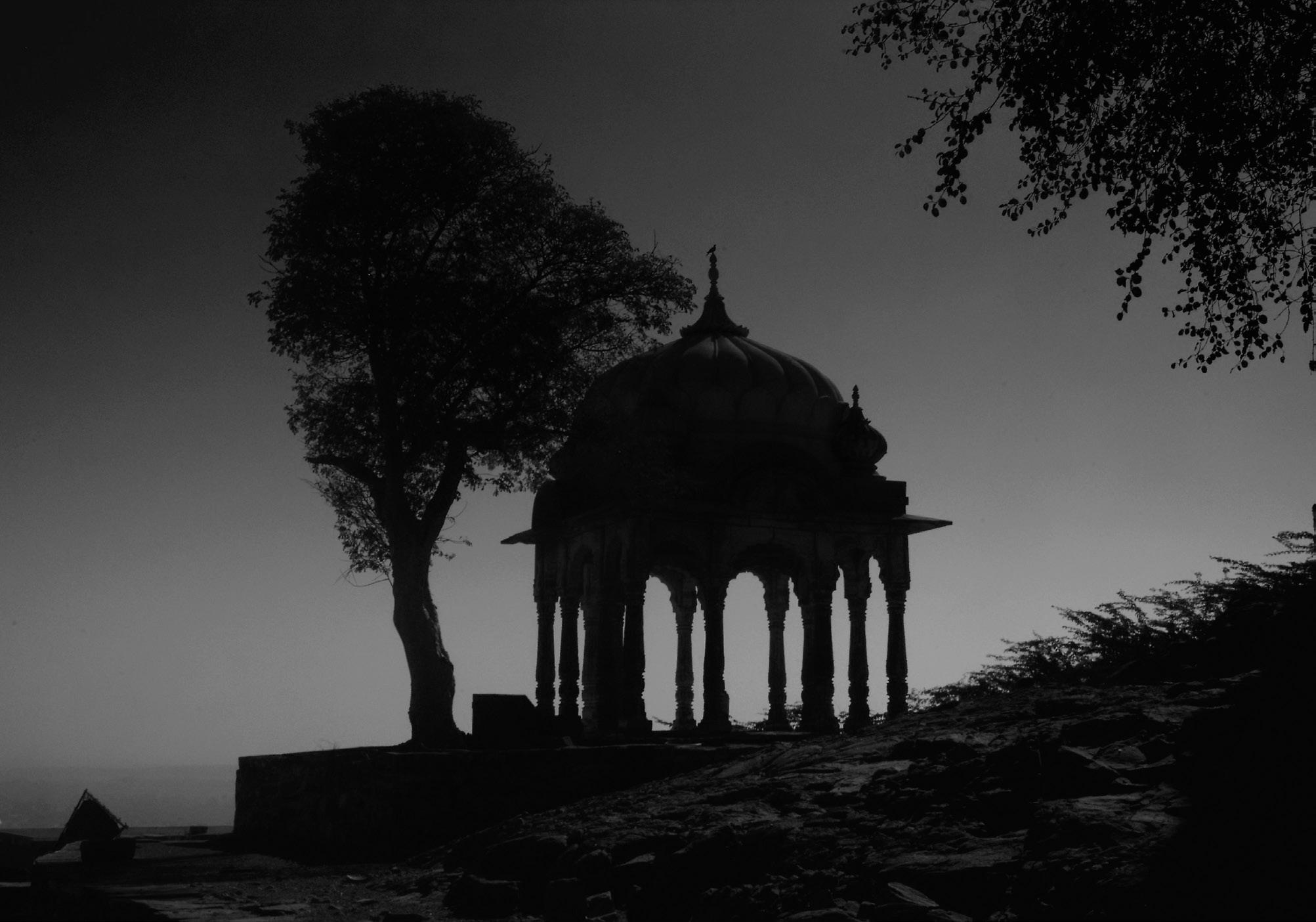
When one thinks of India, one thinks of a colourful, faraway land where Maharajas rule along with lesser kings and mortals. A land of strange cultures, food and languages but, nevertheless, an interesting place. Apart from all this, there is another side to India; a destination for landscapes from the Thar desert in Rajasthan to the mighty Himalayas in the north bordering Tibet. India has something for everyone.
There are also the long coastline and backwaters that support all form of living creatures and offer the opportunity to shoot some interesting images. I have been able to visit some of these
locations and have been able to get some nice images that have been exhibited at national and international exhibitions. The same locations merit several visits as the conditions vary during the year, yielding very different images.
The best time to shoot is usually early morning, when the sun rises around 6am, and late afternoon. The camera is no longer a novelty and no-one will pay attention to someone with a tripod and a camera. My kit consists of a Fuji XPro1 and an XE3, with 10~24mm, 18~55mm and 50~140mm f2.8 lenses. I recently added a 30-year-old Nikon
105mm f 4.0 lens fitted with a Metabones adaptor. I have not abandoned film. My old Rolleiflex f 3.5 has come out of retirement and was recently CLAd (cleaned, lubricated and adjusted) in the UK and I am looking forward to also shooting FP4 and HP5 again.
I hope you enjoy these images and they leave you with a feeling of being there.
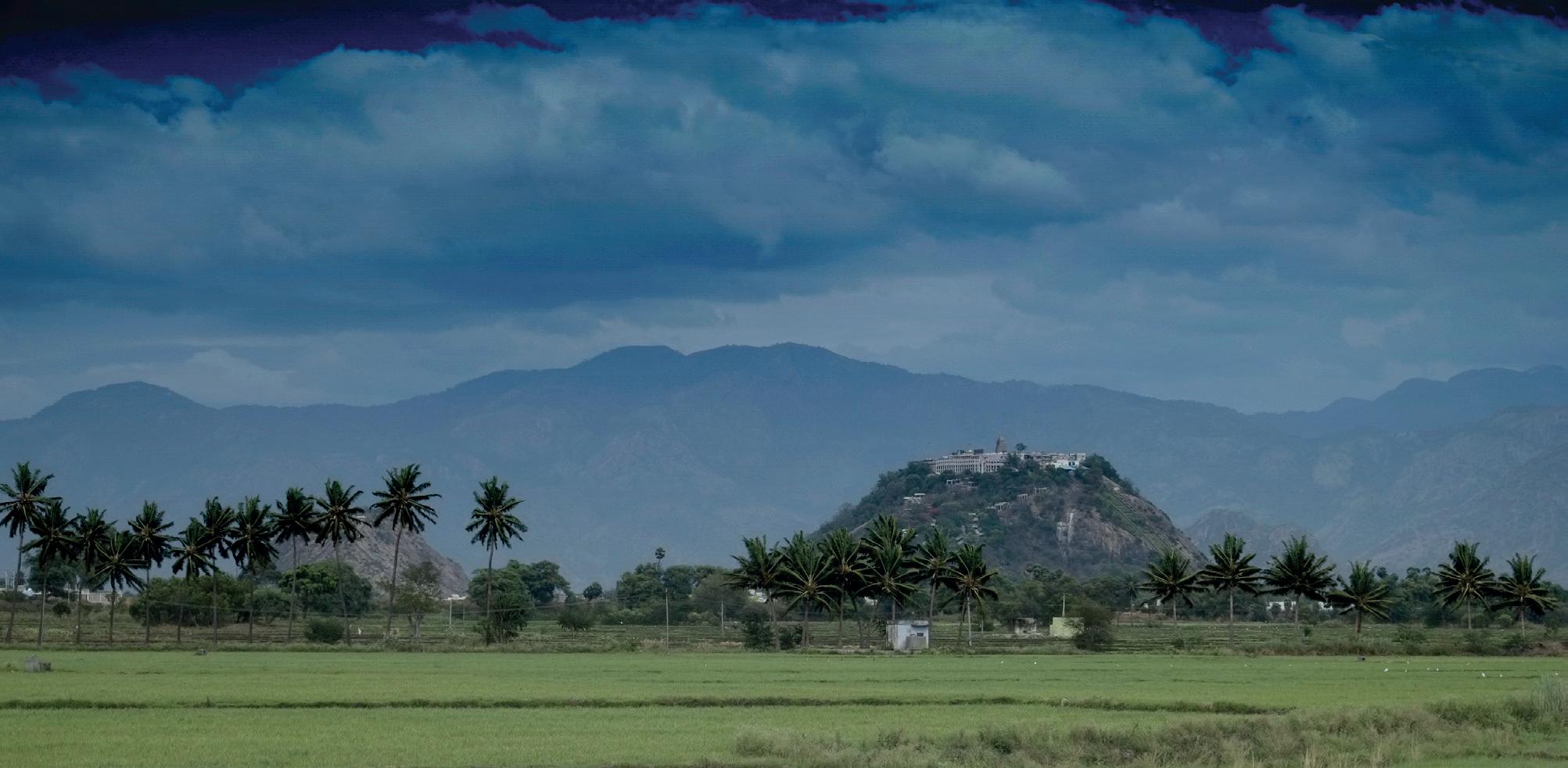
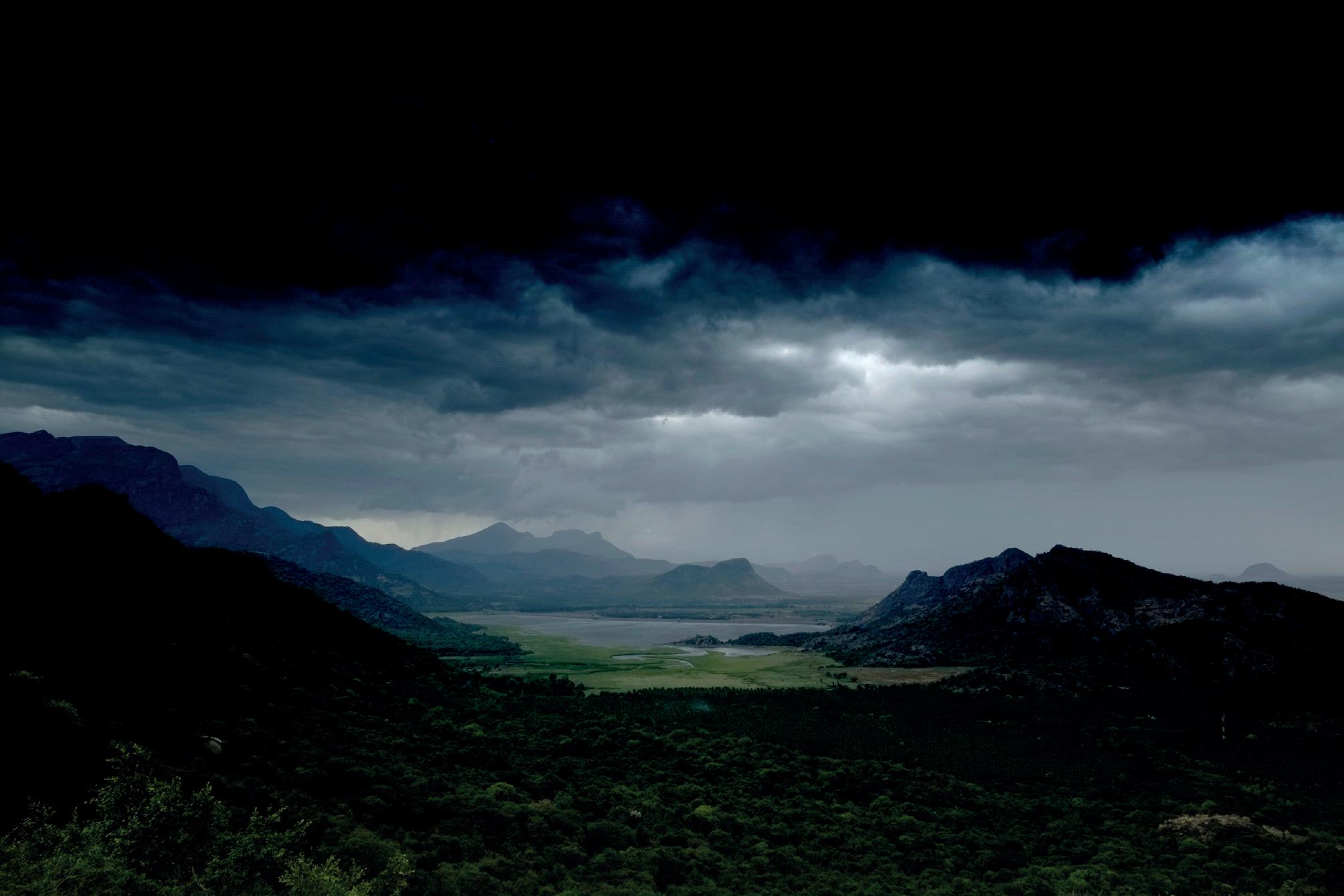
Gathering storm, Palani Hills: Driving up the hills towards
I saw this
of the
the lake and the gathering storm clouds. I used a 3 stop soft grad filter to darken the sky, adding mood to the image. Shortly after this, the heavy downpour began.
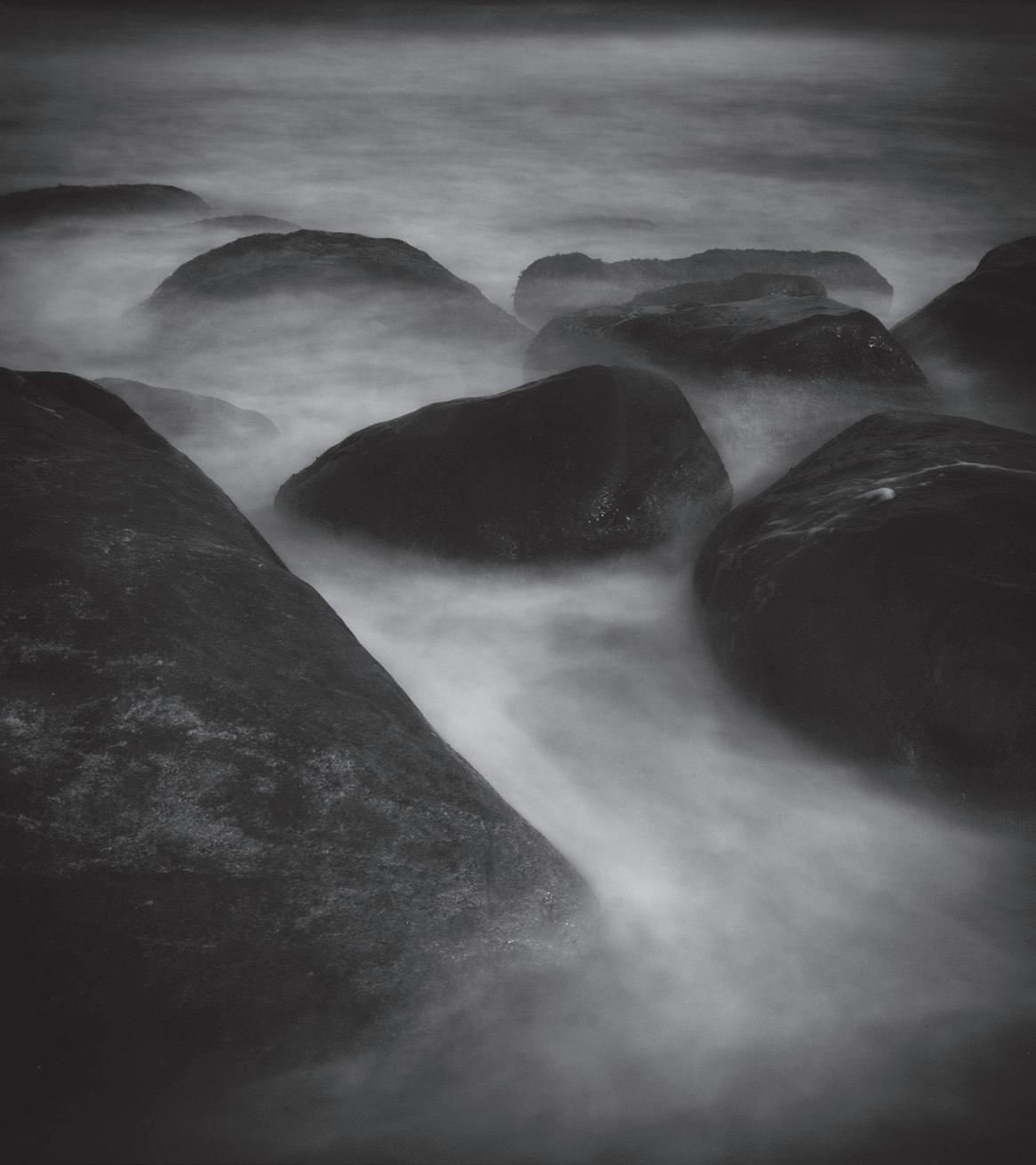
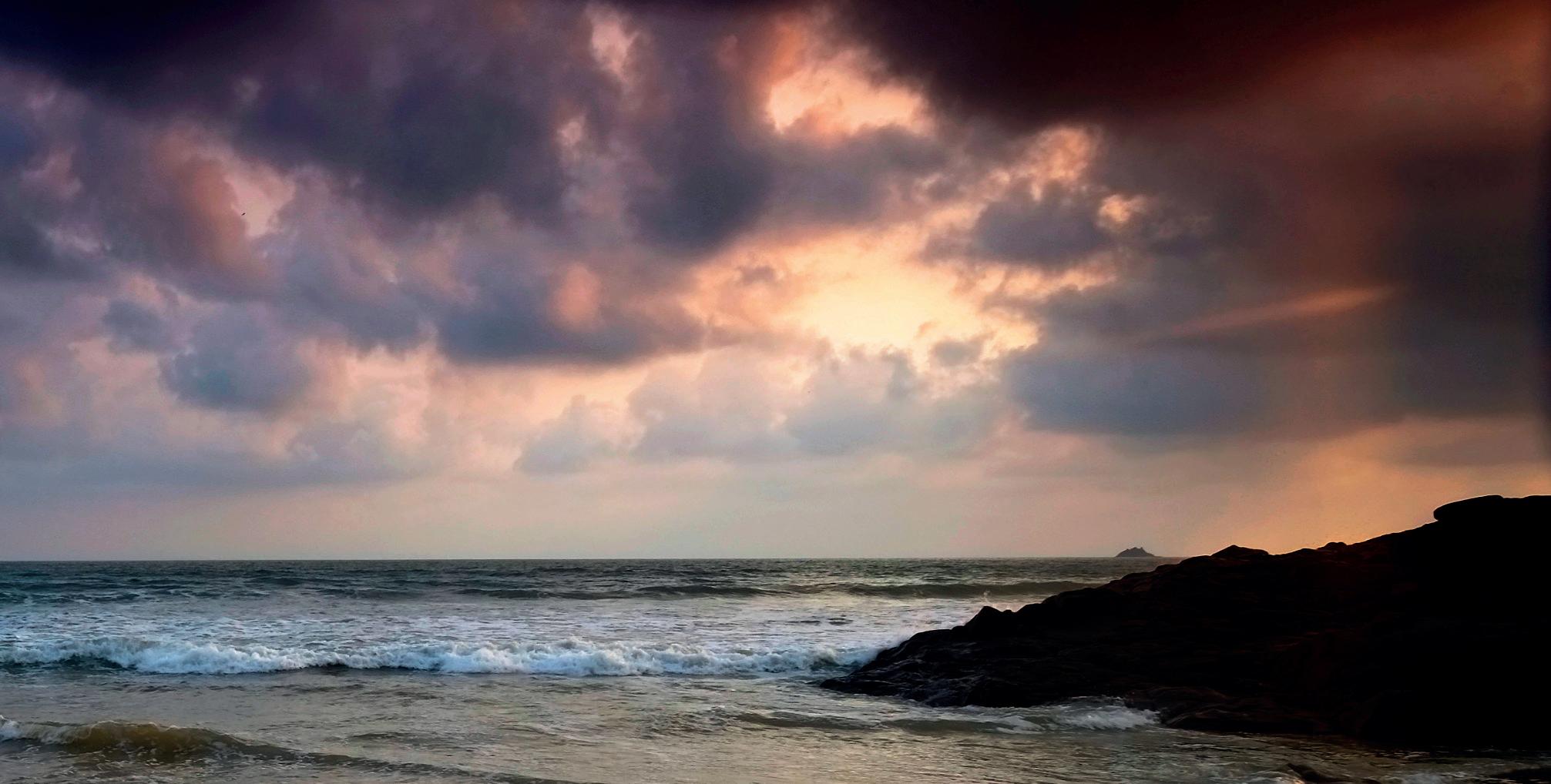
Rocks, Kovalam: An exposure of 10 seconds on a Manfrotto tripod using the Fuji 10~24mm lens gave this beautiful smoothness to the water. I waited for the waves to bring the water between the rocks. The white highlights are caused by the foam generated by the waves on the rocks.
Ashok Viswanathan is a retired company executive living in Chennai, India and is passionate about photography. He started with film in the early ’70s and continues to mix the traditional format with digital.
A regular exhibitor at national and international exhibitions, he has been honoured with several distinctions. Besides exhibiting his work, he has a considerable body of published work in magazines, books and on the web. His interest is in travel, landscape, portrait, culture and fine art images.
To see all images in the original article and read Landscape Magazine Issue 6 in full, scan the QR Code below.

Based in Birmingham, Verity Milligan is an award-winning professional photographer and educator. In her commercial work she works with many household names but Verity also loves to shoot the city and especially the one she calls home. Here, she gives us a guide, plus some very useful tips, on how to give yourself the best opportunity to photograph urban landscapes successfully.
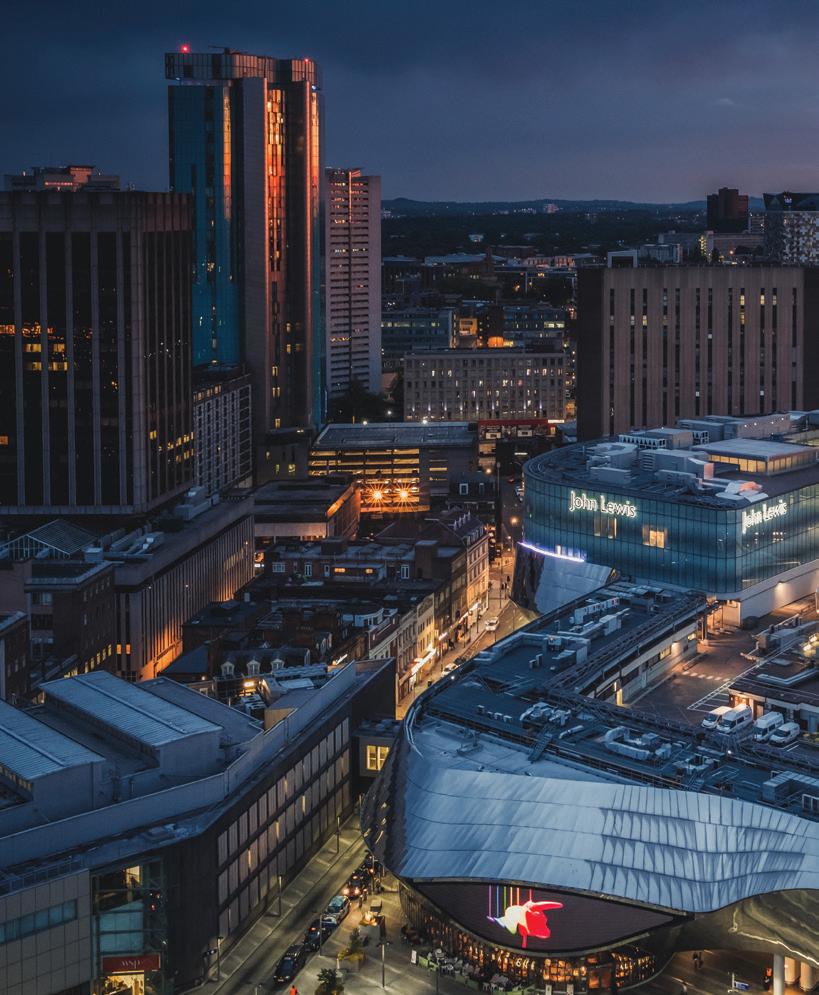
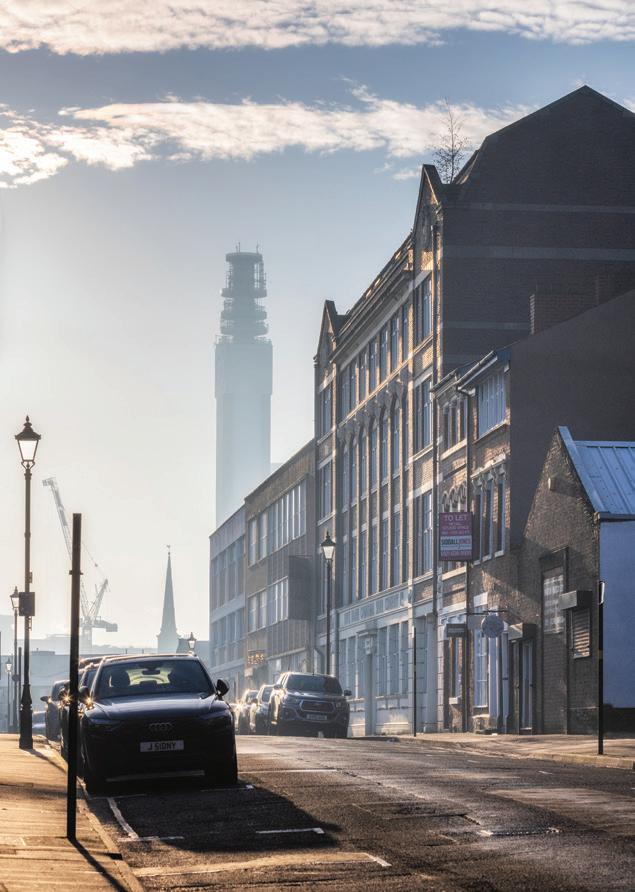
I like to think of landscape photography as a broad umbrella term that encompasses both natural and urban environments. When I first got into photography I couldn’t drive and I was often limited to the cityscapes of Birmingham. Although this was frustrating at first, this period of geographical limitation developed into a productive and satisfying ongoing creative relationship with the city and its evolving skyline. It also provided me an opportunity to apply the techniques I would practice in a rural setting to images of the city. In this article I’ll explore some of the techniques and approaches I take towards urban landscape photography.
I tend to approach urban landscape photography from a similar perspective as I would landscape photography. Birmingham is surrounded by sprawling, urban scenery that is in constant evolution. You might associate shooting in a city centre with street photography but I enjoy the challenge of finding beauty in the architecture and showing off unique features of the city. I like to explore the city across all parts of the day. Sunrise is quiet and can bring with it atmospheric conditions but the joy of urban photography is that there is something interesting to photograph no matter the time or season, for that matter. Cities provide abundant photographic
opportunities, whether it’s spring or autumn, summer or winter. Birmingham, like many other cities in the UK, has a mix of modern and historic buildings standing in juxtaposition to each other and I enjoy capturing both in the same frame, contextualised by the surrounding space. Similarly, cities offer up the chance to capture surroundings from different perspectives. The urban sprawl can look quite different at street level compared to an elevated perspective.
One of the most interesting aspects of building a creative relationship with an urban centre such as Birmingham is that you can become an unwitting documentarian. Unlike nature, urban scenery can change rapidly and, often, vistas can appear and disappear within a short space of time. Returning to capture the city time and again facilitates producing a body of work that not only shows the urban space but how it fluctuates over the space of months and years.
Get to know the city.
In my earlier days photographing Birmingham I regularly visited places that might be considered obvious, such as Selfridges, Gas Street Basin and Chamberlain Square. I was walking in the footsteps of many other superb photographers whilst trying to forge my own style. In those first
few years of capturing urban landscape photos I was obsessed with colour and the drama that sunrise or sunset could bring to an image and I was often guilty of over-processing. However, cutting my teeth in such a manner meant I walked the streets of Birmingham and really got to know the city. This allowed me to create a map in my mind of locations that would look good in different conditions. I’m not the kind of person who likes to just photograph a location once, like a tick-box exercise. For me, there is a joy in returning to locations, as every time the light is different and you never know how the conditions might impact on the scenery.
Embracing the Gloom.
Unfortunately, creating the same imagery or chasing similar conditions repeatedly can impact on creativity and I found that limiting myself to photographic time at either end of the day, when I perceived the light to be ‘best’, started to impact on my creativity, especially as it’s not often that we encounter conditions considered ‘good’ or even ‘very good’. I won’t even utter the word ‘perfect’ as I’m unsure that’s obtainable. As photographers, there is always something that could be better! After a few years of chasing conditions, I eased into something I like to call ‘embracing the gloom’, where I found beauty in the grey, the rain and the occasional drama
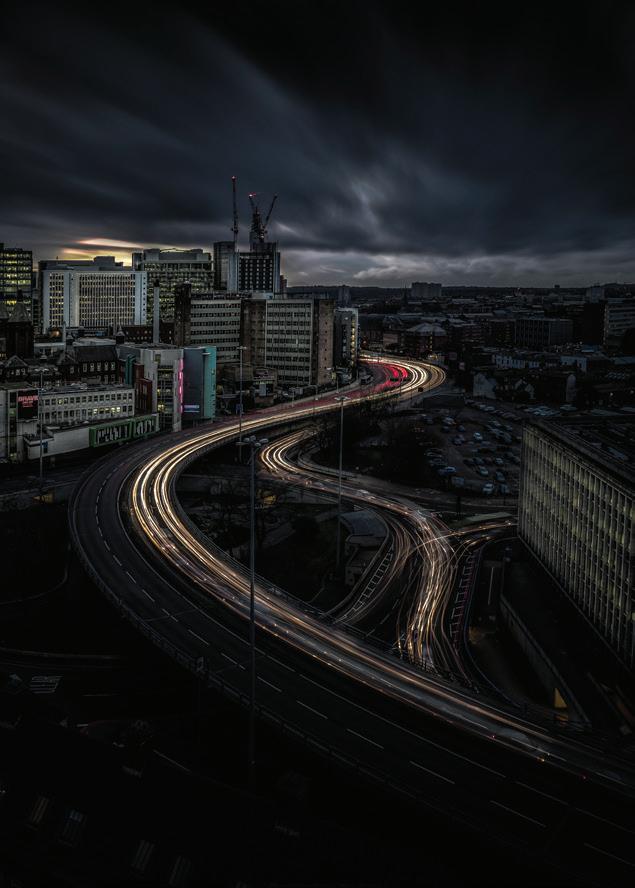
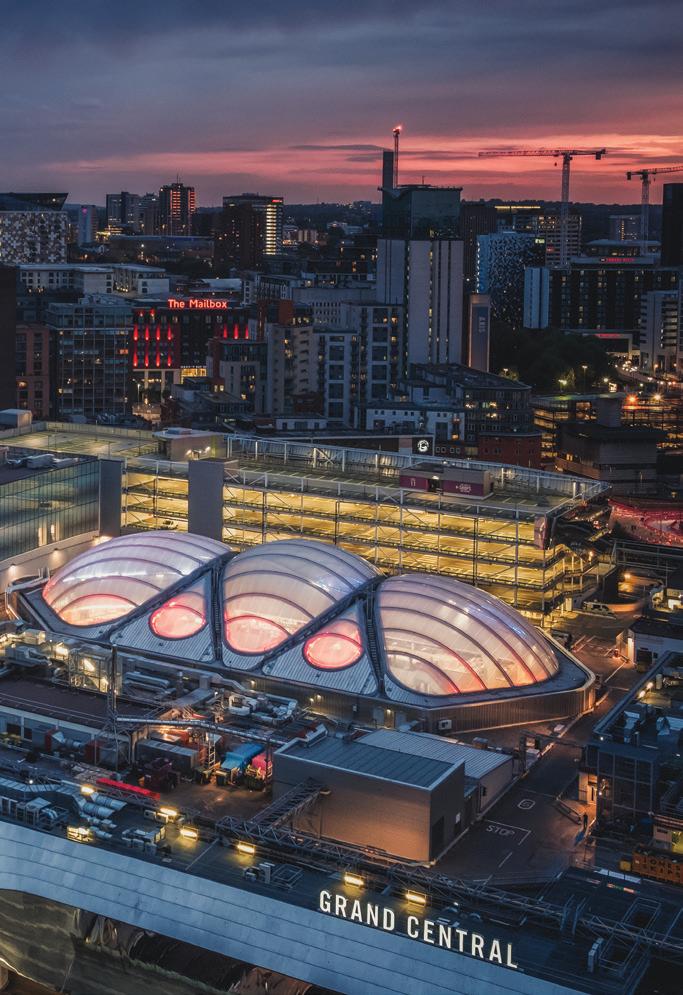
that comes with bad weather. This involved moving away from the notion of shooting during the golden hour and concentrating more on exploring other times of the day, especially the blue hour, when the city is descending into the evening. I find this an interesting time to shoot in an urban environment because it provides a completely different set of challenges. Much like photographing during the golden hour(s), there is a limited amount of time when civil twilight provides optimal shooting conditions. Once twilight becomes night, the scene loses some of the magic and atmosphere. This can be the perfect time for long exposures because of the shortage in light and, in urban environments, there are always opportunities for light trails to add some interest to an image. Another bonus of shooting during the evening is that I’m not beholden to the weather. I’m capturing the relationship between the absence of daylight and the abundance of artificial light so cloudy skies can often enhance the image.
People can add context.
Cities are full of people and it’s hard to avoid having them in imagery but they also give context and life to a scene. I enjoy including people in my urban landscapes to give scale, but also interest, to a foreground. This works especially well during interesting light and weather. Low sun can offer up long shadows, acting as leading lines and complementing the surrounding architecture and items such as umbrellas during rain showers can provide a pop of colour to an image, especially at dusk.
Rain can lead to interesting skies. Rain can put people off from going out with their camera but these can be some of the most interesting conditions to shoot in the city (although I recommend investing in some good waterproof clothing). Specifically, there is potential both before and after the heavens open
to invigorate a scene, especially at either end of the day. If you get lucky, the conditions could conspire to create colour and light in the sky as the sun bounces off the cloud and kicks back in style. These conditions have led to some of my most favourite urban landscape shots.
Think outside of the norm. I’m guilty of this myself but urban landscapes aren’t just about an illustrative representation of the skyline; there are myriad opportunities to represent the space in more abstract terms. Some of my favourite images of Birmingham depict the architecture in an abstract fashion, whether it’s the façade of the library or the reflection of architecture in one of the various water features. Allowing the opportunity to see the city in a different way can often unlock creativity and become a satisfying endeavour.
Rain means puddles and reflections.
While passing rain showers won’t always result in glorious sunsets or sunrises, they often do leave behind puddles of water that can be used to great creative effect. Although Birmingham has plenty of water, especially the numerous canals, puddles mean reflections in unusual places, ensuring a unique and interesting perspective on familiar surroundings as long as you’re willing to get low to the ground. In these situations a circular polariser can be useful for both enhancing (and reducing) reflections when required.
It’s not all about the city centre. It’s easy to think that the city can only be photographed when in the city itself but often the city, especially one as big as Birmingham, can be seen from miles around. I enjoy exploring the skyline in different contexts, such as how it looks from the various natural beauty spots such as Clent or the Lickey Hills. Often this requires a long lens but can offer up some potentially intriguing photographic opportunities.
Overcast skies can enhance long exposures
If you find yourself shooting during windy weather, using an ND filter to create intriguing long exposures can be really fun. Wet, windy weather means the clouds move faster than usual and even a 30-second exposure can give an impression of movement and narrative in a single frame. This can be even more effective when including transportation to create light trails. In Birmingham the trams provide endless opportunities to add light trails to long exposures, especially during dusk.
Fog makes everything timeless and atmospheric.
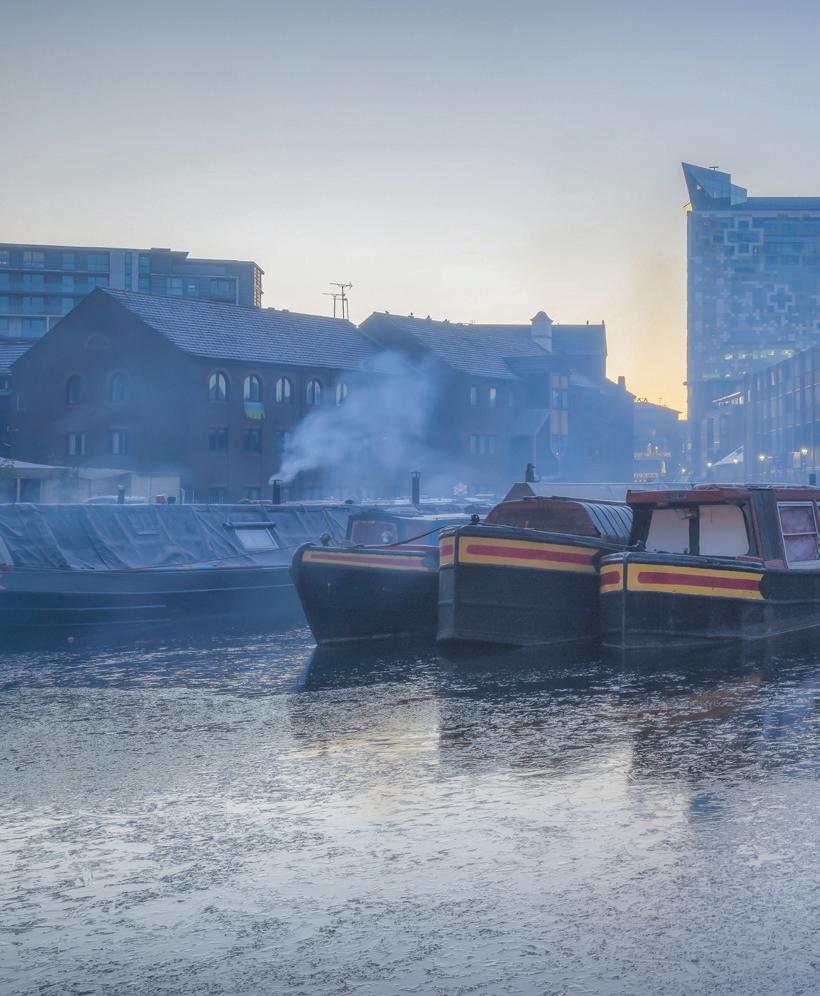
If there is one weather condition that I wish I could shoot in more, it’s fog. Because cities tend to be a little warmer than rural areas, fog is a rare occurrence but that makes it even more special. People become spectres against non-existent backdrops and monotonous architecture becomes ethereal, making the imagery feel timeless. On the even rarer occasion that the light breaks through, the results can be tremendous.
Falling rain, sleet and snow.
If fog is rare in the city, then snow can be even rarer. There have been a few times when I’ve seen Birmingham blanketed with snow but snow storms and sleet showers are more frequent, which again have the potential to turn the mundane into something altogether more atmospheric. In this situation, deploying a fast shutter speed to capture the individual droplets or flakes can augment the feeling of an image. This can be especially intriguing if there’s some backlight but, even without, the whirl of rain or snow isolated in the moment can be creatively satisfying.
Snow brings uniformity.
As a child, snow can be magical but, as an adult, it’s seen more as an inconvenience. Seen in the right light however, it can bring distinct opportunities. Snow, especially just after it has fallen (before it becomes slushy or used to make snowmen)
provides a homogeneity to the landscape. It condenses chaotic scenes into something much more uniform. I particularly enjoy the neutral palette that snow provides and it’s one of those weather conditions I look forward to every winter.
Sturdy, reliable tripod
Photography in urban spaces is about telling the story of the architecture at various points in the day during different times of the year. If you’re shooting in low light then a tripod will allow you to create sharp images and provide much more creative control, enabling such processes as long exposures.
And on that note, invest in some decent filters. I treat urban photography the same way I do landscape photography and a good set of filters enables you to make the most out of the light. Using a 10-stop will allow you to create compelling long exposures and a circular polariser can reduce or enhance reflections and glare when capturing architecture/water.
Composition is the key.
Experimenting with composition can have a big impact on your images. I like to use my phone to explore different angles and framing before using my ‘big camera’. Moving the position of your camera can influence the mood and feeling of an image. Shooting from a low angle can increase the impact of architecture and if you shoot from a high perspective (such as a rooftop) this provides an opportunity to visualise the city differently.
Reflections. Many urban spaces have waterways such as canals or reservoirs based in or near the city. This can provide plentiful opportunity to photograph distinctive cityscapes, especially around sunrise when there is more chance of the water being still and reflective.
Shooting during civil twilight. Cities have a different atmosphere at night, especially during dusk when the
lights come on. This can be a good time to capture the city as commuters will be heading home, providing opportunities for long exposures of light trails, evoking a sense of movement and life in an image.
Good gloves.
A lot of urban photography is done during the colder months of the year as I prefer the light during these periods. Cold hands are never appreciated so invest in a good pair of gloves to minimise exposure to the cold, especially during those early mornings.
Lens hood.
This is invaluable if you’re capturing photos during the golden hour when the sun is low in the sky. I’m not a huge fan of lens flare so try to avoid it where possible and a lens hood can really help with that. It is also useful for reducing rain/snow on the lens when the weather is inclement.
Lens cloths.
A dry lens cloth is essential, especially when shooting in bad weather, as those rain spots will show up on the image. If you wash your lens cloths, try to do so without fabric conditioner as it will reduce the effectiveness.
Umbrella.
The simple umbrella can be a useful tool when shooting in difficult conditions. Depending on the direction of the rain and wind, this will allow you to keep your camera, lens and any filters dry.
Like any creative process, urban landscape photography is about forming a relationship with the space and representing it in your own unique style. I often find that my urban landscape work has a significant impact on how I view the natural world and my work in each space is informed by the other. Cities might not have obvious beauty but there are plenty of interesting scenes waiting to be discovered, whatever the weather.
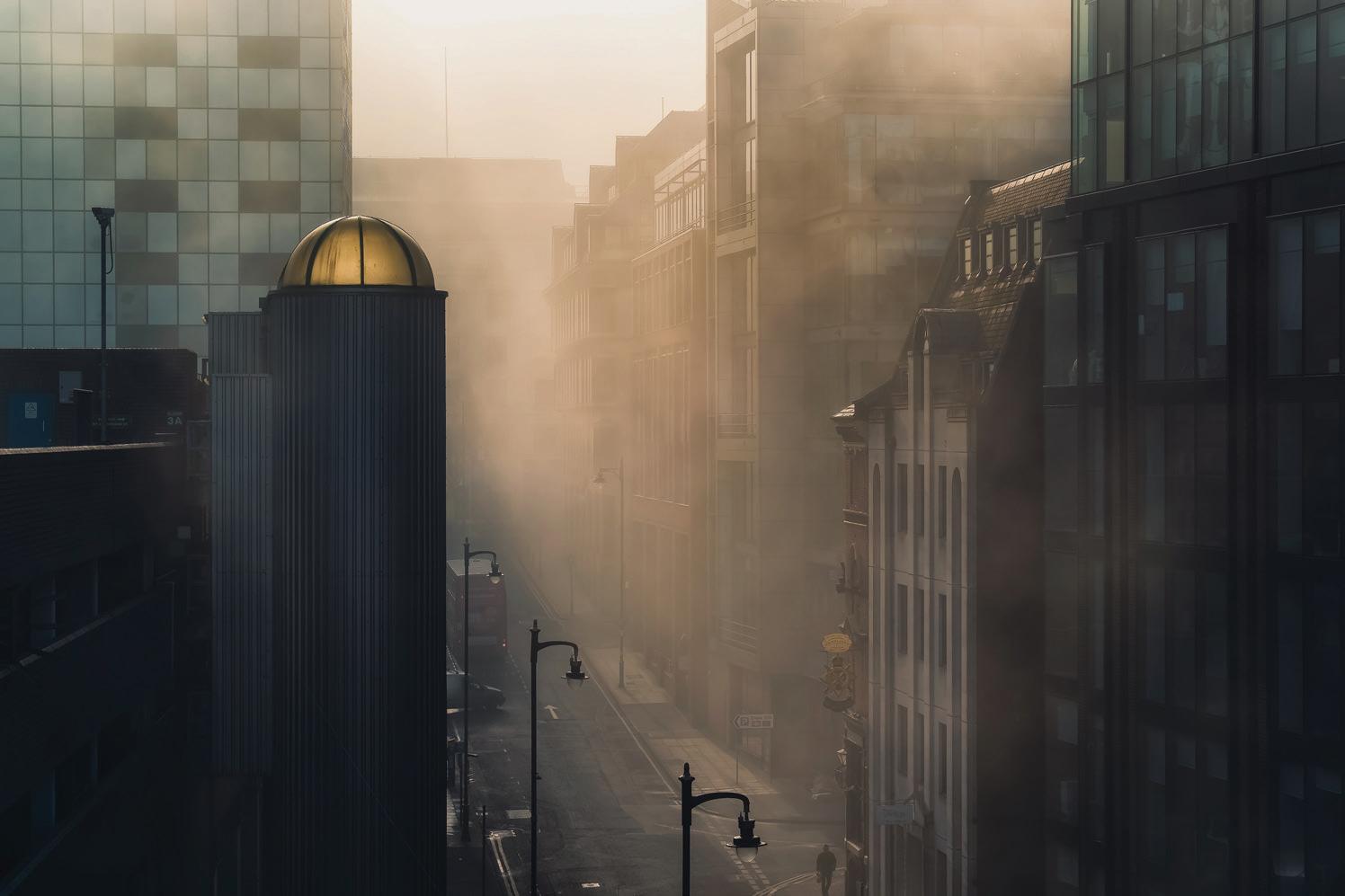
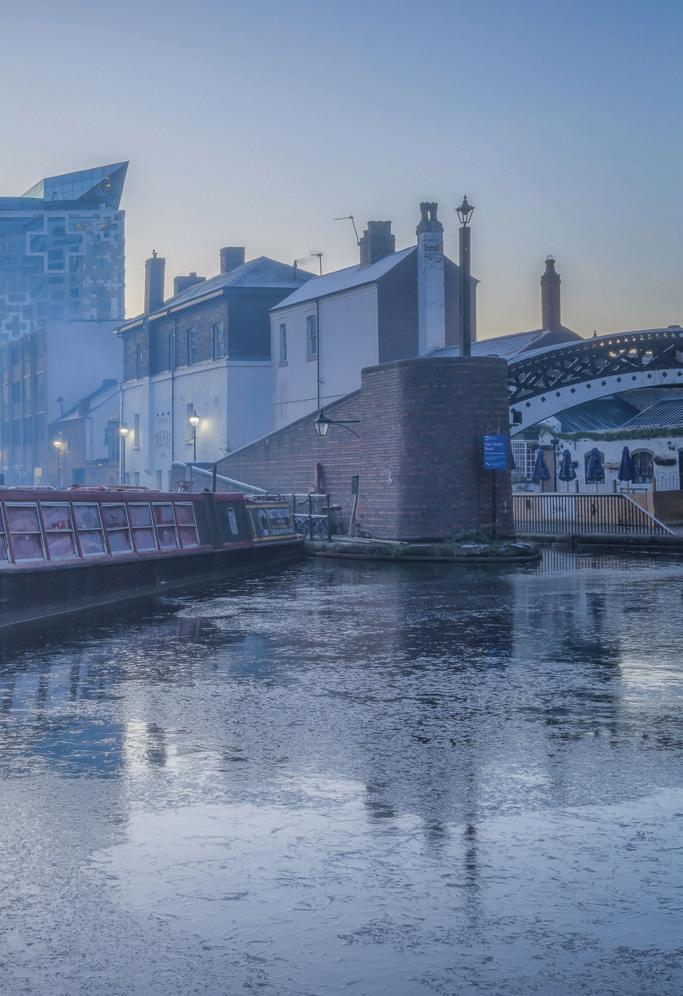
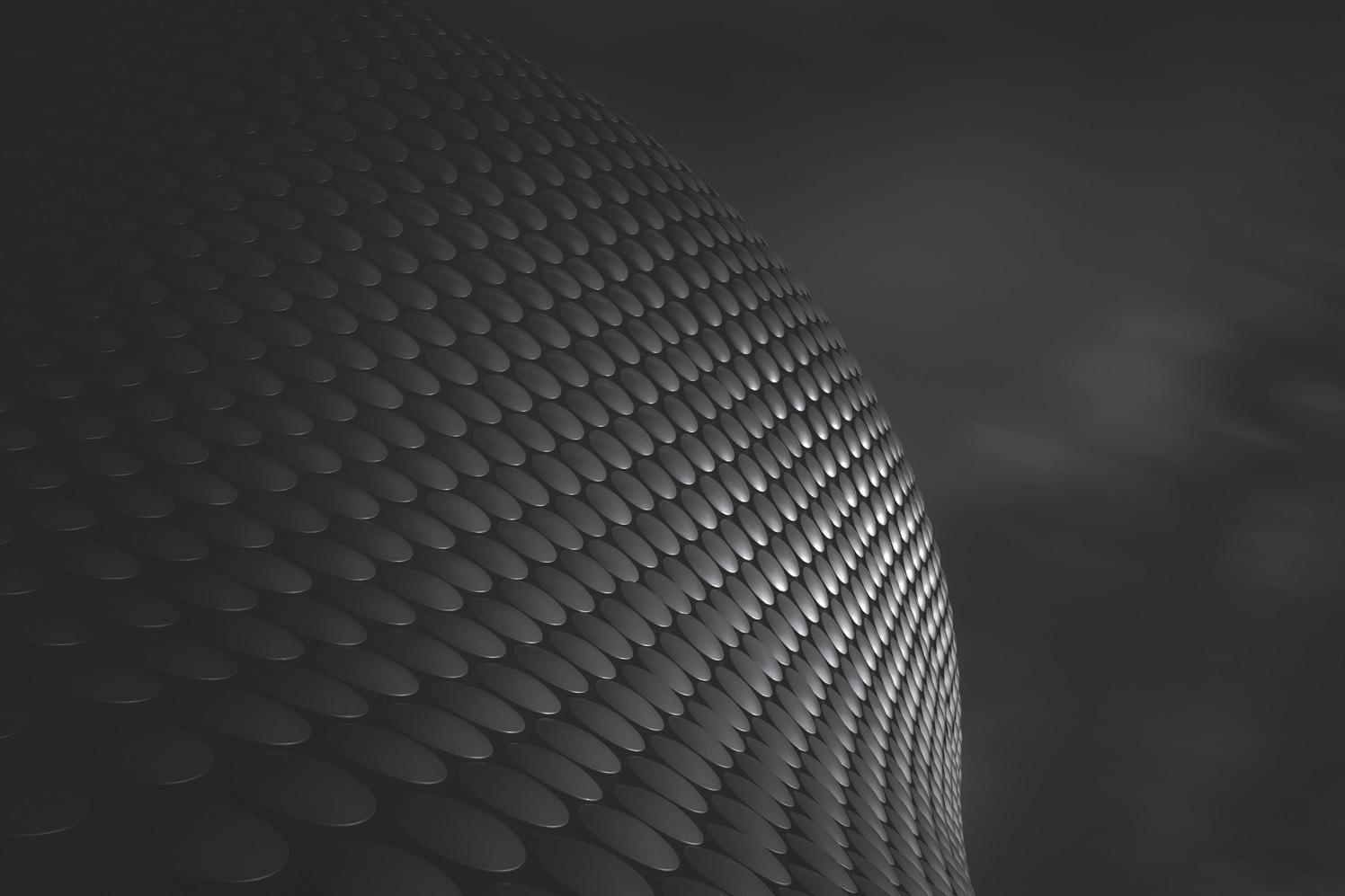
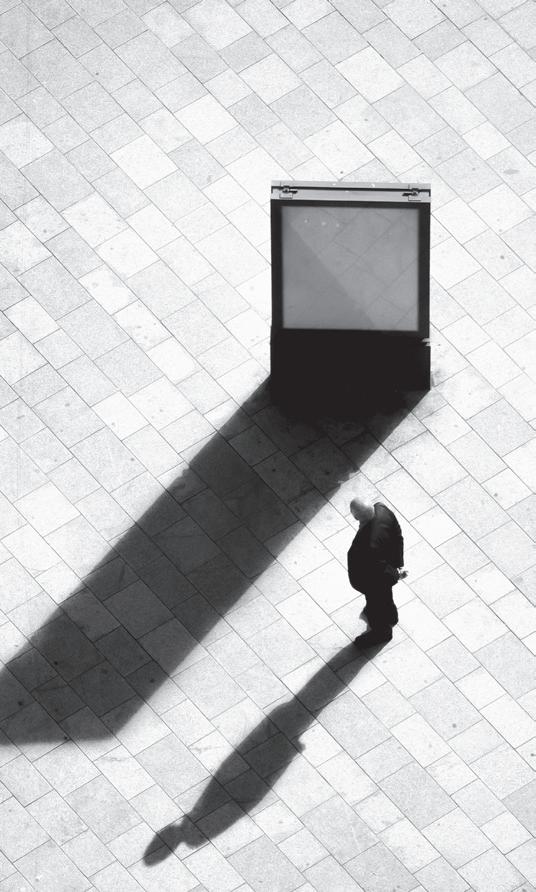
To see all images in the original article and read Landscape Magazine Issue 11 in full, scan the QR Code below.

Group member Robert Bolton ARPS shares some of his extraordinary aerial images of the Camargue in Southern France.
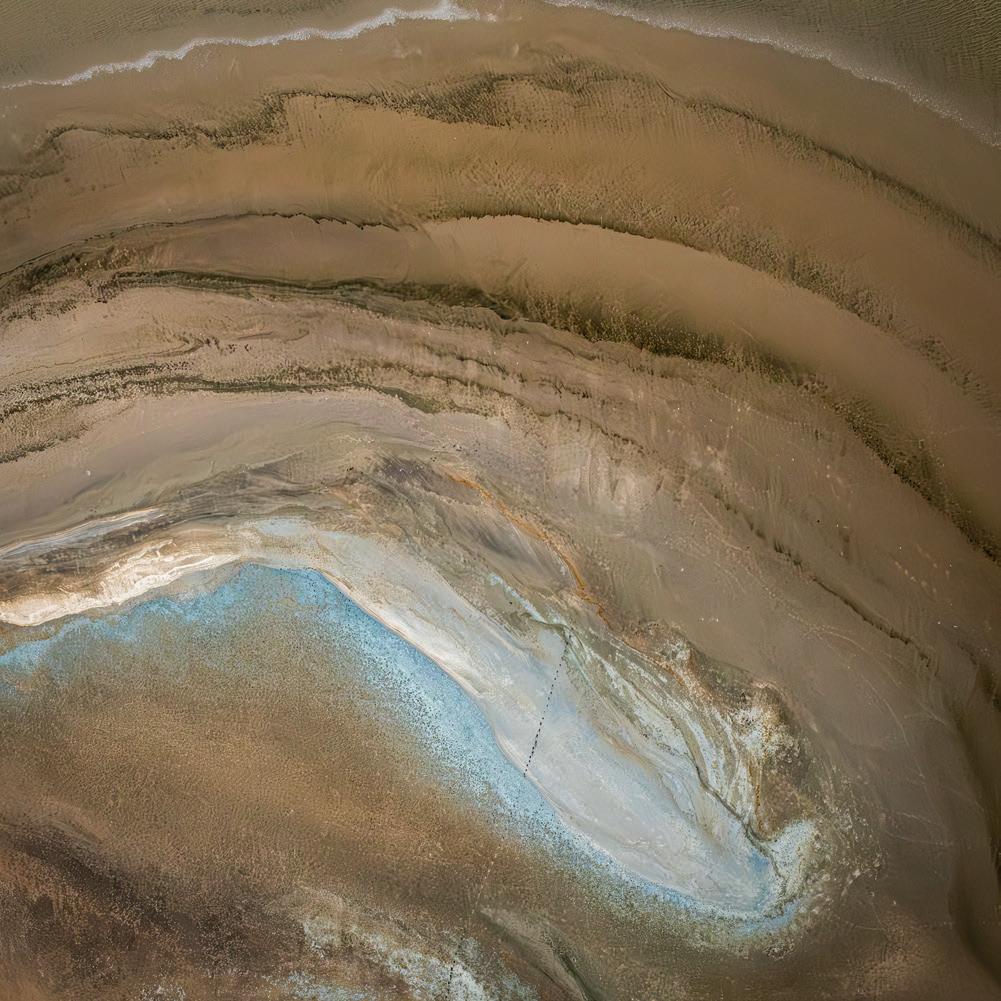
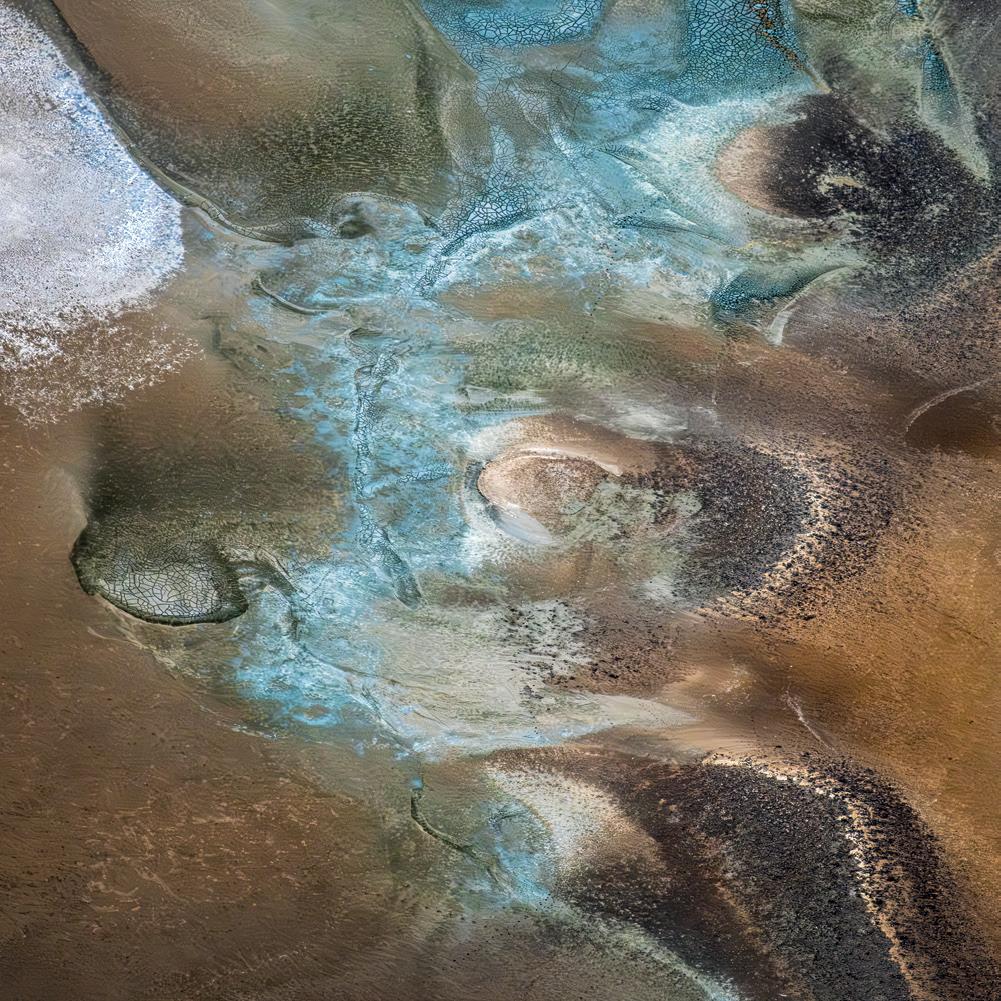
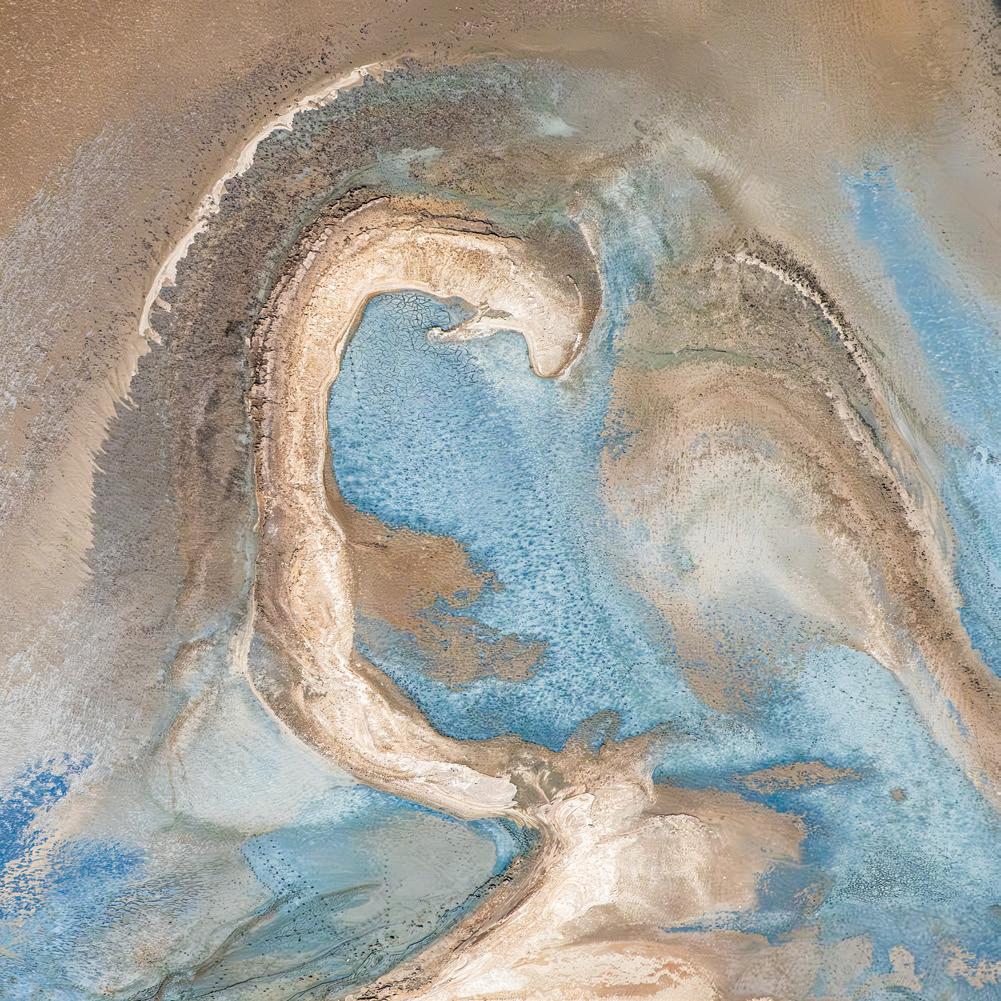
When I started out in landscape photography I concentrated on seascapes. The sea is often the element that has remained constant. In my early days I could be found at sunset in places like Nash Point near Bridgend and my photographs were what might be called “classic.” Colourful and instantly recognisable as to what and where it was. Now I find myself increasingly drawn to both very minimal compositions as well as abstract and otherworldly images. I don’t, so much, take pictures of locations but of ideas, moods, impressions, shapes and abstractions. All of which are found in landscape
photography, particularly in intimate landscapes. Similarly, I would suggest that most people, looking at these photographs, would find it difficult to say where they were taken. Aerial photography has provided me the opportunity to explore this abstract genre more purposefully.
I first had a go last year in 2022 when on a photography workshop photographing the coast and lighthouses around Brittany. I had the opportunity of an afternoon taking photos around St. Malo. Sat on the side of an open-sided helicopter, with my feet resting on the skids, I don’t mind admitting
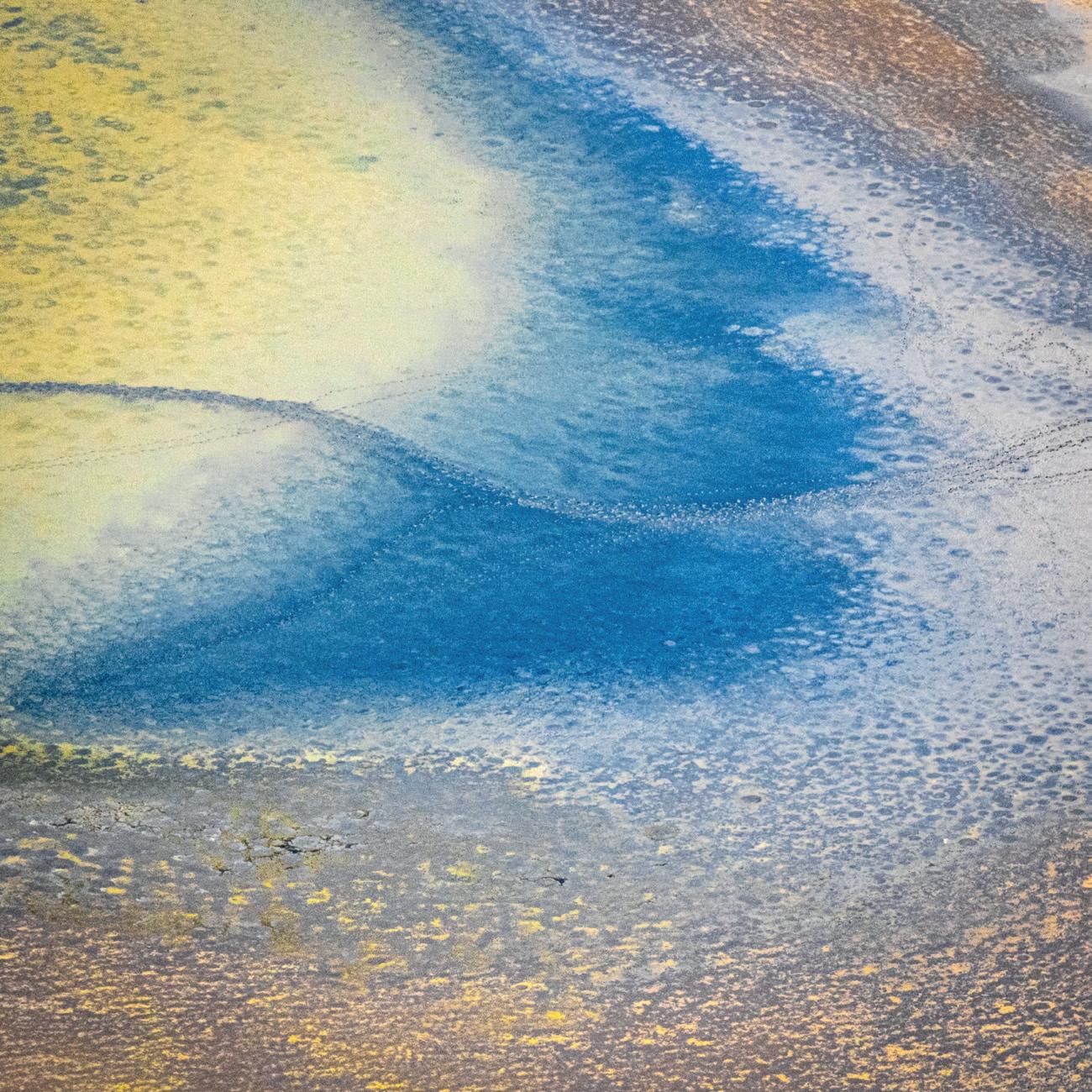
that I was a bit scared. There was a strap holding me in place but we were also encouraged to lean forward. This was a challenge because the camera is in the down-draught of the rotor blades. A high ISO is necessary so that a shutter speed of 1600th or 2000th is possible. Image stabilisation is also necessary. The experience was a revelation, once my heart rate calmed down! It was possible to take highly abstract images, some of which might have been the surface of a moon of Jupiter rather than the coast of France.
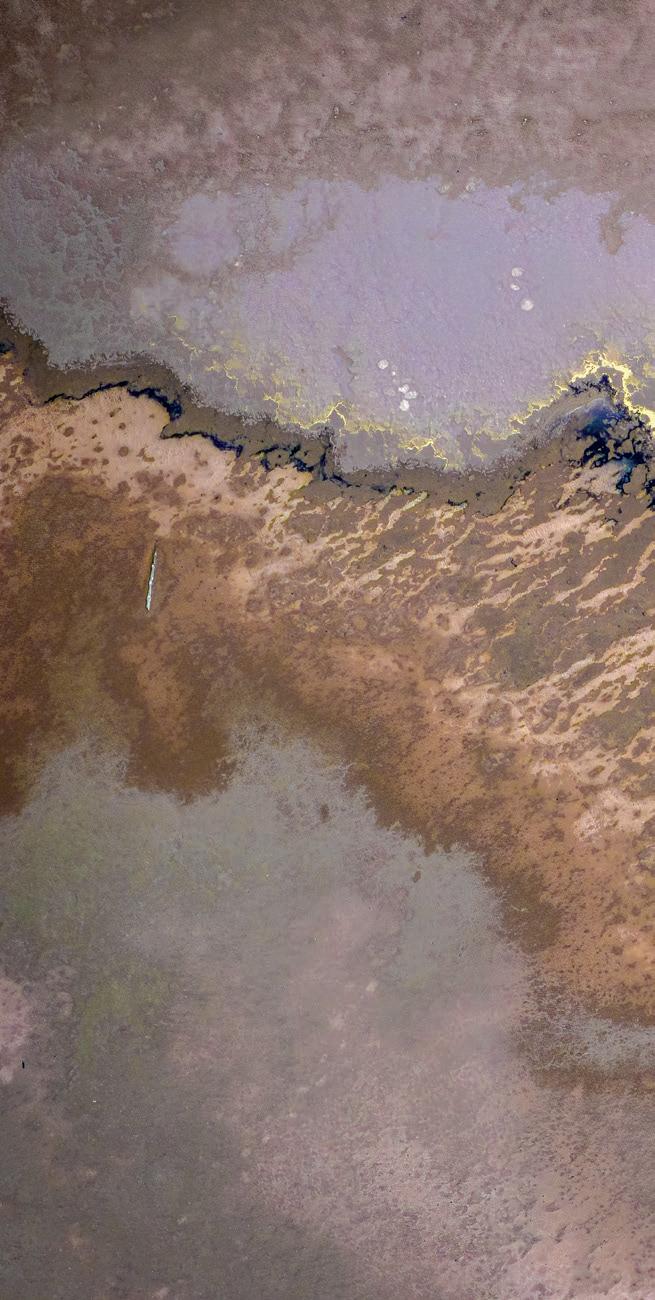
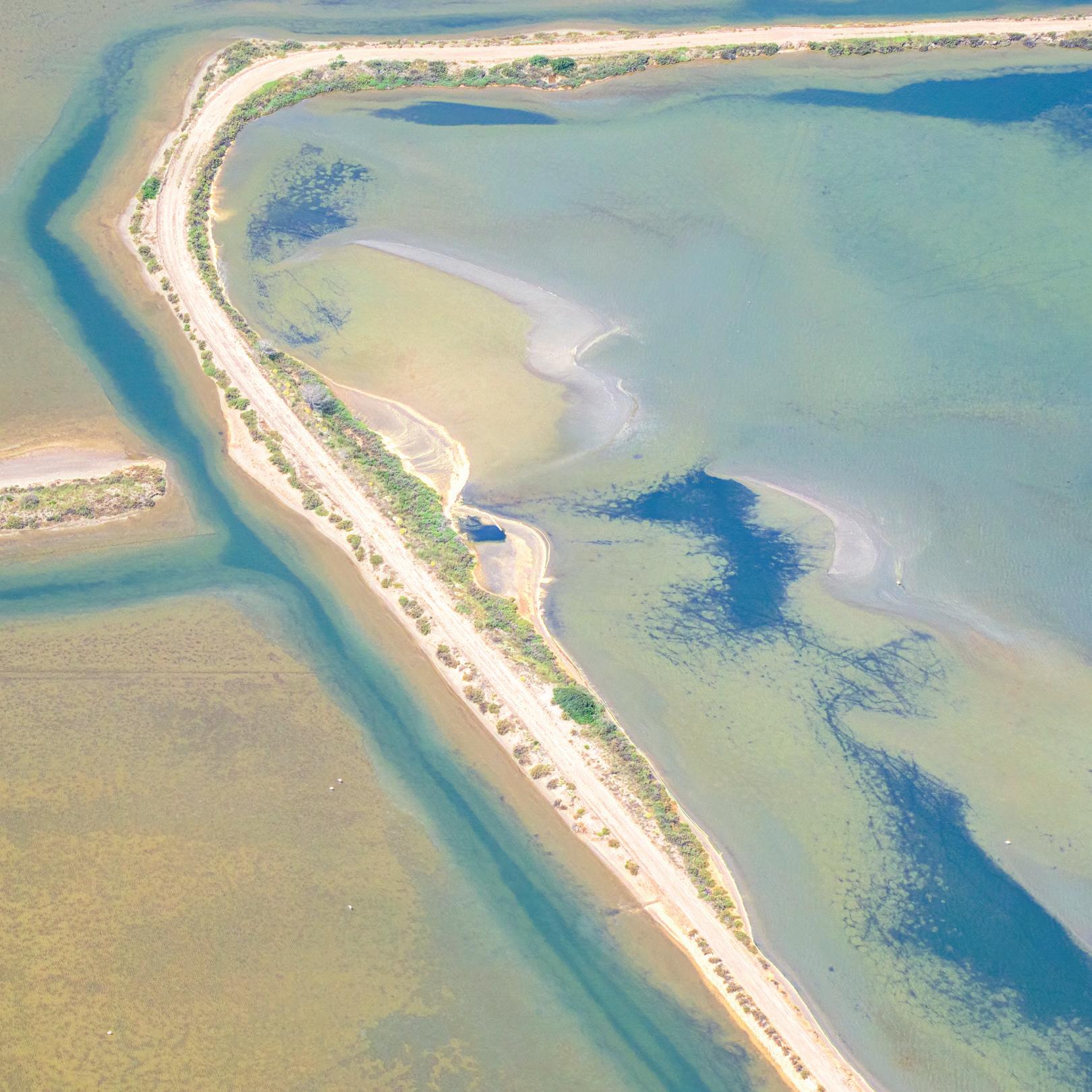
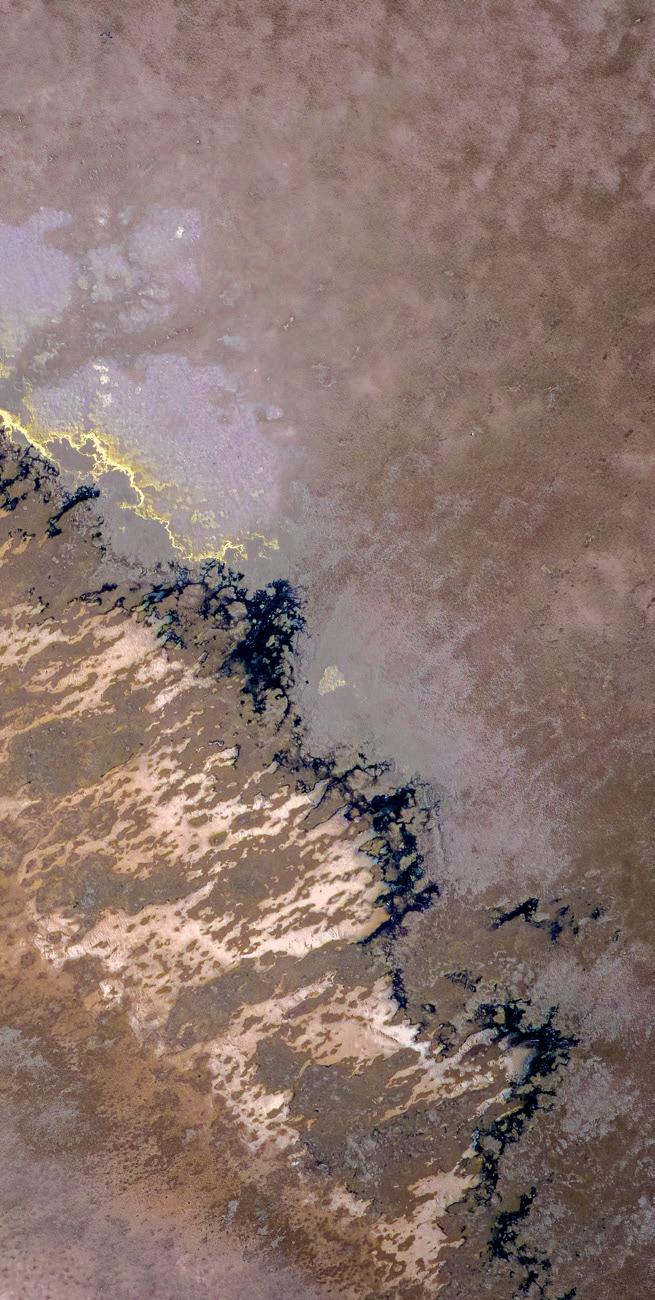
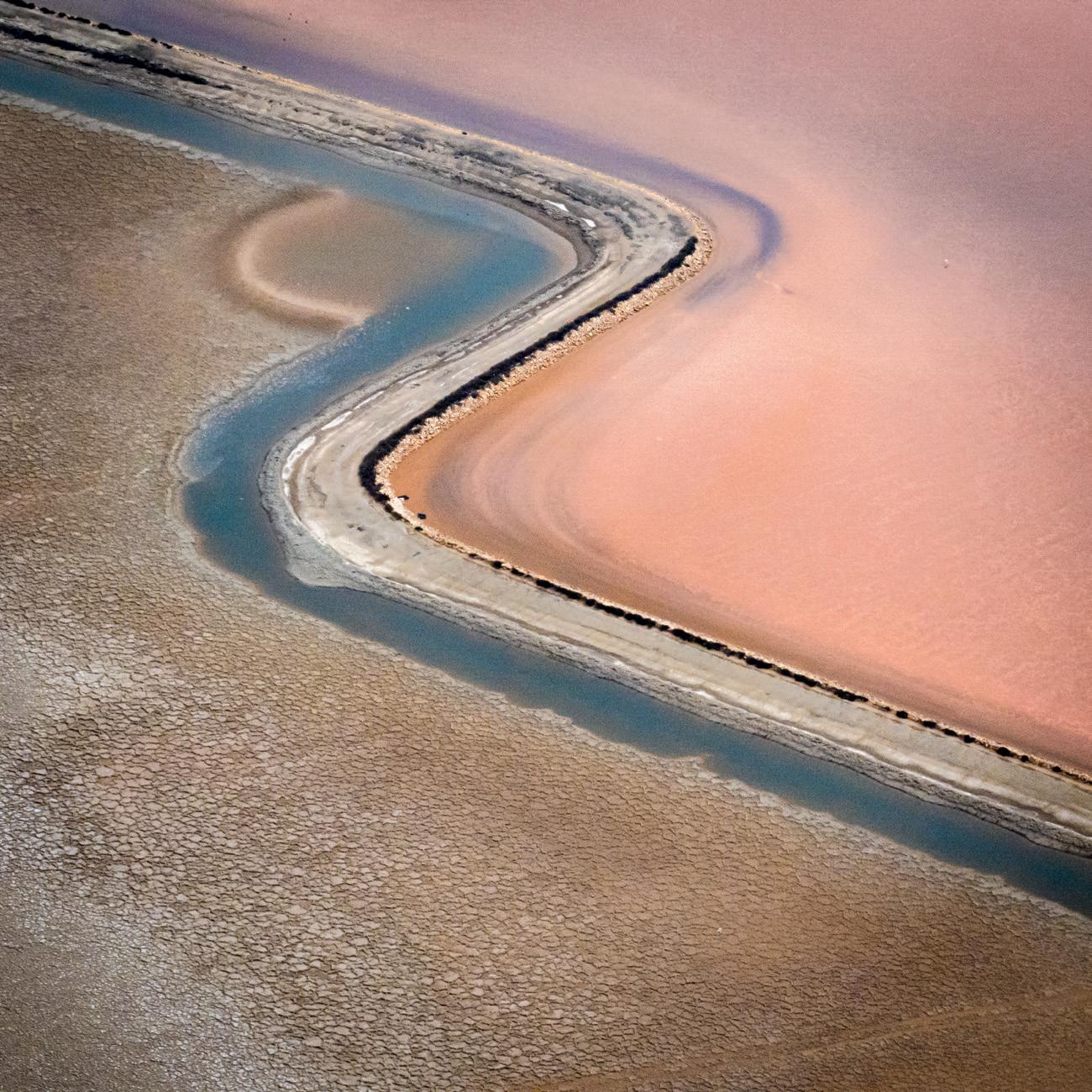
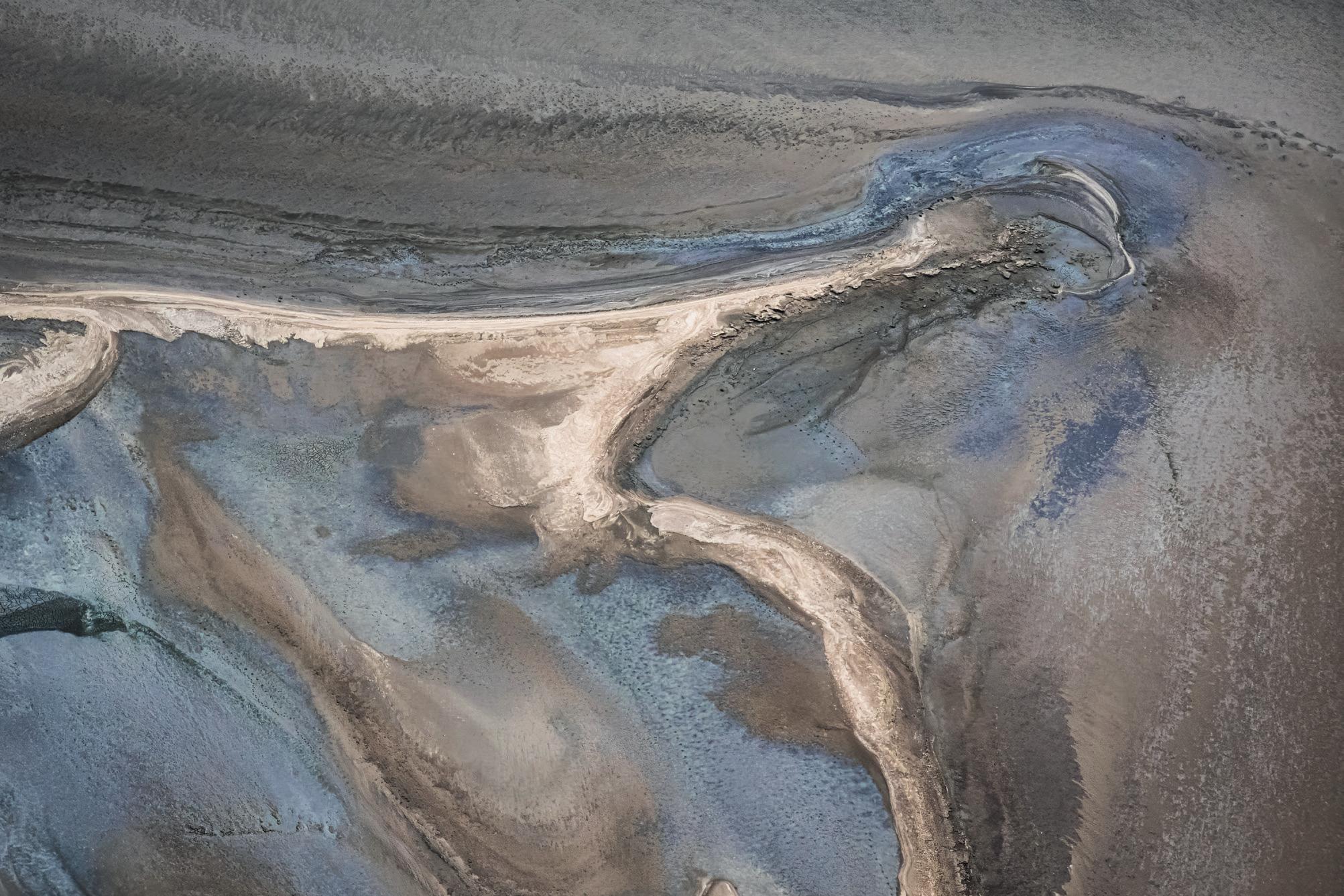
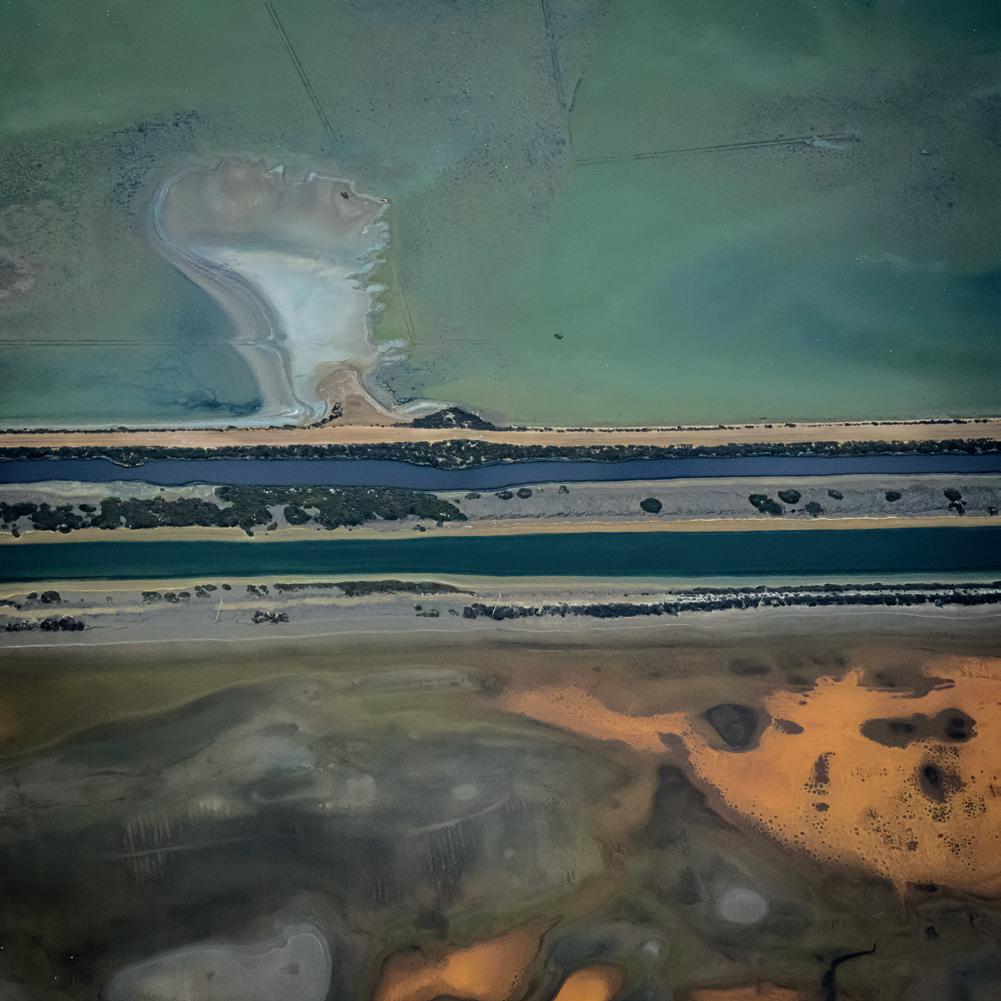
In May this year I took to the air again but this time above the Camargue, near Montpellier, in the South of France. Once again it was an open-sided helicopter. To my mind the photographs I took were even more abstract and otherworldly than Brittany. The colours are unbelievable, owing to salt-loving algae that give flamingos their colour. Parts of the Camargue are used for the sea salt industry and the salt pans provide some man-made structures in amongst the more natural shapes, textures and colours.
I had to go again so arranged my own trip at the beginning of October 2023. Each trip delivered over 1000 images and yes, some are rubbish. There is not much
time to frame the composition but I found that one learns to see where a picture may be about to appear and it helps to have a pilot who has an understanding of aerial photography. With the Camargue, I was taking photos at about 1000’, sometimes up to 2000’, with some wispy clouds below us. It is a location that is not easy to access on the ground owing to the salt industry so a helicopter, rather than a drone, is probably the only way to photograph it.
I know these images won’t be to everyone’s taste because it is difficult to work out what it is one is looking at, or indeed, the scale involved. One person said to me that some of the photos look like macro photography as opposed
to aerial. I like that ambiguity and abstraction. I suppose I am trying to do abstract ‘modern art’ painting but with a camera. I find the images satisfying as a result and they seem to work well as large prints; at least, that’s what some friends and acquaintances have told me.
I think I have the making of perhaps a new project/book/ distinction and I am anxious to build my body of work but that comes at a cost. I don’t have a helicopter and I have just retired. I do wonder if a drone is something I now need to research. Regardless, I know that my journey into the abstract and otherworldly is only just beginning.
To see all images in the original article and read Landscape Magazine Issue 13 in full, scan the QR Code below.

RHS Botanical Art and Photography Show, Botanical Photography - Silver Medal. The competition was for a compilation of six images in a series or on a common theme. It was judged for RHS medals at the RHS Botanical Art & Photography Show at the Saatchi Gallery, London, from 14 June - 7 July 2024.
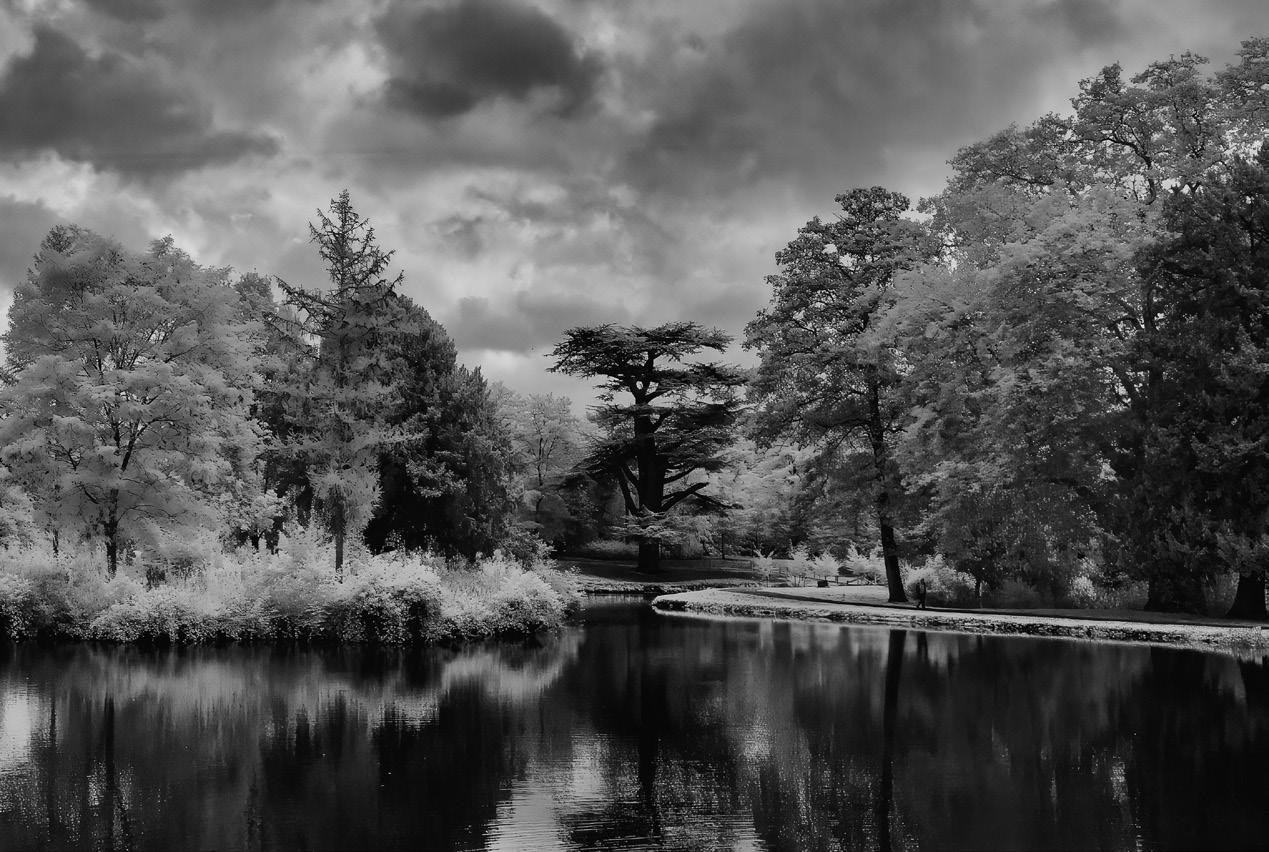
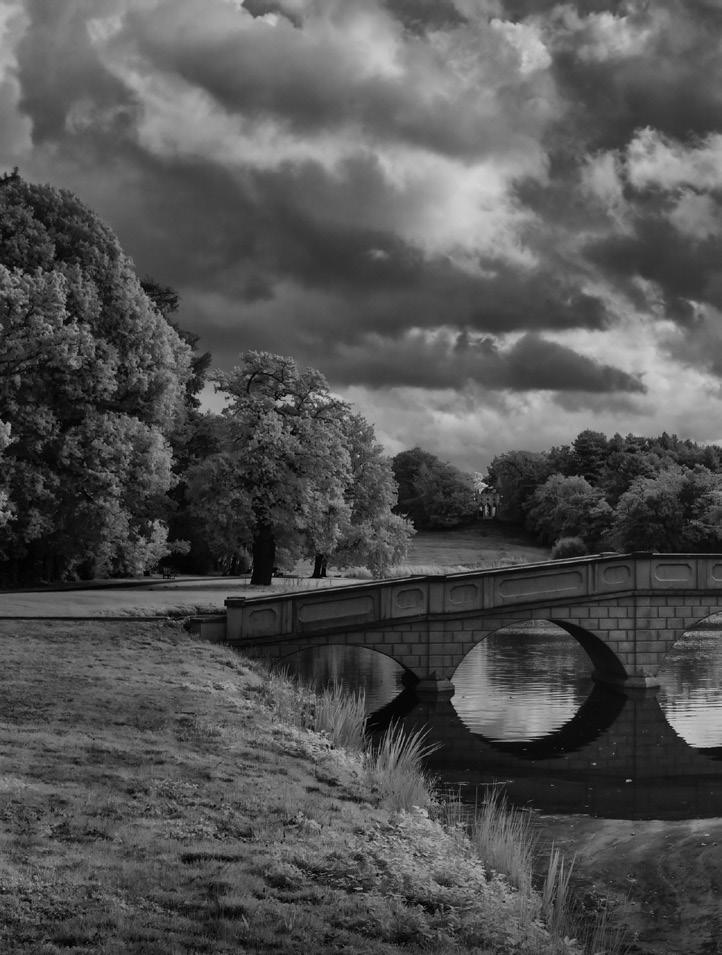
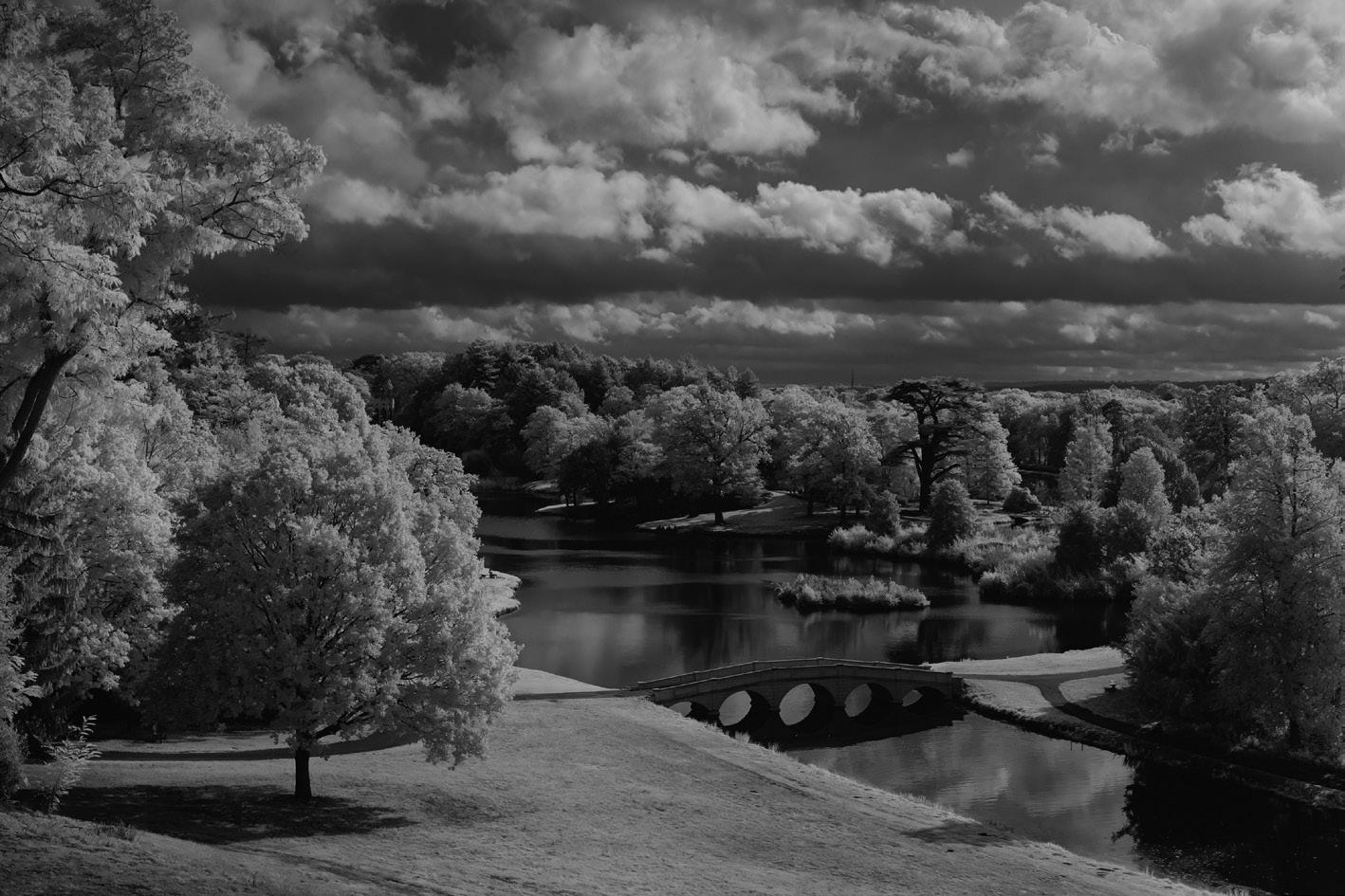
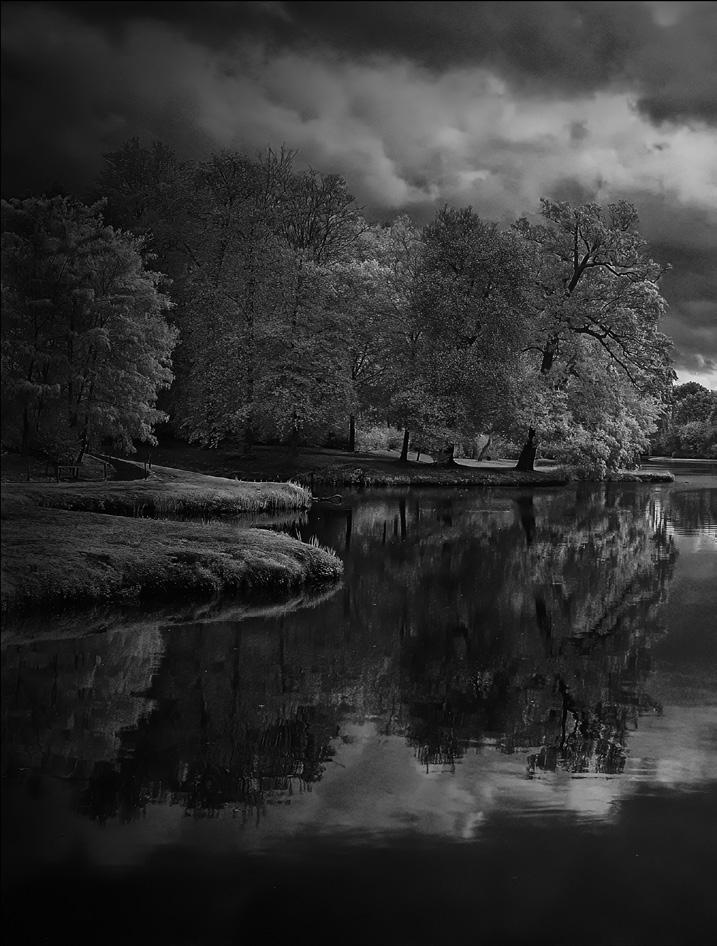
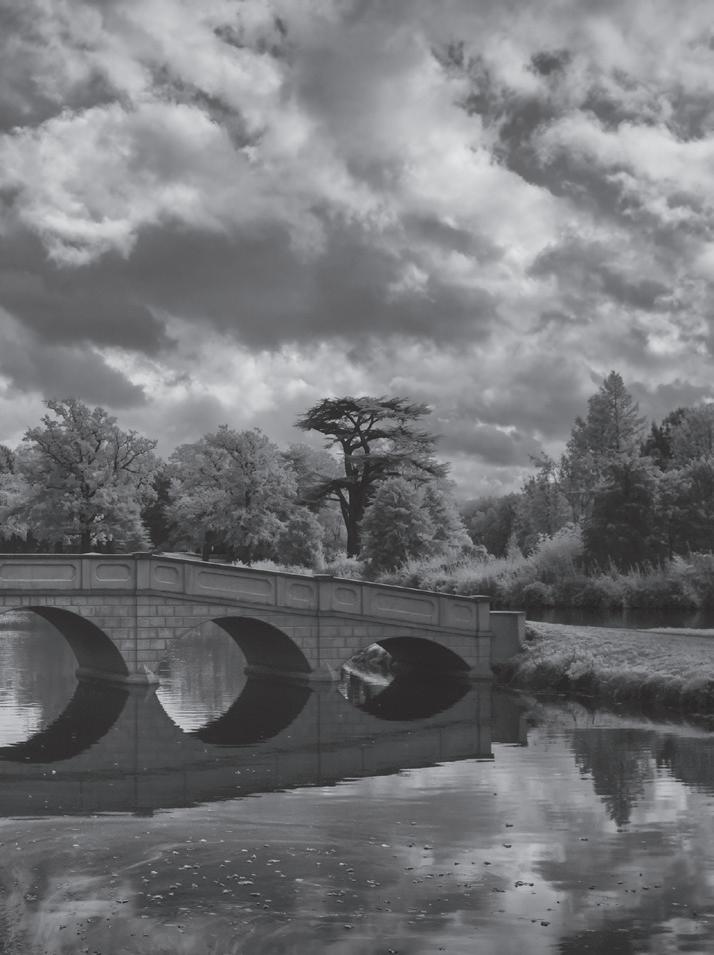
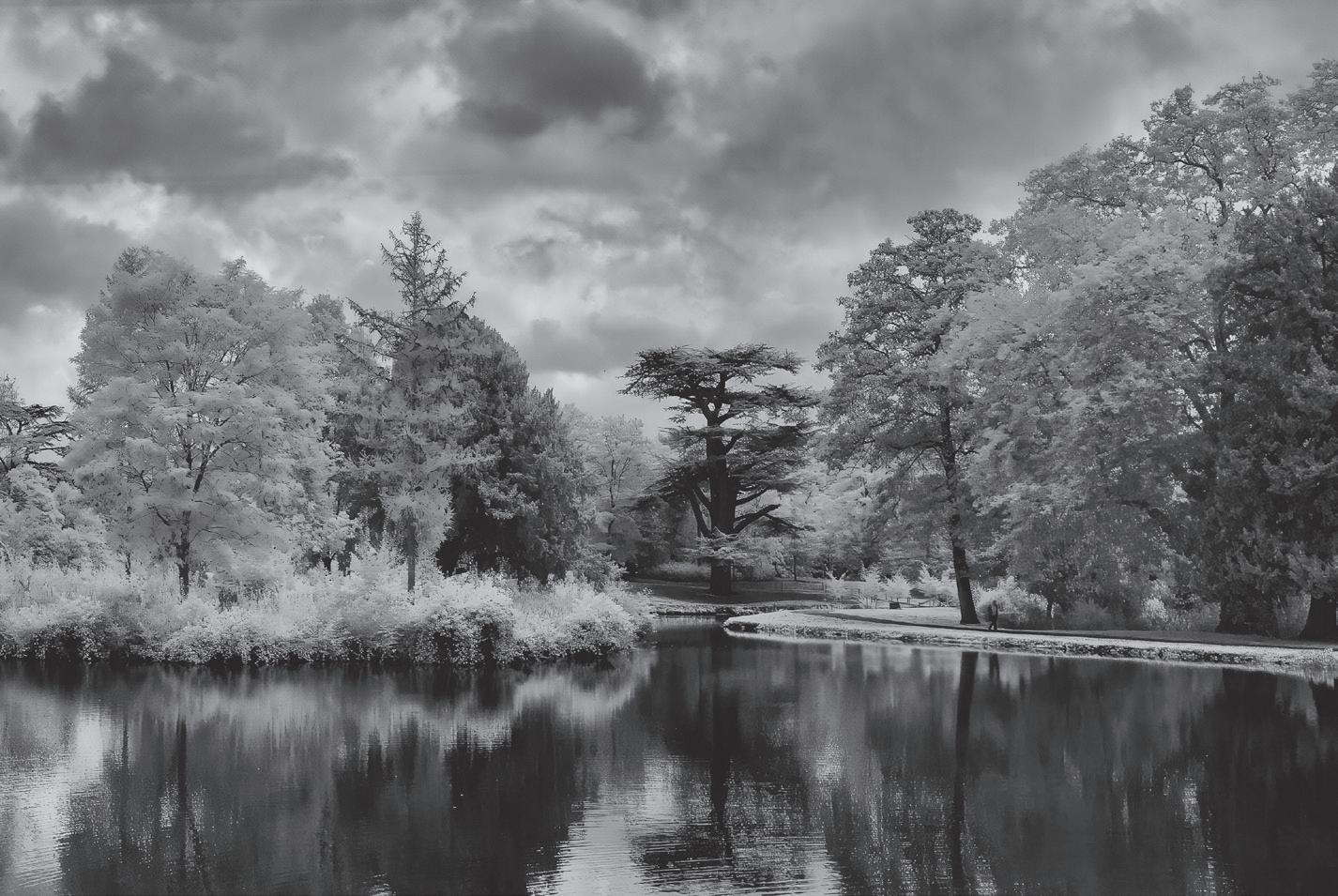
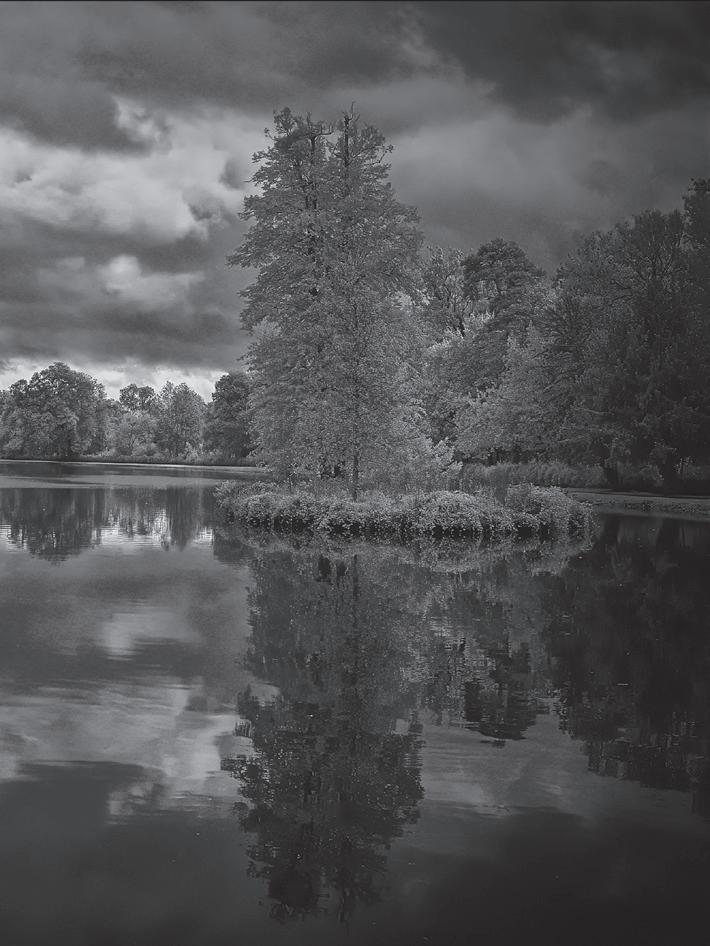
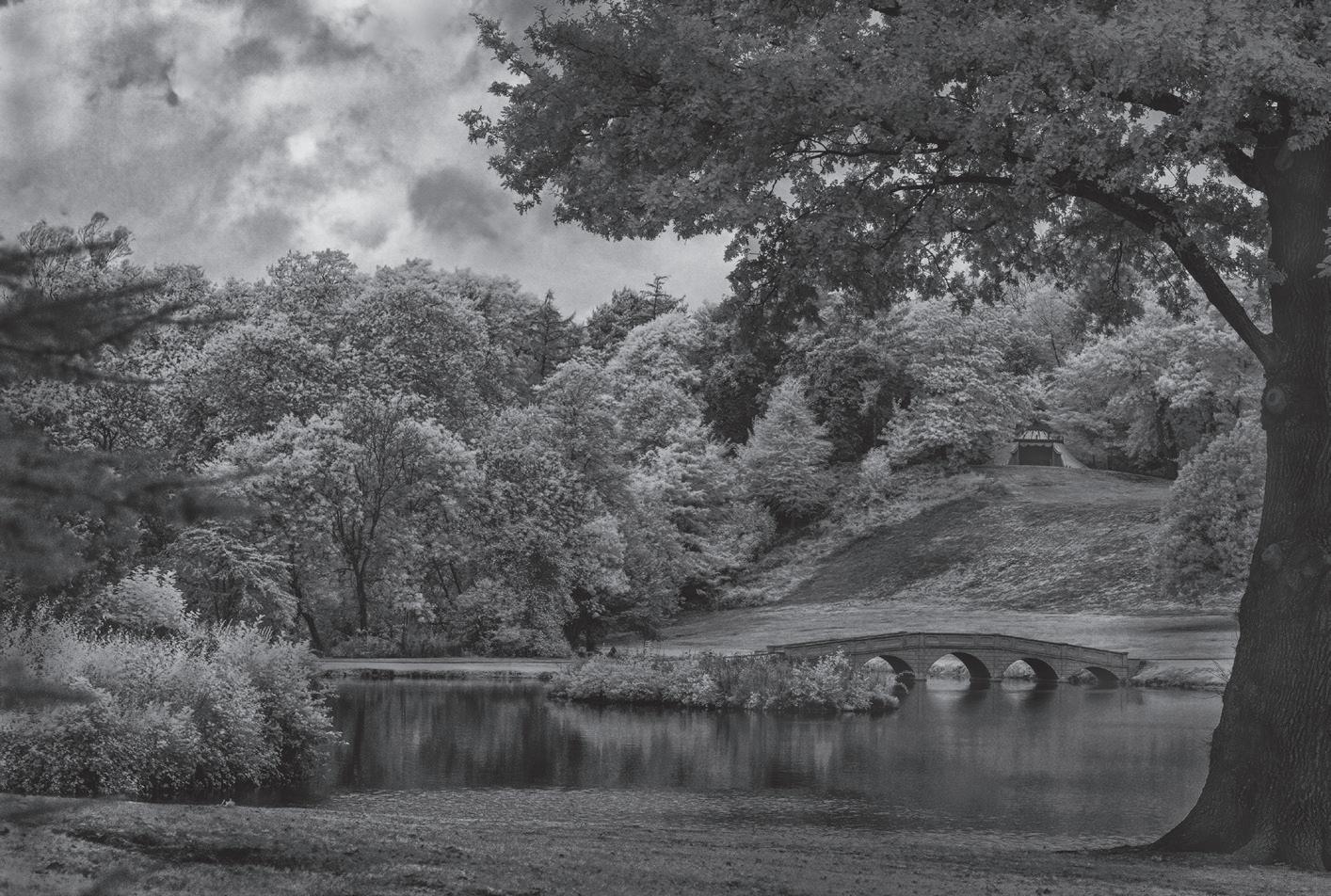
My panel of six infrared images was taken at Painshill Park, Surrey, around midday on Tuesday September 26th 2023. The trees are beginning to turn to autumn colours and some leaves are beginning to drop, displaying the structure of the tree branches. The images were taken on a Sony A6000 full-spectrum infrared converted camera using a 720 nm filter. I converted the images to black and white using Topaz Denoise and Nik6 Silver Efex.
Painshill Park is one of Europe’s most important 18th-century landscape parks. It was created between 1738 and 1773 by Charles Hamilton, who had enjoyed two Grand Tours and was influenced by Italy’s art, architecture and landscape. With his distinctive style, Hamilton was a forerunner of Capability Brown and the late 18th-century Picturesque Movement.
I wanted to imitate the style of the paintings that had inspired Hamilton (he undoubtedly saw Nicolas Poussin’s landscapes with the classic framing of trees and reflections). I have explored the form and structure of the lake and how the trees and reflections create a picture, with the clouds adding texture. For the panel, I chose three themes that can be seen from many vantage points: the Serpentine Lake, the Five Arch Bridge and the majestic
cedars. I hope the images reflect a classic form Hamilton might enjoy 300 years on.
During the exhibition, I was asked why I had used infrared and not just converted colour images to black and white. In the infrared part of the spectrum, the blue colour of the water and sky is not captured, rendering those elements very dark as no infrared energy is returned to the sensor. Therefore, infrared-only images show water as almost black and skies as very dark if no clouds are present. If clouds are present, as in most images below, the infrared light reflected from the clouds enhances the structure of the clouds as the water vapour in the clouds reflects infrared images back into the camera. Lakes at Painshill have benefited from the infrared approach since the water offers little colour or light from its depths; the reflections are better defined because the water is a highly reflective dark surface and a very effective light reflector. Reflections are better in infrared because the water surface is more mirror-like, with fewer distracting elements. The amount of infrared energy reflected from foliage and tree trunks varies much more markedly than in colour images as the trees and foliage give a much more comprehensive range of textures and the amount of chlorophyll in the leaves governs the intensity of the infrared.
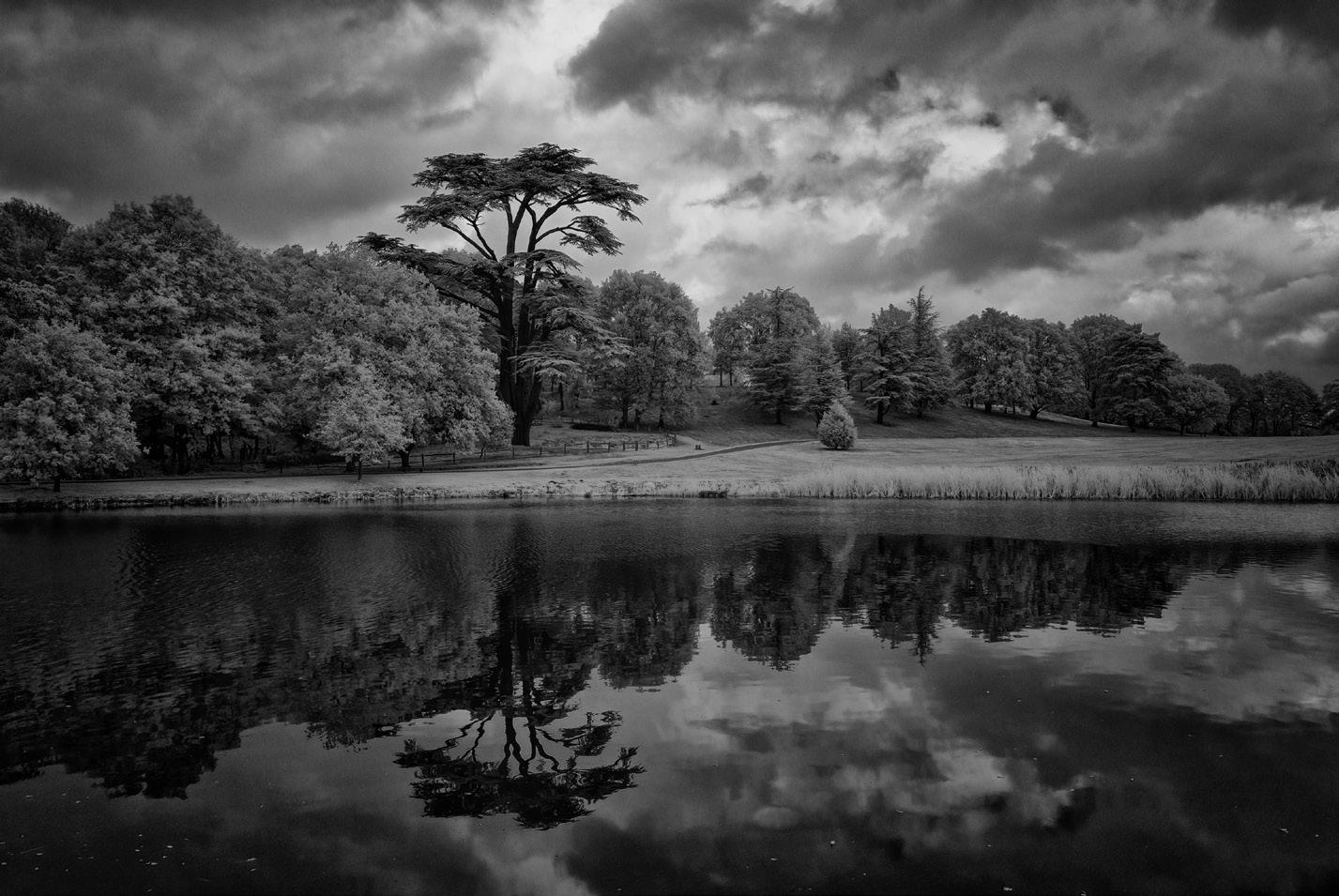
Cedars reflect little infrared and are dark.
The images were taken on a day with patchy clouds. When the sun broke through, the trees were bathed in sunlight and reflected more infrared, giving the images depth.
I produced a panel of six images, with the hanging plan as the seventh image. In my hanging plan, I tried to achieve a balance between the various aspects of Painshill Park. I settled on three images, which are predominantly reflections, plus three images containing the Five Arch Bridge. In the hanging plan, the three top images also contain cedars, which form a dominant part of the landscape garden. A common theme in all the images is the textures derived from the clouds. On the day in question, the clouds had gaps that allowed the sun to come through and illuminate the chlorophyll in the leaves at the back of some of the images. The clouds also added texture to the infrared.
As with all panels, some photographs don’t make the cut so I thought it would be interesting to show some that didn’t and why. Mainly, they were omitted because I felt that they did not fit as well into my hanging plan to create the ‘seventh image’ shown at the Saatchi Gallery.
In selecting these images, I have tried to build on the idea behind a landscaped garden: As visitors walk around the paths in the landscaped garden, they repeatedly glimpse the dramatic follies, reflective lakes and stunning views of a romantic landscape full of surprises.
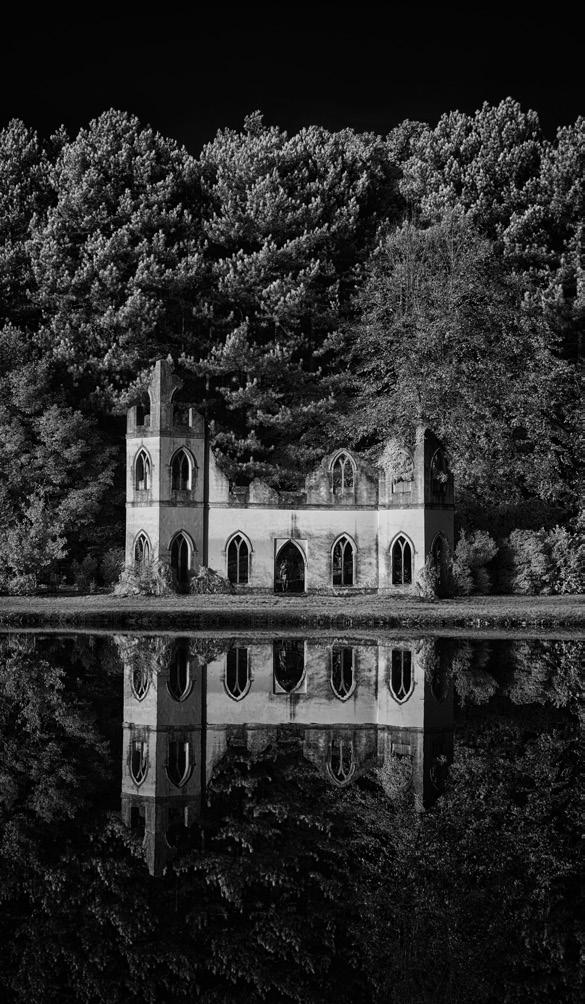
I have also included an image of The Ruined Abbey. It was taken on a different day and in different infrared lighting conditions, resulting in a much harsher infrared light. In my original starting panel of six images, I had four picturesque images which made it in to the panel and two which didn’t. These two were dropped during the selection and editing process because the light was much harsher than in the other four and so did not contribute to a
The Ruined Abbey (L) is a folly which sits wistfully by the water’s edge and is designed to cast stunning reflections onto the Serpentine Lake. This image was taken on a different day with no water vapour in the sky, resulting in a black sky. The direct sunlight on the Abbey and the trees behind the Abbey produces a much starker, less picturesque image.
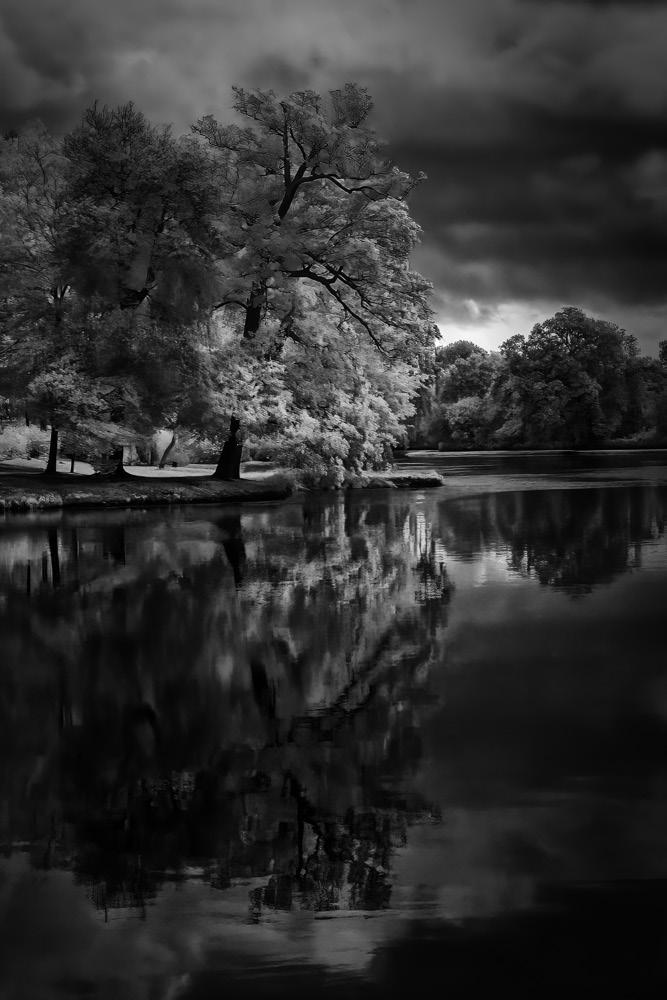
Tree overhanging Serpentine Lake (R) was taken in late autumn so the trees are only just beginning to lose their leaves and chlorophyll, which changes their infrared reflection characteristics. This has picked out the structure of the tree; its dark trunk and branches and their reflection in the near-mirror of the black water.
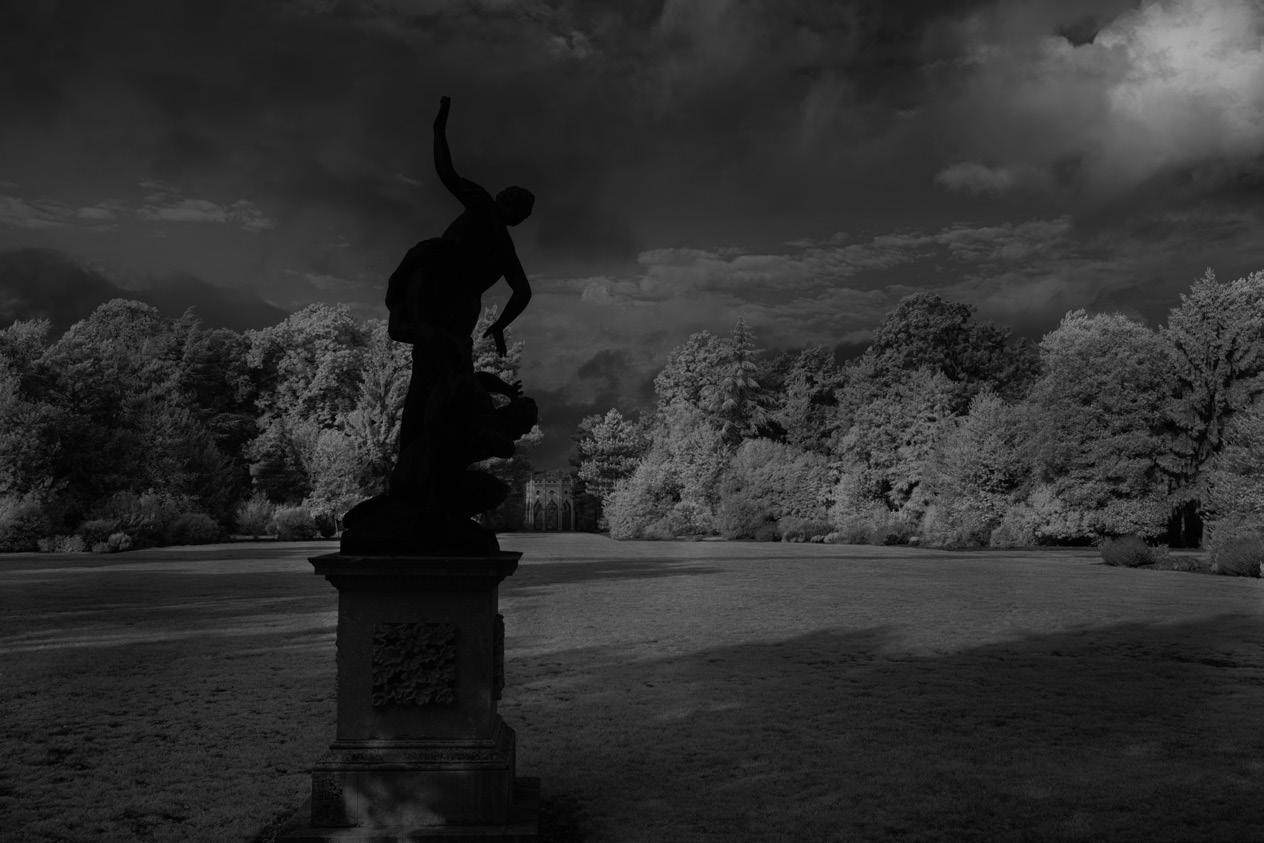
Cedar on the Island highlights the structure of a smaller cedar and its reflections, illustrating how infrared gives textures to the leaves that would otherwise be missing in colour.
To see all images in the original article and read Landscape Magazine Issue 14 in full, scan the QR Code below.

W. Scott Olsen is a native of Chicago and a university professor of English at Concordia College in Minnesota. He is both a published author of several works of non-fiction and has edited many anthologies. He is a regular book reviewer and, in 2023, was appointed Artist-in-Residence for Frames Magazine. I had the good fortune to meet Scott through a weekend in New York organised by Frames Magazine and was immediately drawn to his series looking at small-town America at night.
Candia Peterson ARPS
As ever, I started at the beginning and asked Scott for his first memories of photography and his photographic journey.
“While I remember taking pictures at a very young ageback in the days of the Instamatic and flash cubes - I never thought of myself as a photographer. I was taking pictures, yes, but I had no awareness at all of photography as more than a snapshot of family. So, my earliest memories would be of family events when I was younger than ten years old. But my first memories, as a photographer? That might be high school, where we had some introduction to darkroom practices. We had some video equipment in my school and I was deeply interested in visual storytelling but my interest was in motion. The appeal of the still photograph had yet to enter my imagination.
“I have always been a storyteller; however, that interest found expression in writing first. I have a dozen books of literary nonfiction, most of it focused on travel and adventure experiences. When I was working on those projects, however, I always had a camera in my hand. I used
photography as a way of taking notes in the field. It was much better for me to take an image of something and then work on the words to describe it when I was back at the keyboard looking at the image. My images wound up as a book cover and the cover of many issues of a magazine I edited but still I was focused on writing. Photography was this thing on the side. Nonetheless, over time, I began to see that there were things I could say in photography I could not say in writing. I learned there were things photography could illuminate more deeply than writing too. I began to pay more attention to my own image-making and to the world of photography more broadly defined. I have no training in photography beyond my own curiosity and trial/error but I have discovered this artistic outlet is now the essential one for me.
“It sounds a bit cliché but I’m really interested in all forms of photography. Those forms that don’t call to me very strongly as a photographer still call to me as a viewer. But for myself, street photography, documentary work and photojournalism are where I spend my energies. This goes
back to my interests in storytelling and narrative. However, having said that, I seem to be spending more time trying to express my love for the North American prairie photographically. The prairie does not have the easy drama of mountains or coastlines or even forests. It’s a landscape challenge! I’m constantly taking wide-open landscape images, trying to find a voice and approach that reaches the level of beauty and complication I feel.”
Moving on to Scott’s smalltown project, he describes his motivations and inspiration as well as the travel involved and how long the whole project is likely to take.
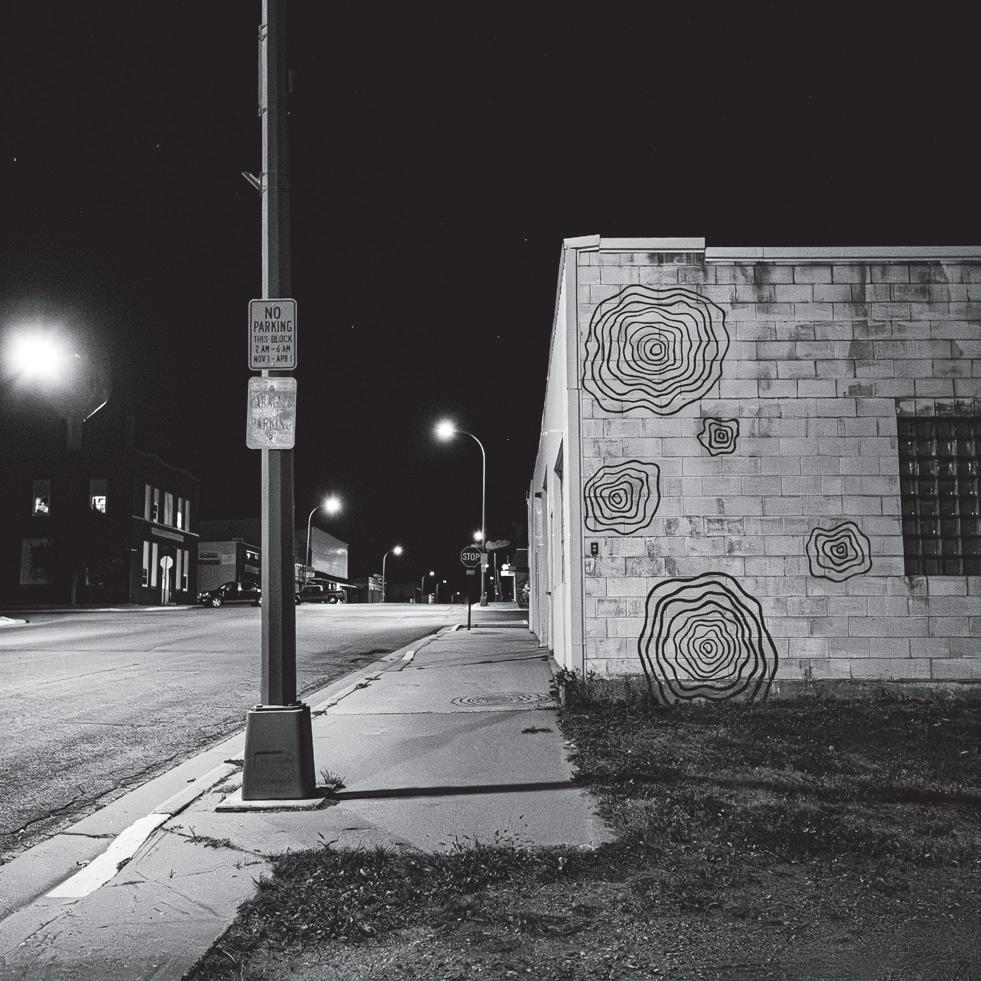
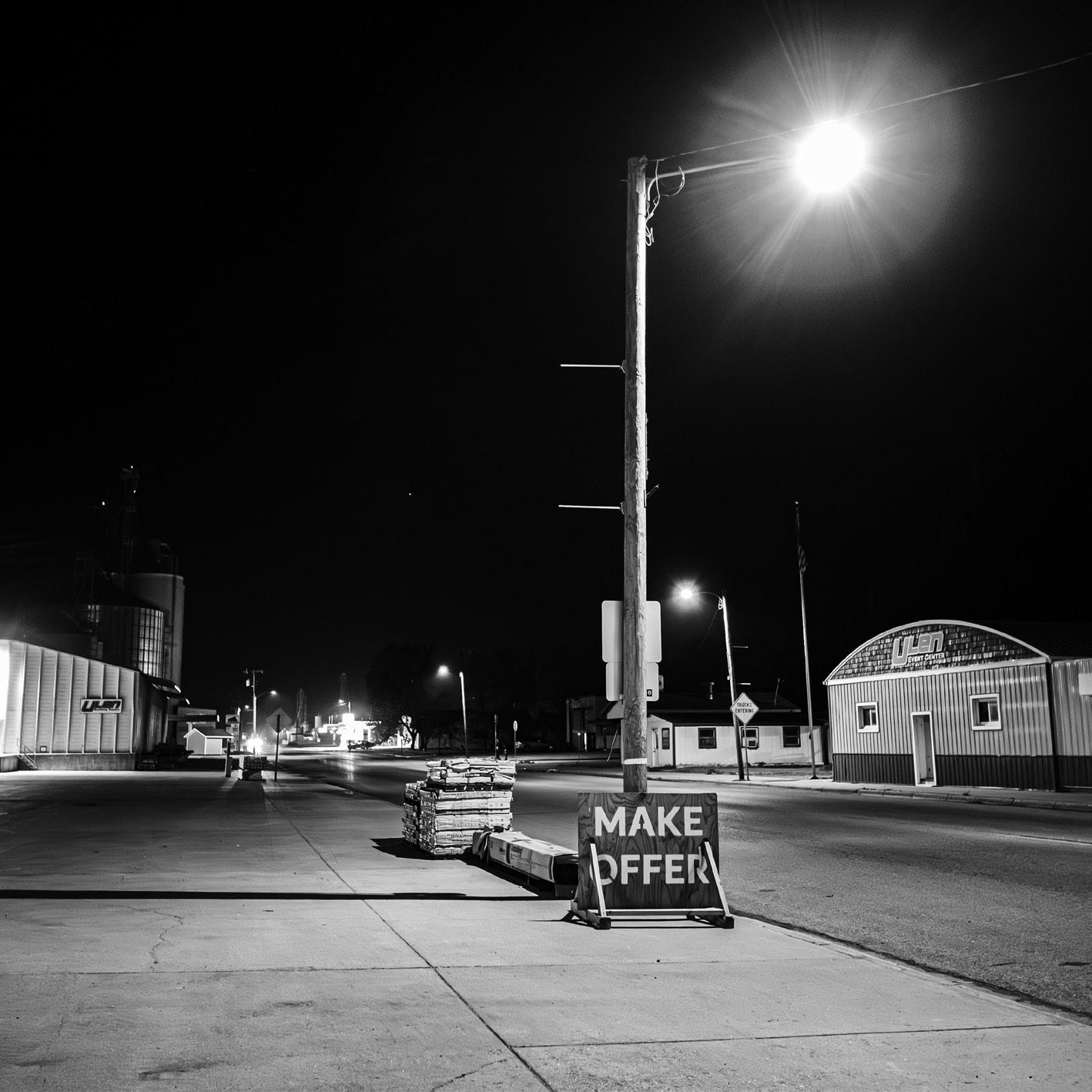
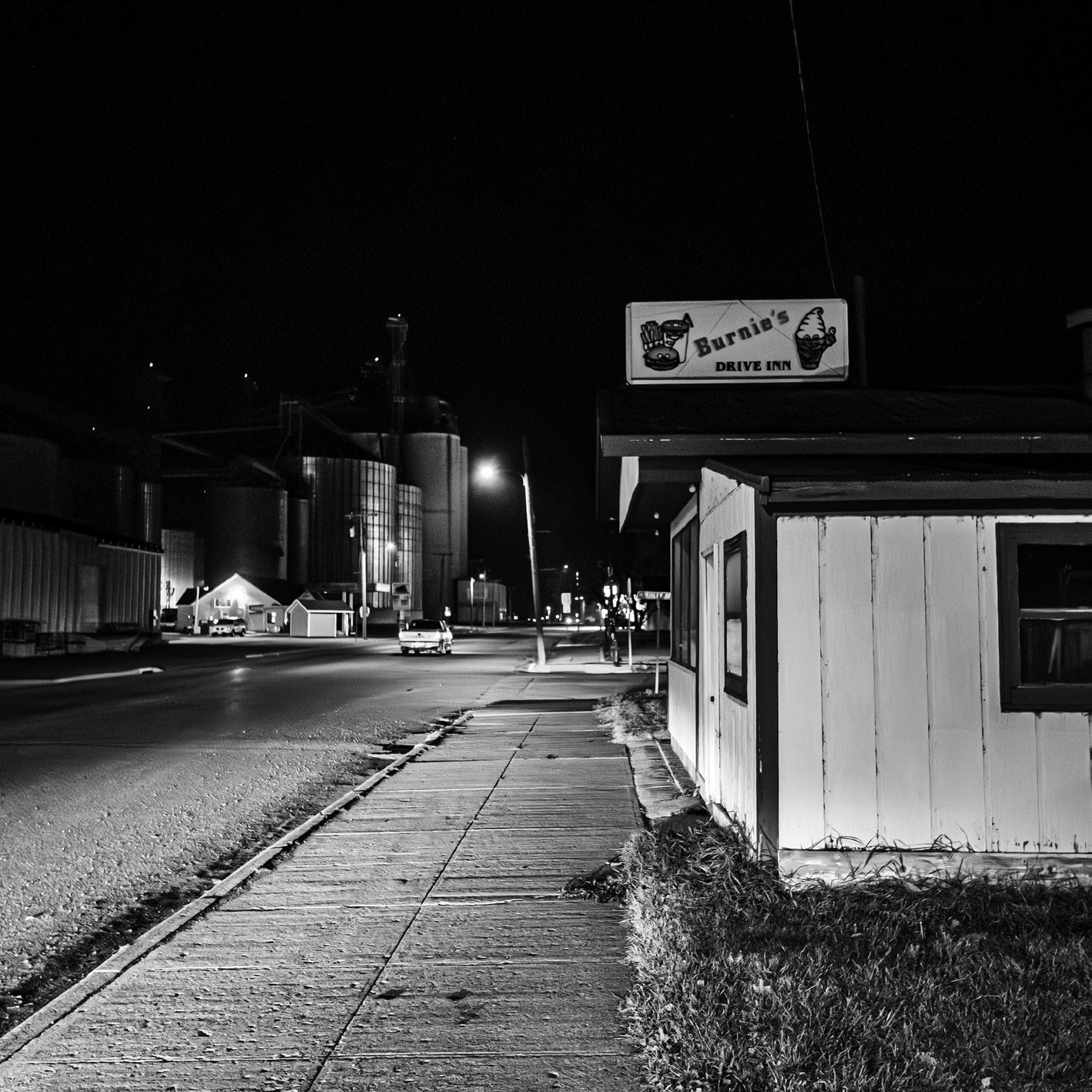
“I am by habit, as well as accident, a night-owl. And I am a great fan of the film-noir aesthetic. Because I live in a fairly rural part of the world, I am in very small towns quite a lot. And, at night, they are visually implicative. There are hints and rumors and mysteries everywhere. I have taken a lot of night photos (most recently a series called “When It Rains at Night”) and it simply occurred to me that small towns as a centering theme would be exciting to explore.
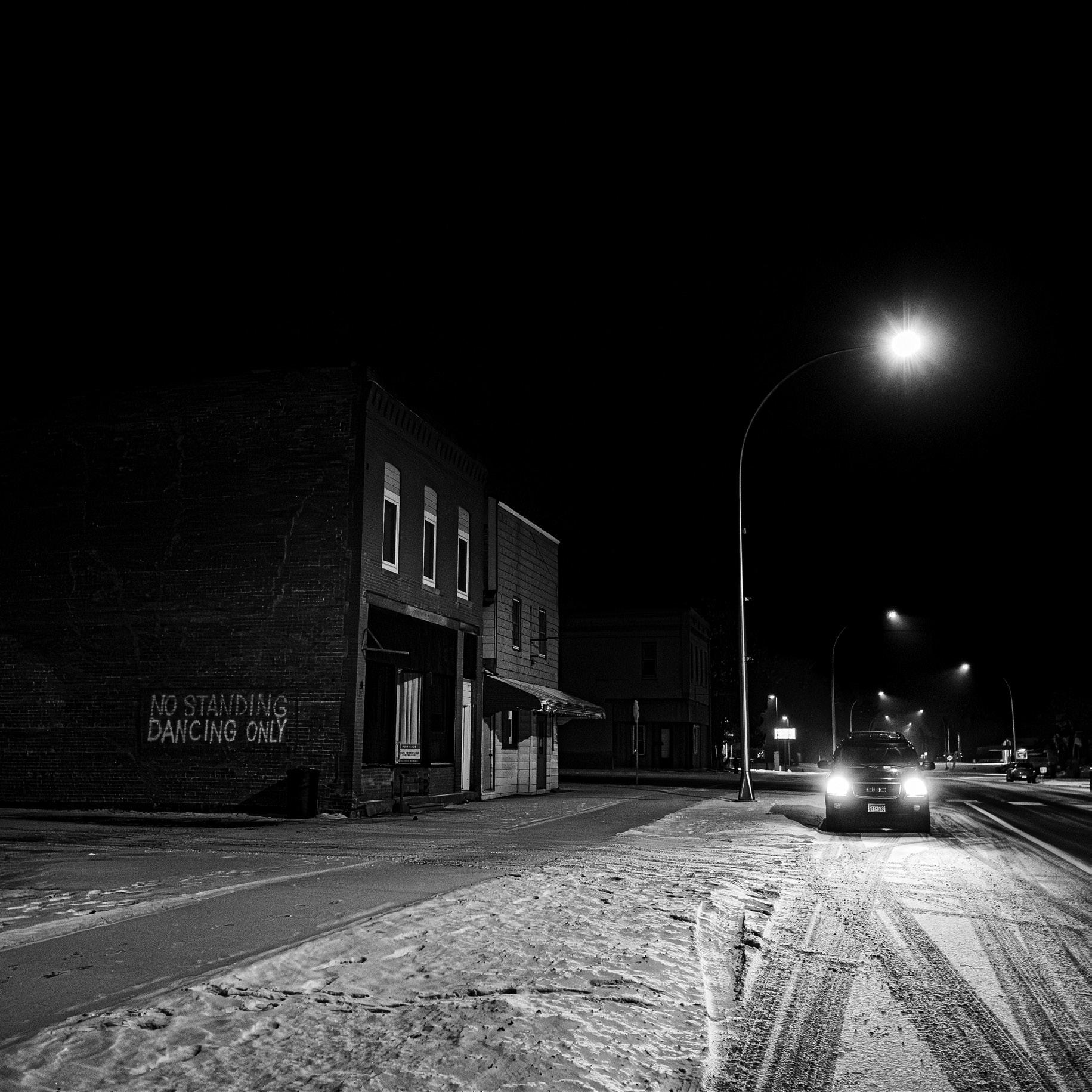
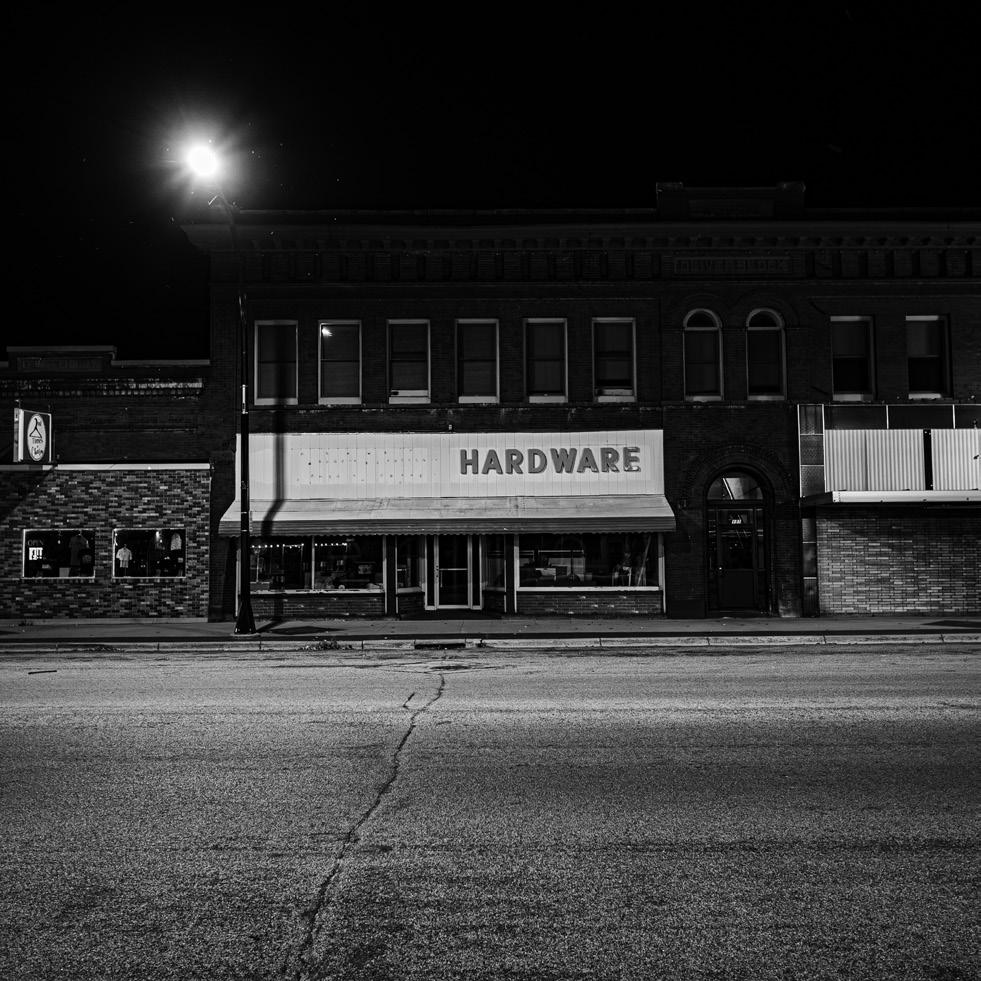
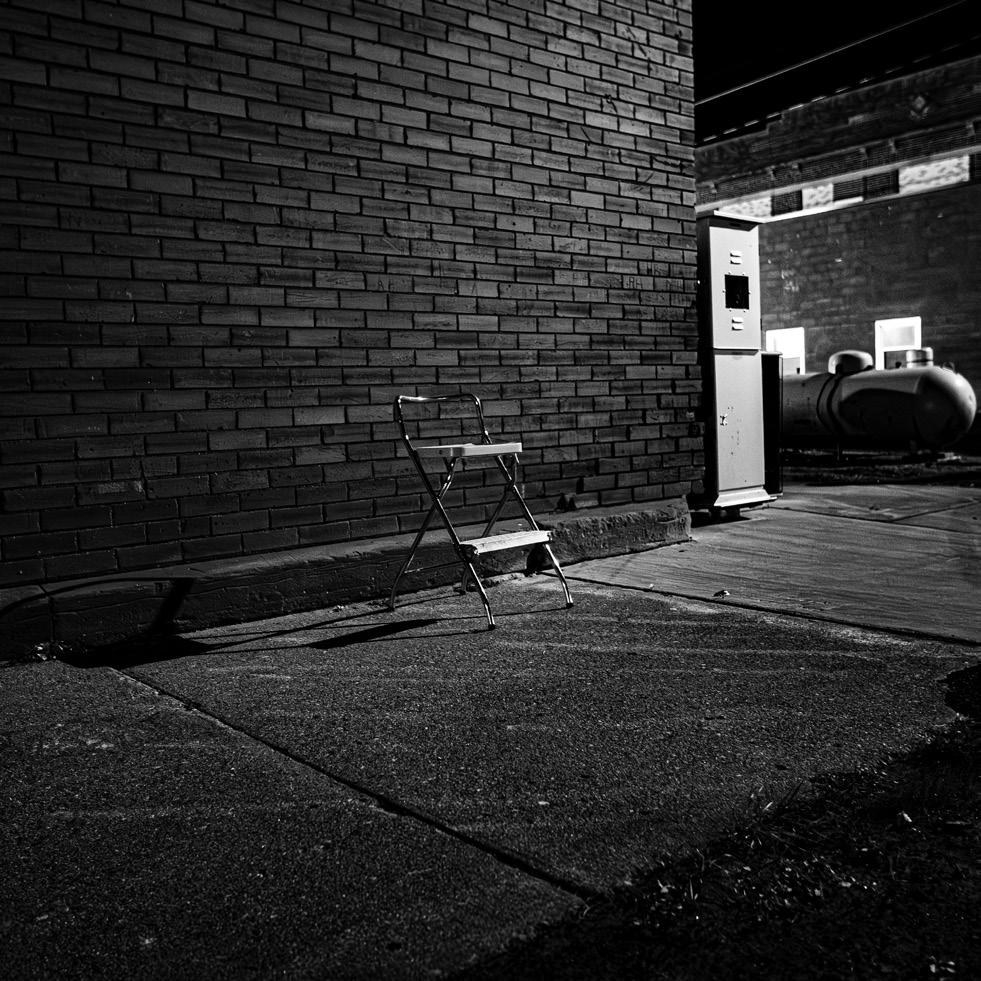
My process is simple. I wait until very late, drive to a small town (usually a town I have some experience in before), get out and walk around. Just like street photography, where I am waiting for the unplanned moment to become an insight, I go without much of a plan beyond exploring. I search for those moments when my emotions are touched by what I see. Nearly all of my work is black and white, for the usual reasons. Color, to me, places an image more firmly in time. B&W gets more to the idea of a situation than color. But color can also be the subject or, at least, the organizing idea. So, I’m not against color. Still, B&W reveals something more evocative, I think. The same goes for night work. A shadow is always a hiding. There is so much hinted at. I love the implications. It does
not matter what is implied. The implication itself is the subject.
“I think the town farthest from my own home, so far, is 100 miles away. I want to include this town because of a particular bit of alley graffiti I have driven by many times before so I’ll be making a special trip out there just for the night shot. There are several very small towns between there and here I know from travel but have not explored with a camera at night. I have been working on this project for about six months now and expect a major part will be done within a year. Additions after that will be serendipitous.”
And finally, what next for Scott Olsen?
“I’ve just finished a small Zine about a street photography visit
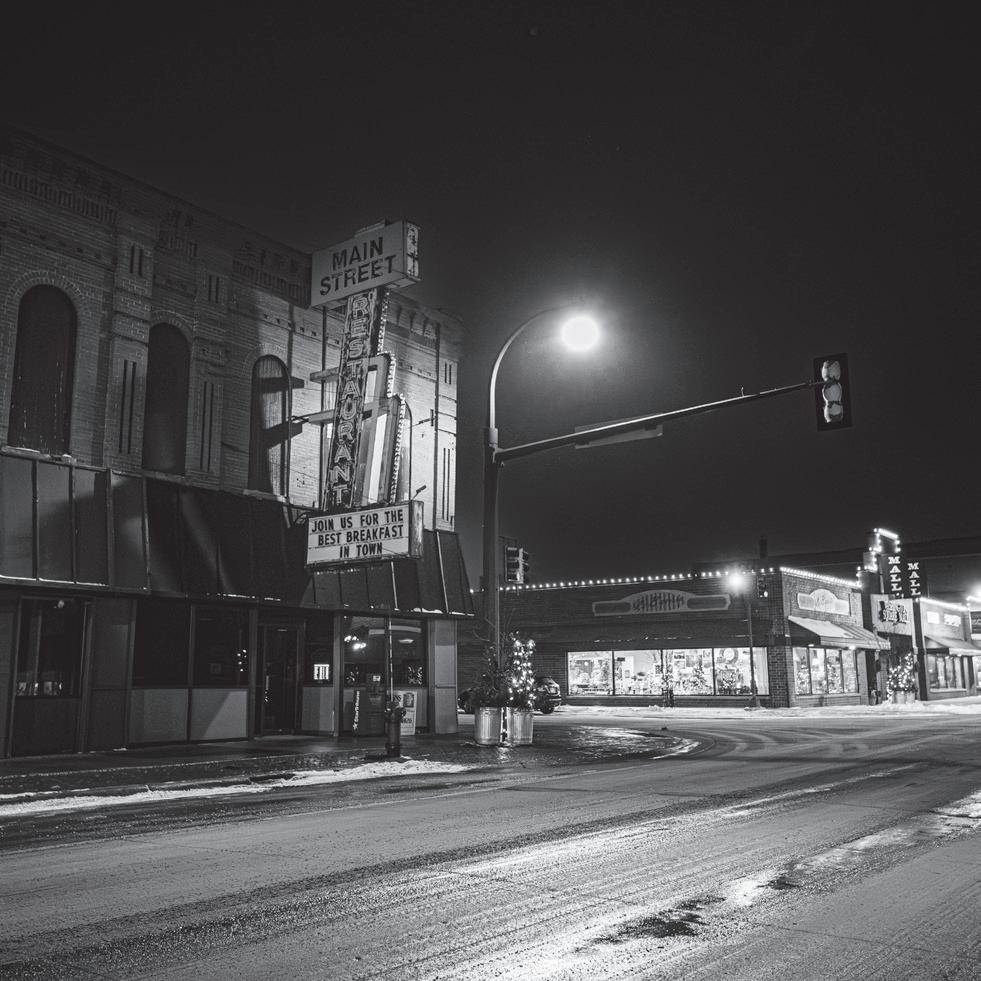
to New York and I’m soon to be working on a collection of street images I took in Paris a short while ago. And the new book, Fargo Street, just came out. There are landscape ideas I’d like to chase. But right now, the small towns at night project is what calls to me and I’m excited to see where it goes!”
Scott’s work can be found at https://blog.cord.edu/ olsenphotography. His book Fargo Street is available through Frames Magazine at https:// readframes.com/fargo-streetby-w-scott-olsen-the-firstmonographic-photography-bookfrom-frames/
To see all images in the original article and read Landscape Magazine Issue 15 in full, scan the QR Code below.

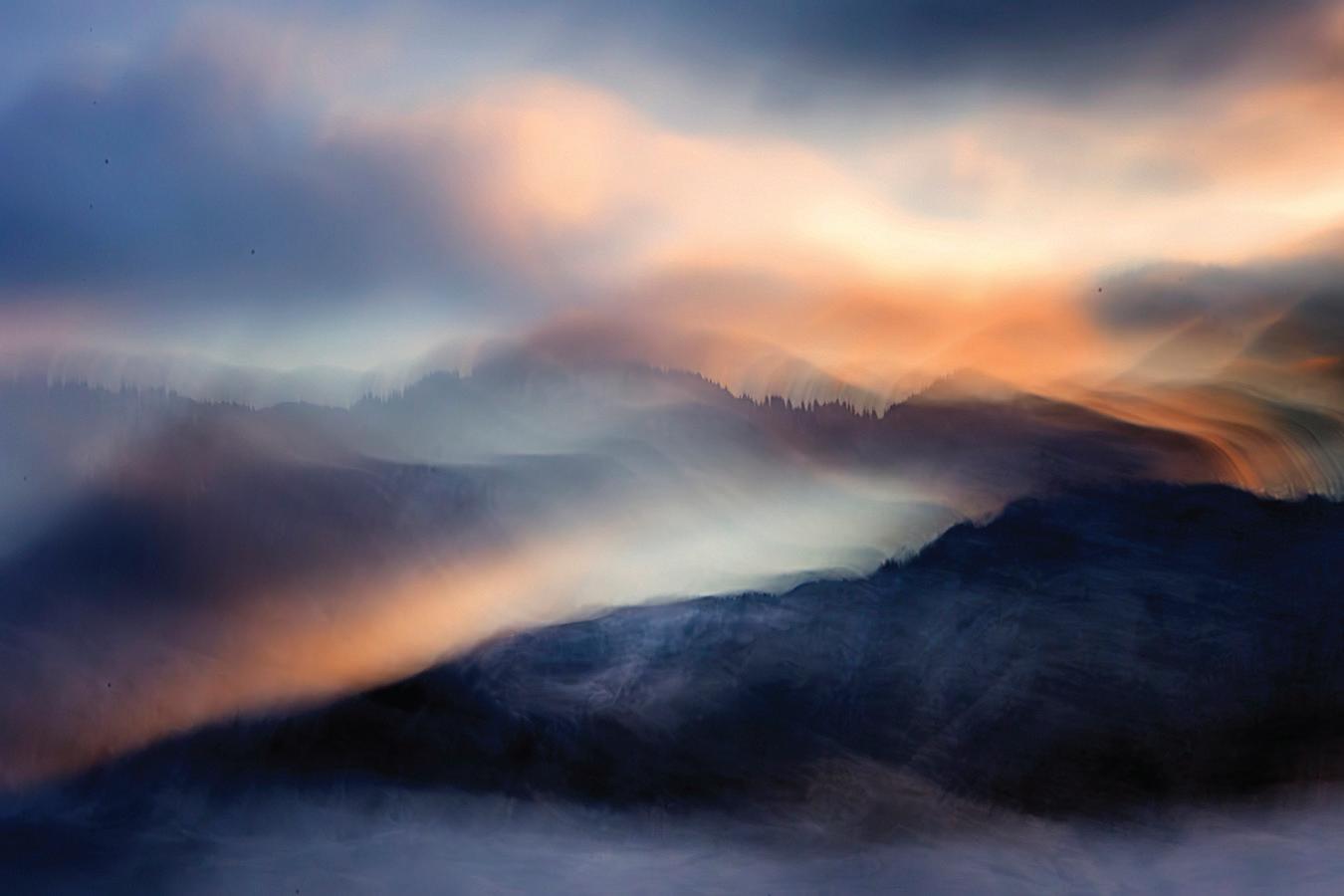
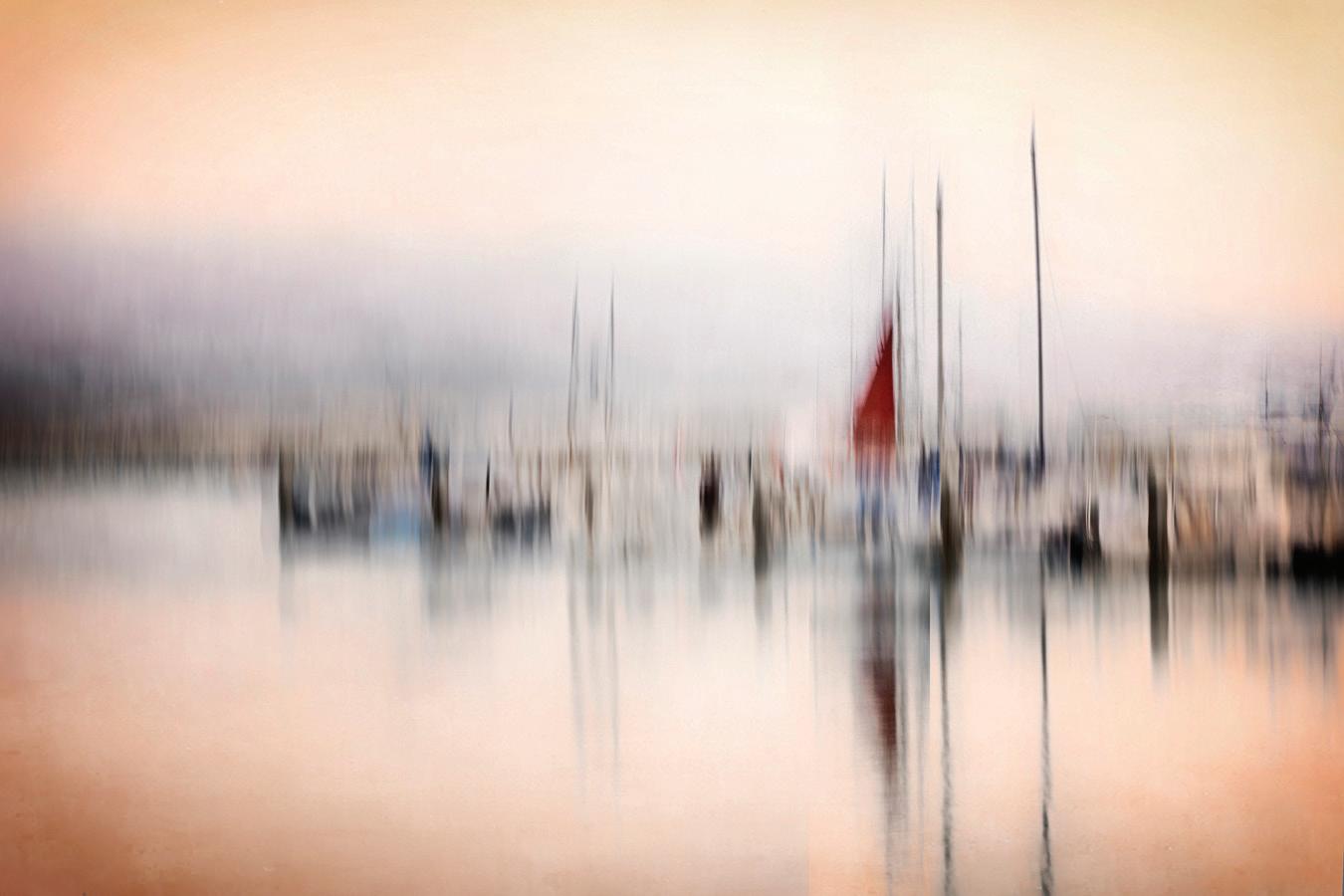
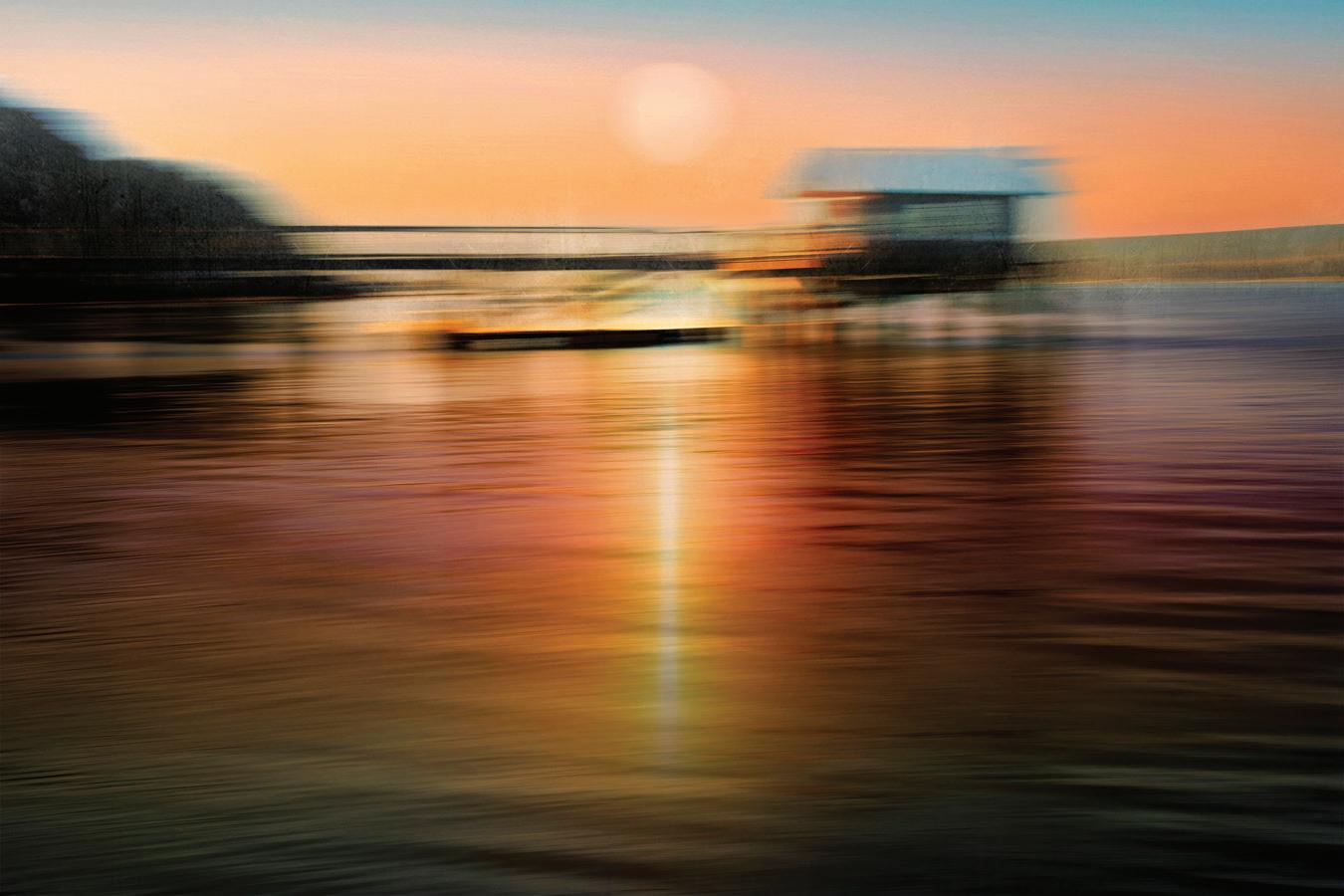
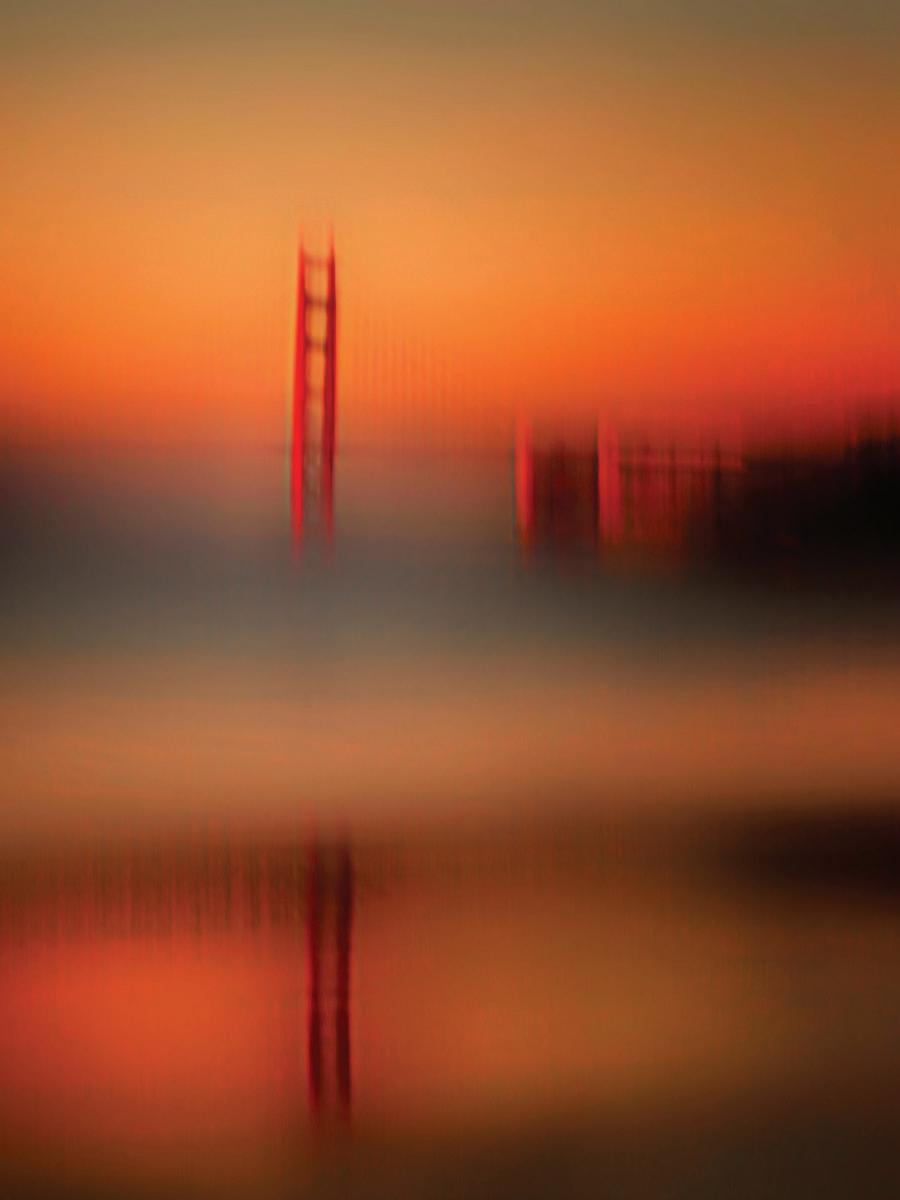
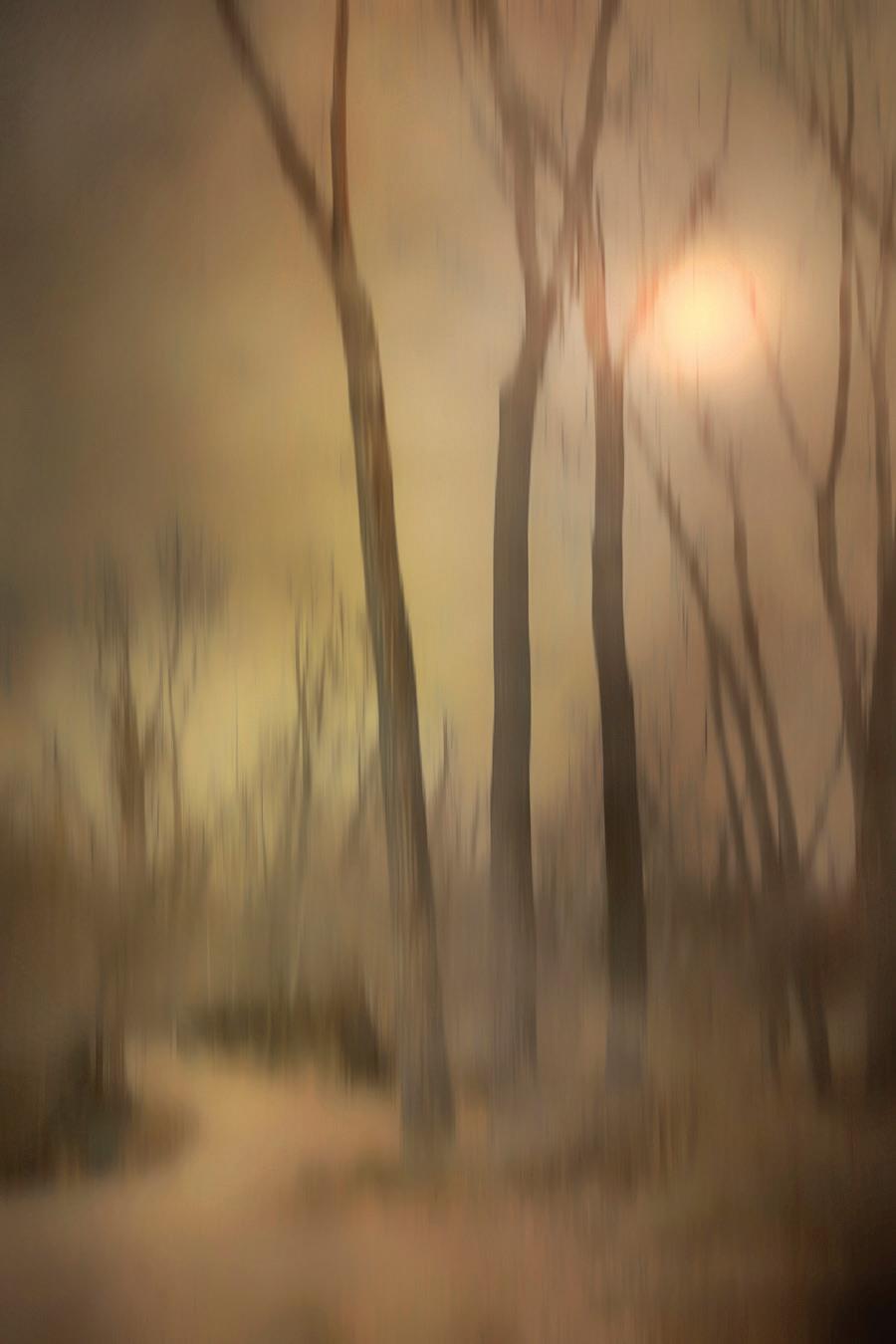
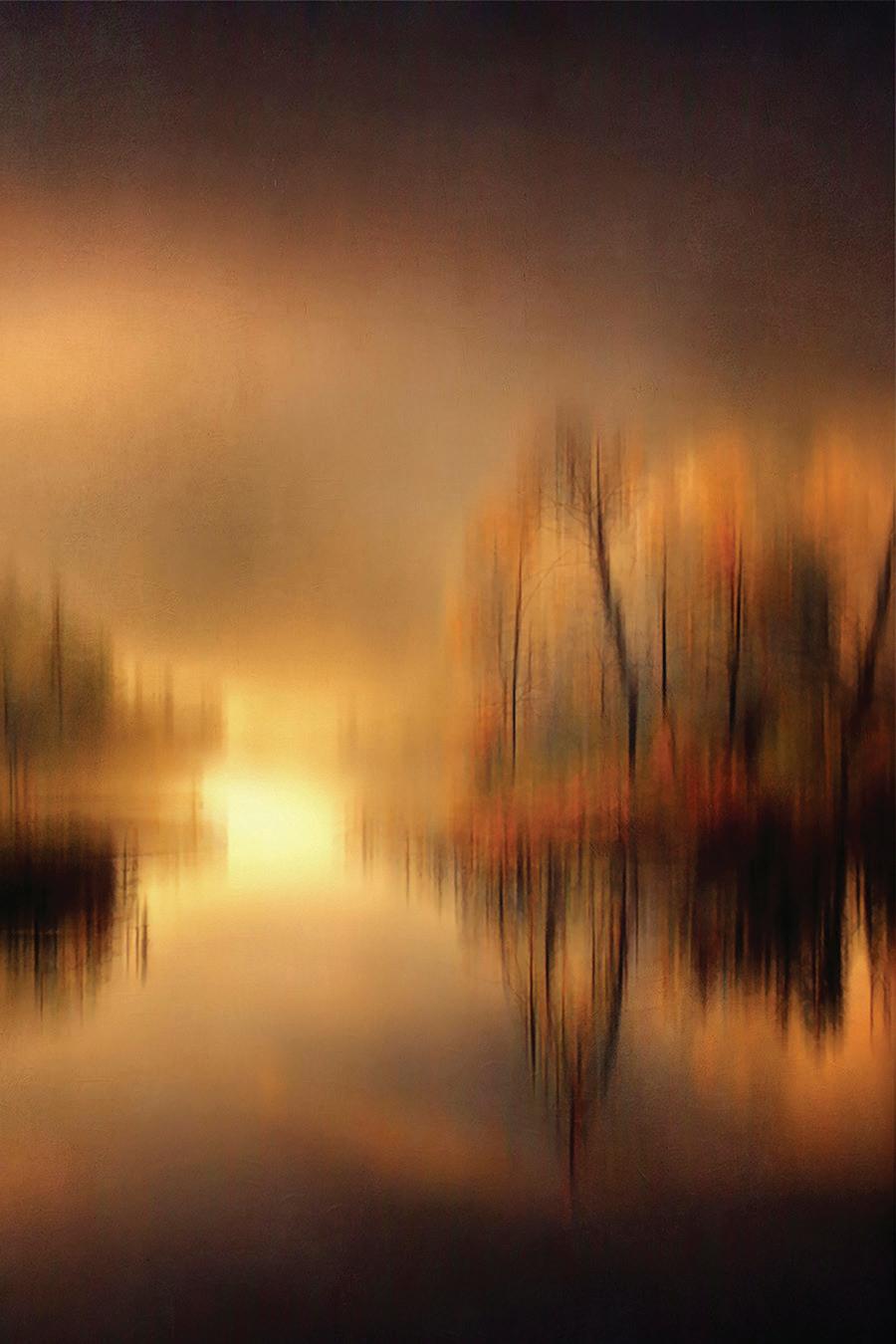
Roxanne is a star amongst ICM photographers and is likely to be known to many of you. Her work is of a distinctive style, with strong contrast and an emphasis on line and shape.
In traditional landscape photography, we’re taught to wait. For the perfect light. For a pause in the wind. For clouds to drift into harmony. But what if movement wasn’t the flaw to avoid? What if it was the invitation? Not a distraction but a door. A way to see not just farther but deeper.
Intentional Camera Movement invites a different kind of waiting - not for the elements to align but for the photographer to fully arrive. In a world that favors certainty, ICM lingers in the in-between. Where everything usually sharpens into definition, it softens. Where images skim the surface, it draws us into layers of reality towards feeling and presence.
ICM didn’t arrive as a bold new direction for me; it emerged because I needed more. I had made traditional landscapes for years, content with my craft but quietly restless. I could capture beauty but not its resonance. I was photographing what was there, not what it stirred in me. ICM let me immerse myself into mood, into memory and into meaning.
ICM isn’t a gimmick or a shortcut. It’s a craft rooted in intention and emotion. Its blur can reveal what clarity sometimes conceals: The ghost of a coastline; the rhythm
of a forest; the breath of morning mist drifting across the land.
It took time to learn to see differently. With ICM, it’s not just about moving the camera, but about understanding how and why you’re moving it. Is your motion gentle or jarring?
The quiet power of ICM in landscape photography is that it offers another way in. A way that favors suggestion over certainty, feeling over fact. Not just “what I saw but “how it moved me”. It doesn’t replace traditional methods; it deepens them. It adds space for atmosphere, memory and mood.
Creativity is the use of your imagination to do something original. But we have to start somewhere to engage our imagination. I have a simple recipe that I keep in mind. I hunt light, colour/contrast, shapes/ lines, patterns and motion. If I get three or four of these subliminal elements in my frame, I will be on my way to a good image. When I harness all five I’m in exciting territory.
I shoot hand-held, totally free to move in any, and every, direction. My subject and mood determine where I start. I’m willing to take risks. Trying something outlandish just because I happen to think of it.
Expectations in ICM are very different from traditional photography. Think about painting a watercolor. Same brush, same surface, same paint, same colors – and an untold ability to create an unlimited number of outcomes depending on your mood, moves and your imagination. That’s ICM.
One of the quietest shifts in working with ICM is learning to slow - not just your shutter but your sense of urgency. This kind of seeing begins in stillness. It asks you to listen; to observe light, motion and to hear the mood of a place and the mood within.
Before I even raise my camera, I often spend time absorbing the place. Is the wind moving in gusts or steady lines? What’s drawing me - light, shape, color, sound? I may walk with the camera at my side and just breathe in what’s around me before making the first exposure.
ICM is gesture-based. Every motion of the camera becomes a brushstroke. The same landscape can yield hundreds of interpretations depending on the movement; vertical sweeps to echo trees, slow arcs to soften a sky, sharp jabs to fracture light.
Not every image will work. That’s part of the point and ICM rewards experimentation - not with tidy
outcomes but with glimpses of what else might be possible. It’s easy to see ICM as a departure from tradition and in some ways it is. But I see it more as an expansion. It doesn’t ask you to leave behind your skills in composition, exposure or understanding of light. It asks you to go further, to feel more, risk more and say more.
The most powerful expressionist landscapes begin as strong photographs. You must see with a photographer’s eyefor composition, balance and light - before you ever begin to move. ICM doesn’t disguise a weak image; it deepens a
strong one. ICM is not an escape from craft but an extension of it. That’s what makes this approach so compelling; it extends what’s already strong and true. It invites us to move beyond documentation, to let the landscape speak through atmosphere, memory and movement. Where traditional landscapes show us the world as it is, these images reveal the way it echoes; not as a record but as a resonance. They collect time, capturing what unfolds between the moment we begin and the moment we release. The past and present held together even as we move into the future. Something happened and it
lingers. Something fleeting, made visible. Not less real but more deeply known.
It doesn’t matter if I shoot simple subjects or iconic places; when I use ICM, the photographs become uniquely mine. No one else moves quite the same way at the same timing and speed. I can never duplicate what I have done. Different movements and timing can yield a multitude of results that are pleasing in diverse ways. It’s an exciting and evolving way to tell a story, sometimes quite surprising and once you’ve seen that way, it’s hard to unsee.
To see all images in the original article and read Landscape Magazine Issue 16 in full,scan the QR Code below.

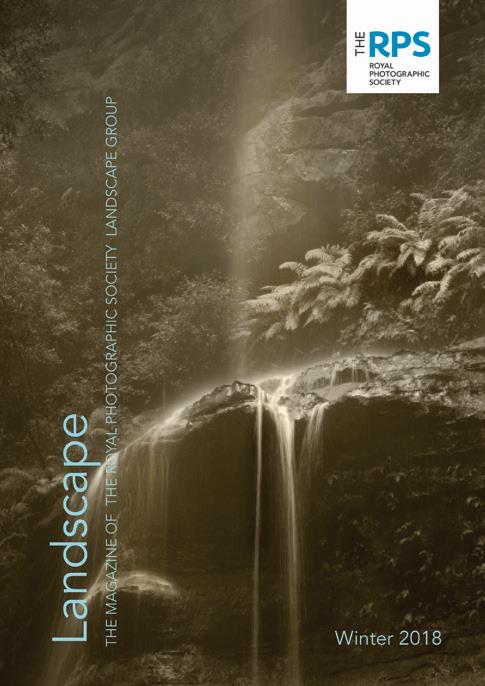
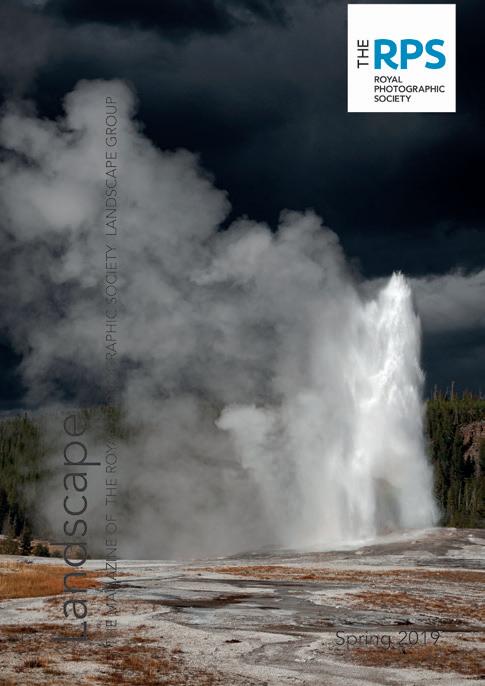
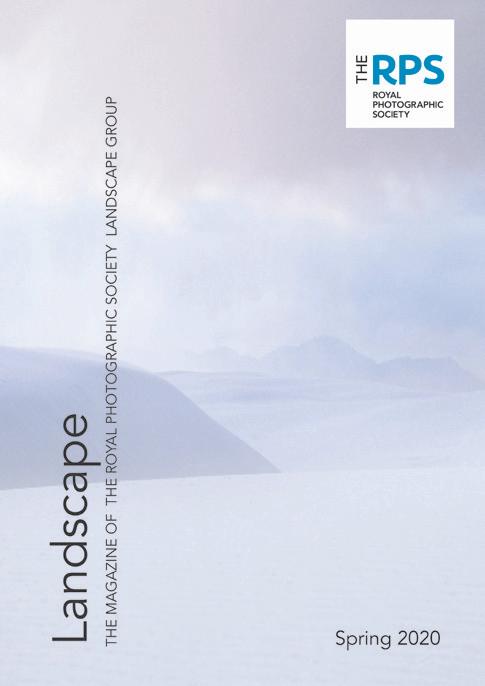
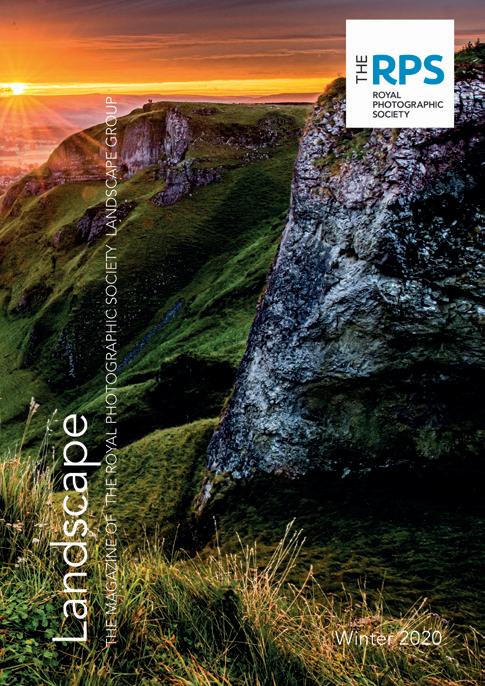
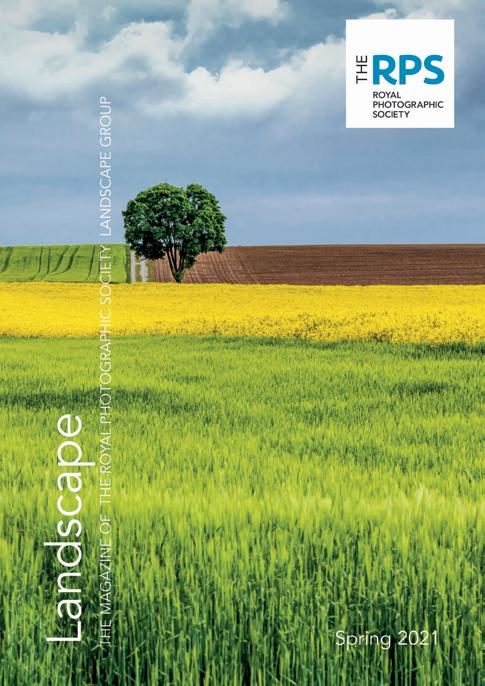
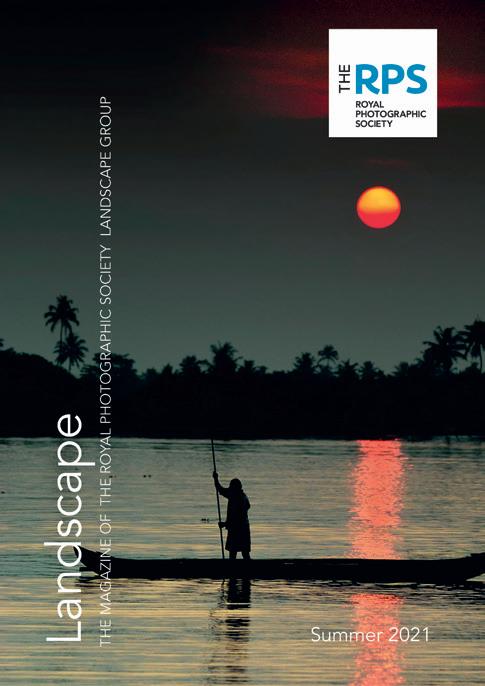
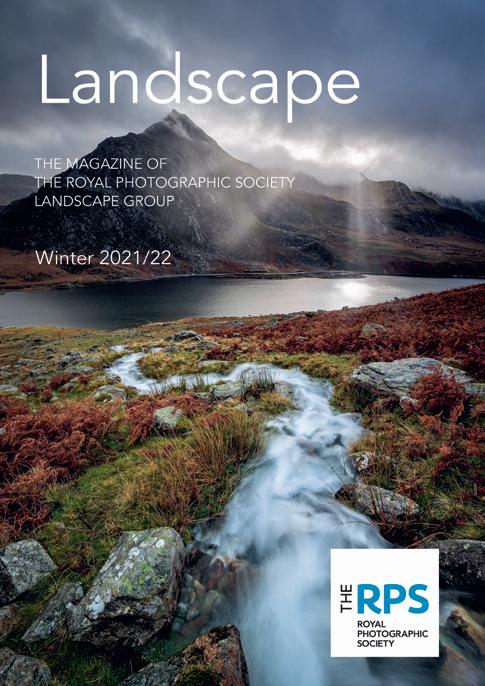
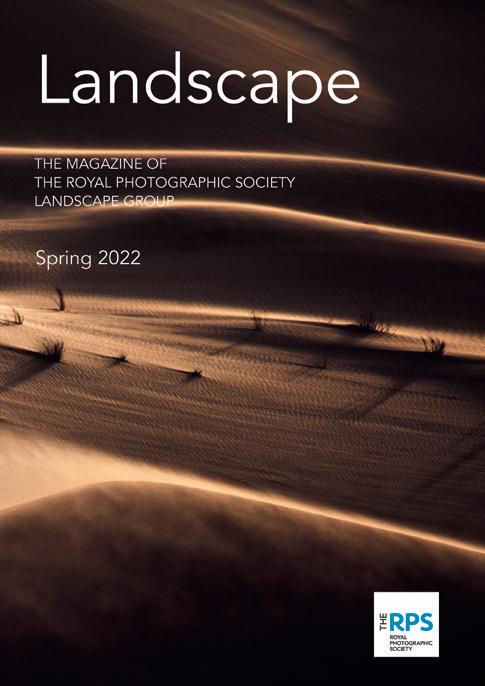
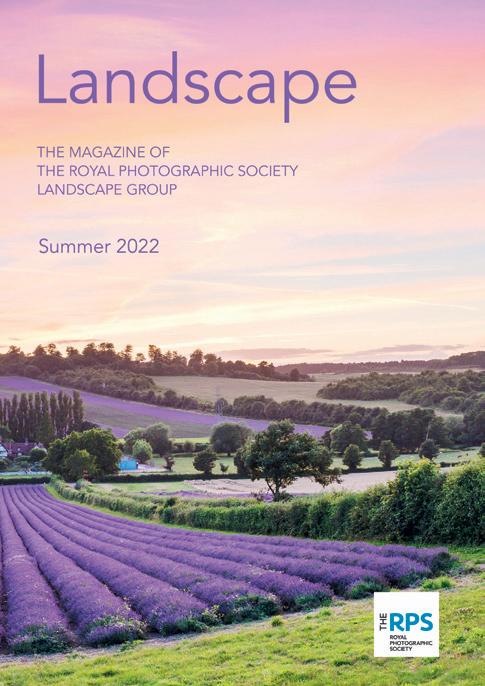
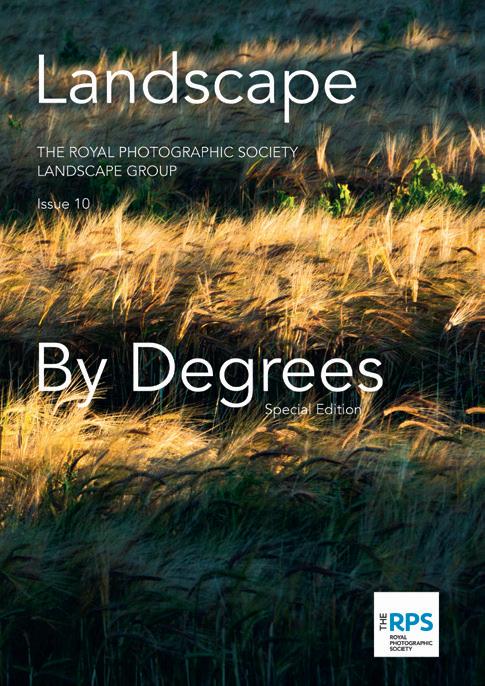
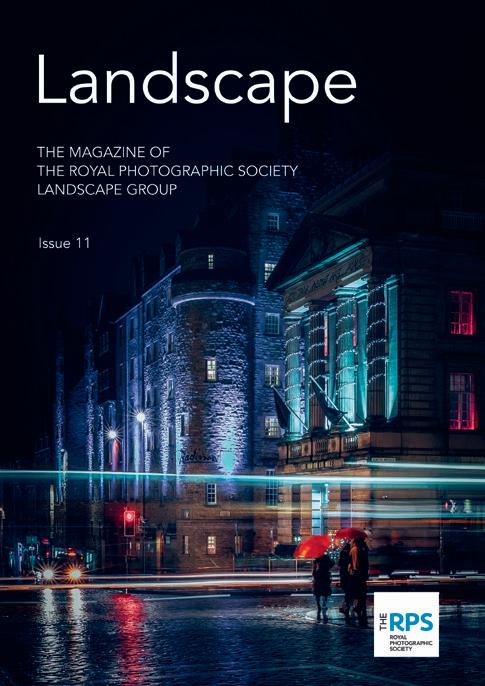
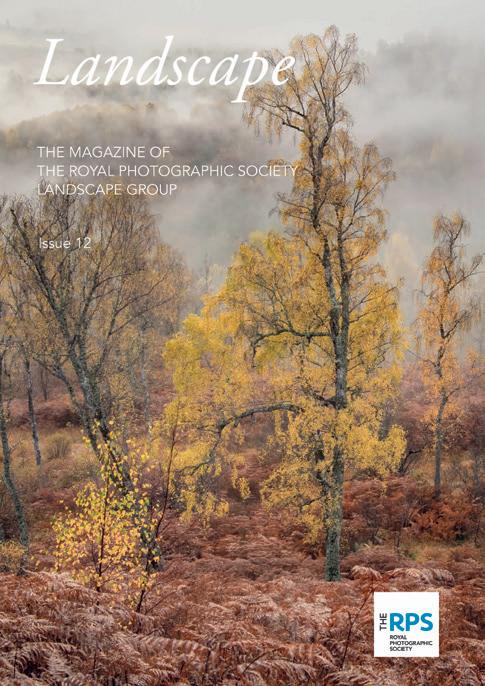
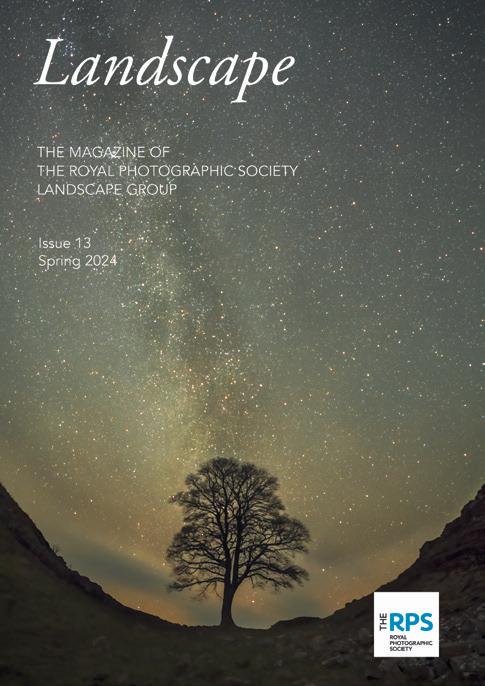
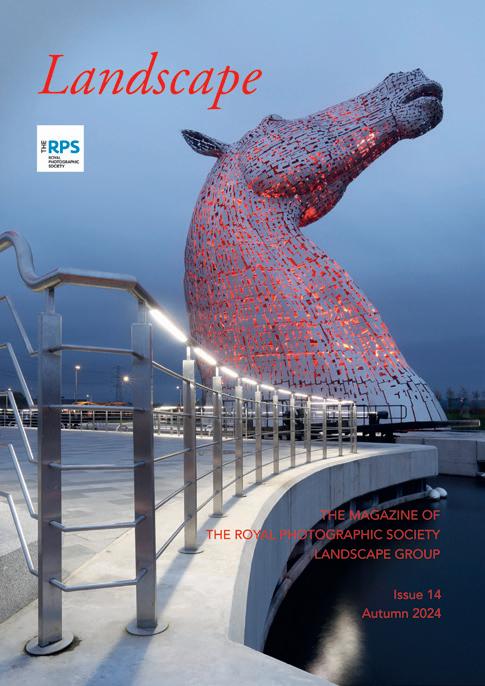
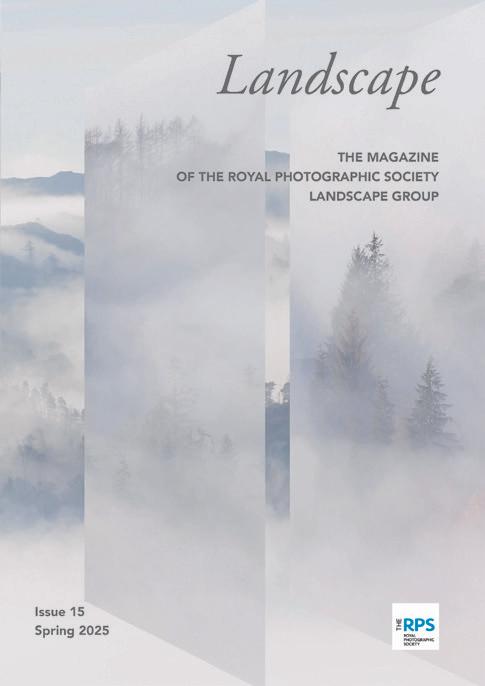
To read all the previous issues of Landscape Magazine scan the QR Code below.

Or visit the Landscape Group Web Page. https://rps.org/groups/landscape/publications/magazine/