
CONCEPT
The Newsletter of the Contemporary Group of the Royal Photographic Society
Foreword
Nick Linnett
Chairs Update
Sean Goodhart ARPS
Pairs
John Perrin MA ARPS
Silent Truth
John Barben LRPS
Trafford Park Village
Nigel Richards MA ARPS
Protest
Lard van den Berg
Overlapping Spaces
Tony Fisher
Match Strikes
Martyn Pearson MA
Practising Posthuman Photography in Ouistreham
Mark Stothard
One Tenth of a Second
Nick Linnett
Reflections
Simon Maddison ARPS
Regional
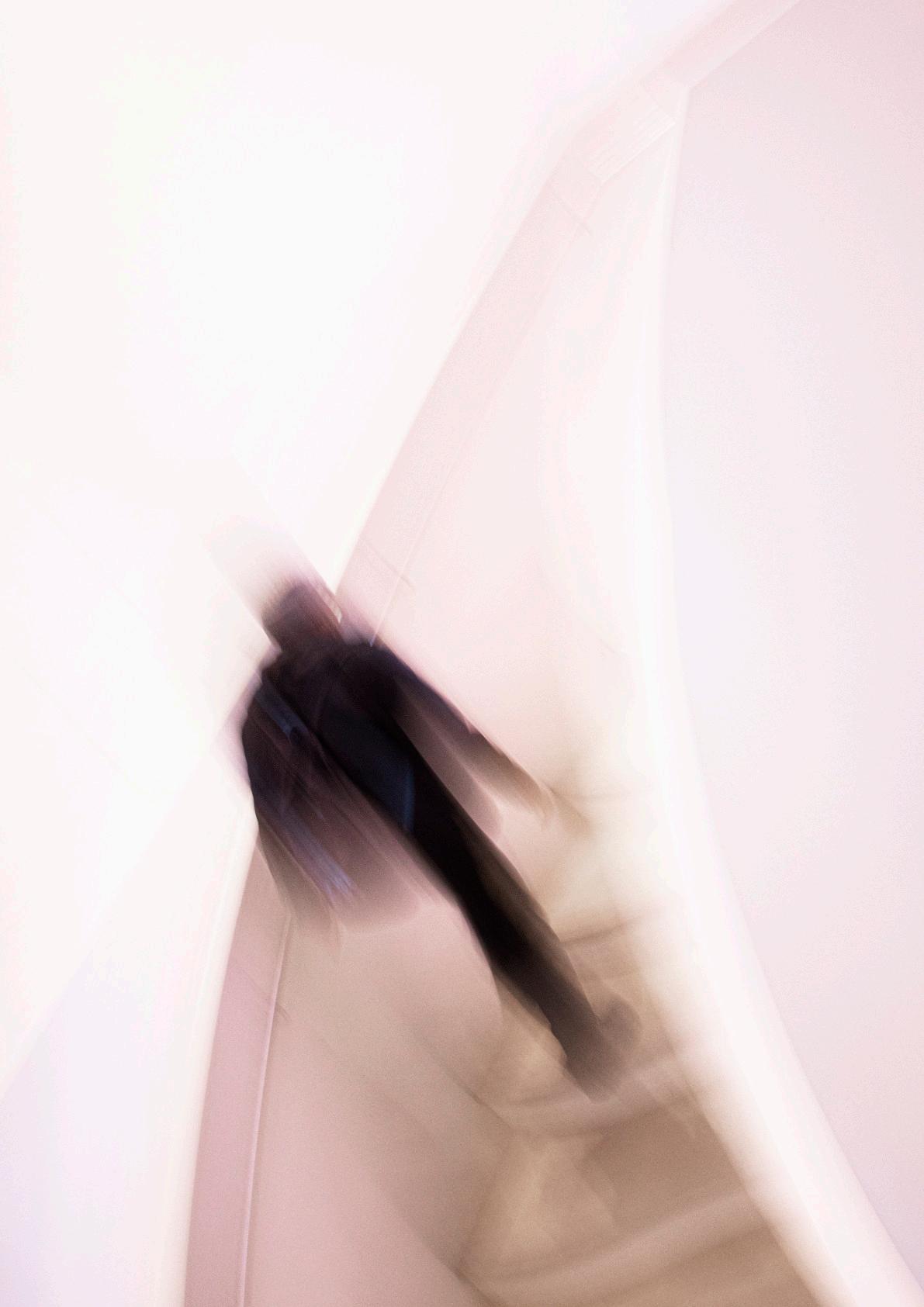
Cover Image
From: One Tenth of a Second
NIck Linnett
Contemporary Facebook Group https://www.facebook.com/groups/rpscontemporary
RPS Photobooks Facebook Group https://www.facebook.com/groups/RPSPhotobooks
Contemporary Youtube https://rps.org/groups/contemporary/contemporary-youtube/
Contemporary Instagram https://www.instagram.com/rpscontemporary/

From the Editor
Photography can often feel like a solitary pursuit. Much of the time we work alone: walking streets, editing late at night, or quietly developing long-term projects that may take years to resolve. Yet being part of a community of like-minded photographers can profoundly shape and strengthen that work.
A good photographic group offers more than technical advice. It provides encouragement, challenge, and perspective. Conversations with others can help us recognise patterns in our work, question familiar approaches, and push projects further than we might alone. Sometimes a single comment, book recommendation, or discussion after a presentation can open entirely new creative directions. Groups also remind us that photography is a shared language. Seeing how others respond to place, people, or ideas expands our own understanding of what the medium can do. Importantly, they create space for experimentation and risk-taking — environments where unfinished work can be discussed honestly and constructively.
At the Contemporary SIG, this sense of exchange and mutual support remains central to what we do. Whether through talks, publications, or meetings, communities of photographers continue to inspire, motivate, and sustain creative practice. In an increasingly fast-moving visual world, those connections matter more than ever.
The Group is here for members so I encourage you to get involved as much as you can, join the talks, send your work to Concept, get involved in the postal portfolio and consider joining your local group or maybe starting one in your area.
Please don’t hesitate to get in touch with your ideas and thoughts
Nick Linnett Concept Editor
Update from our Chair
The Group AGM took place on 23 March. A full summary is available on our website: https://rps.org/news/groups/contemporary/2026/march/agm26/
The main change relevant to Concept is that I, Sean Goodhart, am now serving as Group Chair. Many of you will know me from my nearly ten years as the group’s webmaster, though perhaps only as the person keeping the website and events system running.
Outside photography, I’m an engineer with over 35 years’ experience in the energy and process industries, specialising in automation systems. I’ve worked internationally in senior technical, training, management and business-development roles, and more recently stepped back from full-time work to focus on volunteering and an honorary teaching role at Coventry University on their Control, Robotics and Intelligent Automation MSc. My work in this field is well known—this month I contributed an article to the Institution of Chemical Engineers’ “process control” special issue. If only my photography had the same reach.
Our past chair, Tom Owens, has stepped down and left the RPS. His Concept updates hinted at frustration with how changes to the distinctions process are being implemented, particularly the level of secrecy from senior leadership. I can’t share details from the email chains, but I will say his concerns were about the process, not the proposals. From what I’ve seen, the proposed changes could significantly improve the A and F distinctions. I’ve not yet attended the SIG and Region Chairs’ meetings with trustees, so my views are still forming.
Holding both the chair and webmaster roles keeps me busy. Some of you may have noticed in the Apr–Jun ’26 RPS Journal (pp. 188–189) that a “new website and brand project” is planned, with a steering group overseeing digital transformation. I look forward to a properly planned and implemented system. Once that arrives, it will be the right moment to find someone new for the web admin role—until then, I wouldn’t wish the current system on anyone. Meanwhile I know I’ve got the committee behind me helping to serve the Contemporary Group.
Looking ahead, our monthly “In Conversation” events continue with excellent speakers, and the activity groups run excellent activities that everyone can participate in regardless of location. We’re exploring the possibility of a face-to-face event in late 2026 or early 2027. Our last in-person gathering was the Cambridgeshire Fens in May 2023. This time we’re aiming for a “north-ish UK” location, ideally accessible by train. I’ll keep you updated as plans develop.
Sean Goodhart ARPS
April 2026
RPS Contemporary Group
Committee
Group Chair: Sean Goodhart ARPS contemporary@rps.org
Group Secretary: Steven Whittaker ARPS contemporarysecretary@rps.org
Group Finance Officer: Alan Cameron ARPS contemporarytreasurer@rps.org
Group Engagement & Events Officer: Donata Rogozik contemporaryevents@rps.org
Group Communications Officer/Webmaster: Sean Goodhart ARPS contemporaryweb@rps.org
Contemporary Photography editor: Paul Ashley ARPS contemporaryeditor@rps.org
Concept newsletter editor: Nick Linnett concepteditor@rps.org
Publications & Social Media: Burak Oguz LRPS contemporarymedia@rps.org
Contemporary Photography Designer: Rolf Kraehenbuehl ARPS contemporarypun@rps.org
Activity Groups
South West Regional Organiser: Adrian Hough ARPS contemporarysw@rps.org
North Regional Organiser: Patricia Ruddle ARPS contemporaryne@rps.org
North West Regional Organiser: Alan Cameron ARPS contemporarynw@rps.org
East AngliaRegional Organiser: Jonathan Williams contemporaryea@rps.org
Central Regional Organiser: Steff Hutchinson ARPS contemporarycentral@rps.org
Scotland Regional Organiser: Steven Whittaker ARPS contemporarysco@rps.org
Postal Portfolio: Nigel Corby FRPS contemporarypostal@rps.org
Pairs
John Perrin MA ARPS
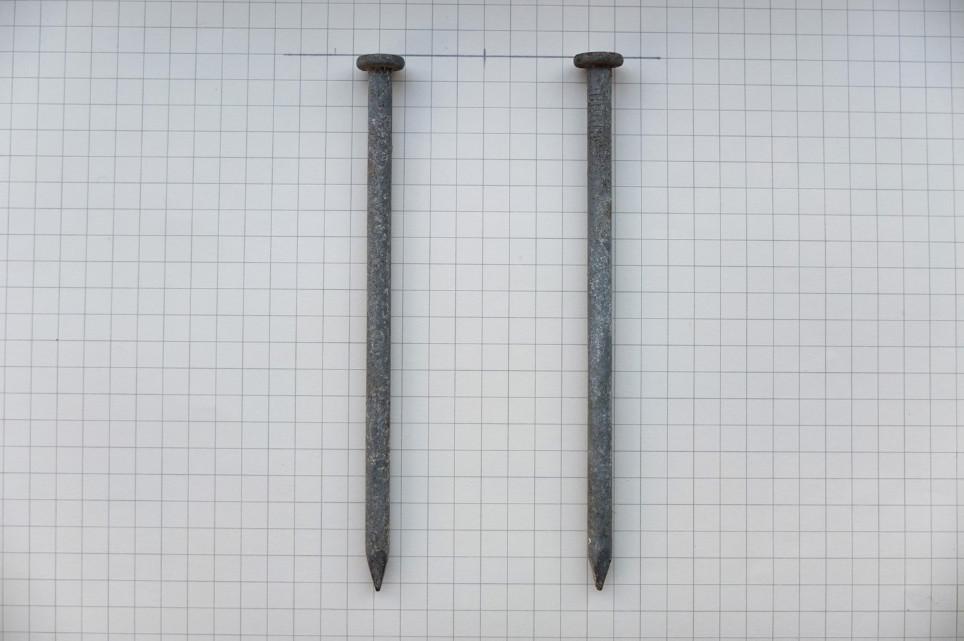
I wanted to create a piece of conceptual work entitled ‘PAIRS’ using photography.
My approach was to think of several ‘PAIRS’ that I could create that use sound, language, repetition and an every-day aesthetic.
The point wasn’t just to create 4 photographs - the point was to use photography to record elements whose name (each containing 1 syllable) chimed with each of the other elements when spoken out loud. In other words the photographs are linked by the sound of their name when spoken out loud and not by their physical appearance.
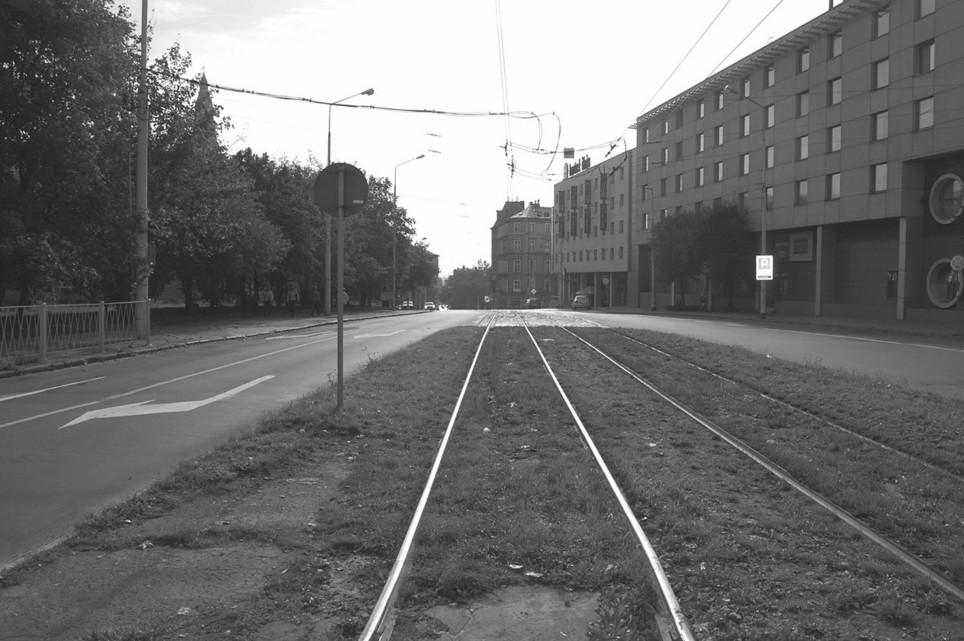
RAILS
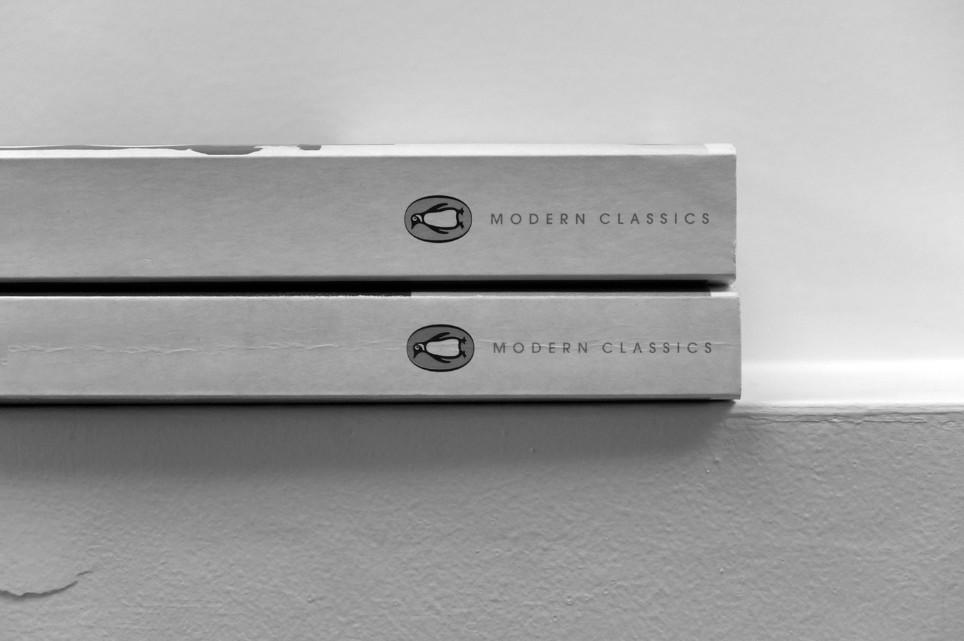
TALES
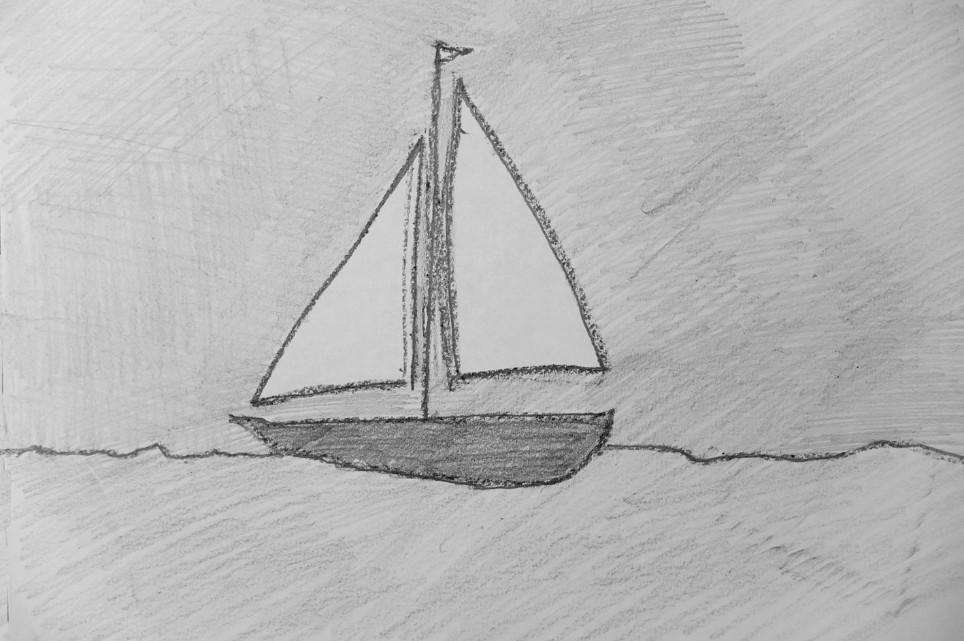
Silent Truth
John Barben LRPS
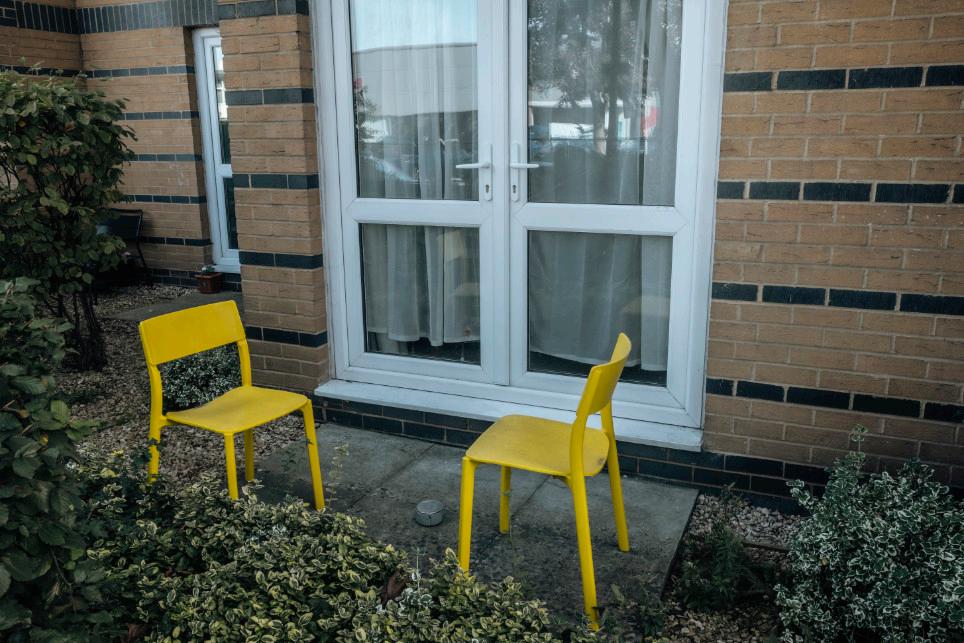
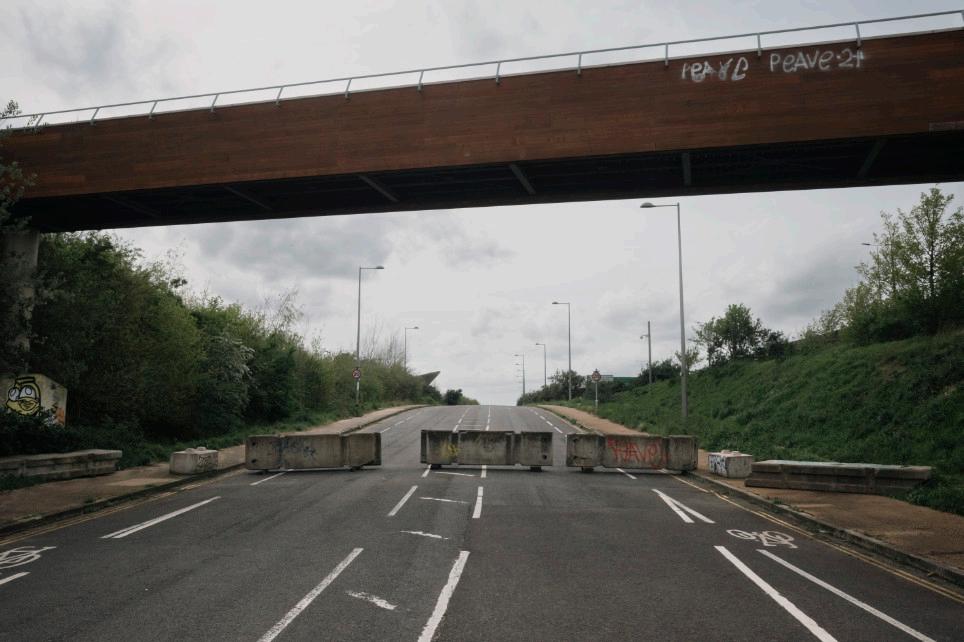
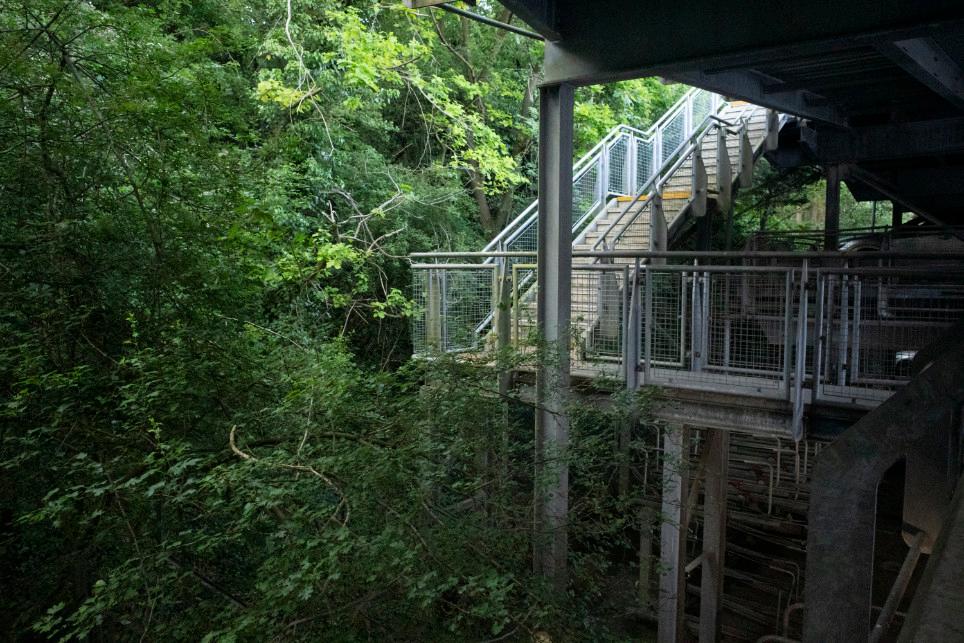
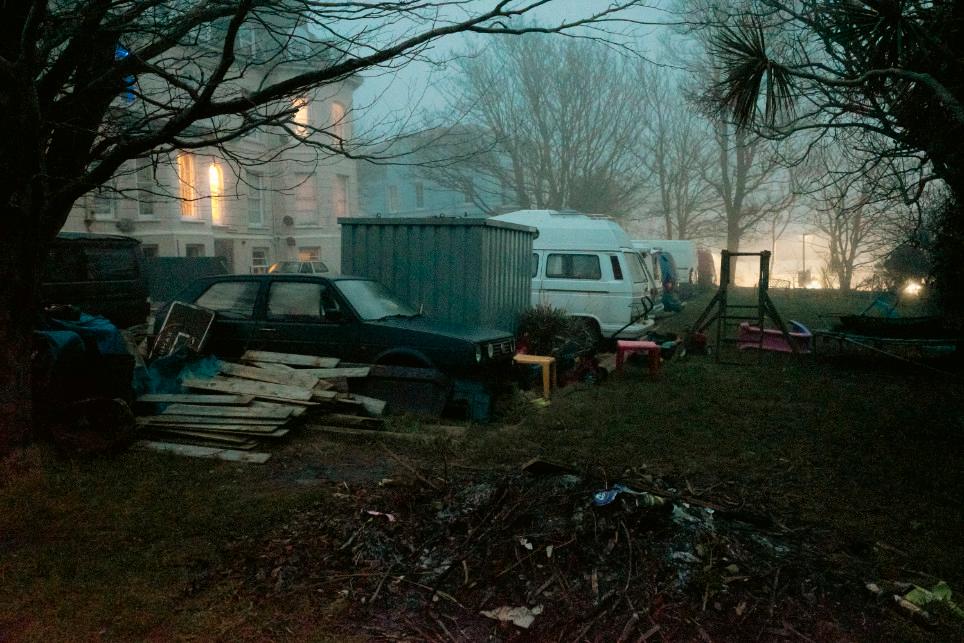
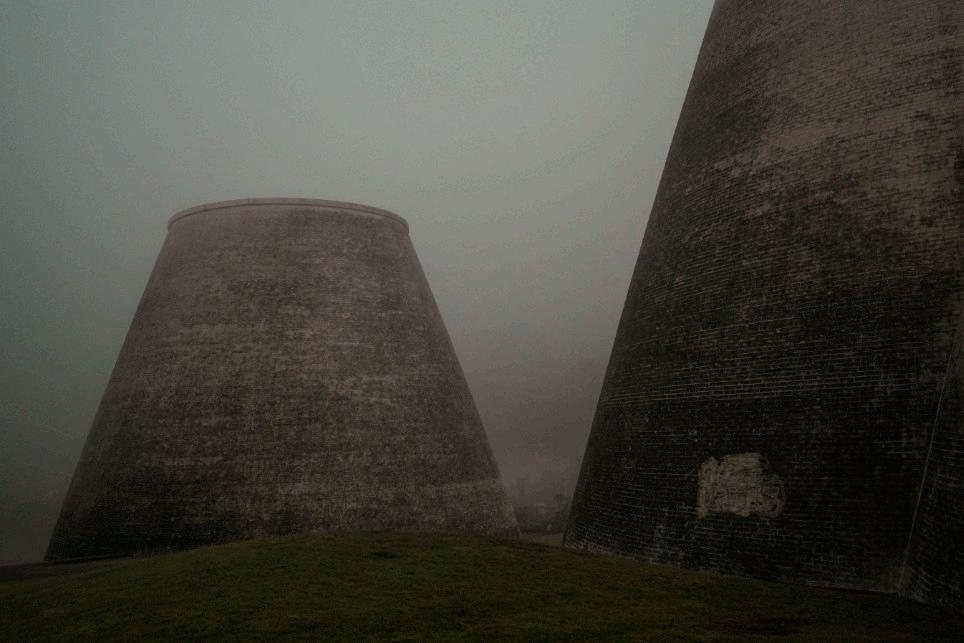
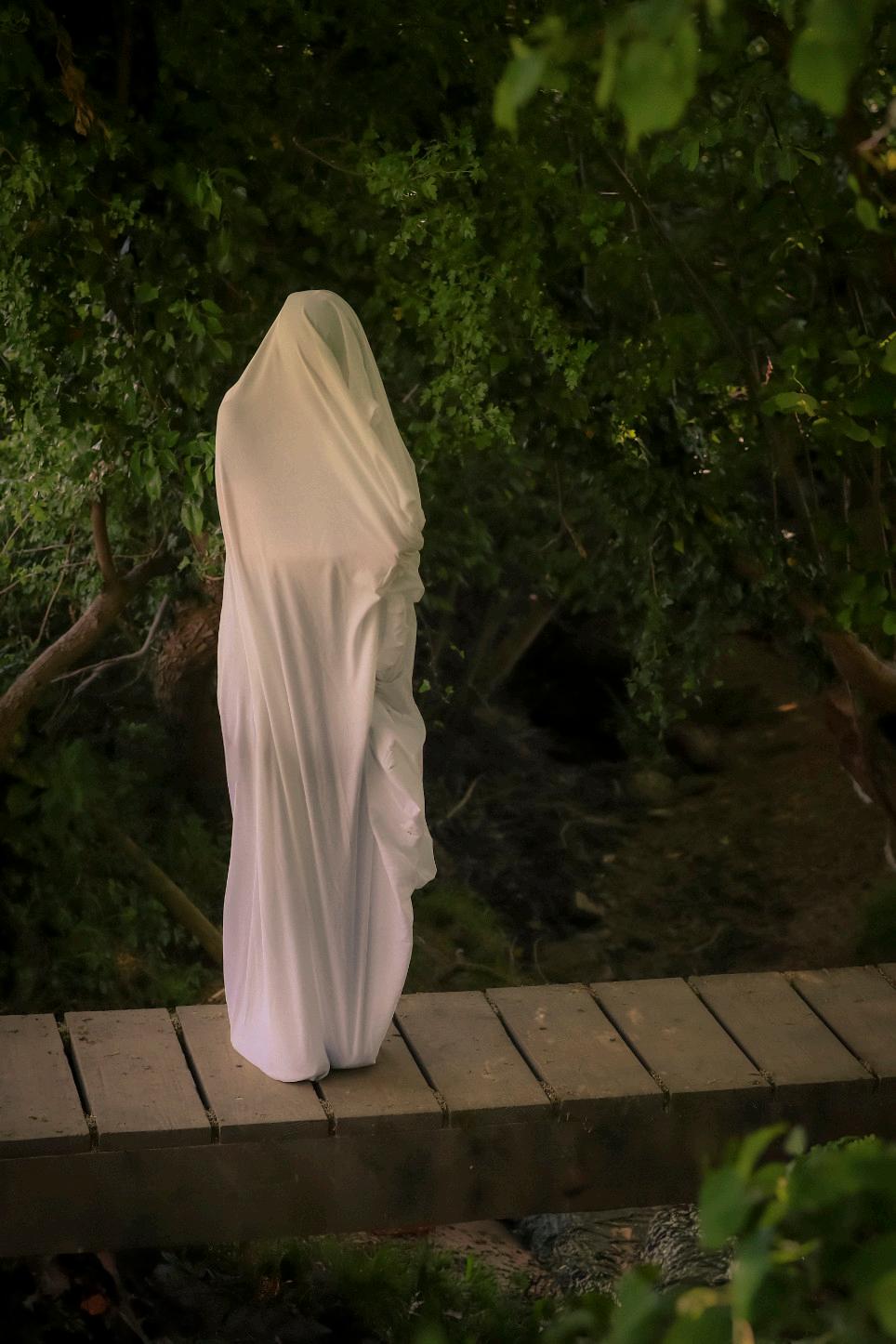
I make short narrative sequences from photographs taken on time-limited walks, focused on how a place feels under particular conditions rather than documenting it directly.
I work observationally, without staging or a fixed thesis, trying to stay attentive and let images emerge. The work is then edited into sequences and self-published as small A5 zines called Storyboard each of which contains four stories.
Each story combines around 12 to 15 photographs. Alongside the photographic work, I write short prose texts that function as a prefix rather than an explanation. These texts do not describe the images, nor do they position the photographs as illustrations. The language is informed by poetry but remains resolutely prose; depending on the reader, it may be experienced as surreal, associative, or deliberately nonsensical. The text and images operate in parallel, creating meaning through resonance rather than clarification.
For me, meaning doesn’t sit in a single image—it develops through sequencing. Through rhythm, pairing, and adjacency, images start to echo or contradict each other, so the narrative remains open and the viewer constructs their own reading.
I am moving from “what does this photograph show” to “how do these photographs produce meaning - what are the things that make that meaning - and how does attention, mood and timing affect that meaning. I want to move from “the photograph as indexical evidence” to “the sequence as a system that produces meaning” …and as a bonus I want to consider how can “authorship” apply to photography given the extent to which the interpretation of the image depends on the knowledge within the viewer and the cultural context in which it is viewed?
Some key influences are the walk as a method, exemplified by Jem Southam and Rut Blees Luxemburg, and ideas around perception and open narrative demonstrated in the work of Paul Graham and Uta Barth.
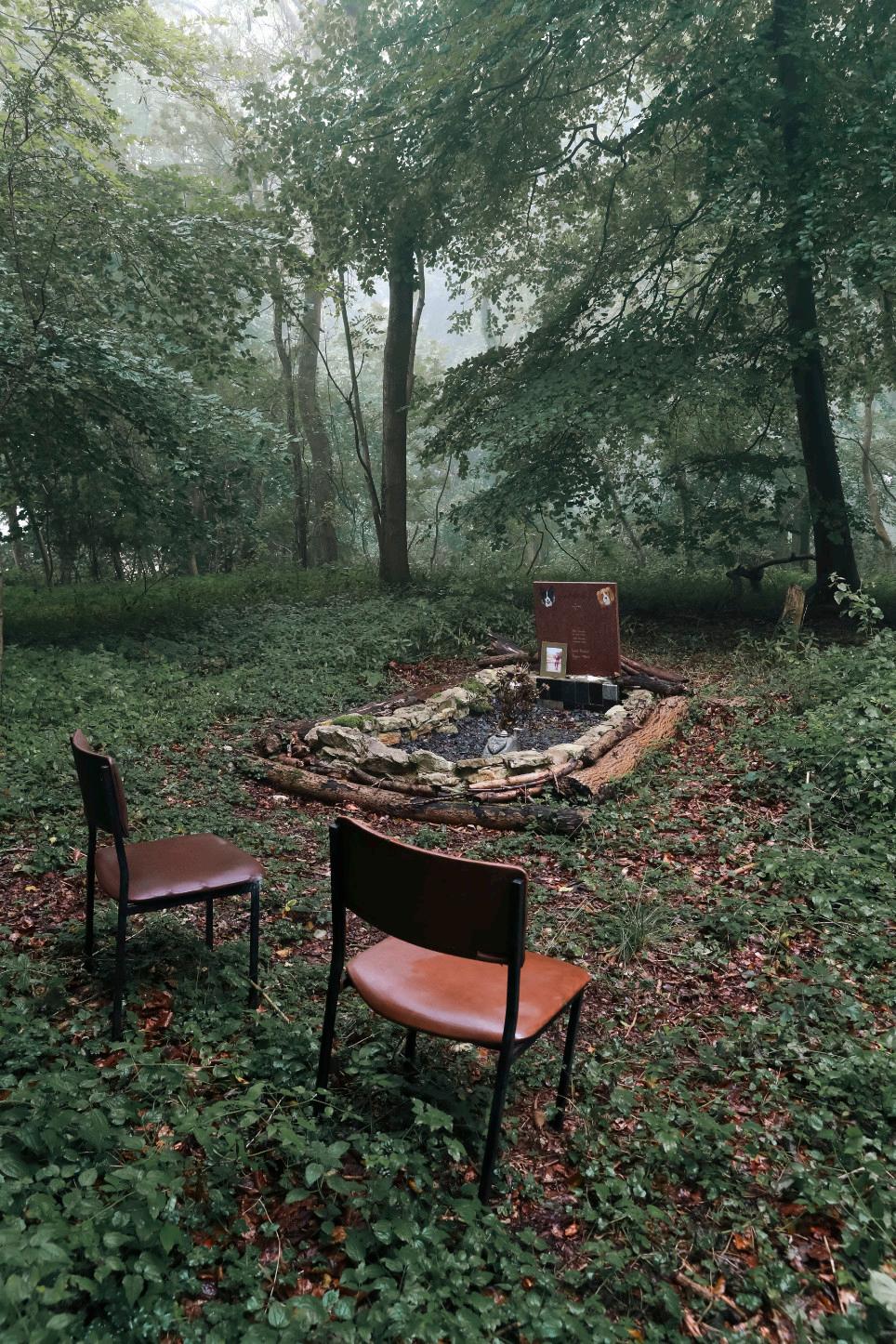
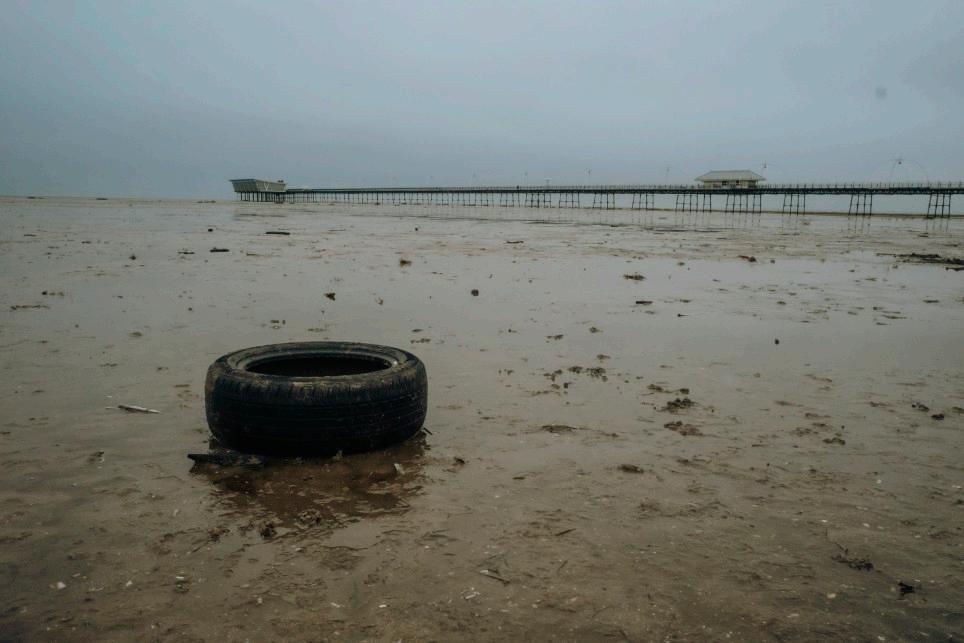
This story, called Silent Truth, delves into the emotional weight of forgotten spaces. Each image resonates with a haunting stillness, evoking feelings of nostalgia and loss. The ghostly figure symbolises our connection to the past, while industrial remnants loom as silent witnesses to time's passage. Cluttered landscapes and empty chairs evoke a deep sense of solitude, prompting reflections on what once was. The ethereal and the forsaken invite the viewer to confront their own memories.
One gallerist said “These empty landscapes and the quiet absence of people carry so much emotion. The photos feel deeply poetic — like a slow journey into nowhere, where memory and silence intertwine. It stayed with us for quite some time after viewing.”
IG: @barbenshootsdigital web: www.exsto.co.uk
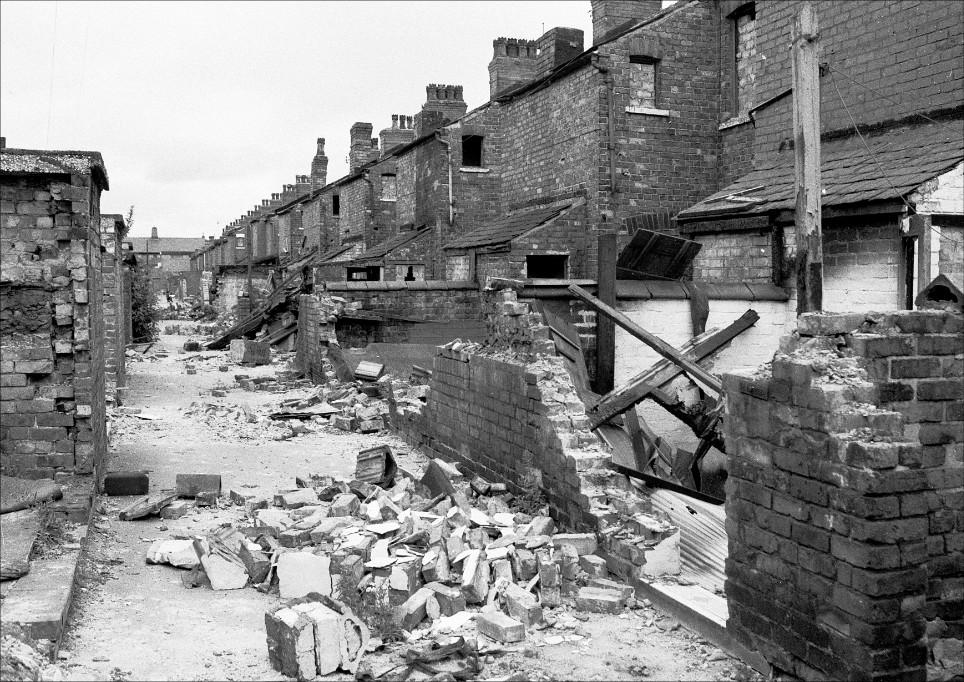
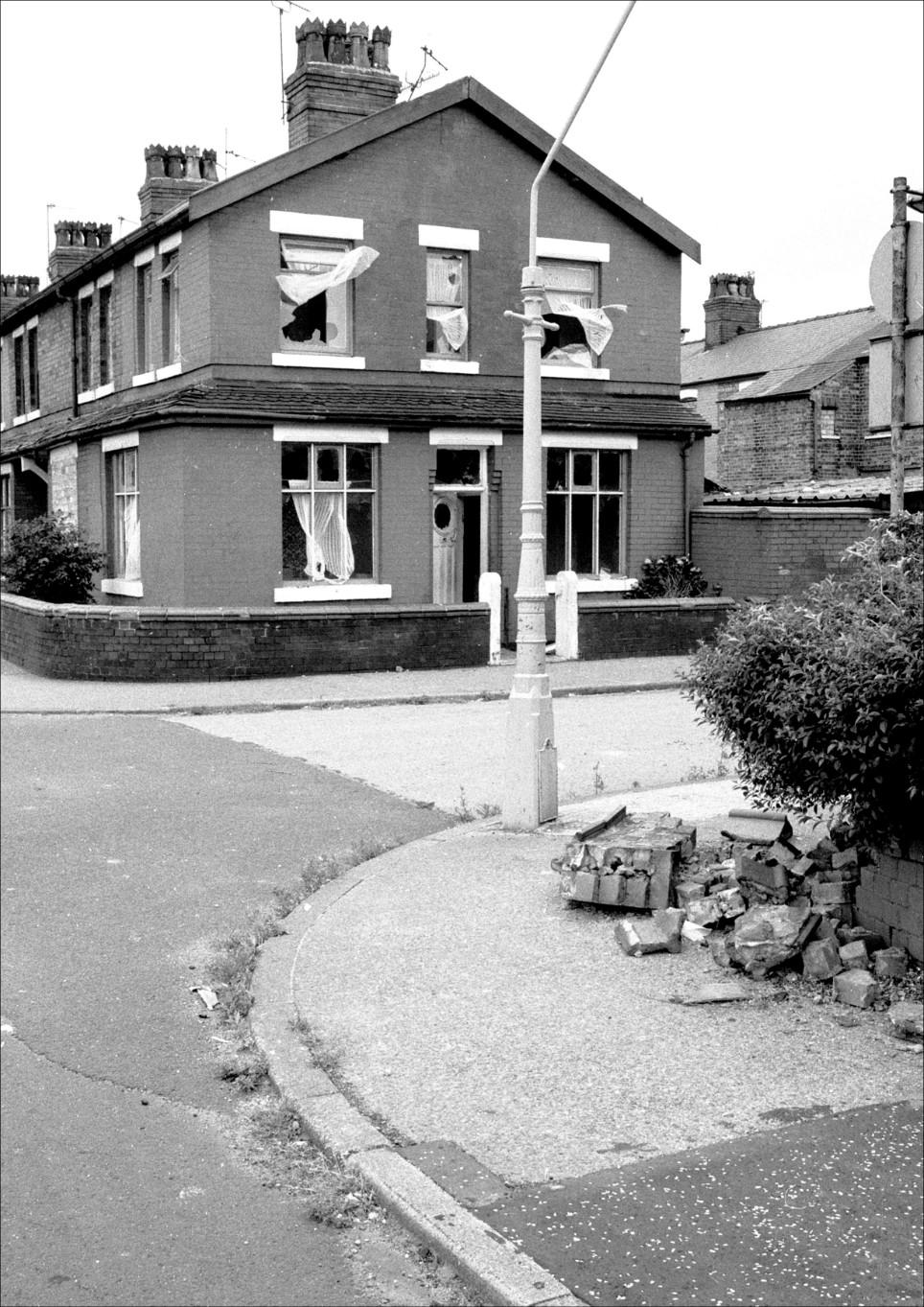
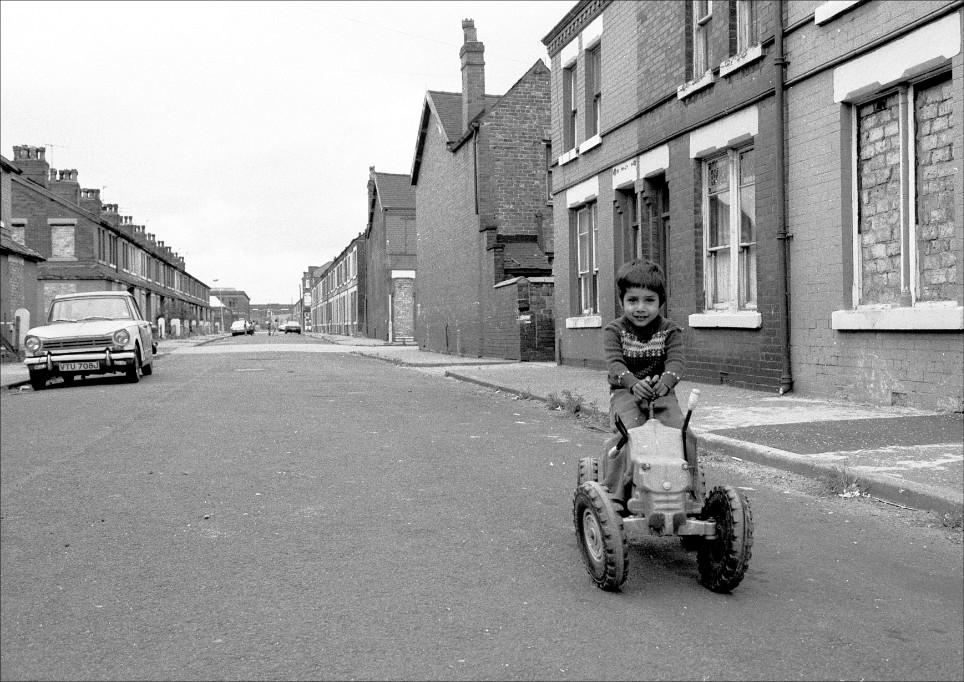
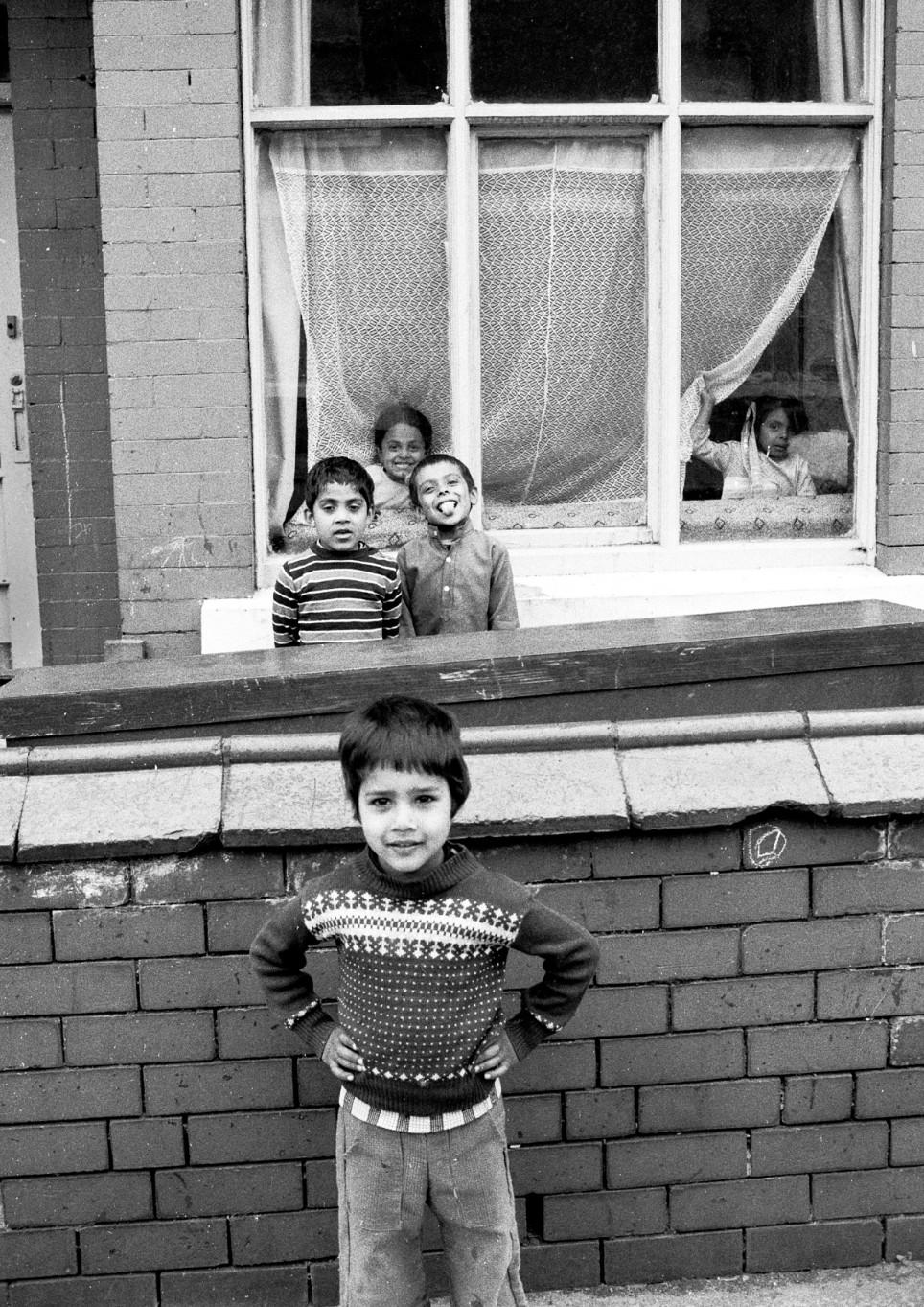
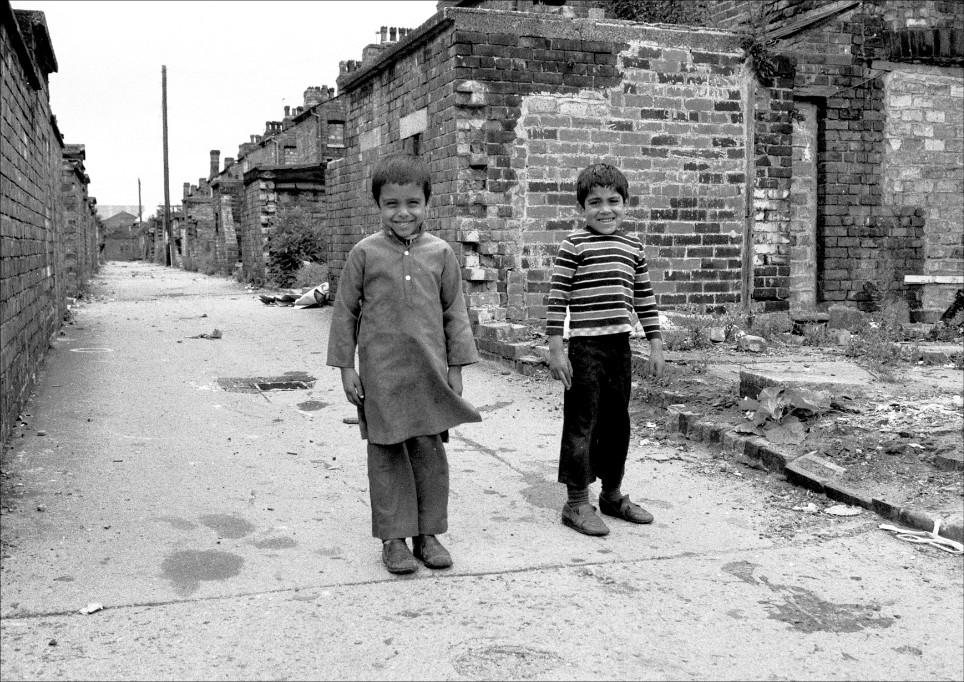
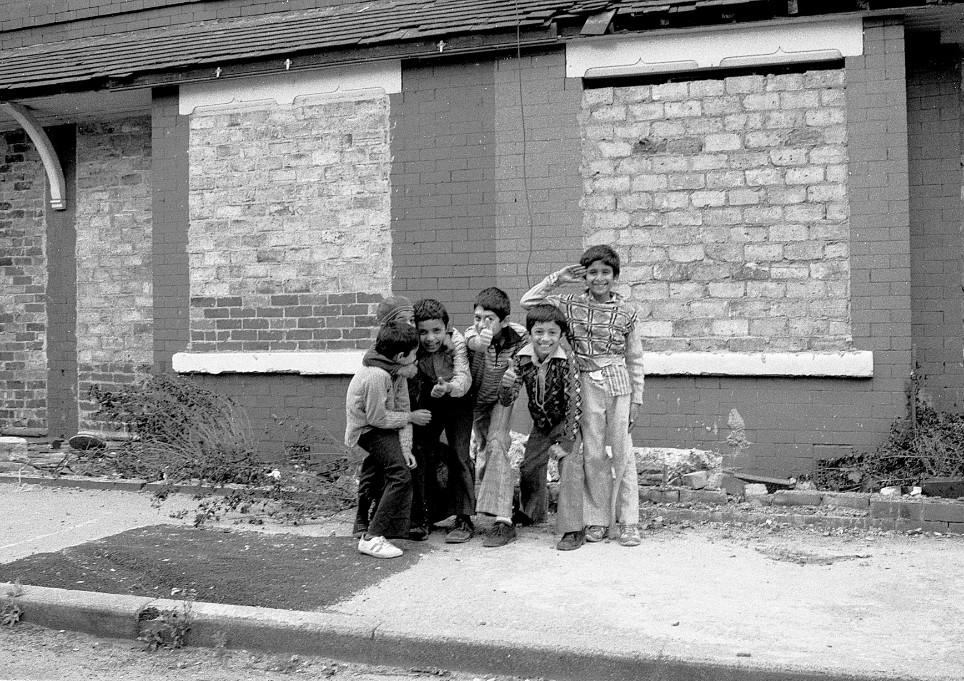
Trafford Park Village, Manchester 1984
Nigel Richards MA ARPS
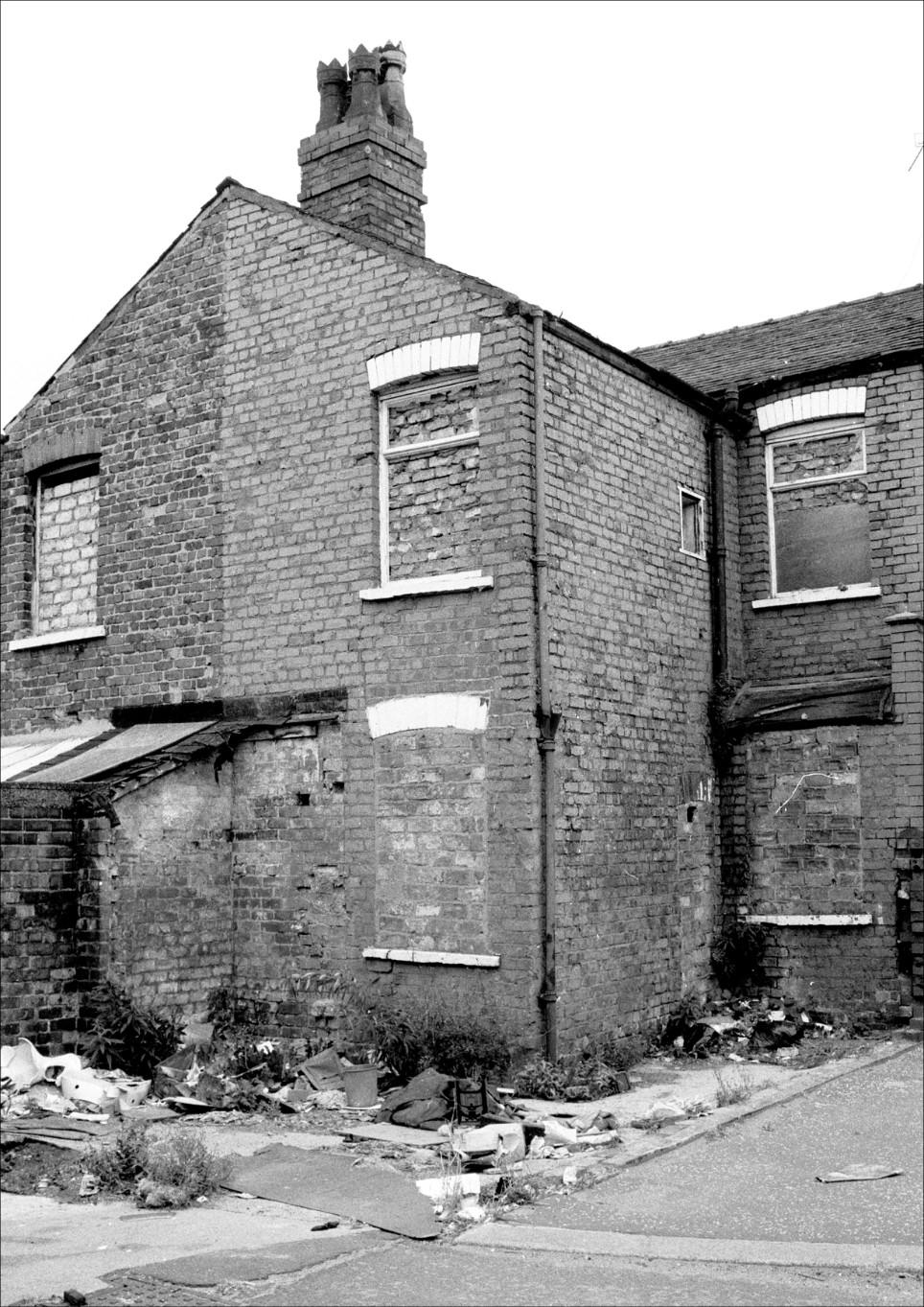
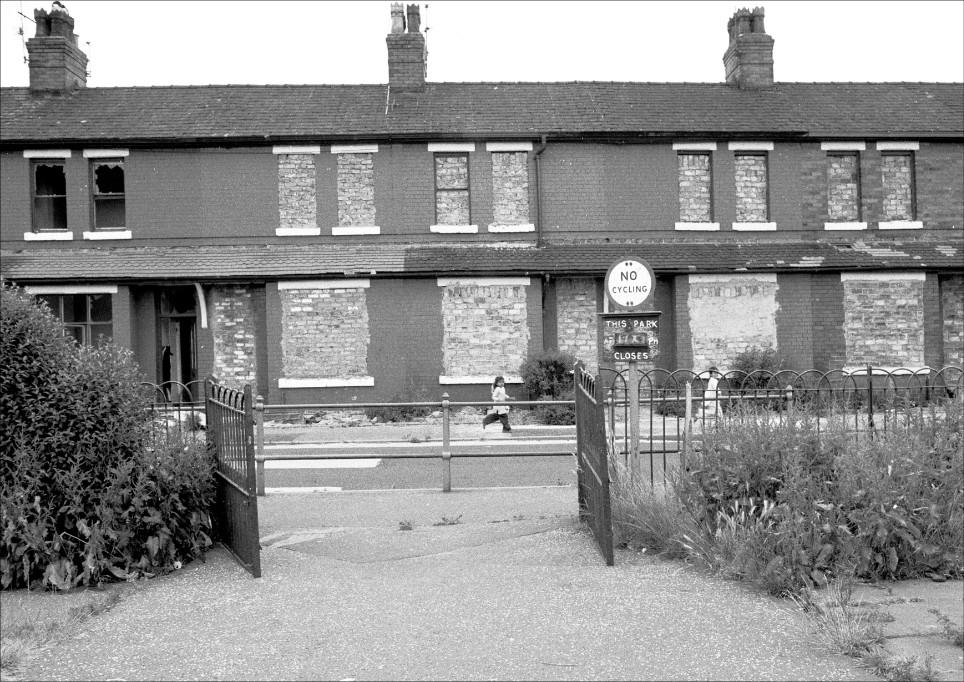
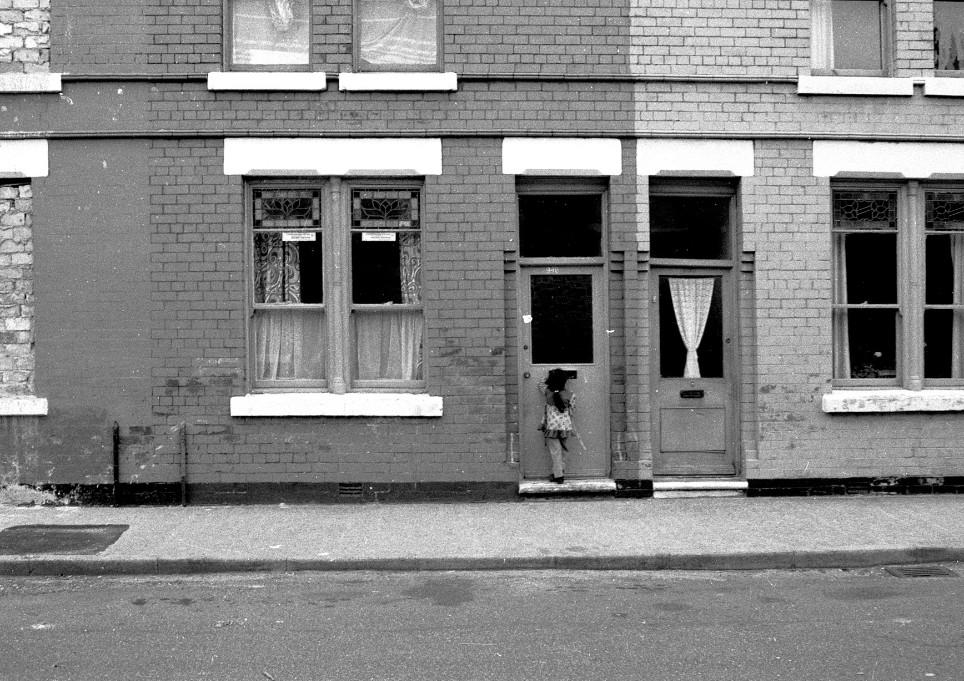
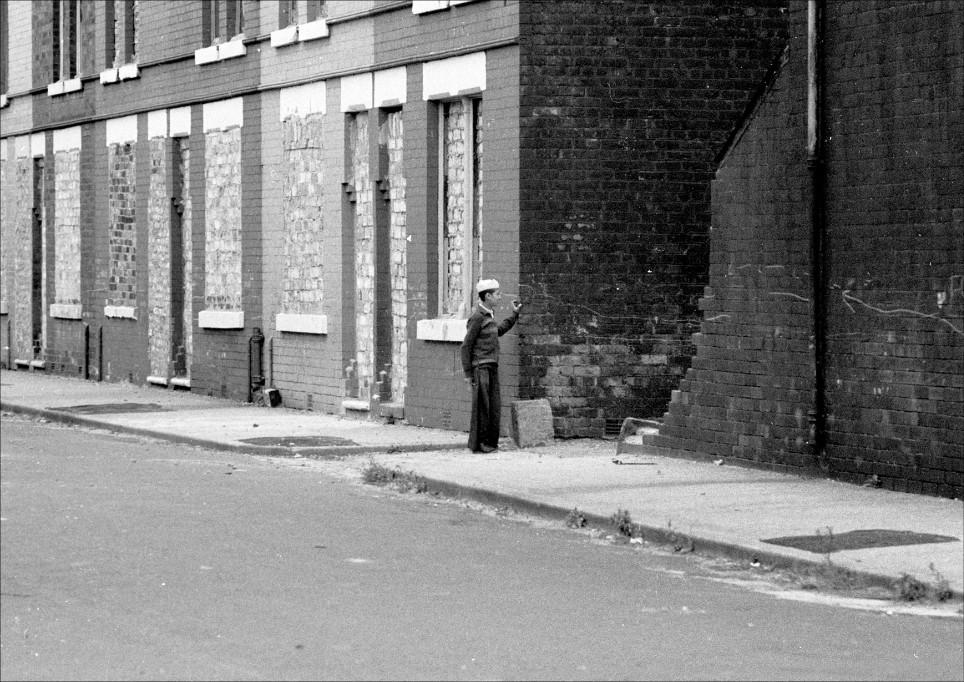
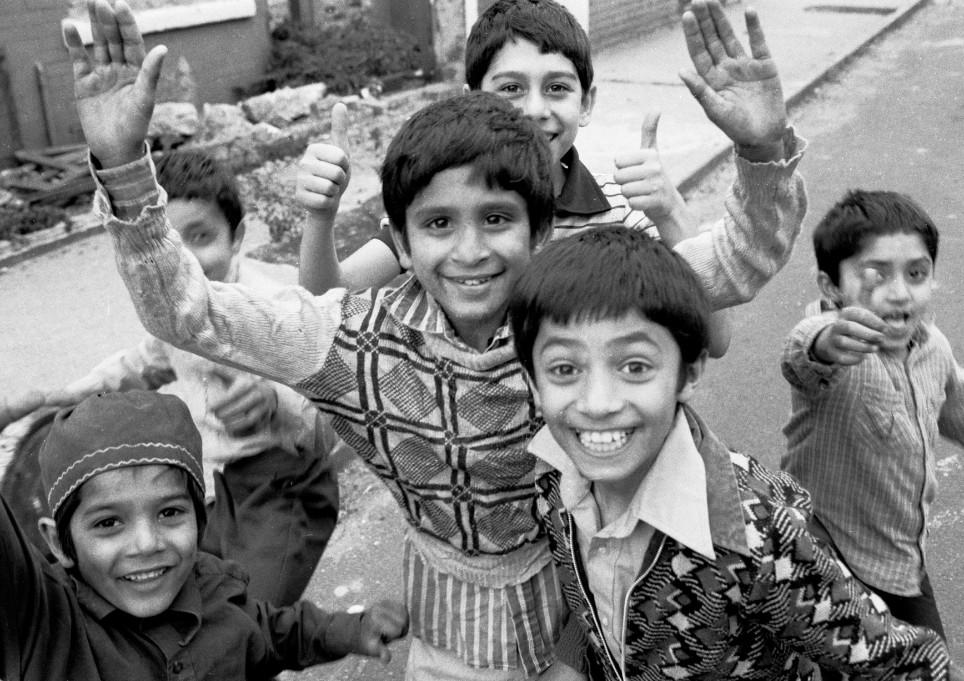
In 1984 I lived in West Manchester, I read in the local newspaper that part of Trafford Park Village was going to be demolished the next week. Trafford Park was a major industrial area and Trafford Park Village was an almost self-contained residential area of mainly terraced housing built at the turn of the 20th Century for the workers in Trafford Park. Armed with my film SLR, a 50mm lens and one roll of black and white film I set off to photograph what I expected to be an unoccupied derelict area however as I walked around in the dereliction I was surprised to find the occasional house still occupied with curtains at the windows. Word must have spread because within minutes I was besieged by children all wanting their photos taken and to know if they were going to be in the newspapers. Many years later when I had my first web site featuring these images I started getting messages from the children in the photos, now adults, wanting to know if I had any other photos and if they could have copies. My web site started getting inundated with hits from their extended families and as I only had a limited bandwidth free web site it resulted in it being taken down by the hosting company. I relaunched the images on a paid site and still continue to get interest. I held an exhibition of the work at the Trafford Park Heritage Centre and donated a set of prints to their archive. A small part of the Village was saved from the demolition and still stands.
http://www.nigelrichardsphotography.co.uk/
Protest
Lard van den Berg
1. Protest
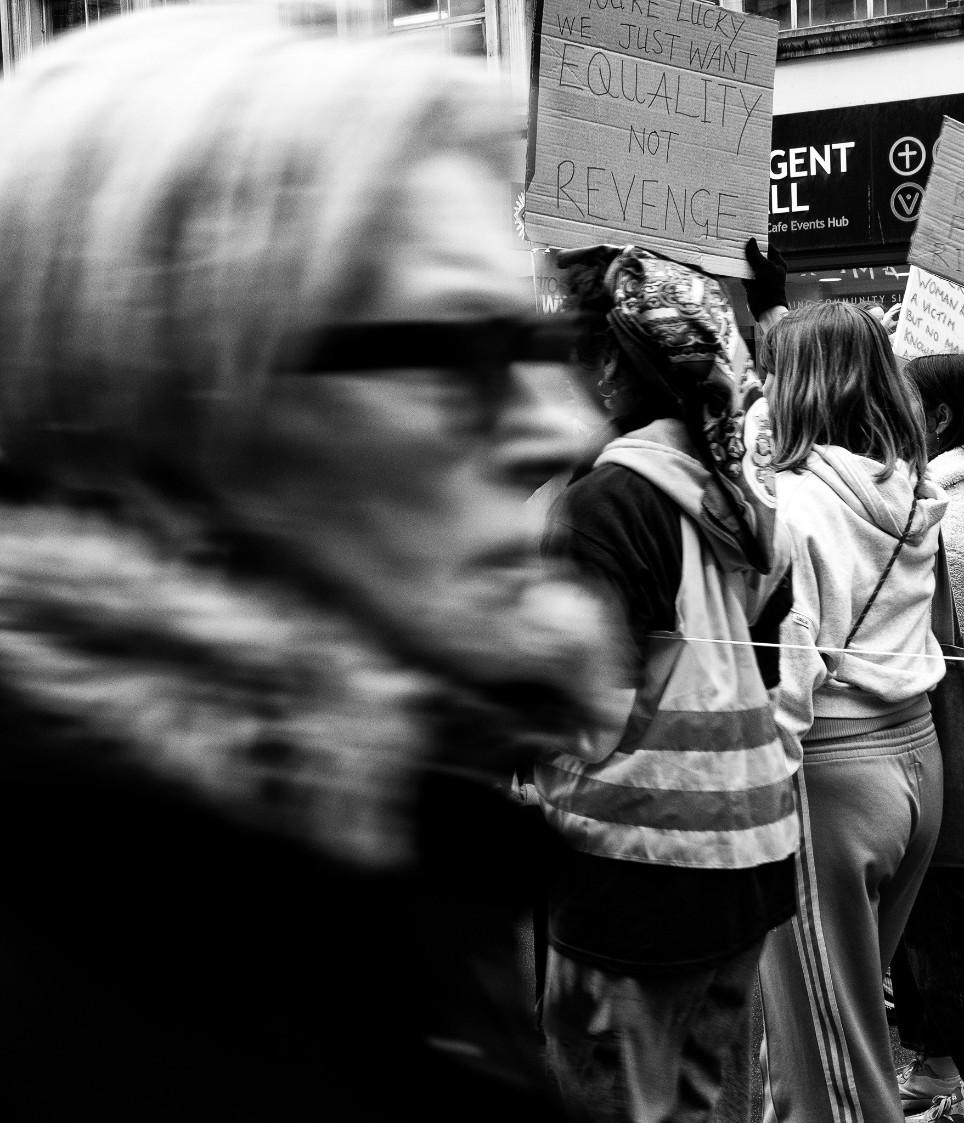
They stand strong as part of the crowd, not trying to be the loudest, just the clearest. Their signs are hand-painted, the letters uneven, the message unmistakable. Around them, chants rise and fall like waves, but they stay steady - a fixed point in the noise, a quiet centre in the middle of a storm of voices.
They didn’t come here to perform. There’s nothing polished about their presence, nothing curated for cameras or applause. Their jackets are worn, their hands cold, their faces set with the kind of determination that doesn’t need to shout to be heard. They are here because something inside them finally refused to stay still.
Just women who have run out of patience and decided that silence costs more than speaking. Women who have carried too much for too long the weight of expectations, the weight of being dismissed, the weight of being told to wait, to soften, to shrink. Today they refuse all of it.
They move through the crowd with a kind of grounded certainty, each step deliberate. When someone pushes past them, they don’t flinch. When someone challenges them, they don’t look away. Their strength isn’t loud or dramatic; it’s the kind that builds slowly, like pressure beneath the earth, until one day it breaks the surface and refuses to be buried again.
Around them, the city hums - sirens in the distance, the thrum of traffic, the echo of chants bouncing off buildings. But they hold their space. They hold their truth. They hold each other. A hand on a shoulder, a nod of recognition, a shared breath in the cold air. Small gestures that say: You’re not alone. I’m here too.
And in that moment, they become more than individuals in a crowd. They become a force - steady, unshakeable, impossible to ignore. Not because they are the loudest, but because they are the ones who refuse to step back.
2. Detachment of protest
She passes the demonstration with a kind of composed detachment, her coat immaculate, her steps measured. The crowd around her is loud, restless, alive with purpose - a living pulse of raised voices and lifted signs. She is none of those things. She moves through their momentum like a vertical line drawn through a storm, straight and unbending.
Their chants crack the air, raw and insistent, but she doesn’t react. Not a flicker. Her expression stays fixed in that practiced neutrality, the kind worn by people who have learned to keep their inner world sealed tight, no matter what swirls around them. Where the protesters surge forward in waves, she glides - smooth, controlled, untouched.
People part around her without thinking, the way water splits around a stone. They shift, adjust, make space, while she never alters her pace. The contrast is almost jarring: their bodies tense with urgency, hers relaxed with certainty; their faces flushed with emotion, hers composed to the point of stillness.
She doesn’t break stride. She doesn’t look back. She simply continues, a clean line of elegance cutting through a tangle of conviction. For a moment, she becomes a reminder that two realities can occupy the same street - one fighting to be heard, the other moving forward as if the noise belongs to someone else’s life entirely.
Beside her, the crowd swells again, reclaiming the space she passed through. Ahead of her, the city opens like a quiet corridor. She walks into it without hesitation, leaving the echo of their urgency behind her like a sound fading through a closed door.

Overlapping Spaces
Tony Fisher
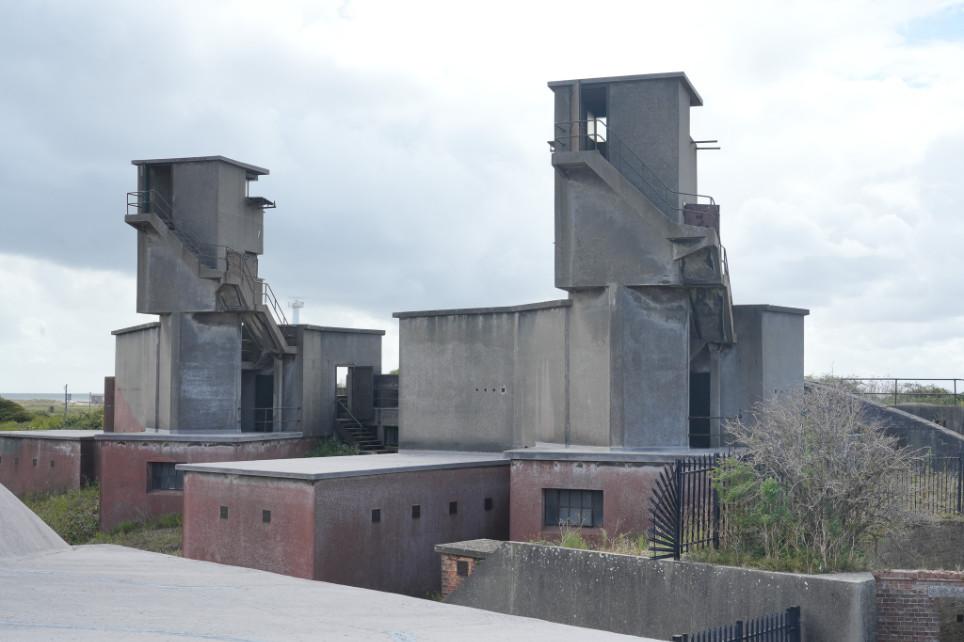
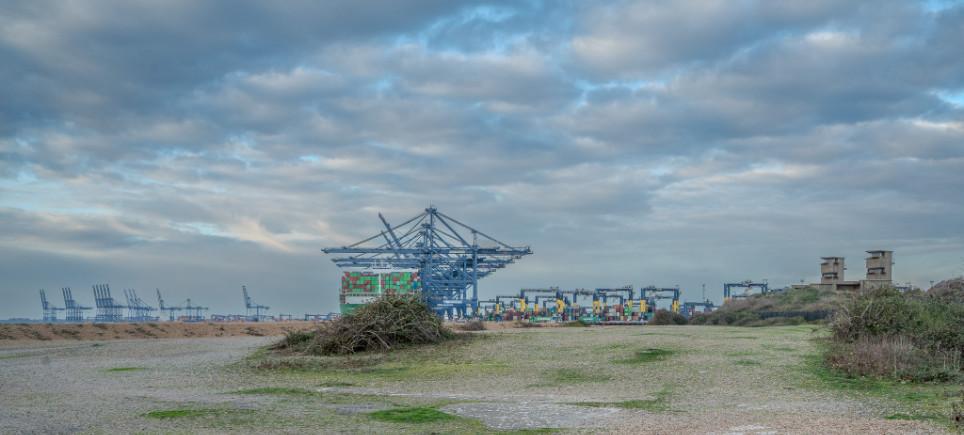
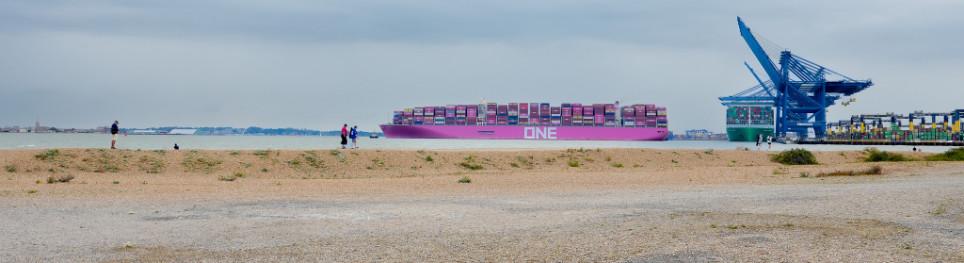
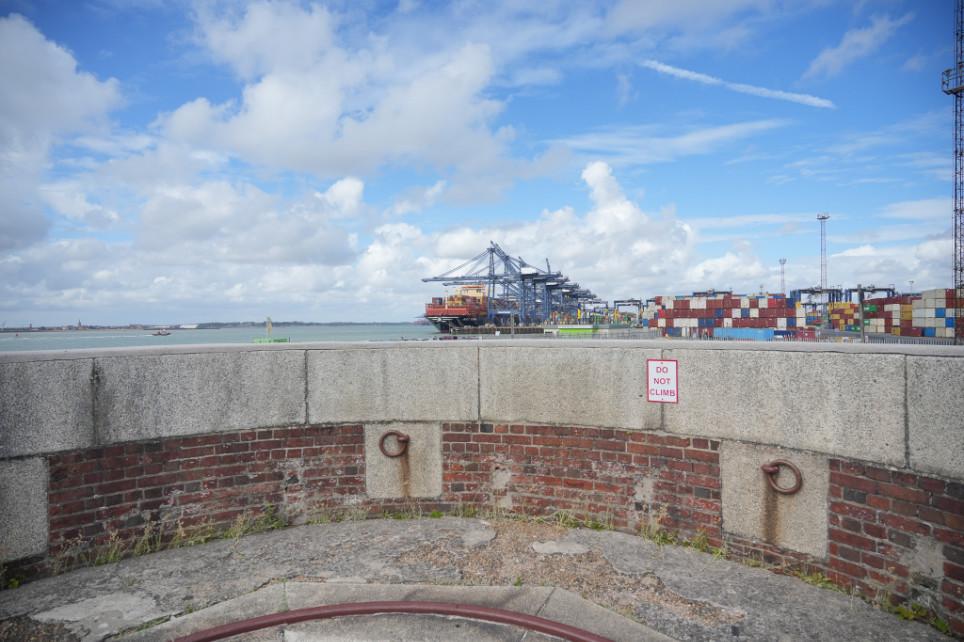
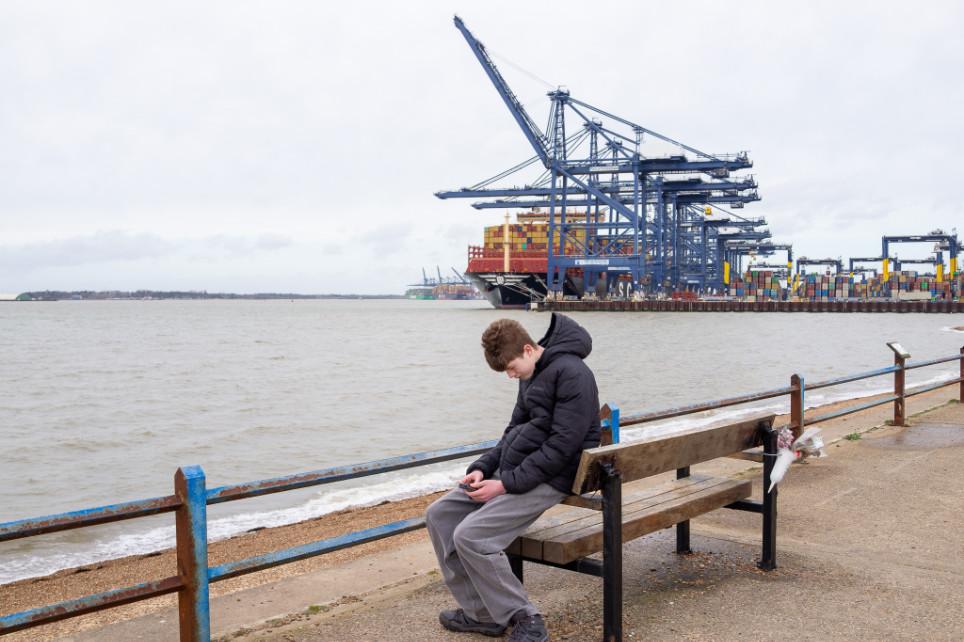
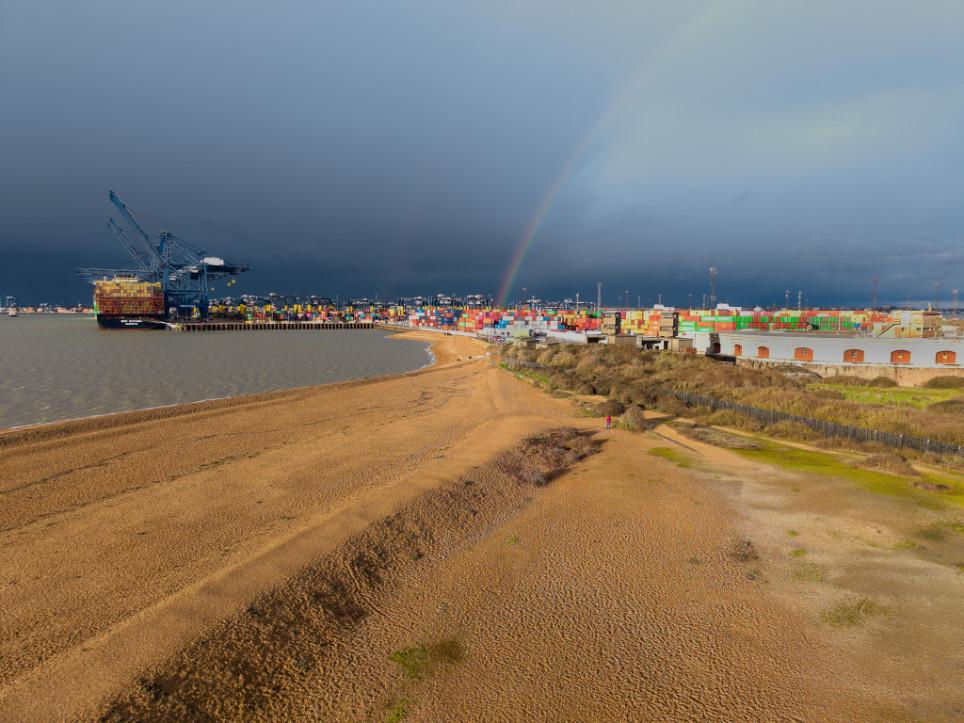
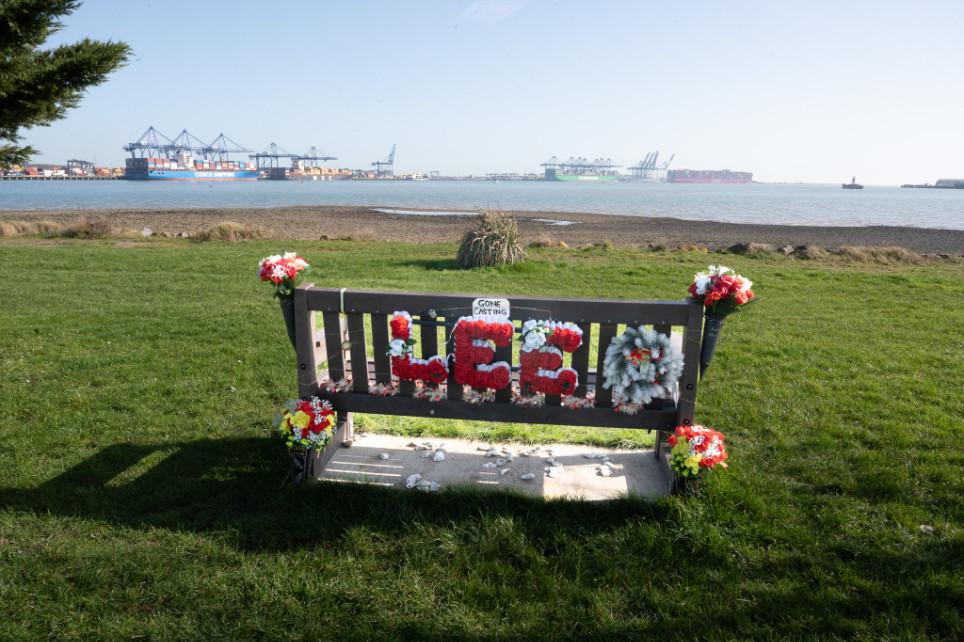
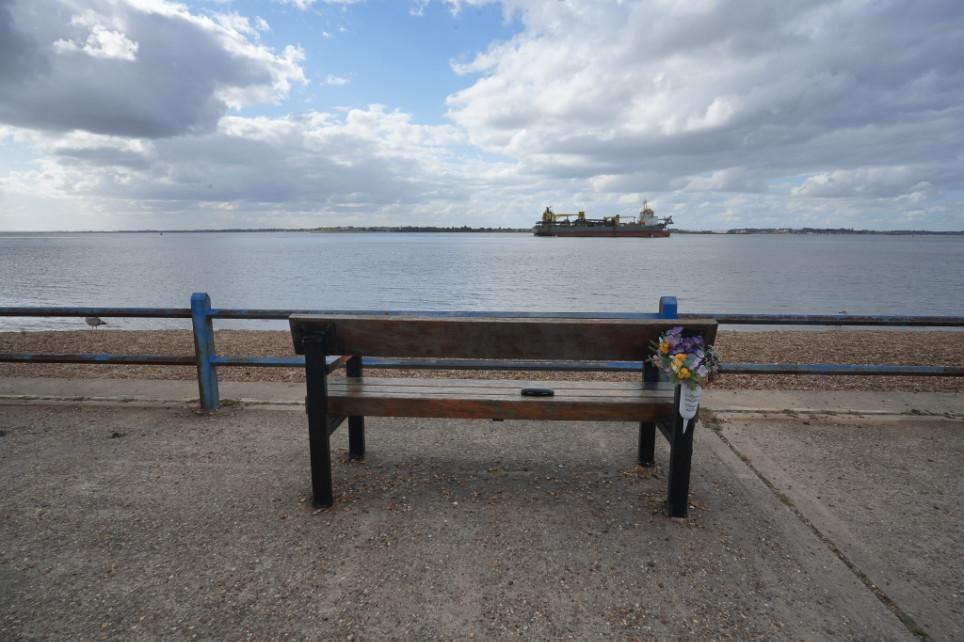
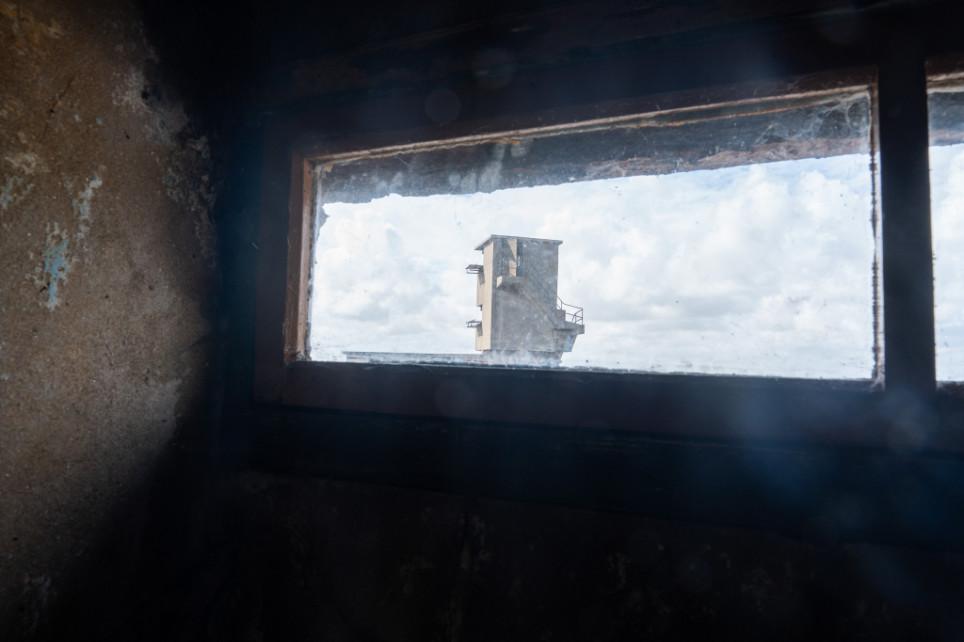
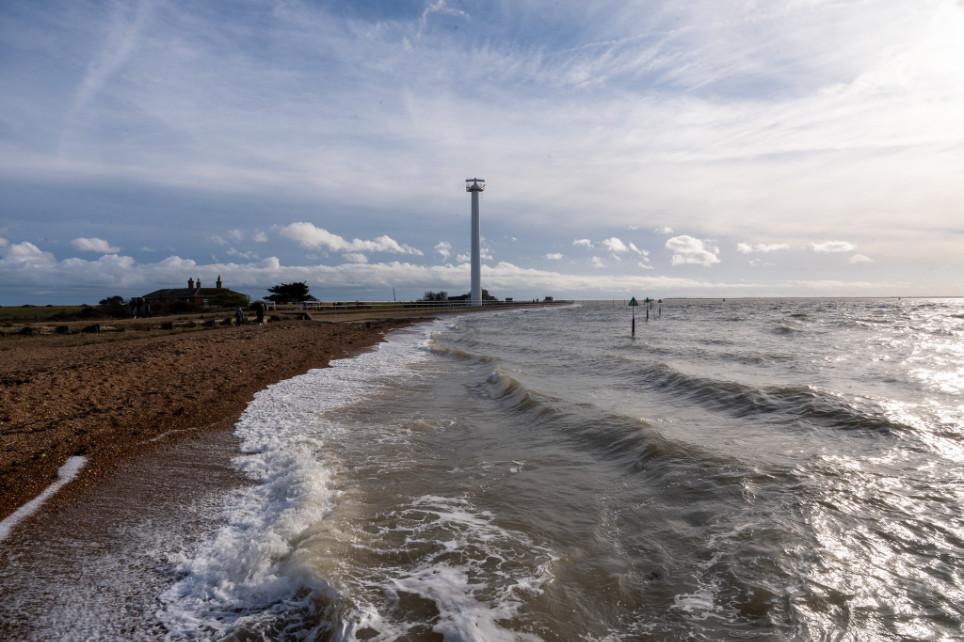
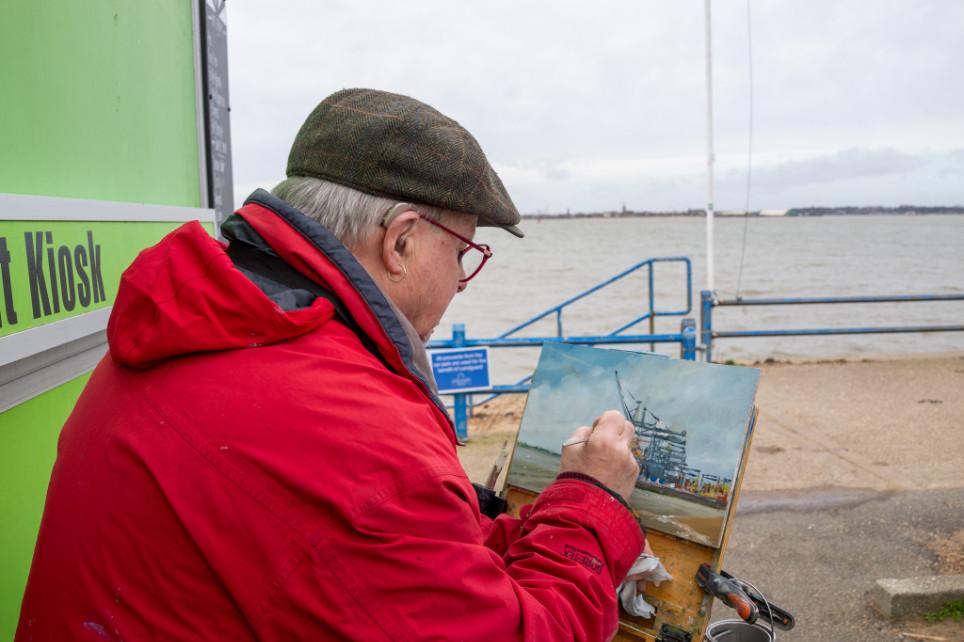
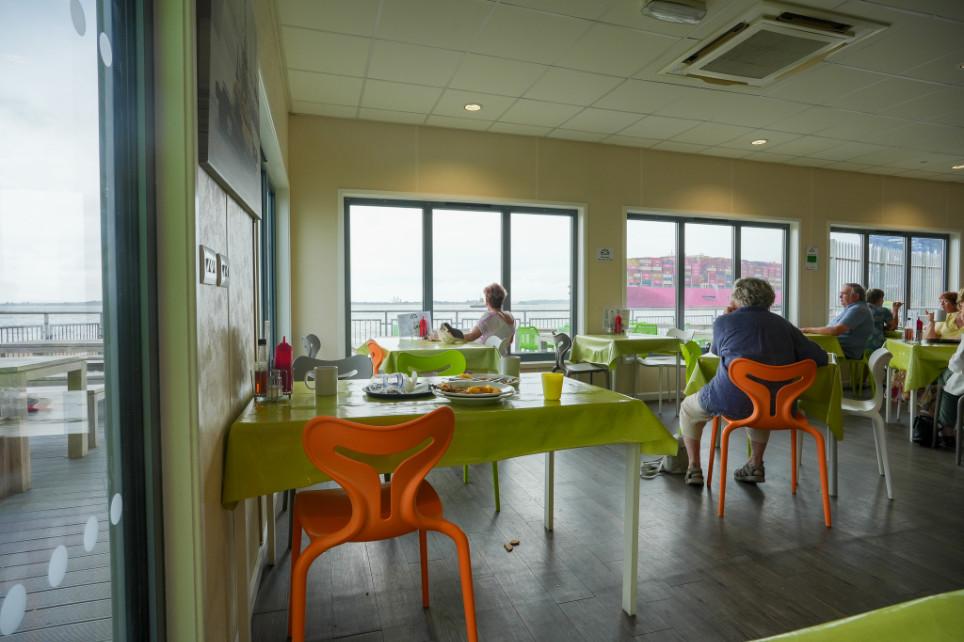
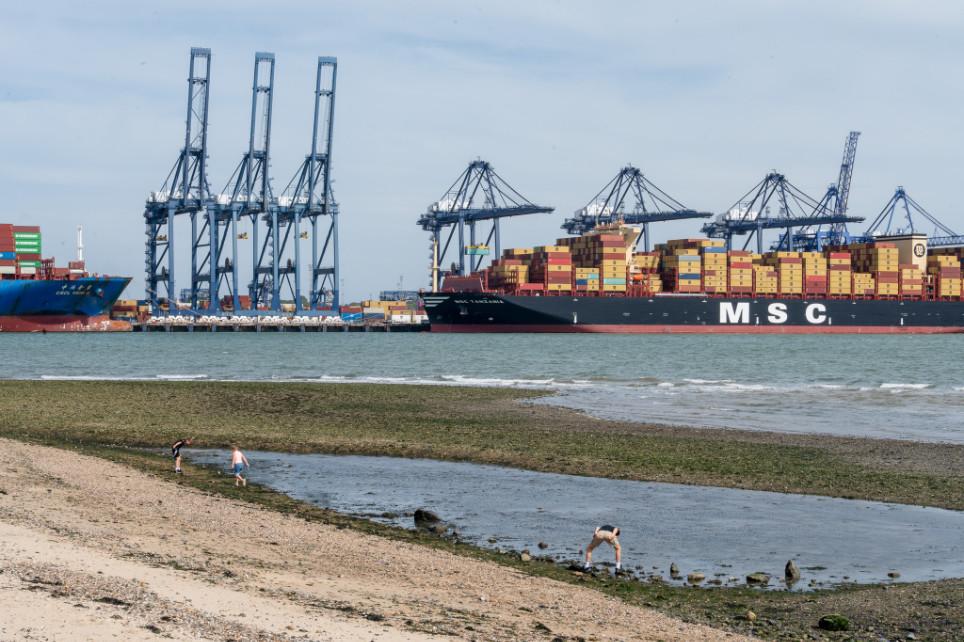
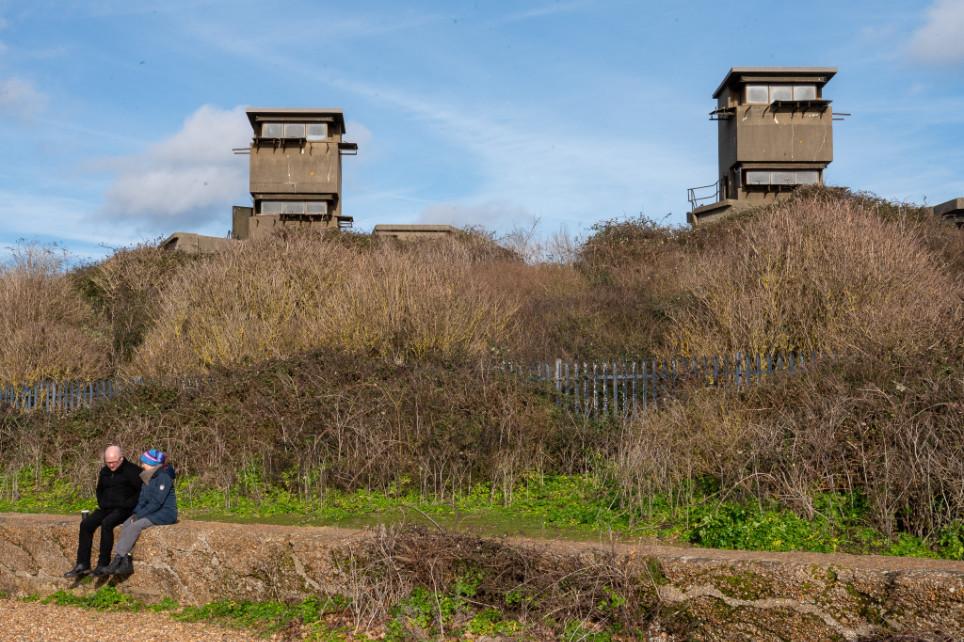
This project documents a coastal landscape where industrial infrastructure, historical defence, and everyday social life coexist within close proximity. Situated beside thePort of Felixstowe, one of Europe’s largest container ports, the work focuses on publicly accessible spaces where leisure activities unfold against the backdrop of global logistics. Adjacent to this,Landguard Fortprovides a visible reminder of earlier forms of territorial control and national defence. The juxtaposition of these uses creates a tension and dissonance with the scale of the enormous docks overwhelming the tiny figures fishing, playing and simply sitting and observing from the adjoining beach area, with the majesty of some of the world’s largest ships in the background. The Viewpoint Café hosts more observers and serves up Tug Driver’s Breakfasts and Handballer’s Brunches.
Through an observational documentary approach, the project examines moments in which ordinary social behaviour intersects with the presence of large-scale industrial power. Rather than treating the port as a distant or abstract subject, the work focuses on proximity and coexistence, asking how global systems are experienced at a local, human scale. An added element is the way in which places from which the scene is observed, such as benches and fences, have been appropriated as memorials for those who have died.
Felixstowe Docks
Over 45% of the UK’s trade passes through Felixstowe Docks with ships arriving from all points of the globe day and night. The Docks are active 24 hours a day with the noises of containers being loaded and unloaded, alarms buzzing and ringing, and the sound of metal on metal ringing out across the beach. The site is also the location of the Landguard Fort, a military site since Tudor times. Although it is now a museum it served military purposes continuously until the 1960s. In 1667, during the second Dutch War, on the orders of Admiral de Ruyter, 1,500 Dutch marines (musketeers, pikemen and sailors as grenadiers) landed at nearby Cottage Point and marched down the coast to attack the fort. The garrison repulsed the Dutch assault. After numerous reconstructions over the centuries the fort played important roles in both world wars in the 20th Century. Harwich (which lies at the other side of the estuary on which the port sits) became the most important naval base on the East Coast south of Edinburgh during the first world war. The end of the war saw a remarkable sight when 160 German Uboats arrived in the haven to surrender. The fort also played a significant part in the evacuation of British and French forces from Dunkirk in 1940 and Operation Overlord, the Allied invasion of occupied Europe in 1944. It was also the base for Operation Outward, the release of thousands of explosive balloons to drift across Europe and damage or destroy important infrastructure such as electric power stations.
The Port began life in 1875 but did not expand towards its current size until 1966 when work began on the New South Quay which opened in 1967 when it became the UK’s first purpose-built container terminal. Work has continued to expand the port ever since. It is perfectly positioned because of its proximity to the main shipping lanes and the major ports of Northern Europe.
I was attracted to this site because of the juxtaposition of different and conflicting uses over time culminating in a fairly unique geographical space which combines industrial, military and social uses within what is still a small area. The monumentality of the huge ships and cranes combines with mundane use of social spaces with such dissonance of scale as to be arresting and create tension. At the same time, the historical military imagery reveals the layers of history that the site contains. The sound of metal on metal as containers are loaded or removed echoing the sound of the seven-gun casemate battery which was constructed facing the river to house four 12.5 inch and three 10-inch Rifled Muzzle Loading guns (which are no longer there. The empty battery (Darrell’s Battery) still acts as a sentinel though, staring out to sea.
Influences and Conceptual Framework
I was influenced when researching this project by a number of photographers, in particular Alan Sekula for his writing (in “Fish Story” on ports, labour and global trade. He frames ports (which he studied over a seven-year period) as political and economic systems, not just locations. Also, J Davies (in “The British Landscape”) for his industrial landscapes and visions of post-industrial Britain, usefully for focus on scale, distance and quiet observation. Finally, S Shore (in “The Nature of Photographs”) and his discussion of vernacular aesthetics, neutrality and the significance of the ordinary. The project also shares conceptual affinities with W B Sebald (in “The Rings of Saturn”) which examines the Suffolk coastline as a landscape shaped by overlapping histories, decay, and human intervention. Sebald’s method of attentive observation and his treatment of landscape as a repository of memory resonate with this work’s focus on coexistence rather than chronology. While operating in a photographic rather than literary form, the project similarly acknowledges how historical, industrial, and social layers remain visibly present within the same physical space.
Bibliography
Davies, J. (2006)The British Landscape.London: Chris Boot. Sebald, W.G. (2002) The rings of Saturn.London: Vintage. Sekula, A. (2018)Fish Story.Third revised English edition edn. London: Mack. Shore, S. (2007) The nature of photographs.Second edn. London: Phaidon.
Match Strikes
Martyn Pearson MA
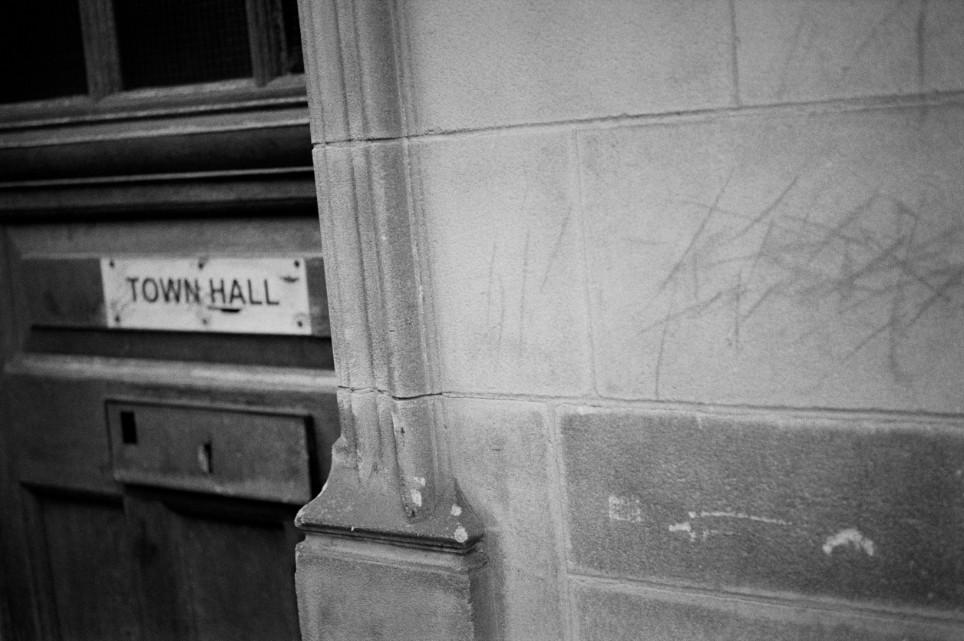
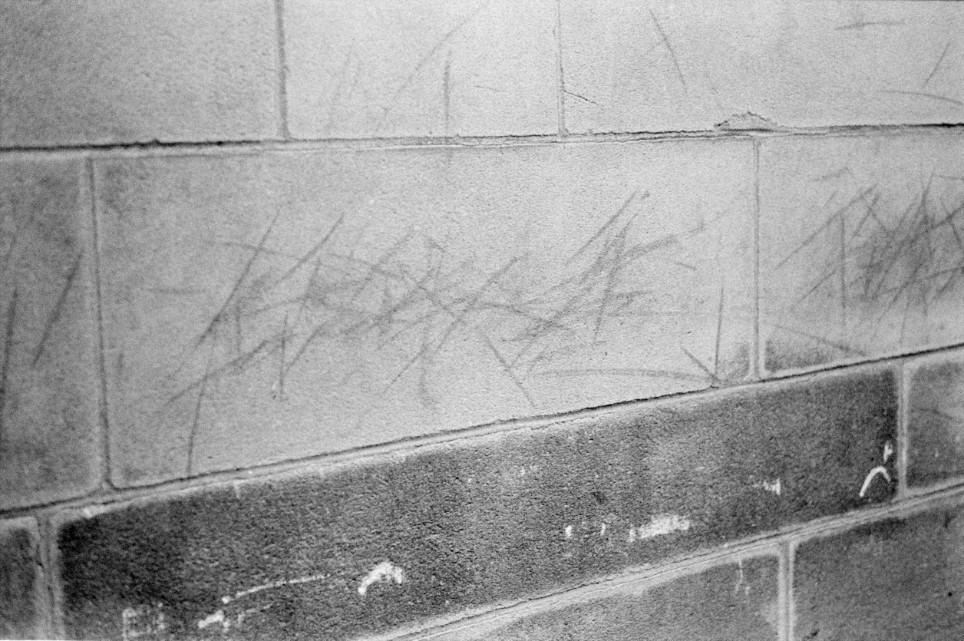
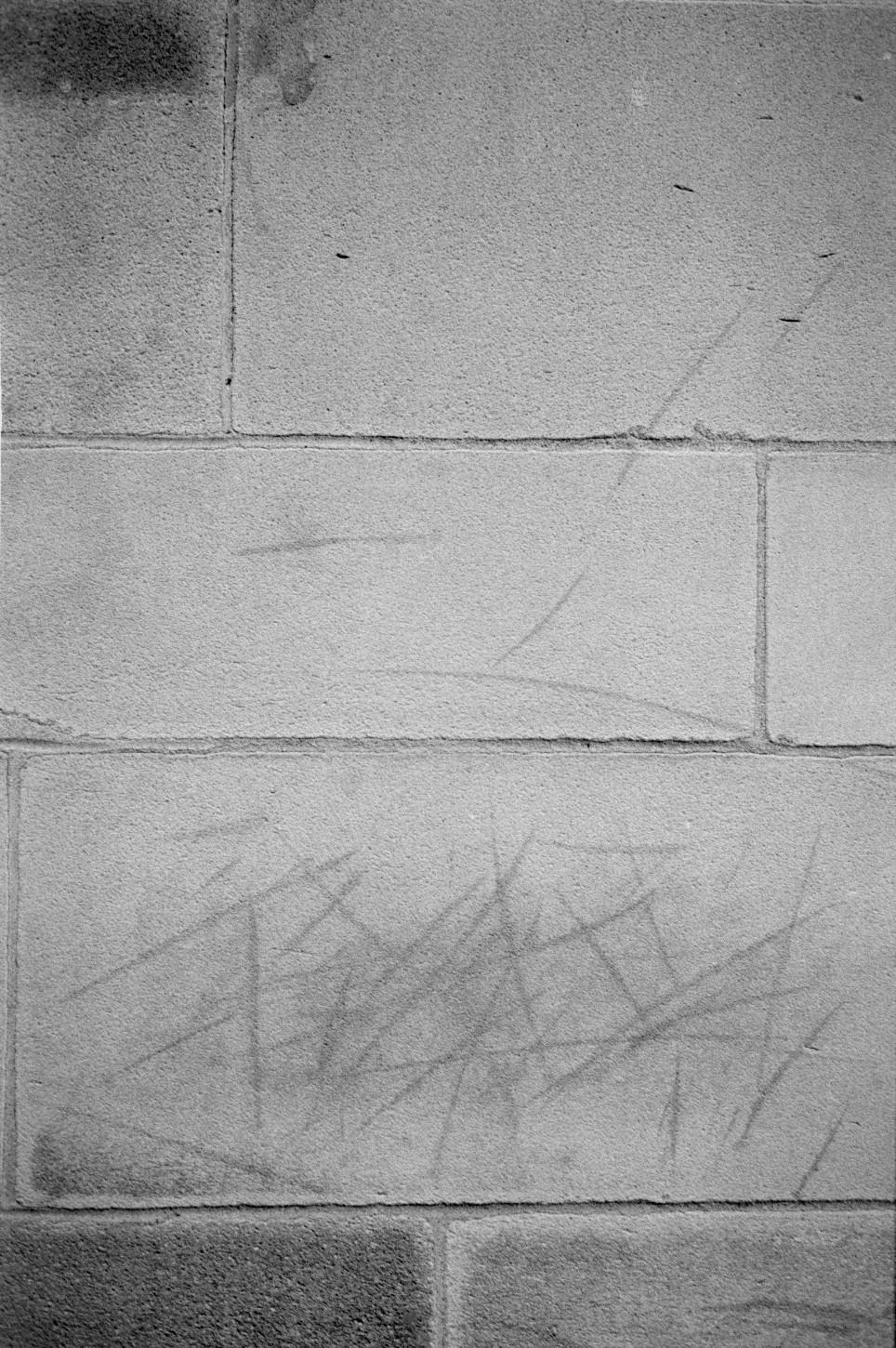
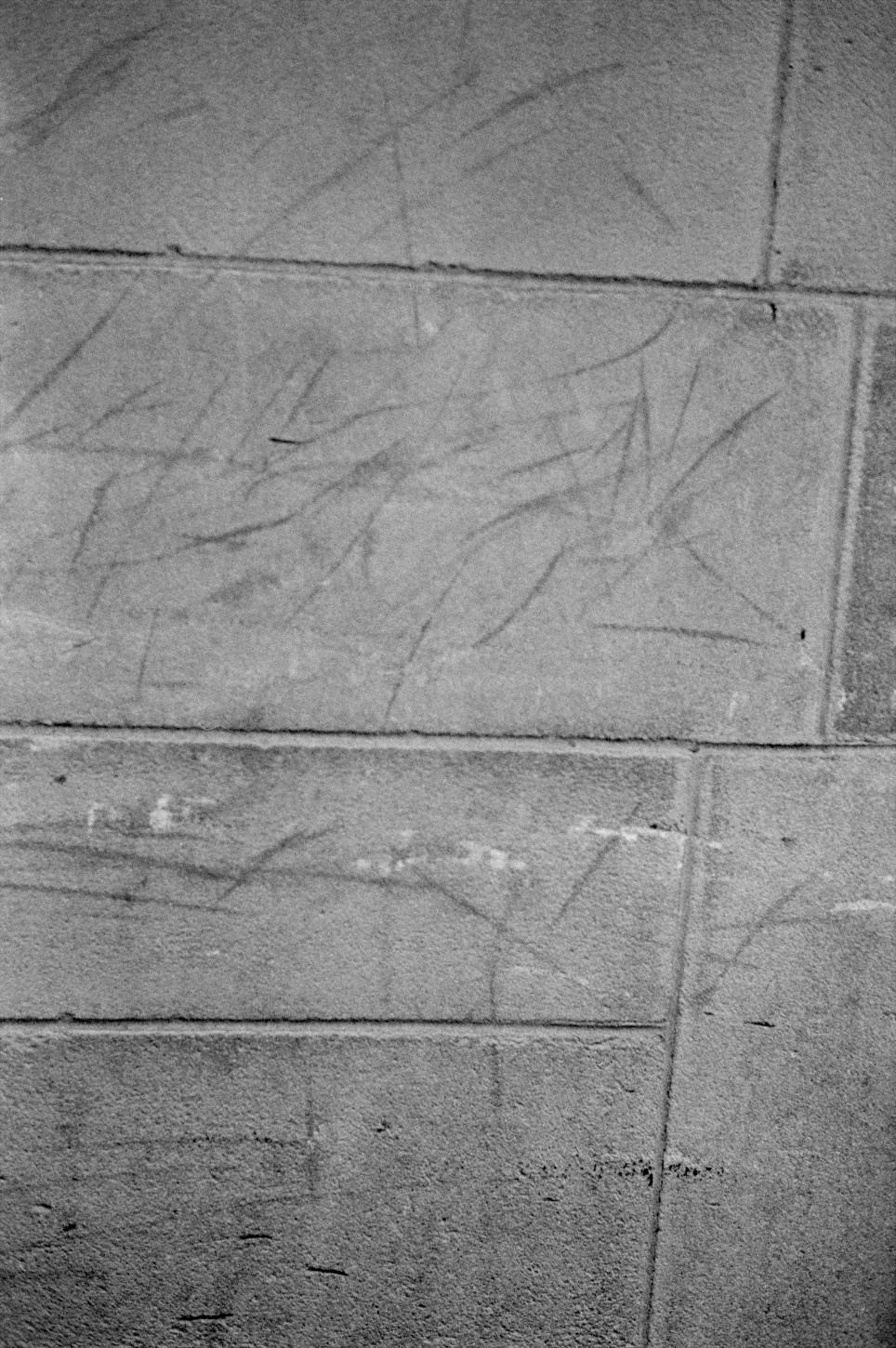
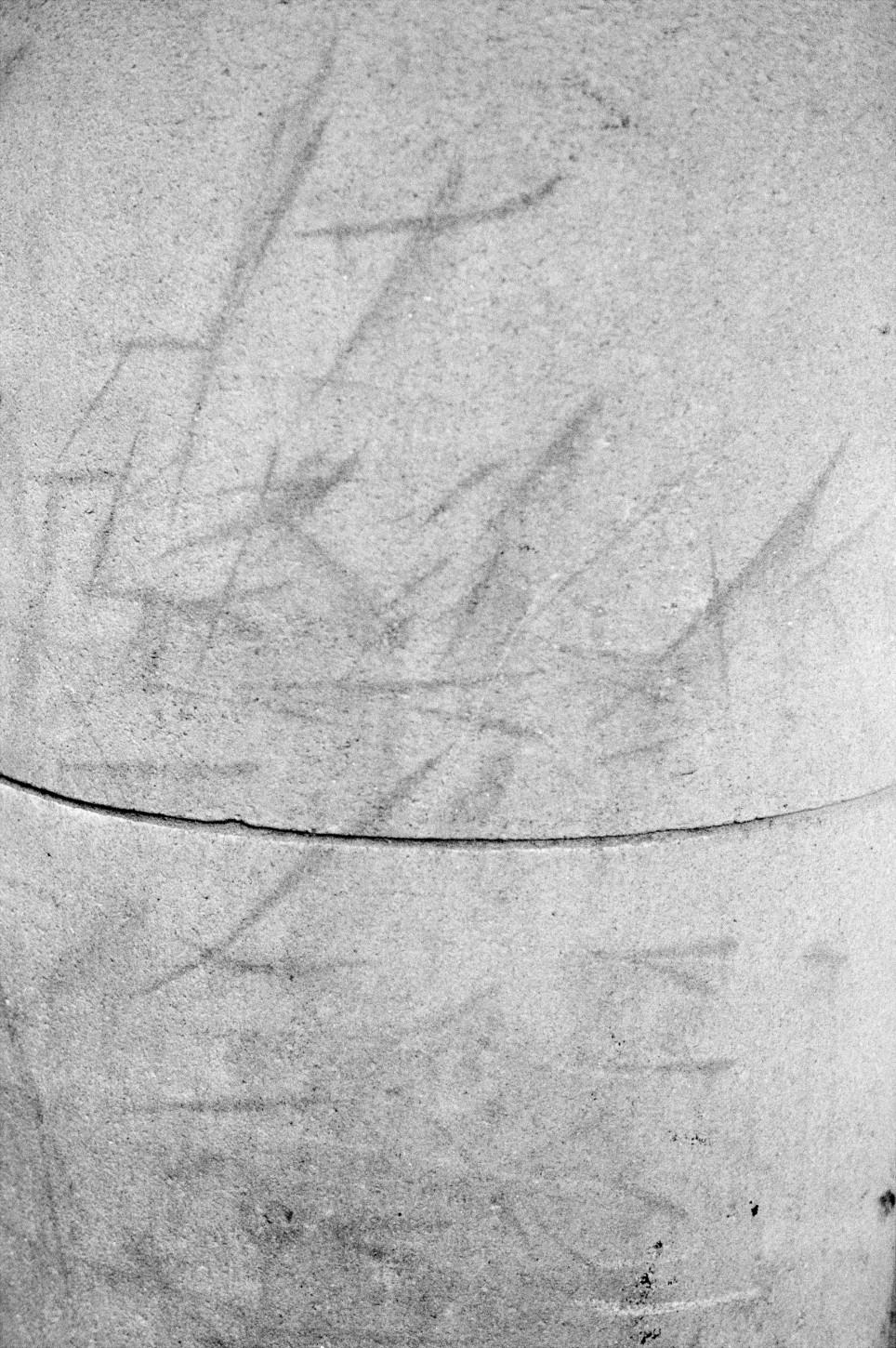
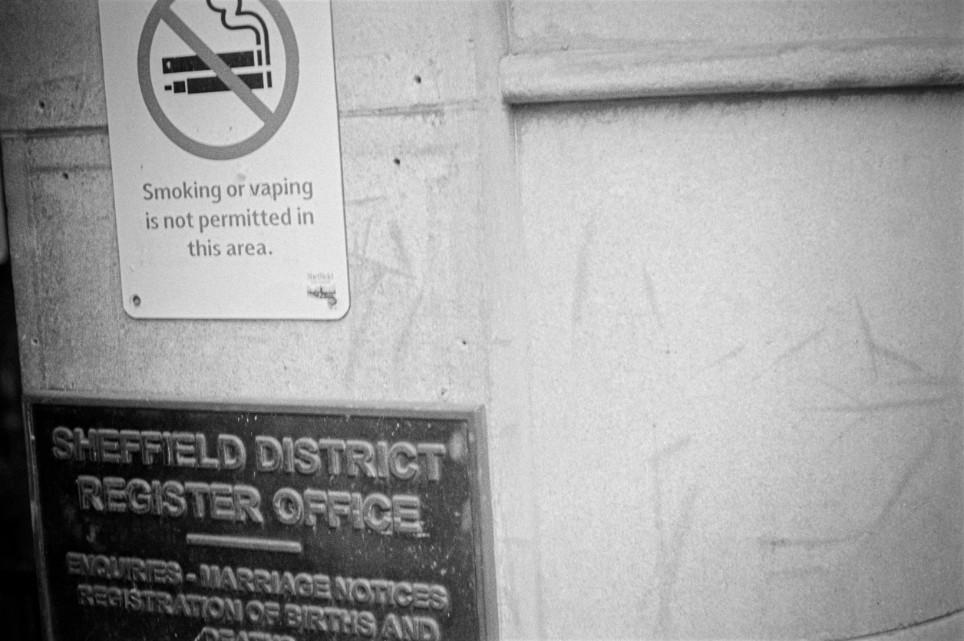
These marks are often seen on stone walls close to entrances to civic buildings. They were created by smokers waiting to conduct official services, such as to register a birth, marriage or death, and were also created by council employees lighting street gas lamps. These marks are indelible due to a chemical reaction between the match tip and the wall itself. These 'friction matches' were eventually made illegal but were common in the mid 19th Century, so we don't see these marks on more modern buildings.
In the early 19th century, yellow phosphorous was added to matchstick heads making them easier to ignite. The demand for the new ‘strike-anywhere’ matches was enormous, creating a profitable international industry. It also led to a new industrial disease. Match factory workers, primarily young girls and women developed unbearable abscesses in their mouths, leading to facial disfigurement and often fatal brain damage. In addition, the gums developed an eerie greenish white ‘glow’ in the dark. This condition was termed 'Phossy Jaw.' (Royal College of Surgeons of England, S. Isaac, Sept 2018.)
Practising Posthuman Photography in Ouistreham
Mark Stothard
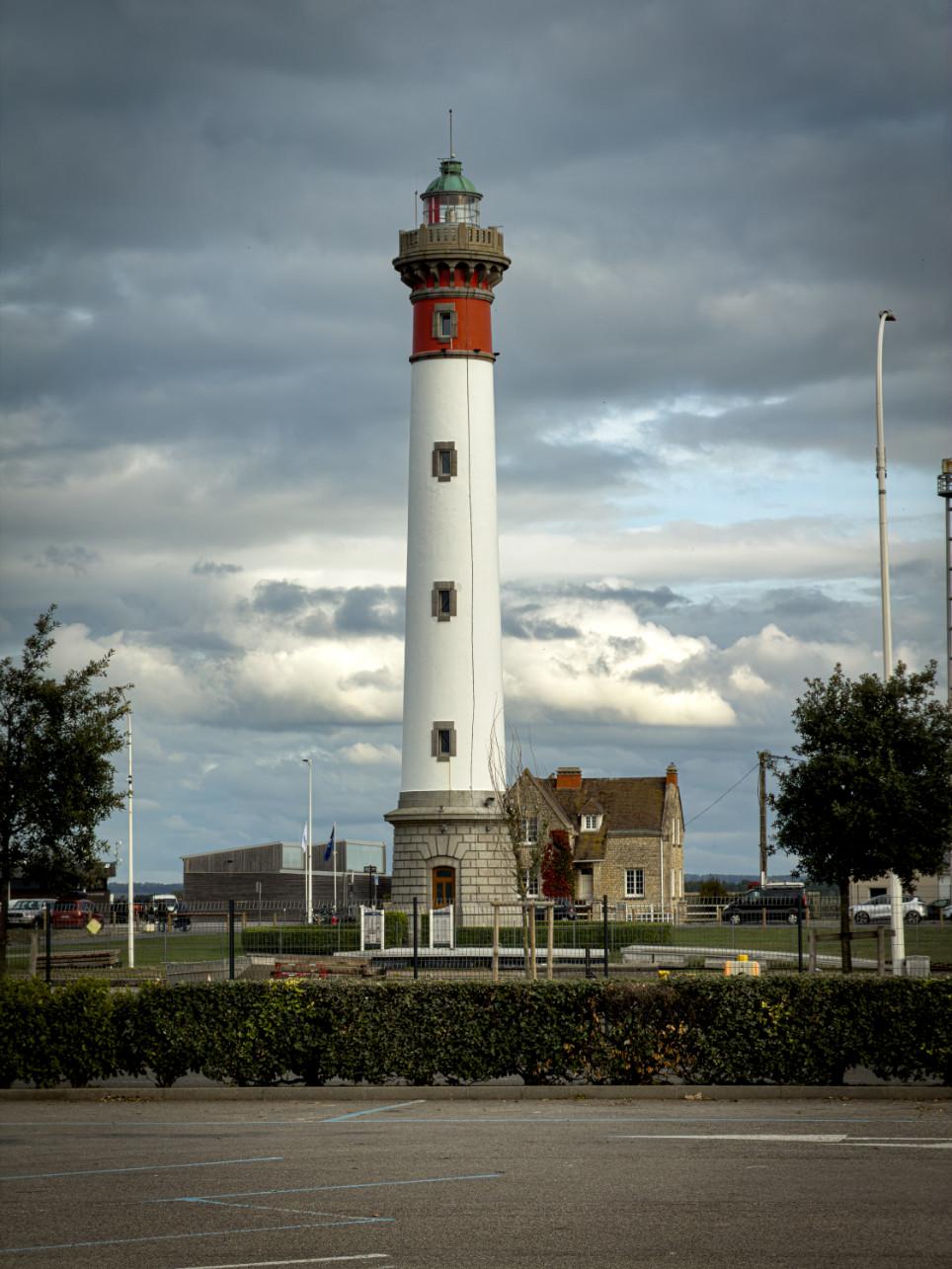
Ouistreham is a place often experienced in transit. People arrive by ferry, pass through the port, and move on. Cars roll off the ship while passengers head inland. Signs, barriers, ramps, roads, and terminals keep everything moving. The place itself goes almost unnoticed by most travellers.
As a photographer, I wanted to do the opposite. I decided to stay and see what happens when Ouistreham is treated not just as a passageway, but as a destination worth noticing.
Instead of seeing Ouistreham as just a gateway, I started to view it as a place worth staying in. The port is more than a transport hub. It brings together weather, steel, labour, memory, concrete, sea air, waiting, and movement. Here, human systems and nonhuman forces are always working together.
This shift in perspective led me to the idea of posthuman photography.
This idea might sound academic, but it is simple in practice. It asks us to stop seeing photography as just a human act, controlled by one person looking at the world from outside. Instead, it invites us to see picture-making as something shared. The photographer, the camera, the light, the wind, the surfaces, the structures, and the atmosphere all shape the image.
Understanding this idea is crucial in Ouistreham, where the relationship between people and place is especially visible.
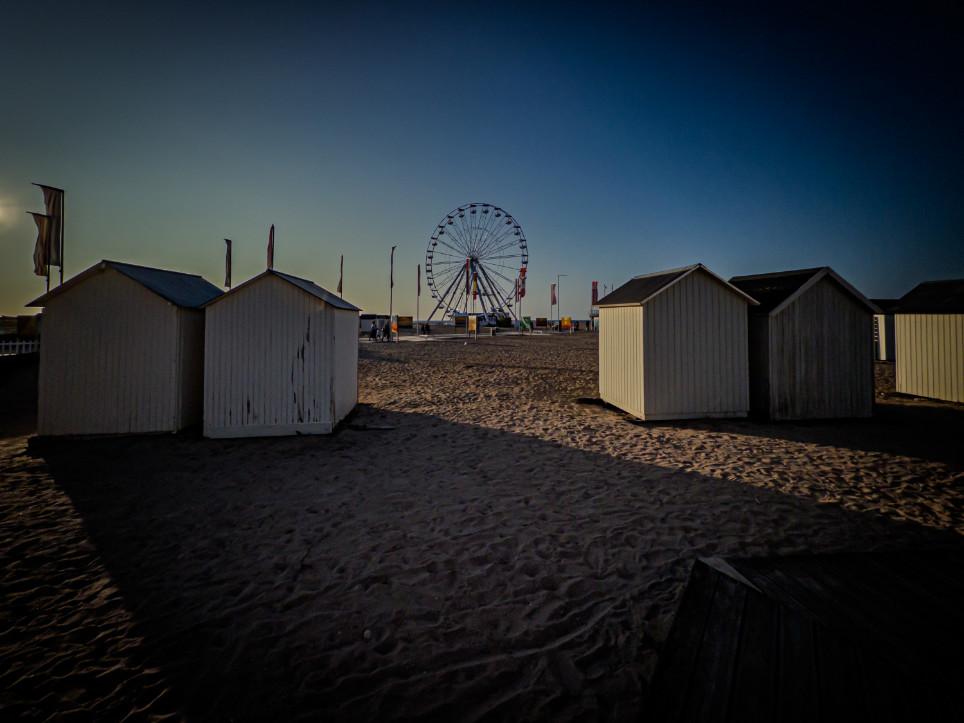
The port is filled with hard materials and carefully managed spaces. Ferry ramps show marks of rust and salt. Painted lines stretch across damp tarmac. Glass corridors, terminal lights, railings, fences, road markings, and concrete edges are everywhere. These might not seem dramatic for travel photography, but they shape the whole experience of arriving and leaving.
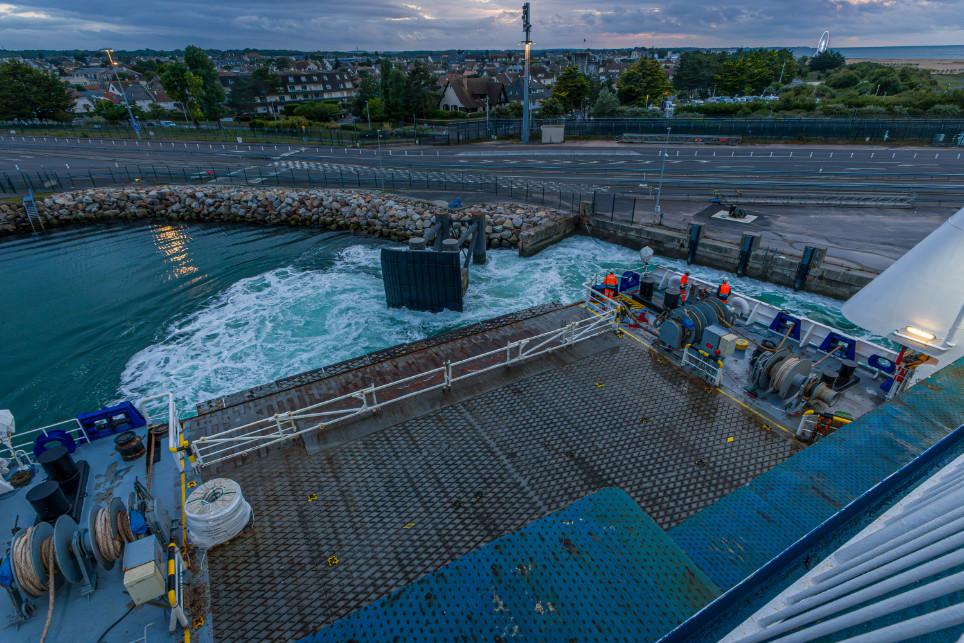
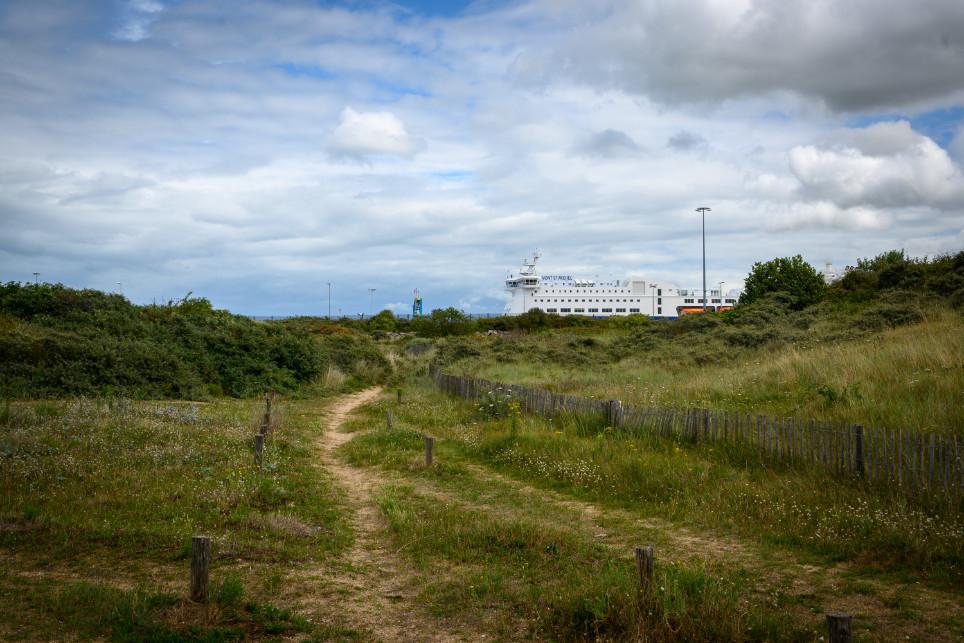
When the Mont St Michel ferry arrives in the harbour, the moment feels both mechanical and emotional. The stern ramp lowers and water churns below. Dock workers in orange wait nearby. The sounds of engines, winches, and propellers fill the air. This is more than just transport; it is a careful dance of labour, materials, timing, and risk. As a photographer, I am part of the scene. The vessel's movement shifts my balance. The wind affects my stability. The camera reads the light in its own way. The image comes from this shared moment.
Recognising this interplay marks a key shift in how I approach Ouistreham with my camera.
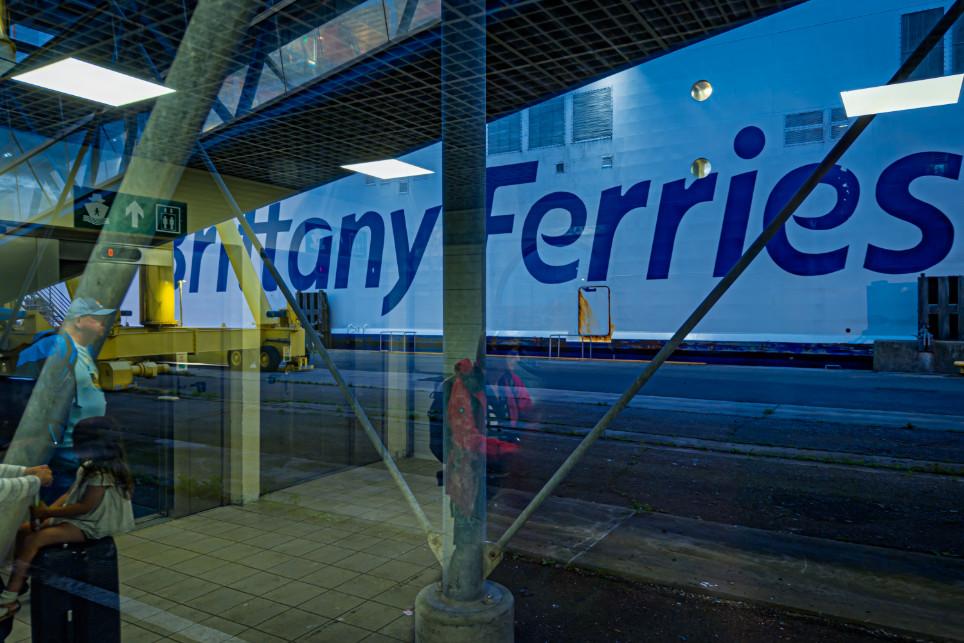
Traditional travel photography often puts the photographer at the centre, as a witness and interpreter. The place becomes something to capture. Posthuman photography asks for more humility. The photographer needs to see that the world is already active before the shutter clicks. The image is not just taken; it comes from interaction, some of which is obvious in the terminal building. Looking through the glass at the side of a Brittany Ferries vessel, I see reflections, signage, beams, interior lights, passengers, and my own faint presence merge into one surface. Inside and outside stop being separate. The glass does not merely frame the scene. It complicates it. The photograph becomes layered, unstable, and alive with overlap.
This matters to a photographer. Photographs are not always clear statements. Sometimes, they hold uncertainty, and that can be a good thing. Reflection, transparency, blur, and interruption can show more truth about a place than a perfect, descriptive image ever could.
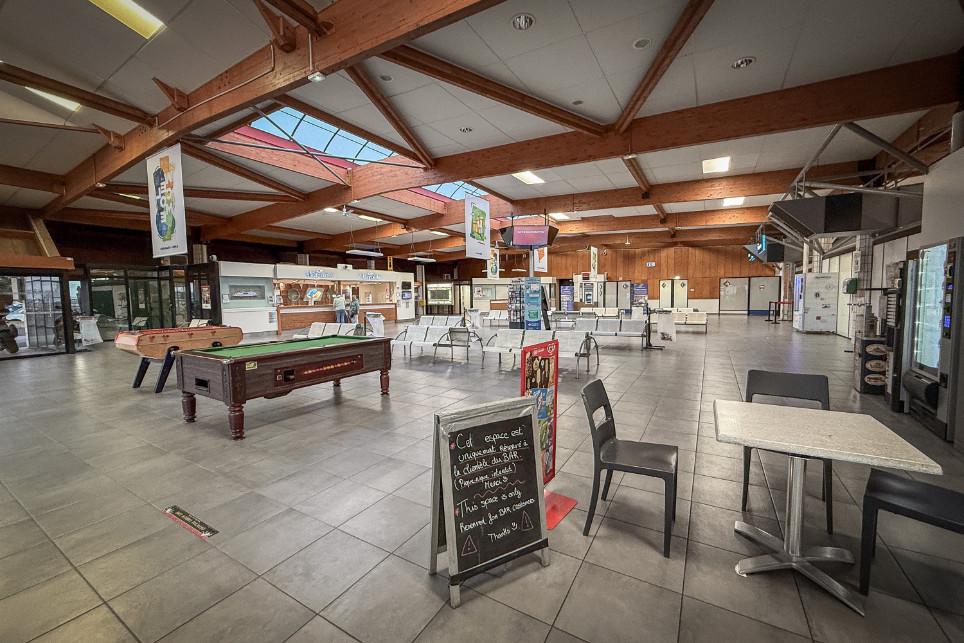
The same thing happens in the waiting hall. At first, it looks almost empty. Pool tables, vending machines, chairs, skylights, tiled floors, and a chalkboard sign are there, waiting. It is easy to see this as empty space. But the longer I stay, the more alive the place feels. Waiting has its own rhythm. Maintenance goes on. Travel is paused but not gone. There is a sense of anticipation in the room. The building holds the emotions of people coming and going.
This is where photography helps me understand tourism in a different way.
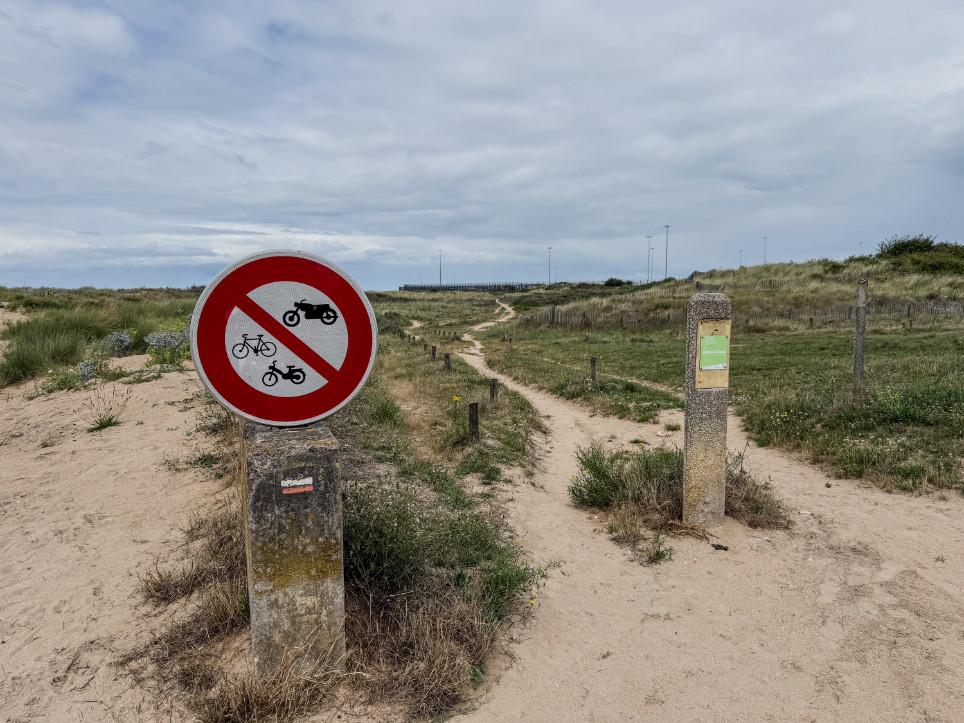
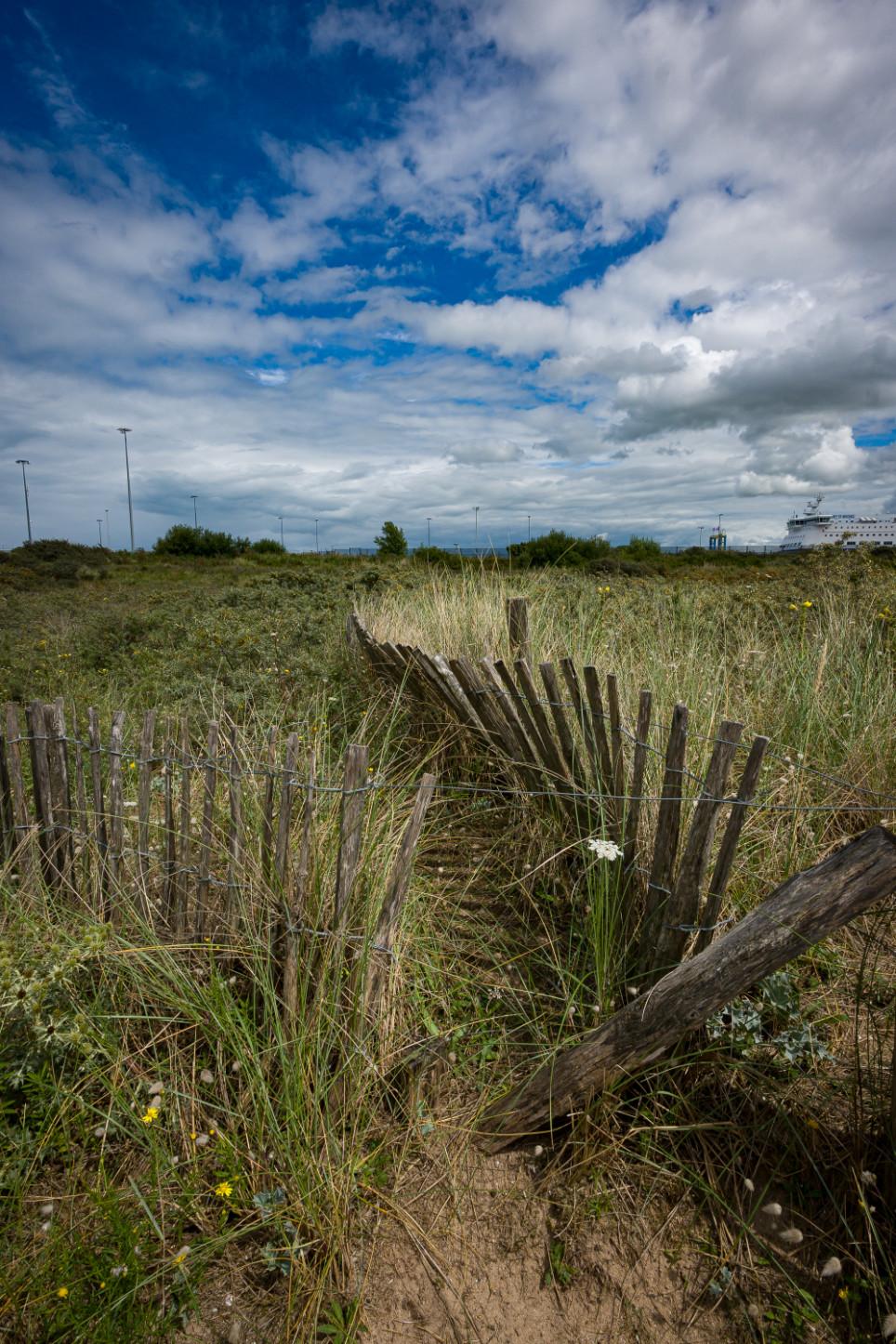
Tourism is often built around movement, efficiency, and quick consumption. We are told to look fast, take a picture, and move on. Slow photography pushes back against this. It asks us to stay longer and pay closer attention. In Ouistreham, slowing down changed everything for me. Wet pavement started to reflect terminal lights in surprising ways. Salt stains on metal became signs of time passing. Barriers, corridors, and ramps began to feel less like background and more like important parts of the scene. This wider view also made me rethink what lies near the dunes; a winding sandy path leads the eye toward the distant ferry. It would be easy to make the ship the main subject, a symbol of travel and movement. But that is not how the place feels. Grasses, fences, clouds, scrubland, and the coastal air are just as important. The ferry is part of the environment, not separate from it. It appears in the frame as one element among many. among many.
That balance matters. It shifts the photograph away from the old habit of placing human purpose at the centre of every scene.
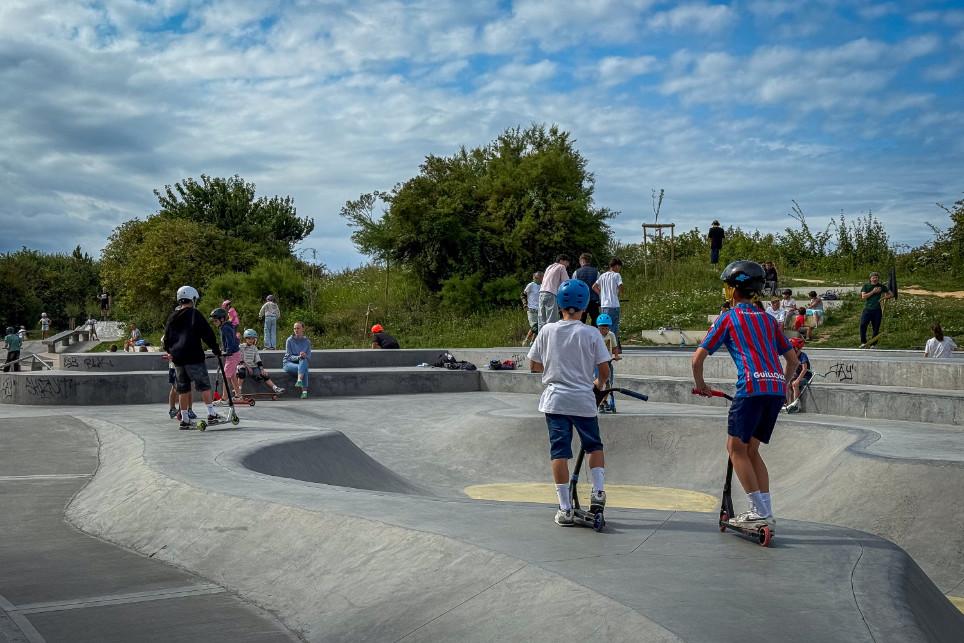
Ouistreham is special in this way because it holds many layers at once. It is both a working port and a seaside resort. It is shaped by memories of war and is part of a living coastal environment. Systems of care and repair shape it in ways most visitors do not notice. Workers repaint structures. Surfaces corrode. Moss grows. Birds feed near customs areas. Seaweed clings to industrial edges. These details show the port is always changing. It is always being made and remade. Paying attention to these details also changes how I think about the ethics of photography.
I do not mean that every photo must make a moral statement. I mean that paying attention can be an ethical act. Noticing maintenance, labour, erosion, and coexistence helps us resist turning places into mere spectacles. It is important to see that places are kept going by many kinds of visible and invisible work. The ferry port does not run by magic. It relies on people, machines, weather, cleaning, repairs, planning, and adaptation.
Photography can honour that.
For me, this is one of the strongest connections between posthuman photography and slow tourism. Slow tourism is often thought of as simply spending more time in a place. That is part of it, but not the whole story. Slowness is about changing how we pay attention. It means learning to notice more. It is about stepping back from always looking for something new and letting ordinary places show their depth.
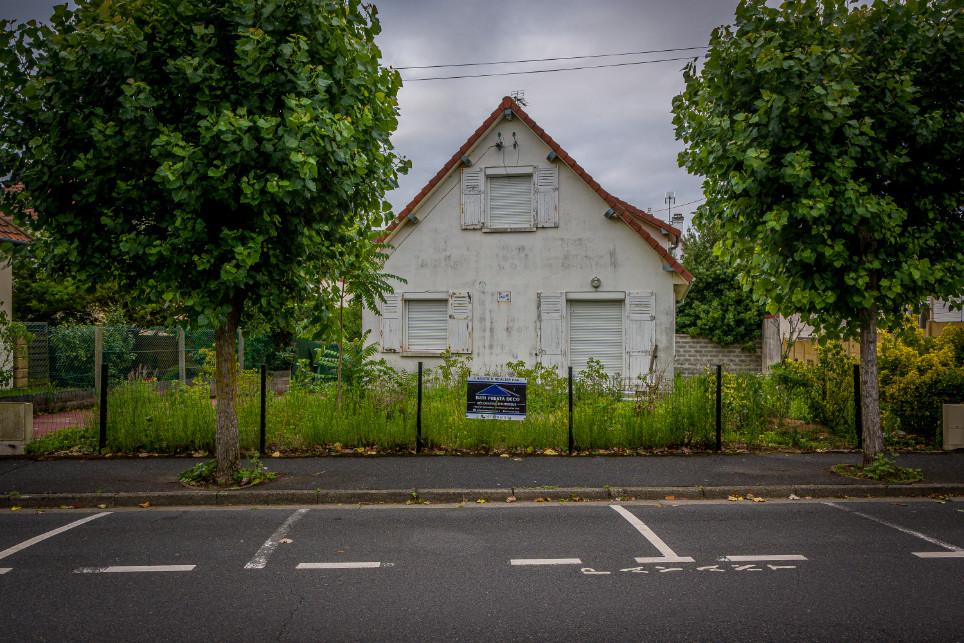
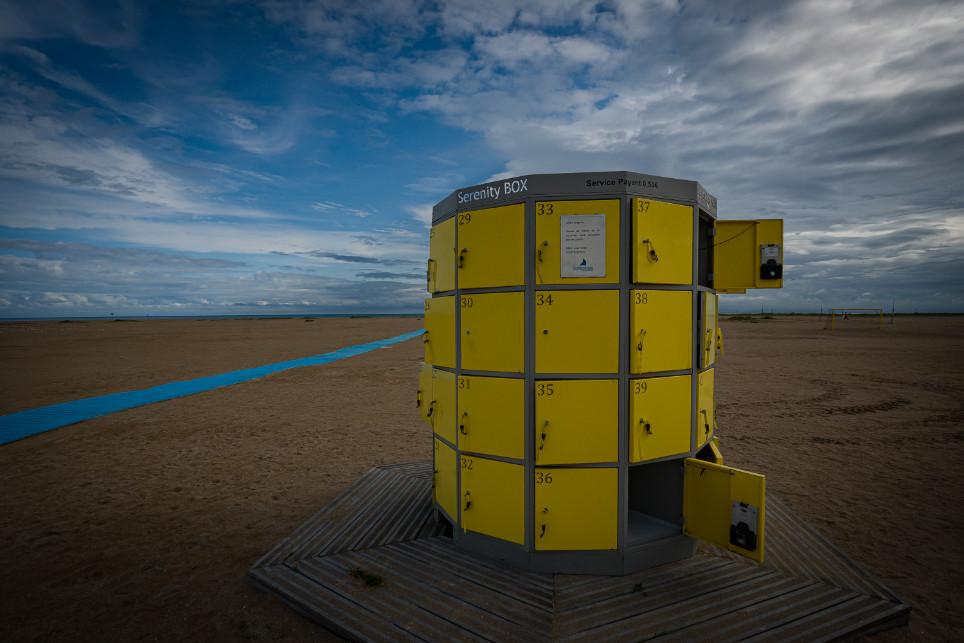
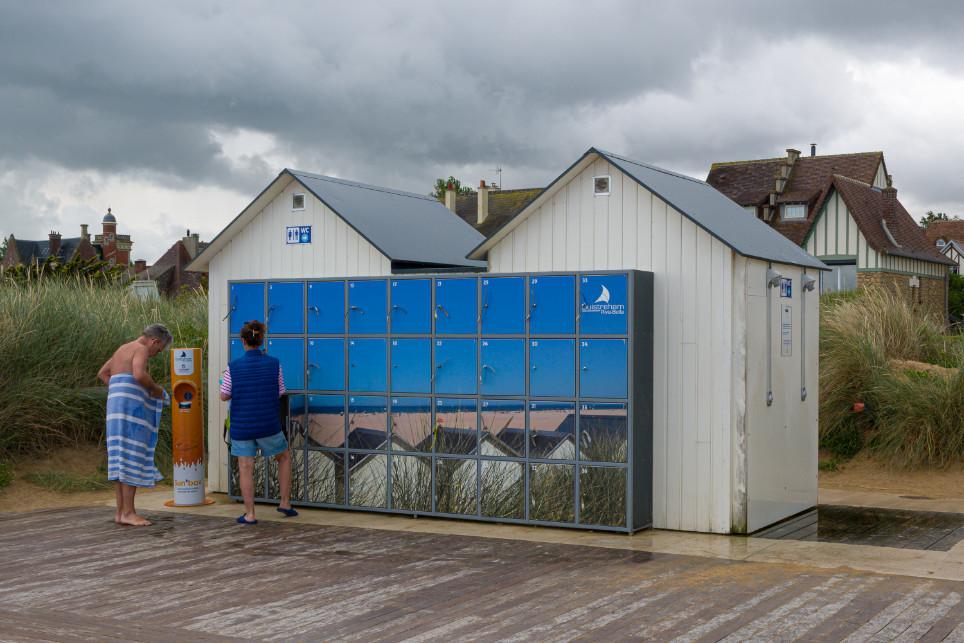
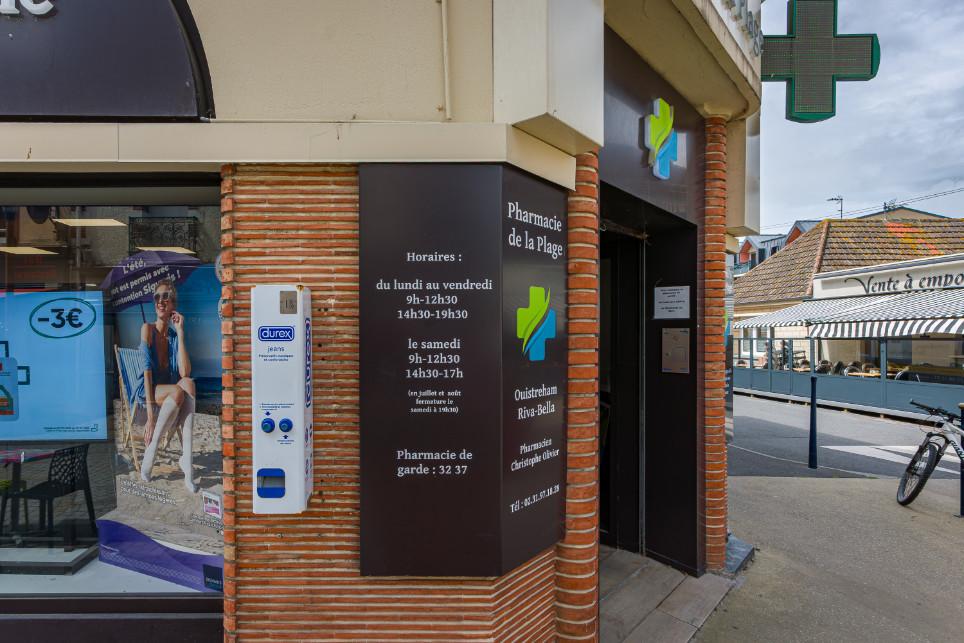
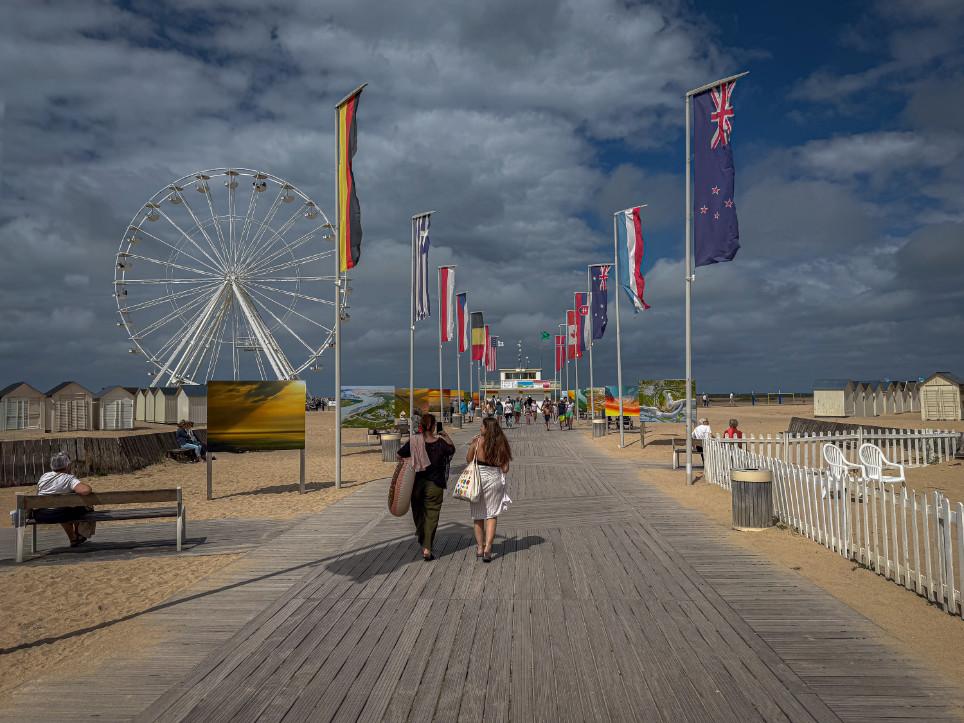
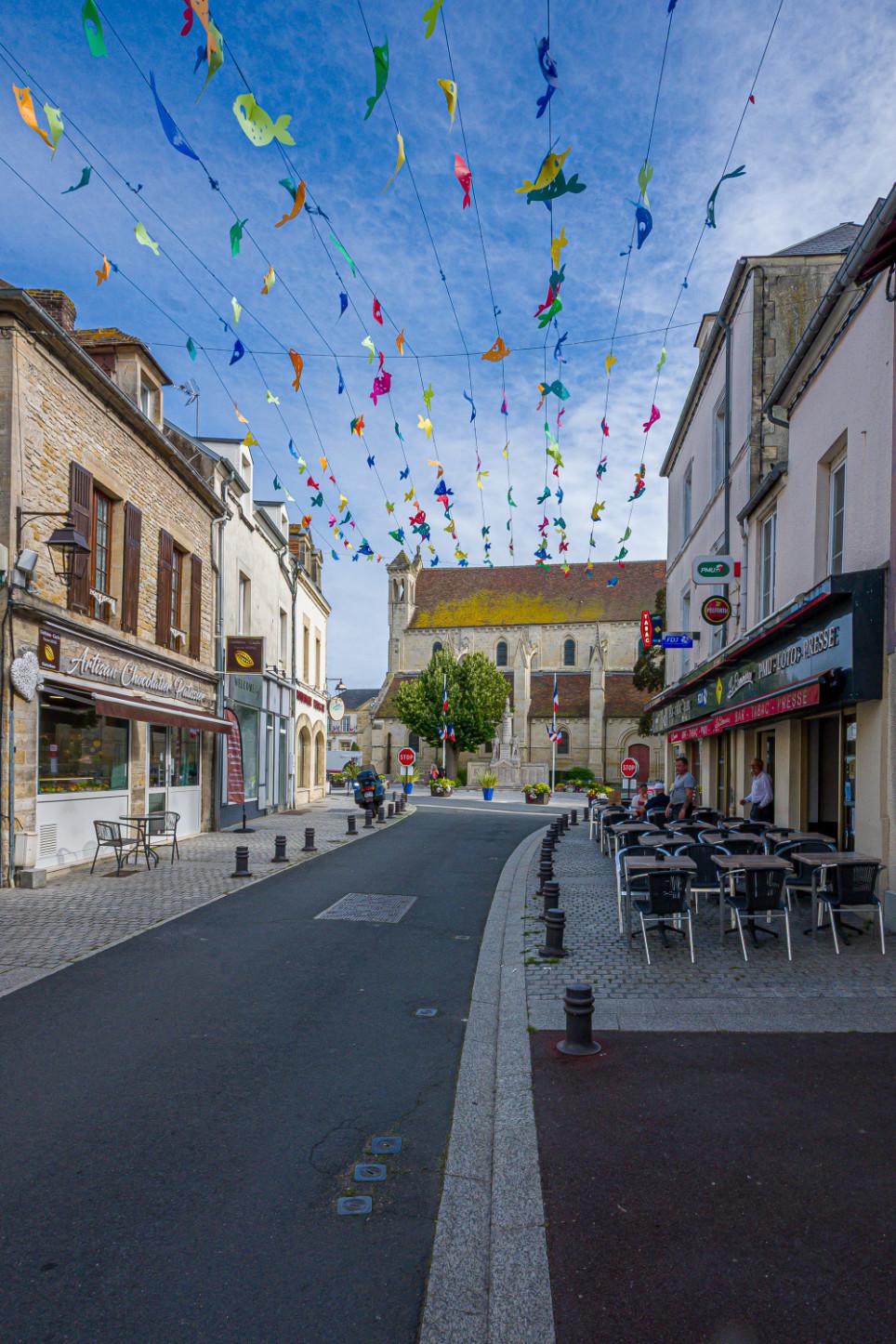
Ouistreham’s bright beach locker standing alone on the sand becomes more than just a quirky object. It hints at storage, absence, leisure, weather, and off-season quiet. A suburban street lined with trimmed trees starts to show order, routine, and how public space is shaped. A pharmacy sign, a ferry terminal hall, a distant lighthouse, or flags along the promenade all become part of a bigger visual story. They suggest movement, care, waiting, national memory, and coastal identity.
You do not need special theory to try this with a camera. The lesson is simple: look for longer. Let the place respond to you. Notice how the surroundings change your body and your pace. Pay attention to surfaces, patterns, weather, and sound. Accept that a photograph can come from working with the place, not just controlling it.
This has changed how I work.
I no longer see the port as just a scene to record. I see it as a partner in making pictures. The camera is not above the place; it is part of it. The image is not a travel trophy. It is proof of shared time.
That is what practising posthuman photography in Ouistreham means to me. It lets travel photography offer a deeper understanding of place. It reminds us that tourism is not just about people. Structures, energies, histories, materials, and environments all shape our experiences. When we slow down and pay attention, the port becomes more than just a route through Normandy. It becomes a rich photographic space, full of layers and quiet life.
Bibliography
Augé, M. (1995) Non-places: Introduction to an anthropology of supermodernity. Translated by J. Howe. London: Verso.
Baker, C. (2019) ‘From postmodernism to posthumanism: The photographed animal’, Membrana, 6(1), pp. 66 to 71.
Baker, C. (2025) ‘Efflorescence: How art transforms research’, in Garland, M., Haynes, J., Gale, K., Bowstead, H. and Quinn, J. (eds.) Posthuman adventuring: Moments, movements, encounters. London: Routledge, pp. 107 to 126. https://www.taylorfrancis. com/chapters/edit/10.4324/9781032698441-8/efflorescence-carole-baker Accessed 1st February 2026
Barad, K. (2007) Meeting the universe halfway: Quantum physics and the entanglement of matter and meaning. Durham, NC: Duke University Press.
Blok, V. (2024) ‘Materiality versus metabolism in the hybrid world: Towards a dualist concept of materialism as limit of post-humanism in the technical era’, Philosophy and Technology, 37, 60. https://link.springer.com/article/10.1007/s13347-024-00751-x Accessed 20th February 2026
Celis Bueno, C. and Schettini, C. (2022) ‘Transindividual affect: Gilbert Simondon’s contribution to a posthumanist theory of emotions’, Emotion Review, 14(2), pp. 121 to 131.
Haraway, D. (2003) The companion species manifesto: Dogs, people, and significant otherness. Minneapolis: University of Minnesota Press.
Manning, E. (2015) Artfulness. Cambridge, MA: MIT Press.
Mansfield, C., Shepherd, D. and Wassler, P. (2021) ‘Deep mapping and emotion in place-writing practice’, in Scribano, A., Camarena Luhrs, M. and Cervio, A. L. (eds.) Cities, capitalism and the politics of sensibilities. Cham: Palgrave Macmillan, pp. 97 to 114. https://link.springer.com/chapter/10.1007/978-3-030-58035-3_6 Accessed 17th February 2026
Reed, H. (1946) A map of Verona: Poems. London: Jonathan Cape.
Simondon, G. (2020) Individuation in light of notions of form and information. Translated by T. Adkins. Minneapolis: University of Minnesota Press.
One Tenth of a Second
Nick Linnett
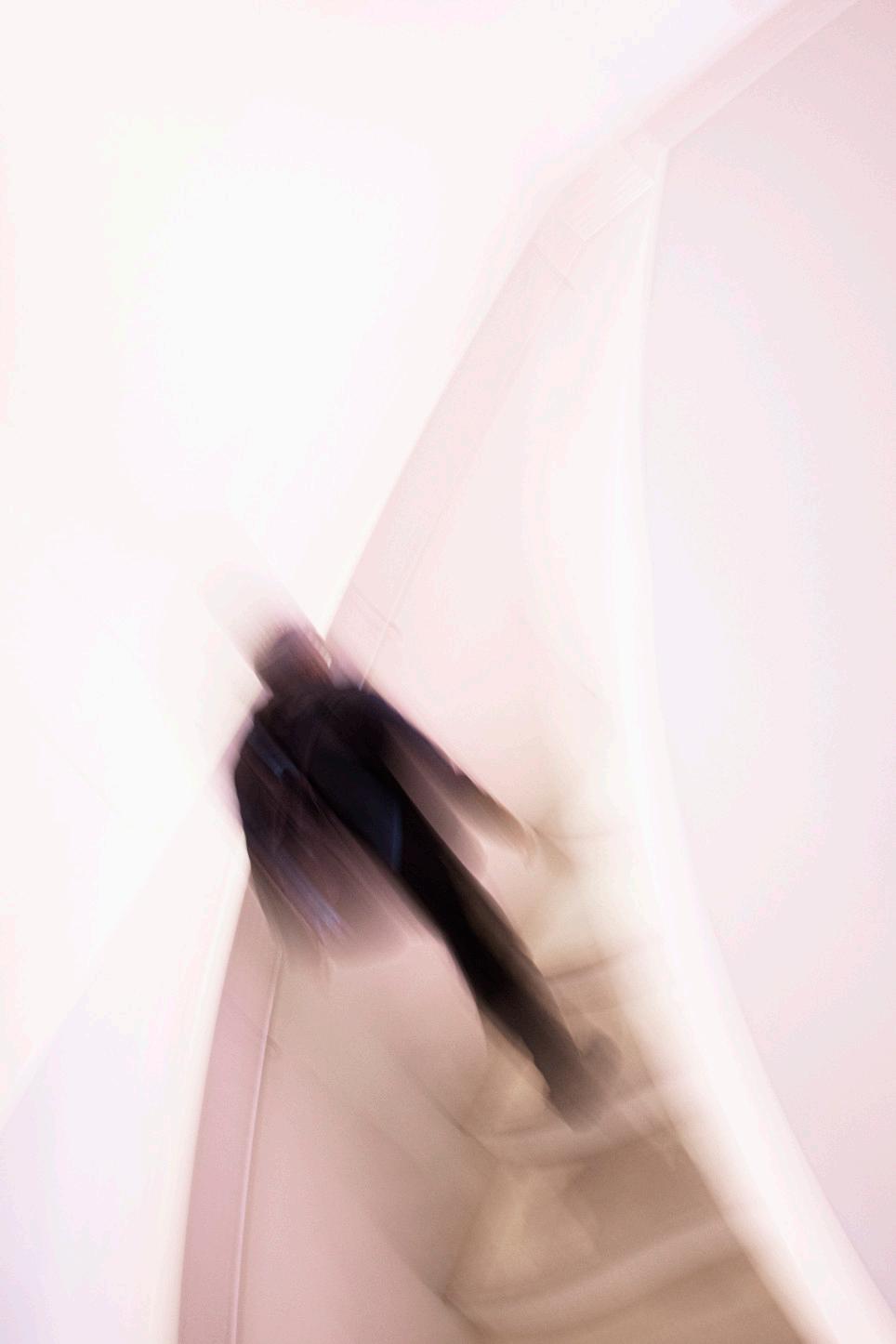
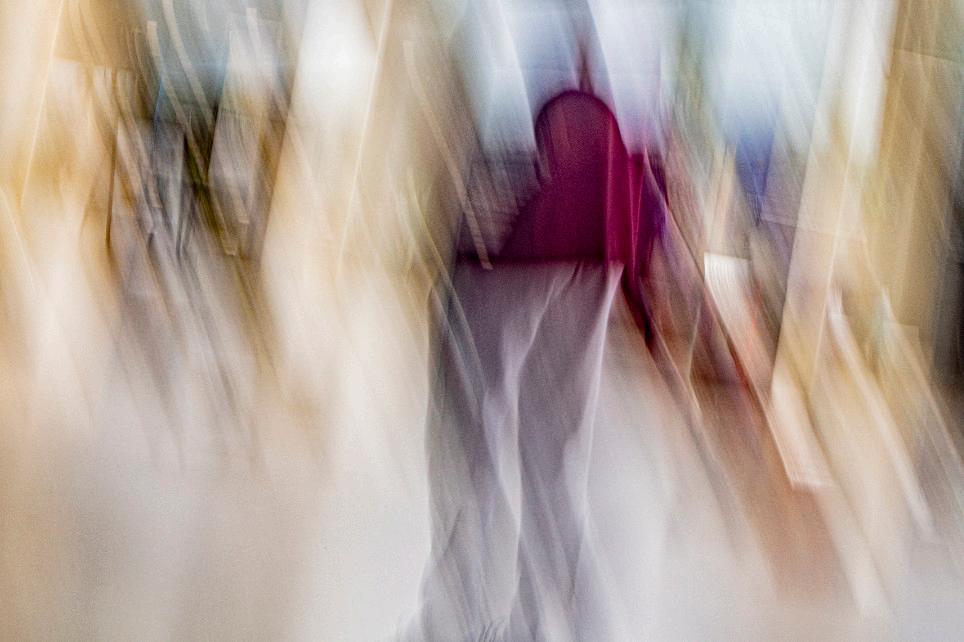
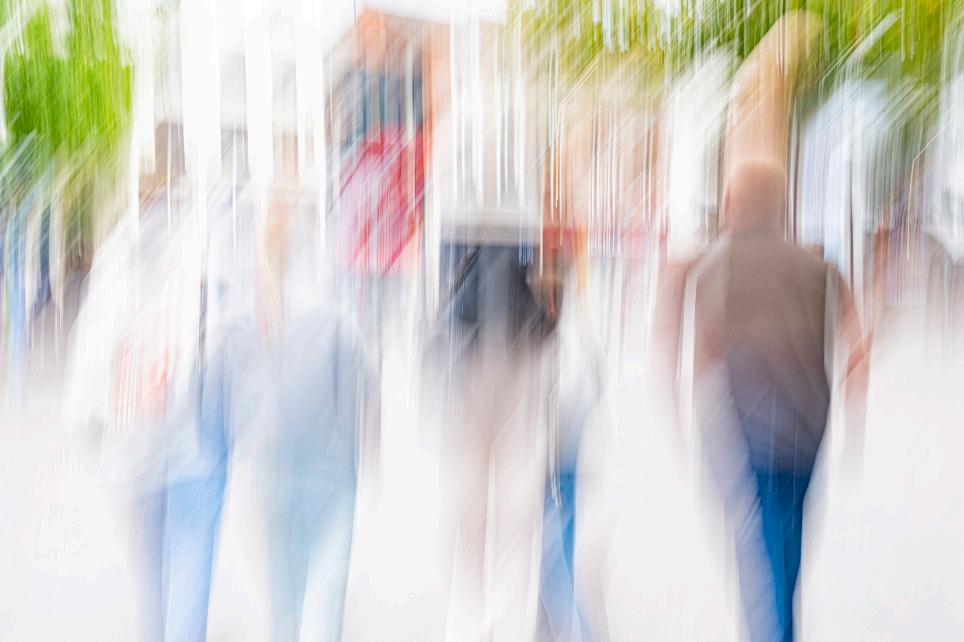
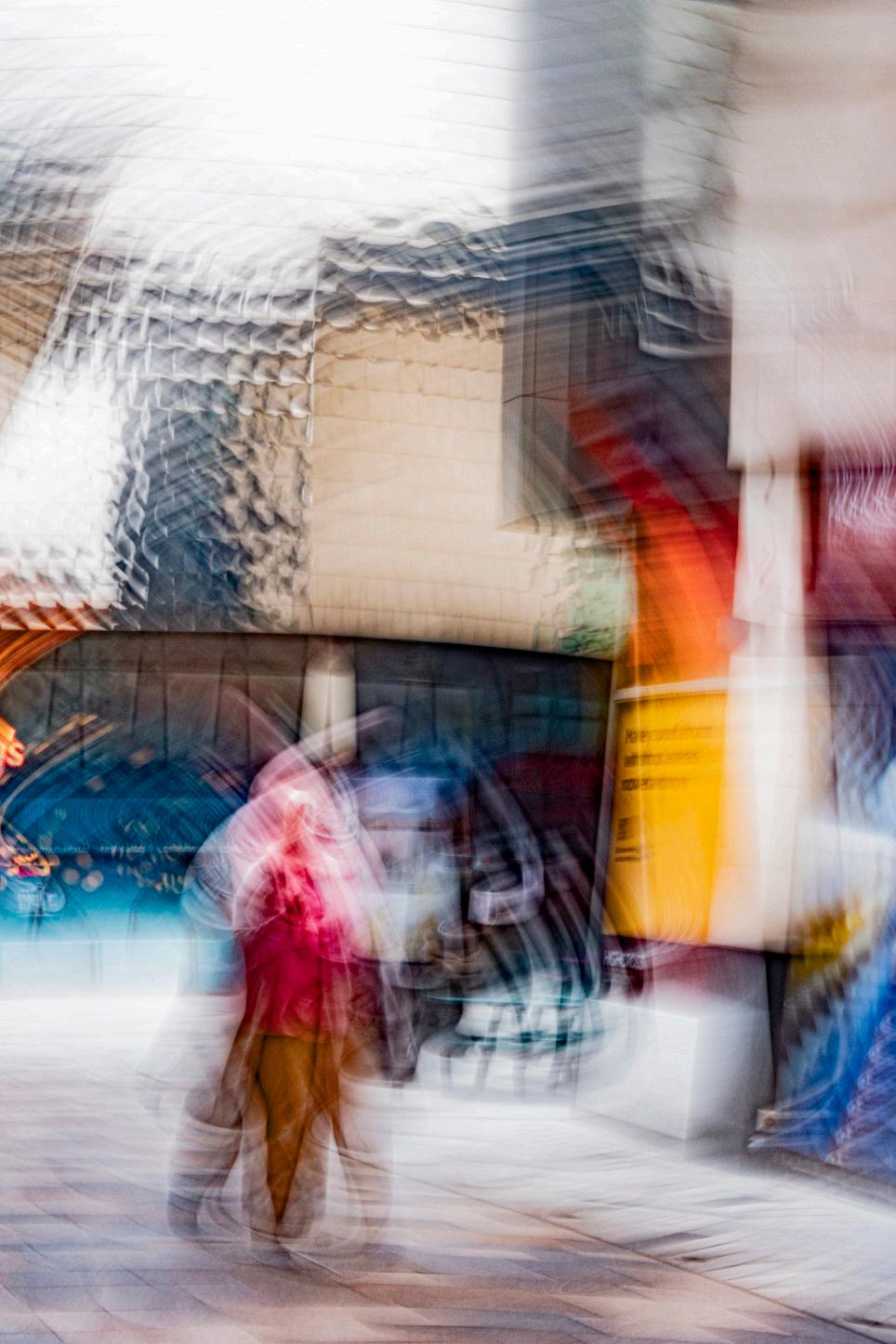
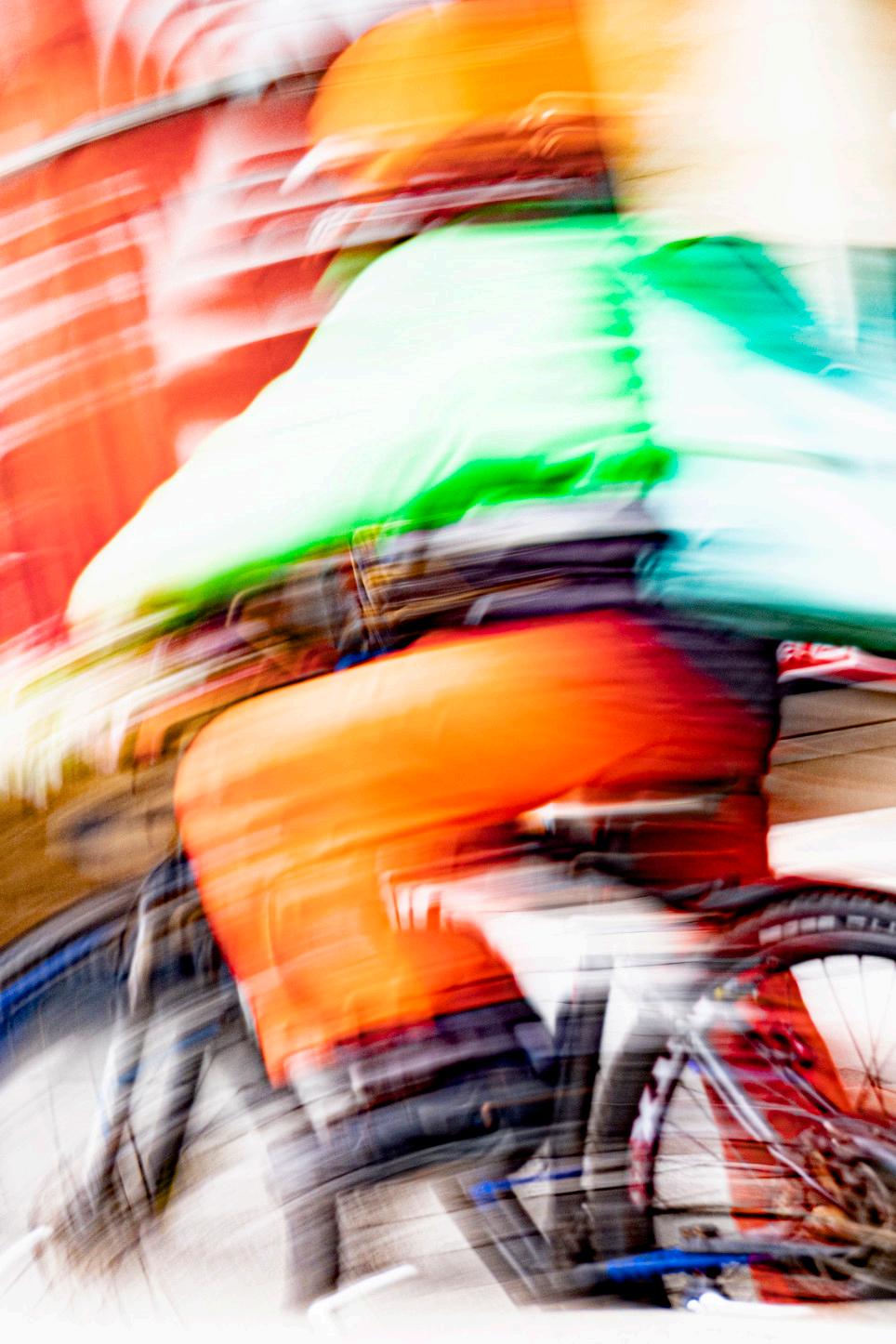
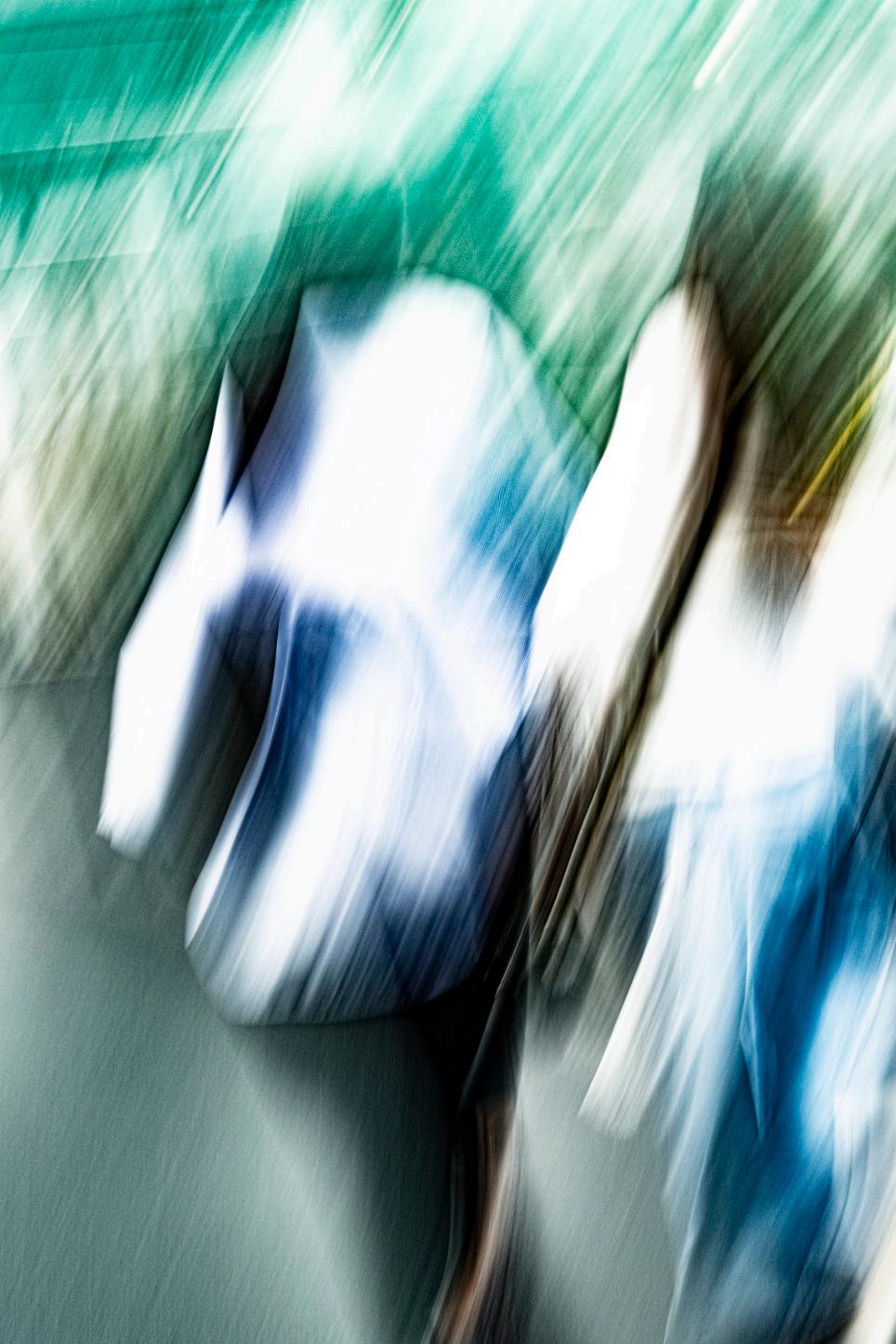
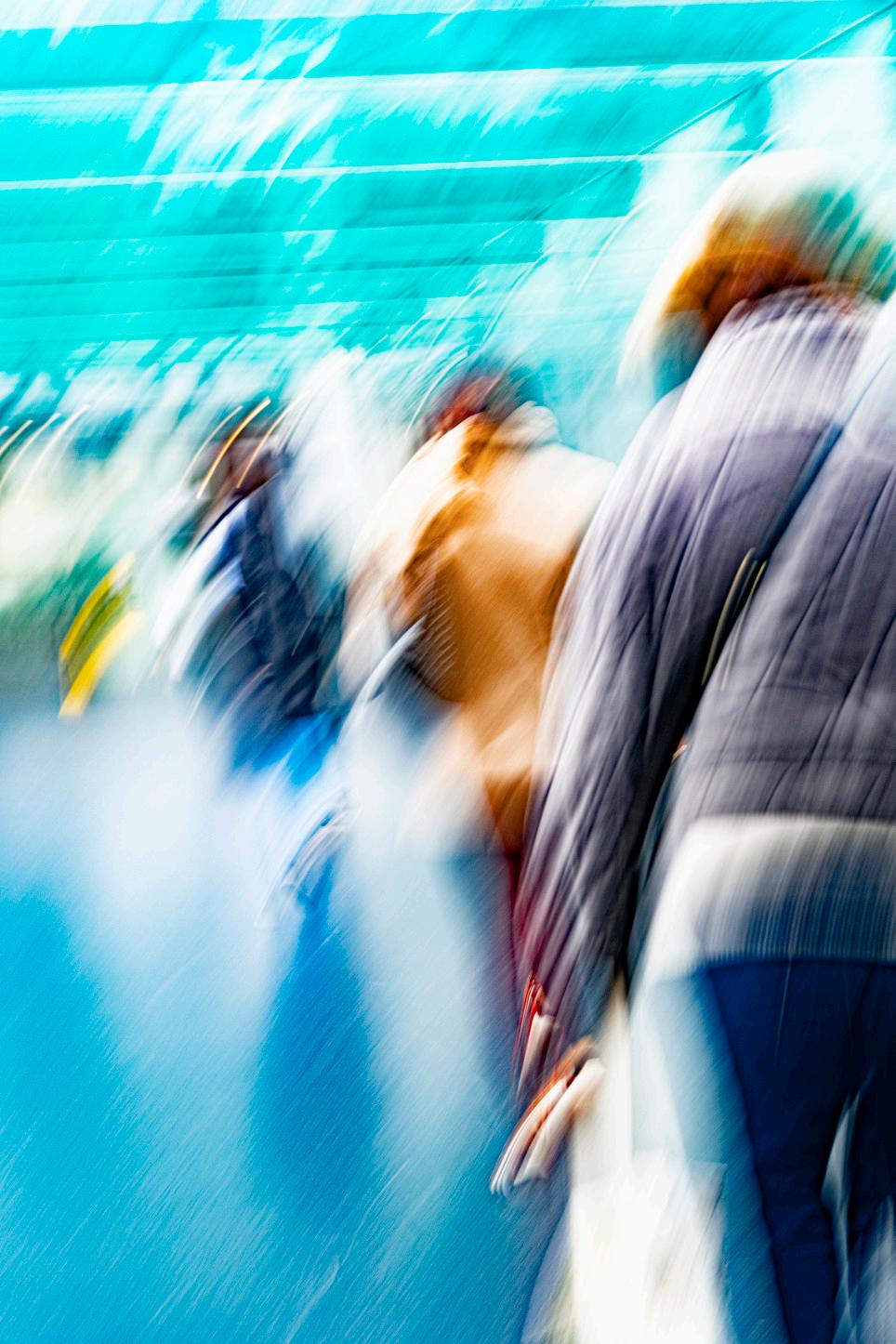
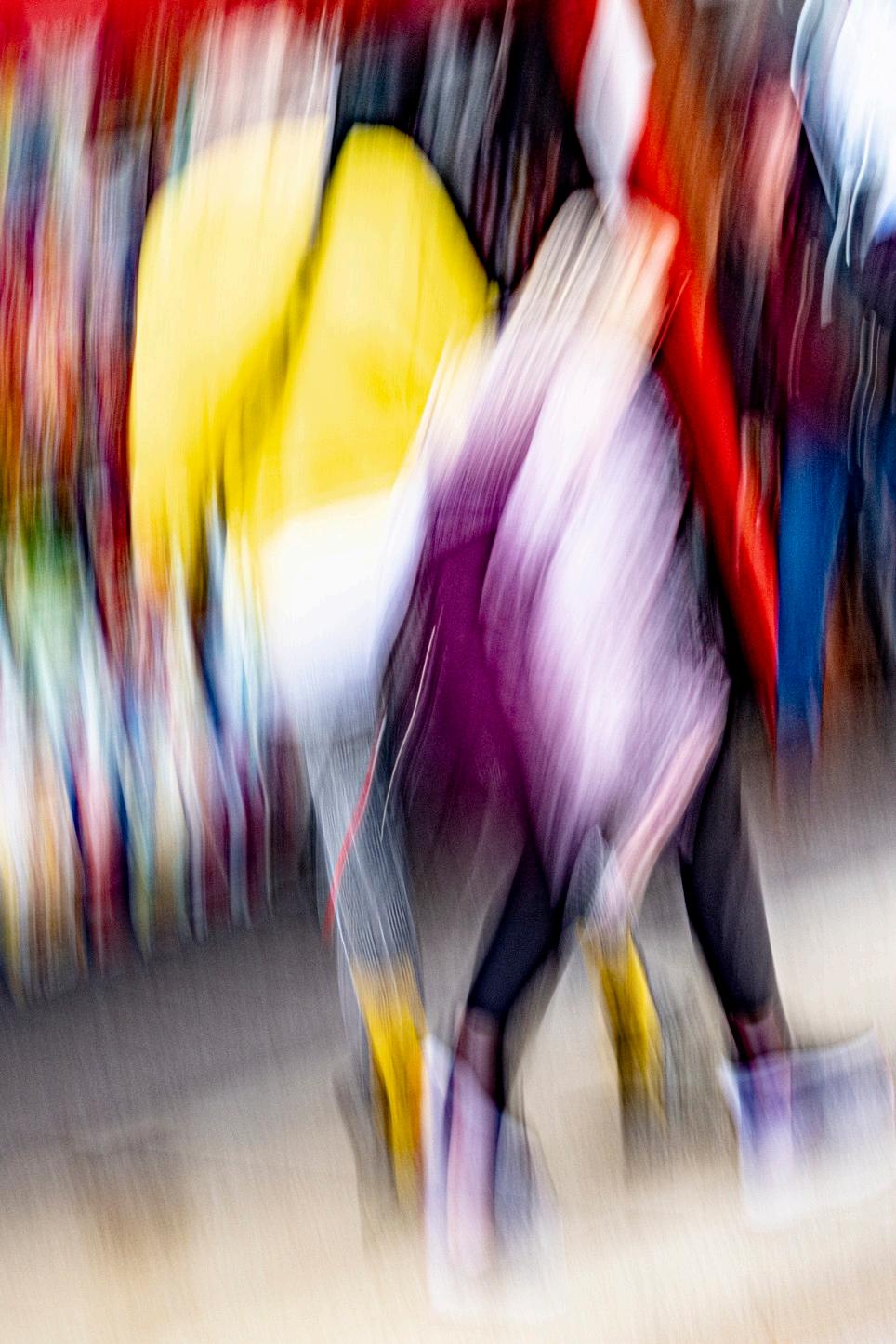
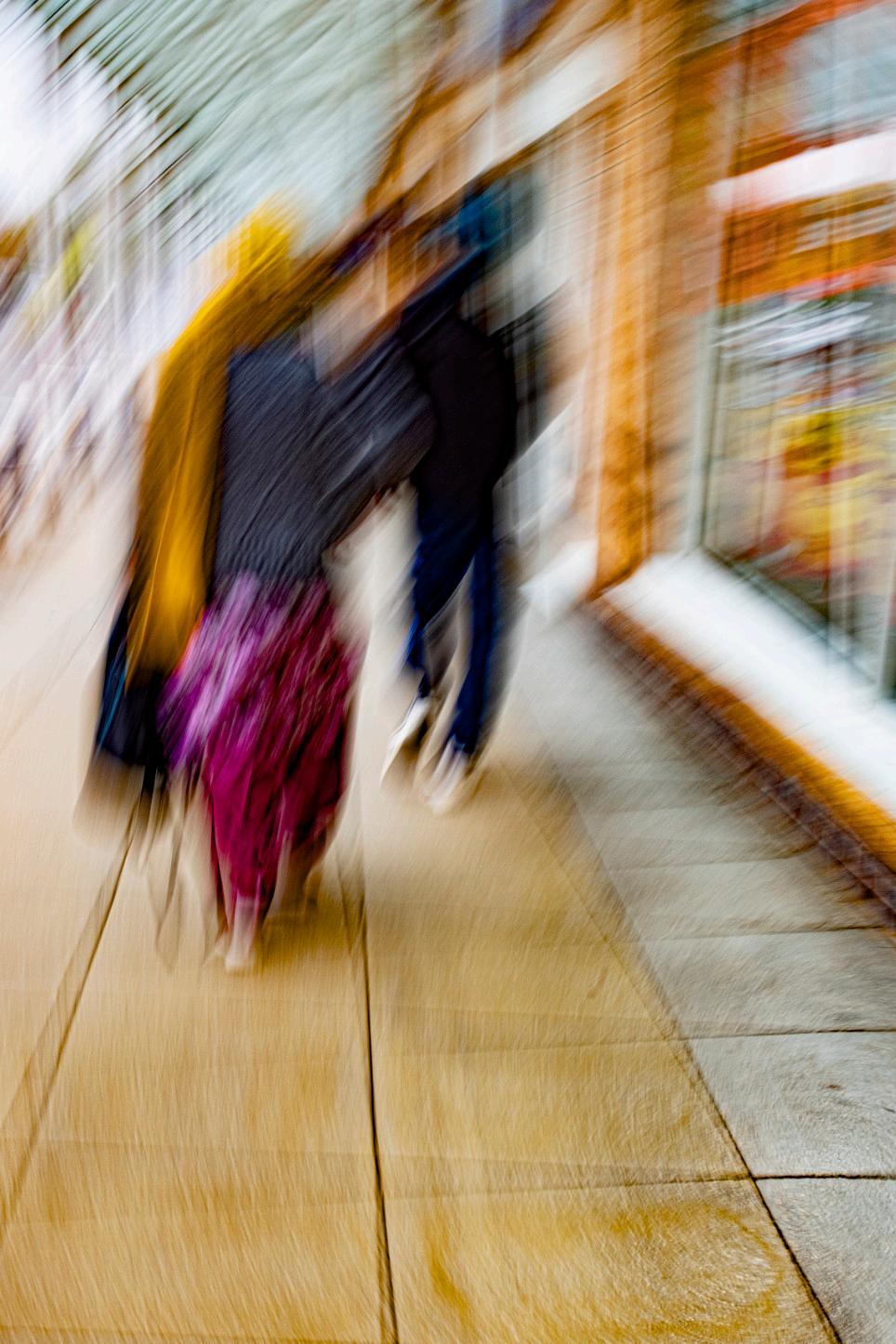
One Tenth of a Secondis a photographic project made using a fixed exposure of exactly 1/10 second. This constraint is not stylistic but conceptual: a way of submitting each image to the same unit of time and observing what the urban environment reveals within it.
At this duration, the city cannot fully resolve. People, architecture, signage and movement begin to fragment, overlap and dissolve, producing images that sit between recognition and abstraction. Rather than abstracting the city through manipulation, the work allows the city to abstract itself through motion, density and speed.
The project treats time as both subject and method, using repetition and constraint to explore urban dynamics - flow, friction, instability - and to question how the contemporary city is experienced not as a fixed place, but as a continuous state of movement.
Reflections on the theme of Reflection
Simon Maddison ARPS
A great subject for photographers, the bouncing back of light, mirroring. Or is that all there is to it?
The last Members Challenge theme, Reflections, invited us to "explore how light, surfaces and perspective create reflections-from mirrors and glass to water and other subtle visual echoes”
Why so narrow a definition?
For Contemporary photographers, where we look for the “about” not just the “of” in our photography, we can also add, thought, meditation, contemplation.
From Rodin’s The Thinker artists have depicted people reflecting, deep in thought. In photography perhaps the best-known image is the Migrant Mother by Dorothea Lange.
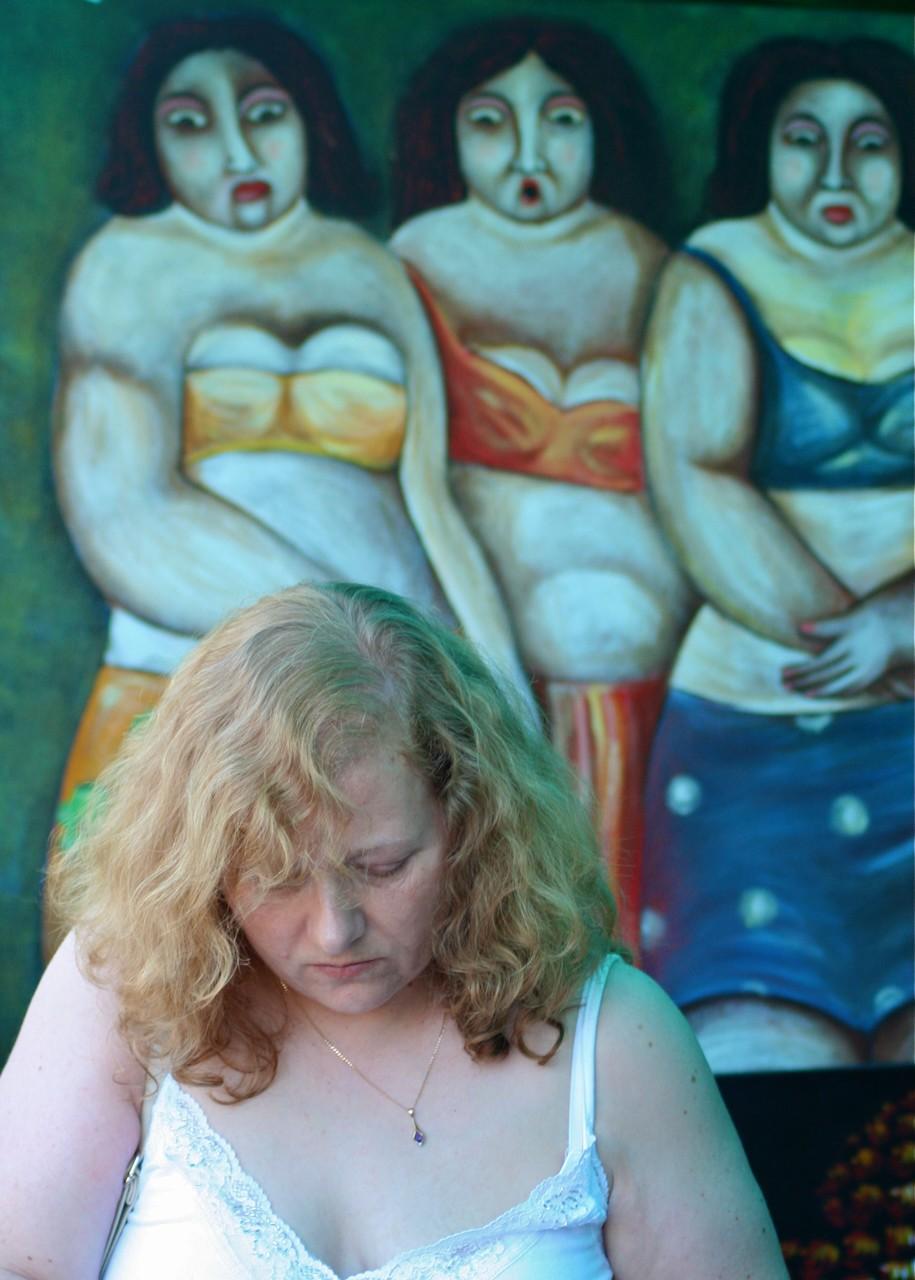
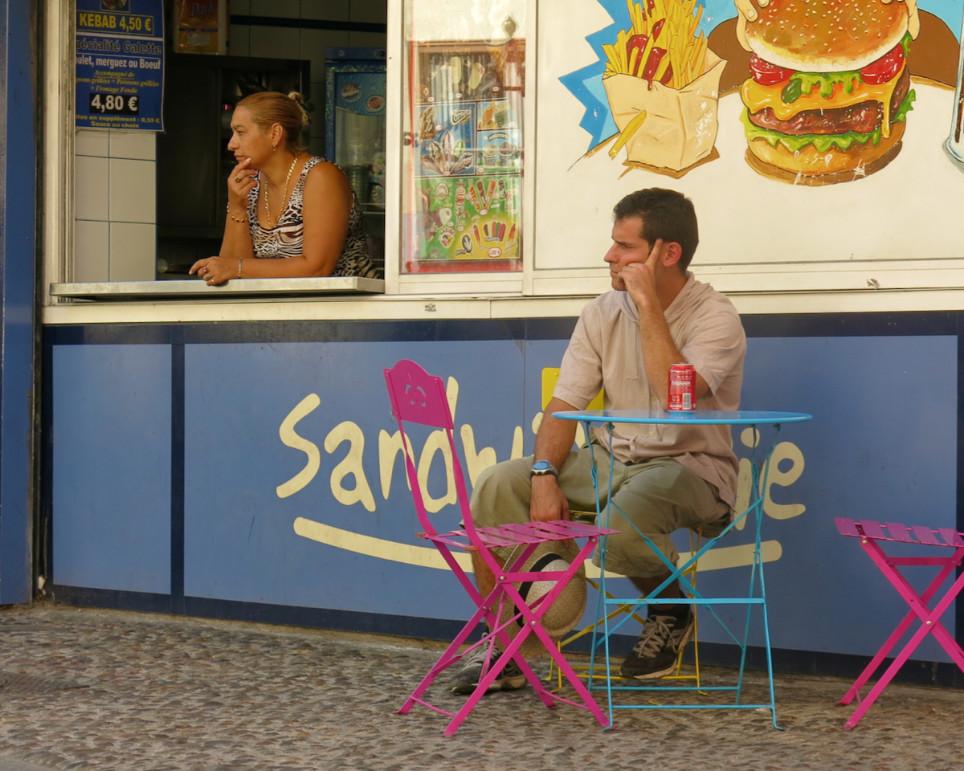
I thought I’d be a contemporary photographer with my entries to the competition. Be a bit left field and hope that the Selector would view the Challenge in a wider way. So, I submitted the two images here.
Open Air art fair, summer. I call the image “How dare you dress like us!” I don’t know what the lady is reflecting on, but I am imagining the mood of the women looking down from the meter square painting behind. I’m putting on them annoyance that the style of their clothes is reflected by hers.
Perpignan, cafe holder and customer reflecting with studied intent on something happening off camera and reflecting each other with their mirroring poses.
In the members competition of the total 50 selected images 31 were reflections in water. Some excellent images in a very standard interpretation, so on reflection maybe a tad dull?
South West Activity Group
The Southwest Activity Group met on Sunday 22nd March at Dartington in Devon.
For a variety of reasons, including a range of conflicting holidays, fewer members were present than usual. However, this did allow for greater in-depth discussion.
In addition to his main set of prints (see below), Adrian Hough had also brought along several monochrome images printed from scans of HP5+ negatives which had been taken and scanned in 2004/5. Two of these showed very grainy images of scenes in the Shetland Islands (Adrian’s first foray into b&w developing since 1977) together with a more finely grained side-lit portrait of his daughter at the age of eight.
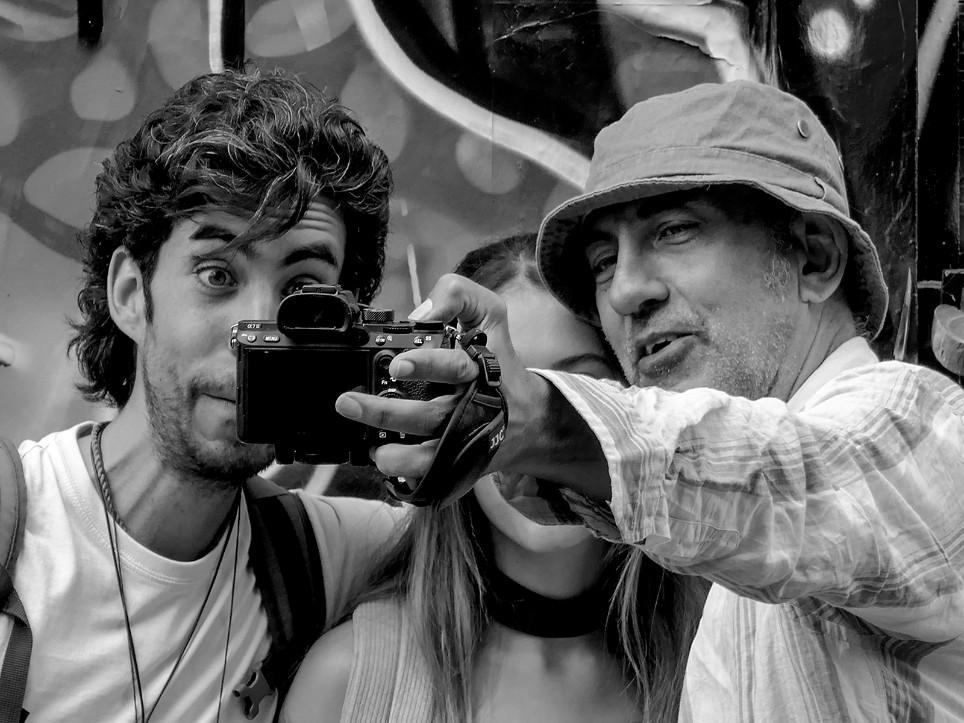
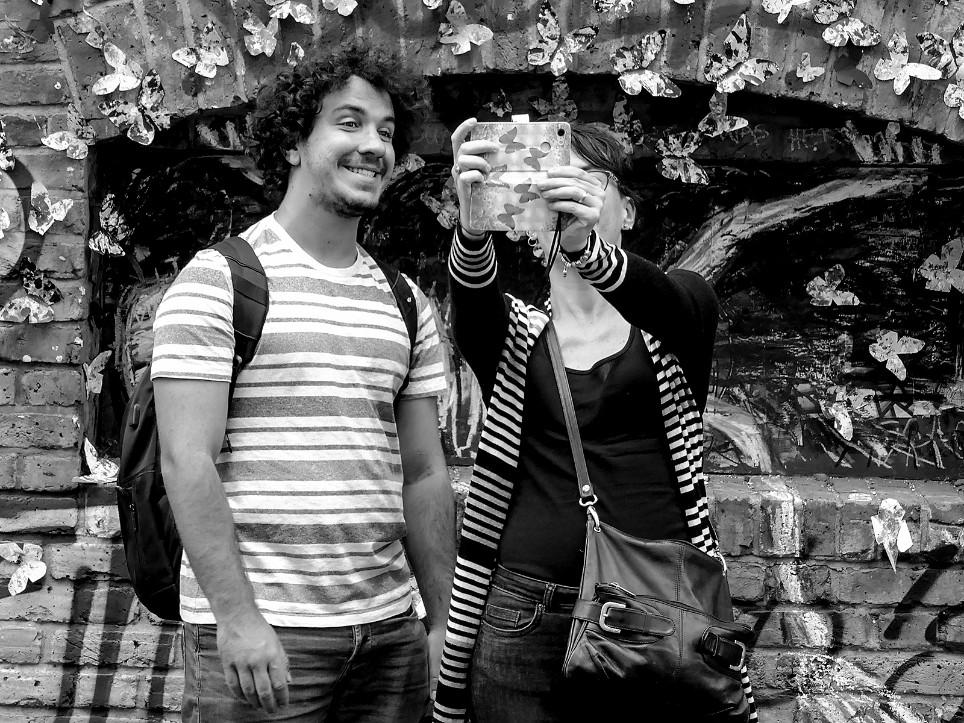
Ken Holland had brought along a print panel of five images produced for a club competition on the theme ‘selfies’. These showed five different people taking selfies in five different contexts and probably for five different reasons. Two these images are reproduced here. One person at the meeting noted that ‘Self-awareness has long been seen as a virtue, however, whilst the selfie does demonstrate an awareness of the self, most selfies also illustrate a lack of self-awareness.’
Simon Green had brought along a poster from a ‘Chapel Arts’ exhibition in Andover entitled ‘Traces’. The image used on the poster was one of Simon’s and we discussed the extent to which an image can be cropped in circumstances where it has been submitted for an exhibition and
then used as part of the publicity. Simon’s set of six images are reproduced below and he writes as follows.
‘¡No Pasarán!
In 1936, 36 year old George Palmer, a First World War veteran who had endured gas attacks and trench foot, said goodbye to his mother, Eunice O’Brien, who lived at 49 Enham, Hampshire.
As Test Valley’s sole volunteer for the Spanish Civil War, George defied a legal ban that would later see many prosecuted and embarked on a daunting journey: crossing the English Channel, evading French police, and trekking over the Pyrenees into Spain. He enlisted in the International Brigades, 35,000 volunteers from more than 50 countries, and served in No. 1 Company, the Major Attlee Company. On 12 January 1937, near Madrid, George was killed at Las Rozas, reportedly “blown to pieces.” His comrade, Phil Harker, described how he “died an anti-fascist soldier who had won a name for himself.”
It was not fraud or foolishness, Glory, revenge, or pay:
We came because our open eyes Could see no other way.
– Cecil Day Lewis
I stood in Enham, knocking on doors, chatting with locals, even stopping at the post office yet no one remembered George or his mother. Their story remains quietly forgotten.
This work is my tribute to George Palmer, and to all those who recognise fascism’s urgent threat and choose to act.’
After viewing the photographs we discussed the tension and contrast between images which have a commercial value and those which have little if any monetary value, but which are far more important because of the meaning that they convey.
Graham Hodgson had produced five A2 prints, all using ‘found’ images which he had reworked for effect. The first was an aerial view of part of Chicago which had been edited with a Contour filter and then rotated several times so that the resulting four images combined to become four quarters of the whole. The second was a close-up section of a computer motherboard similarly treated but without the filter. The third was an aerial shot of part of a town in Argentina which, whilst having a rectangular street pattern, was not perfect due to a combination of reality and the perspective of the shot. The fourth image was a repeat of image four but revised to ‘improve’ the regularity of the town’s street pattern. Finally, there was a photograph of the Earth centred on an image of the sun printed to the same scale.
was the only way of exploring what the finished and printed product might look like before committing to a print run. The first book contained photographs of China from the period when travel to the country was just becoming possible again. The other books included the original 1991 version of ‘Dartmoor Dreams’ recently revised with a new edition being produced in 2024.
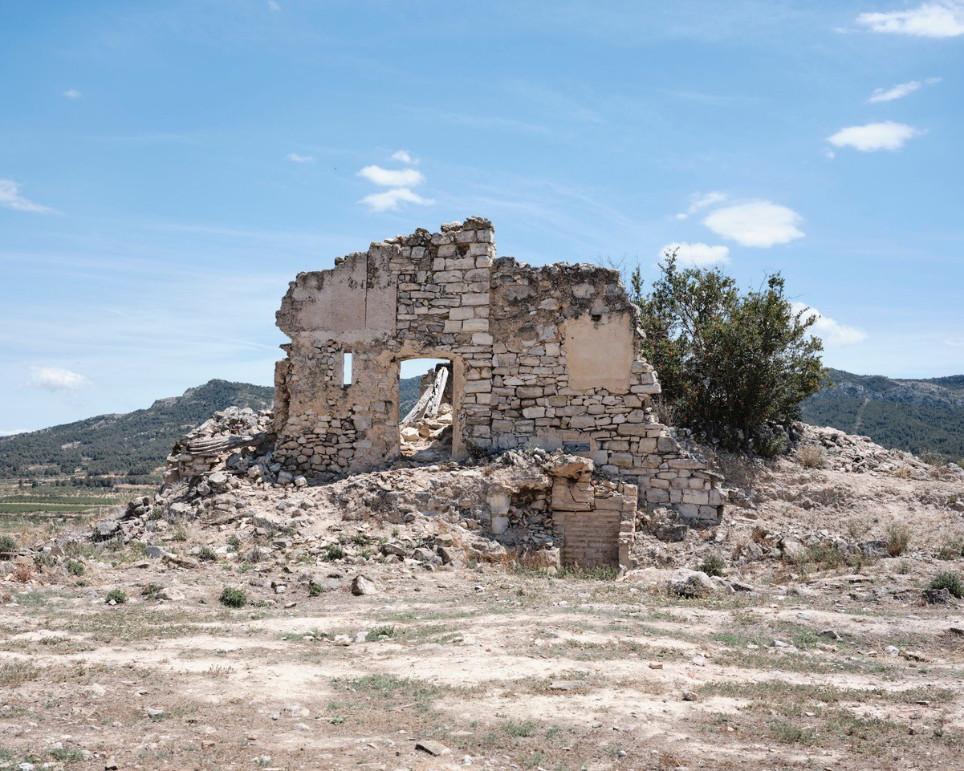
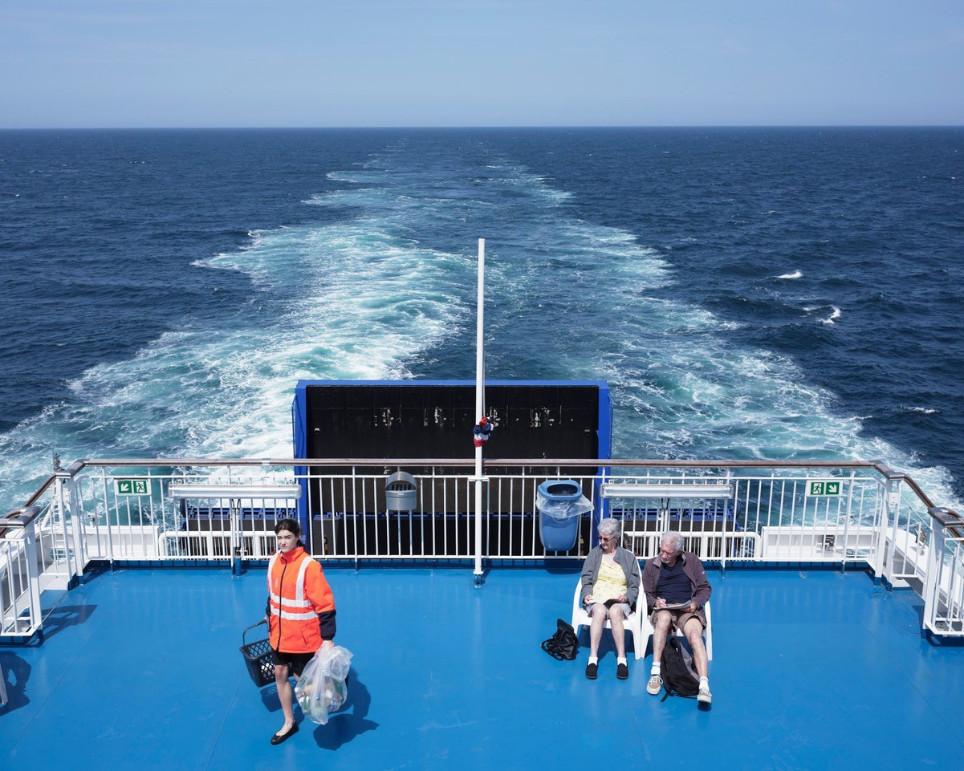
Adrian’s main contribution was a collection of prints (colour with a white border, on A3) illustrating the coloured details which illustrated elements of modernity in a predominantly brown rural medieval church building.
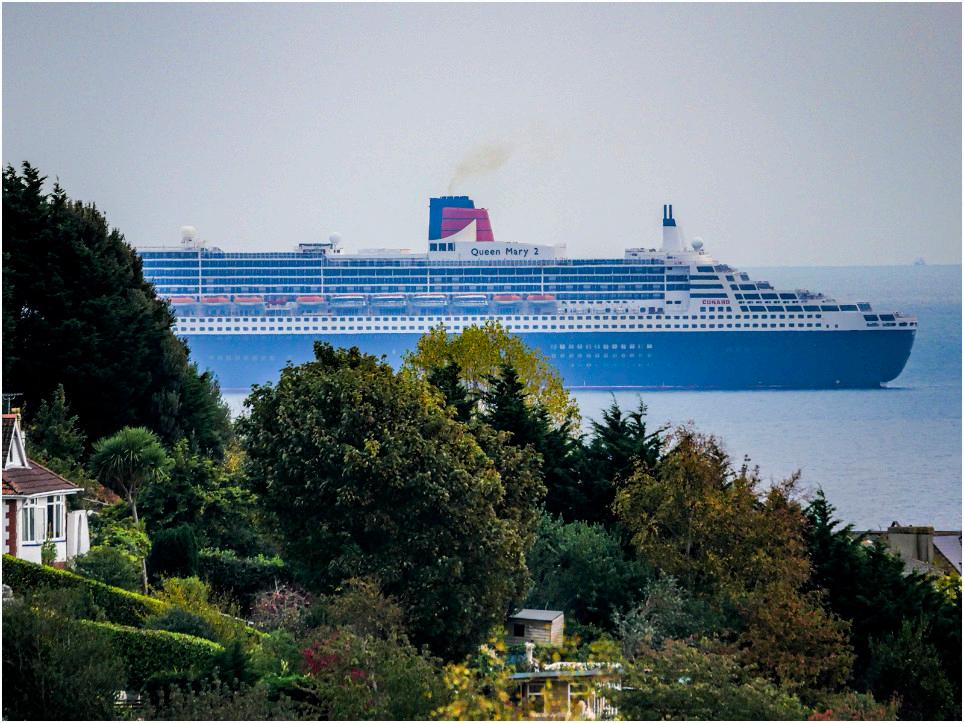
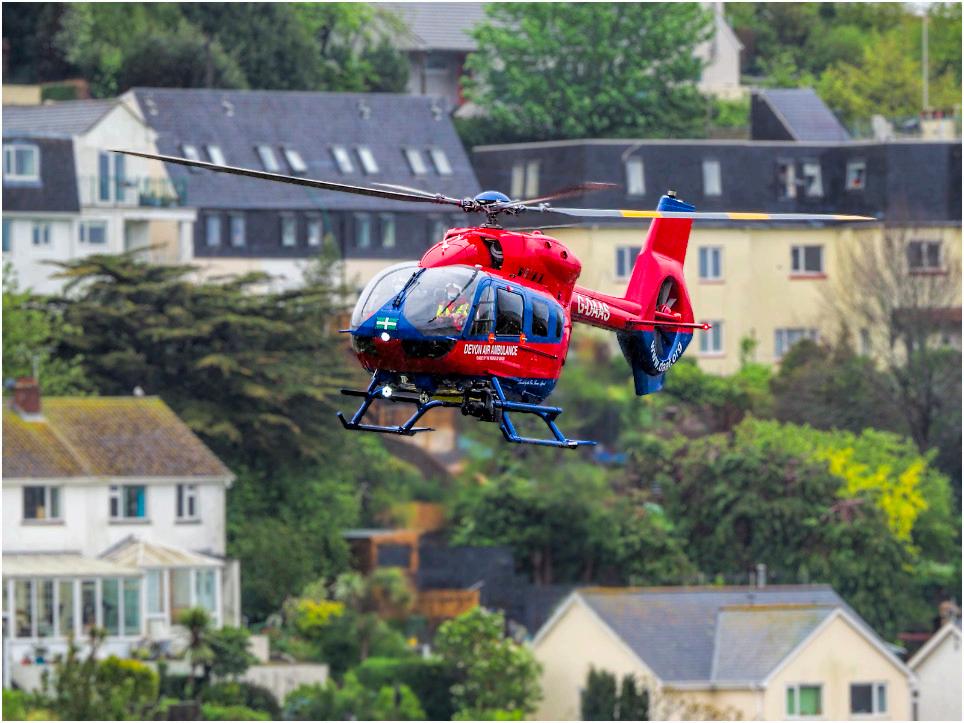
Finally, Ken showed a series of images entitled ‘41 views from number 14’, number 14 being Ken’s house purchased 41 years ago and commanding views over Tor Bay (ie the bay itself rather than the town). All the photographs had been taken from the house or the back doorstep. These included sea mists, sunsets, fog, snow, cloudscapes, garden trees, shipping, rainbows, seagulls, liners during lockdown, half a football pitch, the Air Ambulance (practising), moonrise, lunar eclipse, solar eclipse and fireworks. Two of the images are illustrated.
As ever, we are grateful to Carol and Graham for their hospitality and for hosting these meetings.
Our next meeting will be held on Sunday 30th August 2026.
Carol shared a collection of dummy books that she had produced since 1979, many of then from the days when a ‘dummy’
Adrian Hough ARPS
Scotland Activity Group
The Winter zoom nights have now come to an end, and we have started our face to face events with a Day Oot in Inverness, Scotland’s Highland Capital.
We started off in Xoko, a trendy cafe with am exhibition wall. Their exhibition was by Dr Ellie Korgozou which was a series of monochrome images she’d printed at Inverness Darkroom. Ellie is going to be talking to our Group in the winter, about her photographic thoughts and inspirations.
After that we headed for Inverness Darkroom to meet Matt Sillars, the director of that fabulous facility. They have a huge room, with 12 enlargers fully set up, including 2 x DeVere 504’s! The whole set up is member led and run, and is available 24/7. The monthly membership fee includes all the chemicals and equipment, and all the members need to do is choose and provide their own paper.
Inverness Museum has a 40 year retrospective celebrating the Highland Print Studio’s output, so after we’d browsed that we went to HPS for a tour of their premises and the digital suite.
It wasn’t all scheduled stuff though, and we had a slow and meaningful wander round some of the nooks, crannies, and Venels and the contemporary creative juices flowed. The resulting e-zine is on Issuu at Inverness Day Oot .
Next up is Glasgow on 19th June, then Edinburgh on the 11th August, then a joint full day with the Documentary SIG as part of Stirling Photography Festival to showcase the Documentary Photography Awards on the 21st August…that day will feature Simon Hill Hon FRPS (RPS President) speaking to photography students from all round Scotland, Harry Hall FRPS (Documentary Chair), Richie Elder (DPA Student winner), and our very own Neil Goodwin ARPS. The day has been very generously supported by Ffordes Photographic (www.ffordes.com).
Next Issue
The next issue of Concept will be available September 2026
If you have any contributions you would like to have including, news, reports, reviews, publicity profiles, images, please email your ideas to Nick via email concepteditor@rps.org
Features and reports should be between 300 and 800 words please. Pictures as separate jpeg files of 1 to 2 megabytes, containing no watermarks please.
CONTEMPORARY
The copyright of all images and text in this issue belong to the author of the article of which they form part and may not be reproduced in any form without permission.