Journal of the Archaeology and Heritage Special Interest Group
March 2026
Editor David Bryson FRPS heritage.editor@rps.org
Archaeology & Heritage Group Committee Members
Chair Shaun Parkes MA ARPS LDPS heritagechair@rps.org
Heritage Photography Editor David Bryson FRPS heritage.editor@rps.org
Honorary Secretary Amanda Miller LRPS heritagesec@rps.org
Finance Officer
David Bryson FRPS heritagetreasurer@rps.org
Communications Officer
Natalie E Hough-Benns LRPS heritageweb@rps.org
Military Heritage and Distribution
Shaun Parkes MA ARPS LDPS heritagemilitary@rps.org
International Representative Joseph Durocher heritage.international@rps.org
Published by the Archaeology and Heritage Special Interest Group of the Royal Photographic Society, January 2026
Copyright in all text and photographs are held by the credited authors, or as otherwise stated. No part of this publication may be reproduced, transmitted or stored in any form without prior written permission of the Publisher.
Print ISSN 0958-0565
Online ISSN 2632-3346
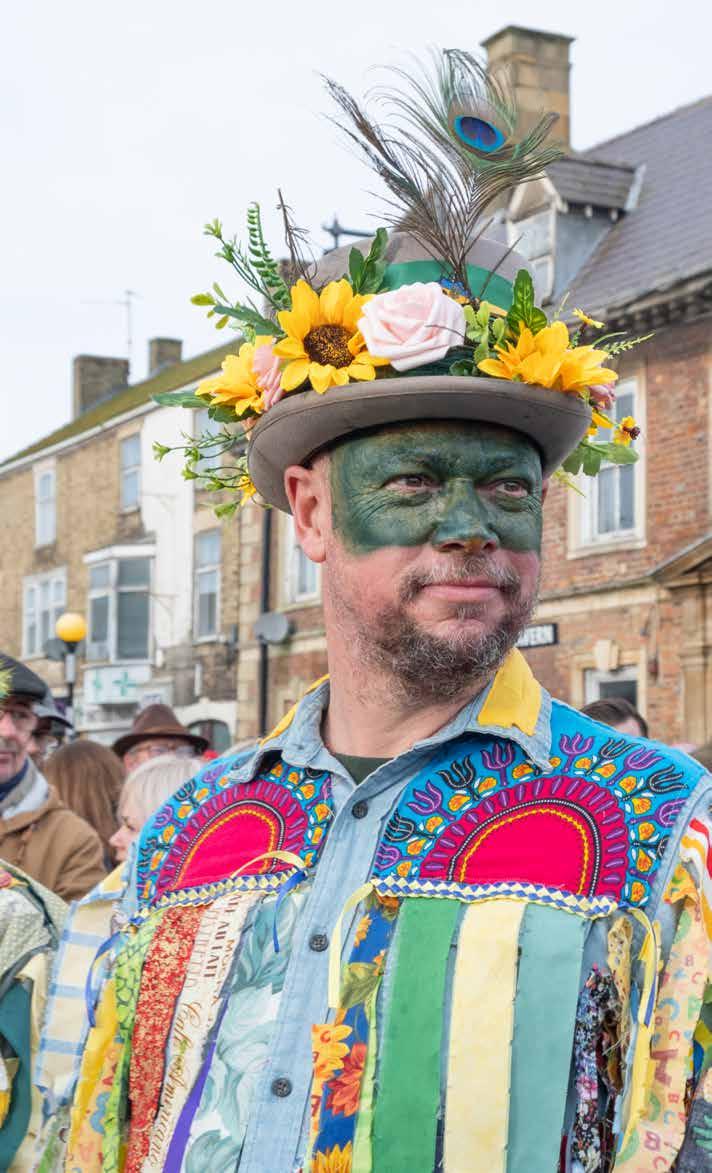
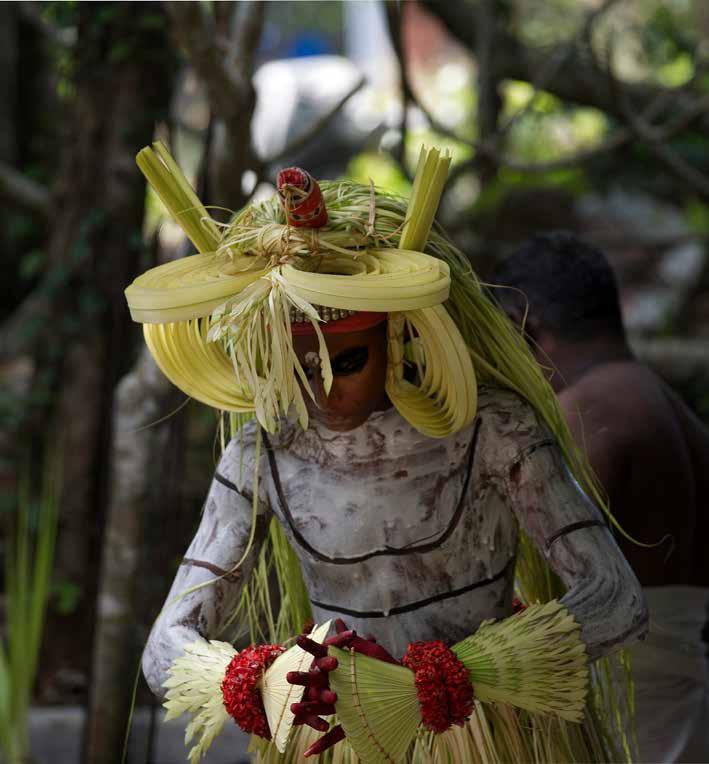
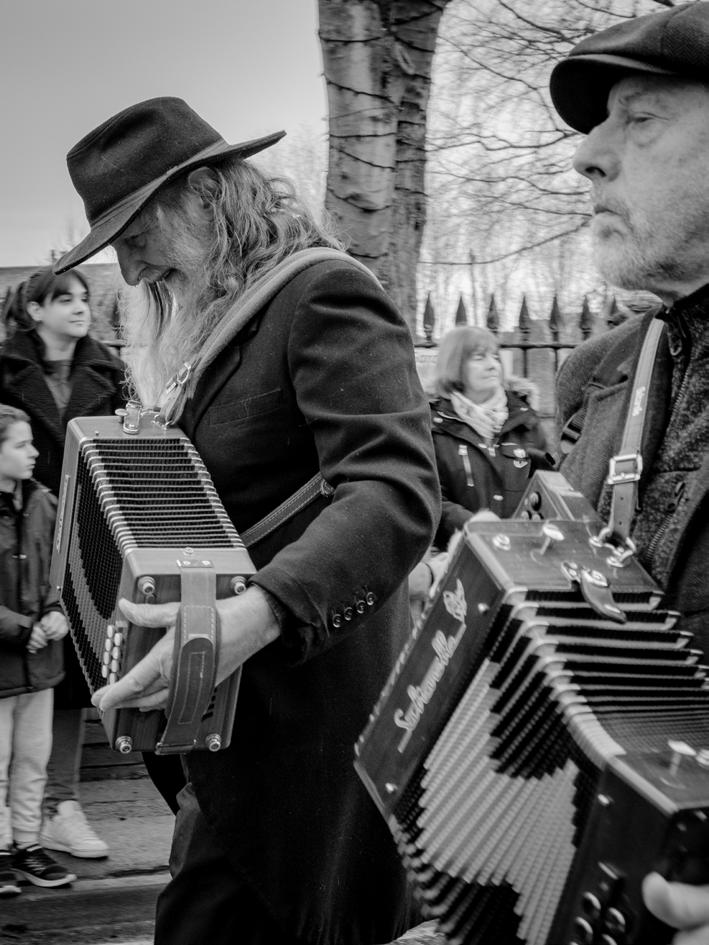
Front cover:The 46th Whittlesey Straw Bear festival that brings out the best in us all Photograph: Natalie E HoughBenns BA(Hons) LRPS
CONTENTS COMMS
4 We value your membership NATALIE HOUGH-BENNS BA (HONS) LRPS
EDITORIAL
3 Perspective: What is cultural heritage. DAVID BRYSON FRPS
5 Thoughts from the Chair SHAUN PARKES ARPS
PHOTOGRAPHS
6-7 Join in on our monthly themed competition.
NATALIE HOUGH-BENNS BA (HONS) LRPS
FEATURES
8-24 Theyyam: the many faces of god ASHOK VISHWANATHAN
25-38 The 46th Whittlesey Straw Bear Festival: A Heritage Photographer’s Dream NATALIE HOUGH-BENNS BA (HONS) LRPS
39-47 Culture: People and Places
SERGEY SHCHEKOTOVALEKSANDROV
48-65 The Museum of Medicinal Merchants, Ancient Town of Cicheng, Southern China. SHAUN PARKES MA ARPS
66-79 The Levant Engine Room VICTOR HERMIDA LRPS
80-91 Encounters with the Calder JIM SOUPER ARPS
Perspective: What is cultural heritage?.
DAVID BRYSON FRPS
Welcome to the March issue of Heritage Photography. The first item in this issue is the communications page another reminder to make sure your e-mail and home address are correct on the RPS site as we regularly download updated information from this to use to communicate with you. Following is the usual editorial from our chair and then the a prompt about the current spring facebook challenge.
Cultural heritage is often about celebrating festivals however strange they may seem to us or other people, examples of these can be seen in the first guest feature by Ashok Vishwanathan followed by the eccentric British Whittlesey Straw Bear festival from Natalie Hough-Benns and examples from Russia and other people and places from Sergei Shchekotov Aleksandrov, equally cultural differences can be about how we view medicine and treatments for whatever ails us. The modern sophistication of MRIs and CT scans are commonplace in our world today but other cultures’ medical tools would seem far more everyday to our forebears than to us now, helping us realise how rapidly our culture continues to change as seen in the feature on the museum
of medicinal merchants from Chicheng by Shaun Parkes.
The impact of constructions on our environment and so our culture can be seen in the effect of military installations on Gibraltar from Victor Hermida and the industrial revolution as Jim Souper takes us on a journey along the River Calder.
Can I please as usual ask for more submissions for the journal there are plenty of examples of what to submit on the RPS issuu site in our stack at https://issuu.com/royalphotographicsociety/stacks/ e5208ecd8f7d49a7b1a1ef0043524256. If you want feedback on any ideas you have please e-mail me at heritage.editor@rps.org
As can be seen in the 91 pages of this issue we are less restricted by size in the digital version. So please remember I do like to have plenty of content in advance to prepare editions so please submit what you can so I can plan future issues. Also please remember there is always a need for great portrait photographs to grace our front covers.
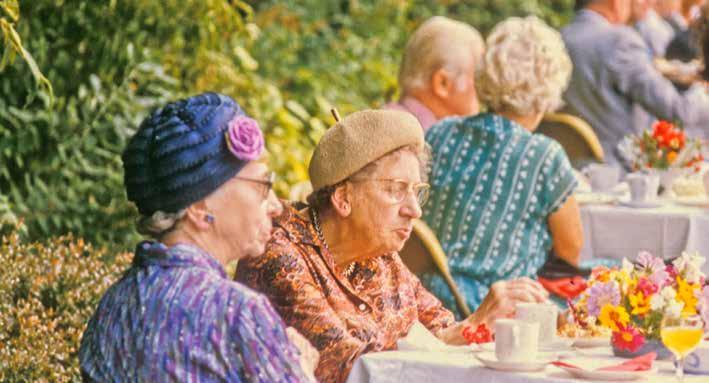
Quintessentially English, a tea party at the Worcester Three Choirs Festival from 1984.
If you feel you aren’t receiving communications from us, you might need to update your contact details:
Name / Address
Email Address / Mobile Number / opting in or out of receiving email preferences
The quickest way to update your details is via the RPS website.
If you are having any problems with our Facebook or Instagram channels please contact our Comms Officer - Natalie E Hough-Benns at heritageweb@rps.org who will be happy to help.
Image by Paul Benns
Thoughts from the Chair
SHAUN PARKES MA ARPS
My Thoughts from the (arm)Chair for this edition
That’s normally where I do my best thinking, in my armchair with a cup of coffee – or, later in the day, with a glass of single malt. Anyway, greetings from Ningbo in Eastern China, where I am days away from the end of spending a couple of months visiting my wife, who is an Assistant Professor in International Communications (or Media) at the University of Nottingham’s Ningbo China Campus.
I have been out and about with the camera, although I had another heart-stopping moment yesterday when my 80-200mm Nikon fell out of my cross-body camera bag and it fell to the ground, when someone picked the bag up without being asked to. Thankfully, the lens is an older version and is built like a tank, so it apparently suffered no ill effects. This is less than 2 weeks after I had an accident in my electric wheelchair, and my Nikon 24-70 f2.8 took the brunt of a collision with the ground. Luckily the metal filter ring on the end of the lens took the majority of the force and although damaged and bent, the lens itself is fine.
After the January edition of Heritage photography (HP) was out ‘to press’ digitally, the Committee became aware that the RPS ‘broadcast’ system had changed and we had not been updated with the changes. Vital comms had fallen through the cracks for one reason or another, and despite our best efforts, information was not getting through. We have therefore put a ‘pause’ into effect on external speakers and organising external events until RPS HQ have provided us with essential training on the new systems and we can therefore be certain that information is going to reach our members. To date,
despite asking, we are still waiting for the training.
We will be sending out a survey shortly to better understand what you the members want from the group, and how we can best achieve the delivery of it; please do respond when the survey goes out, without your feedback we are operating ‘blind’.
I can commend the interesting articles in this current edition of HP to you. I hope you find them as interesting as I have. All contributors will receive a digital certificates of thanks shortly.
Please do contribute an article about archaeology or heritage in your local area. You don’t need to be a novelist or a poet laureate; it’s a photography journal so we really value the photographic inputs. Contact David at editor. heritage@rps.org if you have any queries about writing an article.
Everybody has an article in them; if you aren’t confident with your English skills, draft an article and send it to me at heritagechair@rps.org – it will be treated in strictest confidence – and I can help you with the English.
Have fun with your photography. Watch out for the broadcast messages!
Kind regards
Shaun Parkes ARPS
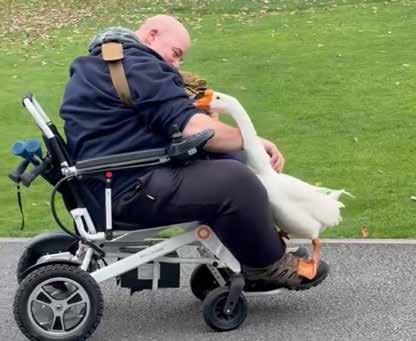
‘Nommi’ the tame campus Goose climbing up on me to say hello today!
Join in on our Monthly Themed CompetitionSpring
This competition runs from 1st April until the 29th May 2026.
Please post your entries on our facebook book page under the relevant post pinned at the top of the page https://www.facebook.com/groups/ rpsah T
This gives you two months to get your entries together, The winner received a certificate from the SIG and will be featured in the next Heritage Journal.
Ideas for Spring Photography:
Framing with Blooms: Use spring blossoms (cherry, almond, or apple) as a natural foreground frame to soften the look of rigid stone ruins or stately homes.
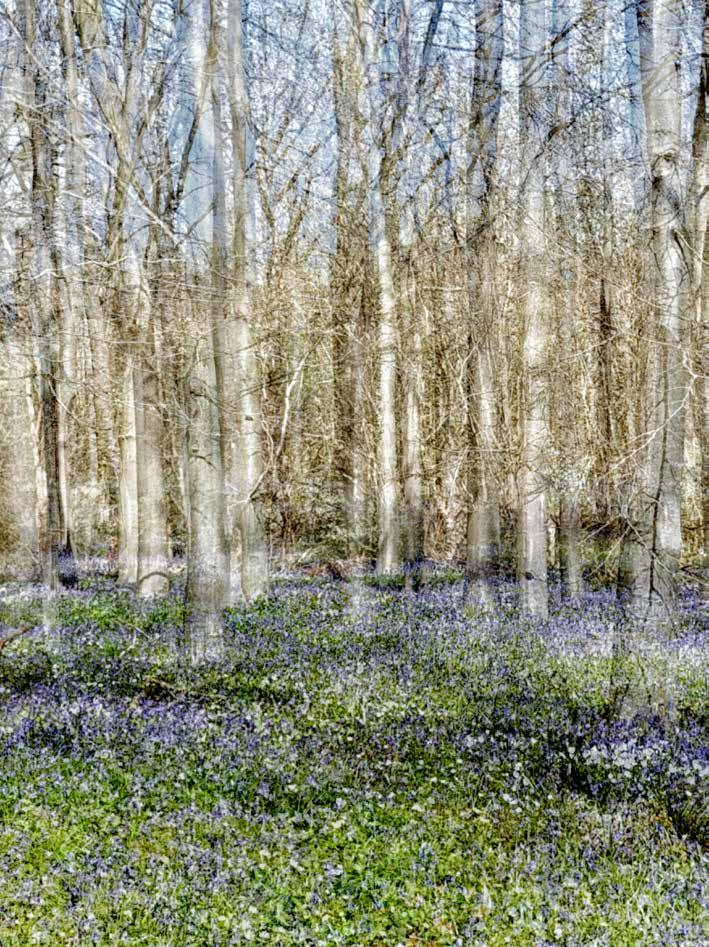
The “Bluebell” Perspective: Use a shallow depth of field to isolate historical features against the vibrant purples and greens of woodland floors.
Atmospheric Mist & Ruins: Cool spring nights followed by humidity create morning fog, which adds an ethereal and mysterious layer to ancient monuments and standing stones.
Contrasting Colours: Vibrant yellow rapeseed fields or bright green hills provide a striking contrast against the grey or brown textures of weathered stone. Good Luck from all of us at A&H
Bluebells in the woods with In Camera Movement. Photograph Natalie Hough-Benns (BA (Hons) LRPS
Theyyam - the several faces of God
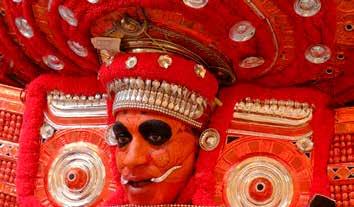
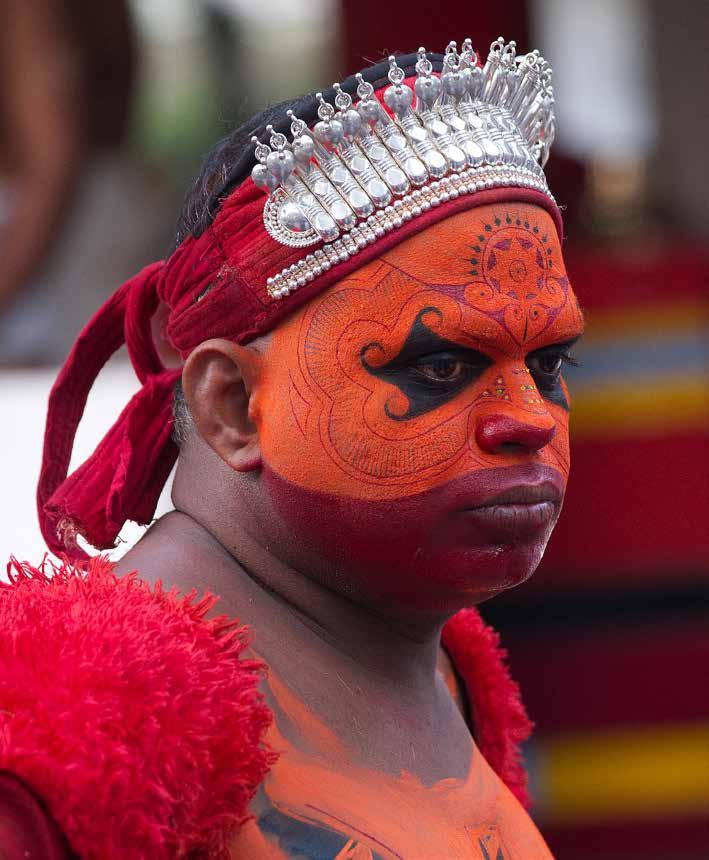
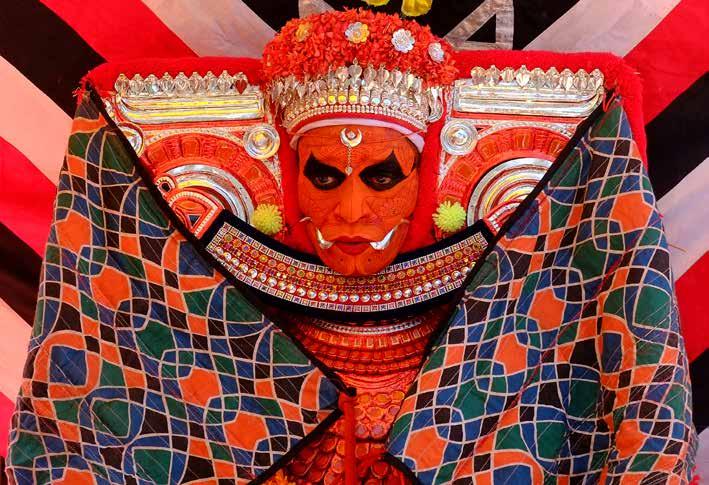
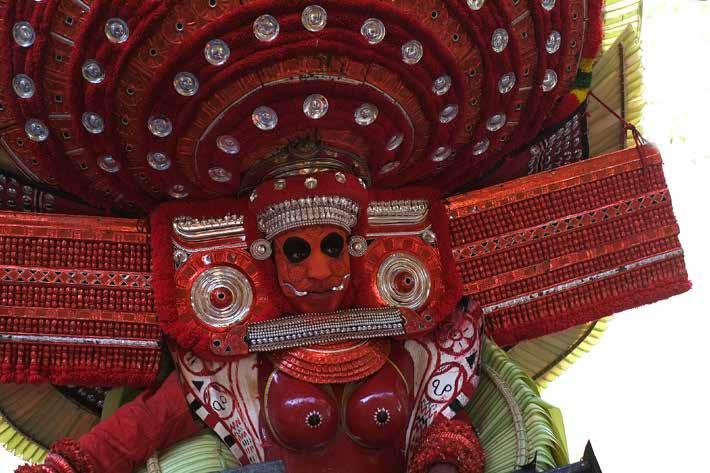
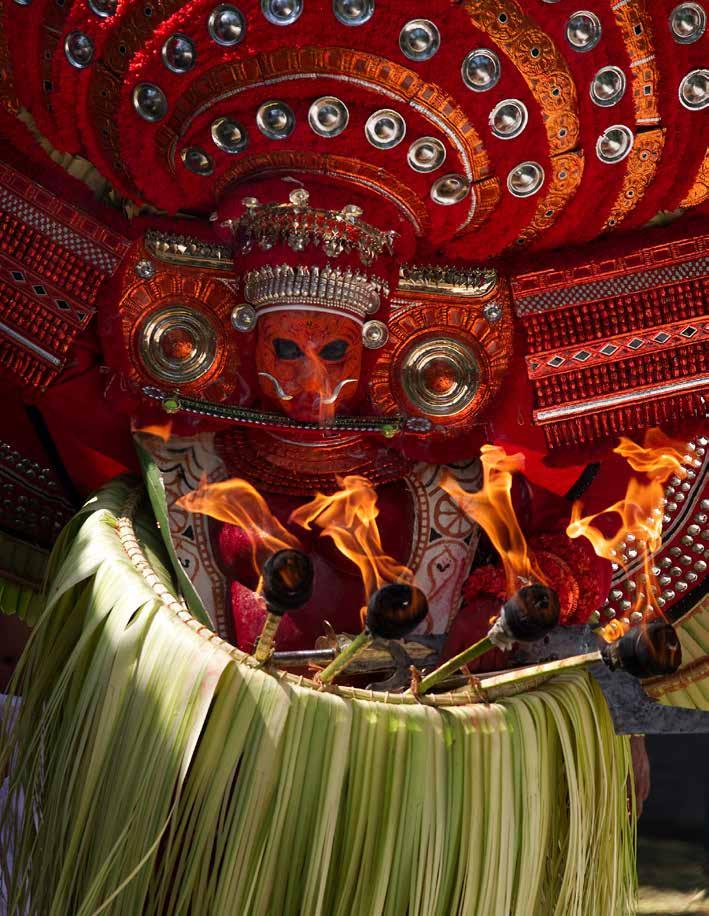
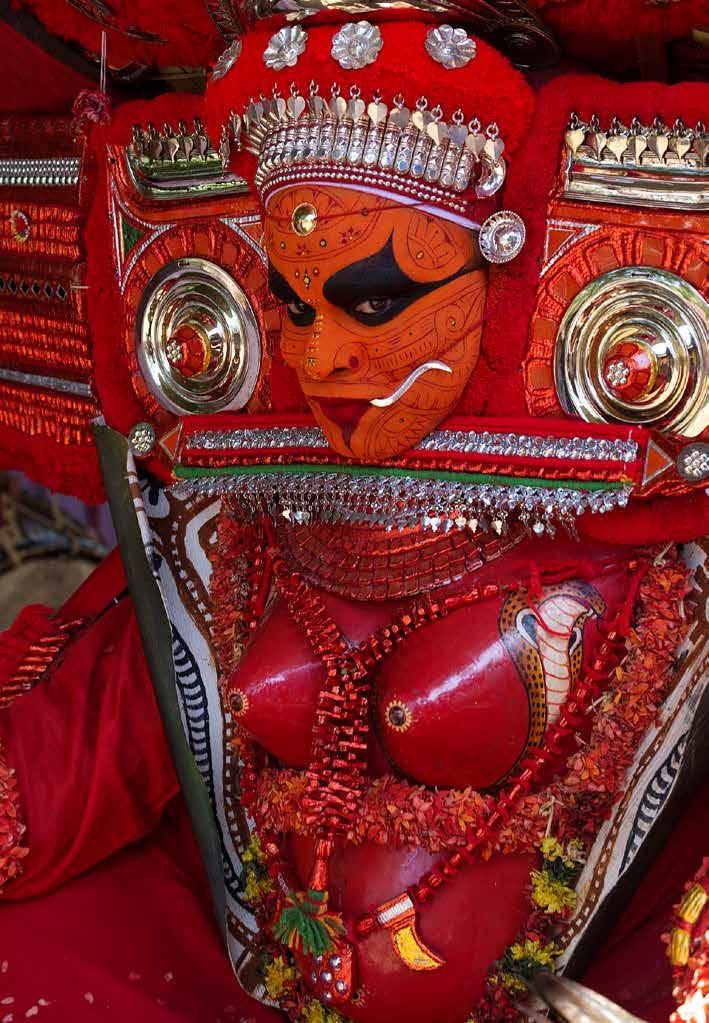
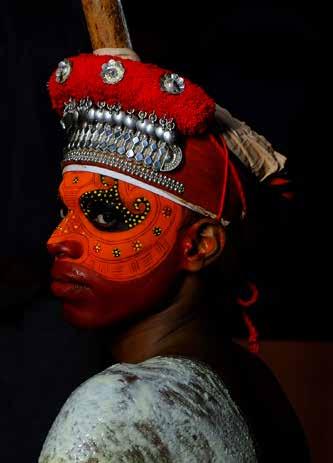
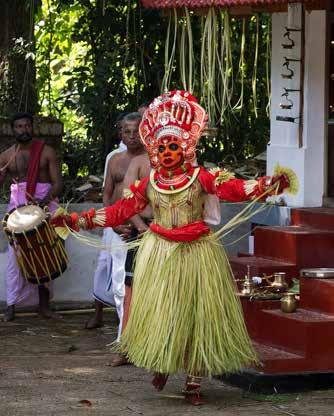
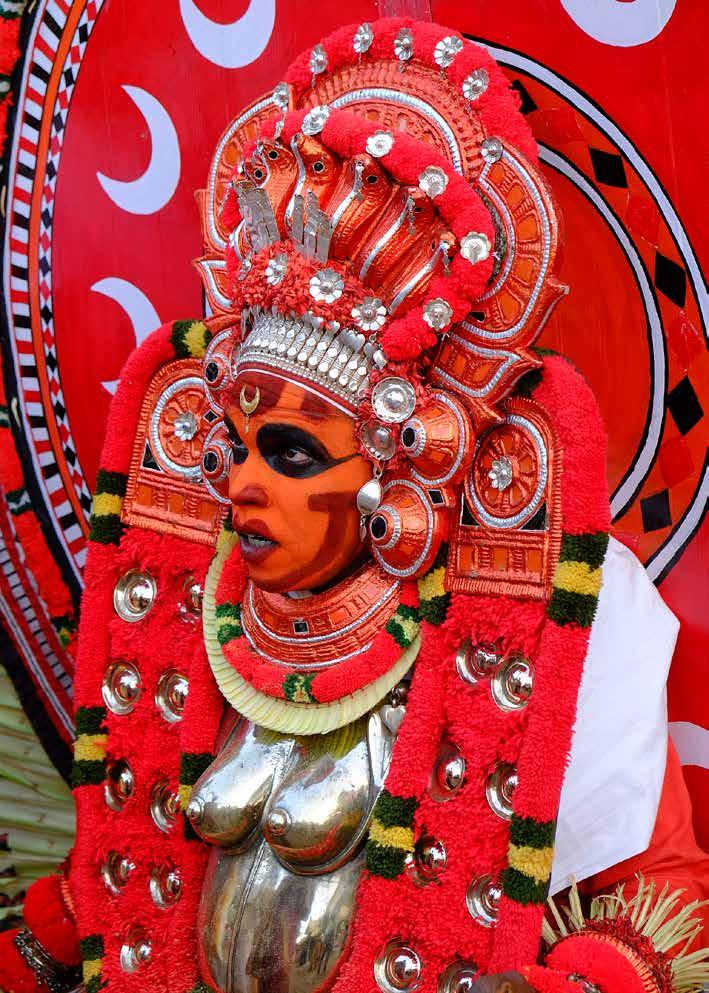
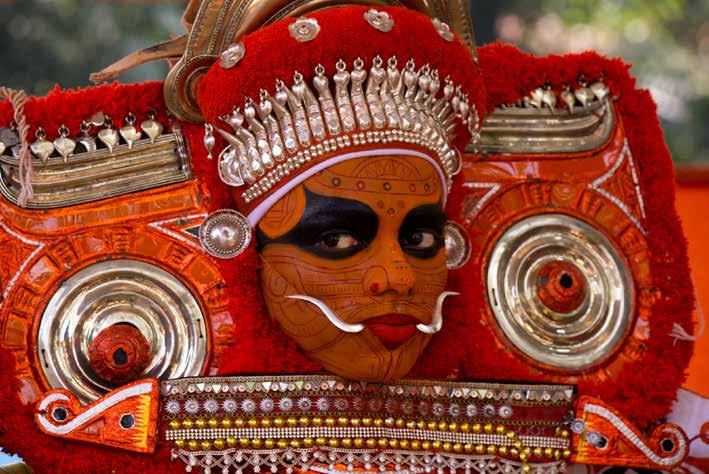
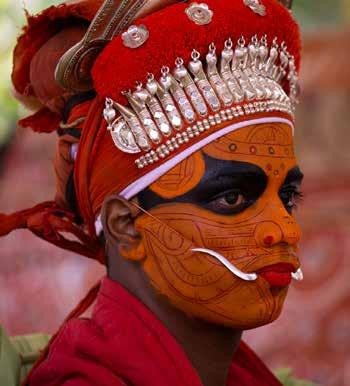
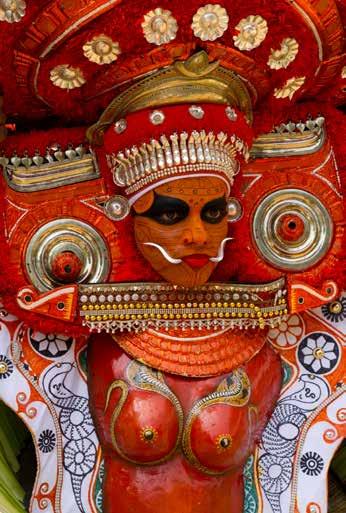
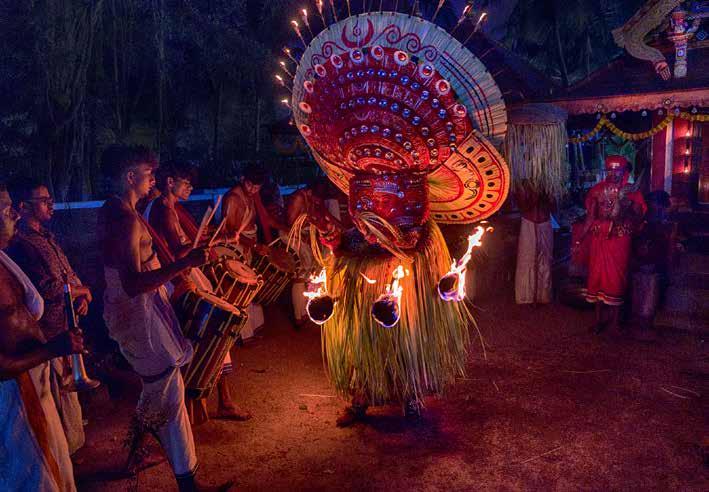
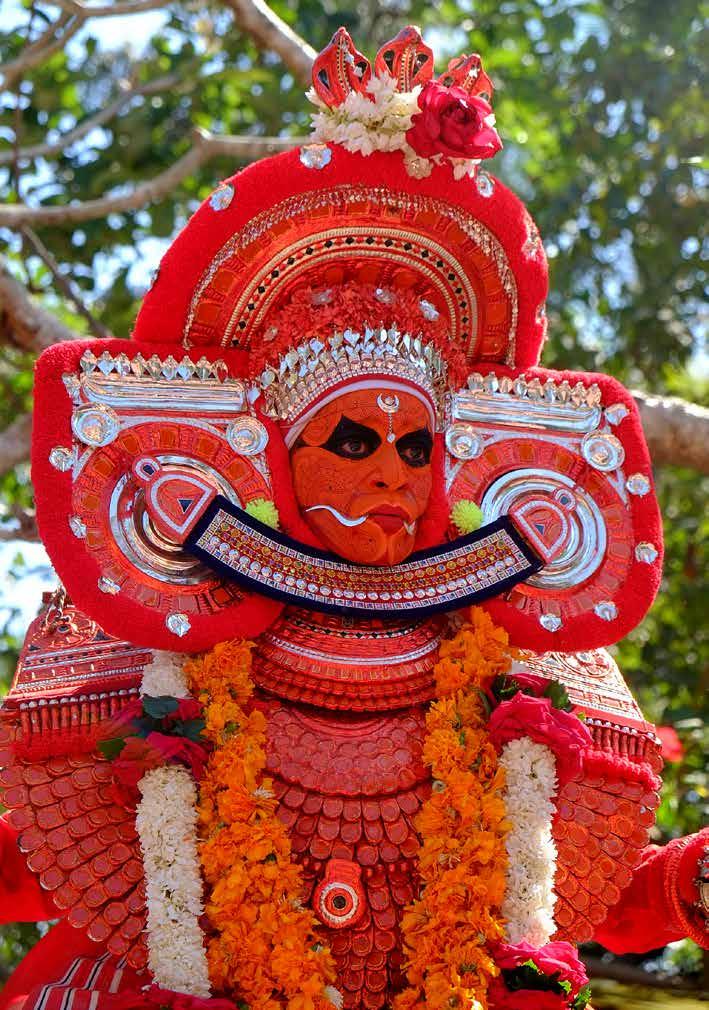
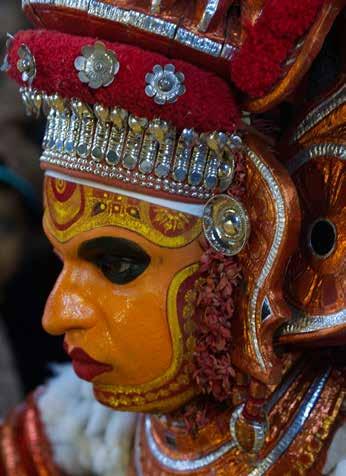
Theyyam is the annual dance festival in North Kerala, India often referred to as the “Dance of the Gods”. It’s performed between the months of December & April in small village temples and ancestral homes deep in the villages. These festivities, practised for centuries are usually not accessible to the general public and attended by local villagers and a few visitors from nearby villages. ASHOK VISWANATHAN INDIAN
CHAPTER
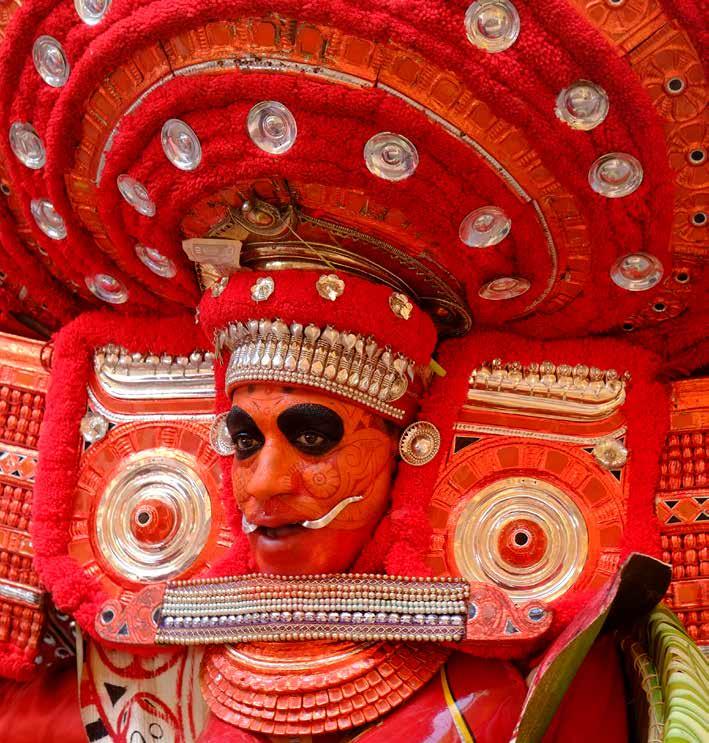
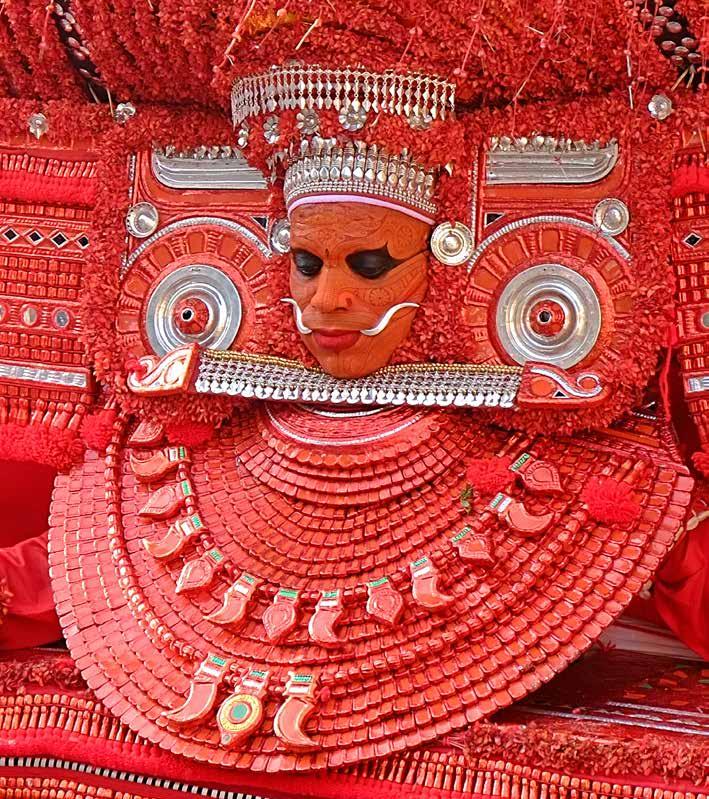
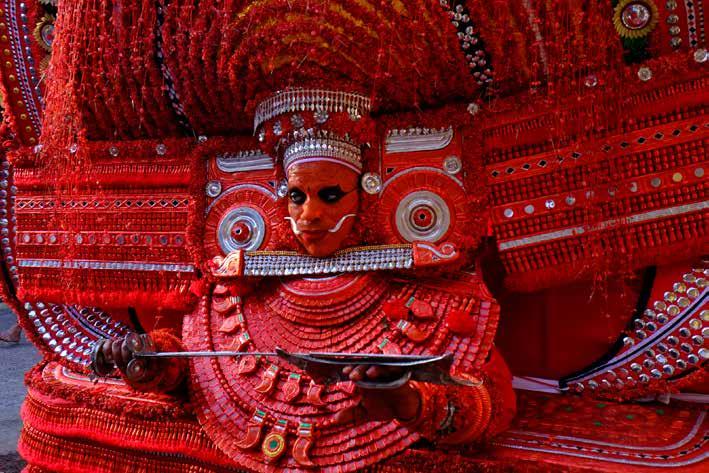
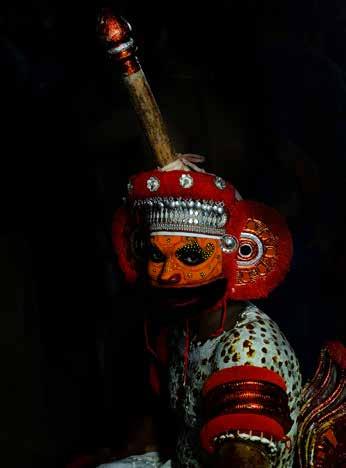
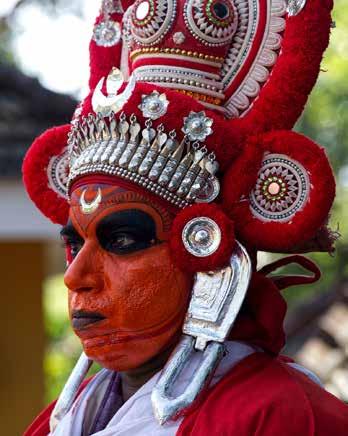
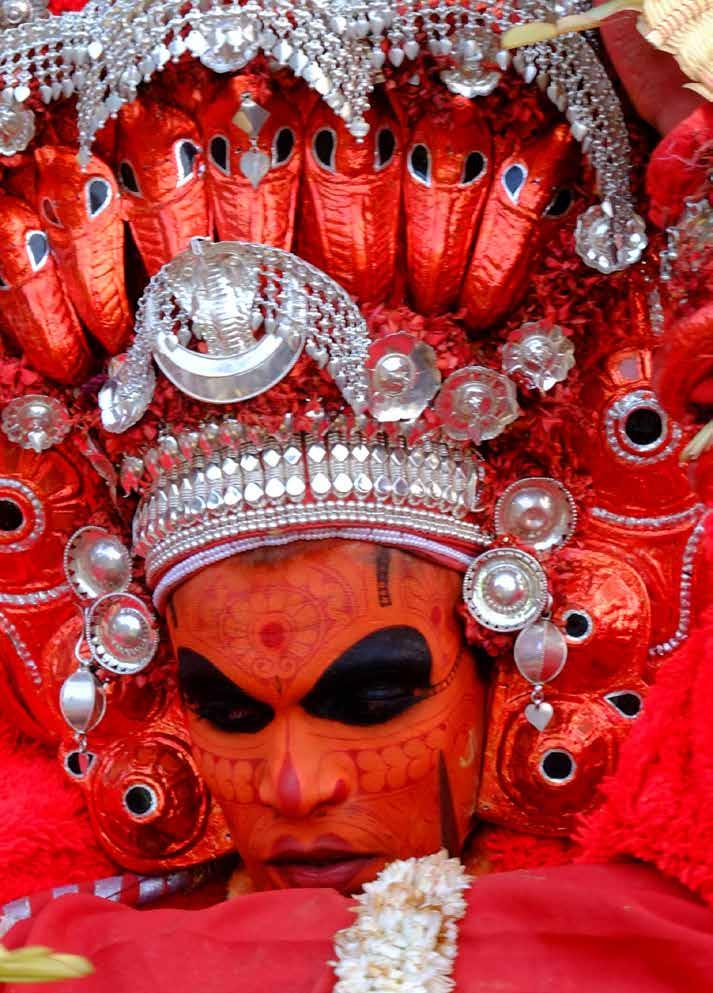
The people consider Theyyam as God and seek his blessings also advice on matters bothering them. There are about 400 forms of Theyyam each with its own rituals, costumes, make up and style as the body painting and costumes vary. This dance form goes back to the Dravidian age and is said to be a part of ancient tribal culture. A Portuguese researcher I met said that in years gone by when India was ruled by Kings and Kingdoms, the King of Travencore asked the neighbouring king to send his dance troupe to entertain him. This request was declined and the King of Travencore then decided to have his own dance troupe which evolved into the present day Theyyam.
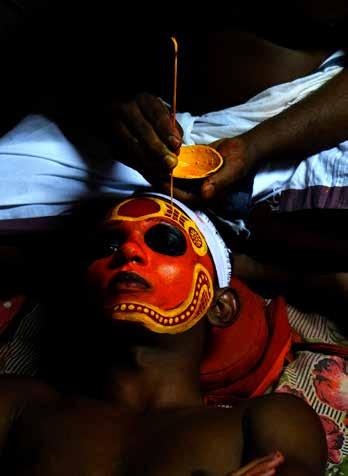
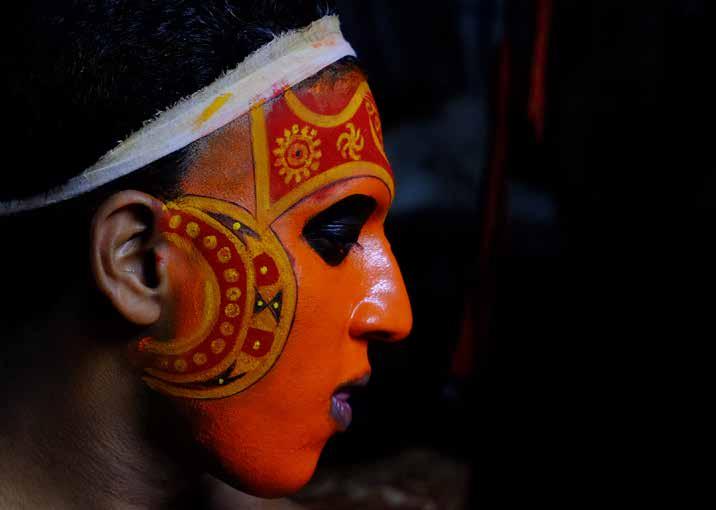
Although there are a few daytime performances, most are held late in the night at the village temple courtyard or in ancestral homes where this has been held for generations. The images of the make up process are mostly lit by a single bulb. I was lucky to have access to the make up area at the rear of the temple which yielded some excellent portraits. Being in remote interior locations there are few outsiders present. The audience is mainly local residents and their families. There is no stage or curtain and devotees are standing or sitting on steps around the temple courtyard. It’s an open theatre. The performance, mostly in very low light lasts between 12-24 hours with breaks. The dancer, along with the playing of the musical instruments describes the myths and legends of the deity of the shrine.
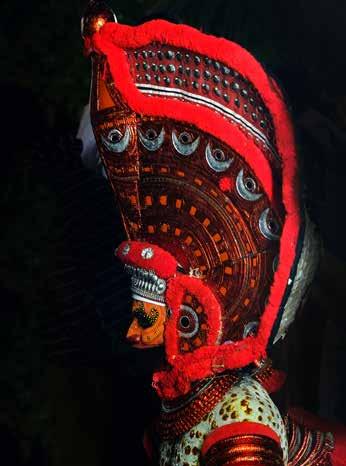
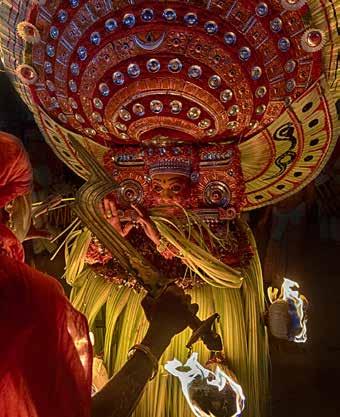
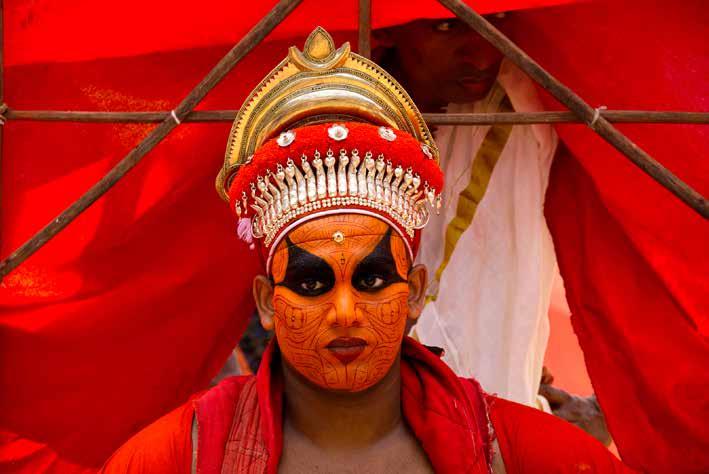
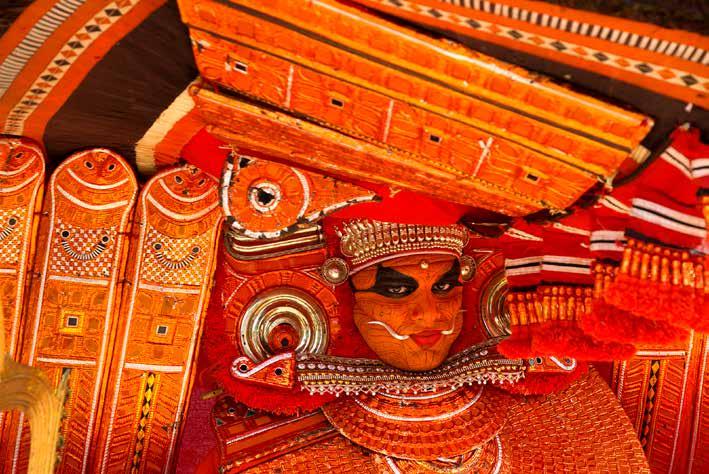
The process of make up is lengthy and takes a few hours. The dancer is painted with different patterns in primary and secondary colours made of natural herbal colours. The usual products used for makeup include, saffron powder, quick lime, rice powder, turmeric etc. The colours made into a paste with water or coconut oil are then applied to the skin with a fine brush made of coconut leaf stem. The costume is based on the deity and made of cotton and natural materials such as leaf, bark
and stems. Most of the Theyyam forms resemble perfectly chiselled sculptures. In this respect, the headgear has an important role in Theyyam and it represents particular region’s handicrafts. The dance is accompanied by the loud beat of drums and wind instruments, usually with fire and with the blessing of the head priest the dance commences. It’s during this time he “metamorphosis” into “God”. Somewhere during this process toddy (palm wine) is also consumed. The Theyyam dance has different steps known as Kalaasams. Each Kalaasam is repeated systematically from the first to the eighth step of footwork. It’s very precise. A performance is a combination of playing of musical instruments, vocal , dance, and makeup (usually predominantly orange) and costumes.
The portraits here are shot over several years using fast Fuji equipment and 18-55mm and 50-140mm Fuji lenses. I always shoot RAW often at ISO 16003200 as tripods and flash are prohibited. Fuji files print well at these ISO levels.
After the performance, devotees approach the Theyyam to seek blessings and advice. Theyyam is a dying art form as there are few performers and an uncertain future. A copy of the Theyyam programme for the season will tell you the village, date and temples where it is being performed. The programme is in Malayalam, the regional language and a local guide will be the best option to escort as remote temples are hard to find and also assist with entry, stay and transport. Being with a local will also ease entry to the temple but footwear is left at the entrance and one has to be respectfully dressed. The venues are often hospitable with hosts offering you a free tasty vegetarian local meal.
A series of very late nights and early morning shoots will be well worth it. I have been fortunate to be able to shoot this project for the last 6 years to document a dying culture.
Bali Theyyam
Chathan Theyyam
Gooliyanga Bhagavathy Theyyam
Gooliyanga Bhagavathy Theyyam
Gulikan Theyyam
Hagavathy Theyyam
Kakkara Bhagavathy Theyyam
Kakkara Bhagavathy Theyyam
Kakkara Bhagavathy Theyyam
Kandanar Kelan Theyyam
Kandanar Kelan Theyyam
Kandanar Kelan Vellattam
Kandanar Ketan Theyyam
Kundor Chamundi Theyyam
Kundor Chamundi Theyyam
Pushpachal Bhagavathy Theyyam
Puthiya Bhagavathy Theyyam
Puthiya Bhagavathy Theyyam
Raktha Chamundi Theyyam
Raktha Chamundi Theyyam
Vellarangara Bhagavathy Theyyam
Vellarangara Bhagavathy Theyyam
Vellattam Theyyam
The 46th Whittlesey Straw Bear Festival: A Heritage Photographer’s Dream
January is usually known for its snow, ice or flooding if you live in East Anglia. The days are short and good light is non-existent but what’s there to look forward to…
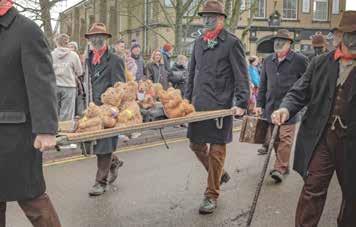
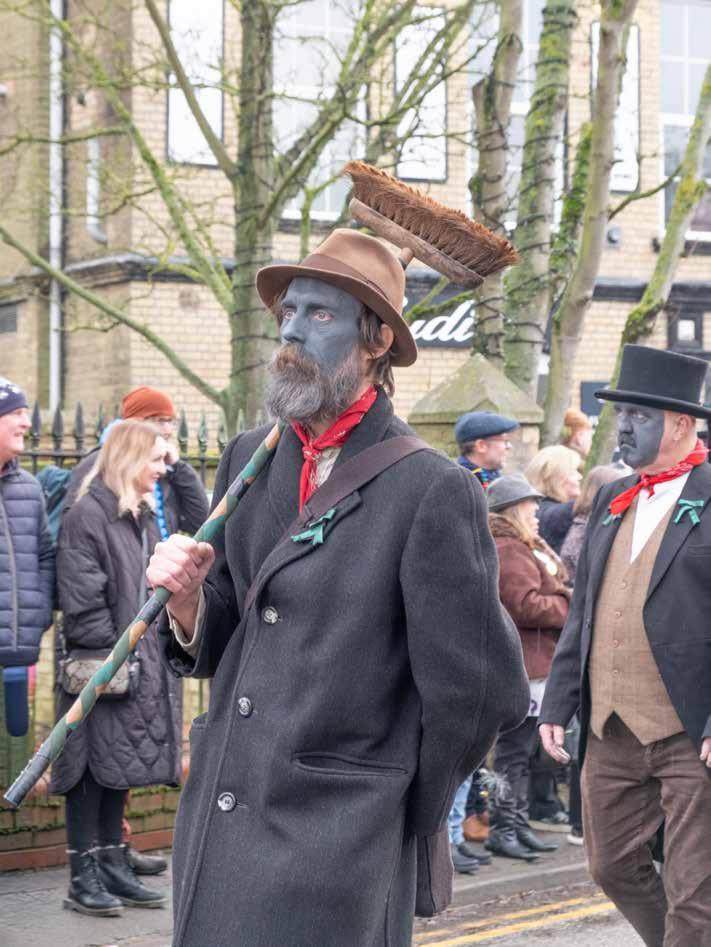
Straw Bear, what can I say is it quirky, weird or a genius idea of bringing community and celebrating its hundreds of years of history. Two people dressed as Straw Bears bring 1000s of spectators and dance troops from all over the country, to pour onto the streets of Whittlesey to celebrate this traditional festival. NATALIE HOUGH-BENNS
(BA HONS) LRPS
East Anglia is historically know as an agricultural region, the land workers would return to their duties on the Monday following the twelfth night after Christmas. Plough Monday would often coincide with January’s poor weather conditions, making it impossible for land workers to farm the frozen or flooded fields. With no means of earning a wage the land workers would entertain the wealthy households by singing and dancing in exchange for food and drinks. Unfortunately this act of begging didn’t sit well with all.
“The plough boys” accompanied with plough, would take revenge on the ornate lawns of houses they visited if they did not get what they wanted.
Peterborough Advertiser of January 1861 published that Straw Bear took to the streets then. A letter from the Folklore Society (1909) from Professor G C More-Smith confirmed the sighting.
The “Straw Bear Tune” refers to the traditional music associated with the Whittlesey Straw Bear Festival in Cambridgeshire, England, a distinctive folk custom where a person dressed in a straw suit dances through the town, accompanied by
musicians playing this specific, lively tune, often available as free downloads from the festival’s website for supporting musicians.
Every straw bear is made with quality local straw, Lesley and Richard Beeton of Holloway Farm not only donate the straw but provide volunteers to harvest it.
As well as a dancing bear, the streets are filled with colourful shop fronts decorated to celebrate. There are dance troops who come from all over the country showcasing different styles of English Morris Dancing. There are many different dances that take to the street:
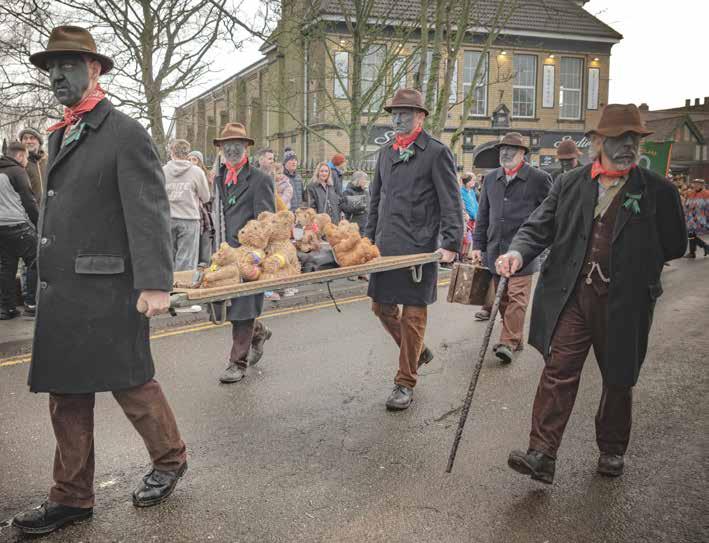
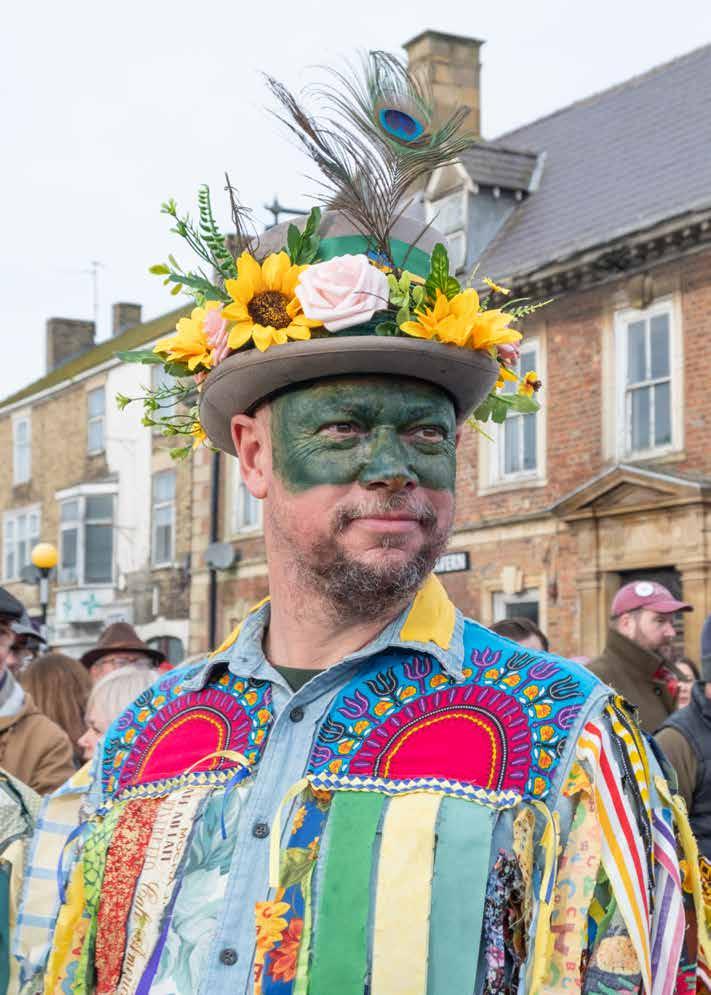
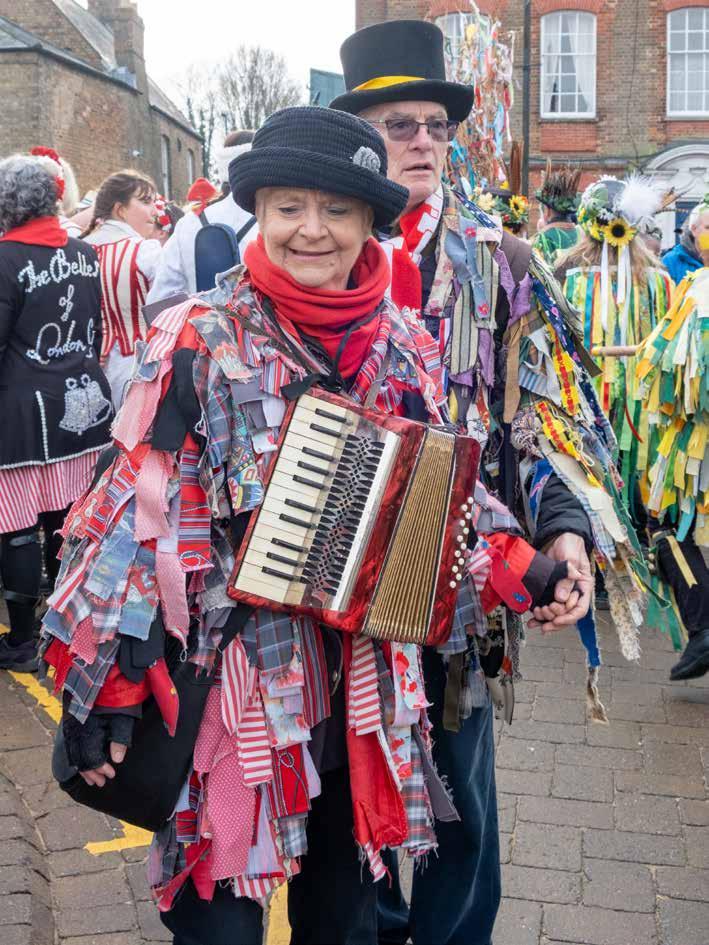
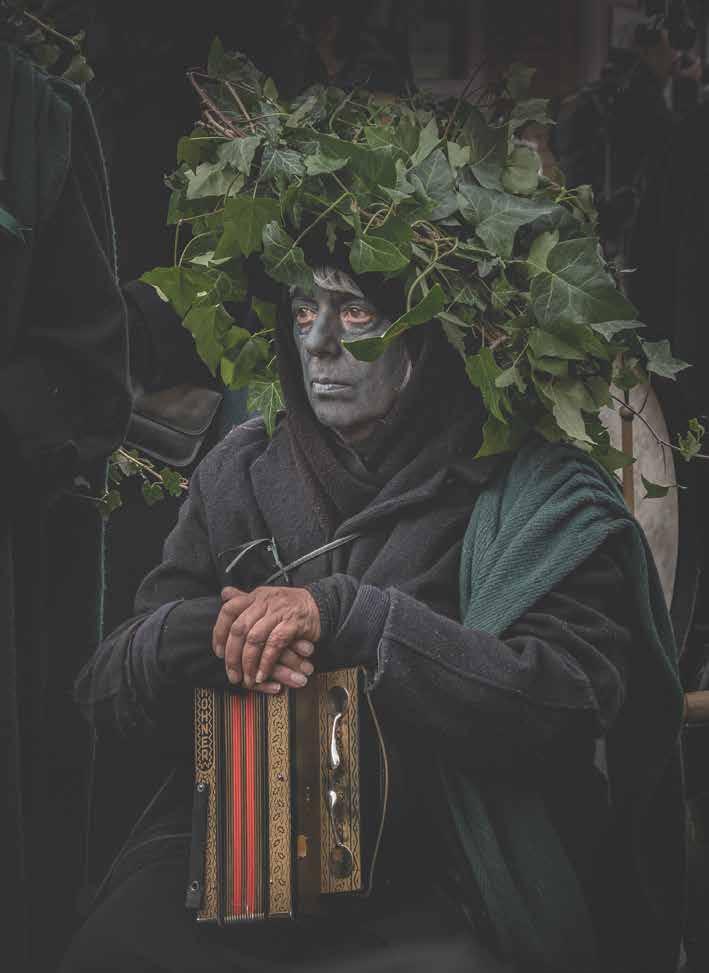
Border Morris (Welsh Origins) is a wild, vigorous style of English folk dance from the Welsh border (Herefordshire, Shropshire, Worcestershire). It is known for energetic stick-clashing, wild costumes, decorated hats, and black face paint for disguise, performed with drums and a distinctive “dark” or primal energy, often in winter months.
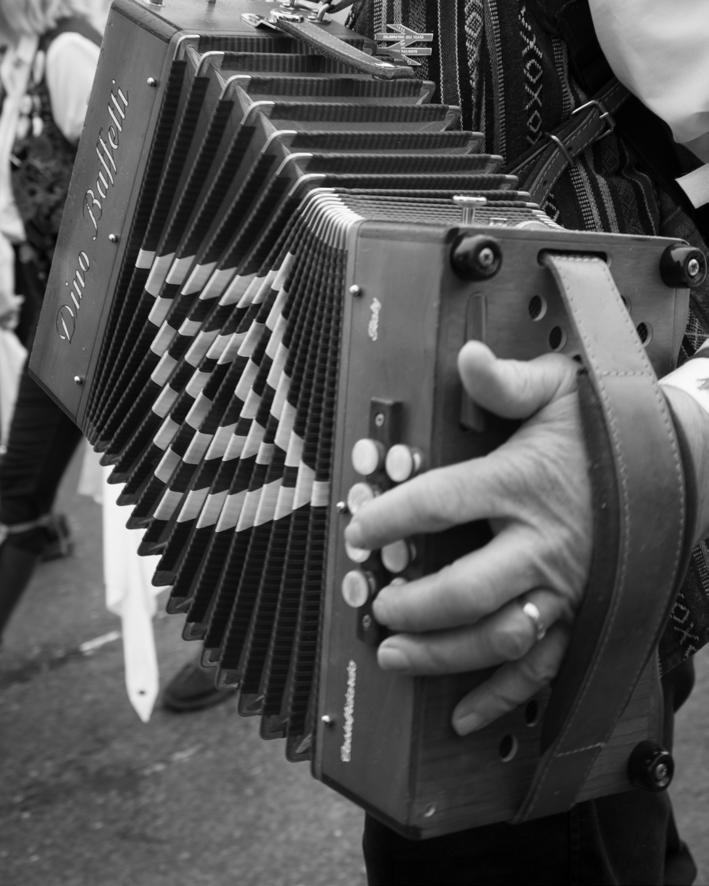
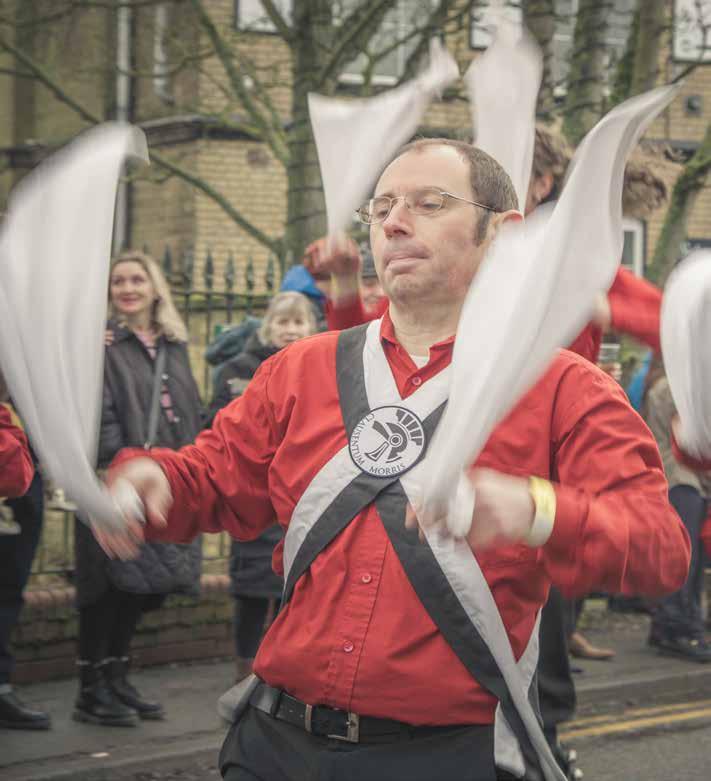
The Cotswolds are a vibrant style of traditional English folk dance from the Cotswolds area featuring rhythmic stepping, handkerchiefs or sticks, and bell pads, often performed in white costumes with colourful ribbons for celebrations like May Day. It’s historically danced by men but now includes mixed and ladies’ sides, with music often by accordion or concertina.
Longsword Morris dancing is a style of Yorkshire folk dance, often considered a cousin to traditional Morris, where dancers link 2-foot-long blunted swords to weave intricate patterns, forming stars or “locks” usually in sets of 6-8 dancers. Often
Lost in the music
A member of Old Glory Molly Dancers, a traditional folk dance team based in East Suffolk.
The bears are coming
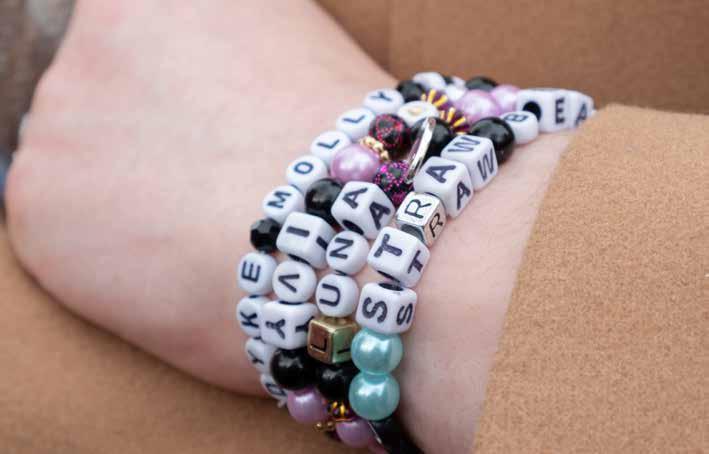
Swifty bracelets have nothing on this merch
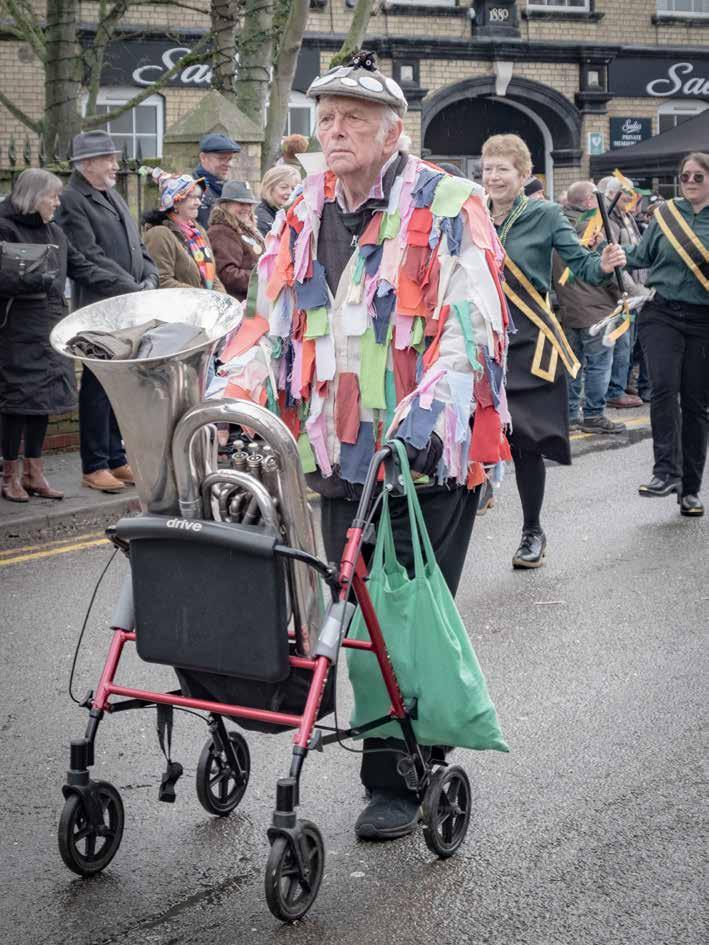
A gentleman from the Clausentum Morris, a mixed-gender folk dance team.
Surrounded by music
Clausentum Morris is a mixed-gender folk dance side that performs Cotswold Morris.
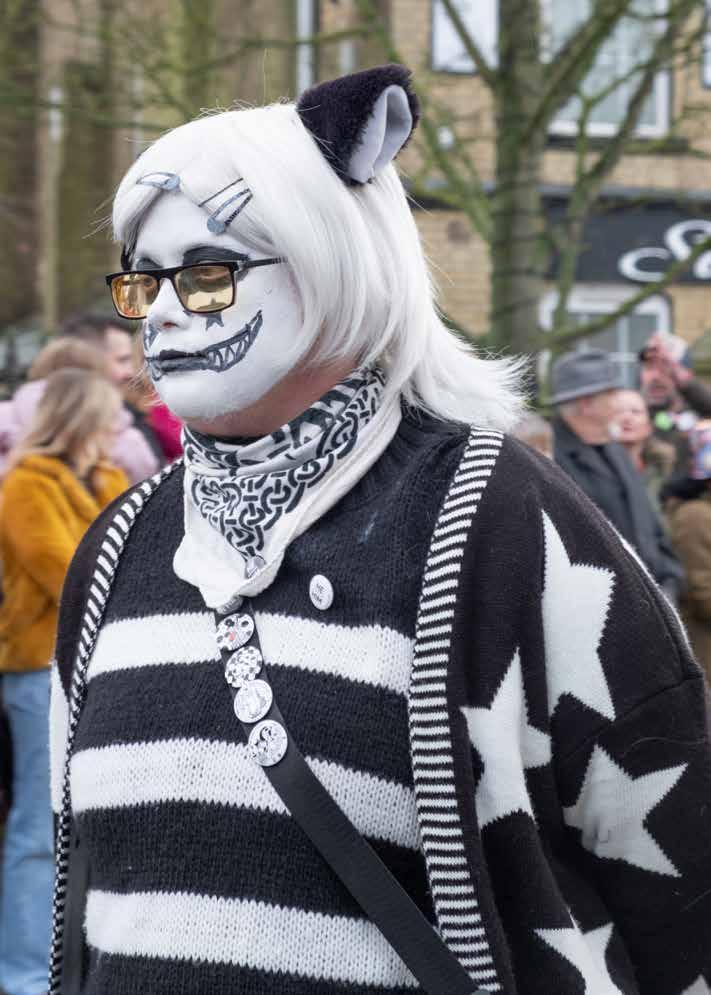
A member of Pig Dyke Molly, a contemporary English folk dance team based in Peterborough.
is a festival that brings out the best in us all
This
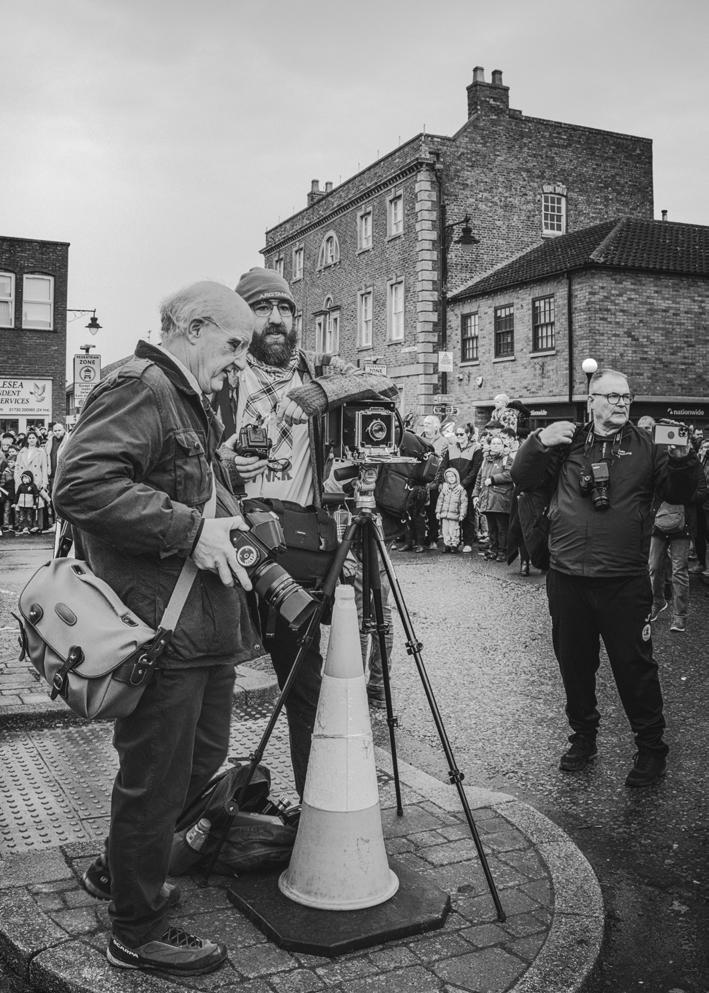
Team husband and wife
Different gear for different types of photographers
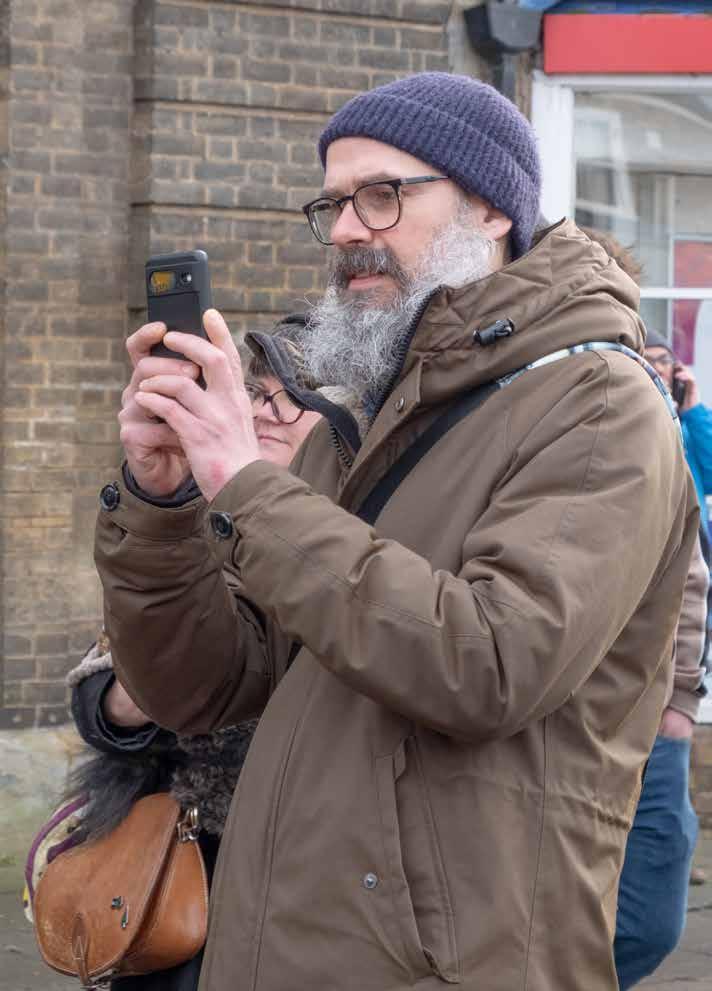
The mobile photographer
involving a character (like a jester) particularly popular in Northern England’s mining areas.
Molly dancing is a traditional style of English Morris dance. Originating from East Anglia and historically performed by out-of-work farm labourers. It is distinct from other Morris styles due to its stamping footwork and unique costuming that includes crossdressing.
“Rapper” Morris dancing, more accurately known as Rapper Sword dancing, is a fast-paced and originates from coal mining communities of North East England.
If you are interested in finding more out about Morris Dancing you can find more information by search ‘Morris Side Finder’.
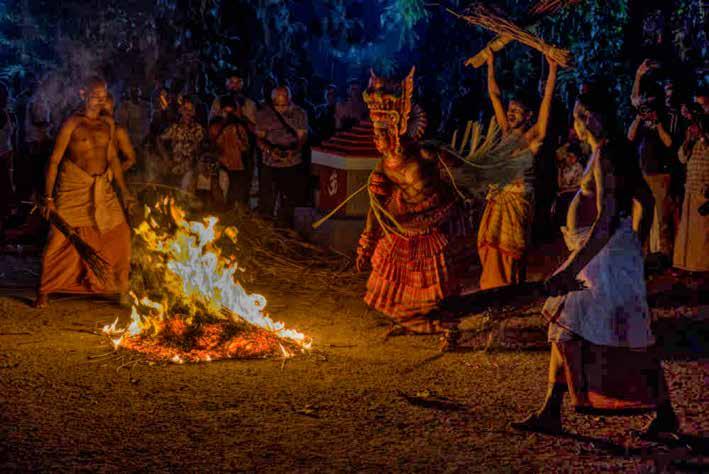
After all the fun and merriment has taken place, the climax of the weekend ends in the burning ceremony this is where the Straw Bear costume is burnt. The Straw Bear is then said goodbye to in a traditional manner. It is a fitting end to the festival. Do not confuse this event with anything you have watched in horror films. This isn’t related to the events to “The Wicker Man”. This character was stolen from this wonderful British Traditions. “The Wicker Man” is a pagan religious horror movie “Straw Bear” is a beautiful tradition that has been adapted over years. The burning is just to dispose of the straw and nothing sinister.
The Whittlesey Charity has a long history dating back 400 years of doing good work within the town and surrounding villages which continues today, including supporting the Straw Bear Festival. For more information about the Charity and their good work please visit their website www. thewhittleseycharity.co.uk
Merchandise sales are crucial to the Straw Bear Festival because they provide an source of income. This helps supports future festivals and generates revenue. Merchandise also allows Straw Bear supporters to show the commitment and support for the festival. They turning everyday purchases into a form of publicity. Straw Bear supports its community and vice versa.
If you have the pleasure of attending Straw Bear you must buy a Souvenir Programme, it is crammed with information and maps to give you the best opportunities of seeing the allusive bear.
If you can pick up a copy of The Life and Soul of Straw Bear by Anthony Gutteridge. It’s a great photo book, of the history of the festival. It’s a must have for any heritage fan.
The range of merchandise is vast. I expected the usual T-shirts and stationery but
Straw Bear has its own edition of Monopoly to buy. Items are available to purchase from the pop ups shops or online. The funds raised not only support community cause but shows the true meaning of community spirit. I loved spending time supporting true heritage on a cold January. I will be going again.
Just in case you are interested next years festival dates are 16 / 17 / 18 January 2027 so get Straw Bear in the diary, as it shouldn’t be missed.
The Festival that has it all.
The Whittlesea Straw Bear Logo
Culture: People and Places
Photographing the life of people performs various functions. One of them is photodocumentation of cultural heritage monuments and sights. The Photography of UNESCO monuments can be called a particularly significant activity in this area.
The photographs are part of a larger exhibition “Moment of Heritage – 2022” showing the author’s photographs of cultural heritage monuments from three countries: Russia, the USA and Great Britain. SERGEY SHCHEKOTOV-ALEKSANDROV
St Petersburg photographer Sergey Shchekotov-Aleksandrov visited Volgograd, St. Petersburg, San Diego (USA), London (Great Britain) with his camera. The selection of photographs includes examples of the author’s photographs showing cultural heritage from Russia, Turkey, Austria, India, and the Czech Republic.
Sergey Shchekotov-Aleksandrov is an independent documentary photographer. He lives and works in St. Petersburg. Specializeing in filming nonmaterial and material culture, nature and everyday life, landscapes of the urban environment, museum institutions. He is the author and curator of numerous traveling photographic exhibitions in the regions of Russia. He leads the author’s channel on Yandex Zen “Kilometers of photographic roads”. Since 2021 he has been a member of the Royal Photographic Society of Great Britain. Sergey Shchekotov-Aleksandrov publishes books. For example in 2020, the book “Kilometers of Photographic Roads” was published, in 2021“Photographing Cultural Heritage”.
Author’s website: http://shchekotovphoto.ucoz.net/ Russian monuments of history and cultural heritage.
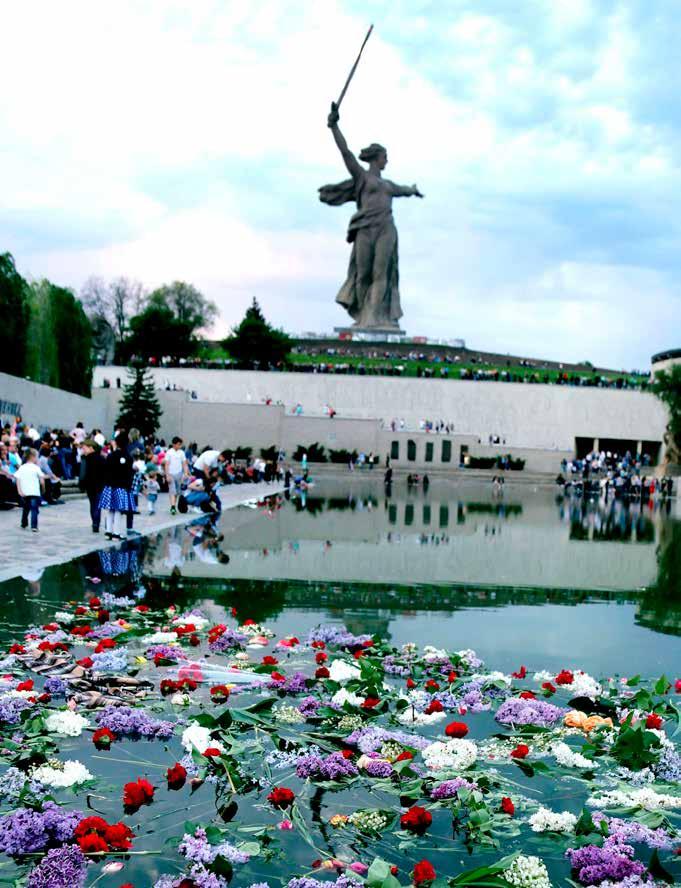
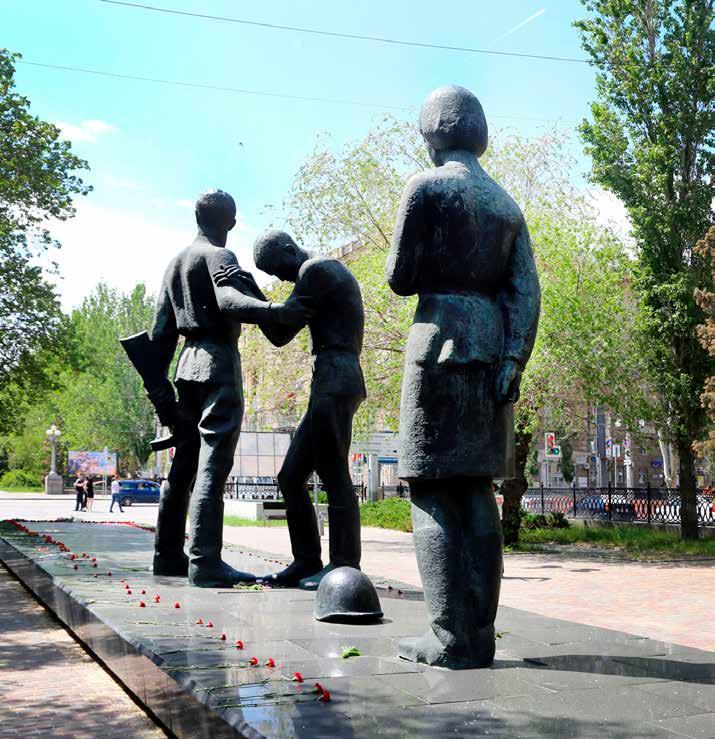
Volgograd is a city that is known in the legacy of Russian history as the place where one of the bloodiest battles, the Battle of Stalingrad, took place during the Second World War. The city hasa museum-reserve “Battle of Stalingrad”. Some of the objects of this museum, primarily the Memorial Complex “To the Heroes of the Battle of Stalingrad” on Mamaev Kurgan, are included in the preliminary list of UNESCO heritage sites.
The Battle of Stalingrad took place from July 17, 1942 to February 2, 1943 on the territory of modern Voronezh, Rostov, Volgograd regions and the Republic of Kalmykia. Today, Mamaev Kurgan is known as a monument-ensemble "To the Heroes of the Battle of Stalingrad" with the main monument "The Motherland Calls!". There are several mass graves and individual graves on Mamaev Kurgan, in which the ashes of more than 35,000 defenders of Stalingrad rest.
During a school excursion.
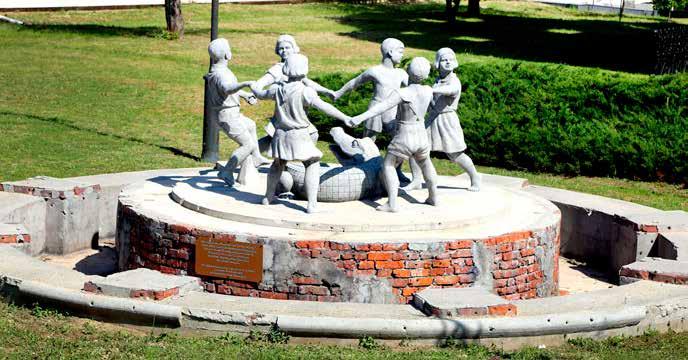
Fountain "Barmaley" for children after the bombing.
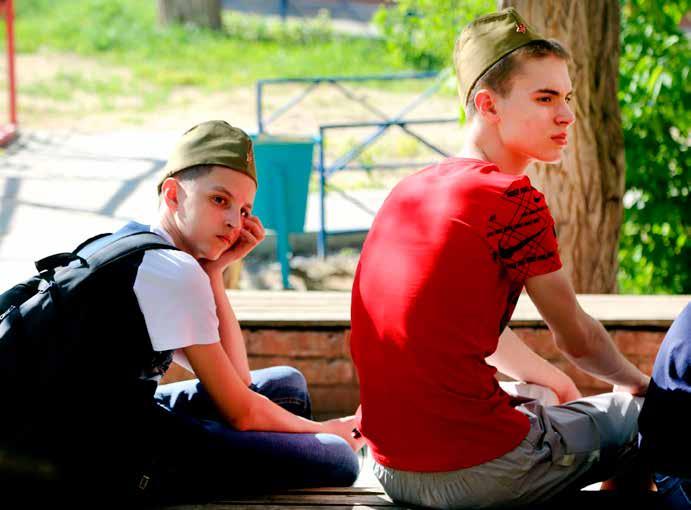
At the monument to the Komsomol defenders of Stalingrad.
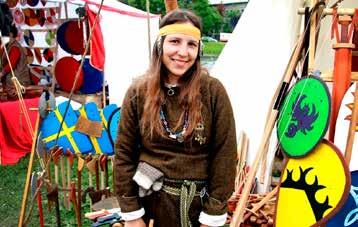
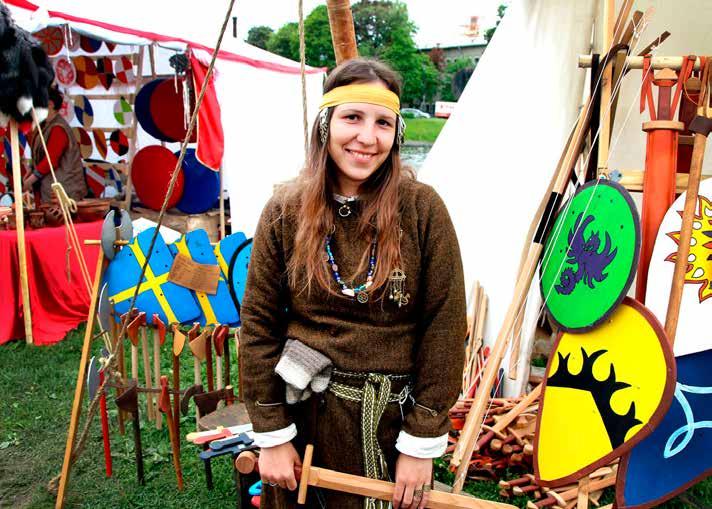
During the Legends of the Norwegian Vikings Festival.
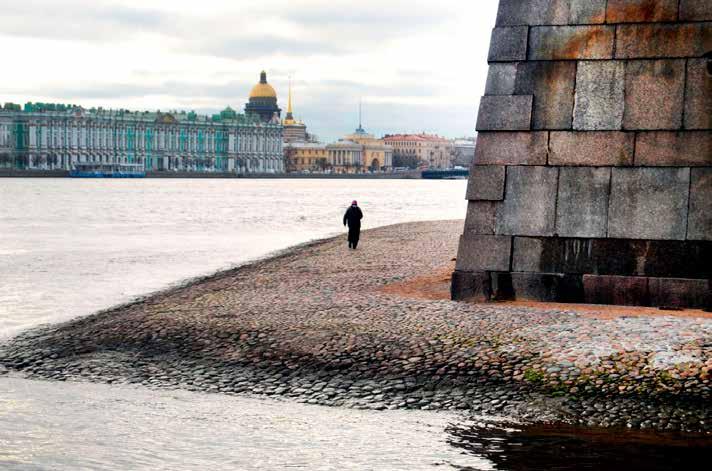
View of the Winter Palace from the Nevsky Gates.
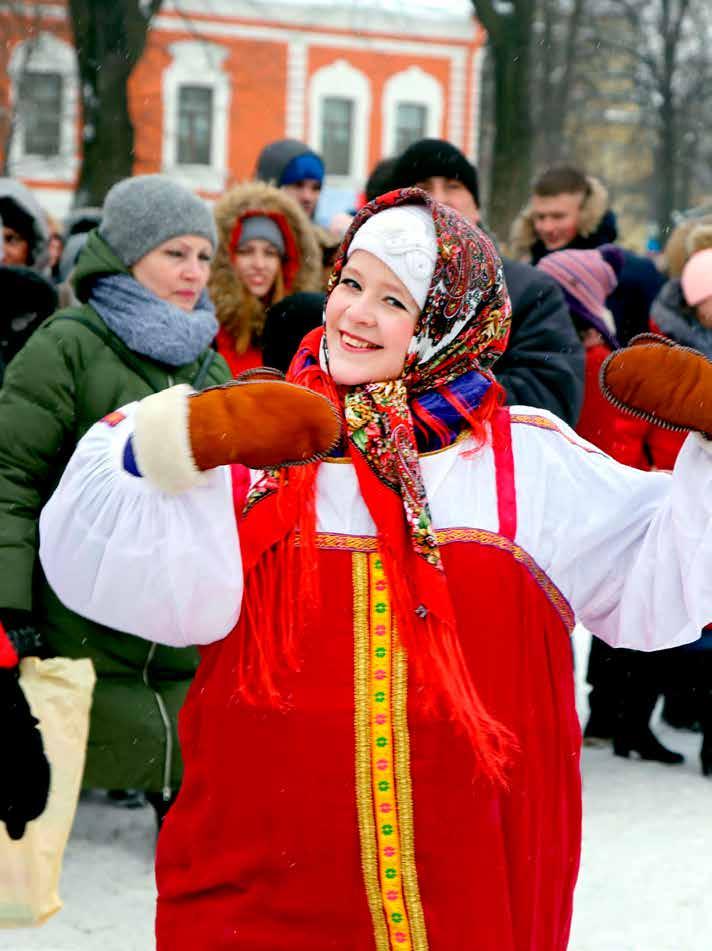
During Maslenitsa.
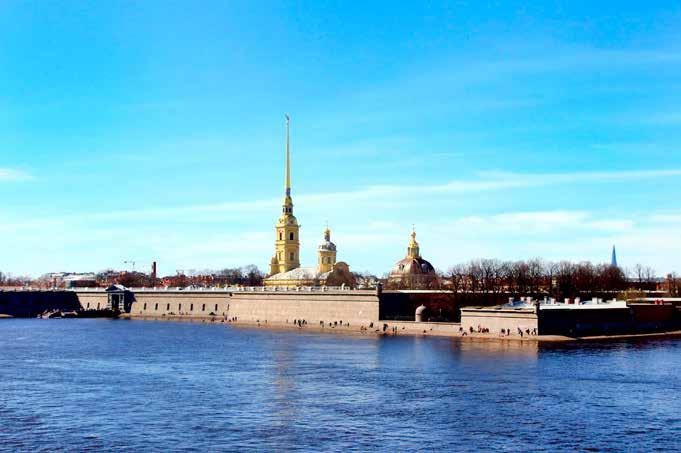
View of the Peter and Paul Fortress from the Trinity Bridge.
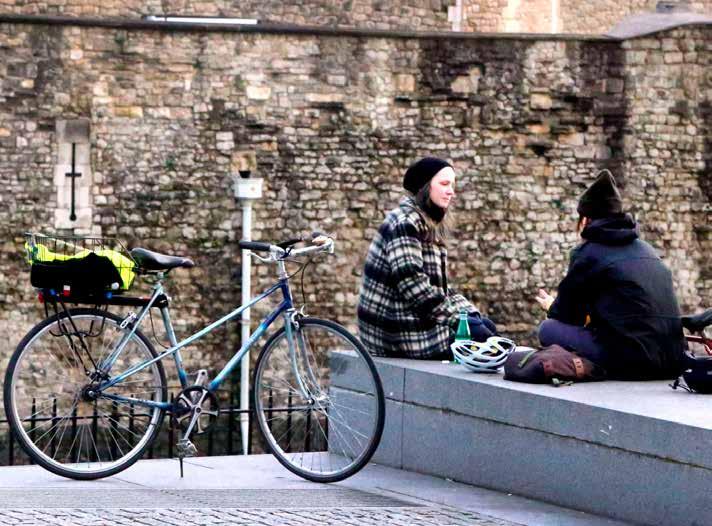
Tourists visiting the tower of london sometimes come here on bicycles.
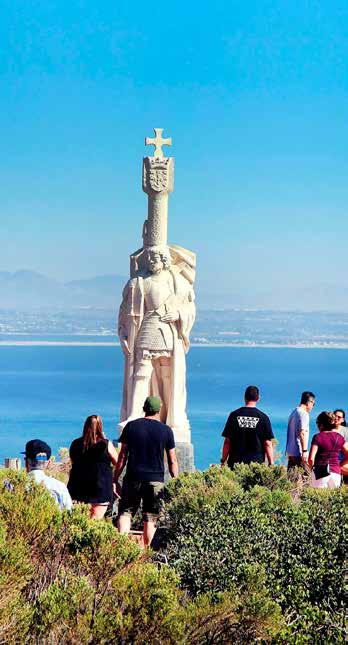
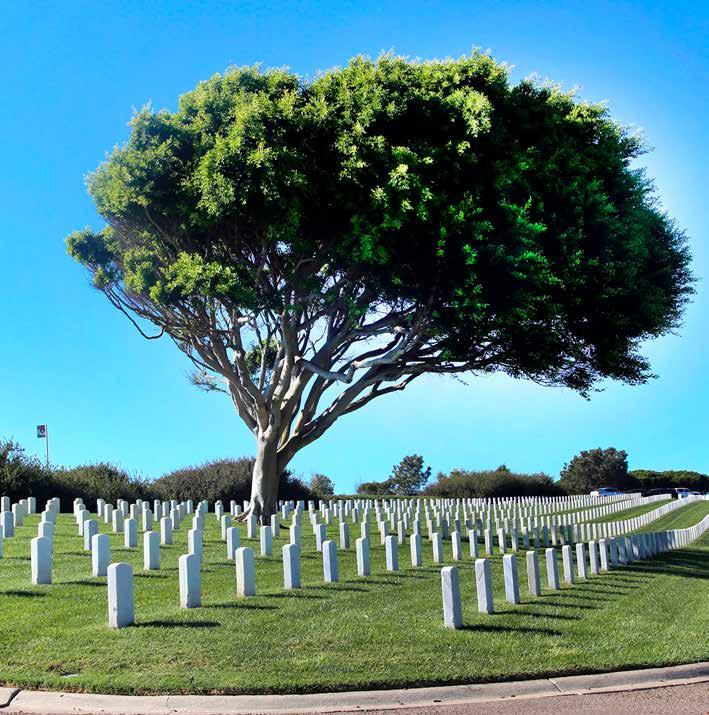
War graves of Fort Rosecrans on the peninsula.
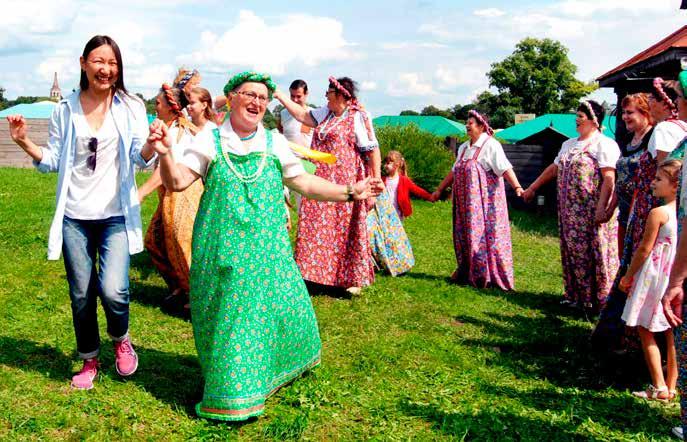
Russia, Vladimir region, Suzdal. At the festival "Cucumber Day", performance of the dance "Round dance". In 2015 Suzdal was a historic city that would soon turn 1000 years old. The CucumberDay festival has recently been approved as a holiday, where the main character is a cucumber, a vegetable common in this region.
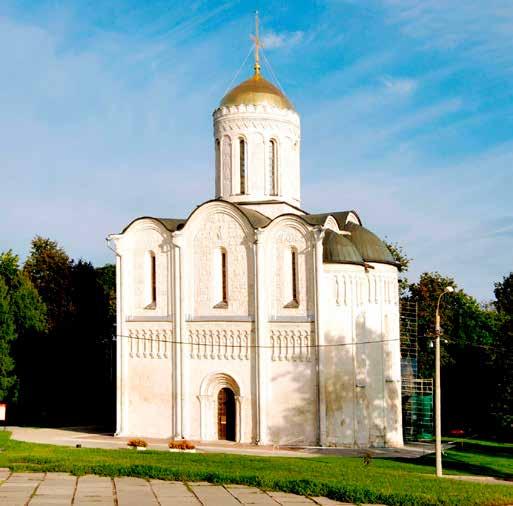
Russia, Vladimir region, Vladimir, Dmitrievsky Cathedral. UNESCO monument. It was founded in 1194 in the era of the highest power and heyday of the great Vladimir principality, as well as the reign of the Grand Duke of Vladimir Vsevolod Yuryevich, called the Big Nest. The cathedral is famous for its white stone carvings - its walls are decorated with about 600 reliefs depicting saints, mythical and real animals.
The Museum of Medicinal Merchants, Ancient Town of Cicheng, Southern China.
The Museum of Medicinal Merchants is in Cicheng in the Jiangbei District of Ningbo. Ningbo is a sub-provincial city in the north-eastern area of Zhejiang province; it has a long maritime history and is now a major port and industrial city.
SHAUN PARKES ARPS
Archaeological discoveries are being made quite regularly in Zhejiang province, with archaeologists recently discovering 25 new sites dating to before the Qin dynasty.
Cicheng is a small town situated in a corner of the East China Sea and is the most complete, preserved ancient county town in the Jiangnan region, and enjoys its status as a national tourist attraction.
It has a long-rooted history in Traditional Chinese Medicine (TCM), from the Ming and Qing dynasties. Several local families, such as the Feng and Zhang families, related through marriage, built considerable pharmaceutical ‘empires’ from Cicheng, and many national TCM brands originated in Cicheng.
It is quite remarkable that Cicheng, which neither produced precious medicinal herbs nor famed master physicians, saw its medicine merchants’ business achieve national prominence, with an influence that extends to the present day. Since the Ming and Qing dynasties, many successful practitioners of traditional Chinese medicine emerged from among Cicheng’s native population. This is actually inseparable from Cicheng’s culture of benevolence, filial piety, and Confucianism. The
people of Cicheng upheld the ideals of “cultivating oneself, regulating the family, governing the state, and bringing peace to the world,” and believed that “if one cannot be a good prime minister, one should be a good doctor.” Those who studied but did not enter officialdom would “practice medicine to aid the world.”
On July 19, 2018, two signboards and one plaque from the renowned time-honored pharmacy Jingxiutang were sent back from Shanghai to their ancestral home in Cicheng, returning to their roots and becoming a historical witness to Cicheng’s medicine merchant culture.
Cicheng is also famous for the Confucian Temple, also known as the County School, established in c 984 AD; the Ancient County Government Office c 738 AD; Examination Hall c 1835 AD; Feng-Yu residence; Feng Yue Painted Archway; Qingdao Taoist Temple c 749 AD, and many other notable sites.
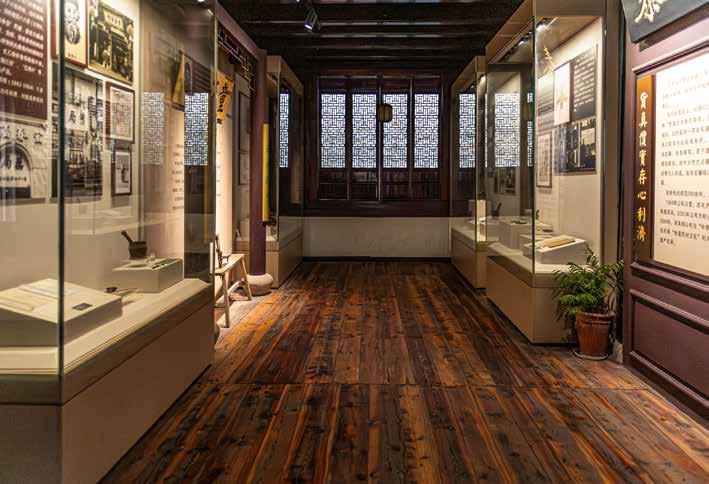
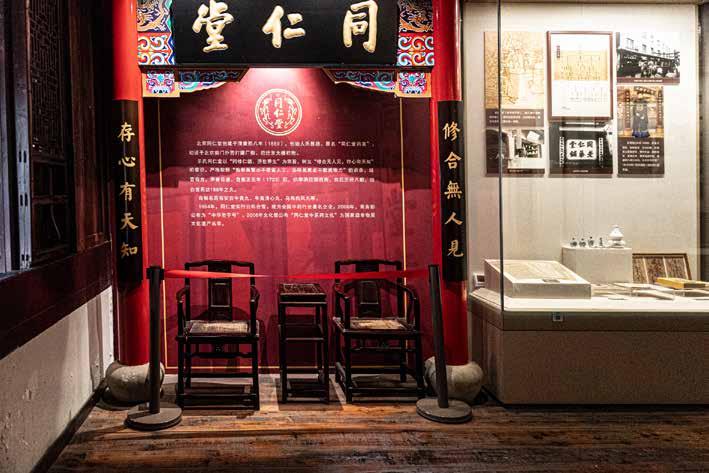
The Cicheng Medicine Merchant Museum is divided into three main sections: the Preface Hall, the Wei Changchun and Feng Gensheng Memorial Room, and the Cicheng Chinese Medicine Merchant Guild Memorial Room.
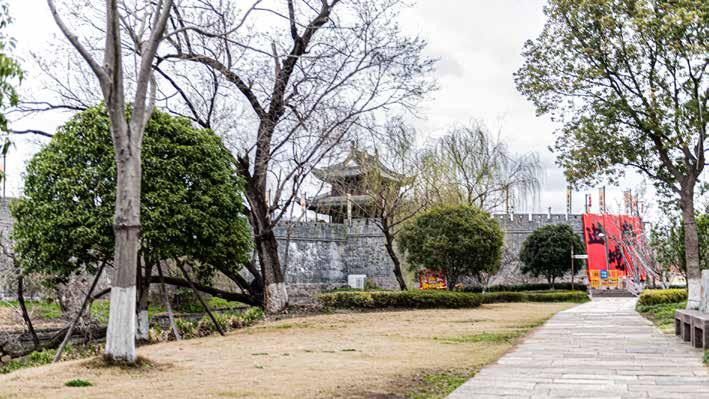
Approaching the ancient city walls, Cicheng.
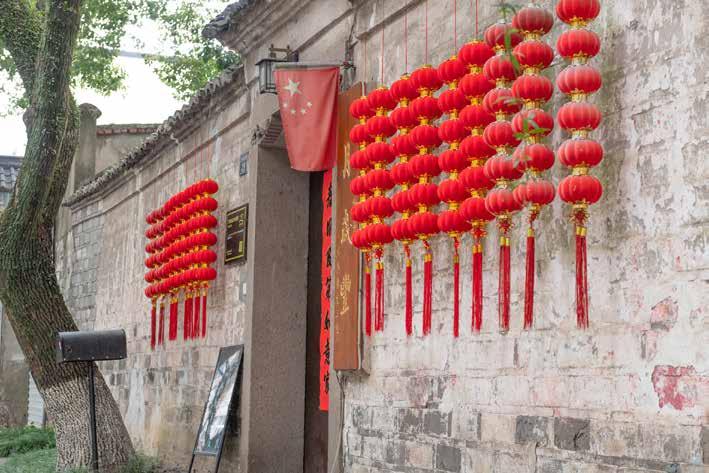
Highly decorated entrances entice visitors into various cultural heritage attractions.
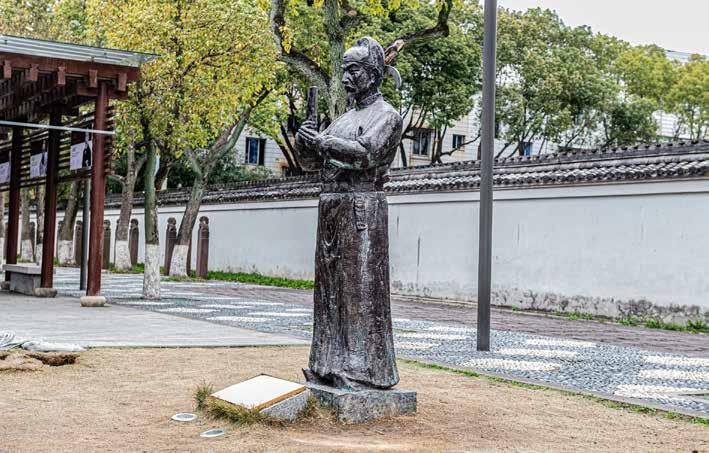
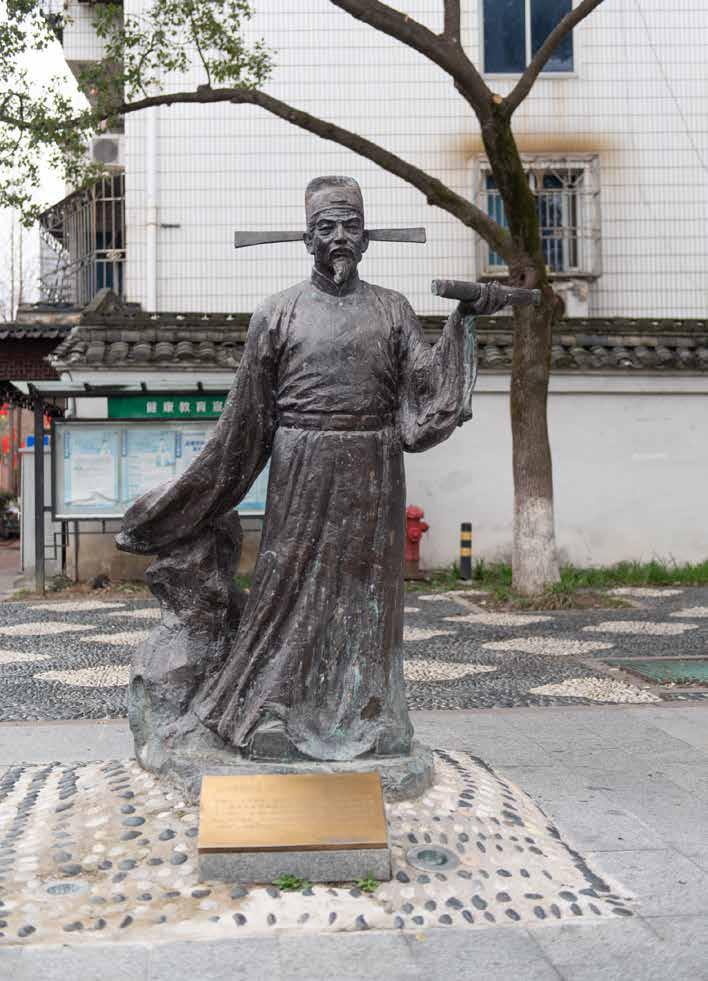
Statue on one of the main thoroughfares
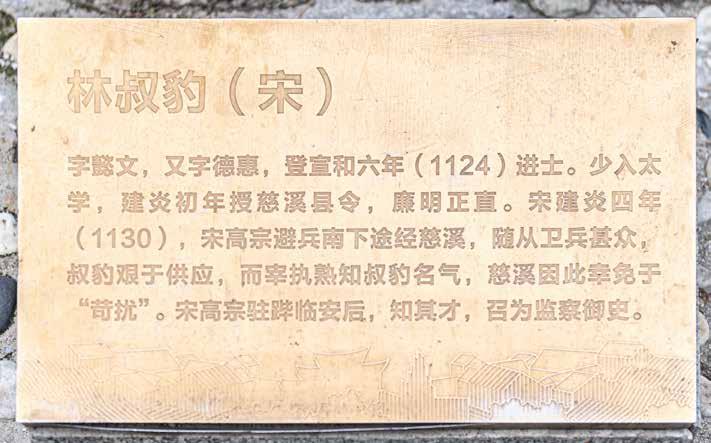
The information panel: Lin Shubao (Song), styled Yiwen but also known as Dehui, served as a scholar-official in the sixth year of Deng Xuanhe (1124). Young scholar Jian Yan was granted the county magistrate of Cixi in the early years of Jian Yan’s reign, maintaining integrity and honesty. In the fourth year of Song Jianyan (1130), Emperor Gaozong of Song fled south through Cixi, with many guards accompanying him. The governor was well-versed in supplying Cixi, thus sparing Cixi from “persecution”. After Song Gaozong was stationed in Lin’an, he recognised his talent and was appointed as the Inspector General.
Statue of Lin Shubao, informally styled Yiwen, but also known as Dehui.
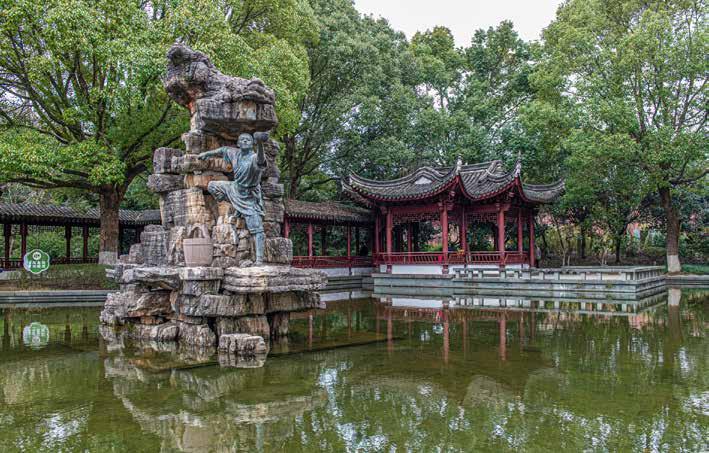
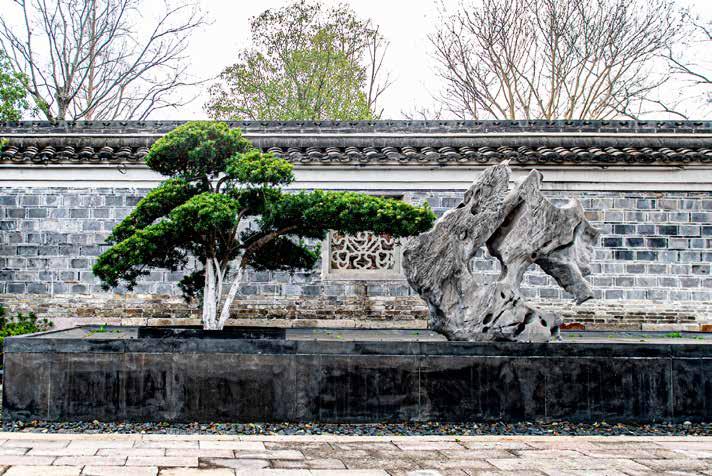
One of many statues in Cicheng, incorporating the Chinese passion for water features and abundance of trees.
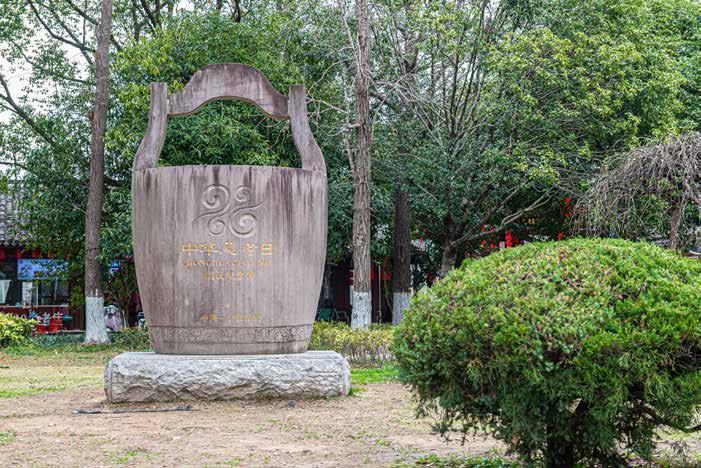
“Chinese Charity and Filial Piety Day Memorial for Zhonghua Cixiaori initiative”
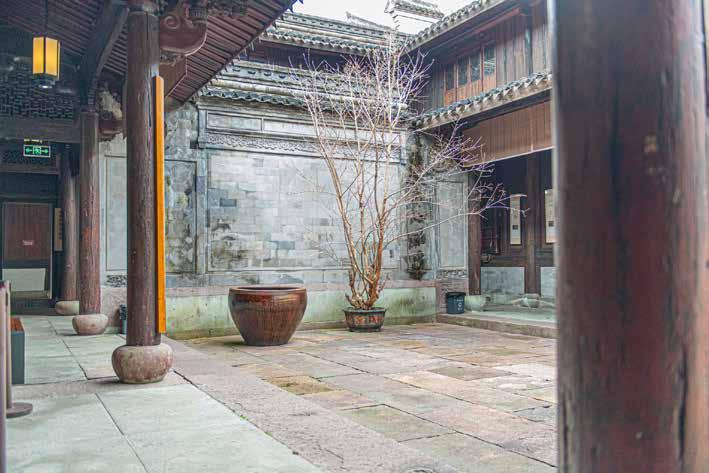
Inner courtyard of the Museum of Medicinal Merchants
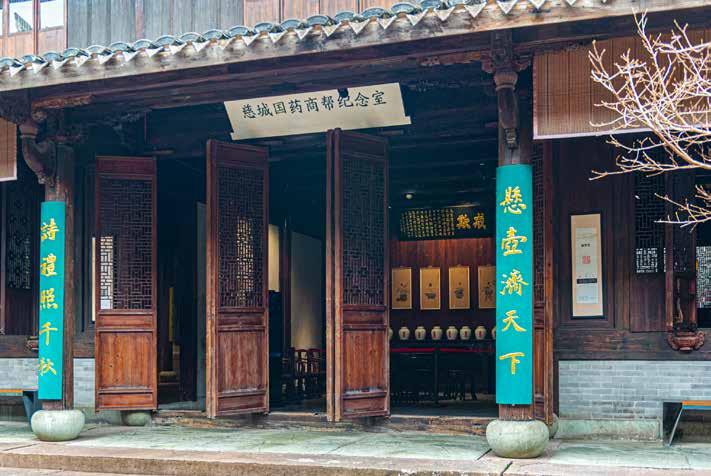
Cicheng Traditional Chinese Medicine Chamber of Commerce Memorial Room
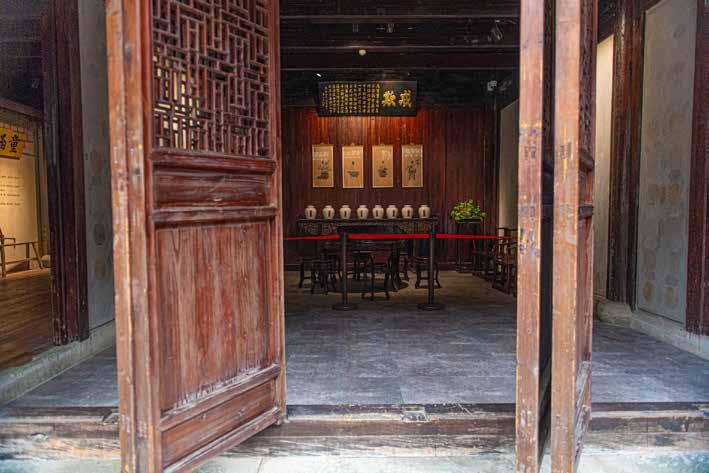
Through the doors into the Cicheng Traditional Chinese Medicine Chamber of Commerce Memorial Room
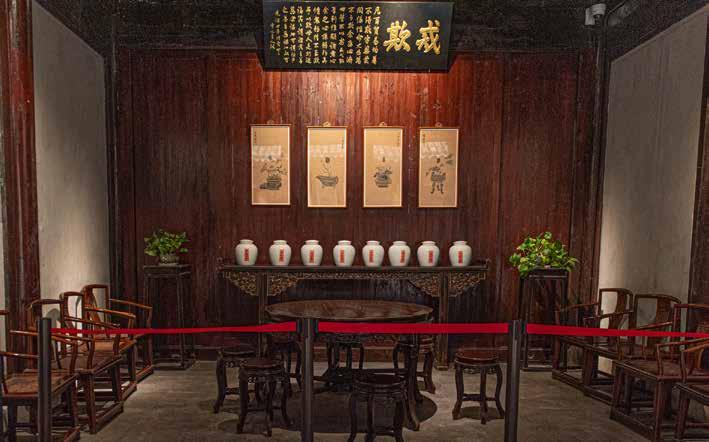
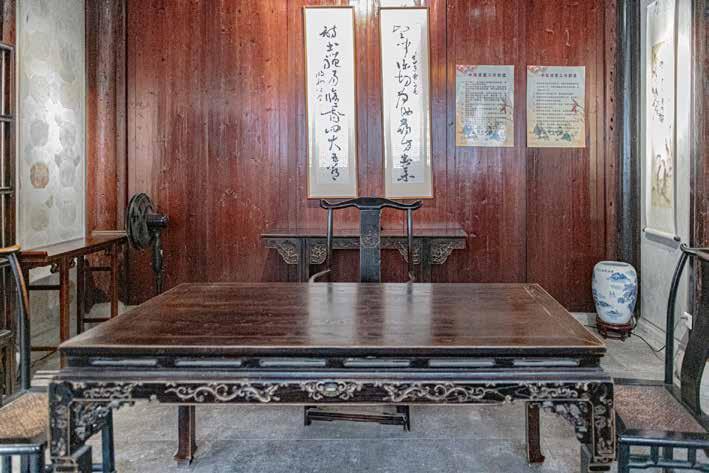
The conference table of the Cicheng Traditional Chinese Medicine Chamber of Commerce Memorial Room
Consultation room.
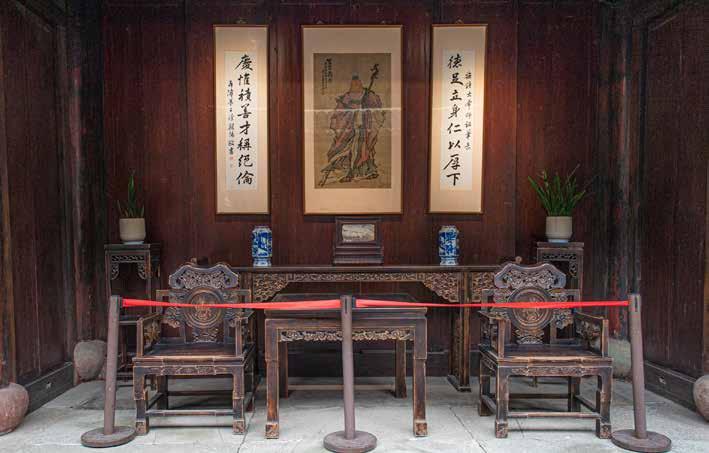
Very ornate chairs and table. Very robust given their age
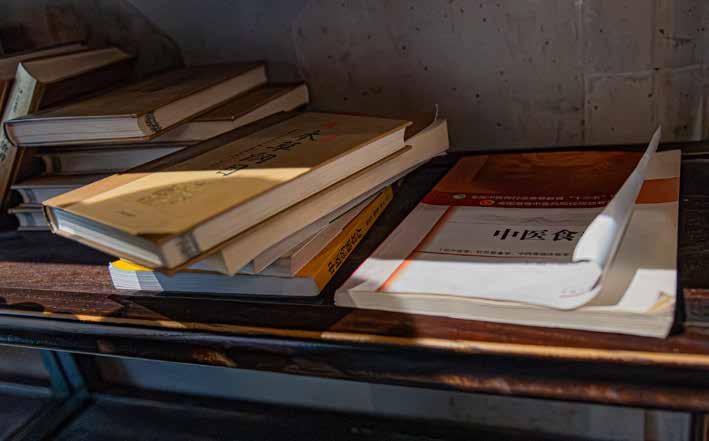
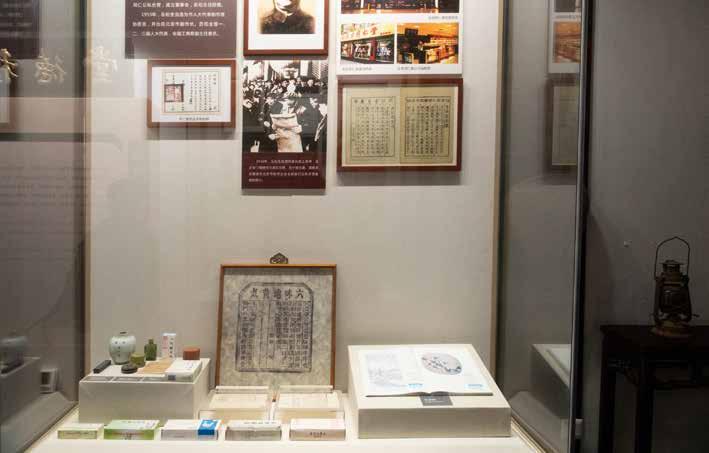
Medicinal texts of varying ages, some being reprints of ancient texts.
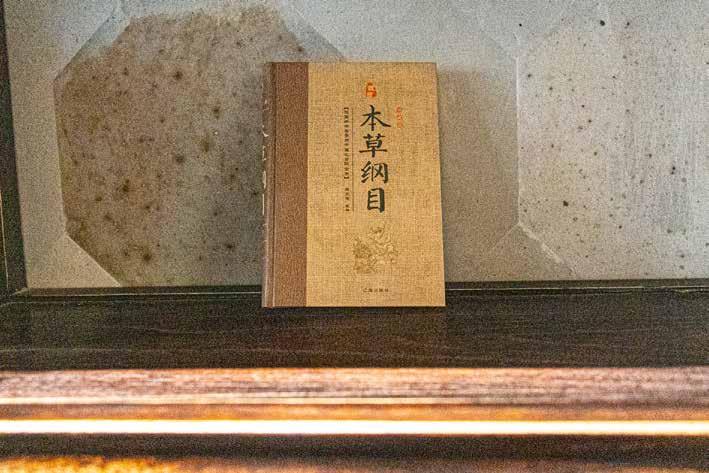
The Compendium of Materia Medica.
My driver, Huang
was very proud of the Compendium and insisted on showing me the translation so that I understood the importance of the book.
The latter stages of the facility are the museum display rooms, with many ancient tools and texts on display.
An,
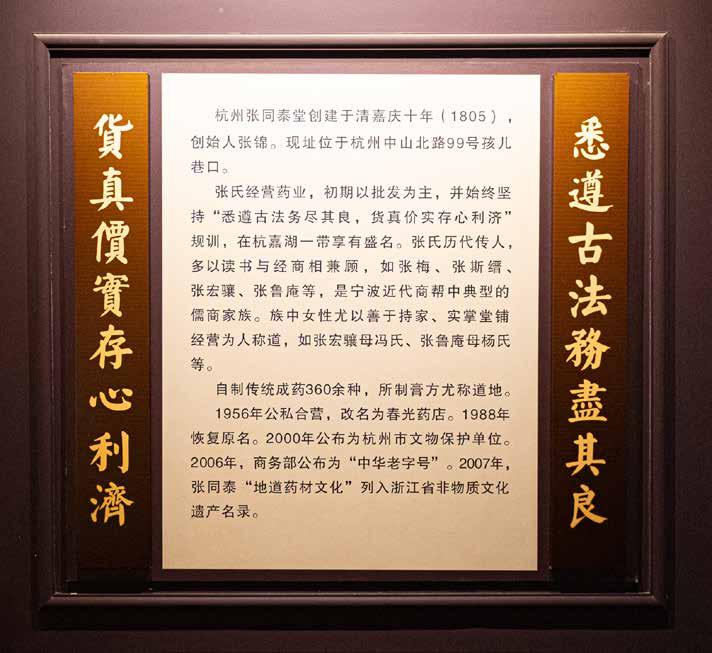
The current address is located at the entrance of Haier Alley, No. 99 Zhongshan North Road, Hangzhou. Zhang’s pharmaceutical business initially focused on wholesale, consistently adhering to the principle of “excelling all ancient methods to the fullest extent, offering genuine value and genuine benefits,” and he enjoys a prestigious reputation in the Hangjiahu area.
Generations of the Zhang family have often balanced reading with business, such as Zhang Mei, Zhang Sijin, Zhang Hongxiang, and Zhang Lu’an, making them typical Confucian merchant families in Ningbo’s modern merchant guild. The women in the clan are particularly renowned for their ability to manage household affairs and run a shop, such as the Feng family of Zhang Hongxiang’s mother and the Yang family of Zhang Lu’an’s mother.
Genuinely priced and genuinely beneficial, we
adhere to ancient methods and strive for excellence in our homemade traditional medicine, with over 360 traditional remedies, and the ointment formula being particularly praiseworthy.
In 1956, it was a public-private partnership and renamed Chun Guang Pharmacy. 1988, it was restored to its original name. Announced as a cultural relic protection unit in Hangzhou in 2000. In 2006, the Ministry of Commerce announced it as a “time-honored Chinese brand”. In 2007, Zhang Tongtai’s “Authentic Herbal Culture” was included in Zhejiang Province’s Intangible Cultural Heritage List.
Hangzhou in 2000. In 2006, the Ministry of Commerce announced it as a “time-honored Chinese brand”. In 2007, Zhang Tongtai’s “Authentic Herbal Culture” was included in Zhejiang Province’s Intangible Cultural Heritage List.
The history of the Zhang Family Pharmacuetical Business
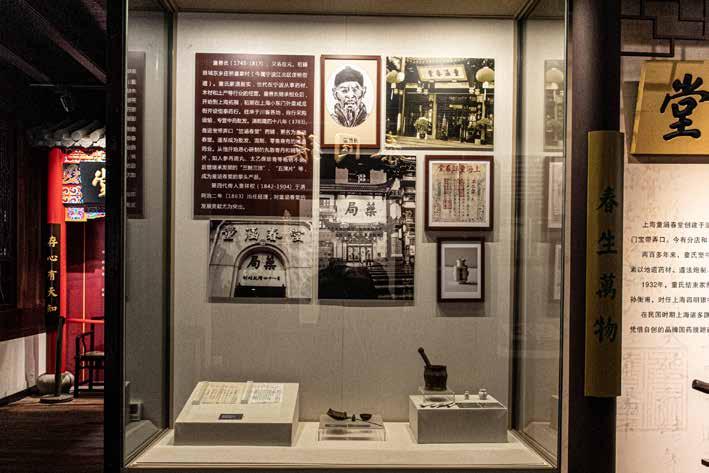
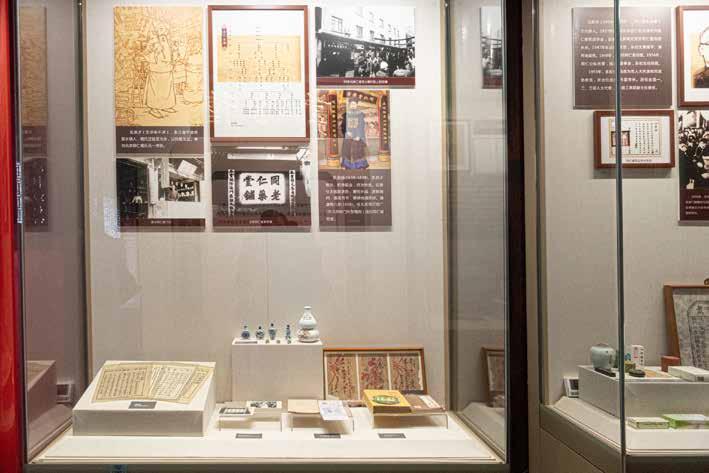
There are many well laid-out and informative displays.
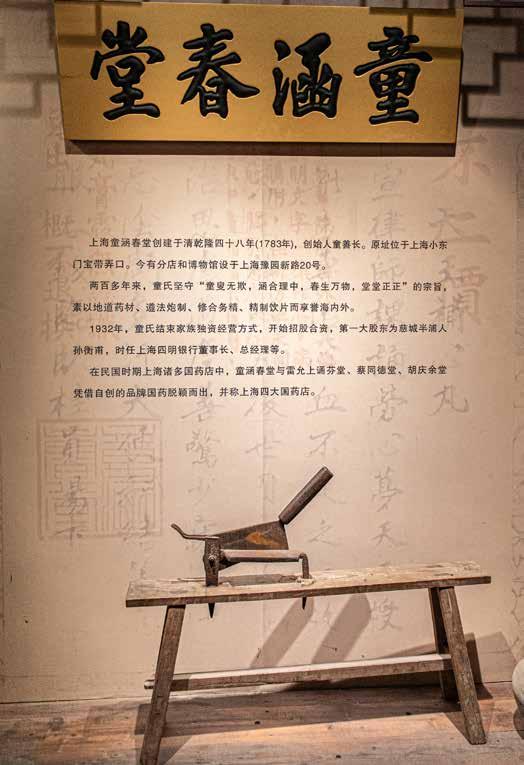
The information panel above the ancient herbcutter details the story of the Tong family business.
Citarts Shanghai Tonghan Chuntang was founded in 1783 during the Qianlong reign of the Qing dynasty, by its founder, Tong Shanchang. The original site was located at the entrance of the Xiaodongmenbao Belt in Shanghai.
Now there are branches and museums located at No. 20 Yuyuan New Road, Shanghai. For over two centuries, the Tong family has upheld the (philosophy) of "childhood without deceit, inclusiveness within reason, spring brings forth all things, and integrity," renowned both at home and abroad for its authentic herbs, law-abiding
craftsmanship, meticulous cultivation, and refined slices.
In 1932, Tong's family ended its sole proprietorship and began joint ventures, with Sun Hengfu, then chairman and general manager of Shanghai Si Ming Bank, being the largest shareholder.
Among the many traditional Chinese pharmacies in Shanghai during the Republican era, Tong Hanchun Hall and Lei Yunshang Shunfeng Hall, Cai Tongde Hall, and Hu Qingyu Hall stood out with their selfcreated brand of traditional Chinese medicine and were known as one of the four major pharmacies in Shanghai.
Ancient herb-cutter mounted on a trestle for ease of use
There is an abundance of very old furniture which is testament to the original build quality.
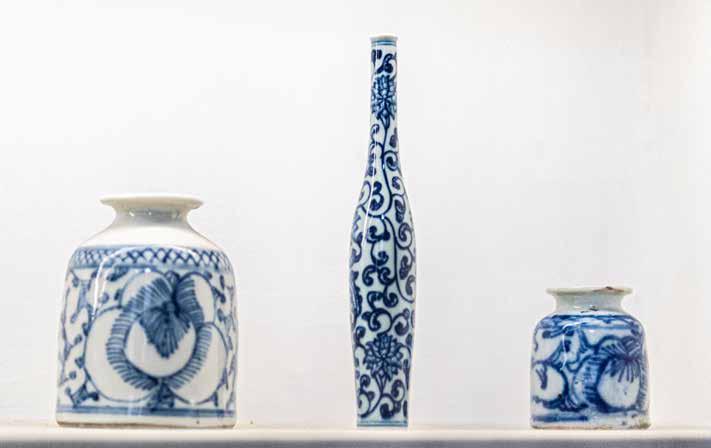
There are several displays including porcelain vessels which appear quite contemporary but which are in fact hundreds of years old.
Many ancient information panels are displayed alongside the other physical artefacts
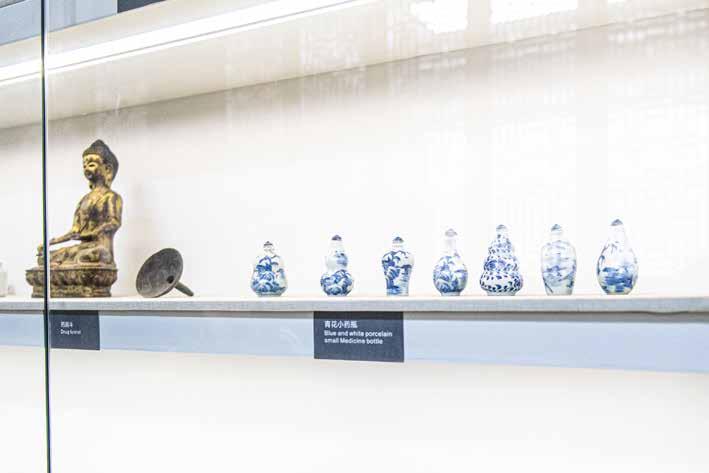
There are many exhibits of porcelain bottles and vessels for varying uses in many shapes and sizes
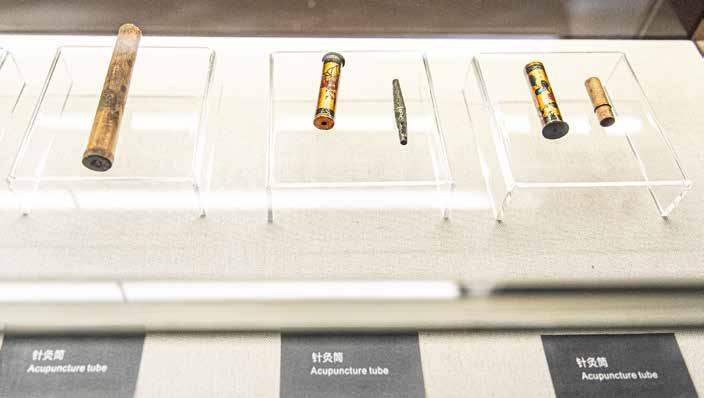
Highly ornate acupuncture needle storage tubes
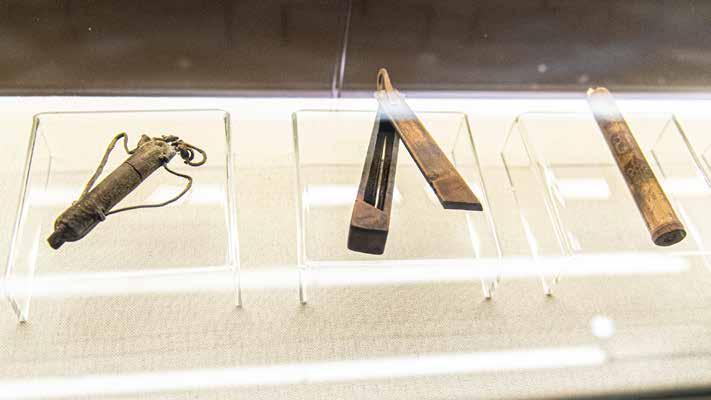
A variety of acupuncture tools
Further examples of porcelain storage bottles.
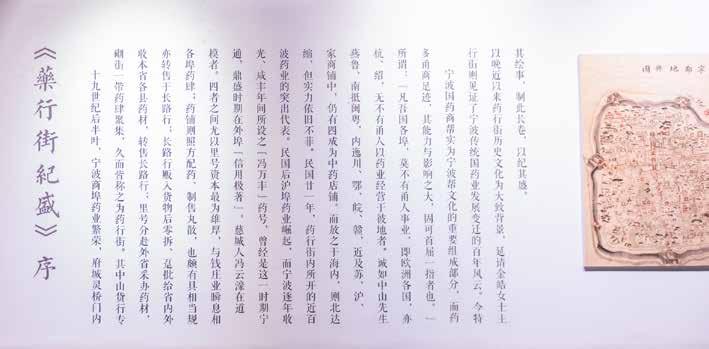
Text detailing the expansion of Cicheng pharmaceuticals including expansion into the maritime port facilities of Ningbo City. See below.
Set against the backdrop of the history and culture of Pharmaceutical Street in recent times, inviting Ms. Jin Hao to lead the street witnessed the century-long development and evolution of traditional Chinese medicine in Ningbo.
Now, the Ningbo Pharmaceutical Merchants' Association is an important part of Ningbo's association culture, and the presence and influence of many pharmaceutical merchants are undoubtedly among the best.
So-called: "All towns and towns in our country have face-saving businesses, including those in various European countries such as Hangzhou and Shao, where people from Ningbo operate pharmaceutical businesses." Just as Dr. Zhongshan Yanlu and Nan arrived in Minyue, there are still 40% of traditional Chinese medicine shops in Inner Yichuan, Hubei, Anhui, Gan, and near Suzhou, Shanghai, and other households. And when placed domestically, it shrinks to the north, but its strength remains substantial. In the 21st year of the Republic of China era, nearly a hundred prominent pharmaceutical companies were established on Pharmaceutical Street.
After the Republic of China, Shanghai Port Pharmaceutical rose to prominence, and the "Feng Wanfeng" drug designation established in Ningbo during the Xianfeng period was once known for its exceptional creditworthiness in other regions.
Cicheng resident Feng Yunhao is a model. Among the four, Li Hao's capital is particularly strong, resembling Qian Zhuangye's instantaneous
pharmacy; pharmacies distribute medicines and sell pills on long roads; long roads sell medicinal materials to provinces both inside and outside the province, with pharmacies lining up streets.
Among them, in the latter half of the 19th century, Ningbo's commercial port pharmaceutical industry flourished, with further examples of porcelain storage bottles located within the Lingqiao Gate of the capital city.
Figure 30: A calming display promoting tranquility and peace through nature.
The Levant Engine Room
Low light photography coupled with Gibraltar’s underground military heritage offers more than just images, it’s an adventure that can stretch all your senses and make you look over your shoulder more than once! Armed with a camera, tripod, torches and some PPE kit I entered a silent and dark tunnel system where a 20th century gun battery engine room, within a 19th century gun powder magazine, lies dormant.
VICTOR M HERMIDA LRPS
During the mid-1800s a road was cut to access a location on the east side of the Rock in order to set up a single cannon battery. Approximately half way along this road was the battery’s powder magazine, built between 1870 and 1871 inside a widened natural cave. In time, the cannon was removed and the magazine’s usefulness diminished, but not for long.
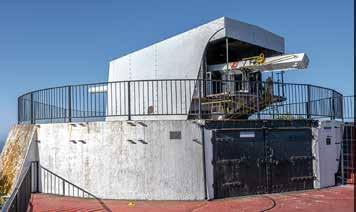
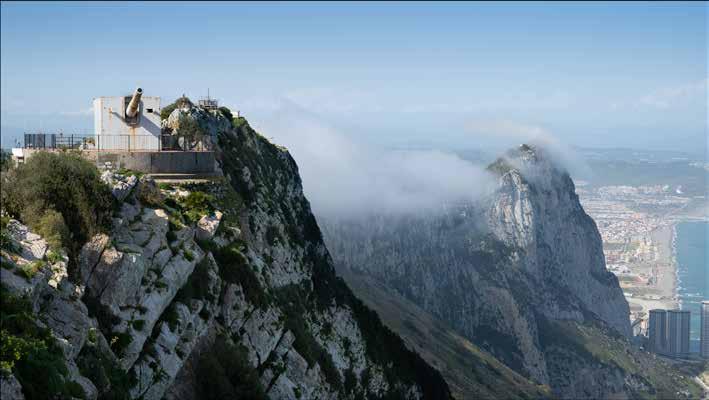
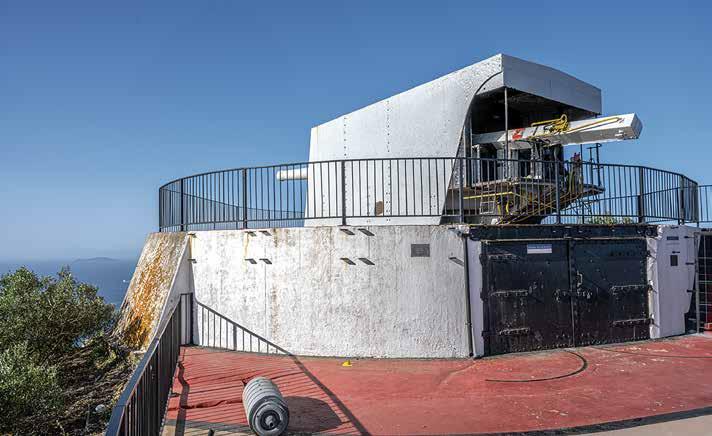
During the latter part of the 19th century the coastal rifled muzzle loading (RML) cannon in Gibraltar were well and truly obsolete. By 1909 a total of fourteen 9.2” breach loading (BL) coastal defence guns (made by Vickers, Sons & Co.) were strategically lodged and, with a range of 29,000 yds. (16 miles), could cover not only the Strait of Gibraltar but also the Spanish hinterland and the northern Moroccan coastline. Three guns remain in place today, Breakneck, Lord Airey’s and O’Hara’s battery, with the gun from Spur Battery now at the Imperial War Museum in Duxford.
Establishing these batteries was no mean feat, a substantial amount of infrastructure, engineering works and raw muscle power was needed. Bombproof magazines and shelters were constructed within the excavated rock and the guns mounted above, en barbette.
In addition to the main gun structure, there was a need for Position Finding Cells (PFC), fire control stations, observation posts, cabling, telephone lines, access roads and electrical power.
The old powder magazine was given a new lease of life by being converted into the main electricity generating engine room (another smaller and interconnected one sits 500ft further up in a tunnel between O’Hara’s and Lord Airey’s battery see Image 5 below ).
The initial 9.2” Mark IX guns were manually operated but around 1934 three of the batteries (Lord Airey’s, O’Hara’s and Spur Battery) were upgraded with the hydraulically operated Mark X guns. This meant that the engine rooms too
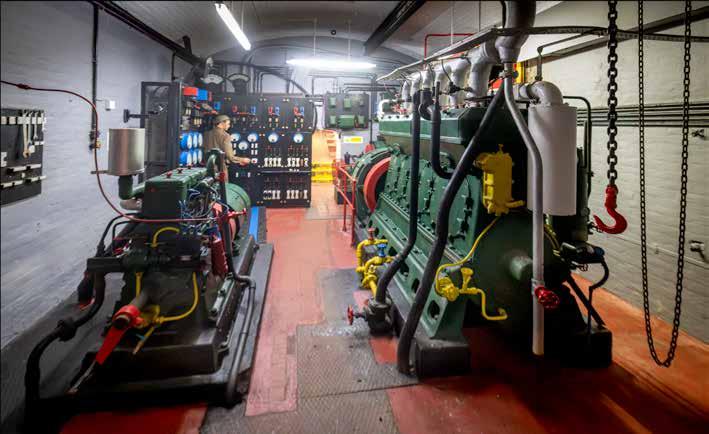
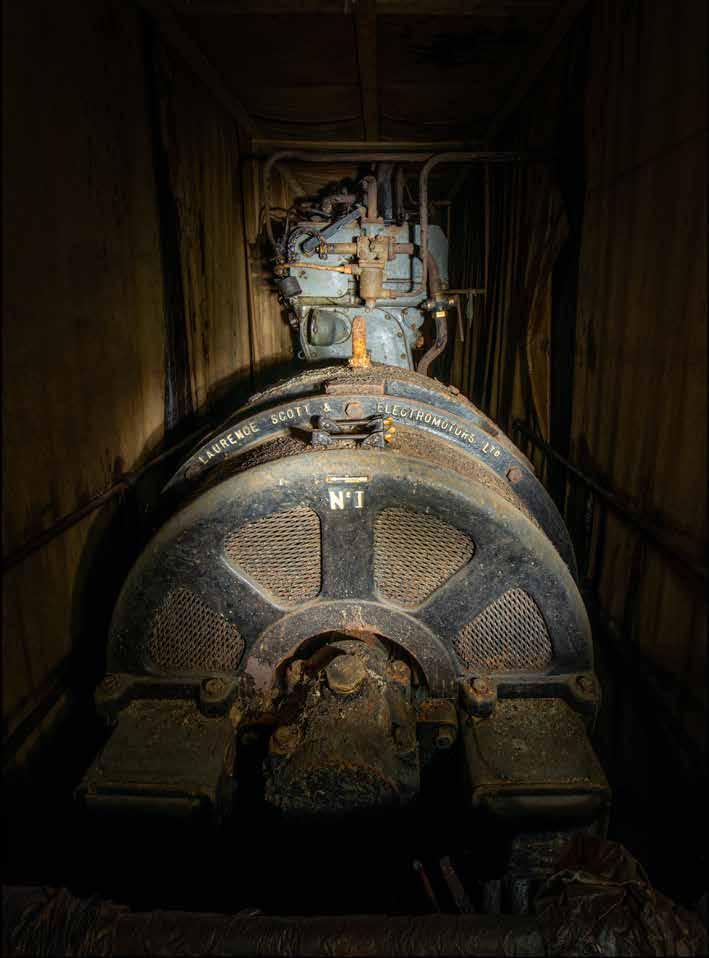
needed upgrading presumably to meet the increased demand for electrical power and the installation of new hydraulics plant. Each engine room now had an air compressor pumping air into pressure cylinders. The compressed air was used to start up the Ruston diesel engines that turned the Laurence Scott generators producing electrical power (AC 440 Volts) which, in turn, powered a series of hydraulic pumps used to work the guns, including the lifting and ramming of the shells and cordite cartridges into the breech; allowing for a firing rate of one round every 20 seconds.
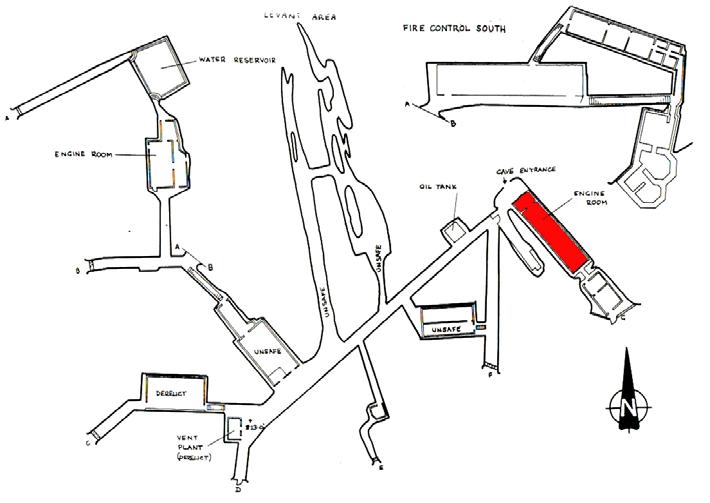
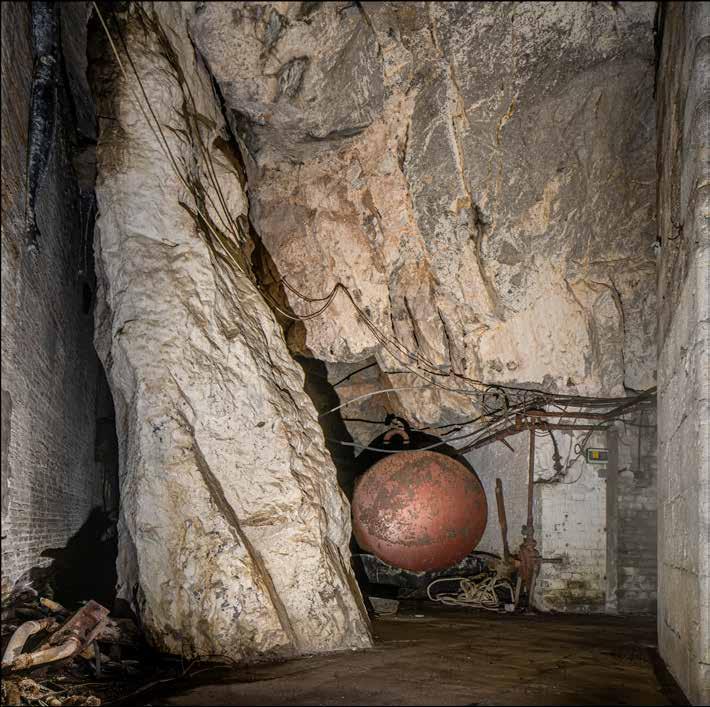
Many of the guns were still active during WWII and despite the highly tectonized area of rock with fracture caves and steeply dipping Limestone beds, a tunnel system was cut which included the Levant engine room, see the plan on page 69
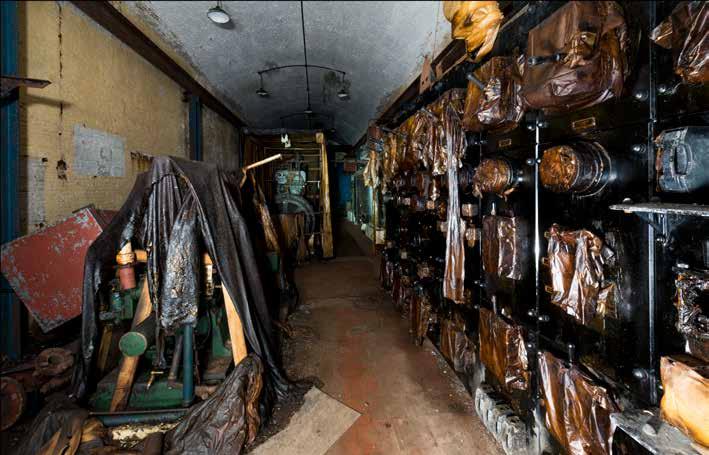
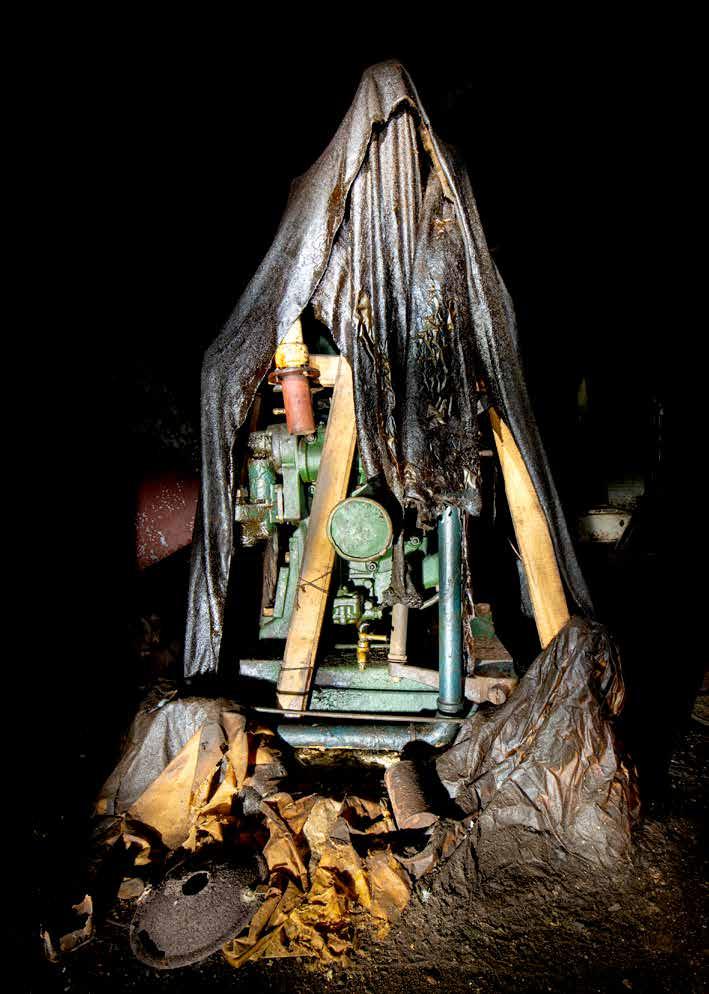
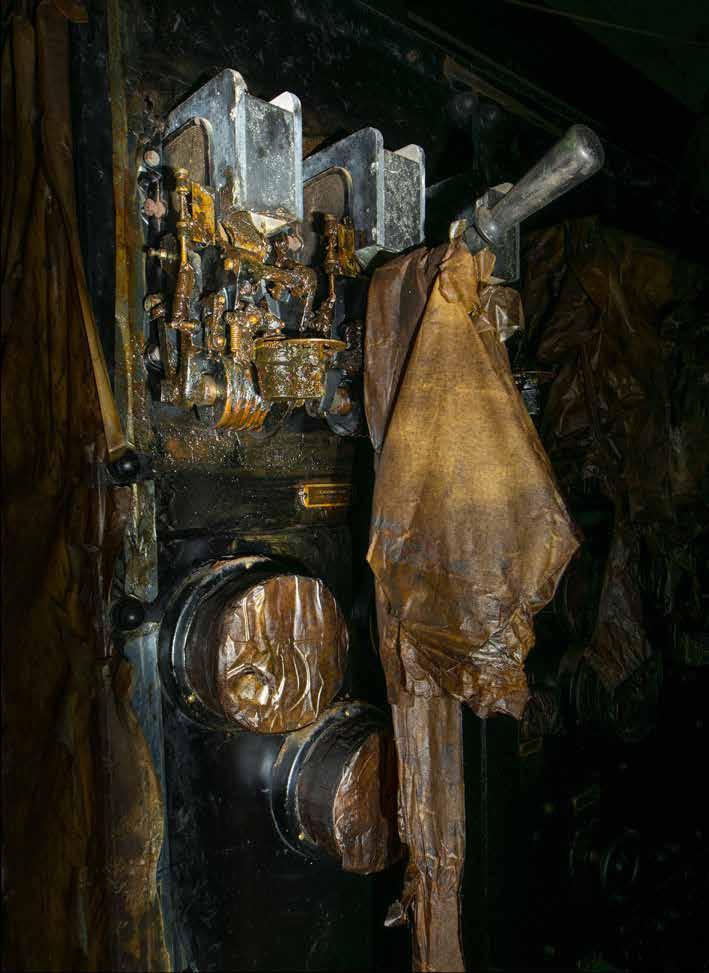
During the 1950’s the Levant engine room’s plant, switch gear, overhead gantry crane etc. was placed in a state of ‘Heavy Care and Preservation’, meaning everything was covered in an abundance of grease and greased tarpaulins. The gun at O’Hara’s battery was kept active using the smaller top engine room and was fired for the last time in 1975.
The Levant engine room has inevitably suffered from the effects of time and is sadly in a state of diminishing stasis. Nonetheless, it gives everyone that enters a sense of authenticity and, when lit only with a torch, an eerie feeling of it being a land-locked Mary Celeste. I find that the spick and span engine room for tourists is soulless while our Levant engine room remains a fascinating place to explore offering almost endless opportunities for engineering heritage photography; despite the hydrocarbon fumes from the grease!
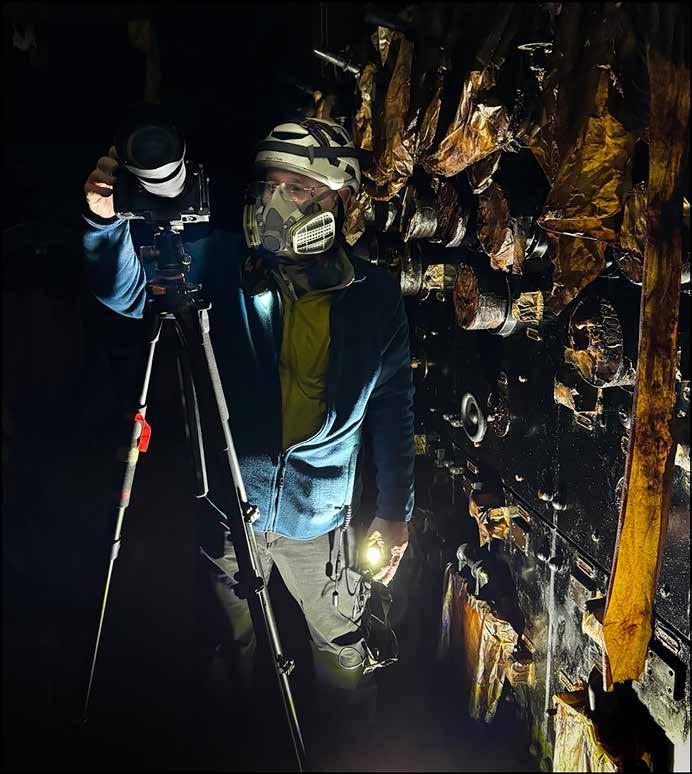
From a photographic perspective in the tunnels, I’ve used both a Nikon D800 and more recently a Nikon Z8 with predominantly 24-70mm and a 1424mm lenses for wider shots.
At first I used a powerful white light LED torch but found it was pushing out too much light creating excessive specular highlights on the shiny grease and shortened my shutter speed to a point where it gave me too short a time to ‘paint’ the subject properly. Lower power torches solved this. I lit the subject mostly from the side to avoid reflections and to produce just about enough shadow to accentuate depth.
I know about the inverse square rule for light but in these conditions it became abundantly clear how true it is! Exposure times were rarely above 30 seconds at around f/8.
Keeping the kit clean (not to mention my jacket) and changing lenses was a challenge too!
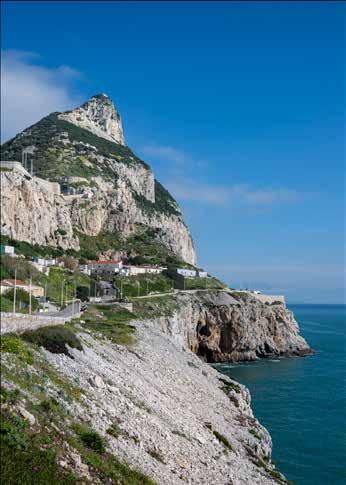
General view of the south east of the Rock.
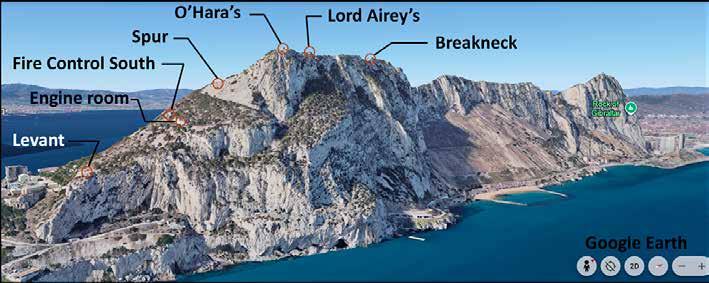
Location of batteries, Fire Control South and engine room along the southern part of the ridge. The higher three guns were known as the Upper Ridge Batteries.
View looking south from Spur Battery. Across the Strait of Gibraltar lies the continent of Africa.
Lord Airey’s Battery set along the ridge. Breakneck Battery is behind it with O’Hara’s Battery behind the camera position at an altitude of 1,398 ft. above mean sea level.
Fire Control South and Levant engine room tunnel layout. The tunnels are disused and not open to the public. The area coloured red is the location of the original powder magazine and the current engine room.
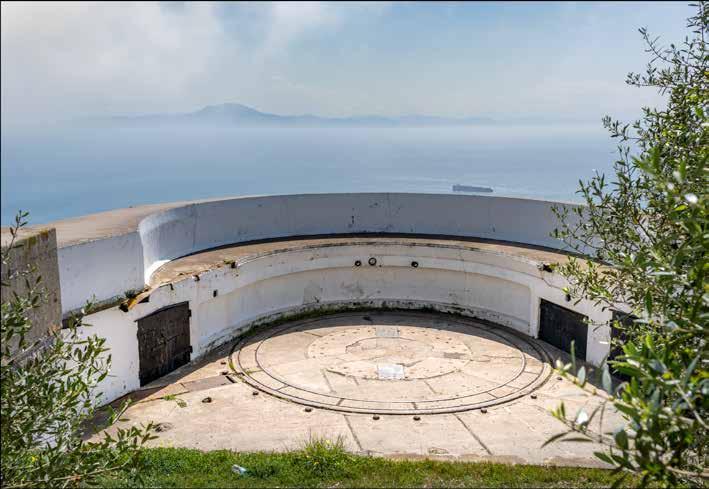
9.2” Mark X Gun at O’Hara’s Battery
Top engine room inside a tunnel between O’Hara’s and Lord Airey’s Batteries. Completed 1898 and upgraded 1930s. It is well maintained and now a tourist attraction.
On the left is the R A Lister & Co. air compressor and on the right the Ruston diesel engine with the Laurence Scott & Electromotors Ltd. generator attached.
The Levant engine room is larger than the above, having one air compressor (foreground) and two in-line diesel engines (background). On the right is the Whipp & Bourne Ltd. of Castleton switch panel. The hydraulic pumps were closer to the actual guns and not seen here.
The combined cave and tunnel structures. The wall on the far left is that of the magazine, moving right is a section of rock then a cut space that was originally the Lamp and Shifting rooms, later converted to house the fuel tanks. The structure on the far right is a Limestone block (ashlar) traverse.
Selfie! wearing essential personal protective equipment (PPE).
The Laurence Scott & Electromotors Ltd. generator attached to the Ruston diesel engine.
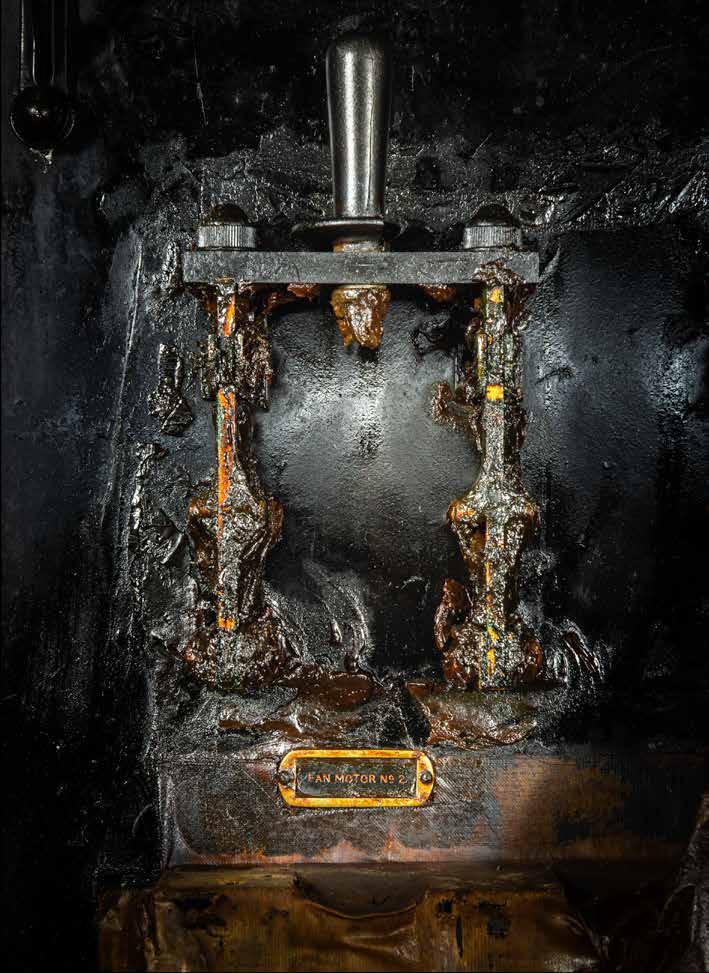
Fan Motor switch – The brass conductors are completely exposed!
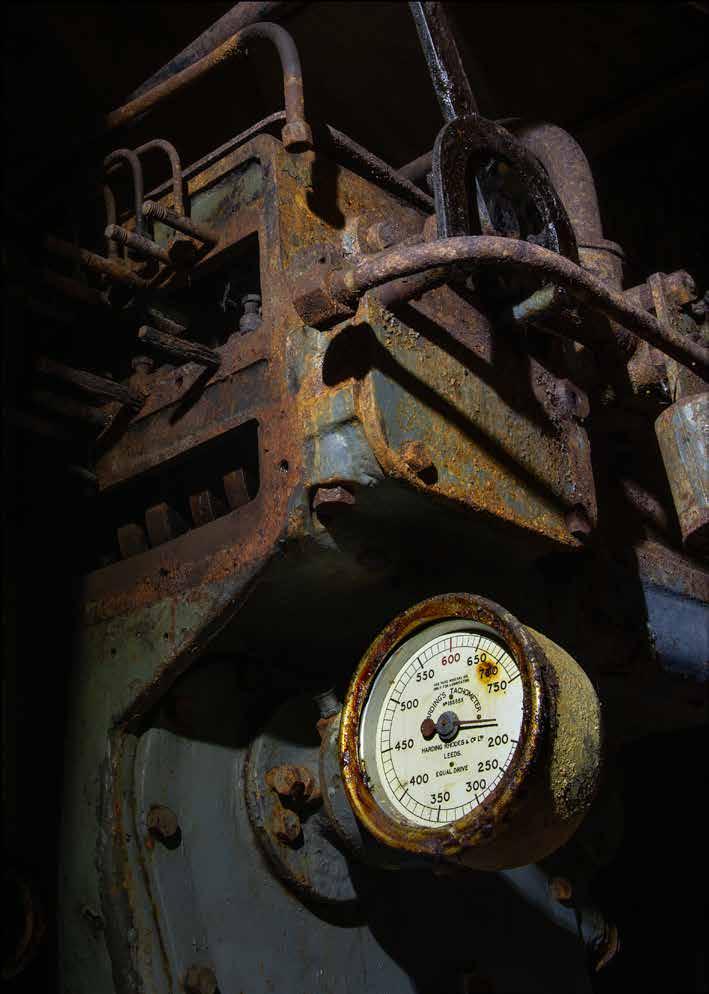
Tachometer by Harding, Rhodes and Co. Ltd. Leeds (now FOUNDROMETERS LIMITED) on the Ruston diesel engine
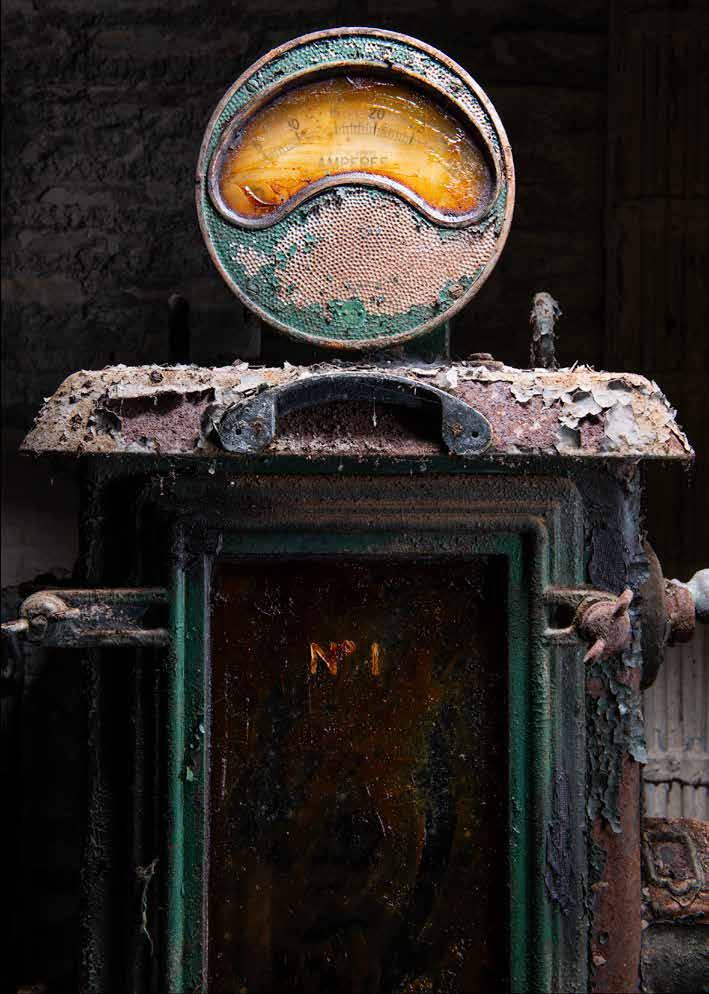
Ammeter - Brookhirst Switchgear Ltd. Chester.
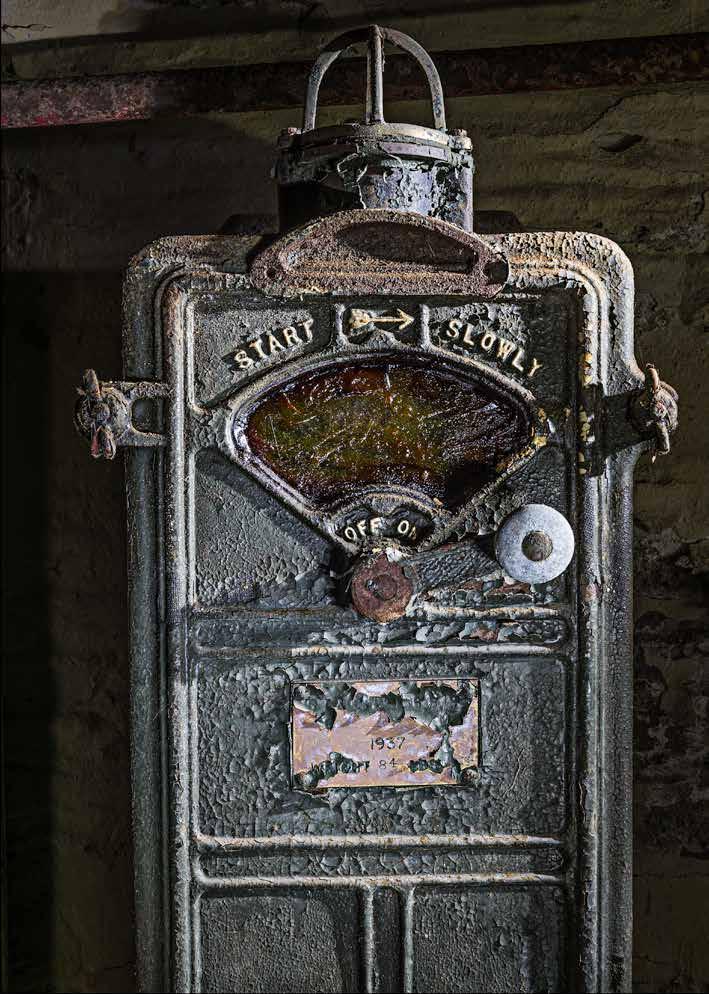
Motor starter switch- Brookhirst Switchgear Ltd. Chester.
Air compressor - A Lister & Co., Dursley.
Switch for O’Hara’s Battery Interconnector.
Encounters with the Calder
‘Encounters with the Calder’ is an exploration of our human relationship with the landscape and nature. Made over the last five years, the work addresses both the history of settlement and activity along the river and the more contemporary issues of climate change and plastic pollution. West Yorkshire’s River Calder provides a narrative spine.
JIM SOUPER ARPS
The River Calder flows for some 44 miles, from the moors above Todmorden in the southern Pennines, through a mix of urban, industrial and rural landscapes, to its confluence with the River Aire at Castleford Lock. It was at the heart of the industrial revolution and at one time ‘Yorkshire’s paramount industrialised river’. (Ogden 1972)
The images chosen for this article, with a couple of notable exceptions, reflect that industrial heritage. The narrative below follows a geographical sequence.
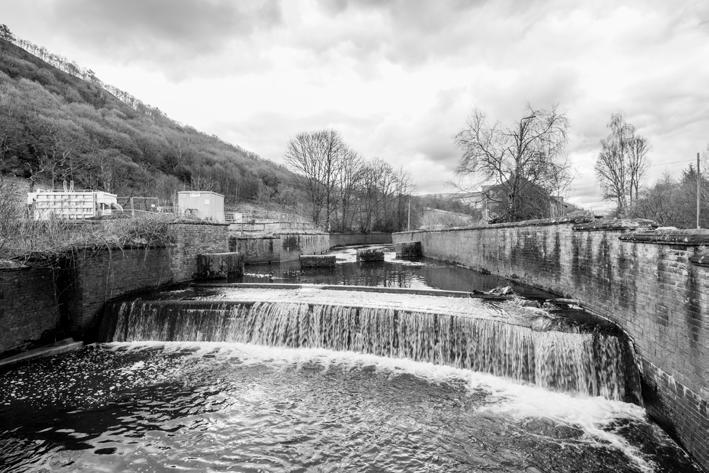
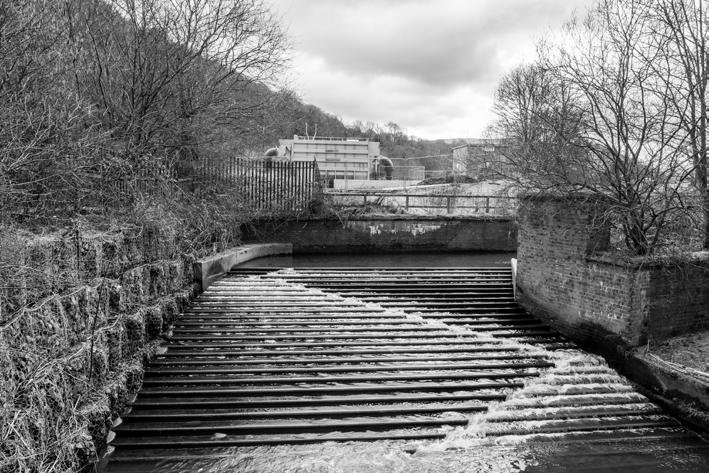
The upper reaches of the Calder were harnessed or their power. The first pair of images are of what is now known as Eastwood Weir. It was originally the start of the water system that powered Callis Mill, once the largest cotton mill in Charlestown, one mile upstream from Hebden Bridge. Built in the late 18th century, most of the main mill was demolished in the mid 1970’s. The lefthand face of the weir was converted to a fish pass by Yorkshire Water in 2019. A sloping face and a series of baffles create a gradient and flow suitable for fish migration.
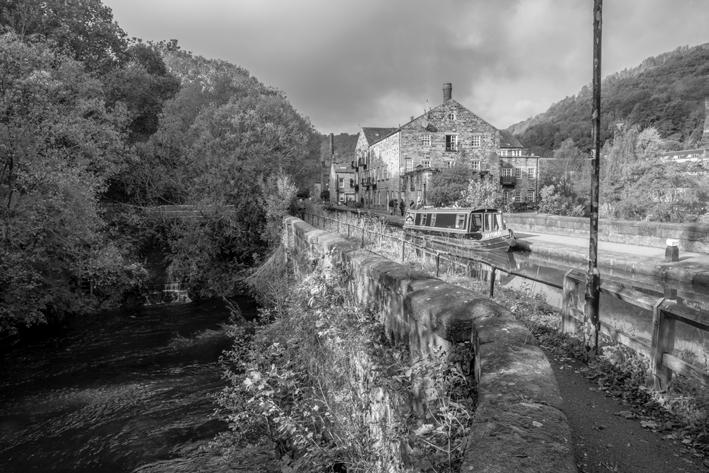
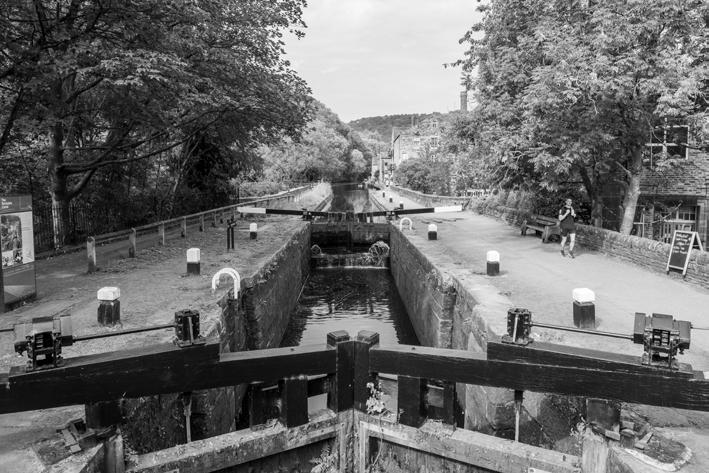
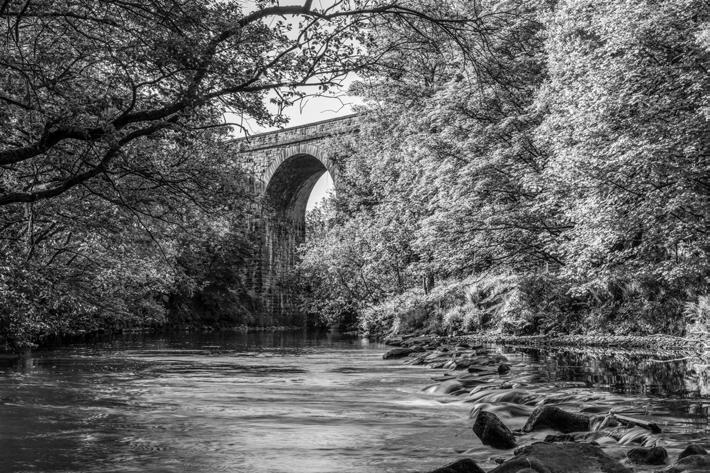
The upper Calder runs parallel to the Rochdale Canal, which opened in 1799 from Sowerby Bridge to Todmorden, and in 1804 to Manchester. At Hebden Bridge, Black Pit Aqueduct carries the canal over the Calder. Completed in 1797, the aqueduct’s engineers were William Crossley and William Jessop, assistants to the canal’s principal engineer, John Rennie. It is now a Grade II listed building.
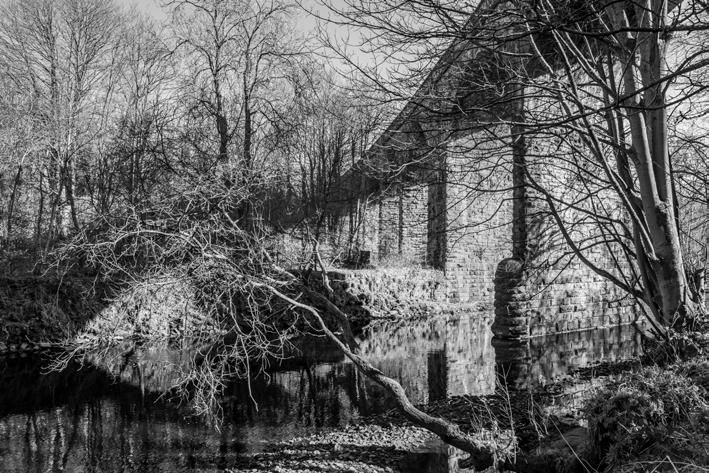
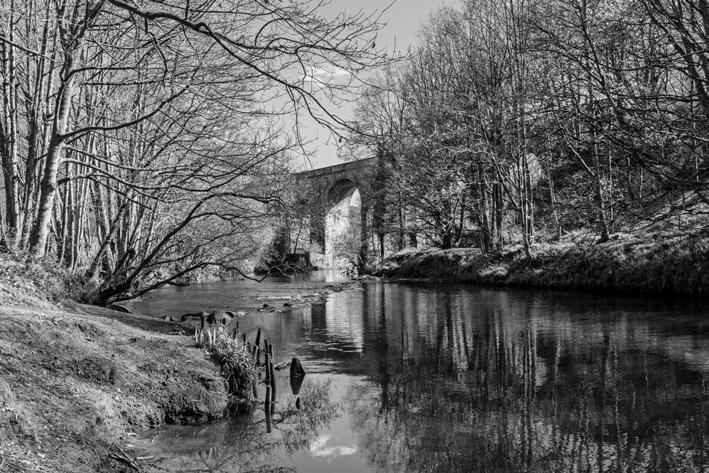
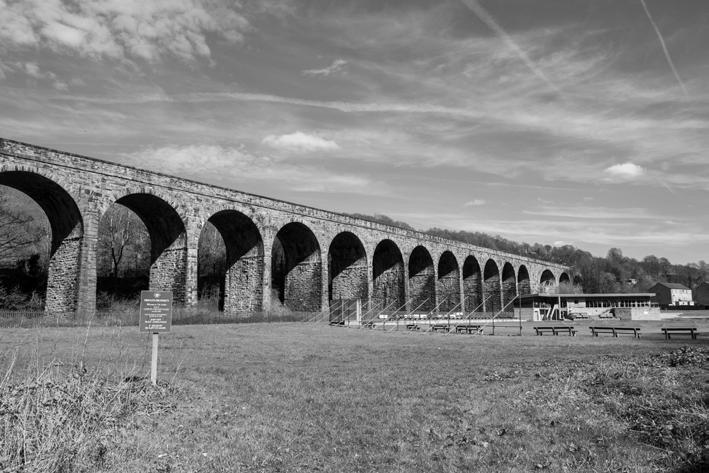
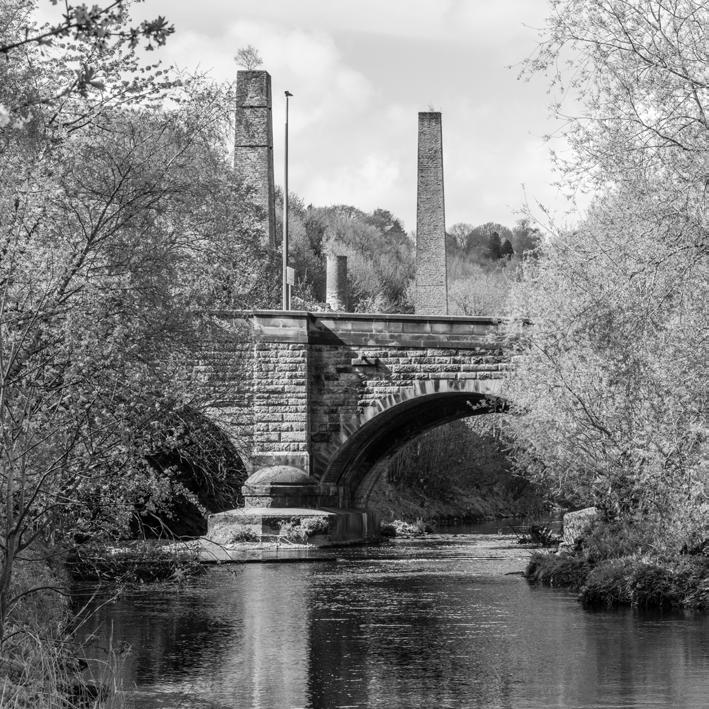
The Grade II listed Copley viaduct spans both the River Calder and the adjacent Calder and Hebble Navigation. It was built for the Lancashire and Yorkshire Railway in 1852 by Sir John Hawkshaw and consists of 21 arches at a height of 20 metres. Further downstream is Elland Bridge, another grade II listed building. The first stone bridge on this site was built in 1579. The current structure dates to 1811, spanning both the Calder and the adjacent Rochdale Canal. It was severely damaged by the Boxing Day floods of 2015, as were many other bridges along the Calder. Following complex and costly repairs and it reopened more than a year
later, in February 2017.
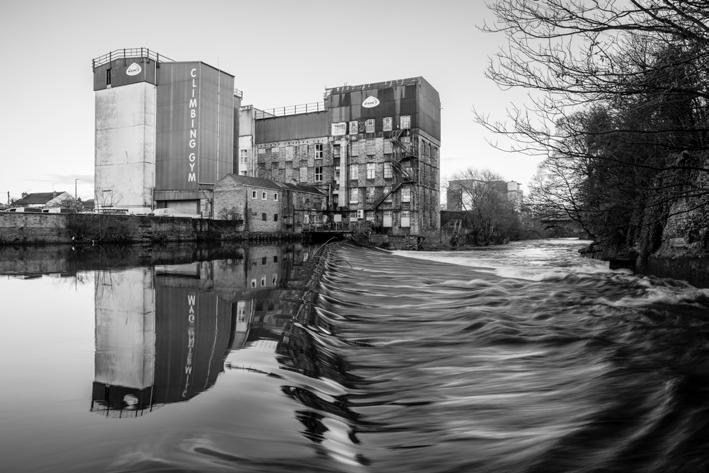
Brighouse Mills is a good example of the repurposing of mill buildings for modern use. Thomas Sugden opened a flour mill in Brighouse in 1829, moving to Brighouse Mills when the business expanded. The mill buildings pictured here date to 1895, when the mill was rebuilt after a fire. They were powered by the foreground weir. The silos were built much later, in 1959 and 1963. The mills closed as late as 1997. The buildings now house ROKT and are home to the UK’s highest man-made outdoor climbing wall, indoor climbing, a spin cycle studio and escape rooms.
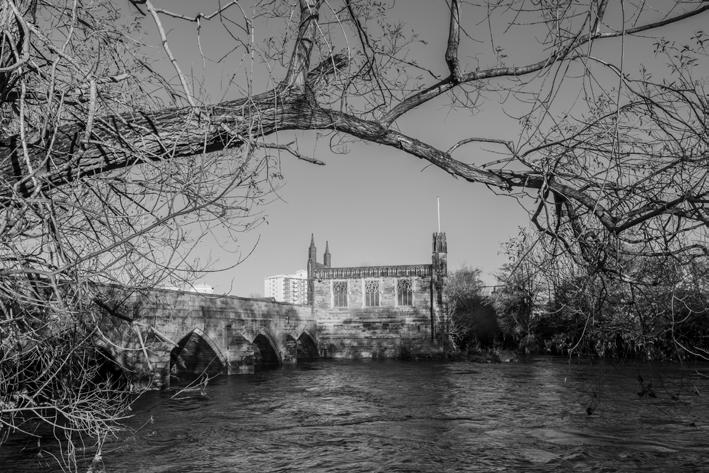
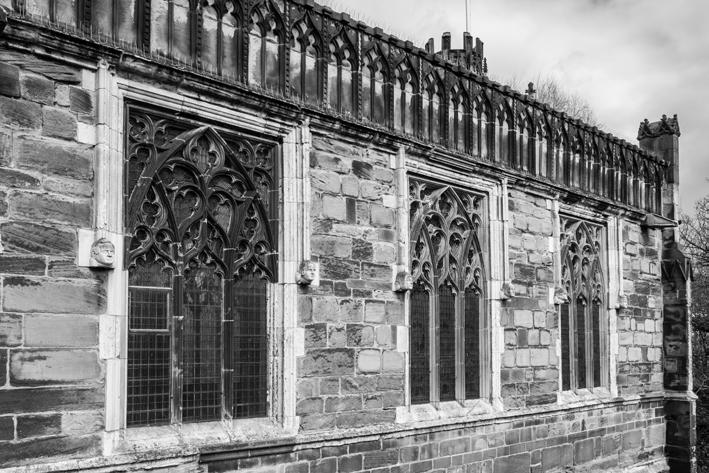
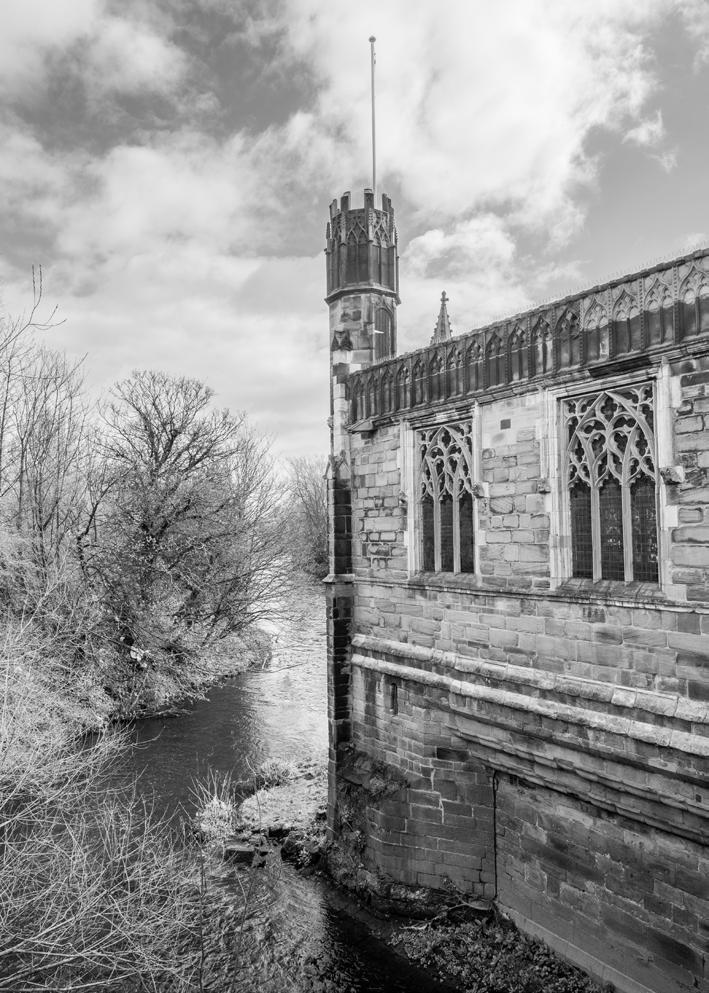
The river passes through Mirfield, Dewsbury and Horbury before reaching Wakefield. The Grade I listed Chantry Chapel of St Mary is one of only four surviving Chantry Chapels left in England today. It was built by the townspeople of Wakefield in the mid-14th century as an integral part of a new stone bridge across the Calder, first being licensed in 1356. It is now an occasional venue for concerts and other cultural events.
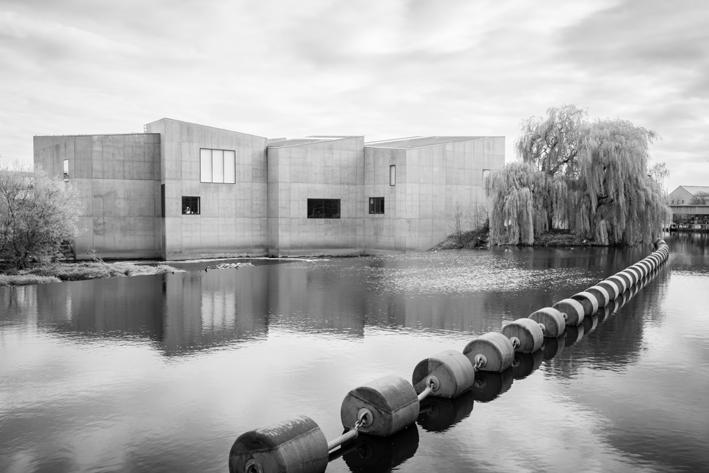
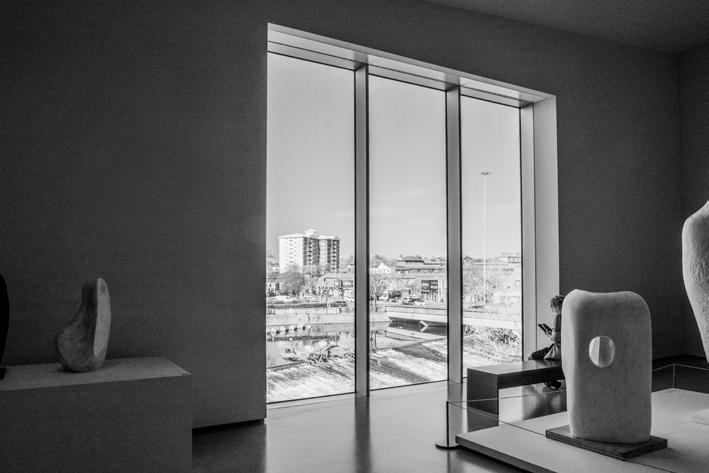
A short distance upstream is the Hepworth Gallery, which opened in 2011. An imposing example of modern architecture overlooking the river it is home to a significant part of Wakefield’s (and the nation’s} 20th century cultural heritage. Galleries dedicated to exploring the art and working practices of the Wakefield born sculptor Barbara Hepworth (1903 – 1975). It also houses Wakefield’s impressive art collection, including work by Henry Moore and Ben Nicholson.
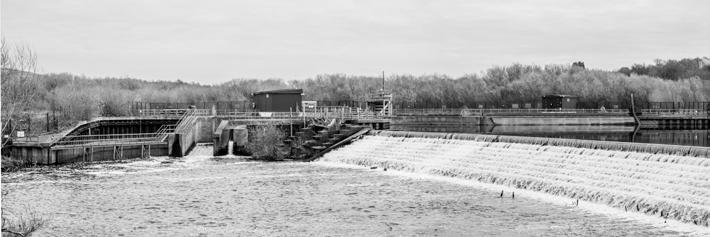
Downstream from Wakefield, Kirkthorpe Weir is situated in what is now the Southern Washlands Nature Reserve. It was built in 1827, to maintain the flow of water to the Aire and Calder Navigation. It is, at 4 metres, the highest drop weir in Yorkshire. It has operated as a hydroelectric plant since 2017, a development which included the construction of a fish and eel pass. It is another Grade II listed building.
Eastwood Weir
Eastwood Weir Fish Pass
Black Pit Aqueduct
Black Pit Aqueduct
Copley Vaiduct from the right bank
Copley Viaduct
Copley Viaduct
Copley Viaduct
Elland Bridge
Brighouse Mills
Chantry Bridge and Chapel
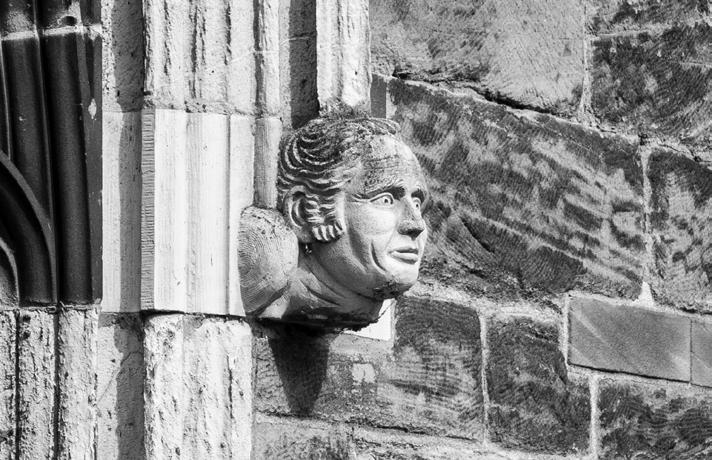
Chantry Chapel detail
Chantry Chapel detail
Chantry Chapel
The Hepworth
The Hepworth
Kirkthorpe Weir
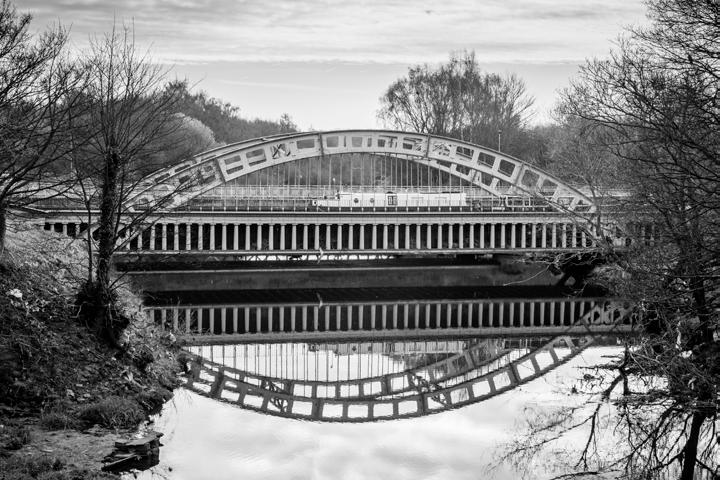
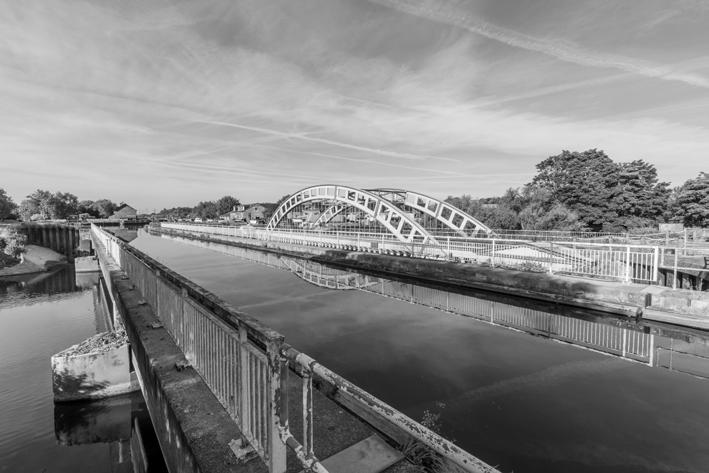
Stanley Ferry Aqueduct
Last, but my no means least in this selection, is Stanley Ferry Aqueduct . The aqueduct is a scheduled Monument built between 1836 and 1839 to carry the Aire & Calder Navigation over the river Calder. It is the largest cast iron aqueduct in the world and one of the earliest compression arch suspended deck bridges. It has a span of 50.3 metres, a width of 7.3 metres and a depth of 2.6 metres.
A more complete sequence of photographs from the project can be found at https://www.jimsouper.co.uk/ work/encounters-with-the-calder.