DI ONLINE
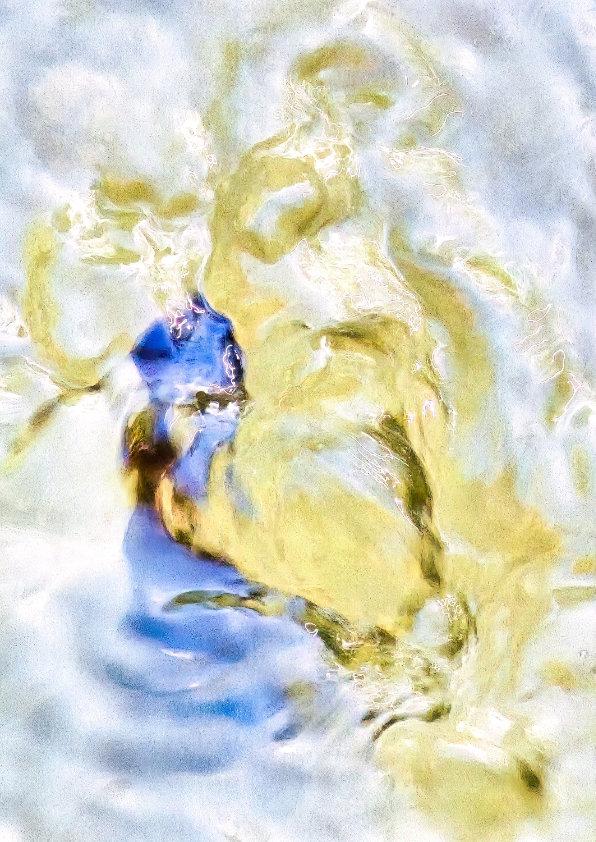

ThePhotographer: Astrid Preisz
TheImageTitle: WildWater AbouttheImage: See Astrid's article on Page 26

Editor DI ONLINE: Melanie Chalk
Contact: dionline@rps.org

ThePhotographer: Astrid Preisz
TheImageTitle: WildWater AbouttheImage: See Astrid's article on Page 26
Editor DI ONLINE: Melanie Chalk
Contact: dionline@rps.org

All members will have received a recent email from the Society (email address is email@boxsurveys.net so don’t let that put you off opening it). It is titled: ‘Help shape the future of the RPS’.
The importance is that this is an opportunity for all members to provide invaluable information to the staff team, on which future plans and programmes will be based. The wider the information collected the better, so I would urge not only members who actively engage but those of you who sit quietly on the sidelines to have your say too.
This is well worth a little of your time. It was an easy survey to complete and took me less than 15 minutes. So please I would urge you to not put it to one side to do tomorrow – but to do it today!
It is no good me sharing the link with you as each member has a personalised survey link so it is important that you find the email you were sent and use your own link. Check your SPAM folders if you don’t think you have seen this in your Inbox. Links were sent out on 10 July if you need to do a search of your system to find it.
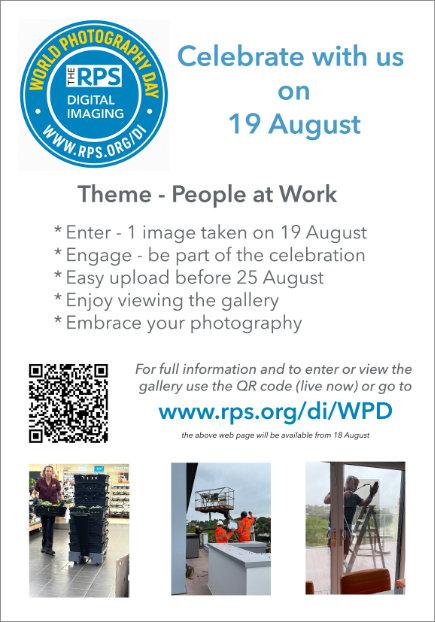
The other event that will happen before we receive the next issue of DI Online is on 19th August –World Photography Day (WPD). This surely should be one of the most important days in our annual calendar – a day to celebrate and engage with the hobby or profession we all love.
Digital Imaging are celebrating with you all taking photos on August 19th and then submitting one image for a WPD DI Celebration exhibition. For full information see page 25 Centrally the RPS is also running a WPD programme. Do take a look at their web page https:// rps.org/opportunities/world-photography-day/ for full information.
Enjoy the summer – there will be new workshops and webinars to come back to in September, so watch for DI Pulse to book.
Regards Janet
As we approach the holiday season, and for many on the DI Committee a quieter month, during August, this issue of DI Online brings together a collection of inspiring photographic journeys.
Madeline Lenagh shares her visit to Curio Bay in New Zealand, where a remarkable petrified forest reveals itself at low tide. What first appears unassuming transforms into a striking natural gallery of textures, patterns, and colour when viewed up close.
Astrid Preisz takes us on a reflective journey through Morocco, describing a shift away from frequent travel toward slower, more meaningful photographic experiences grounded in connection, emotion, and thoughtful observation.
We are also pleased to welcome an international contribution from Japan. Hidesawa Sudo reflects on how his life influences his photography, using natural light and honest expression to capture fleeting moments, atmosphere, and emotion.
Closer to home, our roving reporter from Liverpool (the Wirral), Trevor Litherland, explores the creative use of triptychs, offering thoughtful insight into how three carefully related images can form a balanced visual narrative and tell a richer story than a single frame.
Finally, our Chair, Janet, reports on the RHS Portfolio Competition. Once again, DI members have achieved notable success, with awards recognising high-quality, distinctive panels featuring botanical subjects.
Wherever you lay your summer hat, may the coming weeks bring you gentle tides, soft winds, and days warmed by the sun. Back in September.
Melanie Editor
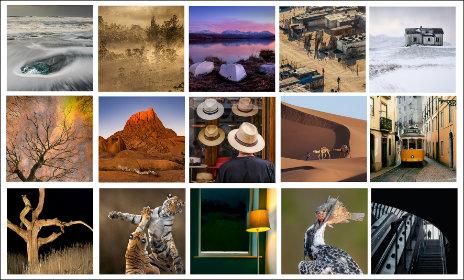
Fintan Healey, the DI Competion Secretary,has created a page turning online Zine, featuring the Shortlist of 49 images and then the further refined selection of 15 that will go through to the final.
Just a teaser image here but click on the image or the QR Code to take you though to Issuu to see the larger high quality images.

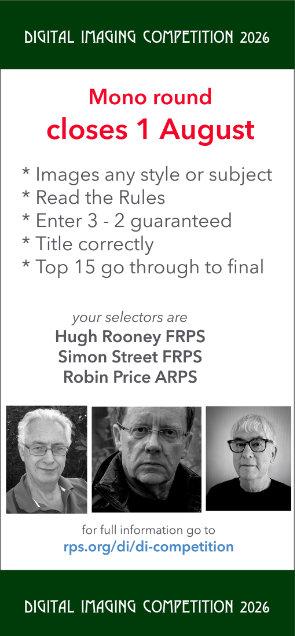
Each year DI supports and assists the RHS with their Portfolio Competition by running a series of meetings as photographers work towards submitting their panel to the RHS competition. The Advisory session involves the RHS selectors commenting on prospective panels.
In mid June the RHS holds an Awards evening and exhibition at the Saatchi Gallery in London. This year I was fortunate enough to be invited, along with Melanie Chalk and Martin Keene.
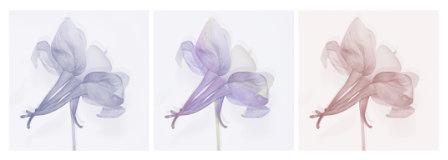
You enter the gallery to see 18 panels of 6 around the impressive room. All are Award winners. Aligned to that which we are familiar with from the RHS Chelsea Flower Show they award Gold, Silver Gilt, and Silver medals. My immediate reaction was to examine the names to find which RPS and DI members might have been successful in 2026. To my total delight our very own Melanie Chalk ARPS had been awarded a Silver Gilt for her stunning panel of minimalist, delicate mono images of single flowers titled ‘Whispers of Petals’. They almost looked like exquisitely drawn detailed line drawings.
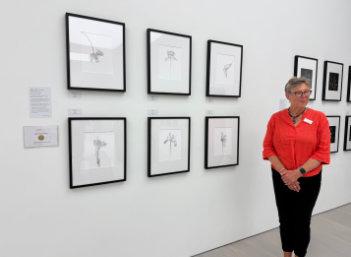
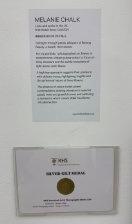
Melanie has previously won a Gold RHS medal with her cyanotype work so this year we were shown more of Melanie's photographic and artistic skills. Of course she is far too modest to put this into DI Online herself so as Chair I have to insist this is included so that we can all see and congratulate her on such a super success. Congratulations Melanie.
But she wasn’t alone. Peter Merrick was awarded Gold for his ‘Abstract Representation of Succulents. Also Julia Pigula won Gold for ‘Nature in a Microcosm'. Both are DI members so we hope to bring y ou more information from Peter and Julia in a future DI Online. In addition to them one of our workshop tutors Heild Egerman was awarded Gold for ‘Asclepias syriaca: Life and Renewal’. Our sincere congratulations to them all.
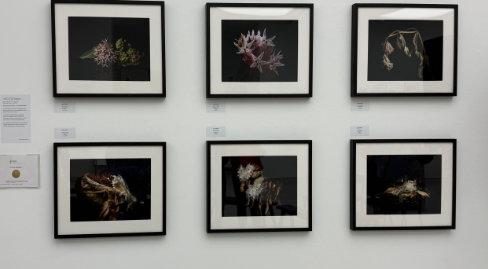
So what did I learn and observe by visiting the gallery? That you need to produce work of the highest standard to be amongst the winners. But that something a little different seems to do well. One winning panel the title tells us perhaps why this did so well, from Liubov Kartashova was ‘A Path of Revelation: Sunflower Under Ultraviolet Light’. It was good work and different. And that was something I came away with ‘different’. My other tip if you are thinking of entering in 2027 is to really try for a quality panel of Garden photography – be that a park through to a modest beautiful garden of your own. Talking to one of the selectors I was told that they’d love to include more panels of gardens but that in 2026 only 1 came up to the standard.
Quality work – different – gardens – that’s my top tip for 2027. If you are thinking about entering in 2027 you may well be out shooting now so bear that in mind.
Again CONGRATULATONS to all our winners and those who entered in 2026.
Janet Haines DI Chair
BY HIDESAWA SUDO
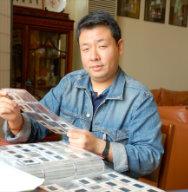
Art and life cannot be separated from one another. Photography did not influence my life; rather, my life has influenced my photography. If I had not discovered photography, I could not have found another way to express myself. Of course, some people express themselves through painting or music, but for me photography is something even more personal and profound. As long as my life continues to change, so will my photography.
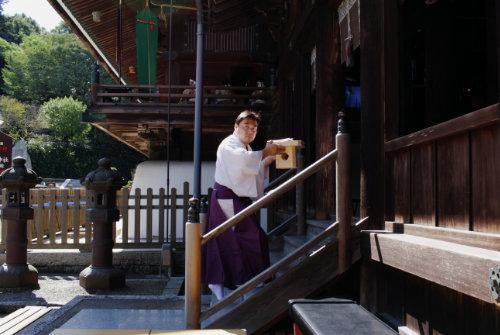
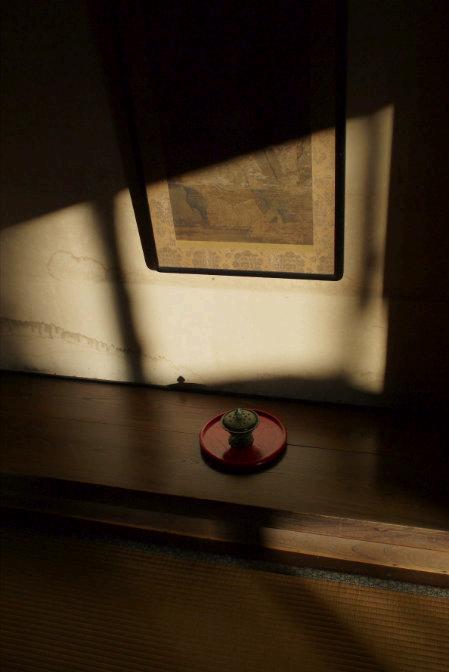
Whenever I take photographs, I try to understand the moments I encounter in real life. Photography is a form of communication between the subject and myself. It is an adventure, just as life itself is an adventure.
Photographs do not always turn out the way I initially imagined. Many outside influences inevitably enter the photographic process, but what matters is how we respond to and relate to them. Life is much the same. We can make it better or worse depending on how we face those influences.
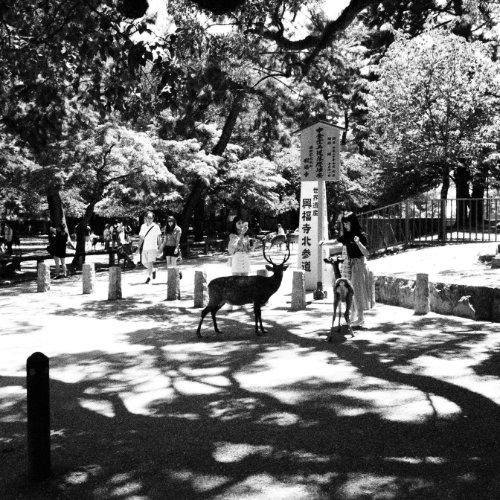
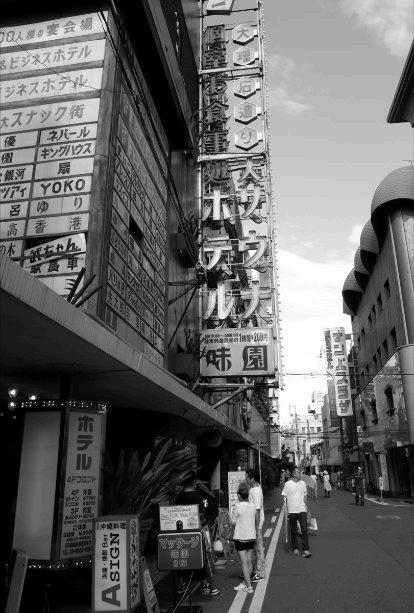
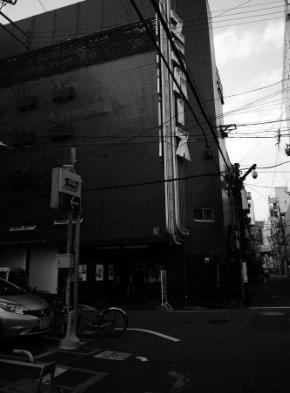
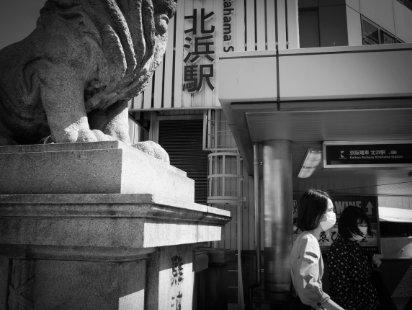
I believe Japanese photographers often have a strong sensitivity toward capturing not only the subject itself, but also the surrounding light, shadows, and atmosphere. I always photograph with the desire to preserve the light of that particular moment exactly as it exists.
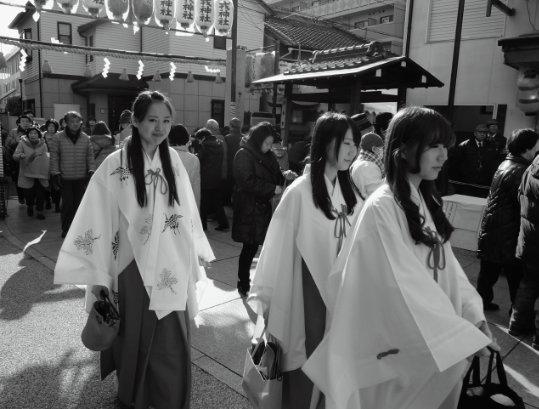
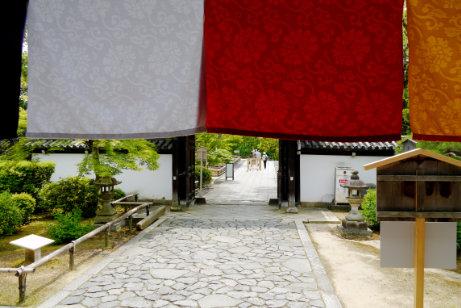
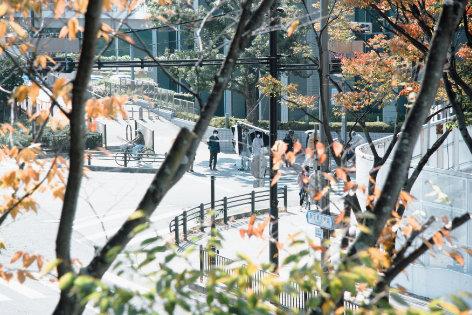
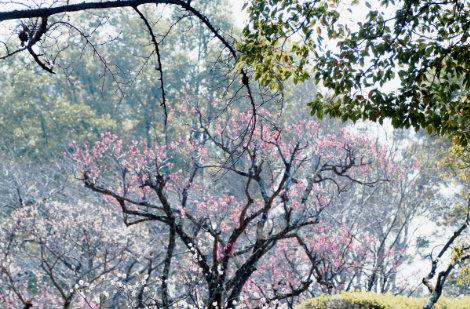
Hidesawa studied economics at university. After graduating, he began his career as a sports photographer in Tokyo. A self-taught photographer, his style was further shaped by a Magnum workshop and inspiration from Chris Steele-Perkins. He eventually returned to Osaka to manage his family business, balancing his corporate role with fine art photography. He has since exhibited internationally and received numerous awards. His latest photos were featured at the Kyoto Kyocera Museum this May.
See more of Hidesawa’s work on his website at instagram.com/hidesawa.fotos
BY MADELEINE LENAGH FRPS
Aotearoa New Zealand is a place filled with strange and wonderful discoveries, from flightless birds like the Takahe and the yellow-eyed Hoiho penguins to geological wonders like the Moeraki Boulders and the rugged and inaccessible Southern Alps. And for me, the 170-million-year-old petrified forest at Curio Bay is at the very top of this list. I had stopped off there during a visit in 2022 and wasn’t quite sure what all the fuss was about. The tide was pretty low and, from the observation platform, I saw some oddly-shaped rocks protruding from the water that I figured must have been the petrified trees.
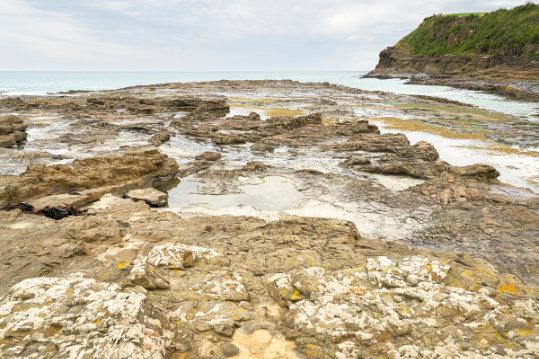
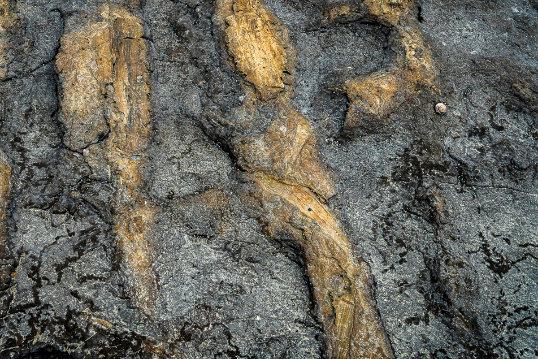
During my recent visit in March, I went back to the Curio Bay beach. This time it was a true dead low spring-tide. As I climbed down to the exposed sea bed, I searched for something that might resemble trees. But I gradually realised that this wasn’t about recording interesting science at all: I was surrounded by beautiful works of art!
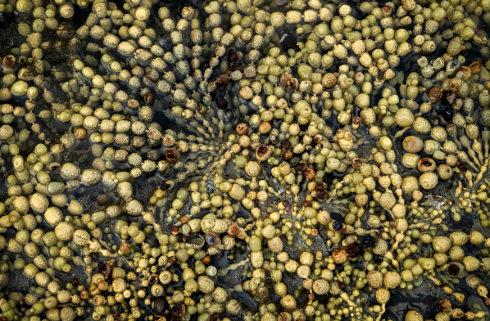
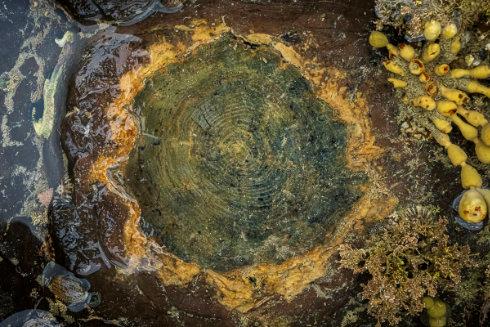
Sometimes it was embedded wood, where the texture and even the tree rings were still visible. Sometimes it was strings of seaweed blisters resembling golden jewels. At other times, the snails made tracks across sand covering ebony-black stone like a Jackson Pollock painting in monochrome. Everywhere there were splashes of unexpected colour across the rocky sea bottom.
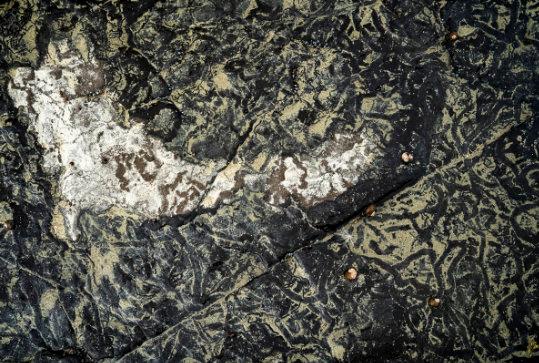
I would probably have stayed there for hours if the returning tide wasn’t so relentless. I wandered from treasure to treasure, recording everything with my 24-70 mm lens, using a polarizer when a thin layer of water obscured the view. I felt unbelievably lucky to be able to witness this underwater art gallery, created by wood, water, and stone. The elements sacred to the Māori, who understand that all creation is imbued with spirit.
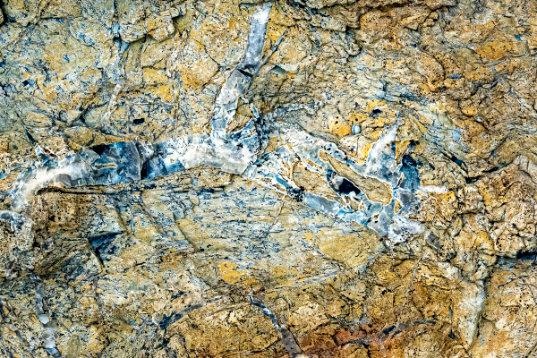
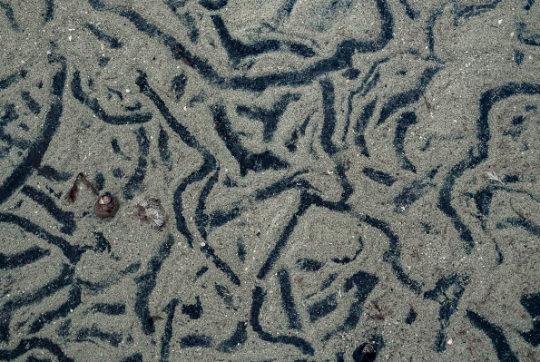
The images are a modest selection of what I found along with one overview.
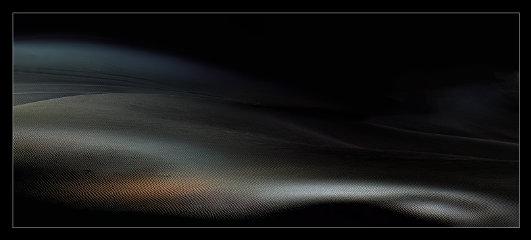
It has been some time now since I returned from two wonderful weeks in Morocco. Upon arriving home, I was intensely aware that this was my first photo trip of 2026—and that it would be my only one for the year.
Listening to others talk about their next adventures, I initially felt a tangled mix of longing, jealousy, and a fear of missing out. But then, I realized something.
My recent journeys have morphed. They are no longer just photography workshops; they have become experiences of deep connection—with place, with time, and with the landscape around me. I’ve begun to focus on the feelings, moods, and thoughts that every single moment in nature elicits within me. The images I create are the fruits of this connection; they are the results of love affairs. Some are long, some short; some passionate, others calm; some exciting, some peaceful. But all of them are deep and meaningful. There is no "speed dating" here.
I realized that I don’t actually want to return from one trip only to immediately plan the next, and the next, and the next. I want to stay in the feeling a little longer. I want to linger—to taste the essence of a place and time on the tip of my tongue, like the finish of a fine wine. I don't want to wash that flavour away with a quick swig of the "next trip."
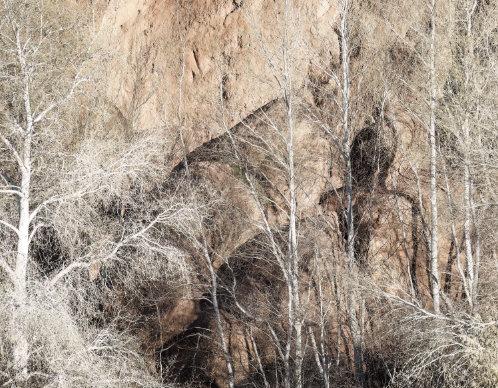
I don’t want my journeys to be fast food. I want them to be slow, expansive meals shared with friends, where we cherish every bite, familiarizing ourselves with unknown tastes and taking the risk of letting something new in. I don’t want one love affair to be instantly replaced by another. I am not a hunter-gatherer, collecting experiences just to put them on a shelf to gather dust. I’ve learned that I want less, but deeper. I need time to withdraw and process the visual and emotional stimulation I've gathered.
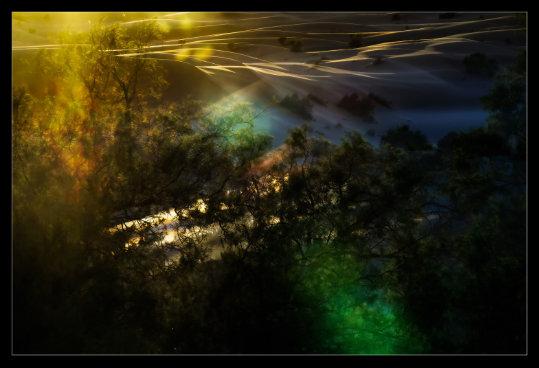
The images I bring back now feel more personal, and I find myself feeling more protective of them. I no longer feel the need to share them immediately. I want to keep them to myself for a while—like gifts from a beloved that I wish to enjoy in private. I will share them eventually, of course—just as I am doing now, here, with you.
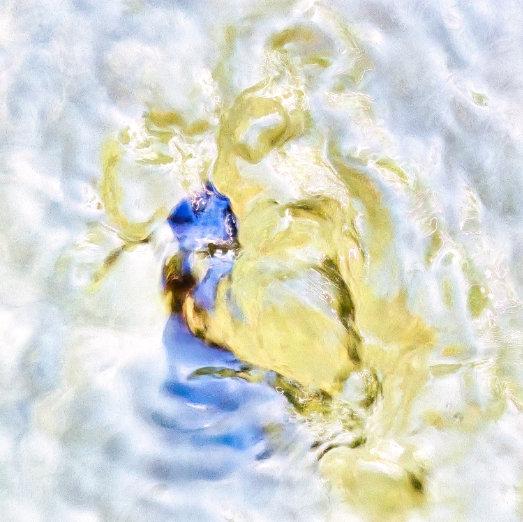
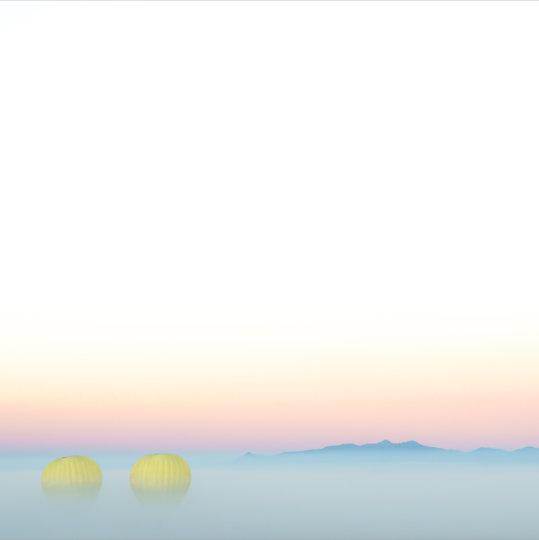

The Edge
I have come to learn that the slower I walk, the deeper I see.
Astrid
For more images from Morocco please visit: Selection Morocco
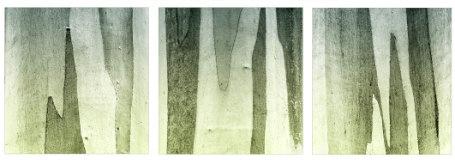
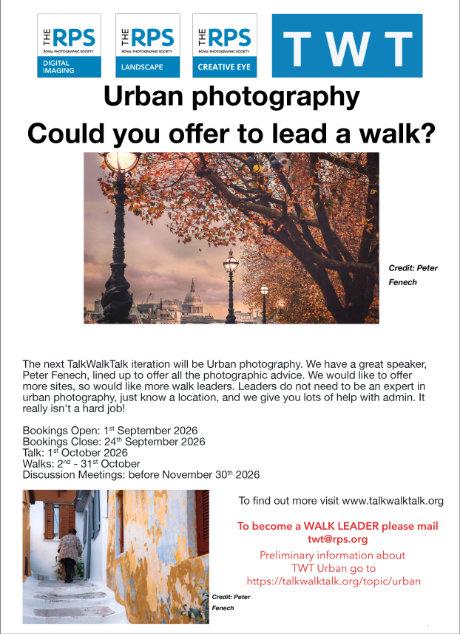
It has been decided to introduce a new class to the DI Print Portfolio Competition. For the first time in 2026, you will be able to enter a triptych.
To inspire and encourage participation, we are including in this issue an article by Trevor Litherland, along with details of an upcoming talk on triptychs by Cherry Larcombe. A link is provided for you to register for this free talk.
We will be promoting both the talk and the competition rules and entry details in due course. In the meantime, this is a great opportunity to start thinking creatively and exploring ideas beyond the conventional.
As outlined in the rules:
“Triptychs will be selected on visual impact, composition, and technical excellence, as well as the artistic impact and mood depicted.”
BY TREVOR LITHERLAND
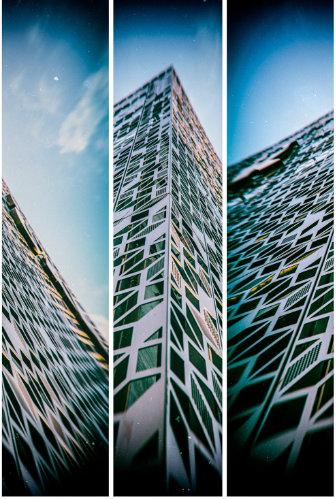
In a world saturated with single-frame images competing for attention, the photographic triptych offers something refreshingly deliberate. Rooted in centuries-old artistic tradition, the triptych format of three panels arranged as a unified piece invites photographers and viewers alike to slow down, look closer, and appreciate the rhythm of visual storytelling. Whether displayed in a gallery or shared digitally, a well-crafted triptych has a natural sense of balance and narrative sophistication that stands apart from the constant stream of stand-alone shots.
At its heart, a photographic triptych is about relationships. Three images are placed side by side (or occasionally stacked vertically), each contributing to a cohesive whole. The magic lies in how those images interact: they may contrast sharply or flow seamlessly, echoing each other through composition, colour, or theme. The viewer is guided through a beginning, a middle, and an end, even if the story is subtle or abstract.
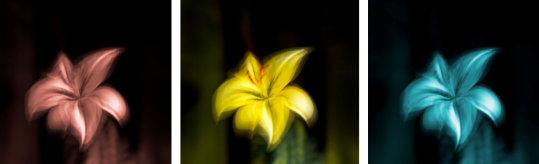
One of the most compelling uses of a triptych is its ability to suggest time and progression. A photographer documenting the tide’s advance on a shoreline, for example, might present three moments spaced minutes apart. Alternatively, a triptych can capture different facets of a single subject: portraits showing varied expressions, angles, or emotional tones. This progression, whether linear or conceptual creates a sense of depth that a single frame simply cannot achieve. Some triptychs rely not on narrative, but on visual harmony. Repeating shapes, complementary colours, or parallel lines can tie three otherwise unrelated photos together into something aesthetically unified. Minimalist photographers often use this approach, embracing negative space and simple geometry to create quiet, meditative triptychs.
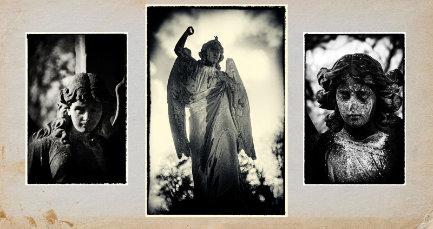
The challenge of the triptych lies in balance. Each panel must be strong enough to stand alone, yet not so visually dominant that it overshadows the others. The centre panel typically holds the viewer’s eye first making it ideal for the strongest or most detailed image while the flanking frames support and enhance that focal point.
Spacing and alignment also matter. In print, even the physical gaps between panels influence the experience, acting as intentional breathing spaces. A consideration about paper type maybe made here to give the triptych visual impact. In digital formats, maintaining consistent margins and proportions helps preserve the triptych’s integrity. Some photographers even experiment with borders or colour toning across all three images to further reinforce cohesion or just a texture to lift the images from the page.
Unless you’re working within the silver gelatin process, most triptychs would be created digitally. This is where digital gives you the freedom of expression. After initial post processing, you could use other software, e.g. Photoshop or Illustrator (there are others) to create an artboard of your own dimensions. Using guides, with snap-to enabled, you could import your images onto this artboard. A triptych could also be created in the print module of Lightroom and saved as a template for further use. Another advantage of using the LR print module is that you can print to jpeg as well as print to paper. If you have a large format printer with a roll paper attachment, an option would be to print out the images side by side on the continuous roll. However printing out the images singly and displaying them horizontally or vertically, may be the only option for most members.
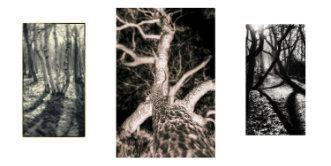
In an age defined by scrolling and swiping, the triptych offers a welcome break from visual nowness. It encourages engagement and invites interpretation. Galleries continue to favour the format because it fills space elegantly and commands a viewer’s attention in a way that single images seldom do.
More importantly, triptychs empower photographers to think in sequences, an essential skill for anyone drawn to storytelling through imagery. A triptych is almost a mini project, one that although short, requires thought on the photographer's part to tell their narrative. Whether you’re exploring a landscape, documenting a portrait series, or experimenting with abstract forms, the triptych challenges you to think beyond the frame. It’s an opportunity to build a narrative, juxtapose ideas, and discover the quiet power of threes.
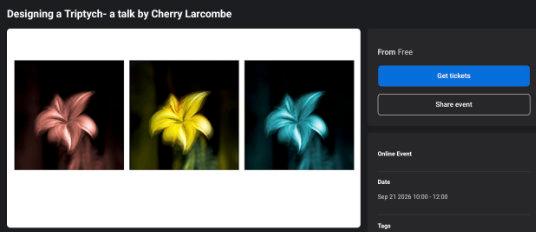
Cherry Larcombe will be showing practical ways to arrange three photographic images into a cohesive and visually effective presentation. She will share examples of different layouts, helping audiences see how composition, spacing, and image choice can change the impact of a triptych. This is aimed at at those who will be sending an entry into the Triptych section of the Annual Print Portfolio Competition.
MONDAY SEPTEMBER 21 AT 2PM
Do visit Cherry's Website
The advantage to using Billetto and Notion effectively.
The DI volunteer team has worked exceptionally hard to streamline how our workshops are booked and how you access the associated supporting resources. However it still remains a mystery why some members get in a muddle with it all, so we thought a reminder document (for you to keep and refer to) might be useful.
Booking a workshop couldn’t be easier.
• You can find the list of workshops by going to the DI Homepage and clicking on ‘Workshops’ from the top list. https://rps.org/groups/digital-imaging/
•
• Alternatively you can go direct to Billetto and all that is bookable HERE
As an example let us assume you wish to book the Fotospeed Print workshop
• You click on the Billetto tile and it takes you to the booking page.
• For more information about the workshop open ‘Read More’.
• Booking is via the blue ‘Get Tickets’ button – click this.
• As a DI Member you modify the ticket number to read 1 and then click ‘Next’.
• If you are a registered user then you see your details and order summary.
• Click ‘Next’.…This is where some people go wrong !
• Under ‘add on services’ click No and No
• then it will look like this
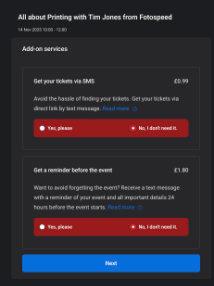
Click ‘Next’. You have now placed your order but this screen is VERY IMPORTANT as it is here that you find the link to the Notion document for this workshop. It is the blue text – you cannot miss it !
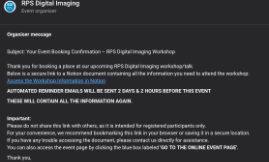
Click on this blue text and it takes you off to the Notion page – a Notion page is nothing more than a web page which you will need to refer to again – BOOK MARK it now. The Notion page provides you with the workshop details and the Zoom link. It is where you will find any resources the tutor provides. Plus post event it is where you will find the recording.
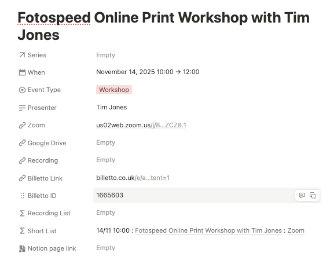
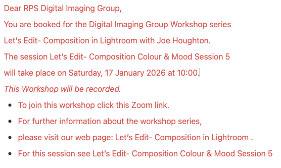
To make life even easier for you we also send out the Zoom link to the email you used to book 2 days and 2 hours prior to the event.
If you follow these simple instructions you cannot go wrong. It saves you time hunting for things as everything is on the Notion page and saves you emailing us. It saves us time in not having to respond to your emails. So please, please, please, get to grips with it. Once you have registered for an event you don’t really need to go back to Billetto, everything you need is contained in the emails.
Your co-operation is appreciated as it saves a lot of work for our overworked volunteer team. Thank you
Janet Haines DI Chair

DI Workshops recently ran a demonstration on Notion, when Joe Houghton showed how Photographers might use it, some ideas were:
• A To do list,
• Shoot Planning
• Location Scouting
• Gear research
• Competition Tracking
• Website Bookmarks
All great ideas for getting organised in 2026!
Notion is a flexible all-in-one digital workspace where you can write, organise, and link your notes, tasks, and databases in one place.
But I thought how a simple Notion table could help DI Online members organise and access the workshop resources all in one place. Do you have links scattered across emails and pages? Maybe by creating a simple Notion table or database this could index every DI Online recording, handout or resource. A document which is always up to date and searchable when you wish to return and rewatch a Workshop or Talk.
Taking the reminder emails you have all the links you need to easily add to your table. If anyone missed this free Talk and would like to have the YouTube link, email me: digworkshops@rps.org

DI Pulse for WHAT’S ON THIS MONTH