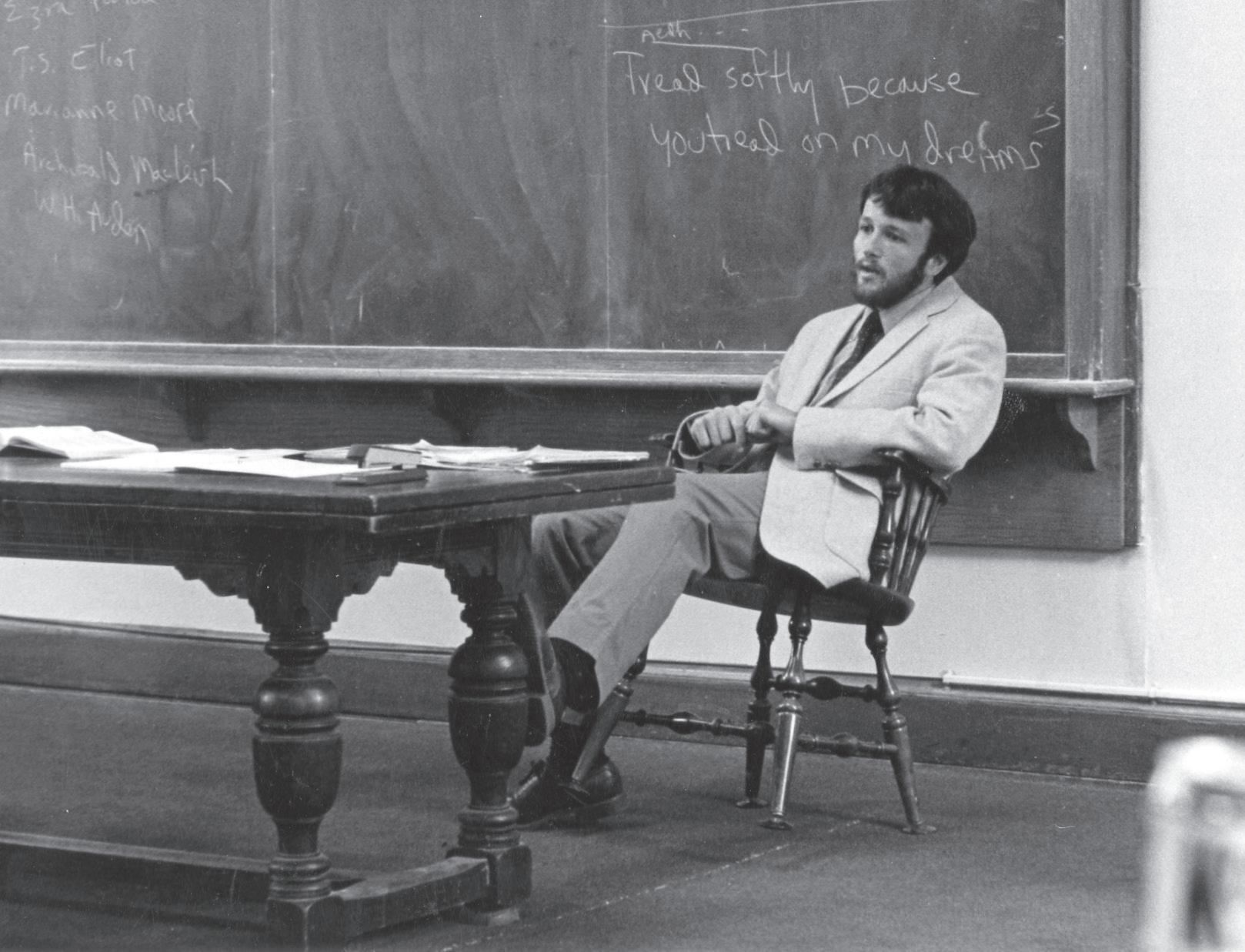
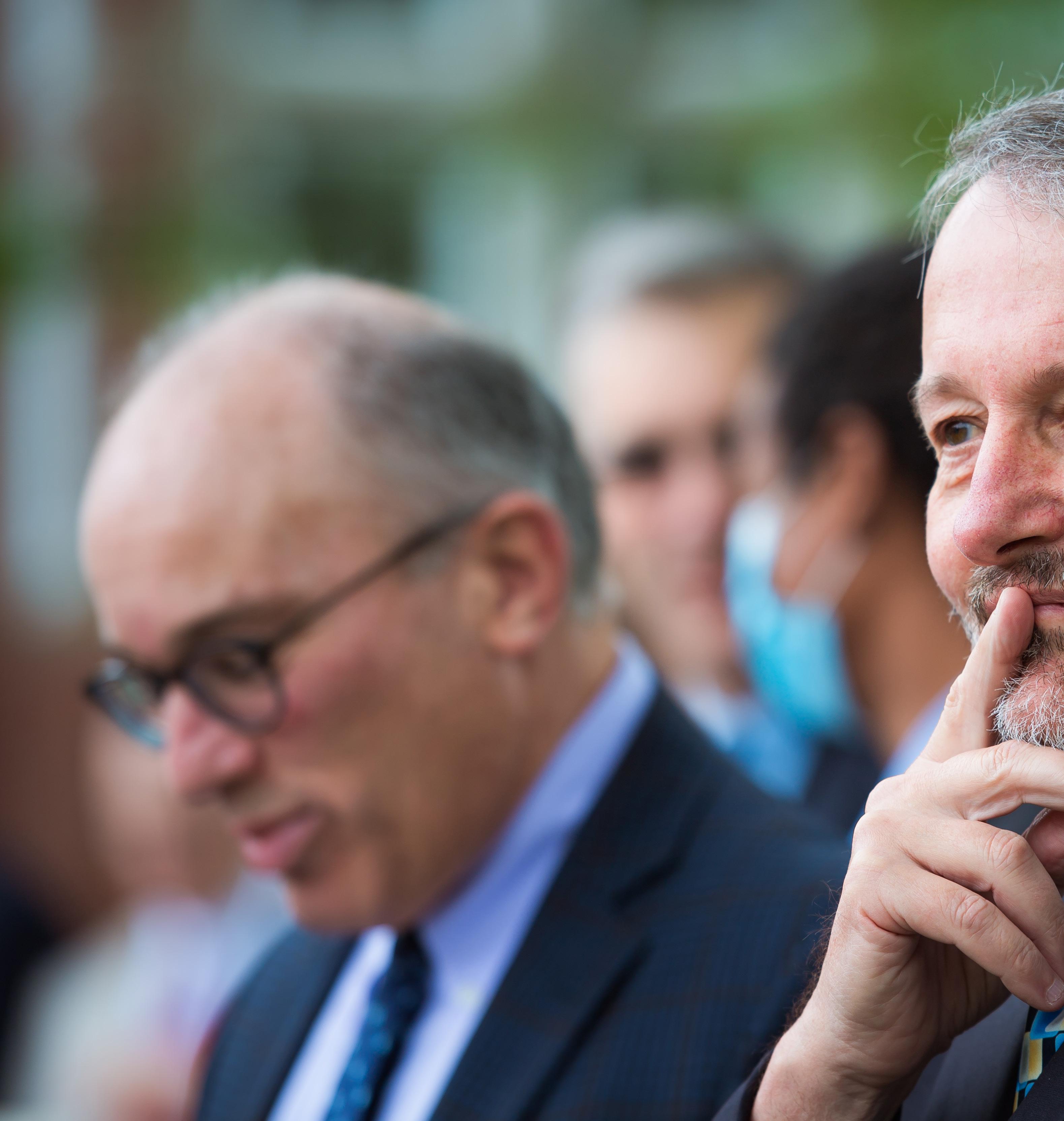
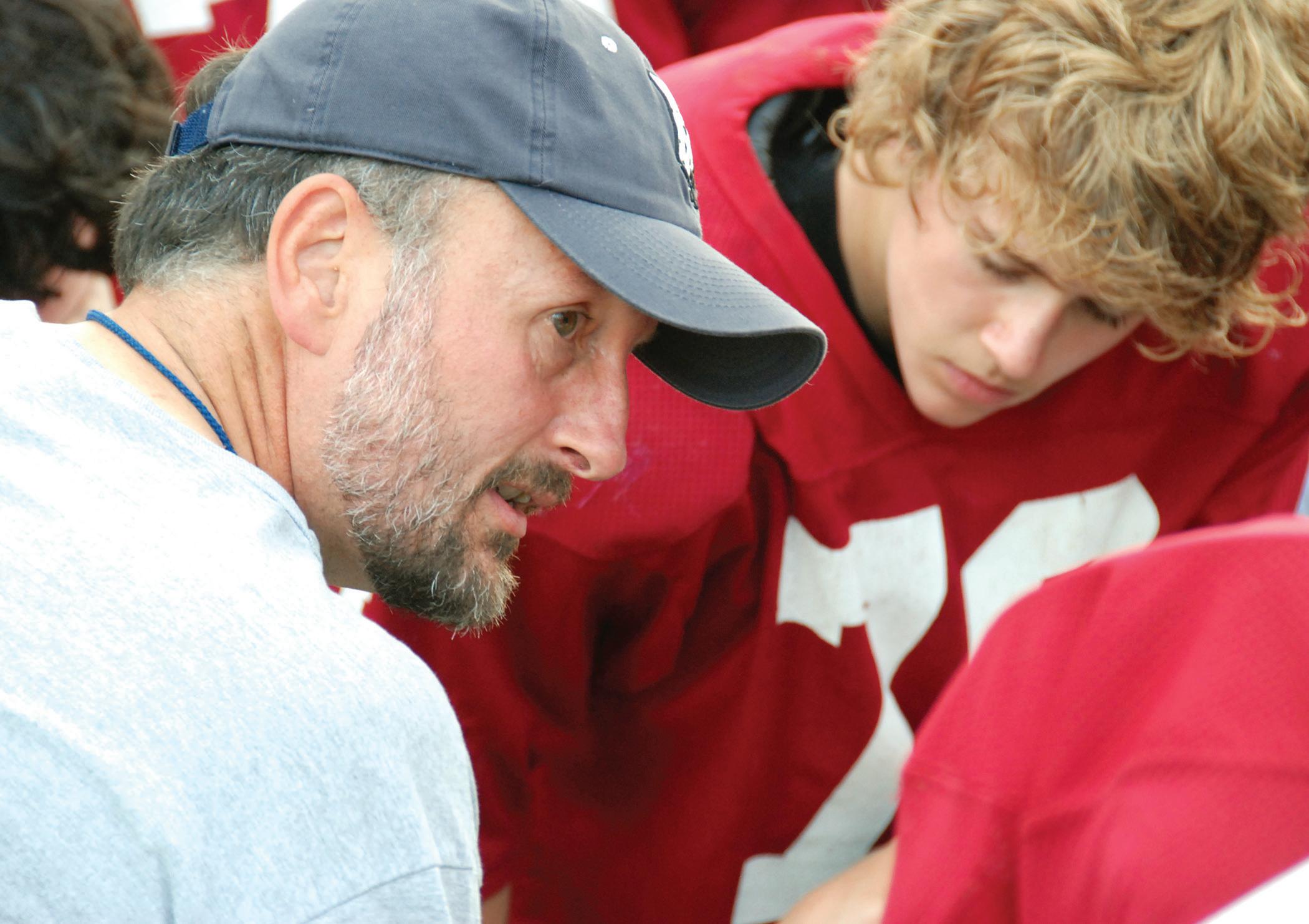
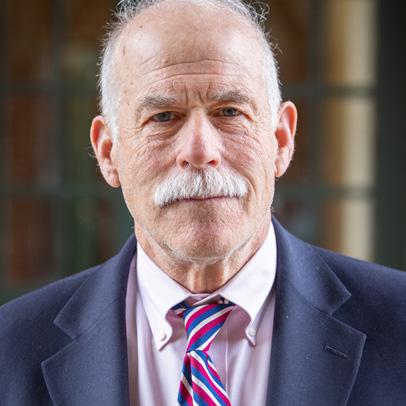
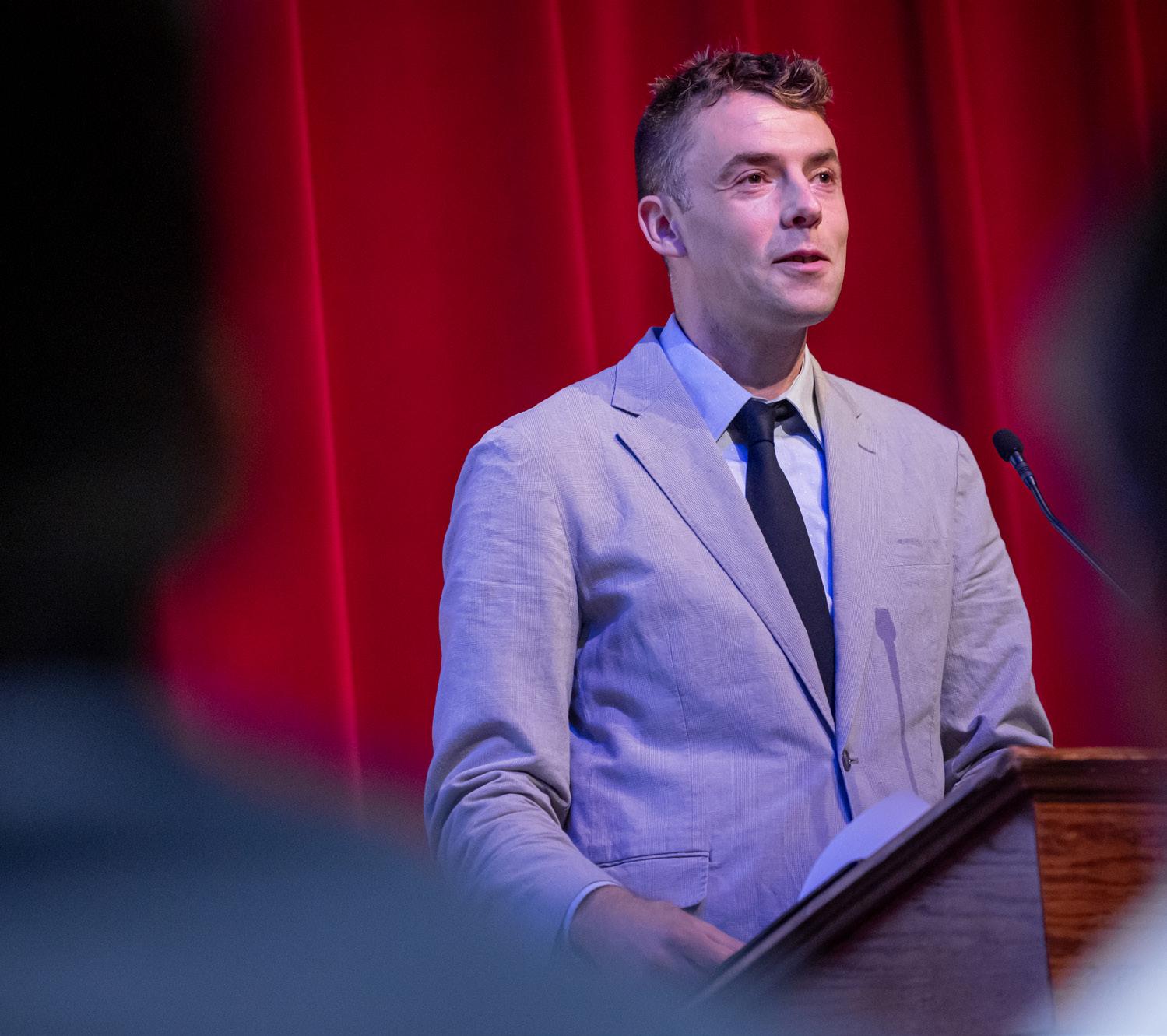
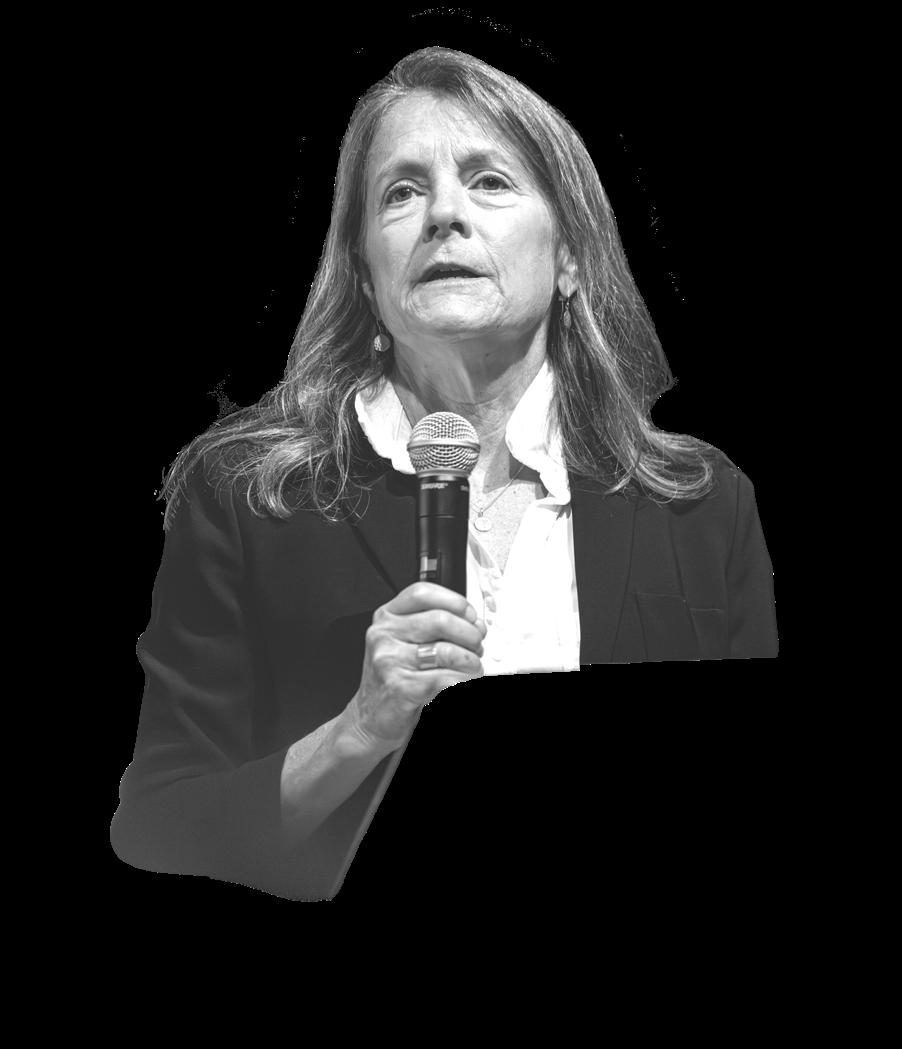
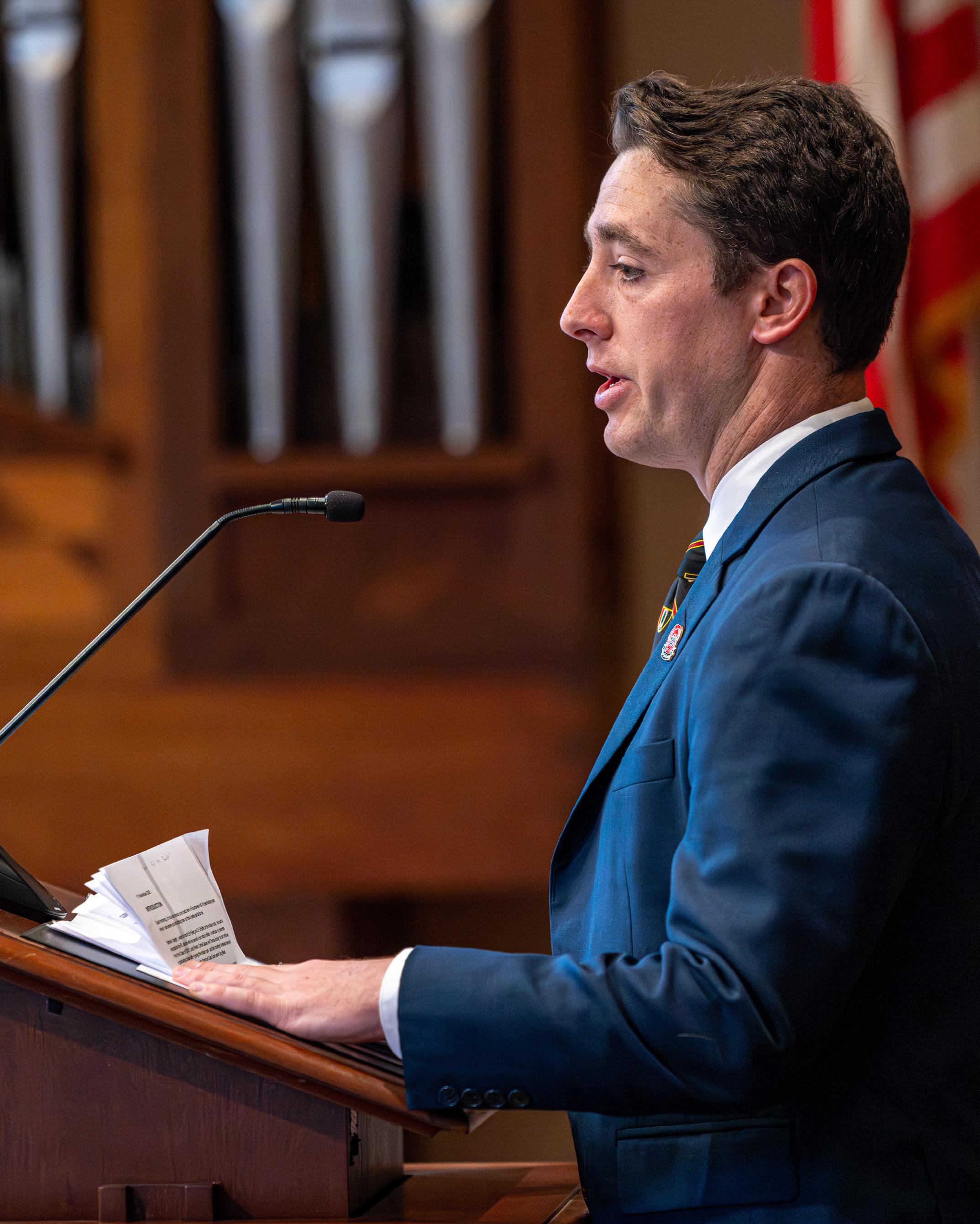
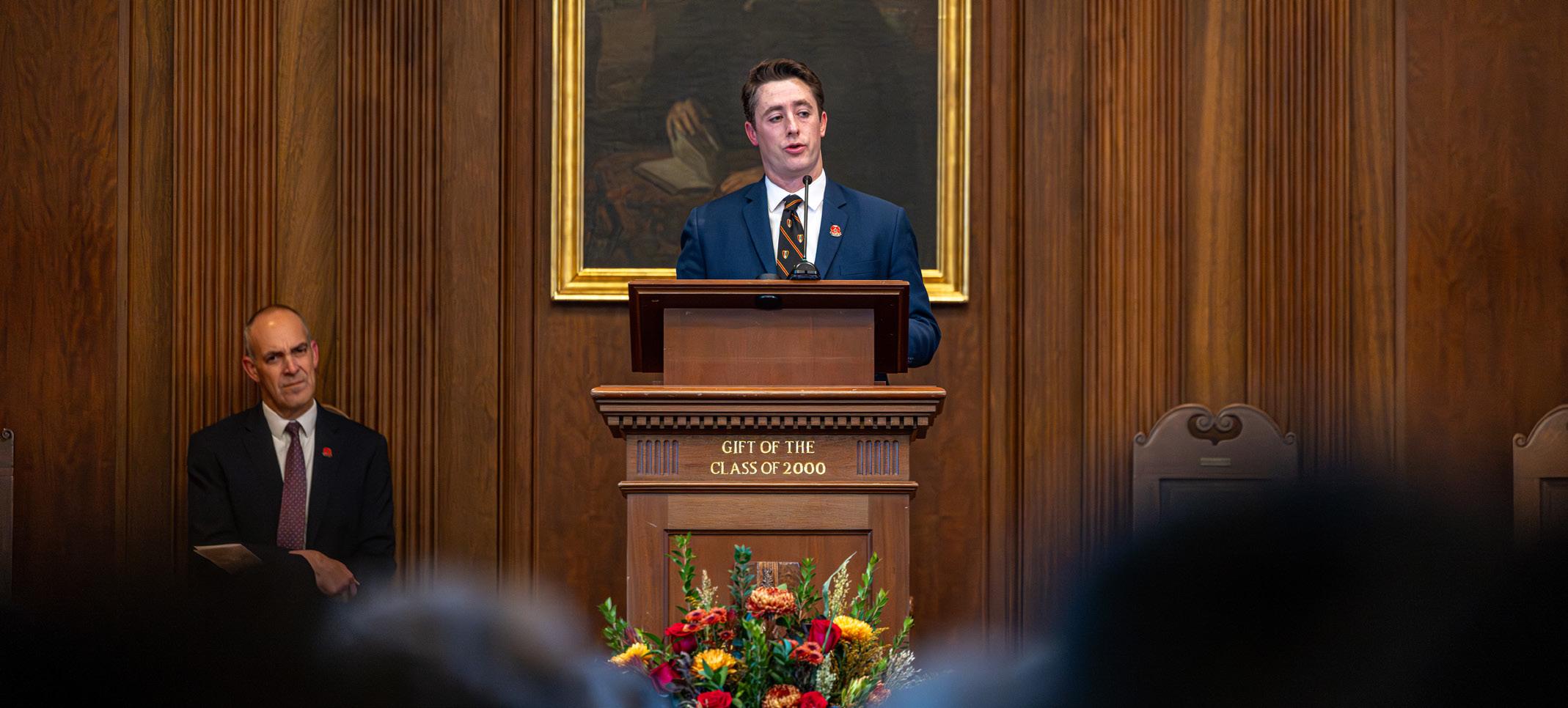
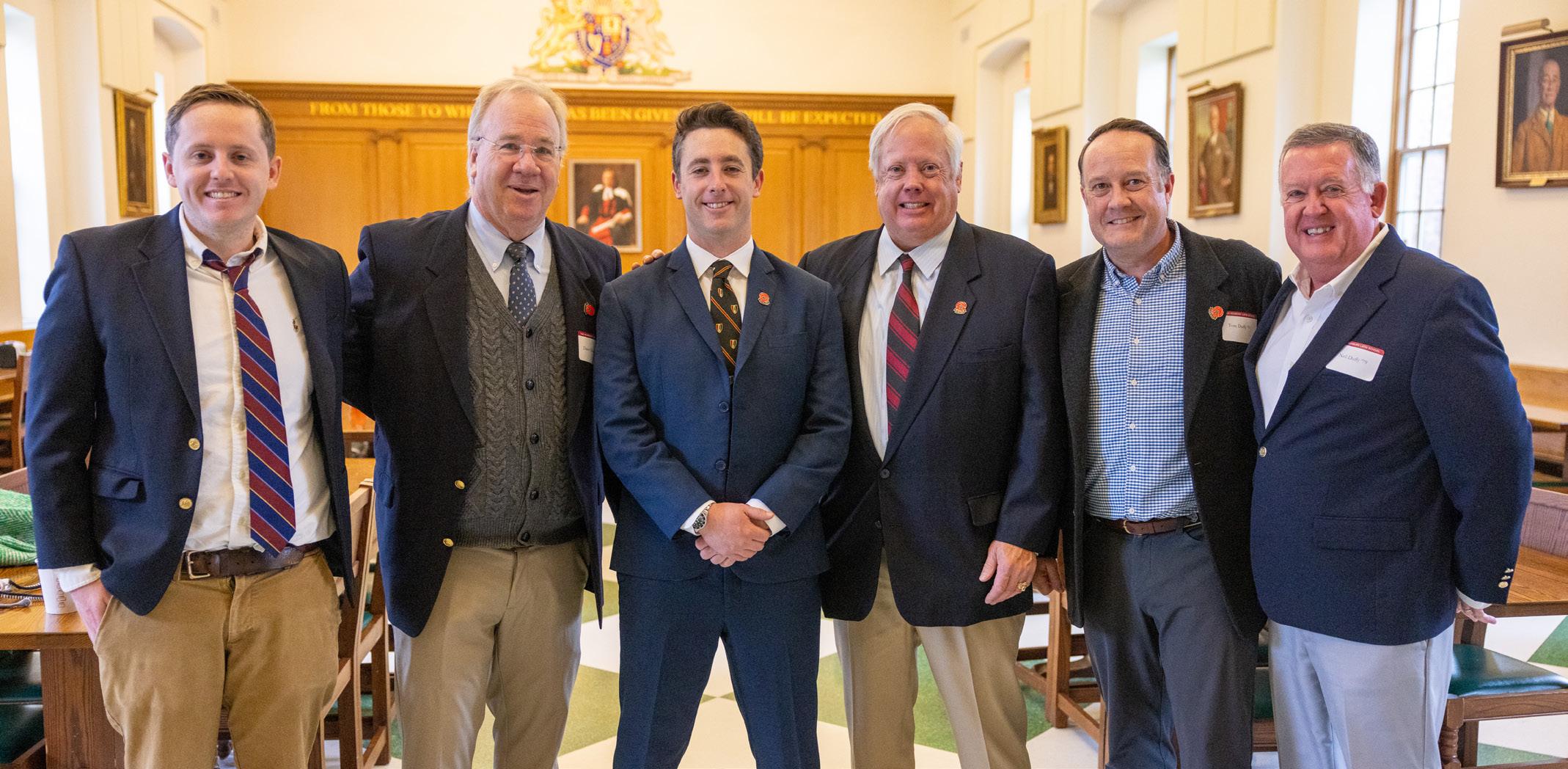
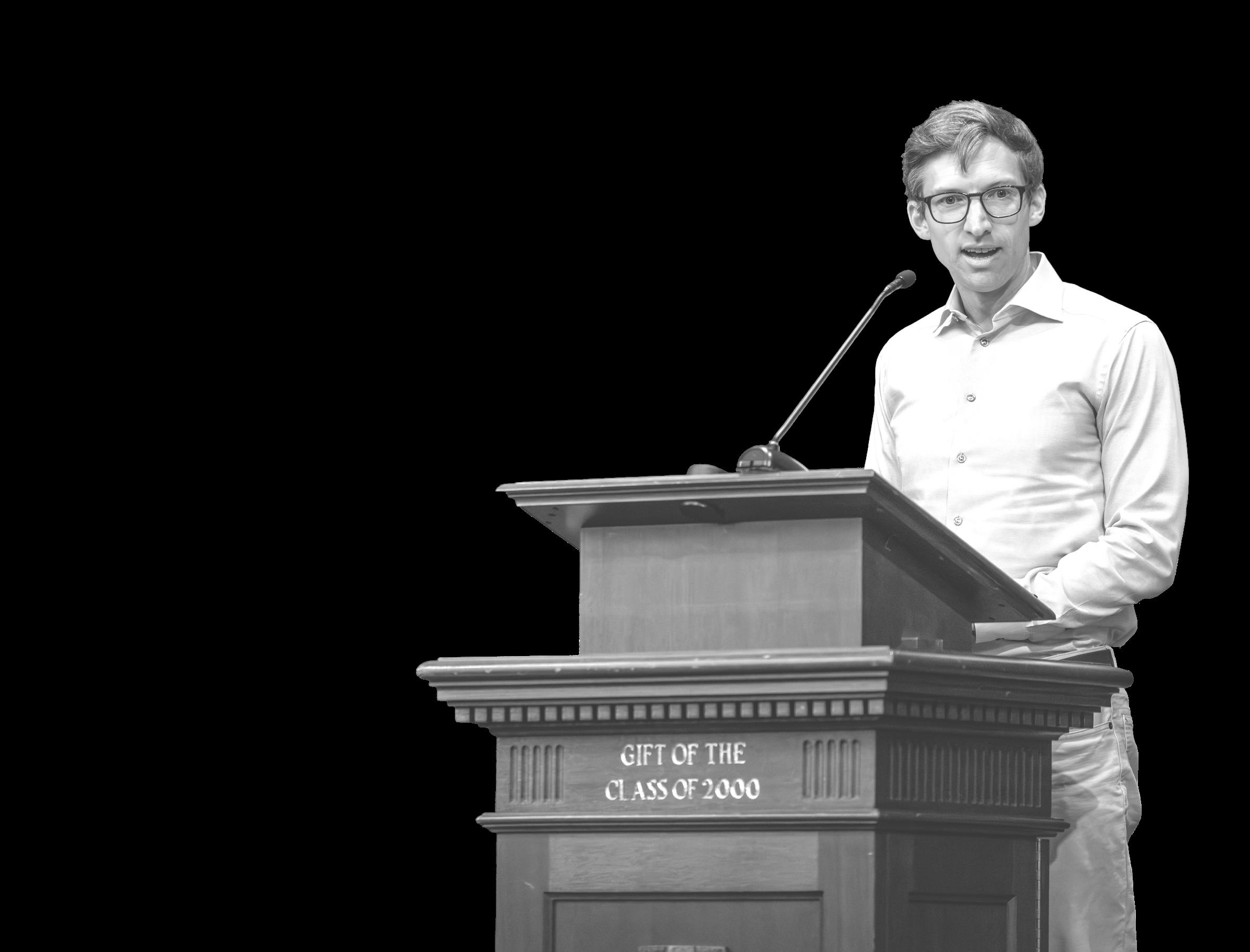
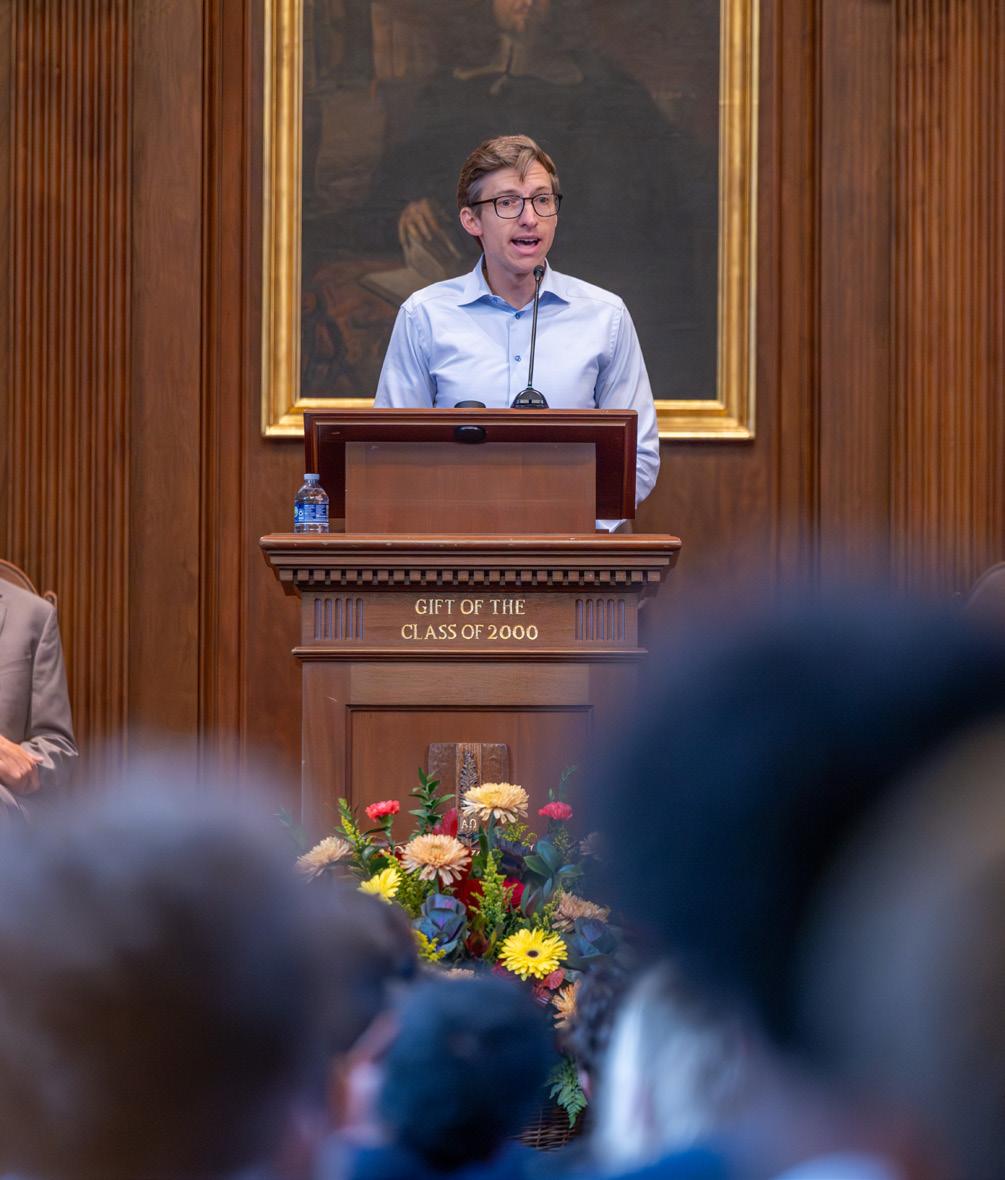
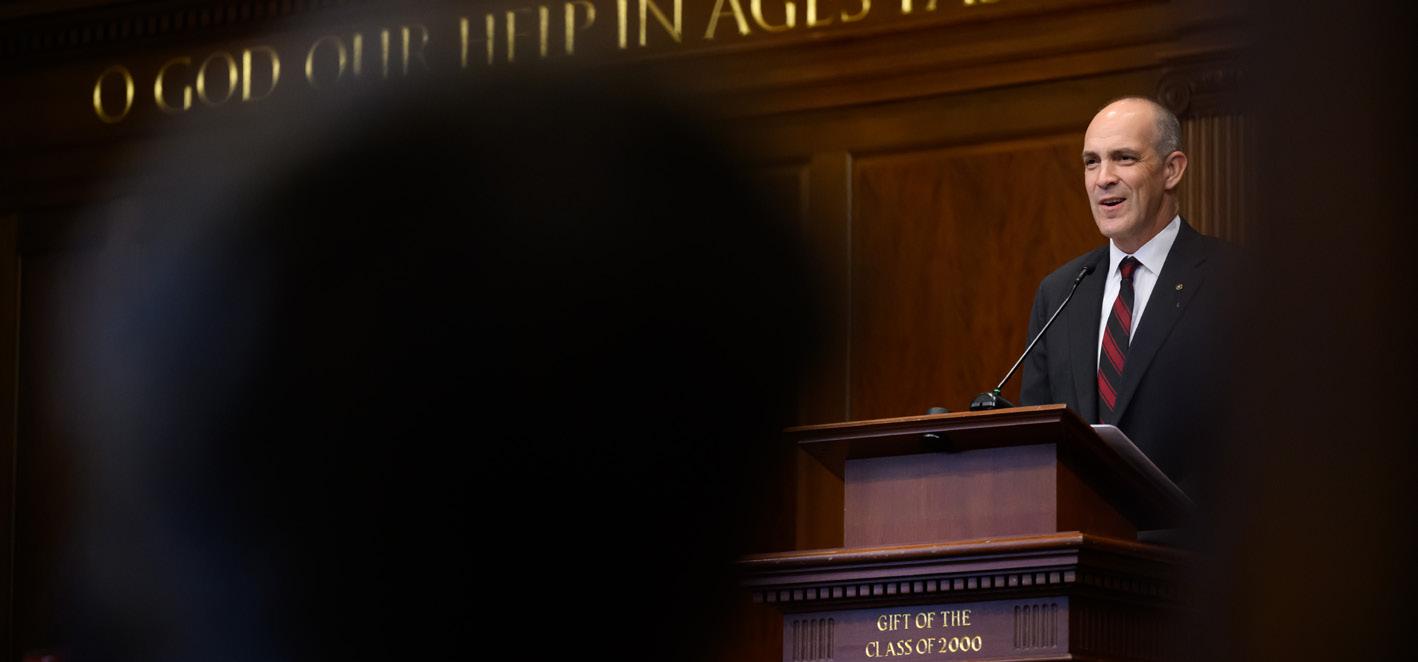
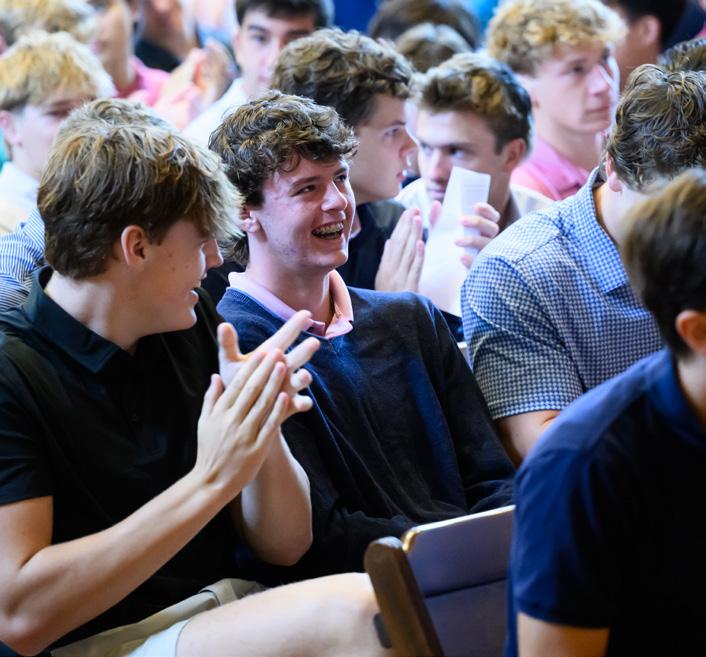
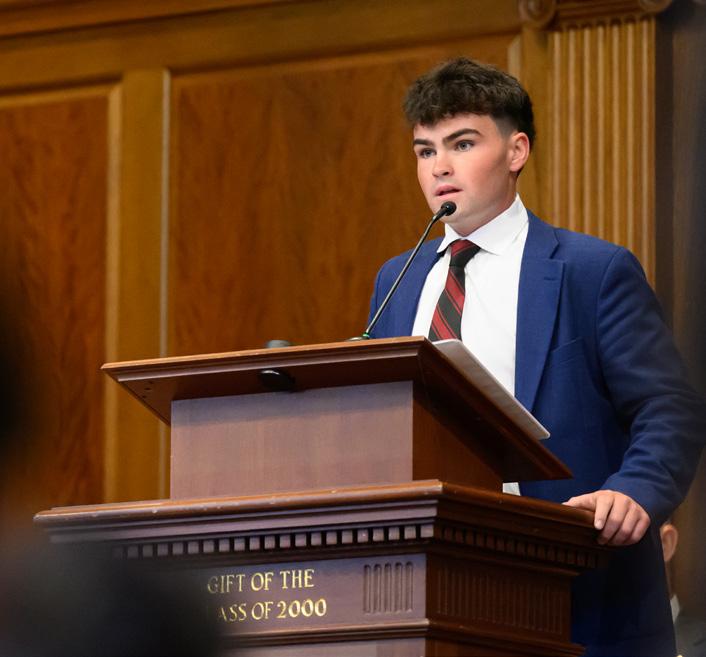
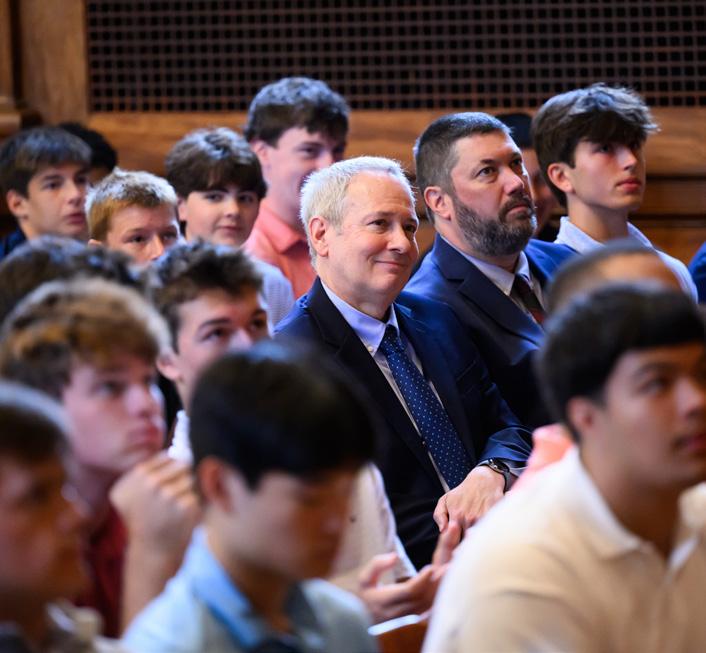
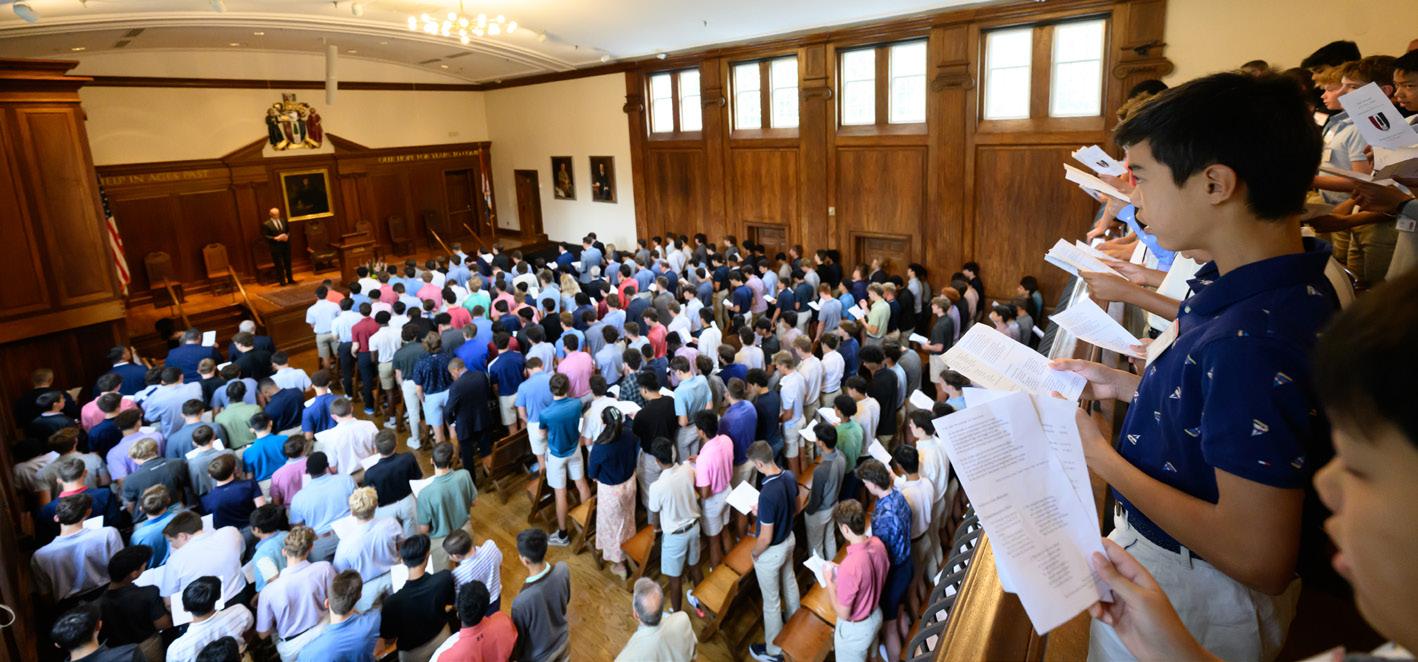
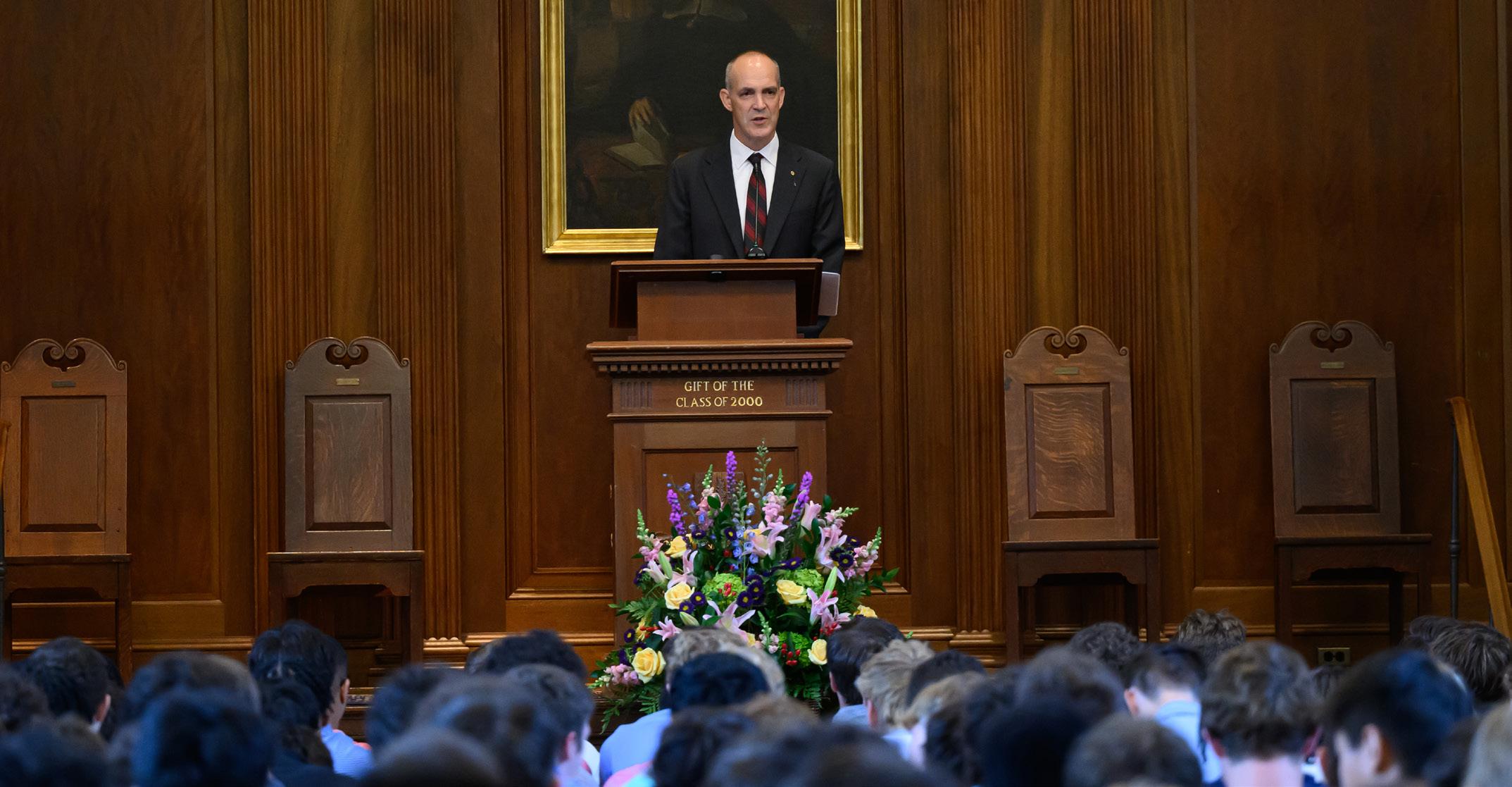
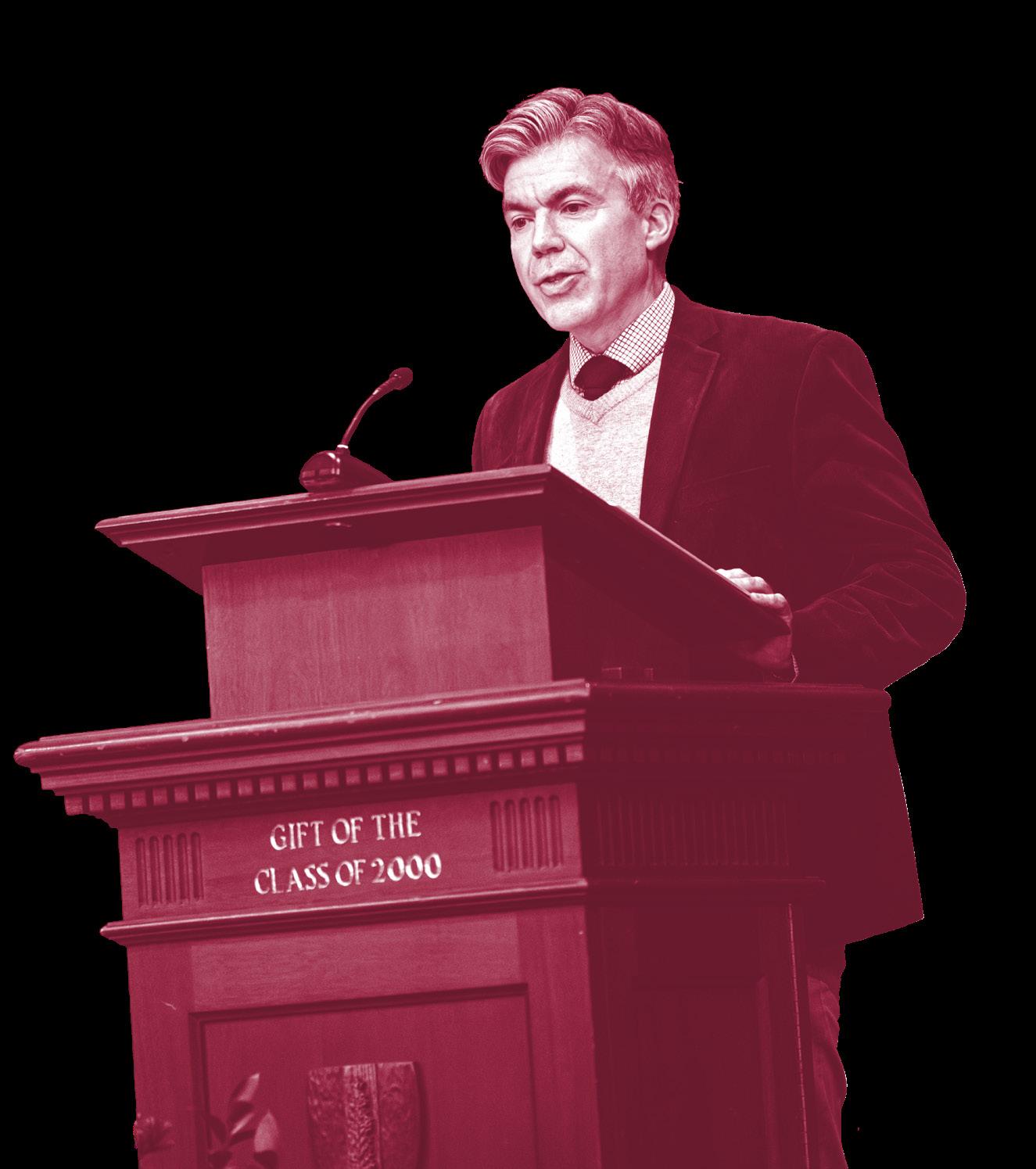
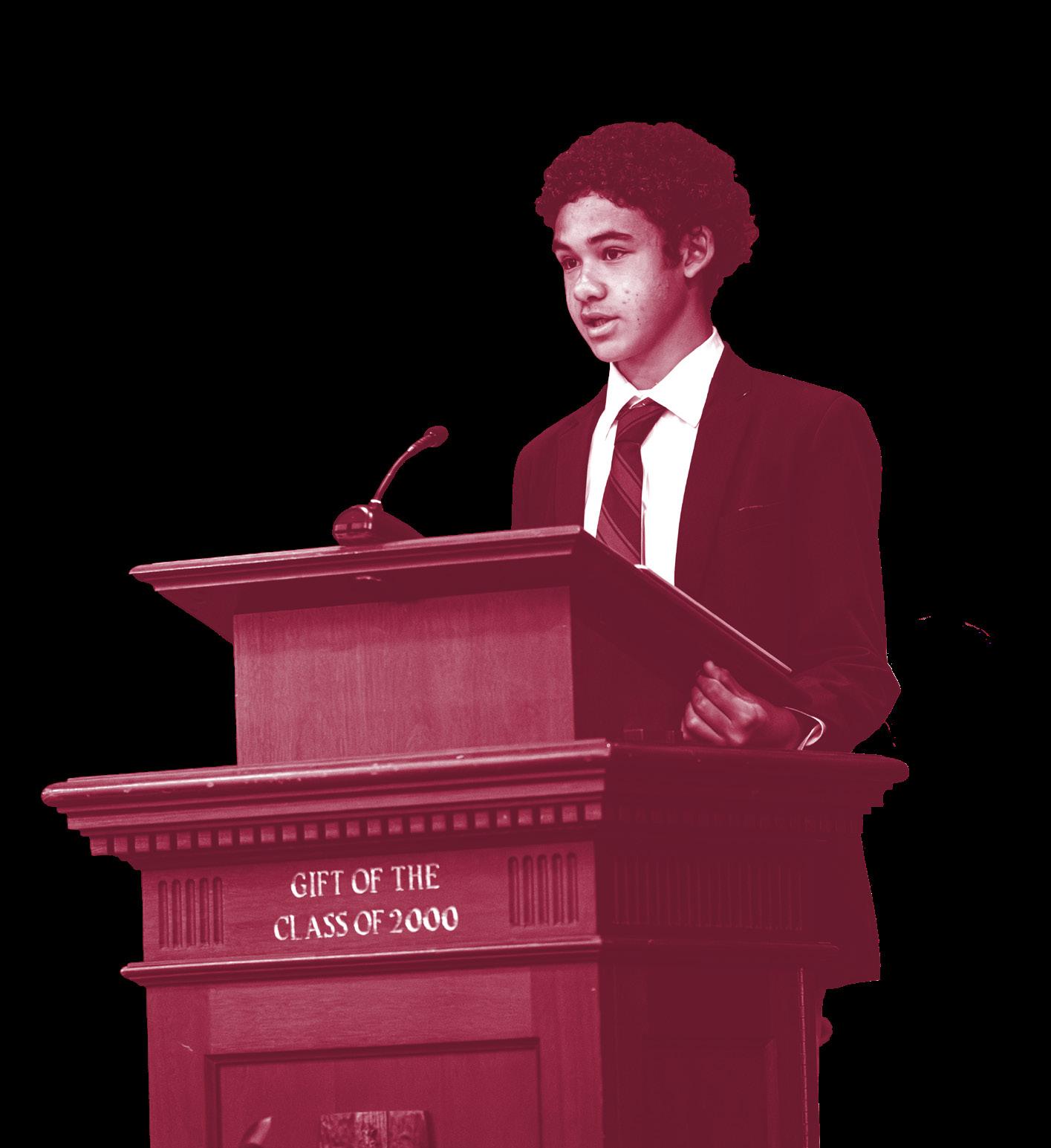
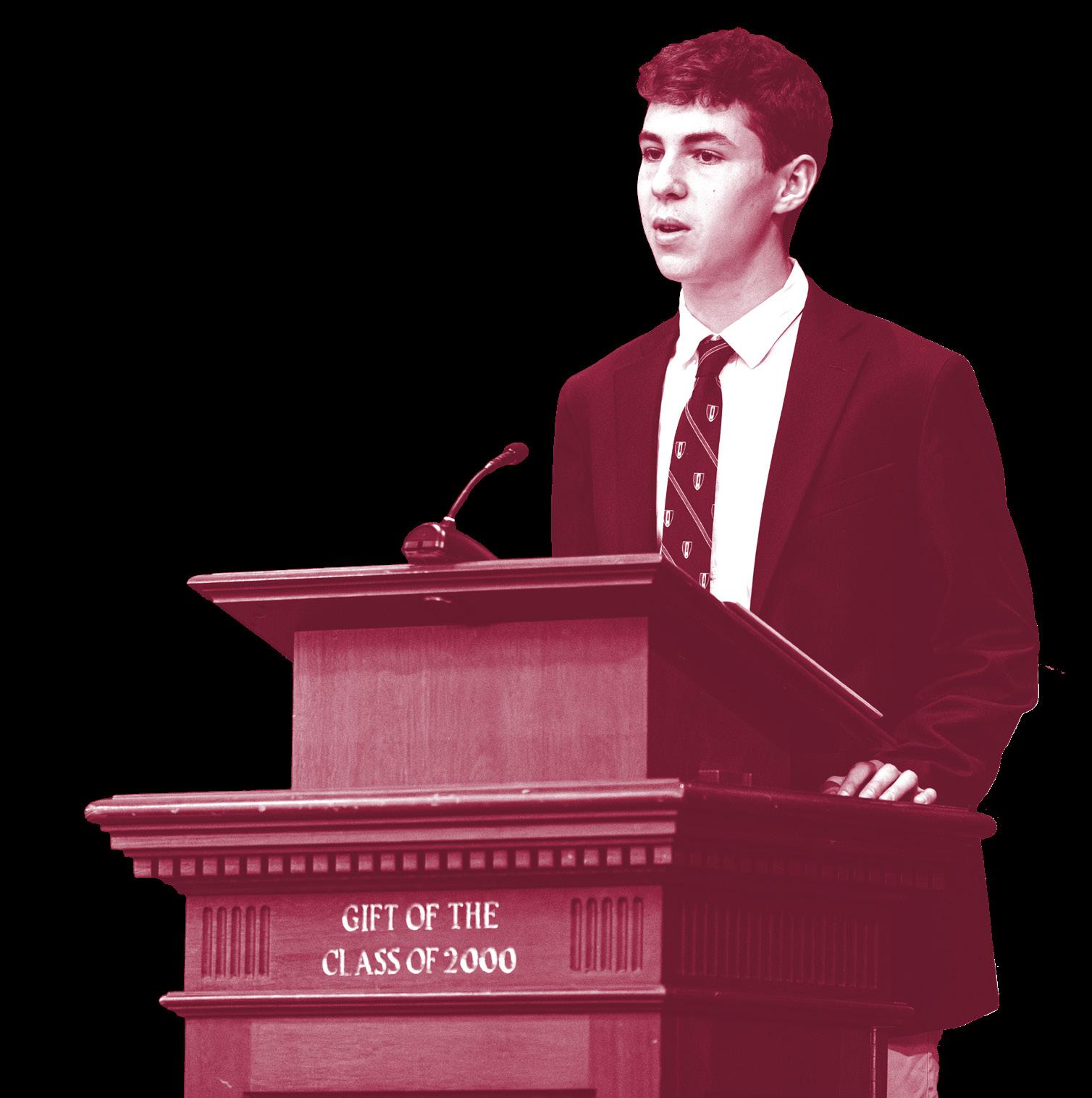
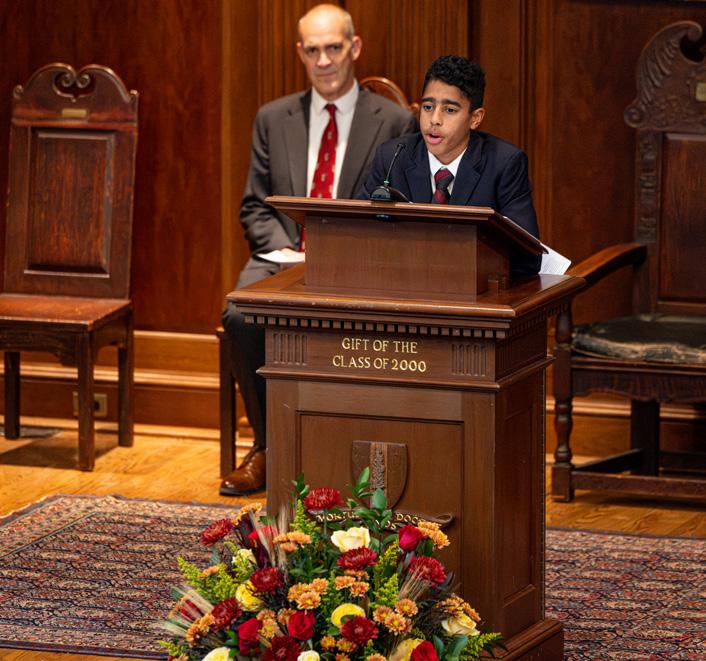
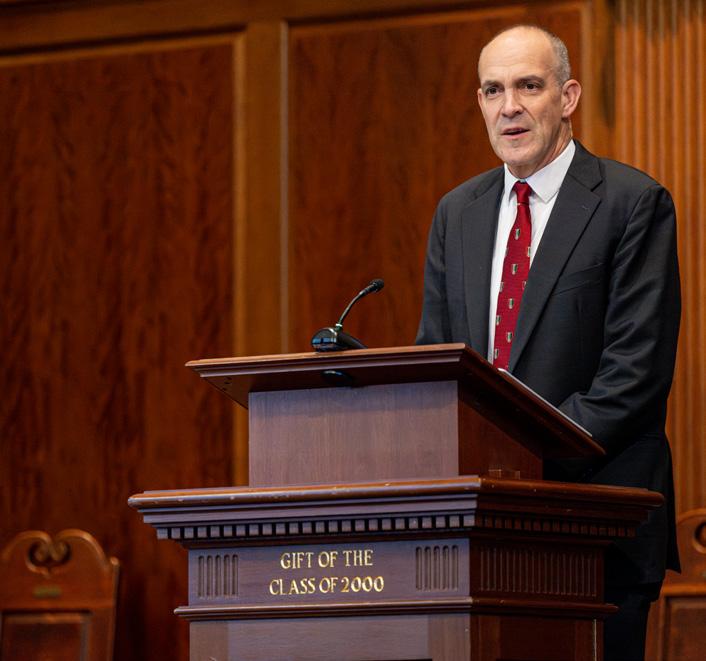
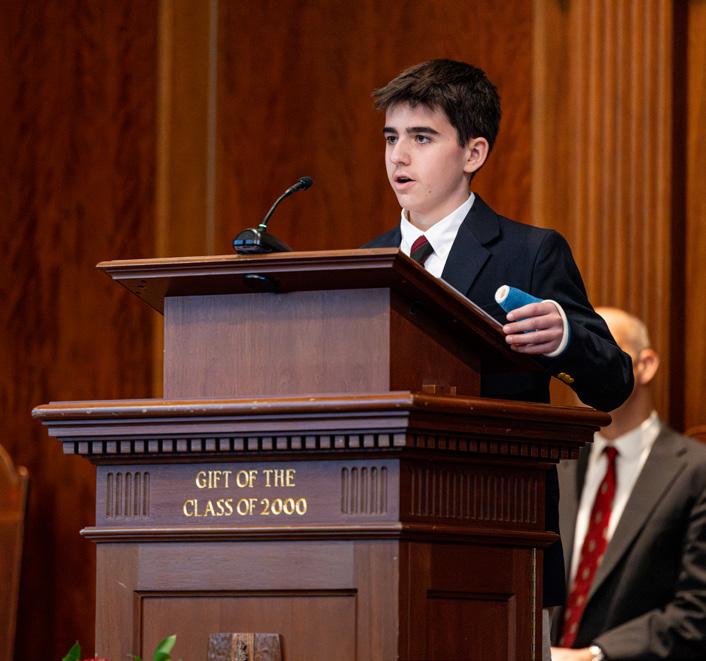
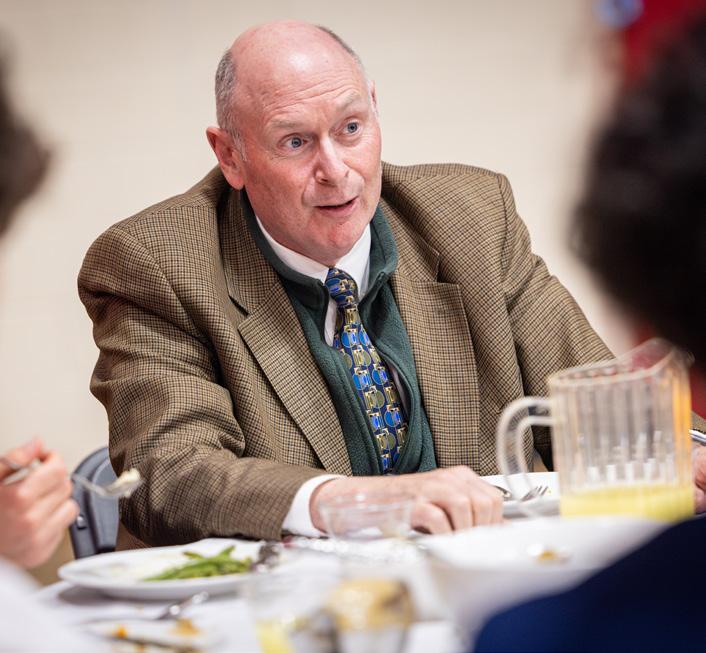
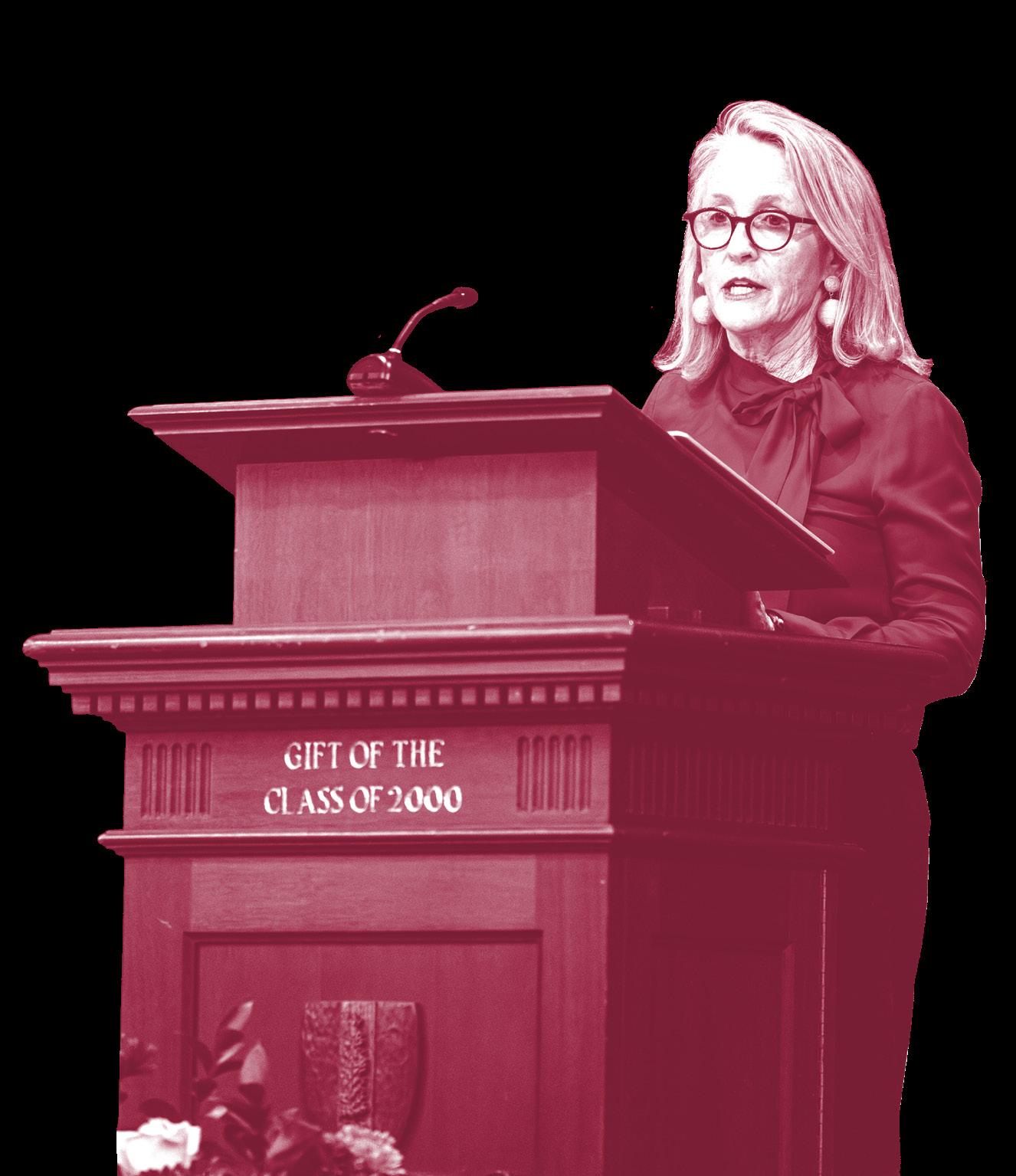
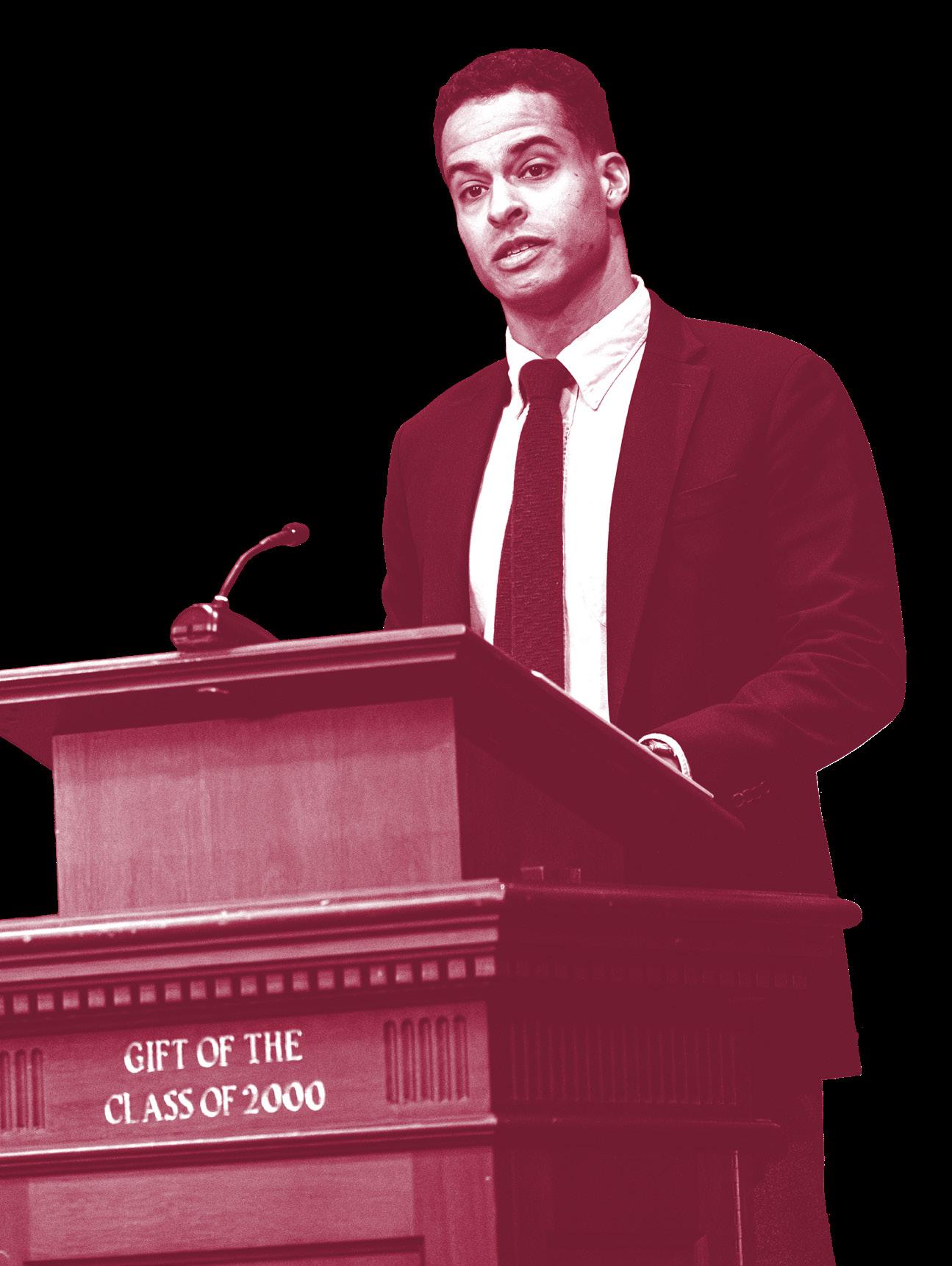
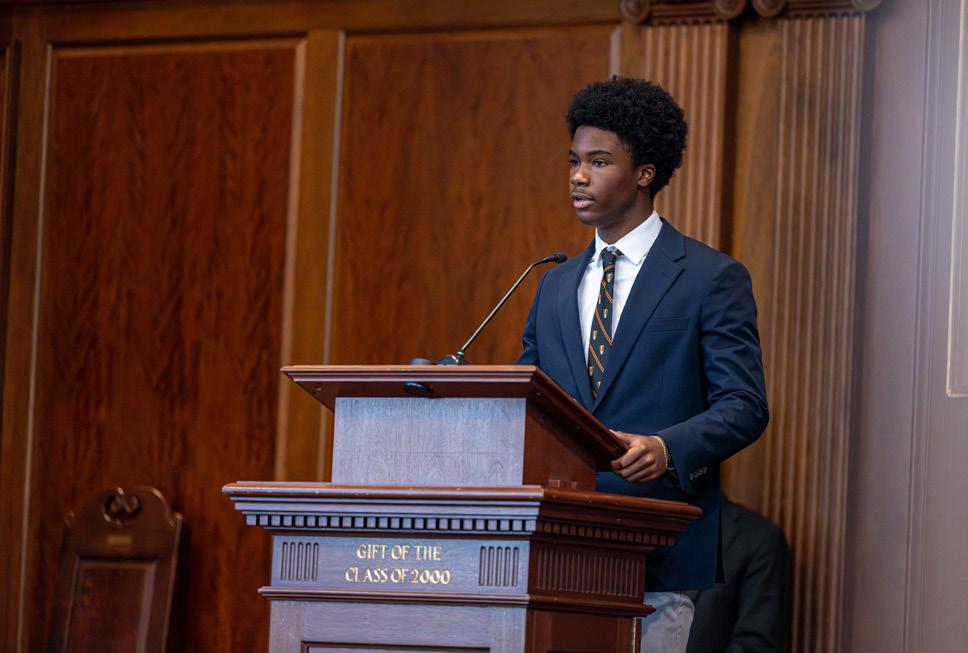
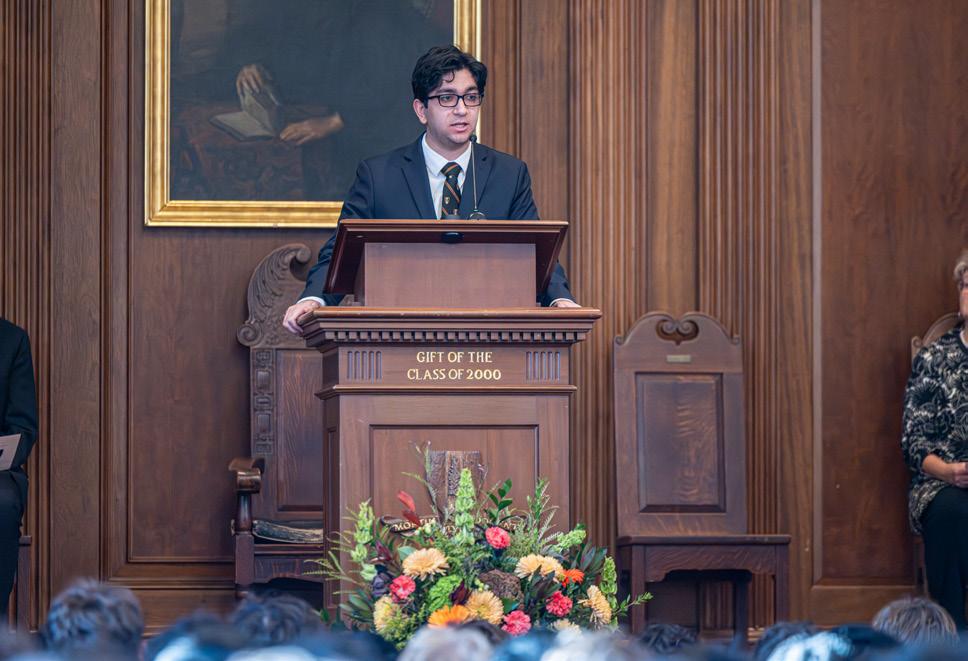
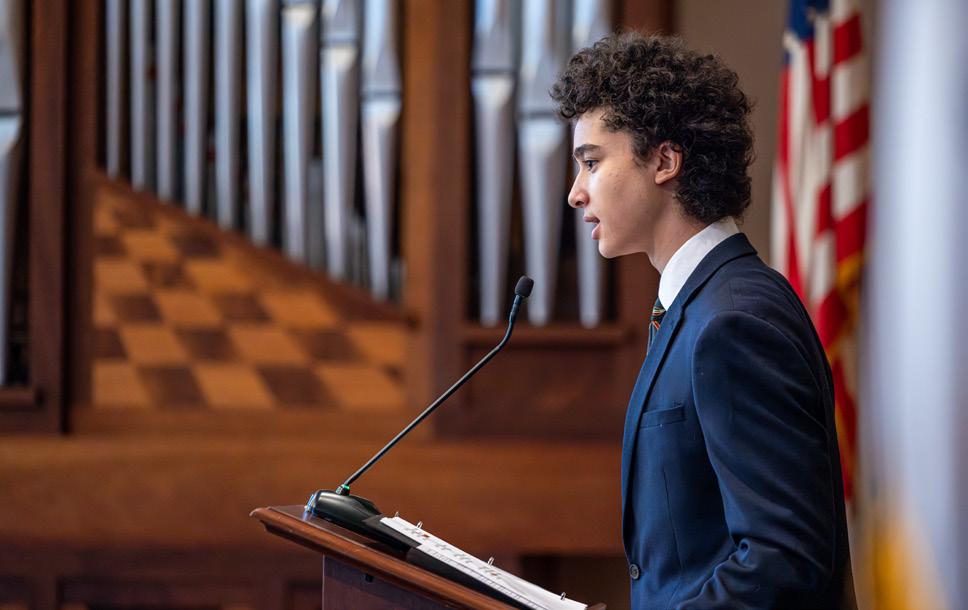
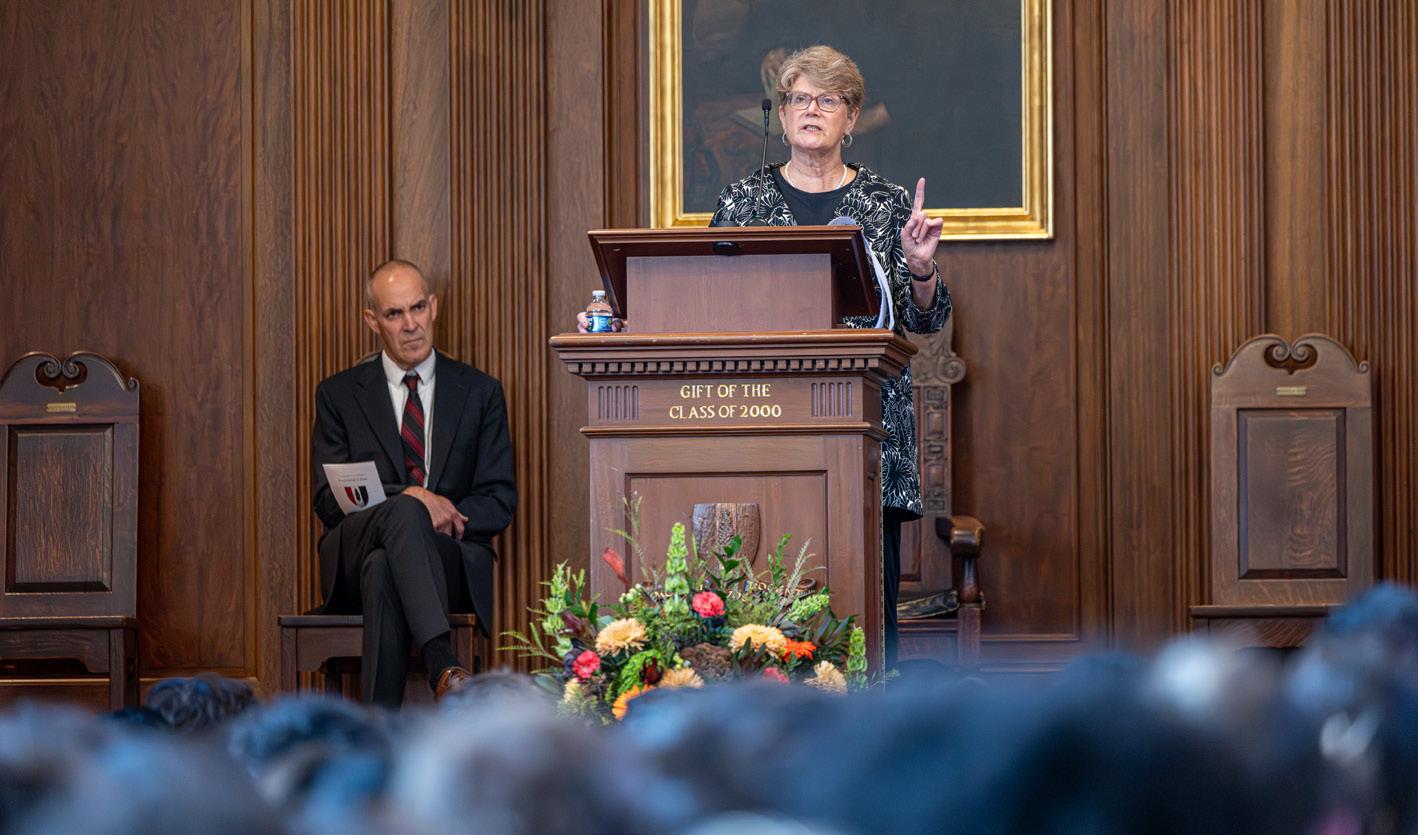
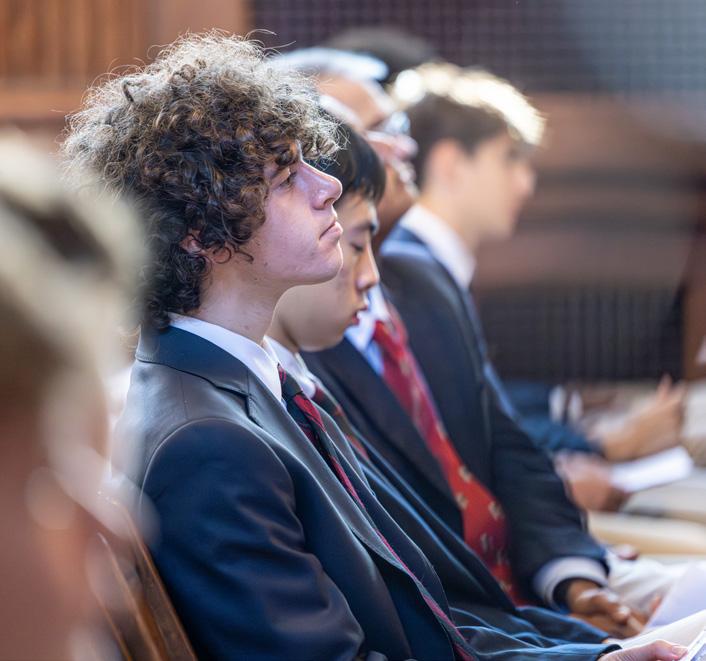
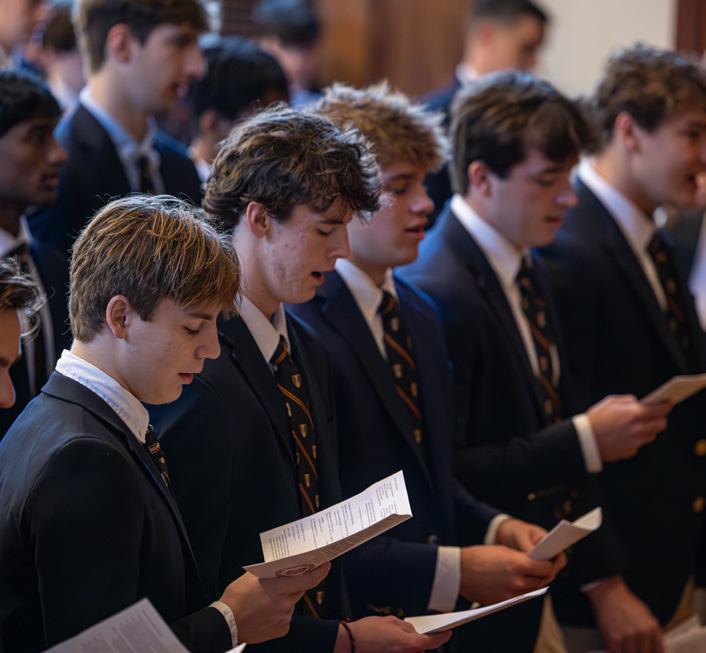
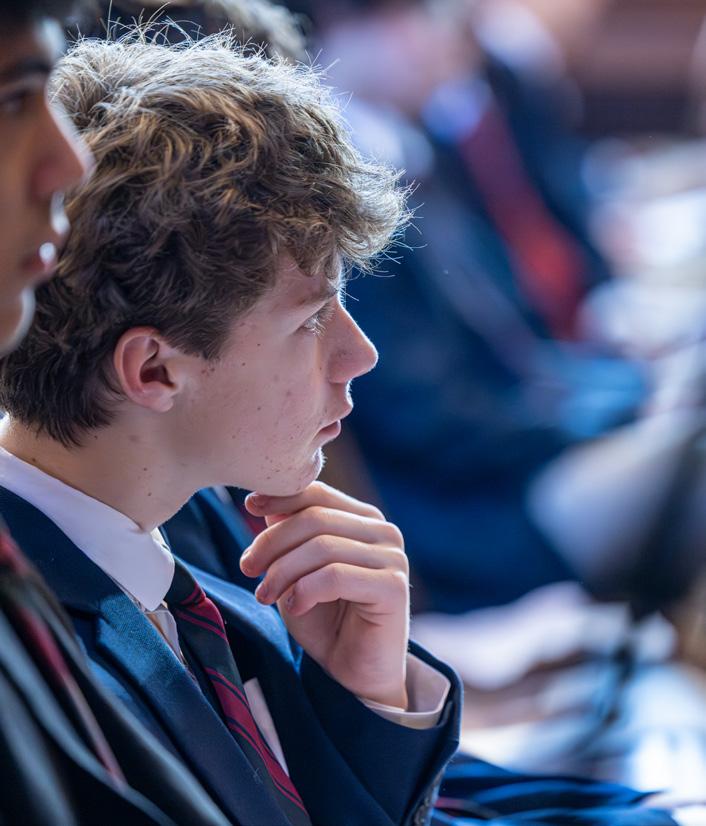
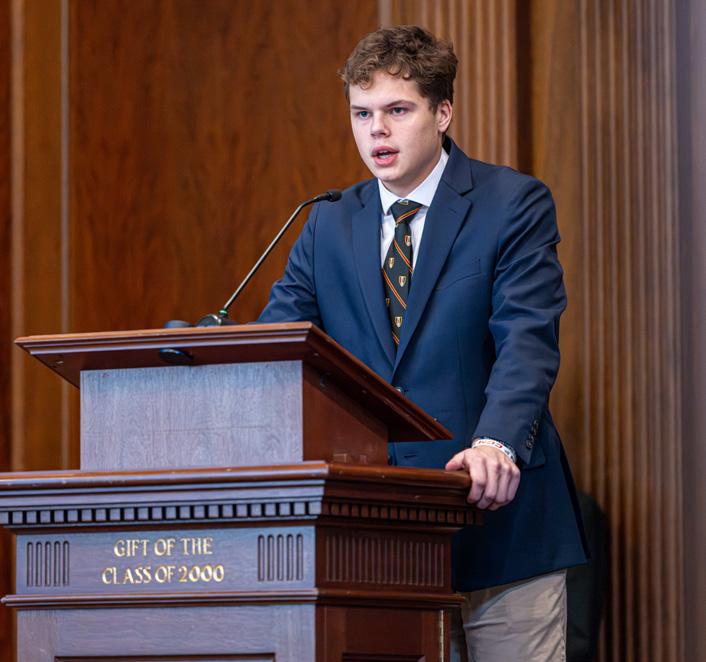
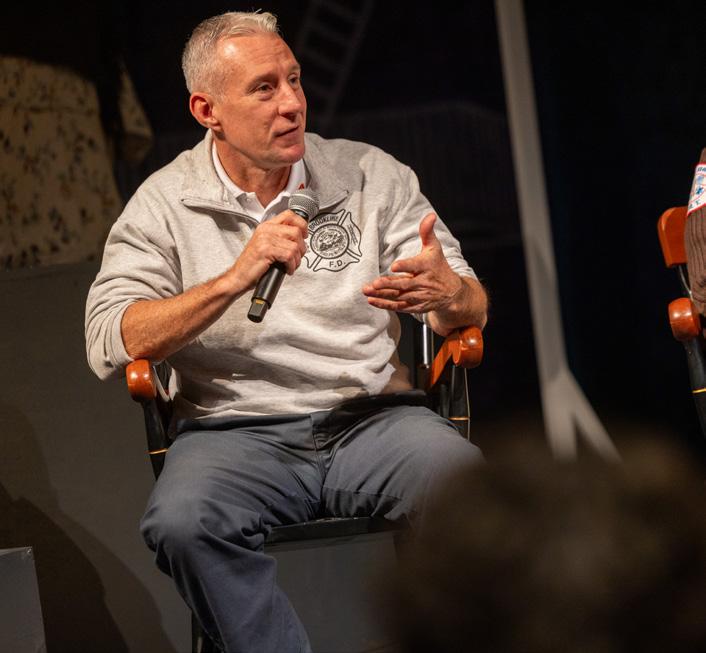
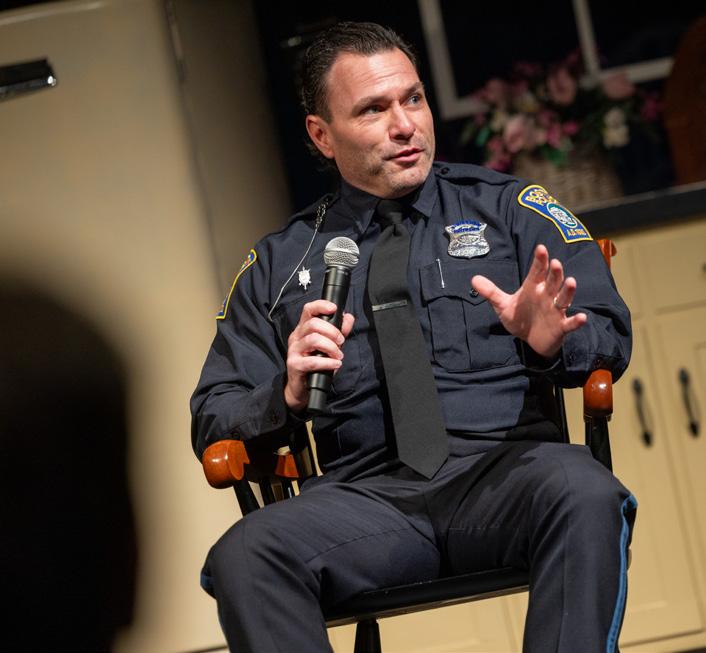
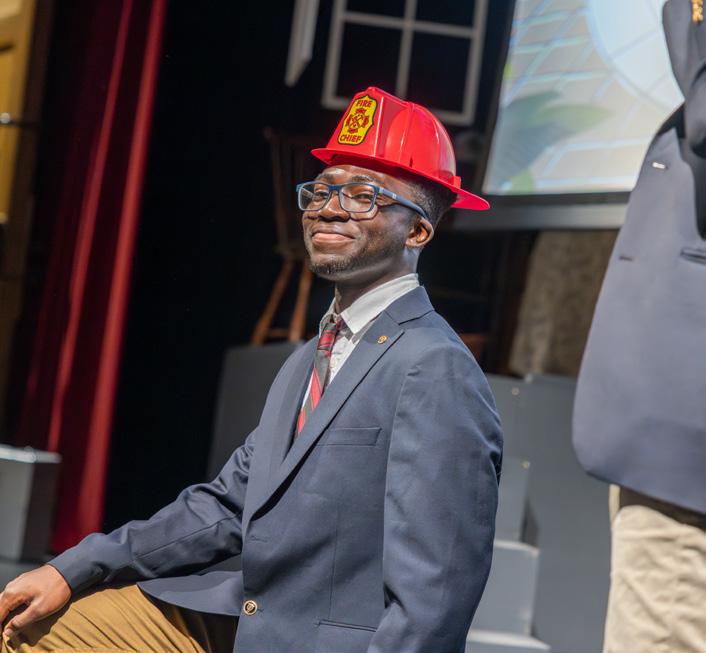
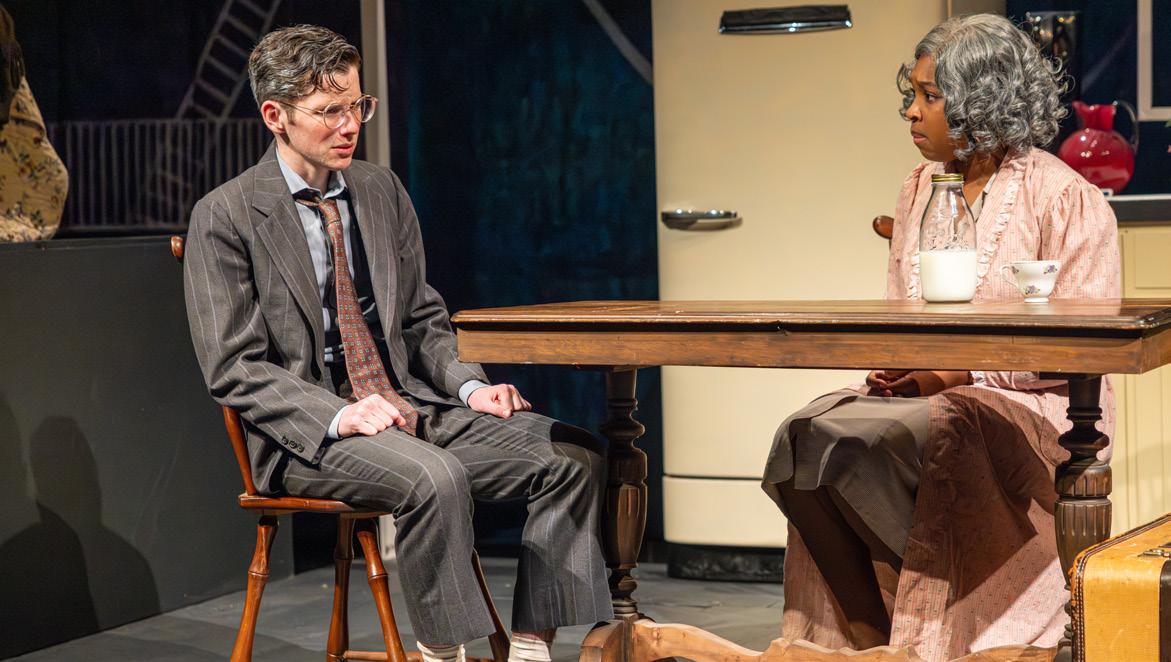
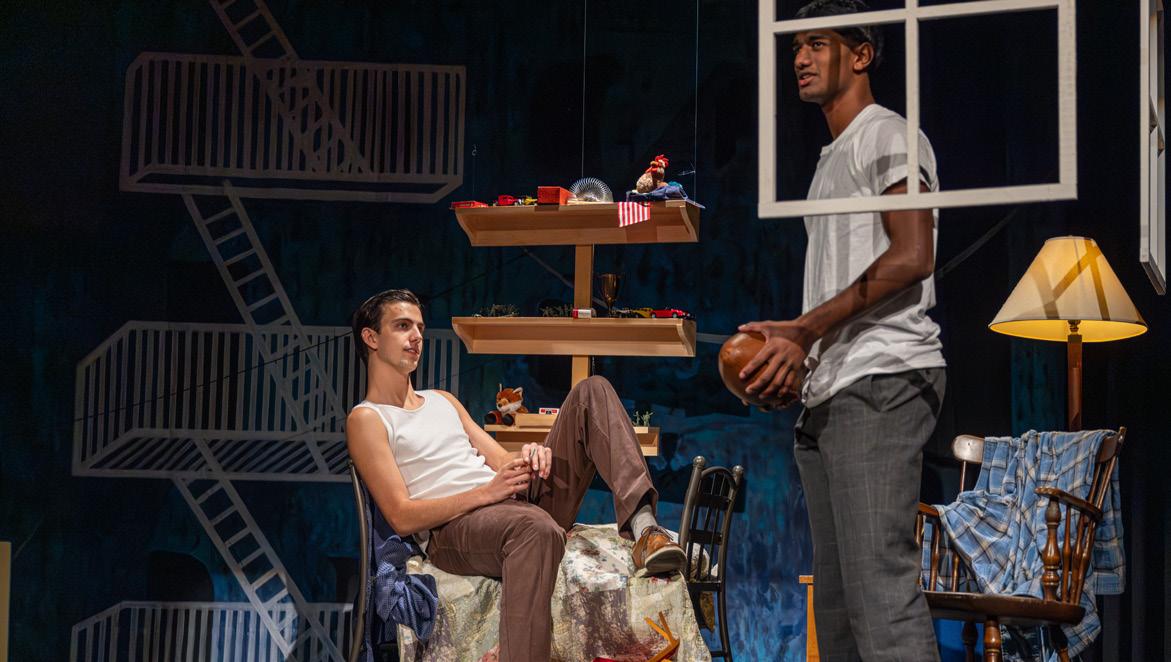
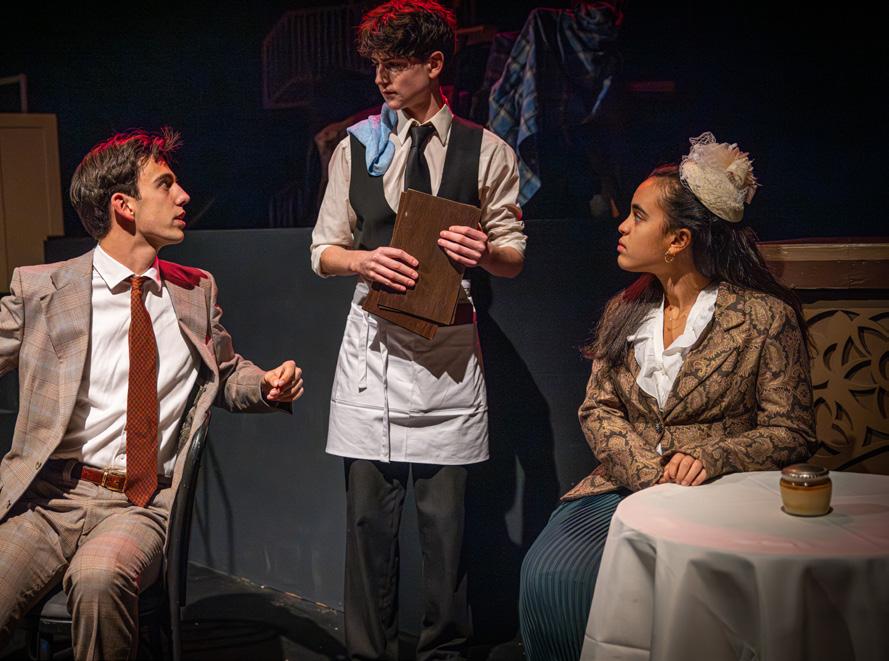
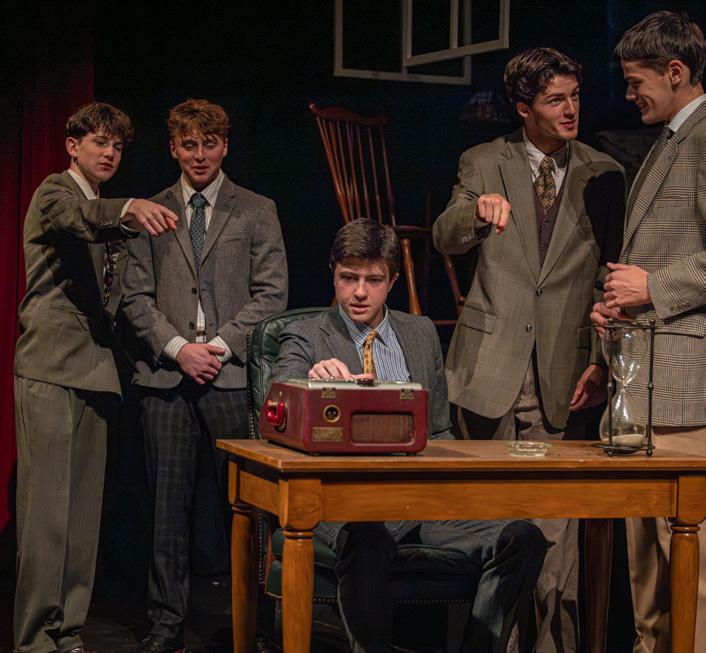
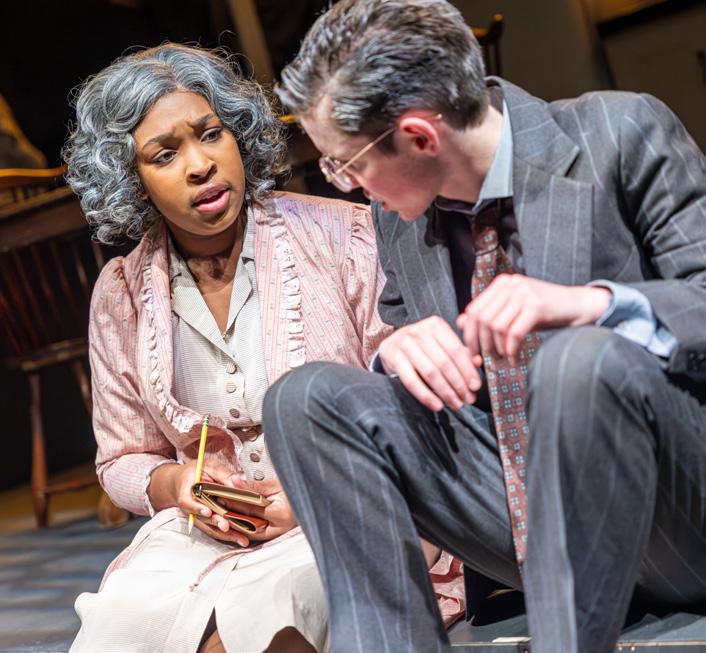
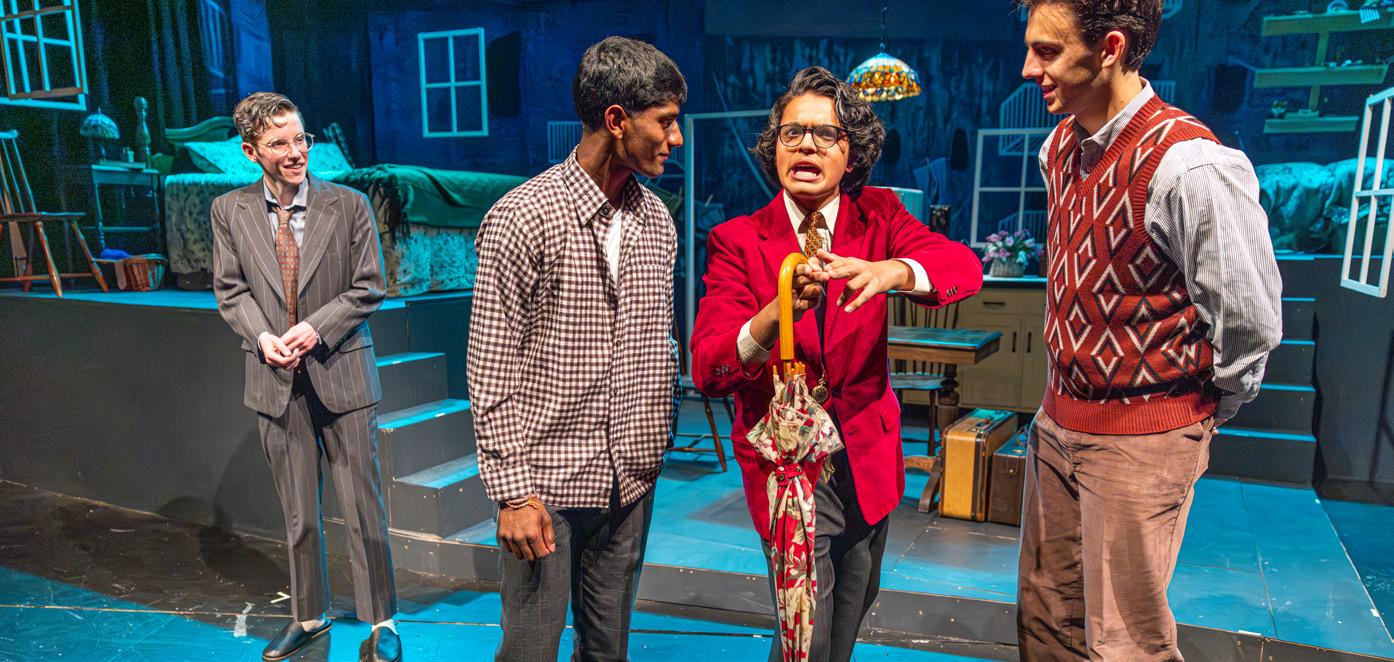
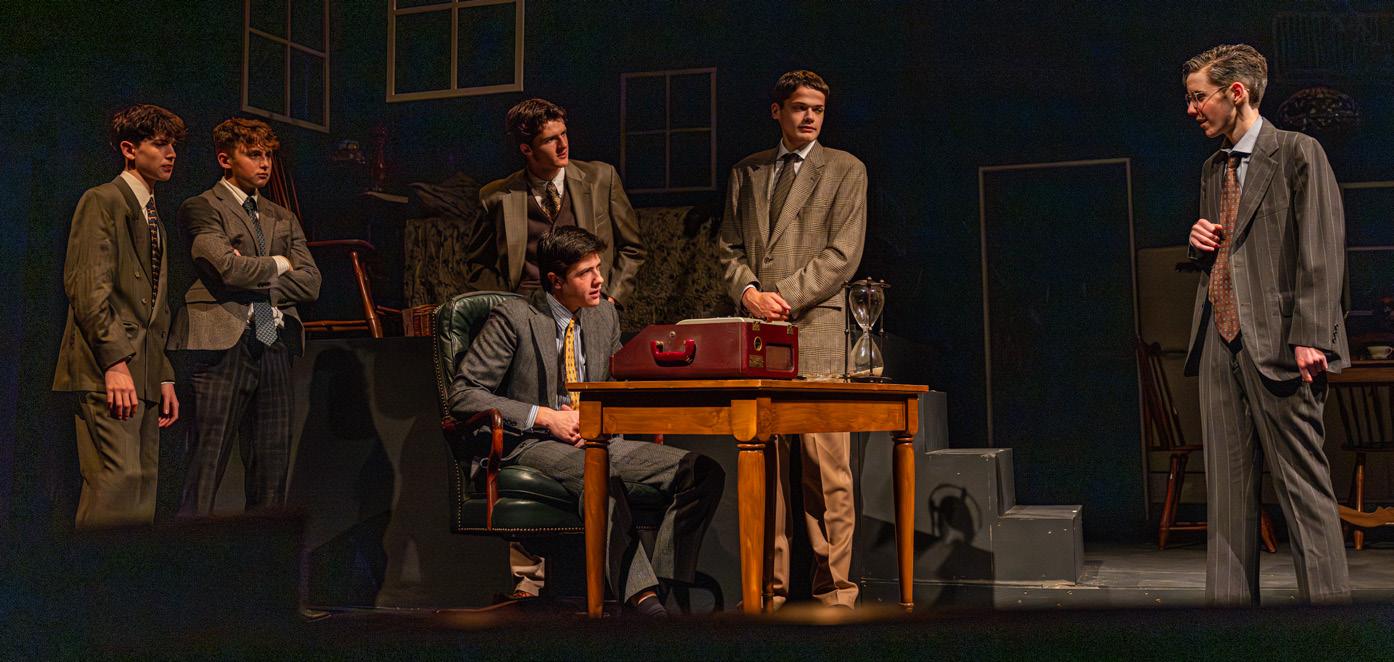
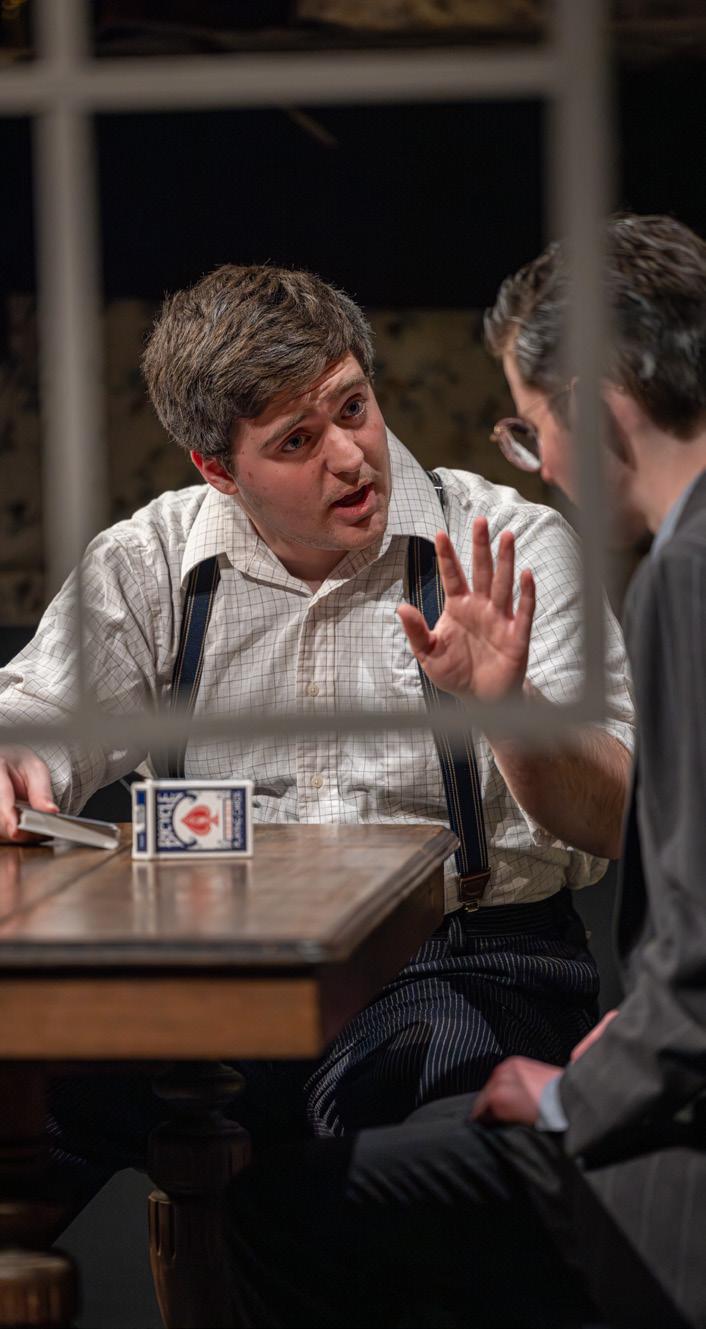
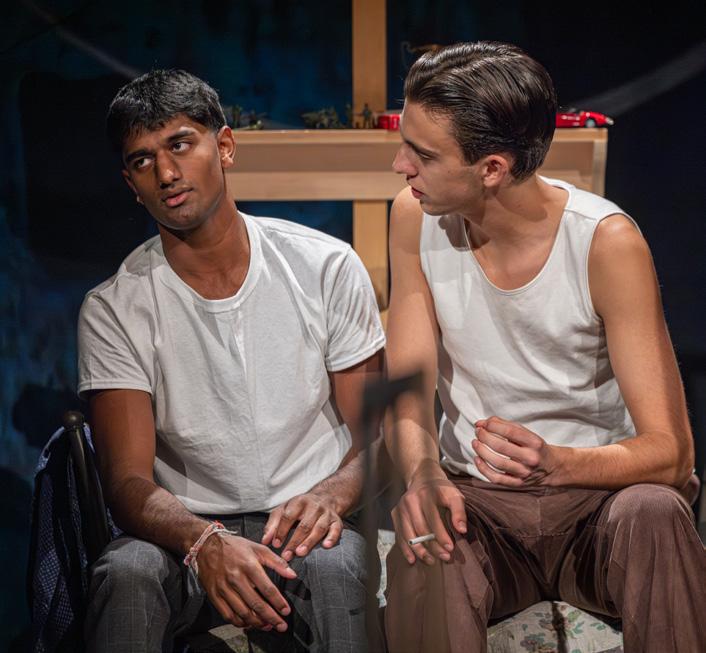
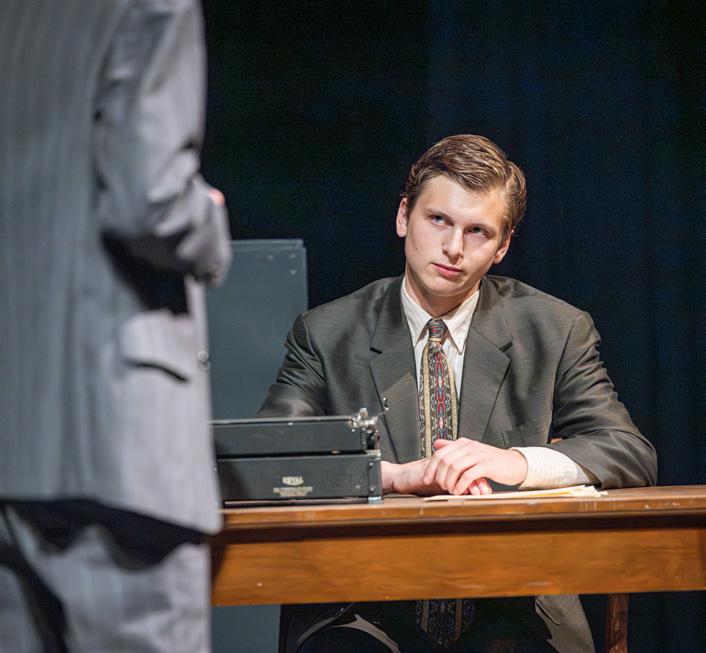
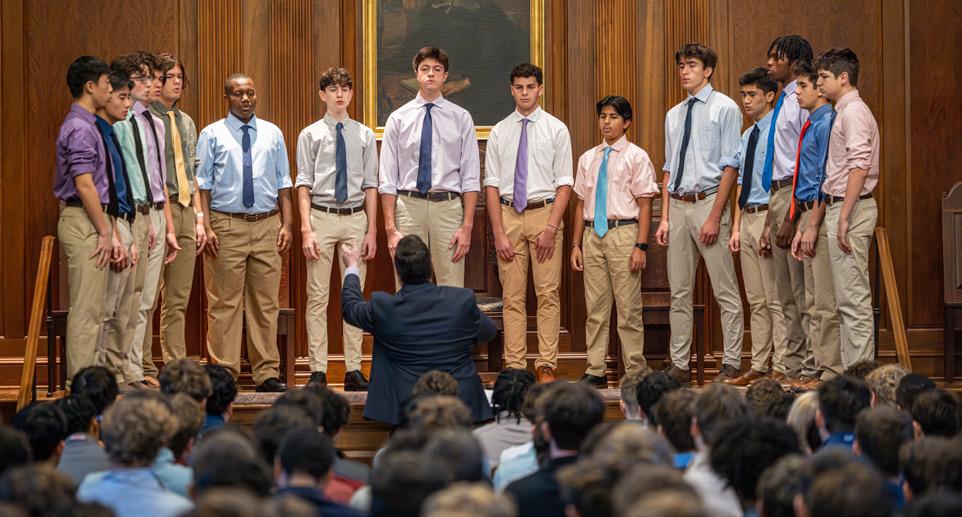
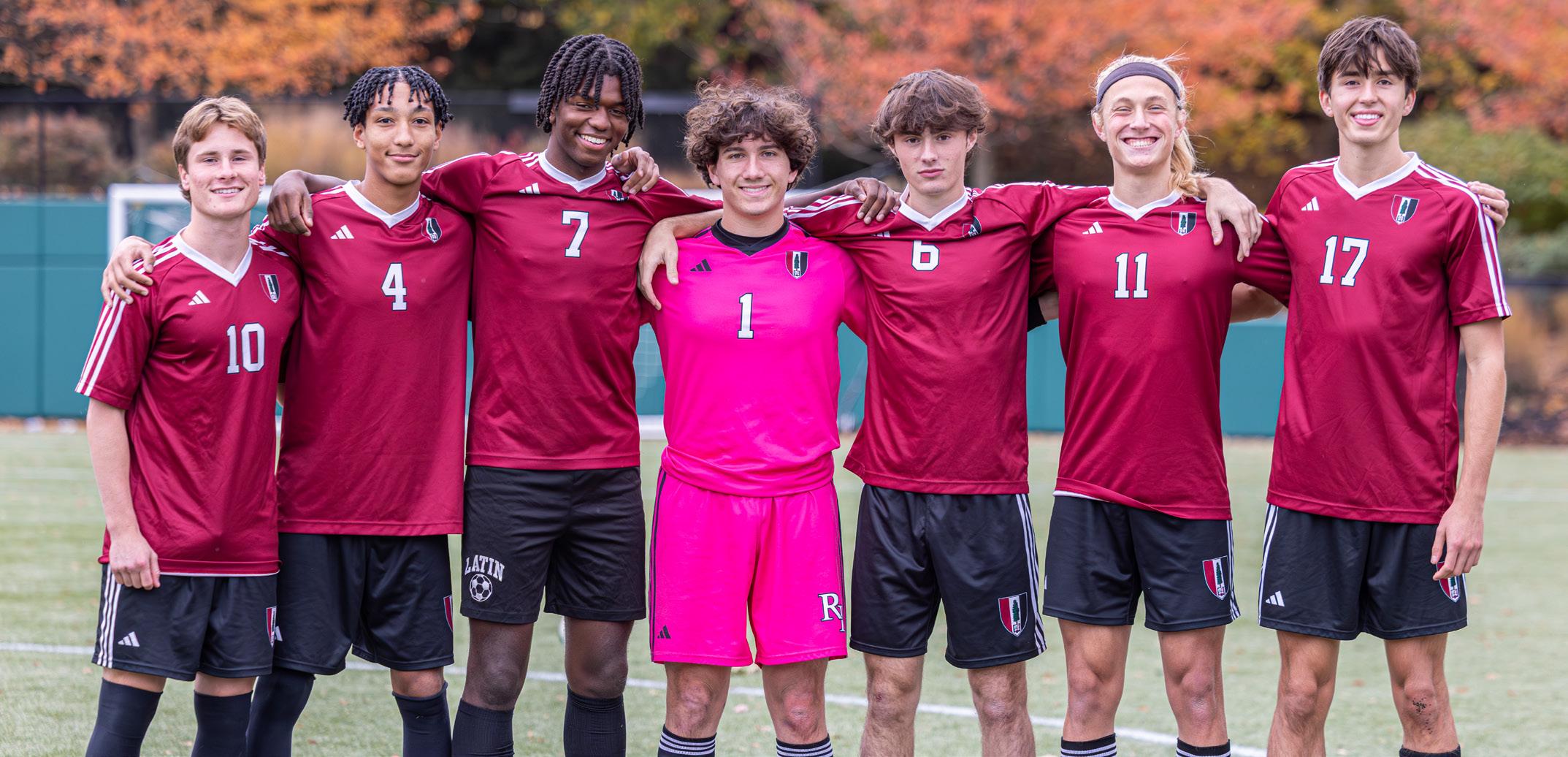
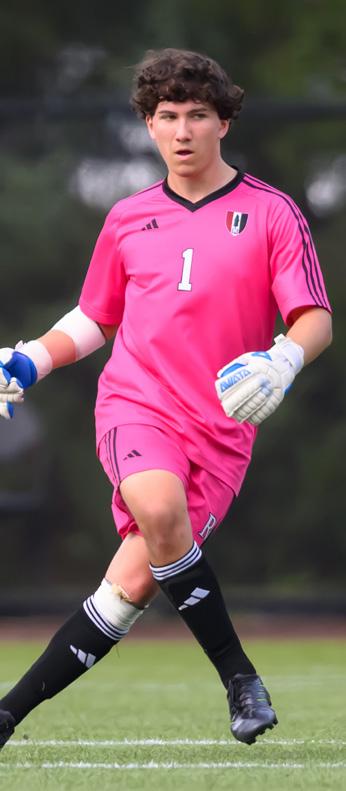
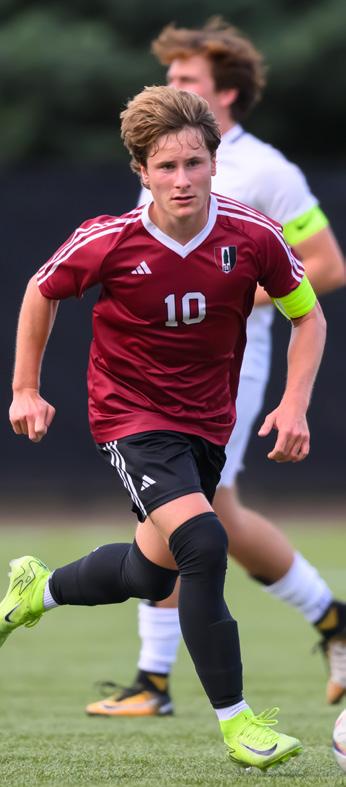
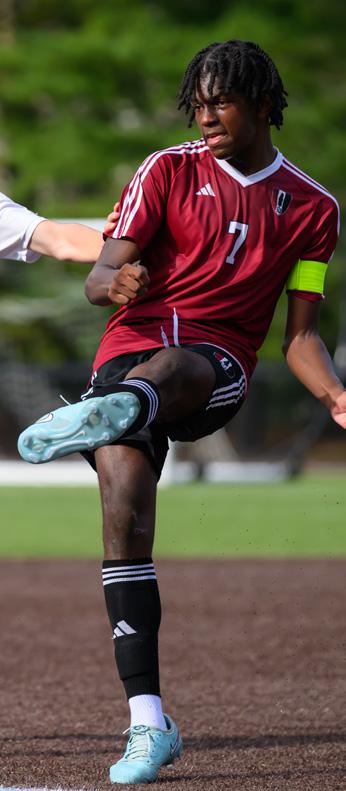
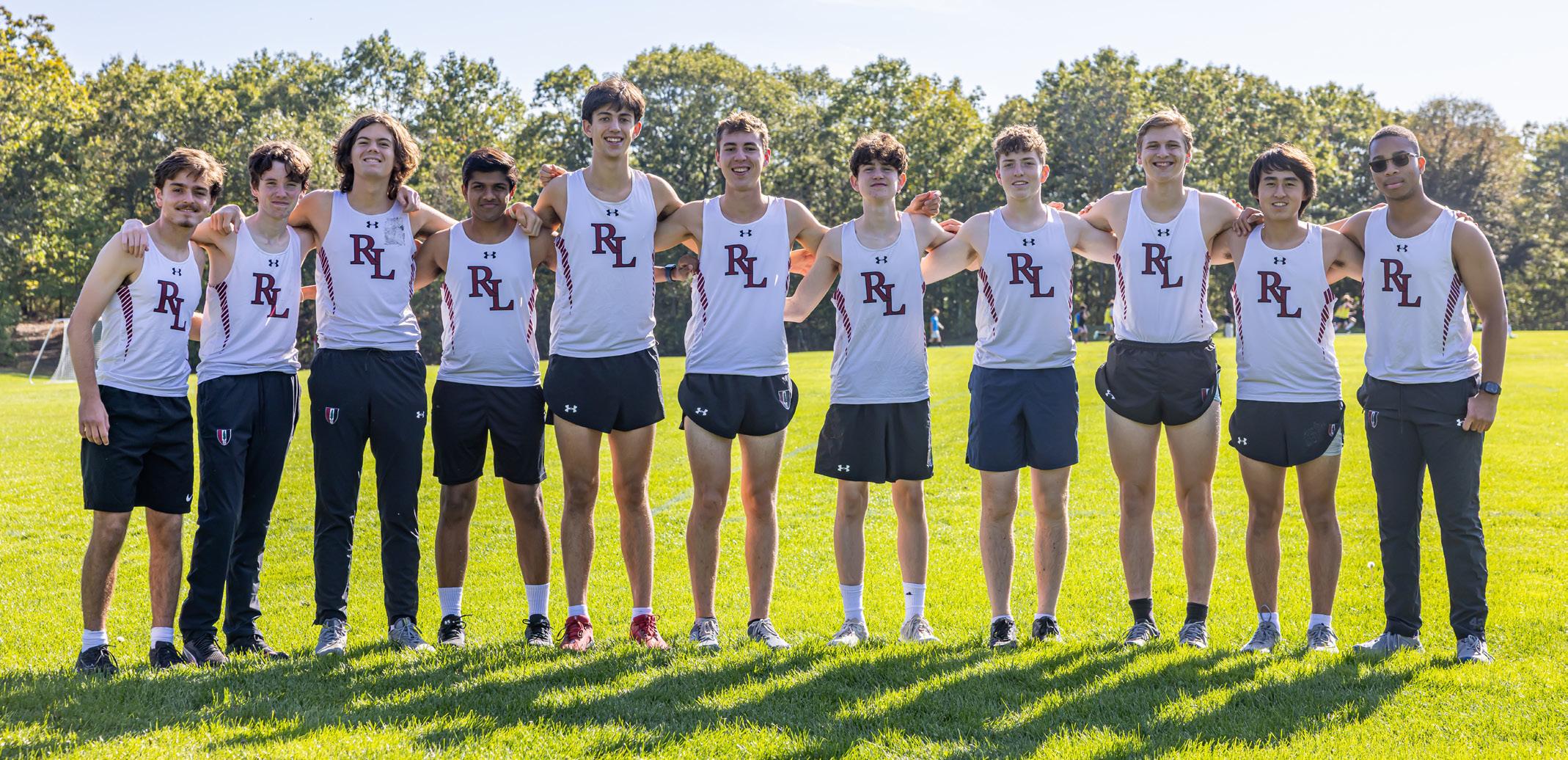
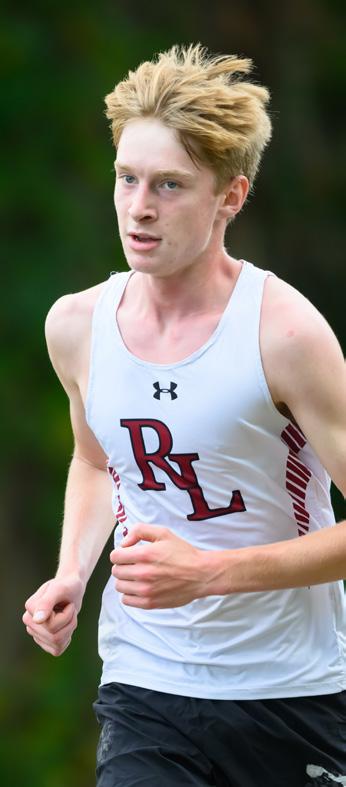
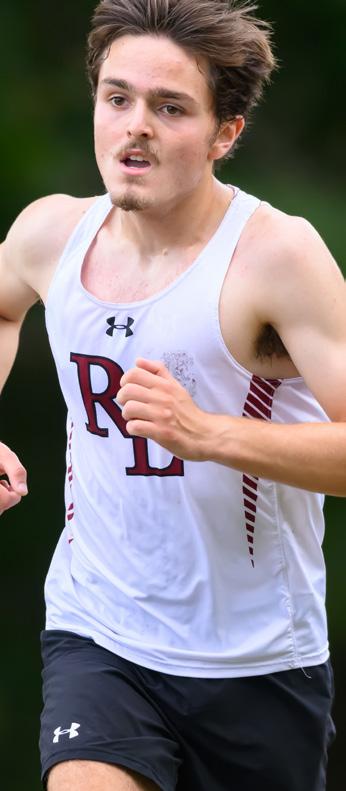
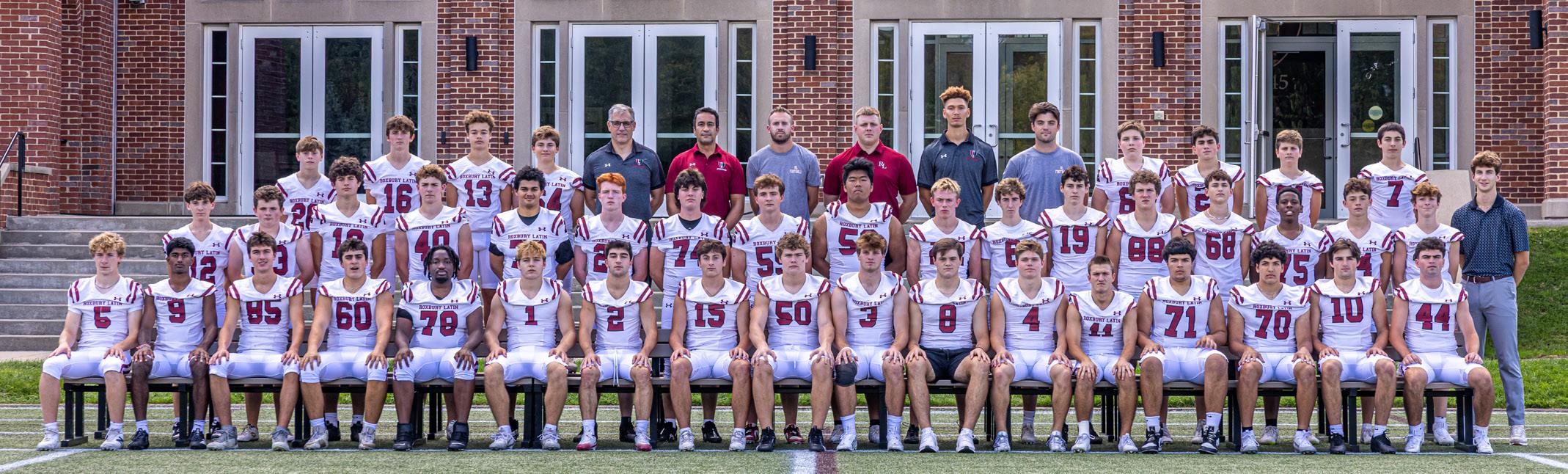
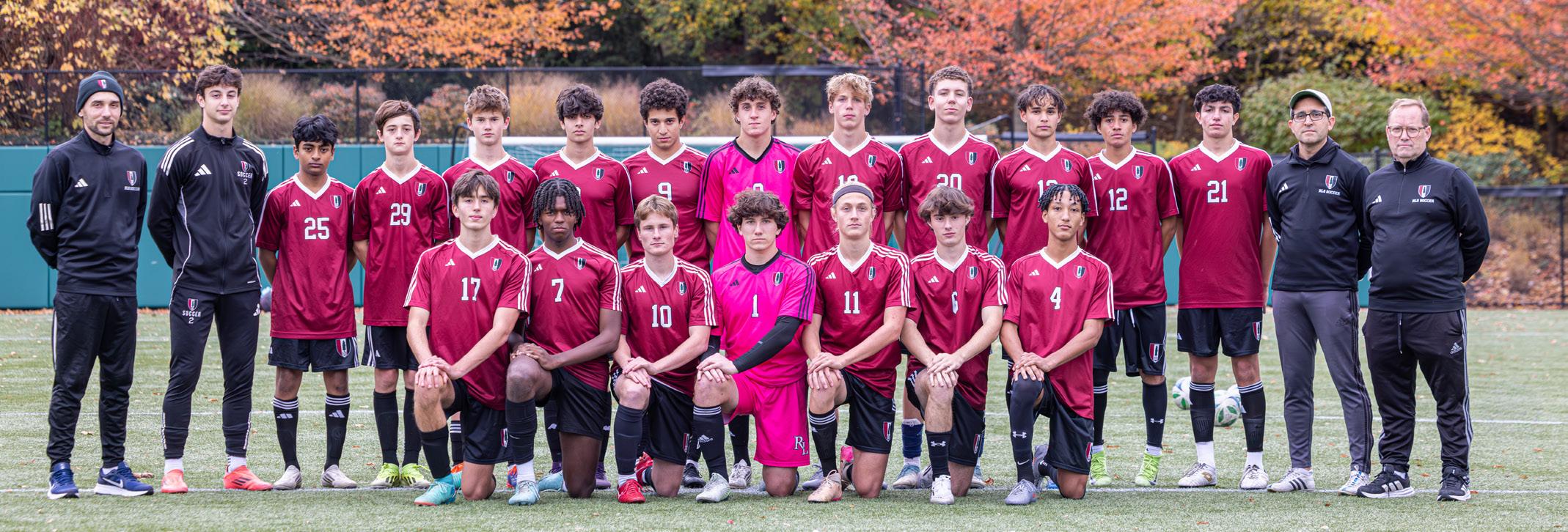
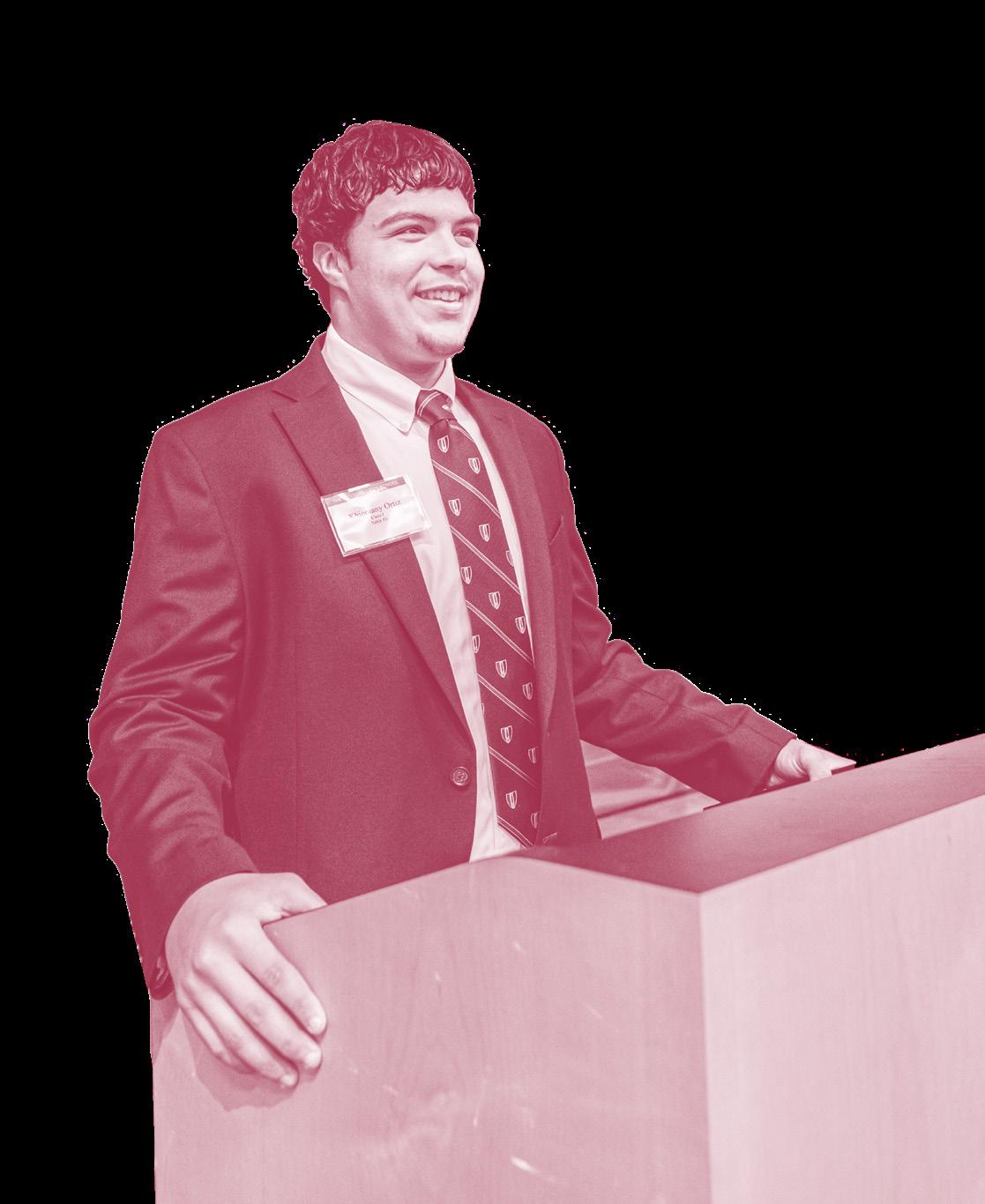
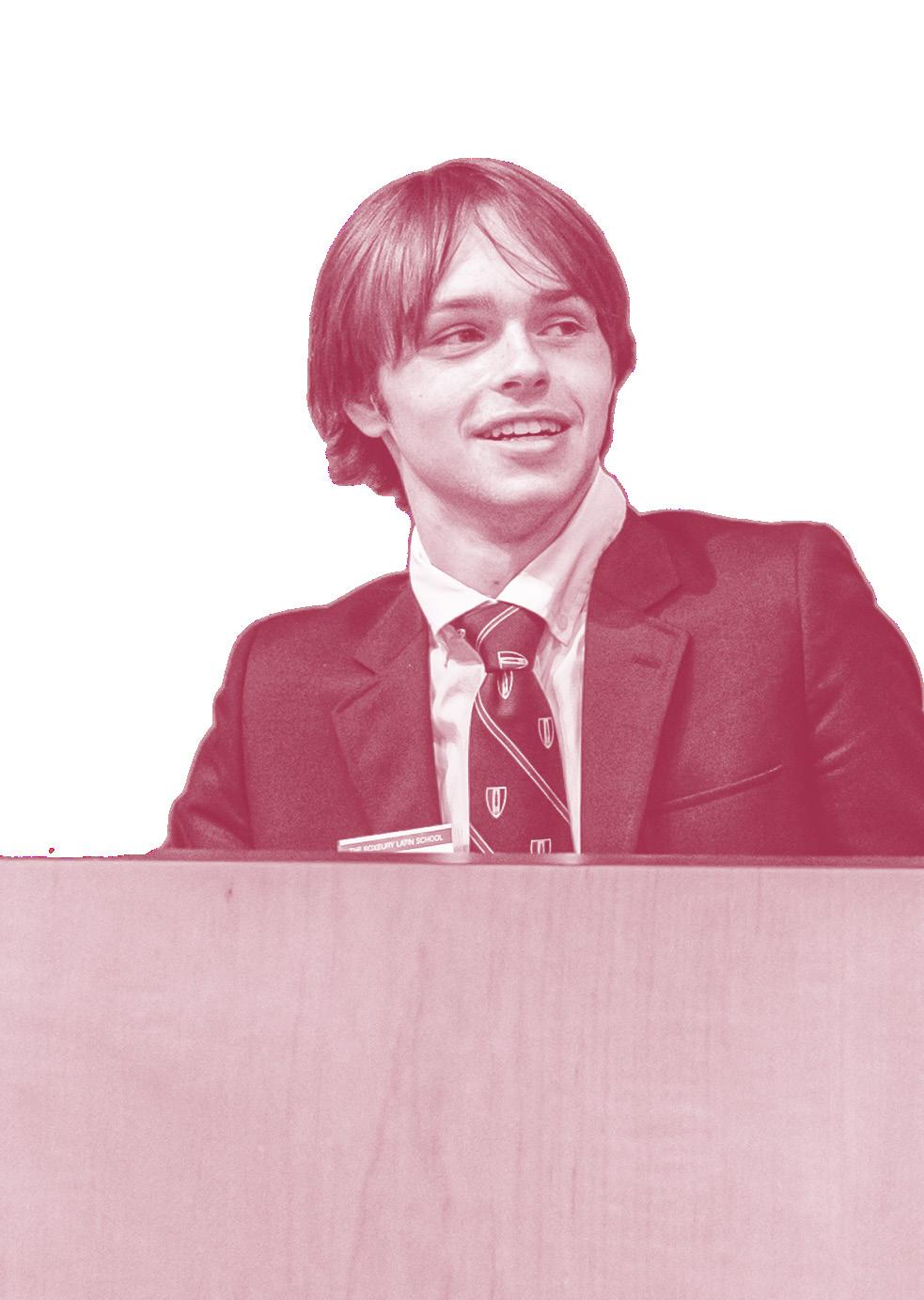
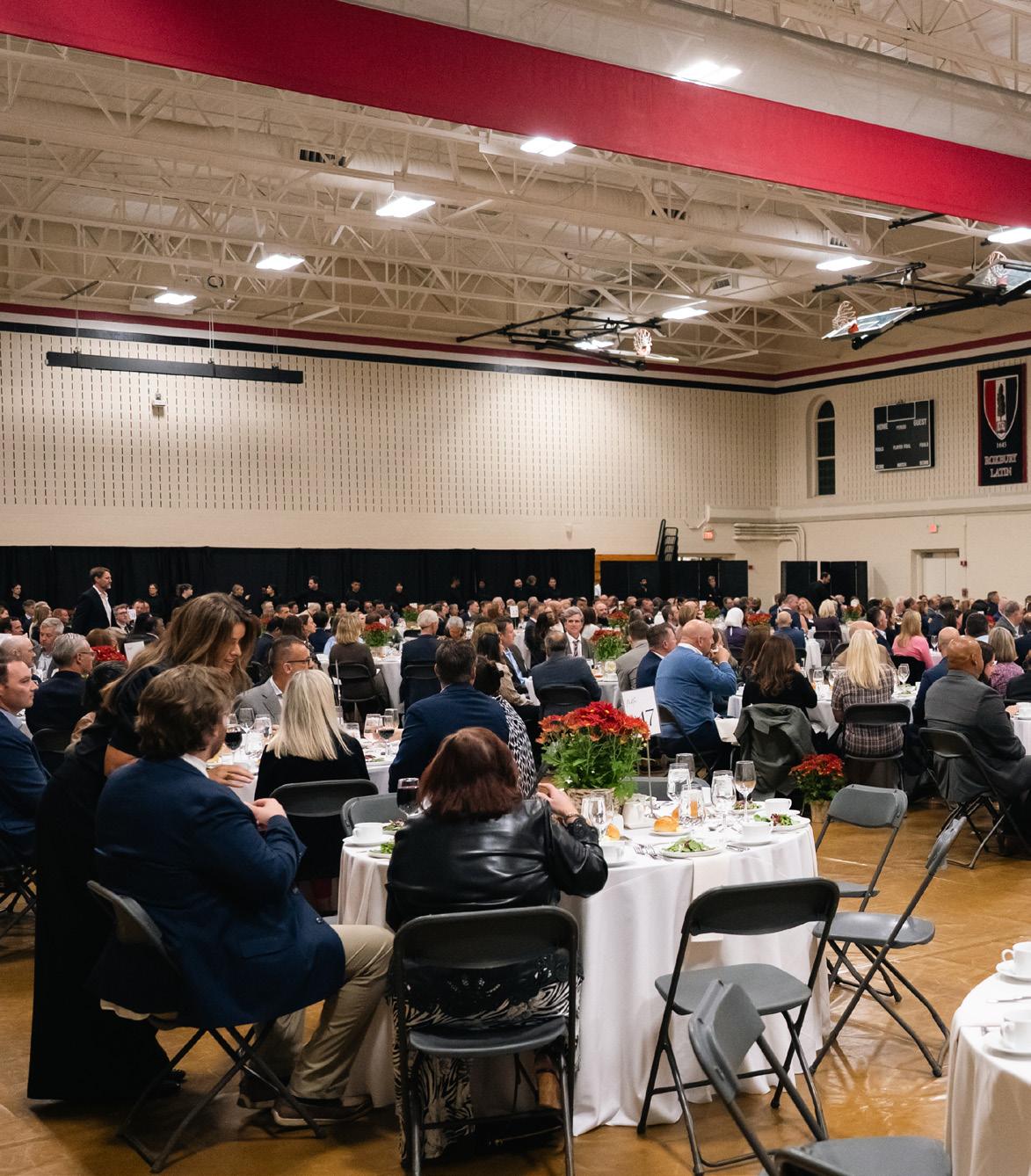
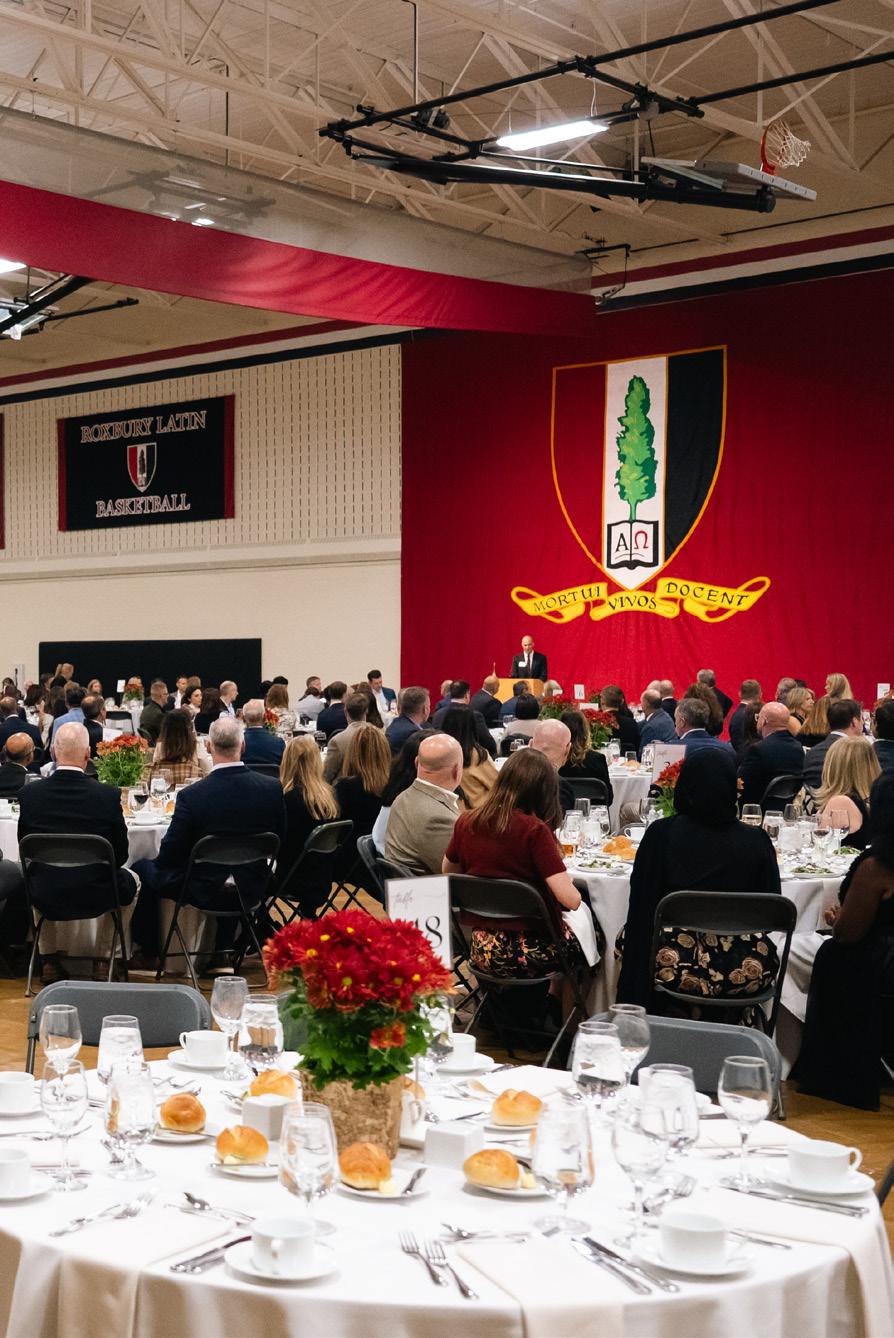
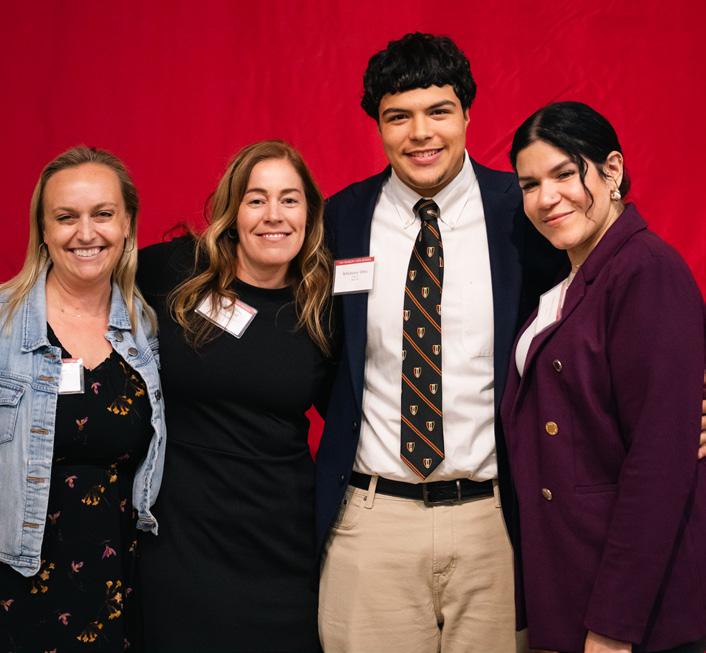
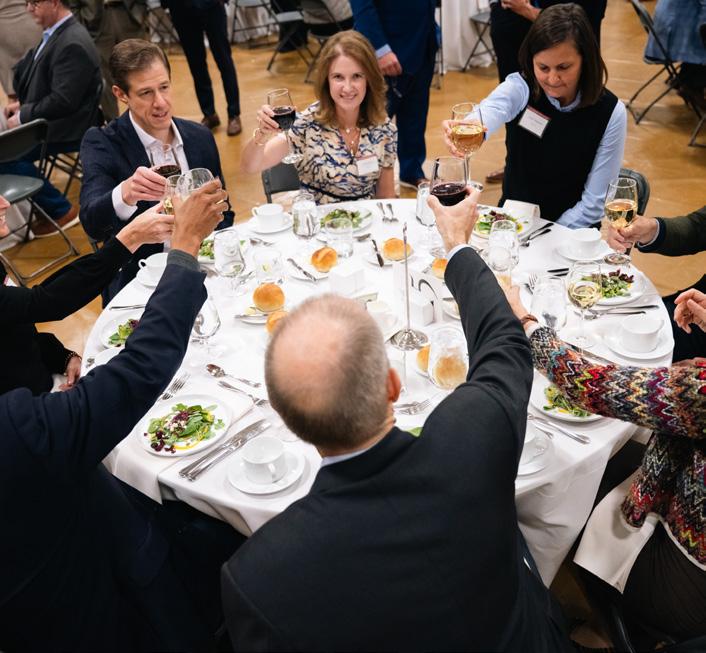
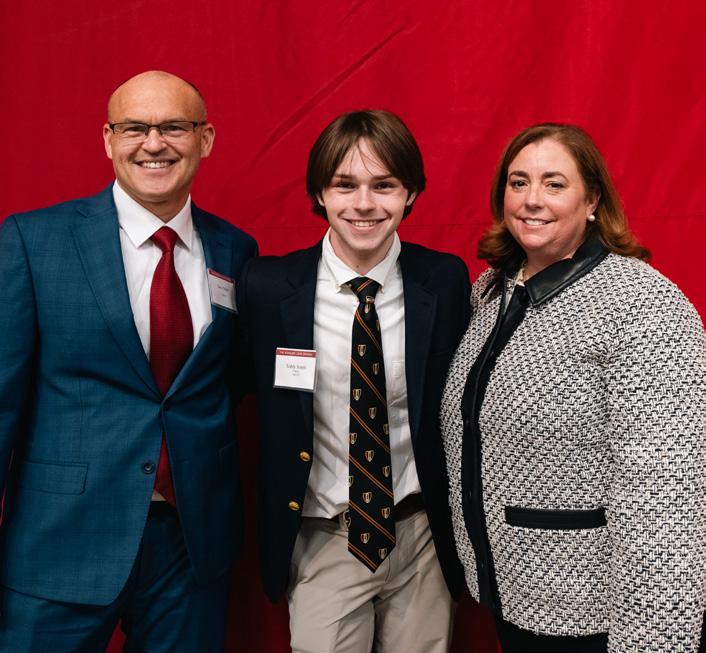
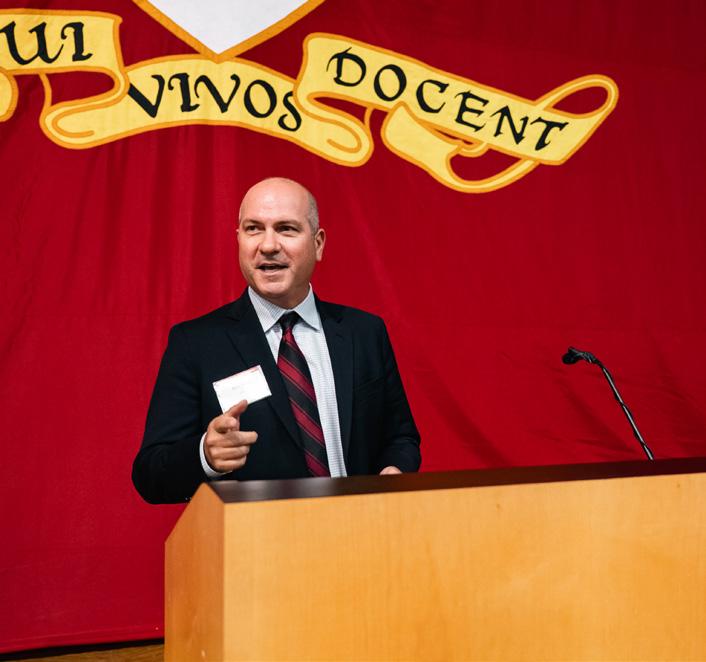
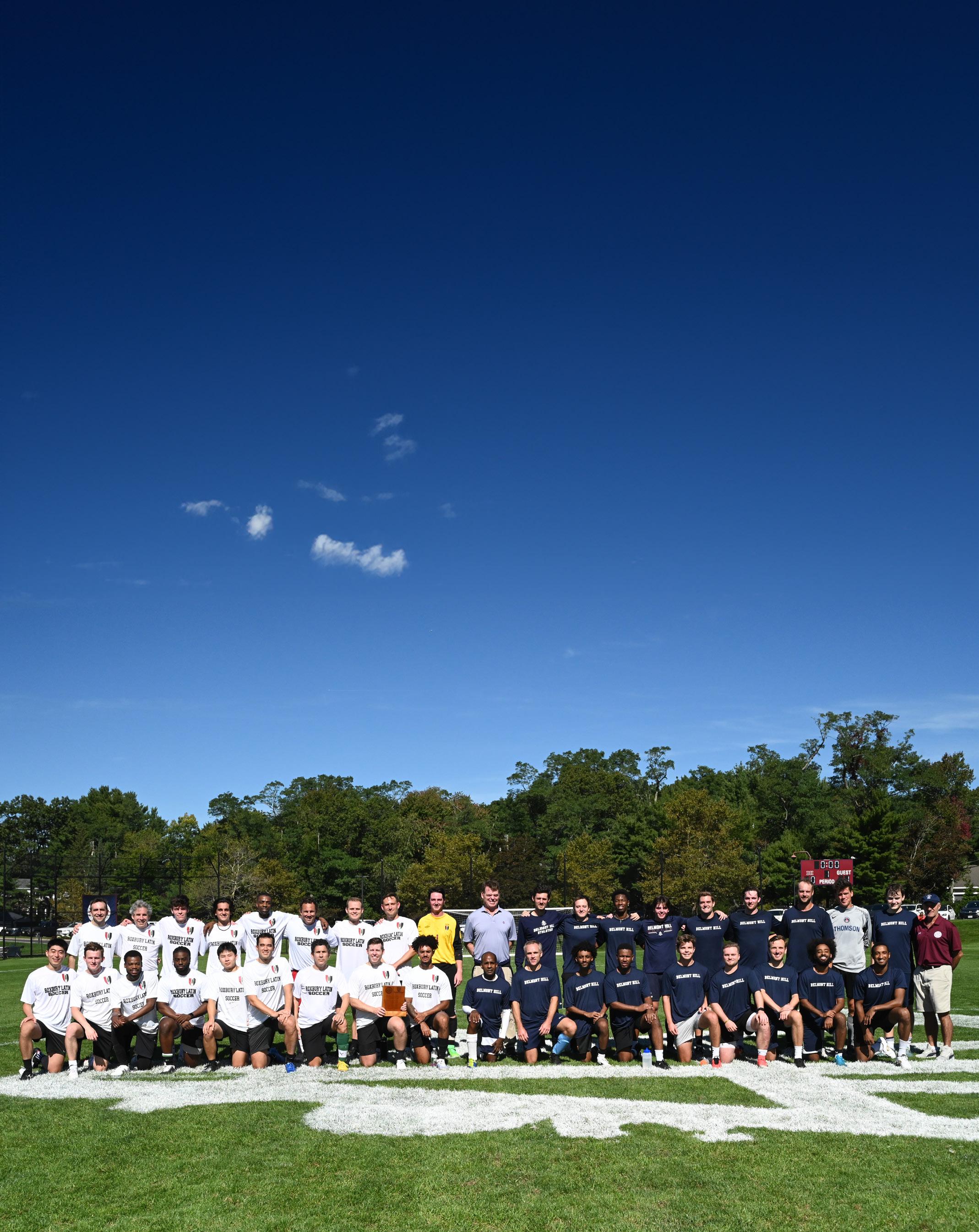
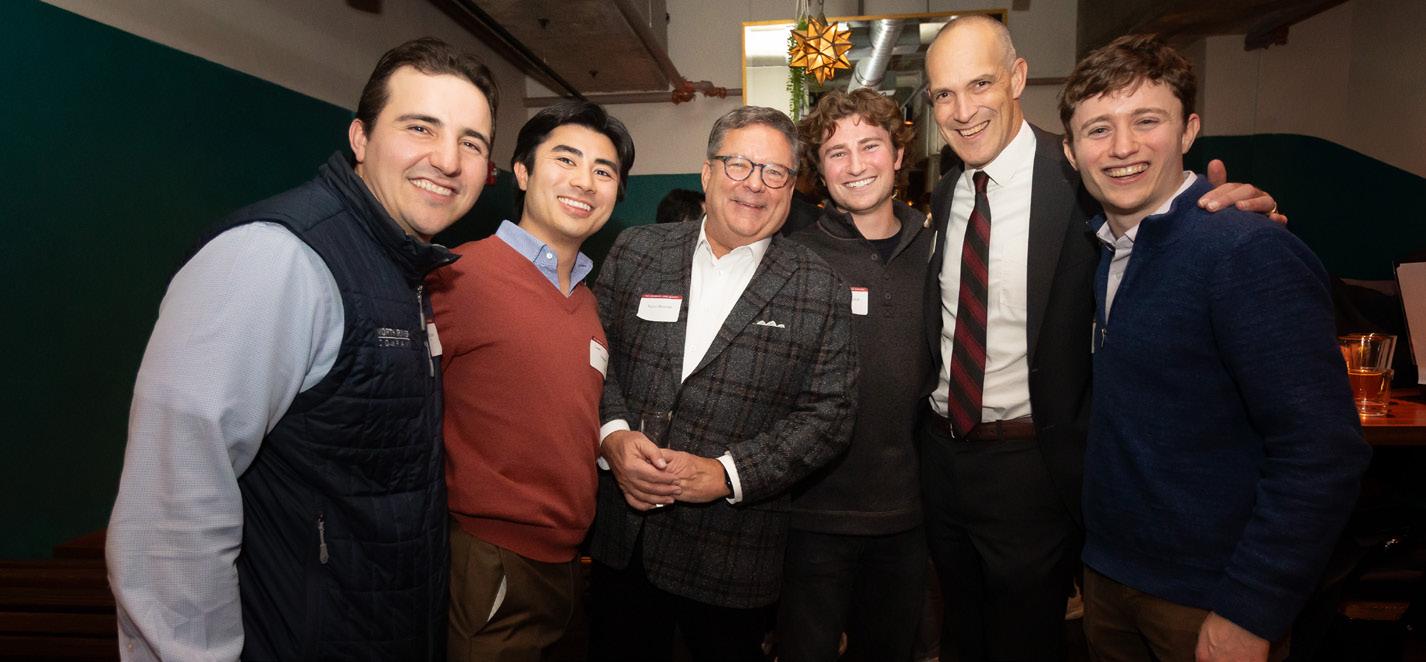
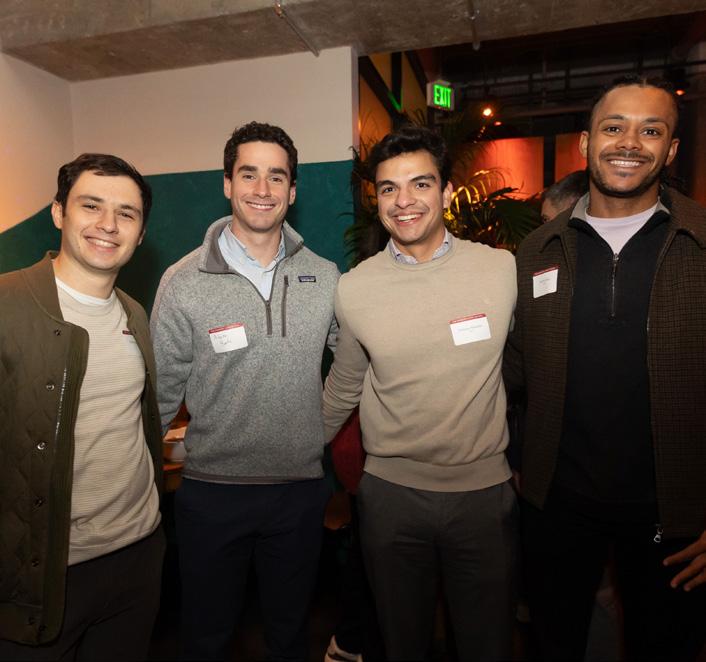
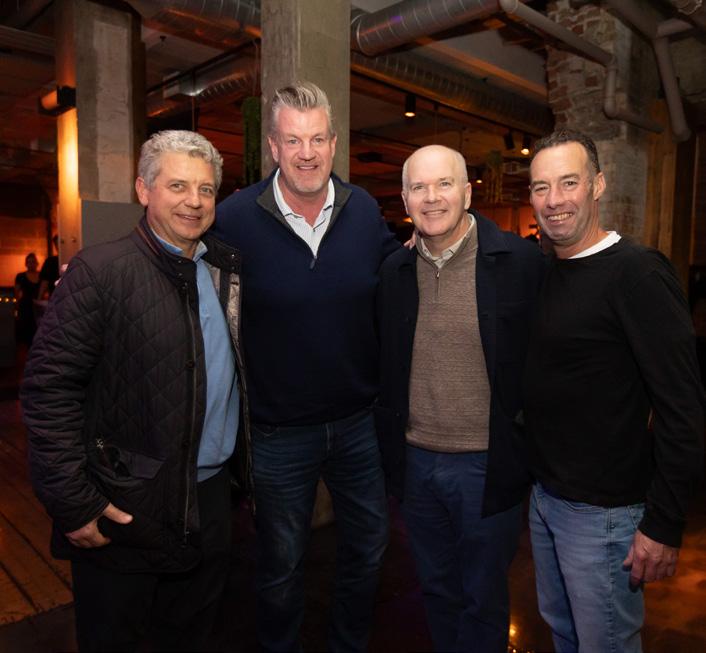
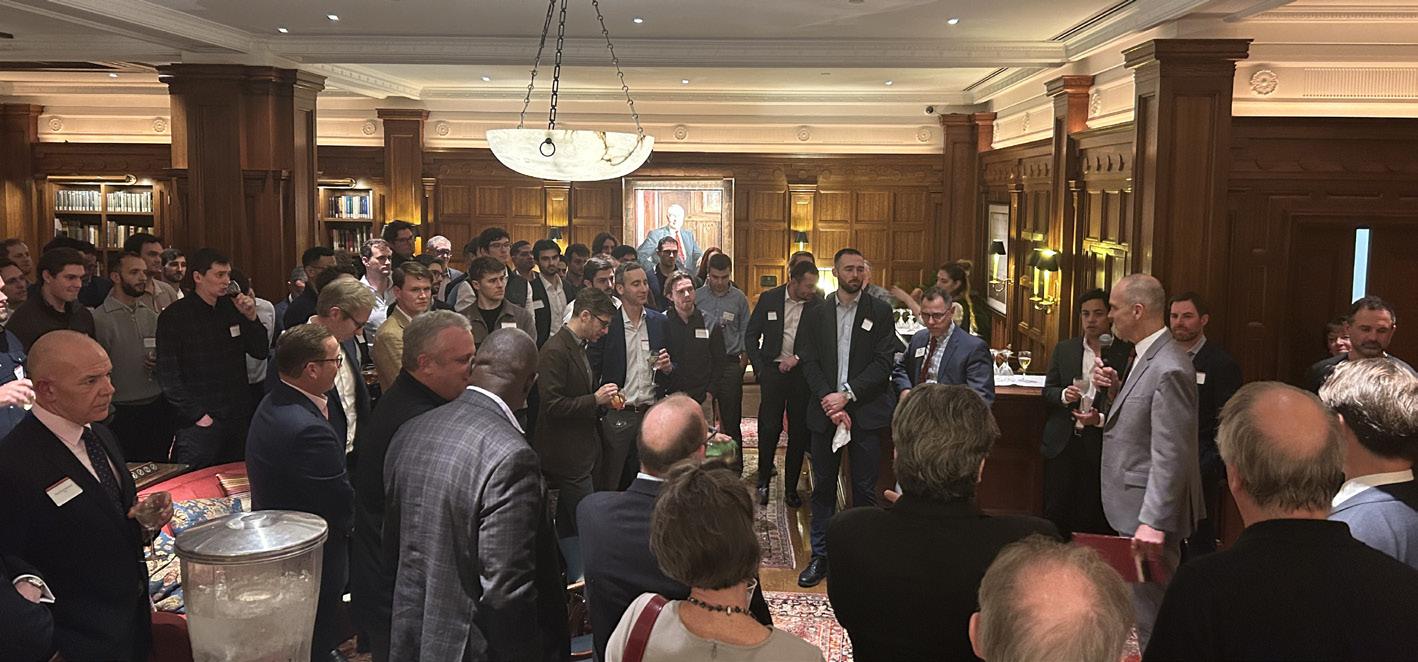
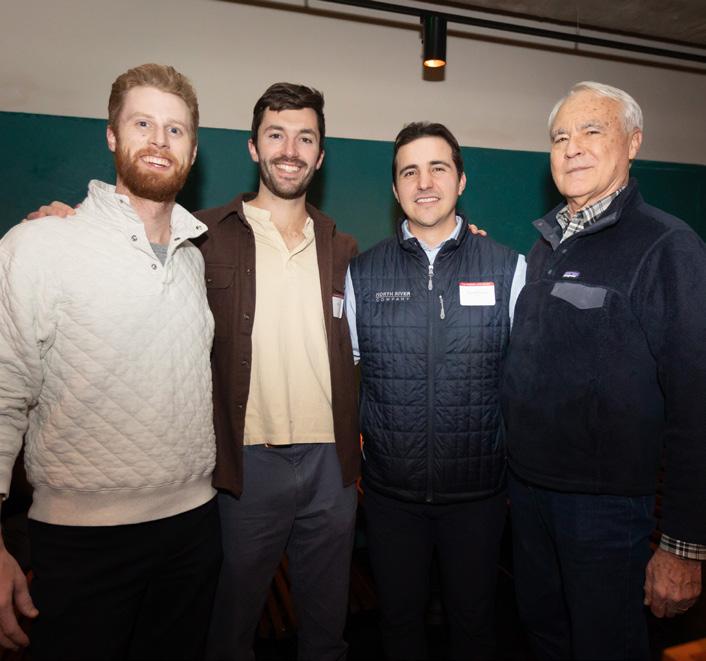
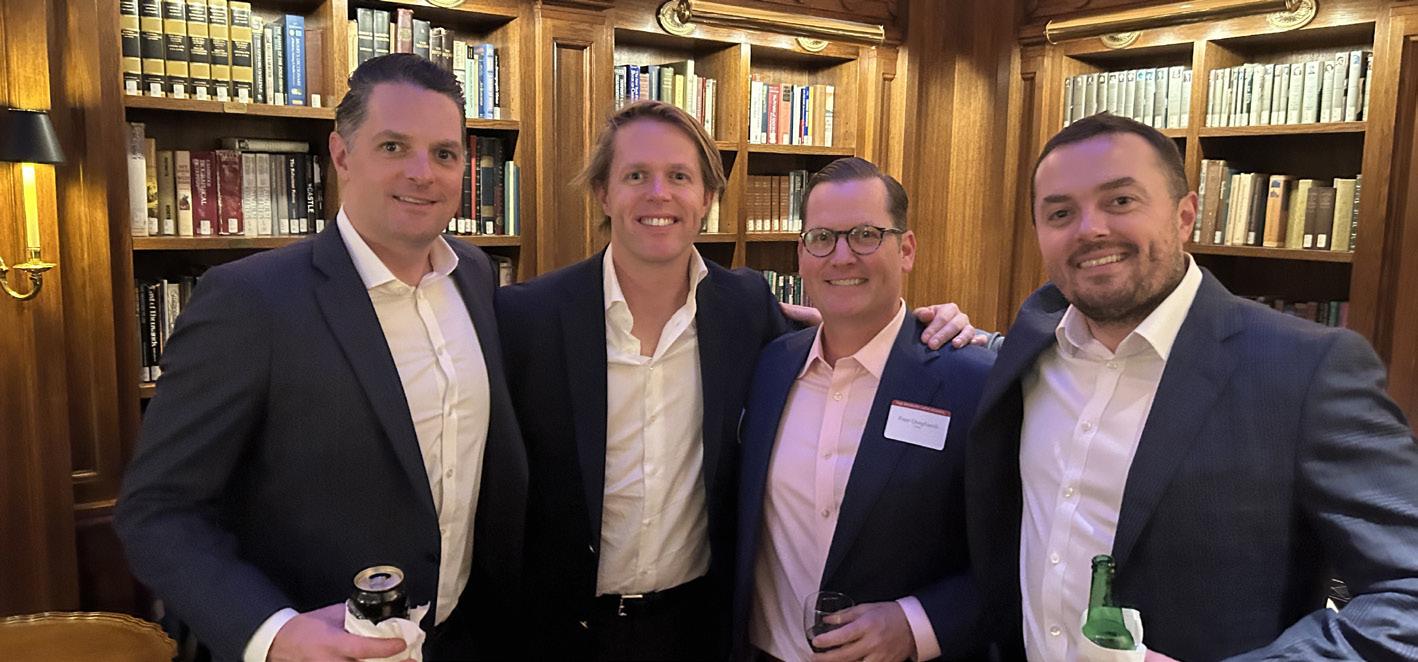
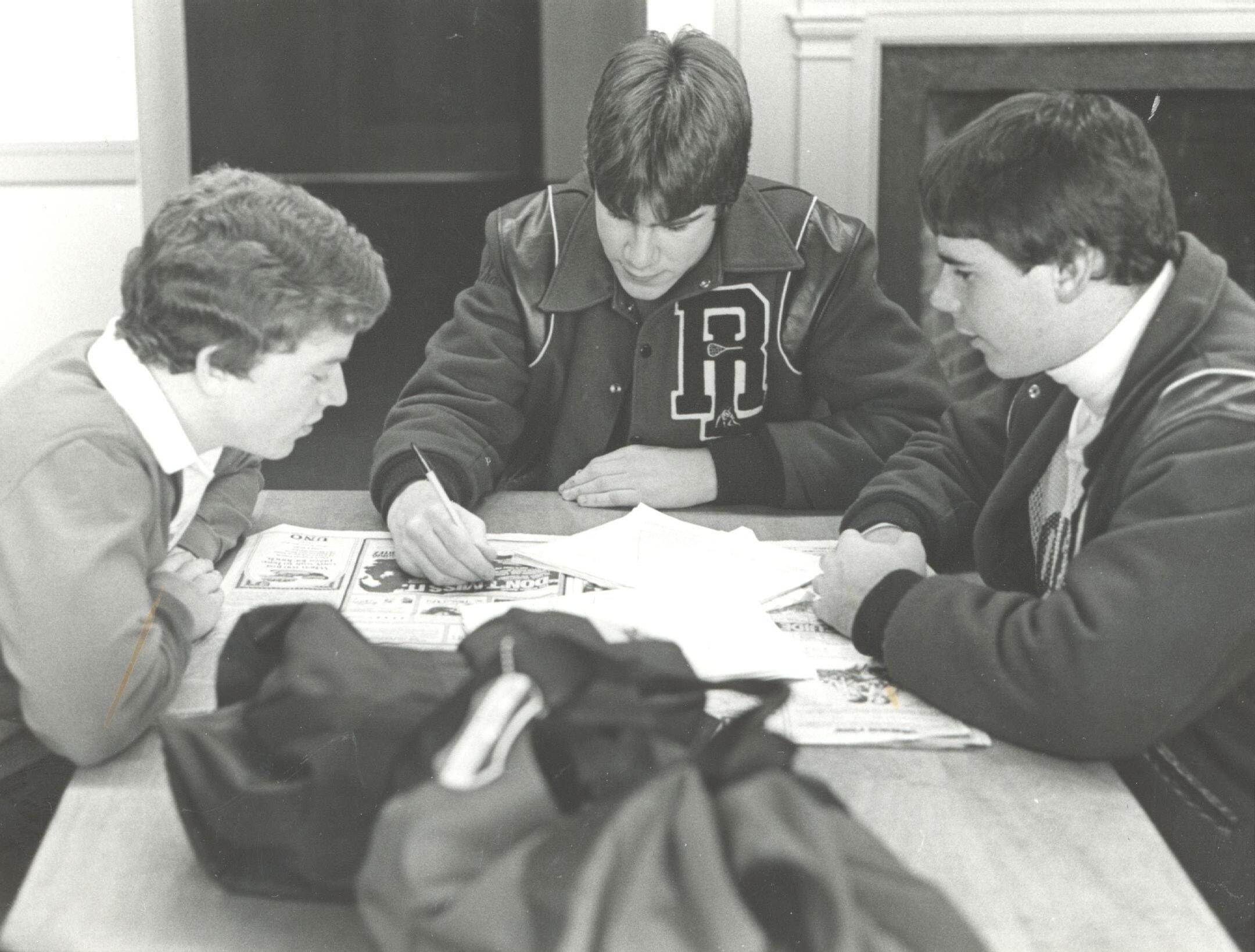
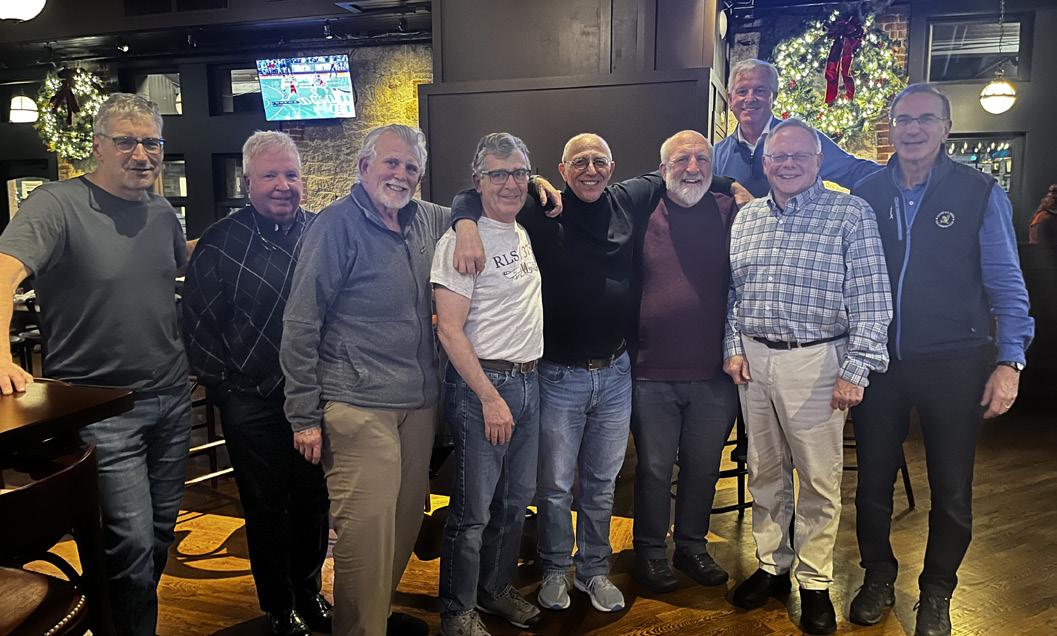
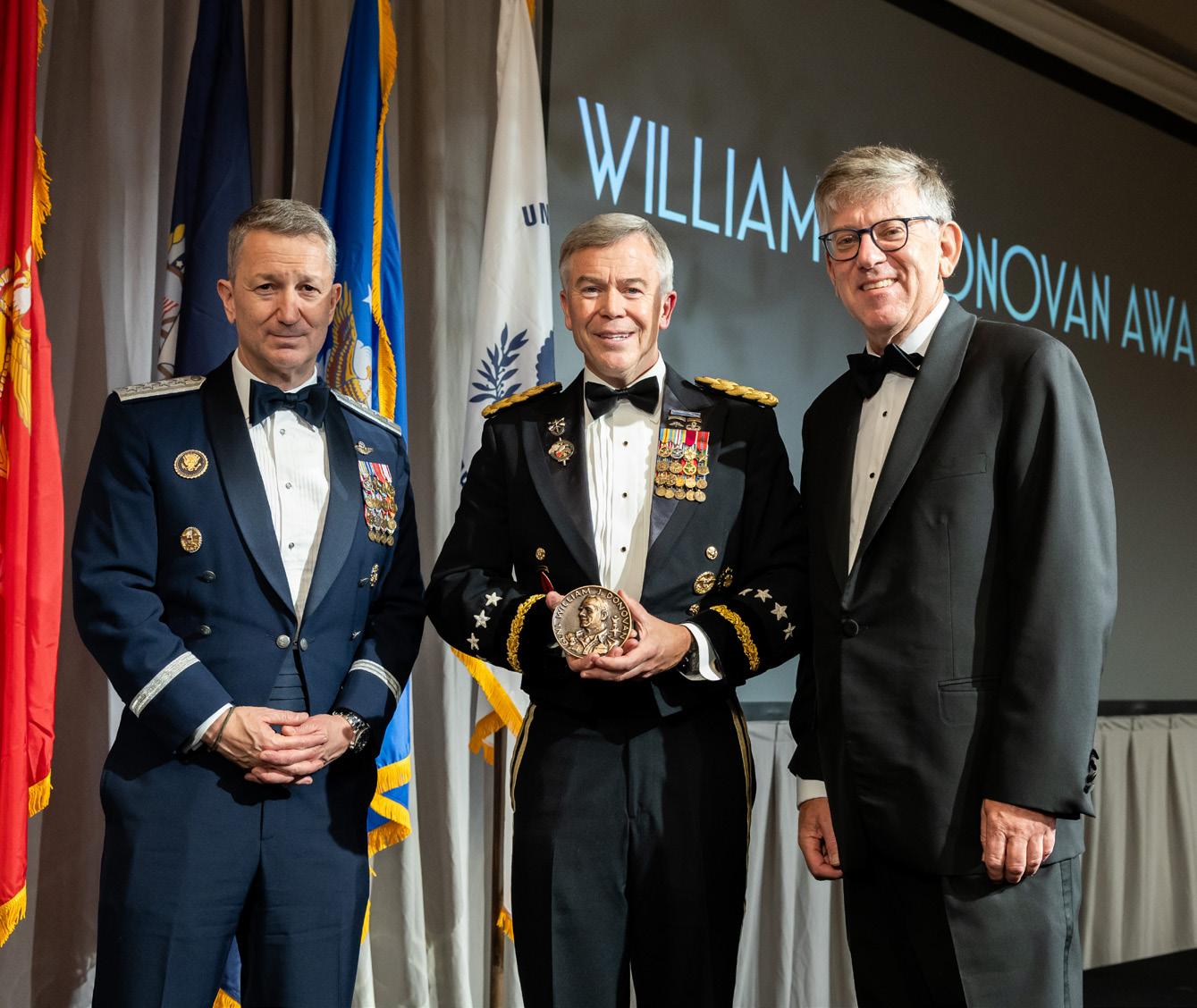
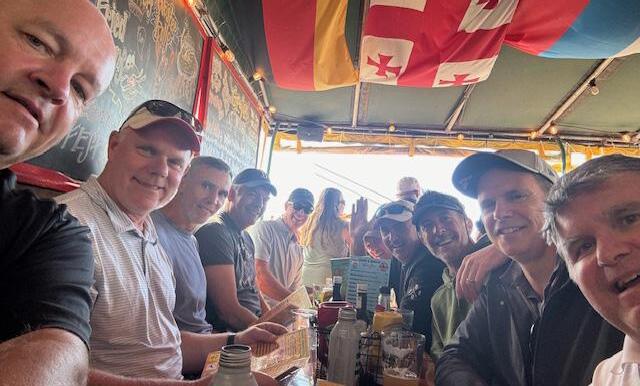
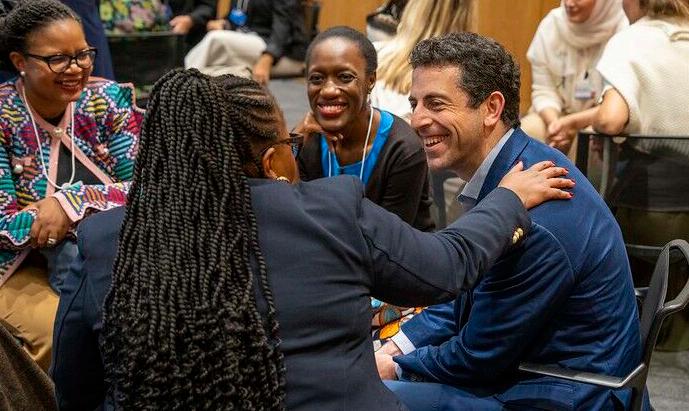
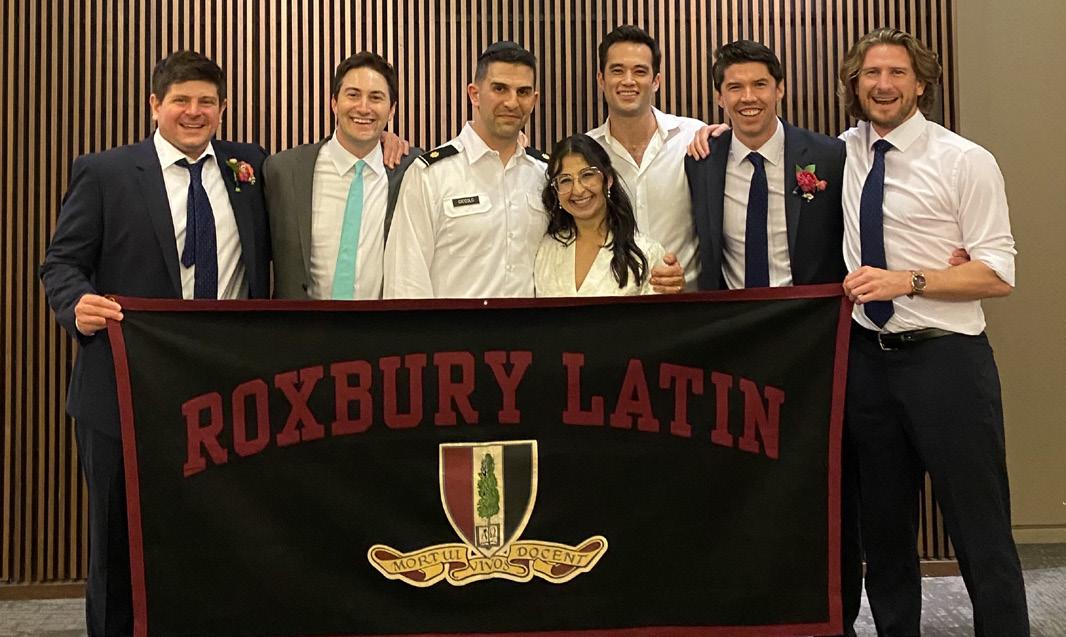
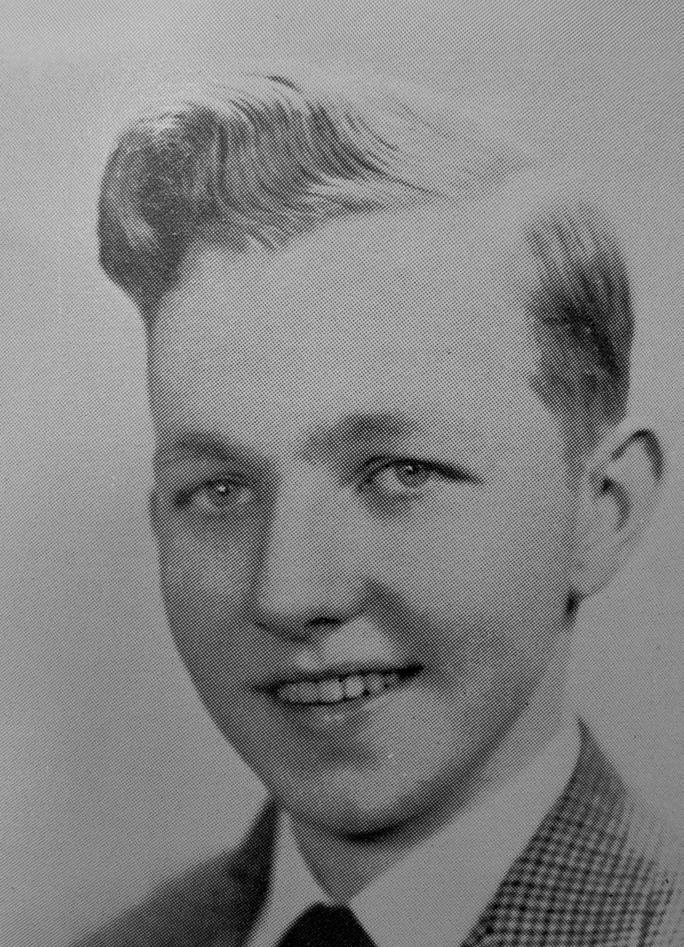
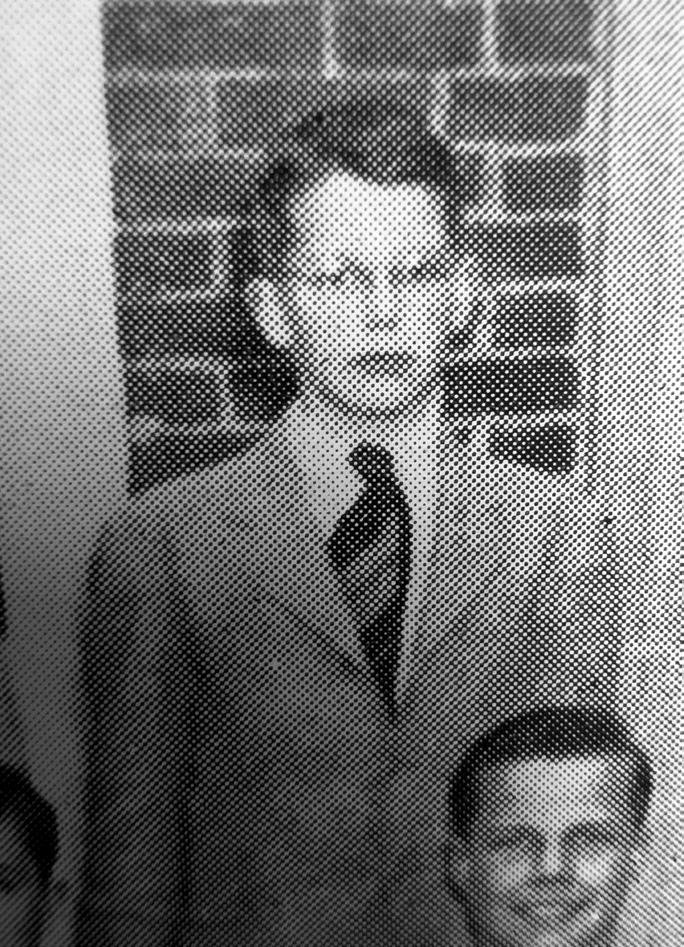
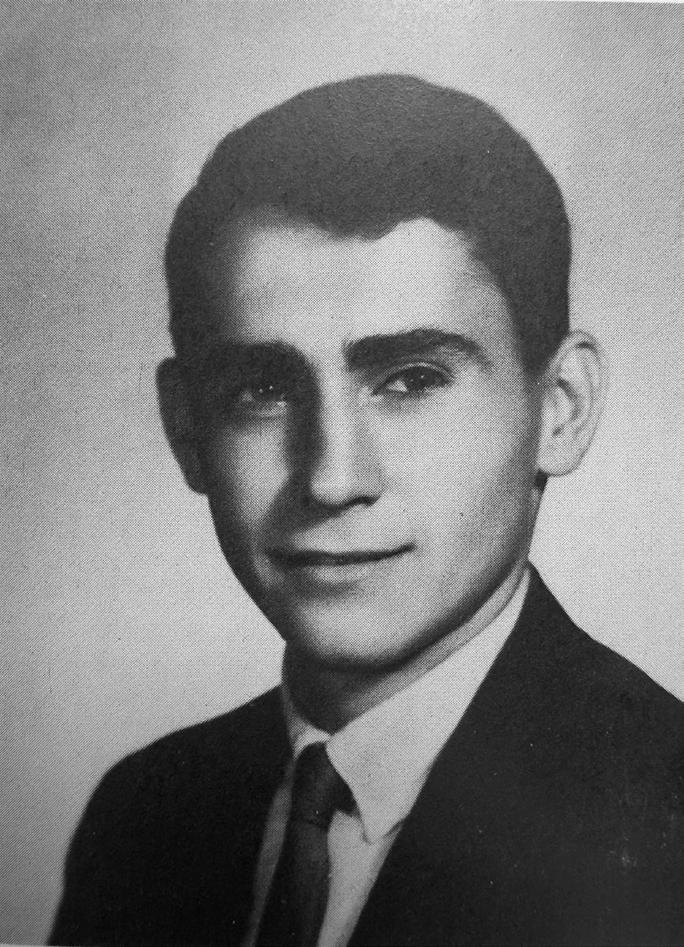
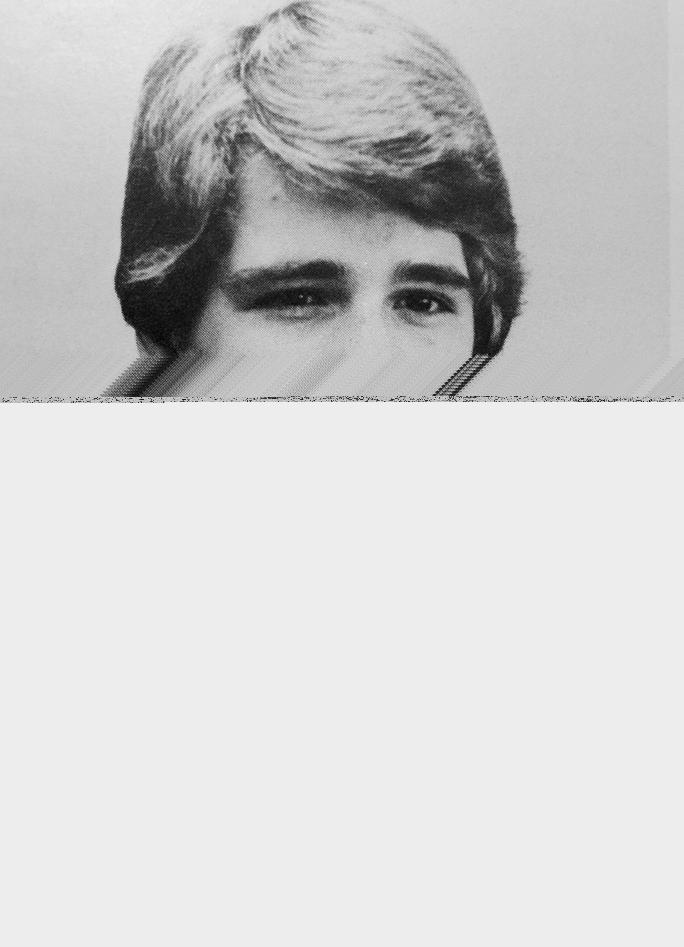
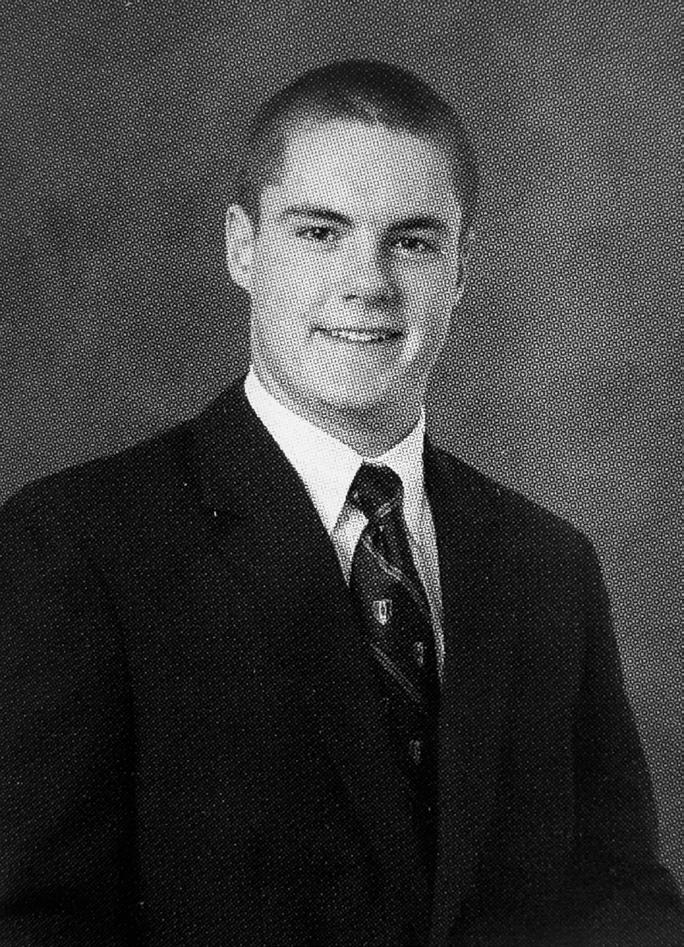
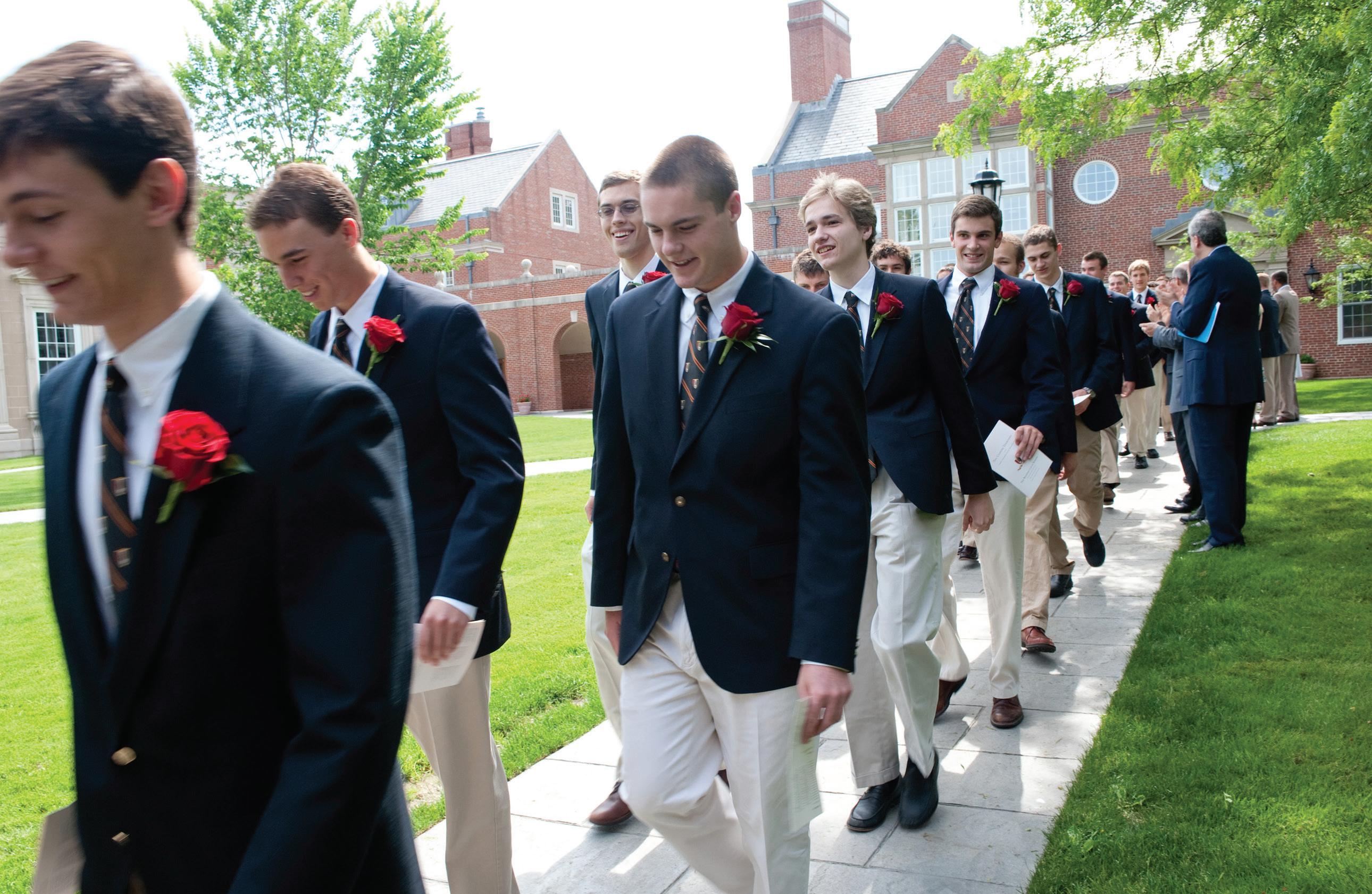
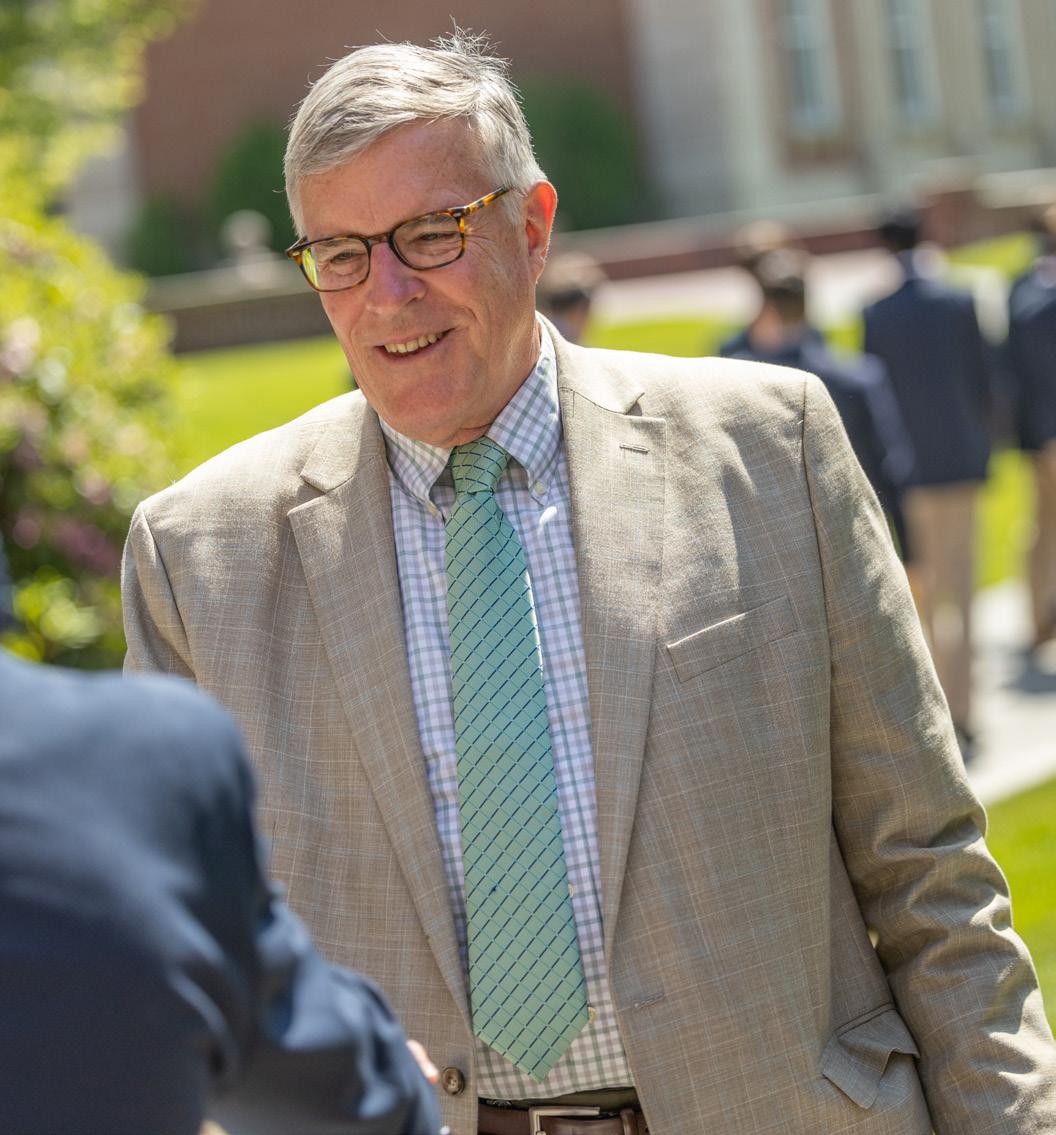
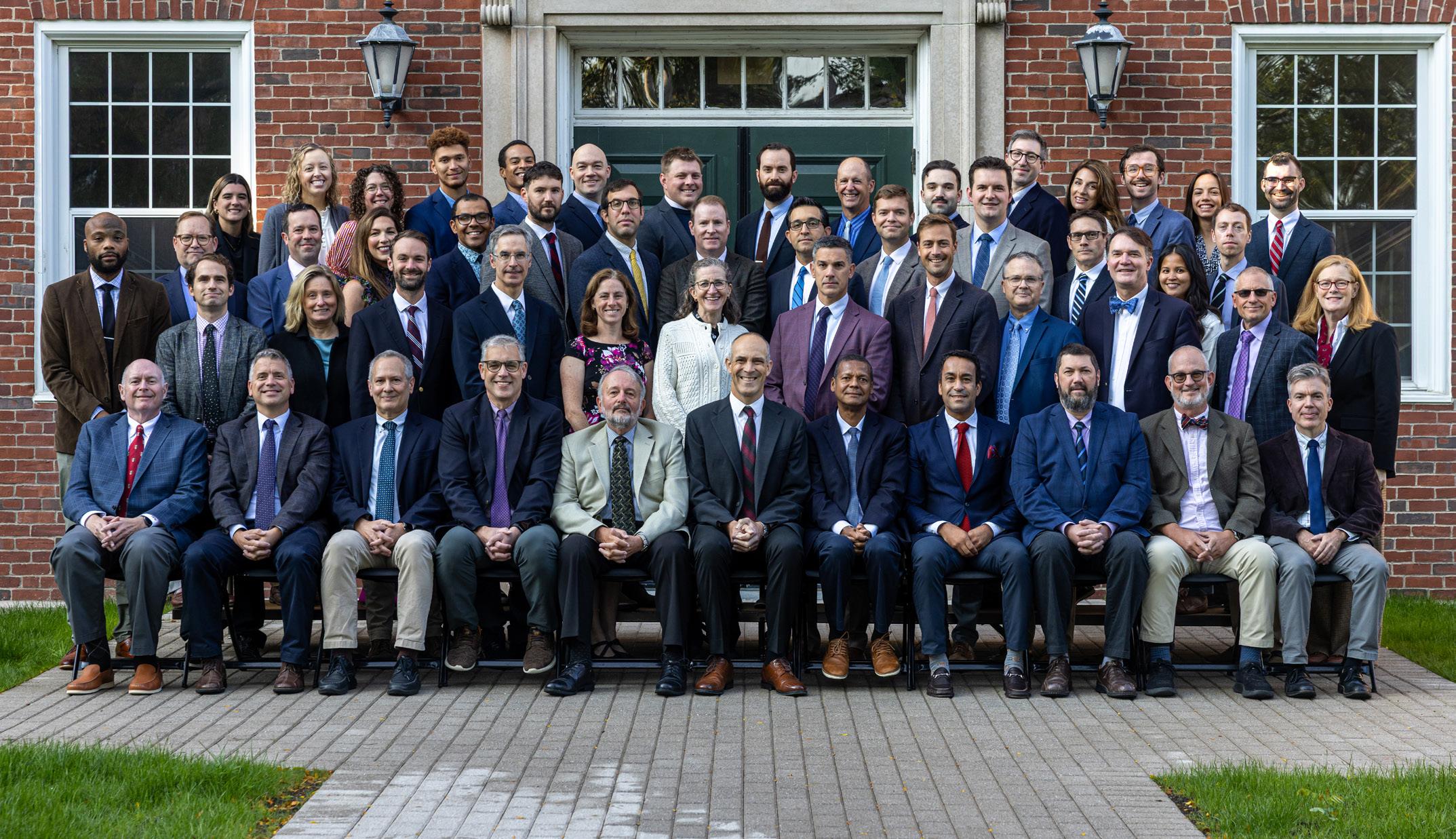
This school year marks the golden anniversary of Mr. Mo Randall, who is currently in his 50th year of teaching, coaching, and advising at Roxbury Latin. This ties him with William Coe Collar—the school’s “Second Founder”—for the longest-serving RL faculty member in the history of the school. In November, Mr. Randall delivered remarks at the annual ALGC Dinner, addressing 75 of RL’s most generous alumni donors, nearly all of whom had been his students.
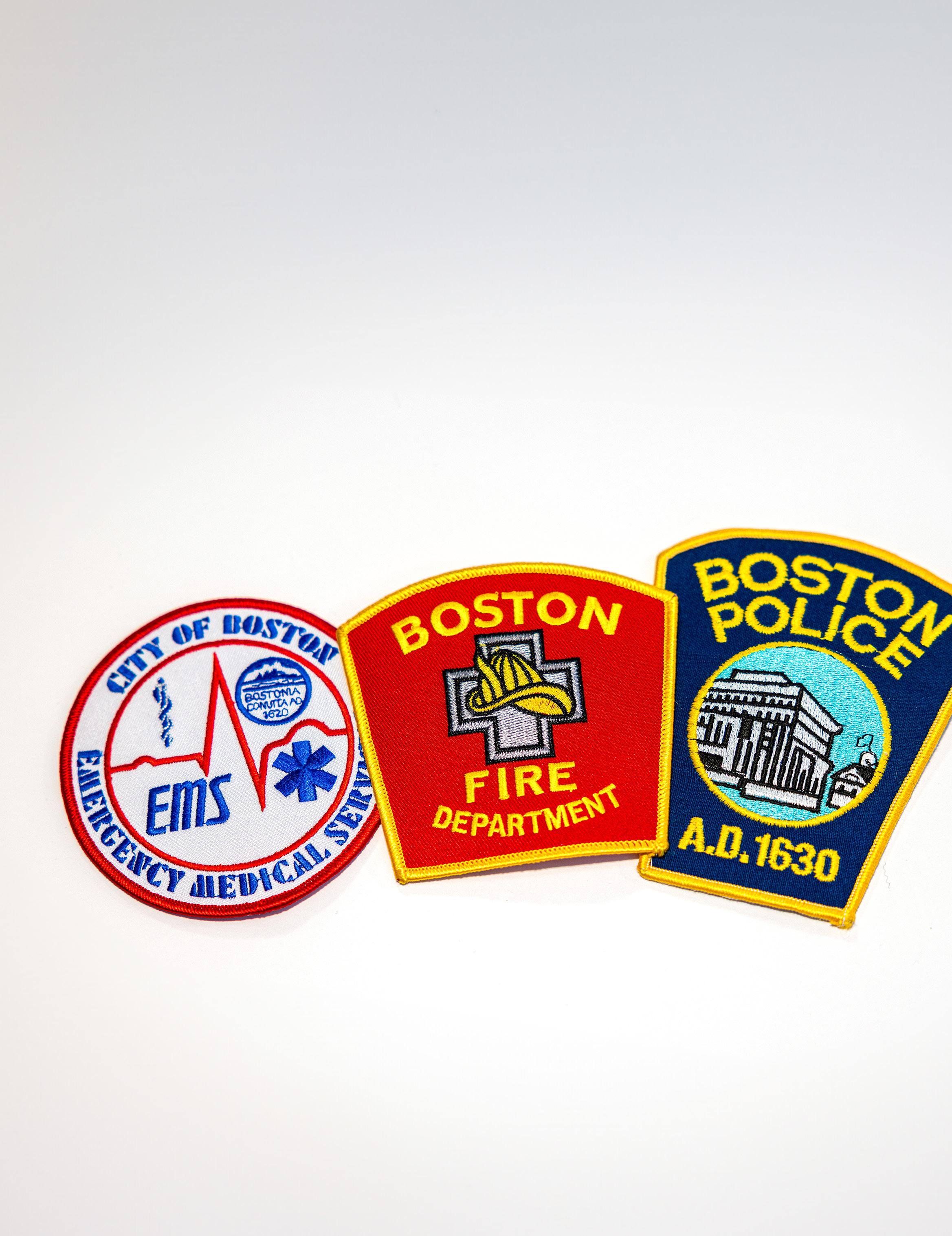
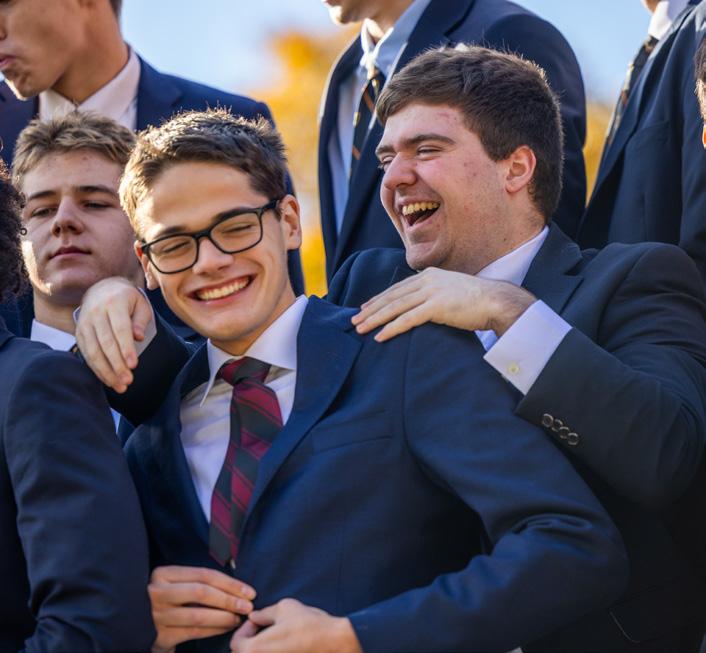
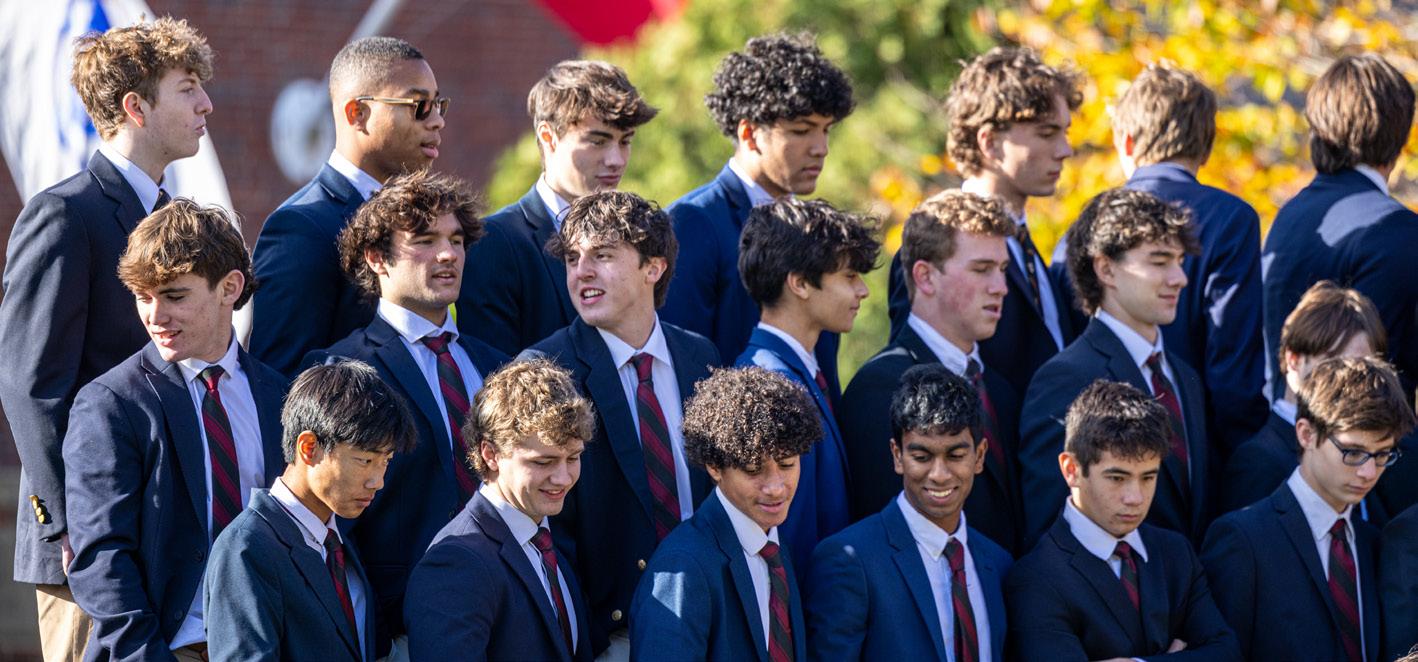
new Thanksgiving tradition begins at Roxbury Latin
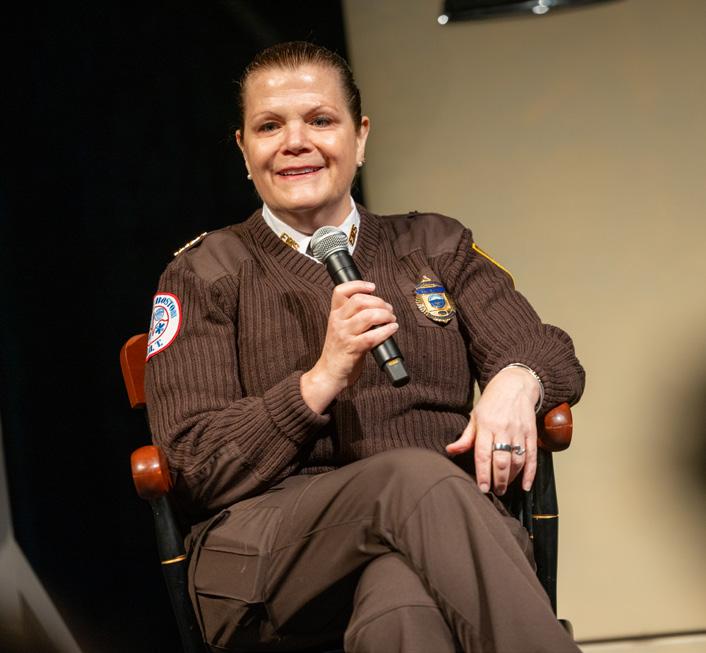
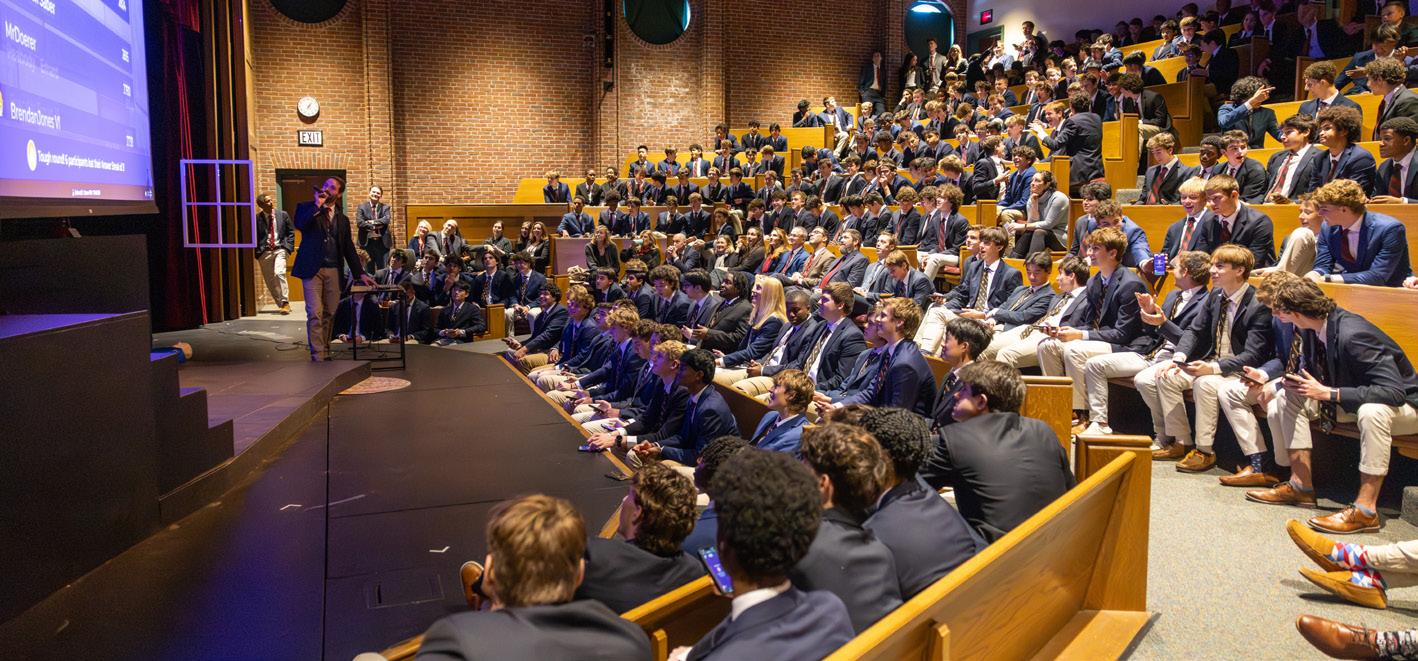
a light on Boston’s history of
and today’s first responders
New Faces
FIVE FACULTY AND STAFF FROM A VARIETY OF BACKGROUNDS AND AREAS OF EXPERTISE JOIN RL’S ROSTER OF EDUCATORS, COACHES, ADVISORS, AND COMMUNITY MEMBERS.
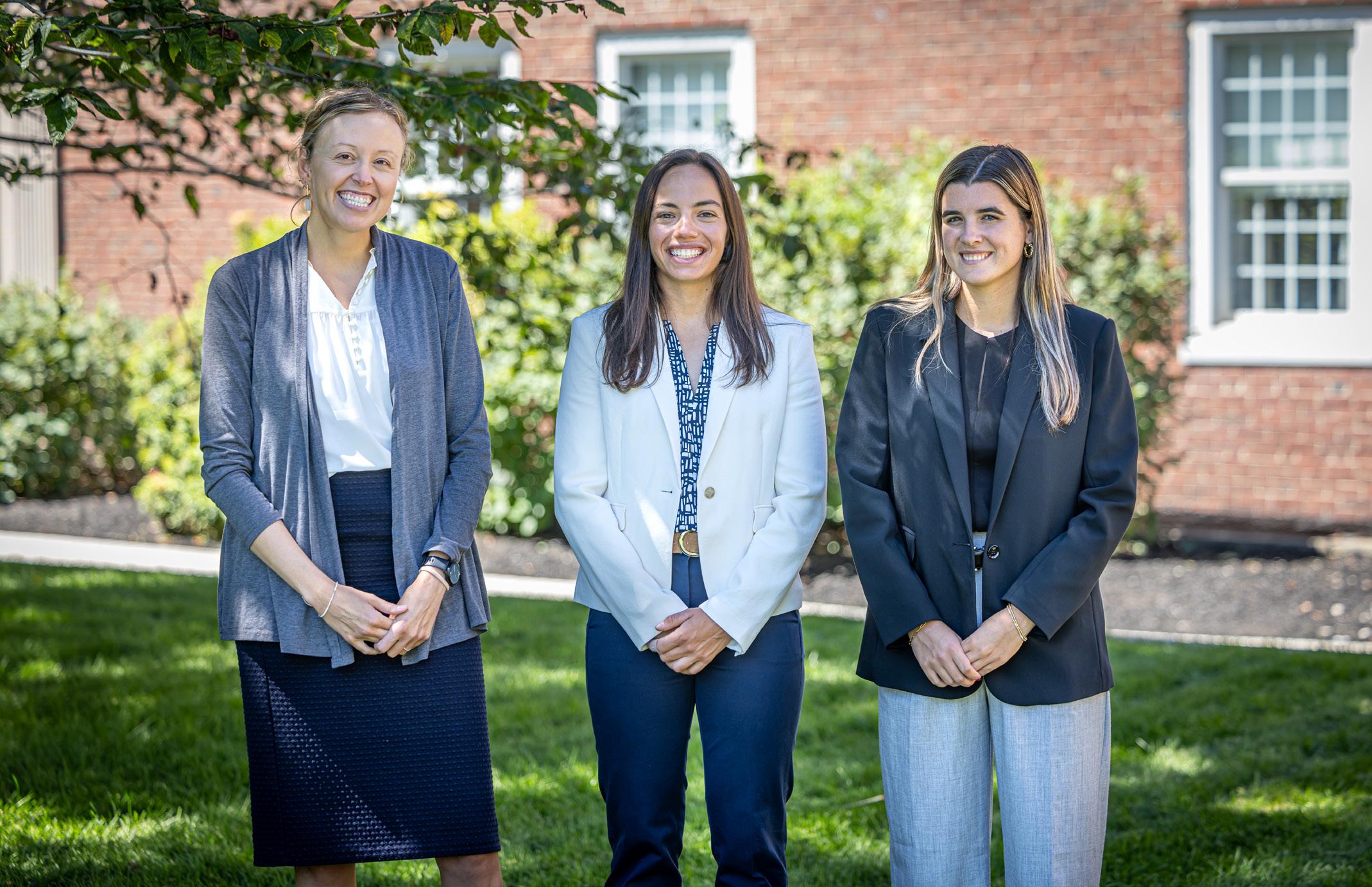
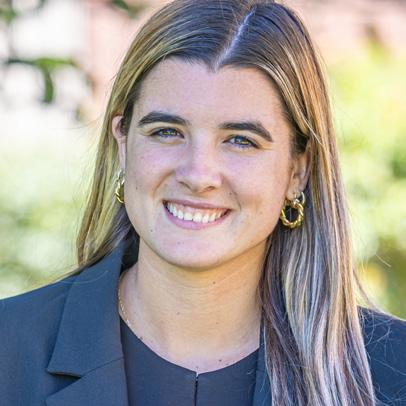
Mysha Kuhlmann is RL’s first Director of Counseling. Ms. Kuhlmann is a remarkable educator who comes to us with a deep well of experience and understanding in the field of school counseling. She has spent the past four years as Director of Counseling and School Psychologist at Thayer Academy; before that, she served for four years as the school psychologist in Andover Public High Schools; and prior to that she spent four years as the school psychologist and counselor at Rockport Middle Schools. In those roles she has counseled students; developed programming for students, faculty, and parents; supervised counselors; created academic support plans; advised students; and mentored a variety of groups. Most fittingly, Ms. Kuhlmann has always been in schools, beginning her career as a middle school English teacher, science teacher, and learning specialist at KIPP charter schools in Houston, Texas, and Lynn, Massachusetts, as well as serving as a fifth-grade homeroom
teacher in Boston Public Schools. Hailing originally from the Lone Star State, Ms. Kuhlmann holds a B.S. in applied learning and development from the University of Texas at Austin, an M.A. in special education from Loyola Marymount University, and an Ed.S. in school psychology from the University of Massachusetts, Boston. We are excited not only about the new position but also the person filling it: Ms. Kuhlmann will enhance the Roxbury Latin community.
Sophie Brett joins the long line of distinguished educators at RL to have graduated from Bowdoin College. With a B.A. in neuroscience and education and a minor in computer science, Ms. Brett brings a scholar’s approach to the classroom, as well as a teacher’s. She has served as a research fellow at the Temple Center for High Performance Computing and a researcher at Bowdoin’s SciEPlay Project, as well as a substitute
teacher in the Brunswick, Maine, school system and a tutor in the Bowdoin chemistry department. Her extracurricular involvement and leadership runs deep, as well: not only was she the head proctor in the Office of Residential Life at Bowdoin but she is a four-year letter winner for both the Bowdoin women’s varsity sailing and lacrosse teams (thus, eight letters!) and was selected as captain of the lacrosse team her senior year. With her wide-ranging experiences, Ms. Brett is teaching IPS and Science and Technology, and is helping coach junior varsity soccer and lacrosse.
Katie Armstrong arrives at 101 St. Theresa Ave. fresh from the reaches of western Massachusetts as a recent alumna of Williams College, where she majored in English and psychology, was a member of the varsity women’s ice hockey team, and earned honors as a two-year NESCAC All-Academic. For someone her age, Ms. Armstrong has a remarkable amount of experience working with young people, having served as a teaching fellow for three years at North Adams Greylock Elementary School; taught introductory courses as a Choate Rosemary Hall Summer Programs teaching intern; mentored high school students looking to play collegiate hockey; and been a counselor and director at the Belmont Hill School Summer Camp for six summers. No stranger to independent schools, Ms. Armstrong is a proud alumna of Nobles (for which we will forgive her), where she was a member of the Cum Laude Society, co-captain of the varsity ice hockey and softball teams, and recipient of the Davis Cup for sportsmanship. Ms. Armstrong is teaching Class VI history and Class V English and is helping coach junior soccer and thirds ice hockey.
Familiar Faces in New Roles
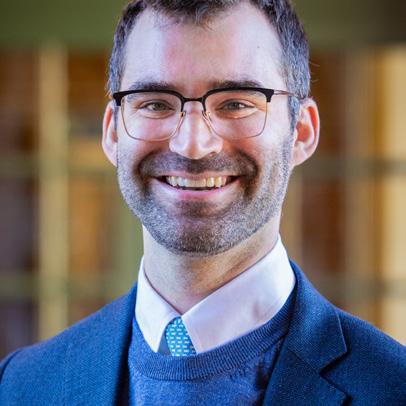
earned a B.A. in English from Davidson College and an M.S.Ed. through the Penn Teaching Fellowship at the Gilman School, where he taught language arts and journalism. In addition to publishing work on the representation of disability in Pixar films, Ethan has been writing middle-grade fiction, for which he is currently seeking publication.
Steve August P’09 joined Roxbury Latin part-time this year to serve as Athletic Advisor, providing a resource for our coaches and families regarding the college athletic recruiting process. Steve’s qualifications are many: he taught and coached at Roxbury Latin in the early 1980s under Tony Jarvis and then for a few years at St. Sebastian’s; worked for many years in the Red Sox front office; founded the New England Ruffnecks baseball club and oversaw its expansion to one of the top clubs and facilities in the Northeast; worked in the admissions and college offices at Deerfield Academy; and his son, Sam, is a proud member of the RL Class of 2009. Steve’s experience in high school and college athletics, as well as his perspective as a former RL faculty member and past parent, give him unique insight as he supports our coaches and works with our families to help them to navigate the increasingly complex process of college athletic recruitment.
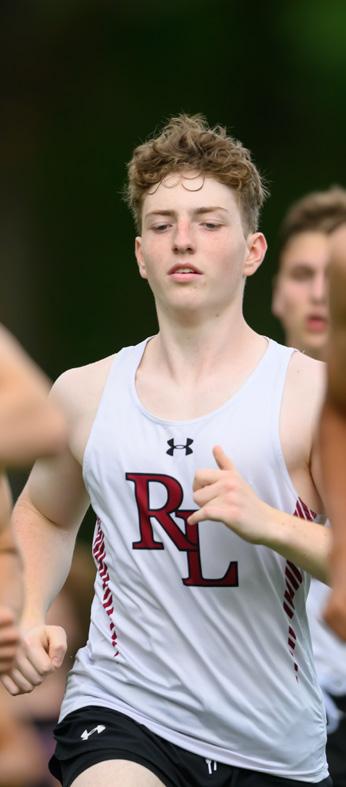
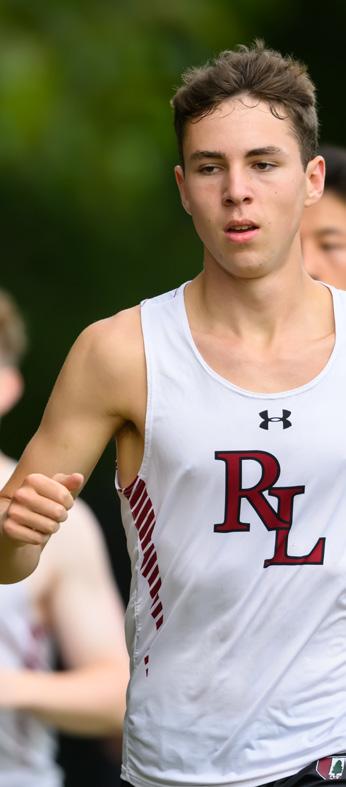
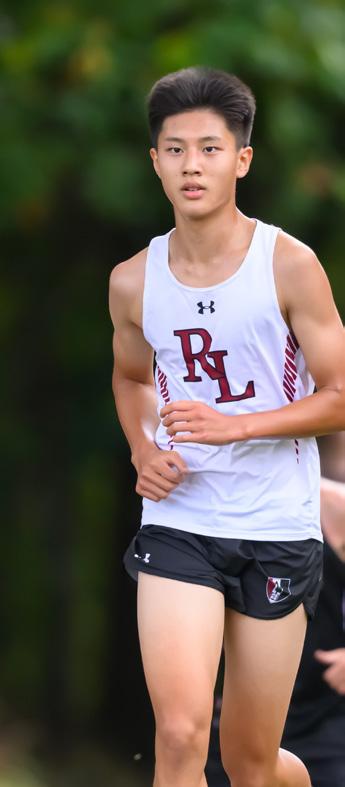
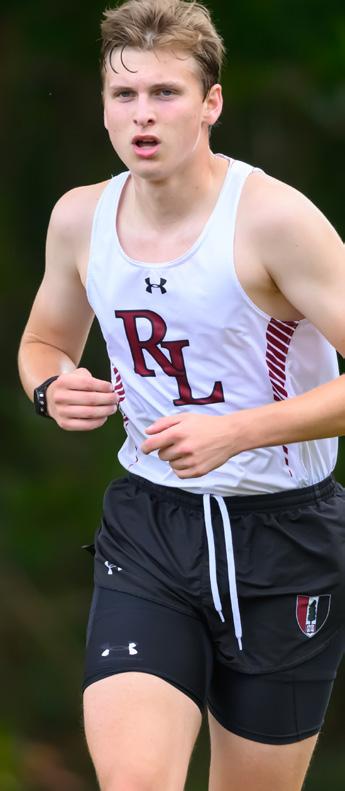
Ethan Faust ’13 has joined RL as a part-time member of the Classics and English departments, and as a coach of fourth soccer, fourth basketball, and track and field. Before returning to RL, Ethan
Elizabeth Carroll has taken on the role of Dean of Academics, in which she will help envision, oversee, and implement the school’s academic curriculum, from course selection and scheduling to grading and communication to course offerings; Meredith Reynolds became the Co-Director of the College Guidance Office, a position suited to her experience and contributions to that important element of school life as a thoughtful, innovative, and caring advocate for RL boys and our school; Sarah Demers has taken on the role of Class VI Dean, extending her expert and loving care for the Sixie class as they learn how to be Roxbury Latin boys; Chris Brown, a former Penn Fellow himself and the assistant director of the program the past few years, has taken on the role of Director of our Penn Fellows Program; Jim Ryan, with his steadfast and lifelong commitment to serving those around him, as well as his organizational talents, has taken on the role of Director of Community Service.
Welcome to the Board
ARA GERSHENGORN P’23 AND WILL HUGHES ’97, P’29 ARE ROXBURY LATIN’S NEWEST MEMBERS OF THE BOARD OF TRUSTEES
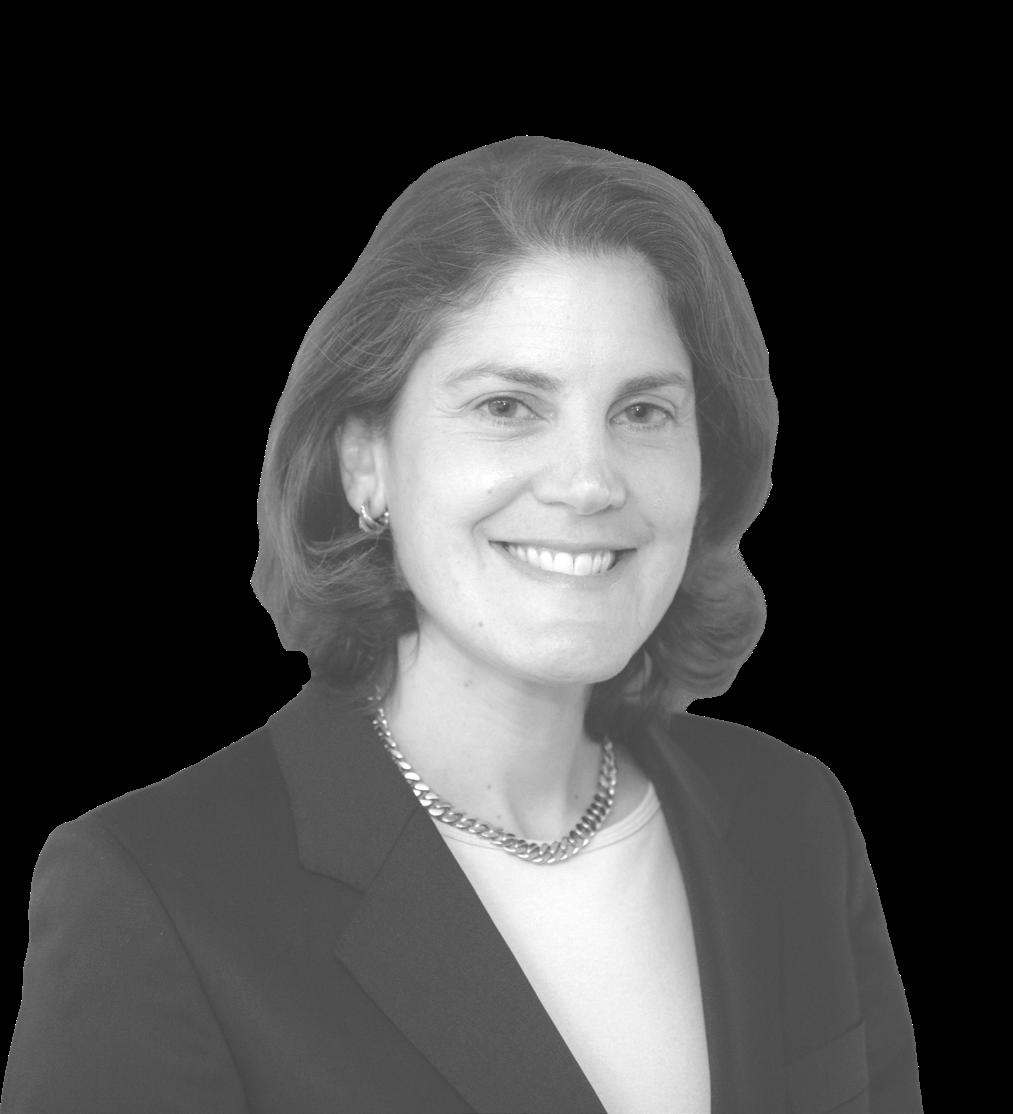
Ara Gershengorn P’23 is an attorney in the Office of the General Counsel at Harvard University, where she advises on a wide range of issues, including investigations, litigation, faculty and student affairs, and research and regulatory matters. Ara served as lead in-house counsel managing the litigation challenging Harvard College’s consideration of race in admissions and has advised the university in recent investigations and litigation involving the federal government.
Before joining Harvard, Ara was a partner in the Boston office of Foley Hoag LLP, where she represented clients in connection with complex disputes and investigations. She also had a significant pro bono practice representing clients in the U.S. Supreme Court, the Massachusetts SJC, and other state and federal courts. Following her graduation from law school, Ara clerked on the U.S. Court of Appeals for the Second Circuit and then joined the U.S. Department of Justice through the Honors Program where she briefed and argued constitutional and statutory cases in federal courts of appeals across the country. Ara then served as a federal prosecutor in the United States Attorney’s Office for the Eastern District of Pennsylvania.
Ara earned her A.B. from Harvard College and her J.D. from Columbia Law School. She is also an adjunct lecturer at Harvard Law School. She serves on the Massachusetts SJC Standing Committee on the Rules of Professional Conduct and is a fellow of the Massachusetts Bar Foundation. Ara lives in Weston with her husband, Sean, and they are the parents of Michael ’23 and Brenna.
Will Hughes ’97, P’29 is a managing director at Providence Equity Partners, a private investment firm he joined in 2009. He is on the firm’s investment team in Boston and focuses on managing investments in private software companies. He serves on the board of several companies and works closely with them on strategy, personnel decisions, and capital allocation decisions with a goal of growing their value significantly over the long run.
Prior to joining Providence, Will worked in private equity investing at Summit Partners; in investment banking at Lehman Brothers; and as special assistant to the CEO of a private technology company in London. After graduating from Roxbury Latin in 1997, Will earned his B.A. from Dartmouth College and his M.B.A. from Harvard Business School.
Will has been a member of RL’s Alumni Leadership Giving Committee for several years and has served on the school’s finance committee for the past two years. He lives in Chestnut Hill with his wife, Gray, and three children, Peter ’29, Whitney, and Alex.
Call for Trustee Nominations
The Committee on Trustees is seeking recommendations from any member of the Roxbury Latin community for trustee candidates to serve a six-year term on the Board of Trustees. Please forward such recommendations to the Committee on Trustees at nominations@roxburylatin.org.
Merit Scholars
21 SENIORS RECOGNIZED IN NATIONAL MERIT SCHOLARSHIP COMPETITION
This fall, the National Merit Scholarship Program announced the names of Class of 2026 students across the country who earned recognition for their academic achievement. This year, 21 Roxbury Latin boys were named—five as National Merit Scholar semifinalists and sixteen others earning commendations from program officials, equating to roughly 38 percent of the class.
Juniors from across the United States entered the 2025 National Merit Scholarship program by taking the 2023 PSAT. The nationwide pool of semifinalists, representing less than one percent of U.S. high school seniors, includes the highest-scoring entrants in each state, while commended students placed among the top 50,000 students who entered. Scholarship recipients are selected on the basis of their skills, accomplishments, and potential for academic success at the college level.
It is estimated annually that from the approximately 16,000 semifinalists, about 15,000 will advance to become finalists, making them eligible for 6,870 National Merit Scholarships
nationwide. The organization, along with several hundred independent businesses and companies, support the awards totaling over $33 million.
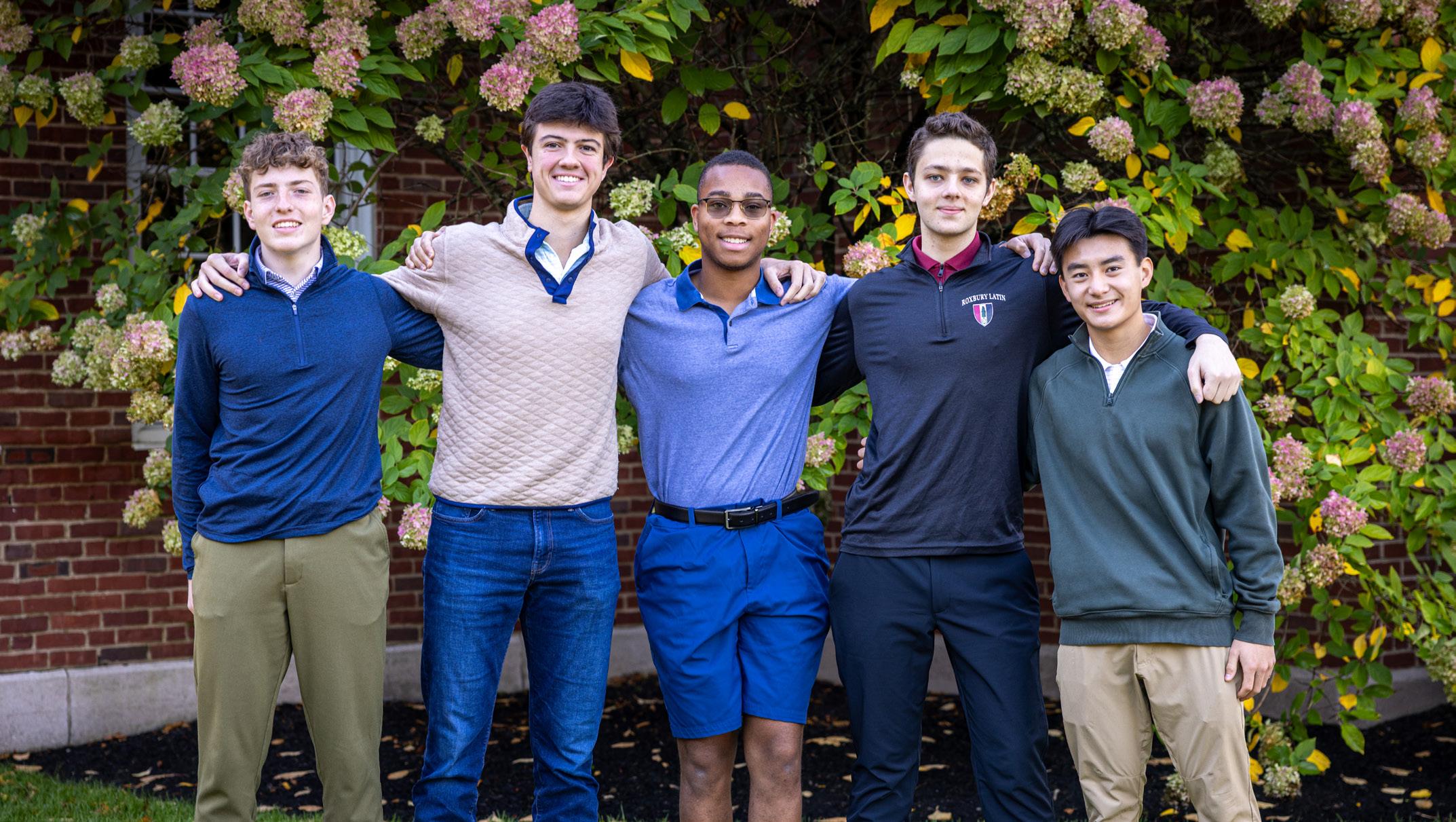
Roxbury Latin boys earning recognition this year include semifinalists Habo Baaj, Colin Bradley, Denmark Chirunga, Dylan Pan, and Tom Pogorelec; and commendation recipients Luca Bene, Luke Campanella, Michael DiLallo, Nick Glaeser, Lincoln Hyatt, Max Kesselheim, Avish Kumar, Grayson Lee, Simba Makura, Dylan Massard, Braden Place, Fin Reichard, Austin Reid, Teddy Smith, Marco Suri, and Liam Walsh.
The Summer/Fall 2025 issue of the Newsletter reported that Raj Saha was named a National Merit Scholarship Winner for the Class of 2025. His classmate Brendan Reichard also received a National Merit Scholarship Award—a corporate-sponsored scholarship supported by Liberty Mutual Investments.
Colin Bradley, Tom Pogorelec, Denmark Chirunga, Habo Baaj, and Dylan Pan
Sixies Start Strong
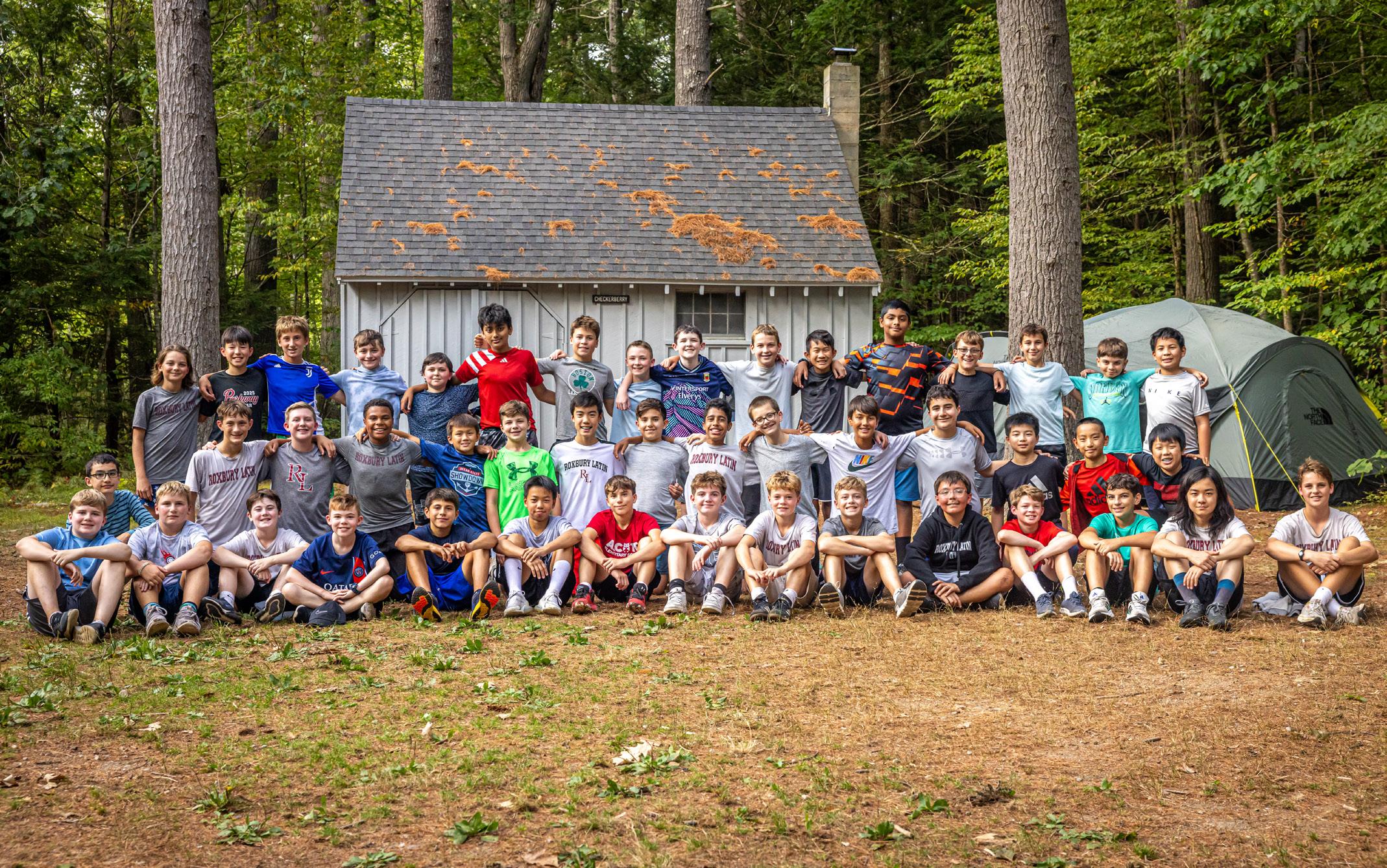
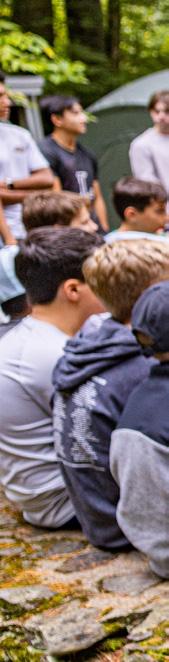
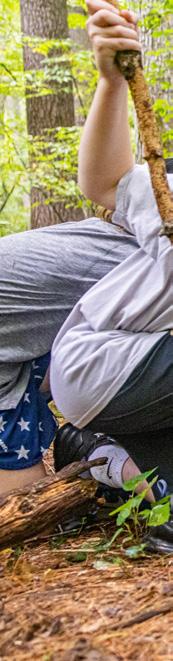
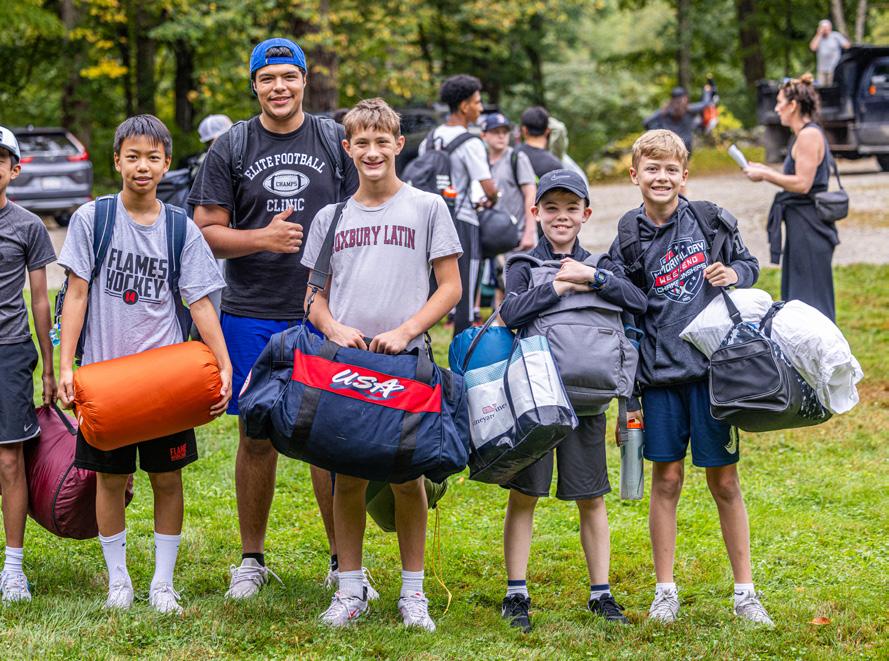
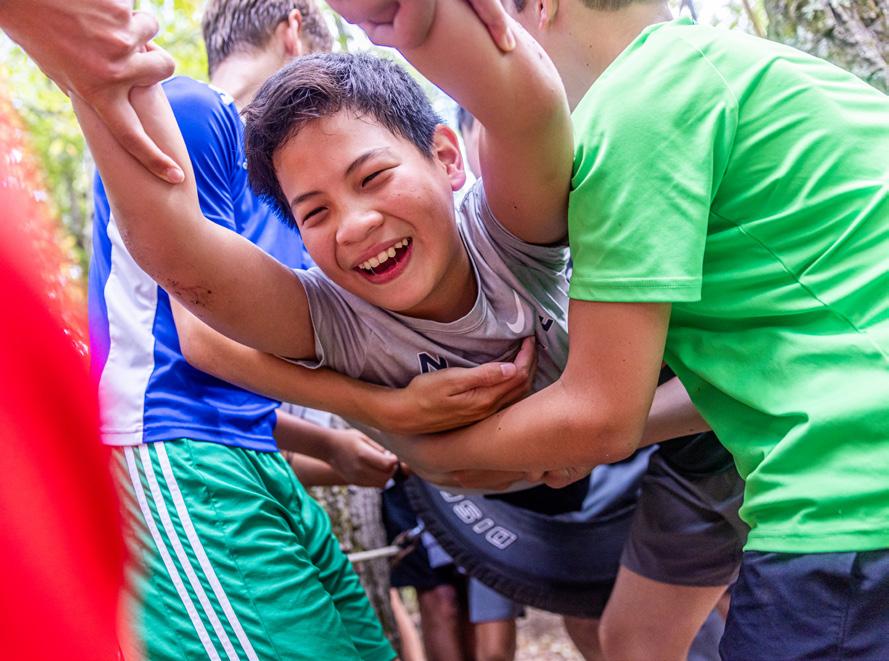
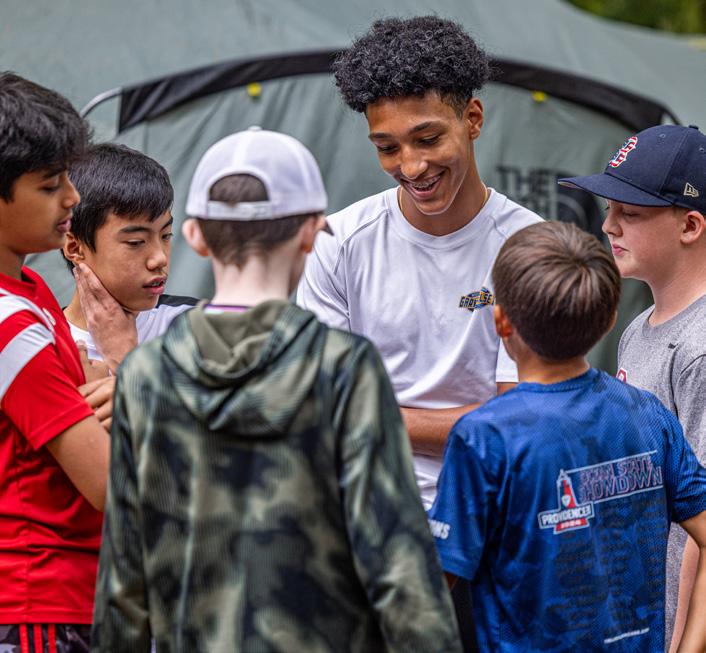
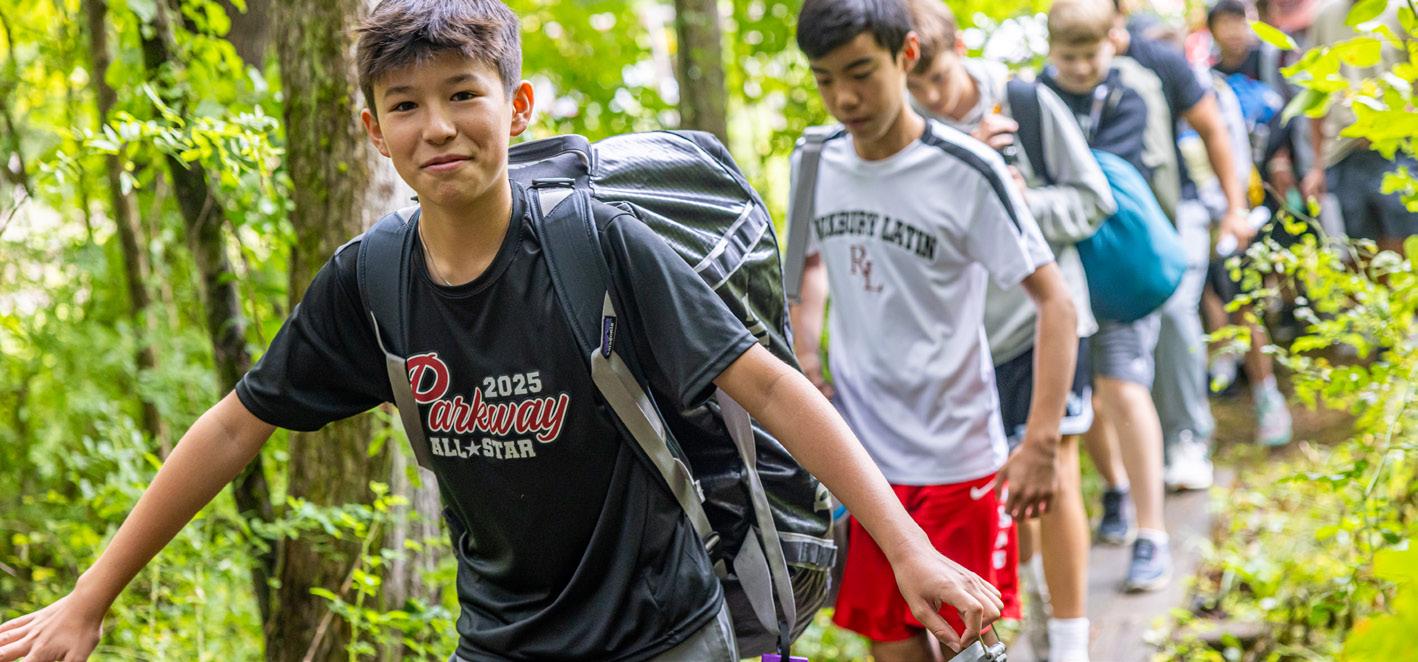
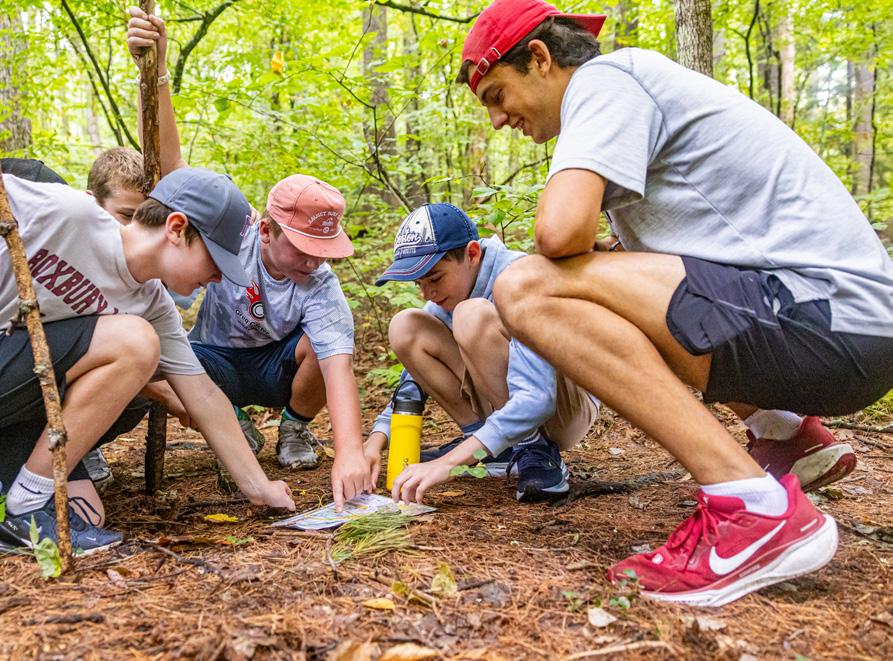
On the morning of September 5, Roxbury Latin’s newest cohort of 46 sixies, nine Class I leaders, and several faculty and staff members departed campus for Hollis, New Hampshire, for the annual Class VI trip to Beaver Brook.
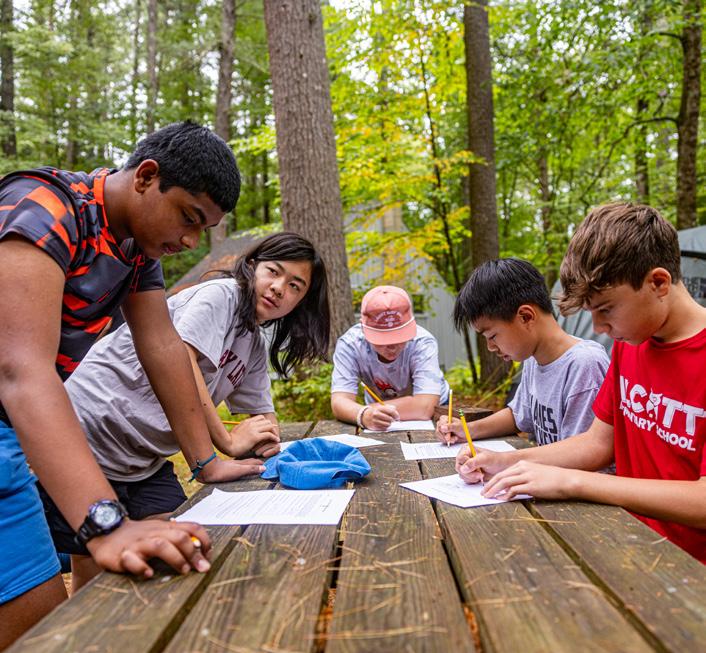
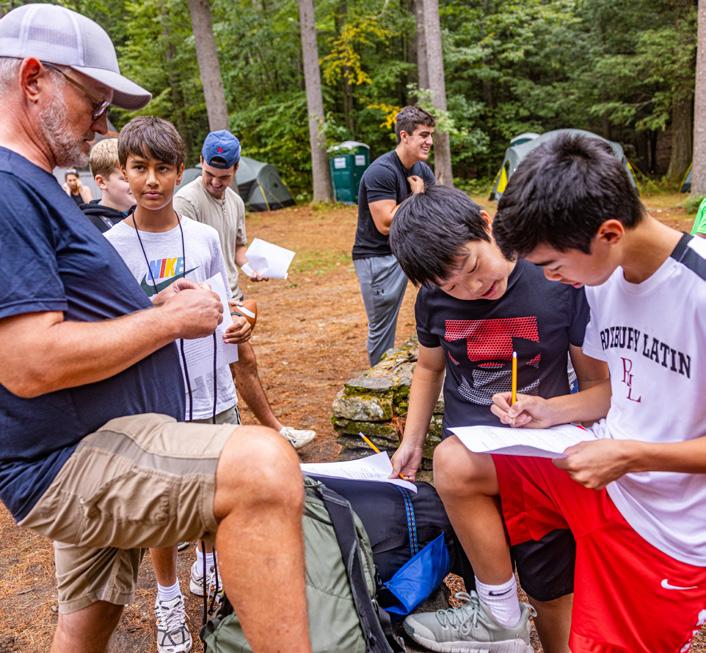
After disembarking the bus and gathering their equipment, the boys faced their first challenge: true or false trivia about their beloved school. Using whatever they could find as a desk, including but not limited to the backs of their classmates, the boys approached each question with careful thought and a hint of friendly competition, not entirely dissimilar to when in class. The boys were also encouraged to ask for help from the adults present, but warned that the adults were encouraged to provide the boys with false answers—the only time this would happen during the boys’ time at Roxbury Latin!
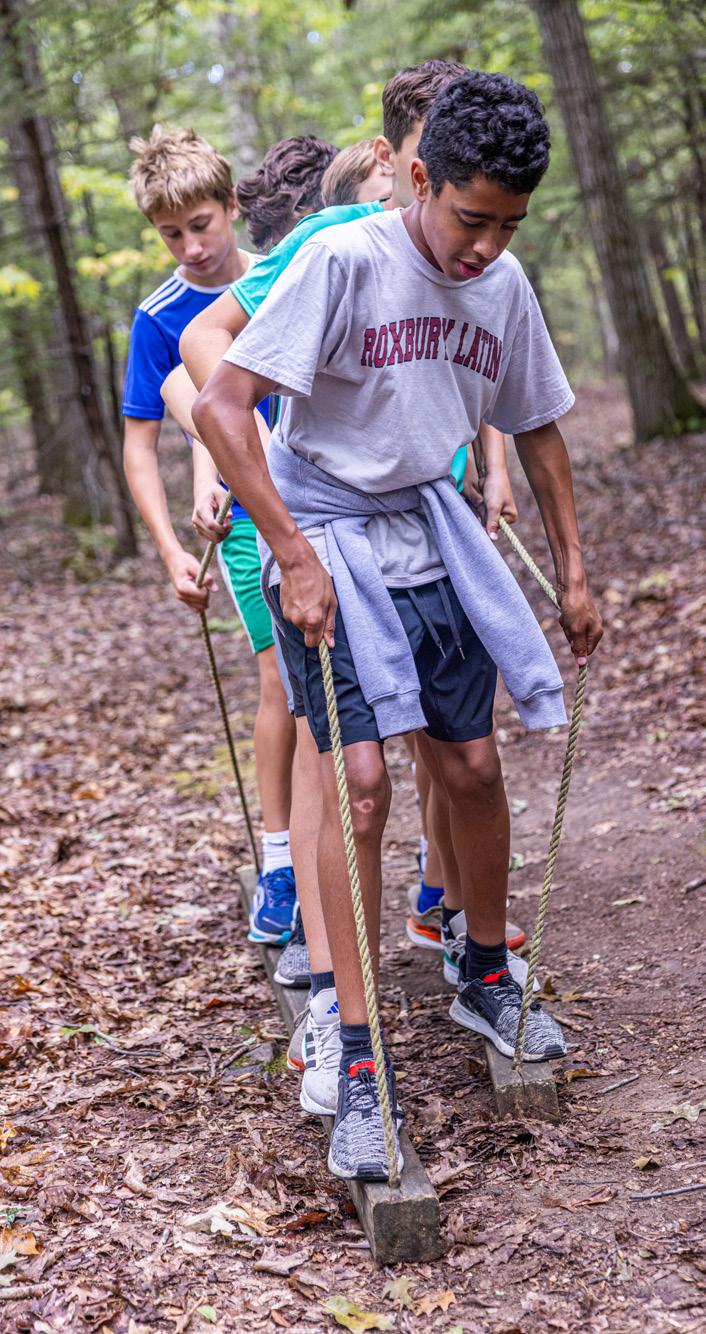
Throughout the day, the boys engaged in many longstanding RL activities, such as Flip Flop, orienteering explorations, field games, and ropes course challenges,
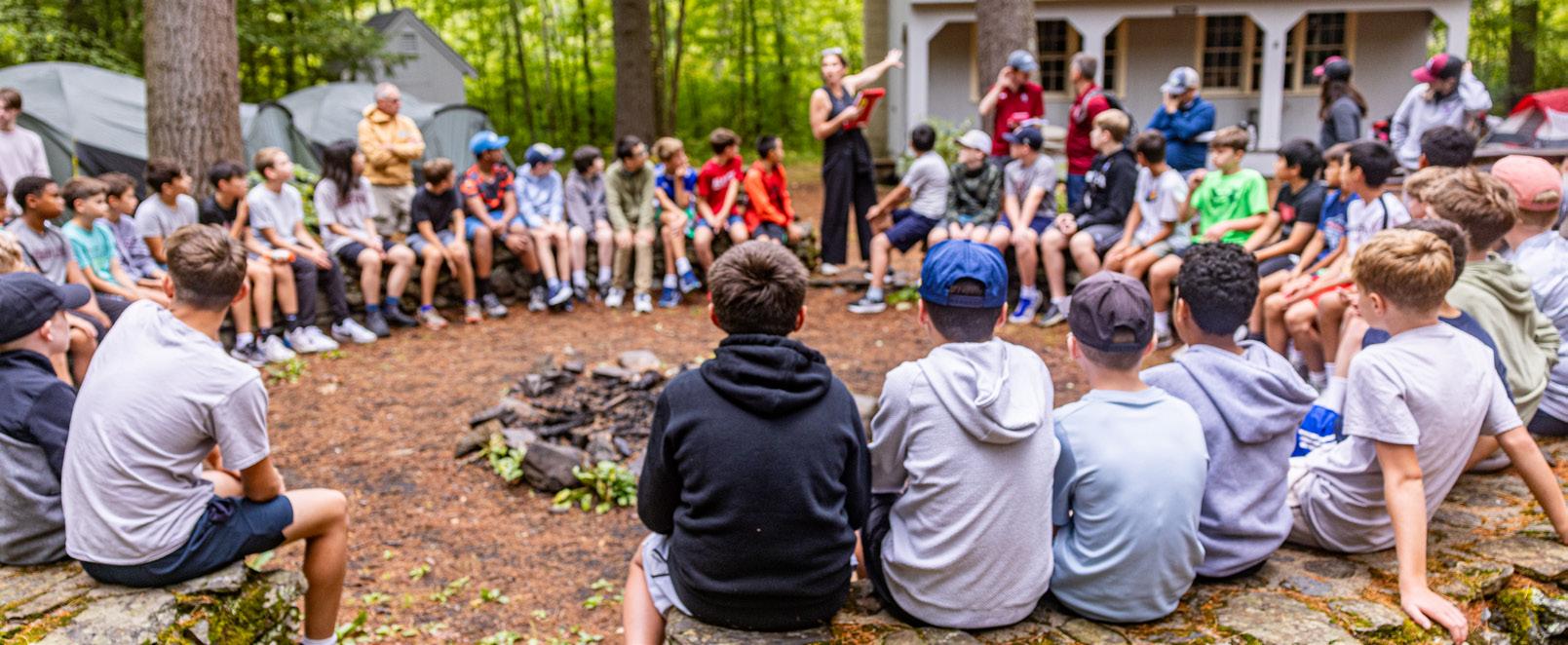
supported by Class VI Dean Sarah Demers and other RL faculty. As day turned to night, the boys shared laughs and spirited conversation over dinner and then settled for a viewing of the 1957 film Twelve Angry Men, promptly followed by a discussion and reflection. The dynamic conversation continued to the roaring campfire outside as everyone gathered for s’mores and the task of learning The Founder’s Song. (With this new institutional knowledge, Class VI boys can confidently join in singing in Hall!) As it approached time to unfurl the sleeping bags and retreat to tents, students and faculty were ready for a restful, albeit short, night’s sleep.
After an eventful 24 hours, the bus full of students left the New Hampshire woods for the wooded campus nestled in West Roxbury. The delight, camaraderie, and touch of exhaustion from lack of sleep were felt throughout the bus on the ride home. While the boys have now closed the chapter on one RL tradition, they are met with a forged story of brotherhood.
RL’S NEWEST STUDENTS BOND AT BEAVER BROOK
Learning Without Limits
SERVICE, SPORT, SCHOLARSHIP, AND CURIOSITY
INTERSECT IN THREE STUDENTS’ SUMMER WORK.
A commitment as an “accomplished generalist” is a key pillar of Roxbury Latin’s mission; it’s what is asked of both students and adults here. The term highlights one of the critical components of the RL ethos: helping to foster, develop, and support wellrounded young men—willing to try new things and share their talents broadly—rather than encouraging specialization in a single area. This also means that boys are encouraged to explore, discover, and follow their passions, whatever they may be. Three students who recently exemplified this commitment through experiences outside of RL are Rahsaan Mustafa-Coentro (II), Pogorelec (I)
summer opportunity that not only highlighted a respective passion, but also combined areas of service, athletics, academics, technology, and more.
Sid, a member of RL’s Varsity Tennis team, founded LetsTennis a few years ago—a network through which experienced tennis players volunteer to coach anyone interested in learning the sport. In doing this, Sid has created access to the sport for many individuals who previously had none. This past summer, LetsTennis partnered with the Special Olympics to host an inclusive tennis clinic on the courts at RL. “Trying out a new sport is challenging for anyone, and it’s even harder for people with physical or intellectual disabilities,” Sid explained. “I wanted to break the barrier for the Special Olympics athletes interested in trying out tennis.” The LetsTennis Special Olympics clinic allowed many people to experience a sport and game for the first time. Sid has a passion for community service and tennis, and through his
with the idea were very supportive and helped me navigate some of the challenges to secure the courts at the school for the event,” Sid said. “Even during the summer holidays, Mr. Spellman was working with me to confirm all the details, in order to make the event safe and successful. Mr. Lieb, my advisor, was willing to come and supervise the event if we needed an adult, and Mr. Diop, my tennis coach, was very supportive of the idea.”
Rahsaan, a member of the Varsity Soccer team, also has a passion for community service, which he expresses and achieves through his love of soccer. Throughout his life, Rahsaan has been a foster sibling to many children who have been placed with his family through foster care networks. This past summer, Rahsaan organized soccer clinics for foster kids, giving them a space to learn, enjoy the game, and connect with one another.
“The goal was to create a space where kids in foster care could bond, connect, play, and deepen relationships,” he explained. “Kids in foster care are often separated, and I wanted to provide an opportunity for them to be together.” Like Sid and many other RL boys, Rahsaan is quick and eager to explore new ideas, use the skills he has, and make the connections that result in meaningful ventures. “I love the idea of using sports, such as soccer, to help kids in foster care connect. I have a lot of ideas on how to build the program and involve other partners. This is just the beginning,” he says. “My time at RL has reinforced what I’ve learned at home about being a good person who stands up for others and uses my privilege to contribute to my community.”
Finally, Tom spent a portion of his summer in Vermont, attending the Coolidge Senator Summit. The summit is a meeting of members of the Coolidge Senators Program—a program comprising the top 100 applicants from the pool for the Coolidge Scholarship. Per the program’s website, “the Summit gives Senators a glimpse into the world of Calvin Coolidge and a chance to see how a boy born in the remote Green Mountains of Vermont made his way to the highest office in the land.” During his week at the Summit, Tom took a tour of the Massachusetts State House, participated in debate rounds, received a Calvin Coolidge Historical Site tour, sat in on seminars, and participated in a Coolidge Knowledge Bowl. During the school year, Tom is a leader of the Classics Club and a formidable competitor on RL’s Certamen teams. An excellent Latin student, Tom also won the Advanced Latin section of last year’s Exelauno Day competition. Tom noted his participation in Certamen and interest in Classics aided him in an unexpected way this summer. In fact, Tom had attended a Certamen conference just the week before he left for Vermont. During the Summit, all 100 participants were entered into a Knowledge Bowl. What started as 100 participants was whittled down to 16 semifinalists. From there, three finalists were selected based on their scores to participate in a live Jeopardy!-style competition. This event took place during the culminating Senator and Trustee Dinner. To his surprise, Tom ended up winning the final round and cash prize, noting that his studies of the Classics and history—and a generalized exposure to many topics—set him up as a top contender, and ultimately, for success.
Serving with Purpose
TANNER
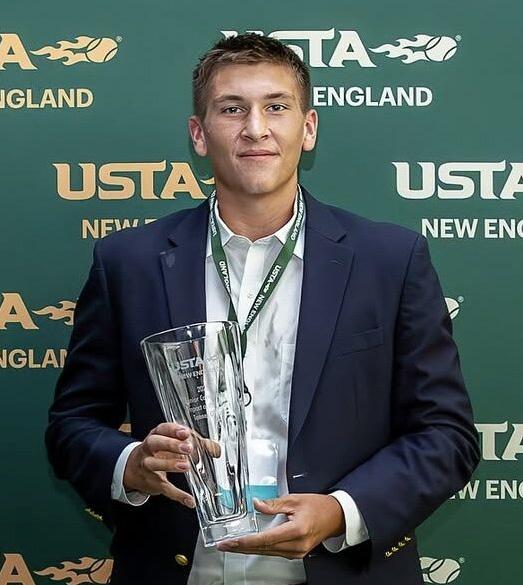
OBERG (II) RECEIVES USTA’S COMMUNITY IMPACT AWARD
The United States Tennis Association (USTA) this year honored Tanner Oberg (II) with its New England Junior Community Impact Award for his work with Rally For Tennis. “Each year, we are inspired by the incredible people and organizations who dedicate themselves to making tennis more welcoming, inclusive, and impactful,” said Deb LaPress, Chair of the USTA New England Awards Committee. “This year’s award winners represent the very best of New England tennis, from grassroots leaders and family champions to young innovators shaping the future of the sport.”
Rally for Tennis began in 2021 when Tanner’s older brothers, Tait ’23 and Cole ’25, alongside their friend Alek, wanted to create access and opportunities in the sport for all kids. In his first few years, Tanner served in a supporting role, but more recently, he has stepped into the role of President of Operations for the non-profit.
The RFT website states, “At its heart, RFT is about community, kids lifting each other up, discovering their own leadership potential, and ensuring that access to tennis and opportunity is not a privilege but a right. Together, we rally for tennis. Together, we rally for each other.”
A Fresh Perspective
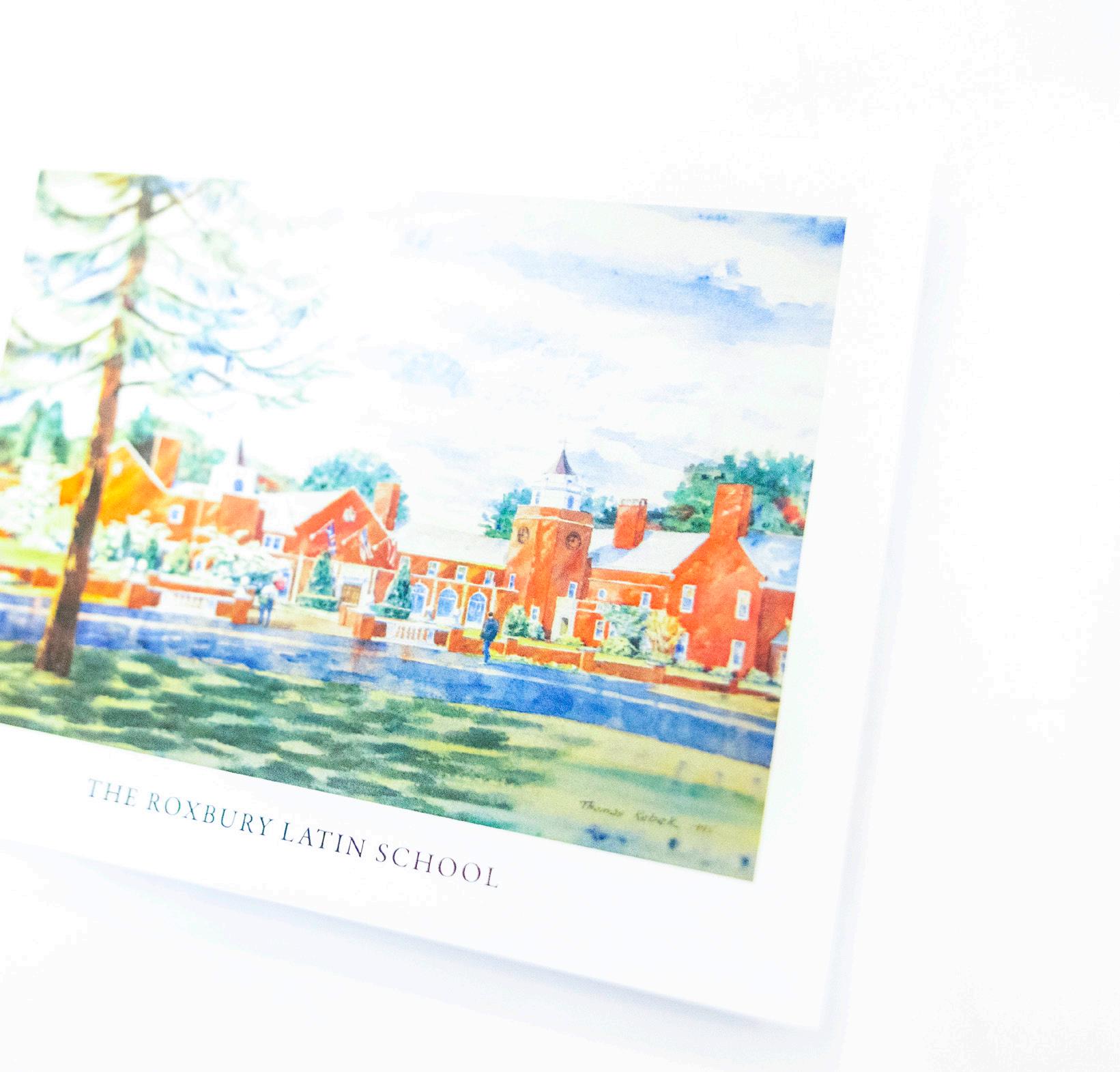
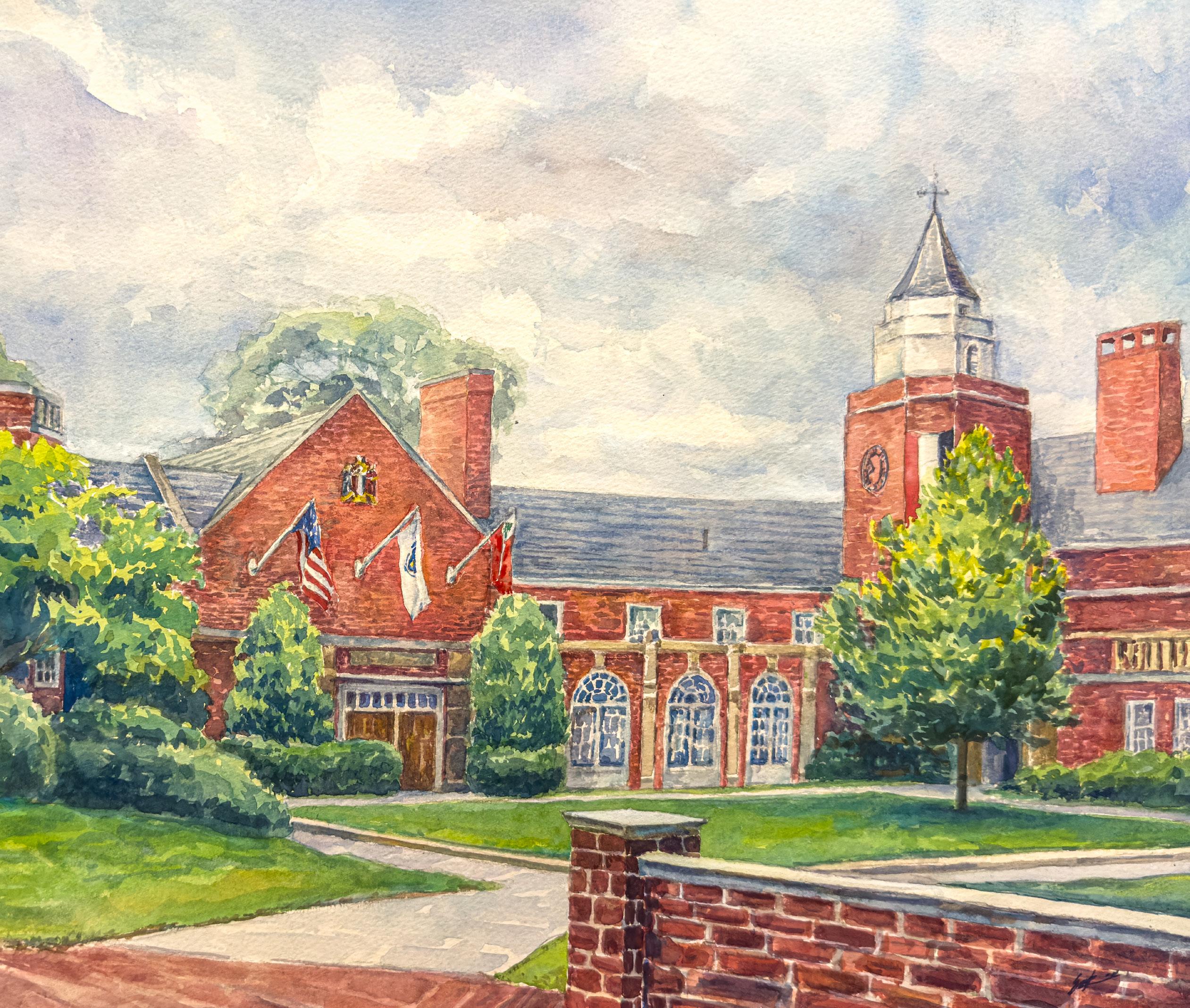
IN 1995, ROXBURY LATIN COMMISSIONED A WATERCOLOR PAINTING OF THE SCHOOL FROM THE ARTIST THOMAS REBEK, WHOSE WORK—FOR 30 YEARS NOW—HAS ADORNED SCHOOL NOTECARDS, STATIONERY, AND OTHER GIFT ITEMS. IN THOSE INTERVENING THIRTY YEARS, HOWEVER, THE VIEW OF RL’S MAIN FACADE HAS EVOLVED, DUE TO RENOVATION AND THE GROWTH OF PLANTINGS. DR. SCHAFFER DECIDED THAT IT WAS TIME TO COMMISSION A NEW PAINTING, TO BE USED AS A TOUCHSTONE IMAGE OF THE SCHOOL FOR YEARS TO COME. HE DETERMINED THAT THE ARTIST FOR THE JOB WAS OUR OWN ERIK ZOU ’19.
After graduating from RL, Erik enrolled at Harvard, where he majored in art history and statistics, and where he is currently pursuing a doctorate in art history. When Erik heard from the school about the commission, he was working in Washington, D.C., as a humanities fellow at Dumbarton Oaks—a research
institution affiliated with Harvard University—and conducting research at the National Gallery of Art. He found time to work on the painting during offdays or downtime. “I started in the fall last year, and then I finished at the end of April. So, it took me a little bit less than an academic year,” he said, on the duration of the project.
The view depicted in the new painting is the one seen upon walking up to the campus’s main entrance and schoolhouse. Erik worked on framing the image from
a few different reference photos, ensuring he could include many of Roxbury Latin’s signature elements, such as the large banner hanging from the bell tower, the three flags above the entrance near Rousmaniere Hall, and the statue of General Joseph Warren.
Erik has painted several commissioned pieces for Roxbury Latin over the years, including a collection of watercolors used in stationery for the school’s 375th anniversary, and a set of 12 panel images painted on the wall of the Bernstein Tea Room, depicting various months and seasons of the school year.
One of the particular challenges of this recent painting, he says, was capturing the brick buildings. “Red is one of those colors that is so easy to make very bright and vivid,” he explained. “Red brick in particular is a little bit more muted.” He also noted that, aside from the color, the process of capturing individual bricks is a challenge in its own right. “It’s meticulous work,” he said.
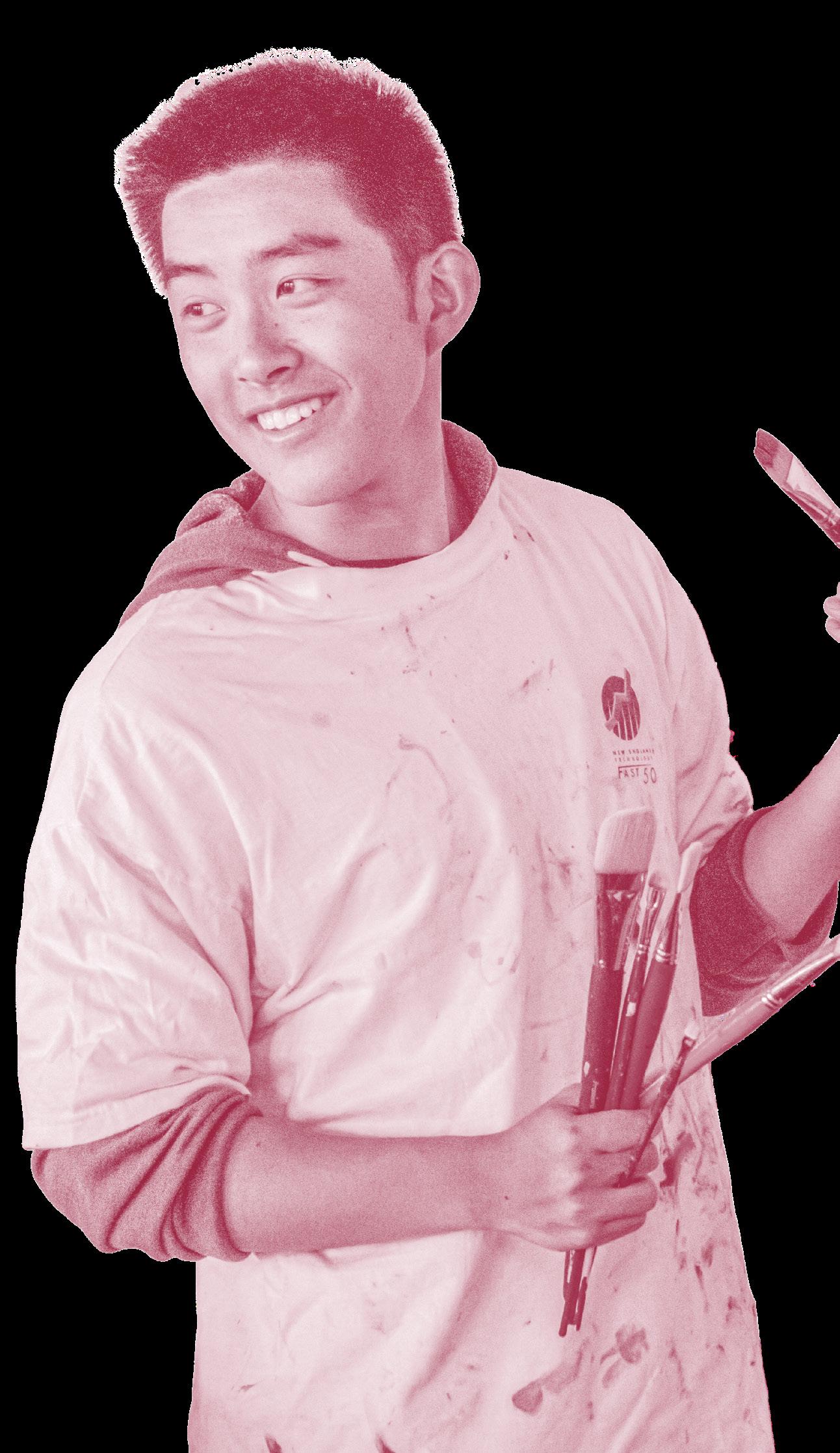
Erik’s talent as an artist covers a range of media and subjects— from people to landscapes, from animals to abstracts to still life. He was the first RL student to have a solo exhibit of his work mounted in the Great Hall, in the winter of 2019. You can see more of Erik’s art at erikzouarts.com.
Found in Translation
A POET, TRANSLATOR, ESSAYIST, AND MINISTER, NATE KLUG ’04 SHARES HIS SPIRITUAL AND ARTISTIC JOURNEY
“I think the most important thing Roxbury Latin gave to me was the permission and the foundation to become a different person,” said Nate Klug ’04 during his Hall presentation in the Smith Theater on September 9. Nate is a poet, translator, essayist, and co-minister of The First Parish in Lincoln, Massachusetts, along with his wife, Kit. Nate’s various roles and interests have stemmed from many different life experiences, and the grace he gave himself to explore things that piqued his interest.
“I went to college to play Division III soccer, and I realized after a few months that I absolutely hated being on that team—I hated having that be my main identity,” he explained. “All of a sudden, for the first time, I was no longer at the center of a community, and changing how I spent my time and who I spent it with was hard, but I was ready. Because of the breadth of my exposures here, I was ready to be translated.”
As he described, the foundation that Roxbury Latin provided allowed Nate to explore his interests and be open to continuous learning. He published work in every Forum
issue during his time at RL, but he didn’t take the time to begin digging into poetry and its varying forms until college.
“All of my roles came to me as callings in one way or another,” he said. Had he not valued and lived out the generalist model instilled in him at RL, he might not have listened to those callings and realized some of the passions of his adult life.
Many of Nate’s roles are interconnected, as art and spirituality often influence one another. As a minister, he works in a “spiritually eclectic place,” he says. It is one where individuals make up a community, rather than the community being the leading identity. Nate’s experiences of writing and translating poetry also emphasize the fluidity and openness in interpreting art. “If we want to live in a world that preserves nuance and complexity, we will look at different versions of the same text like we did this morning. We will dare to argue it out ourselves.” He noted that the members of his parish find community because they are all seeking something: “Poetry and translation rely on uncertainty and discovery,” Nate said, much like the spiritual journeys we often find ourselves on.
Nate earned his bachelor’s degree in English literature from the University of Chicago, and is a graduate of Yale Divinity School; he was ordained in the United Church of Christ in 2013. He is the author of Rude Woods, a modern translation of Virgil’s Eclogues, and two books of poetry, titled Anyone, Hosts and Guests. His poems and essays have appeared in Nation, The New York Review of Books, Best American Poetry, and elsewhere. His writing has been supported by fellowships from the James Merrill House, MacDowell, and the Poetry Foundation.
Health and Wellness
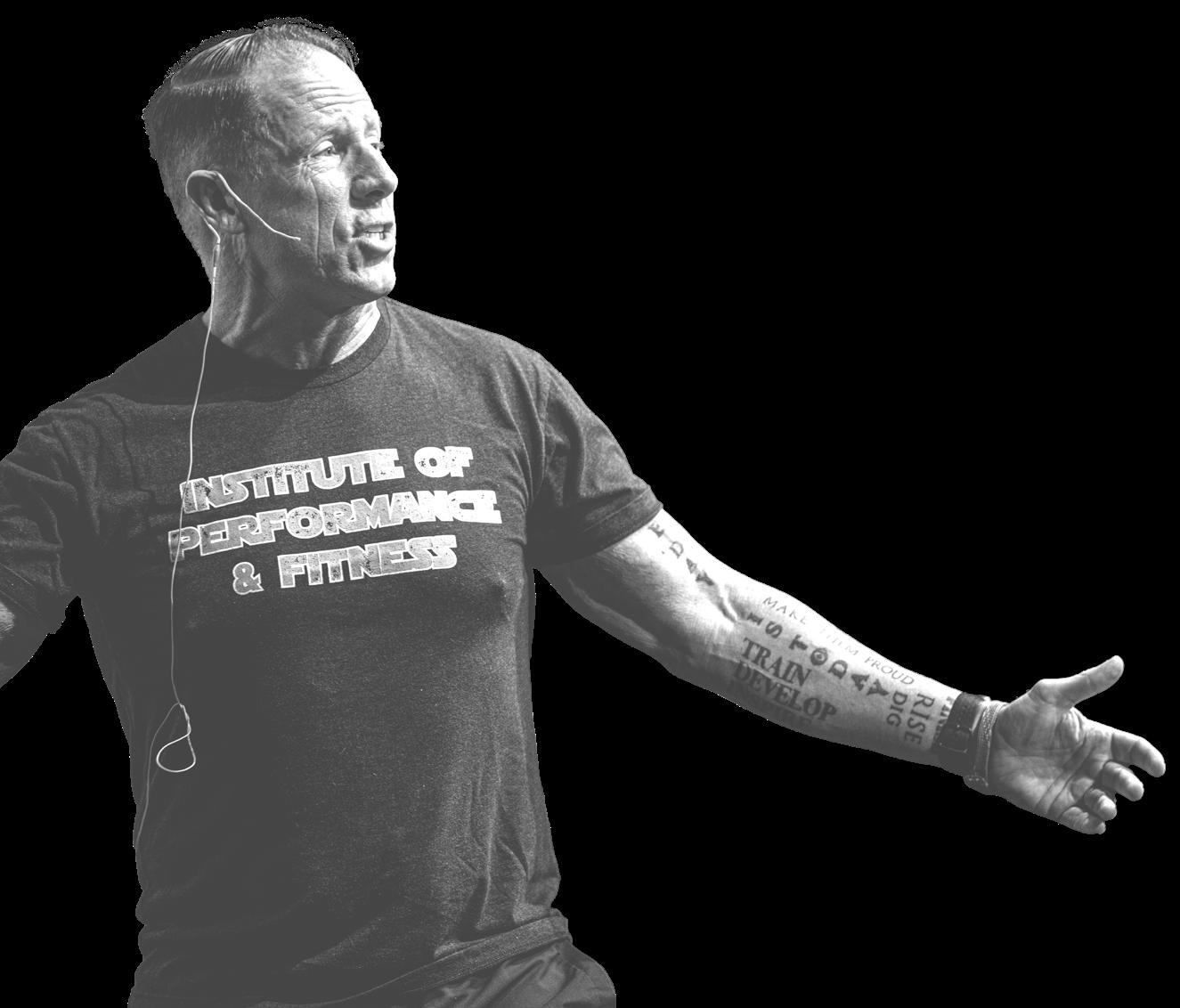
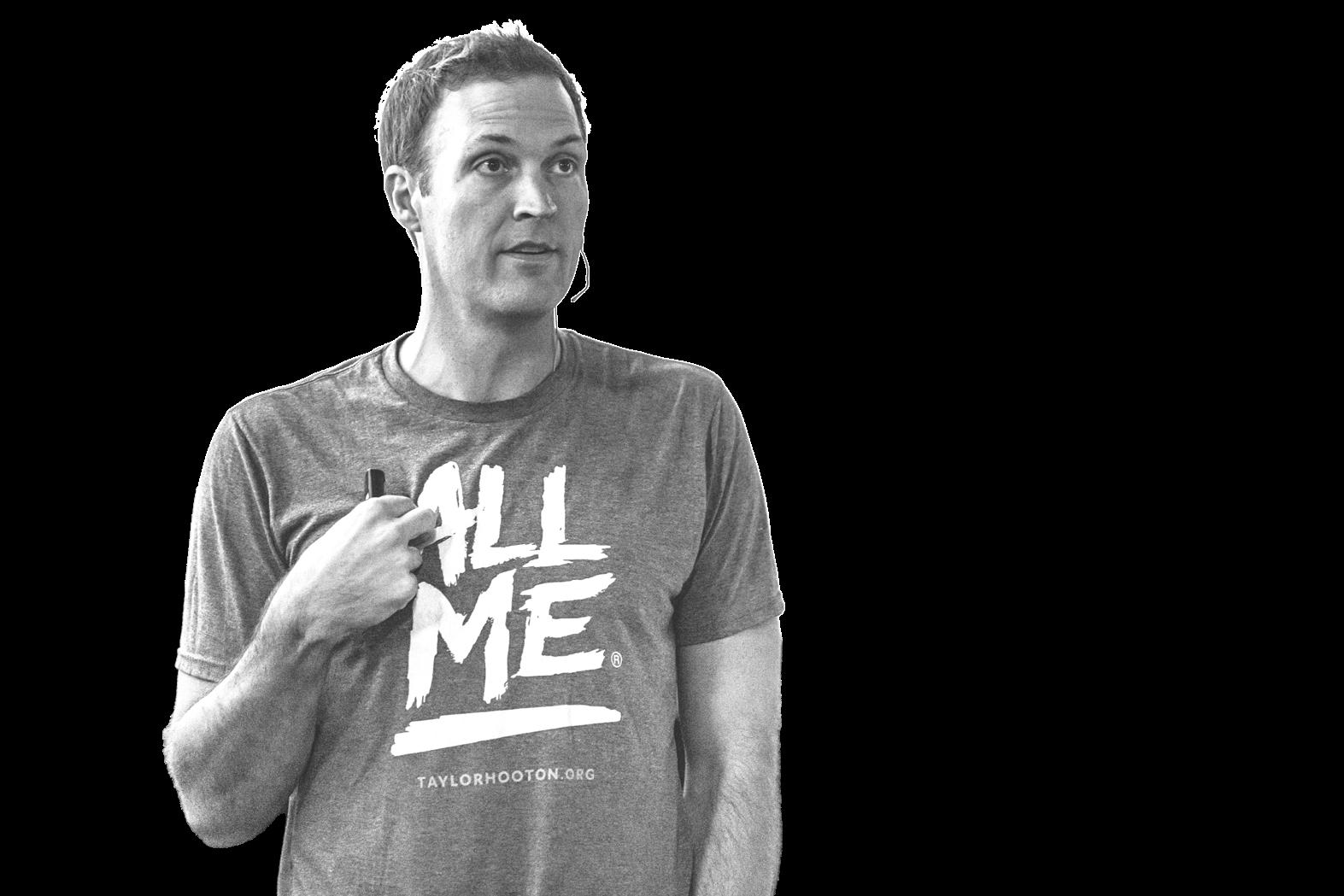
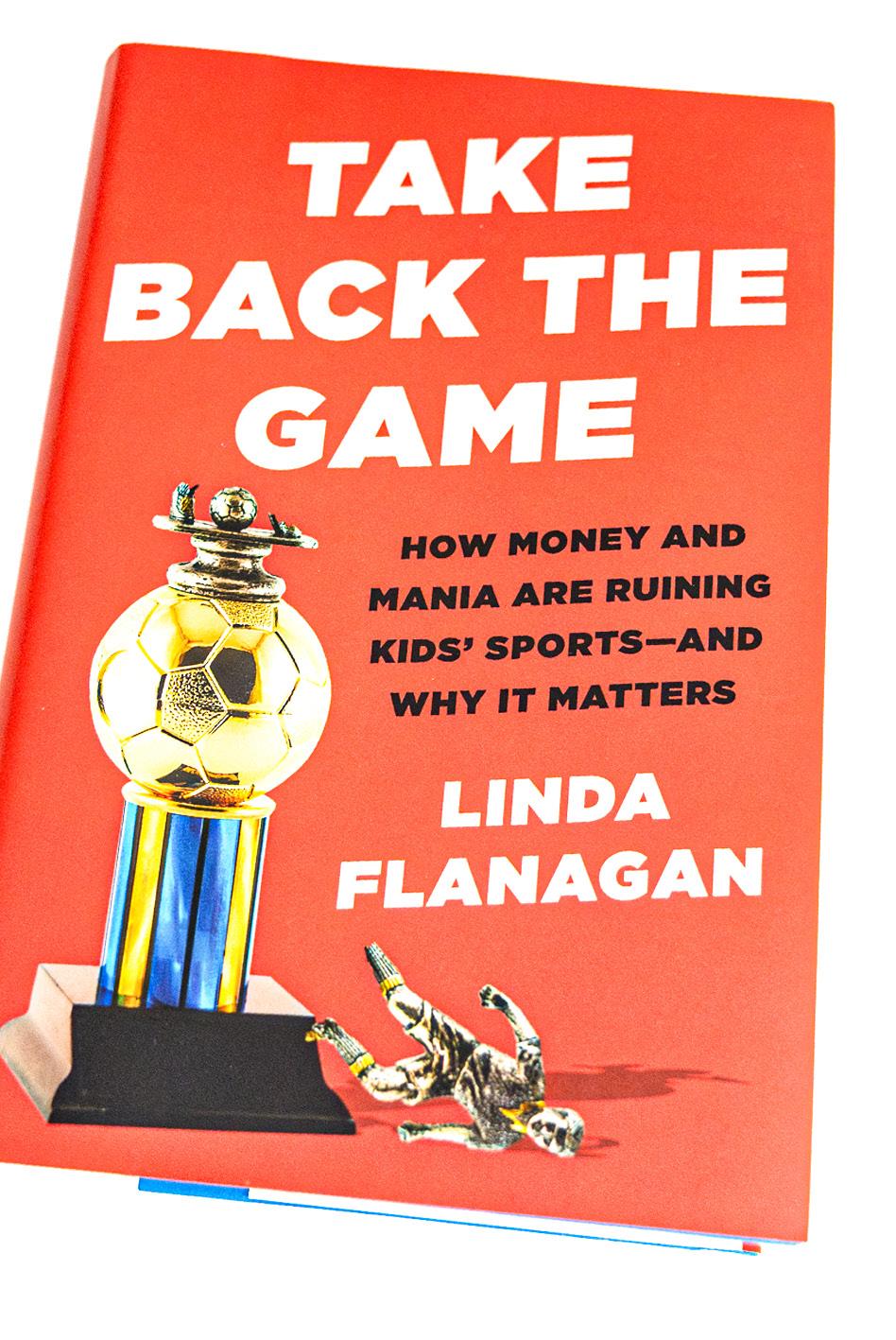
This fall, as part of Roxbury Latin’s annual Health and Wellness Hall series, the school hosted three speakers whose various expertise included physical training and the dangers of overtraining; the risks inherent in specializing in a single sport at too young an age; and the truth about supplements, energy drinks, and steroid use. On September 18, students heard from Walter Norton, Jr. on the risks of overtraining and early sports specialization. Mr. Norton has worked in the fitness industry for more than 25 years, during which he has trained some of the most successful professional and college athletes in New England, including players for the Celtics, Bruins, Revolution, BU Men’s Hockey, and Harvard Women’s Hockey. On October 20, a representative from the Taylor Hooton Foundation spoke to students in Class V through Class II about the dangers of anabolic steroid use, and the facts about supplements and energy drinks, empowering them with information to make healthy choices. Finally, on October 21, the community was joined by Linda Flanagan, whose latest book, Take Back the Game, explores how the youth sports industry capitalizes on parents’ worry about their kids’ futures, selling the idea that more competitive play is essential in the feeding frenzy over access to colleges and universities
Leading with Courage, Humility, and Purpose
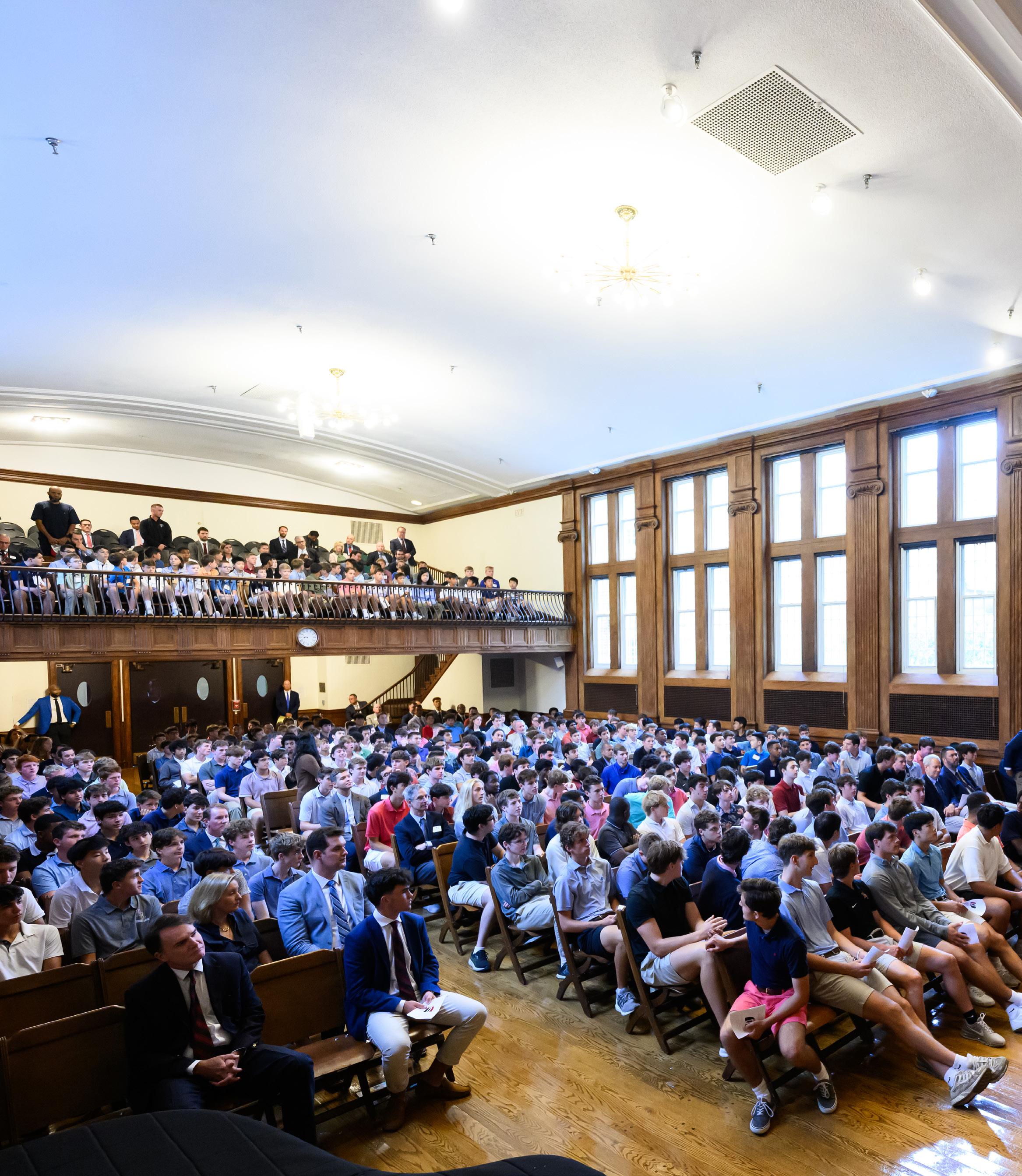
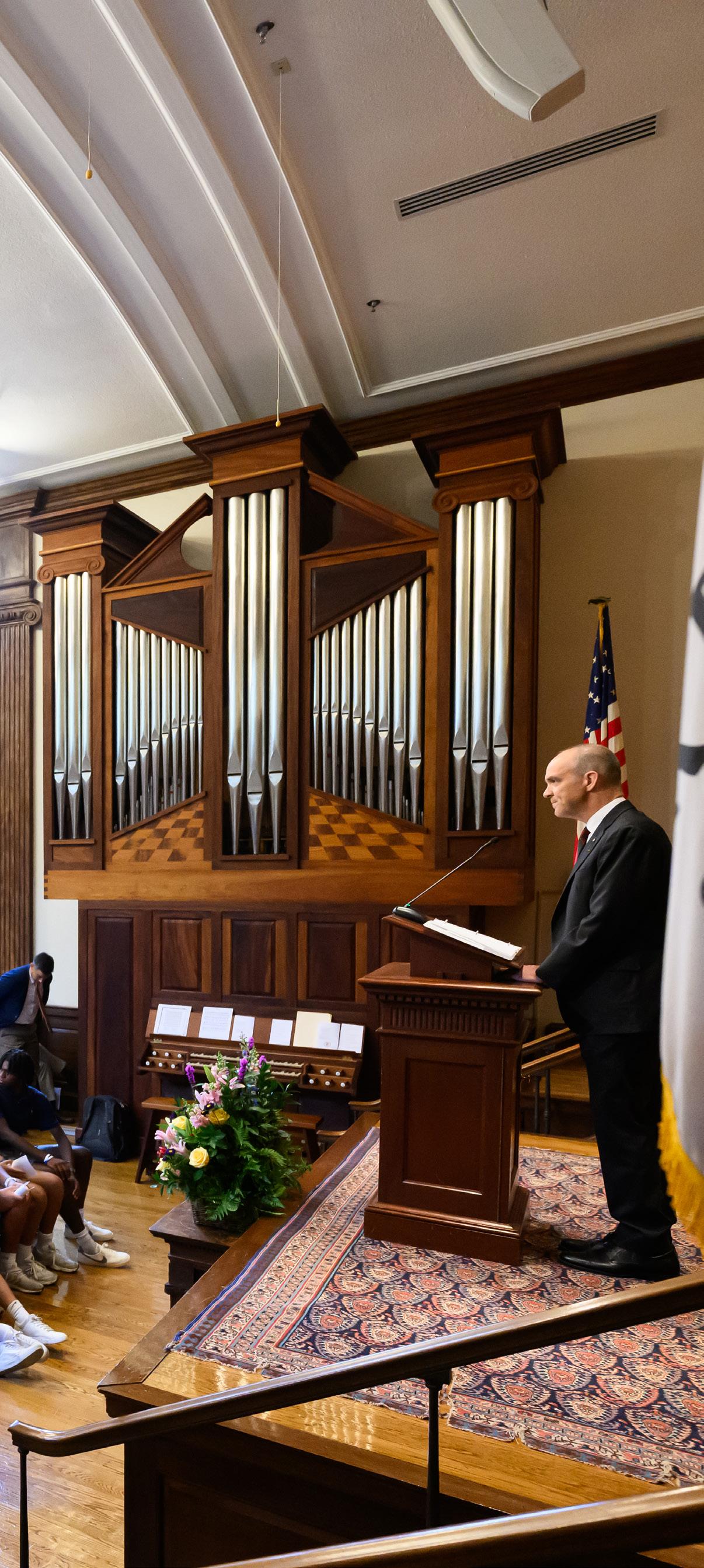
ON NOVEMBER 11, HEAD OF SCHOOL SAM SCHAFFER WELCOMED BOYS, FACULTY, STAFF, ALUMNI, AND GUESTS TO ROUSMANIERE HALL FOR RL’S ANNUAL VETERANS DAY COMMEMORATION HALL. DR. SCHAFFER EXPLAINED THE SIGNIFICANCE, HISTORY, AND ORIGIN OF VETERANS DAY, HIGHLIGHTING ITS IMPORTANCE TO OUR COUNTRY AND ITS RELEVANCE TO RL, GIVEN THE HIGH PERCENTAGE OF ALUMNI WHO HAVE SERVED IN THE ARMED FORCES THROUGHOUT HISTORY. IN FACT, SEVERAL VETERANS WHO GRADUATED FROM RL—BOB POWERS ’66, JOHN LAWLER ’75, TOM HENNESSEY ’01, AND DOM PELLEGRINI ’04—WERE IN ATTENDANCE TO HEAR FROM SPEAKER CAPTAIN ROBERT POWELL ’11.
“It’s truly an honor to be back here in Rousmaniere Hall. It’s been fourteen years since I sat where you’re sitting now, so this is pretty special for me. I want to recognize the RL alumni who’ve served in our nation’s military—in particular, my classmates from the Class of 2011: Josh Rivers, Dante Gaziano, and Thomas Buckley. You don’t often see a graduating class with four going the military route, and that’s something I’ve always been proud of. I’m grateful for the opportunity to reflect and share what this day means to me, especially at a place that’s always believed education isn’t just about acquiring knowledge, but about building character and serving others, as well.
A Brief History
Military service has been part of this school’s story for centuries. So, before I get into my own story, I want to talk briefly about one of Roxbury Latin’s earliest examples: Dr. Joseph Warren. I’m not sure whether he comes up every Veterans Day Hall, but if he doesn’t, he should, because his story is incredible. A few quick highlights from the life of Joseph Warren:
Joseph Warren graduated from RL in 1755, at the age of 14. He came back to teach here briefly, before becoming a physician and opening his own practice.
He became a respected doctor who, in the vein of his friend John Adams, treated both patriots and loyalists—a type of empathy I think we all can learn from.
He witnessed the Boston Massacre firsthand and treated the wounded.
He personally dispatched Paul Revere and William Dawes on their famous midnight rides.
He organized and led the Massachusetts militia in the Battle of Lexington and Concord.
Before that battle, he told his mother, “Now is no time for one of America’s children to shrink from the most hazardous duty; I will either set my country free, or shed my last drop of blood to make her so.”
He was commissioned as a Major General in the Continental Army, but on the eve of the Battle of Bunker
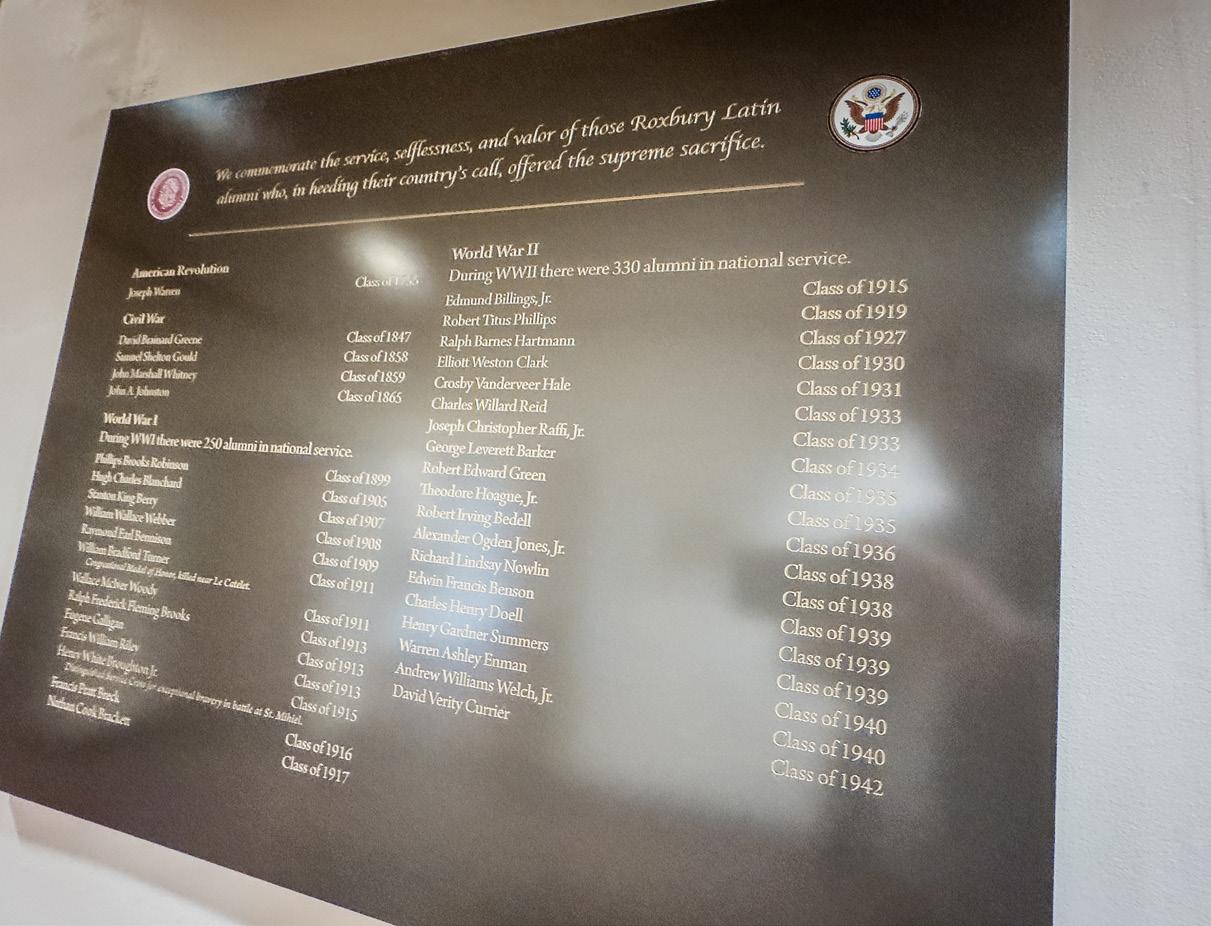
The names of those RL boys who made the ultimate sacrifice for our country are etched on a plaque, permanently installed on the first floor of the Perry Building. That plaque was a gift of military veteran Bob Powers ’66, his wife Jane, and their sons Brent and Mark Powers, both Class of 2002. After Roxbury Latin, Brent and Mark went on to earn degrees at the Naval War College and Naval Academy, respectively. We are grateful to the Powers family for this generous gift.
Hill, he asked where the heaviest fighting would be and volunteered to fight as a private on the front lines instead. He died at Bunker Hill at the age of 34 years old.
When I read about Joseph Warren, I see that he was RL through and through—smart, driven, and not afraid to step up when it mattered. And when I think about Dr. Warren and so many other RL alumni who’ve chosen to serve, I’m reminded that service doesn’t always come from some lifelong calling. It often starts with small decisions—to step up and take responsibility. I didn’t realize it at the time, but that same idea would eventually guide me, too.
My Story
So, let’s fast forward a few years. Like many of you, I started at Roxbury Latin as a sixie. I was not a particularly strong student.
Like some RL students, I had a few humbling moments—Mr. Randall’s Class IV Latin class being one of them.
But the truth of the matter is, by the time I was finishing up here at RL, I did not have some grand plan to join the military. I was not a kid who had always dreamt about wearing the uniform. Apart from my great-grandfather who fought in WWI and great uncle who fought in WWII, I didn’t have any family in the military. Like most high school seniors, I was thinking about college—and how to pay for it. I found that the Reserve Officer Training Corps program, or ROTC, was an opportunity for me not only to get a scholarship, but also to set myself up for something beyond school. So I took it. It was honestly just a practical decision at the time, but one that ended up defining the next 13 years of my life.
I decided to go to Santa Clara University, on the other side of the country, and before I knew it, I was running in formation at five in the morning and getting yelled at for my crooked salute and peach fuzz facial hair. I was studying Civil Engineering, because the Air Force required a technical major. I remember thinking that designing bridges and buildings sounded pretty cool. Soon enough, I graduated and commissioned into the Air Force as a second lieutenant.
I went in as a Civil Engineer Officer. Our job is to build and maintain Air Force bases. In a combat zone, our job is to ensure facilities are survivable and airfields are functional, so we can get planes off the ground and drop bombs on the bad guys.
My first assignment took me to Nellis Air Force Base in Las Vegas—which, I’ll be honest, is an interesting place to be as a 22-year-old with a steady paycheck for the first time in his life. I really enjoyed my time there. I worked as a construction project manager, overseeing everything from runway pavement repairs to roof replacements across the base. I also deployed to Ali Al Salem Air Base in Kuwait, where I managed the unit’s budget and got my first real taste of deployment life—including what it’s like to spend the holidays overseas.
The problem for me though, was that there weren’t many combat operations at the time. I wanted something more,
“But the truth of the matter is, by the time I was finishing up here at RL, I did not have some grand plan to join the military. I was not a kid who had always dreamt about wearing the uniform.”
something to challenge myself, so I applied for Explosive Ordnance Disposal, or what we call EOD. EOD is the military’s bomb squad. The job is simple to describe but complex to live: essentially, when something dangerous is discovered—whether it’s a suspicious package, an unexploded bomb, something that’s a threat to our troops—our team is to go in and handle it.
But you can’t just go walking onto the bomb squad. I had to get through the selection pipeline first, which was about twelve months straight of non-stop physical and mental grind: We went from burpees in our 80-pound bomb suits—which is something my back continues to pay for to this day—to sticking a blasting cap into a block of C-4 and pulling the time fuse. We went from learning how to disarm grenades, to landmines, to guided
missiles, to improvised explosive devices, to chemical weapons, to biological weapons, even nuclear weapons. It was the hardest, most stressful year of my life. I was tested every single day—physically, mentally, emotionally—but I learned what I was really capable of. So graduating was the most rewarding thing I’d ever experienced.
I was assigned to Joint-Base McGuire-Dix-Lakehurst in southern New Jersey and took command of a team of about 20 EOD technicians—some of the most capable and confident people you’ll ever meet. Most of them were older than me. All of them were what you might call “alpha personalities.”
It was the first time I was a real front-line leader, responsible not just for the mission, but for the people doing it. I had to earn their respect the hard way: by showing up, listening, and proving that I wouldn’t ask them to do anything I wouldn’t do myself. Respect was also earned in the weight room—probably another reason my back still hurts. We handled countless explosive emergency responses. A few of them include:
Going to the Jersey shore to pick up WWII munitions that were washing up onto the beach. You see, in the 1960s, our government had the bright idea of dumping thousands of munitions (including chemical weapons) into the Atlantic Ocean—never to be seen again, right? Another time, we went to Governor’s Island, off the tip of
Manhattan. The folks out there discovered their decorative civil war era cannonballs actually contained an adapter that indicated they could contain live black powder. Thankfully, they didn’t. But that didn’t stop my team from getting caught up in New York traffic in our response truck, which is laden with explosives. That was a stressful couple hours. We would also frequently support the Secret Service. Any time the President, Vice President, or First Lady went anywhere, we would augment the Secret Service by conducting bomb sweeps. I remember spending the night of the 2020 election clearing out the Department of Commerce in Washington, D.C.
Later, in 2021, I deployed to Al Udeid Air Base in Qatar. At the beginning of the deployment, we actually trained Qatari EOD technicians ahead of the FIFA World Cup, building their capacity to protect massive crowds.
But for the first couple months, it was pretty much as exciting as watching sand collect on more sand. It was hot, monotonous, uneventful. My team of 16 and I spent our days working out and training, staying sharp on our latest tactics, techniques, and procedures.
But in August, everything changed. The United States began its full withdrawal from Afghanistan, and what followed was a rapid and
unilateral takeover by the Taliban. As Afghan civilians, who had previously supported American operations, found themselves in danger, our base’s mission quickly shifted to executing a large-scale airlift operation.
Over the next two weeks, my base saw an unprecedented influx of 57,000 people. For reference, the base normally supports about 8,000 people, and those 8,000 are troops. These were families— women and children, people who had just been completely uprooted from their homes. And it was the dead of summer. I actually remember taking a screenshot on my phone: It read 115 degrees, but the humidity level read 76%. The “feels like” temperature? 140 degrees. It was hot.
With that many people packed onto a base built for a fraction of the size, problems started piling up fast. The issue of trash, of all things, became a crisis. The base’s refuse contract couldn’t handle the demand. Dumpsters overflowed. Trash bags baked in the sun until entire refugee sites were overcome by the smell. It got so bad that it was being reported up the chain, to senior U.S. officials and even to the Emir of Qatar.
So we had a choice: wait for someone else to fix it, or do it ourselves. We scrounged up four dump trucks, taught ourselves how to drive them, and got to work. For the next ten days, we rotated shifts,
collecting and hauling trash across the refugee sites. We called ourselves the “Special Operations Trash Team”—our best effort to keep that cool-guy operator image alive. It wasn’t glamorous, but it mattered. Each day, we saw the difference it made: cleaner areas, fewer flies, better conditions for the refugees.
The evacuation of Afghanistan is known to the public as a complete military failure, and in many ways it was. But, for me, it looked different. I witnessed 57,000 civilians evacuate through my base in two weeks. There were no fatalities. Actually, 13 babies were born within that timeframe—delivered by untrained military doctors in austere military facilities.
I came out of this experience with a changed perspective—not just on the legacy of my service, but on the ambitions of my career. I joined EOD expecting to disarm bombs in combat environments—the kinds of threats that defined the post-9/11 wars. Instead, I found myself leading a trash detail in the middle of a humanitarian crisis. I guess what I’m trying to say is, while my time in EOD certainly wasn’t what I expected, I am grateful it was marked by harboring innocent civilians, instead of burying friends.
After that deployment, I realized my time in the military had run its course. I’d had incredible experiences and worked with people I’ll admire for the rest of my life, but I was ready to start something
Jake Powell ’16, David Madoff ’81, Robert Powell ’11, Robert Powell ’81, Thomas Duffy ’91, Neil Duffy ’79
“Appreciate this place. I didn’t realize it at the time, but RL is different. The expectations, the teachers, the sense of community— they shape you in ways you’ll only understand later.
new, something that didn’t involve moving every few years or being halfway around the world as much as being at home. So, I made the tough decision to separate from the Air Force.
I applied to business school, was lucky enough to be accepted to Yale, and two years later, I have now joined IBM’s corporate strategy team. It’s a very different kind of mission, as I’m sure you can guess, but the same lessons still apply: teamwork, respect, accountability. Whether you’re leading a bomb squad or trying to make sense of whatever is going on with AI these days, it still comes down to people, purpose, and problem-solving.
Things I Wish I Knew
Those lessons have a way of sticking with you, shaping how you think about what really matters. If I could go back and talk to
myself sitting in one of these front rows—or way back up in the sixie gallery—there are a few things I’d say:
First: Seek discomfort. Growth doesn’t happen when things are easy. It happens when you’re out of your depth, when you don’t know if you can pull it off, but you try anyway. Whether it’s performing in Exelauno Day, despite being the “chattiest” member in the class, joining ROTC, or taking a job in an industry without any prior experience, that’s how I’ve grown.
Second: Leadership isn’t about authority—it’s about trust. People don’t follow you because of your position; they follow you because of your consistency. Show up, listen, do the work, and give credit before you take it.
Third: I’m sure you hear this all the time, but appreciate this place. I didn’t realize it at the time, but RL is different. The expectations, the teachers, the sense of community—they shape you in ways you’ll only understand later. The habits you’re forming right now—the discipline, the curiosity—those will carry you through the hardest moments of your life.
And most importantly, remember that service doesn’t just mean wearing a uniform. You don’t have to be in the military to serve something bigger than yourself. Service can be how you treat people, how you show up for your friends, how you do your job with integrity. If you lead with humility and purpose, you’ll find plenty of chances to serve, no uniform required. These lessons— about growth, leadership, and the people around you—are the ones I still try to live by. They’re also what Veterans Day reminds me of every year.
This Veterans Day, I think about the men and women I served with. I think about the people who served before. I think about 34-year-old Major General turned Private Joseph Warren, contributing to the chain of events that would win this country’s independence. And I think about you fellas—the next generation of Roxbury Latin students—who have the same potential to lead and serve.
Thank you for the honor of sharing this day with you, and thank you for remembering the meaning of service. May we all continue to serve—in or out of the uniform—with courage, humility, and purpose. Thank you.
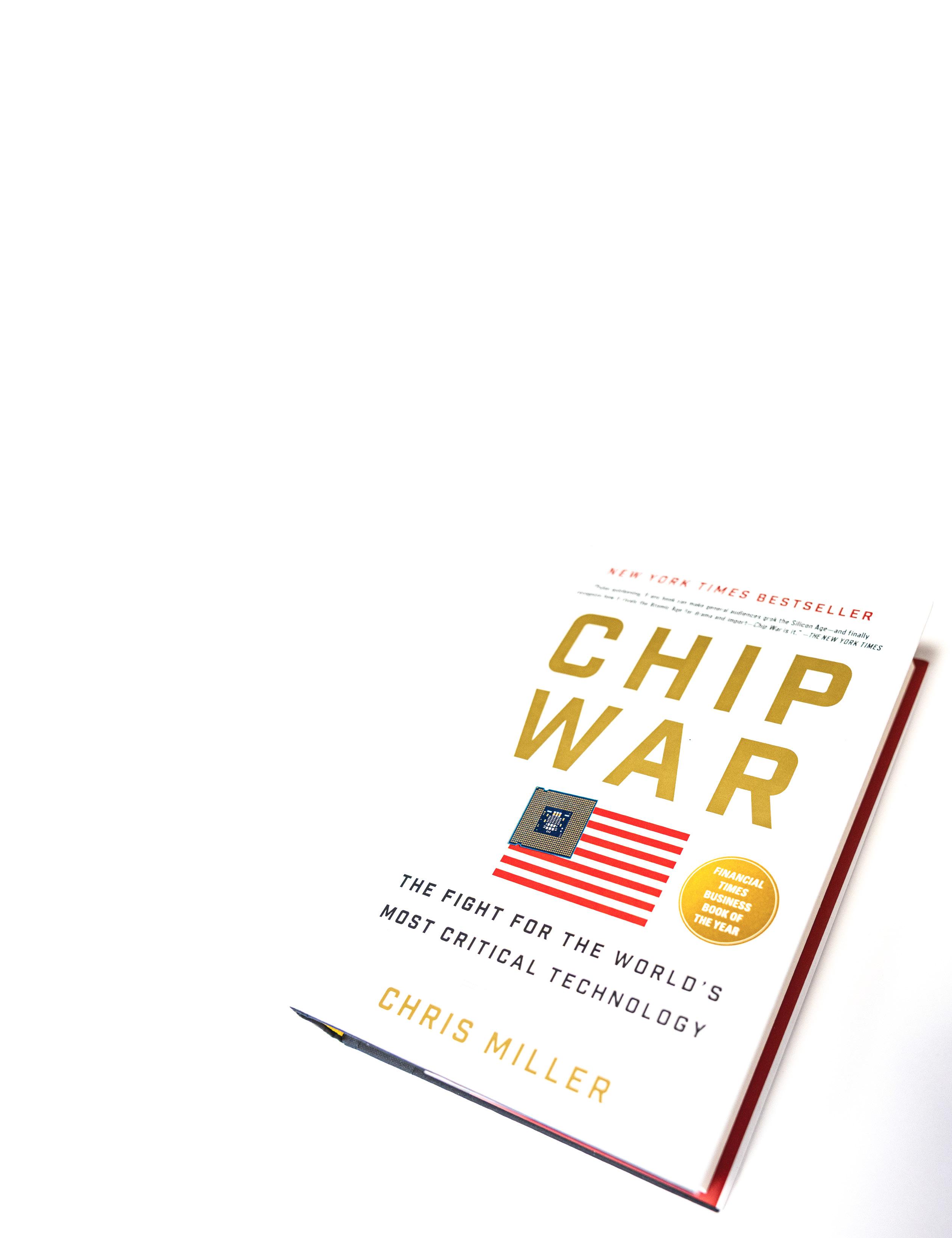
Chip War
JARVIS LECTURER, DR. CHRIS MILLER, ON MICROCHIPS AND GLOBAL ECONOMICS
Over twenty years ago, Roxbury Latin hosted the inaugural F. Washington Jarvis International Fund Lecture, now one of the school’s proudest traditions. The series of lectures is named for the man who, for thirty years, served as Roxbury Latin’s tenth Headmaster. The annual event has brought a variety of distinguished public servants and thinkers on foreign affairs, including former Secretary of Defense Robert Gates; homeland security advisor to President Obama, Lisa Monaco; and former Director of the CIA, John Brennan. On October 28, the school hosted its 22nd speaker in welcoming Dr. Chris Miller, bestselling author of Chip War: The Fight for the World’s Most Critical Technology, professor of International History at the Fletcher School of Tufts University, and nonresident senior fellow at the American Enterprise Institute.
Dr. Miller’s area of research focuses on technology, geopolitics, economics, international affairs, and Russia. His lecture specifically addressed the history of harnessing processing power through semiconductors and how society’s pervasive use of microchips impacts today’s economic and geopolitical sphere.
“Most of you probably don’t spend much time thinking about semiconductors, the tiny computer chips that power everything from your smartphones to the world’s largest data centers,” Dr. Miller stated. “I’d like to suggest to you
that you cannot understand the world today without putting computer chips at the center of your analysis.” He continued by emphasizing how most people are ignorant of the complexity and power of something so small and seemingly inconsequential to many. “A processing chip is one of the most complex and sophisticated devices ever produced by humans,” he emphasized. “Can you imagine having a processor chip with 20 billion tiny devices called transistors carved out of a piece of silicon the size of your fingernail?” This statement was met with astonishment and fascination by the audience of students, faculty, and staff.
Dr. Miller continued to explain how significantly the chip’s increased computing power, and the world’s increasing reliance on the technology—in manufacturing, but also in defense and AI systems—play into international relations
and global economics worldwide. An example is the historically allied relationship between the United States and Taiwan, where a single company, the Taiwan Semiconductor Manufacturing Company, produces over 90% of the world’s advanced processor chips, smartphone chips, PC chips, and telecoms networks, and 99% of the world’s artificial intelligence processors.
Dr. Miller is the author of three other books on Russia, including Putinomics: Power and Money in Resurgent Russia; We Shall Be Masters: Russia’s Pivots to East Asia from Peter the Great to Putin; and The Struggle to Save the Soviet Economy: Mikhail Gorbachev and the Collapse of the USSR. He previously served as associate director of the BradyJohnson Program in Grand Strategy at Yale; a lecturer at the New Economic School in Moscow; a visiting researcher at the Carnegie Moscow Center; a research associate at the Brookings Institution; and as a fellow at the German Marshall Fund’s Transatlantic Academy. He earned his Ph.D. and M.A. from Yale University and his B.A. in history from Harvard College.
Roxbury Latin offers its thanks—as always—to Jack and Margarita Hennessy for funding the annual opportunity for our boys to hear from such distinguished thinkers on world affairs over the years. Mr. Hennessy is a member of the Class of 1954 and a former member of Roxbury Latin’s Board of Trustees. Throughout their lives, he and Mrs. Hennessy have represented an unusual engagement with other nations and cultures. Throughout their lives, too, they have generously provided philanthropic support so that others might come to know and appreciate various corners of our increasingly interconnected world
Quiet the Noise
and Amplify What is Within
opening of fall term address
dr. sam schaffer
I’ve been thinking a lot about football
the past couple of days. Partly this is because of the smell of grass on a late summer evening, as the sun turns the sky orange and it just feels like August. Partly this is because you can’t walk two feet around here without hearing about Drake Maye and Mike Vrabel. Partly this is because my Instagram feed is filling up with posts from my buddies back in Georgia about their sons’ first high school football games. I even watched the livestream of my alma mater’s game on Friday night.
Football is big in Georgia, and I want you to join me on a nostalgic trip back to the Peach State in the fall of 1991. In early September of that year, the Westminster Wildcats football team traveled up to Dalton, Georgia, to take on the Dalton Catamounts. Dalton was favored in this game. They were ranked #10 in the state. They had a 10,000-seat stadium (and this was thirty-five years ago). They sold season tickets to locals. They had a radio station that broadcast the game—my buddy Pridge, who was injured, listened to the game and told us what the announcers were saying about us. Their marching band had over 100 members. They were a traditional powerhouse (and have since produced such players as a guy you may have heard of named Jahmyr Gibbs). This was toplevel high school football in Georgia.
That year, however, the Wildcats were sporting a new passhappy offense nicknamed “The Green Gun.” They also had a secret weapon: a young junior tight end named Sam Schaffer. He was hot stuff, he thought. He had played varsity as a sophomore. He had just gotten a recruiting letter from the Florida Gators, who at that time were ranked number six in the country, and would go on to win the SEC championship. He had a cheerleader assigned to decorate his locker and provide him with baked goods and candy on game days. He was a
strapping six-foot-two, 175 pounds of twisted steel and what you lads might call “rizz.” He was number 87 in the program, number one in your hearts. His vision of himself was glorious.
Anyway, this game was Friday Night Lights at its best. I wish I could translate the atmosphere to you. The electricity as we ran through the banner onto the field. The band, the crowd, the entire town out to watch. The game got off to a good start, and the Wildcats were hanging in there. In the third quarter, the game was tied 14-14, and your hero— me—got his chance. It was second down and we were on our own 30-yard line. As I approached the line, I noticed the linebacker inching up and out of position. I flashed Holden Sibley, our quarterback, the sign. He acknowledged. The ball was snapped. He zipped me a quick pass. I broke one tackle, juked another hapless defender, my buddy William Bost threw me a knockdown block, and all of a sudden there was nothing between me and glory but 60 yards.
As I sprinted down the field, thoughts began to fill my head: Wouldn’t Florida love to see this play? Maybe Georgia or Georgia Tech will get wind of it. 40 yards to go. Oh, look, the cheerleaders are going nuts. This is great. 30 yards. I wonder what the radio announcers are saying about me. They must be impressed. 20 yards. I’m so dialed in that everything seems like it’s in slow motion. I hear the team manager cheering me on. I look to my right and he is. He’s also running next to me. And then, he’s passing me. Wait, what? Is this actually slow motion or just slow? 10 yards seems like a long way now. Five yards, four, three … and “bam.” A streaking red Dalton linebacker pulverizes me from behind. And there, on the two-yard line, alongside my limp body lay my deflated dreams. We went on to score and to win the game. But there would be no college offers, no NFL contract, no adulation at all for this young athlete.
And sadly, my humiliation did not end there. In fact, on Monday morning, when we went to our 6:00 a.m. film session, things got worse. I dreaded those mornings anyway. Our coaches were relentless and remorseless in their critiques. Sarcasm was their chosen language. We usually watched the films with the volume down, so they could register their
“There is all that noise out there. But here, when we return here, we can create a place without that noise. This is one of the things that I love most about Roxbury Latin, and one of the things I love most about the start of the school year.
displeasure loudly and clearly. Yet when it came to my “play,” they turned up the volume. Strange, I thought. You could hear the crowd in the background, along with a bunch of dads who were standing by the camera. When the ball was snapped and I caught it, the whole team could hear a voice, which sounded distinctly like my father’s, begin to yell. “Hey, great catch, Sam!” he cheered, as we all listened to the tape. “Go! Go! Left! Right! Break it! Go! Go! … C’mon, Sam … C’mon, Sam … C’mon, Sam … Gaaaaaaaaawd, he’s slow!”
So there you have it. The humiliation was complete.
But, lest you think that opening Halls have simply become occasions for sharing my personal failings, there are some lessons from this moment. Some lessons that might be worth thinking about. And that might take us from Atlanta, Georgia, in fall of 1991 to West Roxbury, Massachusetts, at the start of the school year in 2025.
So, the first lesson, of course, was one of humility. When you think you are the top dog, and you believe your own hype, you might be in trouble. You might have lost your perspective.
The second lesson, though, is the one I want to talk about— and may explain how I lost that perspective. It’s about the noise. All the noise that was going through my head. All the distractions, all the things competing for my focus. Rather than listening to it, I would have been better served by quieting that noise. Letters from colleges. How I might look to cheerleaders. Thoughts of radio announcers. And so on. Ultimately, it may not have made a difference to whether I scored or not—I was slow. But maybe if I had focused on the task at hand, if I hadn’t been thinking about that other stuff, if I had quieted the noise, then maybe I would have cut one way, or varied my speed, or reached deeper inside for a burst. But I let the noise distract me from the goal. It was a valuable lesson.
And so, as we start this new school year, as we contemplate all the great things in store for us, I want to encourage all of us to
“Quiet the Noise.” There is a lot of noise out there. More noise than ever. And I hope that as we arrive back on campus, and as we take on this new school year, that we can use our time together at Roxbury Latin as a way to quiet that noise, focus on what is truly important, and have a great year.
What is “noise,” by the way? It’s worth considering. Noise, in its most basic definition, is unwanted sound. It can be unpleasant, loud, or disruptive to one’s hearing. From the physics side of things, there is actually no distinction between noise and desired sound—they are both simply vibrations through a medium. The difference arises when the brain receives and perceives those vibrations.
There are many types of noise, it turns out. In sound engineering, “audio noise” can be static in a transmission that needs to be tuned out. It can be classified as white noise or pink noise or blue noise. There is “occupational noise,” which can be harmful, such as loud sounds in the workplace like a mine or a welding company or a quarry. There is “noise pollution,” which can occur in urban areas near those airports or construction areas or highways. Or, according to my daughter, when I fall asleep on the couch when we’re watching TV on Friday nights (and she kicks me and mutters, “Dad, can you just stop breathing!”). There is that sort of “cacophonous noise” that comes from putting together dissonant chords— like when my mom used to bang on the wall and yell, “Are you playing that noise again? Turn down that radio.” There is “artificial noise” that is created intentionally, such as at athletic contests. Yelling during free throws, piping in extra crowd noise when quarterbacks are calling audibles. Cowbells, vuvuzelas, thundersticks.
Noise can be harmful physically and mentally, obviously, and we try to find ways to reduce it: The 1972 Noise Control Act, for example, which established federal regulations regarding noise. Local laws against the use of gas-powered leaf blowers. Altered flight paths away from neighborhoods. Unsuccessful league bans on cheering during free throws. Ear plugs.
“ Stop for a moment and cherish what we have here. If your own internal noise gets too loud, take a break. Pause and reflect. Take a breath. That may help you make a good decision rather than a bad one.
Noise can take other shapes too, beyond sound, in the form of any sort of unwanted, or troublesome, or random, or problematic signal. There is “image noise” in digital photography, when extra or distorted pixels appear. There is “gradient noise” in computer graphics from overlaid lattices of random dots. There is “atmospheric noise” caused by lightning discharges. There is “photon noise” in material science, which arises from a random exchange of energy between a thermal mass and its surroundings. Noise appears especially in mathematics in the form of “statistical noise,” where random errors in data creep into results and can distort conclusions or predictions.
In these areas, too, we try to sift through the noise. Nate Silver, in his book The Signal and the Noise, talks about how to build mathematical models using probability and historical data to cut through the noise and make accurate predictions in areas
from political polling to baseball to poker to the 2008 financial crisis. In a book on behavioral economics called Noise: A Flaw in Human Judgment, professors Daniel Kahneman, Olivier Sibony, and Cass Sunstein write about how noise arising from cognitive biases, group dynamics, and emotional reactions leads to poor decision-making. They suggest “noise audits” and “decision hygiene” as ways to reduce the noise so we can make better judgments.
One problem all these authors note, however, is that the amount of noise is increasing. Information—false and otherwise—is being produced at quantum speeds. Generative artificial intelligence is adding to it. Unwanted sounds, distorting voices, conflicting signals, distracting information are harder and harder to tune out. The cultural noise. The political noise. The podcasts and livestreams. The opinions and counteropinions and trolls. The news outlets and blogs. The buzzing in your pocket of a new message. The inane TikTok video. The curated Instagram pose of the impossibly attractive and accomplished young person. The Snapchat filter. The loud sports prognosticator. The know-it-all, homegrown influencer. All this is noise. It can be overwhelming.
And that’s where I return to Roxbury Latin. There is all that noise out there. But here, when we return here, we can create a place without that noise. This is one of the things that I love most about Roxbury Latin, and one of the things I love most about the start of the school year. Roxbury Latin is a place where we can come, where we can be with each other, where we share a common mission and a common task, and where we can focus on that task. Without the distractions and without the noise. On the one hand, yes, summer can be a time of relaxation and a time to unwind and restore. That is good. On the other hand, it is a time away from each other, a time when the outside noise can creep in. Here, back together at RL, we can distill that noise.
Roxbury Latin allows us to focus on what is important. We believe in character, that what matters most is the type of person you are. We believe in honesty in all dealings, that in our brotherhood, trust and honor and integrity are the most valuable things. We believe in the life of the mind, where the intellectual pursuit is laudable and worthwhile, and we are unashamed to say so. We believe in service to others and
that “from those to whom much has been given, much will be expected.” We believe in the value of a “sound mind in a sound body,” that it’s important to play sports and compete physically. We believe in the gift of making music, and doing it together. We believe that it’s important to be generalists, that it is best to learn and achieve broadly, to view the world through the multiple lenses of the classicist, the humanist, the mathematician, the scientist, the linguist, the athlete, and the musician. We believe in being democratically gathered, in the beauty of our different perspectives and backgrounds. We believe in hard work, in discipline and time management, in challenging ourselves to excel, in setting the highest standards for ourselves. We believe that there are many ways to be a boy, whether as a scholar, or a debater, or a certamen competitor, or a Glee Club singer, or a hockey player, or a tech tutor. We believe in face-to-face interactions, in personal relationships, in conversations between boys and adults. We believe in all these things, and we do our best to reach them. This is who we are, and this is what this place affords us the space to take on.
And frankly, there is a lot of noise out there that runs counter to those beliefs. Noise that tells us that to specialize is the best thing, that to focus our body or mind on a single pursuit at an early age is what leads to “success.” Noise that says that education is for the purpose of a return on investment. Noise that says it’s okay to cheat, as long as you win, that short cuts are a good substitute for hard work and deep learning. Noise that says human relationships should be transactional, that the rule of law is meant to be circumvented, that checks and balances are meant to be skirted. Noise that says that what you look like or how fast you can cut someone down is more valuable than building someone up. Noise that says that where you go to college is the most important thing, more important than who you are. And on and on and on.
But here, we can focus on culling that noise. On finding our way through it. That’s not easy. We have a lot going on here. A lot to take care of. Learning is hard. Being a generalist is hard. Meeting high expectations is hard. But it’s also worth it. It’s engaging and wonderful and right. And in order to do all those things, we need to focus. And in order to focus, we need to quiet that noise.
When I say “Quiet the noise,” I’m not saying that we ignore the outside world. Far from it. We want to engage the world, and we do. We serve our community. We travel and immerse ourselves in foreign countries. We bring speakers to our campus, and we send scholars and competitors around the country. We make connections, and we welcome a broad and diverse pool of thoughts and opinions. That’s what makes us strong.
And our job as a school is to help you with this. We want to equip you, as best we can, to discern what is meaningful from what is noise. To make good judgments. To ask the right questions. To recognize hallucinations. To assemble and analyze and conclude. We want you to recognize, too, that not everything is black and white, that not every question has an easy answer. That there is value in embracing the gray. But in order to distinguish those signals, we sometimes need to reduce that outside noise. Whether that involves removing a distraction from a free period so you can talk to a friend or play a game or study, or providing a space where you can argue and debate and make mistakes without the disruptions of the outside world. Our goal is for you to learn the skills to discern the signal from the noise. To inhabit the values to make the right decisions. To cultivate your spirits as well as your minds.
I’ll say that sometimes what we do here can be loud. It can be messy, and joyfully so. Like when we are arguing with each other in the Student Center or the Refectory. Or discussing The Great Gatsby in English class. Or debating the future of AI in a Community Forum. Or “riding the rollercoaster” in RL Nation. But that’s volume and vigor and voice. Not noise. It’s productive and it’s us, and it’s face-to-face and it’s relational, and it works because we share common values.
But noise can show up here too. Even as it gets loud and messy, and even as you seek to resist the outside noise, unwanted sounds can creep into our lives at RL. And I want to encourage you this year at times, when you sense that’s happening, to pause. Stop for a moment and cherish what
we have here. If your own internal noise gets too loud, take a break. Pause and reflect. Take a breath. That may help you make a good decision rather than a bad one. Just like when a hitter steps out of the batter’s box if he’s feeling uncomfortable. Or a coach calls a time out. Or a conductor smiles and tells his singers to take a deep breath. Those are all ways of quieting the noise. Or maybe take a physical pause. Enjoy this campus around us. Take a walk with your advisor. Eat lunch outside. Pause on the slog back from practice with your friends to admire the sunset. Do this alone and do this with others. There will be a lot going on this year—and it will be great—but it’s also worth catching your breath in the moment.
Good School deserves to be call’d the very Salt of the Town,” he continued. “A woeful putrefaction threatens the Rising Generation; Barbarous Ignorance, and … Outrageous Wickedness will make the Rising Generation Loathsome, if it have not Schools to preserve it. But Schools …Those would be a Glory of our Land.”
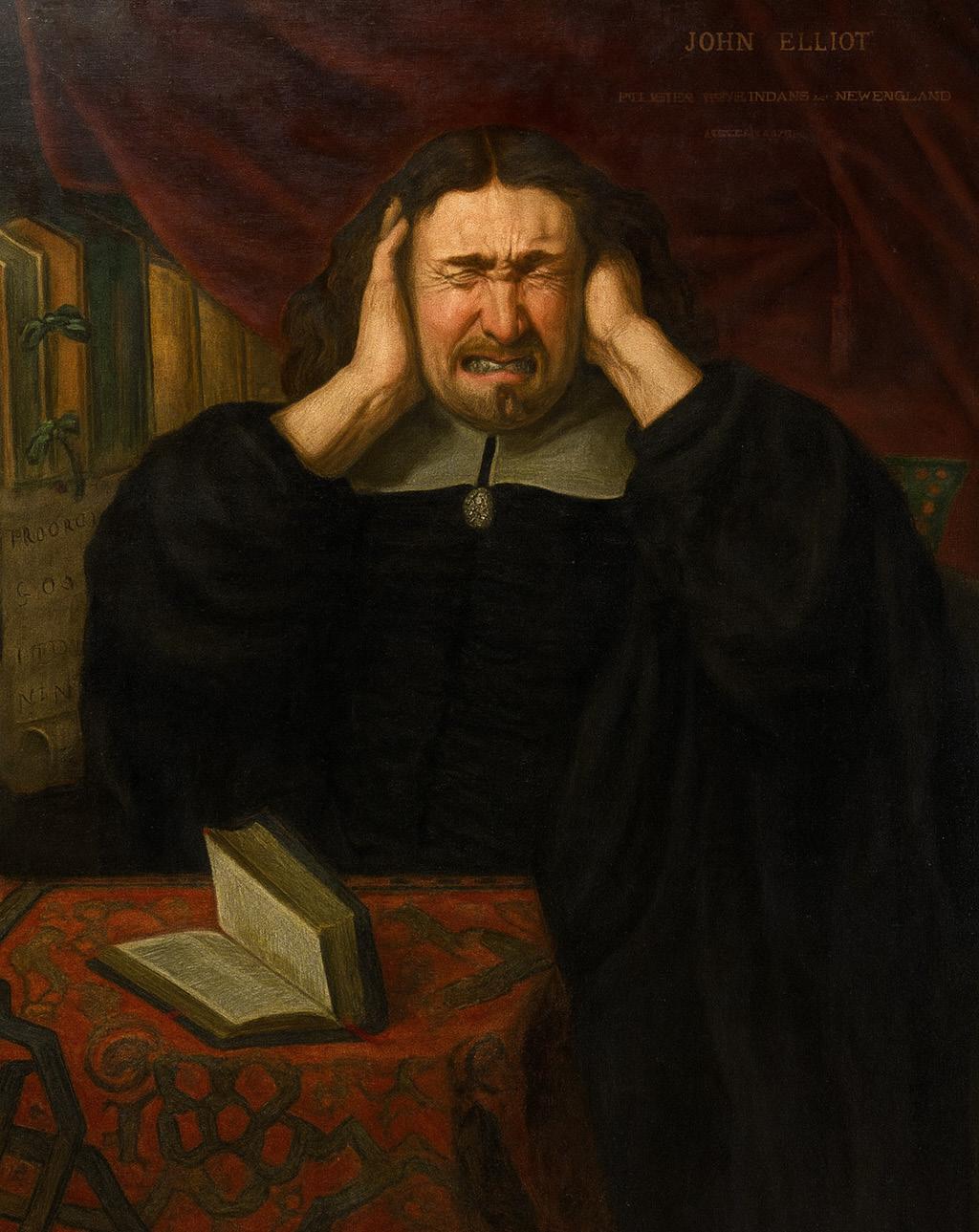
And finally, I’ve been ruminating this summer on a description of Roxbury Latin that feels relevant here. As I read Reverend Jarvis’s history of the school, and as I’ve perused speeches and scripts and past Newsletters, I’ve seen RL described as a “nursery.” It’s a description that caught my eye, because it’s one we wouldn’t likely use these days to describe a school with twelfth graders in it. The phrase, it turns out, comes from the famous Puritan clergyman and author Cotton Mather, who wrote a biographical sketch of John Eliot in his 1702 Magnalia Christi Americana. As he described the school that Eliot had founded—our school—and as he praised it, Mather wrote that he considered putting the “title of Schola Illustris upon that little nursery.”
As I said, it may seem strange to us today to use that word to describe this place. “Nursery” makes us think of a nursery school and babies and little kids and maybe St. Theresa’s. But for Mather, this was the highest compliment. He called families and schools the “nurseries of all Societies.” And what he meant by a nursery was a place where young people were nursed and strengthened to be good and godly citizens. “There are many points of a Good Education, that we should bestow upon our Children,” he sermonized. “They should Read, and Write, and Cyphar, and be put unto some Agreeable Callings.” Indeed, in his mind, a school was a place where young people could learn how to resist the outside temptations that could distract them from right living. “A
The word “nursery,” naturally, comes from Latin nutrire, which means “to feed, to support, to nurse, or to foster.” It’s the same root as our words “nurture” and “nourish,” and there, I think, is the best reference to Roxbury Latin. This is a place where we can nourish our minds, our bodies, and our spirits. We are a “nursery” in that sense, a place as Mather envisioned where young people are nourished and educated. Not as little babies, but as young men who will be citizens of this country and this world. Perhaps the analogy of a plant nursery fits, as well. This, like plant nurseries, is a place where young trees are raised and cultivated and then transplanted, that they may flourish elsewhere.
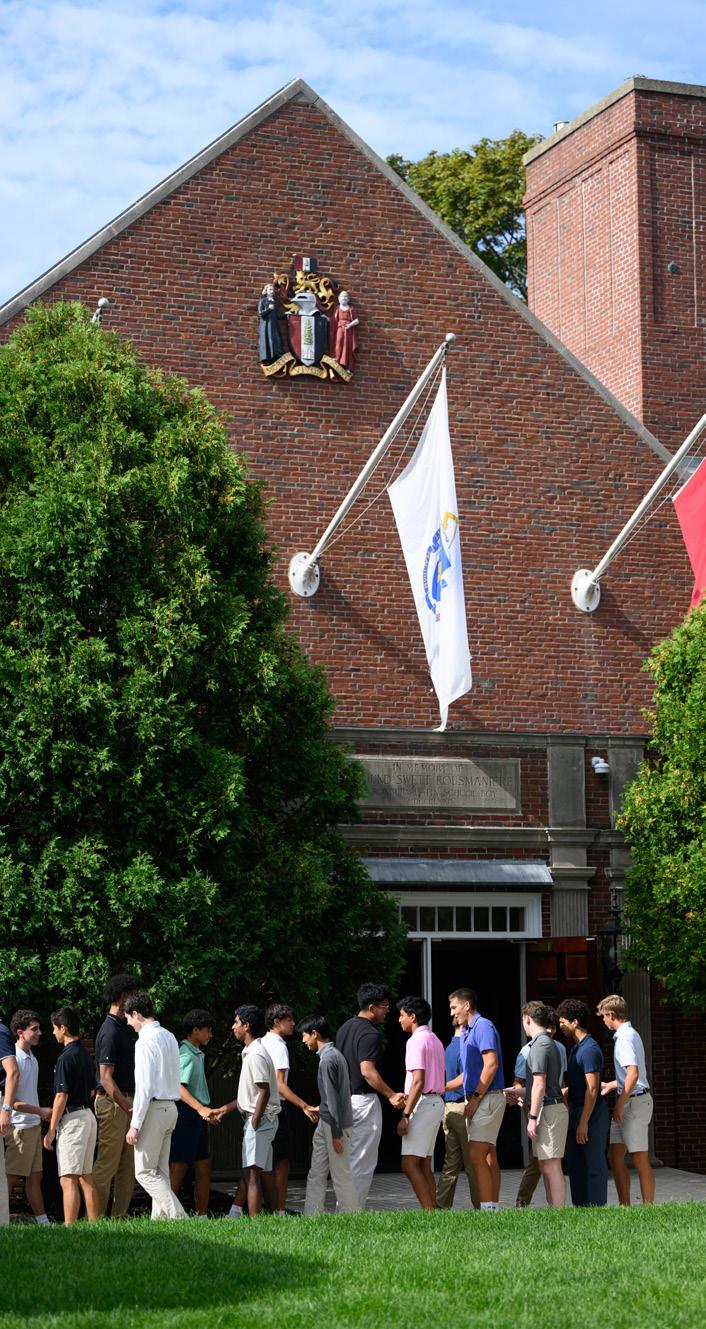
That is what this place is. It’s a nursery for young men. It’s a community of scholars and athletes and musicians gathered for a common purpose. Last year, I spoke of us as an Unum composed of a Pluribus, one school made of many people, one community composed of many small acts. I talked about the handshake as a symbol of that community, a grasping of agreement and equality. This morning, I am talking about this community as a physical place and as a mental place. As a nursery. As a sanctuary where we can collect ourselves, quiet the noise, and focus on what is important, on what is good and right and true.
And as we start this new school year, as we welcome each other back to campus, as we shake each other’s hands and embark upon the journey of the 2025-2026 school year, I want you to have a most wonderful year. I want to encourage you to quiet the noise so that you can nourish your mind and your body and your spirit. I want to encourage you to quiet the noise, so that you can amplify what is within
Thanksgiving Feast
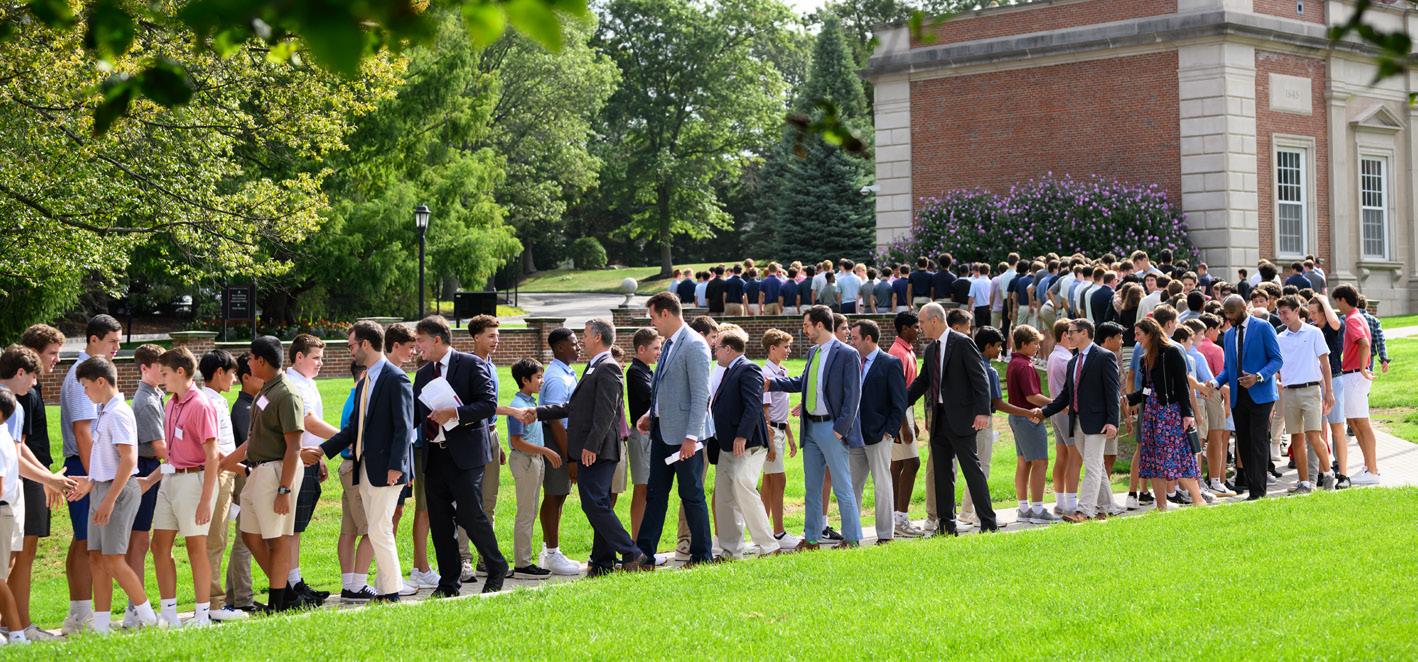
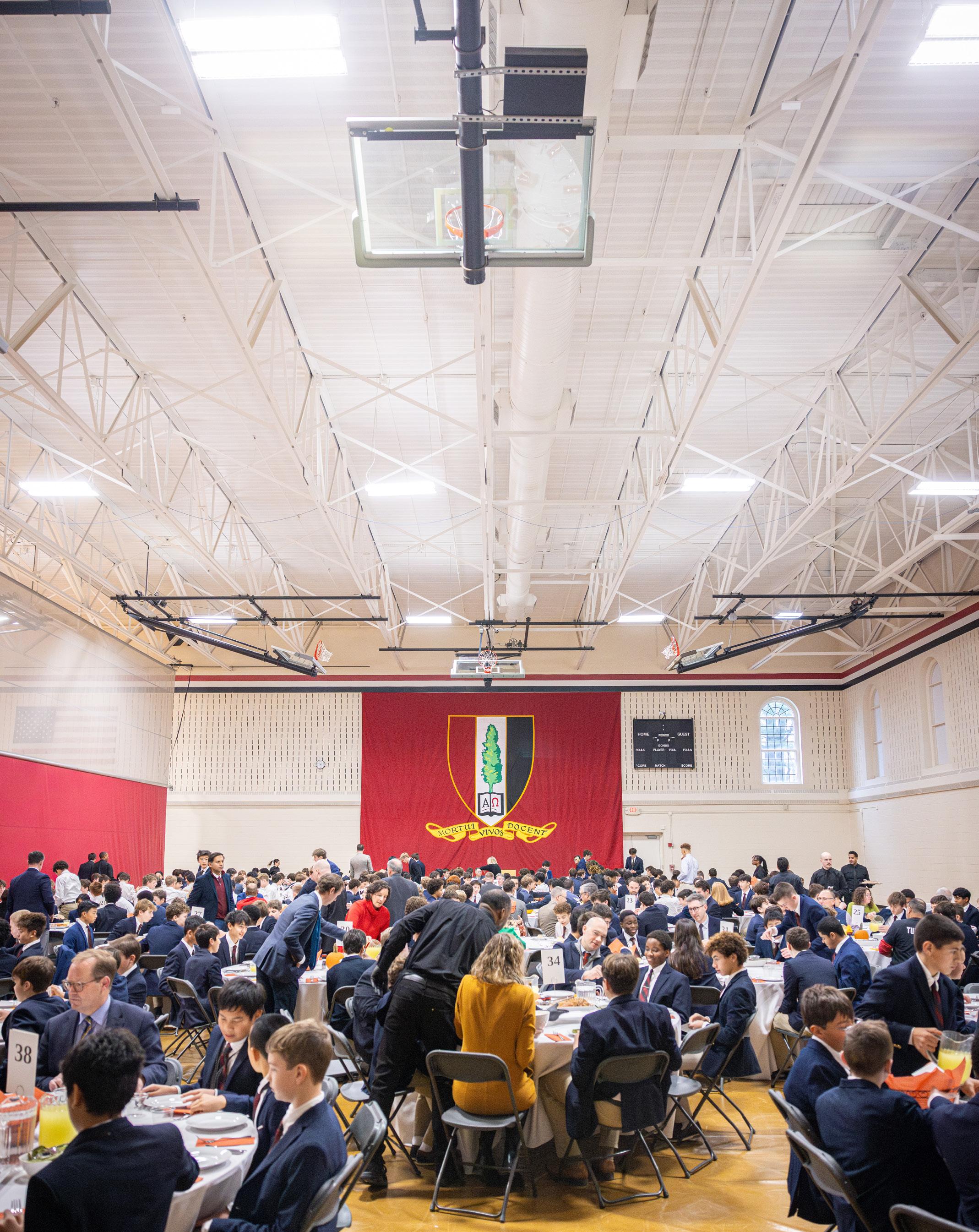
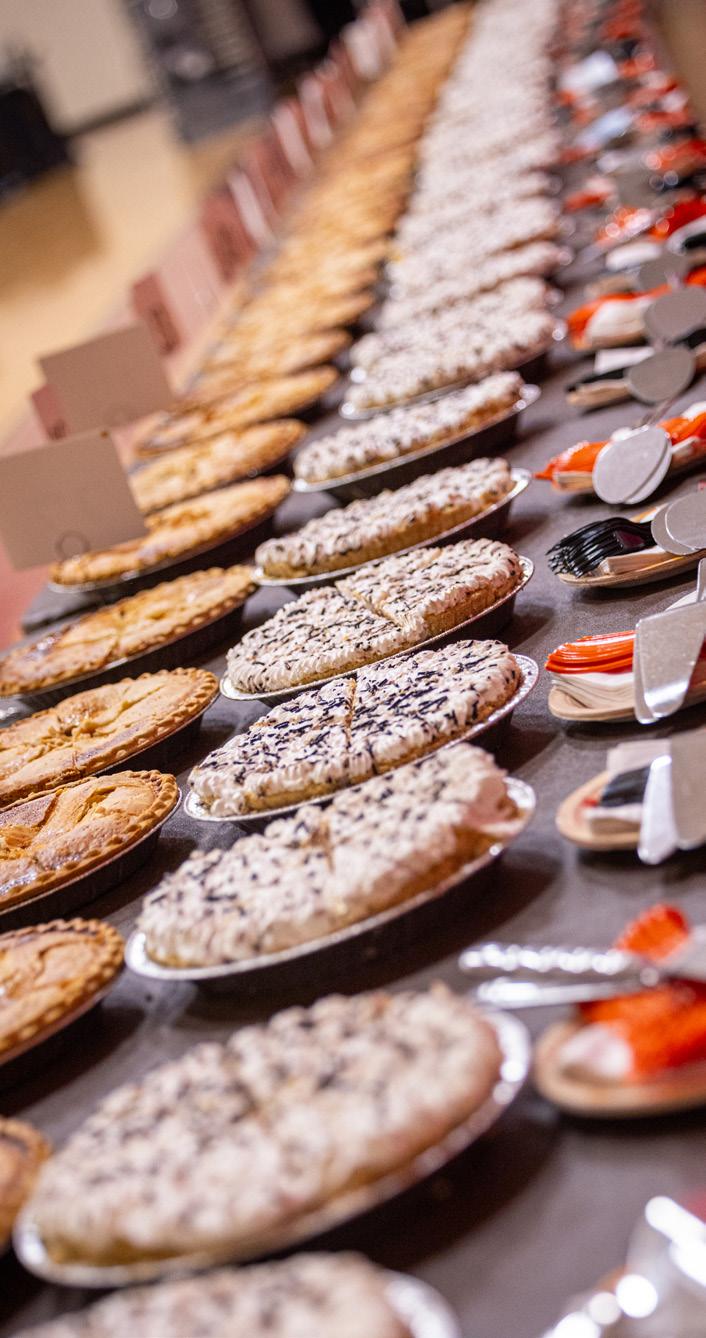
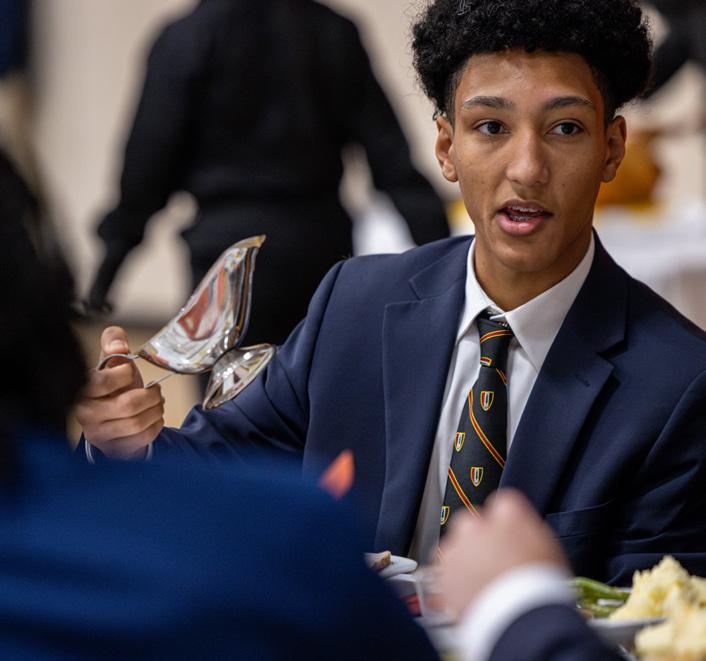
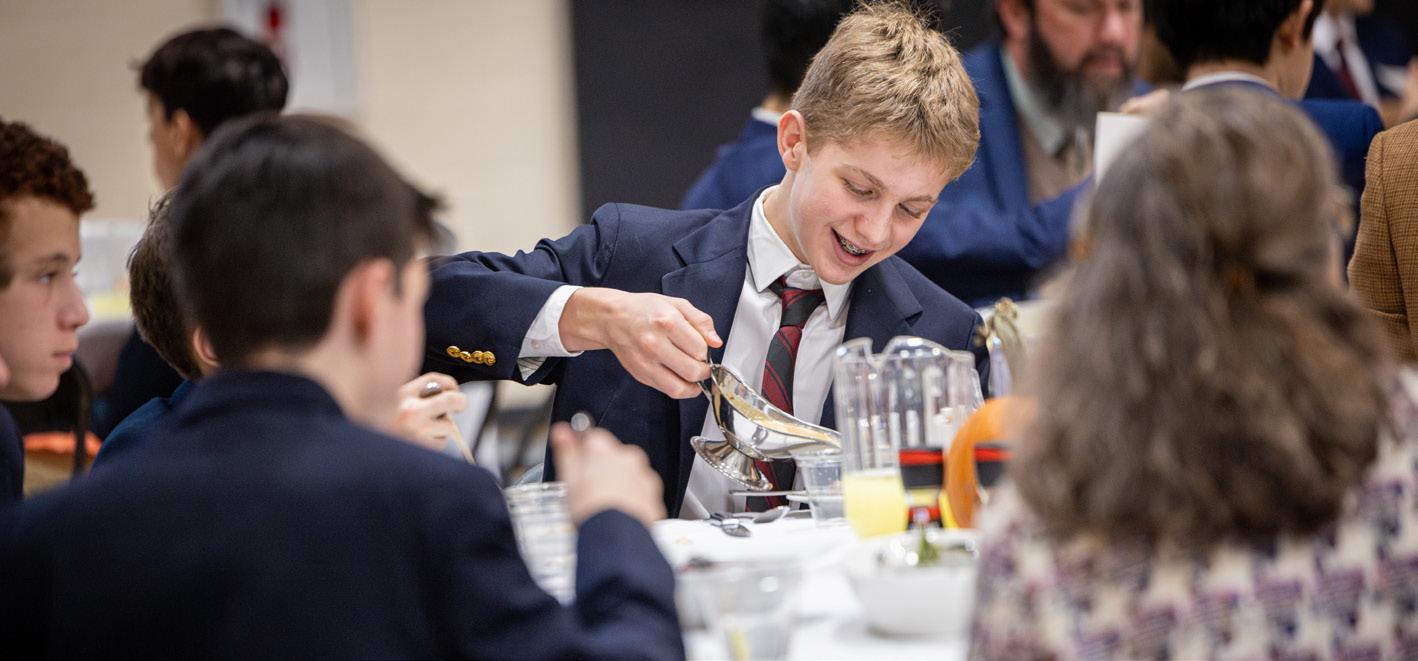
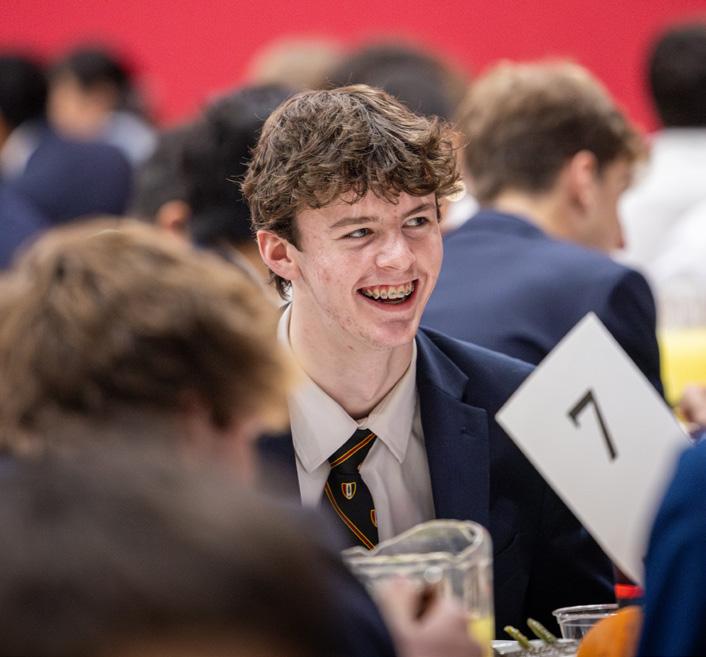
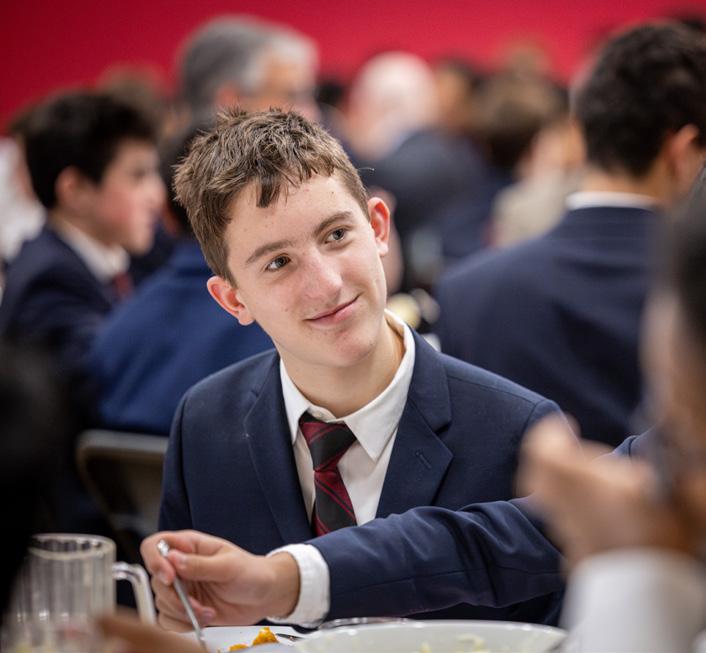
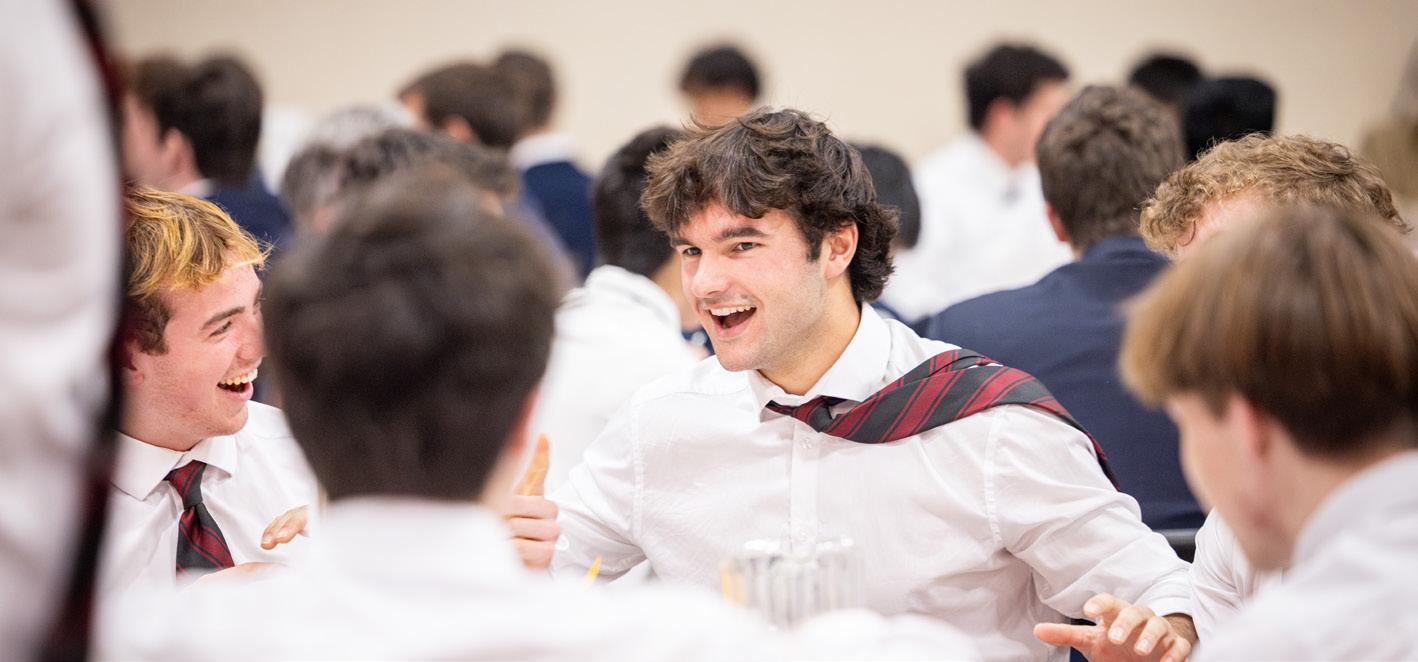
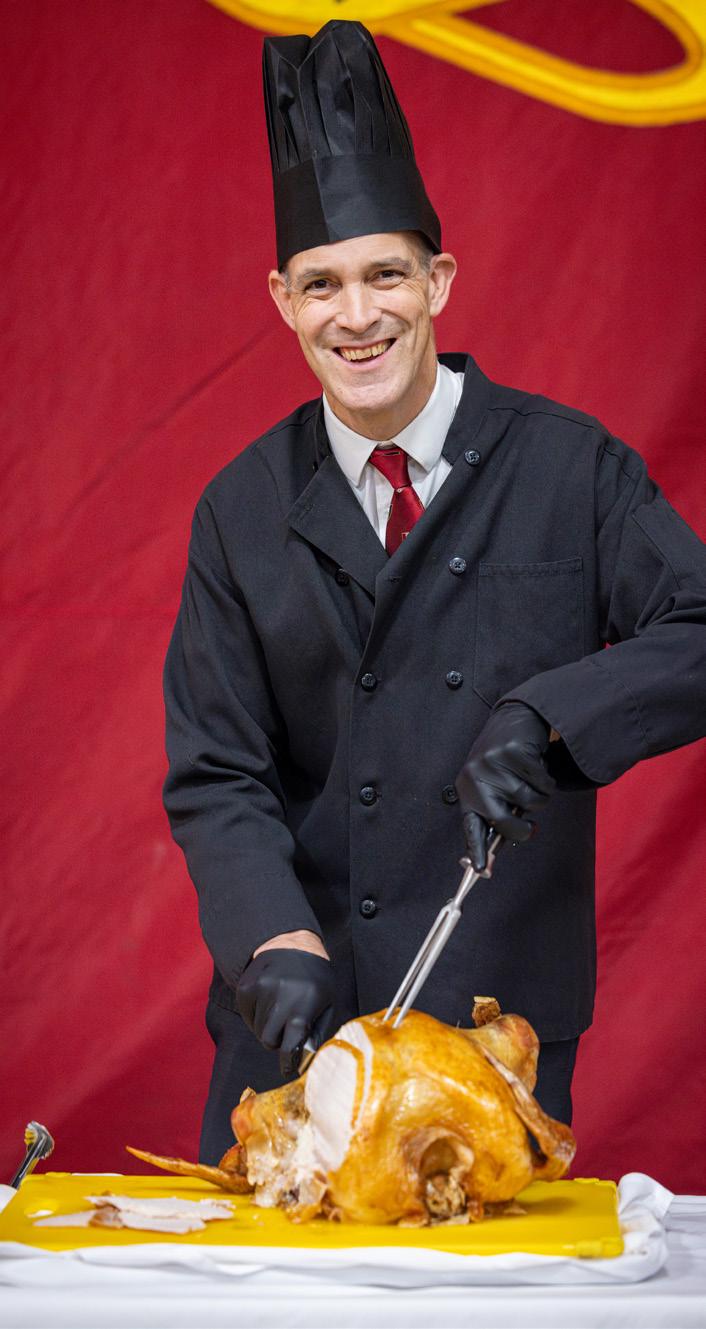
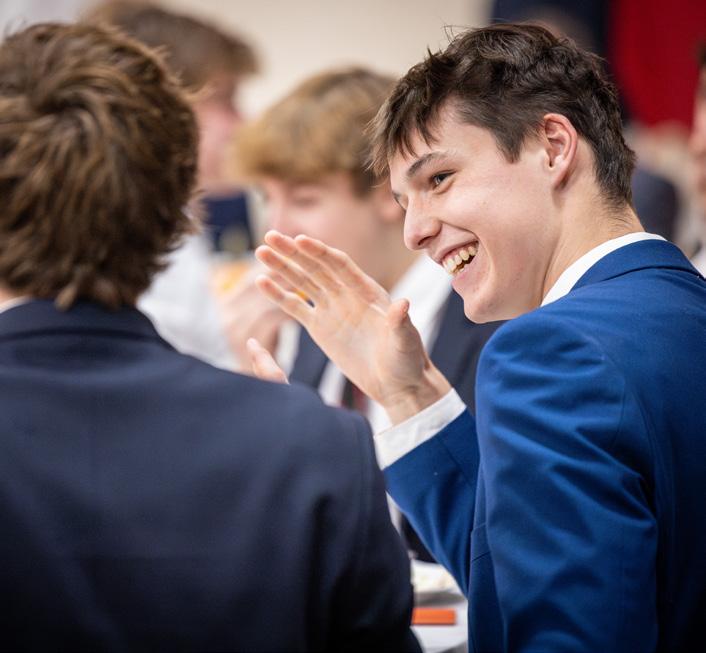
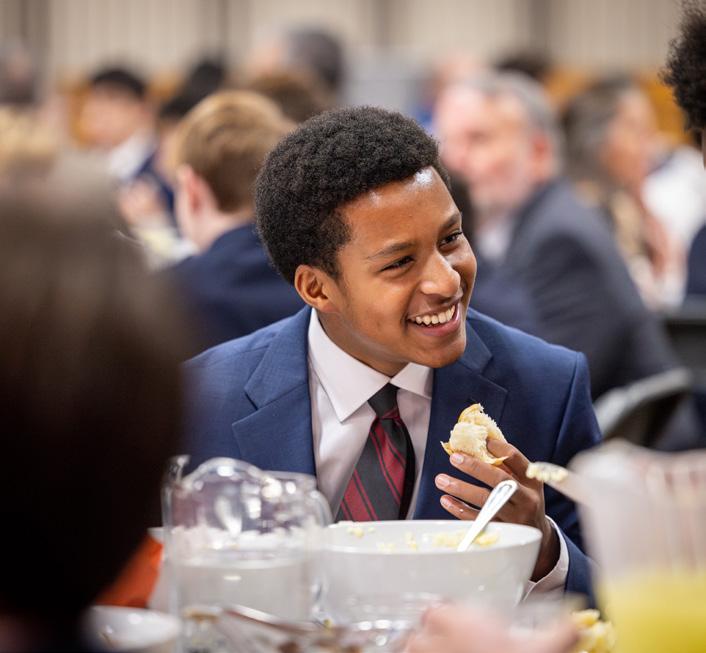
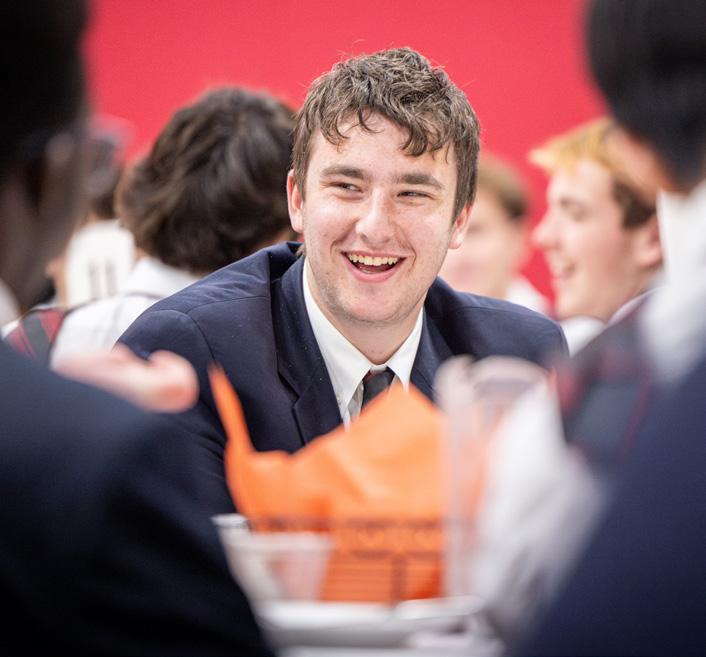
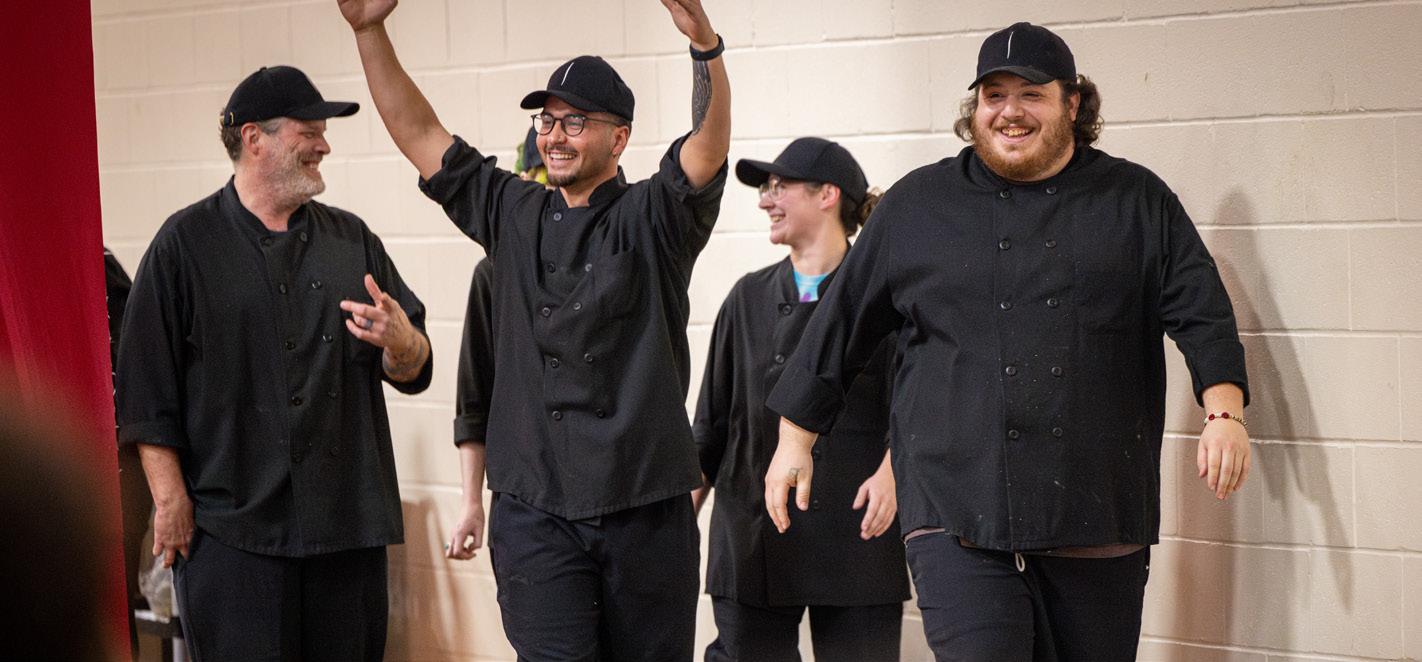
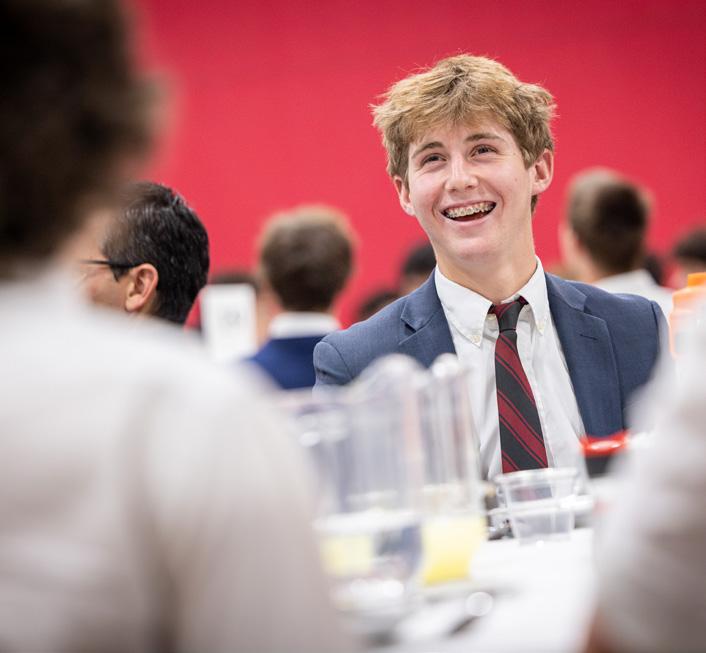
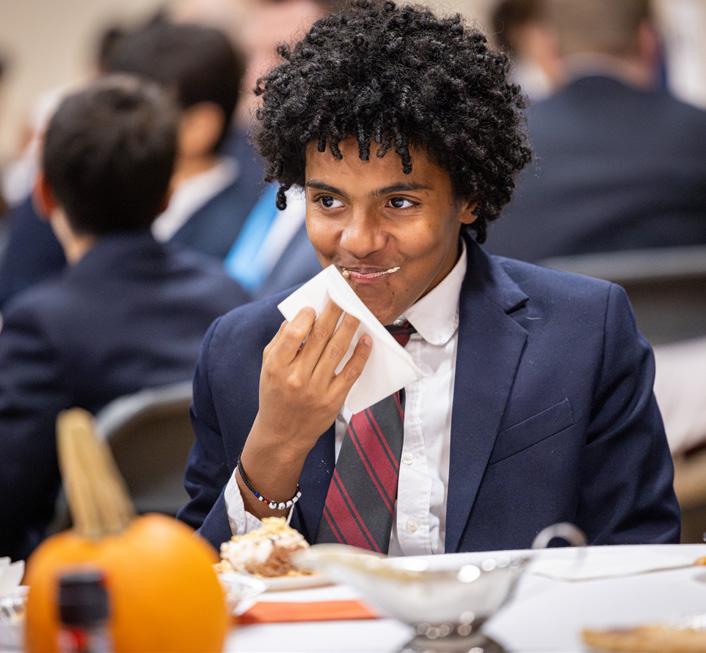
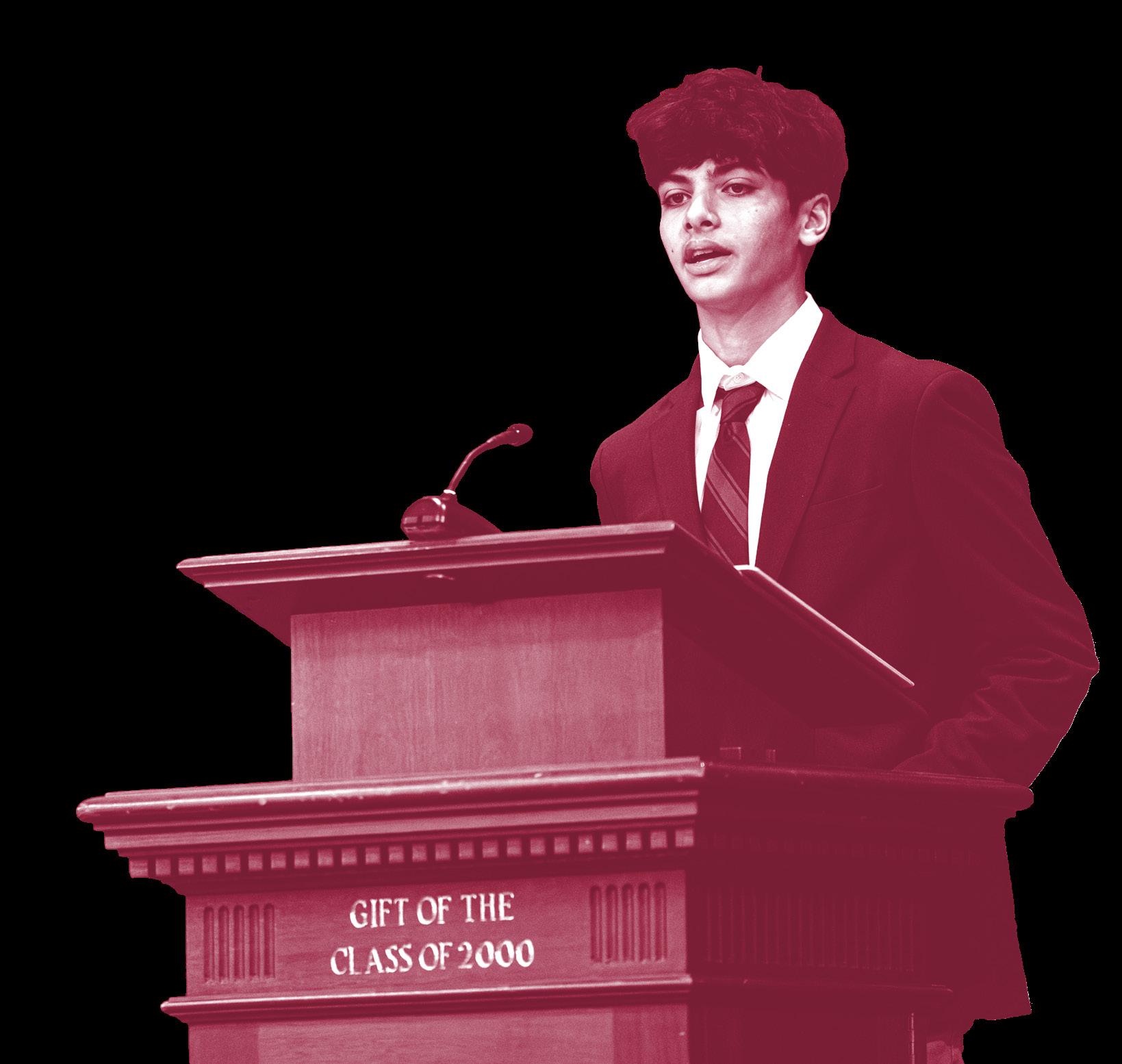
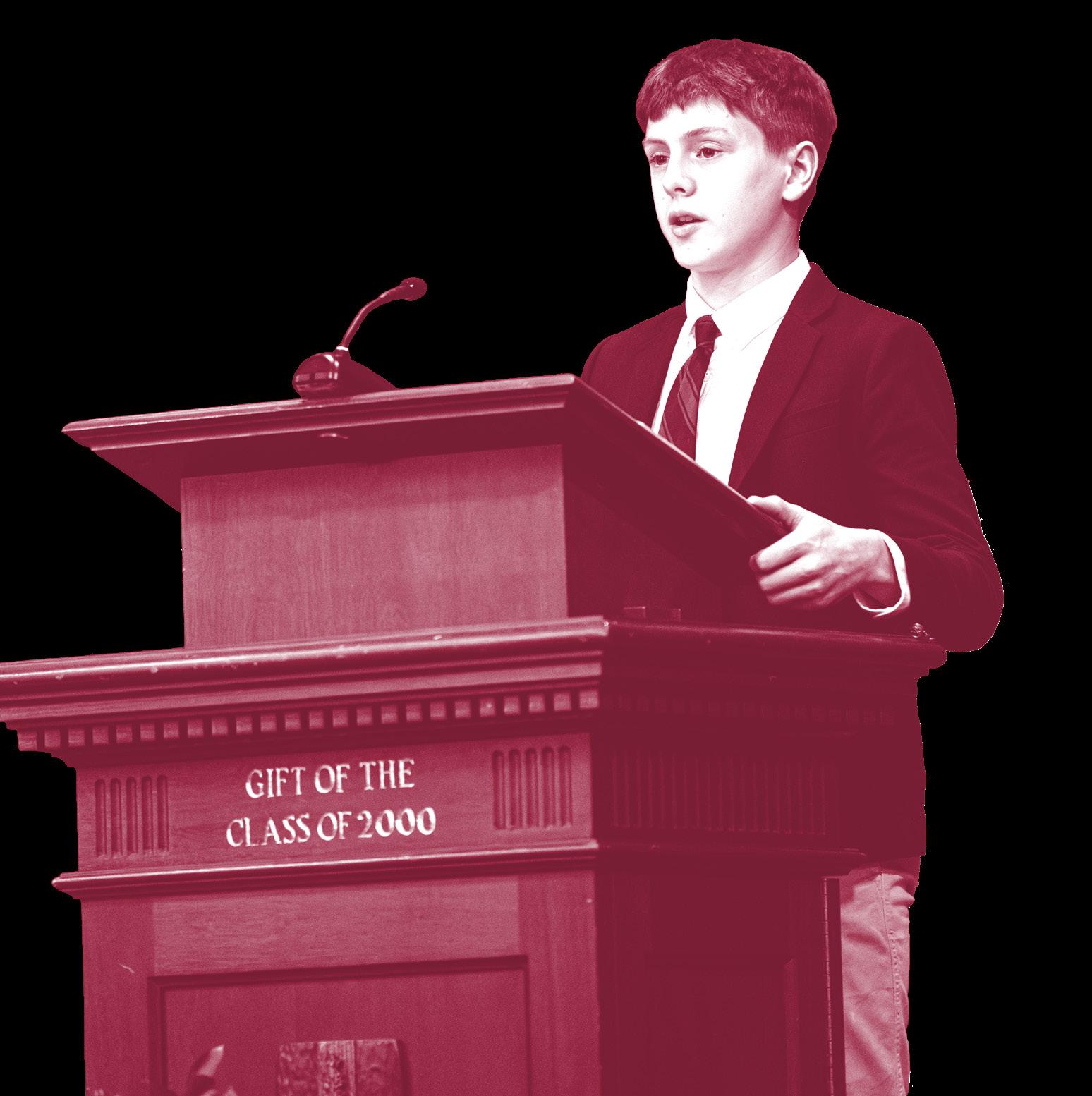
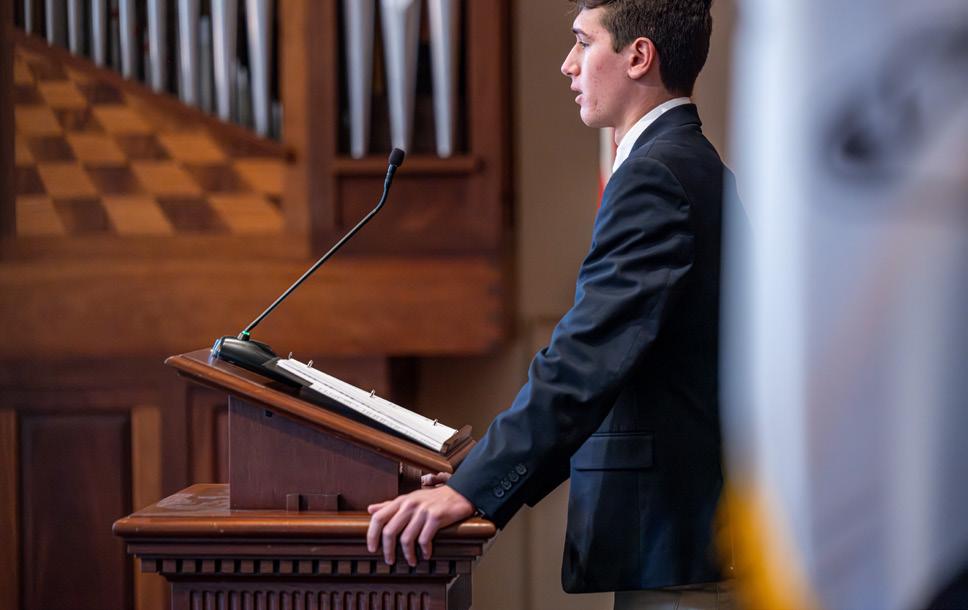
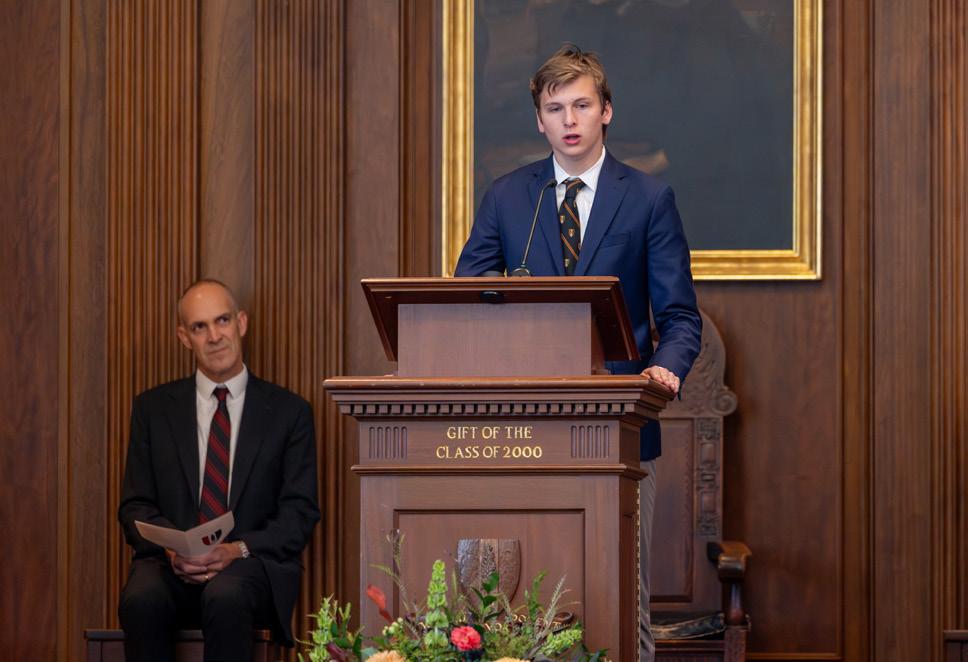
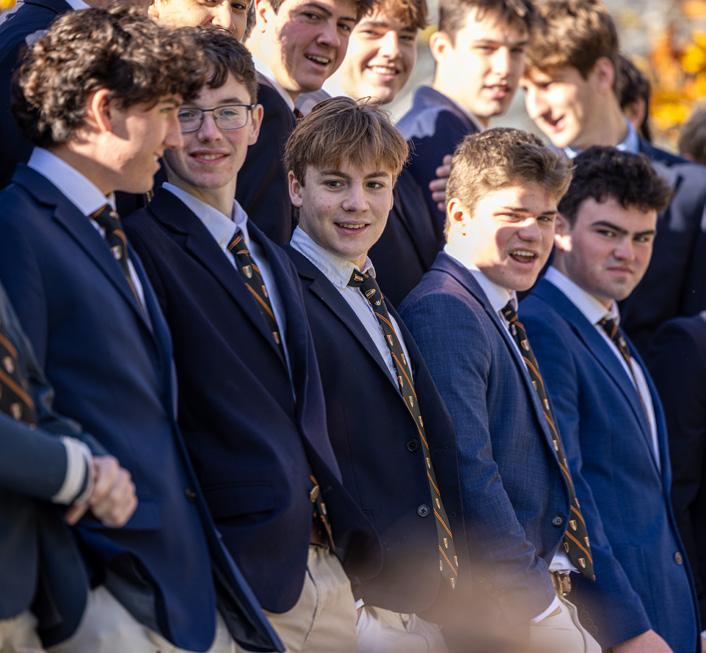
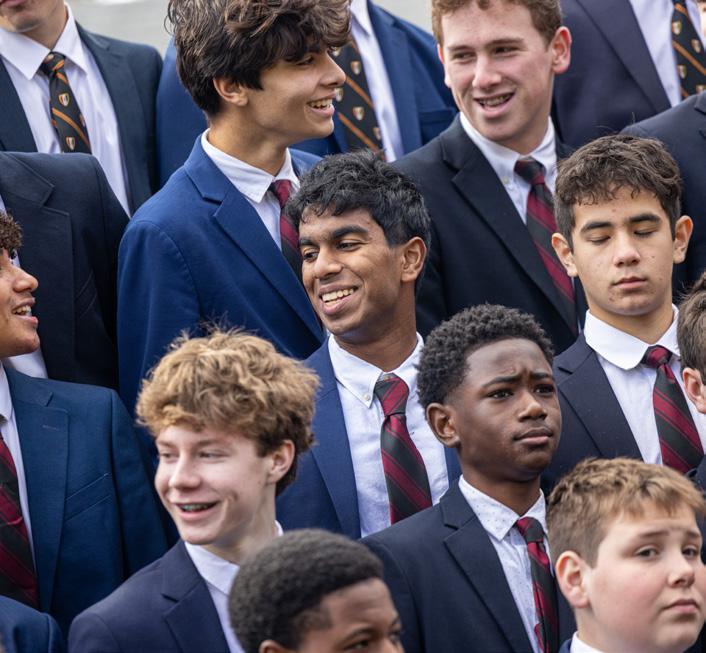
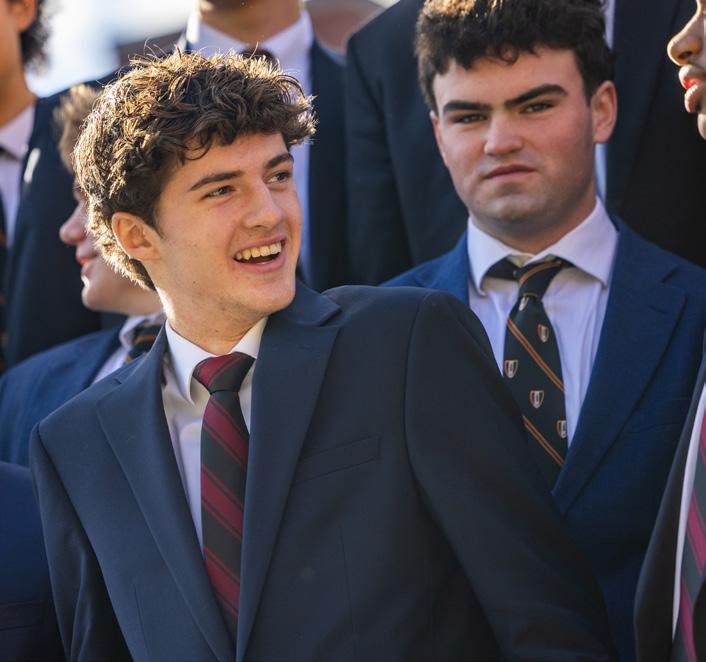
ON NOVEMBER 25, ROXBURY LATIN MARKED THANKSGIVING THROUGH A THOUGHTFUL BLEND OF LONG-STANDING CEREMONY AND NEW TRADITIONS. THE BOYS, IN BLAZERS AND TIES, FOLLOWED A SPECIAL CLASS SCHEDULE BEFORE GATHERING IN THE AFTERNOON FOR THANKSGIVING EXERCISES, WHERE STUDENTS, FACULTY, AND STAFF OFFERED REFLECTIONS ON GRATITUDE, COMMUNITY, AND THE SEASON ITSELF. THE CELEBRATION THEN CONTINUED IN THE GORDON FIELDHOUSE WITH THE SCHOOL’S FIRST-EVER THANKSGIVING FEAST, COMPLETE WITH TURKEY, ALL THE TRIMMINGS, AND A WISHBONE PULL THAT EARNED THE STUDENTS A DRESS-DOWN DAY. WHAT FOLLOWS ARE THE FULL REMARKS FROM THE DAY’S SIX HALL SPEAKERS.
Ken Hiatt, Associate Director of Information Services
It’s a privilege to speak today at our Thanksgiving celebration about one of the many things for which I’m grateful—namely, all of you, the remarkable students of Roxbury Latin. I know that I can speak for all of my colleagues when I say how lucky we are to work with such bright, generous, ambitious young men. Even on our worst days, we know we’ve got a pretty good gig, thanks to all of you.
I think you probably hear those kinds of compliments frequently around here. But what you may not know as well, and what I’d like to talk about today, is how much we, the teachers and the adults, learn from you. Here are just three brief examples from my own experience.
One of my first students and advisees was cheerful, energetic, hard-working, and eager to please—all the things we look for in a boy—yet he struggled in the classroom. But he never complained, and he persevered. Success came later for this young man, and today he has built a promising career for himself and a fulfilling life. He is example number one for me of grit, determination, and resilience.
in his senior speeches, and writing for multiple publications here. As a fellow introvert, I learned from this young man’s example about the importance of finding your voice and sharing it with those around you.
Another advisee excelled academically but wasn’t happy. He resented the hours required to maintain his performance and didn’t feel any connection to his work. Gradually, though, he began making different choices and developing more control over his life. When things didn’t work out exactly as he’d hoped in the college process, he wasn’t crushed. He knew the value of what he’d accomplished and was proud of himself on his own terms. This young man taught me to appreciate one of the hardest challenges I think you all face: meeting the many responsibilities we give you, while also developing some sense of ownership over your life. When I see you walk that tightrope, I’m deeply impressed.
And finally, I’m grateful for the example of a third advisee, who struggled with anxiety at school. He was determined to overcome his fear, though, and he set incremental goals for himself. Eventually he was participating confidently, excelling
So, thank you for the countless ways you teach, challenge, and inspire us. Happy Thanksgiving.
Maceo King, Class III
When I think back to what I’m most thankful for this year, my mind returns to the opportunities I’ve had, my friends, and this school. But at the center of it all is my family.
I come from a large family—the kind that can barely fit everyone at the dining room table during the holidays, the kind where there is never a silent moment. However, we all live so far apart that we don’t get to be together very often. That’s why the holidays are so important to me.
Every year, we all gather at my grandmother’s house in upstate New York. It doesn’t matter how busy life is or how bad the weather is; everyone always makes it to her home. The second I cross the threshold, I can feel the entire house buzzing with
energy. Someone is chopping vegetables in the kitchen, while roars of excitement come from the living room as my relatives eagerly watch a football game.
My grandmother is in the middle of it all, smiling contentedly as all her children and grandchildren have come to visit her for another holiday. These are the moments I’m truly grateful for.
We bond over the simplest things: cooking together in a kitchen that’s way too small, arguing over whether the Patriots or Bills will win the division, sneaking nibbles of dessert before dinner, and, of course, gathering in front of the TV to watch whatever game is on. It doesn’t matter who you’re rooting for—the cheering, the teasing, and reacting to bad calls are all part of the tradition.
The older I get, the more I realize how special it is to have a family that cares for and supports one another despite the long drives, busy schedules, and internal feuds. I’m grateful
“This Thanksgiving, I’m not just thankful for the food on the table, but also for the people who fill the chairs—the ones who remind me where I come from, who I am, and what truly matters in life.”
to everyone in my family, especially my grandmother, who manages to make her home feel like the center of our world every single year.
So this Thanksgiving, I’m not just thankful for the food on the table, but also for the people who fill the chairs—the ones who remind me where I come from, who I am, and what truly matters in life.
Lincoln Hyatt, Class I
As I’ve thought about what I’m grateful for this Thanksgiving, I’ve reflected on the importance of relationships and how thankful I am for the ones I have.
My most important and fullest relationships are with my family, and they have shaped nearly every part of who I am.
I’m grateful for my parents, who have helped me by staying up late with me, talking with me on both easy and hard topics, supporting my passions, including skiing and running, and giving me advice and free advertising for my lawn care business. My relationship with my grandparents has taught me the values of generosity and kindness. My grandmother never asks for presents at Christmas. Instead, she asks for a card describing something we’ve done to help someone else over the past year. This tradition has shown me what generosity really looks like. My grandfather, a retired math professor, has been so patient in helping me with math throughout high school, and coming to my cross country races near and far.
As I’ve grown older, my relationships have extended beyond my family. One of the most meaningful is my relationship with Franco, the volunteer coordinator of the Corridor Park. I’ve been volunteering there since I was eleven, doing everything from planting daffodils and building stone pathways to hanging Christmas lights and leading volunteer days. Over the years, Franco has taught me nearly everything I know about gardening. I’m grateful for his
for the generosity and patience he brings to the people lucky enough to work with him.
Here at RL, Mr. Guden has been my advisor for four years. He’s always supportive while maintaining high expectations. I look forward to our meetings and appreciate his advice and encouragement on everything from summer jobs to trying new things like tech tutoring. My coaches have been another highlight of my RL experience. I’ve learned so much about perseverance and leadership from them. Thanks Dr. Dunn, Mr. Heaton, and Ms. Dromgoole, for giving me an incredible high school running experience. Of course, I couldn’t have done any of this without my teachers. I’m so grateful for all of the extra help, detailed edits, and thoughtful comments over the years. Lastly, my relationships with my friends are what make RL the place it is to me. It’s amazing how close our class has become after those early days in masks and hybrid school.
I’m so grateful for all the friends who are there to laugh at lunch, run on weekends, and help when things get hard. At the end of the day, relationships are the most important thing we will all leave RL with. They are what get me excited to go volunteer on a cold Saturday morning, get me out of bed to go to school, and inspire me to do my best every day.
Carolyn Powell, Assistant Director of Admission
I could go on forever about gratitude, especially this time of year, but I will keep this brief. I love my job, and I am so thankful for the opportunity to work here. The last eight years have been tremendous for me, after 29 years in the newspaper business. I am the lucky one who gets to welcome each eager family and each slightly nervous young man.
I’m so thankful to be affiliated with this school, which has been such a big part of my family’s life for so many decades.
I’m thankful to be able to work with this great faculty and staff, who remind me every day
what a wonderful place this is, and who are responsible for making it just that. Especially to the Admission Committee who take time out of their jam-packed schedules to interview prospective students. Your insights are invaluable and are true gold.
I’m thankful for this smart, talented, funny, joyful student body. I love chatting with all of you who politely come by during the day and grab a mint. But I want to tell you about what I’m most thankful for.
As you all know, I work in the admission office, which is the start of a family’s RL journey—where the applicant, the potential new student, and his parents get their first real exposure to the school. They get to see the campus, the classrooms, the teachers, the lunch—they get to see the school in action. They learn about much of the school and its identity. Its purpose, if you will.
I am thankful for our tour guides! Tour guides, I love you. Your role in the admission process is vitally important. What people think of Roxbury Latin is in large part what they think of you. These guests are future classmates, friends, and members of our community, and you treat them as such. I am amazed by the number of thank you emails and cards that we receive about families’ visit days. I get hundreds of them. Here are just a few:
“Richie’s campus tour was a highlight, and the genuine sense of community became immediately apparent, especially with all the ‘congratulations’ he received from fellow students and teachers regarding his team’s recent victory.”
“I want to mention that our tour guide, Riley, did a great job showing us around. Hearing about his experiences and how proud he was of Roxbury Latin made me more eager to join the community. Thank you for pairing him up with us.”
“The tour helped me picture what everyday life at Roxbury Latin is like.”
“My son left the tour and interview with a big smile on his face. It was a great experience for him to see a day at RL. He has
spent a lot of time on campus at sporting events, but he never actually saw the students during school. It was great to see the excitement on his face as we watched the middle school students eagerly participate in class. It was really impressive to watch the enthusiasm of the students.”
“Please pass along our thanks to our tour guides Jayden and Will for their time and insights. They did an excellent job of representing the school with confidence and distinction.”
“Gavin gave us a wonderful tour. He is an excellent representative of RL—well spoken, intelligent, and authentic.”
I would also like to offer my own gratitude to our tour guide liaisons Lincoln Hyatt, Tanner Oberg, Peter Shaughnessy, Noah Holt, and Bobby Beeston. Mr. Pellegrini works very hard setting up the tour guide schedule and relies on you boys. You are crushing it this year.
Thank you, boys, for your commitment of time and effort. Lastly, I want to thank the Business Office—Mrs. Dinon, Mrs. Walsh, and Mr. Stanton—who keep this place going and set
aside a budget every year for our mints. Happy Thanksgiving, everyone!
Rahsaan Mustafa-Coentro, Class II
My Vovo (Portuguese for grandmother) immigrated from Lisbon, Portugal, to East Providence in 1977. Although she obtained her education degree in Portugal, it was considered illegitimate in the United States. She then proceeded to attend college and later earn her master’s degree in education while working three jobs. She cleaned houses, supported the elderly in nursing homes, and worked in a jewelry factory all while learning English. She then taught children with special needs for the next 35 years; she had such a lasting impact on these children that my family and I still see them to this day. My Vovo dedicated her entire life to helping others. In 2012, however, my grandmother was diagnosed with stage-four Leiomyosarcoma, representing less than one percent of cancer diagnoses. The doctors told her she would have one year to live. I was only three and my mom was still pregnant with my brother. My Vovo made it her goal to live long enough so that her grandchildren would remember her. She did just that, living twelve years on top of the doctors’ projected one.
After being diagnosed, my grandmother began eating significantly healthier, and I don’t mean cutting out sugar. I mean no processed foods for more than 12 years, making three meals a day from scratch. She joined support groups, learned acupuncture, tapping, and meditation. She began walking more than two miles daily and seemed brighter overall. Although I may not be grateful for her cancer, I am grateful for her response.
Growing up, we did science experiments weekly, which included a make-shift volcano that doused the white cabinets in red fruit coloring and vinegar. She’d also make dinner for us almost every night. Her cancer was nothing more than one of the many descriptors I would use to define her. She died on August 18, 2025. She passed away after being a part of my life for 16 years, and she
will continue to be remembered with love. She is cherished daily by her family, myself, and the hundreds of people she met along her journey. I am grateful for the good times and the bad, which allowed me not to take a single moment with her for granted. To me, she was more than her cancer. She was strong, courageous, empathetic, and forever a role model. I am forever grateful for my grandmother.
Liam Walsh, Class IV
Gratitude is a concept that we all know. It is seen most present around Thanksgiving. The answer to the question “What are you thankful for?” is different for everyone. This question isn’t as simple as it seems and takes deep thought and genuine reflection. For me this gratitude is extended to my parents and this school. I am thankful for my parents’ guidance in leading me to RL. Having my brother go through the process first for four years, the idea of Roxbury Latin grew on me. My parents wanted me to get outside my comfort zone and be more open to trying new things. At first I was skeptical, but soon I learned why they wanted me to do these things. I realized why I wouldn’t rather be in any place other than here. This school
athletics. I am thankful for my parents’ pursuing the idea of RL, as I see how my friends at other schools experience their high school—where they don’t extend the curriculum and try new things. They tell me how boring their classes are, and how it feels like a block of time rather than a class. I realize just how lucky I am to be in this place. Learning from the best of the best, and having every resource imaginable available to me. I am thankful for this special place because it has made an everlasting impact on me in just this short year and a half. Being at Roxbury Latin shows me what it means to have consistency day in and day out, and it shows me what true dedication takes. RL teaches me to take no challenge lightly, and to put in 100-percent effort all the time. Thank you RL for giving me a place to strive, and thank you to my parents for their idea to make me a Roxbury Latin student.
Blake Sundel, English Department
I’ve cried often in the last year.
There are the good tears, like when my daughter was born, or
when a song on Spotify shuffle reminds me of the beauty of life.
There are the solemn tears, like the tears I wiped away when Brynn screamed after her first shot, or when I really stop to reflect on the seemingly endless conflicts raging around the globe.
And then there are the tears that come when it all just feels like too much—like at the end of a long day when the baby has been crying for forty minutes straight, I haven’t slept, I haven’t talked to my wife because she’s working at the hospital, and all I want to do is just climb into bed.
There’s a word for this: verklempt. It’s a Yiddish word that means “to be overcome with emotion,” and it stems from older words that translate to something like “to press, squeeze, or
I’m grateful for these verklempt moments—for the moments when life “grips” you. It’s a healthy reminder of the things that matter. It’s a healthy reminder that we’re human. But how do we keep these moments just that: healthy, human moments?
More often than not, we need the kindness of others to pull us out of that emotional “grip.” Our emotions can be a boa constrictor that squeezes the life out of us if we stay in that state too long. That’s not good. Try as we might, we can’t always pull ourselves free. We need help. In those moments, we need someone to extend a lifeline that we can use to escape from the grip of our emotions.
And this lifeline could come from anyone in your orbit:
a loving partner, who holds your hand through the storm
a family member, who offers a shoulder to cry on
a friend, who picks up the phone
a colleague, who opens their door or a stranger, who extends a small kindness
It doesn’t really matter where this help comes from, just as long as we have the humility to accept it.
We need more of these small acts of kindness—in this school, in our homes, in our country, and on our planet. It costs nothing, but it means everything.
Let this Thanksgiving serve as a reminder of how we should treat people all of the time. To that end, I encourage each of you to seek the honor of giving a small kindness. Be generous with your eyes and ears, lead with your heart, and extend that lifeline. It costs nothing, but it means everything.
We are also called to be grateful in this holiday season; and, as Mr.
“I’m grateful for these verklempt moments—for the moments when life ‘grips’ you. It’s a healthy reminder of the things that matter. It’s a healthy reminder that we’re human.”
Quirk reminded us two years ago, “gratitude unexpressed is not gratitude at all.” So I’d like to close by thanking those who have helped me through those moments when I have felt verklempt.
Thank you to the students who have kept me laughing after long, dark nights.
Thank you to the advisees who, whether they realize it or not, have given me counsel on rough days.
Thank you to the colleagues who pull me out of life’s tight squeezes just by asking for a photo of Brynn.
Those small acts of kindness cost you nothing, but they have meant everything to me
Answering the Call
Founder’s Day Shines a Light on Boston’s History of Emergency Response and Today’s First Responders
The Founder’s Song rang out through Rousmaniere Hall
on November 6, as the entire school joined together to celebrate the founding of Roxbury Latin on this year’s Founder’s Day. After several opening prayers in Hebrew, English, Greek, and Latin, led by selected Class I boys, Dr. Schaffer welcomed the community, providing historical context on the founding of the school and introducing the topic of this year’s Founder’s Day: the history of fire in Boston and the critical service of first responders.
“We celebrate Founder’s Day in November because we know for certain, based on ships’ records, that John Eliot landed in Boston on November 2, 1631,” Dr. Schaffer stated.
“We do not know the exact date of the founding of the school, because its earliest records were destroyed by fire caused by a gunpowder explosion in spring 1645.”
This year, Stephanie Schorow, author and professor of journalism at Boston University, spoke in Hall about Boston’s long history of firefighting and some of the city’s most catastrophic fires. These included the Great Boston Fire of 1872 and the Cocoanut Grove nightclub fire, which occurred on November 28, 1942, killing nearly 500 people and injuring more than 100 more. Though devastating, this fire led to the widespread adoption of life-saving inventions, such as penicillin and lit exit doors, and changed safety and medical practices for first responders forever.
“That night, doctors and nurses at Boston hospitals worked frantically to save the lives of the hundreds of injured. Doctors
FOUNDER’S DAY
tested new burn treatments that proved effective in saving lives. Penicillin, the antibiotic that would transform medicine, was used for the first time on a civilian population, on victims of the Cocoanut Grove Fire. Psychologists would also treat the people who were injured not just in the body, but in the mind, first studies of what we know as post-traumatic stress,” Professor Schorow stated.
After Hall, the boys, faculty, and staff gathered for the annual all-school photo on the Senior Grass before heading to the Smith Theater for the second half of the day’s events.
First, Mrs. Berg hosted a panel of first responders in our parent community, including Beth Rimas P’19’26 (Boston EMT), Chris Holt P’29 (Boston PD), and Steve Nelson P’31 (Brookline FD). The panelists shared insights into their careers and the paths that led them to this line of work, as well as
personal anecdotes and stories from the job. The boys then had the opportunity to ask their own insightful questions.
After lunch, Juanita Allen Kingsley—an EMT for more than 20 years and parent of two RL alumni—led the school in an informative overview of recognizing and addressing medical emergencies, including cardiac events, anaphylactic shock, and life-threatening wounds.
Before the completion of another successful Founder’s Day, the school participated in the traditional Founder’s Day Kahoot! trivia challenge. Once again, Mr. Piper emceed this moment when the boys could show off their trivia knowledge and competitive spirit. After two close rounds, Temi Martins Dosumu (II) was crowned—or, rather, plastic fire helmeted— victor.
Death of a Salesman
THIS FALL RL BROUGHT ARTHUR MILLER’S CLASSIC PLAY TO LIFE ON THE SMITH THEATER STAGE
On November 14 and 15, actors and crew brought to life their rendition of Death of a Salesman —Roxbury Latin’s fall Senior Play. Written by Arthur Miller, the RL production was directed by Matt Phillips.
The Broadway playbill synopsis summarizes the plot as “one man and his family caught up in the pressures and delusions of living the American Dream. It’s the story of a traveling salesman whose illusions of picture-perfect business and family life cave in on him.”
The fall play was the result of a community effort, hard work, and long nights from boys, faculty, and staff alike. It also served as an opportunity to push the actors’ comfort levels, allowing them to explore the craft further, as the plot and characters are incredibly nuanced and often emotionally heavy.
(Production photos by Marcus Miller)
The Latonics Make Their Debut
The 2025–2026 Roxbury Latin Latonics took to the Rousmaniere stage for the first time this year on October 30. The group’s set began with an arrangement of the Essex folksong Bushes and Briars by Ralph Vaughan Williams, followed by Shawn Mendes’s pop hit Stitches, with soloists Simba Makura (I) and Fin Reichard (I), and ended with the The Threepenny Opera’s Mack the Knife, featuring soloist Nick Glaeser (I).
Instrumentalists Take the Stage
On November 20, several RL musicians showcased their instrumental talents during a Recital Hall. The program included five perfomances—Miniature No. 7 for Piano Trio by Frank Bridge with William Huang (V) on violin, Dylan Zhang (V) on cello, and Tanoshi Inomata (VI) on piano; Introduction and Tarantella by Pablo de Sarasate with Alvin Li (II) on violin and Marco Suri (I) on piano; Étude No. 3, Un sospiro by Franz Liszt featuring Casey Chiang (II) on piano; Piano Quintet in G minor, Mvt II. Adagio by Max Bruch with Luben Stolarov (VI) and Alex Archerman (IV) on violin, Kevin Song (IV) on viola, Andy Jin (VI) on cello, and Lucas Yamaguchi (VI) on piano; and Five Pieces for 2 Violins and Piano by Dmitri Shostakovich with Teddy Fortuin (II) and Alvin Li (II) on violin, and Marco Suri (I) on piano.
watch the latonics hall performance using your phone to scan the qr code:
watch the recital hall performances by using your phone to scan the qr code:
Guitar Ensemble and Jazz Combo Rock Smith Theater
On December 3, Roxbury Latin’s Guitar Ensemble and Jazz Combo took the Smith Theater stage for a rocking afternoon Hall. Guitar Ensemble led off with two pieces—Use Somebody by the Kings of Leon and Clocks by Coldplay—followed by Jazz Combo’s renditions of Autumn Leaves by Joseph Kosma and Johnny Mercer, Summertime by George Gershwin—featuring Grayson Lee (I) on trumpet and Romeo Borgida (III) on piano— and Superstition by Stevie Wonder.
ARTS CALENDAR SPRING 2026
1 A Cappella Fest 2026
Friday, April 10, at 7:30 p.m.
Smith Theater
2 Visual arts exhibition of student work
Monday, April 13 – Friday, April 17
Great Hall
3 Senior concert
Friday, April 24, at 7:30 p.m.
Rousmaniere Hall
4 SPRING PLAY: FROGSA MODERN ADAPTATION
Friday, May 8, at 7:30 p.m.
Saturday, May 9, at 7:30 p.m.
Smith Theater
5 Instrumental concert
watch guitar ensemble and jazz combo by using your phone to scan the qr code:
Friday, May 15, at 7:30 p.m.
Smith Theater and Rousmaniere Hall
Stories Objects Tell
IN THE APPLIED ART CLASSROOM THIS FALL, STILL LIFE BECAME SOMETHING MORE THAN AN EXERCISE IN OBSERVATION.
Charged with creating a drawing under the theme “The Stories Objects Tell,” this fall, Applied Art students were asked to assemble collections of meaningful objects and render them with careful attention to proportion, value, and texture. The result was not simply a study in technique, but an exploration of identity—how everyday items can serve as revealing self-portraits.
Each student selected objects that spoke to personal interests, memories, and values. Hours were spent refining shading, layering color, and studying relationships between forms. Yet the most important decisions came at the beginning: which objects to include, and what stories they might tell when brought together on a single page. For four students in Applied Art, those choices resulted in compositions that reveal both technical growth and thoughtful introspection.
Charles Austin, Class II
“I chose to create a drawing that depicted my personal identity by incorporating objects that have to do with many of my personal interests and things that are important to me,” says Charles. His drawing brings together a wide-ranging collection of objects—headphones, a record player, a Red Sox hat, books, a watch, a bottle of cologne, rosary beads, a skateboard, and more.
Music features prominently in his composition, reflecting a daily habit of listening on the way to and from school. A Red Sox hat signals both hometown pride and a love of baseball. Rosary beads represent faith, while books point to curiosity and a love of reading. Even seemingly playful items carry symbolic weight: a Rubik’s cube recalls a past phase of intense interest, while a deck of cards suggests, in Charles’s words, “the depth and all the facets of who I am,” and the idea that identity is always changing and adapting.
“I created the illusion of form and texture in my drawing by using a wide range of shades in pencils and applying different levels of pressure to the pencil to achieve clean blending of shades,” reflected Charles. But striving for exact photographic replication, he explains, “would have been boring,” and by introducing his own visual language he was able to make the drawing more expressive and individual.
Reflecting on his finished piece, Charles identifies his shading and sense of proportion as key strengths, observing that he was able “to recreate the proportions of my objects…to ultimately create a coherent image.” He also credits the project with helping him refine skills that had not been in regular use, noting that Applied Art allowed him to “reintroduce myself to drawing” and sharpen his techniques.
Mitch Flynn, Class I
Mitch also approached the project through the theme of personal identity, assembling a collection of objects that reflect both family memories and present-day interests. “The theme I chose for my still life was personal identity,” he writes, “and so I chose things that were important to me.” His composition includes a Nantucket Surf Club hat, a vinyl album by The Strokes, a PlayStation controller, a computer mouse, a copy of A Game of Thrones, and a University of Massachusetts, Amherst mug filled with pencils and pens. Each object carries a specific story. The hat recalls annual family trips to Nantucket, while the mug honors family connections to UMass Amherst. Music, literature, and gaming all find representation, creating a composition that balances nostalgia with current passions. Mitch also paid careful attention to
visual variety, selecting objects that were “visually interesting in color and shape” in order to build a dynamic arrangement.
“I tried to use a mixture of many colors layered on top of each other in order to achieve colors that were accurate to the reference photo,” said Mitch. On the Surf Club hat, for instance, he combined warm and cool colors to model highlights and shadowed areas, while on the controller he allowed pencil strokes to remain visible in order to emphasize form and directionality.
Mitch points to color accuracy and proportion as strengths of the finished drawing, but also recognizes areas for growth. The lettering on the album cover, he notes, is “a little wonky and distracts from the rest of the drawing,” the result of rushing near project’s end. Even so, he reflects positively on the learning process, explaining that he developed new strategies for layering color and directing pencil strokes to “assist the form of my objects” and make them appear more realistic.
Thomas Quinlan, Class II
Thomas’s still life blends personal identity with memory and nostalgia, bringing together objects that trace meaningful relationships and experiences. “The objects in my artwork represent my personal identity, memory, and nostalgia,” he writes, describing a composition that includes two letter “T” forms from early childhood, a basketball shoe, a miniature Eiffel Tower, a golf ball, and a bedside lamp.
Each object holds particular significance. The letter “T” forms, received as gifts when he was very young, connect directly to his name and sense of self. A basketball shoe represents his passion for the sport, while the Eiffel Tower recalls a gift from an aunt and a future goal of visiting France. The golf ball commemorates a memorable long drive, and the lamp—present in his room for many years—symbolizes stability and continuity.
Working in colored pencil, Thomas concentrated on building strong, saturated color and smooth surfaces. “I tried to create a solid, smooth, and hard texture throughout my artwork,” said Thomas. “I did so by almost leaving no white whatsoever and at points pressing hard to
get thick strong colors out of my colored pencils.” Shadows were developed by mixing darker colors into base tones, allowing objects to emerge with greater dimensionality and weight.
Thomas identifies the basketball shoe and the large metal “T” as particular strengths, noting the time and care spent refining their color and shading. At the same time, he recognizes opportunities for improvement in more subtle details, such as reflective effects and tonal variation. Looking back on the project, he expresses confidence in his growth, writing that he “100 percent” believes his realistic drawing skills improved through careful planning, practice, and sustained attention to detail.
John Devine, Class II
John’s composition brings together symbols of faith, athletics, and personal memory, forming a still life grounded in both daily experience and meaningful milestones. “First, I chose a cross, which is part of my personal identity,” he explains. “Then, I selected a few hockey-related items that are part of my daily life and identity. I also selected one of my childhood dog’s old toys, which is nostalgic for me, because every day after school I used to play fetch with her using that toy. Finally, I picked a baseball trophy, which was a memory dating back to when my little league team won the championship.”
Working primarily in graphite, John focused on creating texture and reflection through variations in pressure and blending. He notes that using darker pencils allowed for “different tones and forms” within the drawing, while blending techniques helped simulate reflective surfaces. Among the
work’s strengths, he highlights the rendering of reflective elements and the medal’s ribbon, both of which required careful attention to detail.
Perhaps most meaningful is his reflection on growth. At the outset, he admits, the project felt daunting: “I thought there would be no way I could do something like that.” Over time, however, repeated practice and sustained effort built confidence, and he ultimately became “comfortable enough to be able to complete the project.” The finished drawing stands as evidence not only of improved technique, but of increased
self-assurance.
Together, these four works demonstrate the expressive potential of still life when paired with careful observation and thoughtful selection. Each drawing invites viewers to look closely—not only at the objects depicted, but at the lives they represent. In Applied Art, still life becomes something more than a study of form and texture: it becomes a way of seeing oneself clearly, and of discovering how even the most ordinary objects can tell meaningful stories.
Fall Family Day
ANOTHER SUNNY RL HOMECOMING AND FALL FAMILY DAY
The sun shone on another successful Fall Family Day and Homecoming at Roxbury Latin on September 27. The day was full of delicious food, family, friends, and RL spirit. In athletic matches, the day included wins across the board! Varsity and JV Cross Country secured wins against Groton, St. Seb’s, and Rivers; Varsity Football beat Groton; and both Varsity and JV Soccer earned wins against Thayer.
The energy of the boys was palpable, and the cheers from the stands rang throughout campus, especially during the annual and storied halftime tug-of-war, in which the fifthies were victorious, beating the sixies.
This year, led by 17 seniors, Roxbury Latin Varsity Football continued to develop a high-level operation and a strong, positive team culture. The players represented the program well on the field, playing with high intensity, relentless effort, and strong character all season. The team finished with a 3-5 final record, and had close, three-point battles in two of those losses.
Roxbury Latin had strong wins at home over Groton and St. George’s, as well as an exciting, 21-20 comeback victory over Brooks to open the season, in which RL scored the game-tying touchdown with just ten seconds to play, then kicked the extra point to seal the win.
Sometimes called “the ultimate team sport,” football requires dozens if not hundreds of moving parts throughout the week, and this year, it truly was a team effort.
RL Football 2025
By
3-5 RECORD
66 TACKLES
Declan
46 TACKLES
Michael
41 TACKLES
Nick
the Numbers
1,172 PASSING YARDS
Jacob
466 RECEIVING YARDS
Finn
436 RECEIVING YARDS
Nitin
391 RUSHING YARDS
Auden
Strojny (I)
Leary (I)
Bligh (I)
Duda (I)
Galdo (I)
DiLallo (I)
Muniappan (I)
The Varsity Soccer team had a successful year, finishing with an overall record of 7-7-2, an ISL record of 6-7-2, and a Class B record of 5-3-1. The team earned wins over Lawrence, St. Mark’s, Tabor, and Governor’s, and highlights of the season included a dominant Family Day victory against Thayer; a thrilling last-minute 3-2 win over Avon Old Farms—one of the top teams in New England; and a hard fought 2-0 victory over the number four seed in the Class B tournament, St. George’s, which featured an amazing penalty kick save from Mitch Flynn (I) and an exceptional solo effort from Dillan Akinc (I) to seal the result.
While the team fell just short of the playoffs, they showed that they were more than capable of competing —and winning!—against some of the best teams in the region. While often outmatched physically, the boys played an exciting brand of possession soccer that accentuated their technical and tactical abilities. Most importantly, the boys came together and bonded in meaningful ways. You cannot play this style of soccer without trust in one another, and they prioritized a willingness to sacrifice and work hard for the good of the team.
NE Three-peat for Varsity Cross Country
Roxbury Latin’s Varsity Cross Country team has won or been runners-up in eight of the last nine New England Preparatory School Athletic Council Division II Cross Country Championships. This year, the team secured its third consecutive victory, with the RL team placing first and securing several top spots in the race, clinching the coveted New England title.
Both the Varsity and JV Cross Country teams had successful seasons, both finishing undefeated. Varsity’s only loss came in the postseason with a third-place finish in the ISL Championship. The team quickly recovered, heading into the
New England Championship and walking—or running—away with the top spot.
James Kerr (II) placed second in the Championship meet, finishing with an impressive time—in fact, running 32 seconds faster than the winner ran on the same course in 2021. Class I boys Richie Federico, Liam Walsh, and Lincoln Hyatt finished 7th, 9th, and 11th, respectively. Eric Archerman (II) and Toby Harrison (II) placed in the top 30, earning 20th and 25th place, respectively.
Fall Varsity Teams
Varsity Football — First row: Kevin Brennan, Nitin Muniappan, Preston Bearce, Robby O’Shaughnessy, Brayden Gillespie, Declan Bligh, Michael DiLallo, Jacob Strojny (Captain), Michael Rimas (Captain), Finn Leary (Captain), Tommy Weber (Captain), Auden Duda, Gavin Lane, Khiomany Ortiz, Nick Galdo, J.P. Ward, Danny Tobin. Second row: Robert Flaherty, Jack Mitchell, Teddy Davis, Liam Millsom, Grant Hedgepeth, Rory Kelly, Michael Corley, Will Erhard, Warren Hu, Finn Keohane, Carter Lewis, Jack Kelly, James Boccuzzi, Nico Selvaggio-Wagner, Ashton Antoine, Tommy Cloutier, Henry Grossman, Jordan Bornstein. Third row: Liam Walsh, Otto Vey, Alex King, Jacob Lando, John Lieb (Coach), Tony Teixeira (Coach), Kevin Claflin (Coach), Matt Golden (Head Coach), Jon Doerer (Coach), Sam Freeman (Coach), Max Gaeto, Daniel DiLallo, Dylan Lane, Ryan Guden. (Missing: Chase Sullivan, Josiah Calmas, Coach Joe Labadini.)
Varsity Soccer — First row: Dylan Massard, Kenneth Foster (Captain), Dillan Akinc (Captain), Mitchell Flynn, Drew Anderson (Captain), Luca Bene (Captain), Navid Hodjat. Second row: Erald Hysi (Coach), Andrew Giordano, Sahaj Swaroop, Tomas Werning, Solon Estes, Rahsaan Mustafa-Coentro, Devin Jamal, Anthony Faletra, Will Sutton, Alessandro Frigerio, Caleb Frehywot, Michael Clark, Sam Ruscito, Arturo Solís (Coach), Matt McDonald (Head Coach). (Missing: Nishant Rajagopalan.)
Varsity Cross Country — First row: Nicholas Glaeser, Oliver Colbert, Max Kesselheim, Avish Kumar, Richie Federico (Captain), Liam Walsh (Captain), Lincoln Hyatt (Captain), Fin Reichard, Colin Bradley, Austin Reid, Denmark Chirunga. Second row: Chris Heaton (Coach), Tobias Harrison, Ameer Hasan, Temi Martins Dosumu, Sid Chopra, Eric Archerman, Paul Tompros, James Kerr, Julian Vidal, Ben Romano, Nayan Patel, Jasper Hyatt, Kolby Sahin, Riley Alqueza, Bryan Dunn (Head Coach). (Missing: Alex Archerman, David Comander, Grayson Lee.)
Gifts and Growth
TEDDY SMITH ’26 AND KHIOMANY ORTIZ ’26 SHARE HOW CHALLENGE, SUPPORT, AND GENEROSITY DEFINE THE ROXBURY LATIN EXPERIENCE.
The 2025-2026 Annual Fund Kick-Off Dinner on October 9 brought together more than 500 members of the Roxbury Latin community—alumni and parents, faculty and trustees. Amidst the delicious food and jovial conversation, several wonderful speeches highlighted the heart of the RL experience.
After introductory remarks by Head of School Sam Schaffer and Chairman of the Annual Fund Kent Sahin ’91, seniors Teddy Smith and Khiomany Ortiz offered engaging, humorous, and heartfelt remarks on their RL experiences.
Teddy spoke first about his Roxbury Latin journey—one that he initially thought would mirror that of his two older brothers, Coleman ’19 and Tim ’20. “The beginning of my RL career was marked by a fear of trying anything that my brothers did not do,” he began. “For instance, my brothers did not gravitate toward math and science, so I approached those courses very cautiously, leaning into Latin and English with much more enthusiasm.” However, each year he spent at RL, Teddy realized that at the heart of Roxbury Latin is stepping outside of your comfort zone, trying things that challenge you, and not fearing learning something new. Teddy realized he actually really enjoyed science, particularly chemistry. He also has spent four years on the Varsity Wrestling team, whereas his brothers both played basketball. “If there is anything I want to say about RL, it is that the
school never ever stops giving students new avenues for exploration or new opportunities to enjoy,” he explained. “The generalist model is not some advertising technique or scheme. Roxbury Latin is indeed about trying new things, and trying hard things, until you find something that you really enjoy—or realizing that you can do something better than you could have ever imagined, if you stick with it.”
Following Teddy’s remarks, Khiomany Ortiz took to the lectern to reflect on his experience. “I am a first-generation American, born and raised in Dorchester and, God-willing, will be a first-generation college student next fall,” he began as he addressed the crowd. He spoke of his path to RL and how two of his former primary school teachers saw in him something that spoke to the essence of what it means to be a boy at Roxbury Latin. After attending an Open House, interviewing, and applying, Khiomany enrolled at RL in seventh
grade. “I struggled to make friends and had a fear of not fitting in,” he said of his first months at RL. “I was terrified of not having the same skills that my classmates had, and I was worried I might be left behind. Not knowing anyone at RL was extremely difficult, too.” However, he quickly found support and guidance from RL teachers and coaches, a close-knit community through the football team, and opportunities he never imagined, such as an internship with the Massachusetts League of Community Health Centers.
“The opportunities I’ve had here—whether in the classroom, field, or beyond—have all helped shape me into the person I am becoming,” he said. “I know the lessons I learned here will stay with me for the rest of my life.”
The education, opportunity, and support that foster personal growth are some of the key, invaluable attributes of Roxbury Latin. And the generosity of this school community is what makes that possible.
Alumni Soccer
ON SEPTEMBER 20, ALUMNI FROM ROXBURY LATIN AND BELMONT HILL LACED UP THEIR CLEATS IN MEMORY OF FRIEND AND CLASSMATE
TERRY IANDIORIO ’89 , A FORMER FACULTY MEMBER AT BELMONT HILL. EIGHTEEN RL ALUMNI TURNED OUT AND SECURED A VICTORY.
Founder’s Day Pub Night
NOVEMBER 6: COSIMA, BOSTON
NOVEMBER 13: PENN CLUB OF NEW YORK
THANK YOU TO THE MANY ALUMNI WHO HAVE JOINED US FOR RECENT EVENTS, INCLUDING THE COMMERCIAL REAL ESTATE NETWORKING EVENT (NOVEMBER 20); THE ALUMNI LAWYERS NETWORKING EVENT (DECEMBER 12); THE YOUNG ALUMNI HOLIDAY PARTY (DECEMBER 19); AND THE ALUMNI HOCKEY GAME (DECEMBER 26).
Class Notes
1964
Bruce Ferguson writes,“My daughter, Sarah Hayden, received her doctorate in nursing practice from BC this past spring. My granddaughter, Adelaide Elizabeth Hayden, matriculated at Yale this past fall, majoring in pre-med and dance.”
1965
Dan Kopans writes, “At the age of 77 the ‘Mortui’ are closing in, but I am still ‘Docent’ing the ‘Vivos’! As a professor of radiology at Harvard Medical School and physician at Massachusetts General Hospital, I founded, helped develop,
and named the field of breast imaging. Screening and early detection are the major reason that the death rate from breast cancer, unchanged for the preceding 50 years, has been cut in half since 1990, saving the lives of more than 600,000 women in the U.S.
RL taught me how to study; football and lacrosse taught me the importance of teamwork; and at Roxbury Latin I learned the crucial importance of honesty, compassion, empathy, curiosity, and perseverance. Mr. Dilworth taught me to have a sense of humor (oh yes, and
history!), and Mr. Jorgensen (in addition to math) taught me to love tools and building stuff (a number of patents later, including “Digital Breast Tomosynthesis,” which is replacing two-dimensional, “standard” mammography).
1972
Since his retirement from the U.S. EPA, Office of Research Development, in Narragansett, RI—where he worked for forty years—Walter Berry is keeping busy working on a number of environmental boards, doing the occasional bird survey, and fishing whenever he can. He’s also
writing lots of emails, “while fighting off a lot of eye rolls from my loving family,” he says. He is writing and reading his own poetry at the outdoor performance space that he helped to build.
1974
1 Several members of the Class of 1974 and their RLS faculty mentors got together on December 19 for a fun lunch in Portsmouth. Pictured are Kevin Sharkey, Scott Schnapp, Bob Ryan, Toby Dilworth, and Bob
Murphy—with a giant Santa looming behind them.
1977
2 Nine members of the Class of 1977 met at Hobson’s in Allston for the group’s 48th consecutive gathering. Pictured left to right are Craig Newfield, Bill Kennedy, Yale Pearlson, Jeff Ganem, Mark Storella, David Barrington, Brad Miller, Mike Price, and Jack O’Loughlin (in back).
1982
3 Charles Pinck, President of The OSS Society, attended the Society’s William J. Donovan Award Dinner—the preeminent annual gathering of the U.S. intelligence and special operations communities—in Washington, D.C., on October 18. He is pictured with General Bryan Fenton, the 13th Commander of the U.S. Special Operations Command and the 2025 recipient of the William J. Donovan Award; and General Dan Caine, Chairman of the Joint Chiefs of Staff.
Charles’s award-winning short documentary, Filming Under Fire: John Ford’s OSS Field Photo Branch, was shown in Normandy by the U.S. Special Operations Command and by CIA to its personnel worldwide, to commemorate the 80th anniversary of D-Day. Steven Spielberg thanked him for “preserving this history and keeping it in our conversations 80 years later.” Ken Burns said the film was “terrific.” To learn more about the film, visit filmingunderfire.org.
1987
On September 29, Vermont Governor Phil Scott announced the appointment of Colin Owyang as superior court judge. Colin worked most recently for Vermont Electrical Power Company and Vermont Gas Systems, both in strategic, executive
leadership roles. Prior to that he served as Massachusetts first deputy attorney general to Maura Healey and as an assistant U.S. attorney in both Boston and Burlington, Vermont.
1988
4 Fourteen members of the Class of 1988 gathered over the course of a weekend in September, including ten who made a day trip to the Vineyard. Classmates included Chris Lovett, Chris DiZinno, Matt Axelrod, Chris O’Grady, Brian Donovan, Bryan Anderson, Bill Maffie, Tom Baxter, Tim Silva and (not pictured) Chris Busconi, Tim Call, Ted Connolly, and Kevin Malley.
1999
5 Oliver Libby’s first book, Strong Floor,
No Ceiling, was released on November 11. The book is a practical plan for renewing the American Dream. A strong floor means every American has a real footing: education, healthcare, housing, a good job, justice, safety, and modern infrastructure. No ceiling means celebrating ambition, success, and innovation, so growth lifts everyone—as long as we play by the rules and do our part. “It’s a solutions-first path for what I call the radical moderates,” writes Oliver. “This vision comes from a life where I have experienced business, nonprofit, and government service; helped build and invest in companies and enterprises across the country and around the world; and from a family story shaped by immigrants, scientists, veterans, and public servants. I believe we can do big things again, together… After all, while you might want
2003
to ignore politics, politics doesn’t ignore you—it plays a huge role in all of our lives, businesses, and families.”
2000
6 Over the summer, Amit Paley spoke at the World Economic Forum’s headquarters in Geneva, to The Forum of Young Global Leaders on Reimagining Humanitarian Action. “At a time of growing crisis and funding cuts, we need to create a new framework for humanitarian aid and make a persuasive case that it is in the national interests of the countries funding the system. It was an honor to be part of this conversation and share how the Malnutrition Advocacy Fund is reimagining humanitarian action through bold advocacy strategies.”
7 Lou Manzo and his new wife, Britt, eloped to Paris in August.
2005
8 Zack Ciccolo married Dalia Rivkin on June 29 at the Country Music Hall of Fame in Nashville. In attendance were several RL classmates, including Mike Ryan, Jared Rosenberg, Garrett Spitzer, Pat Costello, and Steve Hepburn, pictured here with Zack and Dalia.
9 Steve Hepburn married Kathryn Weisz on August 9 in Oceanside, California, with several members of the Class of 2005 in attendance. Pictured left to right are Pat Costello, Mike Ryan, Jared Rosenberg, Kathryn Weisz, Steve Hepburn, Zack Ciccolo, and Garrett Spitzer.
2007
10 Jack McGeary recently welcomed baby Leo William “the Lion,” weighing in at nine pounds and 21 inches.
2009
11 Sam August welcomed a son, August James Hershey, on January 26.
2010
12 In October, Michael Beam, Nate Davis, Nick Hrenchuk, and Michael Chilazi joined Alec Joyner and his wife, Ali Castleman, for their belated wedding celebration in New York City.
2015
13 Many members of the RL family attended the wedding of Sean Rose and Erica Rosenthal over the summer, including John Thomsen, Jamal Meneide,
Alessandro Ferzoco ’14, Jere Rose ’20, Franny Rose ’17, Gil Rosenthal ’19, Kerry Brennan, Luciano Ferzoco, Colin Molloy, Aaron Rosenthal ’12, Reza Javaheri, Tucker Rose ’25, Luke DeVito ’22, Joey Mullen, Hamza Chaudhry, Rohan Shukla, and Peter DeVito ’24.
2017
14 Harry Callewaert and Andy Gonzalez caught up over brunch at Buttermilk and Bourbon in Back Bay.
Daniel Shlayen started an M.B.A. at Wharton where, by chance, he ended up in the same cohort as Derek Dasilva ’15. He also connected with Josh Racine ’15 before starting the program.
2019
15 Trey Sullivan is a Ph.D. candidate at
Christ’s College, University of Cambridge, where he received his M.Phil., with Distinction, the University’s highest honor. Trey was awarded the prestigious Johnston Prize for Postgraduate Studies based on his dissertation and overall course of study. He also received a Prize Research Fellowship at the Centre for History and Economics for his scholarship.
2021
16 Beau Keough, Declan Murphy, and Will Anderson ’23 celebrated back-to-back NCAA National Titles with their Tufts University lacrosse teammates at Gillette Stadium.
2023
17 Owen Butler for Harvard, Tait Oberg for Princeton, and Mark McGuire ’24 for Dartmouth competed in the Ivy
League Club Hockey Tournament at Brown University.
Eddy Pan spent a semester abroad in Shenzhen, China, studying economics and Chinese Medicine.
2024
18 Nick Consigli (now at Notre Dame) and Midshipman Fourth Class Jake Popeo (plebe at Naval Academy) met up after attending the Notre Dame vs. Navy football game over Veterans Day weekend.
2025
19 Ten years apart at RL, cousins Steven Daley ’15 and Noah Abdur Rahim caught up at Colby College Homecoming.
Errata
In Roxbury Latin’s most recent Annual Report, the Alumni Book Collection 48th Report incorrectly attributed the books It’s 1966, I’m 16 and In Monaco; The Neon Sutra; and My Twisted Sistahs From Woostah to Sam Seskin. The author of these three books is, in fact, W. J. O’Reilly ’67.
In Memoriam
Joseph Malone ’49 of Bethesda, Maryland, died on December 19. Joseph grew up in West Roxbury, and after graduating from RL, he attended the U.S. Naval Academy (B.S. ’53) and University of Chicago (M.B.A. ’77). He had two ship-board deployments to the West Pacific region during his honorable military service as a U.S. Navy Supply Corps officer from 1953 to 1958. He was later a computer systems executive for Time, Inc. and Guideposts magazine. He was predeceased by wives Maureen and Shirley, and was a loving father of Joseph, Margaret, Maureen, Patricia, Kathleen, Mary, Thomas, and John, and a devoted grandfather to his sixteen grandchildren and four greatgrandchildren.
Clark Heath ’50 of Woodbine, Georgia, died on November 18. He was born in Leipzig, Germany, where his father
had accepted a medical fellowship. The family observed conditions deteriorate as Hitler came to power, and the Heaths assisted several Jewish physicians’ escape. The family returned to Dedham, and Clark attended RL, later enrolling at Oberlin College and Johns Hopkins Medical School. Trained in internal medicine and hematology, Clark served as an Epidemic Intelligence Service Officer in 1960 at the Centers for Disease Control in Atlanta, staying on as epidemiologist for the next 26 years as captain in the Public Health Service. Clark established the Leukemia and Birth Defects Programs, expanding to become the Chronic Disease Division. While at CDC, Clark and his wife, Janet, married and raised three children— Tom, Andrew, and Mary. Clark served three years as epidemiologist with the South Carolina Department of Health and Environmental Control, returning
to Atlanta for 10 years as Vice President of Epidemiology with the American Cancer Society.
In 1999, Clark and Janet moved to Hiroshima, Japan, where Clark worked at the Radiation Effects Research Facility for the U.S. and Japan’s long-term follow-up of atomic bomb survivors. Returning to Woodbine, a member of the Woodbine Lions Club, Clark volunteered for Habitat for Humanity and the Coastal Health Medical Reserve Corps, and served with the Gateway Behavioral Health Services from 2007 to 2020. Clark played cello with the Coastal Georgia Community Orchestra and was a member of St. Mark’s Episcopal Church in Woodbine. He also worked to establish the Woodbine Public Library Inc. and LEAD Woodbine Partners, an endowment fund for the library.
Clark is survived by Janet, his wife of 55 years; daughter Mary; son-in-law Nick; sons Tom and Andrew; brother Everett; sister Emily; and grandchildren Dylan, William, and Jack.
Joseph Nadol ’62 of Needham died on August 2. Joe was born in Dedham to Joe Sr. and Rose—loving, dedicated parents who instilled in their son a commitment to help others.
With that as a North Star, he graduated from RL and pursued an education in medicine, graduating from Harvard College and earning an M.D. from Johns Hopkins. After years of commitment to his patients and colleagues at the Massachusetts Eye and Ear Infirmary, Joe was named Chief of the Department of Otolaryngology. Shortly thereafter, in recognition of his academic and clinical excellence, he was promoted to Professor of Otology and Laryngology at Harvard Medical School and became an incumbent of the Walter Augustus Lecompte
Professorship of Otolaryngology-Head and Neck Surgery. He then led the Otolaryngology Department at the Mass General Hospital in Boston. Throughout his tenure, the Otolaryngology department at Massachusetts Eye and Ear Infirmary was consistently ranked in the top five nationwide, often number one.
A pioneer in the surgery of the ear and temporal bone, Joe performed the first-ever cochlear implant surgery in New England. Joe’s passion for research resulted in an in-depth understanding of the pathology of the ear and temporal bone during his time at the Massachusetts Eye and Ear Infirmary. His commitment to research also resulted in his focus on human otopathology and his efforts led to a complete change in our understanding of Meniere’s disease. Later in his career, he focused on the histopathology of cochlear implant recipients, reshaping how we understand what happens following implantation. One of his lasting research and training based contributions was
the creation of The Joseph B. Nadol, Jr., MD, Otolaryngology Surgical Training Laboratory, which is a state-of-the-art facility at the Massachusetts Eye and Ear Infirmary offering advanced instruction capabilities for a variety of subspecialties of otolaryngology. He brought this project to life from the ground up, and his dedication helped shape countless young surgeons who trained under his guidance.
Joe cherished spending time with his family. He taught his sons to sail during summers in the North Shore of Massachusetts, visited his parents with his wife and his two boys for Sunday dinners, skated together as a family on frozen ponds during winters, taught his sons to play tennis, served as team doctor for his sons’ athletic contests, and traveled extensively with his wife to see the world and to go antiquing. He was a dedicated and loving son, husband, and father determined to support his family and to help them be successful and happy. Joe set the standard for loyalty, honesty, humility,
Joseph Malone ’49
Clark Heath ’50
Joseph Nadol ’62
and concern for others. His family will be working diligently to hold themselves to the standard he set in order to honor his memory. Joe was loved dearly by his wife of 50 years, Ruth, his sons Joe ’91 and Ben ’93, daughters-in-law Krista and Jen, and grandchildren Joey, Jake, Sam, Charlotte and Benny.
Barry McPhee ’81 of Montpelier, Vermont, died on December 15, following a short battle with cancer. After RL, Barry earned a B.S. from Boston University, and an M.S. from the University of Vermont. He was a passionate advocate for the environment and engaged in multiple volunteer and leadership positions over the years. He was always up for outdoor activities, such as body surfing at Hampton Beach, hiking the Green Mountains, biking solo or with friends, canoeing, walking his dog while working out in Montpelier’s Hubbard Park, or throwing a frisbee with friends.
Barry will be remembered for his humor, his appreciation of music and literature, and his deep love for his family and friends. His idea of a perfect day was taking a long bike ride on a crisp autumn day, followed by a simple meal that absolutely did not include any tomatoes or asparagus, and finally winding down with a beer on his back deck, surrounded by loved ones.
Cavan Finigan ’12 died unexpectedly in New York City on December 3. Cavan was born in Boston, the son of Thomas Finigan and the late M. Duncan Driscoll Finigan. He was born during a blinding snowstorm in one of the snowiest New England winters on record, when the sign board at the parish church in the center of Milton, his hometown, read “Each night a child is born is a holy night.” Cavan was named after the county in Ireland where his paternal grandmother, Mary Murray Finigan, emigrated from, always a source of pride for Cavan. Cavan was raised in Milton and grew up in the same
home where his late mother was raised on Canton Avenue, along with his three brothers, Alec, Duncan ’14 and Will ’16, who are in agreement that he was the best son and brother anyone could ever ask for, a thought echoed by his father Thomas.
At RL, Cavan was a much beloved member of his class, and the quintessential RL boy. Entering in Class VI, he quickly earned the respect and affection of all who knew him. A committed, high-achieving scholar, Cavan never shied away from academic challenges. So, too, did he give himself freely and extensively to a range of activities outside the classroom. A stalwart member of four varsity teams— football, hockey, lacrosse, baseball— Cavan earned election as captain of football and hockey. He demonstrated remarkable grit and a commitment to team that always surpassed whatever personal glory might be coming his way. Cavan also made his mark on the Smith Theater stage and as an associate editor for the Yearbook. He represented RL during a summer at Maru-a-Pula School in Botswana. Perhaps most impressively, and consistent with his giving, generous nature, Cavan was in charge of Class III’s efforts on behalf of Haley House Soup Kitchen. Cavan was looked to for leadership, and he delivered.
After RL, Cavan earned degrees at the University of Notre Dame and Harvard Business School, and made dozens of friends at each school he attended. Cavan had a gift for friendship and drew people of all kinds to his inviting circle.
Barry McPhee ’81
Cavan Finigan ’12
It was at Notre Dame where Cavan met the love of his life, Mary Kate Holmes of South Bend, Indiana, and eventually proposed to her around the Notre Dame lake. They wed in a beautiful ceremony at Old Saint Patrick’s Cathedral in New York City on August 24, 2024, surrounded by their family and friends. Cavan taught Mary Kate, a Midwest girl, how to ski at the Blue Hills in Canton where he himself learned to ski as a child, before accompanying her on ski trips out west and in Europe. Their lives were filled with travel and adventure, but their favorite moments were rooted in life’s simplest pleasures: long bike rides through their Cambridge and New York City neighborhoods, movie nights limited to post-2005 releases (Cavan’s rule, not Mary Kate’s), hanging with their wide
circle of family and friends, and constant laughter. He had a rare gift of making everyone laugh.
Cavan worked for Goldman Sachs and private equity firm Avalt after graduating from Notre Dame. After business school, Cavan worked alongside his friend Pat McDonough ’12, close friends since the seventh grade, to build Nurse Wallet, a financial planning startup, before joining the investment firm Tucker Farms, where he served as chief executive/ partner of one of their recently acquired subsidiaries, Webster Lock located in the Bronx, New York City.
In addition to his wife Mary Kate, Cavan is survived by his father, Thomas, and
his partner Michelle; brothers Alec and his wife, Caroline; Duncan ’14 and his wife, Emilie; Will ’16 and his fiancé, Margot; his aunts and uncles Jim, Maura, Billy, Daniel ’74, Elaine, Dina, Jay, Terry, Peggy, Betsy, Bob, Mark, Tracy, Deidre and her partner George; many first and second cousins; and last but not least, his extended Notre Dame family of friends, who will miss him as much as his own family. Cavan will be remembered by all he touched during his thirty-one years by his intelligence, sense of humor, and, most importantly, by his fierce devotion to those he loved. In their grief, the family is comforted by the fact that Cavan has been reunited with the other bright star in their family’s constellation, his late mother M. Duncan Driscoll Finigan.
No Cause for Panic, but…
Why I Joined the Thomas Bell Society
by Mike Pojman
This past October, when I reached the ripe young age of seventysomething, the thought occurred to me that despite my best efforts to achieve immortality, I may not, in fact, live forever. A sobering notion, for sure, but not a cause for panic. A reason to reflect, perhaps.
A few years ago, I joined the Thomas Bell Society and named Roxbury Latin in my will, pledging to leave a certain percentage of my estate to the school. I made arrangements for planned giving in anticipation of my unplanned death by the same logic that sent me to the Walmart Auto Center last fall to replace my battery before the first cold snap rather than after, at which time it would have been too late. Doing it now won’t prevent the onset of a freeze, I reasoned at the time, but it may save the trouble of a tow.
There is a classic scene in Gilbert & Sullivan’s comic opera, The Mikado, in which Nanki-Poo, “a wandering minstrel” who wanders by chance into the town of Titipu, is being convinced by Ko Ko, the “Lord High Executioner,” to volunteer for execution in order to satisfy an imperial decree that someone be beheaded before the end of the month, thereby saving Ko Ko his job. Naturally, Nanki-Poo objects. “I don’t see how that would benefit me,” he protests. “You don’t?” responds Ko Ko incredulously. “When the day comes there’ll be a grand public ceremonial. You’ll
be the central figure. There’ll be a procession—bands, bells tolling, all the girls in tears. Then, when it’s over, a display of fireworks in the evening. You won’t see them, but they’ll be there all the same.” When my day comes, I’m not expecting fireworks. Free donuts would be nice. Perhaps a shout-out in the Tripod. My pledge to Roxbury Latin won’t profit me, and that’s OK with me. I do plenty of things for me. Planned giving is about ensuring that the school prospers for generations to come, secured by pledges made in the present with an eye to the future. It appeals to me that my token generosity will be entirely for the good of someone else, many someones, in fact—the boys of RL, directly and consequentially, and many years from now, I hope, even though I won’t be around to see the benefits.
I believe in Roxbury Latin—passionately—and I believe in the boys of RL as our best hope for our future, long after I’m gone. I’ve given my professional life to our Little Nursery, and I’m happy to give a share of my afterlife, too.
If my testimonial strikes a chord with you, and you are so-inclined to join the Thomas Bell Society along with other like-minded alumni, parents, and friends of the school, please contact either Tom Guden or Alec Bleday in the Development Office—while the battery is still holding a charge.
roxburylatin.plannedgiving.org.
Across
1 Work of Horace
4 Like flip phones, retronymically
8 Open house event
13 Cousin of “un-”
14 Roman province covering western Turkey
15 Subside
16 **Hanukkah spinners [Classics]
18 Tennis legend Andre
19 Animal that the mythic hunter Actaeon is transformed into
20 **CBS’s broadcast of “The War of the Worlds,” et al. [French]
22 Result of out-of-control inflation?
24 Wordlessly greet, as in the RL hallways
25 ** Certain die-hard pop fan [Math]
28 Pressed Ctrl+Z
32 ___ Lingus
33 Kind of prof.
34 Home of Homer
35 Oscar-winning Pixar short about a dumpling
36 Senator’s vote
37 The answer to the riddle of the Sphinx in the myth of Oedipus
38 Animator’s drawing
39 Use Google Chrome, say
41 M, L, or S, e.g.
42 Lead-in to Uzi Vert or Nas X
43 Word on a classic carnival ticket
44 ** Organic compound used in perfumery [Science]
46 Mother-of-pearl
48 Sanskrit title of respect
49 With 58-Across, stand-in educators
... or an instruction for replacing the circled letters to make sense of the starred clues.
54 “You gotta be kiddin’ me!!”
57 “Roma est in ___” (Latin 1 sentence)
58 See 49-Across
60 Game with words to avoid
61 Word before browns or marks
62 Sports figure (to whom you might shout 54-Across)
63 “Stitches” singer Mendes
64 Largest of the Inner Hebrides
65 Miss piggy?
Down
1 Sports bettor’s interest
2 Worms, to an early bird (or a famous 1521 event in Worms)
3 Activity where those locked in must “lock in”
4 Now-cringey dance fad
5 Mouse wielder
6 Actress Kunis of “Family Guy”
7 Medieval helmet spelled similar to a baby’s crib
8 Engaging reads or orchestra helpers
9 Marine mollusk that’s a source of
46-Across
10 Org. that takes famous pictures of the stars
11 Online craft marketplace
12 Fragrant wreaths
17 Pianist Stravinsky
18 Put two and two together, perhaps
21 Neither’s correlative
23 Sony console product
25 Feature on a schnauzer or billy goat
26 Test taken by many RL students, for short
The Faculty
First row: Tom Walsh ’79, Josh Cervas, Stewart Thomsen, John Lieb, Mo Randall, Sam Schaffer, Ousmane Diop, Tony Teixeira ’93, Rob Opdycke, Peter Hyde, Ken Hiatt ’93. Second row: Darian Reid ’05, George Matthews ’08, Elizabeth Carroll, Nate Piper, Ernesto Guerra, Erin Dromgoole, Rary Delaney, Tom Guden ’96, Billy Quirk ’04, Jim Ryan, Daniel Bettendorf, Chris Heaton, Jamie Morris-Kliment. Third row: Matt McDonald ’85, Bryan Dunn, Sarah Demers, Andrés Wilson, Sean Spellman ’08, Greg Sokol, Tim Kelly, Arturo Solís, Chris Brown, Alessandro Ferzoco ’14, Art Beauregard, Jackie Salas, Michael Beam ’10. Fourth row: Katie Armstrong, Mysha Kuhlmann, Erin Sutton, Jon Doerer, Blake Sundel, David Smith, Matt Golden, Alex Pellegrini ’10, Geoff Theobald, Matt Phillips, Anthony D’Amato, Lisa Kostur, Andrew White ’18, Sophie Brett, Ethan Faust ’13.
27 Org. whose budget is classified
29 Exelauno Day competitors
30 Trap after a blizzard
31 Computer maker
32 “Mamma Mia!” group
34 Intent stare
37 Unexceptional, in slang
40 Artist Homer whose name looks like the famous strategy of Quintus Fabius Maximus Cunctator
41 Sherlock Holmes and Encyclopedia Brown, e.g.
44 Sunflower oil, perhaps?
45 Eponymous feature of a 50-Down national park
47 Org. in many spy thrillers
49 Rides the bench
50 Four Corners state
51 ___ ghanouj
52 Shipbuilder’s wood
53 Free from care
55 Cookie brand with a 2025 collaboration with Selena Gomez