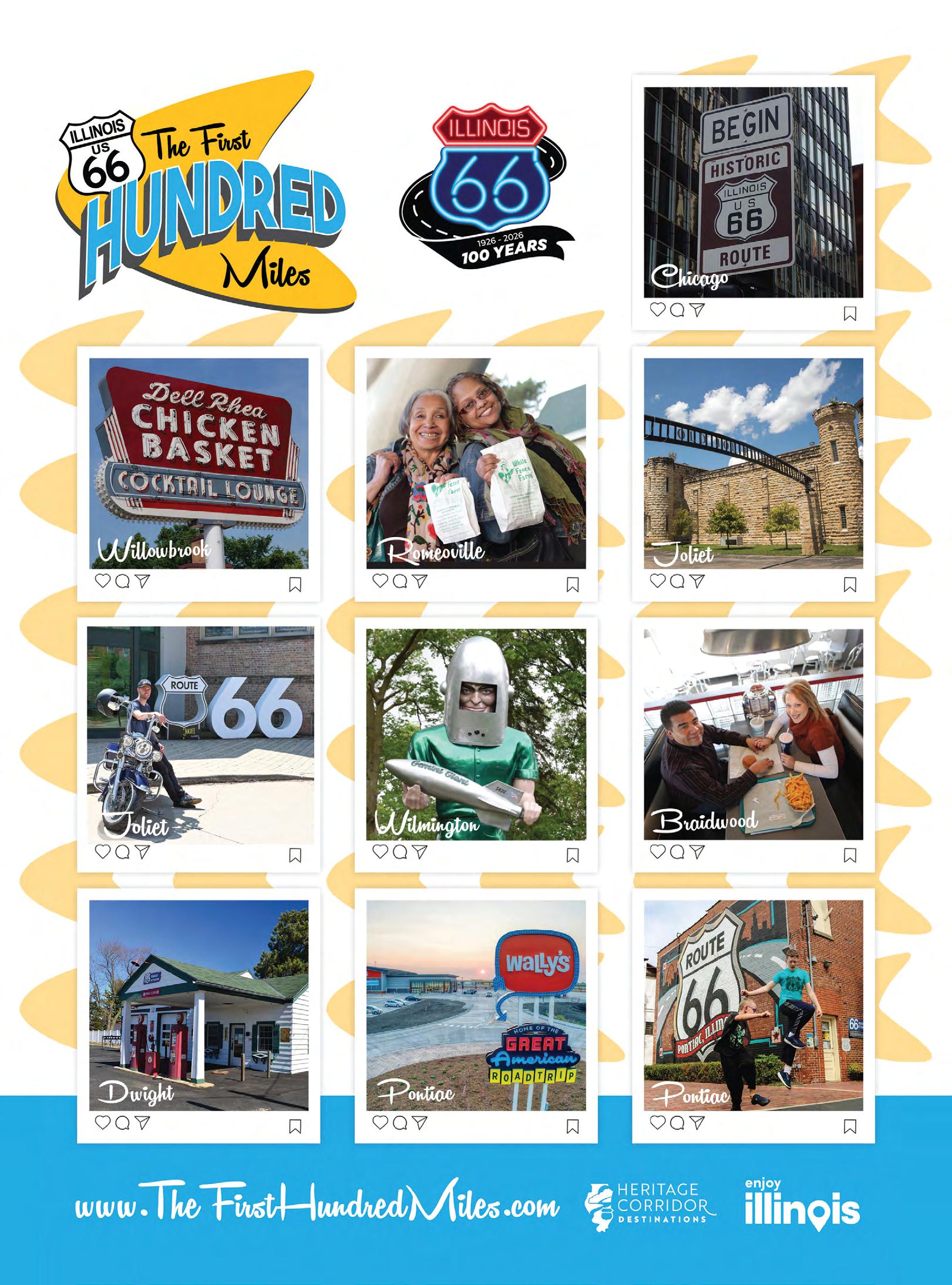
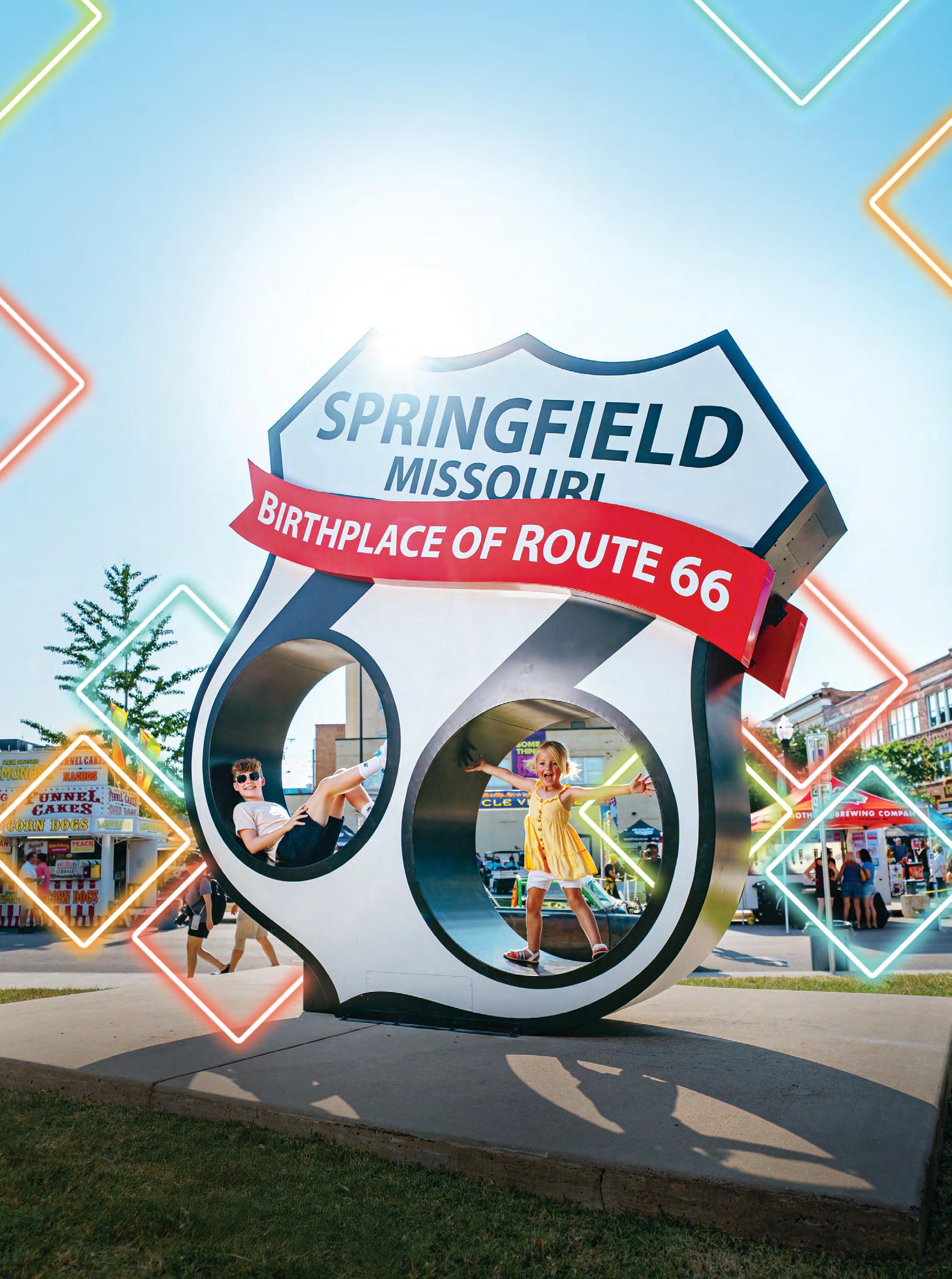
Plan your next visit to Springfield, Missouri and celebrate 100 years of America’s most iconic highway right in its birthplace. Explore classic diners, historic landmarks, and hidden gems that keep the spirit of the road alive. Here in the City of the Ozarks, it’s all about making it your own.



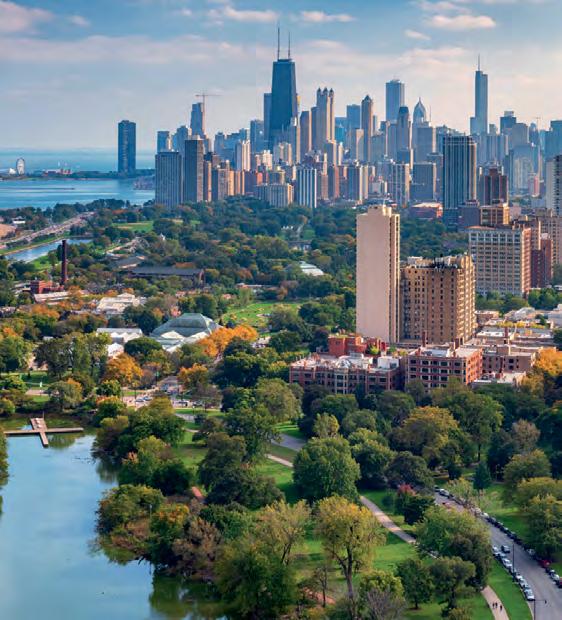
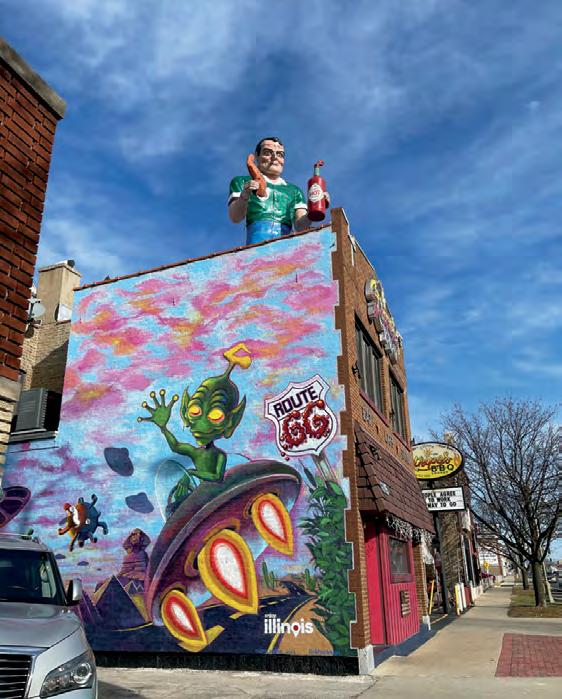
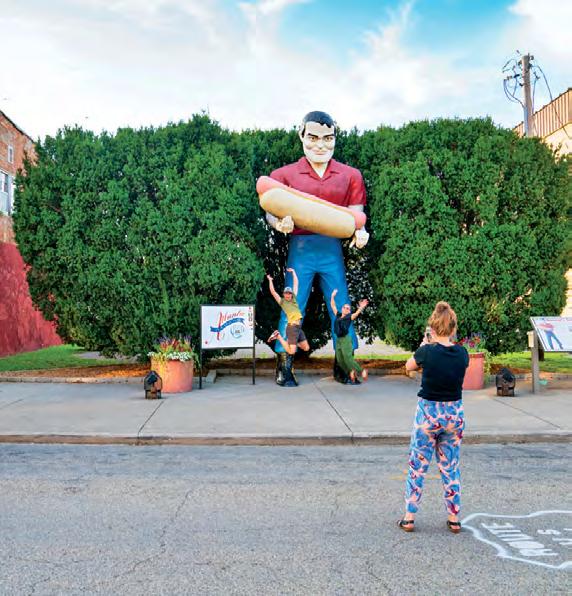








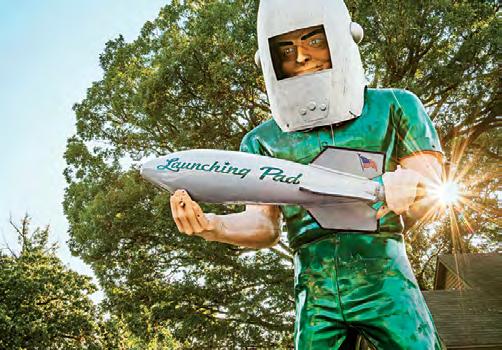
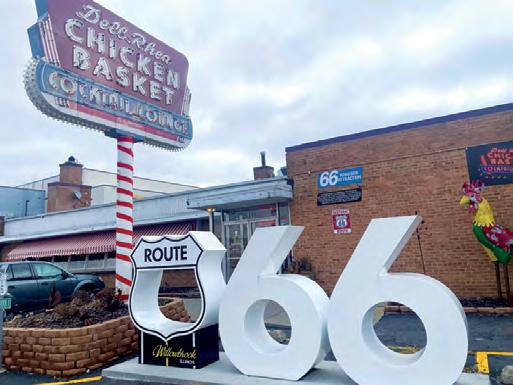
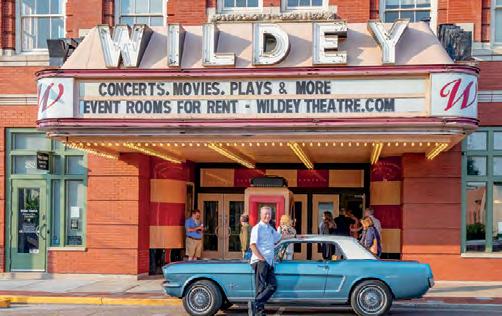





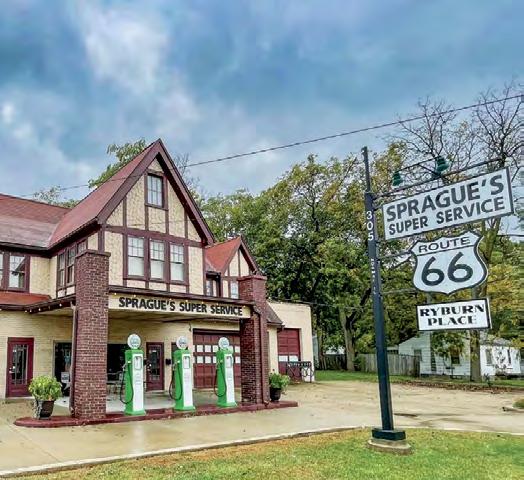
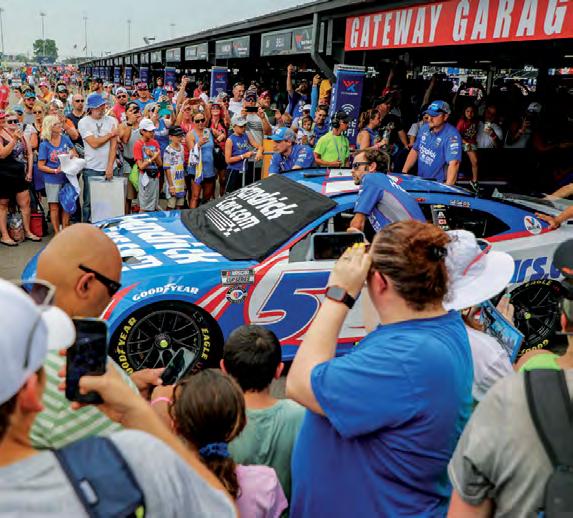





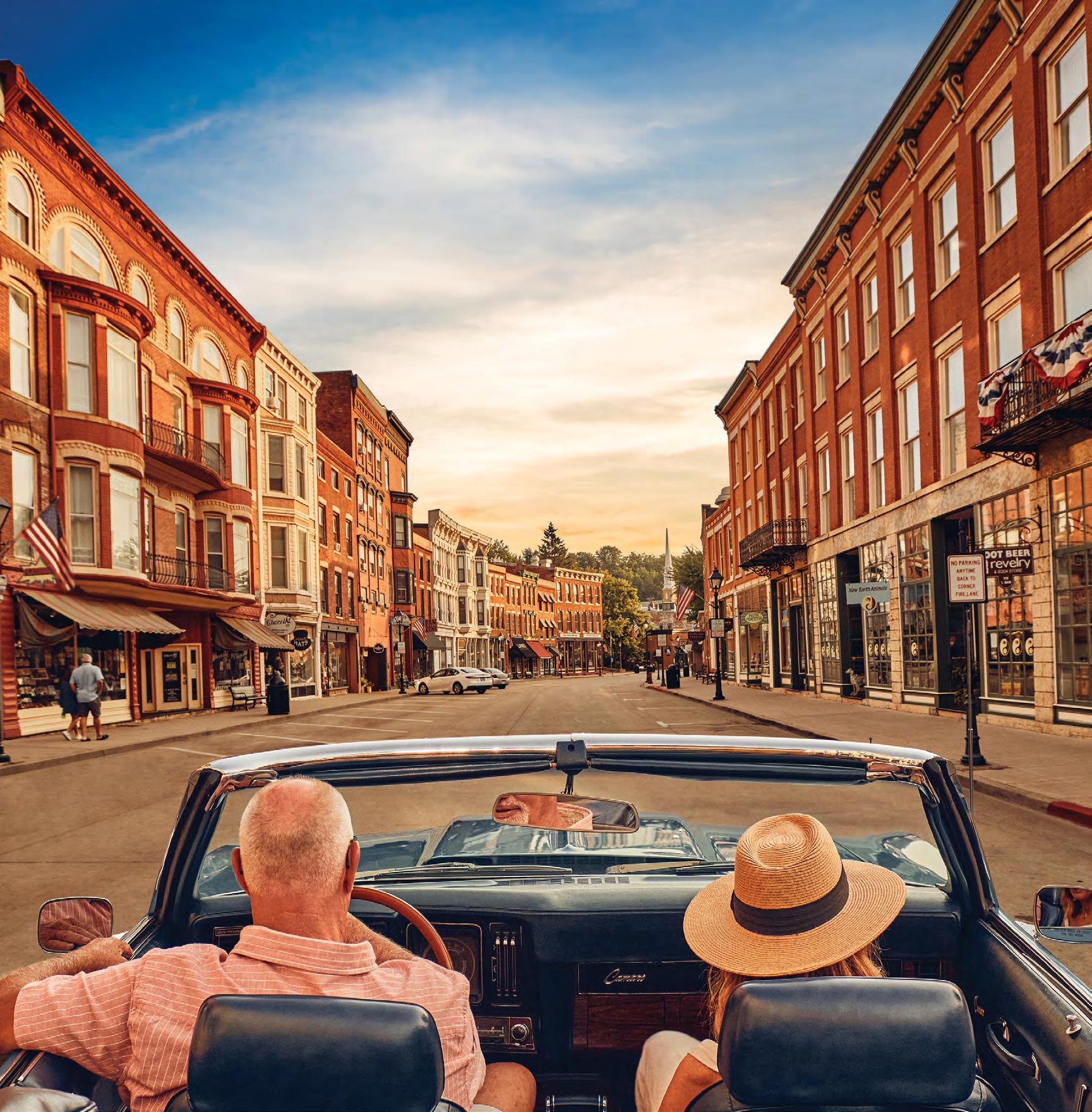










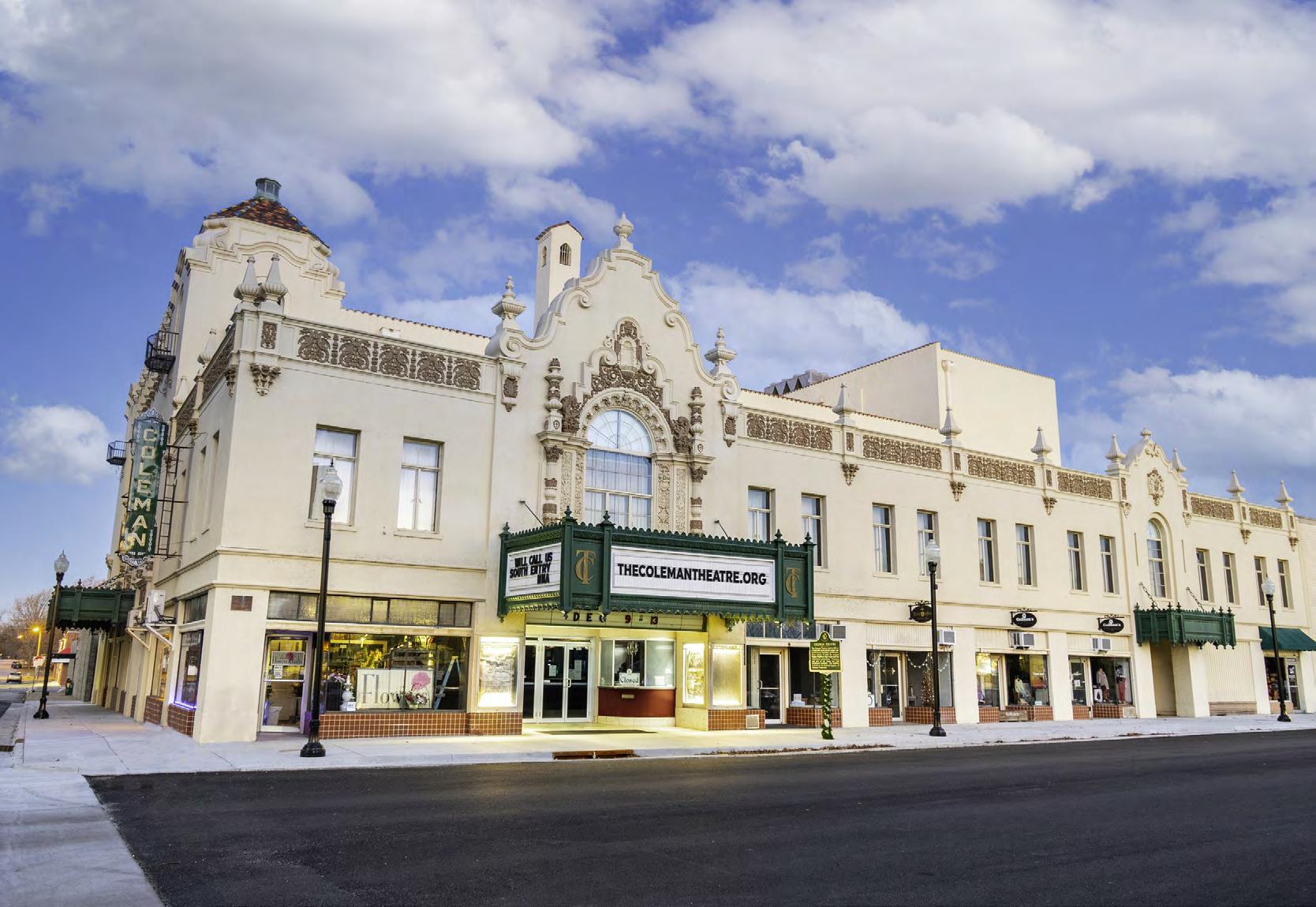
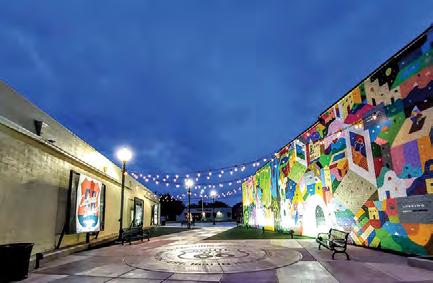






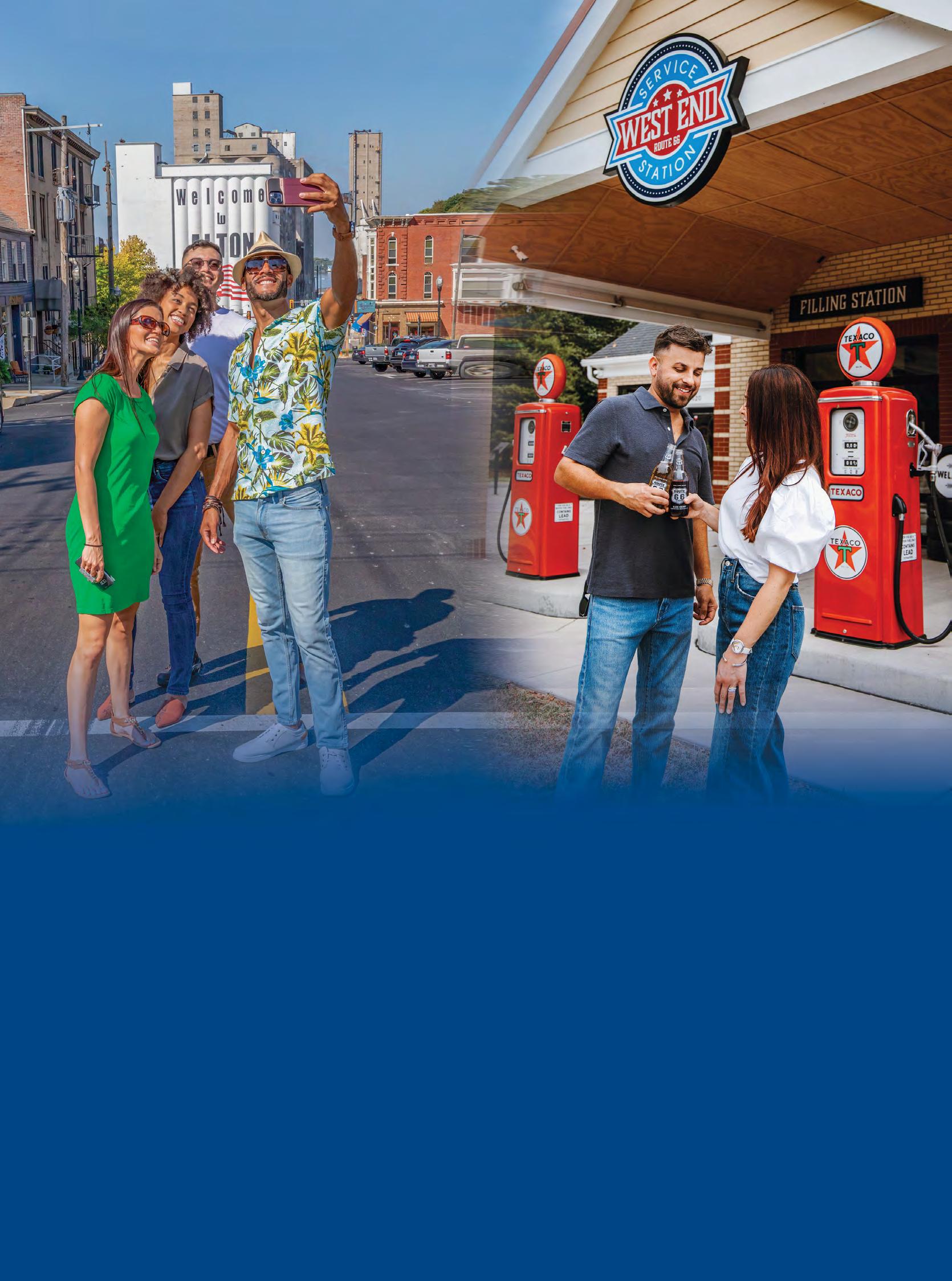
Celebrate 100 years of road tripping in the only place in America where the Mother Road of Route 66 meets the scenic beauty of the Great River Road. Follow the neon signs to the It’s Electric Neon Sign Park, dine at historic Route 66 roadside cafes, take a walk through the river bluffs and prairies and relax with a glass of locally crafted wine beside the Mighty Mississippi River.
Your one-of-a-kind adventure begins at www.RiversandRoutes.com.
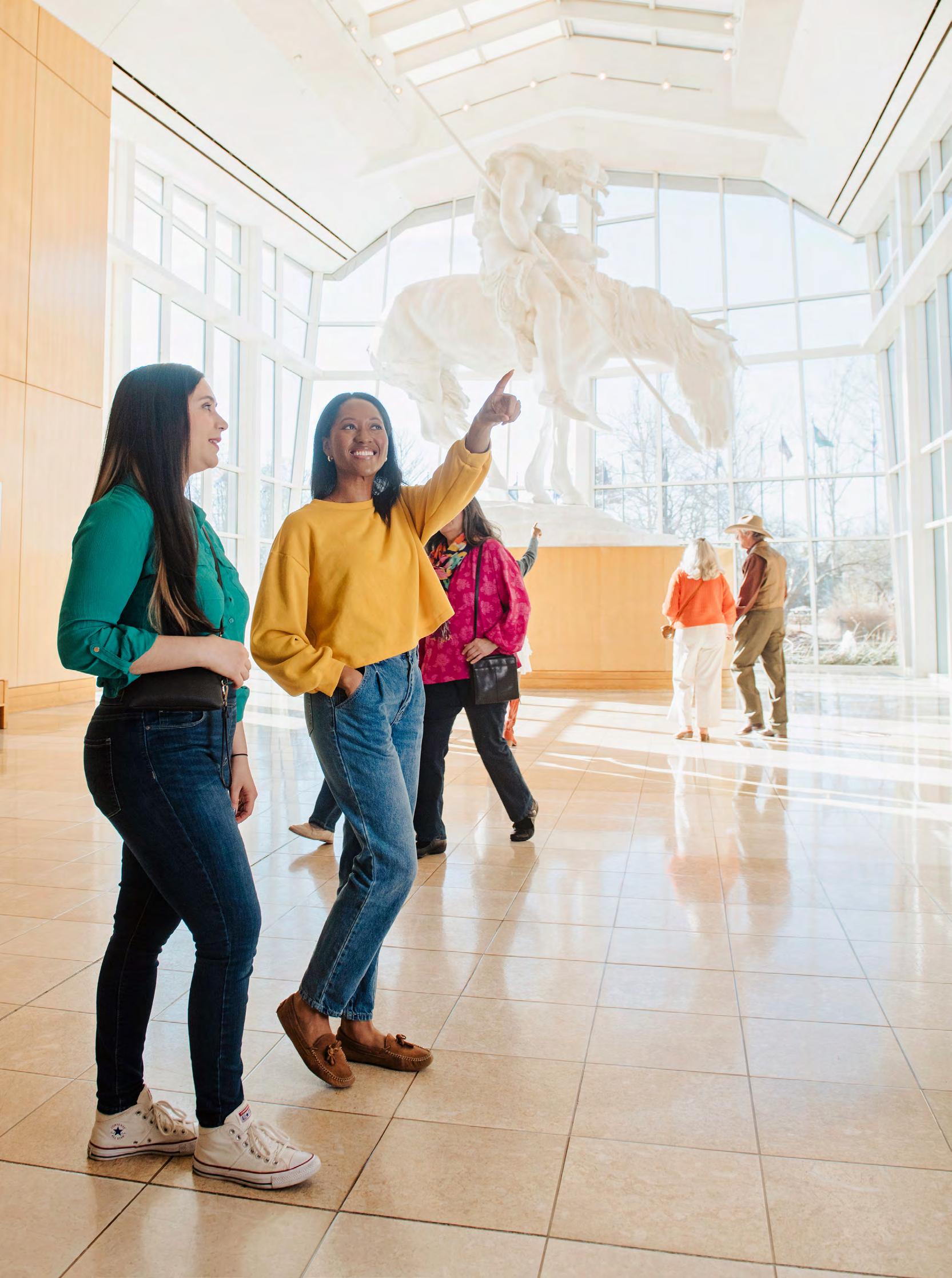

Explore new immersive exhibits and experience the history, art and culture of the American West at the National Cowboy & Western Heritage Museum on Route 66 in Oklahoma City, since 1955.

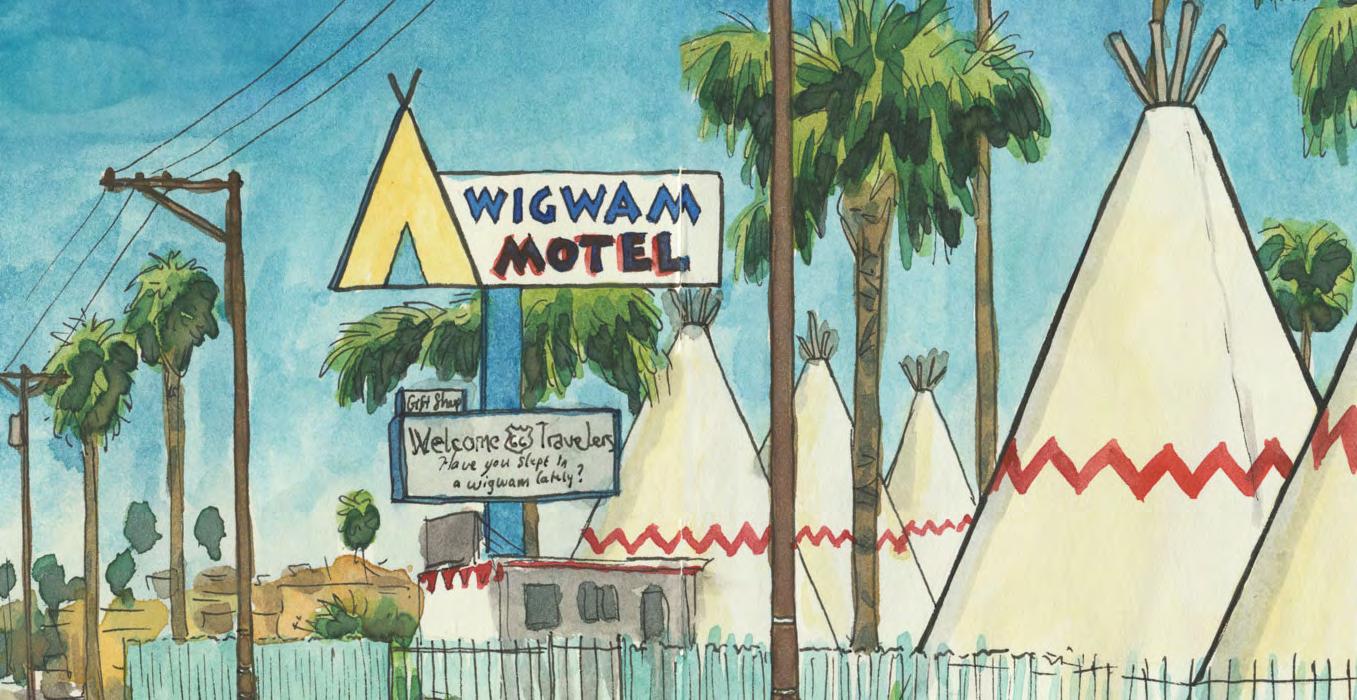
By Joann Chang
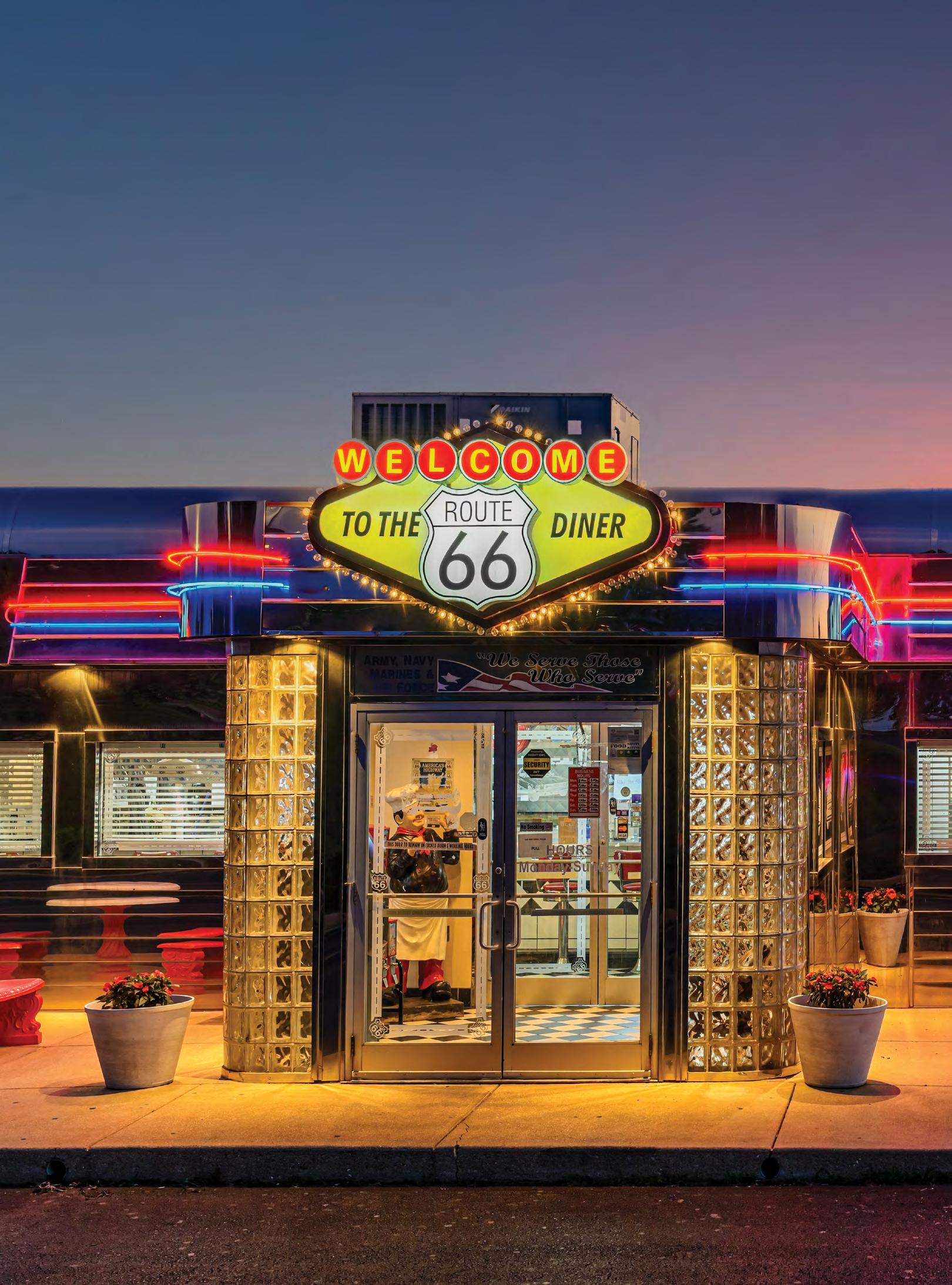
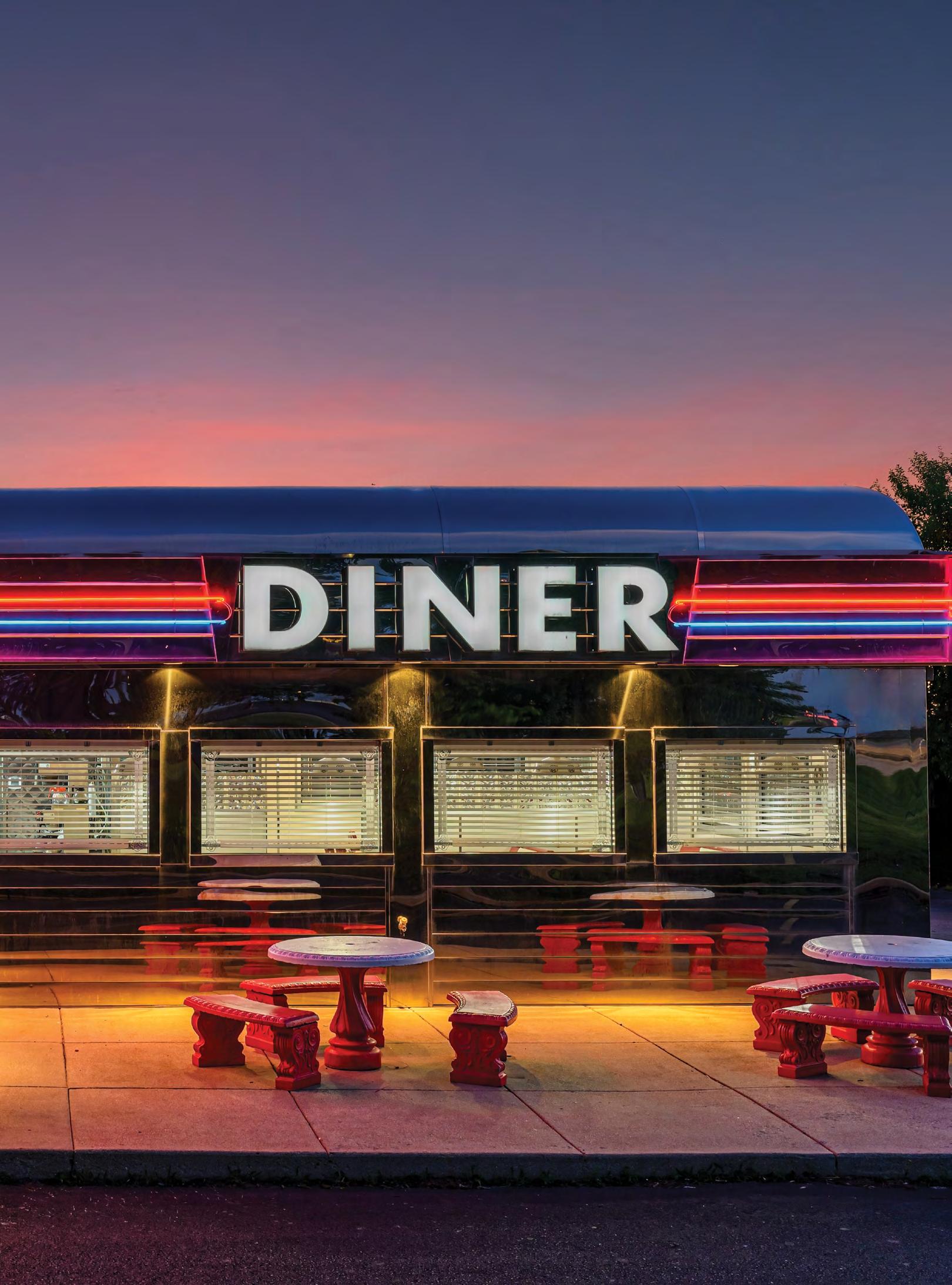
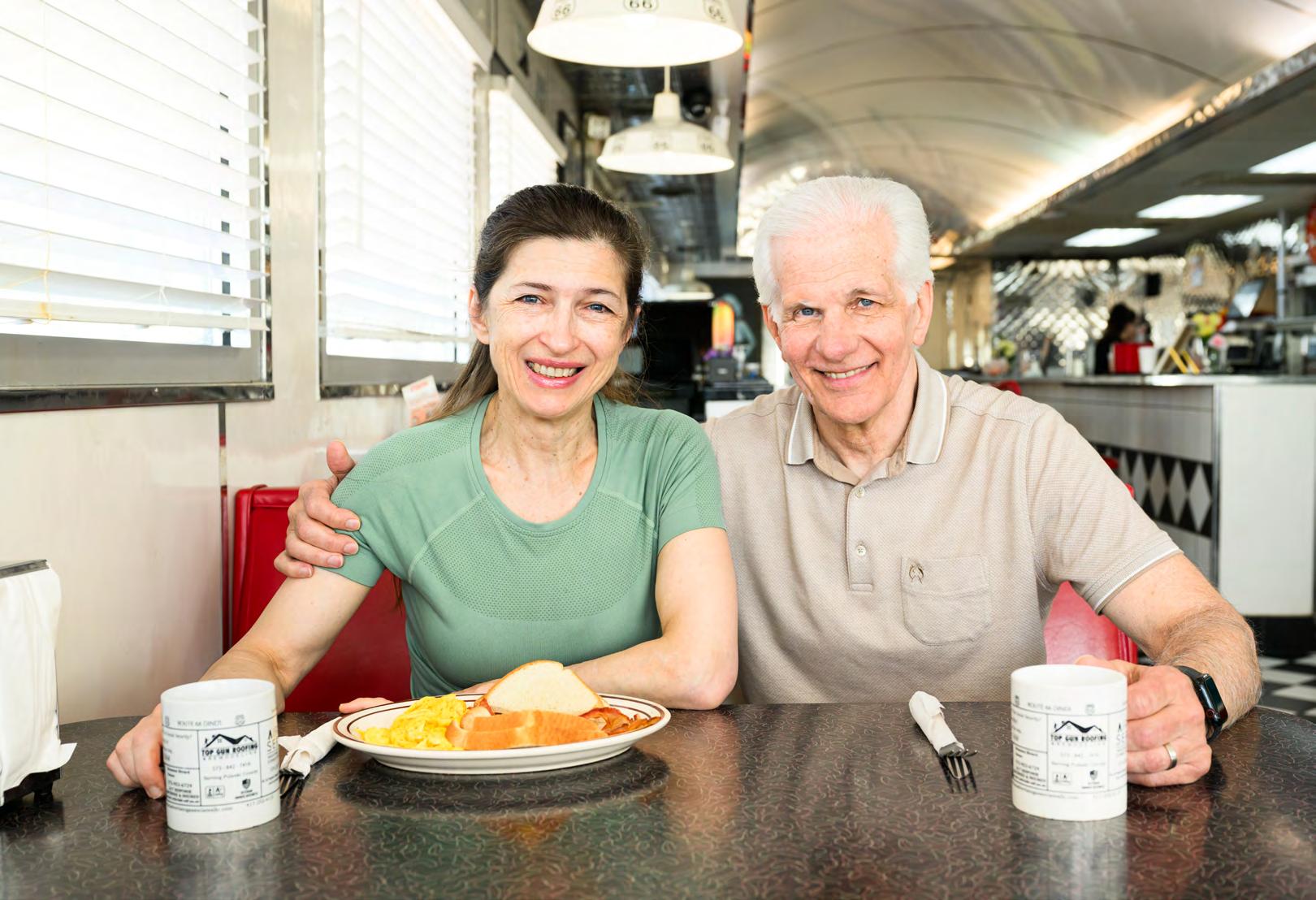
Originally opened in 1989 by Les Mironuck and later revitalized by his wife Oksana after the COVID-19 pandemic, Route 66 Diner’s jukebox tunes and checkerboard floors preserve classic Americana in St. Robert while telling the story of its roots.
By Abigail Singrey
Established in the 1910s and operating through segregation, Threatt Station remains one of the only known Black-owned Route 66 gas stations, evolving through decades of change and now preserved today by the third generation.
By Brennen Matthews
A pioneering force in contemporary Christian music beginning in the late 1970s, Amy Grant helped define the genre before crossing over into mainstream success in 1986 and becoming a major pop star by 1991. Her influence shaped the sound of 80s and 90s pop, and she reflects here on that legacy and her first album in over a decade, The Me That Remains
By Kate Wambui and Brennen Matthews
In the desert heat of Needles, California, the Wagon Wheel restaurant has weathered decades of change, from fire and reinvention to new ownership, while remaining a steadfast stop along Route 66. Serving locals, truckers, and travelers alike, its story captures the grit and resilience of the Mother Road at one of its most unforgiving, and unforgettable stretches.
By Mitchell Brown
Though Route 66’s neon heyday has dimmed since the 1960s, the Neon Museum of St. Louis preserves and illuminates these historic signs, keeping the road’s vibrant visual legacy alive.
By
Nathalie Dassa
Located in idyllic Wilmington, Illinois, the Art on 66 gallery, opened in 2021, reflects owner Rachel Conforti’s vision, blending personal storytelling with Route 66 nostalgia. More than a gallery, it highlights both her journey and the voices of featured artists, inviting visitors to connect with the road’s deeper themes of exploration, memory, and creative expression.
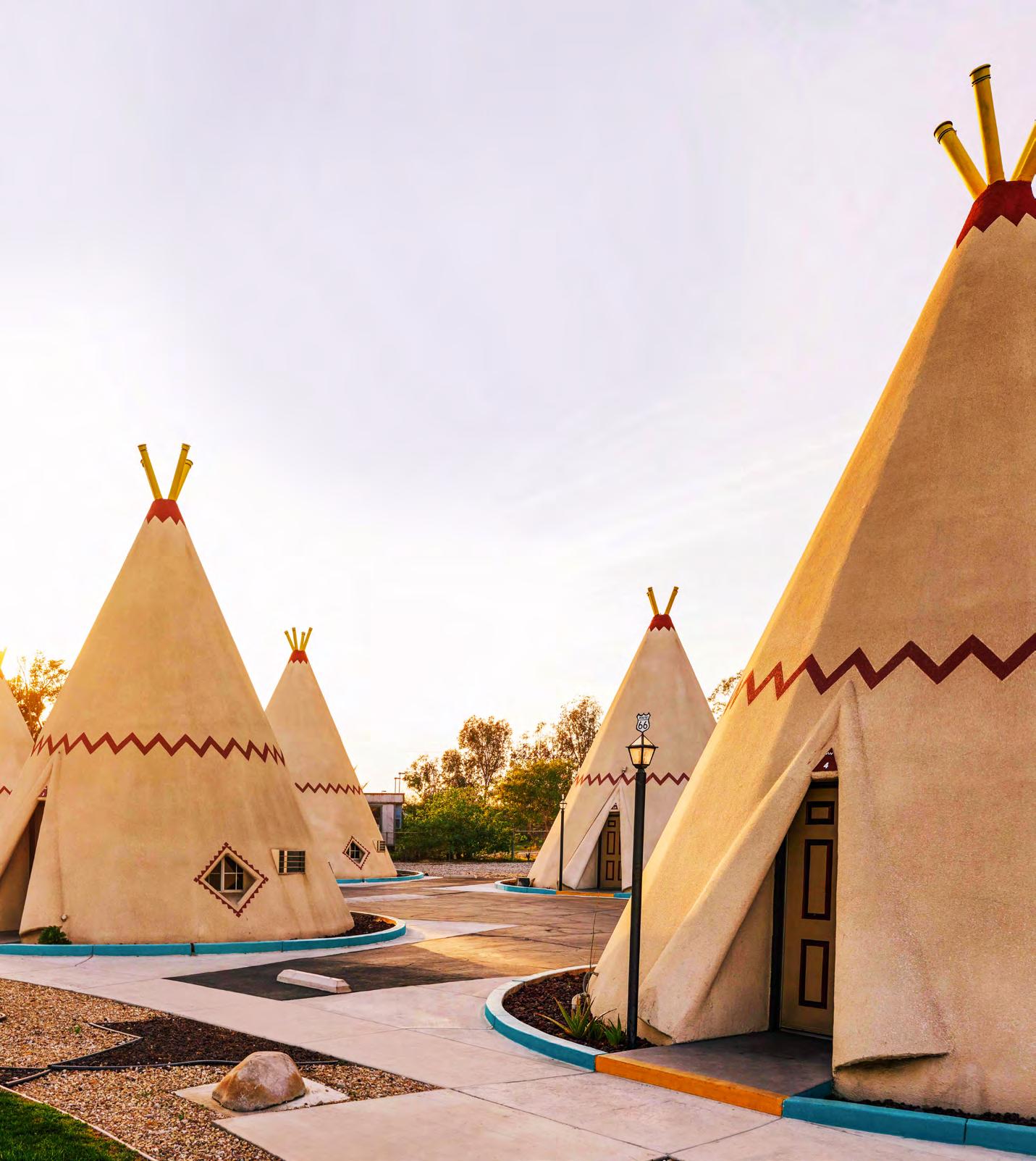
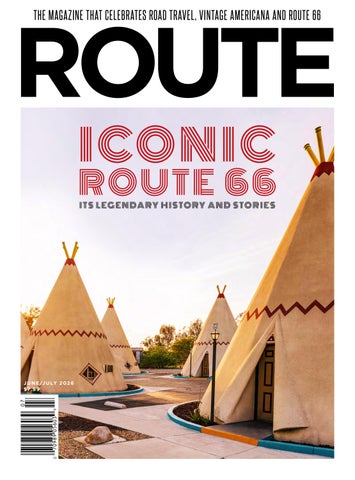
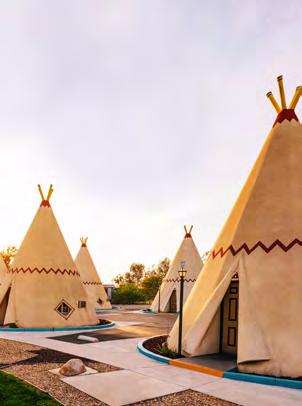
Wig Wam Motel, Rialto, CA.
Photograph by Eric Axene.

A hundred years is a long time for anything to stay relevant. And yet, as the centennial of Route 66 arrives, the Mother Road feels more alive than it has in decades. Across towns that once feared being forgotten, there’s a renewed hum: neon signs flicker back on, classic cars cruise stretches once left silent, and communities are rediscovering not just a highway, but a shared and common identity. Route 66 was born in 1926 out of necessity, stitching together a fractured nation with a ribbon of asphalt that promised mobility and opportunity. In its early years, it wasn’t glamorous. It was dusty, uneven, and often unreliable. But by the 1930s, during the Great Depression, it became something more profound: a lifeline. Families fleeing the Dust Bowl headed west along its path, carrying everything they owned and all they hoped for. It was a road of desperation, but also resilience.
The 1940s and 1950s transformed Route 66 into a symbol of American optimism. Wartime manufacturing boosted travel, and the postwar boom turned the highway into a cultural artery. Motels, diners, and gas stations sprang up, each trying to outdo the other with bigger signs and brighter lights. It wasn’t just about getting somewhere anymore; it was about the unique and memorable experience along the way. It must have been such an exciting time to be alive and on the move.
But the seeds of decline were already being planted. The 1950s also ushered in the Interstate Highway System, a faster, more efficient network that would ultimately bypass the small towns that depended on Route 66 traffic. By the 1970s and 1980s, the effects were undeniable. Businesses shuttered, populations dwindled, and long stretches of the road fell into disrepair. In 1985, Route 66 was officially decommissioned. For many communities, it felt like the end of the story.
Except it wasn’t.
The decades that followed revealed something remarkable: people weren’t ready to let go. Preservationists, local leaders, writer and photographers, and nostalgic travelers began to reclaim the road piece by piece. In the 1990s and early 2000s, Route 66 experienced a quiet revival. Historic designations, grassroots campaigns, and international tourism, particularly from Europe and Japan, breathed new life into almost forgotten towns. What had once been seen as obsolete became authentic, even romantic. For the global visitor, Route 66 came to represent “real” America.
Now, as the centennial unfolds, that revival has turned into a full-scale celebration. Festivals, car rallies, museum exhibits, and countless restoration projects are taking place all along the route. From Illinois to California, communities are leaning into their history, not as a relic, but as an important asset. The road’s imperfections — its cracked pavement, its rollercoaster sections, its nailbiting alignments like on the Oatman Highway — are no longer liabilities; they’re the very things that make it so special.
Still, the story of Route 66 isn’t just one of nostalgia. It’s a reminder of how progress can both create and erase, how innovation often leaves something behind. The interstates made travel faster, but they also drained life from the very places that Route 66 once sustained. The current revival raises a quiet question: what do we value more, efficiency, or experience? I believe that if today’s enthusiastic crowds who are happily back on the road are any clue, we have our answer.
A century in, Route 66 endures not because it’s the fastest way from point A to point B, but because it tells a story. It tells many stories actually. It carries the echoes of migrants, dreamers, entrepreneurs, poets and writers, and nomadic wanderers. Its ups and downs mirror the country itself—resilient, evolving, and occasionally rediscovered.
The centennial isn’t just a celebration of an old road that has interesting historical significance. It’s a recognition that some journeys are worth taking slowly. It’s a reminder that America itself is still a nation with a lot more stories to live and share.
Blessings,
Brennen Matthews Editor
PUBLISHER
Thin Tread Media LLC
EDITOR
Brennen Matthews
DEPUTY EDITOR
Kate Wambui
EDITOR-AT-LARGE
Nick Gerlich
LEAD EDITORIAL
PHOTOGRAPHER
David J. Schwartz
EDITORIAL ASSISTANT
Sonora Mae
LAYOUT AND DESIGN
Tom Heffron
DIGITAL
Yasir Ahmed
ILLUSTRATOR
Jennifer Mallon
CONTRIBUTORS AND PHOTOGRAPHERS
Abigail Singrey
Chandler O’Leary
Ed Rode
Efren Lopez
Eric Axene
Holly Riddle
Jake Bauer
JoAnn Chang
Mitchell Brown
Nathalie Dassa
Skyler Graham
Steven Tandle
Editorial submissions should be sent to brennen@routemagazine.us.
To subscribe or purchase available back issues visit us at www.routemagazine.us.
Advertising inquiries should be sent to advertising@routemagazine.us.
ROUTE is published six times per year by Thin Tread Media LLC. No part of this publication may be copied or reprinted without the written consent of the Publisher. The views expressed by the contributors are not necessarily those of the Publisher, Editor, or service contractors. Every effort has been made to maintain the accuracy of the information presented in this publication. No responsibility is assumed for errors, changes or omissions. The Publisher does not take any responsibility for unsolicited manuscripts or photography.


Uptown23rdDistrict


by David J.
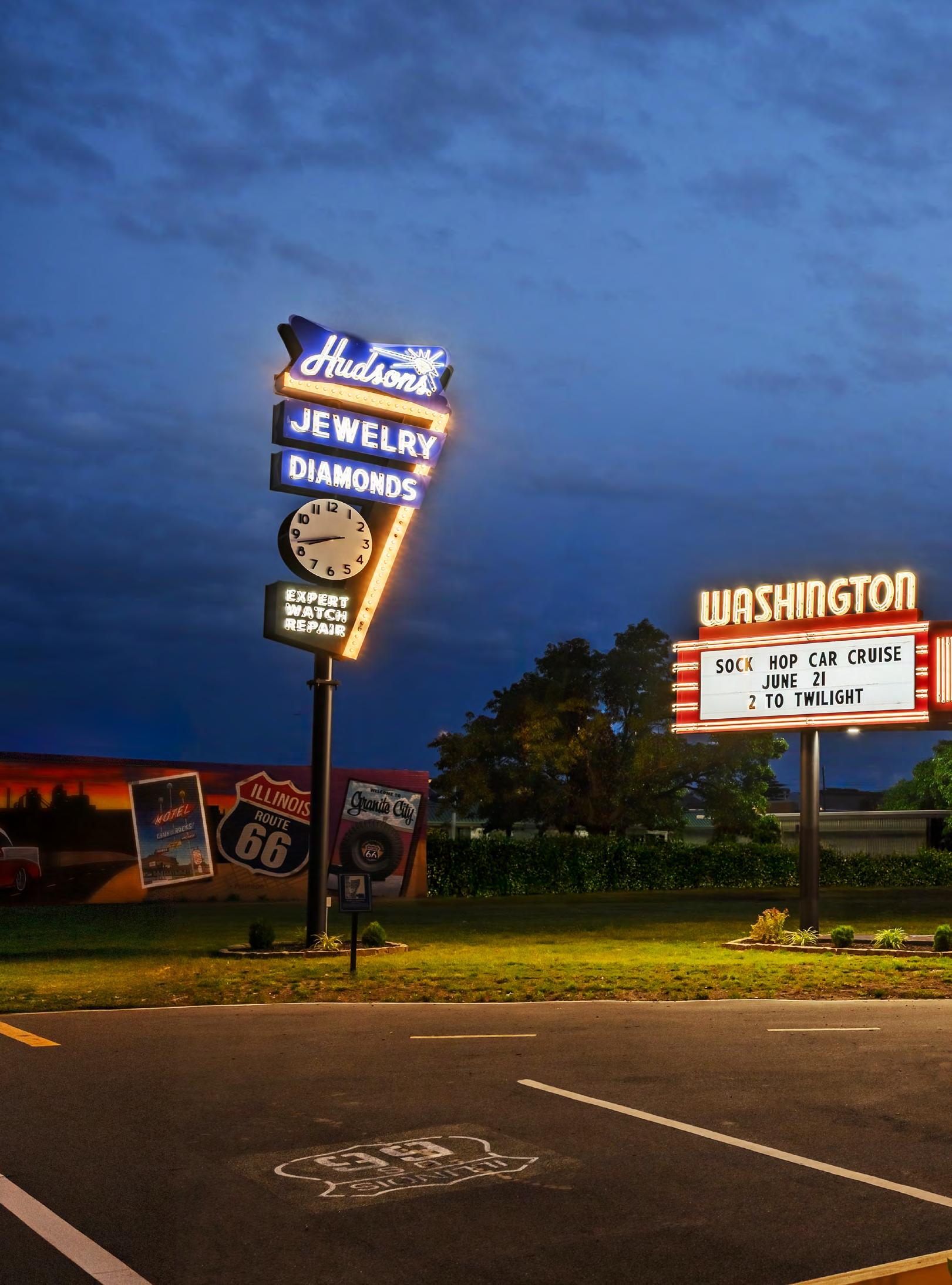
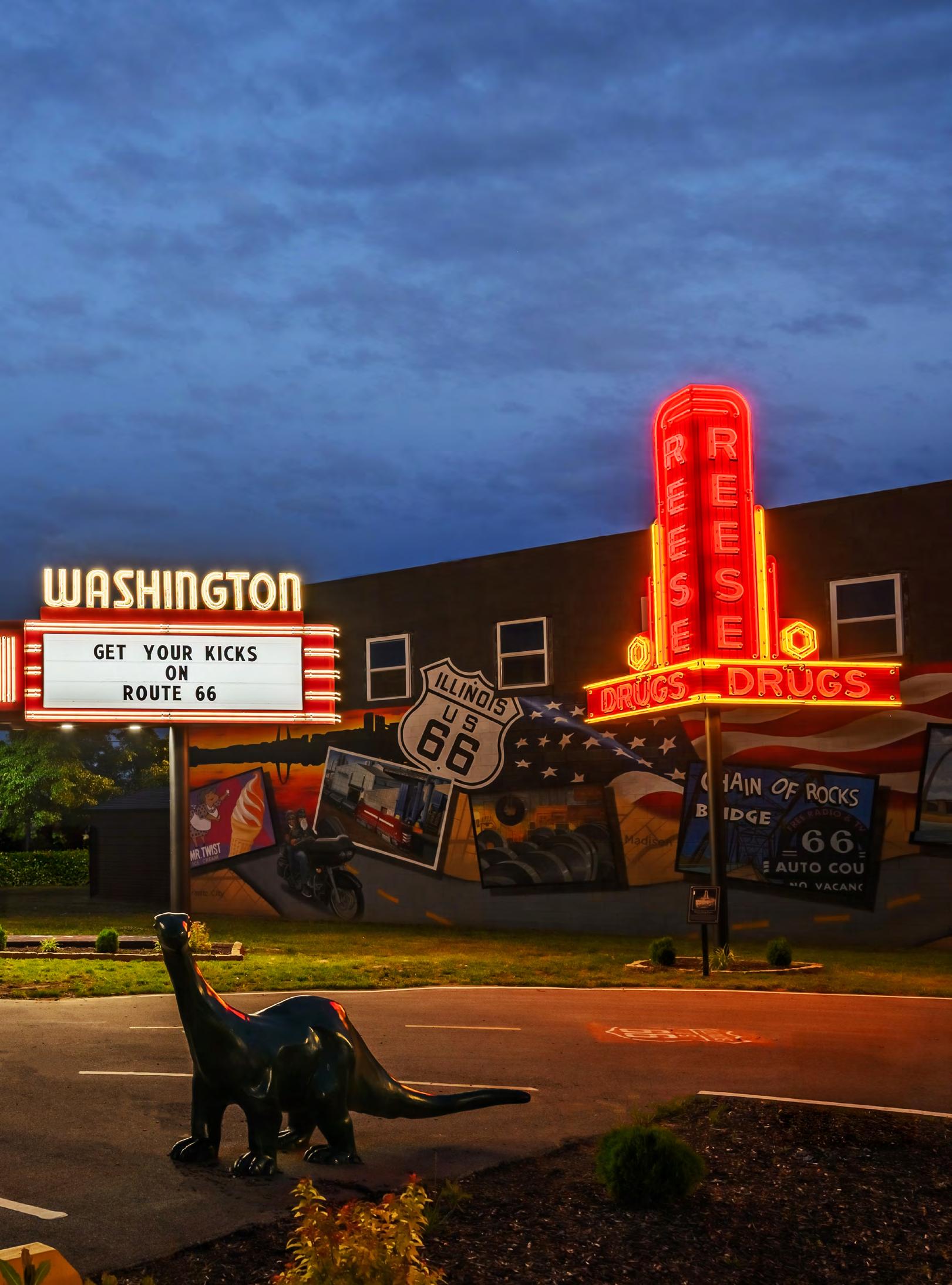
If there’s any iconic symbol more Route 66 than the road itself, it’s neon signs. They’re more than just glass tubes; they’re luminous invitations from small business owners and illustrious symbols of family legacies. Traveling down 19th Street and Delmar Ave in Granite City, Illinois, you’ll see these legacies recognized with three such signs: the royal blue “Hudson’s,” twinkling like their diamonds; the red-hot, L-shaped “REESE DRUGS” with golden accents, and sandwiched between them, the bright white “WASHINGTON” movie theater marquee advertising two new “showings”: “GET YOUR KICKS” on one side, and “ON ROUTE 66” on the other. It’s Electric! Neon Park is a simple yet impactful tribute to the folks who built the industrial town.
Throughout the late 19th Century, the St. Louis area saw an influx of German immigrants, including the brothers — Frederick and William Niedringhaus — who transformed Granite City into a steel juggernaut. Under their father’s tutelage, the duo practiced tinning and glazing, making a hefty profit from their stamped tinware under the banner of the St. Louis Stamping Company. By 1874, in order to outpace the competition, they created a form of iron cookware with an insoluble glass coat speckled to look like — you guessed it — granite. When graniteware invigorated the company, William Niedringhaus and his son George searched for a place to open a new plant, house workers, and establish a legacy. In 1893, the family purchased 3,500 acres in “Kinder,” only six miles from St. Louis. In 1896, the city changed its name to reflect graniteware’s significance: Granite City was born.
The city quickly became a steel powerhouse, with the Granite City Steel Works, American Steel Foundry, and others dominating what one 1924 magazine proclaimed to be the “Pittsburgh of the West.” By this point, other commercial ventures had also made a name for themselves in the small city. The opulent Washington Theater opened in 1923; druggist Walter A. Reese opened his first of five drug stores the same year; and in 1944, Roy Hudson acquired Alfred T. Aten’s Jewelry and Watch Repair Shop, which quickly flaunted the Hudson name.
After a fire in 1946, the Washington Theater remodeled the front of its building and added neon atop the marquee. Reese’s flashed its name in a fiery red, while Hudson Jewelers kept it cool with a bright, icy blue. These vibrant signs would attract families driving along any of the city’s three alignments of Route 66. Downtown Granite City had become more than an extension of a steel town — it was an emblem of modern America.
It was a golden age, but nothing lasts forever. Hudson Jewelers moved to a Granite City strip mall in 1964; Reese’s was destroyed in a fire in 1984; and the Washington Theater was demolished in the early ‘90s and replaced with the Madison County Transit Bus Terminal.
“I think we, like so many, suffered from urban sprawl,” said Granite City native Brenda Whitaker, Director of Arts and Entertainment for the City. “Especially when malls became available in the ‘80s, [we] started seeing the small merchants leaving the downtown area. And it was just hard to rebound after that. Some make it, some don’t, but some people are still willing to try to live out their American dream.”
Granite City Mayor Mike Parkinson is helping make those dreams a reality. After taking office in 2021, he created an Arts and Entertainment department to increase traffic to small businesses. Two years later, in 2023, when Great Rivers &
Routes Tourism Bureau shared that they had funding available for the city, the stars aligned.
Whitaker heard this news and ran to City Council with a plan. On a city-owned vacant lot — a lot that was about a block away from the once-bustling businesses — they would construct a park recreating iconic neon signs, a way “to honor the past,” she stated, “but imagine the future.” To see which parts of the past locals would gravitate to, they surreptitiously took to social media.
“We just watched to see what people talked about when they were reminiscing and talking about the ‘good old days,’” said Whitaker. “Those three places were near and dear to the community’s heart.”
In December 2023, two months after submitting the concepts, Great Rivers & Routes approved the $500,000 grant. This good news came with a tight timeline: the project must be finished by June 30, 2024. Fortunately, they knew where to get quality results efficiently.
Ace Sign Company is a family-owned and operated business that has been crafting signs for six generations. They had previously worked with Great Rivers & Routes on Springfield, Illinois’ alluring Route 66 Experience. The tourism bureau and Granite City came to the company with their vision, and Ace started drafting the dynamic recreation.
“We meticulously studied and looked at images [of the businesses] that we were able to find,” said Scott Bringuet, the current owner of Ace Sign Co., and great-grandson of the original owner. “Then, we created 3D models of the signs and scaled them, basically, we digitally recreated everything off those old photos.”
These patterns guide the shape of the glass, which is handbent at the factory in Springfield. Designing the colors, however, was trickier, as the reference photos were in black-and-white. Again, social media filled the gaps. With a combination of the public’s collective memory and their neon expertise, Ace Sign Co. was ready to brighten downtown Granite City.
In the weeks before installation, the team took the two-hour trip south to Granite City to excavate, pour foundations, and set steel poles for each sign. They then precariously transported the fragile neon and placed their work in the lot by the June 30 deadline.
Though the neon signs are the main attraction, they are far from the only feature at the park. During this first phase of development for It’s Electric!, the St. Louis Sign Company painted a mural showcasing nearby stops along the route, and Arnette Pattern Company manufactured a lime green structure modeled after the Chain of Rocks Bridge.
On August 1, 2024, the park celebrated its grand opening with classic cars, live jazz, and great food. Families took photos by the mural, and kids ran across the “bridge” under the glow of the neon lights.
After seeing the popularity of the park, Granite City officials went through a second round of the competitive approval process in order to add two 16-foot-tall sculptures by Noah Kirby: a Make-It Toy monument, which remembers the wooden toys manufactured in the city, and a giant graniteware coffee pot—a towering homage to the city’s namesake.
Like making graniteware, making neon is an intricate, artisan process, and one that will fade into history if it’s not entrusted to the next generation. But by celebrating the families who decorated this country, we can keep their inspiring stories and lustrous crafts alive.
By Jake Bauer
The Southwest has always been a magical destination. Its expansive landscapes, vivid natural beauty, uniquely interesting culture and history, and its “anything is possible” atmosphere make it a destination that has always attracted sojourners, and after the Mother Road was born in 1926, Route 66 travelers. Luckily, trading posts were there to greet them with all of the souvenirs and necessities needed. And just west of Winslow, Arizona, one special place stood out, and after decades of closure and neglect, once again, Meteor City’s doors are wide open.
Interestingly enough, it was a huge crater in the earth that would start this story. The Barringer Crater, also known as the Meteor Crater Natural Landmark, just six miles south of Route 66, was the first real reason for anyone to give much attention to this part of the route, much less start a business. But as fate would have it, opportunity abounded. It is believed that the Barringer Crater was formed 50,000 years ago when a meteorite crashed into the dusty soil. The resulting crater became a popular side trip for travelers along the early National Old Trails Road in these parts, which later became Route 66 in 1926. The crater is about 570 feet deep, and 4000 feet in diameter, making it about 2.5 miles in circumference.
And for many weary road travelers, it provided a good reason to take a break from the long drive west.
While on private land, the crater welcomes visitors throughout the year, and once served as a simulator and training ground for astronauts with NASA’s Apollo lunar landings in the 1960s. Nearly 270,000 guests visit the crater annually.
With a steadily growing number of travelers each year starting more than a century ago, it meant that the land along the early east-west road became increasingly lucrative for savvy entrepreneurs. It was into this ethos that a gas station was born and evolve into one of the more unique trading posts in the Southwest.
In 1938, Joe Sharber opened a Texaco station along the new highway, near what is now Exit 239 of I-40. Original Route 66 and its predecessor were located about a tenth of a mile north of the modern freeway. Traveling west, it was the first establishment west of Winslow, and east of a north-south Meteor Crater Road that took visitors south to the crater.
It was a strategic location, because Sharber captured westbound motorists who forgot to fill up when leaving Winslow, but before they could get to other businesses en route to Flagstaff. The road had been paved about that time, allowing motorists to travel more safely and quickly through the vast openness of the barren region. By 1941, the early success Sharber enjoyed attracted the attention of Jack “Lonesome Jack” Newsum, who bought the station and then added a trading post that carried Native American jewelry, curios, and groceries. There were numerous other trading posts along the 180 miles separating New Mexico from Flagstaff, but in this portion, Sharber, and later Newsum, had an exclusive section for at least a few pivotal miles.
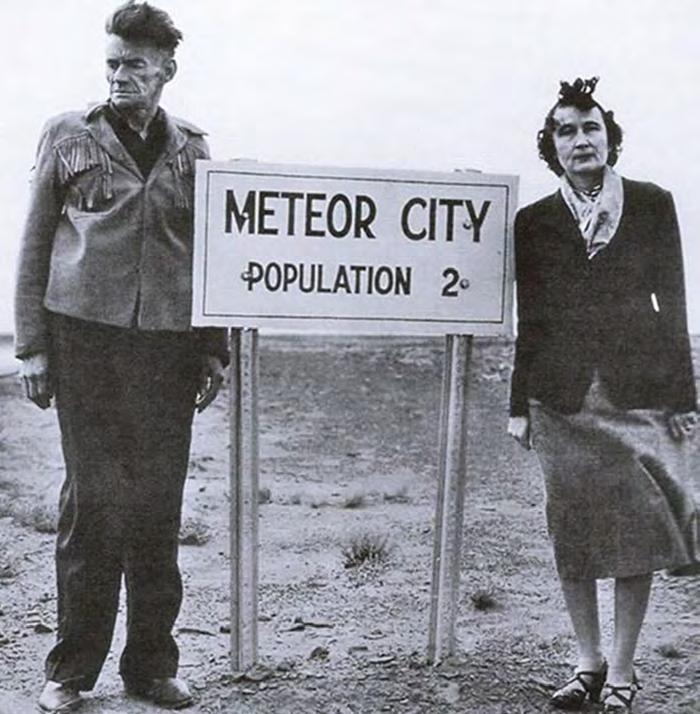
Newsum had a sense of humor, as well as a knack for attracting customers and establishing good PR. The bachelor posted a sign that said, “Meteor City, Population: 1.” But then he married Goldie Pearl Moman in 1946, at which point he updated the sign to read Population: 2. Newspaper mentions were frequent because of the sign.
“The folks who put trading posts along Route 66 (in the Southwest) did so knowing that they could do so on the cheap, provide actual services, but also utilize or take advantage of their proximity to the Navajo and Hopi reservations, both as sources of cheap cultural souvenirs, and as customers,” said historian Sean Evans. “The Southwest was still broadly trading on its ‘exotic’ past.”
For Midwesterners and Easterners driving westward, those Native American items were a magnet. Filled with curiosities about the Navajo, Hopi, and Apache of lore, these trinkets — even if hawked by Anglos — helped satisfy the questions that travelers had about distant cultures that they had never experienced but were fascinated by.
“These folks [trading post owners] all knew one another, supported and competed with each other, but none ever operated as a true Native trading post,” Evans continued. It was touristic theatre, and fun, kitschy souvenirs were the currency.
In 1950, a new alignment of Route 66 was built, straightening out 66 from its early serpentine path that meandered along the contours of the land, allowing even faster travel. There is some uncertainty at this point regarding the location of the trading post.
A vintage photo shows the original station, along with the Population: 1 sign, being very close to the two-lane, and on the south side of the road. This would have been between 1940 and 1946, while Jack was still single.
A second photo shows a much larger structure that is set back from the road, indicating that there was a new building at minimum, and possibly at a new location a few hundred feet south along the 1950 alignment. By 1955, Goldie’s mother, Hattie, joined the couple, and the sign had to be updated once again. There were now three individual residents. Late 1960 found Jack in failing health, and he turned over the reins as Justice of the Peace of this municipal fabrication to Goldie, who quickly built a reputation as a tough judge of civil misbehavior. He died by the end of the year.
But then the trading post burned and was moved into another nearby building. Mother and daughter held strong, until Goldie herself passed away in 1967. By then the population number had been erased, partially in
fear that criminal opportunists might deduce that two women were living alone.
In 1970, the interstate highway era had come to fruition in eastern Arizona. The 1950 upgraded twolane was converted to eastbound I-40, with a companion set of lanes built a few feet north for westbound traffic.
This meant that all businesses along the new freeway, including the Meteor City Trading Post, could only be accessed by first exiting at an interchange. For many motorists, this was more effort than they desired.
In April 1972, a state injunction was filed against Meteor City and five other trading posts along I-40, alleging the sale of Hong Kong- and Japanese-made “Indian crafts.” At the time, Meteor City was being operated by Denis Ortega. The crackdown involved investigators seizing the phony merchandise.
Tax records indicate Carl Kempton and family members then owned the property from 1972 until 2017, although Evans recalls the business being owned remotely and managed by onsite employees throughout the years.
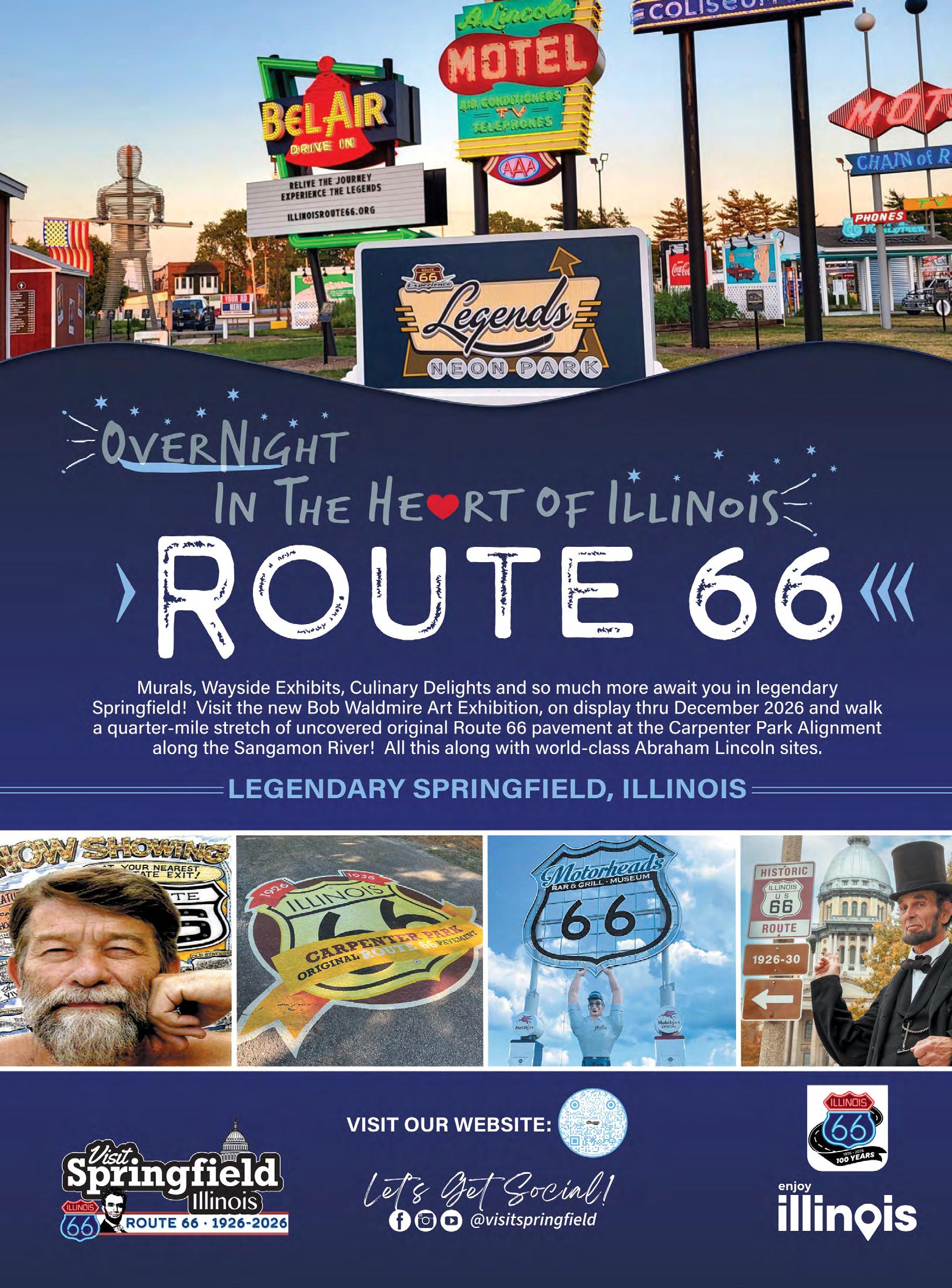
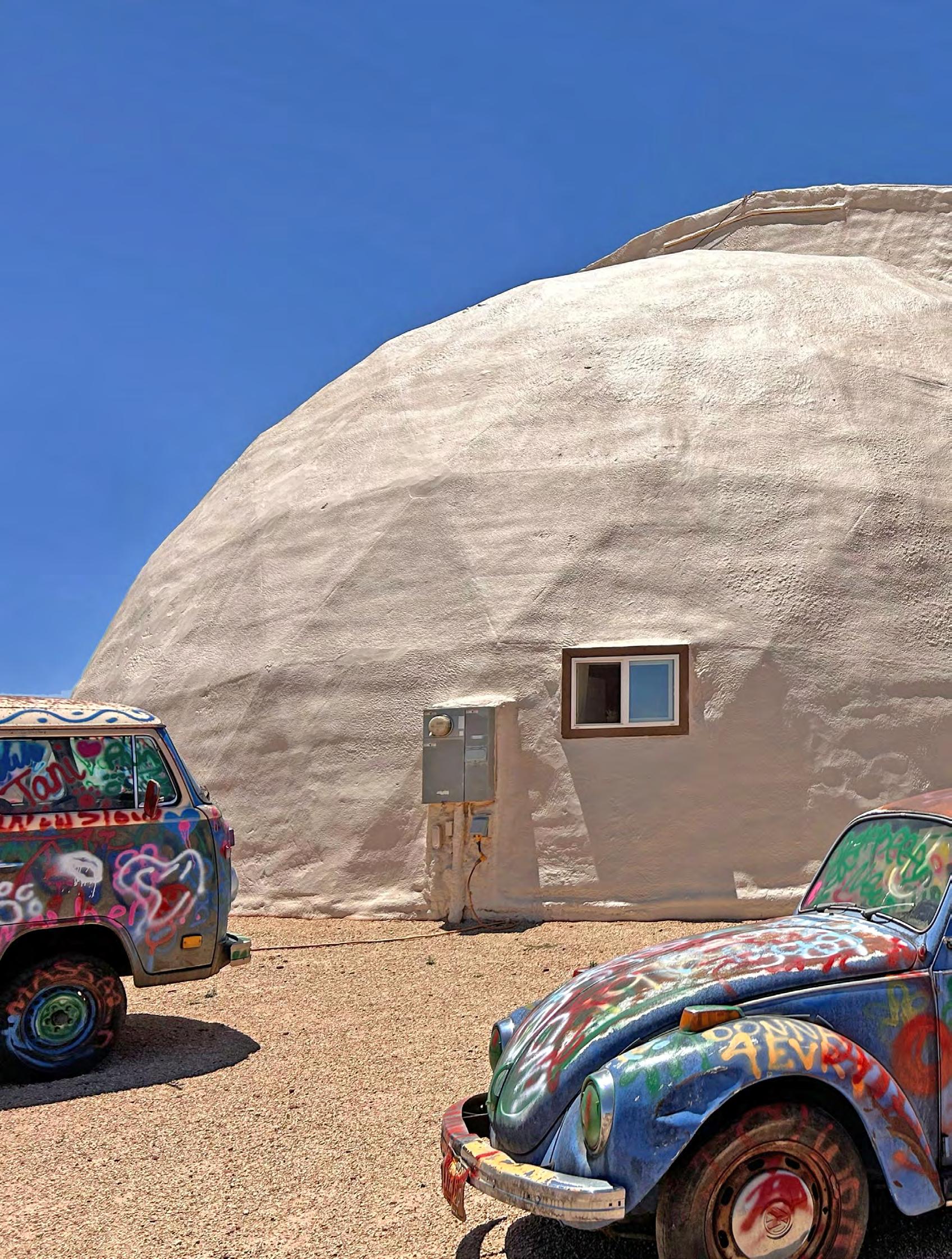
In spite of the court injunction and reputational blemishes, Meteor City Trading Post hung on. In the late1970s, a completely new structure was erected following another fire, this time a geodesic dome with the yellow Mohawk down the center.. “The dome [at Meteor City]
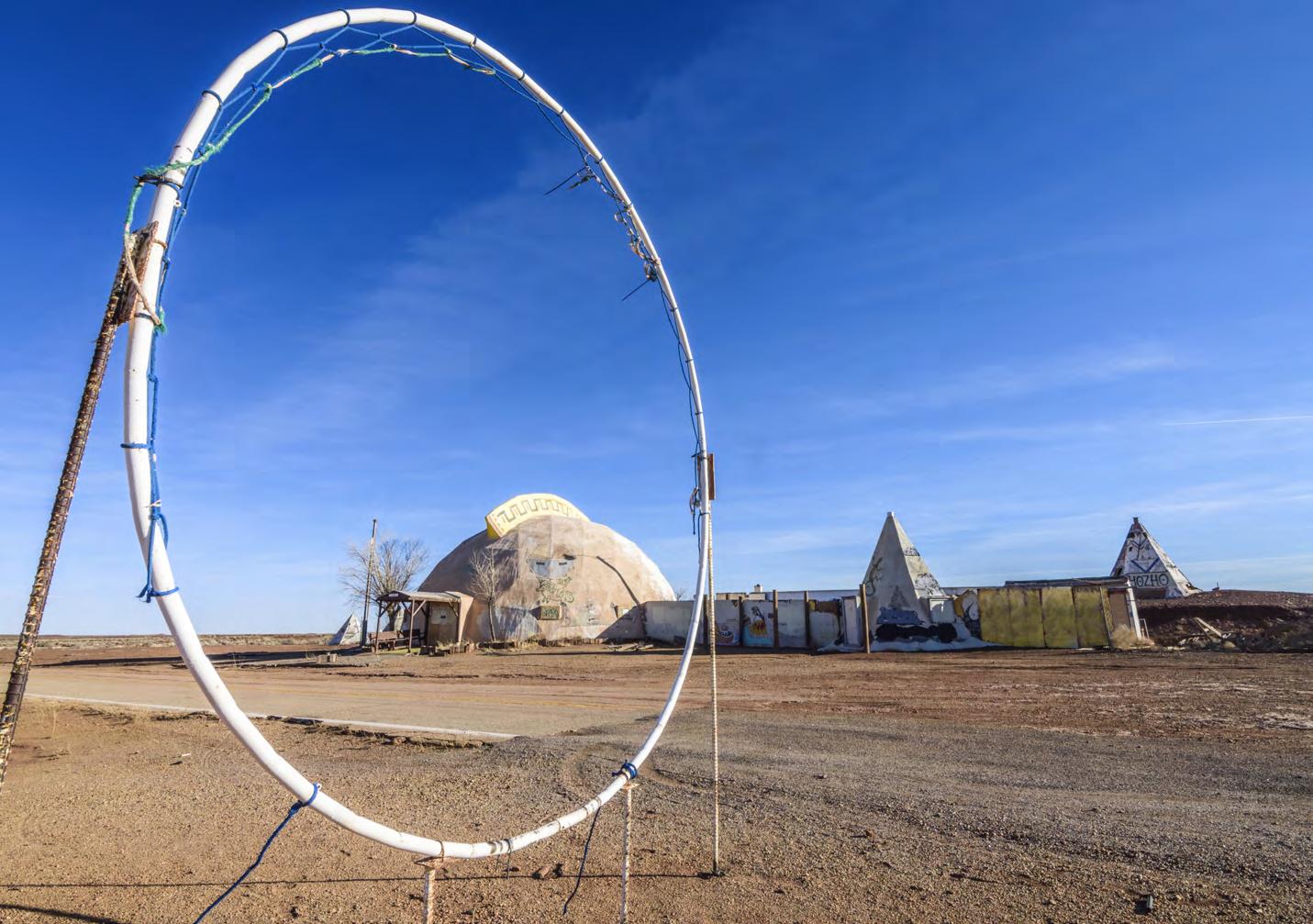
was the product of a very successful salesman who passed through and also sold domes in Lupton, Chambers, the former Rimmy Jim’s on Meteor Crater Road, homes in Sedona and Williams, and more,” Evans added. And boy, did it cause the trading post to stand out.
It is widely accepted that the trading post had its moment of glory in the 1984 movie Starman , starring Jeff Bridges and Karen Allen. The shop was stage dressed as a restaurant, and the couple had cherry pie and peach cobbler. The movie is regarded as a moderate success, earning $28.7 million against a $24 million production budget, but it is a cult classic.
However, there is a nearly identical dome at the nearby Meteor Crater RV Park, and online sleuths have noted differences between the two that are identifiable in the film, and have thus disputed claims that the movie was filmed at the post. Regardless, the legend is now fixed and its veracity seems not to matter.
At some point after this — no one knows for sure — legendary Mother Road artist Bob Waldmire painted the “World’s Longest Route 66 map,” at the trading post, a linear billboard at ground level that could be enjoyed by all. At roughly 100 feet long, it captured the essence of Route 66 from Chicago to Santa Monica, and was best enjoyed on foot, metaphorically crossing through the eight states the Mother Road passed through.
This we know, though: The original dome burned down in 1990. The owners then rebuilt it with a similar dome. It was much the same as the earlier version, with
a small stock room on the back side for inventory. With Route 66 having been decommissioned in 1985, and its renaissance still early in the making, desire to view relics like the trading post was low.
The 1990s were not kind to the trading post, thanks to cultural changes in the way people move. The freeway allowed for high speed travel. Customer preferences changed, with kitschy and mawkish mom-and-pop tourist shops fading into the rear view. Sprawling truck stops became the new travel stop.
In July 2001, the trading post closed again, but then Richard and Ermila Benton arrived to manage it. Little is known about them, and while they are often credited with having purchased the post in 2002, county tax records do not indicate such a transaction occurred. It is more likely they were operating under a lease-to-buy arrangement with Kempton or something similar. They lived in a mobile home on the property, which served as the managers’ residence.
The next year found a large group of volunteers repainting Waldmire’s mural. One year later, Jim Conkle, Founder, CEO and Chairman of the Board of Preservation of Historic Roads & Corridors, and working on behalf of the Hampton Inn hotel chain, placed a “Save a Landmark” sign at the post, one of many installed along 66 on a 66-day tour. Six teepees on the property were also restored. What was then ostensibly the world’s largest dreamcatcher was positioned by the owners close to the freeway, its hoop and mesh spanning a 12-foot diameter.
However, the trading post closed for good in 2012, the Bentons vacated, and the structure quickly became a target for vandalism and theft. For Sale signs went up, but fell on blind eyes. Merchandise had been left on shelves and in the stock room, which was quickly pilfered. Waldmire’s mural started falling down, one section at a time. It was as if the operators had simply driven away, leaving the post to decay in the desert.
But then new saviors arrived in 2017. Michael (Mike) and Joann Brown, from Jeffersonville, Indiana, saw the post and the For Sale signs while traveling through northern Arizona. The couple were mesmerized with the building and the area, seeing a future in reopening it along the fabled old road. “We loved the wide-open spaces and the hospitality of the people of Arizona. We have a deep love for Route 66, and when we toured the Meteor City Trading Post, we knew we had to make an offer for the property as soon as possible. The month we bought it, Coconino County was going to tear it down,” Joann explained.
Mike had regularly traveled the historic highway as a child to visit family in Oklahoma, but the couple took the full Route 66 trip together when they first moved to Indiana from their hometown in California, and a love was born. And then fate stepped in. A few months before the purchase, the couple discovered a picture from that trip, in which Joann had captured a snap of the trading post’s teepee structures and the sign reading “Exit 239” for Meteor City Road. To her, that was a sign that they were meant to reopen the trading post.
So, the couple purchased the forlorn property from Kempton, who had been an absentee owner for 45 years, with plans to restore and reopen it. They were not able to assume full time residence just yet, having to commute from Indiana for work sessions, until they relocated to Arizona in 2019.
The plan: “We want to go back in time. We are opening it back to the way it was,” Joann said to Route 66 News, upon purchasing the historic structure. “We want it to be a time capsule of Two Guns, of the other trading posts that once were [here]. We want Route 66 to be a fabled attraction.”
And work they did, tirelessly. However, Mike died in 2022 and plans had to be put on hold. With a reopening now in serious doubt, Joann set about to find someone to carry on her vision. “One of the hardest things I had to do was sell it. I held it for the new person who could keep it alive.”
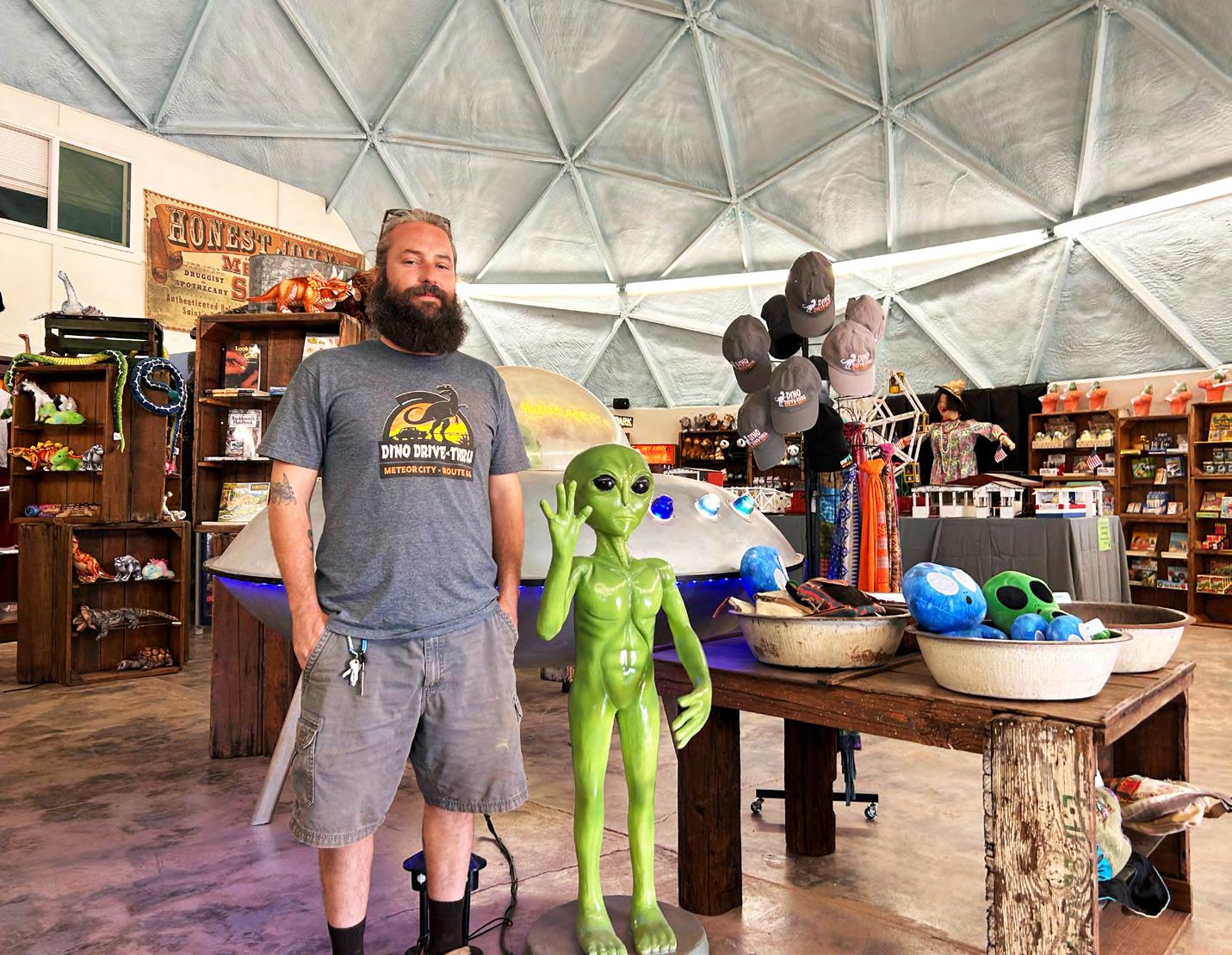
Enter Dirk Dole, of Atascadero California. Representing Dole Properties of California, Dole purchased the land and building in 2024 for $50,000. Dole’s company owns several other outdoor attractions across the U.S., including Crystal Cave in Springfield, Missouri, also a Route 66 city. They have restored and preserved the history of Meteor City, while adding significantly to it. He reopened the trading post in May 2025, but in a completely new configuration and with a new name: Dino Drive-Thru.
The latest rendition is a modern interpretation of a classic roadside attraction. In addition to free attractions, a gift shop, and penny arcade games, the site also boasts
seven fee-based attractions, including Ride-A-Dino, a hurricane simulator, the namesake Dino Drive-Thru, and others. It has all the same kitschy and mawkish offerings of a roadside stop half a century ago, but with some re-imagination.
Dino-Drive Thru at Meteor City, like the other properties Dole owns, is the result of a fascination with fading vintage roadside attractions. “I’m 60 years old now, and my wife and I have two sons. Boy, wouldn’t that be fun to own one of these!” he thought. “Luckily, we made some good business decisions earlier in life and had the extra available cash and time. It’s a bit of Americana that is going by the wayside, and if you don’t stop to preserve and restore it, they just slowly disappear, and then they’re not there anymore to enjoy,” he said with a hint of sadness.
One day fate took them through northern Arizona, much like the Browns, and they discovered Meteor City. “I thought, ‘Wow look at this, an old Route 66 attraction in Winslow!’ It had been closed for a number of years and actually had suffered a fair amount of vandalism. And I thought, well, this might be kind of a fun one, so we bought it,” he shared.
Dole got to work quickly. After a two-month clean-up of the property and repairs on the dome, opening day started to appear on the horizon. “We worked out in about a year I guess, and opened on Memorial Day of 2025. We restored the dome, and added a nice gift shop to it with a lot of Americana things.”
Interestingly, the dinosaur theme came about as a result of the clean-up, when he realized he had some empty land behind the dome. Having already added dinosaurs to his Missouri attraction, and having maintained contacts with that supplier, he decided to install a large array in Arizona. It became the driver for the entire project.
Dole is patient and willing to wait for Dino Drive-Thru to find its stride. “I don’t think it’s a destination that is its own just yet,” he continued. “I would say a large majority of the folks out there are on their way to or from Meteor Crater.”
But the newly reimagined Meteor City may as well be an entirely new business in search of its own momentum. “This place was closed for 10-plus years, and when we opened, it was pretty much zero and go. There was nothing that we could really build off of. We just had to start building,” he continued. “That’s been fun but also challenging, but we are using social media, Facebook and Instagram, and all that, to get the name back out there.”
Just like nearly 90 years ago, when Sharber opened his Texaco along Route 66 and the Barringer Crater started attracting tourists, there is energy in the air. Now, just as then, there is strong interest in visiting a hole in the ground that may have happened 50,000 years ago, as well as roadside attractions like Dole is rebuilding. While the Meteor City Trading Post has had its ups and downs, it has managed to keep reinventing itself. Today’s version is just a modern twist on what Sharber and Newsum could have done with a little more inspiration, and money. It is a continued chapter in the saga of the mythical land of opportunity: the Southwest.

By JoAnn Chang
by David J. Schwartz - Pics
Becoming a restaurateur was not on Les Mironuck’s radar. Not in the least. He moved to Saint Robert, Missouri, intending to settle into an early retirement. But a single day on the courthouse steps of this Ozark town would change his life forever.
Les comes from a family of hardworking Ukrainian immigrants. His grandmother made the move first, in the late 1880s, with his grandfather joining her a few years later. They settled initially in North Dakota, but soon headed further north into Saskatchewan to join other Ukrainian families taking advantage of free land offered by Canada. Les was born in Regina, went to college there, and eventually set his sights south to make his way in the world. St. Louis became his new home, and there he flourished.
“I moved in 1986 and became a real estate agent, then a real estate broker, and I have been involved in real estate ever since. I worked for corporate Century 21 and managed the growth in a couple of states for them, but then retired in 2005 and moved to Saint Robert, Missouri. I bought a real estate office from my franchisor that year and made this my home; and I’ve been here ever since,” explained Les.
In the years that followed, Les settled into the community, buying his own investment properties, and helping others with theirs. In 2007, he served as the broker for Larry Burrell, who was looking to sell his local diner. Five years earlier, in 2002, Burrell had purchased a Denny’s Classic–style aluminum-clad diner from Madison, Inc. in Oklahoma, moved it to 126 St. Robert Boulevard in St. Robert, and opened Jack’s Diner. Introduced in the late 1990s, the Denny’s Classic–style models were designed to recapture the nostalgic spirit of mid-century America, with gleaming steel exteriors and neon-lit interiors. Sadly, business did not go as planned and Burrell was soon shutting his diner’s doors. But not forever. Not long after the diner was listed for sale, Burrell found himself in bankruptcy court. Les showed up at the courthouse steps to bid at the auction, and by the end of the day, he owned a diner.
“Actually, I bought it with the idea of just flipping it. But I was single then, and I started eating breakfast here and opening my mail in the morning, and I just liked it. So, I kept it. My first purchase after I bought it was a jukebox, a Rock-Ola original jukebox, and it plays oldies nonstop,” said Les. As a big fan of the classic music of the ’50s and ’60s, Les saw the diner’s prime location, just off Interstate 44 and along the historic Route 66 corridor, as the perfect spot for his vision: a themed diner where his favorite songs played on the jukebox and
classic diner fare and shakes lured in both locals, and travelers cruising the Mother Road. With a small local crew, he brought his vision to life, and in September 2007, Route 66 Diner was born.
With the diner running smoothly, Les felt free taking time to enjoy some well-deserved travel and exploration. He had a particular interest in tracing his European roots. “Once Ukraine got its freedom from the Soviet Union, I began traveling to see it and got to know the country,” explained Les. Over the years, he visited the region many times, but during a particular visit in 2010, his expected airport ride never arrived.
Struggling to get through on the phone, he looked around for a local who spoke English and was lucky to encounter a kind woman named Oksana, who offered to help him navigate the situation. Taken with her, he asked to exchange phone numbers before parting. Little did he know, in that fleeting moment, he had just met his future wife. Oksana Mironuck was born in 1970, in Baku, the capital of Azerbaijan, then a republic of the USSR. Her paternal grandfather, originally from Ukraine, was a military man who settled in Baku, his final post, where he raised a family on the shores of the Caspian Sea. In 1973, when Oksana was just three years old, her family moved back to Odesa, Ukraine. She grew up there and later attended college during a period of intense political upheaval. “I experienced so many political changes in the country. The USSR collapsed in 1991,” shared Oksana.
As her country established its independence, so did Oksana. “I started my career in the Ministry of Foreign Affairs over this region. That was 1994,” continued Oksana. After several years in the ministry, she moved on to various commercial organizations. By 2003, she began working for one of the largest stone companies in the region, traveling frequently for business. She was on her way to catch a business flight on that fateful day in 2010 when she paused to help a handsome American traveler make a phone call.
“We just met at the airport accidentally, and we exchanged our phone numbers. When we had the first phone conversation, it was pretty short, and I decided, ‘Okay, he doesn’t like me, that’s fine’,” added Oksana. But there was a second call, where they were able to speak in more detail and learn more about each other. That led to more calls, and the decision to meet again in her hometown of Odesa on the Black Sea. But with her busy schedule, it was difficult to find time to connect. “I didn’t see any impatience, any kind of misunderstanding if I couldn’t see him, if I couldn’t spend more time than we would like. And that was really kind of amazing to me,” said Oksana. His patience and kindness quickly won her over. For Les, Oksana was well worth the wait. “I thought I was a hard worker, but she works harder than I do,” added Les.
As they fell in love, Oksana started spending more and more time in the United States, working remotely. “They allowed me to work for a year online because I was spending one month in America, three months in Ukraine, two months in America, six months in Ukraine.
So, it was kind of living between two countries. And then in 2012, I just stopped doing that, because it was a little bit more complicated,” said Oksana.
In 2013, Les and Oksana married in a small ceremony at their beautiful brick manor house in Waynesville, Missouri, just outside Saint Robert. Oksana wasn’t able to move to the U.S. officially at the time as she continued to navigate the immigration process. She spent her time in Ukraine training with a French chef as the couple eyed up the possibility of starting a bed and breakfast in their beautiful manor home. In 2014, Oksana joined Les in America permanently, and as they headed into 2015, they opened Lafayette Manor Bed & Breakfast.
Oksana and Les quickly proved to be an indomitable team. Their bed and breakfast drew hundreds of visitors each year, many from Europe exploring the Ozarks or traveling the length of Route 66. It became one of Missouri’s busiest B&Bs, and the diner benefited when guests traded French pastries for classic diner breakfast fare.
Oksana always enjoyed the diner, but it had not gotten under her skin like it had for Les. That is until a visit from one of her friends from Odesa in December 2019 opened her eyes to a new perspective. They dropped in for a late lunch. It was warm for winter, and the diner sparkled against the sun-drenched blue sky. “I could see
the eyes of my friend, and she literally said, ‘Wow. It is so cool’. I was a little bit confused. You know, when you see some things many times, you’re used to it. You don’t see the real price of that thing,” shared Oksana. Her friend spent much of their visit taking photos of the diner with an artful eye, capturing the iconic Americana vibe in a way Oksana never experienced before. “I looked at the pictures and I literally saw a different place than I have seen before. Isn’t it funny? I started reading the history of the diner, how diners came to America, where they started. There are movies, there are songs, there are pictures, it is really something iconic for America, which I didn’t realize,” she added.
Oksana came to this realization just as the ravages of COVID embraced the United States. “When COVID hit, it was the death of bed and breakfasts across the country. Nobody wanted to have breakfast together,” explained Les. “The health department closed down all hotels and restaurants in this area.” With both businesses closed, they had time to think and make plans. Oksana proposed to Les that she take over the diner, bringing fresh ideas to the table. The manor would always be their home, but they would concentrate their attention on the diner with a menu focused on made from scratch favorites.
With a new focus and a clear plan, Oksana rolled up her sleeves and set about bringing her ideas to life. “I cleaned this place from the bottom to the top by myself, all 4,000 square feet,” she said. She re-planned the menu
and launched it as takeout options resumed in May 2020. The paced reopening gave Oksana time to test out her plans, make adjustments, and learn the business. By the time the restaurant could fully reopen late that summer, Oksana’s vision had come to life.
Les and Oksana’s days have now taken on a new cadence. “I became completely retired. I eat here, and I do a little whenever a staff person doesn’t show up, but other than that, I really don’t work anymore. She’s the boss, and I’m just her husband. It’s rare that she takes a full day off and doesn’t come here. Sometimes I have to come here to see her,” continued Les. “It has never been easy for any couple in business together. But Les has patience with me,” added Oksana.
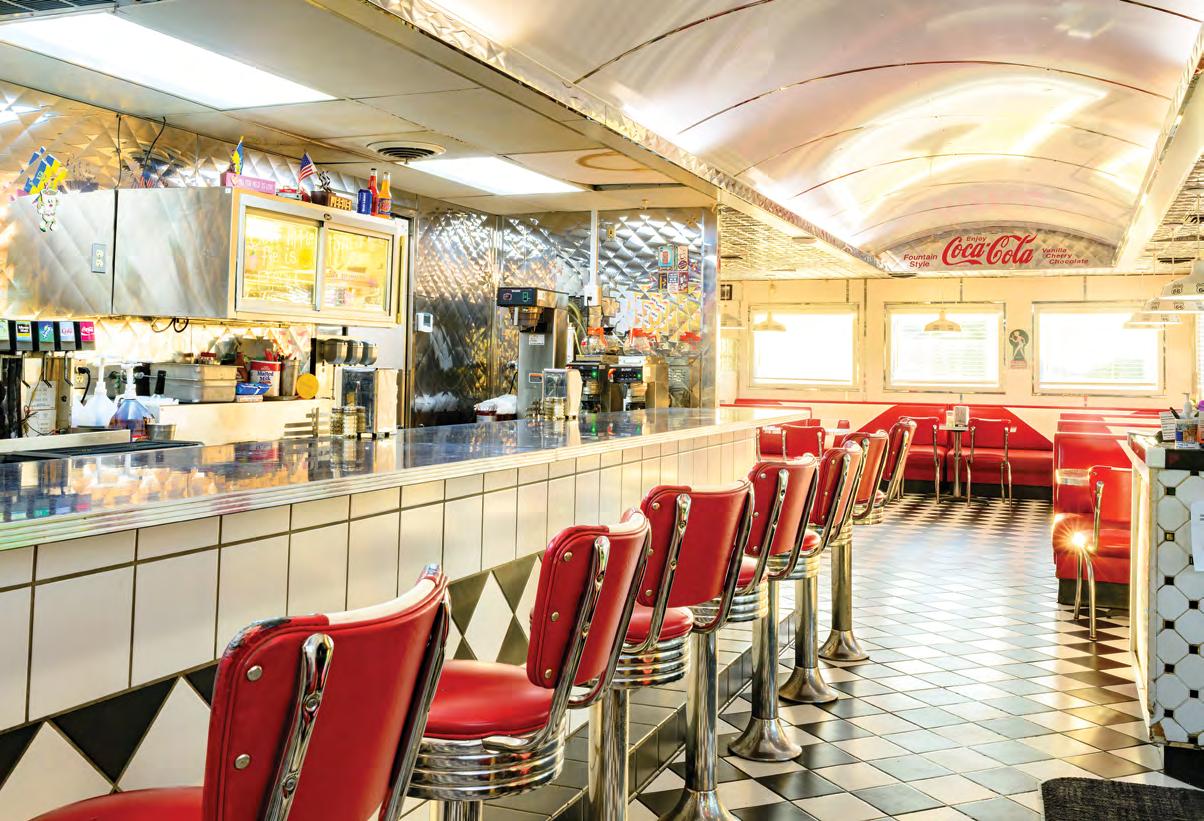
The Route 66 Diner is alive with the sights of a classic American diner. Its aluminum-clad exterior gleams, and inside, black-and-white checkerboard floors stretch past booths, a counter, and Les’s prized Rock-Ola jukebox, playing classic tunes on a steady loop. Burgers sizzle on the grill, shakes are hand-scooped, and dinners are made from scratch. While the diner is a modern creation rather than a relic from the early days of the Mother Road, it evokes the atmosphere of a time when diners like this lined the highway.
The community has taken notice of the changes, too. And the support of both the town of St. Robert and nearby communities makes all the difference. “It’s a small town. We’re near Fort Leonard Wood, that’s a large Army base, the third largest boot camp in the United States. We have really good traffic here from all over the country, in fact, all over the world. We have some days of the week where there’s three and four
graduations on the same day, and people come in (to town), they stay overnight to attend their children’s graduations, and they look for cool restaurants,” said Les. “Oksana has done a really good job. People love it. I see guests that come up after they’ve eaten, and they’ll say, ‘Thank you for the walk down memory lane’. They love it.”
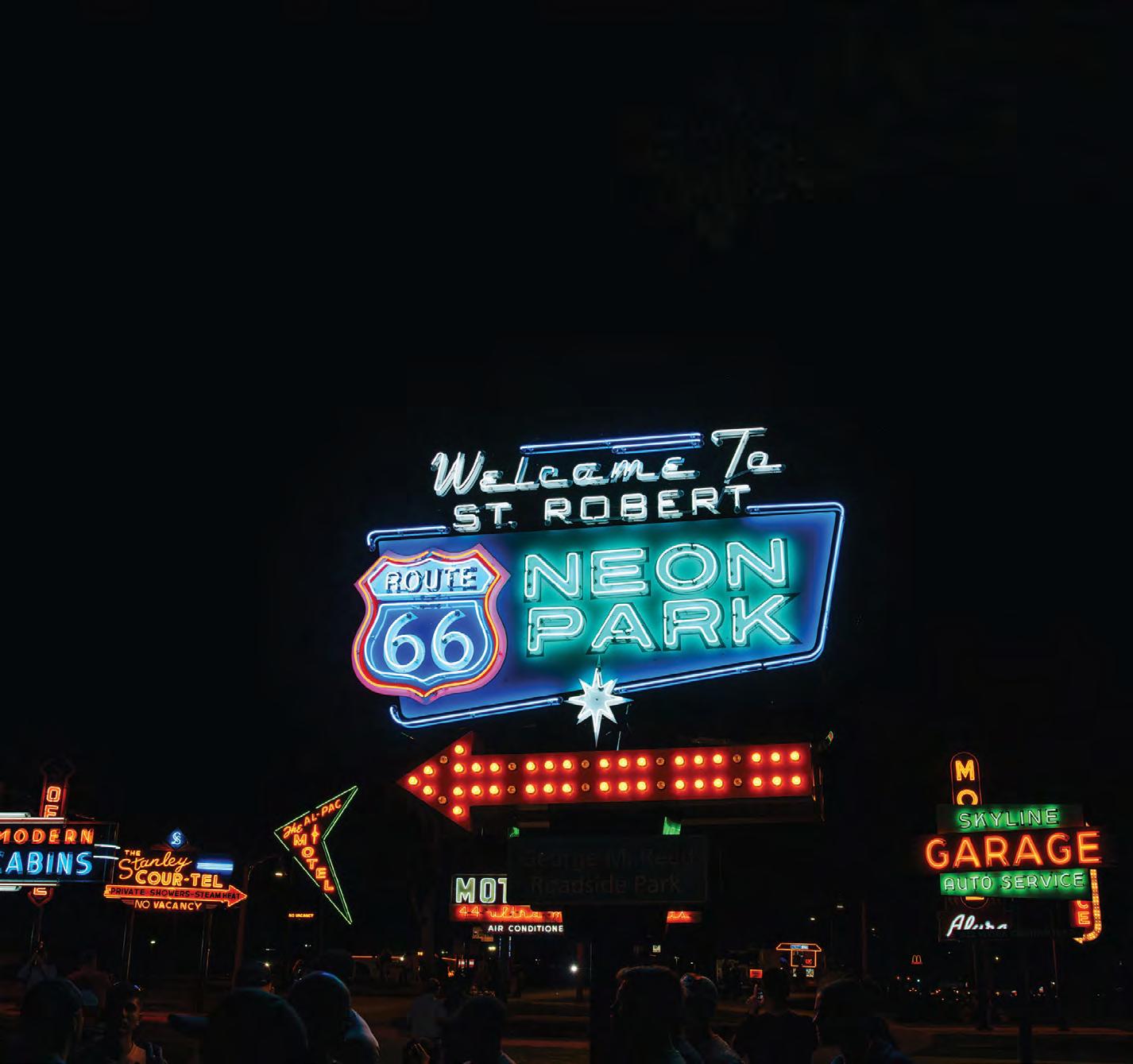
Nearby Route 66 has certainly had an impact as well, especially with the 2025 addition of the Route 66 Neon Park. Located in the median between the eastbound and westbound lanes of Route 66, the park has become a standout attraction along the 2,448-mile Mother Road. It features a collection of orphaned Route 66 neon signs, carefully restored to their former glory, creating a dazzling display after dark. “When they come off the highway, if they’re looking for a restaurant, there’s no cooler restaurant than ours here in town. The neon park looks extremely good at night. And of course, our building has neon as well. So, if they’re going to come off the highway to see the neon park, likely they’ll come to the restaurant as well,” explained Les.
The flow of travelers into the diner has become a familiar rhythm for Les and Oksana. Each person who stops in brings their own story, and the diner becomes part of those stories. “This is our life now. We enjoy it. And who knows? We’re thinking the next couple of years will be good years for Route 66, because we know a lot of people have been waiting for the Centennial and (even the) year after to do their visits, and we think these will be good years for the diner,” said Les.
For Les and Oksana, Route 66 Diner is more than just a restaurant, and St. Robert is more than just a town. It’s their home. Their livelihood. A community that has embraced them and offered more opportunity than they could have imagined. From that decisive moment on the courthouse steps, a path opened that brought two people together, their lives now running in step with historic Route 66. Amidst the neon glow, the sizzle of burgers, and the steady hum of conversation, their tale continues, intertwined with every traveler who stops in for a taste of Americana, every local sharing a laugh at the counter, and every song that plays on the jukebox. Their story has become part of the rhythm of the Mother Road, a reminder that some roads, and some stories, are simply meant to be lived, told, and shared.
















































ROBERT, MO Route 66









Welcome to the Route 66 Neon Park. Once le to decay in roadside fields or buried under piles of junk in dusty sheds, these mid-century marvels have been meticulously restored to their original glory. Travel back in time anytime between sunrise and midnight at this one-of-a-kind open-air museum.
Celebrate the Route 66 Centennial in Pulaski County, MO. For more information, directions, and an online interactive map, visit pulaskicountyusa.com.
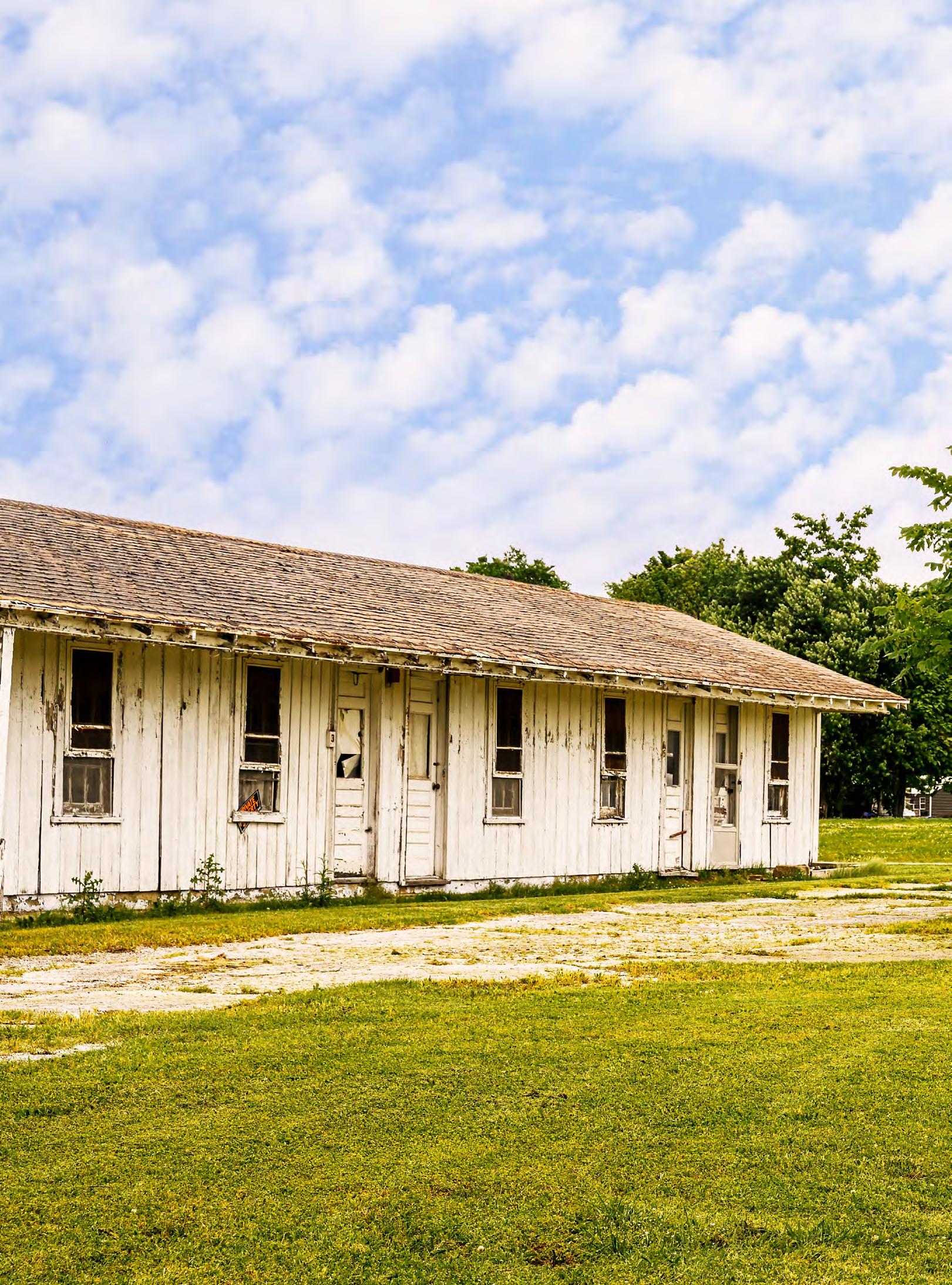
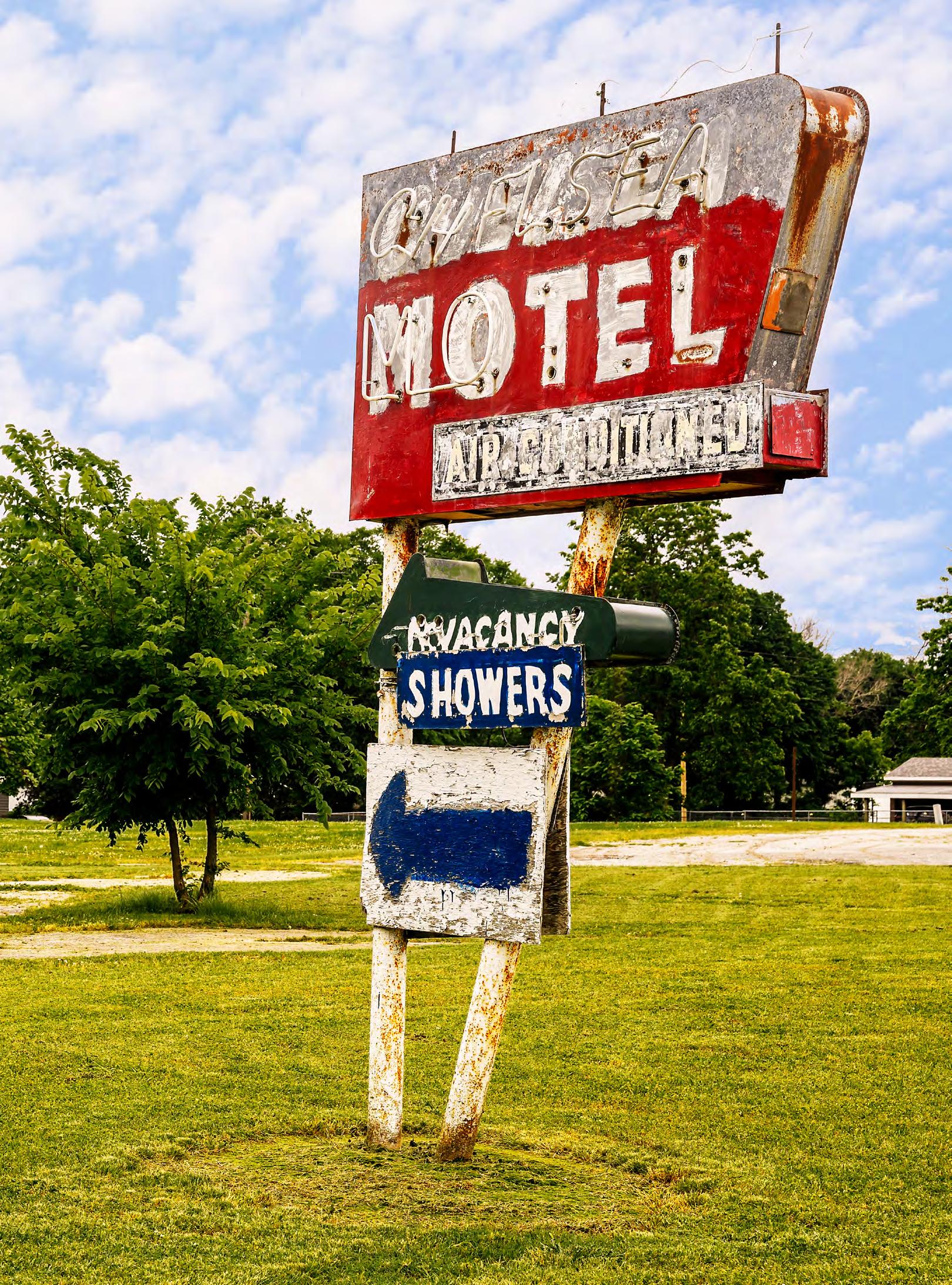
Down in Chelsea, Oklahoma, an unassuming six-unit stucco ranch rests on the corner of First Street and Walnut Avenue. With chipping paint, ripped screen doors, and a narrow asphalt drive, it asks little of those passing by, gracefully accepting the wear and tear of time. The Chelsea Motel is not loud, but it makes its presence known with a fabulous unlit neon sign, a symbol of the mom-and-pop businesses that once lined small town Route 66 throughout the postwar years. For roughly four decades, the motel was one of these businesses, attracting tourists to the town of just under 2,000. The abandoned interior of the building has held their stories for nearly half a century.
When Route 66 was established in 1926, certain portions of the highway were constructed to eliminate sharp turns throughout Oklahoma, creating areas where the “old Route 66” met the “new Route 66.” One of these areas ran along a plot of land owned by Georgia Palen, who intended on using it strictly for agricultural purposes. Her ambitions, however, were no match for the road trip economy that would soon dominate what was once a peaceful railroad town. In 1939, she sold the land to Nellie Bly Parker, who quickly joined the momand-pop entrepreneurs sprouting up along the route in its infancy.
After filling in the land with wagons of dirt, Parker built the modest 75-foot-by-16-foot motel, with six mirrored rooms kissing along their door hinges. She kept an eye on the property from her ranch-style home and office directly behind the motel, which is still used as a private residence. By the early ‘40s, the Chelsea was prepped and painted pretty in pink, inviting weary travelers in with a playful pop of color that peeked through the clear blue Oklahoma sky.
As traffic along 66 increased after World War II, so did the competition. In 1946, Parker sold the humble motel to Ted and Mildred Noland, who transformed it with liquid electricity. Neon tubes lined the eave hanging over the wooden doors, drawing each visitor directly to their room with a warm red glow. They brought the power of this magnetizing light to motorists in 1947 with a bold neon sign out front that had a clear message: “CHELSEA MOTEL,” complete with a “NO VACANCY” tag. Atop the sign flashed an animated arrow that spoke to drivers without any words, a simple guide that directed drivers to their much-needed place of relief. Though it is no longer illuminated, this sign still stands as the motel’s most distinct icon.
“I think the sign is, you know, the first giveaway,” said Bob Crum, the current owner of the motel. “It’s still very visible, even though the paint’s chipping away a little bit on [it], you can still clearly see the sign. People like taking pictures of that kind of stuff.”
The Nolands sold the property in 1952, and it bounced between owners before landing with Billy J. Owen in 1961. He could keep up with the amenities of other mom-and-pop shops, like air conditioning and telephones, but these family-owned businesses faced insurmountable pressure with the takeover of large chain hotels and the creation of the Turner Turnpike, which pulled customers away from the small Oklahoma towns, like Chelsea, fed by the Mother Road. In 1976, the
Chelsea Motel closed its doors and flipped the switch on its neon sign one last time before it rusted into American history.
The rest of the 20th Century was a quiet, and almost somber time for Chelsea and other towns impacted by the decommissioning of Route 66. Even though it had already been replaced by other routes in the ‘70s, the official decertification of the highway on June 27, 1985, put its decay on paper. It made it official. Forever. Highway signs were taken down, and too many small businesses went down with them.
But the Chelsea Motel would not be forgotten—the Oklahoma State Historic Preservation Office (SHPO) would make sure of it.
In a diligent preservation effort, the SHPO registered the motel with the National Register of Historic Places (NRHP) in the early 80s, detailing how its complex development had earned it a spot as a midcentury monument. By 2007, the Chelsea Motel and three other Oklahoma Route 66 motels were listed in the NRHP, cementing their significance in both state and national history.
In 2023, Bob and Shelly Crum bought the property through their company, Eagles Nest Incorporated, with the intention of refurbishing it. The couple moved to Chelsea from Kansas City in 2022 to be closer to Shelly’s brother, who was a successful contractor in California, with properties in Oklahoma. The three entrepreneurs saw the historic motel — which was being used as a storage unit — as an opportunity to eventually create affordable housing for the community.
“We just knew it was a landmark,” said Crum. “And, you know, it’s an interesting-looking place that’s right there, right on Route 66. And I will tell you that folks who travel Route 66 and are interested in stopping at different landmarks, as they come to Chelsea, [the motel] gets visited quite often. A lot of folks stop and take pictures of the sign and things.”
The Crums live down the street from the property and often get to talk to curious visitors, some of whom have come from as far as England and Germany to admire the celebrated gems of the iconic highway. And while these visitors will gladly celebrate the motel for all it offers from a glance, the Crums have hopes of completely refurbishing the interior so that it can be used for its original purpose: to provide a comfortable overnight stay for the families passing through town.
“It’s just empty shelves in there right now,” said Crum. “It’s not being used for anything right now. The plan is to turn it into some type of lodging. And in fact, we’re getting bids right now on having the sign refurbished. We want it looking halfway decent for the big Route 66 celebration this year.”
When the SHPO applied to officially preserve the Chelsea Motel, they described how Parker’s ownership of the property “promised to bring not only the future but the world to Chelsea, Oklahoma.” How fitting is it, then, that even decades after closing, the motel is a source of hope for 2026 and for years to come. Constructed where new meets old, it stands as a testament to bringing a timeless history to new visitors and new generations, and to sharing stories that will never get old.



By Abigail Singrey
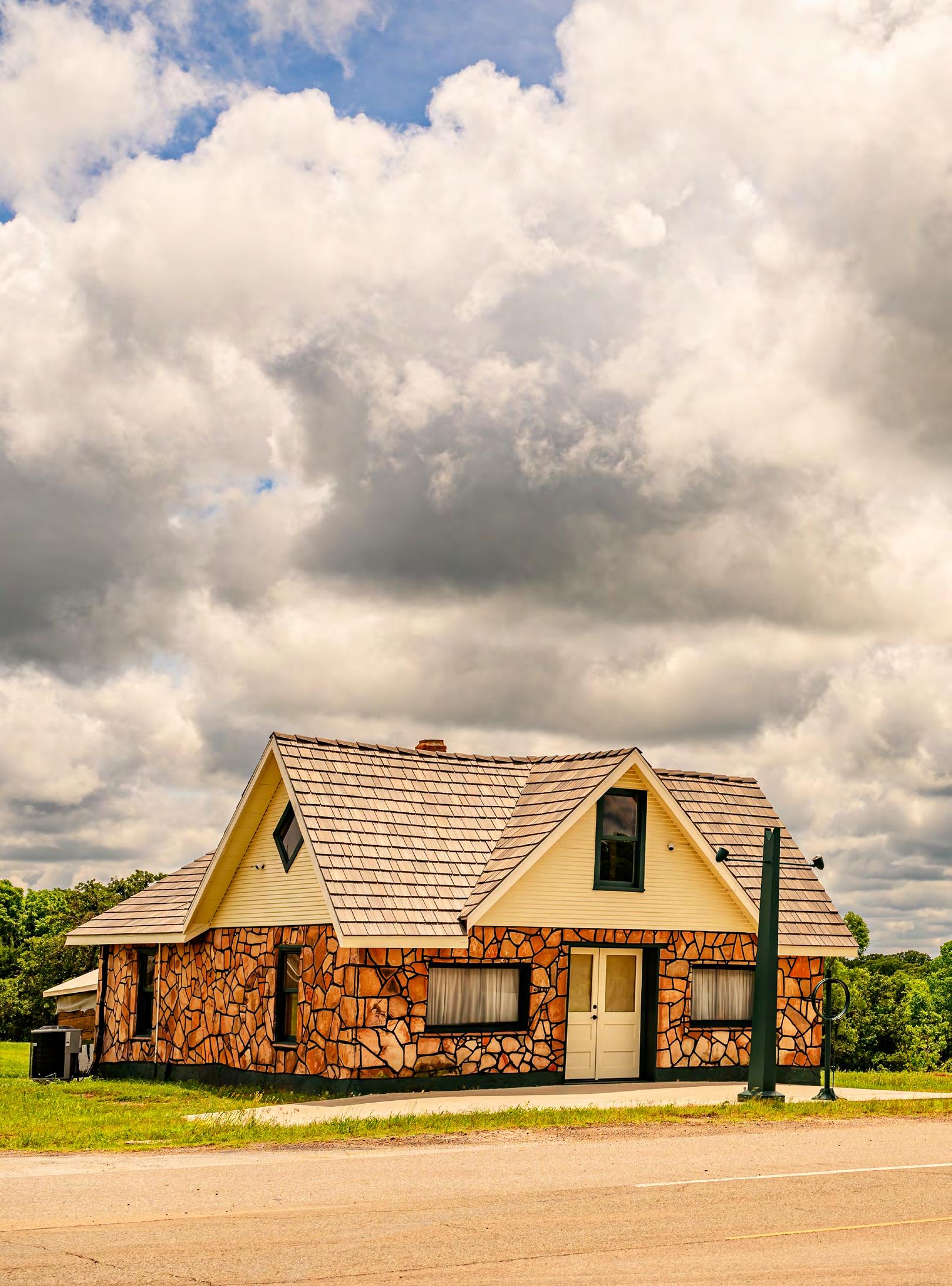
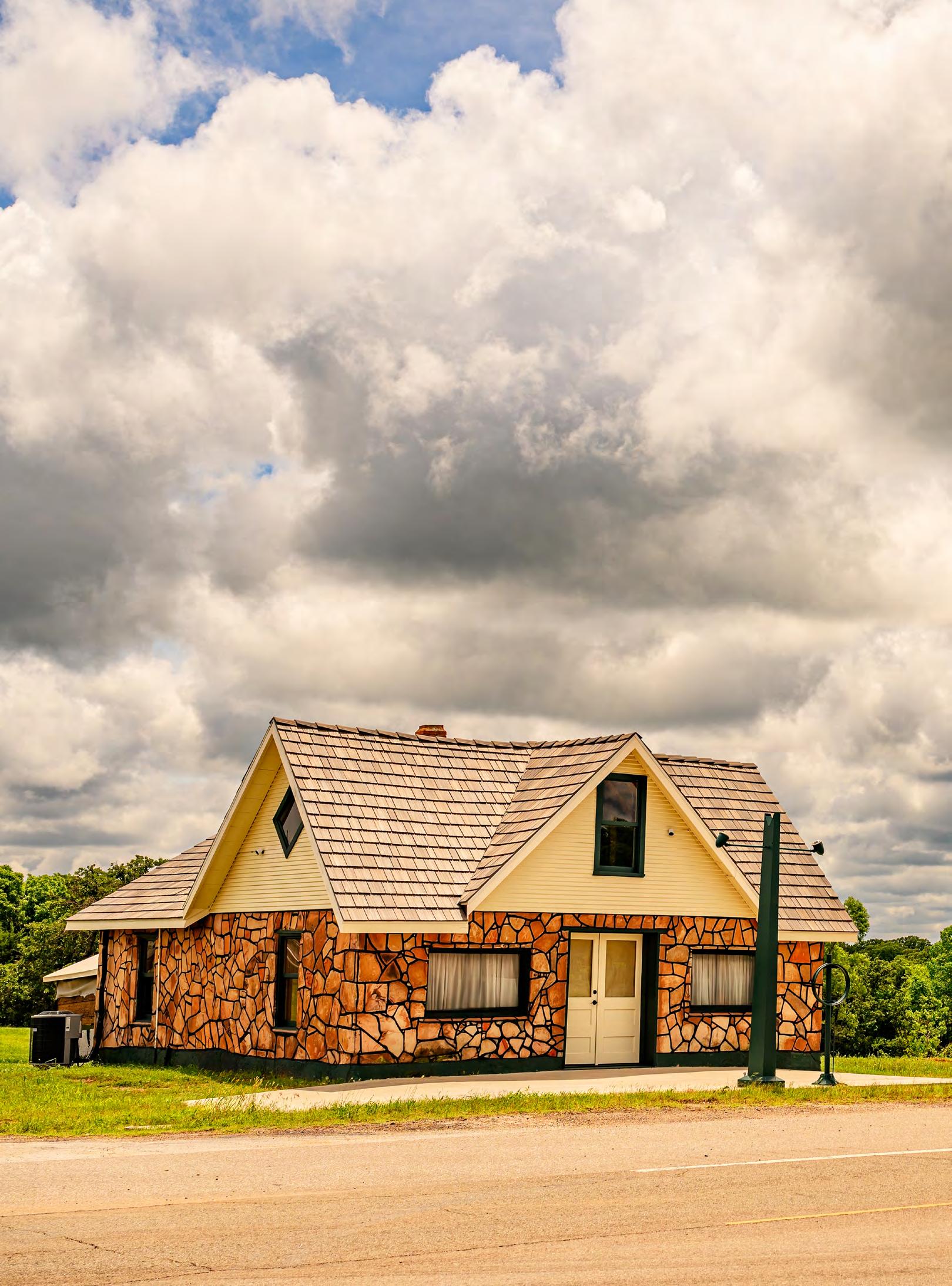
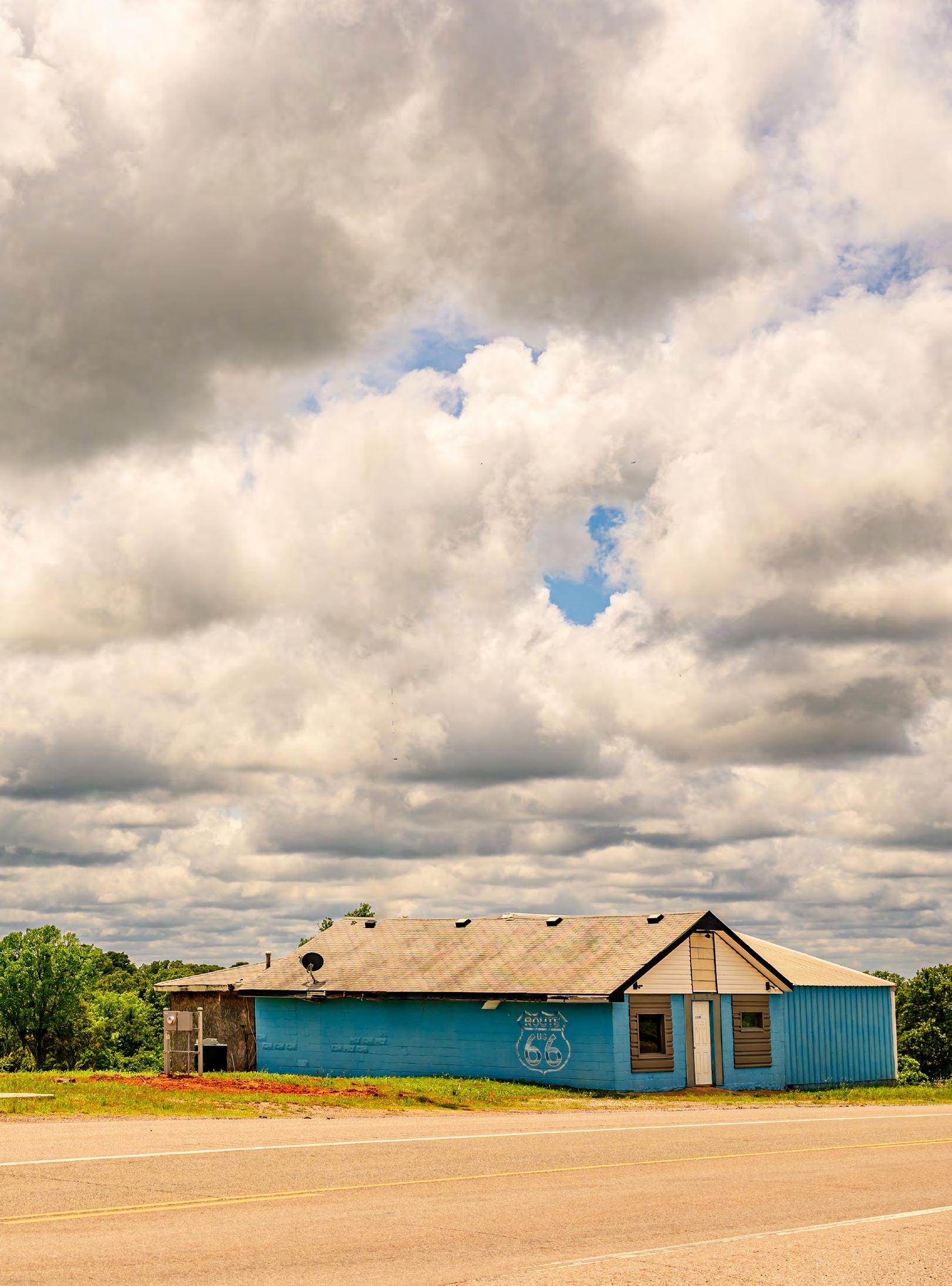
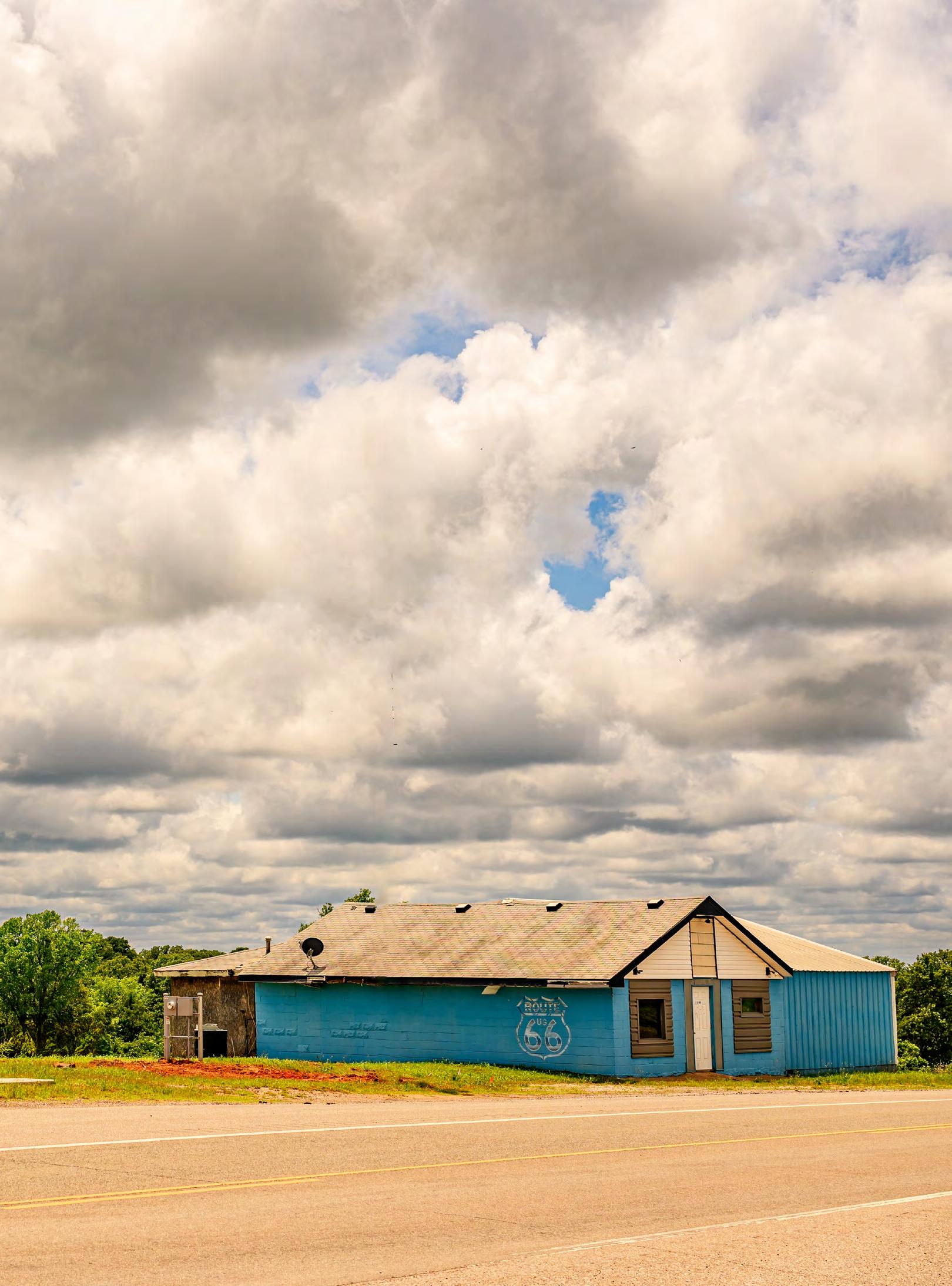
Just east of Oklahoma City, where Route 66 stretches quietly past open grassland, a sandstone building sits back from the road. Its roughcut sandstone façade and steep gabled roof carry the quiet confidence of early roadside architecture. Out front, a pair of vintage gas pumps stand in formation. This is the Threatt Filling Station. Unassuming, easy to miss, yet deeply rooted in the history of Oklahoma and the Mother Road. For decades, it was one of the most important stops on the highway, a place where travelers found fuel, food, and something less tangible but just as essential: a sense of welcome.
After years of standing weathered and abandoned, the station now carries a renewed sense of purpose. But what stands today is only part of the story. To understand what’s taking shape now, you have to begin with what this place once was. And at the center of that story is Allen Threatt Sr.
In the early 20th Century, Allen Threatt Sr., his wife, Alberta, and their growing family, migrated from Alabama to central Oklahoma, establishing themselves on land just outside what would become Luther. The Threatts eventually acquired a 160-acre homestead where they farmed, raised livestock, and quarried sandstone. One side of the property bordered Old Highway 7, a rural route between Oklahoma City and Tulsa. It was along this stretch that they began selling produce to passersbys, establishing an early connection between the land and the road. Recognizing the steady flow of travelers, Allen Threatt Sr. saw an opportunity.
In 1915, the Threatts built a gas station along that stretch of road, positioning themselves along a route that would, in time, carry the name Route 66. Set within the family’s working homestead, the station functioned as a multi-purpose roadside stop where fuel, produce, and assistance were offered to those traveling between Oklahoma City and Tulsa, at a time when the Mother Road was still coming into being.
For Black travelers in particular, the station held deeper significance. During the years of the Jim Crow era, when segregation dictated where one could stop, eat, or rest, and when stretches of the road could become uncertain after dark, the Threatt Filling Station offered important safety along the journey. The station became one of the first, and one of the only, known Black-owned and operated gas stations along original Route 66. Yet, within the family, the station was never defined by that distinction alone.
“This is a business—not a Black business. If somebody white pulled up to that pump, you treated them the same way you treated everybody else. That’s the attitude I grew
up with,” said Edward Threatt Sr., grandson of Allen Threatt Sr. This was a simple principle that guided the familyA fire in the early 1930s destroyed the original building. But by 1933, the station had been rebuilt using sandstone quarried from the property, its return marked by a cornerstone dated March 22—a detail that remains embedded in the structure today. What followed was not just recovery, but expansion.
By the decade’s end, while Allen Threatt Sr. retained ownership, his firstborn son, Ulysses Grant Threatt (born 1912), had taken over daily operations, quickly making the station his own. In 1935, a small general store was added, providing everyday staples for locals. Two years later, in 1937, a café joined the property. Next door, Edmond Threatt, another son of Allen and Alberta and the father of Edward Threatt Sr., added a bar and barbecue restaurant called The Brown Bomber, named for legendary boxer Joe Louis.
Ulysses also created what he called the “Den of Death,” a pit filled with live rattlesnakes that he collected himself during annual April hunts. The spectacle didn’t stop there: his menagerie also included a raccoon, a frog, a rat, and a coyote named Johnny, whom Ulysses famously taught to “sing.” A 1936 advertisement in the Oklahoma County Register described the station as open “day and night.”
Over time, the station became a social anchor: dances carried into the evening, Fourth of July celebrations drew crowds, and Negro League baseball games were played on a diamond carved out beside the station. What stood along Route 66 was no longer simply a place to refuel or eat. It was a place to be.
Though the property was not listed in The Negro Motorist Green Book (published between 1936 and 1964), it was widely known among Black travelers as a safe haven along the road, a place to stop without hesitation, where fuel, food, and a secure place to park for the night could be found.
In 1937, Ulysses married Elizabeth Hilton Threatt, who would go on to become a central figure in the community. She had attended Langston University, a historically Black college in Langston, Oklahoma, and returned to Luther to teach at Booker T. Washington High School, where she taught every subject but football. “The only reason I didn’t teach it; the superintendent didn’t ask me,” she said in an interview with the Luther Register.
Elizabeth joined the Threatt family enterprise, adding to an already full teaching schedule. Her days began at 4:30AM, helping at the station before heading to the classroom, and often ended back in the kitchen, passing hamburgers and hot dogs through the café window after school let out.
Then came World War II and Ulysses left to serve overseas as a Staff Sergeant in the Army Air Forces. In his absence, Elizabeth took on the operation of the station herself, keeping it running throughout that period of uncertainty.
In the years after the war, Elizabeth continued to advance her education, earning her master’s degree from Central State College in Edmond (now the University of Central Oklahoma) in 1959, while still teaching at Booker T. Washington School. When the school closed as part of integration, “Ms. Threatt,” as she was known, moved on to teach at Luther High School, then a formerly all-white institution.
“[Ms. Threatt] was very strong, very independent, a disciplinarian. She herself never had any children, but if you asked Ms. Threatt how many children she had, she would tell you thousands, because of all of her students. She had a great deal of respect from her students,” said Edward Threatt Sr., Elizabeth’s nephew.
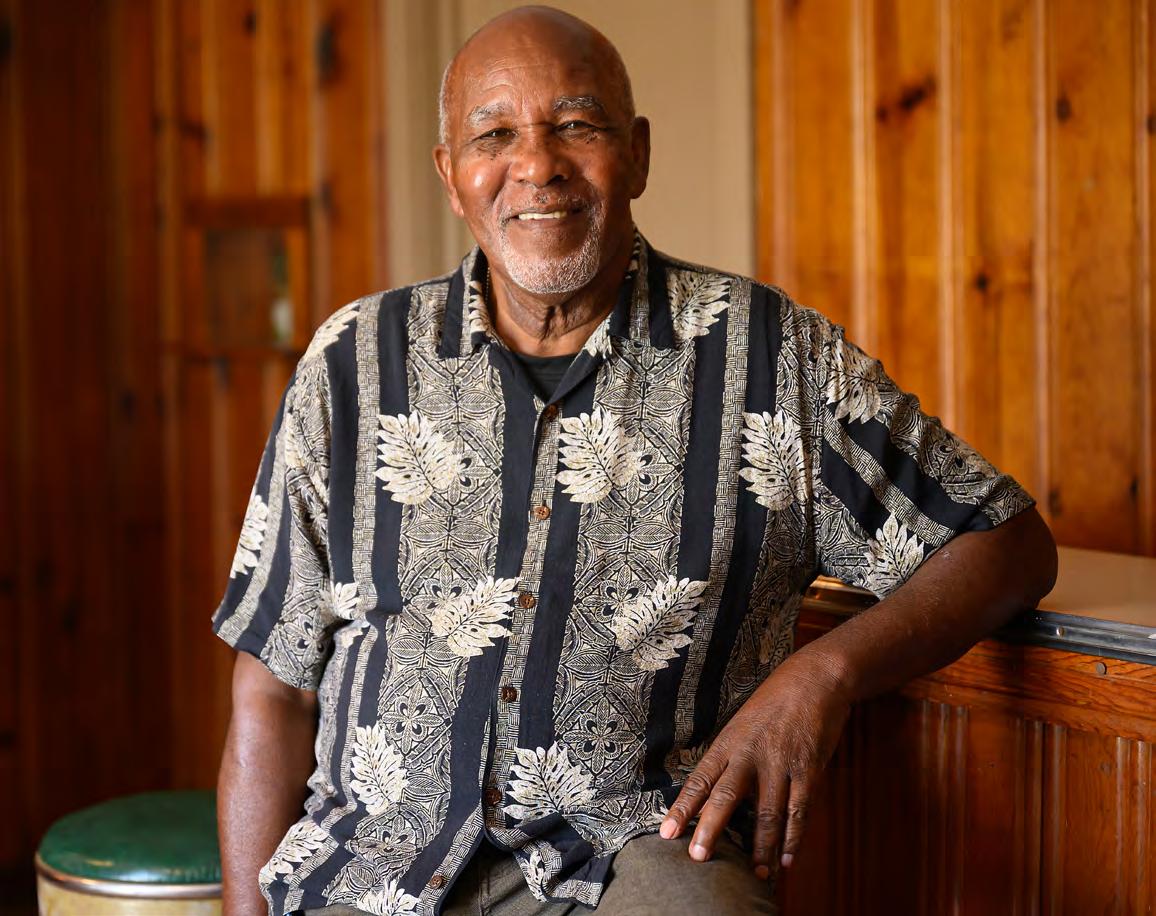
the day she died. And in that stillness, the question of its future began to surface, waiting for someone to answer it.
By the mid-20th Century, the course of the Threatt Filling Station began to shift. Allen Threatt Sr., who built the station with his wife Alberta and raised 11 children, died on December 8, 1950. Alberta had passed four years earlier. Ownership then moved to their son, Ulysses. Six years later, on January 6, 1956, Ulysses also died at just 44. In the years that followed, the rear of the station was adapted into a residence for his widow, Elizabeth, first in 1958, then formalized with an addition around 1961. Elizabeth carried on, keeping the station in operation for decades, until it finally closed in 1974. The Brown Bomber next door eventually closed as well; its final years less clearly documented.
In 1976, Elizabeth Hilton Threatt retired after more than four decades in the classroom. Her contributions were later honored when the town’s library was named for her. She attended its grand opening on May 8, 2004, at the age of 93, bearing witness to a lifetime of service.
Even as the station’s role along the road began to fade, Elizabeth’s connection to it, and to the people it served, remained constant. In a 2009 interview, Elizabeth Threatt recalled, “I have fed many a hitchhiker; I’ve poured many a cup of coffee; fried many a strip of bacon, sunny-sided many an egg… I know how to check the oil; I know how to grease a car; I know how to change tires. Of course, I can’t do it today. I’m not as strong as I used to be, but nothing is wrong with my mind and my heart.”
Elizabeth died on November 28, 2009, at the age of 98. Though the station had closed decades earlier, her passing marked a turning point. The building became a time capsule, left untouched and preserved exactly as it was on
After some time in Nebraska, Edward Threatt Sr. had returned to Luther in 2006 to care for his father, Edmond Threatt, and his aunt, Ms. Threatt (Elizabeth), becoming the building’s quiet steward. In 2015, that responsibility had grown into something more, a desire to memorialize the station and reestablish it as a destination. He began calling his cousins and other relatives to get them on board. By then, the land had passed through multiple generations, leaving the family enterprise shared among many heirs. Complicating matters, three heirs had sold their shares outside the family to a private investor who tried to force a sale, leading to a dispute that had to be resolved in court before any restoration work could commence. The lawsuit was settled in 2018, with the land remaining in the family, clearing a path to move forward.
With the dispute resolved and the land secured, attention turned to what it would take to bring the station back. The Threatt family, represented by Edward Threatt Sr. and his cousins, Charles “David” Threatt and Linda Fisher, began pursuing grants to fund the work. They knew the building was showing its age, but the full extent of its condition remained uncertain. To formalize and guide the effort, they established the Threatt Filling Station Foundation, led by Edward Threatt Sr., creating a dedicated vehicle to preserve and revitalize the site.
“In 2020, we were able to secure a $10,000 grant. Then, the first step was to get a structure report. The report identified everything that we needed to do to get started rebuilding,” said Edward Threatt Sr. “In the back room, we found damage from termites and things like
that. A support wall is only as good as the support from underneath. So, the wall was there to support the ceiling, but there was nothing underneath to support the wall. So, in 2020 we got started, but got stopped because of COVID-19, and the price of building materials (skyrocketing).”
As progress stalled, the family continued to share the story of the station more widely and in 2021, the National Trust for Historic Preservation named it one of America’s 11 Most Endangered Historic Places. That recognition proved pivotal. In 2023, the Threatt Filling Station Foundation received a grant from the National Trust’s African American Cultural Heritage Action Fund, providing the support needed to move the project forward. The family brought in Kertok Architecture and Holman Construction to begin restoring the interior of the building.
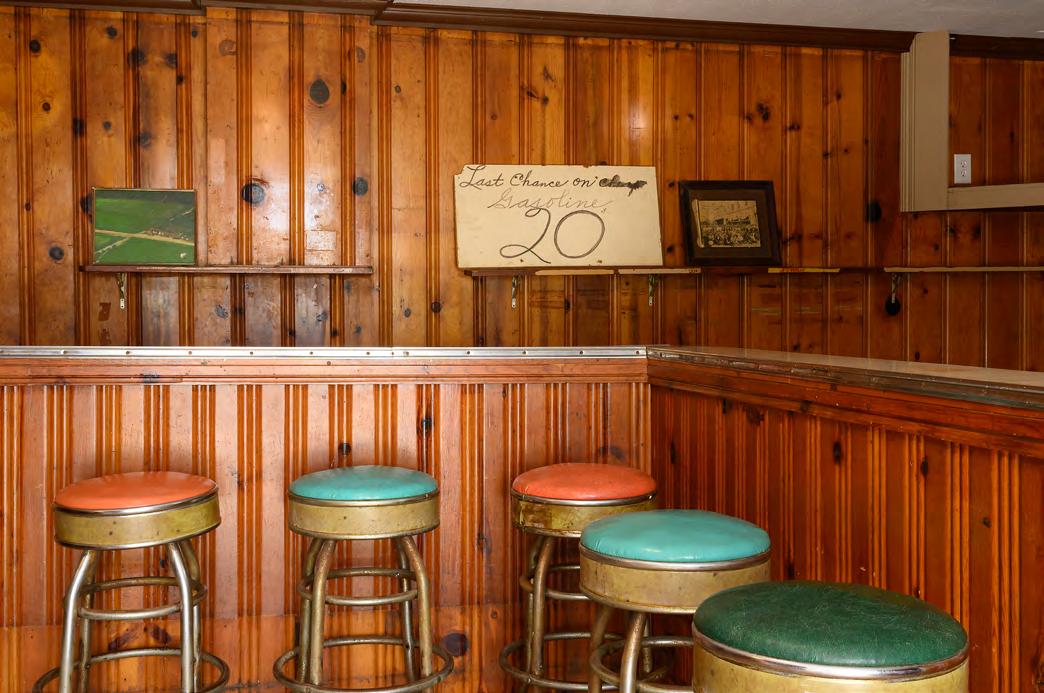
The exterior presented a particular challenge. Over the years, brick had been added to the building, altering its original appearance. Fortunately, the family located matching sandstone from the former home of Allen Threatt Sr., making it possible to restore the structure to its original character. Molly Baker of the National Trust connected them with preservation expert David Gibney, who specializes in what he calls “giraffe-style” painting, a technique that carefully highlights the mortar lines between stones to restore their original character.
With the building structurally sound, the Threatts turned their attention to imagining what the property could become. Conoco gas pumps, period signage, and a monument honoring its roadside heritage were added, reestablishing the site’s connection to the era that defined it. That restoration was only the beginning.
The Threatt family also understood that whatever came next had to be something they, and their grandfather, Allen Threatt Sr., could be proud of. In 2025, they partnered with Open Design Collective, an Oklahoma City–based firm. Their shared goal: open an interpretive center in the former Threatt Filling Station building.
“We’re so excited to be working with the Threatts on the design and adaptive reuse of the station. The Threatt Filling Station is such a sacred, beautiful, powerful story and we want to honor that, but we also want to pull out what could be a quirky type of fun attraction piece for people who like to see and experience those types of things,” said Vanessa Morrison, co-founder and CEO of Open Design Co.
For her, the most thrilling discovery was a letter from Elizabeth Threatt, who wrote about finding Pretty Boy Floyd hiding out on her land between robberies and even feeding him breakfast. For Morrison, it was moments like these, where unexpected connections to well-known figures expanded the story and placed the station within
a broader sweep of history. “The Threatts have done their own archival work with family artifacts, photos, heirlooms. They already informally kind of have a museum at (Edward Threatt Sr.’s) house. That makes our job so much more efficient because we’re working from a strong foundation of a narrative of a story that the family has been able to self-define,” Morrison added.
“It’s important to acknowledge the expansiveness of what the Threatt Station was. And yes, it was a safe haven for Black travelers along the route, but when you talk to the family, it was a space that was welcome to everyone. And people of all races were able to come by and be a part of festivities that were happening at the station. The family had multiple businesses, a baseball diamond, a restaurant, and they had an exotic animal pit, where people could stop by and hold snakes. It’s important to acknowledge how they were innovative.”
Through ongoing collaboration, Morrison and her partner at Open Design, Deborah Richards, are shaping that history into an interpretive exhibition designed to bring the station’s story to life for a new generation. For Morrison, the responsibility is clear: to reflect both what the station was, and what it made possible.
The Threatts are already looking beyond the building itself. Edward Threatt Sr. envisions transforming Luther into a destination—drawing on the 150 acres still held by the family to reintroduce elements of what once defined the property: a rebuilt baseball diamond, an ice cream parlor and go-carts, a walking path, a pavilion by the pond, and the development of an RV park where visitors can stay.
“Everything started with grandpa and that entrepreneurial spirit that grandpa had, and he passed that down to people in the family,” Edward Threatt Sr. said.
In many ways, it is a return to what the station had always been, not just a place to stop but a place where people could gather and stay a while. A century on, the road still moves forward. But here, it also circles back, bringing the tiny station once again into the life of the road.

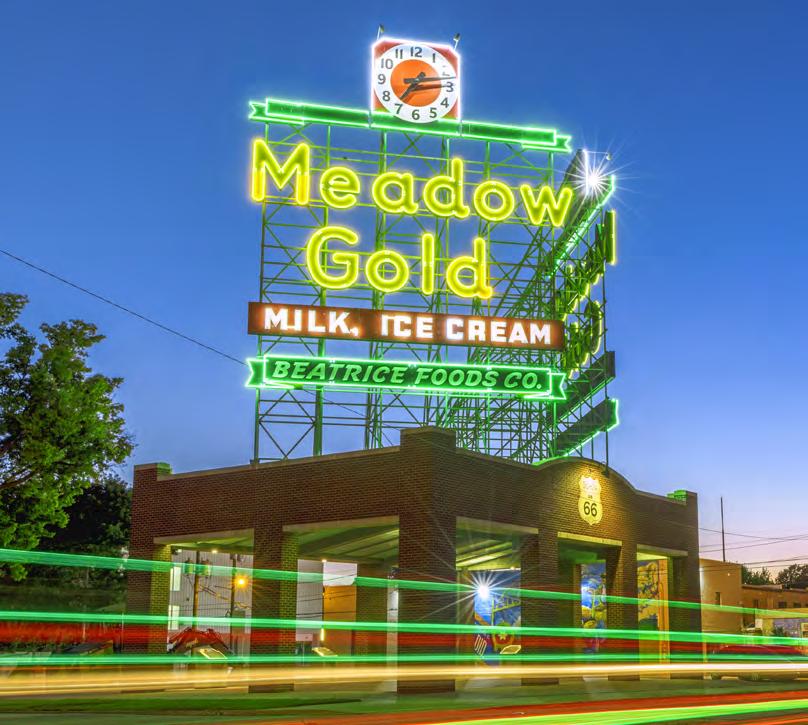
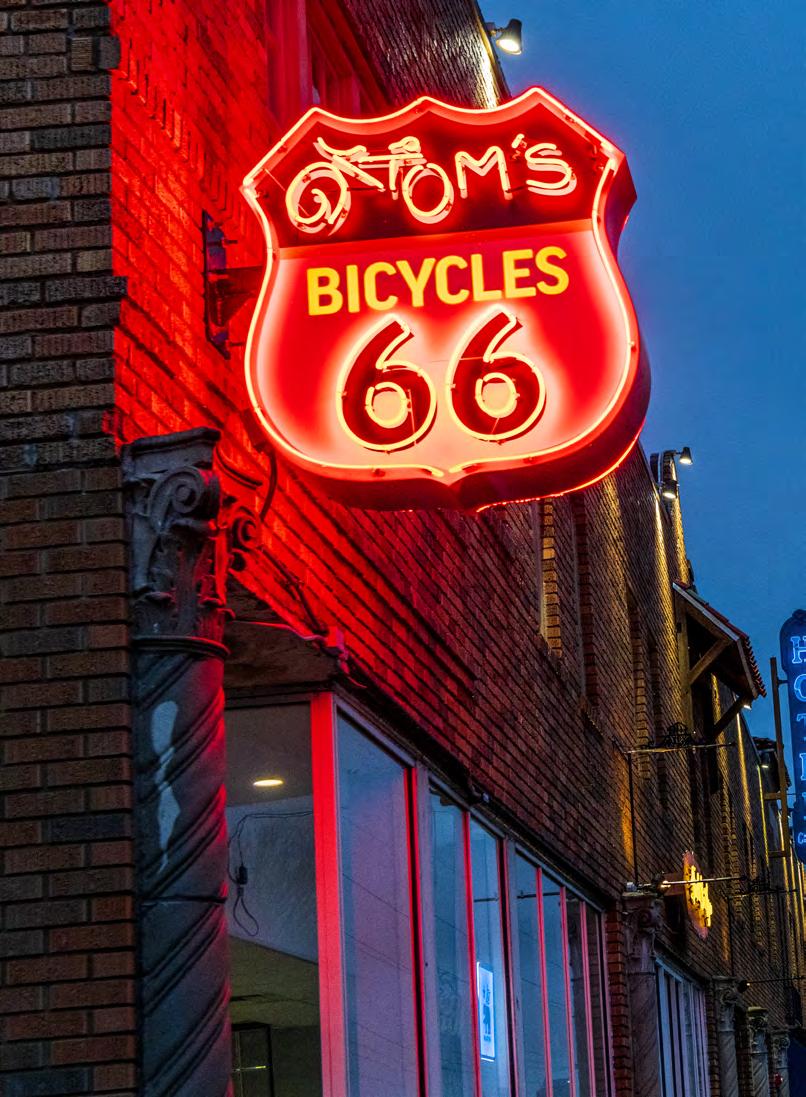
ROUTE Magazine’s Best Neon along Route 66
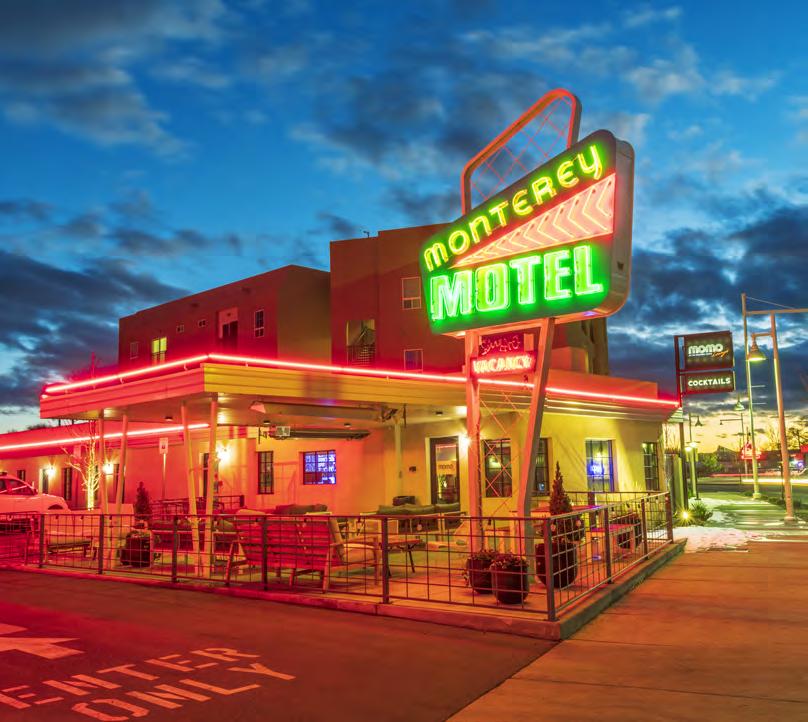
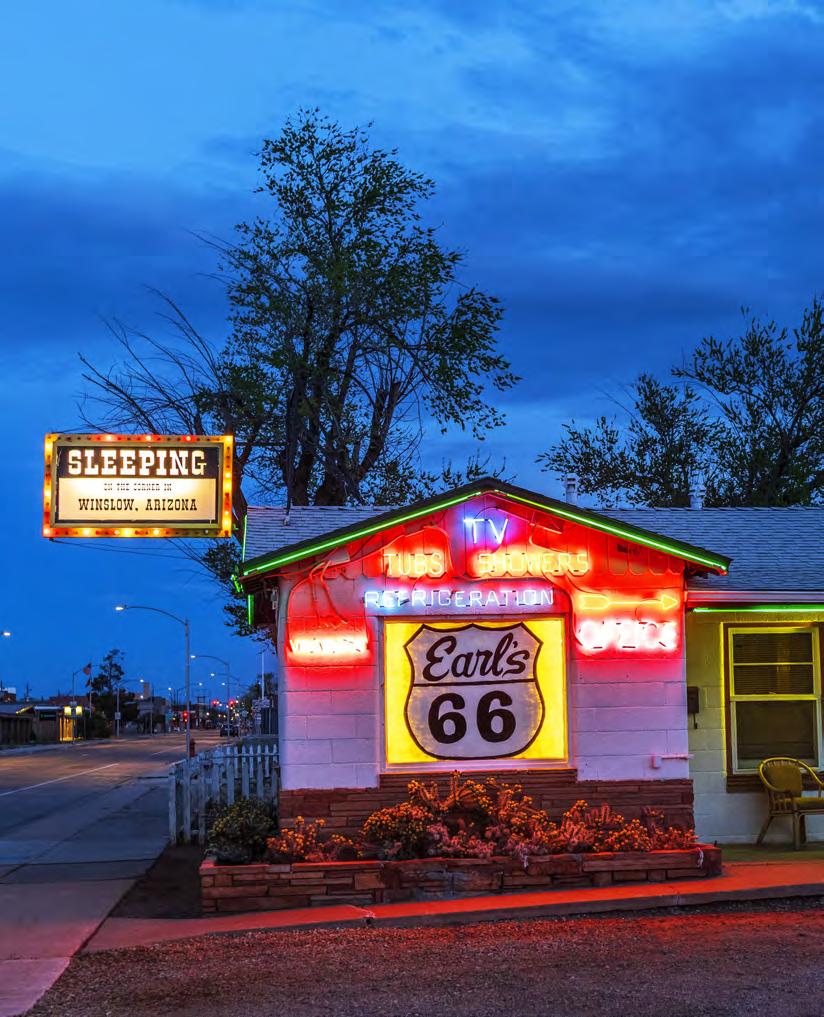
Route 66 has long been defined by its neon— the glowing language of the American road that once guided travelers from town to town after sunset. From Illinois to California, these illuminated signs still flicker to life each evening, offering a glimpse into the mid-century era when bold colors and animated tubes competed for attention along the highway. There is no shortage of memorable examples: the steady neon of the Ariston Cafe in Litchfield, Illinois, the vintage storefront glow of Richardson’s Trading Post in Gallup, NM, the classic roadside presence and glowing green of Rail Haven Motel in Springfield, MO, and the understated charm of the Supai Motel sign in Seligman, AZ, all contribute to the route’s enduring nighttime character.
Still, some signs rise above the rest, not just for their history, but for how they transform the landscape after dark. This list focuses on those standouts: the neon that truly defines a place and rewards those who linger. Because that’s the key—Route 66 neon isn’t meant to be rushed. To experience it fully, you have to slow down, stay the night, and watch the lights come alive.
The neon sign at the Wagon Wheel Motel has glowed over Route 66 travelers for generations, though its story includes a quiet period before returning to life. The original neon wagon wheel was introduced in 1947 by owner John Mathis, who installed the distinctive sign to promote the evolving Wagon Wheel Motel to motorists on the Mother Road.
Over the decades, as traffic patterns changed and the motel passed through several owners, the property gradually declined, and the neon fell dark for a time. The turning point came in 2009 when local business owner Connie Echols purchased the historic motel and began an extensive restoration of the property. Working carefully to preserve its Route 66 character, Echols renovated the buildings and revived the roadside landmark.
As part of the revival, a newly built neon wheel structure, based on an earlier design by sign builder Charlie Yowell, was added in 2013, complementing the original sign that still faces east toward incoming travelers.
Today the neon once again hums to life each evening, a
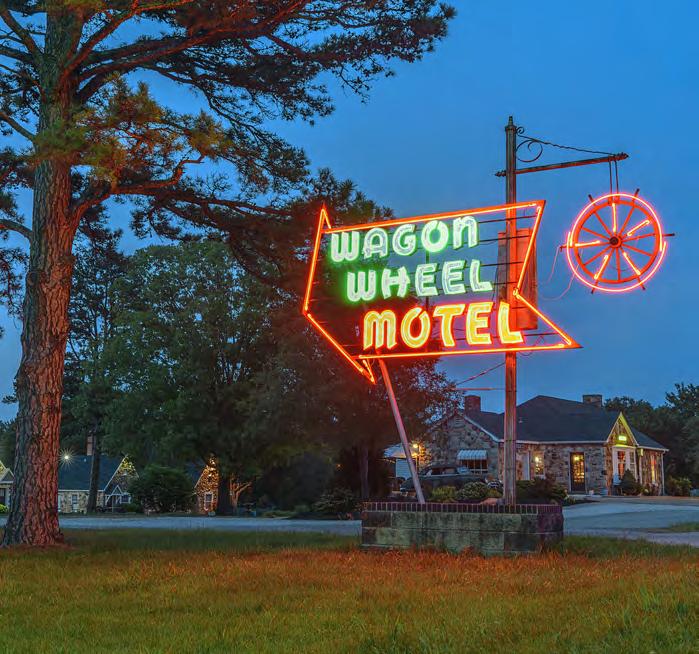
guided motorists across America’s most famous highway.
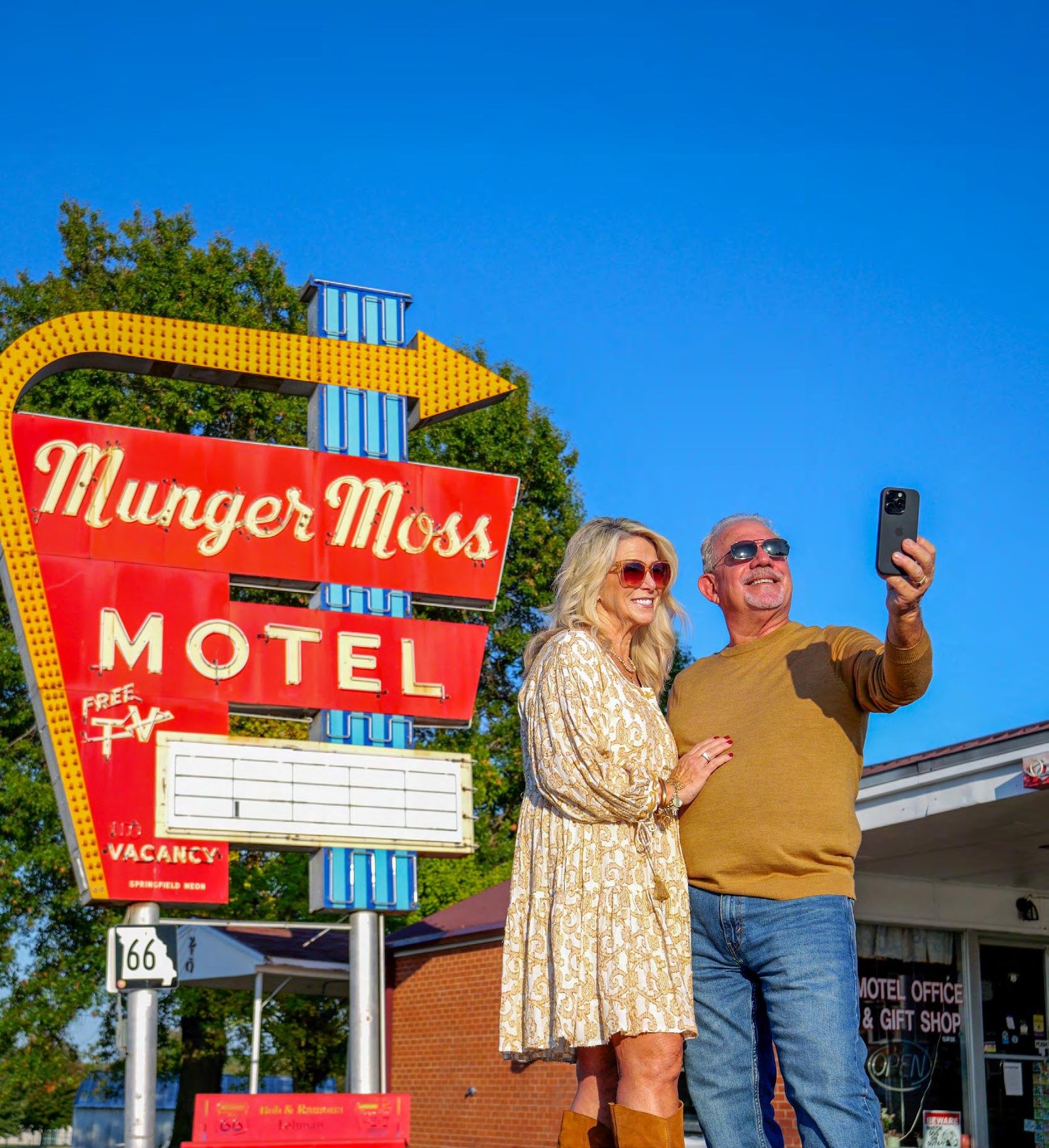
The neon sign at the Munger Moss Motel stands as one of the most iconic surviving lights along Route 66. The motel opened in 1946 during the height of America’s postwar road-trip era, when bold neon signs were designed to catch the attention of motorists traveling long distances after dark. Rising high above the roadside, the Munger Moss sign, with its tall pole, glowing letters, and directional arrow, quickly became a familiar landmark for travelers entering Lebanon from the east.
As Route 66 traffic declined in the late twentieth century, many neon motel signs disappeared or fell into disrepair. By the early 2000s, sections of the Munger Moss neon had begun to deteriorate, threatening one of the highway’s most recognizable pieces of roadside architecture.
In 2010 the sign underwent a careful restoration supported by the National Park Service Route 66 Corridor Preservation Program along with the Route 66 Association of Missouri’s Neon Heritage Preservation Committee. Damaged neon tubing was replaced and electrical components repaired in order to preserve the historic design.
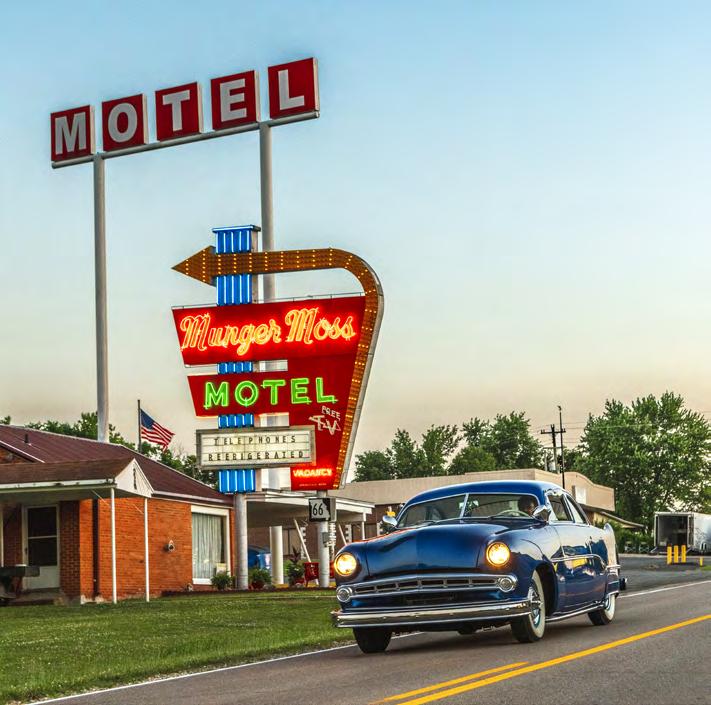
When the restored sign was ceremonially relit in November 2010, its glow once again illuminated the roadside.
The neon at Boots Court Motel in Carthage, Missouri is one of the most recognizable neon landmarks along Route 66. When Arthur and Ilda Boots opened the motor court in 1939 at the busy junction of U.S. 66 and U.S. 71 — once known as the “Crossroads of America” — they embraced the sleek Streamline Moderne style popular in the early highway era. A tall roadside sign spelled “Boots Court” in bright red and white neon, while smaller panels proudly advertised modern comforts for travelers, including the memorable promise of “A Radio in Every Room.”
Equally distinctive was the building itself. Bands of green architectural neon traced the parapet and curved roofline of the white stucco motor court, casting a soft glow across the façade and parking bays after dark—an effect designed to make the property visible from blocks away.
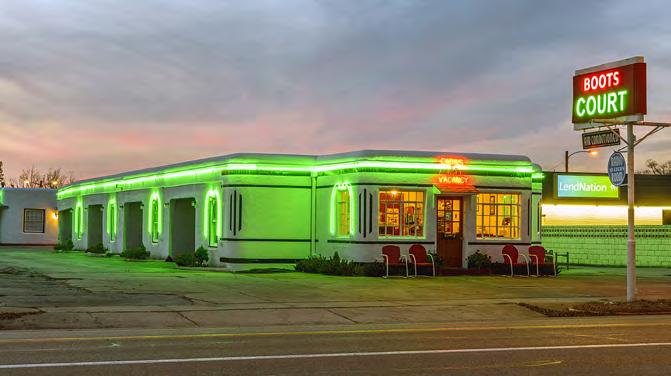
After decades of decline, the motel was saved in 2011 by preservationists Debye Harvey and Priscilla Bledsaw. The original sign was restored to its historic red-and-white “Boots Court” design in 2013, and the long-dark architectural neon surrounding the buildings was ceremonially relit in 2016.
Today, under the stewardship of the Boots Court Foundation, the red sign and green glow once again recreate the vivid nighttime atmosphere of Route 66’s golden age.
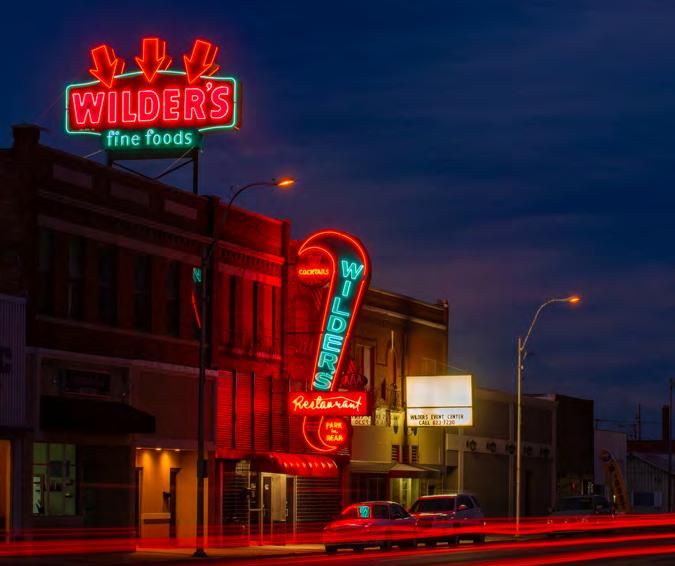
Wilder’s Steakhouse is a downtown Joplin landmark whose neon sign has welcomed diners and Route 66 travelers for decades. The restaurant building dates to 1908, and Verne Wilder opened his steakhouse there in 1936, later installing a bold blade-style neon sign in 1950 to draw attention from Main Street and passing motorists. The marquee is large and commanding, with bright red, blue, and white neon tubes spelling out “Wilder’s” and adding directional cues like “Parking in Rear.” At night, the sign glows like a beacon, signaling both tradition and hospitality.
After decades of wear and periods of inactivity, the original neon went dark for over twenty years. In 2018, owners Mike and Marsha Pawlus restored the sign, supported by preservation grants and community efforts. Once relit, its vivid colors returned to Main Street, preserving a quintessential piece of Joplin’s Route 66-era visual and cultural identity.
This amazing museum isn’t just a treasure trove of history inside, its mesmerizing neon exterior is a landmark in its own right. Operated by the Oklahoma Historical Society and opened in 1995, the museum celebrates the Mother Road with a bold façade featuring saturated red neon illumination that outlines the building and highlights the museum’s name, evoking the glowing signs that once beckoned travelers along Route 66. Designed by Clinton native and Oklahoma architect Rand Elliott — who also designed Pops 66 building and its iconic 66-foot soda bottle in Arcadia — the museum’s exterior was conceived as a modern interpretation of 1950s roadside architecture, using neon not as decoration but as an integral architectural element.
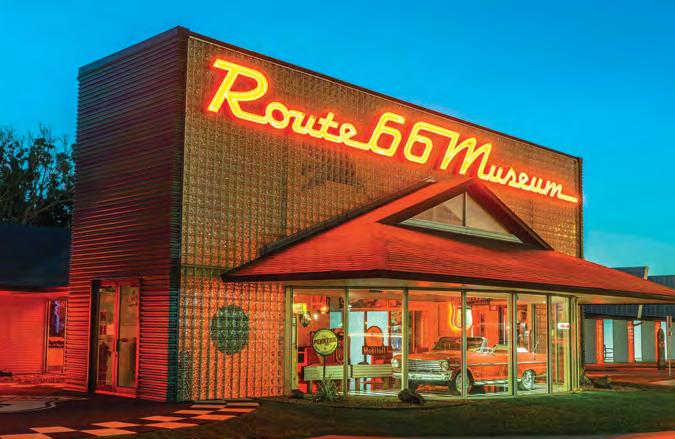
As evening approaches, the neon comes alive, casting a warm, welcoming glow across the surrounding grounds and signaling to passersby that history is waiting inside. The lighting reflects the same midcentury roadside flair that made diners, motels, and service stations famous, giving visitors a taste of the classic Route 66 atmosphere even before they step through the doors.
The museum grounds also feature restored and recreated neon signs from local motels and businesses, further enhancing the visual experience. At night, the Oklahoma Route 66 Museum glows like a beacon of the Mother Road, preserving the vibrant roadside culture for new generations.
This next selection is one of the few non-motels on the list, yet its neon presence along Route 66 is just as memorable. The Conoco Tower Station and U-Drop Inn opened in 1936 and quickly became one of the most striking roadside buildings on the highway. Designed in the Art Deco style, the structure features curved corners, a tall central tower, and bands of neon that trace the roofline and wrap around the building’s façade. At night the tubing casts a soft green glow across the pale walls, while the tower’s illuminated star and vertical lettering once signaled fuel, food, and rest to travelers crossing the Texas Panhandle, creating a mesmerizing, almost theatrical display of light that captured imaginations.
As Route 66 traffic faded after Interstate 40 opened, the building closed, and its neon gradually went dark. By the 1990s the landmark had deteriorated significantly. A major restoration began in 1999 after the City of Shamrock acquired the property, supported by preservation groups and Route 66 advocates.
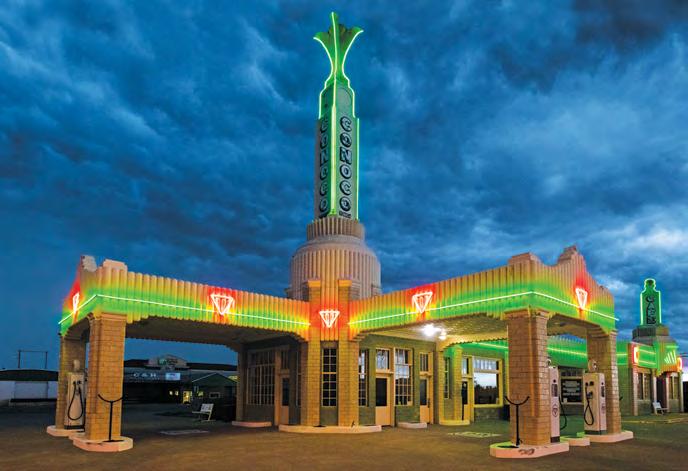
The carefully restored neon was relit in 2003, returning the building’s distinctive glow to the corner of U.S. 83 and historic Route 66. Today it stands as one of the best-preserved Art Deco service stations on the Mother Road.
The Blue Swallow Motel is a classic Route 66 landmark whose neon sign has become an icon of midcentury roadside travel. Built in 1939 and fully operational by 1941, the motel featured a long L-shaped row of rooms with attached garages, designed to appeal to the early automobile traveler. Its sign, installed in the midcentury period, is a remarkable example of the era’s neon artistry: standing approximately 25 feet tall, it combines vertical and horizontal elements, topped by a stylized blue swallow in flight carrying a green branch, spelling out “Blue Swallow” in blue neon script, with “MOTEL” in bold block letters below, and additional panels advertising amenities like “TV” and “100% Refrigerated Air.” At night, the sign’s vibrant glow dominates the motel’s courtyard, while complementary neon tubing traces the building’s parapet, casting a soft electric blue light across the pink stucco walls.
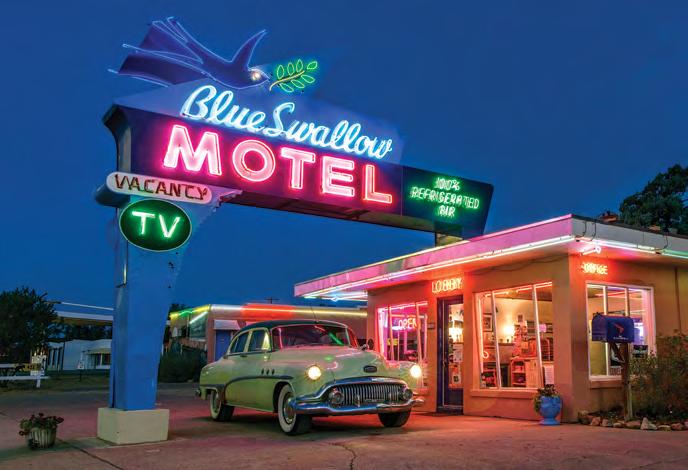
Although Route 66 traffic declined after Interstate 40 diverted travelers, the Blue Swallow survived, earning a 1993 listing on the National Register of Historic Places. A Route 66 Corridor Preservation grant in 2007 restored both the marquee and architectural neon, returning the motel’s vivid glow to Tucumcari’s desert nights.
Tee Pee Curios, Tucumcari, NM Tucumcari is famed for its neon, and Tee Pee Curios is one of the city’s most whimsical examples. This Route 66 landmark began in 1944 as a Gulf service station and souvenir shop. When the highway was widened in 1959–60, the original pumps were removed and the iconic faux-teepee entrance was added, giving the building its instantly recognizable silhouette. The low stucco structure is crowned by a large neon sign stretching above the entrance, with glowing tubes forming the words “Tepee Curios” in bright letters, outlined in soft green and accented by small geometric motifs reminiscent of Southwestern iconography. At night, the sign’s colors and the teepee roofline glow against the desert sky, creating a playful, almost theatrical beacon for travelers along the Mother Road.
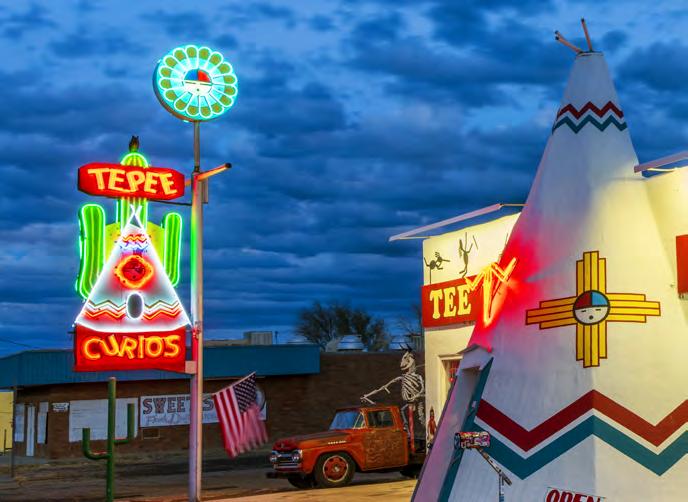
By the early 2000s, decades of sun and desert weather had dulled the neon, but in 2003 it was carefully restored, returning the vivid reds and greens. Today, the neon still pulses at night, preserving the charm and vibrant visual culture that made Tucumcari famous along Route 66.
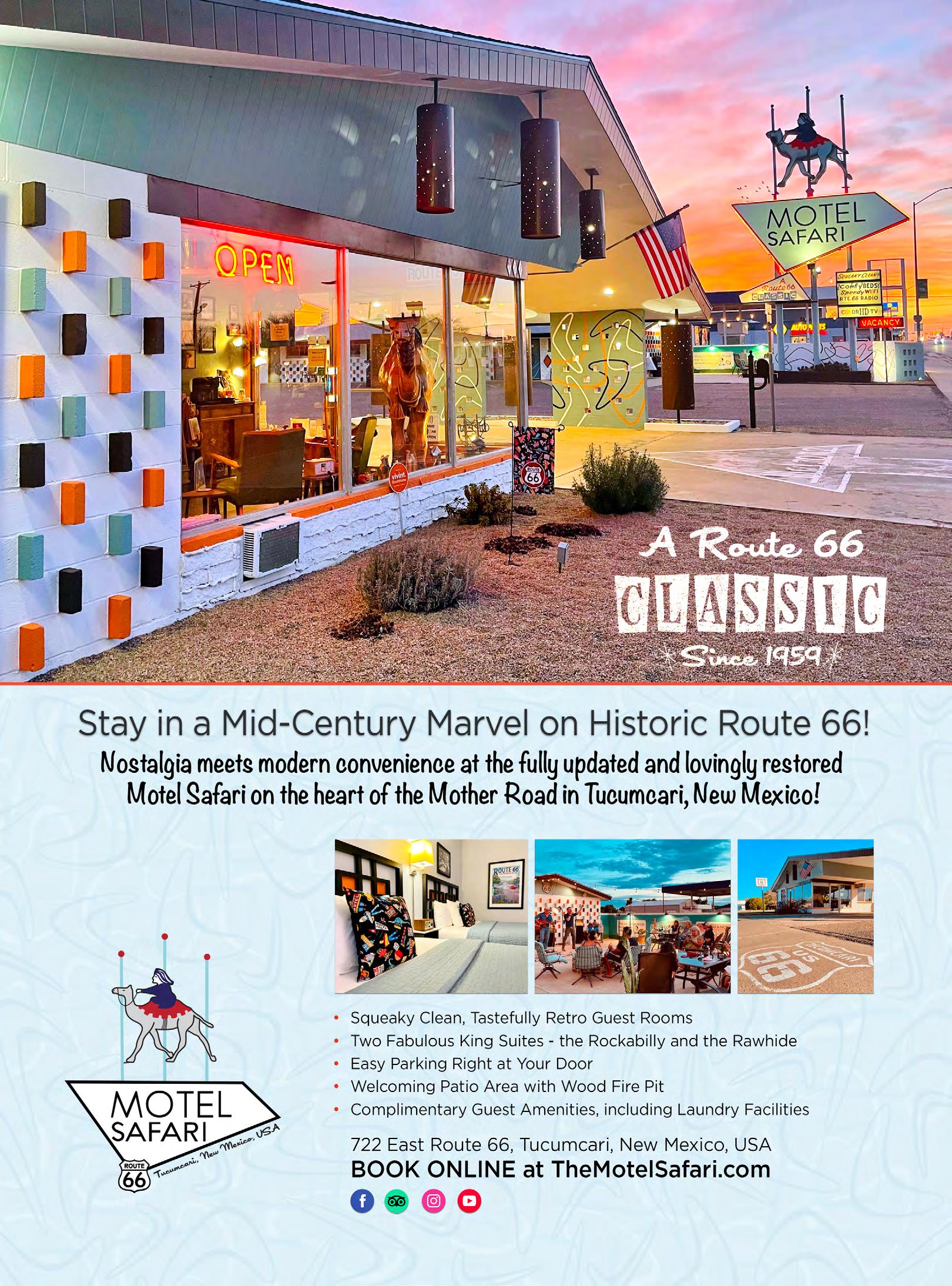
Motel Safari opened in 1959 at the height of Route 66’s postwar motor court boom, built in the futuristic Googie (or “Doo Wop”) architectural style, which celebrated the Atomic and Space Ages with bold lines, angular shapes, and playful forms. Its marquee sign was a standout even then: a tall geometric neon structure composed of stacked shapes and bright, glowing tubes that proclaimed motel qualities like “Squeaky Clean!” and “Comfy Beds,” making it as much an advertisement as an invitation to pull off the highway. The red neon tubing, set against the Tucumcari desert sky, creates a dynamic, almost cinematic glow that beckons travelers from blocks away. Atop the sign sits the motel’s whimsical mascot, “Clyde the Camel,” a stylized camel-and-rider figure mounted above the marquee that replaced the original Best Western crown in 1962, paying playful homage to the historic Camel Corps expedition through the Southwest.
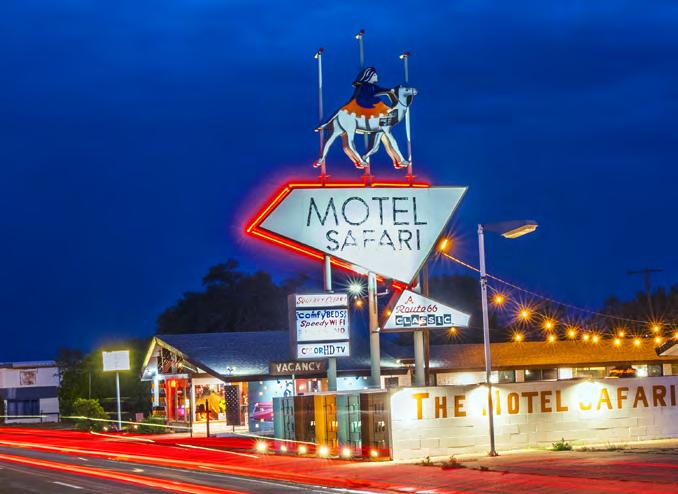
When Route 66 traffic waned after Interstate 40, the motel faced hard times, but a restoration beginning in 2007 under new owners revived both the property and its classic neon presence. Today, Clyde still lights up the Tucumcari evening, his neon tubes casting a nostalgic glow that evokes the optimism, fun, and visual flair of midcentury road travel.
Among the classic eateries that dot Route 66, Albuquerque’s Dog House Drive In stands out for its playful and iconic neon presence. Built in 1953 along Central Avenue, the sign was designed to capture the attention of motorists cruising the Mother Road through the city. Rising above the drive-in, it features a stylized, full-bodied dachshund in profile, depicted mid-stride with an open mouth, accompanied by bold lettering illuminated in green neon for “Dog” and red neon for “House,” while its simple, graphic outline enhances its playful character. The design wasn’t merely functional—it projected a lively, almost comical personality, turning a simple diner into an unforgettable roadside landmark.
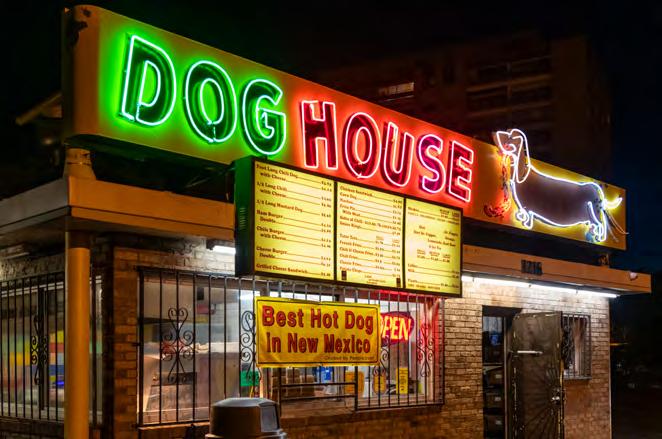
After decades of service, the restaurant eventually closed, and the neon fell silent, leaving only memories of its glowing presence against the New Mexico sky. Community interest and preservation efforts culminated in 2010, when the sign was carefully restored and returned near its original location. Now, the Dog House’s neon tubes light up the evening once again, casting a cheerful glow and serving as a vivid reminder of midcentury Route 66 culture, where fun and visibility were as important as the food itself.
The El Rancho Hotel has long been one of the most celebrated neon landmarks on the historic route into the Southwest. Opened in 1937 by pioneering hotelier R.E. Griffith, the property welcomed Hollywood stars and Route 66 travelers alike with its distinctive Spanish Colonial Revival architecture and shimmering neon. The hotel’s marquee sign rises above the entrance, with bold red neon spelling out “EL RANCHO.” Beneath it, the historic slogan—“Charm of Yesterday … Convenience of Tomorrow”—glows in neon, casting a warm radiance across the stucco walls and tiled roof.
Beyond the main sign, the hotel’s exterior lighting subtly enhances key architectural elements, from the arched portico to decorative trim, creating a soft atmospheric presence. As dusk falls, the neon transforms the entrance into a welcoming beacon drawing travelers with the promise of comfort and classic Southwestern hospitality.
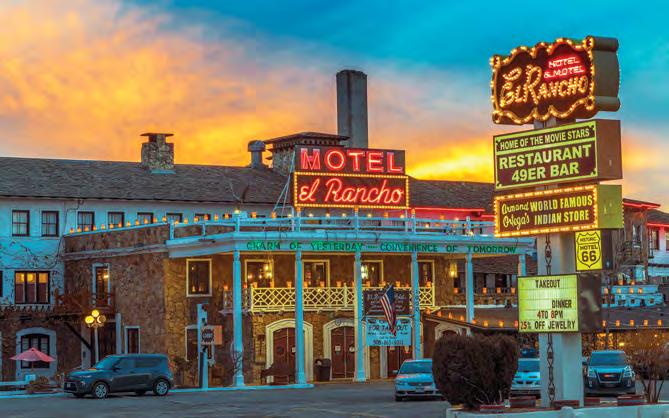
Over decades of Route 66 travel, the neon became inseparable from the El Rancho’s identity. Today, after careful preservation, the sign continues to shine in its characteristic red tones, reminding visitors of the hotel’s golden age and its enduring place in the visual culture of America’s most famous highway.
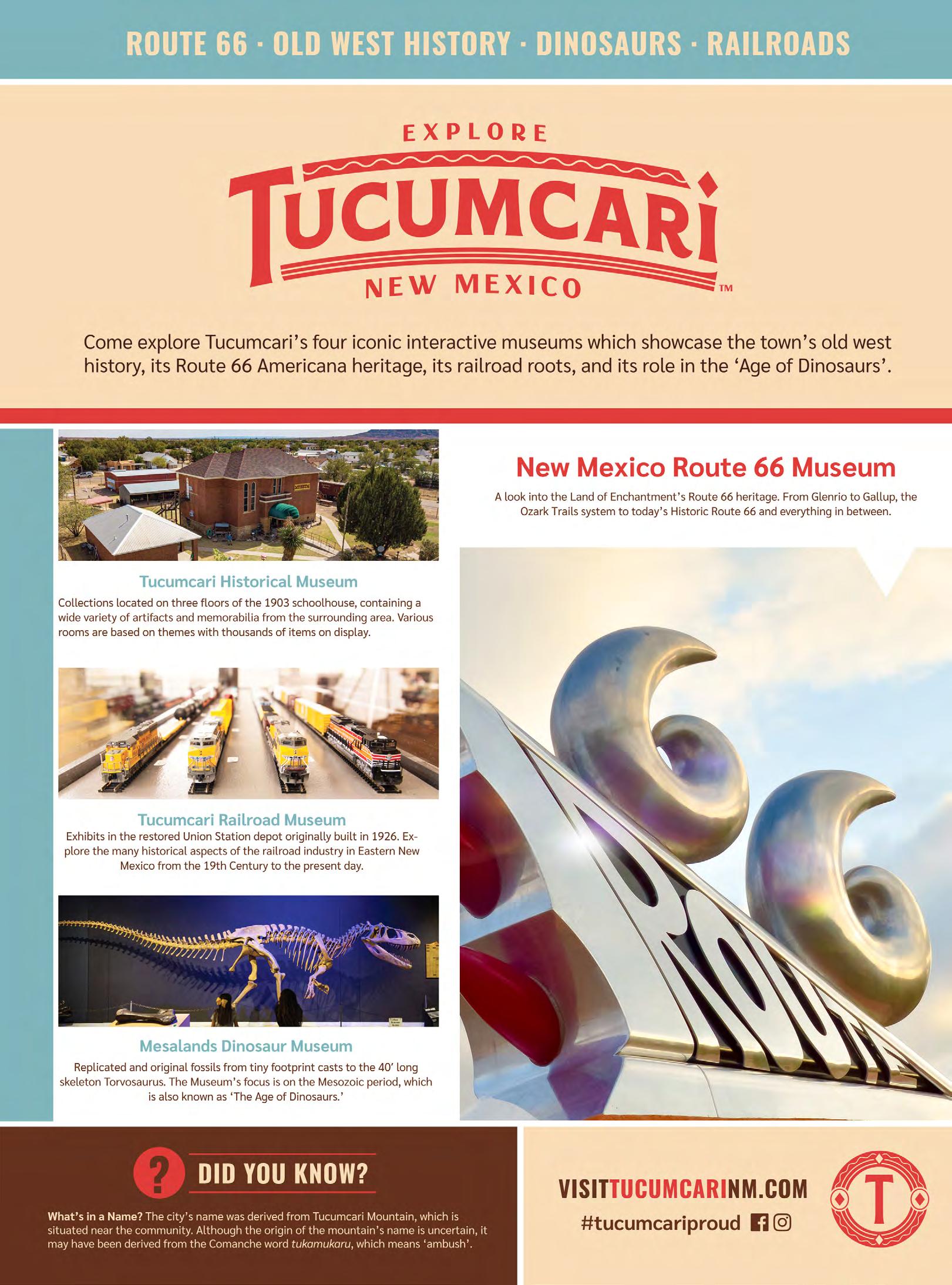
Roy’s Motel and Cafe, Amboy, CA
Rising out of the Mojave Desert, the neon at Roy’s Motel and Cafe is one of the most recognizable signs on Route 66. The complex began in the late 1930s as a service station, later expanding to include a café in the 1940s and a small motel that gave travelers a place to stop in the vast, open desert. But it is the sign, erected in 1959, that defines the site.
Standing roughly 50 feet tall, the Googie-style structure dominates the empty landscape, designed to be seen from miles away. A sweeping red neon arrow points toward the property, while bold green letters spelling “Roy’s” glow against the desert sky, creating a striking contrast after dark.
When Interstate 40 diverted traffic, Amboy faded, and the sign eventually went dark. After Albert Okura purchased the town in 2005, restoration began, with years of intermittent repairs and test lightings.
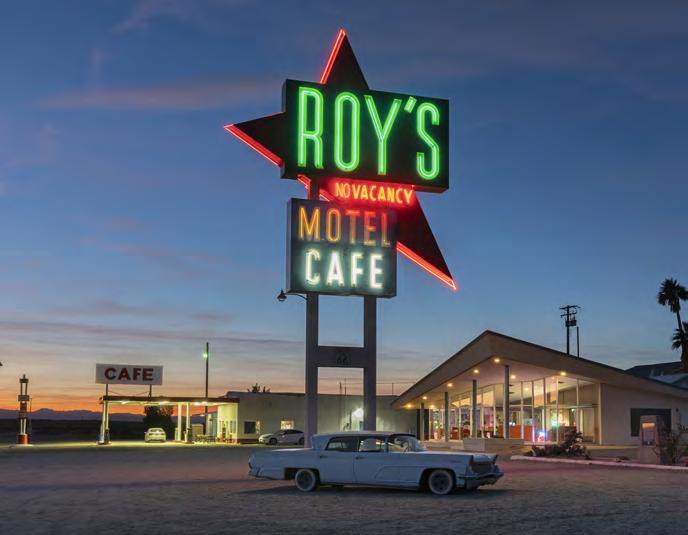
In 2019, the neon was fully restored and reliably relit, returning its steady glow to the desert. Today, it once again serves as a solitary beacon along Route 66’s most remote stretch.
Route 66 Experience, Springfield, IL
At the Illinois State Fairgrounds in Springfield, this special neon park represents a different kind of Route 66 neon experience—one built not around a single business, but around preservation itself. Developed as part of the Route 66 Experience near Gate 2, the park was envisioned as a walkable tribute to the Mother Road, bringing back the glow of signs that had long disappeared from the highway.
Rather than salvaging originals alone, many of the signs were carefully recreated or restored by Ace Sign Company, using traditional glass neon techniques to ensure historical accuracy. The collection includes revived icons from lost businesses such as the Bel-Air Drive-In, Chain of Rocks Motel, Coliseum Ballroom, and A. Lincoln Motel, all arranged together beneath a towering neon Route 66 shield.
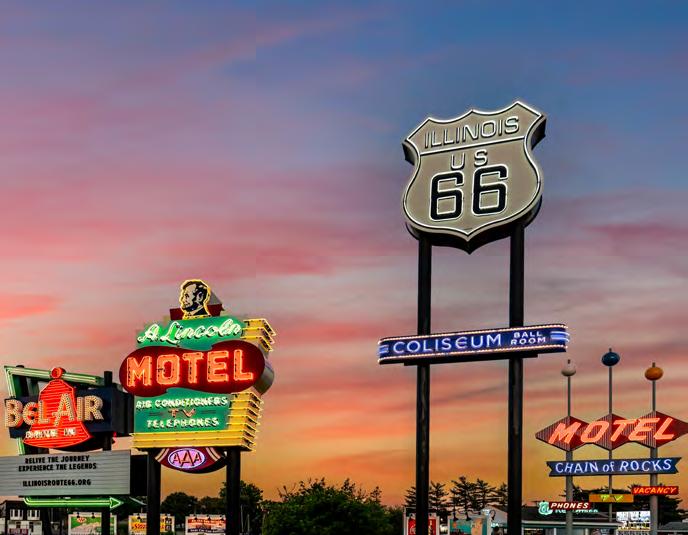
The park officially came to life in July 2023, when the signs were ceremonially lit, restoring their glow in a new, shared setting.
Route 66 Neon Park, St. Robert, MO
Along historic Route 66 in Pulaski County, Missouri, the Route 66 Neon Park in St. Robert offers a unique look at the highway’s vibrant past. Unlike a single business, this open-air museum gathers original neon signs rescued from motels, diners, garages, and roadside attractions that once lit the Mother Road. After years of planning, fundraising, and restoration, the park officially opened on May 9, 2025, within the historic George M. Reed Roadside Park, one of Missouri’s oldest rest areas. Each restored sign glows in mid-century neon colors, and lighted pathways allow visitors to walk among them as dusk falls. Highlights include the Skyline Garage Auto Service and the angular AlPac Motel signs, accompanied by storyboards that tell their histories and the roadside culture they served.
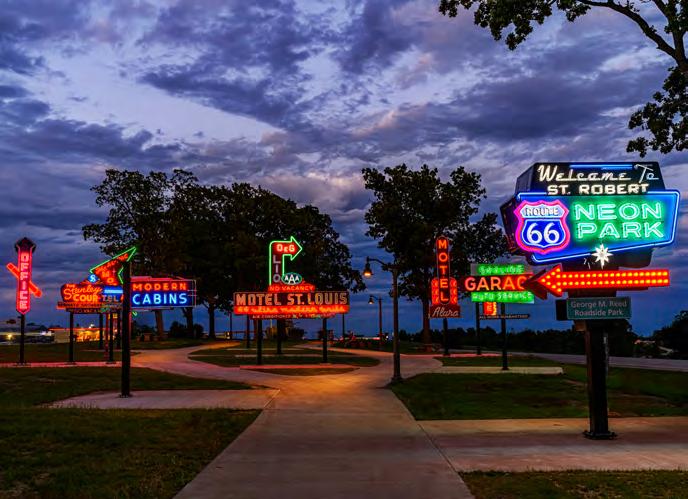
From sunset, the neon flickers to life, creating a vivid, immersive snapshot of Route 66’s colorful signage and its legacy along the Mother Road.
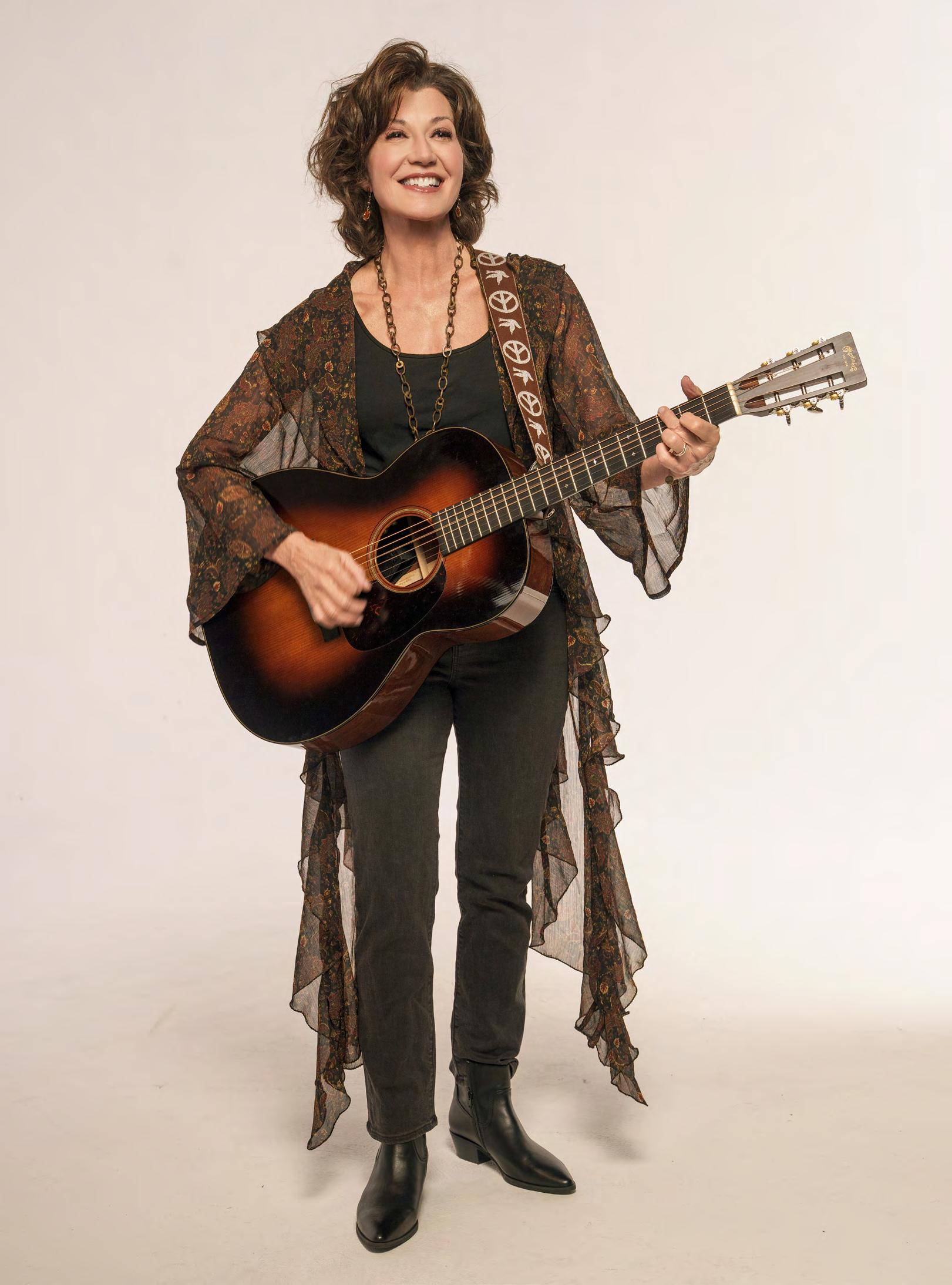
By Brennen Matthews
Photographs courtesy of Ed Rode
For more than four decades, Amy Grant has been one of the defining voices in contemporary Christian music, and one of its most successful crossovers into mainstream pop. From songs like “Baby Baby,” “Every Heartbeat,”
“I Will Remember You,” and “Lucky One” to a catalogue that continues to resonate, she has built a body of work that is both widely recognized and deeply personal. With multiple Grammy Awards and a career that has moved seamlessly between genres, she returns with The Me That Remains, a record shaped by honest experience. In this conversation, she reflects on the moments that shaped her, the music that carried her through, 26 years of marriage, and what continues to motivate her forward.
You grew up in Nashville, surrounded by both music and faith. If you go back to the beginning, what was your earliest connection to music?
We were a typical Southern family. We went to church three times a week. I was the youngest of four girls. I loved hymns. The church I went to, we didn’t have a choir, there was no organ, no piano. There was a song leader, and he would, like, on a pitch pipe, go ‘Hmm,’ this is the key we’re in, you know? And I just loved it. I loved it from the time I was a little kid, just the congregational singing.
That sounds like a very traditional foundation. What did that look like as you got a little older?
When I was in my early teens, there was a really unique church down in the Music Row area, which is all the publishing companies, the studios. They used to be really concentrated in one section of Nashville, so it was called Music Row. In the 60s and 70s, there were songwriters that would come to town, just a guitar slung on their back. Kris Kristofferson did that. Just lots of young songwriters. And this church that my sisters found was, you know, kind of the hippie movement, so their expression of all things faith was less the religious culture that I was accustomed to, and it was very vibrant, but it was kind of like the Jesus hippie movement.
There were all these little cottage industries that surrounded that. Woodworking, stained glass, window makers, you know, everybody was just, like, not shaving under their arms, not wearing deodorant, probably smoking a lot of pot, and talking about Jesus. I was so fascinated with all of it. And there was a bookstore that had a little coffee area, and every Saturday night, they had free concerts. And for the first two years, it was the same band every Saturday night. And no ticket. But then, as the Jesus movement of music started in Southern California, anybody coming through Nashville would play Koinonia Bookstore. I just loved that, and I thought, man, I want to make some of this kind of music and sing it for my friends.
At what point did you go into song writing?
I was writing songs about faith. Not in a Southern Gospel way, but imitating the singer-songwriters that I grew up with. But I was doing it specifically for a program that I had signed up for at school. We had mandatory chapel service. It wasn’t a Christian school, it was just the South, you know, and they would have a rabbi come speak, or a minister, or a preacher, and I was just having this really amazing kind of introduction to my own faith journey.
I didn’t have any answers, but I thought the conversation was so interesting. And I thought, ‘I wonder if I could sign up for one of these programs.’ And in my sophomore year, I did. That’s how I got started writing, was specifically for a thing for my school.
You were still in high school when you got a recording contract. How did that come about?
I made a tape because a friend of mine was taking engineering classes at Belmont, a great music school. And, he said, ‘Hey, I’ve got some free hours, do you want to go record some of your songs?’ And I was like, ‘Yeah, sure!’ He was making copies of that tape at the studio where he had a job, and an old college friend of his walked in and said, ‘There’s this record company in Texas that’s looking for contemporary Christian music artists. There are not that many. Hey, who’s that?’
Without my knowing it, they called the record company and played that tape over the phone, and the record company in Waco, Texas, said, ‘Well, she’s not very good, but she sounds sincere.’ And that was the beginning of my recording career.
What do you remember about finding out that you had a record deal?
My friend, his name was Brown Bannister, he wound up producing a lot of my early records, and he called late one night, and he said, ‘I’ve got to tell you, you have an offer for a record deal.’ Of course, I was 15 and insecure, and I thought that he was making fun of me. And it was a late-night call, and my father got on the phone, ‘Young lady, it’s after phone hours,’ and I actually got grounded. So, I got grounded and told about a record deal in the same conversation. (Laughs)
As it became real, what was going through your mind?
I mean, it just wasn’t anything I ever thought I would do. I was writing because I was just trying to figure out what I thought. Brown helped me make that record in the studio where he worked. I told none of my friends, I didn’t want them to feel sorry for me, if it was a bomb. And then that record wound up coming out around spring break of my senior year. Everybody’s holding their breath. And they said, ‘There’s an option, if this sells, you and the record company can decide if you ever want to do this again.’
At the end of each recording event, I’d go, ‘Okay, yeah, I thought that was pretty cool, I’ll do it again.’ But it was not ever because I pictured myself on a big stage, you
know, and everybody I was around was always better than I was. I was like, ‘I can’t even figure this out.’ But to me, music is such an amazing connector. It connects people, it connects us to ourselves. I was using music to help connect me to God. Some songs were like a prayer, but just like everybody else, just trying to figure out life. And I feel like that’s been my whole journey. An opportunity will come by, and I’ll go, ‘Man, how did I get that?’ Now, 50 years later, here we are.
I grew up in the ’80s, and your music, alongside artists like Michael W. Smith and Michael Card, was part of that early wave bringing contemporary Christian music to a wider audience. Looking back, how would you describe that time from your perspective?
Well, first off, let me say, the 80s were so exciting. I finished my fourth year of college, in the spring of 1982. And before that, I had always been going to school full-time, high school, college, singing a lot in the summertime, but then to suddenly be finished with that chapter of my life and able to travel all the time. I mean, the musicians I traveled with were like my road family. But at home, I was part of a really big family. So, I would go from a long weekend singing to people I didn’t know, to returning to a family that was just full of all kinds of things. I had so many young nieces and nephews, it was such a great balance. I just was, like, swinging between one community and the other community. I had an opportunity to record at a destination studio called Caribou Ranch. It’s not in existence anymore, but all the early Chicago records were done there, and it was created by Jimmy Guercio. The first time recording there was the fall of 1981, and we recorded there well into the 80s, but then the studio burned down. The first week, everything was just so family and community oriented. We booked that place for two weeks. And the first week, all the musicians and their spouses and their kids would come. We ate dinner by lantern light at one long table. We were writing songs on the spot. It was just so fun, and so much exploration.
When did you begin to feel that momentum building around what you were doing?
We would finish a record, and then tour, tour, tour. Unbeknownst to me, I never thought through it, but then, tickets were selling, so promoters kept asking. The machine kept growing. And I think when something is successful, it just attracts more energy. So, promoters [said], ‘We’ll do another show,’ and [then] they’d go, ‘We’ve added 25 more shows,’ and I’m like, ‘Woo, okay, here we go.’
But it wasn’t because I had a game plan. And in the middle of all that, in the 80s, there were times in my life that were wonderful, and there were times that were really hard. But when your life is getting out on stage, I mean, I kind of laugh about when I was pregnant with my second. By then, we’re almost [in] the 90s. I took my first son on the road with me when he was little. He was not quite… he turned one, and we really didn’t end that tour until he was two. So, we would be out for four weeks, then home for 10 days, then out for five weeks,
then home for a week; that’s just what life looked like. I did three different tours, very pregnant.
What did being on stage feel like for you in those moments?
I just loved the experience of music. It wasn’t about people cheering for me, it was about… to get to be a part of all of these people, creating… we’re singing songs we wrote. And then that feeling, I’m always looking at people in the audience, and I can see music is doing to them what it’s doing to me, and then it’s just like this big figure-eight of energy, and that’s beautiful.
“The Next Time I Fall” (1986), your duet with Peter Cetera, is still on my favorite song list. I know it was written for Chicago but given to Peter. How did you end up being part of it?
Well, first let me say, I was a huge Chicago fan from the time I was young. Michael Omartian was producing some of the sides for Peter’s record. I had met Michael several times when I was visiting Los Angeles. He was a renowned producer. And he was always so kind when we met, and he had said, ‘I would love to work with you someday.’ And up to that point, I’d only ever worked with my friend Brown. Anyway, when they were looking for a duet partner for Peter, that side was being produced by Michael Omartian, and he said, ‘I think we should have Amy Grant do it.’ And Peter said, ‘Who’s that?’ (Laughs)
I was 25, and I happened to be visiting a good friend of mine who lived in Atlanta. And, I mean, nobody had cell phones. It was 1986. The phone rings, and my friend Jeannie said, ‘It’s for you.’ It’s Michael Omartian. I mean, I’m going, how did you know where to find me? And he said, ‘Hey, we would love for you to sing a duet with Peter Cetera.’ And like everything in my life, it worked out just like I didn’t plan. And I remember thinking, just in a flash, ‘Have all the female singers suddenly disappeared from the universe, that you are calling me?’ But Omartian liked the sound of my voice, and he thought it would sound good with Peter. I remember flying to LA to sing with him. Even the way he produced me, I’d never worked with another producer, and he wanted to layer my voice. He said, ‘I like it best when it’s, like, four tracks of you singing on top,’ so I just sang the same thing four times through. And Peter was there… a lot of times, in the studio, you can do a song with somebody, but never see them. But he came to hang out in the studio, and we sang on mic together, and I was like, ‘Oh my gosh! What a great community!’
It went to No. 1 on the Billboard pop charts. When did it first hit you that the song had taken off like that?
That summer of ‘86 was a really busy touring time for me, and I remember having done kind of a long stint in Australia and New Zealand, and coming home, and I can’t even remember who I was in the car with, and I went, ‘Man, I never did hear that song, “Next Time I Fall.” I had such high hopes for it. It seemed like a great song.’ And they said, ‘Amy, it’s number one on the pop chart.’
That’s awesome.
I know, but it was just because I was busy working. And then that actually wound up being a really, really difficult time in my personal life. And I remember Peter calling me, saying, ‘Come do this show, come do this show,’ and I can’t remember all the details of what it was, but I was just really struggling, and I said, ‘I don’t have the bandwidth to come do your show right now.’ But you just walk through the doors that open. He and I had a chance to sing together, later. I think, in some ways, I let him down, because I wasn’t available to do publicity that he wanted me to do, but you only have so much gas in the tank.
Do you remember the first time you heard yourself on the radio?
I do. I think I was still in high school, and we had an AM station that played contemporary Christian music. And what I remembered… this is so stupid, but whoever was the engineer in that studio… you know, if the sibilance is too much, you can kind of roll the S’s off. Whoever was the engineer in that studio, they had set the de-esser to such an extreme, it sounded like I had a lisp, and that’s all I could hear. ‘Somebody hit the right button! I sound like I don’t know how to say an S!”
A couple of years later, in 1991, you came out with Heart in Motion, a defining moment in your career as it opened things up to a much wider audience. Was there a reason you waited to make that move?
Well, I was so glad to participate with Peter Cetera on “Next Time I Fall,” but that just kind of felt like a oneoff to me. I had mentioned that it was kind of a rough stretch for me, so getting back into writing… all through ‘87, I went into therapy.
What wound up happening was, I did a record called Lead Me On. That was the last recording I did in the ‘80s. And most of my following had really developed through a lot of touring and kind of a grassroots situation. And it was really touring that record with Michael W. Smith and myself… we were old friends by then, and it was a great touring experience for both of us. That tour just lasted and lasted, and that really is what, I think, what made A&M Records sit up and say, ‘She has an untapped audience.’
And because of where my life had been before that, Lead Me On was a more serious record. Honestly, I got to the end of all that touring, and I was pregnant with my second child, and I was just ready to laugh. So, it was not a record company move. I just thought, ‘God, can somebody have some fun around here?’ You know?
“Baby Baby” went to No. 1 on the Billboard Hot 100 and became one of your biggest crossover hits. It helped define Heart in Motion. What do you remember about how that all unfolded?
I started working with additional producers, which I’d never done before. I worked with Michael Omartian, I worked with Keith Thomas, he was a writer and a producer, and with Brown. So, Keith Thomas and I wrote
“Baby Baby,” and believe it or not, when I presented that record to A&M and to Word, neither one of them knew what to do with it. They said, ‘I don’t think people will accept it.’ And I said, ‘Well, it’s just me. I mean, it’s still the same girl. I’m not lying. I’m just singing about other things.’ And they suggested, ‘Maybe we could brown bag the first single.’
What does that mean?
Brown bag means to have it unidentified. To send a song out to radio stations without any artist ID, because people love labels, and they identify what something is. Through no fault of my own, somebody at a radio station in Southern California heard the song “Baby Baby” and put it on the air without the record company knowing, and the phone lit up. So, it started with this one radio station, and then spread, because it was a fun song. Whatever’s happened musically was generated firstly by what I needed. And I guess audiences kind of said, ‘Well, hey, I could use some of that, too. I’ll take a serving of that.’
What was going on in your life when you wrote “Baby Baby”?
Man, I was at a time in my life where I was so ready for some fun. I’m off the therapist chair, you know. It’s just like, yeah, life is hard on a lot of levels. We all have to work hard, but there’s something about hanging out with a kid, and I’d given birth to one, and was pregnant with another. If you can’t laugh with a child… I mean, it’s just like, oh my gosh, everything was new again.
The brilliant music came from Keith Thomas. I’ve always primarily been a lyricist. I mean, I can write music, but I tend to work best if somebody gives me an idea for music. Keith, he had the [imitates beat], and I thought that it was so great. He’d given me that music, but I was writing during the back half of my pregnancy with my daughter, Millie. And he kept saying, ‘This should be a love song, this should be a love song.’ And just, happy. And when you’re nine months pregnant, it’s like… I just couldn’t wrap my head around what he was asking me to do.
So, she was just a few weeks old, and I was taking her out of the car. I was going to the kitchen, and I was listening… I’m sure I had some kind of player in the car, and I was like, ‘Oh, Keith, okay, okay, I can write this, I can write this.’ And I just walked in the kitchen and sat her car seat down on the kitchen counter. And I mean, it was like, ‘Of course it’s a love song.’ And the lyrics just tumbled out. And I thought, don’t overthink it. Just sing it to this little nugget. Just a few weeks old.
Heart in Motion had such a strong run of songs — “Every Heartbeat,” “That’s What Love Is For,” “Good for Me.” Is there one song on that record that has a story that stands out to you?
There’s a song on that record called “I Will Remember You.” Okay, so there was an opportunity to have a song in one of the Karate Kid movies, because of “Glory of Love.” I had that Peter Cetera connection. Maybe it
was Michael Omartian… he sent the script, and there was a scene in the script that’s kind of like the climax, or the high point, and then kind of the denouement. After that was gonna be all these flashbacks, and they needed a song for it. And we were like, ‘Yeah, we’ll write that song.’ But in the writing of it, it just wound up that the publishers of the movie wanted all the publishing rights, and for those of us that were songwriters, we already had publishers, so we couldn’t do that. So, the song didn’t wind up in the movie.
So what did the song become for you?
At the same time of writing that, one of my, sort of, patron saints for me was my Aunt Jean. She was actually my great aunt, but she was almost the same age as my dad, who was her nephew. She was my grandmother’s youngest sister. The first time I ever did a show, I was 17 years old, at Lakeside Amusement Park in Denver, Colorado. Jean flew from Santa Barbara to be there. Jean was not a person of faith, and she had struggled with alcoholism, and she was in a recovery community, but she… just the letters she would write me. She would say, ‘I feel my resistance to God soften when you sing.’ And then she was dying. I went to visit her several times at the end of her life, and, you know, I’m, like, crushing her pills. We’re going through all of her things from her life, and all those memories are so precious to me. It was important. That song became my way to remember her. So, even for the writer, it’s like music finds its own landing spot for everybody, even if you wrote it. You might have written it like, ‘This was strictly a writing session. It had nothing to do with any… we were just trying to get a job done.’ But then it becomes something else. You hope, because when you write a song, you write it and set it free, and you just hope it’ll find somebody that needs it.

So where did you choose to put your focus instead?
I thought, well… music just has to find its own audience. And the thing that was weird for me was, when I first started singing, when I was 15, I would sing one of my Jesus songs. This was, like, the very first time I ever sang when I was a sophomore in high school, and then I would sing a Carole King song. Then I’d sing one of my songs, and then I’d sing a Joni Mitchell tune, because to me, life is everything. It’s falling in love, it’s breaking trust with a friend because you told a secret, and learning the awful lesson, or a beautiful lesson, a really hard way by not keeping a confidence. It’s praying a prayer at night. I mean, it’s all of it, and to me, music about faith always made the most sense in the context of all of life.
Did you feel tension around that view within the industry?
That album reached a much wider audience, but also drew fierce criticism from within the Christian community. What was that experience like for you?
Honestly, I knew it was happening, but I didn’t pursue it. I just always feel like everybody… it takes all your energy to live your life. And even today with social media, we only have so much resource of time, and energy, and mental bandwidth. And I don’t know, I’m not wired in a way that… I’m curious about what people think, but I’m not very curious about what people think about me. Because it doesn’t really matter. I mean, people are gonna think what they think.
I actually had a conversation with Dan Johnson, who was one of the heads of Word Records, and he had come by the studio. I can’t remember what we were working on, but I said, ‘Dan, I’m afraid I’m not fulfilling the mission of Word Records, because I want to include songs that aren’t specifically faith songs, but they’re all life.’ And he said, ‘Amy, Jesus talked in stories, and a lot of times, people had no idea what he was talking about. But that’s how he chose to communicate.’ And he said, ‘If you want to communicate in stories, go right ahead.’
In his elder years, he’s still alive, he wrote me and said, ‘You were asking my permission, but I’ve never thanked you for stretching me as well.’ I think that the field did have kind of a narrower view of what’s appropriate to say. And because I didn’t grow up having a lot of CCM
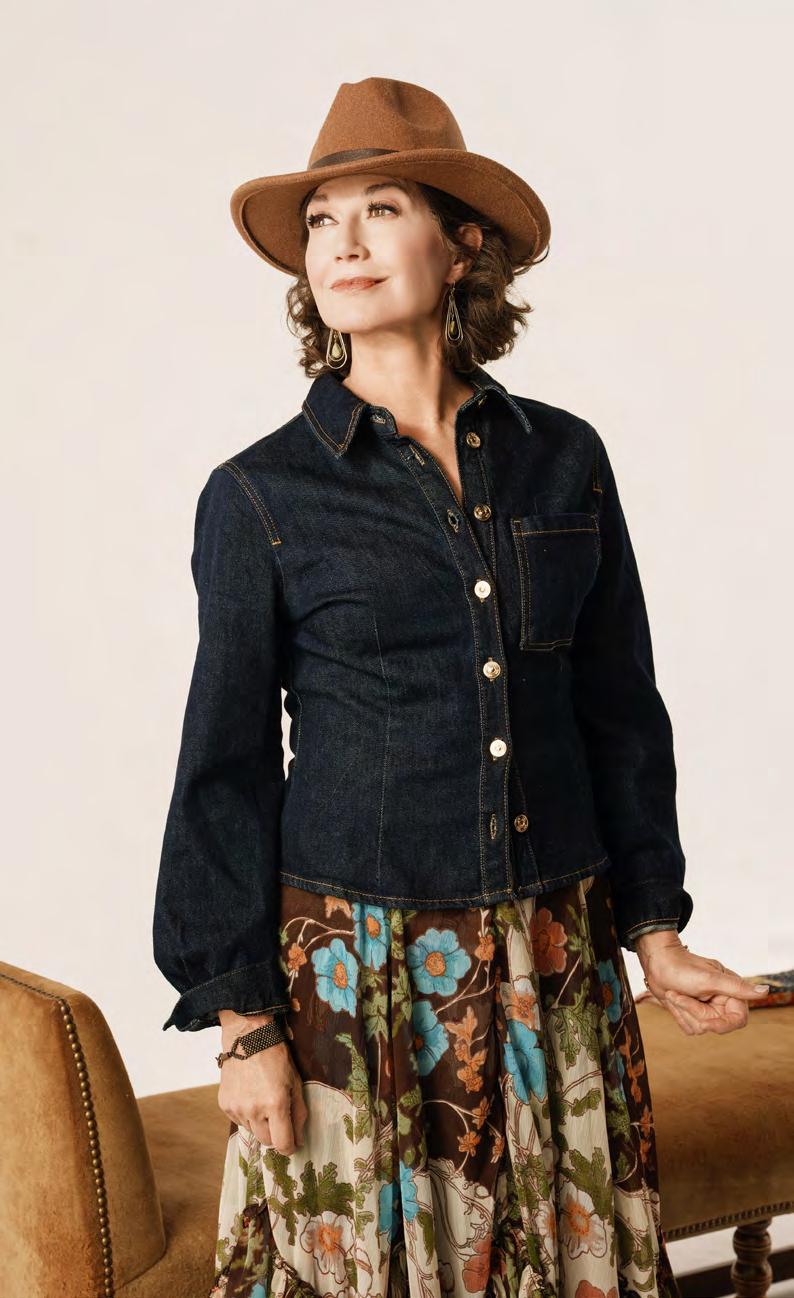
records, that wasn’t my go-to. I wasn’t shunning it, that just wasn’t the lane I was born in. But life… life is everything. Let’s sing about it.
You and country legend Vince Gill have been together for a long time. 26 years. With two busy careers and public lives, what has helped your marriage stay grounded over the years?
It’s funny, because our youngest says, ‘I want a relationship like you and Dad have.’ And I go, ‘Well, we’ve been in the rock tumbler a long time.’ I mean, Vince will joke and tease that part of the reason we get along so well is that we spend so much time apart. But I think marriage is challenging for everybody. And I think what always drew me to Vince was just that he leads with kindness.
I grew up sort of wanting to talk through everything. Let’s talk through it, let’s talk through it, you know? Especially if we’re at other sides of the table. And it was really a challenge for me, with him, because he would say, ‘I’ve never regretted something I didn’t say.’ And there’s sometimes, you know, we’ve disagreed, and it’s like, ‘I don’t want to talk to you. I just need some space.’
But I think because we married later in life... I was 39, in my 40th year, and he was about to turn 43. And I think that we, of necessity, had a great deal of respect for the life that he had lived before I was part of it. And that I had lived before him. Every day, our life winds up being, in some part, the sum of our choices. And how we use our time, our energy, our talent, our resources, all those things, and their time, you know. I love the way he thinks. And to me, even when I don’t agree with him, I respect his thought process.
That’s beautifully said. There’s a lot of wisdom in that.
Your new album The Me That Remains, is your first in over a decade. What led you to this record at this point in your life?
Just as far as a music backdrop, I never quit touring. I mean, COVID shut everybody down, but I’ve kept up a nice balance of touring, 75, 80 shows a year. That never stopped. I’ve worked with the same band for a long time. I love it. And probably for the last 15 years, promoters have just sold, ‘An Evening with Amy Grant,’ at lovely theaters. And it’s been great.
But just the experience in my own life… In the summer of 2022, I had a really horrific bike accident, and it required a lot of recovery, and then two subsequent surgeries after that because of the wreck. At the end of May 2024, I was gonna go through a battery of tests with a neuropsychologist from Vanderbilt Hospital, because when somebody’s had a head injury, after a certain amount of healing, they want a baseline going forward. So, you know, hours of testing, and then I went back for the results, and two of the results were in the 90th percentile. I was like, ‘Oh my gosh, yes!’ And one result was in the 20th percentile.
For which area?
Processing. So, memory and vocabulary were 90, and processing was in the 20th percentile. And I was like, ‘Ah, that’s what it is.’ And he said, ‘What?’ And I said, ‘I feel like everything’s happening in a room down the hall. And that I just can’t participate the same way.’ It’s great that I get to go on the road, because I figure out what I’m gonna say, and I’ve got the same songs over and over, and repetition is so good for healing. But I said, ‘I just feel myself pulling back everywhere.’ And I said, ‘Will you test me again? Like, in a few years?’ He said, ‘Yeah, just tell me when you want to come back.’ That was May of 2024. But the doctor said, ‘I want to tell you something. This is just life advice, but it’s medical advice, too.’ And I said, ‘Tell me.’ He said, ‘You said that you’re having a tendency to pull back. Amy, lean in.’ And so, you know, part of my experience with doing this record was I was leaning in for my benefit. And a couple of songs were older songs, but I was just having a creative experience with myself writing the lyrics to “The Me That Remains.”
That song feels like it comes from a very personal place.
I haven’t written songs in a long time, and it wasn’t even like, ‘I’m gonna do a record, I want to write some songs.’
I just was reaching for, ‘What are the tools that have pulled me out of the ditch before?’ and it wasn’t that I couldn’t tour, it wasn’t that I couldn’t perform a set list, but it was just my day-to-day. And when that doctor said, ‘lean in,’ I just reached for things that had helped me in the past. And I thought, ‘Gosh, that song is so specific to me,’ but the first person I shared it with, they went, ‘Oh my gosh, that’s my life.’ And I thought, ‘Oh, music is doing what it’s always done!’ It’s connecting us to each other, to our own story, too.
How are you feeling now?
I feel great. I set alarms for everything. I still have short-term memory issues, but now my friends go, ‘Hey, I didn’t have to hit my head, and I can’t remember anything.’
That’s all of us at this age.
Yes, and so I kind of go, ‘It doesn’t matter. Doesn’t even matter what the details are. We all wake up every day, and we’ve got the choice, how am I gonna treat myself? How am I going to treat others?’ I mean, the gospel, in a nutshell: Jesus said, ‘Love God, love each other.’ Everything falls under that. And so I go, ‘Okay, that’s pretty simple. I can remember that.’
You’ve lived such a full life already. A long successful career, a beautiful marriage, motherhood. What still feels like it’s unfolding for you?
A project that I have in the short run is I’ve planted a pretty substantial garden at a farm that I’ve owned for 30-plus years… it’s a 20-minute drive. It’s been a lot of work, but I thought, ‘I’m 65. Just for one year, I’m gonna try this. One year. I’m gonna plant a big garden.’ I can’t figure out why I’m just working so hard on this garden. Like, this is taking hours, days. And if just one thing, if I can eat one tomato, if I can just have one, it’ll be a success. And I’ve invited different family members to come out, and they’ve helped, different friends, it’s so great having your hands in the dirt.
I can’t figure out… who knows, it’s a mystery why anything becomes important to any of us. Like, what makes us go down a path? But I said to Vince, ‘I want to know where a vegetable comes from. I want to know what it feels like — the pace of planting a seed and having it grow and produce, because we don’t live in a natural pace anymore. What do you think about that?’ And he said, ‘I think I would just go to the grocery store and purchase, in about 15 minutes, everything you’re gonna grow all season.’ Oh, he’s so practical! But he celebrates the freedom for me to investigate whatever weird thing is interesting to me at the time.
So, right now, I’m making music and gardening. (Laughs)
Amy Grant’s new album The Me That Remains is available now.
Unlike other guides on the market, we have done the work to narrow down the very best that Historic Route 66 has to offer.
Includes:
• A Route 66 journey map
• The best places to stay, dine, and explore
• Must-see roadside attractions and museums
• A 100-year timeline of the Mother Road
• The story behind America’s most legendary highway
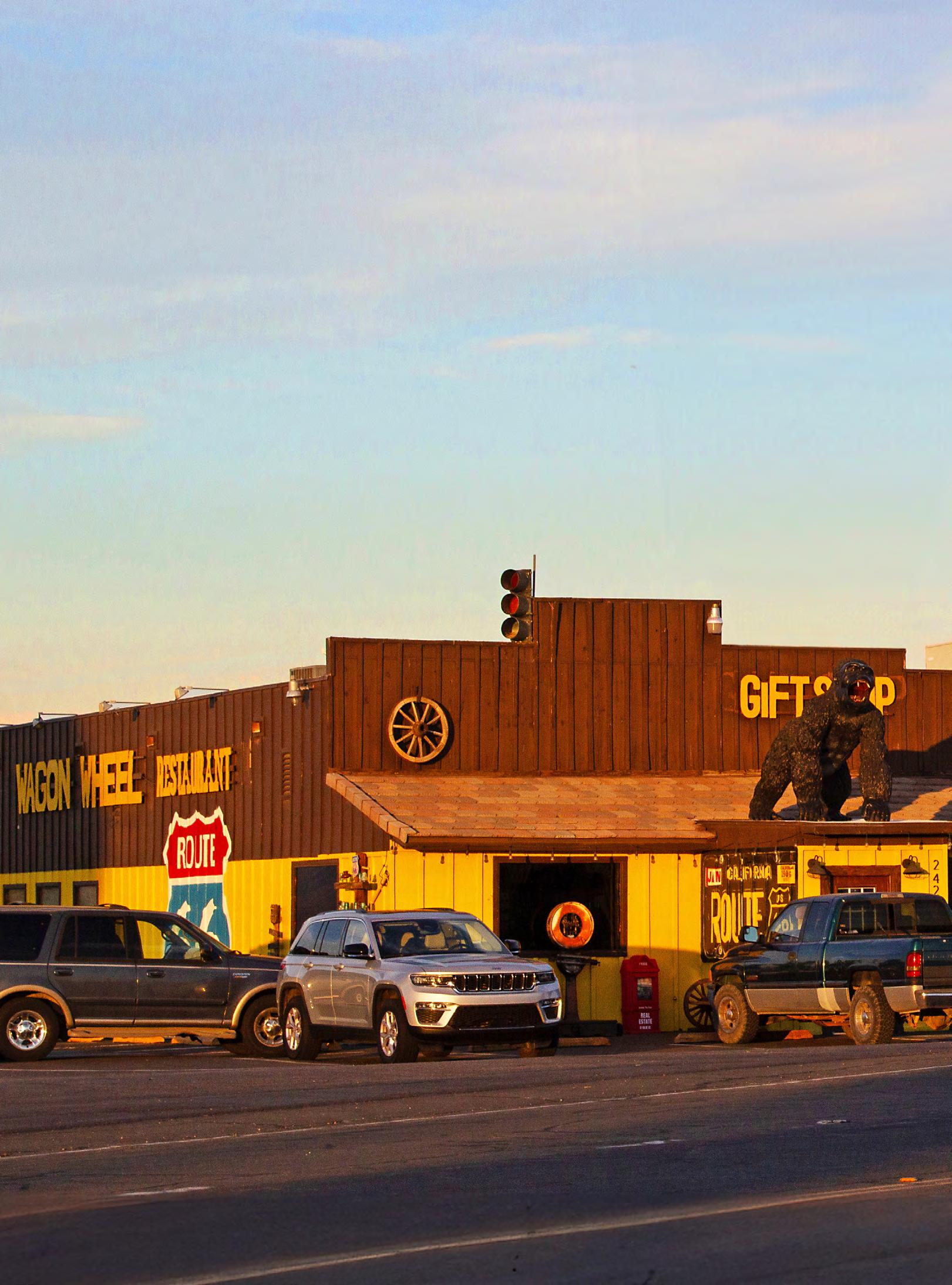
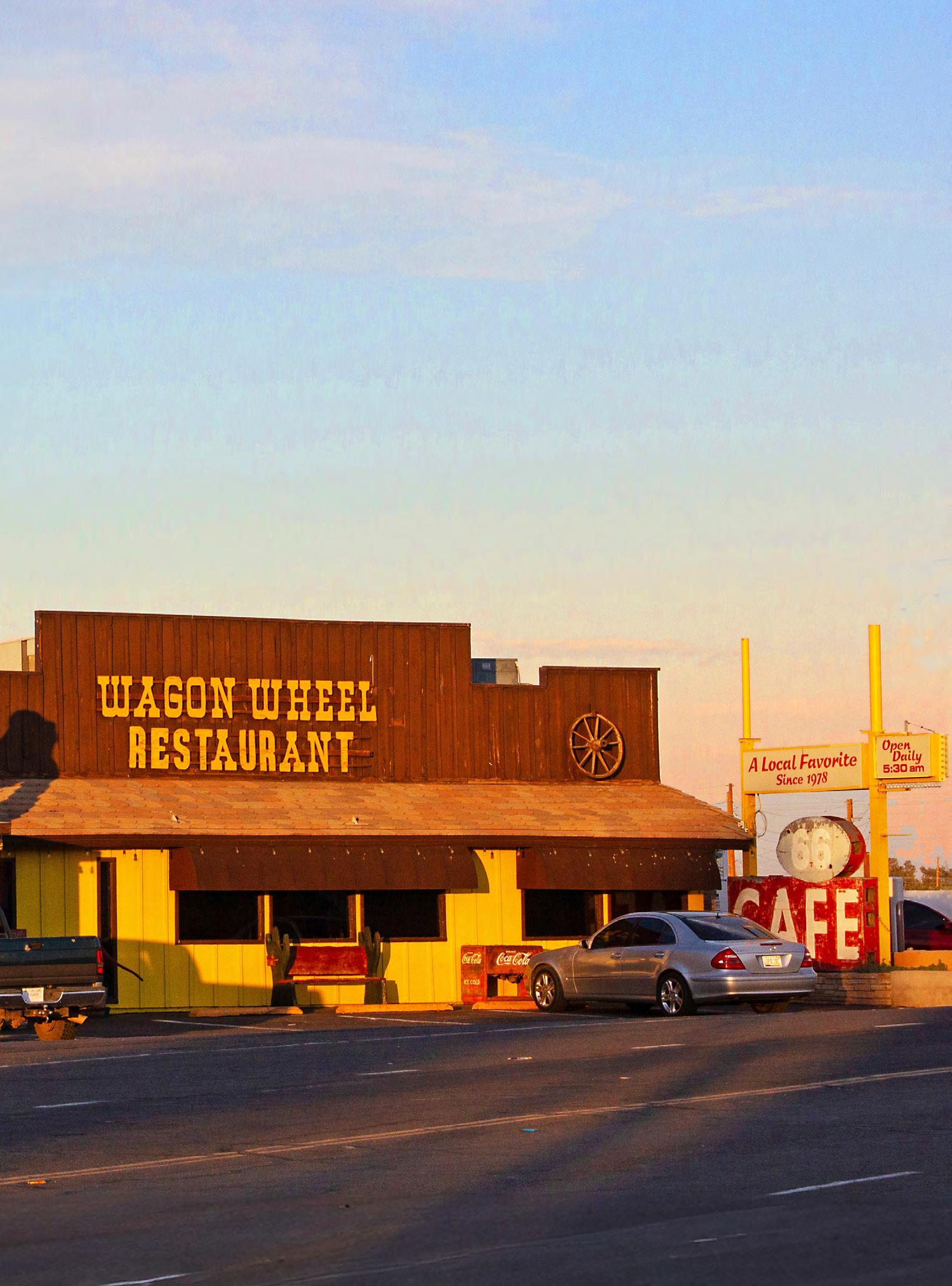
By Kate Wambui and Brennen Matthews
Along the endless, sunburned stretch of Route 66 that travels through the Southwest, where neon once flickered through desert nights, many storied eateries have quietly faded into memory. Time, traffic, and changing tastes have thinned their ranks. Yet a handful remain, holding steady, offering something that goes beyond just food. In Needles, California, often counted among the hottest places in the country, one such place endures. The Wagon Wheel Restaurant isn’t simply still open; it feels rooted in another era, where the road moves a little slower and every stop tells a story.
To understand why the Wagon Wheel still resonates, it helps to look back to an earlier chapter.
Lynn’s Broiler was built in 1955 by Jack Richey, a prominent Needles restaurateur who operated several businesses. Named for his daughter Lynne, the restaurant quickly became a lively local gathering place, where dinner often gave way to dancing for Needles’ growing population. But Lynn’s Broiler was not only Richey’s story. It was also shaped by Margaret Bemish, who entered hospitality after her husband’s death in 1948 and later managed the Broiler during its peak period. For roughly fifteen years, she anchored Lynn’s Broiler as a cornerstone of Needle’s life, guiding it through the height of Route 66’s mid-century traffic.
By the late 1960s, however, mounting pressures began to take hold. Richey faced legal and financial challenges involving the state highway department, the Internal Revenue Service, and a San Bernardino title and insurance company, while shifting travel patterns steadily eroded business. A right-of-way dispute tied to state highway surveys placed part of the property in question, forcing a temporary closure of the restaurant and triggering significant financial losses. By this time, Bemish had taken ownership of the property.
In 1971, Frank and Vi Spaulding assumed management of Lynn’s Broiler, continuing operations under the same name. But the venue would change hands again some years later, rebranded as Garretts Restaurant under brothers Bill and Dennis Garrett. By the late 1970s, after decades of reinvention and shifting stewardship, the property sat quiet with a “For Rent” sign, awaiting its next steward. What followed would become its most defining chapter.
It began with Needles locals James (“Jimmy”) Jackson and his wife, Cleo, and their son, Doug. Jimmy, then working
full time as a conductor for the railroad, saw the possibility. He leased the Lynn’s Broiler building and, in 1978, reopened. Doug wanted the name Prime Time Steakhouse, but Jimmy decided on Wagon Wheel. However, roughly three months after opening, disaster struck.
A fire broke out in the kitchen and tore through the building, reducing it to little more than its original stone fireplace. Across town at the time, Jimmy spotted smoke rising in the distance. According to local accounts he jokingly said to whoever he was with, ‘Could you imagine if that was the Wagon Wheel?’ only to realize later that it was his newly opened restaurant. What followed could have ended the story before it had truly begun. Neither the Jacksons nor the building’s owner carried insurance. With the structure devastated and options limited, Jimmy was able to purchase the property at minimal cost, a turning point that shifted him from tenant to owner almost overnight.
What remained — the stone fireplace — became the anchor for what came next. The rebuild came slowly and deliberately. As funds allowed, Jackson reestablished the Wagon Wheel, piece by piece, as his own, guided by its motto: A Truly Western Atmosphere—Sample the Old West… Comfortable Surroundings and Friendly Service. In 1980, the Wagon Wheel opened its doors once again, its Western identity extending even to the waitresses’ attire: Western shirts, jeans, and holsters with cap guns. Jimmy’s perseverance is now captured in a small but meaningful artifact. “We have the framed first dollar he made from the Wagon Wheel,” said current owner Susan Alexis, “and then we have the second dollar framed, that he made after the fire reopening.”
With Jimmy often tied to his work with the railroad, Cleo stepped in, helping to run the restaurant day by day. Her imprint became part of the space itself, most notably through a hand-painted mural that still remains inside today.
For the Jacksons, balancing a full-time railroad career with the demands of running a restaurant was no small undertaking. By 1988, a new ownership arrived when John and Elsie Rutan took over, rebranding the establishment as Jedro’s Wagon Wheel.
The Wagon Wheel continued its run through the late 1980s and into the 1990s, a familiar stop in a town shaped by both rail and road. By the early 2000s, after John Rutan became ill and later passed away, Elsie was ready to pass on the reins.
In 2005, the Wagon Wheel entered a new era under the ownership of Susan Alexis and her long-time partner, Mike Dick, both from California, ushering the restaurant into the present day.
For Alexis, by the time the Wagon Wheel came into her life, she had already spent a lifetime in the restaurant business, one that began almost by accident.
“I was 15-and-a-half, and my friend was 17,” Alexis said, recounting her very first exposure to the industry, “and I went with her to go pick up her paycheck. She worked for the House of Pies in Glendale, California. The manager looked at me and he said, ‘Are you a waitress?’ I said, ‘No.’ He said, ‘You should be.’ Three
days later, he called and asked me if I would come and work for him. So, that’s how I started in the restaurant business [and] worked my way up.”
And she did. What began as a first job quickly became a career. After early experience with Village Inn in Denver, Colorado, Alexis moved into management and, upon returning to California, rose rapidly through the ranks at Coco’s and Carrows; from assistant manager to general manager, to the company’s first female district manager, and eventually vice president of operations, overseeing roughly 350 locations.
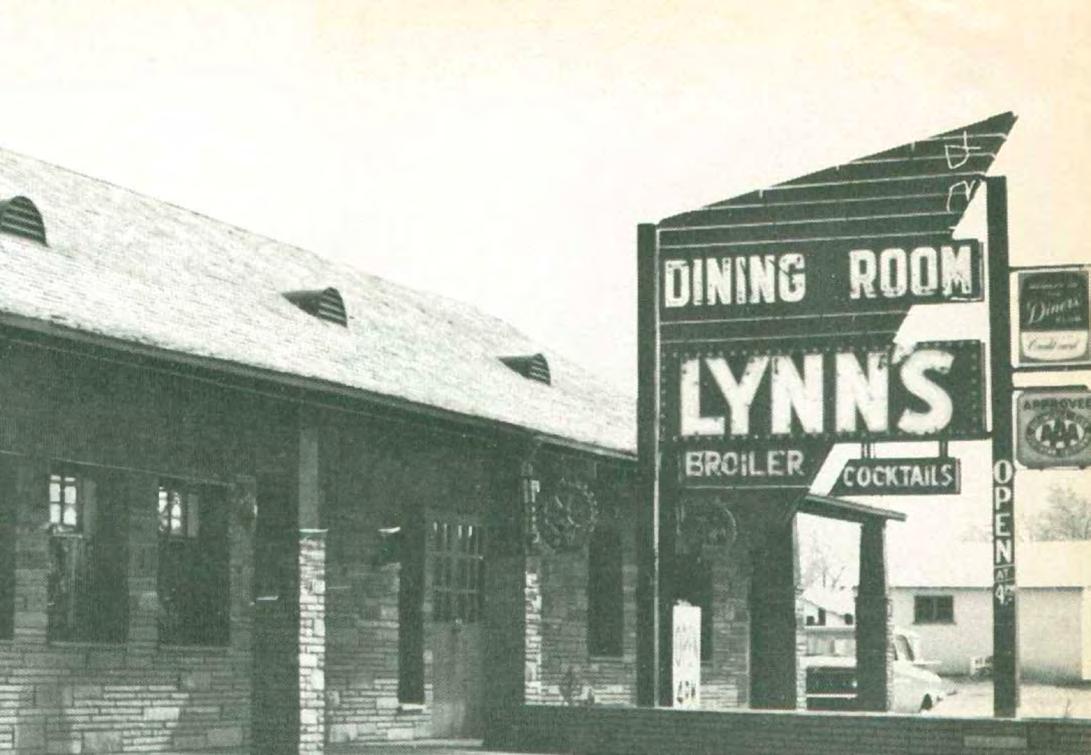
Dick’s path through the restaurant business closely mirrored her own. He had started as a cook at JoJo’s (later Coco’s) and worked his way up to district manager in Orange County, earning a reputation for running highly profitable restaurants. However, with time, Dick wanted to steer his own ship, so together, they took a chance on a small local restaurant in Corona — Pizza Palace — building not only a successful business, but a loyal following. “Mike works so hard that he needed to work for himself,” said Alexis. “He left the corporate world and really turned Pizza Palace around. I stayed in my VP job.”
By the early 2000s, Alexis had also grown weary of the corporate world. After years at that scale, and growing disillusionment with corporate leadership, she stepped away. Six months into the much-needed break, she came across the Wagon Wheel while browsing online.
“I found Wagon Wheel for sale in 2004. At that time, it was called Jedro’s Wagon Wheel. I asked Mike if he knew where Needles was, and he said, ‘Yes.’ I asked him if we could live there. He said, ‘No.’ So, with that information, I did not invite him to see the restaurant in person with me,” laughed Alexis. “I drove the fourhour drive from southern California to Needles to check it out. The first thing I noticed was the bright yellow unique older building and where it was located on Historic Route 66. I loved that. How fun to be in this community. The second thing I noticed was cigarette smoke. California had banned smoking inside buildings on January 1, 1995. So, they got away with an extra nine years of smoking inside and no one complained or reported it. That was a good example of a small town.”
She immediately made an offer. When Susan finally brought Dick to Needles to see the Wagon Wheel, he recognized the potential.
“Mike didn’t want to be in Needles or buy a restaurant. He was content with Pizza Palace. After my visit to
Wagon Wheel, I knew it was a perfect fit for us. He did an amazing job at Pizza Palace, but a full-service restaurant is what we were both comfortable with. When I explained it to him and because I had already started negotiations with the owner, he was willing to check it out. He loved it.”
The sale went through, but with two stipulations: keep the name Wagon Wheel, lose “Jedro’s.”
“We bought the restaurant from Elsie Rutan. Her husband John ran the restaurant until he passed away. She wanted to keep the restaurant operating but also wanted to give the employees a chance to keep their jobs.” Alexis was happy to honor that and chose to keep all of the employees who wanted to stay.
“The first few days, you’re just absorbing everything. It was so interesting learning about the different types of customers that came in. Locals, truckers, travelers, and Route 66 enthusiasts. It was fun talking to so many different people, all there for different reasons but all happy to be there. I didn’t feel like I was working, just talking to great people. I quickly learned the importance of Route 66. With all the enthusiasm, it was easy to embrace and appreciate our historic Mother Road location.”
Still, behind the energy and enthusiasm was a business that needed rebuilding. When they purchased the Wagon Wheel, it was losing a thousand dollars a month. “That did not scare me away,” Alexis said. “I just knew it could become iconic again. For maybe a year or two, it was not running well… I knew they were losing money, but I knew we could turn it around.”
Alexis took the front of the house while Dick ran the back, overseeing ordering, payroll, and costs, often working seven days a week with a steady discipline
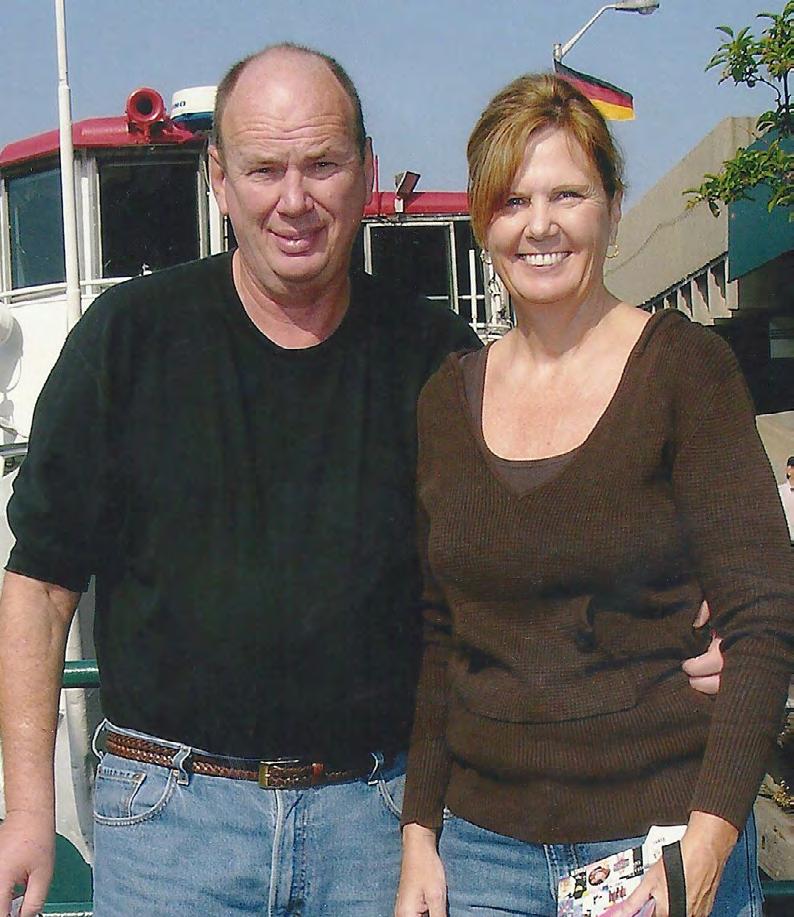
that quickly began to shift the numbers. Under Alexis’s watchful eye, the service became faster, and the restaurant further embraced its Route 66 heritage with a guest menu illustrated by legendary Route 66 artist Bob Waldmire.
“[Waldmire] would come into the restaurant, and… he showed me his work, and then we became friends. Whenever he was traveling, he used Wagon Wheel as his office,” said Alexis. “As a matter of fact, after he died of cancer in 2009, I had people come in and say, ‘Can you show me the booth that he used to work from?’ He was so iconic. Through him, I made a lot of Route 66 friends.”
Dick remained central to the Wagon Wheel’s success until his sudden passing in 2018 from respiratory failure brought on by septic shock and pneumonia. He had not only helped restore the restaurant’s financial footing, but also instilled a level of discipline and care that would outlast him. In time, Adam, Alexis’s son, stepped into the back of the house, having learned directly from Dick’s example.
“I would say Mike was the most instrumental person in turning the restaurant around, both in profitability and reputation,” Alexis said. “I helped, but his work ethic and his love for the restaurant and the town got us there faster. I guess he changed his mind about Needles,” she said with a smile. “We were a good team.”
Today, while Susan Alexis has stepped back from running the Wagon Wheel full-time, the rhythm that she and
Dick built never left. It simply carried forward. “My son Adam has worked here for about 16 years,” she said. “He worked his way up from a dishwasher to a cook and then a manager. His last three years, he has taken on an ownership role, learning how to replace me with the help of my niece, Brittany [Olguin].”
It was 2021, and Alexis was completing some paperwork related to the Covid-19 Paycheck Protection Program. She needed Olguin’s help answering a security question related to Olguin’s sister. The two got to talking later that day and Alexis ultimately asked her if she’d ever consider working at the Wagon Wheel.
“I worked for In-N-Out Burger for 13 years. I started there when I was 17,” said Olguin. “I had worked in different states with In-N-Out — California, Oregon, Nevada, Texas. I moved around and opened new stores. One day I was in Texas at a store and Susan called me. I never thought about leaving. I thought I was going to die in In-N-Out Burger,” Olguin laughed.
Still, she wanted to hear Alexis out. She flew out to spend a week in Needles, at the restaurant, and by the end of the trip, she knew that she and her family would be moving to the desert town. She officially started working at the restaurant in September 2021, describing coming back to the restaurant as the equivalent of coming home.
“This decision was easy for me. These people have known me my whole life. This is my cousin [Adam]. This is my aunt. I spent my holidays and trips with them. There are so many stories and there’s so much history there. Why would I not do this? Going forward, we don’t plan on changing our core values. We’re going to remain true to our roots and what Susan and Mike established. We don’t want to change anything. The only thing that would change,” she added, “is if there’s things that we add or remodel. Everything is going to enhance it and make it better and more with the times, but we would never change who we are, what we are. A lot of people have asked us, ‘Why don’t you guys just tear the building down and put up something super-new?’ And we’re like, ‘That’s the point of this place! It’s old!’”
Susan concurred. “I think it will continue as the Wagon Wheel, just the way it is, for another 20 years at least—for sure. Adam’s wife, Christy, works behind the scenes, handling payroll and processing the bills. Adam’s daughter, my granddaughter, Tristin, has started working at Wagon Wheel this year as well. We now have three generations. Adam has four kids. His son Tallan will start working there next summer, and his 5 and 11-year-old kids may also join us one day. I see it continuing as a family business for many years to come.”
After more than two decades at the helm of the Wagon Wheel, and with multiple generations now part of its daily life, Susan Alexis’s influence is still shaping what the Wagon Wheel is, and what it will remain.
Out in the quiet desert town of Needles sits a simple yellow and brown structure that continues to soak up the scotching sun. Unassuming, this eatery is a shining star along California’s unique stretch of Mother Road. What began as one man’s simple dream and grew into an accidental encounter of a woman seeking an adventure, the Wagon Wheel restaurant continues to be the oasis in the desert that it has always been.
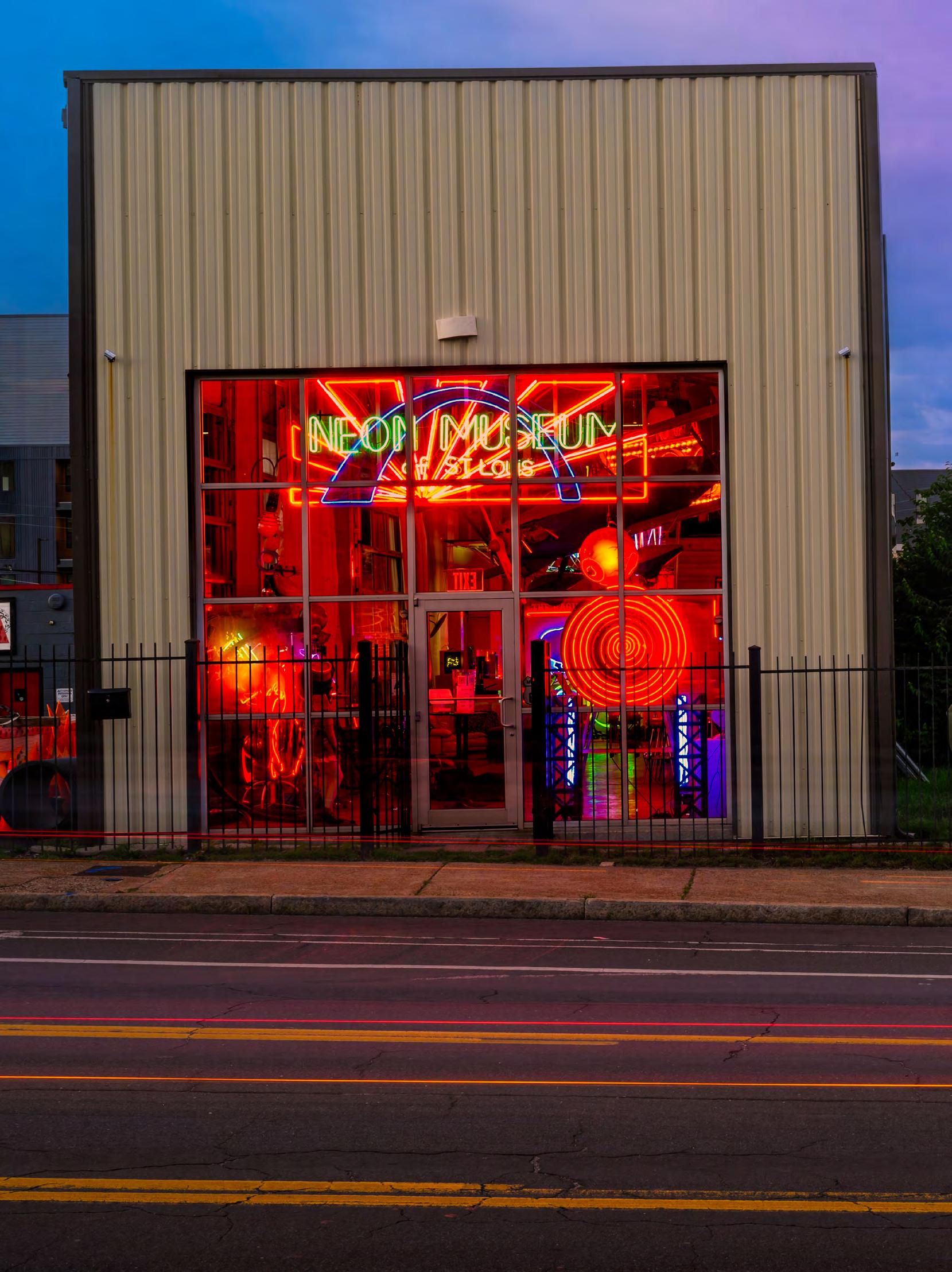
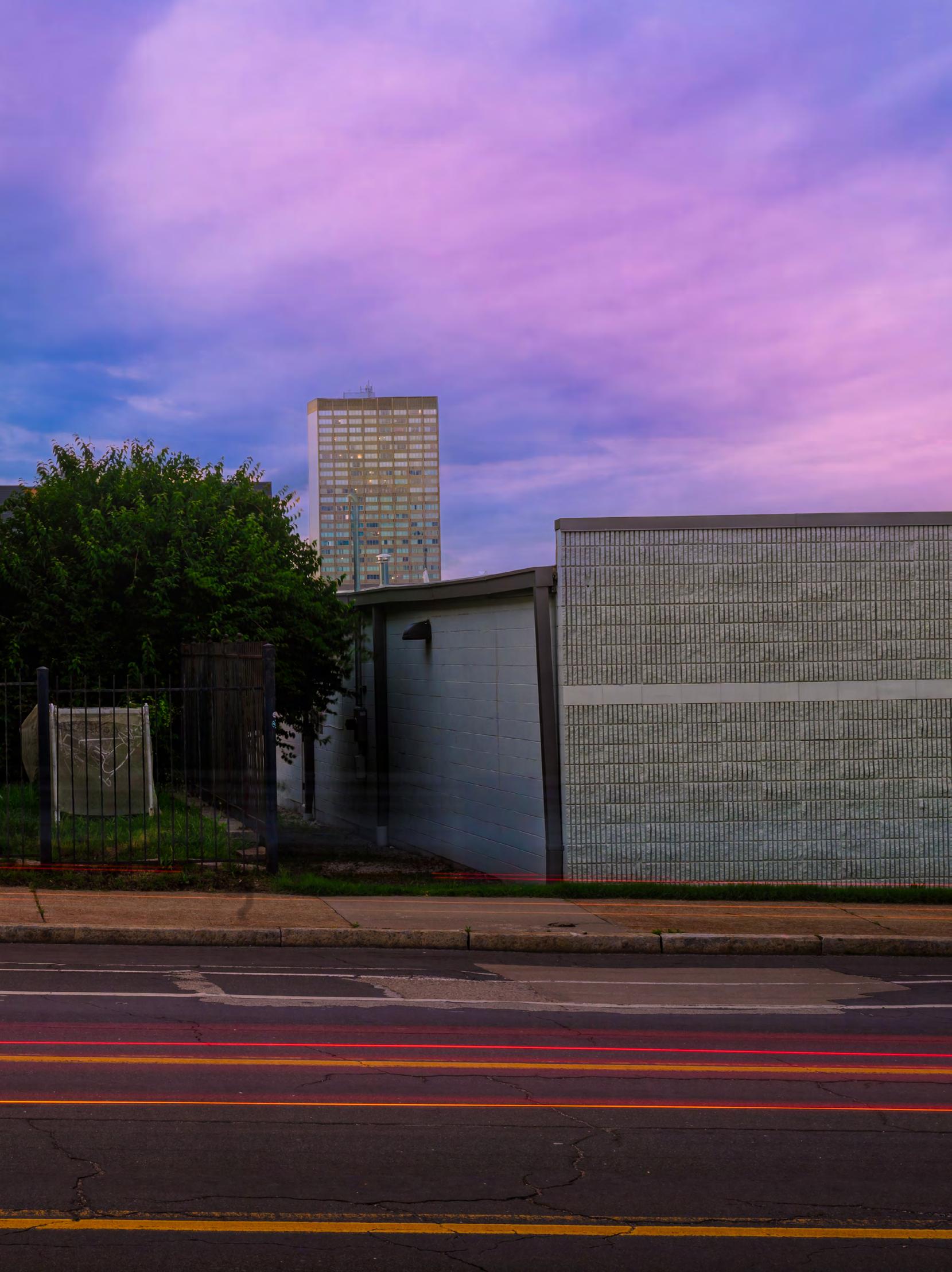
By Mitchell Brown
Back in Route 66’s heyday, from the roaring 1920s through the swinging ’60s, travelers didn’t just follow the asphalt, they followed the glow. Neon signs blinked and shimmered from every diner, gas station, and roadside attraction on the Mother Road, promising a pit stop, a hot meal, or just a little bit of magic. So prolific and dazzling were these signs that Route 66 earned a second nickname: “The Neon Road.” It was a highway lit with color, creativity, and the promise of adventure. An electric thread connecting small towns across America. Today, while many of those lights have dimmed, a new energy is surging as artists and communities are bringing neon back, not just to preserve its history, but to revive it with style and sparkle. And in the heart of St. Louis, Missouri, that revival has taken shape in the vision of one woman who is keeping the city’s neon spirit alive at the Neon Museum of St. Louis.
Located on Chouteau Avenue, once part of Route 66, and just steps from the intersection of Grand Boulevard, the Neon Museum of St. Louis is housed in an unassuming, rectangular building that gives little hint of the spectacle inside. It’s not a very large space, but what it lacks in size, it makes up for in vivacity. Step through the doors and the space bursts to life in a riot of hues and light. This is the vision of Deborah Katon, a local sculptor and neon artist who opened the museum in October 2022. But the space wasn’t always a museum.
Back in 2010, the building was a showroom used by Deborah Katon and her husband, Michael Kiernan, who at the time was the largest classic and antique Ducati dealer in the Midwest. They had also acquired an extensive collection of antique and classic motorcycles. With a building and collection available to them, they established the Classic Motorcycle Company, a part-café, part-motorcycle dealership. It was a creative idea. “I ran the motorcycle shop with him, and I did the graphics, eBay, QuickBooks, all the behind-the-scenes things,” said Katon. “When my [late] husband and I bought the back property back in around 2010, where the museum currently is, that was just grass. There was nothing there. So, Michael designed it to showcase the motorcycles. It’s very basic, open, concrete floors, perfect for hanging anything in and having it look wonderful.”
The couple ran the company for more than a decade, until tragedy struck in April 2021, when Michael passed away from a non-cancerous brain tumor. They had been married for 25 years. Left with the building and a life suddenly changed, Katon knew the motorcycle business wasn’t her path. All that remained was the question that would shape her next chapter: what comes next? The answer, it turned out, had been quietly waiting all along.
Born in Wilmington, Delaware, but raised primarily in Pennsylvania, Katon found her artistic calling while studying at The University of the Arts in Philadelphia, where she earned a Bachelor of Fine Arts in Sculpture. Graduate school brought her to Washington University in St. Louis, and she’s never left.
“As an undergrad, I was a glassblower, just for fun. I really enjoyed the material; I liked its viscosity. I like heat, which you have to love if you’re going to be working with a torch,” said Katon. “Then I started working at Craft Alliance, and I taught how to work with every type of glass we had. I met Tom Carr [aka Doc Atomic, a neon bender and glass artist] there, and he recruited me and taught me tube bending at the Ford Plant in the Ferguson-Florissant area. I then learned how to work with neon tubing and neon bending. It was very humbling and way more difficult than I imagined.”
Having already built a career as an independent artist, and the future of the building uncertain, Katon saw an opportunity. “I had this space. So, when the liquidation of the motorcycles happened, I needed somewhere to hang some of my larger pieces of neon sculpture that I had done for an exhibition at the Kranzberg [Arts Center] Gallery,” she recalled.
In November 2021, she took her collection of large art pieces that had been in storage since the pandemic and created a pop-up exhibit in the 1600-square-foot building that had until recently been the company’s showroom. She enlisted help from the St. Louis neon and art community, and, with forklifts and plenty of elbow grease, they transformed the humble space into a pop-up gallery. Thirteen other local artists, including Doc Atomic, Bill Christman, David Hudson — an accomplished neon artist and founder of Neon Times — and Nina Ganci, among others, joined the show. It was titled Noble Gas & Glass; Contemporary Neon Sculpture. From start to finish, it took four months to bring the pop-up to life.
The response was so enthusiastic that Doc Atomic suggested taking the project a step further and transforming it into a not-for-profit to showcase the work on a larger scale. Katon took some time to think it over, and while on a trip to Philadelphia, she visited their neon museum to see their contemporary neon art exhibits. Seeing the dazzling lights and colors on display from the exhibits of modern work, she realized that there might be something to Doc Atomic’s idea. Seeing what was possible, Katon returned to St. Louis with a clear concept in mind.
“It [pop-up] was such a huge success that within a year it turned into a not-for-profit with a board, was open to the public, and showcased the history of neon and all of the technical things that it does. It’s also the history of St. Louis,” explained Katon.
The Neon Museum of St. Louis was born.
Many of the museum’s exhibited pieces are contemporary neon, but there is also a mix of restored signs that were once iconic in St. Louis. Some have
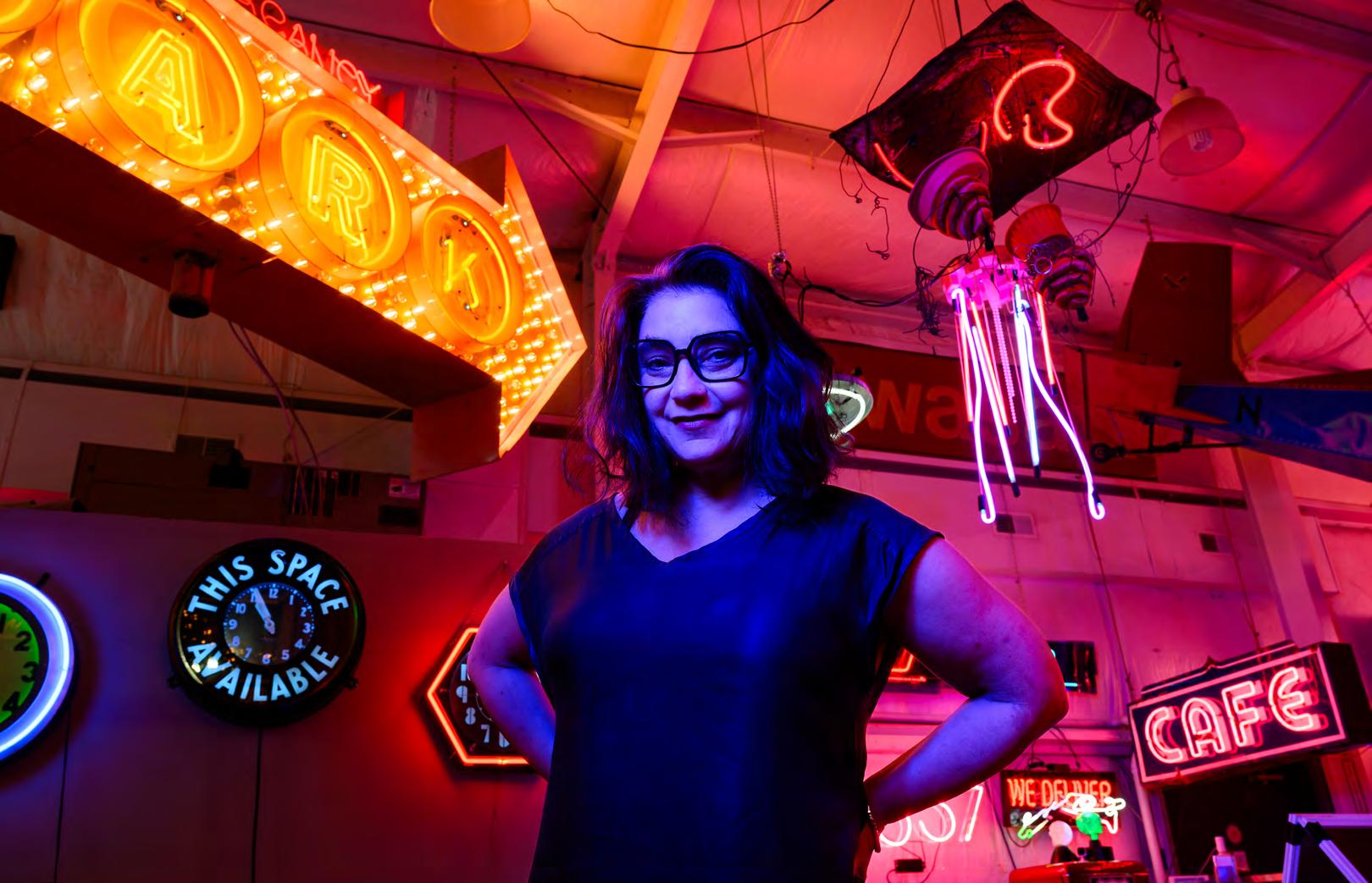
been generously gifted, others purchased at auctions, and others are on loan from artists around the city and are technically for sale. “There is a large orange arrow hanging from the ceiling in the museum. It has another 23-foot [arrow] that accompanies it. I’m in the process of getting permits to get it placed on top of the building. With our space being so intimate, it’s hard to see from the street, so [the large orange neon arrow] will help, but again, we’re still working on finding the needed funds. It’ll still require around $27,000 more to finish repairing, but it’s fun,” said Katon.
One of the most striking, and often photographed, is the “My Schnucks Brings It Home” sign, provided by a member of the local arts community whose husband had led advertising for Schnucks Markets, a Midwest grocery chain founded in 1939. Originally used in commercials during the early 1980s, the sign now shines as part of the museum’s growing collection.
Another sign that draws plenty of attention is the “Raging Rhino,” a large blue illuminated rhinoceros with bold lettering that originally advertised a nightclub at the Lake of the Ozarks. “I had it from before the museum was even open. It had no neon left in it, so an artist named Chris Starr [from Neon Works] redid the pattern for it and decided on the new color,” shared Katon. “I was up in Lake of the Ozarks… I would go up there in the summers and do some large sculptural projects. And I stayed at the Lodge at the Four Seasons one night with a couple of friends. The sign was underneath the overhang, like, in between their large, green dumpsters. And, you know, as in disrepair as
they get. So, a few phone calls, and a little wheelin’ and dealing, and I went to pick it up,” she continued.
Not all of the museum’s donated pieces have such colorful backstories, but each carries its own history.
One example is the “Park” sign, given by the Kranzberg Arts Foundation and originally designed by the HOK architectural firm. Before joining the museum, it directed parking at The Big Top, home of Circus Flora, the local theater company known for circus-inspired productions. Its origins date back to the 1980s, when it guided visitors around St. Louis’ Grand Central Arts District.
Other signs add a playful quirkiness to the collection. A bright pink “Cafe” sign, for instance, dates back to the building’s days as the Classic Motorcycle Company. Chris Starr gave it new neon. A simple “Thank You” that used to mark the exit of a local car wash now rests on a stand among the glowing displays, while a kit plane, purchased from a model enthusiast in Florida, soars from the ceiling. He once actually flew it. Together, these pieces give the museum its unique personality: a mix of nostalgia, humor, and charm.
Part exhibition space, part creative hub, the museum showcases Katon’s work alongside that of artists from across St. Louis and the entire country, acting as a rotating stage for creativity. Exhibits are refreshed roughly four to five times a year, keeping the collection dynamic and giving artists the chance to share their work with the public. “People seem to enjoy taking
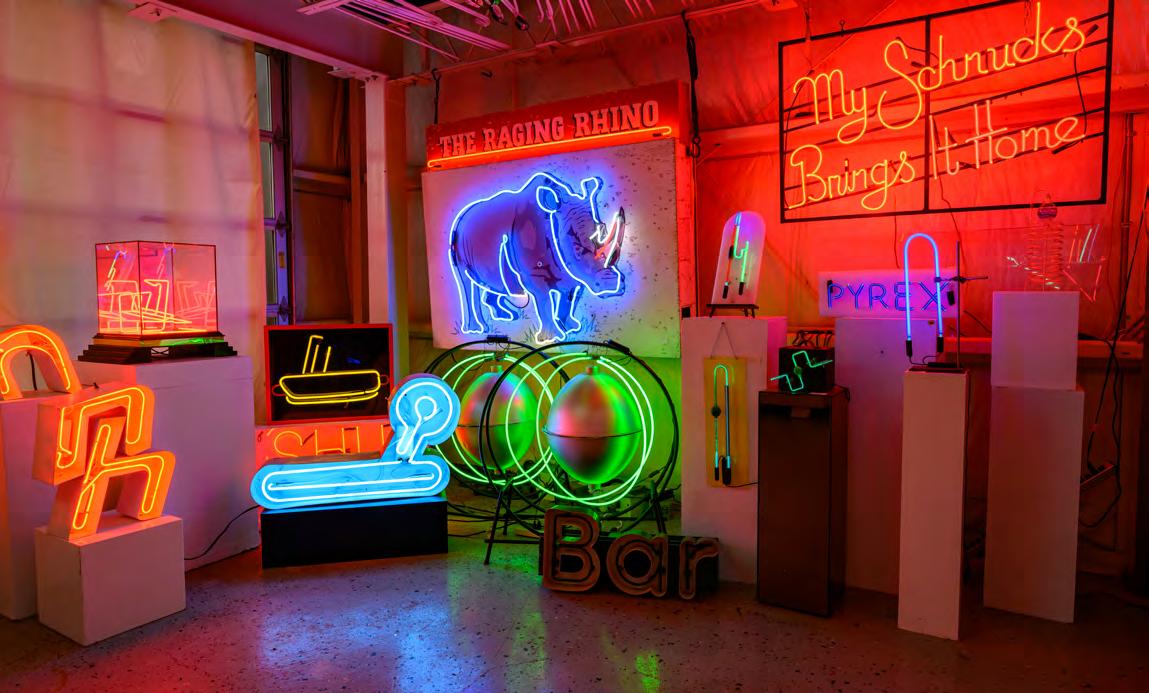
pictures of everything. Things move around, so every time you come back, things look different, which makes the reflections different; you see things differently,” noted Katon.
From the moment the doors opened, the museum became a magnet for neon artists from across the U.S. and Canada, who came not only to admire the glow of their peers’ creations but also to exchange tips on bending and shaping the notoriously challenging medium. Despite appearances, the craft of neon is anything but straightforward. Its magic lies in the way it captivates the viewer, drawing eyes, and sparking wonder with every flicker and color shift. “Color induces dopamine scientifically, and when you electrify it, the feeling it gives is intensified,” explained Katon. “Neon is actually one of the noble gases. There’s neon, argon, krypton, xenon, helium, and radon. We only use some of those. For example, radon is poison. Neon is a red gas when it’s lit up. If you put neon in a clear tube and light it up, you’ll get red; if you put argon in a clear tube and light it up, you’ll get blue. Most other colors are from clear tubes that have a phosphorescent coating on the inside, which changes the color, and it’s either filled with neon or argon.”
The museum continues to celebrate neon’s past and present. Exhibitions like the Neon Highway invite visitors to experience the medium in action. But every flicker and glow also tells a story rooted in history, stories that stretch back to the heyday of Route 66. Many of the clocks and signs on display date as far back as the 1920s, when neon first lit the highways and guided travelers. “Neon was invented in 1910, so large signage developed alongside the automobile age, in order to get people to stop for gas and food,” said Katon. “There were no LEDs. All the color and brightness came from what was then cutting-edge technology, building on Nikola Tesla’s discoveries from the 1880s.”
Katon’s love of not only neon lights but also the science behind their creation is evident. It’s this same love of light and spectacle that inspired another very special project: a neon sign of its own. In 2024, she began the process of designing and constructing the
sign that would proudly display the museum’s name, a project that took roughly a year and a half. “I’m most proud of the Neon Museum of St. Louis sign,” said Katon, “A neon sign that says, ‘neon museum’ is kind of important. I did the design, then we had a pattern maker for bending the tubing, so he designed the structure of it. I had the size, the color, and the images for how it was going to be built, and the tube bender did the glass — that was Doc Atomic — and then Doc Atomic and Cameron Fuller assembled it.”
The vision for the Neon Museum of St. Louis doesn’t stop at its current walls. “My goal for the museum is to have a contemporary seven-story building where people can stop from the seventh floor down, to learn about the history, learn about the science, maybe even have a Budweiser floor with the flying eagle that we have [displayed] and contemporary rooms where you can hear what you’re seeing with the plasma.”
Other plans include an outdoor sculpture park that would transform the building’s exterior into a vibrant garden, where visitors could sit among oversized art pieces and admire them in natural light. Another ambitious addition on the horizon is the restoration of a fourteen-foot-long orange flashing park sign, originally from Grand Center.
Ever evolving and endlessly imaginative, the Neon Museum continues to capture the attention of St. Louisans and visitors alike. Its mission — to “brighten the world with color and electricity, one happy visitor at a time” — remains at the heart of every project. “We call ourselves the intersection of history, art, and science, so we have an in for everybody,” said Katon. “No one looks at neon and says, ‘Ugh, too much neon.’ I get to curate, meet new people, and learn new things. It’s great.”
As dusk settles over St. Louis and the city lights begin to hum, the Neon Museum comes alive, its vibrant glow spills onto Chouteau Avenue, the same stretch of Route 66 that once guided motorists westward under a canopy of electric color. Each sign that flickers is a bridge between past and present, between the gas-fueled dreams of the Mother Road and the creative spark of a new generation. A promise that the magic of neon will never fade.
Please note that walk-ins are accepted, but the museum requests visitors to visit them online — www.neonmuseumstl.com — in order to reserve a time to visit and pay for entry tickets.
“In telling the story of his African family’s journey on Route 66, Brennen Matthews has made an important contribution to the legacy of the highway. He offers both a new voice and a new look at the Mother Road.” —from the foreword by Michael Wallis, New York Times bestselling author of Route 66: The Mother Road
“An impassioned and engaging road trip along and deep inside Route 66, with a bright, thoughtful guide and his engaging family. If you ever want to travel the Mother Road yourself, it would be a terrific, quirky guide. If you don’t have the time to make that quintessential American drive, the book is as close as you’ll come to experiencing the sheer wonder of it.”
—Stephen Fried, New York Times bestselling author of Appetite for America: Fred Harvey and the Business of Civilizing the Wild West— One Meal at a Time
“Miles to Go fills my heart with the freedom of being back on the road. Reading Brennen Matthews’s story has time traveled my mind to when I drove Route 66 as a teenager and transported me back to all the unique places, the rich characters, and the smell of freedom that only America has to offer. What a joy to feel that once more. Route 66 is the artery of Americana and is now calling my name again. Here I go . . .”—Jim Belushi
Miles to Go is the story of a family from Africa in search of authentic America along the country’s most famous highway, Route 66. Traveling the scenic byway from Illinois to California, they come across a fascinating assortment of historical landmarks, partake in quirky roadside attractions, and meet more than a few colorful characters.
Brennen Matthews, along with his wife and their son, come face-to-face with real America in all of its strange beauty and complicated history as the family explores what many consider to be the pulse of a nation. Their unique perspective on the Main Street of America develops into a true appreciation for what makes America so special. By joining Matthews and his family on their cross-country adventure, readers not only experience firsthand the sights and sounds of the road, but they are also given the opportunity to reflect on American culture and its varied landscapes. Miles to Go is not just a travel story but a tale of hopes, ambitions, and struggles. It is the record of an America as it once was and one that, in some places, still persists.
Visit Amazon.com and order a copy of Miles to Go now and join Brennen Matthews and his family as they set out to discover america along historic Route 66.
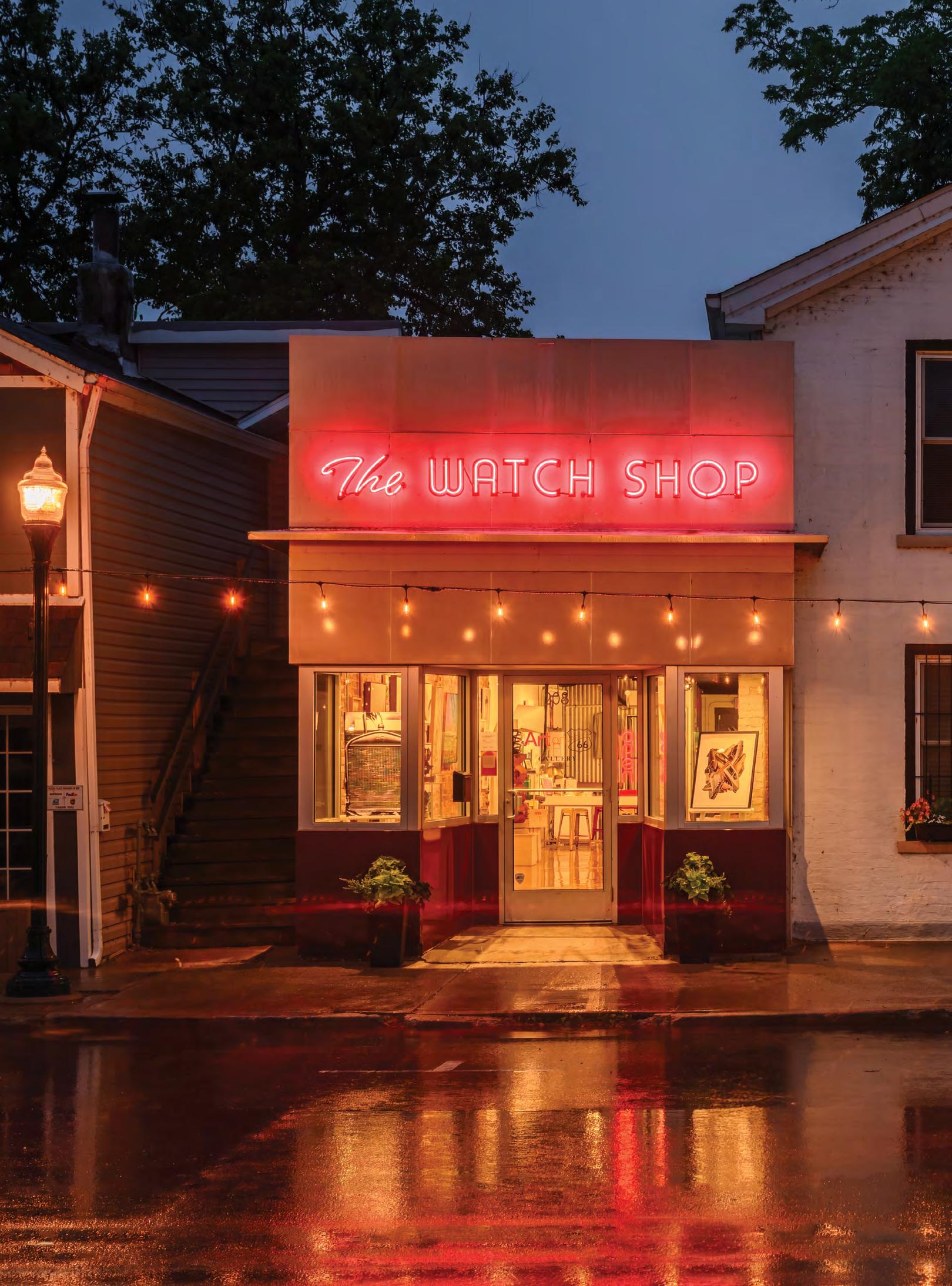
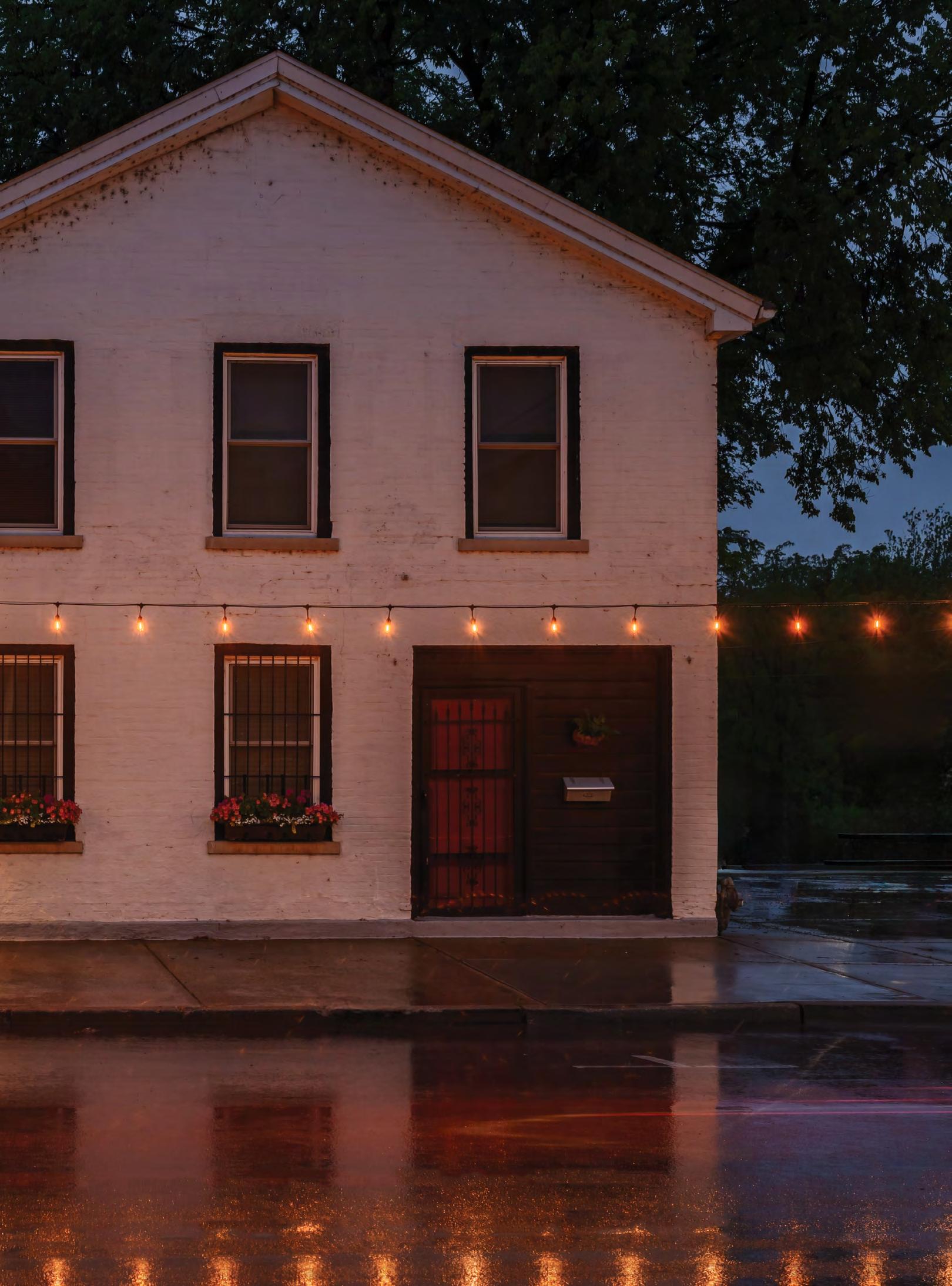
By Nathalie Dassa
In recent years, art has been taking over small American towns, many of which boast of vibrant and dynamic artistic communities. Main streets are no longer reserved for traditional, picturesque craft shops, but are also opening up to avant-garde art galleries that are reshaping the contours of local cultural identity. While bustling metropolises like New York, Los Angeles, and San Francisco remain the preserve of the arts, followed to a lesser extent by Chicago, Miami, and Santa Fe, small towns are proving that they, too, have something to offer. With more intimate and authentic experiences and fewer crowds, they are worth a detour on the trip. And that’s the least we can say when we mention the name of one of the newest destinations to join the growing scene: Wilmington, Illinois. This attractive Mother Road town of 5,600 inhabitants offers a delightful combination of art, nature, and culture, distinguishing itself in many ways through its history steeped in dreams and nostalgia, its capacity for resurgence, and its resolutely hopeful outlook.
On October 12, 2024, an art gallery opened in the city center on Water Street, along historic Route 66. It’s a must-see spot that serves as a cultural counterpoint. With the simple but welcoming name of Art on 66, this new artistic space is the work of Rachel Conforti, a visionary who has returned to her native land after living in the West for 20 years. “I completely rediscovered my town when I came back in 2023,” she enthused. “I was amazed by the dynamism and growth of the community’s commercial activities. I wanted to get involved and do my bit.”
Art on 66 is at the crossroads of a history with multiple origins. For Conforti, it is also a long road to rebirth and healing. It is often said that art nurtures and nourishes the soul. This has certainly been true for this 48-yearold pharmacist. Speaking with her, her words convey a flood of emotions, of memories. Her gallery was born out of grief and the desire for a new beginning with her daughter, Siena. Tragedy often fuels the mind with a need for sublimation and self-improvement. This has been the case for Conforti, who lost her other daughter, Sabrina, to cancer on November 14, 2021. She was only 14 years old. Her ex-husband Joe, and father of her two daughters, passed away a year later, on November 15, from pneumonia. He was only 48. “You can’t talk about my return to this town without mentioning these tragic moments. It’s also what makes art and gives meaning to life,” continued Conforti. “The initial idea was to return to my family and community to build something beautiful after all that had happened.”
Heading home to quiet Wilmington, only 61 miles from the busy bustle of Chicago and the official start of Route 66, was also a return to her Route 66 roots, but that, too, was a beautiful discovery for Conforti. “It didn’t strike me as a child. I had never been made aware of the origins of this road network. We weren’t taught at school that we were next to a road that attracts so many people, travelers, and stories.” There is, therefore, strong symbolism surrounding Conforti’s new chapter. Route 66 now personifies the path of life for her.
“Art lends itself beautifully to this kind of destiny,” she added. “I love the nostalgia that it evokes: This road remains popular around the world. I am drawn to what it represents, in every sense of the word. For some, it is a lifelong project. I see this idea of travel, wandering, and movement reflected in the artists I exhibit. Like them, I am on a personal journey.”
Life is a journey, they say, not a destination, and for Conforti, her compass has carried her across the country and back, always searching for the opportunities America offers—opportunities that keep her connected to a wide and diverse number of people and places. “My ex-husband, Joe, loved Lake Tahoe. We had planned to get married there, and while we were planning the wedding, we thought, ‘Why not move there?’ We settled in Sparks, Nevada, near Reno, in 2004. We loved it, but it took some getting used to. The West is truly the Wild West—people are assertive and independent. It’s inspiring and different from anything I’ve ever known.”
The couple divorced in 2016; the same year Sabrina was diagnosed with cancer. In 2020, Conforti moved again, this time to Scottsdale, Arizona. “I was tired of traveling to San Francisco to see doctors and leaving Siena behind. So, I left Nevada for Arizona, when the pandemic hit. San Francisco offers great healthcare, but it’s very expensive. Phoenix made more sense and was closer. Nevertheless, when Joe died in 2022, I decided to return to Illinois. There’s a slower pace in a small town, and I think we just needed to kind of slow down. I needed emotional support, and Siena was starting high school that fall. I’ve always been a hard worker and more of an A-type, competitive, overachiever. And that’s where I grew up: a Victorian house built by my father, too big for just two retirees.”
Packing up her condo, Conforti put Siena on an airplane with her brother and his daughter, who had come to help settle things, and set out on the road alone. “I drove a moving van back… all the way from Arizona. Yes, I drove a 20-foot moving van! I’m so proud of myself,” she said. “Everybody was like, ‘Are you sure you can do this by yourself?’ I was like, ‘Number one, yes, I can do this by myself. But number two, I feel like I need to do it by myself,’ you know? It was transformational. It took me three days. I mean, I just pretty much hightailed it back. I really didn’t do any… first of all, I’m driving this big moving truck, so I’m not [going] in reverse anywhere. And then, I was like, I’m just gonna find hotels and gas stations that are very easy to pull into straight, and then pull out of straight. So, it was a big challenge for me, and I didn’t want to push it.”
Conforti arrived back in her small town where her journey had first begun. It was July 2023. “I was back, and I was back in time to catch summer in Wilmington. Summers in small towns in the Midwest are so much fun,” she continued. “Seeing the farmer’s markets and our big festivals, Catfish Days, and seeing all of the energy around Wilmington. It was awesome, and I was like, I just want to be a part of it.”
Taking her time to settle into a new life and routine, Conforti accepted a part-time pharmacy job in a rural community and gave herself space to breathe and reflect on what might come next. But she knew she wanted to do something meaningful. “It was around October, and I was only working part-time, so it gave me a lot of time to reflect. I was like, ‘I think I need to start a business.’”
Through all of Wilmington’s changes over the decades, one constant has remained—the much-beloved 1964 Gemini Giant, a fiberglass Muffler Man named after the space program that bridged Mercury and Apollo. The spaceman has long drawn travelers to town and united locals around their shared pride. When word spread in early 2023 that the Giant might be auctioned off and lost forever, residents rallied to save him—and their passion struck a chord with Conforti.
“I saw the locals rise up as one to save him. That touched me and reinforced my decision. This work draws on the aesthetics of pop art and Americana. Everyone loves it and feels deeply attached to it. It is an intrinsic part of the city’s identity. I love art, and it made me think of the street artist Banksy, whom I particularly appreciate for the messages he conveys through his creations. He lets his art speak for itself rather than putting himself forward,” Conforti offered. “I was just mesmerized by the whole giant thing. I was thinking about him as artwork in Wilmington. By early February 2024, I began playing around with the idea for an art gallery. I began thinking about a logo and incorporating Route 66 into the concept. I love little art galleries in small towns. I love the idea of somebody who has a little shop in a little town, and you know, it’s just me
running it by myself. I needed to think of something that was low inventory, but something that I would want to be around that was beautiful. So, an art gallery made sense, and looking at our town, it felt like it would fit in.”
Determined to make it happen, Conforti dove into research, reading books on gallery ownership and completing courses at Sotheby’s. “So much thought, planning, and effort went into figuring out how to create something out of this chaos. I didn’t tell anybody about it, because I was like, ‘They’re gonna think I’m crazy!’ I needed to develop this idea by myself. So, honestly, I was just trying to keep it simple. I was just thinking, ‘How can I get people to my gallery if they’re traveling on Route 66, and looking for art on 66?’ I mean, it sounded pretty simple to me. I was playing around with the idea, and I came up with the name. I was thinking of ‘Art Off 66,’ ‘Art On 66,’ and I just felt like ‘Art On’ was more of a positive vibe, rather than ‘Off.’ I’m only a block off 66.”
The question then became where to open it. The answer arrived through a serendipitous encounter with Cheryl and Pat Baron, owners of a local building. “I visited two spaces and chose the smaller one. It was steeped in history.” The structure was a well-known building that once had a cool neon sign in the front that said, “The Watch Shop”. It had been a watch and jewelry repair shop, many decades before. “I had always known its storefront. The neon sign was gone, but the lettering was still there. Cheryl and Pat had bought the building with the logo still attached and they had intended to reinstall the neon. Since I love pink and glitter, I reconnected the light panel. The Barons were perplexed by the idea of an art gallery, but they were quickly won over when I confirmed that I would keep the name The Watch Shop.”
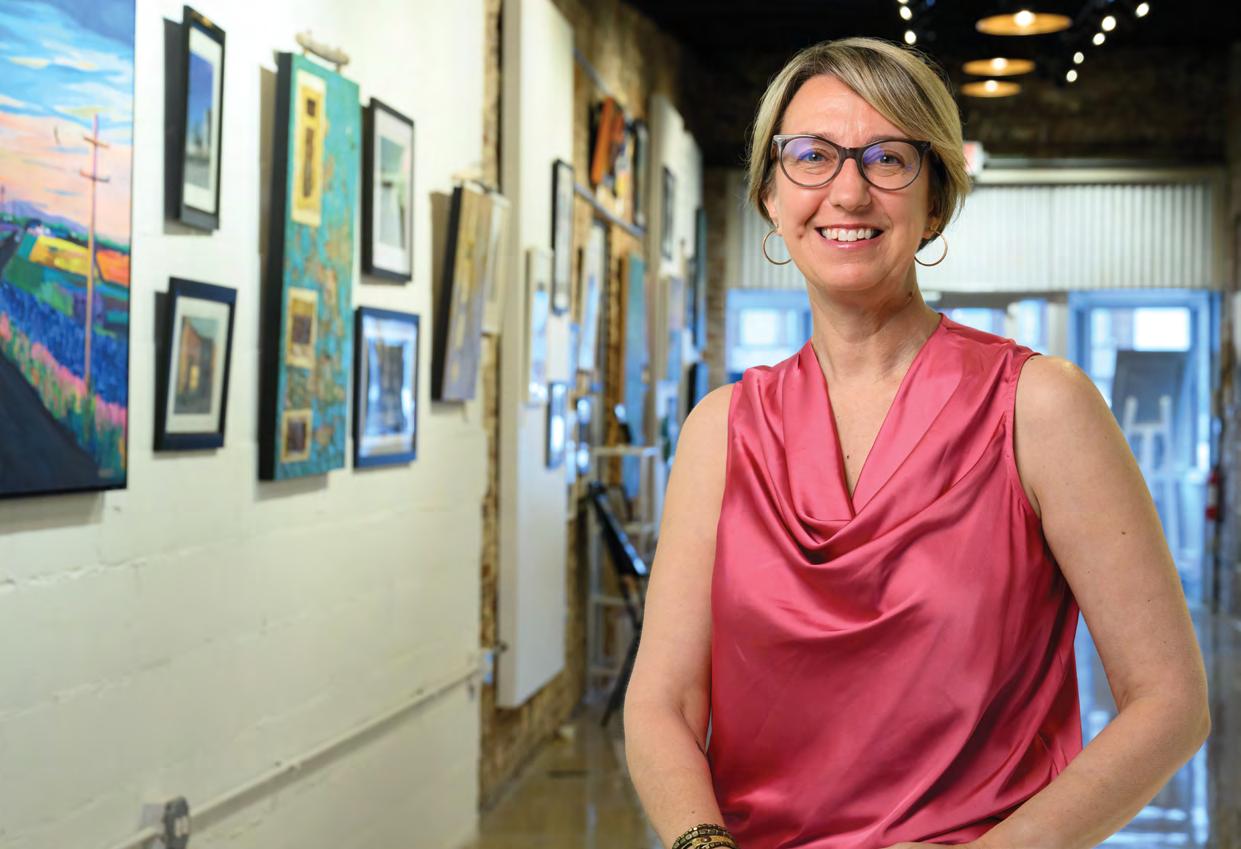
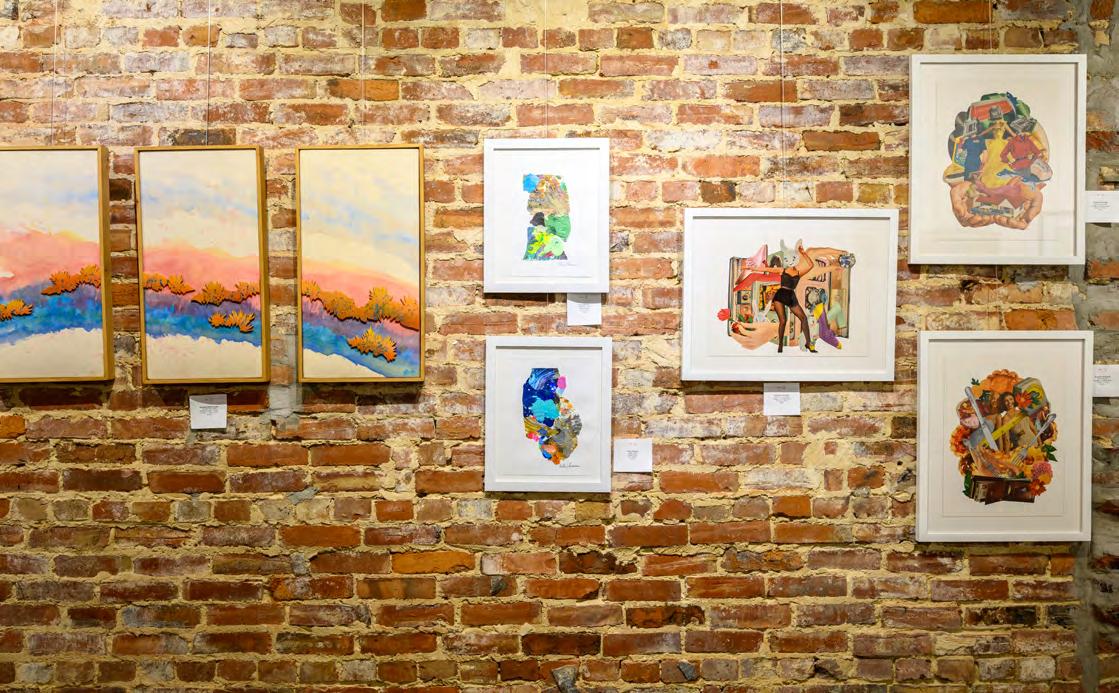
Conforti obtained her business license in April 2024, rented the space in July, and opened that fall. Inside, the 900-square-foot gallery features exposed brick, white paneling, and a gleaming floor that catches the sunlight—its lighting redesigned by local artisans. Renovations became a community effort.
“Financially, I had my savings. Emotionally, my family and a cousin in town, Kirsten, were my cheerleaders on this crazy idea. Physically, my parents, my daughter, the landlord, my contractor, and other family friends helped me get the space up and running.” Conforti also drew on two valuable resources: “Artists Erika Vazzana and Lizzie Selle were essential, and are still my mentors, in helping to open and develop my plans for the gallery. I continue to have conversations with them regarding the art world and I really feel they are essential to my story of how I got here.”
By October 2024, the dream was reality. Two hundred guests gathered for the grand opening, celebrating not just the gallery but the creative spirit that had inspired it. “Everyone was eager to come and support me and Siena after the drama of previous years.”
For the past year, the gallery has celebrated both the road ahead and the one behind, exploring themes of travel, movement, and the passage of time. Art on 66 showcases the work of some fifteen local artists, spanning photography, painting, sculpture, and mixed media.
Leading the pack has been Robert Ryan, the artist with the gallery’s most sales. His paintings imagine nostalgic scenes and landscapes drawn from photographs and other sources. “In May, he won the city council’s call for entries to paint a mural next to the [relocated] Gemini Giant, which became a collaborative work,” Conforti enthused. Thousands of visitors gathered to take photos, and some even had the chance to contribute to the painting themselves.
“Mary N. Carnahan is fascinating,” Conforti emphasized. “She is over 80 years old and creates works using mixed media with new technologies. She is an AI
pro, and her brain never stops working. Bridgette Bramlage was also a lovely encounter at The Other Art Fair in Chicago. I love her work with cars and her connection to Route 66 and Americana.”
Other artists investing in the space include Karyn Denten, Barbara Eberhard, Warren Miller, Jennifer Myers, Jennifer Diver, Brandon DeNormandie, and Bill Law. Law, a selftaught artist, transforms old vinyl records into clocks, designing pieces inspired by the Gemini Giant, Route 66, and the Rolling Stones.
Art truly comes alive on the gallery’s walls, fueled by Conforti’s thoughtful encounters and conversations. “I like to represent local artists or those within an hour’s drive of the town. This is also because all these talented people, who come from small towns or more rural areas, don’t have the same opportunities as those in big cities.”
The gallery, open only on Fridays and Saturdays, brings a fresh creative pulse to historic Wilmington—a bright contrast amid its antique shops, local bars, and classic diners. “You feel like you’ve been transported to a parallel world. There’s a place that has inspired me for a long time: Marfa, Texas. The artist Bridgette Bramlage pointed it out to me: ‘Your gallery is the Marfa of Illinois!’ It’s important to inject modernity into nostalgia. If you let time pass without renewing yourself, things decay, collapse, and age.”
Through her art space, Conforti reawakens the ideals of the American Dream—not through building anew, but by reimagining what already exists. It’s a quiet revolution, born of creativity and connection. “Small towns are once again attracting travelers thanks to nostalgia and the desire to connect with others. They had been emptied due to a lack of opportunity, but the pandemic has shown the importance and need to live close to family and friends, to rediscover this spirit of sharing and mutual aid. It’s fundamental for mental health.”
For decades, America’s Main Street has been defined by bold murals, colorful advertising campaigns, and carefully curated museums that celebrate all things classic Americana. But perhaps the time has come to honor new forms of expression—to see Route 66 not just as a road of memories, but as a canvas for reinvention. Route 66 has been a road of dreamers since its first inception, when Cyrus Avery and John T. Woodruff lobbied for the creation of the highway a century ago. Now modern dreamers like Rachel Conforti are leading the charge, reinventing themselves and opening the way for others as they do.
About 18 miles south of Santa Fe is Lamy, New Mexico. This is not a place you pass through by accident; you come here because the railroad brings you, or because you intended to. Established in 1880 by the Atchison, Topeka & Santa Fe Railroad, Lamy was never meant to be a destination, only a junction connecting travelers to somewhere else. Today, it sits peacefully along the tracks that gave it life, and little else, just a handful of buildings, the open desert, and a stillness rarely disturbed. That is, until you step into the Legal Tender Saloon & Eating House, a standalone building that has outlasted it all. Inside, the West comes alive with jaunty ragtime tunes, sizzling chiles, and ice-cold pints sliding down the sleek bar into waiting hands. The energy inside feels timeless, but it wasn’t always this way.
In 1881, just across from the train station, the Brown & Manzanares Company built a mercantile to serve rail passengers. By 1884, a saloon had been added bringing commerce and community under one roof. By the late 1800s, the property had passed to John Pflueger, becoming Pflueger General Merchandise, a place that carried a quiet mystique into the early 20th Century, drawing figures connected to the Manhattan Project, including J. Robert Oppenheimer.
In 1953, Carolyn Yorston, a fixture of Santa Fe’s cultural circle restored the long-standing mercantile, reopening it as the Pink Garter Saloon. It was the first fully functional restaurant and bar in the building, offering charcoal steaks, custom carpets, and nightly dancing (except for Sundays). The saloon caught the attention of the wealthy ARCO oil company founder, Robert O. Anderson, who named it the Legal Tender in 1970. It changed hands throughout the following decades, and when owner Richard Fisher died in 2006, it was donated to the Lamy Railroad & History Museum.
railcars were ever produced, and this one was donated to the Lamy Railroad & History Museum in 2004. The finding was kismet.
The museum knew of Affeldt’s preservation work, so when he inquired about the train car, they saw an opportunity for both the car and the Legal Tender to get a well-deserved makeover. In 2018, they donated the Legal Tender to Affeldt’s foundation, the Winslow Arts Trust. After internal restorations, acquiring proper licenses, and a phone call to friend and Cafe Fina chef Murphy O’Brien about co-owning the saloon, the Legal Tender opened its doors in August 2019.
Right when the owners found their groove, the world intervened. Like most restaurants across the country, the Legal Tender closed during the COVID-19 pandemic. When they reopened in 2021, O’Brien withdrew to focus on Cafe Fina, so Affeldt worked with chef Sean Sinclair to dress up the restaurant. When their high-end concept didn’t take, Affeldt proposed a simpler concept. O’Brien hesitated, but ultimately couldn’t resist the Legal Tender’s allure.
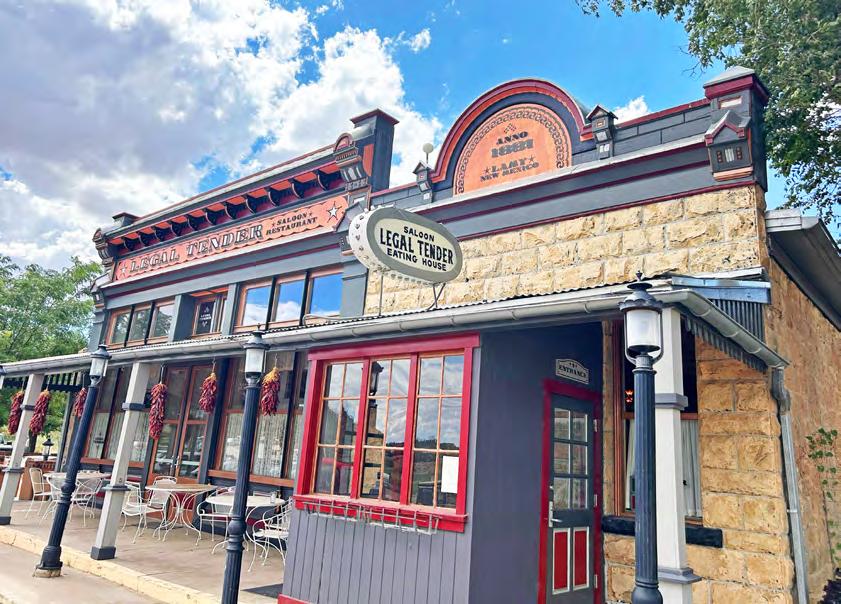
“I said, ‘Why don’t I help you get it off the ground, and see where it goes from there,’” said O’Brien. “And that’s where we left it. It’s just a special place. I couldn’t say no to it.”
Cosmetic renovations were made: painting the baby blue exterior
a rich Victorian red, making the 1960s-style bathroom look antique, and decorating the interior with an upright piano, historic photos, and bespoke artwork, which were gifts from devoted friends and customers.
“When you go to a place like the Legal Tender, it has a sense of place and history,” said Affeldt. “So, we have a really loyal audience, not just locals, but when people travel, they seek these places out.”
Fast forward to 2015, when preservationist Allan Affeldt rode the train between his restored hotels, La Posada, in Winslow, Arizona, and La Castañeda, in Las Vegas, NM. Riding through Lamy, a Streamline Moderne railroad car caught his eye—he owns a restaurant named after a famous railroad dining car, The Turquoise Room. Only six original Turquoise Room
“People aren’t in a rush, they’re there to have a good time,” continued O’Brien. “We have an obligation to show them a good time. We try and do that; not in huge, grandiose ways, but by telling them about the space, knowing their names, and appreciating them.”
In modern times, the trains still pass through, just as they always have, but something else lingers here now: lively conversation, the clink of glass, the sense that this place never quite let go of what it was and was perhaps always intended to be.