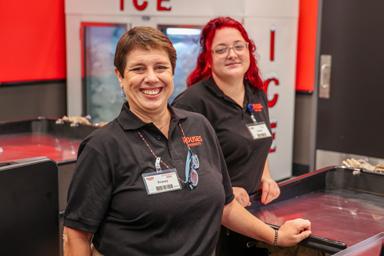
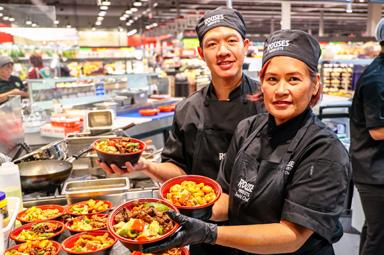
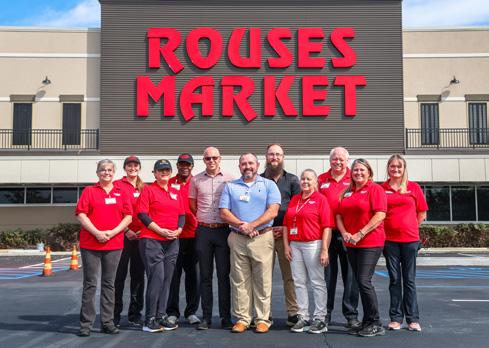
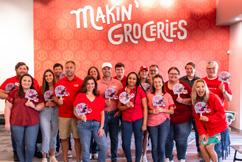
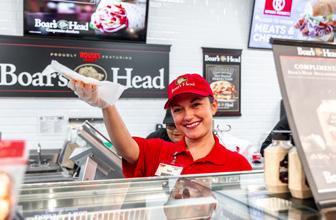
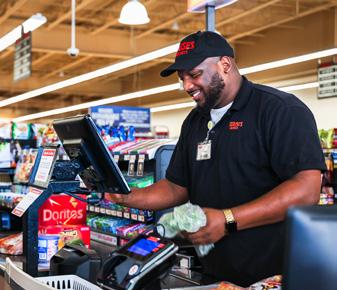
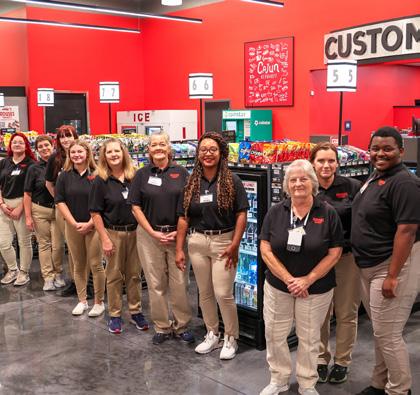
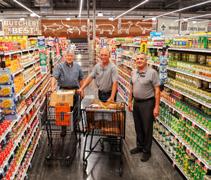
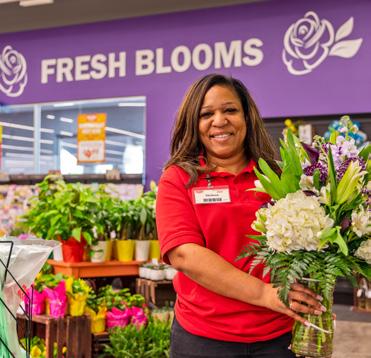
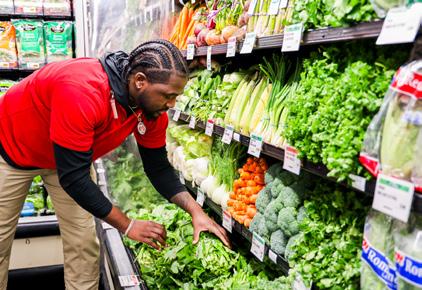
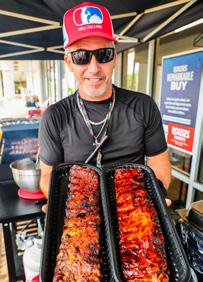
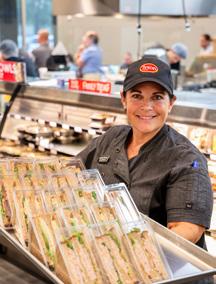
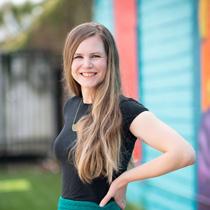
We have more than 8,500 incredible team members who come to work every day committed to taking care of you. They are what makes Rouses, Rouses.
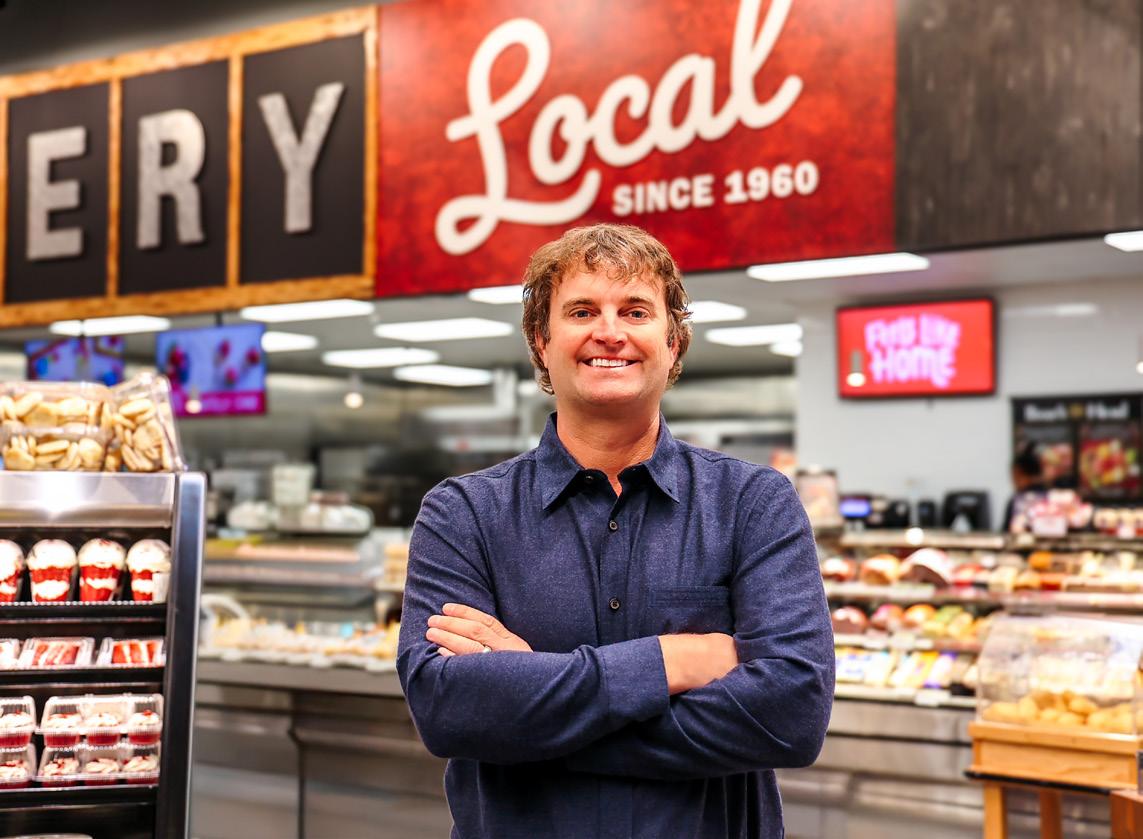
This year I’ve been thinking a lot about what it means to be American. Like so many people who came to this country, my greatgrandfather immigrated here in search of opportunity. He arrived from Sardinia and built a business. He bought vegetables from his neighbors, packed them, sold them at public markets, and shipped them by railcar as far away as the Alaska Territory, decades before it was even a state. My grandfather and his cousin built on that foundation, opening our family’s grocery store in 1960 and our first supermarket in 1975.
Today, we have 76 stores across the Gulf Coast. The Spirit of ’76 has long represented resilience and determination: people moving forward, even when the road wasn’t easy. Which is one reason why store number 76 meant so much to us. We’re very familiar with that scrappy, keep-going spirit. City Produce survived the Depression. We survived the Oil Bust of 1986. We went from one store to 76. And we’re growing. We just announced a new store in Chalmette, and there’s more to come.
In this issue, we trace the stories of some of America’s great food brands and the people who built them: James L. Kraft, Henry J. Heinz, Milton S. Hershey and many more. We are proud to carry these brands, and just as proud to introduce new ones all the time. After all, every great company started with somebody’s new idea. Standing still was never really the American way, or our way. My dad has always been famous for asking, What’s new? What’s next? Frankly, I can’t wait to find out.
Happy 250th, America. We’re proud to be part of the story.
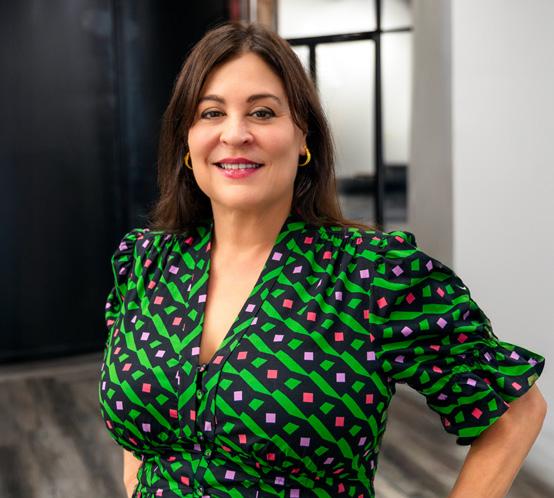
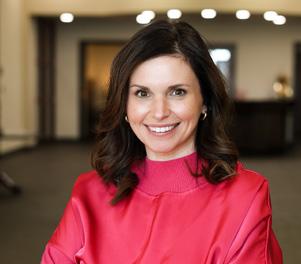
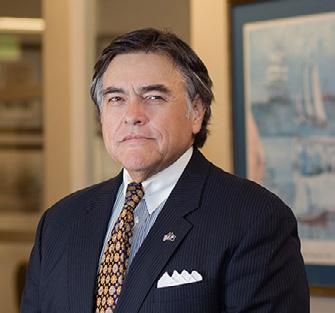
Donny Rouse CEO, 3rd Generation
Photo by Romney Caruso
Creative Director & Editor
Marcy Nathan
Art Director & Design
Eliza Schulze
Illustrator
Kacie Galtier
Marketing Coordinator
Harley Breaux
Copy Editor
Patti Stallard
Advertising & Marketing
Tim Acosta
Amanda Kennedy
Stephanie Hopkins
Nancy Besson
Taryn Clement
April Sins
Emily LaJaunie
Jennifer Bourgeois
Contributors
ARROW-CIRCLE-RIGHT David W. Brown is a freelance writer whose work appears in The Atlantic, The New York Times, Scientific American and The New Yorker. His most recent book, The Mission: A True Story, a rollicking adventure about a motley band of explorers on a quest to find oceans on Europa, is in bookstores now. Brown lives in New Orleans.
ARROW-CIRCLE-RIGHT Marcelle Bienvenu is a cookbook author and food writer. A native of St. Martinville, in the heart of Cajun country, Bienvenu wrote Who’s Your Mama, Are You Catholic and Can You Make a Roux? and Eula Mae’s Cajun Kitchen with Eula Mae Dora, and other books and cookbooks. She also co-authored five cookbooks with Emeril Lagasse.
ARROW-CIRCLE-RIGHT Adam Guttuso is a video producer and videographer for NewOrleans.Football, where he covers the New Orleans Saints and the NFL through video storytelling and multimedia content.
ARROW-CIRCLE-RIGHT Nick Underhill began his career covering the Saints for The Times-Picayune, The Advocate, and other local publications before briefly moving to Boston, where he chronicled the final chapter of the Belichick-Brady era for The Athletic. Upon returning to New Orleans, Underhill founded NewOrleans.Football, a subscription-based platform featuring in-depth articles and podcasts, sponsored by Rouses Markets. Underhill gained national recognition when he earned first place in the Associated Press Sports Editors’ (APSE) Explanatory Writing category in 2018 for his analysis of Drew Brees’ passing game since 2006. (That same year, he was named Louisiana Sportswriter of the Year by the National Sports Media Association.)
ARROW-CIRCLE-RIGHT Rod Walker is a sports columnist for The TimesPicayune/New Orleans Advocate covering the New Orleans Saints and Pelicans. The 2023 Louisiana Sports Writer of the Year, he has won the award four times.
ARROW-CIRCLE-RIGHT Dominic Massa is executive vice president & chief operating officer at WYES-TV, New Orleans’ PBS affiliate. He has more than 25 years of experience in documentary and cultural programming and has earned two regional Emmy awards.
ARROW-CIRCLE-RIGHT Juan Nogueira is a media specialist at WDSU (NBC) Hearst Television in New Orleans with over 15 years of experience driving tens of millions in revenue for clients across industries — from cars to groceries.
ARROW-CIRCLE-RIGHT Brett Martin is a longtime correspondent for GQ Magazine, a three-time winner and seven-time finalist of the James Beard Award, and a seventime selectee of the annual Best Food Writing anthology. His work appears regularly in Vanity Fair, National Geographic, Bon Appétit, Garden & Gun, Smithsonian, Outside, The New York Times Magazine and The New Yorker, among others, and on public radio’s This American Life.
Cover photo by Romney Caruso
Letter from the Editor
by Marcy Nathan, Rouses Markets Creative Director
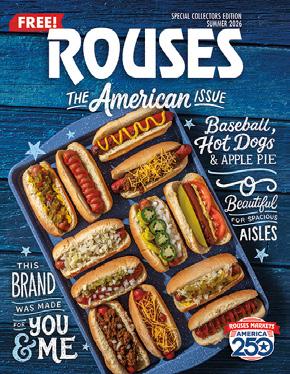
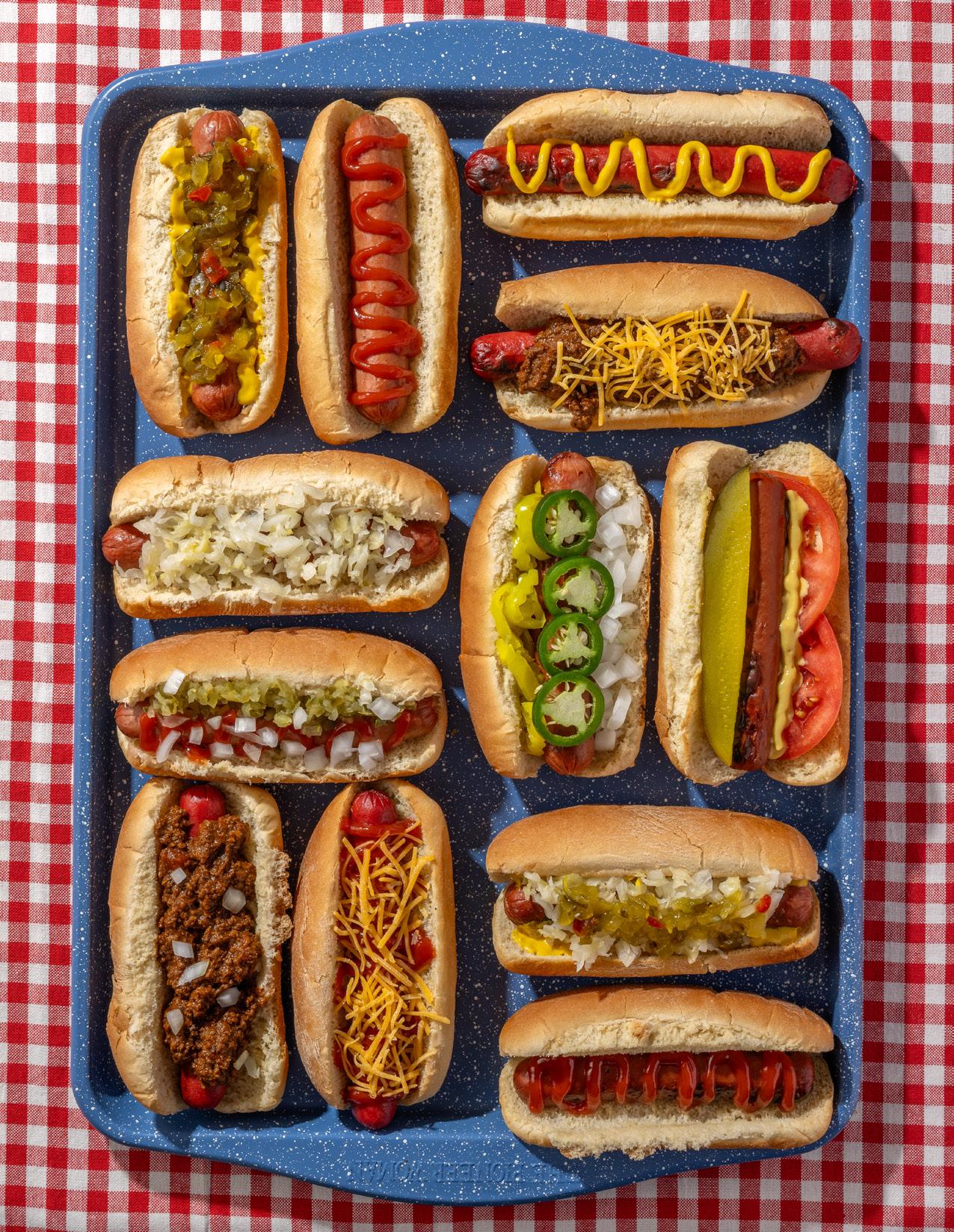
The Fourth of July makes me want a hot dog real bad.
There are just four acceptable ways to cook a hot dog: grilled, griddled, steamed or boiled. There is also microwaved, but that isn’t so much a cooking method as something that happens when you’re standing in front of an open refrigerator at 11:30 p.m., wondering how to get 10 more grams of protein.
Technically, you can top a hot dog with whatever you want. Just ask Chicago. Or Seattle, which grills hot dogs with cream cheese and tops them with onions, sriracha and jalapeños.
Ketchup is for children under 18. This is not just my opinion; it’s the official position of the National Hot Dog and Sausage Council, which is a real organization, and I stand with them completely.
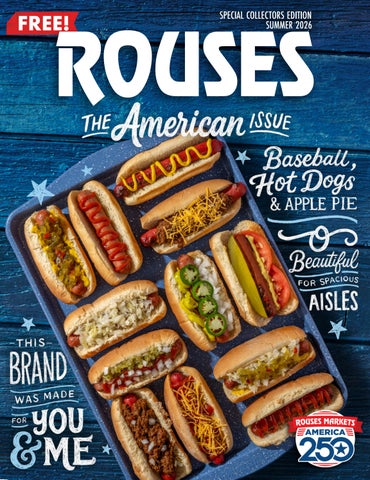
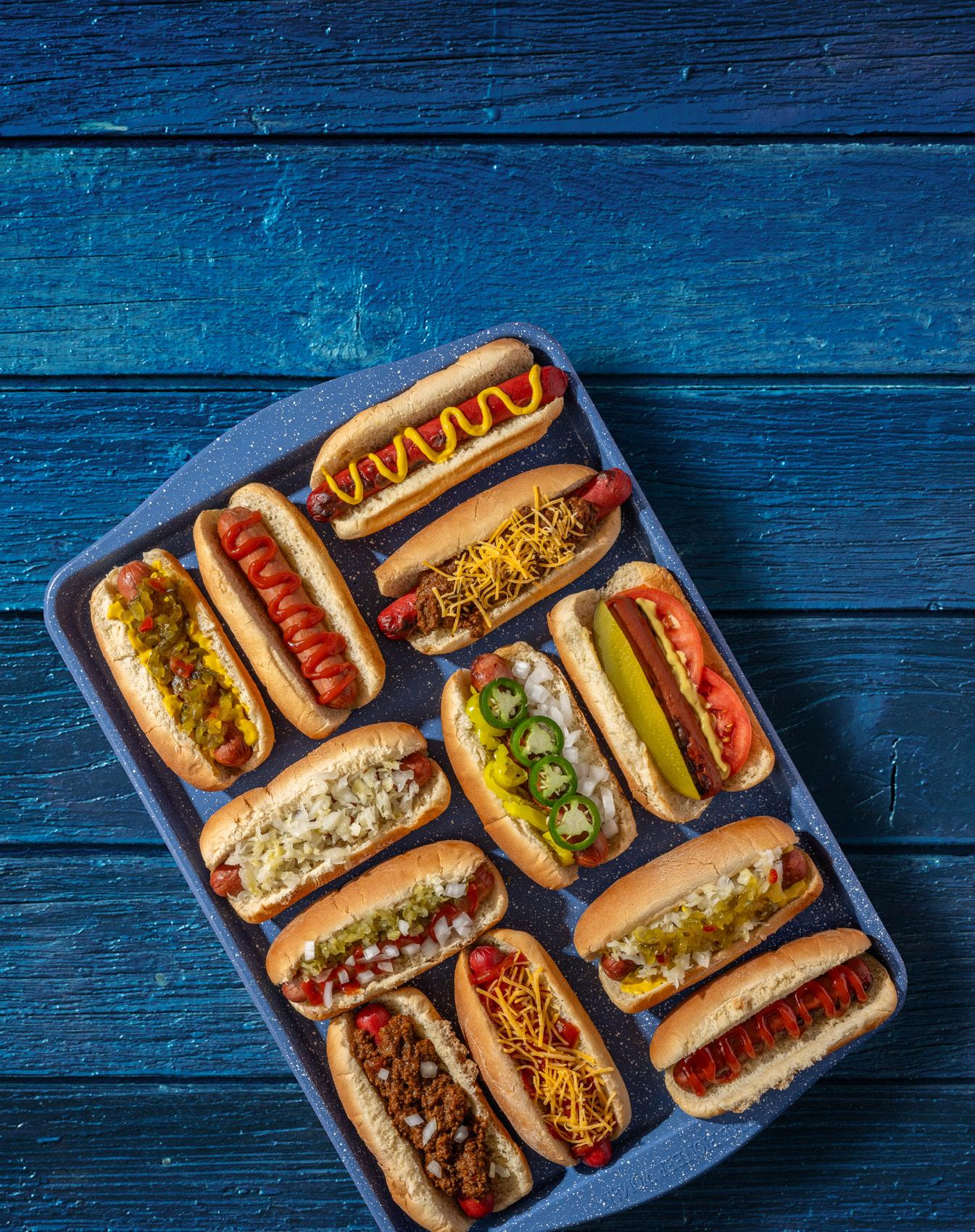
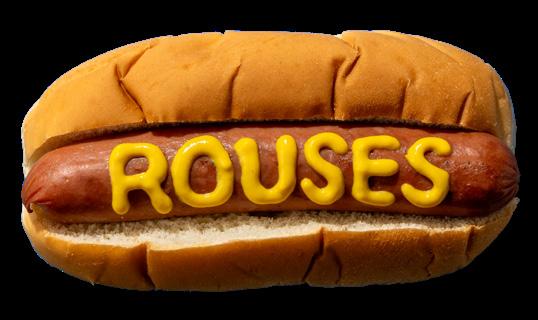
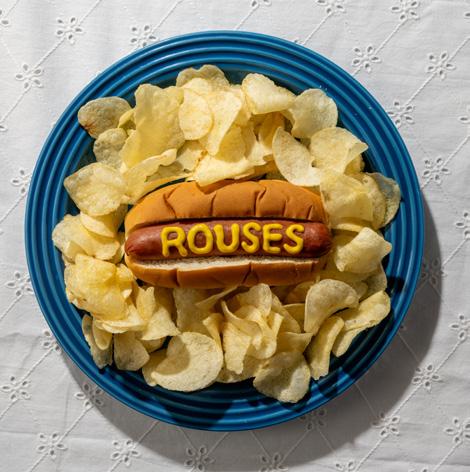
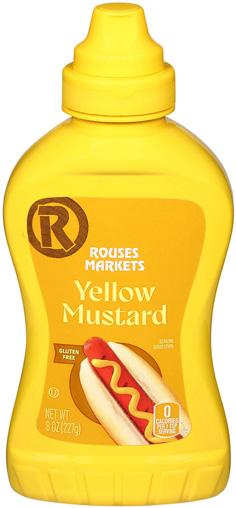
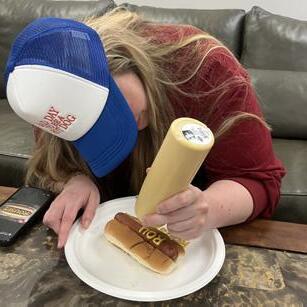
There’s an entire museum in Wisconsin devoted to mustard, and I choose to believe it exists largely because of hot dogs. Our illustrator Kacie wrote “Rouses” in mustard on a hot dog using Rouses Mustard, while Donny Rouse and his son watched. She did not flinch. Then she went and put a tomato on a hot dog on our cover. Everyone flinched. I am not the only one with opinions about hot dogs.
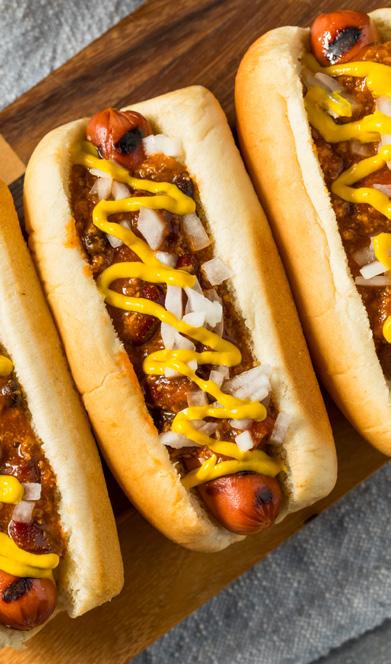
My hot dog starts with mayonnaise on the bun, spread it out evenly. Then the hot dog, then chili, then ketchup, then cheese. If I've got fresh jalapeños, they go in the skillet with the hot dog and on top with some raw onions. I like my onions cooked on a burger, raw on a hot dog. I'm not really a mustard guy, but I'll put a little on there. I just feel like a hot dog has to have mustard.
— Donny Rouse, CEO
The moment you put mayonnaise on a hot dog, you’ve crossed over into sandwich territory. And before you ask: No, a hot dog is not a sandwich. But yours is.
Hot dogs! Get your hot dogs here! Yellow mustard is America’s classic hot dog topping. Think ballparks, backyards, Chicago dogs.
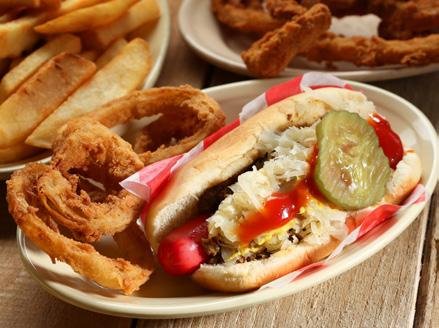
I am, however, a brown mustard girl. Specifically, a Nathan’s Famous girl. For years I told people my great-grandfather founded Nathan’s. He actually owned a men’s clothing store in Shreveport called Nathan’s. My Uncle Sol had a store in Jackson, Tennessee — also called Nathan’s — and another one in Cotton Plant, Arkansas. The real Nathan’s, the Coney Island one, built its reputation on brown mustard and sauerkraut. So that’s my order and I’m sticking to it.
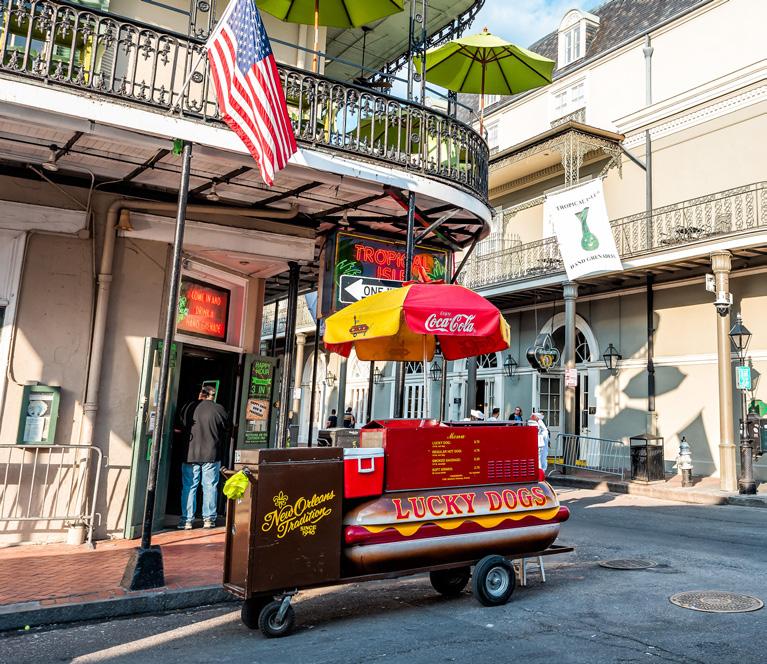
But honestly, I am not above a Dome Dog at the Superdome or a Lucky Dog at 2 a.m. Or a hot dog po-boy, which is proof that we will put anything on French bread.
I also love a crawfish boil hot dog. We really will put anything in a crawfish pot too.
This issue, we tackle the question of whether or not you actually need a hot dog to make a chili dog in a story called Who Left The Dogs Out. Turns out New Iberia has opinions. But I have opinions too….
This Fourth of July, we’re celebrating the way we always do, with food: probably a hot dog and a slice of apple pie. Happy 250th!
“I do the illustrations in this magazine, our reusable bags, and more. I've used paint, markers, chalk, every drawing tool you can think of, plus every computer program that exists. This was my first time working in mustard. Marcy wouldn't let me do one in mayonnaise. ”
— Kacie Galtier, Designer & Illustrator
America’s Dairyland
ARROW-CIRCLE-RIGHT We carry one of the largest selections of Wisconsin cheese on the Gulf Coast. You’ll find it throughout the store, in our cheese case, at the deli counter and in the dairy aisle. Start there.
No state has shaped the way we eat cheese in America more than Wisconsin has. It produces over 600 varieties and roughly a quarter of all the cheese made in the United States. Wisconsin has 1,200 licensed cheesemakers, more than any other state, and it is the only state that requires a license to make cheese commercially. Wisconsin doesn’t just make more cheese than anyone else. It wins more, too. Most recently, Wisconsin cheesemakers won 135 awards at the World Championship Cheese Contest, more than any other state or country, and more than the next five countries combined.
New York had the first cheese factory. Ohio had its moment too; the western part of the state was known as Cheesedom for 50 years. Then Wisconsin showed up and never looked back.
Settlers arrived in the mid-1800s in search of opportunity. They found it in Wisconsin. The cool climate, rich soil and clean water were perfect for dairy farming and reminded many of home. The Swiss brought rich, nutty Alpine-style cheeses they’d been making for
centuries. The Germans brought limburger: bold, pungent, not for the timid. The Italians brought mozzarella, provolone and gorgonzola. The French arrived with brie and camembert, the kind of cheese that deserves a proper knife and a good cracker.
The English brought the recipe for cheddar. (It may be the nicest thing they’ve ever done for American food.) Wisconsin perfected it. Today, the state is the nation’s leading producer of cheddar.
Wisconsin’s first commercial cheese factory was established in 1841 by Anne Pickett, who used milk from her neighbors’ cows.
In 1885, a young Joseph F. Steinwand was working in his father’s factory when he developed something new; he named it after their town, Colby. It’s softer and more open than cheddar, with a higher moisture content. It actually behaves itself. It slices cleanly and melts beautifully. Like Tim’s jalapeños and onions, for instance. Unlike cheddar or swiss or brie, colby has no European ancestor. It was invented here, for American tastes. Combine it with Monterey jack, a California original, and you get one of the most popular cheeses in America.
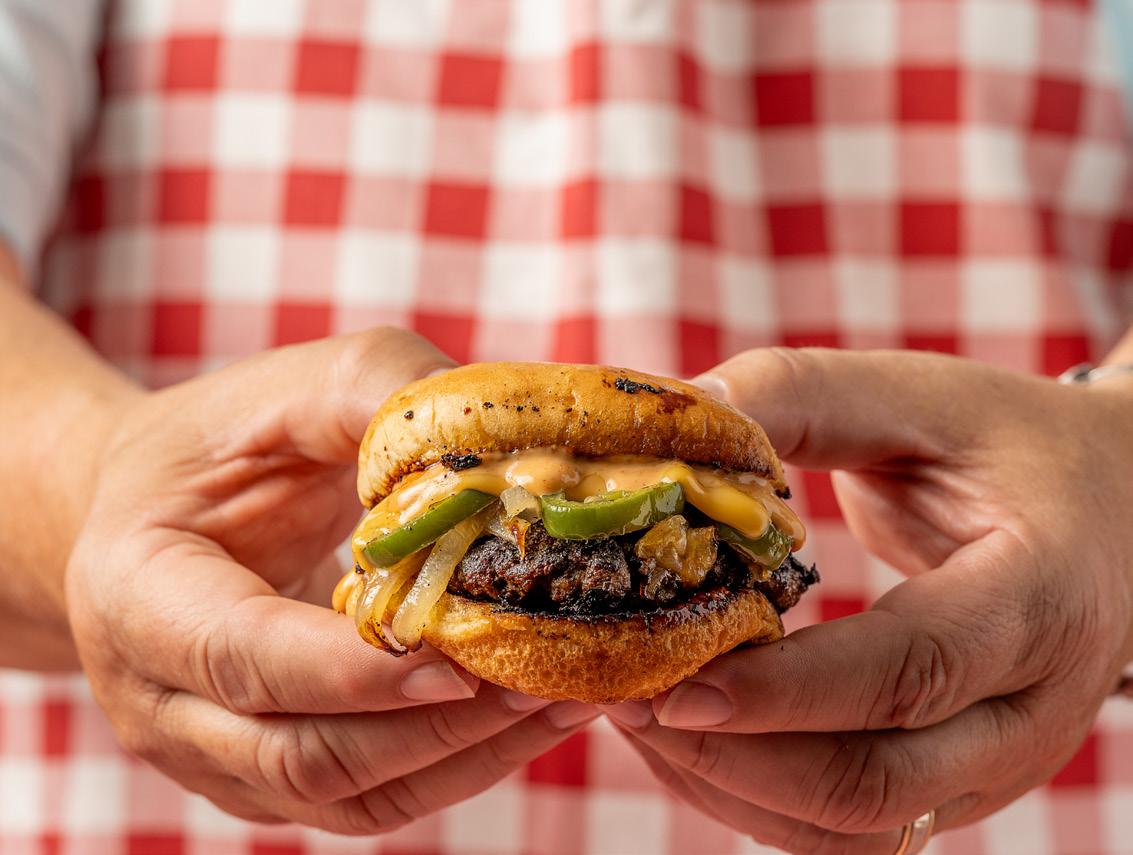
That cheddar and colby on Tim’s smashburger? Now you know why.
by Tim Acosta, Rouses Markets Advertising & Marketing Director
The cheeseburger is as American as baseball, hot dogs and apple pie.
The way the story goes, the hamburger itself came from Hamburg, Germany. German immigrants brought it here in the 1840s and 1850s. It wasn’t until it arrived in America that anyone thought to put it on a bun.
The cheeseburger, though — that’s entirely ours, and it couldn’t have happened anywhere more American. A short-order cook was working at his dad’s restaurant, The Rite Spot in Pasadena, on Route 66. Some say he burned a patty and covered his mistake with a slice of cheese, which we’ve all done.
Lately, I’ve been making smashburgers, the kind once served at The Rite Spot and diners across America, and made cool again by places like Shake Shack.
You start with a ball of beef. Don’t make a patty. The less you handle the meat, the better. Overworking it toughens it. Never
mix salt into the beef. Season the outside only, right before it hits the griddle.
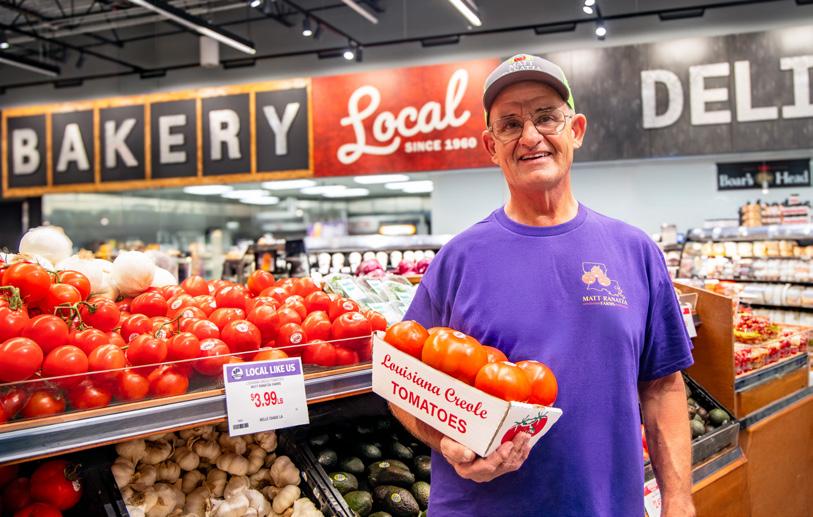
All the beef at Rouses is ground fresh in-store throughout the day, the way we’ve been doing it since 1960. Fresh ground beef has more moisture, better texture and more flavor than pre-packaged ground beef. For a smashburger, the quality of the grind is everything.
Most smashburgers are cooked on top of onions. I use onions and jalapeños, because I put jalapeños on everything. (You do not want to see my Subway sandwich order.)
I take a pound of ground beef and divide it into four equal balls, a quarter-pound each. Just like McDonald’s. Except nothing like McDonald’s.
Most people use 80/20 ground chuck — 80% lean, 20% fat — because the fat adds flavor and helps build the crust. I’ve been using 90% lean ground sirloin lately. Less fat, cleaner flavor and, with the onions and jalapeños cooking into the beef, you don’t need the extra fat to make it interesting.
Diners have always used flattops, and that’s no accident. You need high heat, at least 400°F. A griddle at home is the same concept, just smaller. Before you do anything else, get your griddle or a cast-iron screaming hot. While it’s heating up, slice your onions and jalapeños.
Once you reach 400°F, spray the griddle with a little olive oil spray and lay the buns on top for a minute or two to toast them. Then lay your onions and jalapeños down, and sprinkle a little Cajun seasoning on
them. Keep them moving so they don’t burn. Once they caramelize, divide them into four groups. ut a ball of beef on top of each and smash it flat. Use a smashburger iron if you have one, or a heavy spatula with a piece of parchment between the spatula and the beef so nothing sticks. I read somewhere that the first burger to get the name smashburger was made using a can of beans. If you happen to have some Blue Runner Beans in the pantry, now you know something else you can do with it besides red beans and rice.
Once they’re down, don’t move them. Don’t press them. Wait 90 seconds, then flip. Lay cheddar and colby on top, cover with a burger lid or a sheet of aluminum foil, and let the cheese melt into the onions and jalapeños. That’s your pepper jack.
After that, add the patties to the buns.
The sauce is key. Grab a bottle of Rouses Bayou Dipping Sauce, add a splash of Cajun Power Garlic Sauce, and call it a day. (If you’ve read this column before, you already knew the Cajun Power was coming.)
You can dress a smashburger however you want: lettuce, onion, pickles — all fine. But tomatoes on a smashburger? That’s where it gets complicated. A smashburger is all about the crust. A juicy tomato is going to make everything smooshy. But hey, some people put tomatoes in their gumbo. Others think that’s a crime. Nobody’s changing anybody’s mind. Put a tomato on your smashburger if you want. I won’t say anything.
Pull Up a Chair
by Ali Rouse Royster
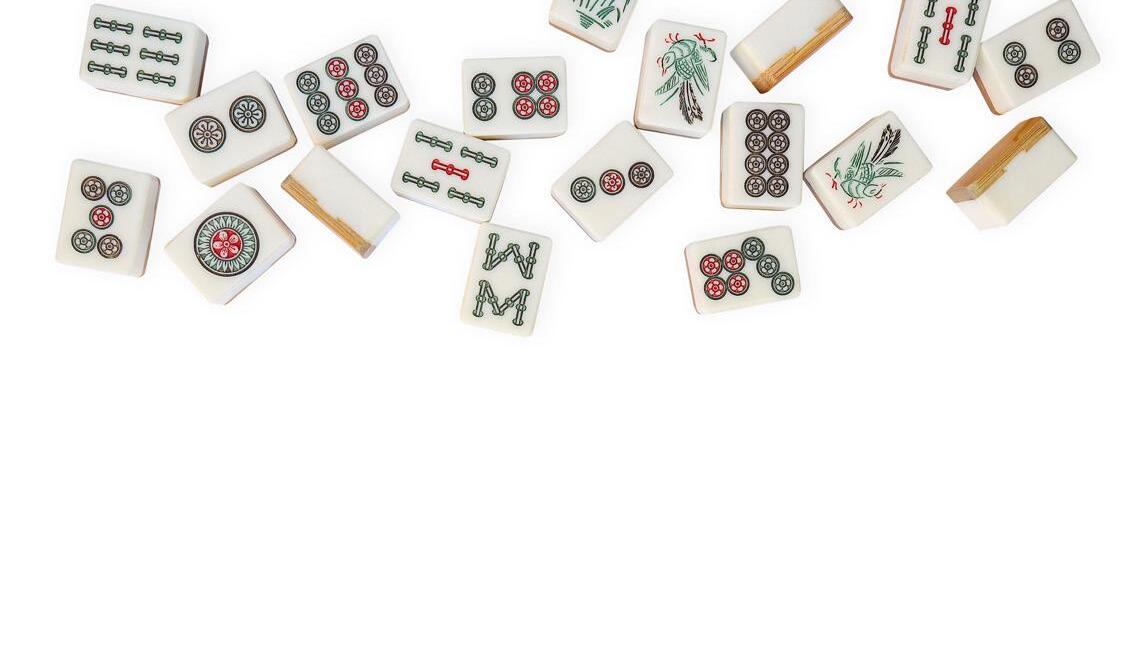
Like many elder millennial women, I have been playing a lot of mahjong lately. A lot. Some might call it an obsession; I call it self-care with a pretty tablescape.
If you aren’t yet in the know, here’s the quick scoop: Mahjong is a tile game that originated in China, probably sometime in the 1800s. In the 1920s, it made its way to America, where we promptly did what Americans tend to do: became obsessed, changed the rules, made a card for it, and turned it into our own thing.
By the time the National Mah Jongg League was founded in 1937 in New York City, American mahjong had become something different from the game that originally crossed the ocean. It became something familiar, social, competitive and just a little chaotic. In other words: very American. Kind of like baseball, hot dogs and apple pie — all of which got their start somewhere else before being wholeheartedly embraced,
reimagined and claimed as all-American.
Growing up in South Louisiana, we played Pedro and bourré. (If you’re from here, you already know.) My parents played. My grandparents played. Those games feel like a seat at the family kitchen table to me.
But lately, mahjong has pulled up a chair. I play with friends. I play with family. I even play with my kids, which is sweet and humbling and occasionally makes me question every parenting decision I’ve ever made. Now if I could just convince my daughter that she should not, in fact, hold onto the soap tile just because it’s her favorite. To be fair, her Kiki was doing the same with Bird Bams when she first learned — like grandmother, like granddaughter, I guess!
YEARS OF AMERICA 250 CELEBRATING
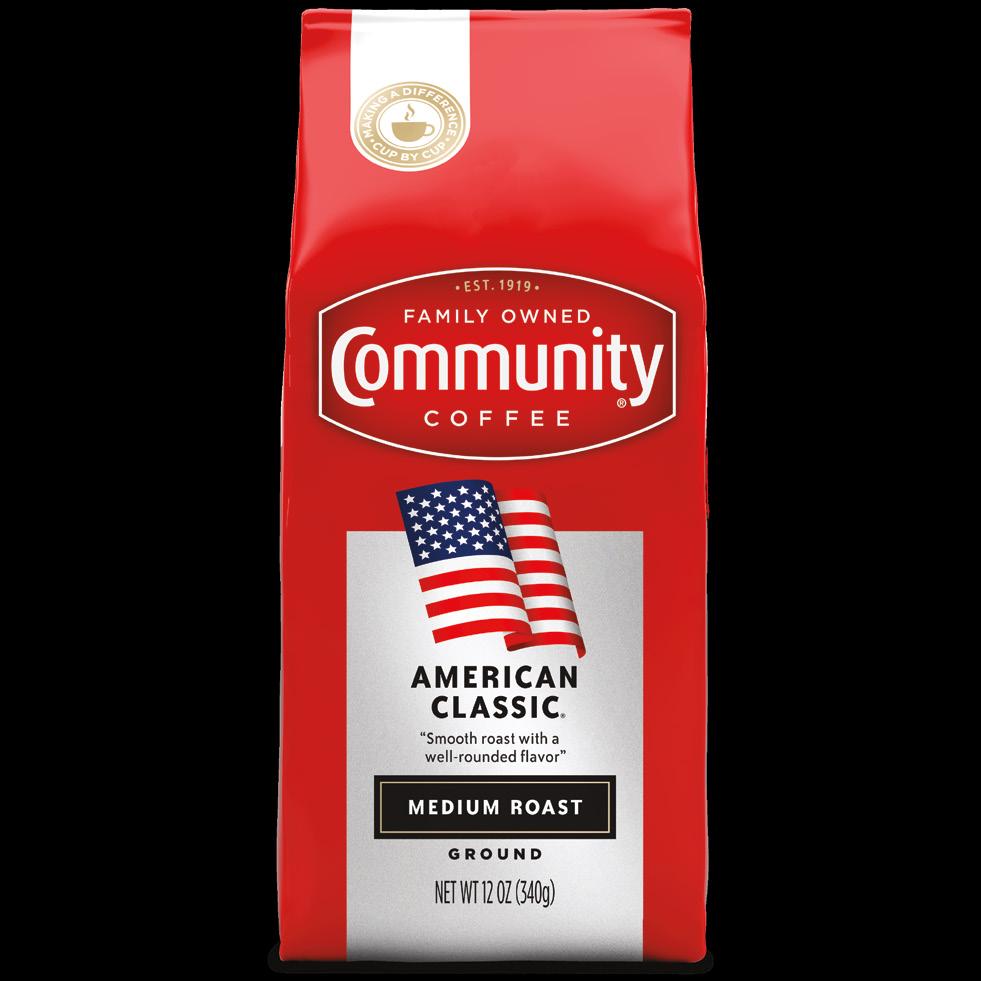
Raise a mug to the USA’s 250th birthday with our American Classic® coffee. This medium roast delivers notes of vanilla and cocoa in a classic American coffee taste profile: smooth and well-rounded with a sweet, clean finish.
American Classic is available in ground bags and K-Cup® boxes, so get yours today and enjoy this summer of celebration.
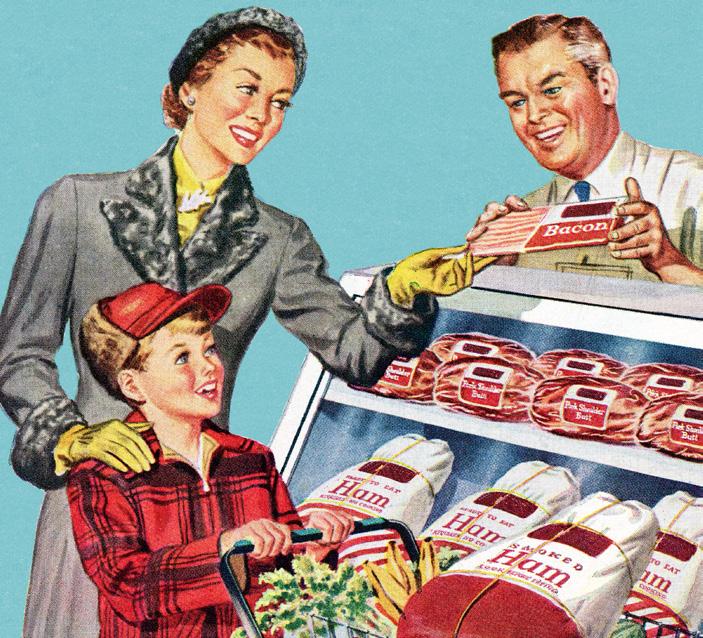
Long before the American supermarket, cities across the country had public markets where farmers, fishermen and merchants gathered to sell what they grew, caught and made. New Orleans had nearly three dozen at its peak, anchored by the French Market, established in 1791 and among the oldest continuously operating public markets in America. J.P. Rouse Sr. founded City Produce in 1923 and delivered to the merchants in that famed market.
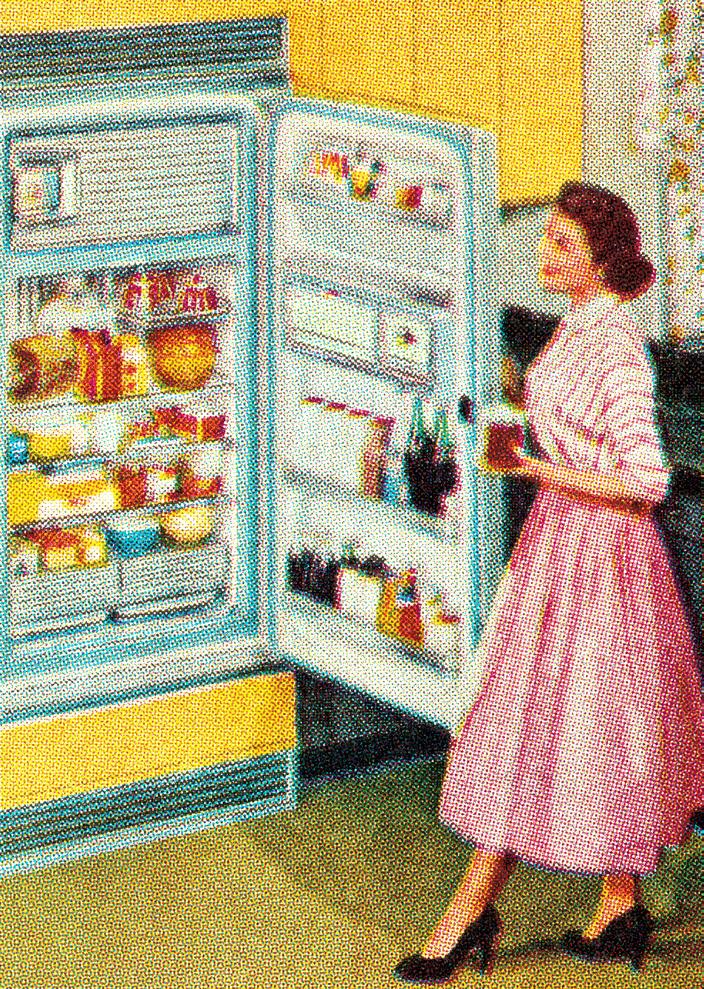
As cities grew, public markets slowly gave way to corner stores and neighborhood groceries. The Rouse family’s first store in Houma was one of them. Returning veterans bought homes in new suburbs. Families got cars. Refrigerators became common in American homes. And people had less time to shop every day, and they wanted to make one trip instead of many. Everything pointed toward a new kind of store: bigger, usually farther from home, and stocked with everything a family needed for the entire week. One of those stores was our first Rouses Supermarket, opened in Thibodaux in 1975 and led by Anthony J. Rouse Sr., and his son Donald Rouse.
When the supermarket was born, the American way of life changed forever. Rouses has been part of that story from our beginning.
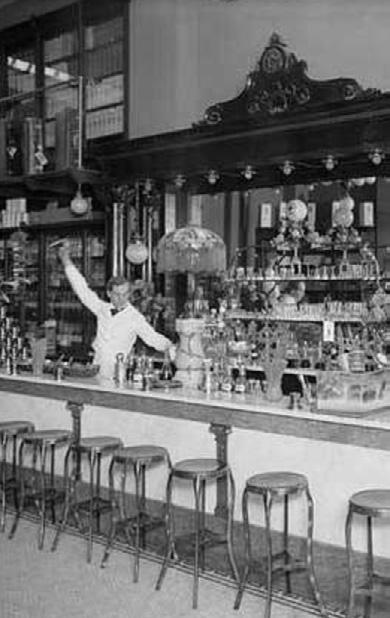
AT THE SODA FOUNTAIN
1885 — Dr Pepper Pharmacist Charles Alderton created Dr Pepper at a Waco, Texas drugstore. Alderton noticed customers loved the way the store smelled, with the fruit syrups mixing in the air, and set out to make a drink that captured that aroma. The result was a blend of 23 flavors unlike anything else at the soda fountain. Customers simply called it a “Waco.”
1890/1898 — Barq’s Edward Barq and his brother Gaston founded the Barq Brothers Bottling Company in New Orleans’
French Quarter in 1890. Edward later moved to Biloxi, where he developed the root beer formula in 1898 at the Biloxi Artesian Bottling Works.
1893 — Pepsi
Pharmacist Caleb Bradham created his first soda at his New Bern, North Carolina drugstore, served at the soda fountain under the name Brad’s Drink. He renamed it Pepsi-Cola: from dyspepsia, the digestive complaint he believed his drink could help relieve; and kola, for the kola nuts in the recipe. Today PepsiCo owns Frito-Lay, and with it, Lay’s, Fritos, Doritos, Cheetos, Ruffles and Tostitos — that’s roughly half the chip aisle.
Coca-Cola
The American Brand
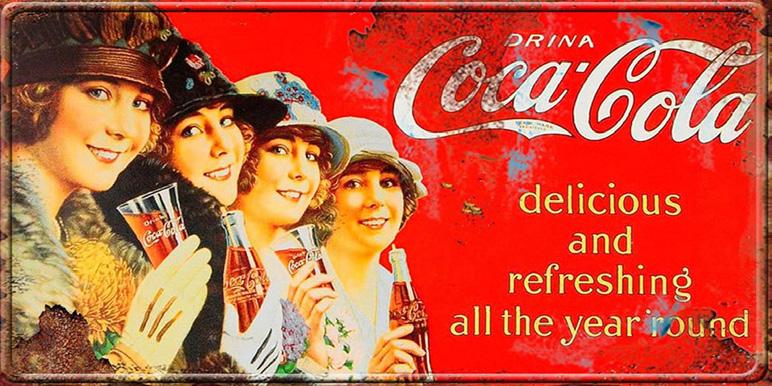
ARROW-CIRCLE-RIGHT It started as a five-cent glass at a drugstore counter in Atlanta in 1886, mixed by a pharmacist named John Pemberton and sold as a tonic. In its first year, Coca-Cola sold an average of nine drinks a day. Pemberton died two years later, having sold the formula for $2,300.
The man who bought it, Atlanta businessman Asa Candler, understood something that would define the brand forever: The drink was great, but the name needed to be everywhere. Candler plastered the Coca-Cola name on clocks, calendars and posters. He distributed coupons for free samples. By the turn of the century, Coca-Cola was being sold in every state in the country. In 1899, he sold the bottling rights for one dollar, unleashing a franchised distribution system that would carry Coca-Cola into every corner of American life.
When the United States entered World War II, company president Robert Woodruff made a pledge: Every American soldier would get a CocaCola for five cents, wherever they were and whatever it cost the company. Sixty-four portable bottling plants were shipped to Europe, North Africa and the Pacific. More than five billion bottles were consumed by military personnel. When the soldiers came home, Coca-Cola came with them, already waiting in the grocery stores, diners and filling stations of postwar America.
It took nearly a hundred years for the brand to put its name on another
product: Diet Coke, launched in 1982. Today the most recognized brand on earth is sold in more than 200 countries.
IN THE CANDY AISLE
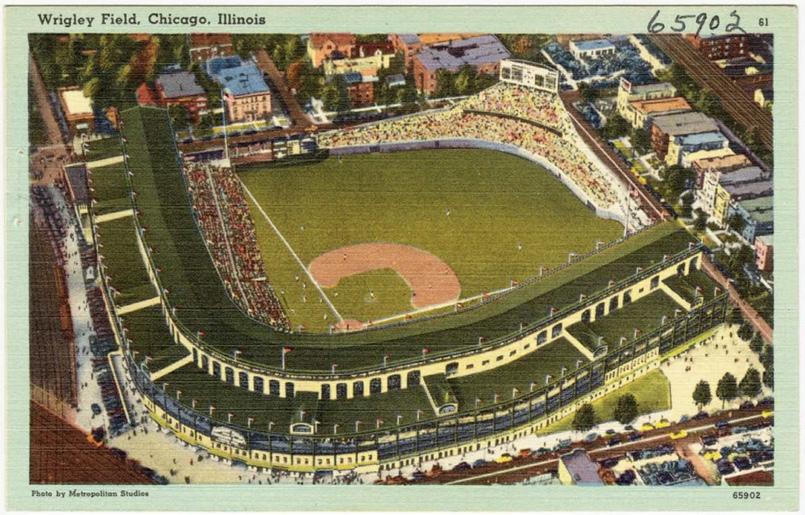
1891 — Wrigley William Wrigley Jr. arrived in Chicago with $32 and a plan to sell soap. He threw in free chewing gum with purchases to attract customers, and the gum proved more popular than the soap, so Wrigley pivoted, introducing Juicy Fruit and Spearmint in 1893 and Doublemint in 1914. During World War II, the company dedicated its entire output of gum to the armed forces. A pack of Wrigley’s Juicy Fruit holds a small place in history as the first product ever scanned with a barcode (in 1974). The pack is now in the Smithsonian.
1896 — Tootsie Roll Leo Hirschfield began selling a chewy chocolate candy in
New York for a penny apiece, naming it after his daughter Clara’s nickname, Tootsie. It was among the first individually wrapped penny candies in America.
Mars
The Candy Bar
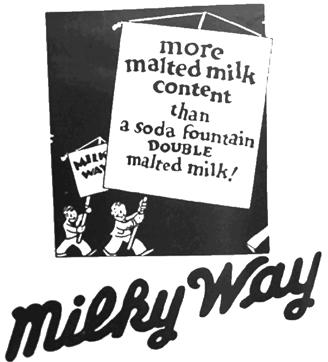
ARROW-CIRCLE-RIGHT What if you could turn a malted milkshake in a candy bar? Mars introduced Milky Way in 1923, inspired by the wildly popular malted milk drinks of the time. Snickers followed in 1930, named after the Mars family’s favorite horse. It remains the best-selling candy bar in the world today. Three Musketeers arrived in 1932.
M&Ms launched in 1941, inspired by a simple observation Forrest Mars had made years earlier while watching soldiers in Spain eat chocolate pellets coated in a hard sugar shell that kept them
from melting. He partnered with Bruce Murrie, son of the president of Hershey’s, to create his own version — the name came from the two of them: Mars and Murrie. The U.S. Army was their first customer. Peanut M&Ms followed in 1954 — invented, famously, by a man who was allergic to peanuts and never tasted one.
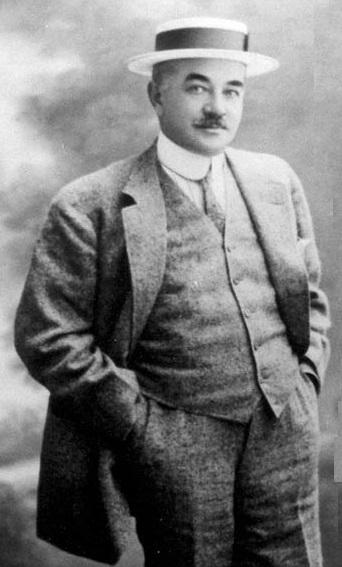
Milton Hershey
The Philanthropist
ARROW-CIRCLE-RIGHT In 1909, Milton Hershey and his wife Catherine founded a school for orphaned boys on the farmland outside their Pennsylvania factory. Milton and Catherine had no children of their own.
Nine years later, after Catherine had died and the world was at war, Hershey did something even more extraordinary. He placed almost his entire fortune, including his controlling stake in the chocolate company, into a trust with a single beneficiary: that school. “When my wife died — and we had no children — my old mother, who had been my abiding guide, said: ‘Milton, don’t let your millions spoil you,’ and right then I decided not to give my millions a chance to spoil me, by simply giving them away.”
Milton Hershey didn’t invent milk chocolate. The Swiss had been making it for decades. What he figured out was how to bring the price down far enough that any child in America could afford it. But chocolate wasn’t his first act. Before Hershey became synonymous with chocolate, he made caramel. His Lancaster Caramel Company employed over 1,300 workers at its peak and made him his first fortune. In 1893, at the World’s Columbian Exposition in Chicago, he became fascinated by German chocolate-making machinery and bought it on the spot. He believed caramels were a fad. In 1900 he sold the caramel company for $1 million and turned his full attention to milk chocolate.
The milk chocolate bar came first, in 1900, followed by the Kiss in 1907. Mr. Goodbar and Krackel came later, and eventually Reese’s Peanut Butter Cups, invented by former Hershey employee Harry Burnett Reese using Milton’s own chocolate, came into the Hershey family in 1963 when Reese’s sons sold the company to Milton.
The town of Hershey, Pennsylvania grew up around the factory with houses, parks, schools, a hotel and a trolley system, designed for the families who worked his lines. Even the streetlights were shaped like Hershey’s Kisses.
Today, the Milton Hershey School sits on that same Pennsylvania farmland, surrounded by the town he built, in the shadow of the factory that paid for it all. It is a cost-free, private, coeducational boarding school for more than 2,200 boys and girls from low-income families, providing not just education but housing, meals, clothing and medical care from pre-K through 12th grade. Its endowment stands at roughly $15 billion.
What he left behind was a town, a company, and one of the greatest acts of philanthropy in American history.
ALL-AMERICAN BREAKFAST
1850 — Folgers James Folger was just 14 when he left Massachusetts for California during the Gold Rush. He took a job at the Pioneer Steam Coffee and Spice Mills in San Francisco. When the company eventually fell into financial trouble after the Civil War, he bought it and renamed it J.A. Folger & Co.
1869 — Welch’s Thomas Bramwell Welch was a Methodist dentist who believed his church shouldn’t serve wine at communion. In 1869 he pressed Concord grapes in his New Jersey kitchen, pasteurized the juice to keep it from fermenting, and called it Dr. Welch’s Unfermented Wine. The temperance movement turned a kitchen experiment into a national brand. Today, it’s still farmer owned.
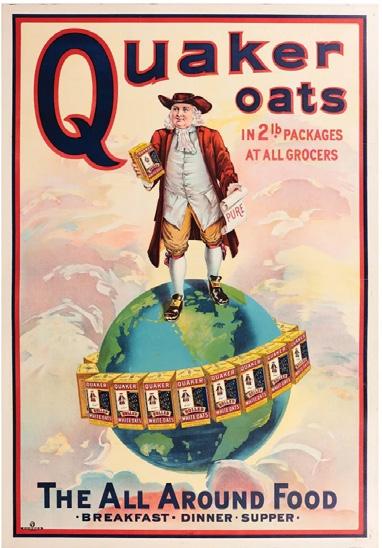
1877 — Quaker Oats Henry Parsons Crowell registered the Quaker trademark — the first for a cereal in America — in 1877 and began selling oats in two-pound paper packages. The Quaker Man logo was chosen to suggest purity and honesty. Quaker later introduced quick grits and, in 1970, the first flavored instant oatmeal packet, Maple & Brown Sugar.
1887 — Log Cabin Syrup Patrick J. Towle introduced a maple-blended table syrup, naming it after Abraham Lincoln, who was famously raised in a log cabin.
1892 — Maxwell House Joel Cheek walked into Nashville’s Maxwell House Hotel and offered the food buyer 20 pounds of his carefully created coffee blend for free; it ran out within days. Guests complained when the hotel switched back to its regular brand, so the hotel bought Cheek’s blend exclusively and agreed to let him name it after them.
1893 — Shredded Wheat Henry Perky, with machinist William Henry Ford, built a machine that turned whole wheat into shredded strands pressed into biscuitshaped cereal, one of the first ready-to-eat cereals in America. Nabisco acquired the brand in 1928.
1897 — Smucker’s Jerome Monroe Smucker started selling apple butter in Orrville, Ohio, pressing his own cider, cooking down the apples, and signing the lid of every crock himself as a guarantee of quality. Today Smucker’s also owns Folgers, Jif Peanut Butter and Dunkin’ Coffee, among others.
1902 — Luzianne William B. Reily moved his grocery business to New Orleans and focused on coffee roasting. He added tea under the Luzianne name, a play on the Cajun pronunciation of Louisiana, and in 1932 he created a blend specifically designed for iced tea. His fifth-generation family still runs Reily Foods, producing Luzianne alongside Blue Plate Mayonnaise, French Market Coffee and CDM Coffee & Chicory.
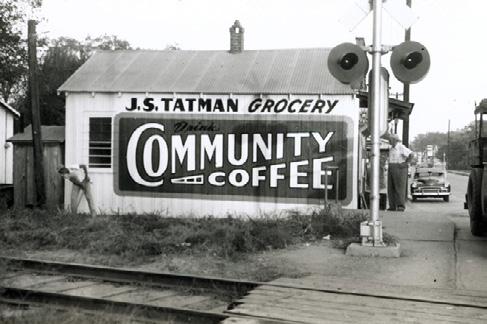
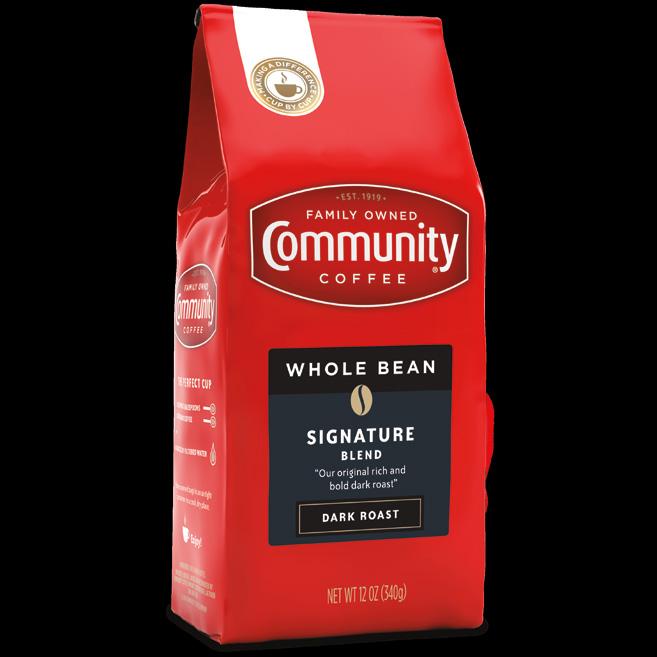
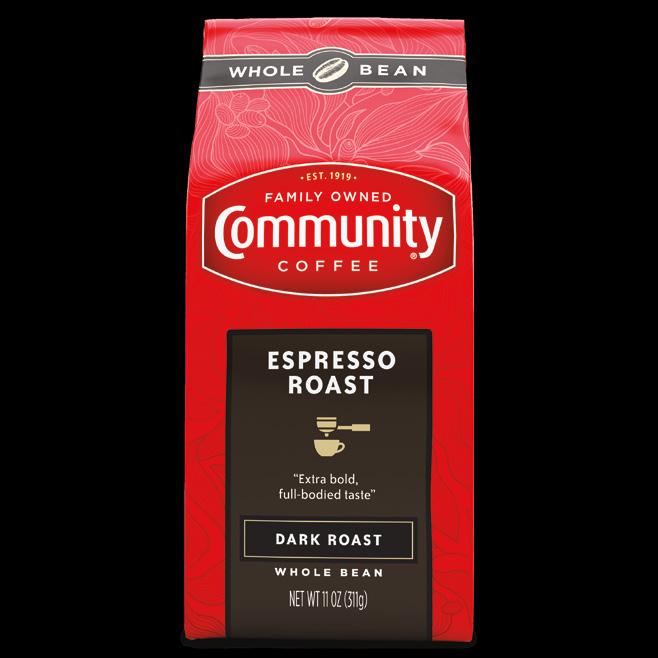
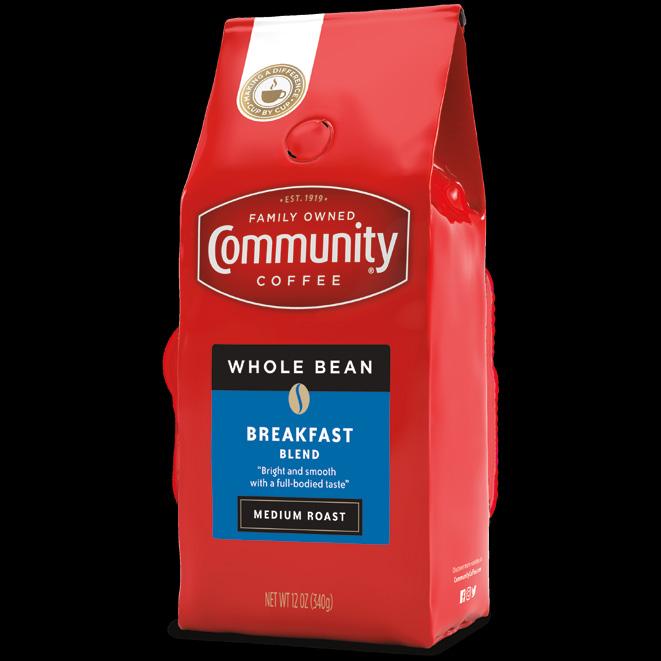
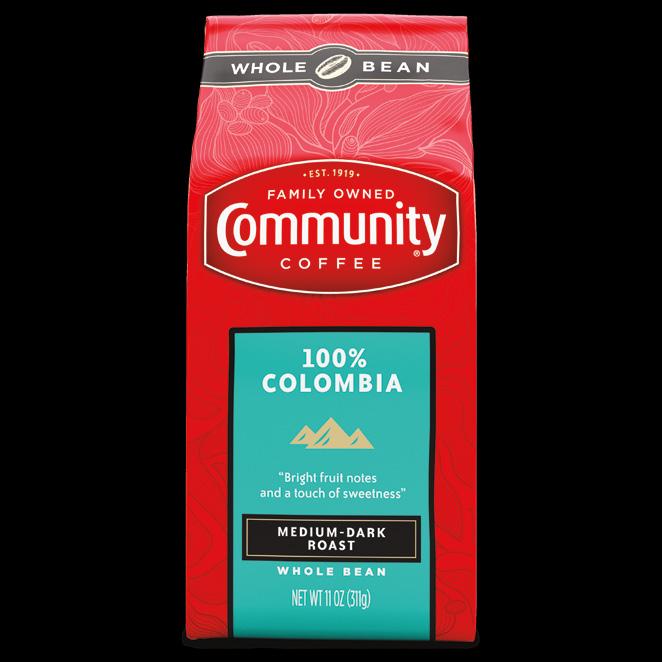
1919 — Community Coffee Henry Norman “Cap” Saurage started blending, roasting and bagging his own coffee in Baton Rouge in 1919, delivering it doorto-door throughout the neighborhood. He opened a grocery store, but by 1924 the coffee outproduced everything else.
He closed the store and devoted himself to making coffee full-time. He named it Community after the neighbors and friends who supported him from the start. Community is the largest family-owned retail coffee brand in the United States, still owned and operated by the Saurage family, now in its fourth and fifth generations.
1921 — Wheaties Wheaties was invented by accident when a Minneapolis health clinician spilled a wheat bran mixture onto a hot stove and watched it crackle into a crispy flake. He brought the concept to the Washburn Crosby Company for perfecting. In 1934, baseball legend Lou Gehrig became the first athlete featured on a Wheaties box. The Washburn Crosby Company later became General Mills.
Battle Creek
The Birthplace
ARROW-CIRCLE-RIGHT In the late 1800s, a small Michigan city became an unlikely laboratory for reinventing the American breakfast.
The Battle Creek Sanitarium was founded in 1866 on health principals of the Seventh-day Adventist Church as a health reform institute, rooted in the belief that diet and clean living were a form of moral obligation. When Dr. John Harvey Kellogg took over in 1876, he transformed it into one of the most famous wellness destinations in America. Thomas Edison came. Henry Ford came. It was part hospital, part spa, part grand hotel, and Dr. Kellogg ran it with the conviction of a man who believed that diet and clean living were matters of the soul as much as the body.
something entirely new – and it was a big hit with the patients. It was, at first, a medical food. Nobody was thinking about grocery stores.
One of Dr. Kellogg’s own patients, C.W. Post, had other ideas. He went home and started a rival company across town, introducing Grape-Nuts and Post Toasties. Battle Creek suddenly had an industry.
His prescription for nearly everything was grain. The corn flake itself was born by accident. Dr. Kellogg’s brother, Will Keith Kellogg, was employed in the kitchen, and one night he accidentally left cooked wheat dough out overnight. The next morning, he ran it through a roller and it came out in crispy flakes that were turned into
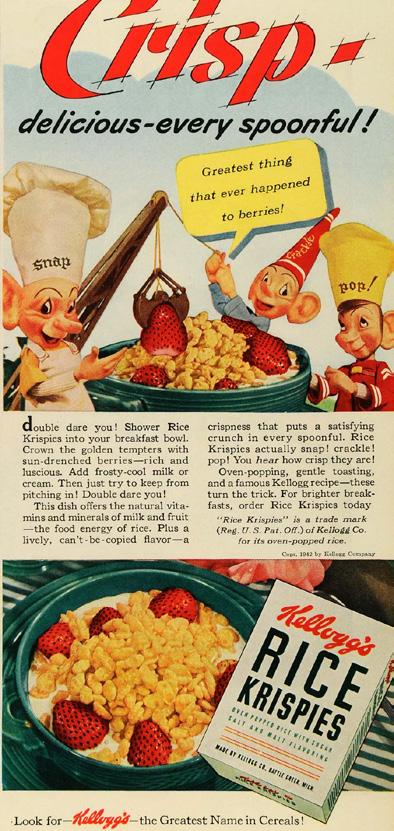
Fueled by railroads, mass advertising and national distribution, Kellogg’s and Post transformed cereal from a sanitarium health food into a staple of the American pantry. Corn Flakes led the way, followed by Rice Krispies in 1928, Raisin Bran in 1942, and Frosted Flakes in 1952. Battle Creek earned a nickname in the process: the Cereal Capital of the World.
What started as a medical prescription ended up on every breakfast table in America.
IN THE BAKING AISLE
1764 — Baker’s Chocolate Irish immigrant John Hannon arrived in Dorchester, Massachusetts, with one valuable asset: He knew how to make chocolate. Local physician Dr. James Baker provided financing, and the two men set up a mill on the Neponset River to grind cocoa beans. They called their product Hannon’s Best Chocolate. In 1779, Hannon sailed to the West Indies to buy cocoa beans and never came back. Some believe he died at sea; others suspect he staged his own disappearance. His wife sold the company to Baker, who renamed it Baker’s Chocolate in 1780. It was the first chocolate manufacturer in America.
1790 — King Arthur Baking
Company King Arthur Baking Company is the oldest flour company in America, founded in Boston in 1790. It is now employee-owned and headquartered in Norwich, Vermont.
1846 — Arm & Hammer John Dwight
and his brother-in-law Dr. Austin Church began manufacturing baking soda in New York. The Arm & Hammer name came later, adopted by Church’s sons from a spice business logo.
1869 — Pillsbury
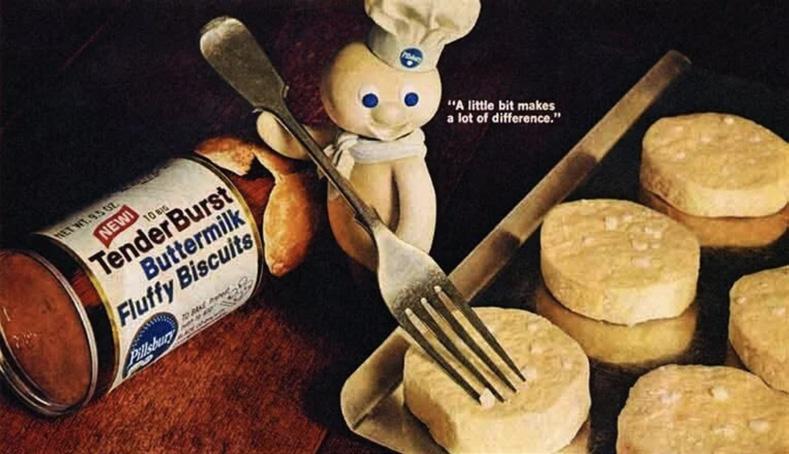
Charles Alfred Pillsbury was 27 when he paid $10,000 for a one-third share of a dilapidated flour mill in Minneapolis. Later, the company acquired the refrigerated biscuit patent when they bought the Ballard & Ballard Company. The Pillsbury Doughboy, named Poppin’ Fresh, was created in 1965 by an advertising copywriter inspired by popping open a tube of Pillsbury biscuit dough at home.
1885 — PET Milk
Swiss immigrant John Meyenberg developed the evaporated milk process in Europe. He emigrated to America and founded the Helvetia Milk Condensing Company in Highland, Illinois, producing the first commercially successful evaporated milk in the United States. When a New Orleans food broker asked for a baby-sized can that could sell for a nickel, the company introduced a smaller size and registered the name “Our PET” as a trademark in 1895. The company eventually took the PET name for itself.
1899 — Carnation John Meyenberg, who had helped build PET Milk, went on to help Elbridge Stuart launch Carnation in Kent, Washington. In 1961 Carnation introduced Coffee-mate, the first non-dairy creamer. Nestlé bought Carnation in 1985.
1880 — Gold Medal Flour Cadwallader
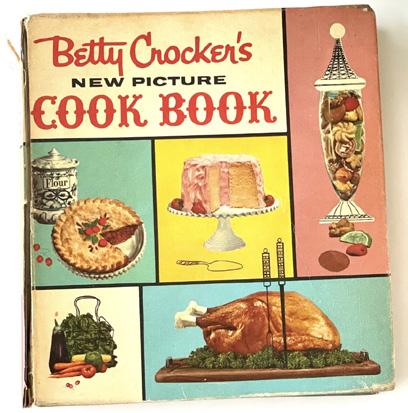
Washburn took his flour to the First Millers International Exhibition in Cincinnati and won the gold, silver and bronze medals. He renamed his product Gold Medal on the spot. The company received many recipe requests and needed a personal voice to answer them; a female employee suggested signing the responses with a fictional woman’s name. They chose Betty for its warmth and Crocker after a recently retired company director. In 1945, Fortune magazine named Betty Crocker the second most popular woman in America, behind only Eleanor Roosevelt. The company that made Gold Medal eventually became General Mills.
1901 — Domino
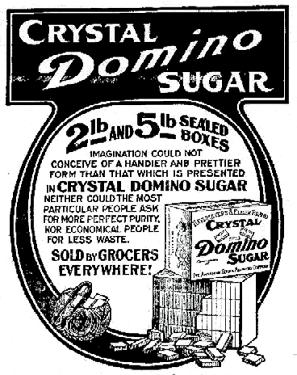
Sugar The American Sugar Refining Company introduced Domino Sugar in New York in 1901. The company has a longtime refinery in Chalmette, Louisiana, considered the largest cane sugar refinery in the Western Hemisphere, tying Domino closely to the sugarcane industry that has been central to Louisiana’s economy and identity for centuries. The Chalmette refinery is currently undergoing expansion.
1902 — Karo For generations of Southern bakers, the pecan pie recipe printed on the Karo bottle has been the recipe for pecan pie.
1910 — Steen’s Steen’s Cane Syrup is made in Abbeville, Louisiana from pure sugarcane juice cooked in open kettles using a traditional process. The Steen family is now in its fourth generation of ownership, and the amber syrup in the yellow can remains one of the most distinctly Louisiana products on any grocery shelf.
1911 — Crisco and Mazola Crisco and Mazola arrived in American kitchens the same year and together changed how Americans cooked and baked. Crisco was
the first solid shortening made entirely in a factory. Mazola brought corn oil. Between them they moved American cooking away from lard and butter and toward plantbased oils.
IN THE DAIRY AISLE
1856 — Borden Gail Borden patented a condensed milk process that removed water from fresh milk and preserved it for longer storage. The Borden company eventually expanded into fresh milk, cheese and ice cream — and gave America Elsie the Cow, one of the most beloved brand mascots in grocery history.
1872 — Philadelphia Cream Cheese
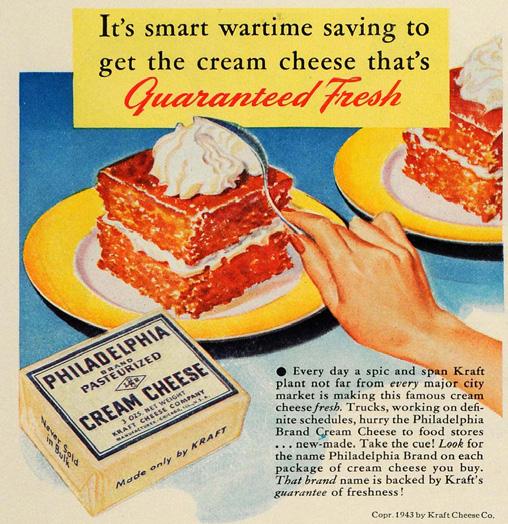
It’s been said Dairyman William Lawrence was trying to re-create the French cheese Neufchâtel when he accidentally added too much cream and produced something richer and more spreadable than intended. He called it cream cheese. In 1880 he partnered with a distributor who suggested naming it after Philadelphia, even though the cheese was made entirely in New York. Kraft acquired the brand in 1928.
1909 — Tillamook Ten independent Oregon dairy farmers each chipped in $10 to form a cooperative to make cheese that was consistent in flavor and quality. Getting products to market meant sailing cheese to Portland on a ship called the Morning Star, which is why a ship appears on every Tillamook package. Tillamook is still farmerowned.
1917 — Daisy Morris Sokolsky gave his son Louis a horse and buggy, which Louis used to begin delivering fresh milk and dairy products in the neighborhoods of Chicago. Now in its fifth generation, the Sokolsky family still owns and operates the company.
1918 — Velveeta
Cheesemaker Emil Frey invented Velveeta at the Monroe Cheese Company in New York as a way to salvage broken wheels of Swiss cheese by mixing them with whey. The result was a smooth, meltable product. Kraft acquired it in 1927. In the 1930s it became the first cheese product to receive the American Medical Association’s seal of approval. In 2002 the FDA ruled it could no longer be called cheese. It is now classified as a pasteurized prepared cheese product.
1919 — Cabot Creamery Ninetyfour Vermont dairy farmers bought their local village creamery for $3,700, each contributing $5 per cow plus a cord of firewood for the boiler. Cabot is still farmerowned.
1921 — Land O’Lakes Three-hundredfifty Minnesota dairy farmers gathered in St. Paul and voted unanimously to form a cooperative. They called it the Minnesota Cooperative Creameries Association. In 1924 they held a naming contest for their sweet cream butter. Land O’Lakes, inspired by Minnesota’s nickname as the Land of 10,000 Lakes, was the winner. Land O’Lakes is one of the largest agricultural cooperatives in the United States.
PANTRY STAPLES
1861 — Van Camp’s Gilbert Van Camp began canning fruits and vegetables in Indianapolis and secured a contract to supply the Union Army during the Civil War. By 1909 Indiana was the nation’s leading producer of canned baked beans.
1869 — Libby’s Brothers Arthur and Charles Libby and their partner Archibald McNeill founded Libby, McNeill and Libby
in Chicago with a $3,000 investment and one product: canned corned beef. In 1875 they introduced the trapezoidal can, one of the most recognized shapes in grocery history.
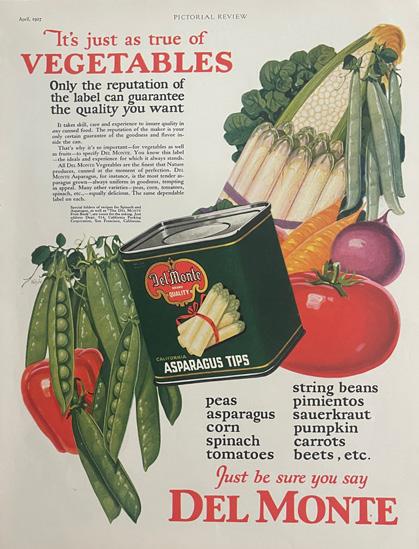
1886 — Del Monte The Del Monte name began as a premium coffee blend created by an Oakland grocer for the luxury Hotel Del Monte in Monterey, California. The name was so associated with quality that it was adopted for a line of canned peaches in 1892. As California’s fruit and vegetable industry expanded alongside the railroads, Del Monte helped bring peaches, pears, pineapple, green beans and corn to grocery shelves across the country.
1891 — Hormel George Hormel founded his meatpacking company in Austin, Minnesota, starting with ham, bacon and sausage. The company helped pioneer refrigerated meatpacking and convenient packaged foods. Dinty Moore Beef Stew and Hormel Chili were introduced in 1935 and Spam in 1937, a shelf-stable canned pork product that went on to feed troops around the world during World War II.
1925 — Progresso Giuseppe Uddo arrived in New Orleans from Sicily in 1907 and opened the first factory in America to produce tomato paste domestically. In 1925 he bought a $25 trademark from a French Quarter grocery called Progressive Grocery and named his company Progresso. It is now owned by General Mills.
1901 — Dole James Dole arrived in Hawaii in 1899 with a Harvard degree in agriculture. He planted his first pineapple fields on Oahu in 1900 and incorporated the Hawaiian Pineapple Company in 1901. From those first pineapple fields, Dole grew into one of the most recognized names in canned fruit and juice.
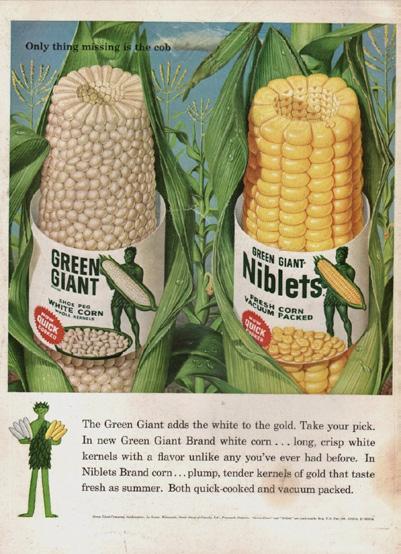
1903 — Green Giant Fourteen merchants in Le Sueur, Minnesota met in the back of a harness shop and pooled enough money to buy one kettle, seed, sugar, salt and cans. The valley’s soil and climate produced an unusually sweet and tender pea, the Le Sueur pea, still one of the most prized vegetables in the canned goods aisle. In 1925 an oversized variety of pea was named Green Giant. The original mascot was a scowling caveman in a
bearskin. By 1936 he had been reimagined into the friendly, leaf-clad giant whose “Ho, ho, ho” became one of the most recognized catchphrases in grocery history.
1910 — Blue Diamond Two-hundredthirty California almond growers banded together, dissatisfied with selling their crops to independent dealers at whatever price they could get. They named their cooperative after the rarest diamond in the world. California produces about 80% of the world’s almonds, and Blue Diamond has been at the center of that industry since then.
1912 — Konriko Conrad Rice Mill in New Iberia, Louisiana is the oldest operating rice mill in the United States.
1912 — Sun-Maid Sun-Maid was founded in California as a raisin grower cooperative. The Sun-Maid girl on the red box has been one of the most consistently used brand images in American food marketing.
1914 — Luxury Pasta Leon Tujague founded the Southern Macaroni Company in New Orleans’ French Quarter in 1914. The company’s Luxury brand became the best-selling pasta in Louisiana.
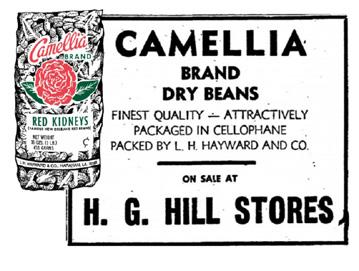
1923 — Camellia Lucius Hayward was a horse-and-buggy salesman for Nabisco before he began selling dried beans in bulk to French Market vendors and corner groceries across New Orleans. His son William Gordon Hayward began packaging them in the 1940s, naming the brand Camellia after his mother’s favorite flower. The fourthgeneration Hayward family still owns
and operates Camellia, one of the most recognized brands on the Gulf Coast.
1928 — Chef Boyardee Ettore Boiardi arrived in America at 16 and worked his way up to head chef at the Plaza Hotel before opening his own restaurant in Cleveland in 1924. Customers loved his spaghetti sauce so much he started sending them home with bottles of it. In 1928 he founded Chef Boyardee, using an easy-to-pronounce phonetic spelling of his name.
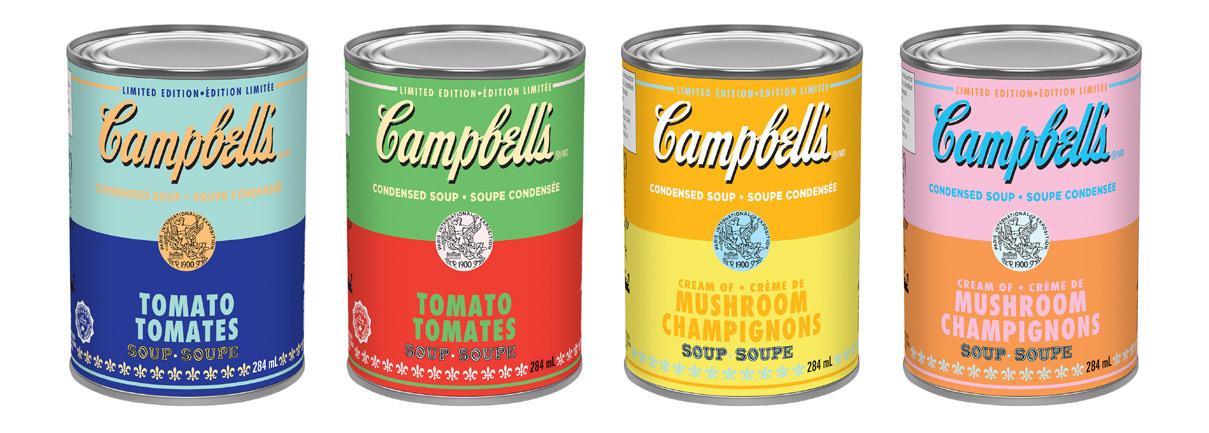
Campbell’s
The Can
ARROW-CIRCLE-RIGHT The problem with canned soup was weight. Full cans were expensive to ship, difficult to store, and slow to move through the grocery store. In the late 1800s, a young chemist named Dr. John T. Dorrance solved it with a practical engineering solution: Take the water out.
Condensed soup changed the economics of the product overnight. Smaller cans, cheaper shipping, longer shelf life. What had been a regional or homemade food became something a grocery store anywhere in the country could stock and a family anywhere could afford.
The red-and-white can became one of the most recognized packages in American history. Andy Warhol put it on a canvas in 1962. It has been a symbol of the American pantry ever since.
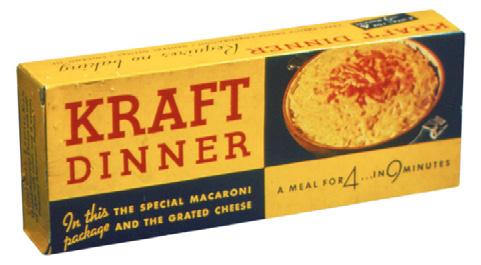
Kraft
The Industrialist
ARROW-CIRCLE-RIGHT James Kraft arrived in Chicago from Canada in the early 1900s; he started buying cheese wholesale and delivering it by horse and wagon to local grocers. But cheese spoiled fast, especially in summer, and Kraft kept watching his inventory go bad.
Kraft developed processed cheese methods that extended shelf life and created a consistent product that could survive shipping, storage and the long journey from factory to grocery shelf. Processed cheese became so associated with Kraft that the name American cheese, which had existed since 1804 to describe any cheese made in America, came to mean his product specifically. The blue box (Kraft Macaroni & Cheese) came later, and it came almost by accident. A salesman named Grant Leslie had been attaching packets of Kraft cheese to boxes of pasta with rubber bands, a makeshift idea to boost pasta sales. Kraft hired him and launched Kraft Macaroni &
Cheese in 1937: a meal for four in nine minutes for 19 cents. Eight million boxes sold in the first year. When World War II brought rationing, two boxes could be purchased for a single blue ration stamp. Fifty million boxes were sold during the war alone.
SPICES AND CONDIMENTS
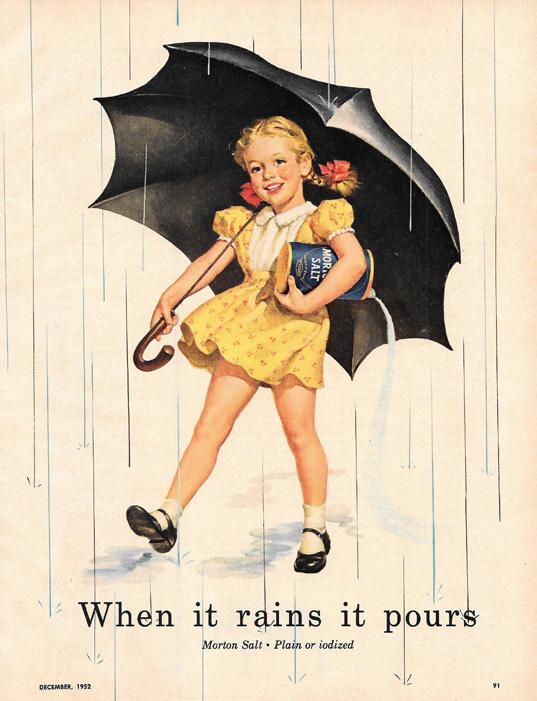
1848 — Morton
Salt A Chicago merchant named Alonzo Richmond started distributing salt from eastern suppliers to the growing Midwest. Joy Morton bought into the business in 1889 and eventually took it over. In 1911 the company solved salt’s age-old tendency to clump in humid weather by adding an anticaking agent. The Morton Salt Girl walking in the rain first appeared on the blue package in 1914, with the slogan “When It Rains It Pours.” She has been updated six times since then. The slogan has never changed.
1868 — Tabasco Edmund McIlhenny created Tabasco on Avery Island, Louisiana, where he aged tabasco peppers with salt and vinegar in small oak barrels, before bottling the sauce in the distinctive small glass bottle with the red cap that has become one of the most recognized packages in the world.
1889 — Zatarain’s Emile Zatarain opened a family grocery in New Orleans where he sold coffee, spices and root beer extract. The company that grew from that store became known for seafood boils, fish fry seasonings, crab boil and rice mixes that helped bring Creole and Cajun cooking to kitchens across America. Most Zatarain’s products are still produced in Gretna, just
across the river from New Orleans.
1889 — McCormick Willoughby McCormick started selling flavor extracts and spices door-todoor in Baltimore, operating out of a single room. As packaged spices became more common in American kitchens, McCormick grew into one of the largest spice companies in the world. Today, McCormick owns French’s Mustard, Frank’s RedHot, Lawry’s, Old Bay and Zatarain’s.
1904 — French’s French’s mustard made its debut at the St. Louis World’s Fair. Its bright yellow color and mild flavor helped popularize a distinctly American style of mustard that replaced the heavier European varieties that had come before it.
1913 — Hellmann’s Richard Hellmann was a German immigrant who sold his mayonnaise at his New York delicatessen. Customers liked it so much he began selling it by the jar. West of the Rockies, the same product is sold as Best Foods.
1917 — Duke’s Mayonnaise Eugenia Duke started selling sandwiches to soldiers training at Camp Sevier in Greenville, South Carolina, and the mayonnaise she made became the reason they kept coming back. After the war, soldiers wrote, begging for jars of it.
1920 — Frank’s RedHot Frank’s RedHot was born in New Iberia, Louisiana, where Jacob Frank of the Frank Tea and Spice Company partnered with Cajun pepper farmer Adam Estilette to develop a cayenne hot sauce using Louisiana-grown peppers aged with vinegar, garlic and spices. The first bottle came to market in 1920. In 1964, the owners of the Anchor Bar in Buffalo, New York used it to make the first Buffalo wings. Frank’s is now owned by McCormick.
1923 — Crystal Hot Sauce Alvin Baumer borrowed money from his future father-in-law to buy a sno-ball syrup company on Tchoupitoulas Street. In a drawer at the shop, he found a hot sauce recipe labeled Crystal Pure. He pivoted from syrups to sauce, which is still made in Louisiana by third-generation family members.
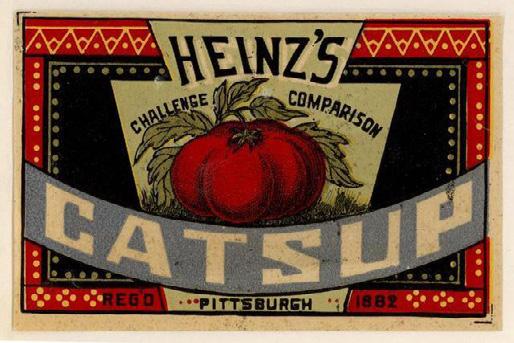
H.J. Heinz
The Bottle
ARROW-CIRCLE-RIGHT At a time when groceries were sold loose from barrels and packed in dark bottles that concealed as much as they revealed, Henry Heinz put his horseradish, his pickles and eventually his ketchup in clear glass. What was inside was the advertisement. Economic turmoil in the 1870s nearly wiped him out. He started over. In 1876, he introduced his tomato catsup, the product that would make his name synonymous with the condiment itself. He changed the spelling to ketchup early on, partly to stand apart from competitors.
IN THE SNACK AISLE
1897 — Jell-O Pearle Wait and his wife May were trying to make their patent medicine business work in LeRoy, New York, when they experimented with combining fruit flavors with powdered gelatin. May named the result Jell-O. Unable to market it themselves, they sold the formula and trademark to a neighbor named Orator Woodward for $450 in 1899.
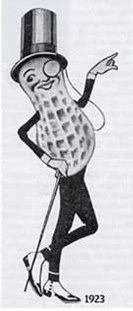
1906 — Planters Italian immigrant Amedeo Obici arrived in America at 11 and worked his way from bellhop to fruit stand vendor before founding Planters in Wilkes-Barre, Pennsylvania. In 1916 he held a contest to design a company logo. Mr. Peanut became one of the most recognized advertising characters in American history.
1914 — Jolly Time Jolly Time was founded in Iowa as America’s first branded popcorn company. It started on the stovetop and was among the first brands to introduce microwave popcorn.
who began selling chips from their home kitchen. In 2011, Utz acquired Zapp’s, founded in Gramercy, Louisiana in 1985.
1923 — Golden Flake Mose Lischkoff and Frank Mosher started cooking potato chips and salted peanuts in the basement of a Birmingham grocery store. They hired a bookkeeper named Helen Friedman; she and her mother eventually bought out Lischkoff’s share. Friedman became the company’s spokesmodel, the Golden Flake Girl; she married Mosher in 1928 and won the company in the divorce six years later. She ran it through the Great Depression and built it into a thriving regional business. Golden Flake is now owned by Utz.
Nabisco
The Package
Before Heinz, ketchup could taste entirely different from one town to the next, one barrel to the next. He didn’t just sell a product. He standardized a flavor, and in doing so taught American consumers what a national brand could mean: the same thing, every time, wherever you were. He opened his factory doors to the public, welcoming visitors onto his production floors at a moment when most Americans were deeply suspicious of how industrial food was made. The floors were clean. The process was visible. The argument was simple: We have nothing to hide. Federal food safety laws would eventually force the rest of the industry to catch up. Heinz had already been there for years.
1917 — MoonPie The MoonPie was created in Chattanooga, Tennessee when a Chattanooga Bakery salesman asked coal miners what kind of snack they wanted. One miner held up his hands in the shape of a circle framing the moon and said he wanted something that big, covered in chocolate. The result was two graham cracker cookies sandwiching a marshmallow filling and dipped in chocolate.
1919 — Hostess Hostess introduced the CupCake in 1919, one of America’s first commercially produced snack cakes. The Twinkie arrived in 1930, when a Hostess manager named James Dewar invented it as a way to use the company’s idle strawberry shortcake pans during the offseason. He filled them with banana cream back then, named them after a billboard he saw for Twinkle Toe Shoes, and sold them two for a nickel.
1921 — Utz Utz was founded as a small potato chip company in Hanover, Pennsylvania by William and Salie Utz,
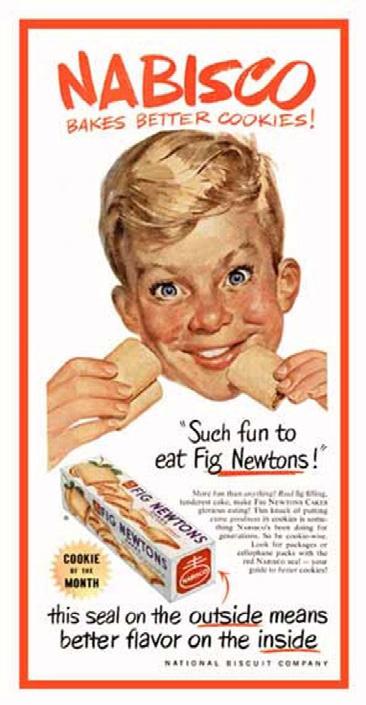
ARROW-CIRCLE-RIGHT The grocers of the late 1800s sold crackers the way they sold everything else: loose, open and exposed, from barrels — which is where the term “cracker barrel” comes from. By the time a biscuit made it to the customer, it was often stale or broken.
The National Biscuit Company (or, NBC then), known today as Nabisco, changed that. They developed a patented moisture-resistant package, a cardboard box lined with waxed paper that kept crackers fresh from factory to pantry shelf.
The first product they packaged was a soda cracker called Uneeda Biscuit. The company backed it with one of the largest advertising campaigns America had ever seen, spending $7 million over the first decade. Rival bakeries were so envious they launched knockoffs called Iwanta, Uwanta and Ulika biscuits. Nabisco prosecuted 249 infringement cases by 1906.
Fig Newtons were invented by Philadelphia baker Charles Roser in 1891 and named not after Isaac Newton but after the town of Newton, Massachusetts.
The Oreo debuted in 1912 and became the best-selling cookie in the world. The company’s Shredded Wheat and Triscuit joined the lineup in 1928, and its Ritz Crackers launched in 1934. Nilla Wafers arrived in 1945 and became the foundation of banana pudding recipes across the South that endure to this day.
The nickname Nabisco had been in common use for decades before the company made it official in 1941, largely to avoid confusion with the newly established National Broadcasting Company, also known as NBC.
FROZEN FOOD
1866 — Breyers William Breyer handcranked his first gallon of ice cream in Philadelphia, selling it to neighbors from his home and later from a horse-drawn wagon that announced its arrival with a large dinner bell. He opened his first shop in 1882, and four more soon after. Breyers is the oldest ice cream manufacturer in the United States.
1907 — Blue Bell The Brenham Creamery Company was founded in Brenham, Texas, a small town northwest of Houston, by a
group of dairy farmers looking for a way to sell their excess cream. They made butter first. Ice cream came in 1911, when the creamery began hand-cranking two gallons a day in a wooden tub filled with ice. Under the Kruse family’s leadership, the company changed its name to Blue Bell in 1930, after the Texas wildflower that blooms across the region every spring. Blue Bell is still made in Brenham, and still family run.
1924 — Stouffer’s Abraham and Lena Stouffer opened a dairy stand in Cleveland’s Arcade Building in 1922, selling buttermilk, sandwiches and Lena’s homemade Dutch apple pie. That pie brought them instant success. In 1924 they opened their first full-service restaurant. The frozen food business began by accident in 1946, when customers at a Cleveland location started asking the manager to freeze their favorite dishes so they could take them home and reheat them later. The frozen food boxes were a supermarket fixture by the early 1960s. Lean Cuisine launched in 1981.
Clarence Birdseye
The Frozen Food Aisle
ARROW-CIRCLE-RIGHT Clarence Birdseye did not invent frozen food. Ice has been preserving food for centuries. What he invented was something more specific and more consequential: the understanding that speed was everything.
Working in Labrador in 1912 to 1915, he watched Arctic fishermen pull fish from frozen water and noticed that
what froze almost instantly in the brutal cold tasted startlingly fresh after thawing. Food frozen slowly did not. He came home with a question nobody in the food industry had thought to ask: What if you could replicate that cold, that fast, at scale?
Slow freezing created large ice crystals that broke down the cellular structure of food. Fast freezing created smaller ones that left it largely intact. The difference on the plate was remarkable.
Most grocery stores didn’t have freezer cases, and most American homes didn’t have refrigerators with proper freezer compartments. The technology had to catch up with the idea. It was World War II that finally accelerated adoption. Tin rationing made canned goods scarce, and with women entering the workforce in large numbers, convenience cooking became a necessity.
Before Birdseye, there was no frozen food aisle. He built it.
Conagra
The
Portfolio
ARROW-CIRCLE-RIGHT In 1919, four Nebraska flour mills consolidated and incorporated as Nebraska Consolidated Mills. In 1971 the company renamed itself Conagra, a name derived from Latin meaning “in partnership with the land.” What followed: Banquet. Hunt’s. Orville Redenbacher’s. Slim Jim. Birds Eye. Duncan Hines. Healthy Choice. Marie Callender’s. Reddi-wip. Swiss Miss.
PAM. One by one, familiar names from American pantries and freezers came under one roof.
IN THE BAKERY
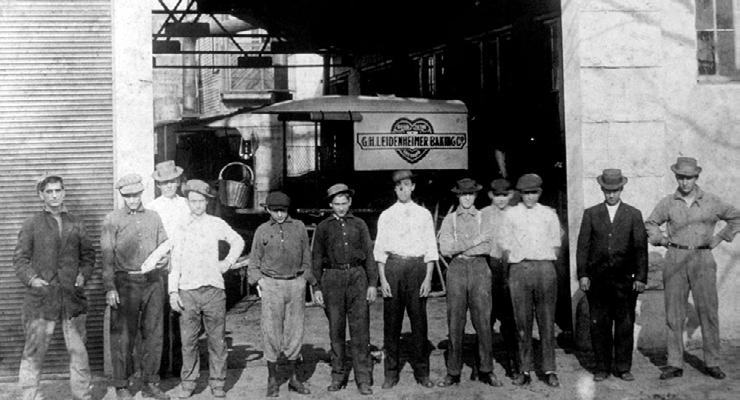
1896 — Leidenheimer George Leidenheimer came to New Orleans from Deidesheim, Germany and opened his original bakery on Dryades Street. He started by making the heavy, dense brown breads of his homeland, but found his market in something lighter. He adapted his technique to produce a French bread with a crackling crust and a soft, airy interior that became the foundation of the New Orleans po-boy. Now in its fifth generation, Leidenheimer is the largest producer of French bread in New Orleans.
1919 — Evangeline Maid Joseph Huval learned to bake bread while manning field ovens for the American Expeditionary Forces in France during World War I. When he came home, he used a $50 military service bonus and a $100 loan from a dentist to open a small bakery in Youngsville. He delivered bread house to house for five cents a loaf. The bakery moved to Lafayette, grew steadily, and in 1937 adopted the Evangeline Maid name, inspired by the Longfellow poem that symbolizes Acadiana. Huval’s daughter Mary Helen Huval Guchereau modeled for the smiling logo that still graces every loaf.
AT THE DELI COUNTER
1870 — Claussen Vegetable farmer Claus Claussen founded his pickle company in Chicago after finding himself with a surplus of cucumbers he could not sell at market.
His solution was a simple brine recipe that produced a fresh, crunchy pickle that was never heated or pasteurized.
1905 — Boar’s Head Frank Brunckhorst, dissatisfied with the quality of hams available in New York, founded Boar’s Head in Brooklyn. The company has been family-owned for five generations.
1908 — Chisesi Philip Chisesi arrived in New Orleans in 1878 and began selling live chickens, rabbits, ducks and turtles from a basket in the French Market. By 1908 the Chisesi family had a saloon and grocery at the corner of St. Philip and Chartres in the French Quarter. They eventually moved out of the Quarter and began smoking their own hams six at a time in a wooden box with wood chips. The iconic teardropshaped VIP Ham was introduced in 1971.
PACKAGED MEATS
1863 — Armour Philip Danforth Armour founded Armour and Company in Chicago and built it into one of the giants of the American meatpacking industry. He famously boasted that he used everything but the squeal. The company had been making soap from slaughterhouse tallow, and eventually its chemists added a germicidal agent to the formula, creating the world’s first antibacterial deodorant soap. They named it Dial, after its promise of round-the-clock protection. The launch advertisement in the Chicago Tribune was printed with scented ink.
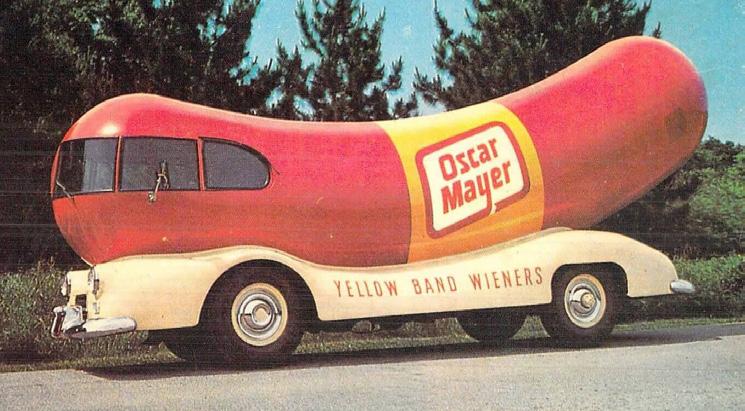
1883 — Oscar Mayer Oscar Mayer came from Bavaria to America at 14 and worked his way up through the stockyards of Philip Armour’s company before opening
his own meat market on the north side of Chicago with his brother Gottfried, a trained sausage maker. Oscar Mayer grew into one of the most recognized brands in American grocery history, known for hot dogs, bologna and the yellow Wienermobile.
Procter & Gamble
The Partnership
ARROW-CIRCLE-RIGHT
Neither man planned to stay in Cincinnati. William Procter, an English candlemaker, stopped there when his first wife fell ill during their journey west in 1832. James Gamble, an Irish soap maker, stopped there when he fell sick as a teenager. The two men met when they fell in love with sisters. Their mutual father-inlaw pointed out that candle making and soap making both required the same primary ingredient — animal fat — and suggested they go into business together.
They started by making candles and soap, selling both throughout the streets of Cincinnati. Ivory soap came in 1879. The soap floated, and customers loved it. Crisco (P&G’s first food product) followed in 1911, putting a factory-made shortening at the center of American baking. Tide launched in 1946 and became the country’s best-selling laundry detergent almost overnight. Crest arrived in 1955 as the first fluoride toothpaste, and Pampers came in 1961.
In 1932, P&G sponsored the first radio serial drama, Ma Perkins, underwritten by Oxydol detergent, to sell soap to American housewives. Other companies followed. The programs became so associated with their sponsors that a new word entered the American language: soap opera.
America’s Hops & Dreams
by David W. Brown
For the 250th anniversary of the United States on July 4, there’s a good chance your family is celebrating with a backyard barbecue. And where there’s a grill, there’s probably a cold beer waiting in an ice chest nearby. This year more than most, that’s the most appropriate way to mark the occasion, because without beer, there wouldn’t be an Independence Day.
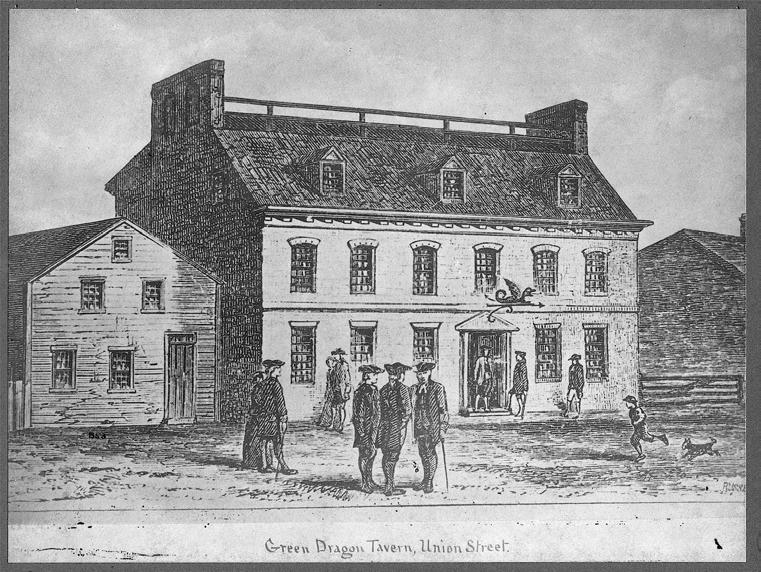
The story of America is inseparable from that of beer, and has been from the very beginning. The United States may have been born in Independence Hall, but the idea of the United States was born in the unofficial town square of every community in the colonies: the local tavern.
In the late 1700s, taverns were more than places to drink. They were what we call third places today: not where you live or work, but where you come together with friends and strangers to talk and interact. At colonial taverns, people from very different walks of life — university radicals, landowners, laborers — would meet casually, sit across from each other and hoist glasses. Conversation inevitably turned to the Crown and the colonies, and the realization that something was terribly wrong. And over beer, you had a lot of people thinking maybe they could do something about it.
A tavern gave us the Boston Tea Party. In 1773, the British Parliament passed the Tea Act — a double insult to colonists, because it undermined local businesses (it gave a tea monopoly to the East India Company) and kept the tea tax in place — an example of taxation without representation. In response, under the cover of night, a motley group of
costumed colonists sneaked onto a merchant ship and tossed hundreds of chests of tea into Boston Harbor.
It feels like the sort of plan hatched by people who’d had one beer too many. It’s only fitting that the Boston Tea Party was planned at the Green Dragon Tavern near Boston Harbor. It was one of many schemes devised there by the Sons of Liberty, which was a clandestine, loosely affiliated activist network. Historians would later call the Green Dragon Tavern the “Headquarters of the Revolution.”
We all know about Paul Revere’s famous midnight ride to Lexington. But where did the ride start? The Green Dragon Tavern, of course.
And notably, the founder of the Sons of Liberty was none other than Samuel Adams, eventual namesake of a celebrated beer, but who at the time ran a family business making malt for brewing.
The Green Dragon Tavern wasn’t the only tavern of influence in the colonies. In Virginia, when the royal governor dissolved the legislature, representatives convened instead at Raleigh Tavern in Williamsburg. That tavern was later the place where Thomas Jefferson, Patrick Henry and others met and conspired to more formally bring the colonies together.
In New York City, meanwhile, there was Fraunces Tavern: another hotbed of sedition and the place where General George Washington gave a farewell speech to his officers in the Continental Army. “With a heart full of love and gratitude,” he said, “I now take leave of you.” Those words, over beer, changed the world. Washington had just defeated the most powerful empire in the world. It was unprecedented for someone to voluntarily surrender absolute power. The tavern set the stage for American democracy. (That wasn’t the only ending Fraunces Tavern saw; Alexander Hamilton and Aaron Burr dined there one week before their famous duel.)
BEER IN THE NEW NATION
Fifty years later, the United States had come into its own as an independent nation of two dozen states. There would be growing pains, of course. Rather than being colonized by Europe, the young country was itself expanding westward, building colonies of its own. The industrial revolution was making its way to American shores. And though nobody knew it at the time, we would one day call this the Antebellum Period. A war was brewing between the states.
But that wasn’t the only thing brewing. In 1829, a new beer soon appeared on the scene, created by a German immigrant named David Gottlieb Jüngling. When he settled in Pennsylvania, however, he changed the spelling of his name. It would later go on the the beer he created: Yuengling.
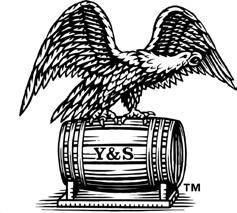
That family business is still in operation today, and Yuengling is the oldest brewing company in the United States. The famed eagle on every can of Yuengling is a symbol of persistence. The beer would survive the war, its aftermath, Prohibition, the Depression, more war yet and several shifts in American drinking habits.
And Yuengling wasn’t the only German who would leave a mark on American beer. By the mid-19th century, Europe was awash in uprisings, and German immigrants in large numbers made their way here in search of a better life. Among them was George Schneider, who arrived and founded Bavarian
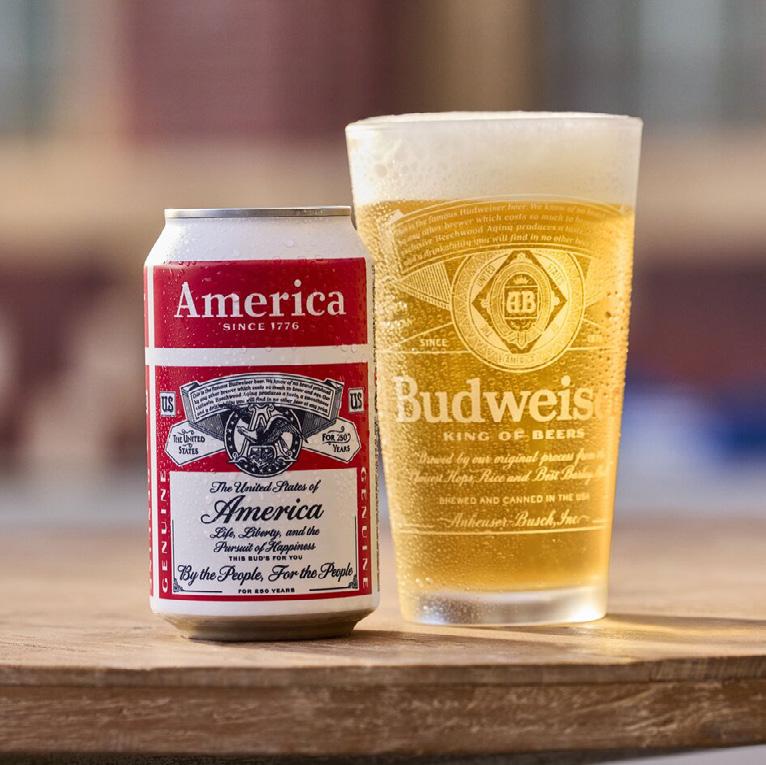
Brewery in St. Louis, and Eberhard Anheuser, who would later buy it. Another immigrant, Adolphus Busch—Anheuser’s son-in-law— would also get in on the action, eventually forming Anheuser-Busch. Their most famous product, of course, was a beer named for the city of Budweis.
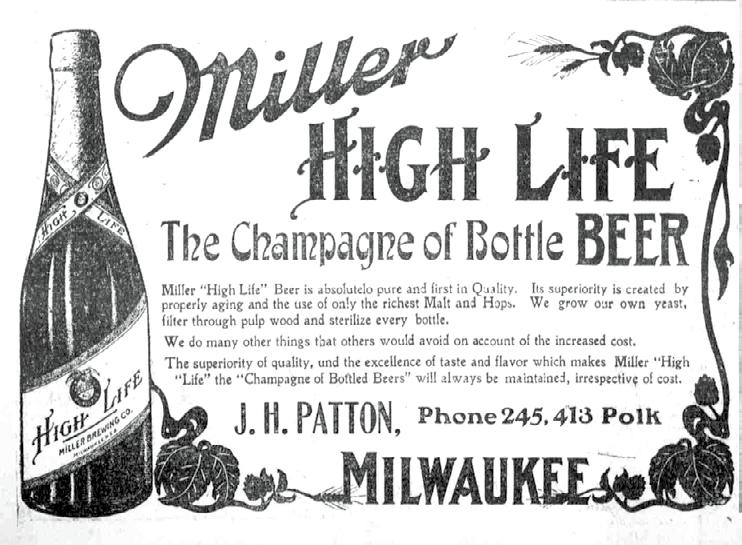
Meanwhile, German brewer Frederick John Miller arrived in New Orleans with his family, eventually settling in Milwaukee. Miller Brewing Company was born, and remained a family business for the next century.
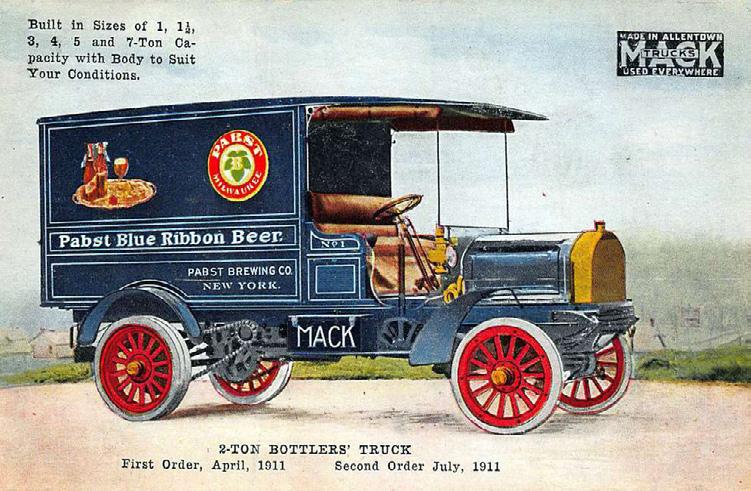
The list keeps going. Another immigrant who made his mark was brewer Jacob Best, who settled in Milwaukee and founded Empire Brewery in 1844 with his sons. The first year, they made 300 barrels of beer — a triumph! By 1864, Jacob’s granddaughter and her husband, Frederick Pabst, had bought half the company. Less than a decade later, with Pabst at the helm, the company was making 100,000 barrels of beer per year. The company was eventually named after him.
Pabst is best known for a blue ribbon, and even that is a slice of American history. At the precipice of the 20th century, the United States had been through a lot: a Civil War, Reconstruction, Chicago burned to the ground and rebuilt, and the settlement of the American frontier. To mark a new era in American history, while also celebrating the 400th anniversary of the discovery of the New World, organizers formed the World’s Columbian Exposition of 1893 — better known as the Chicago World’s Fair. Pabst had long been tying blue ribbons around bottles, touting the many awards its beer had garnered. But
after winning at the World’s Fair, the company decided to make things official, and renamed the beer Pabst Blue Ribbon.
Meanwhile, German immigration continued, and beer benefitted mightily.
A Prussian immigrant named Jacob Mathias Leinenkugel arrived on our shores and partnered with a man named John Miller — no relation to Frederick John Miller — to found Leinenkugel’s in Chippewa Falls, Wisconsin. Leinenkugel had brought a beer formula from Germany, and it would become the brewery’s most popular beer. You can still find it on shelves today.
A couple years after Leinenkugel arrived, an undocumented immigrant named Adolph Kuhrs arrived in the United States after stowing away on a ship. He changed his name to Coors and found work as a laborer, and later, a brewer. (He had learned to brew beer in Germany as a child. To support himself after being orphaned, he took an apprenticeship at a brewery.) Coors eventually moved to Golden, Colorado, and founded what would eventually be called Coors Brewing Company.
BEER COMES HOME
The 1910s and ’20s were unkind to American beer, in part due to anti-German sentiment during the first World War. And once breweries weathered that storm, Prohibition arrived in the United States and alcohol was outlawed,
disastrously. In that typically American way, beer companies had to reinvent themselves. Pabst became a cheese company. Yuengling started making ice cream. Coors diversified: They got into ceramics and also established a malted milk division. They became the major supplier for an upstart candy company called Mars.
Once Prohibition ended in 1933, American beer had to find new footing. Two innovations would soon transform the industry: the invention of the aluminum beer can, and the proliferation of electric refrigerators in kitchens across America. Suddenly, beer was no longer something that came from wooden kegs. A cold beer became a beverage you could drink at home. It was the beginning of the end for the local tavern.
Beer also became something you could drink in the Army because, after the onset of World War II, the U.S. government became a big buyer of beer for our boys overseas. Nobody would argue that it was the best beer, however. To support the war effort, the U.S. government strictly rationed grain supplies, which meant brewers had to change their formulas to incorporate more corn and rice in their beers. They were, simultaneously, industrializing production. All this led to a diminished flavor in American beer — a reputation it has yet to shake fully.
But that’s OK, because American beer marches on. Today, the story of beer in modern America is being written with the same spirit that defines our nation. It’s being de -
fined not by monolithic beer empires, but by individualists from sea to sea who looked at the bounty of our nation — our spring waters and fields of grains and hops — and decided to blaze new trails.
A grassroots brewing culture first emerged in the United States in the late 1970s, with homebrewers seeking to restore the luster of once-proud American beer. The craft brewing movement remains in full force today. It’s represented by beers being made as far away as Alaska, and as nearby as Abita Springs.
And one of the first, and most popular craft beers of all time, began as a microbrew in a Massachusetts brewer’s home. That beer is, fittingly enough, Samuel Adams.
So while standing over your grill in celebration of 250 years of the U.S.A., it’s worth taking a moment to recognize that beer on ice. Whether the label says Yuengling, Budweiser, Leinenkugel’s, Coors or Miller, we owe it a lot. It’s not only making the party better: It’s a big reason for the party in the first place.
“
Just like Marcy claims lineage to the Nathan’s hot dog empire, my family has its own dubious culinary mythology: we once held a stake in Pabst Blue Ribbon... and lost it in a poker game.
Whether it’s true or just a story that got better with each retelling, I couldn’t say. But it was my go-to piece of latenight trivia at Snake & Jake’s in college, somewhere around 2am with a warm PBR in hand, which is exactly when a story like that deserves to be told. ”
— Eliza Schulze, Art Director
PURPLE HAZE Mountains Majesties
by David W. Brown
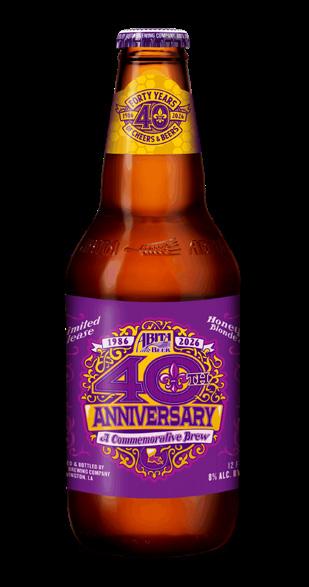
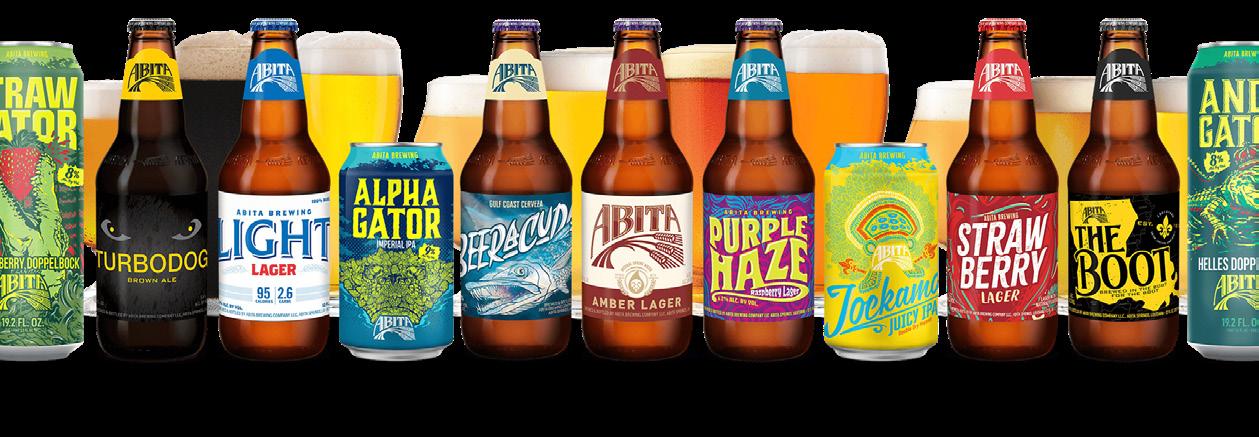
This year, Abita Brewing Company is celebrating its 40th anniversary, and they’ve certainly come a long way since opening their doors. “The early days were exciting and nerve-racking all at the same time,” said Heidi Guerra, Abita Brewing Company’s vice president of marketing. The brewery in 1986 was small, at the same location as today’s Abita Brew Pub. That year, they only put out 1,500 barrels of beer, mostly for local residents in the Abita Springs and Covington area, as well as friends, family and a few curious drinkers.
It’s hard to imagine a time before craft microbreweries dominated the American beer landscape. But 40 years ago, drinking beer meant drinking national beers. Small, community breweries like Abita changed that, reconnecting people with the idea that beer could reflect where it came from. “I don’t think people really understood what this new beer was, except that it was different,” said Guerra. “It had a fuller flavor than traditional beer that was out at the time.”
Abita Brewing Company was a pioneer in the nascent American craft beer movement that championed small-batch, handcrafted beers. When Abita was founded, there were fewer than 100 breweries in the United States. Today, there are nearly 10,000, and Abita is the oldest on the Gulf Coast. They still make their beer from the spring water of an underground river called the Southern Hills Aquifer. But these days, they’re making a lot more of it: more than 150,000 barrels annually.
One reason the craft movement was such a stunning success is that microbreweries didn’t have to cater to national tastes. They needed only to navigate a beer drinker’s expectations of what beer was “supposed” to taste like, and then gradually introduce different styles and flavors. Abita’s first beer, for example, was a lager called Golden. It was created to be approachable and easy-drinking, with a little more flavor than the mainstream beers of the time. The brewery’s breakthrough was an amber beer called, fittingly, Amber. These days, amber beers are everywhere, but back then, it was something new to American drinkers. “It had more body, a malt character, and it was caramel in color, without being seen as intimidating,” said Guerra. People couldn’t get enough of it.
Because craft brews are liberated from having to please everyone everywhere, brewers can be nimble and are able to try new things. Sometimes it’s something as small as a new bottle color. Sometimes it’s a completely unexpected flavor. Drinkers in the South learned this when they first tried Abita’s Purple Haze. “People were intrigued to find fruit in beer,” Guerra explained. Then they started seeking it out. “It resonated beyond Louisiana, on a national level. People may not recognize the Abita Beer name, but if you said Purple Haze, it is an ‘oh yeah’ moment.”
Forty years is a long time — especially in the craft beer world. And though the beers of Abita Brewing Company are available across the country, Guerra says the company’s local fans are still their North Star. “We are proud of our beers, but even more proud that we built more than just a brand,” she said. “We are part of the Louisiana culture and community.”
How Bill Goldring Helped Build America’s Bourbon Industry
by David W. Brown, photos by Romney Caruso
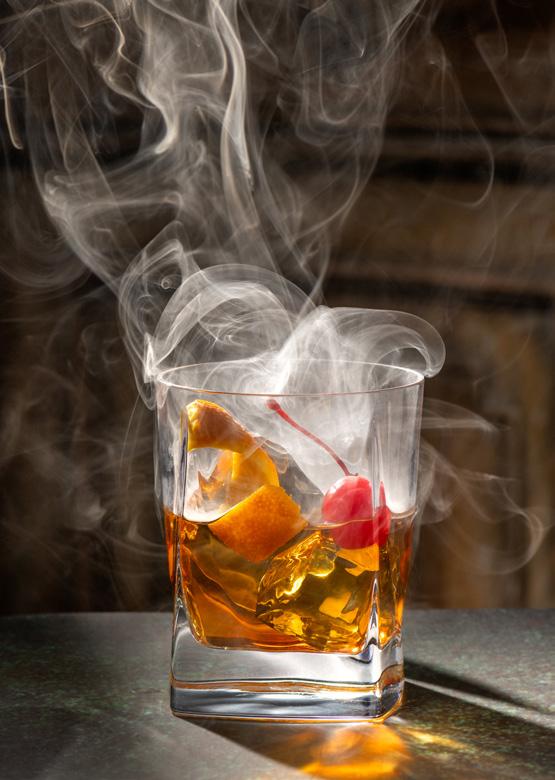
When it comes to alcoholic beverages, there’s nothing more American than bourbon whiskey. You can make beer and wine anywhere in the world. You can distill gin on any patch of ground with water and juniper berries. But by law, you can only make bourbon in one place on planet Earth: the United States of America. There are even legal standards for how to do it: with at least 51% corn, and stored in new barrels made of charred white oak, with absolutely no artificial flavors or colors. Which means, when you taste bourbon, you’re tasting bourbon. That kind of process requires patience, however. It takes several years to mature a decent bourbon.
“Clear corn whiskey,” as it was once called, emerged at the turn of the 19th century on the frontier of present-day Kentucky. And though the Bluegrass State still produces 95% of all bourbon on the market, the spirit also has a distinctly New Orleans legacy.
There’s the name, to start with. Some historians question whether we call it bourbon because of Bourbon County in Kentucky, or because of Bourbon Street in the French Quarter. By the mid-1800s, New Orleans was one of the three biggest cities in the United States — and arguably the most important. As a saltwater port fed by a freshwater river, New Orleans was a nexus for much of the country and all of the world. It was an obvious market for any distillery.
According to one theory, in order to appeal to New Orleans sensibilities, distillers in Louisville shipped their whiskey in charred barrels, giving it characteristics of cognac, a French brandy. The resulting taste and aroma proved irresistible — and, some suspect, it wasn’t long before people who arrived in New Orleans asked for that whiskey sold on Bourbon Street, or “that Bourbon whiskey.”
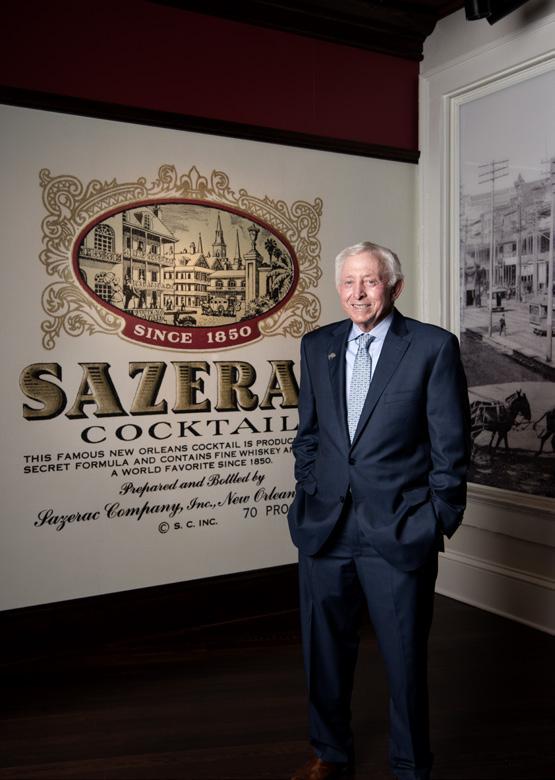
Or maybe it’s just a coincidence! We might never solve that mystery, but one thing we know for sure is the name of the largest privately owned American bourbon company today: It is Sazerac Co., headquartered in Metairie and led by local entrepreneur and philanthropist William Goldring. Sazerac is one of the oldest family-owned businesses in the New Orleans metropolitan area, and one of the most famous
Louisiana companies in the world. Their portfolio includes everything from Fireball to George T. Stagg. It would be quicker to list the liquors and labels that Sazerac doesn’t produce, and the markets they haven’t revolutionized.
And in the bourbon world, Sazerac Co. is king. That was Goldring’s doing, and when he moved into bourbon in 1991, some people thought he was crazy. At the time, bourbon sales were at historic lows. Distillers had all but given up on the American spirit. But Goldring knew that consumer tastes change, and had a hunch that the complexity and profile of bourbon made it ideal for a comeback.
So he purchased Ancient Age, a decaying distillery that had been celebrated in its heyday, but was now down to a couple dozen employees on the Kentucky River. He rechristened it Buffalo Trace Distillery, and Sazerac Co. then spent nearly a decade revitalizing the facility and its products. It wasn’t long before everyone realized that Goldring was right.
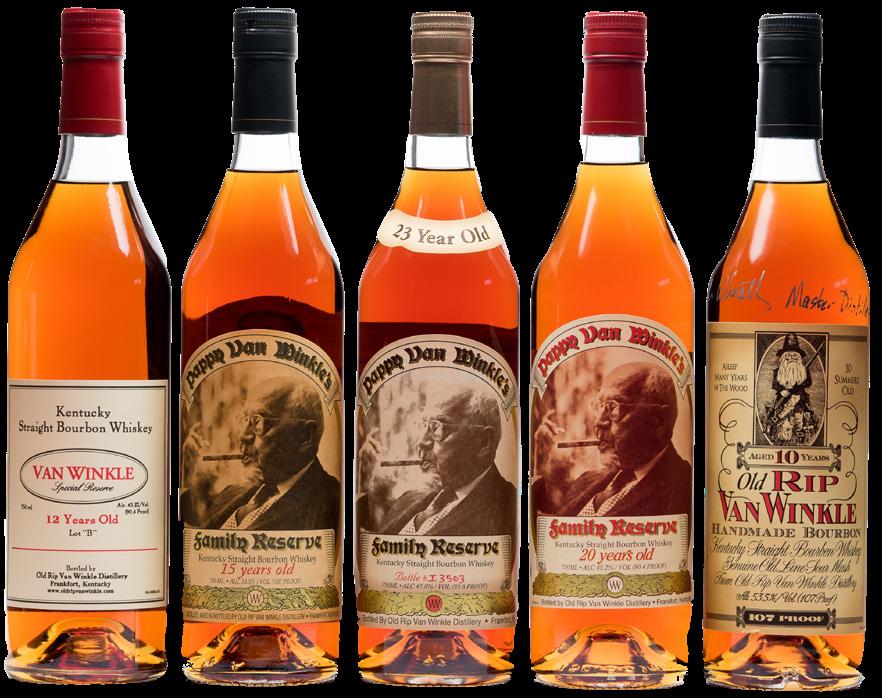
Today, Buffalo Trace Distillery is the most award-winning bourbon distillery in the world, and is responsible for turbocharging bourbon as a cultural force. The company now employs thousands, at a facility that stretches for hundreds of acres. Its lines include every iconic brand in bourbon: Buffalo Trace, Benchmark, W.L. Weller, Eagle Rare, E.H. Taylor, Zackariah Harris, Pappy Van Winkle and Elmer T. Lee. Far from its origins as an improvised whiskey made by frontiersmen on the American frontier, bourbon today is a symbol of sophistication.
Buffalo Trace Distillery in Kentucky is the oldest continuously operating distillery in the U.S., but Sazerac’s headquarters is right here in Louisiana. Which is just as it should be! For centuries, the Gulf Coast has been teaching the world how to drink. Naturally, we want to make sure they’re drinking the good stuff.
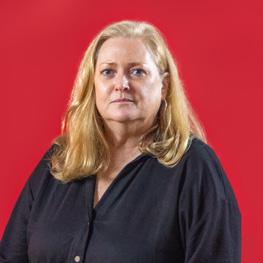
“Sazerac’s history and heritage are woven into the story of American whiskey, and bourbon remains one of the most important categories in our stores. Our customers appreciate great bourbon, and we're fortunate to work with a partner that helps us offer both legendary brands and exciting new releases.”
— Julie Joy, Beer, Wine & Spirits Director
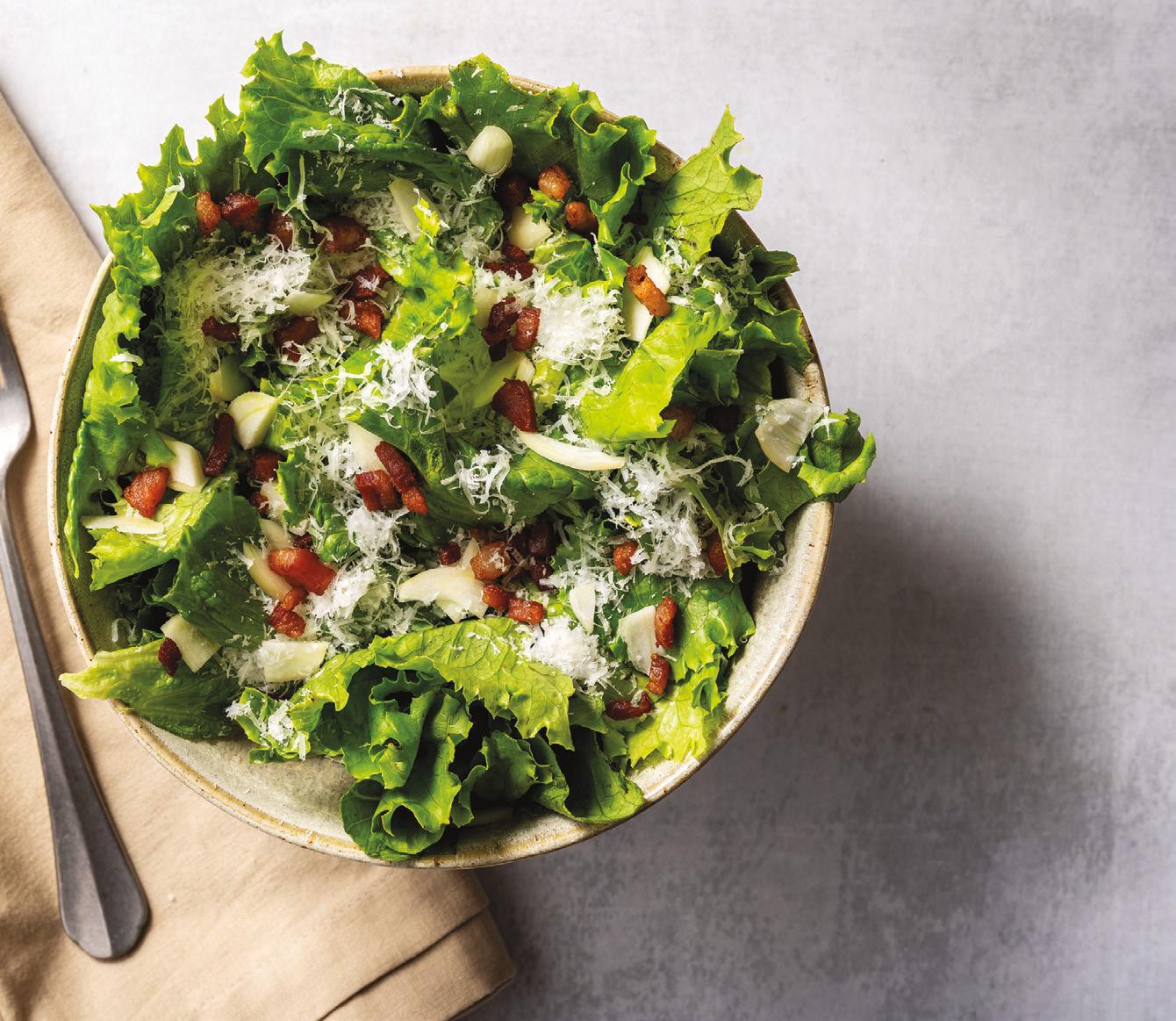
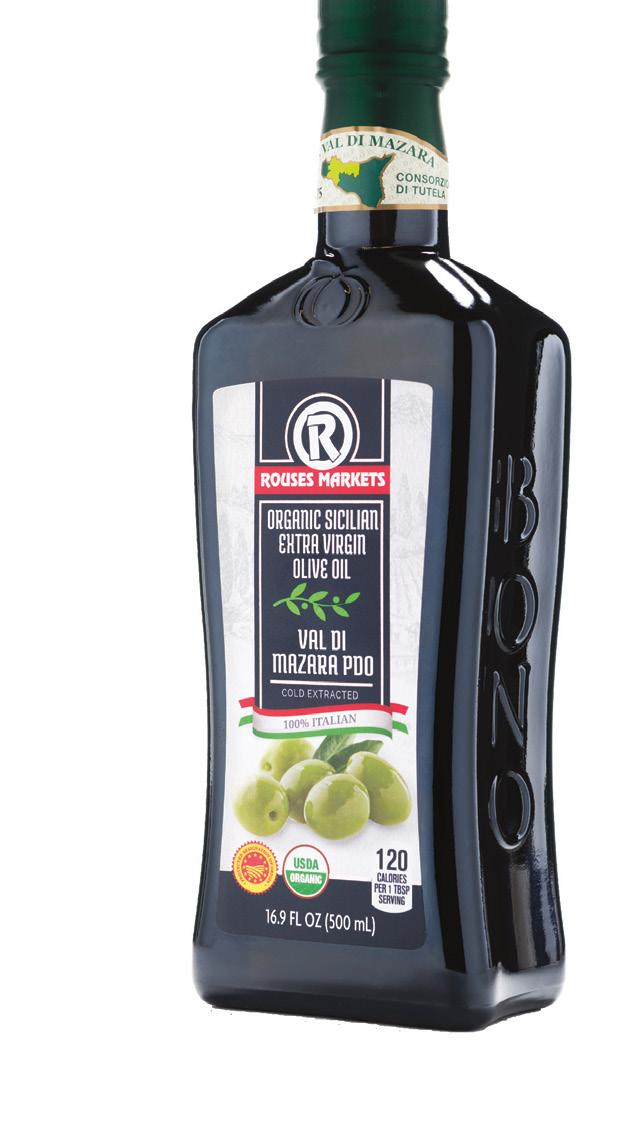
L'Insalata Perfetta! the perfect summer salad.
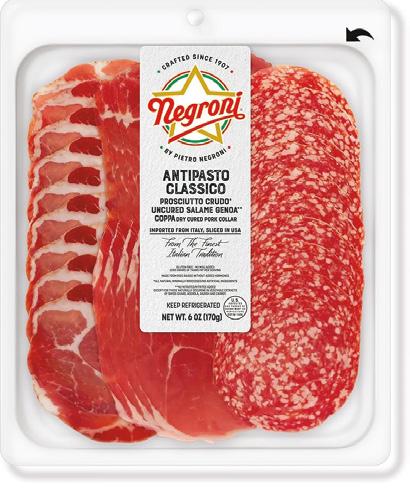
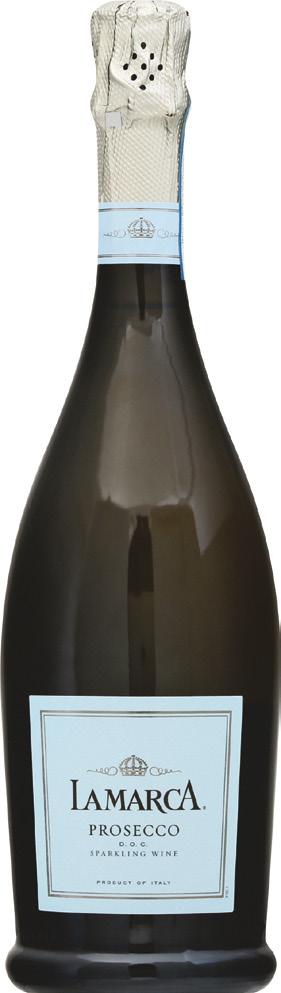
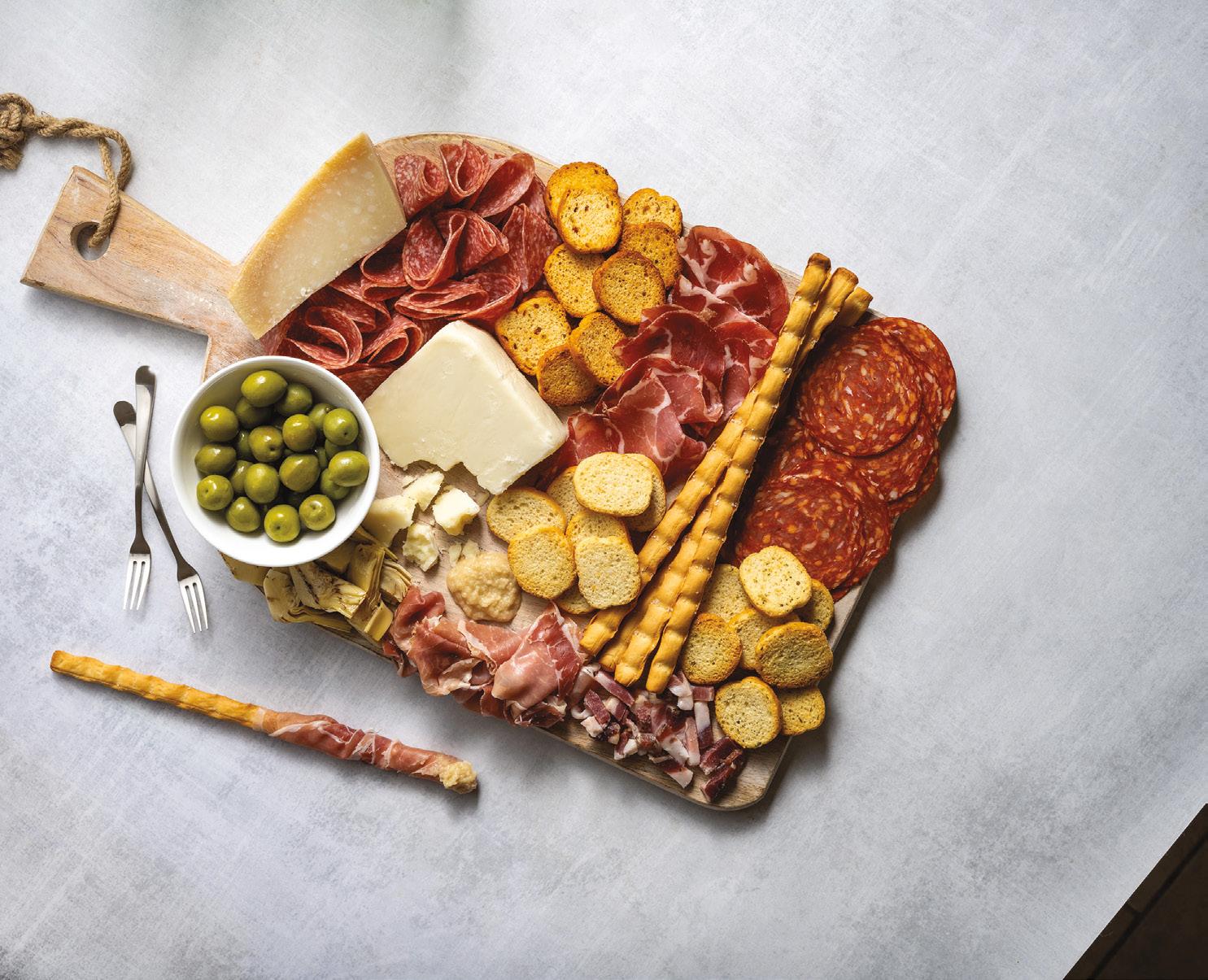
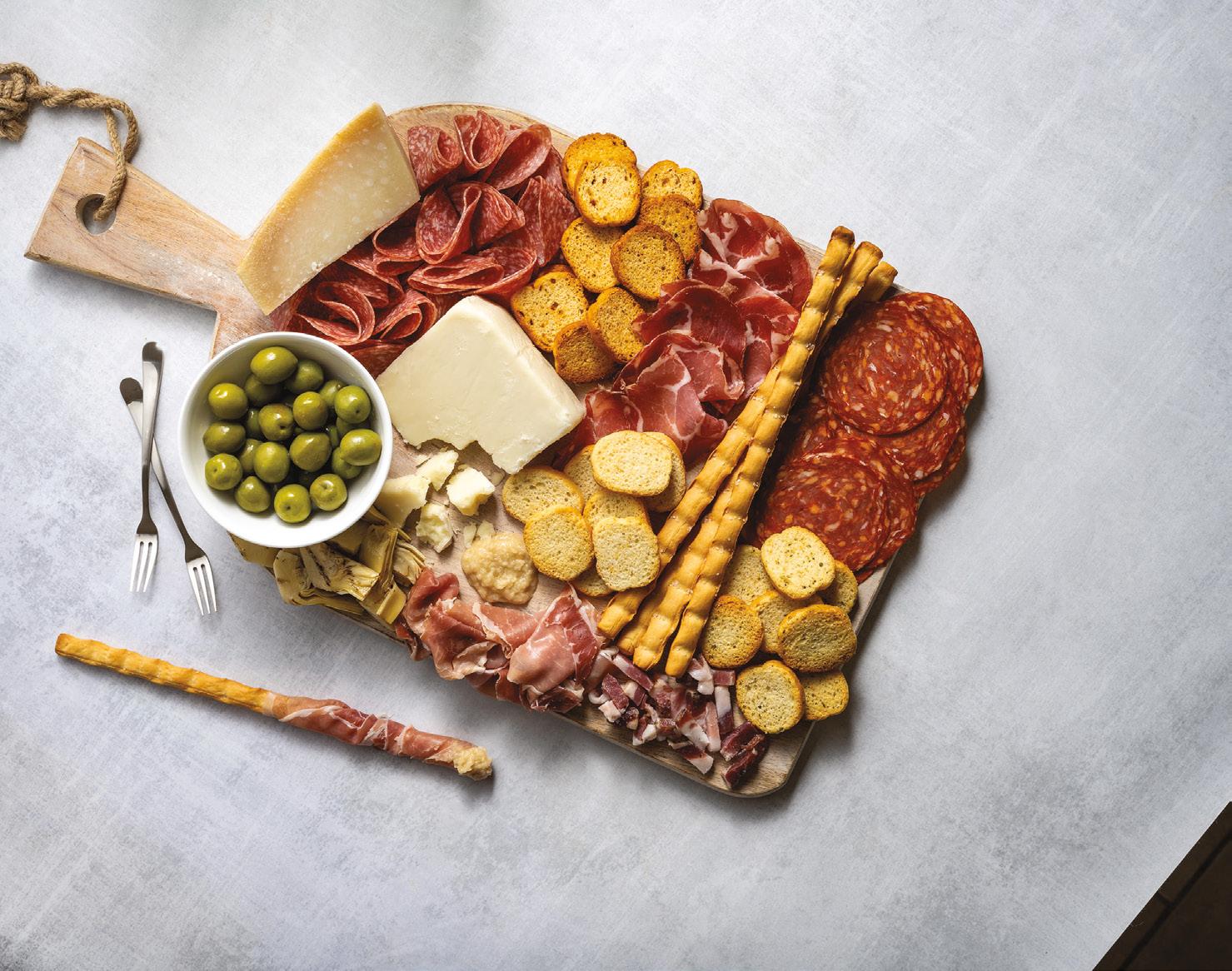
Make the perfect summer salad with authentic Italian cheese and cured meats, sourced in Italy, and our award-winning Italian olive oil. Pairs beautifully with our Italian wines .
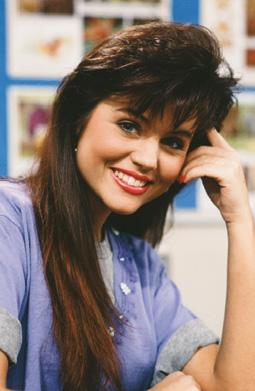
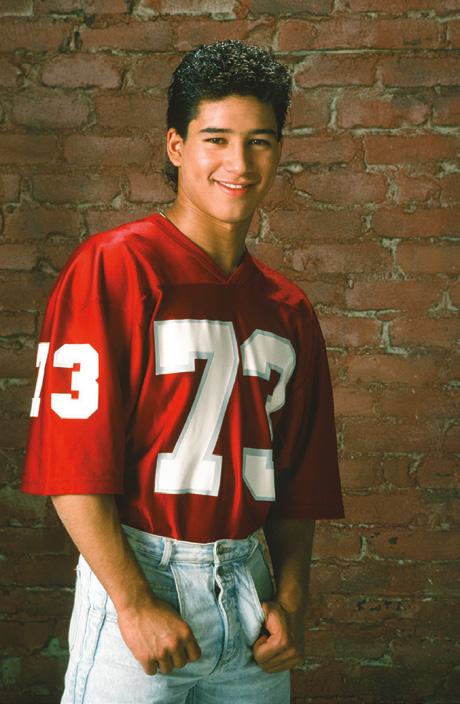
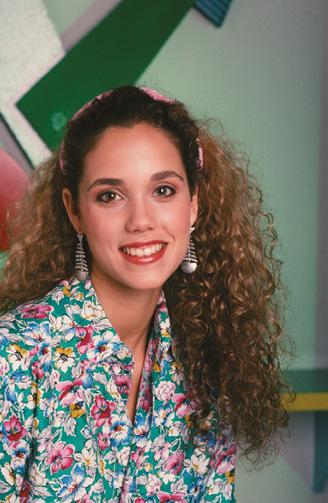
ZACK
JESSIE
KELLY
Who Left the Dogs Out?
by David W. Brown, photos by Romney Caruso
Recently, conversations in Louisiana got heated when local press and social media converged on a single, pressing, hot-button issue: What’s going on with the chili dogs in New Iberia?
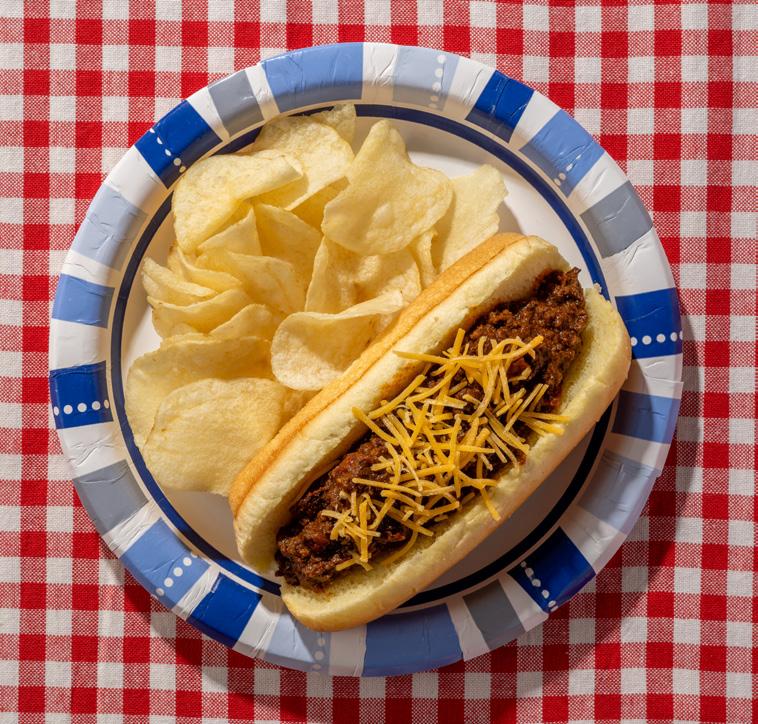
Apparently — and I feel obliged to include a trigger warning here — what some people in New Iberia call a “chili dog” does not include the hot dog It’s just a hot dog bun brimming with chili. When word of the chili dog debate reached Rouses magazine, of course the person they would ask to write about it is me, a glutenfree vegetarian.
My first question was whether this was even true. I reached out to DJ Digital, morning show host on Hot 107.9 FM in Acadiana. He had discussed the topic with his listeners — and did they ever have some strong opinions. “They chose violence,” he said.
“I thought it might be a culinary Mandela Effect of local proportions. Some people said they live in New Iberia and have never heard of this. Others said, ‘Oh this is totally a thing.’ There’s just enough doubt that you can chalk it up to myth. But there’s just enough truth that people get really upset about it.”
Years ago, said Mr. Digital, there was a place in New Iberia called Freez-O that did indeed serve a hot dog-less chili dog. He even ate there as a child (though he couldn’t specifically recall whether there was a hot dog twixt the chili and bun).
His own sleuthing on something current turned up a snowball stand in New Iberia called Cool Scene. “It’s a snowball stand that serves everything unhealthy you can think of. I looked them up and, sure enough, they have on their menu ‘hot dog with chili,’ and right below it, ‘chili dog (no wiener).’”
He paused. “That’s the only proof there is,” he said, solemnly, before adding: “And for some reason, they’re both $5.80.”
When he posted the question to Facebook, the responses were all over the place. “This is the longest running debate in Acadiana history, aside from tomatoes in a gumbo,”
wrote one person. And for every commenter who found the very notion of a hot dog-less chili dog absurd, there was someone else saying that they learned the hard way that in New Iberia, you have to order it “hot dog, add chili.” (Added another: “I don’t need no dog on a bun when I already got that dog in me.”)
The issue troubled me. When I went to bed that night, I spent eight hours staring at the ceiling. Chili dog. Chili dog. Chili dog.
What do we even mean when we say “hot dog”? Everyone would agree that a hot dog is a sausage-like meat resting in a hot dog bun. But is a “hot dog” not also the meat it -
self? If you made a shopping list, surely you would list both “hot dogs” and “hot dog buns” — two separate items.
Which means you would buy hot dogs to make hot dogs.
I could think of no other food like that. You buy taco shells to make tacos. Only a psychopath would say “buy tacos” meaning the shells alone. You buy ground beef to make a hamburger. Yes, you could buy “hamburger meat,” but you’re still specifying the meat as a constituent of the finished product. A hot dog is somehow the part, and the sum of its parts.
But a chili dog without the dog… We
know what chili is, but what is the dog? As a literal matter, it’s not made of dog. I considered other bread-based foods. What is a sandwich? It’s two slices of bread with a filling that could be just about anything. Peanut butter & jelly is worlds apart from tuna salad, but they’re still both sandwiches. It’s the bread that matters most.
Perhaps — and here I felt I was really onto something — in New Iberia’s reckoning, a “dog” is something similar. Perhaps a “dog” is a type of food whose defining characteristic is the hot dog bun itself. There’s no other name for a hot dog bun, after all. (I doublechecked.) Bunny, Wonder, Pepperidge Farm, King’s Hawaiian: Every brand on the shelf described their hot dog buns as “hot dog buns,” specifically.
The more I thought about it, the more certain I was that the “dog” in a New Iberian chili dog is the bread. Because hot dogs (the meat, not the finished product; see — this is confusing!) have all sorts of names: wieners and frankfurters and franks and so on. But hot dog buns are precisely one thing. Well, there you have it!
Reader, I regret to inform you that New Iberia chili dogs are not served on hot dog buns, but rather, use French bread. I gave up, lest I descended further into madness.
“It’s one of those stories that people keep rediscovering once a year. Hey, there’s a place called New Iberia, and they make chili dogs without the hot dog,” DJ Digital had told me. Ultimately, I came away with few answers about the New Iberian chili dog. Perhaps when the world discovers the story again next year, I’ll have better luck.
Lucky Dogs
ARROW-CIRCLE-RIGHT“No one respects hot dog vendors more than I,” proclaims Ignatius J. Reilly. “They perform one of our society’s few worthwhile services.” The protagonist of John Kennedy Toole’s Pulitzer Prizewinning novel A Confederacy of Dunces dons a red sateen pirate’s scarf and a “large novelty store hoop of an earring” while selling frankfurters in the French Quarter. A worthwhile service indeed — even if his mother doesn’t relish his work as a “weenie man.”
Spend enough time in the Quarter and you’ll get Lucky. The all-beef hot dogs are served on a steamed bun and topped with your choice of mustard, ketchup, chili, onions and relish. It’s a late-night street food classic — quick, hot and just what you want while walking the streets, especially after indulging in too many libations.
“I
Real-life “weenie men” have been rolling the streets of the Vieux Carré since about 1948 but they’ve worked for Lucky Dogs, not Toole’s fictional Paradise Vendors. Their signature stainless steel hot dog-shaped pushcarts have become a French Quarter fixture, and many of the men operating them are as colorful as Ignatius himself.
The business was founded by the Loyacano brothers, Steve and Erasmus, known as Joe. “Most people’s attention was attracted by the carts,” Steve told The Times-Picayune in 1981, “but I’d like to think we put out a good product too.”
As proof of its iconic status, that product is now available not just in the French Quarter but at Armstrong International, Caesars casino, LSU’s Tiger Stadium and at the Fair Grounds during Jazz Fest. Dominic Massa
am not from New Iberia, so I may not have a dog in this fight, but I did grow up eating hot dogs, chili dogs or chili buns in Thibodaux. To be clear, a chili dog in Thibodaux is bun + hot dog + chili (no beans); and a chili bun is chili (still no beans) on a hot dog bun, and is dog-free. All three options are delicious, but the designation of dog or no dog is important information to have.”
Ali Rouse Royster
CHILI DOG CHILI
Yield: About 3 cups (enough for 10-12 hot dogs) Serve over a hot dog with mustard and chopped onions, and add cheese sauce or shredded cheese.
WHAT YOU WILL NEED :
1 (16-ounce) package Chisesi’s Pride Schott’s Beef Chili
1 (8-ounce) can tomato sauce
1 (10-ounce) can RO*TEL Diced Tomatoes & Green Chilies
HOW TO PREP :
Cook the chili meat in a medium saucepan over medium heat, breaking it apart with a spoon as it cooks. Stir in the tomato sauce and and RO*TEL, and simmer 10-15 minutes, until thick but “spoonable.”
Spoon chili over hot dog — or skip the hot dog altogether — and pile it into a soft bun.
"Most chili dog chili is beanless. But if I'm making chili, even for a hot dog, it's got beans in it. I'll share my full recipe in the next issue of our magazine, Friday Night Bites, out this fall."
– Donny Rouse,
CEO
Dew
Drop
Inn & Cammie’s Old Dutch Ice Cream Shoppe
ARROW-CIRCLE-RIGHT If you grew up in Mobile, Alabama, you know the Dew Drop Inn. The old building with the wooden sign out front, nestled in the greenery on Old Shell Road, has been a fixture in this city for over 100 years. I came here as a kid with my family, and the wooden booths seemed enormous back then.
On a recent visit, we slid into a corner booth dedicated to Audrey McLemore on her 88th birthday, the table covered in ads from local businesses. The woodpaneled walls looked exactly the same as I remembered. The booths just seemed a little shorter.
George L. Widney opened the Dew Drop Inn in 1924 as a sandwich shop and introduced Mobile to the hot dog, and he was proclaimed “Hot Dog King” by the Mobile Press-Register. So you have to get the hot dog.
The world-famous Dew Drop Inn Hot Dog comes with chili, sauerkraut, mustard, ketchup and a pickle slice. We also got a half-order of fries and a half-order of onion rings, and the Jalapeño Red Pepper Cheese Curds turned out to be the surprise of the meal. If you haven’t had
them before, think crispy fried bites of fresh cheddar with a warm, melty center. Additionally, the service was quick and friendly.
Next, we went to Cammie’s Old Dutch Ice Cream Shoppe, another Mobile institution just down Old Shell Road.
My husband’s grandmother used to bring him here for a chocolate milkshake (she always got the banana split). When Mickey and I were dating at Murphy High School, he brought me here too. I fell in love with him — and the place.
Now we bring our kids. There’s a wraparound counter, but we always take one of the old metal tables and chairs. They have plenty of flavors, but like my husband, I can never get past the chocolate milkshake with whipped cream. It comes in a tall soda glass set on a doily, and they bring out the metal mixing cup, which has enough left to fill your glass a second time. Maybe one day I’ll try the banana split.
Stephanie Hopkins, Senior Graphic Designer
Photos courtesy of Instagram
My Country, ’Tis of Sweet
by Marcelle Bienvenu
“Ice Cream” or “I Scream, You Scream, We All Scream for Ice Cream” is a popular song, first published in 1927 with words and music by Howard Johnson, Billy Moll and Robert A. King.
After an initial success as a late 1920s novelty song, the tune became a traditional jazz standard while the refrain “I Scream, You Scream, We All Scream for Ice Cream” has remained a part of popular culture even without the rest of the song. On January 1, 2023, the song entered the public domain.
Making homemade ice cream has been a summertime ritual since I was a youngster. Usually it was plain vanilla (which was fine with me) but sometimes handpicked blackberries or sweet Ruston peaches from North Louisiana were added. Yes, back then we used a hand-cranked ice cream maker, which entailed surrounding the container in the bucket with crushed ice and plenty of ice cream salt, a coarsely ground salt that results in more rapid cooling at lower temperatures than what’s possible with ice alone. (I still have a couple of boxes in my pantry for old time’s sake.)
Now I have a countertop electric ice cream maker that makes it so much easier to use.
MAMA’S ICE CREAM
Makes about 1 quart
Notes: For a special treat, rather than adding traditional fruits, add 1 cup of mashed ripe avocados and ¼ cup fresh lime juice. Avocado ice cream was often served at Commander’s Palace on St. Patrick’s Day at Ella Brennan’s request. To prevent it from becoming hard-frozen, soak small chunks of the fruit in bourbon, rum or vodka for about 20 minutes before adding fruit to the ice cream mixture.
WHAT YOU WILL NEED :
6 eggs, beaten
4 cups milk
1 cup sugar
1 tablespoon vanilla extract
2 cups chopped fruit, such as peaches, strawberries or bananas
HOW TO PREP
:
Combine the eggs, milk, sugar and vanilla in a saucepan over medium-low heat. Stirring constantly, cook until the mixture thickens enough to coat the back of a spoon. Remove from heat. Cover and chill in the refrigerator for about two hours. Remove from the refrigerator and add the fruit. Freeze in an ice cream freezer according to manufacturer’s directions.
When blackberries were ripe for picking along the fence line of the property at our camp near the Atchafalaya Basin, Papa armed us with buckets and a big stick to ward off snakes (eek!). When our buckets were filled, we headed back to our campground and entertained ourselves making blackberry ice cream.
BLACKBERRY ICE CREAM
WHAT YOU WILL NEED :
For the Sauce:
2 quarts fresh blackberries, picked over, rinsed in cool water, and patted dry
2 cups sugar
For the Ice Cream:
6 whole eggs, beaten
4 cups whole milk
1 cup sugar
1 tablespoon vanilla extract
1 teaspoon cornstarch
HOW TO PREP :
Place the berries and sugar in a saucepan and cook slowly over medium heat. Don’t add any water, because the berries release lots of juice. Cook long enough for them to soften and create a syrup. Cool and then
strain the mixture through a fine-mesh sieve. Combine the eggs and milk in a large mixing bowl. Add the sugar, vanilla and cornstarch, and mix well. Transfer the mixture to a heavy nonreactive saucepan over medium heat and cook slowly until it thickens enough to coat a wooden spoon. (Do not allow to come to a boil.)
Add one cup of the berry sauce, stirring gently to incorporate it into the ice cream mixture, then freeze in an ice cream freezer according to manufacturer’s directions.
When serving, you can add a couple of drops of creme de cassis liqueur to each serving.
HOMEMADE BLUEBERRY ICE CREAM
Makes about 1 quart Blueberries are available now almost year-round. This recipe is from my friend Trevor Wisdom and is one of my favorites.
WHAT YOU WILL NEED :
2 pints fresh blueberries, rinsed well and picked over 1 cup sugar
¼ cup water
Zest from 1 lemon, removed in long strips
1½ cups heavy cream
½ cup whole milk
2 tablespoons plus 1 teaspoon fresh lemon juice
½ teaspoon vanilla extract
Pinch salt
HOW TO PREP :
In a medium saucepan, combine the blueberries, sugar, water and zest. Bring to a boil over medium-high heat. Reduce the heat and simmer, stirring occasionally, until the berries start to fall apart and the syrup thickens, about 10 minutes.
Remove from the heat and discard the lemon zest. When cooled somewhat, carefully transfer in batches to a food processor or blender and purée on high speed. Pass through a fine strainer into a large bowl, pressing against the solids with the back of spoon to extract as much liquid as possible. Whisk in the remaining ingredients, then cover and refrigerate until well chilled, at least 3 hours.
Pour into an ice cream maker and process according to the manufacturer’s
instructions. Transfer to a plastic container and freeze until firm and ready to serve.
In 1990, a friend gave me a copy of Sook’s Cookbook by Marie Rudisill. The first paragraph in the introduction written by Rudisill caught my attention: “These recipes, compiled from entries in plantation record books dating as far back as 1836, were given to me shortly before the death of my aunt Sook Fault in January 1946. The understanding was that I would share them with Truman Capote, my sister’s child, who had been brought up in Sook’s hometown, Monroeville, Alabama.”
I was hooked, and eventually chose a recipe for Sook’s ice cream I had to make. It was a bit of a challenge but worth all the effort.
SOOK’S BURNT SUGAR ICE CREAM
Makes about 2 quarts
WHAT YOU WILL NEED :
2 quarts heavy cream, divided 3 cups sugar, divided 6 eggs, lightly beaten Pinch of salt
Pure vanilla extract to taste (I say about 2 teaspoons)
HOW TO PREP :
Beat 1 quart of the heavy cream until just slightly thickened to soft peaks. Cover and refrigerate.
Caramelize 2 cups of the sugar in a heavy (preferably cast-iron) skillet until it’s a deepbrown color.
Combine the 6 lightly beaten eggs, the remaining cup of sugar, the salt and the remaining quart of cream in the top of a double boiler, or in a heavy medium-size saucepan, over low heat.
Stir mixture constantly until it thickens enough to coat the back of a spoon. Carefully add the caramelized sugar (it will bubble up) while it is still hot and whisk constantly to blend.
Strain through a fine-mesh strainer into a clean bowl. Cover and cool completely in the refrigerator.
When thoroughly chilled, remove from the
refrigerator and add the vanilla and the previously chilled whipped heavy cream. Pour the mixture into an ice cream machine and follow the manufacturer’s directions.
Sadly, the last two years of snow and freezing temperatures have just about killed off our Louisiana fig trees. But add this recipe to your collection so you’ll be ready if and when figs make a comeback.
FIG AND GRAND MARNIER ICE CREAM
Makes about 2 quarts
Note: To further enhance the ice cream treats, add toppings such as:
• Crumbled cookies
• Toasted and chopped pecans, almonds and walnuts
• Whipped cream
• Warm caramel sauce
• Chocolate sauce
WHAT YOU WILL NEED :
1 quart ripe figs, peeled and mashed ½ cup Grand Marnier
6 large eggs, lightly beaten
4 cups milk
1 cup sugar
1 tablespoon pure vanilla extract
HOW TO PREP
:
Combine the figs and Grand Marnier in a bowl and set aside.
In a large, heavy, nonreactive saucepan, combine the eggs, milk, sugar and vanilla over medium heat, whisking to dissolve sugar. Bring to a gentle boil, stirring constantly, then reduce heat to medium-low. Continue stirring until the mixture thickens enough to coat a wooden spoon.
Remove from heat and let cool for about 10 minutes. Cover and refrigerate until well chilled. Add the fig mixture and stir to incorporate.
Pour the mixture into an ice cream freezer and freeze according to the manufacturer’s directions.
by
Photo
Romney Caruso
APPLE PIE
Yield: 8 servings
Honeycrisp, Golden Delicious and Granny Smith varieties are all great here. Use a mix of all three for the best texture and flavor. Slice them thin for a softer, more uniform filling or a little thicker for a chunkier, more rustic pie. If your apples are on the sweet side, add a little extra lemon juice to keep things balanced. Short on time? Grab a refrigerated pie dough (like Pillsbury).
WHAT YOU WILL NEED :
For the Crust
2½ cups all-purpose flour
½ teaspoon kosher salt
2½ sticks (20 tablespoons) unsalted butter, chilled and cubed
4 tablespoons vodka (or substitute vinegar, which also helps create a tender crust)
¼-½ cup (as needed) ice water
For the Filling
3 pounds apples, peeled, cored and sliced
½ cup granulated sugar
2 tablespoons dark brown sugar
2 tablespoons quick-cooking tapioca, ground briefly for a smoother filling (or substitute 1 tablespoon cornstarch)
1½ teaspoons ground cinnamon
1 teaspoon ground ginger
¼ teaspoon grated nutmeg
Pinch of ground cloves
½ teaspoon kosher salt
½ teaspoon lemon zest
1½ tablespoons fresh lemon juice
3 tablespoons apple butter
Heavy cream or half-and-half, for brushing lattice
Melted butter, for brushing after baking Vanilla ice cream, for serving
HOW TO PREP :
In a food processor, pulse together the flour and salt. Add the butter and pulse until the mixture forms rough pieces about ¾ inch in size.
In a small bowl, mix the vodka (or vinegar) with 4 tablespoons ice water. Add half the liquid to the dough and pulse a few times. Continue adding liquid, 1 tablespoon at a time, just until the dough comes together. It should be moist but not wet and hold together when pinched.
Turn the dough onto a lightly floured surface and gather into a ball. Divide into two portions — one slightly larger than the other — and shape each into a disk. Wrap tightly
and refrigerate for at least 1 hour (or up to 5 days). Keep the smaller disk refrigerated until ready to roll the lattice.
On a lightly floured surface, roll the larger disk into a 12-inch circle. Transfer to a 9-inch pie plate. Fold over any excess and crimp the edges. Prick the bottom with a fork and chill for 30 minutes (or up to 24 hours).
Place a rimmed baking sheet on the middle oven rack and heat oven to 425°F.
In a large bowl, toss apples with sugars, tapioca, spices, salt, lemon zest and lemon juice. Fold in the apple butter, which gives the pie a richer, more concentrated apple flavor.
Transfer mixture to the crust, pressing gently to pack the fruit tightly.
Roll the remaining dough into a 10-inch round. Cut into 1¾-inch strips and arrange in a lattice over the filling. Brush with heavy cream or half-and-half and sprinkle with sugar.
Place pie on a foil-lined baking sheet. Bake for 15 minutes, then reduce heat to 350°F and bake for about 1 hour ,15 minutes, or until the crust is golden brown and the juices are bubbling through the lattice.
Remove from oven, brush the crust lightly with melted butter, and let cool on a wire rack for at least 2 hours before slicing. Serve with vanilla ice cream.
PEACH COBBLER
Serves 8-10
Peeling the peaches is optional. When left on, the skins soften as the cobbler bakes and add a richer flavor.
WHAT YOU WILL NEED :
For the Filling
8-10 ripe peaches, cored and sliced
¾ cup granulated sugar
2 tablespoons brown sugar
1 tablespoon fresh lemon juice
1 teaspoon vanilla extract
½ teaspoon cinnamon
Pinch of nutmeg
Pinch of salt
2 tablespoons bourbon
¼ teaspoon almond extract
For the Batter
1 stick (8 tablespoons) unsalted butter
1 cup self-rising flour (or 1 cup all-purpose flour plus 1½ teaspoons baking powder and ½ teaspoon salt)
1 cup granulated sugar
1 cup whole milk
1 teaspoon vanilla extract
Coarse turbinado sugar, for sprinkling Ice cream or whipped cream, for serving
HOW TO PREP :
Preheat oven to 375°F. Place the butter in a 9” x 13” baking dish or large oven-safe skillet and put it in the oven while it preheats, just until the butter is melted. Watch carefully so it doesn’t brown.
In a separate skillet over medium heat, combine the peaches, sugars, lemon juice, vanilla, cinnamon, nutmeg, salt, bourbon and almond extract. Cook, stirring occasionally, until syrupy and juicy, about 6-8 minutes. Remove from heat and set aside.
In a bowl, whisk together the flour and sugar, then stir in the milk and vanilla until just combined.
Carefully remove the hot baking dish from the oven. Pour the batter directly over the melted butter and do not stir. The butter will rise up around the batter as it bakes, which is what gives the cobbler its signature texture. Spoon the peach mixture evenly over the top and sprinkle generously with turbinado sugar.
Bake 40-50 minutes, or until the edges are deep golden brown and crispy. Let cool for at least 15 minutes before serving. Serve warm with vanilla ice cream or whipped cream.
Lori Anne Peaches
ARROW-CIRCLE-RIGHT Lori Anne peaches are grown in the sunny fields of Titan Farms in Ridge Spring, South Carolina. Harvest methods are completely different from conventional peach harvesting. Lori Anne peaches are left on the trees to ripen much longer, then hand-picked directly into small totes, rather than machine-harvested into huge bins. Lori Anne peaches have been a Rouses exclusive for years. They are our number one summer peach. The Lori Anne peaches you see in our stores today were still on trees just days ago. We get fresh deliveries throughout the week.
Red, Ripe & Blue
Creole Tomatoes
ARROW-CIRCLE-RIGHT Matt Ranatza’s family has been growing Creole tomatoes in Belle Chasse since 1937, and three generations in, the commitment to quality hasn’t changed. Creole tomatoes are only grown in certain parts of Louisiana, mostly along the river parishes where the rich soil gives each one its signature taste and meaty texture. Matt has been bringing his to Rouses for decades, and his tomatoes turn up on menus at some of the best restaurants in the region. Our produce buyers visit his farm throughout the season to see the crop up close.
Washington Parish Watermelons
ARROW-CIRCLE-RIGHT
Few places take watermelon as seriously as Washington Parish. For generations, local farming families have cultivated a crop that has become synonymous with the region, and with good reason. More than 120 growers tend roughly a thousand acres of melon fields across the parish, making it the number one watermelon-producing parish in Louisiana. Their harvest reaches its peak right as Fourth of July celebrations kick off.
Mark your calendar for the Watermelon Festival at the Washington Parish Fairgrounds in Franklinton, July 10-12, with live music, watermelon contests, a rodeo, a parade, fireworks, and plenty of community pride.
Vidalia Onions
ARROW-CIRCLE-RIGHT
Vidalia onions are only available April through September, so now is the time. Grown exclusively in 20 South Georgia counties, their famously mild, sweet flavor comes from the region’s naturally low-sulfur soil. Unlike most onions, Vidalias have a uniquely flat shape that makes them easy to spot.
by Romney
Photo
Caruso
WATERMELON & CREOLE TOMATO
SALAD WITH FETA AND BASIL
Yield: 6 to 8 servings
This salad works beautifully with watermelon alone, using 1 large seedless watermelon instead. Only dress what you’re about to serve, as it gets watery fast once it’s tossed.
WHAT YOU WILL NEED :
4-6 large tomatoes (preferably Creole), cut into 1¼-inch cubes
1 small seedless watermelon, cut into 1¼-inch cubes
1 teaspoon kosher salt, for macerating the fruit
¼ cup extra virgin olive oil
2 tablespoons red wine vinegar
Salt, to taste
Black pepper, to taste 2-3 tablespoons thinly sliced red onion (optional)
½ teaspoon lime zest (optional)
Handful fresh basil, thinly sliced 1 cup feta cheese, torn into large crumbles Slivered or sliced almonds, for garnish
HOW TO PREP :
In a large bowl or colander, gently toss the tomatoes and watermelon with 1 teaspoon salt. Let stand 15-30 minutes to draw out excess juices. Drain well.
In a small bowl, whisk together
the olive oil and red wine vinegar. Season with salt and pepper. Transfer the drained tomatoes and watermelon to a serving bowl. Add the red onion, lime zest (if using), basil and feta, then drizzle lightly with the dressing and toss gently to combine. Top with slivered or sliced almonds for added crunch. Serve immediately.
FRUIT SALAD WITH TOASTED SEASAME SEEDS, ALMONDS AND COCONUT
Serves 8-10
WHAT YOU WILL NEED :
2 cups red seedless grapes, halved 2 cups white seedless grapes, halved 1 cup blueberries
1 cup blackberries
1 Honeycrisp apple, cored and cut into bitesize chunks, tossed with a little lemon juice to prevent browning
For the Dressing
1-2 tablespoons honey (use 1 tablespoon for sweeter, riper fruit and 2 tablespoons for more tart fruit)
1 tablespoon fresh lemon juice
1 teaspoon orange zest
For the Topping
1 cup sliced strawberries
½ cup toasted coconut flakes
2 tablespoons toasted sesame seeds
½ cup toasted sliced or halved almonds
For Serving
2 cups plain or vanilla Greek yogurt or vanilla ice cream
HOW TO PREP :
Combine the red grapes, white grapes, blueberries, blackberries and Honeycrisp apples in a large bowl. Toss gently to combine. Cover and refrigerate until ready to serve.
Just before serving, whisk together honey, lemon juice and orange zest, and lightly drizzle over the fruit. Then, top with sliced strawberries, toasted coconut flakes, toasted sesame seeds and toasted almonds.
Spoon yogurt or ice cream into serving bowls and top with the fruit salad.
Photo by Romney Caruso
SARDINES ON TOAST WITH CREOLE TOMATOES
Serves 4 as an appetizer
Sardines can be quite salty to begin with, but a little extra salt at the end can liven the taste. Or try adding some capers for a briny finishing touch.
WHAT YOU WILL NEED :
4 thick slices crusty sourdough bread
2 garlic cloves, halved, plus 1 small garlic clove, grated (optional)
2-3 tablespoons softened butter
1 large Creole or other summer tomato, thinly sliced
1 can good-quality, oil-packed sardines (6-7 ounces), drained, bones removed if preferred ¼ small Vidalia, sweet or red onion, thinly sliced
1 hard-boiled egg, chopped
Extra virgin olive oil, for drizzling
Fresh lemon juice, to taste Kosher or flaky sea salt
Black pepper
Fresh basil leaves, torn (optional) Capers (optional)
HOW TO PREP :
Toast the bread under a broiler (on both sides) or in the toaster. While the toast is still warm, rub it generously with the cut side of the garlic cloves, then spread generously with butter. For even more garlic flavor, stir a small, grated garlic clove into the softened butter before spreading. Top with tomato slices and lightly salt and pepper them.
Arrange the sardines and onion slices over the tomatoes. Top with hard-boiled egg, and drizzle with olive oil and lemon juice. Top with more salt and pepper, if desired, and with fresh basil leaves or capers (both optional). Serve immediately.
Photo by Romney Caruso
Photo by Romney Caruso
The Star-Spangled Blanket
PIGS IN A BLANKET
Yield: 24
“Everything” bagel seasoning adds great flavor but can be quite salty. For a lower-sodium option, swap it out with sesame seeds. Brush with unsalted butter for a richer flavor or a beaten egg for a golden shine; both help the seasoning stick.
WHAT
YOU WILL NEED :
For the Pigs in a Blanket
1 (8-ounce) tube crescent rolls
1 (12-ounce) package cocktail wieners or cocktail sausages, patted very dry (this helps the dough stick and prevents sogginess)
2-3 ounces cheddar or American cheese, cut into thin strips (optional)
Unsalted butter, melted, or 1 egg, beaten, for brushing
Everything bagel seasoning, to taste Ketchup and mustard, for serving Honey mustard, for serving (see below, or use your favorite jarred version)
For the Hot Honey Mustard (optional)
2 tablespoons Dijon mustard
2 tablespoons mayonnaise
2 tablespoons hot honey
HOW TO PREP :
Preheat oven to 375°F. Line a baking sheet with parchment paper and set aside. Unroll the crescent dough on a floured surface and separate into triangles. Slice each triangle lengthwise into 3 narrow strips (you should have 24 total).
Place one mini wiener or sausage and, if
using, a small strip of cheese on the wide end of each dough strip, and roll up. Arrange seam-side down on the prepared baking sheet, about 1 inch apart. Before baking, brush with melted butter or beaten egg for color and shine, and sprinkle with everything seasoning or sesame seeds. Place sheet in preheated oven and bake for 13 to 16 minutes, or until golden brown. Meanwhile, if making the honey mustard, stir together the Dijon, mayonnaise and hot honey in a small bowl, and set aside for serving. Serve pigs in a blanket warm with hot honey mustard, ketchup and mustard.
Photo by Romney Caruso
A WHOLE LOT TO LOVE
Brew our variety of delicious whole bean coffees however you like, from espresso to pour-over and cold brew to French press! Try your favorite brewing method with our newly added Espresso Roast and single-origin 100% Colombia coffee
Che Figata!
How cool! Authentic Italian frozen desserts, made in Italy, just for Rouses.
2026 SCHEDULE
Everything We Love About Italy, In One Bowl.
Authentic Italian tortellini, roasted artichokes, and sundried tomatoes, made just for Rouses, tossed with prosciutto, Italian cheese and our award-winning Italian olive oil. Mangiamo! (Let's eat!).
Take Me out to the Ball Game
I grew up playing baseball, and now my son plays travel ball. I know that the game isn’t just what happens on the field. It’s also the parents on the bleachers, in folding chairs and under tents, giving the umpire a hard time over a call they're pretty sure he got wrong. It’s those younger siblings, burning through every dollar their grandparents gave them at the concession stand before the second inning starts.
On the Gulf Coast, baseball isn’t just a sport. It’s the afternoons, the weekends, the car rides and the bleachers. It eats up your whole life — and you love every minute of it. It’s a tradition, and that’s why we are proud to sponsor teams, fields and playgrounds in Louisiana, Mississippi and Alabama. Whether your family’s sport is baseball, basketball, soccer, volleyball, cheer or dance, we know how it takes over your schedule and your life. It drives our days too. And like you, we wouldn’t miss it for anything.
Donny Rouse, CEO, 3rd Generation
BFrom Shea to shining Sea
A Mets Fan Finds His People on the Gulf Coast
by
Brett Martin
I am not the first person to have arrived in New Orleans with a bad habit. Mine, though, is more shameful than most: I am a New York Mets fan.
ut that is my cross to bear, and it would be the same wherever I happened to live. The more difficult transition was moving here from a town and region where baseball still occupies a central place in the culture to one where it is decidedly second — if not third or fourth — class. How do I know this to be true? Through a rigorous scientific process of analysis called Going Into Bars And Trying To Watch Baseball On TV. I have been conducting this experiment for over 15 years now, and I’m afraid the results have remained consistently discouraging. I have resigned myself to the facts: I’m a baseball man in a football town.
To some extent, this is true all over: Baseball may still nominally be “America’s Pastime,” but the NFL dominates every aspect of the national media and attention. The three days of the NFL Draft, essentially a televised Human Resources meeting, routinely trounces actual baseball and basketball games in the ratings. Last year, a Monday night game between the Commanders and Chiefs outdrew Game 3 of the World Series, which happened to be one of the best championship games ever played.
For all that, Major League Baseball (MLB) feels especially low on the totem pole in New Orleans, just as football feels especially high. This is despite a long and robust history of the game in New Orleans. According to historian S. Derby Gisclair, who has written extensively on the subject, the earliest mention of baseball in New Orleans came in late July of 1859, when The Daily Picayune chronicled a game played at Delachaise Grounds, near the current site of the Lyons Recreation Center on Louisiana Avenue. This was less than 15 years after the founding of New York’s Base Ball Club — which, like New York’s current NFL teams, actually played its games in New Jersey. (Ironically, the spot in Hoboken was called Elysian Fields.) In his book Early Baseball in New Orleans, Gisclair includes a 25-page appendix of historical New Orleans baseball team names. To choose a few gems from the Bs alone, we once had the Blinkey Base Ball Club, the Blockhead Base Ball Club, the Banditti Club, Buster Custer’s Base Ball Club, and the all-female Boston Nine. About half of the list could be the names of brass bands.
How could a town that once supported Canal Ducks and the Treme Market Butchers have lost its way? This is to say nothing of the coolest baseball team that ever lived: Louis Armstrong’s “Secret 9,” the semipro team sponsored by the great musician and known, it is said, for its “pristine uniforms and lackluster play.” Or the storied New Orleans Pelicans (founded in 1865 as an amateur club before becoming professional in 1887), which fielded such names as Shoeless Joe Jackson, Dazzy Vance and Earl Weaver in the decades before folding in 1959. (The Pels returned to play a single season inside the Superdome
in 1977.) Or the illustrious histories of UNO, Tulane and LSU on the diamond. Or, of course, the Triple-A New Orleans Zephyrs who spent their final years transformed, somewhat puzzlingly, into the Baby Cakes before departing for Wichita in 2020 — leaving the city even more bereft of baseball than before.
It’s not that being a baseball fan in New Orleans is hard, exactly, says Jeff Asher, the local writer, data analyst and Washington Nationals fan: “It’s more lonely than anything else.”
We are certainly not the first to face this quandary. Take Ron Swoboda, one of the more beloved names in both Mets and New Orleans baseball history. In New York, Swoboda will forever be remembered for a game-saving catch in the ninth inning of Game Four of the 1969 World Series. (His Twitter handle is @ NiceCatchRon.) But that was only one moment in a nine-year career that also included stops with the Montreal Expos and New York Yankees, and a much longer post-retirement career in television and announcing. He arrived in New Orleans in 1981 to be the sports director and anchor at WVUE Channel 8. Later, he became the color announcer, and briefly play-by-play man, for the Zephyrs/Baby Cakes.
Swoboda, who turns 82 in June, remains one of the great New Orleans transplants, a longtime devotee of local live music and friend to musicians from Branford Marsalis to David Torkanowsky and Tom McDermott. It helped to work the late broadcast and to have an easy icebreaker: “I’d need to wind down after the 10 o’clock broadcast, so I could kind of parachute into the music scene,” he says. “When I’d catch them between sets, the musicians would want to talk about the Saints, and I wanted to talk about the music.”
He learned quickly that football was the lingua franca of his new home. “I had to get up to speed quick,” he says. Meanwhile, to scratch his baseball itch, he had a small community of ex-players, including Mel Parnell (a longtime left-handed pitcher for the Boston Red Sox), onetime Cleveland shortstop George “Bo” Strickland and another Mets luminary, Rusty Staub.
Every MLB fan in town finds themselves forming some version of this community, even if most of ours are less illustrious. We find each other. As in most cities, there are pockets of Cubs and Braves fans, the result of years in which the teams were nationally broadcast on WGN and TBS. There’s a fellow Mets-loving teacher at my daughter’s elementary school with whom I exchange commiserating shrugs or (less often), congratulatory thumbs-up as I drive by during morning drop-off. And scarcity makes for odd bedfellows: As a Braves fan, Tara Francolini (of Francolini’s sandwich shop) should be my mortal enemy. Instead, we’ve become grudging fellow travelers. Last Opening Day, she even put a sandwich named for Francisco Lindor, my daughter’s favorite player, on her menu. My mail carrier, Rodney, likes the Yankees and…well, everybody has his limits, even in exile.
When he comes by, we talk football.
Take Me Back to the Ball Game
by Adam Guttuso
Evangeline League
ARROW-CIRCLE-RIGHT On a July night in Rayne, Louisiana in 1939, one umpire took a bottle to the face, while the other was popped from behind with a baseball bat. Such was the way of life in the Evangeline League.
The Class D baseball league mirrored the grit of the Gulf South — rowdy, loud and unpredictable.
The league had been built that way from the beginning — it was assembled out of semi-pro kids from the bayou, tracing its roots back to a 1933 exhibition when Lafayette pitcher Tee Paul LeBlanc tossed a shutout against the Class A New Orleans Pelicans. Fans passed a hat after the game, collecting over $200 as a reward for the performance. Then real money got involved, and the Evangeline League was born, with six original teams. Despite playing at the lowest level of professional baseball, these teams quickly became the heartbeat of small farming and oil towns across South Louisiana.
The league was rough, but it was not without talent. A 17-year-old Hal Newhouser took the mound for the Alexandria Aces in 1938. One year later, he debuted in the big leagues,
where he would win two MVPs with the Detroit Tigers. Before becoming a Hall of Famer, Newhouser got a taste of the beautiful chaos that was the Evangeline League.
In Opelousas, slot machines planted around town funded the local ball club. In Lafayette, Mexican outfielder Zenón Ochoa needed an interpreter to coach first base. At one point, numerous umpires resigned over repeated violent outbursts among fans and players alike. There is a reason the league picked up the nickname “The Hot Sauce League,” after all. As players began heading off to serve in World War II, the league suspended play from 1943 to 1945. After the hiatus, the Evangeline League returned with a bang, and attendance numbers soared.
But with the rapid return to success came turbulence. In 1946, the Houma Indians were caught fixing playoff games. Four Indians players and Abbeville’s Don Vettorel were banned, though two were later reinstated.
Despite a permanent scar on the league, the talent kept coming. In 1948, Houma’s Roy “Tex” Sanner hit 34 home runs while logging a 21-2 record on the mound, and the league moved up to Class C in 1949.
The league operated for nearly another decade before battles over integration — or the lack of it — marred its reputation. By that point, homes were airconditioned and Major League Baseball was on television. The league started to unravel and officially folded following the 1957 season without declaring a champion.
Hank Aaron
ARROW-CIRCLE-RIGHT Fireworks lit up the Atlanta sky. A pair of Braves fans ran onto the field and joined Aaron on the basepaths. A record-breaking crowd of nearly 54,000 cheered in awe. Hank Aaron sent a 1-0 fastball over the wall in left field and into the Braves’ bullpen. The relievers didn’t take cover. They jumped for joy.
“A Black man is getting a standing ovation in the Deep South for breaking the record of an all-time baseball idol,” Vin Scully announced as the Atlanta Braves dugout rushed to celebrate at home plate. Aaron had just hit his 715th home run, breaking Babe Ruth’s career record set nearly four decades prior.
It was the pinnacle of a baseball career that began over 300 miles away, with a broomstick and a bottle cap in the streets of Mobile, Alabama.
Aaron and his seven siblings grew up poor in Toulminville. Their father worked at the shipyard and couldn’t afford baseball equipment. Hitting bottle caps with a broomstick was the next best thing. The time spent in the street sharpened a real talent, which Aaron put on display at Central High School and Josephine Allen Institute. Later in his high school career, Aaron also played for the Mobile Black Bears,
a semi-pro Black ball club. Instead of attending college on a football scholarship, Aaron committed to pro baseball, joining the Negro American League’s Indianapolis Clowns. His play with the Clowns drew Major League interest. Aaron nearly signed to play alongside Willie Mays with the New York Giants, but the then-Boston Braves offered $50 more per month. From there, Aaron rose through the Minor League ranks and debuted with the recently relocated Milwaukee Braves in 1954 at 20 years old.
In 1966, Aaron became the face of Major League Baseball’s first team in the Southeast when the Braves moved once again, this time to Atlanta.
By the time he retired, “Hammerin’ Hank” was a 25-time All-Star selection, MVP, three-time Gold Glove winner, two-time batting champion and Hall of Famer.
Aaron still holds all-time records for runs batted in and total bases, ranking third in hits and second in home runs. Not too bad for a Mobile kid with a broomstick and bottle cap.
Biloxi Shuckers
ARROW-CIRCLE-RIGHT Major League Baseball’s brightest stars pass through Biloxi, Mississippi. Since 2015, the Biloxi Shuckers have hosted Double-A baseball just steps
from the Gulf. Before winning the 2021 NL Cy Young Award, Corbin Burnes took the hill for Biloxi in 2017, posting a 2.10 ERA across 85.2 innings. He pitched alongside two-time All-Star Freddy Peralta. Burnes and Peralta followed in the footsteps of All-Star pitcher Brandon Woodruff and threetime Reliever of the Year Josh Hader.
Baseball’s top-ranked prospect, 19-year-old Jesús Made, is currently tearing up Minor League Baseball. Though the Dominican phenom calls Biloxi home for now, you might want to get tickets yesterday to see him in action. It won’t be long before Made heads to Triple-A Nashville and, eventually, the Milwaukee Brewers.
Mobile Bears
ARROW-CIRCLE-RIGHT Only a couple hundred bears currently reside near Mobile, Alabama. But for much of the 20th century, they dominated the bay — at least, on the baseball field.
Mobile’s minor league club joined the Southern Association (SA) in 1908 as the Sea Gulls before becoming the Bears in 1918. In 1931, the Bears headed north to Knoxville, Tennessee. Thirteen years later, the Knoxville Smokies moved to Mobile and adopted the Bears nickname. They played in the SA until the league folded in 1961.
The Bears played their home games at Hartwell Field (previously Monroe Park), minutes from the heart of downtown. When the Bears traveled, the semi-pro Mobile Black Bears took the field with segregated seating. Much like actual bears, the baseball club was strong and intimidating. Across its run in the SA, the Bears won multiple league championships. The most notable came in 1947 when the Brooklyn Dodgers affiliate won 94 games, edging the New Orleans Pelicans for the pennant. Chuck Connors — who also played for the Boston Celtics — hit 15 home runs as the Bears’ first baseman, years before appearing in Old Yeller and starring as Lucas McCain in The Rifleman. Connors trailed only future World Series champion George “Shotgun” Shuba in homers that season.
The team’s legacy was carried on by the Double-A Mobile BayBears (19972019) before the club was sold and relocated to Madison (Huntsville), Alabama, as the Rocket City Trash Pandas.
New Orleans Pelicans
ARROW-CIRCLE-RIGHT Long before Major League Baseball came south, New Orleans had the Pelicans. The entire Gulf Coast had the Pelicans.
Founded in 1865, the Pelicans were the biggest baseball show in the region for more than seven decades, joining
the Southern League in 1887 and remaining a fixture in the city until 1959.
The Class A — and eventually Double-A — squad often outdrew Major League crowds. And don’t be fooled by the classification. The fans at Pelican Stadium in Mid-City saw their fair share of all-time greats.
Before becoming the face of the 1919 Black Sox Scandal, “Shoeless Joe" Jackson tore up the Southern Association, hitting .354 and winning the batting title. Jackson hit .408 in the big leagues the following season.
Other Hall of Famers passed through the opposing dugout for spring training games:
Left-handed pitcher Lenny Yochim was born blocks away from the Pelicans’ South Carrollton ballpark. In an exhibition game against the Boston Red Sox, he struck out 19-time All-Star Ted
Williams to begin his Pelicans career. But the Pelicans were more than a stop on the Minor League circuit. Over their 72-year run, the Pels took home 13 pennants and won back-to-back Dixie Series titles, beating the Texas League winner to establish dominance across the South.
Still, the team was not perfect. In 1925, they turned away a young hometown catcher named Mel Ott. He played for a nearby semi-pro team that season, then skipped the Minor Leagues entirely, making his MLB debut as a 17-year-old and becoming the first National League player to hit 500 home runs.
By the end of the 1950s, fans were watching Major League Baseball from their living rooms. An outdated Pelican Stadium was bulldozed in favor of a hotel, and the team was sold.
What’s less remembered is that something equally significant was happening closer to home that same year. A group of Black businessmen and baseball enthusiasts formed the Negro Southern League (NSL). Birmingham, Nashville, Knoxville, Atlanta, Pensacola, Montgomery, New Orleans and Jacksonville all fielded franchises. Black Southerners were building their own league on their own terms.
For most of its existence, the NSL was the premier minor league in Black baseball, a feeder system for the top-level circuits and a proving ground for some of the greatest players the game has ever seen. Among them was a teenager from Mobile, Alabama named Hank Aaron, who played for the Mobile Black Bears before going on to hit 755 home runs and eventually becoming one of the most celebrated players in the
the nsl
by Ryan Whirty
The February 1920 founding of the Negro National League, by the great Rube Foster and a handful of Black baseball magnates at a Kansas City YMCA, has rightly gone down as one of the landmark moments in the history of America’s pastime.
history of the sport.
The New Orleans Pelicans were one of the South’s most storied minor league teams. But there was another team playing at the same stadium, with a story just as worthy of telling. The New Orleans Black Pelicans were formed in 1926, replacing the New Orleans Ads (also known as the Caulfield Ads after their backer Fred Caulfield), who were one of the eight original founding franchises of the NSL in 1920. Winfield Welch, born in Napoleonville, Louisiana, played for the original New Orleans Ads in 1920; he later managed the Black Pelicans before going on to lead the Birmingham Black Barons to two Negro American League pennants. Wesley Barrow, born to sharecroppers in West Baton Rouge Parish, played for and managed the Black Pelicans and became such a beloved figure in New Orleans baseball that a stadium in Pontchartrain Park bears his name. It is now home to the MLB Urban Youth Academy, where kids from across South Louisiana receive free baseball instruction.
“The Negro Southern League brought to the South an opportunity for Black fans to watch baseball at a level above town and mill village competition,” says baseball
historian Bill Plott, author of a two-volume history of the NSL.
The league was also a launching pad. The Birmingham Black Barons, Montgomery Grey Sox, Chattanooga Black Lookouts and Memphis Red Sox all played in it. So did a remarkable collection of future Hall of Famers. Satchel Paige, born in Mobile just like Hank Aaron, began his professional career with the Chattanooga White Sox of the NSL in 1926, before his contract was sold to the Birmingham Black Barons. Willie Mays played for the Black Barons as a teenager before heading to the majors. Mobile gave baseball two of the greatest players the game has ever seen.
The original league ran until 1936. A second incarnation formed in 1945 and folded in 1951, four years after Jackie Robinson broke the major league color line. The need for a separate league was finally over.
Born to Play Ball
ARROW-CIRCLE-RIGHT My husband I both played, but I never realized how much the game of baseball is just like life until I had kids who play. It's learning to overcome so much failure and working hard to succeed. Our oldest, Chevy, fractured his elbow pitching in his freshman year of high school, had surgery, and spent a year in recovery wondering if he’d ever play at a high level again. I'm so proud of him for pushing through. He earned a scholarship to Wallace State in Selma, Alabama. This year he was clocked at 94 mph in outfield velocity, had a 6.5-second 60-yard dash, and finished his first college season batting .331 in 47 games.
I travel to every game I can. When Chevy steps up to bat, I still hold my breath. It’s pride and anxiety and something you can’t quite name: the feeling of watching someone you love do something they were meant to do. There are two more right behind Chevy. Levi is 15. His sister is 12. They both play, so I should probably work on my breathing.
— Jennifer Bourgeois, Graphic Designer
Locals Helping Locals
Boudreaux D. Nutria
D. BEST MASCOT IN BASEBALL
by Juan Nogueira
Walt Leger, Jr., was one of the original owners of the New Orleans Zephyrs, a man who helped build professional baseball in New Orleans from the ground up. When I first met Leger, I immediately noticed an enormous diamond-encrusted “Z” championship ring. The sort of bling that would make a No Limit or Cash Money rapper take notice. Leger is, indeed, legit.
TBeach roller coaster. Not exactly, but not entirely wrong either. The original Denver Zephyrs were named after the famous train that ran between Denver and Chicago. The word itself comes from Greek mythology, Zephyros, the god of the west wind. But once the team arrived in New Orleans, the name took on new life. “It became a happy coincidence,” Leger said.
BOUDREAUX
he Zephyrs’ story began a thousand miles away. When Major League Baseball awarded Denver the Colorado Rockies franchise in the early 1990s, that city’s Triple-A team suddenly needed a new home. Walt Leger and a group of New Orleans investors brought them south. The team played at UNO while the state built what would become one of the great minor league ballparks in America. Zephyr Field, subsequently known as the Shrine on Airline, opened in Metairie in 1997.
“We had incredible talent come through New Orleans,” Leget recalled. Players like Lance Berkman and countless future Major Leaguers passed through New Orleans. In 1998, the Zephyrs won the Triple-A World Series.
Leger became the team’s original stadium announcer. “I got paid $20 a game,” he joked. “I may have been the only owner who ever actually made money from the team.”
Many locals assumed the Zephyrs were named after the legendary Pontchartrain
Before Boudreaux, the Zephyrs tried several mascots that never quite worked. One was basically a lobster costume pretending to be a crawfish. “It was terrible,” Leger laughed.
Officially known as Boudreaux “D” Nutria, the oversized swamp rodent with giant orange teeth quickly became one of the most recognizable mascots in Louisiana sports history.
As Col. Johnny Fortunato, trusted confidant to Sheriff Harry Lee, recalls, nutria were hardly beloved in Jefferson Parish before Boudreaux came along. Lee famously joked that instead of commissioning an expensive study on the rodents’ impact on parish drainage canals, Jefferson Parish should simply buy a few boxes of .22-caliber ammunition, send out the JPSO SWAT team, and feed the results to the alligators at Audubon Zoo.
But Lee quickly developed a genuine affection for Boudreaux, and the pair became inseparable local celebrities.
Boudreaux was one of the most eligible bachelors in New Orleans. Then he met Clotile. They dated around New Orleans, taking carriage rides through the French Quarter, drinking café au lait and sharing beignets at Café du Monde. During a seventh-inning stretch atop the dugout, Boudreaux proposed, complete with a comically oversized diamond ring from Boudreaux’s Jewelers. Their relationship became so popular that the team staged an actual wedding at Zephyr Field. In perhaps the most wonderfully New Orleans twist of all, Sheriff Harry Lee officiated. Mascots from across Louisiana attended. More than 12,000 fans showed up. “It may have been the biggest wedding in New Orleans history,” Leger joked.
When Clotile became pregnant shortly after the wedding, some of the Zephyrs’ executive leadership questioned the timeline. Thankfully, team officials researched the gestation period of nutria with help from Audubon Zoo, and a potential PR crisis was avoided. Soon after, Clotile gave birth during a baseball game (of course) to six baby nutrias delivered via ambulance onto the field in one of the most incredibly ridiculous promotions New Orleans has ever seen. The team even created collectible Beanie Babies for each baby nutria. (If you find any on eBay, please email me.)
I know all of this firsthand. In 2002, as a senior at Archbishop Rummel heading to LSU, I worked my first marketing and promotions job with the Zephyrs. Like the student who plays Mike the Tiger at LSU and is only revealed at graduation, there are some things you keep to yourself. Until now. I was Boudreaux.
The Zephyrs eventually became the Baby Cakes during the era of quirky minor league rebrands. Merchandise sales exploded, even if many locals never fully embraced the name change. Eventually, the franchise was relocated to Wichita.
CAJUN BOIILED PEANUTS
Serves 8
The longer the peanuts cook in the seasoned liquid, the more flavor and heat they absorb.
WHAT YOU WILL NEED :
1 pound raw green peanuts, in shells
¼ cup salt
2 ounces Rouses Down the Bayou Seafood Boil
2 tablespoons garlic powder
1 tablespoon Cajun seasoning
1-2 teaspoons cayenne pepper
Water, as needed
HOW TO PREP :
Rinse the peanuts well under cold water. Place in a large bowl, cover with more water and soak overnight. Drain.
Place the peanuts in a large stockpot.
Add the salt, seafood boil, garlic powder, Cajun seasoning and cayenne pepper. Pour in enough water to cover the peanuts by several inches. Stir well.
Bring to a boil over high heat. Reduce the heat to low and simmer, partially covered, 6-8 hours, stirring occasionally and adding more water as needed to keep the peanuts submerged. The peanuts are ready when they are soft throughout.
Remove from the heat and let the peanuts sit in the seasoned cooking liquid for 30 minutes for more flavor, if desired. Drain and serve warm or chilled.
Photo by Romney Caruso
These Pelicans Are a Mosley Different Team
by Rod Walker
Joe Dumars watched New Orleans Pelicans games this season from his dimly lit suite above Section 103 of the Smoothie King Center. Dumars, in what was his first season as the Pelicans’ executive vice president of basketball operations, saw far more losses than wins. The Pelicans finished 26-56, only a slight improvement from the year before, when they won just 21 games.
“Areally interesting year this was for me to assess and learn who we are and where we need to go,” Dumars said. “We had some moments that were very promising. Certain nights we looked like the team we strive to be going forward. Some nights it was rough, and we just didn’t look like the team we needed to be. We just weren’t consistent enough.”
Dumars wants consistency. He also desires a team that plays with the one ingredient that he thought was missing: toughness.
“I would add more toughness to this team,” Dumars said. “We have to be able to compete every night. We cannot get banged around, pushed around. We have to be physical and compete every night. There were some nights we did it, but too many nights we didn’t compete at a high enough level for me. You can’t get past that in this league. We have talent. But if you think you’re just going to roll talent out on an NBA court and that’s all you need to do to win, that’s not going to happen.”
Dumars knows all about toughness. After all, he was one of the Bad Boys on the Detroit Pistons team that helped win back-to-back NBA championships in 1989 and 1990. And he was the president of basketball operations in Motown when the Pistons won the championship in 2004.
So as Dumars prepares for his second season in charge of the Pelicans, the plan is to do whatever needs to be done to get the Pelicans pointed in the right direction. The Pelicans (previously named the Hornets until the 2013-14 season) just completed their 24th year in New Orleans. As they start preparations for their 25th season, the Pelicans are looking to turn the page from their past and start a new chapter. The only way to change things is to change things, which is what Dumars has been doing since the clock struck zero on the 2025-26 season in April. Those changes include a new coach and a new mindset for the upcoming season. Dumars hired Jamahl Mosley as the team’s new head coach in May.
Mosley spent the past five season as head coach of the Orlando Magic, but was fired at the end of the season after his team lost to the Detroit Pistons in the first round of the playoffs. The Pelicans hired Mosley three weeks later, bringing one of the best defensive coaches in the NBA to New Orleans. The Magic ranked in the top 3 in defense in two of the last three seasons. Mosley’s plan is to do the same thing in New Orleans.
“We’re going to do it defensively, and we are not going to skip steps,” he said at his introductory news conference. Mosley’s emphasis on defense was one of the things that won Dumars over in the first place.
“You can score in this league all you want, but you’ve got to get some stops at some point,” Dumars said. “It’s something (Mosley) and I talked a lot about throughout this process. It’s not like we’re going to forget about offense. But you also have to defend. That was a huge selling point for me.”
Mosley, 47, says his team will be “unapologetically physical.” He likes the players that he will get to coach. “The roster is big-time,” Mosley said. “I think it has such versatility and such depth, and guys that are able to do so many things.”
But in order for Mosley to have success, Dumars will have to add more pieces. The Pelicans need consistent 3-point shooters and also better rebounders and rim protectors. Because of that, some changes should be expected this offseason.
“Unless you’re a championship team, you might tweak one or two
things,” Dumars said. “When you’re where we are, you have to be open to everything. And that’s where I am. I am open to whatever comes across my desk. Whatever phone calls I get, I’m open to it to listen and see if this is the right thing for us at this moment. I don’t think you can close off anything where we are right now.”
It’s too soon to know exactly what changes will be made. One thing that’s certain, though, is that Mosley will get to coach two of the team’s brightest young stars. The Pels’ Jeremiah Fears and Derik Queen are entering their second NBA season. They both were named to the All-Rookie Second Team, marking just the second time in franchise history that two players made it in the same season. Mosley, when in Orlando, beat the Pelicans each of the last nine times he faced them. Now he’s trying to reverse that and bring wins to the new fanbase that he appreciates.
“They are passionate…” Mosley said. “There is an inner fire to want to get to greatness, and that’s what we are putting on the table right now.”
Mosley has been in this situation before. When he started in Orlando in 2021, the Magic won just 21 games the year before. By the time he left, they had made the playoffs three consecutive years. Can he turn the Pelicans around in similar fashion as they look to turn the page to the next chapter? He surely thinks so.
“It’s going to be a lot of work, but we are going to do some great things for this city,” Mosley said. “We are not going to skip steps. Greatness has to be built step-by-step. Culture is built not by the words that you say, but the work that you put in.”
WHERE THE CHEF’S SHOW BEGINS AT THE BEACH
HOME THROWN : THE GULF COAST'S ALL-AMERICANS
OVER/UNDER WITH NICK UNDERHILL
This gets out of hand fast.
The idea is simple. The execution is hard — maybe even impossible. I already know before getting started that someone is going to get left off this list that shouldn’t have gotten left off, and that many of you are going to disagree with at least one of the guys I’ve picked. I promise you, there is no rage bait here; it is just really, really hard to make a team of All-American football players from Alabama, Louisiana and Mississippi without leaving out someone who was absolutely amazing. Walter Payton, Bo Jackson, Marshall Faulk, Kevin Faulk. Leonard Fournette, etc., etc., etc. There are no right answers, but the rules are simple: The players have to be from Alabama, Mississippi and Louisiana and had to have made an AllAmerican team in college. This is not an NFL list. The pro careers are part of the story, but they don’t decide the team. College résumé first.
Here goes nothing…
Quarterback
Peyton Manning, New Orleans, Louisiana — Tennessee
Manning is the quarterback. Jameis Winston
has a real argument. He won the Heisman, won the national title and became a consensus All-American at Florida State in 2013. But Manning was a consensus All-American at Tennessee in 1997, won the Maxwell Award, won the Davey O’Brien Award and finished his career as one of the defining quarterbacks in college football history. The Heisman vote went another way. The rest of the résumé still holds up. So Manning starts.
Honorable mention: Jameis Winston, Hueytown, Alabama — Florida State Winston’s 2013 season was ridiculous. He won the Heisman, won the national championship and became a consensus All-American. If someone wants to argue for him, there is a case and we wouldn’t argue against it.
Running back
Bo was the first name we put on this list. He won the Heisman Trophy in 1985, earned consensus All-American honors and finished his Auburn career as one of the most dominant backs anyone has ever seen. The mythology around him can get so big that it almost hides the college player; it shouldn’t. Bo was that guy before the commercials, before the NFL, before baseball became part of the story. Big, fast, violent and different from everyone else. How good was Bo? He gets listed ahead
of Walter freaking Payton! Payton was an All-American at Jackson State in 1973 and 1974 and one of the best players in college football, regardless of level. Leaving him off the starting lineup feels wrong. But starting Bo still feels right.
Honorable mention: Walter Payton, Columbia, Mississippi — Jackson State
Running back/all-purpose
Marshall Faulk, New Orleans, Louisiana — San Diego State
Faulk gets the all-purpose back spot. He was a two-time unanimous All-American at San Diego State, finished second in the Heisman voting and looked like the sport had not quite caught up to him yet. Still not sure it has. That was always the thing with Faulk. He wasn’t just a runner. He could catch, create space, stress a defense and turn normal plays into explosives. He was doing modern things before they became modern.
Honorable mention: Billy Cannon, Baton Rouge, Louisiana — LSU
Cannon was born in Mississippi, grew up in Baton Rouge and became one of the defining players in LSU history. He won the Heisman Trophy in 1959 and was a unanimous All-American. He could easily be on the field, too.
Wide receiver
Jerry Rice, Starkville/ Crawford, Mississippi — Mississippi Valley State Rice is automatic. He was a firstteam All-American at Mississippi Valley State, rewrote record books and finished ninth in the Heisman voting in 1984 while playing at the I-AA level. His NFL career became something else entirely, but the college résumé was already historic. Rice wasn’t some projection. He was overwhelming people before anyone had to imagine what he might become.
Reed’s 2001 season still holds up: 94 catches, 1,740 yards, the Biletnikoff Award and consensus All-America honors. He is one of the toughest cuts on offense.
Wide receiver
DeVonta Smith, Amite, Louisiana — Alabama
Smith won the Heisman Trophy in 2020, became a unanimous All-American and put together one of the best wide-receiver seasons the sport has seen. It wasn’t just numbers, either. Smith was the center of the best offense in the country. Everyone knew where the ball was going, and it still kept going there. His frame never looked like it should carry that much weight. His game said otherwise every week.
Davis was a consensus All-American in 1987 and one of LSU’s original great receivers. Before the modern passing numbers took over, Davis was the standard.
Wide receiver
Ja’Marr Chase, Harvey, Louisiana — LSU
Chase gives the team another receiver who reached the top of the sport. He won the Biletnikoff Award in 2019, became LSU’s first unanimous All-American wide receiver and caught 20 touchdowns while averaging more than 21 yards per catch. The best part is that he did it when the games were the biggest. Alabama. Clemson. Whoever. Chase showed up and changed the game. Rice, Smith and Chase make up an unfair receiver room.
Honorable mention: Malik Nabers, Lafayette, Louisiana — LSU
Nabers was a unanimous All-American in 2023 and became one of the most productive receivers LSU has ever had.
Tight end
Ozzie Newsome, Muscle Shoals, Alabama — Alabama
Ozzie became a legend in so many different roles, but it started in college. He was a consensus All-American in 1977, one of the
best players Alabama had during that era and one of the best tight ends that college football has ever produced.
Honorable mention: David LaFleur, Westlake, Louisiana — LSU
LaFleur was an All-American at LSU in 1996 and became a first-round pick.
Offensive tackle
Andrew Whitworth, West Monroe, Louisiana — LSU
Whitworth gets one of the tackle spots. He was a second-team All-American at LSU in 2005, and became one of the most dependable linemen in school history. His NFL career is not the reason he is here, but it does confirm what LSU already had: a huge, steady, reliable tackle who rarely let things get messy.
Honorable mention: Will Campbell, Monroe, Louisiana — LSU
Campbell became a consensus All-American in 2024 and one of the most decorated linemen LSU has had. He just ran into a brutal tackle group.
Offensive tackle
Andre Smith, Birmingham, Alabama — Alabama
Smith gets the other tackle spot. He won the Outland Trophy in 2008 and was a unanimous All-American while playing left tackle for Alabama. Smith was one of the best linemen in the country and one of the key players in Alabama becoming Alabama again under Nick Saban.
Honorable mention: Chris Samuels, Mobile, Alabama — Alabama
Samuels was a unanimous All-American in 1999 and won the Outland Trophy. That is a pretty good way to end up as the backup plan.
Interior offensive line
John Hannah, Albertville, Alabama — Alabama
Hannah is automatic. He was a two-time All-American at Alabama and a consensus All-American in 1972. He also won the Jacobs Blocking Trophy. Whatever way you
want to label him — guard, tackle, interior force — he belongs on the field. There are not many offensive linemen who make a list like this without much discussion. Hannah is one of them.
Honorable mention: Billy Neighbors, Tuscaloosa, Alabama — Alabama
Neighbors was a unanimous All-American in 1961 and gives Alabama another big historical offensive line name.
Interior offensive line
Alan Faneca, New Orleans, Louisiana — LSU
Faneca belongs on any version of this team. He was a consensus All-American in 1997, won the Jacobs Blocking Trophy and became one of the best guards that college football has produced. LSU ran behind him because that was usually the right answer.
Honorable mention: Kevin Mawae, Leesville, Louisiana — LSU
Mawae earned All-America recognition at LSU and gives this fantasy team a true center option. He gets punished here only because Hannah and Faneca are sitting in front of him.
Interior offensive line
Bruiser Kinard, Pelahatchie, Mississippi — Ole Miss
Kinard gets on the field somewhere. He was Ole Miss’ first great national football name, a two-time consensus All-American and one of the foundational players in Mississippi college football history.
Collins was a second-team All-American at LSU in 2014 and could play tackle or guard on this team we’re creating. The offensive line depth is just ridiculous.
Defensive line
Glenn Dorsey, Gonzales, Louisiana — LSU
The defensive front starts with Dorsey. He was a unanimous All-American in 2007, won the Outland Trophy, Lombardi Award, Nagurski Trophy and Lott Trophy, and
helped LSU win a national title.
Honorable mention: Marcus Spears, Baton Rouge, Louisiana — LSU
Spears was a consensus All-American in 2004 and one of the key players in LSU’s rise under Nick Saban.
Defensive line
Quinnen Williams, Birmingham, Alabama — Alabama
Williams did not need four years to make this kind of list. His 2018 season was that good. He was a unanimous All-American, won the Outland Trophy and became the most disruptive interior lineman in the country. That season still jumps off the page because every snap felt like it had a chance to become a problem for the offense.
McFarland was a first-team All-American in 1998 and one of LSU’s best defensive linemen. He is another player hurt by how loaded this group gets.
Defensive line
Buck Buchanan, Gainesville, Alabama — Grambling
Buchanan gives the front another monster. He was an NAIA All-American and Black College All-American at Grambling in 1962, before becoming the first player from an HBCU selected No. 1 overall in a professional football draft.
Honorable mention: Santana Dotson, New Orleans, Louisiana
Santana Dotson was a unanimous AllAmerican at Baylor in 1991 and another strong Louisiana defensive line option.
Linebacker
Derrick Thomas, Montgomery, Alabama — Alabama
Thomas is the easiest linebacker call. He was a unanimous All-American in 1988, won the Butkus Award and finished his college career with 52 sacks. Some players make a list because they check every box. Thomas makes it because he changes the shape of the defense.
White was a consensus All-American in 2018 and won the Butkus Award. On most teams, he starts.
Linebacker
Cornelius Bennett, Birmingham, Alabama — Alabama
Bennett is another automatic Alabama linebacker. He was a three-time AllAmerican and a unanimous All-American in 1986. He won the Lombardi Award, finished seventh in the Heisman voting and was one of the most feared defenders in the country.
Honorable mention: Robert Brazile, Mobile, Alabama — Jackson State
Brazile was a Black College All-American at Jackson State and became one of the defining defensive players from the region.
Linebacker
Woodrow Lowe, Phenix City, Alabama — Alabama
Lowe makes it an all-Alabama starting linebacker group. That is not forced. That is just what the résumés say. Lowe was a threetime All-American at Alabama from 1973 to 1975, a consensus pick in 1974 and one of the most productive linebackers the program has had. I will say this: Leaving off Bradie James, Mike Anderson and Warren Capone feels wrong.
Honorable mention: Bradie James, West Monroe, Louisiana — LSU
James was a first-team All-American in 2002 and set LSU’s single-season tackle record. He could be the middle linebacker on a lot of state teams.
Cornerback
Antonio Langham, Town Creek, Alabama — Alabama
Langham gets the first corner spot. He was a unanimous All-American in 1993, won the Thorpe Award and set Alabama’s career interception record. He also had one of the most famous plays in SEC Championship Game history.
Honorable mention: Patrick Surtain, New
Orleans, Louisiana — Southern Miss
Surtain was an All-American at Southern Miss and gives the cornerback group another strong New Orleans name.
Cornerback
Morris Claiborne, Shreveport, Louisiana — LSU
Claiborne gets the other outside corner spot. He was a unanimous All-American in 2011, won the Thorpe Award and was one of the best players on one of the best defenses LSU has had. That is the standard here. Claiborne reached it.
Stingley was a consensus All-American as a freshman in 2019 and one of the best cornerback talents LSU has produced. His peak makes this a real argument.
Safety
Ed Reed, St. Rose/ Destrehan, Louisiana — Miami
Reed might be the best defensive player on the team. He was a consensus AllAmerican in 2000, a unanimous All-American in 2001 and the leader of one of the greatest college teams ever. Miami had stars everywhere. Reed still felt like the player who made the defense go. Range, instincts, ball skills, command. He had all of it.
Honorable mention: Craig Steltz, New Orleans — LSU
Steltz was a first-team All-American in 2007 and a Thorpe Award finalist. He is another tough Louisiana cut.
Safety/defensive back
Tommy Casanova, Crowley, Louisiana — LSU
Casanova gets the other safety spot.
He was a consensus All-American in 1970 and 1971 and one of the best all-around players LSU has had. He could play defensive back, return kicks and impact the
game without needing one clean label. That matters on a roster this loaded.
Landry was an All-American at LSU and one of the most physically gifted safeties the state has produced.
Nickel/ returner/ chaos player
Tyrann Mathieu, New Orleans — LSU
There is no version of this team that leaves the Badger off.
He was a unanimous All-American in 2011, won the Bednarik Award, finished fifth in the Heisman voting and changed games from everywhere. He forced fumbles, blitzed, covered, returned punts and always seemed to show up where the ball was going.
Nickel is probably the best label. It still does not really explain him.
Webster was a first-team All-American at LSU and one of the program’s best cover players. He is another corner hurt by how much defensive back talent is in this region.
Return specialist
Skyler Green, Houma/Westwego, Louisiana — LSU
Green owns the return spot.
He was an All-American return specialist at LSU, led the nation in punt return average in 2003 and finished with four career punt return touchdowns.
On a roster this loaded, special teams can feel like an afterthought. They shouldn’t. Green gives the team someone who can flip the field without the offense taking a snap.
Honorable mention: Odell Beckham Jr., New Orleans — LSU
Beckham was a first-team All-American returner in 2013 and won the Paul Hornung Award. He also gives the receiver room another option if the roster is built differently.
Everybody’s All-American
ARROW-CIRCLE-RIGHT Even after the excitement and star power that Everybody’s All-American brought to LSU’s Tiger Stadium, it was clear upon the November 1988 release of the film that it wasn’t for everyone.
David Baron of The Times-Picayune dismissed it as “a shopworn cinematic morality play.” Roger Ebert of the Chicago Sun-Times suggested audiences, by the end, “might feel they know the characters a little too well — and wouldn’t mind making some new friends.”
Yet, with the clarity of passing time as it nears its 40th anniversary, director Taylor Hackford’s film endures as a flawed but nostalgia-soaked snapshot of a particular Southern strain of the American dream.
Even before the opening credits are complete, we see LSU cheerleaders — dressed for the film’s 1950s setting — rolling Mike the Tiger’s cage down the sidelines, a nod to that bygone tradition. Outside, the Golden Band from Tigerland marches down the State Capitol steps, brass ablare. A young John Goodman howls drunkenly atop a statue of “GUV-nuh Kingfish.”
When Tiger fans sing about a Louisiana Saturday night, this is what they mean.
The local color doesn’t stop there: There are Jax beer signs. Appearances
scenes filmed during halftimes of LSU’s real 1987 season.
More than anything, those flourishes might be the film’s most enduring gift.
It’s certainly not the story, which feels overly familiar: A fictional Baton Rouge football god — played by Dennis Quaid (and, author Frank Deford insists, not modeled on Tigers legend Billy Cannon) — enjoys the thrills of collegiate superstardom before descending into debt, alcoholism and irrelevance.
The moments of melodrama that occasionally interrupt the fun of the first half eventually take over the second. It is then that Everybody’s All-American feels a little like LSU’s Ed Orgeron era: capable of genuine magnificence (2019!), but undeniably flawed.
In the end, Everybody’s All-American endures less as a perfect sports film than as a time capsule of how the American South likes to remember its legends: larger than life, slightly battered, and wrapped in ritual and pageantry. And like the game itself, it is messy, sentimental and impossible to entirely dismiss.
— Mike Scott
by Aaron Neville and Patricia Clarkson. Football
Grazie to Grazing
We go to Italy so you get the real thing.
Authentic Italian cheese and cured meats, made the traditional way. Perfect with our Italian wines.